Skip to content
Thursday

22 November 2018

Supreme Pontiff of Hinduism Bhagavan Sri Nithyananda Paramashivam

Dated photos
275
Source pages
1
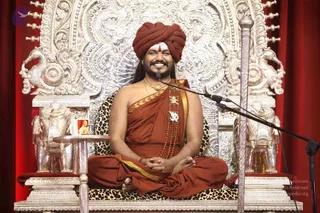
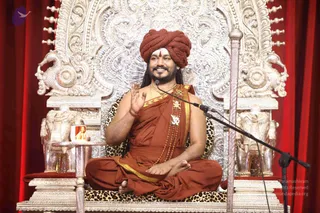
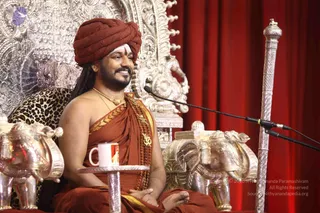
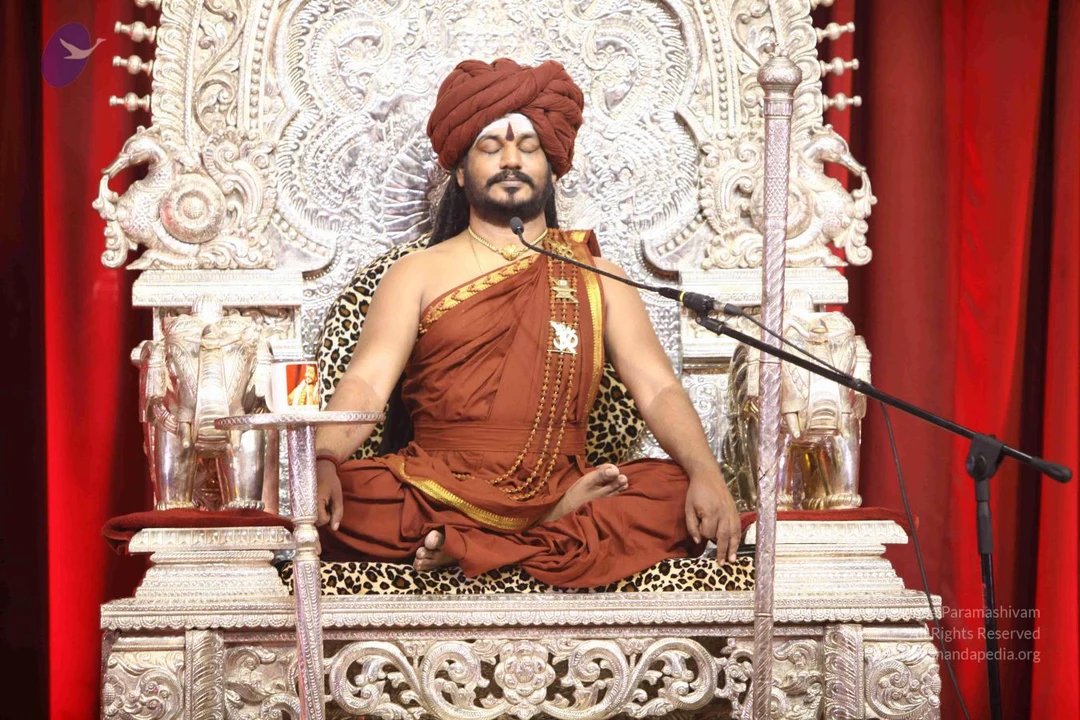
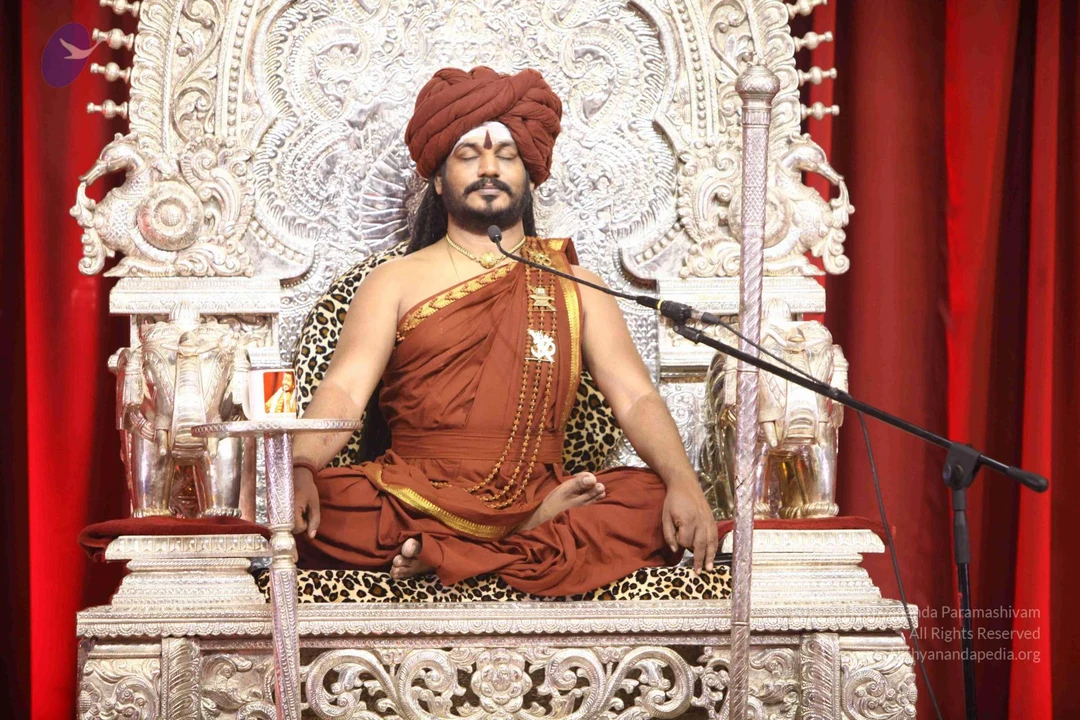
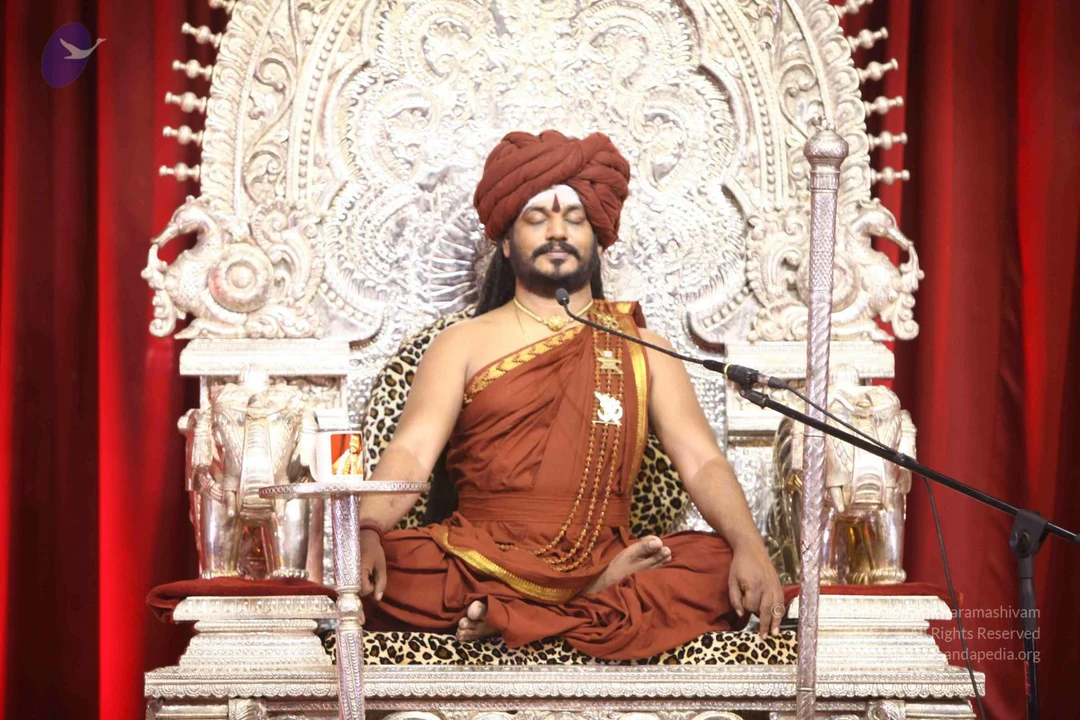
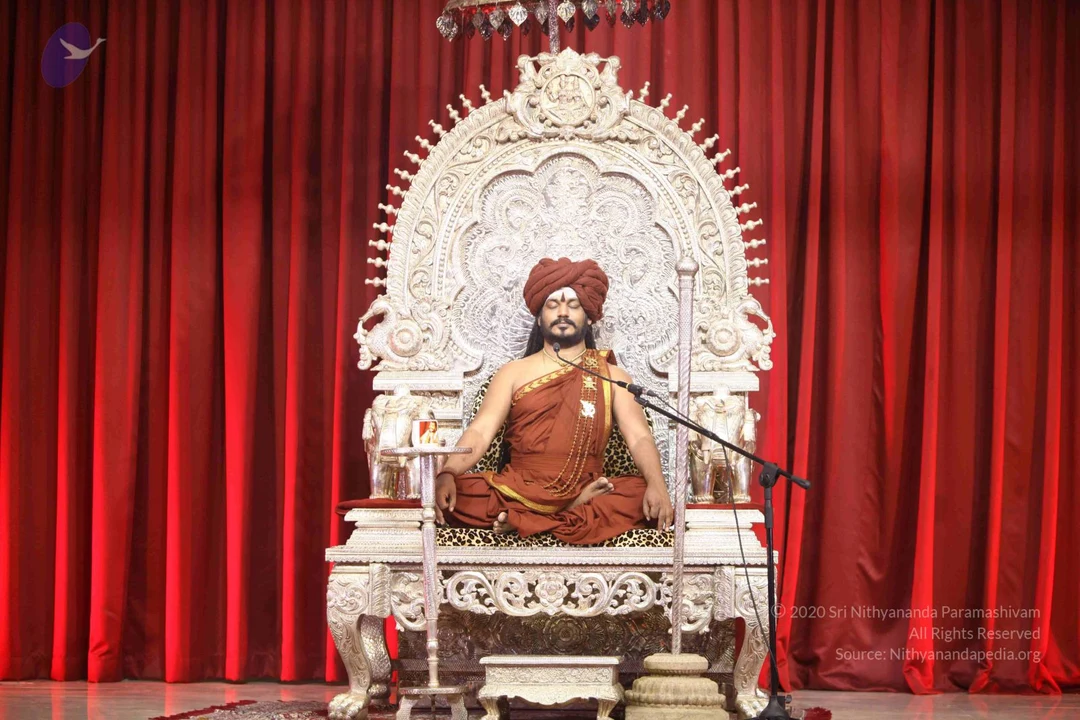
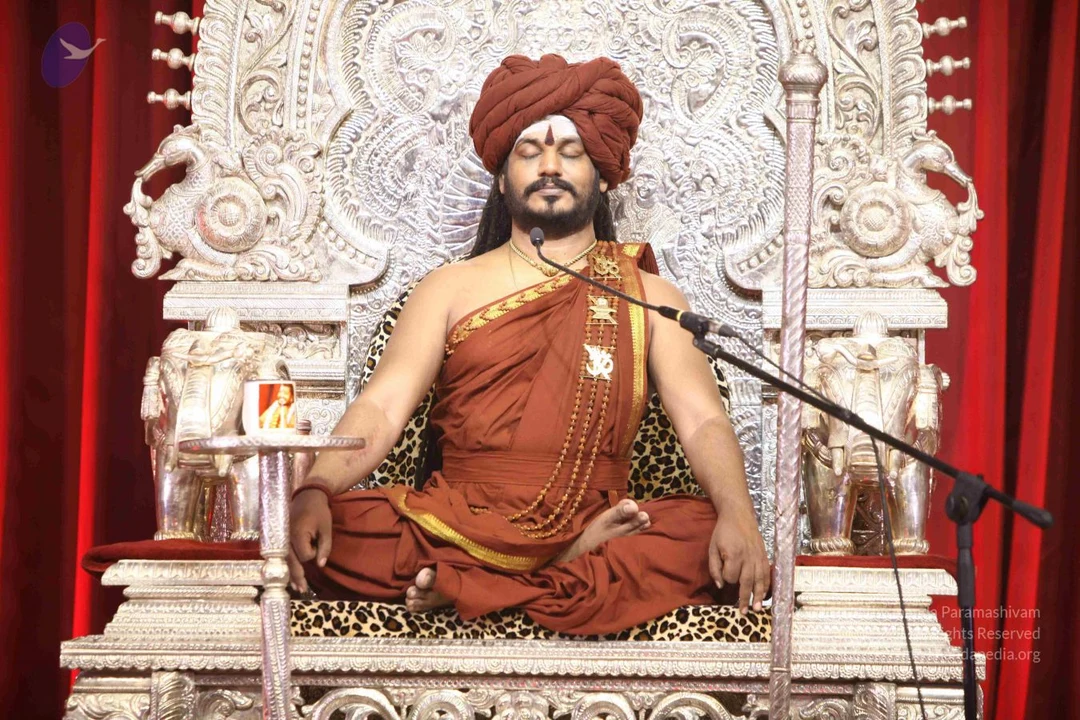
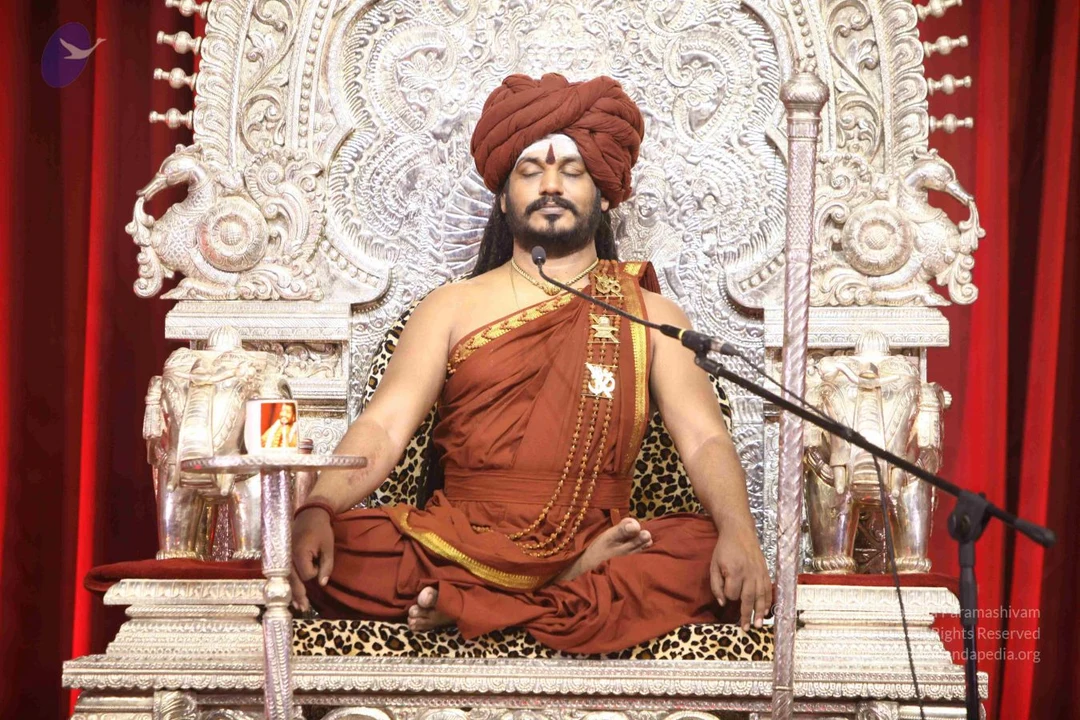
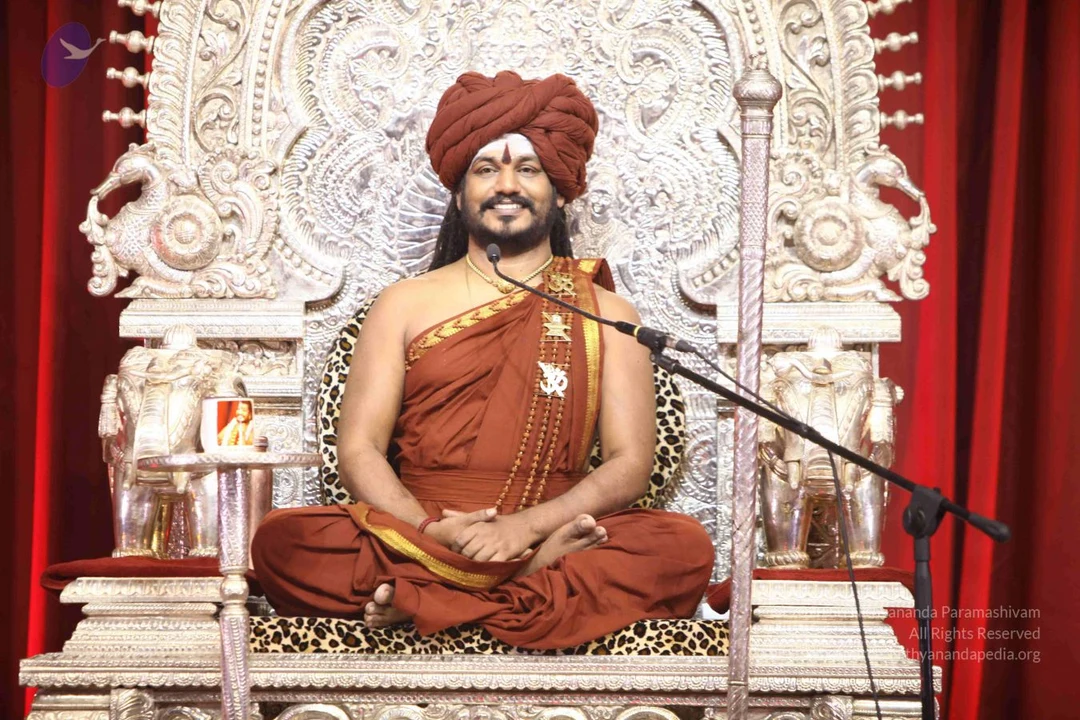
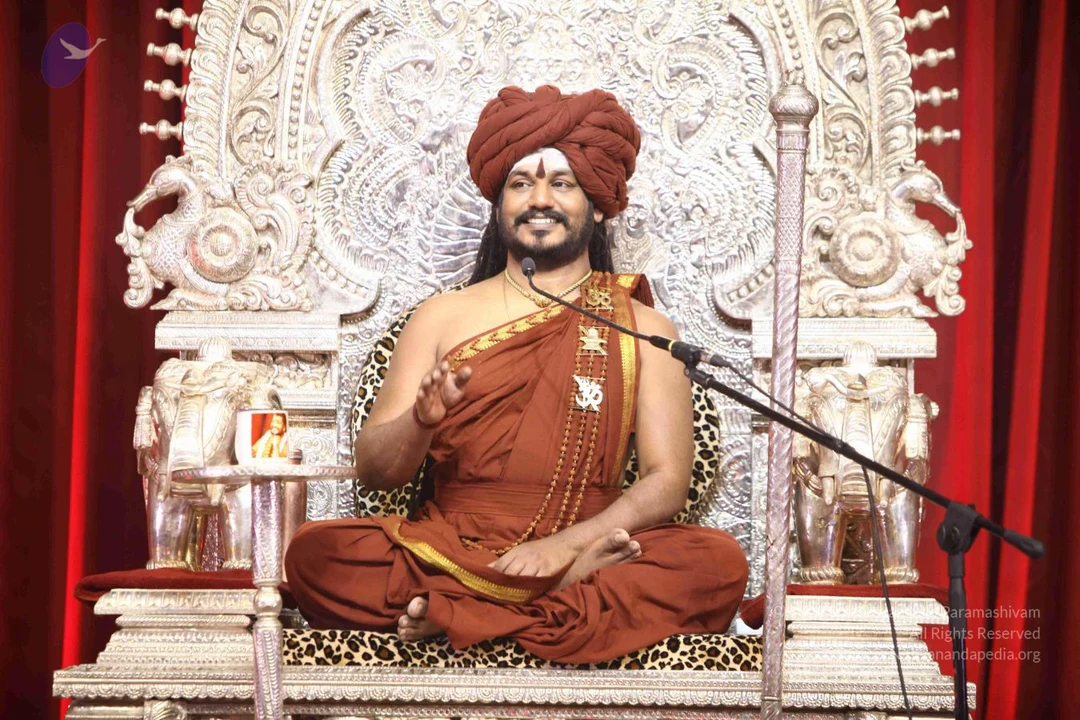
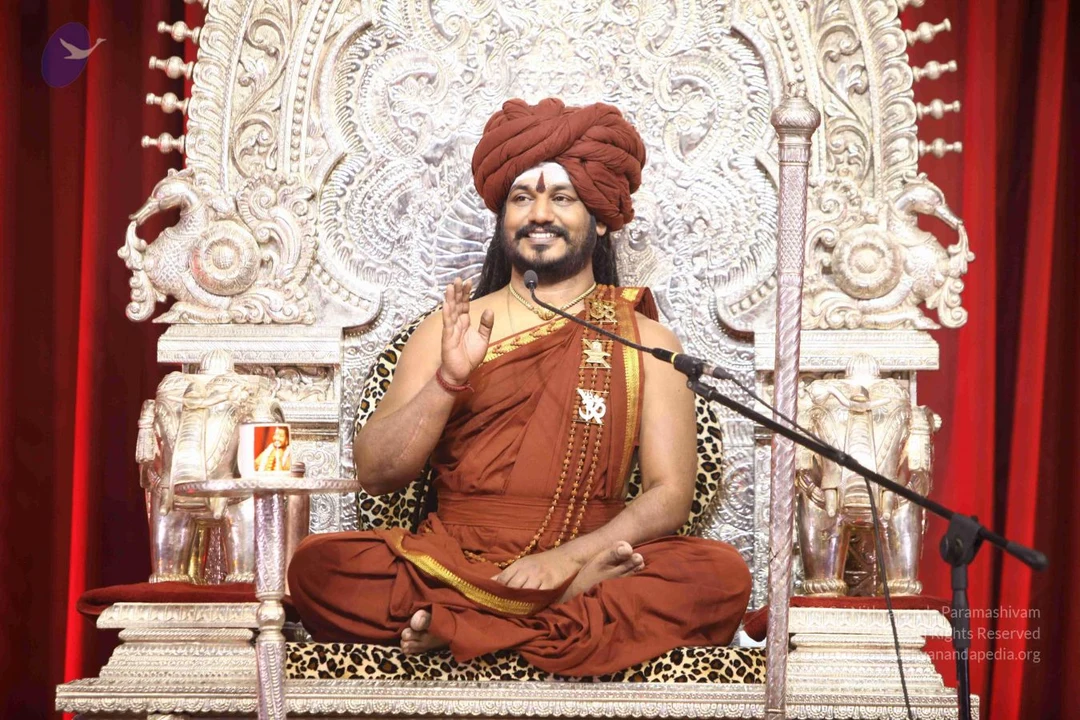
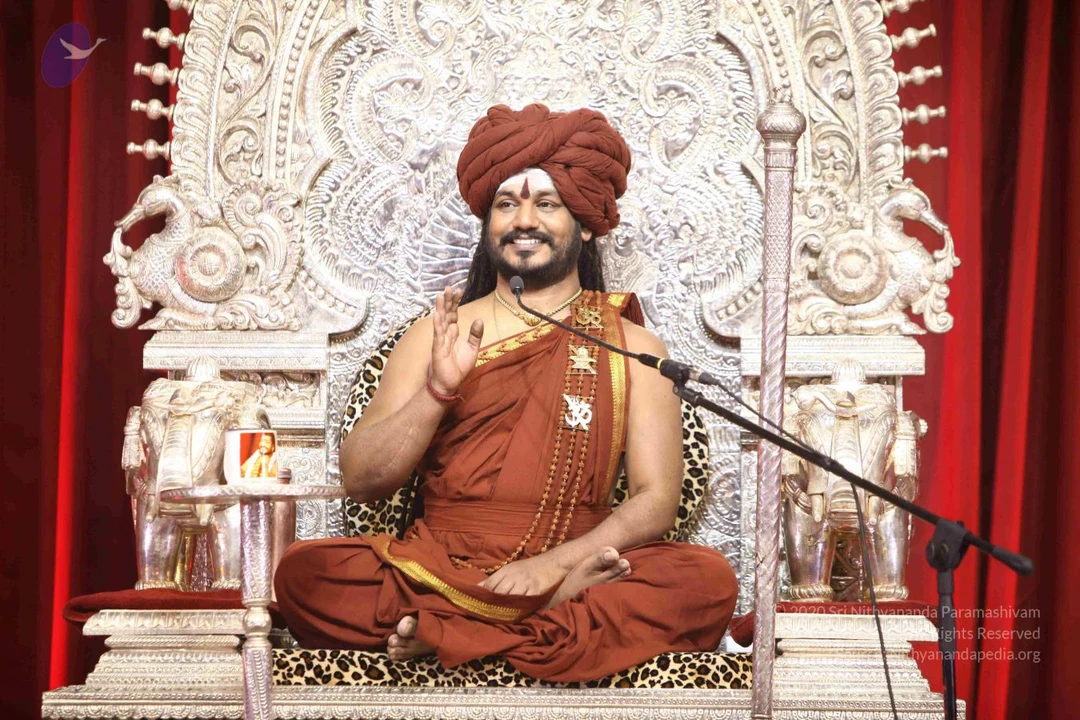
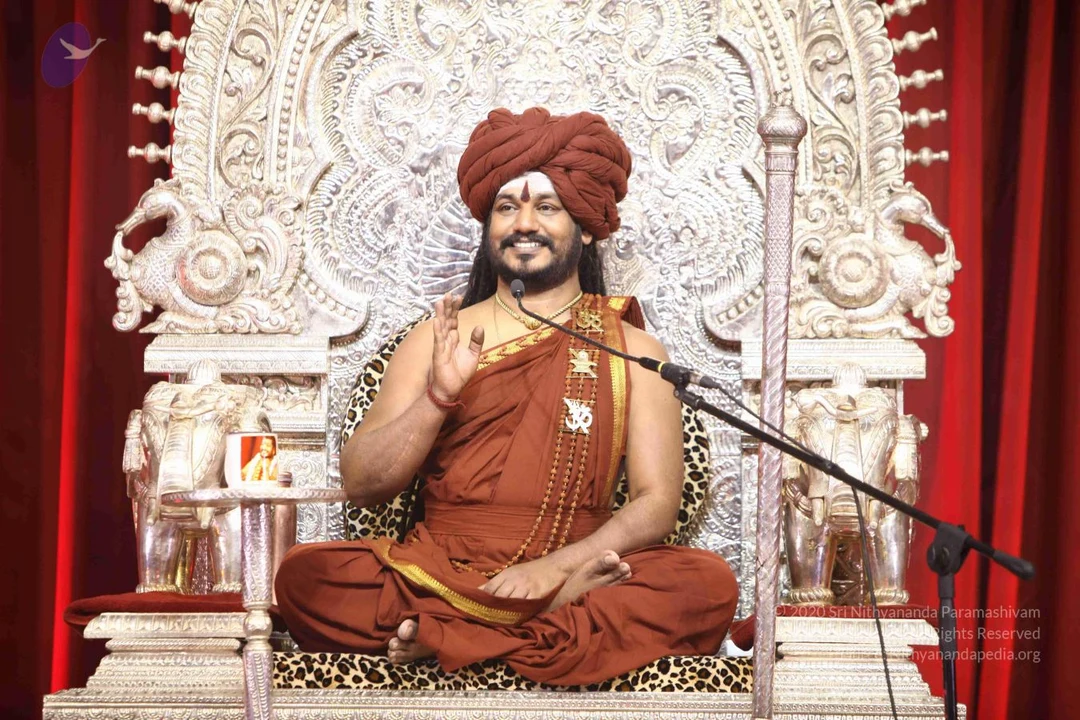
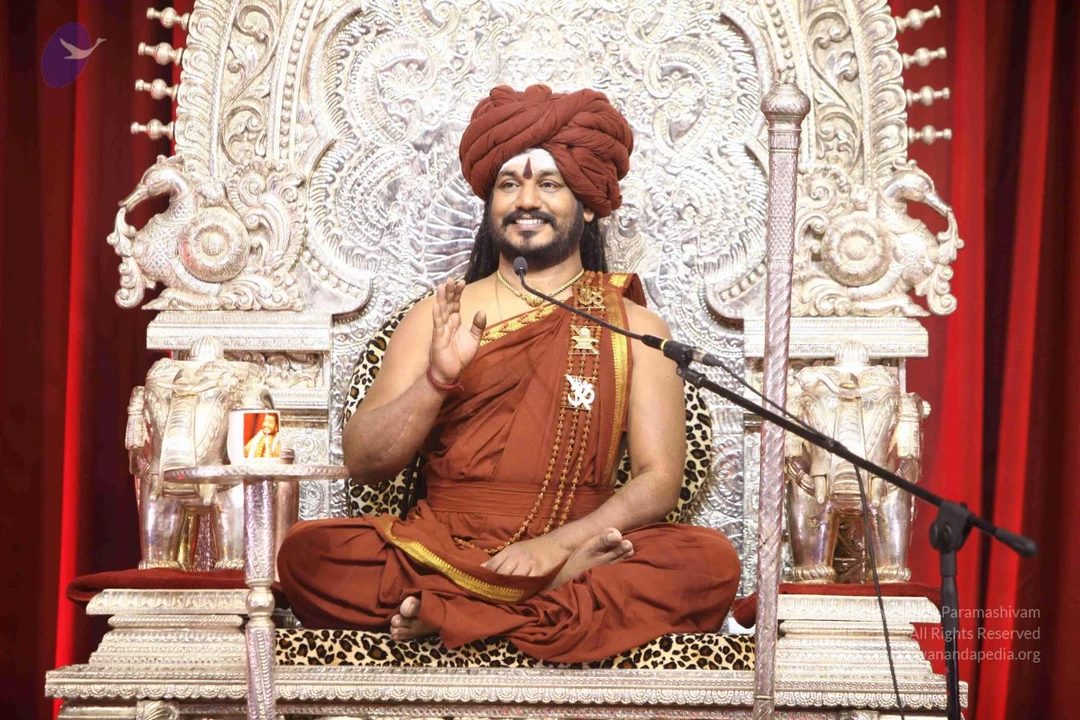
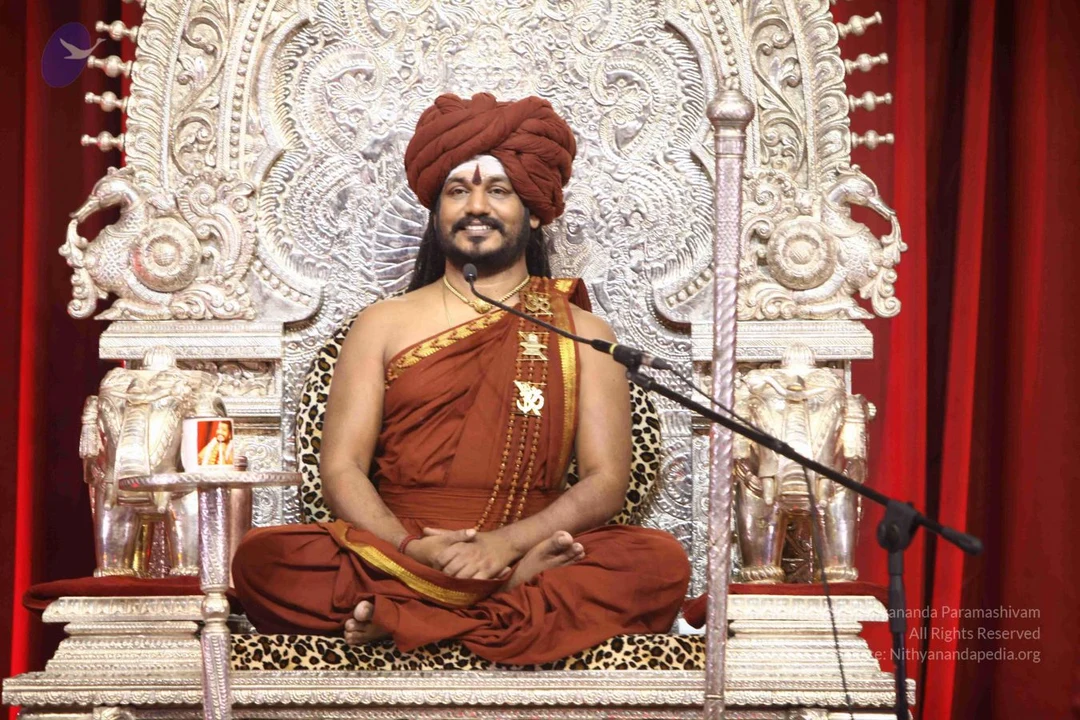
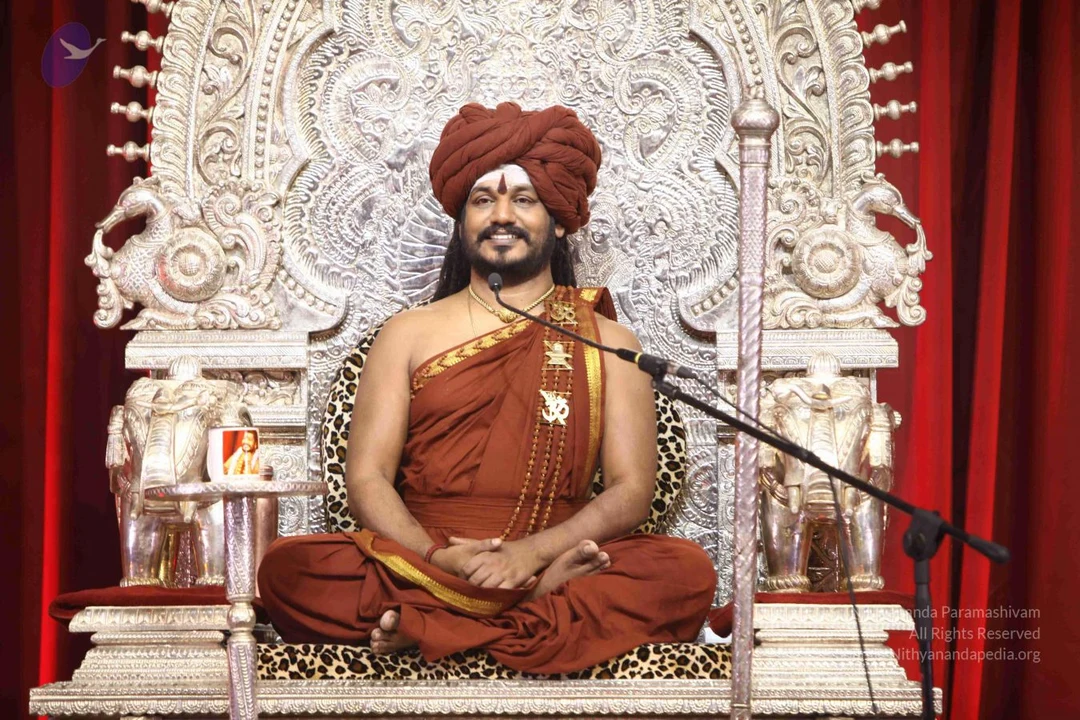
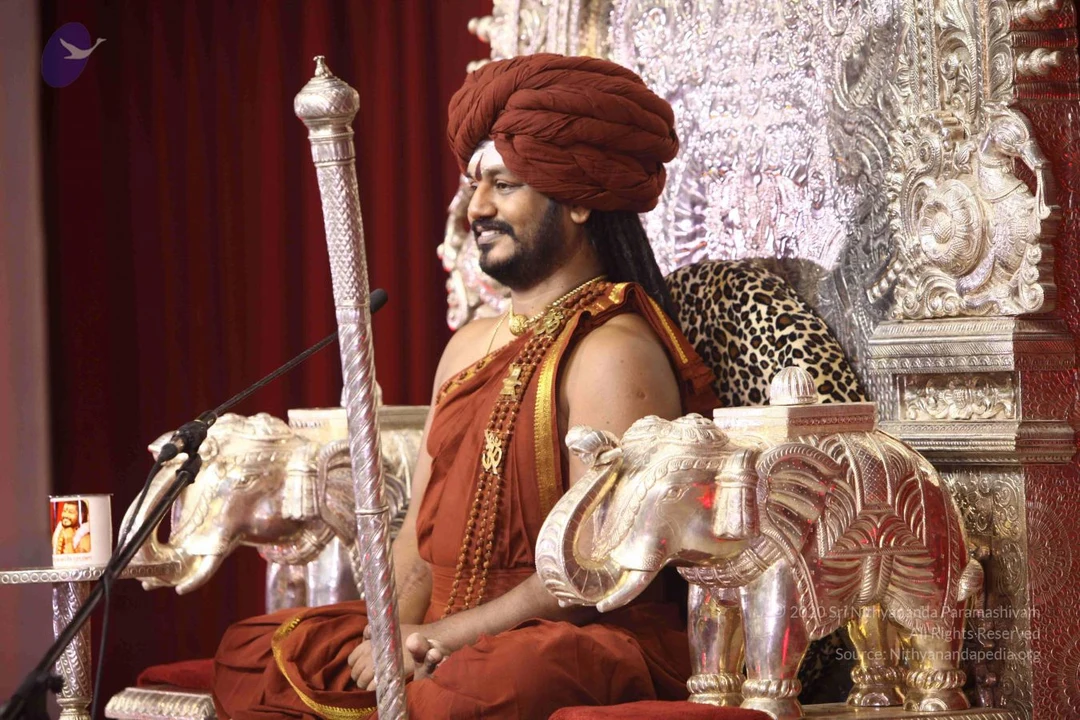
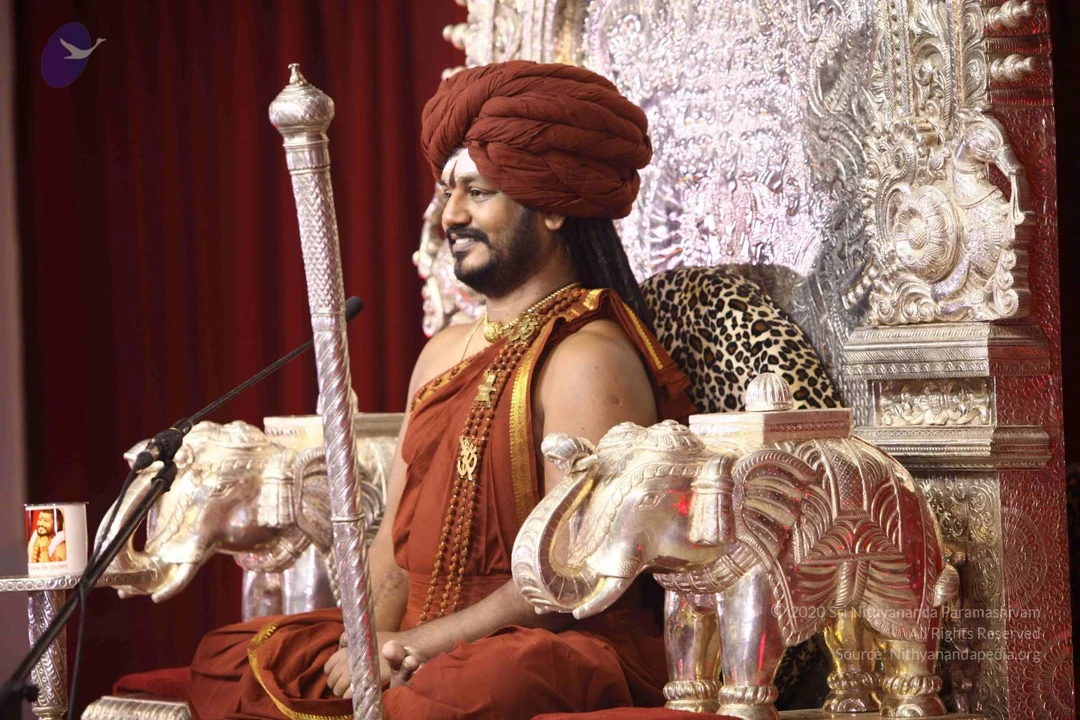
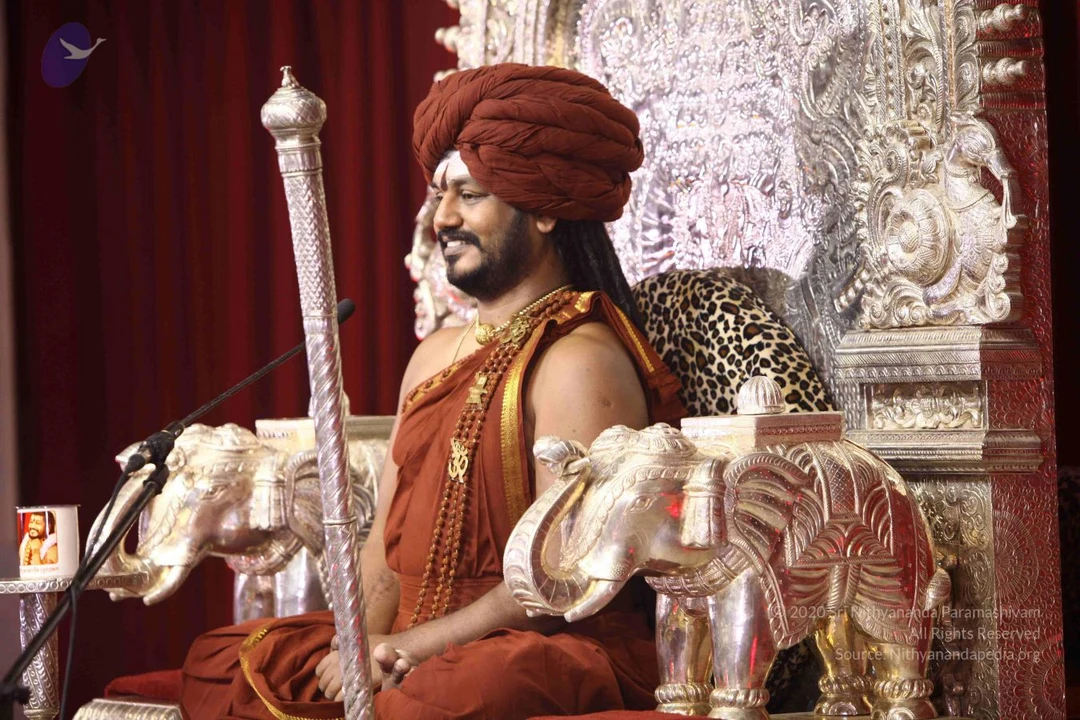
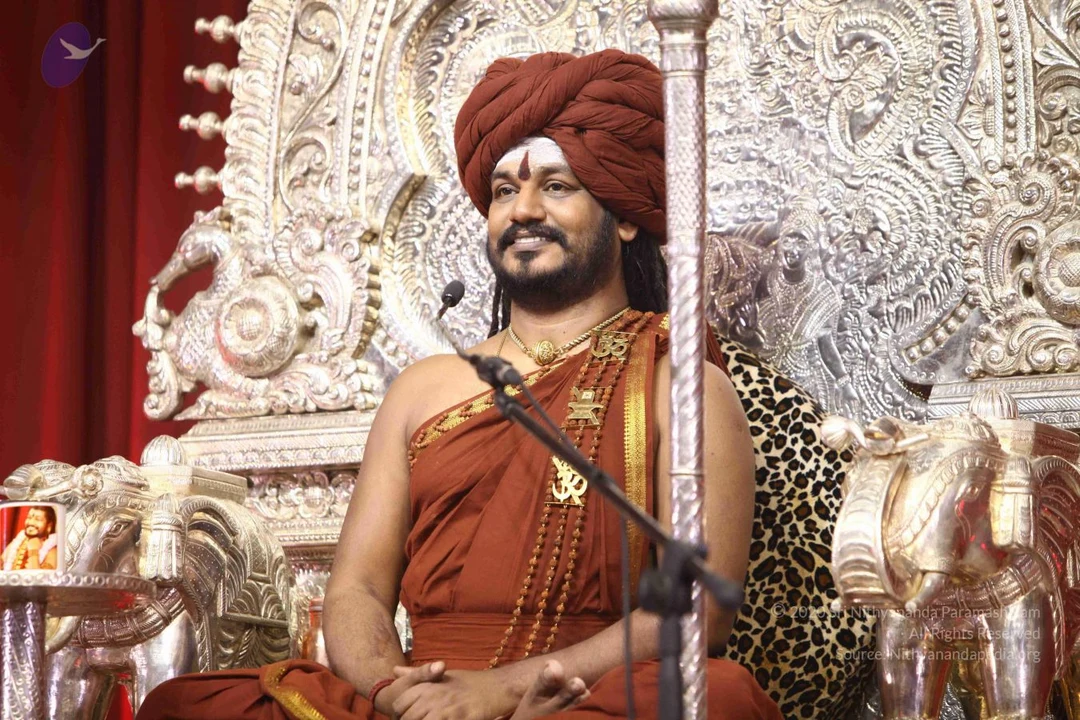
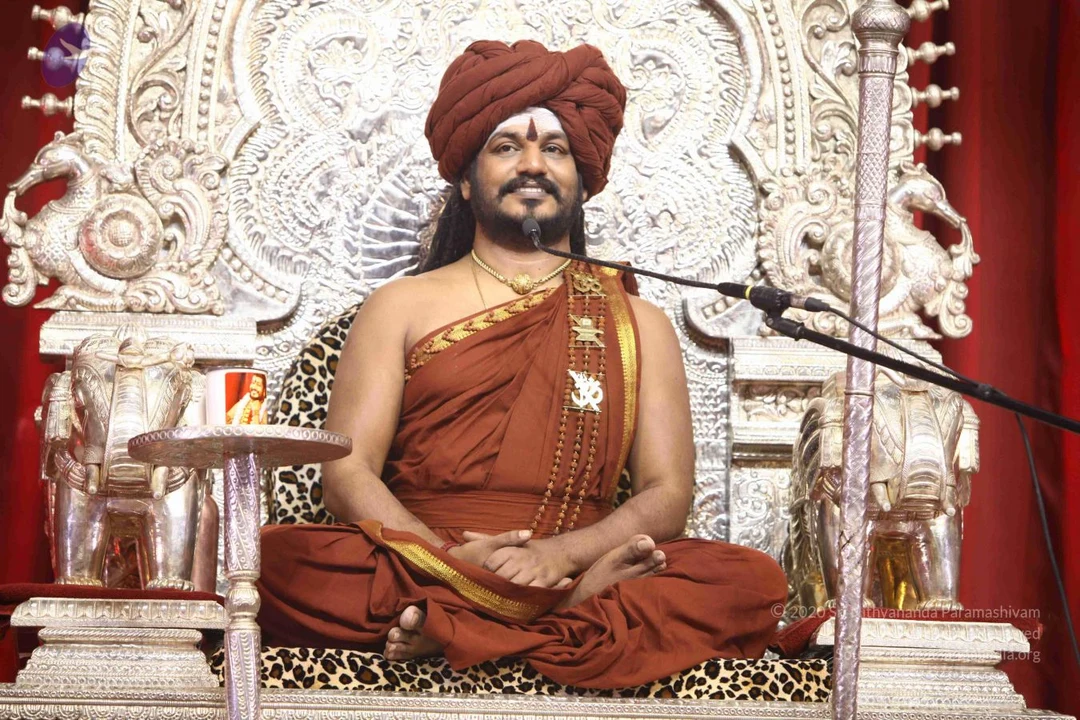
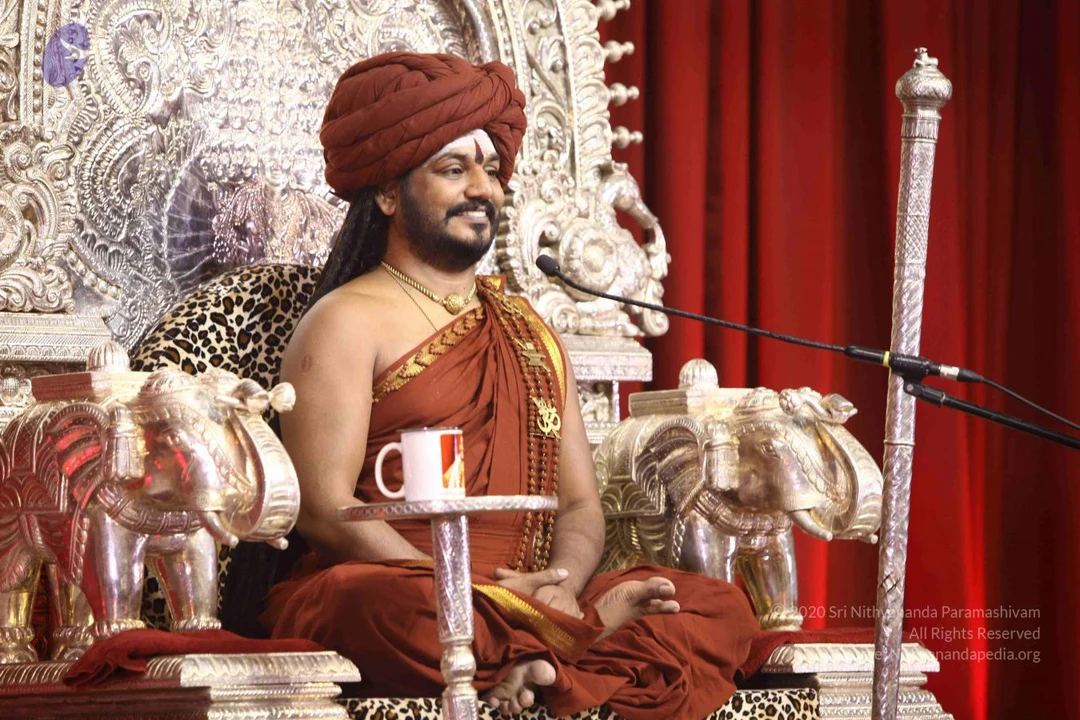
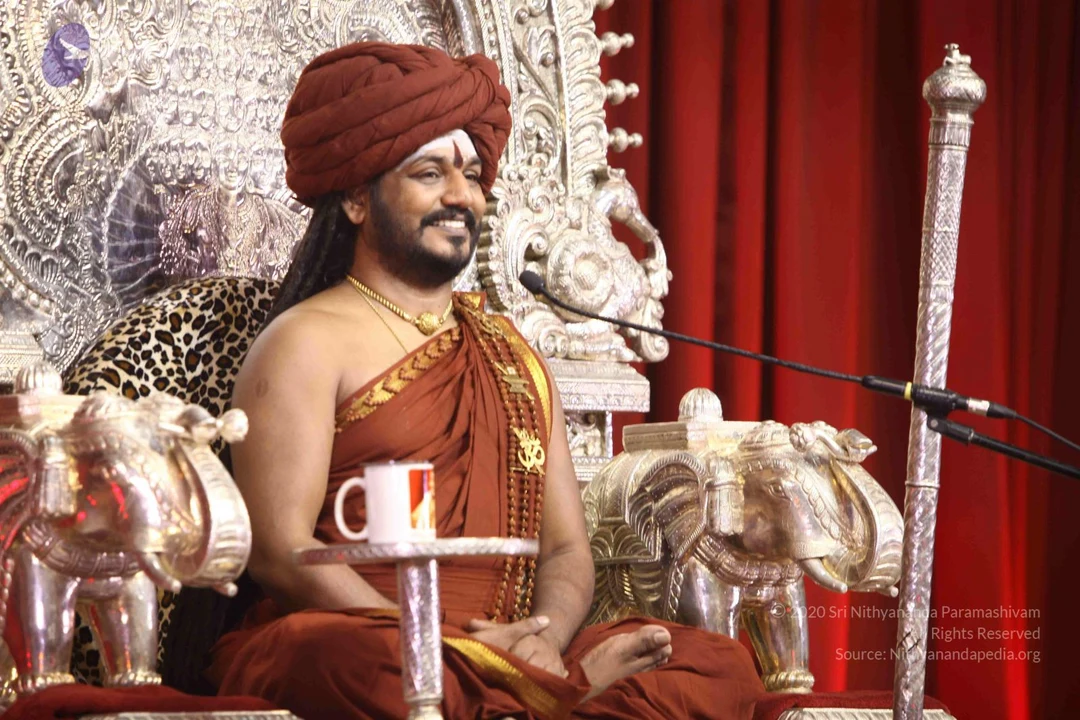
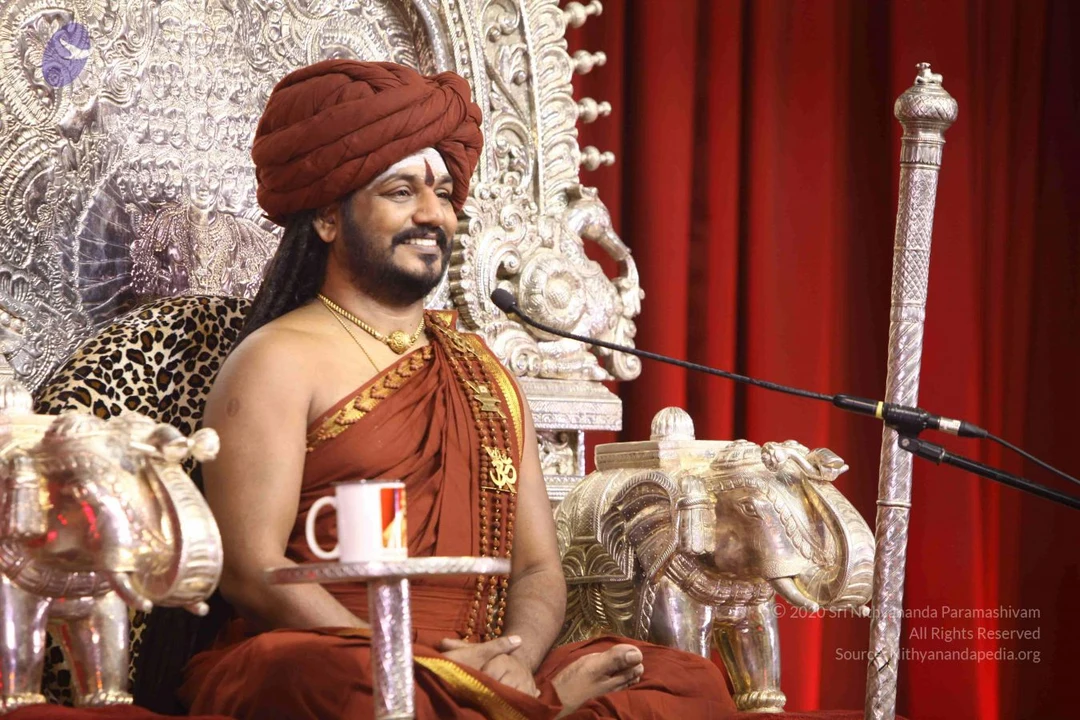
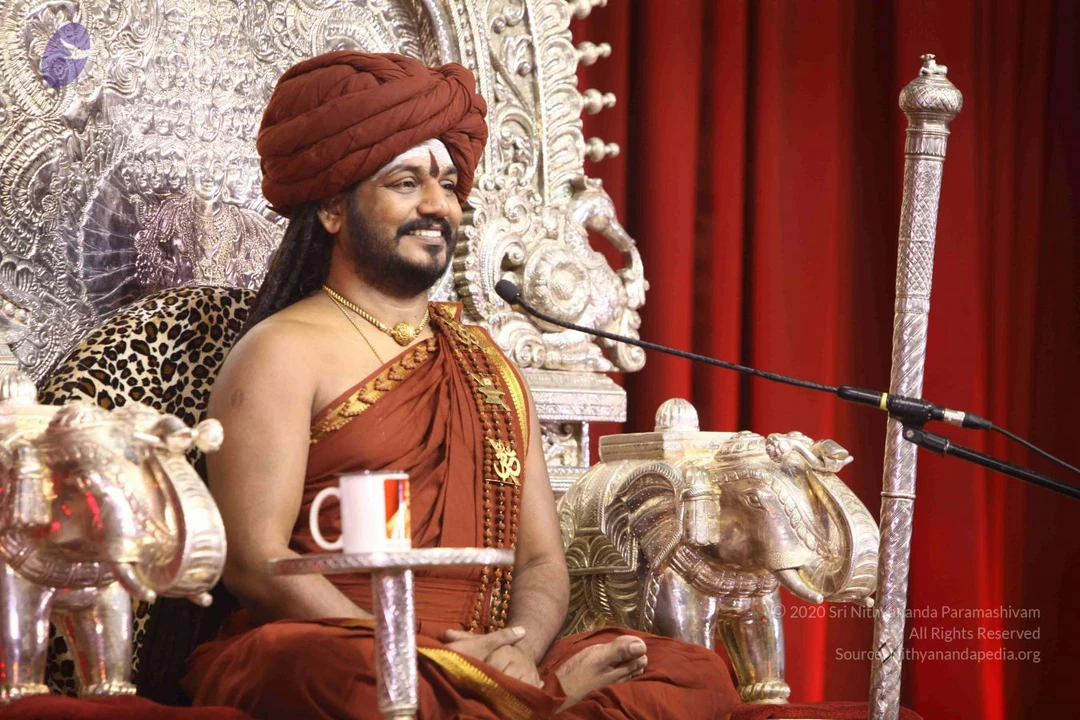
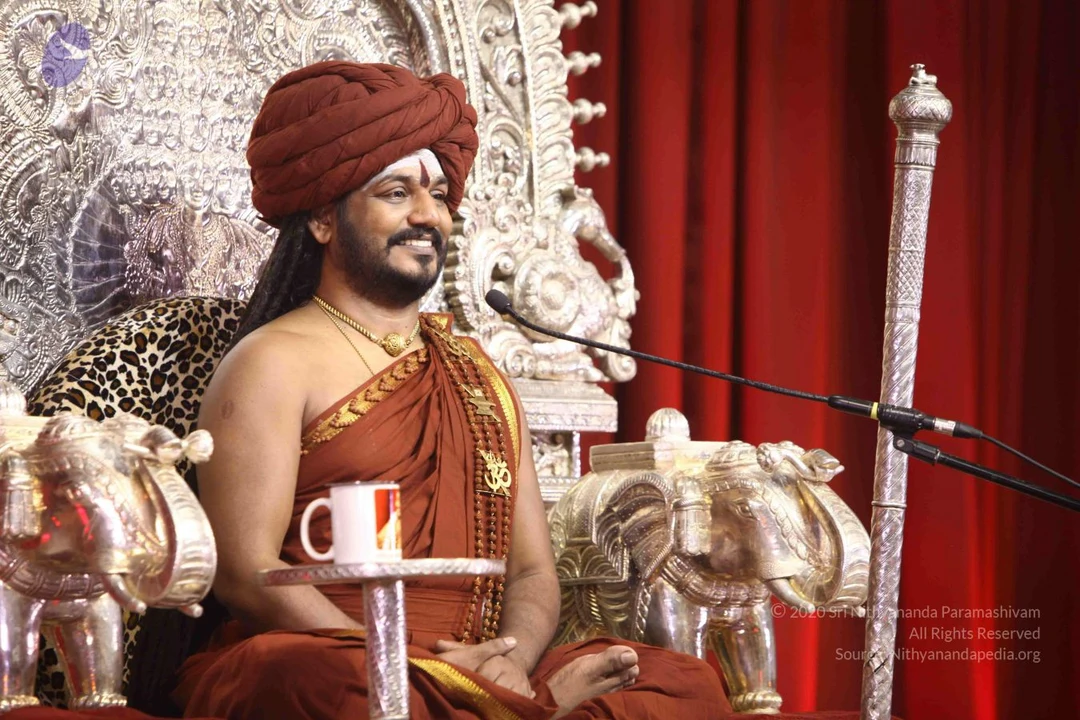
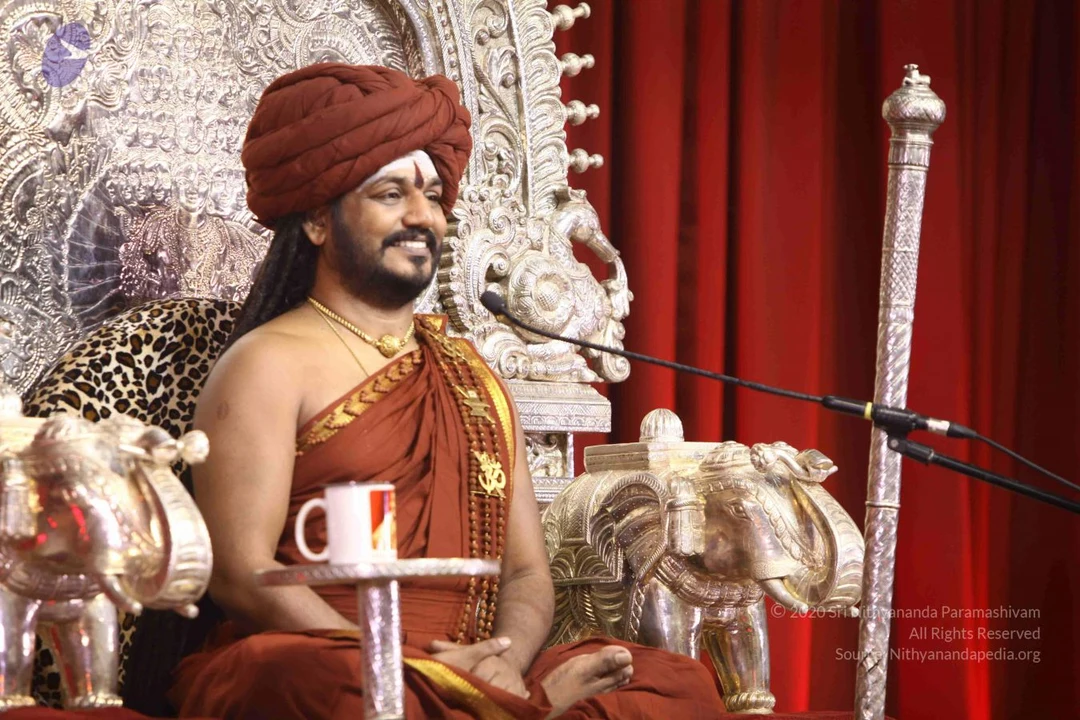
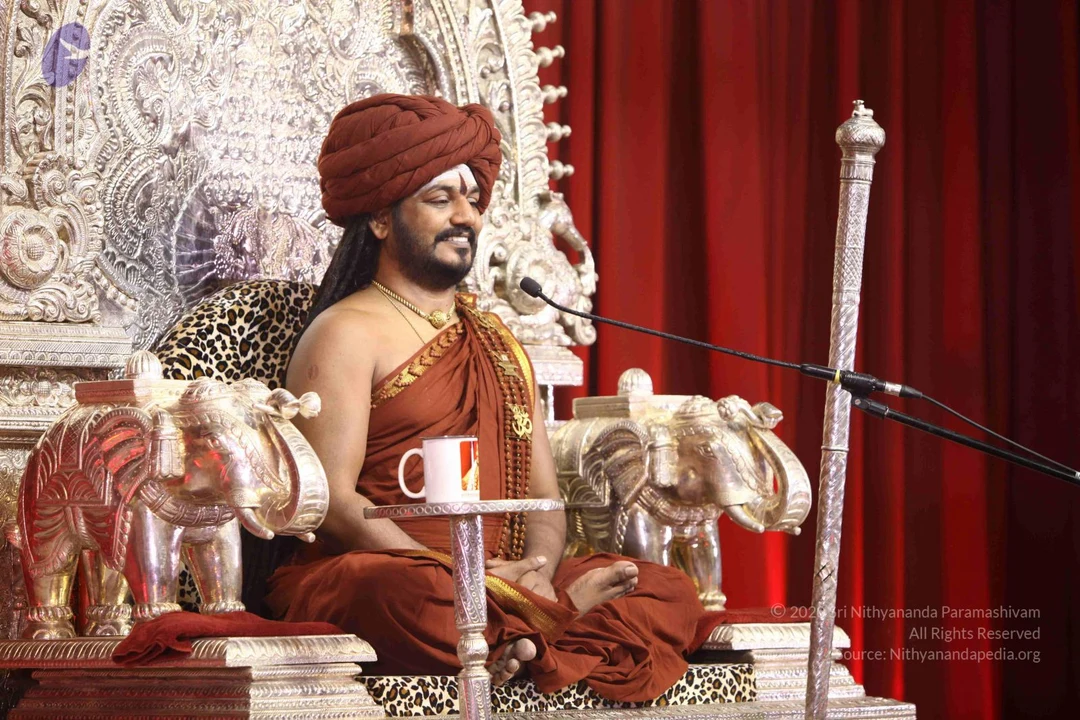
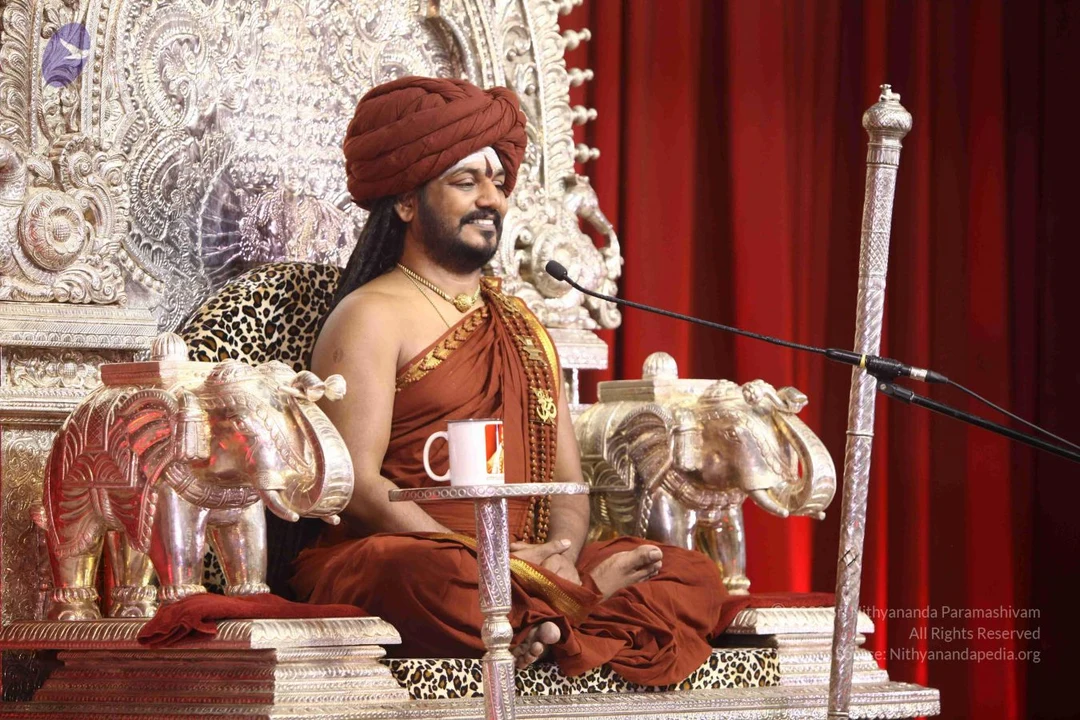
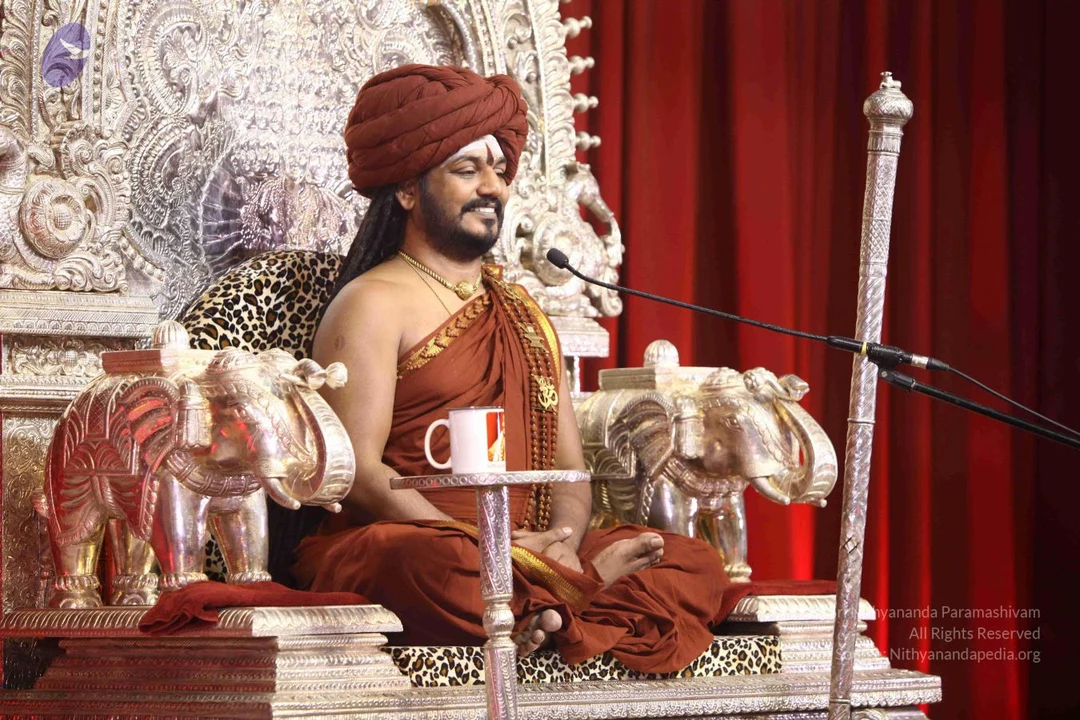
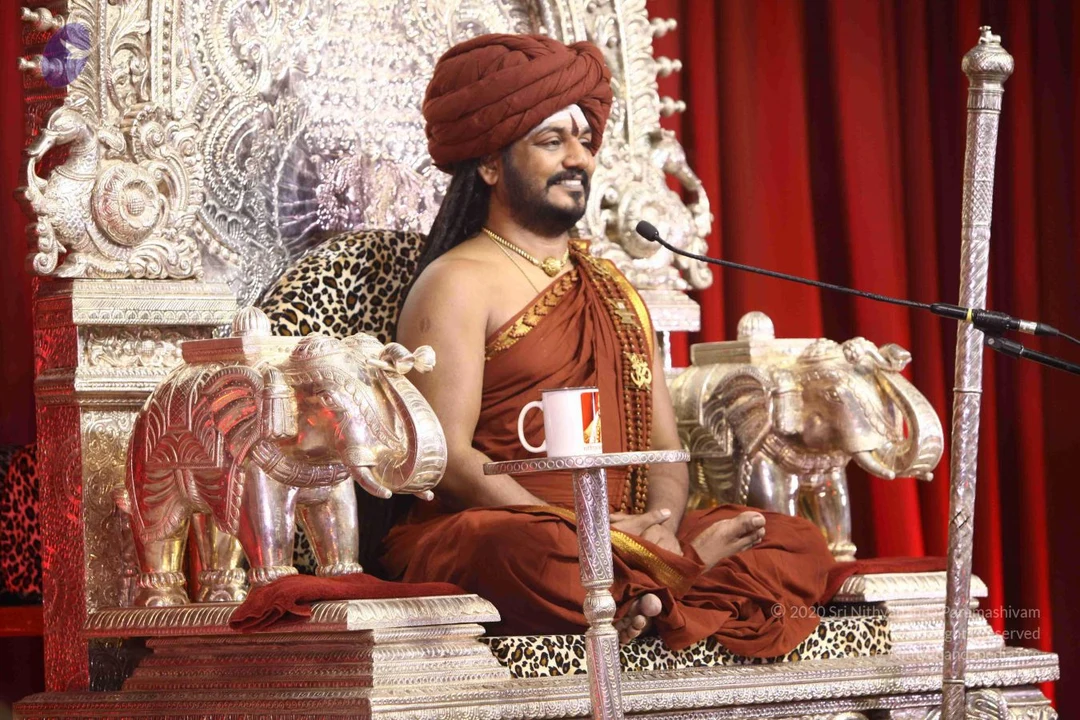
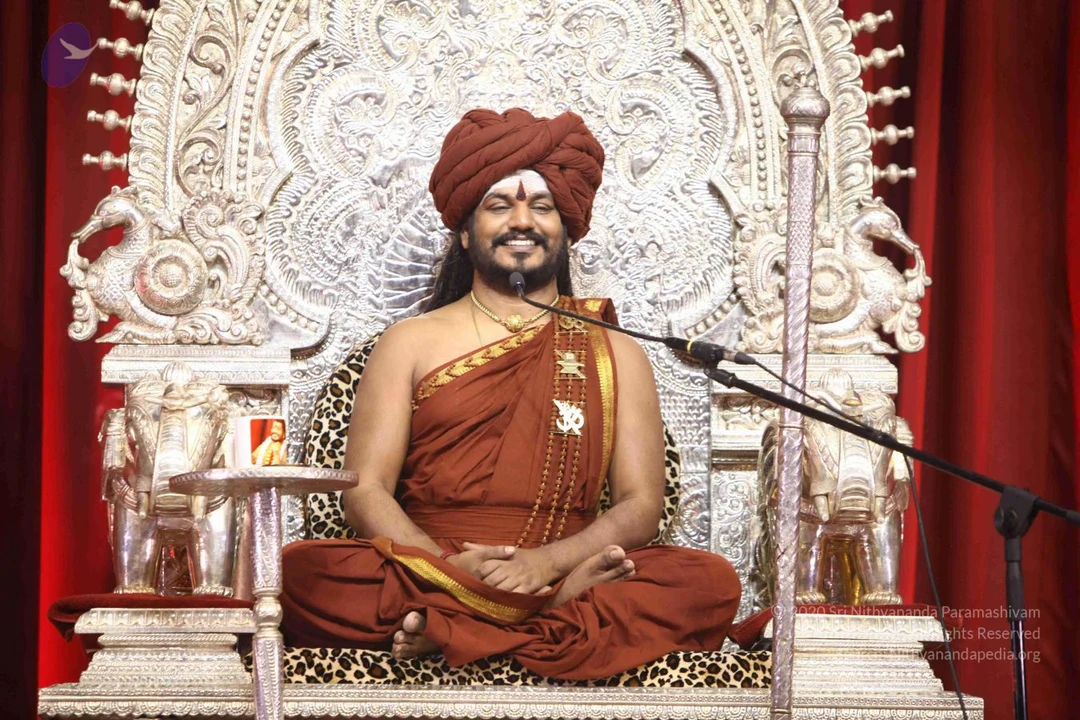
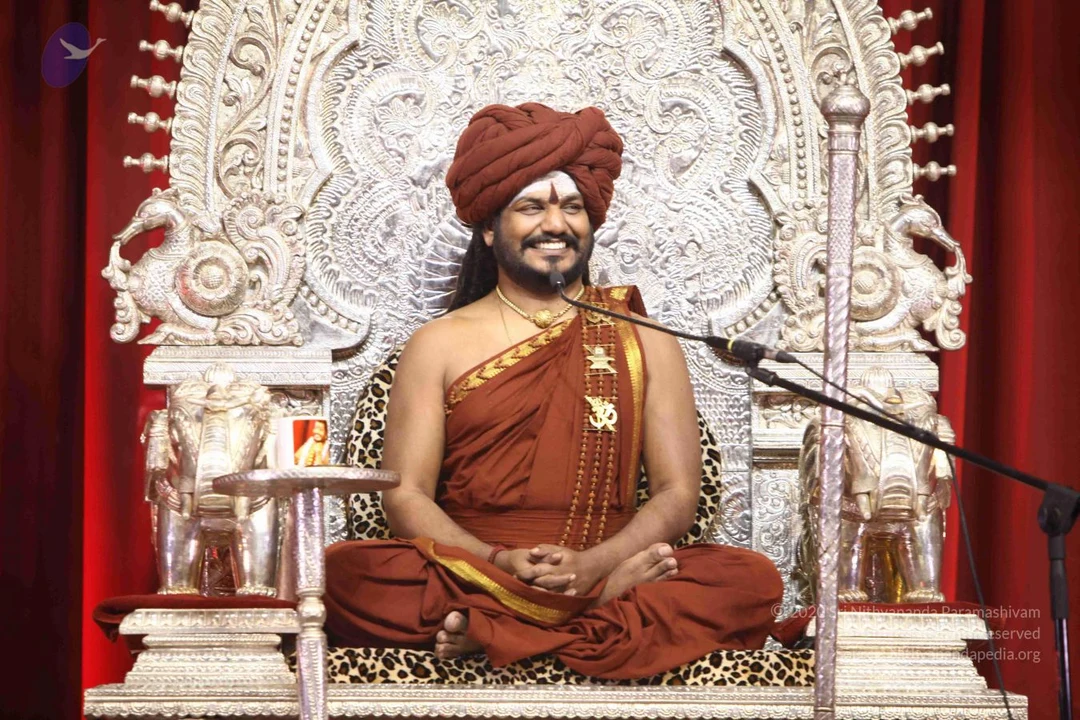
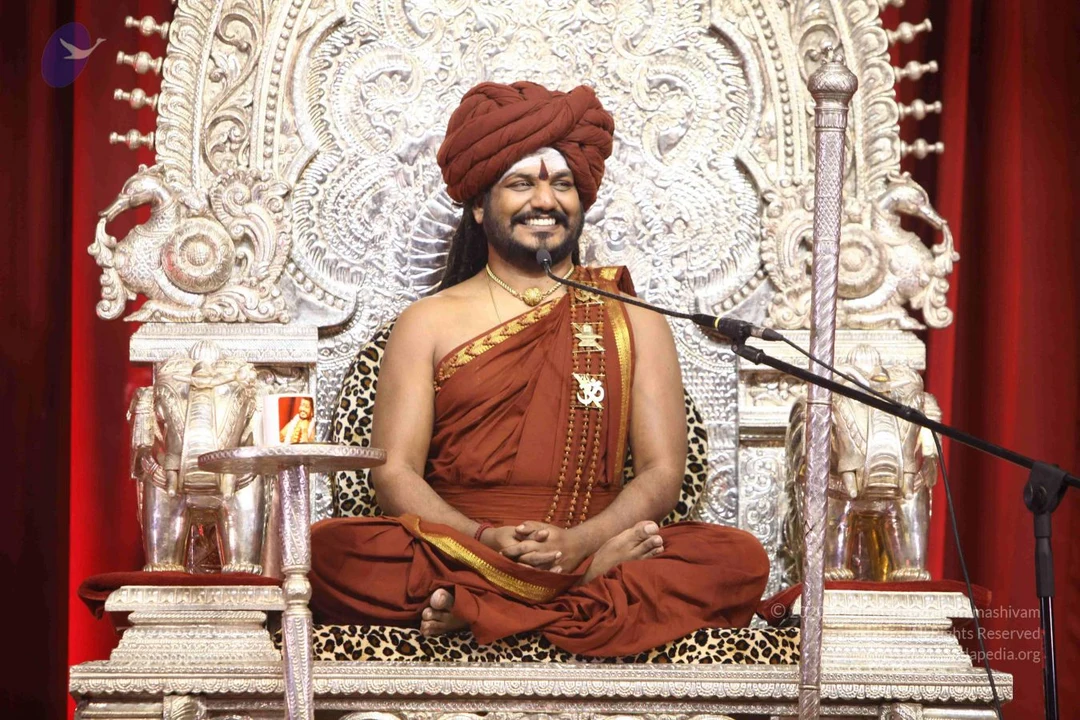
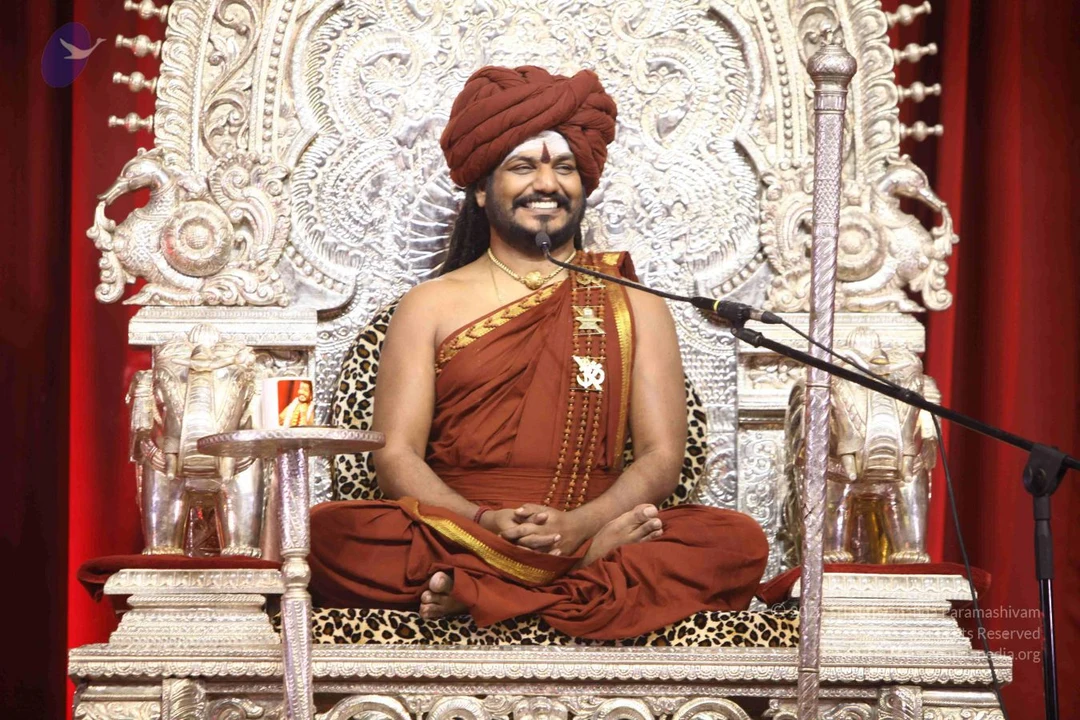
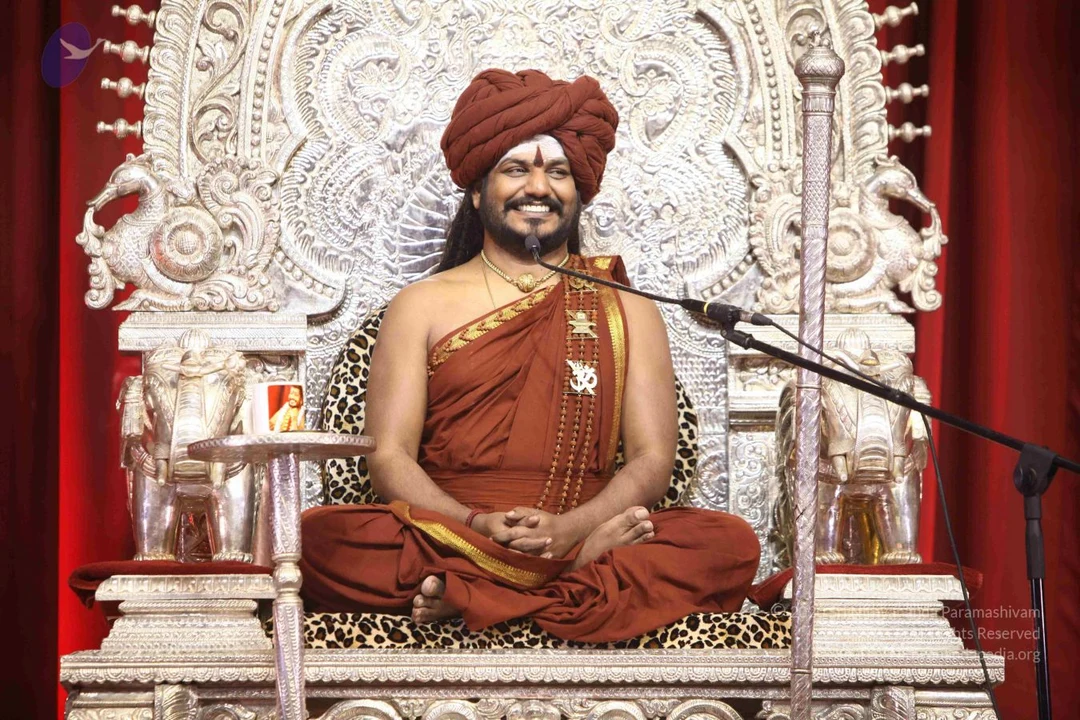
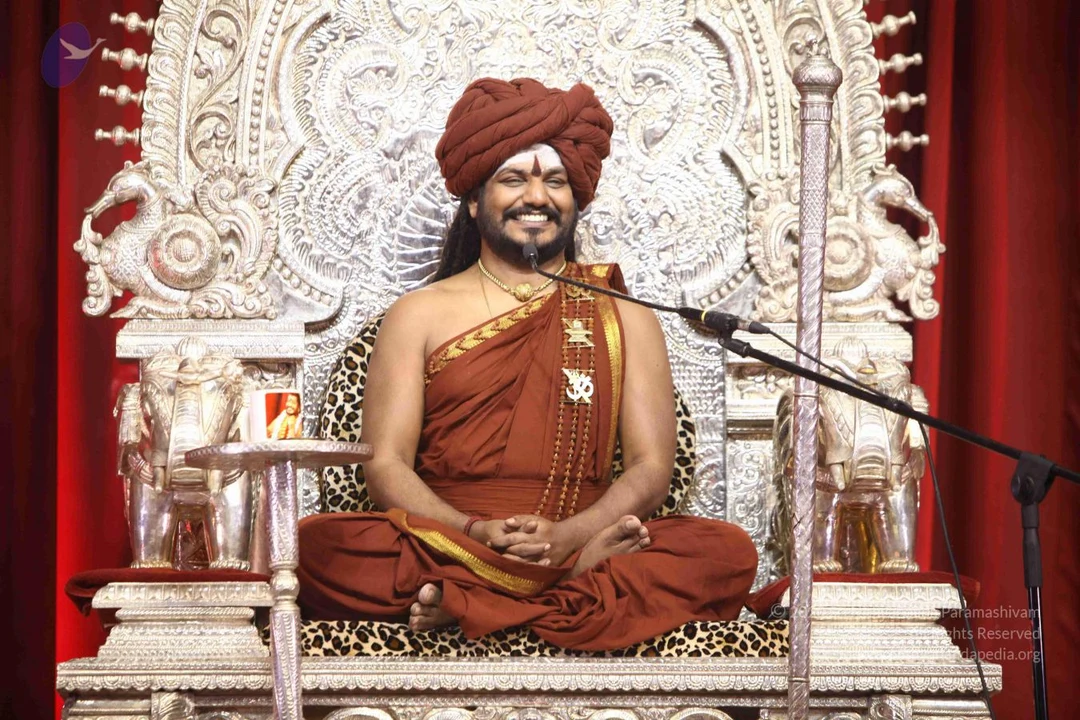
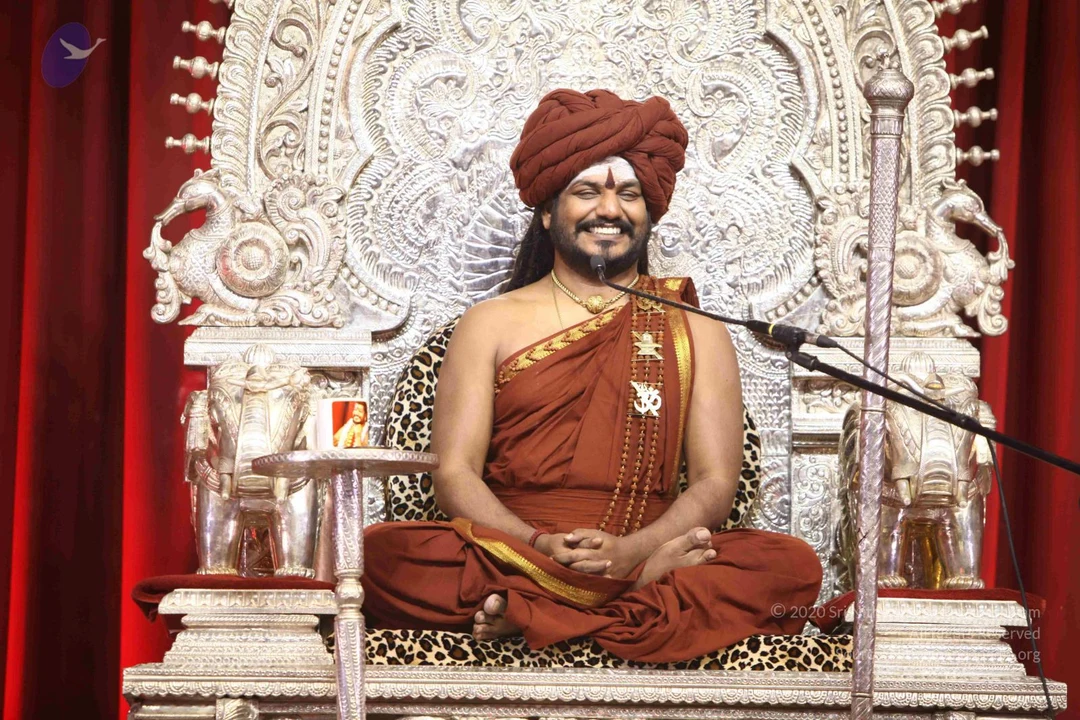
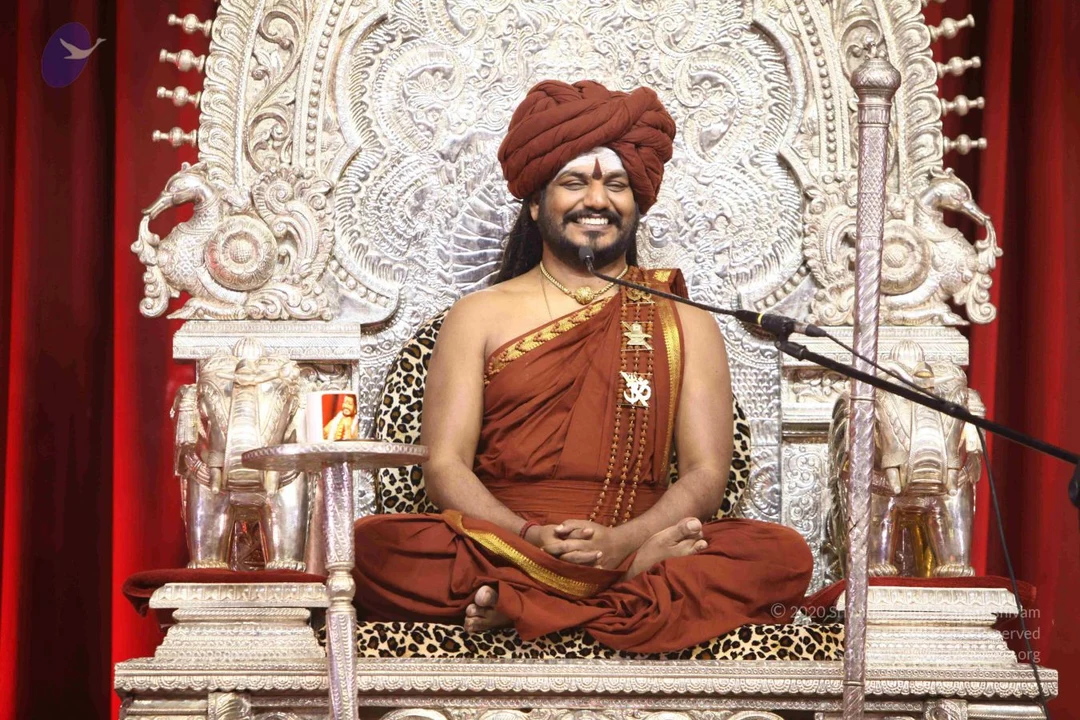
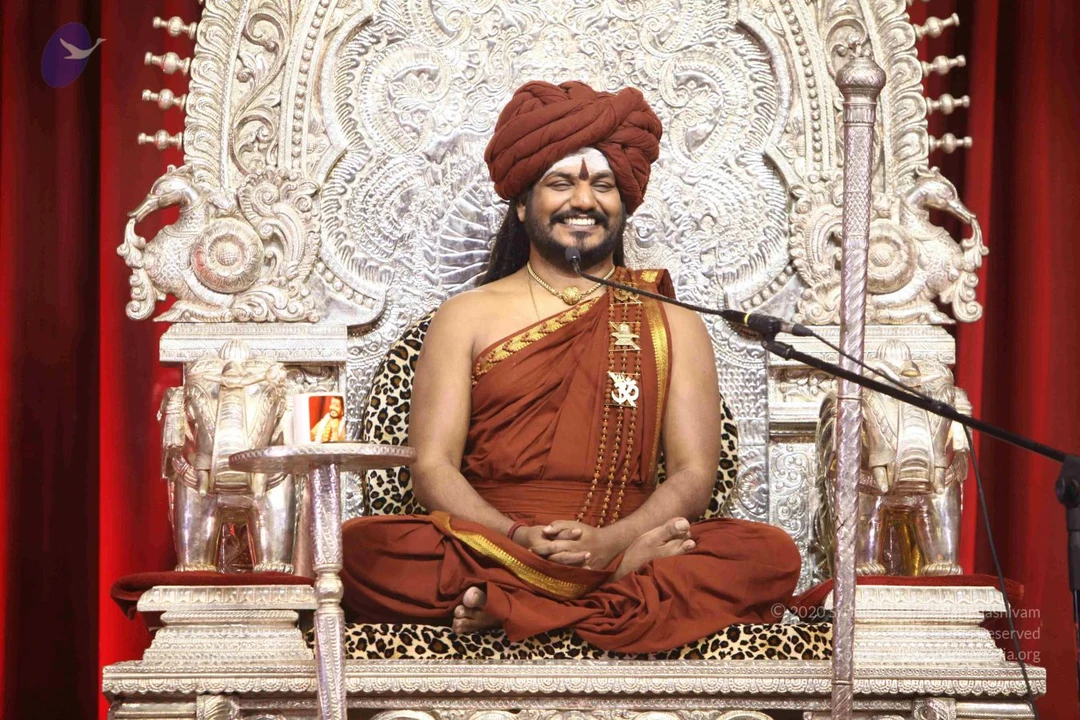
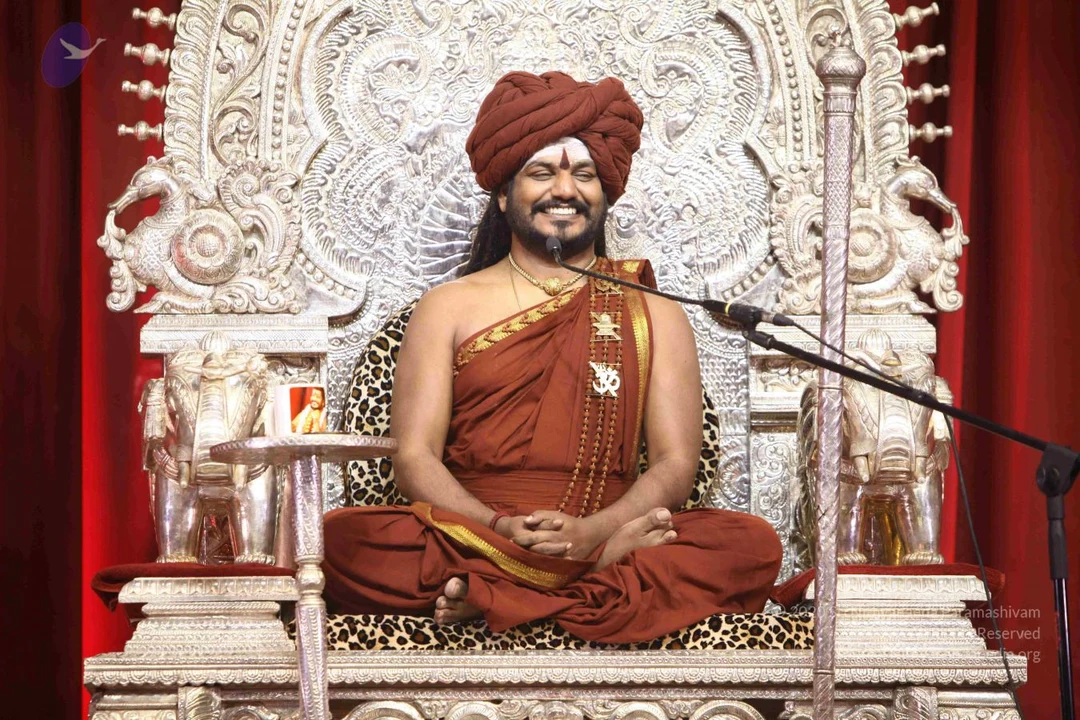
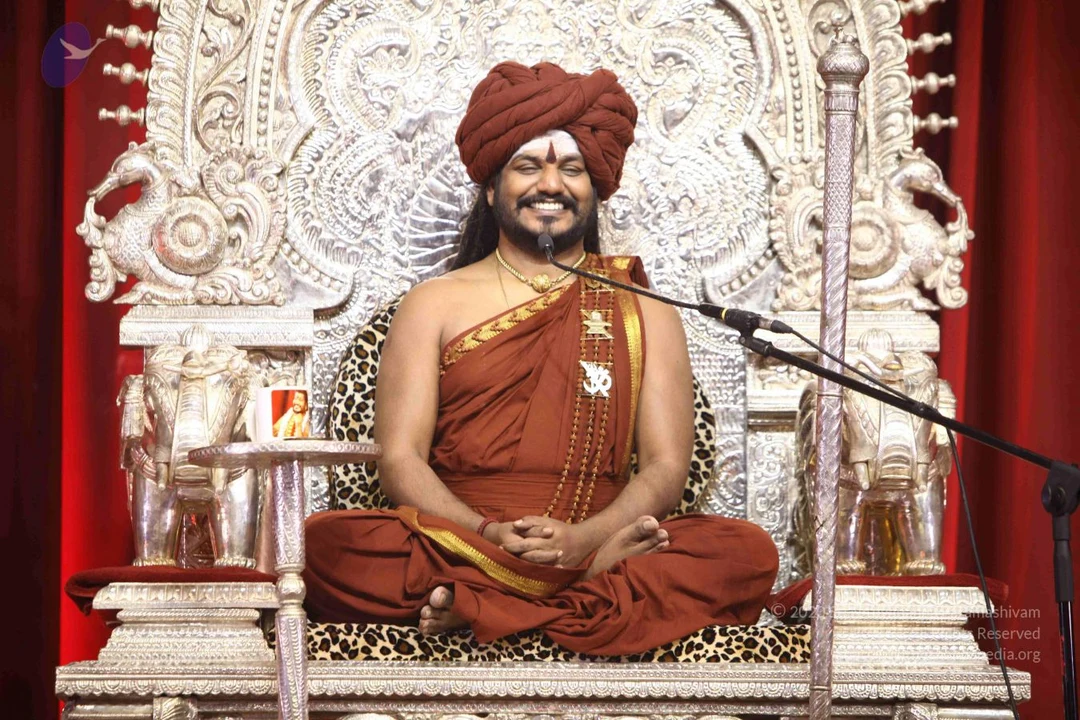
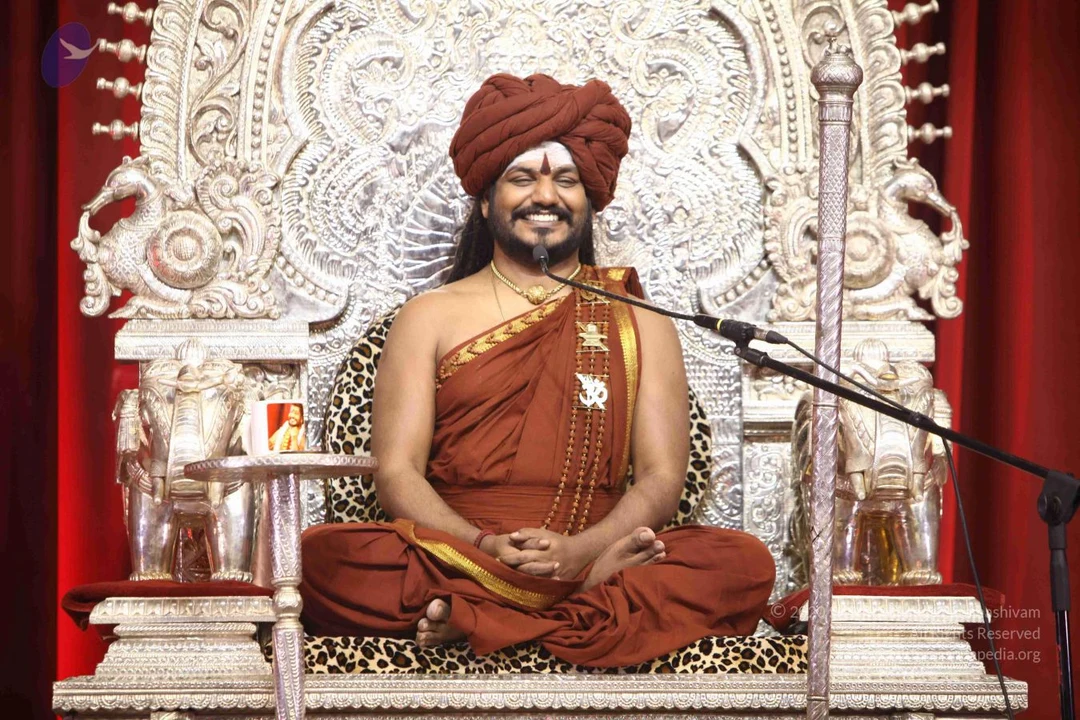
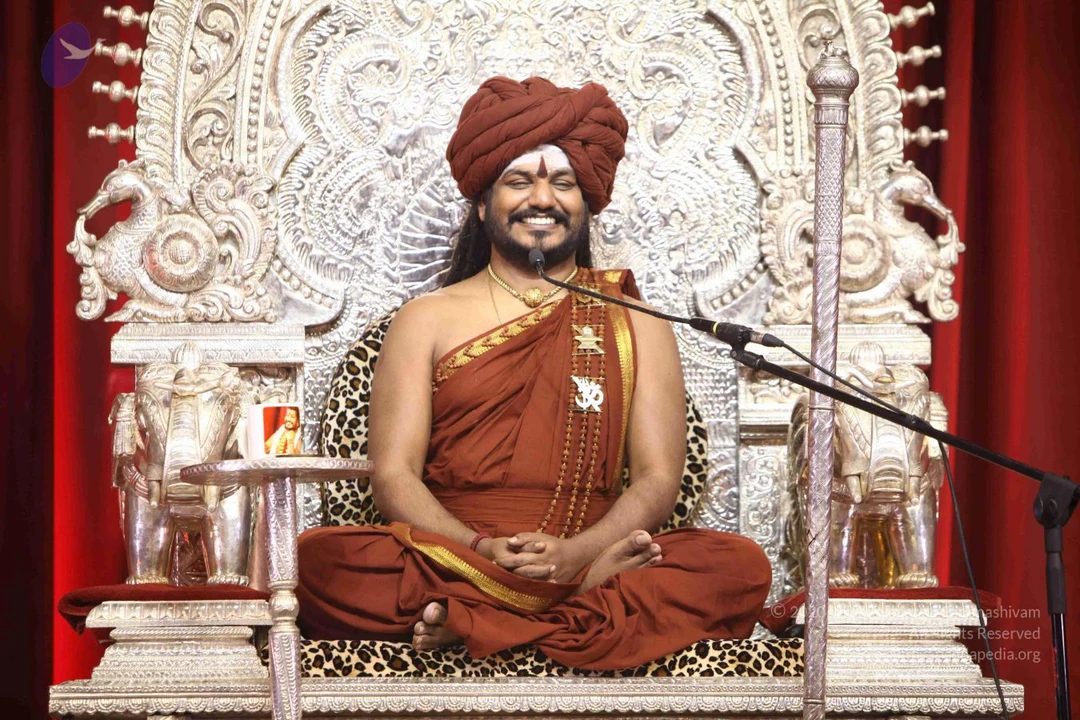
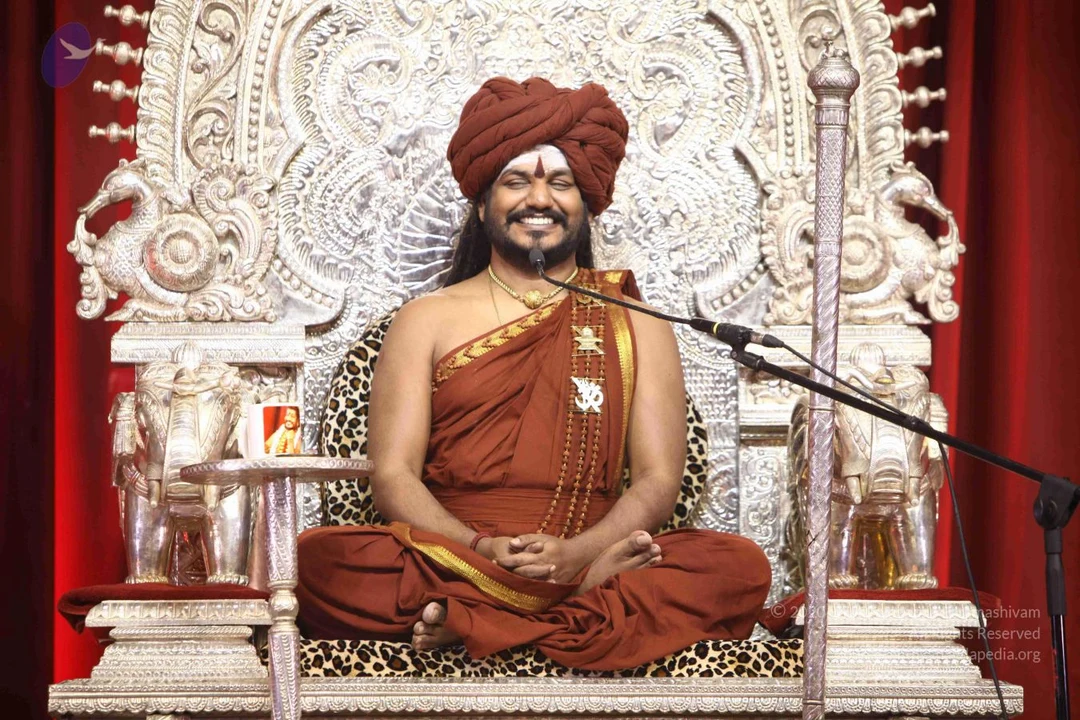
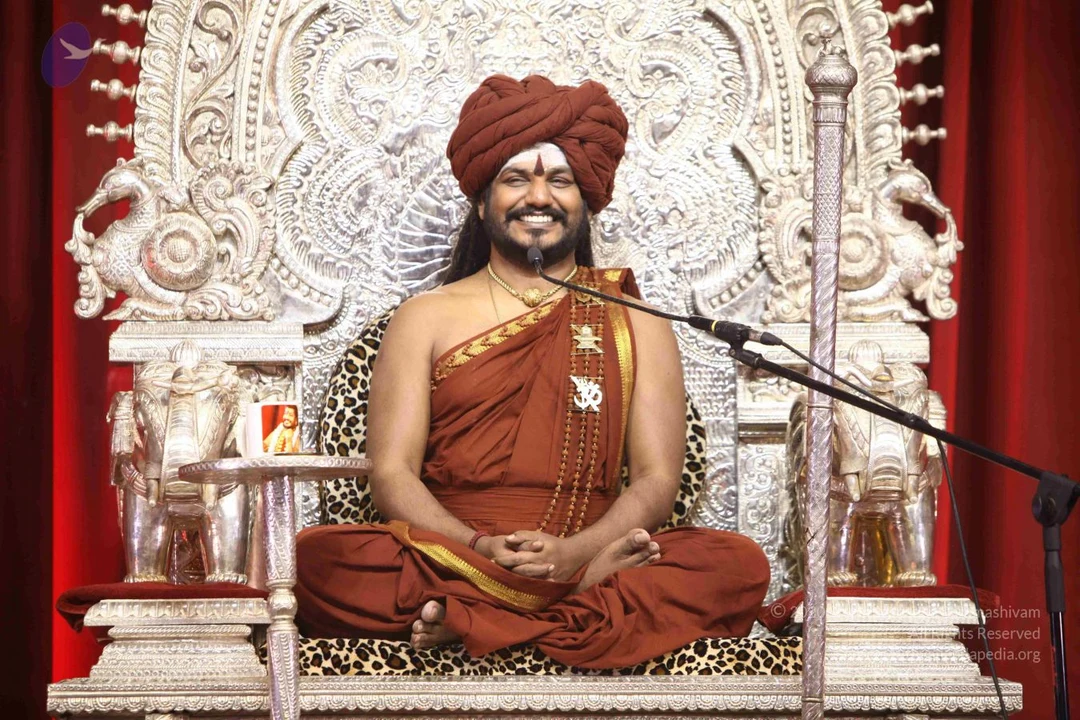
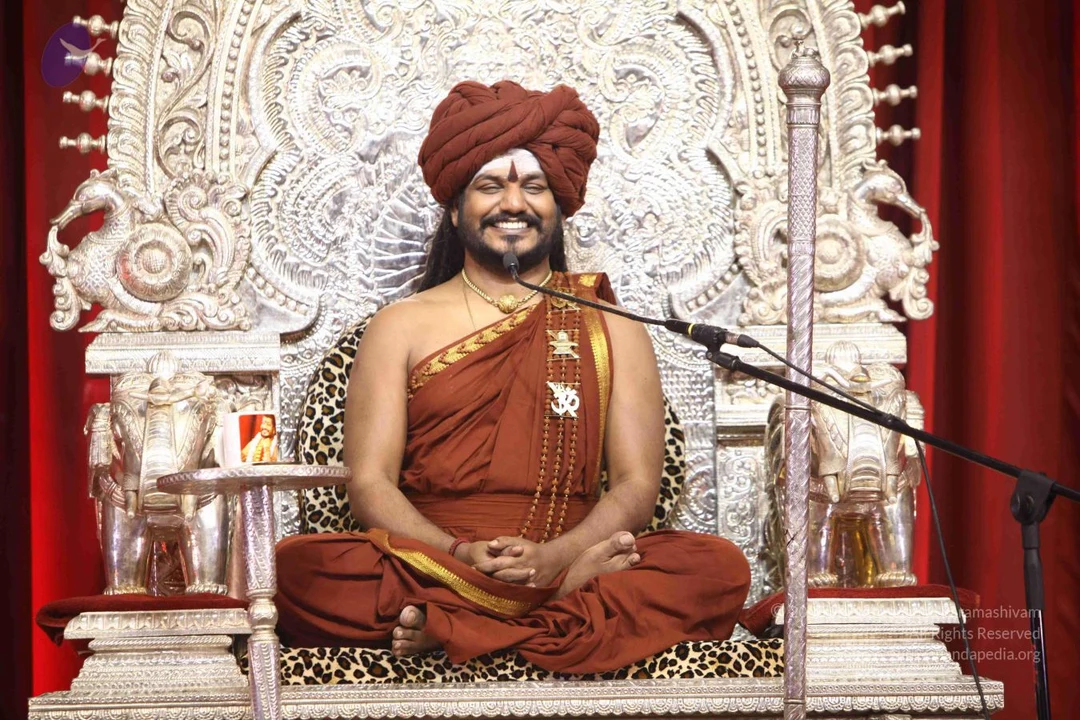
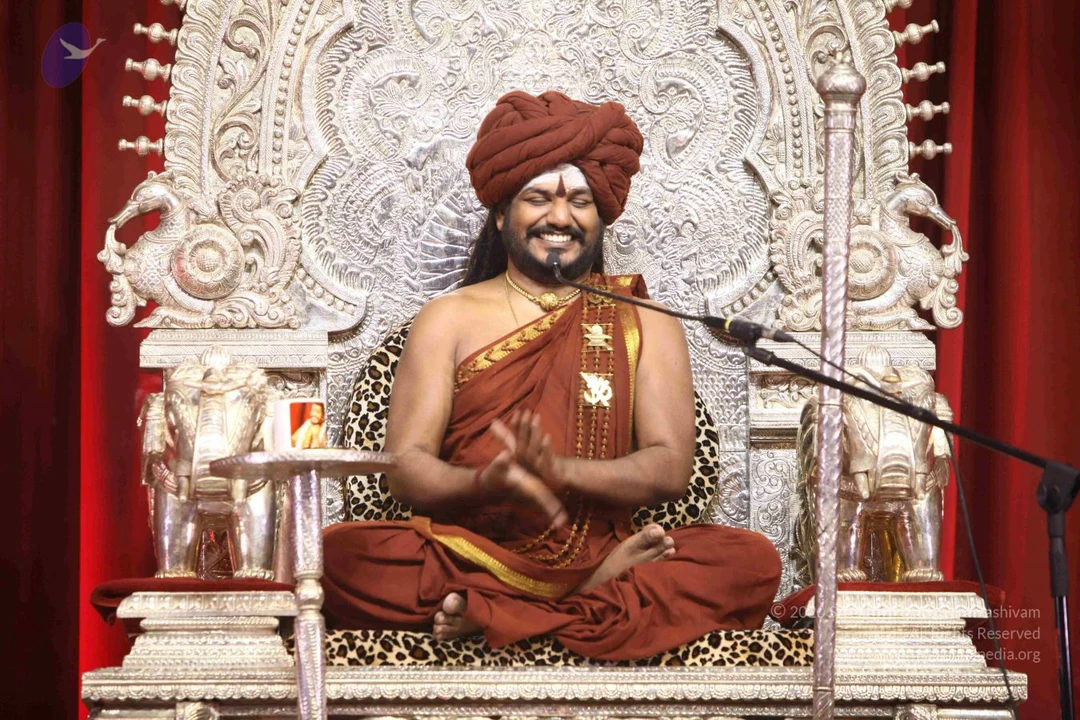
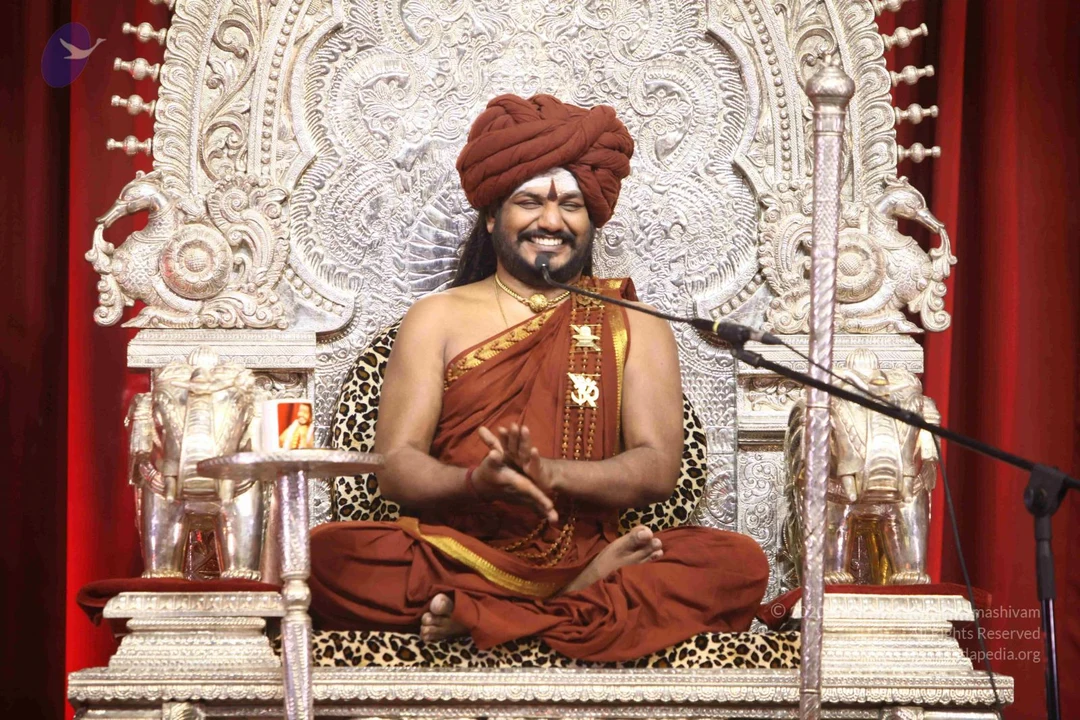
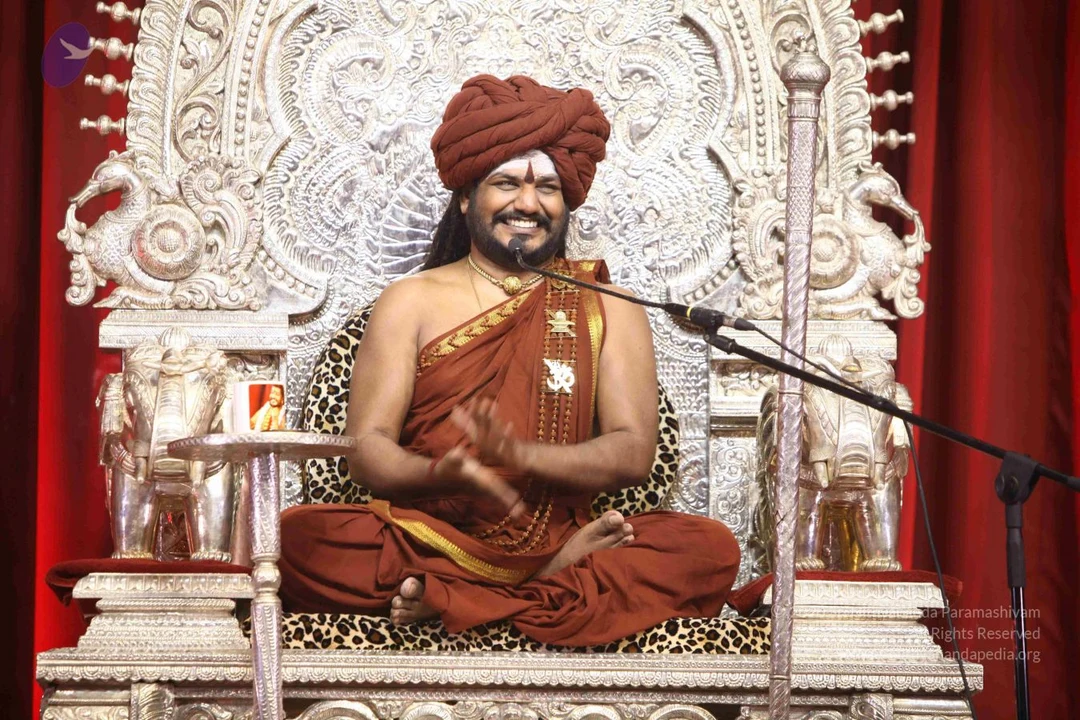
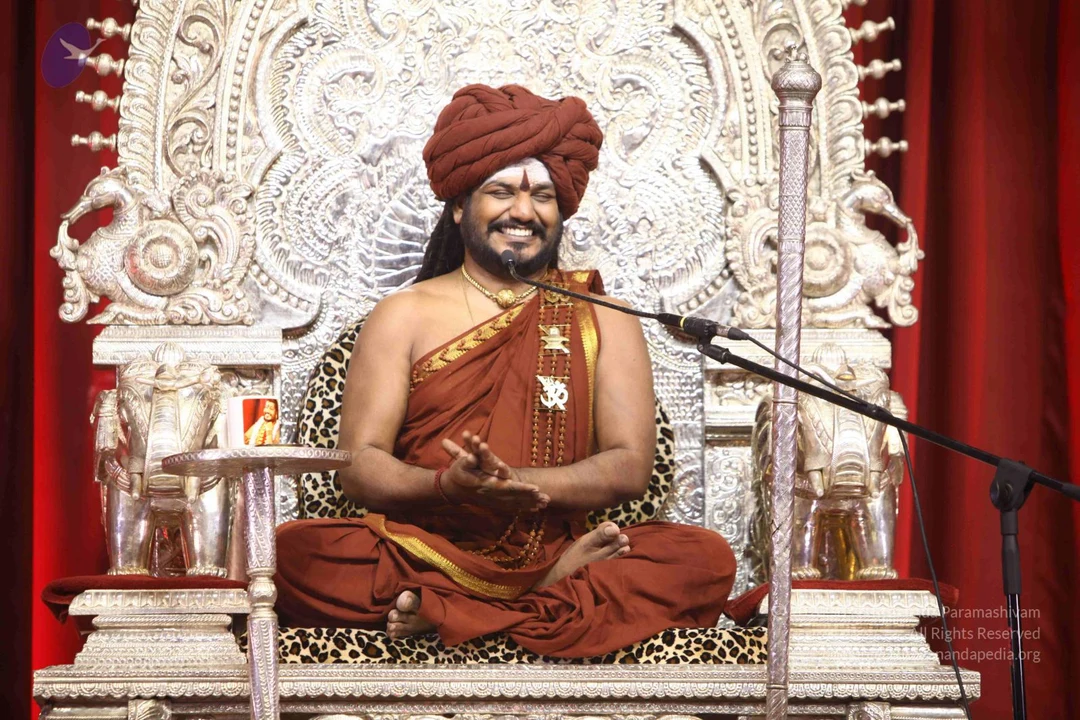
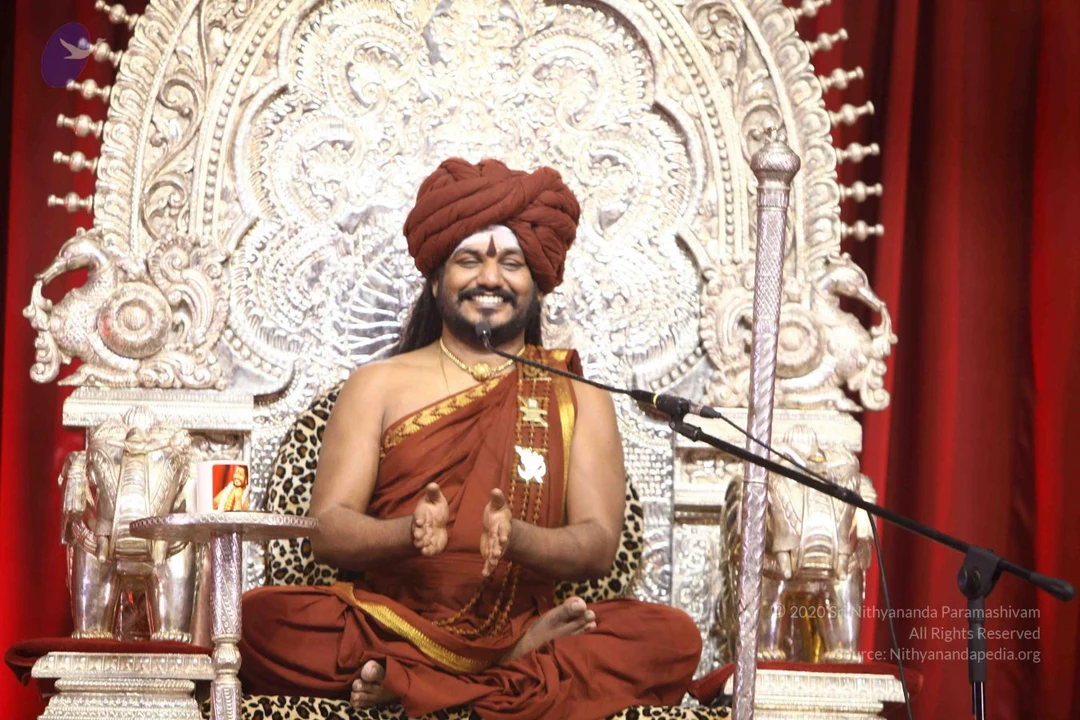
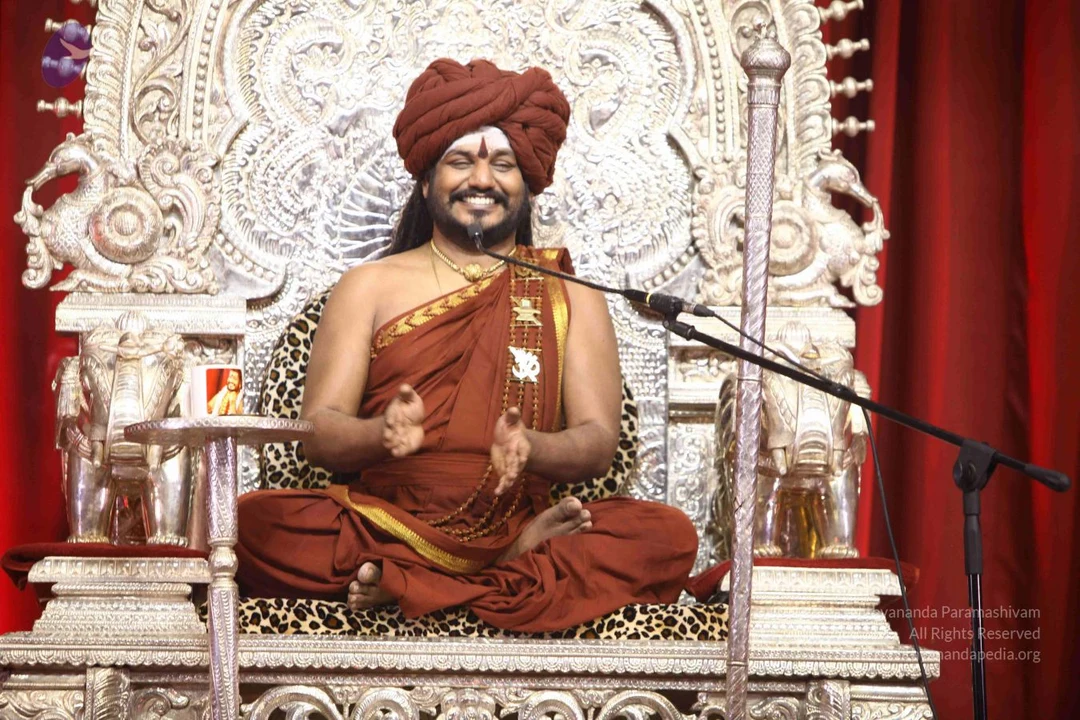
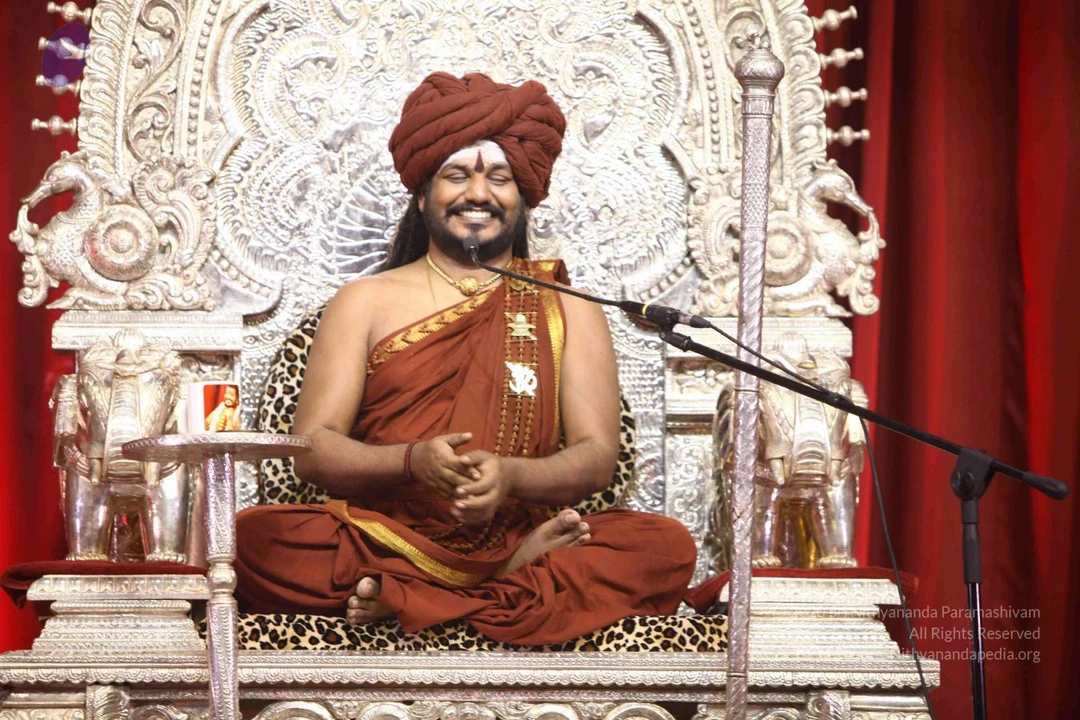
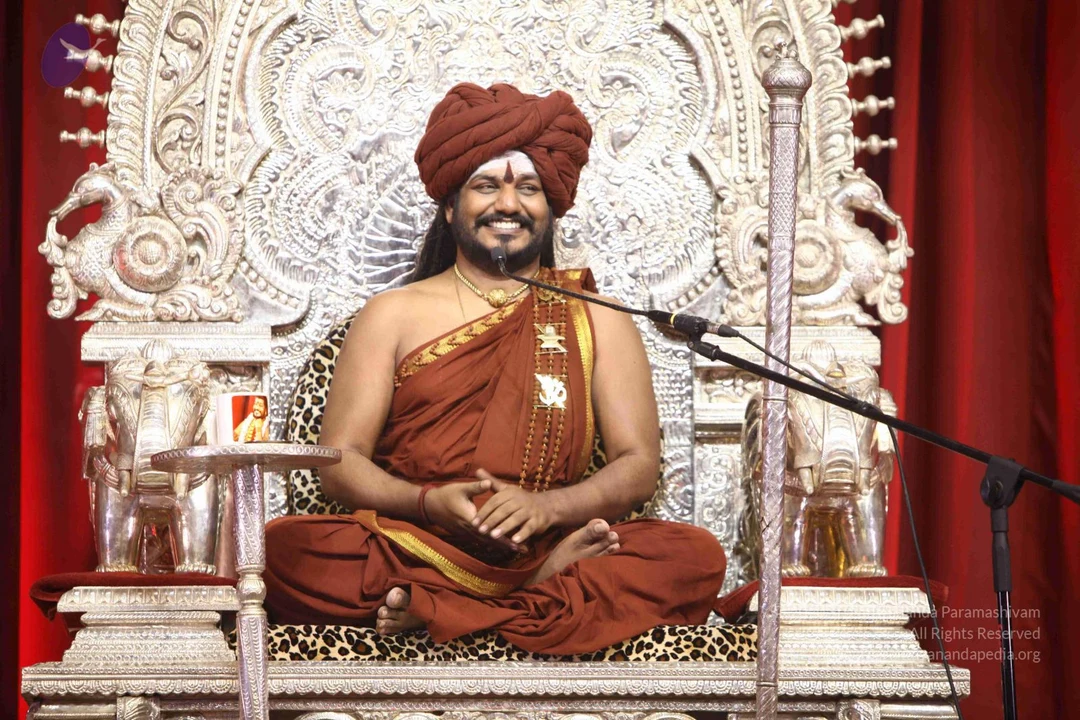
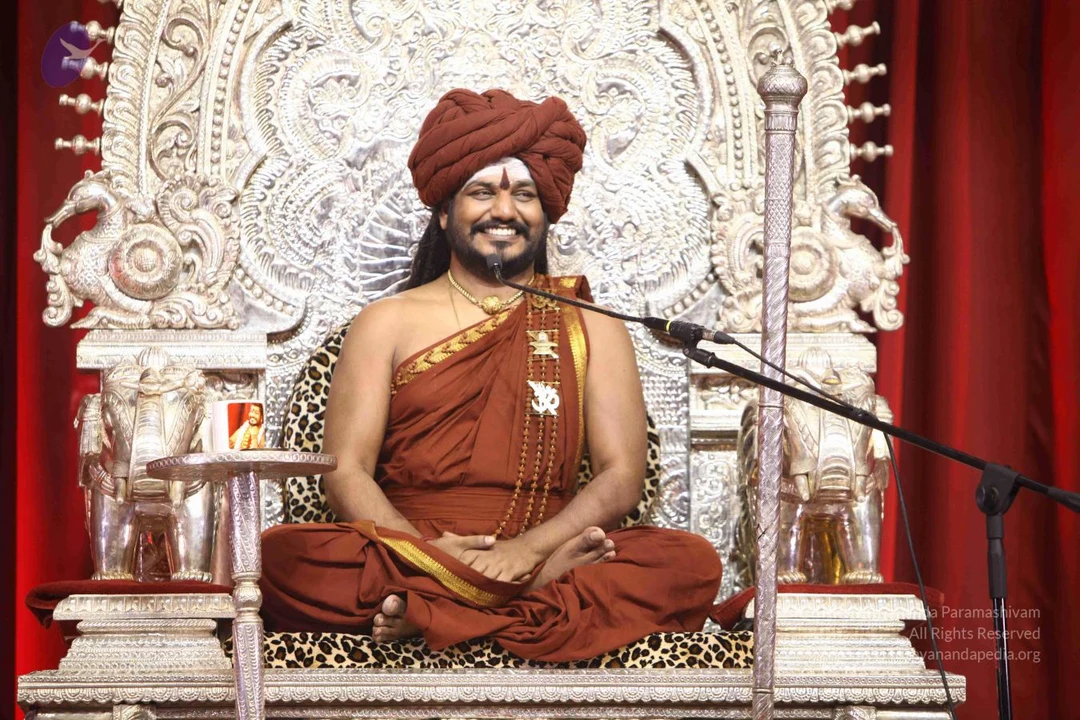
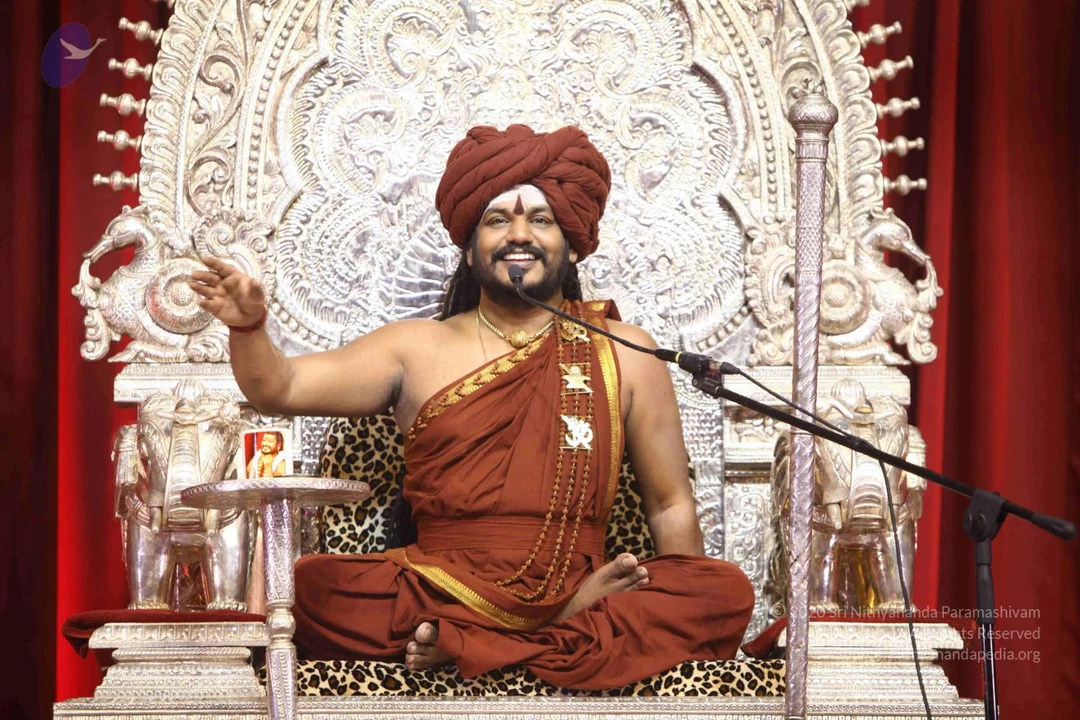
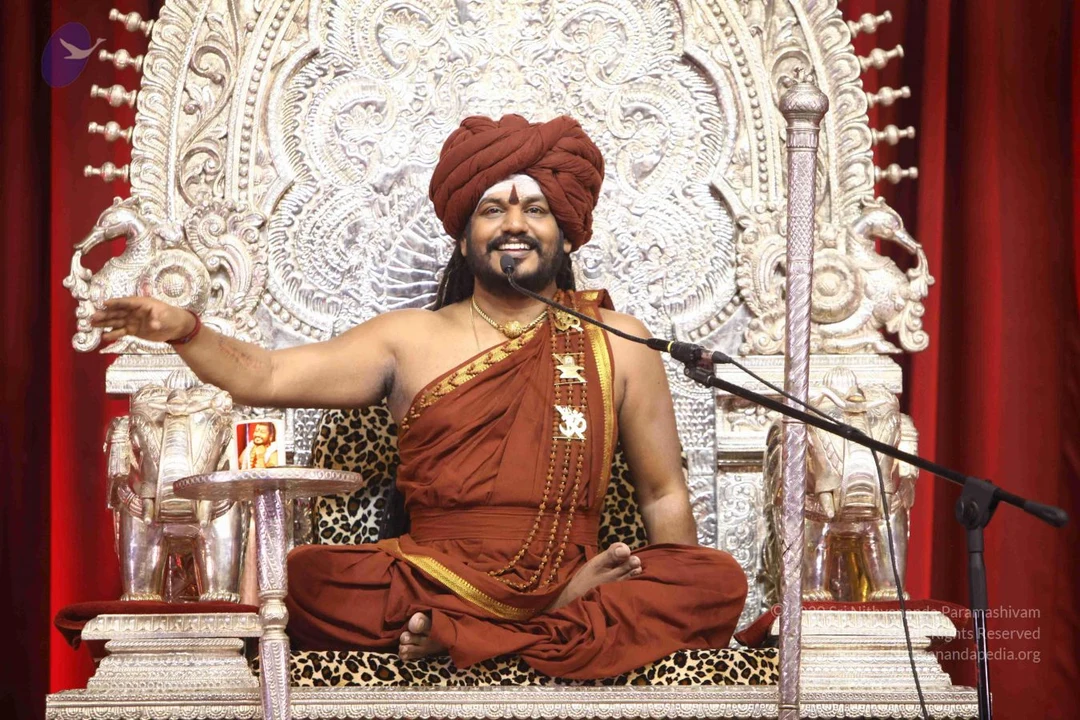
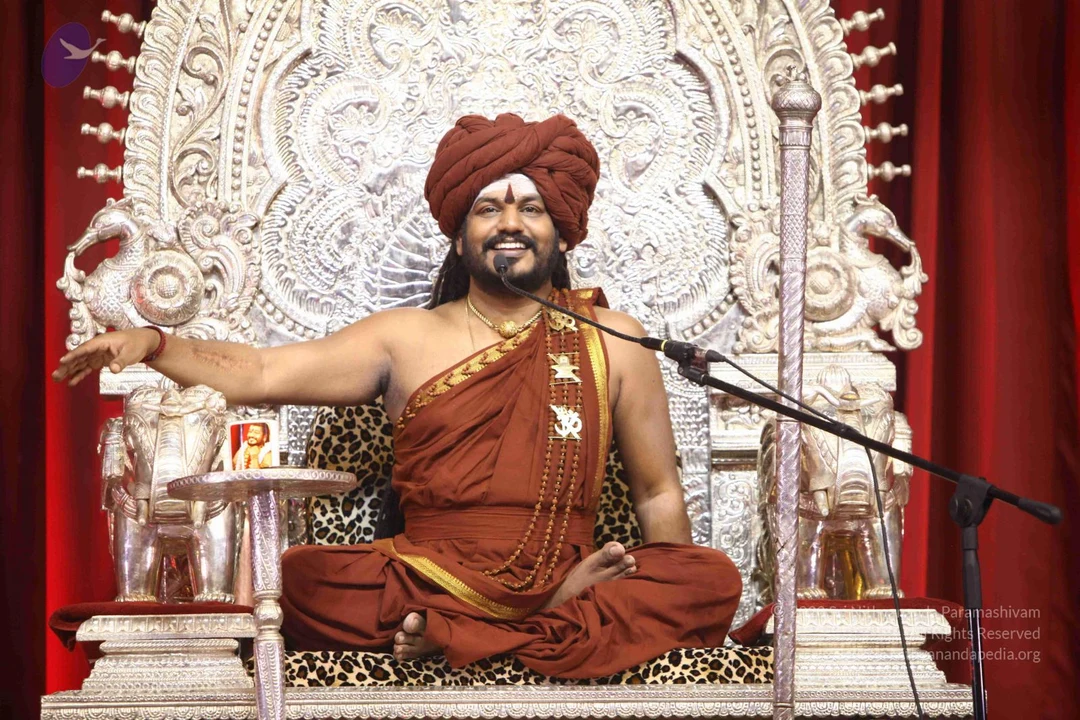
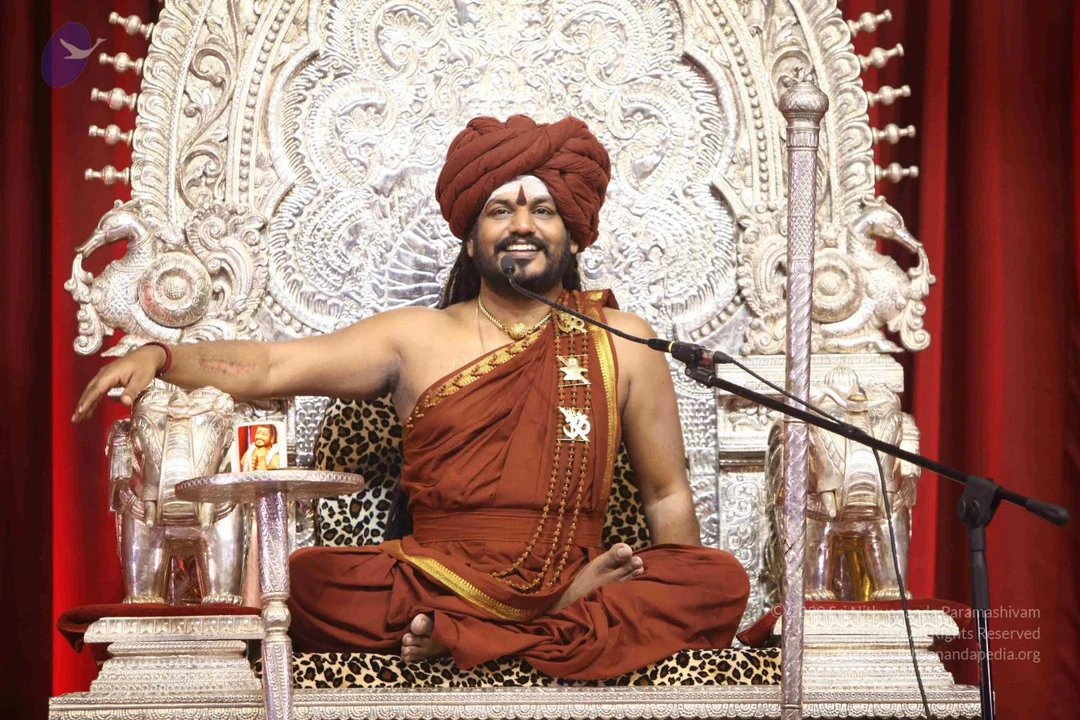
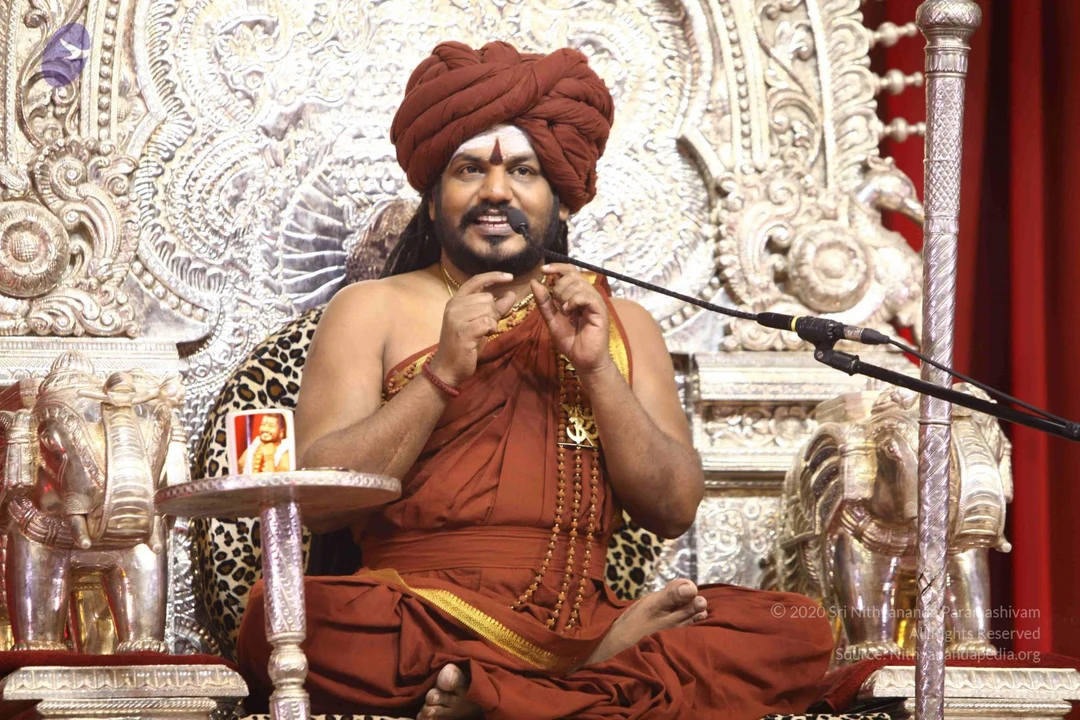
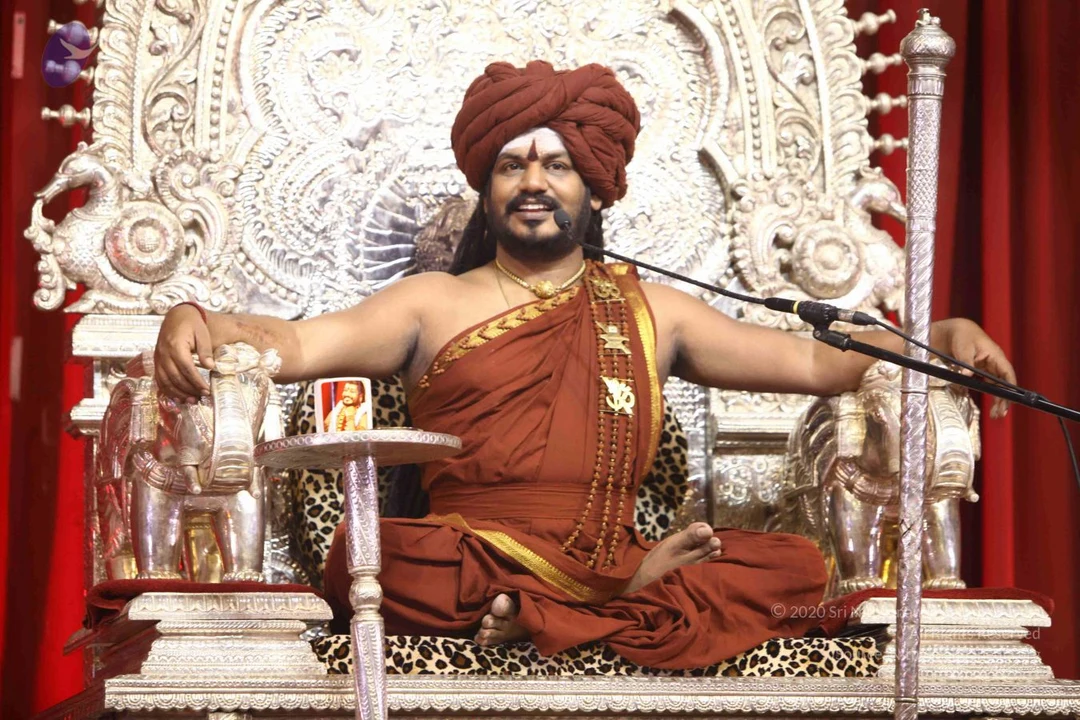
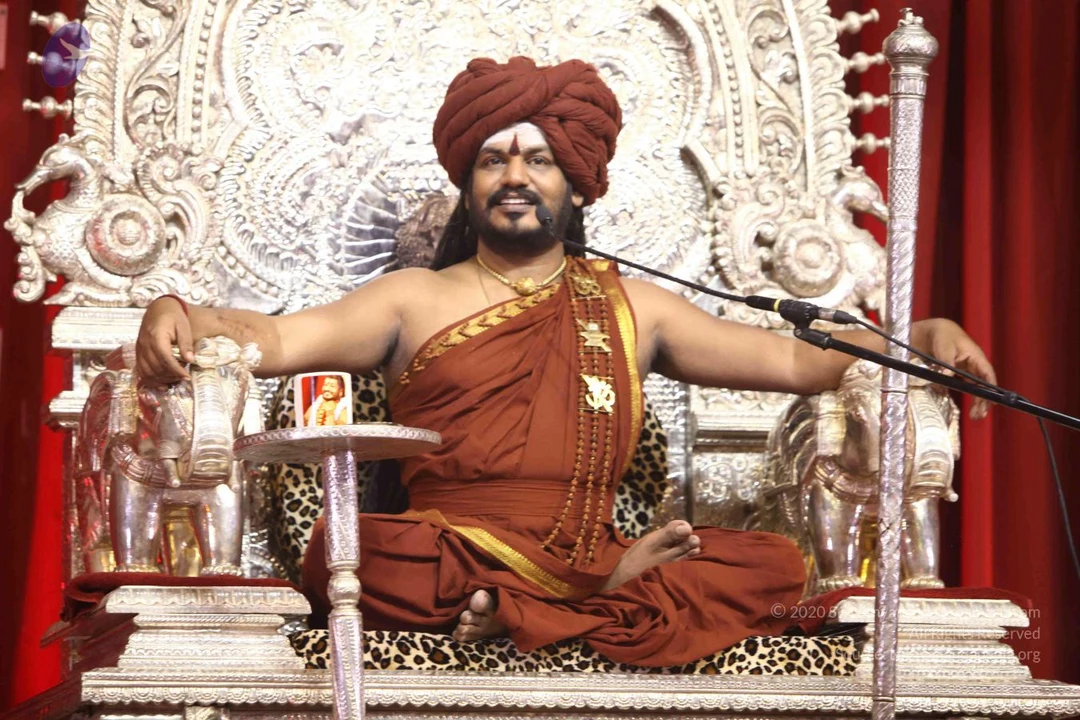
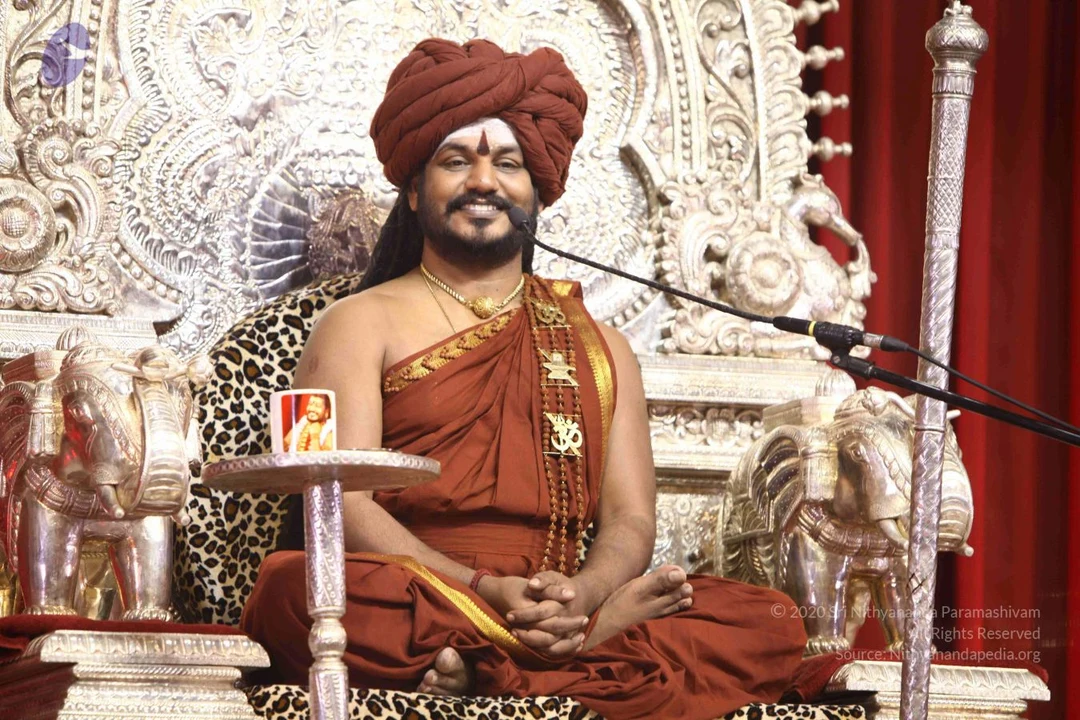
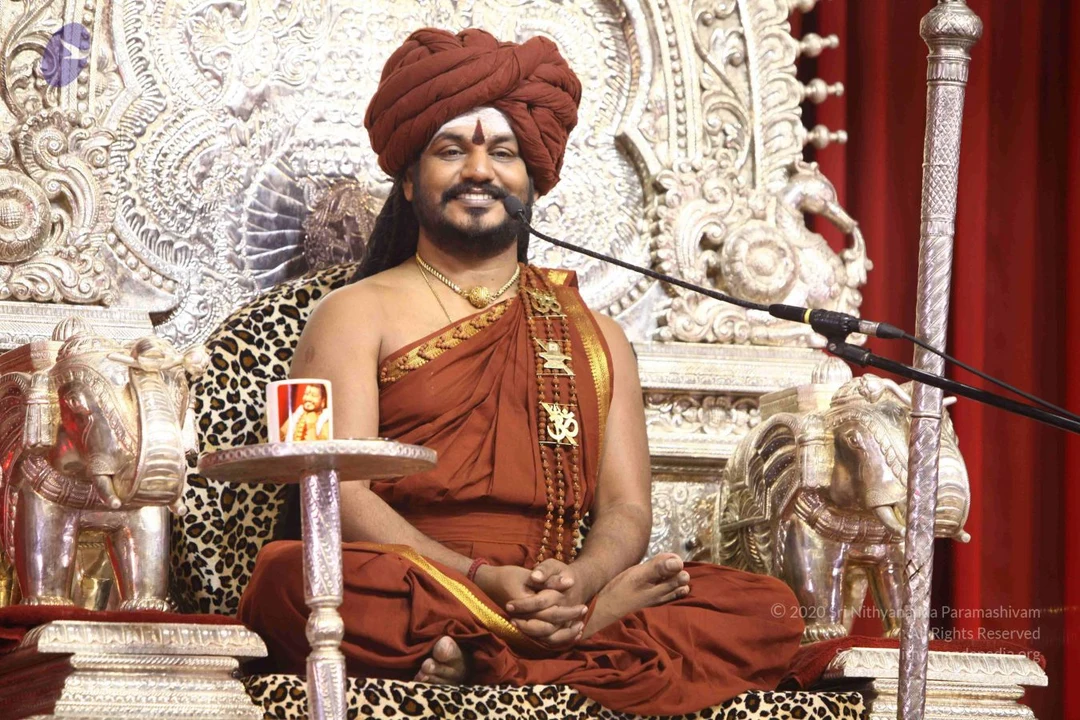
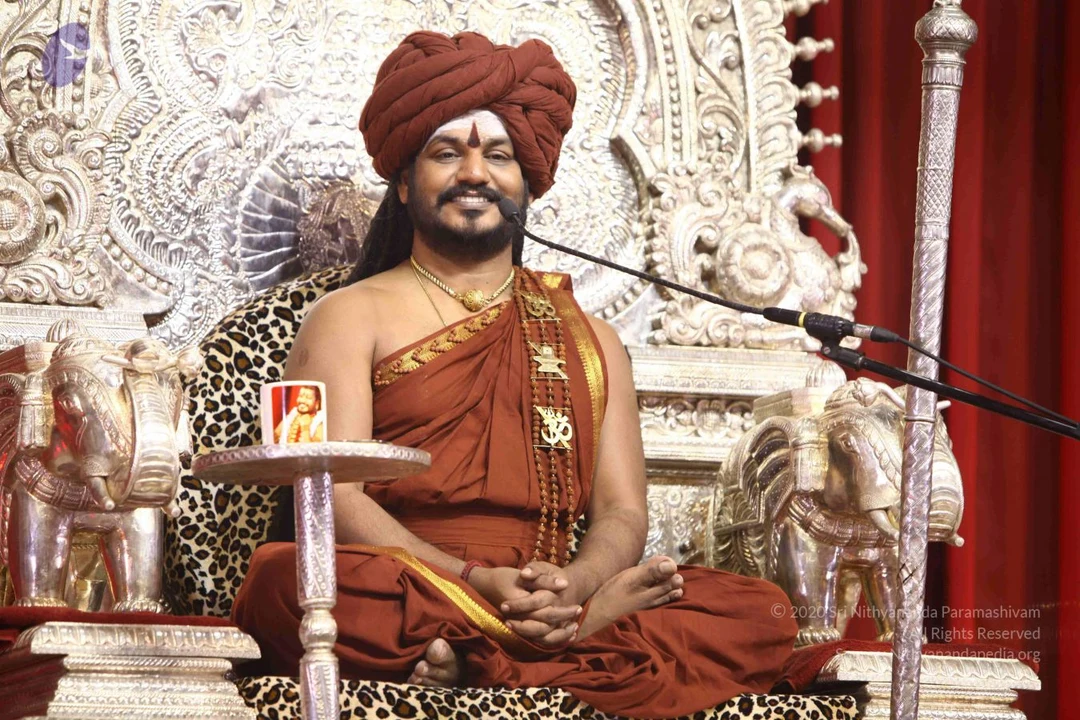
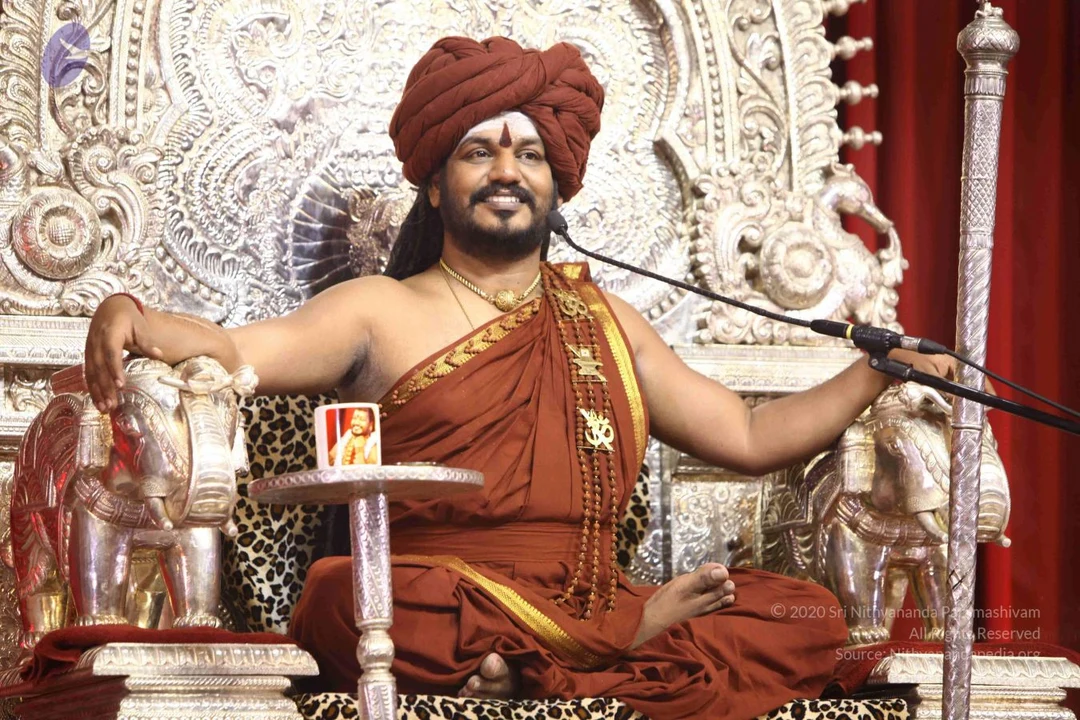
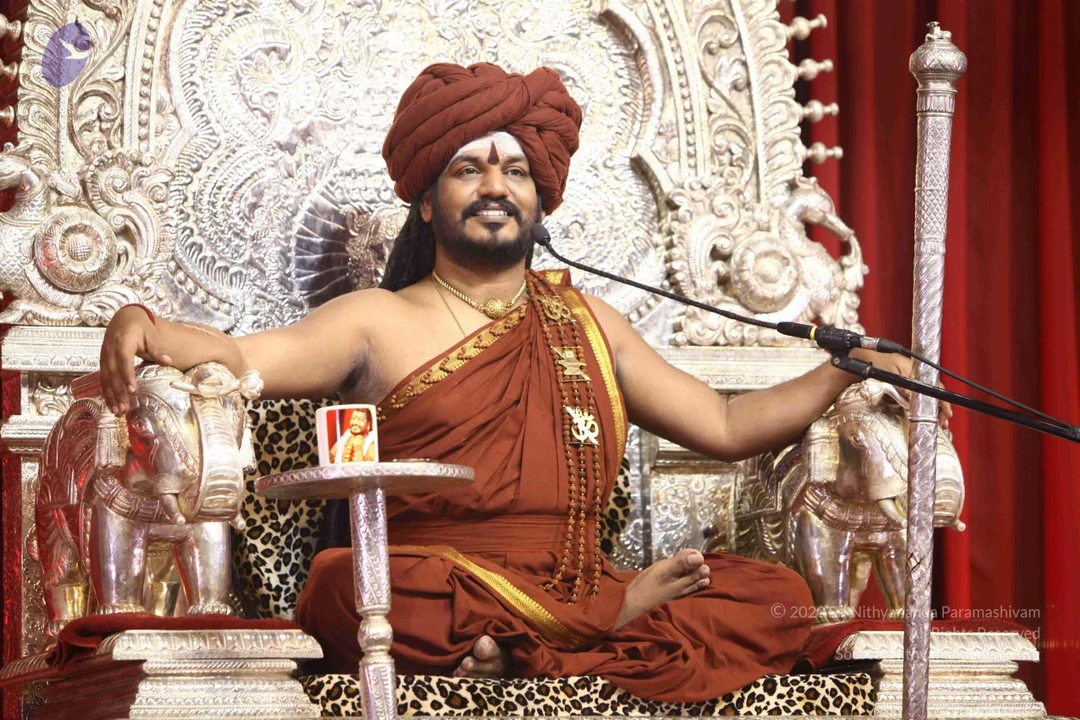
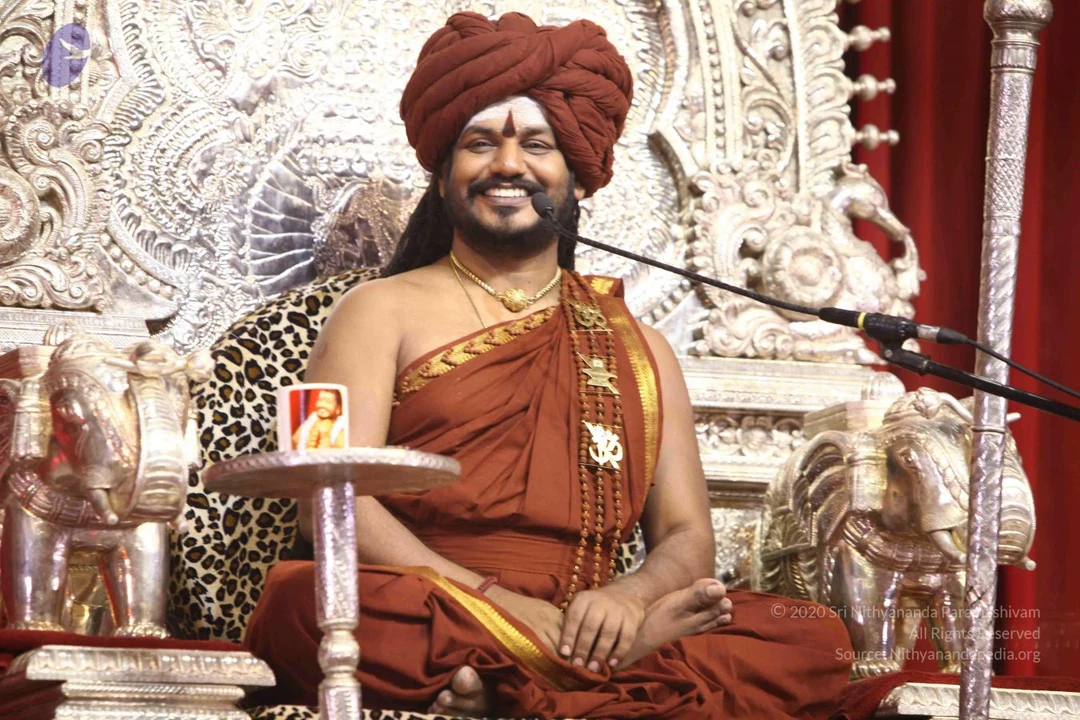
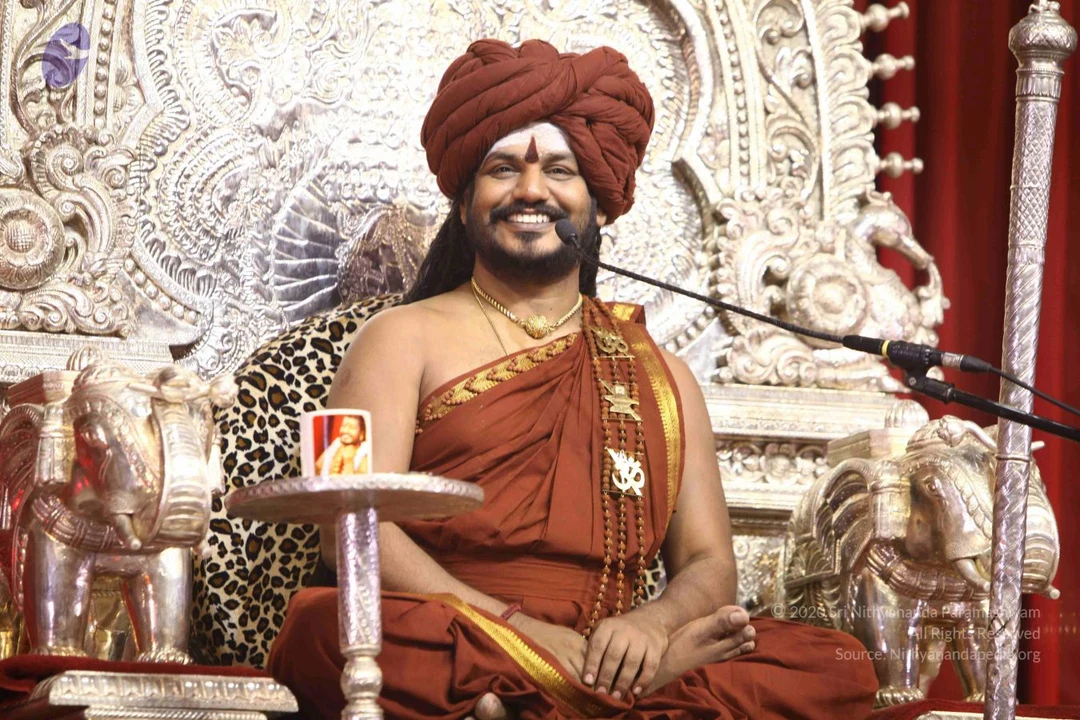
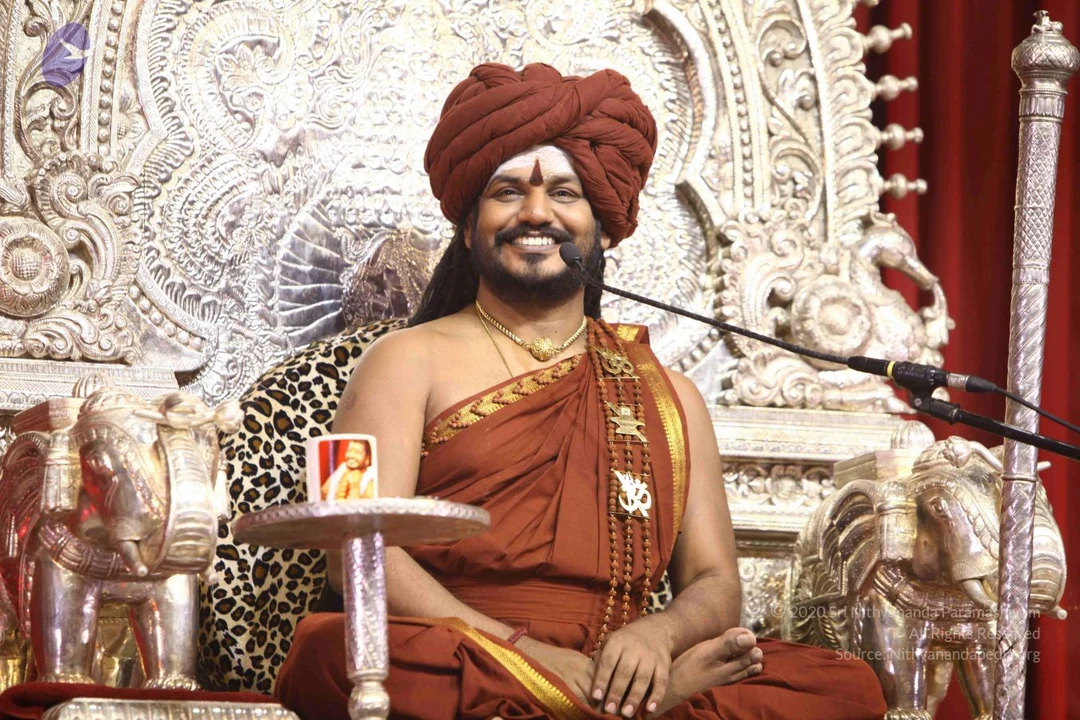
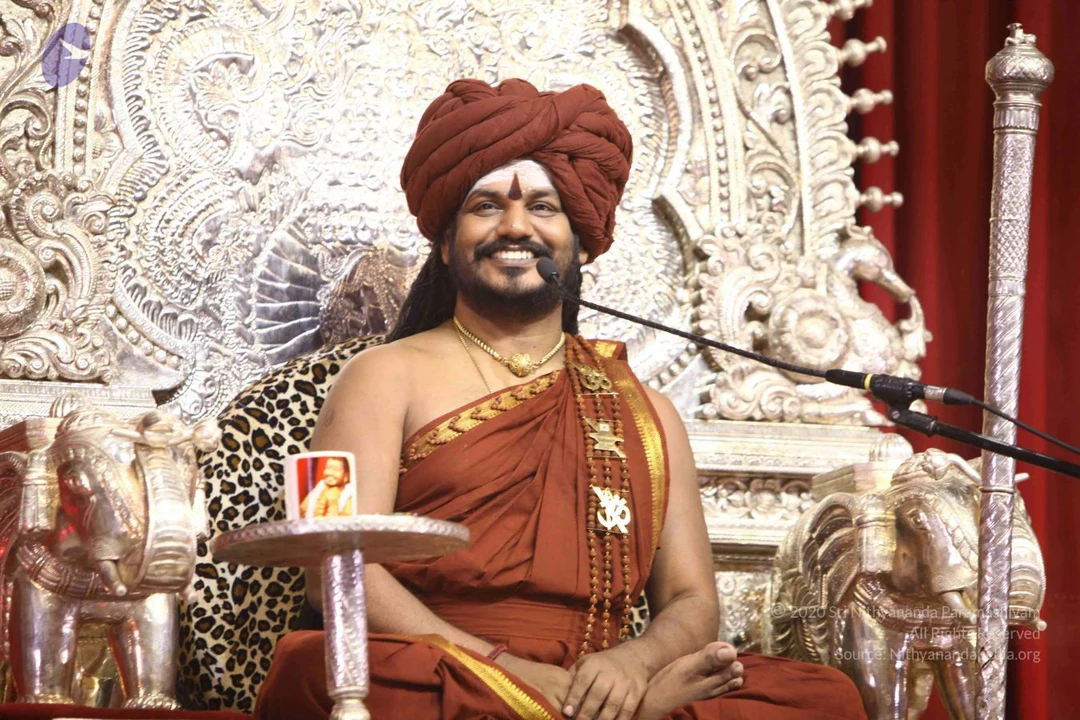
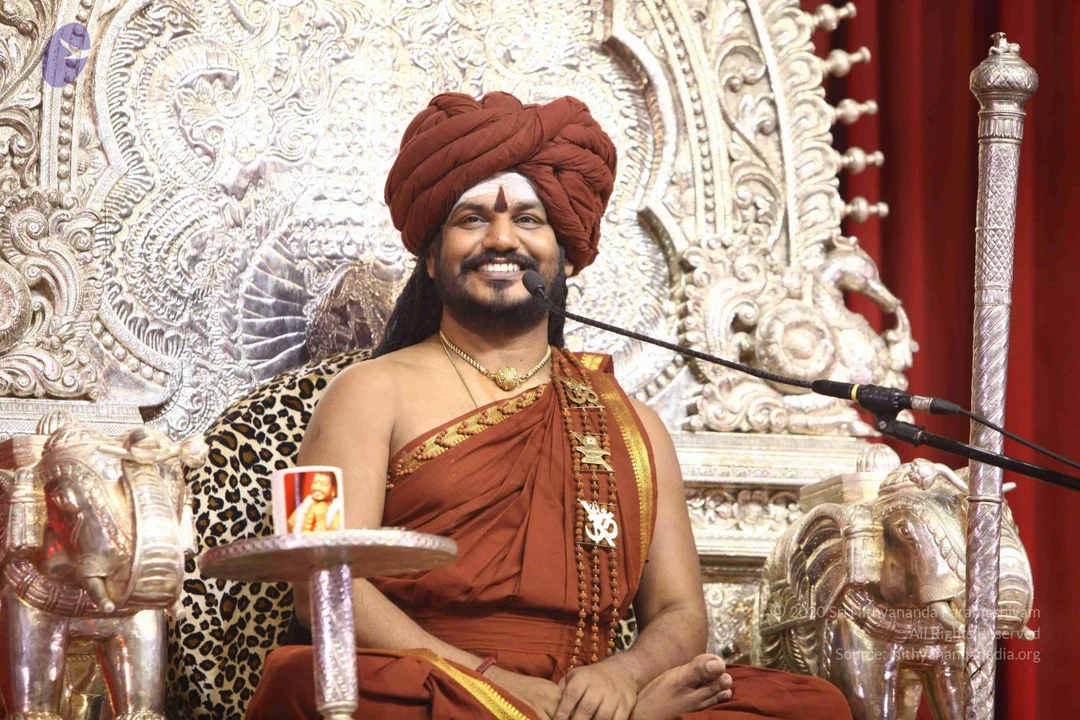
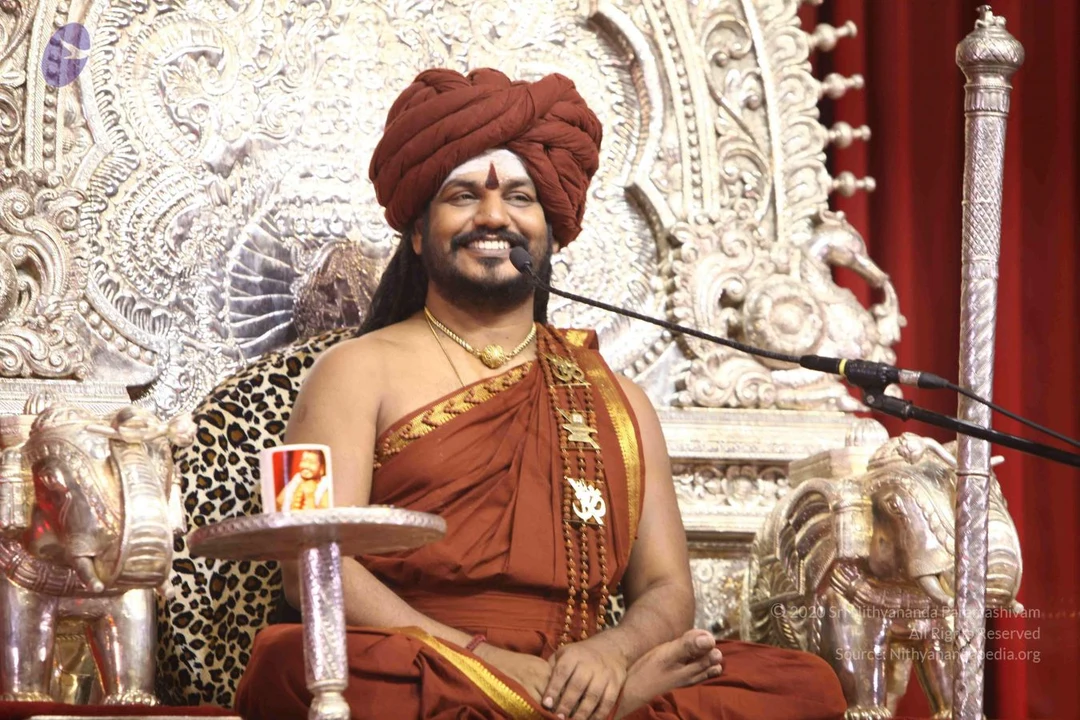
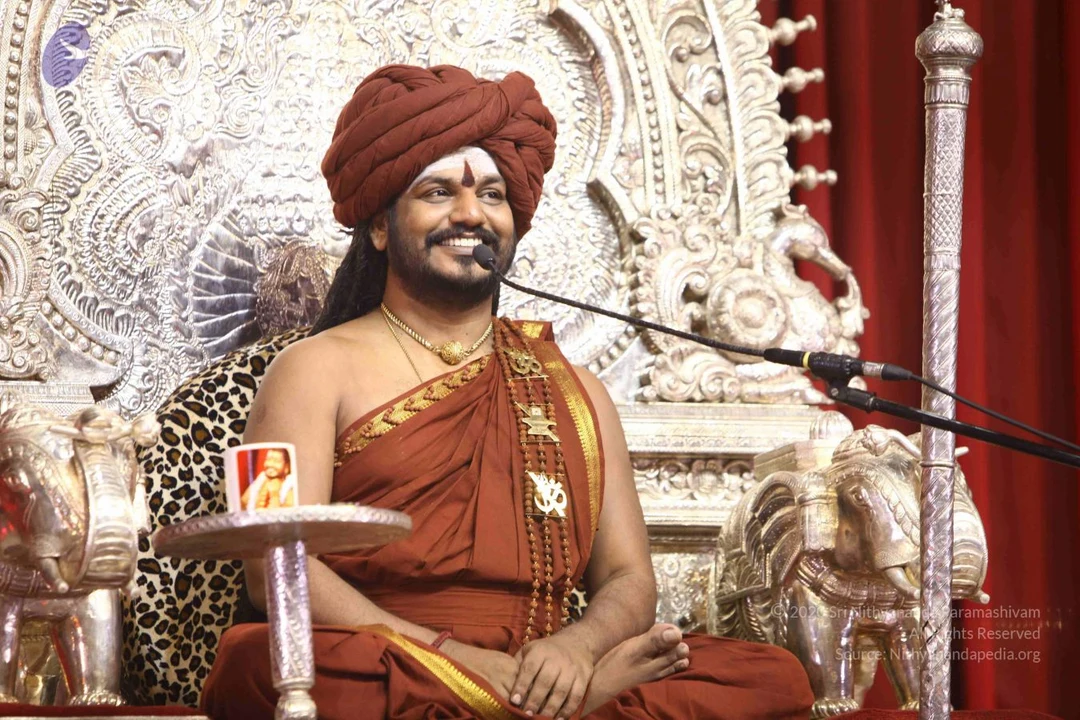
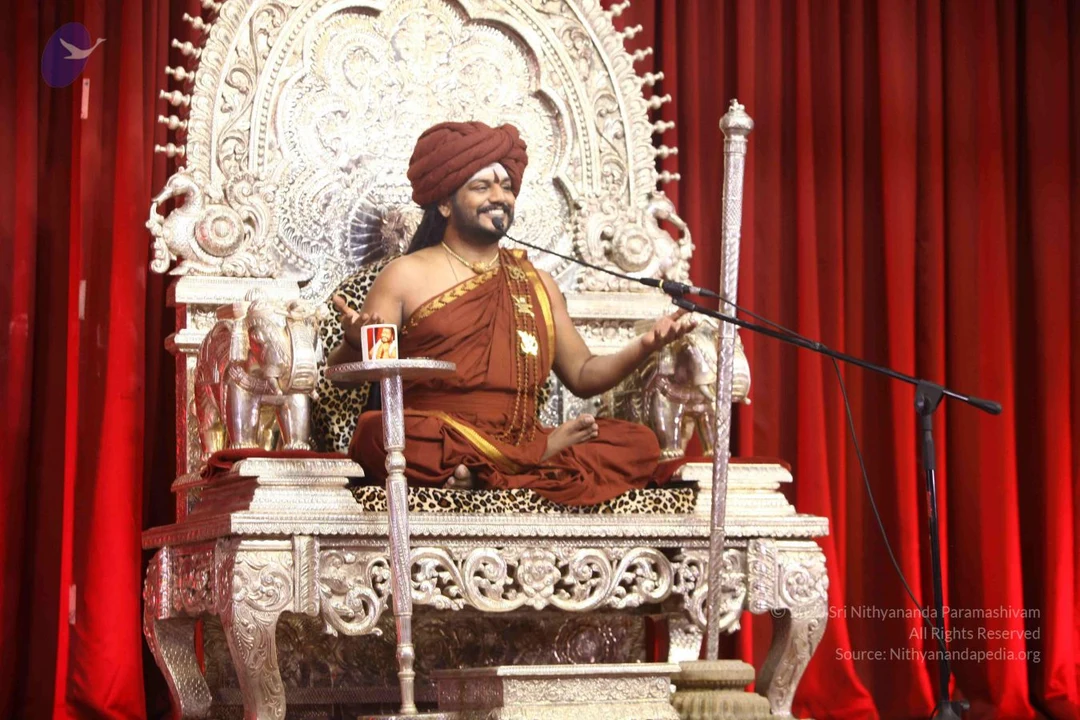
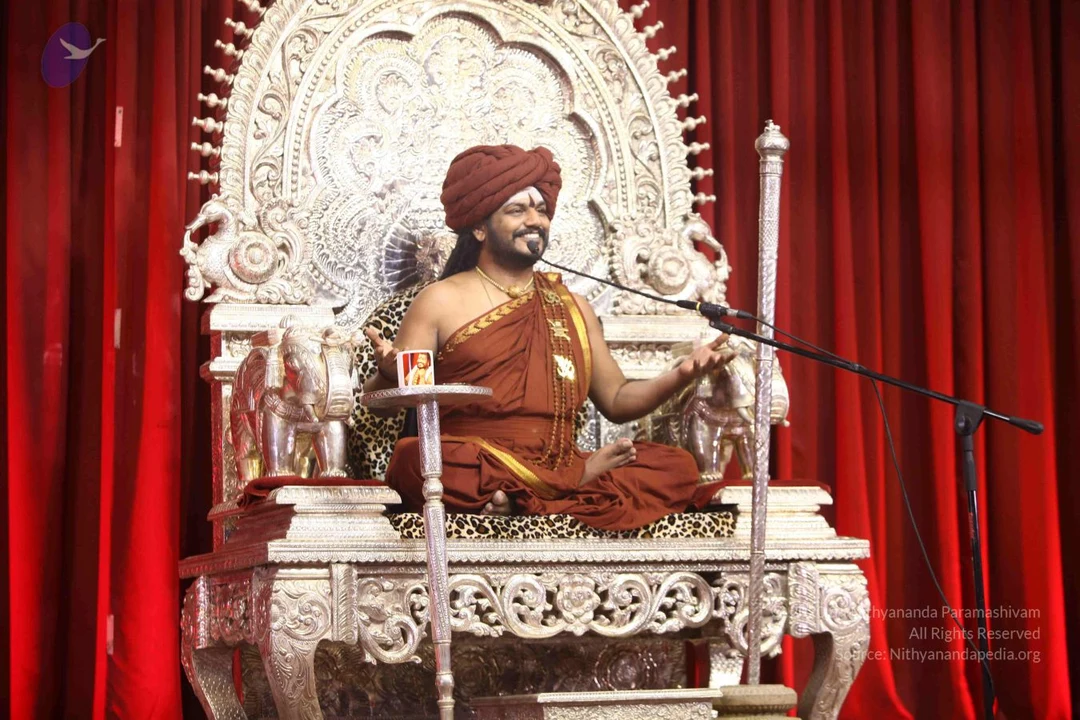
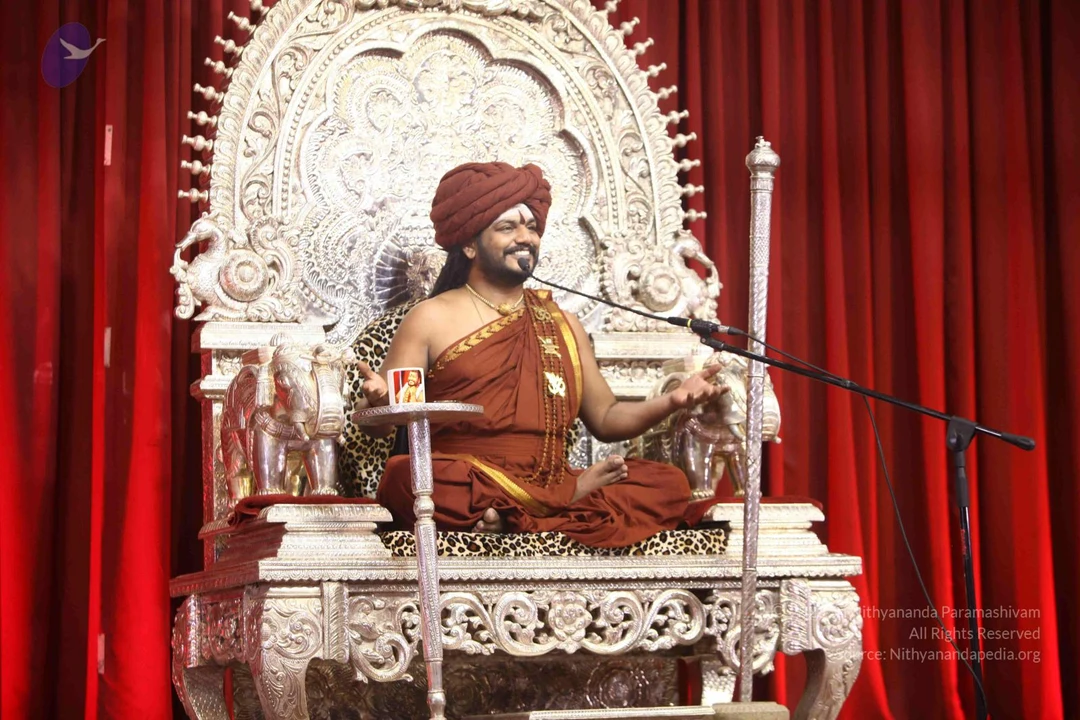
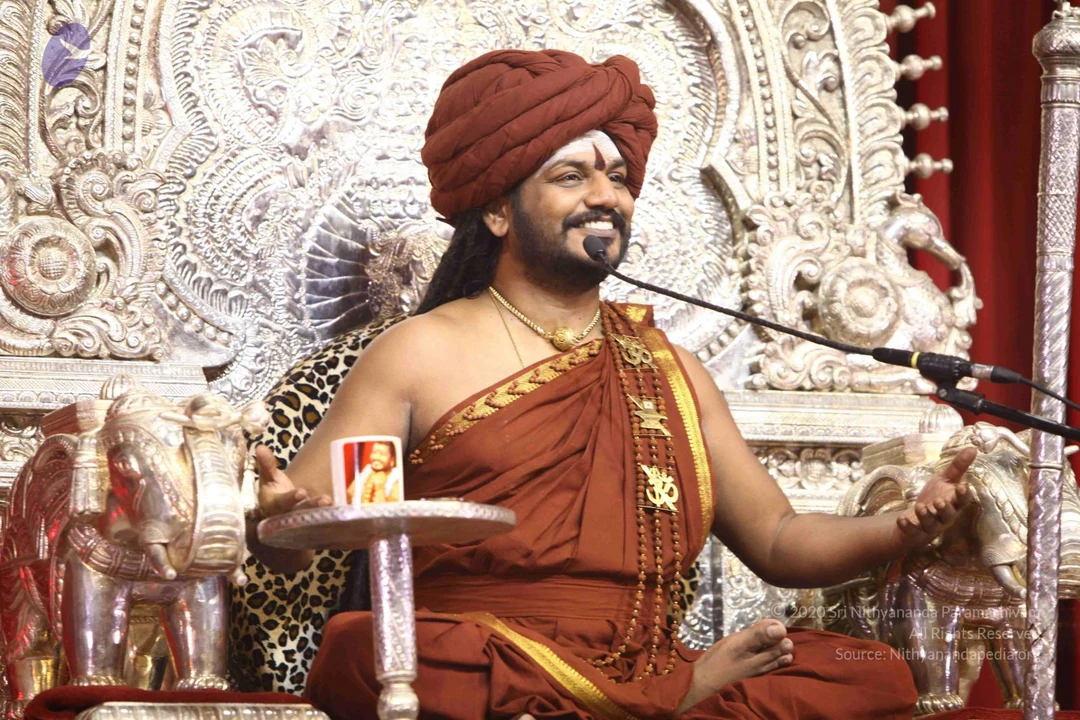
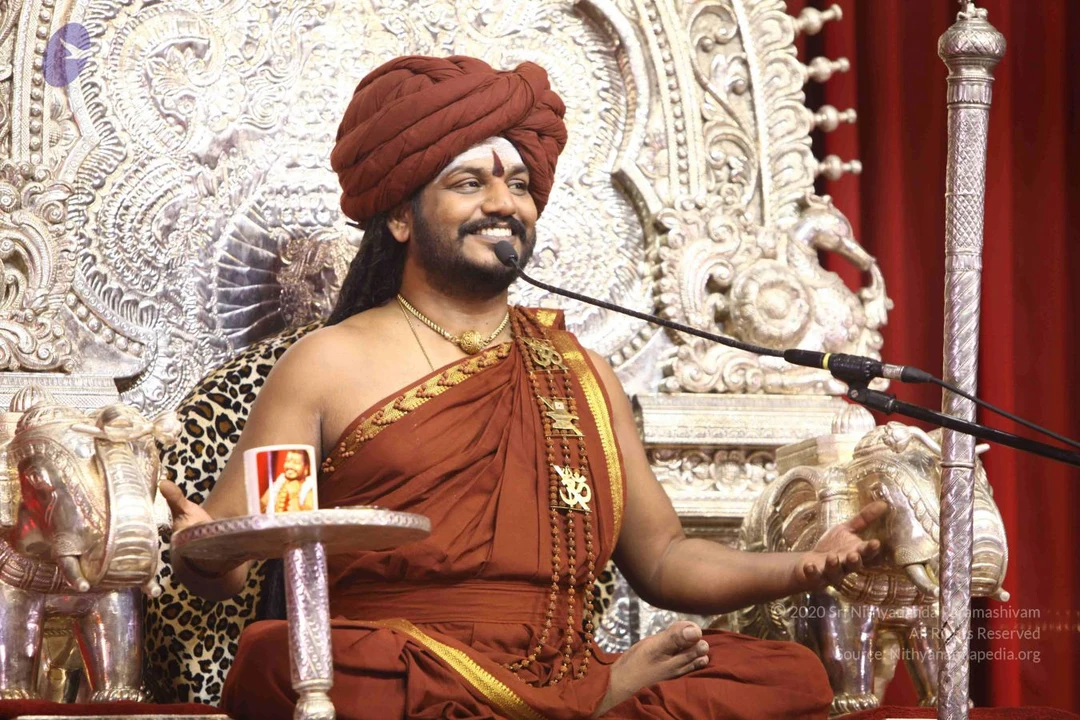
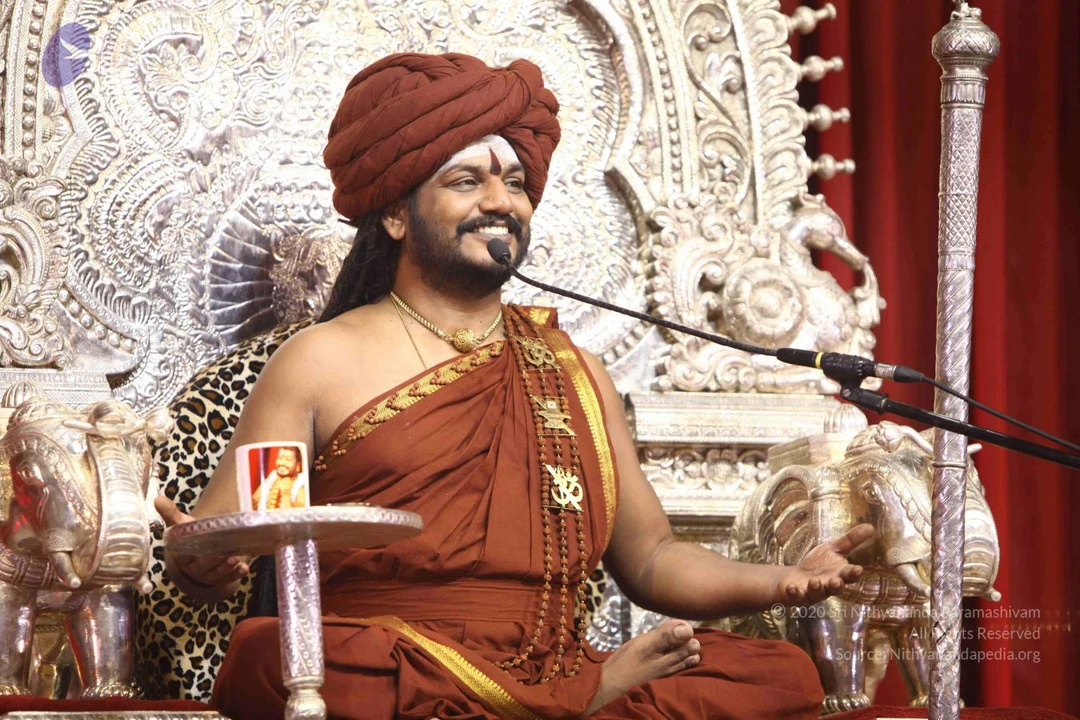
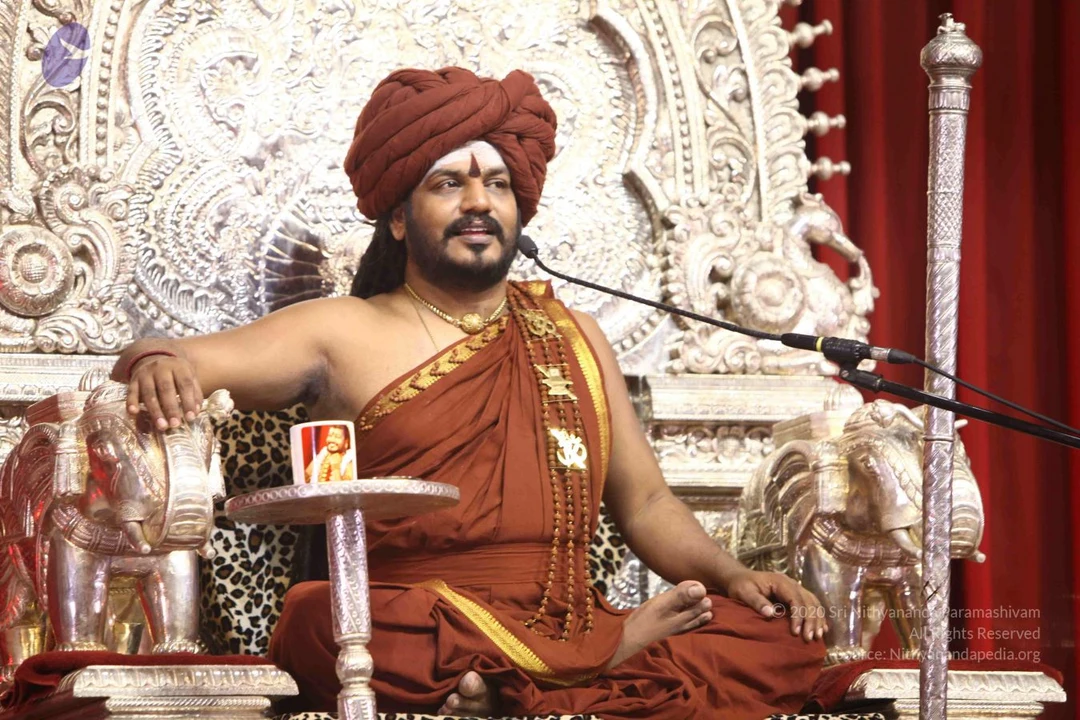
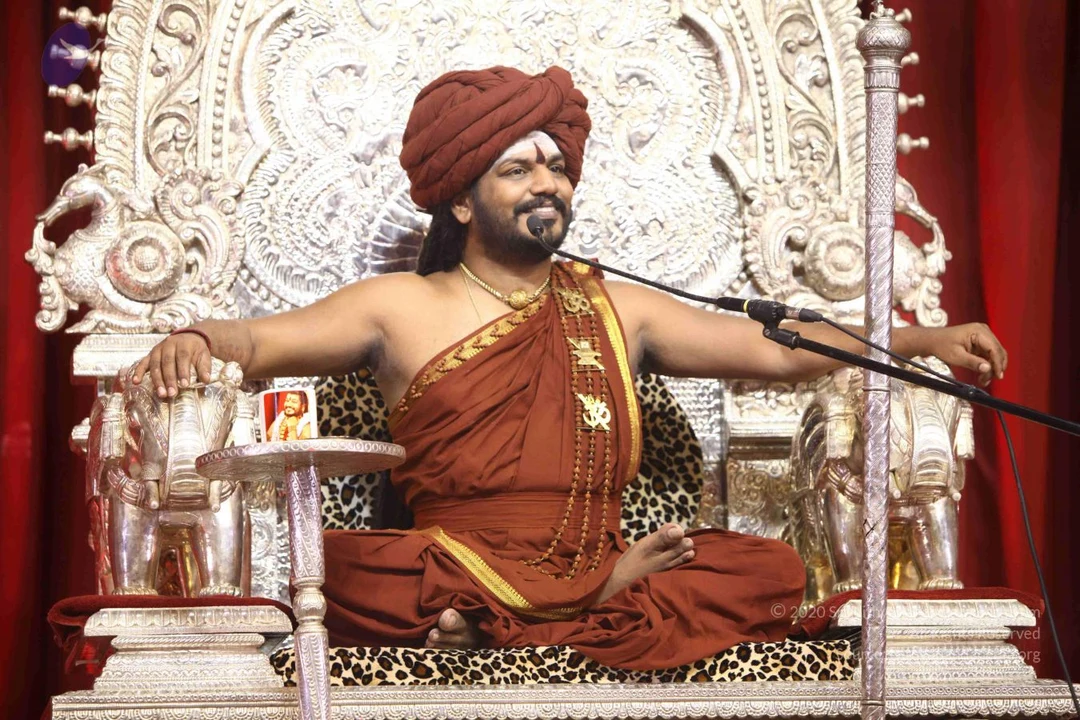
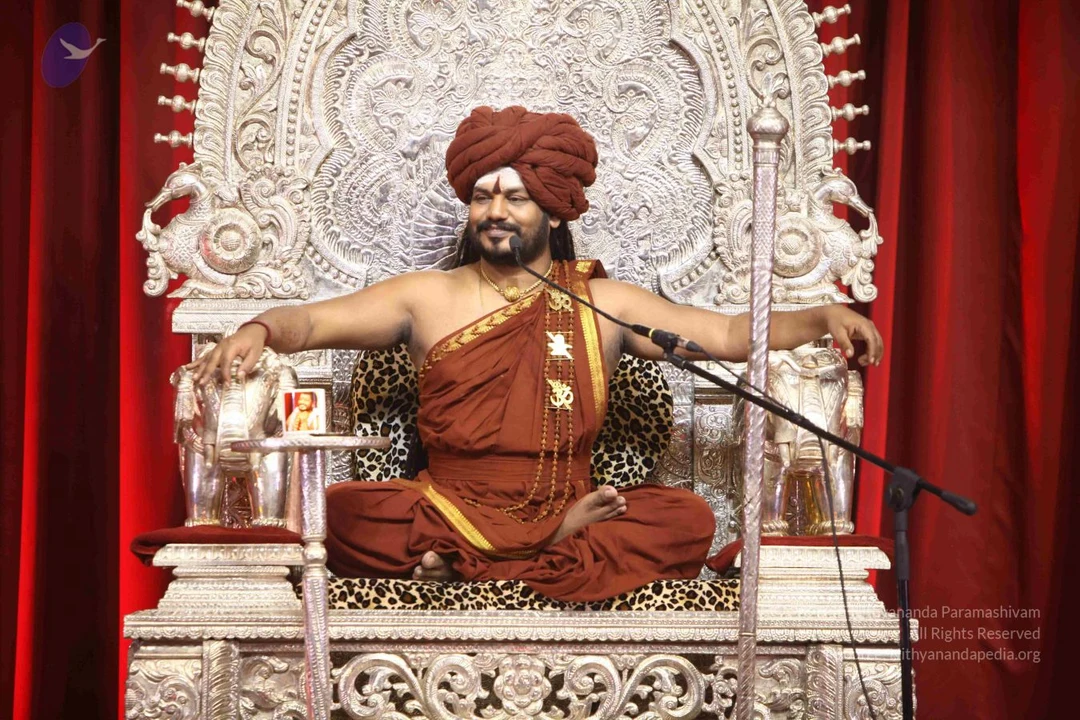
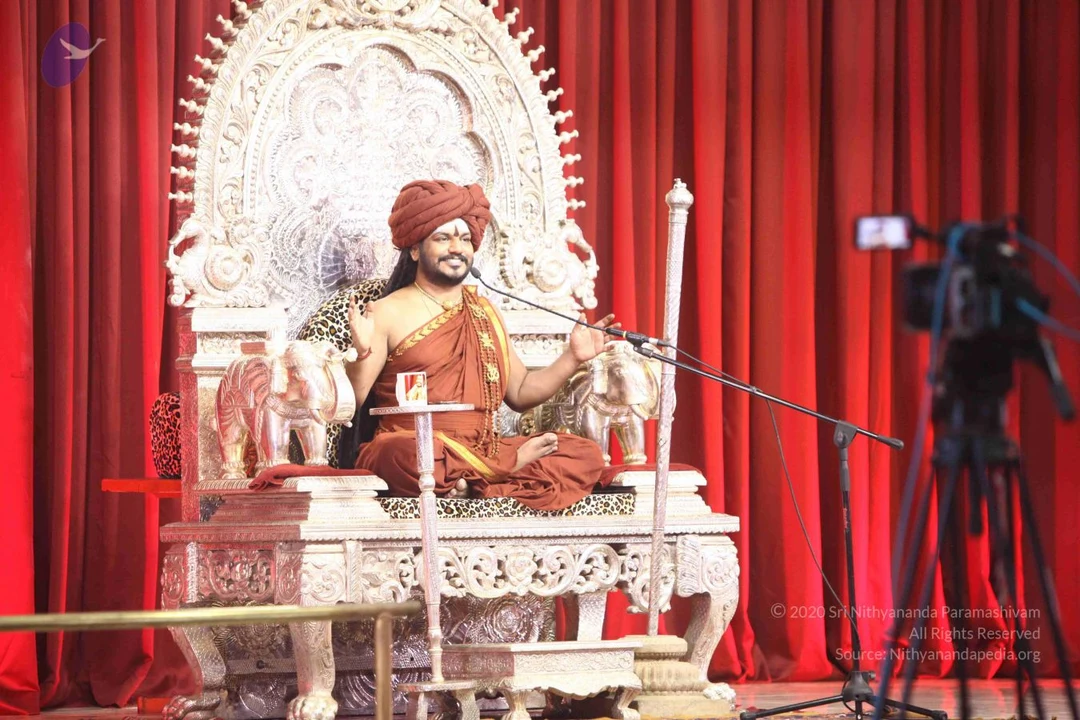
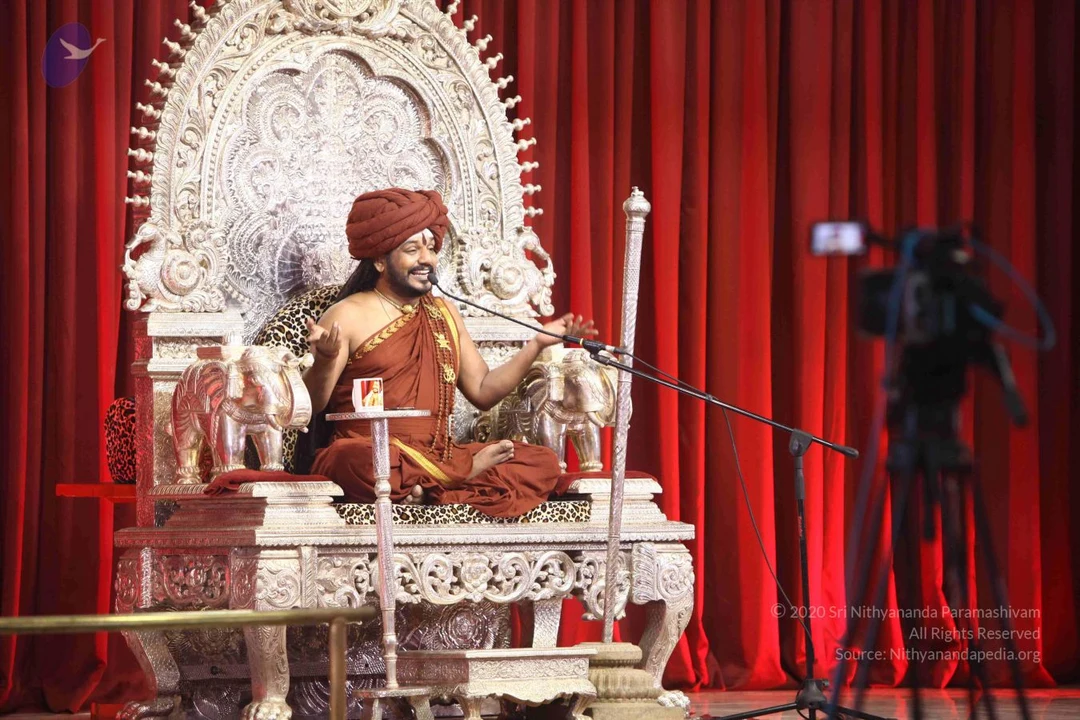
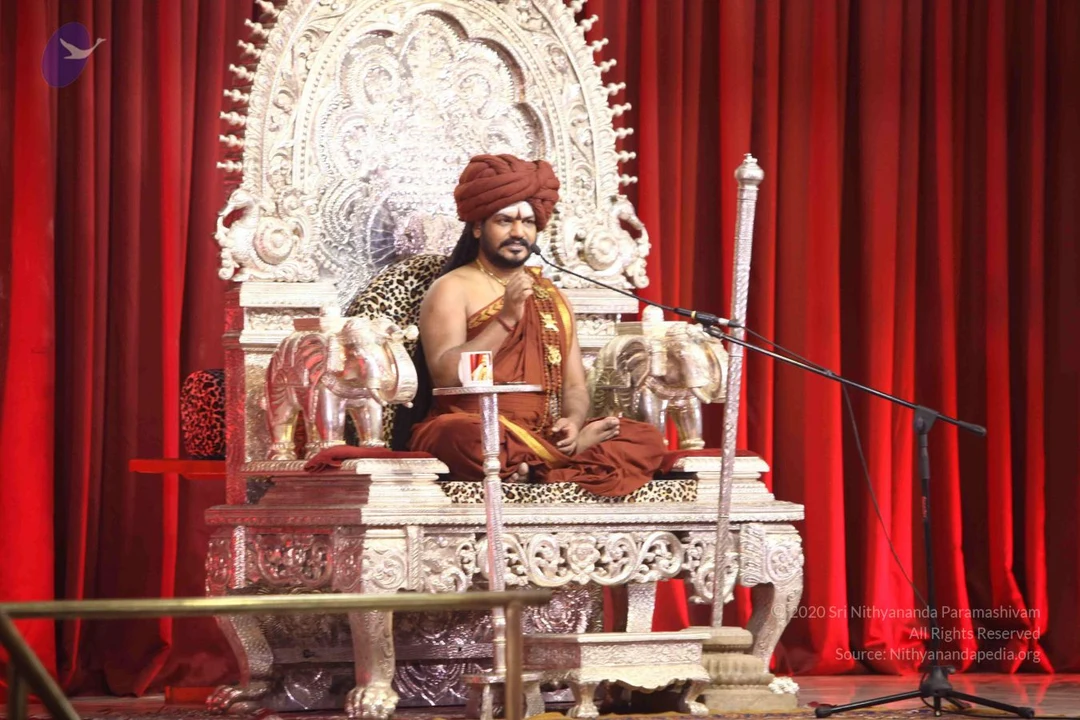
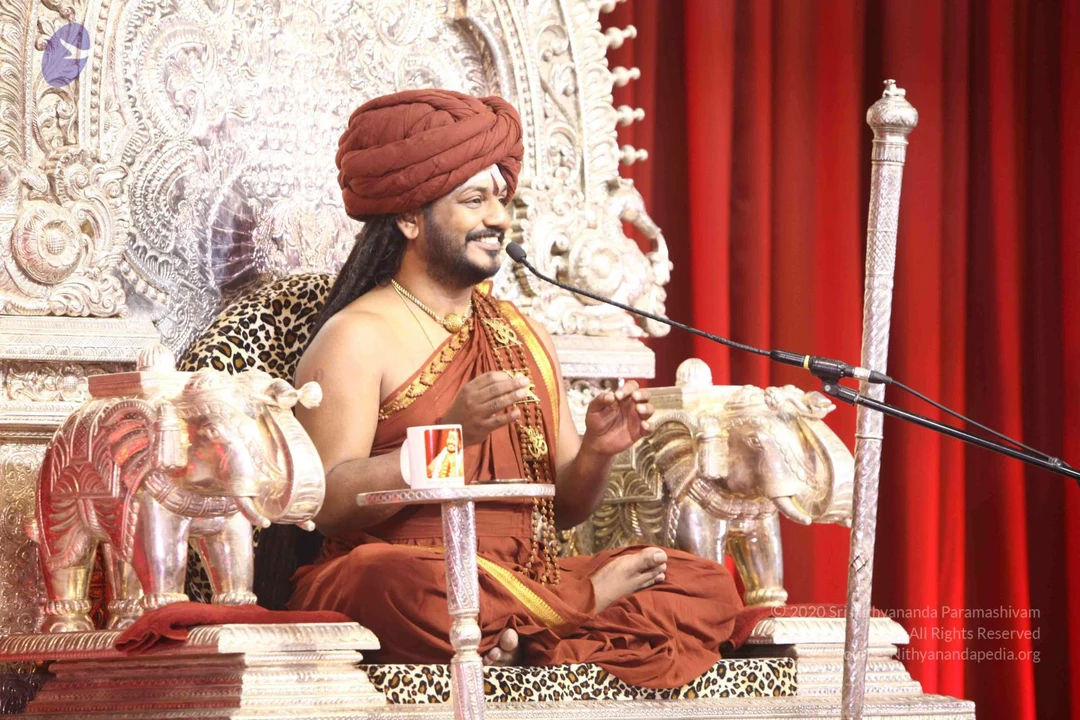
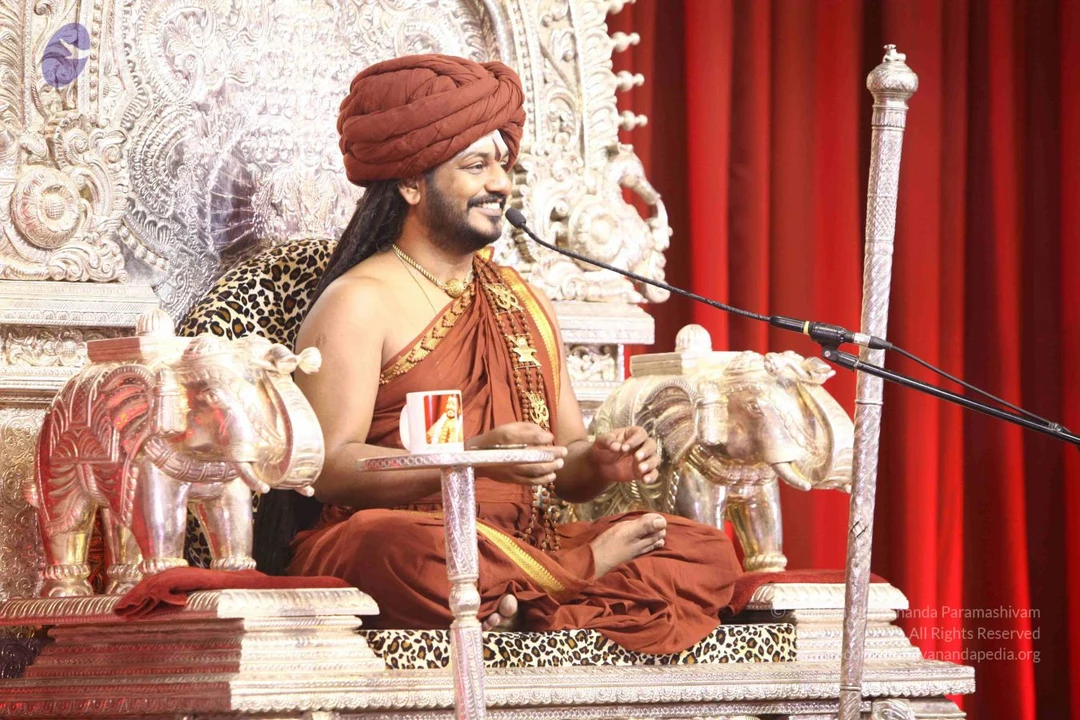
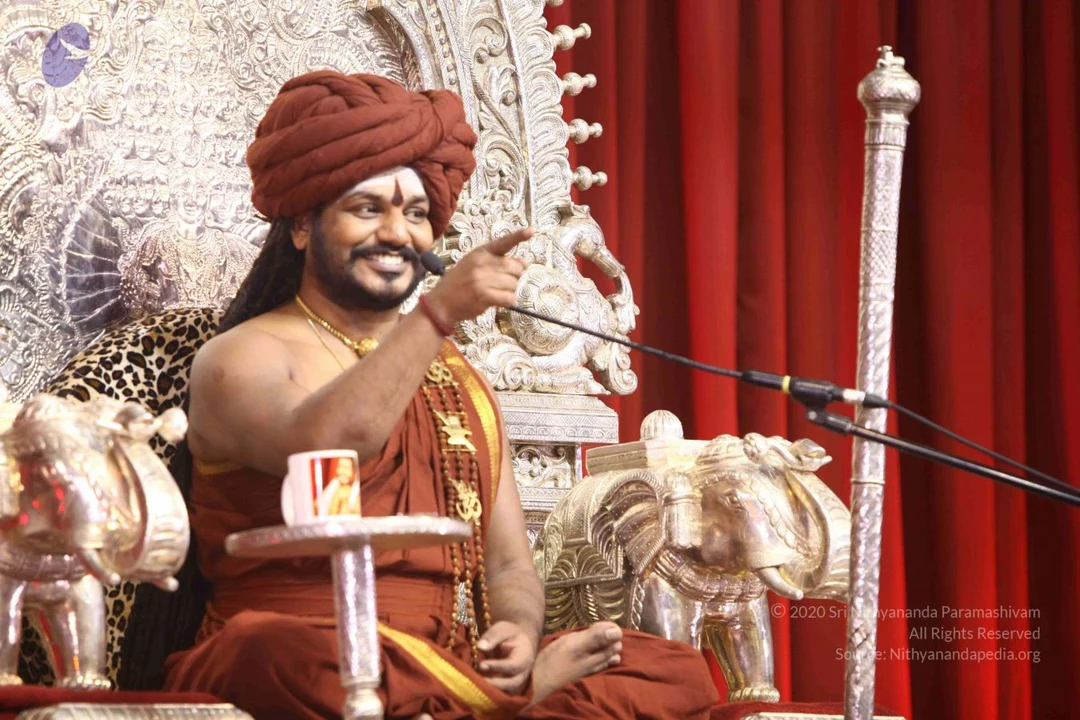
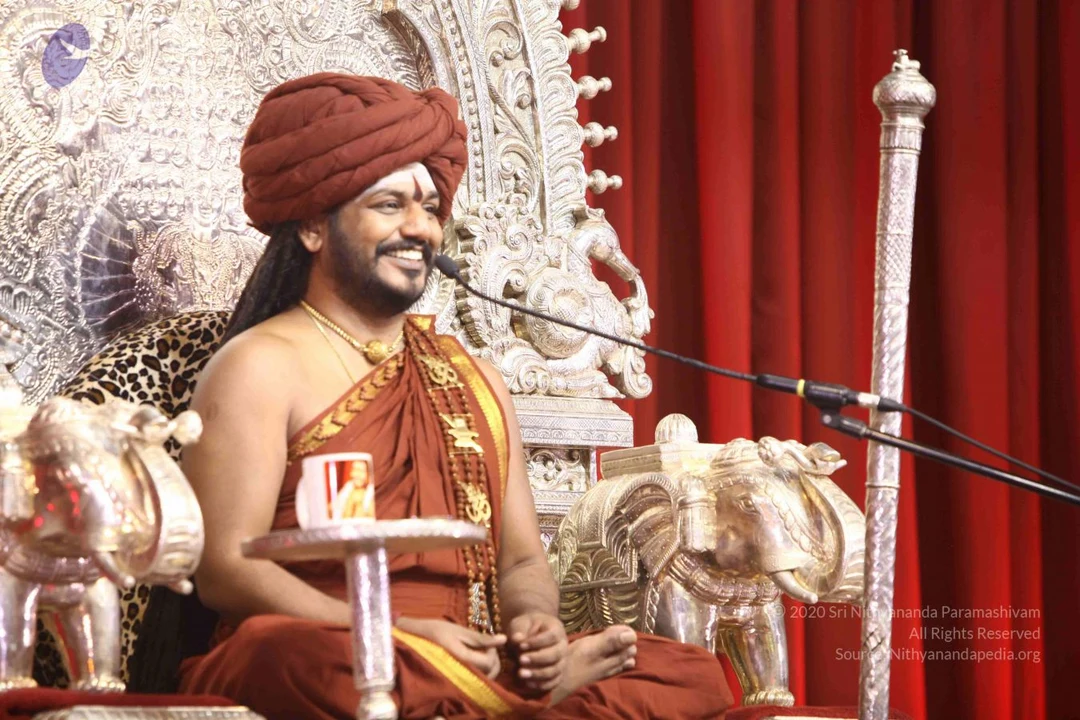
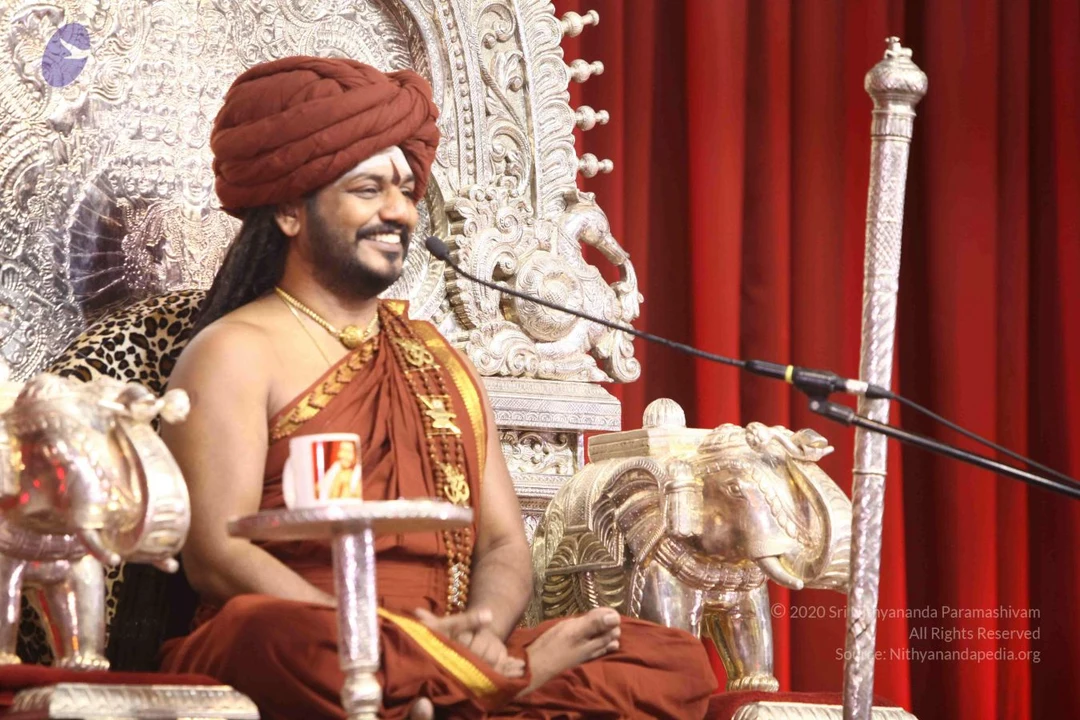
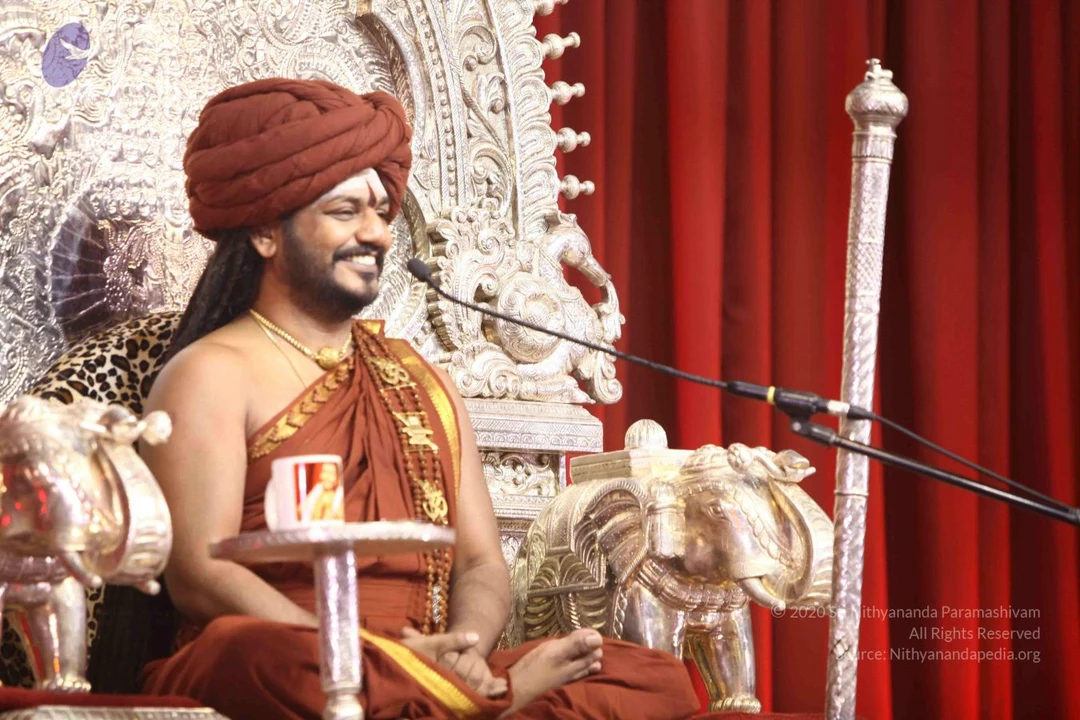
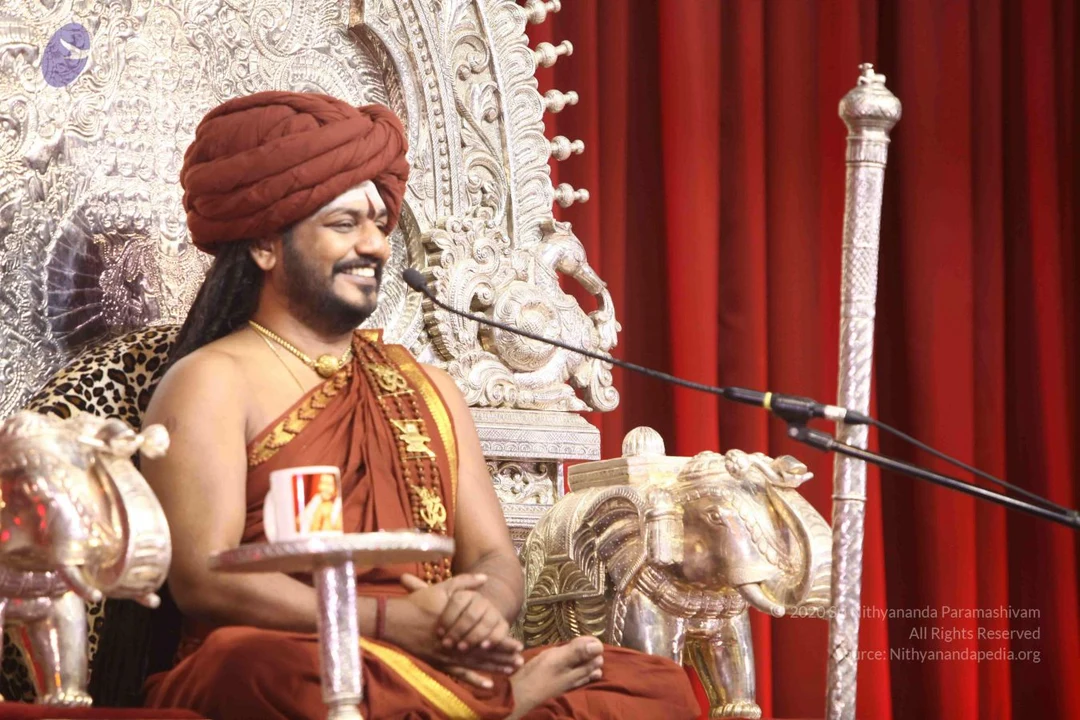
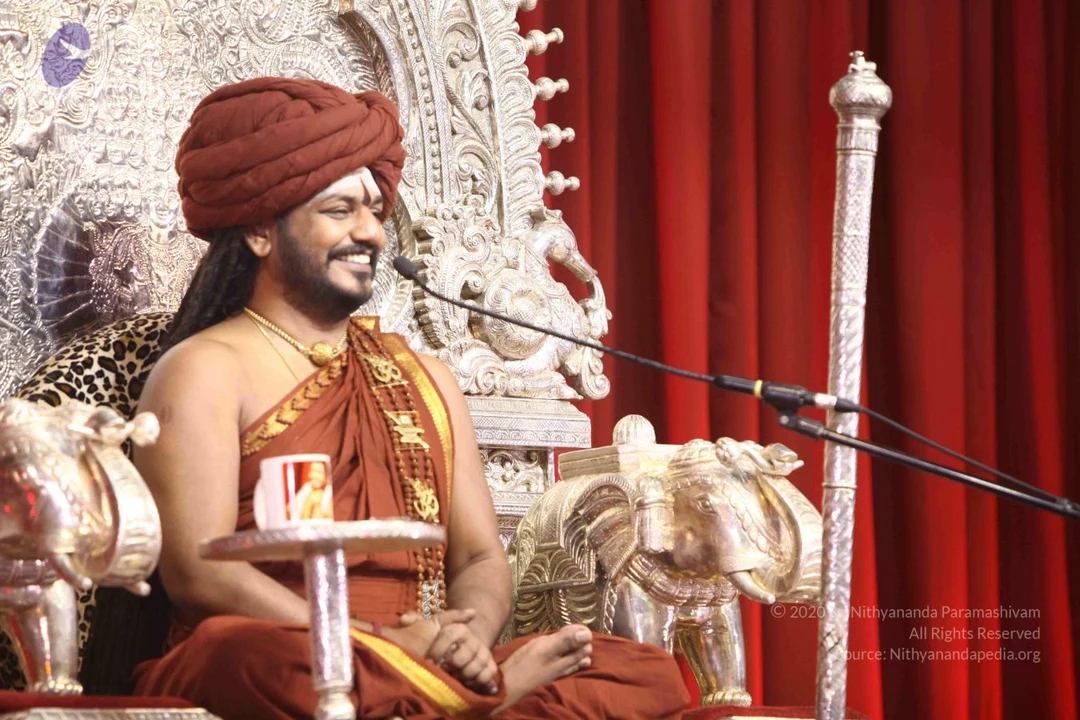
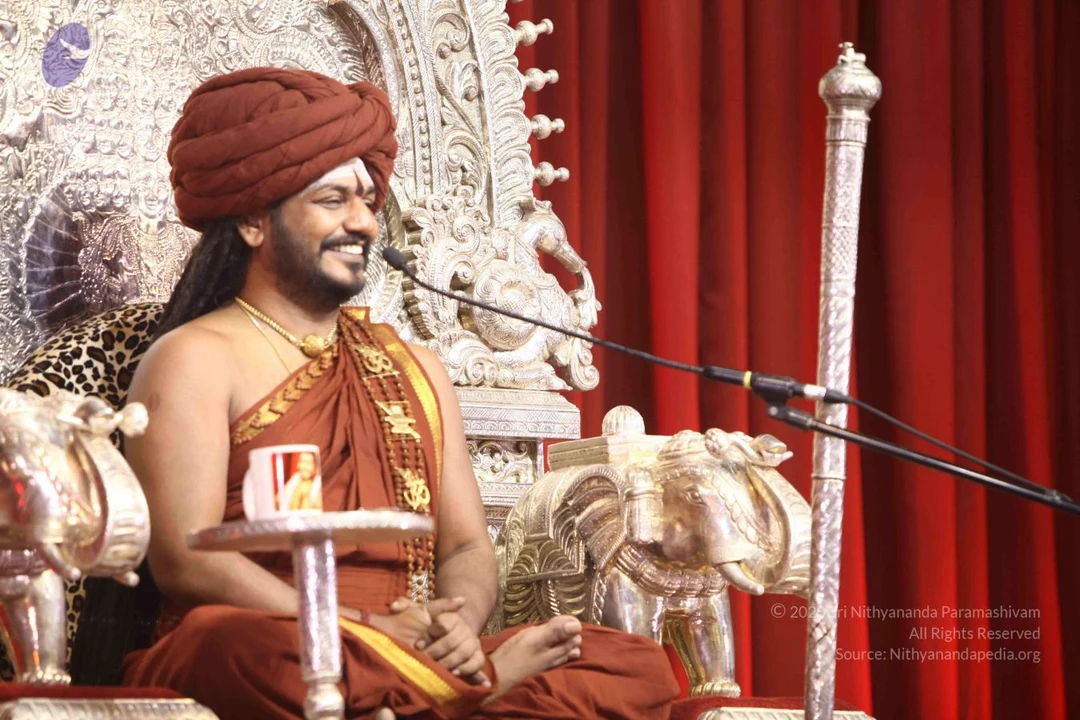
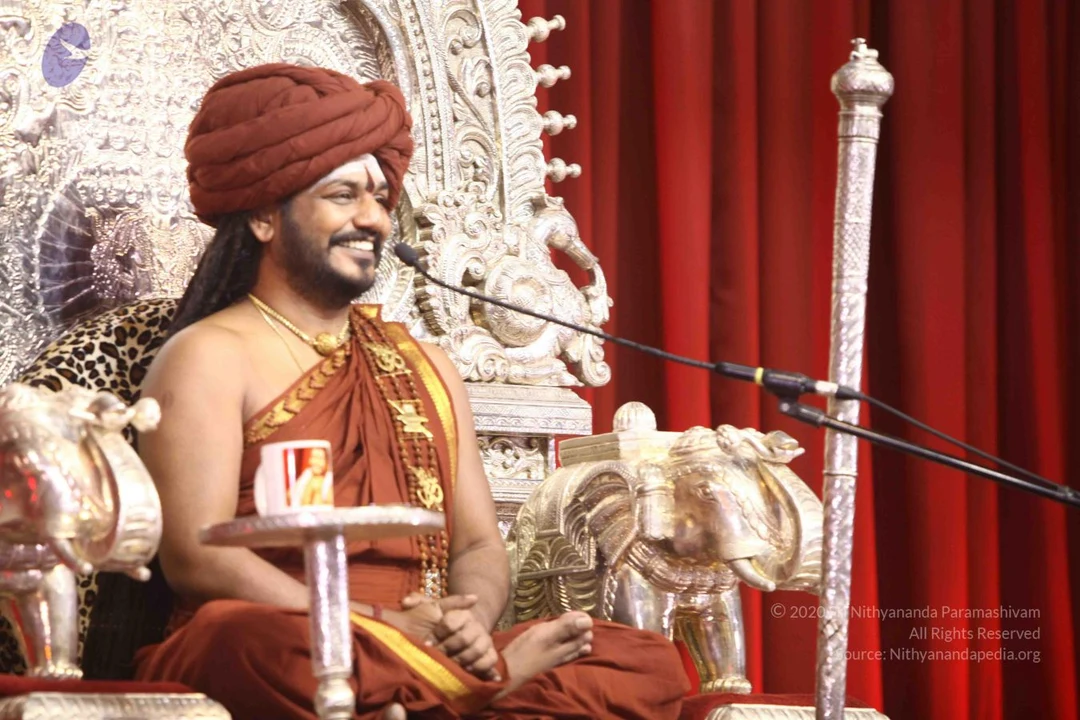
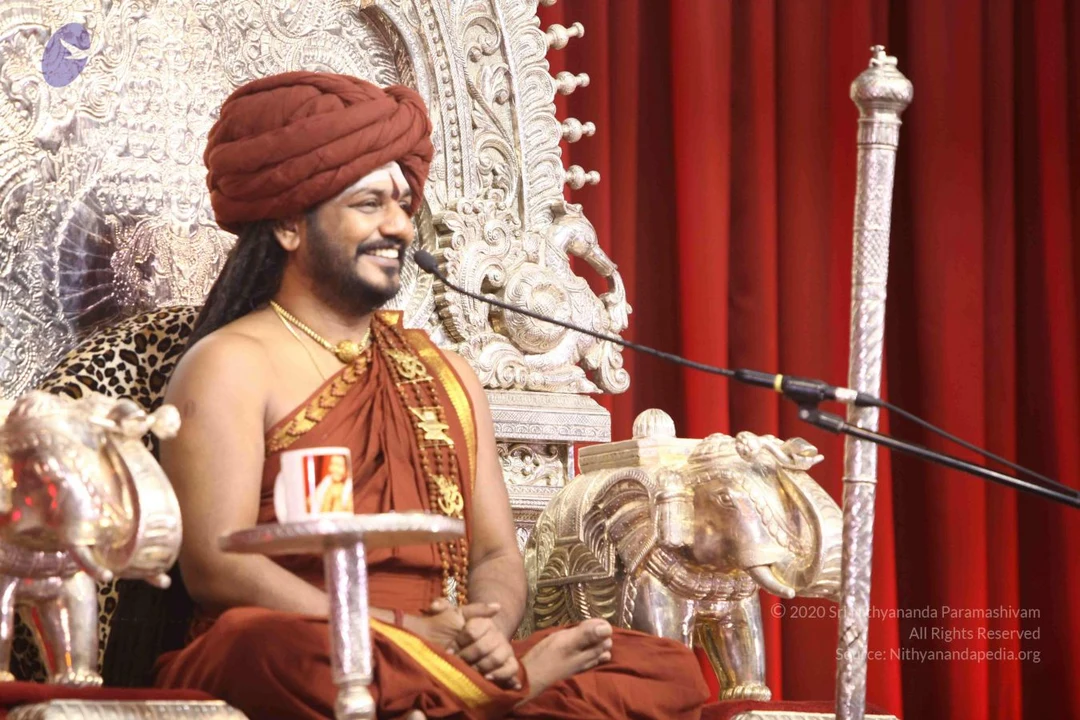
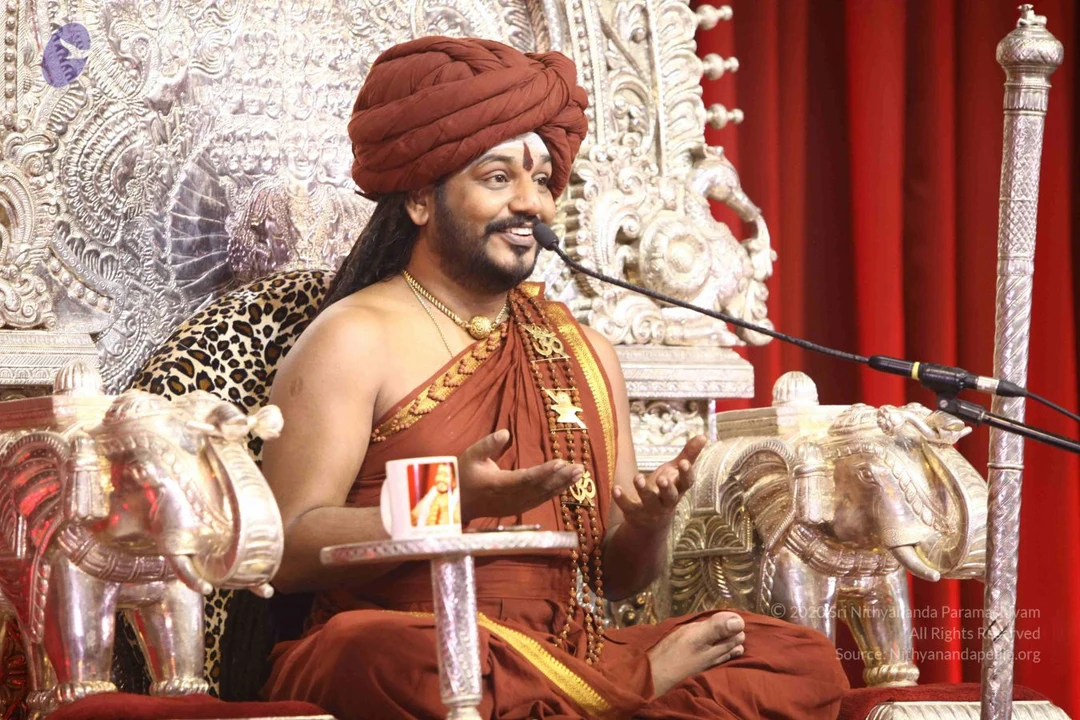
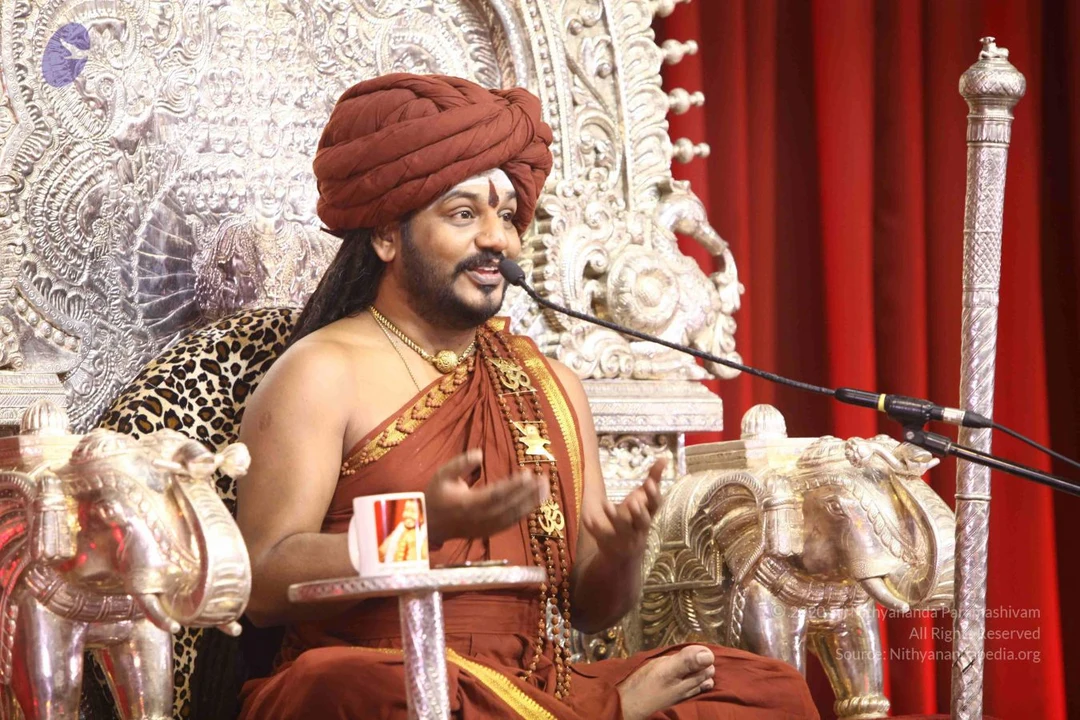
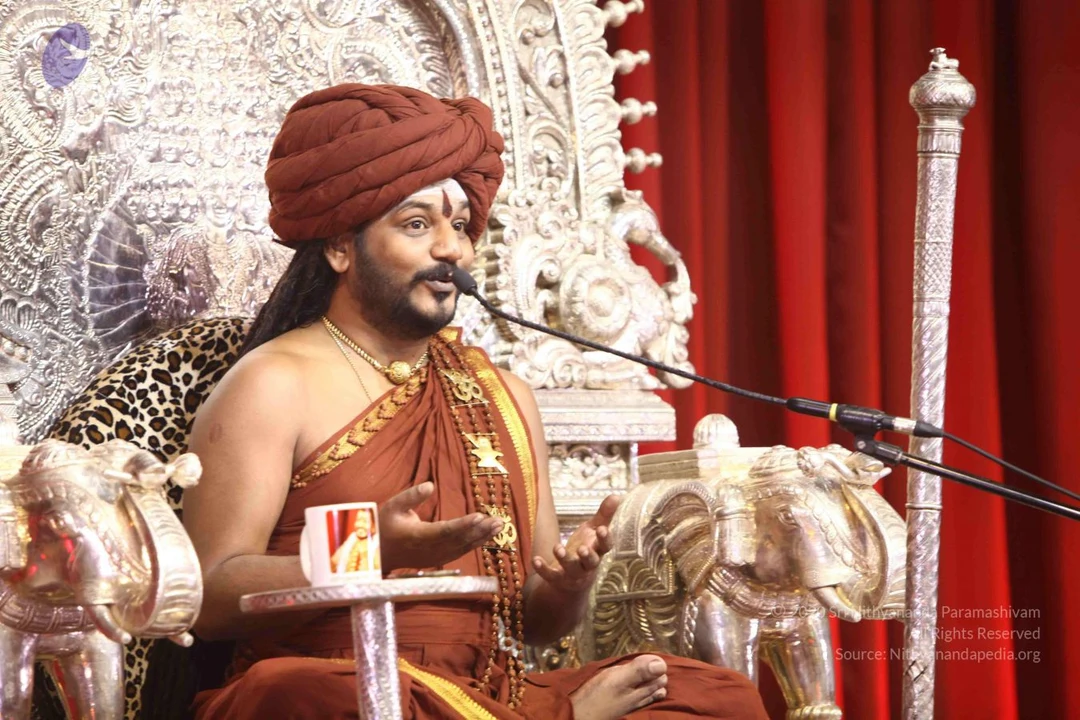
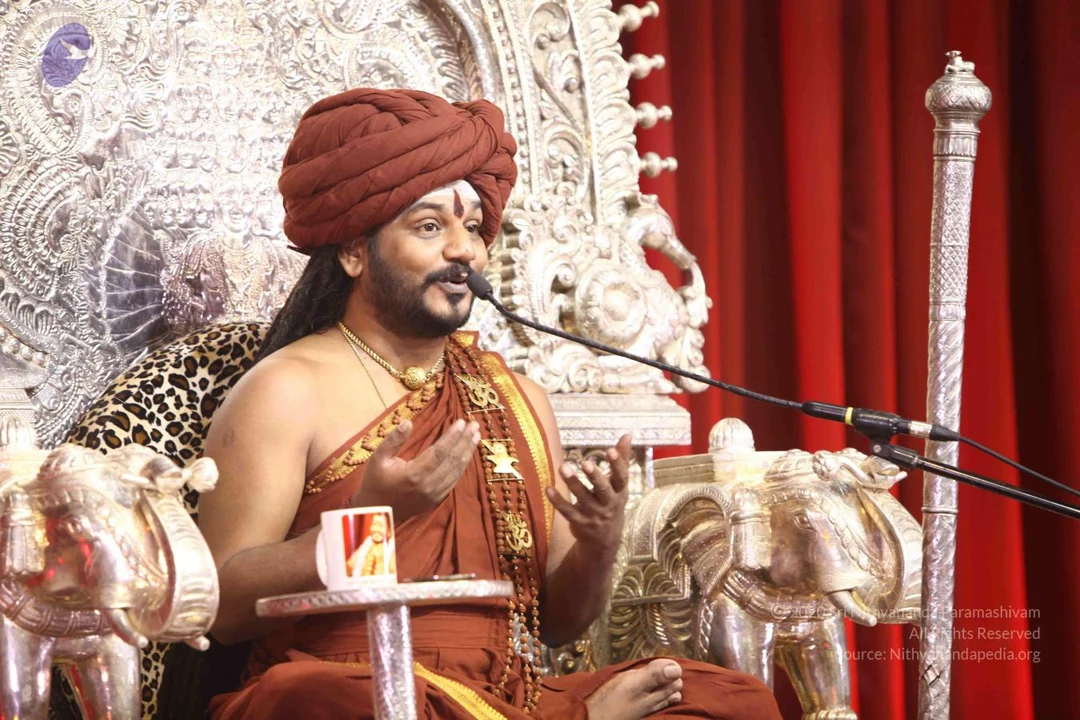
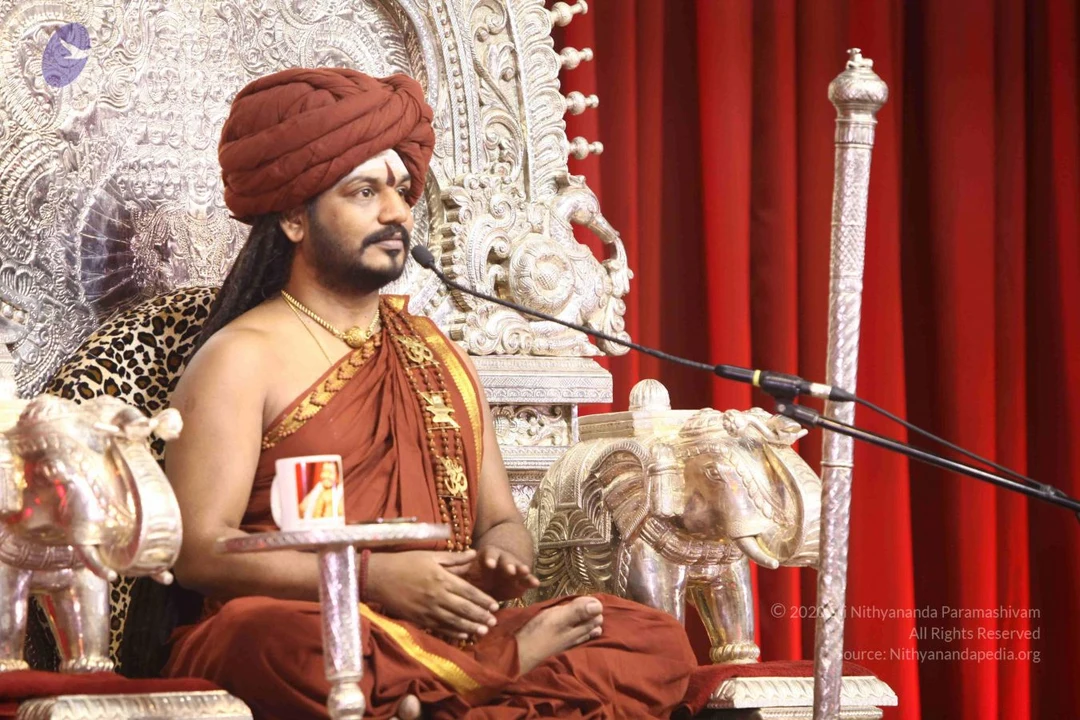
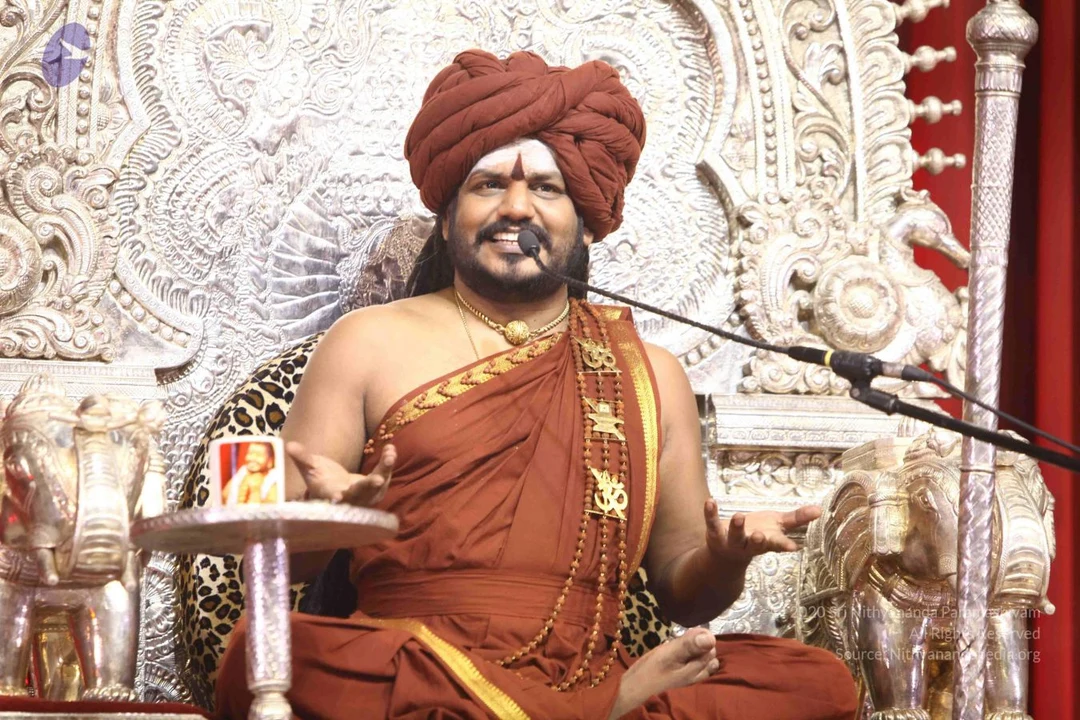
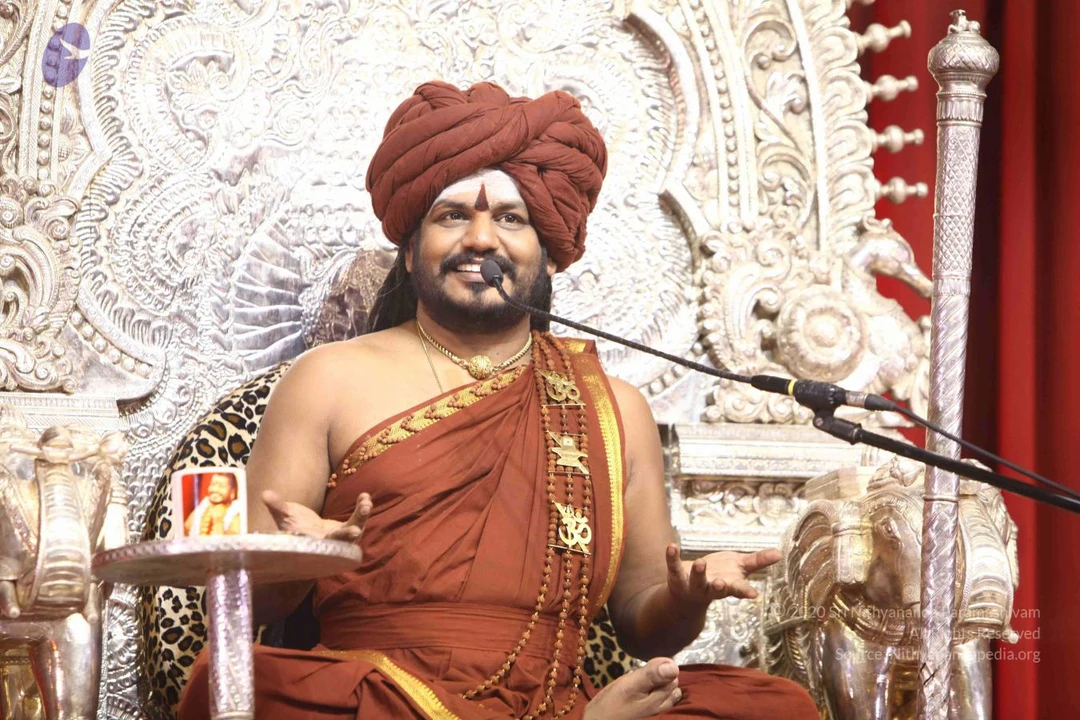
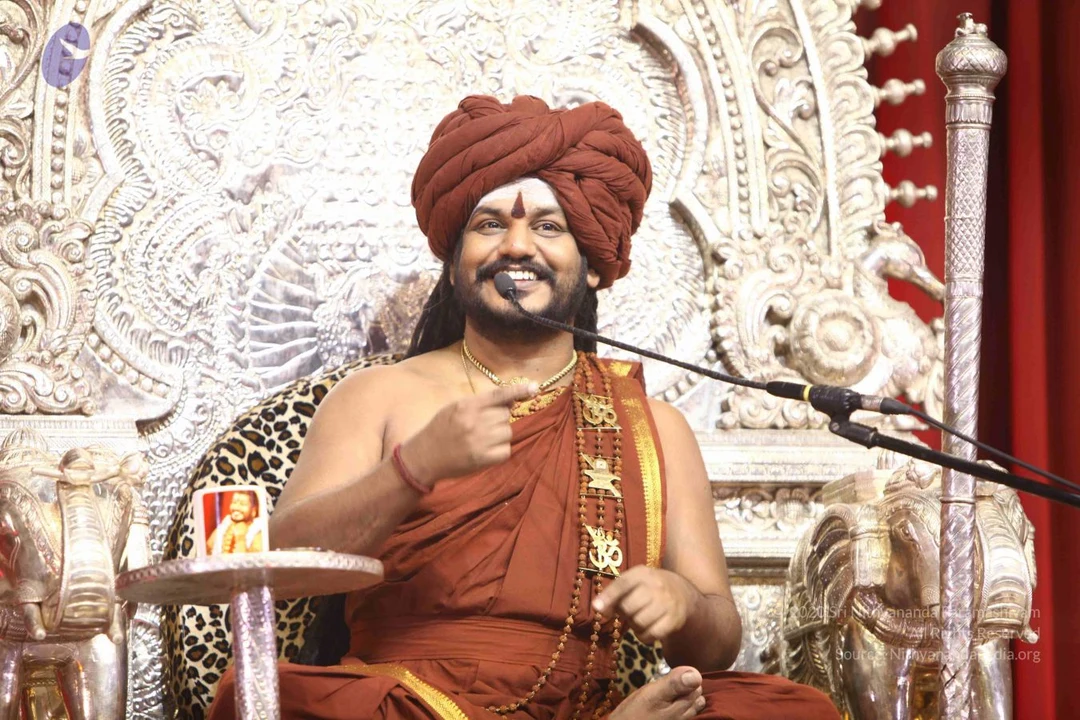
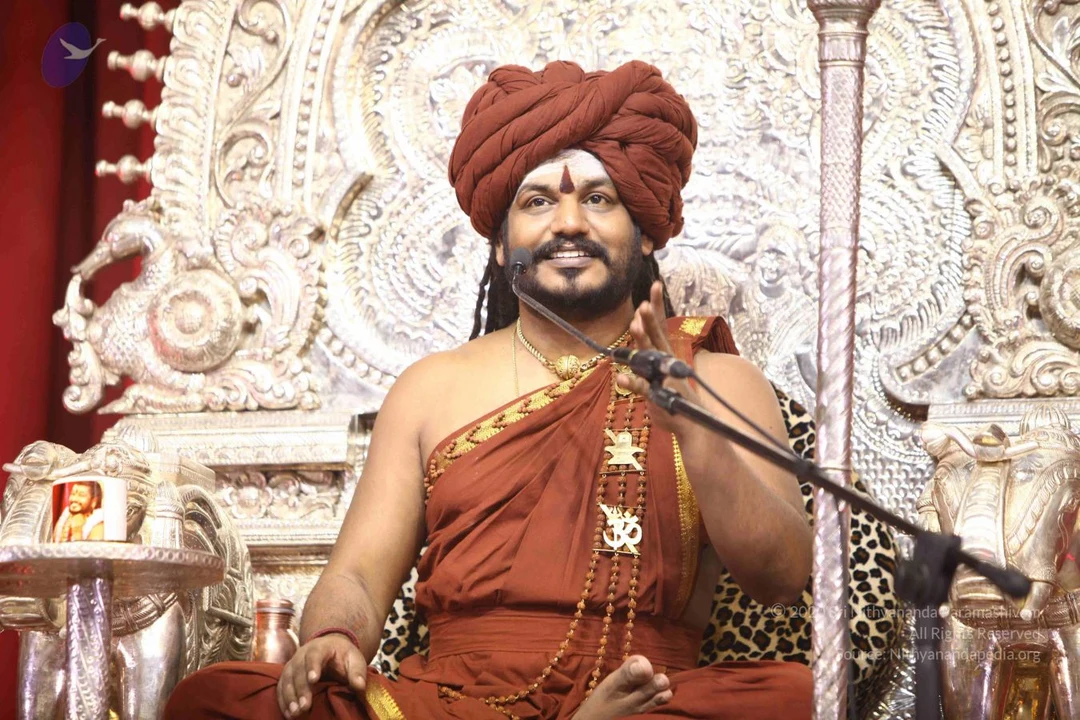
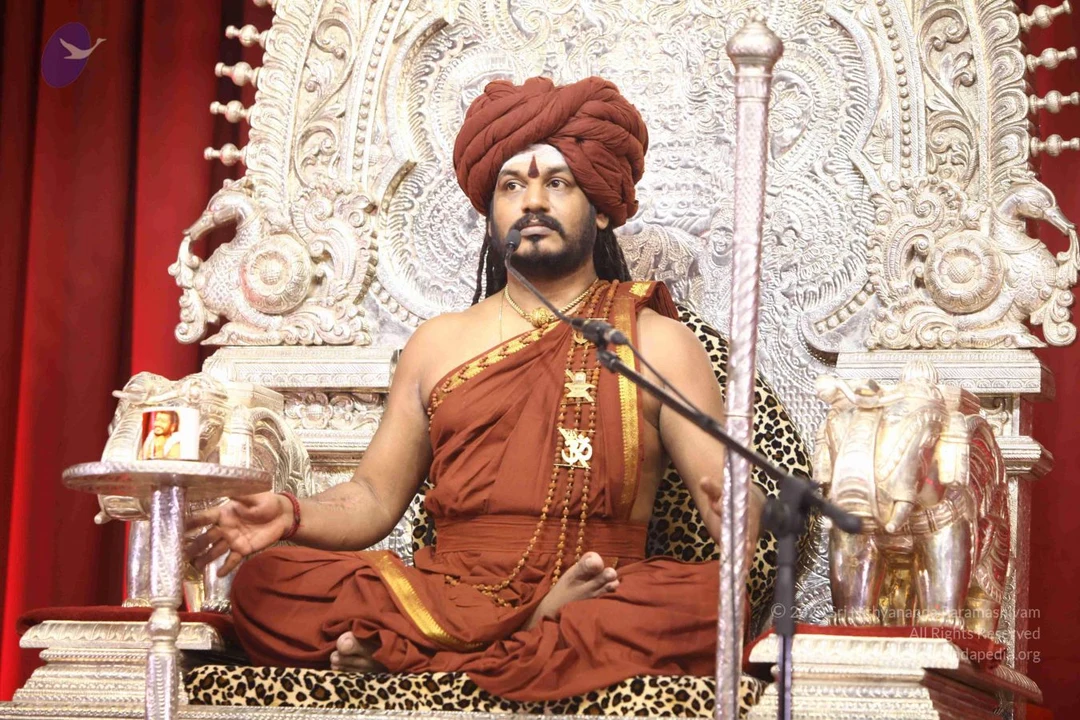
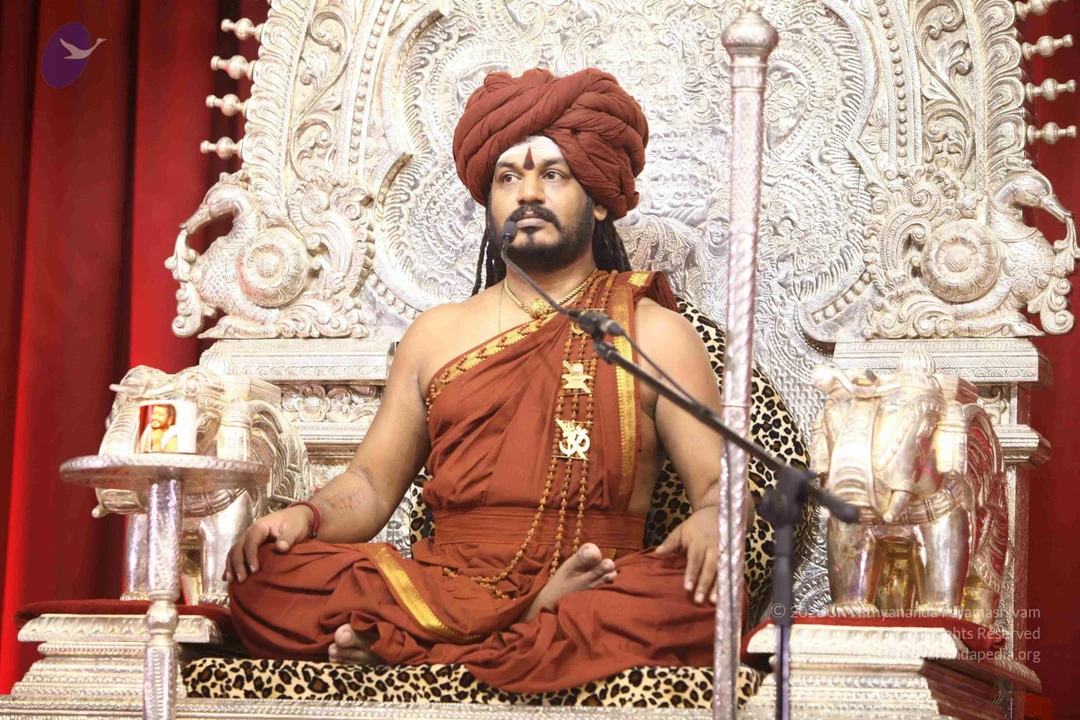
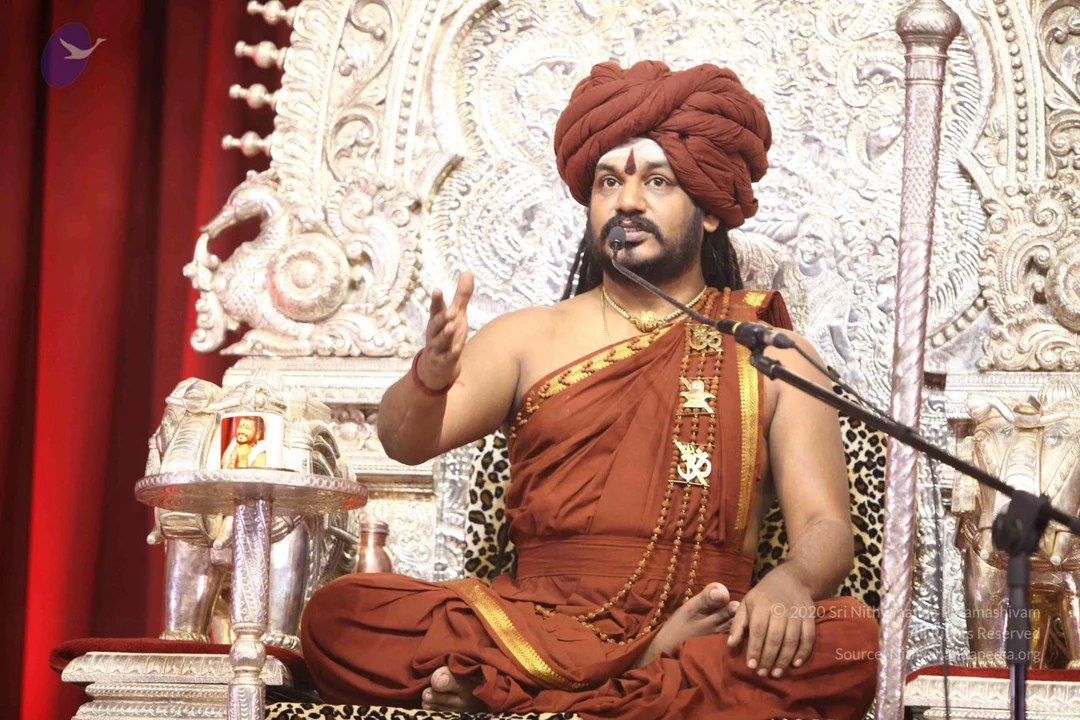
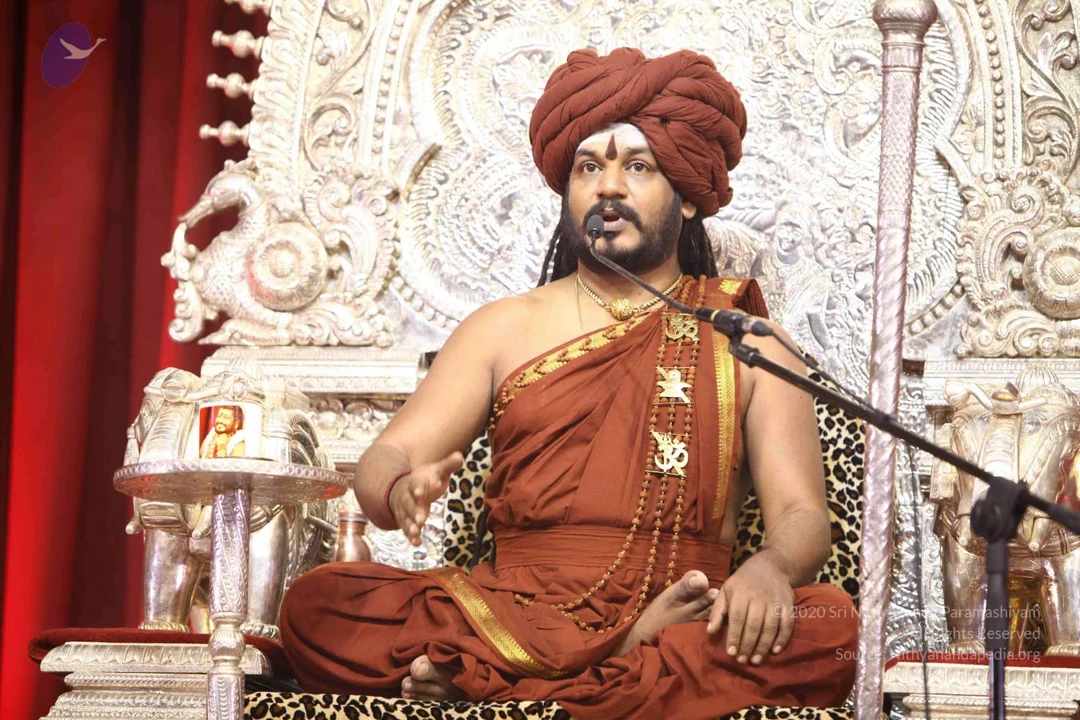
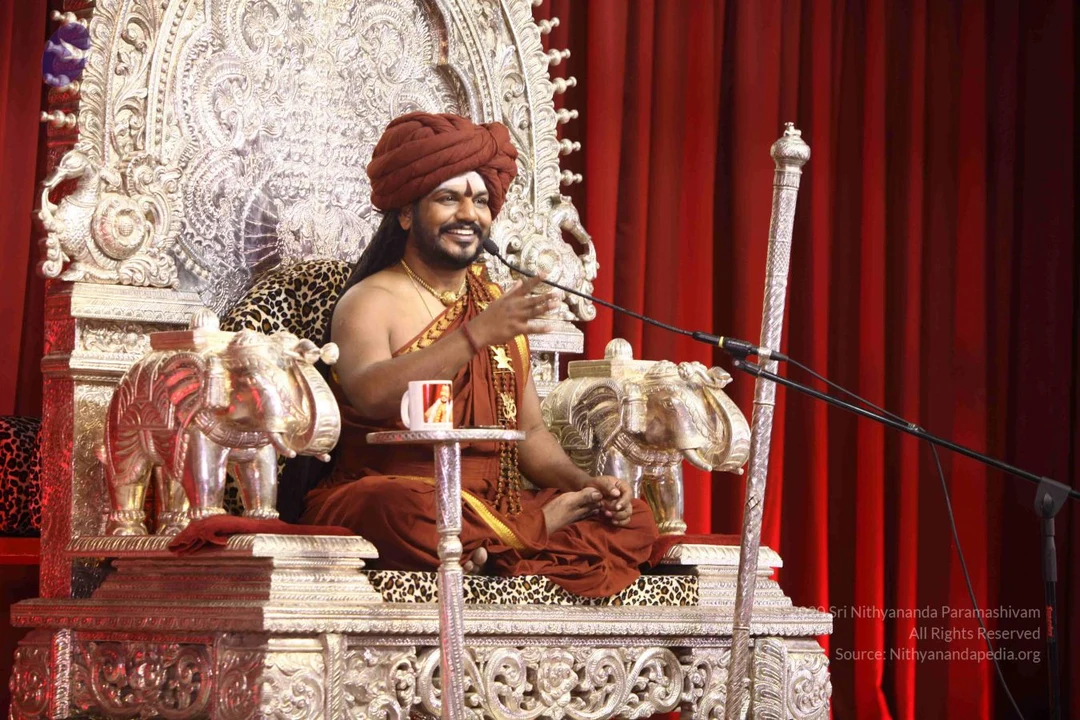
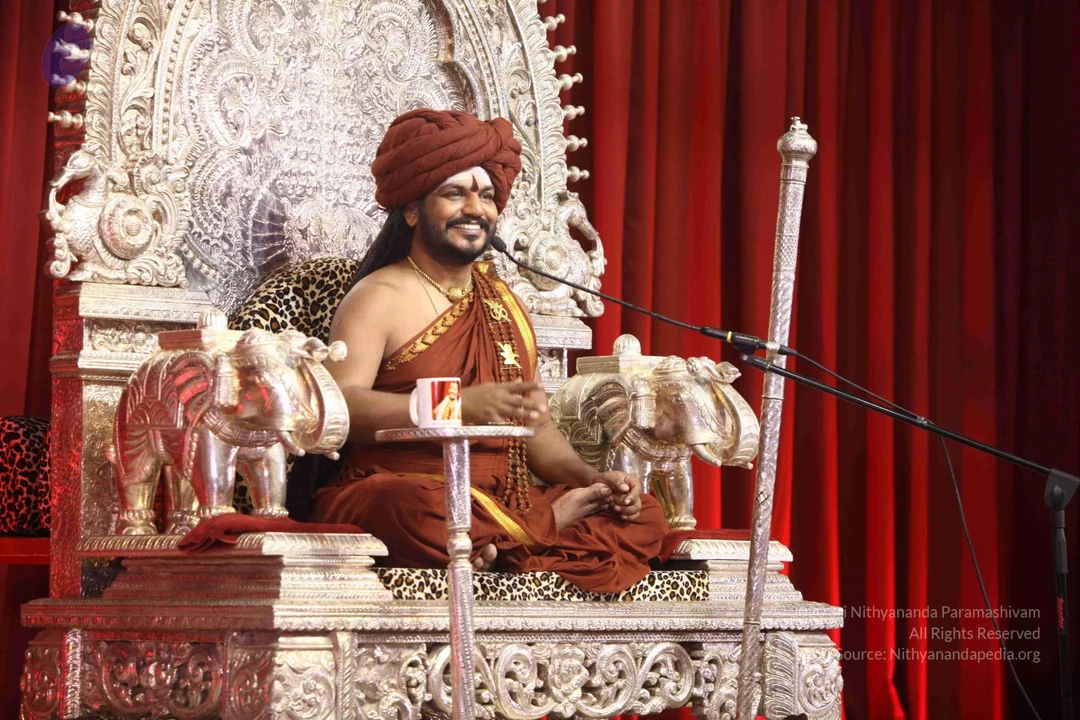
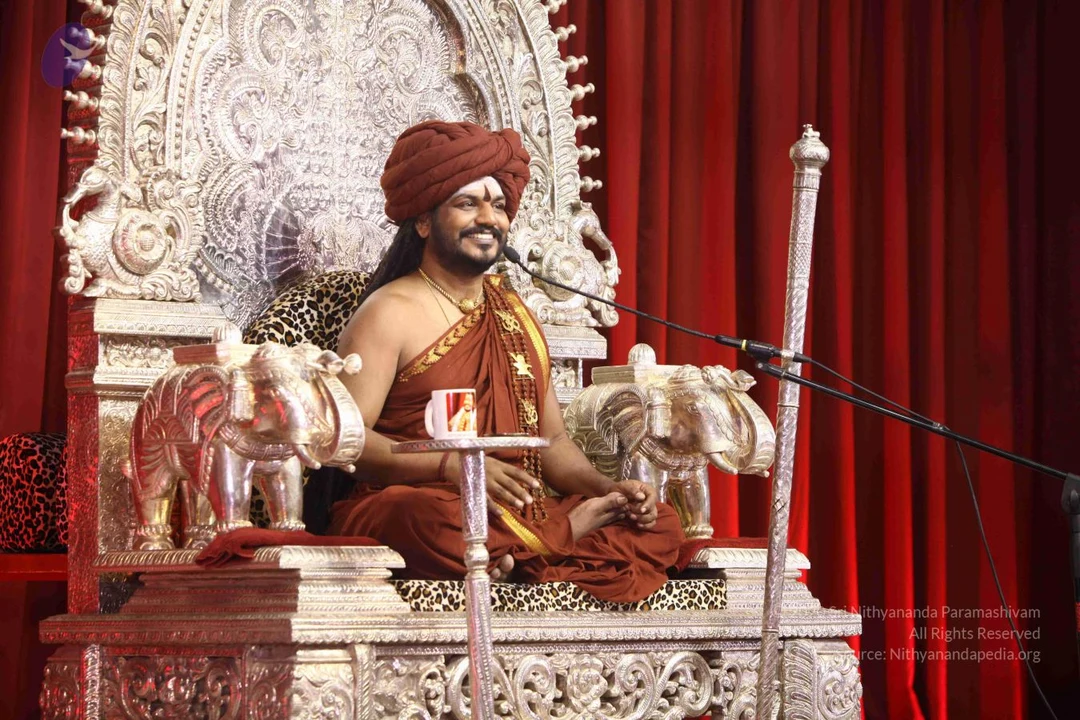
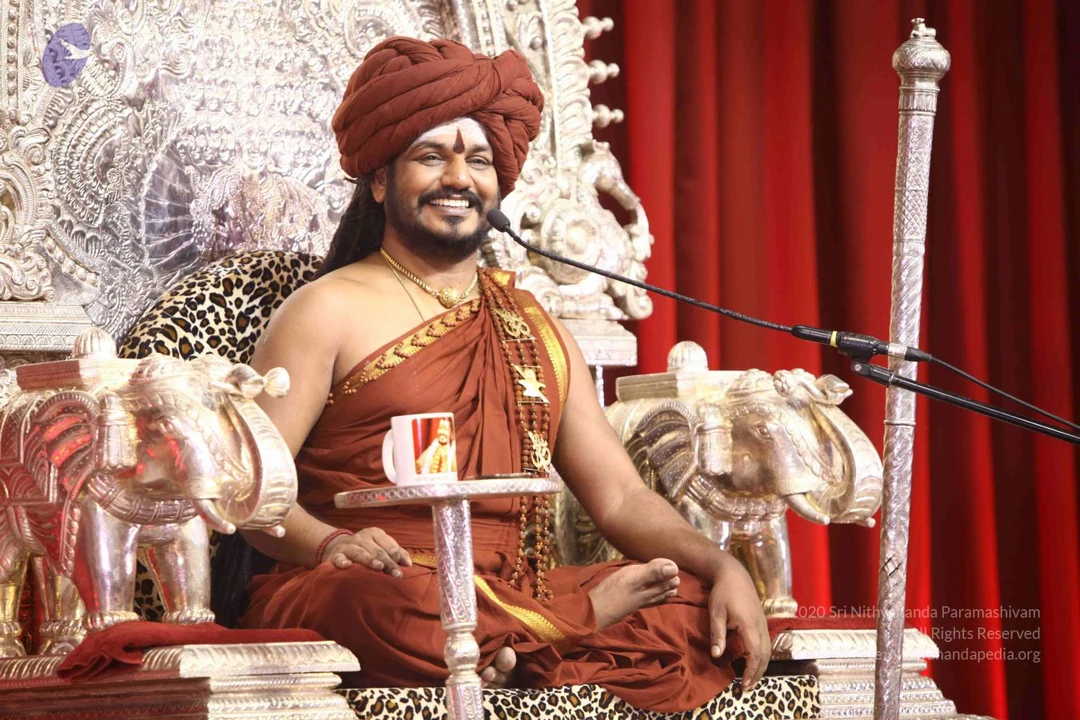
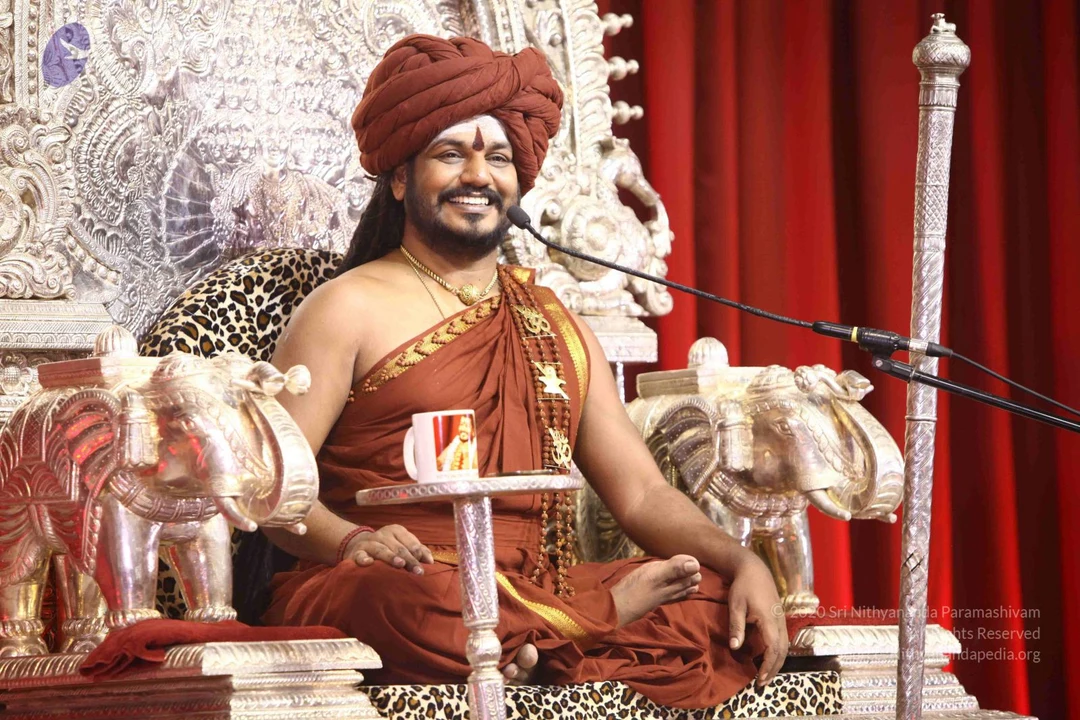
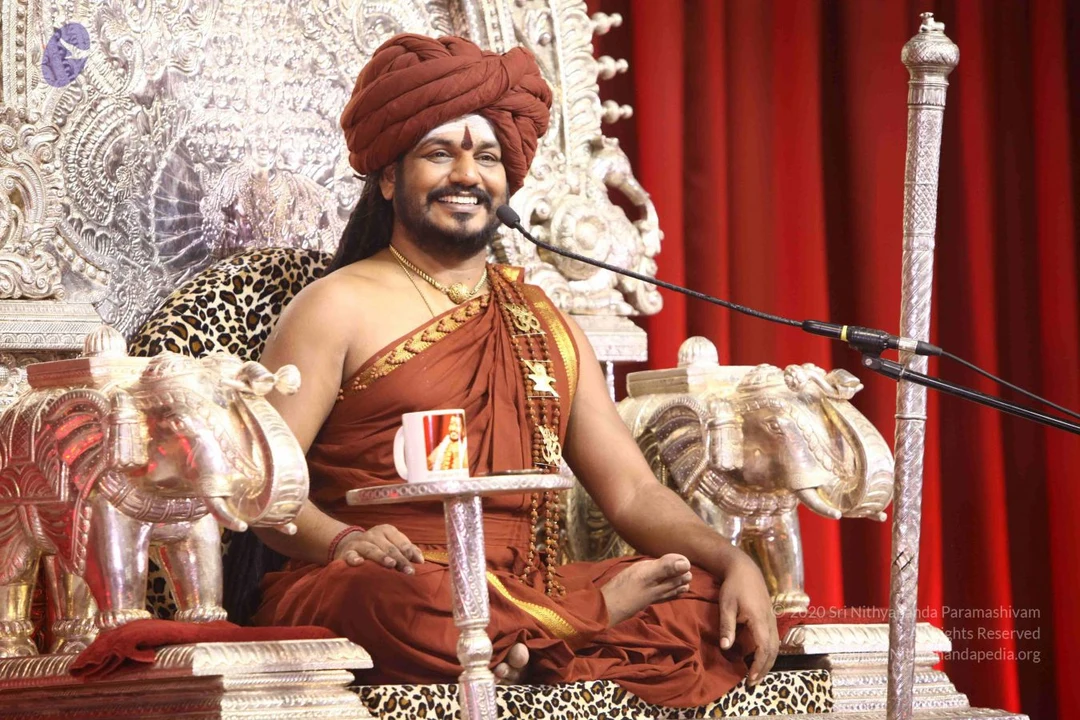
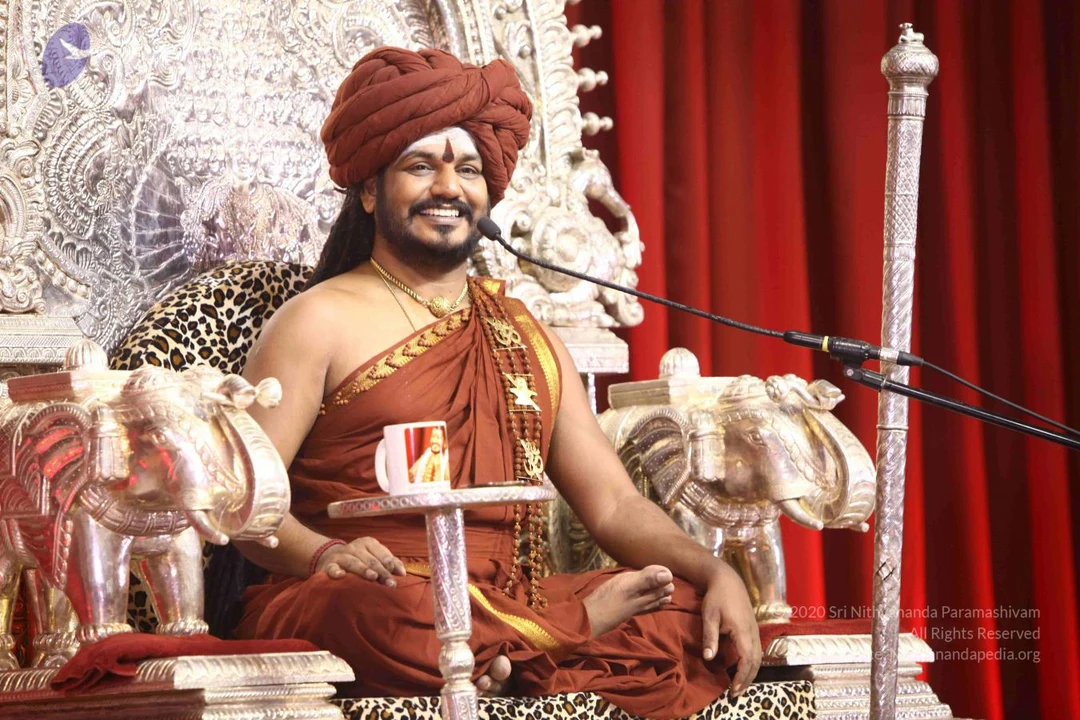
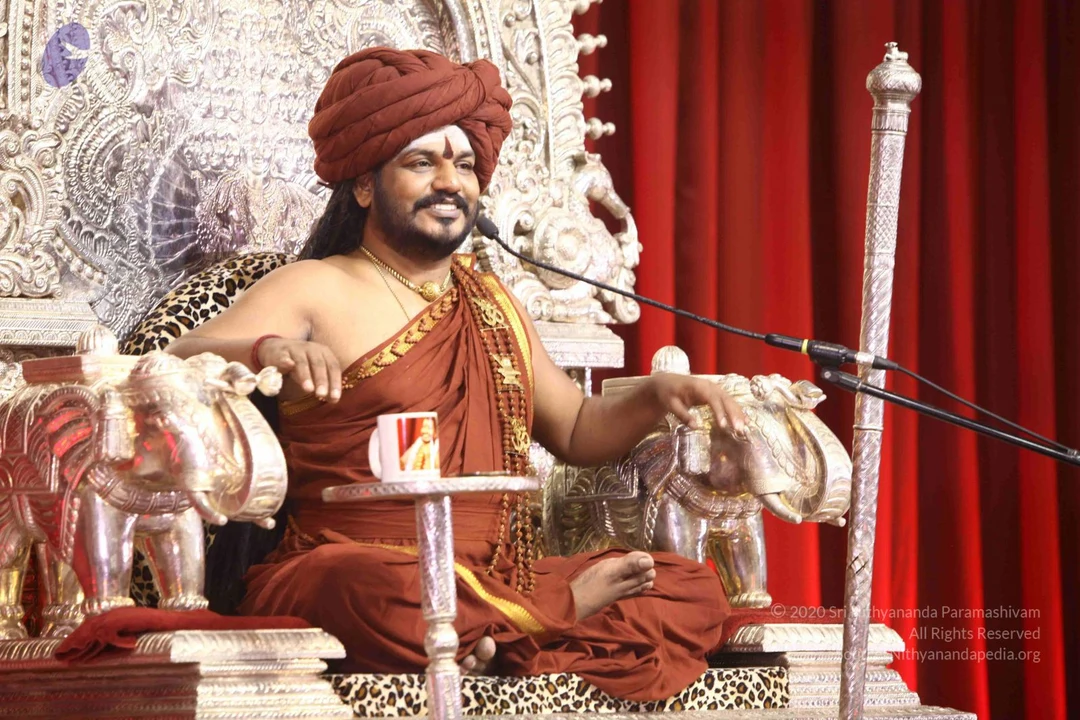
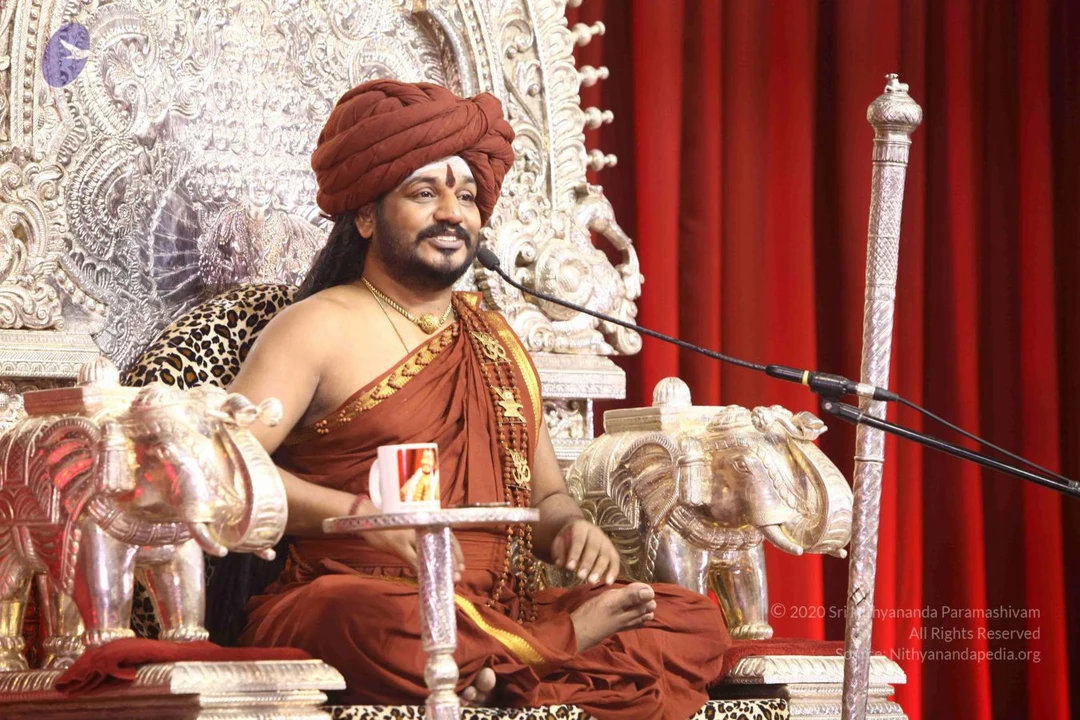
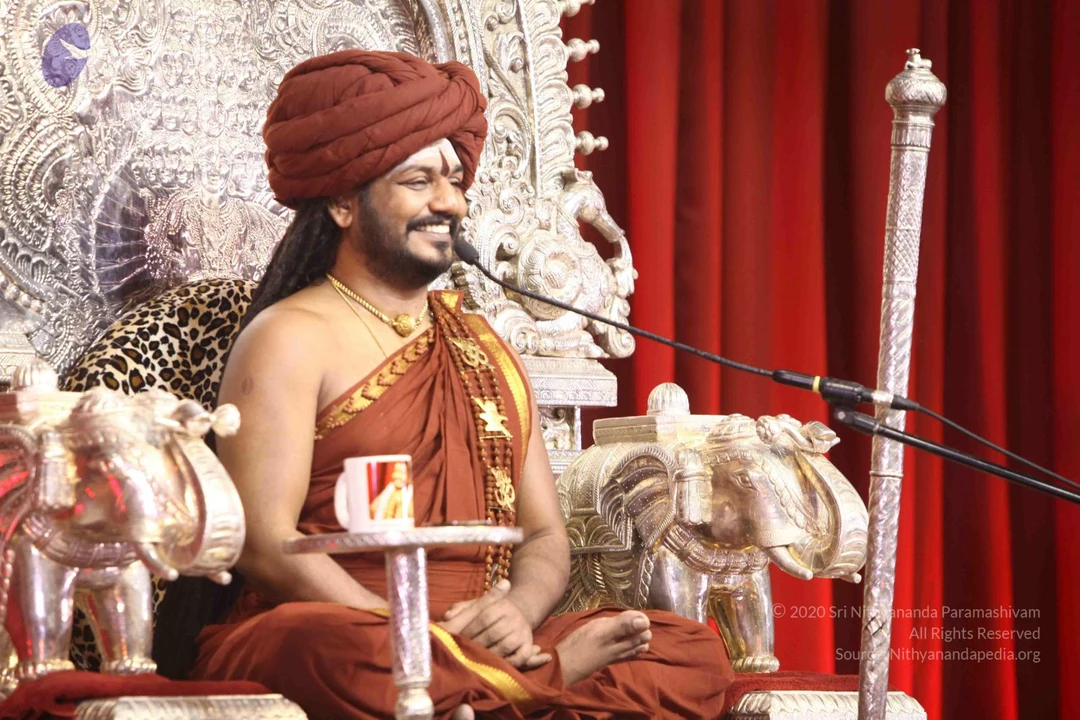
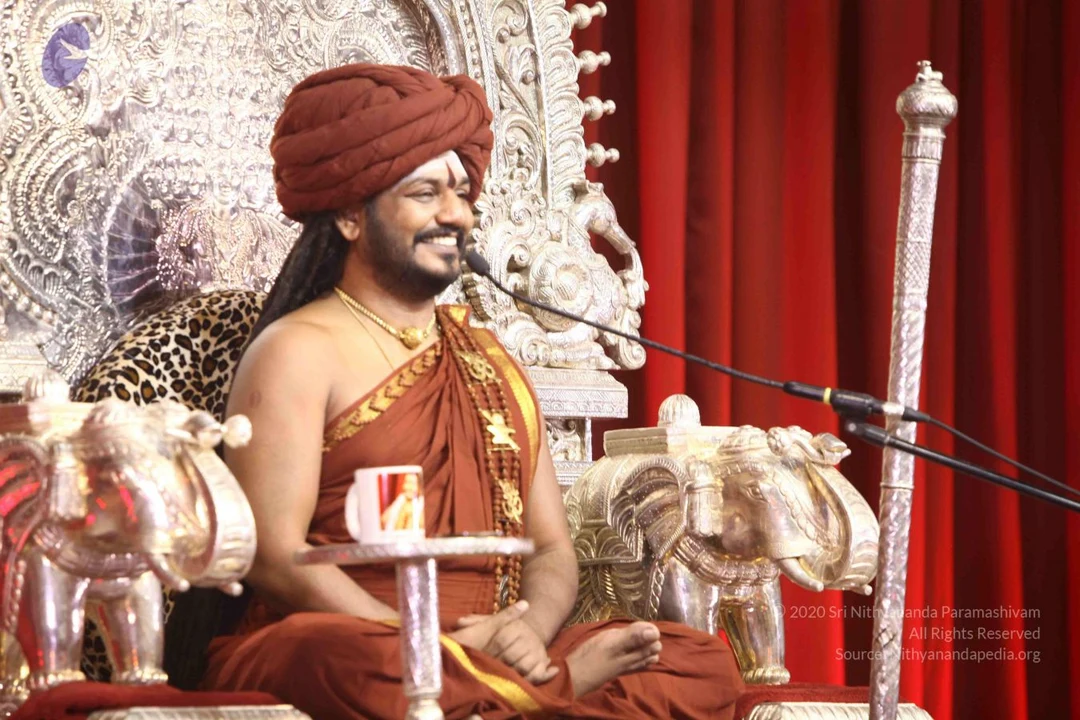
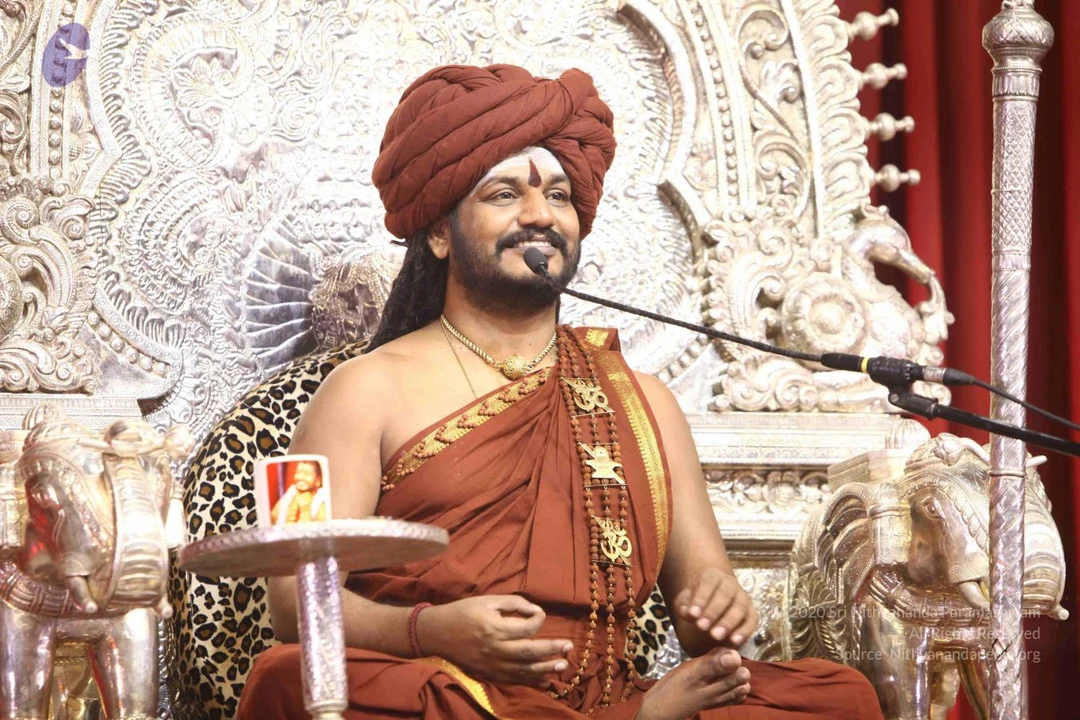
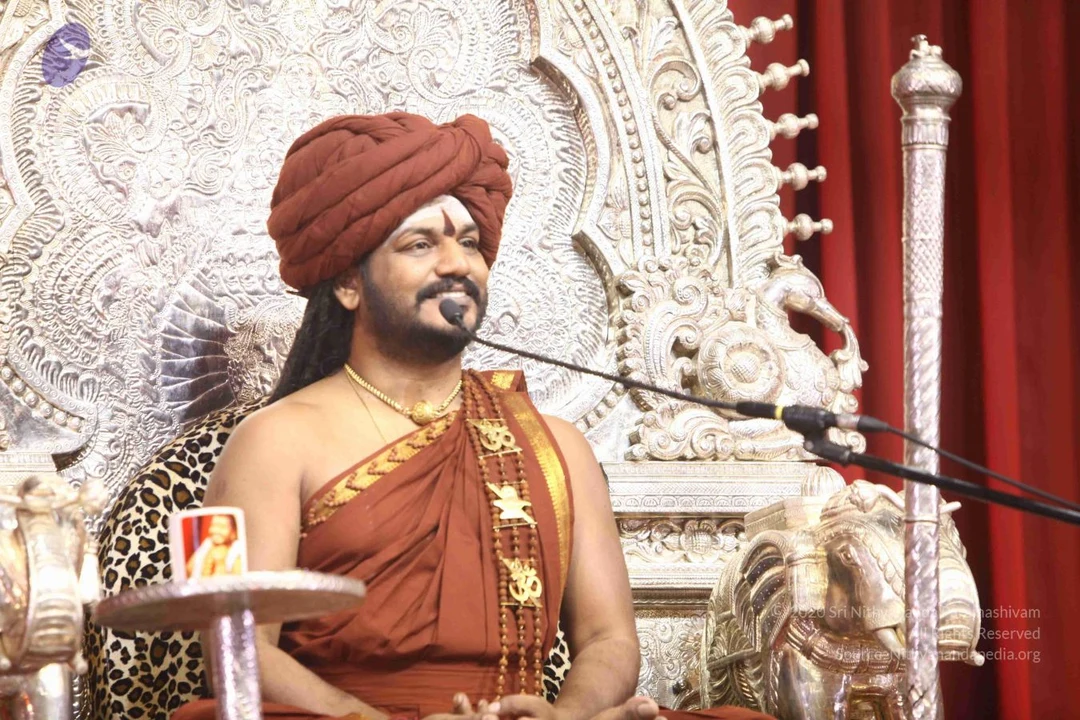
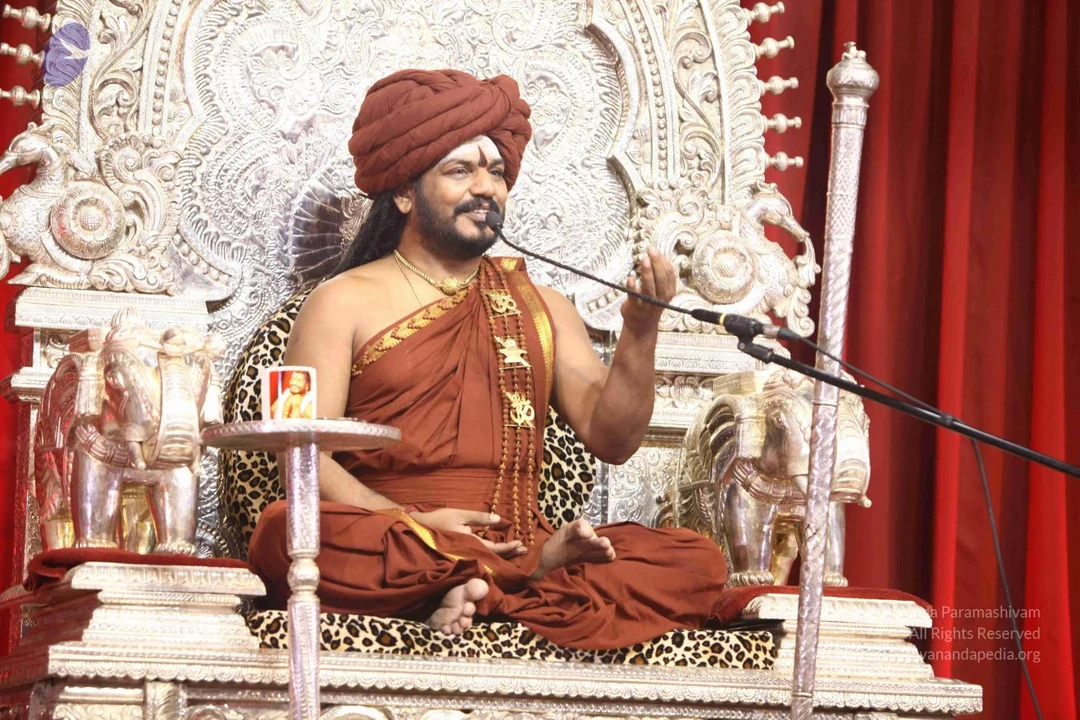
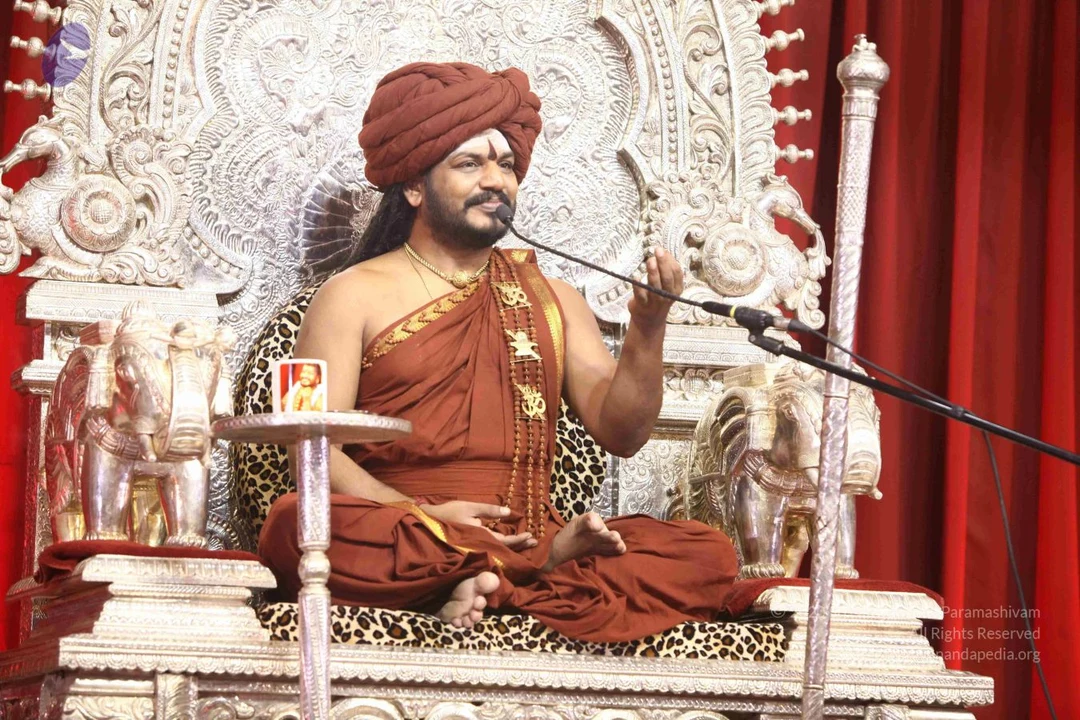
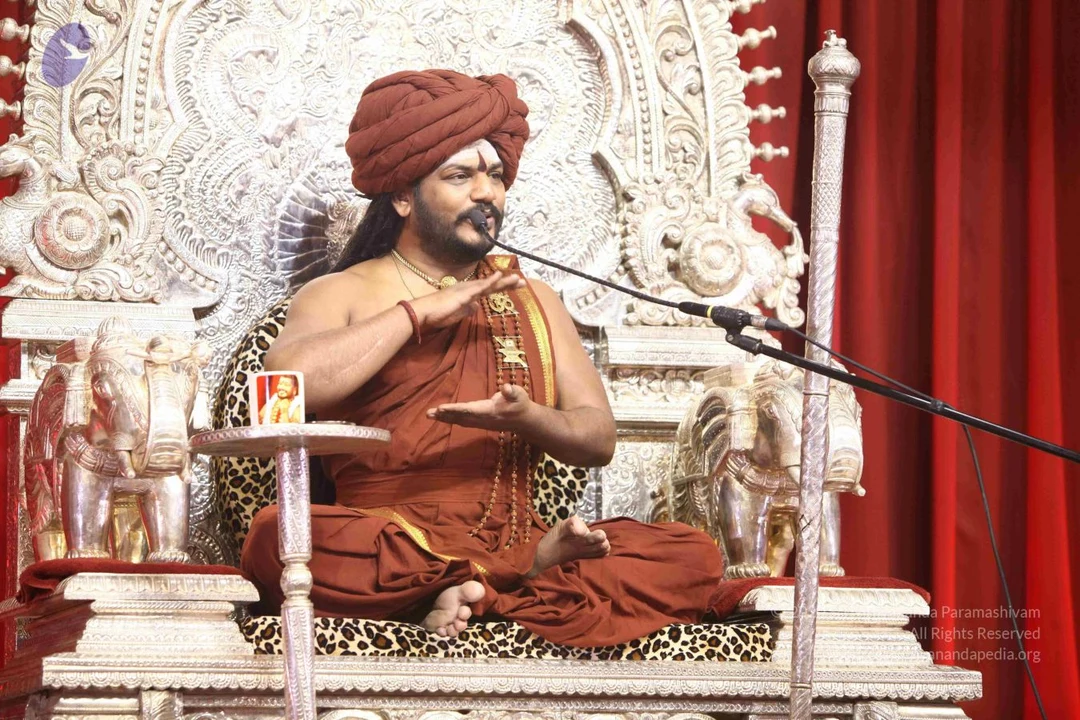
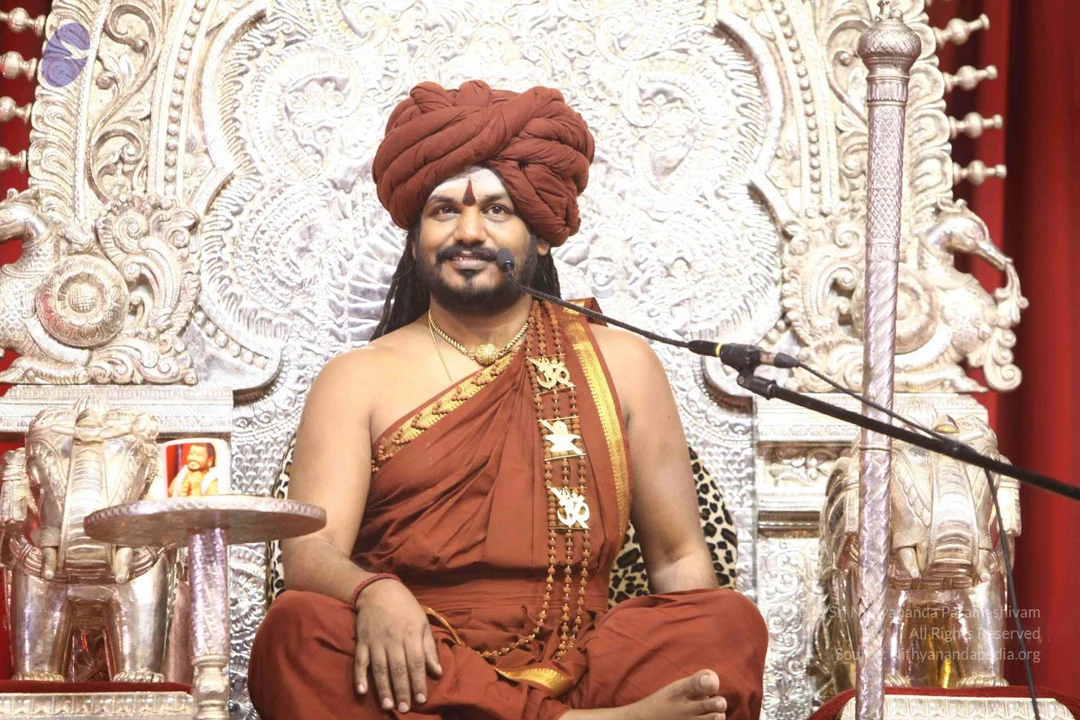
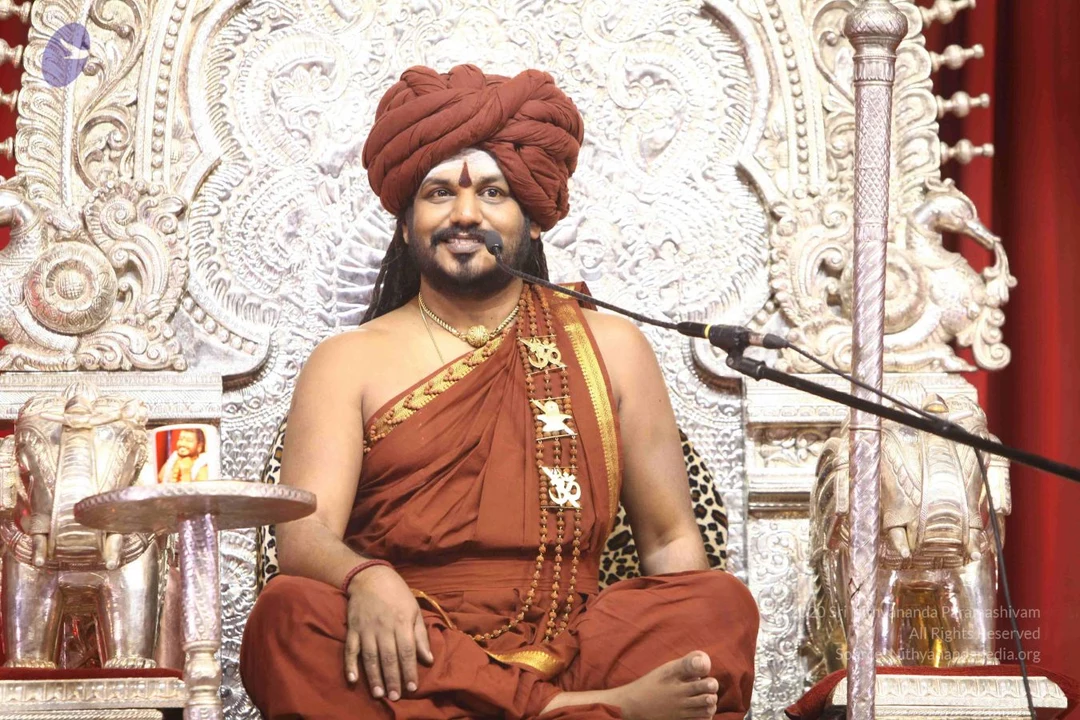
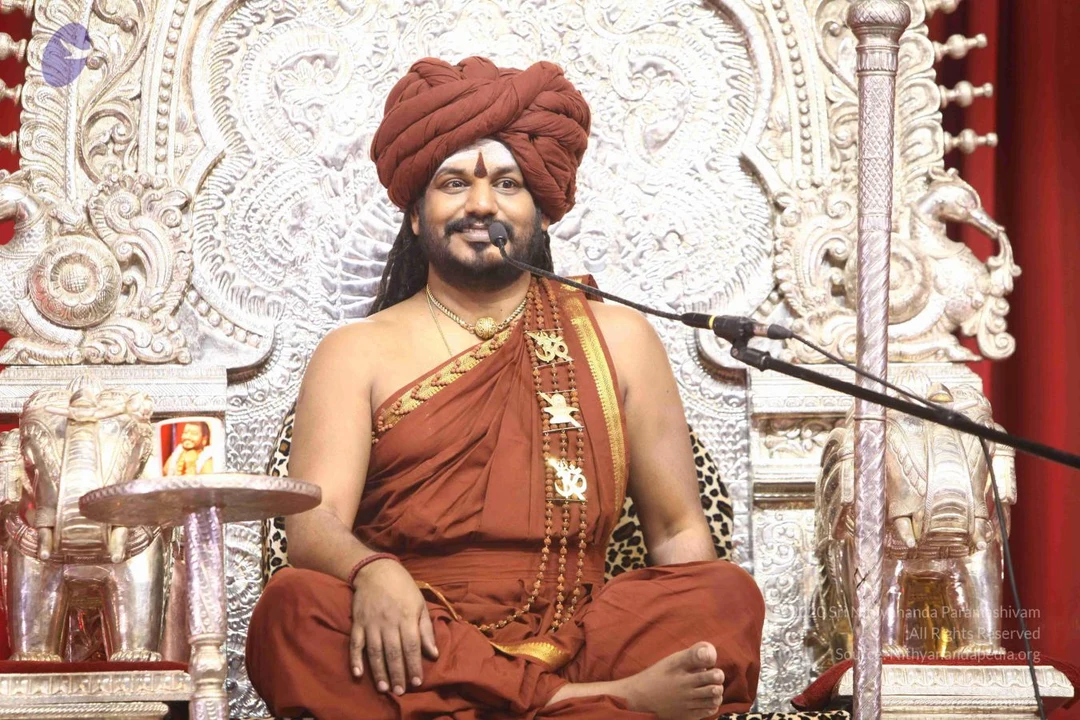
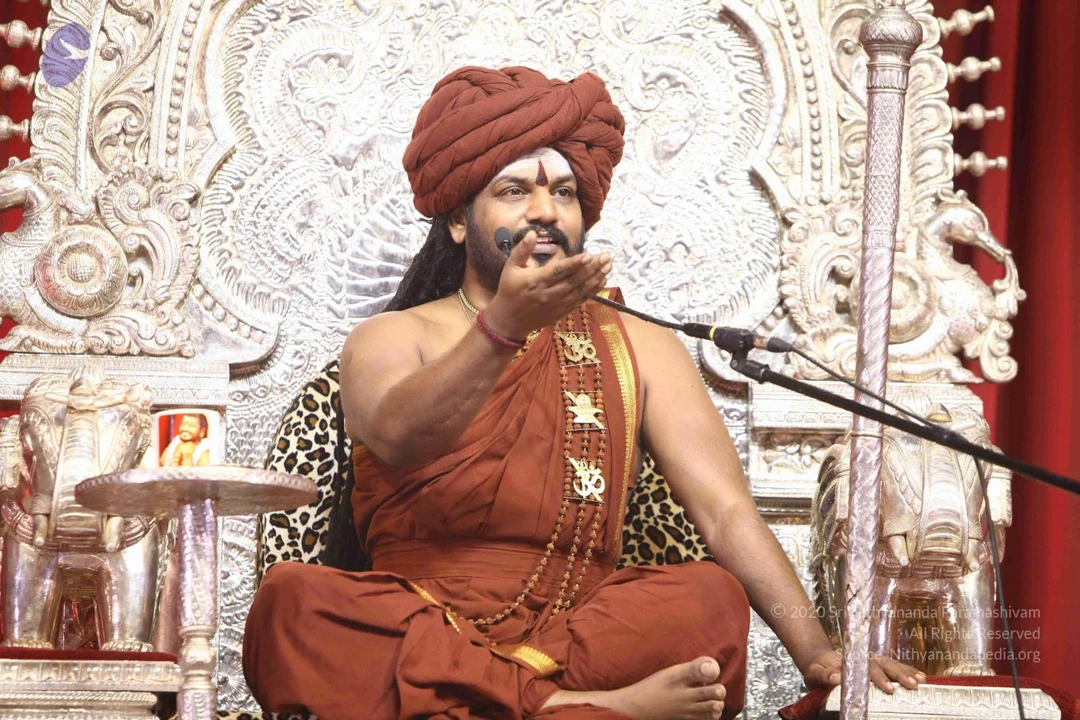
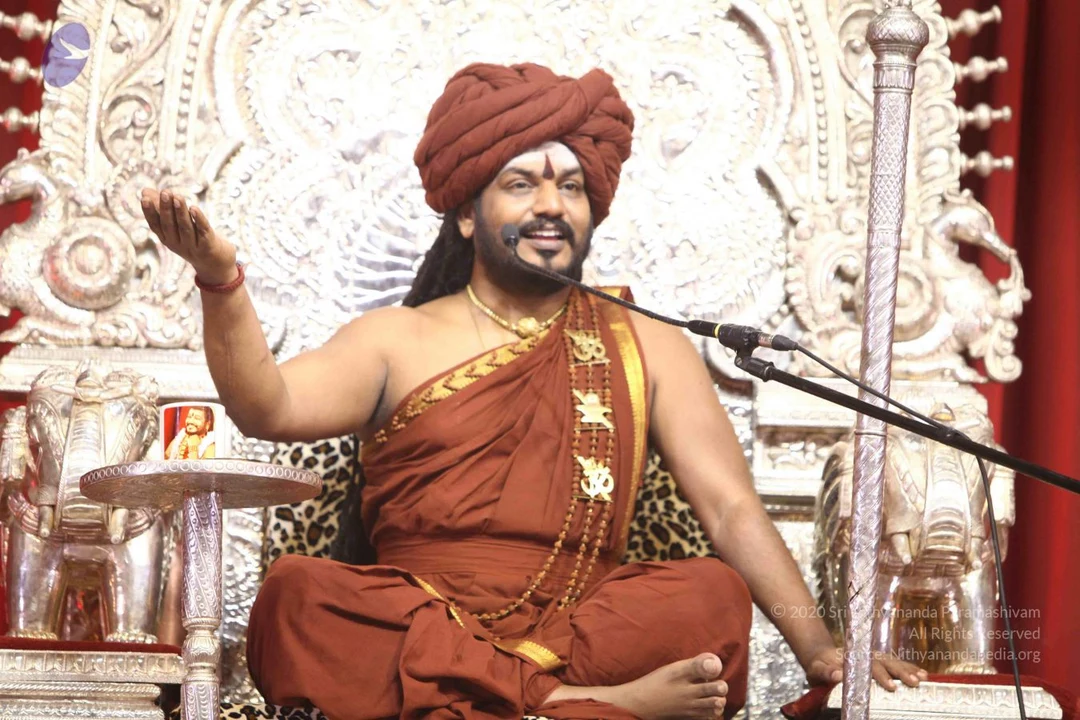
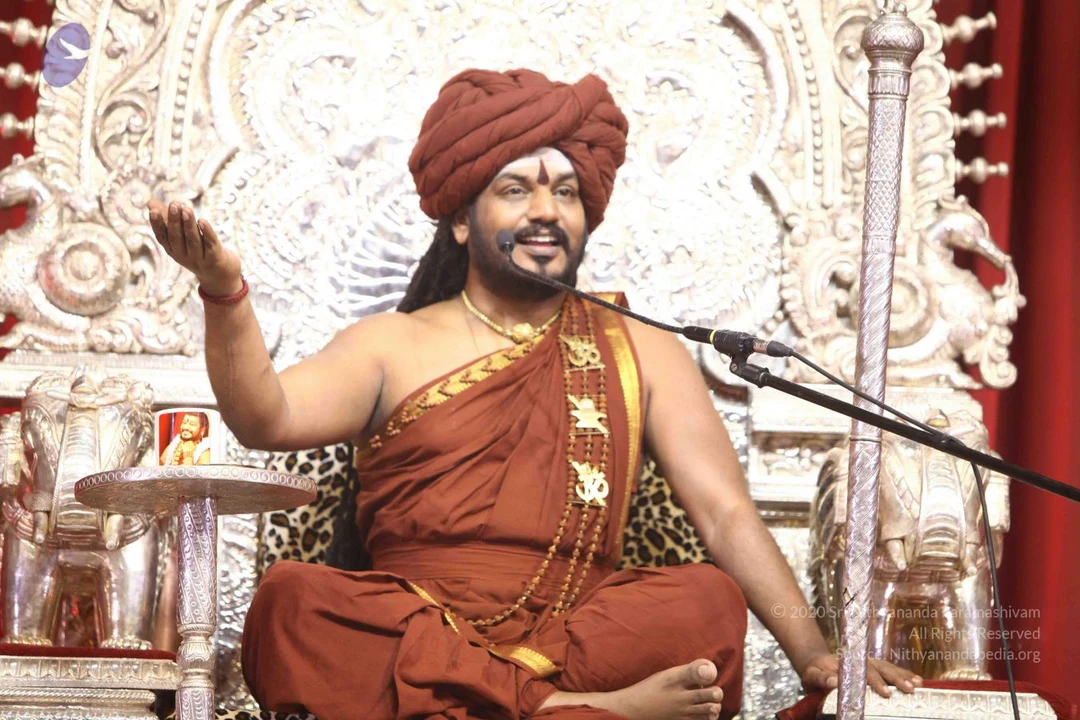
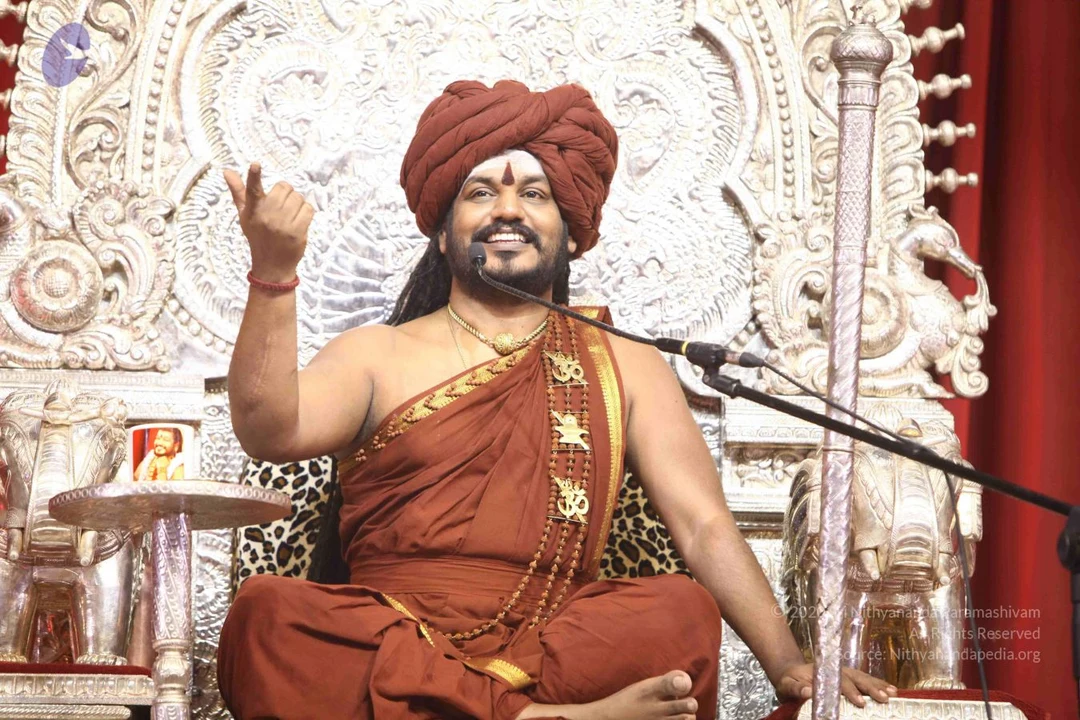
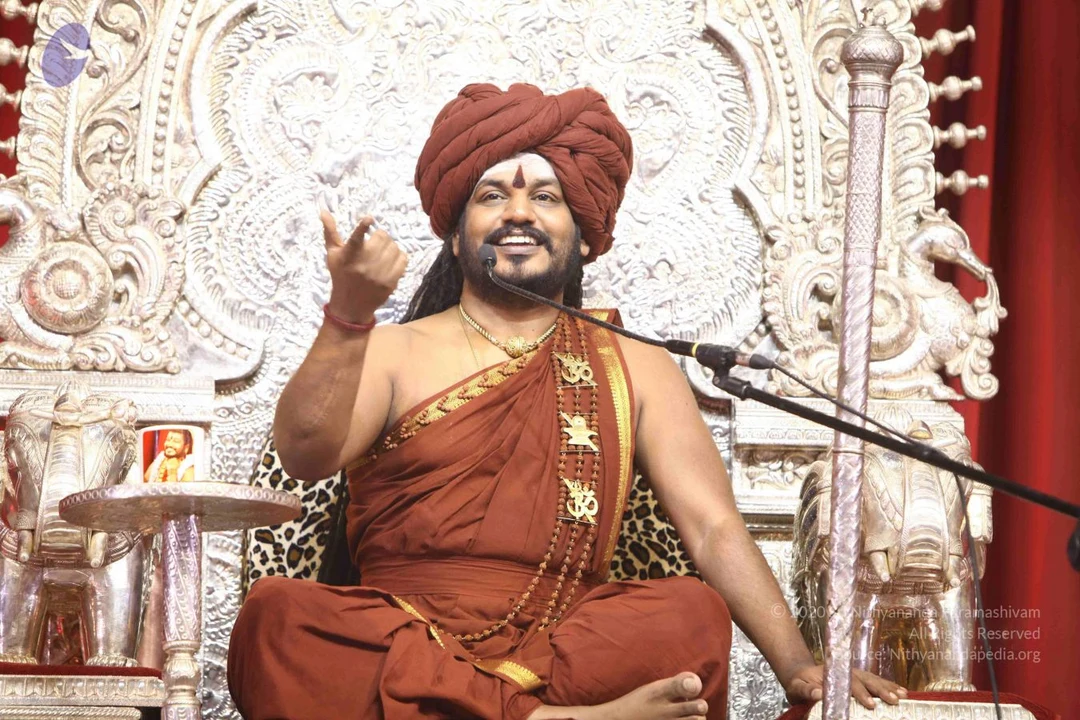
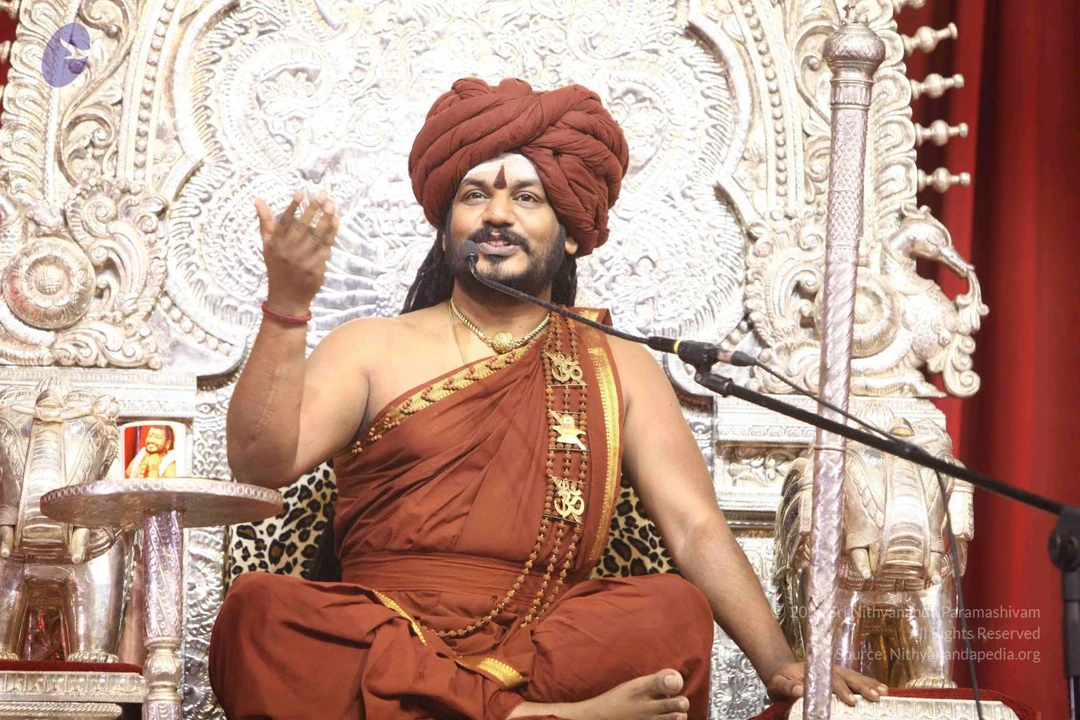
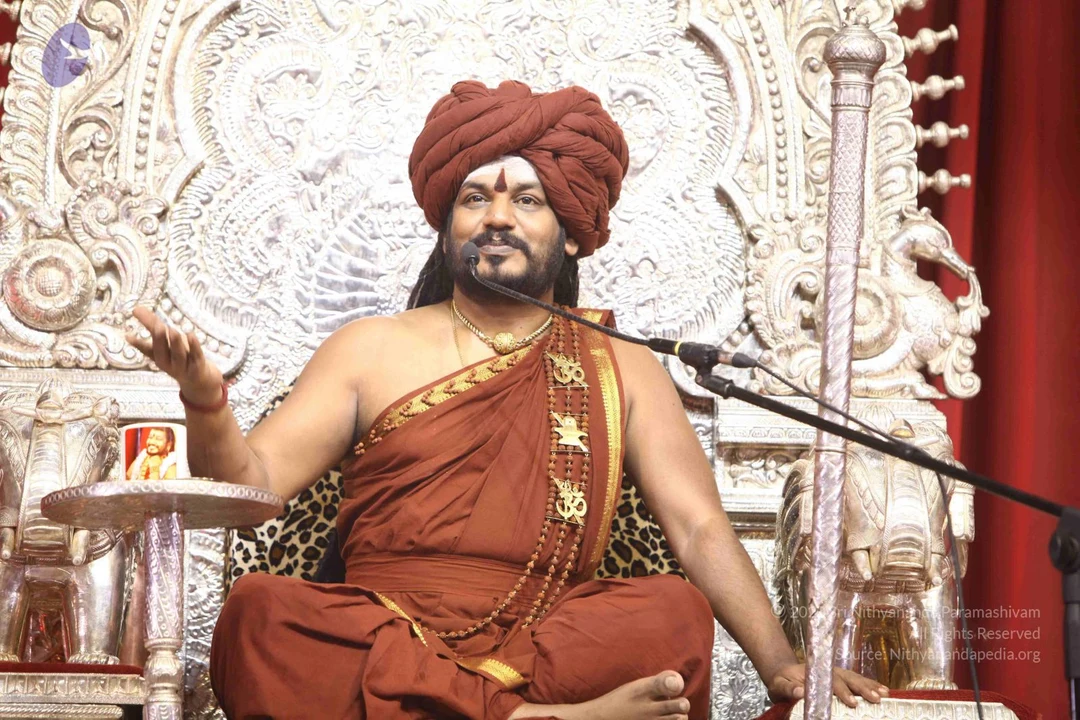
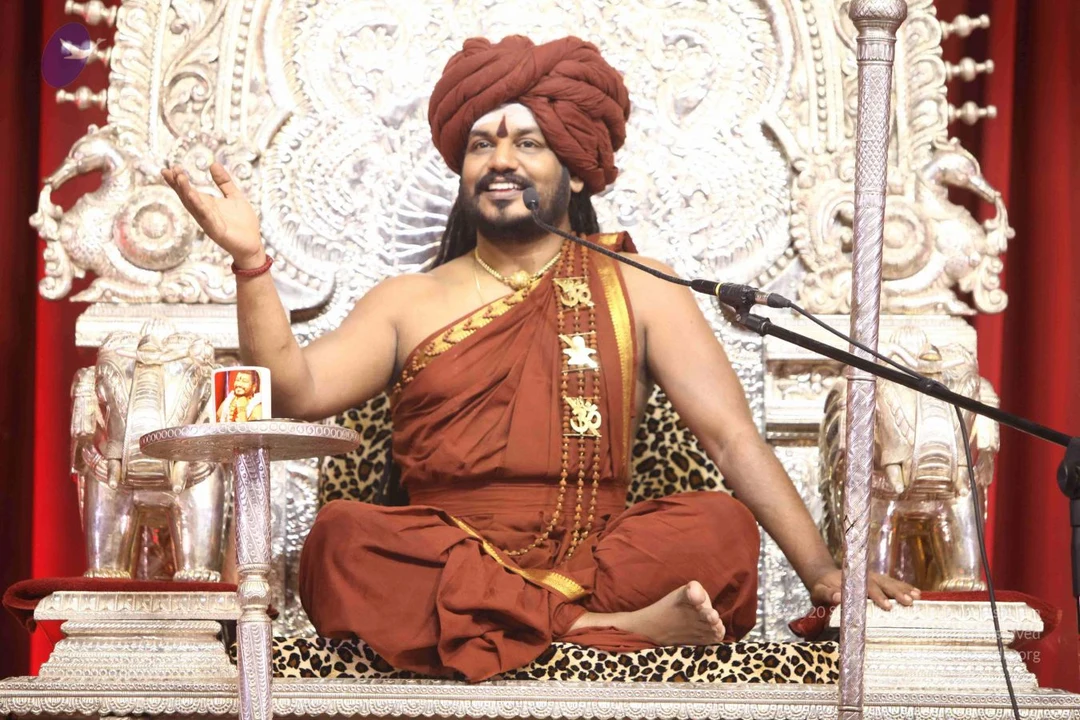
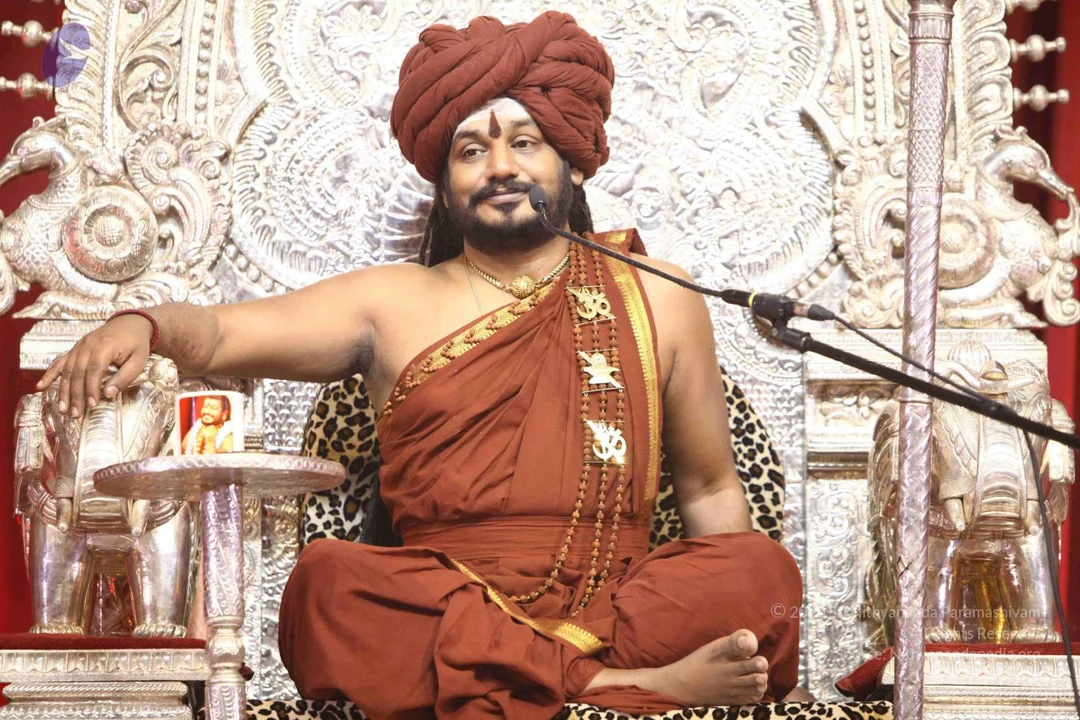
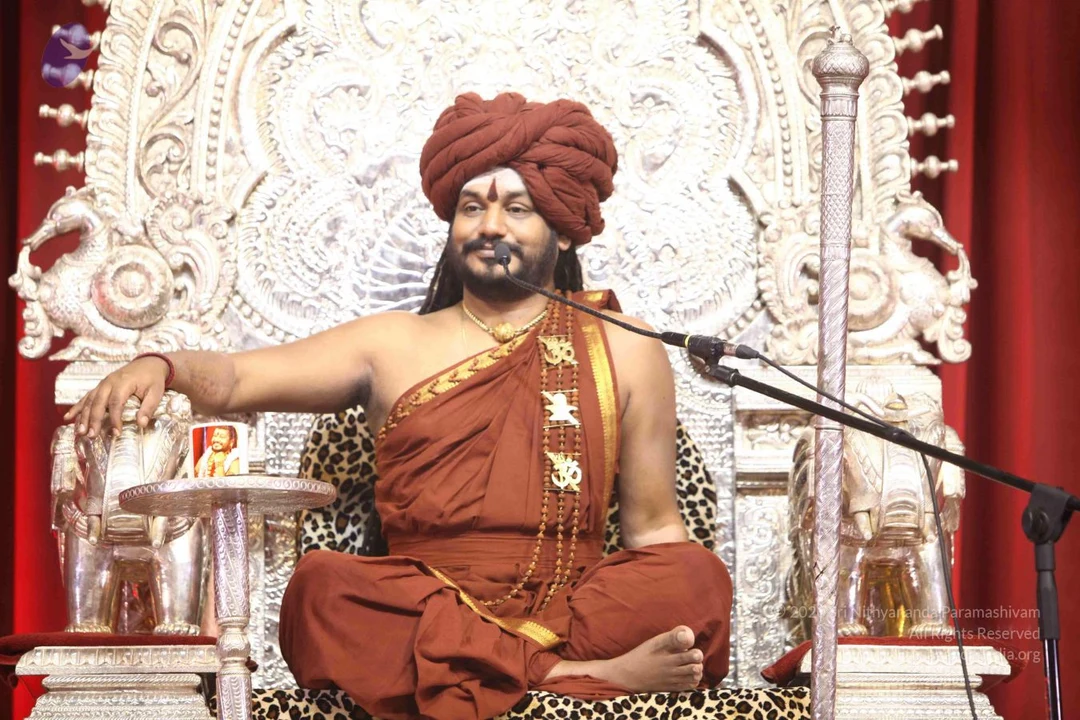
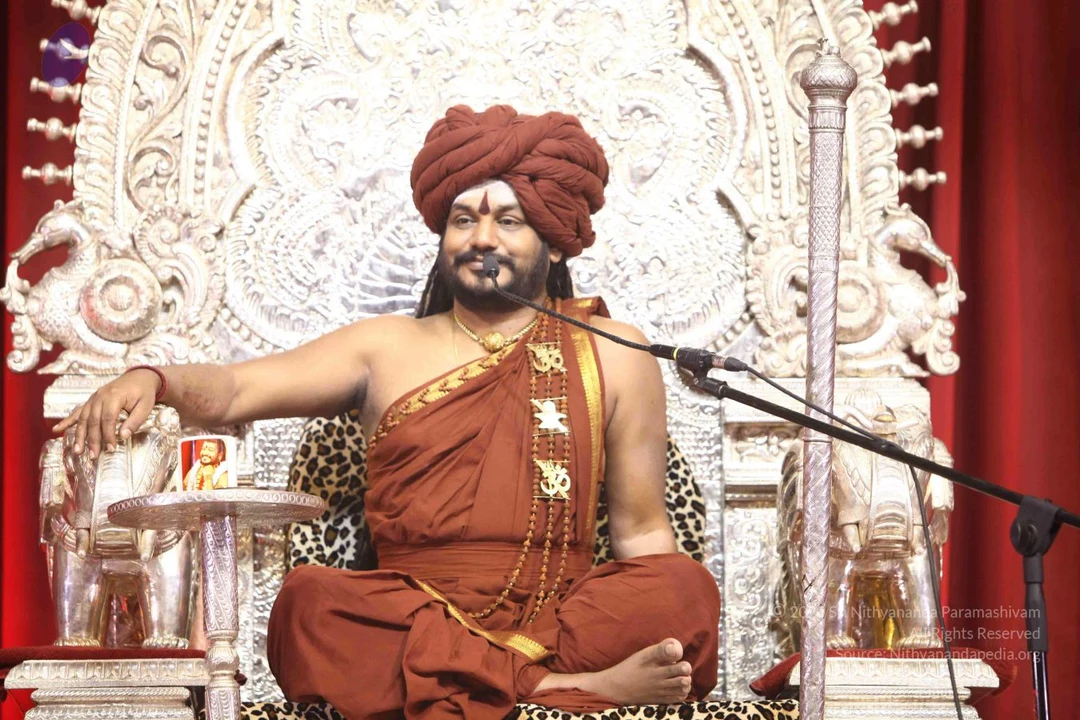
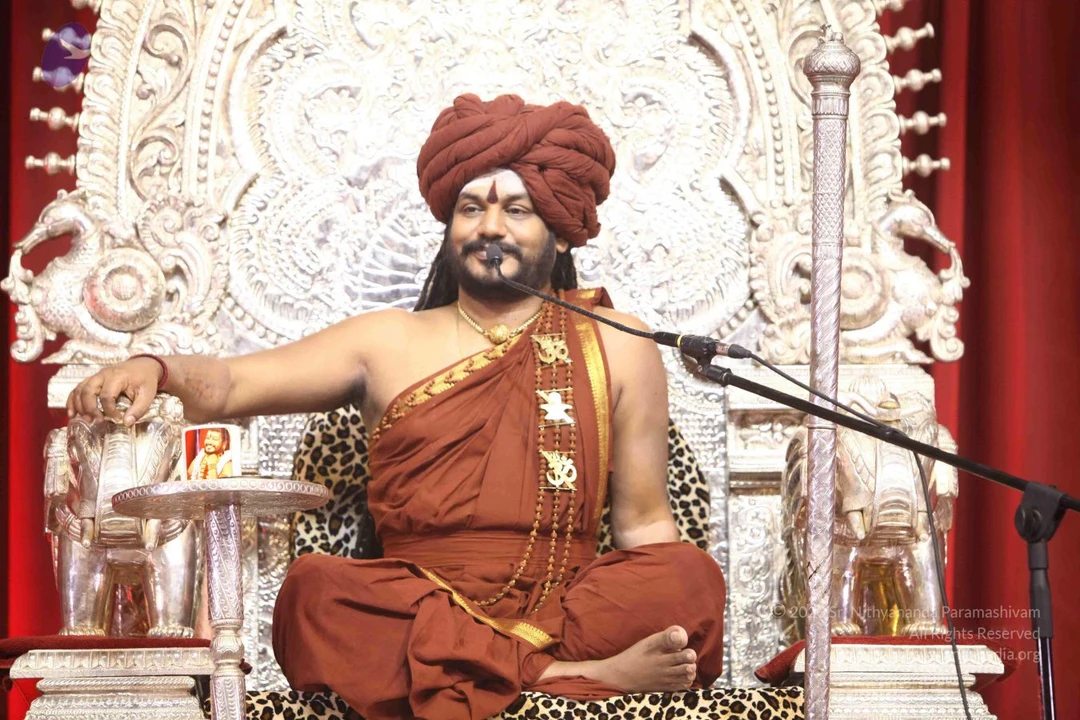
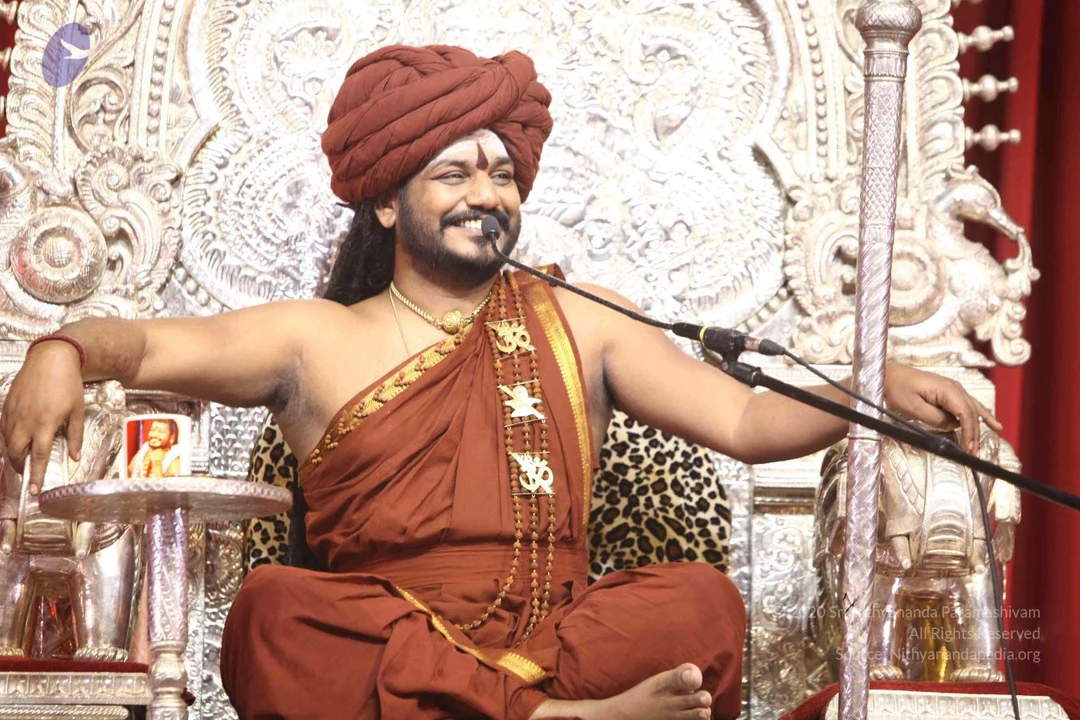
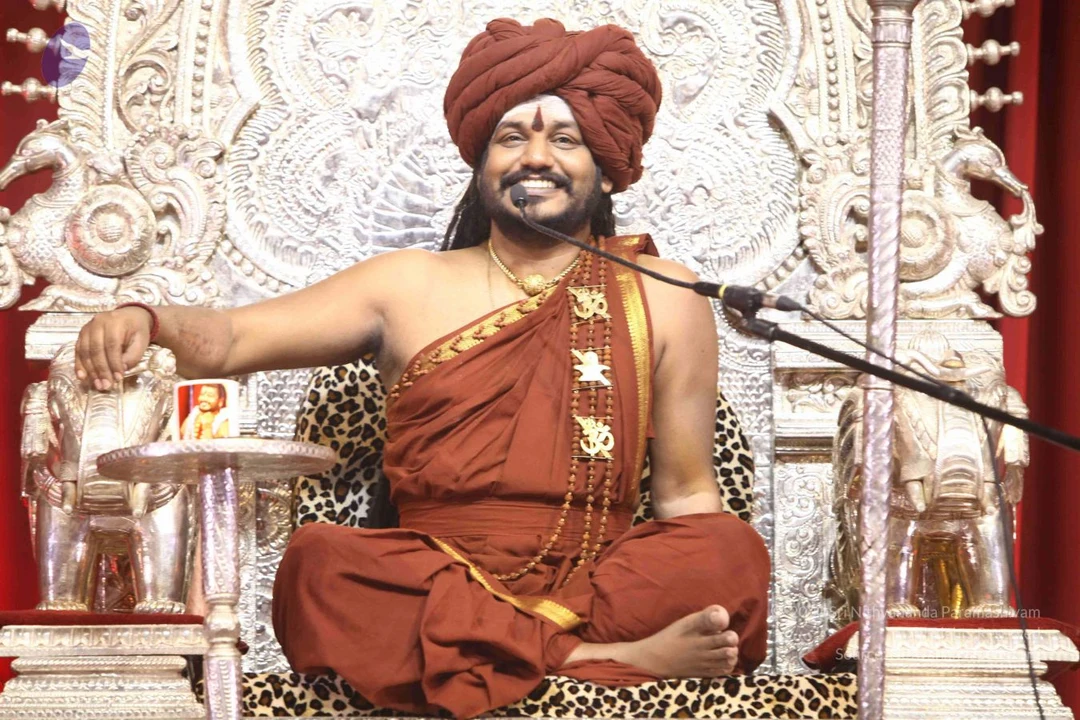
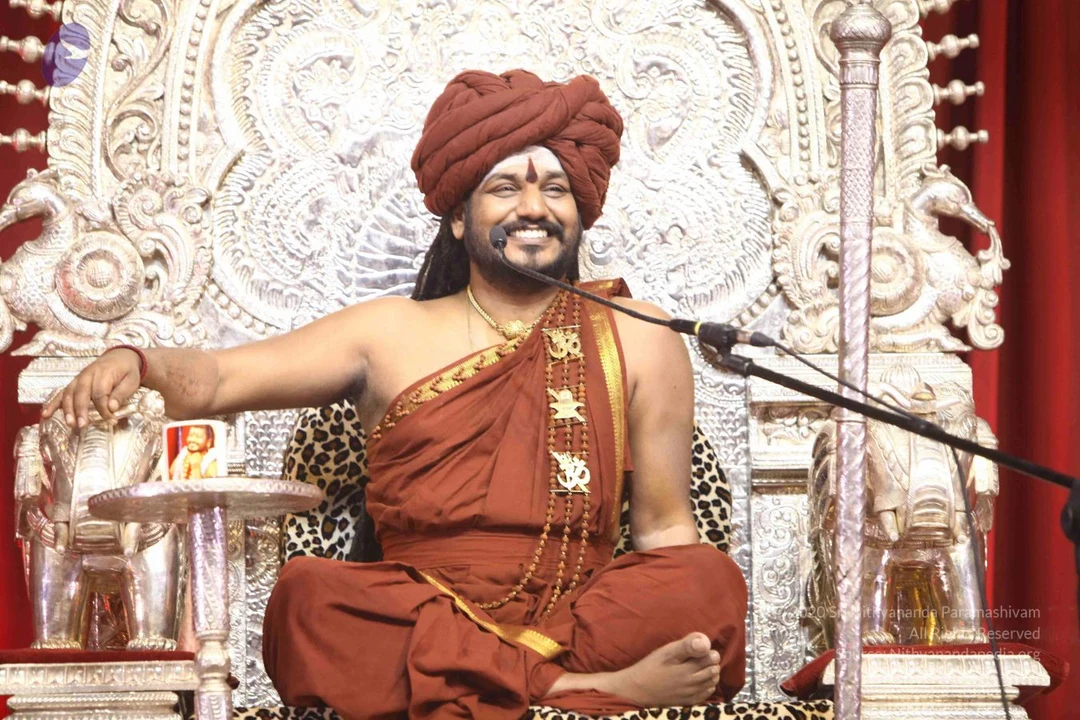
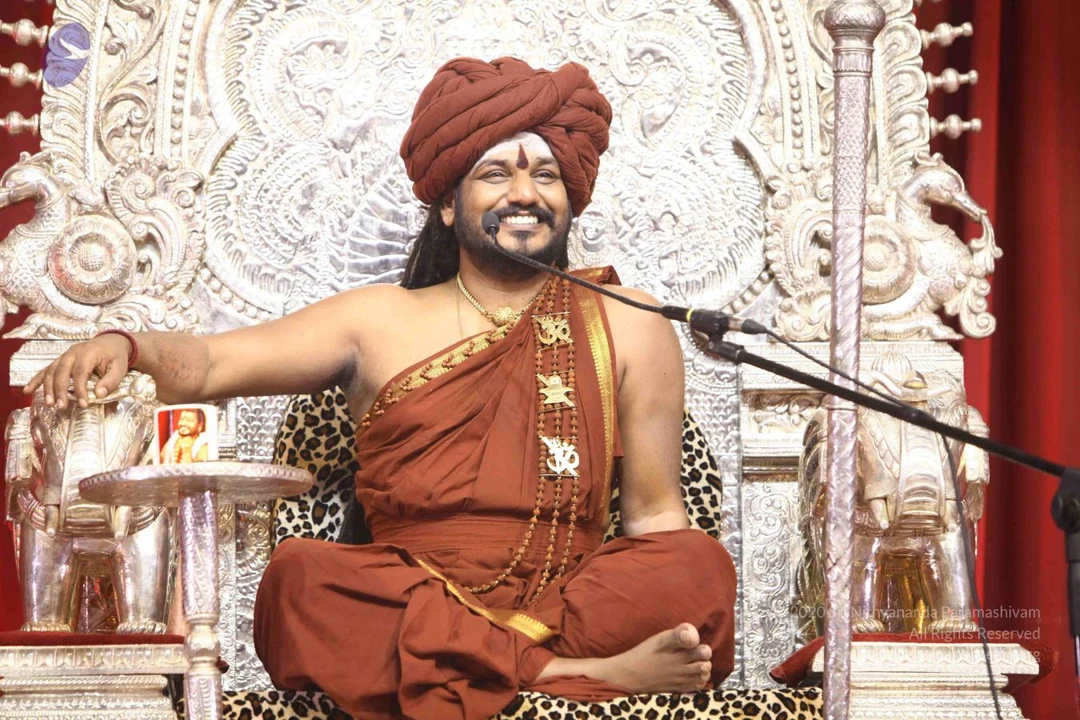
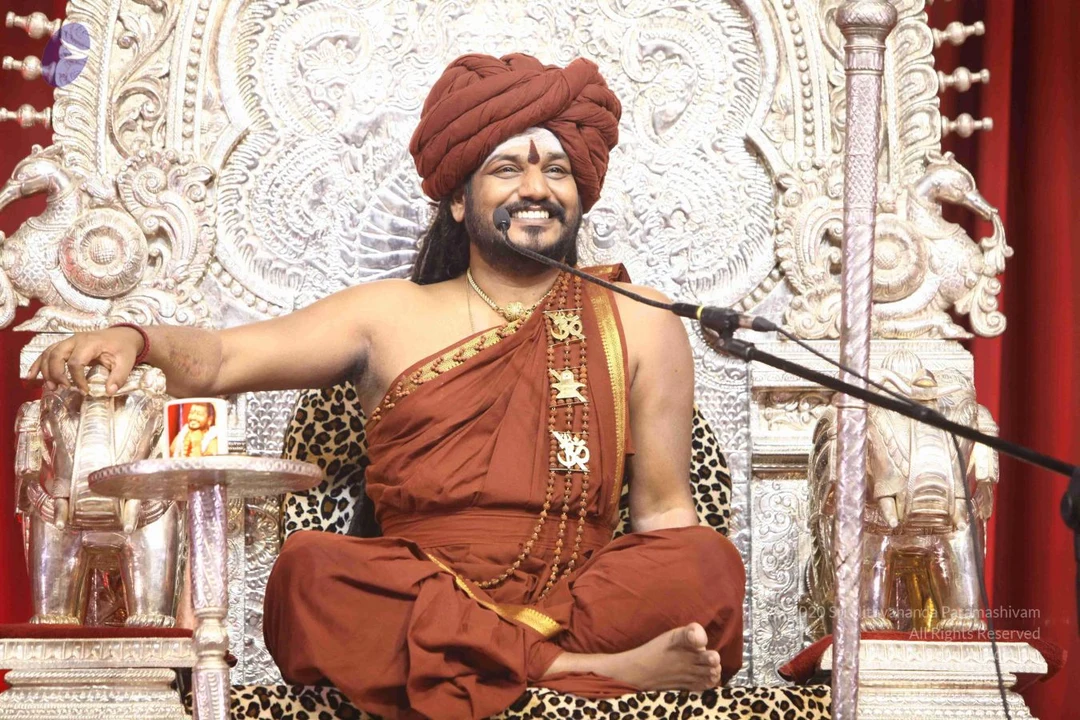
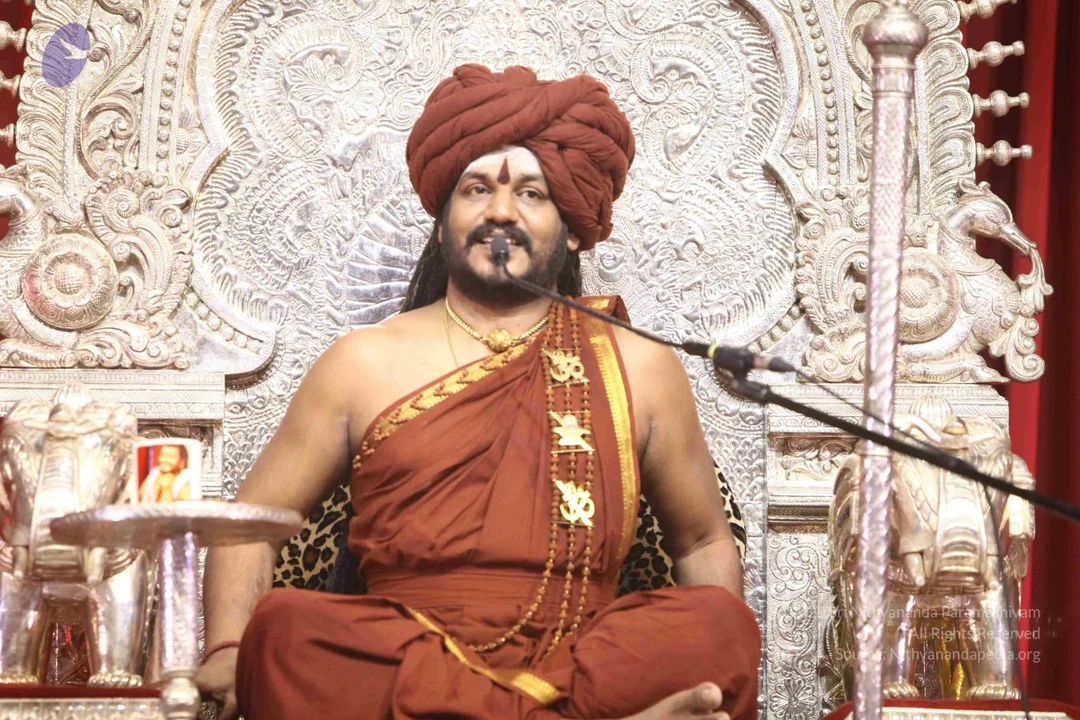
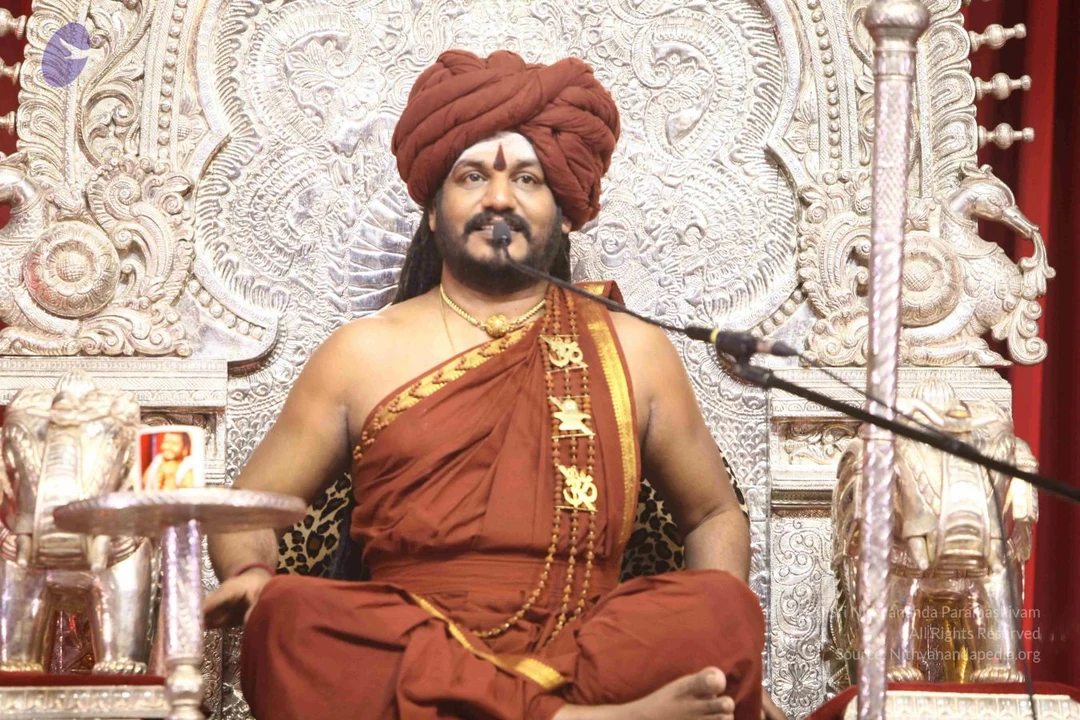
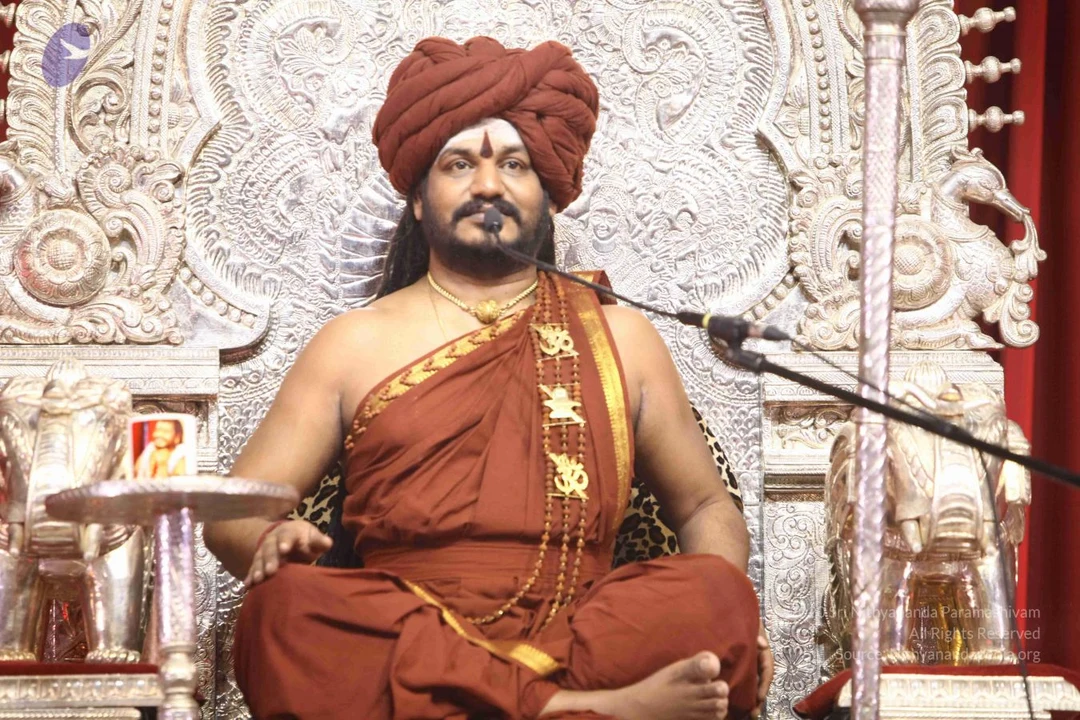
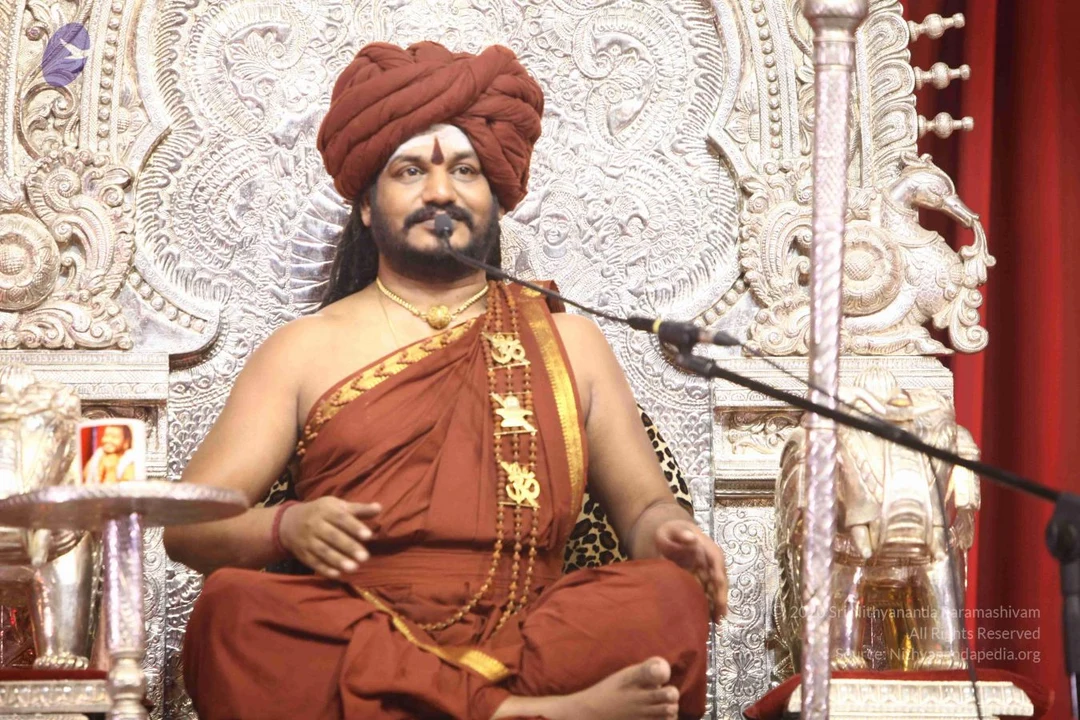
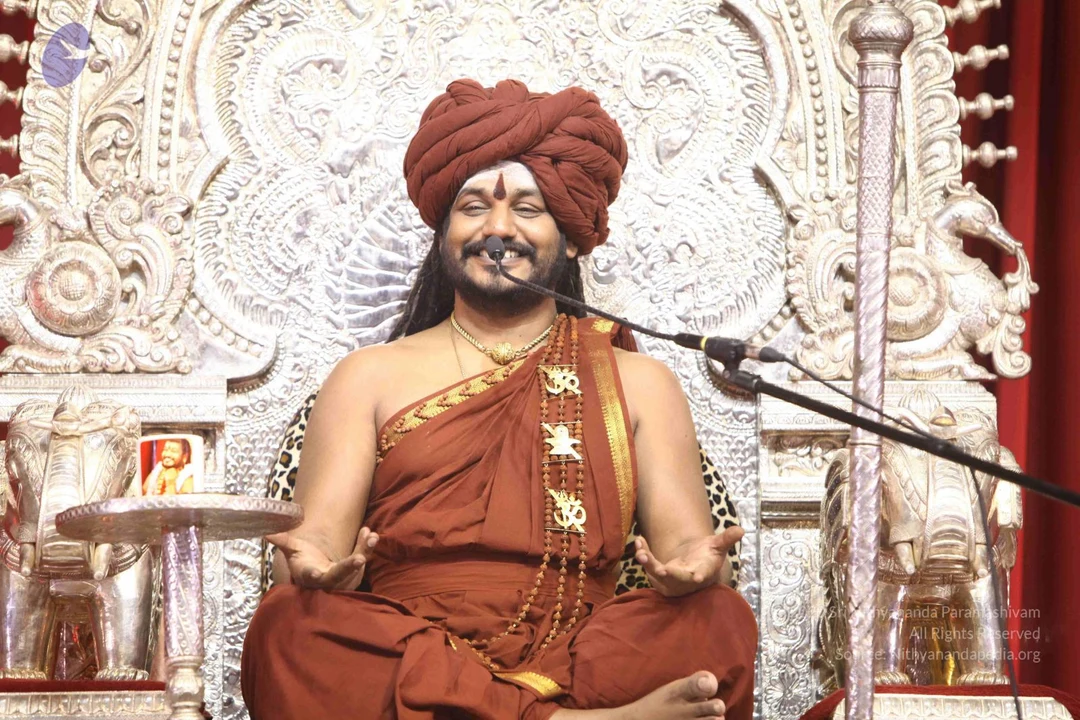
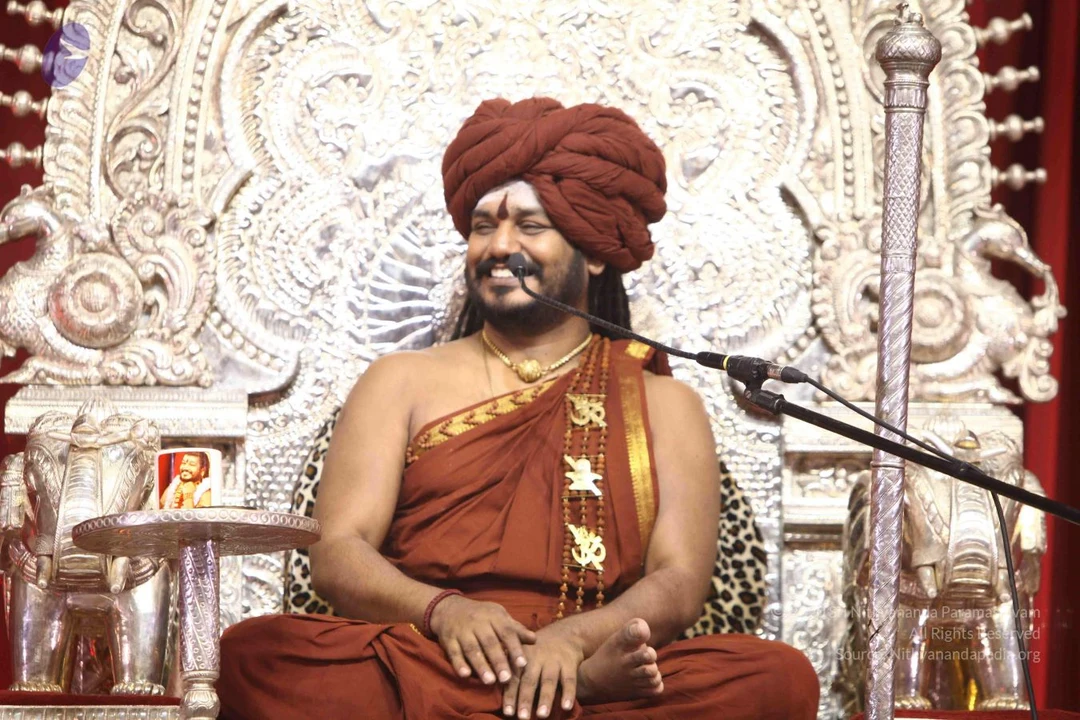
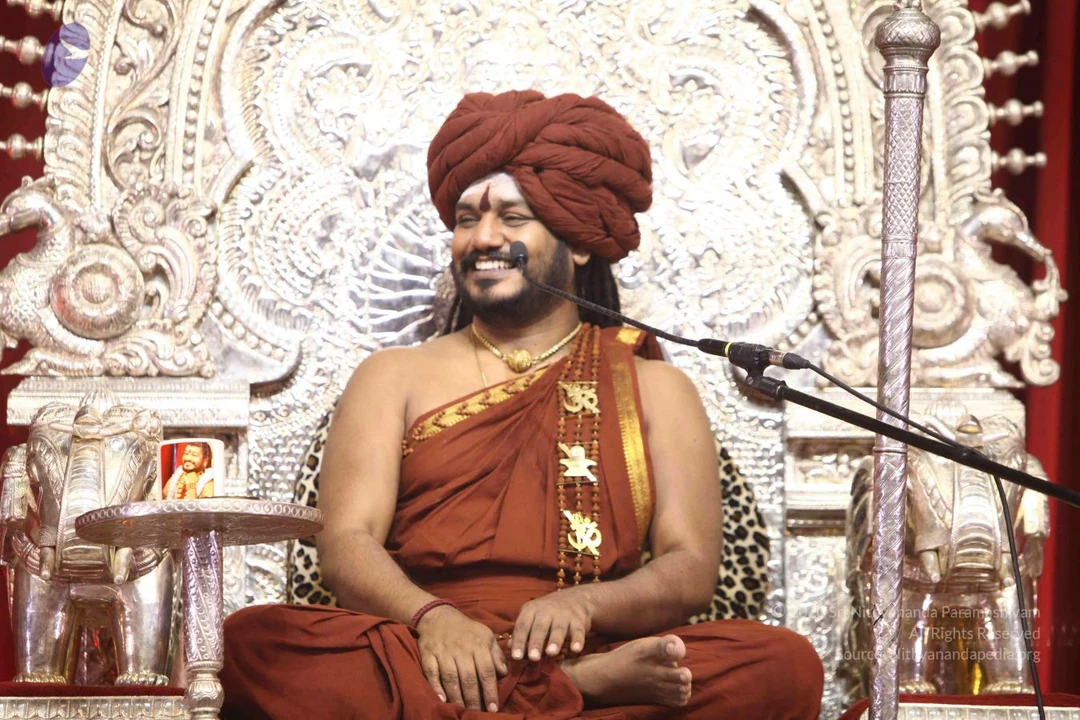
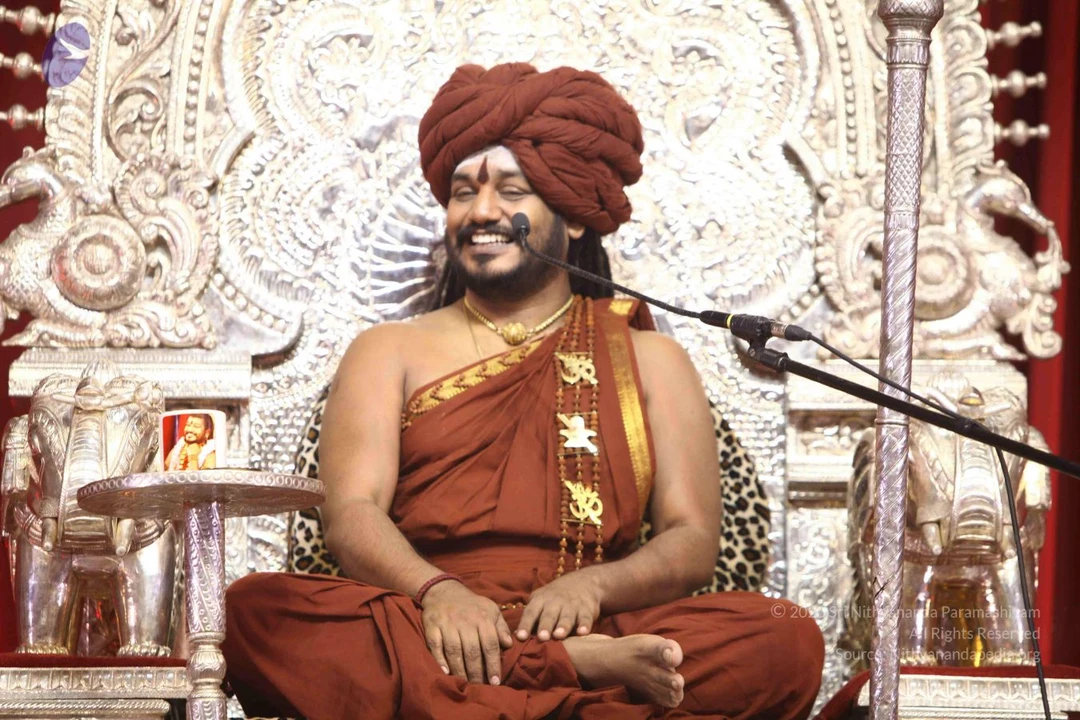
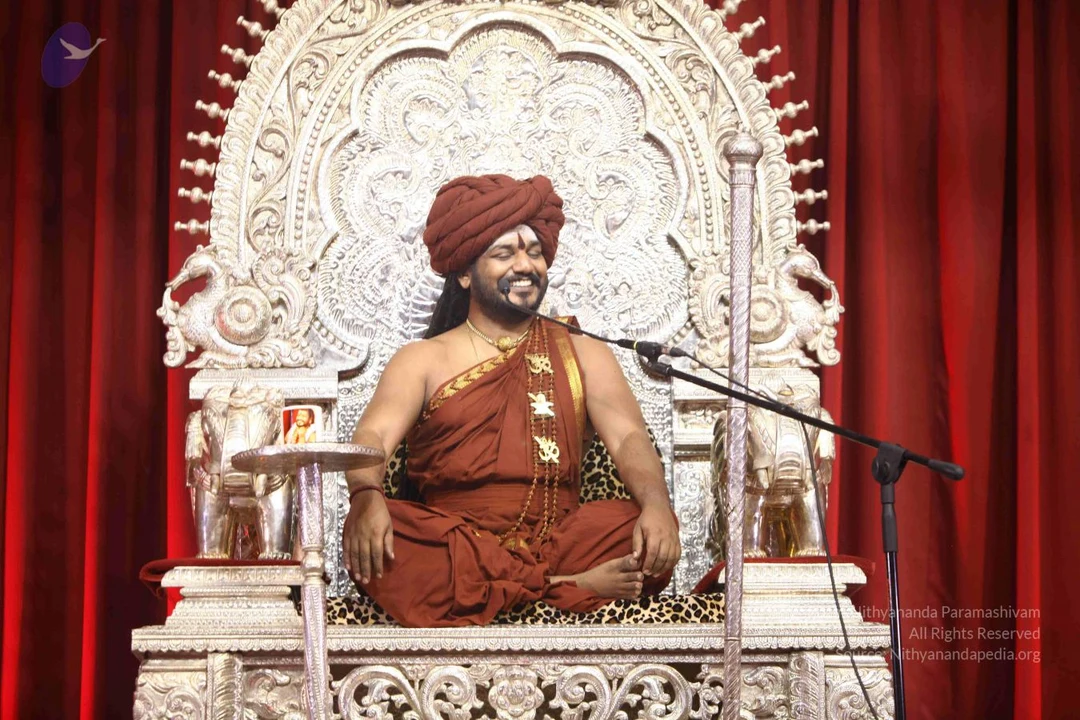
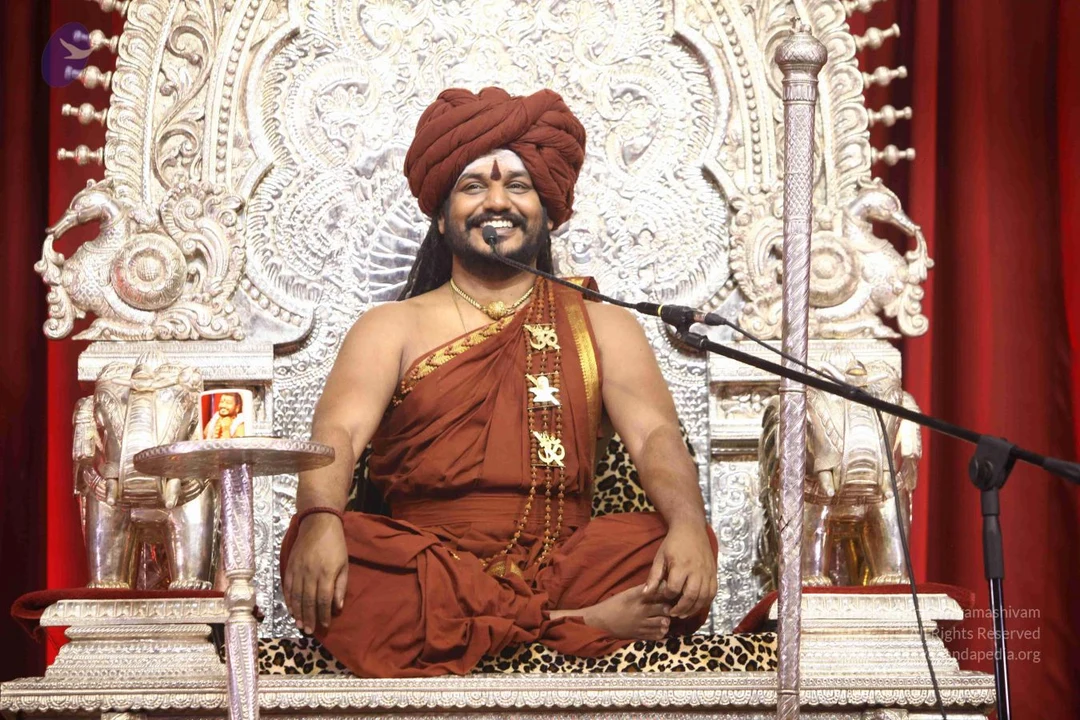
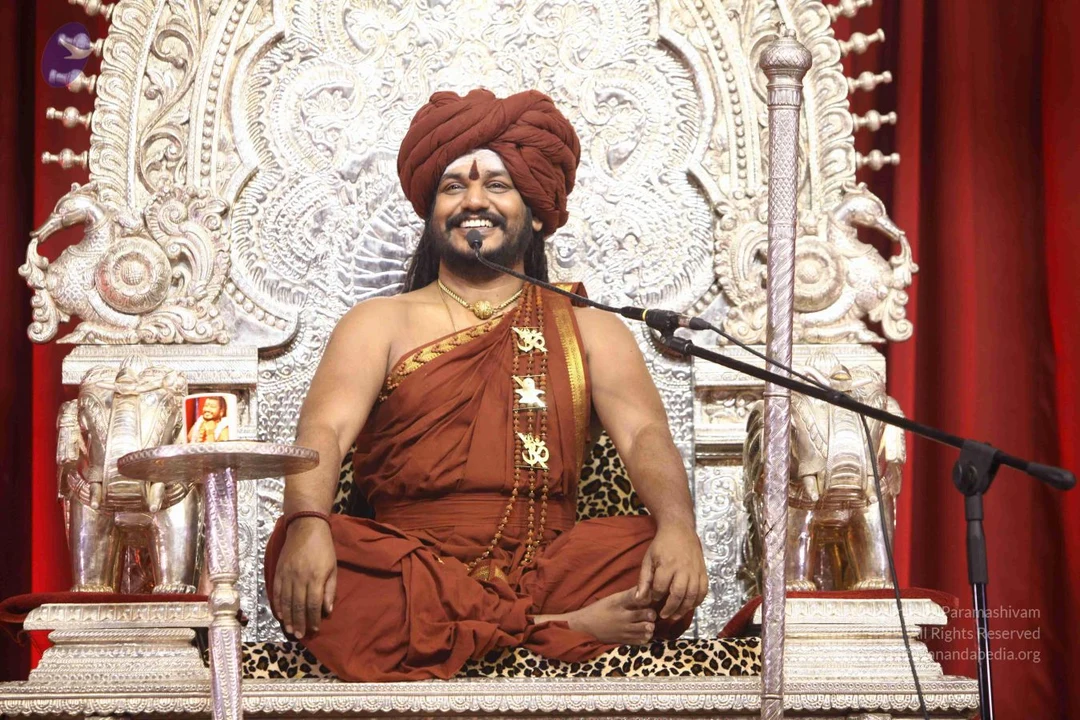
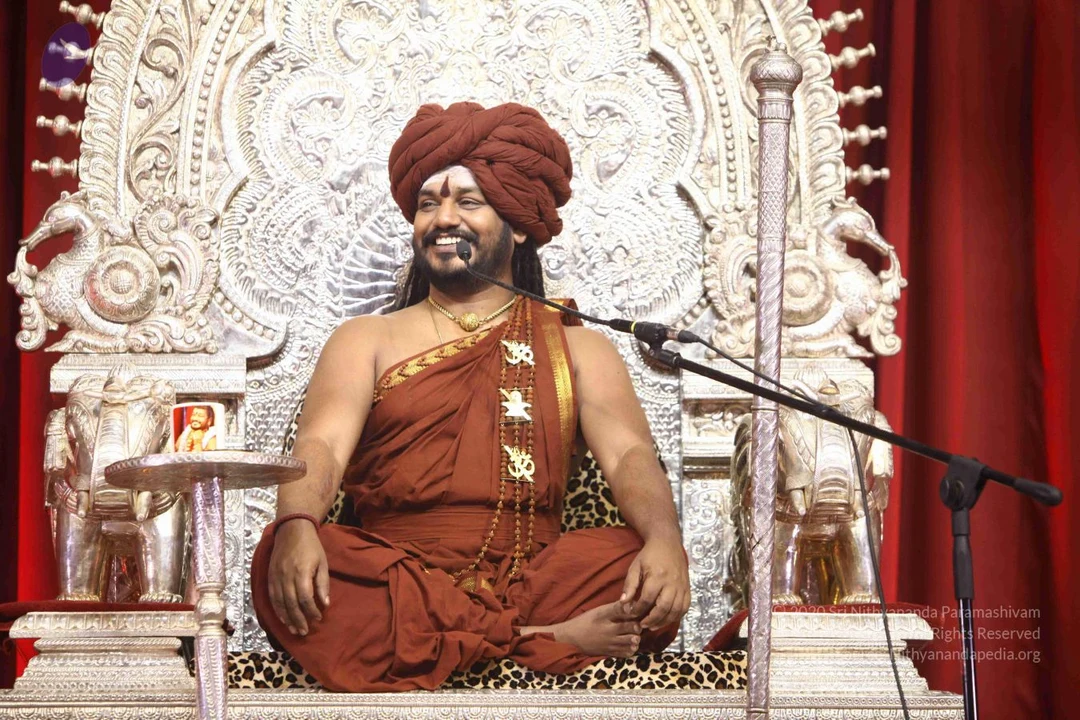
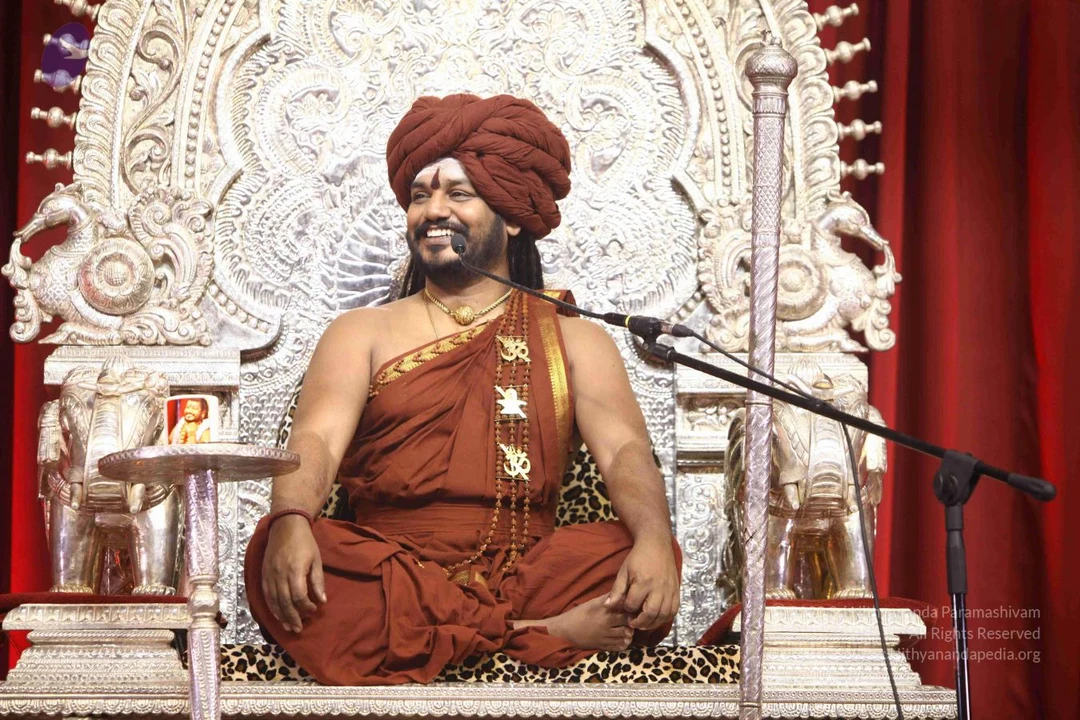
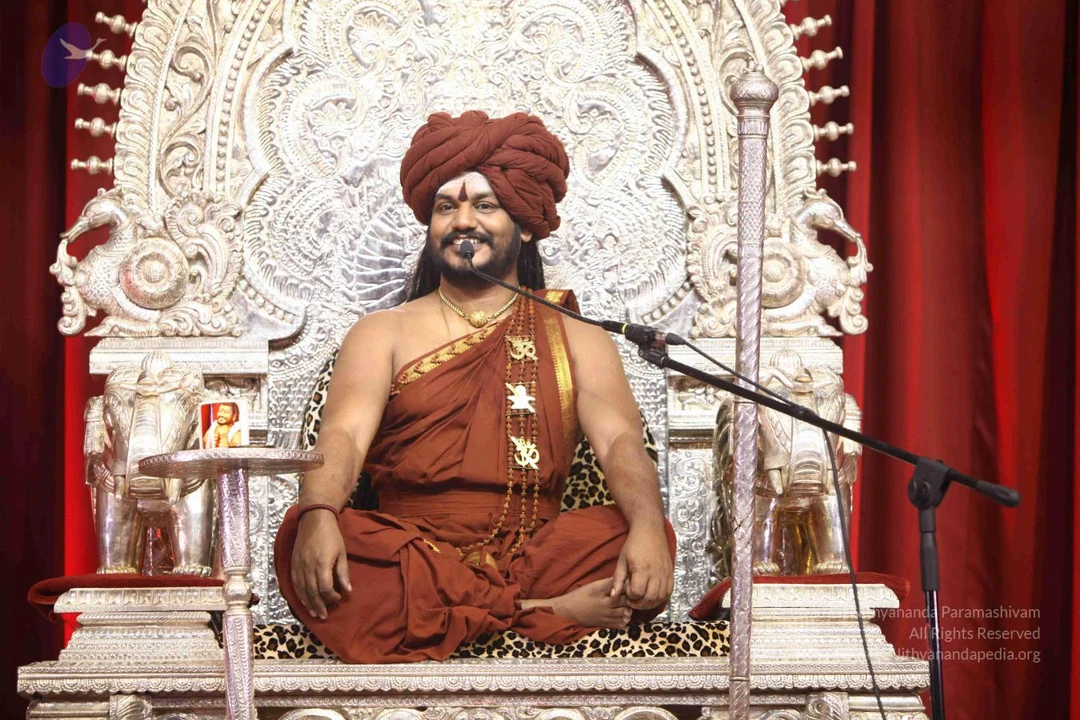
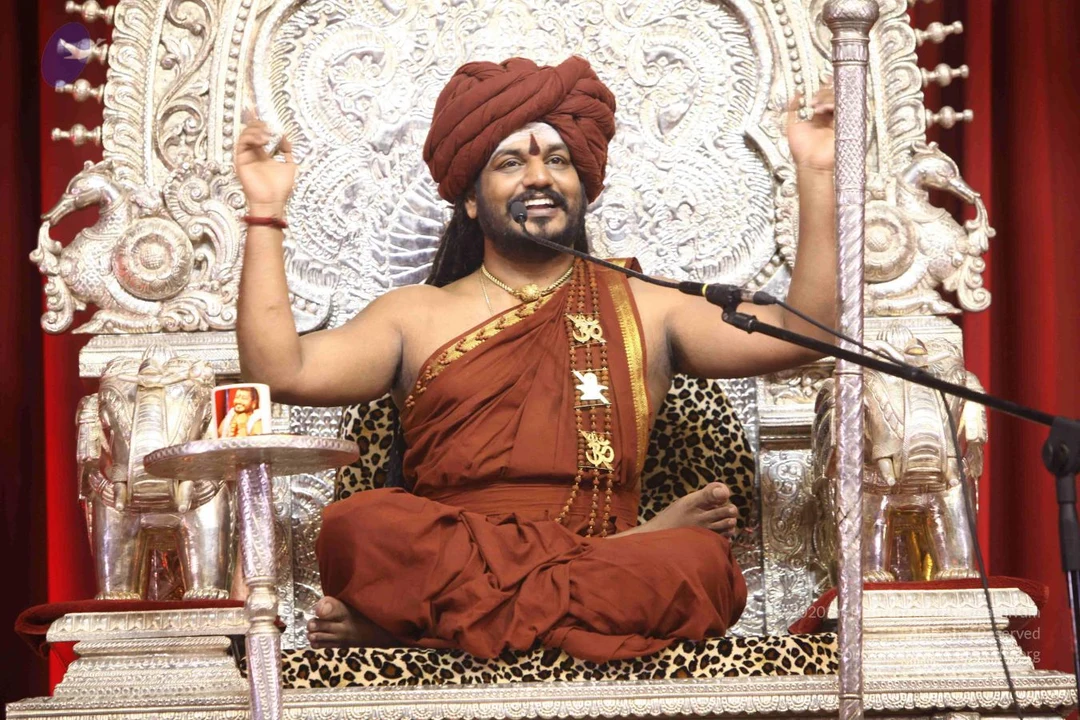
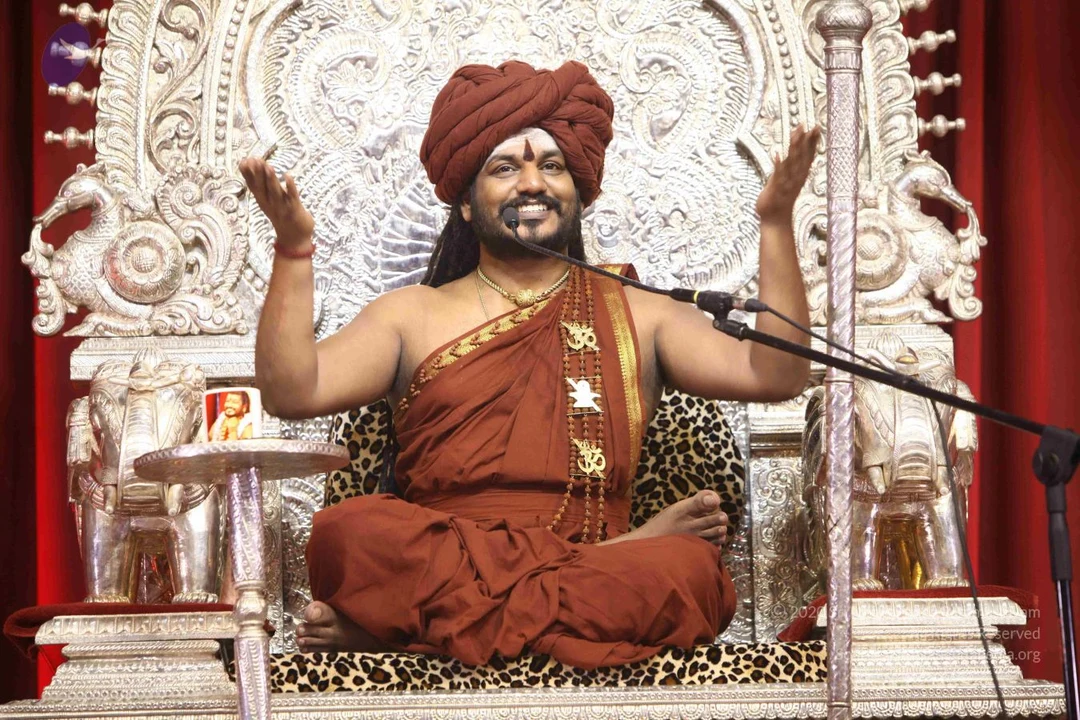
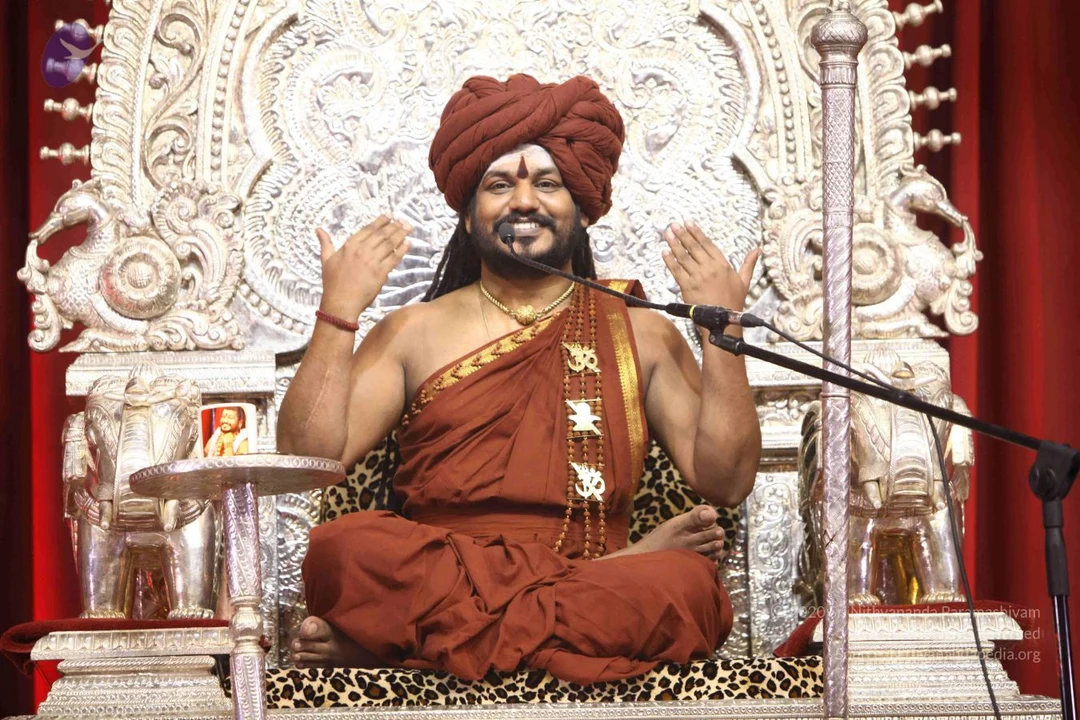
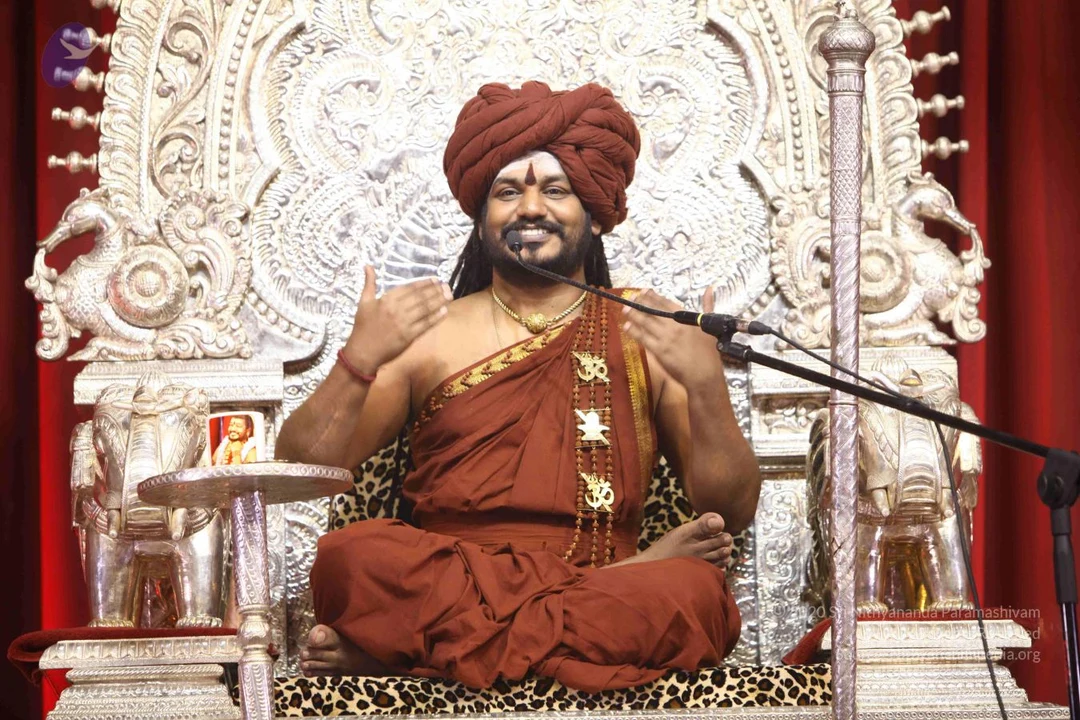
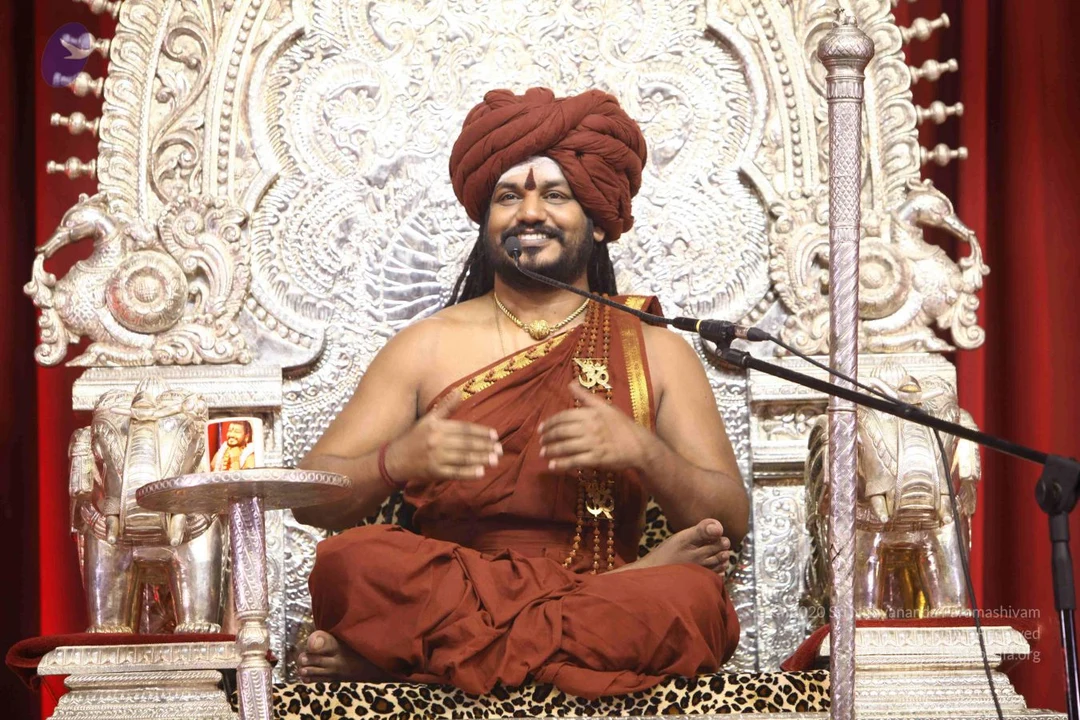
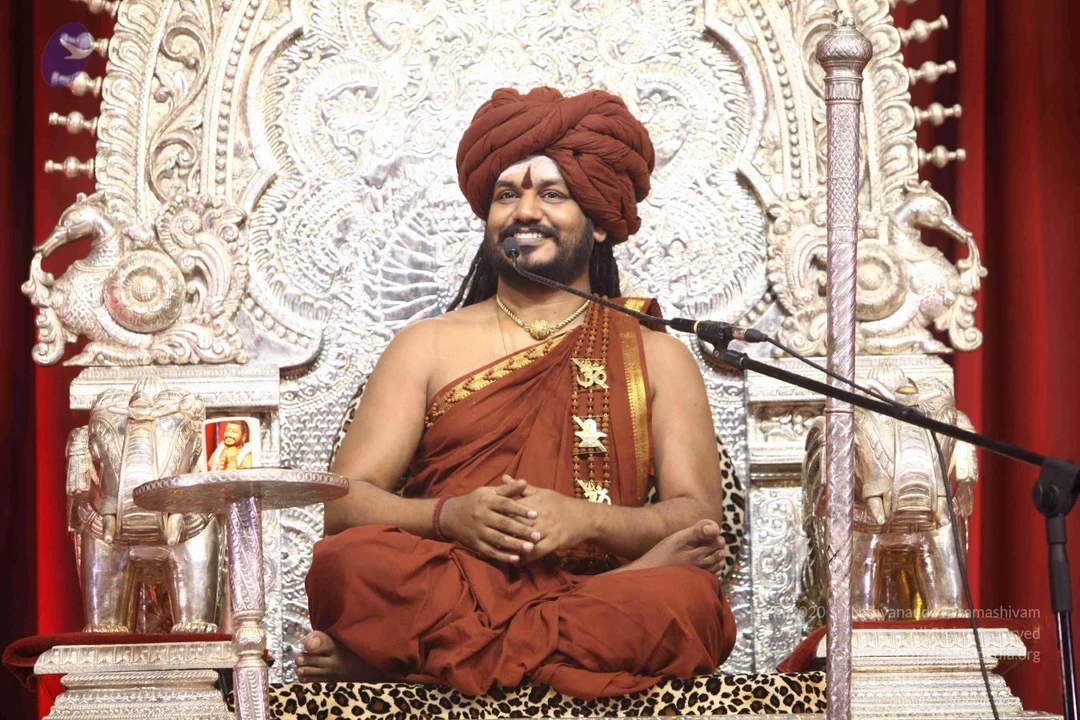
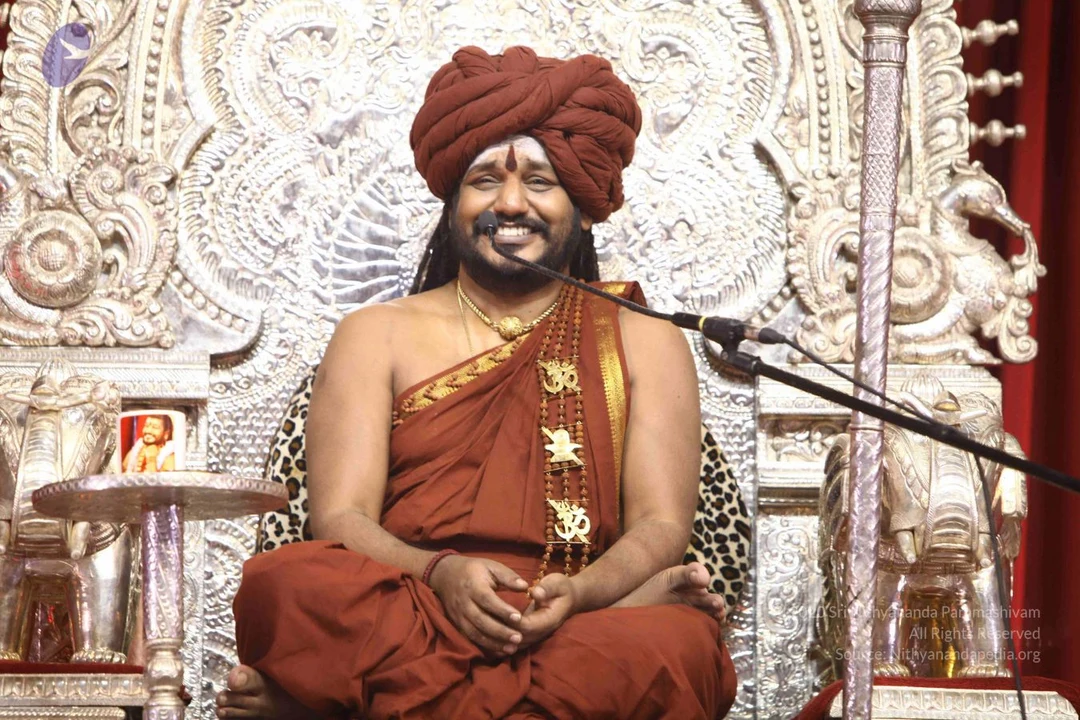
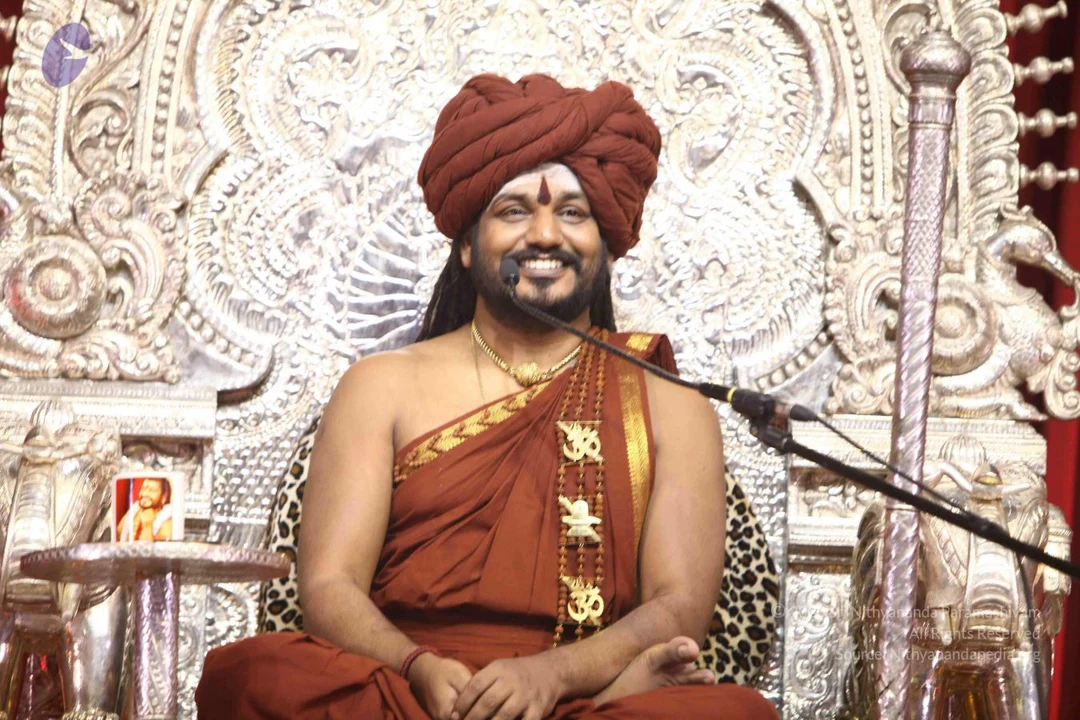
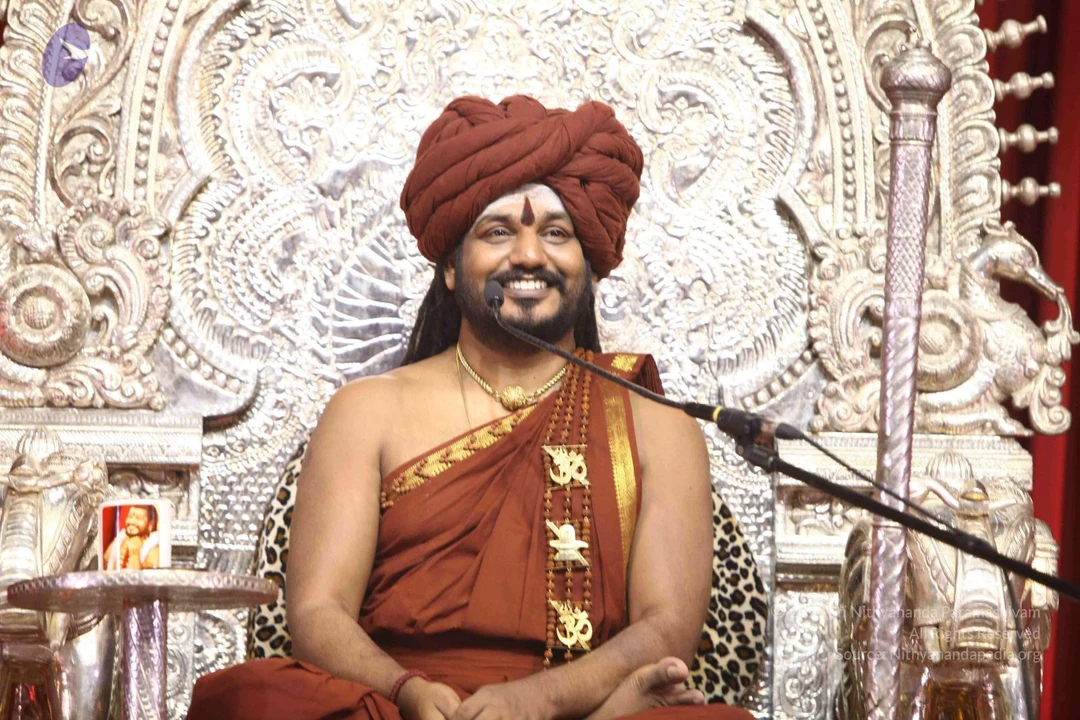
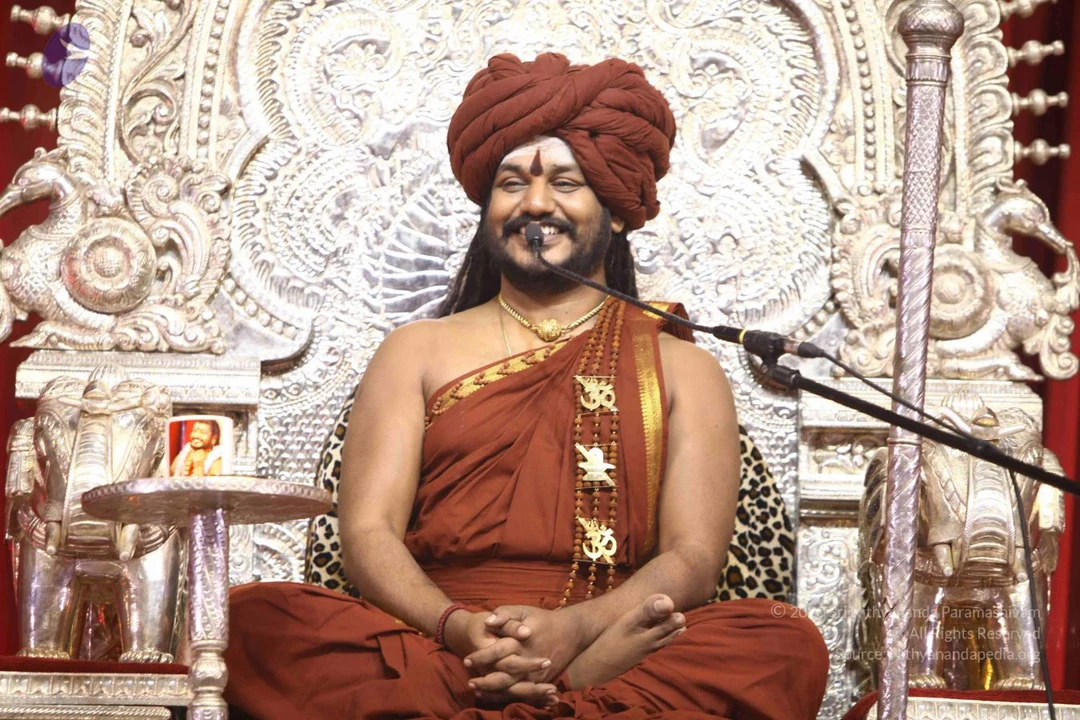
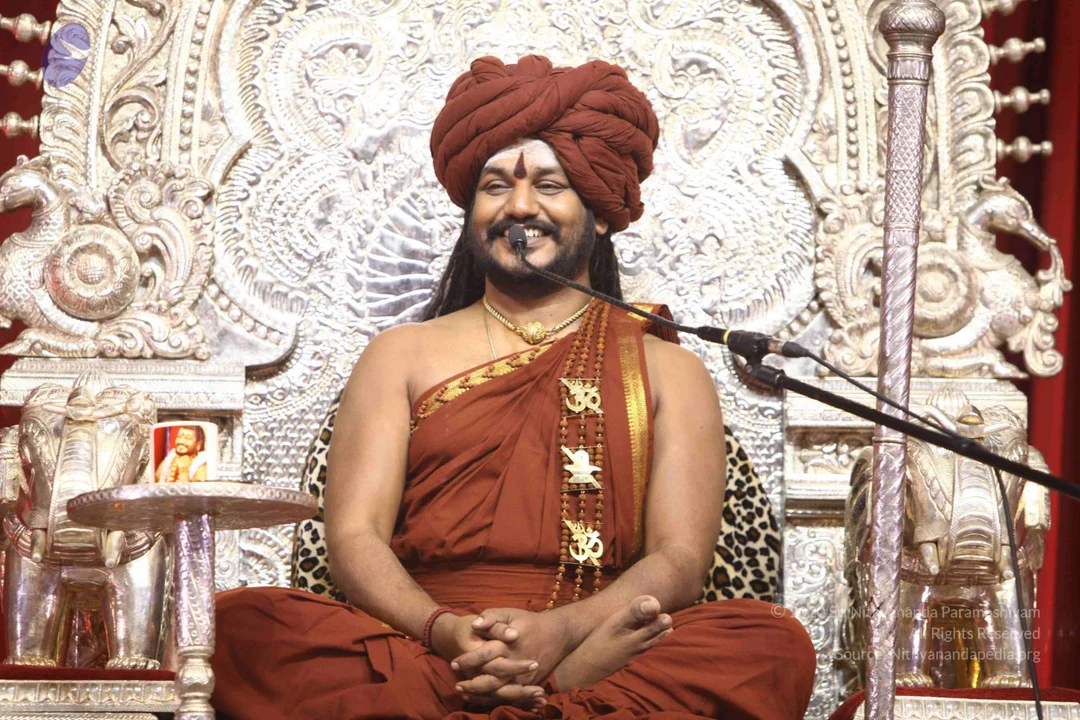
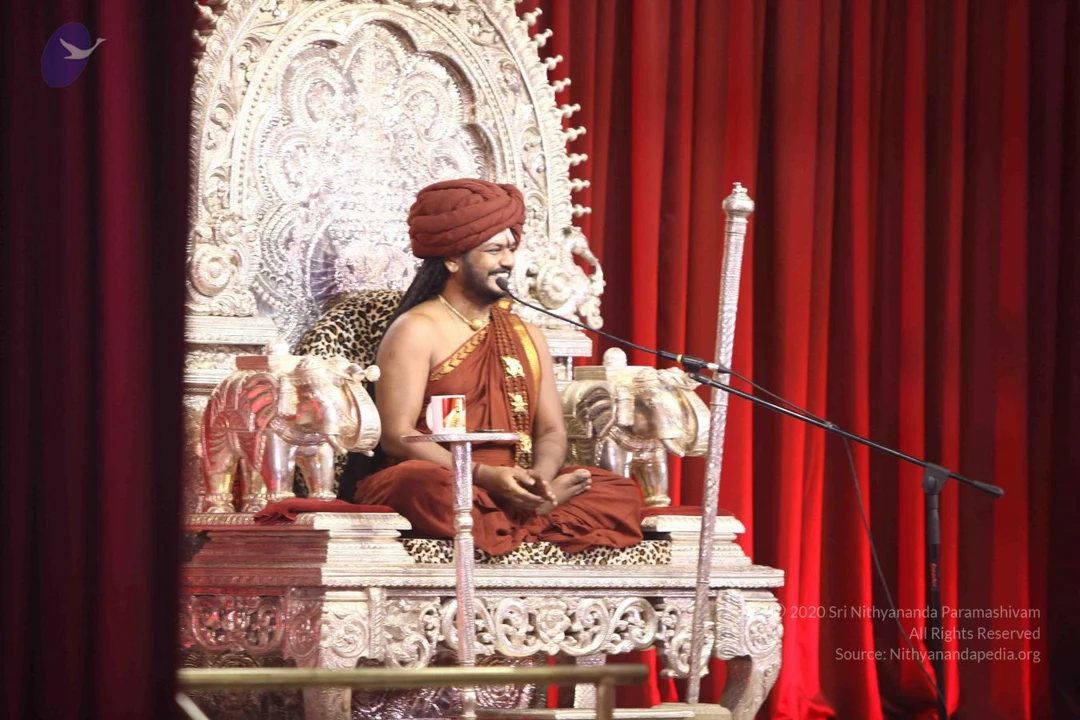
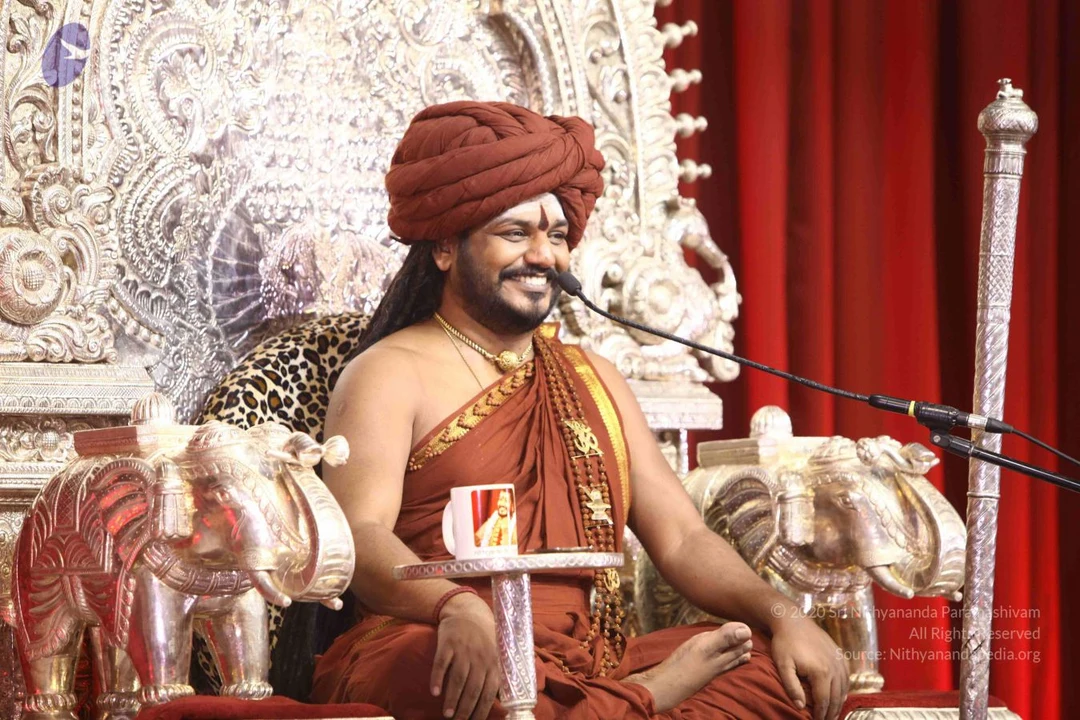
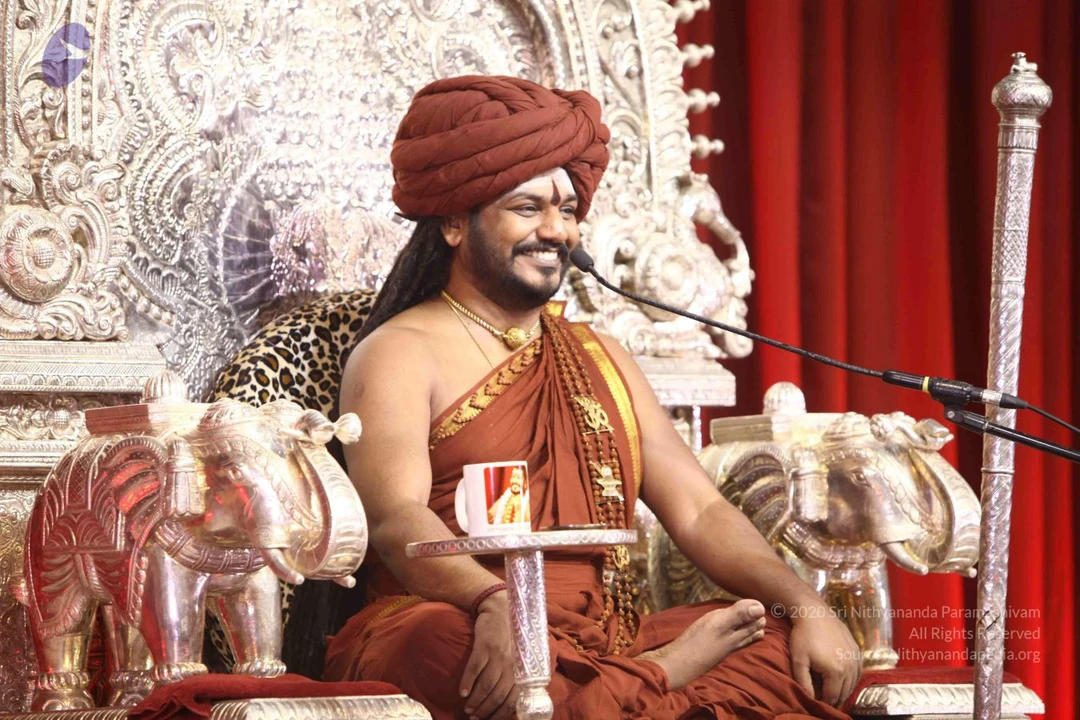
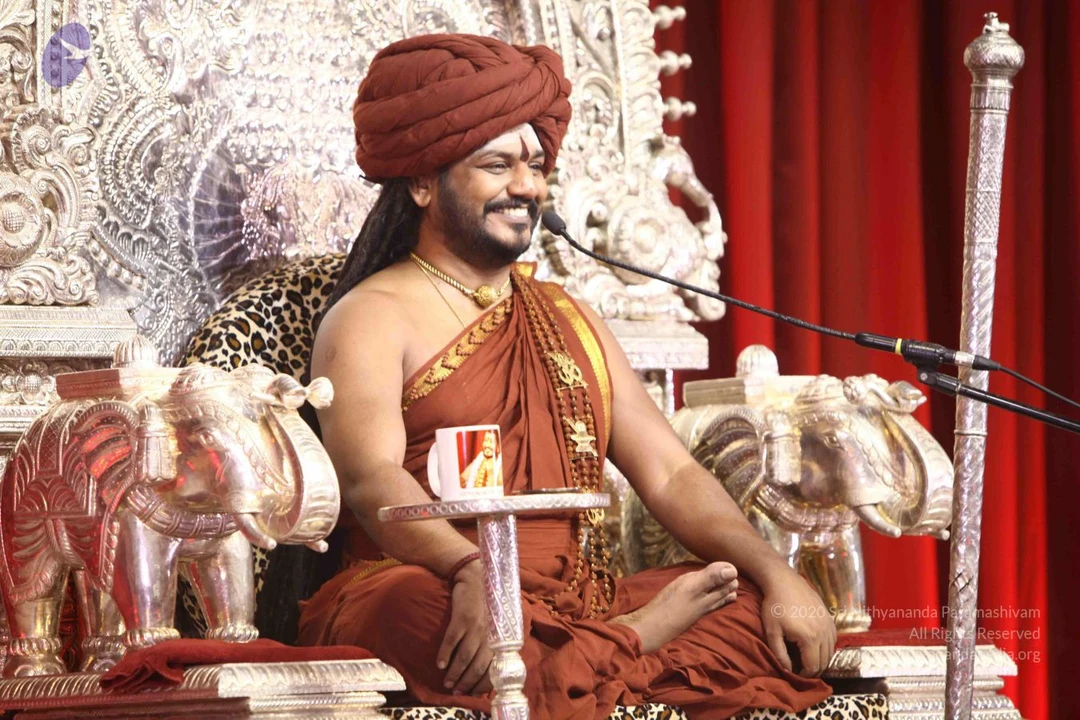
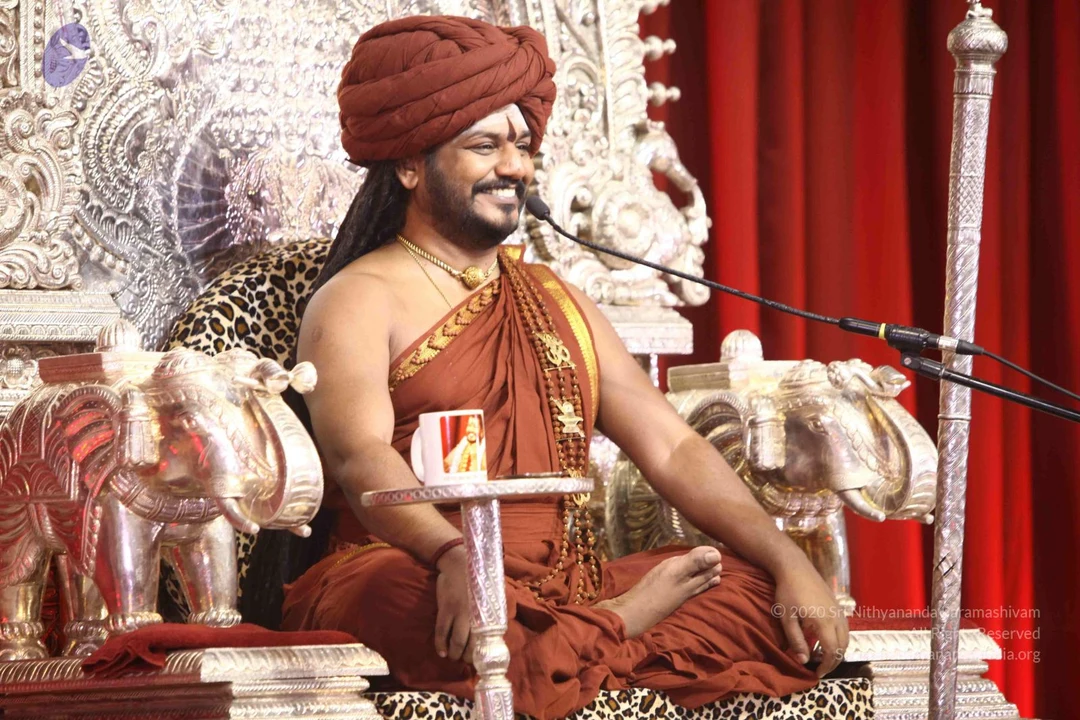
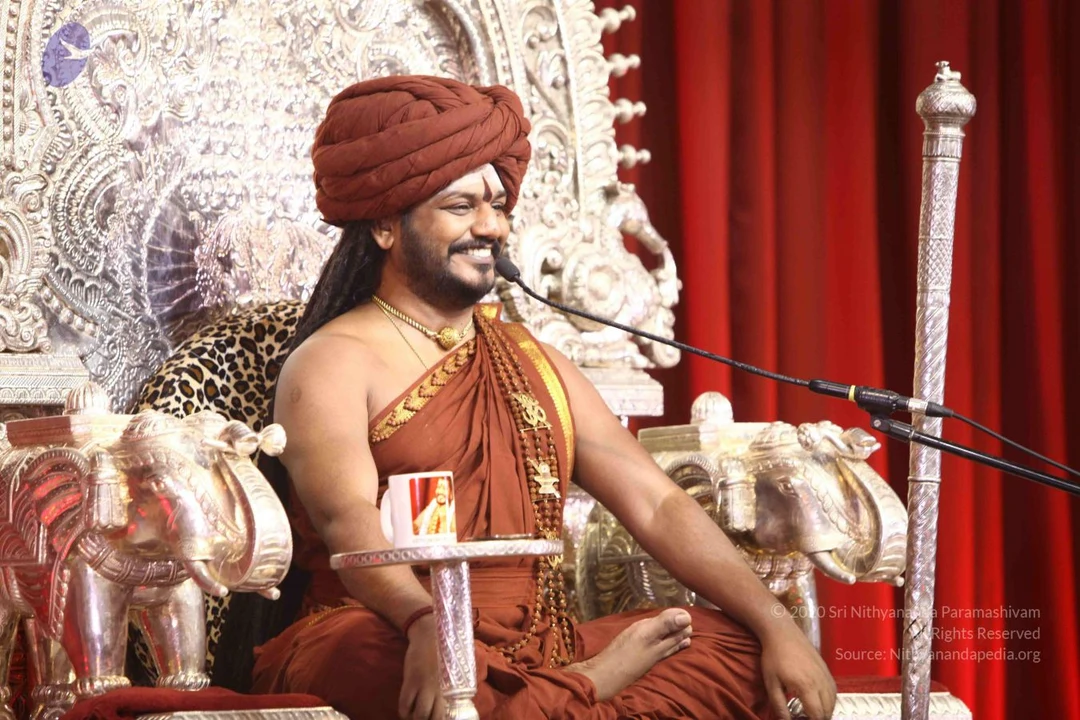
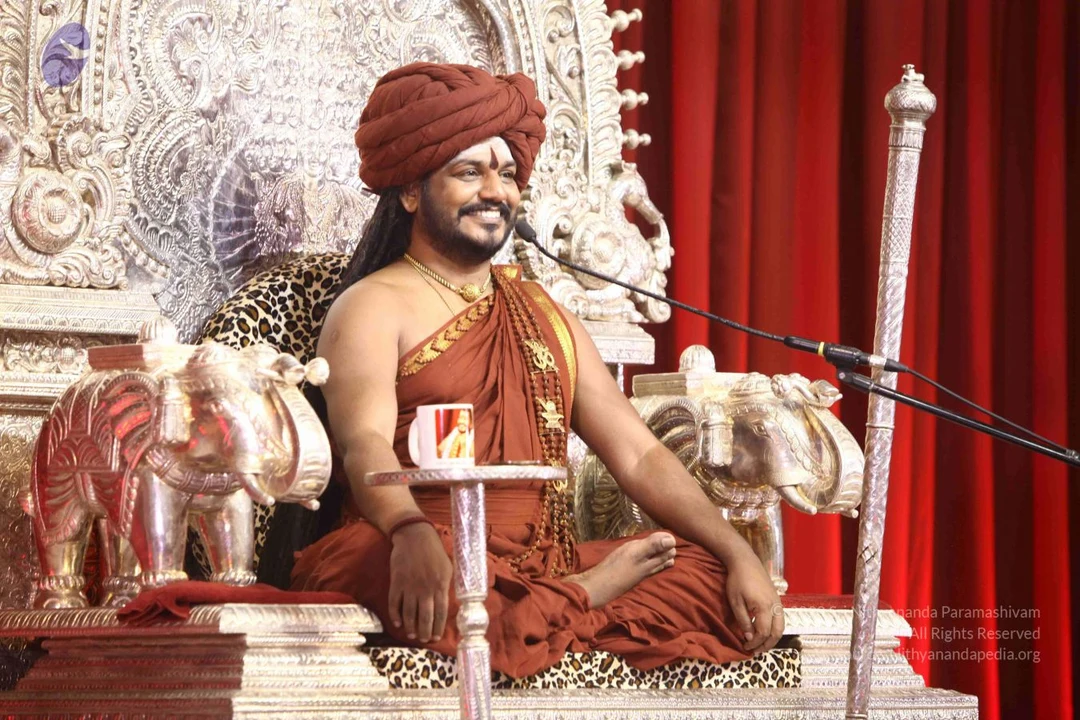
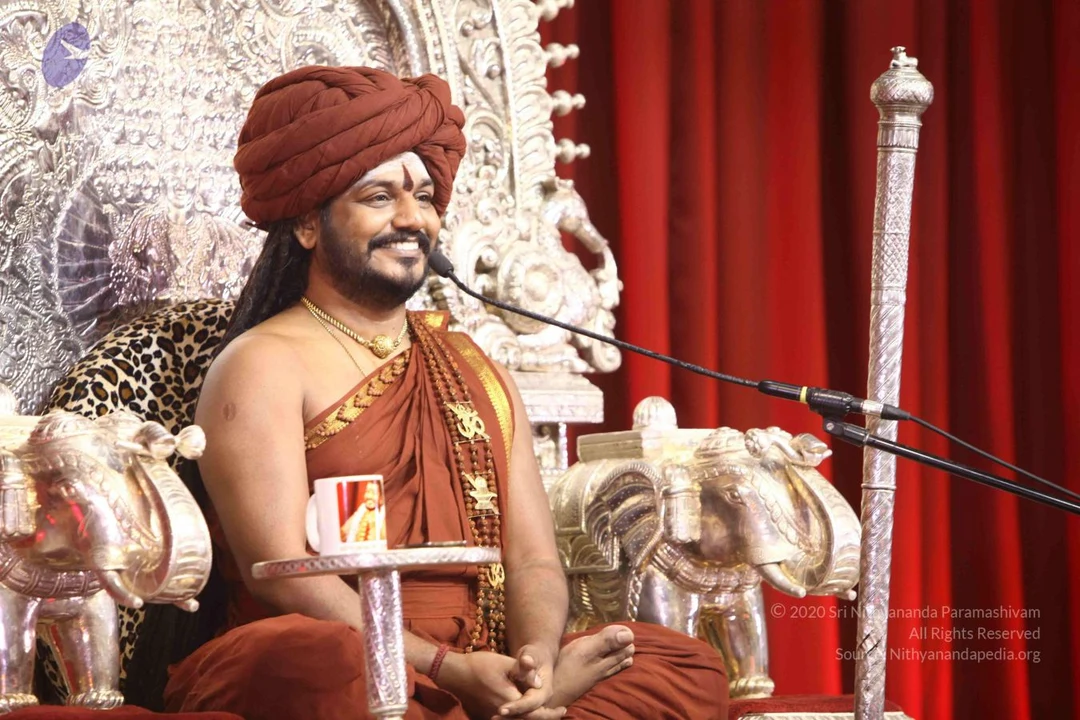
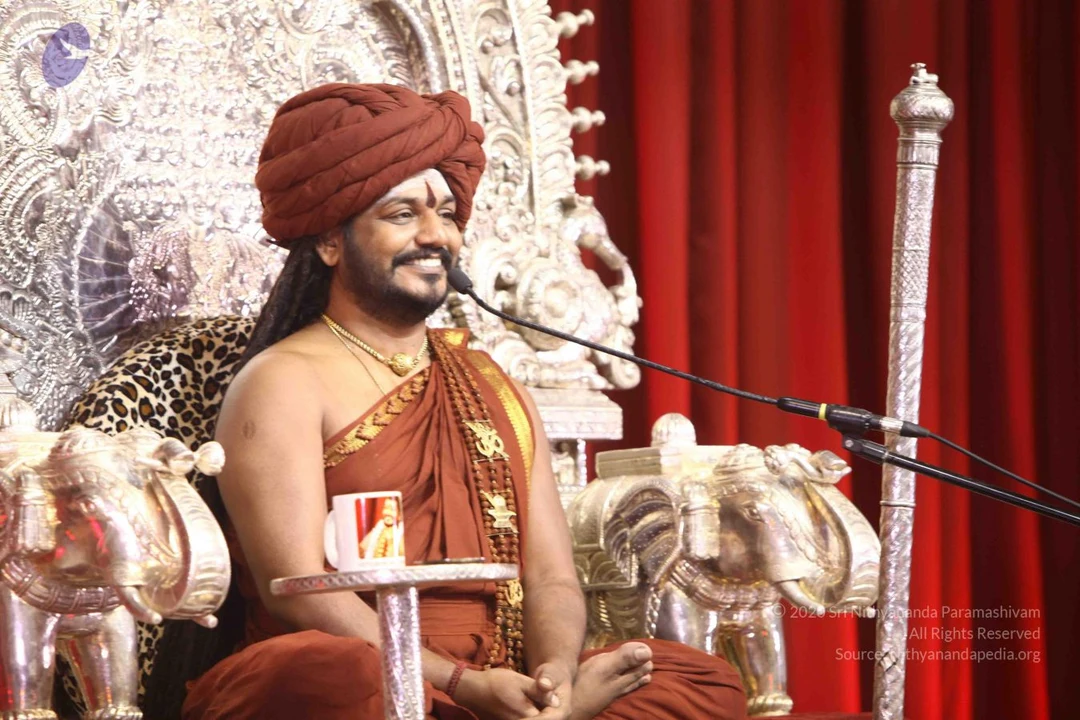
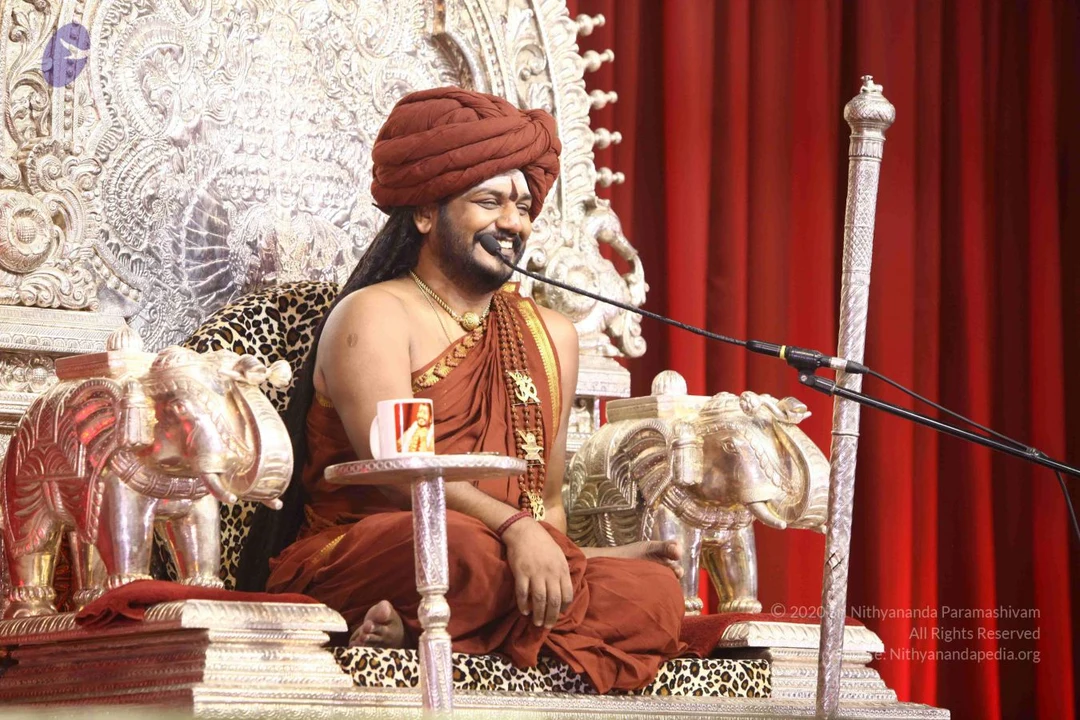
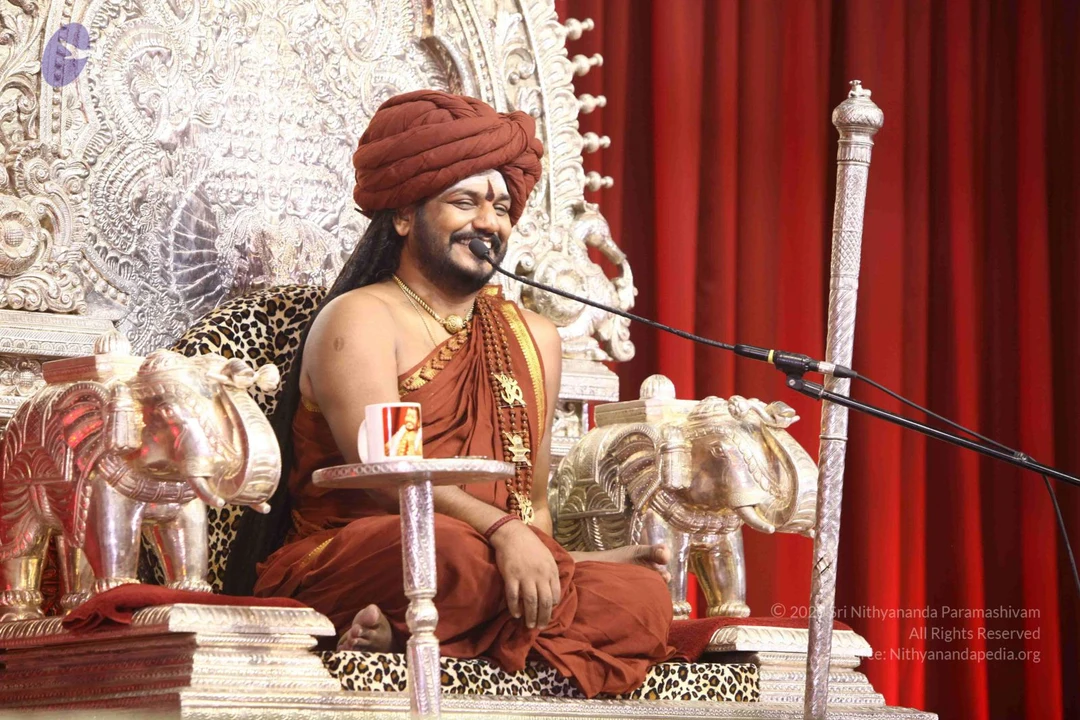
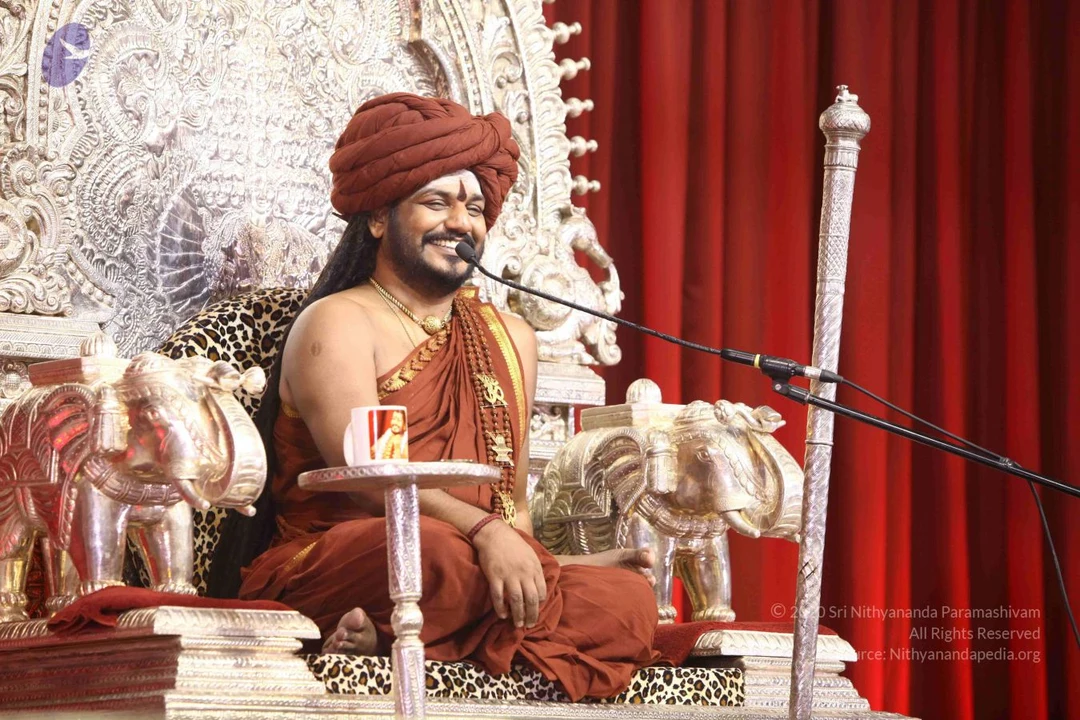
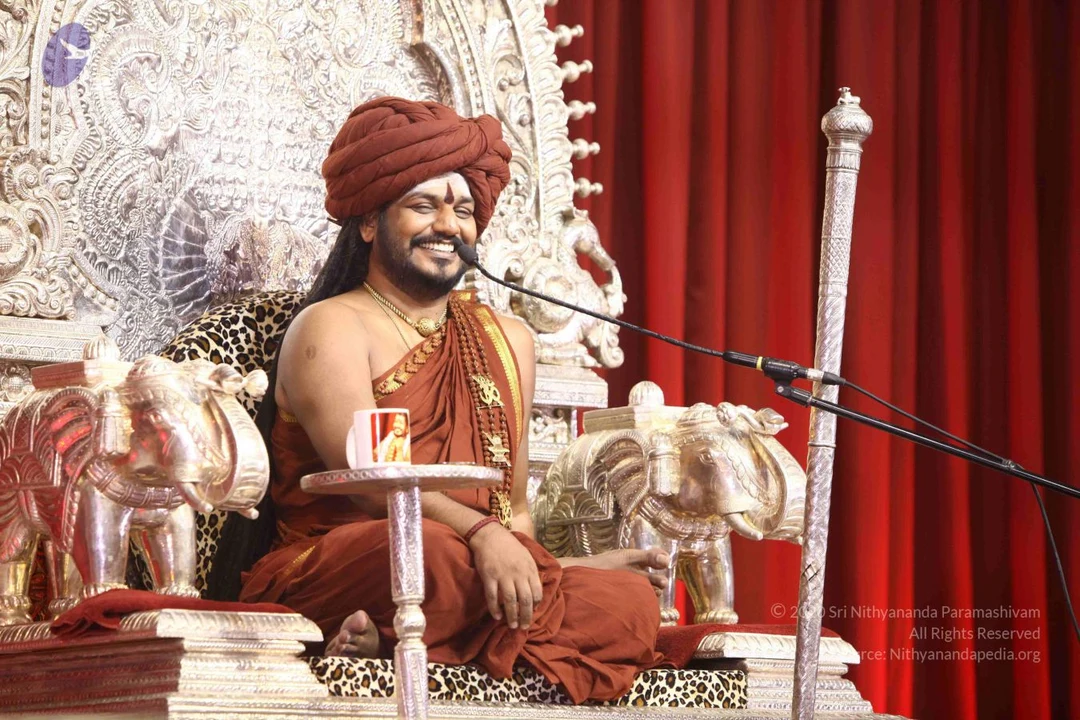
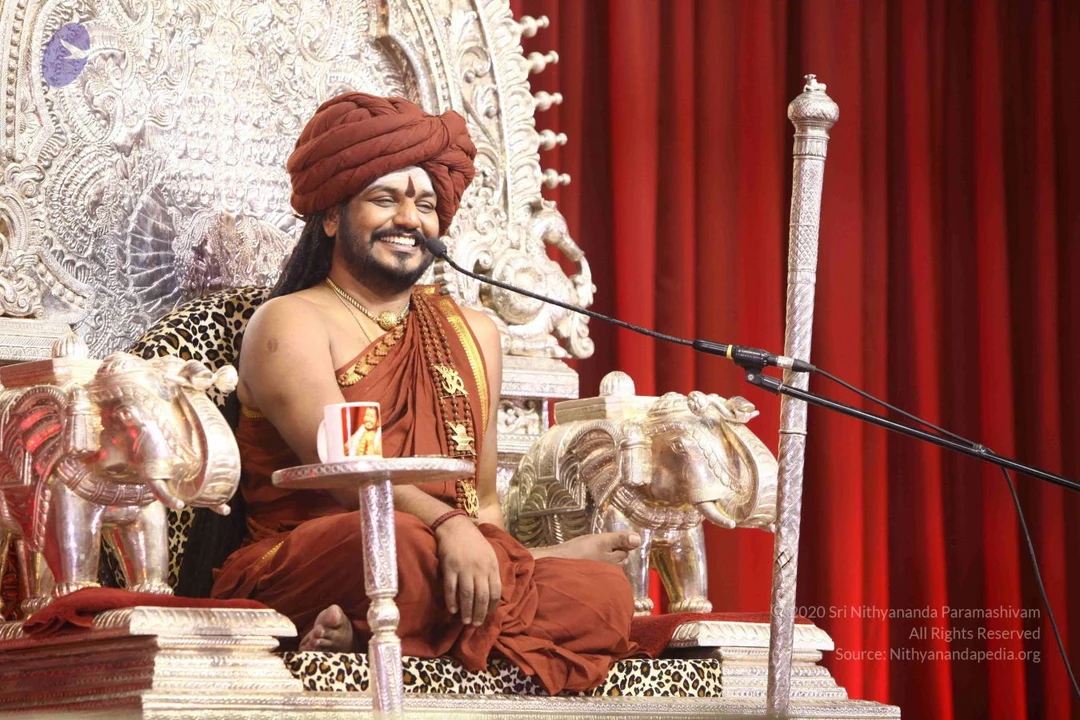
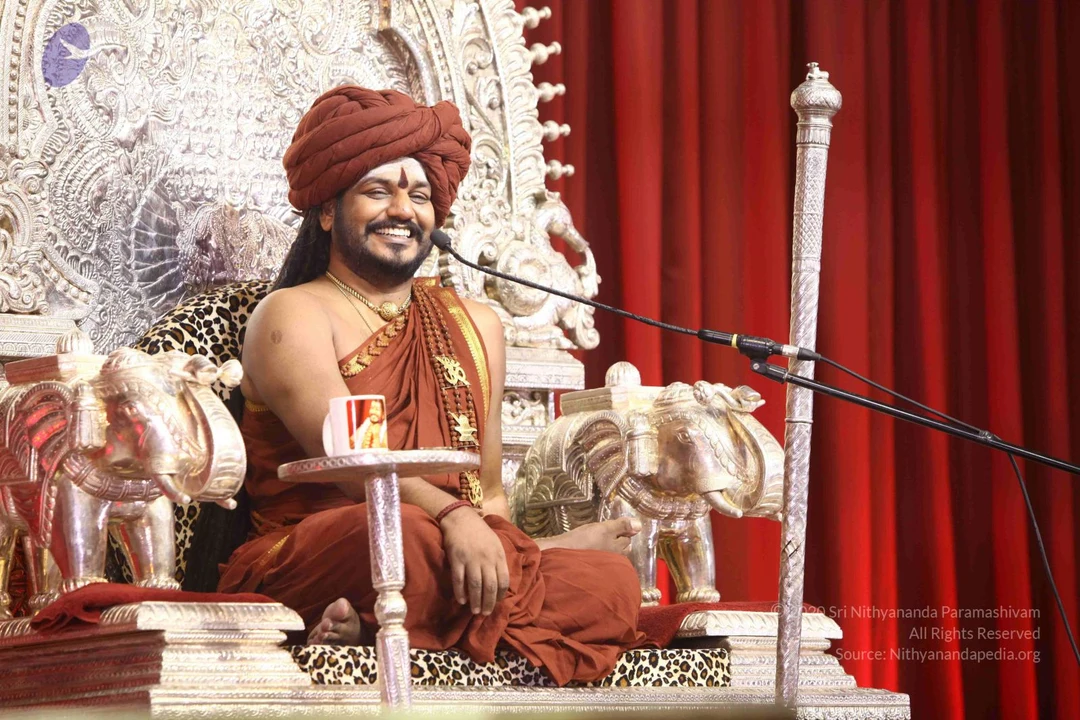
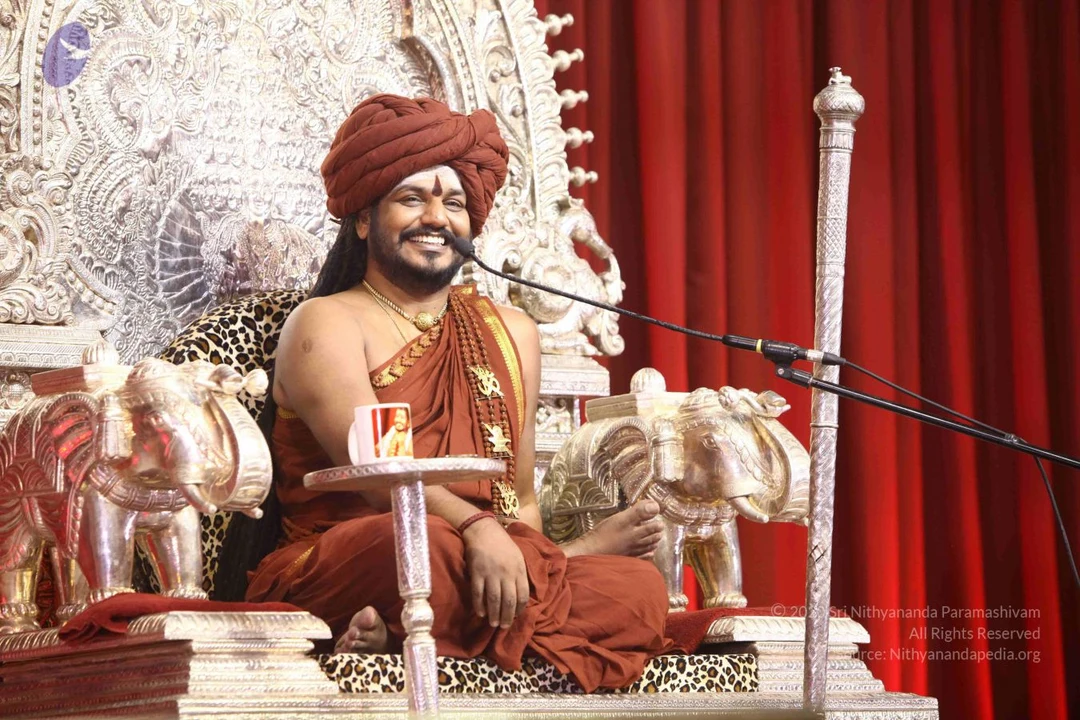
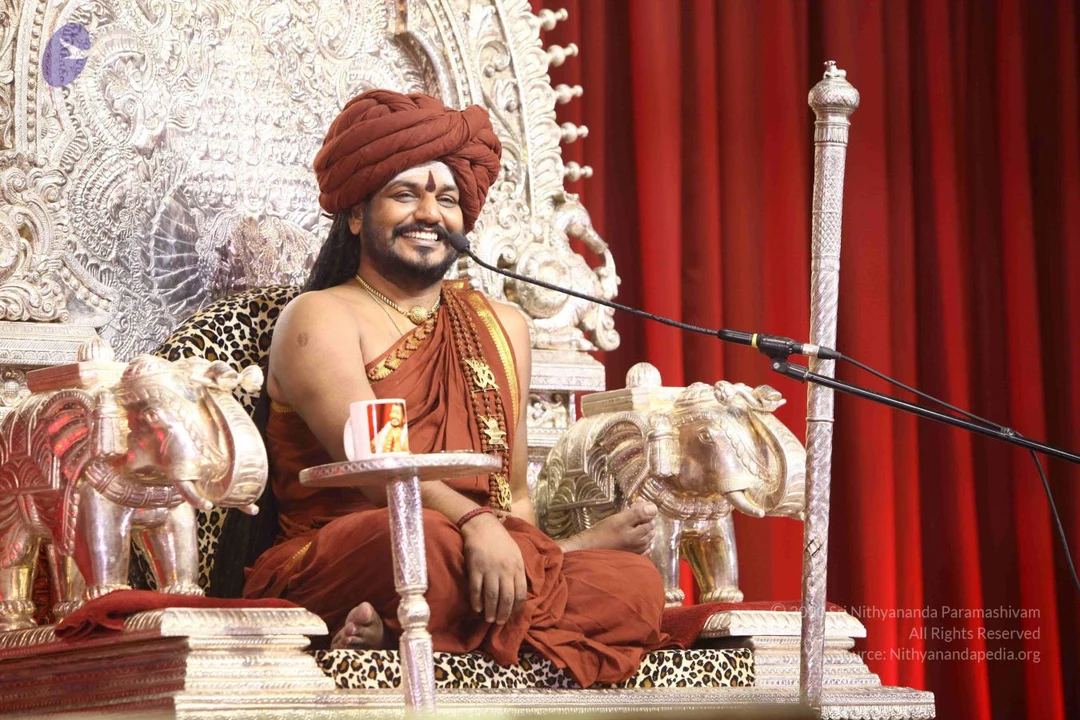
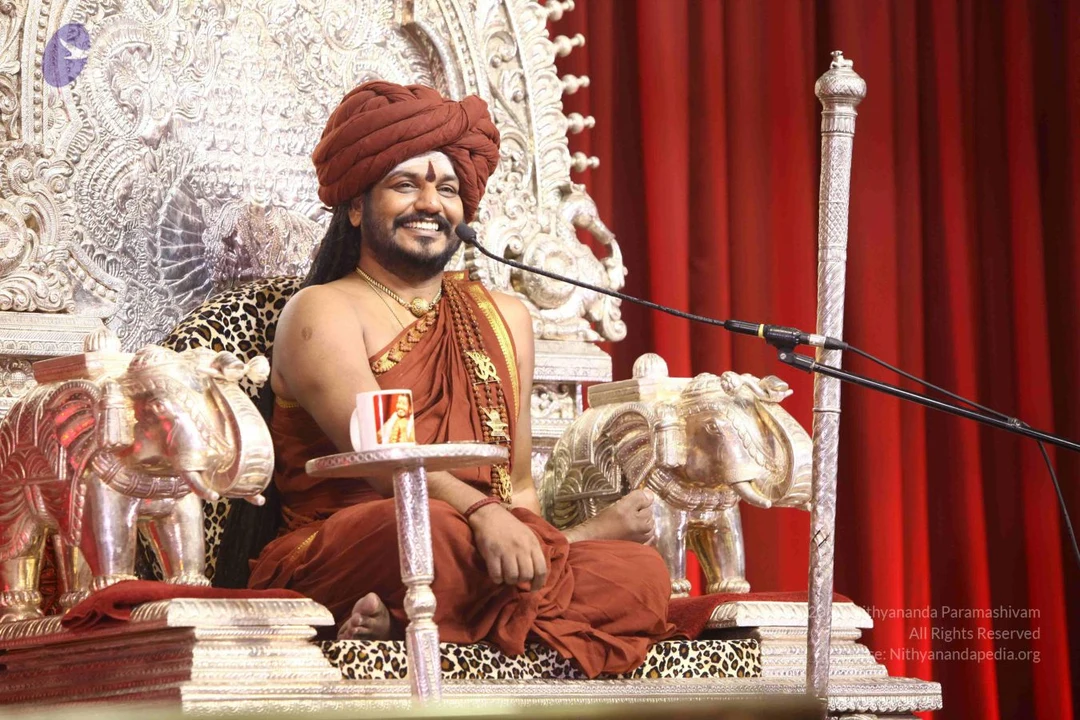
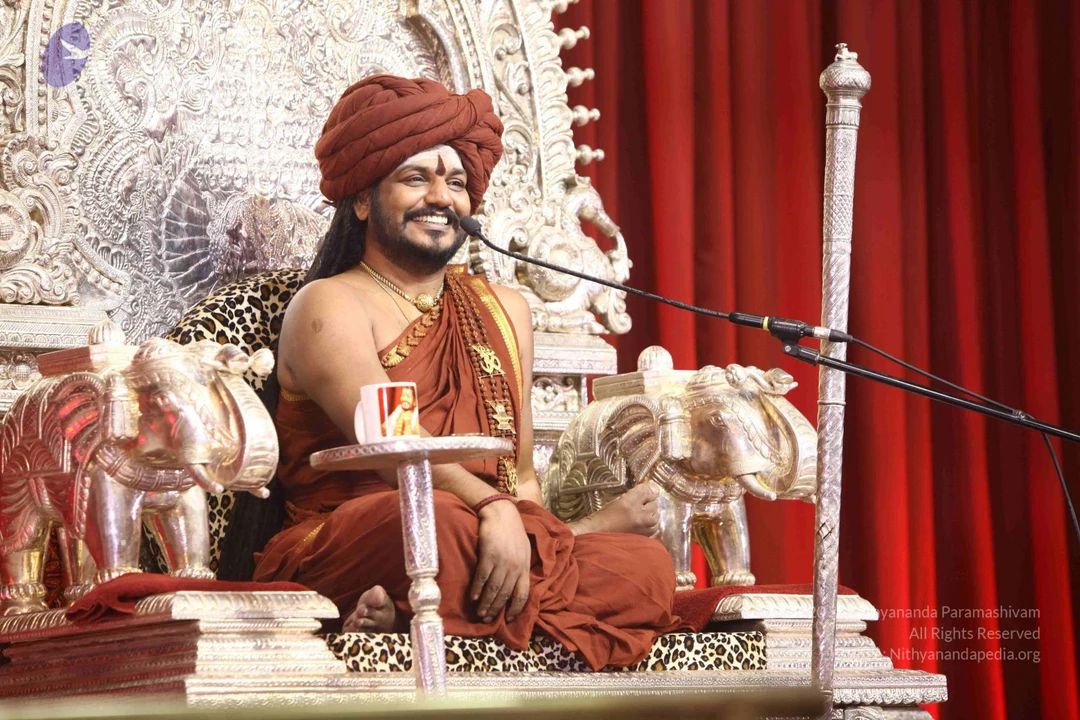
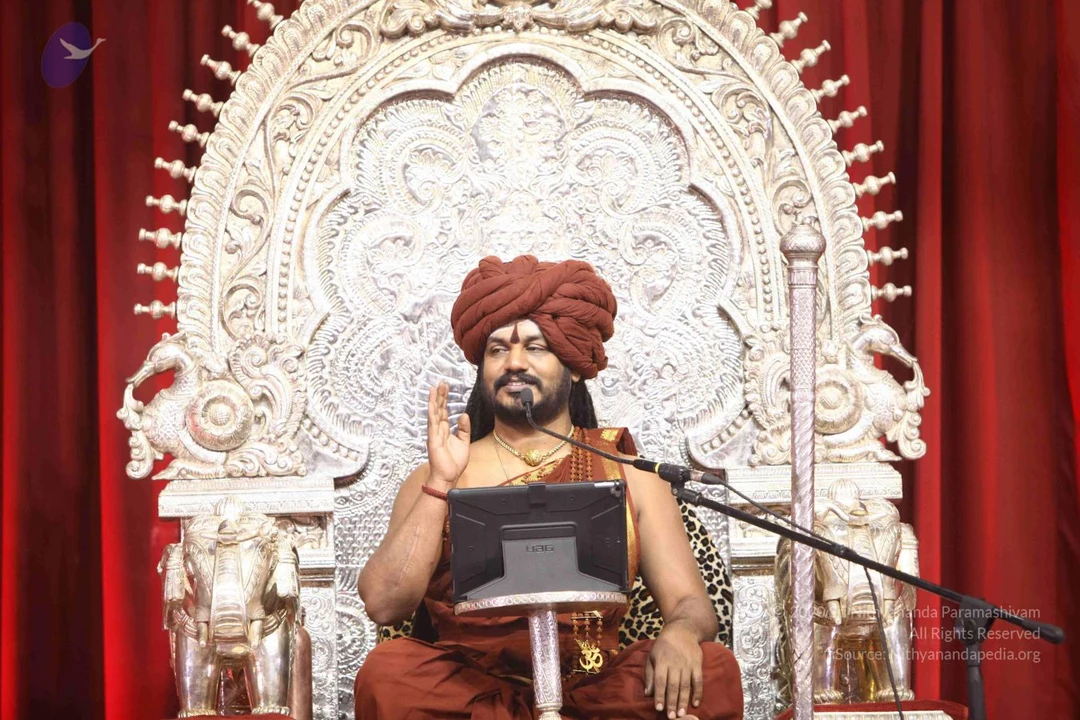
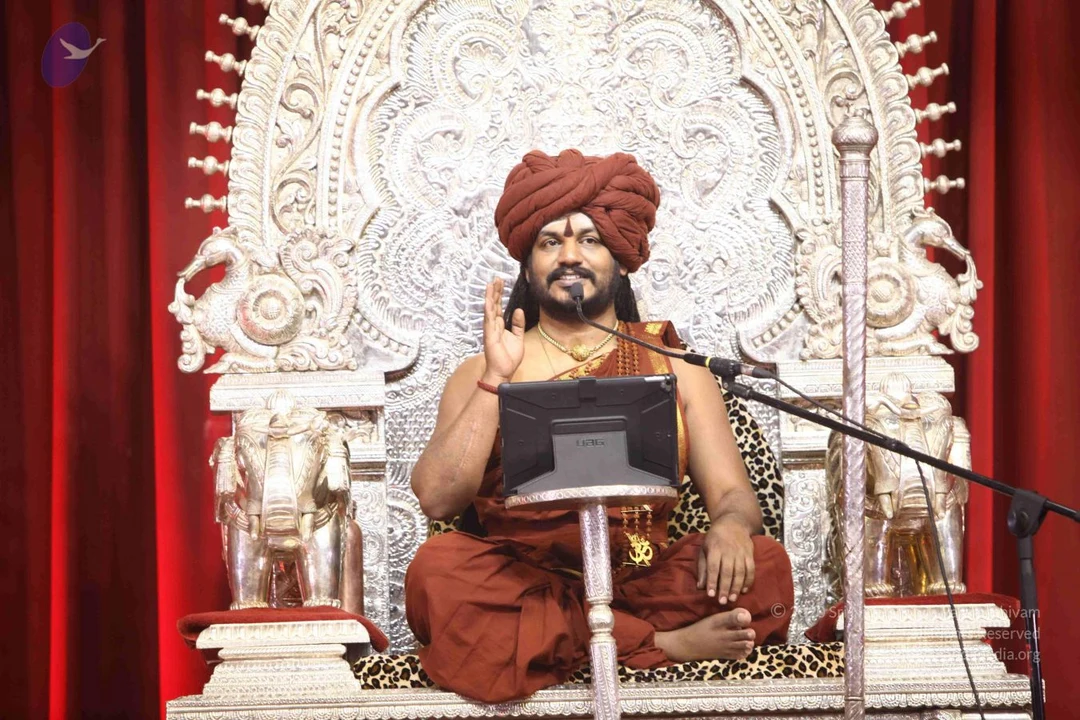
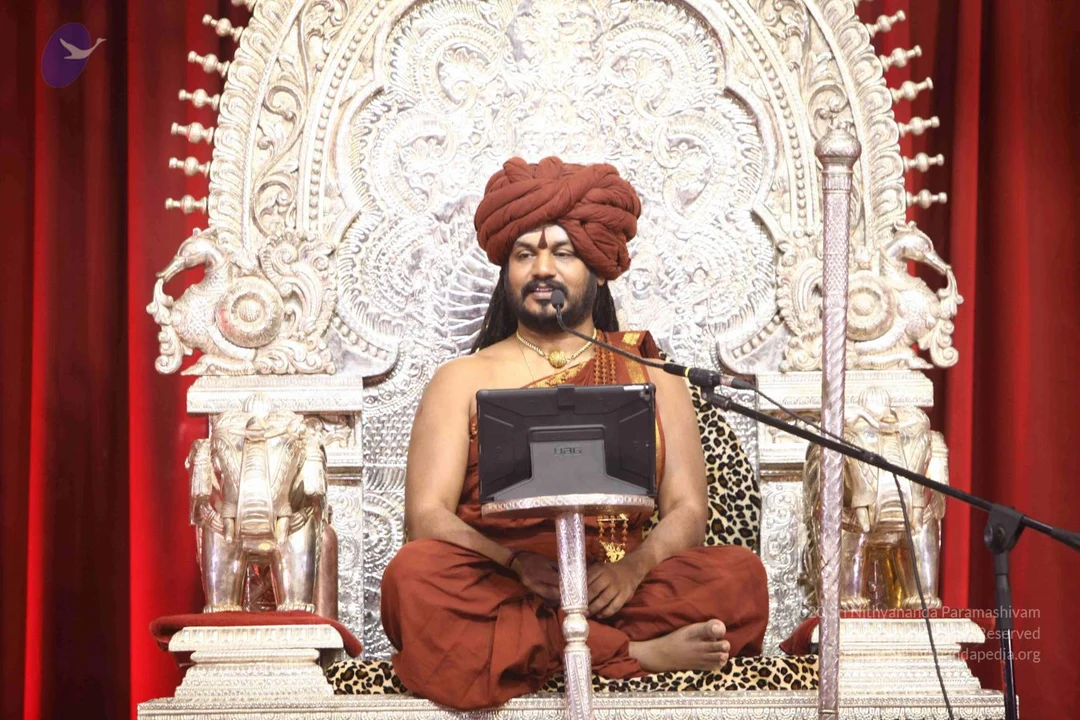
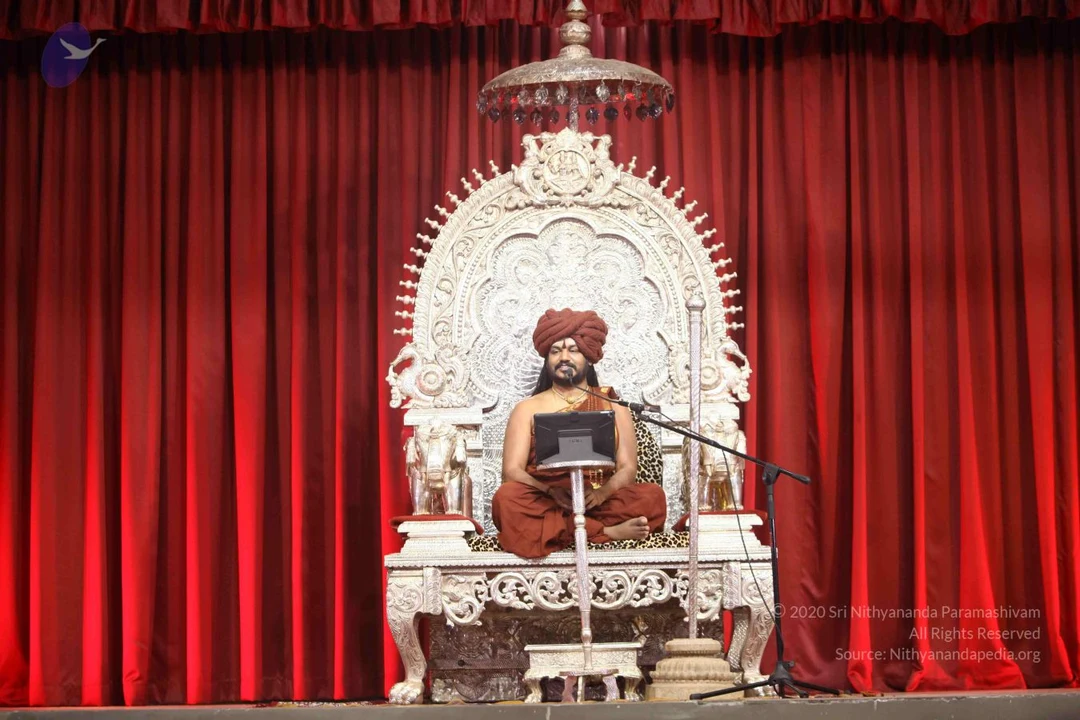
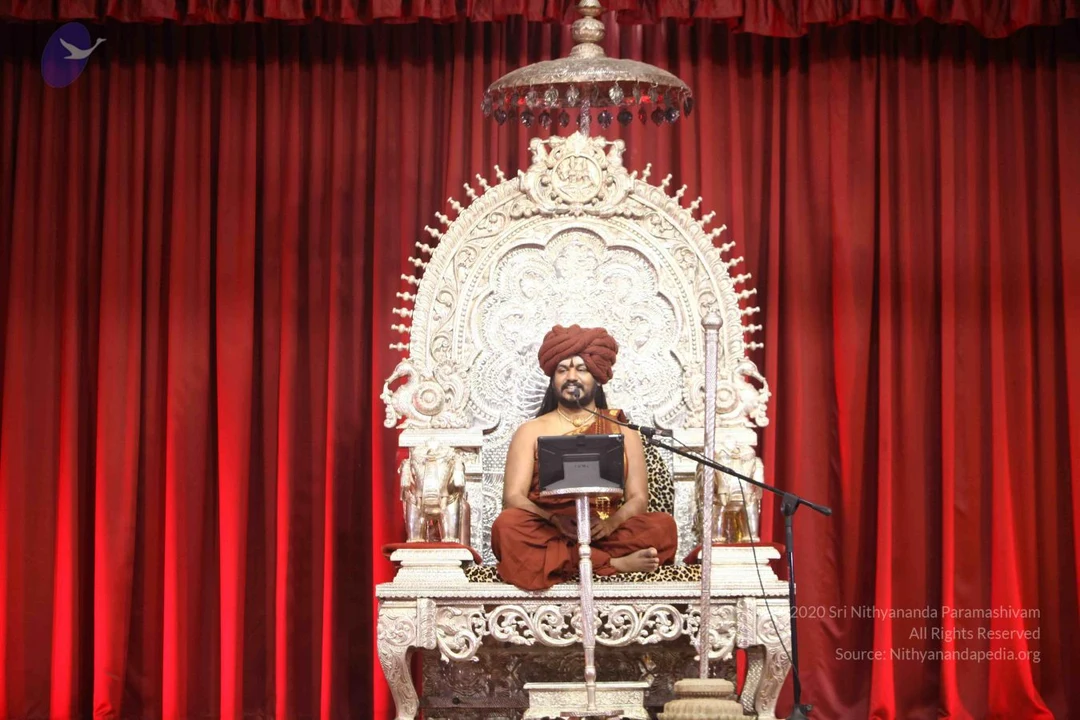
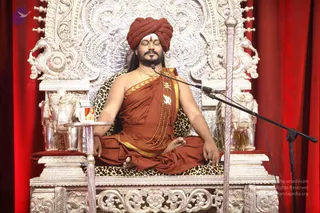
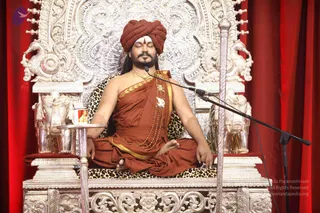
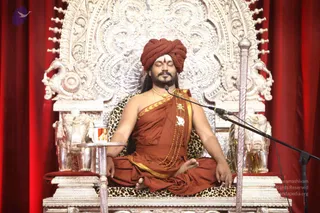
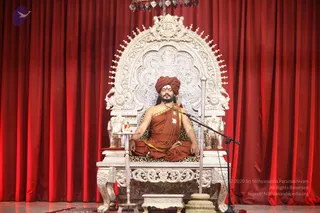
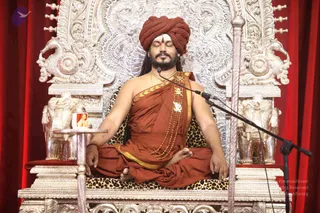
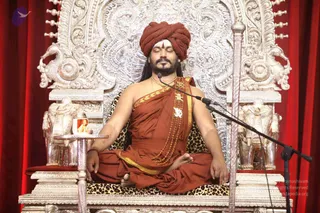
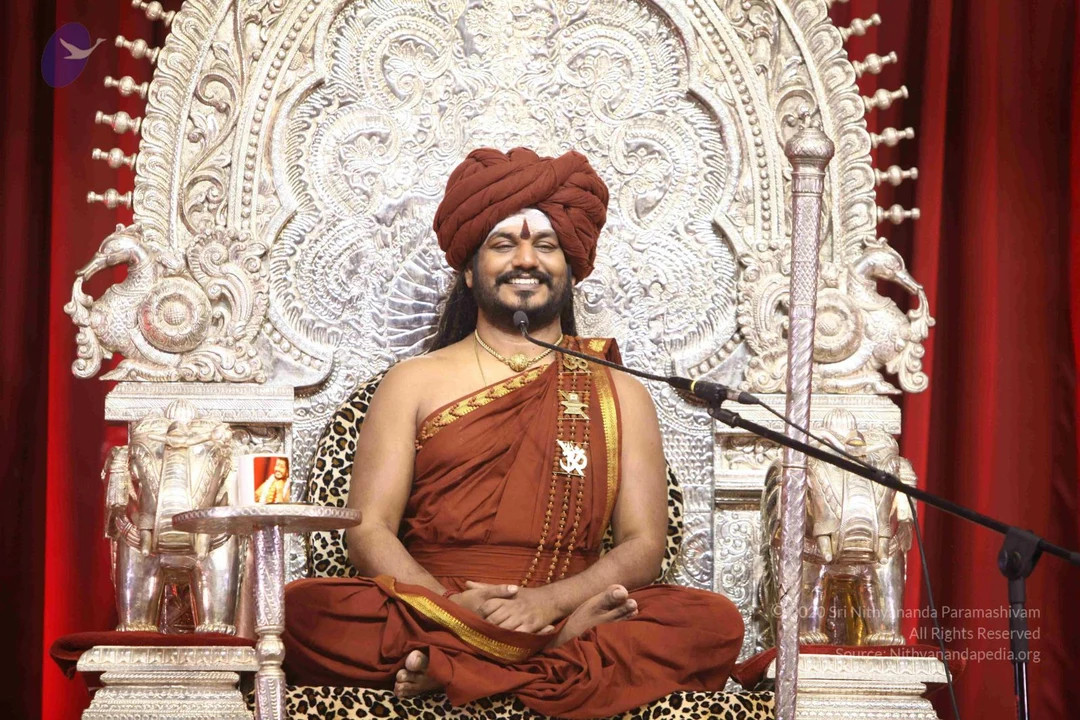
A man seated cross-legged on an ornate silver throne with lion-like carved armrests and a leopard-print seat cushion, against red draped curtains. He wears a rust-red turban with a vertical tilak on the forehead, a rust-red and gold-bordered robe draped over the shoulder, a gold pendant necklace, a rudraksha mala, and a gold-toned pendant. He smiles with hands folded in his lap and a microphone on a stand before him. Swamiji (probable): a seated teacher with a turban, saffron-toned robes, rudraksha mala and gold pendant on a throne, labelled as the speaker of this talk.A photograph of a man seated cross-legged on an ornate silver throne decorated with carved floral and animal motifs, with a leopard-skin cushion beneath him and red curtains behind. He wears a rust-orange turban, orange robes with a gold-bordered sash, a rudraksha mala with a gold pendant and a gold necklace, and a red thread on his wrist. He has a tilak on his forehead, long hair, and raises his right hand while speaking into a microphone on a stand. Silver elephant figures flank the throne, and a small framed portrait sits on a side table. Swamiji (probable) is shown as the seated speaker, identified by the orange turban, rudraksha mala, gold necklace and throne posture.A photograph of a seated man on an ornate silver throne before a red curtain, speaking into a microphone on a silver stand. He wears a rust-orange turban, orange-red robes with a gold-bordered shawl, a gold pendant necklace and a rudraksha mala with an Om pendant, and has a white tilak on his forehead. Beside him are silver elephant-shaped armrests and a small silver table holding a white cup. Behind him a silver throne backrest with repoussé floral and figure carvings. Appearance-based label: Swamiji (probable), seated in the speaker's position with distinctive turban, orange robes and ceremonial gold necklace.

November 22 2018

Original wiki page
Contents

Title:

Supreme Pontiff of Hinduism Bhagavan Sri Nithyananda Paramashivam

Narration

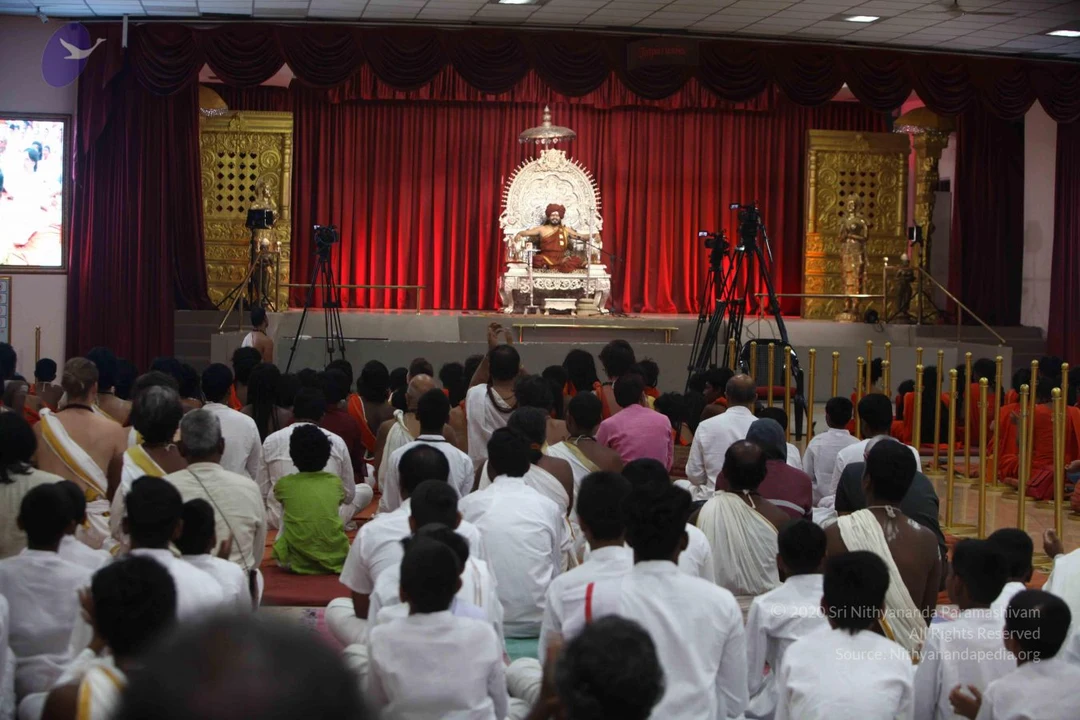
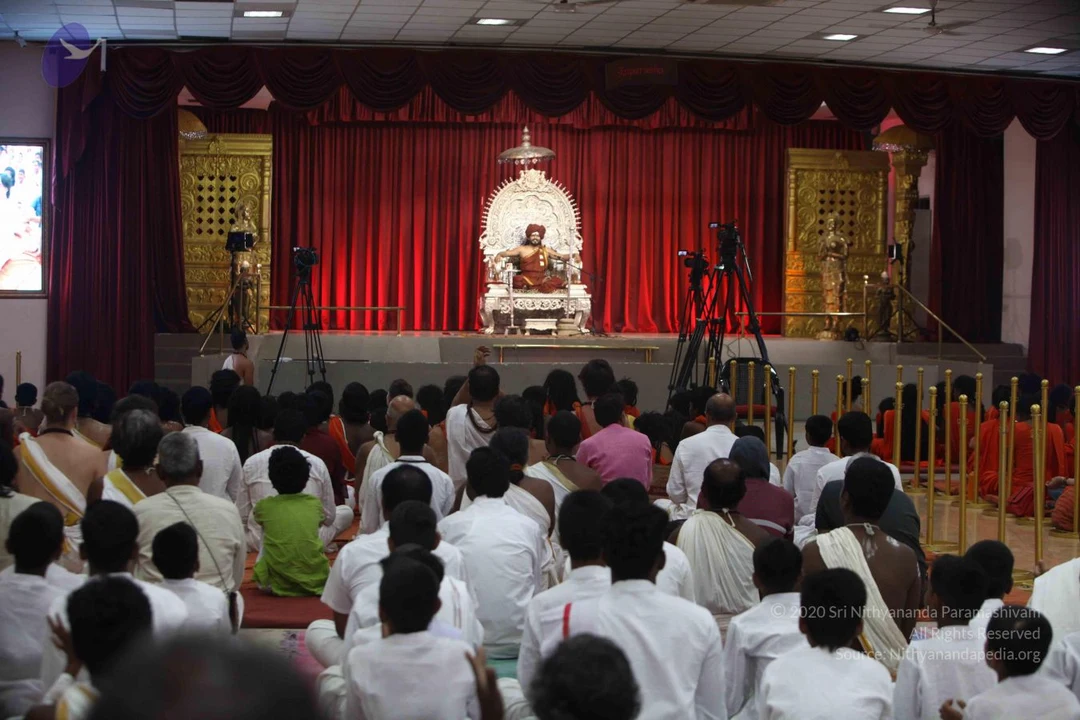
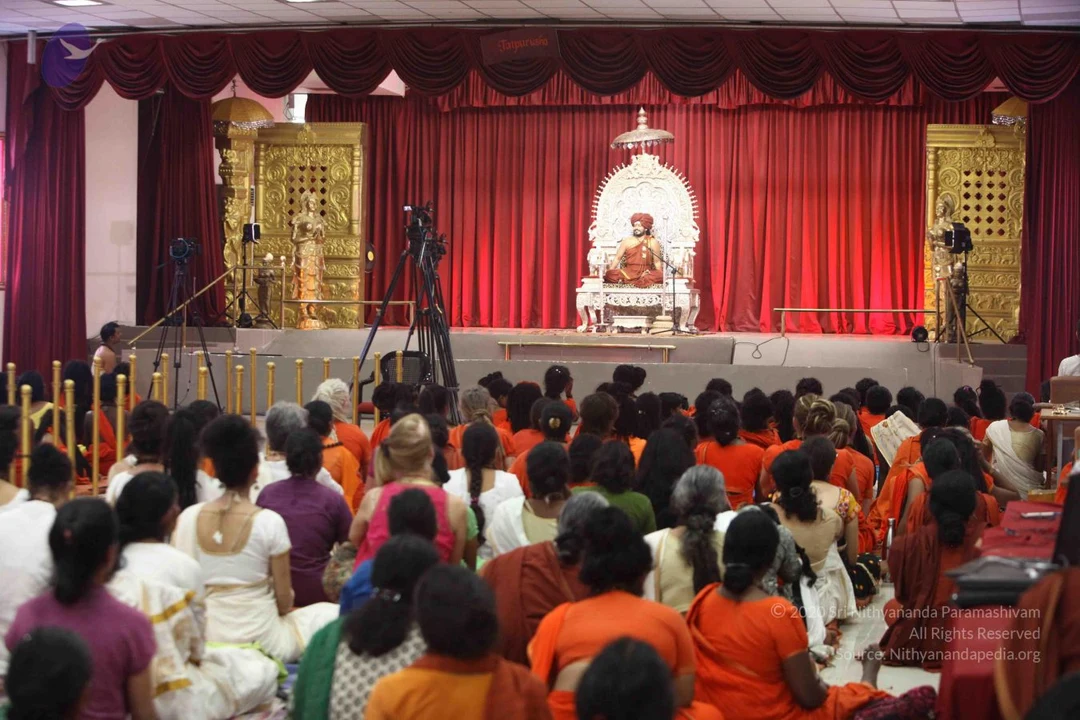
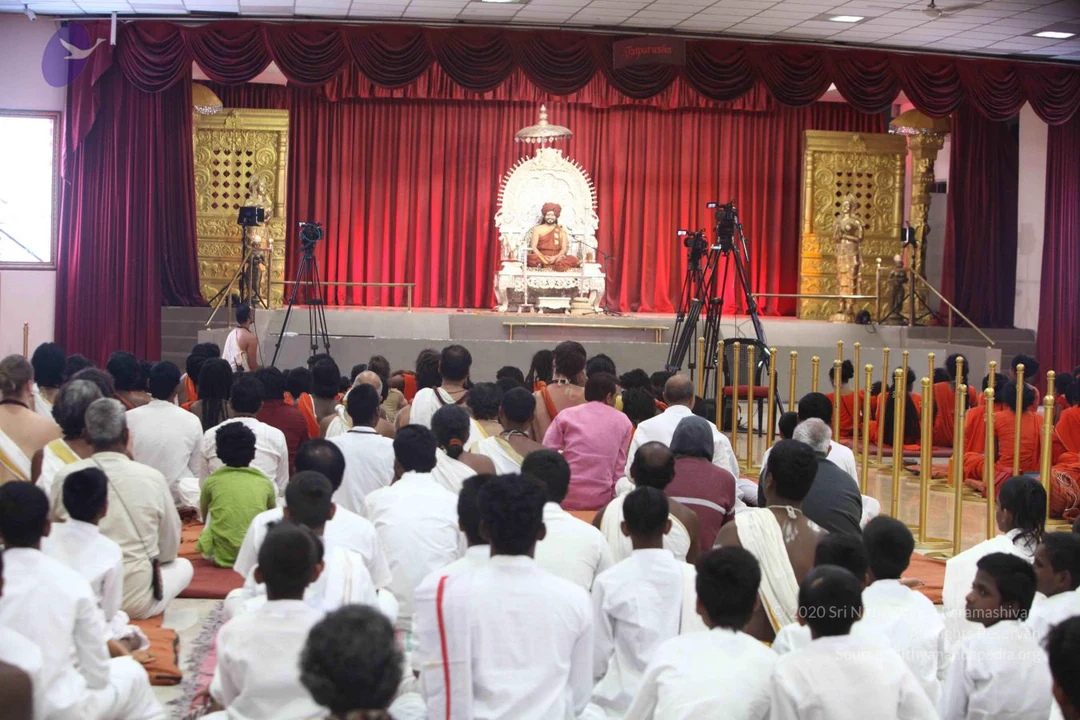
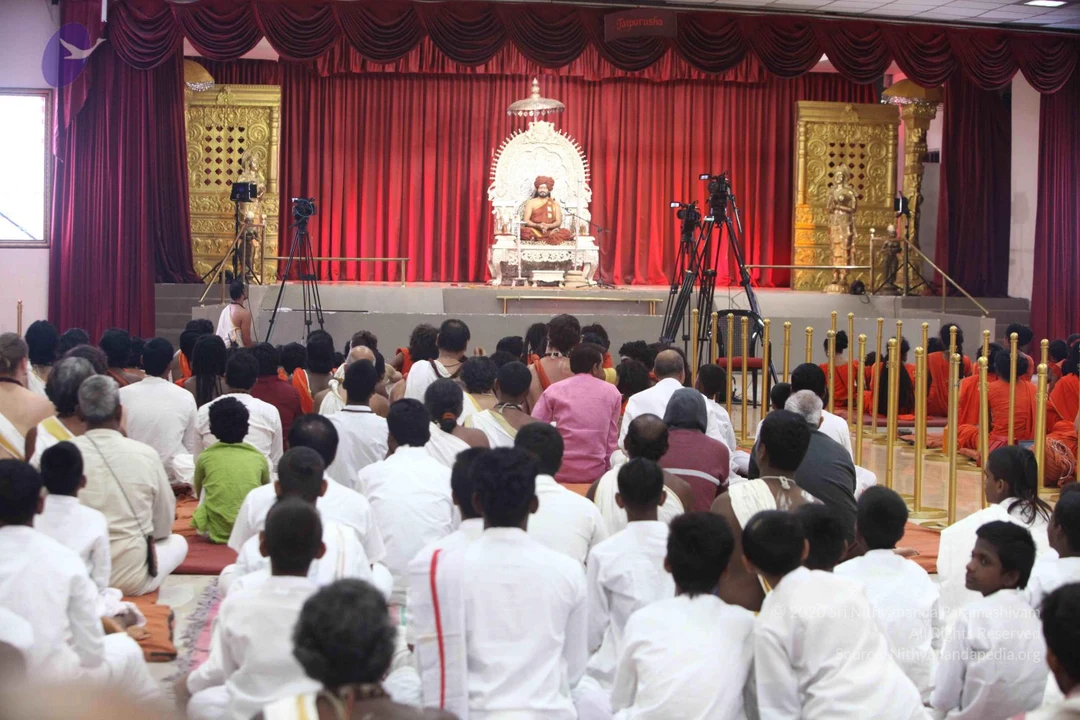
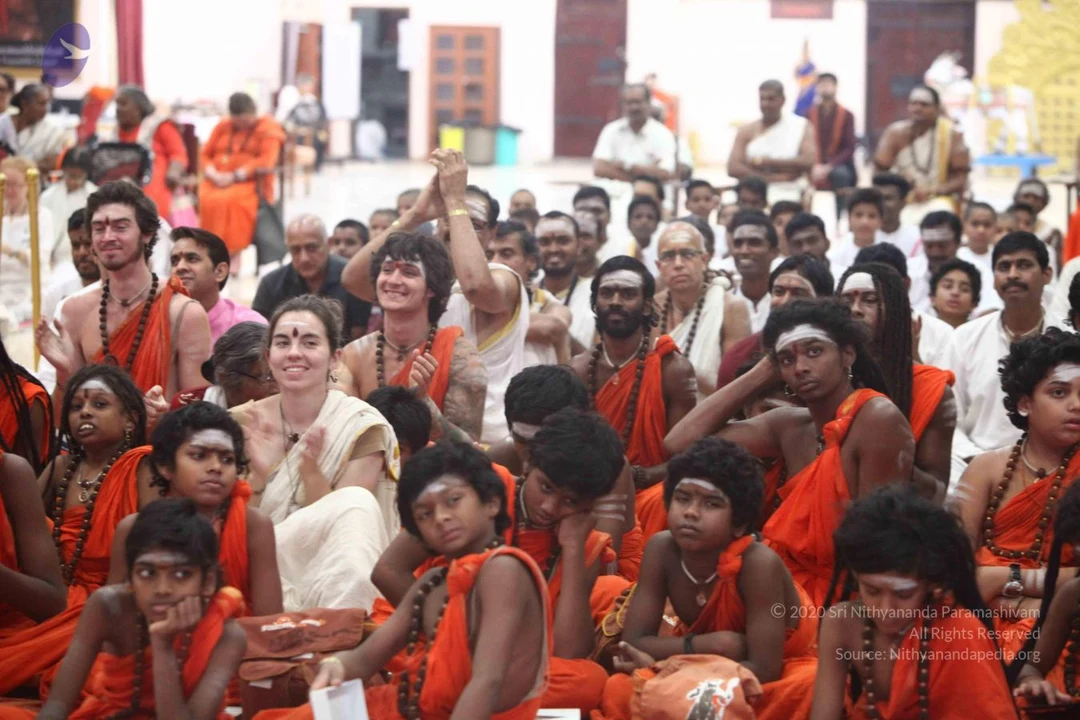
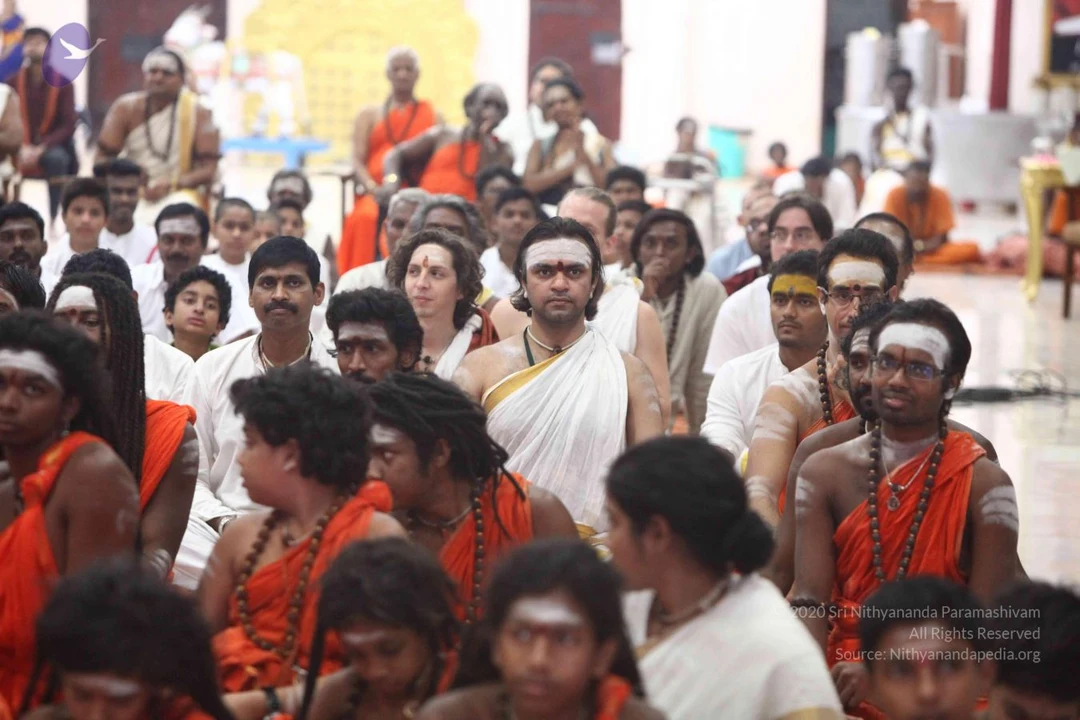
The Supreme Pontiff of Hinduism, Jagatguru Mahasannidhanam, His Divine Holiness, Bhagavan Nithyananda Paramashivam, expounded on the Cosmic Principles of Temple Building during the live public talk - Paramashivoham Webinar Series. In this talk entitled Introducing Yourself To You, Experience Paramashivoham, The Supreme Pontiff of Hinduism revealed the building of a huge granite, gold coated monument and home for Paramashiva. He shared the many details including that the main dome, sanctum sanctorum, will be gold coated. He announced the beginning of the next phase of carving the temple which will include everyone who supported the temple directly, indirectly and all the wars we have to wage to make this temple happen. We have gone through so much persecution and religious attack and we are going to carve the whole history into Nithyanandeshwara Paramashiva’s temple third prakaram in stone.

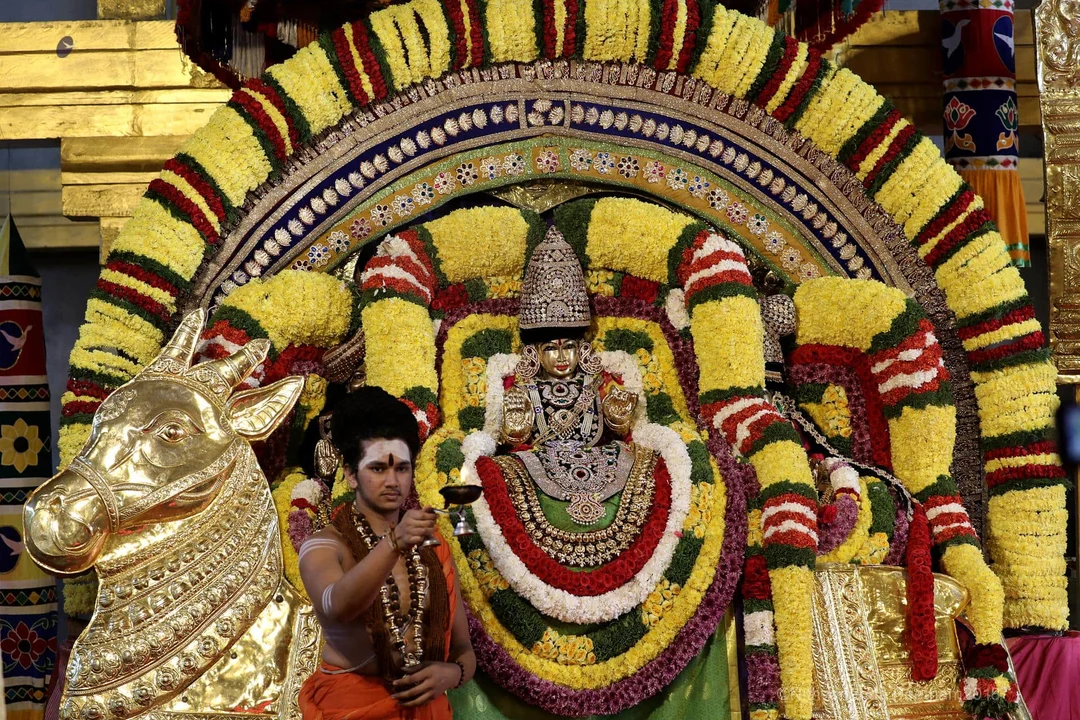
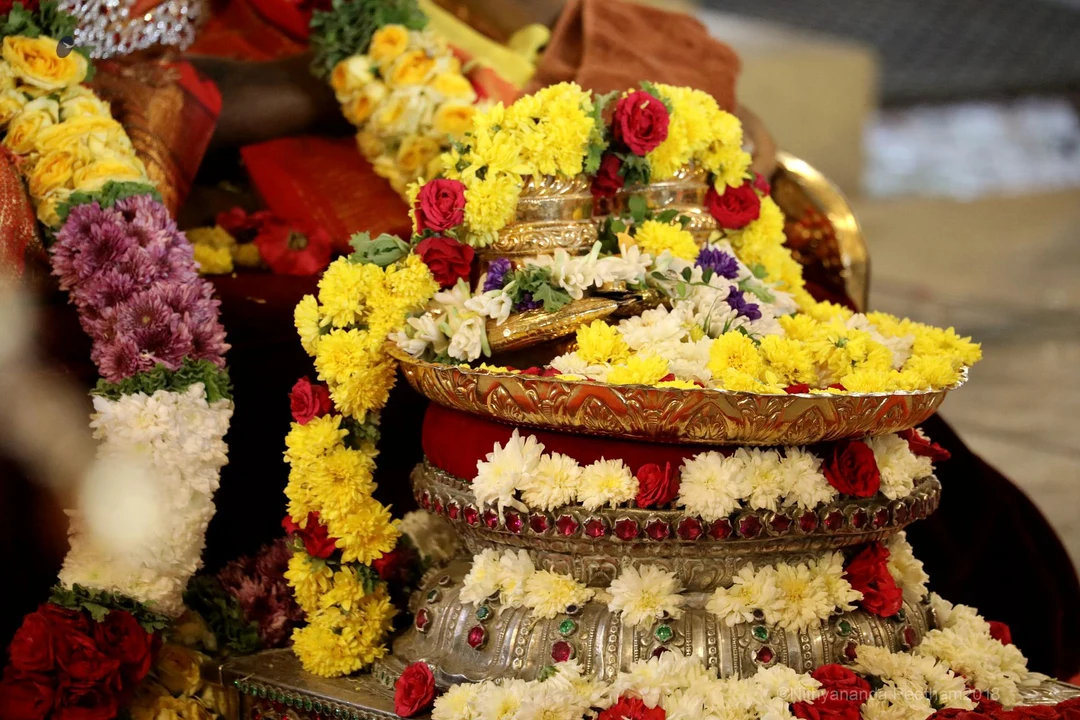
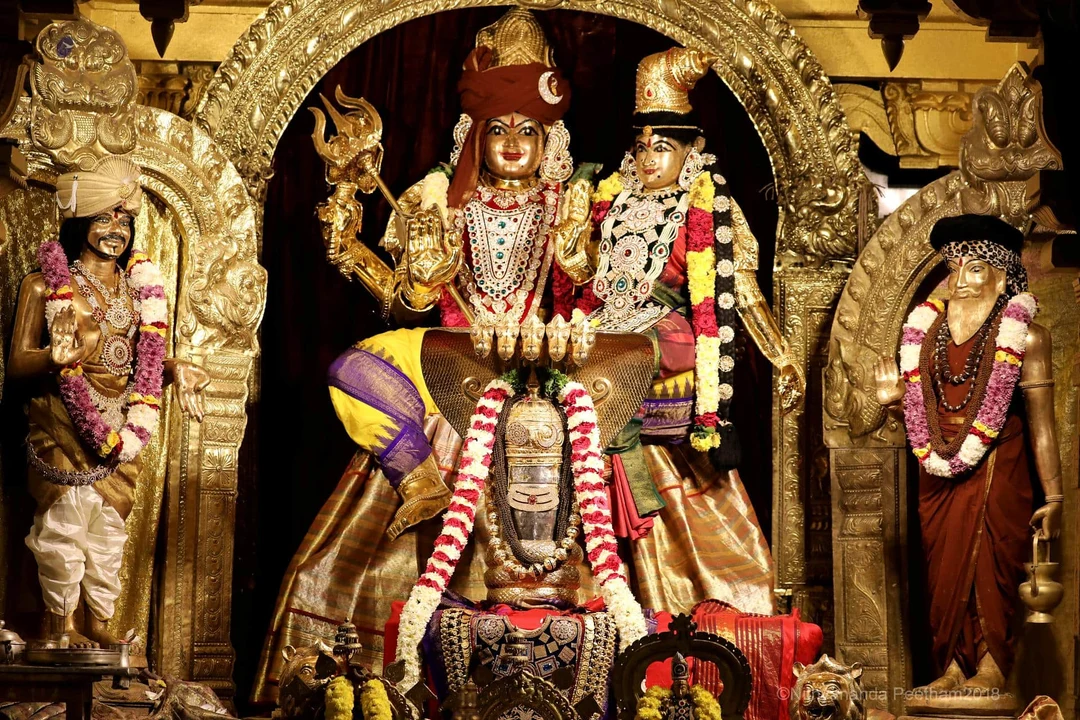
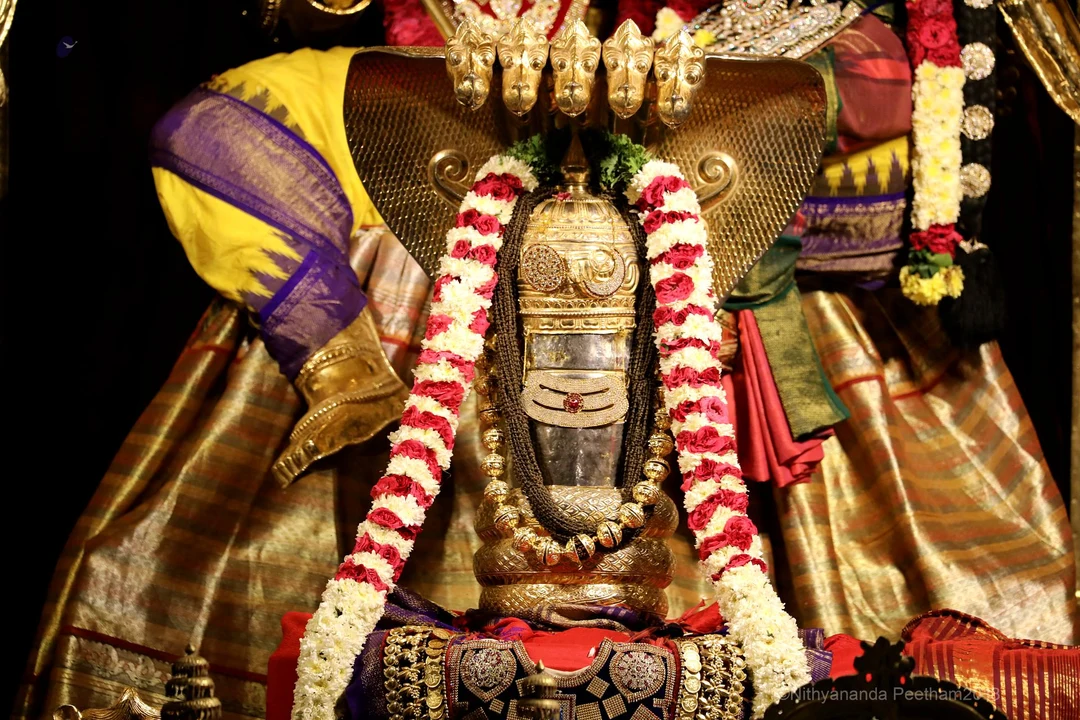
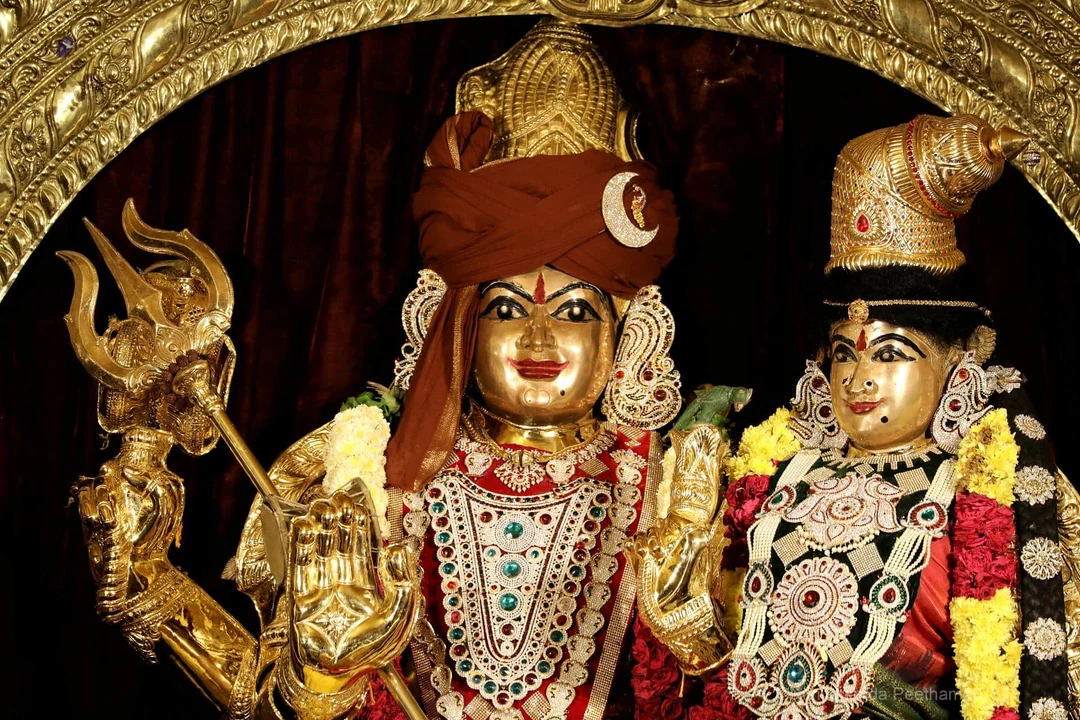
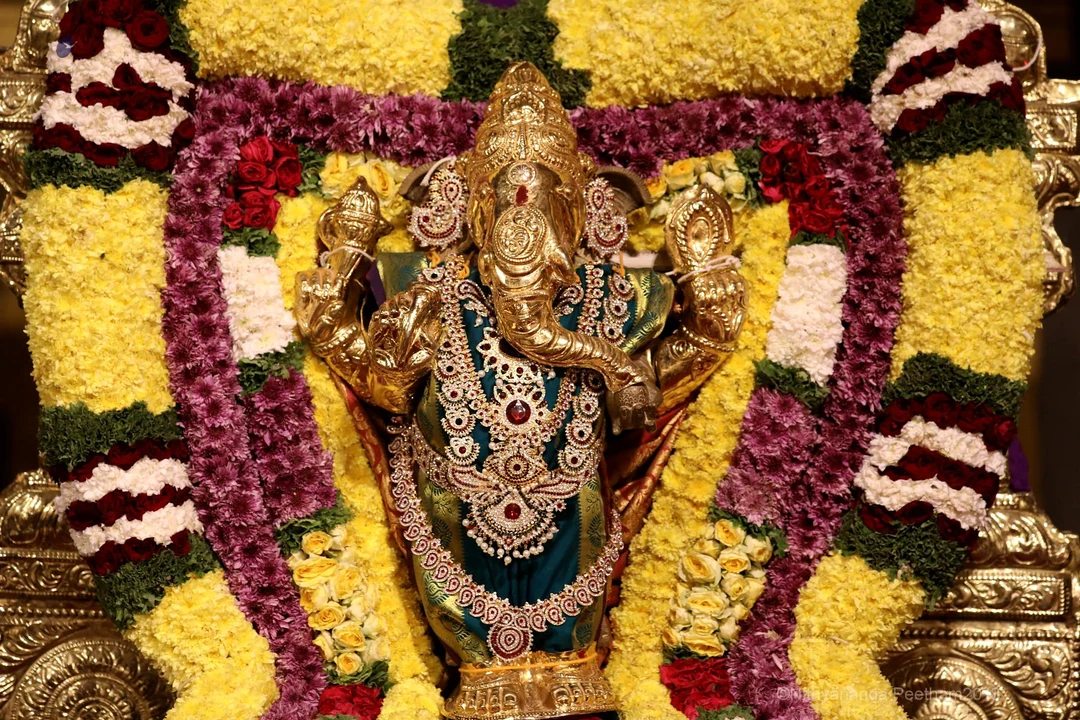
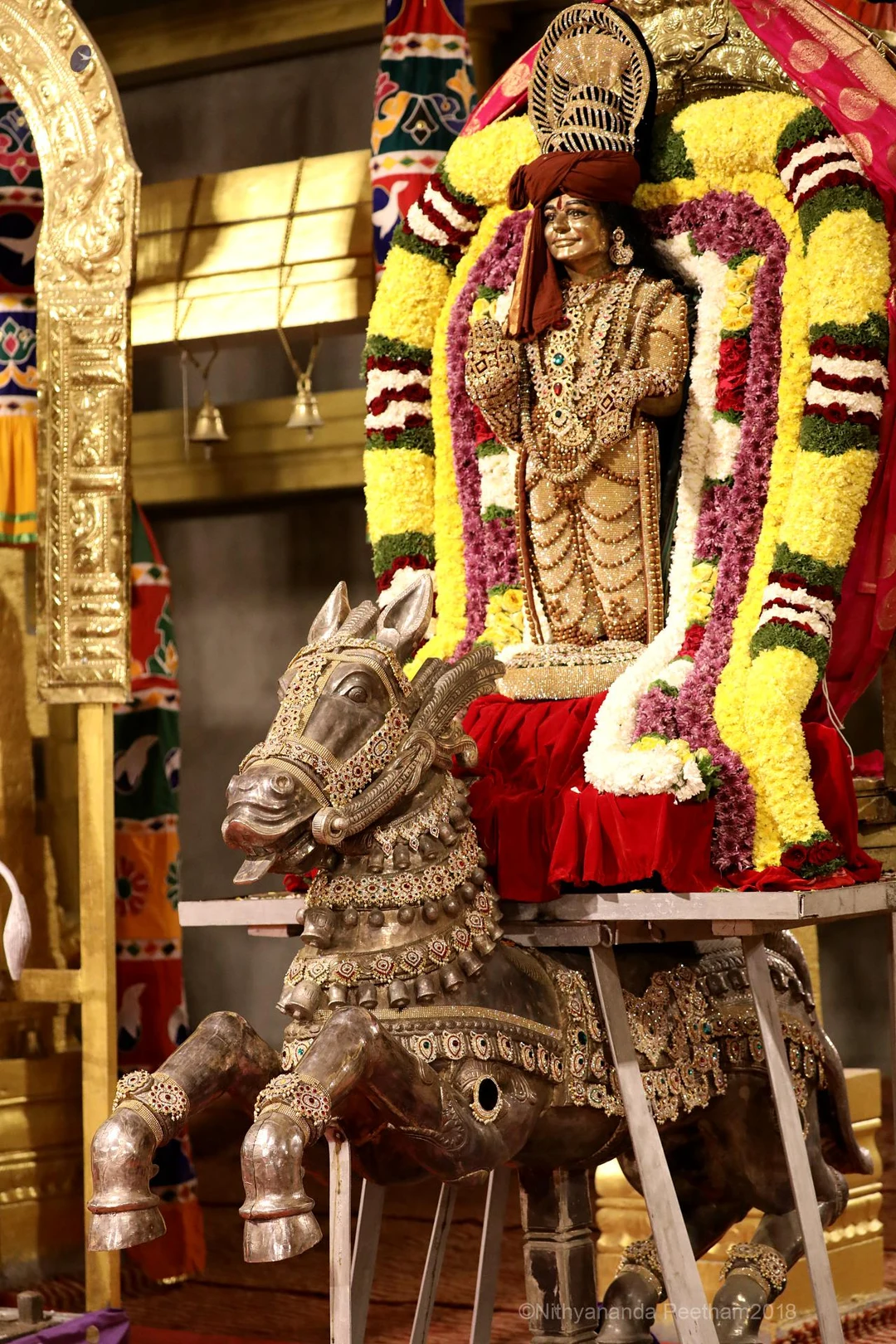
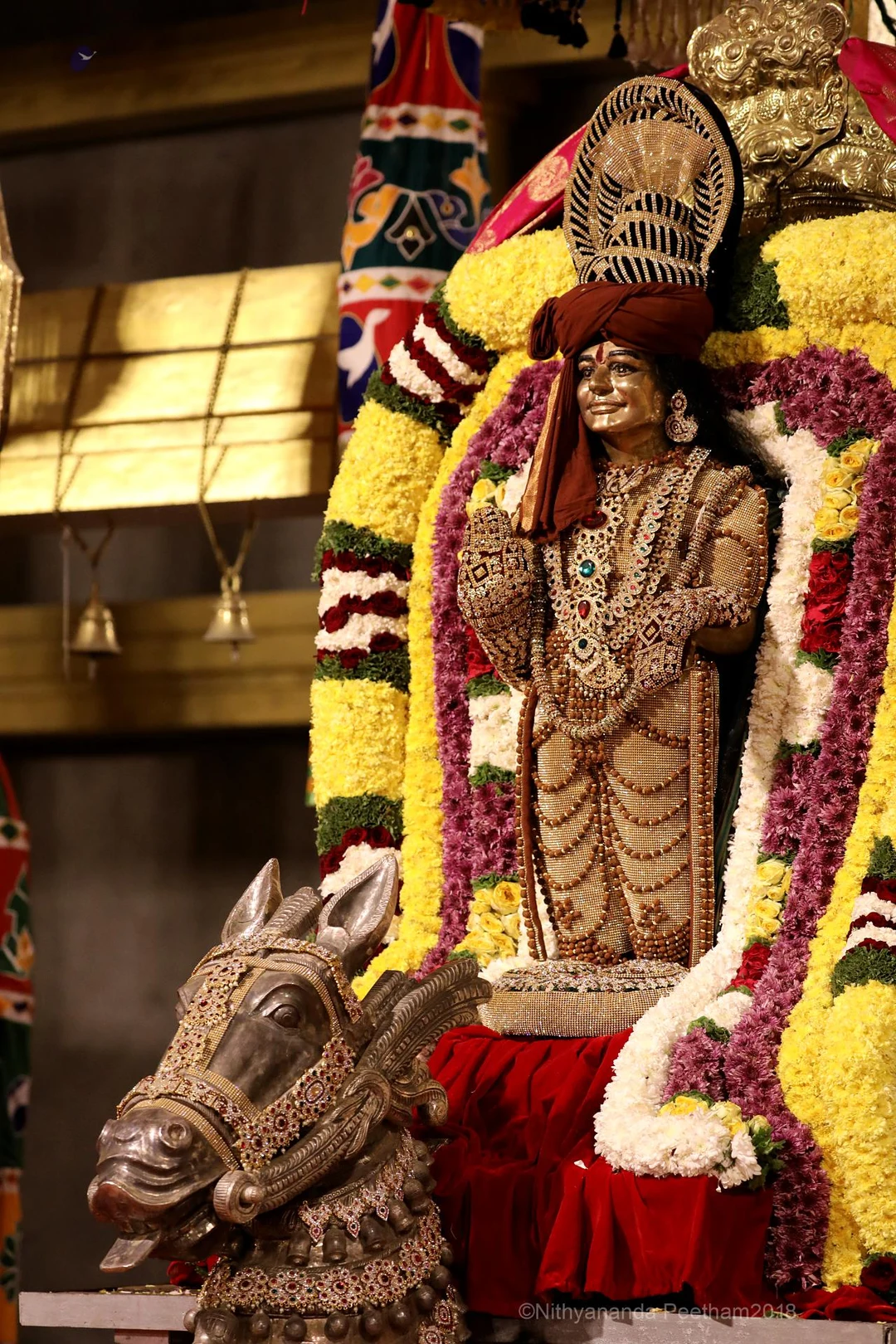
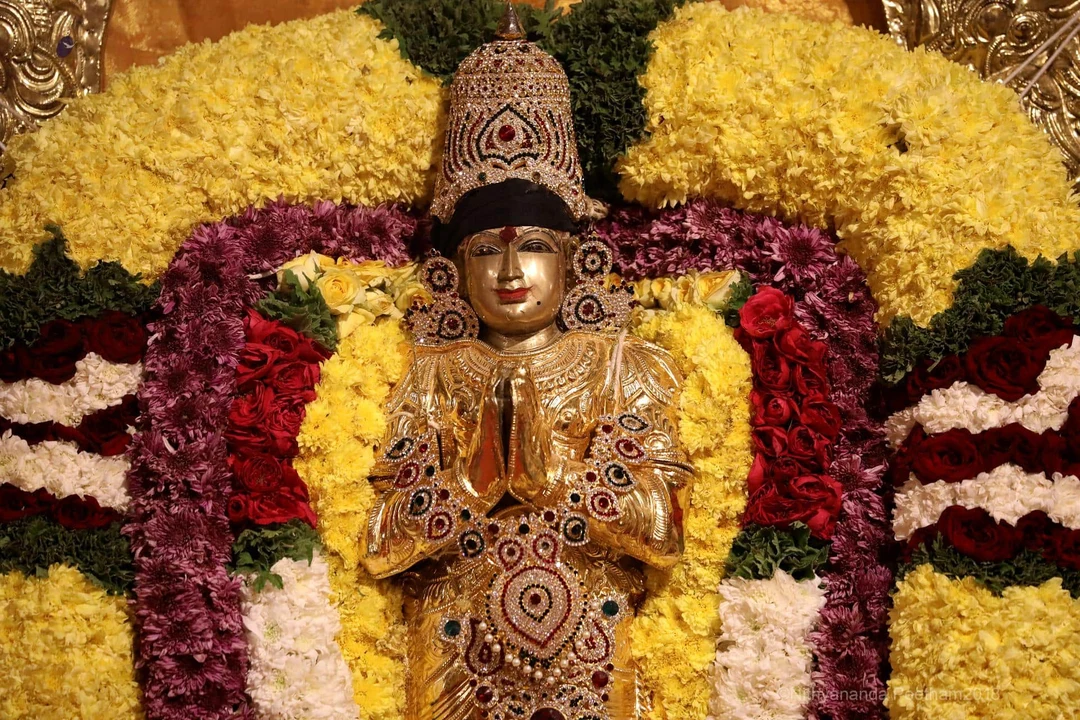
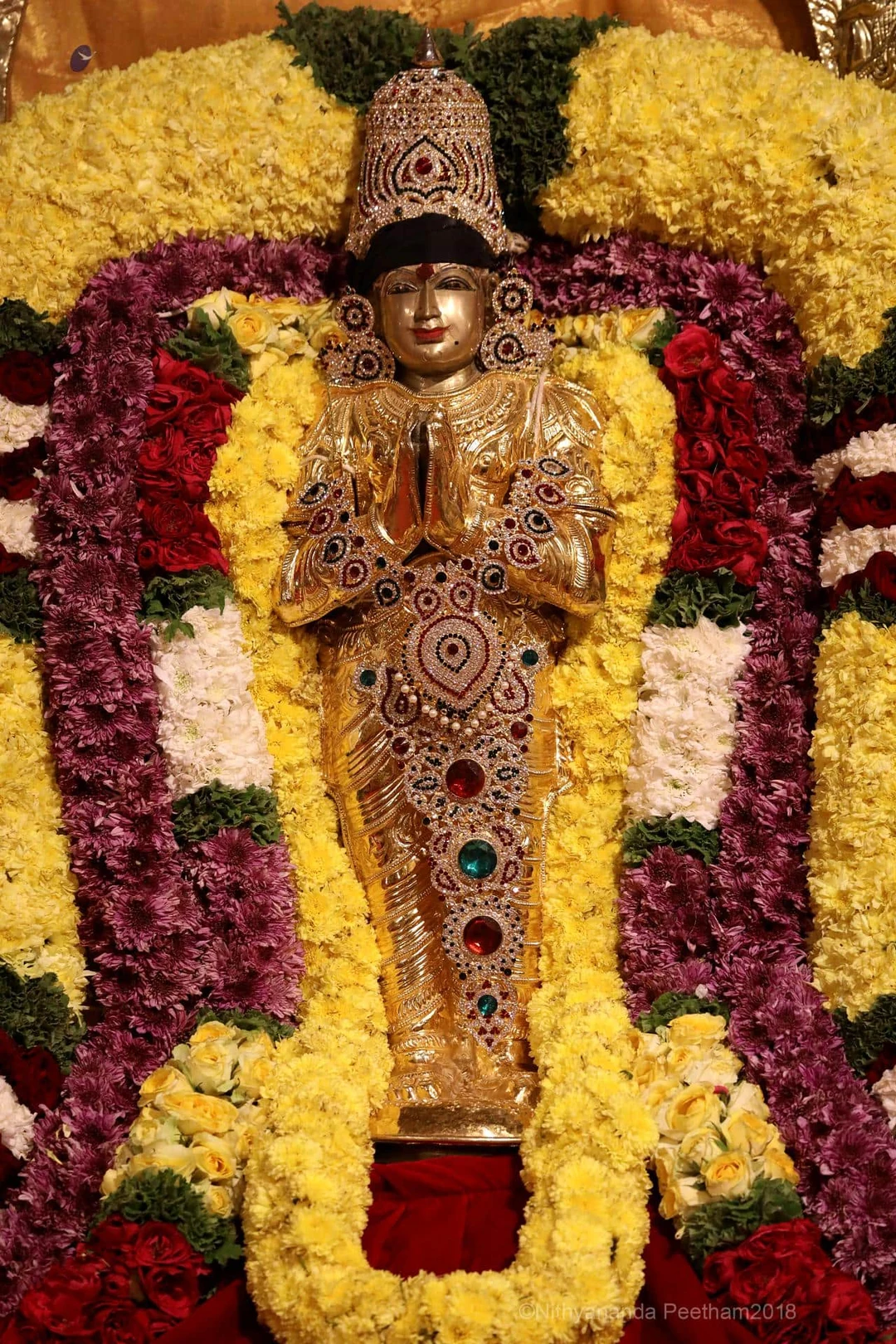
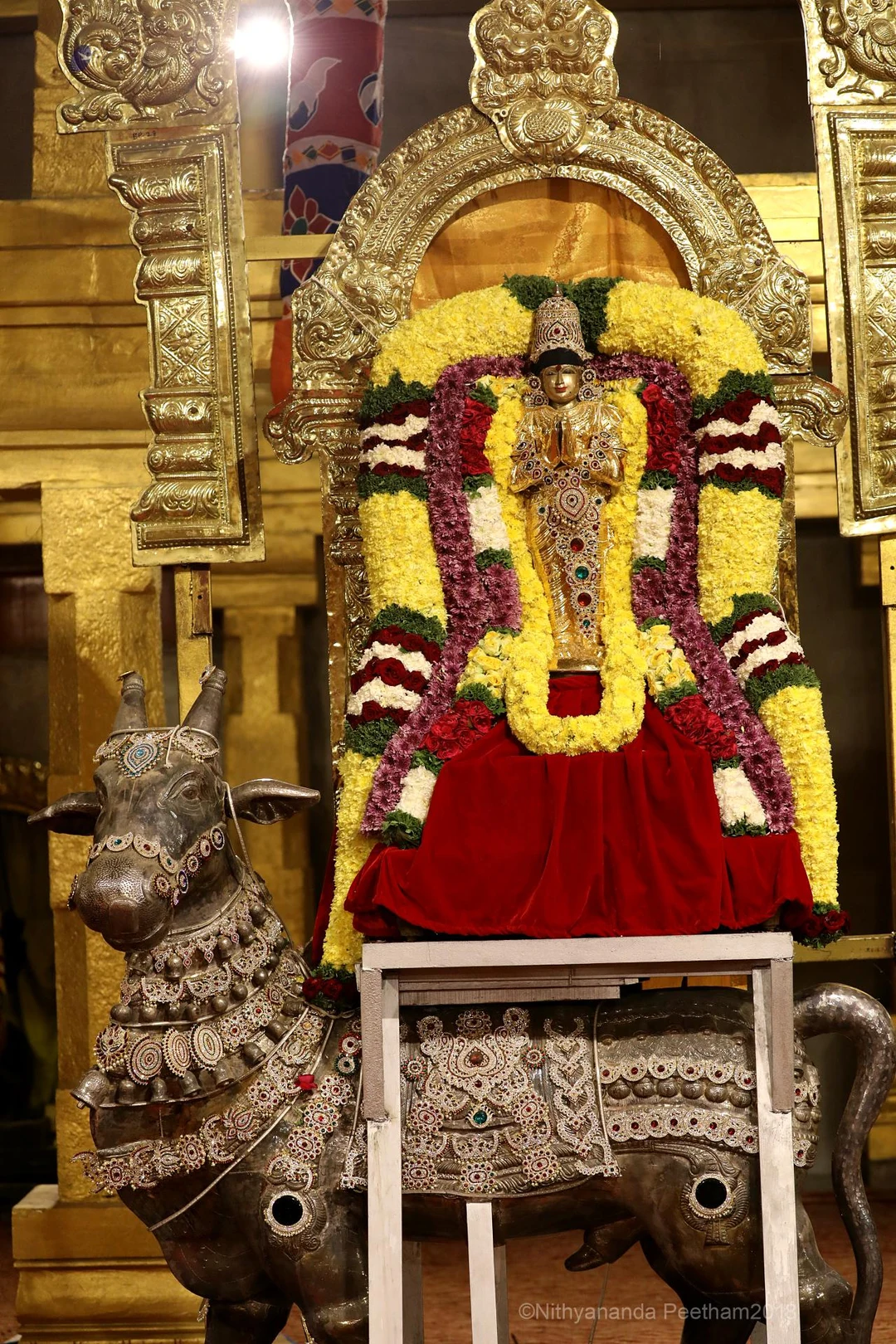
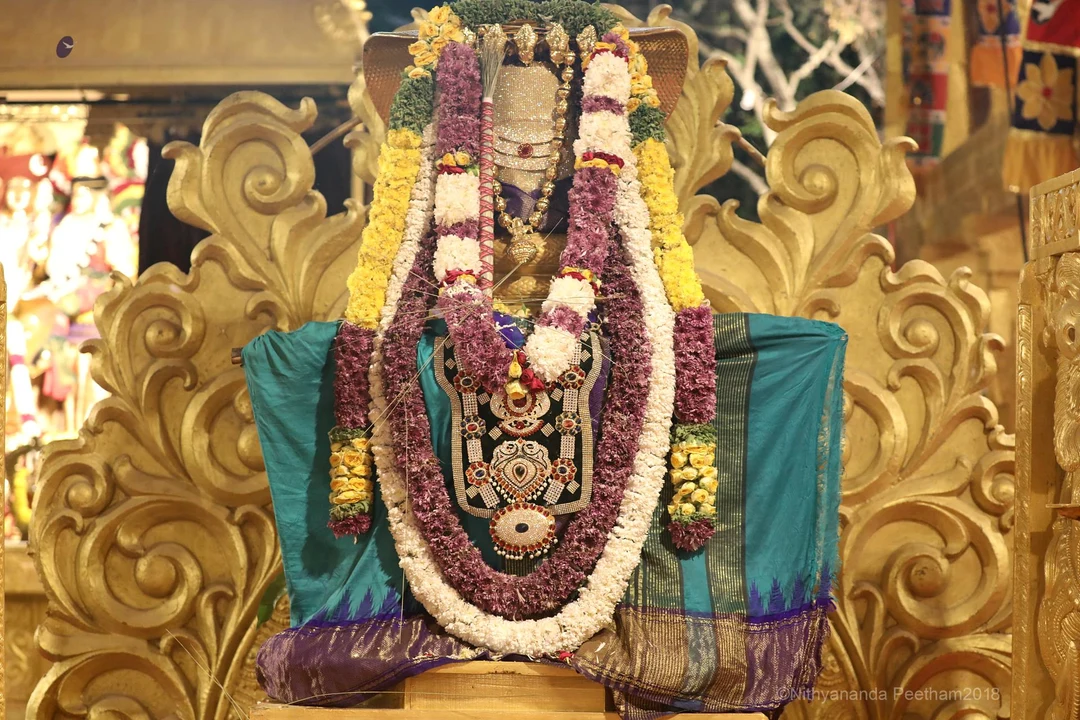
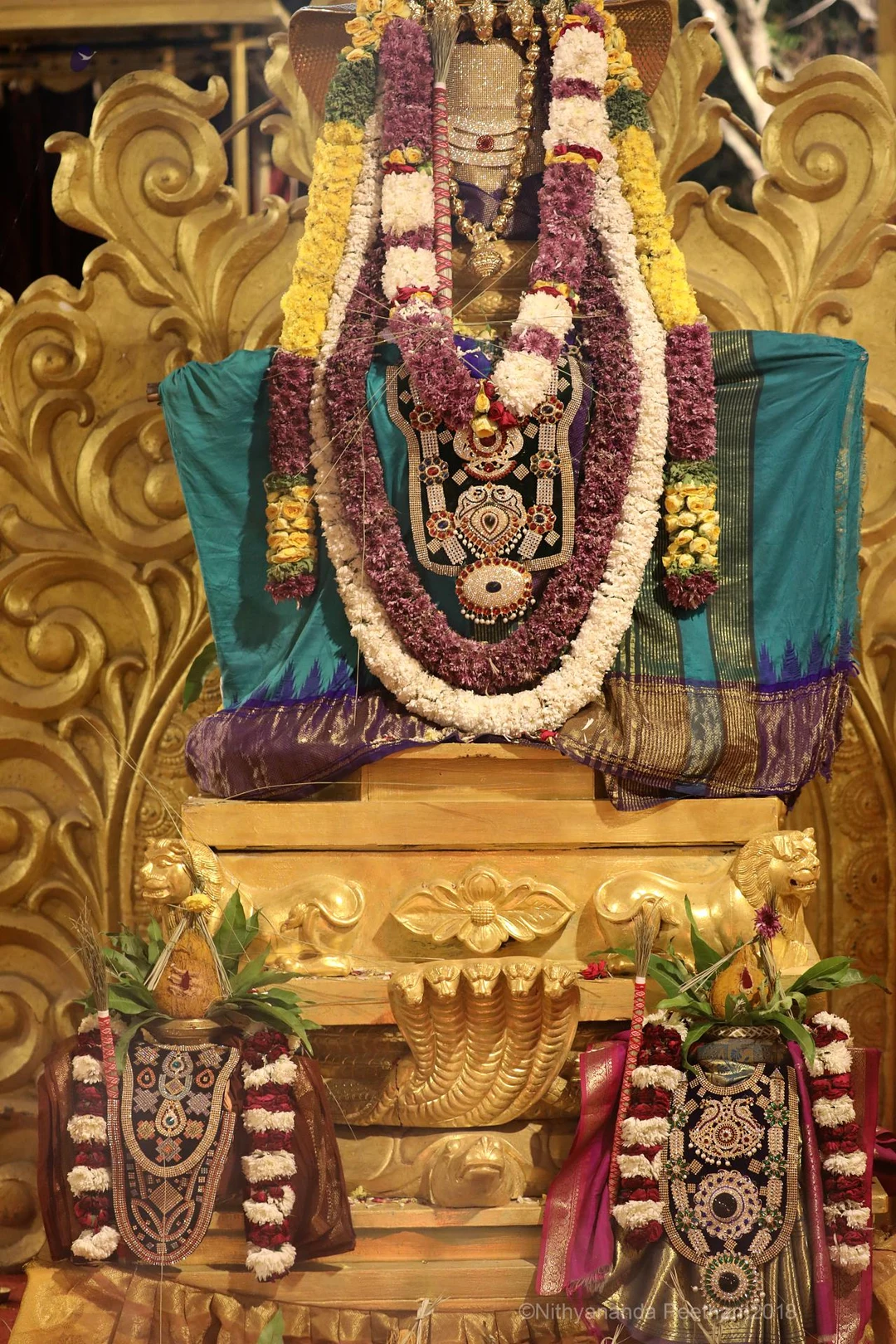
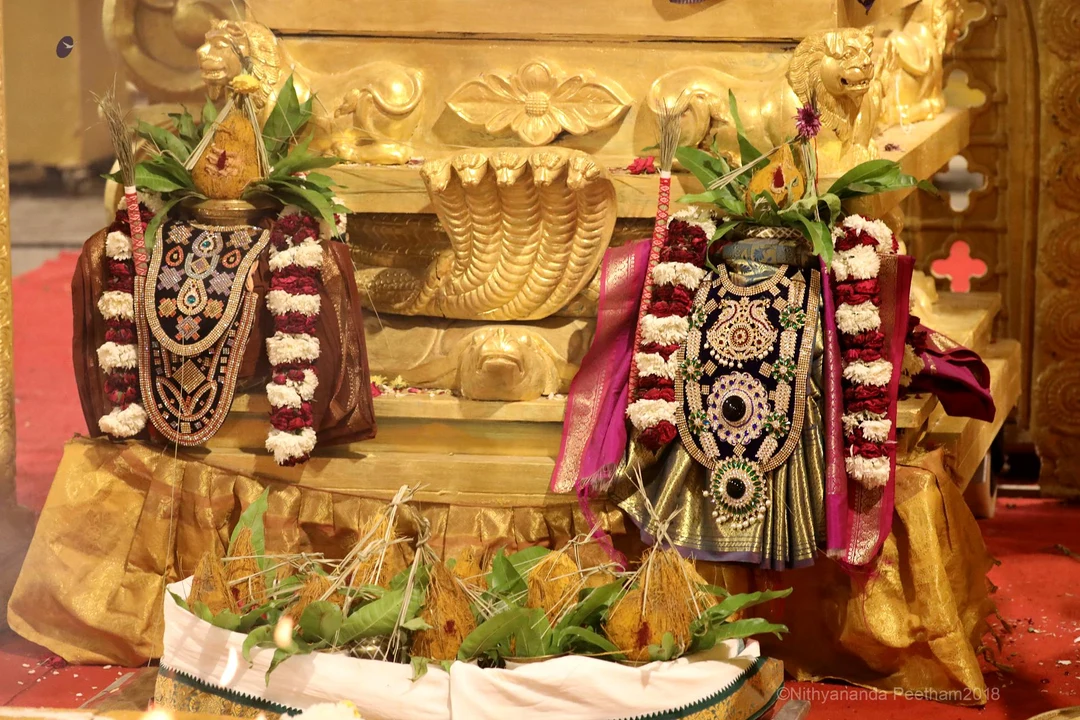
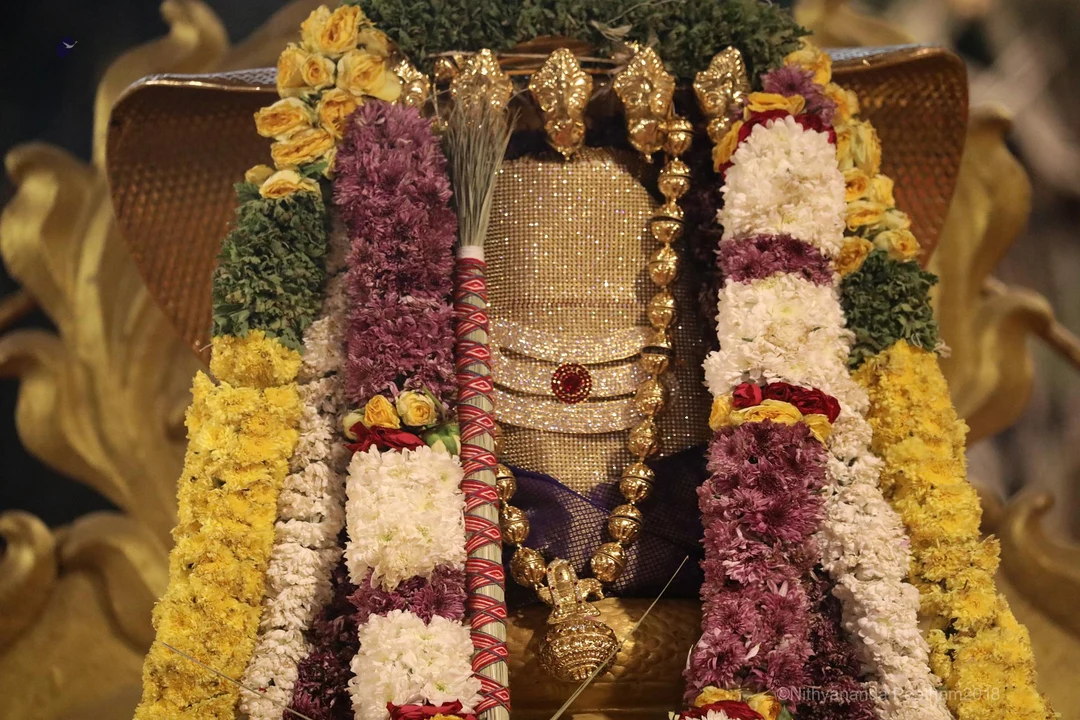
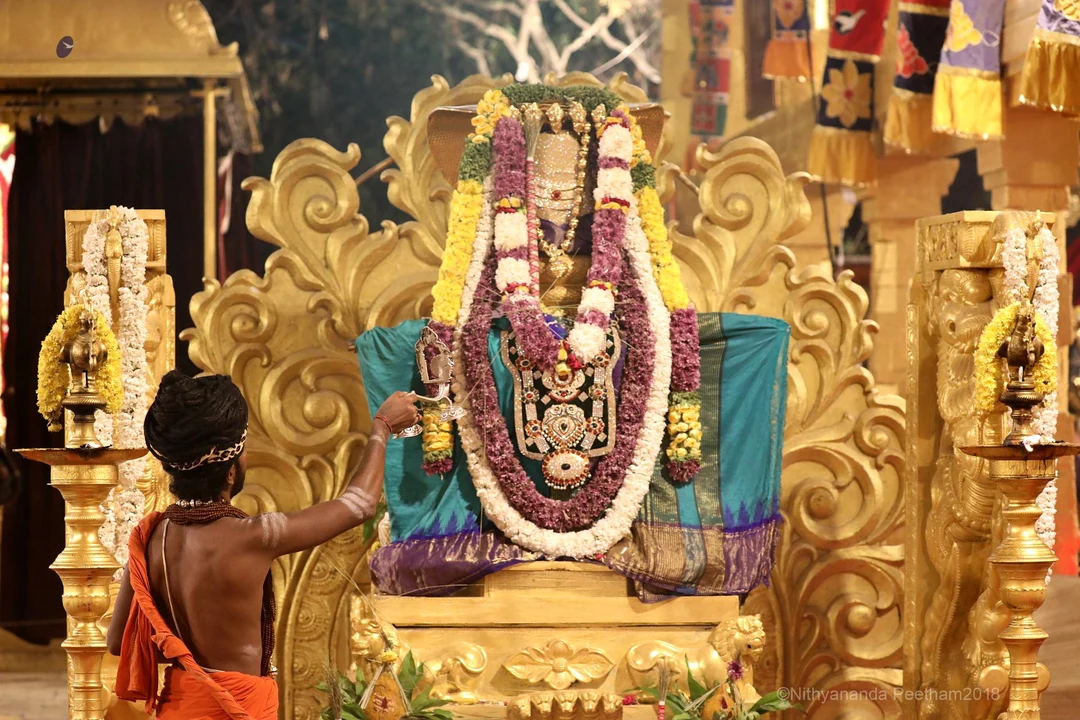
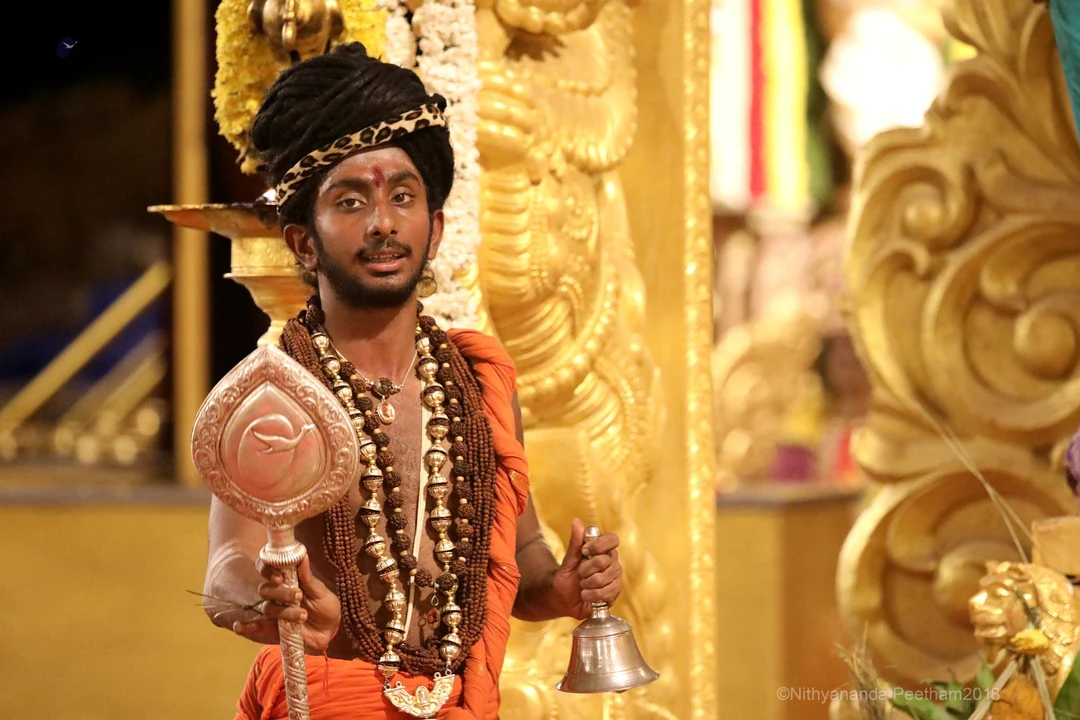
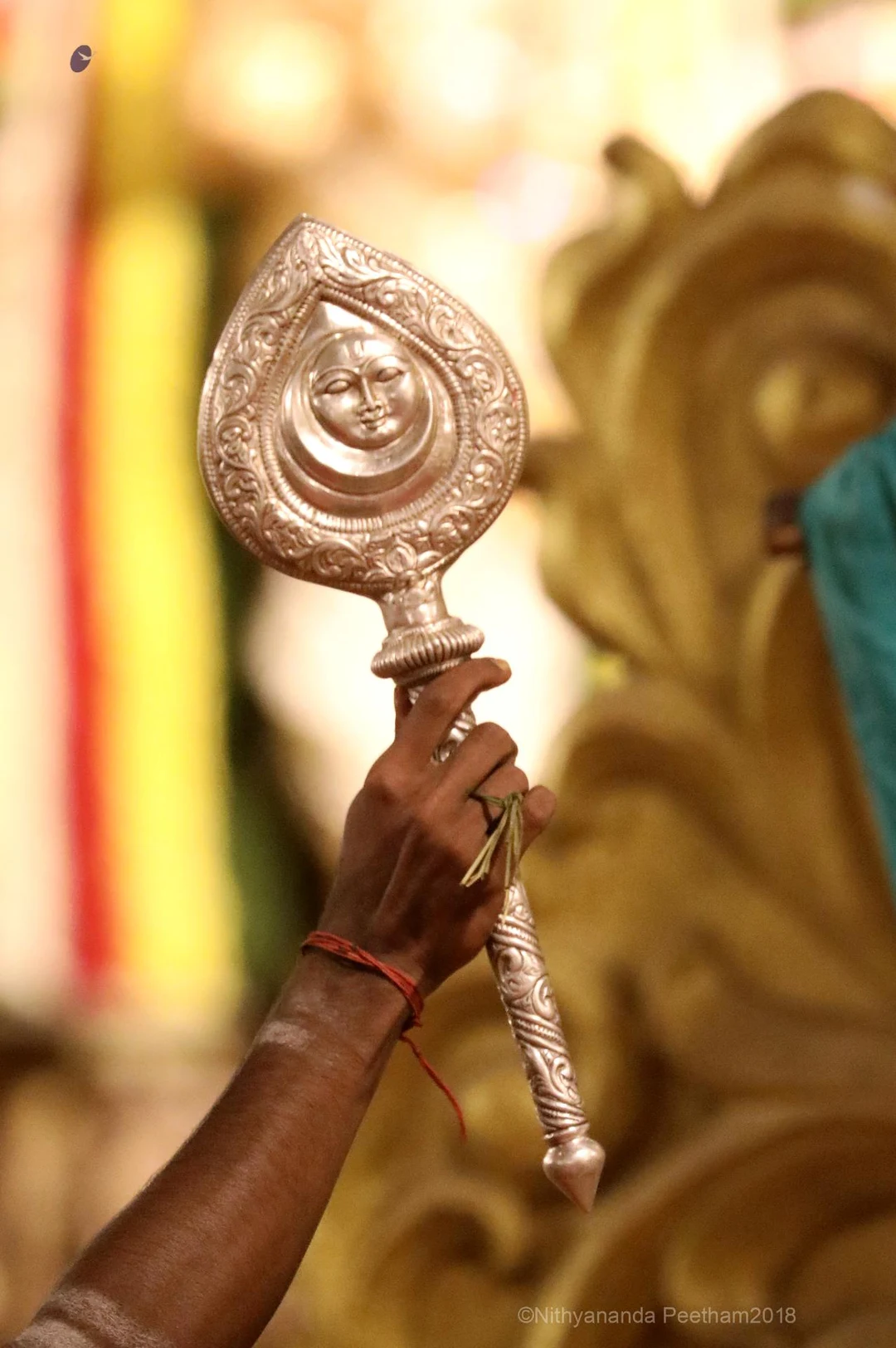
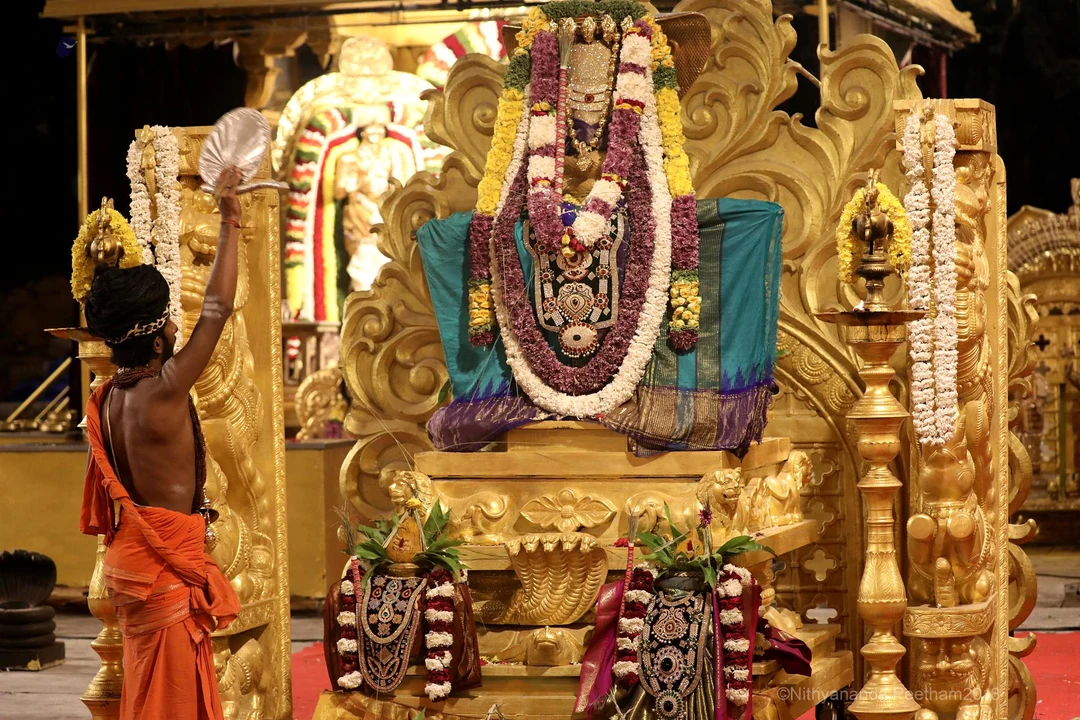
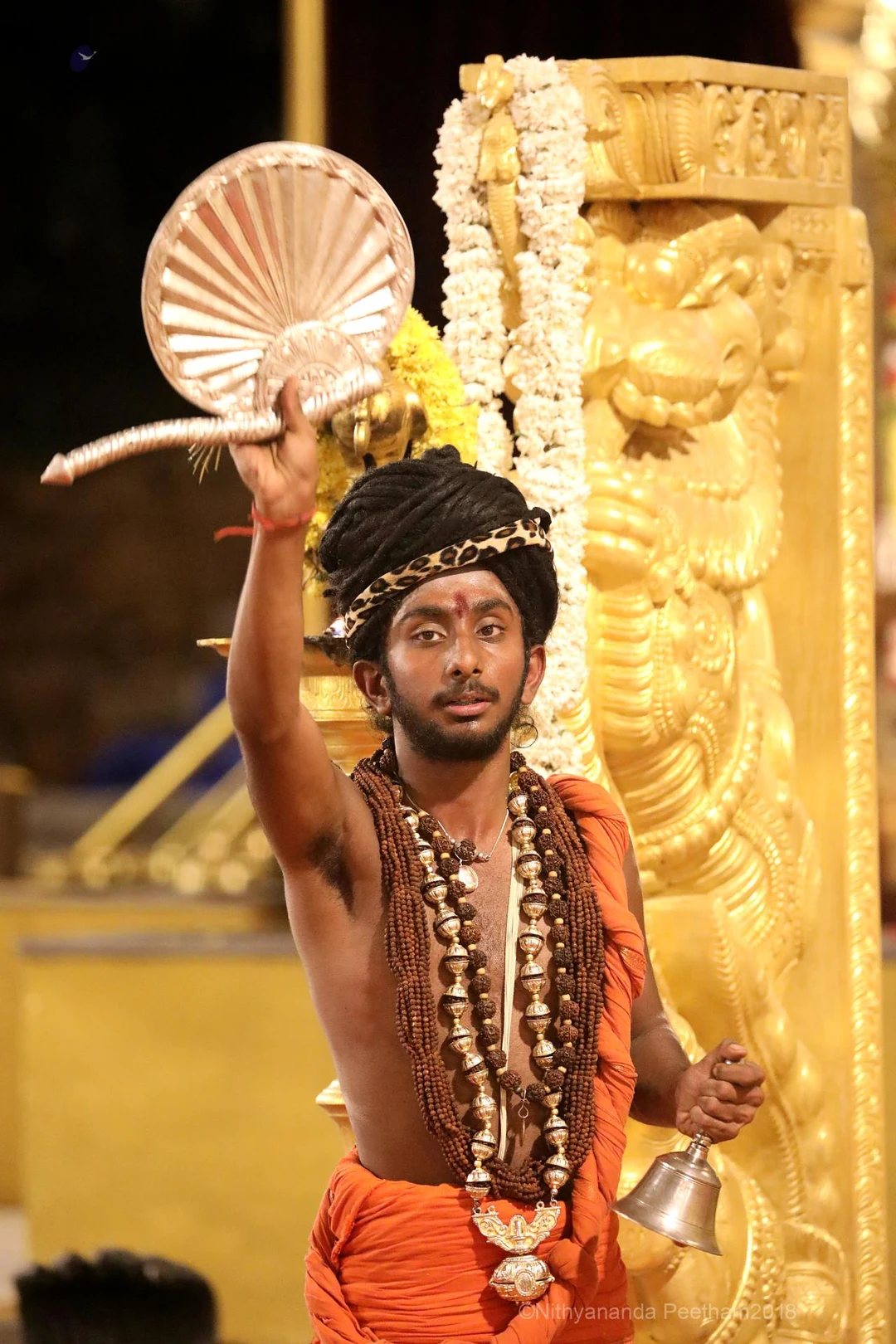
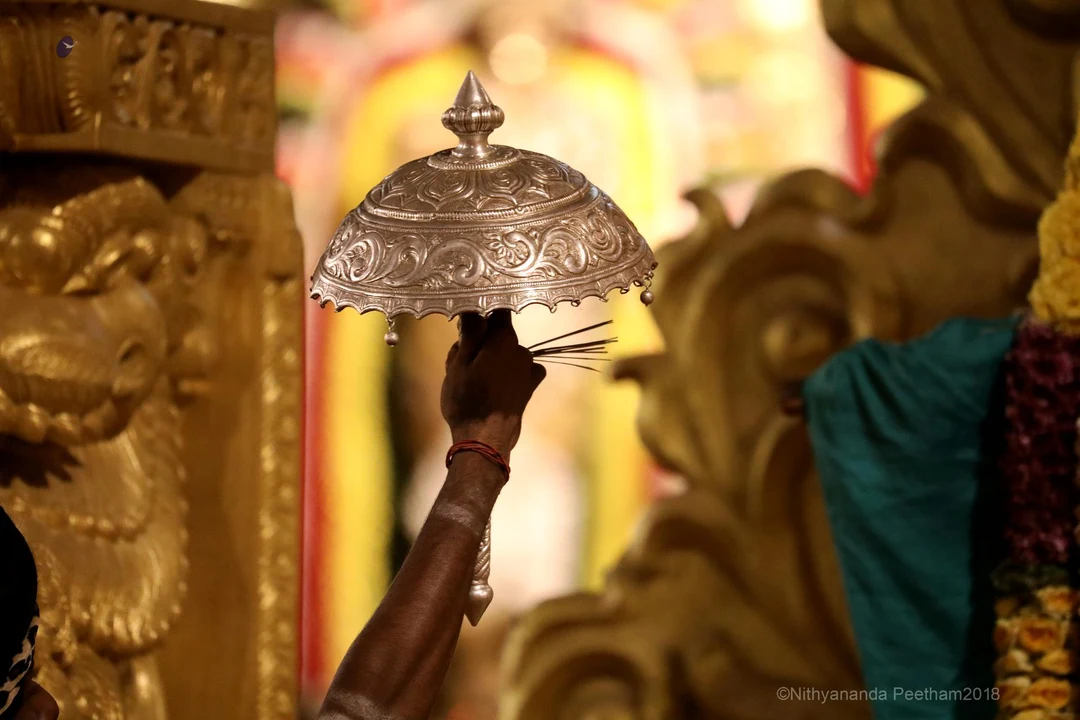
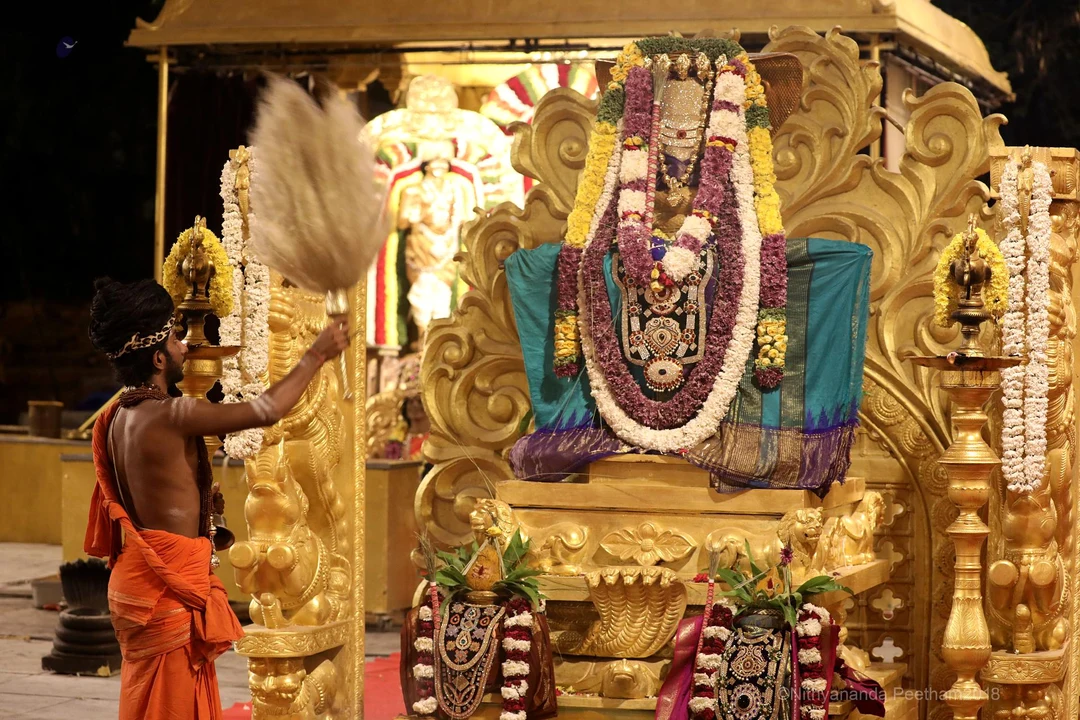
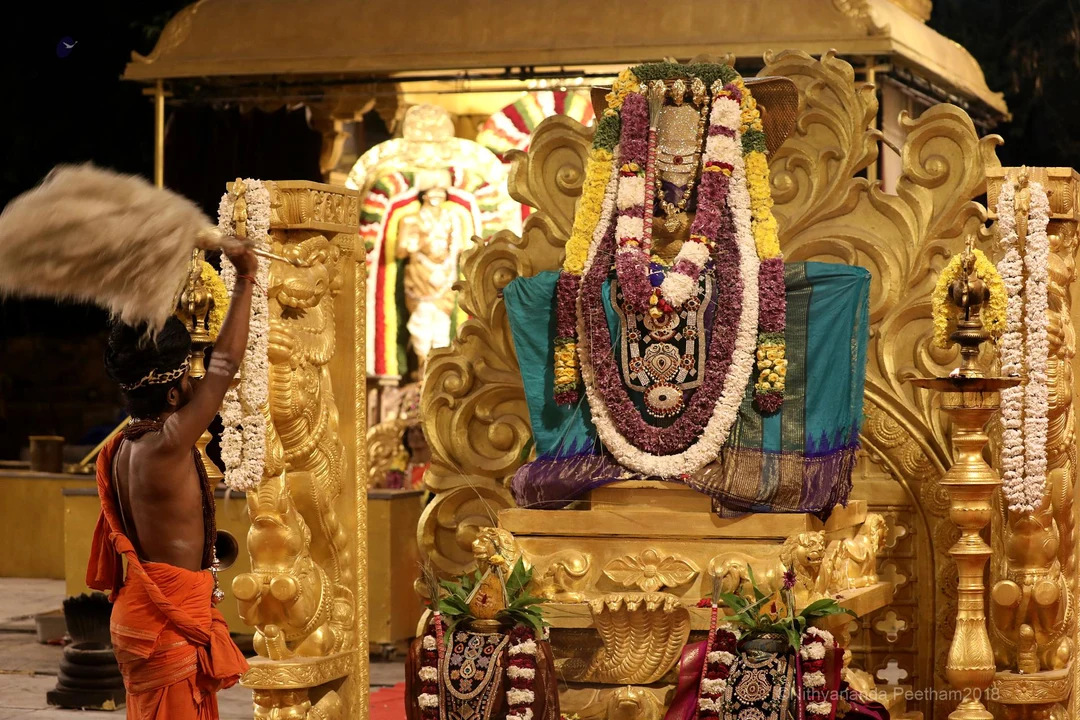
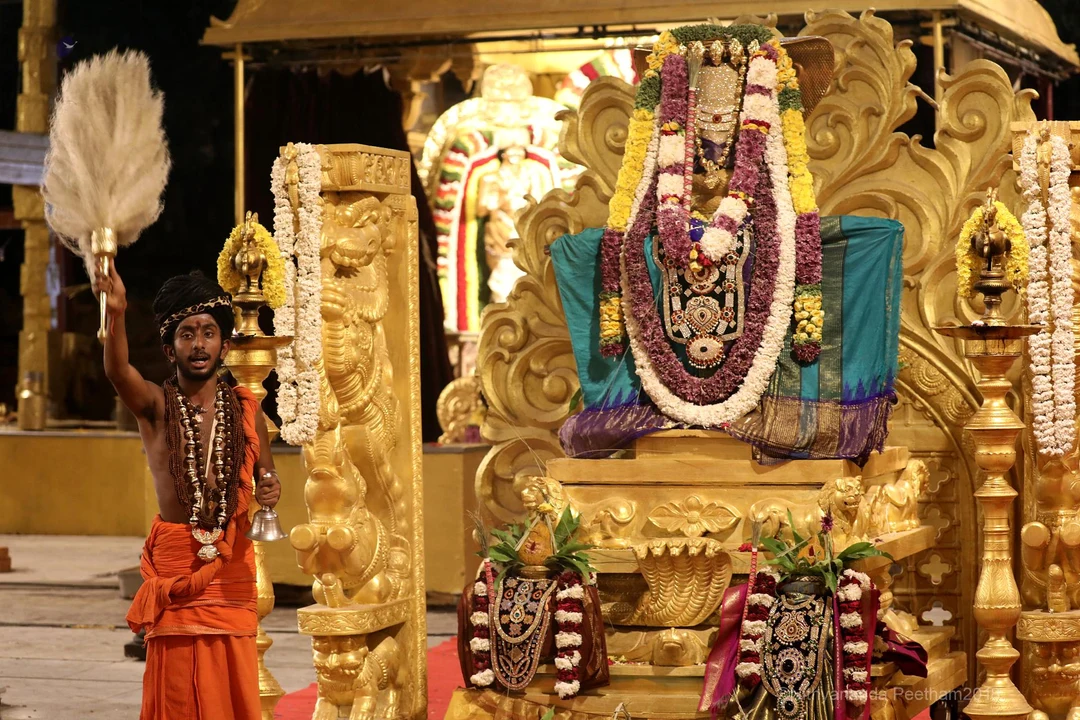
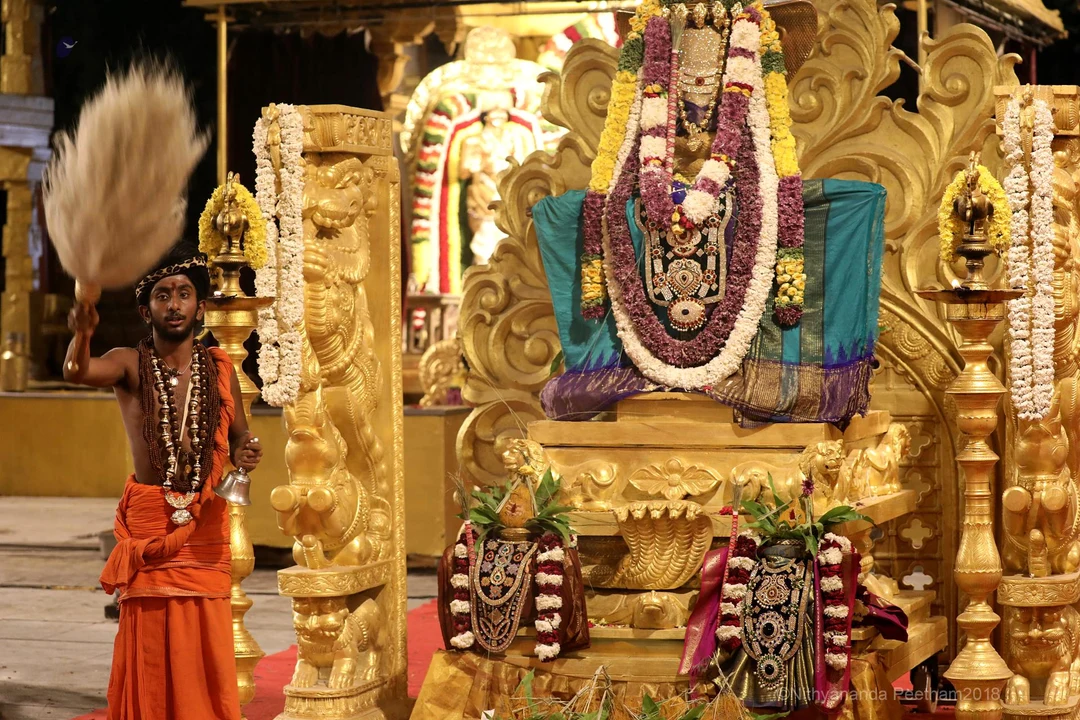
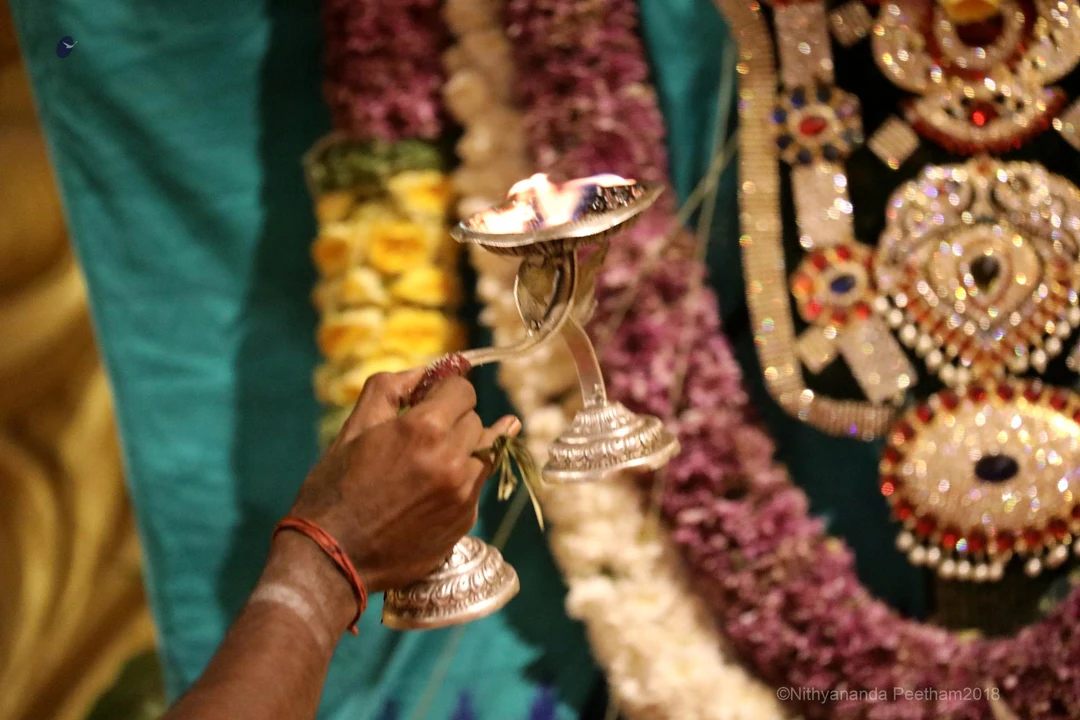
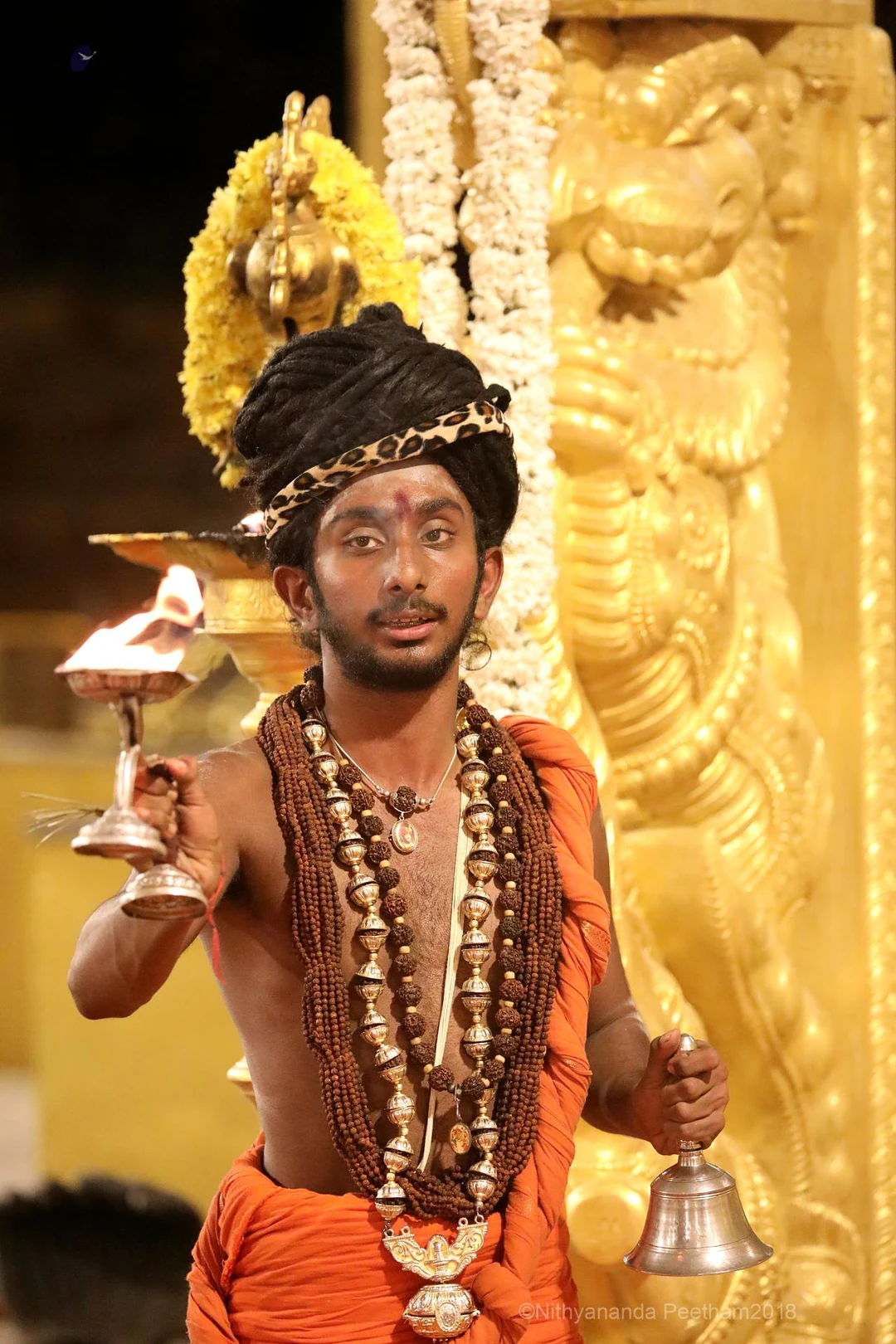
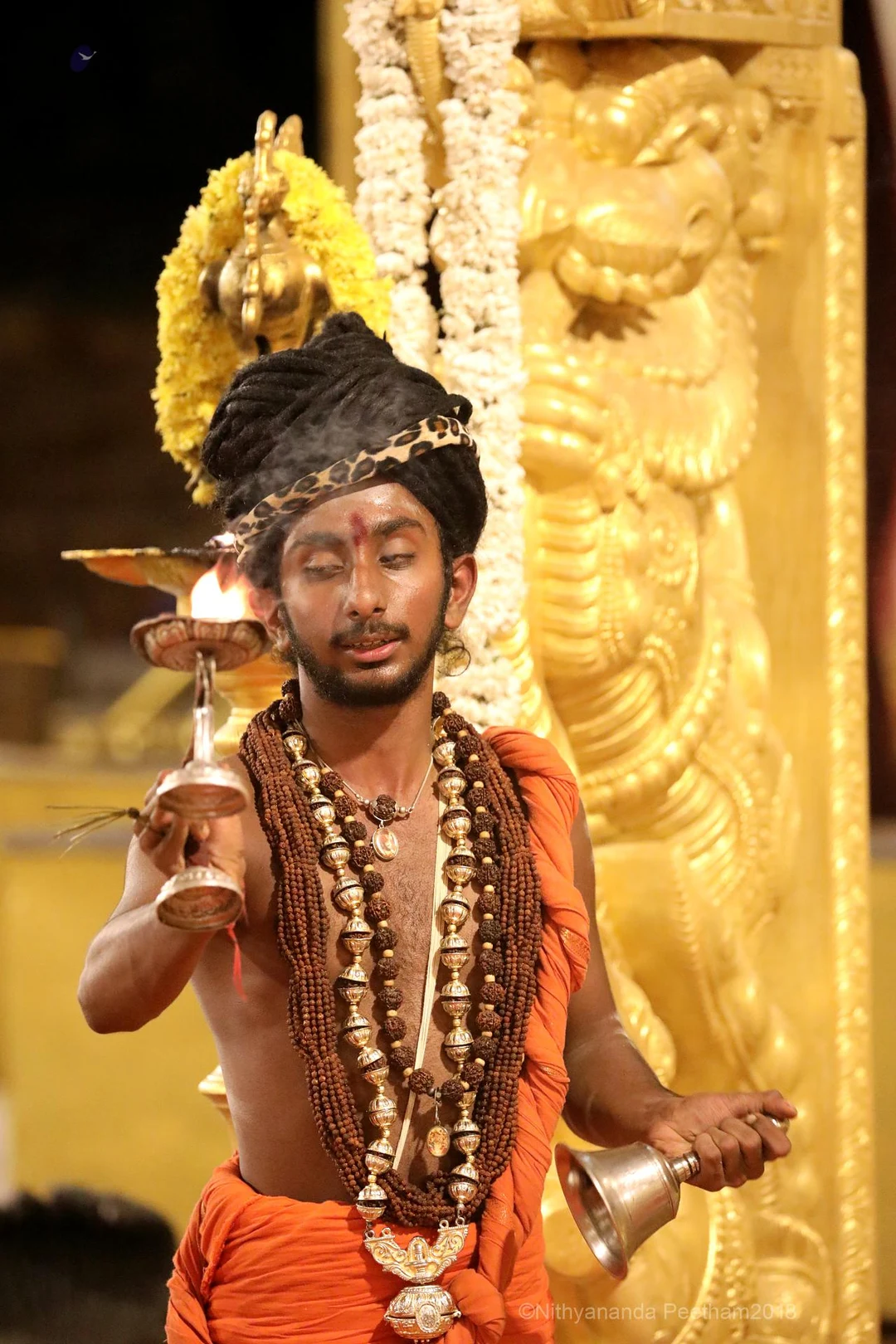
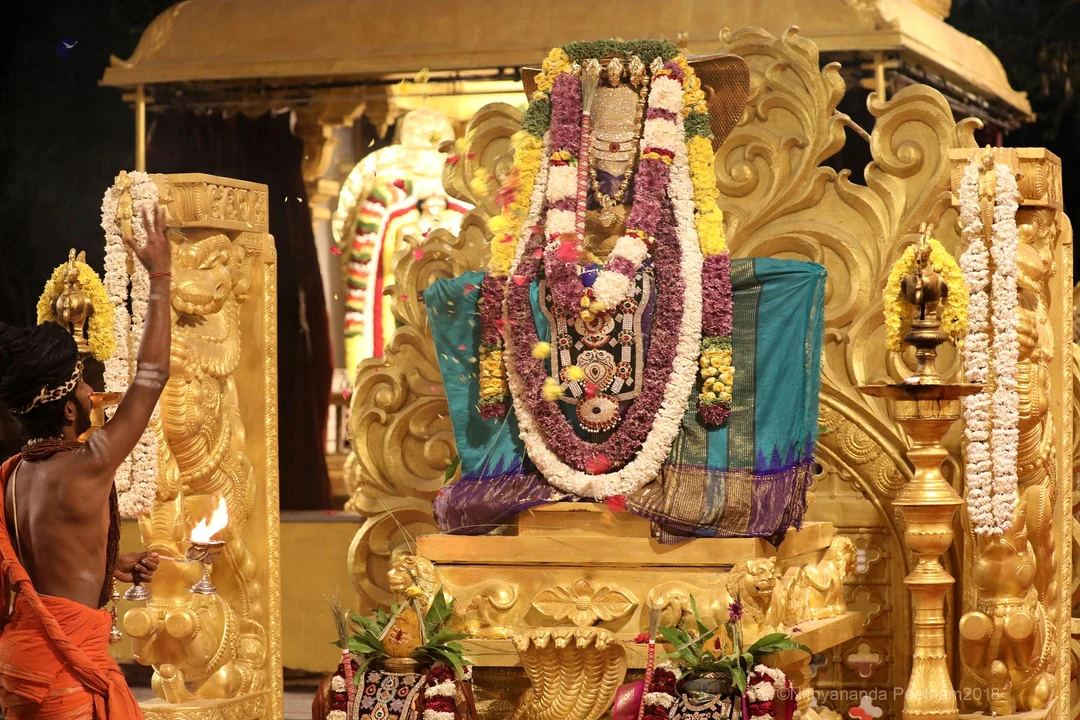
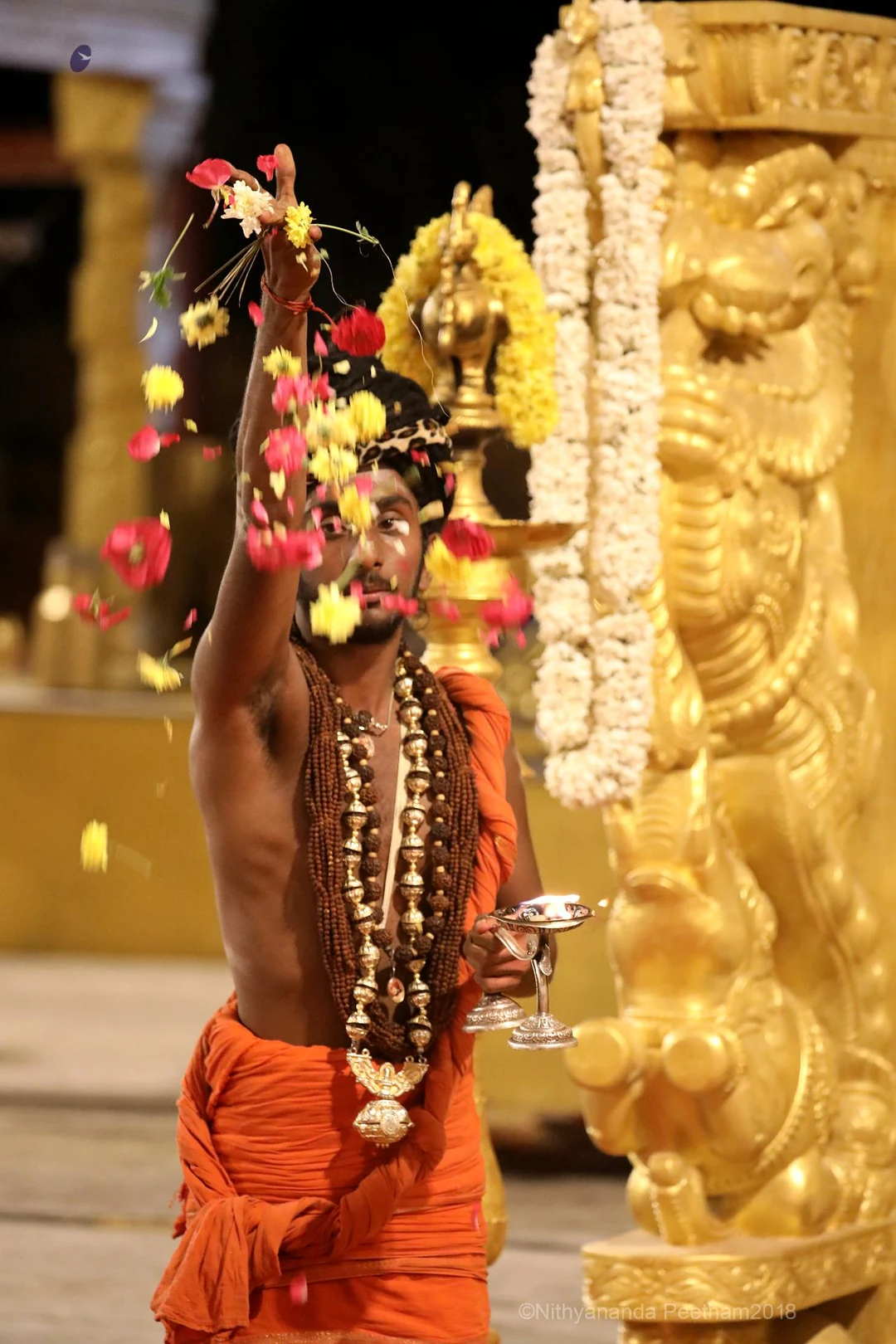
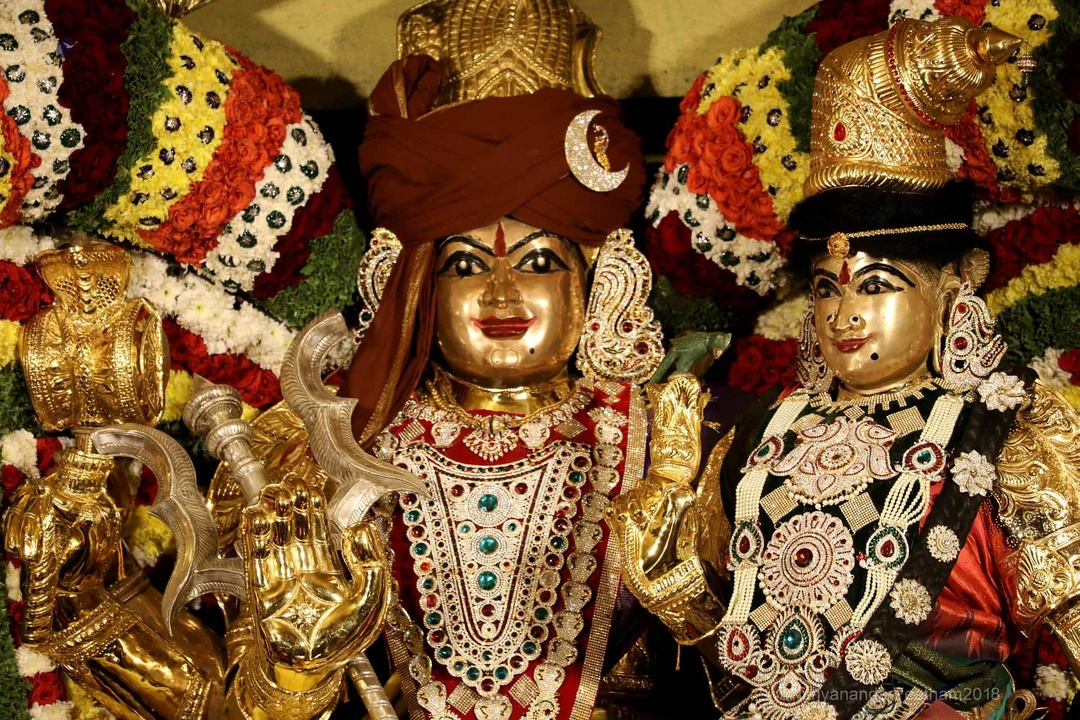
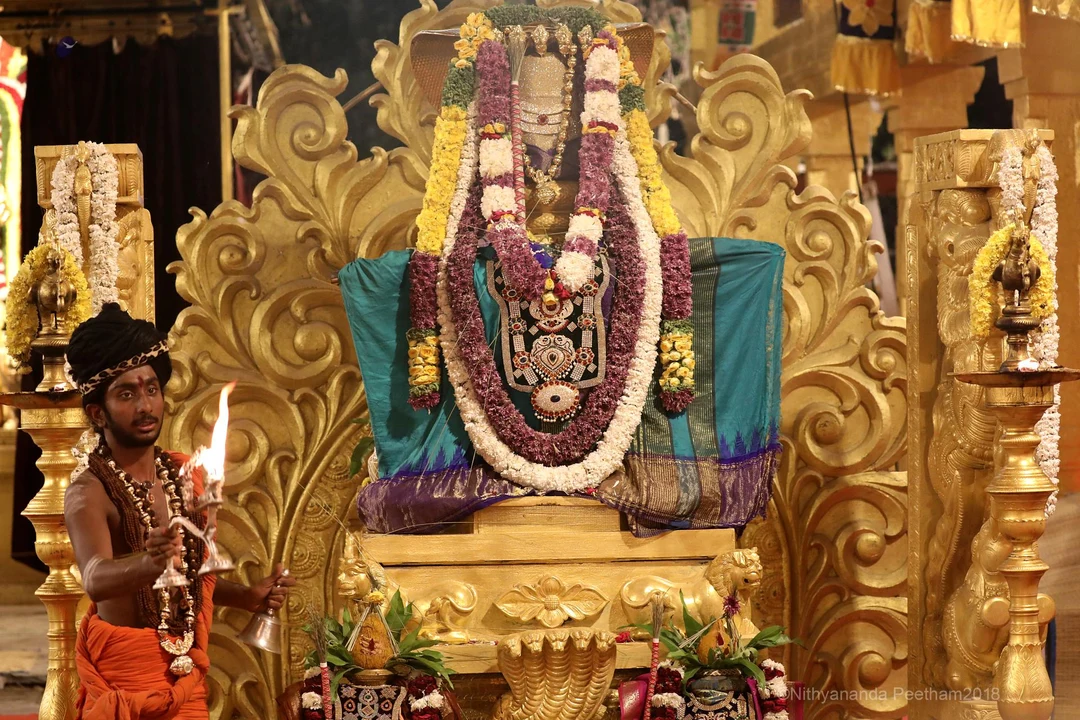
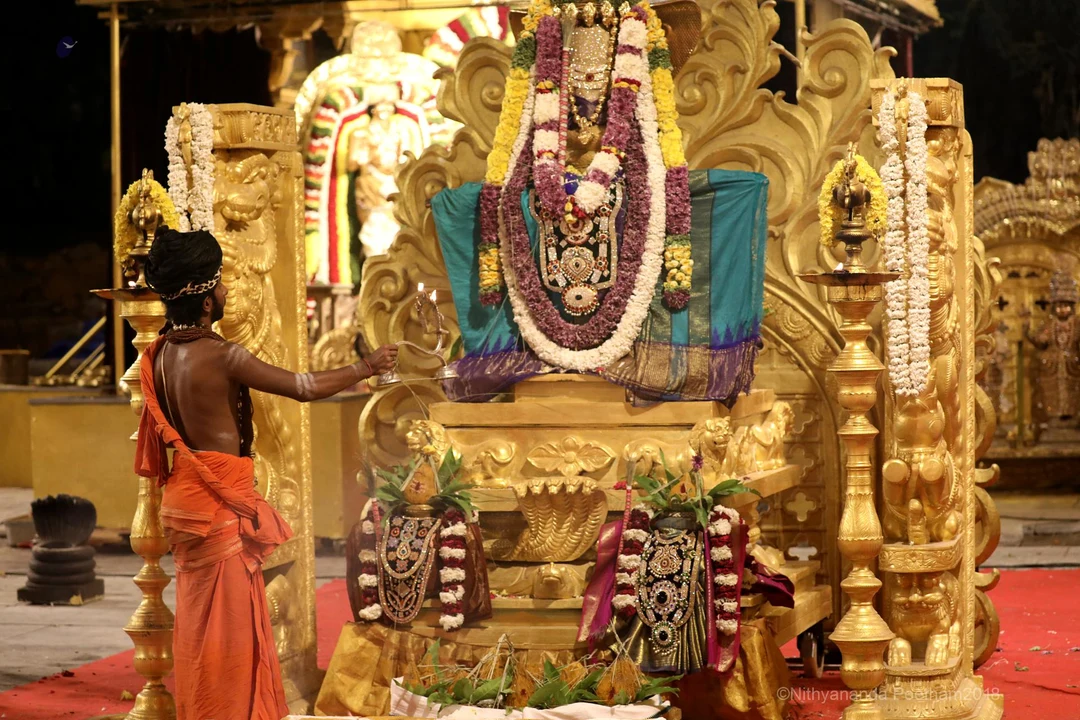
Today on the ninth day of Paramashiva Brahmotsavam, His Divine Holiness invited everyone to offer their devotion to Paramashiva. Also, Uttamotama Seva was offered at Nithyanandeshwara Sahashiva Devasthanam to Nithyanandeshwara Mahasadashiva Parashiva and Nithyanandeshwari Parashakti, with various rituals, Sevas, activities and Power Manifestations, inspiring millions towards the Science of Hinduism.

Photos

Uttamotama Seva
Photos Of The Day:

satsang

Photos from this day

View all 275 photos

Uttamotama Seva
56 photosSource gallery
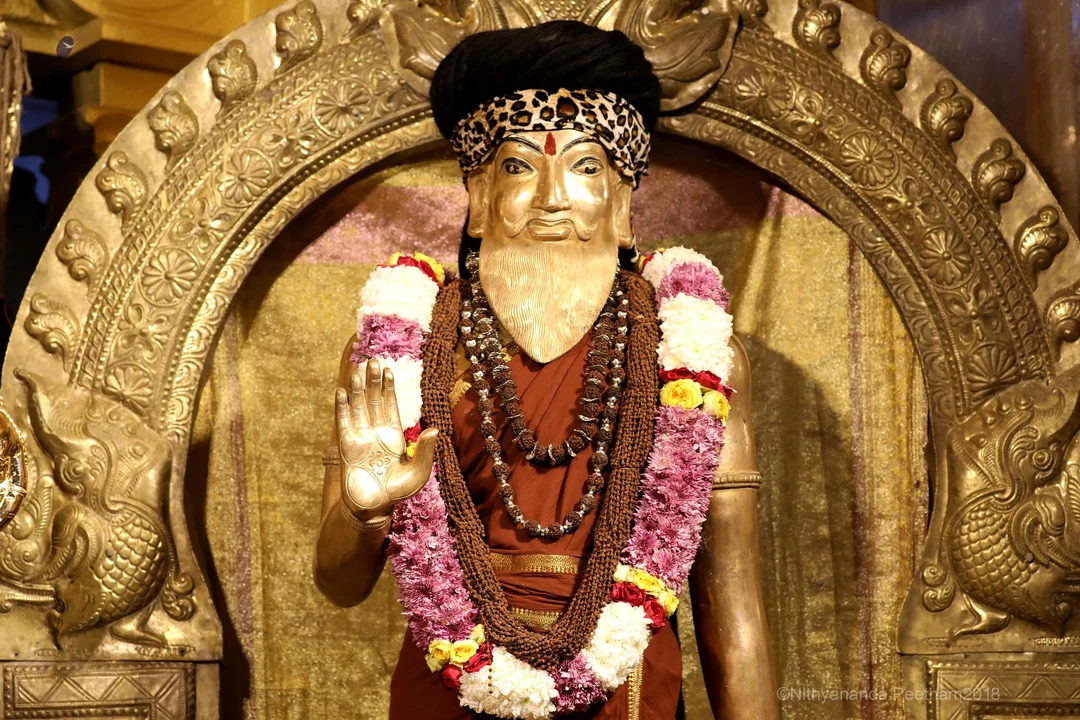
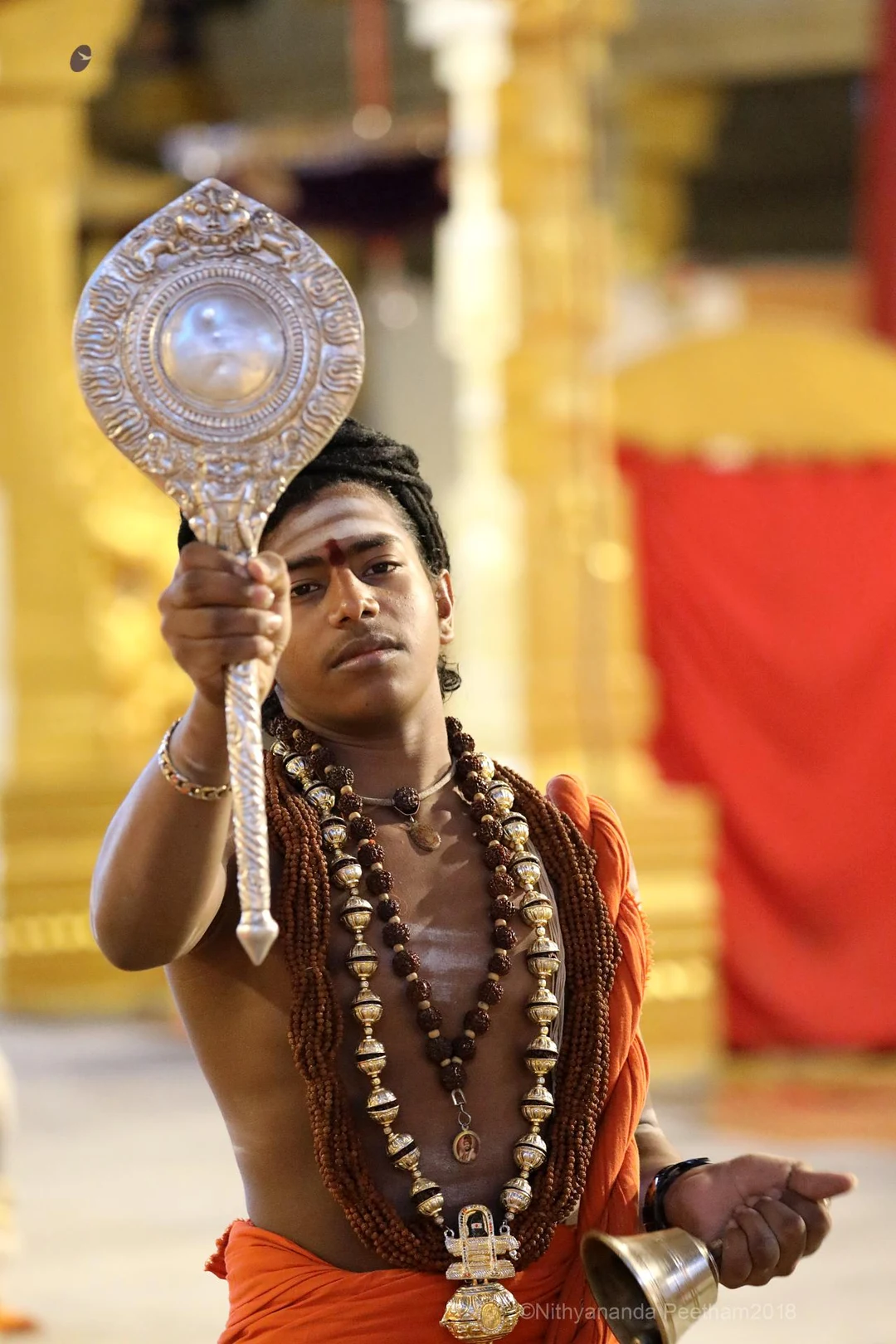
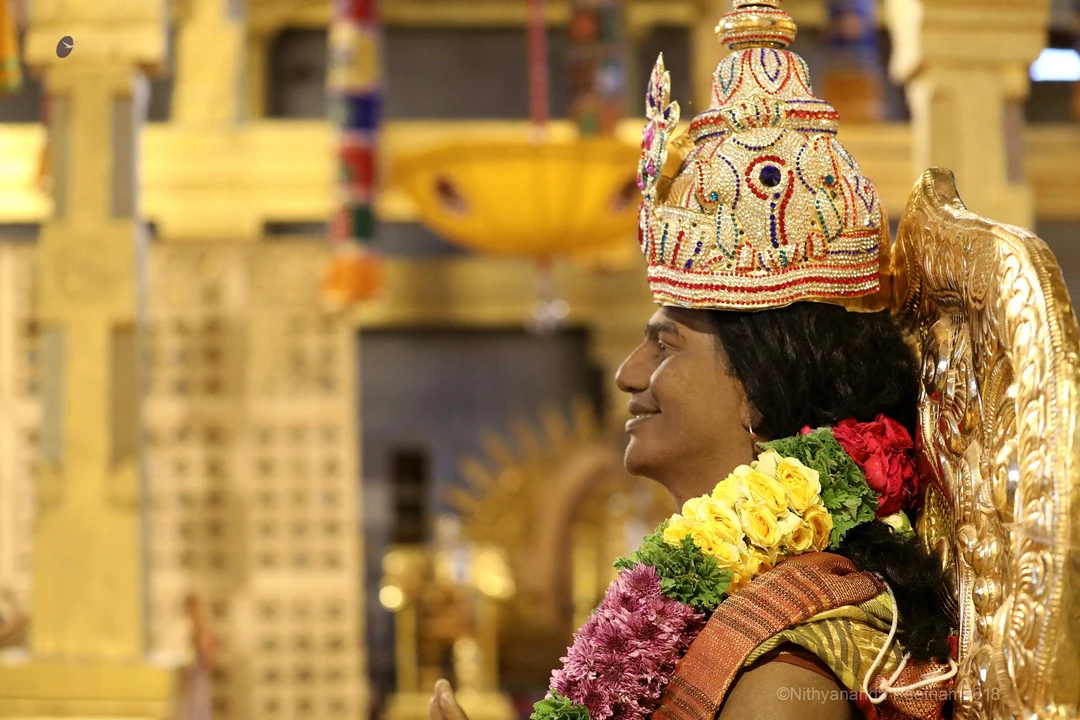
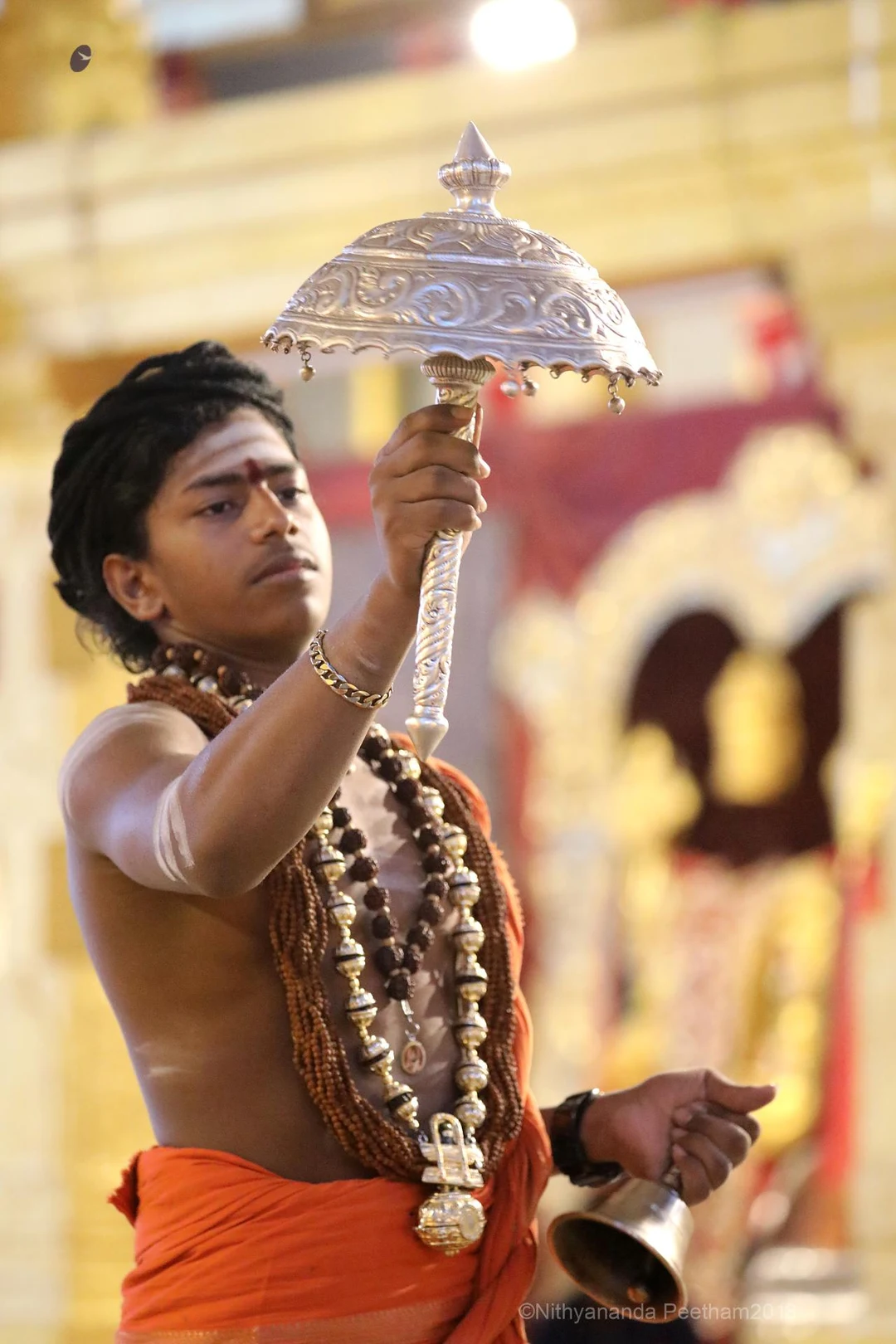
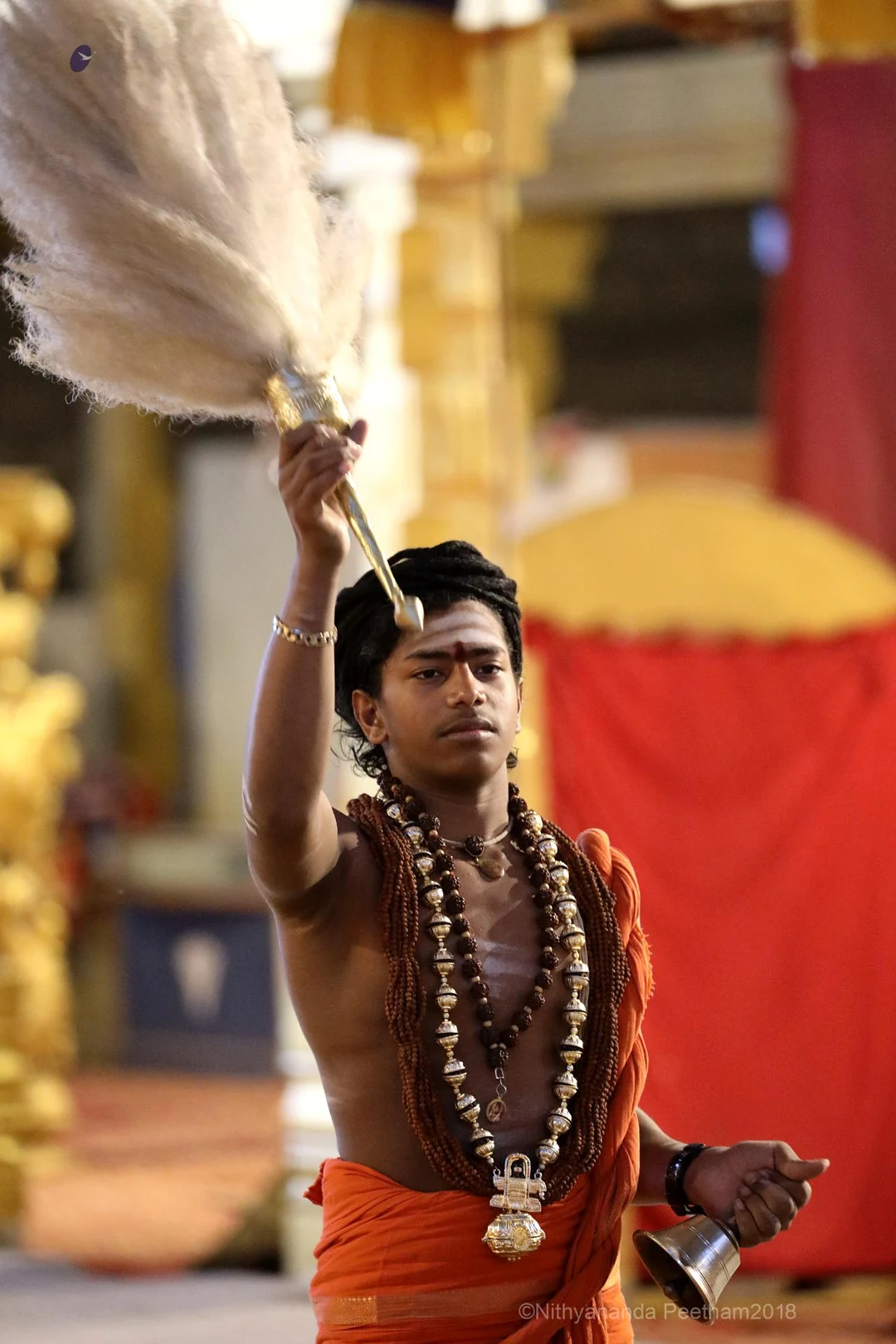
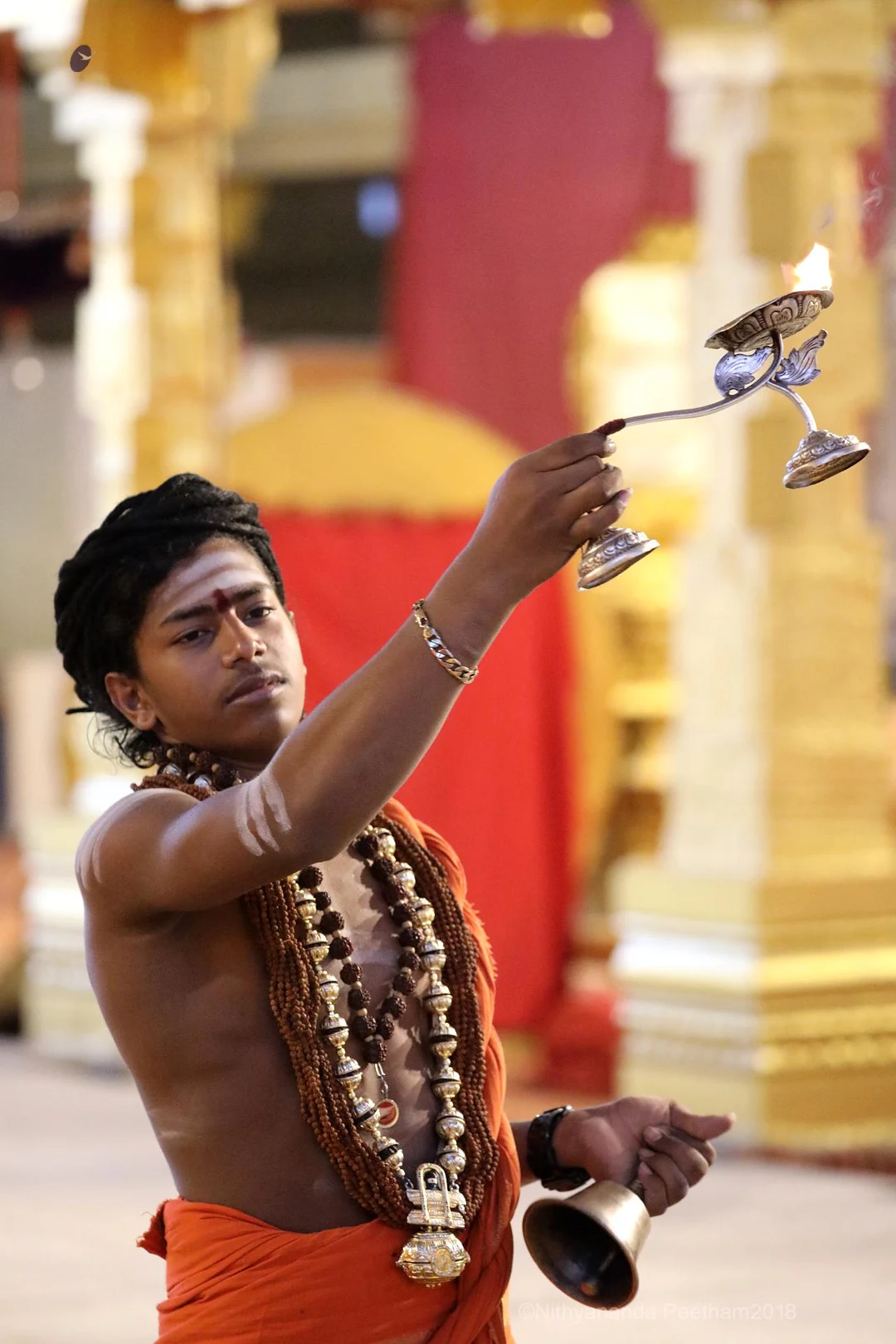
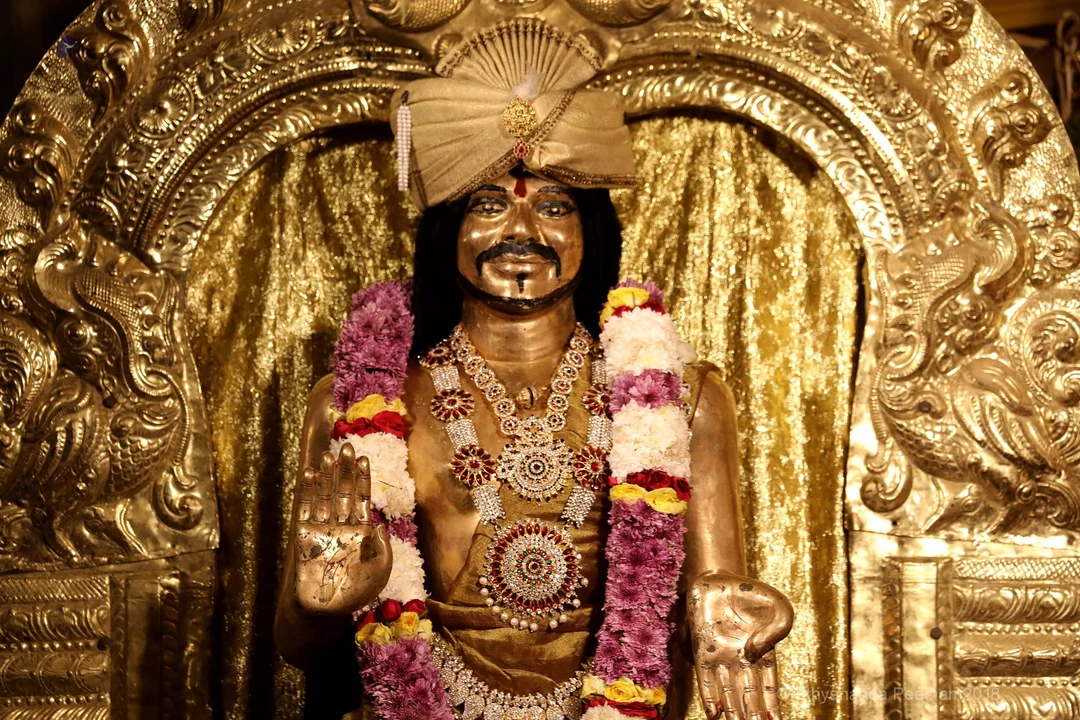
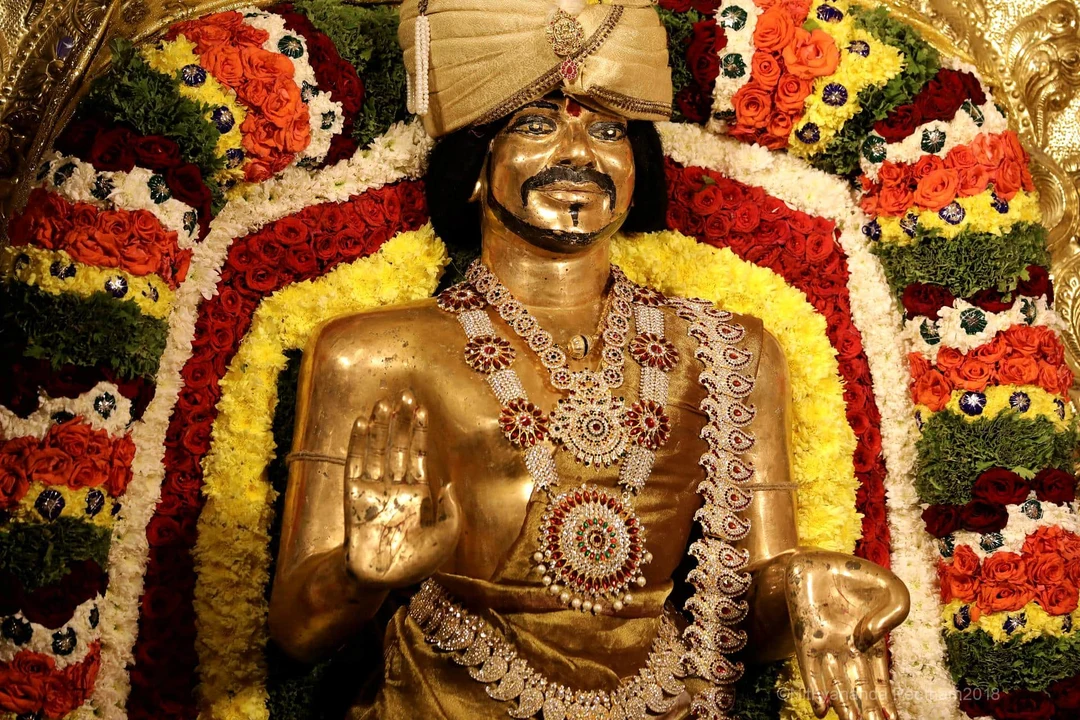
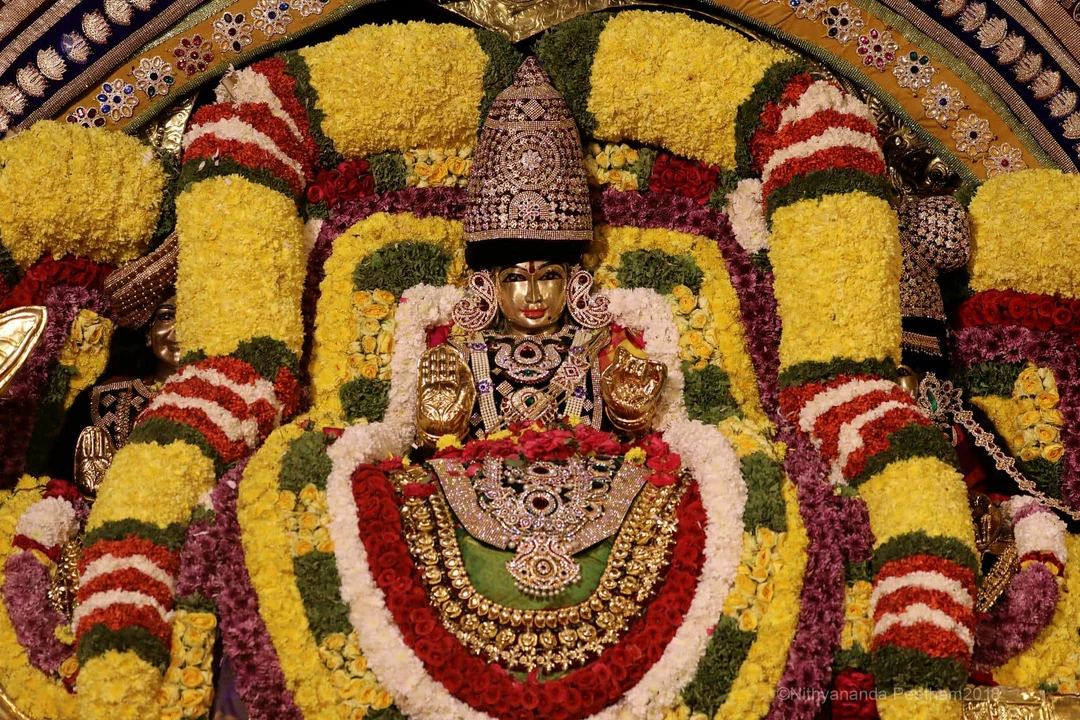
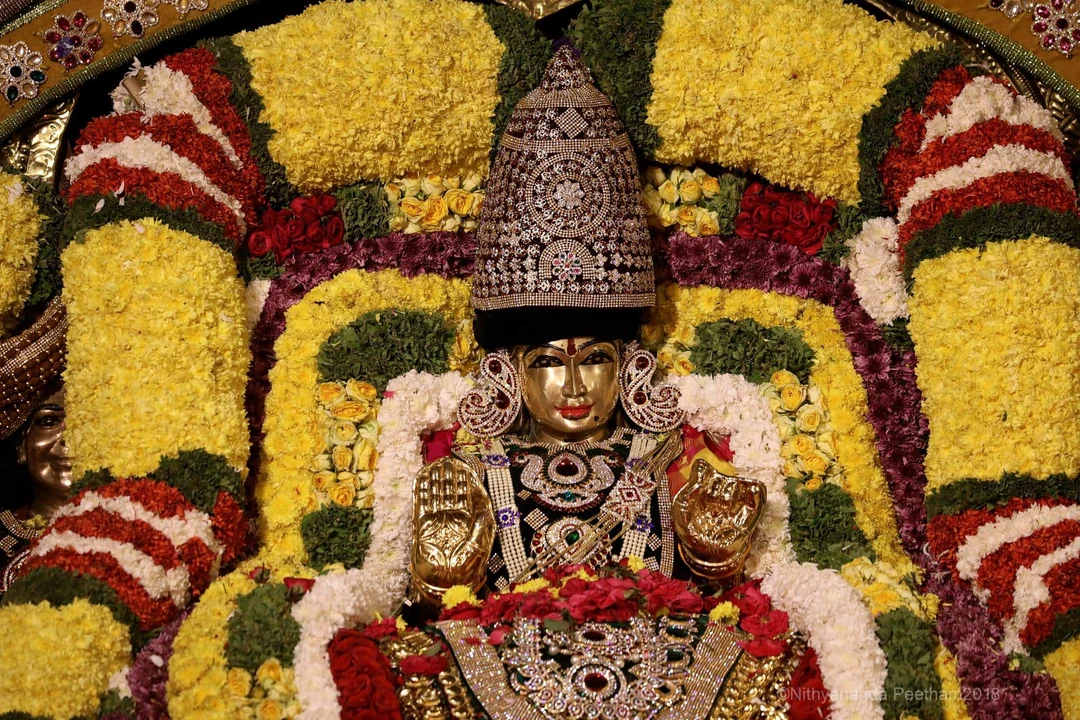
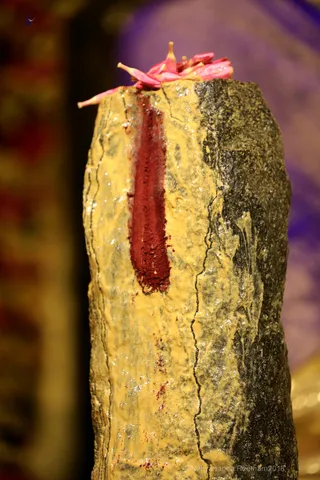
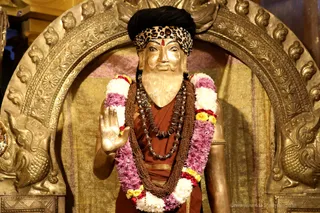
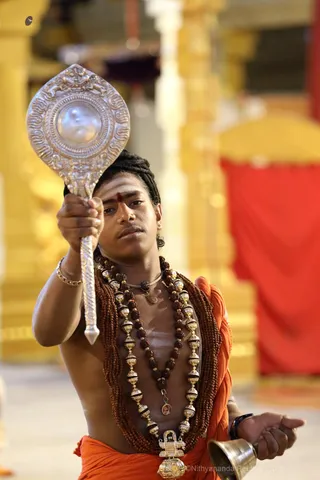
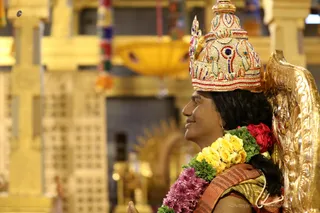
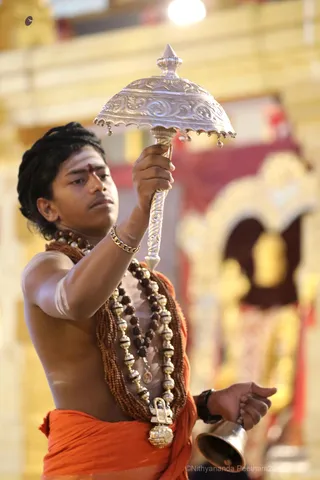
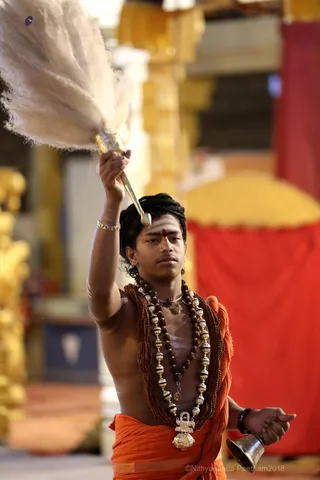
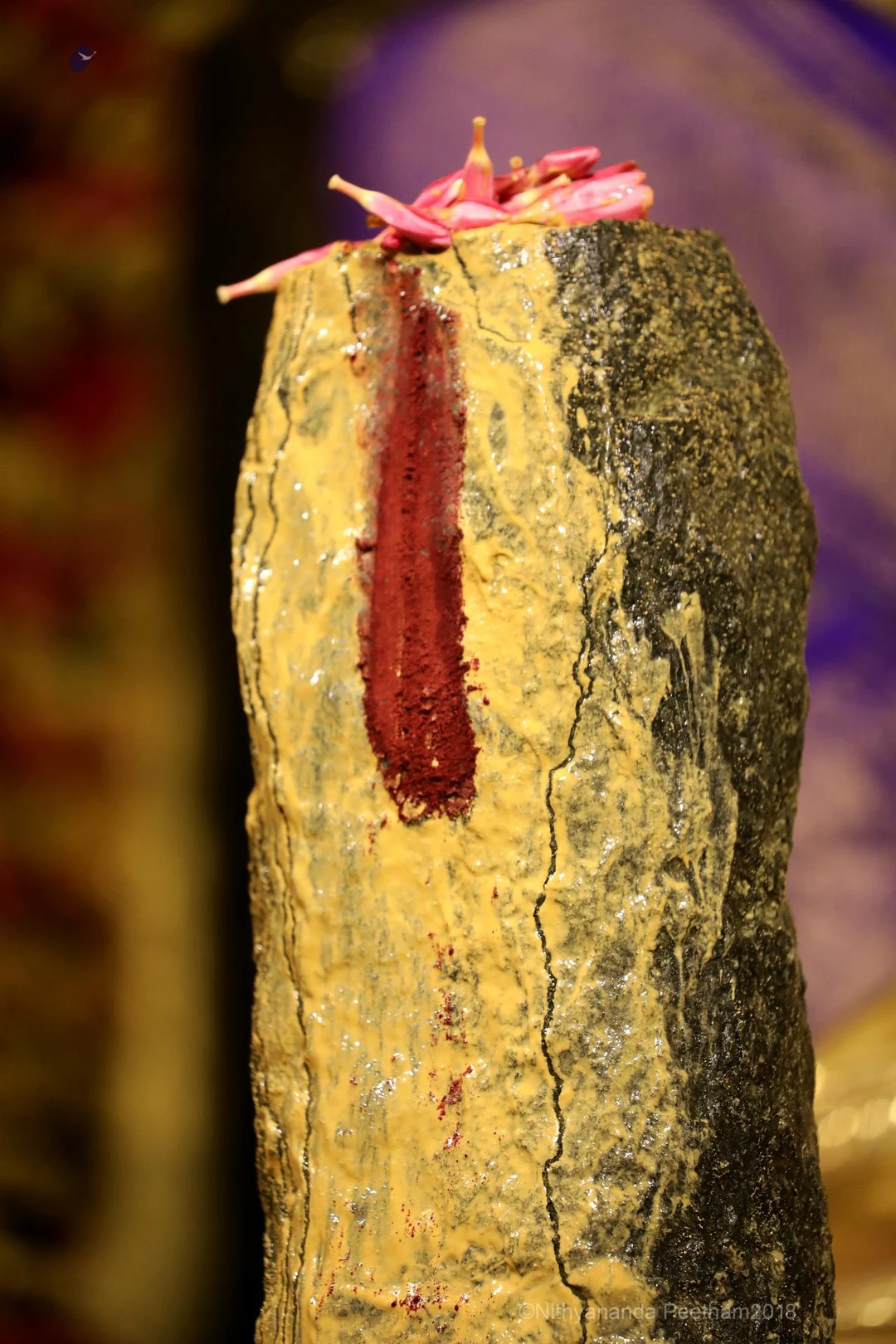
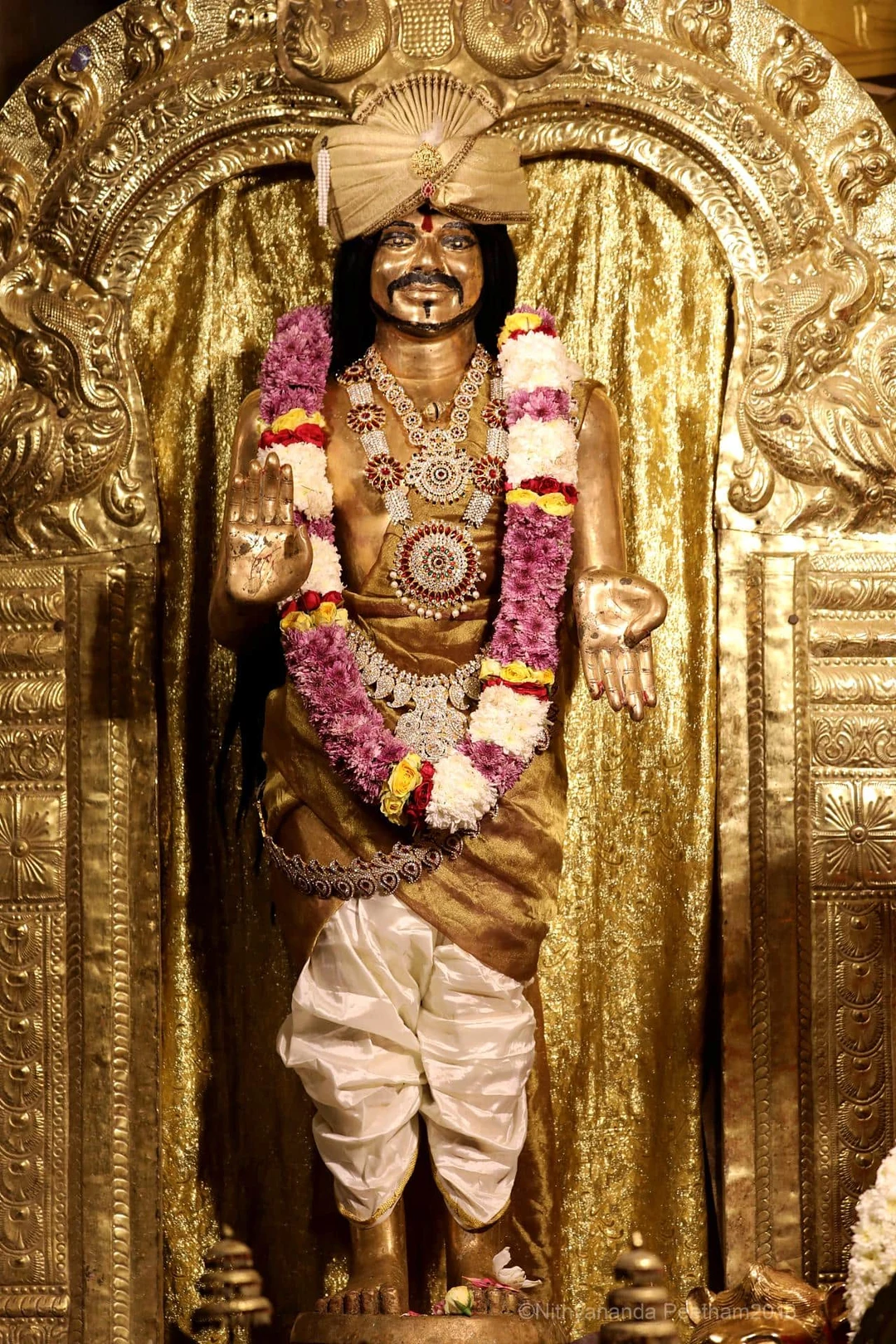
Close-up photograph of a tall shiva lingam (Shiva linga) covered with a thick yellowish turmeric paste on one side, with a dark stone surface showing on the other. A vertical red kumkum stripe runs down the front, and a cluster of pink flower petals or buds rests on top. The background is blurred with purple and warm golden tones. No people are visible.A gilded statue of a bearded sage stands in a golden arched niche decorated with floral relief and carved birds at the base. The figure wears a black head wrap printed with a leopard-spot pattern, a red tilak on the forehead, and a rust-brown robe with a gold waist band. Its raised right hand shows an abhaya mudra. Layered rudraksha malas hang on the chest and a thick brown rope-like garland circles the neck, with a long garland of pink, white and yellow flowers draped across the torso. The backdrop is a gold and mauve drape. No physical people are visible.A young shirtless man in an orange cloth draped over his shoulder and waist stands in a temple hall with gold-coloured pillars and a red cloth behind him. He raises a large ornate silver ceremonial handle in his right hand and holds a brass bell in his left. He wears multiple strands of rudraksha beads and gold-toned beaded necklaces, with a large gold-and-black pendant at his chest, a red tilak on his forehead and matted locks tied up. The pendant appears to be a temple or shrine-shaped ornament.A side-profile figure in a jewelled crown with red, blue and green stones stands before a gold-coated temple background. The figure wears a garland of yellow roses, pink chrysanthemums and red flowers, a striped orange-and-gold silk garment, and holds hands together in a gesture of devotion. Behind is a golden ornate chair or throne back and blurred gold temple architecture with a hanging gold bowl. The figure's appearance is a person candidate with crown, flower garland and ornate gold setting, appearing as a depiction of a deity-form statue rather than a living person.A young bare-chested man in an orange dhoti holds a silver ceremonial umbrella (chhatra) aloft with his right hand while ringing a brass handbell with his left. He wears layered rudraksha and beaded malas, a gold-toned pendant necklace, and a gold chain bracelet, with a red tilak on his forehead and white sandal paste on his shoulder. Behind him, blurred gold and red temple decor suggests an interior ritual setting, consistent with a temple seva. A dark wristwatch is visible on his left wrist. The image is a candid photo of a single priest-attendant performing temple service.A young man in a temple setting stands bare-chested, wearing an orange-saffron dhoti and a thick layered rudraksha mala with gold and silver beads and a gold-and-silver pendant. He raises a white fan-like chamara or whisk aloft in his right hand while holding a silver bell in his left, with a red tilak on his forehead. Behind him are gilded pillars and a red curtain.
satsang
219 photosSource gallery
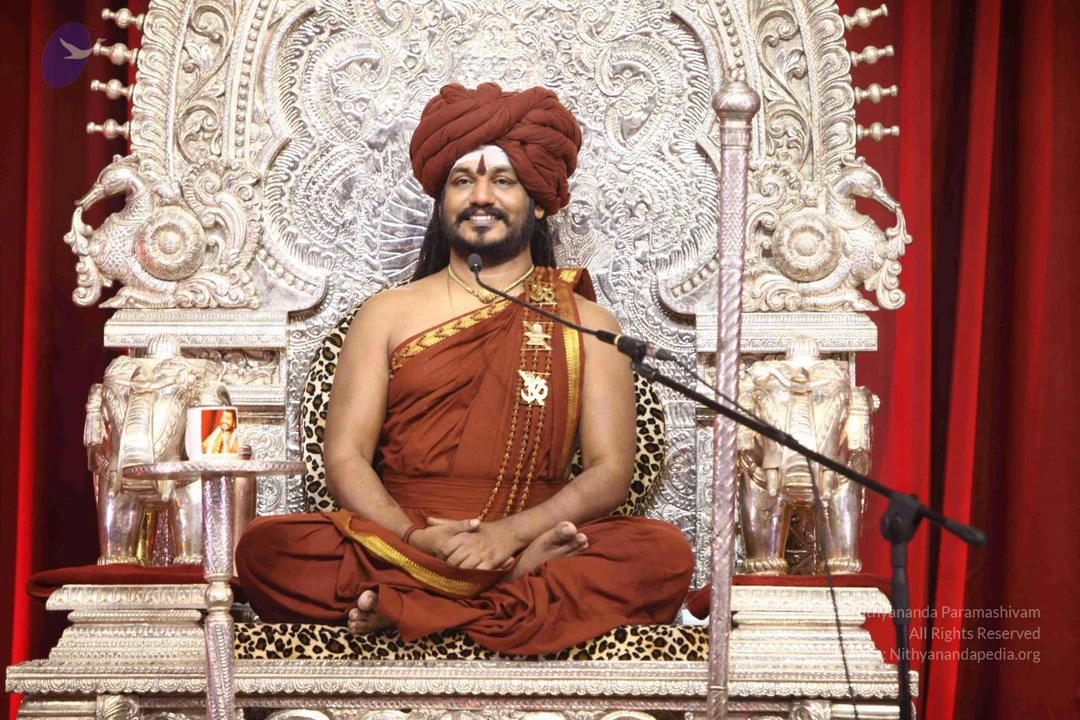
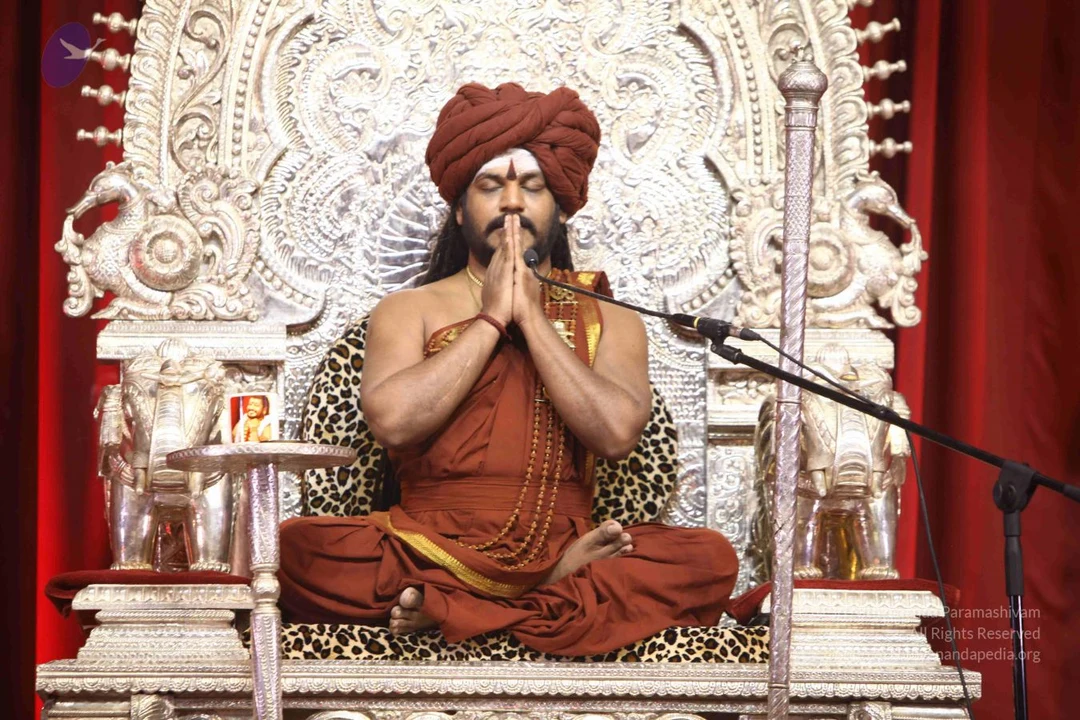
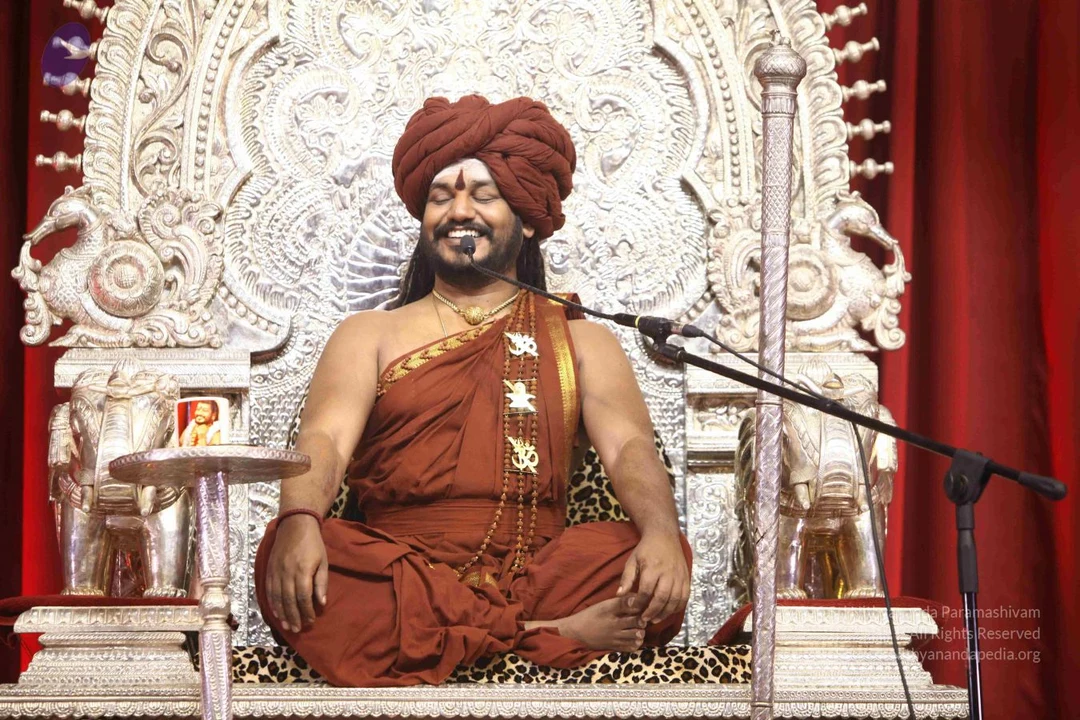
A man seated cross-legged in meditation on an ornate silver throne with carved elephant-head armrests and a leopard-print seat cover, eyes closed. He wears a rust-orange turban with a red tilak mark on his forehead, an orange-saffron robe with gold border, layered gold and beaded necklaces, and a rudraksha mala. A microphone stands before him against red drapery, and a silver staff rests beside the throne. Both hands rest on his knees in a calm, still pose. The appearance and ornate throne setting match the Swamiji (probable) cues of a turban, saffron robe, rudraksha mala and ceremonial gold necklaces, seated in a discourse setting.A seated man in saffron-orange robes sits cross-legged in meditation on an ornate silver throne with a leopard-print cushion, eyes closed and hands resting on his knees. He wears a rust-red turban, a tilak on his forehead, a gold-edged orange shawl, layered gold chains and a rudraksha mala with a pendant. A microphone stand stands beside him, and red curtains frame the stage. The scene suggests a live talk or darshan. Swamiji (probable): the seated figure has long dark hair under the turban, a rudraksha mala and gold necklaces, with a seated presentation on a throne, so the appearance-based label is applied here.A man seated cross-legged with eyes closed on an ornate silver throne with a leopard-skin cushion, in front of red drapes and a silver-carved backrest. He wears a rust-orange turban, a rust-orange robe edged with gold, and a long gold-beaded necklace with a pendant, and has a red tilak on the forehead. A microphone stands before him and a silver ceremonial staff is at his side. The clothing and presentation are consistent with the candidate; a person is seated on the throne, giving a talk.A seated man in meditation on an ornate silver-white throne (peetha) with carved floral and arched backrest, draped in a leopard-print cushion. He wears a rust-orange turban, a saffron-orange dhoti-style wrap and a rudraksha mala with gold ornaments, and a tilak on his forehead. A microphone on a stand is beside him, and a red curtain forms the backdrop. Probable Swamiji (long hair, orange and ornate clothing, rudraksha mala, ceremonial throne) seated in meditation during a public talk. A small silver pedestal lamp sits beside the throne.A seated man in saffron-orange robes and a matching turban sits cross-legged with eyes closed on an ornate silver throne carved with lions and floral scrollwork, against red drapes. A gold-bordered orange shawl crosses his chest, with gold chains and a pendant necklace, and a microphone stands at his side. A small silver tray with a lamp sits beside him. Red and white stripes of tilak mark his forehead. Swamiji (probable) appears as the seated figure on the throne, identified by the saffron turban, ornate gold necklaces, and the silver throne setting.A seated man in meditation with eyes closed sits cross-legged on an ornate silver throne with a leopard-print cushion, flanked by silver lion-like carvings and red curtains. He wears a rust-orange turban, a matching orange robe with gold border, a gold necklace, and multiple long rudraksha-style beaded malas, with a white tilak on his forehead. A microphone on a stand is in front of him, and a small framed photograph sits on a silver stand at left.