Skip to content
Tuesday

19 November 2013

Declare your Freedom with Sannyas.

Dated photos
420
Source pages
1
Media
2
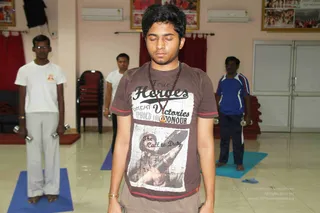
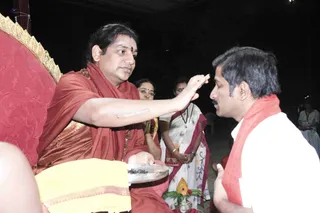
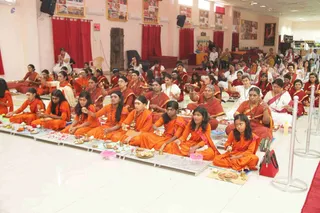
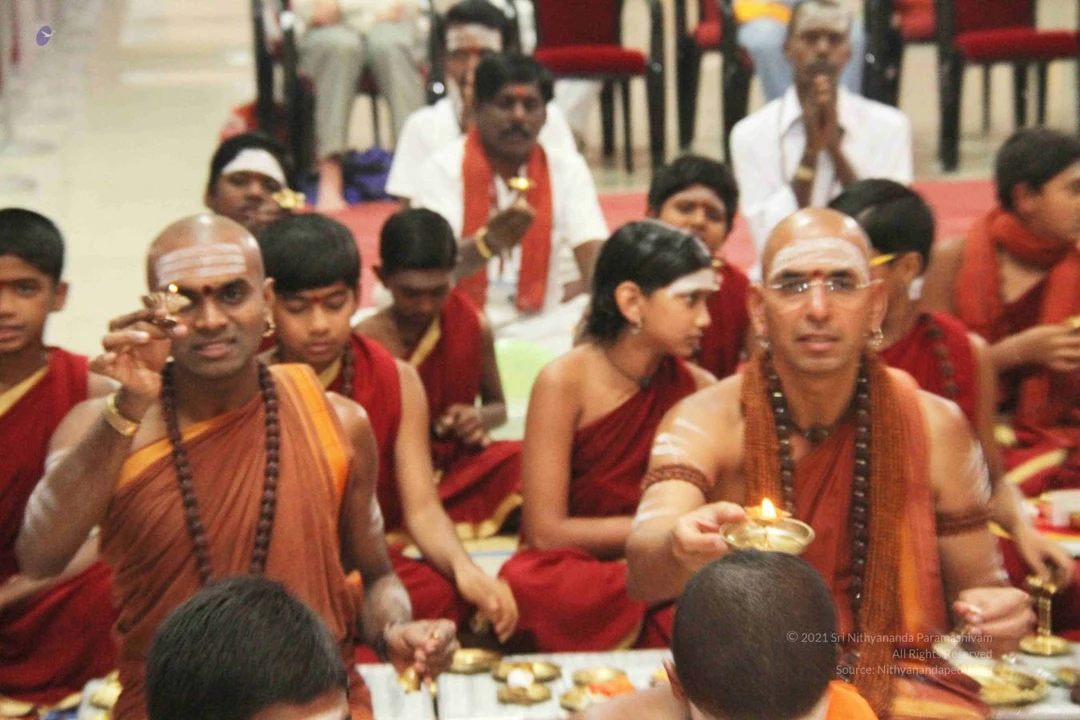
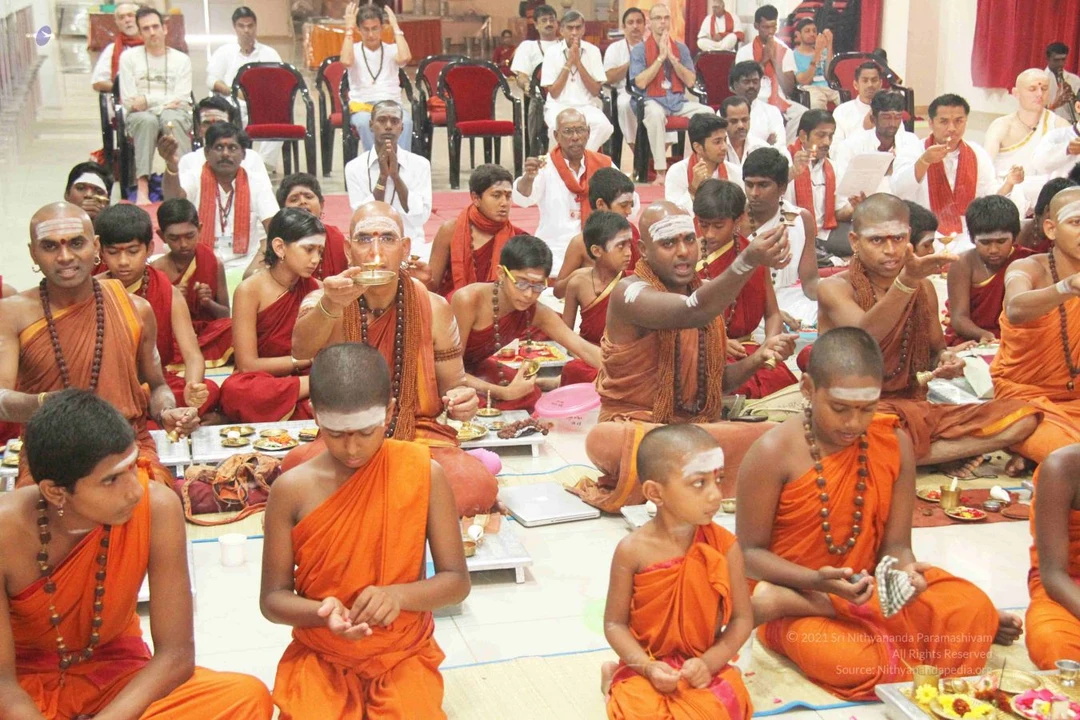
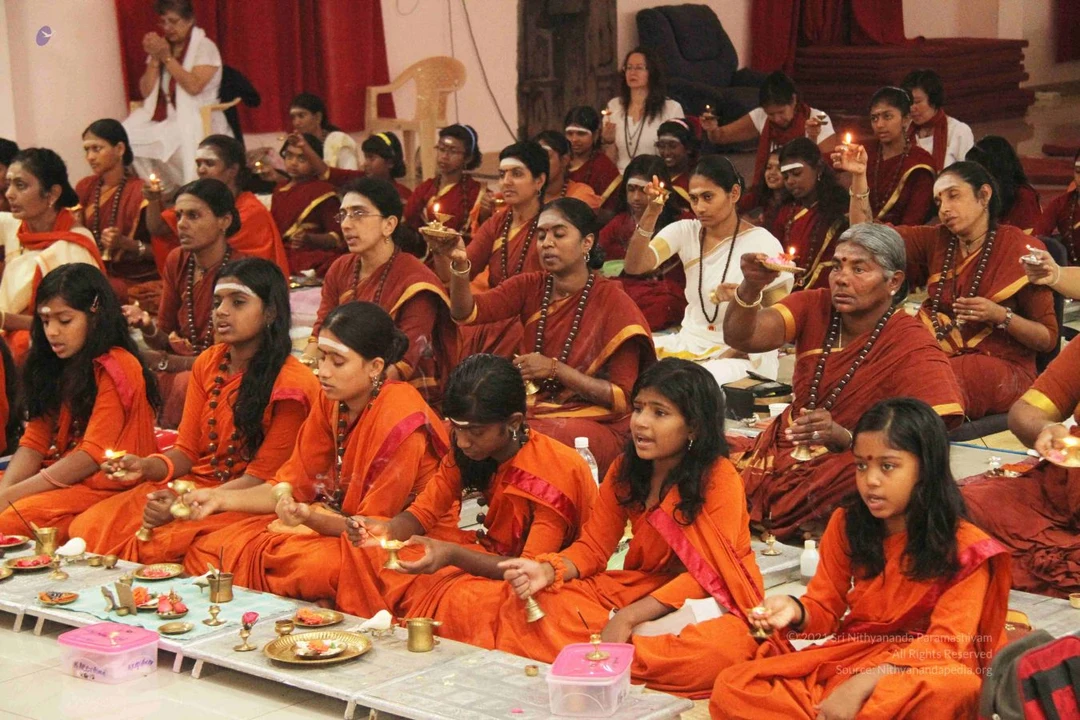
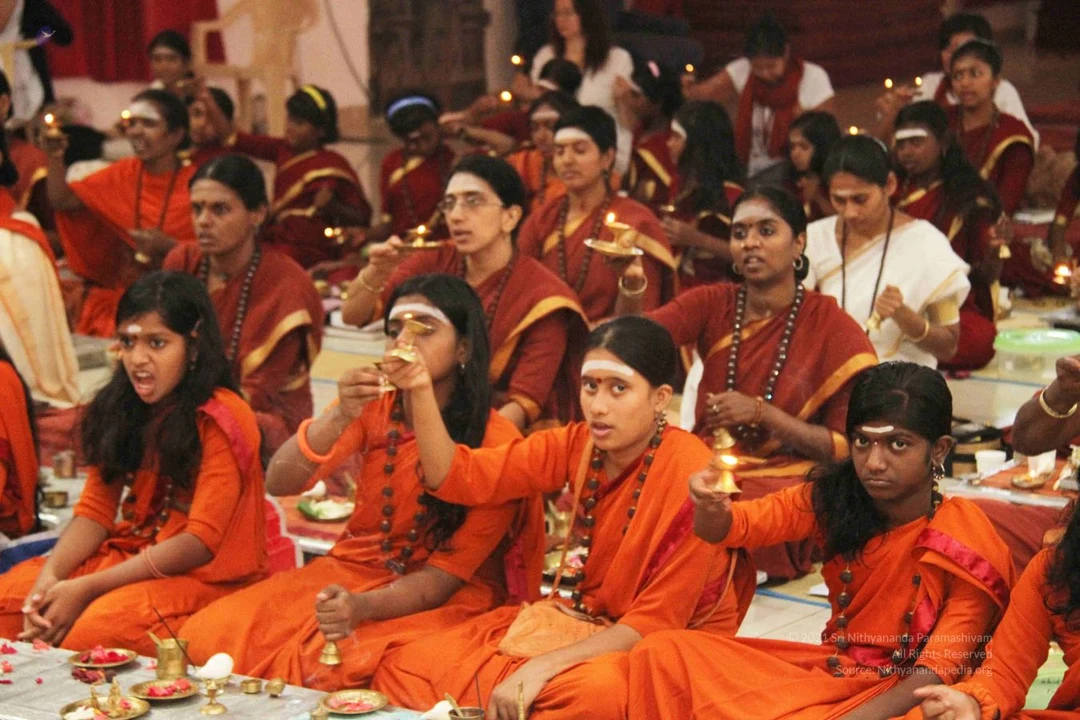
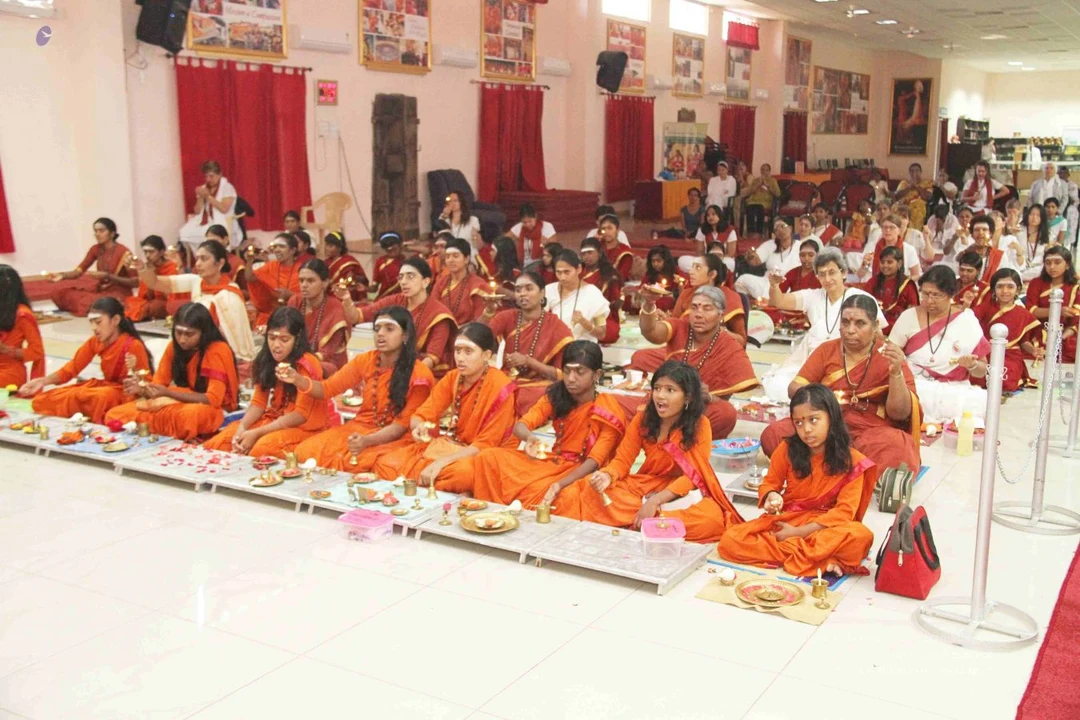
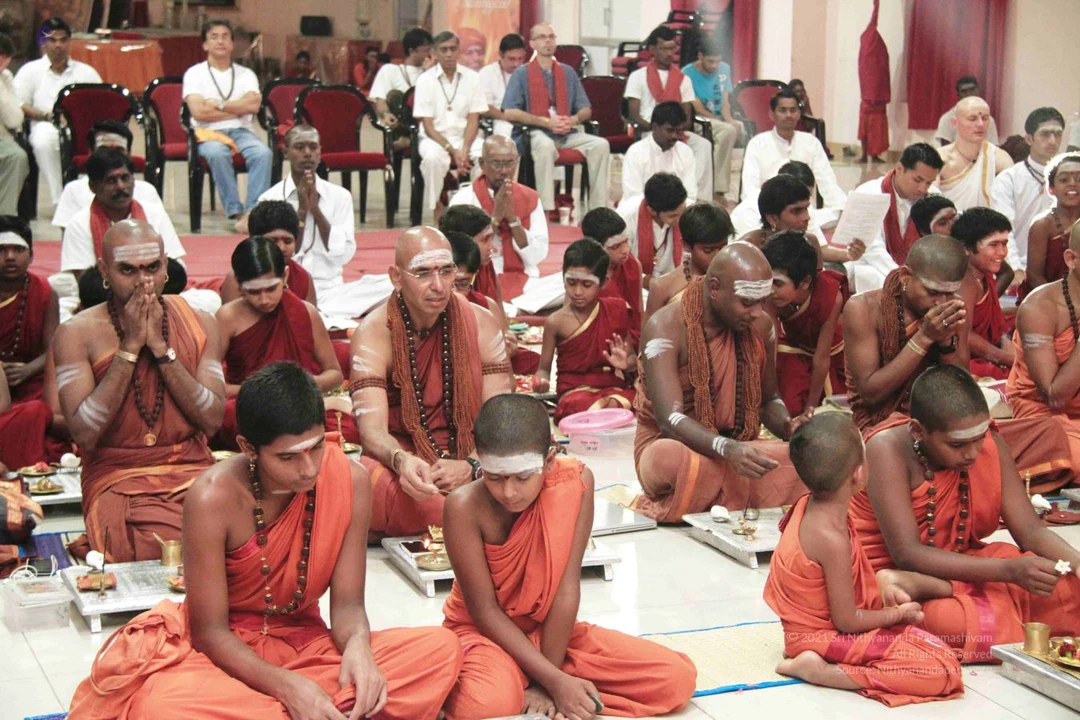
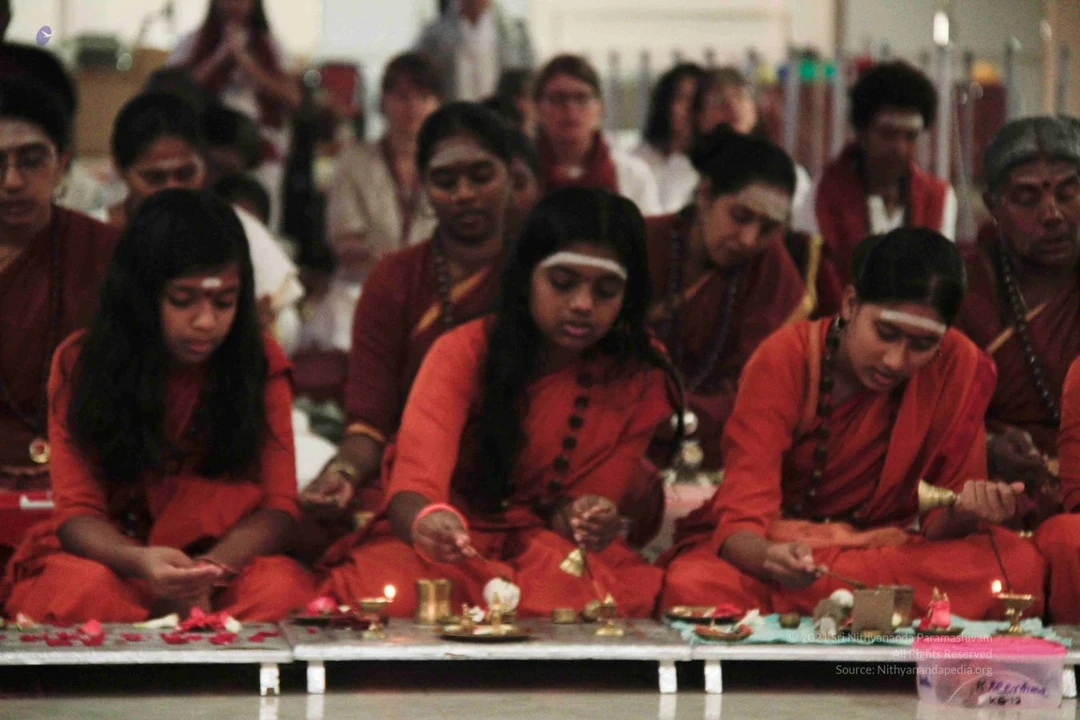
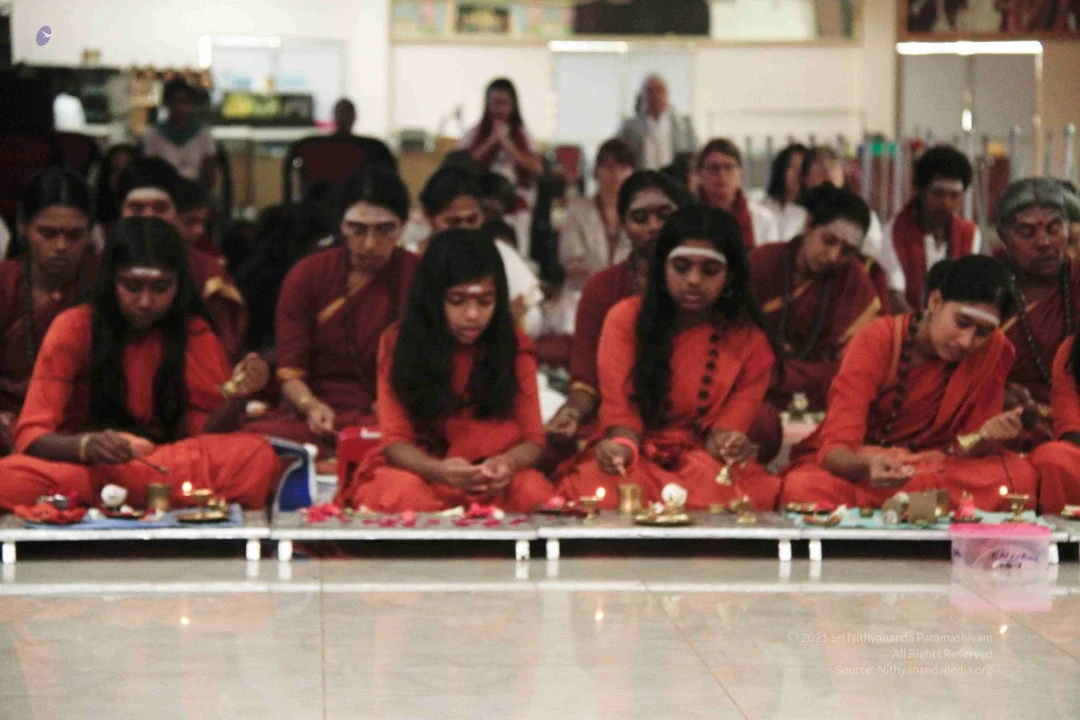
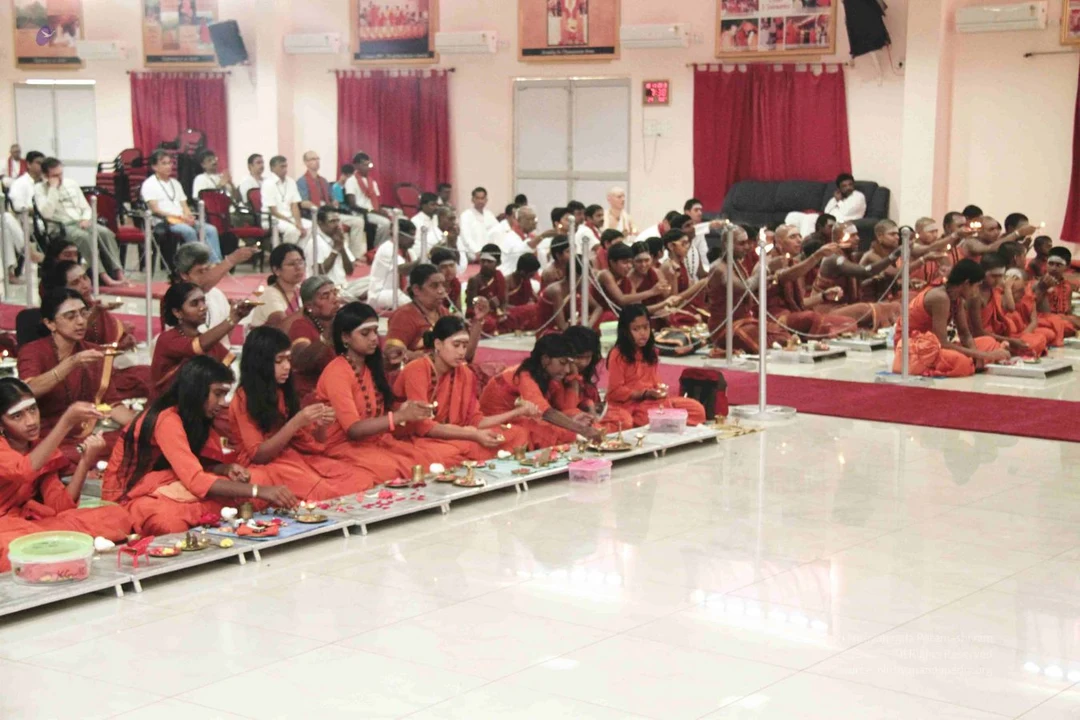
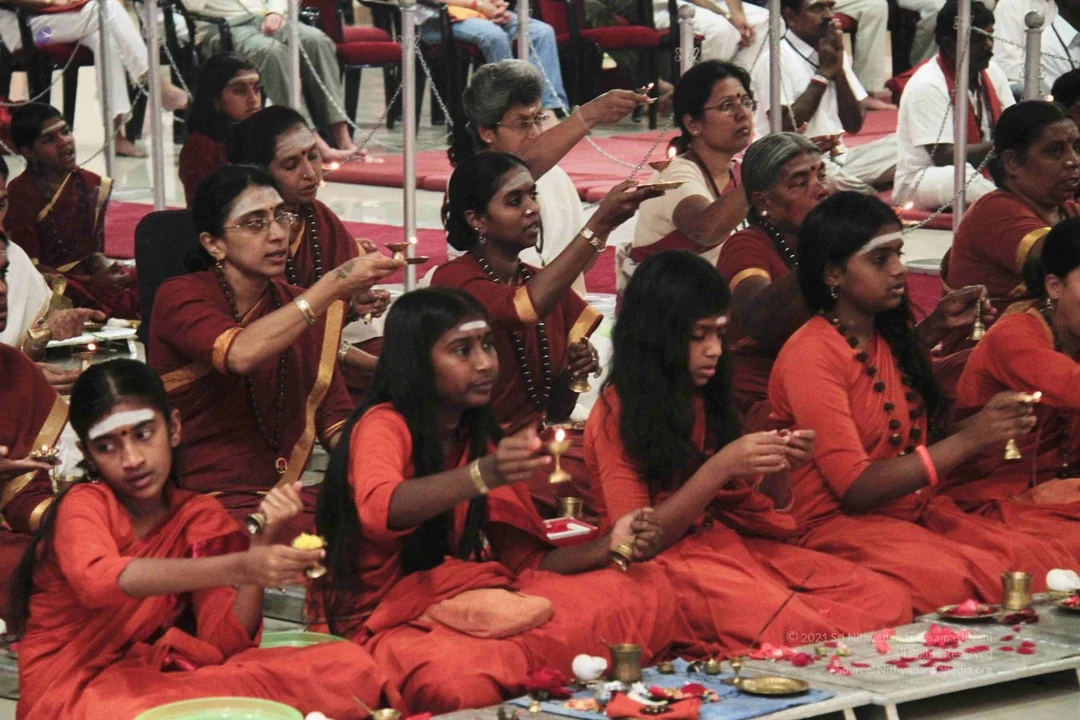
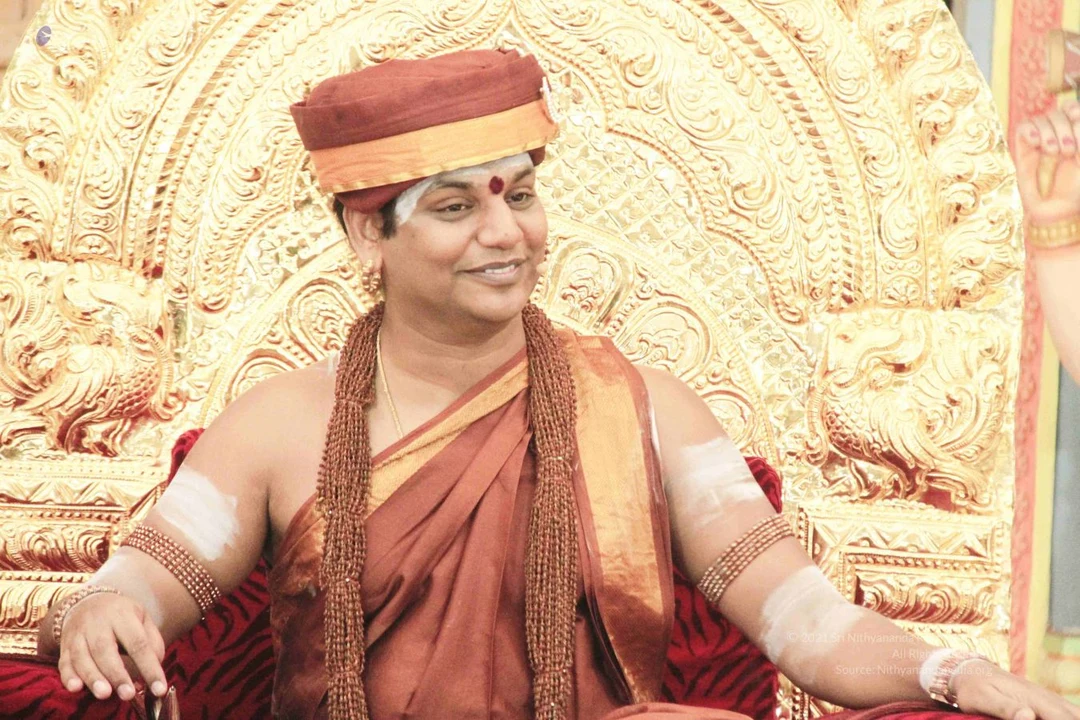
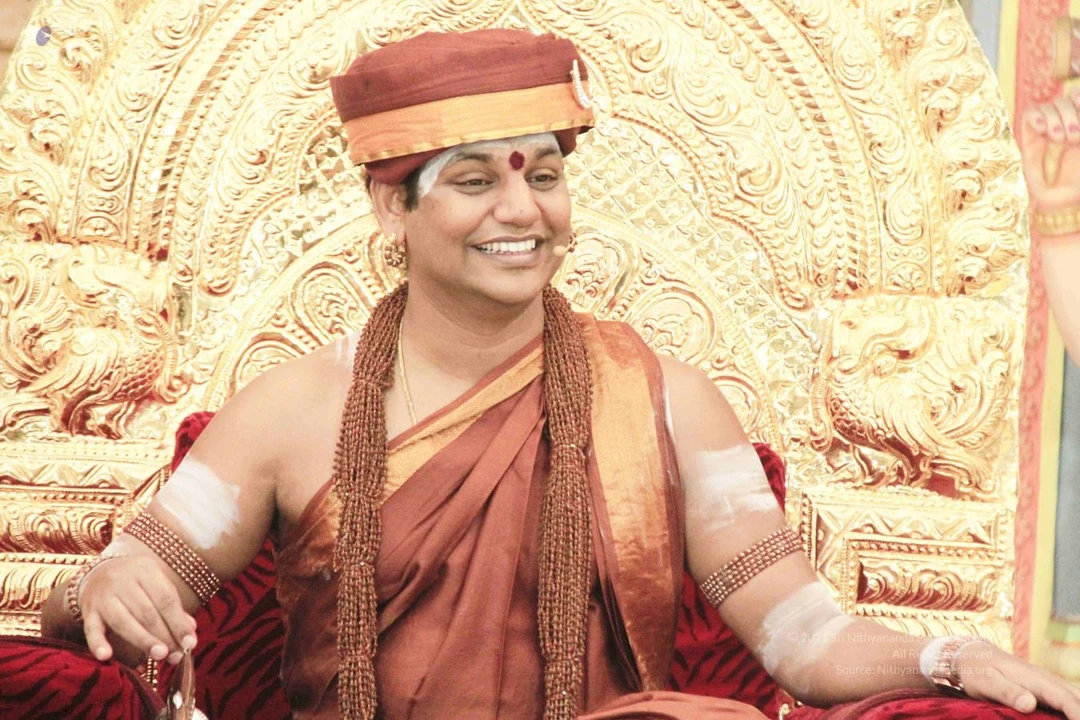
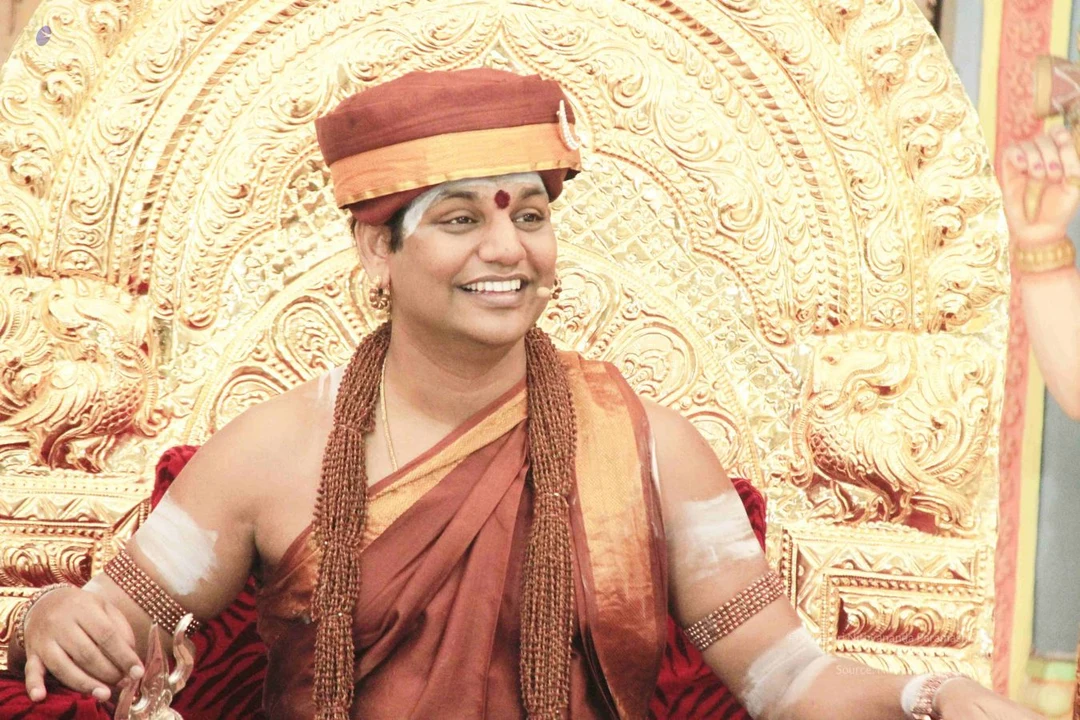
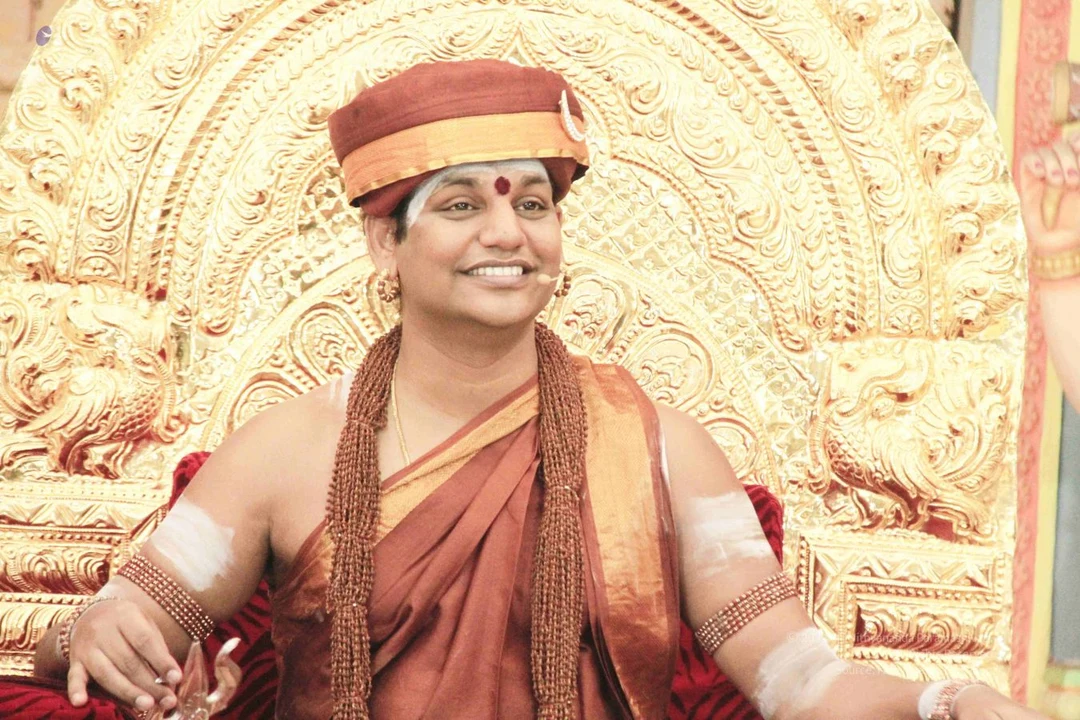
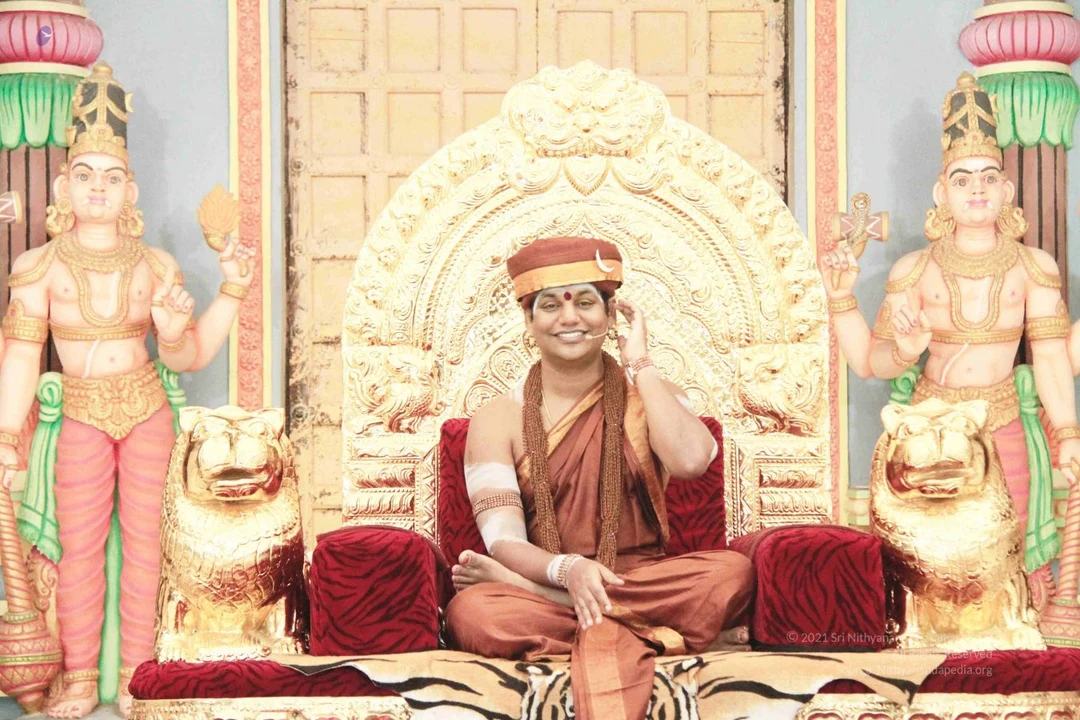
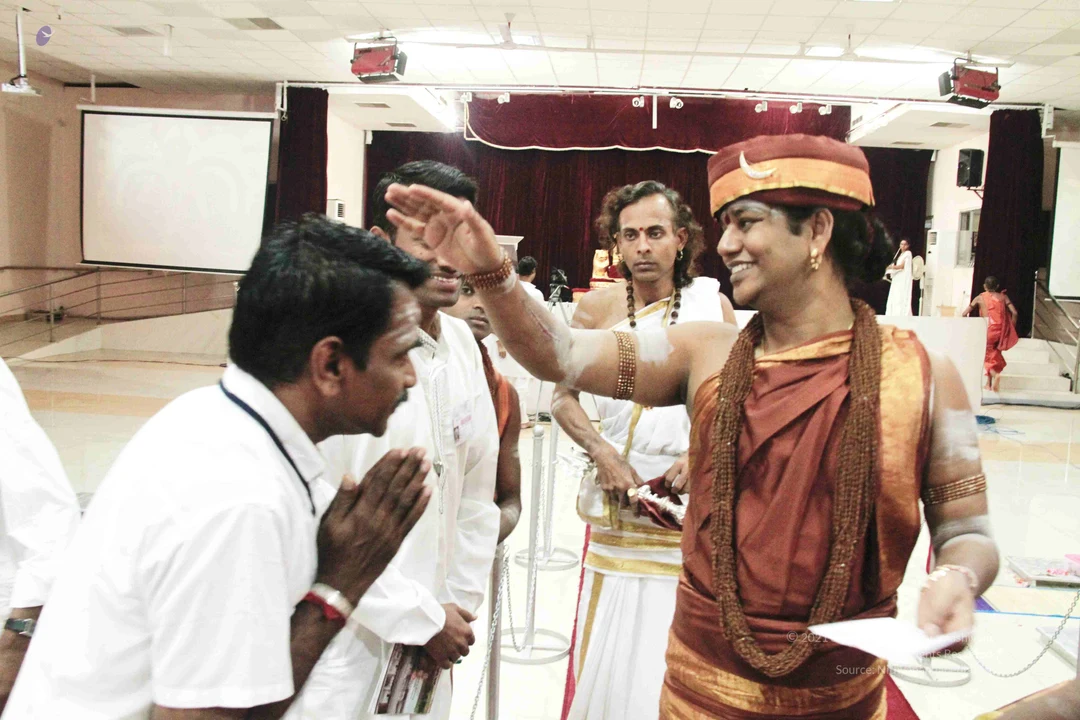
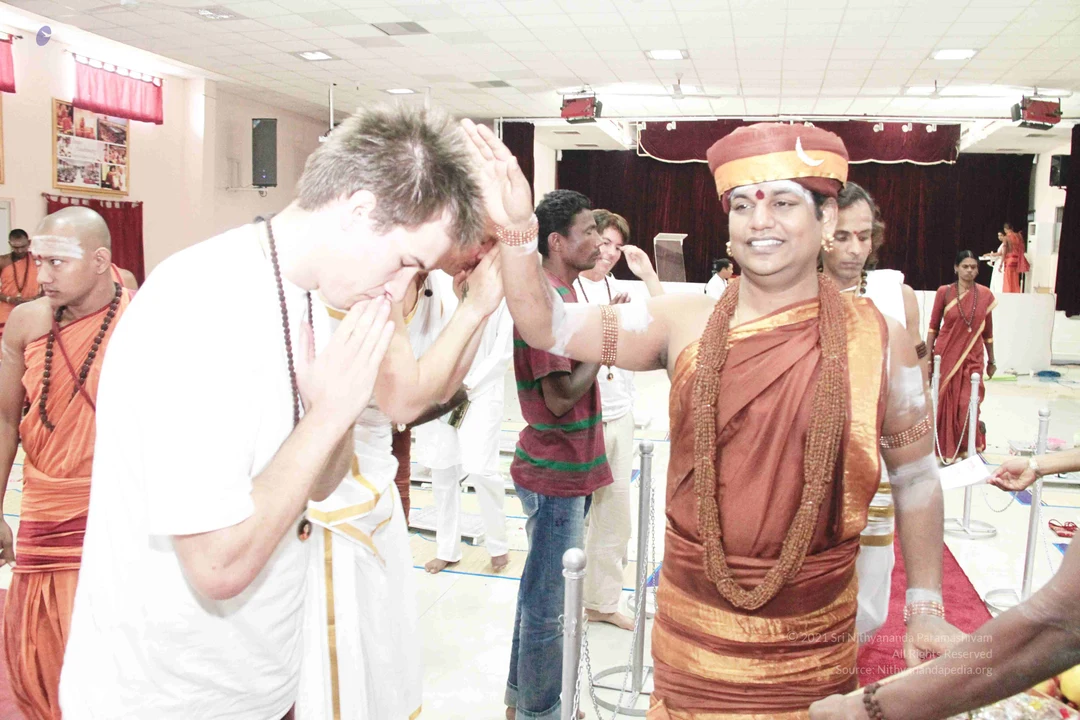
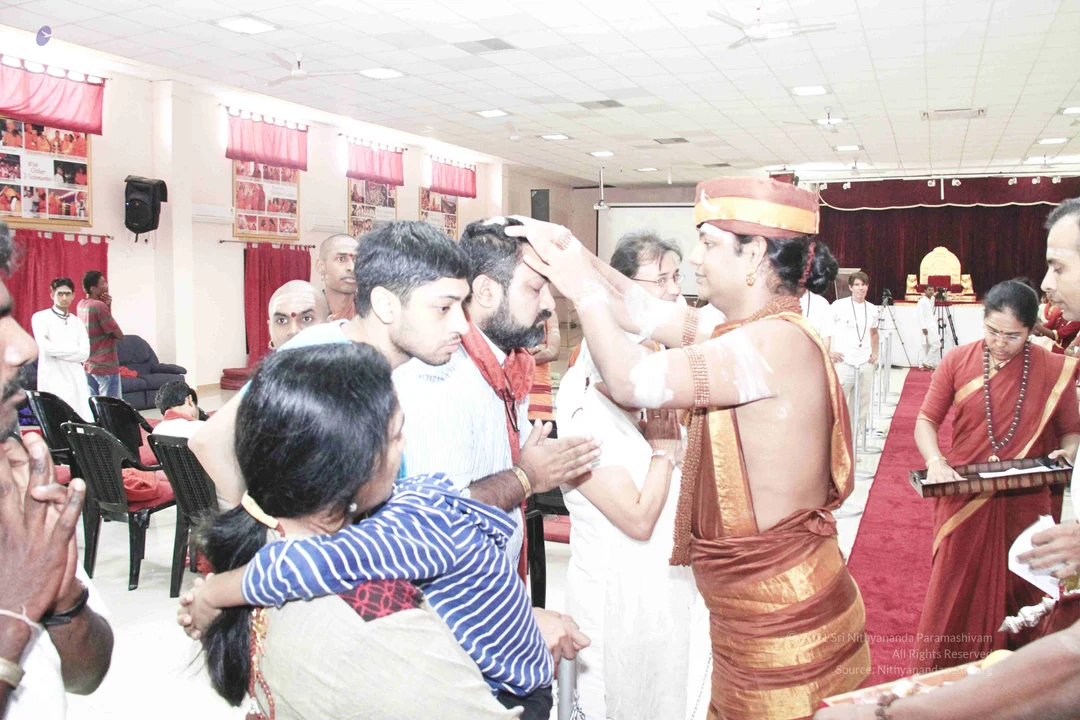
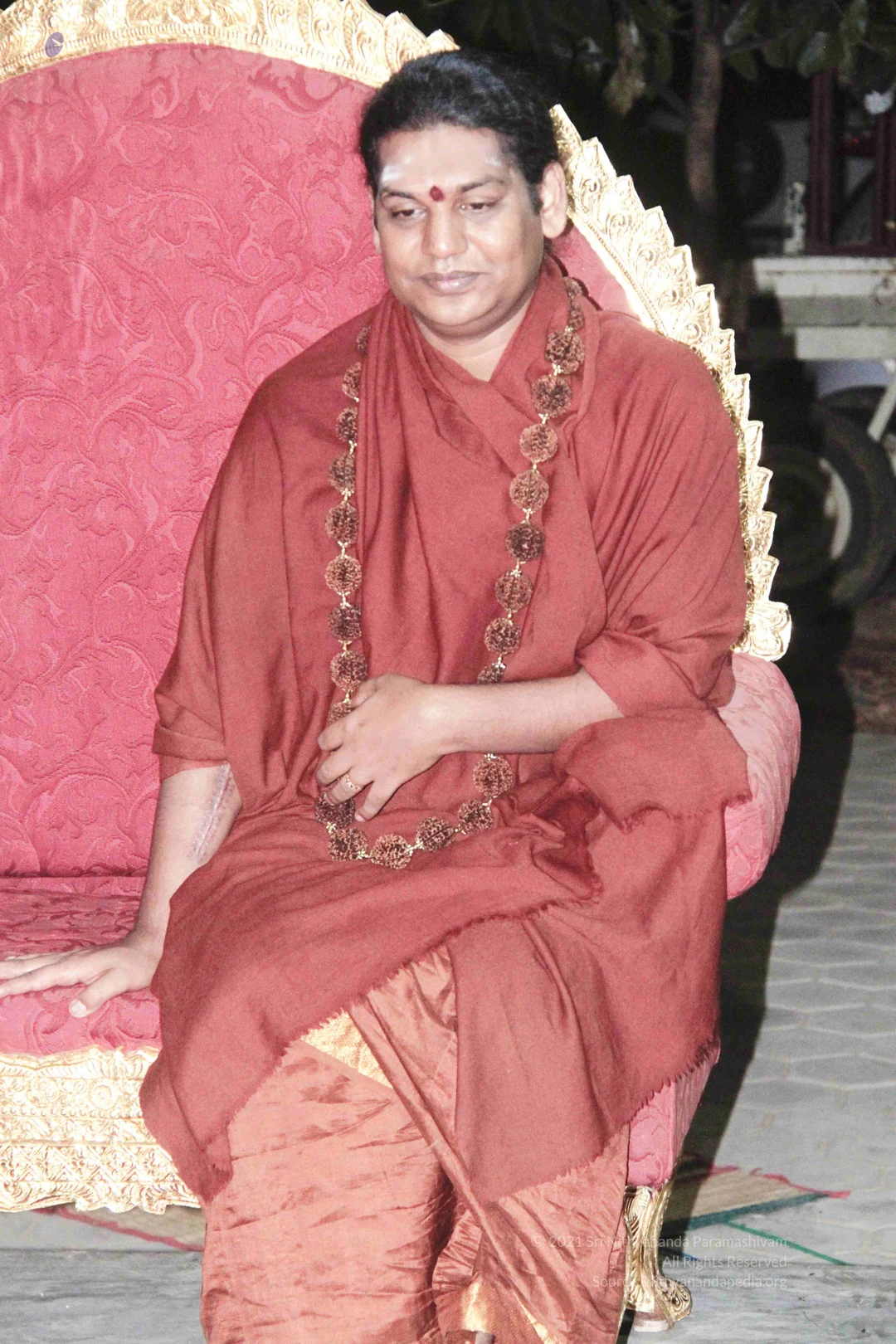
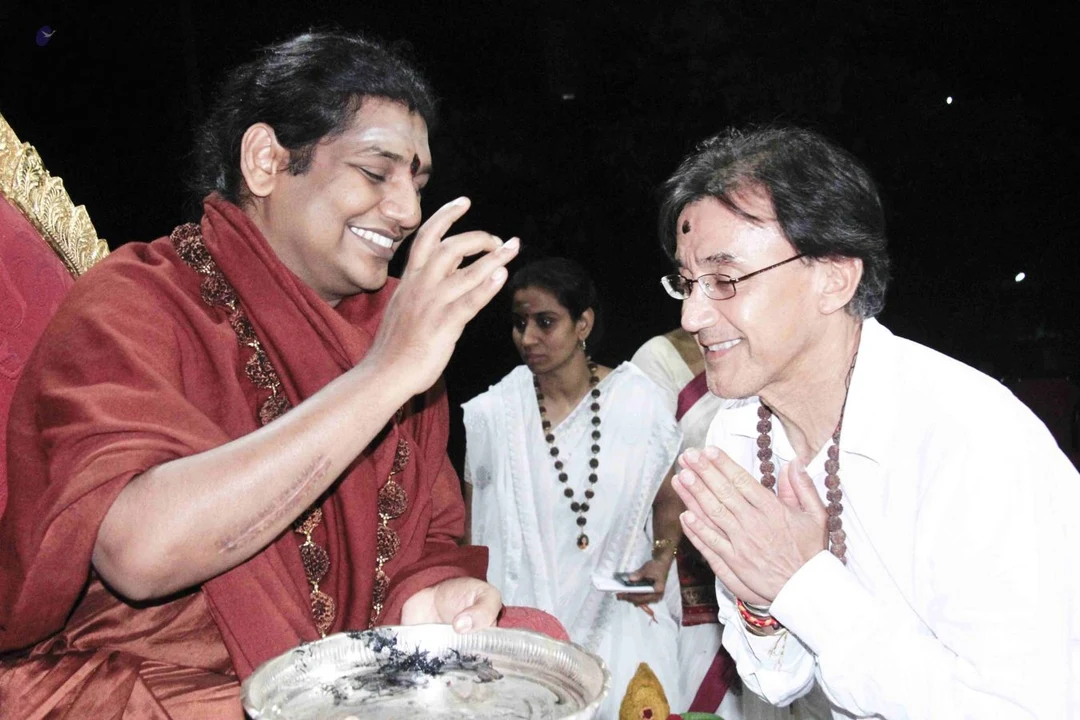
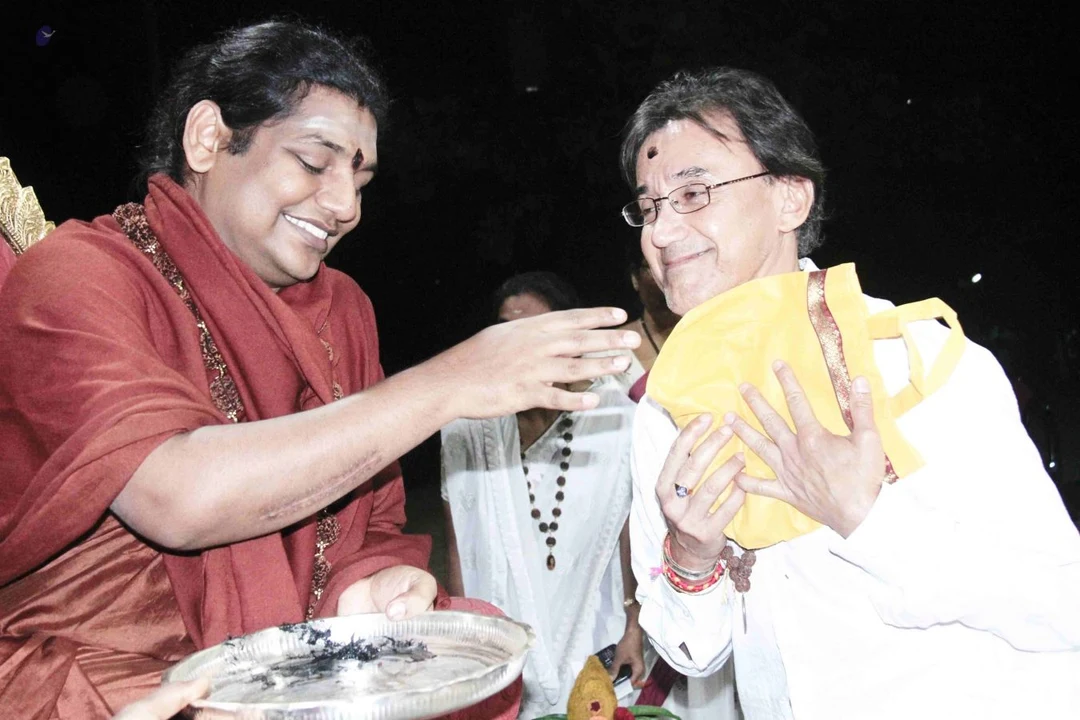
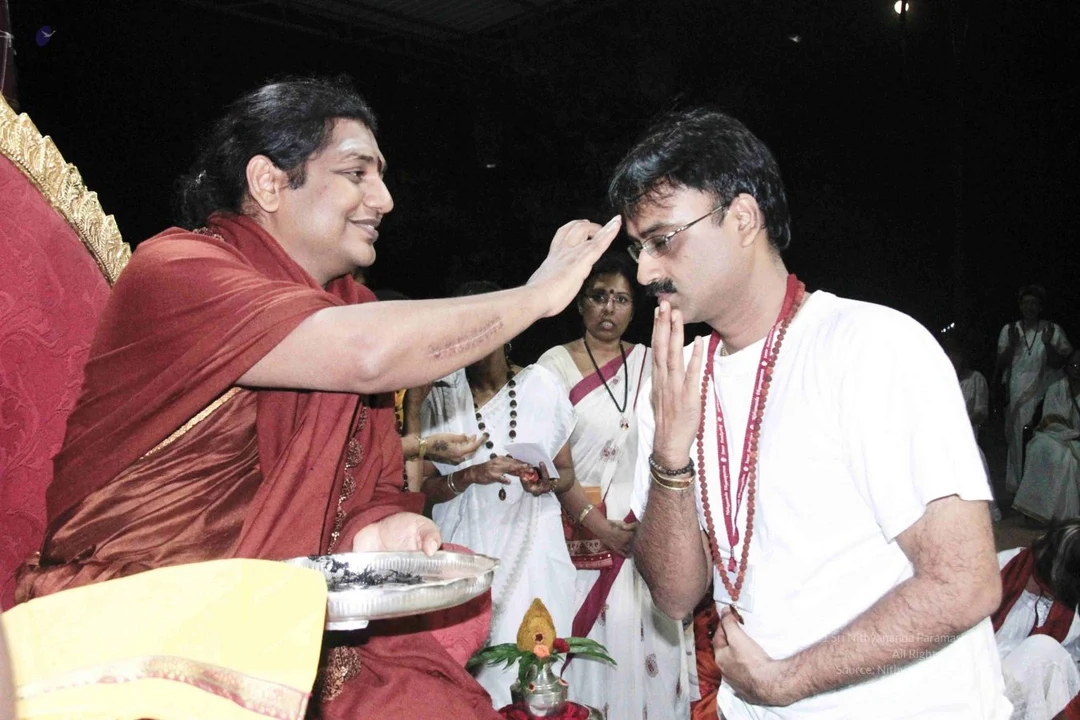
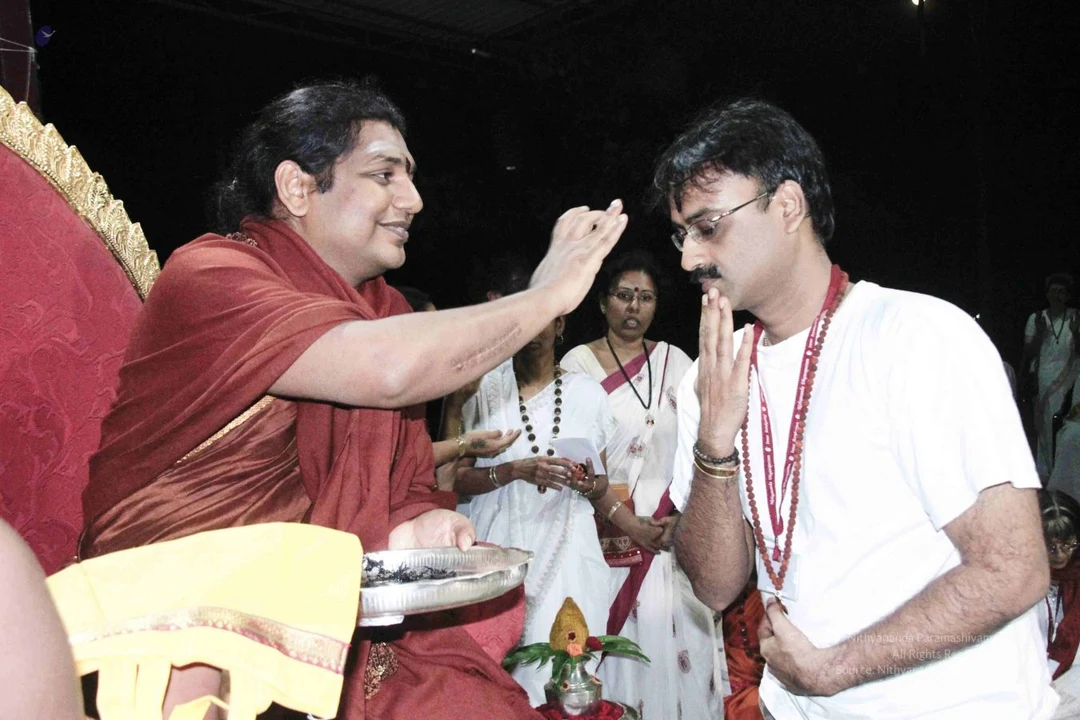
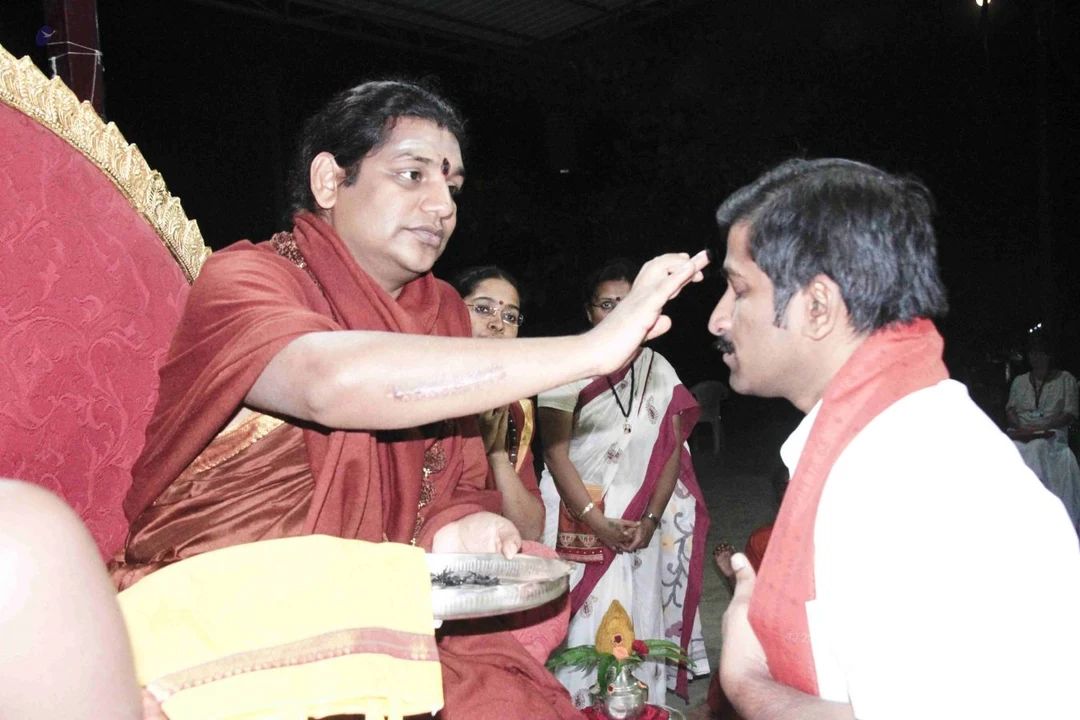
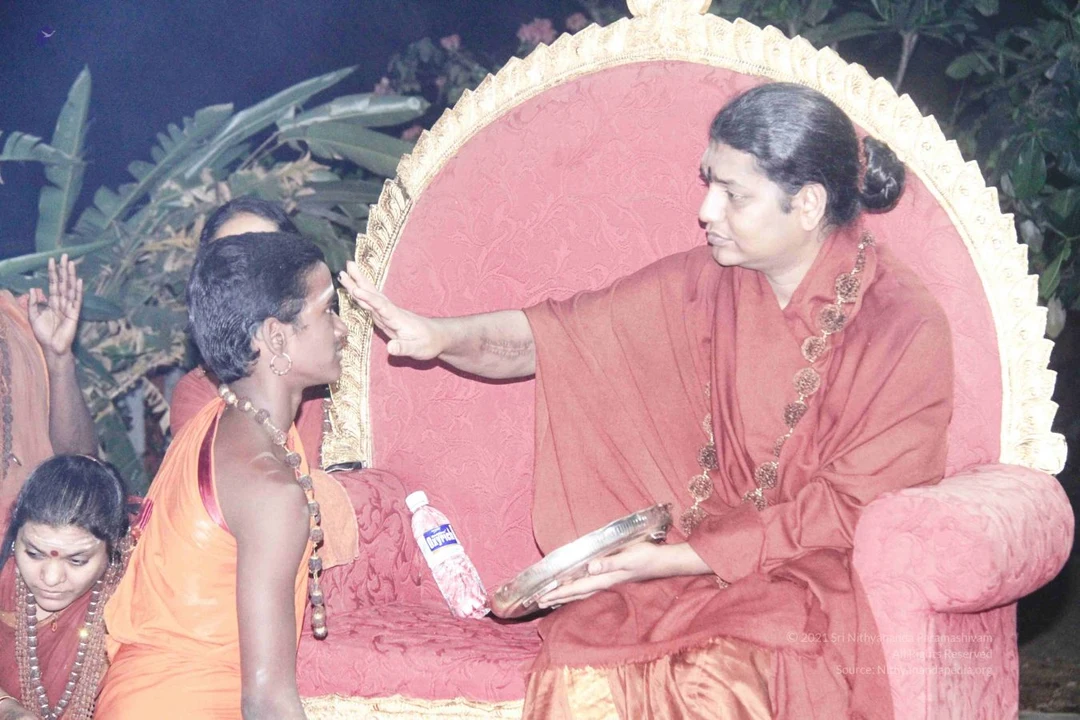
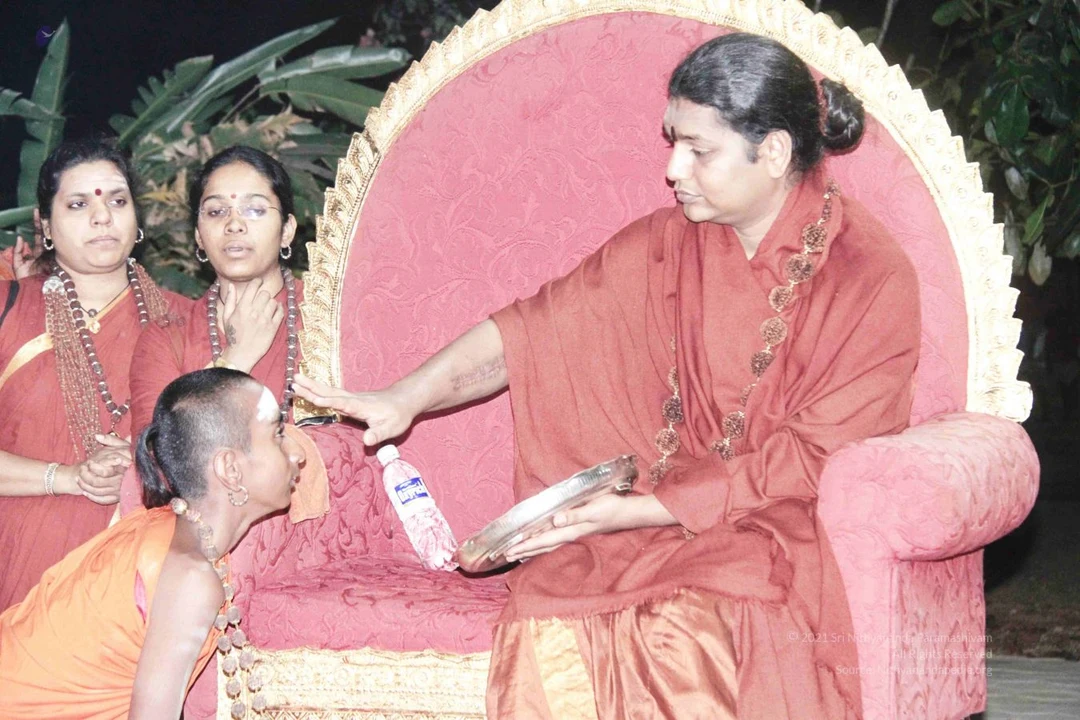
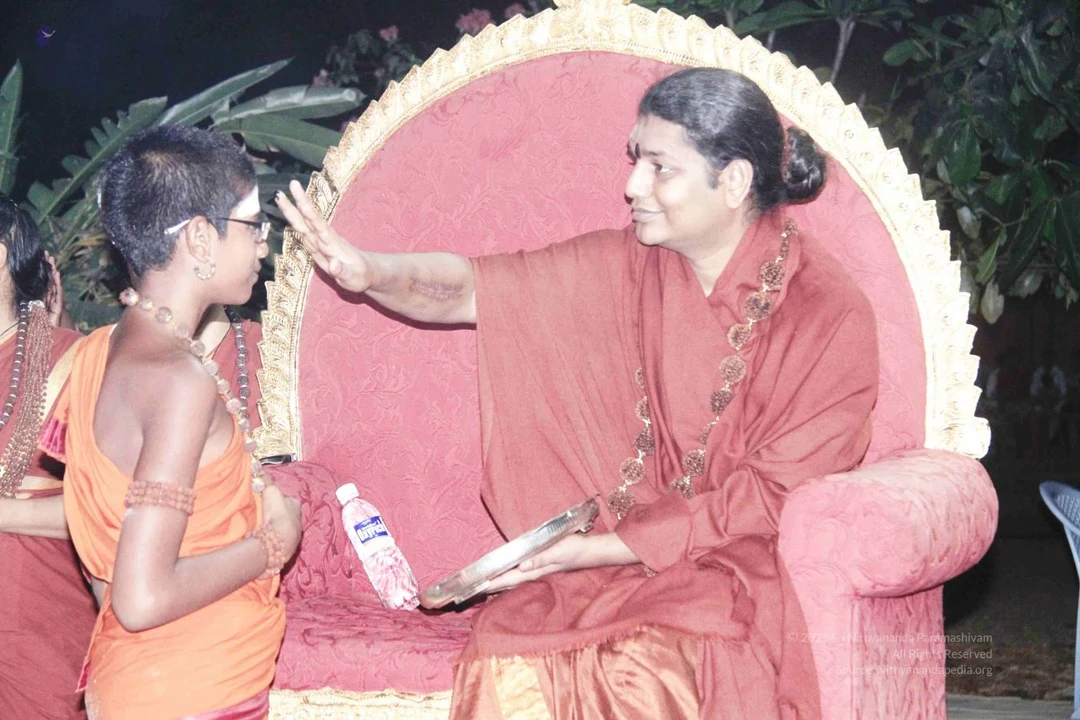
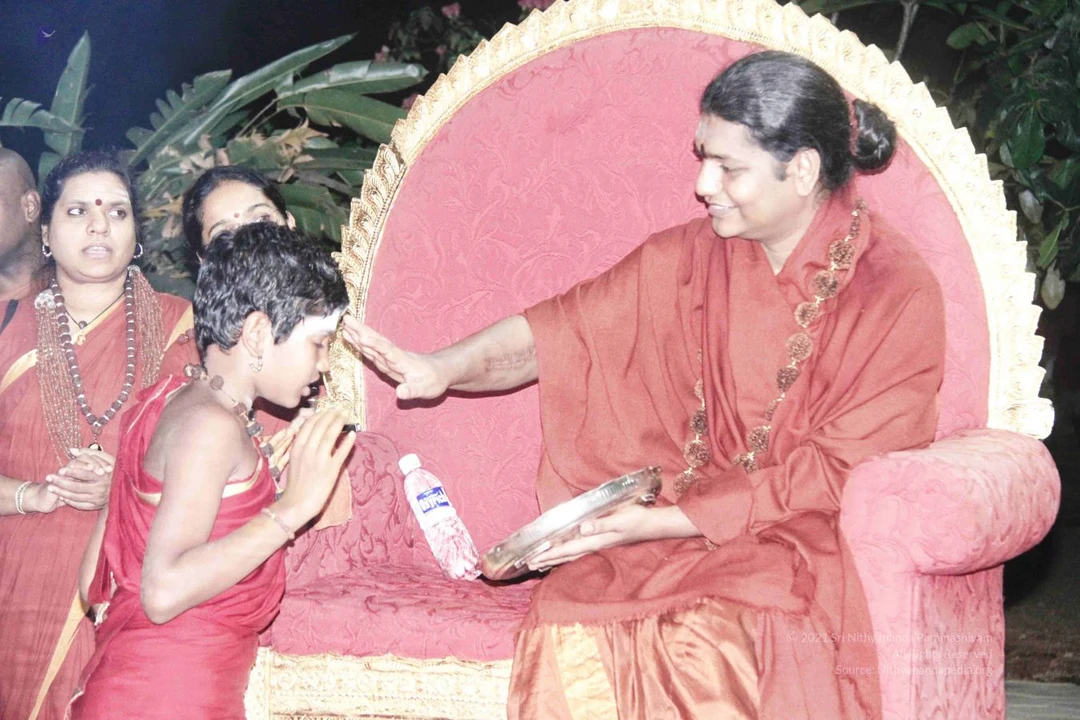
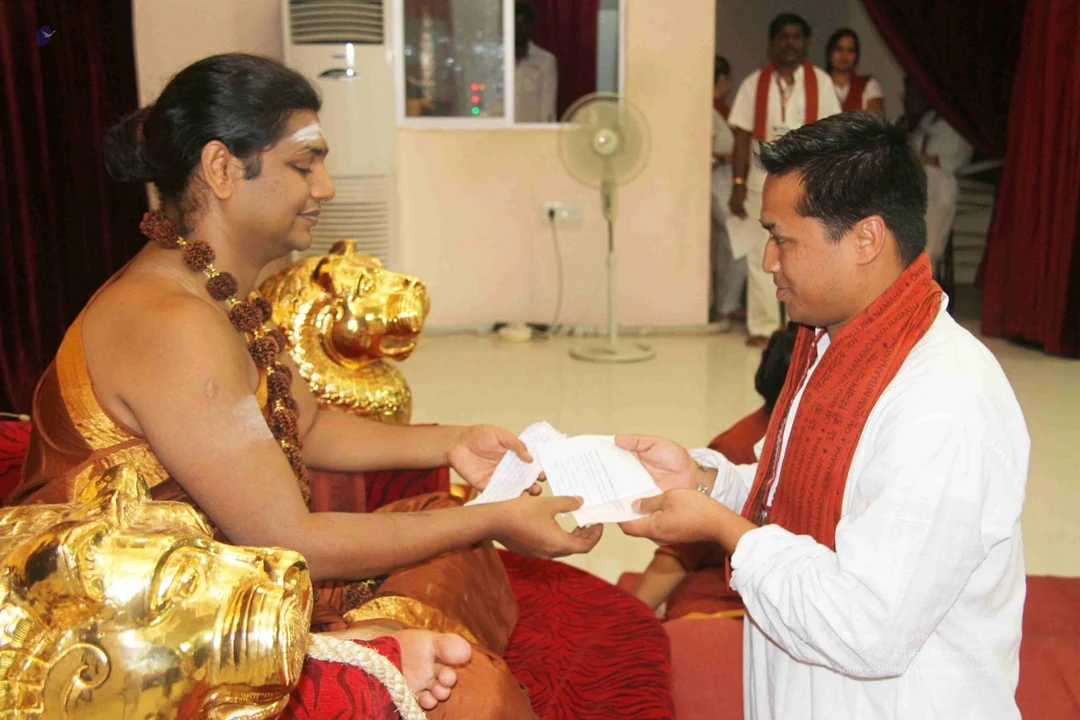
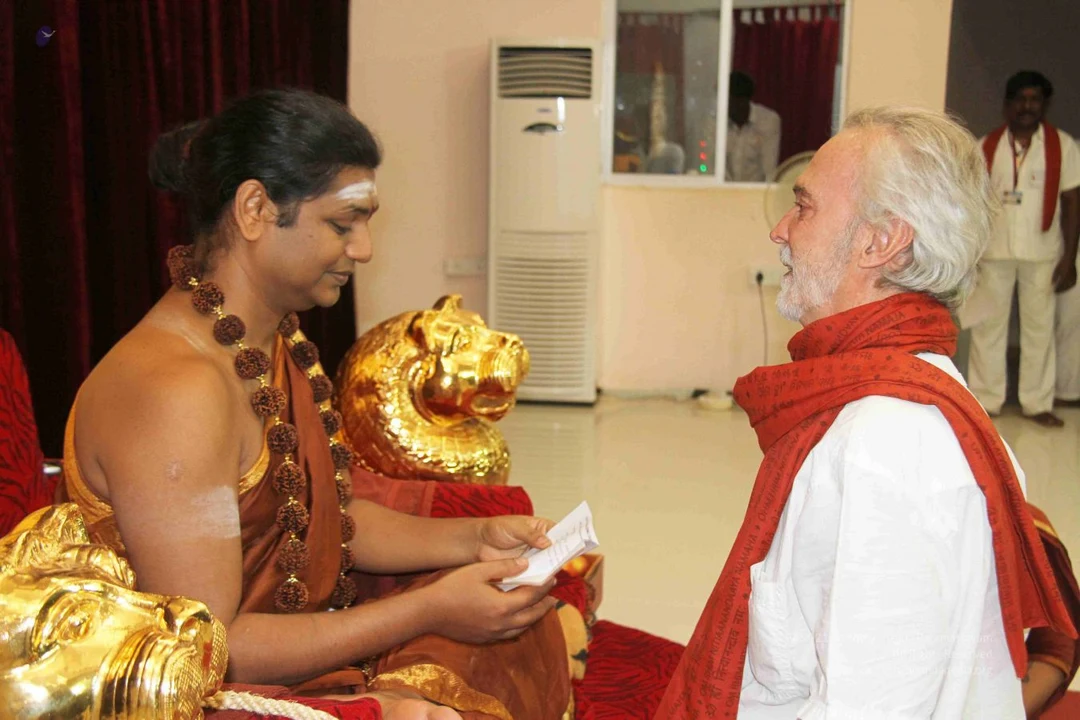
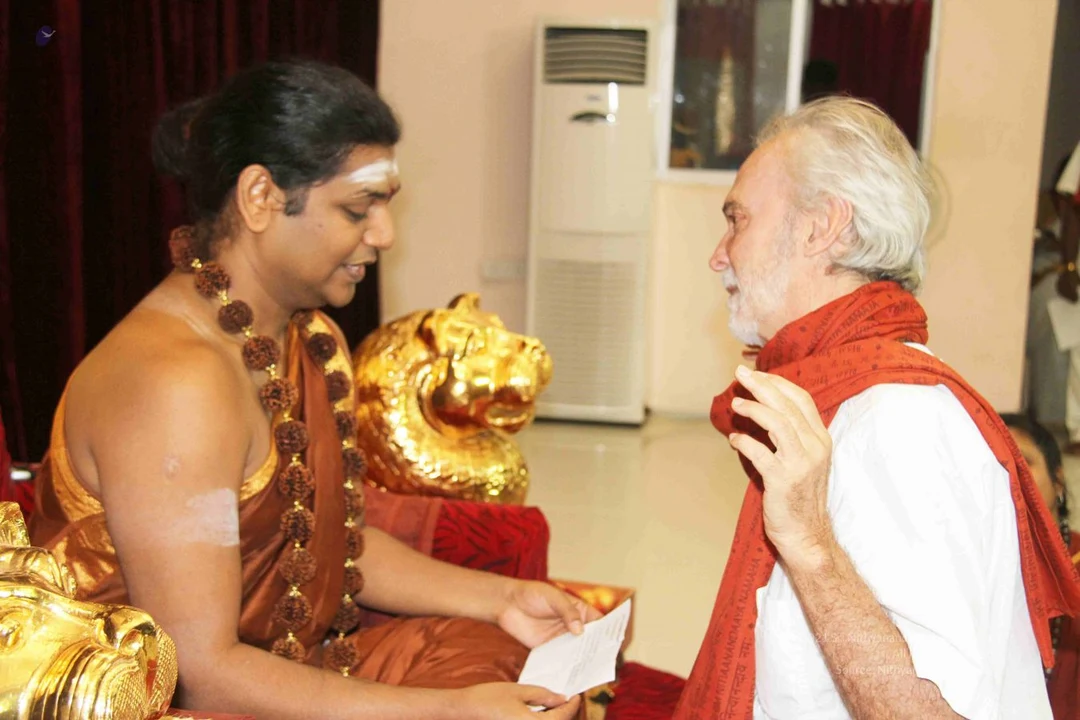
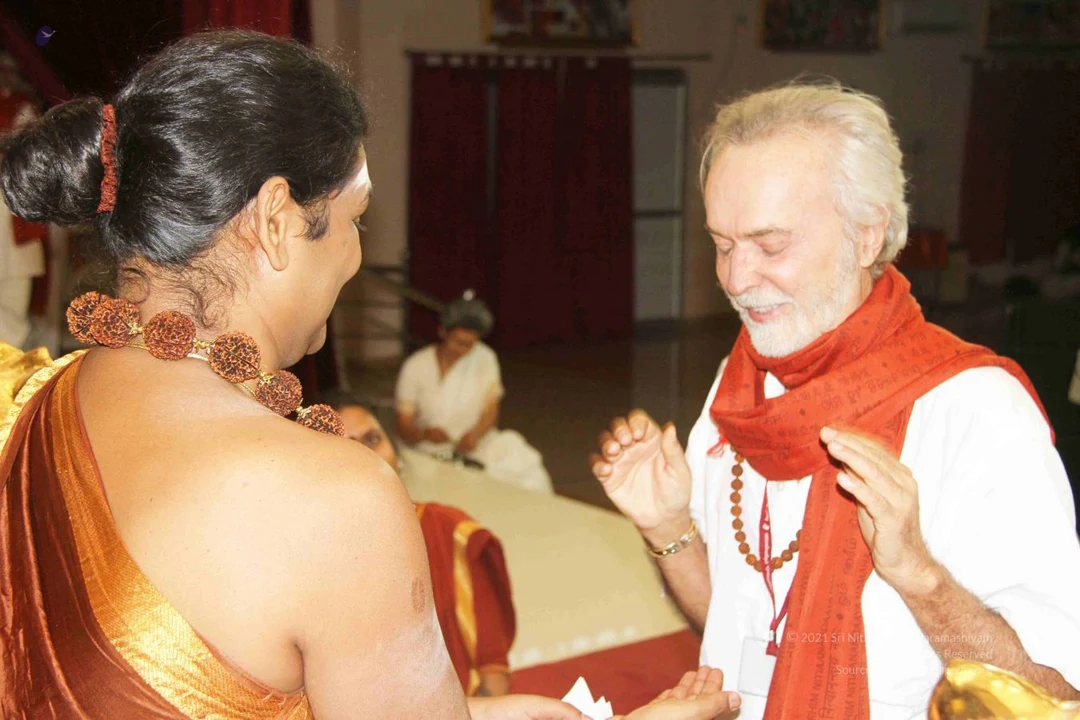
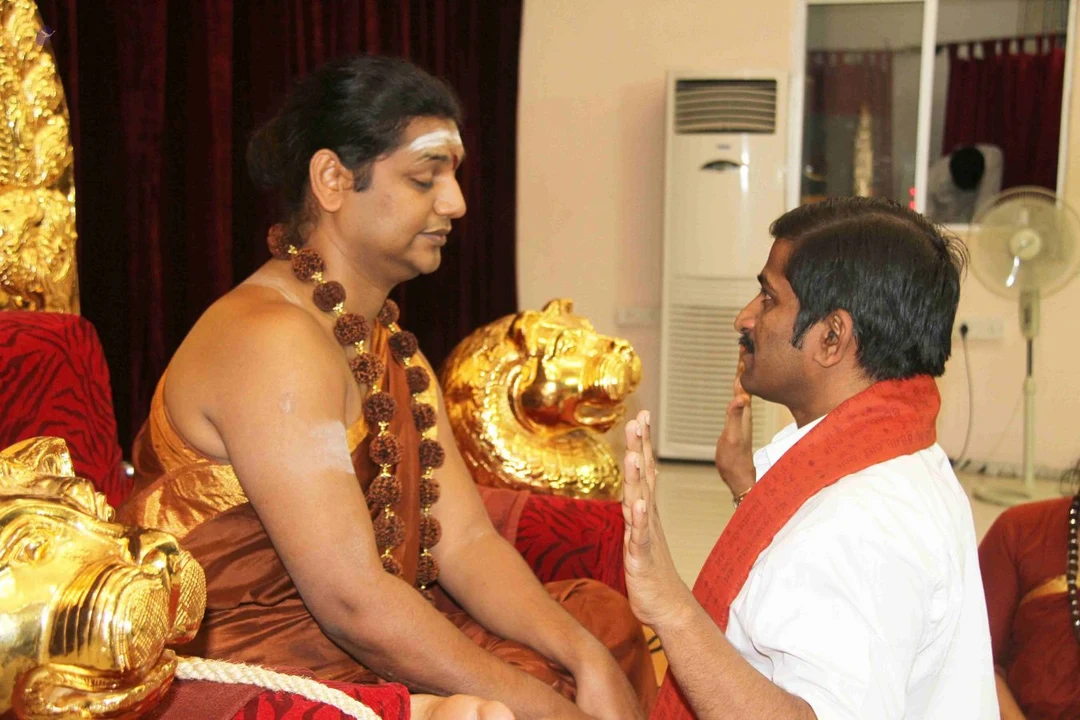
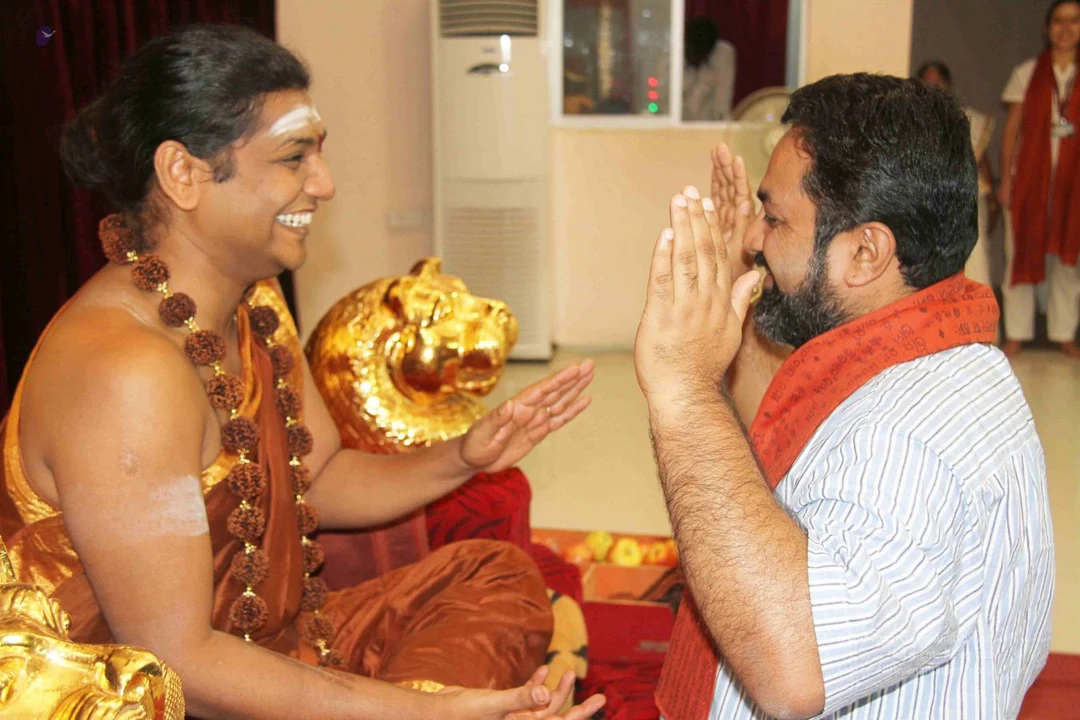
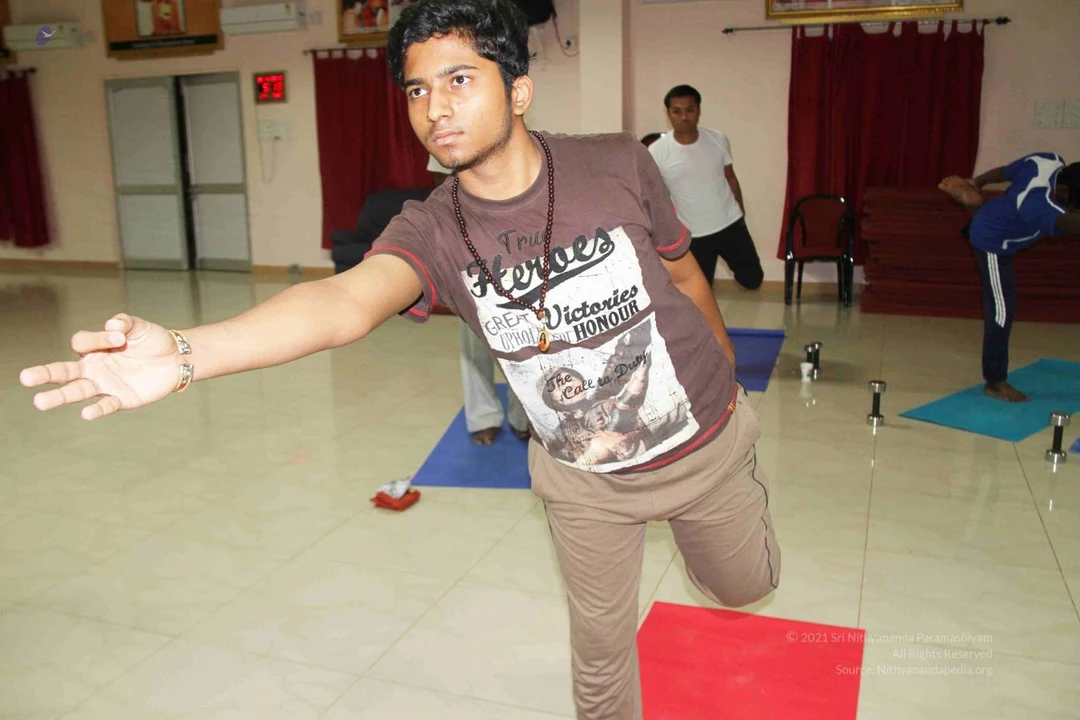
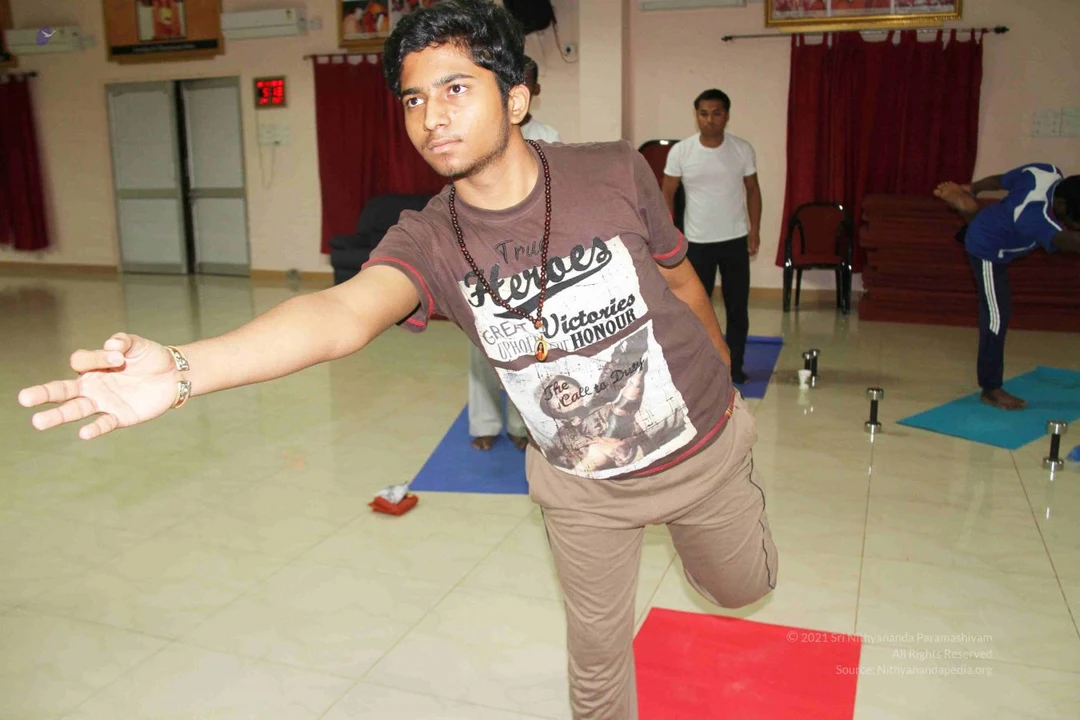
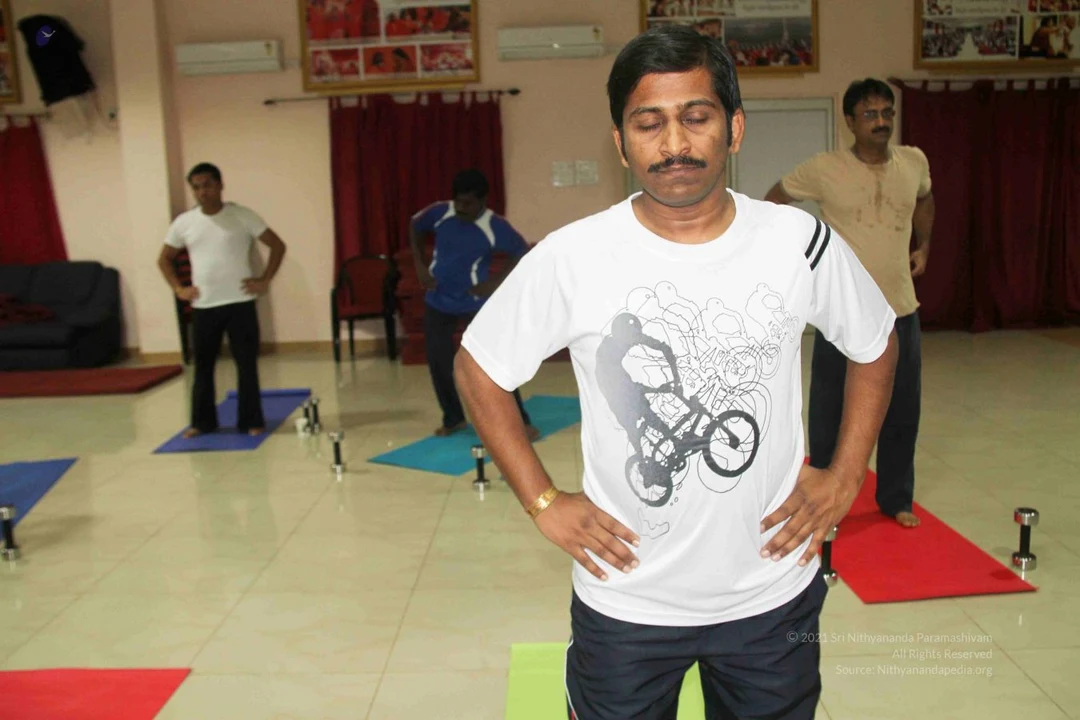
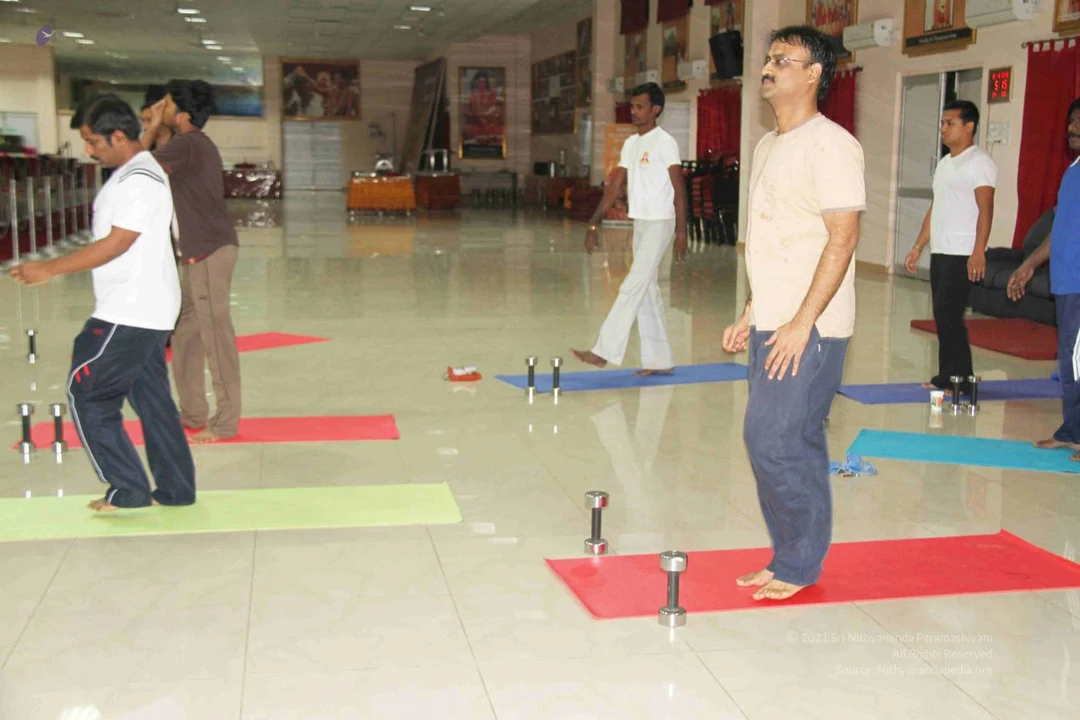
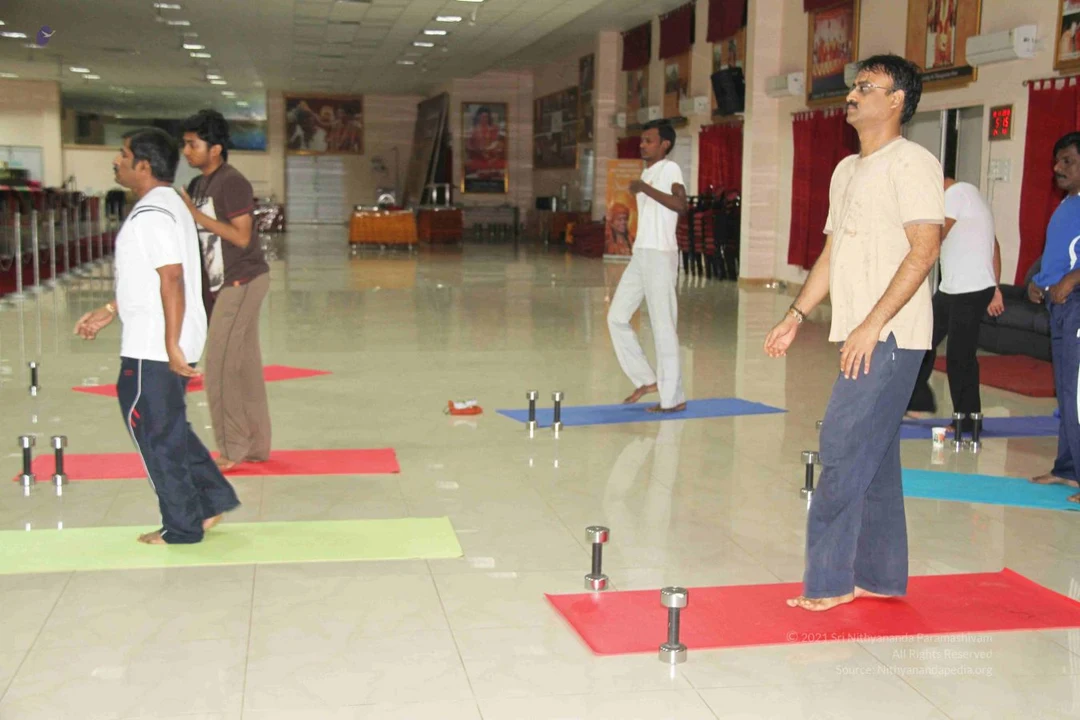
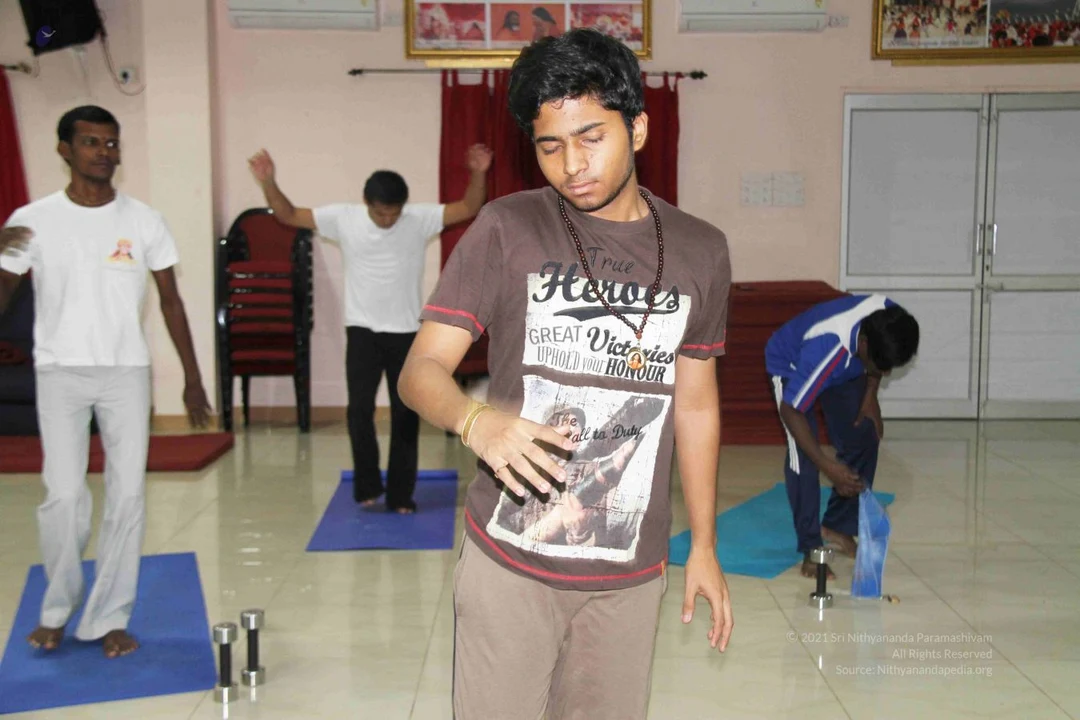
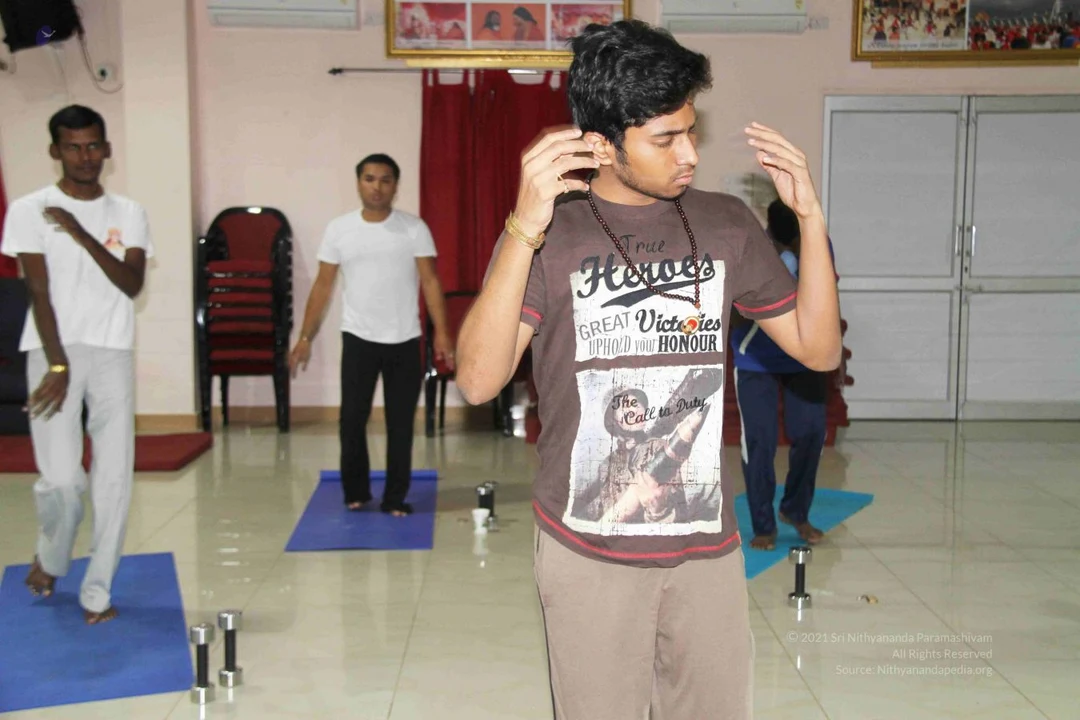
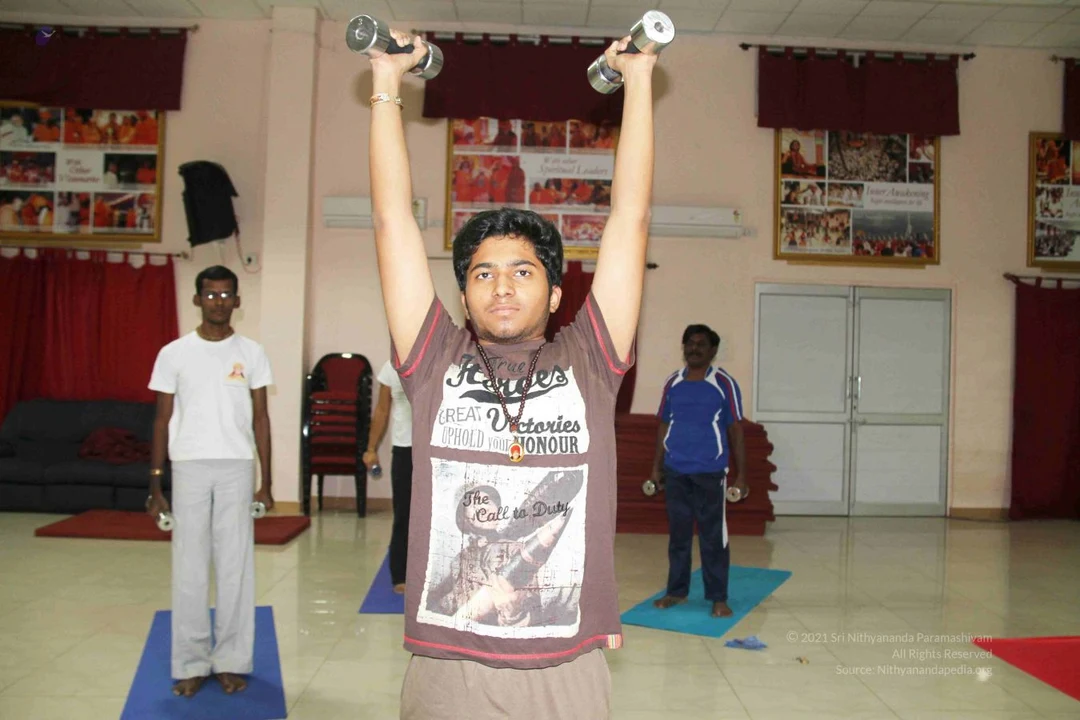
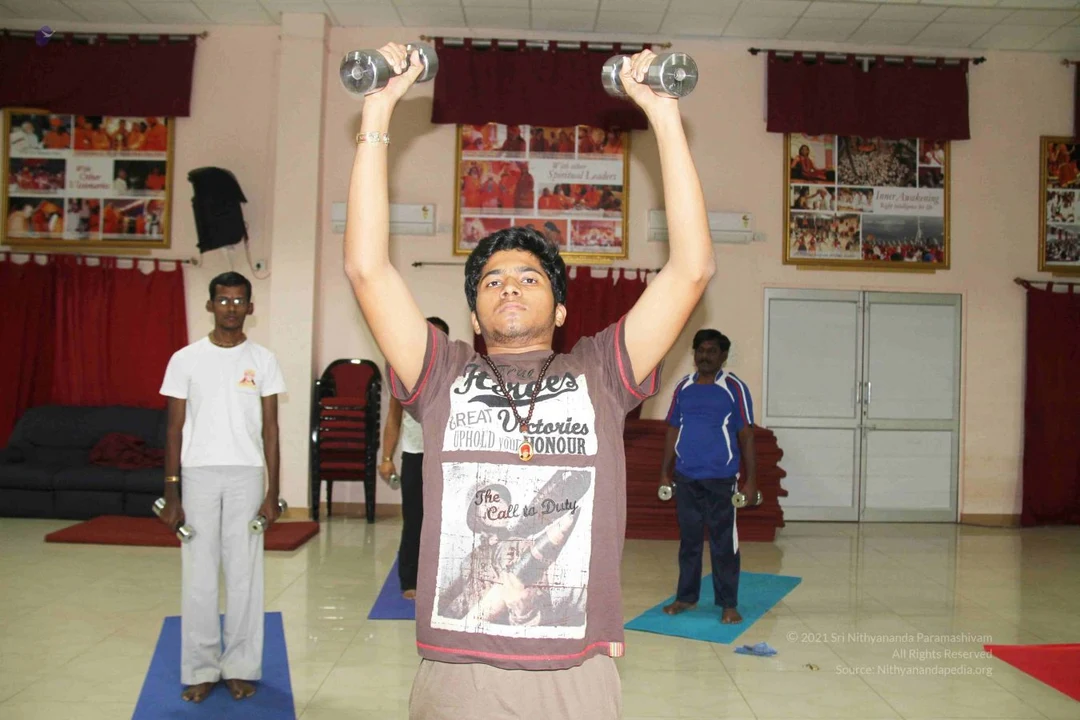
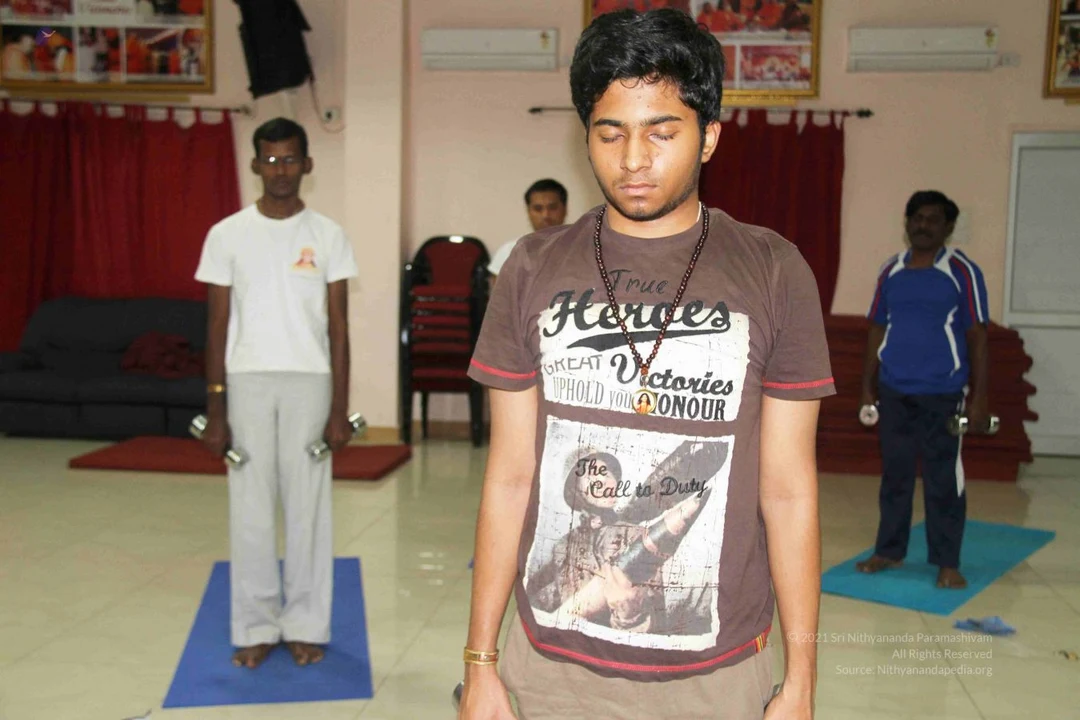
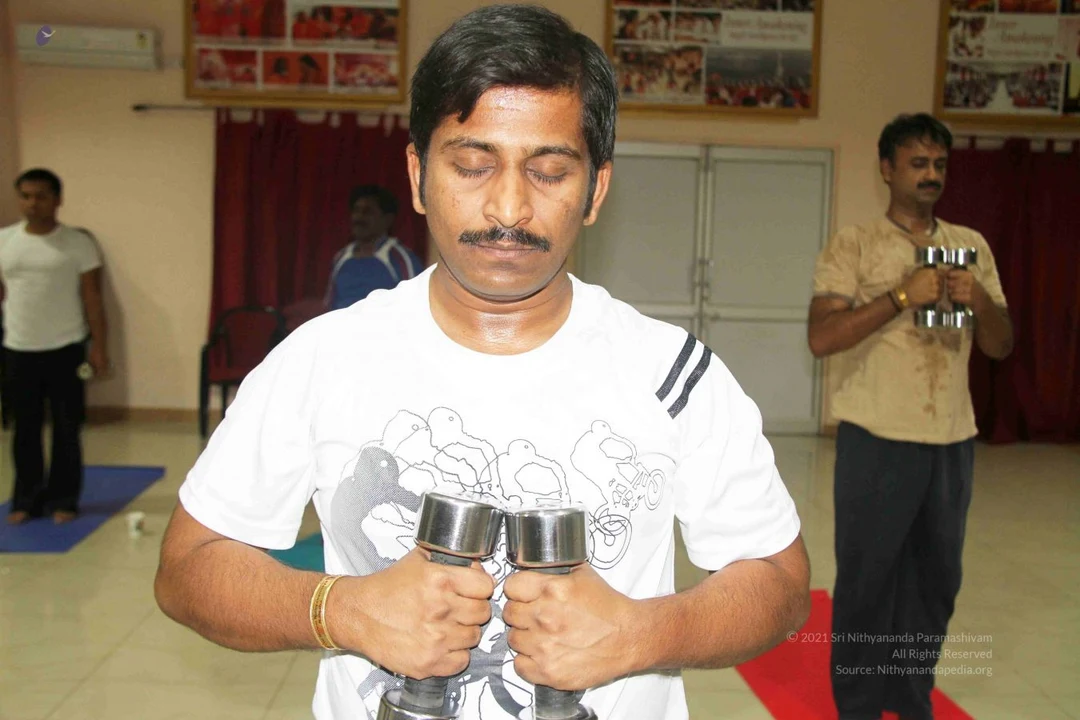
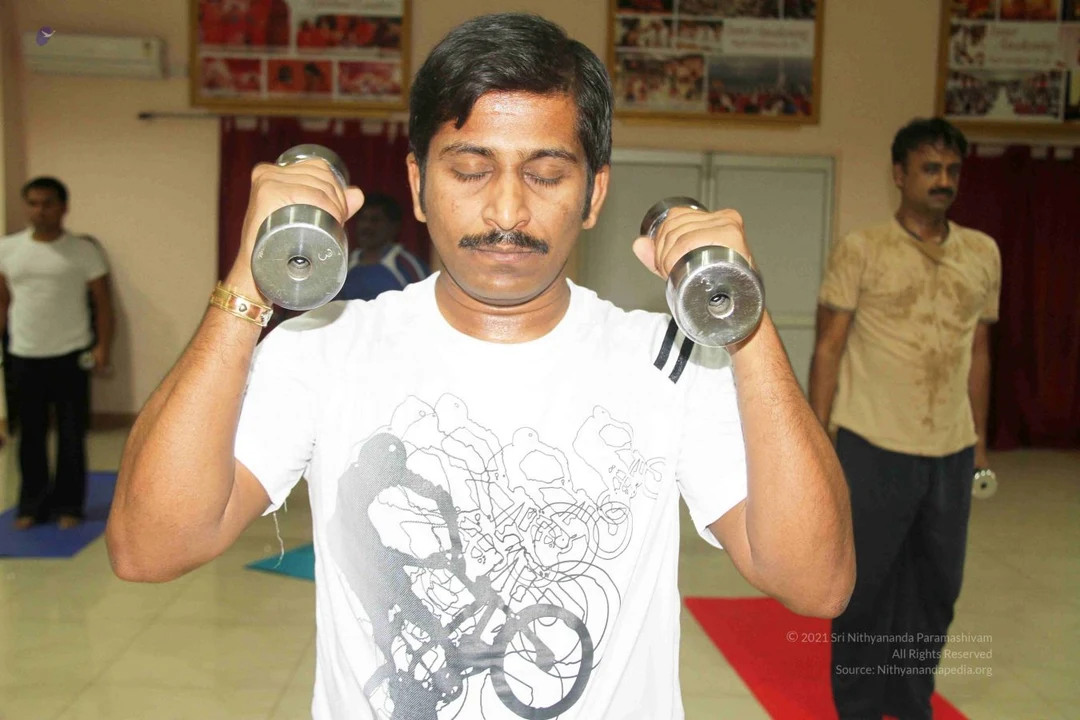
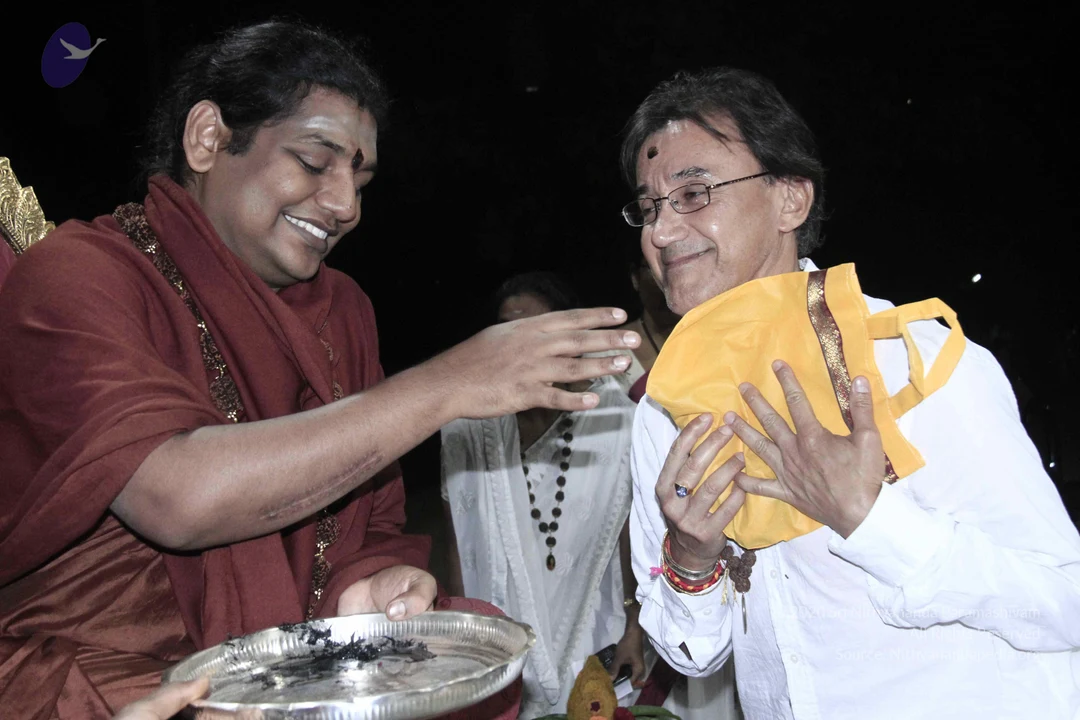
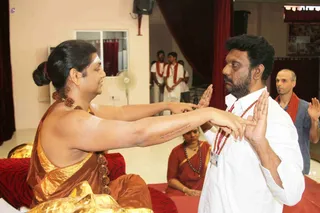
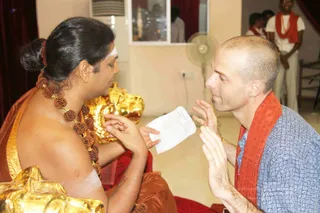
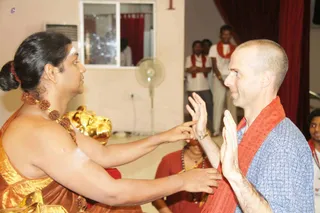
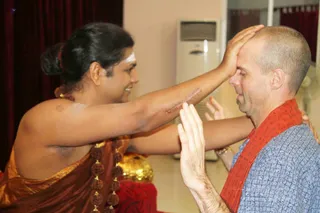
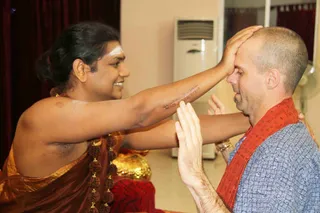
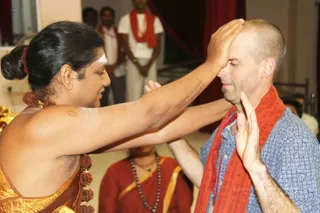
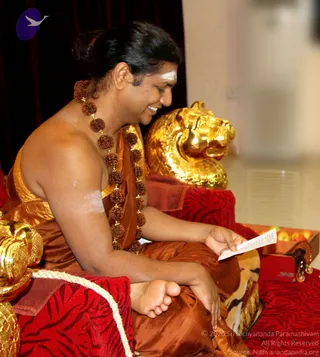
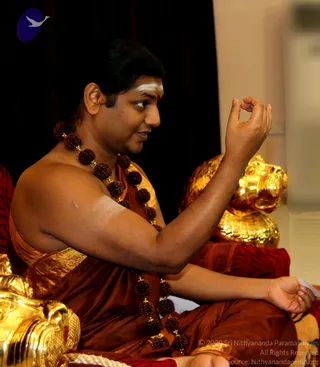
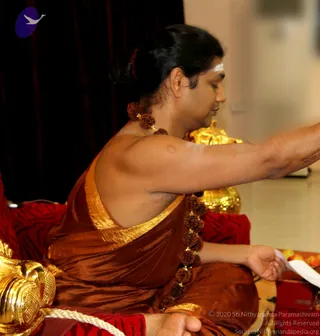
A photograph of a yoga or exercise session in a bright hall with cream walls, red curtains and framed photos. In the foreground a young man with closed eyes stands on a blue mat wearing a brown graphic T-shirt printed with the words True Heroes, Great Victories, Uphold Your Honour and a vintage image labelled The Call to Duty, with a rudraksha mala around his neck and a gold bracelet on his wrist. Behind him, three other men stand on blue mats holding small dumbbells, one in a white shirt and white trousers, one in a white T-shirt, and one in a blue tracksuit.A seated figure in a saffron-orange robe with a matching shawl sits on a red upholstered throne with gold trim, reaching forward to apply a mark to the forehead of a man in a white shirt with an orange-red shawl over his shoulders. The seated figure holds a silver tray with dark granules and wears a beaded necklace and a red bindi. Behind them, a woman in a white sari with a maroon border and a dark-haired woman in a beige sari look on, and a small brass lamp with flowers sits on the floor in the foreground. Swamiji (probable): the seated figure has swept-back hair, a red bindi, saffron robes and a beaded necklace on a throne, which are the qualifying cues here.A large hall with cream walls and red curtains shows many people seated on the floor in orange and saffron clothing, performing a ritual with brass lamps and metal plates arranged on white mats in the foreground. Several women in orange saris wear rudraksha malas and hold brass items, while girls in orange robes sit in rows with small oil lamps and offering trays. Framed photographs hang on the walls, and a few people in white stand near the back. A person in white sits near the rear, and a wooden carved panel stands in the background. Red and white flowers are scattered on a plate in front.

November 19 2013

Original wiki page
Contents

Title:

Declare your Freedom with Sannyas.

Description:

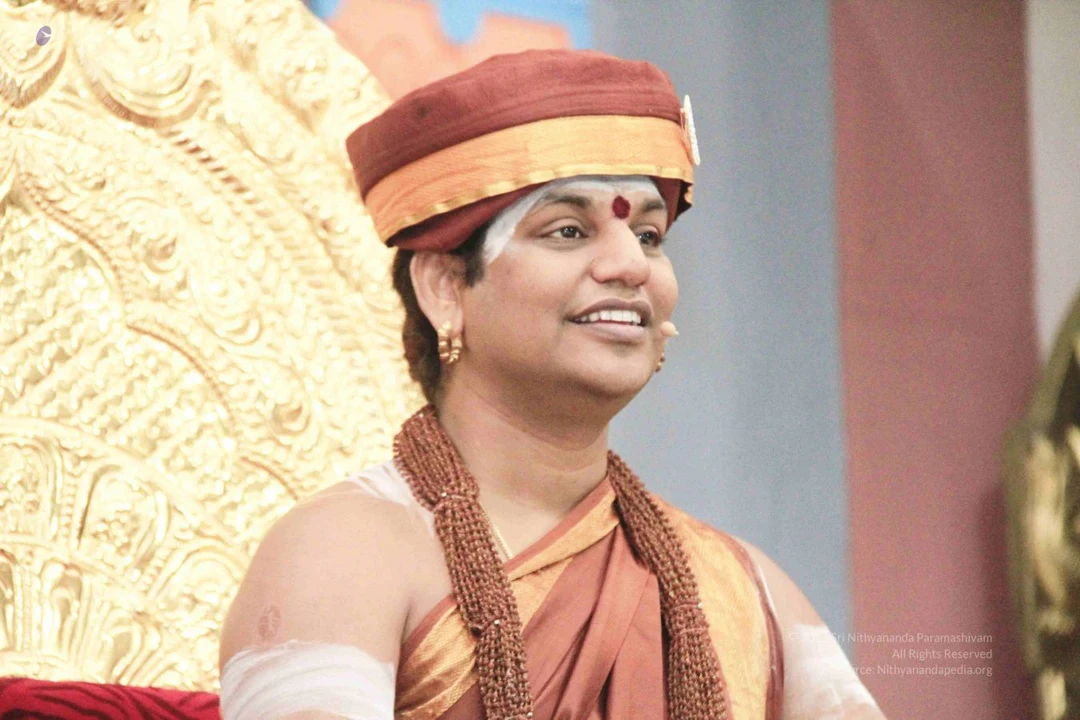
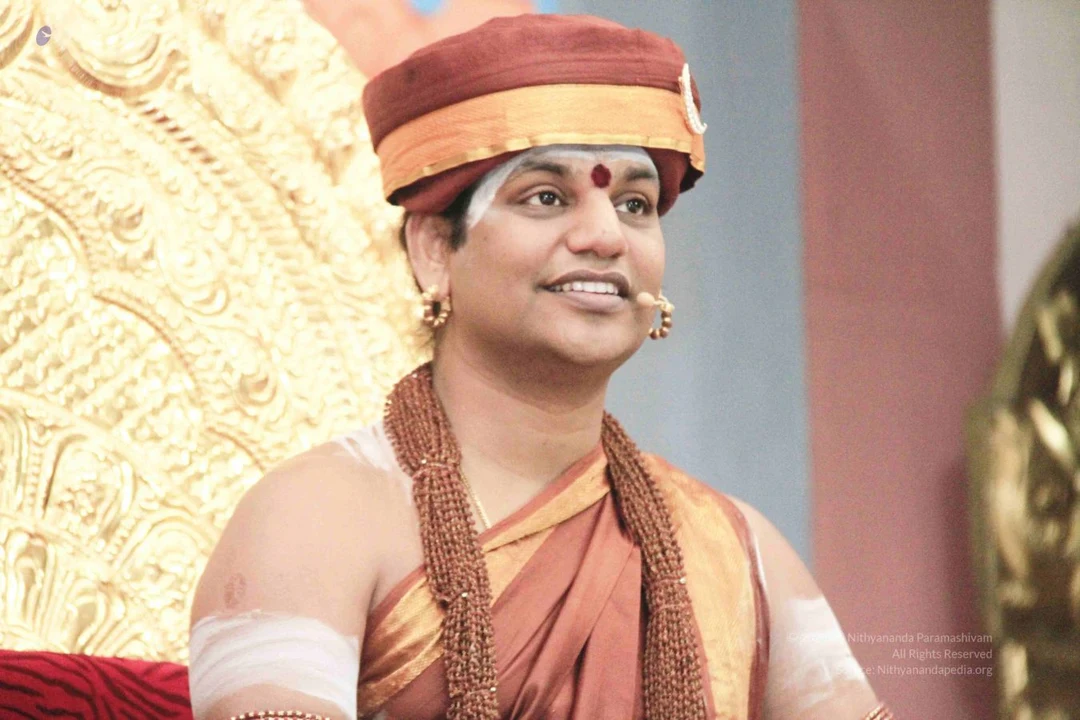
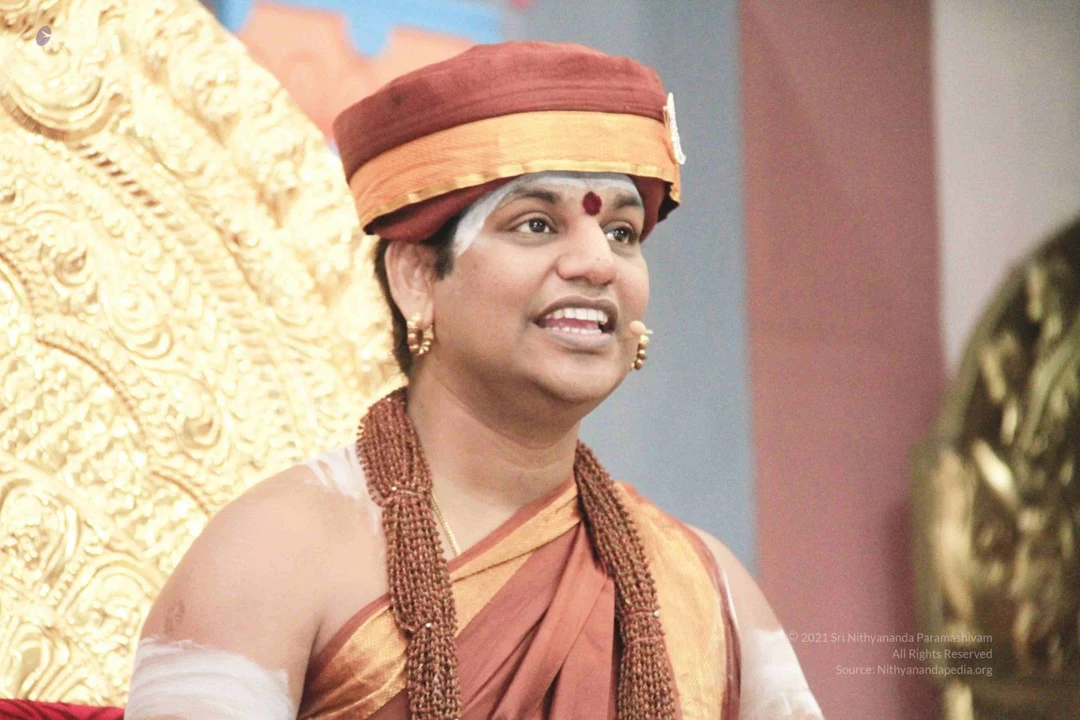
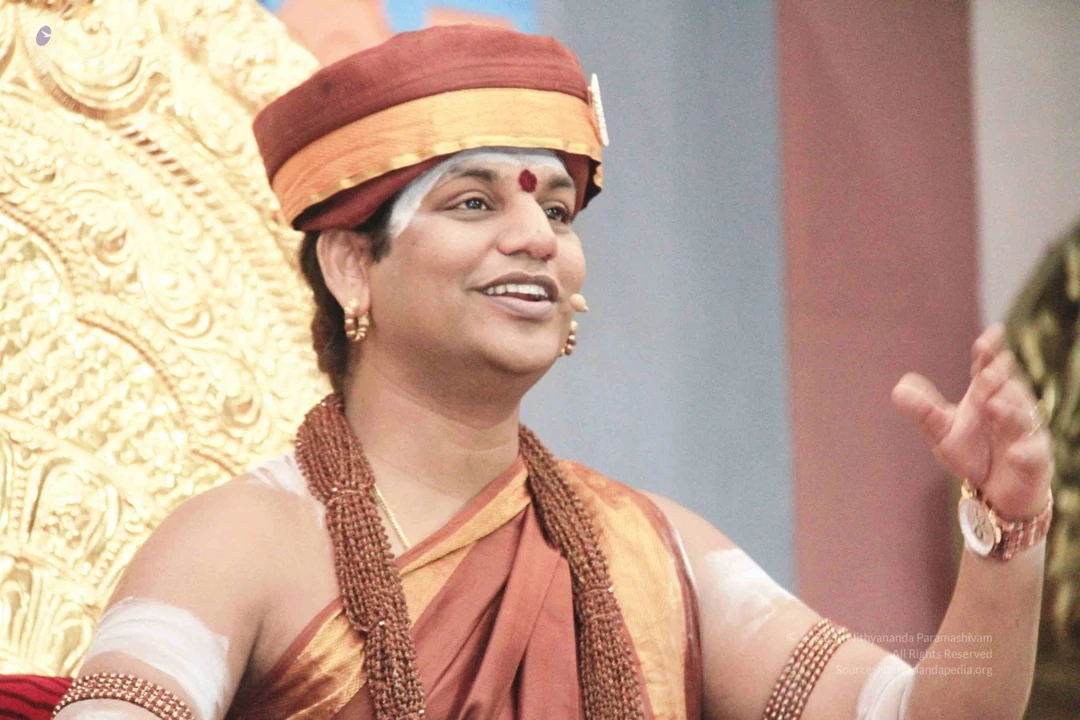
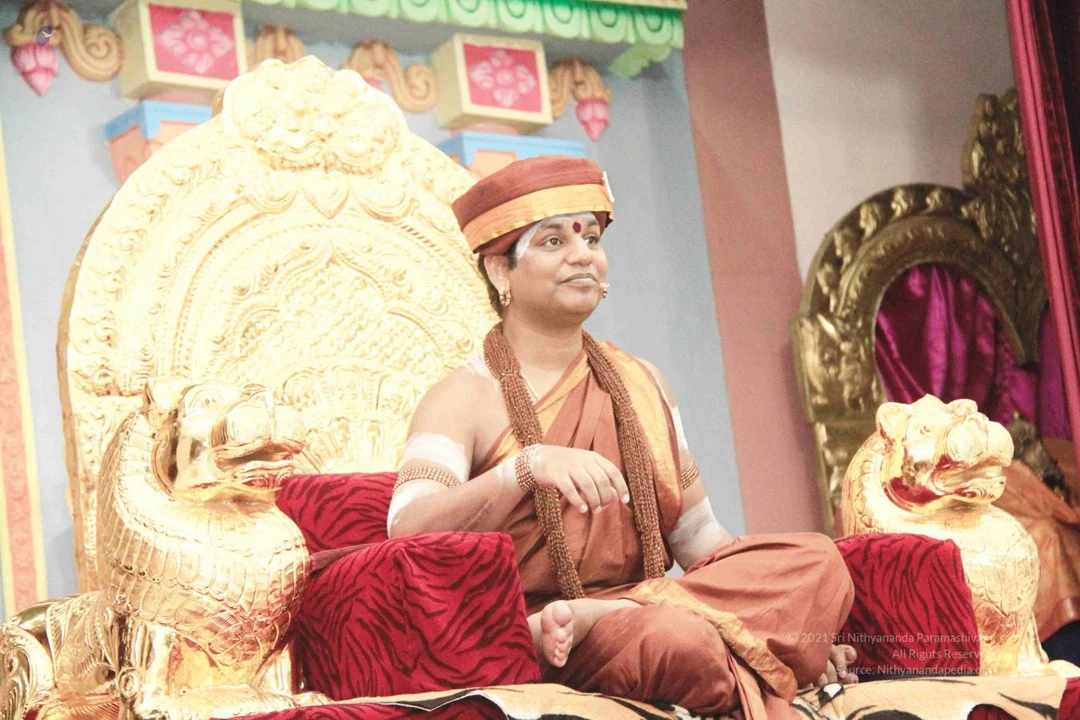
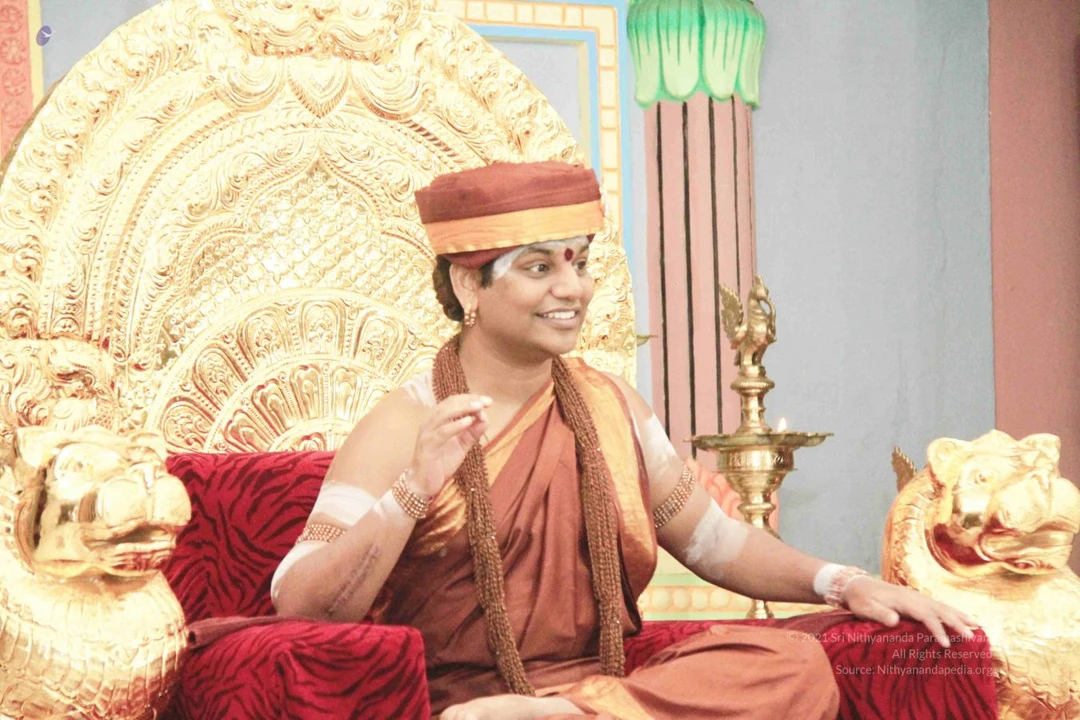
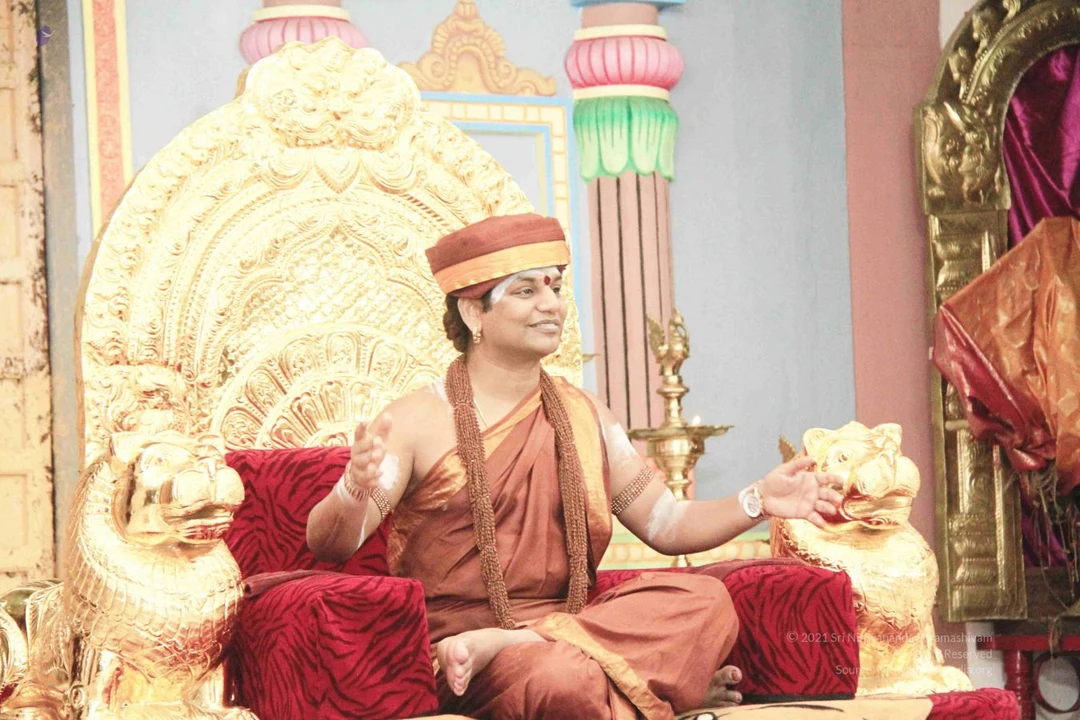
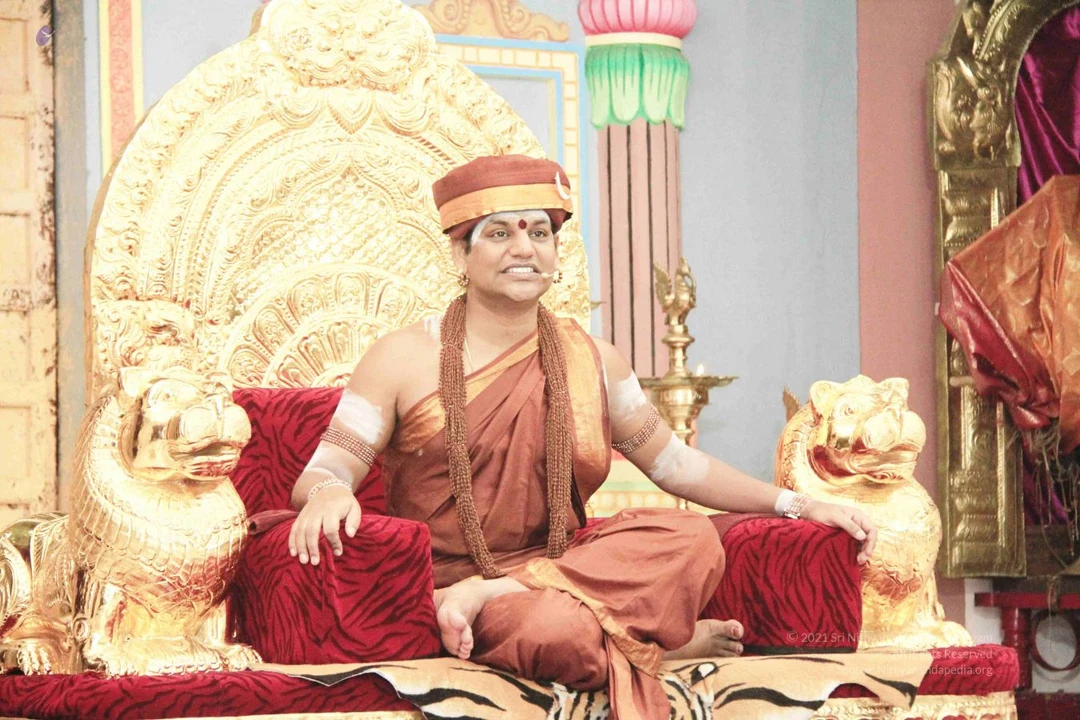
In today’s morning Satsang, Paramahamsa Nithyananda reveals our purpose for being here on planet Earth. The individual soul arrives to achieve completion and ultimately – enlightenment! But the issue is that we get caught in thousands of social deterrents and psychological exploitation's. We can be free by making a stand for ourselves. When a person takes Sannyas, they declare their commitment to fulfill the purpose of their birth, saying NO to social exploitation and YES to enlightenment!

Link to Video:

VideoAudio

Transcript:

Nithyanandeshwara Samaarambhaam Nithyanandeshwara Madhyamaam || Asmadaachaarya Paryanthaam Vande Guru Paramparaam ||

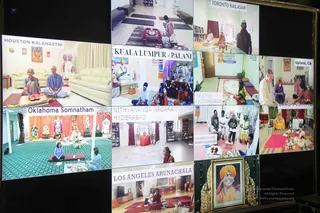
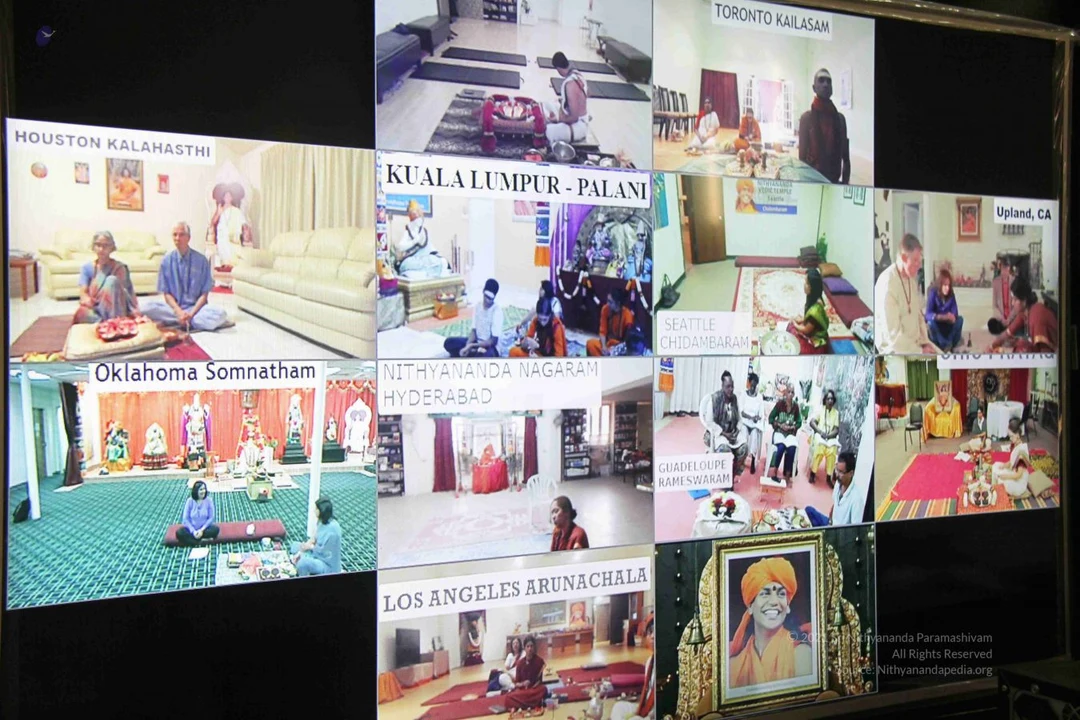
I welcome all the devotees, disciples, samajis, satsangis sitting with us through Nithyananda TV, Lotus News Channel, Sadhana TV, Janashree TV, Eshwar TV, and through two-way video-conferencing having Nayana Deeksha in twenty-two places in twenty-two countries around the world as per the statistics.

Cities sitting with us in two-way video-conferencing having Nayana Deeksha: Enriching Temple-Bidadi, Hong Kong-Sirkazhi, Singapore-Singapuram, Dubai-Vaidyanatham, Hyderabad-Gupta Kashi, Surrey-British Columbia, Indrani-New Jersey, Paris Home Temple, Oman-Sivagangai, Troy-Michigan, Jorpati-Nepal, Adi Nithyananda Dhyanapeetam-Avathipalayam, San Diego-La Jolla, Kuala Lumpur-Palani, Seattle-Chidambaram, Oakland-California, Toronto-Kailasam, Houston-Kalahasti, Los Angeles-Arunachalam, Oklahoma-Somanatham, Nithyananda Nagar-Hyderabad, Guadeloupe-Rameshwaram, Ohio-Prayag, San Jose-Madurai…………………

I welcome all of you with my love and blessings!

Today:

· 21st batch Inner Awakening, 19th day. We will work on “Ultimate Reality”.

· 18th batch eN-Genius, 18th day.

· 21st batch Nirahara Samyama, Level-3, 8th day.

· 10th batch, Level-4 Nirahara Samyama, 19th day.

I will continue to expand on “SANNYAS”.

First, I wanted to address this issue, how an individual’s life is actually blessed. Please listen! An individual soul happens on this Planet Earth to achieve Completion, to achieve Enlightenment. Thousands of social interventions, interference's, interruptions happen. Thousands of psychological exploitation's happen. Please listen, when I use the word “exploitation”, I mean it! Even if you are asked to be compassionate without the compassion happening in you, without the technique to make the compassion happen in you, it is exploitation! See, after you are given the technique to be in the space of Completion, after that also if you are not, then it is you destroying you. But if you have not been given that science and if it is demanded, it is exploitation! In many ways society exploits you. It doesn’t give you the methodology; it doesn’t give you the technology; it doesn’t allow you to expand systematically. It just forcibly stretches you like physiotherapy. Even physiotherapy as a system it does step by step. It is like a crude physiotherapy.

You all should know how Physiotherapy was invented.

One autocrat king wanted to kill by torturing his prisoners. So he started putting them on a bed, tying heavy stones to the hands and legs. He will add the weight slowly, slowly. Then what will happen? The hands on one side, and on the other side the legs will be pulled. Finally the body will become two pieces. When he started torturing people like this, one day in-between the torture, suddenly they stopped the torture for some reason. Because the king used to come and sit and enjoy this whole process! What a sadist he would have been! I can’t even imagine! May be he had better entertainment that day, so he didn’t want this entertainment that day. So they stopped and they released that prisoner to rest for a day and come back when the king has some time. That fellow suddenly got relieved of his long time back-pain. So he reported: ‘I had back pain for quite a long time, and after you did this the back pain disappeared!’

That is the way Physiotherapy was invented! No, really! This is the story of Physiotherapy!

Without giving you a proper technique if you are expected to be a celibate, or compassionate, or blissful, or non-violent, or complete, or content, I tell you, it is straightaway exploitation! You have to give a technique, methodology, process. After you have been given the process, it’s your responsibility. After the process is given if you don’t do, then you are destroying yourself, nothing can be done about it! Nothing can be done about it!

Listen! Each being comes down to Planet Earth for the achievement of its Completion and for achieving liberation from the birth and death cycle; from this process again and again and again. So please understand, a person who stands clearly and declares to the world, ‘I am not ready to be exploited by your ignorant leaders, I am not ready to be exploited by the ignorance of the elders…..’ Please understand, many of you feel your parents have put many patterns in you. I tell you, if it is their ignorance, they have a right to suffer and die. But the moment they put their ignorance on you, even if it is out of ignorance, it is exploitation! Because when they know they are ignorant, they have no right to put that on you; they should have sent you straight to gurukul, saying, ‘We don’t know how to bring you up; you better go to Gurukul. We already did the sin of giving birth to you. We don’t want to do one more sin of bringing you up with our ignorance. Go to Gurukul.’

I tell you, money is a hoax by the capitalists’ brains. Politics is an institutionalized exploitation system by a few perverted brains. Everything, whether it is politics, or the idea of money, or the media…! Media is the biggest hoax. Please listen, listen to this story.

There was a lion in a forest and a flock of sheep. Every day one sheep will come and stand in front of this lion, start a conversation, and then the lion will kill that sheep and eat it. Every day, this happens.

One day, a fox came to visit the lion to eat the remaining meat. He got his food and started staying there. After seeing this day in and day out, after a week, the fox really got surprised. He went and asked the lion, ‘How come every day without missing, one sheep comes to you and starts the conversation, spends time with you, and you kill that sheep and eat it? Again, next day, exactly the same time, a sheep comes! What’s the secret?’

The lion just laughs and says, ‘It is nothing. One day I called the whole flock of sheep and made them believe they are all lions, hypnotized them they are all lions and very powerful, nothing can be done to them. With that mood, these fools, every day one by one come. I kill them and eat them!’

Please understand, this is exactly the right story I’ll describe. This is the right example for Press Freedom. Please listen, the media makes you think that because of its freedom you are empowered. It constantly makes you believe its freedom is your freedom, which is not true…..which is not true! The media’s freedom is a freedom of the media owners. It is the freedom of their ideas. It is the freedom of the decision-makers, not yours. How when the lion makes the sheep believe that the sheep are lions, it is not power for the sheep; it is power for the lion! Media makes you constantly believe its freedom is your freedom. When you believe media’s freedom is your freedom, you are exactly in the same place of the sheep!

Please listen, you have to become really powerful. Listen, I have changed the whole lion-sheep story here. That context is totally different, this is totally different. There, really lion cub is feeling it is a sheep. Here, sheep is thinking it is a lion. It can become lion if it creates the right space. But here it is not being initiated into the right space. The difference between the spiritual satsangh and political meeting, where the Master initiates you is even if you are a sheep he makes you a lion; not just makes you believe you are a lion, he makes you a lion; and he gives you the science of creating the space to become a lion! “Lion” does not mean all the time you will be violent.

Please listen, when media makes you believe its freedom is your freedom, you are wrong. For a lawyer, only if you are in conflict he can survive. A doctor, only if you are sick he can survive. A rich man, only if you are poor he can enjoy his richness. Suddenly, in the whole country, if everyone has a Benz, what will happen to the value of the Benz or the rich man’s pride that he owns a Benz? “Have Not’s” give pride to the “Haves”. “Have Not’s” hold the “Haves” in the high. The high “Haves” enjoy is because the “Have Not’s” don’t have.

Please understand, whether it is money, or media, or any political system, it is just ignorance of the society imposed on you. A man who stands up courageously and declares, ‘I am not going to be exploited by any of this’, is a “Sannyasi”. “Sannyasi” is a person who declares, who says a clear “No!” ‘I am not interested in getting exploited! No! I am going to take care of the purpose for which I happened.’

Please understand, I clearly remember, at the age of twelve, when my grandmother died, when I saw the power of money, how my family members were all worried more about sharing her wealth than taking care of her body…..she is dead; the doctor declared she is dead…..they did not even care to put a garland on her body or clean it up or bring the body out for other relatives to see! First thing they did is share the wealth she had left! The moment I saw them that day I realized and I decided to say a big clear “NO” to all the exploitations of society.

I tell you, whether you are made to wear burkha and cover your whole body, or you are made to wear only a two-piece cloth and expose your whole body, both are male chauvinism. Same way, everything, whether it is the idea of money or it is the idea of media, or it is the idea of the political structures, anything, I tell you, it is the social ignorance imposed on you. The day I decided to declare a big “No” to the society, a clear “No” to the society and society’s imposition of ignorance on me, I can say I achieved the ultimate liberation. That is what is “Jeevan Mukthi”!

Please listen! Completion gives you “Videha Mukthi”. Means, once you complete with every pattern, you are free from all patterns, then when you leave the body you will become enlightened, Videha Mukthi. But only when you declare “No” to the society; Sannyas, while you are living itself you are liberated! There are so many people who achieved Completion, but still they are allowing the ignorance of society to exploit them. When you allow the ignorance of society to exploit you, you are not liberated…..you are not liberated….the liberation has not happened.

Listen, you can either practice Completion for ages and live in the space of liberation, wait for death to happen, and after death you will be a muktha, Videha Muktha; or declare your Sannyas and be liberated while you are living in the body. Declaring the social ignorance cannot affect you any more, exploit you any more, you will not budge for the social ignorance any more, is Living Enlightenment; that is “Jeevan Mukthi”. Declare that you are not going to be allowing the social ignorance to exploit you anymore!

I tell you, because I am seeing thousands of people attending to their problems every day, I can understand, every psychological problem, every psychosomatic disorder human-beings are suffering is nothing but ignorance of the society exploiting them where nobody is held responsible. Who is held responsible for such large number of IT suicides? Earlier it was psychiatrists; now the IT people are crossing them! Young suicides, youngsters committing suicide! Rapidly the suicide is growing among the IT sector. Suicide of students, youngsters! Who is responsible for all this? Nobody is held responsible! I tell you, the social ignorance is responsible! Decide to say “No” to the social ignorance exploiting you. When you declare, ‘I will not allow the social ignorance to exploit me’, you are a Sannyasi!

The media is an organized lie! Politics is an organized exploitation system! Money is the largest hoax in the world! Marriage is the most hypocritical institution on Planet Earth! Every profession makes sure that their profession is kept alive by retaining the conflicts. Understand, I am not saying do revolution. No! Revolution is one more foolishness! All revolutionaries are egoistic idiots! In ten years, revolutionaries will become one more corrupt junk group; exploiting much worse than the people who were in power before the revolution! I am not asking you to do revolution. Revolution is not the solution. Evolution is the solution! Evolve! Evolve! It is time, let us evolve and let us tell the world to evolve. Let us evolve and let us tell the world to evolve.

Understand, a man deciding, ‘I will not allow society to exploit me anymore due to its ignorance’ is a Sannyasi. It is not that you are anti-social. No! You will be “asocial”, means, “beyond society”. And, I tell you, sannyasis not only they were never anti-social, and the amount of contribution they have done to society! When I was reading the history of the Naga Sannyasis, I could understand! Oh, God, all the best things we have now is created and sustained by the sannyasis! If you are in India, even the way you breathe is defined by us, designed by us! Not just the way you eat, the way you dress, but even the way you breathe is gifted by us – Pranayama. What an amazing contribution the sannyasis have done! From the ancient times, from time immemorial, when I see the historiography of this whole country – please understand, I am creating a new word “historiography” – when I see the historiography of this whole civilization…..

Listen! “Biography” means what happens to an individual and his impact on society. “History” means what happens to society and its impact on individuals. Please listen, the society’s happenings and its impact on individuals is “History”. From the context of society if it is written it is history. From the context of individual if it is written it is biography. I am connecting both and making it “Historiography”. Because, the Indian civilization, the Vedic civilization was always from the context of individual and the society, as a whole. We never gave up one for the other. We never compromised one for the other. That is why I am using a new word “Historiography”.

When I see the historiography of this country, all the best things are the contribution of great sadhus. When I was studying various documents, material available, the records available about the Sannyas tradition and the contributions of sannyasis to the world, I discovered some very beautiful, exciting information. One is, I got solid evidence that Totapuri, the Guru of Ramakrishna Paramahamsa, was a Mahant of the Mahanirvani Akhada! Officially he was a Mahant of the Mahanirvani Akhada. Six years he was holding the post of Mahant of Mahanirvani Akhada, sitting in Allahabad Mahanirvani Peetha! I do not know whether Ramakrishna Mission knows about this or cares to know about this. But we have a document with evidence! Ramakrishna Mission knows that Totapuri belongs to Puri Sampradhaya. But I don’t know whether they know he is from Mahanirvani Akhada and that he was a Mahant of Mahanirvani Akhada. A great sadhu!

Please listen! The amazing contribution done to society by the sannyasis who have decided not to be exploited by the ignorance of humanity, ignorance of the society, not to be exploited by the ignorance of the so-called leaders who do not have any answer for the major problems society is facing! O, the next generation of humanity, Life is in your hands! Life on Planet Earth is in your hands! It is you who have to decide whether you are going to say “No” to society, to the ignorance of society, exploitation of society, or going to enter into that suicidal lifestyle.

Just one act of Mahant Totapuriji Maharaj – giving sannyas to Ramakrishna – see the contribution that happened to humanity! I tell you, sannyasis are never anti-social; they are above social. And the amount of contribution they have done to society is unimaginable! They are the most productive people on Planet Earth. My sannyasis will be the most intelligent and productive human-beings on Planet Earth!

And I bless you all! Let you all radiate with Integrity, Authenticity, Responsibility and Enriching, with eternal bliss, Nithyananda! Thank you!

Tags:

Paramahamsa Nithyananda, planet, Earth, soul, completion, enlightenment, social, psychological, commitment, purpose, birth.

Photos Of The Day:

Paduka-Puja
Nithya-Satsang
Sarva Darshan

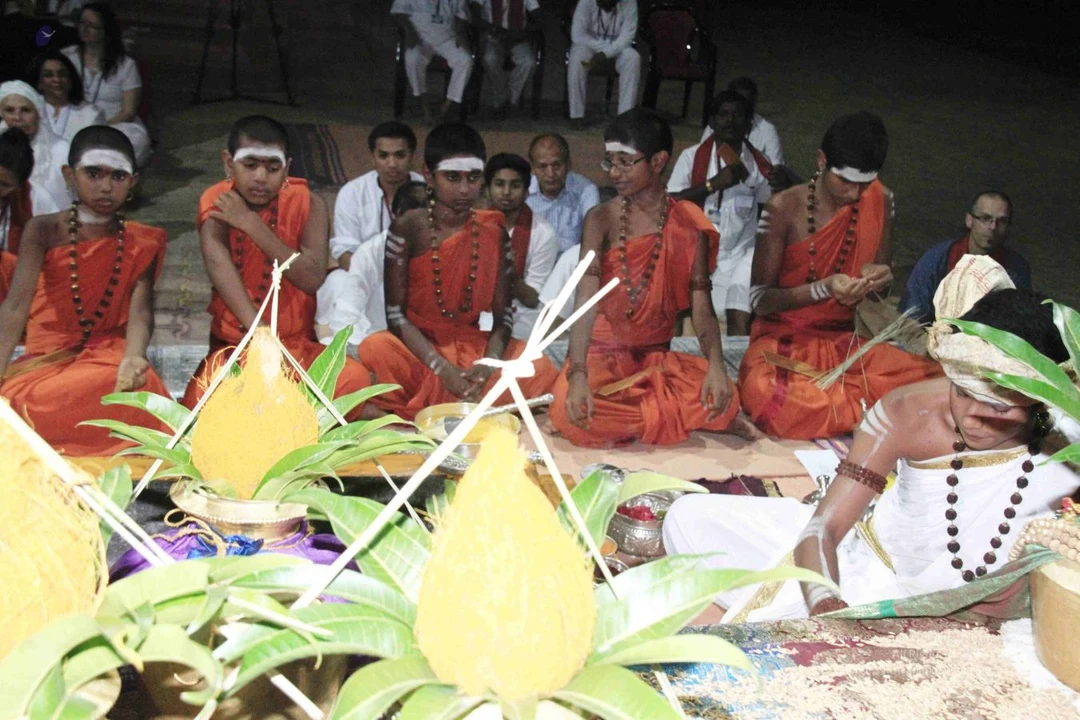
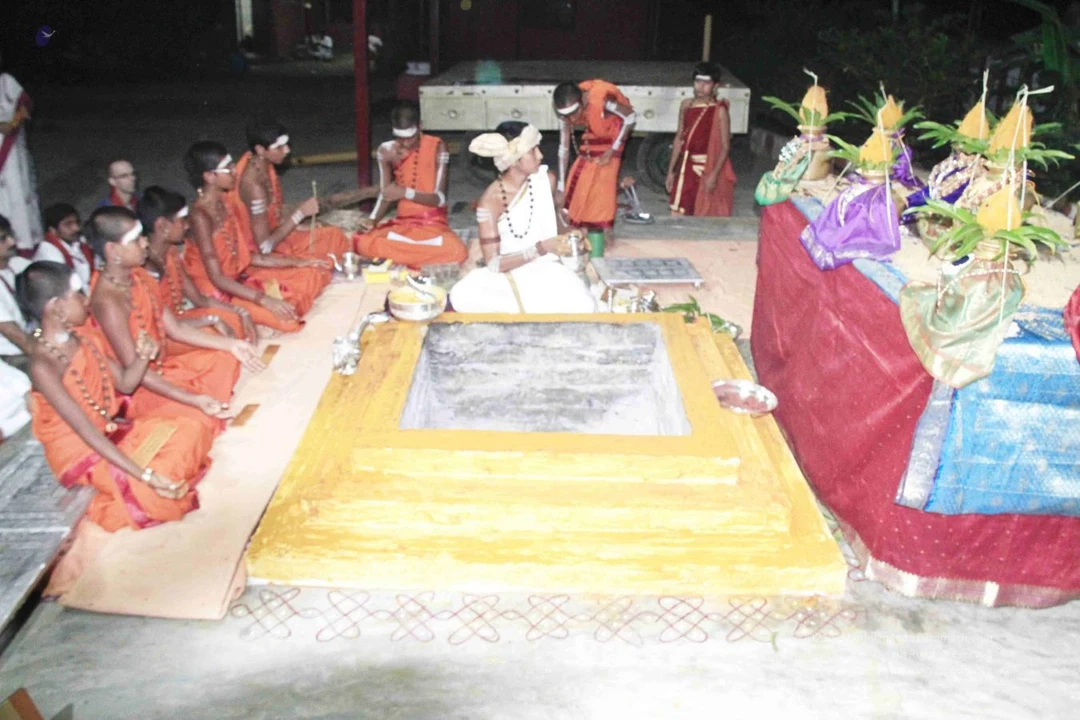
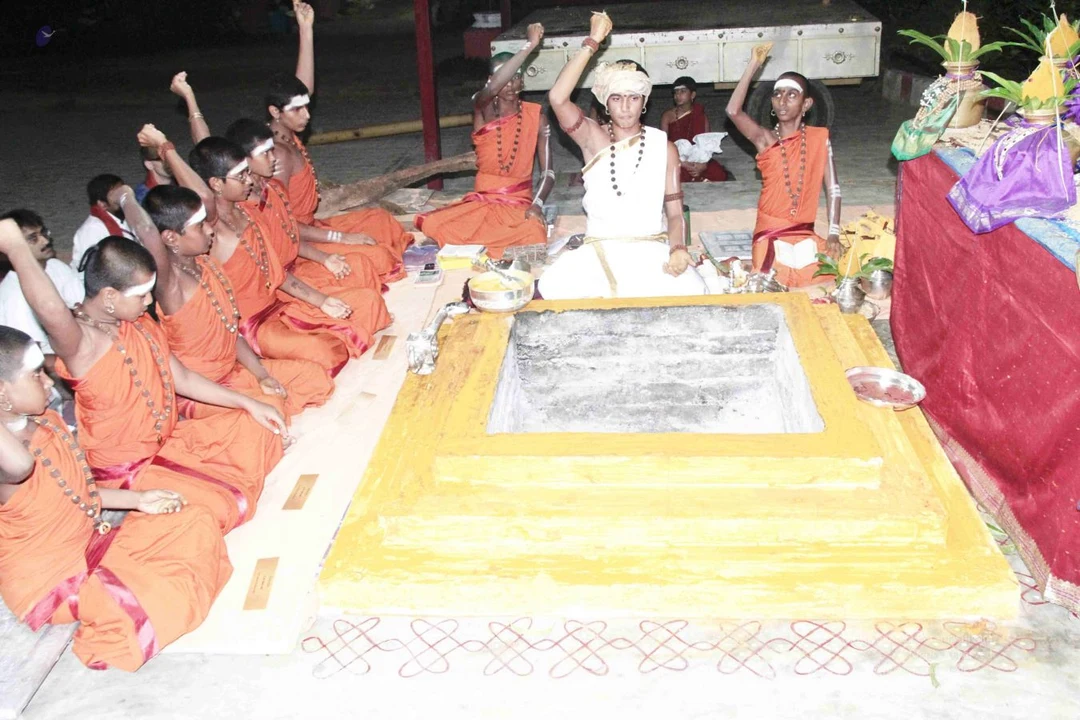
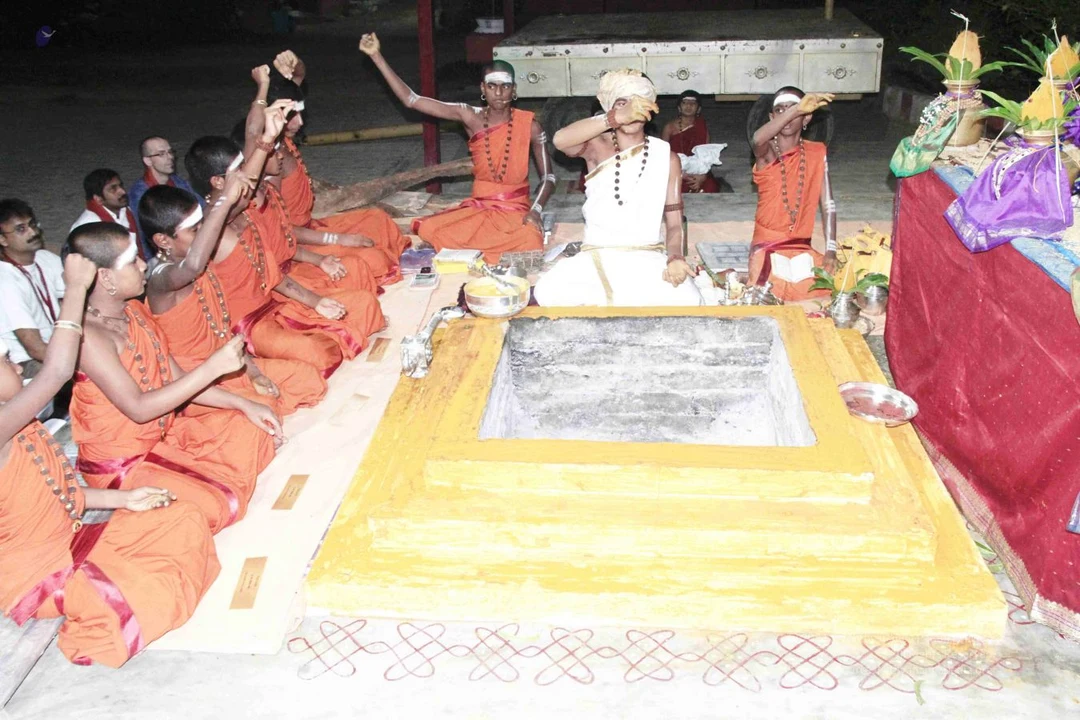
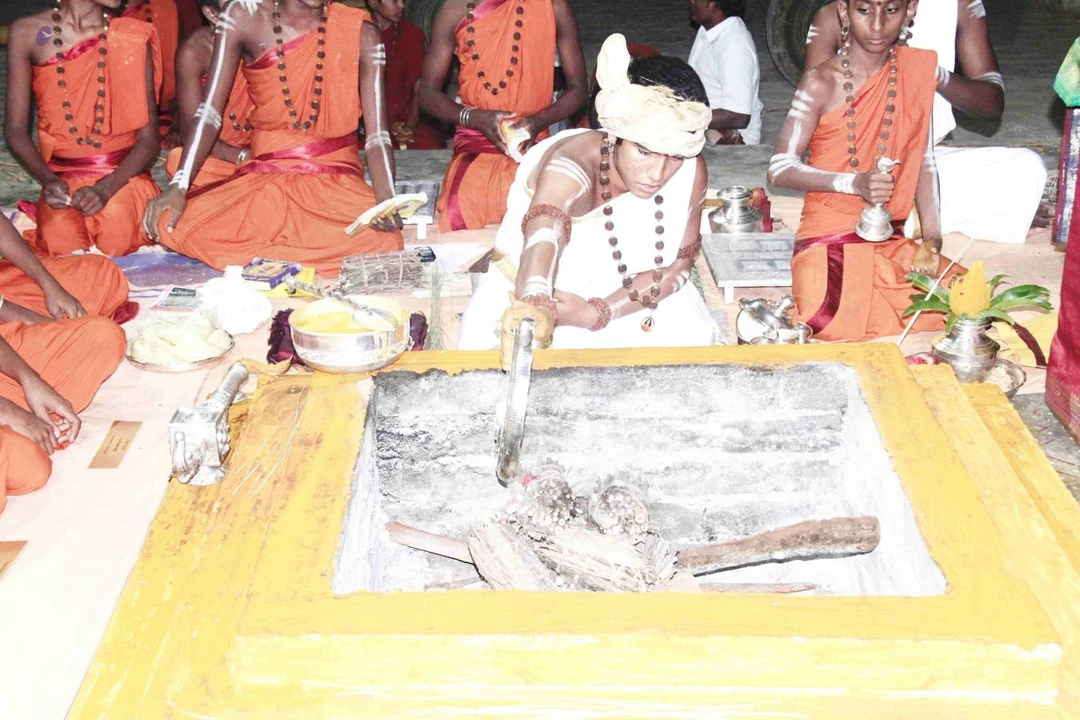
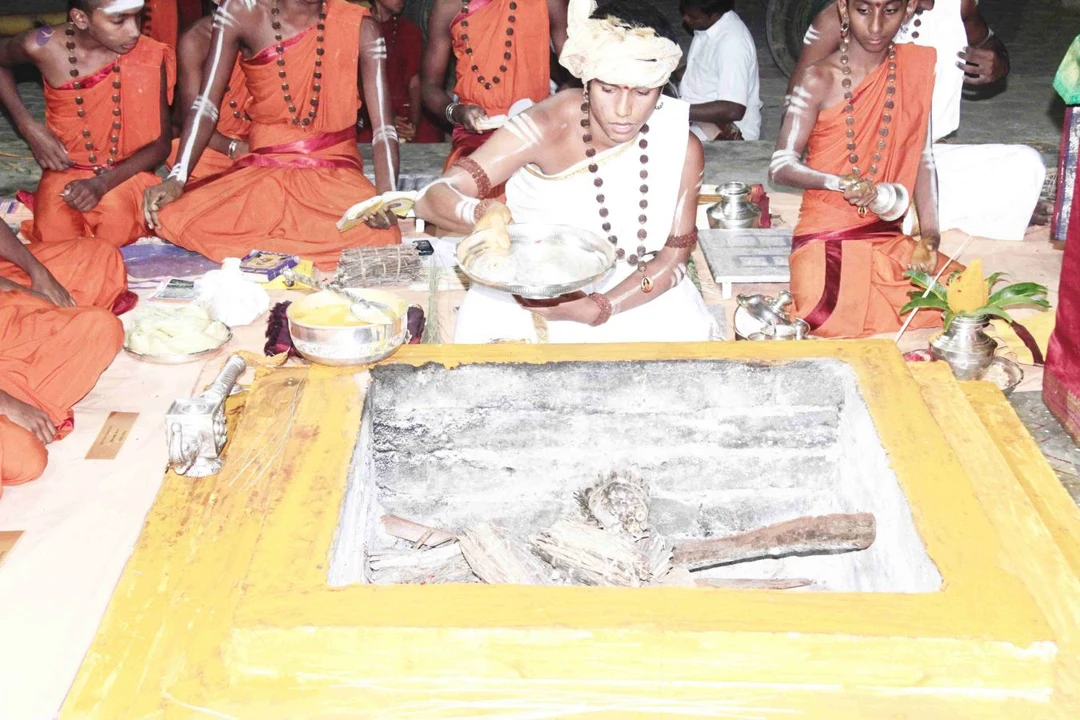
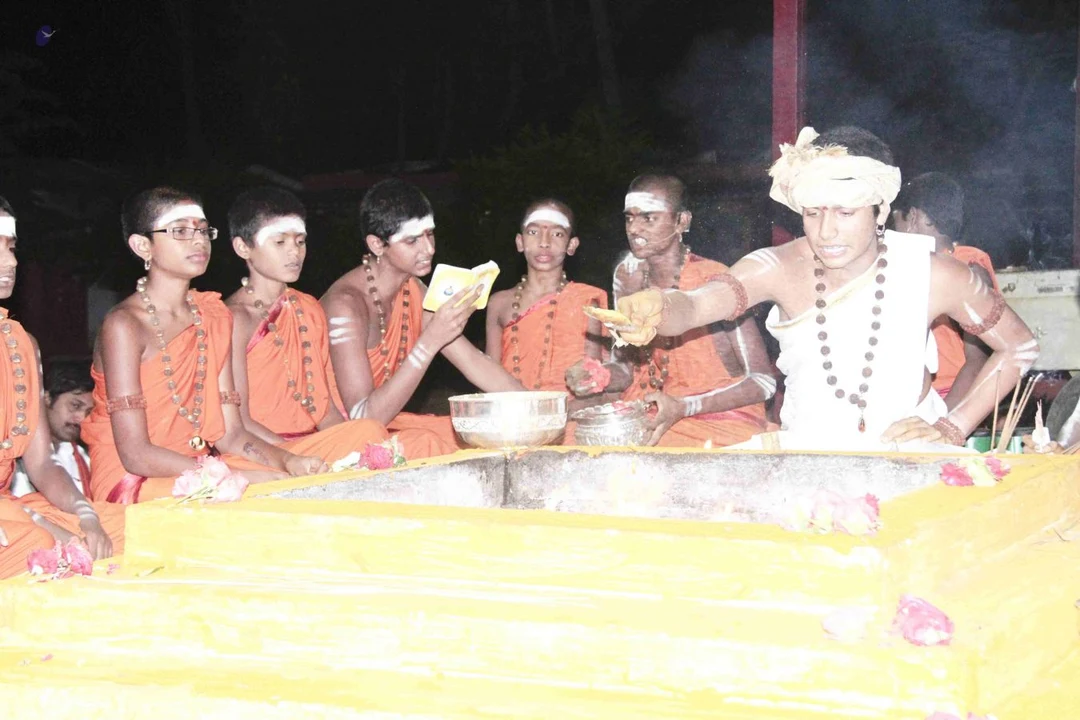
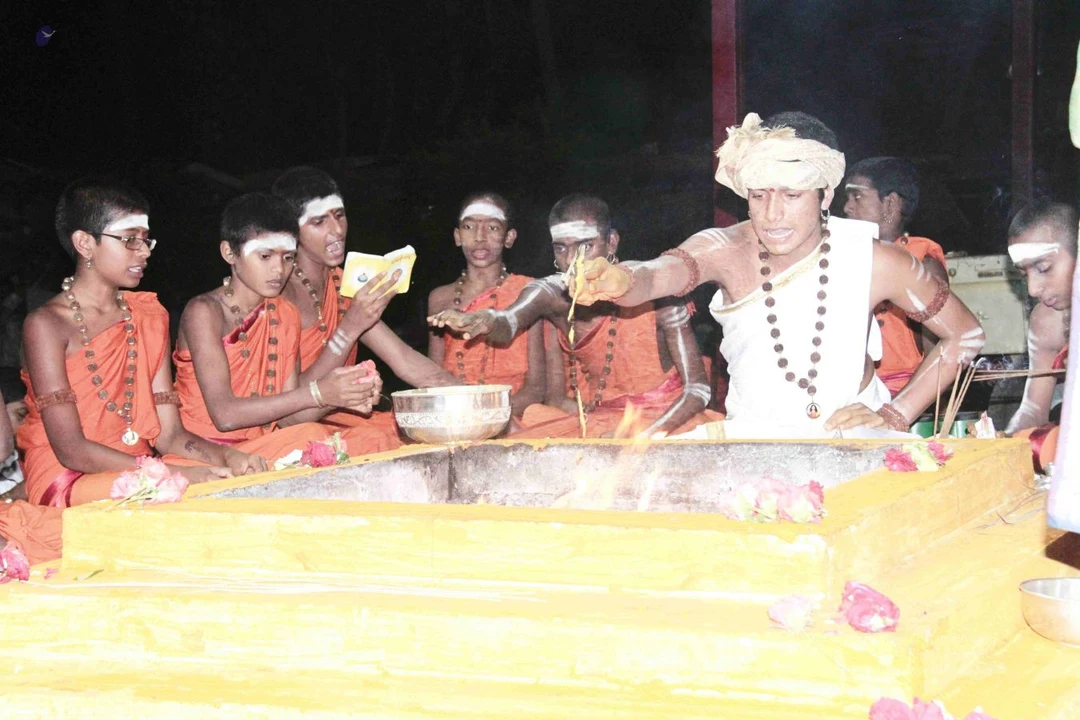
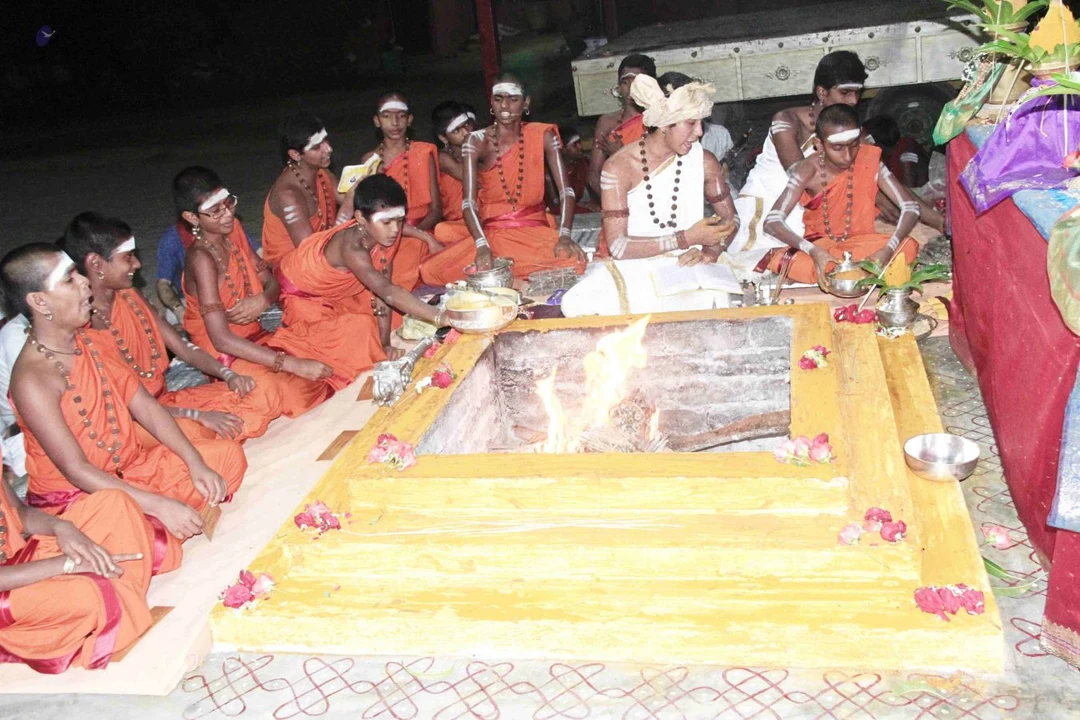
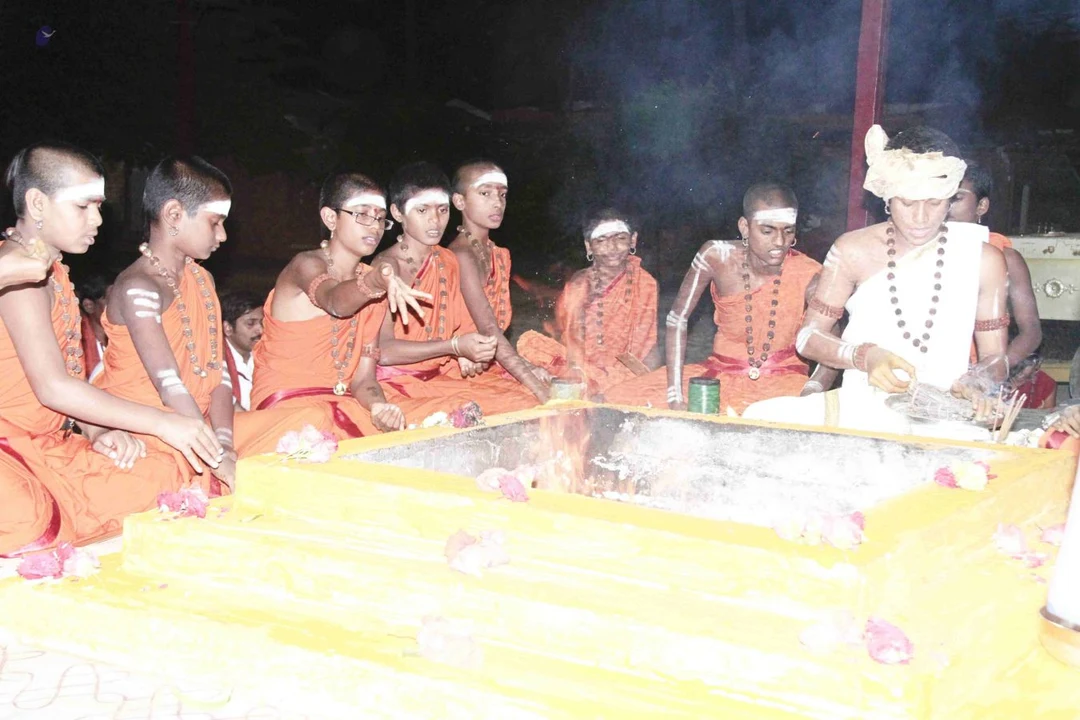
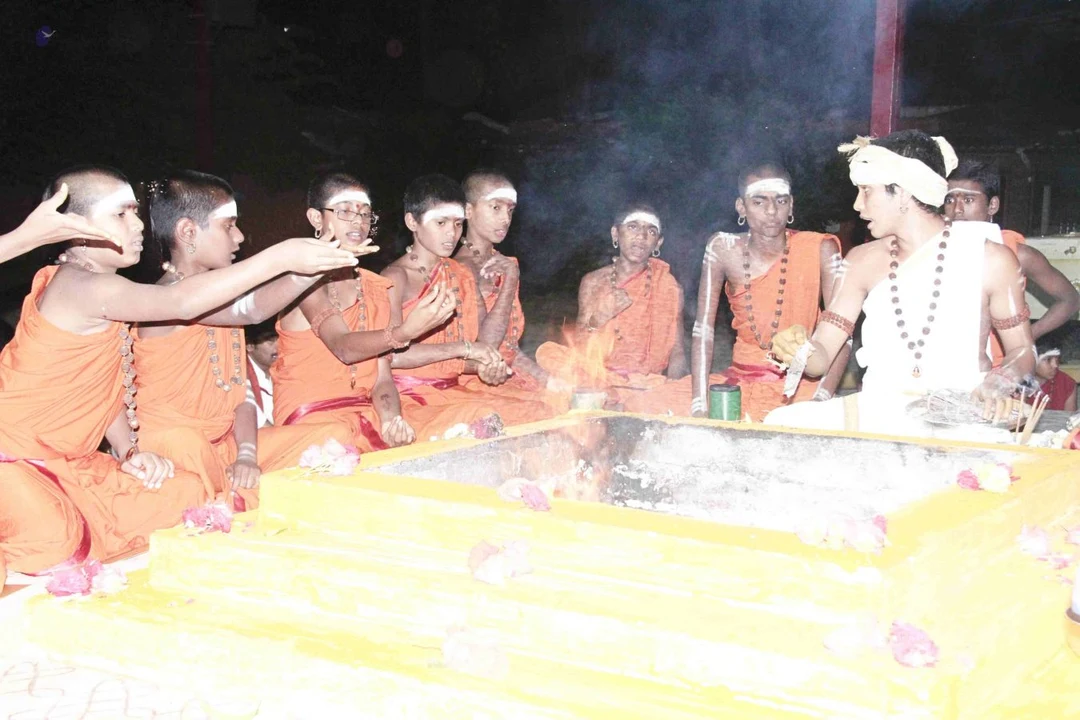
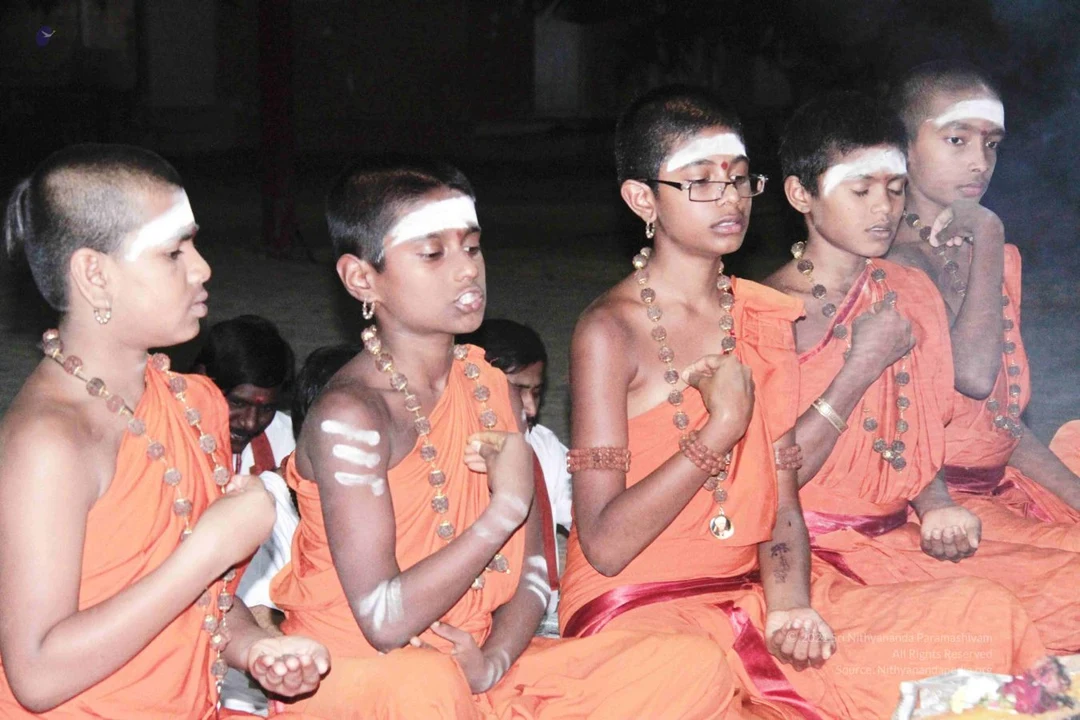
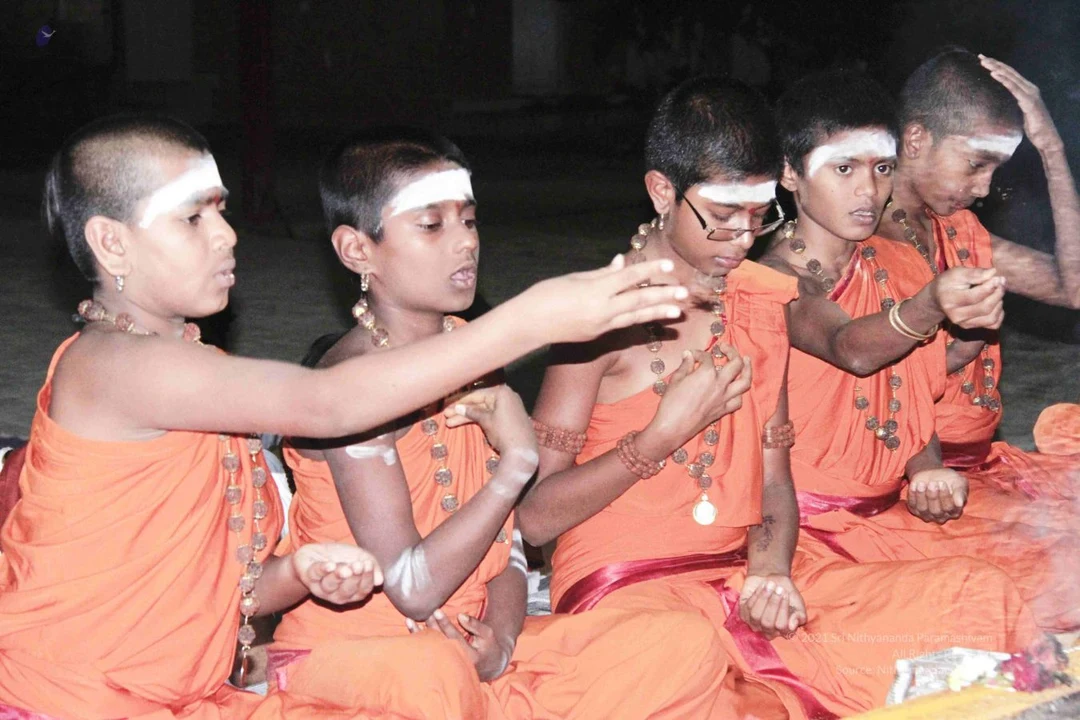
Homa

Vaidya-Sarovar-Teppotsavam

Darshan

Nithya-Yoga

03-Homa

1-Evening-Celebrations

2-Darshan

Photos from this day

View all 420 photos

Paduka-Puja

23 photosSource gallery
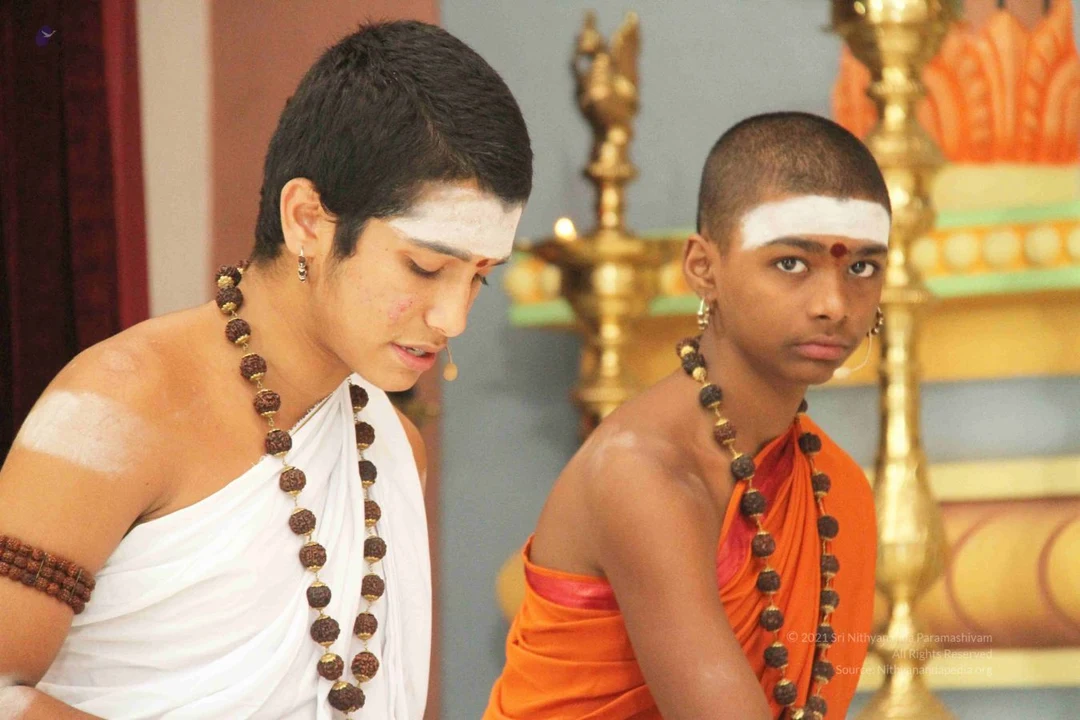
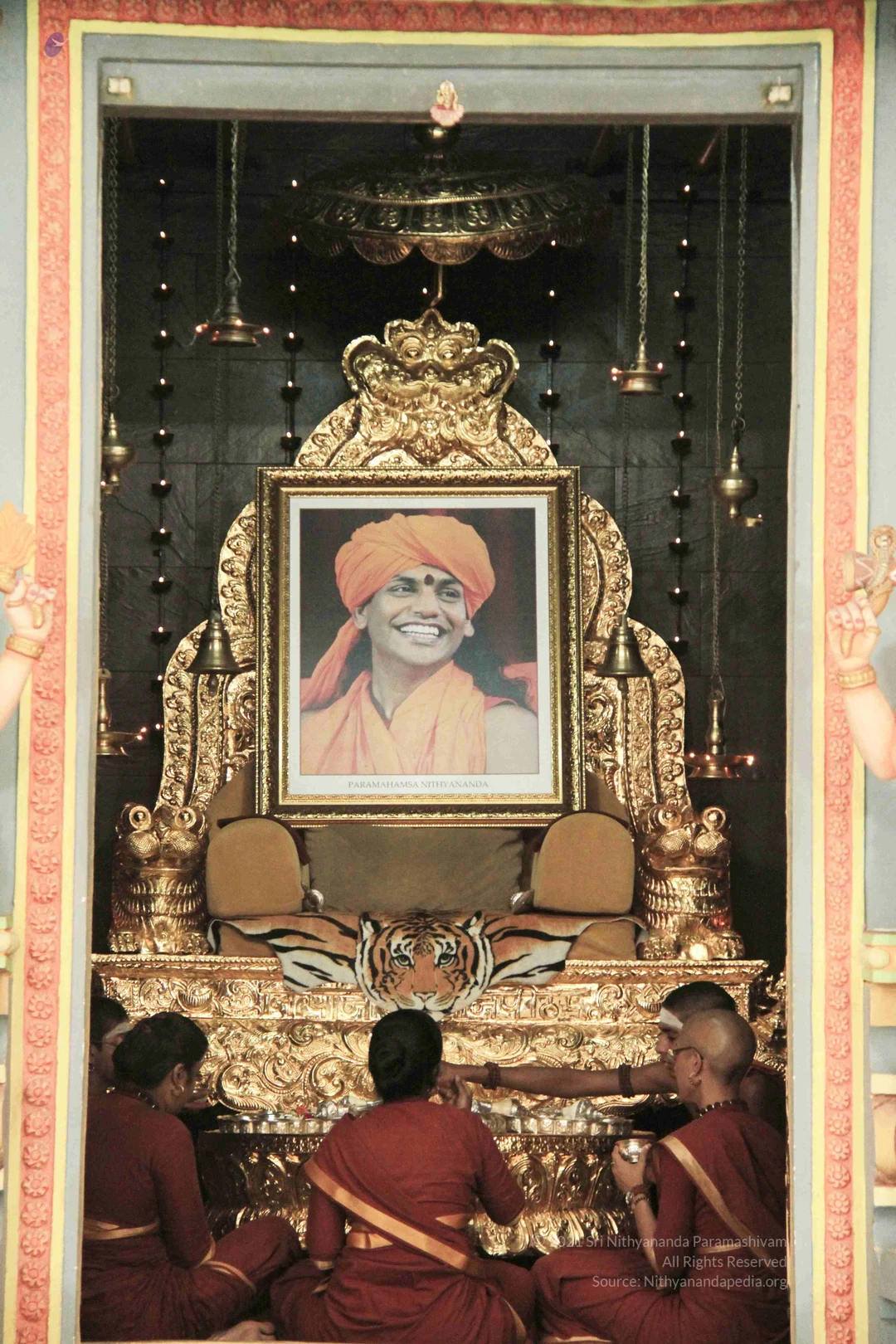
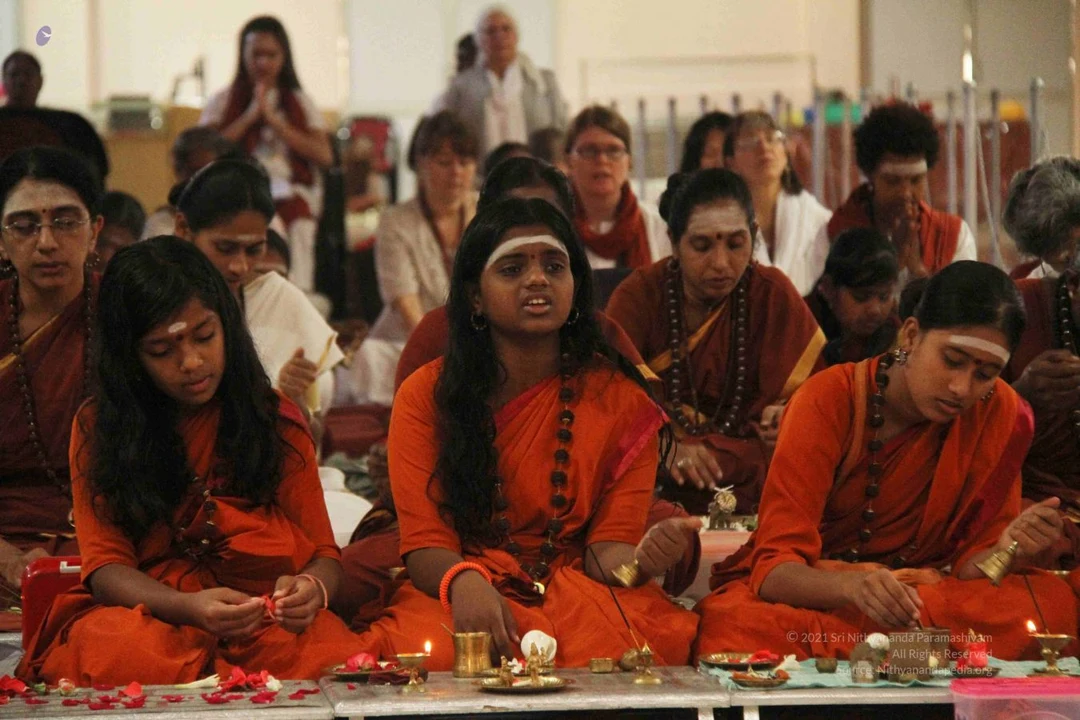
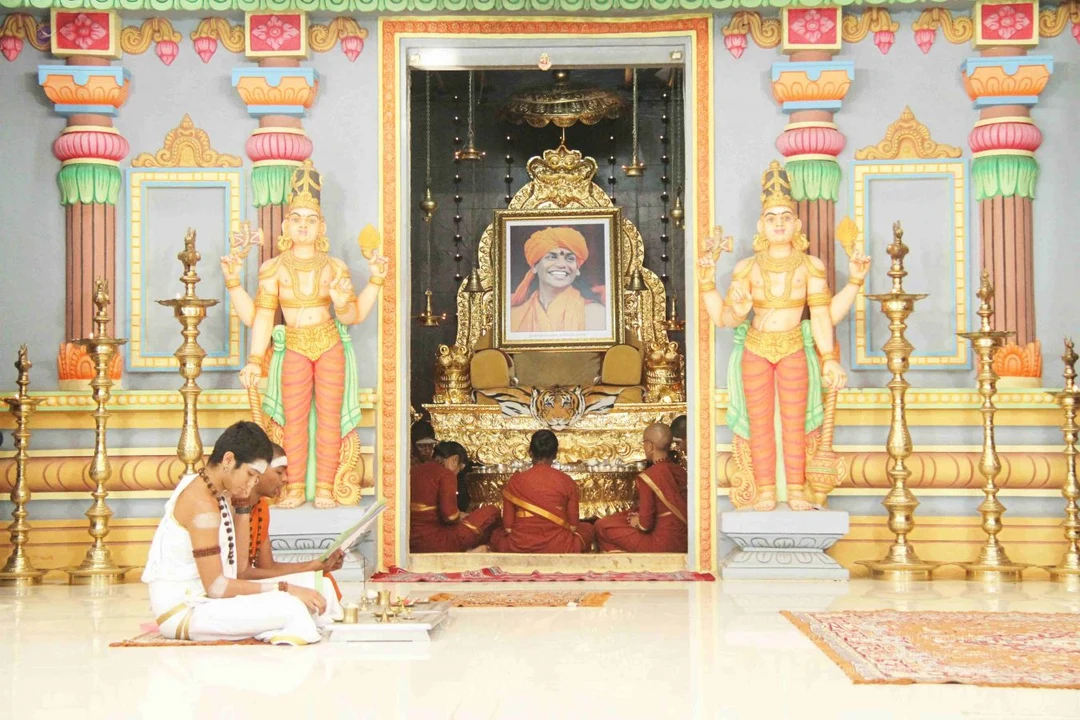
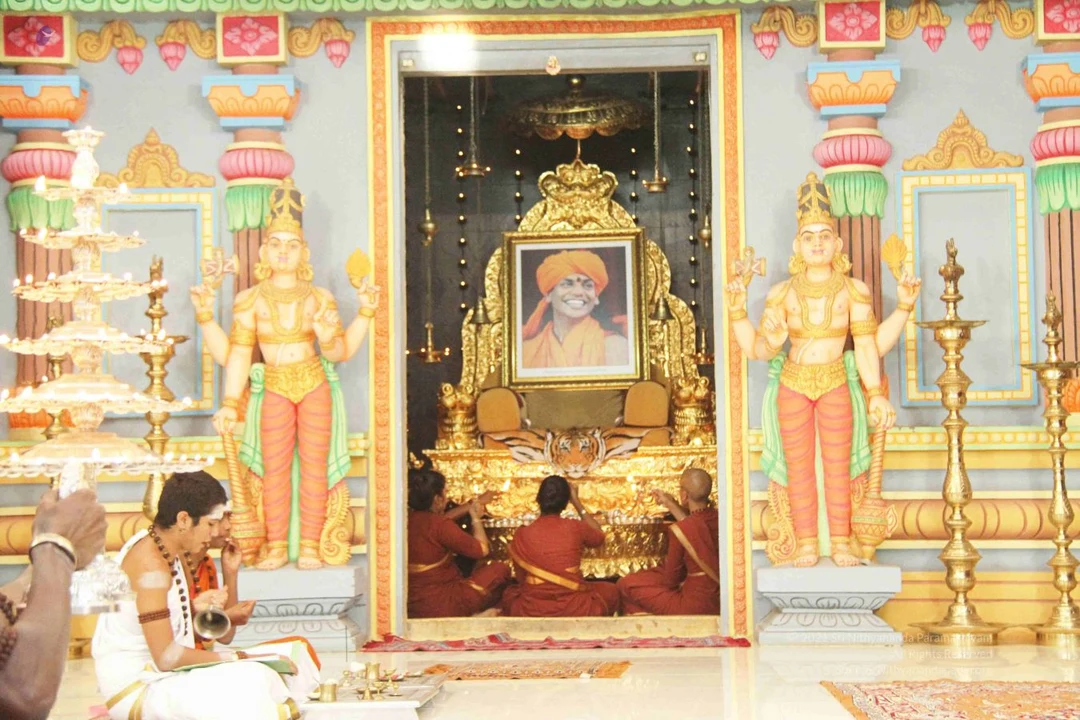
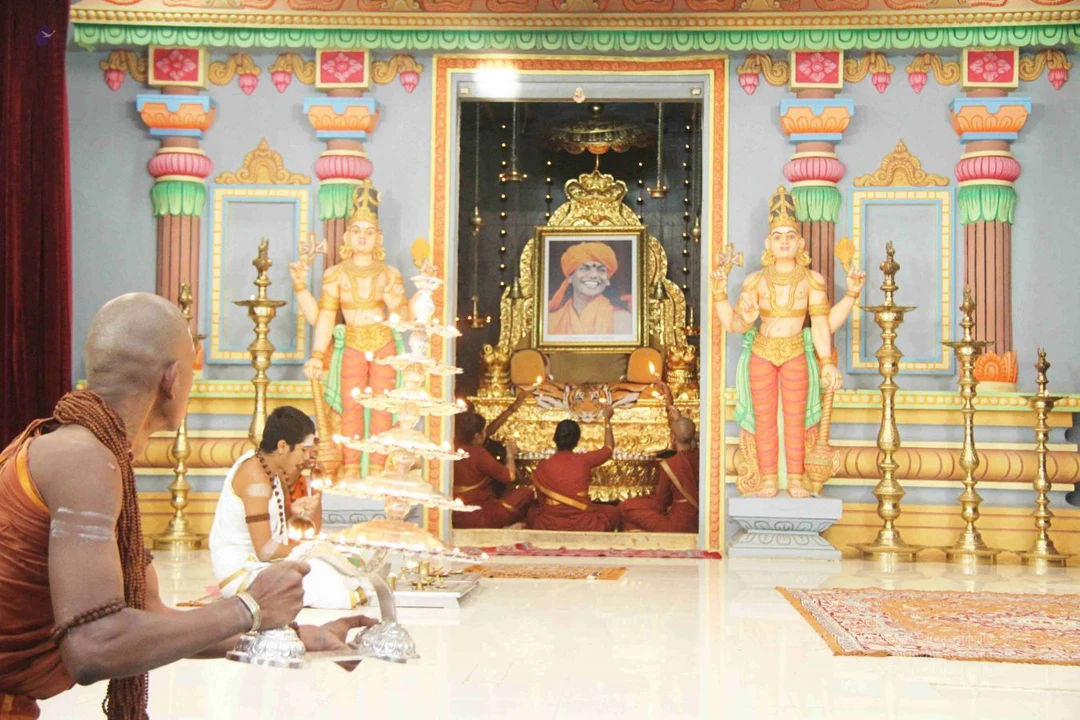
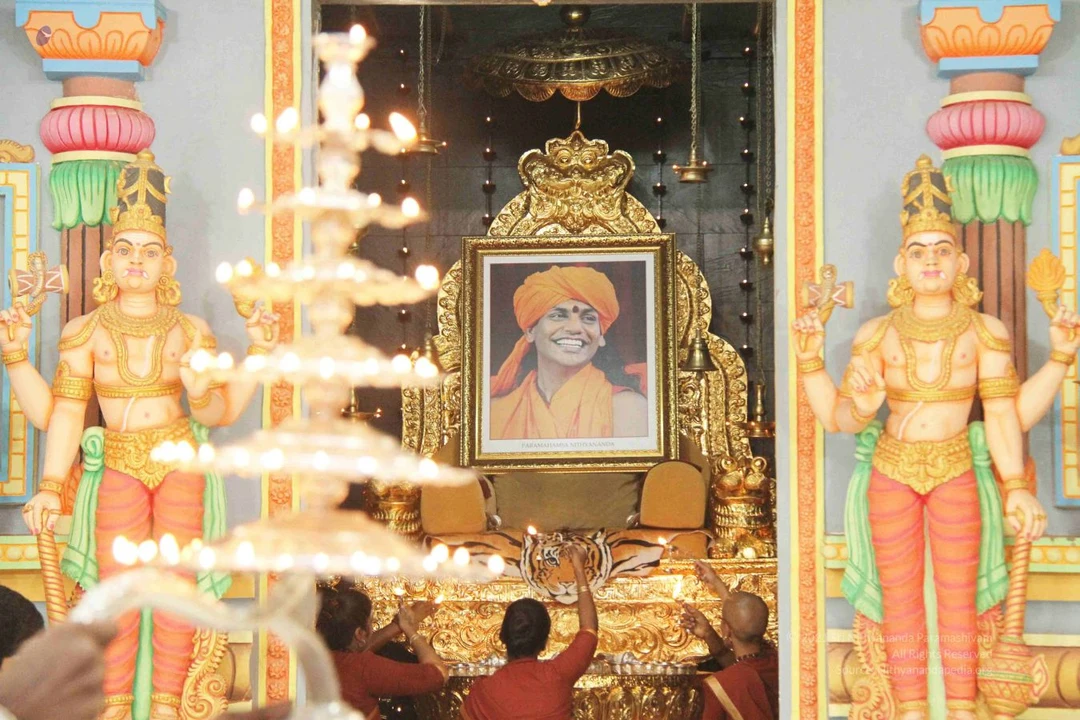
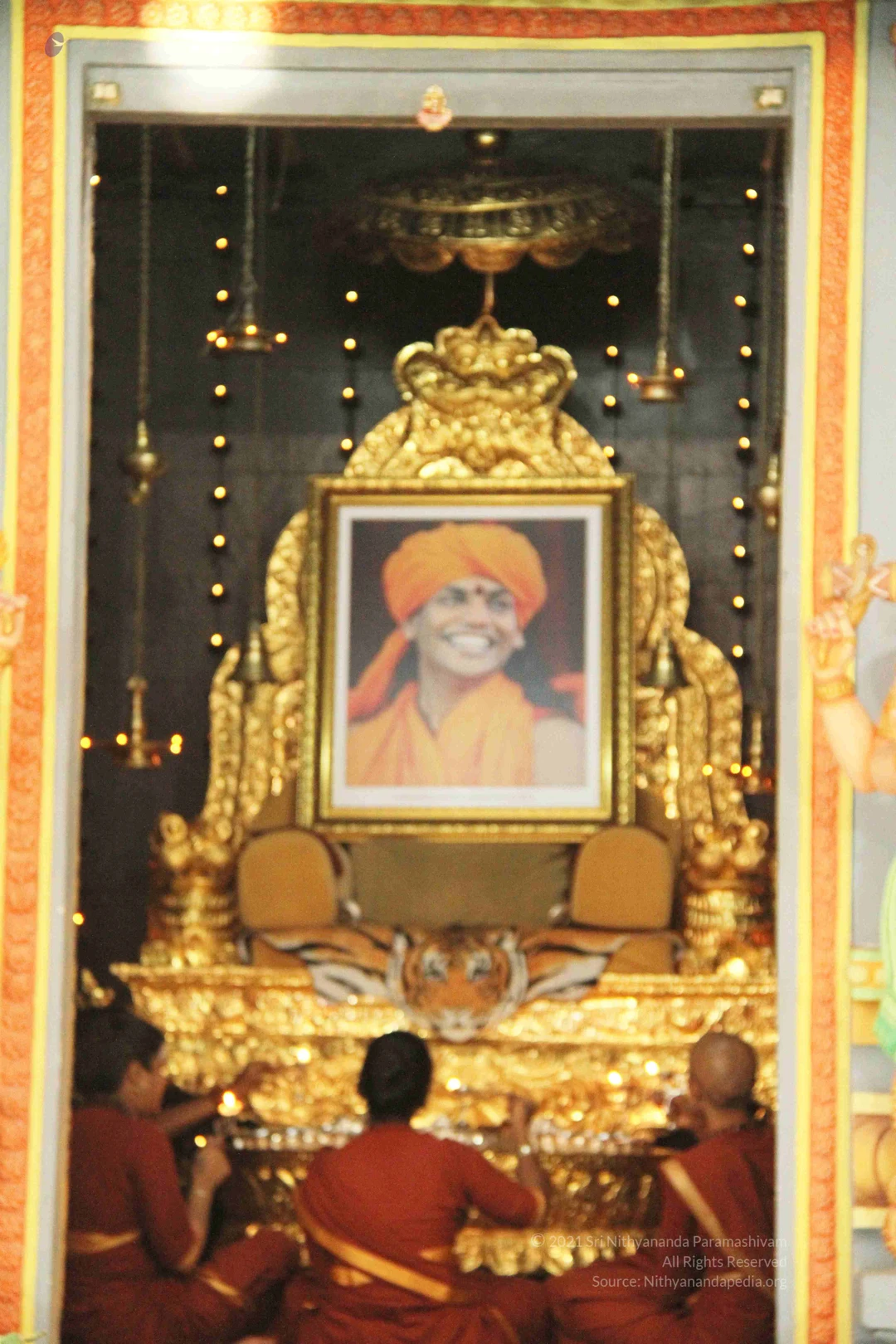
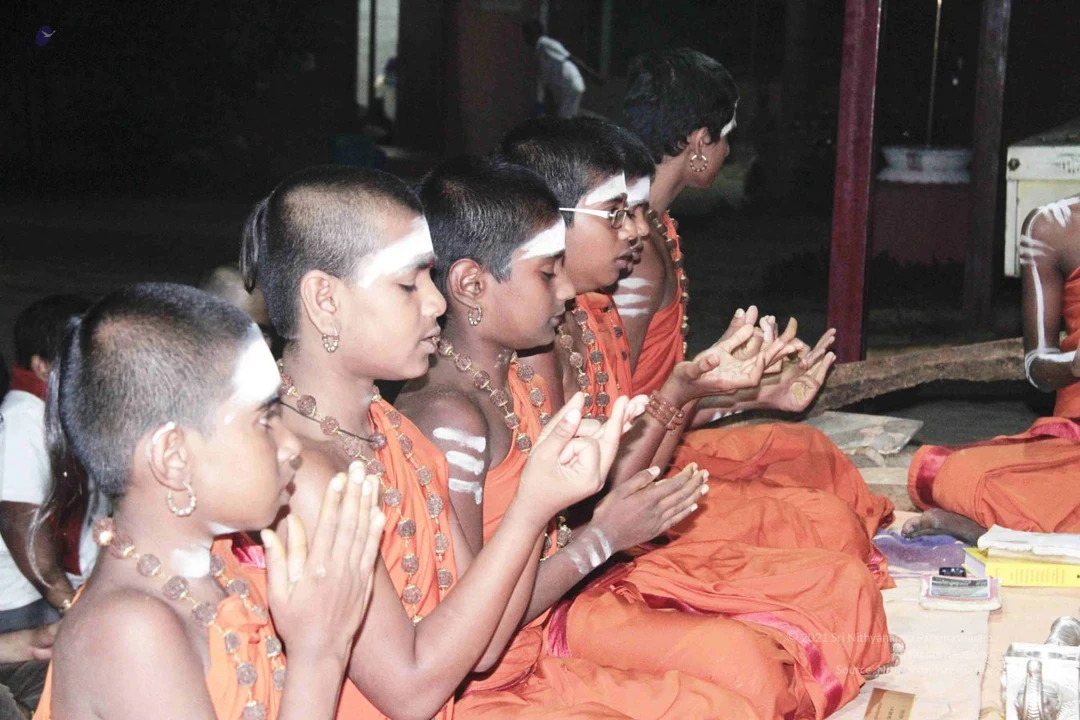
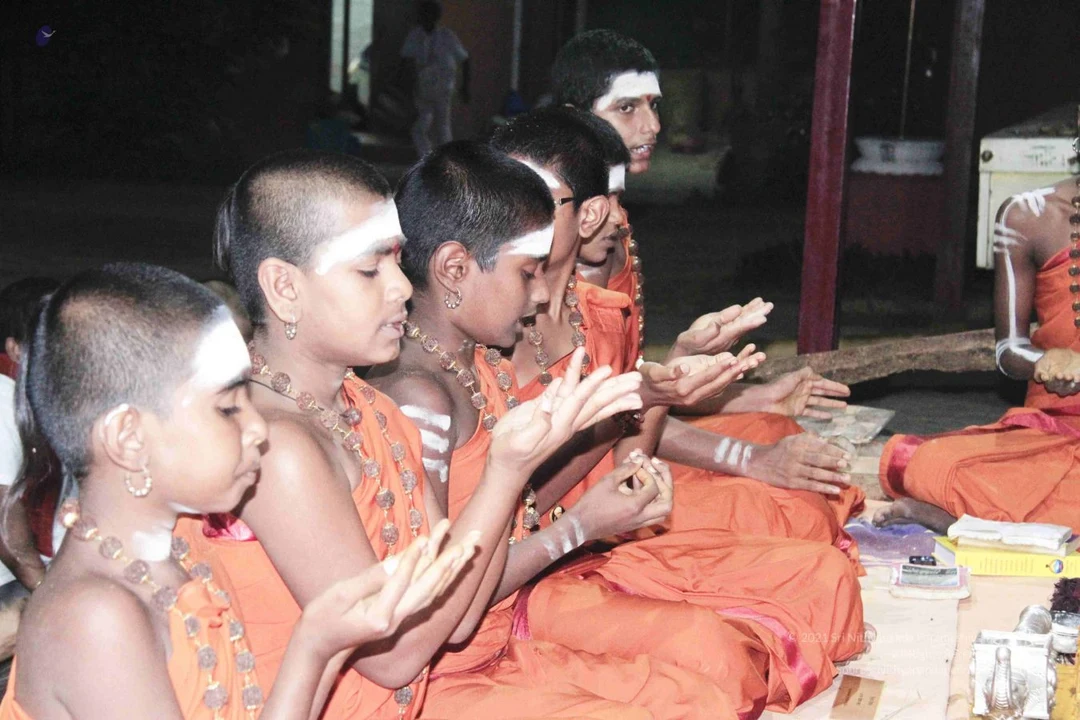
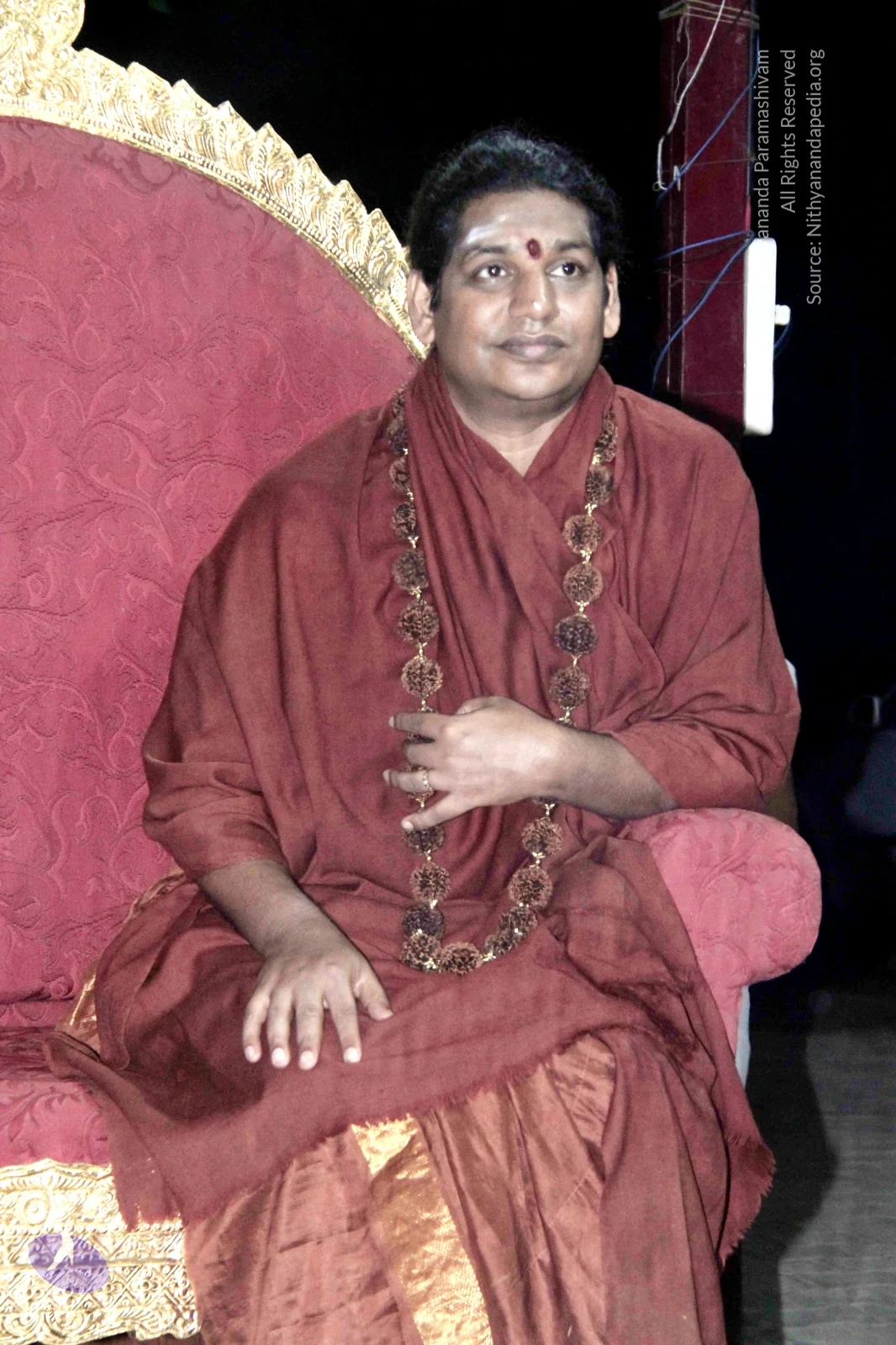
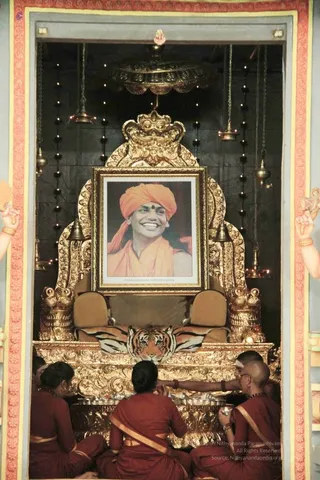
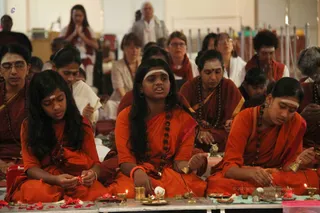
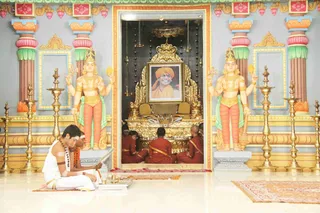
A multi-panel video-conference screen showing devotees in separate locations for a Nayana Deeksha session. Panels are labelled with place names including Houston Kalahasthi, Toronto Kailasam, Kuala Lumpur - Palani, Seattle Chidambaram, Oklahoma Somnatham, Nithyananda Nagaram Hyderabad, Guadeloupe Rameswaram, Upland CA and Los Angeles Arunachala. Some panels show people seated on mats and cushions, some with a yellow-cushioned sofa, some beside altars with deity murti and garlands. A framed portrait of a smiling man in an orange turban and orange robe sits in the lower right panel beside a brass bell. Photo of a screen display rather than a direct view of the room.Two young male devotees sit side by side in a temple setting with brass oil lamps behind them. The young man on the left wears a white dhoti-style cloth draped over his shoulders, a rudraksha mala with bead necklaces, a bead bracelet, and a white band with a small red mark across his forehead; he looks down while speaking. The boy on the right, with a shaved head, wears an orange saffron cloth, a rudraksha mala, a white forehead band and a red bindi, and looks toward the camera. Tall brass oil lamps and ornate painted pillars in red, orange and green stand in the background.A photograph of a gilded throne (peetha) set in a niche, with a framed portrait placed on its backrest. The portrait, labelled "PARAMAHAMSA NITHYANANDA" on its mount, shows a smiling man in an orange turban and orange-saffron shawl with a red bindi. A tiger-skin cloth lies across the seat, and brass oil lamps and hanging rudraksha strands surround the niche. Three or four people in red-maroon robes sit in front of the throne, their backs to the camera, with one person pouring or offering from a silver vessel on a tray.Several young women and girls in orange saffron sarees sit cross-legged on the floor during a puja, several with white horizontal forehead marks and rudraksha malas. In the foreground, the girl at center holds a small brass cup and a kalasha-like brass vessel, while others hold small brass bells and oil lamps on a tray. Rose petals and flowers are scattered on the table, and brass vessels with offerings sit in front. Behind them, seated devotees in maroon and white clothing and standing people watch the ritual in a hall. No a person candidate is clearly identifiable from appearance, so no probable identification is made.Inside a temple sanctum with cream walls and painted pink-and-green pillars, a framed portrait of a smiling man in an orange turban and saffron clothing sits on an ornate gold throne flanked by a golden tiger motif. Two golden standing deity statues with multiple arms stand on either side of the shrine. Several monks in orange-red robes sit in front of the throne, and in the foreground a man in white dhoti with a bare upper body and sacred threads reads from a palm-leaf or paper text while another man in white sits beside him. Brass oil lamps stand on the floor, and a red and gold carpet lies at the entrance.A tiered silver oil lamp stand (deepam) with many lit wicks in concentric rings, decorated with repoussé floral knobs, dominates the foreground. Behind it, slightly blurred, a deity murti with orange-gold skin, a red dhoti and green cloth stands in a temple setting. No people are clearly visible; the arrangement is a lamp offering in a temple.

Nithya-Satsang
75 photosSource gallery
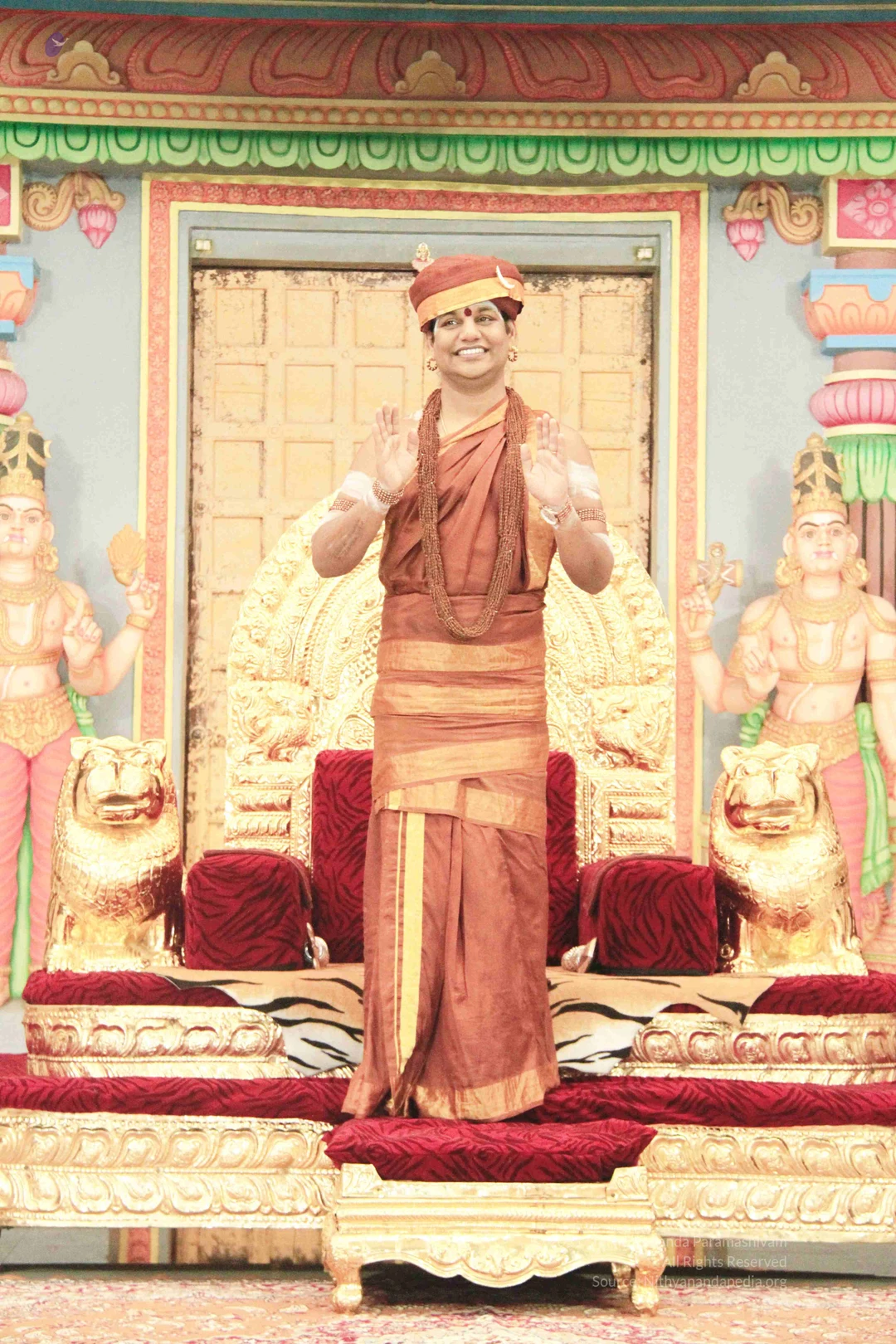
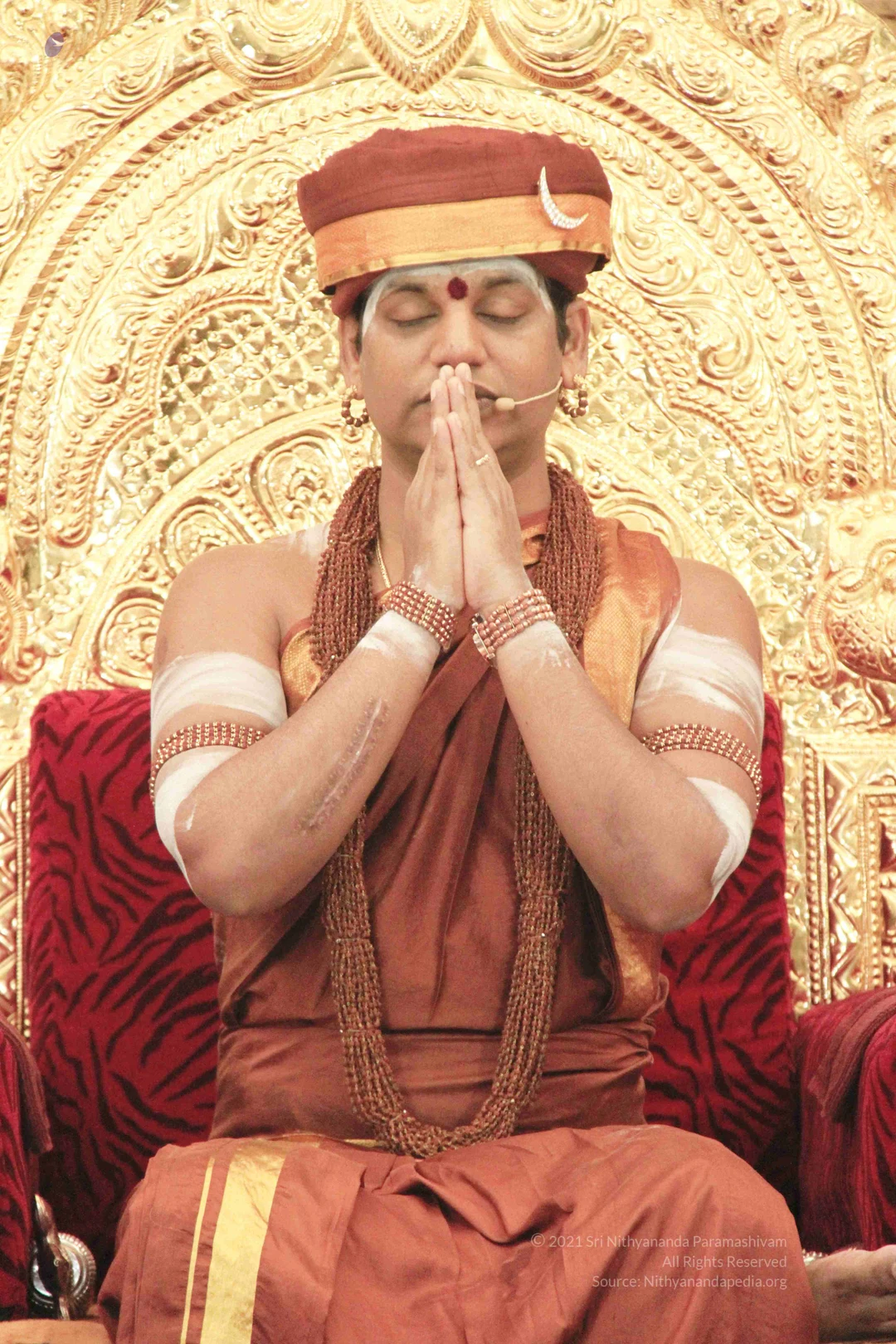
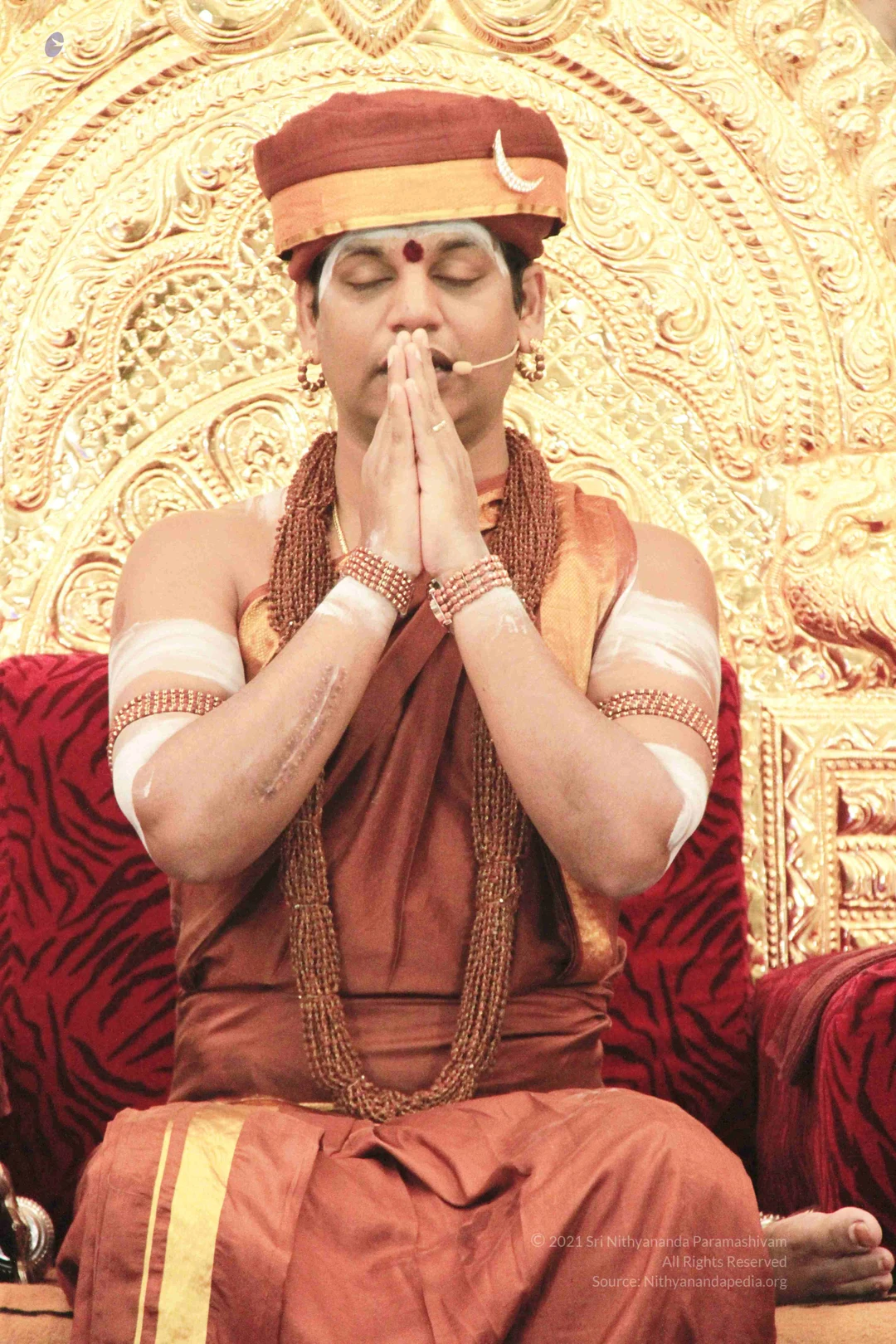
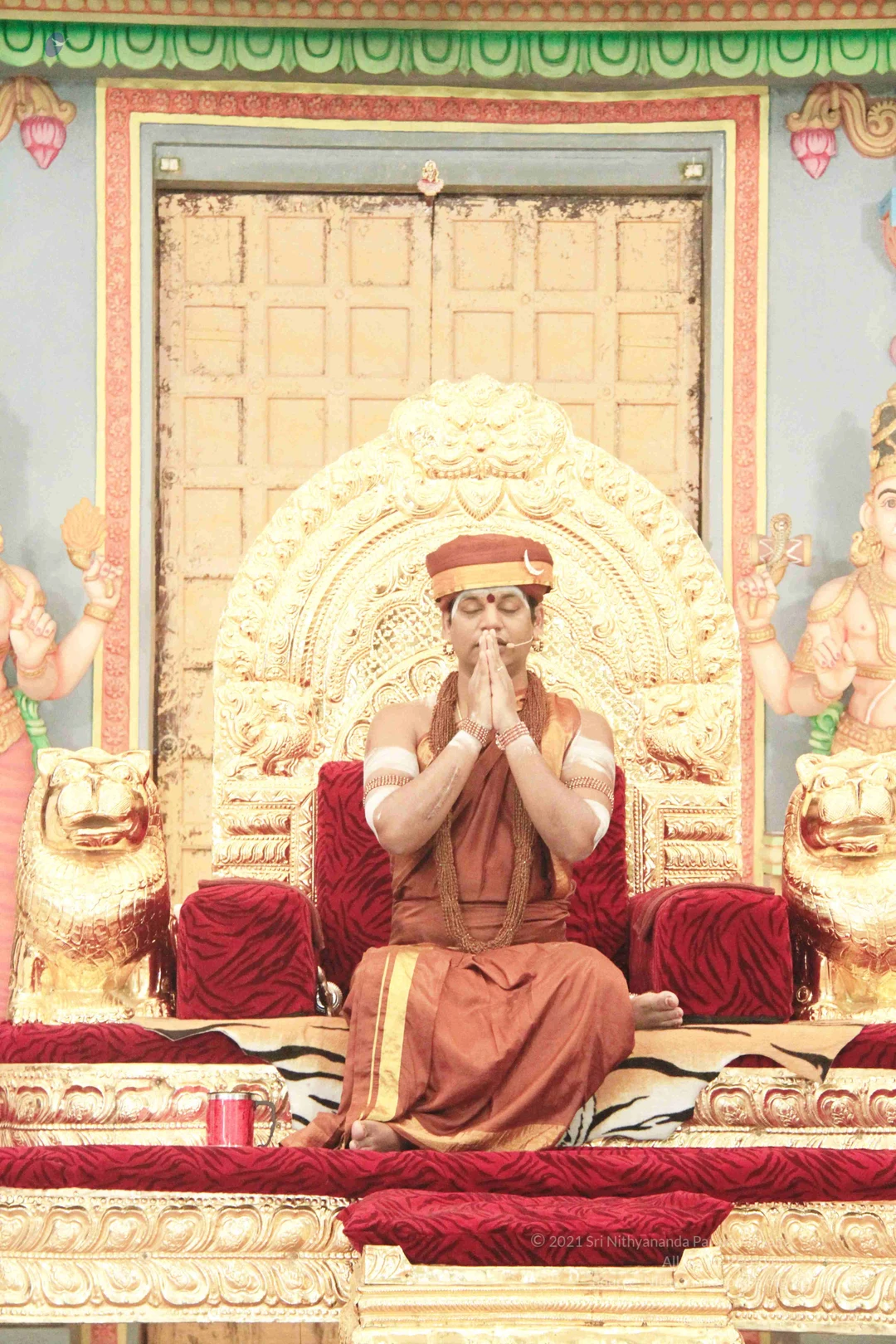
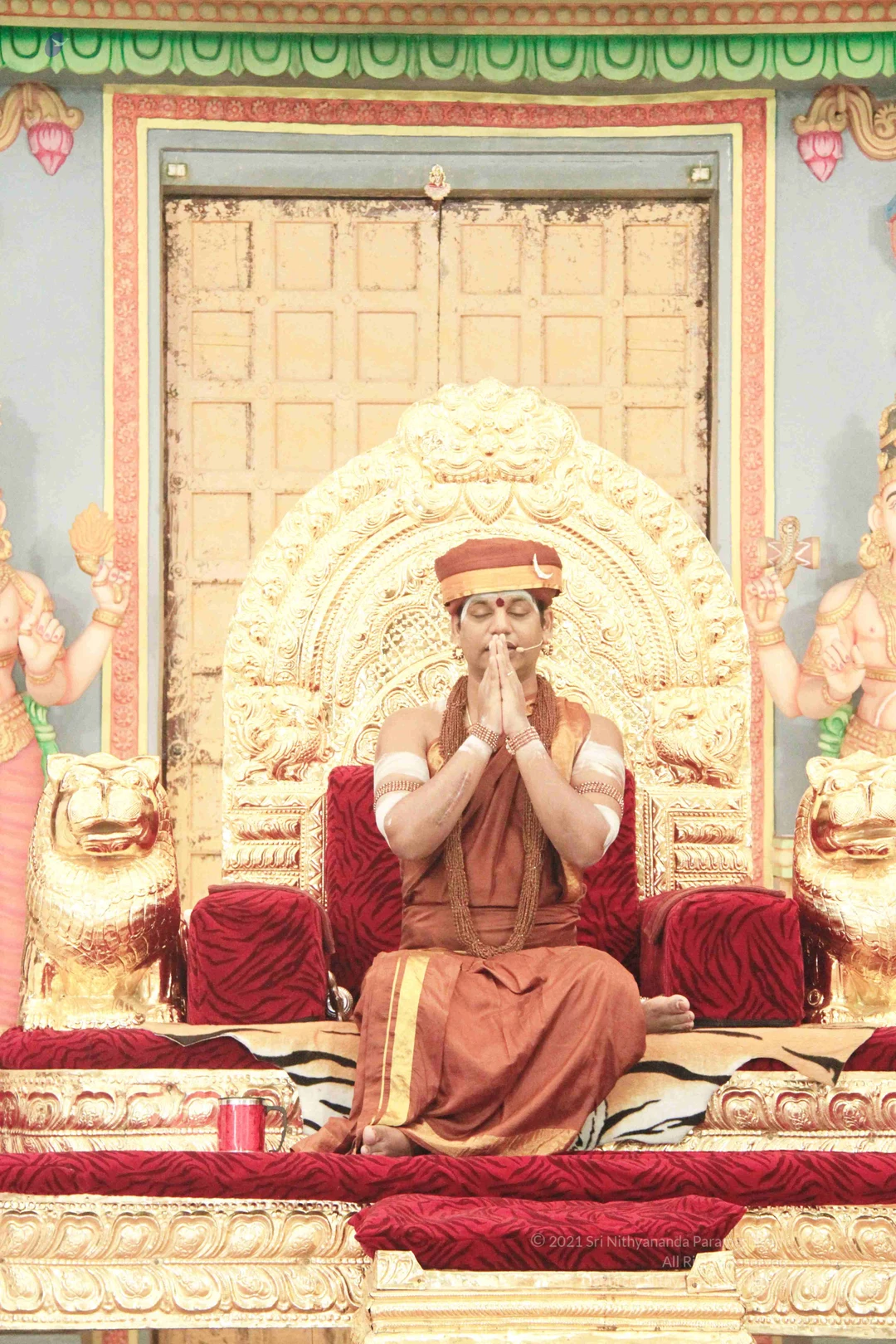
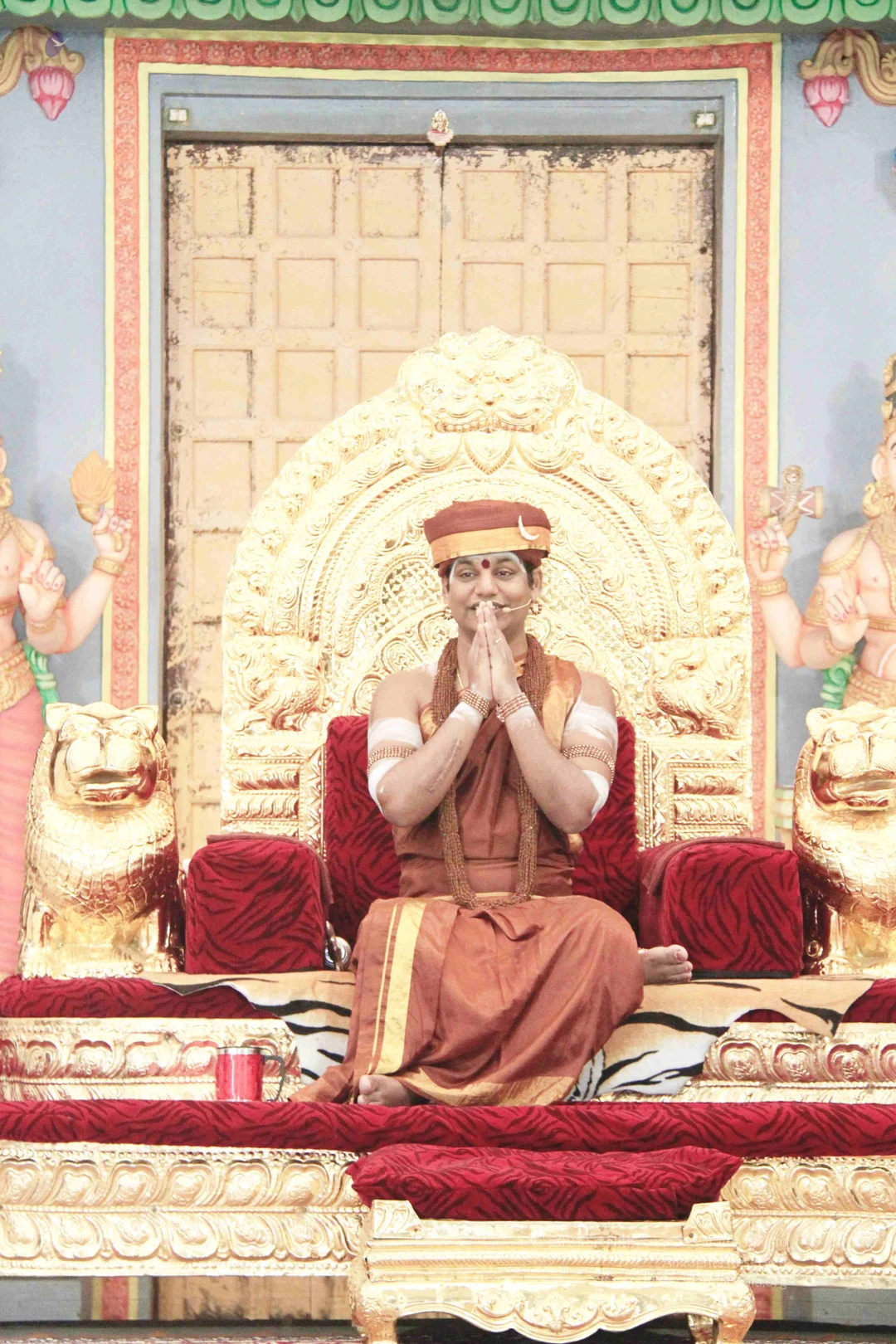
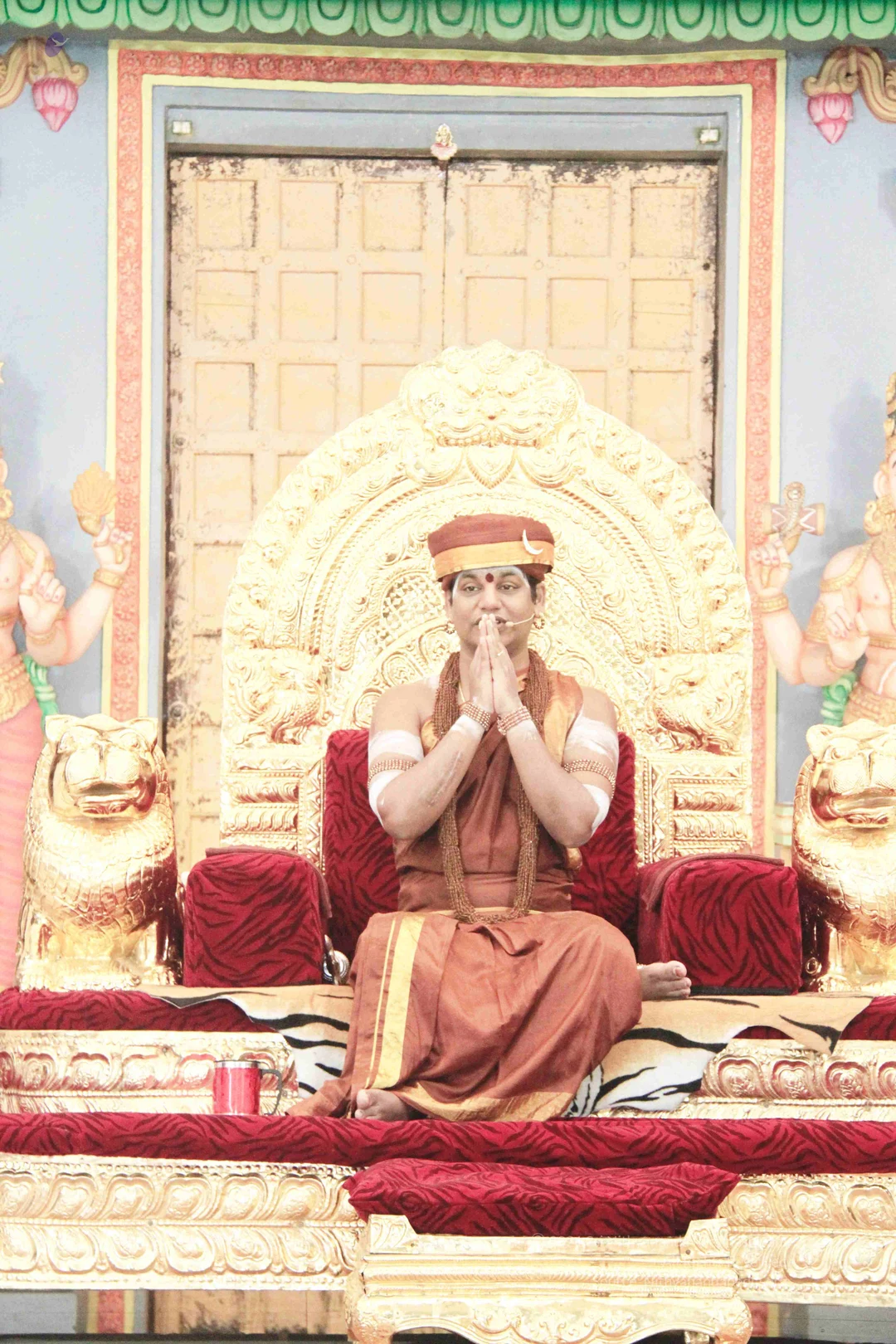
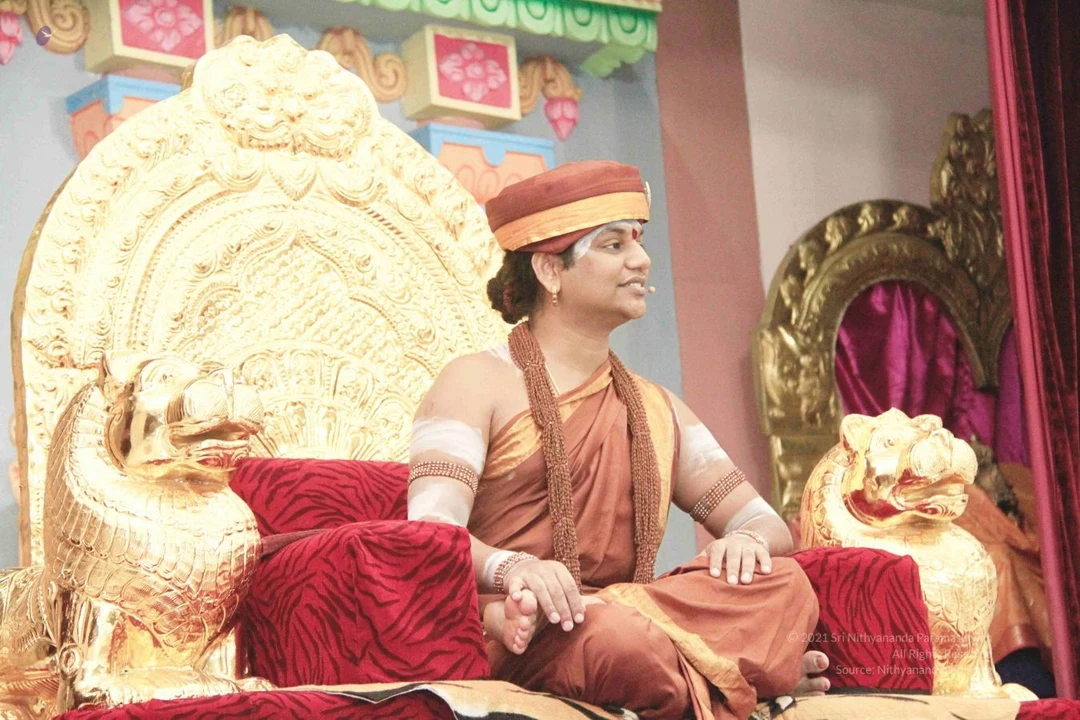
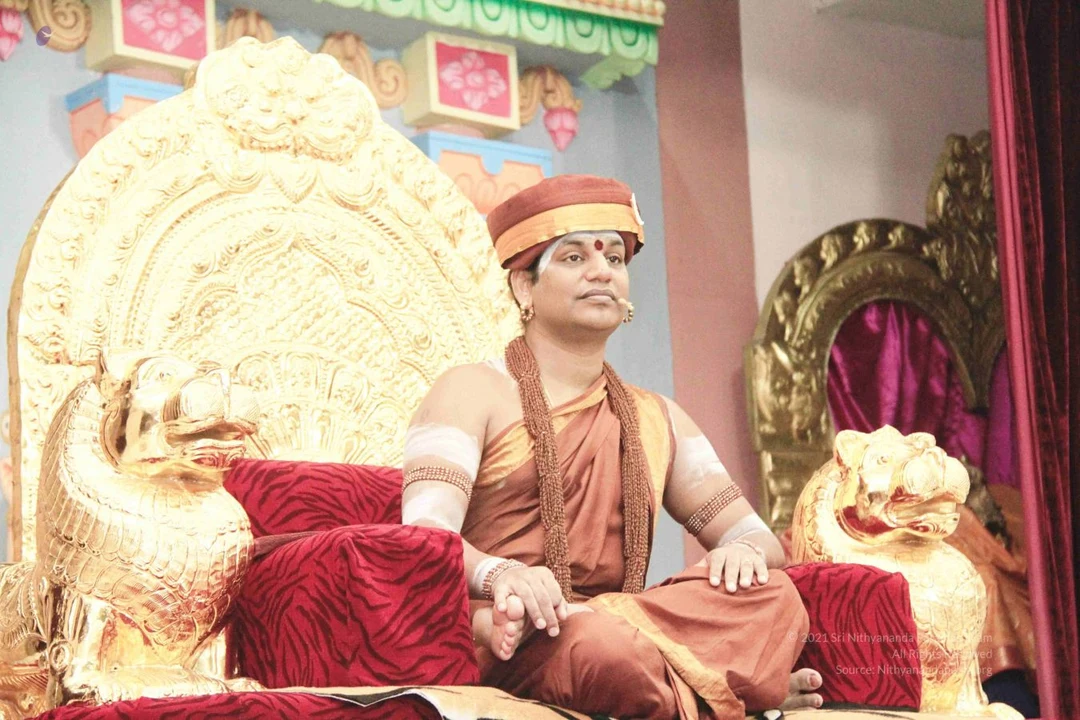
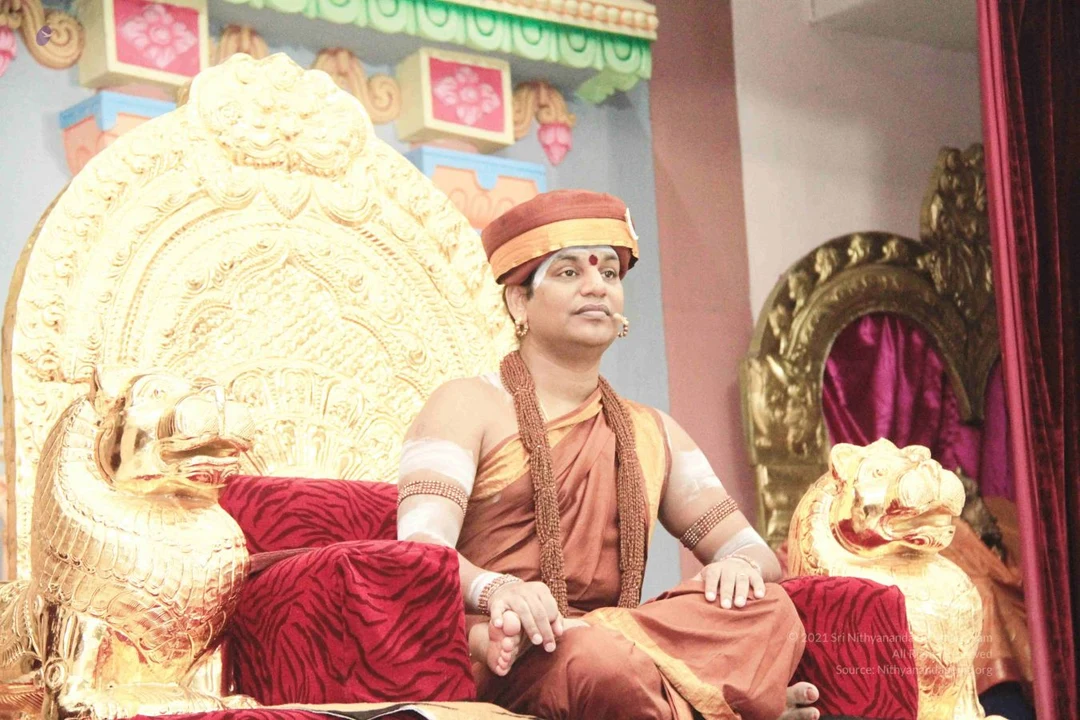
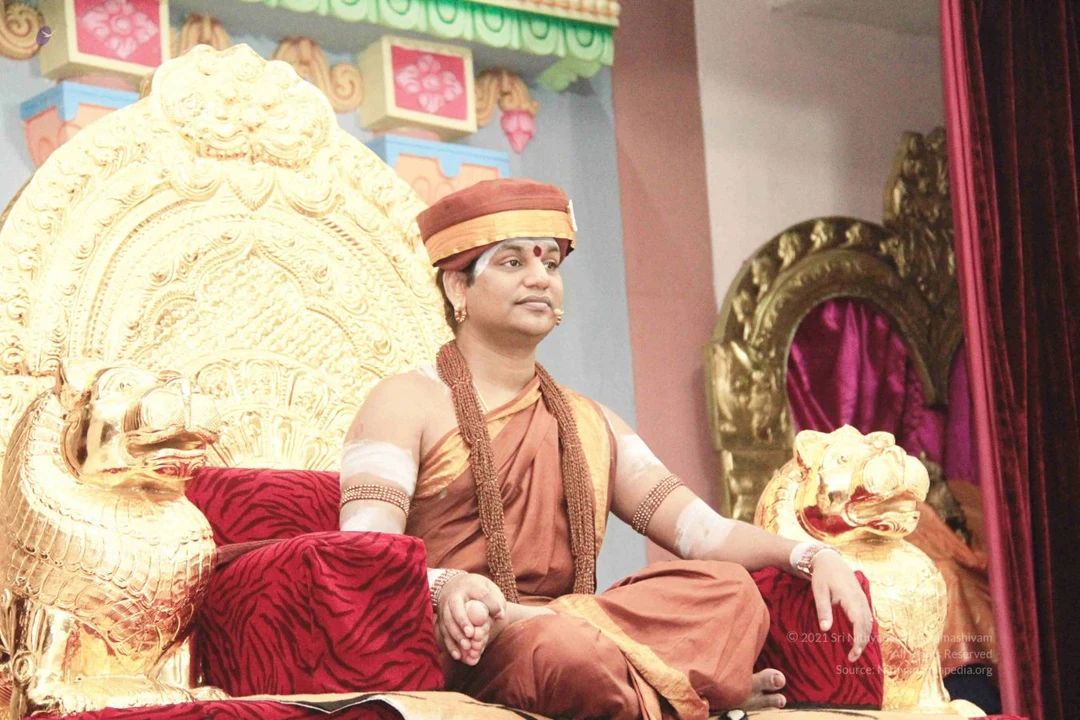
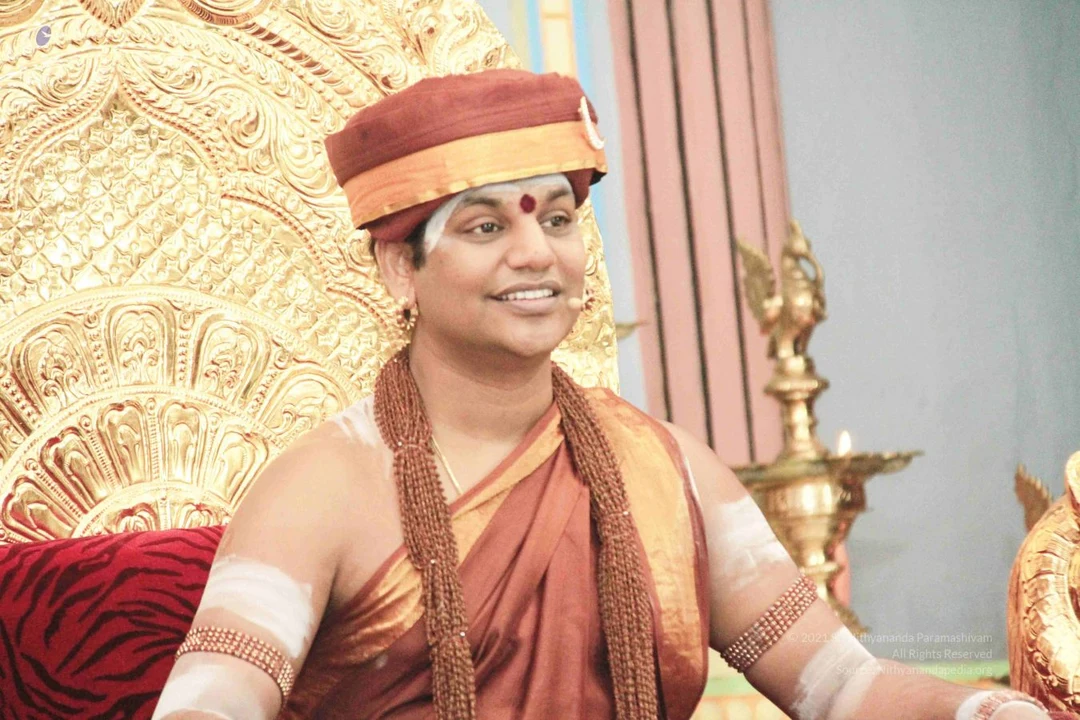
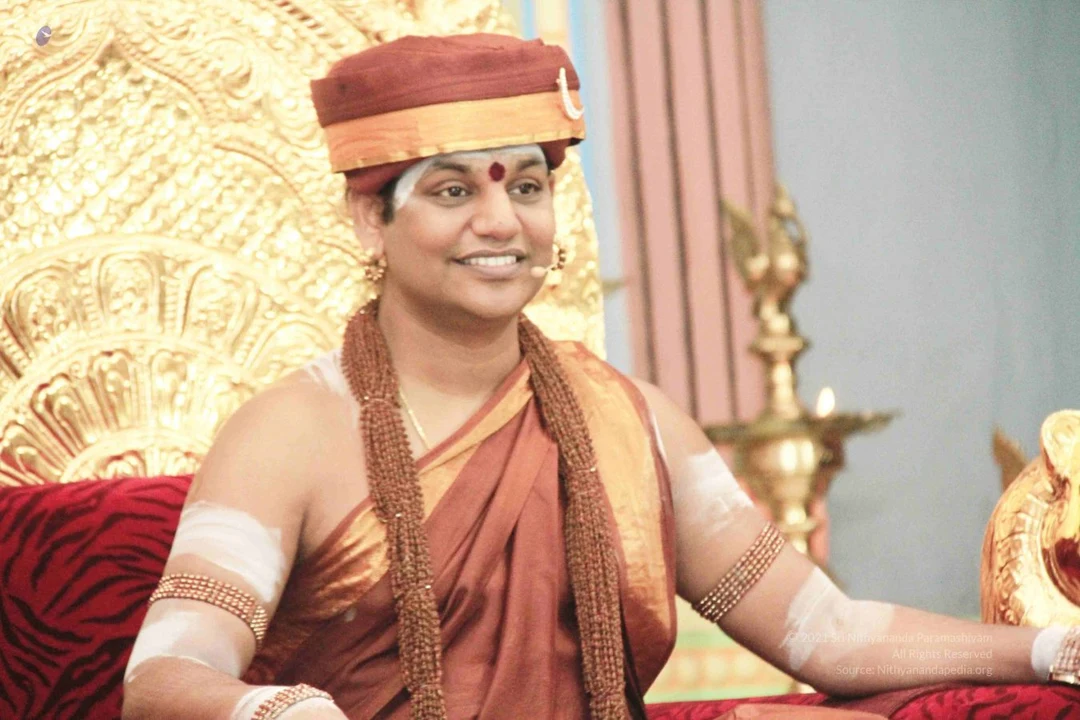
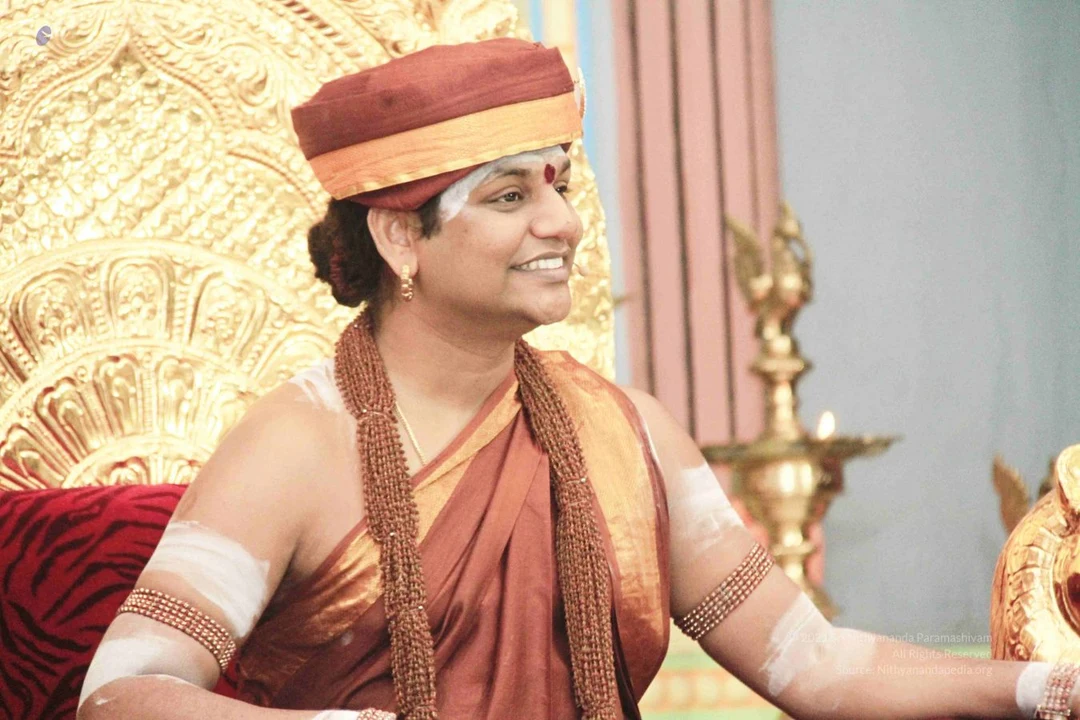
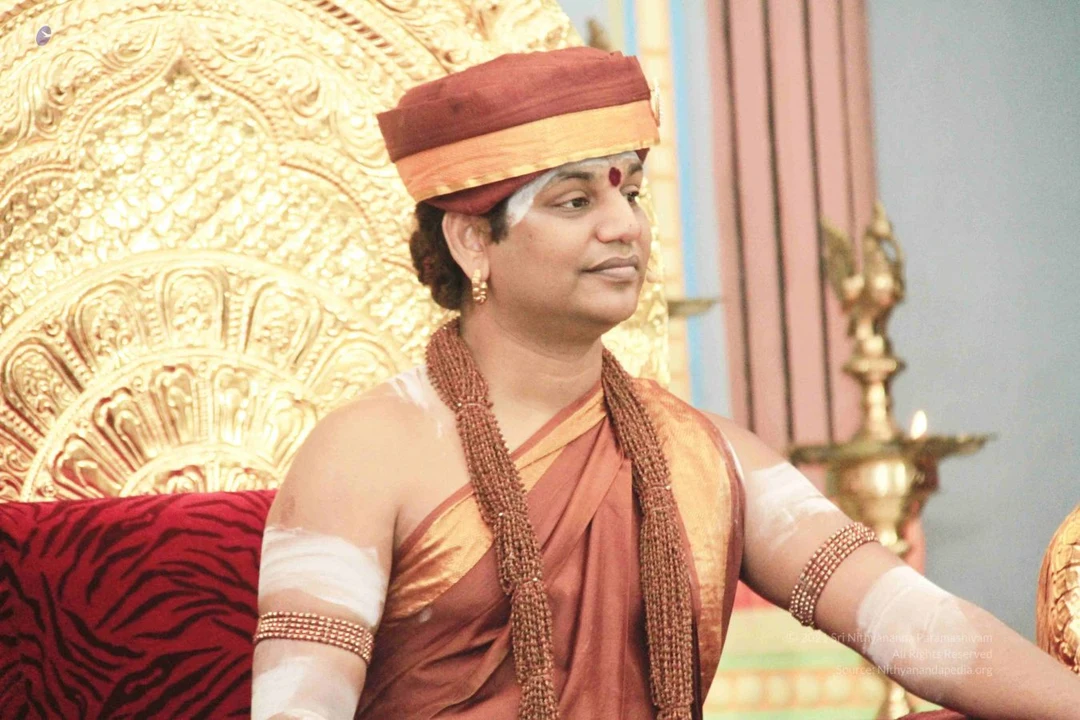
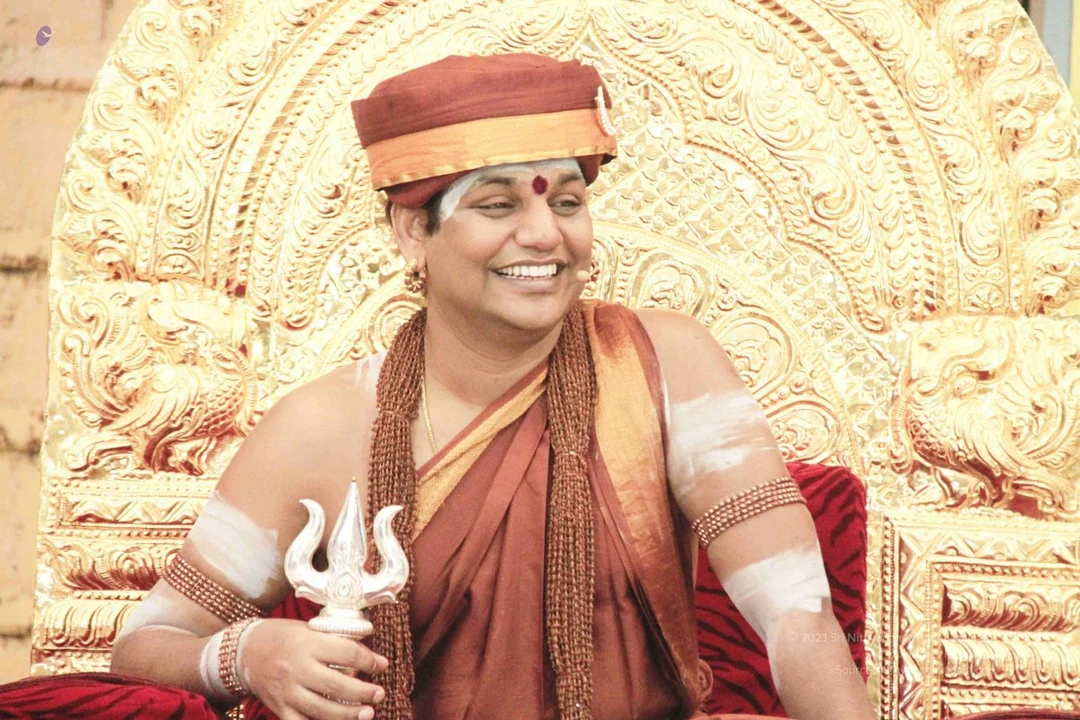
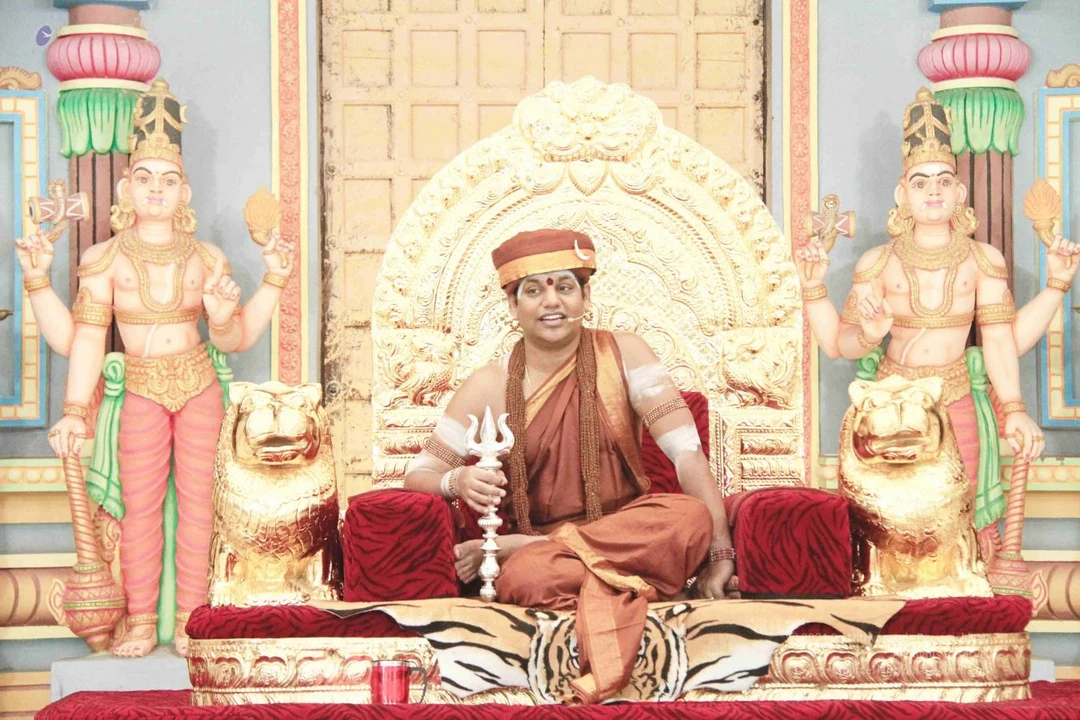
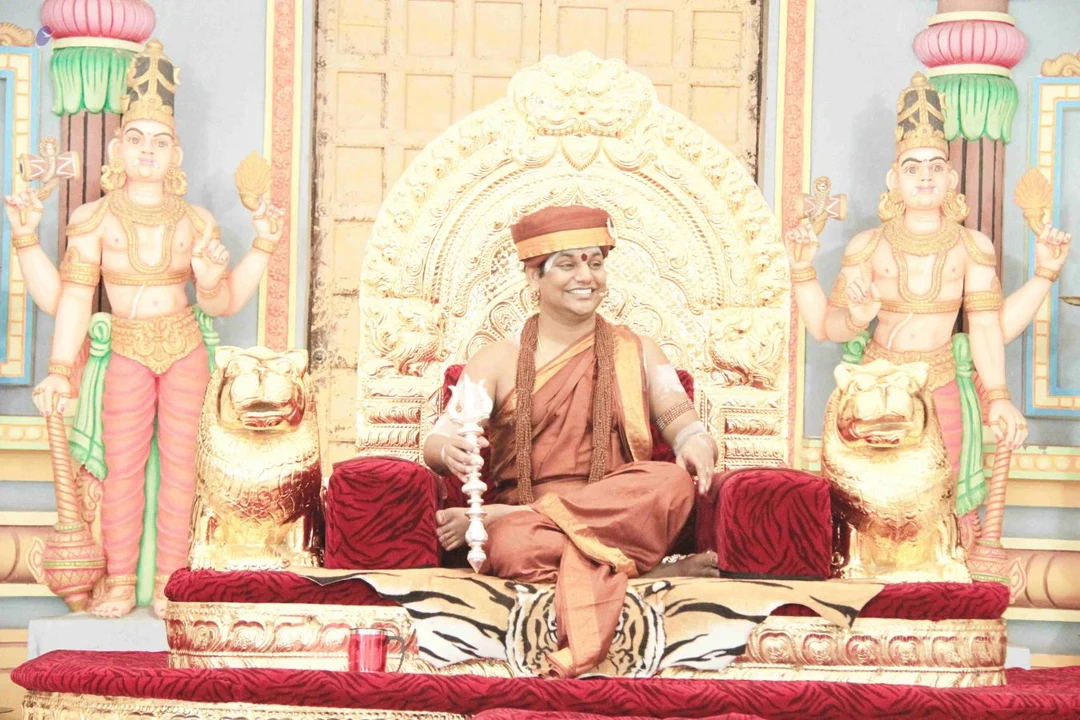
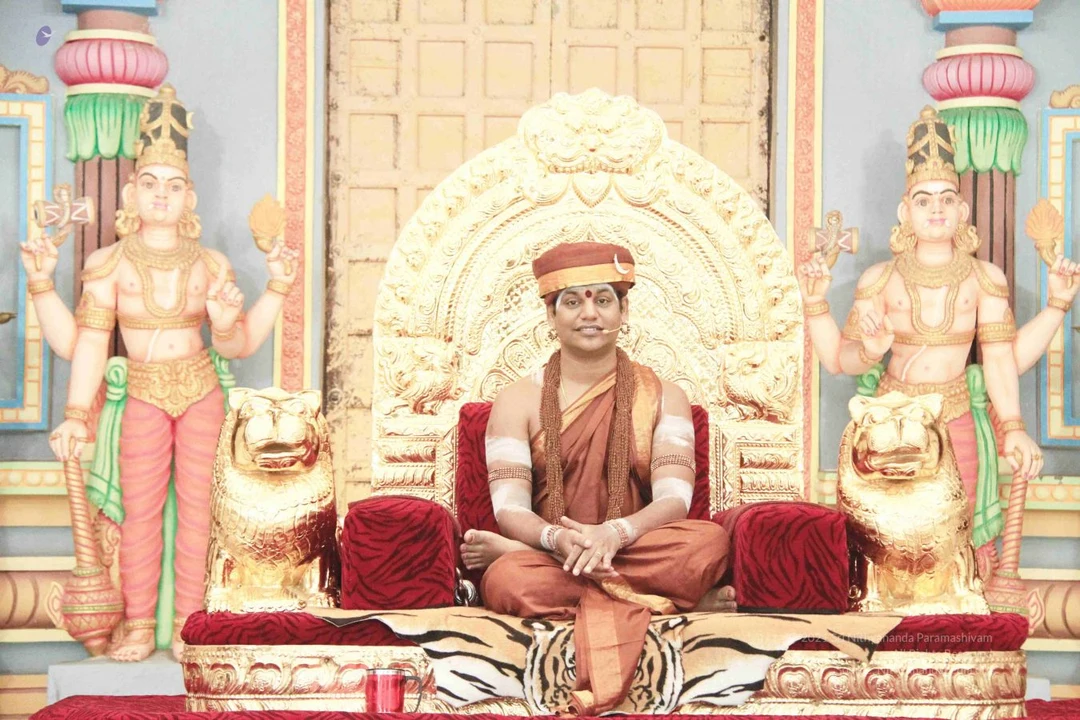
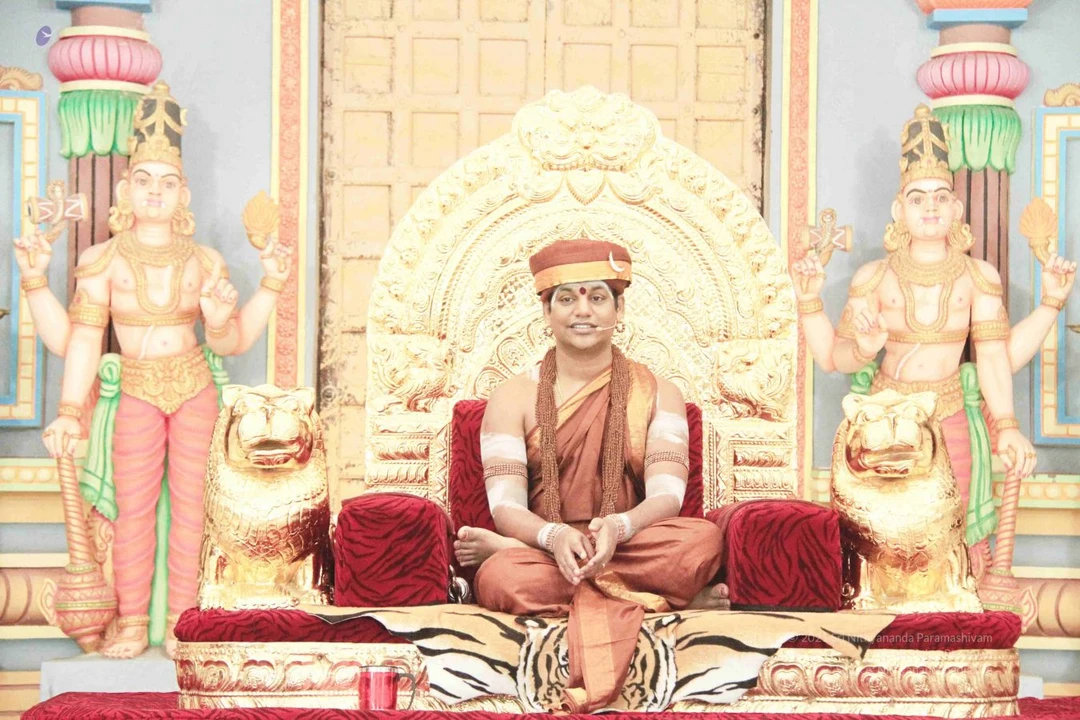
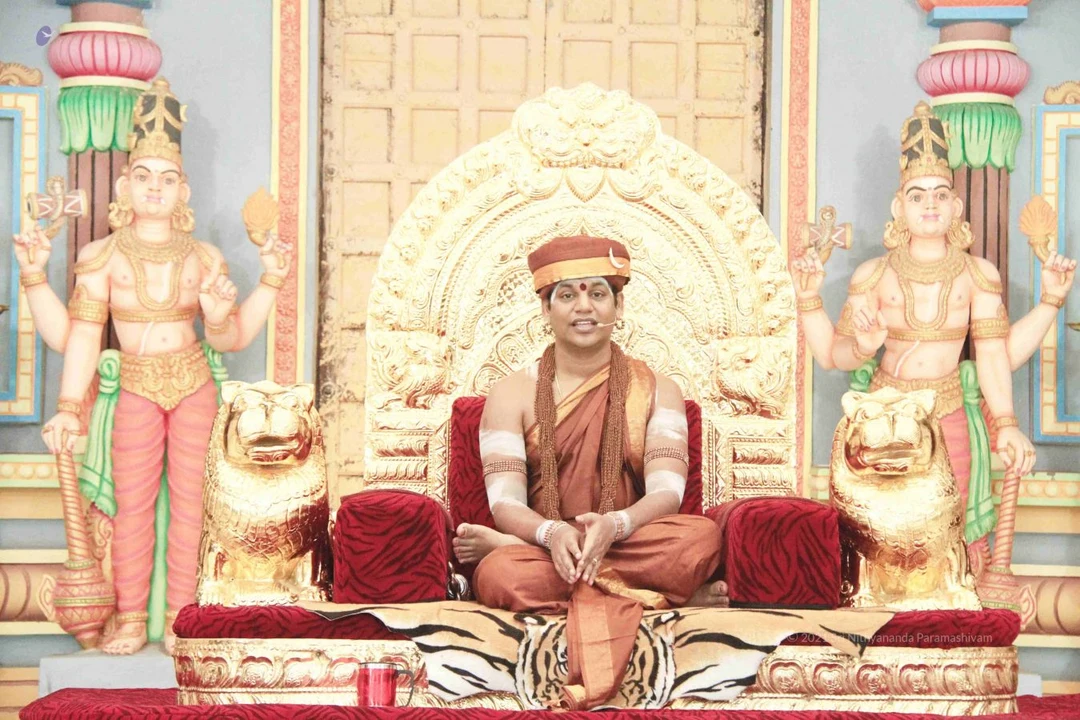
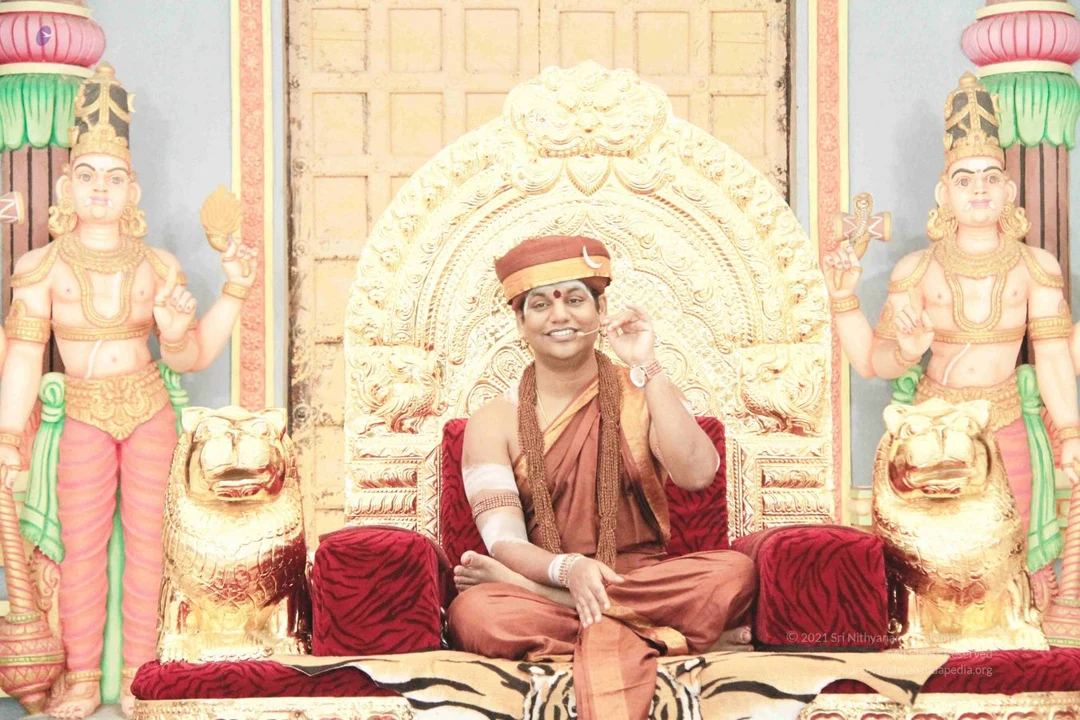
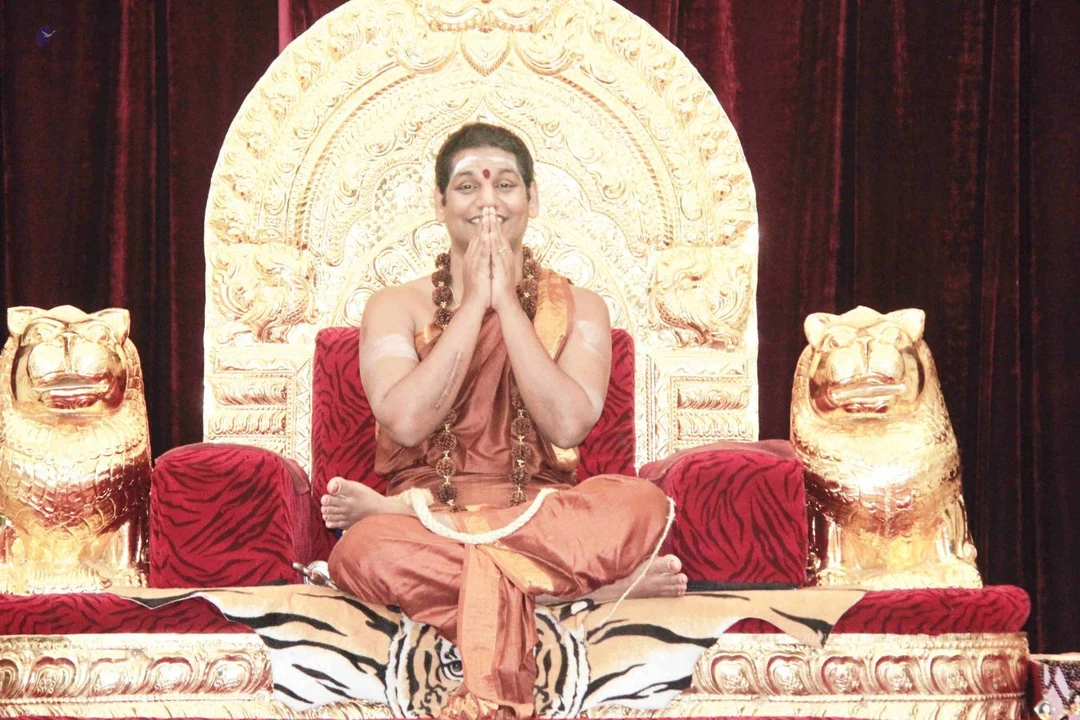
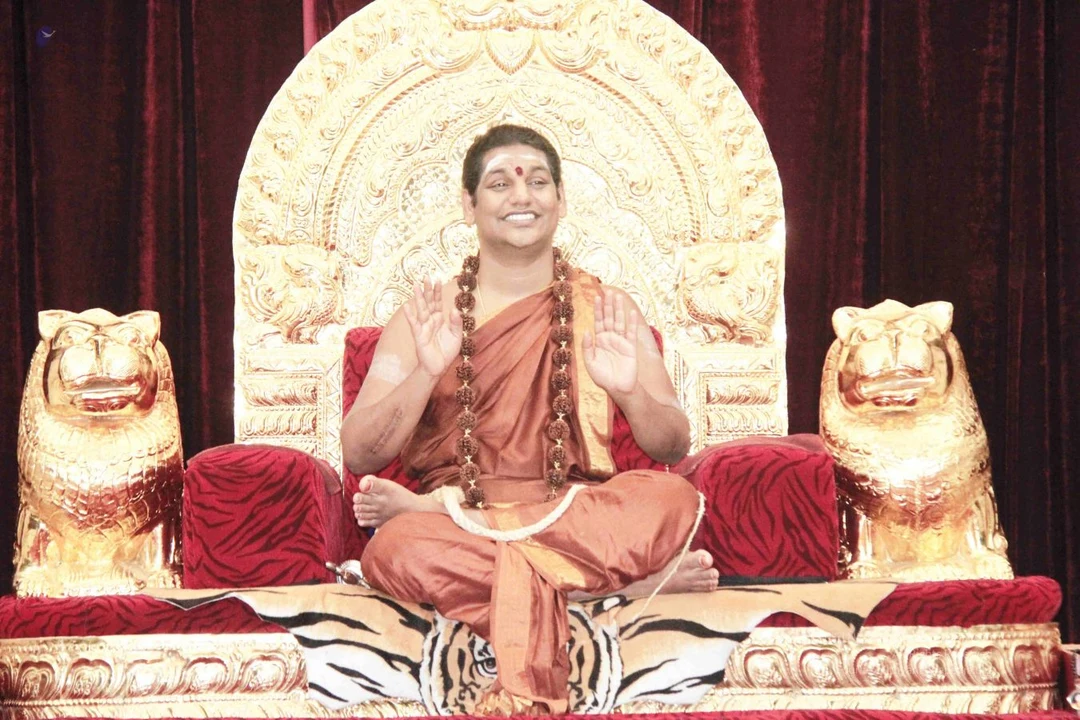
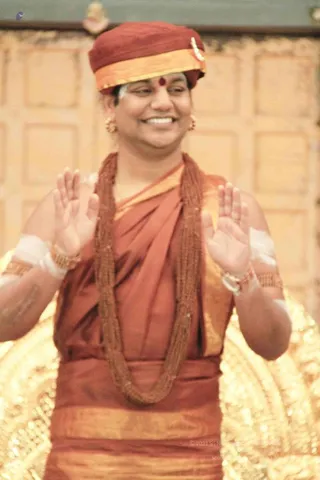
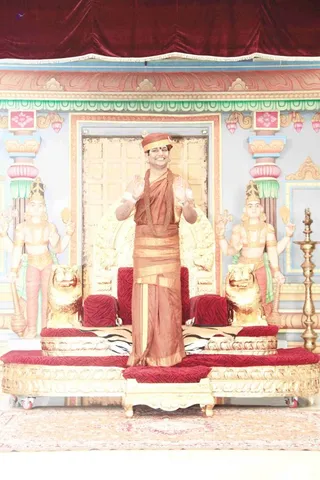
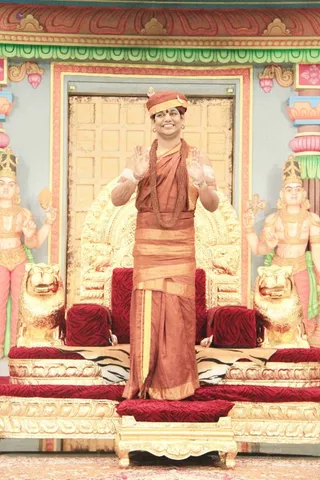
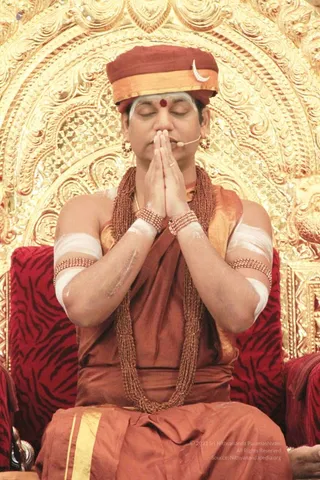
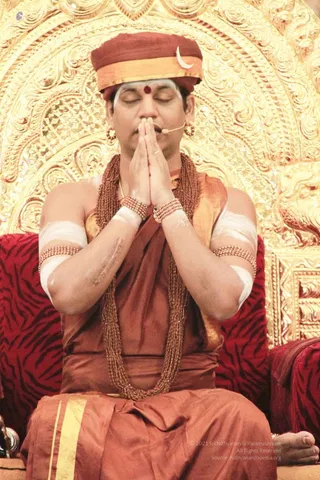
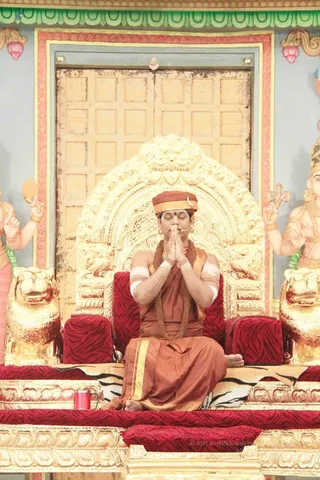
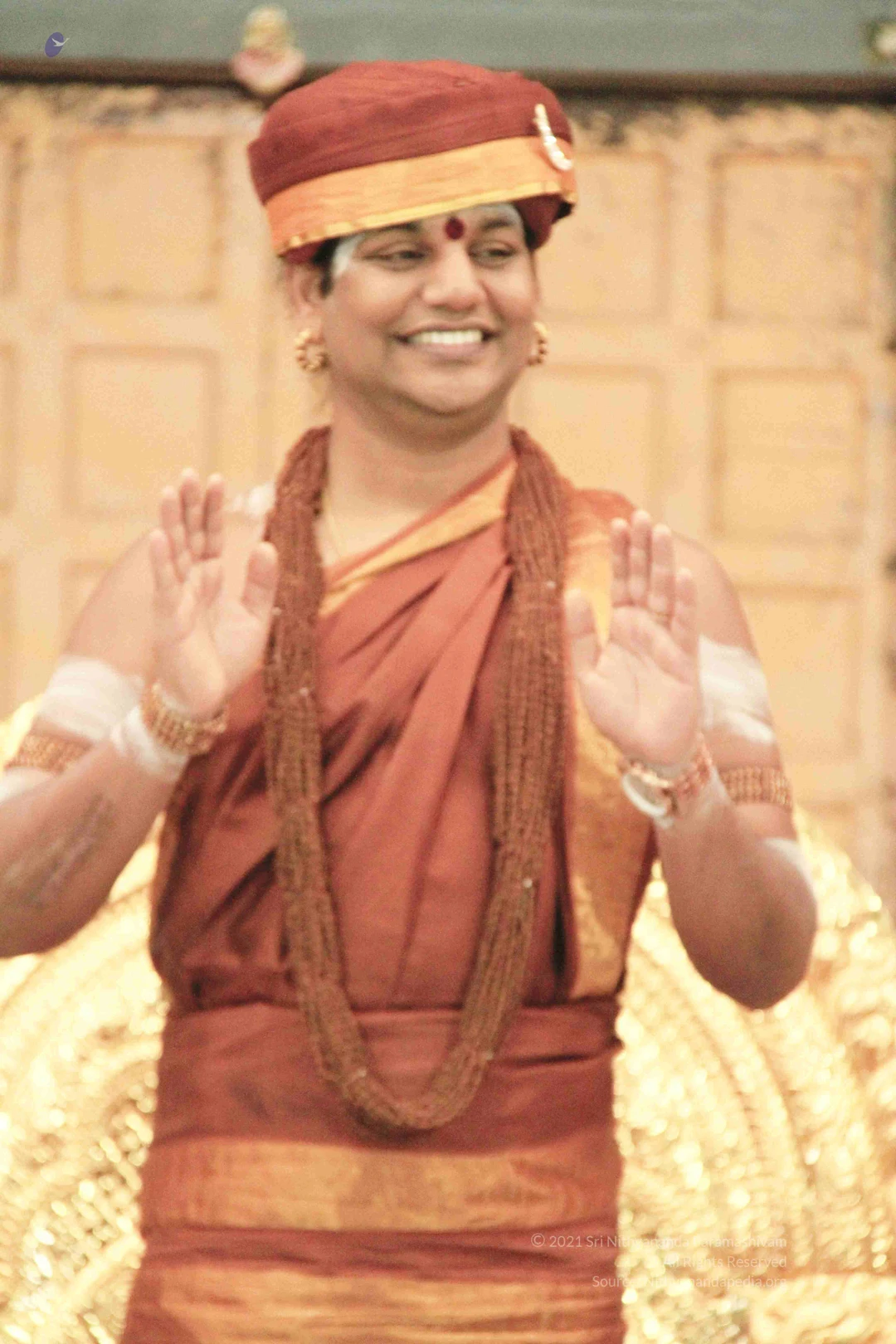
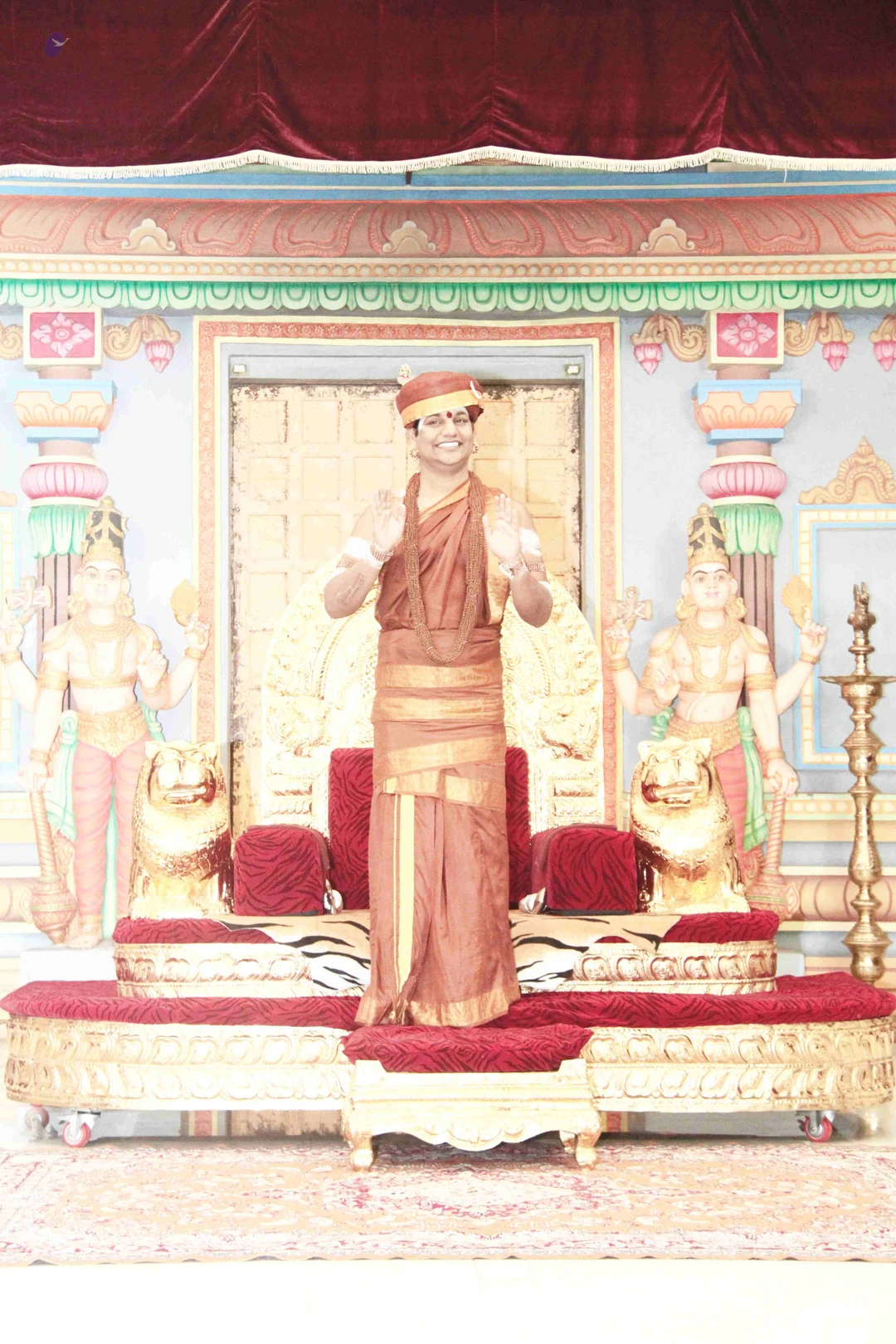
A smiling person in a red-orange turban with a gold-bordered band and a red bindi stands before a golden backdrop, wearing an orange-red draped garment with gold border and a long rudraksha mala. Both palms are raised forward in a blessing gesture, with white markings on the forearms and gold bangles on the wrists. Gold earrings are visible. The figure appears to be a person (a person) based on the saffron-red robes, turban, and rudraksha mala, though the identification is uncertain.A man stands centred before an ornate golden throne with red tiger-striped cushions and gilded lion armrests, flanked by two gilded multi-armed deity murtis holding ceremonial objects. He wears a rust-orange wrap with a gold border, a matching orange turban with a gold band, a long rudraksha-style mala, and white arm bands, and raises both palms in a blessing gesture. A tall brass lamp stands at right, and the backdrop is painted with pastel temple architecture under a maroon velvet canopy. Appearance-based candidate: Swamiji (probable), with saffron-orange attire, a turban and a rudraksha mala, standing in a blessing pose before the throne.A standing person in a rust-orange and gold-bordered robe with a matching orange-red turban and a red bindi, smiling with both palms raised toward the viewer in a welcoming gesture. Multiple strands of brown rudraksha beads hang around the neck. Behind them stands an ornate golden throne with lion-head armrests, red zebra-print cushions and a tiger-stripe cloth, flanked by two painted multi-armed deity murti figures with gold crowns and jewellery. A carved gold and wooden door and pink and green painted pillars frame the scene. The person appears to be Swamiji (probable), with a distinctive orange turban, rudraksha malas and ornate ritual dress, standing before the throne.A photograph of a person seated on an ornate gold throne with a red and black tiger-striped cushion, eyes closed, palms pressed together in a namaskar gesture at the chest. He wears a rust-red head wrap with a crescent ornament, red bindi, a small headset microphone, red-brown beaded rudraksha-style malas across the shoulders, beaded bangles, and a rust-red dhoti and shawl with gold borders, with white sacred ash marks on the arms. Probable Swamiji based on the distinctive presentation: ceremonial red-orange clothing, multiple beaded malas and a crescent crown ornament on a throne during satsang-style seating.A photograph of a seated man in rust-red and gold silk robes with a matching red turban bearing a small crescent ornament. He sits with eyes closed and palms pressed together in namaste, wearing a red bindi, white vertical marks on the forehead, a small microphone at his cheek, and layered rudraksha-style bead malas with a gold necklace. White sandal paste marks cover his arms and upper arms, and red bead bangles adorn his wrists. Behind him stands an ornate gold-embossed throne backdrop, with a red tiger-striped cushion to one side. The title and excerpt describe a satsang, and the man's appearance matches the Swamiji (probable) candidate: a crescent-topped turban, saffron-toned robes, and multiple beaded malas are visible on a throne-style seat.A seated man in a rust-orange and saffron robe sits in a gilded throne with red tiger-striped velvet cushions and golden lion armrests, hands pressed together in namaskar with eyes closed. He wears a rust-orange turban with a crescent emblem, rudraksha malas across his chest, and white markings on his arms. Gilded deity murti flank the throne on either side, and an ornate wooden door stands behind. A red cup sits on the lower dais.

Sarva Darshan

19 photosSource gallery
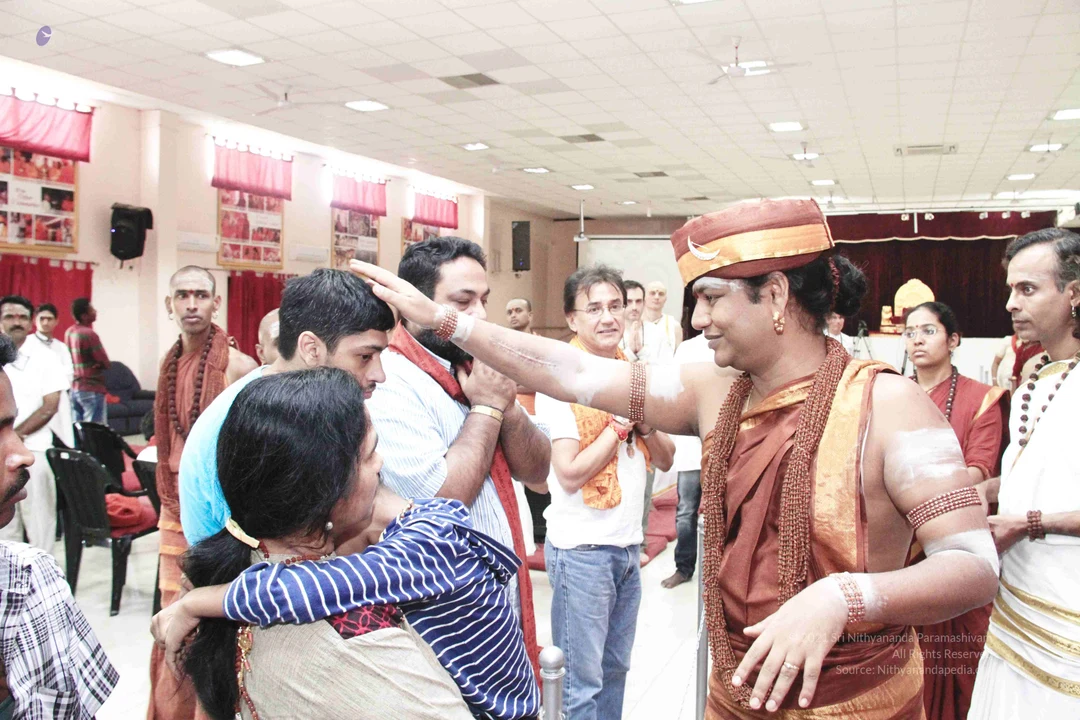
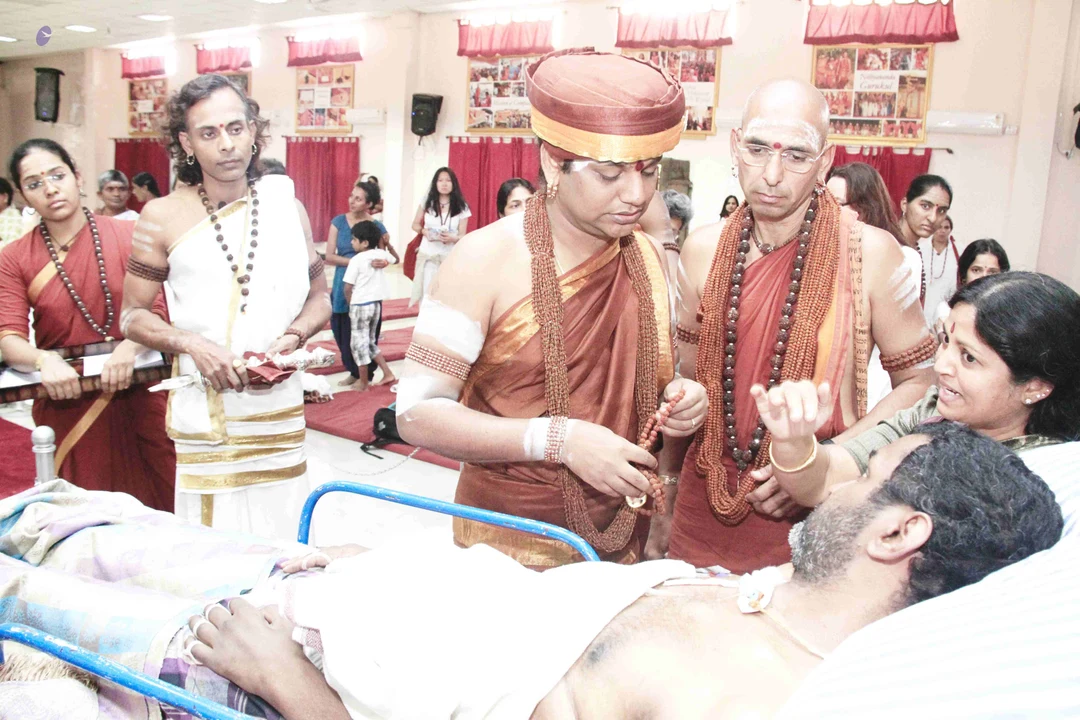
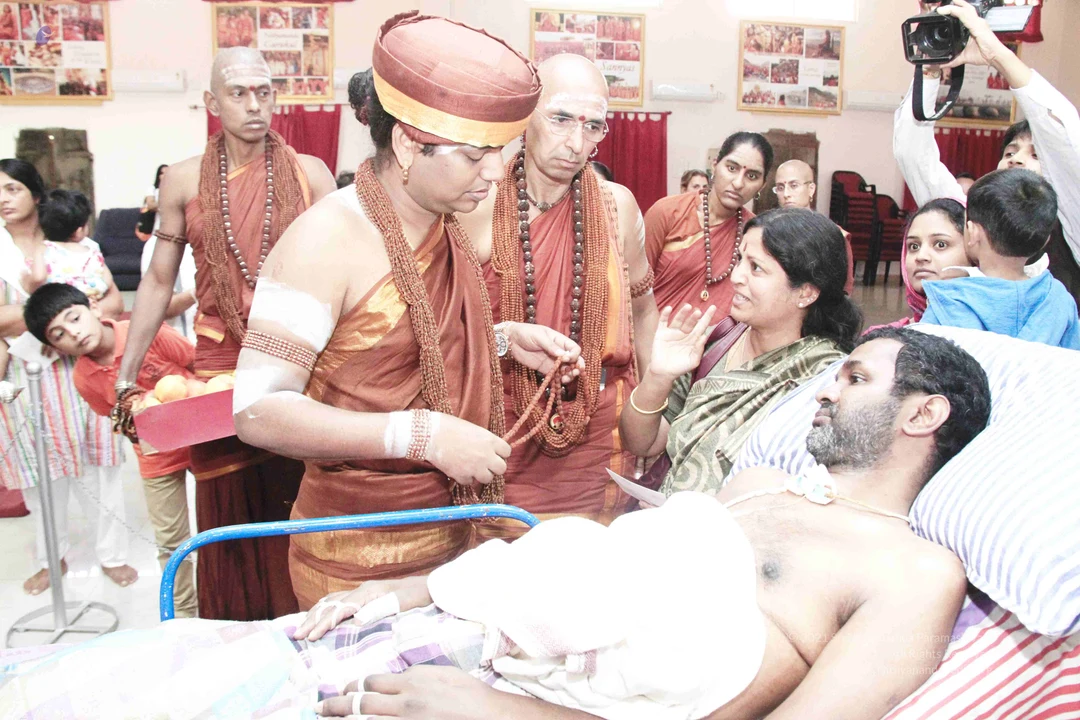
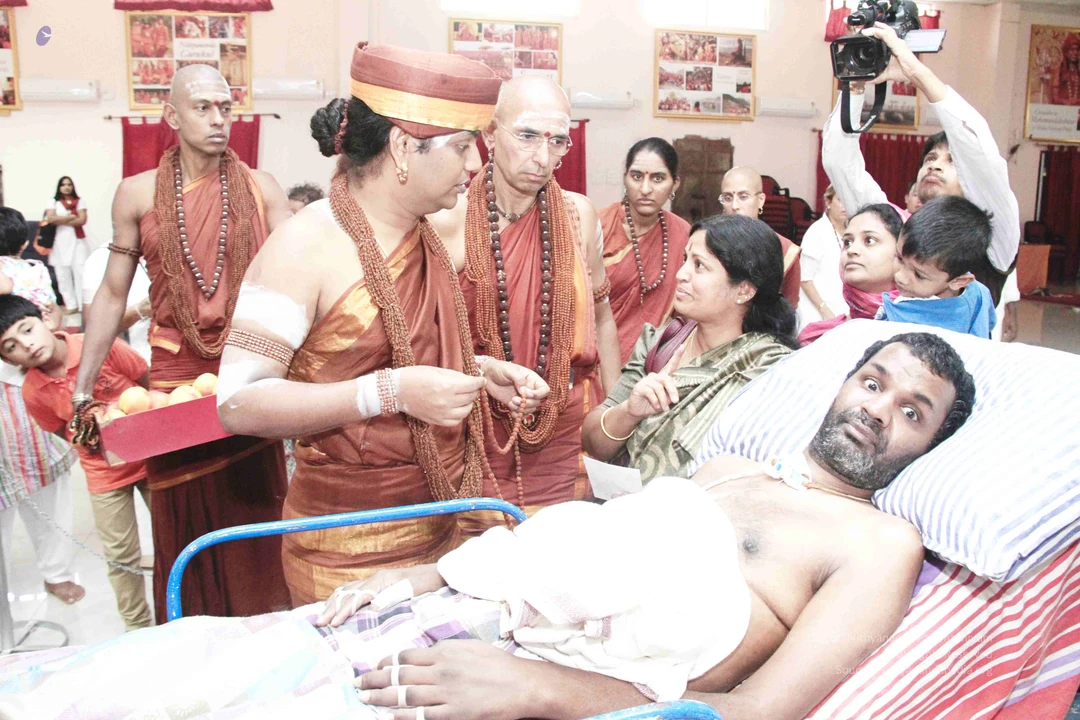
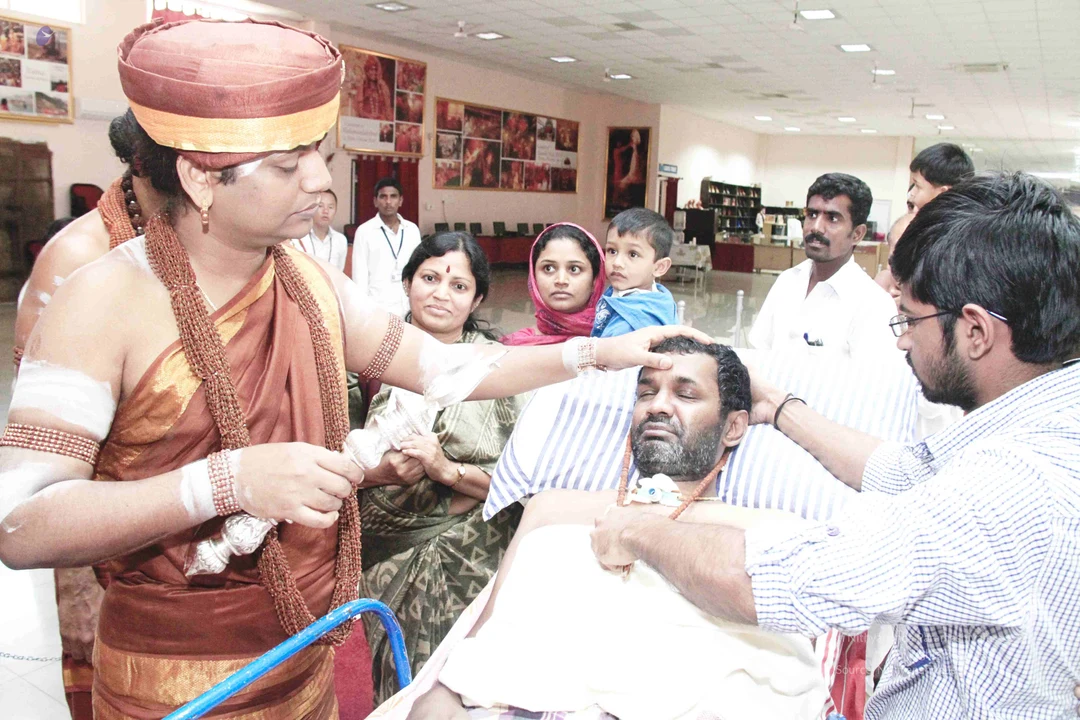
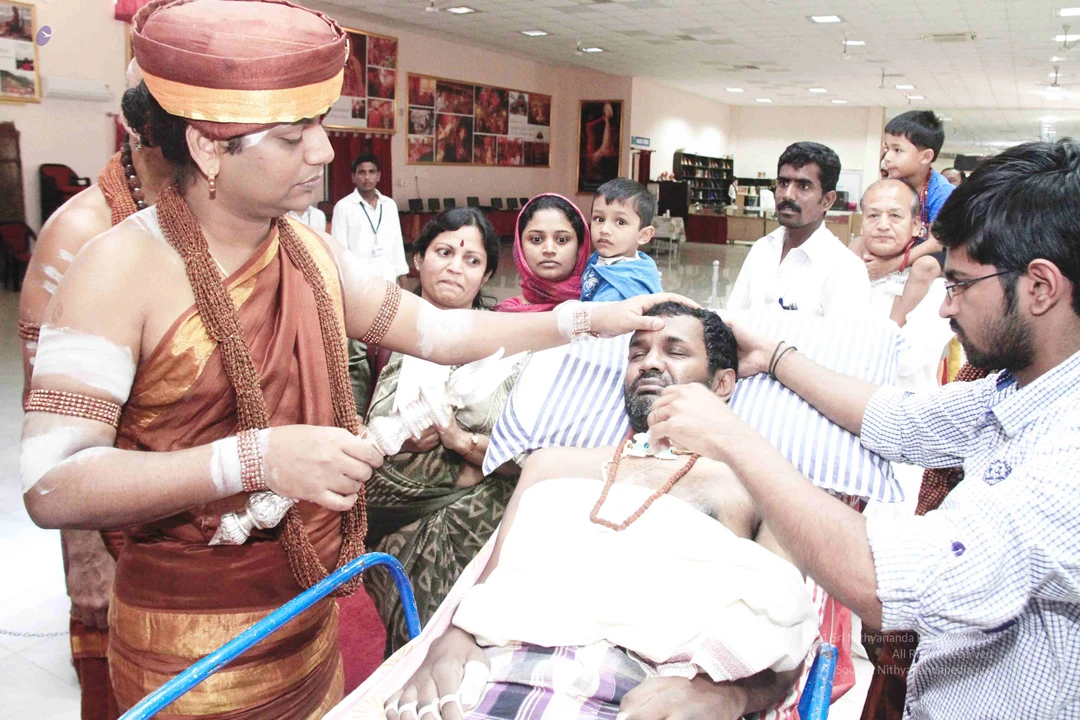
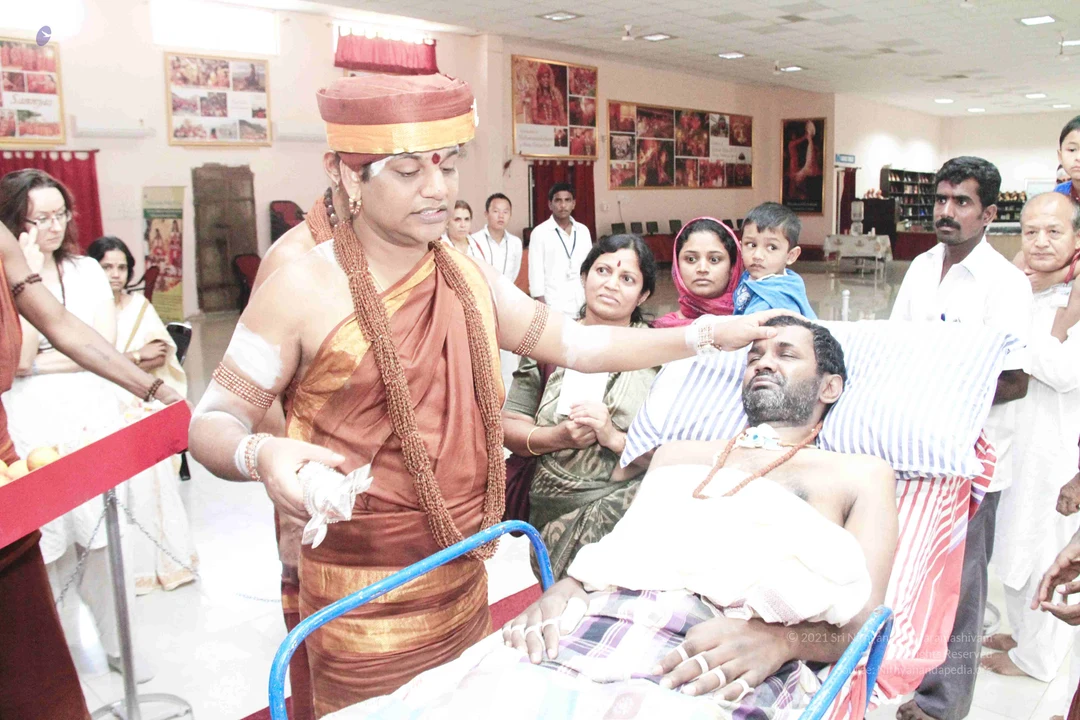
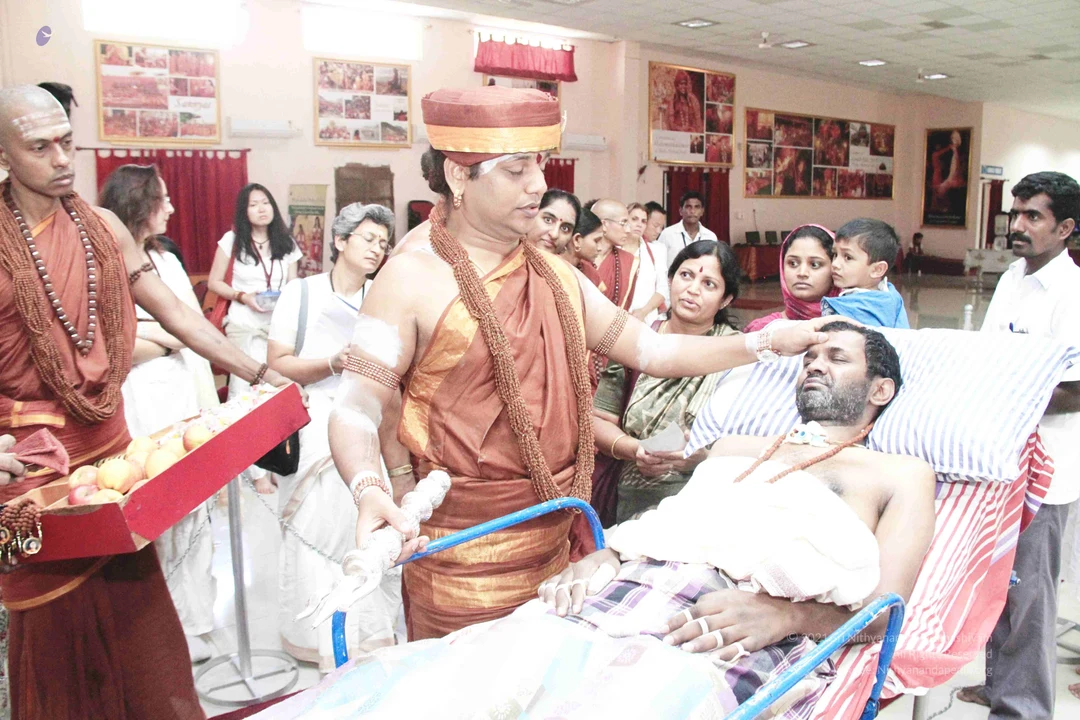
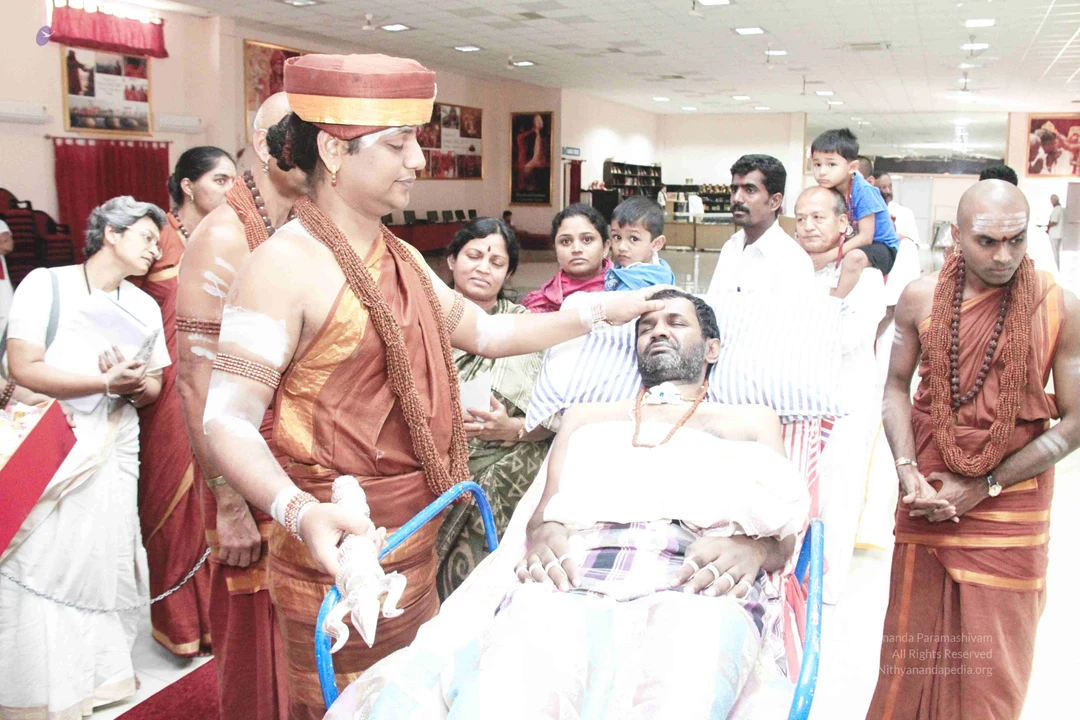
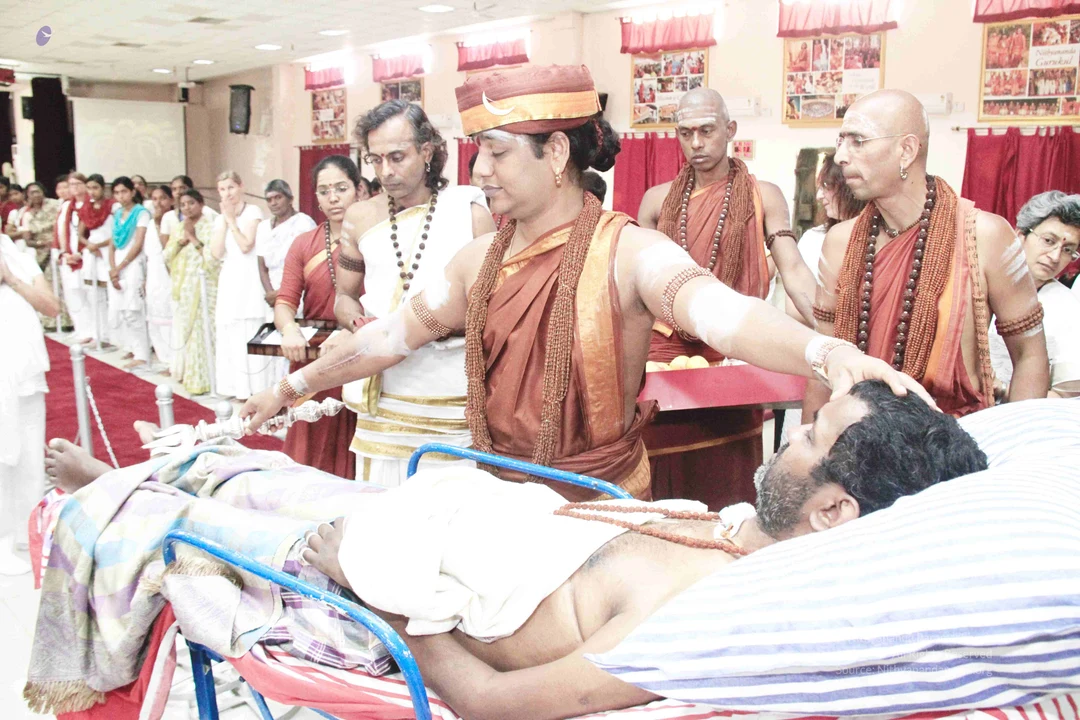
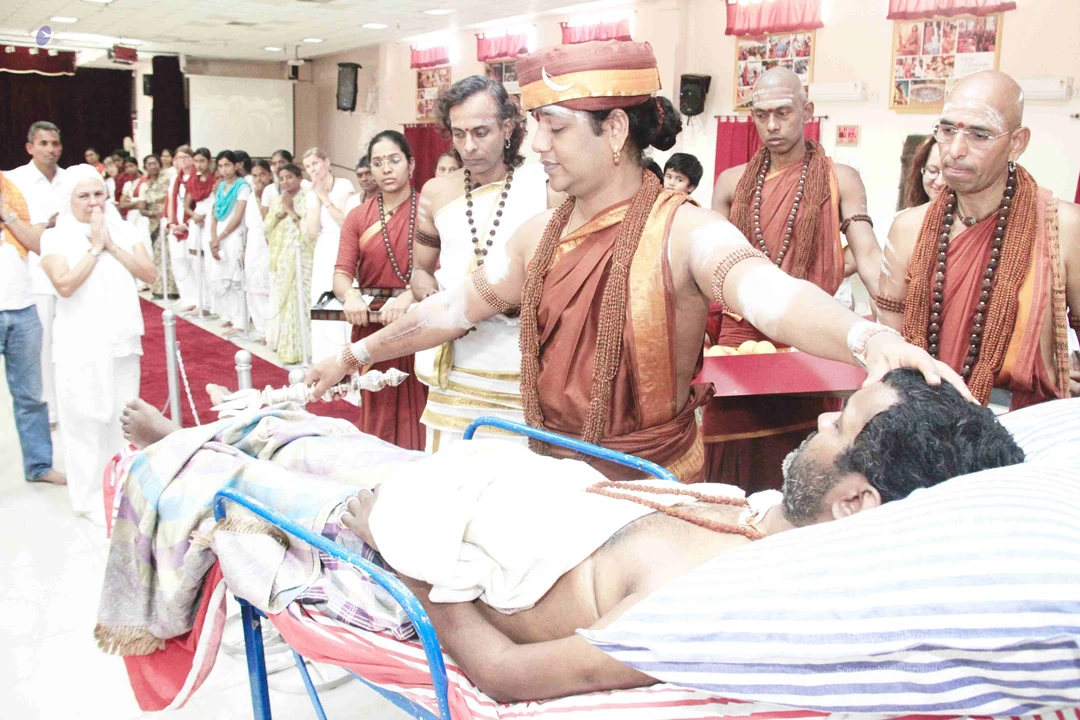
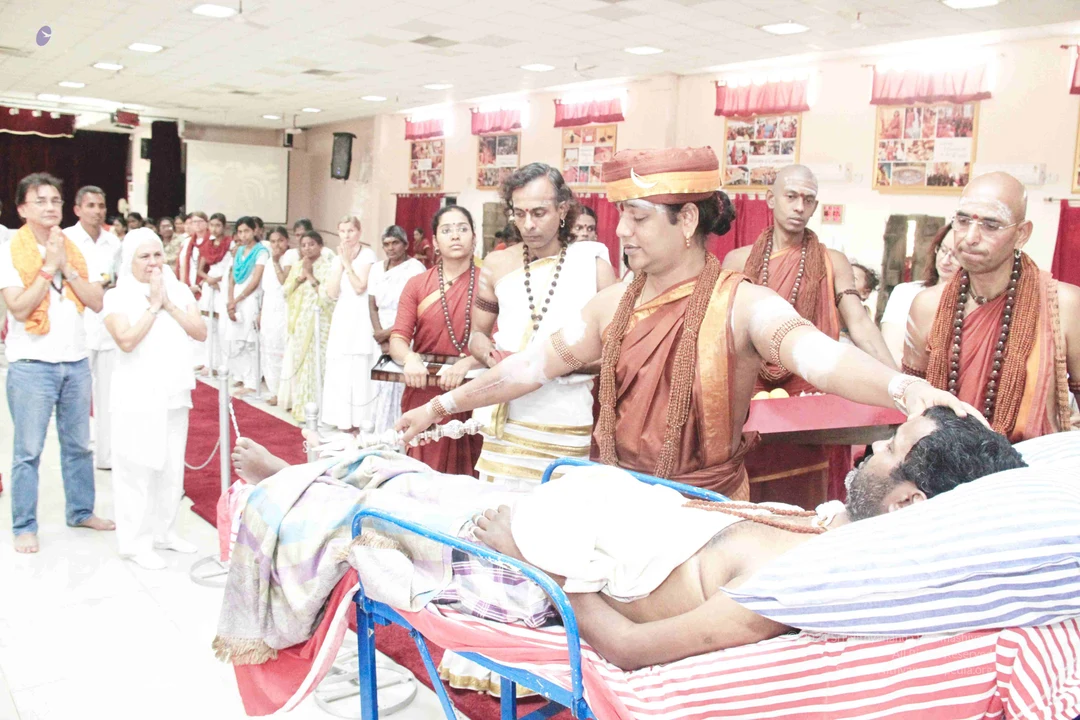
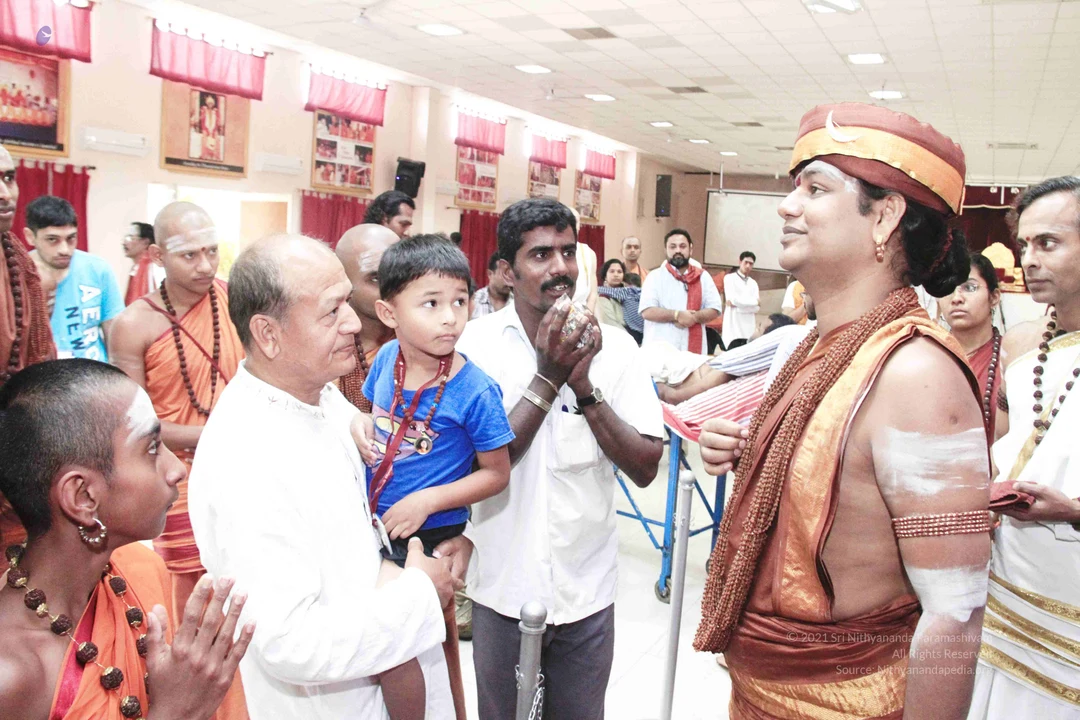
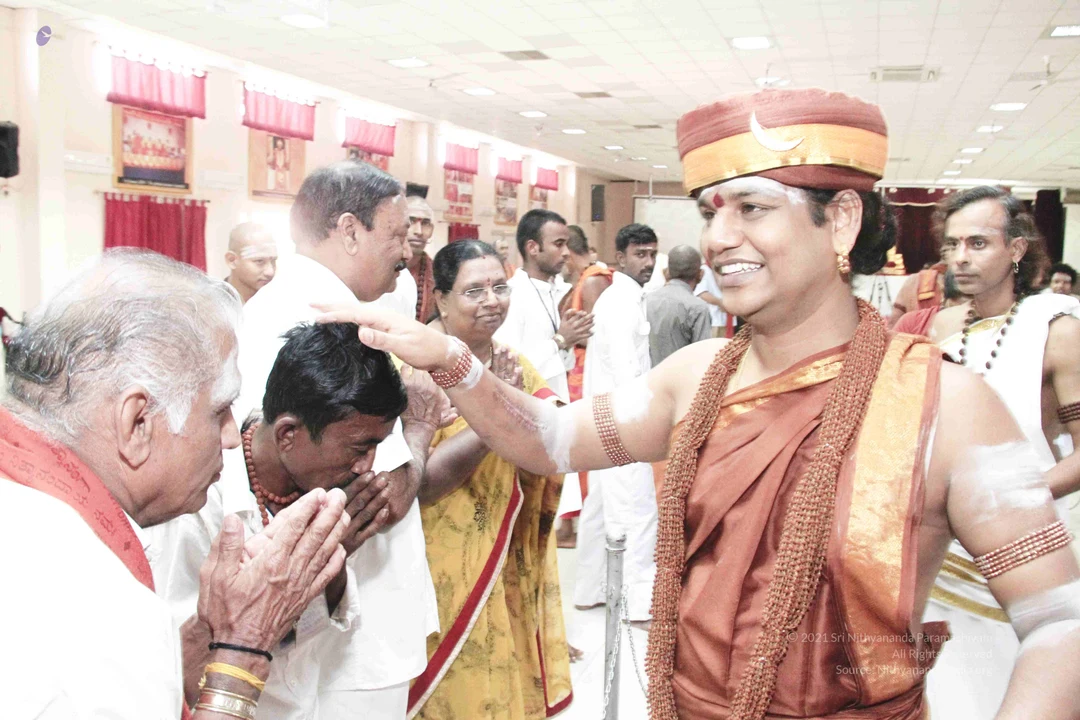
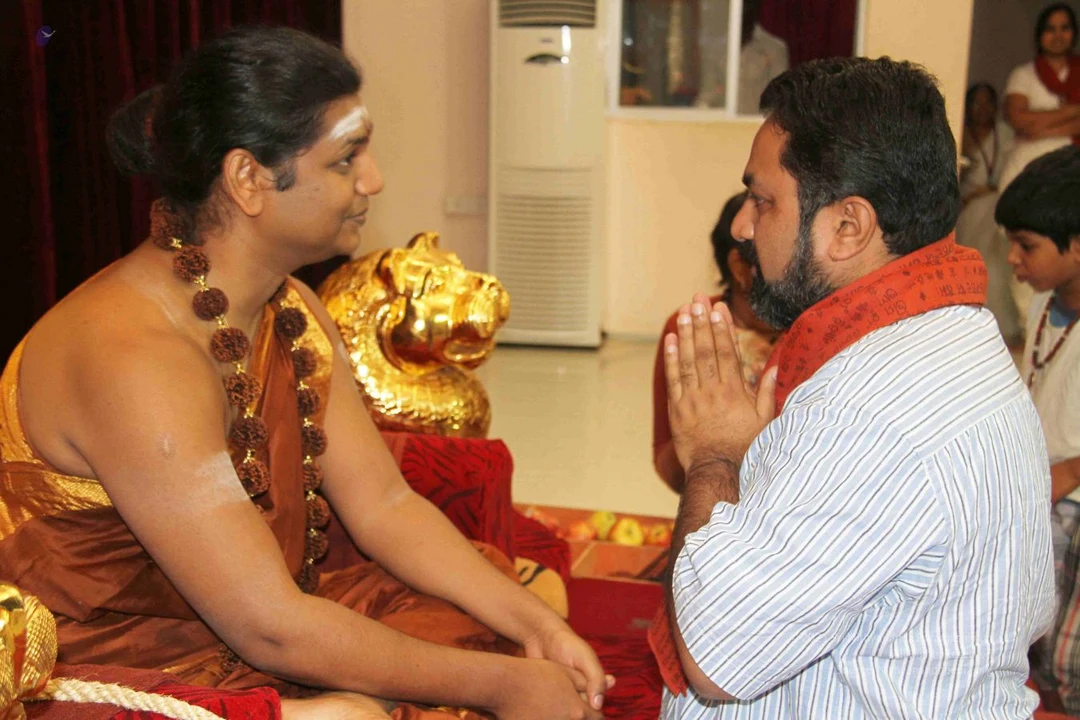
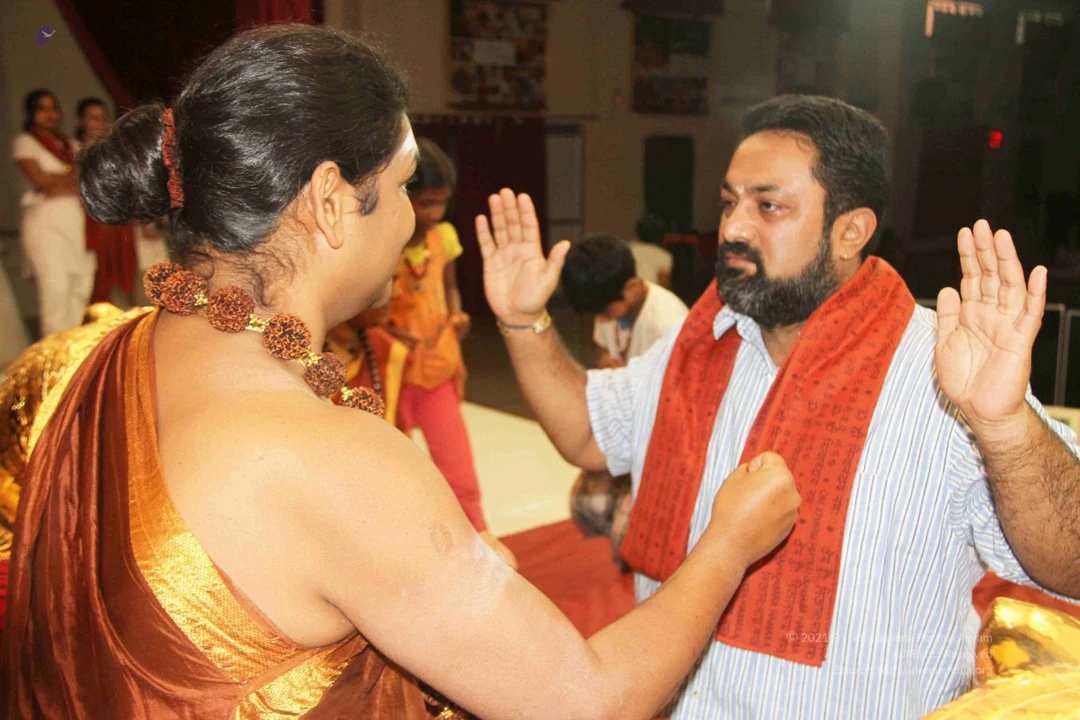
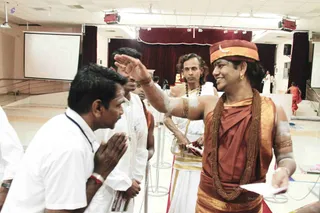
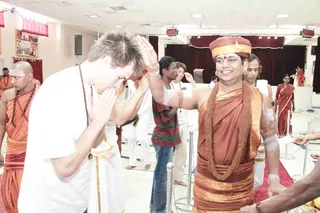
A photo inside a bright hall with a projection screen and red curtains behind. A woman in a maroon-red and gold saffron-toned garment, with a red-and-gold cap bearing a crescent emblem, rudraksha mala necklaces and beaded bracelets, raises her hand in a greeting gesture and smiles. A man in a white shirt with a lanyard faces her with hands joined in namaste. Behind them a man in white dhoti and shawl with a beaded necklace stands near the stanchions. Another person in orange moves in the far background.A photograph inside a bright hall with cream walls, red curtains and a stage backdrop. In the foreground a young man with short light-brown hair, wearing a white dhoti with gold border and a white shirt with a rudraksha mala, bows with palms pressed together while a man in a saffron-orange robe and red-and-gold turban with a crescent emblem places his hand on the young man's head. The standing man wears layered rudraksha malas, gold armbands and bracelets, a red bindi, and smiles warmly. Around them, saffron-robed attendants, a man in a striped shirt and jeans, white-clad devotees and a woman in red stand near metal stanchions and a red carpet. The appearance of the man in saffron matches the probable Swamiji cues of ornate turban, layered rudraksha malas and ceremonial gold ornaments, and he is blessing a devotee in person.A photograph of an indoor hall with red curtains and a red carpet runner leading to a gold throne on a stage. A bare-chested figure in a saffron-orange and gold dhoti with a matching orange headpiece and a beaded necklace presses his palm to the head of a bearded man in a white shirt with a red scarf, while a young man in a striped shirt stands close and a woman in a striped top embraces another devotee nearby. Several people in white clothes and orange-red saris with rudraksha malas stand in the background, and a woman in an orange sari holds a wooden instrument. Printed portraits line the wall above.Indoor photo in a bright hall with a white tiled ceiling and red curtains along the walls. A central figure in a rust-red and gold robe, a rust-red and gold cap with a crescent emblem, multiple rudraksha malas and beaded bracelets, and white markings on the arms, stretches a hand toward the head of a man in a white shirt and blue jeans. A woman in a blue striped top and a man in a white shirt and red shawl lean in close. Several other men in white dhotis and orange shawls, and a woman in a dark red sari, stand nearby. a person is the central figure in the rust-red and gold robes with malas, performing a blessing gesture; his identity is based on appearance cues only.A hospital-style blue-railed bed holds a man lying on his back with a white cloth draped over him, while a woman in a yellow-bordered sari leans in from the right holding his hand. Standing beside the bed, a figure in a rust-orange robe with a rust-and-gold wrap and an orange-gold turban holds a rudraksha mala and bends over the patient, while a bald man in rust-orange robes with a long rudraksha mala and sandalwood forehead marks stands beside him. A man in a white dhoti with gold border and a bare torso stands behind, holding a ritual implement, and a woman in a rust sari with a rudraksha mala stands at left. Behind them, several devotees in red and white clothing stand on a hall with red curtains and framed photo panels on the walls. The scene appears to be a blessing or healing ritual. a person appearance candidate is unsure from appearance alone.A photograph in a hospital ward of a man lying in a bed with white pillows and a striped blanket, his chest bare and a white bandage on his arm. A young man in saffron-orange robes with a red-and-gold turban-style headwrap and a long rudraksha mala places a bead garland over the patient's hands while holding a red tray of fruit. Beside him, an older bald man in saffron robes with glasses and a rudraksha mala looks on. A woman in a green sari and a second woman in orange stand nearby, along with children and a cameraman filming. Red curtains and framed photo panels hang on the wall behind them.

Homa

106 photosSource gallery
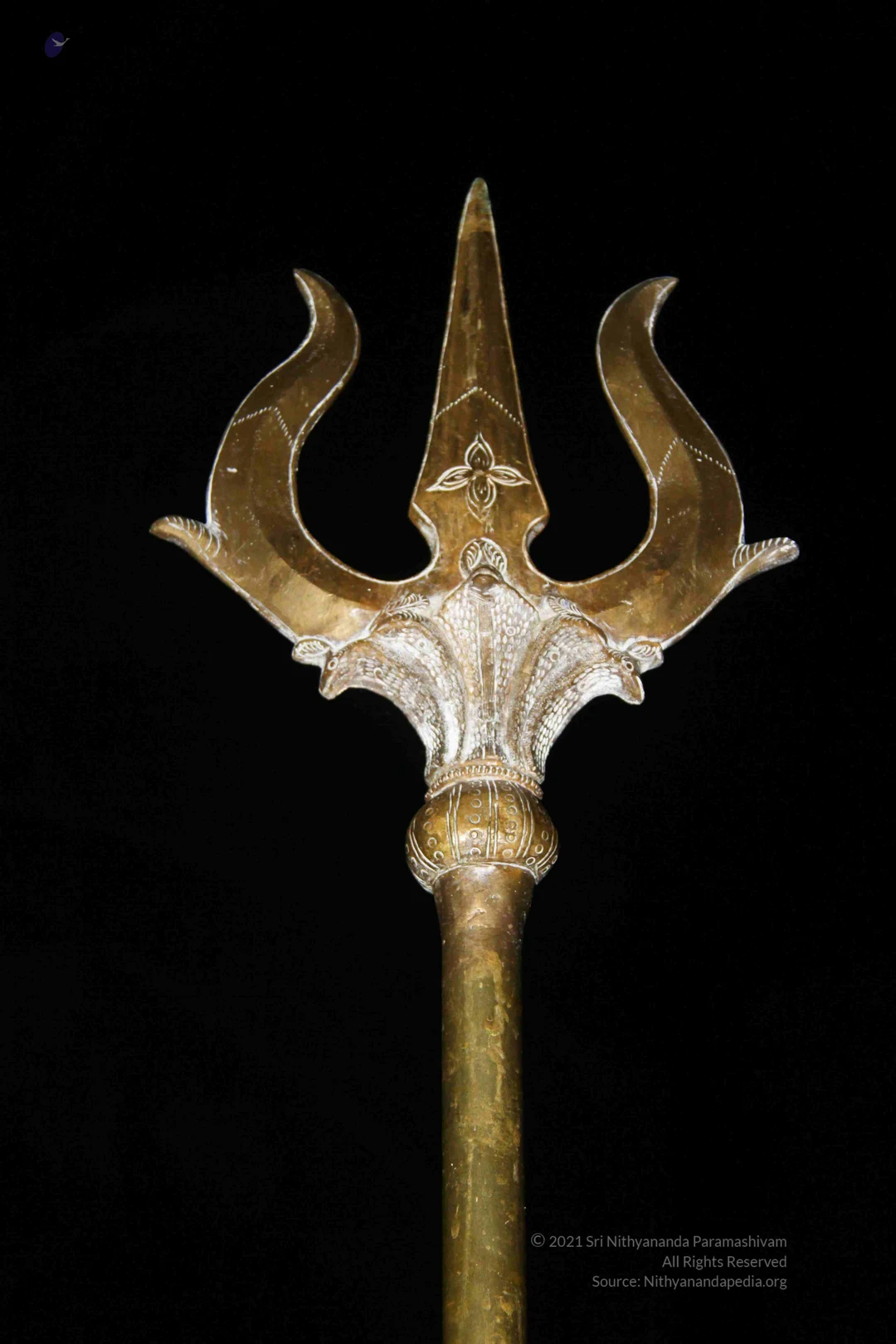
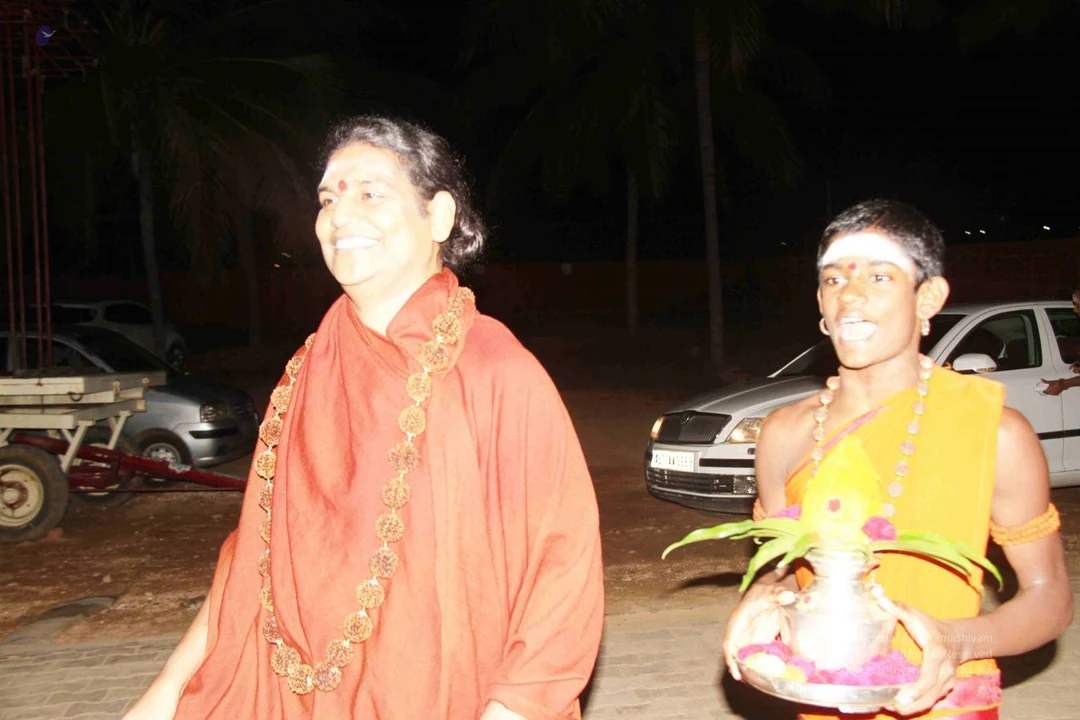
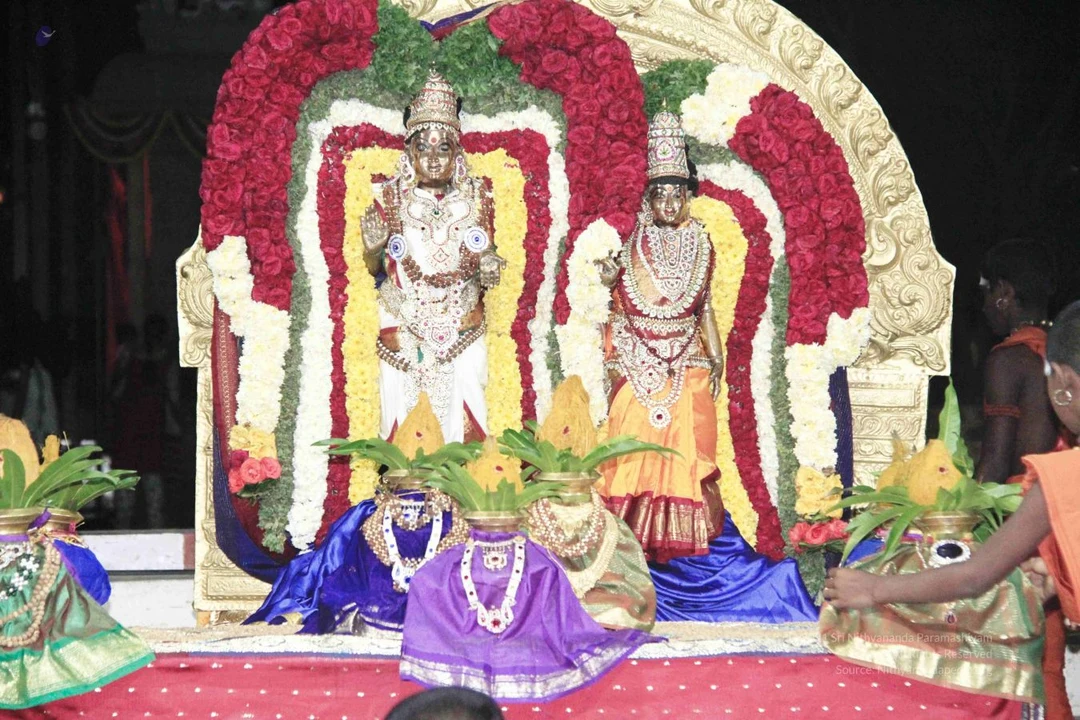
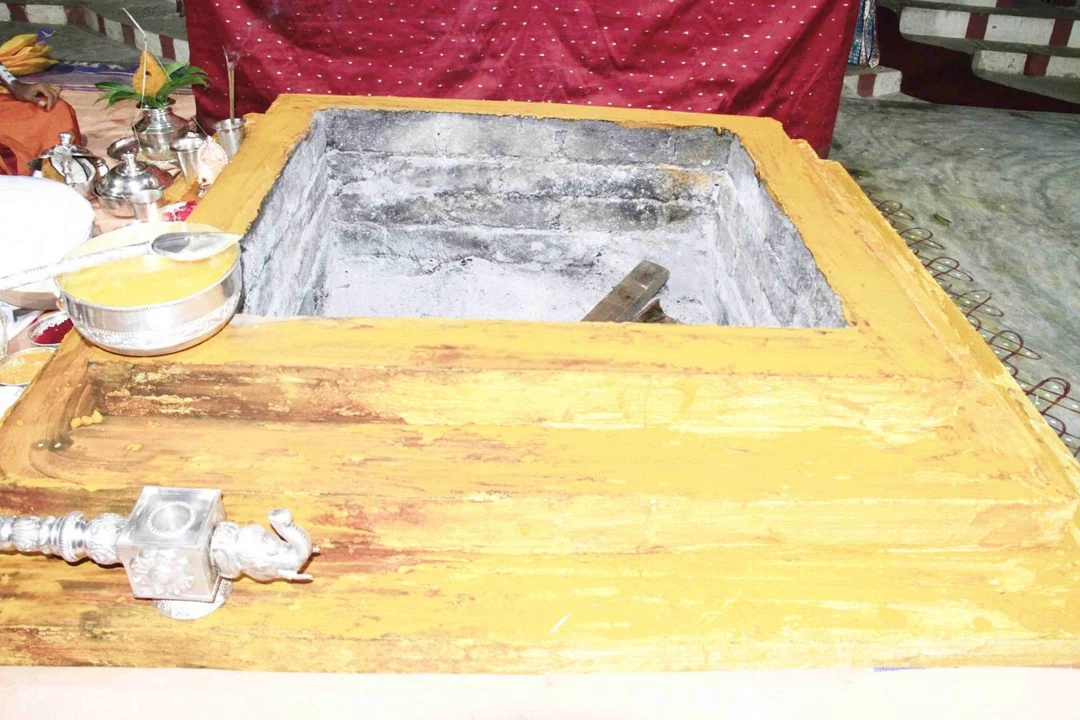
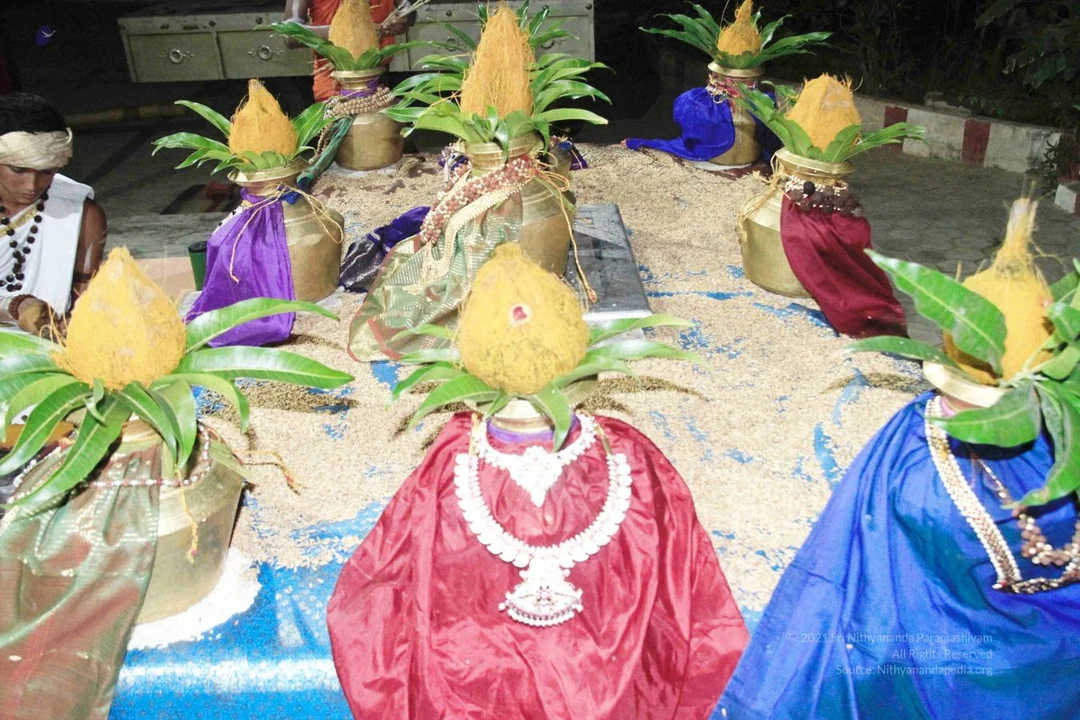
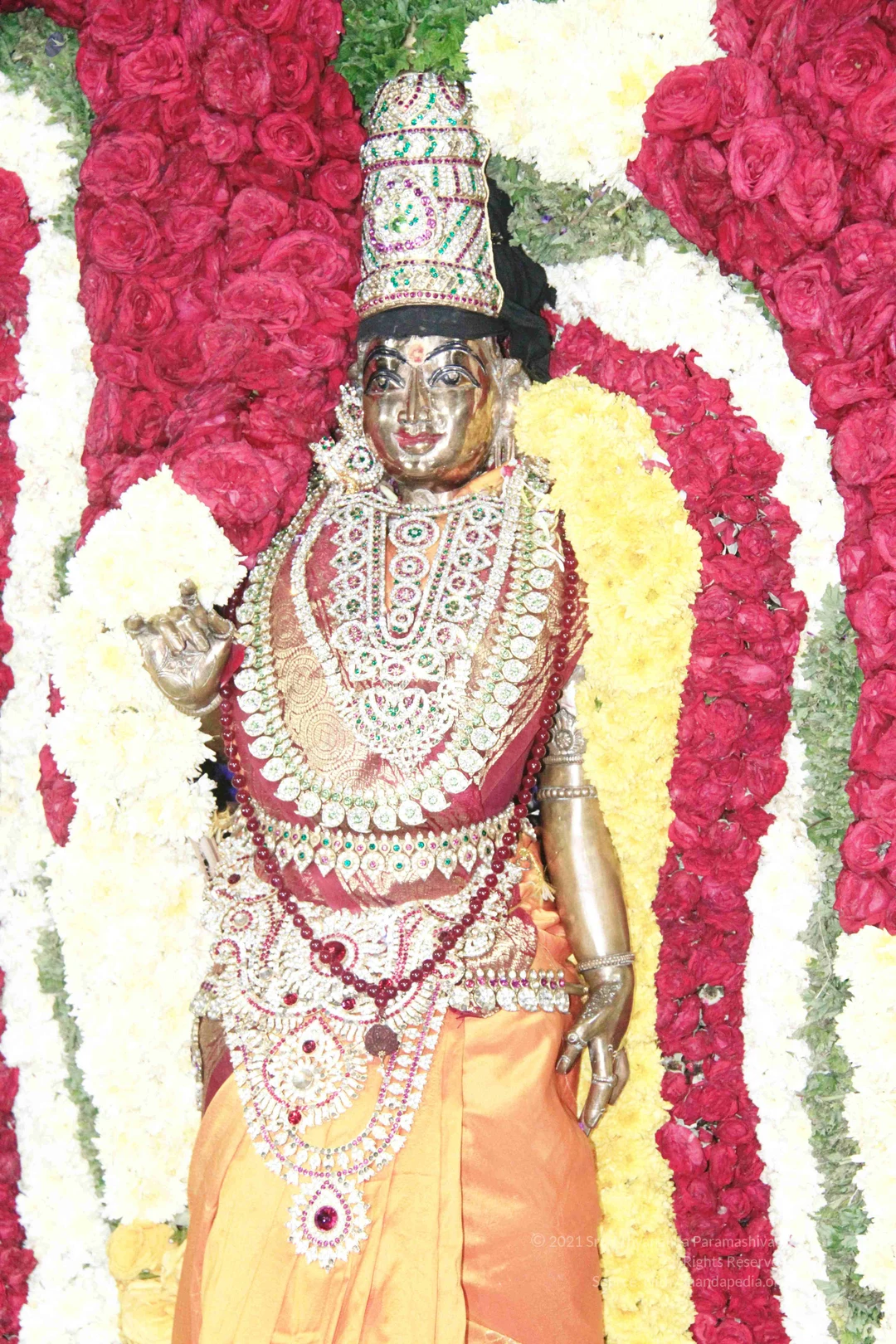
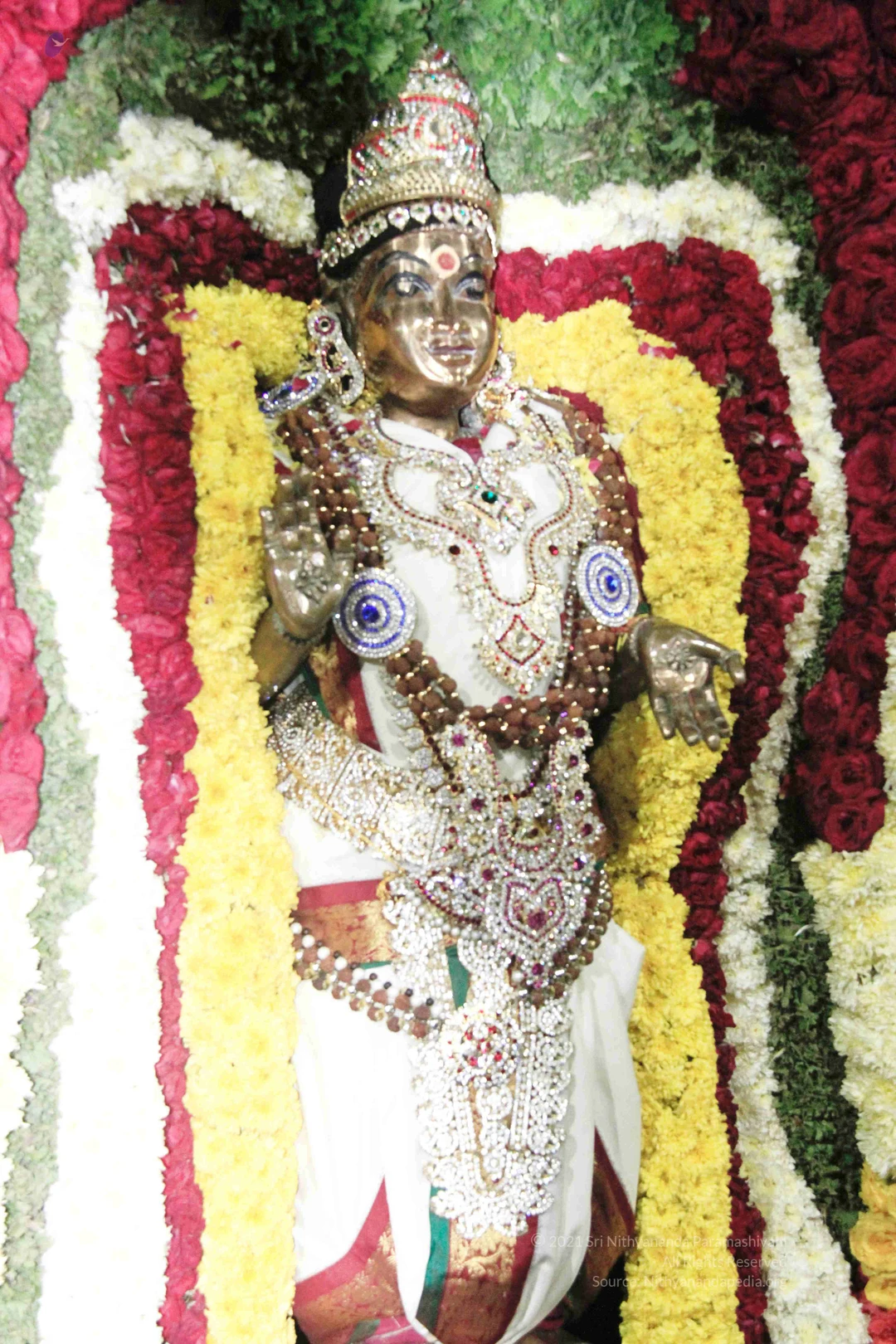
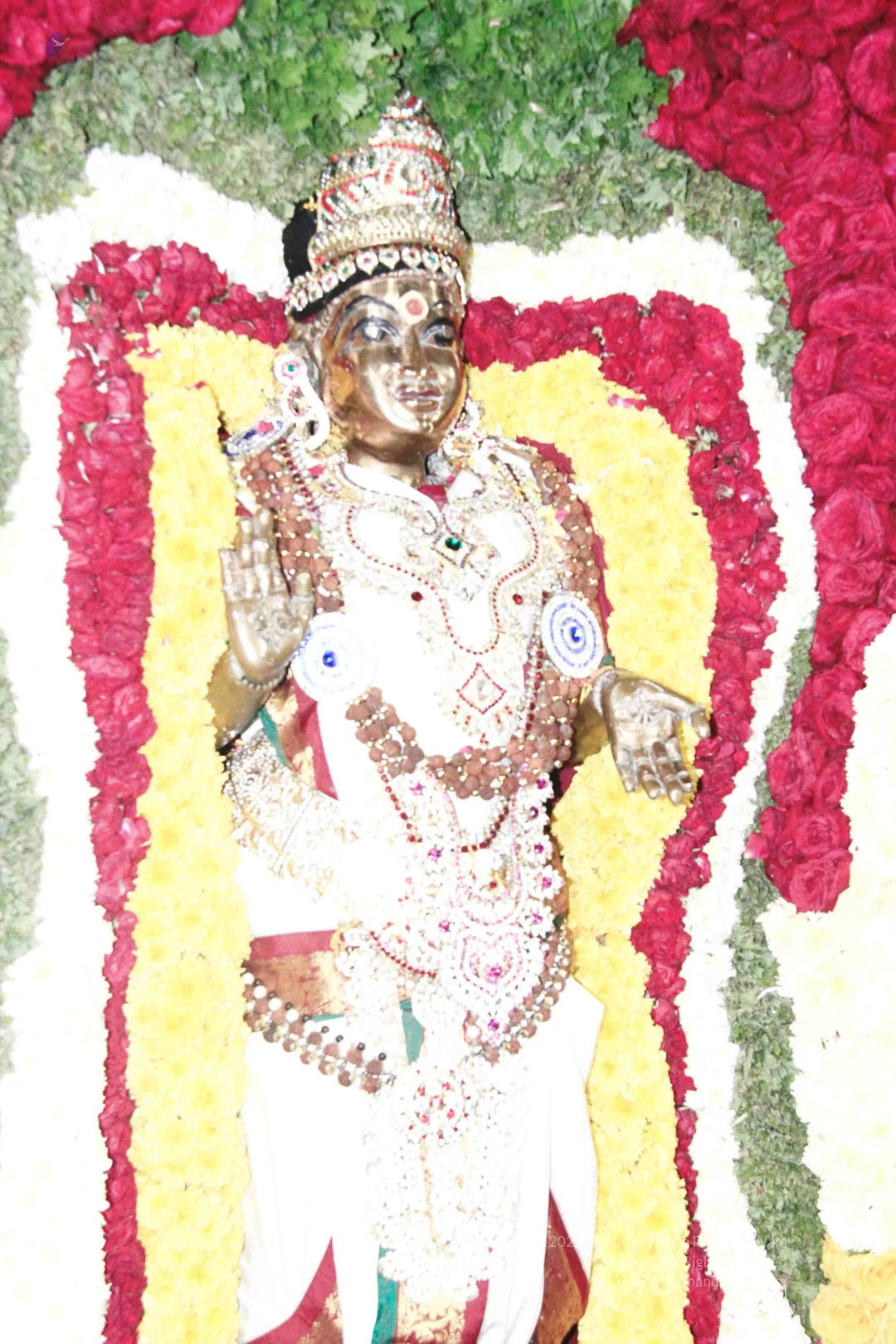
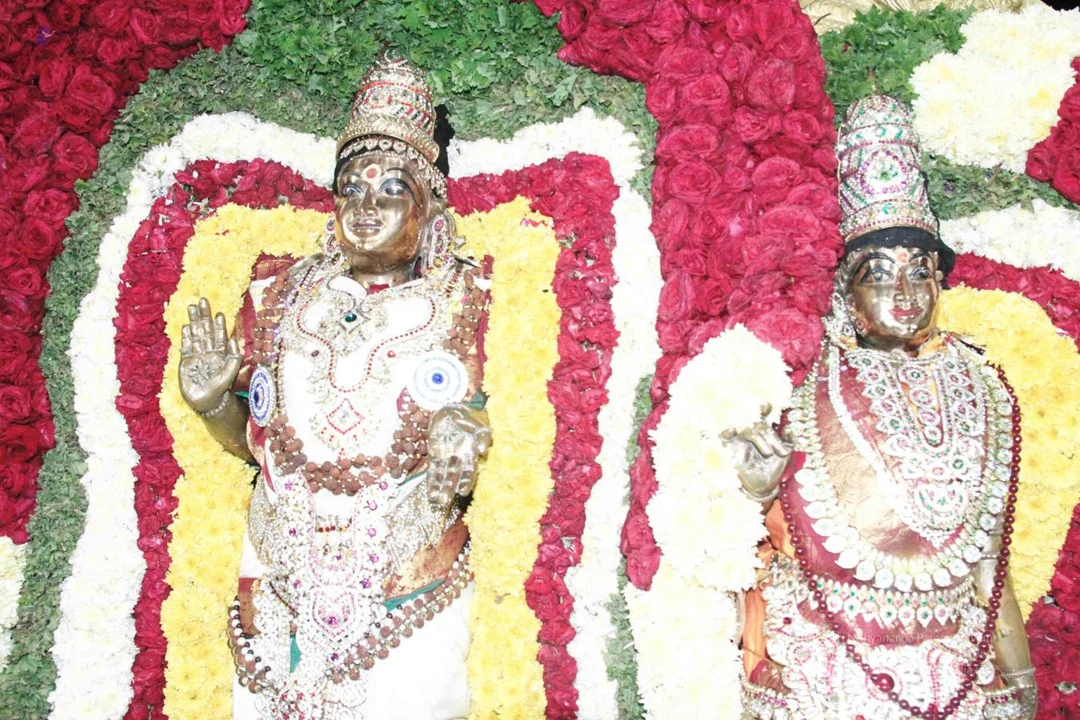
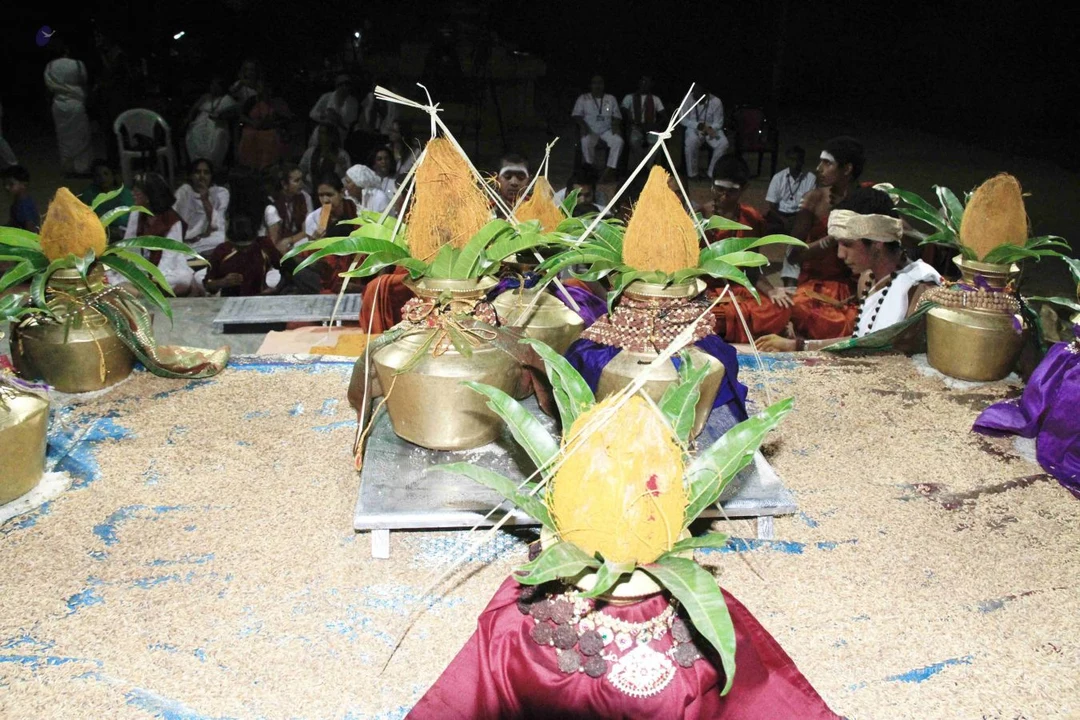
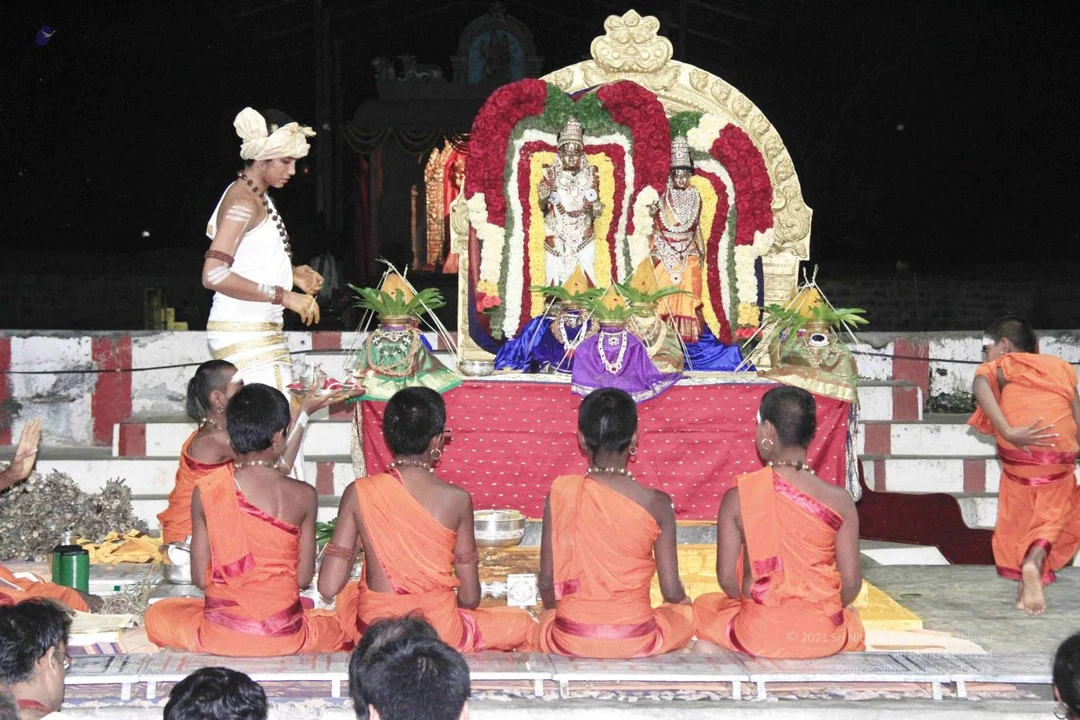
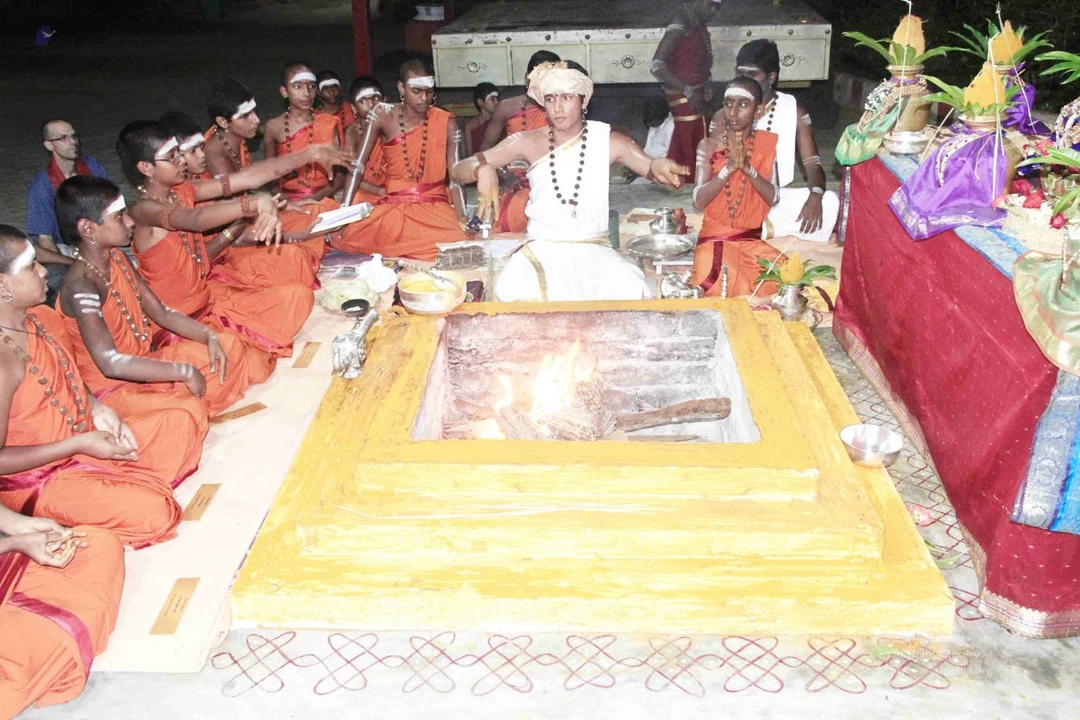
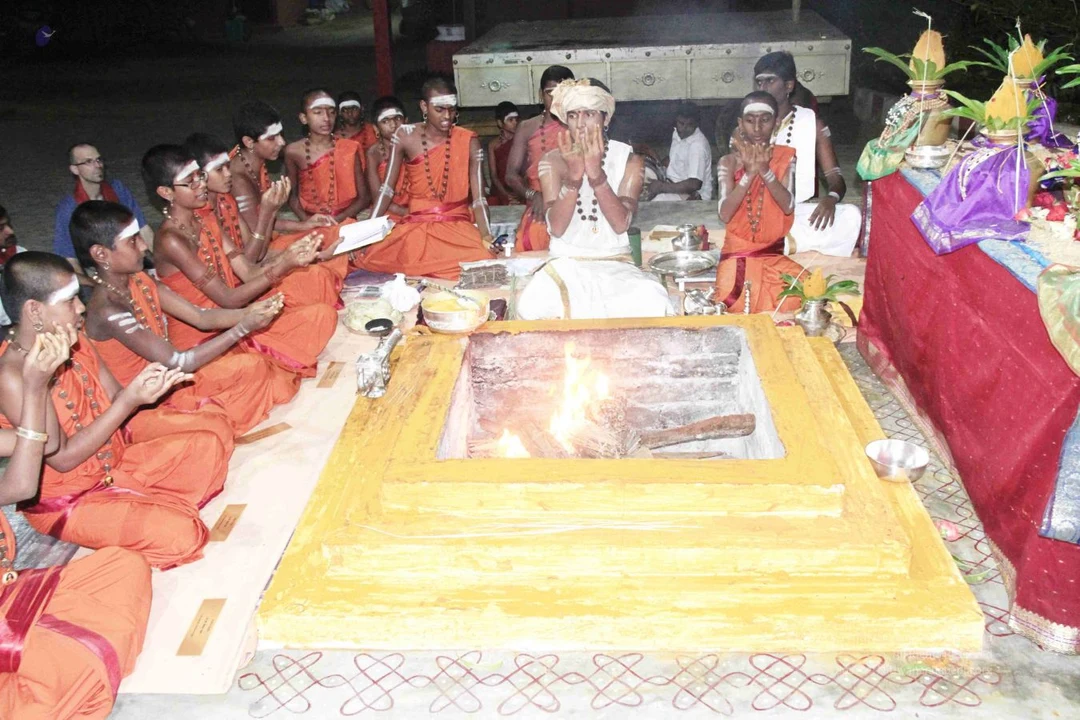
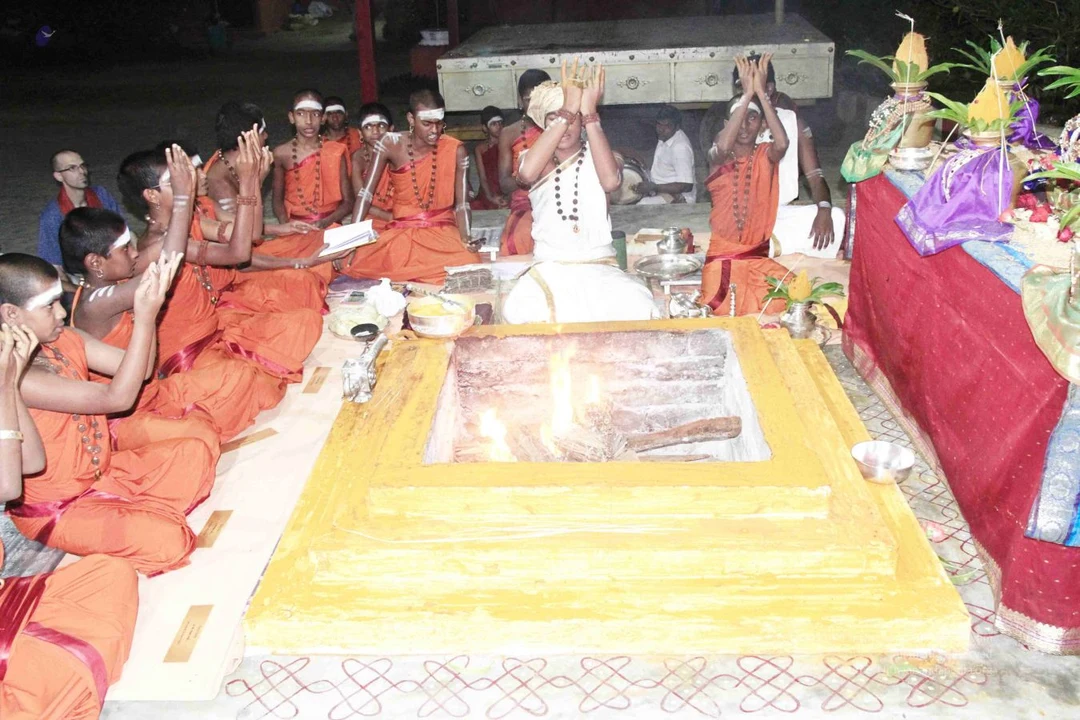
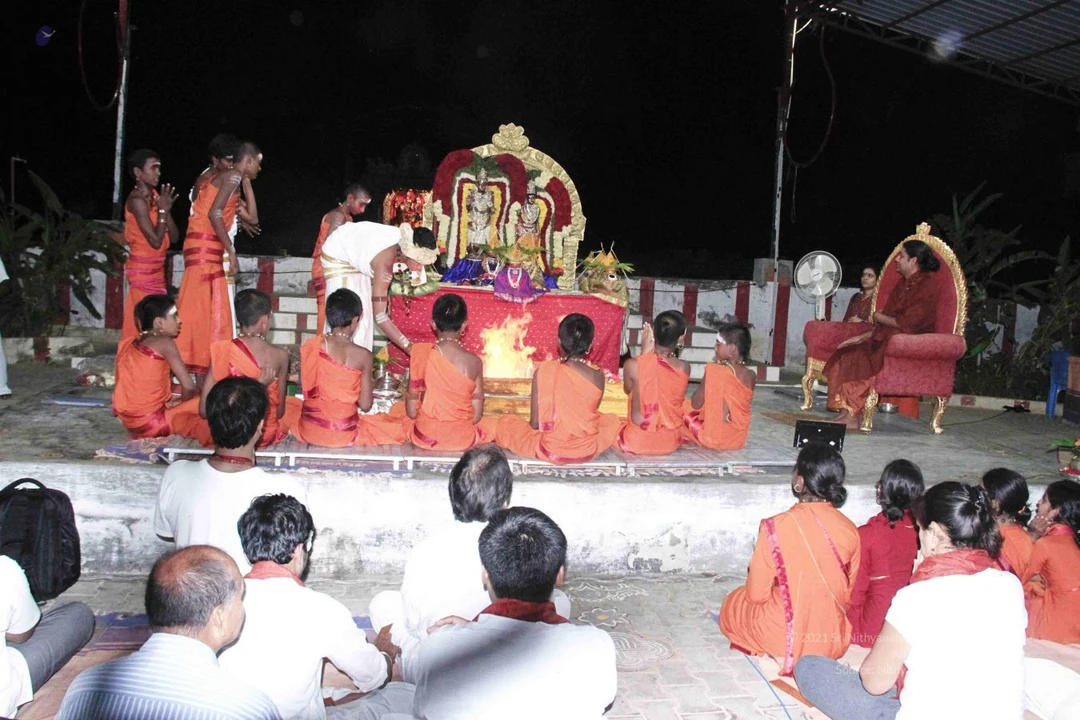
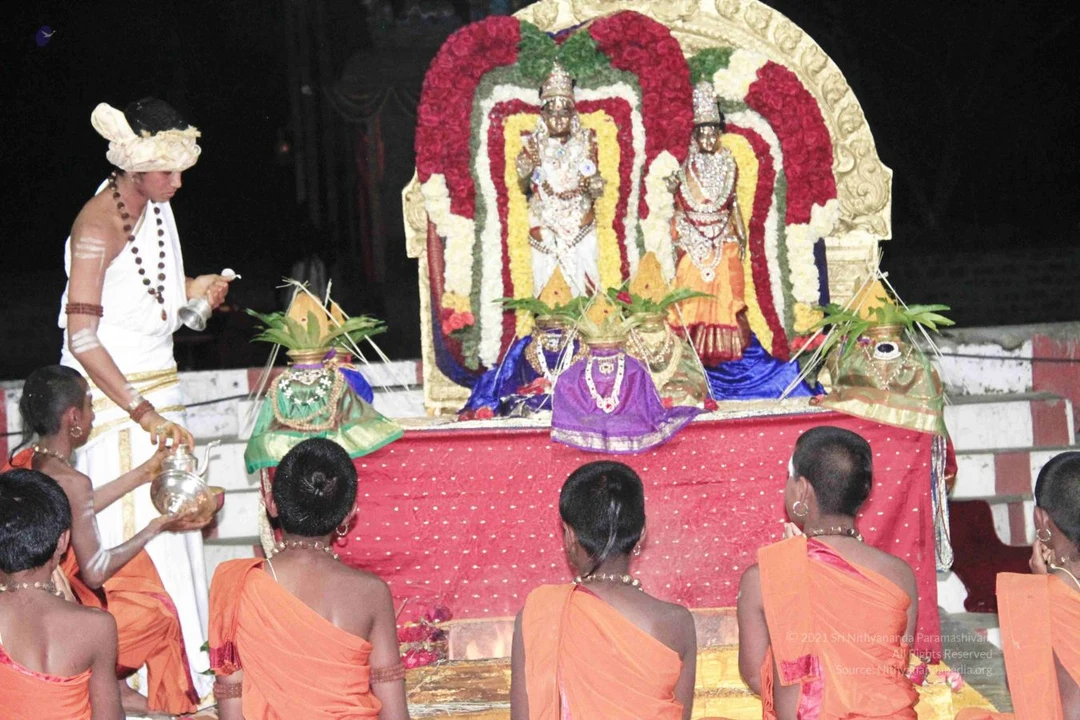
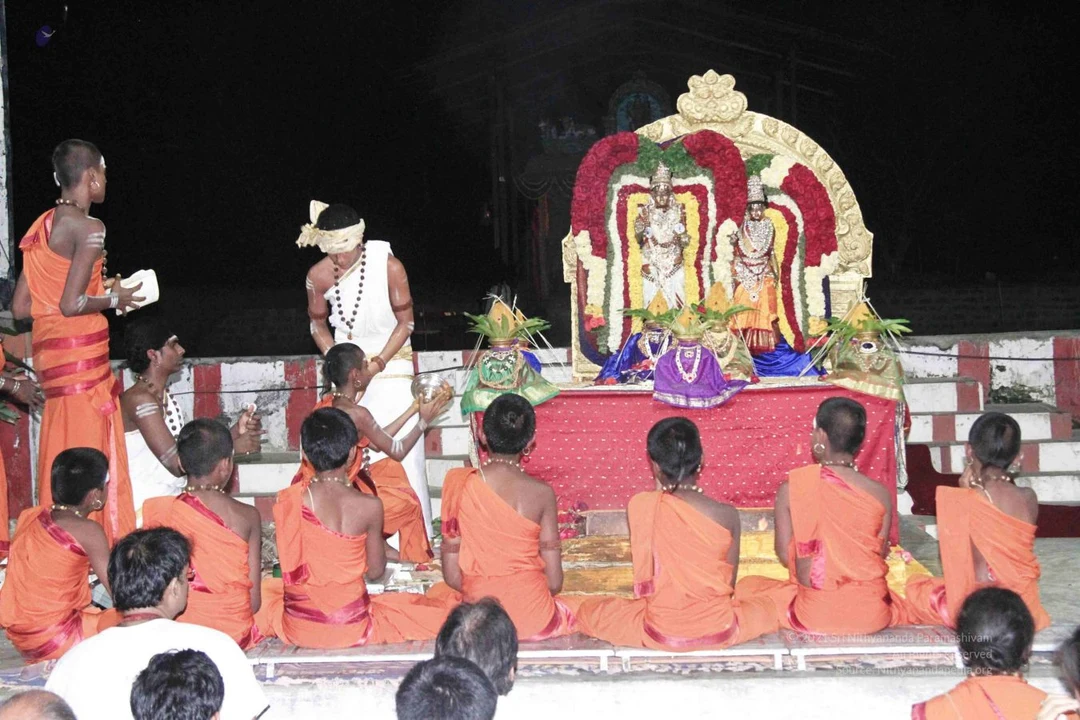
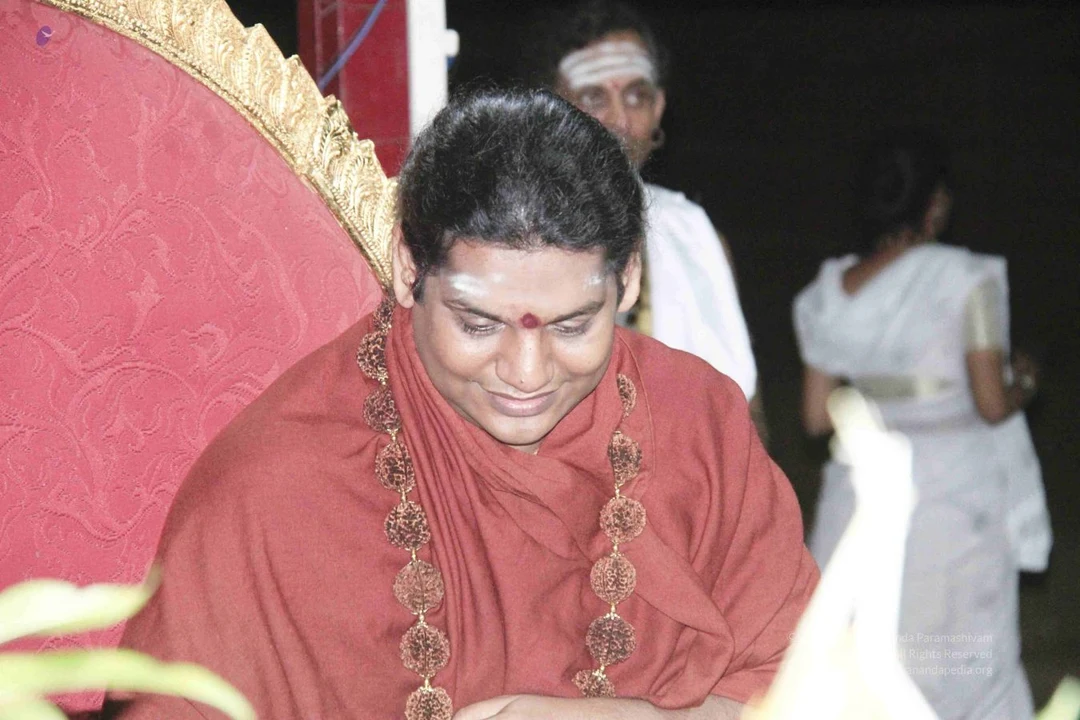
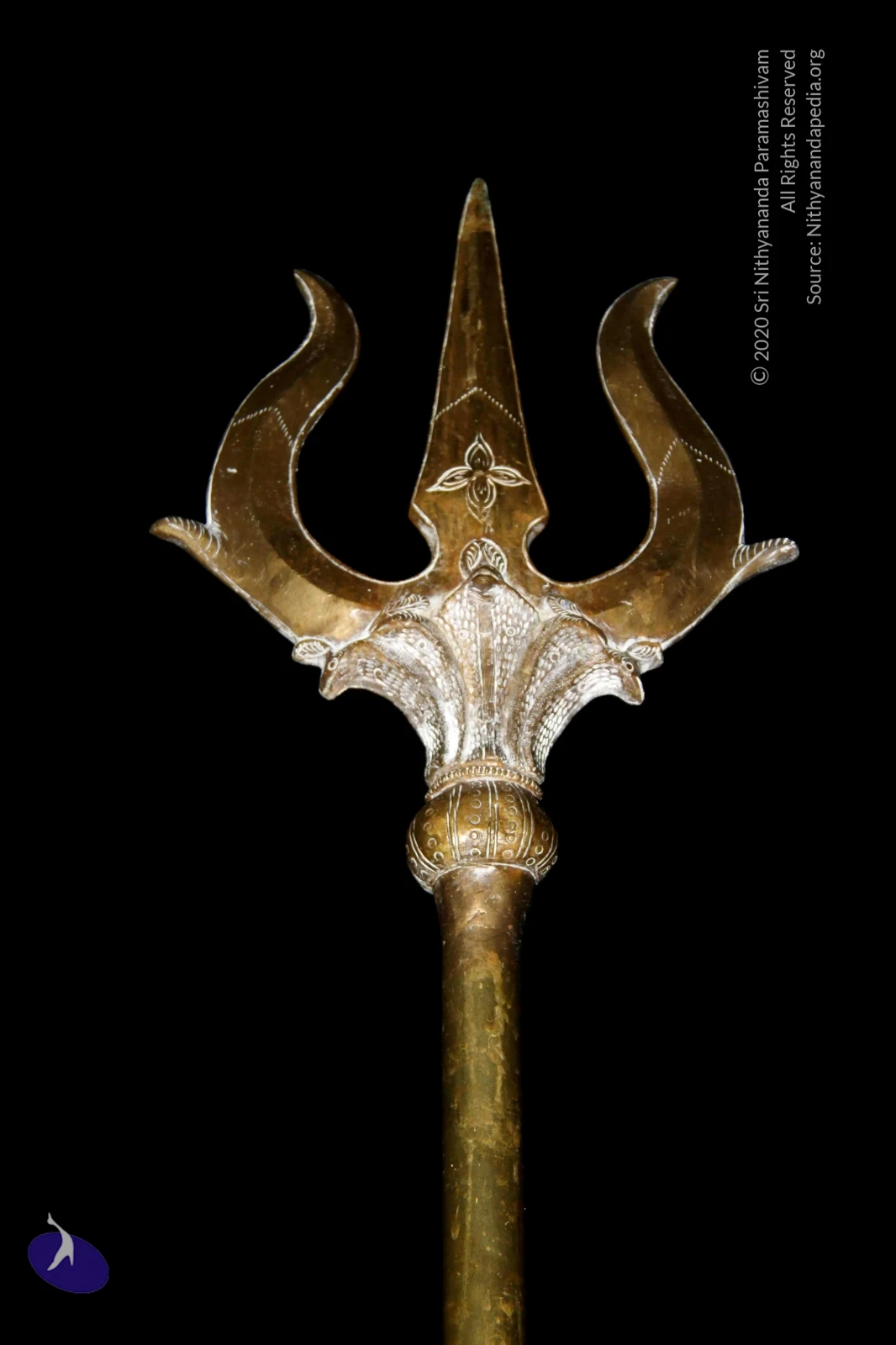
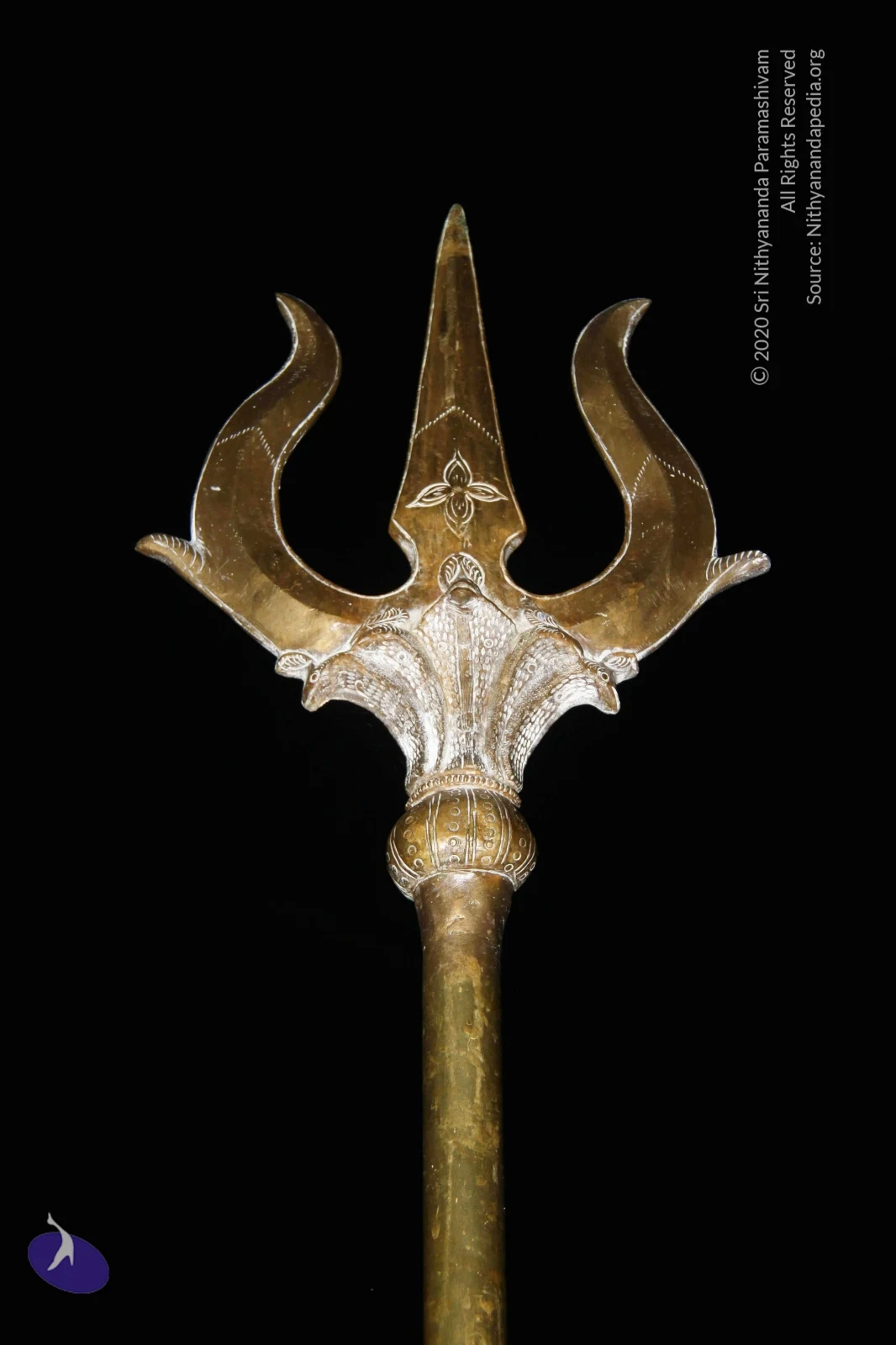
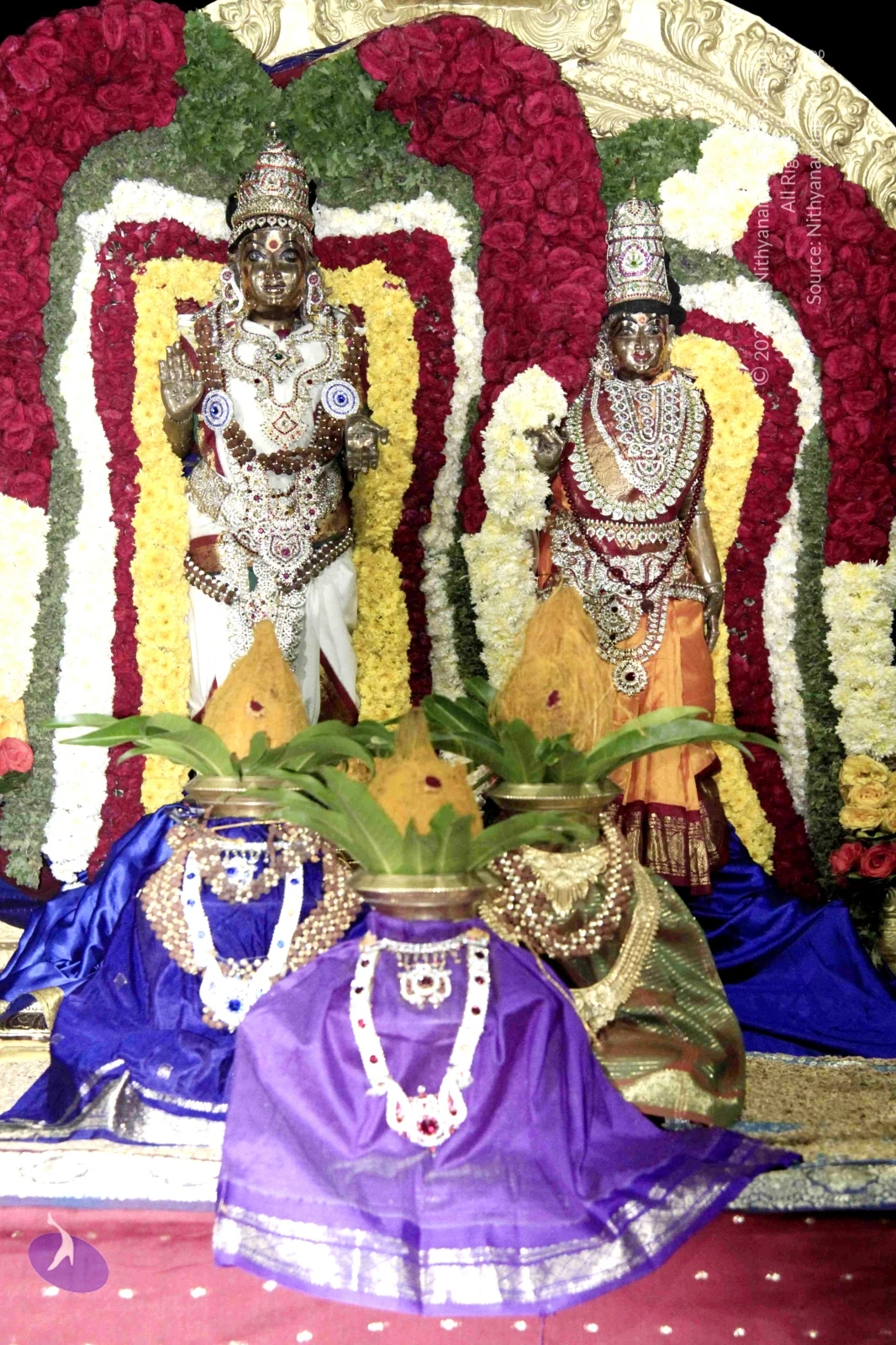
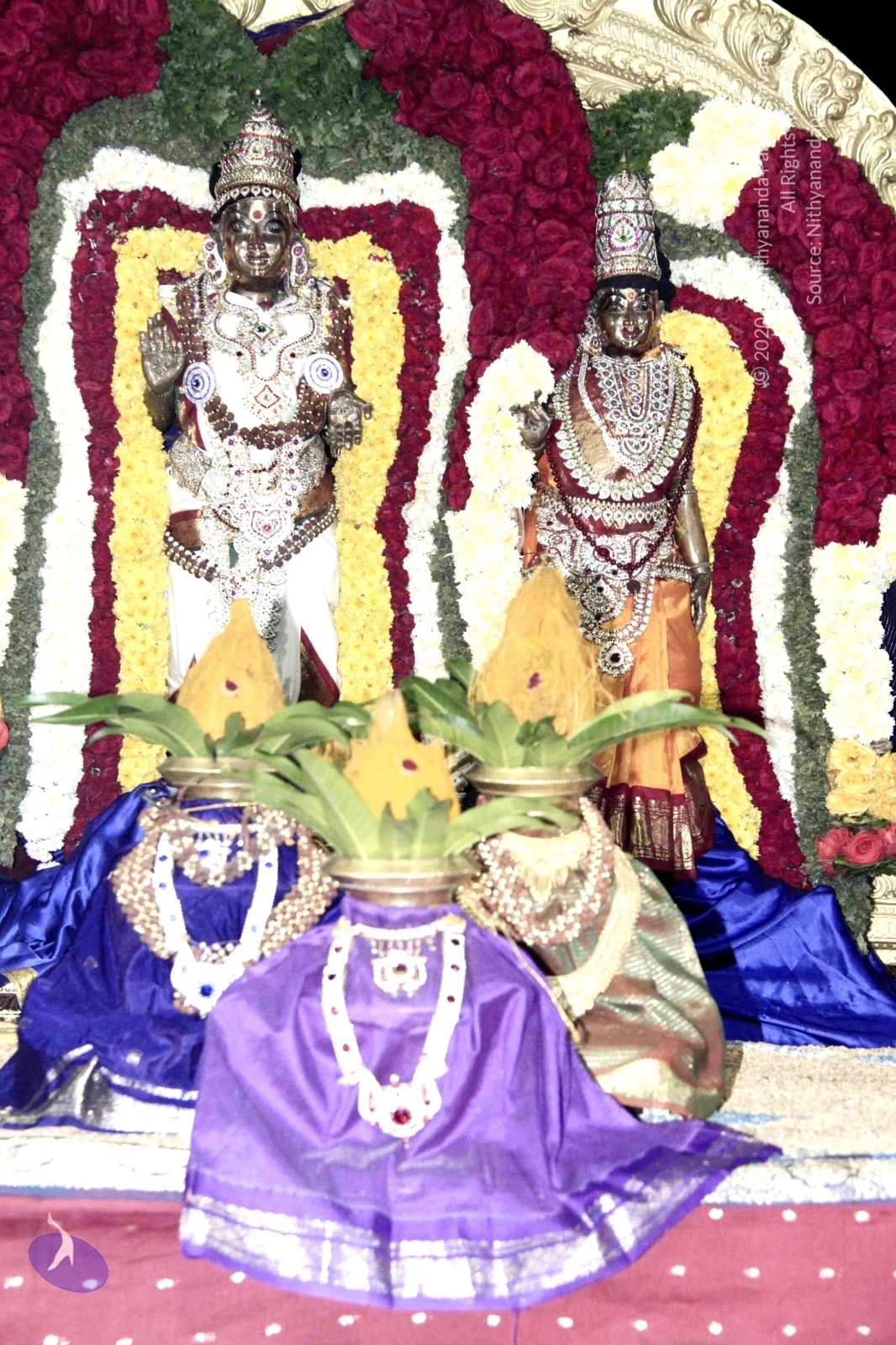
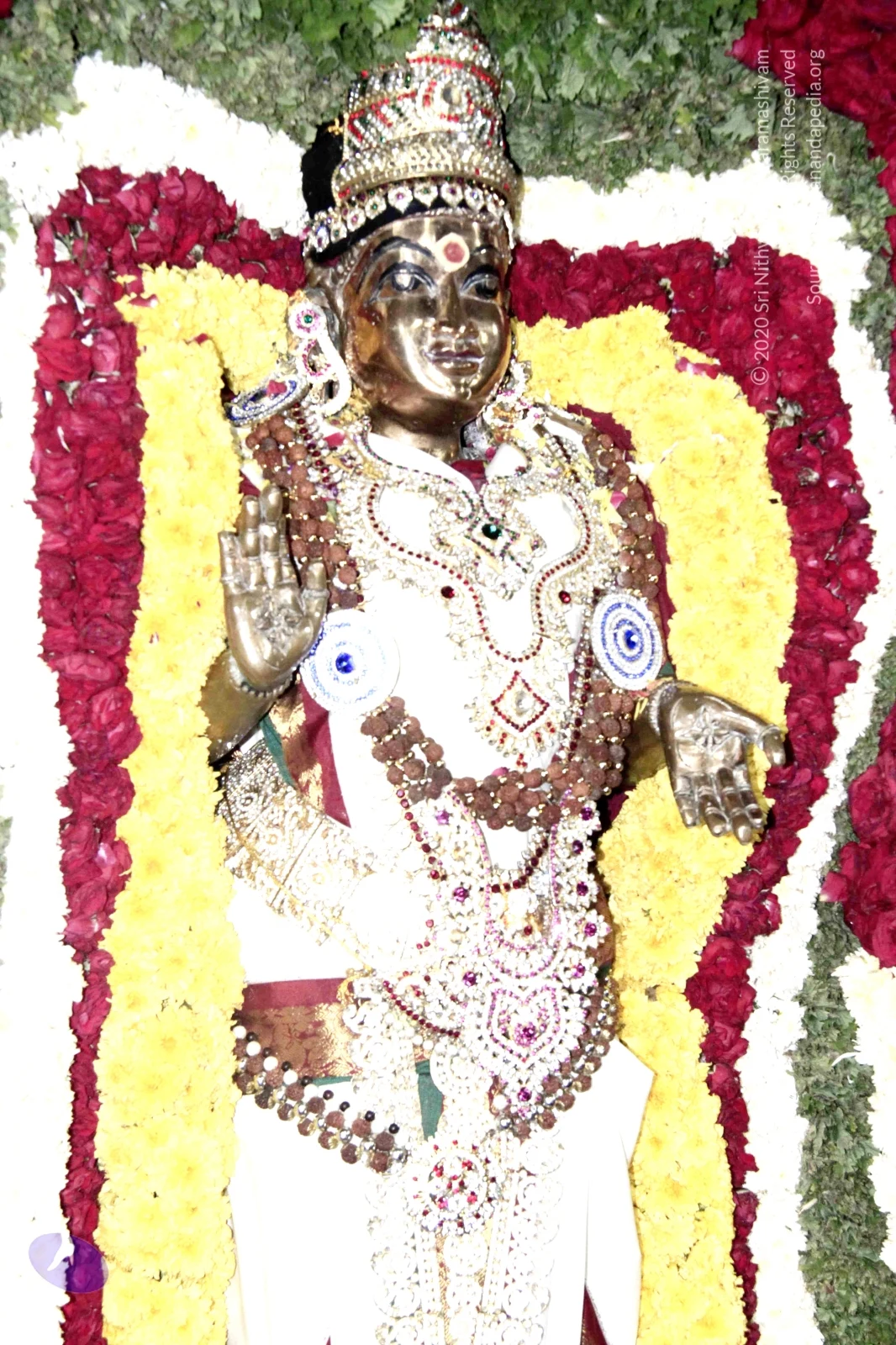
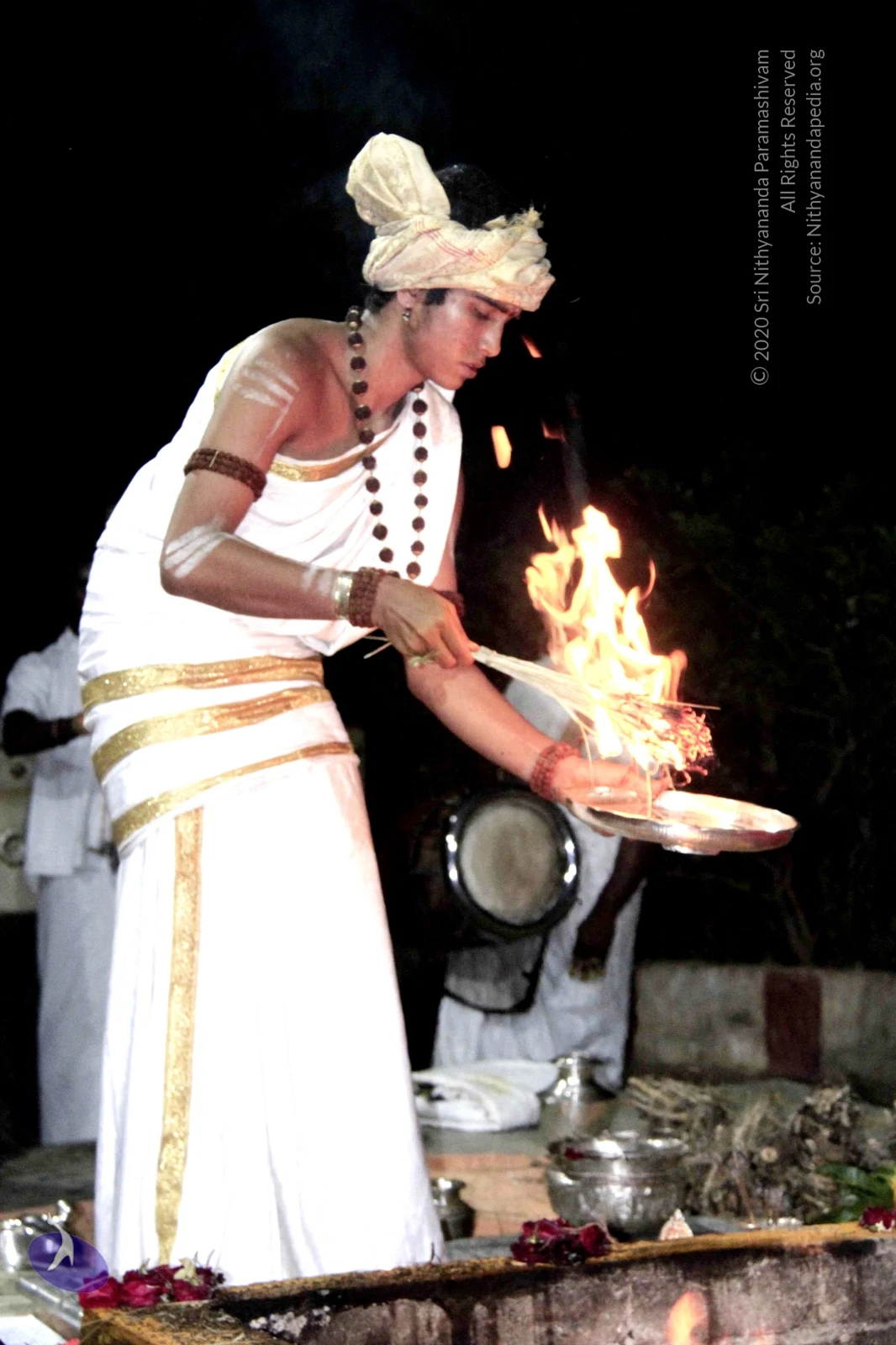
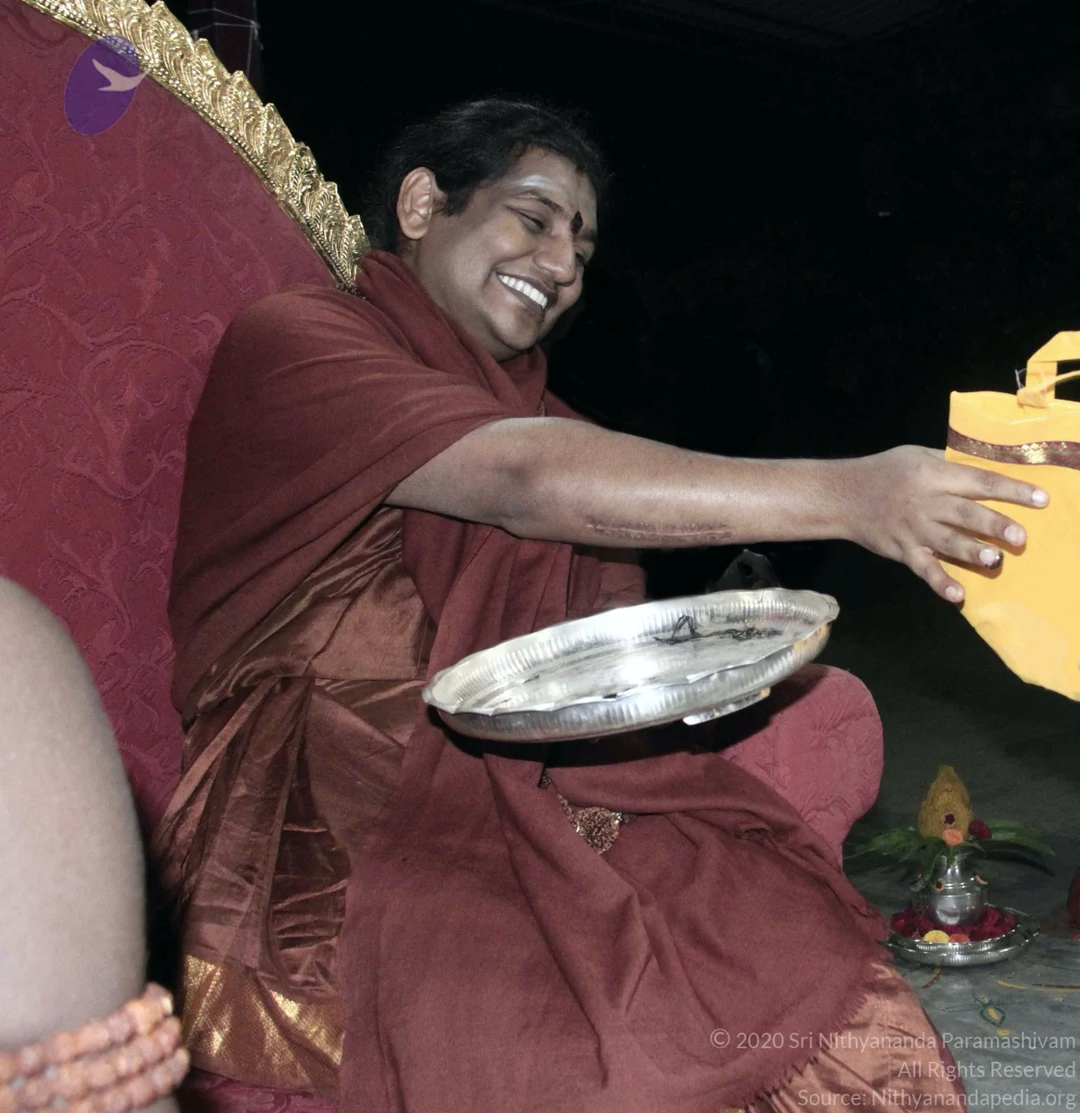
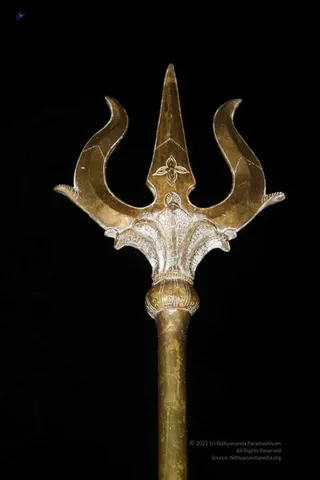
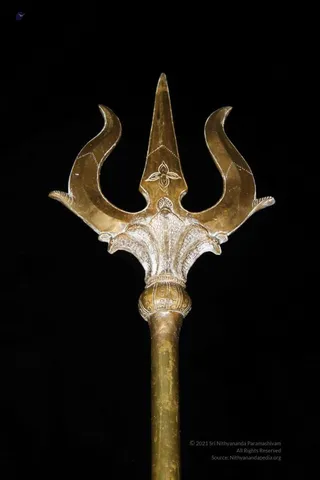
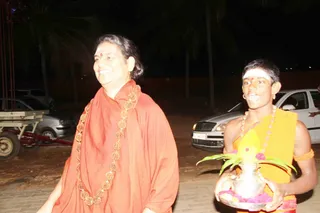
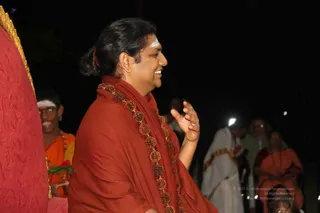
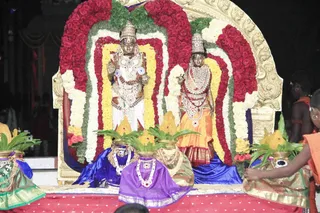
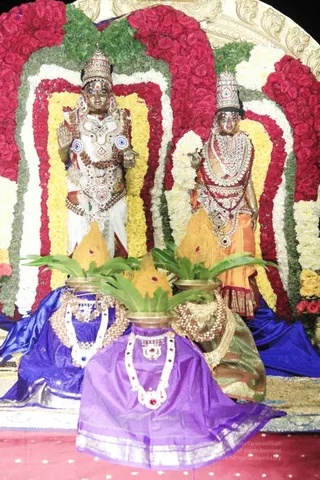
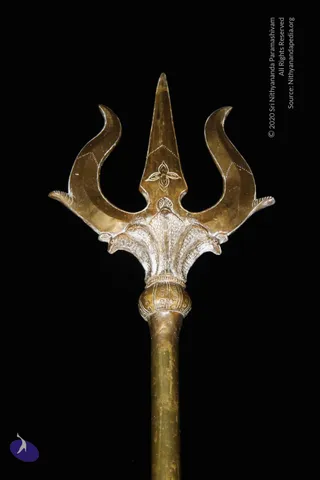
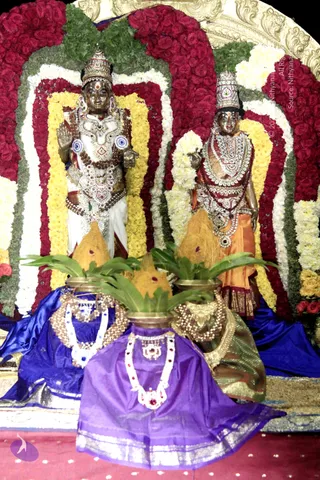
Close-up photograph of a brass trident (trishula) against a plain black background. The three curved prongs rise from a central spear point engraved with a floral motif, and the hilt below is wrapped with engraved serpent-hood-like detailing and a bulbous collar on a long straight shaft. No people are visible; the object is shown alone as a ritual implement associated with Shiva.Close-up photograph of an ornate brass trident (trishul) against a black background. The three prongs curve outward, the central spearhead is tapered with a carved floral motif, and the tines have engraved patterns. Below the prongs, a sculpted cobra-hood-like collar and a decorated knob sit atop a plain long brass shaft. No people are visible. The image is an object photograph, showing a Shiva trishul as a ritual implement.Night outdoor photo at an ashram-style compound lit by ambient light, with palm trees and parked silver cars behind. A smiling woman in a rust-orange wrap and a long gold-bead rudraksha-style mala with a red kumkum dot on her forehead walks forward. Beside her, a young person in an orange-yellow sari-style garment, white tilak on the forehead, beads and bangles, carries a silver tray holding a kalasha-type vessel with green leaves and pink-purple flower petals, a ritual welcome. Two physical people are visible. a person not clearly identified by appearance.A man in a rust-red shawl and a long rudraksha mala with large beads stands beside a red upholstered seat with gold trim at night. His hair is tied back in a bun and he wears a white vertical forehead mark, smiling with one hand raised in a gesture. Behind him a younger man in orange robes and white forehead marks stands near a red flower. On the right, people in white and orange clothing stand in the dark background, with a bright light visible.A decorated stage shrine framed by an arch of red roses, yellow and white flowers and green leaves. Two standing deity murti figures are adorned with jewelled crowns, layered garlands, necklaces and ornate ornaments; the left figure wears white and blue-accented garments, the right wears orange and gold. In front are brass kalasha pots with green leaves and fruit, draped in purple and green cloth with beaded garlands. At the right edge a person in orange robes reaches toward the pots, with other devotees partly visible at the edge. Red and blue cloth covers the platform.Photograph of two metal deity murtis standing in a floral alcove of red roses, white and yellow garlands and green leaves. The murtis wear crowns, ornate jewelled necklaces and sacred thread; the left figure in white dhoti with raised hand, the right in red and orange silk. In front, three brass kalashas with mango leaves and yellow cones sit draped in purple, blue and green cloth with beaded necklaces. No people are visible.

Vaidya-Sarovar-Teppotsavam

23 photosSource gallery
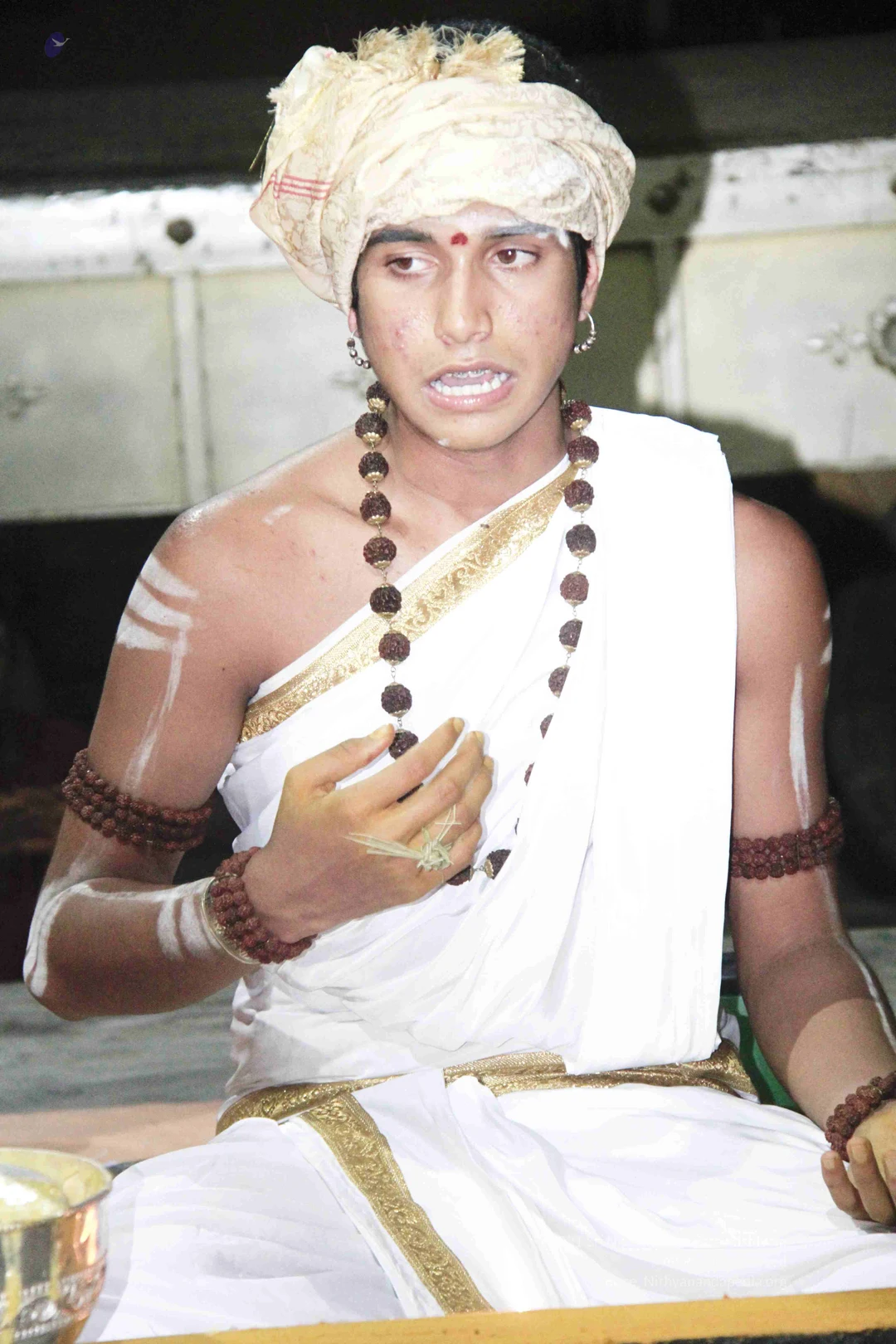
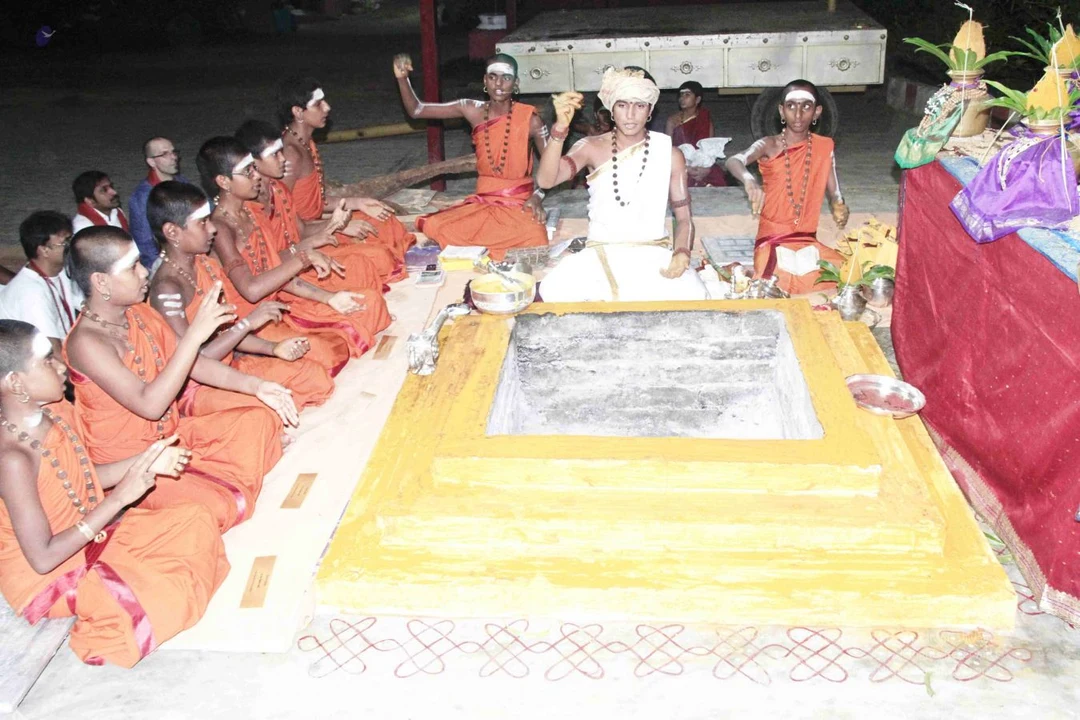
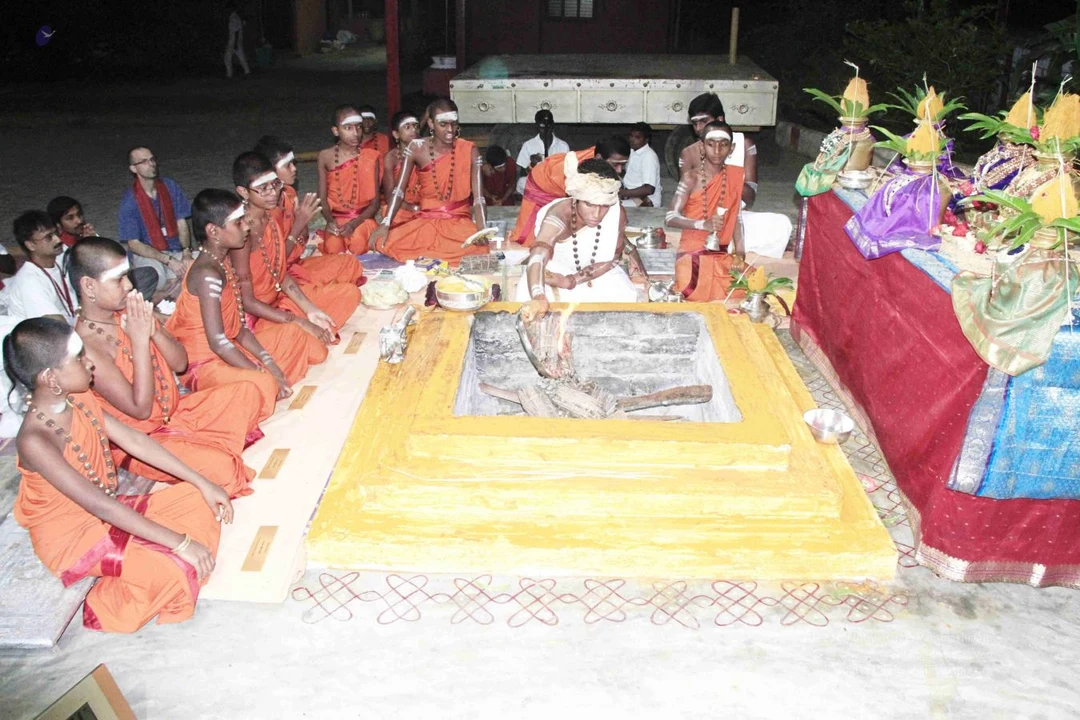
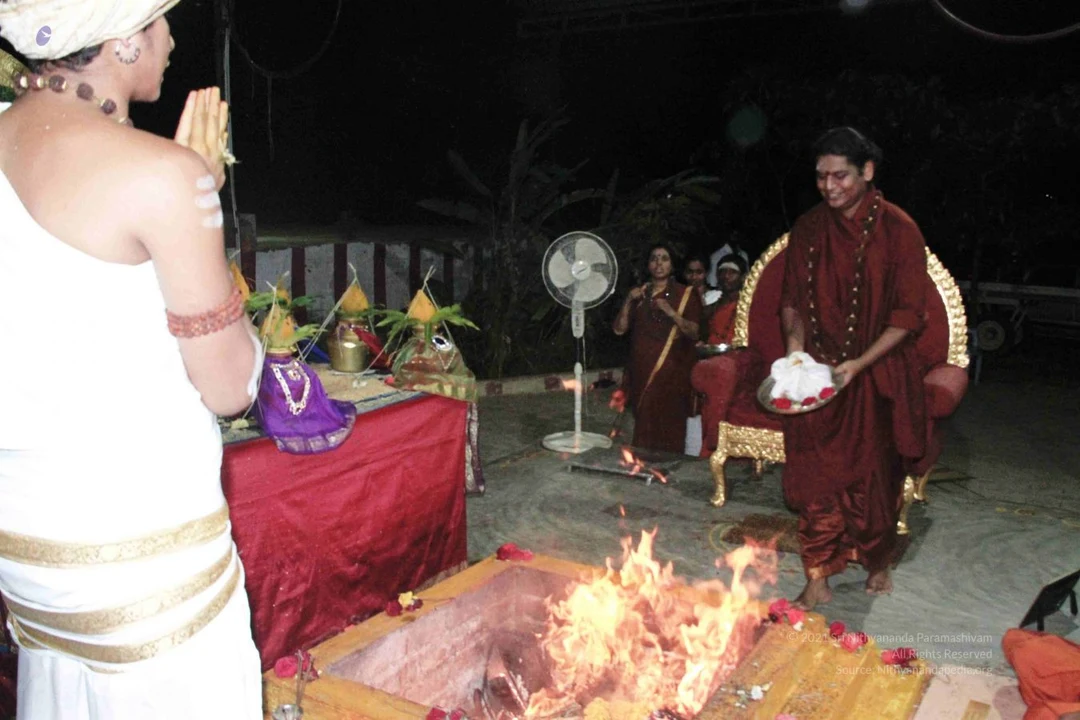
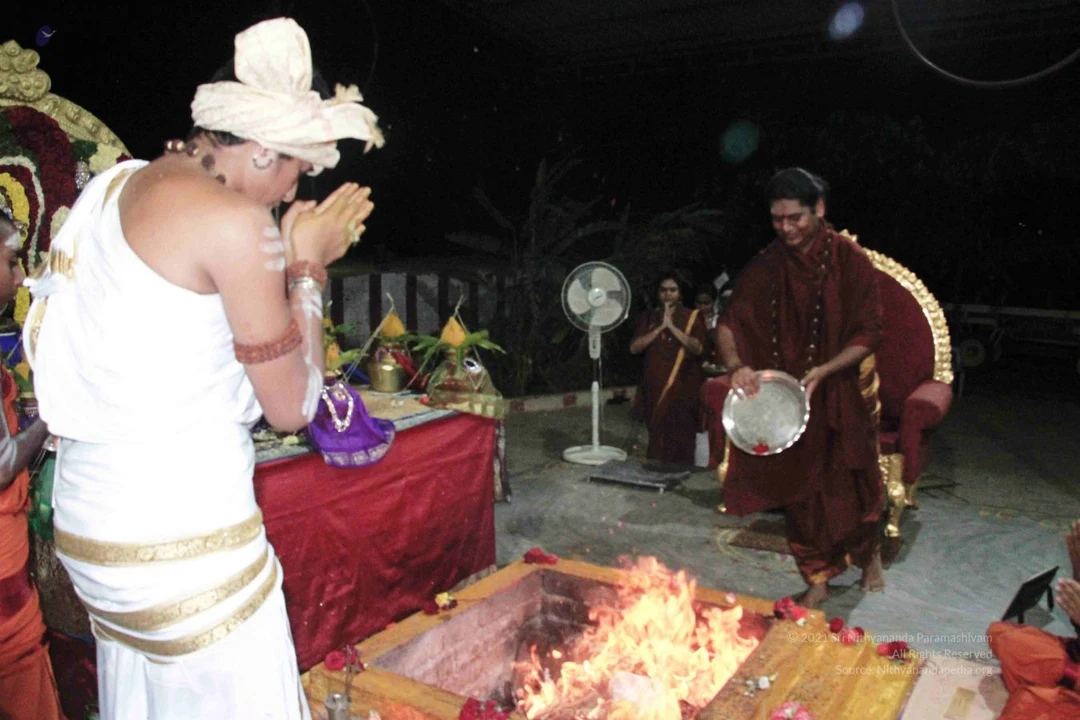
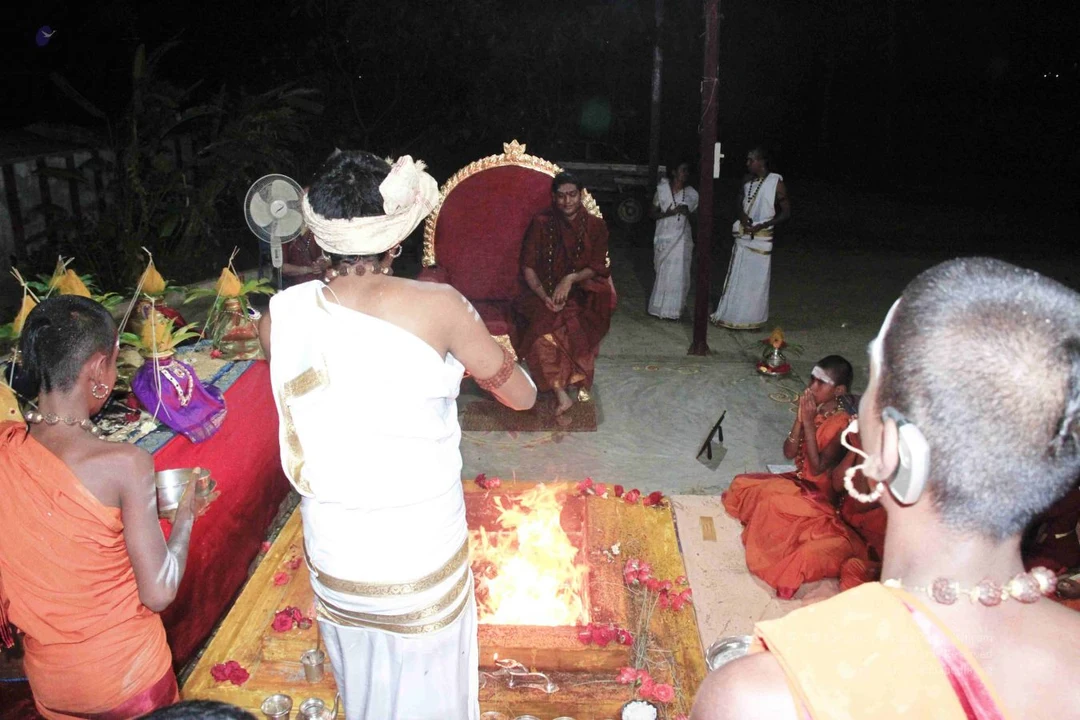
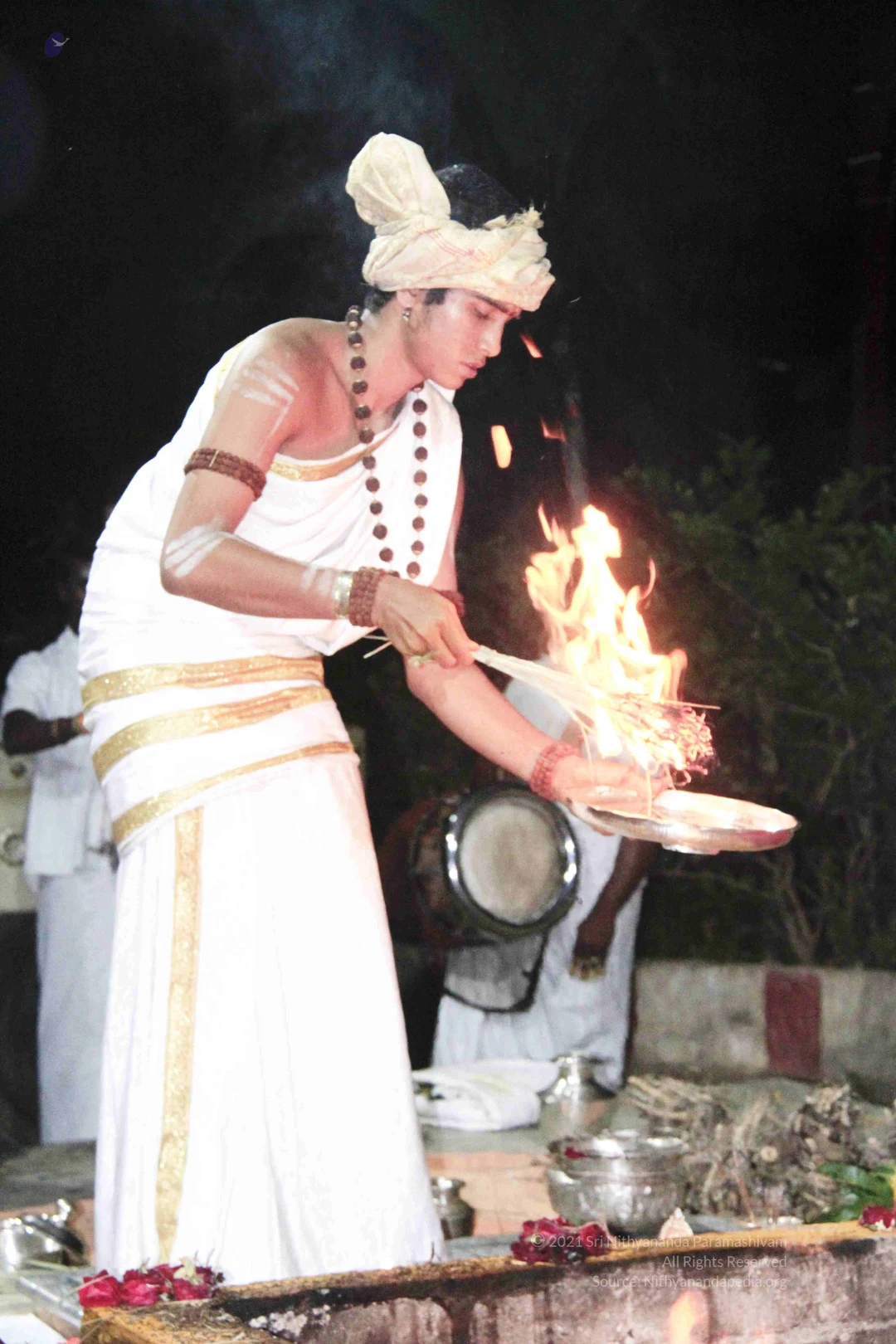
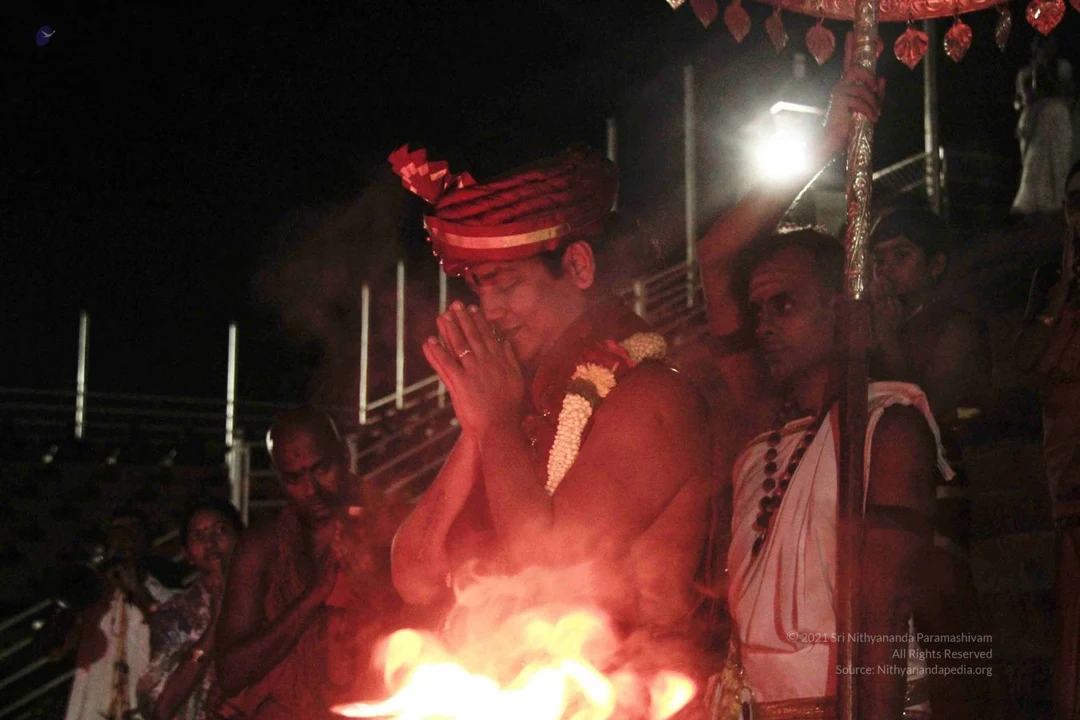
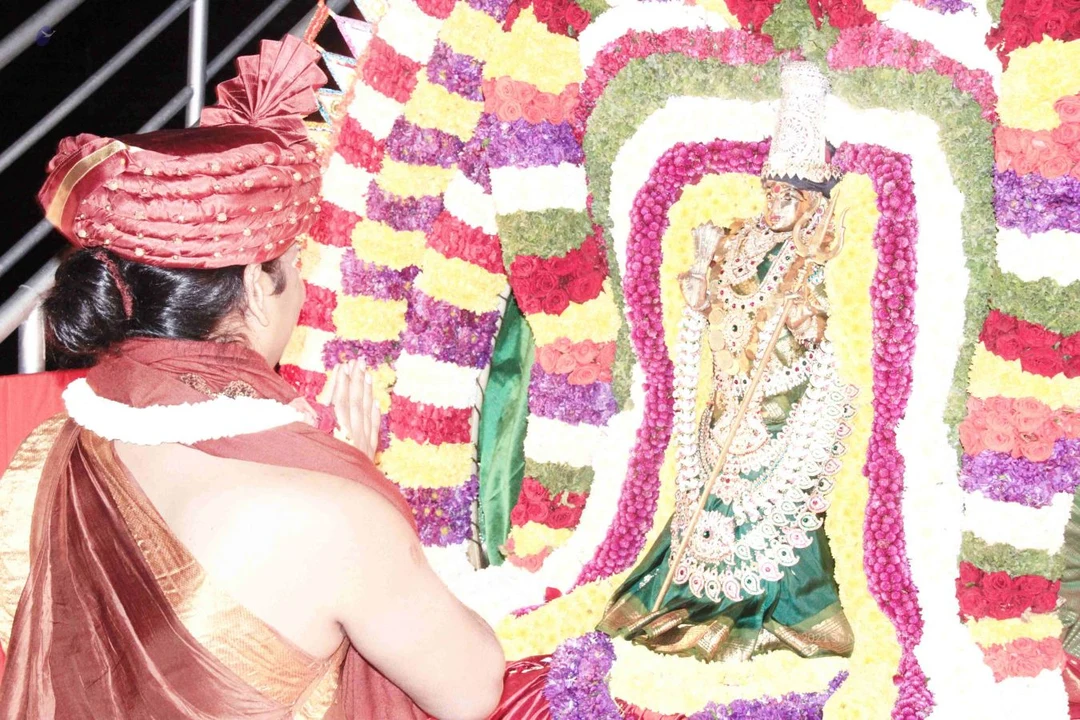
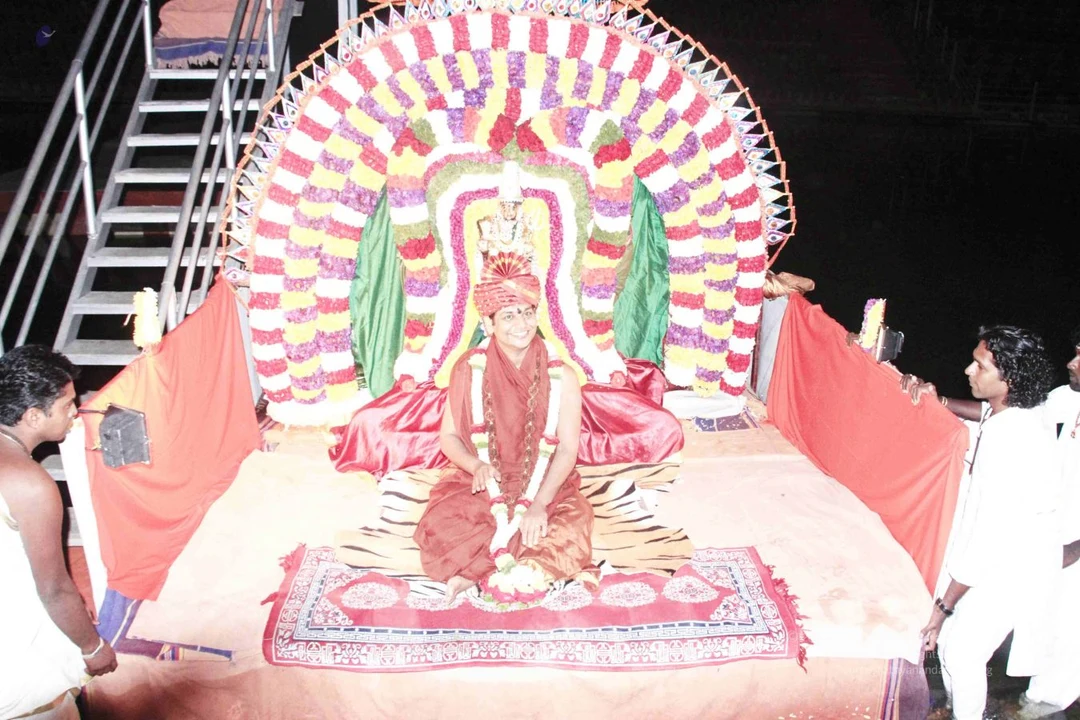
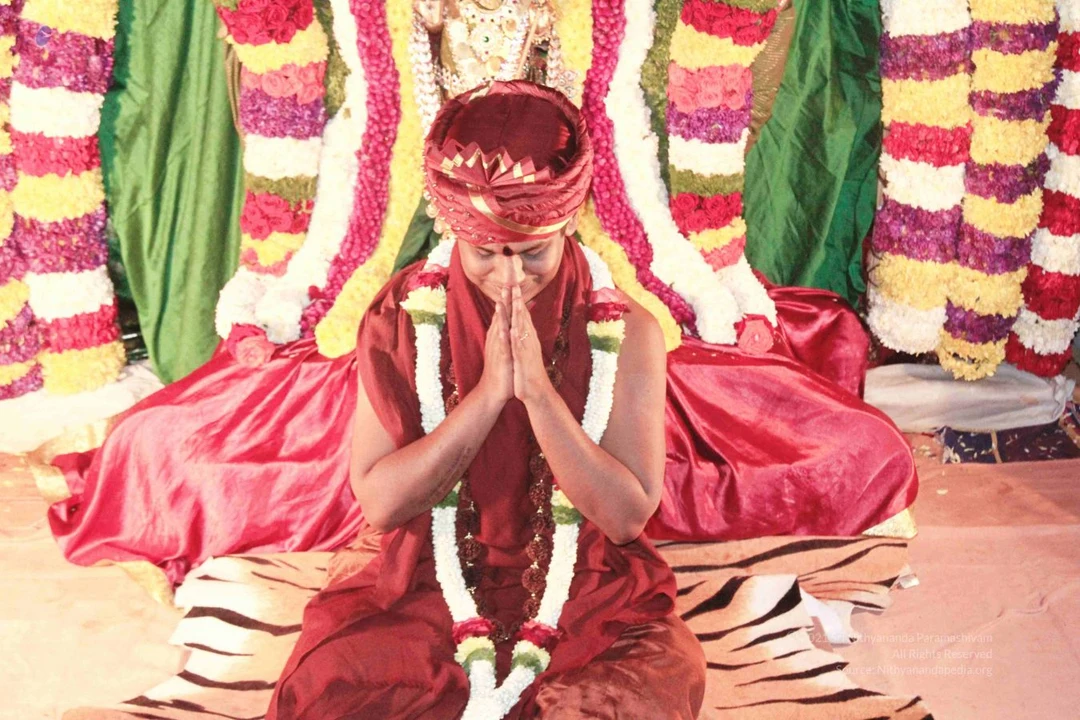
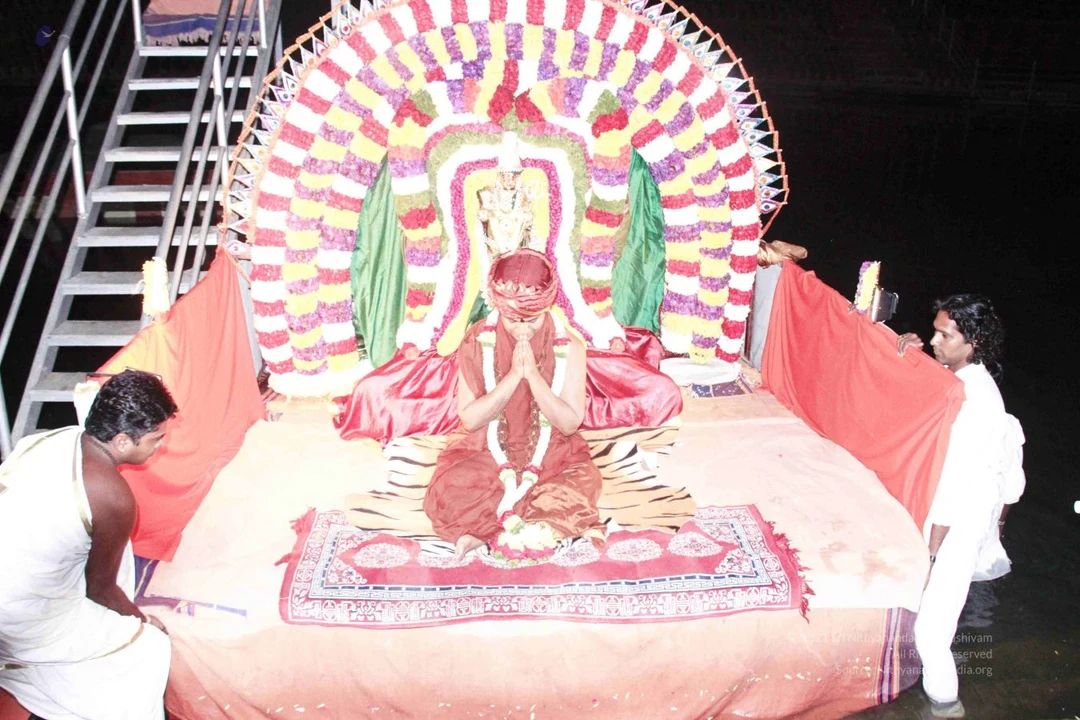
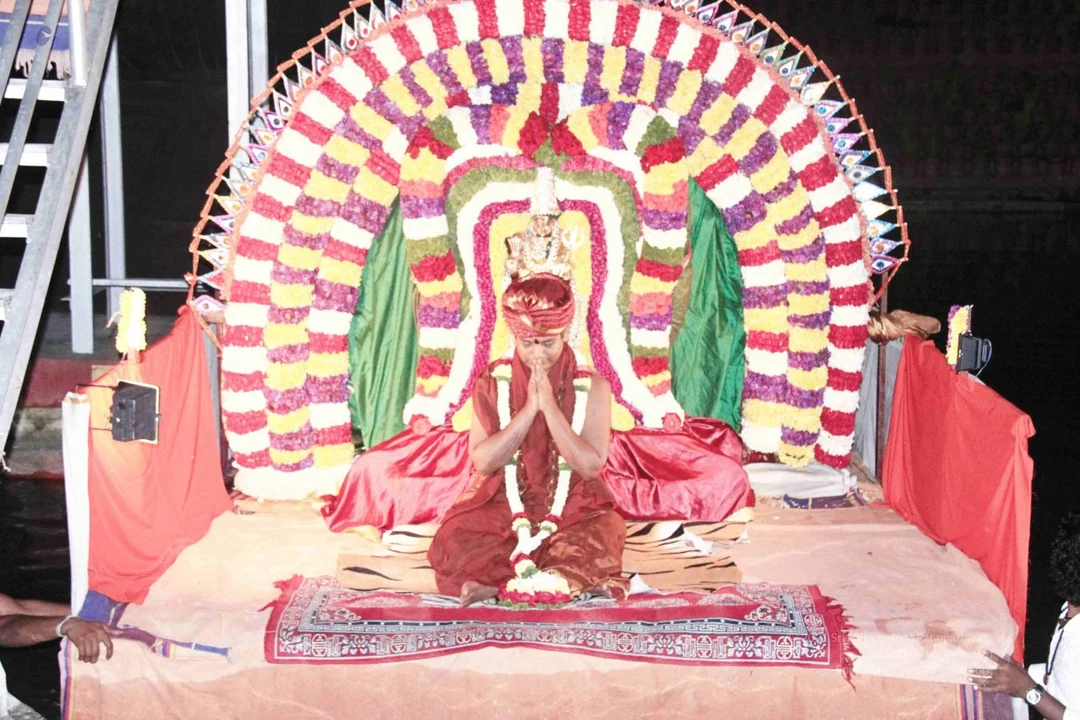
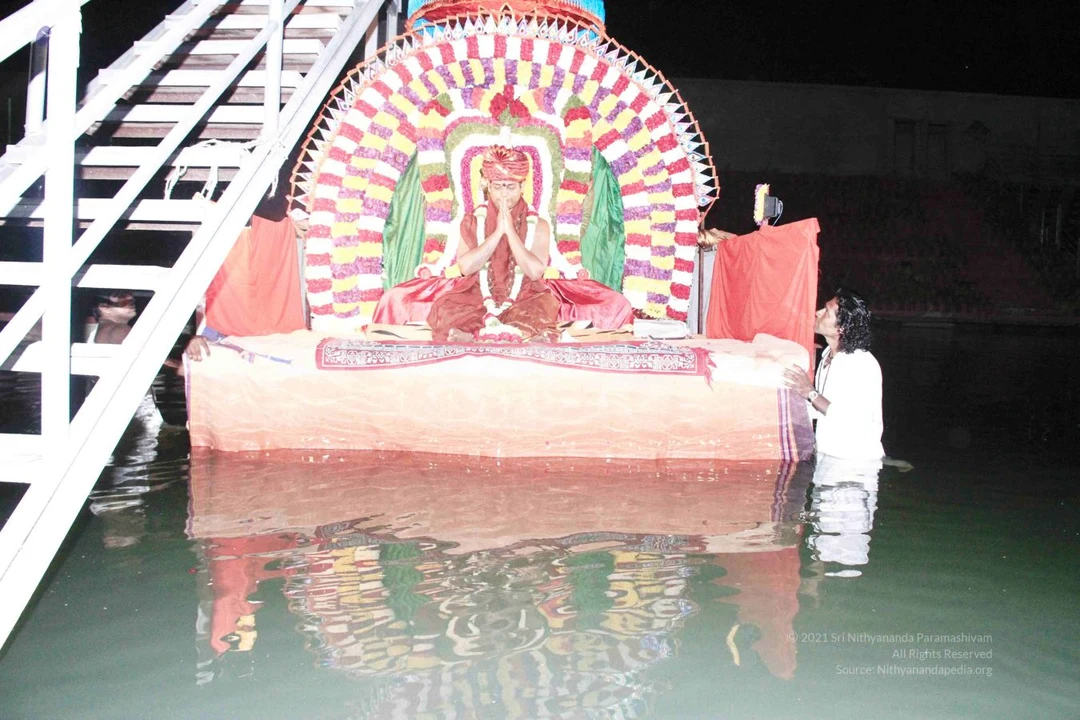
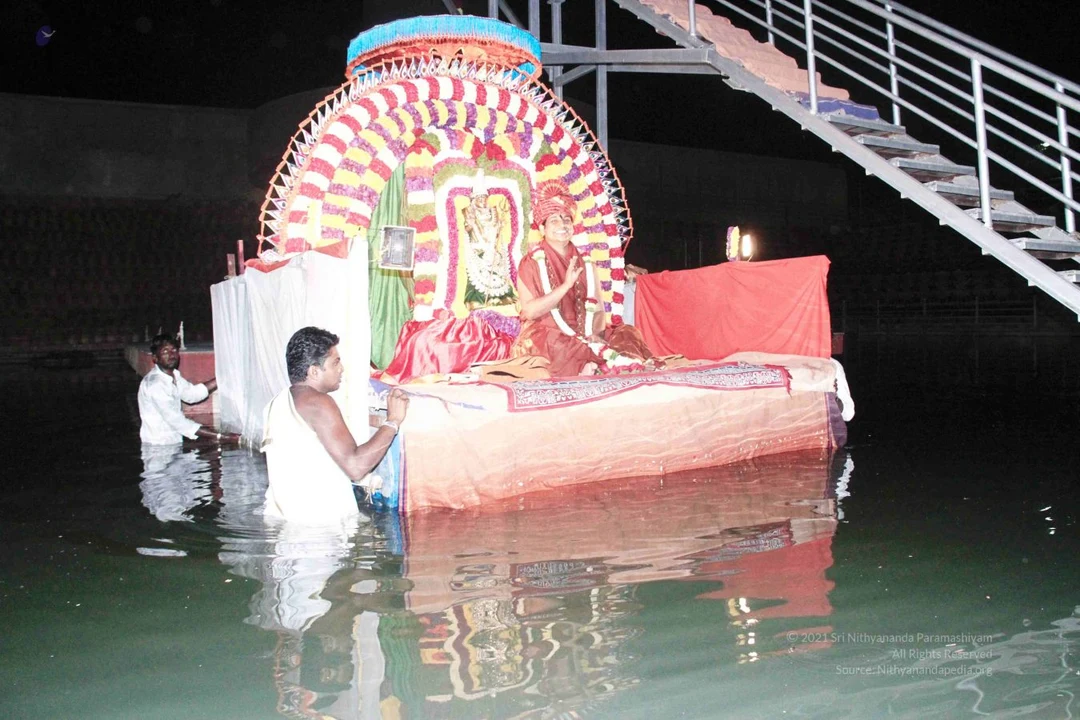
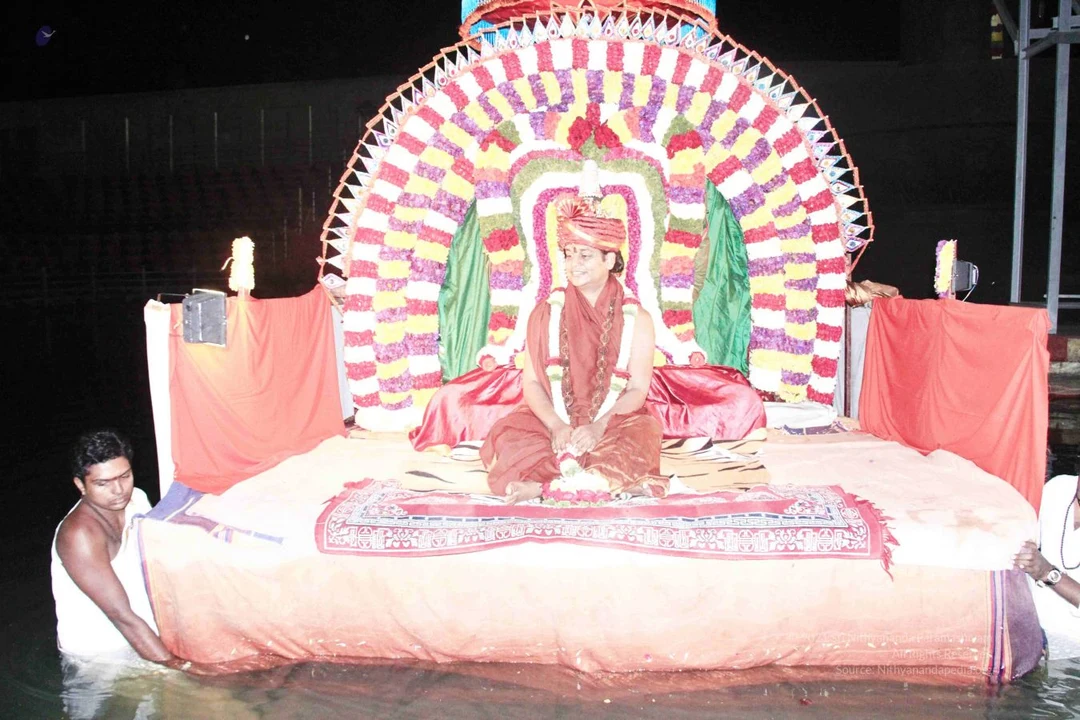
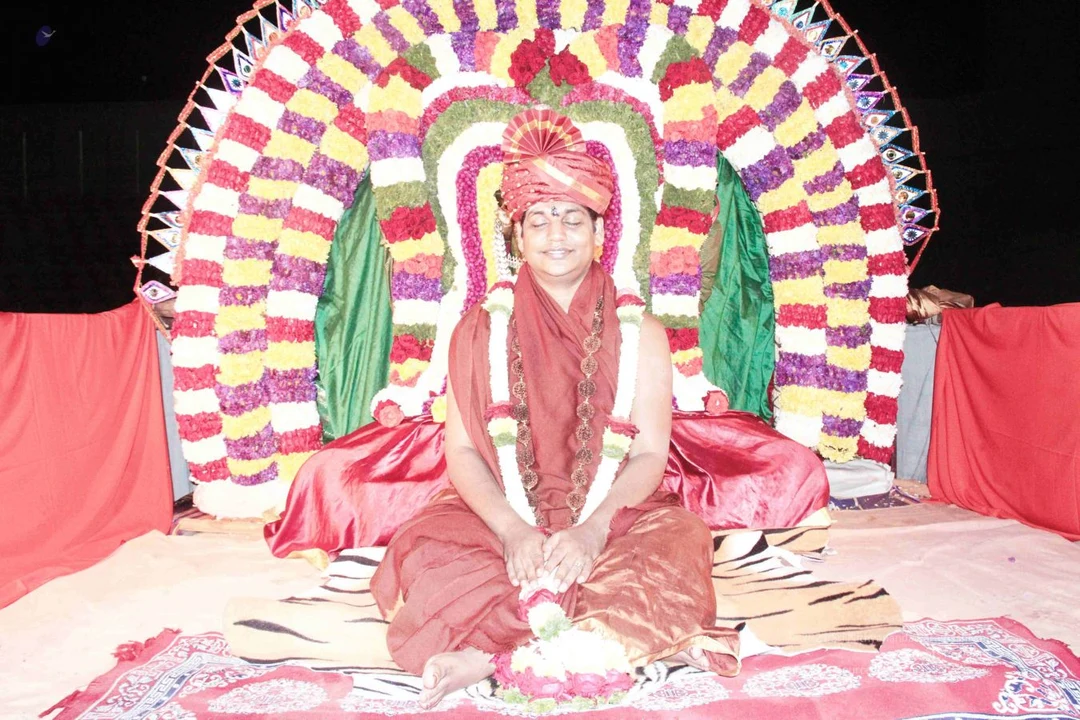
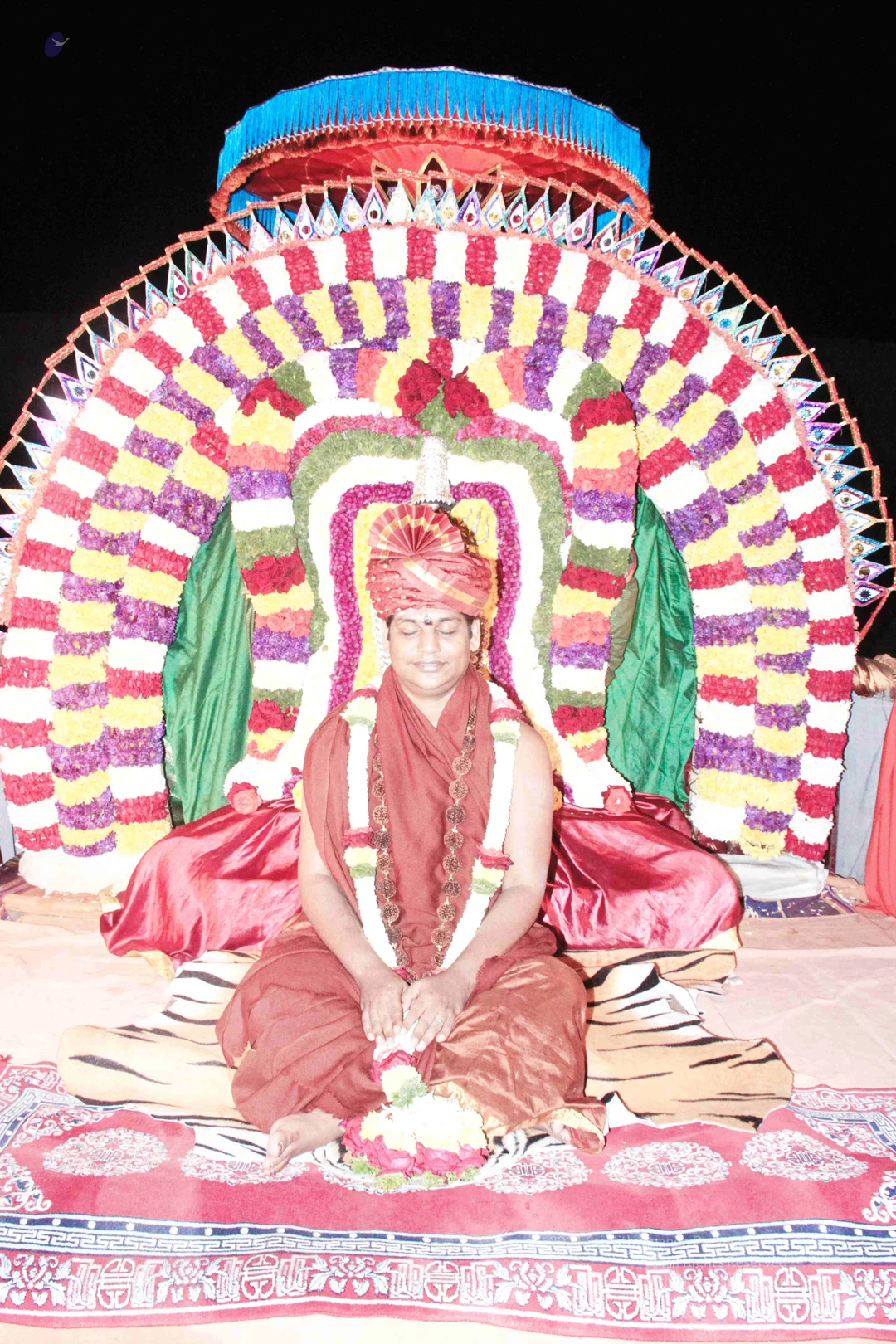
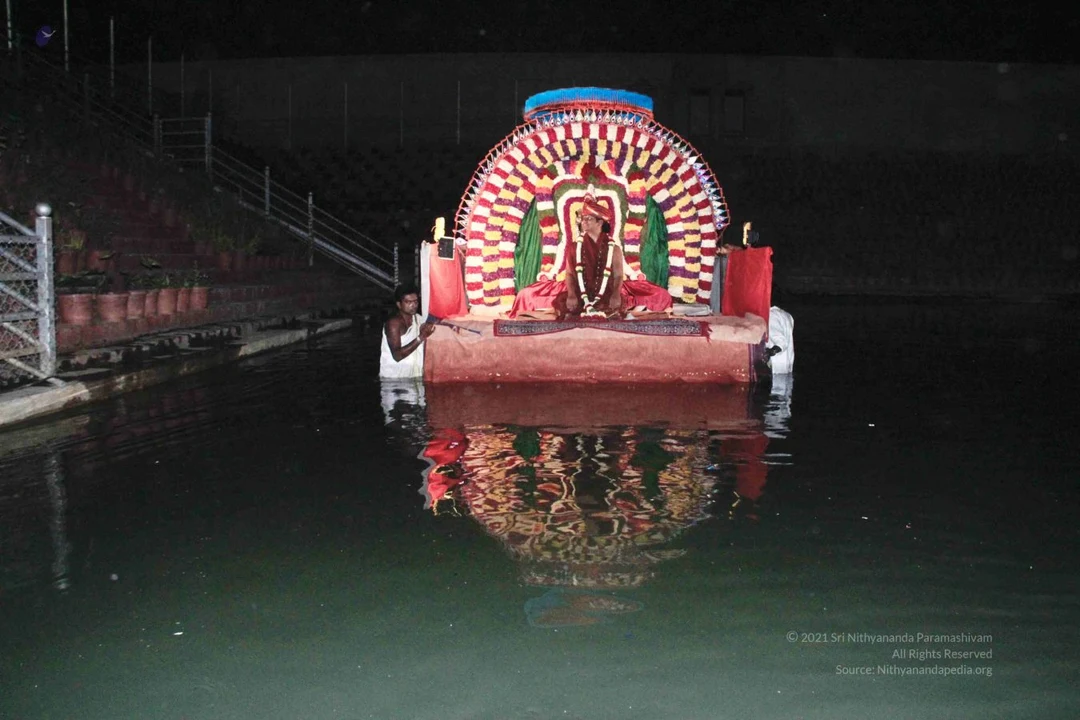
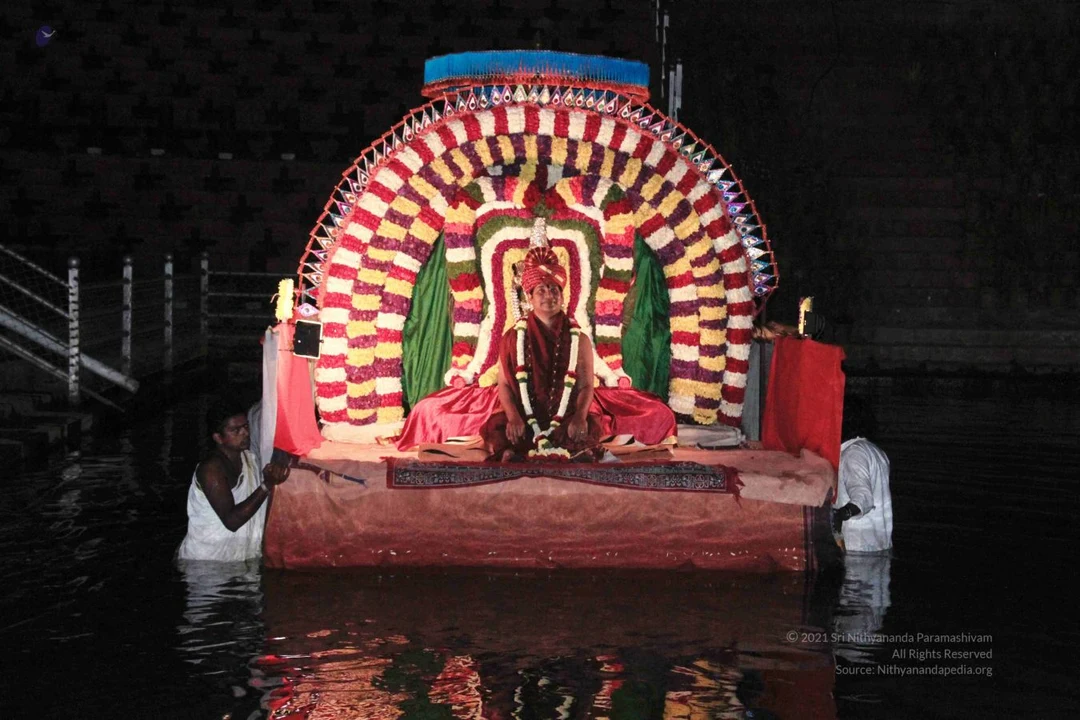
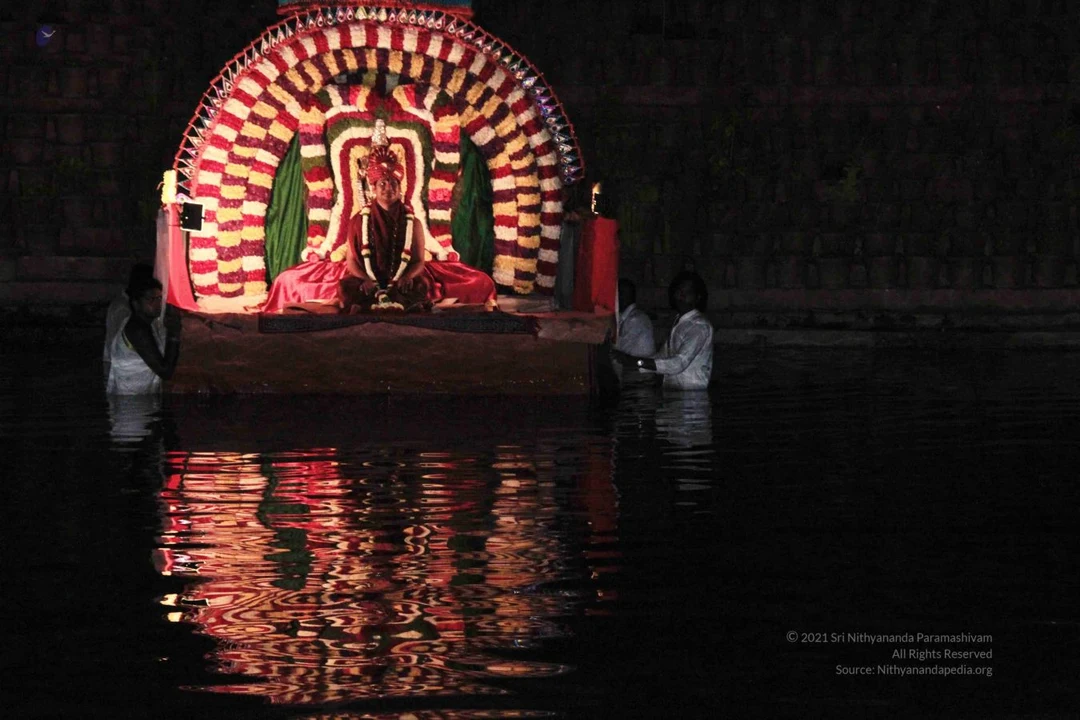
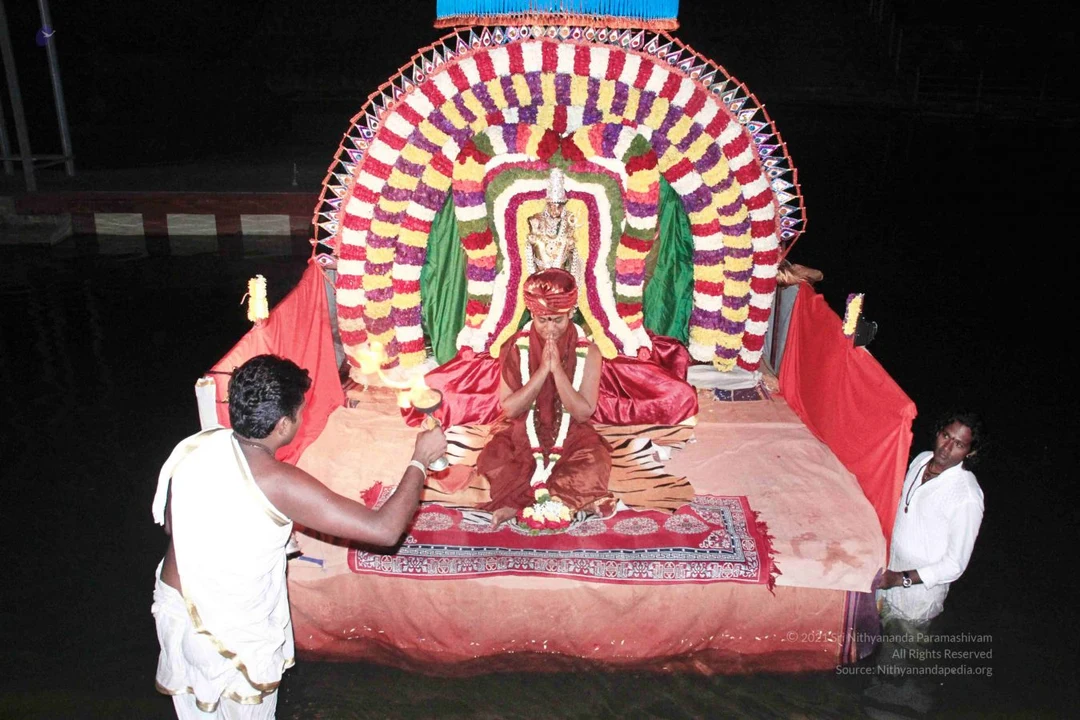
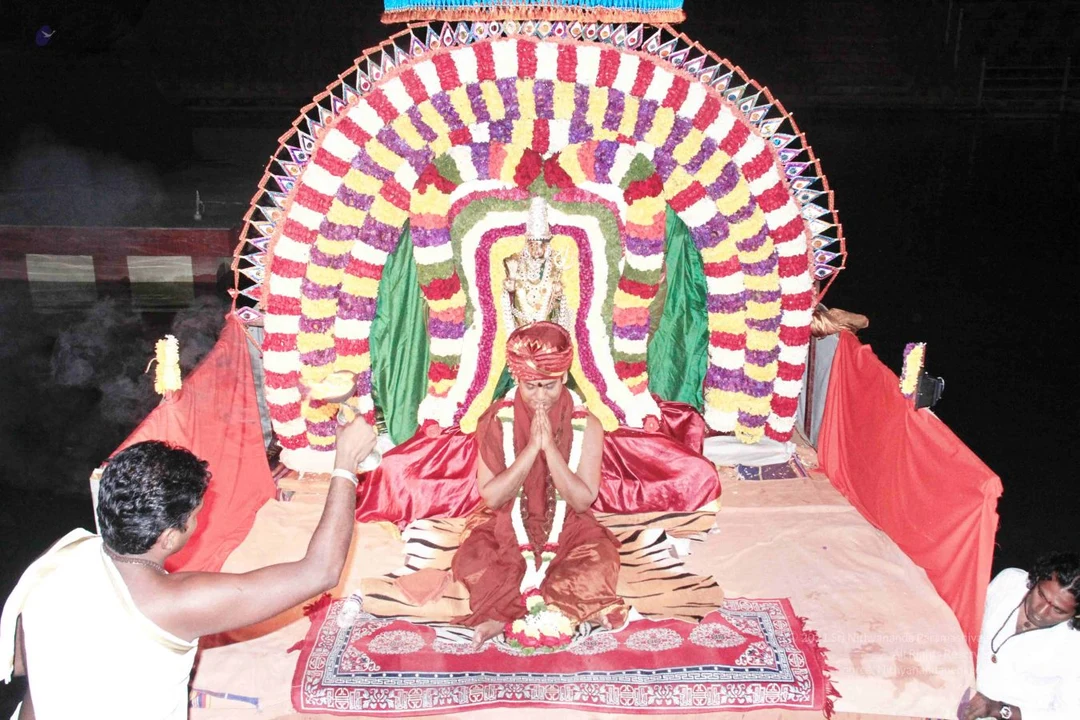
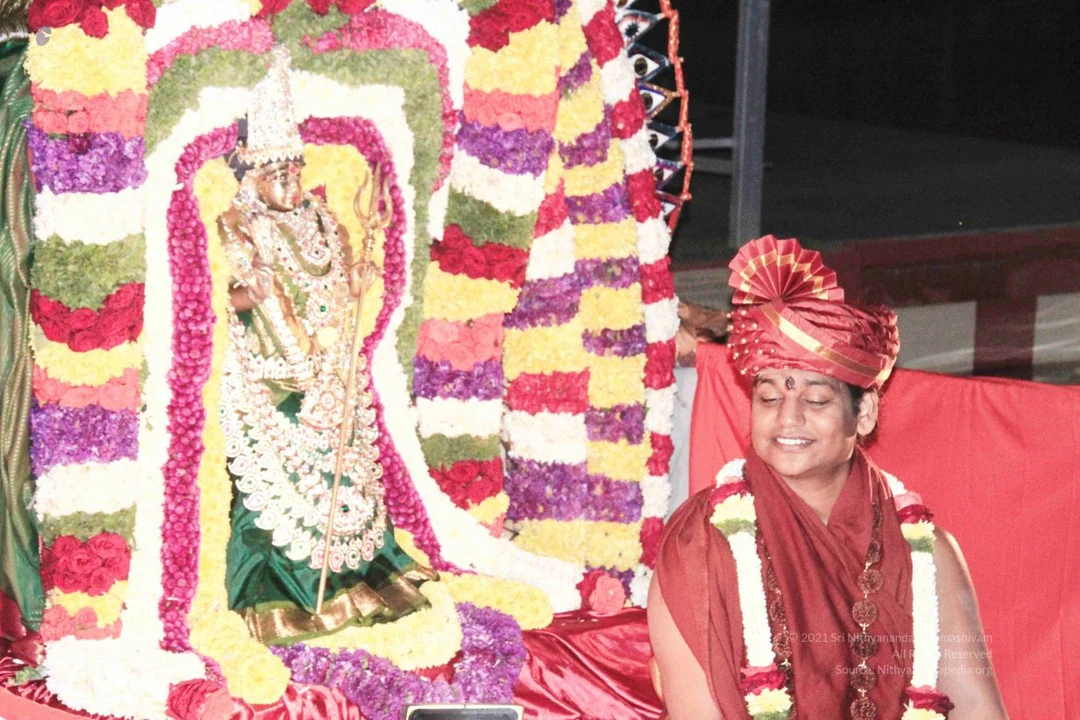
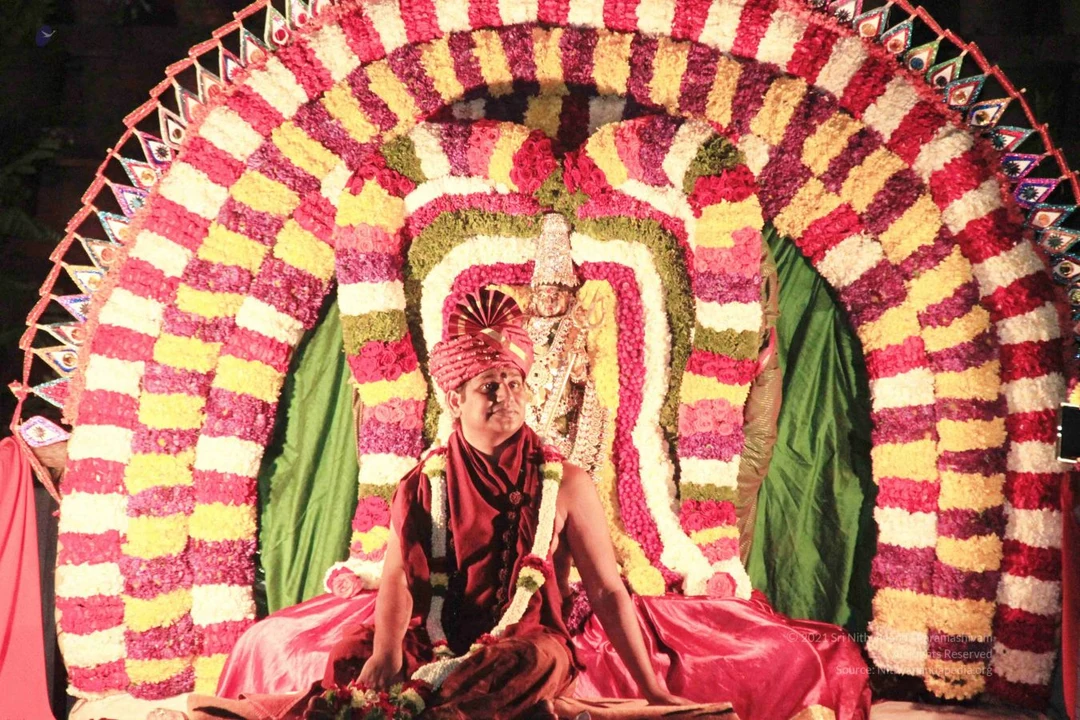
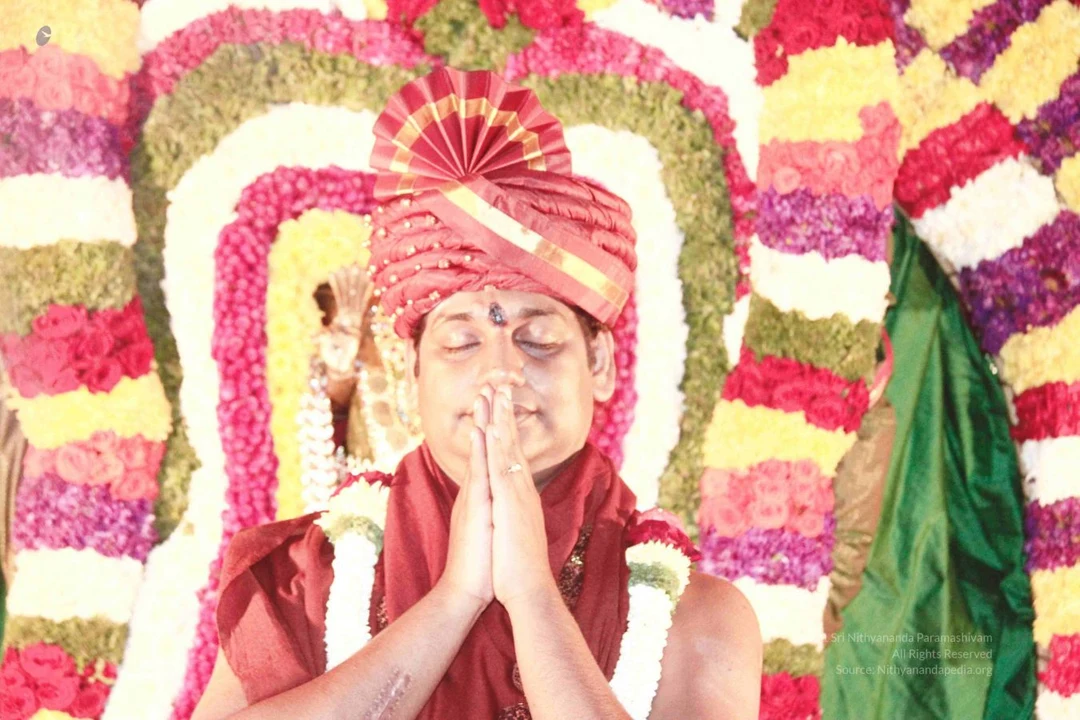
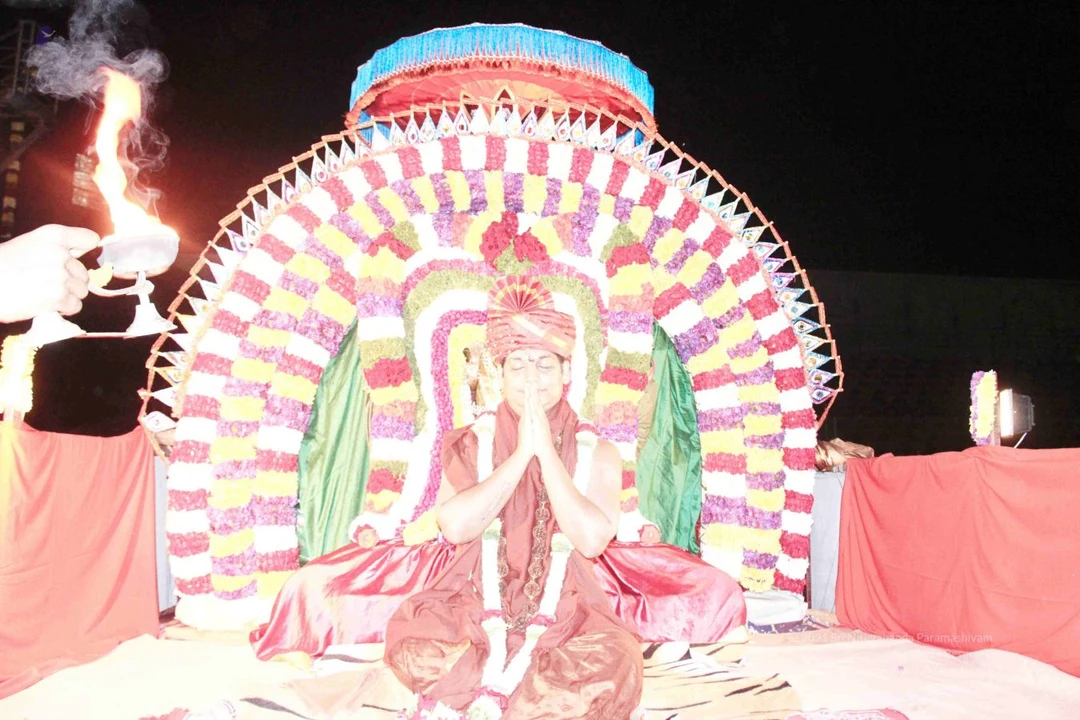
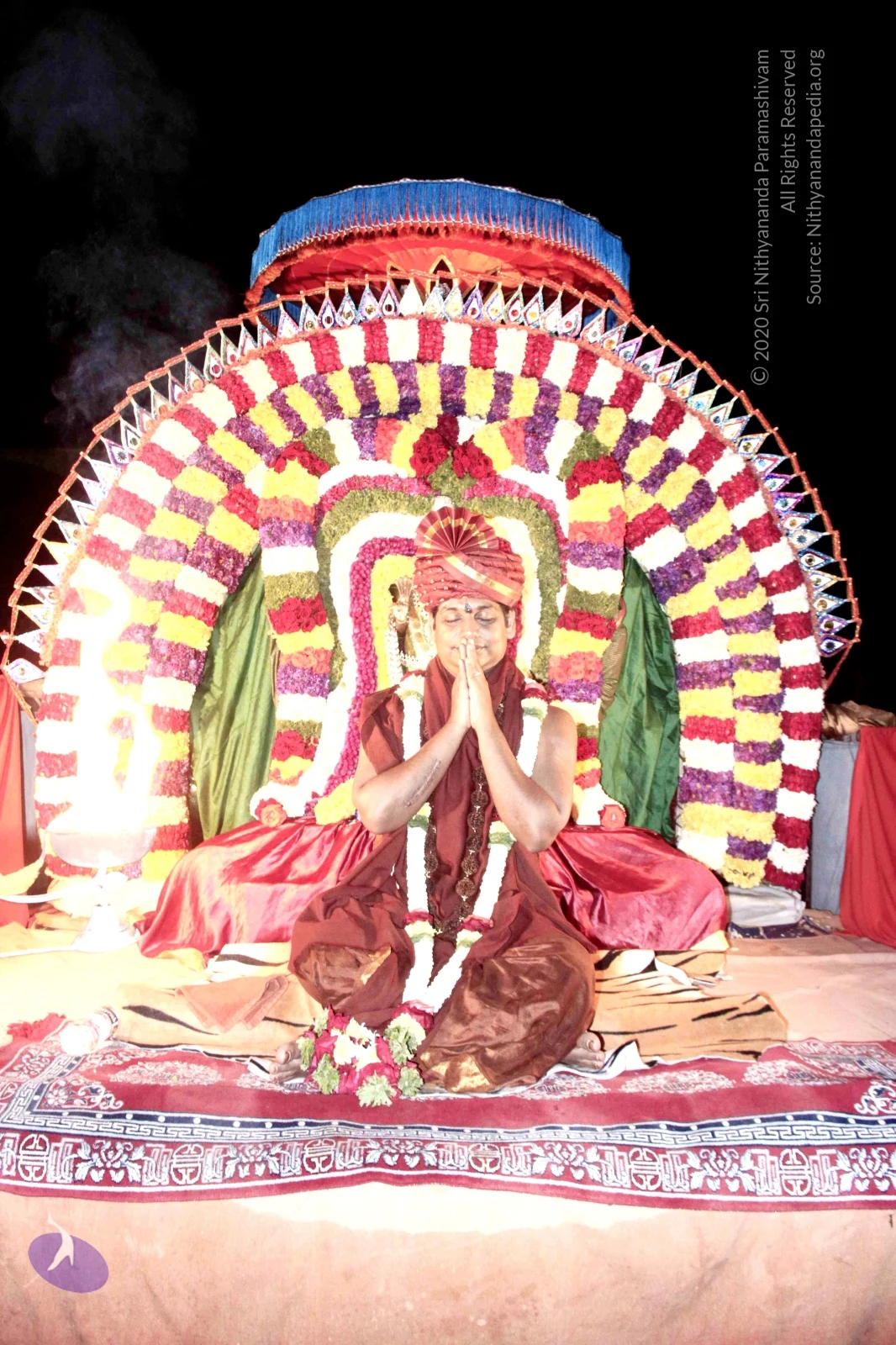
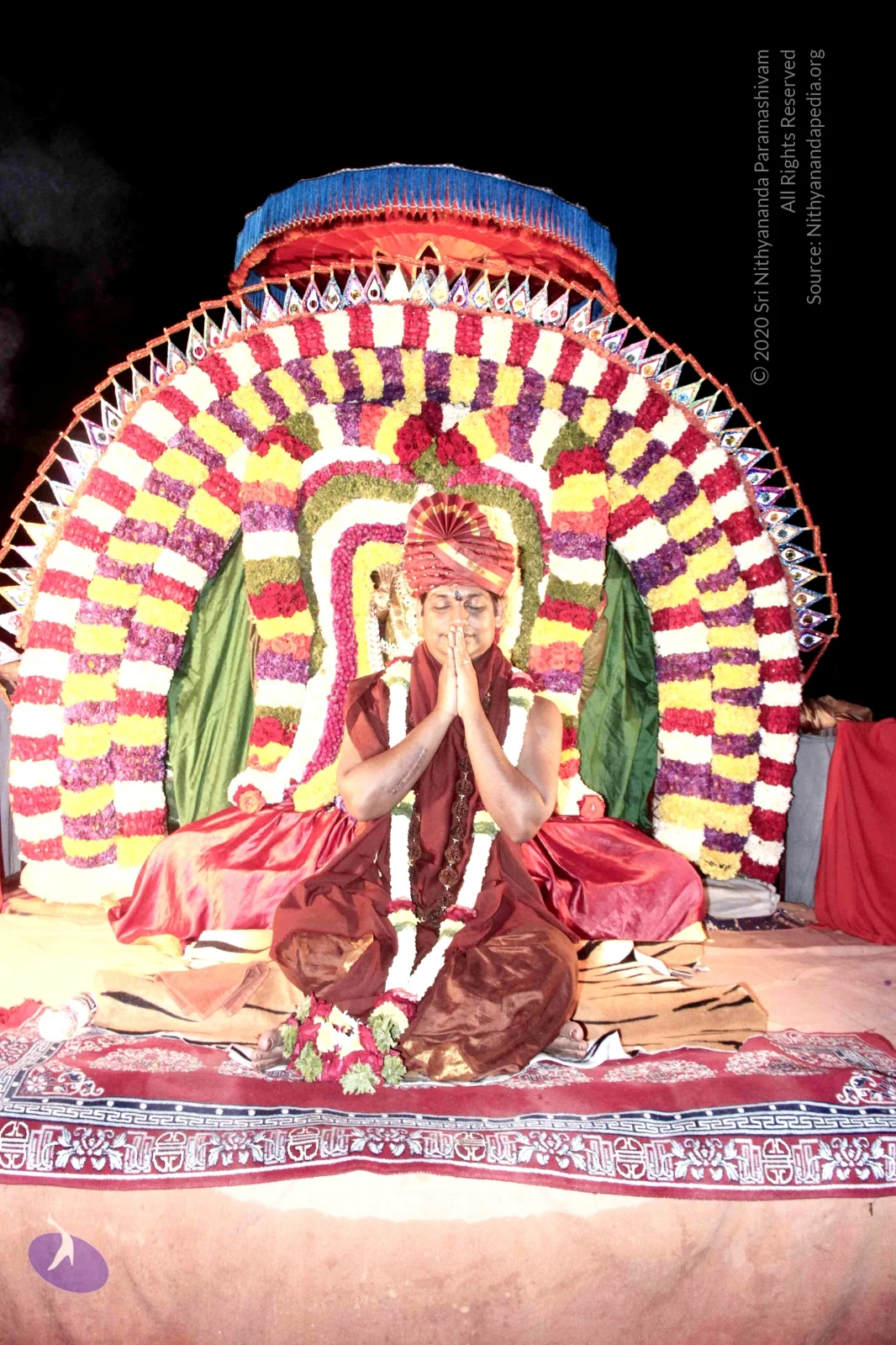
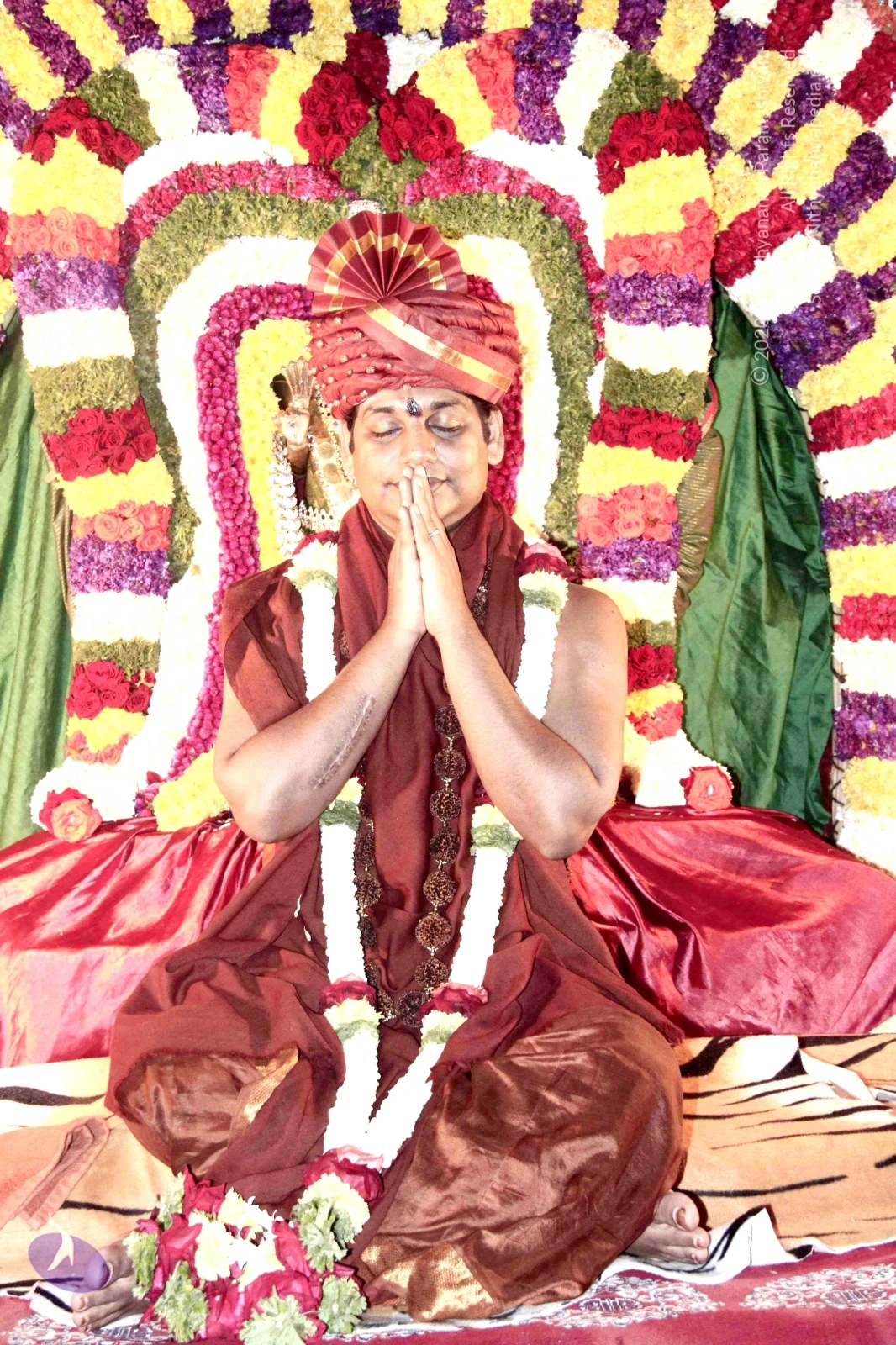
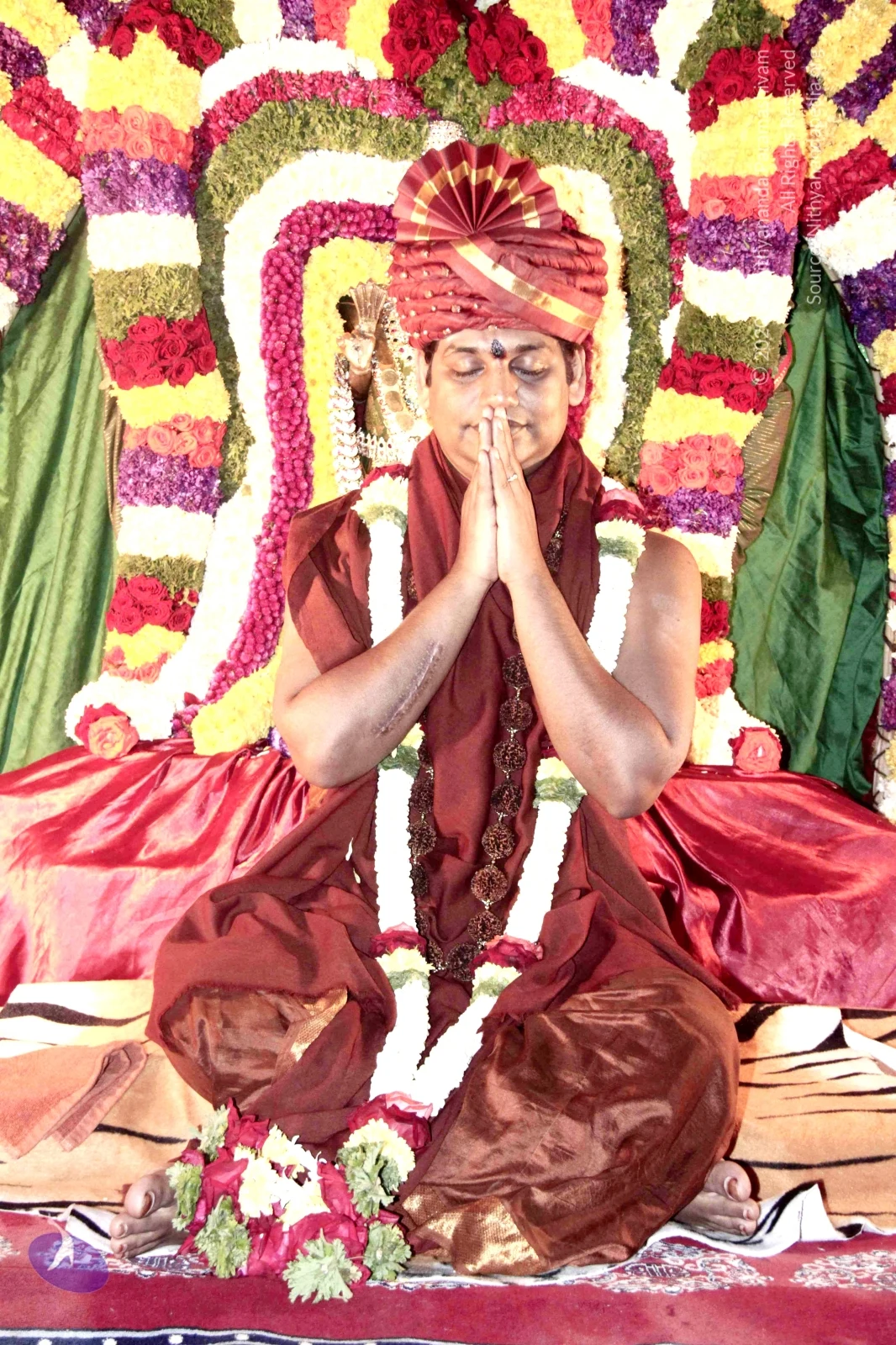
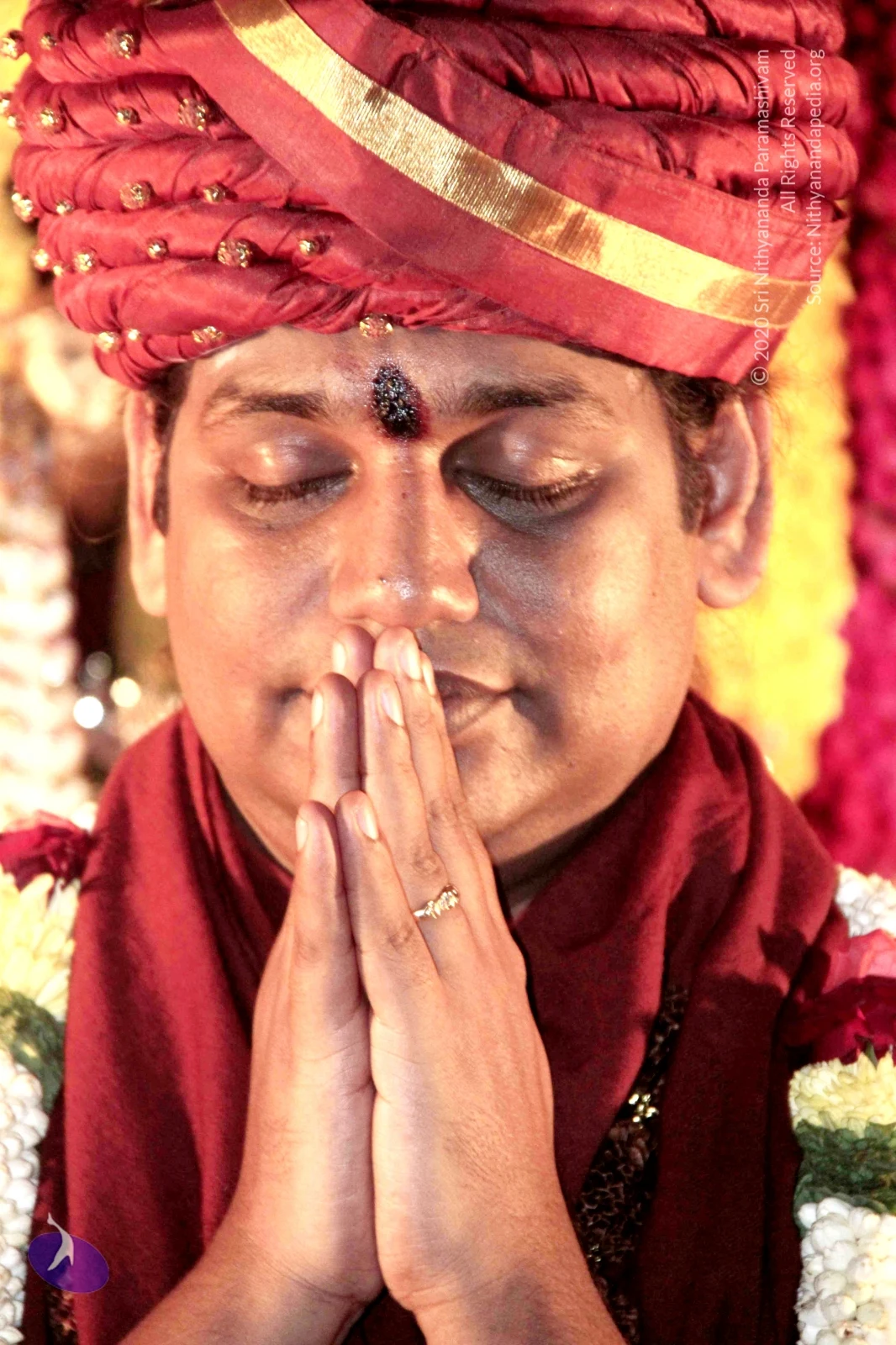
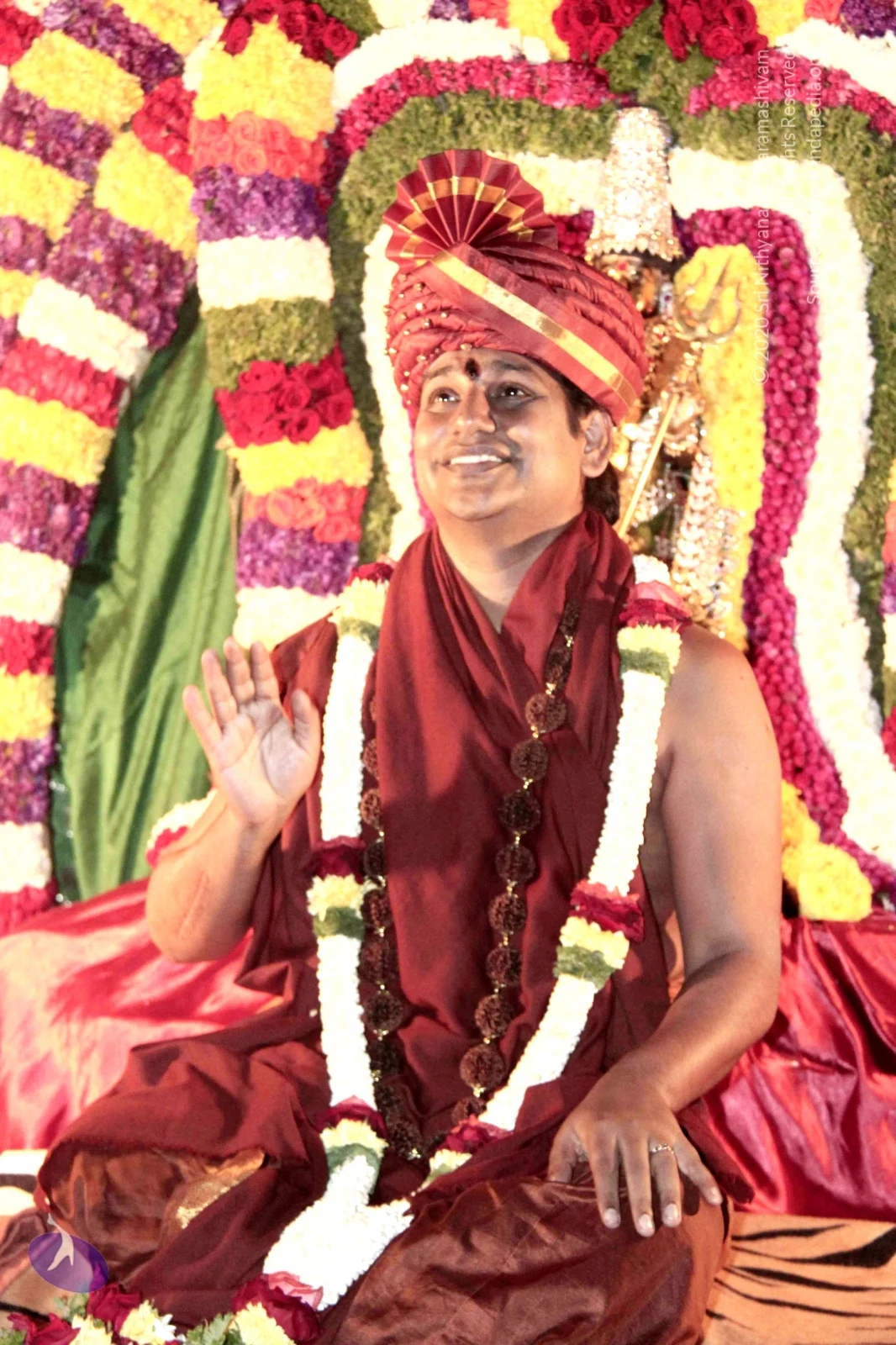
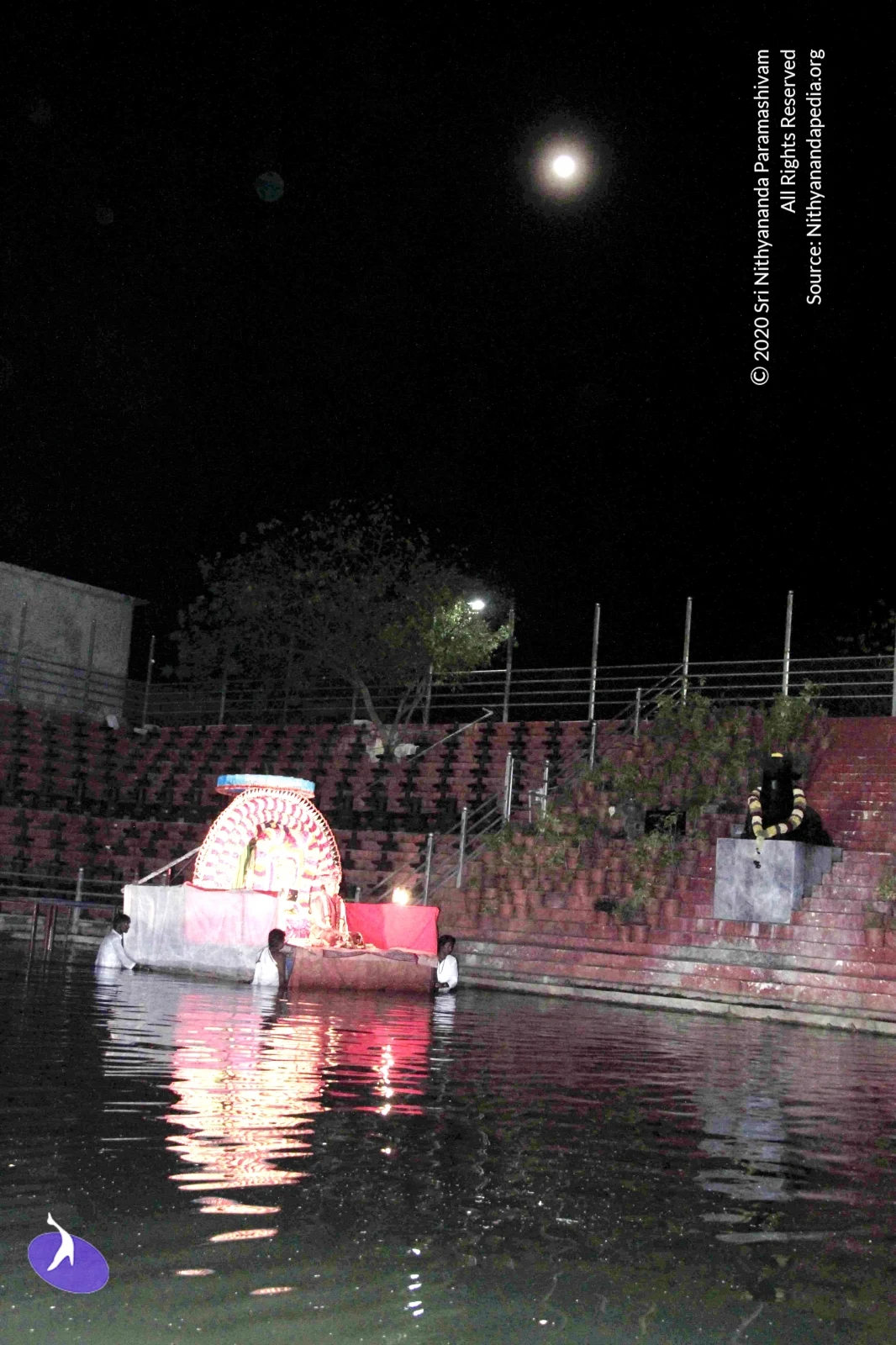
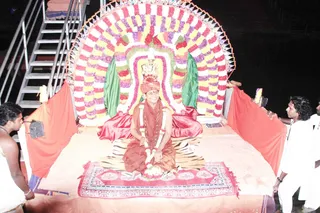
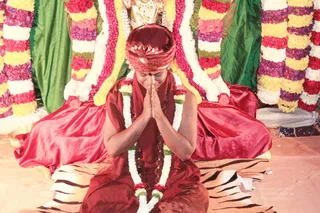
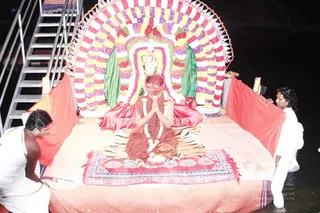
Night outdoor ritual at a fire pit. A man in a red turban with a red-and-gold band and a white-and-orange flower garland stands bare-chested with palms pressed together in prayer, eyes closed, before a bright flame. Beside him a bald man in a white dhoti and sacred thread holds a long red ceremonial staff topped by a red umbrella-like canopy with leaf ornaments, and a rudraksha mala hangs at his chest. Other devotees and attendants stand behind in the dim light, one lamp glares on the right.A person seen from behind in a rust-red turban with gold dots and a fan-shaped fold, wearing a rust-red and gold-bordered shawl over a white garland, hands joined in anjali before a deity murti. The murti stands in a green garment with gold ornaments, a tall white crown, multiple white and pearl necklaces, and holds a staff, set within a frame of densely strung flowers in red, pink, yellow, purple and white garlands. A metal railing and a red cloth appear at the edges. The person's face is not visible, and no identification is made from appearance.A seated man in a saffron-orange robe and matching turban sits on a tiger-striped seat in front of a large arch of marigold and rose garlands in white, yellow, purple, red and green, with a deity murti set in the centre. A green cloth hangs on either side. Two men in white stand at the edges, one at right looking toward the seated figure. Red carpet and a red satin cushion lie below. The setting is an outdoor stage at night with a metal staircase at left. The seated man wears a rudraksha-style mala and a garland of white flowers around his neck.A seated figure in a deep red turban and red robes presses palms together in anjali mudra, eyes closed, at a ceremony. A white and red-yellow garland of flowers hangs across the chest with a rudraksha mala beneath it. Behind is a red and green draped backdrop framed by long garlands of pink, red, yellow and white flowers, with a deity murti partly visible above. The figure sits on a striped tiger-print cloth over a red cushion.A seated figure in a red-brown robe with a red head covering sits with palms pressed together in namaste on a striped tiger-skin seat, set on a red and beige patterned mat atop a raised platform. Behind the figure, a large arch of garlands in red, yellow, purple and white frames a small golden deity murti, with green cloth panels at each side and orange cloths draped over the platform edges. Two men in white dhotis and light shirts stand at the sides, one tending the cloth, against dark water at night, with a metal staircase on the left.Night outdoor ceremony on a raised platform framed by a large arch of red, white, yellow, purple and green flower garlands. A seated figure in a red-orange wrap and matching dhoti, wearing a golden crown and a red turban, sits cross-legged on a pink cloth with hands pressed together in namaskar. A white and pink flower garland hangs at the neck and a flower heap lies before the figure. Red and green cloths drape the sides, a metal staircase stands at left, and a few hands and a partially visible person appear at the edges.

Darshan

46 photosSource gallery
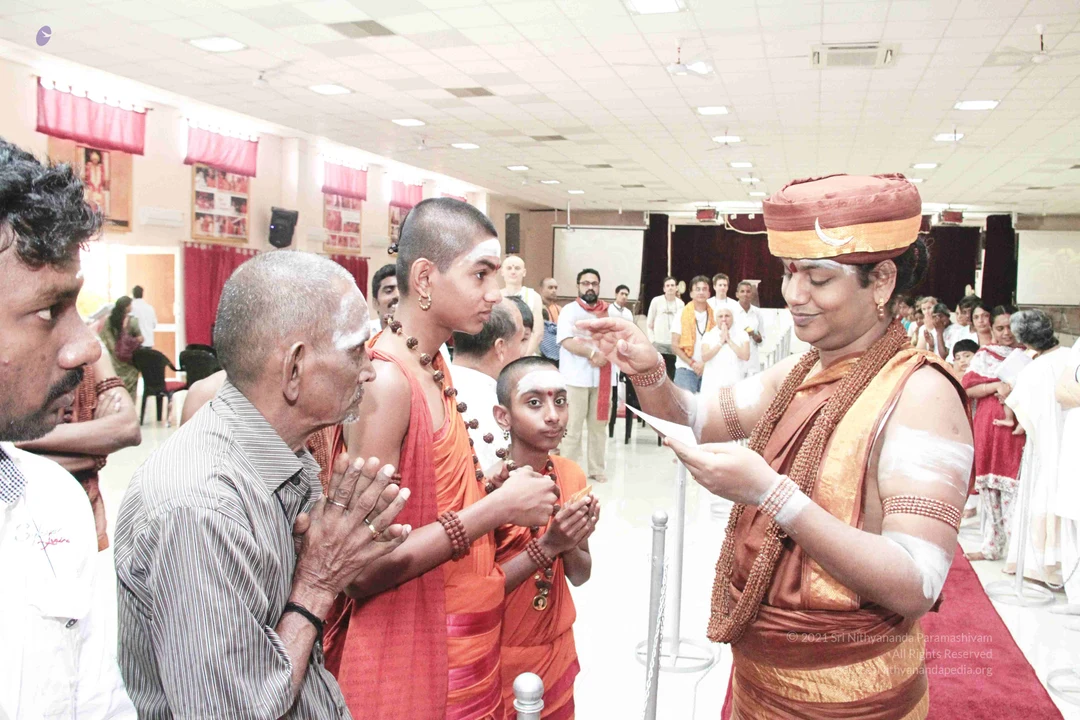
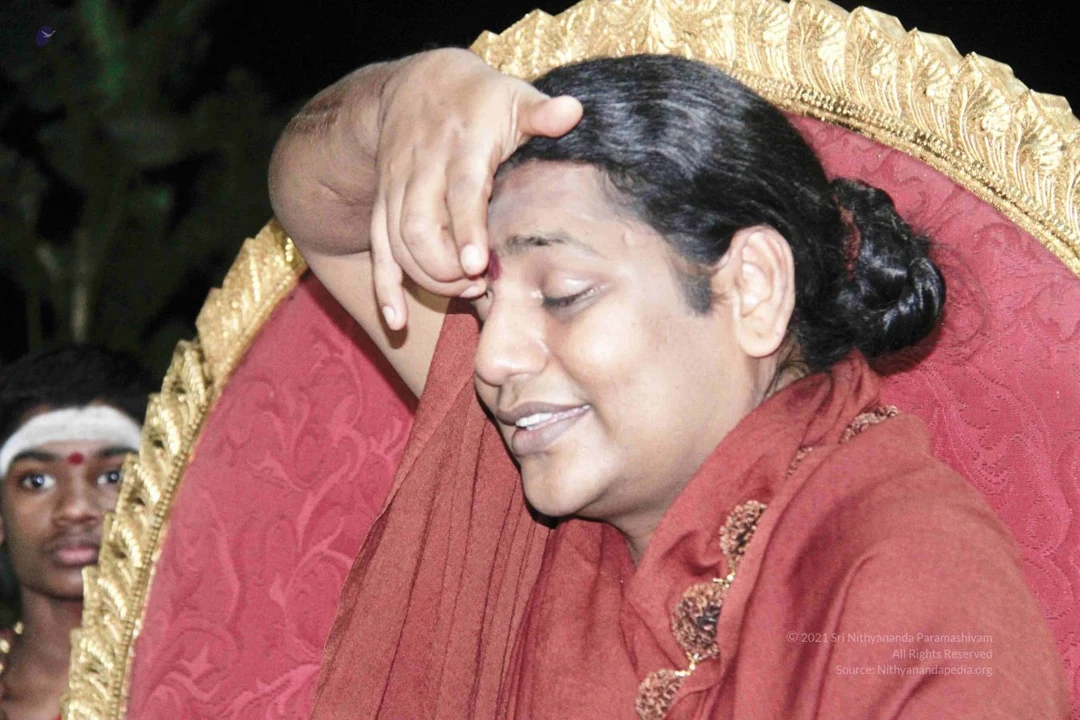
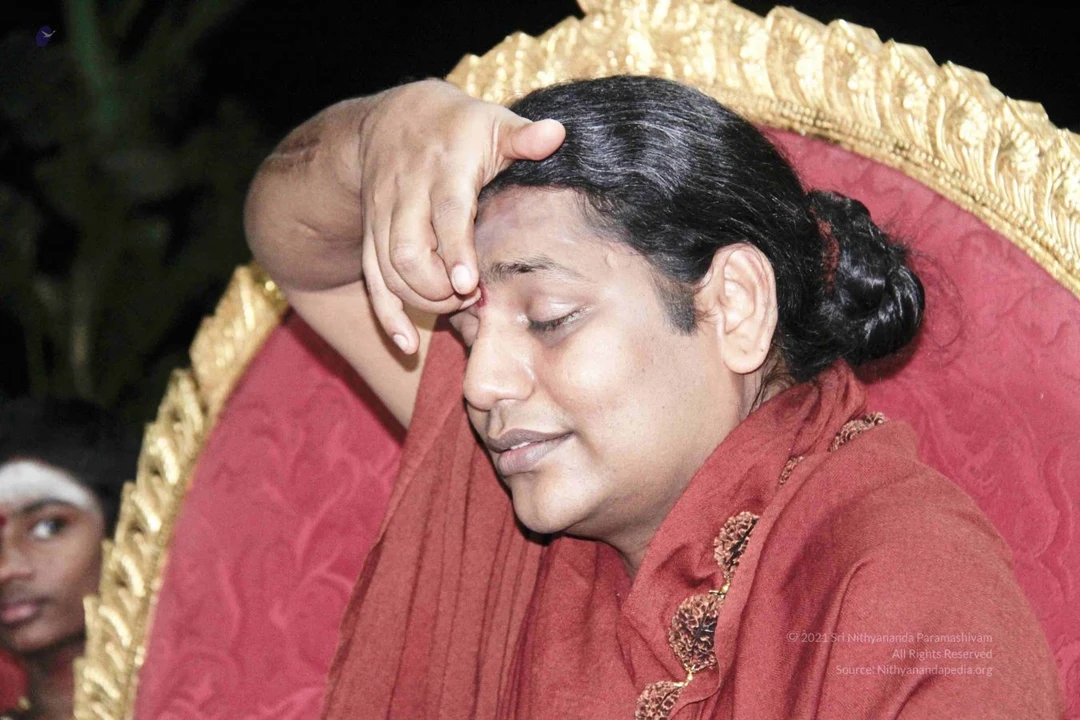
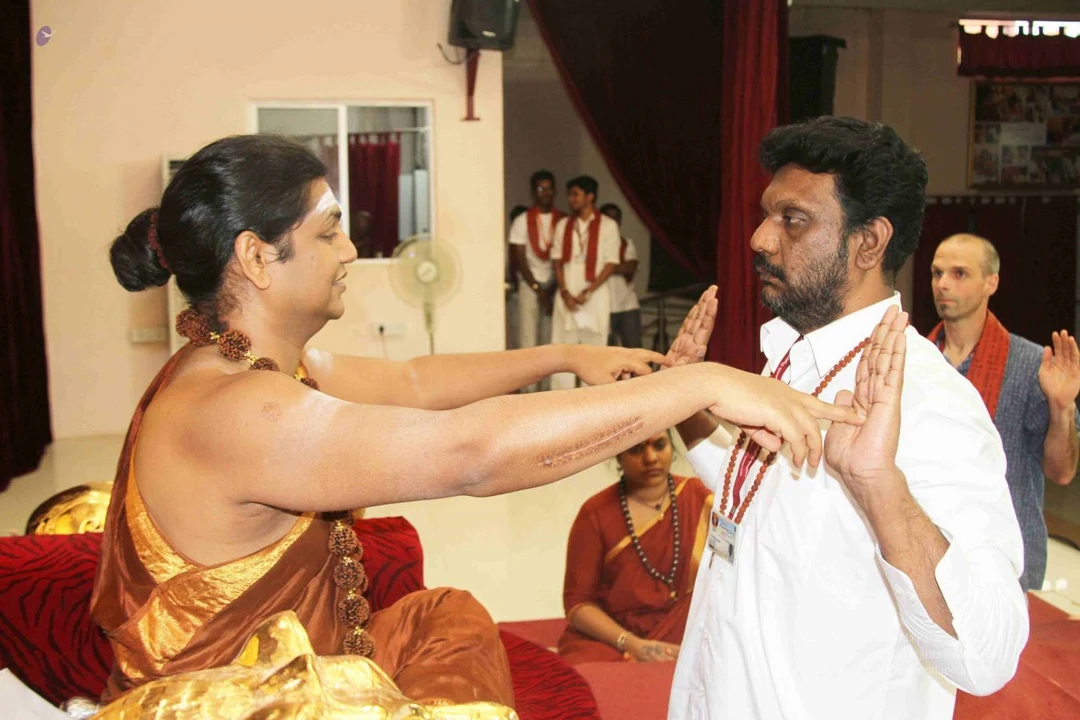
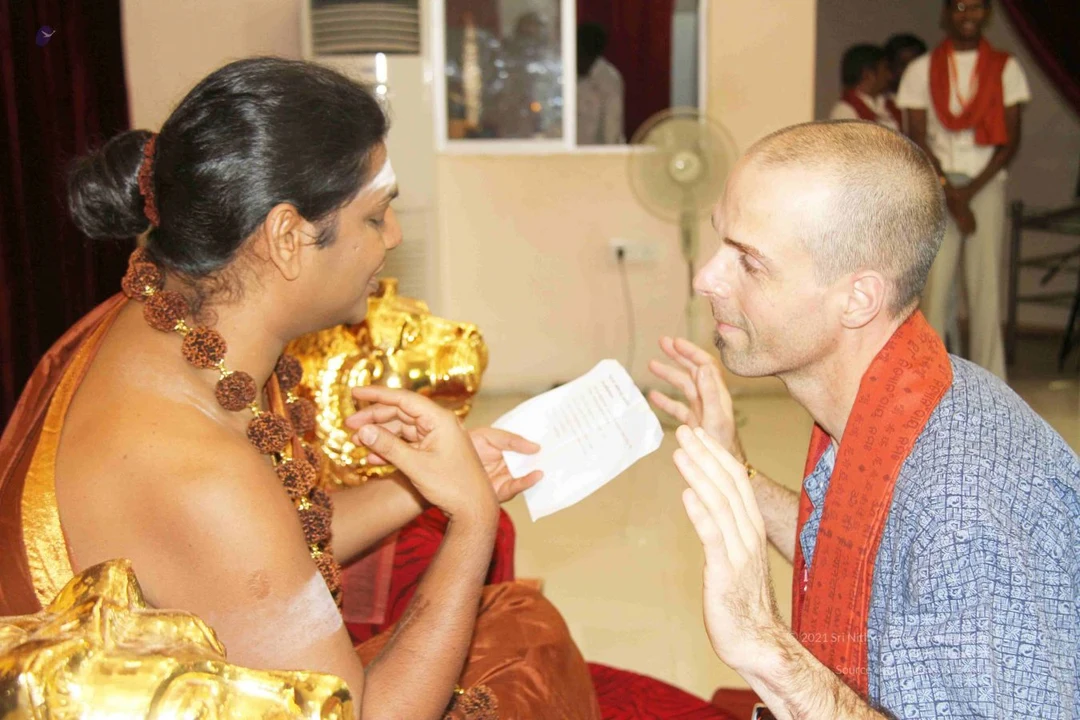
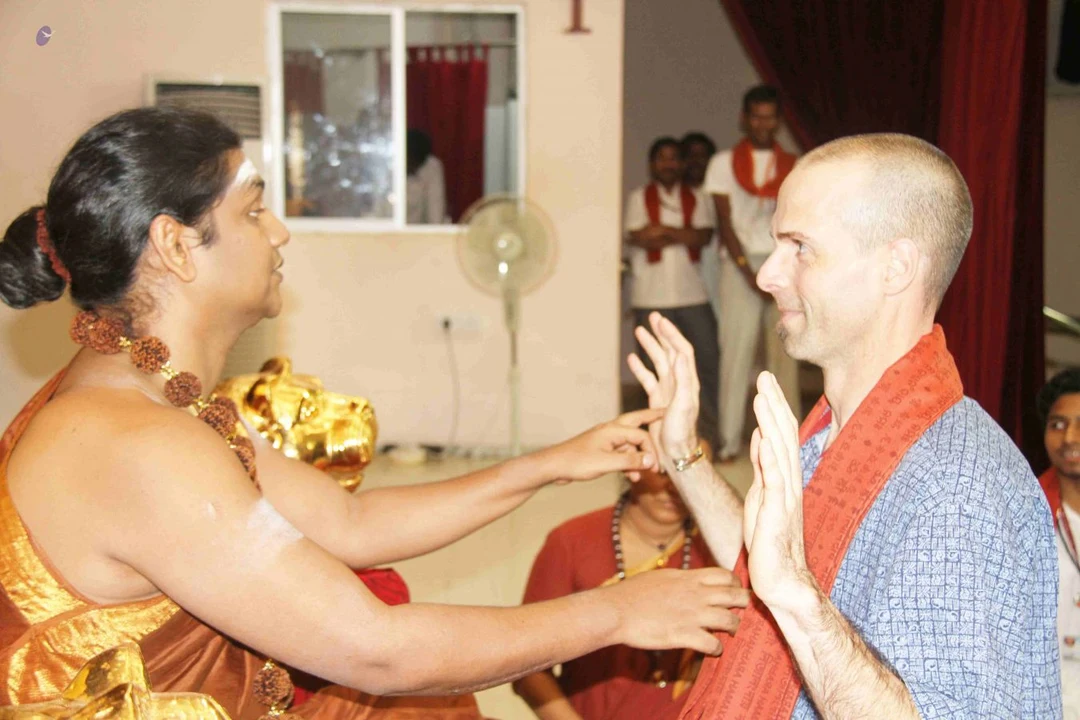
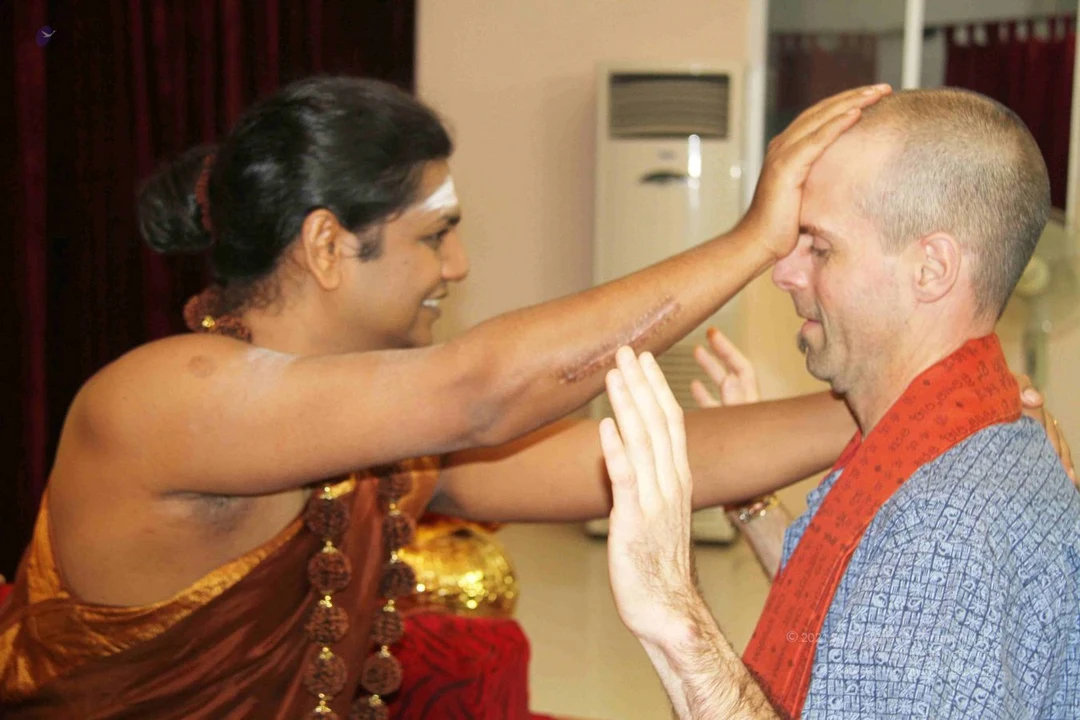
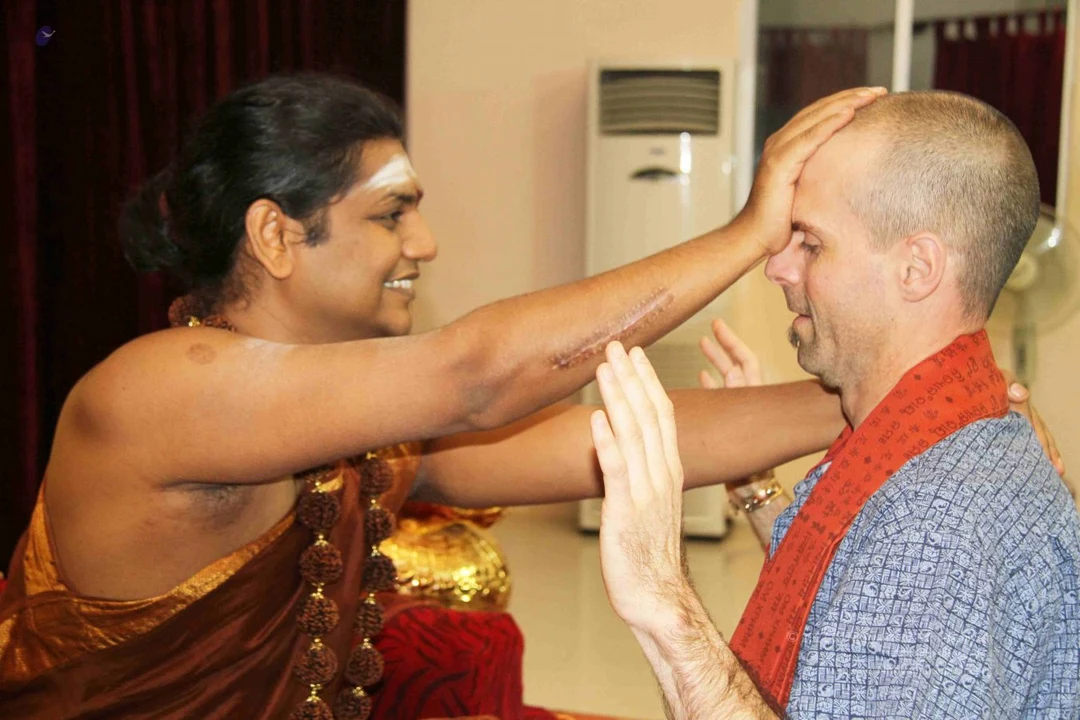
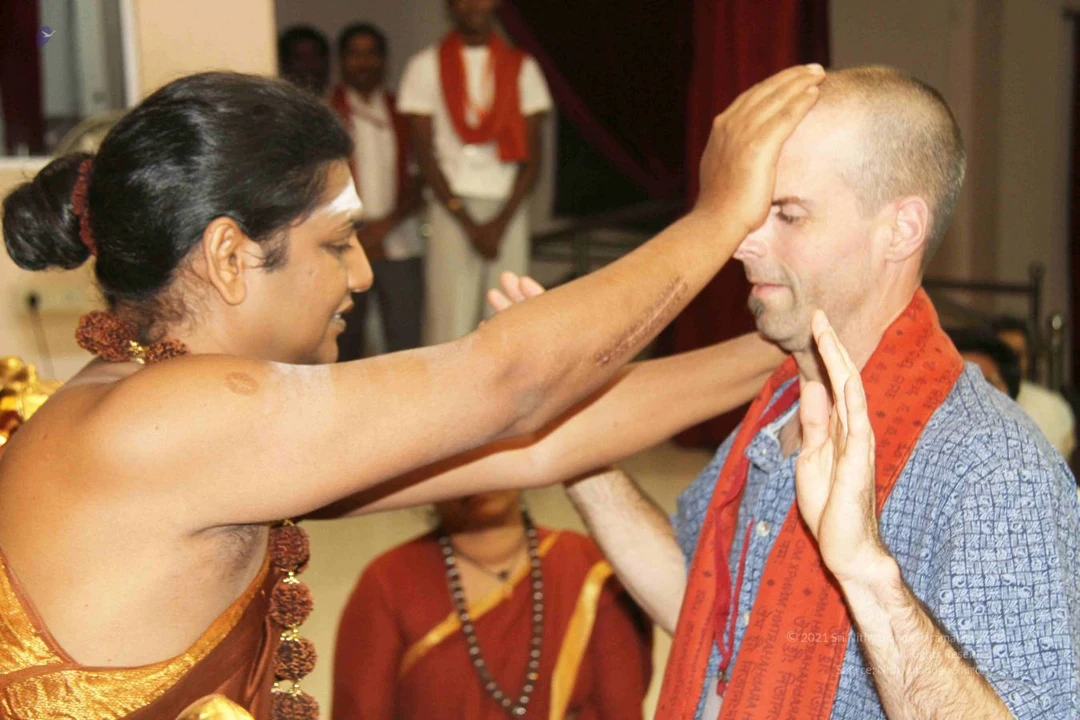
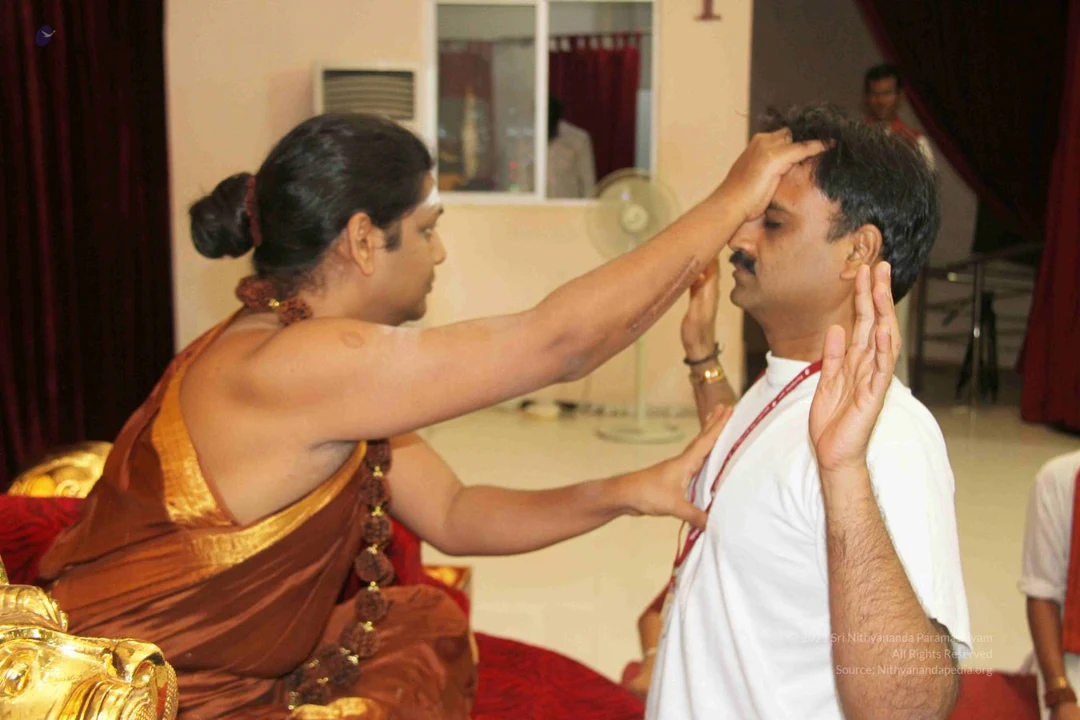
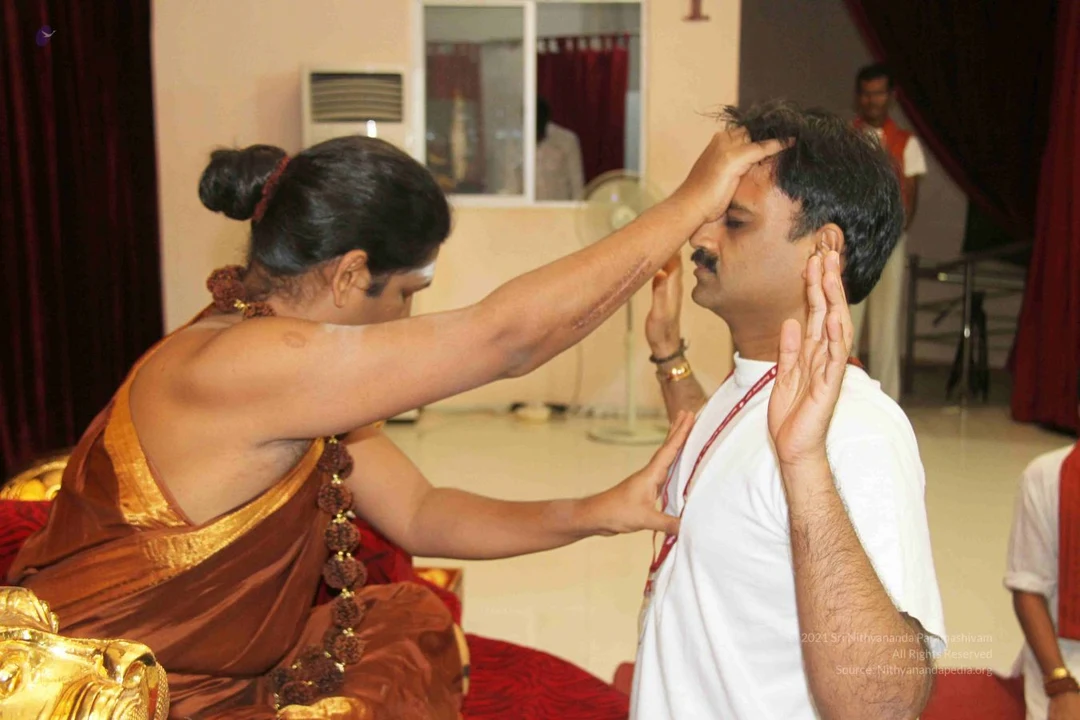
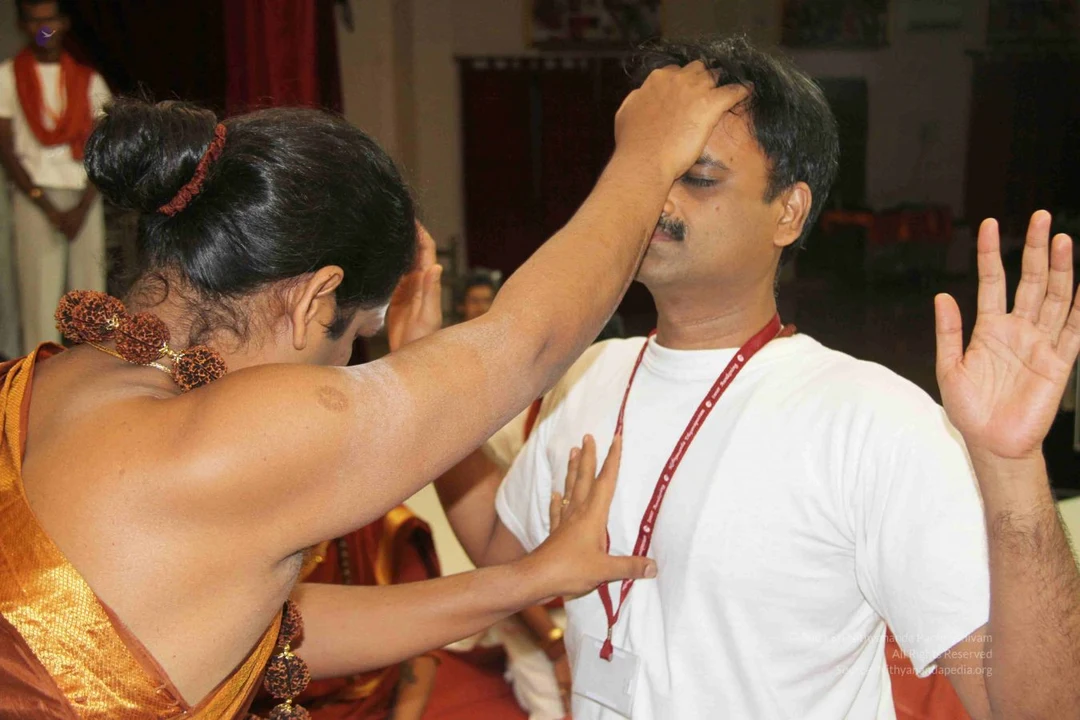
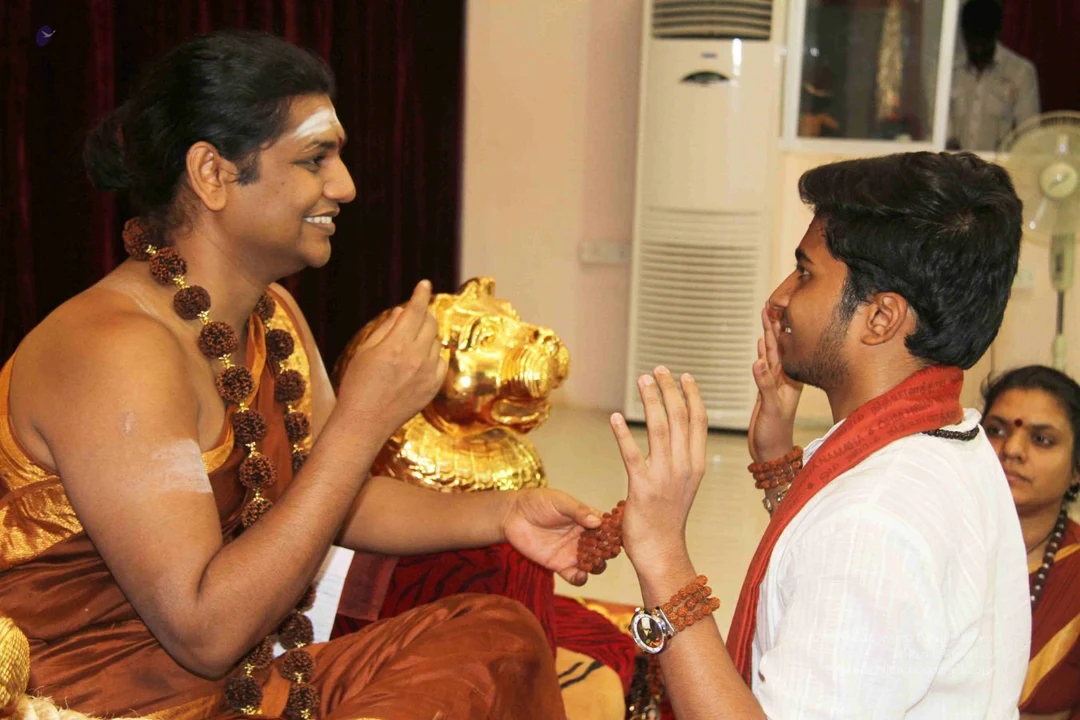
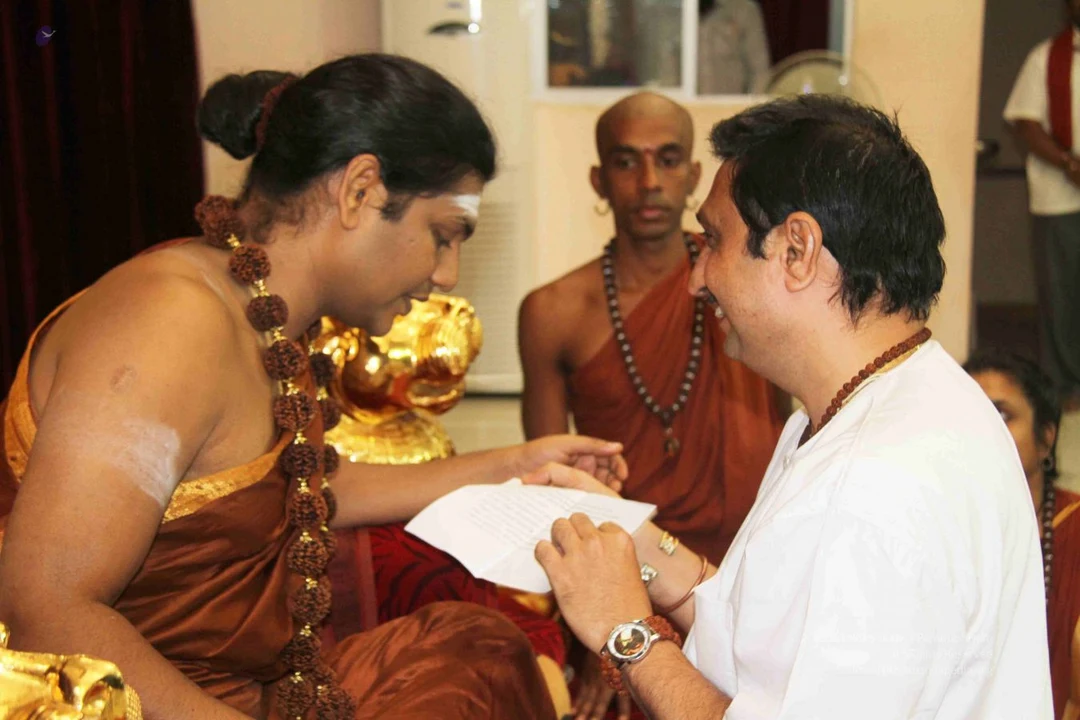
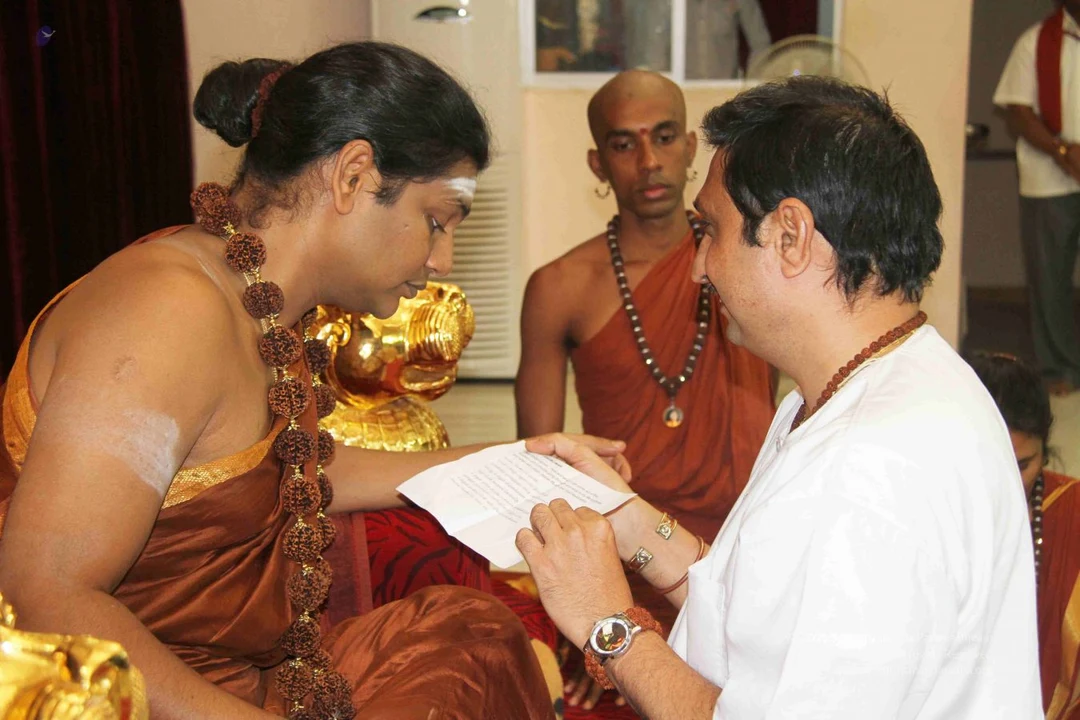
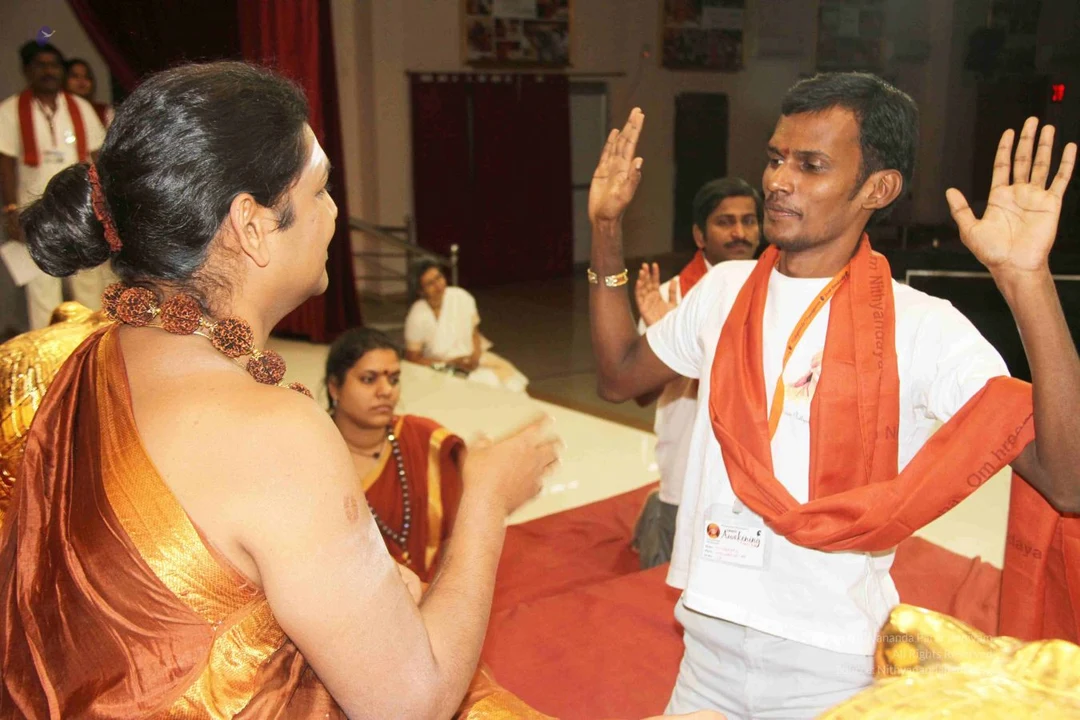
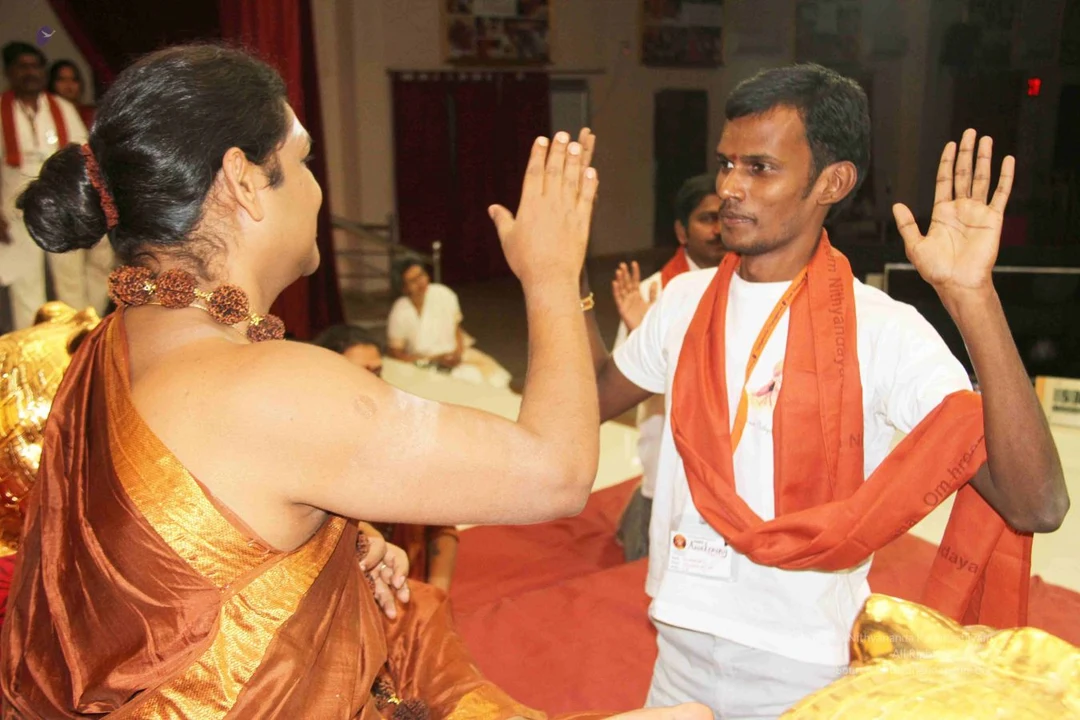
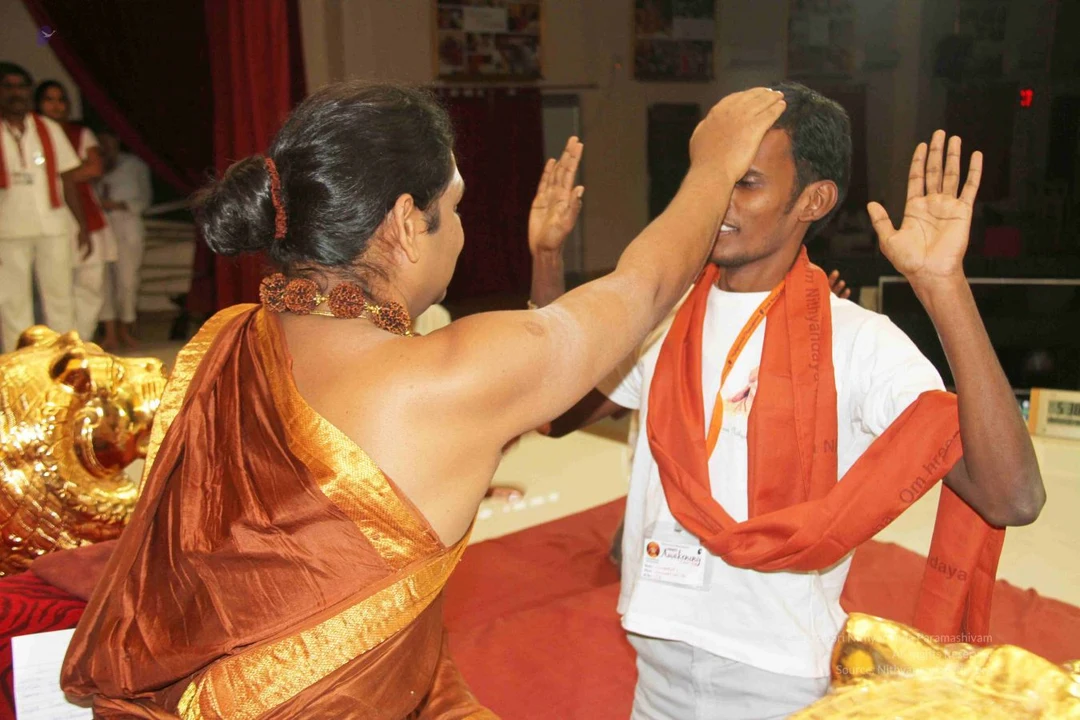
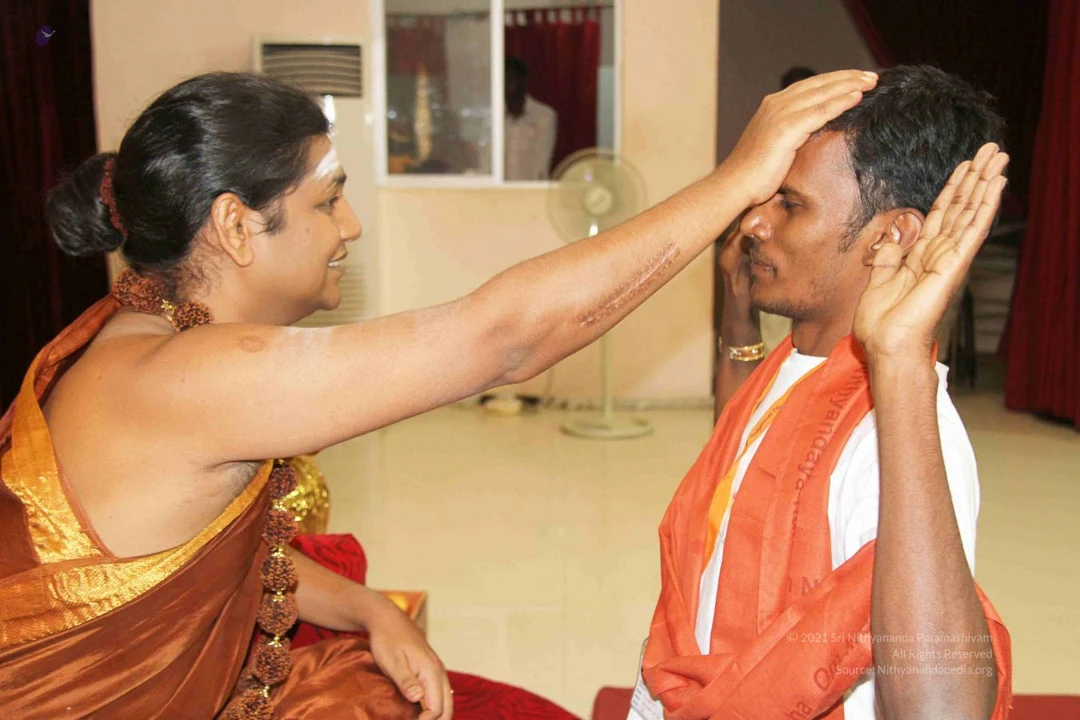
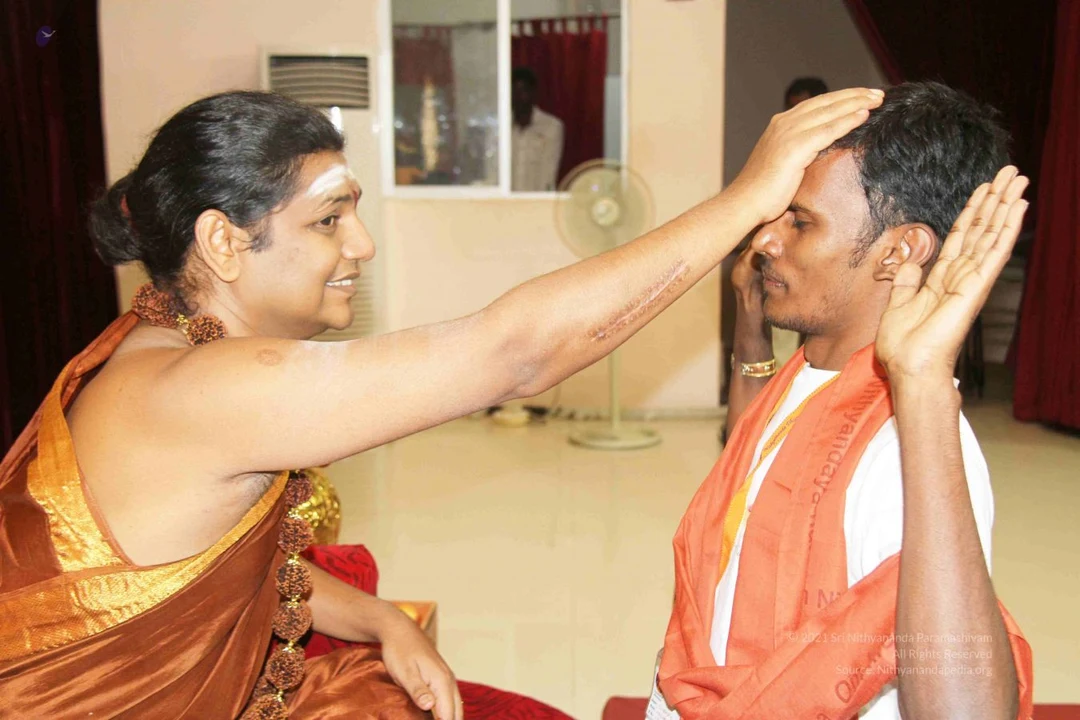
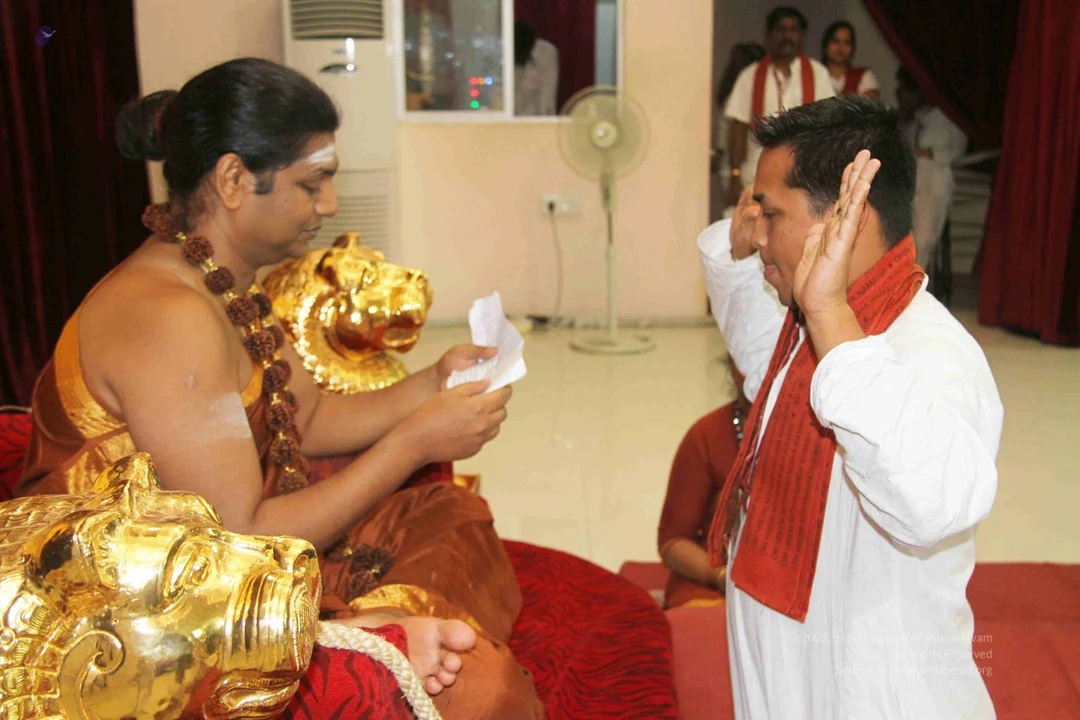
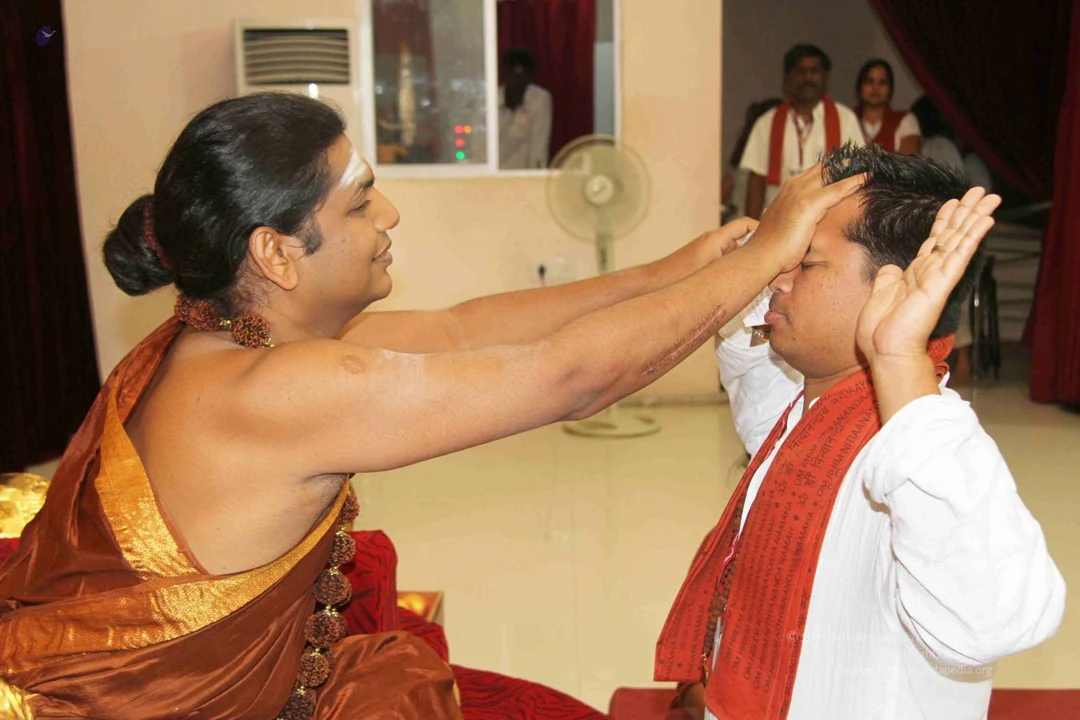
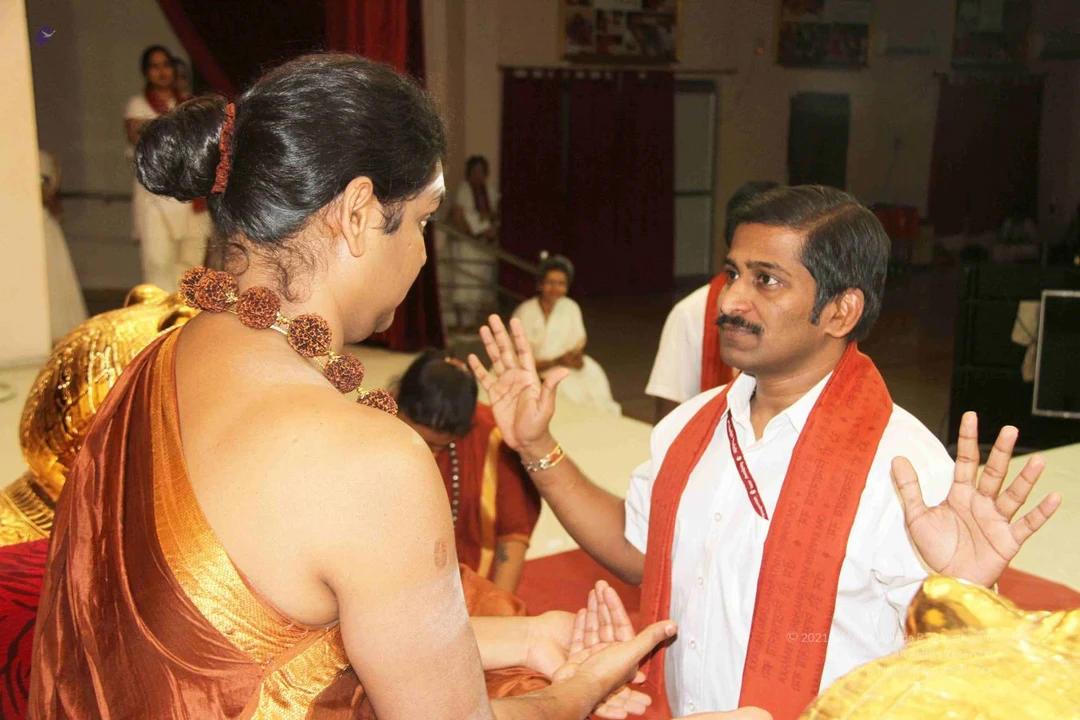
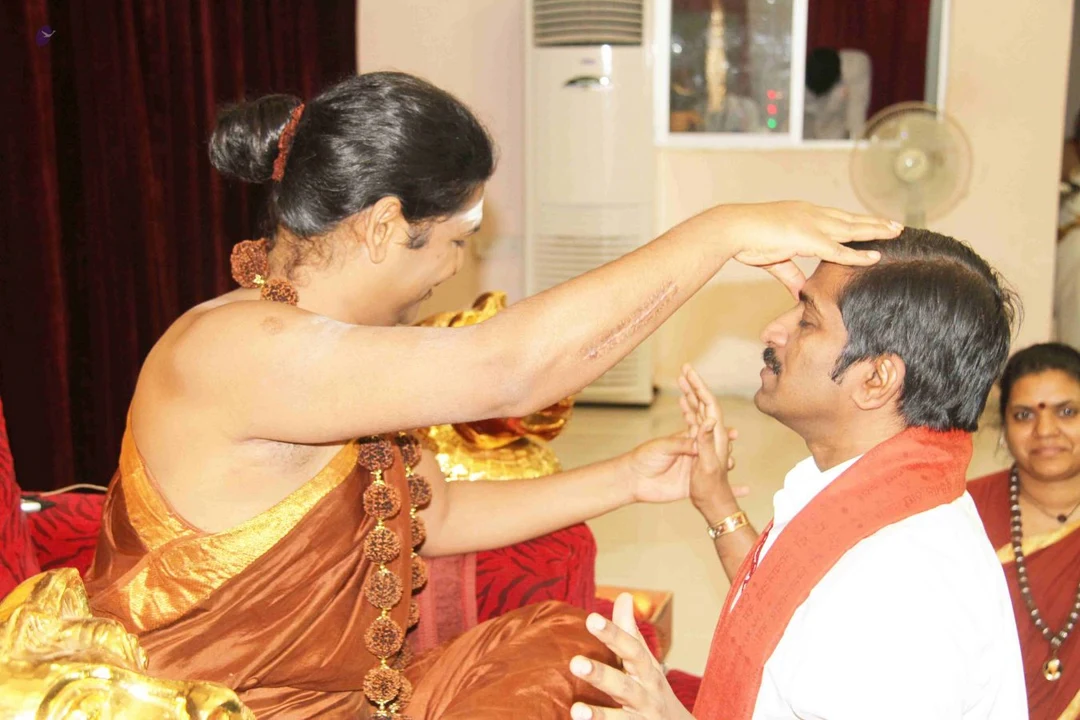
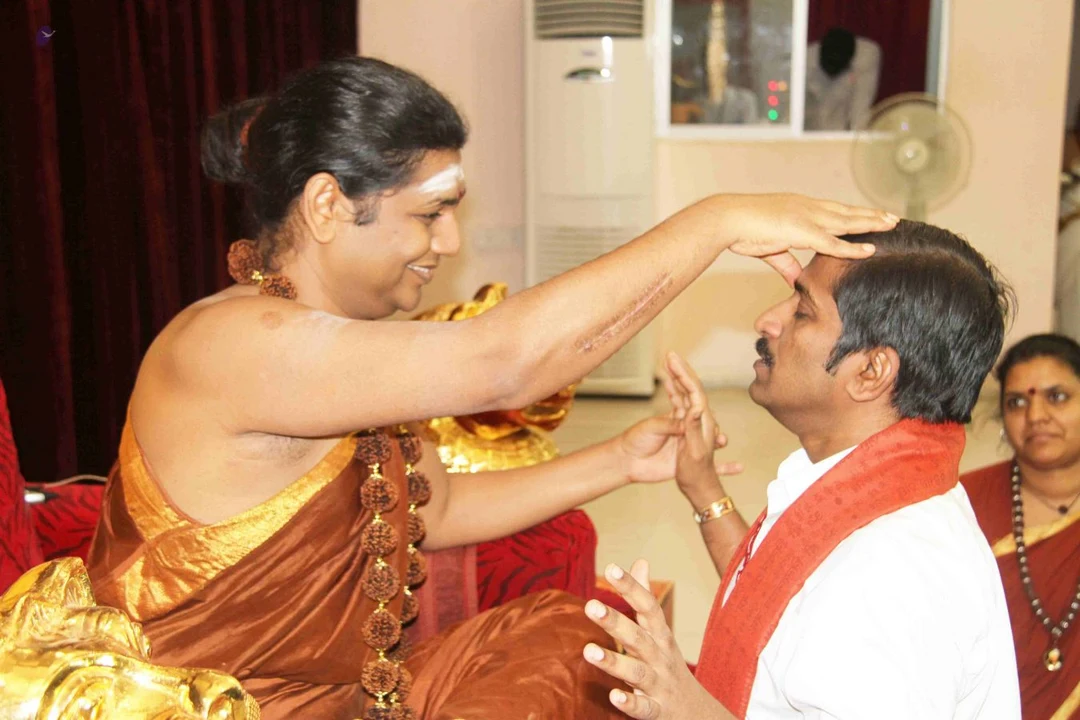
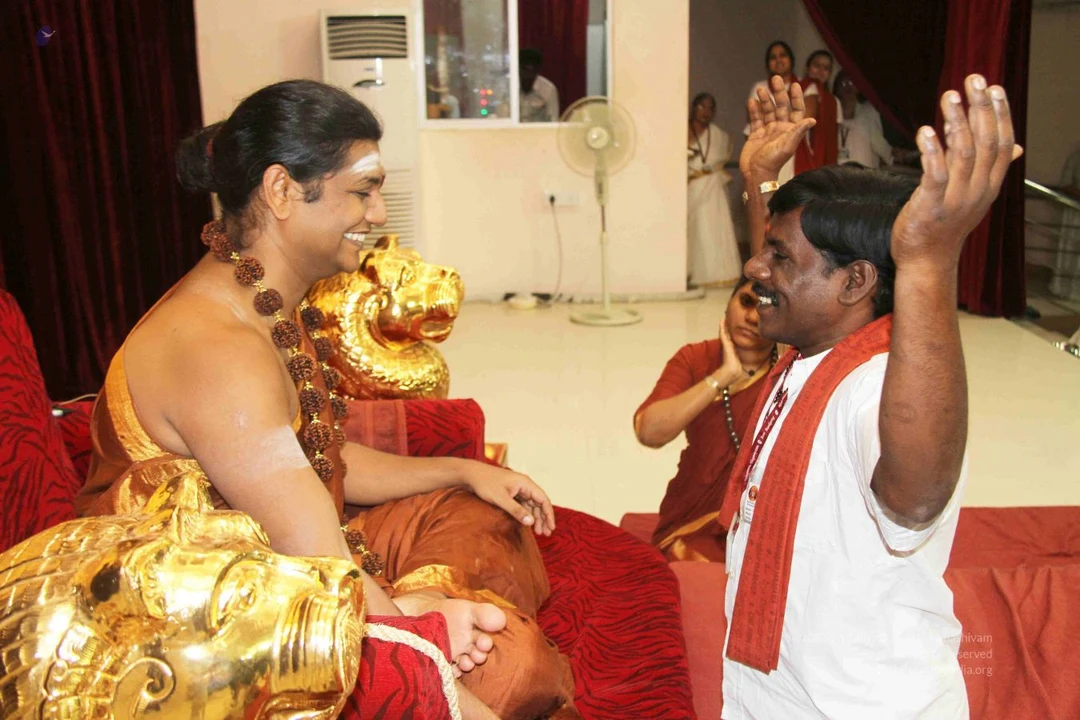
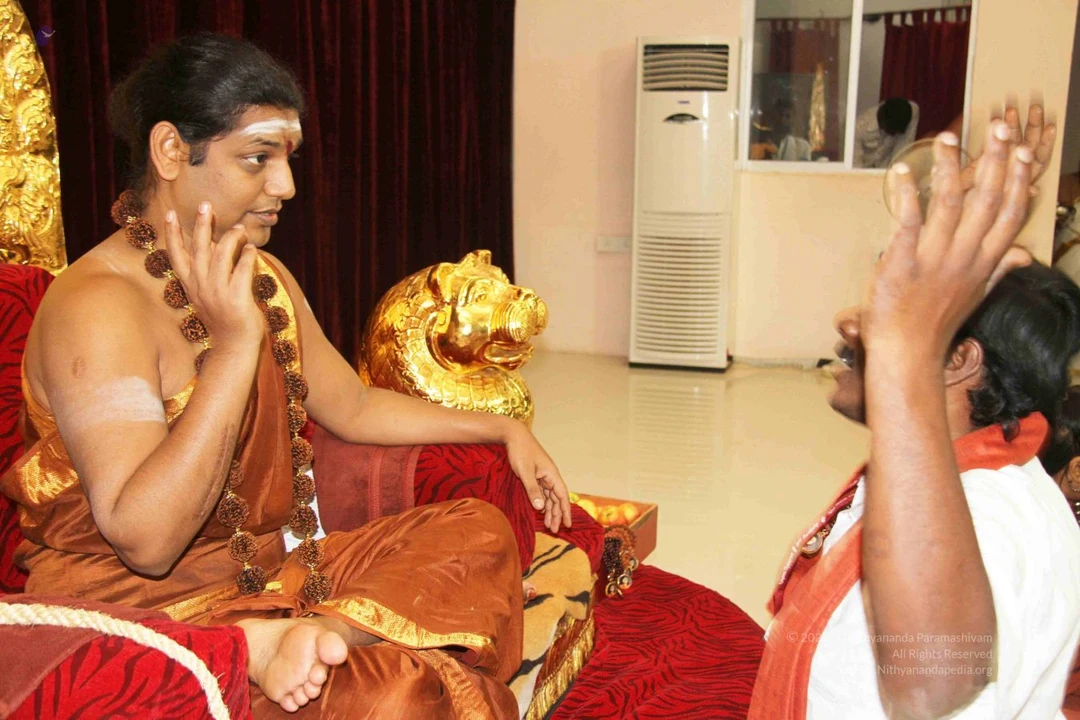
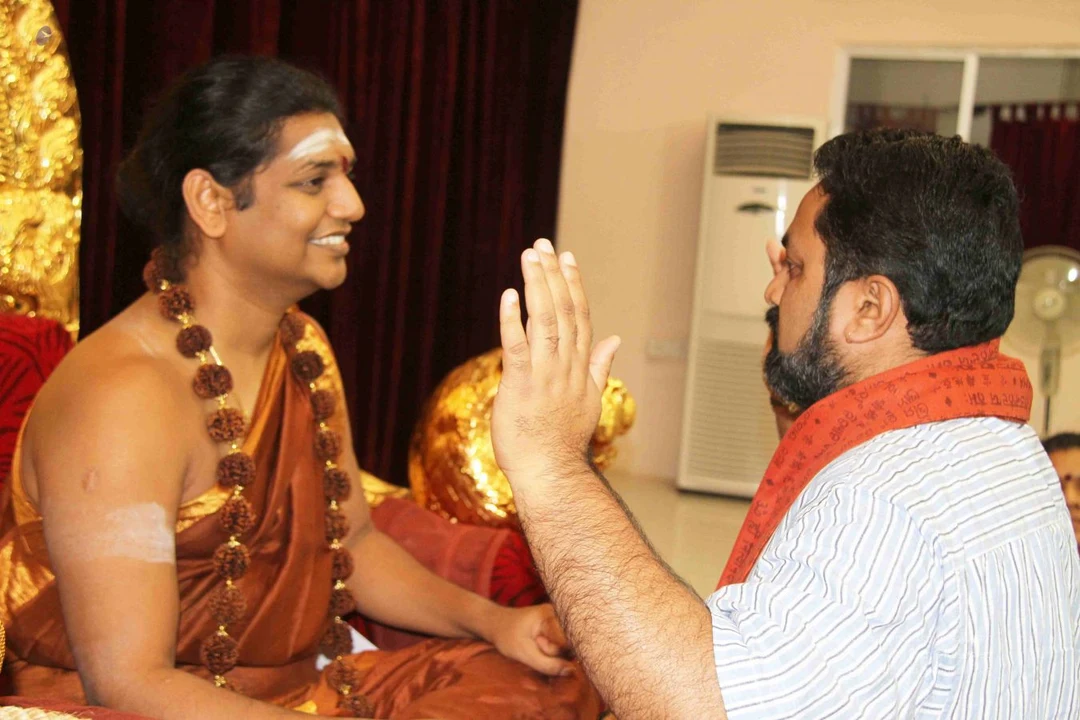
A seated figure in a saffron-orange robe with a gold-bordered shawl, rudraksha mala beads and a gold ceremonial necklace, with hair in a bun and a white forehead mark, extends an arm toward a standing man in a white shirt and red tie wearing a rudraksha mala, who raises both palms in front of him. Behind them a woman in orange sits on red cushions and several men in white shirts with red shawls stand in a hall with red curtains. A hand-holding gesture and a deity-like devotional setting suggest an initiation or blessing; a bald man in a grey top with a red shawl stands at right with his hands raised.A photograph of an indoor satsang or initiation moment. On the left, a seated figure with hair in a bun and a white vertical forehead mark, bare-chested with a gold-bordered orange-red cloth and a long rudraksha mala, holds a folded white paper while speaking. Beside him a golden deity murti or ornate gold object is visible. On the right, a shaven-headed man in a blue patterned shirt and an orange-red shawl kneels with palms raised, facing him. Behind them, two men in white with red shawls stand near a curtain and a wall fan.A photograph of an indoor ritual exchange in a cream-walled room. On the left, a figure with hair in a bun, a white forehead mark, rudraksha mala necklaces and a gold-and-orange garment extends his hands toward a shaved-headed man on the right, who wears a blue patterned kurta and a red-orange shawl and holds his palms up in namaste. A golden kalasha-like vessel sits behind them. In the background, several men in white shirts with red shawls stand watching, and a woman in red sits near the center. A standing fan and a window with red curtains are visible. The left figure is described by appearance cues as a person, but identity is uncertain.A bare-shouldered man in a saffron-orange dhoti-style garment with a rudraksha mala and a white vertical tilak on his forehead places his right palm on the forehead of a shaved-headed Western man with his eyes closed. The receiving man wears a blue patterned kurta and a red shawl with printed text. A white cylindrical air conditioner stands in the background beside dark red curtains, and a gold vessel is partly visible at lower centre. The scene suggests a blessing or initiation moment. a person: the saffron-clad man with the rudraksha mala and tilak is the candidate.A photograph of a saffron-robed man with swept-back dark hair, a white tilak on his forehead, and a multi-strand rudraksha mala placing his right hand on the forehead of a close-cropped, bearded man in a blue patterned shirt draped with a red scarf printed with script. The robed figure, bare-shouldered and smiling, leans in while the recipient, eyes lowered, holds his palm up in front of him. A golden vessel and red cloth sit behind them, with a wall-mounted air conditioner in the background. The robed man has distinctive adornments and clothing, consistent with a person performing a blessing on a devotee.A photo of a diksha-style blessing in an indoor hall. A bare-shouldered figure in a saffron-and-gold garment and rudraksha mala, with a white tilak on the forehead and hair in a bun, presses one palm to the forehead of a shaved-headed, bearded man in a blue patterned shirt and red-and-orange printed shawl. Behind them, a standing man in white with a red shawl and another in a red robe watch. Hand-placement touch emphasises transmission. The a person candidate has only partial cues (rudraksha, saffron-gold garment) and the face and identity are uncertain, so the role is given as the giver of blessing.
Nithya-Yoga

68 photosSource gallery
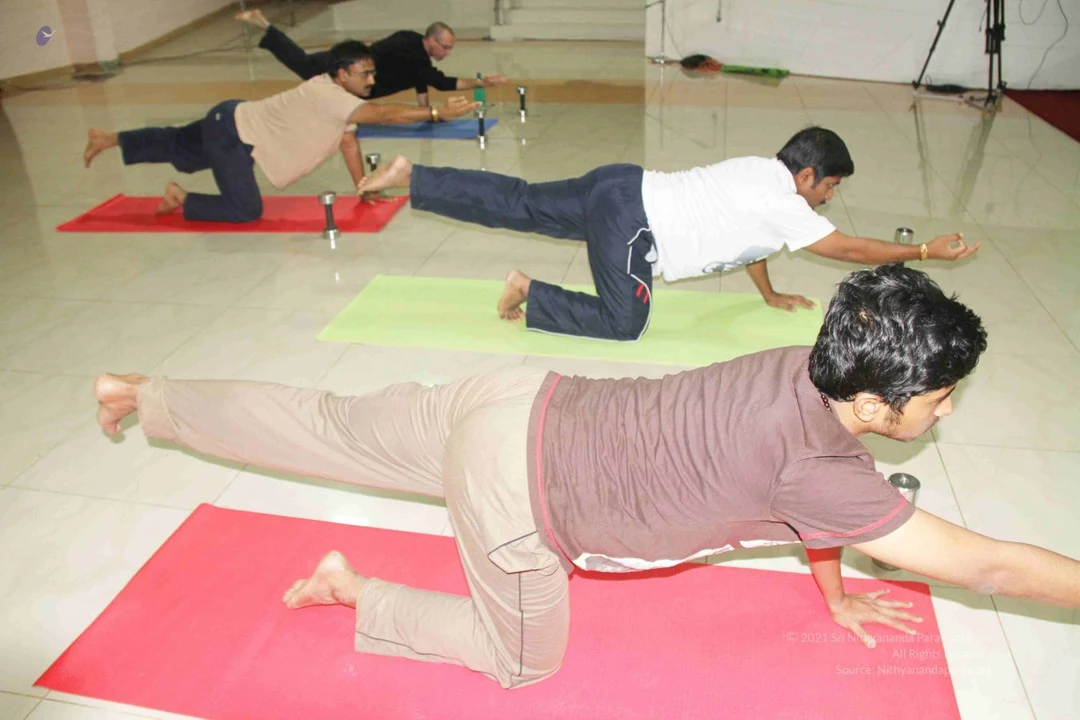
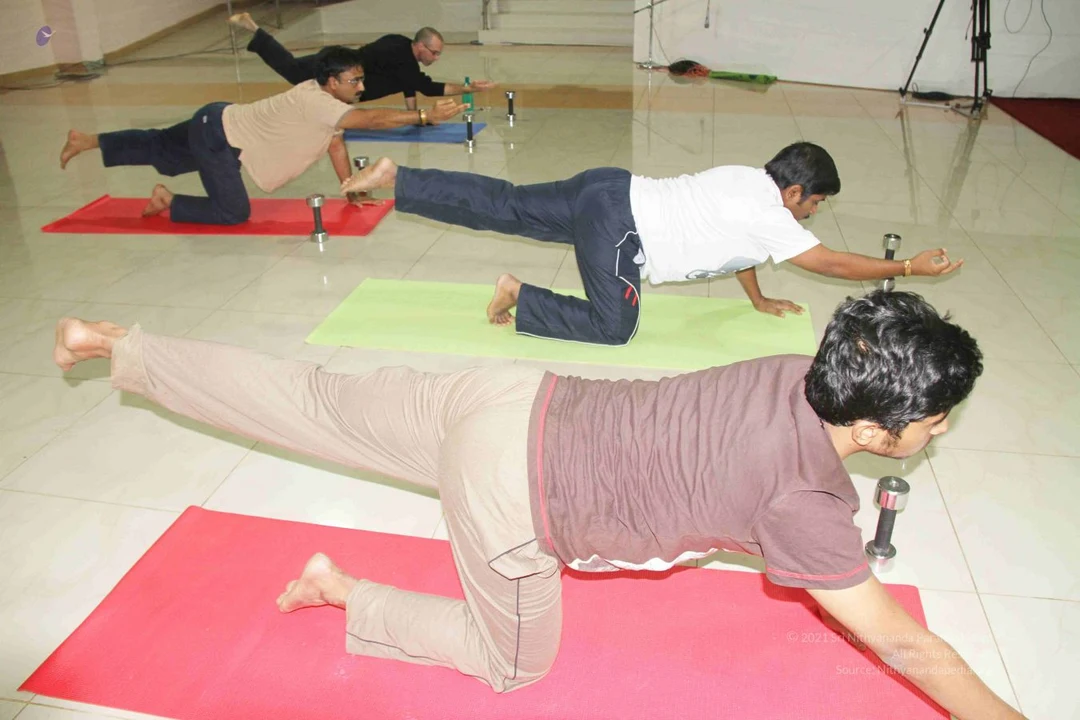
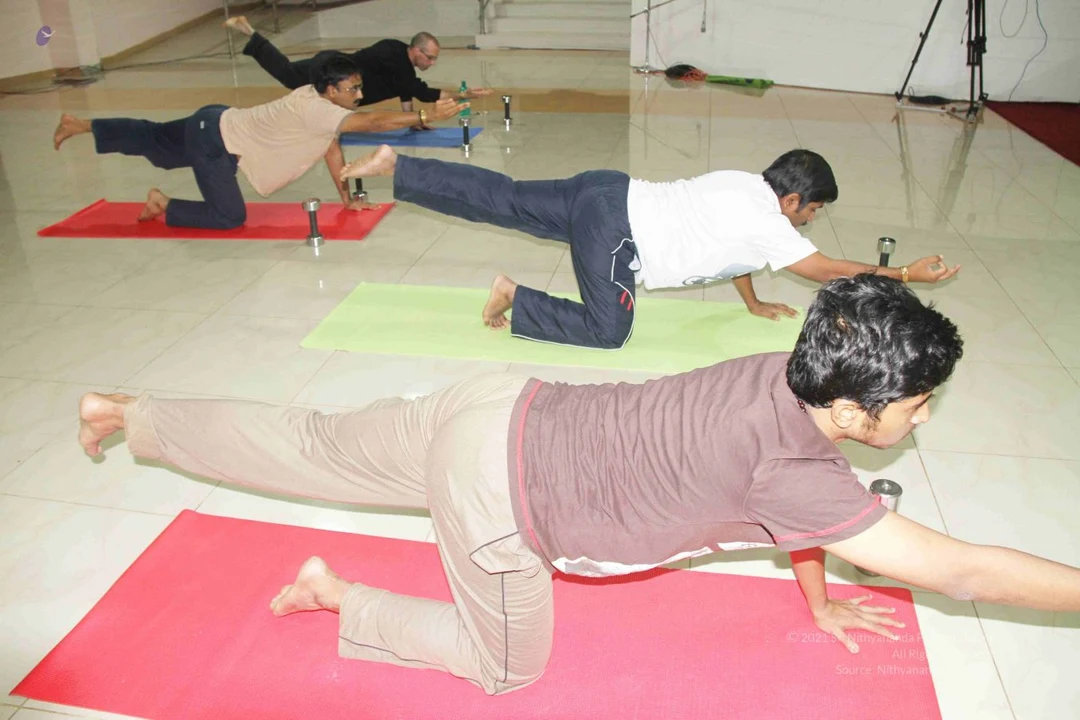
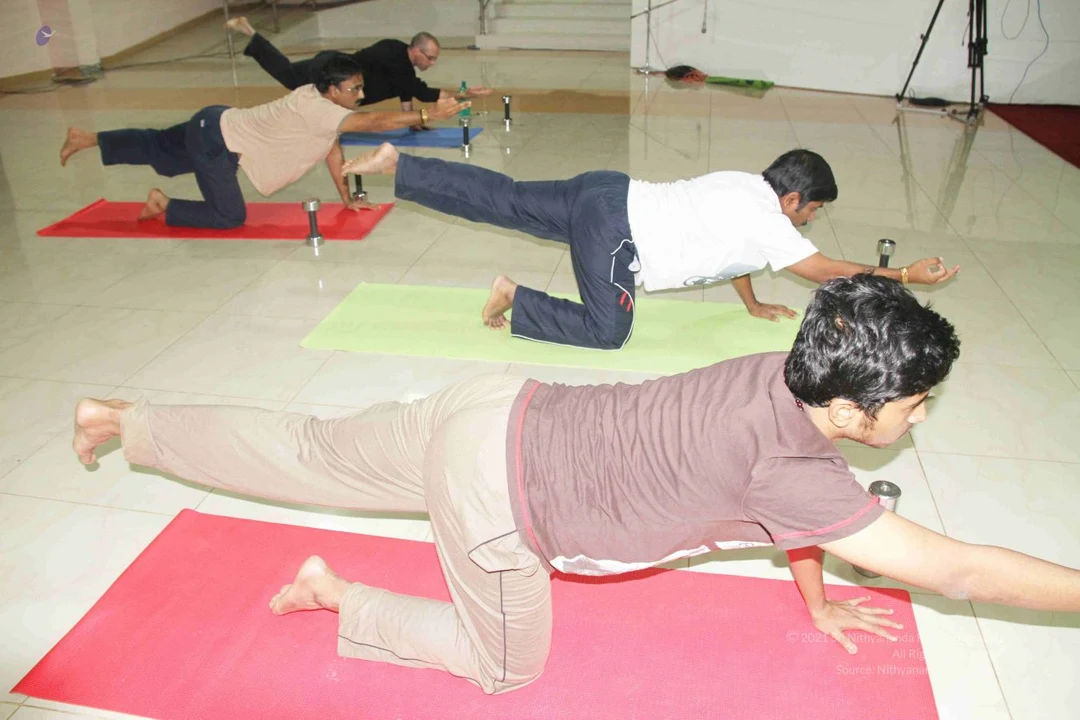
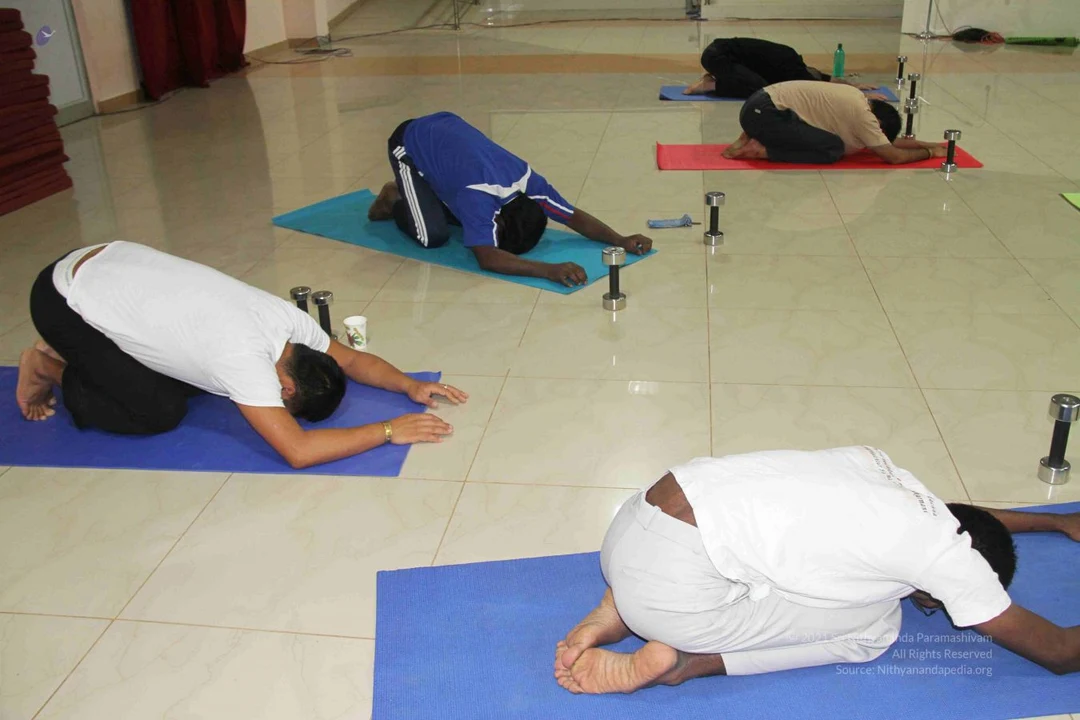
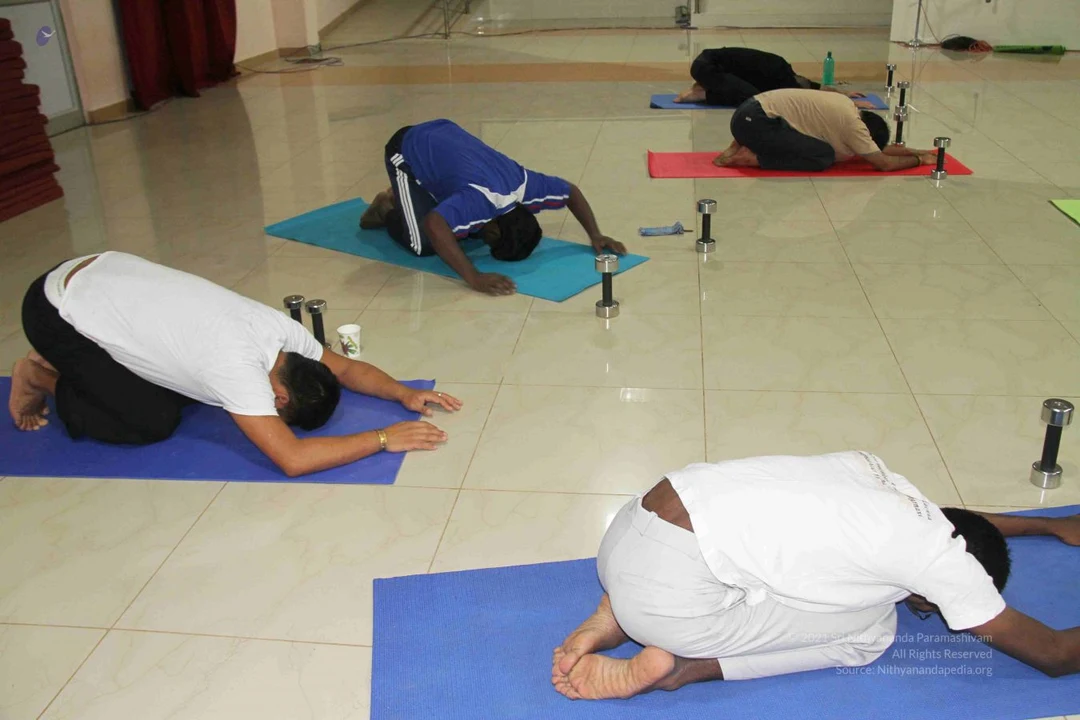
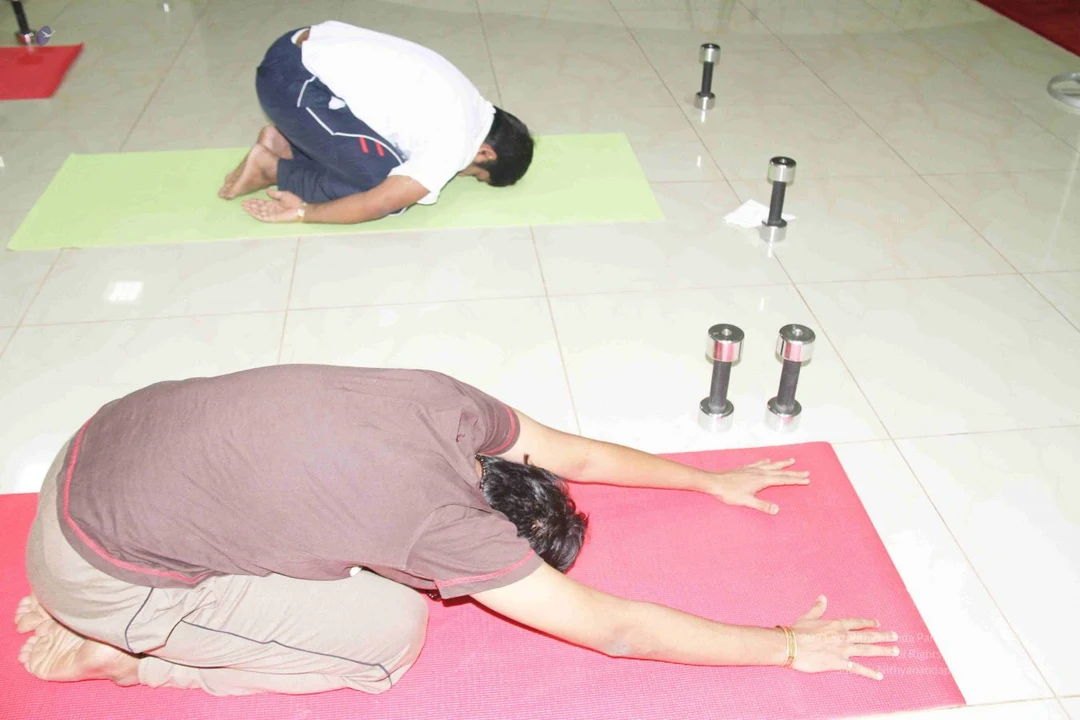
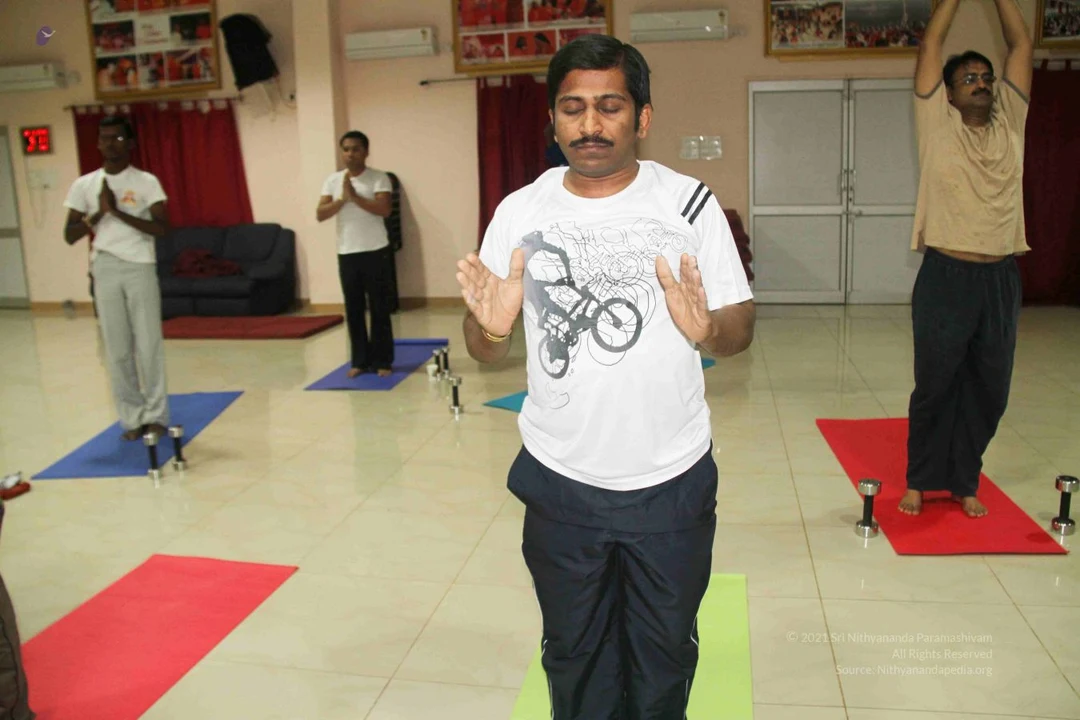
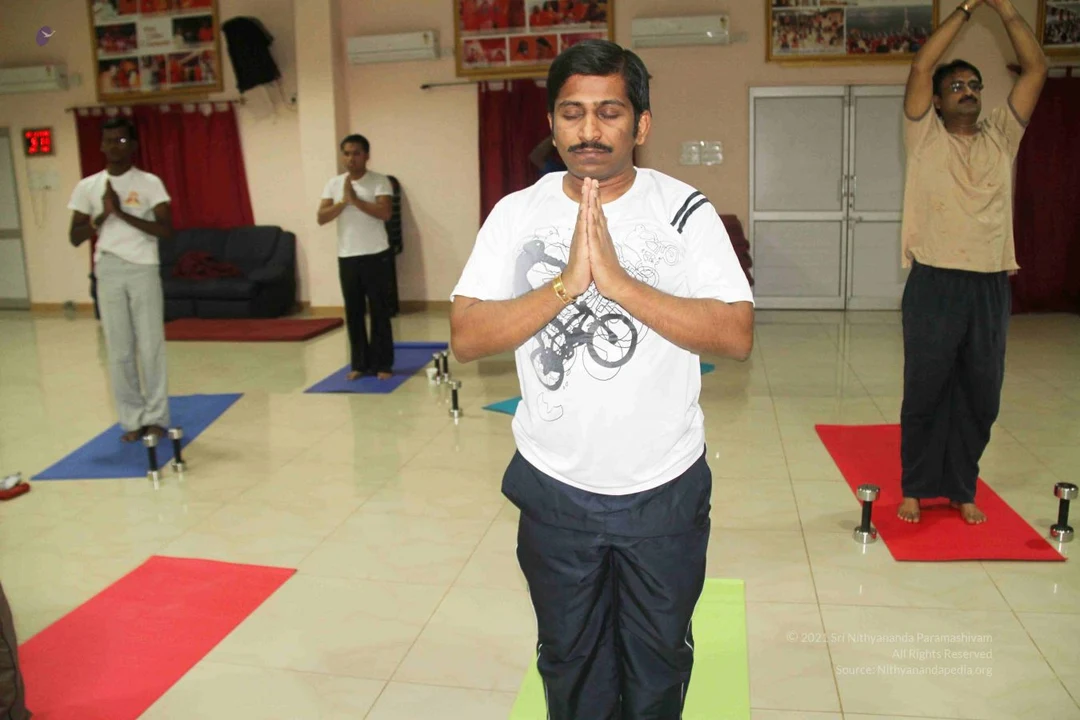
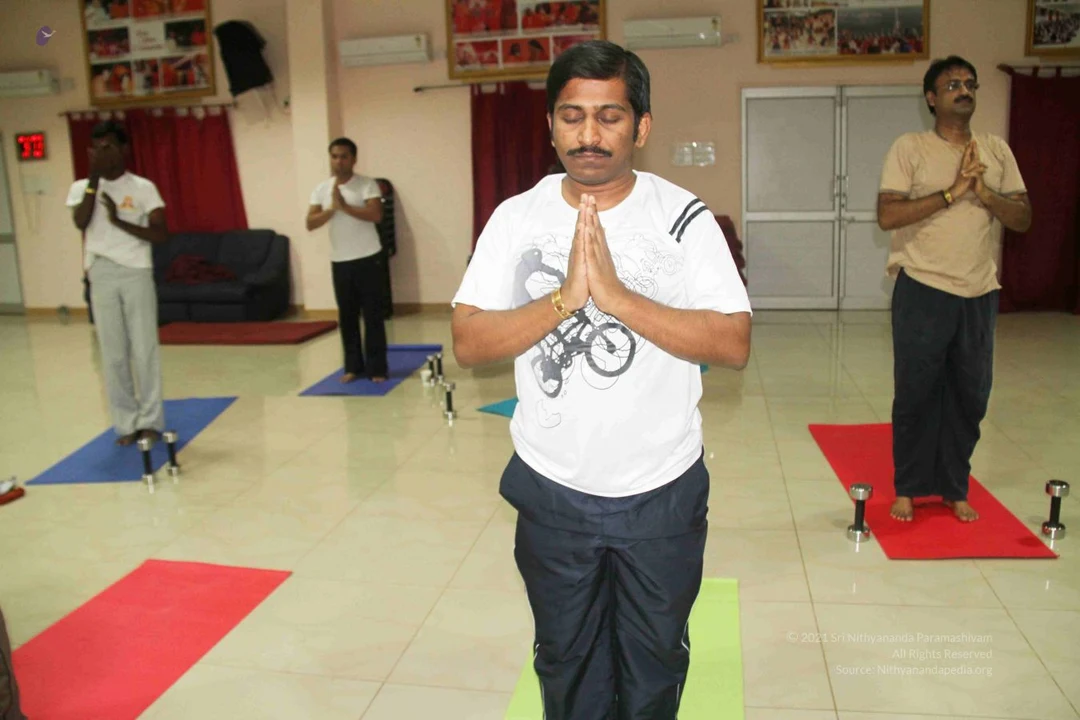
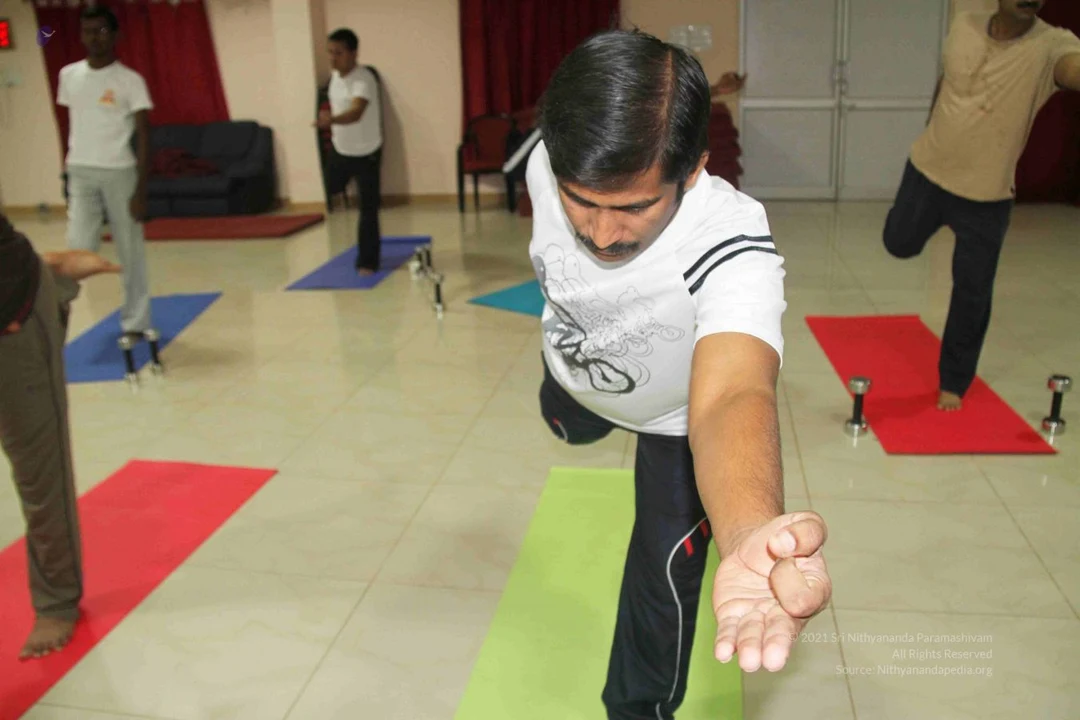
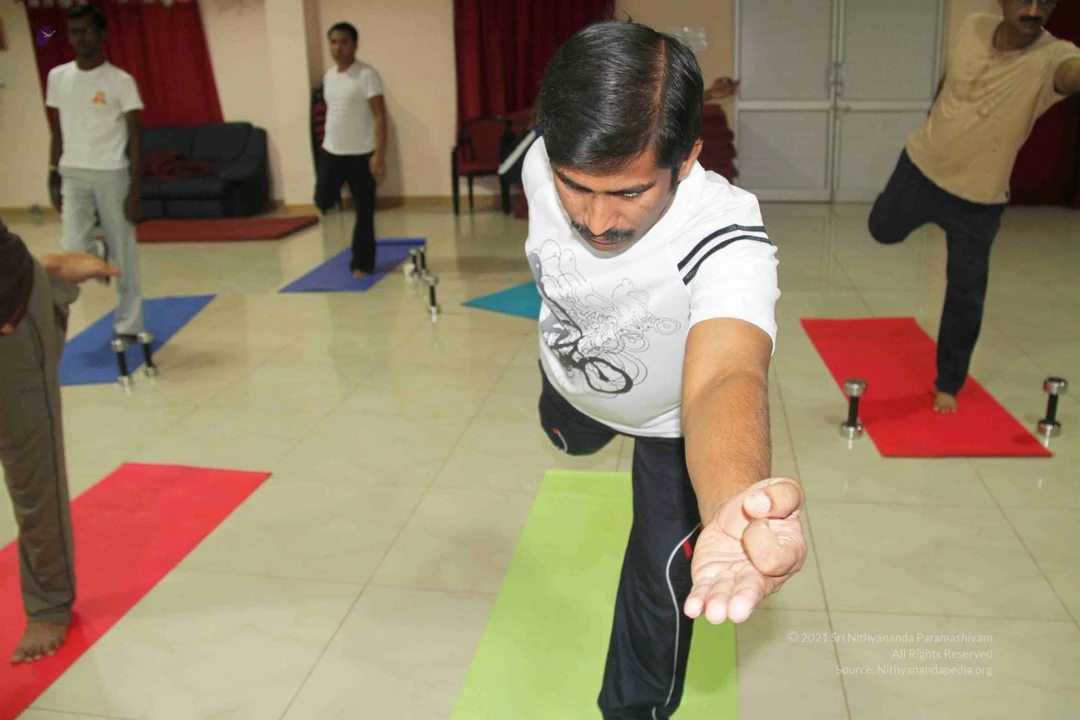
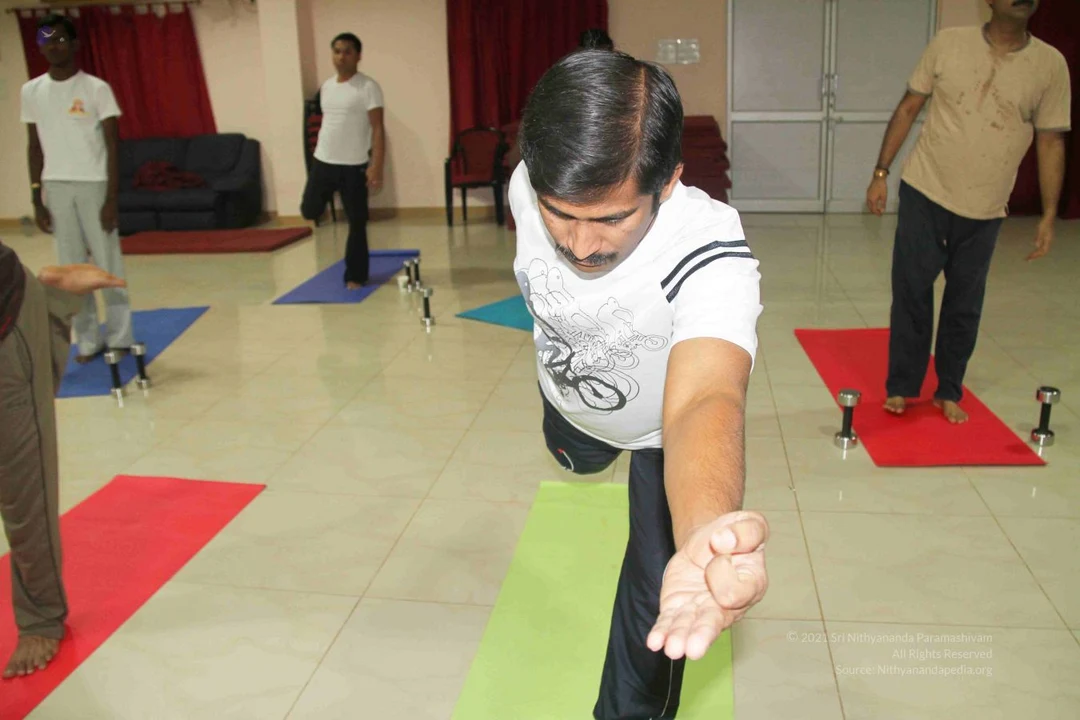
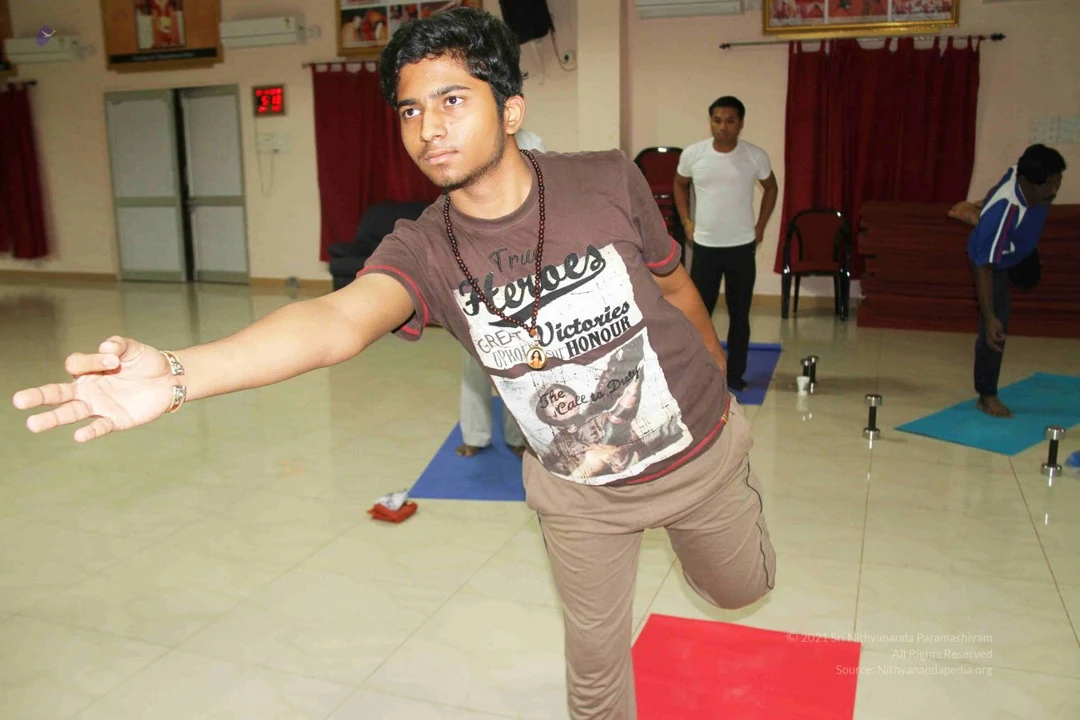
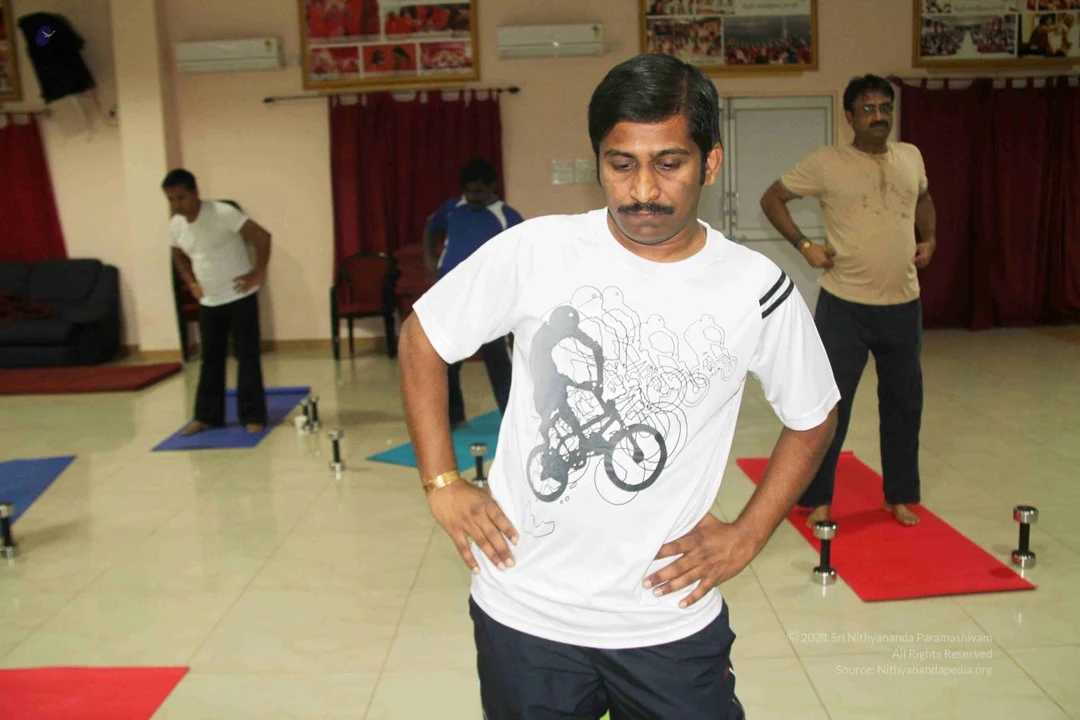
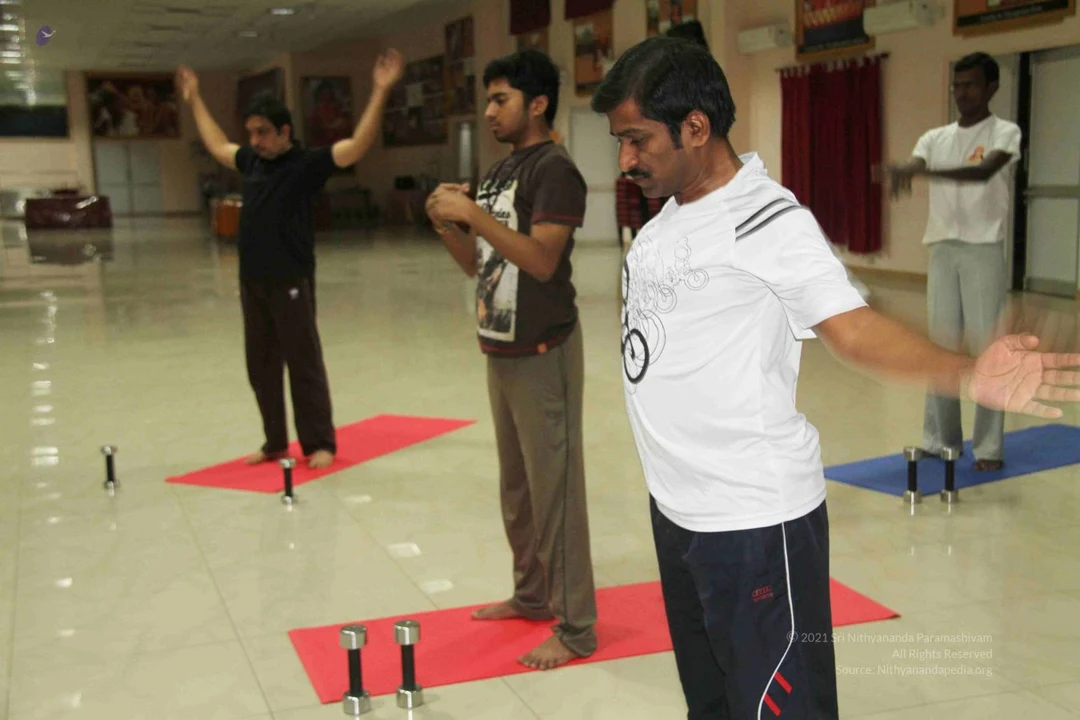
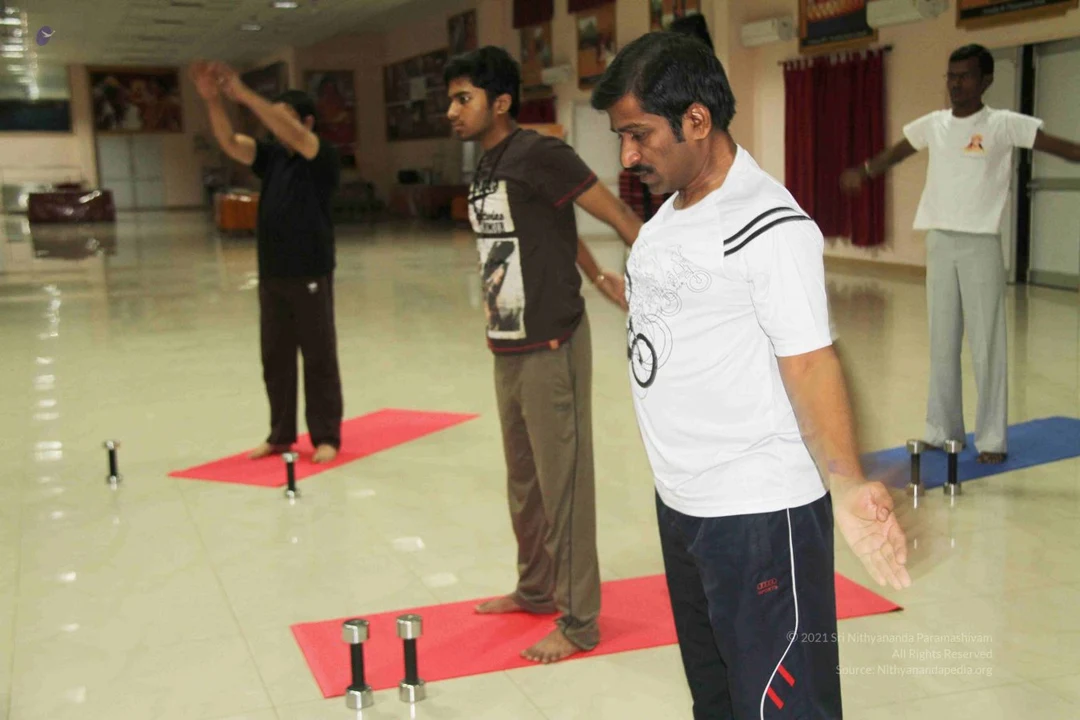
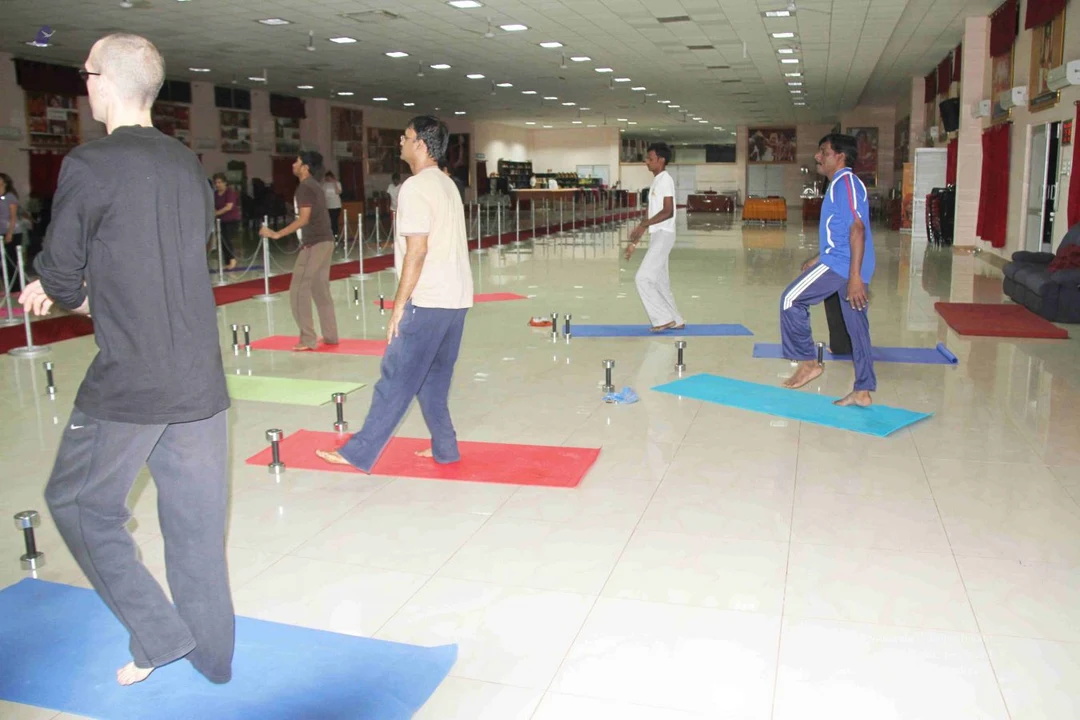
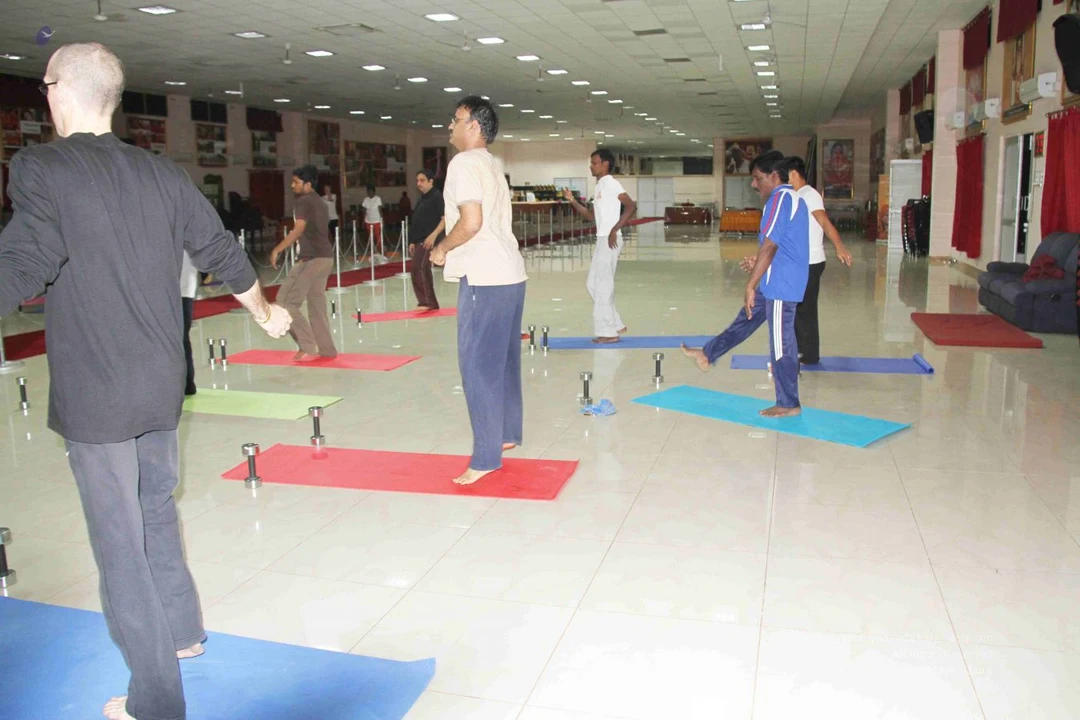
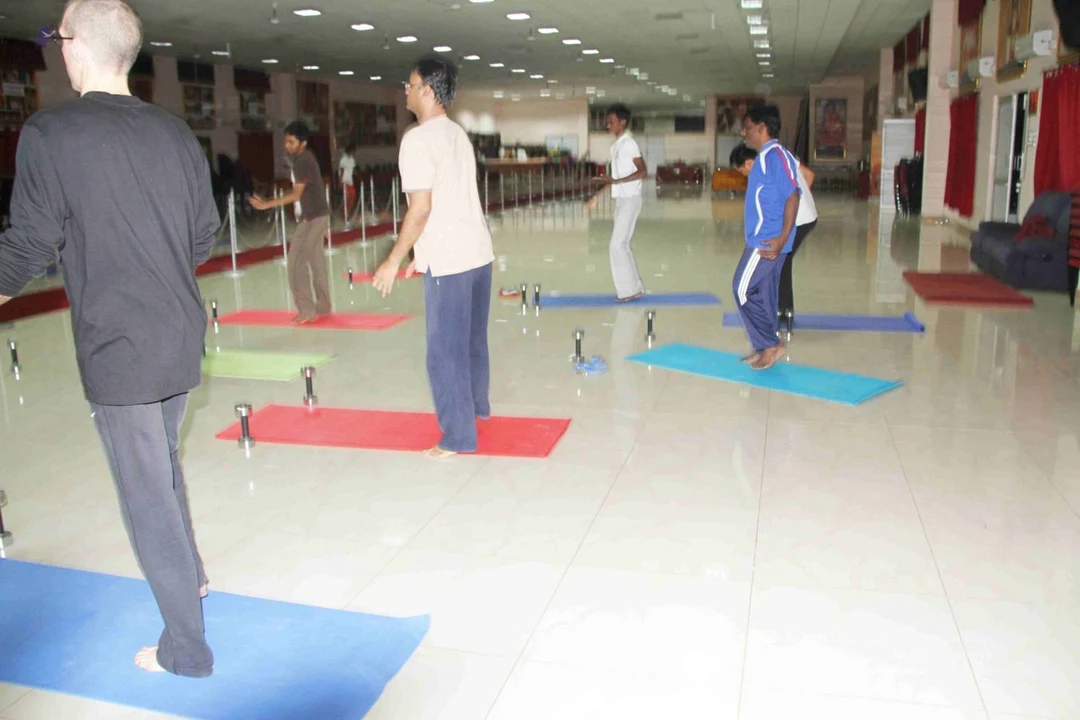
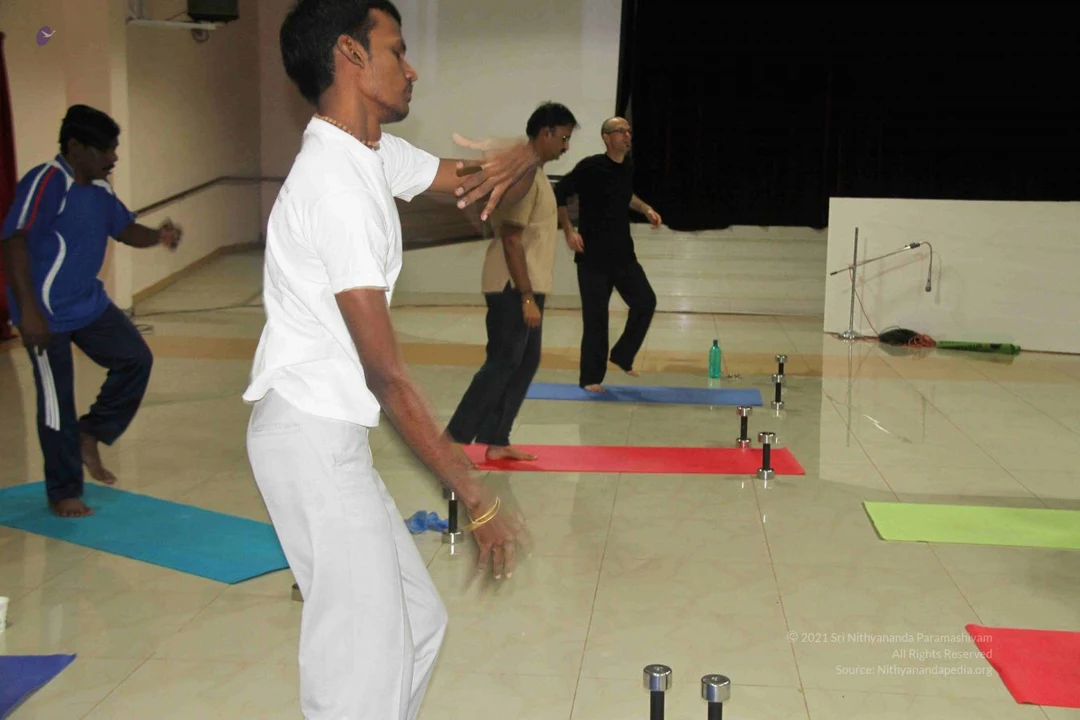
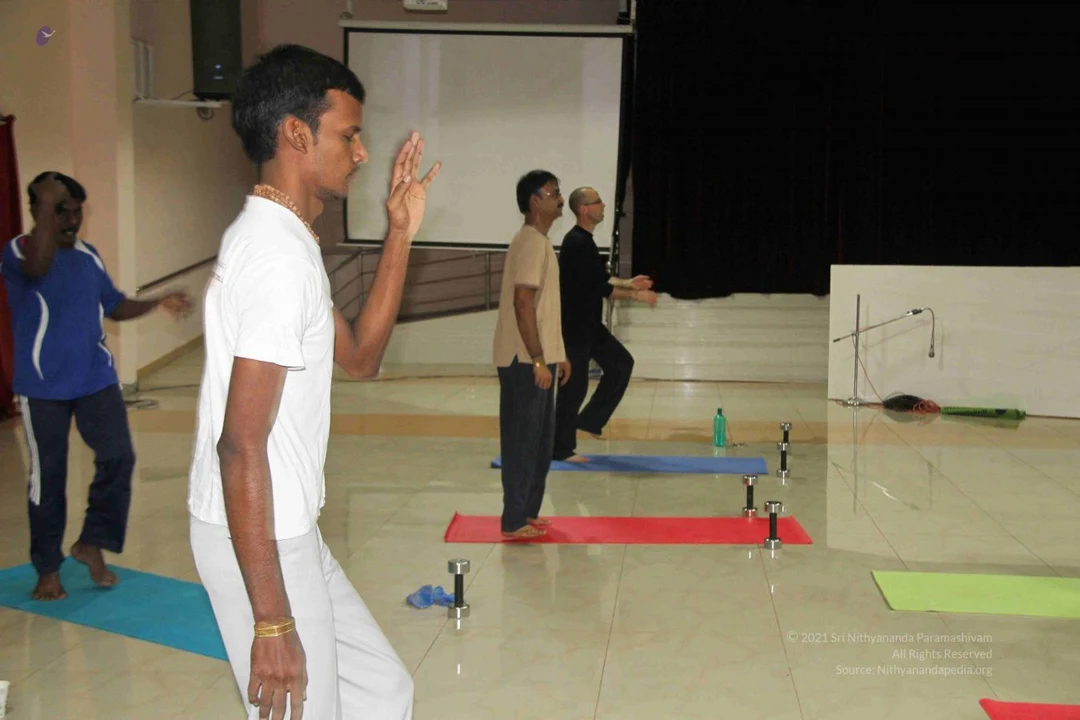
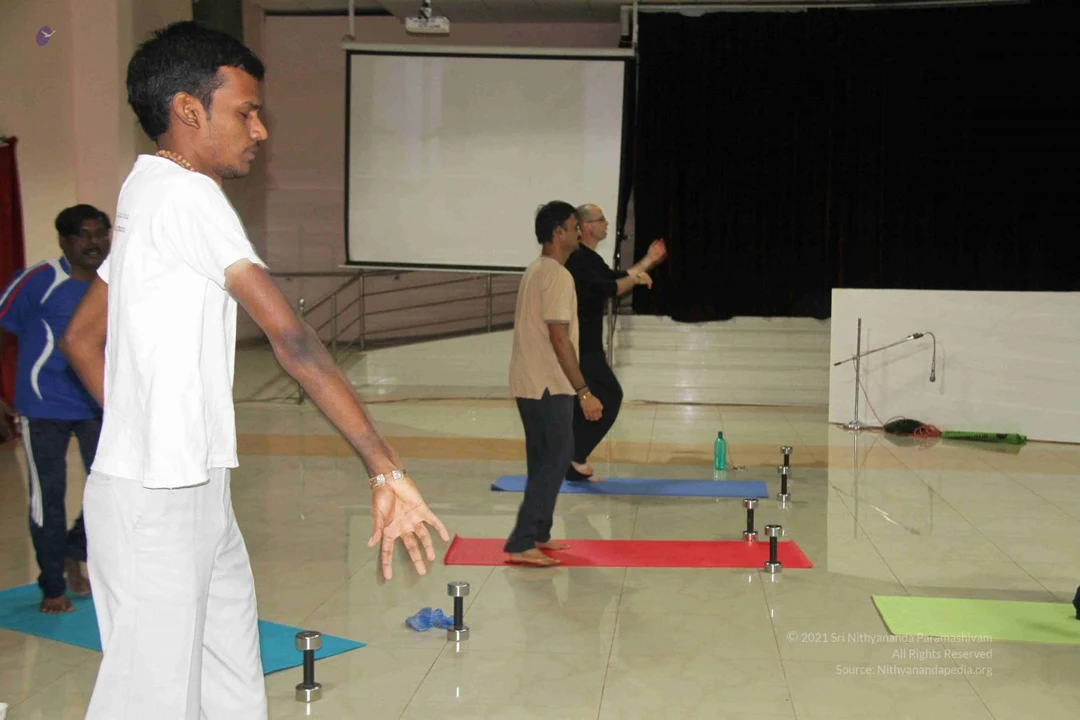
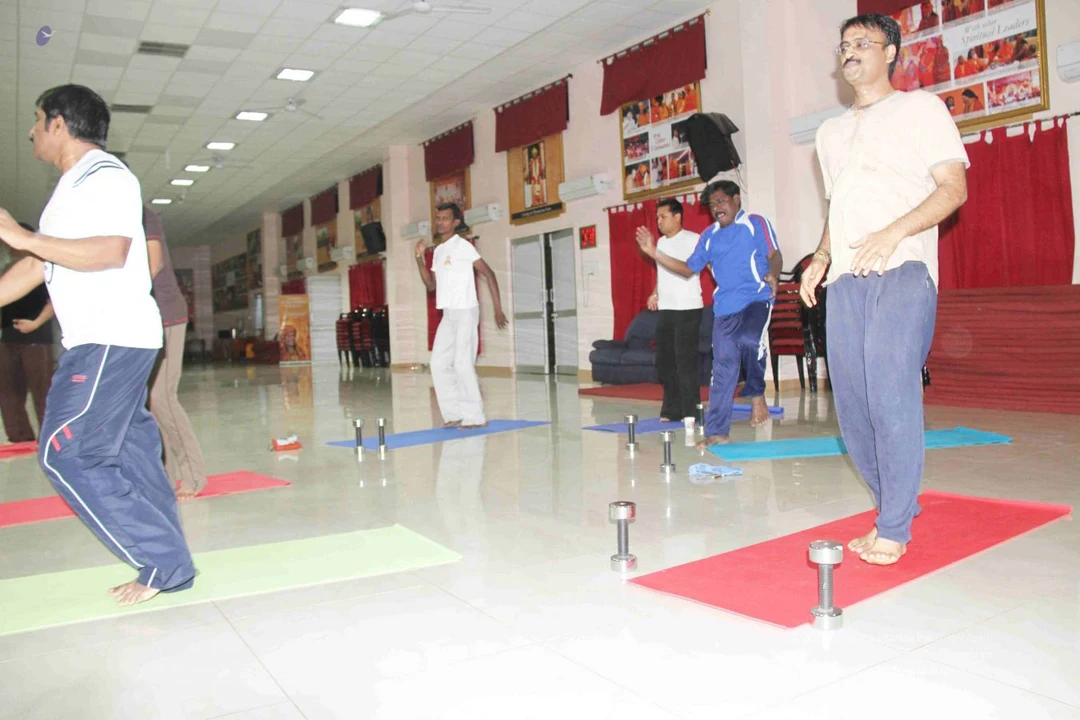
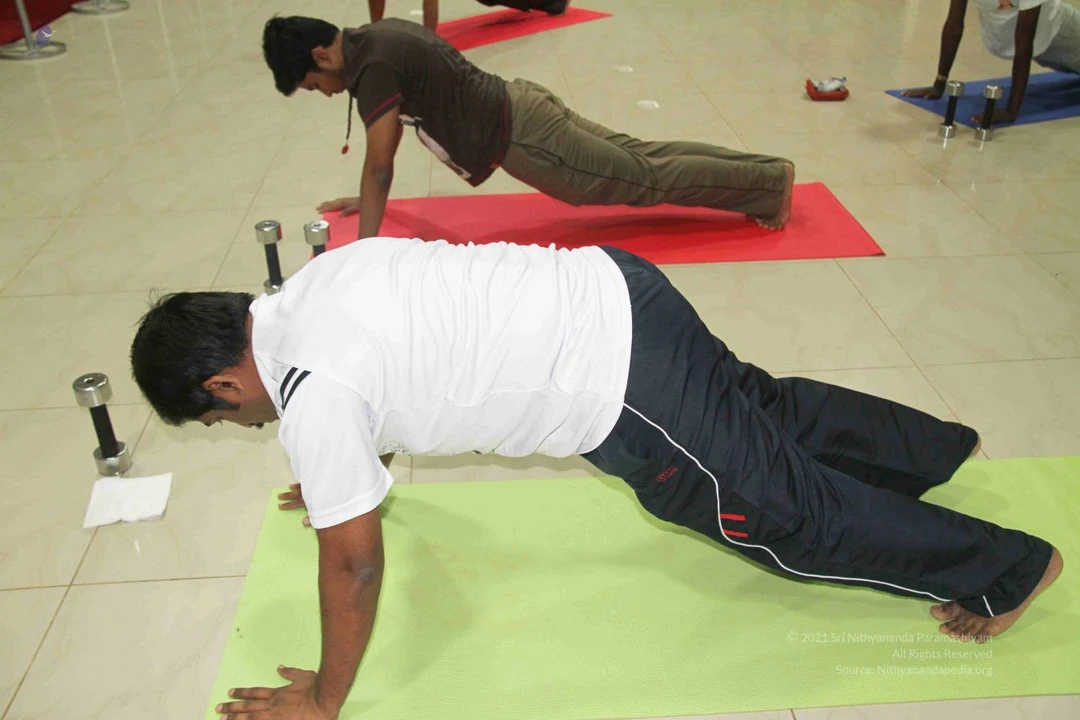
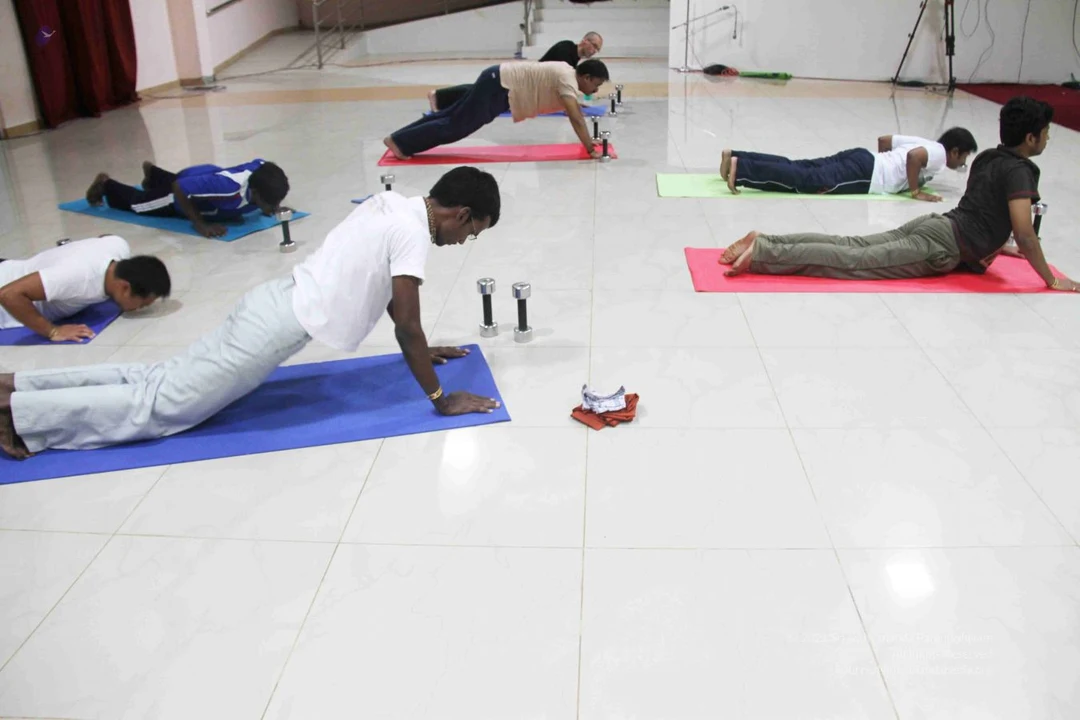
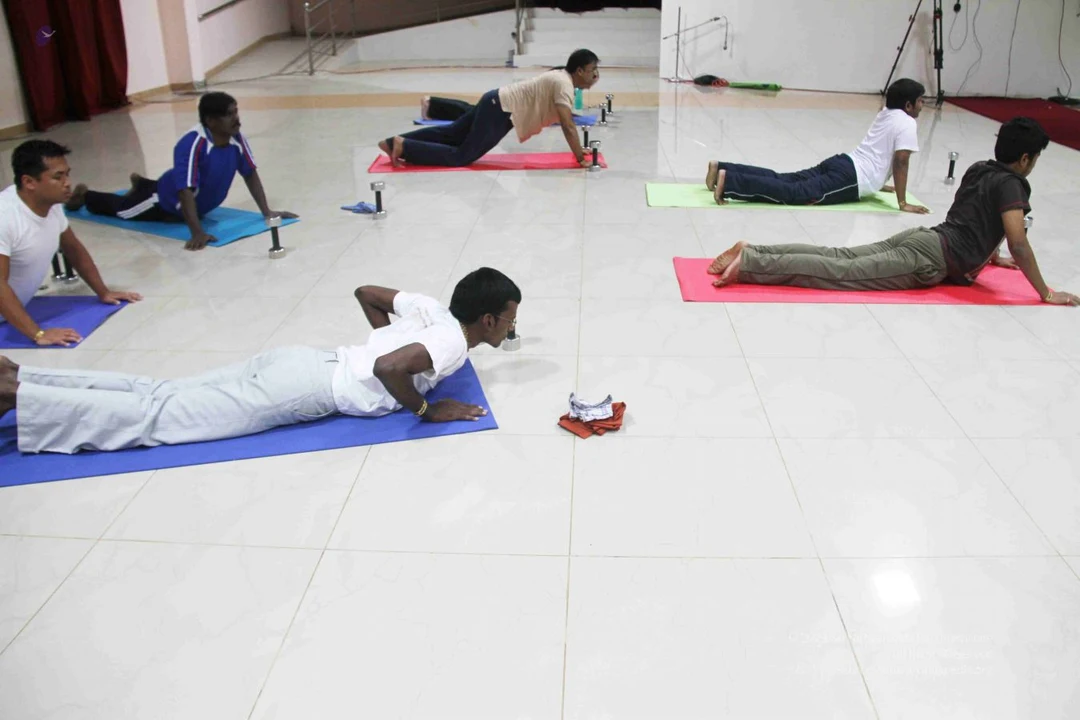
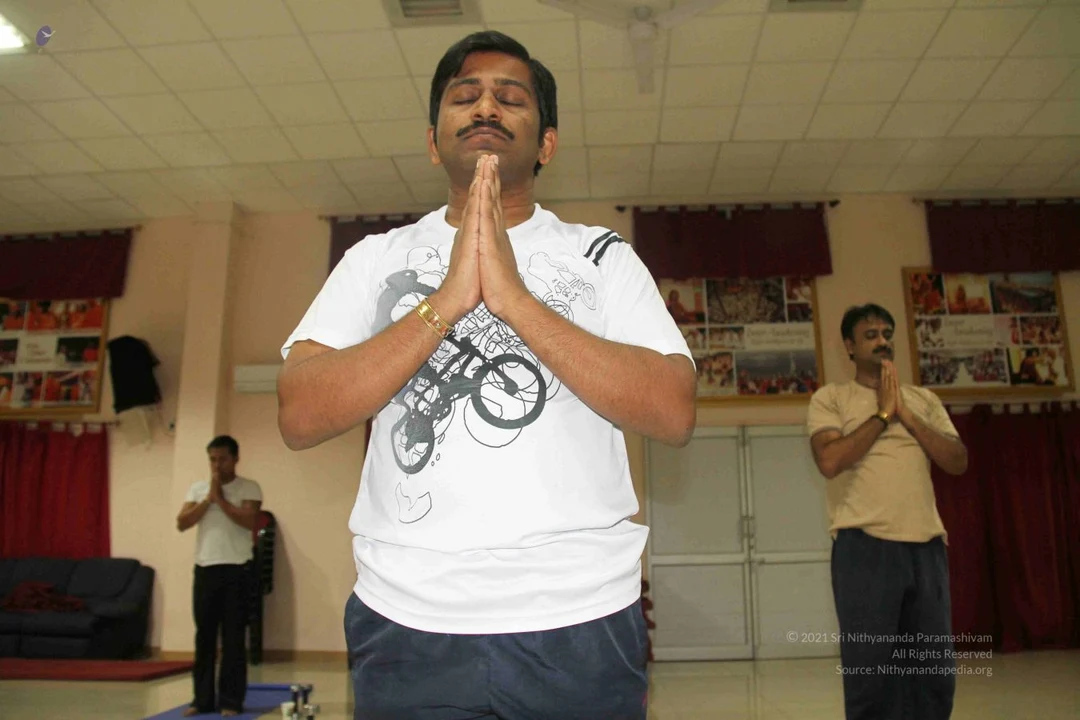
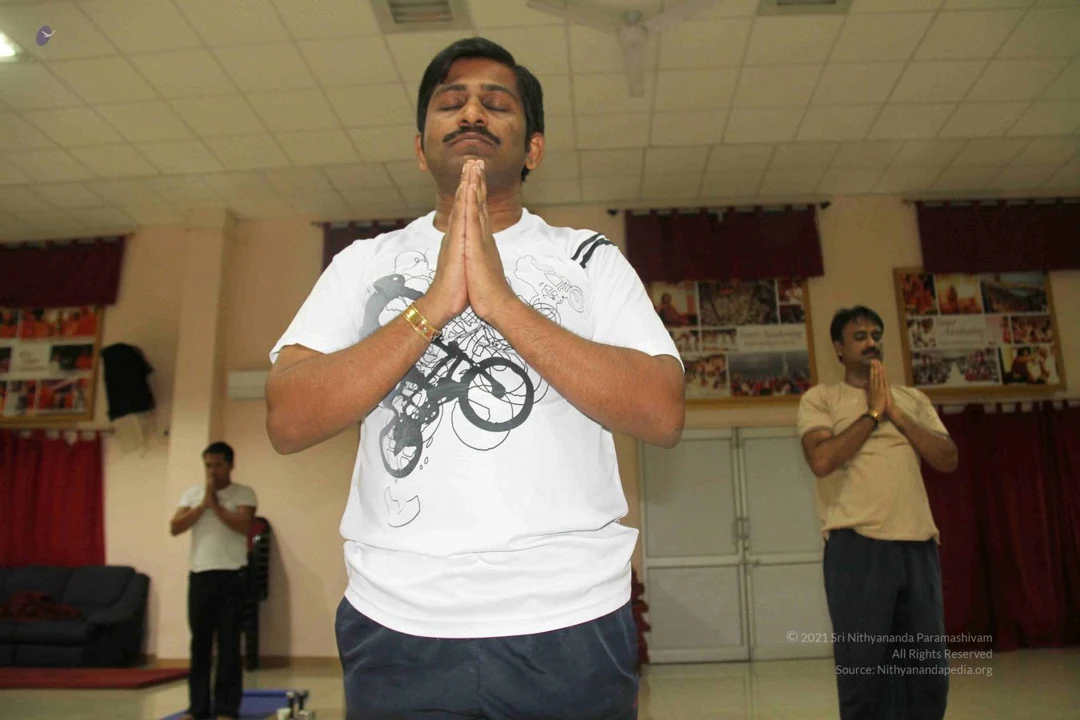
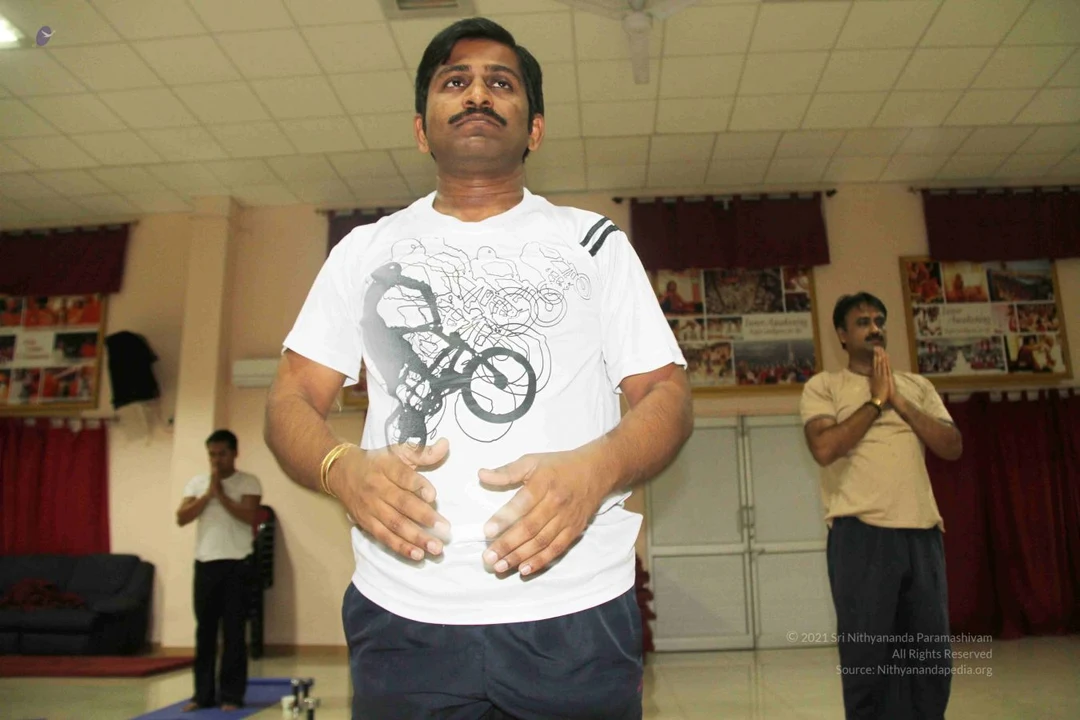
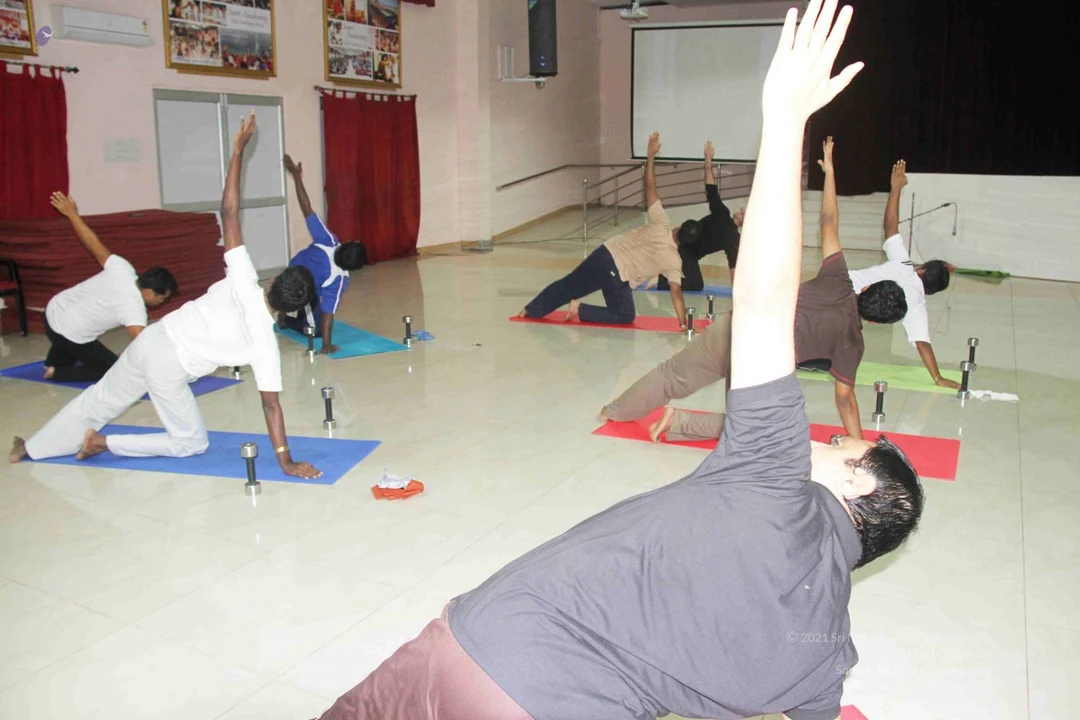
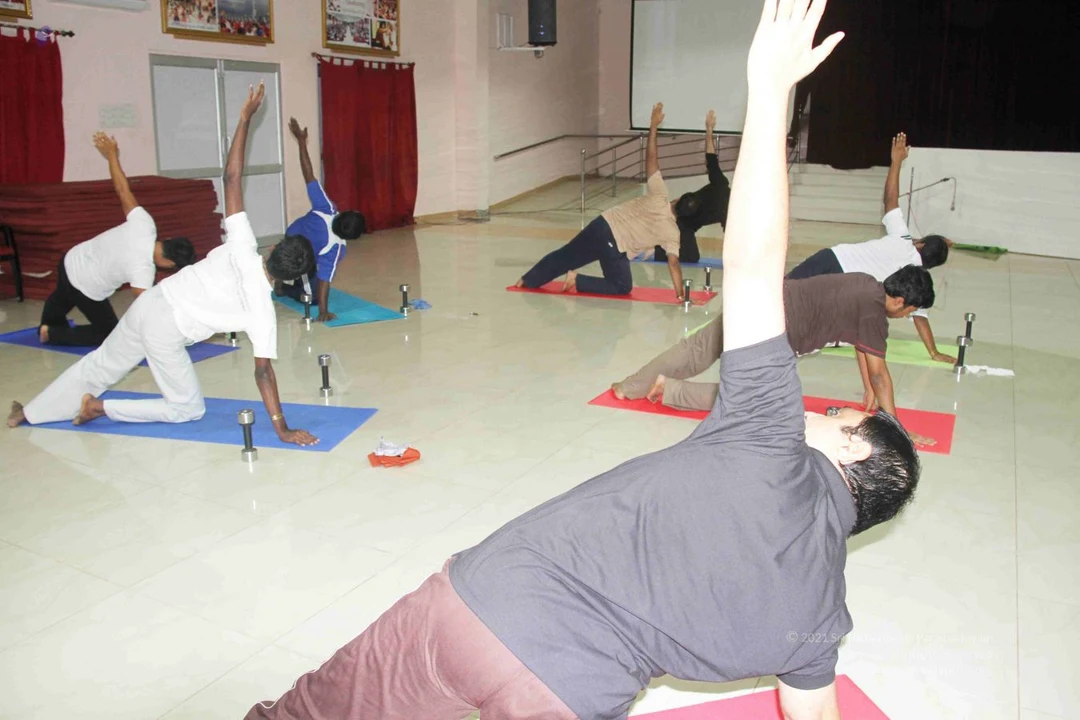
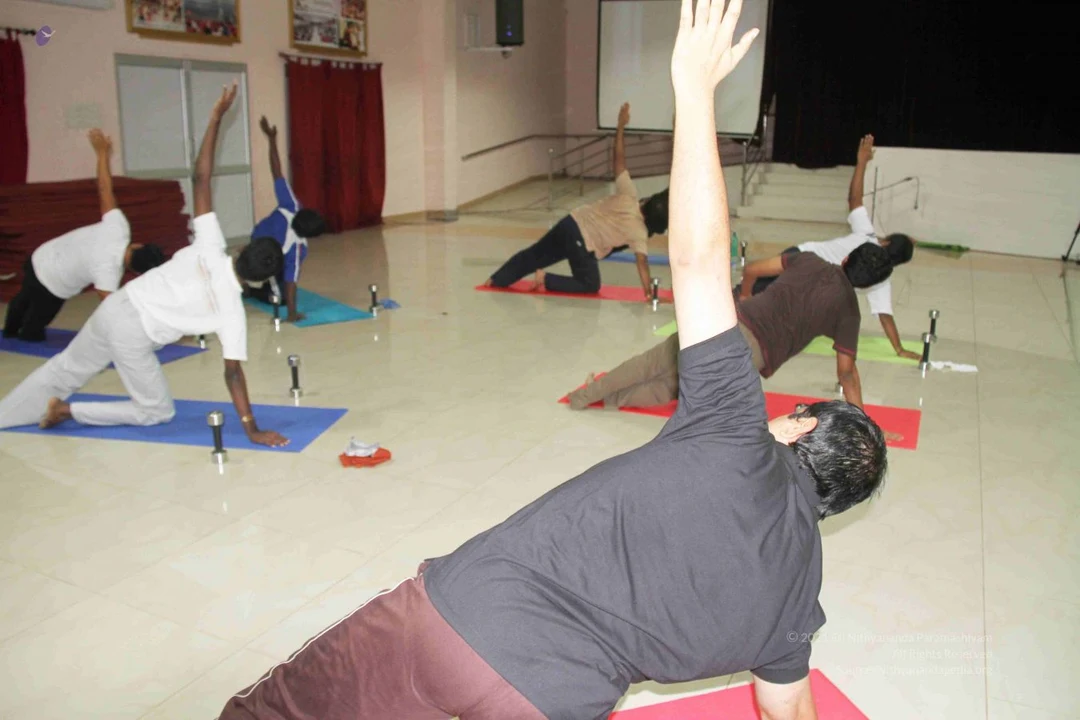
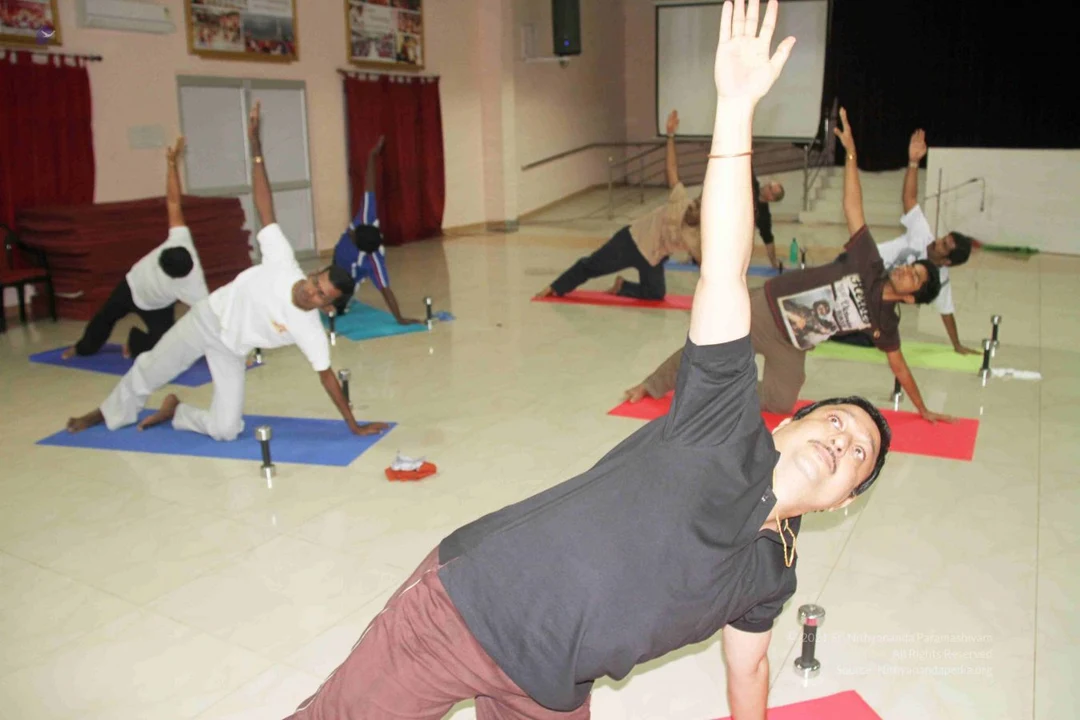
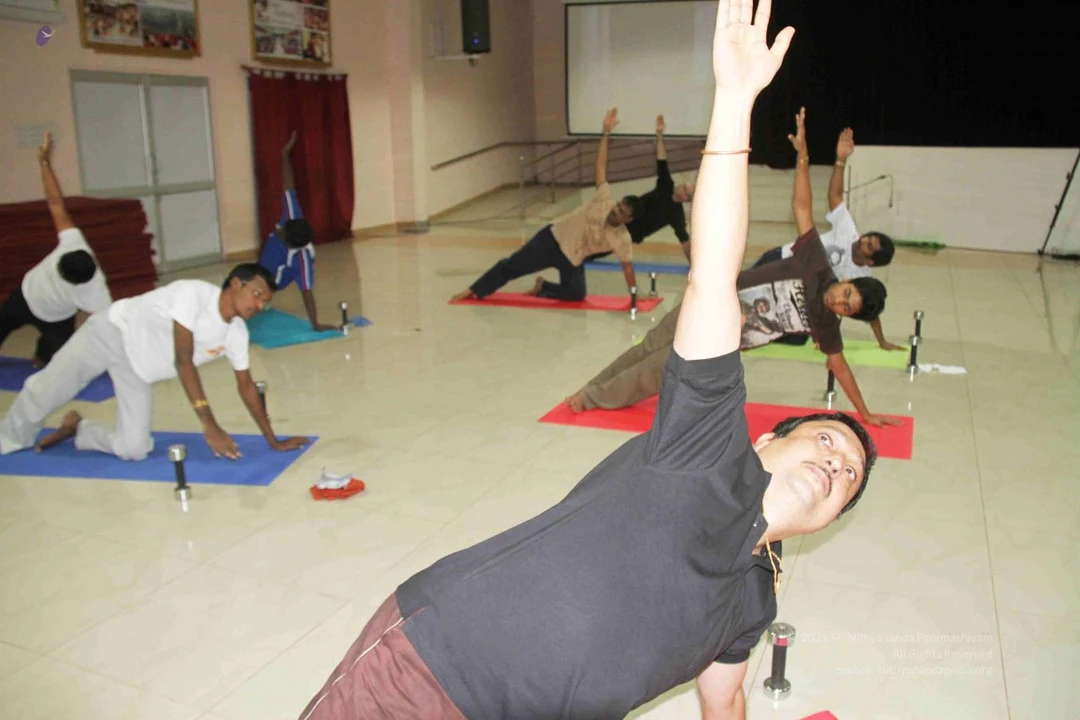
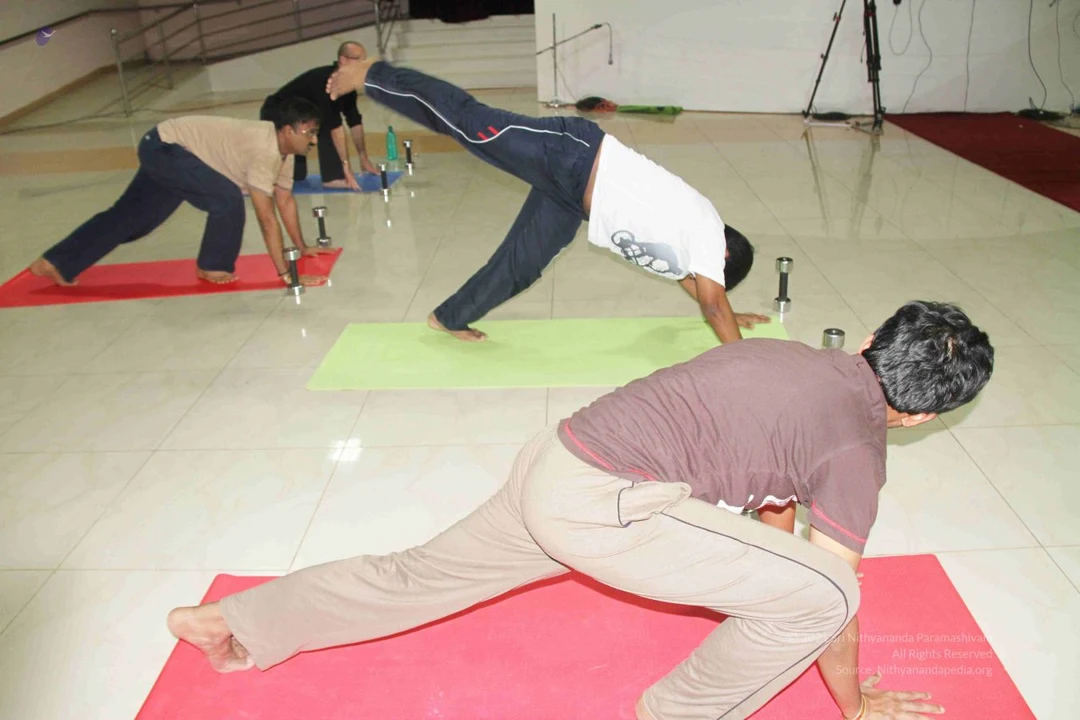
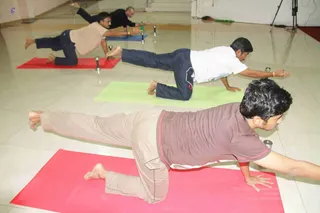
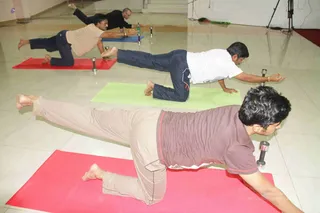
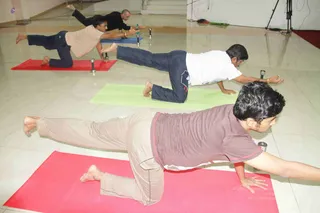
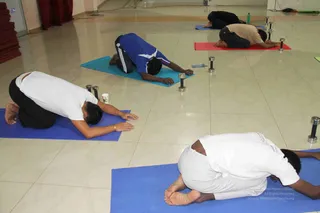
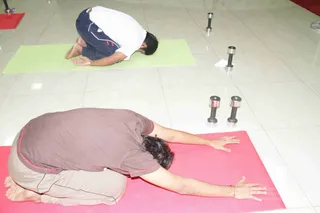
Four men practice yoga on the floor of a tiled hall, each on a coloured mat in red, green or blue, in a plank-like pose with one arm and the opposite leg extended. Their clothing is casual: brown and beige tops with khaki or navy pants, and a white t-shirt. Small steel dumbbells rest beside the mats. A camera tripod stands at the upper right and a cream wall lines the background.Four men practise a yoga exercise on exercise mats in a bright, tiled hall. Each is in a kneeling-and-extended pose, one arm and the opposite leg stretched out, with small dumbbells placed beside each mat. The foremost man wears a brown t-shirt and tan trousers on a red mat; behind him a man in a white t-shirt and dark blue track pants is on a green mat; further back a man in a beige shirt and dark trousers is on a red mat, and a man in black is on a blue mat. A tripod and a red carpet are visible at the top right of the room.A group of men in a bright tiled hall perform a yoga exercise on coloured mats: red, green and blue. Each person kneels on one knee and extends the opposite leg straight back while stretching the arms forward, with small metal dumbbells placed beside their hands. The foreground man wears a brown t-shirt and beige trousers, the next wears a white shirt and navy trousers, and two more men in the background wear dark or tan clothing. A tripod and a red carpet are visible at the top right.A photograph of five people practising a kneeling forward-bend yoga posture on coloured exercise mats in a bright tiled studio with mirrored walls. Men in white shirts and white trousers, a man in a blue tracksuit, and others in black and beige clothing are bent forward with foreheads near the mats and arms stretched out. Small black dumbbells sit between the mats, and a red curtain and stacked mats are visible at the left. No identifiable a person figure is visible in the scene.Several people practise yoga in a bright tiled studio on blue, red and teal mats, bent forward in a child's pose with arms stretched along the floor. Chrome dumbbells sit between the mats, and a red curtain and stacked mats stand at the left. Two figures wear white shirts and black trousers, one in a blue and white tracksuit, and one in a beige top, with another person in black at the back. There is no visible a person figure.Two men practise yoga on a tiled floor, each on a mat: one in a white t-shirt and navy shorts kneels in a forward bend on a light green mat, the other in a brown t-shirt and khaki trousers stretches flat forward on a red mat with arms extended. Two chrome dumbbells stand between them.

03-Homa

3 photosSource gallery
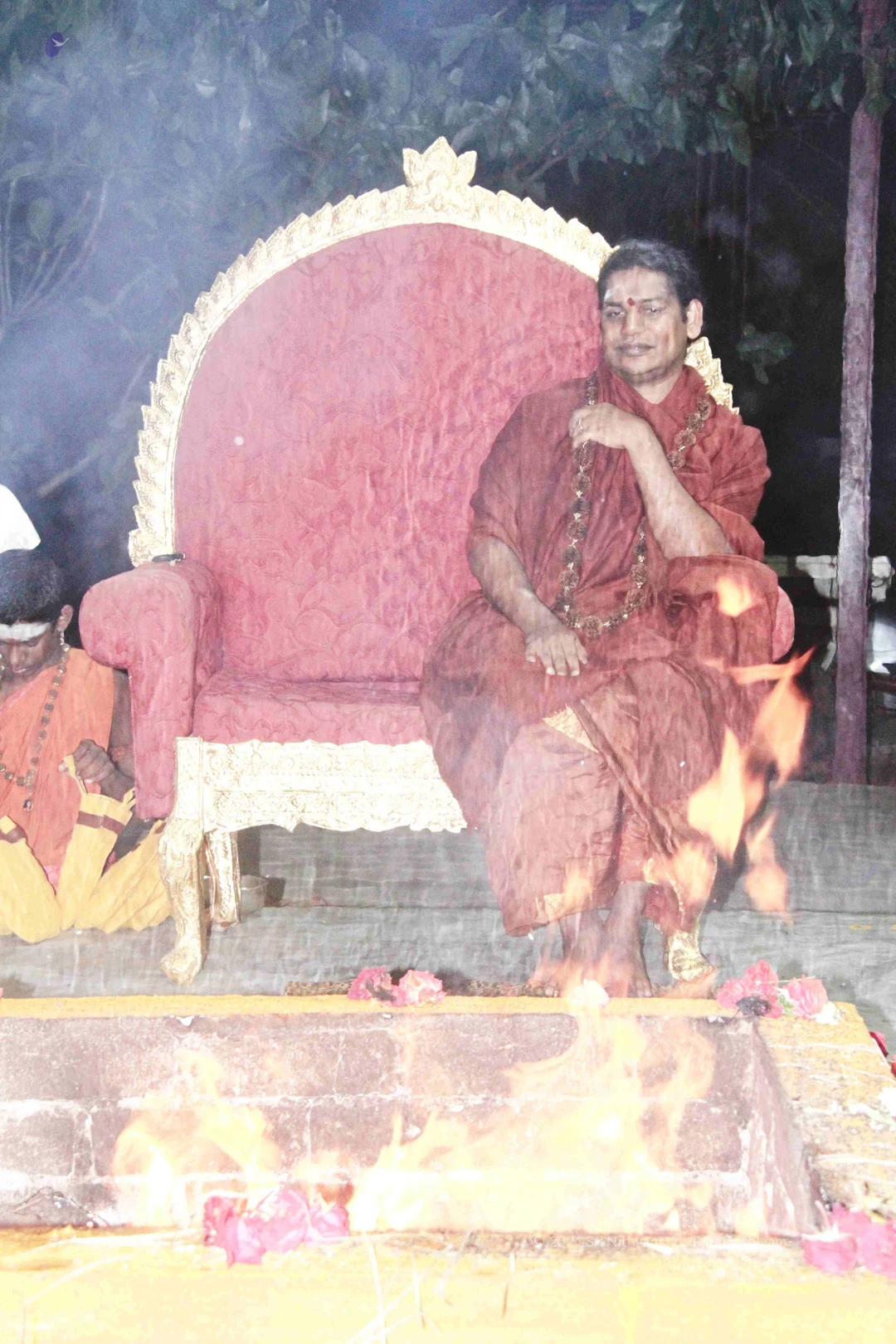
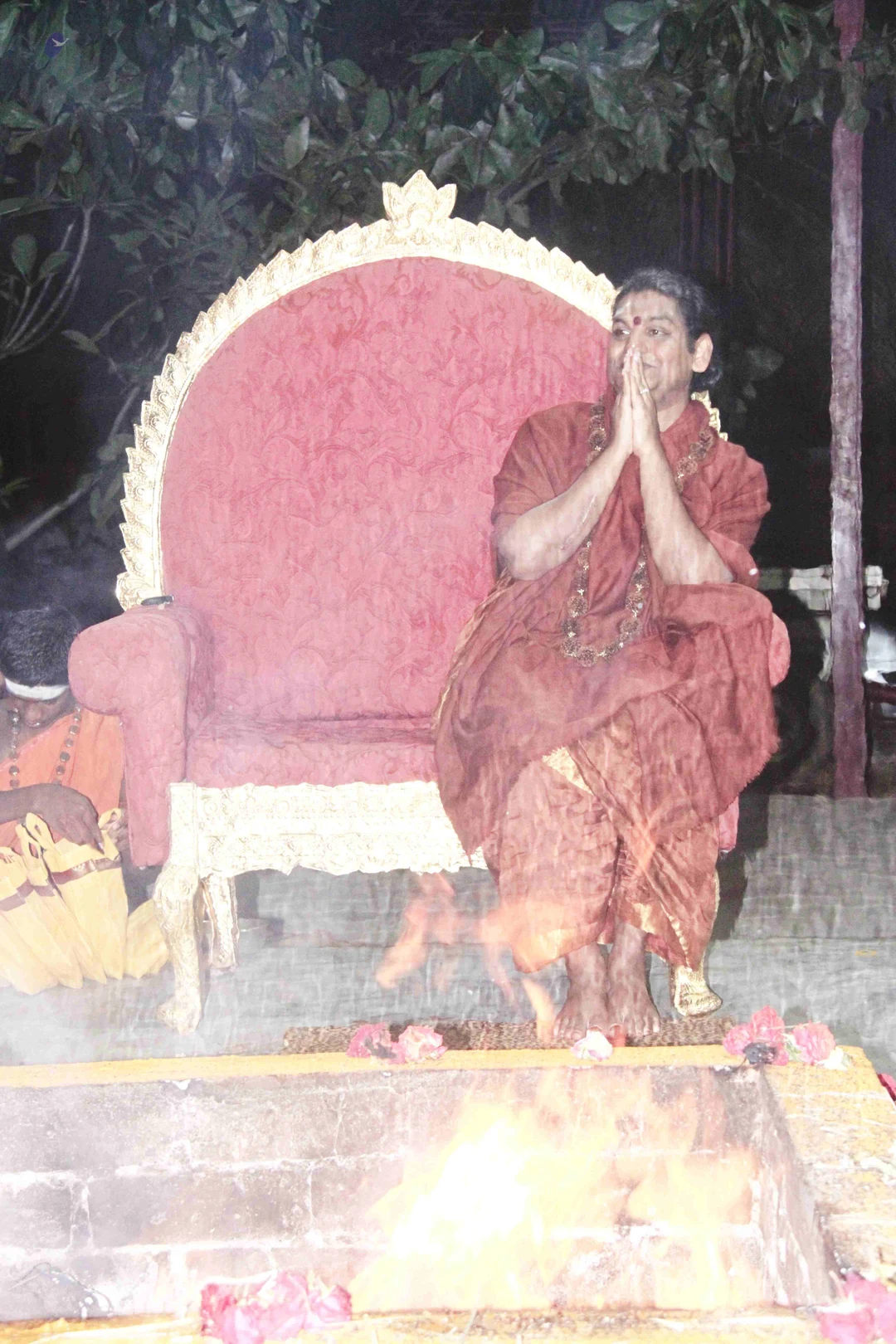
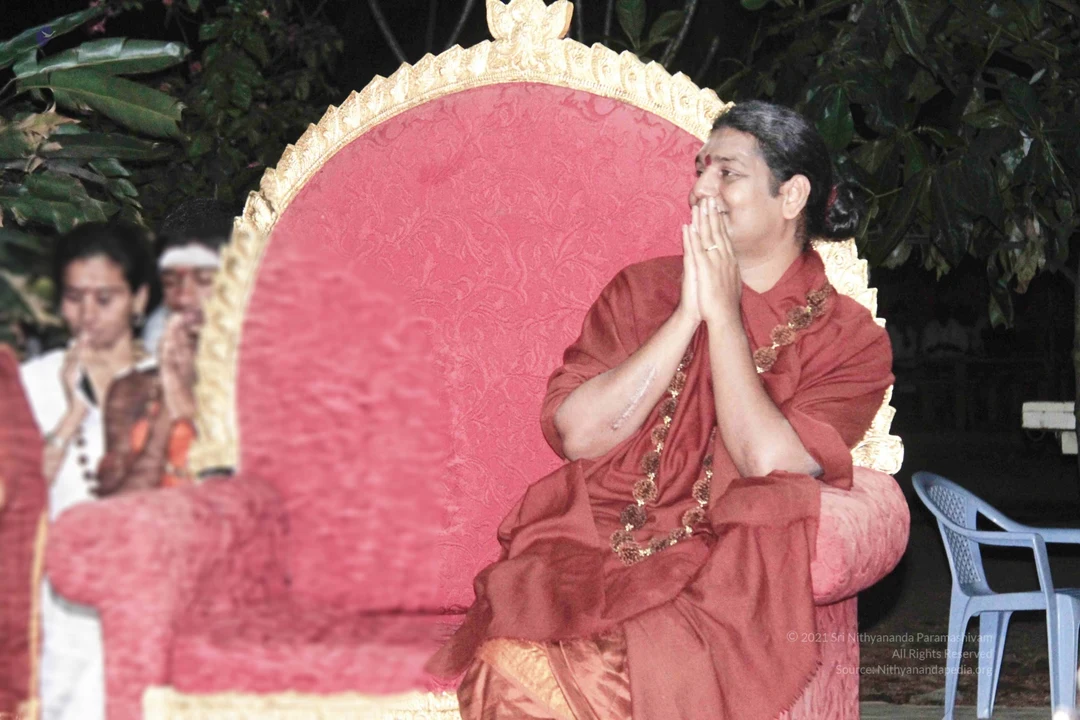
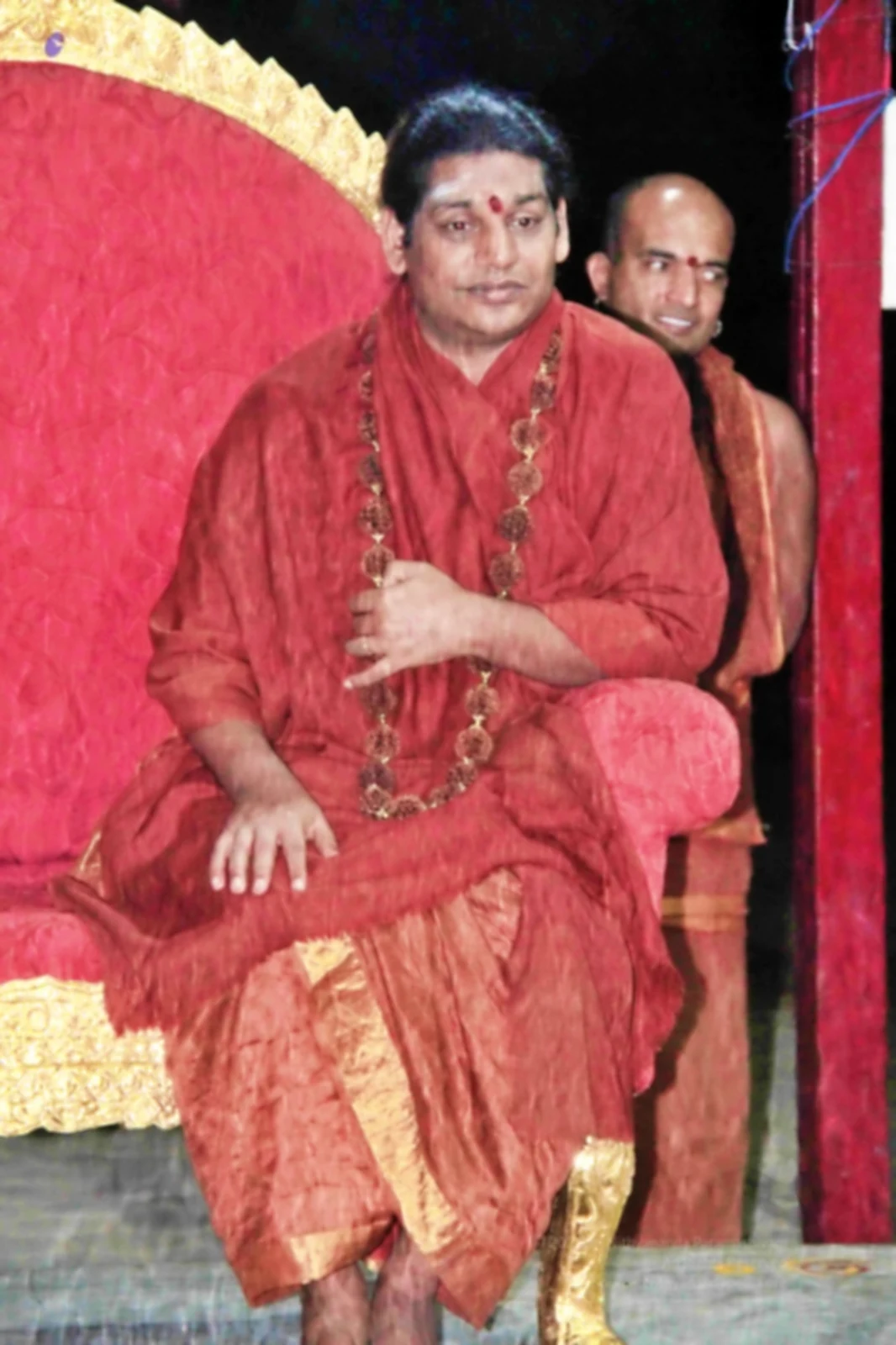
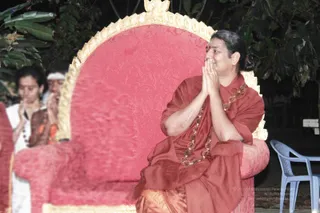
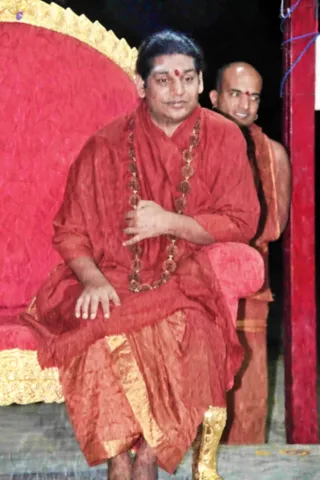
A man in a rust-orange robe with a gold-coloured rudraksha-style mala sits on an ornate red and gold throne, palms pressed together in namaskar and smiling warmly. Behind him at left, a woman in white and a second person in orange stand with hands folded. Dark foliage and a blue plastic chair appear in the evening setting. a person appearance cue: the seated central figure wears a rust-orange shawl over a robe and a long mala, seated on a throne in a satsang setting.A man in a red-orange silk robe and gold-bordered dhoti sits on a red velvet throne with gold trim, wearing a long rudraksha mala and a red bindi on his forehead. His right hand rests on his chest and his left hand rests on his knee. Behind him, a bald man in a matching orange-red shawl and dhoti, with a red tilak, stands partly hidden beside a red pillar. The setting appears to be a stage. No readable text is visible.A man in a flowing red-orange robe draped over his shoulders sits on a red throne-like seat with gold scalloped trim, leaning forward with both hands resting on his knees. He wears a long mala of large brown rudraksha beads and has a red bindi and white markings on his forehead. Dark trees with green foliage fill the background.
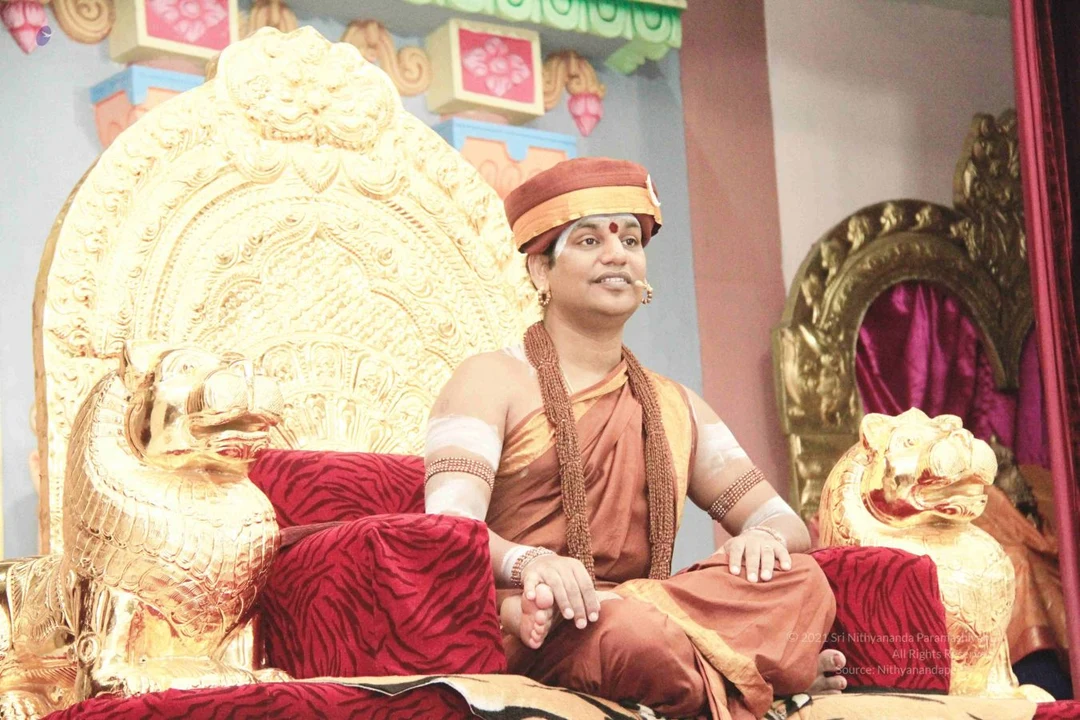
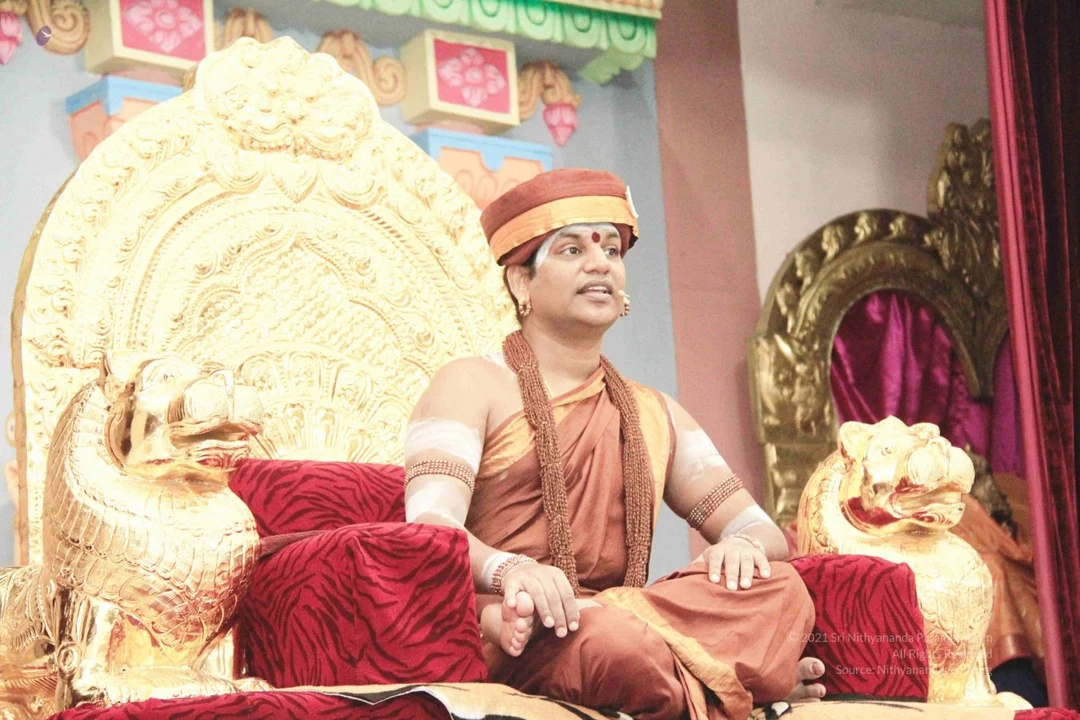
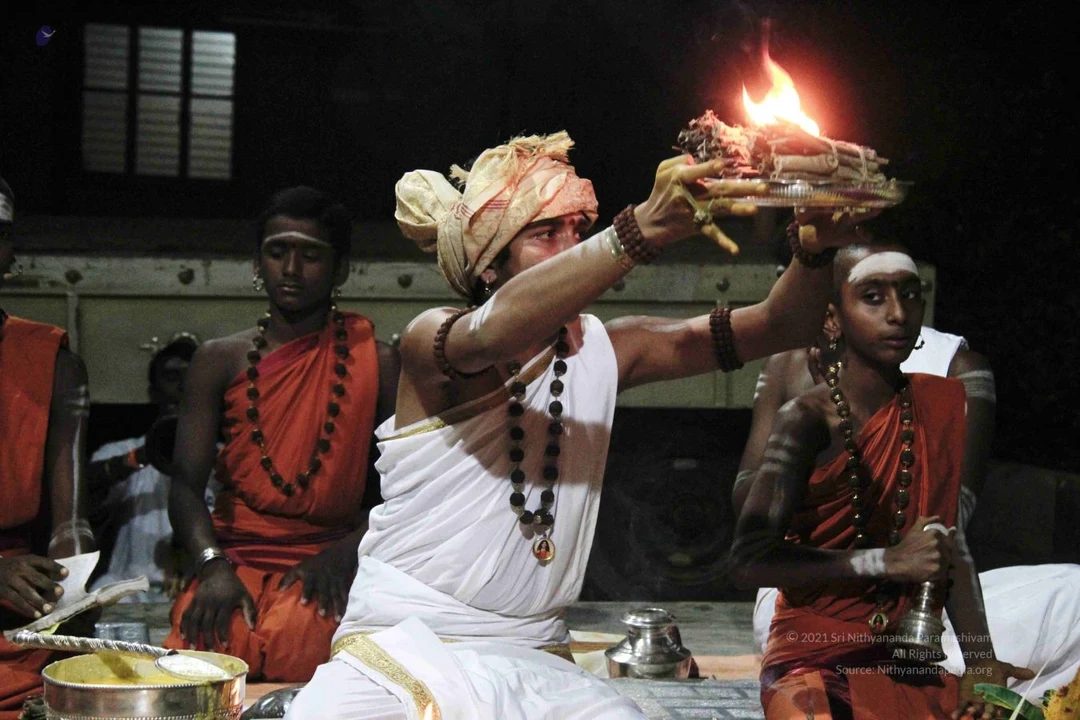
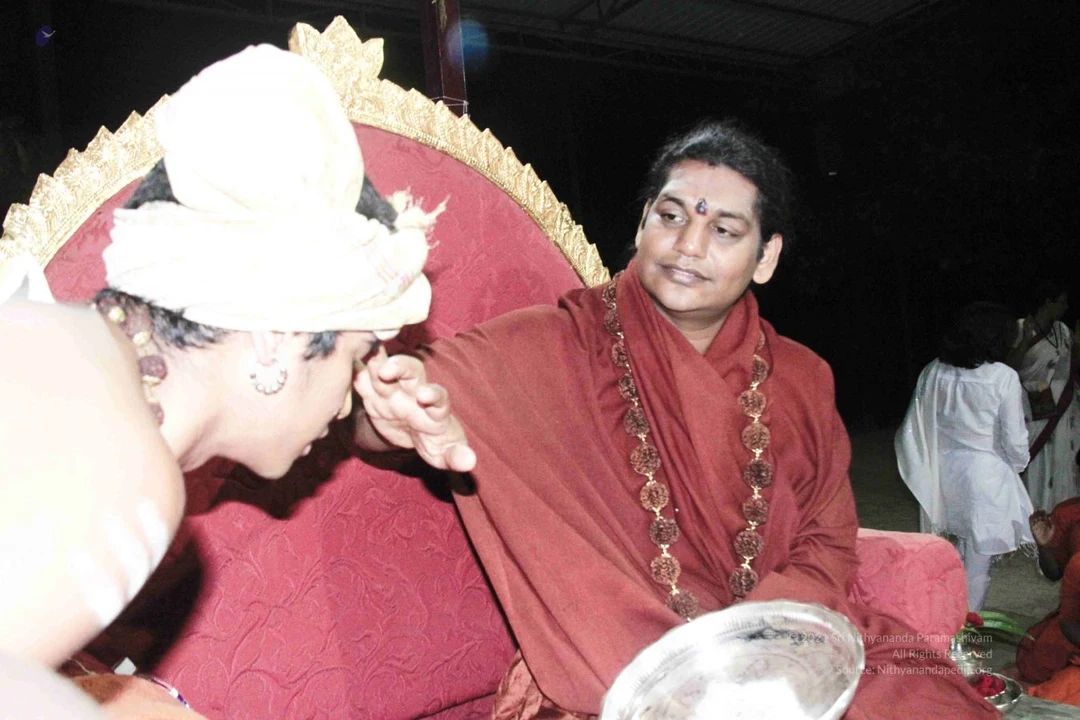
1-Evening-Celebrations

30 photosSource gallery
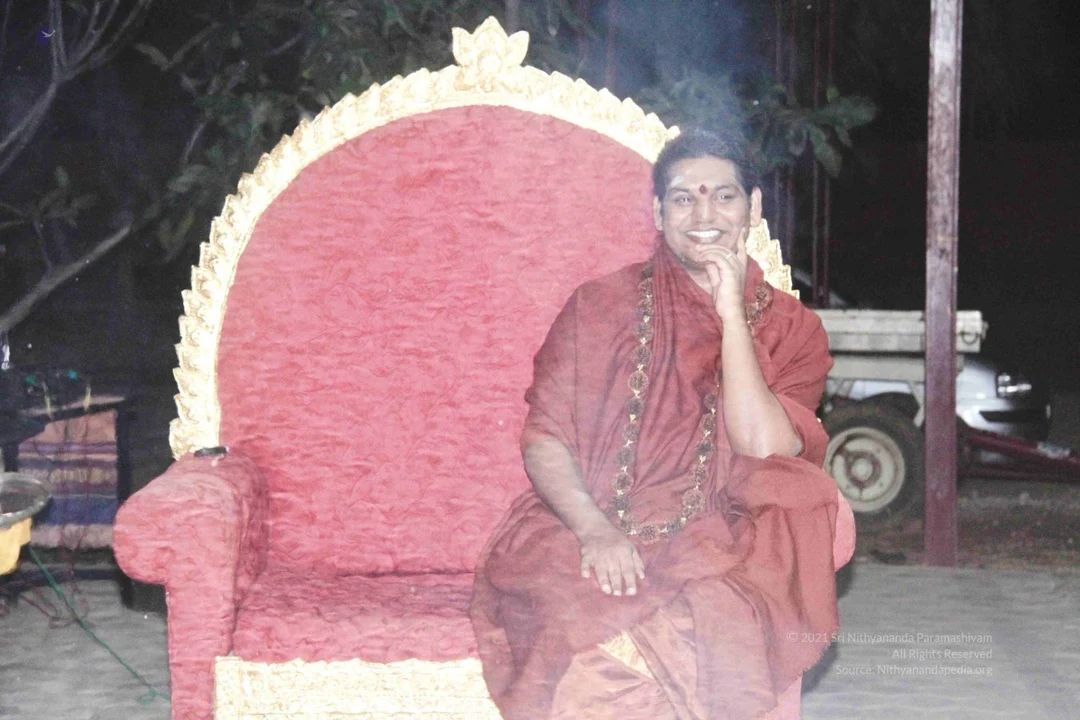
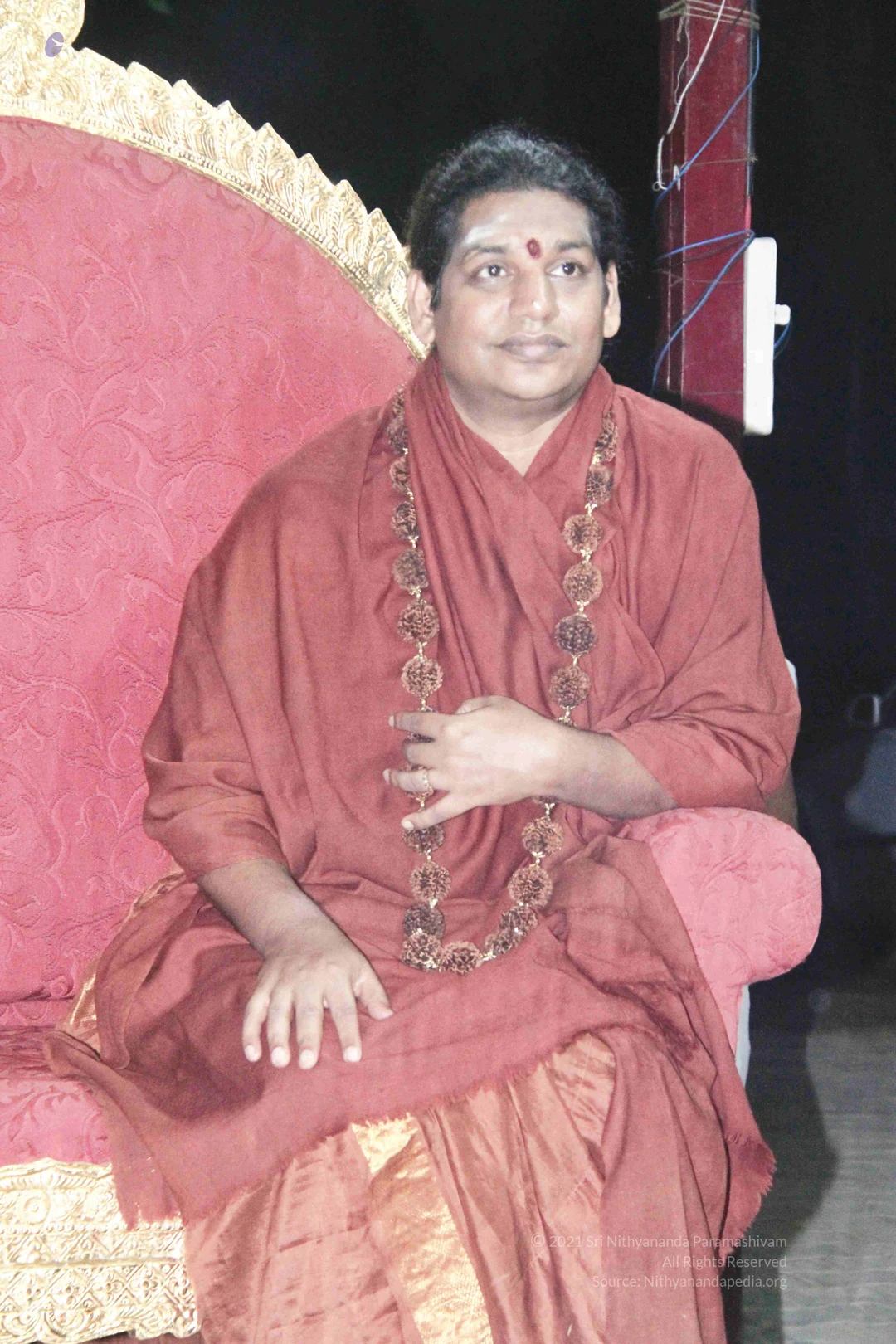
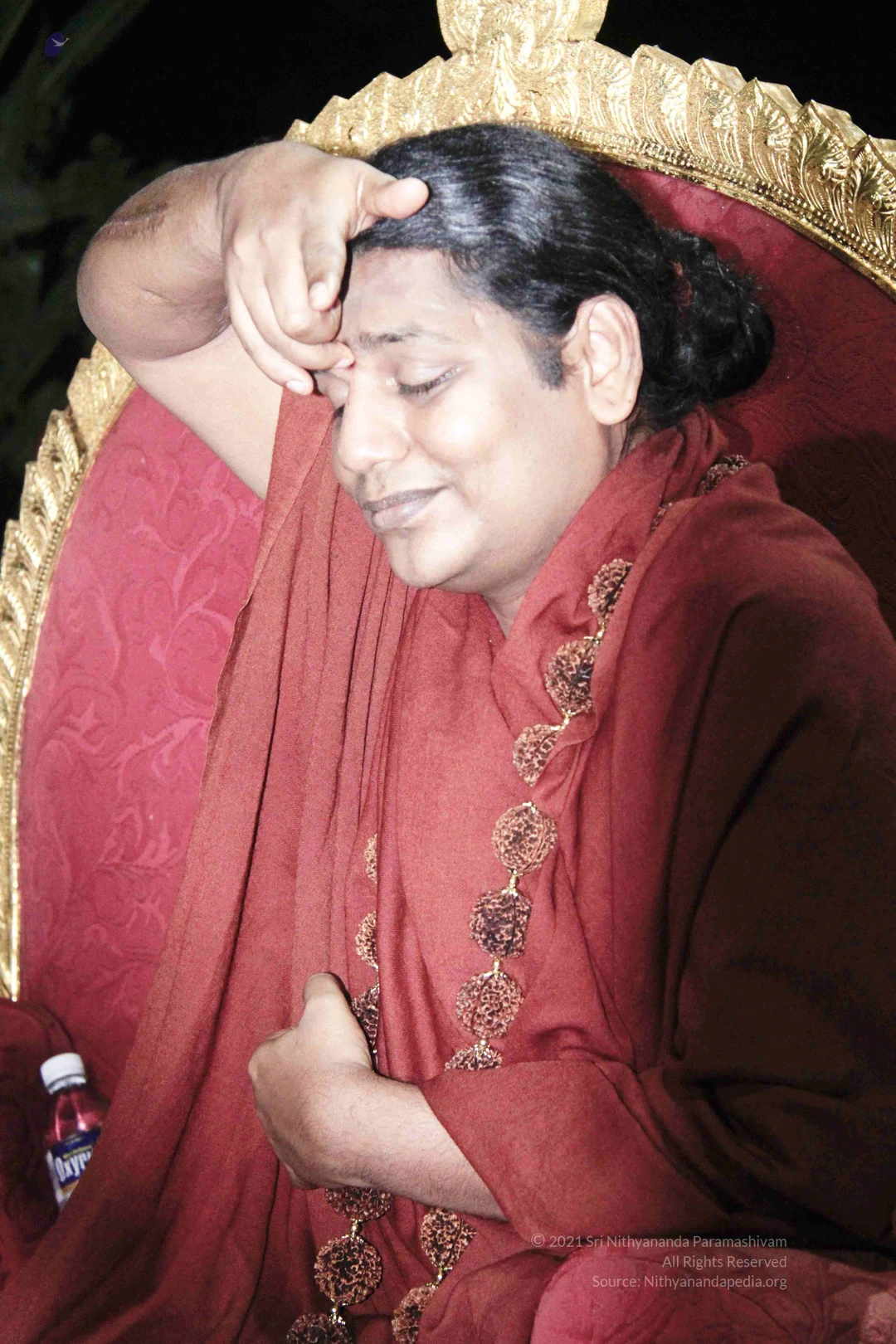
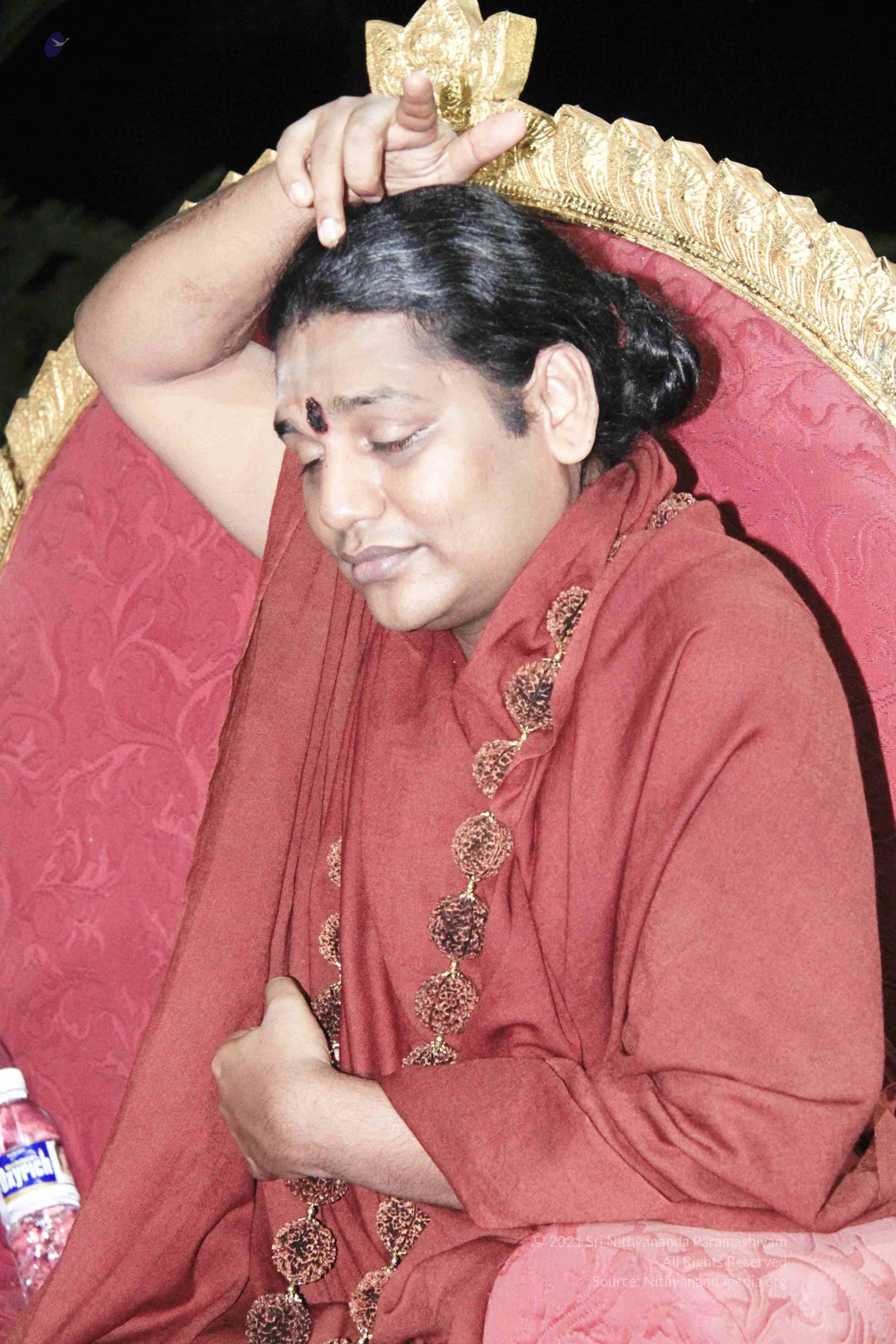
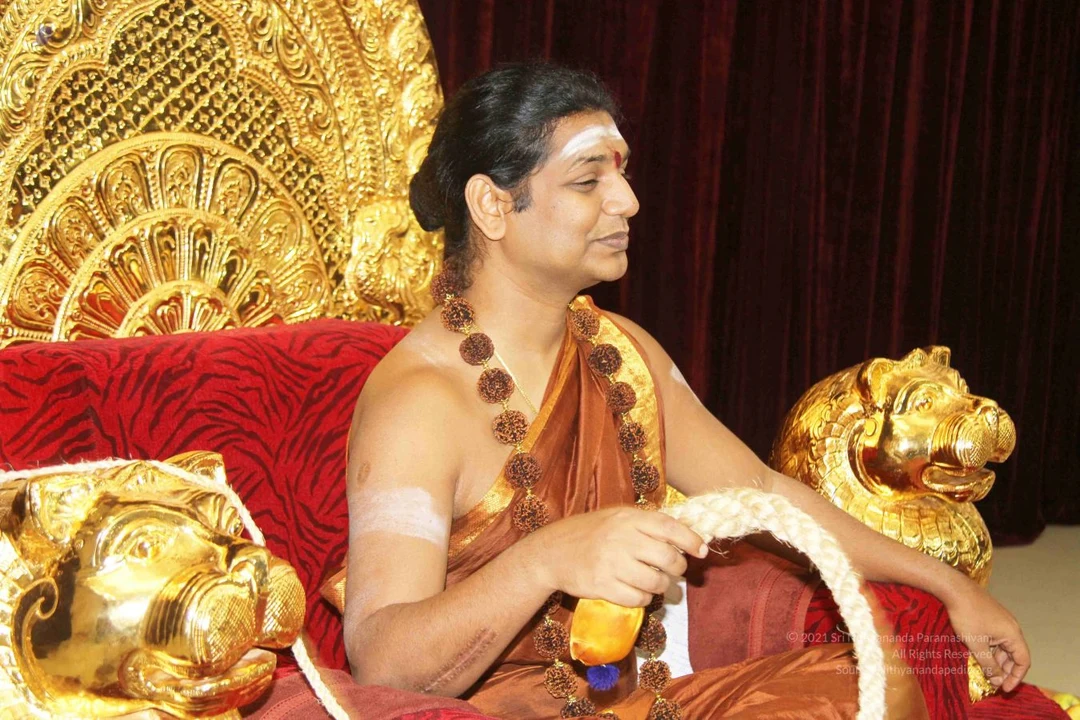
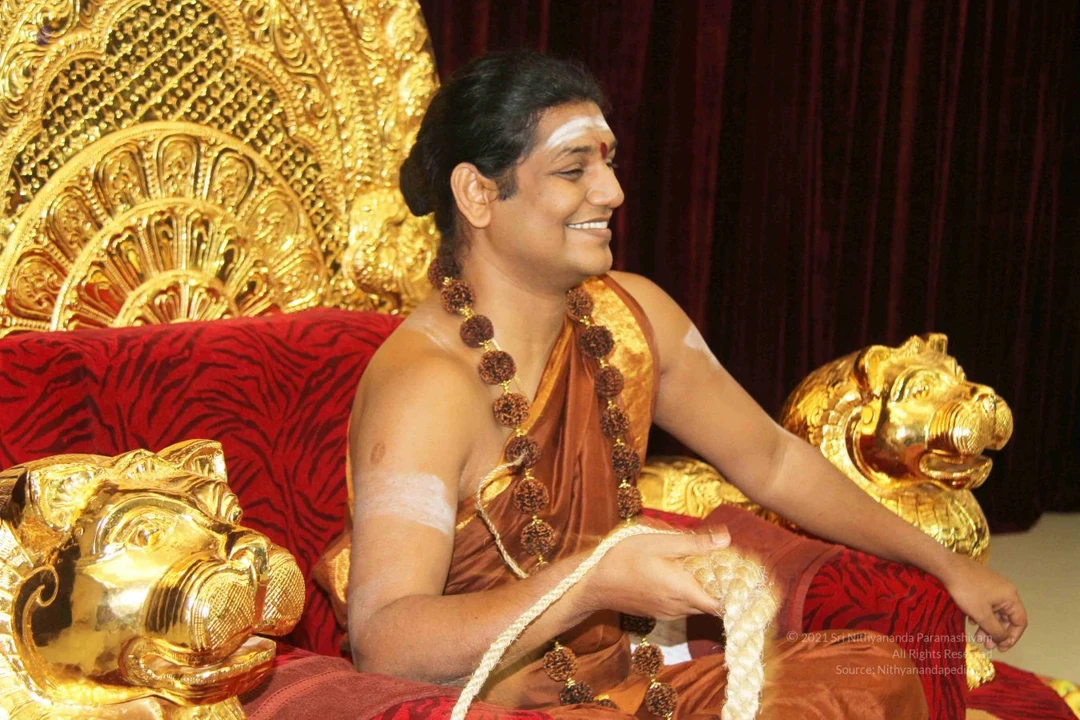
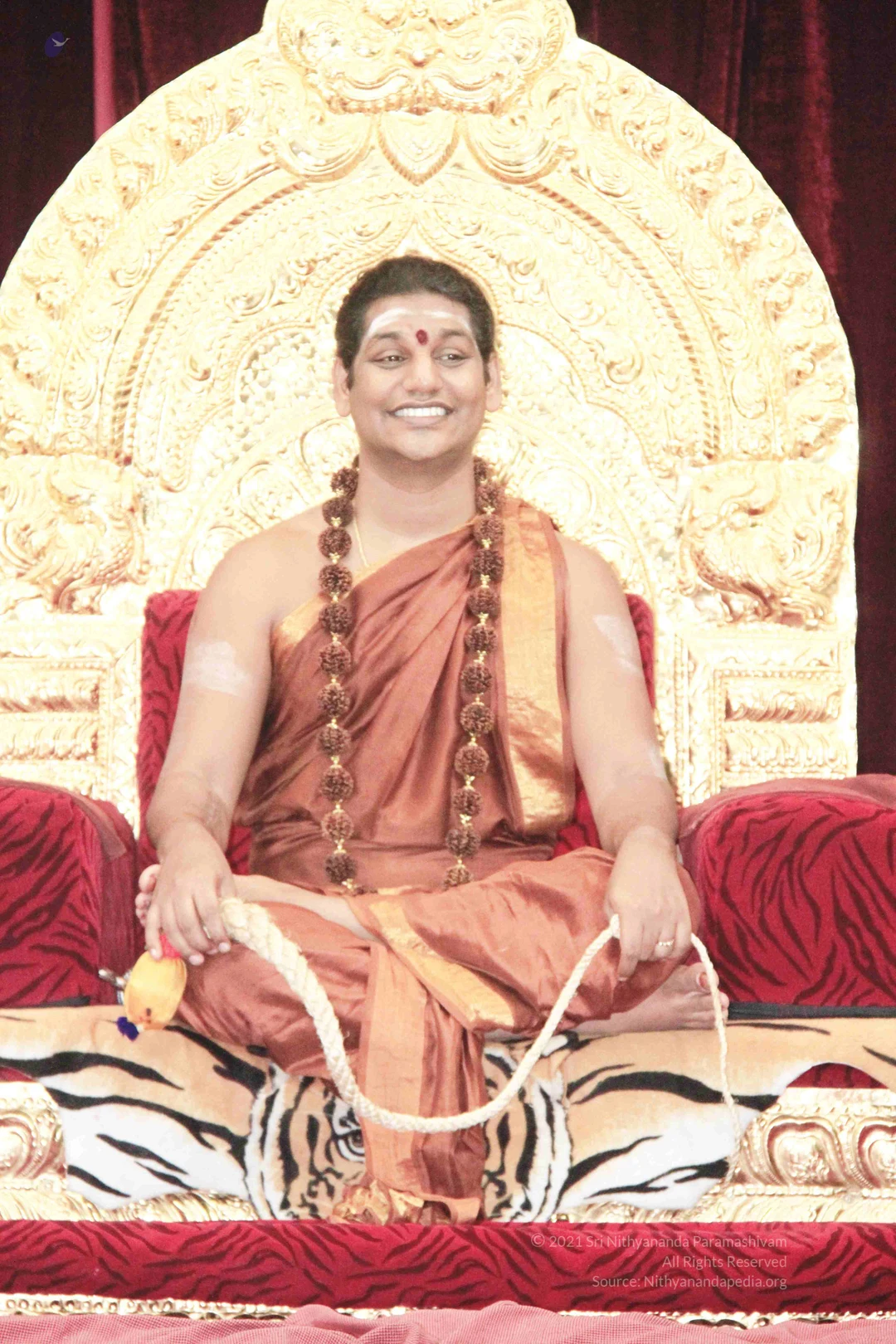
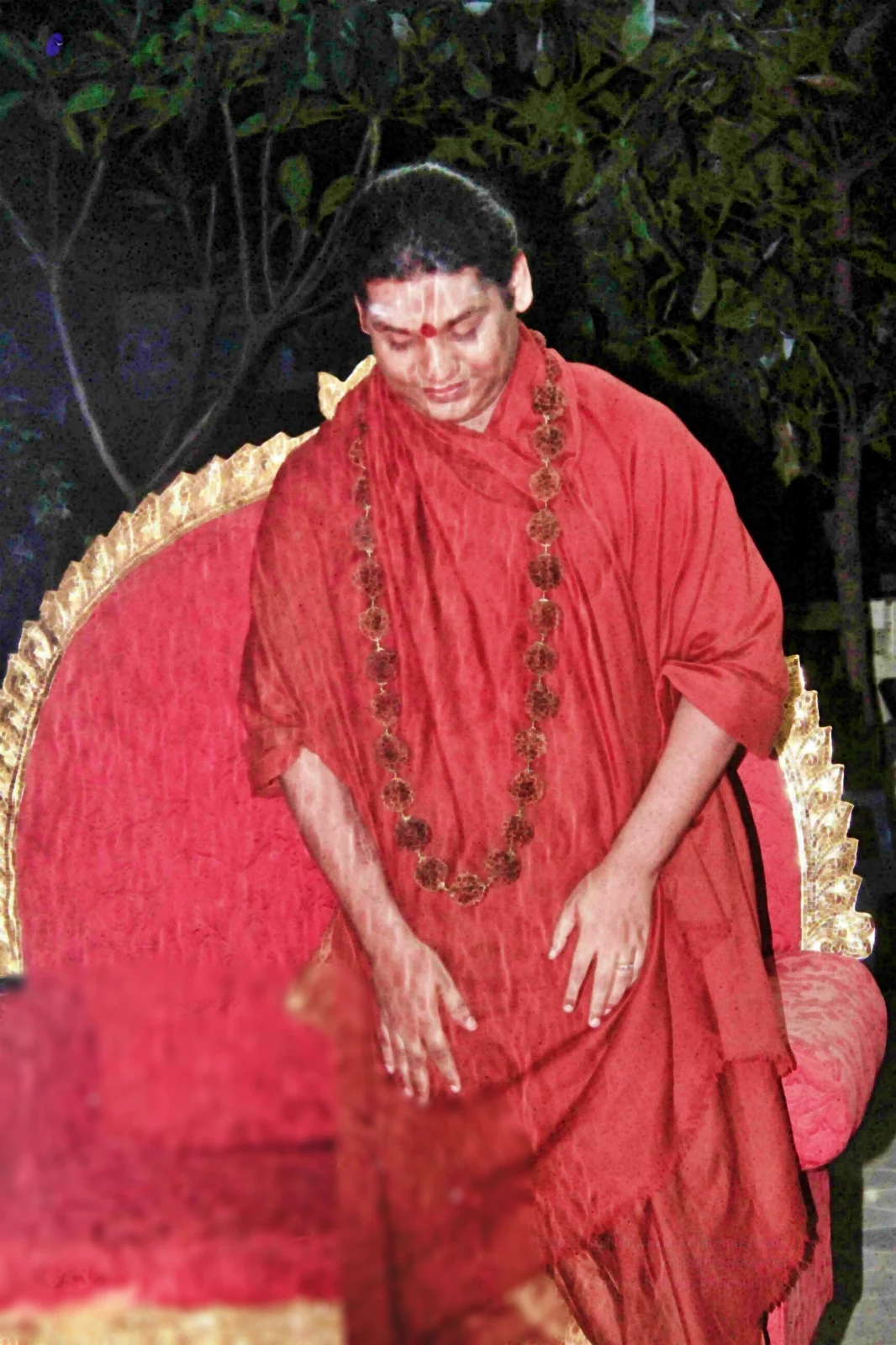
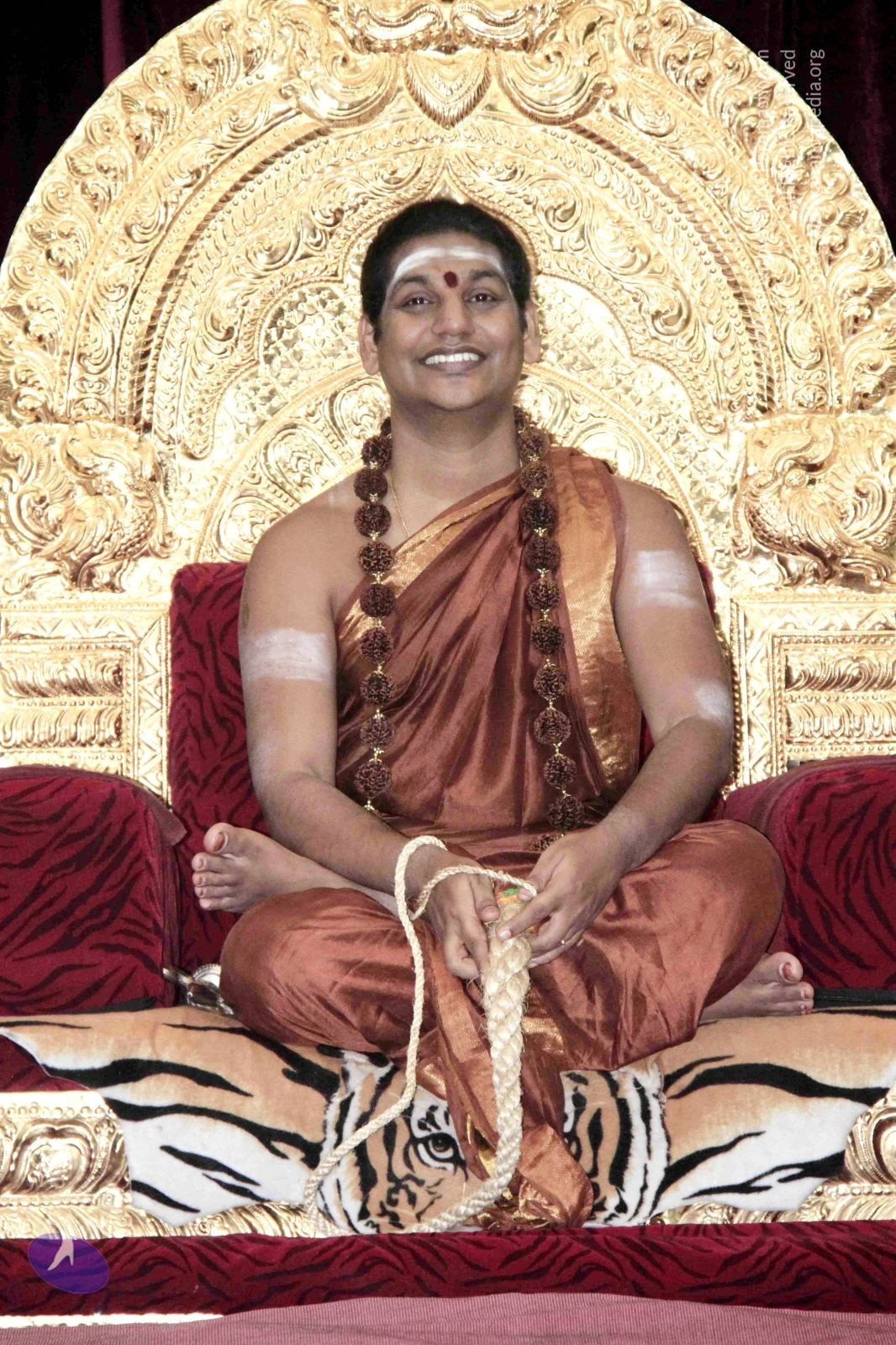
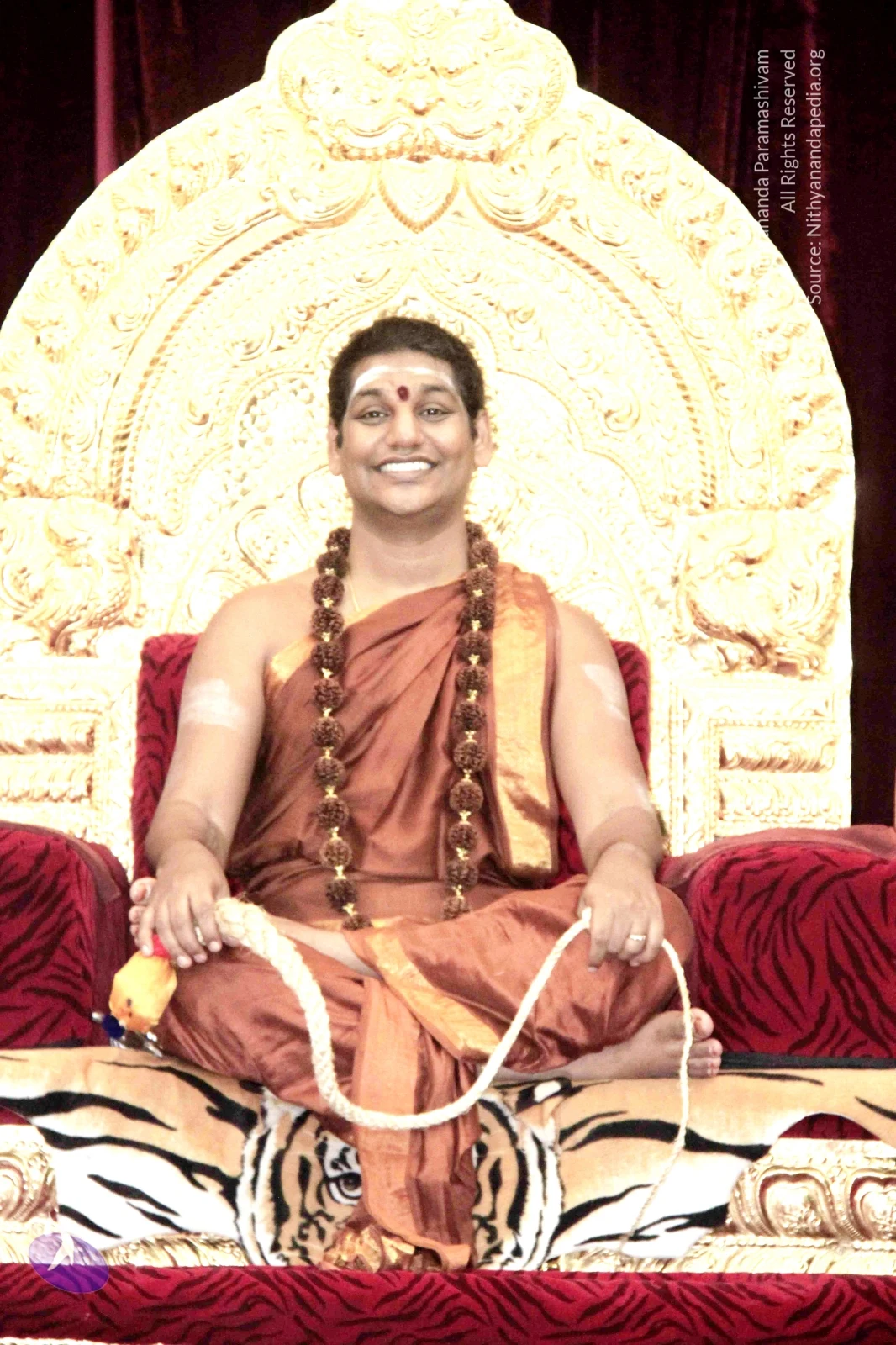
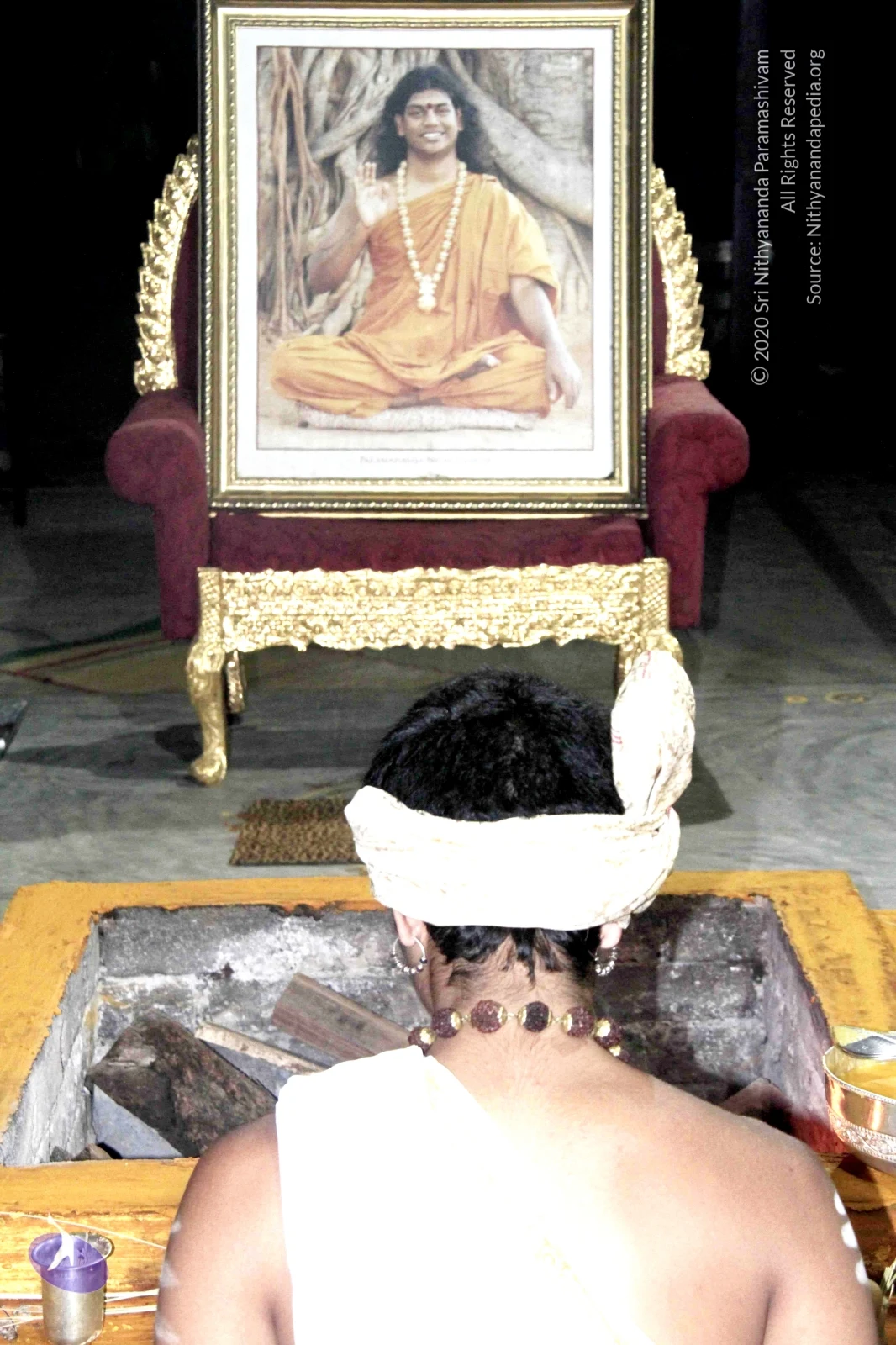
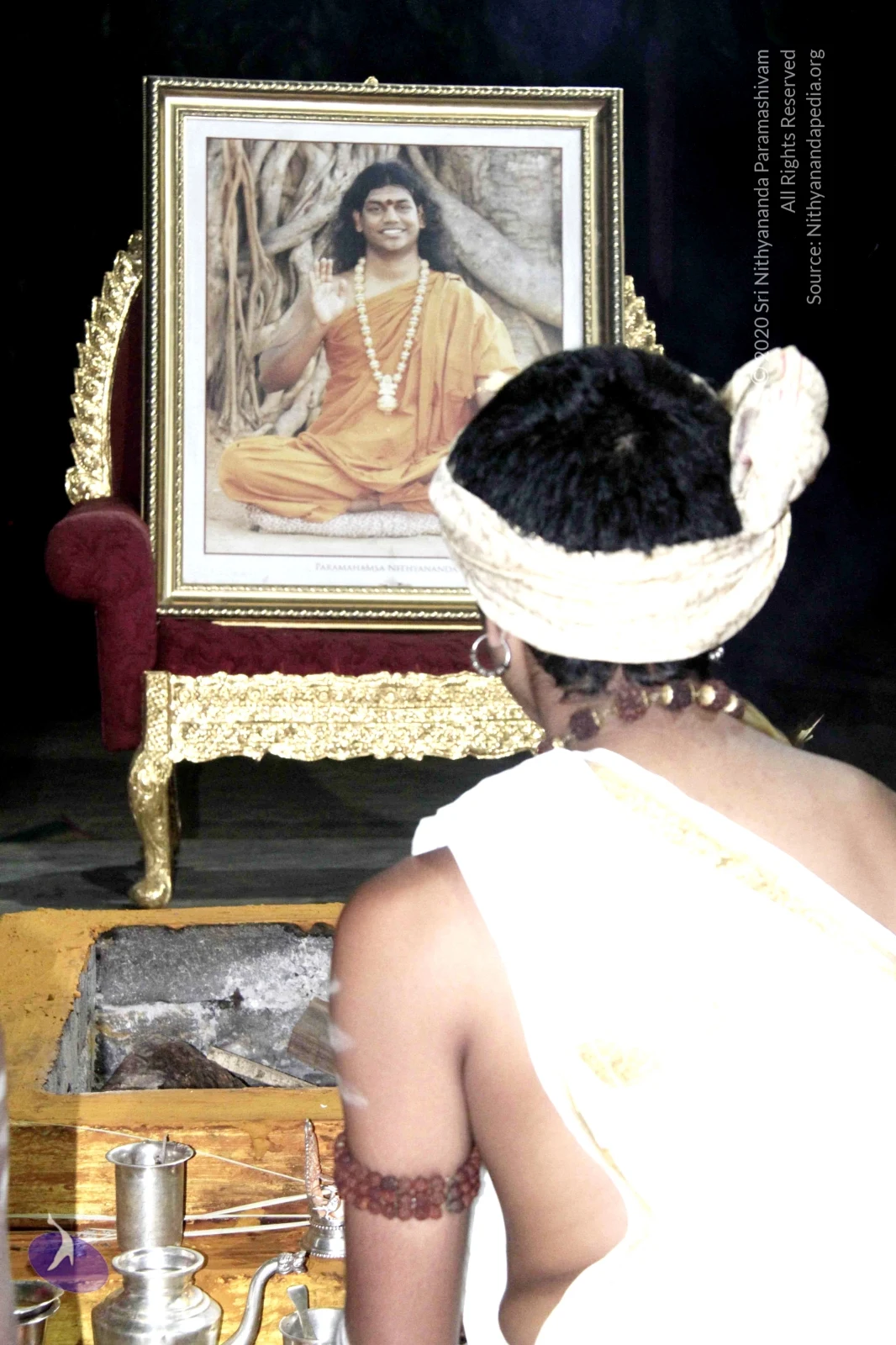
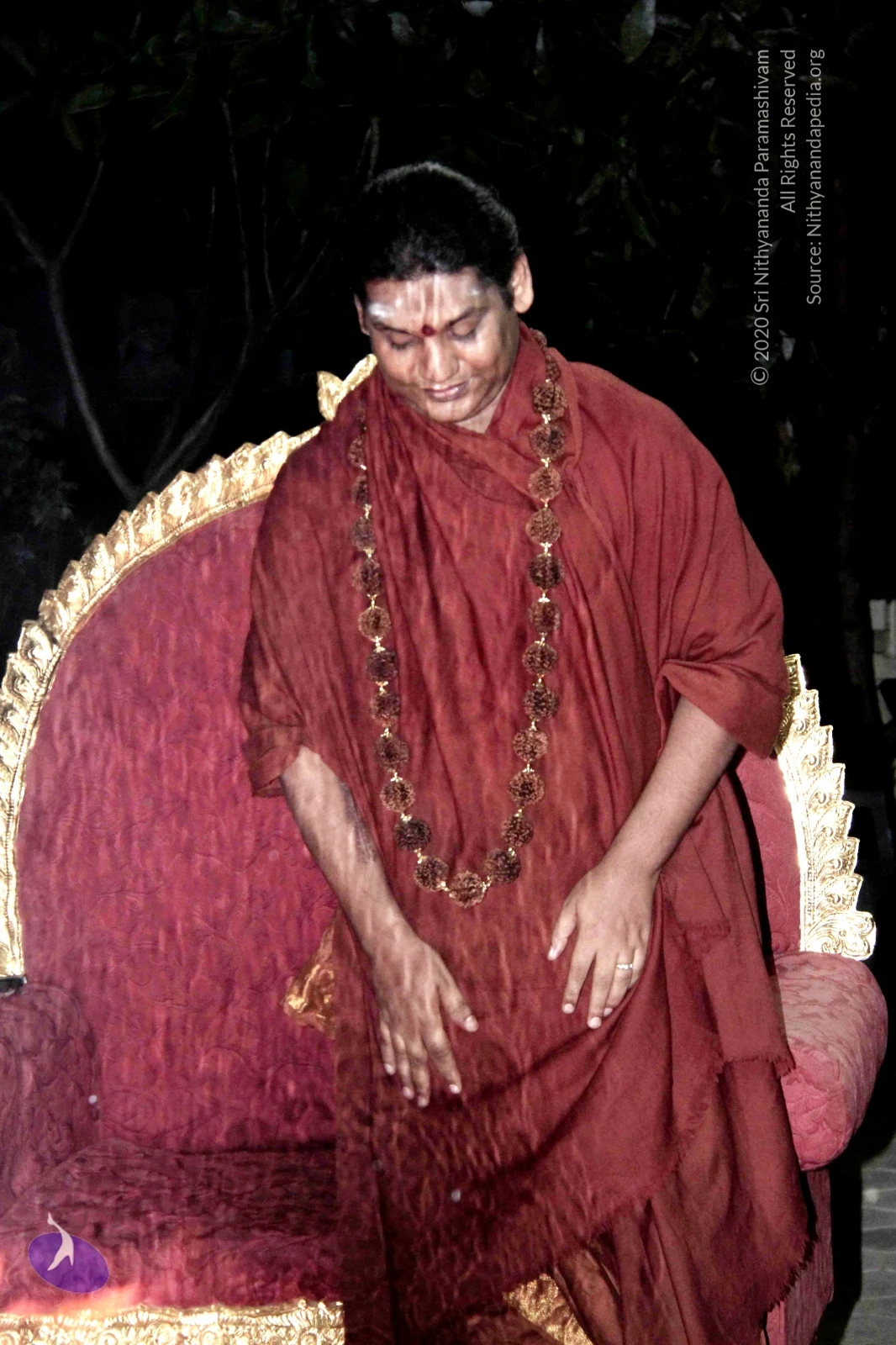
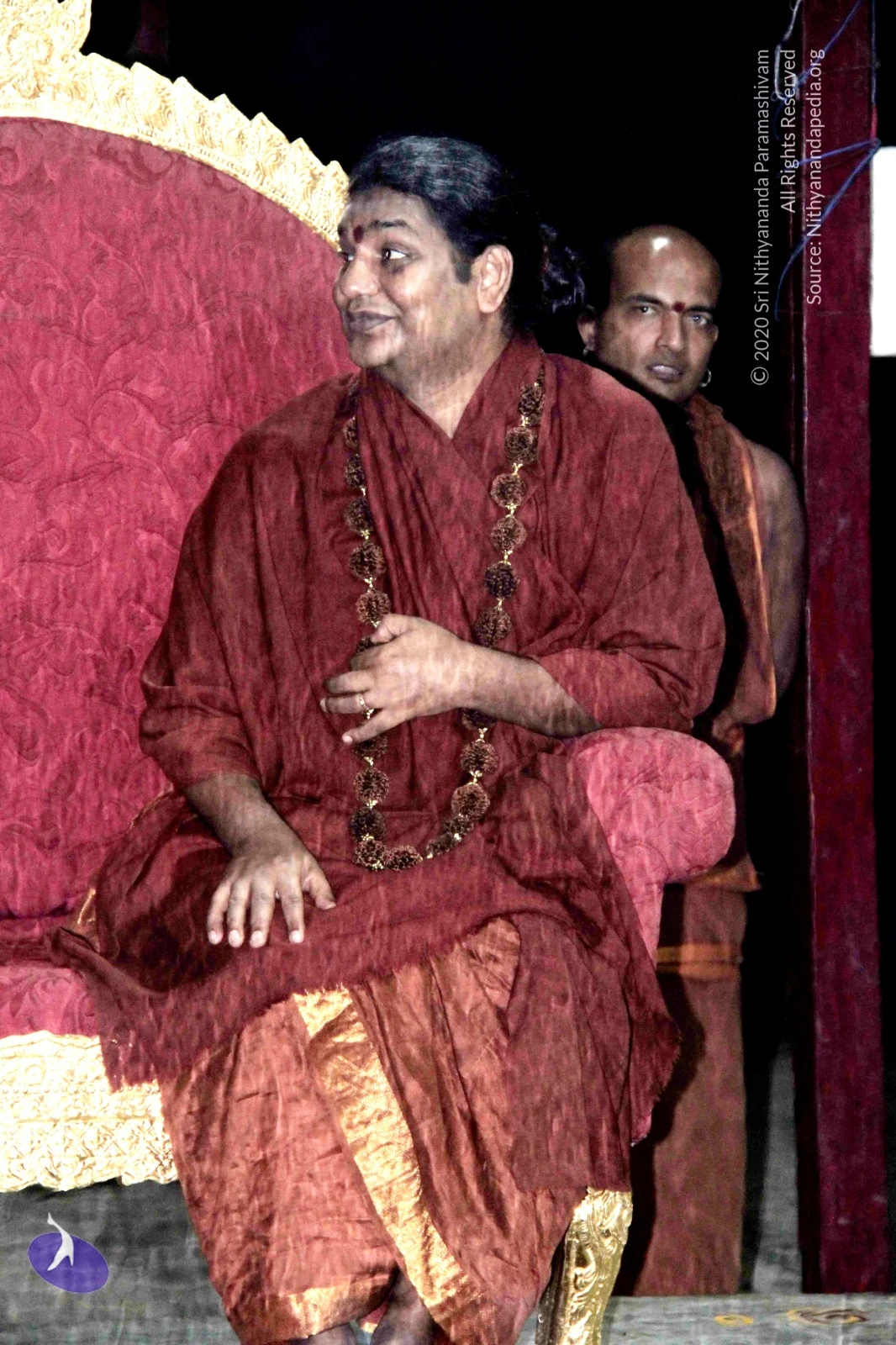
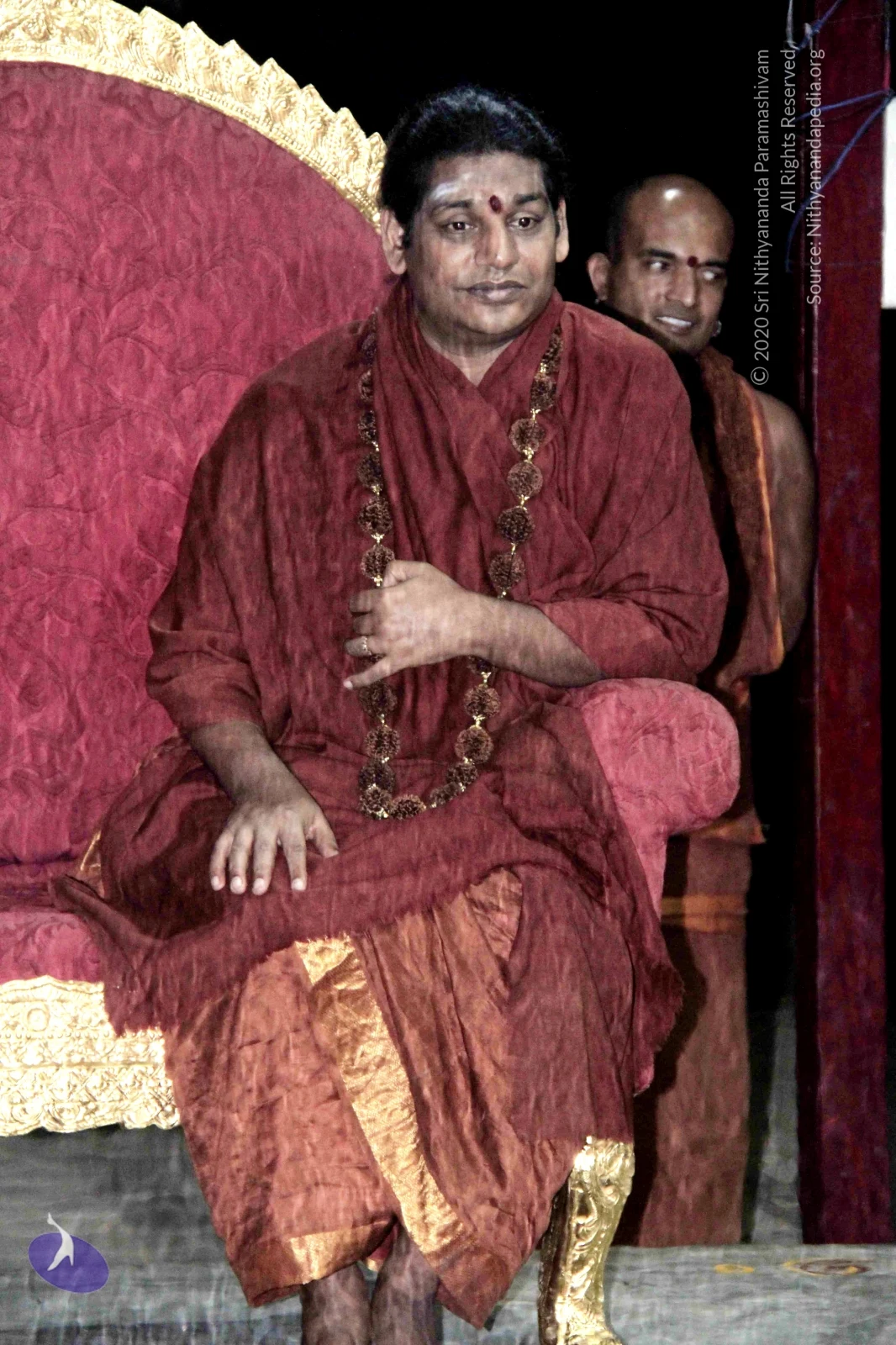
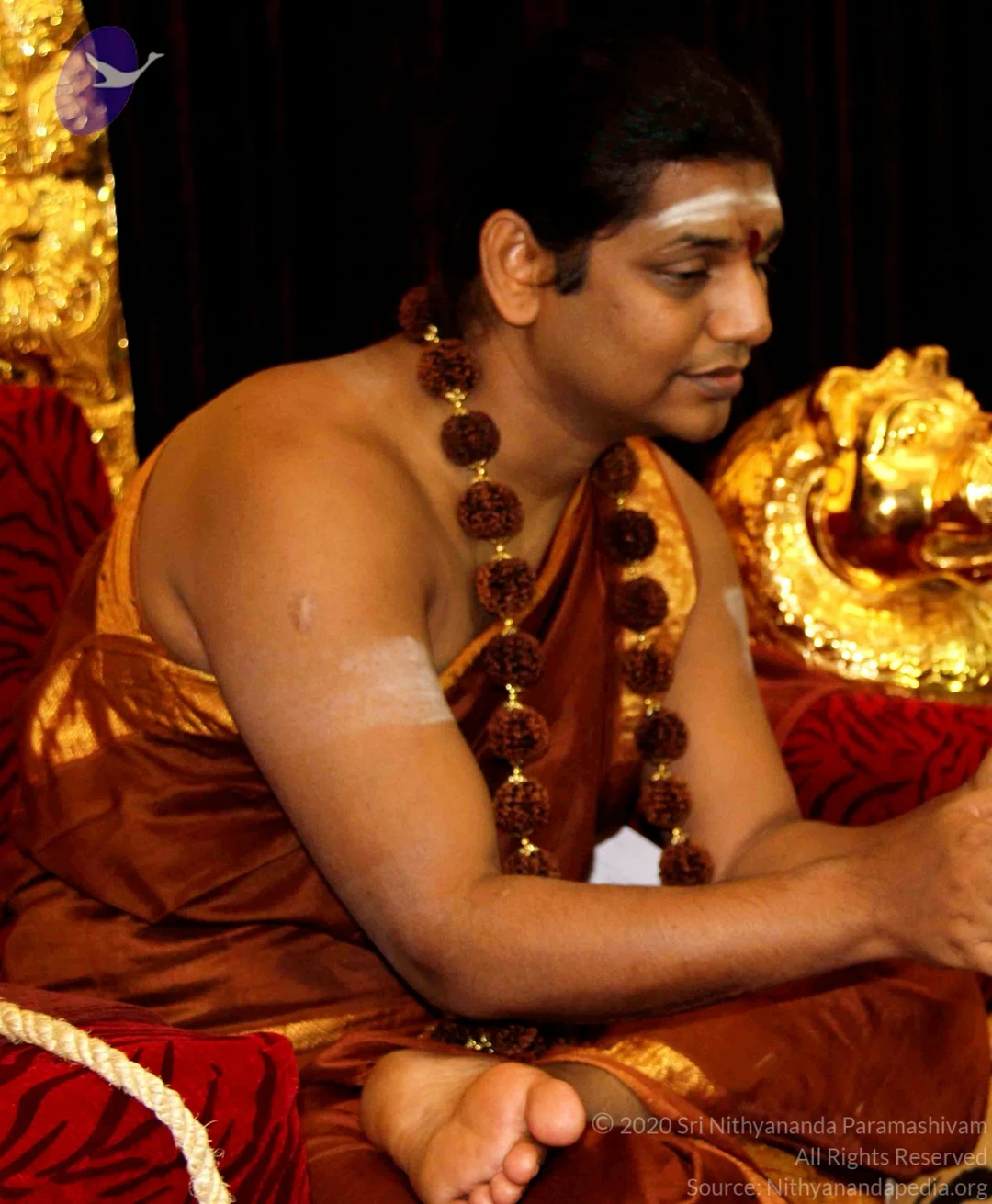
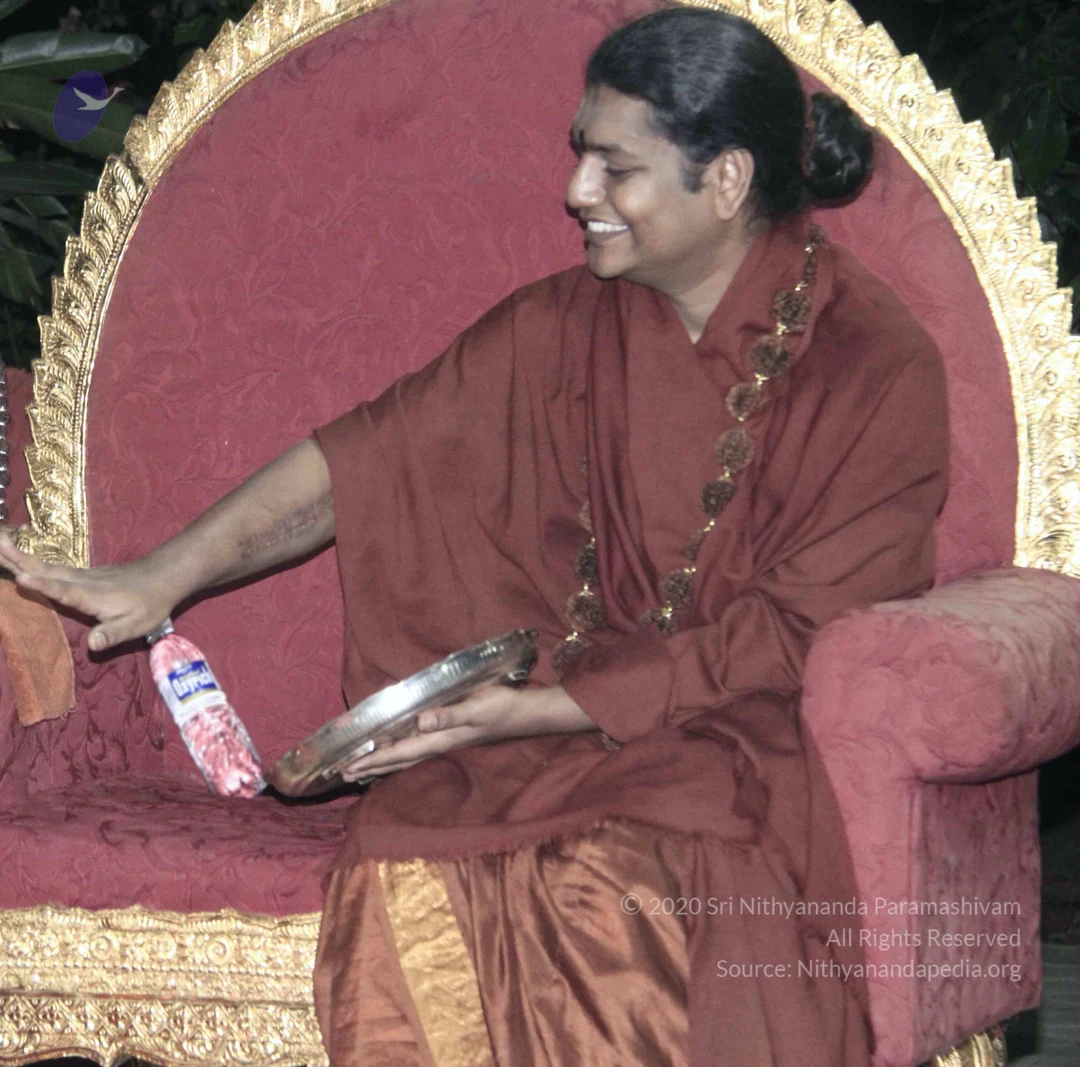
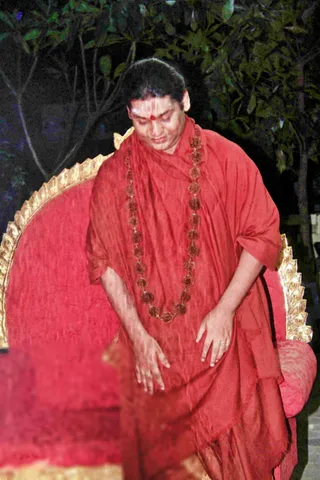
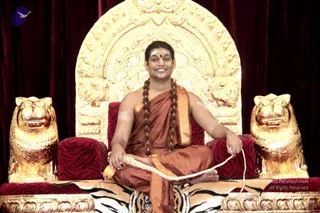
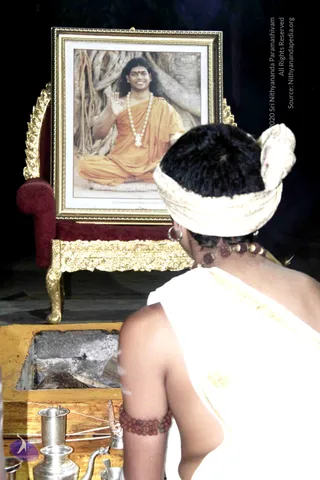
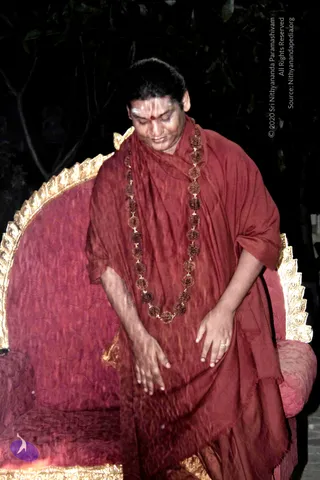
A photograph of a single ornate brass trident, or trishul, shown upright against a plain black background. The central blade has a leaf-like emblem engraved near its base, the two side prongs curve outward with pointed tips, and the shaft is fitted with a decorated collar of raised dots and a cobra-hood-like ornamental base. No people are present, and the object is not connected to any visible ritual scene.A brass trident (trishula) photographed against a plain black background, shown upright with its three prongs at top. The central prong has a leaf-like incised motif, and the shaft joins a head decorated with embossed cobra-hood patterns and a ribbed collar. No people are visible; the object is shown alone as a ritual implement associated with Shiva.A seated man in rust-orange and saffron-bordered robes sits on an ornate gilded throne with golden lion-head armrests and a red velvet cushion, on a tiger-striped rug. He wears a rudraksha mala necklace and a white tilak on his forehead, holds a white rope in his hands, and smiles. Red velvet drapes and a gold-framed backdrop surround the throne.Photograph of two decorated deity murti statues standing in a flower-garlanded shrine arch of red roses, white jasmine and yellow marigold. The left figure, in white dhoti, has a jewelled crown, raised palm and heavy silver and gem ornaments. The right figure wears an orange sari, a jewelled crown and layered silver necklaces. In front stand three brass kalasha pots topped with mango leaves and coconuts, draped in blue and purple cloth with garlands. The scene is a temple decoration with ritual offerings, and the statues are not people.A photograph taken from behind a priest seated before a fire pit and a framed portrait. The priest, with a shaved-looking dark head wrapped in a white turban and wearing a white cloth draped over the shoulder, sits facing the portrait; rudraksha beads encircle his upper arm and neck. The framed portrait, set on a red and gold ornate chair, shows a smiling figure in orange robes and a white flower garland, seated before a banyan tree with a raised hand, labelled as a portrait caption. Silver vessels, a kalasha-style pot and a spouted ewer sit on the wooden platform beside the fire pit, which holds burnt wood.A man in a maroon-red shawl and robe sits in an ornate red upholstered chair with gold scalloped trim, against dark foliage at night. He wears a long strand of large rudraksha beads with gold spacers, white and red markings on his forehead, and a ring on one hand. His eyes are lowered and his hands rest on his lap. a person: the rudraksha mala, red robe and forehead markings are the qualifying cues, and he is seated in person.

2-Darshan
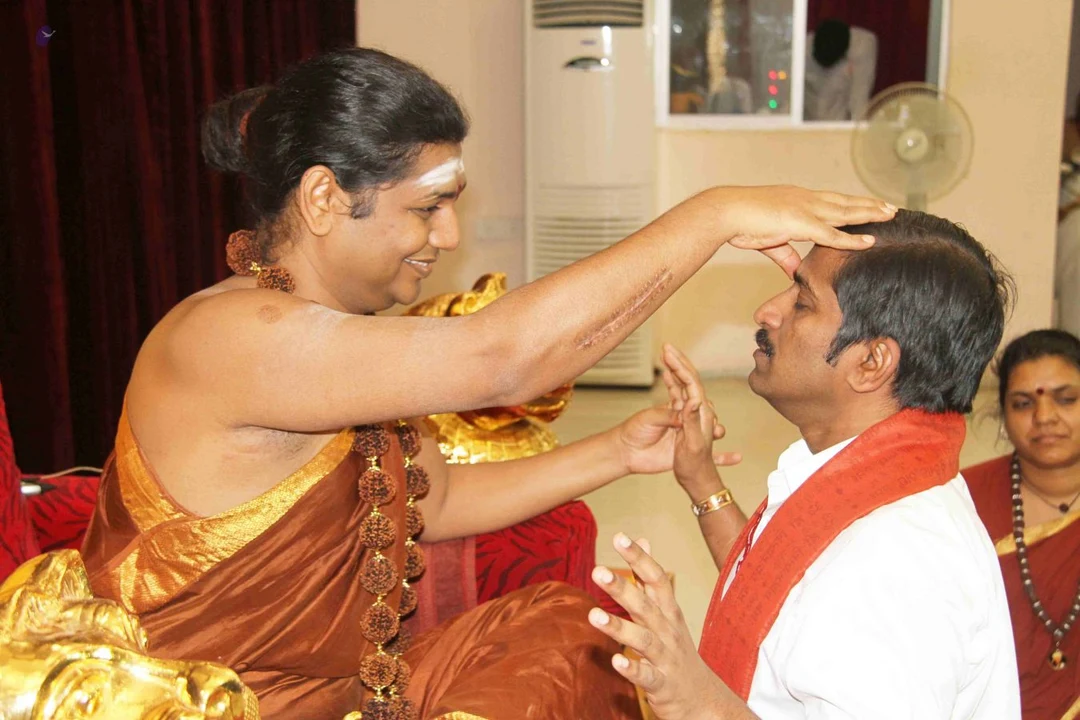
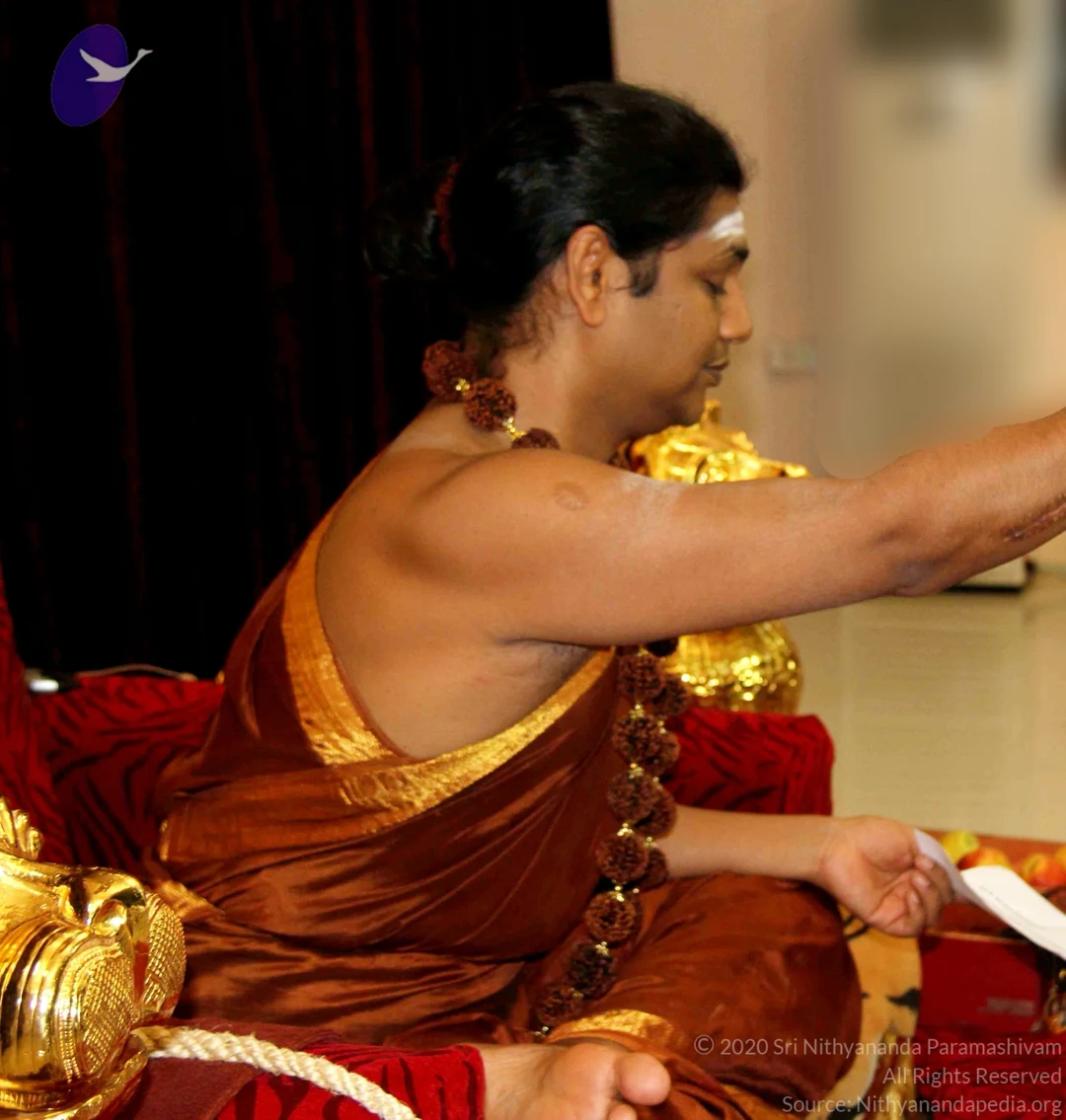
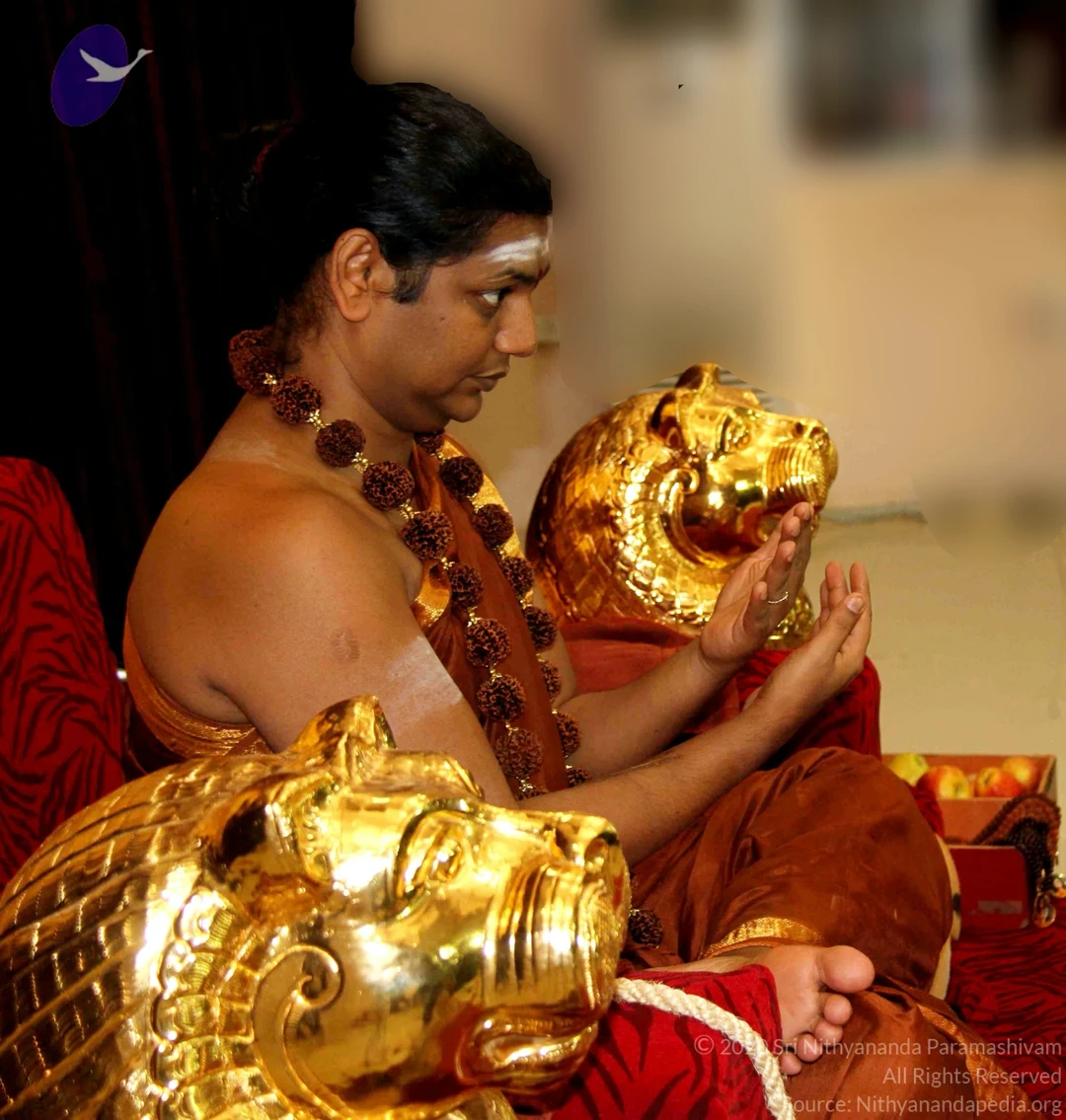
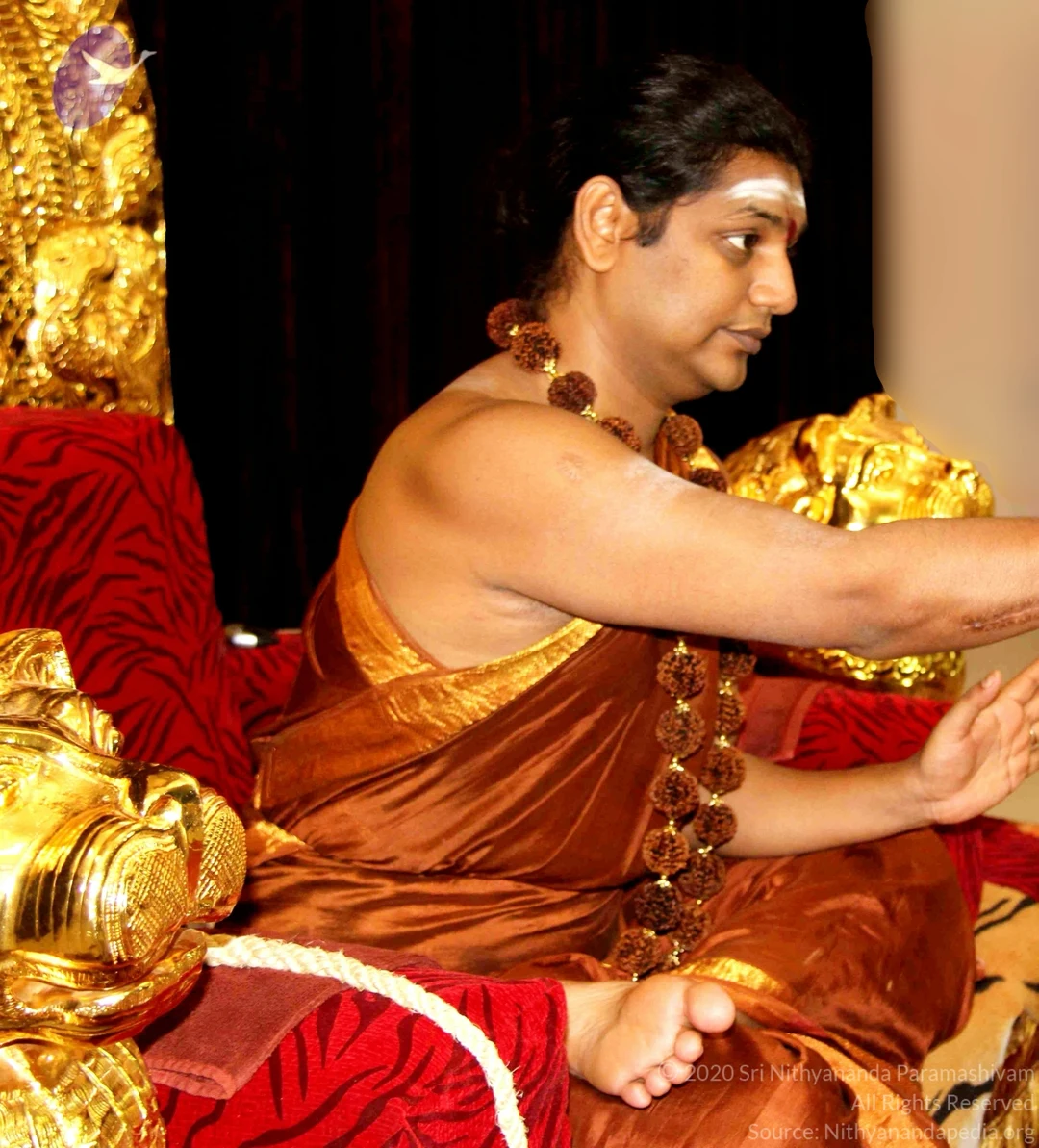
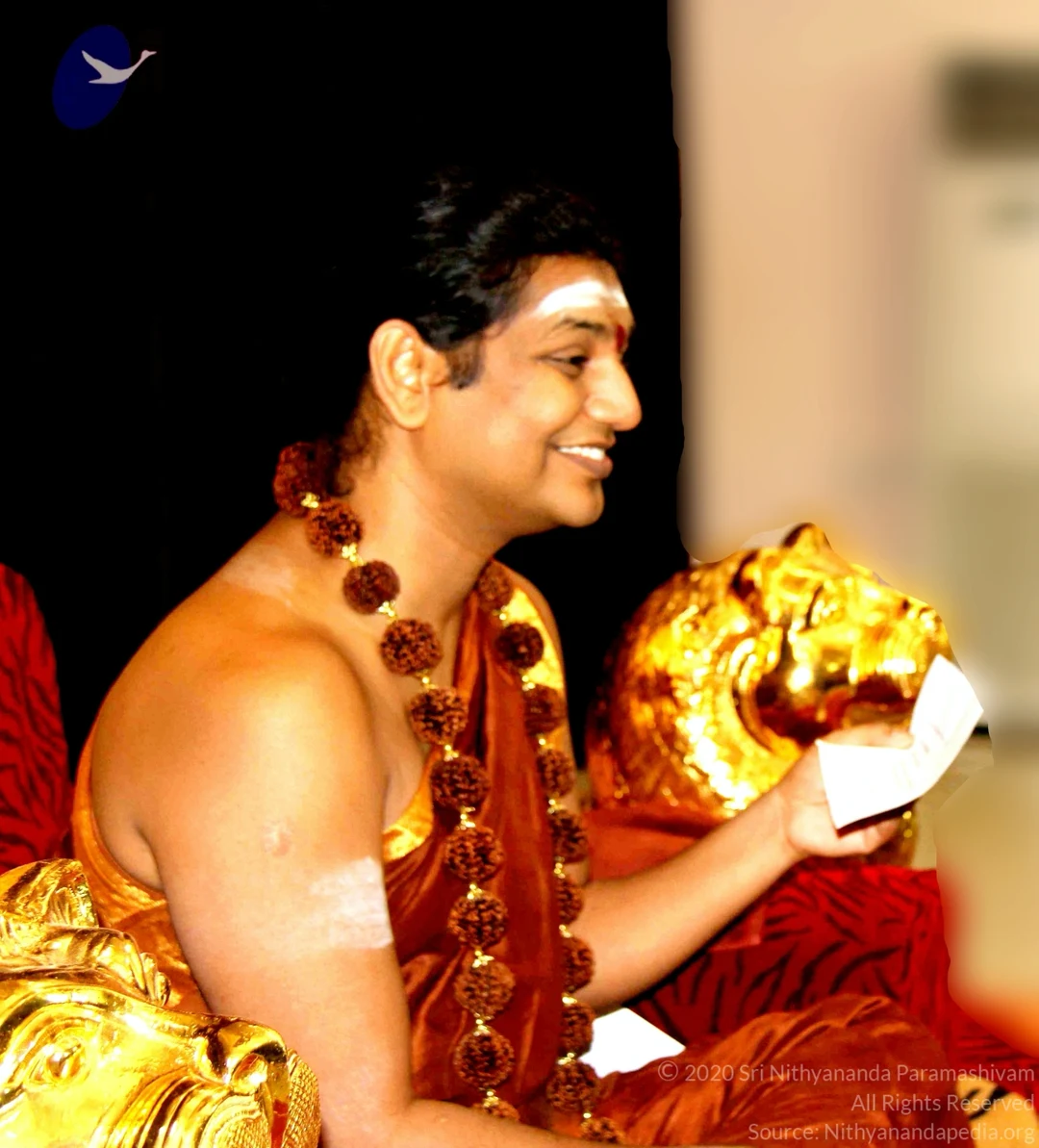
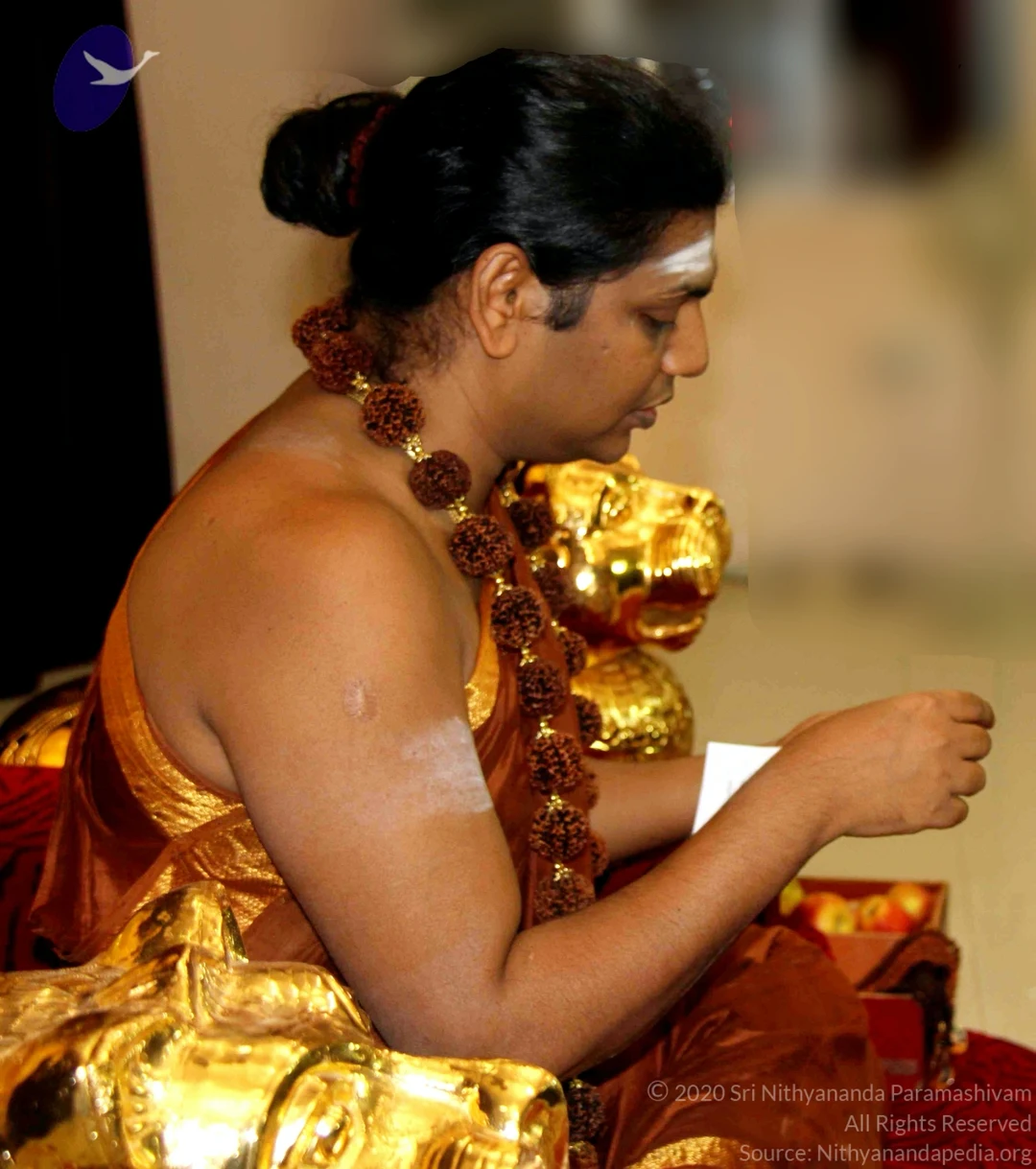
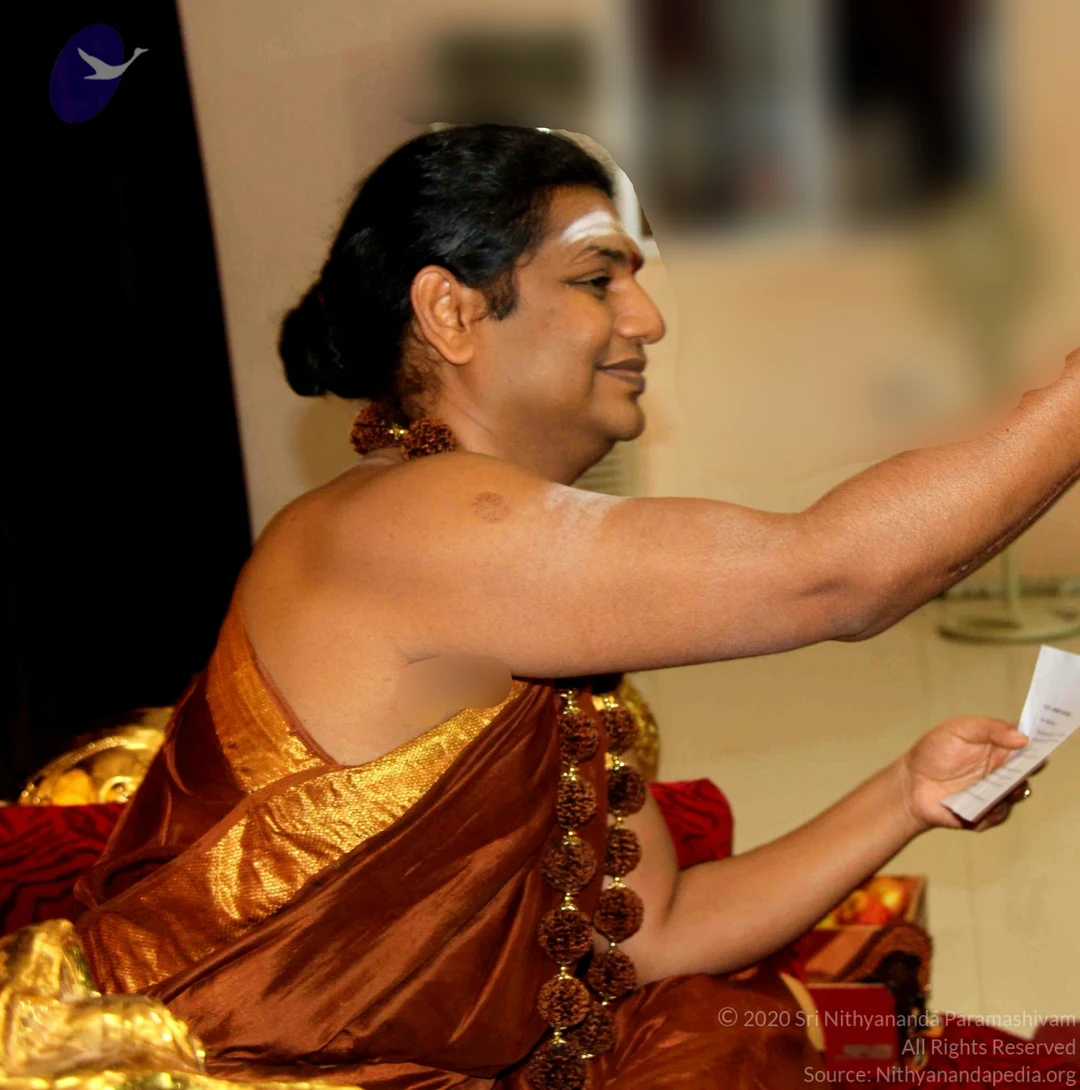
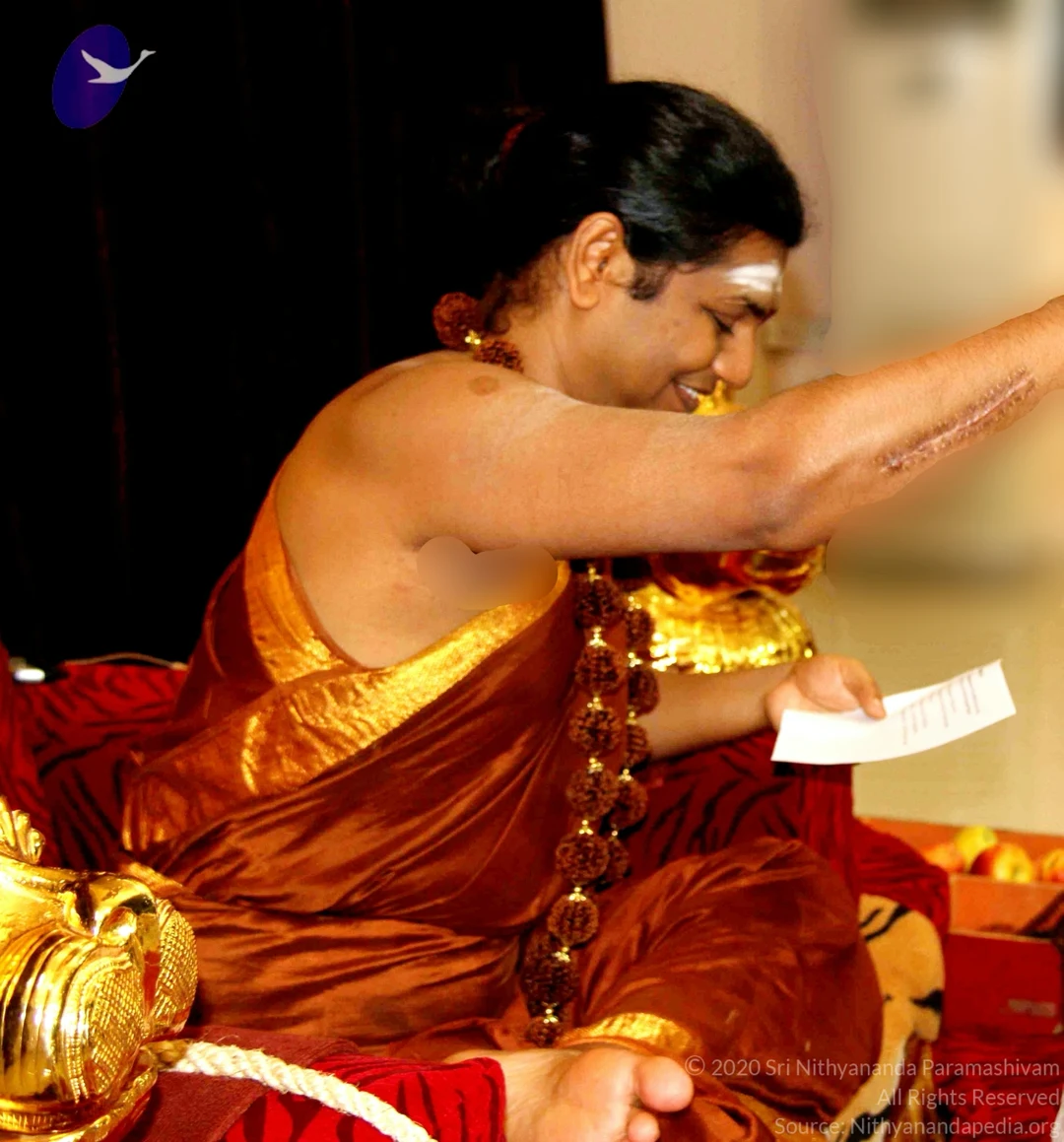
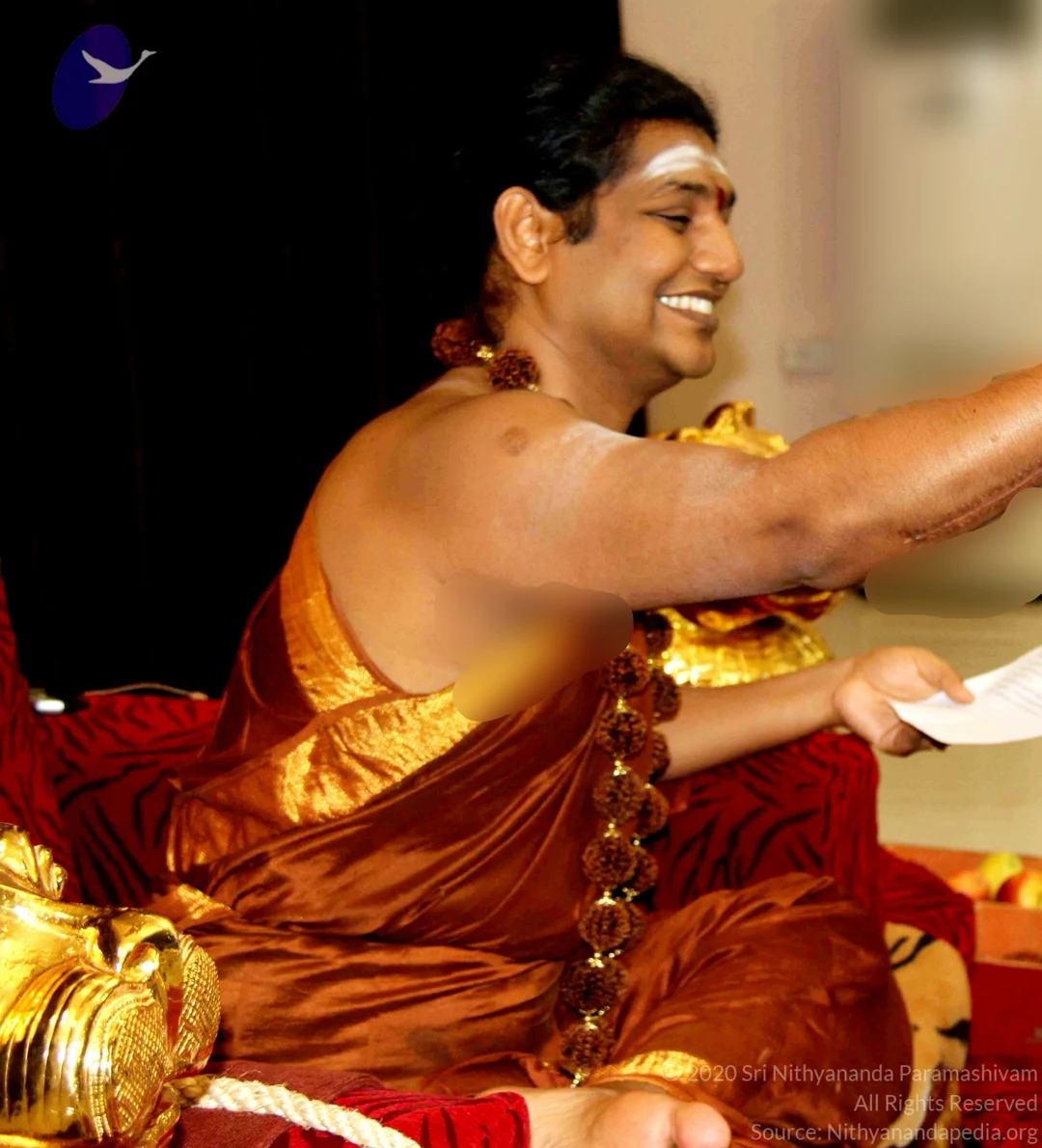
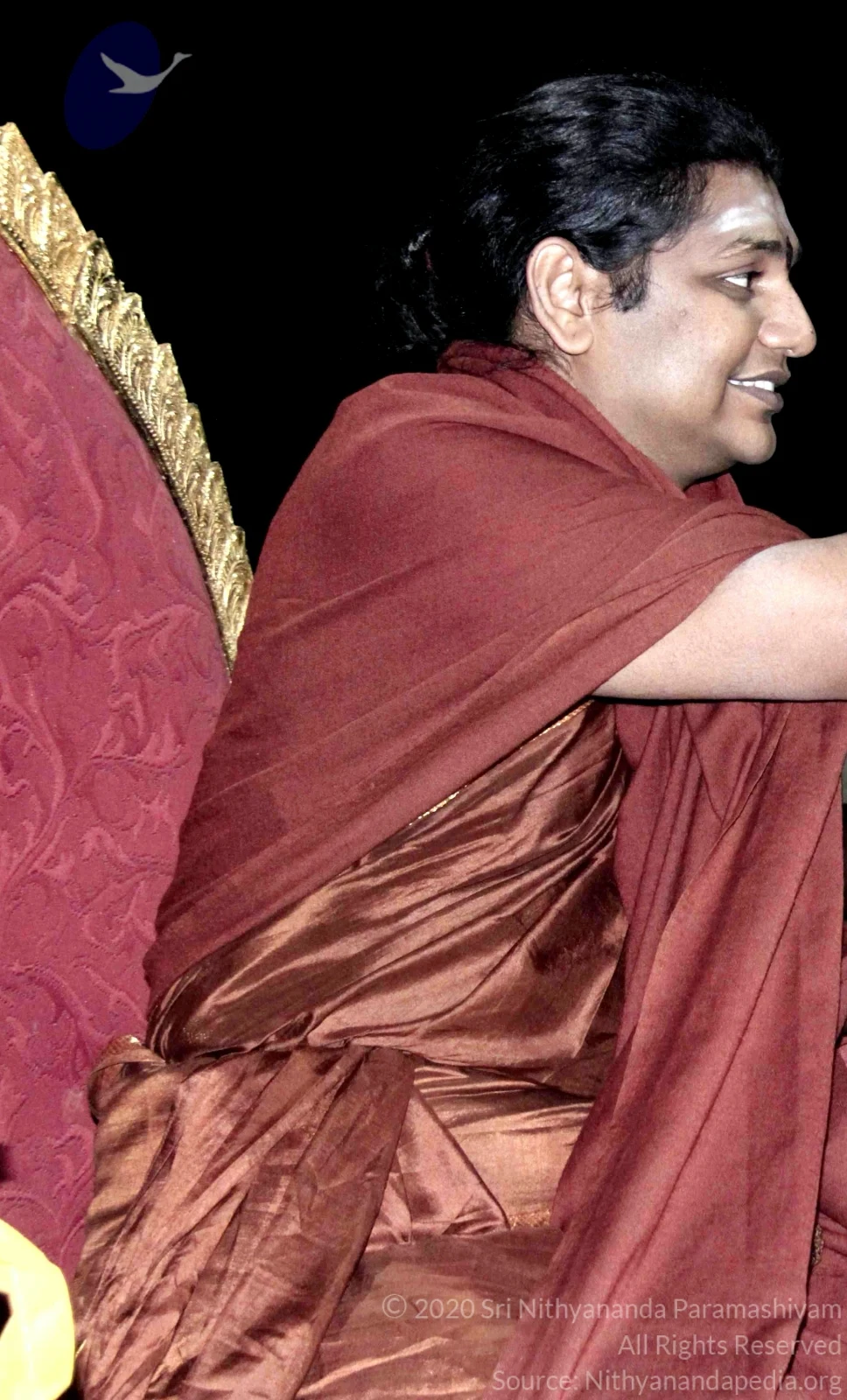
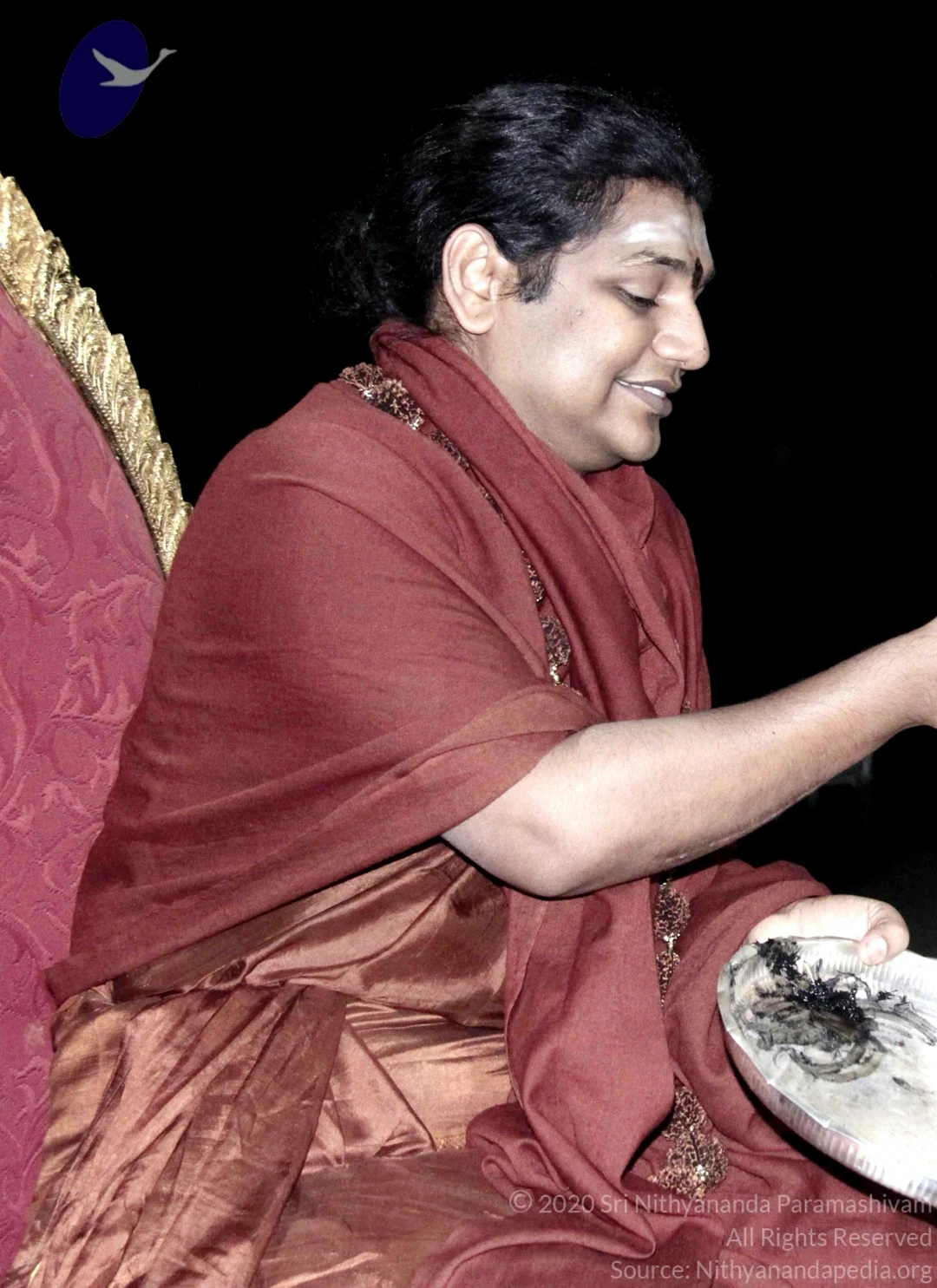
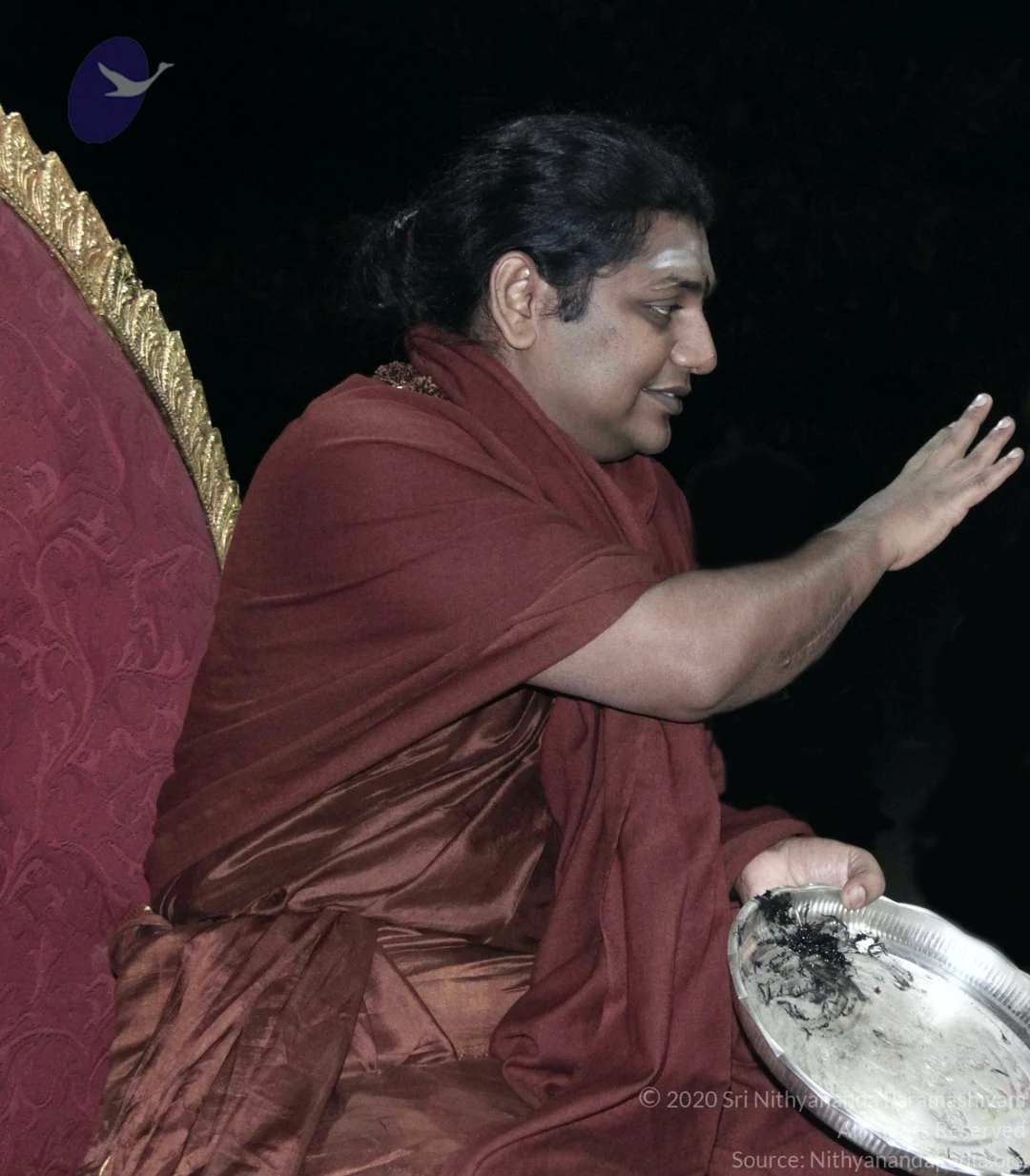
27 photosSource gallery
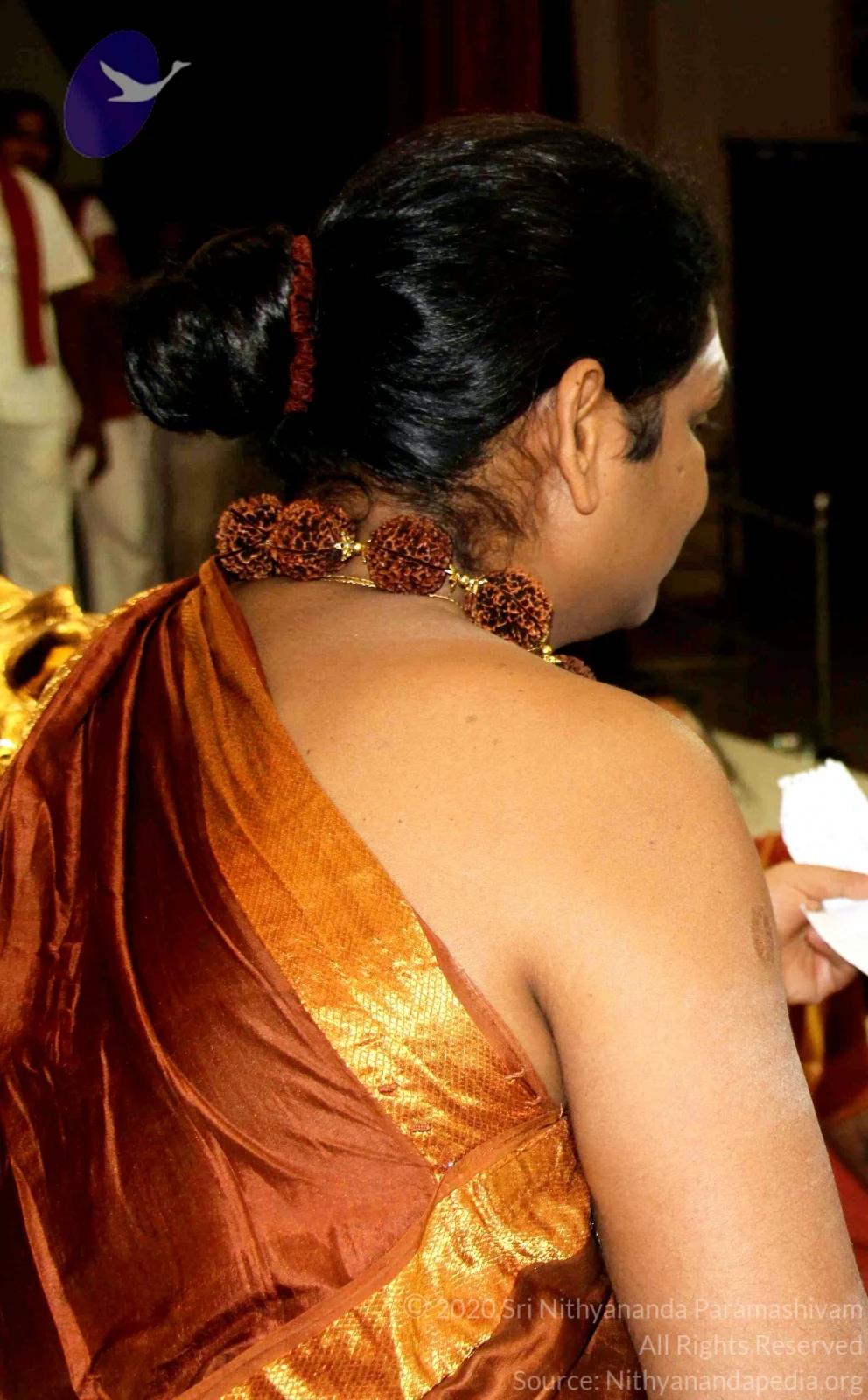
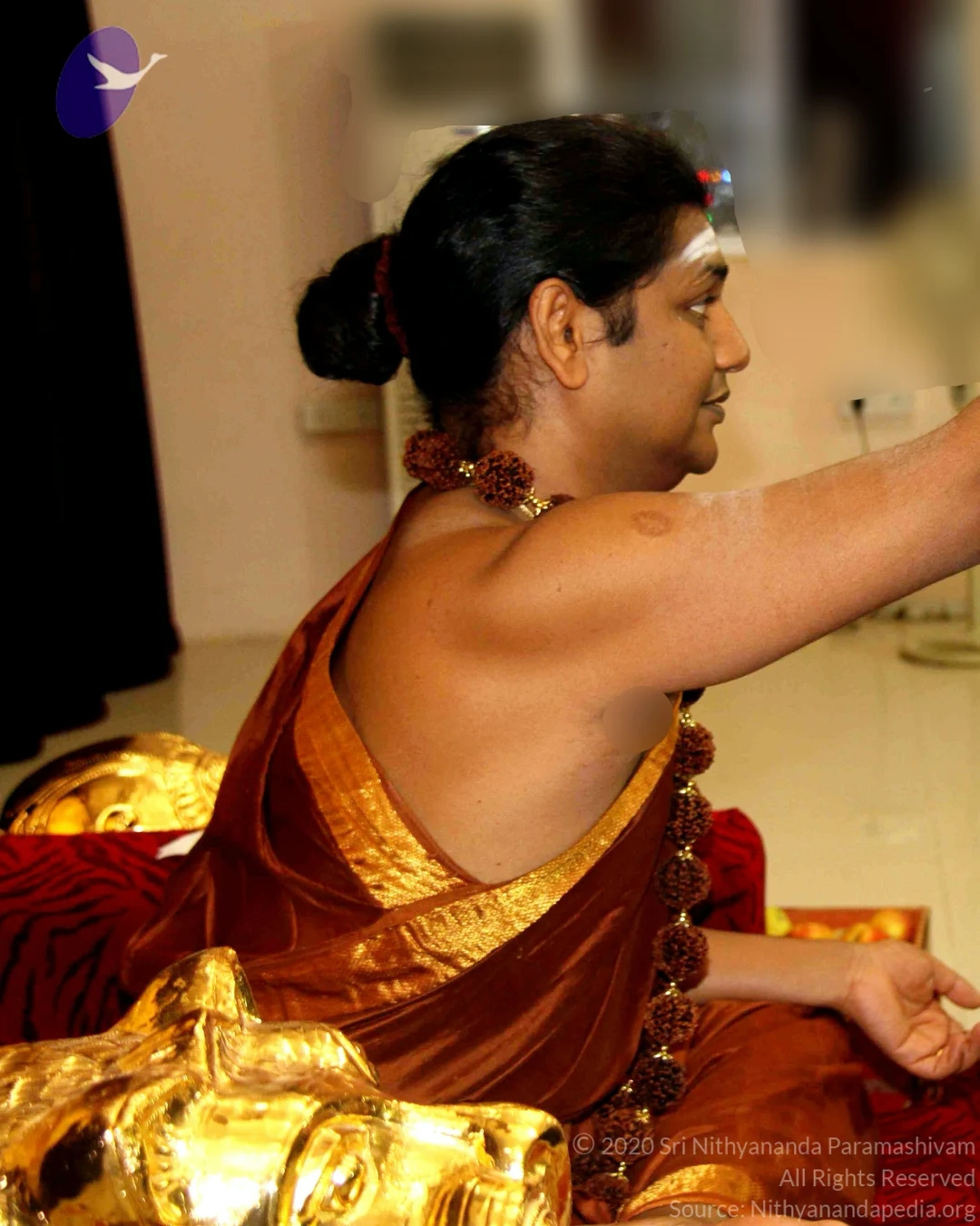
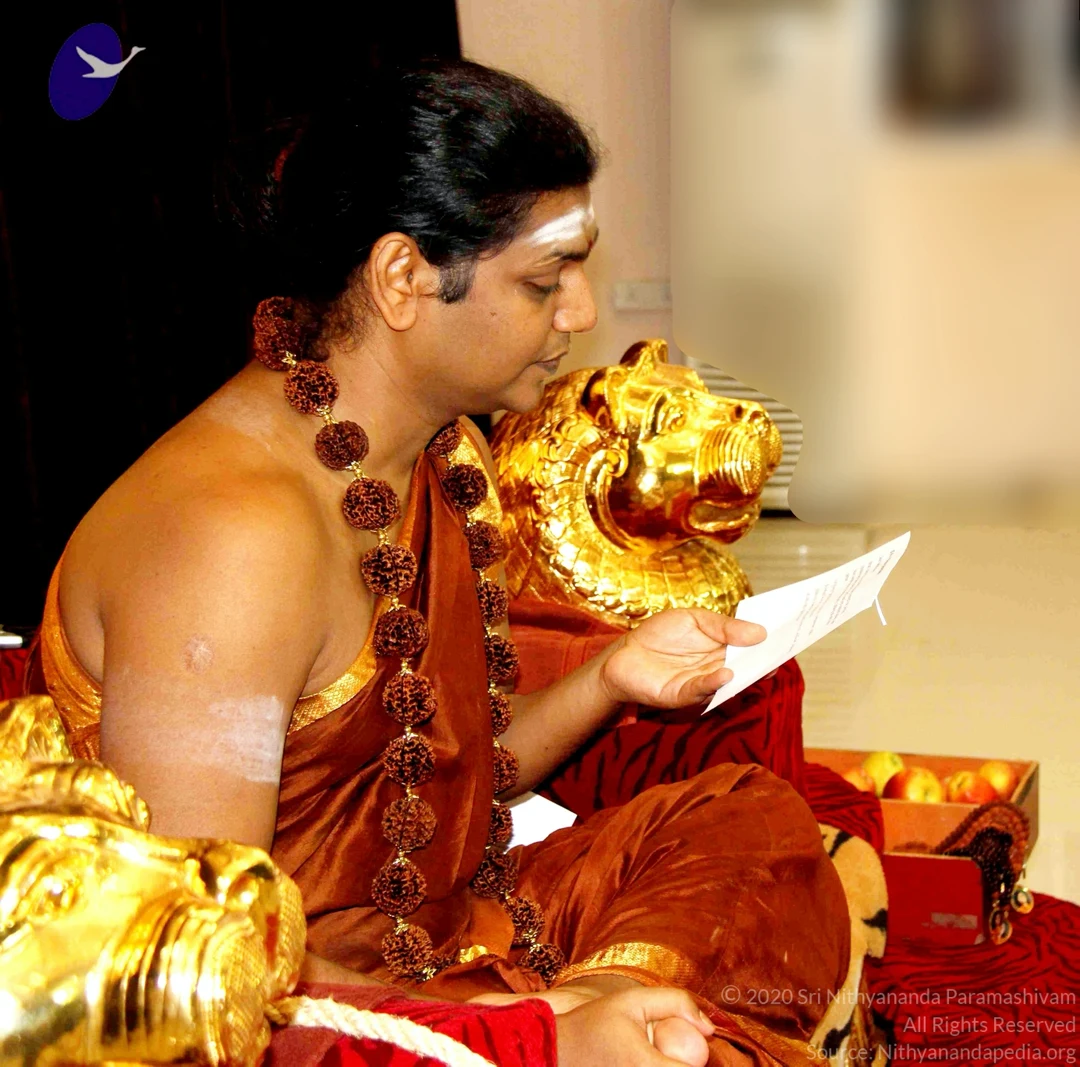
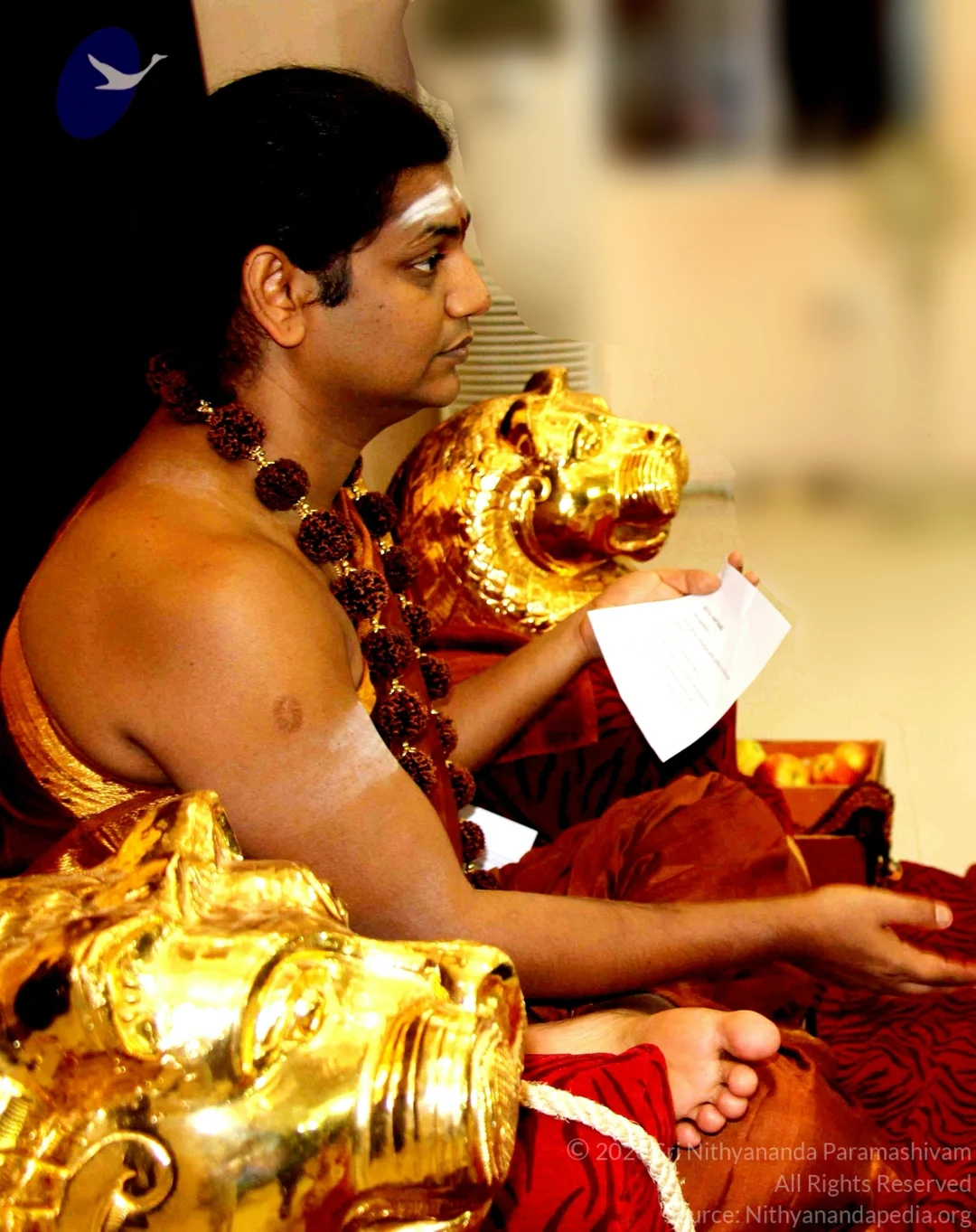
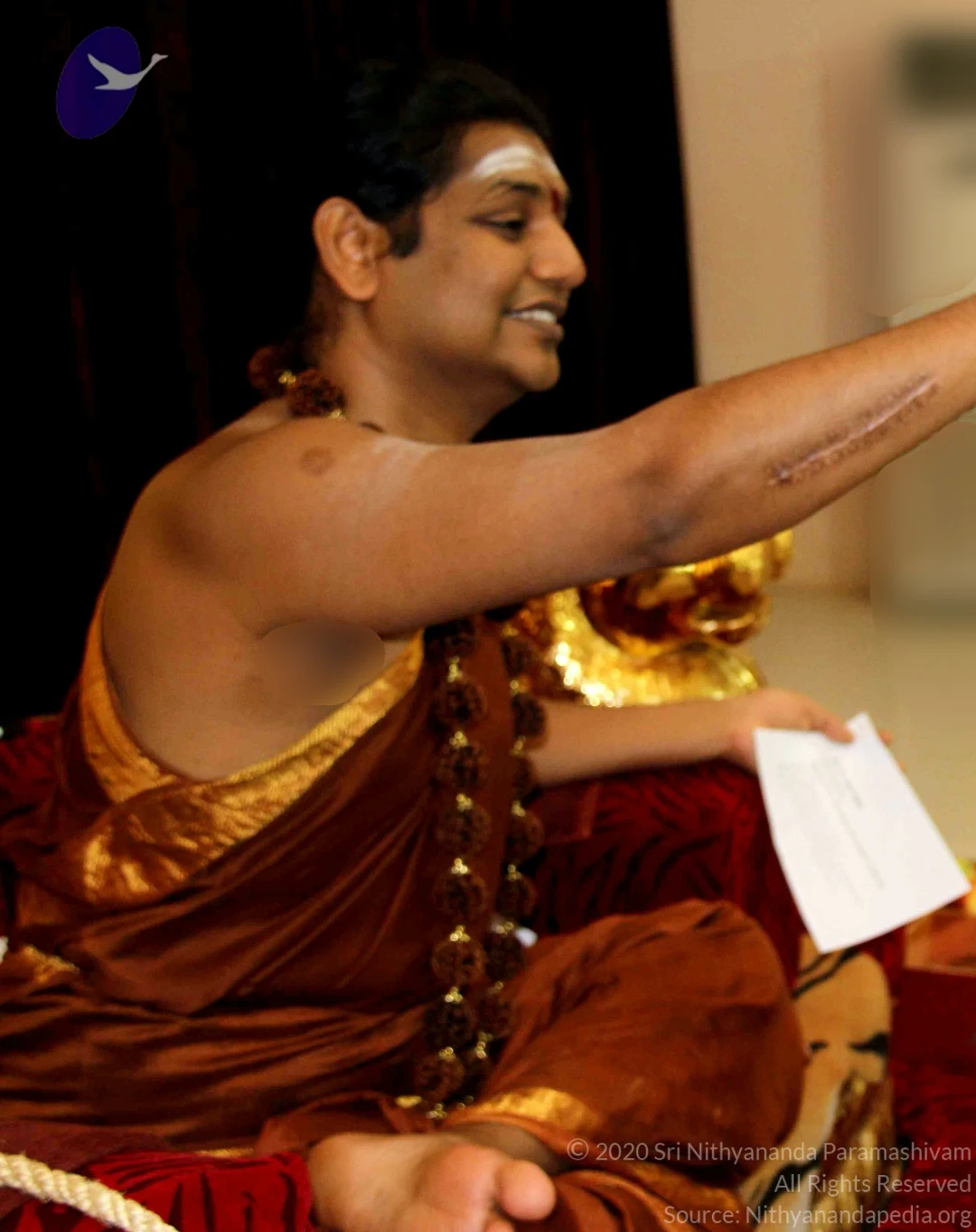
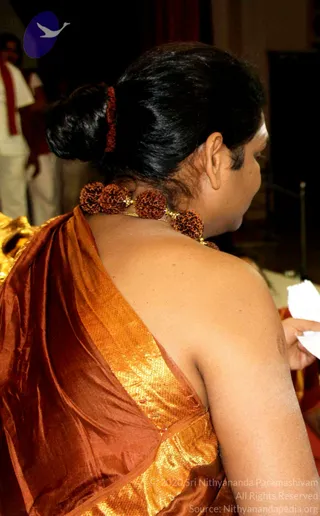
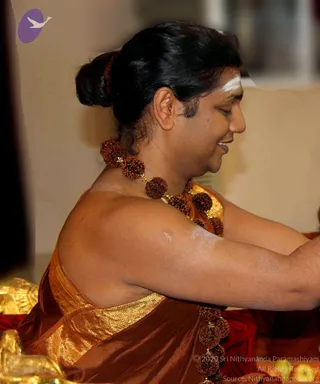
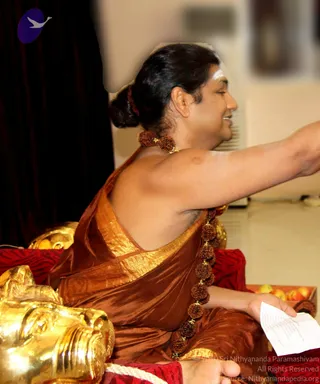
Photograph of a woman seen from behind and slightly from the side, her black hair pulled into a low bun with a red-brown rudraksha band. She wears a copper-brown silk garment with a shimmering gold border draped over her bare back and shoulder, and a multi-bead rudraksha mala with gold spacers around her neck. A white paper or cloth is held in her right hand at the edge of the frame. Blurred figures in white clothing and a red sash stand in the background of an indoor hall.Side profile photograph of a person seated with eyes lowered and a faint smile, wearing a brown and gold silk garment draped over the shoulder, with a long multi-strand rudraksha mala with gold spacers around the neck. A white forehead marking is visible, hair is swept into a bun, and a hand extends into the frame at right. Blurred warm-toned background with gold and red ritual items at the lower edge. Appearance-based identification is not established, so the person is described by role only.Photograph of a seated figure in a brown-orange silk garment with gold border, wearing a rudraksha mala draped over the shoulder and a rudraksha necklace at the neck, with a white vertical tilak on the forehead and hair in a bun. The figure faces right, one arm extended toward the right edge, and holds a folded white sheet of paper in the other hand. In the foreground at left is a large gold-colored metal deity murti head with a rope tied to its base. Behind, a red cushion and a tray of fruit are visible. a person by visible cues of rudraksha malas, ornate orange-brown clothing and tilak, while the seated figure's identity remains an appearance-based candidate only.A seated man in a brown-orange draped garment and a long rudraksha mala with gold spacers sits on a red tiger-print cushioned seat beside a golden lion-head sculpture. He is smiling and looking down at a sheet of paper held in his right hand, while his bare feet rest on the seat. A small white tilak marks his forehead. Behind him are a golden ornament, a red box with fruit and a red throw. a person: the rudraksha mala, saffron-brown robes and ceremonial seat with gold lion ornaments match the page's description of a person satsang, and the page notes his presence.A seated man speaks while gesturing with his right hand in a mudra, one fingertip touching the thumb. He wears a rust-brown shawl draped over bare shoulders and a long rudraksha mala with gold spacers across his chest. A white tilak marks his forehead with a red dot at its centre. Beside him sits a golden lion-form seat or statue, and a golden vessel is visible at the lower left, with red and brown cushions beneath.A seated man in a rust-orange draped garment with a gold border and a long rudraksha mala hanging from his neck sits on a red cushioned seat beside a gold kalasha-like vessel and a gold lion-form ornament. His right arm is extended forward and he holds a white paper in his left hand, with a white tilak on his forehead. Swamiji (probable) appears in this photo: he has swept-back dark hair, rudraksha malas and saffron-orange garments, and is performing a satsang-style instruction with a paper in hand. Behind him are dark red drapes and a pale wall.