Skip to content
Monday

18 November 2013

Sannyas the Ultimate Lifestyle.

Dated photos
433
Source pages
1
Media
2
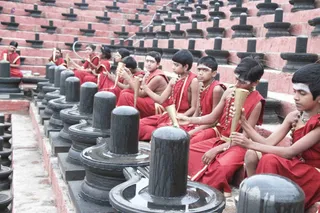
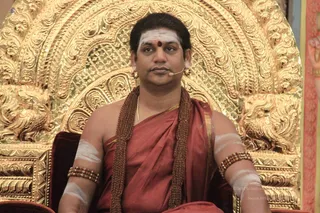
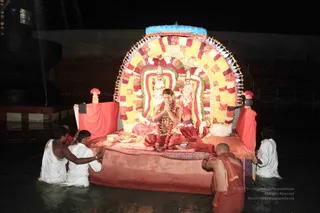
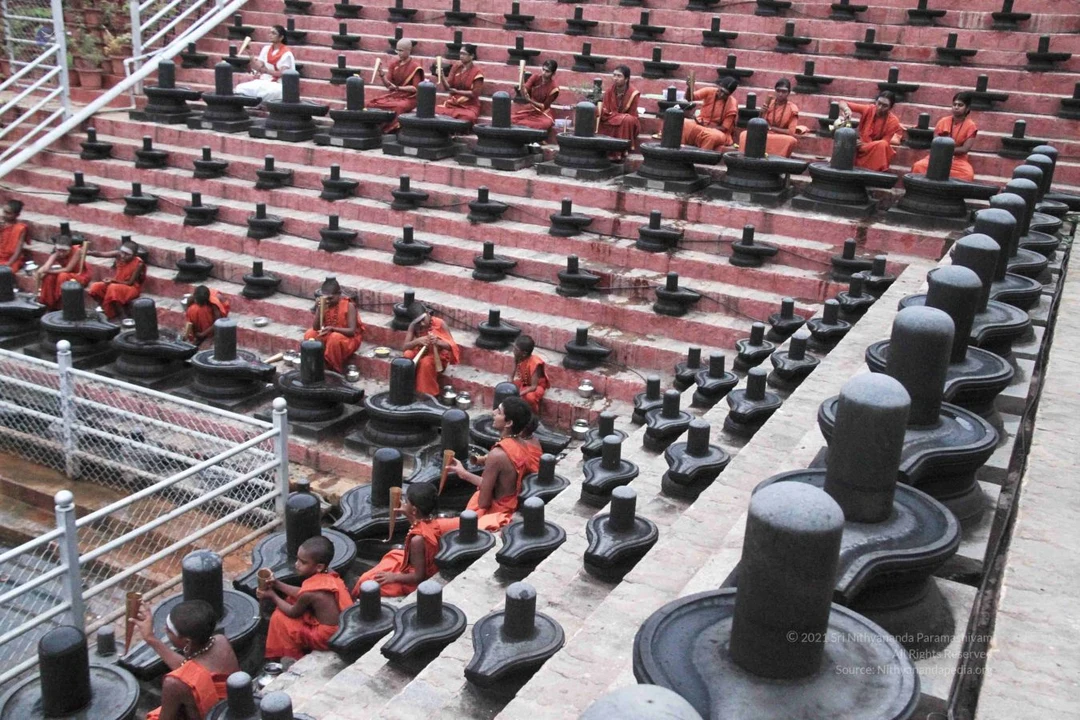
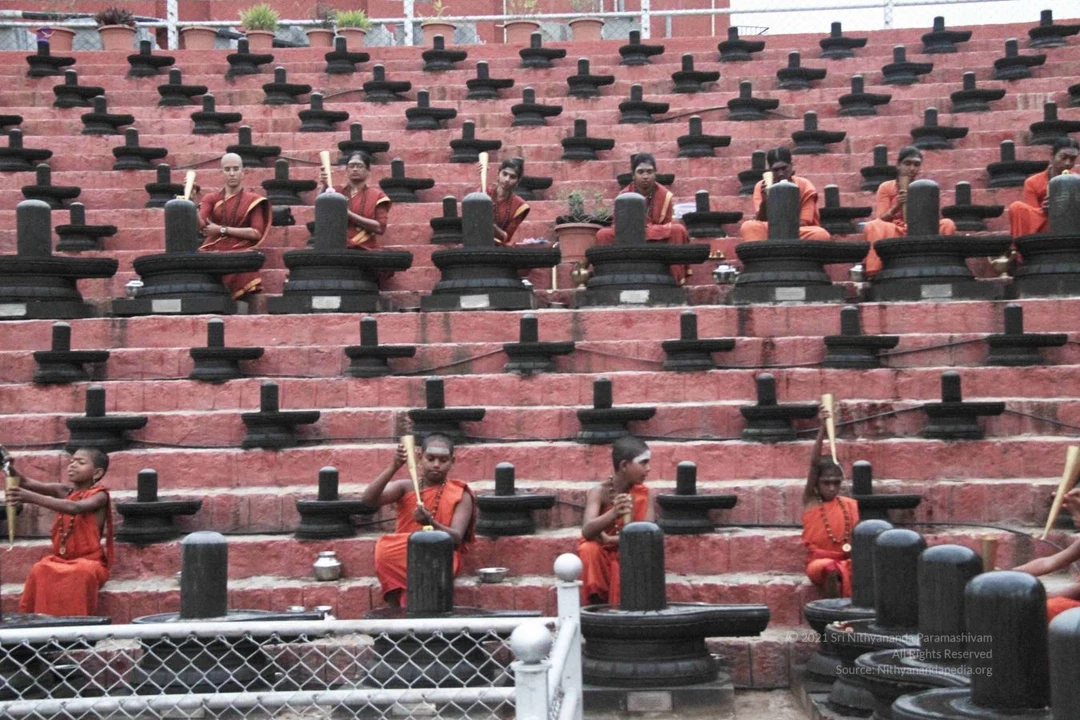
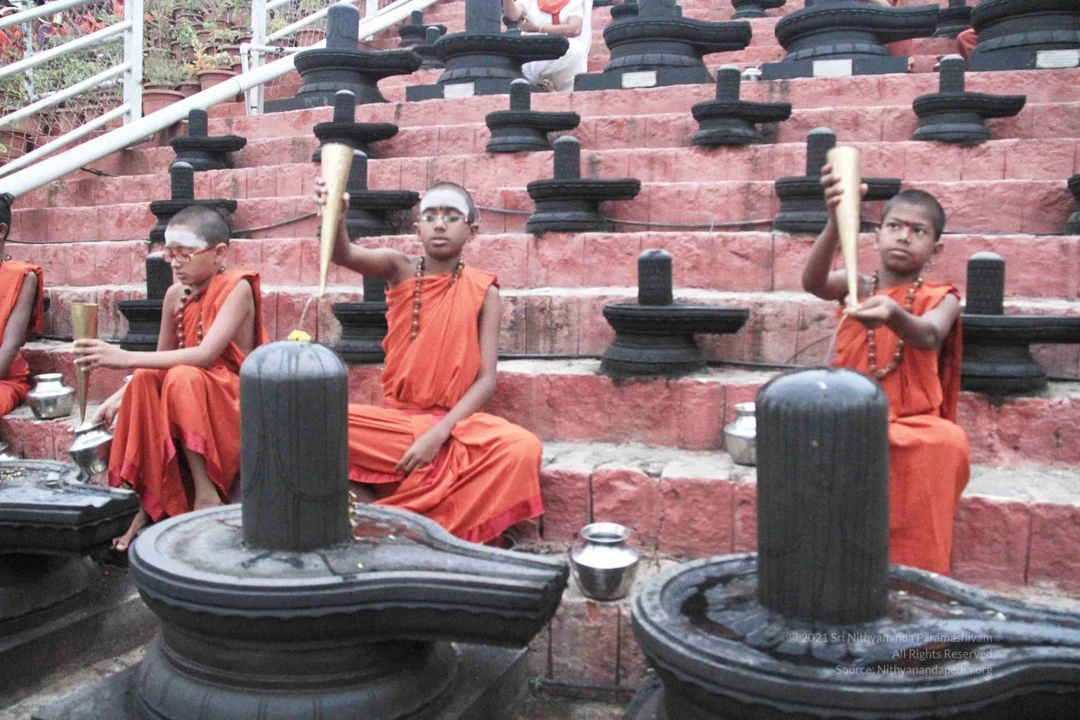
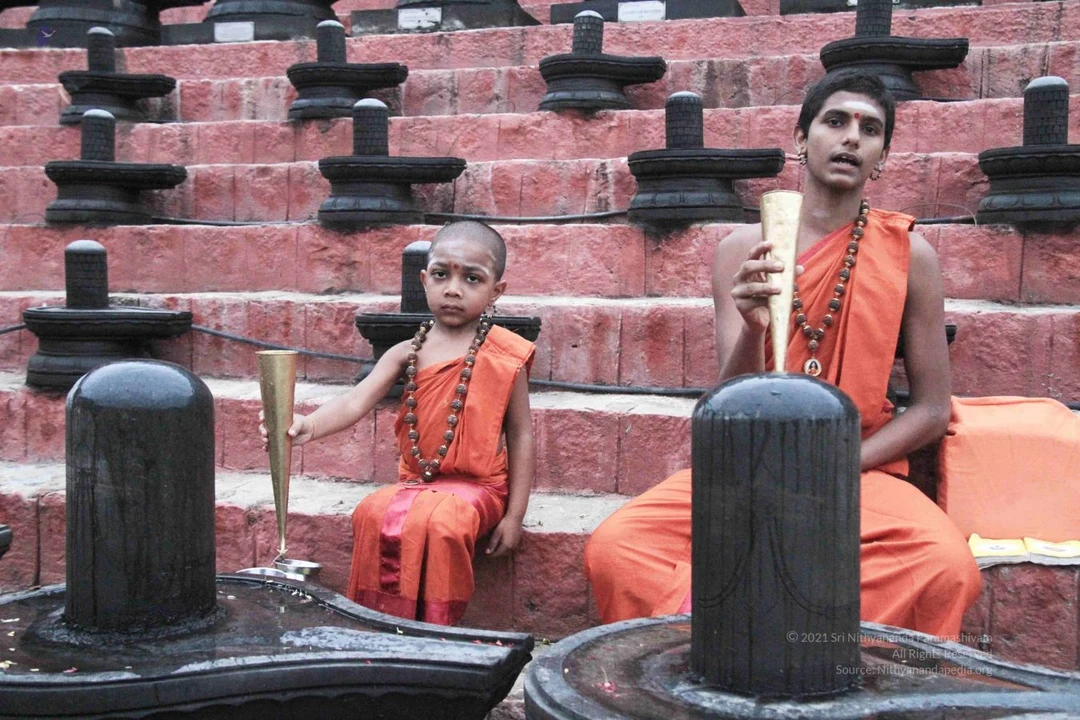
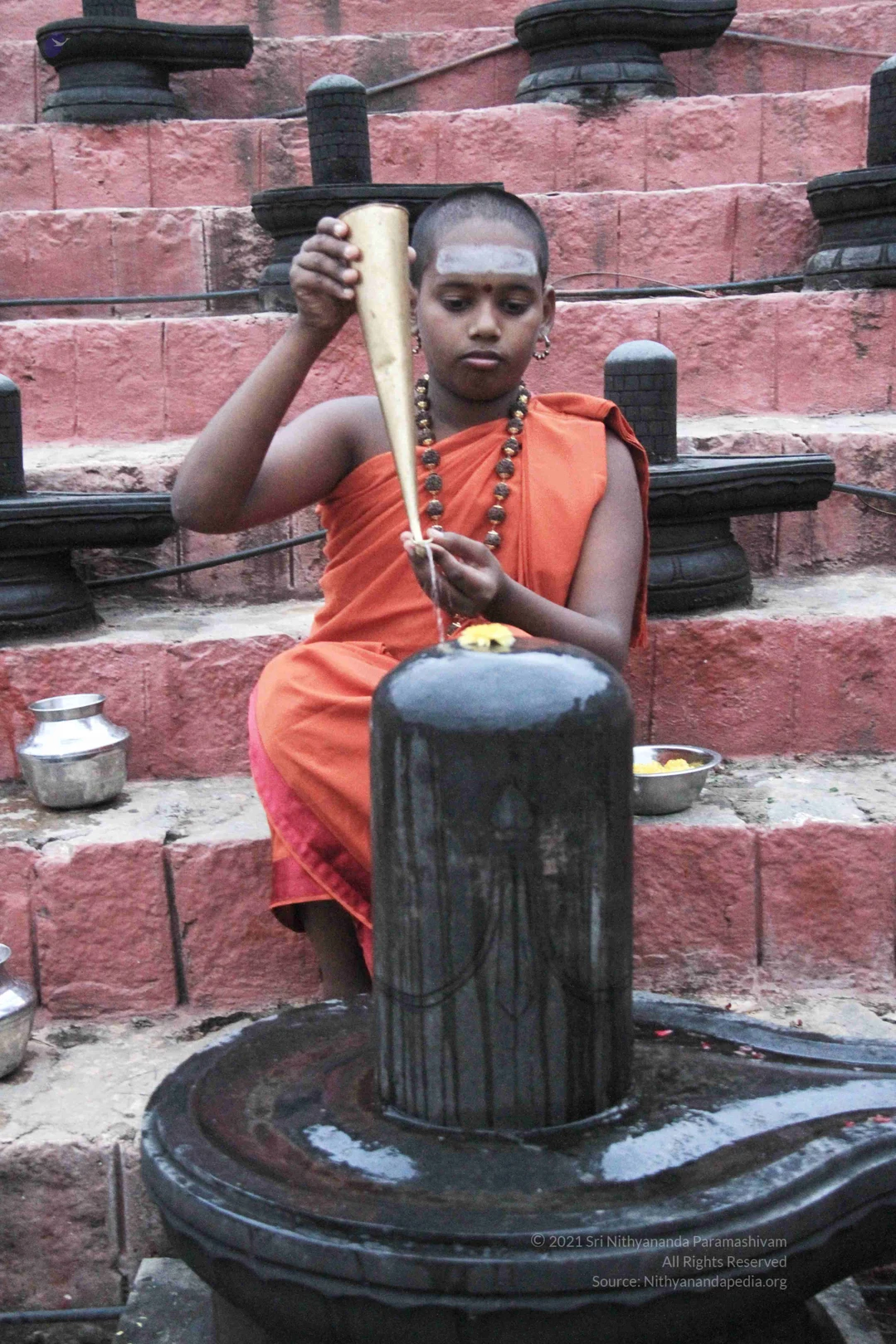
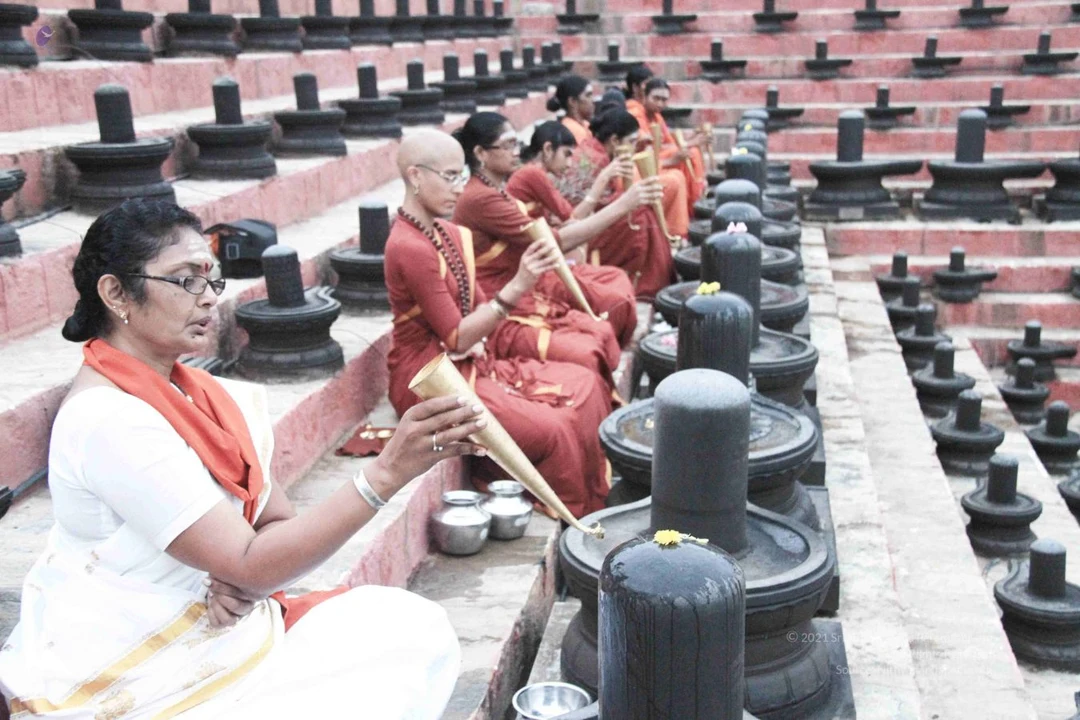
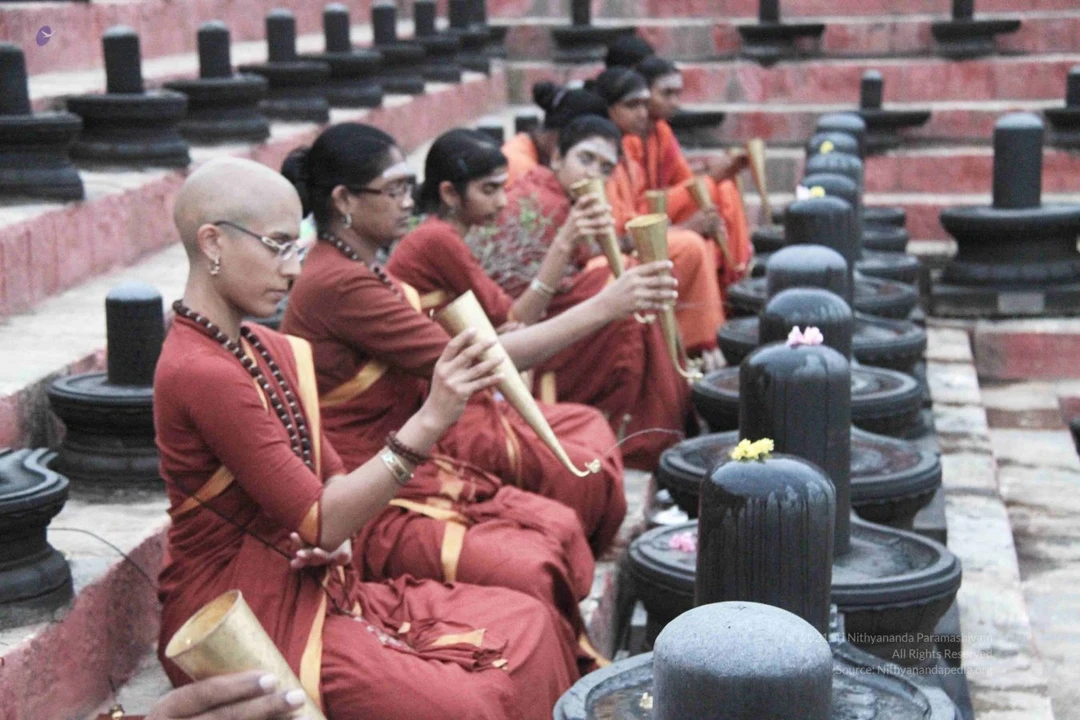
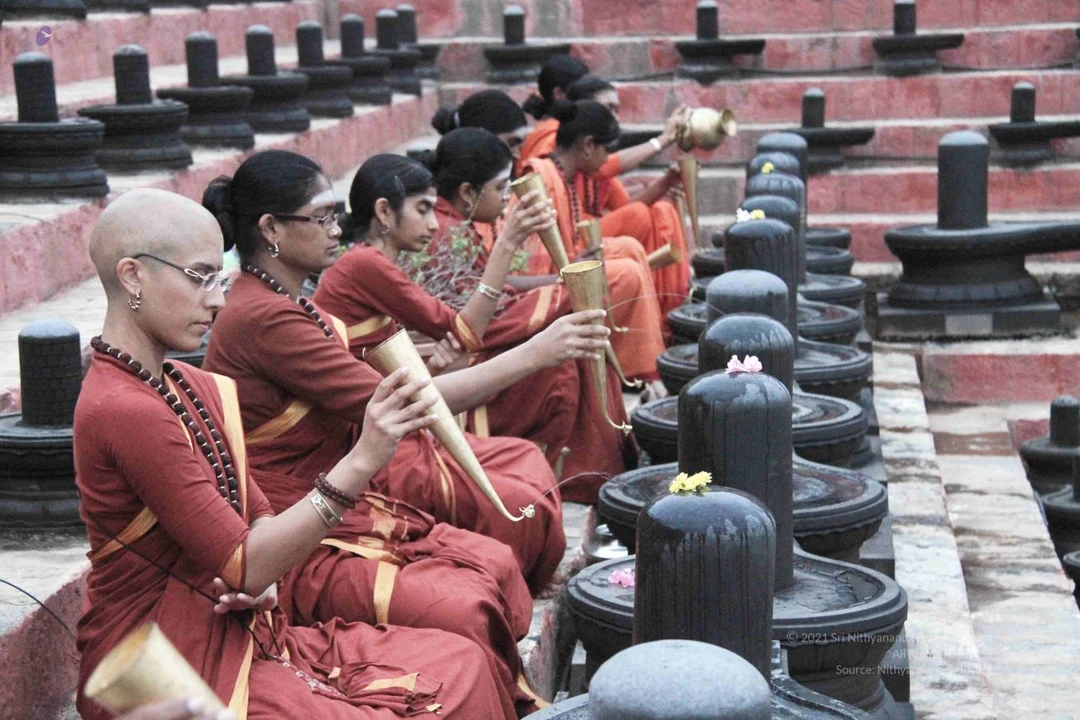
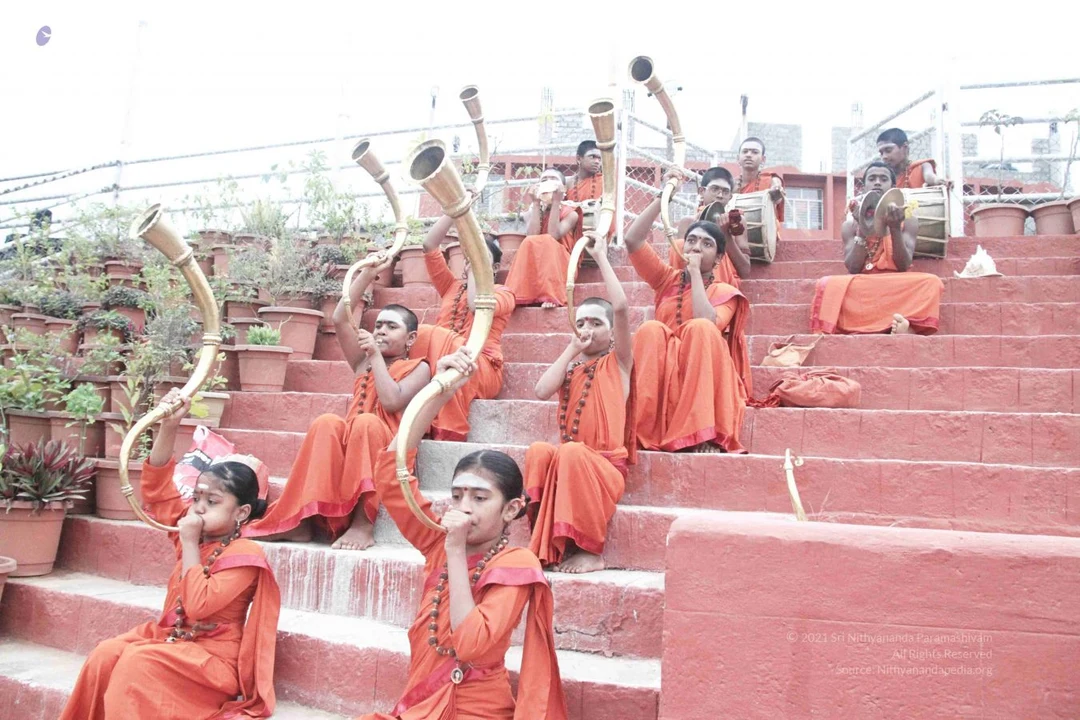
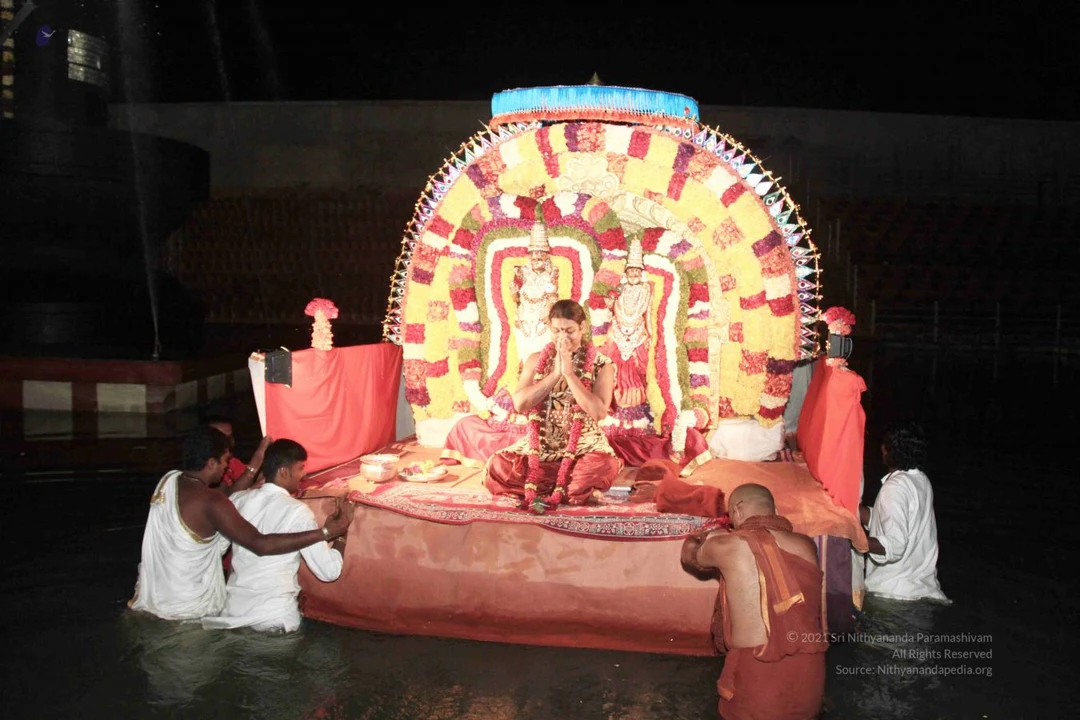
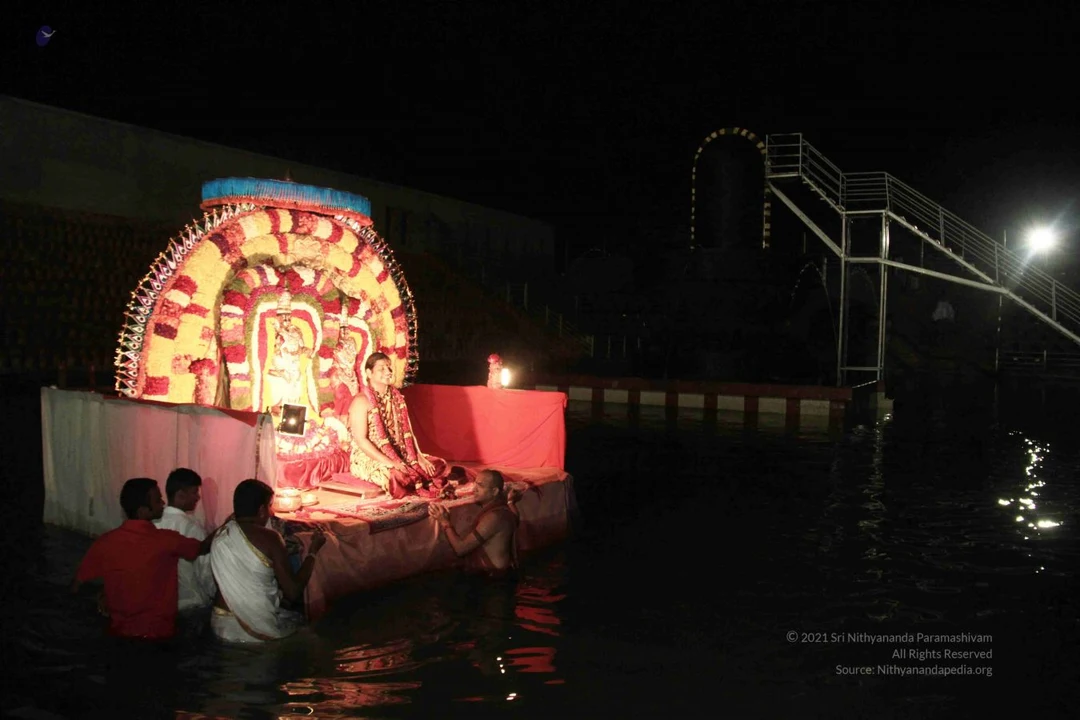
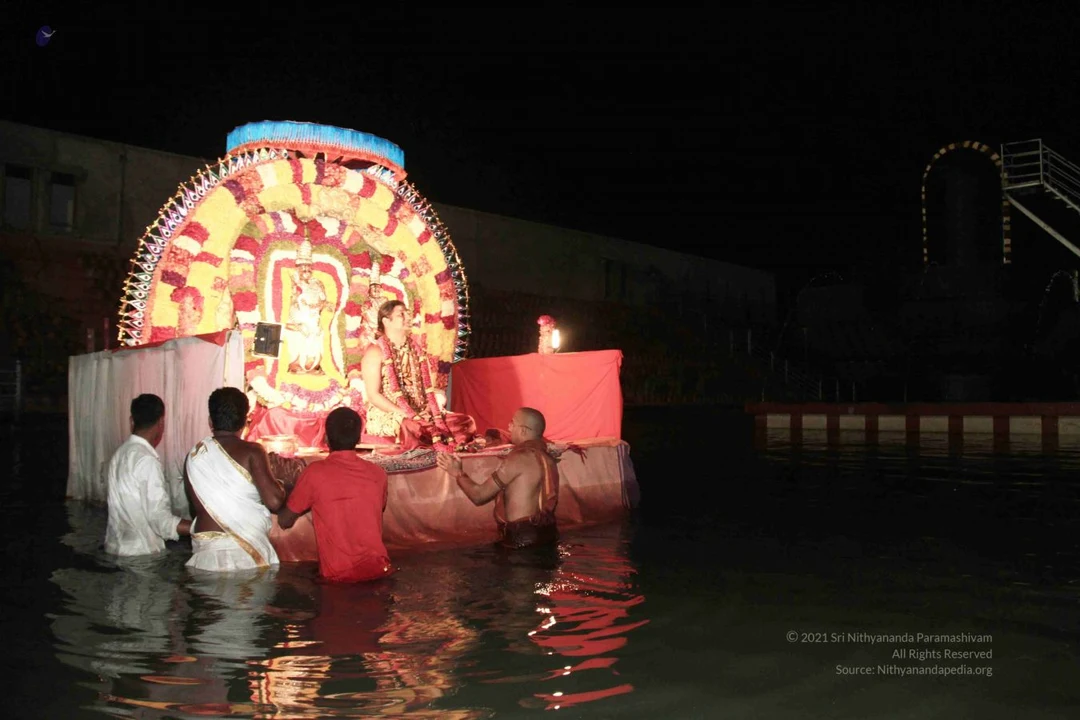
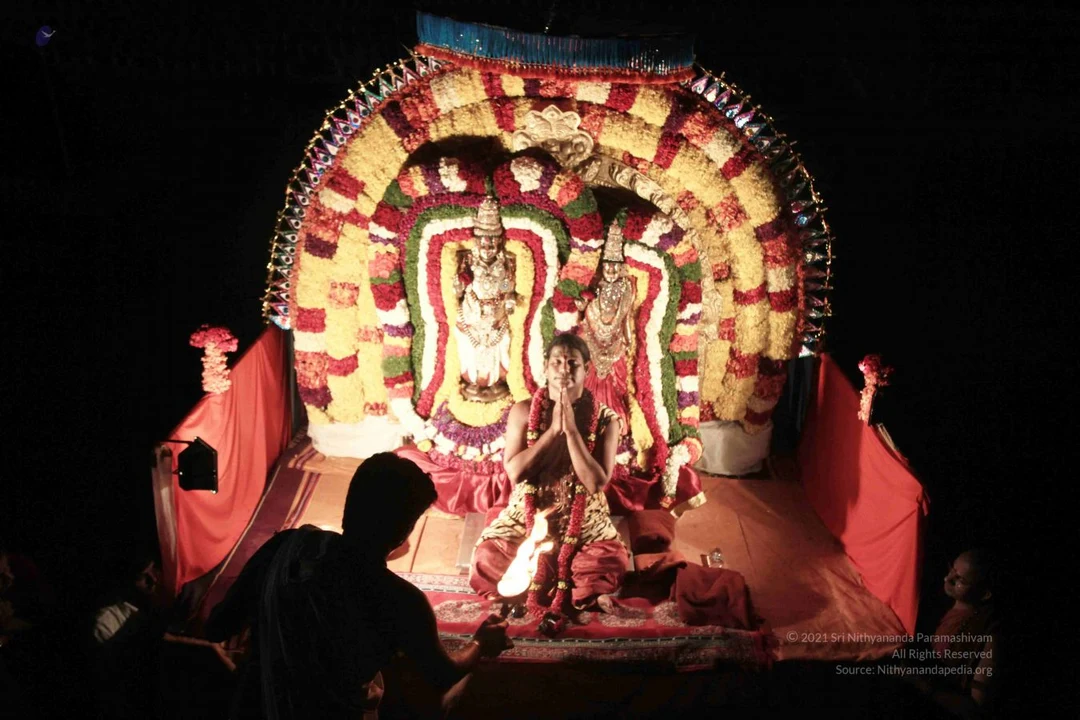
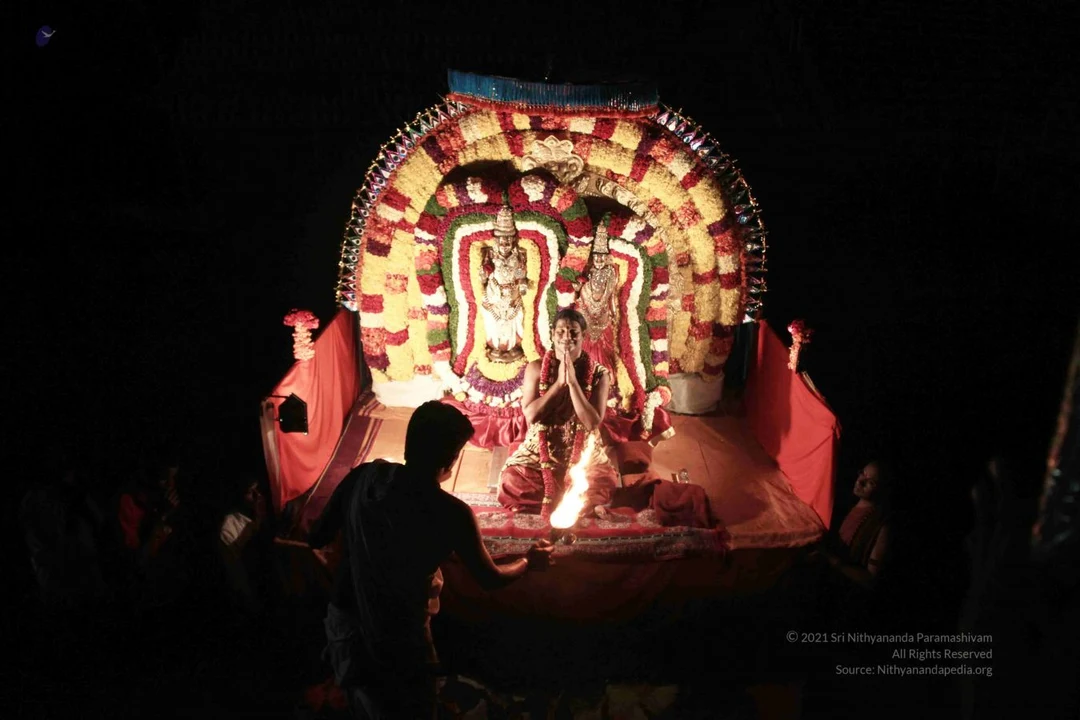
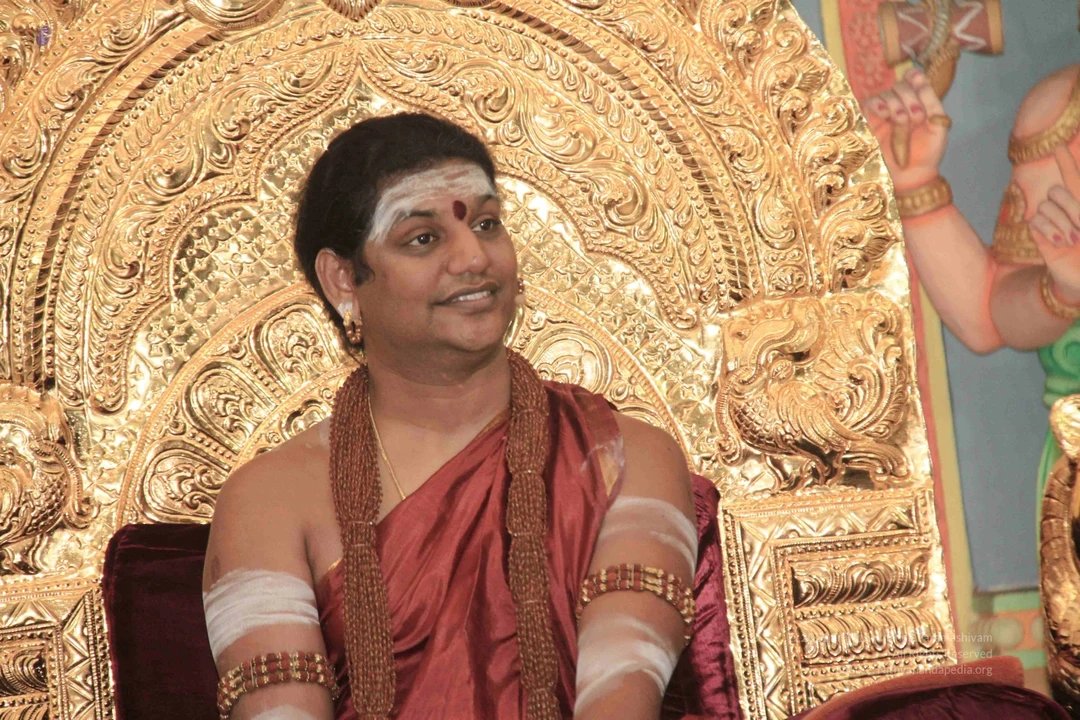
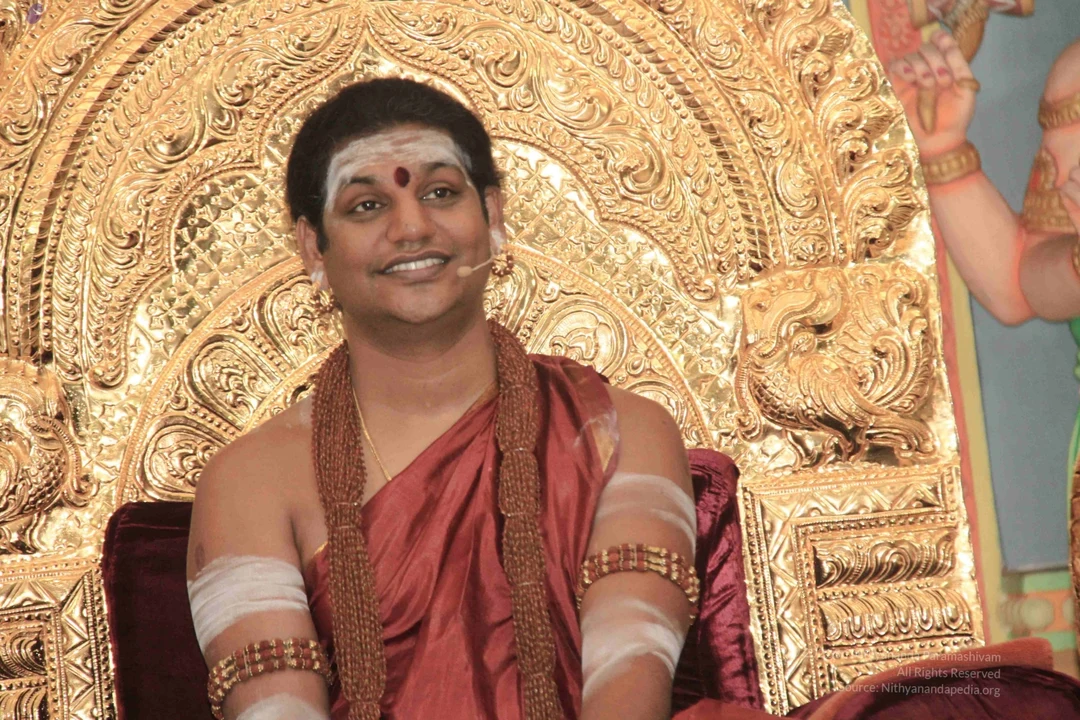
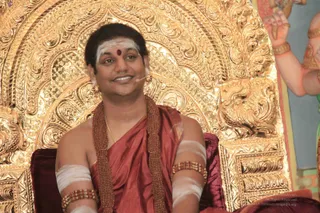
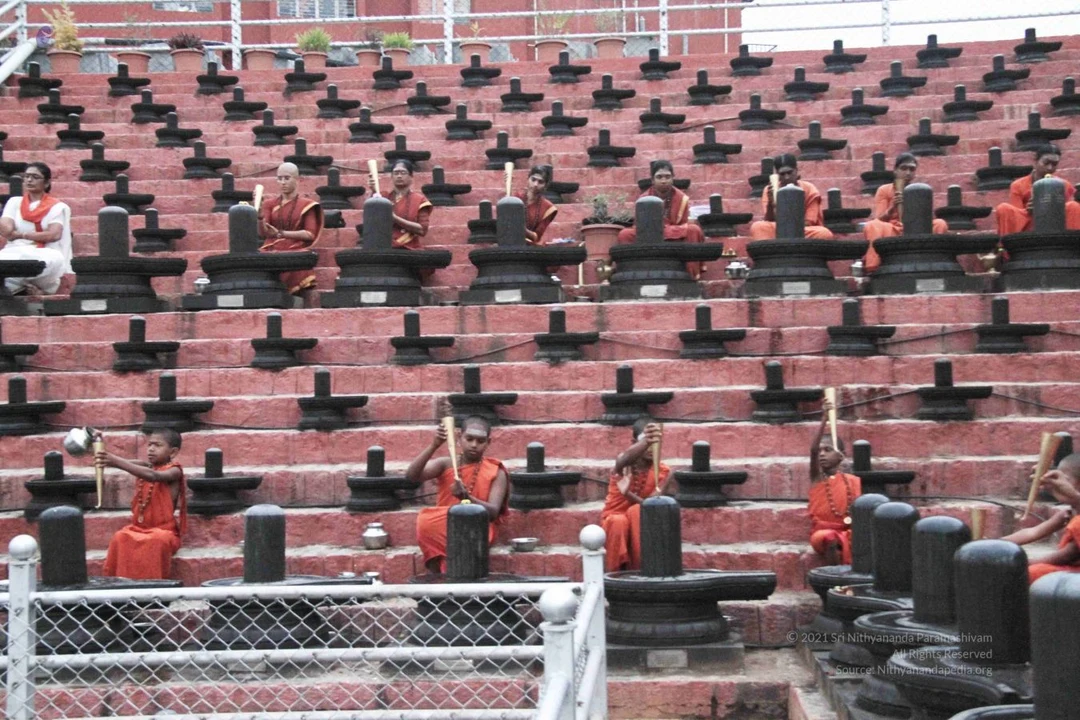
A photograph of a row of boys in red sannyasi-style robes seated on red stone steps among rows of black Shiva lingams on pedestals. Several boys play long brass horns, one held to the mouth of the boy at right, with white vibhuti marks on their foreheads and rudraksha malas around their necks. Another boy at far left sits behind the lingams, and the lingams fill the foreground.A man seated on an ornate gold throne with carved lion-like figures and filigree backrest, wearing a maroon-red draped garment over the shoulder, multiple rudraksha mala strands hanging across the chest, a gold necklace, beaded red-brown armbands, and a thin microphone headset. He has white horizontal lines on his forehead and arms, a red dot at the centre of the forehead, and gold earrings. a person: the figure wears a rudraksha mala, a gold necklace and a reddish-saffron wrap on an ornate throne, matching the page's a person-at-event flag, though the appearance is only partly distinctive. Background is a gold-and-red decorative backdrop.A night-time ritual in shallow water beside a decorated raised platform draped in red and pink cloth. A woman in a patterned red-and-gold sari sits at the centre with palms pressed together in prayer, a garland around her neck. Behind her, a large floral arch of yellow, white and red marigold garlands frames two standing deity murtis, one in white and one in red. Four men stand or kneel in the water around the platform: two in white dhotis, one bare-chested in orange-saffron cloth bending forward, and one in white at the right edge. A kalasha-like offering and small plates sit on the platform. Lit lamps and a dark stepped structure appear in the background.

November 18 2013

Original wiki page
Contents

Title:

Sannyas the Ultimate Lifestyle.

Description:

In today’s morning Satsang, Paramahamsa Nithyananda announces that the way to revive the science of enlightenment is through the lifestyle of the Sannyasi. The beautiful, powerful space of Sannyas is when the body is beyond the need for external input and the mind radiates love, completion, and responsibility for the whole world. Sannyas is the ultimate state of completion and enriching others with the science of completion!

Link to Video:

VideoAudio

Transcript:

Nithyanandeshwara Samaarambhaam Nithyanandeshwari Madhyamaam | Asmath Aachaarya Paryanthaam Vandhey Guru Paramparaam ||

00:42 Hindi - 00:52

I welcome all the devotees, disciples, samajis, satsangis sitting with us through Nithyananda TV, Sadhna TV, Lotus News Channel, Janashree TV, Eshwar TV and two-way video-conferencing.

Cities sitting with us in two-way video-conferencing: Guadeloupe-Rameshwaram, Kuala Lumpur-Palani, San Jose-Madurai, Seattle-Chidambaram, Phoenix-Kanchipuram, Oklahoma-Somanatham, Charlotte-Srisailam, Los Angeles-Arunachalam, Houston-Kalahasti, Nithyananda Nagaram-Hyderabad, Ohio-Prayag, Enriching Temple-Bidadi, Colorado Springs-USA, Troy-Michigan, Jorpatti-Nepal, San Diego-Ocean Side, Oman-Sivagangai, Tallahassee-Florida, Singapore-Singapuram, New York-Varanasi, Surrey-British Columbia, East London-UK, Devon-UK, Washington DC-Sripuram, Bogota-Colombia, Hyderabad-Gupta Kashi, Bangalore North, Dubai-Vaidyanatham.

I welcome all of you with my love and blessings.

Today, 21st batch Inner Awakening, 18th day. We will be working today on “Ultimate Reality”. ”Reality and Ultimate Reality”.

Today’s satsangh subject: Sannyas.

From today till December 27th: “Making you as Kalpataru”. The only way you can become Kalpataru is “Sannyas”.

Please understand, after Shankara there was never ever public open discussion and invitation to become Sannyas in Hindu tradition. Somehow, even the Sannyasis carry a deep guilt that they have done a mistake and they don’t want next generation to do that mistake. If somebody comes to take Sannyas, they try to dissuade; and then finally, if he stands, they say, ‘Alright, if your life outside is worse it is OK let him.’ It is like Sannyas out of powerlessness. Please understand, Sannyas out of powerlessness is the most abusive, abusing Sannyas. Now, after Shankara, around 2,500 years after, first time, systematically, almost next one month, I am going to expand on different aspects and dimensions of Sannyas.

Please listen. First thing, Sannyas is the lifestyle of living in the space of “Complete Completion”. Completion in its complete form. Sannyas is the way spiritual knowledge is realized in individual’s life. People usually have a problem about some hypocrisy in the sannyasi or Sannyas system. I wanted you to know, the world’s largest institution is marriage. World’s most hypocritical, cheated institution is marriage. World’s largest institution is marriage. Highest cheated contract in the world is marriage contract! There is no business contract, there is no contract which is cheated so much, exploited, abused, disrespected like the marriage contract. That does not mean you stop entering into marriage contract. That does not mean we stop getting married. The problem in the institution, hypocrisy in the institution does not stop you getting married. Then if there are one or two hypocrisies in Sannyas tradition, the person should take the responsibility and evolve, complete it. That is the truth. Just because there are one or two flaws, why the institution be abused or blamed or disrespected? This is the powerful conspiracy done by atheists and anti-Hindu elements.

I tell you, Hindus lost so much when they stopped this Sannyas tradition. When they dropped the Sannyas as a mainstream lifestyle, they lost so much, so much. Please understand, I have seen in Nepal, Nepal I have seen in front of my eyes, in Nepal, where only 3, 4 % are Buddhist population, Hindu population is 80.6%, more than India, as per percentage wise more than India. But if you walk in the streets of Kathmandu, if you walk in the streets of Nepal, you will only see Buddhist monks. Just 6% percent population, the amount of, the number of monks they have unimaginable. Ours 80.6% of population, you won’t find even a few Hindu Sannyasis! The few you find with this Kavi robes will be beggars outside the Pashupathinath Temple; that’s all. Neither this dress commands respect, nor is it encouraged.

So much, has been done to humanity by this Sannyas tradition. Sannyas tradition has given to the humanity million times more than what the marriage, the organization; the institution marriage has given to the world. Especially, the whole India, whole India has been built by the Sannyasis. Everything best has been contributed to the Indic tradition by the Sannyasis. Whether it is our architecture, art, culture, language; everything, everything, everything. All the best things we have is from Sanyasis. When I read the history of akhadas, ten lakh sadhus, please understand, ten lakh sadhus used to be Shaastra Dhaari sannyasis; means, mastering the spiritual knowledge, the Science of Enlightenment, Jeevan Mukthi and teaching all over the world. I mean it, because our Sannyasis went up to Iran which was the original name of Iran was “Aryan”; which become “Iran”. They have travelled all over the world up to Cambodia, Bali. Just Jnana Sambandhar had 16,000 sannyasis with him. Can you imagine, 16,000 Sannyasis with him? He left the body before sixteen and please listen.

Thirumurai Kanda Chozhan – Rajarajan – who built world’s largest granite structure, l even now, whose achievements are still not beaten, still unbeatable, please understand, still now Rajaraja’s remains to be the world’s largest granite construction. No pyramid could cross him. He is the world’s largest granite construction. He used granite almost four times more than largest pyramids. He remains the world’s largest granite building. Not only that, the world’s largest “carved” granite building. Even the pyramids are just empty stone piling up. But Tanjore Rajarajan’s temple is the world’s largest granite carving. Please listen you need to know, even he was inspired by a great Sannyas – Karuvurar Chitthan, Karuvooran.

Ten lakh Sannyasis going all over the world and teaching, Shaastra Dhaari sannyasis and one crore Shastra Dhaari Sannyasis means one crore Sannyasis who were protecting the borders, who were protecting the people from invasions. Please understand all invasions happened only after killing Naga sadhus. When Hindus stopped sending their children to become sadhus, the whole system collapsed because there is nobody to defend. All our knowledge, all our tradition, all our amazing divine values, the spiritual lifestyle, everything is lost. Be very clear, if you are dying in depression, if you are suffering with discontentment with the life, you deeply hate life; be very clear, you are responsible. Your forefathers did not spare one child from the family to become a Sannyasi; that is why you are suffering. It is time; spare at least one child from a family to become a Sannyas. Plan your family in this way: at least one child and one share to monastery. One child for a Sannyas, one share to a monastery. Let the Peethas happen everywhere in the world.

In the modern day, we don’t need Shastra Dhaaris, means weapon Sannyasis. We don’t need them. But we need Shaastra Dhaaris, the intellectual teachers, preachers, who will go around all over the world to teach the Science of Completion, who will teach the Science of Enlightenment. I alone, sitting in one corner of the world, how much I can contribute? How much I can do? We need at least million Sannyasis, ten lakh Sannyasis.

Please understand, Sannyas is you living in the space of Completion and go on enriching everyone to be in the space of Completion. You living in the space of Completion go on enriching everyone to be in the space of Completion. Our whole Sangha should be Sannyas-based Sangha. Either you are a Sannyas, or you are very clear you missed Sannyas this time, but you enrich the world to take Sannyas.

I tell you, people immediately they ask the question, ‘Then what will happen to the reproduction of the world? What will happen to the if everybody becomes Sannyasis? What will happen to the humanity’s reproduction?’

Be very clear, first of all everyone in the world is not that intelligent. Second, God has not given you that responsibility; He knows how to expand the world. You take up many responsibilities which are not given to you and you don’t do many responsibilities which are supposed to be done by you.

Understand, first of all, creating intense Completion, complete Completion and radiating, teaching the whole world the Science of Completion.

There was a question from Mokshapriyan sometime back: ‘If Sannyas is the ultimate, then why all the Gods like Shiva, Vishnu, Brahma with their consorts? Why are they all married and living with family?’

Mokshapriyan, did you see that they were living with family? First of all, their marriage is the imagination of the people who are married and depressed, wanted to justify the biggest mistake they have done in their life by putting that on the Gods and Goddesses and saying ‘they also did the same mistake, so we did this mistake!’ It is the projection of depressed married people on the Gods and Goddesses. Marriage is the projection or lies compiled, dumped on Gods and Goddesses by the depressed married people. But I don’t need to use two words on Gods, anyhow.

See, I am not putting a competition between Sannyasis and Grahastas. I am very clear. Be very clear, listen see this is the age-old question whether man by nature is polygamous or monogamous. This is one of the biggest problems. From time immemorial, this is being discussed. In personal practice, everybody wants to be polygamous. In the social presentation, everybody wants to be monogamous. This one of the biggest problem, confusion.

Please listen, I am breaking one of the oldest myths of the world. All these people like Ramakrishna who are all the time behind monogamous, all these people like Osho who all the time behind polygamous, I am not disrespecting any of them. But, I am telling you, both sides are not complete truth.

Listen. Physiologically you are polygamous but psychologically you are monogamous; your mind has power, ability, only to take the responsibility for one relationship. You will be able to love only one person. You will be able to be responsible only for one person. Physiologically you are capable of polygamous, but psychologically you are capable of only monogamous. So, understand, it is a different level of human evolution. Being physiologically polygamous and psychologically monogamous this is the biggest conflict with which human-beings suffer. If you are polygamous, nobody else need to torture you; you will be suffering because you are going around, sleeping around with every man, woman you see, but you don’t share that love.

Please understand, when you don’t share love and only you share body, you will have so much disrespect towards you. It is like if all the time if you are sleeping in the drainage, what kind of idea you will have about you? You will have a deep self-disrespect towards you. So please listen, when your body also, your physiology also evolves to the level of psychological and becomes monogamous, that is called “maturity”. You physiologically polygamous, psychologically monogamous is the state of animal, animalistic behaviour, immature, incomplete, confusion.

Your physiology also evolves to the level of psychology and at both levels you become monogamous, that is called “maturity”, maturity. Please listen; when your physiology also evolves to the level of psychology, you become a complete human-being. Both become monogamous, you become complete human-being.

Next level, your physiology evolves to the level of “no need for any game”, no need for any external pleasure input because you are expressing so much of Completion, you are established in the space of Completion and you radiate Completion, you don’t need any pleasure from outside, all games stop, then your psychology, mind evolves to the level of ability to love everyone in the world. That is “Enlightenment”. Body goes beyond the need for the pleasure, mind radiates, mind is able to take responsibility for everyone, it is able to love everyone that is the state of Sannyas. “Sannyas” means, body is “completely complete” and mind is able to love the whole world, able to take the responsibility for the whole world.

Listen. Listen. Intensely listen, because there is every chance you will miss these words, polygamous, monogamous. If you don’t understand, you will misunderstand and you will misrepresent me and you may try to manipulate if you are from paid media. I don’t want any misunderstanding, misrepresentation and manipulation and morphing. Listen. Listen to this truth. It is one of the best, ultimate spiritual truths. I tell you, I know the Science of Sannyas. Don’t ever worry, bother about the failures happened fifty years before, sixty years before; somebody became Sannyasis, this happened in their life, that happened in their life. Don’t worry I tell you, Sannyas is one of the most powerful lifestyle, most “completely complete” lifestyle, most intelligent lifestyle, most enthusiastic lifestyle, most exciting lifestyle, most energetic lifestyle. The possibility for high achievers is more in Sannyas. The respect Buddhism commands all over the world is because of their Sannyas tradition and still their education is kept alive through Sannyasis, still the knowledge is kept alive through Sannyas, still all the great sciences of Buddhism is kept alive through Sannyas, still all their temples and traditions are kept alive through Sannyas.

Please understand, we have to revive Mahanirvani Akhada. We have to revive the spiritual Science of Enlightenment in the world. At least ten lakh Sannyasis should become Shaastra Dhaaris, studying the Science of Completion and teaching it to the world continuously. Studying the Science of Completion and teaching it to the world continuously. Completing with all your powerlessness and radiate powerfulness. Teaching the Science of Completion to the world is Sannyas. Every temple, every ashram in our Sangha should take the responsibility of reaching out and enriching people with Sannyas. At least billion people should mentally consider Sannyas as a life option; only then million people will be successful Sannyasis. O the Sannyasis of Mahanirvani Akhada, Nithyananda Sampradaya, wake up. It is a wake-up call for all of you! At least a billion people should consider Sannyas as an option, alternative lifestyle. I don’t even want to use the word “alternative lifestyle”; it is a disrespect. Ultimate Lifestyle! And only if billion people consider Sannyas as the ultimate lifestyle, million will be successful Sannyasis. Sannyas should become the mainstream lifestyle.

This season, the December 27th, my Jayanthi Utsav, all the ashrams, temples, centre should take up Sannyas Yatra. From Tiruvannamalai, devotees and Swamis are planning for the Sannyas Yatra. This padayatra which devotees and Swamis are planning from Tiruvannamalai to Bangalore should be called as “Sannyas Yatra”, only with the aim of inspiring the youth and people to take Sannyas, decide to live the lifestyle of Completion and teaching Completion to the whole world. Shaastra Dhaari Sannyasis equipped with the spiritual knowledge, equipped with the spiritual knowledge. Many organizations, even Hindu organizations die even within one generation or two generation, because they don’t have the backbone structure of Sannyasis. Backbone structure of Sannyasis.

All the ashrams, all the temples, should do Sannyas Yatra before December 27th at least one week to ten days.

The countries where you cannot do padayatra, at least you should do in the vehicle, go from place to place and distribute pamphlets, enrich people to become Sannyasis.

Each ashram should enrich, in India each ashram should enrich at least one-hundred people to live Sannyas life. “Enrich” means not just giving pamphlets, see to it that they become Sannyasis. At least hundred.

Outside India, at least fifty lives, enrich them by December 27th, reach.

Let you all achieve, experience, live, express, radiate, share and explode in eternal bliss, Nithyananda.

Tags:

Paramahamsa Nithyananda, enlightenment, Sannyasi, space, Sannyas, the body, love, responsibility, completion, enriching, science.

Photos Of The Day:

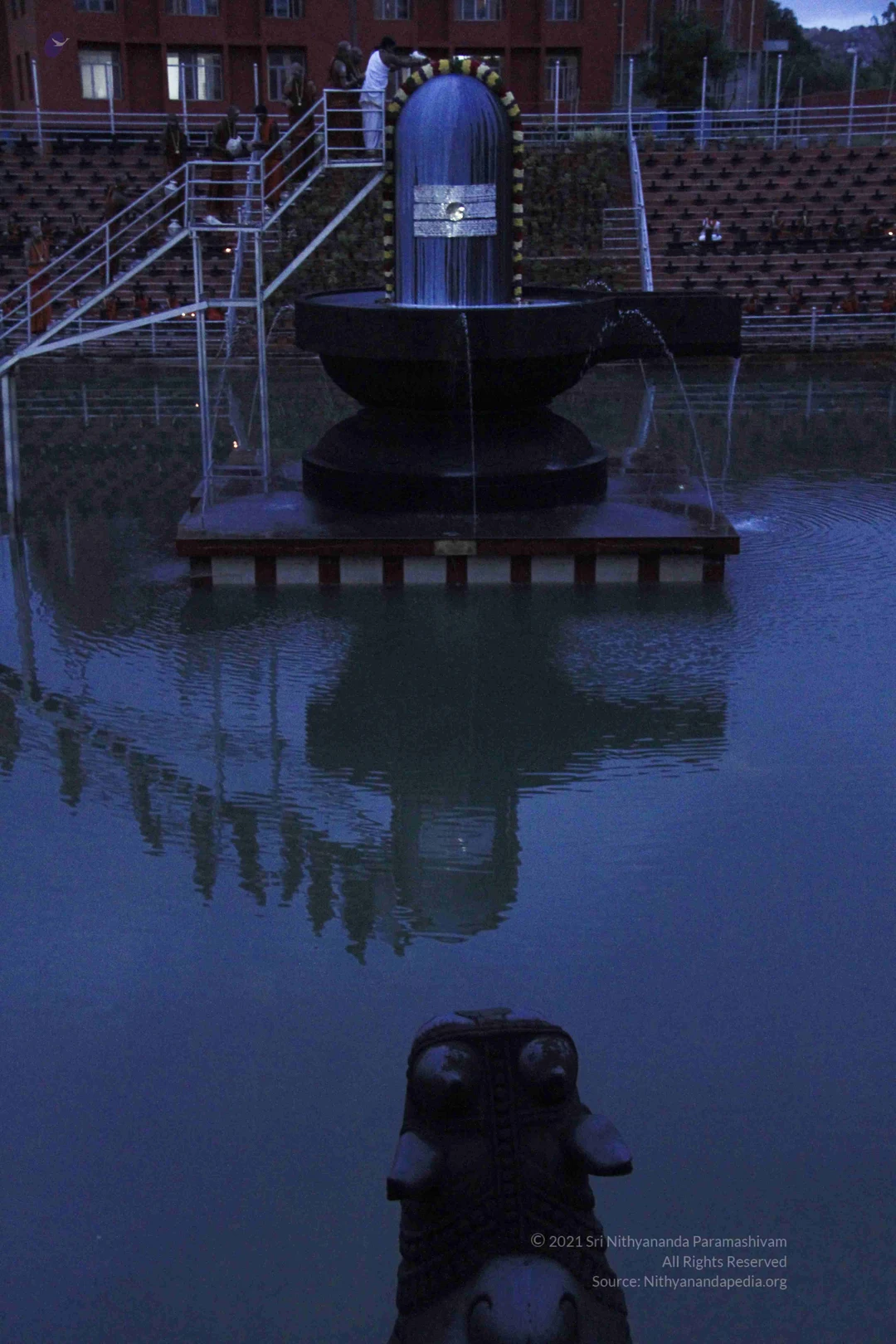
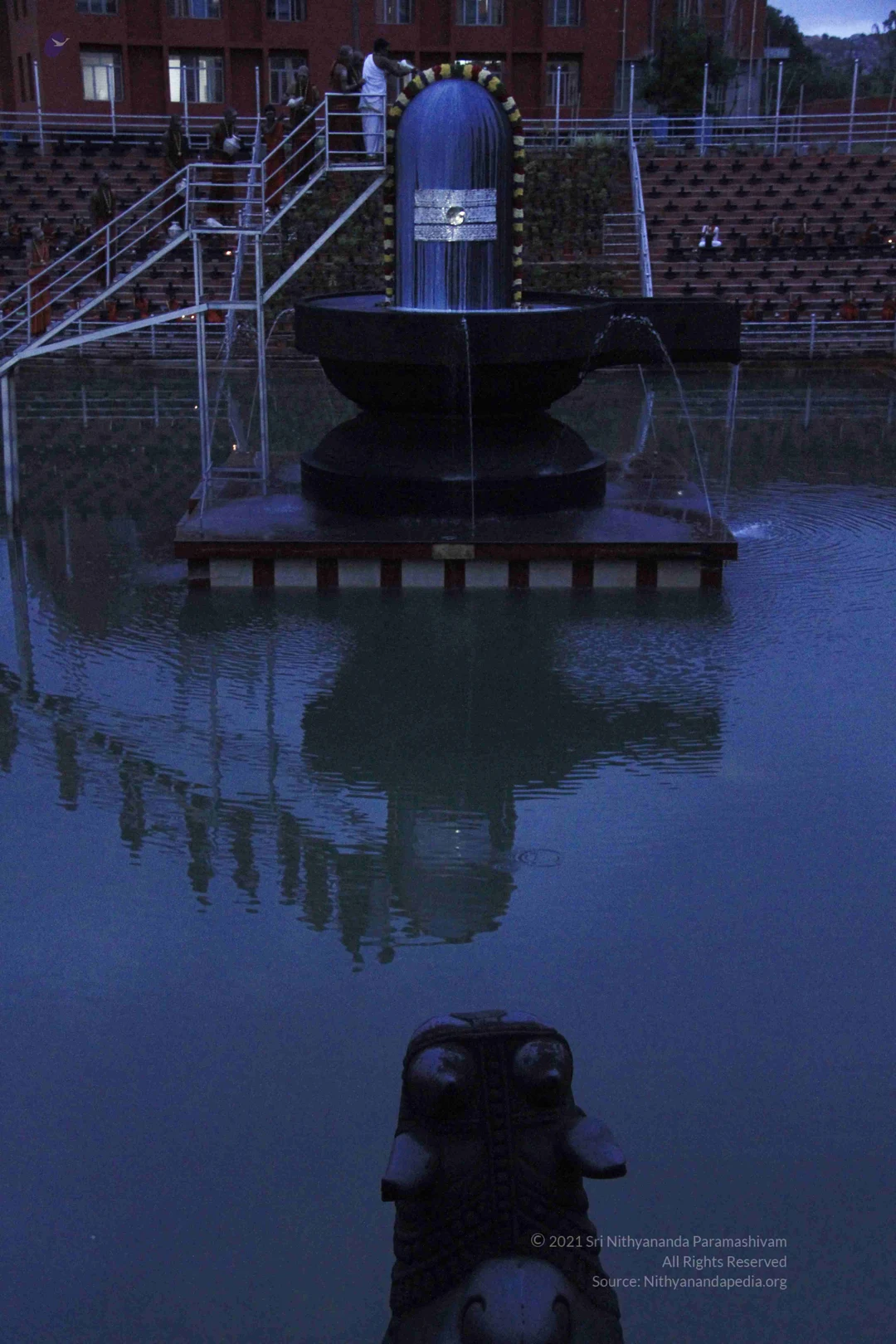
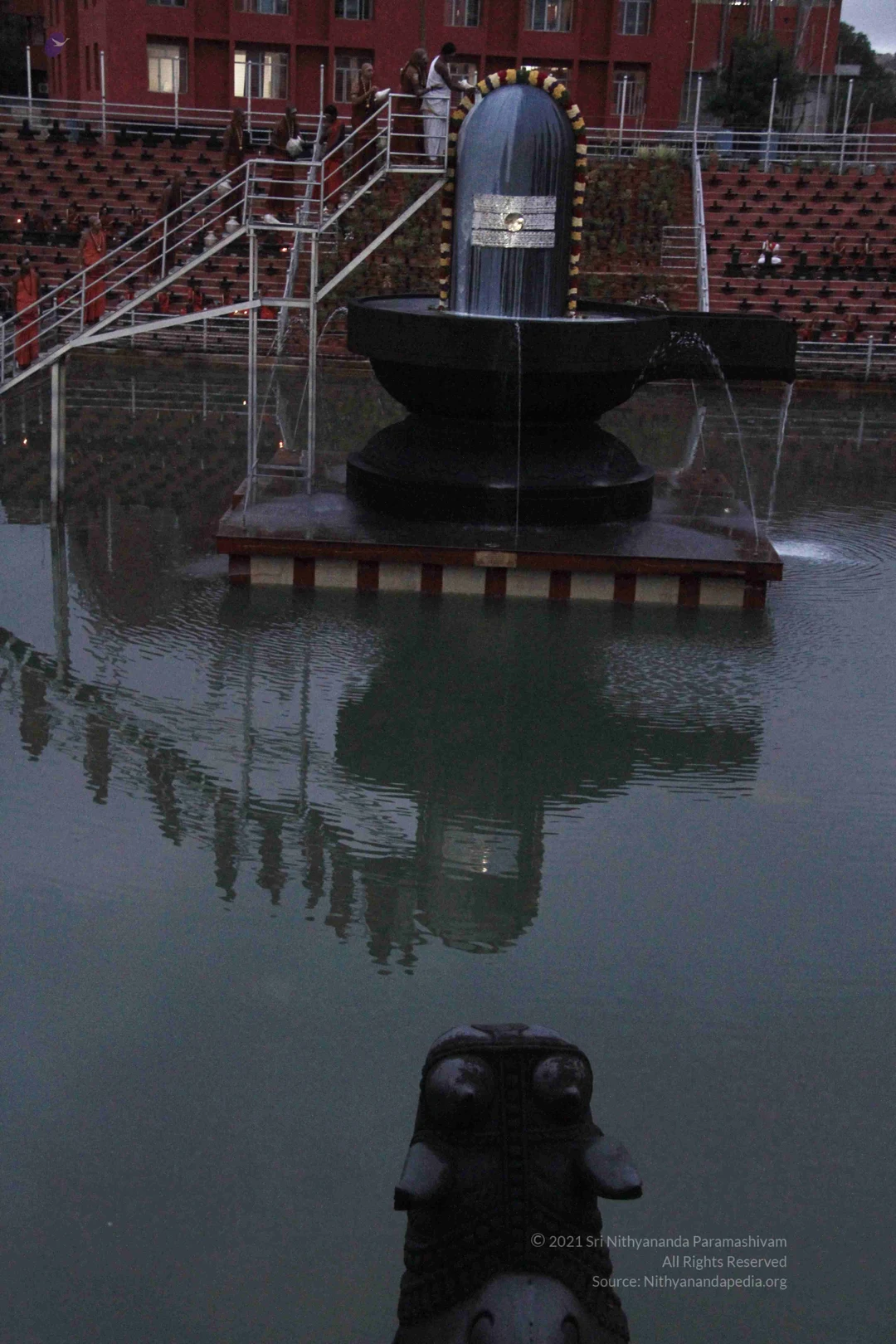
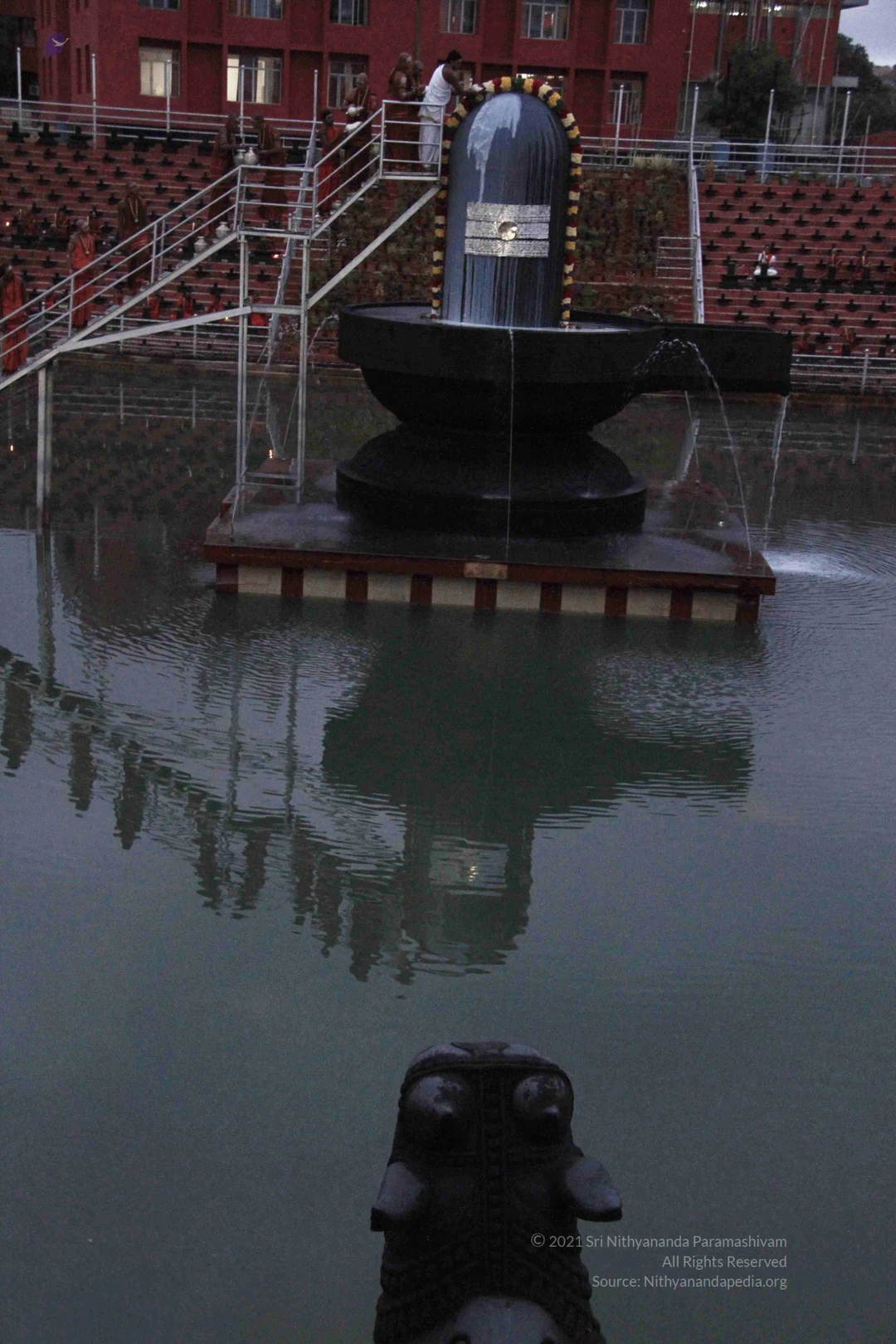
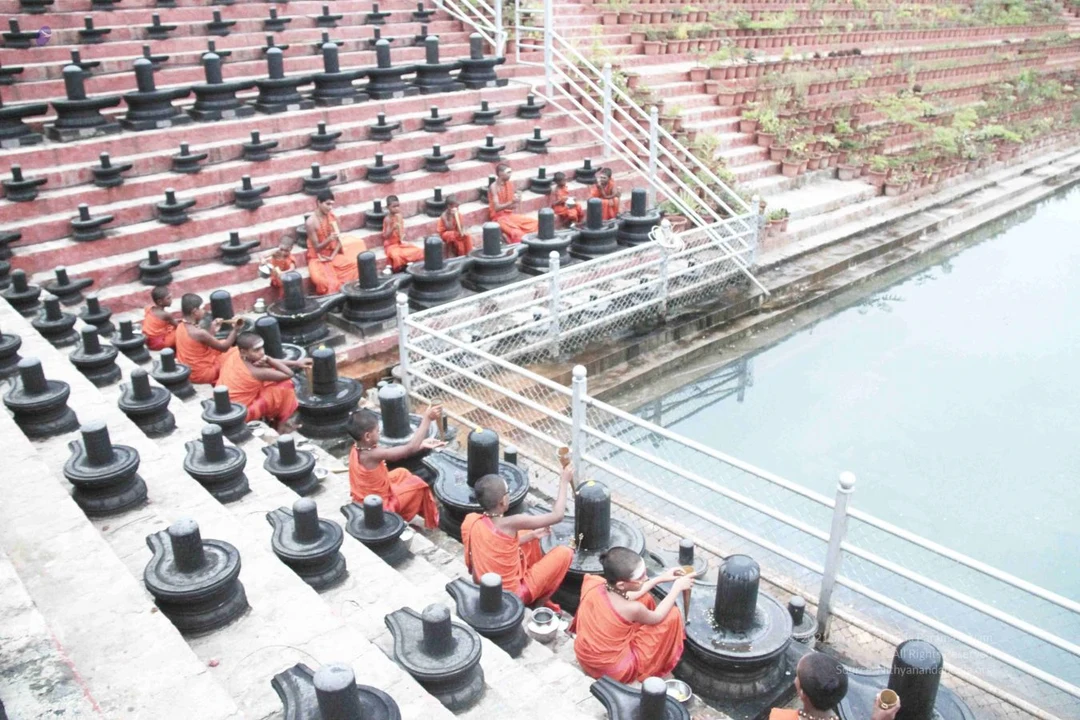
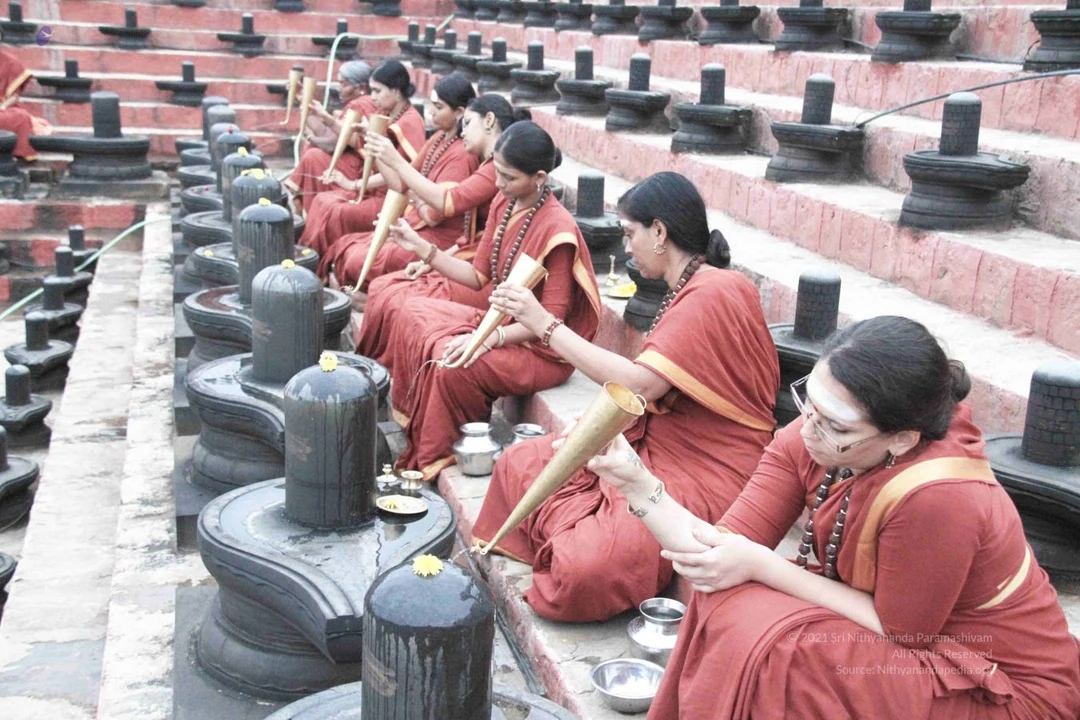
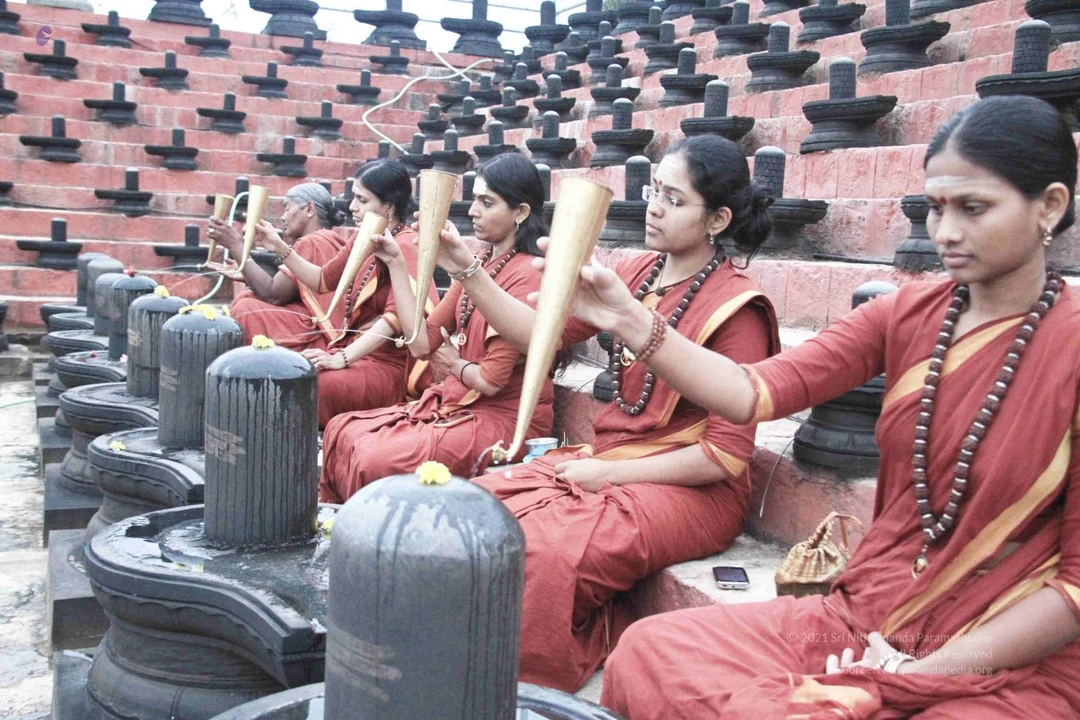
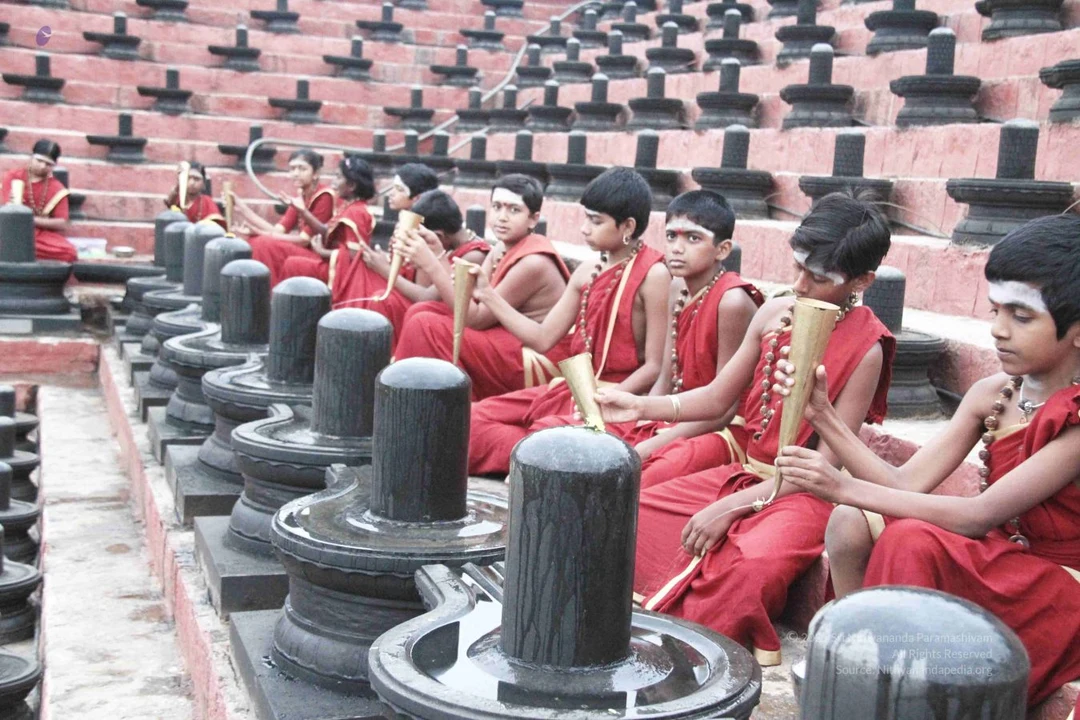
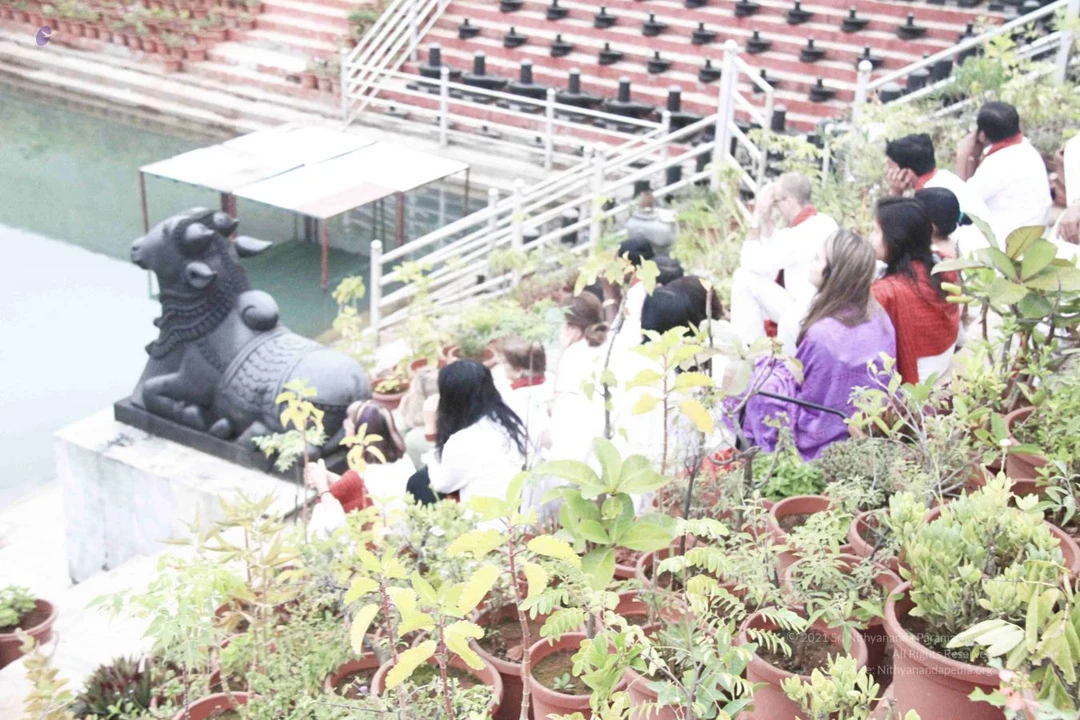
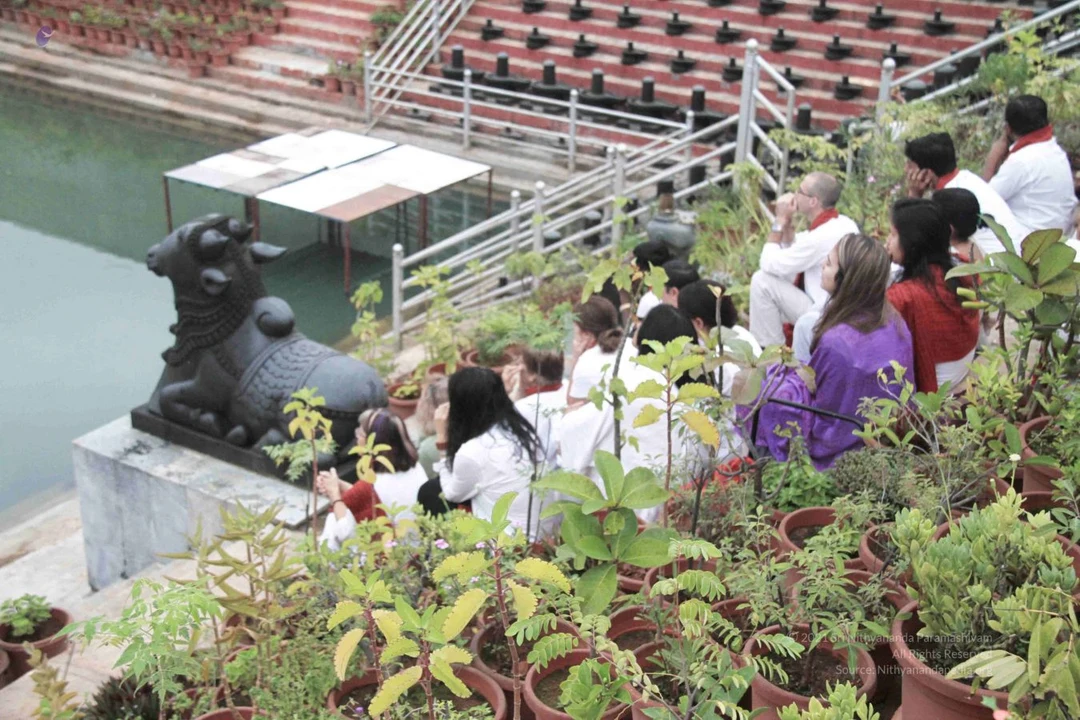
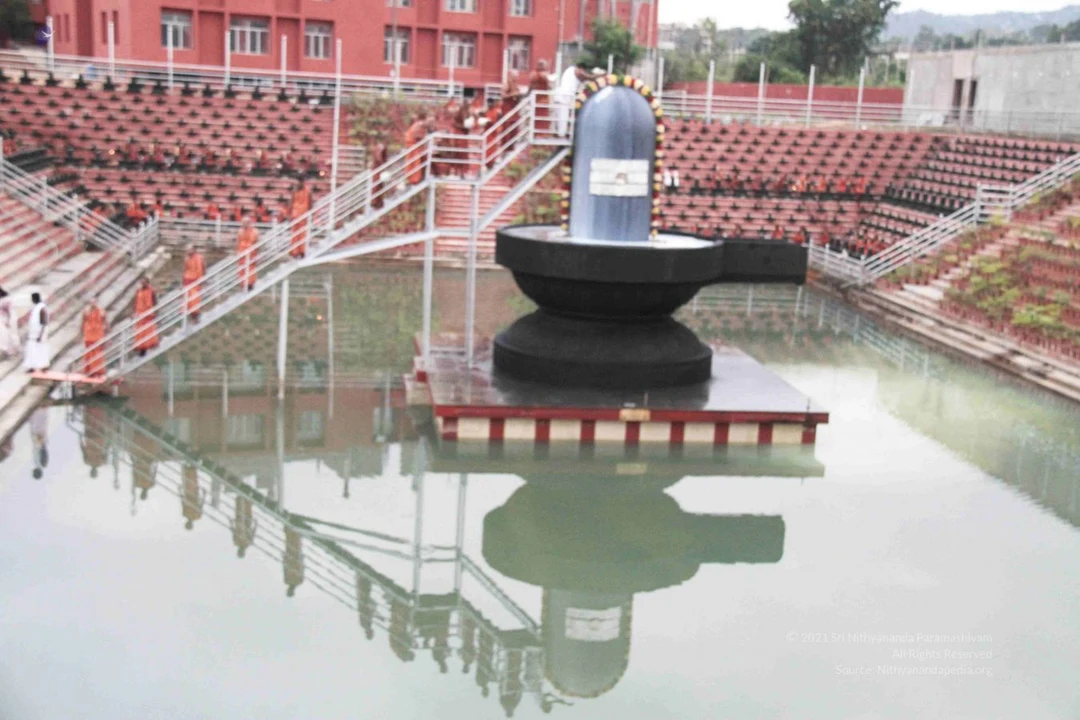
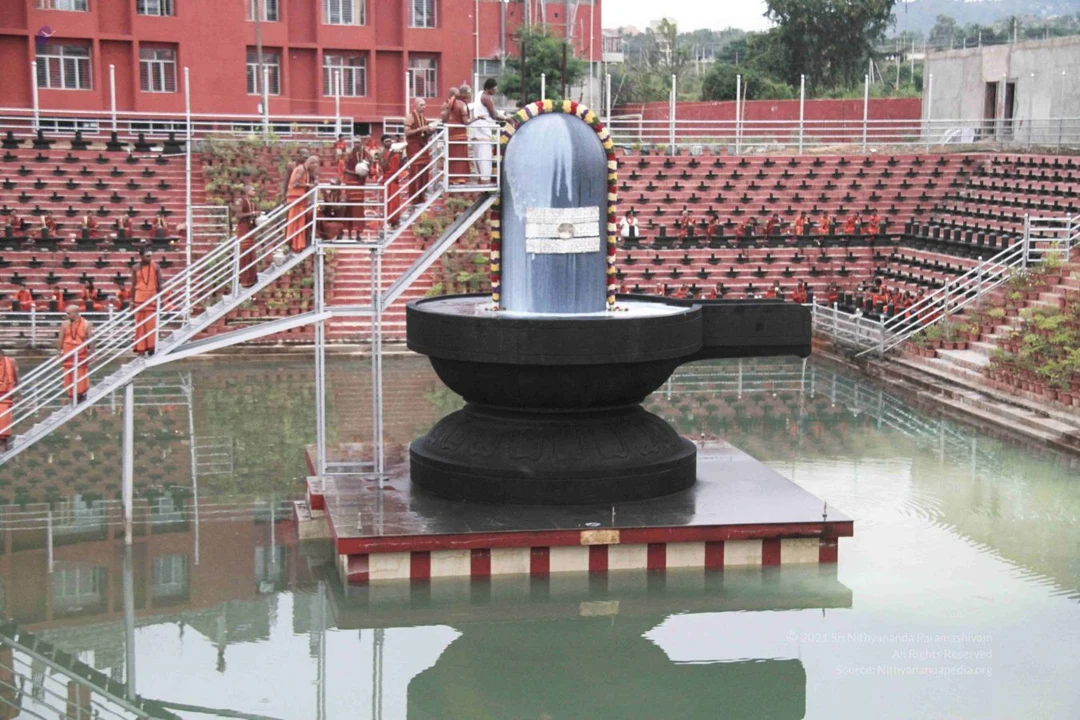
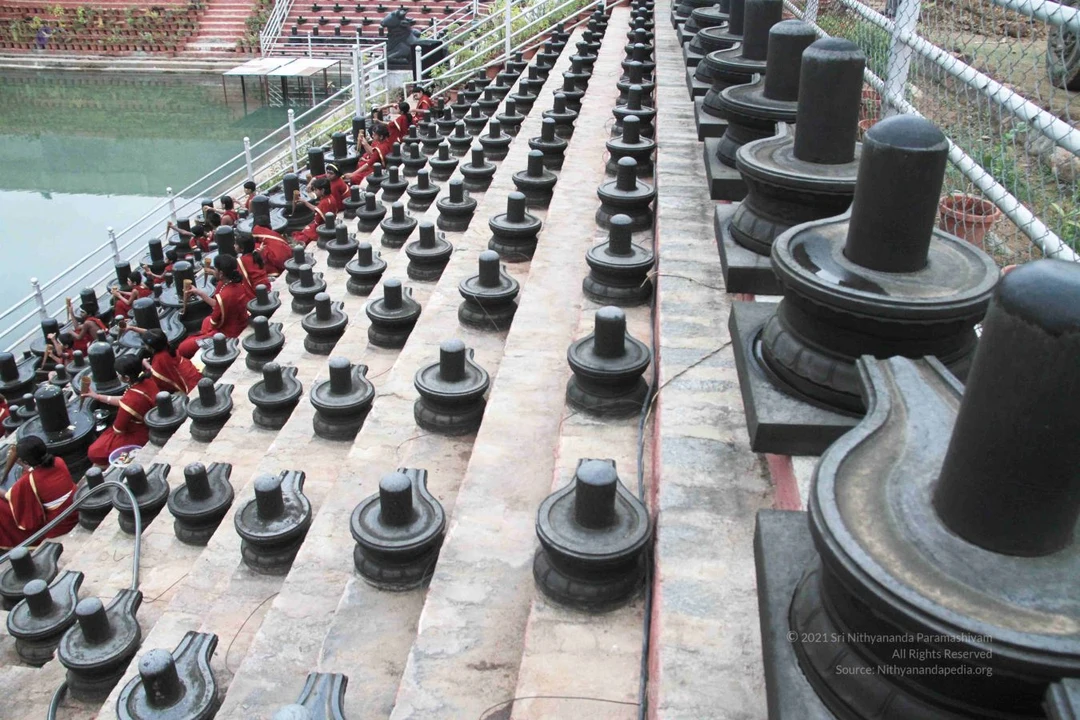
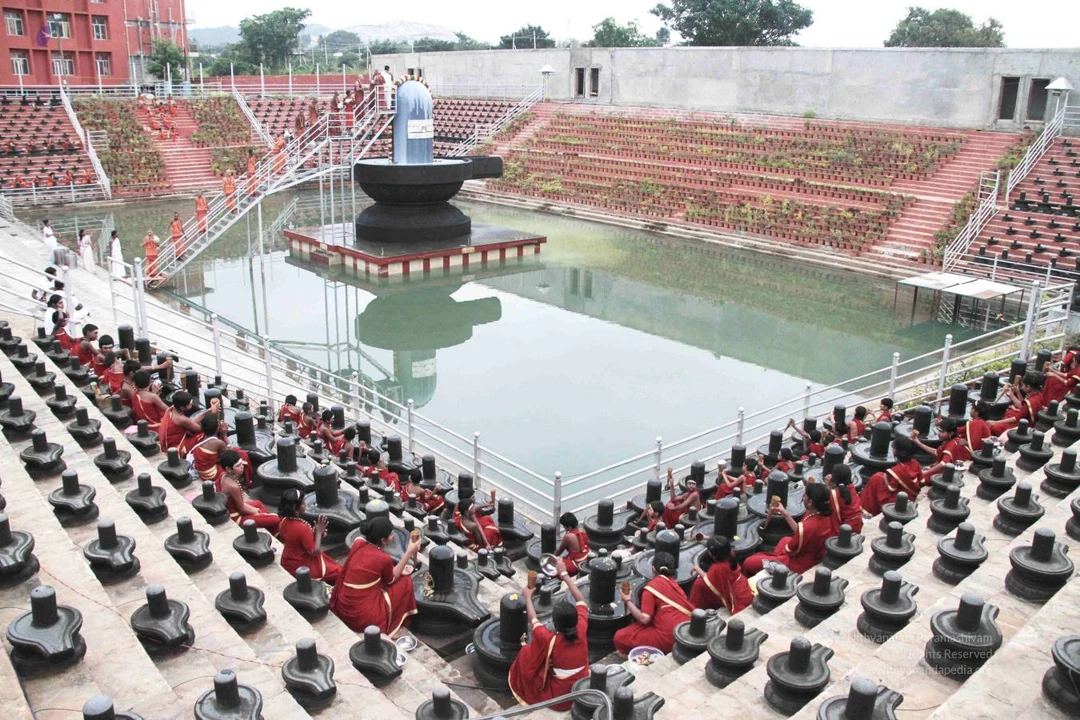
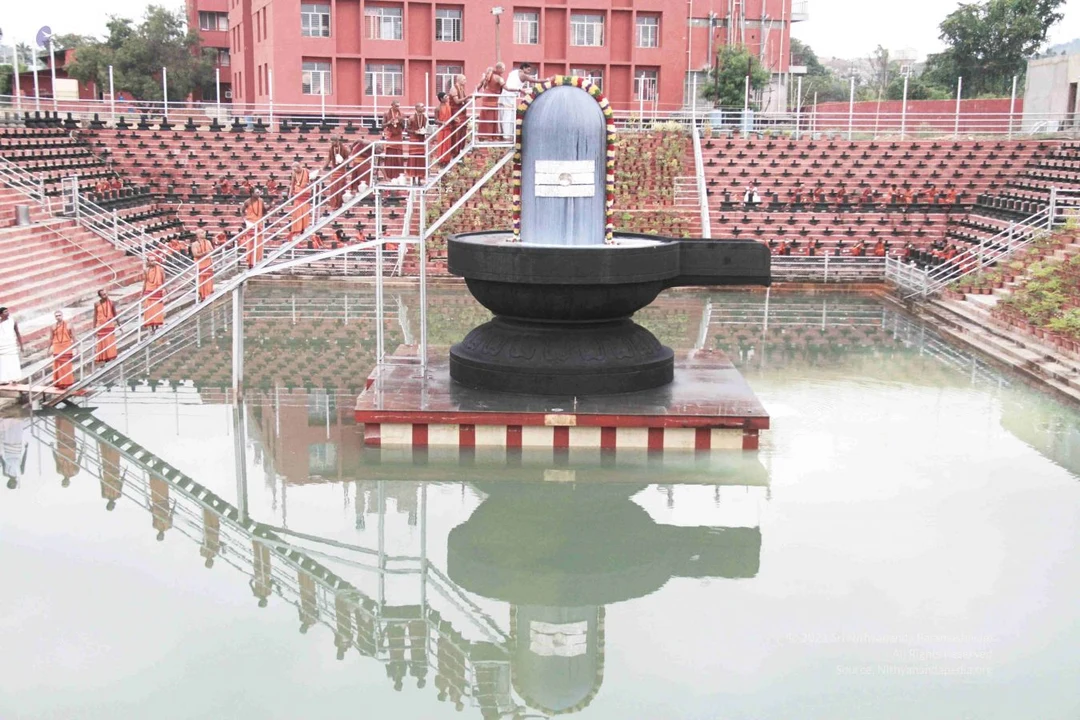
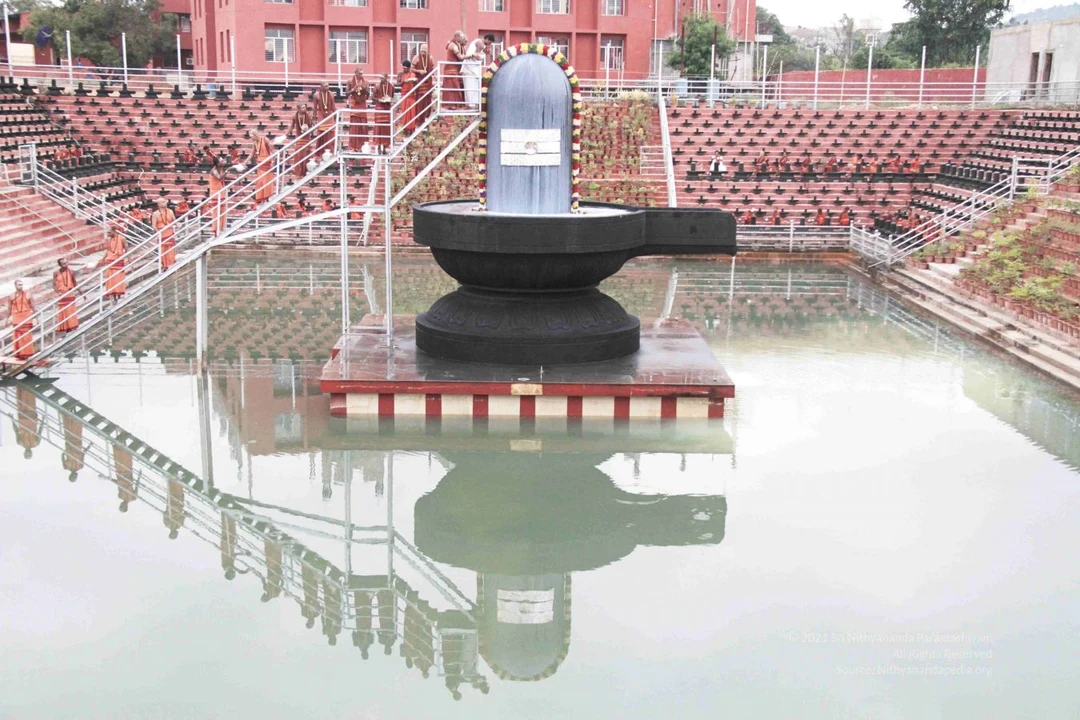
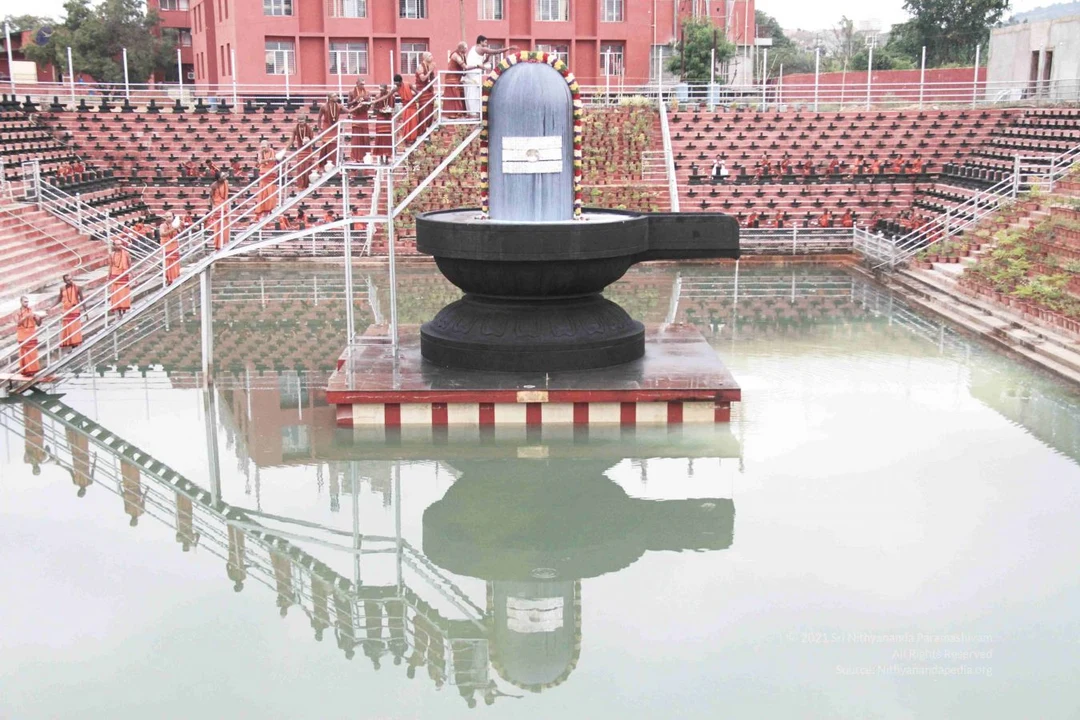
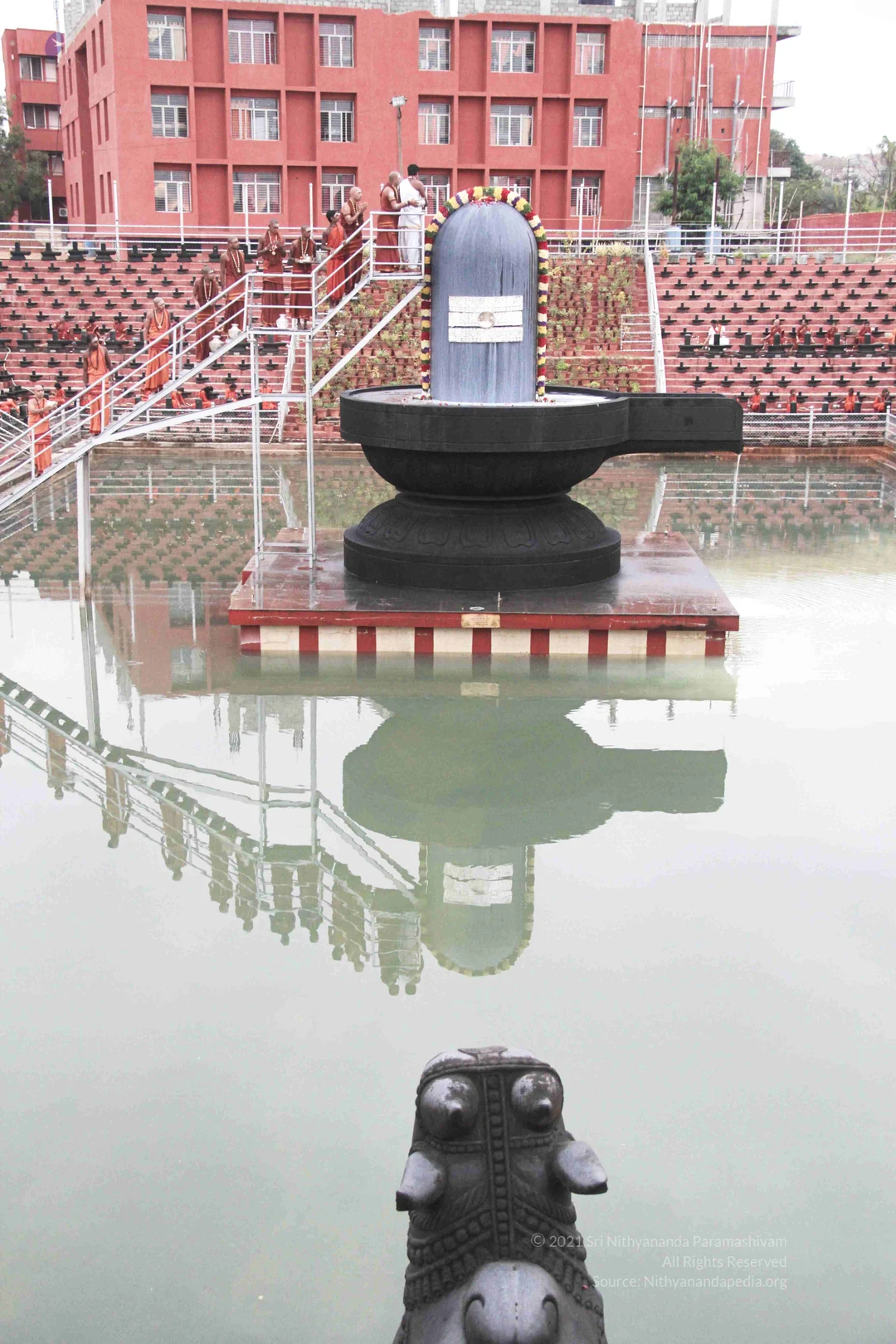
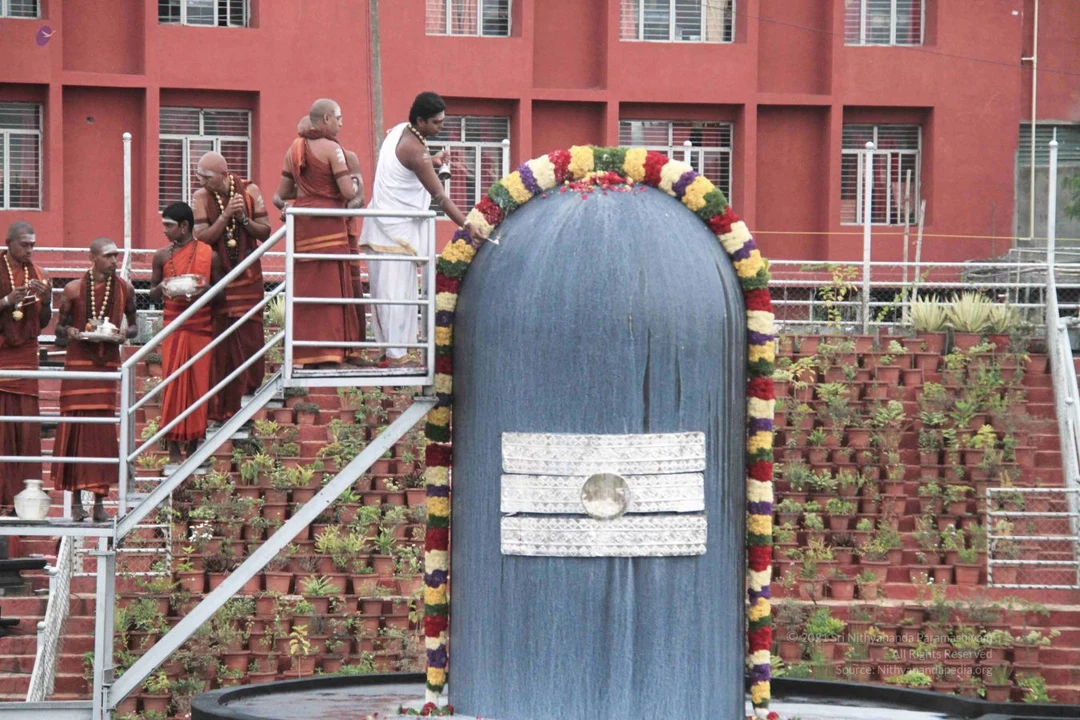
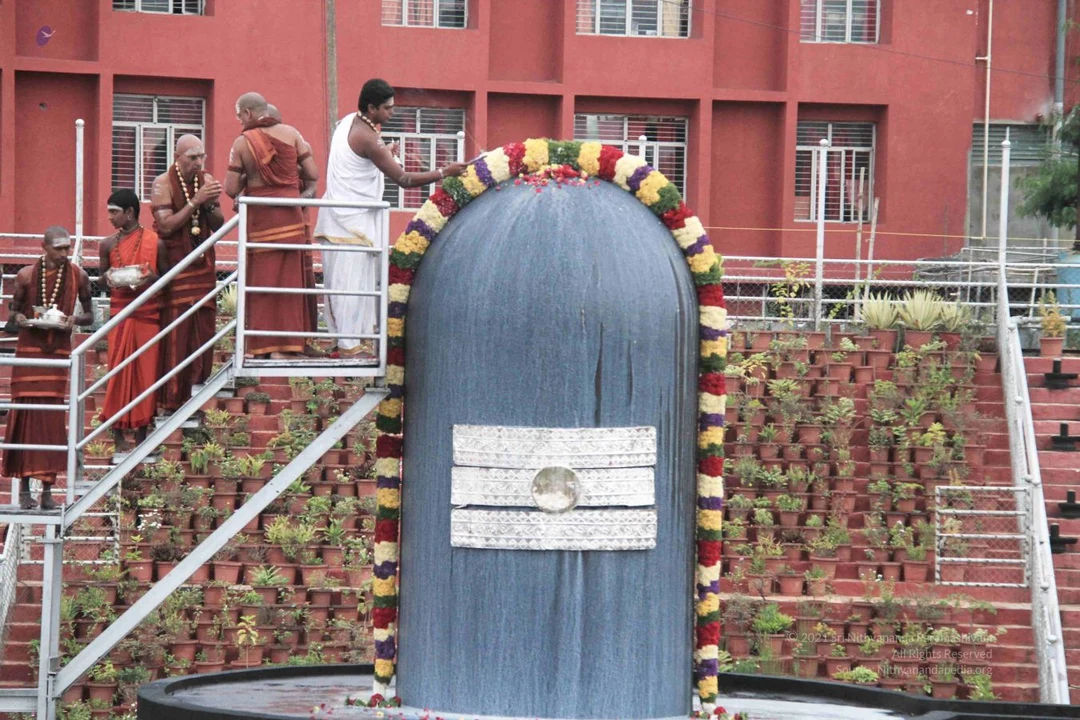
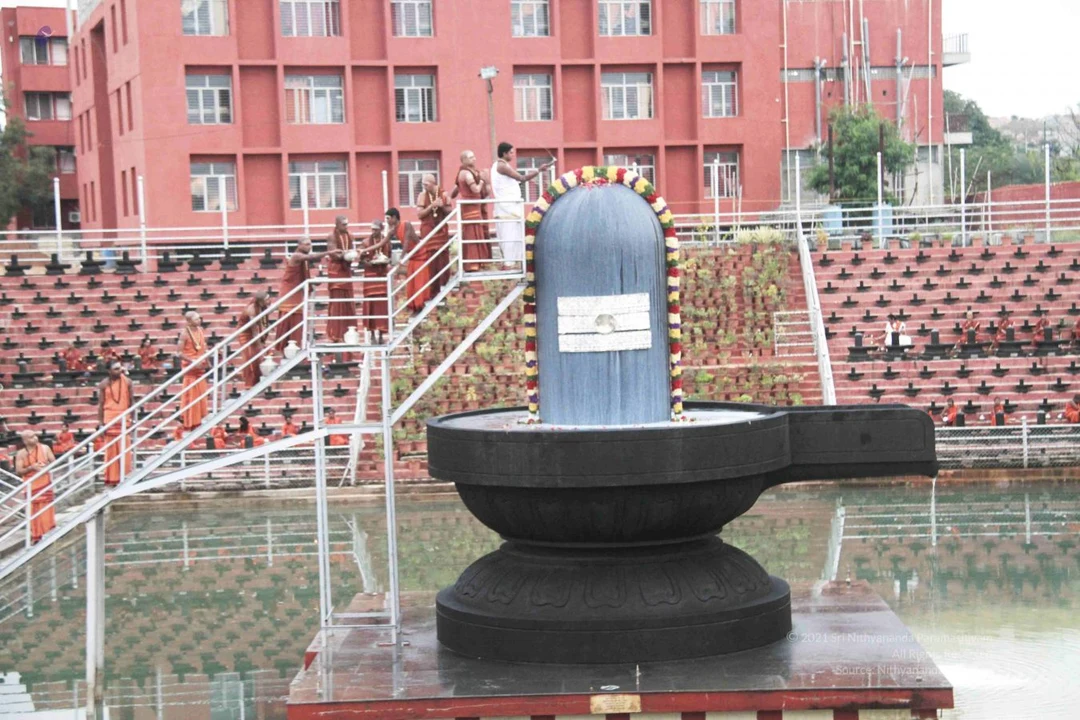
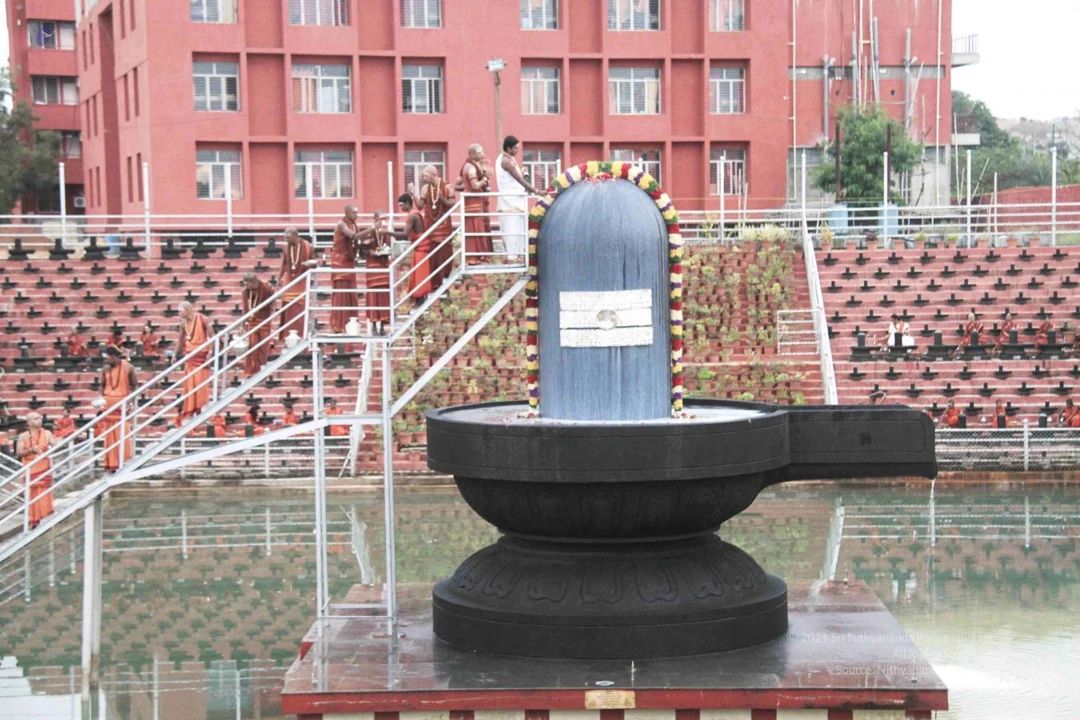
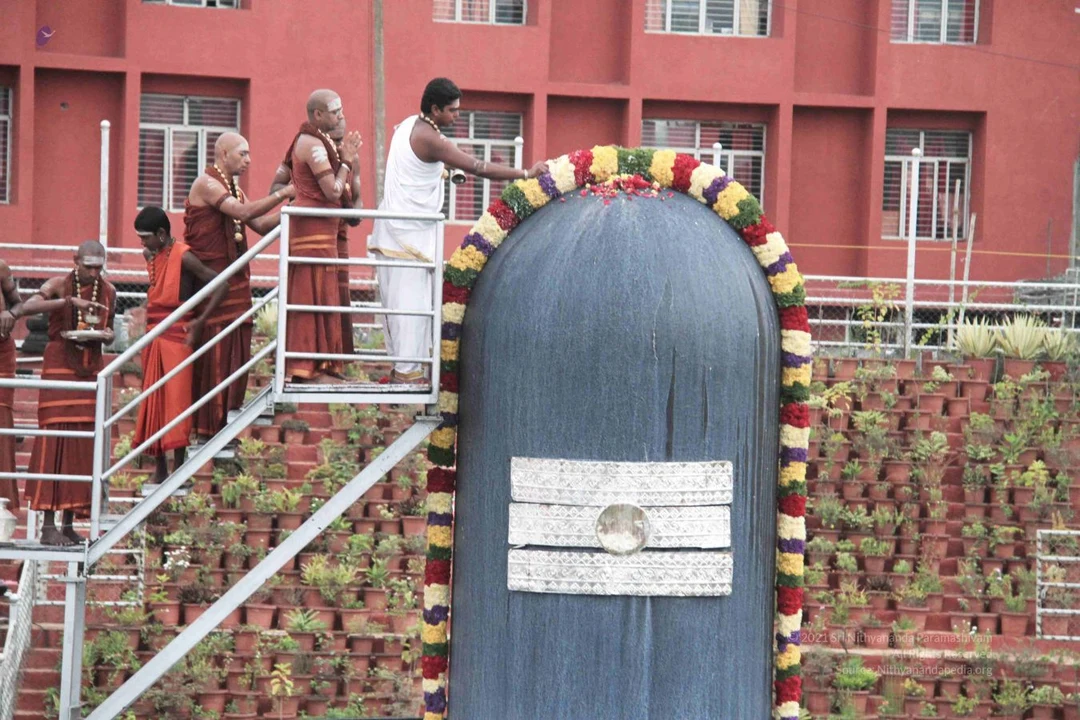
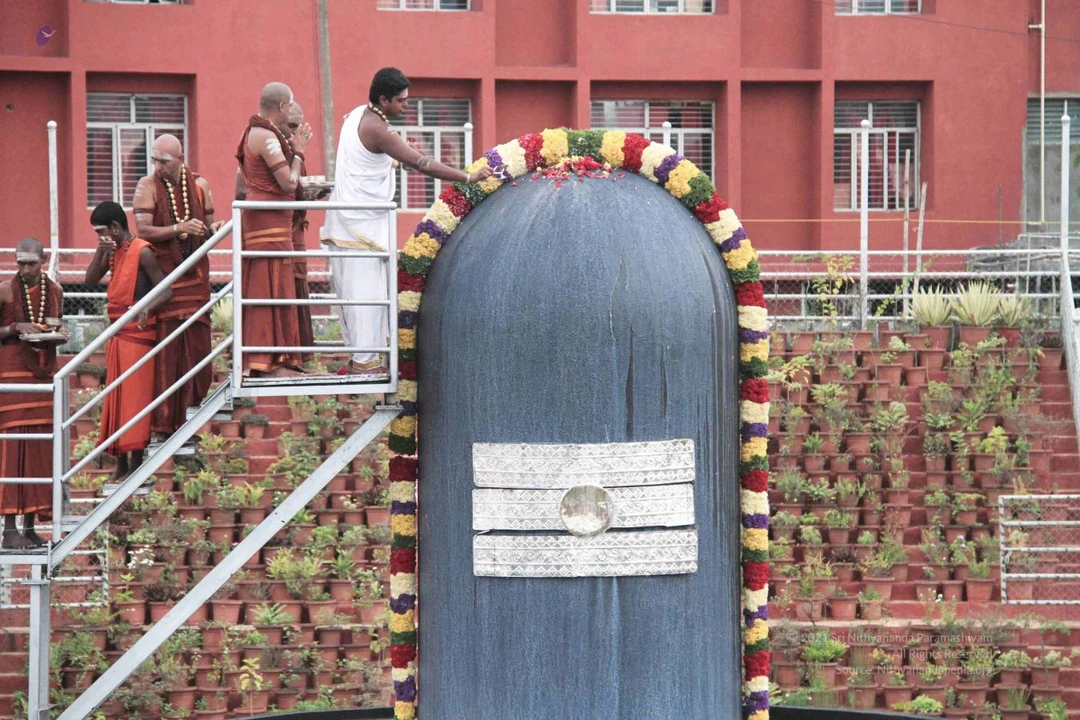
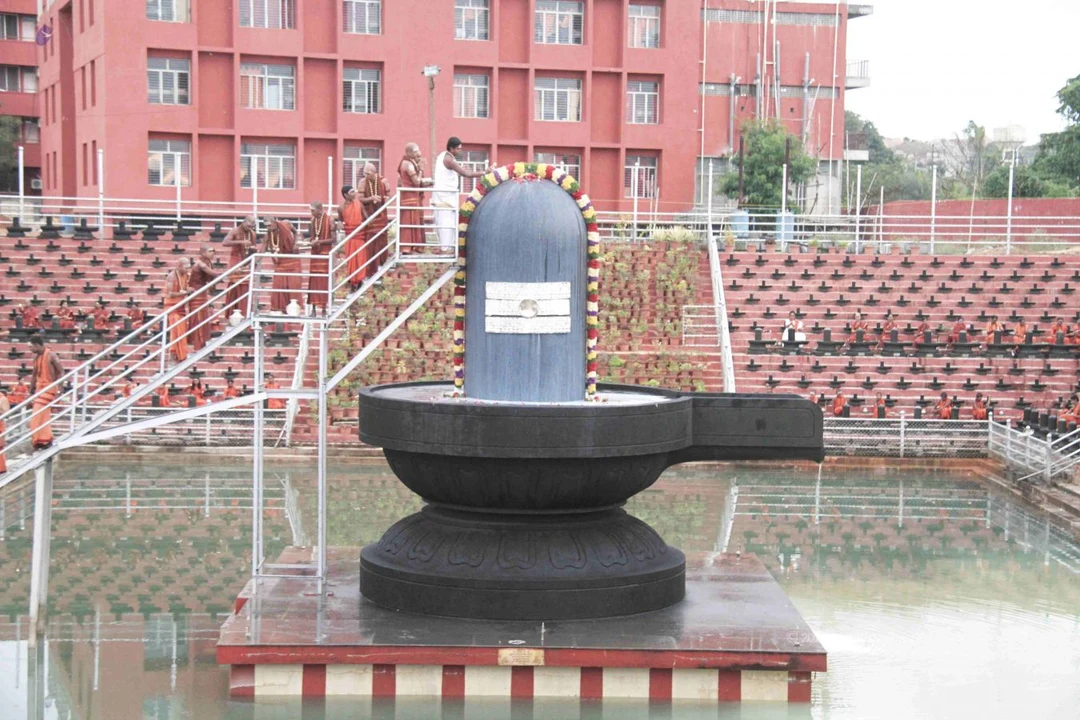
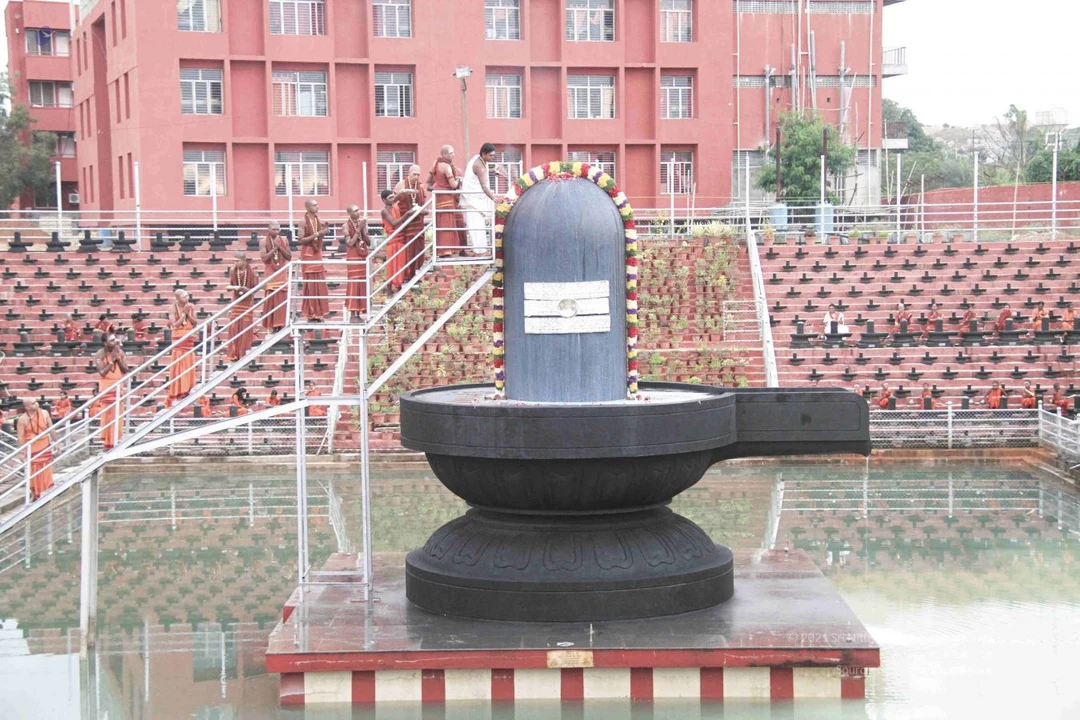
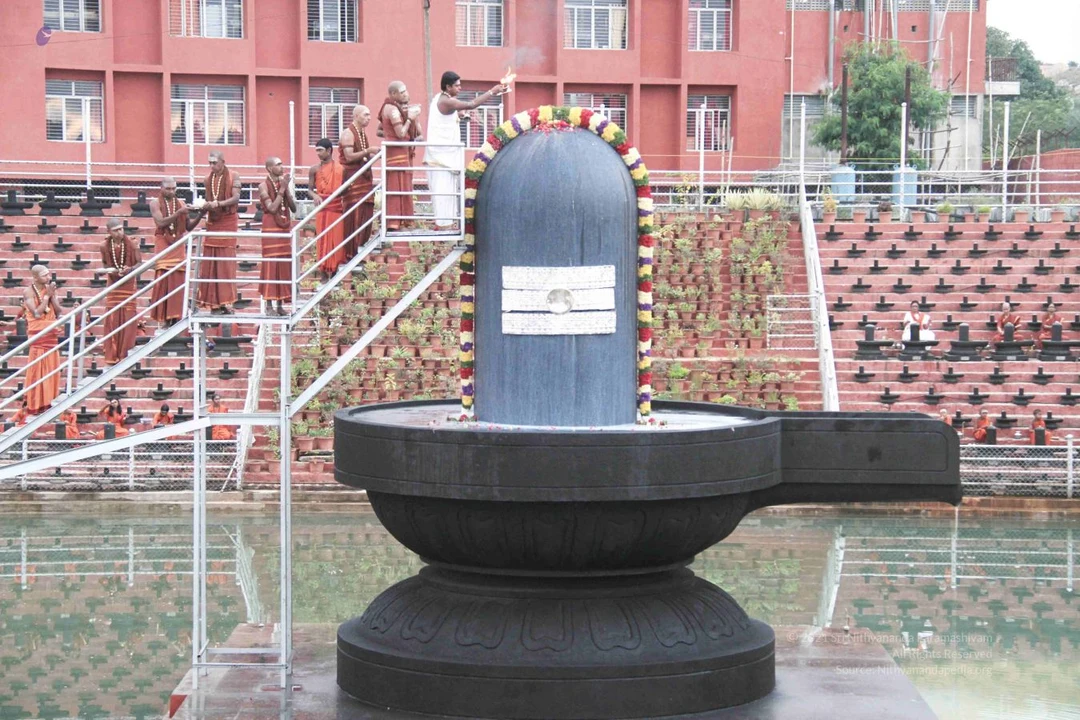
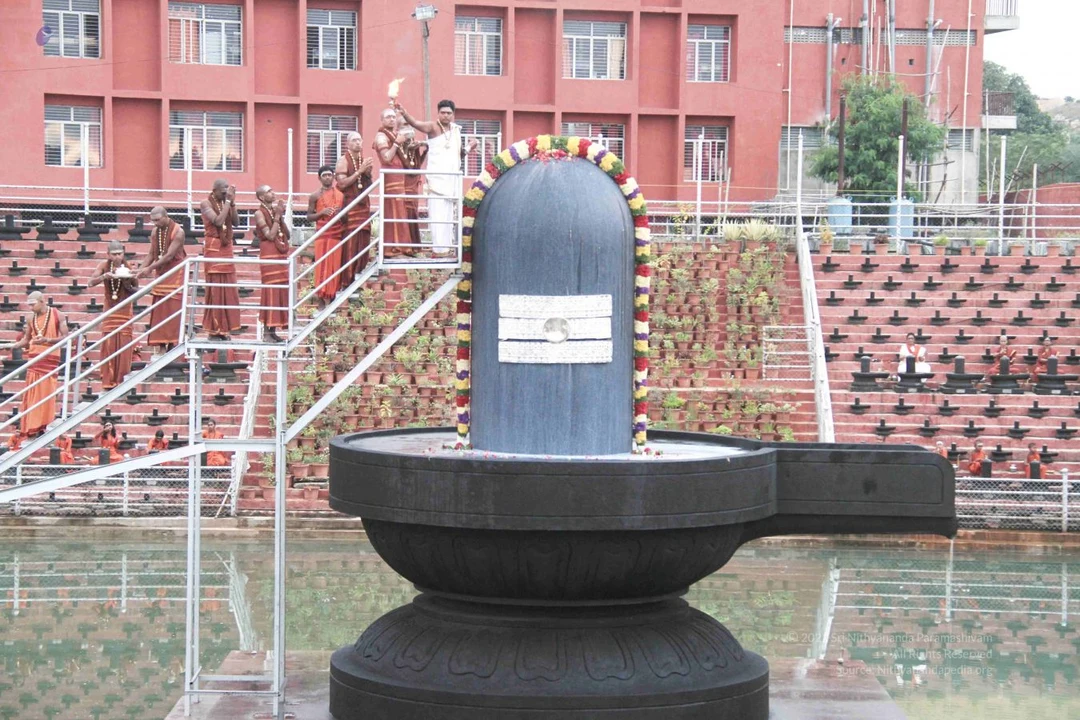
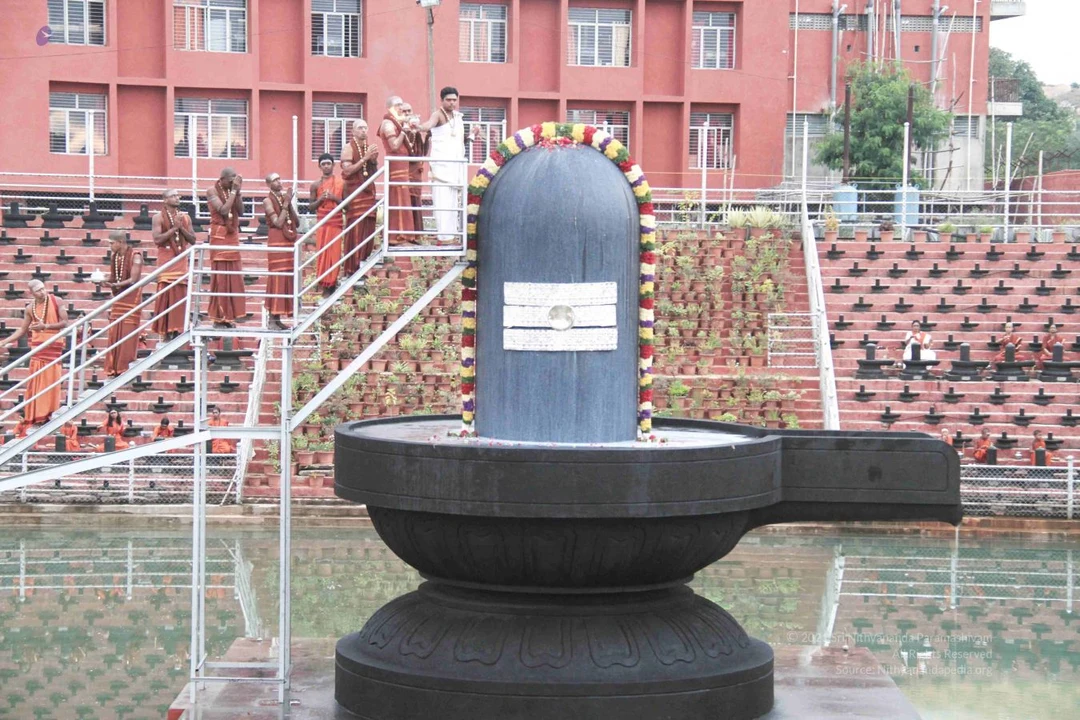
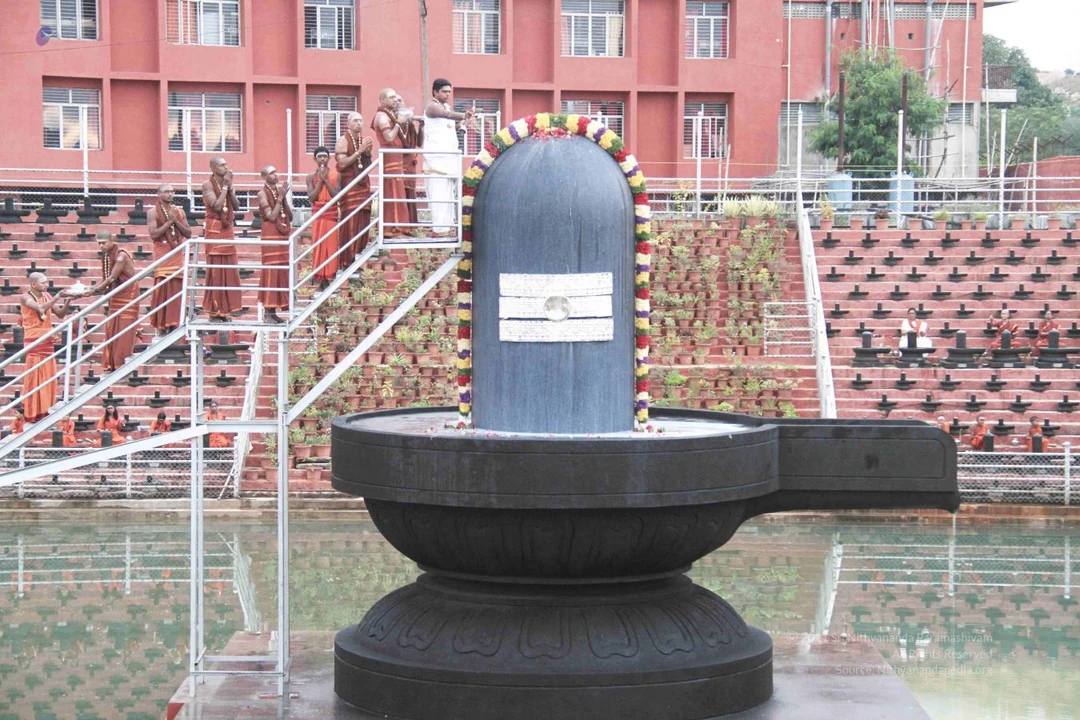
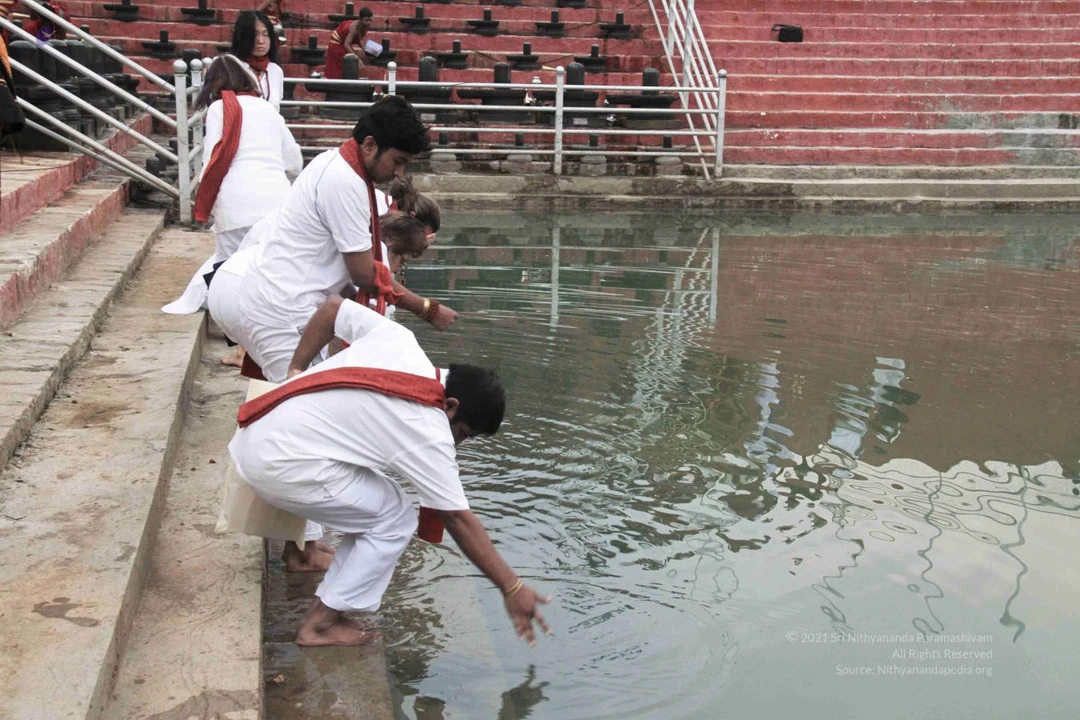
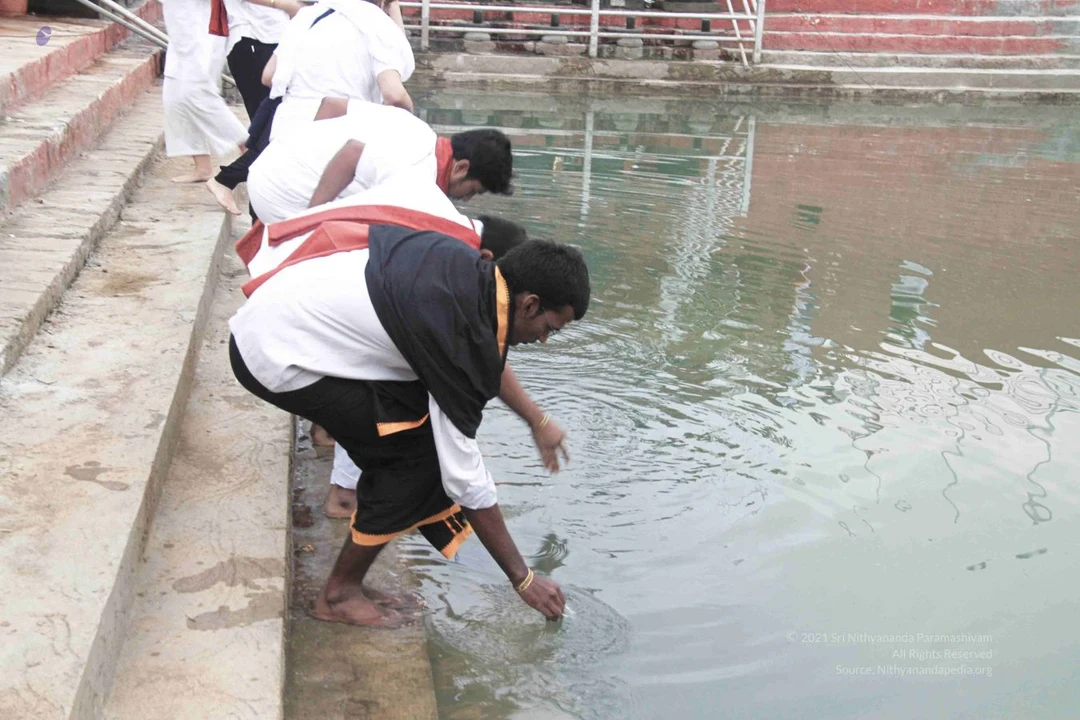
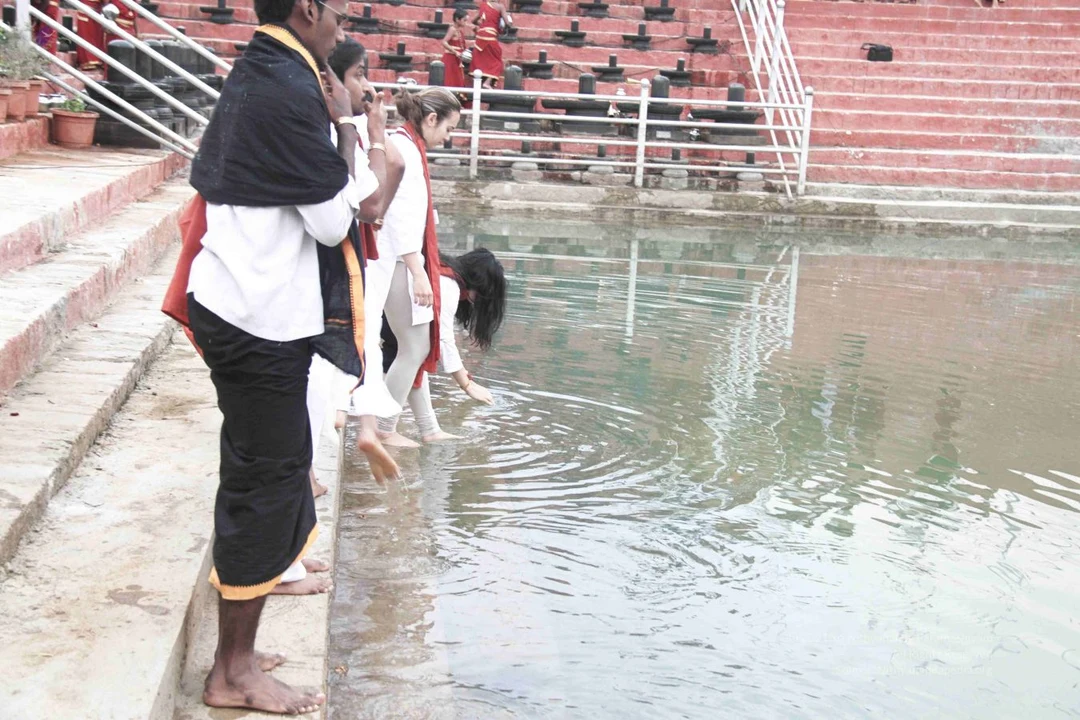
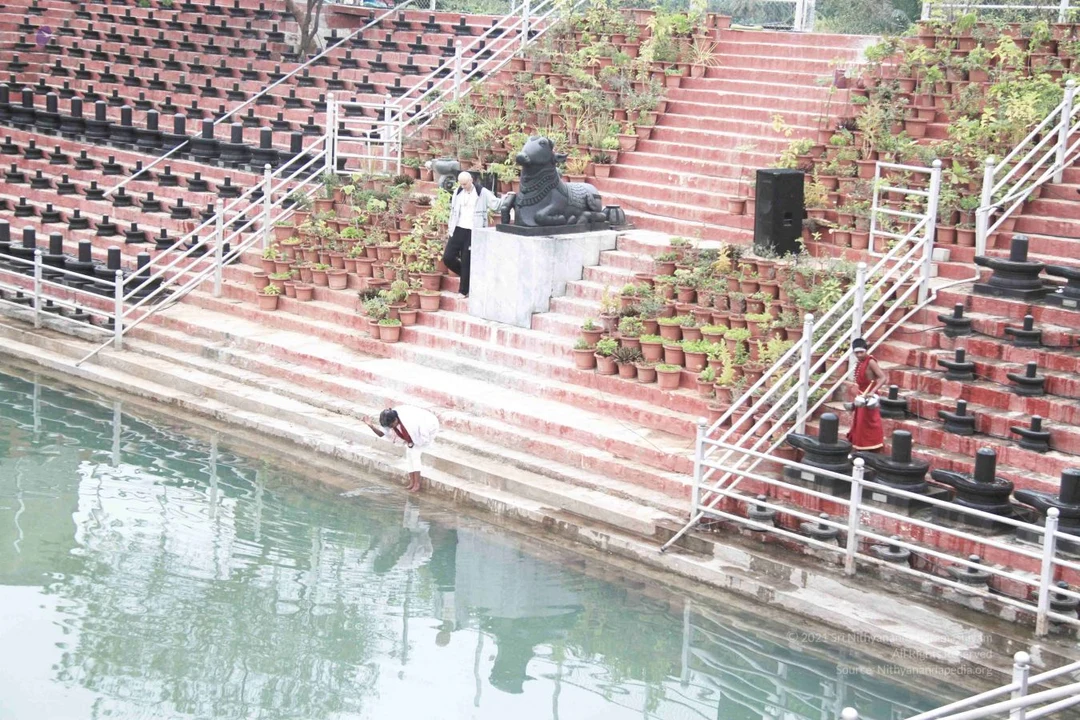
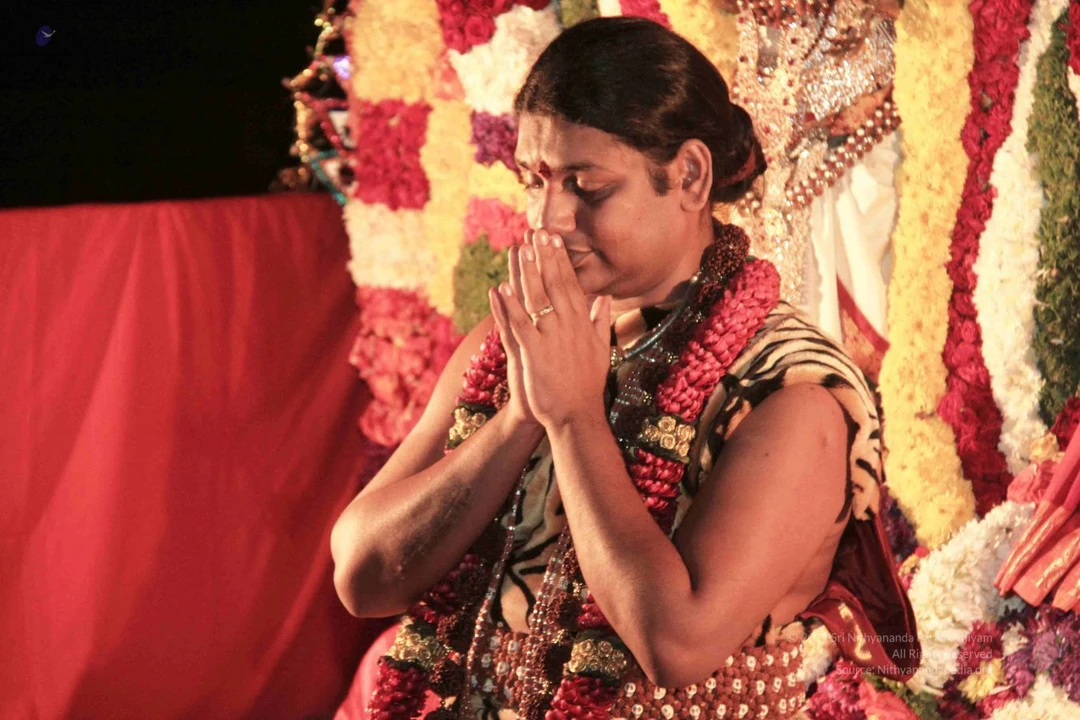
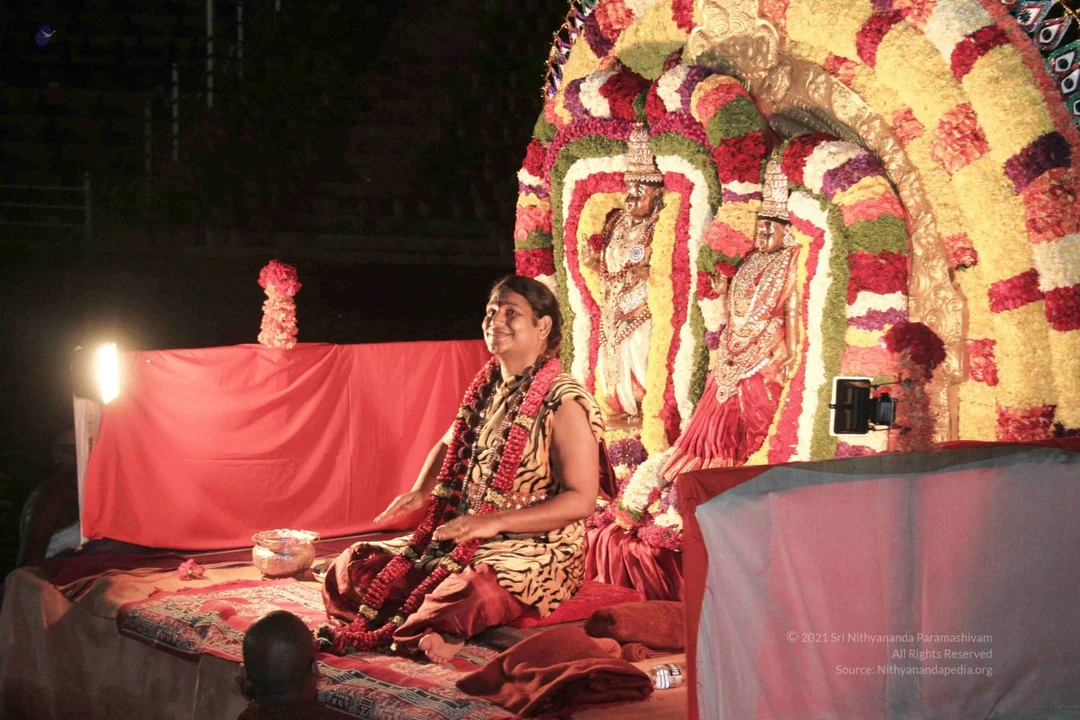
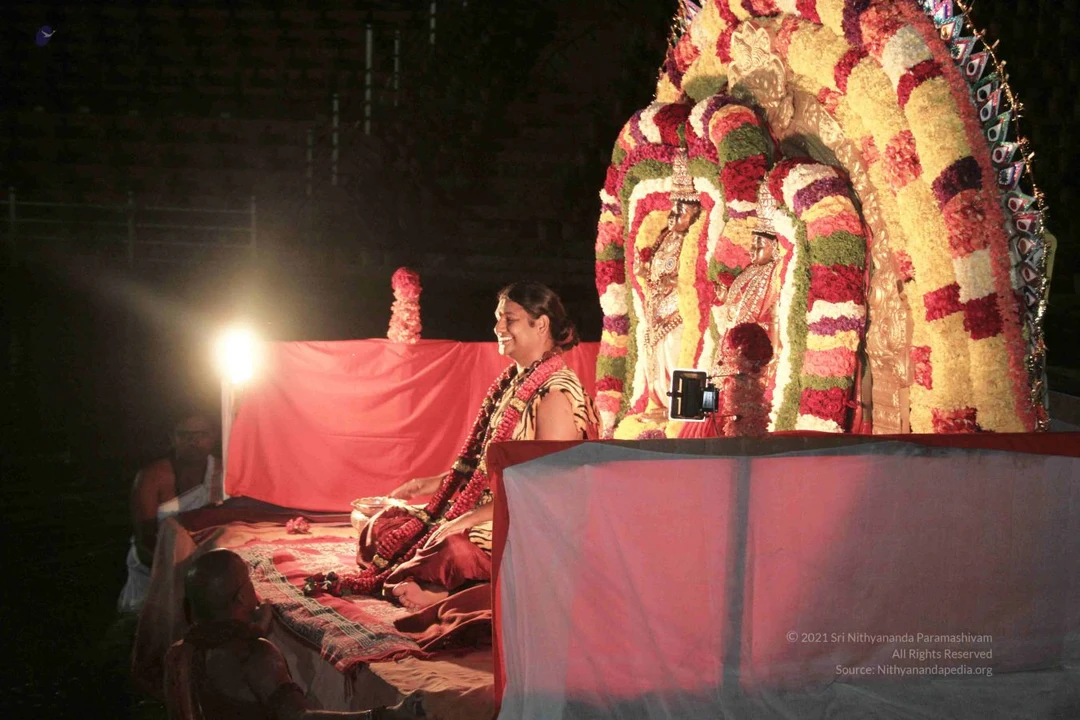
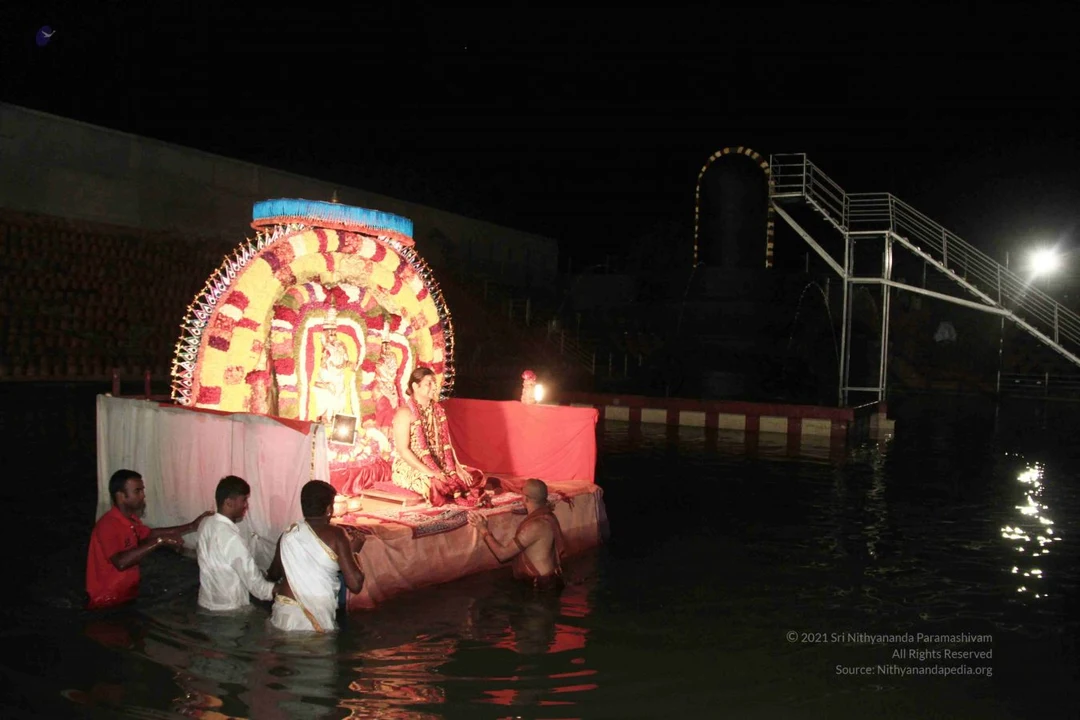
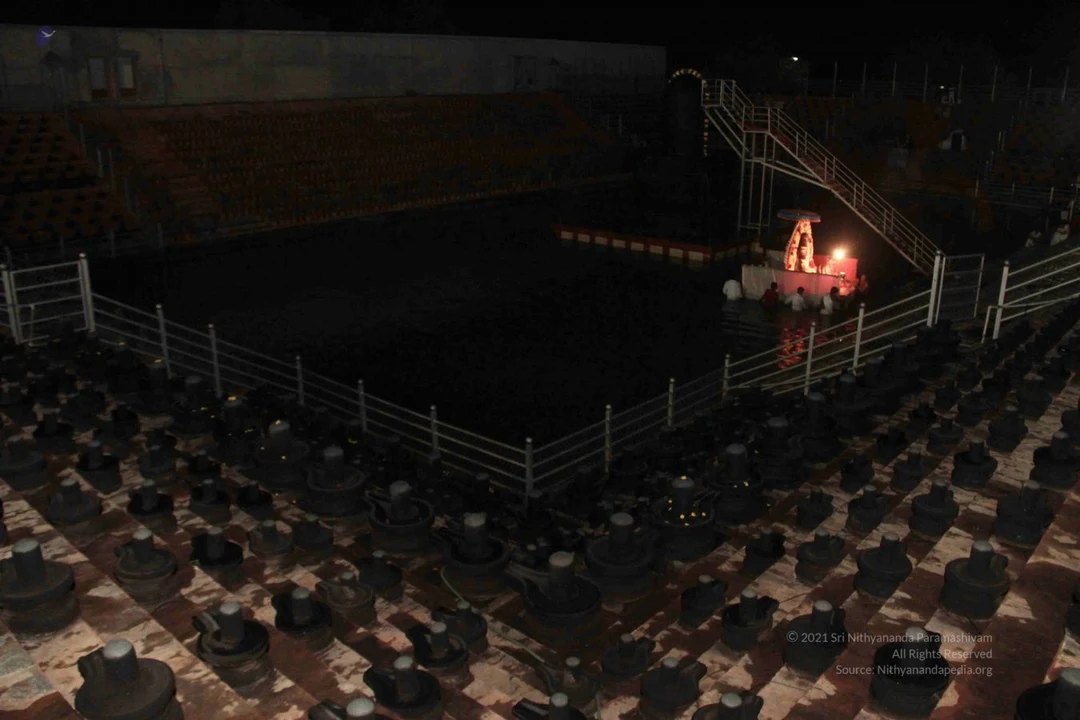
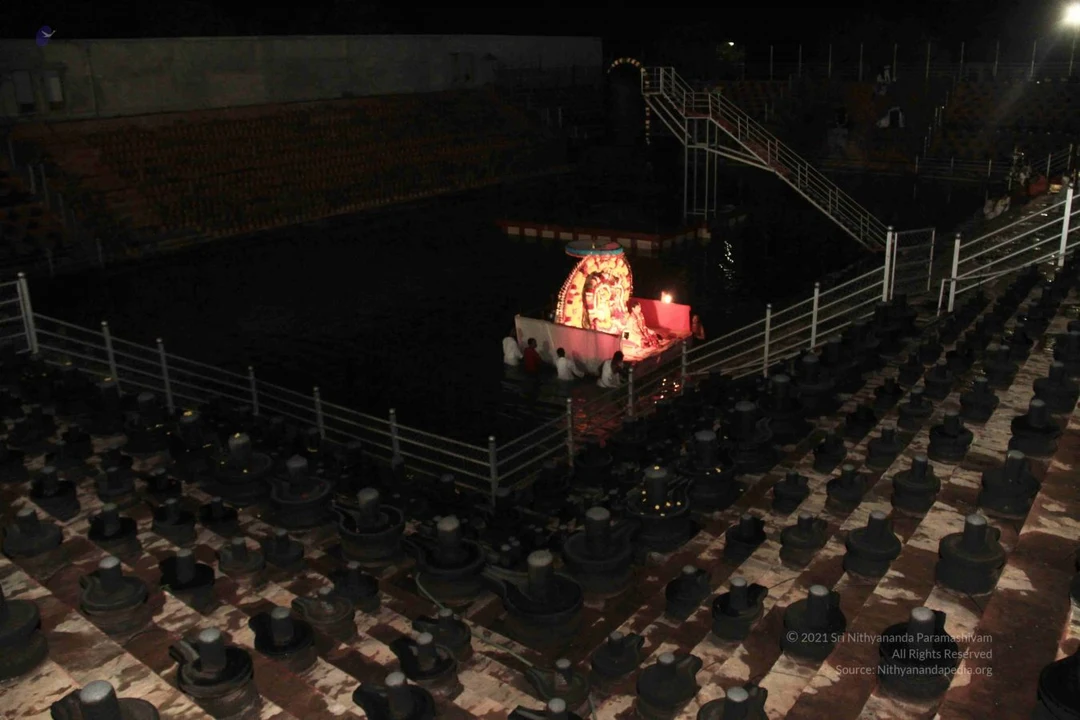
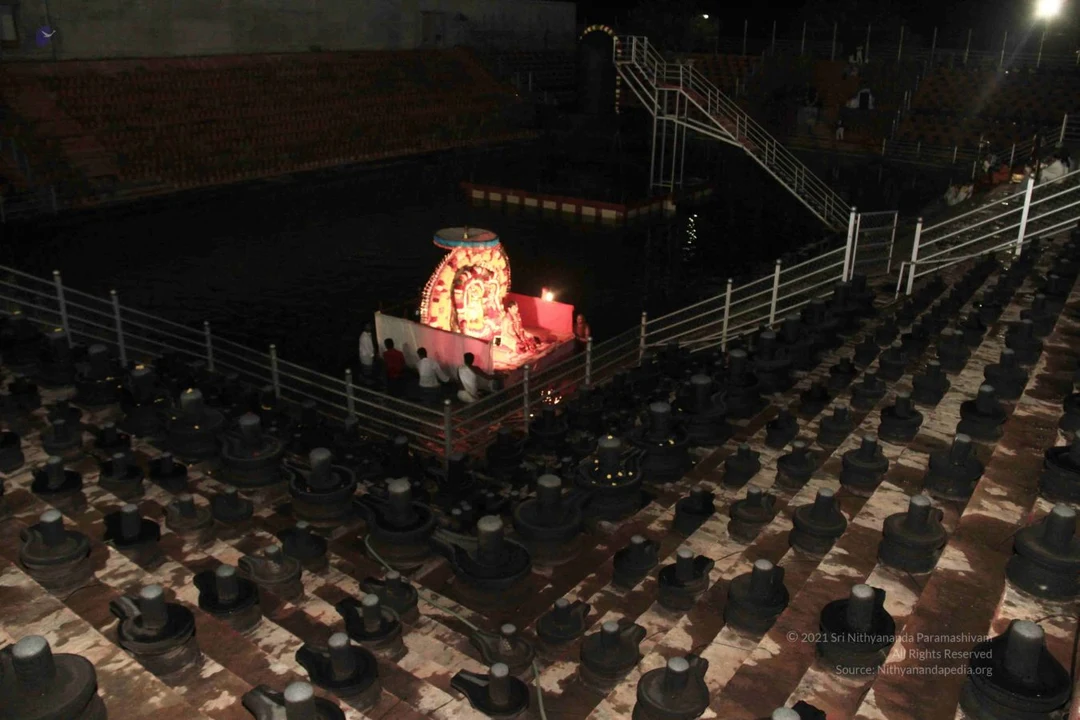
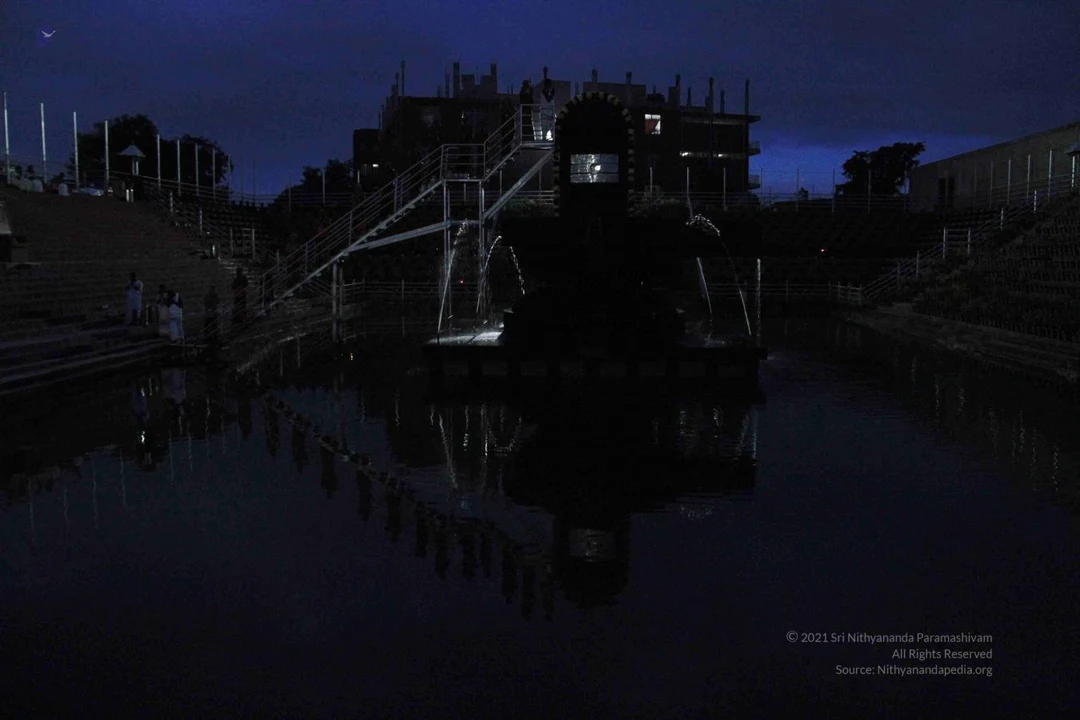
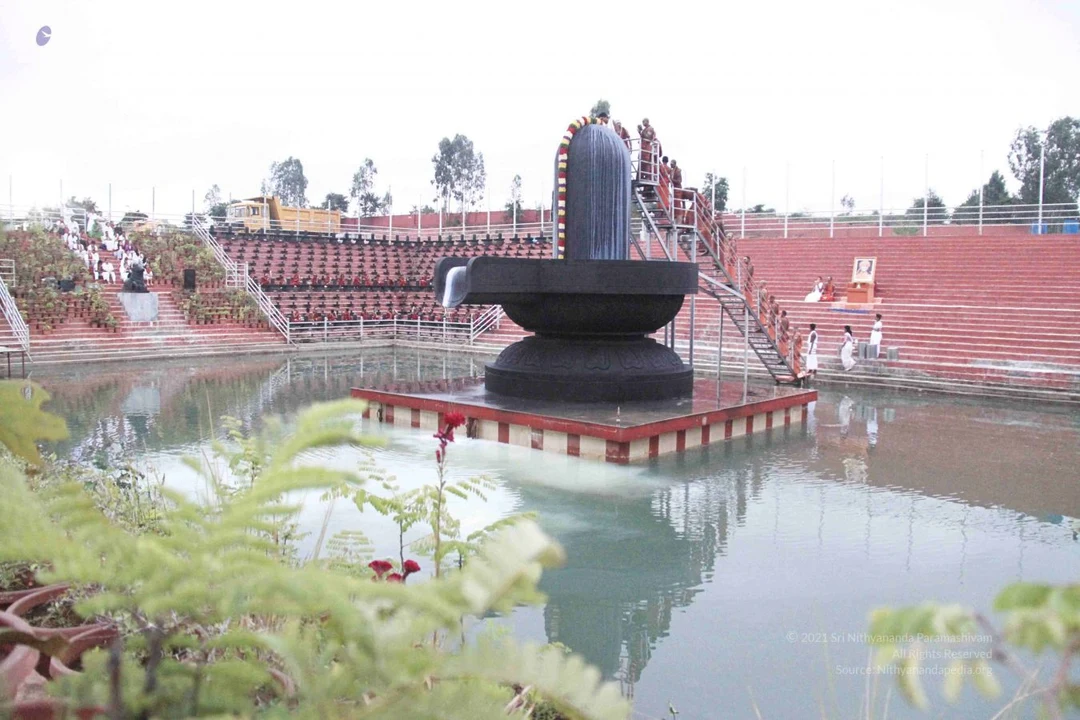
Rudrabhishekam at the VaidyaSarovar
Paduka-Puja

Nithya-Satsang

Sarva-Darshan

Final-Blessing

Inner-Awakening-Session

Inner-Awakening-Akashic-Reading

Inner-Awakening-Darshan

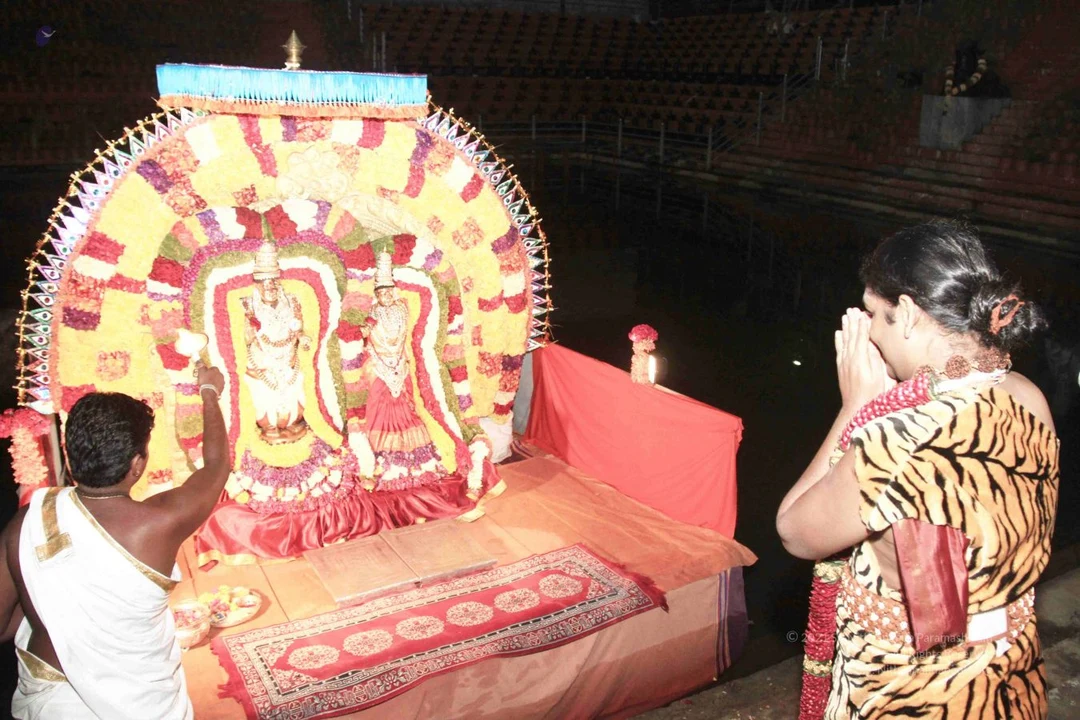
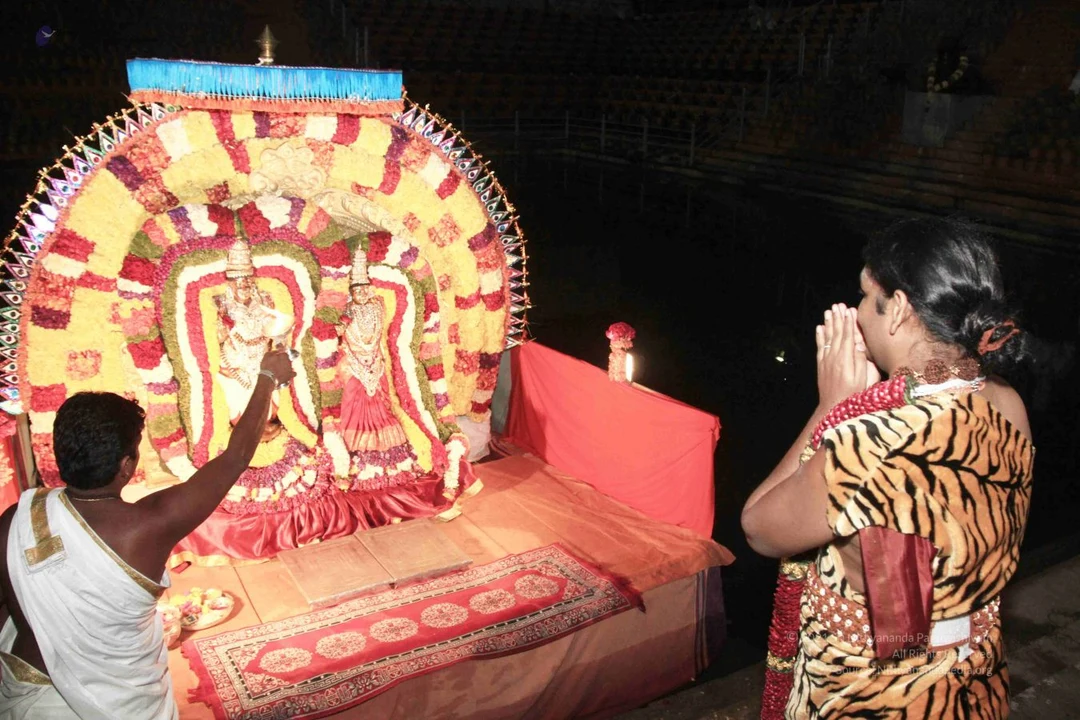
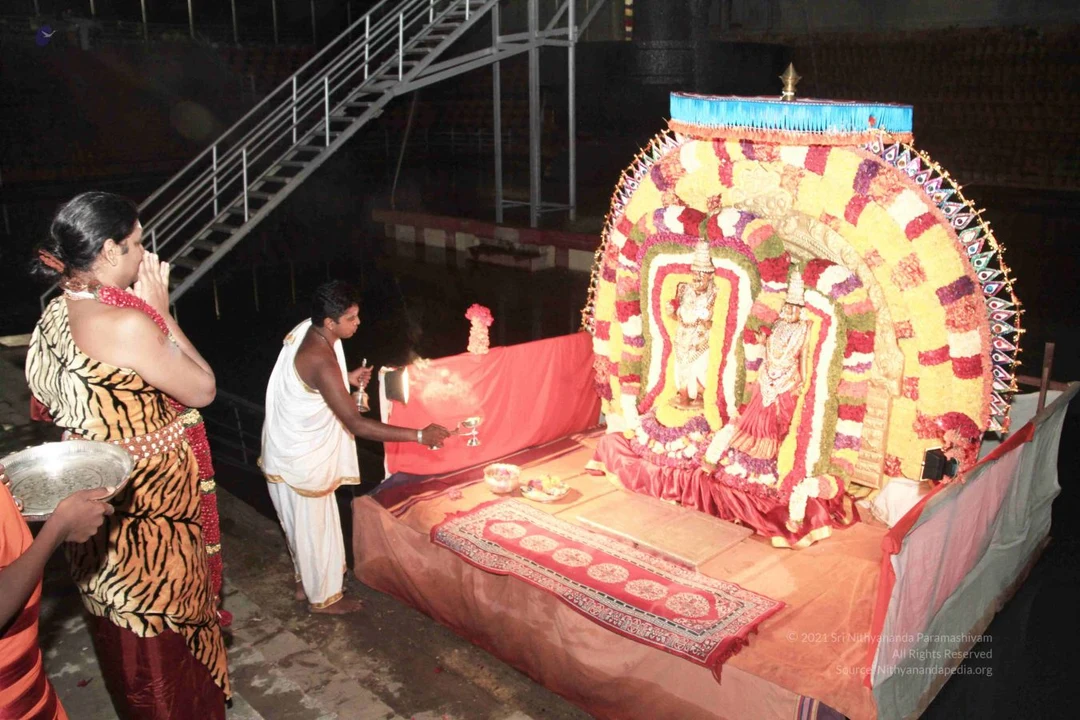
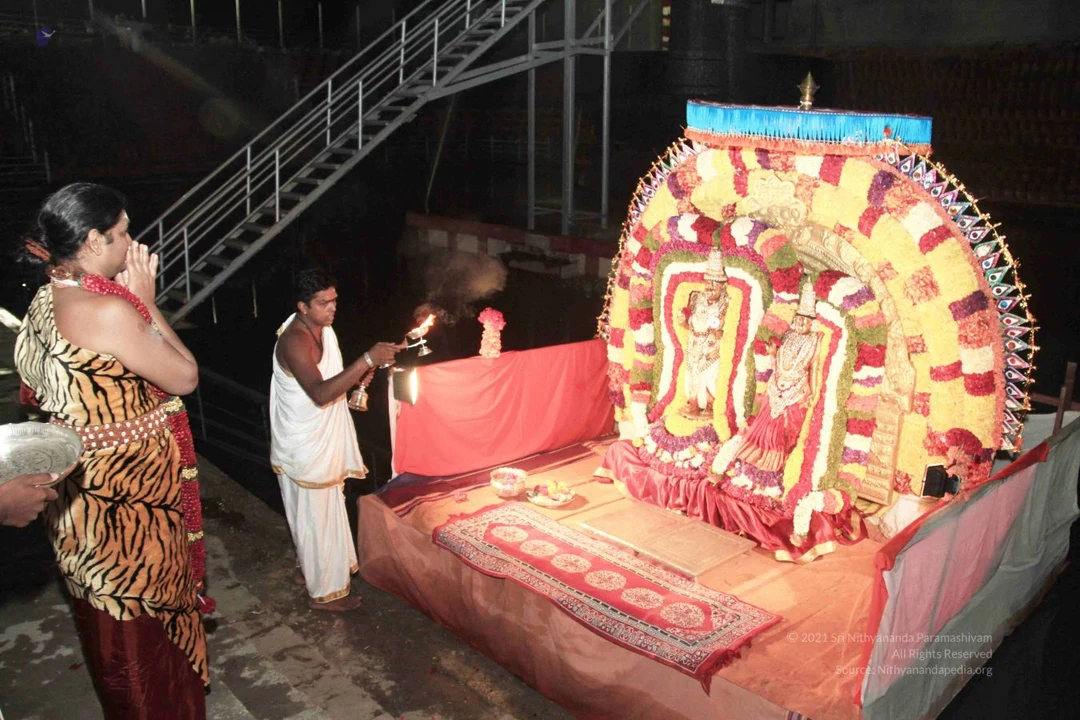
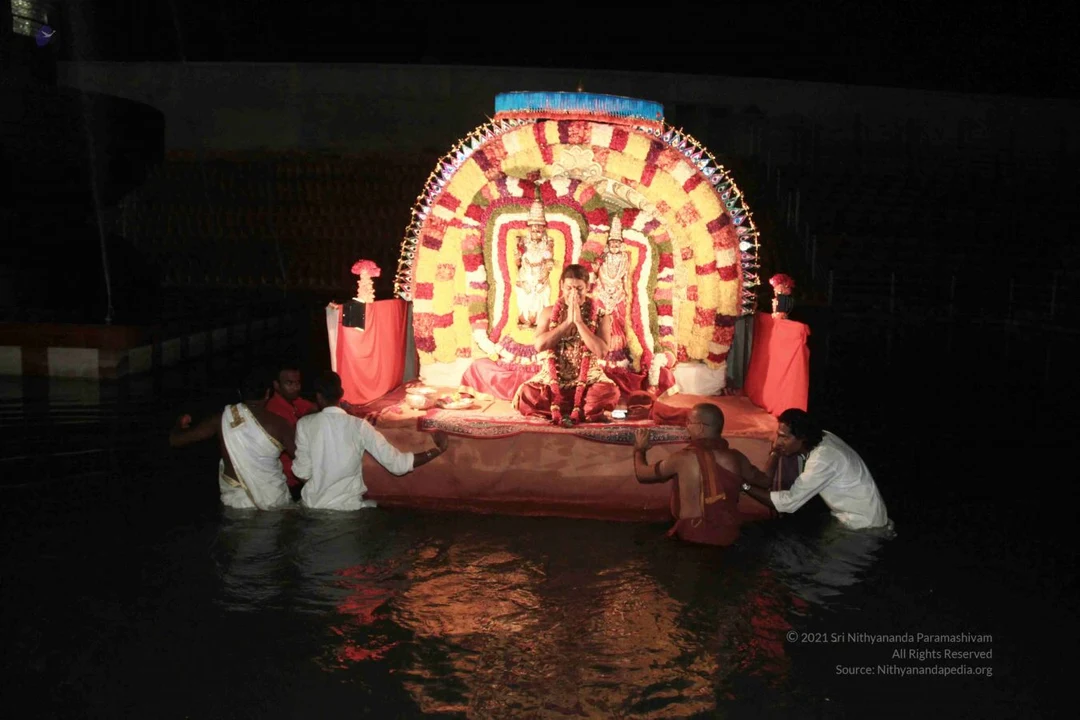
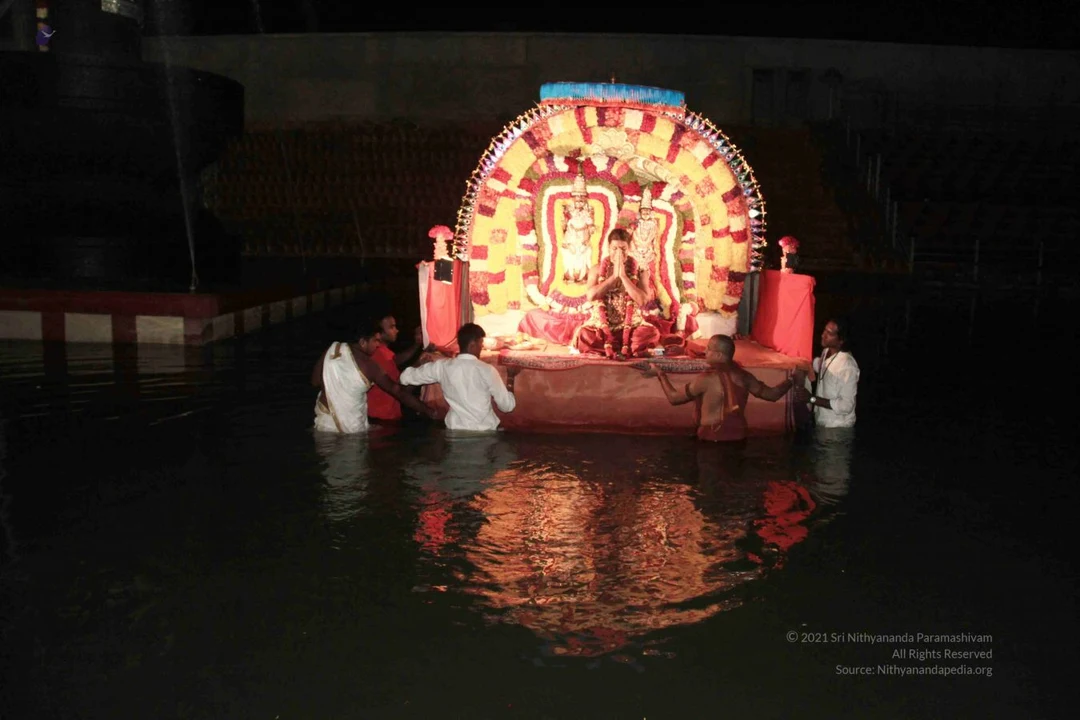
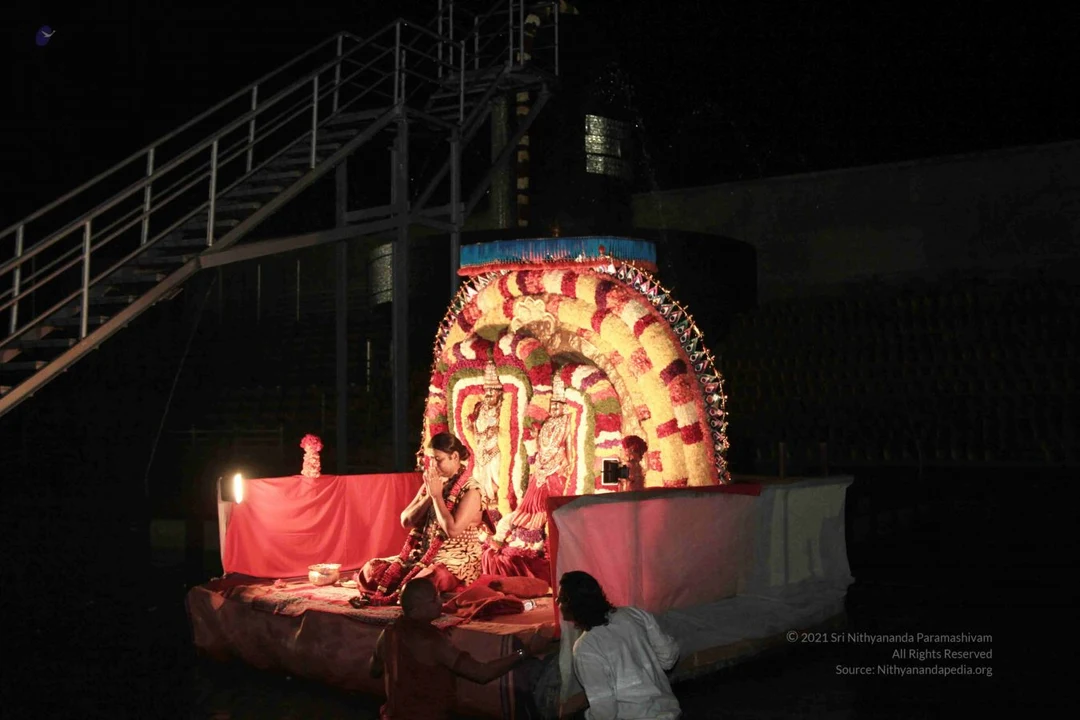
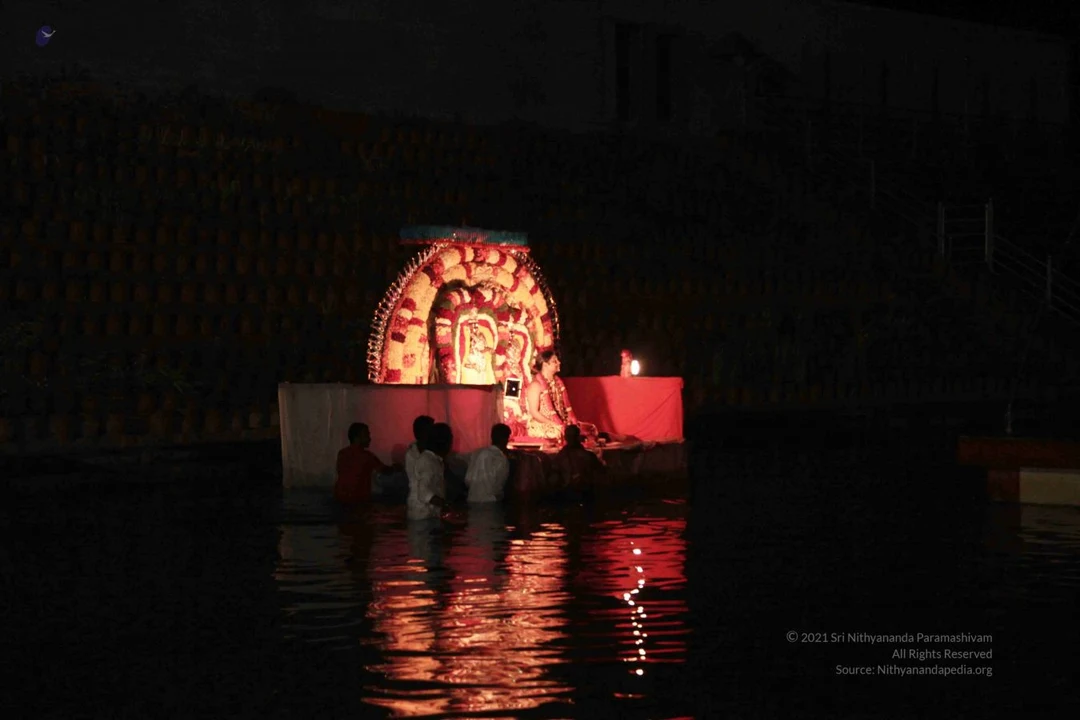
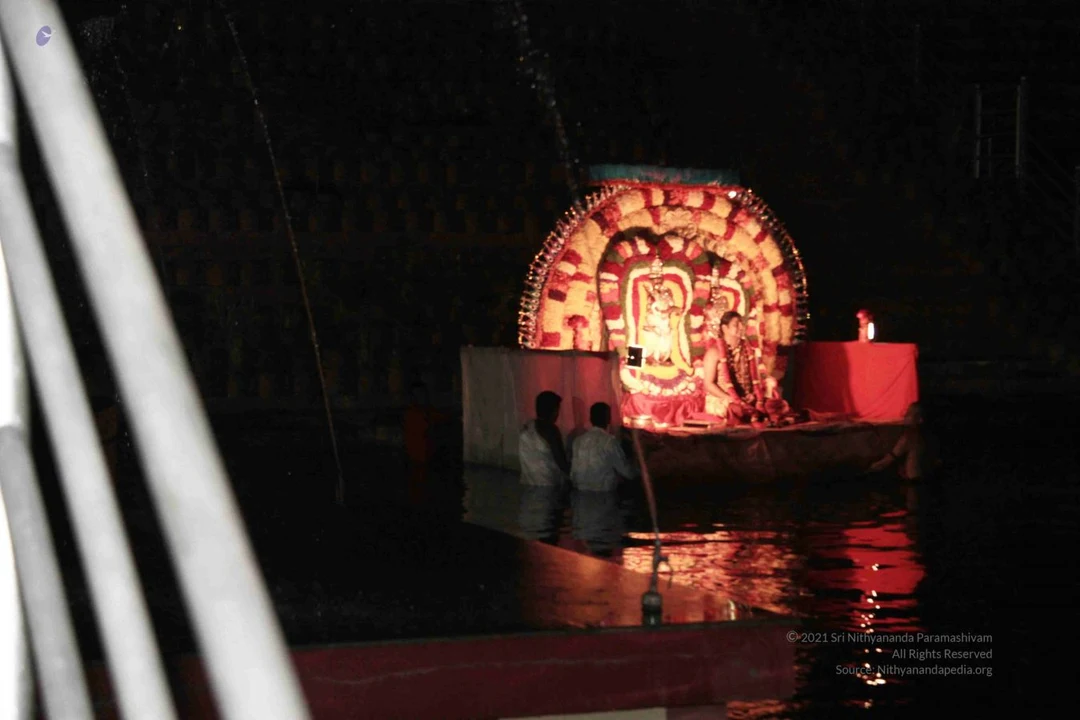
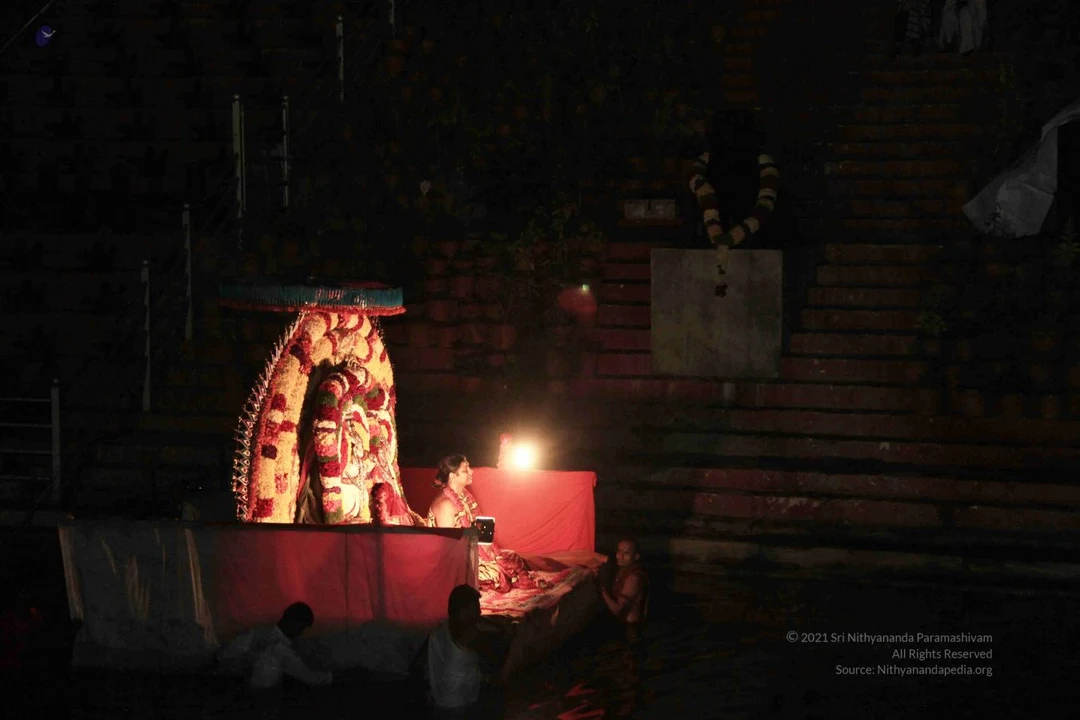
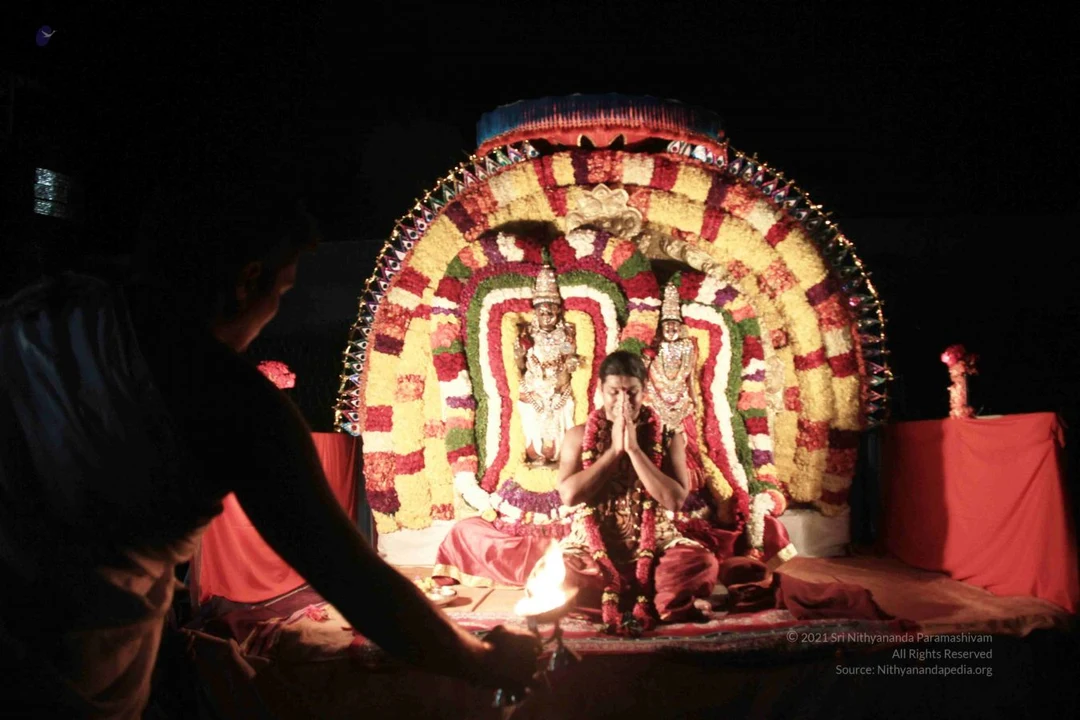
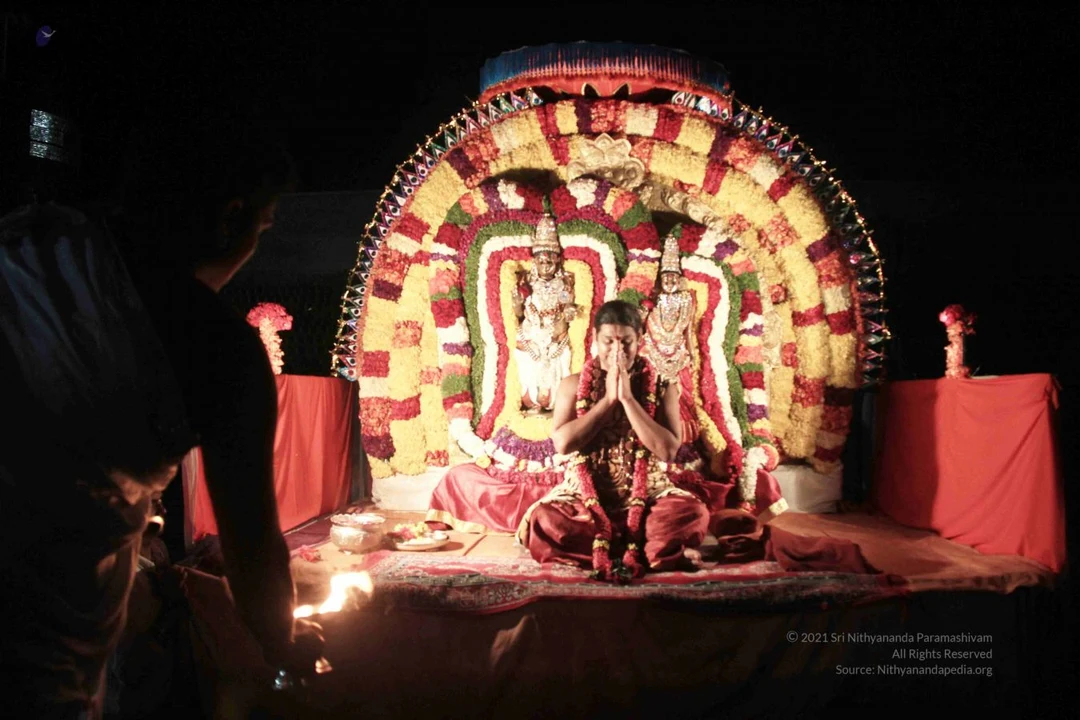
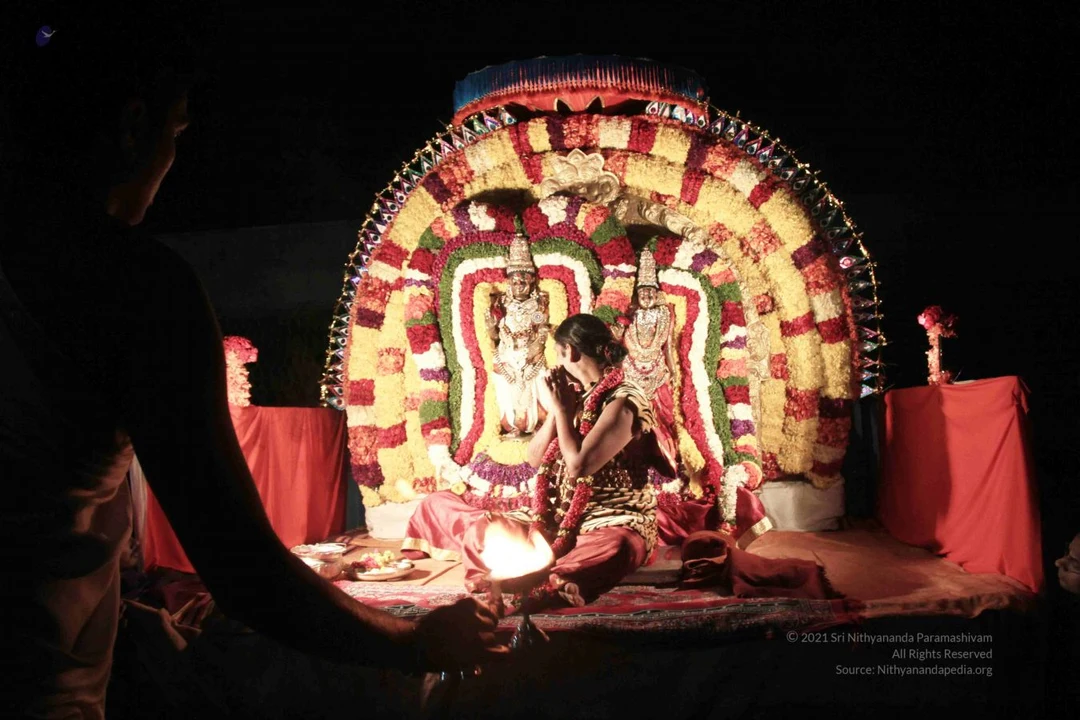
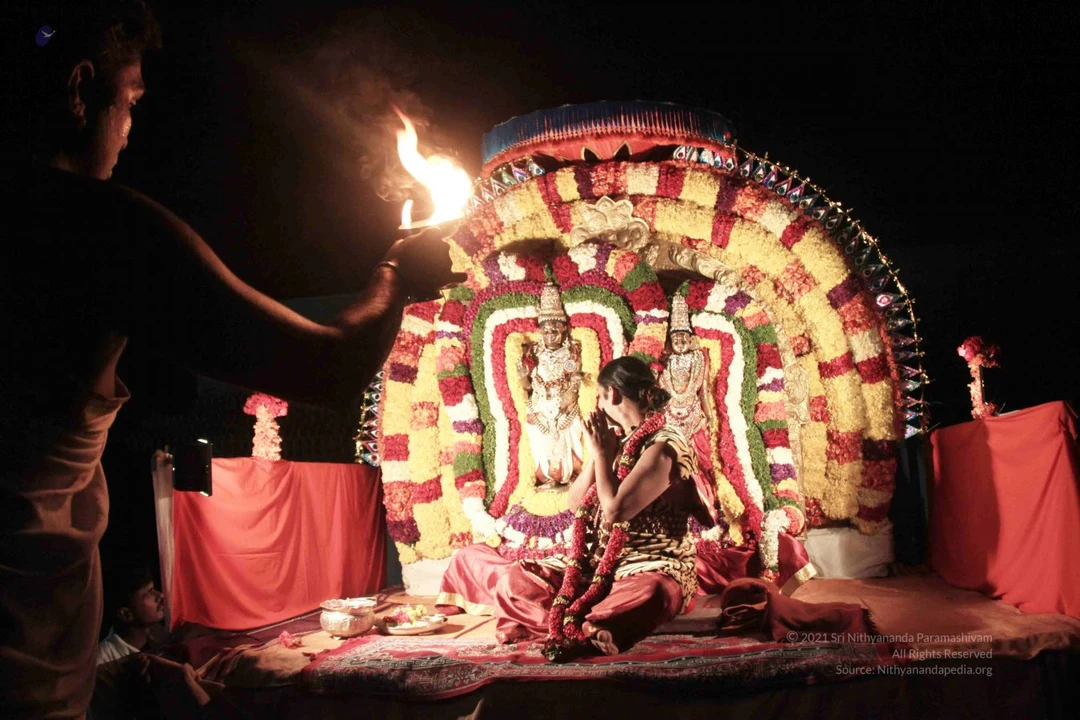
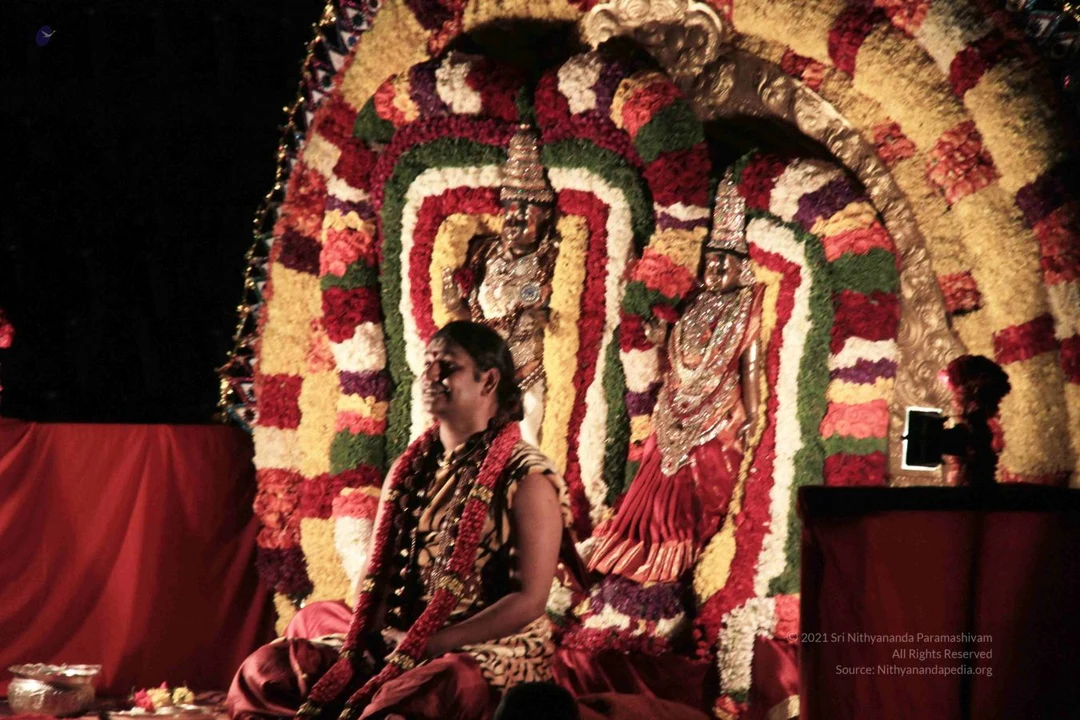
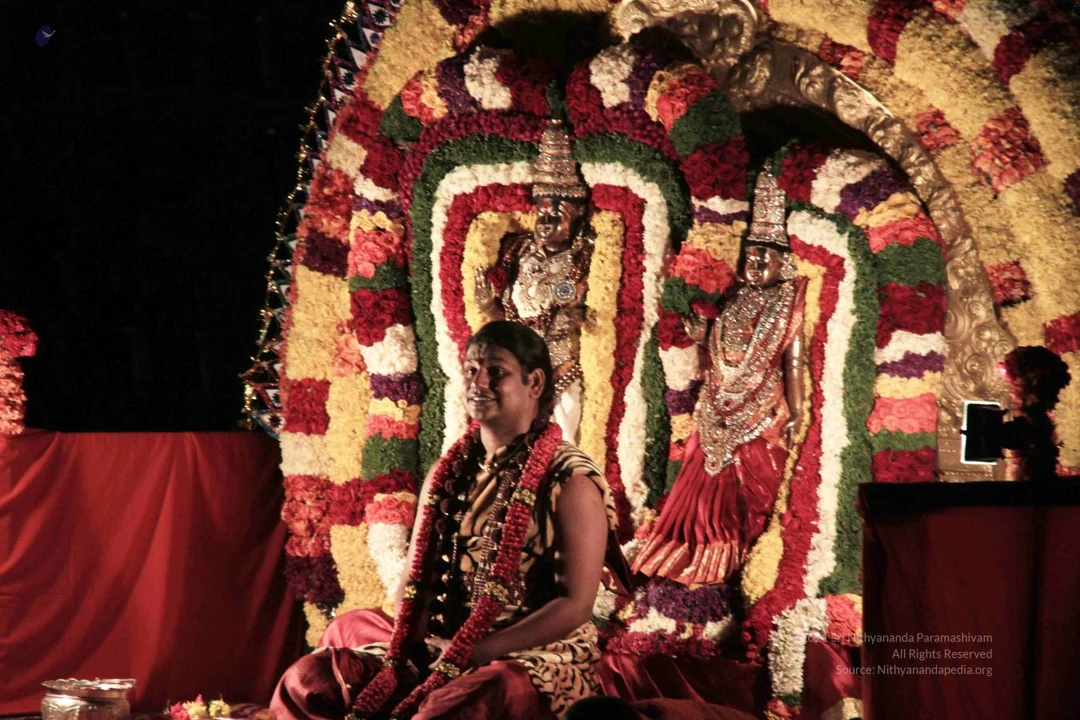
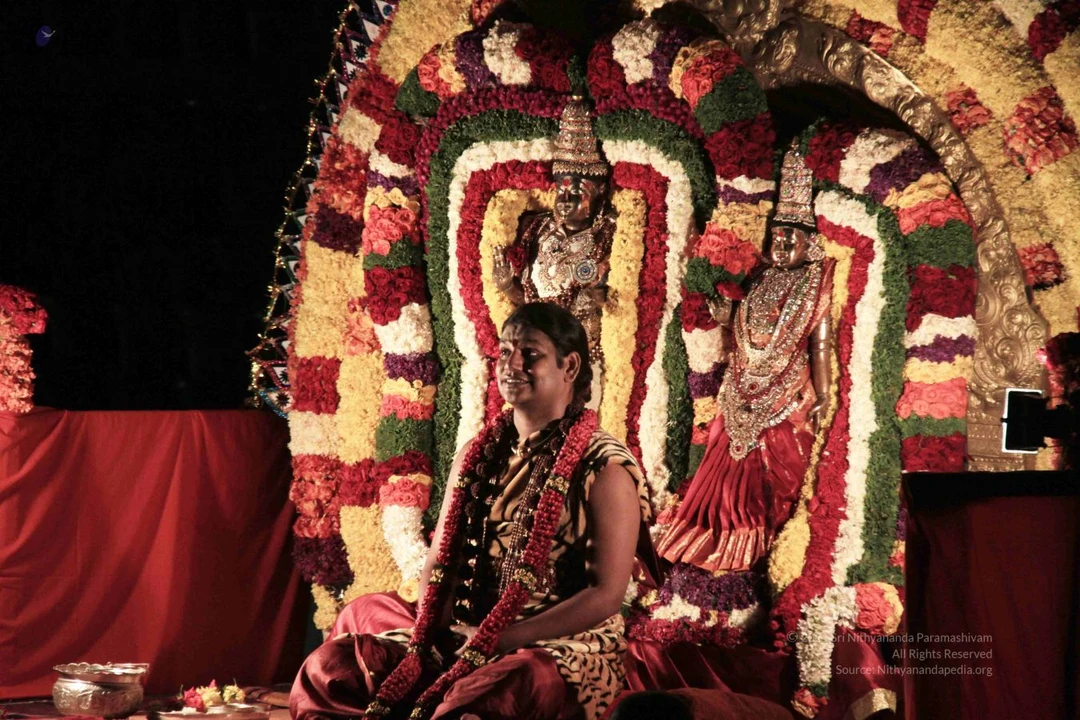
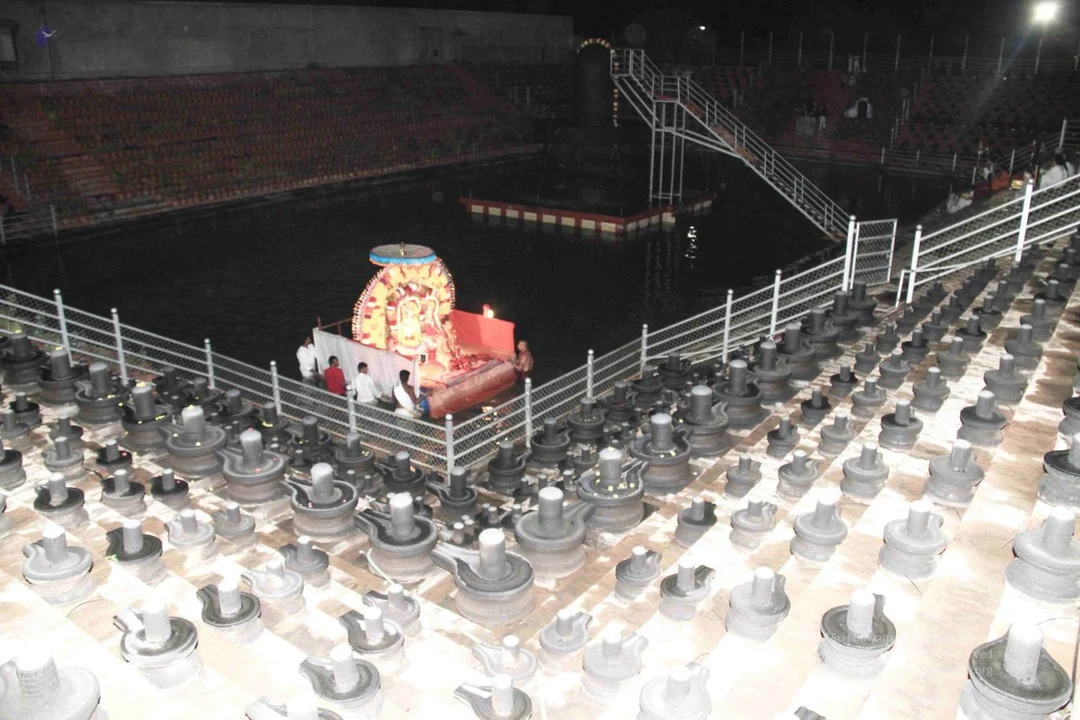
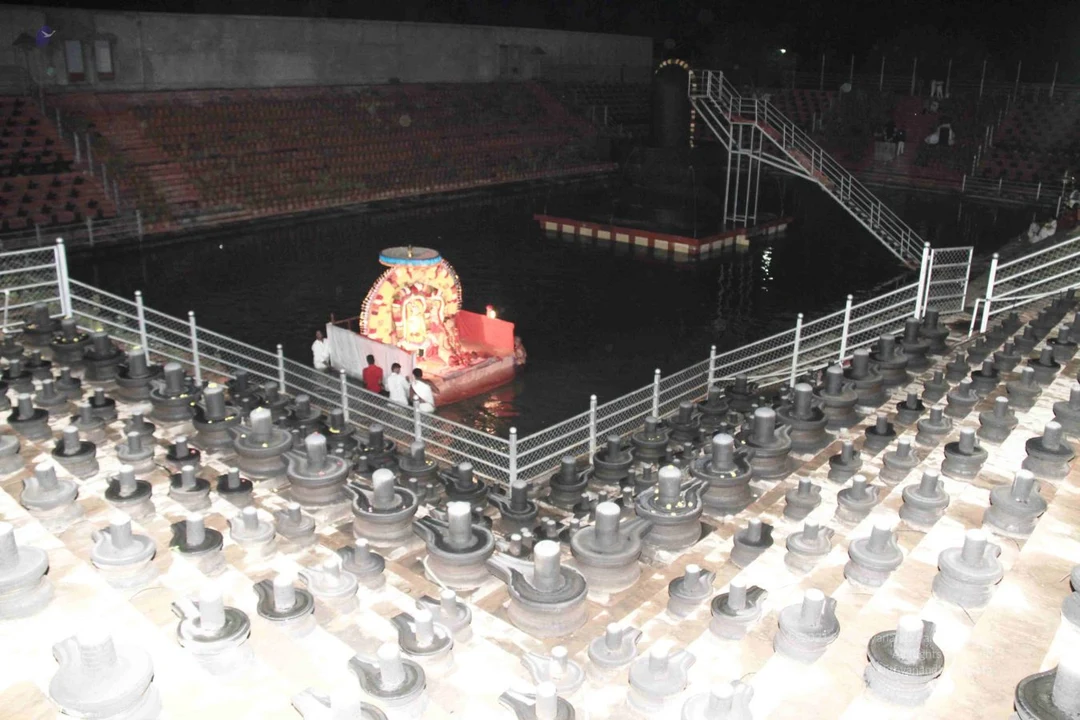
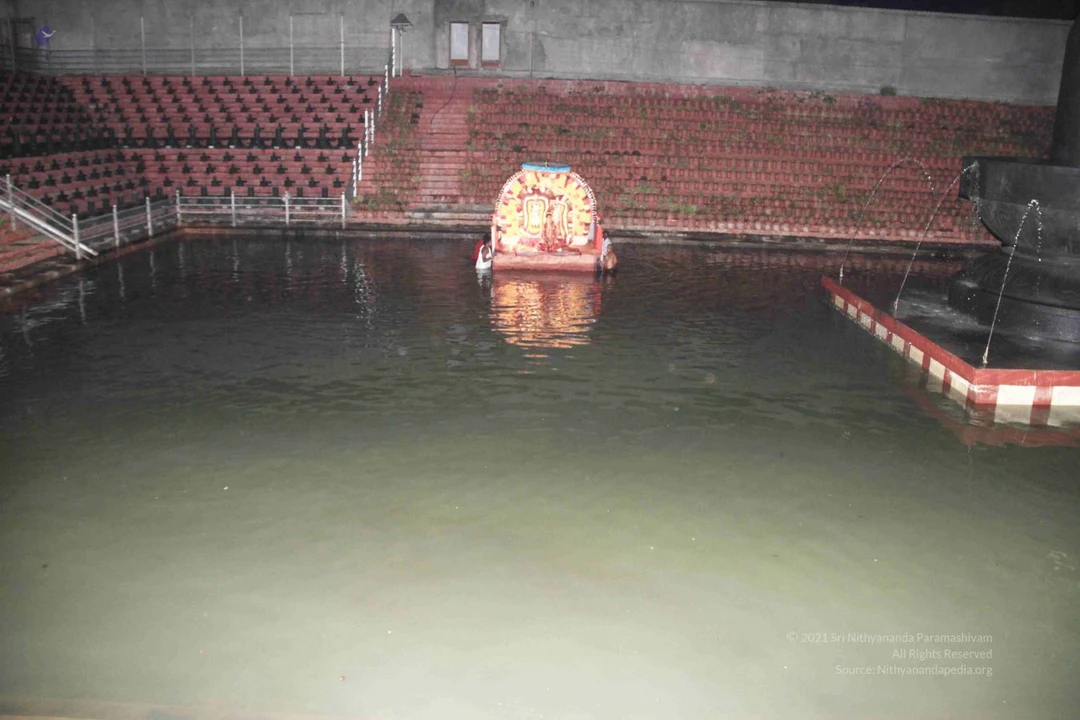
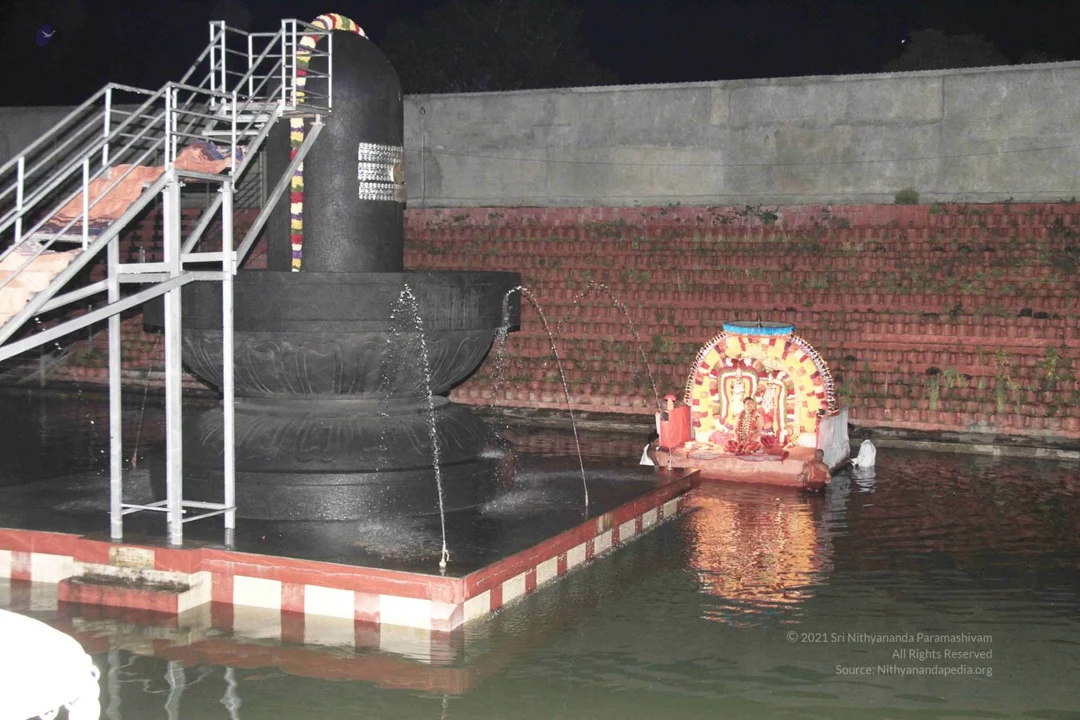
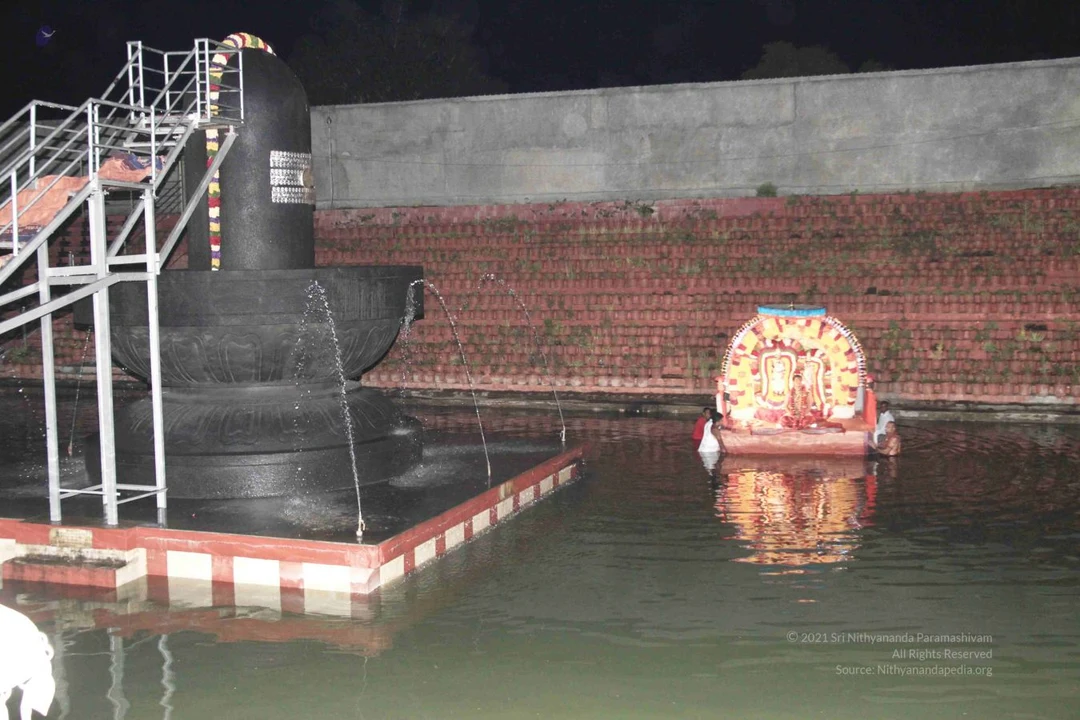
Theppotsavam

03-Nithya-Satsang

08-Inner-Awakening-Darshan

Photos from this day

View all 433 photos

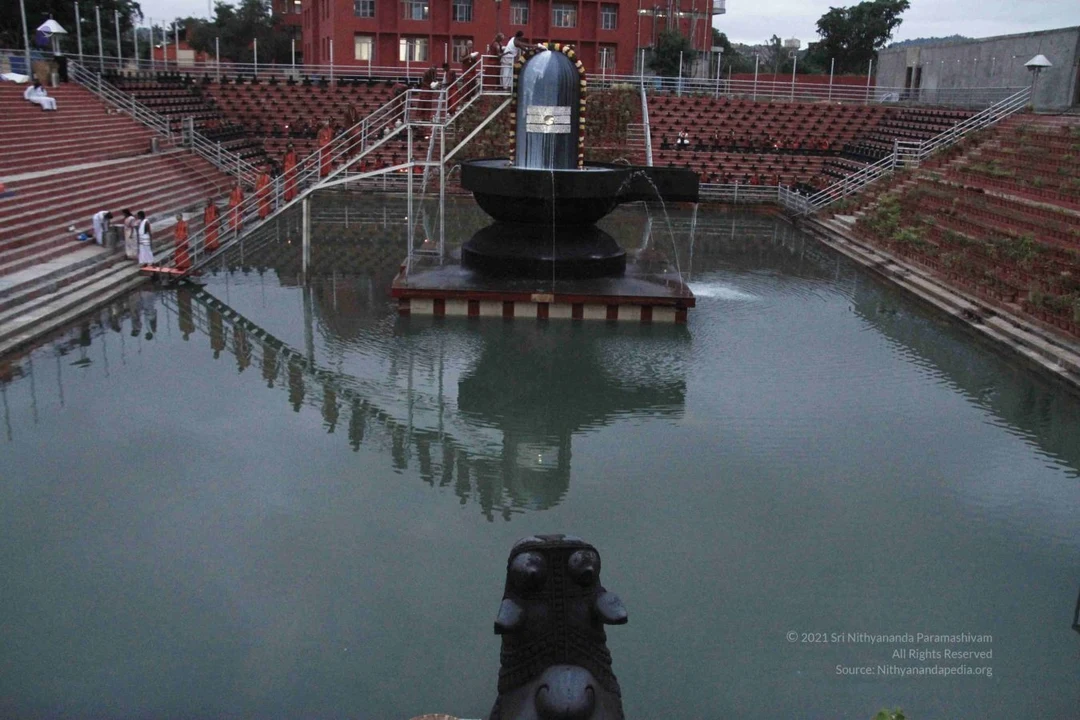
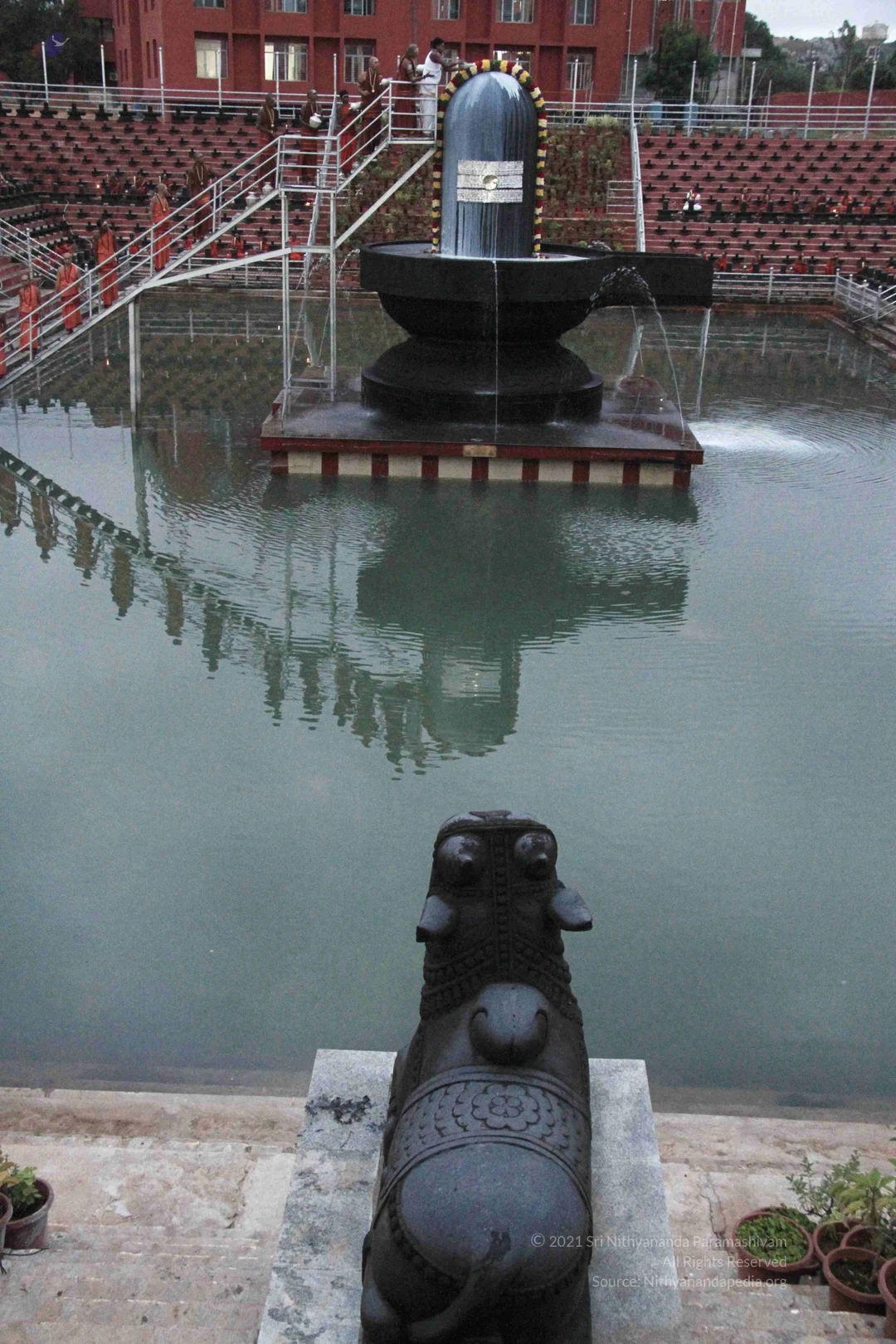
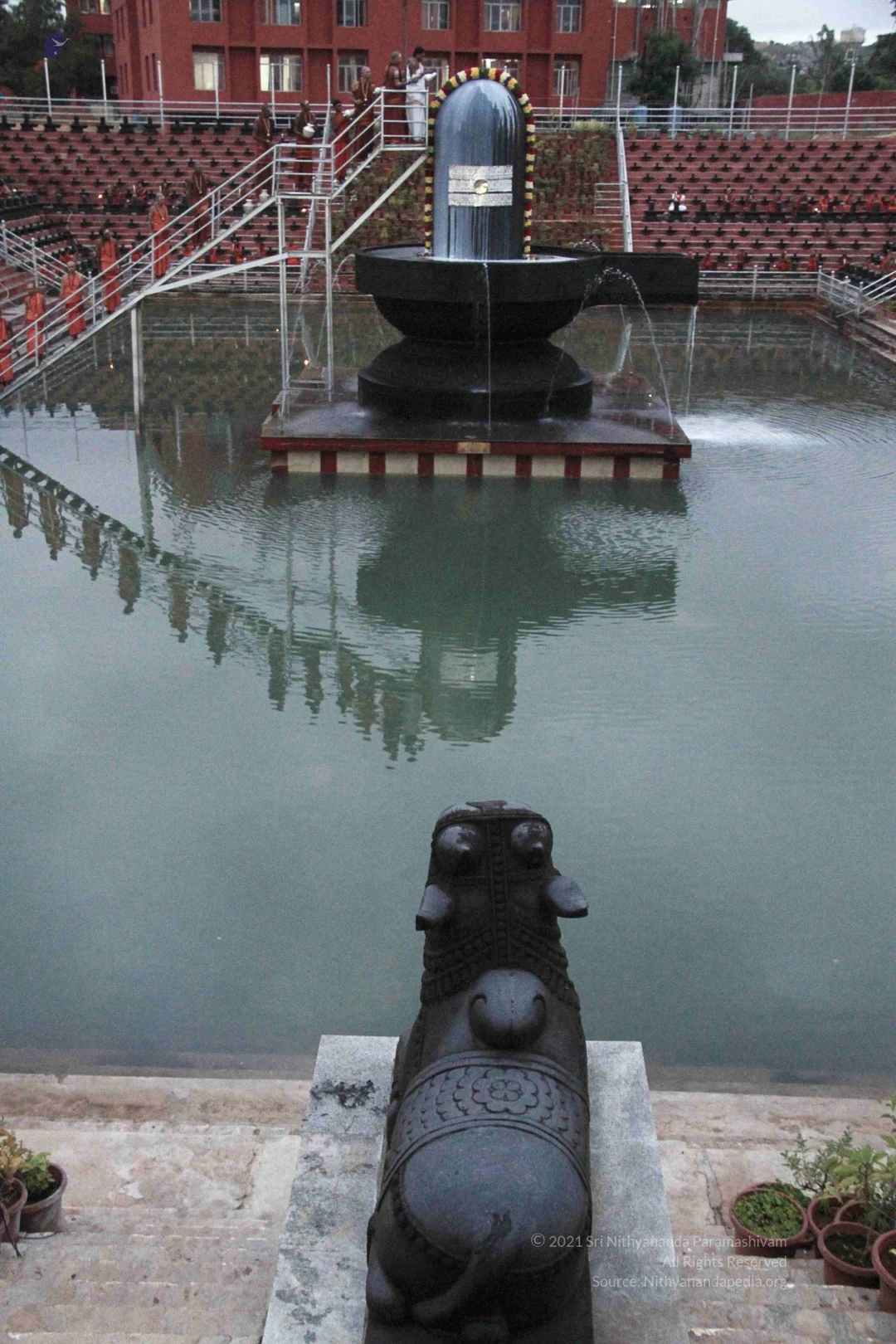
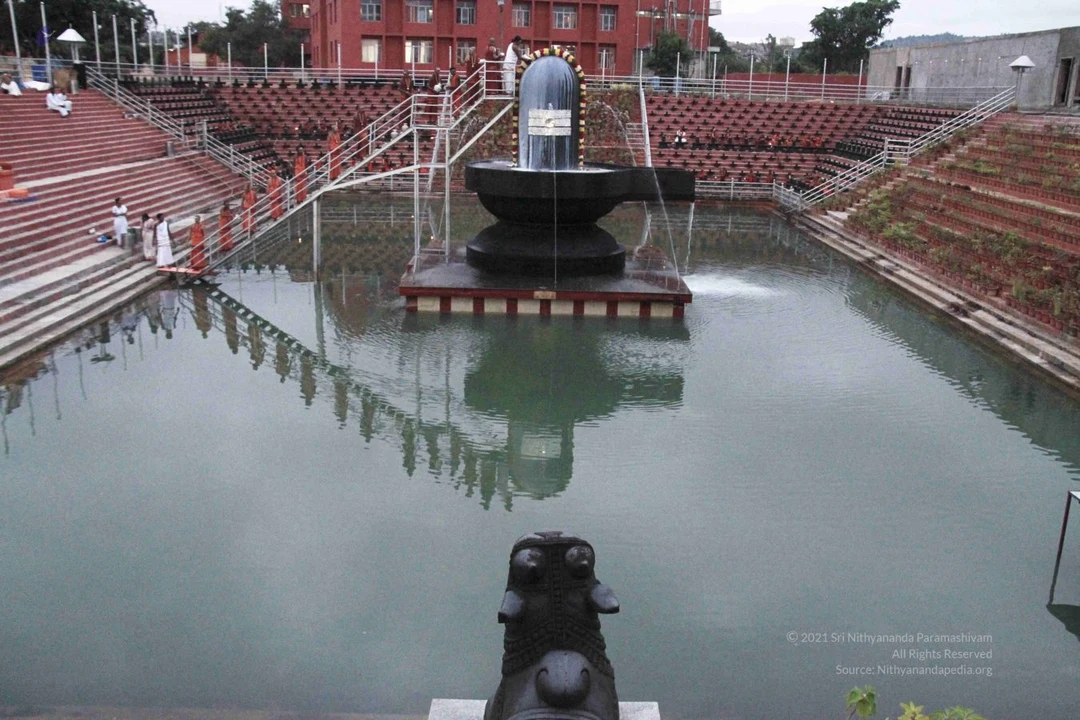
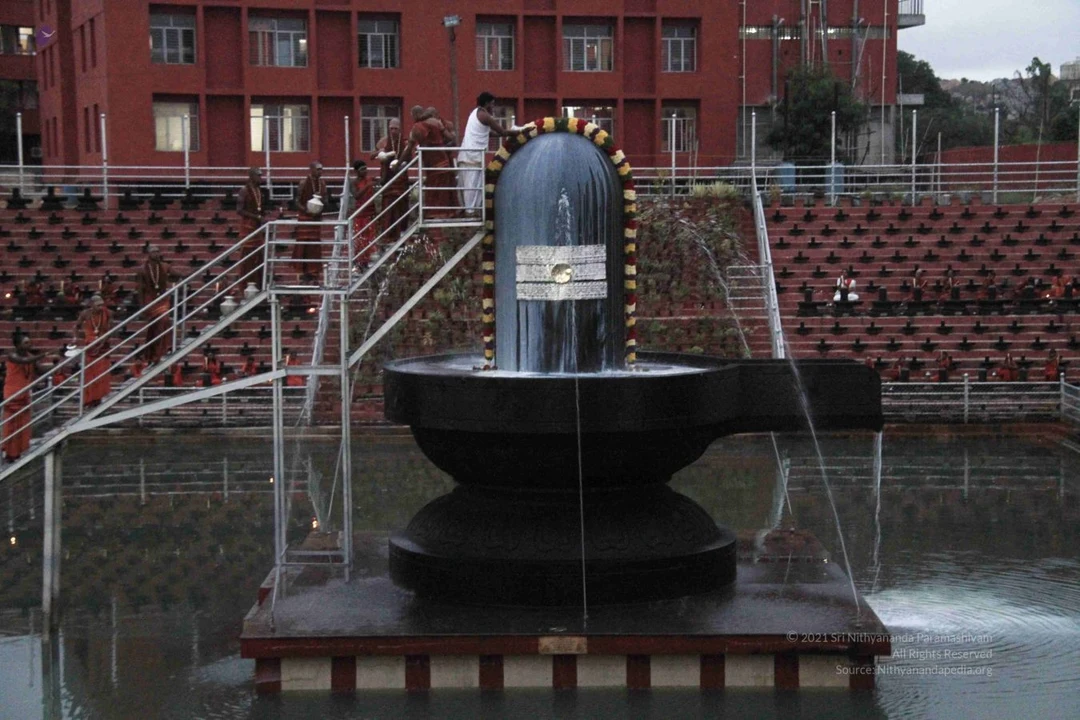
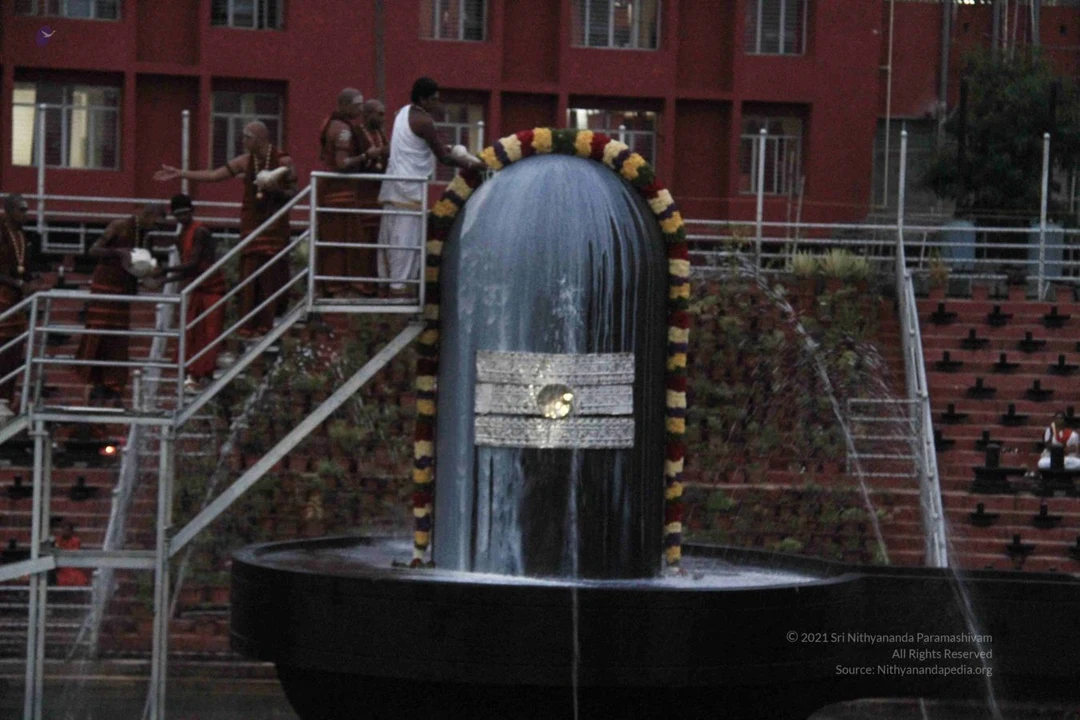
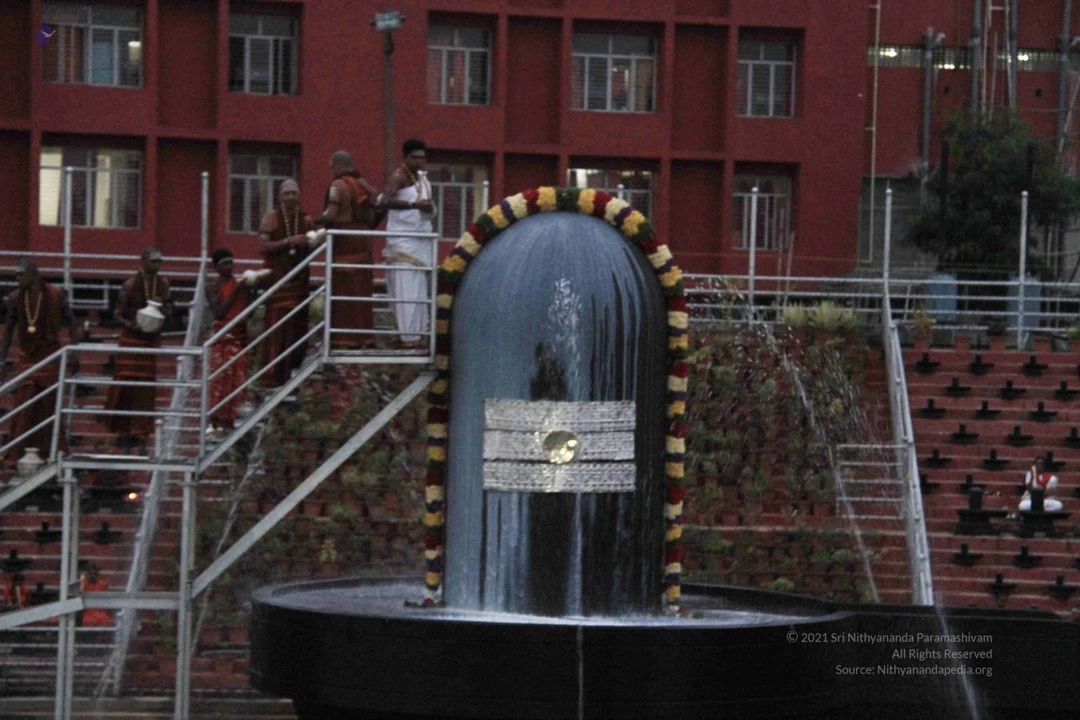
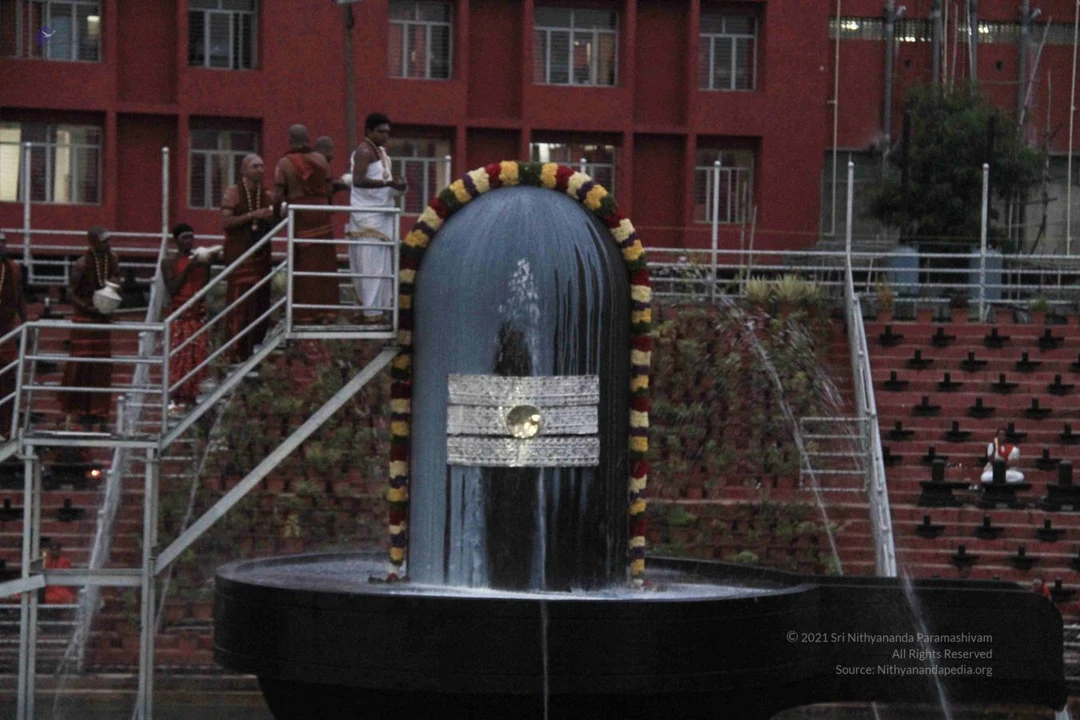
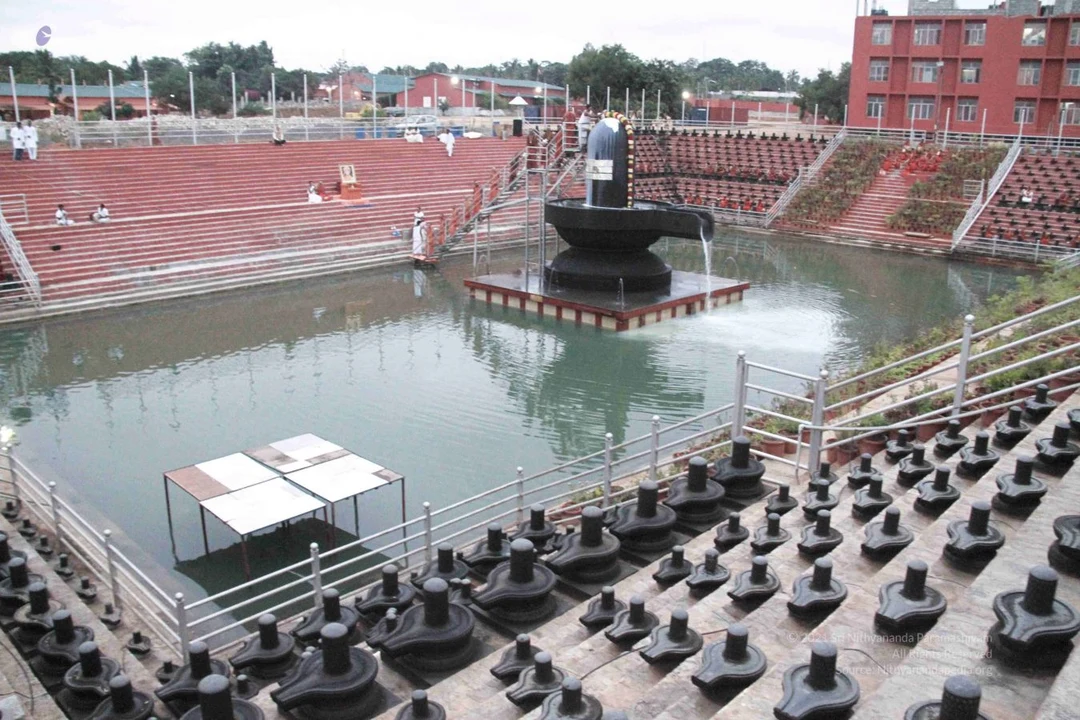
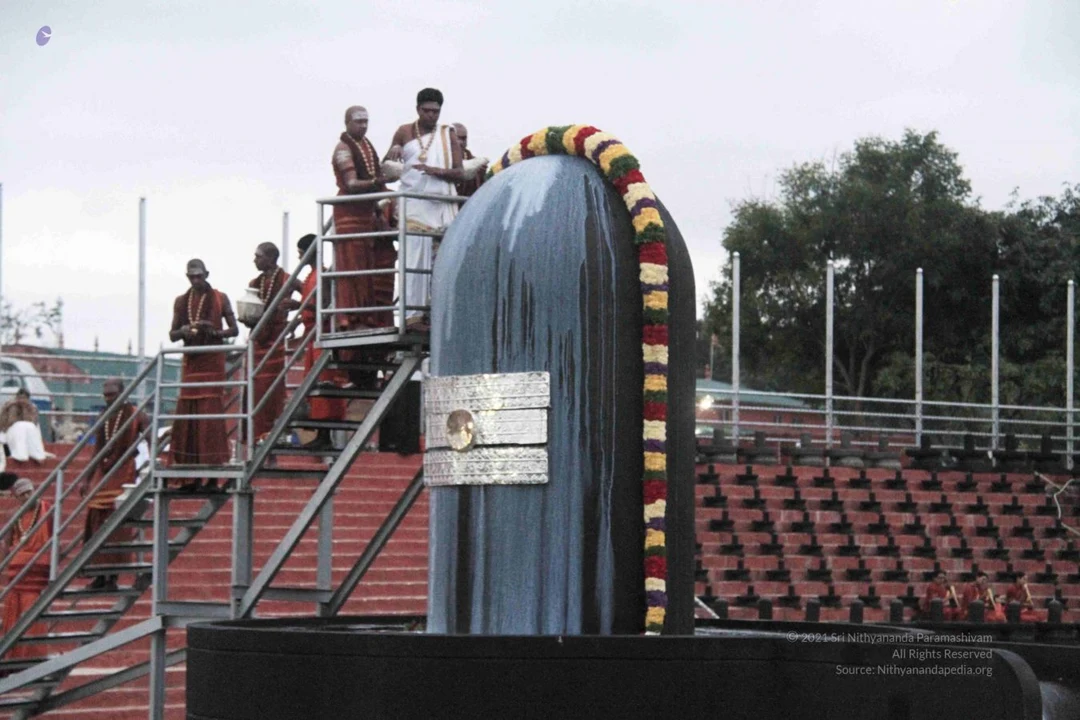
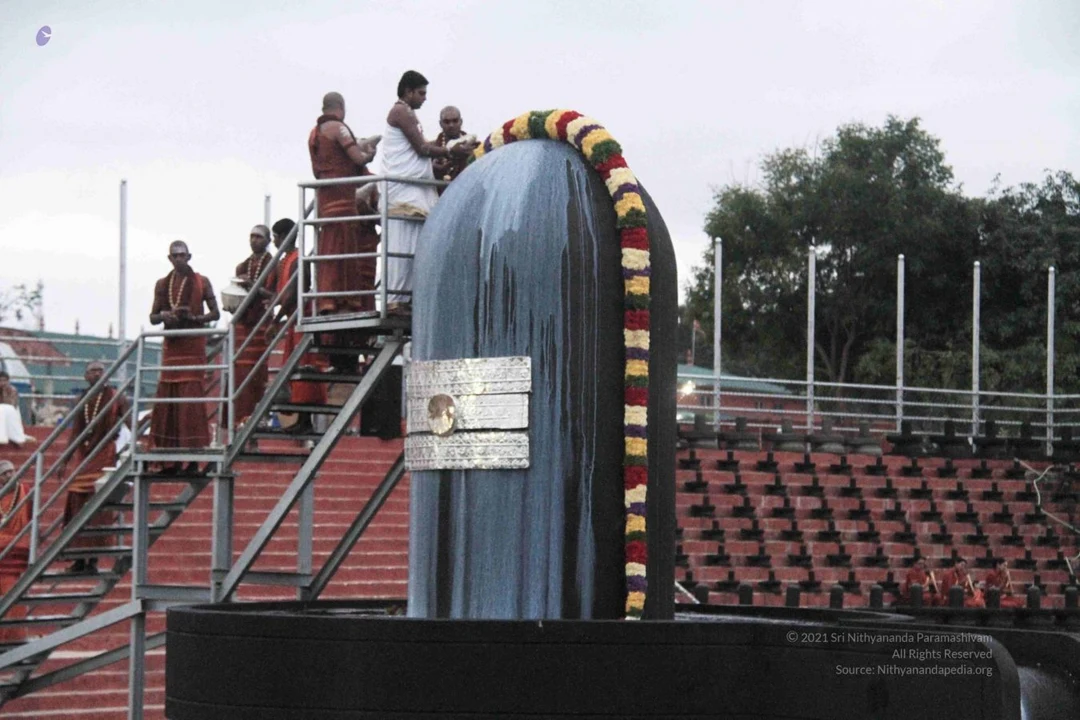
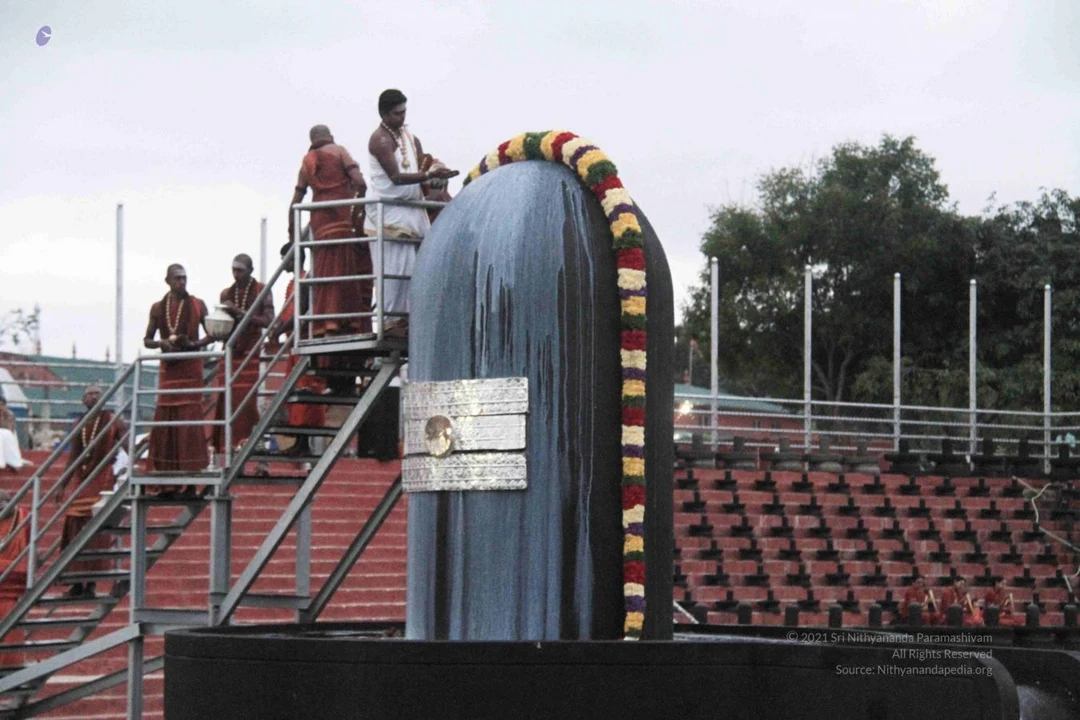
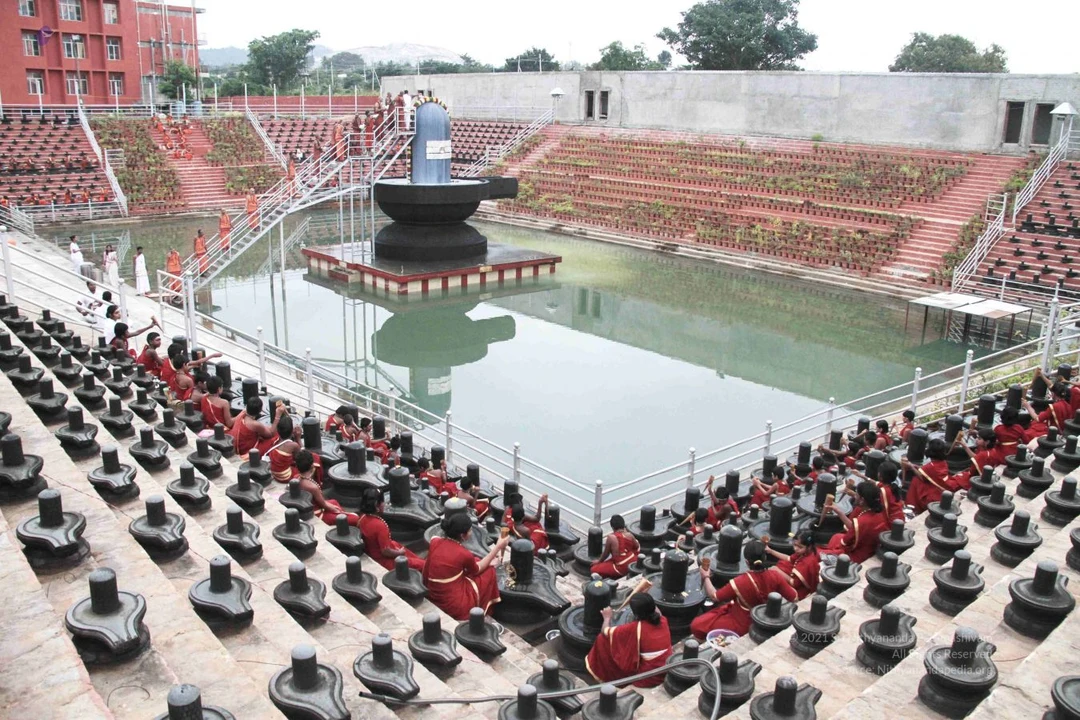
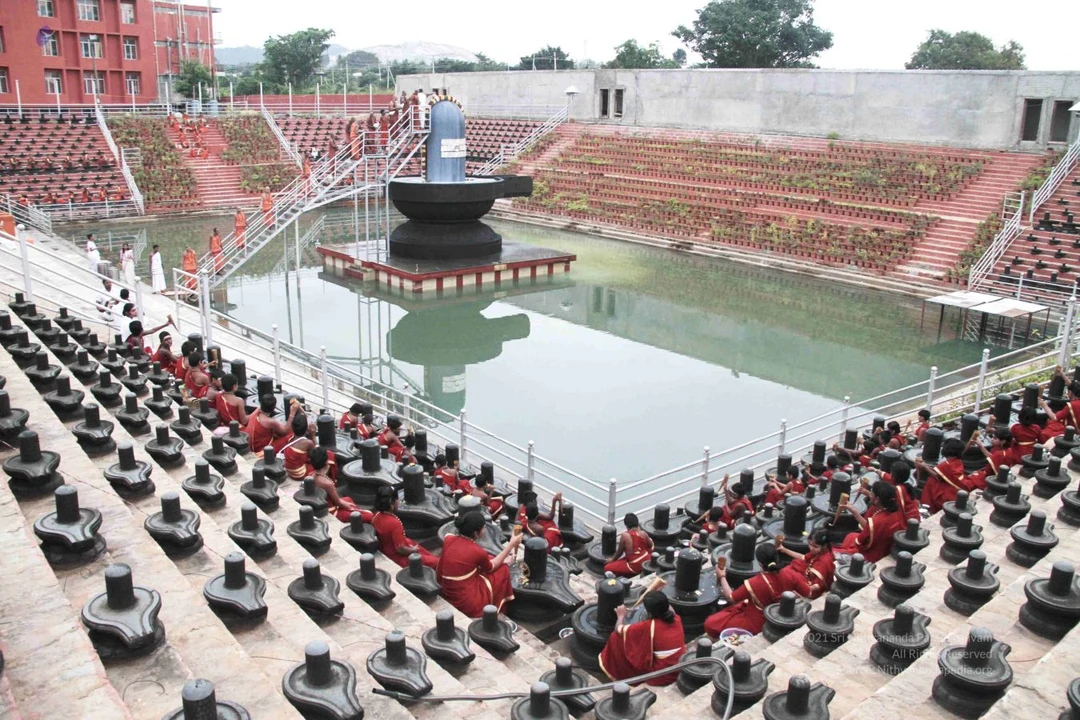
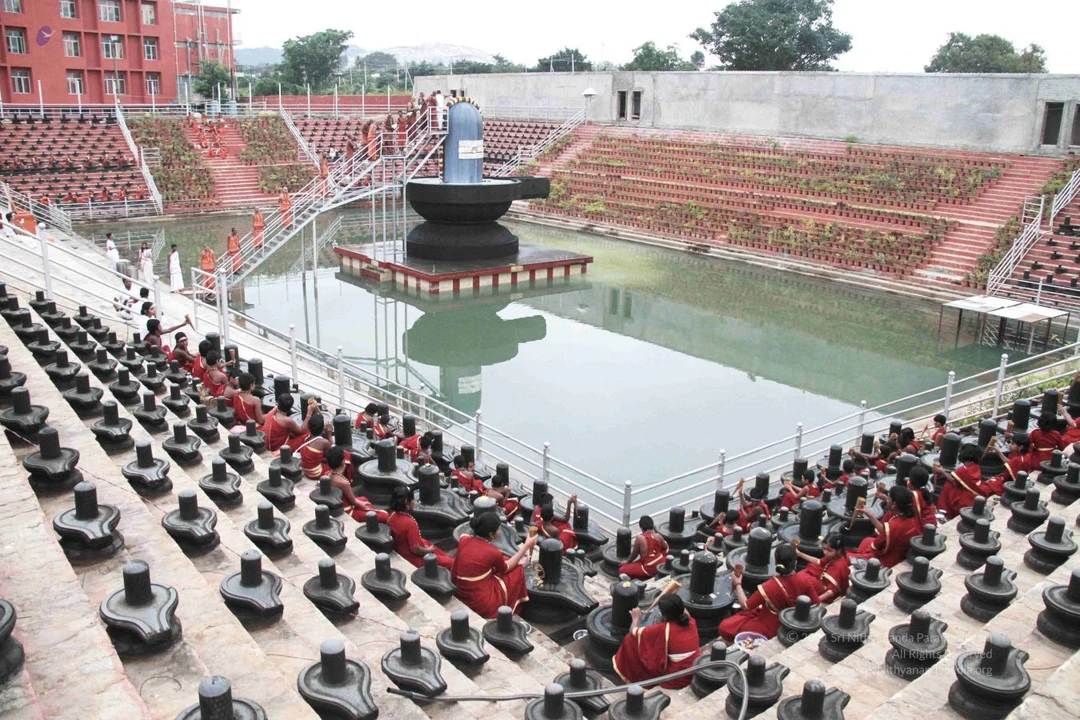
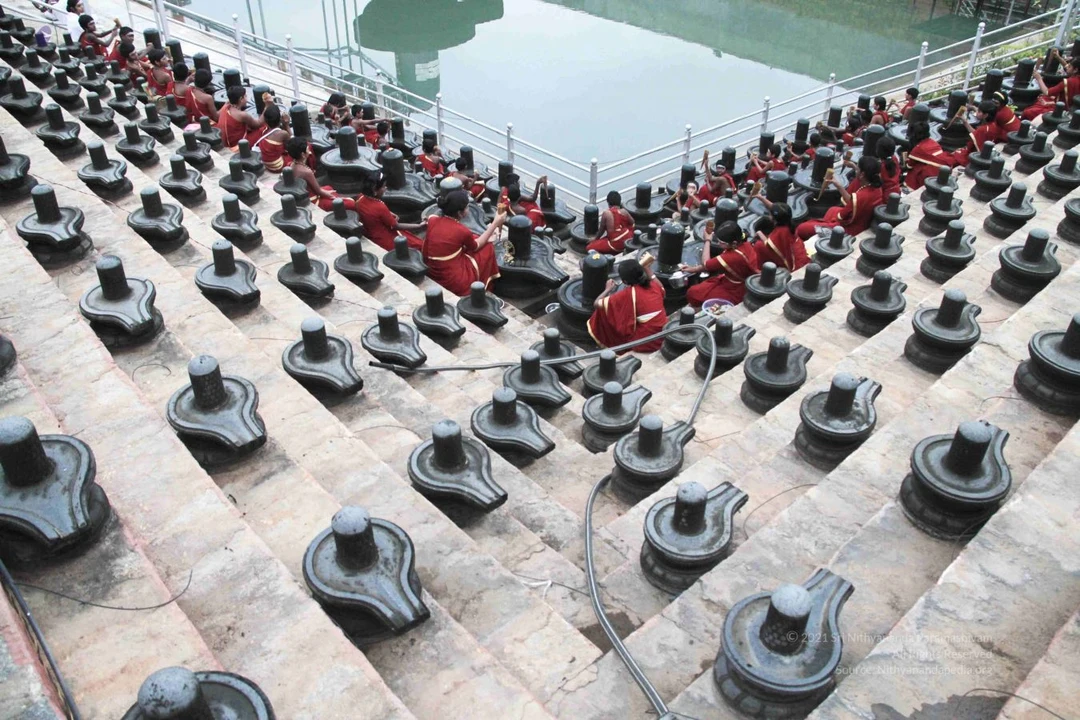
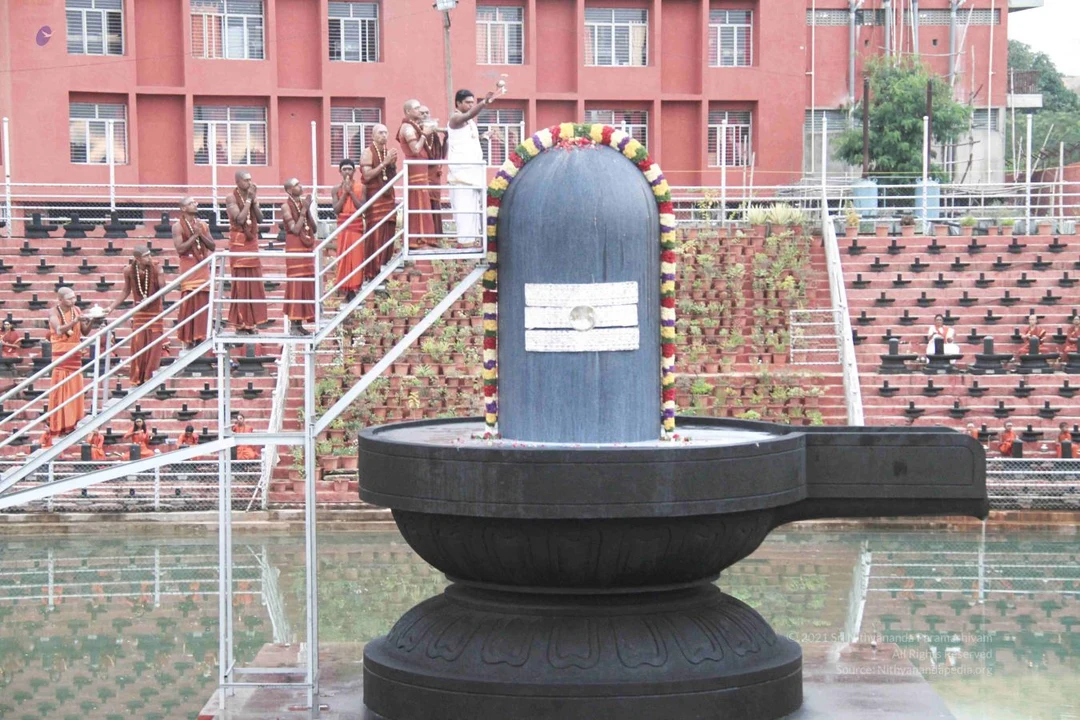
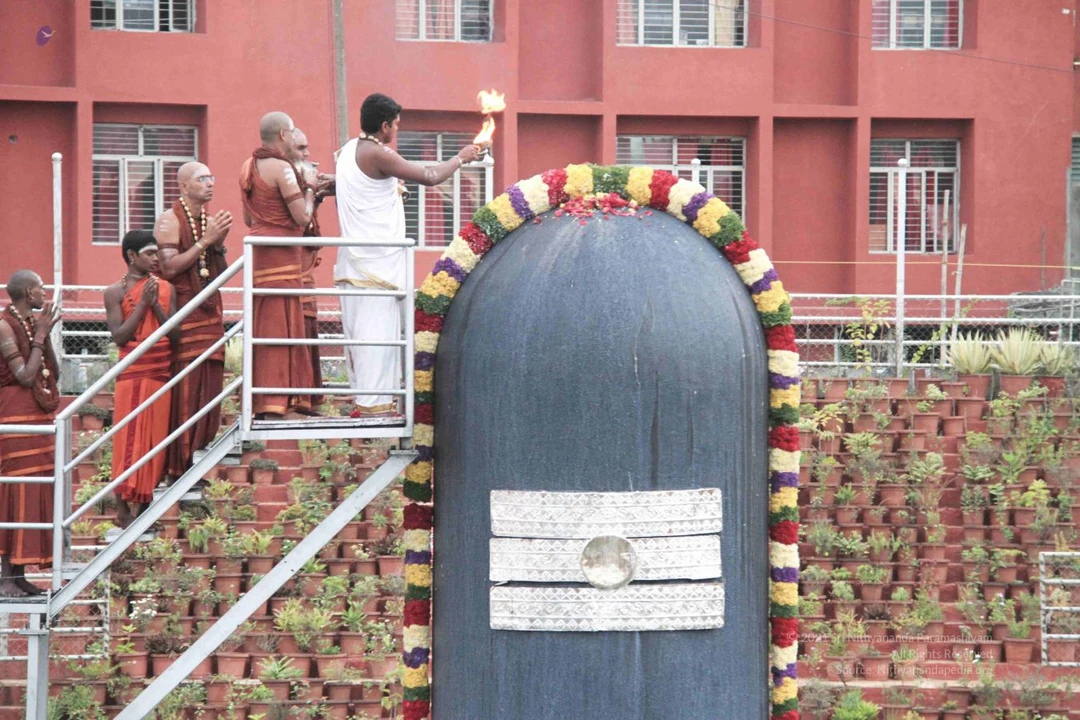
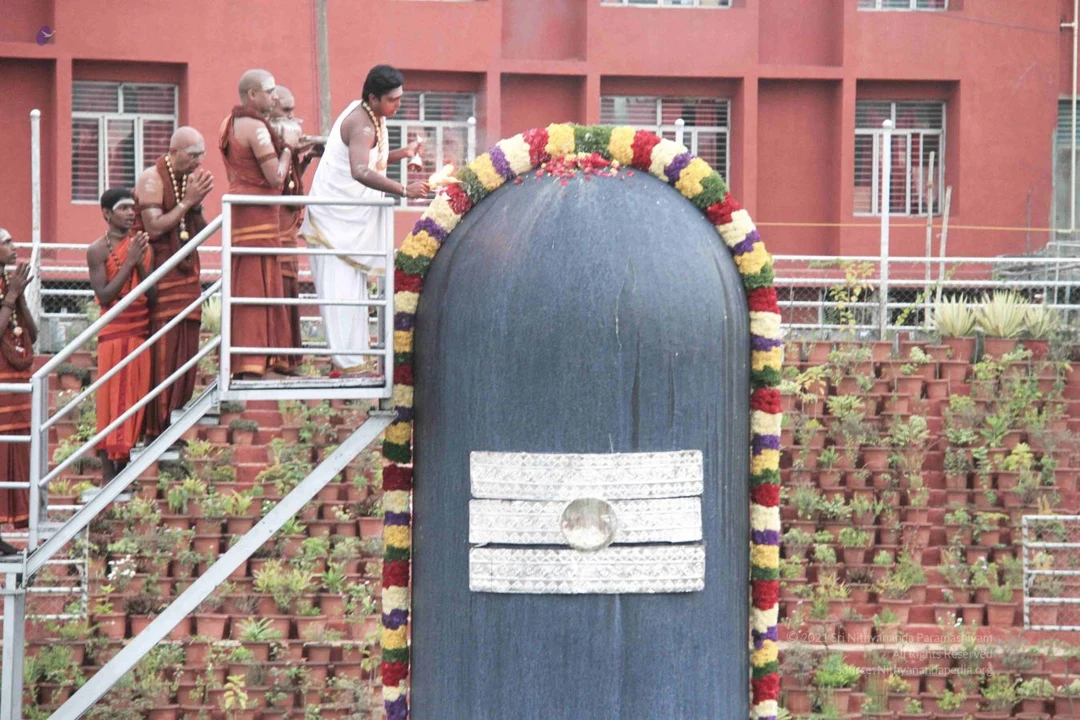
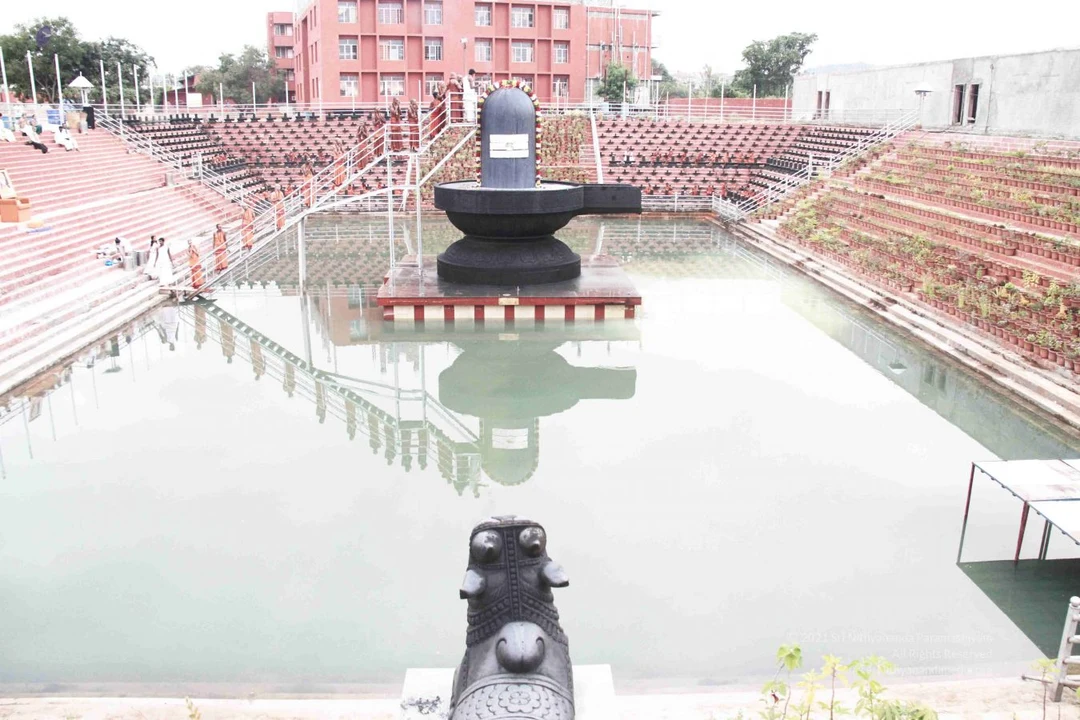
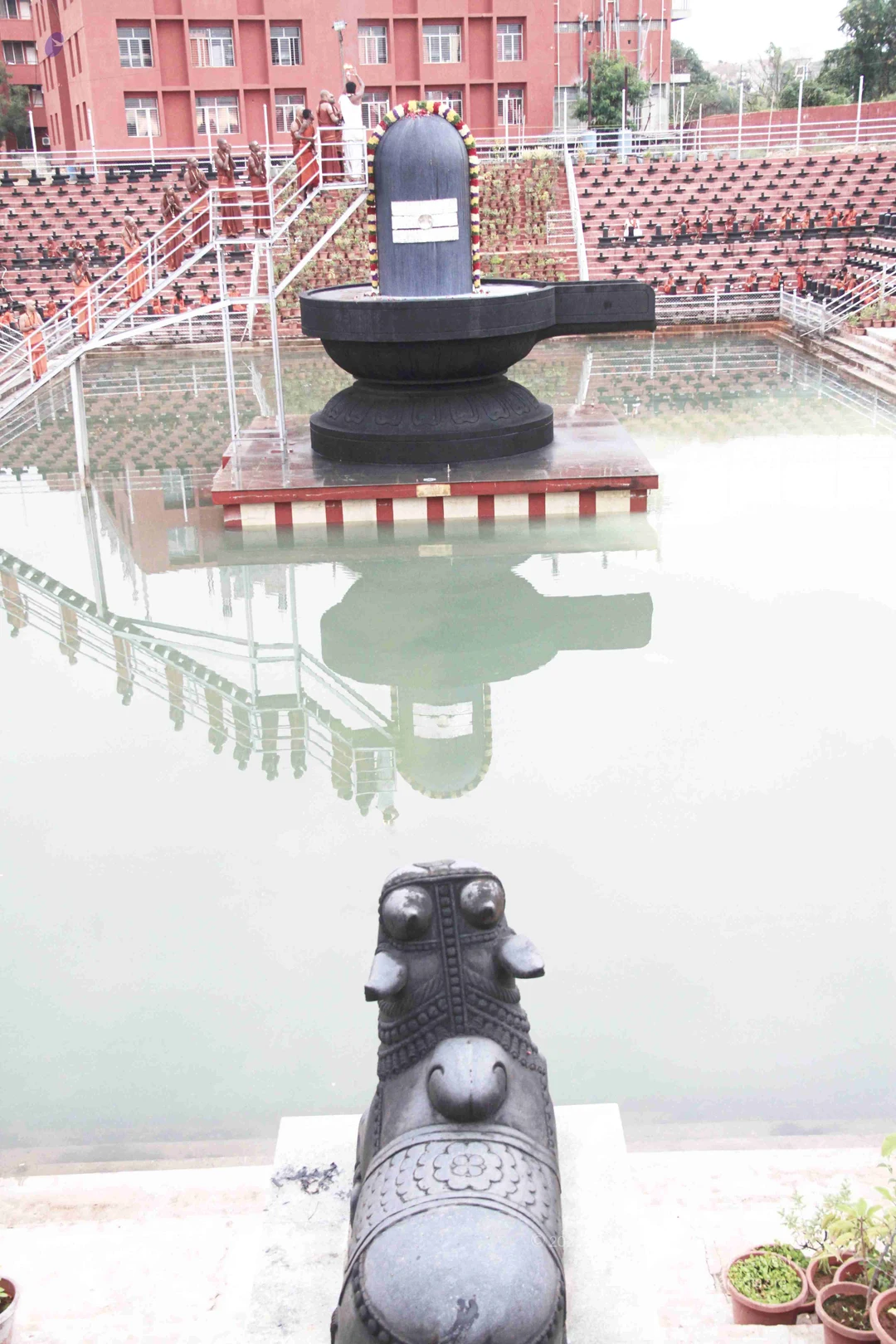
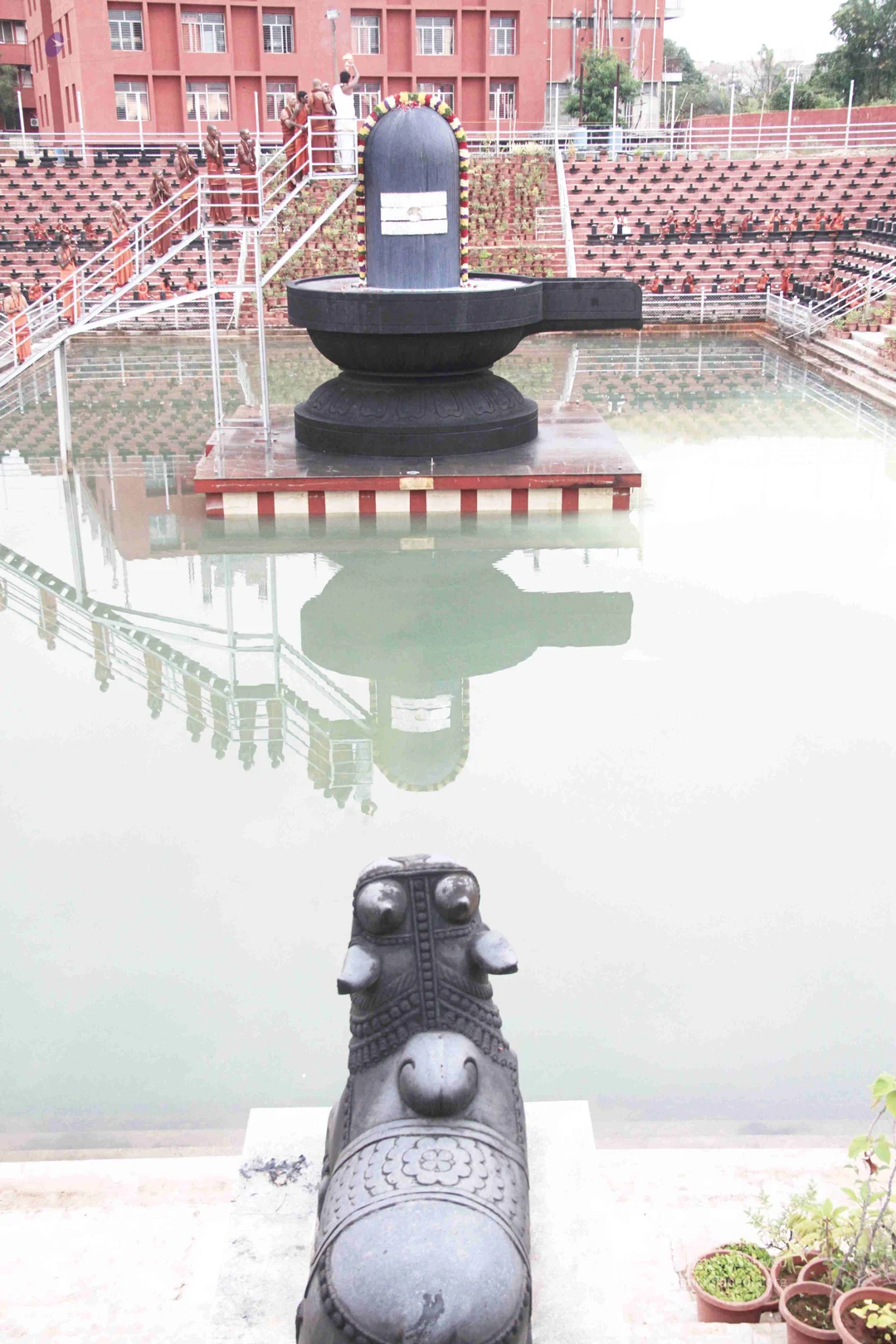
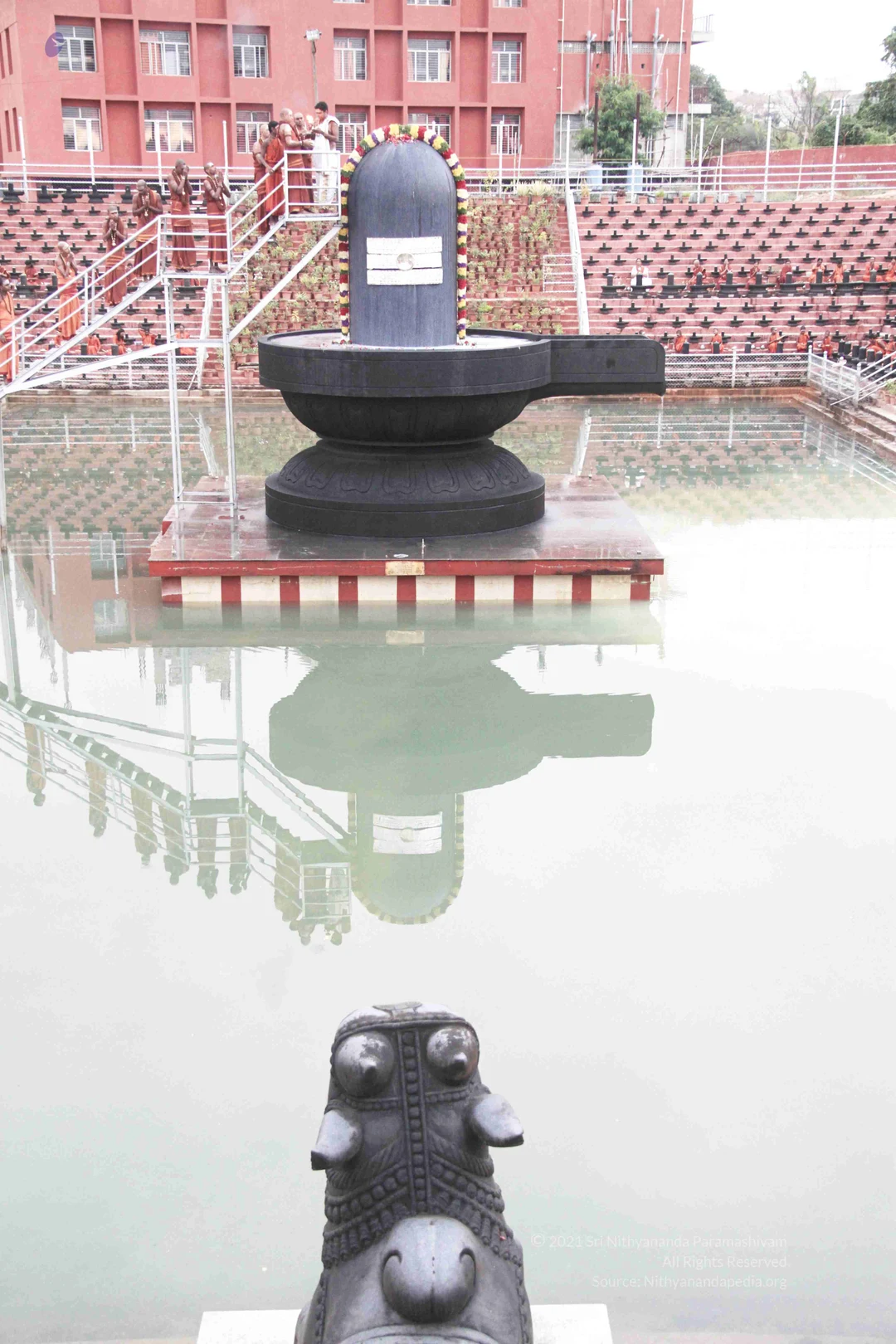
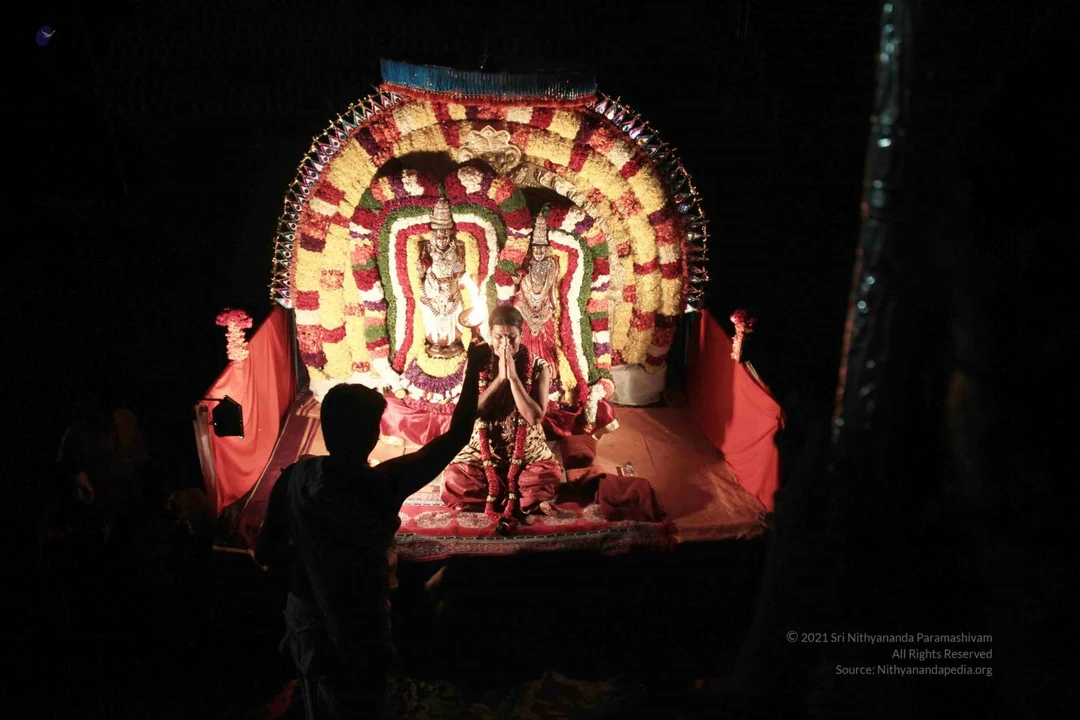
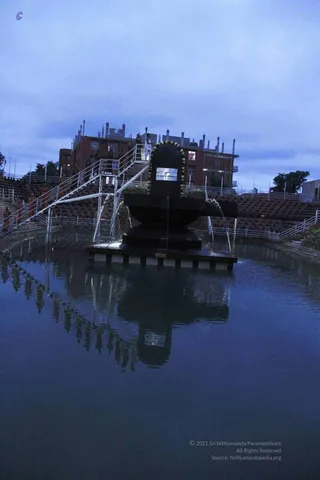
Rudrabhishekam at the VaidyaSarovar
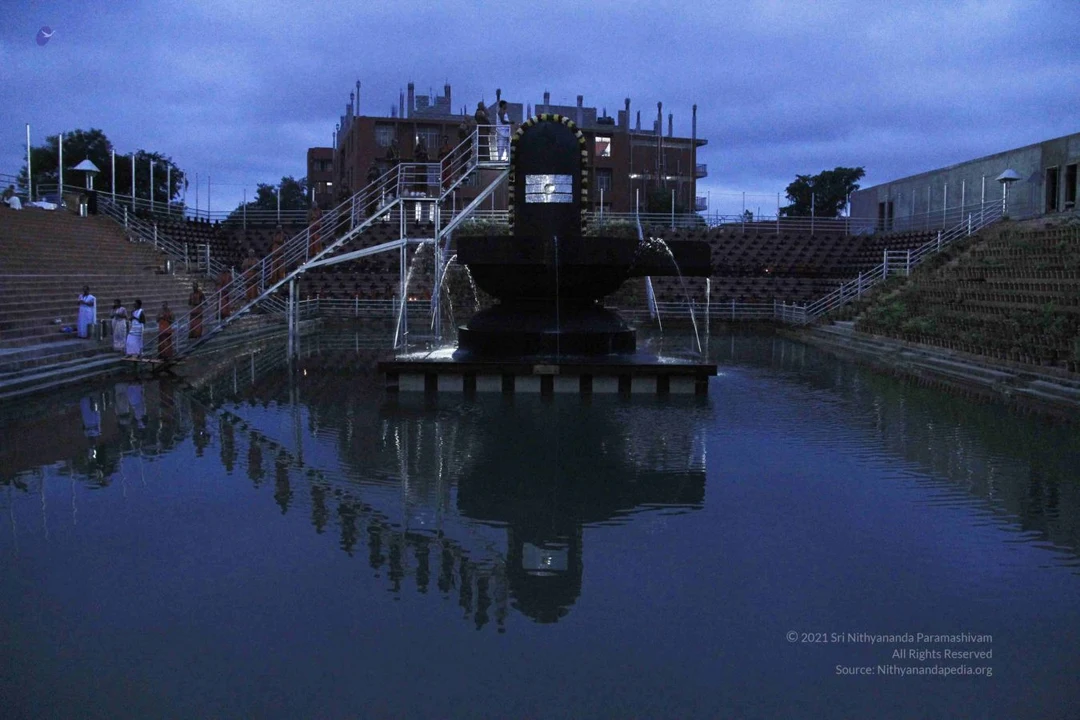
114 photosSource gallery
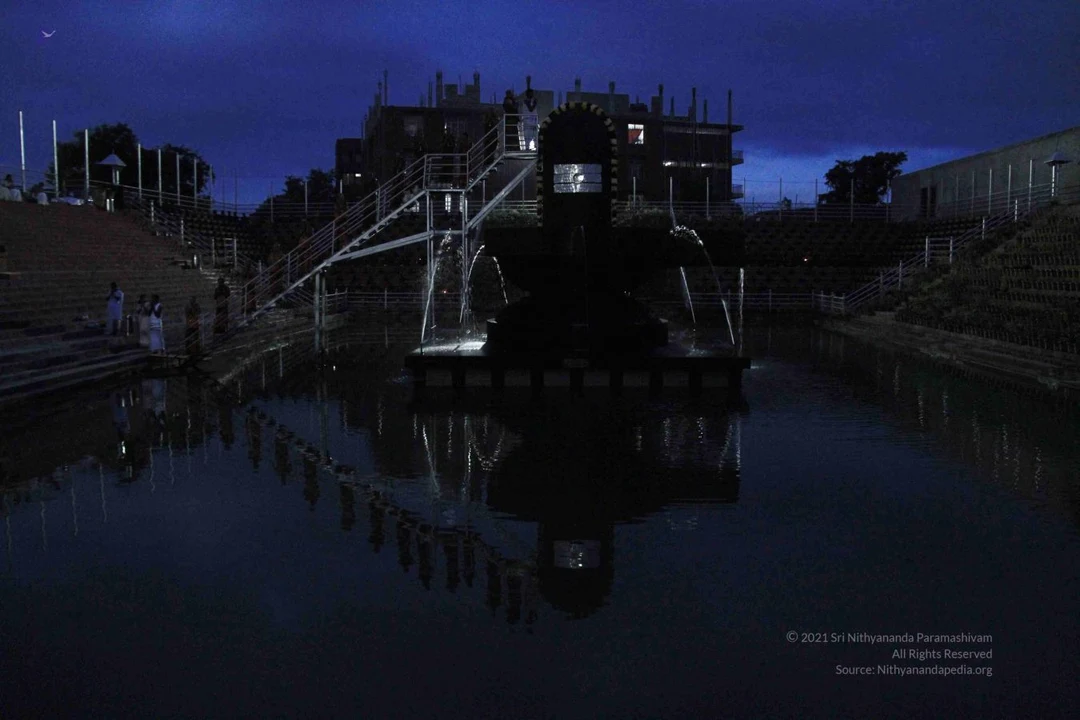
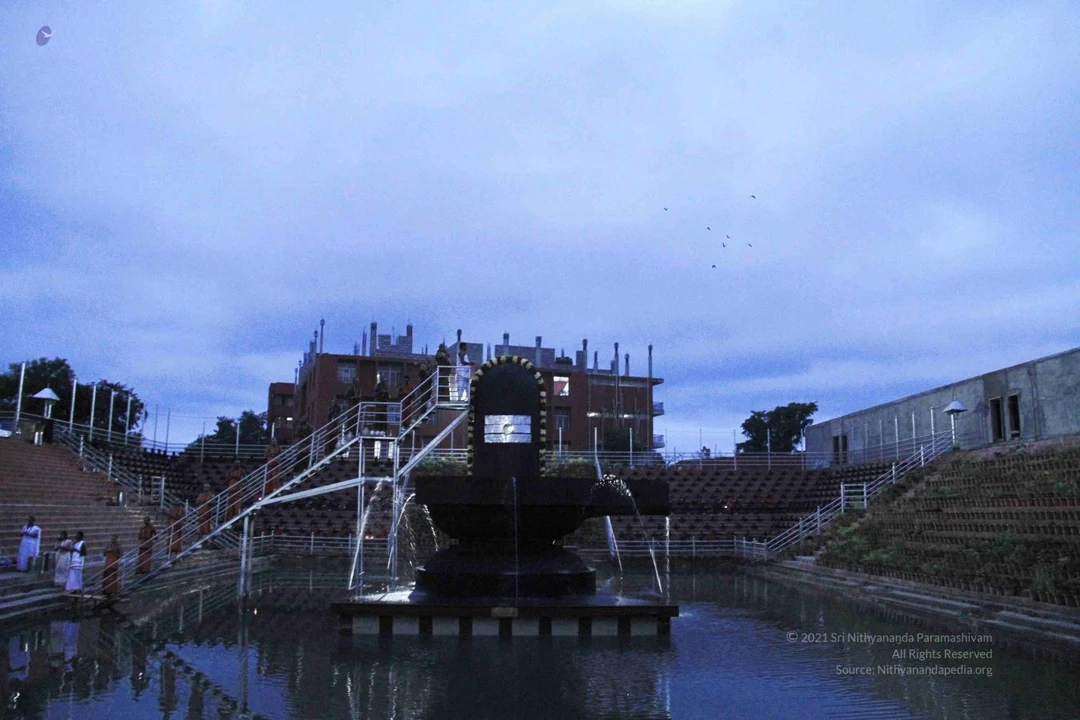
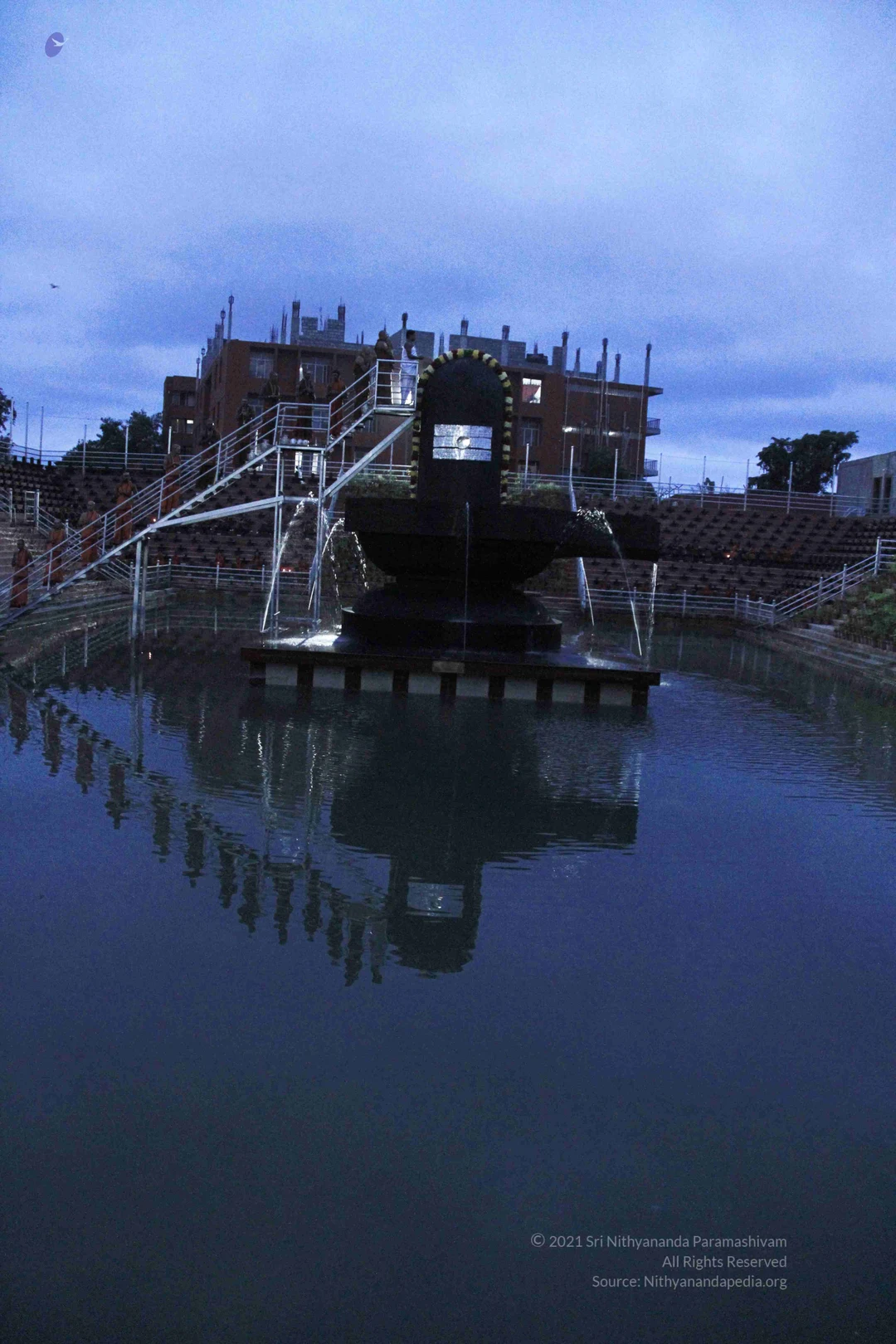
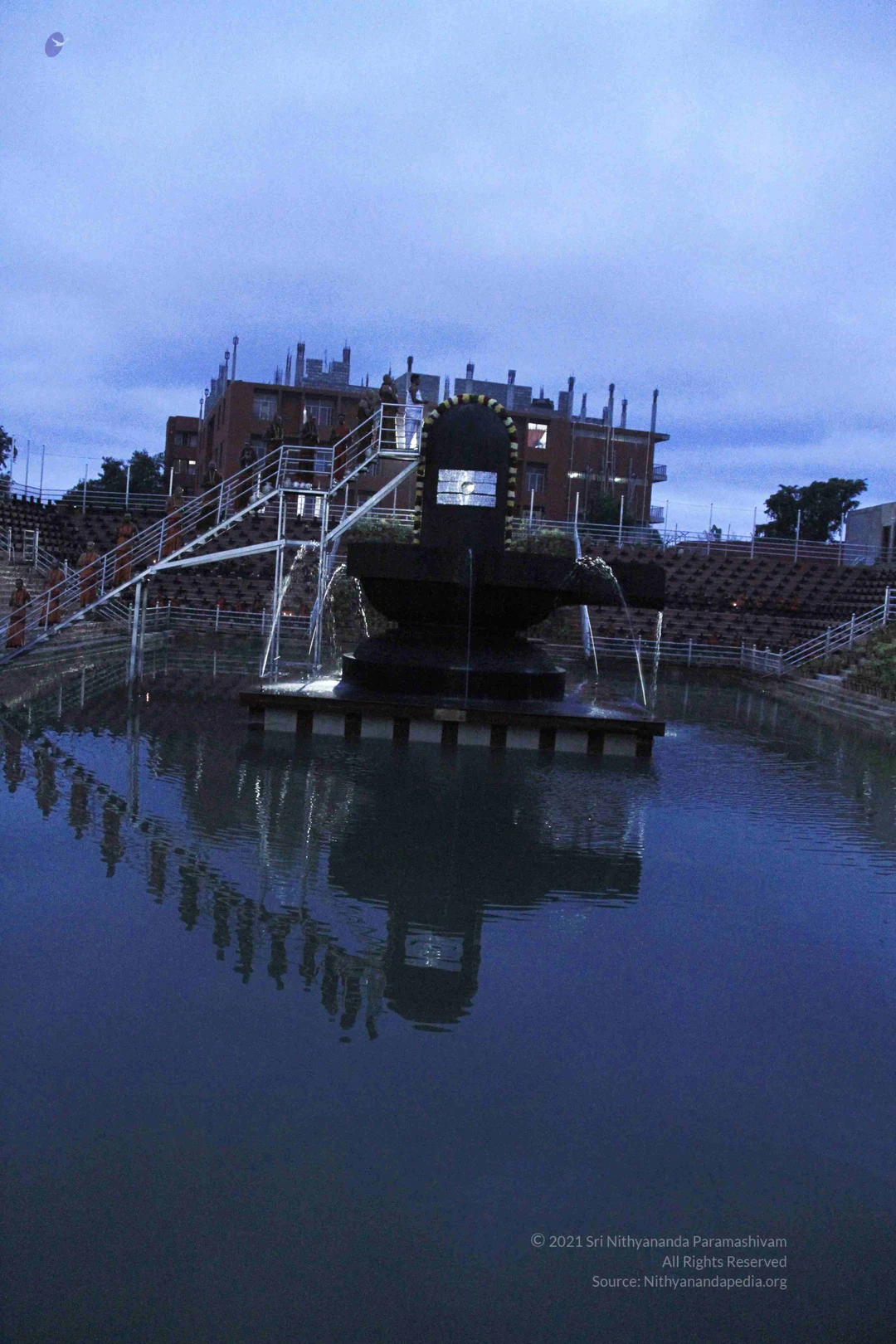
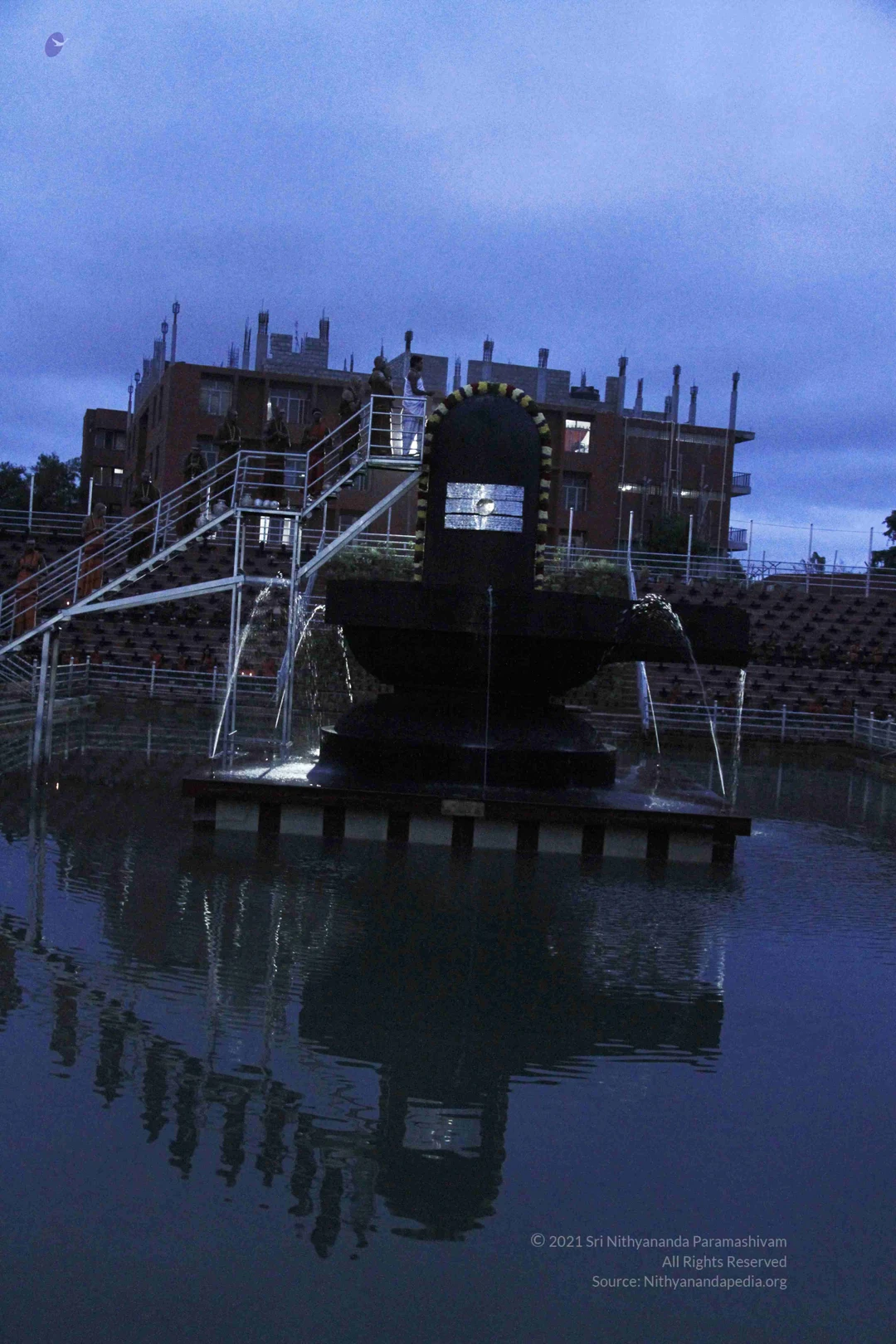
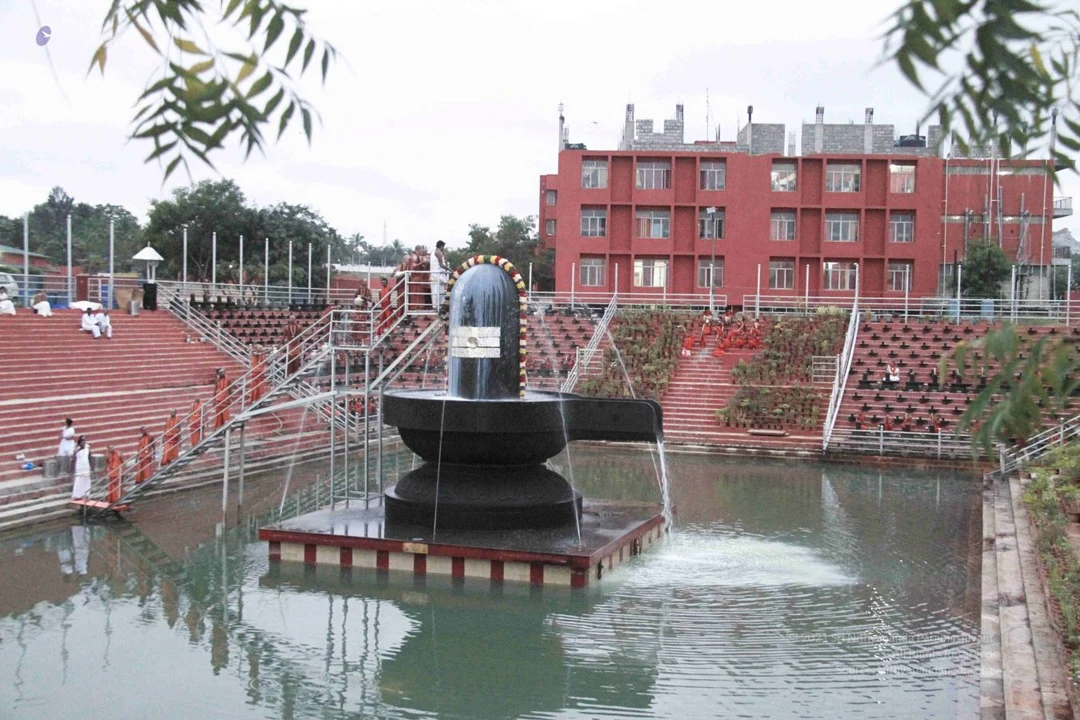
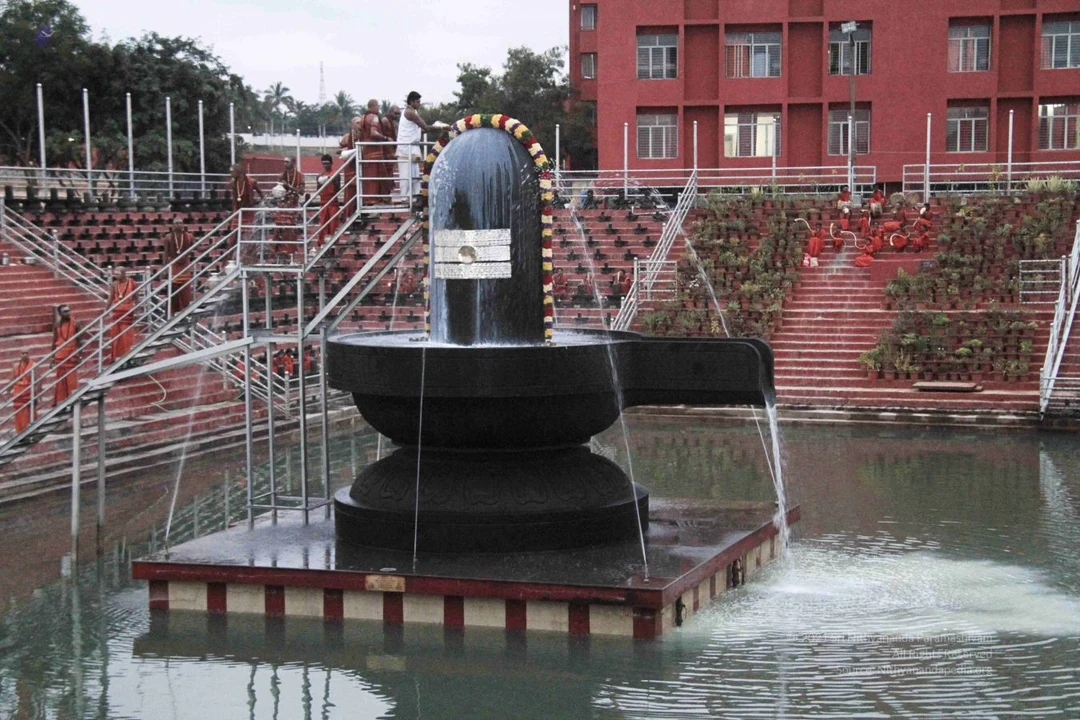
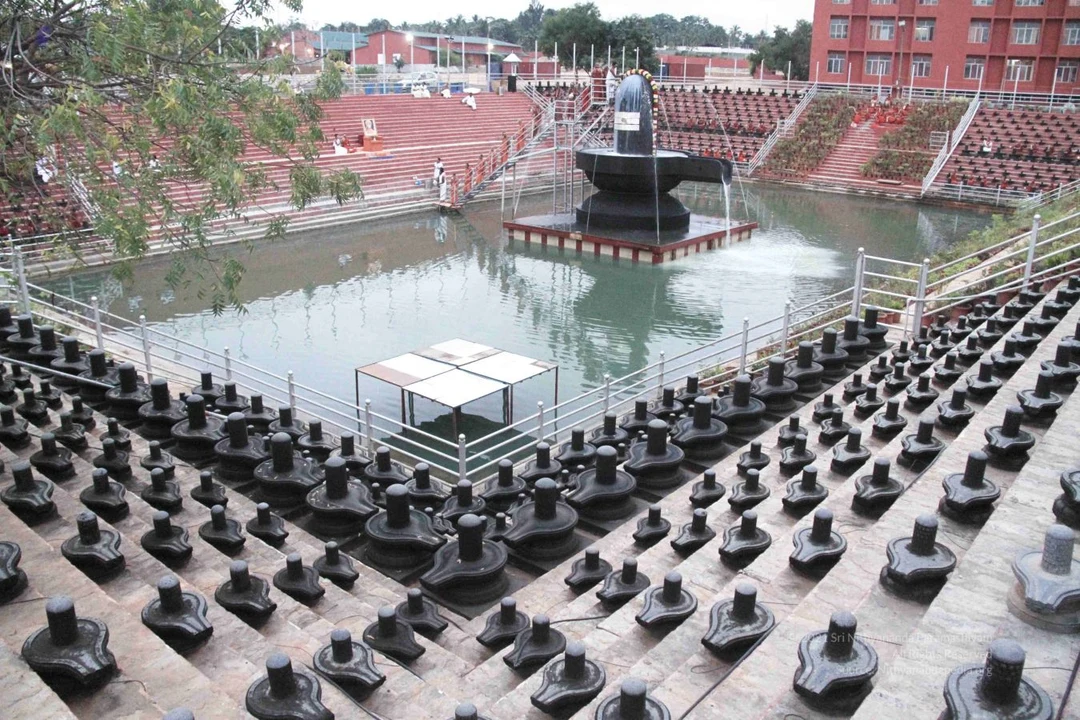
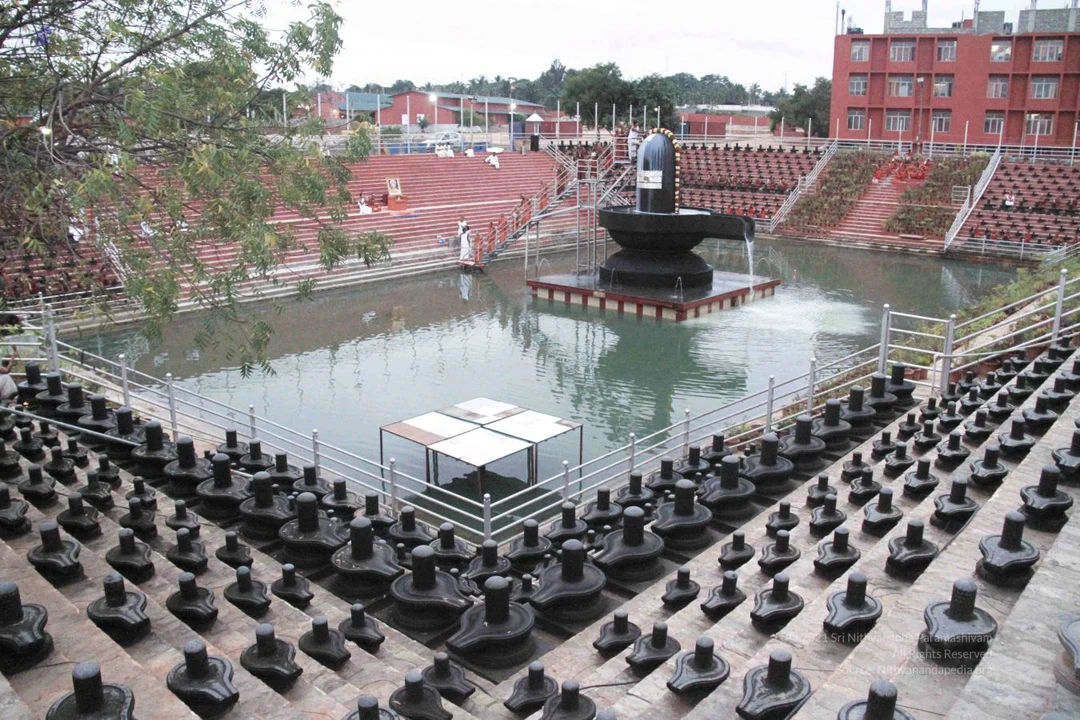
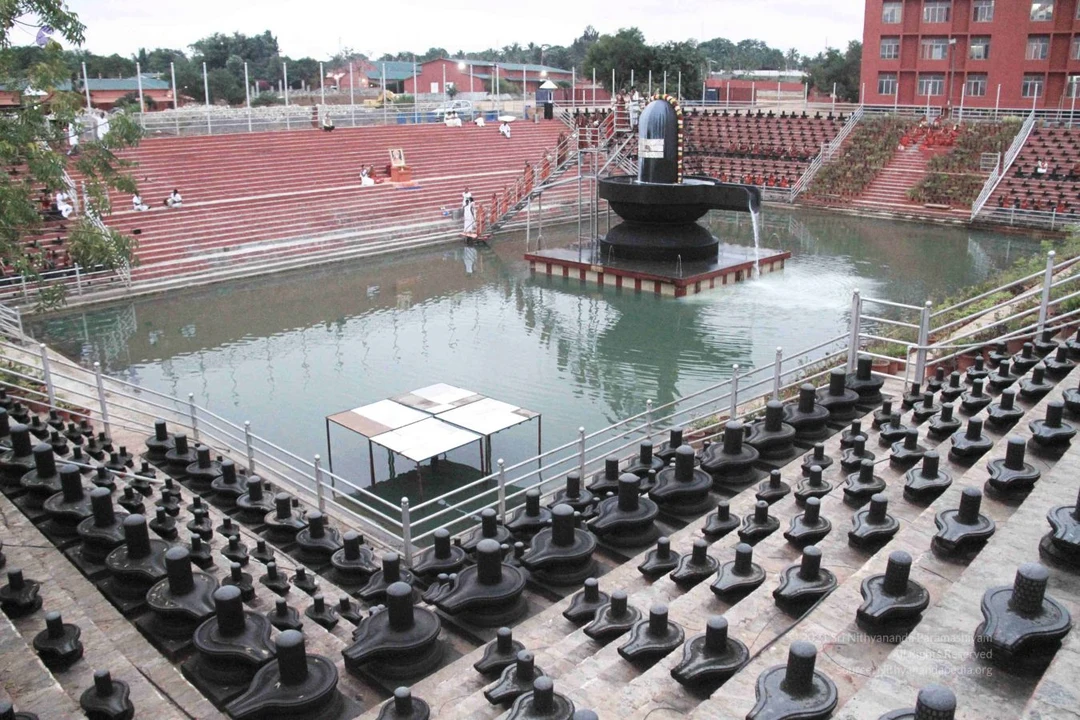
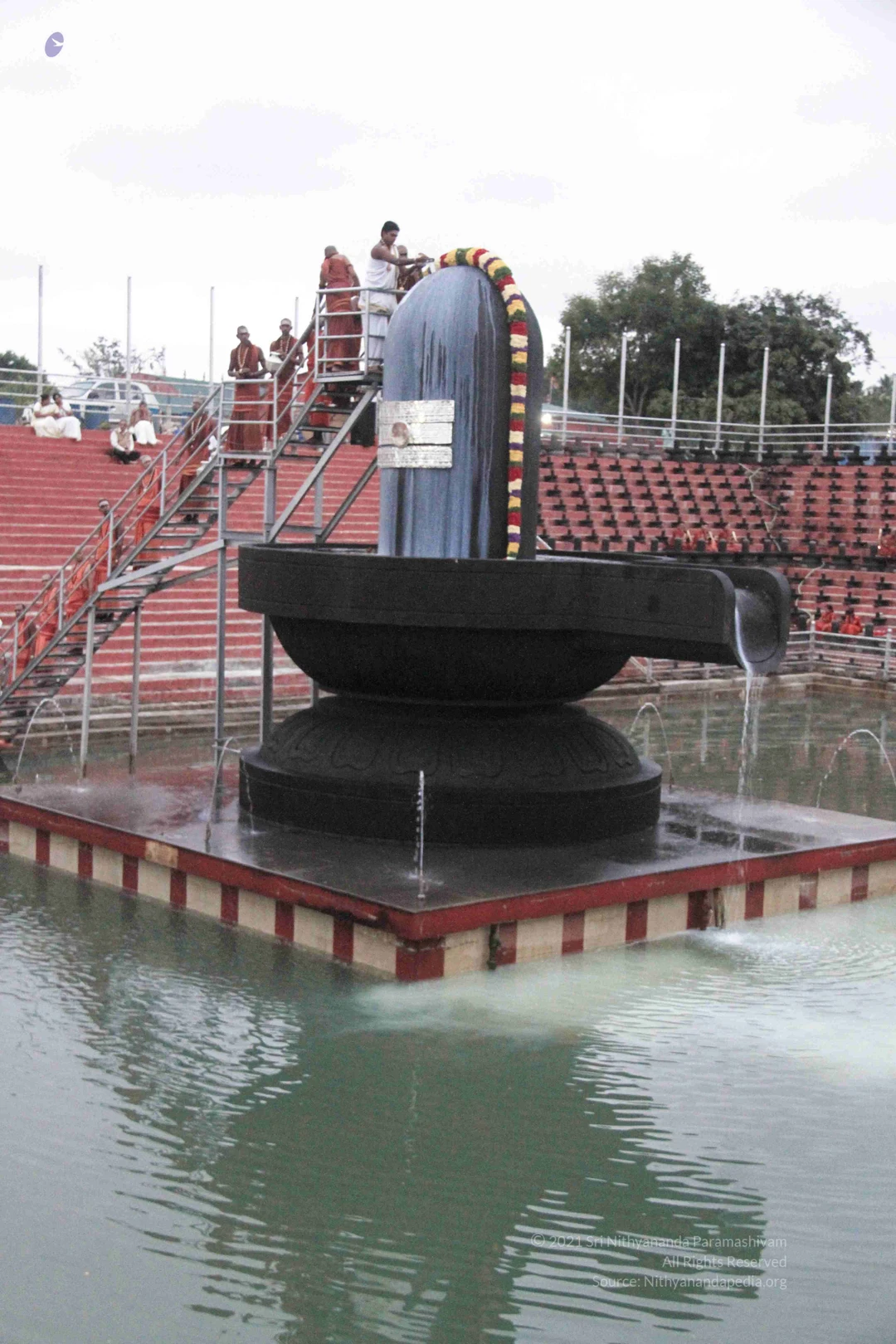
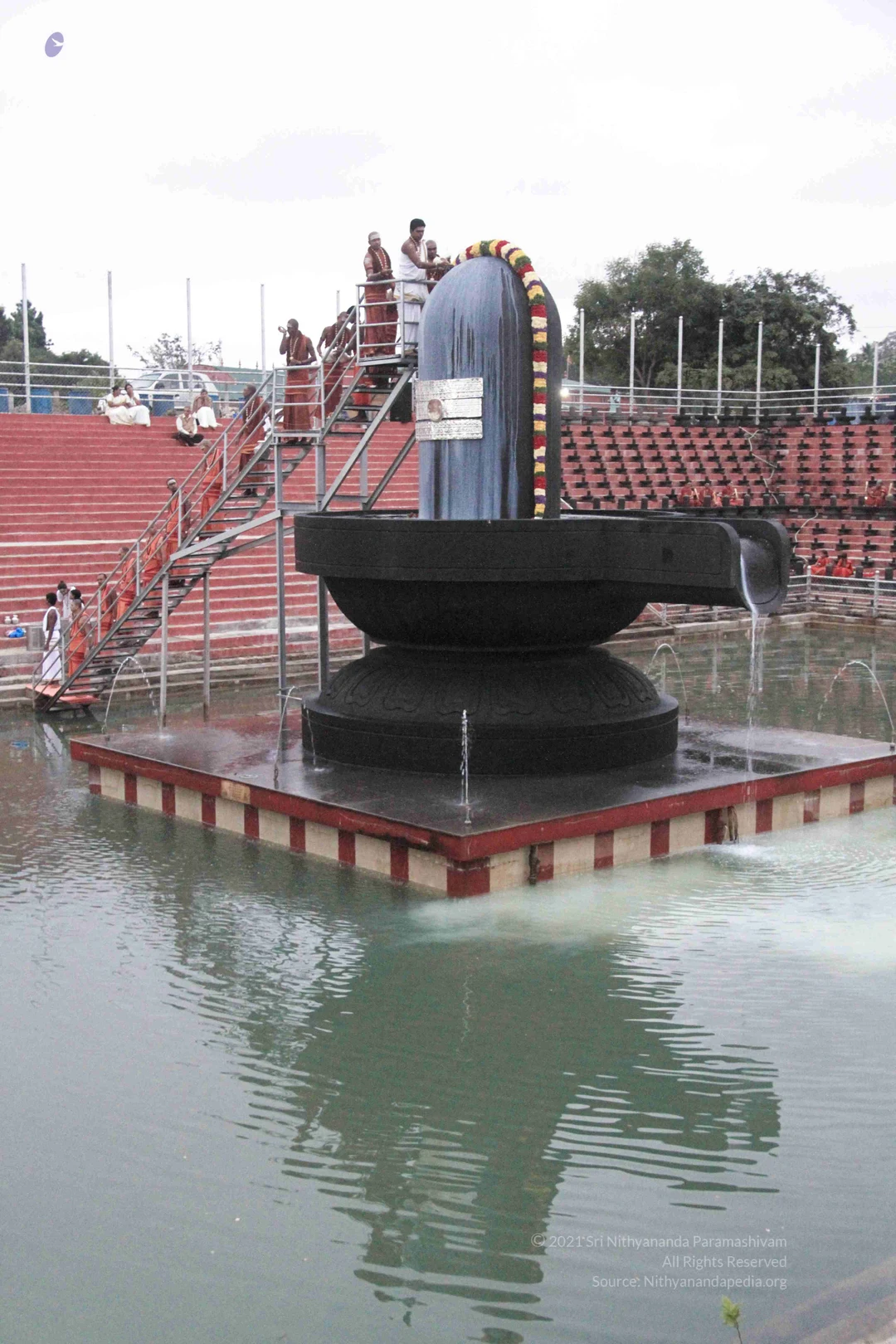
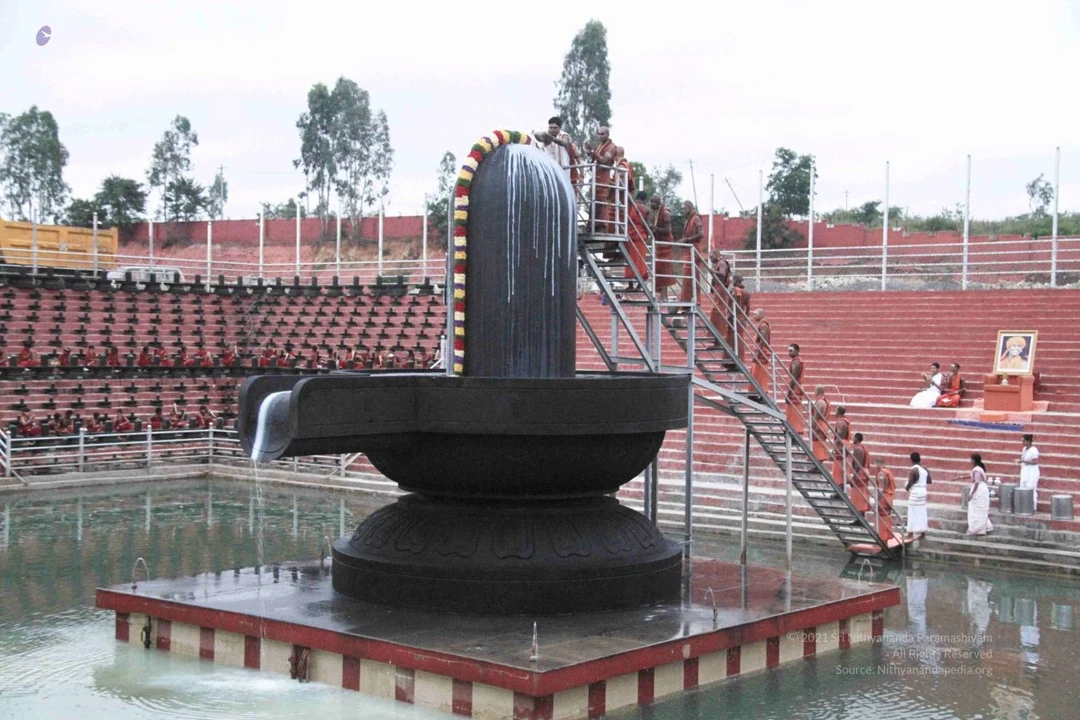
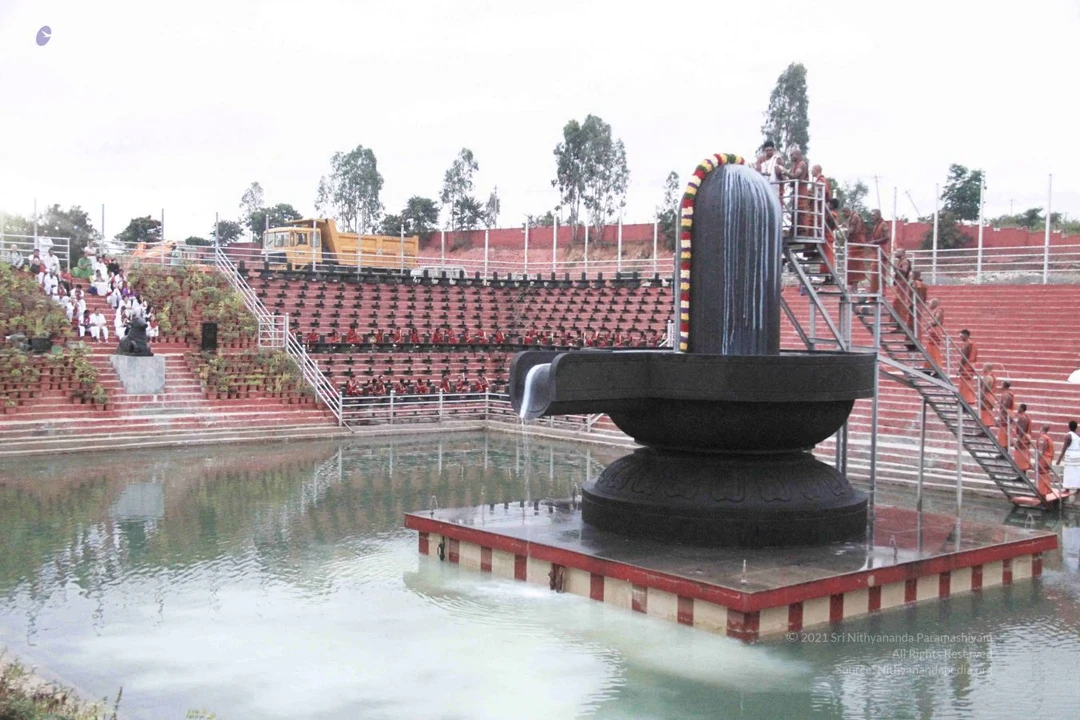
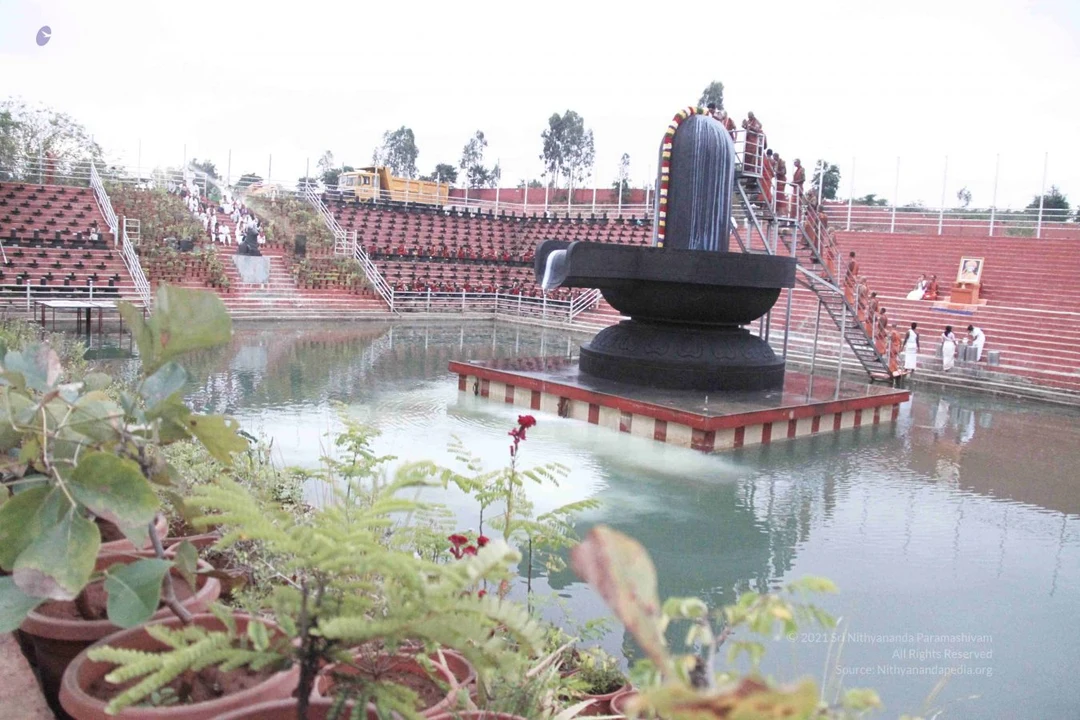
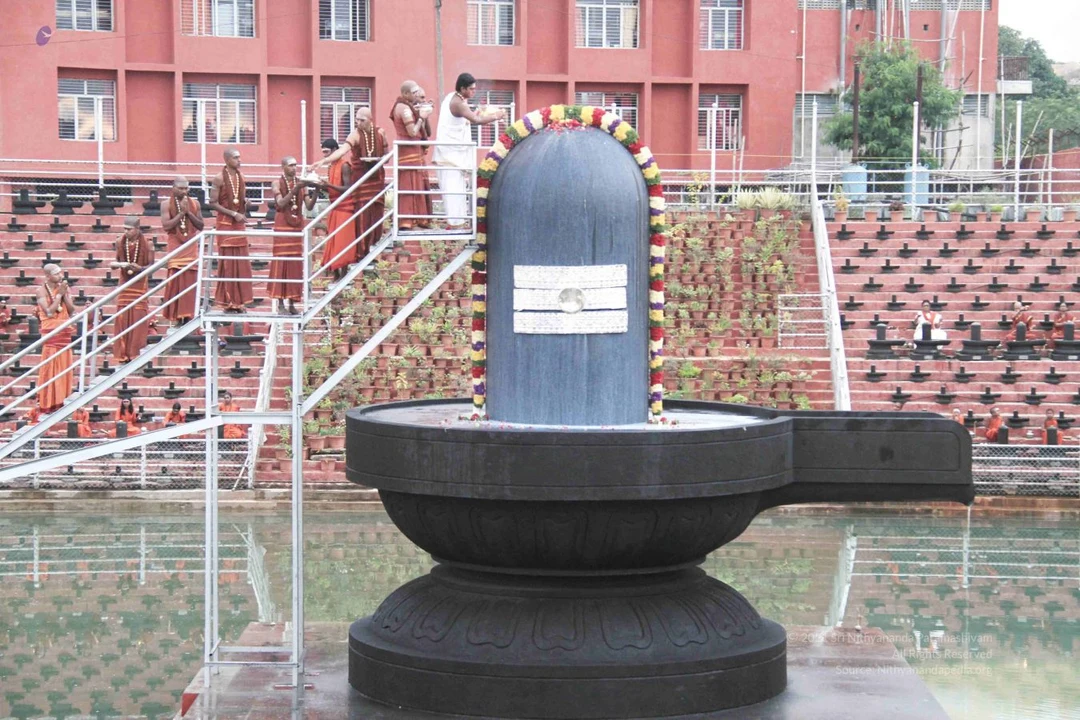
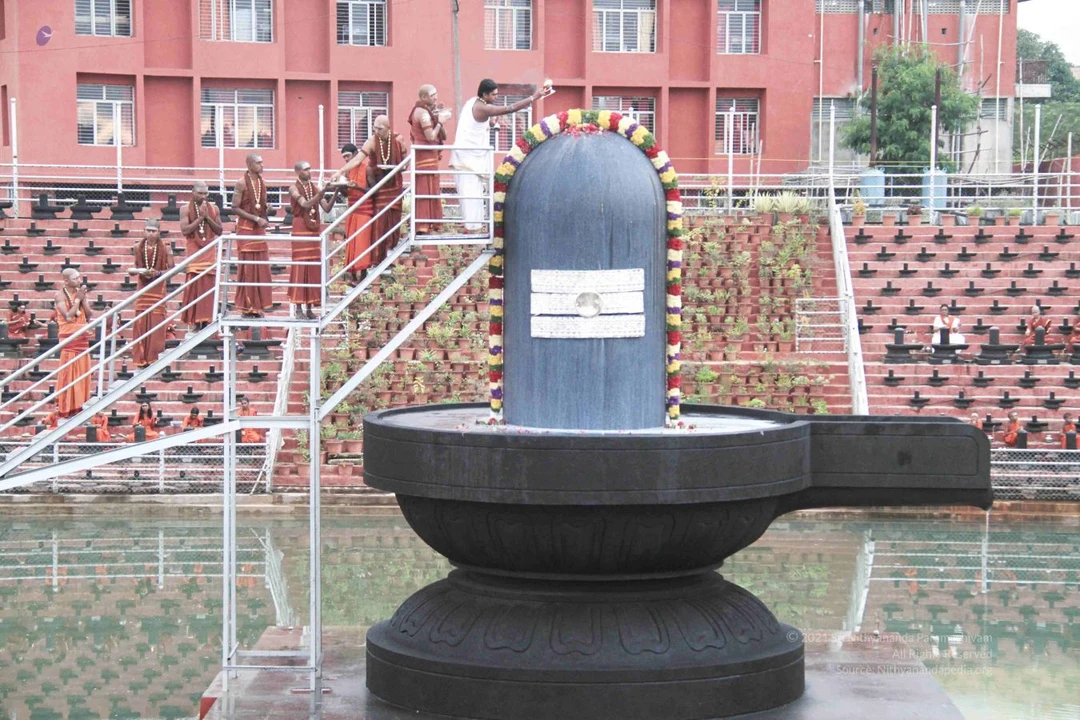
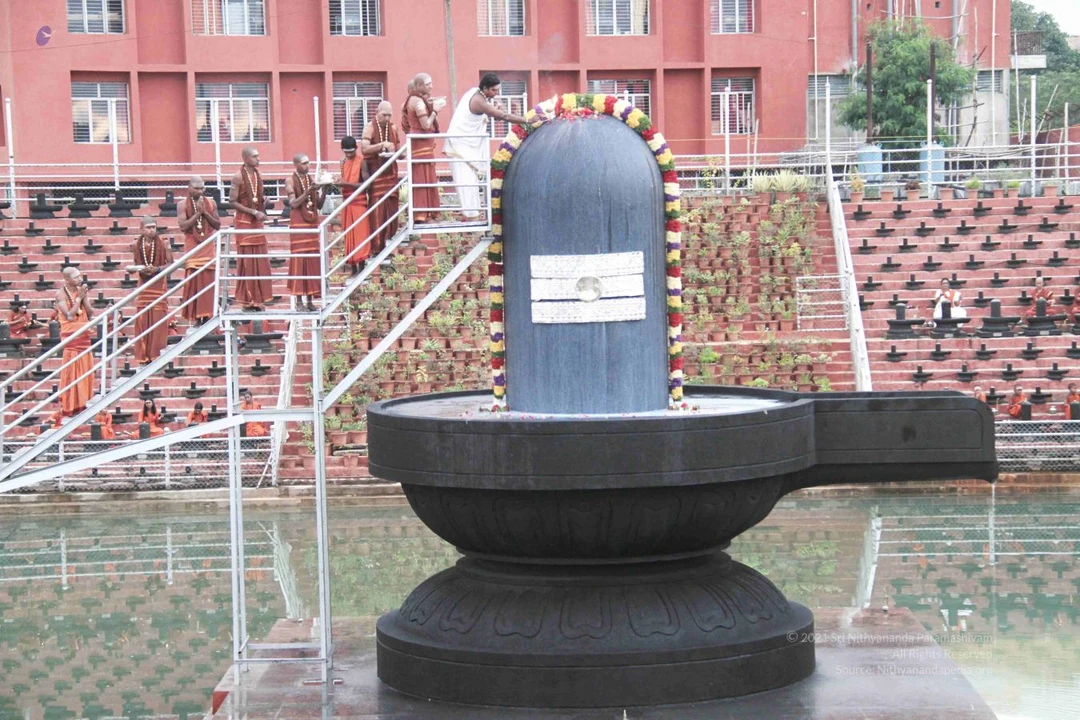
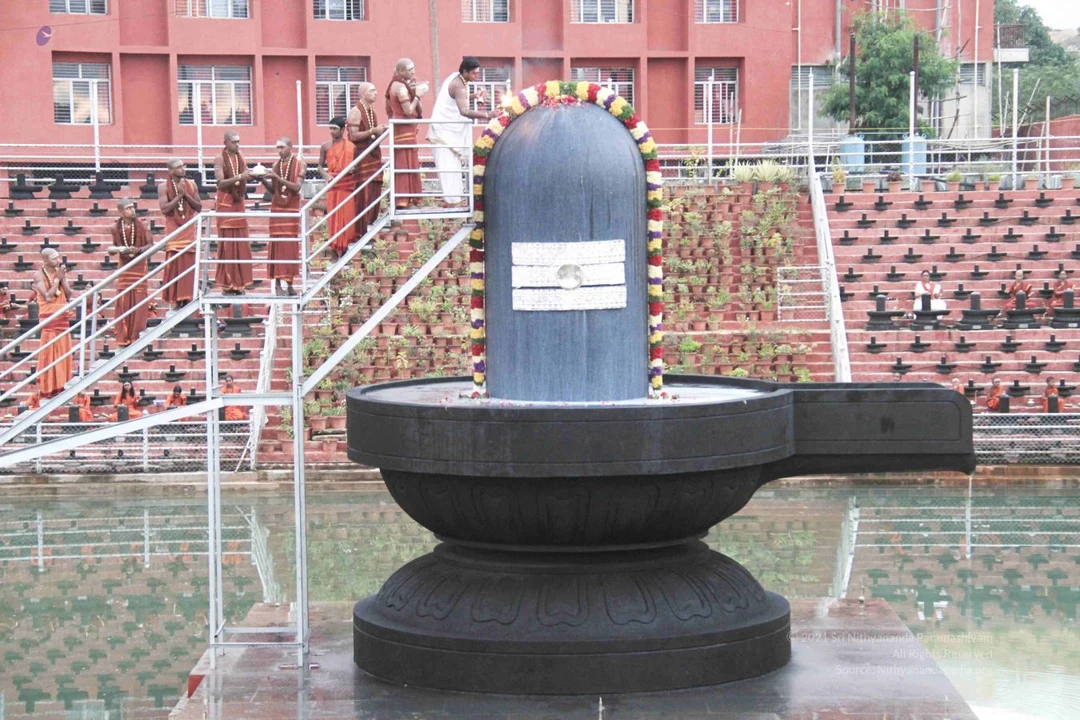
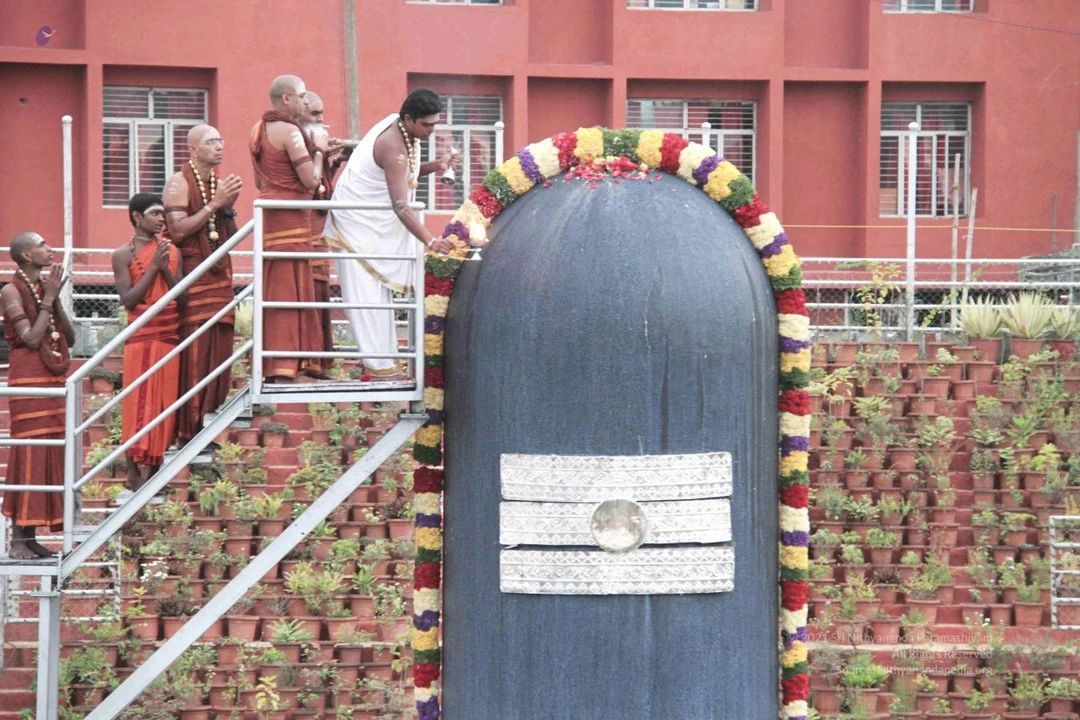
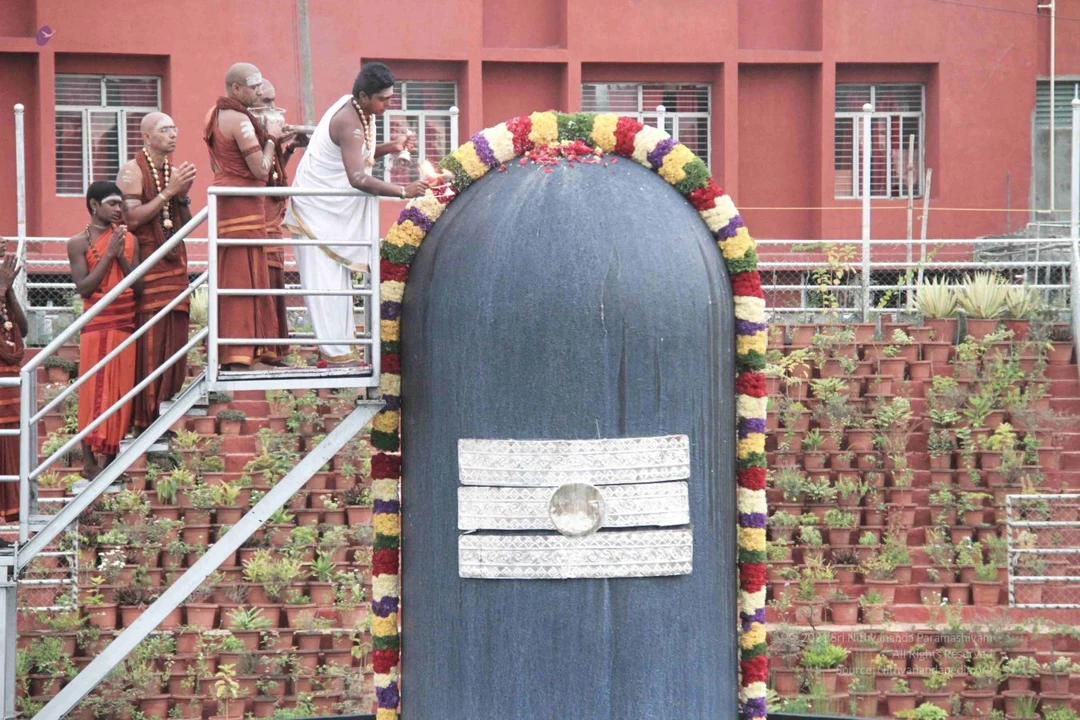
Dusk view of a dark reflecting pool with a tiered stone-step amphitheatre on the left and right. A dark central fountain structure with arched opening and small jets of water stands in the pool, with a steel stair and platform rising behind it toward a multi-storey building under a deep blue evening sky. A few small figures in white stand on the steps at far left, and a faint crescent moon is visible upper left.Dusk photograph of a large dark Shivalinga-shaped monument standing in the middle of a still reflective pool, with water jets spraying from its sides. Blue twilight sky above, a multistorey building and trees in the background, and a staircase with metal railings on the left. Several small figures in white clothing stand on the stone steps at the left edge of the pool.Dusk photograph of a large black stone Shivling standing in a rectangular pool of water, with silver-toned bands and a striped ring near its base, water spouting from its sides. A few people in white and orange clothing stand on the stepped stone terraces at left, and a multi-storey brick building with rooftop structures rises behind under a cloudy blue sky with birds in flight.Dusk view of a large black Shiva linga set in a rectangular reflecting pool, with water cascading from its base and a small illuminated opening on its face. Metal staircases and railings lead up the stepped stone seating beside the pool, and a few figures in white and orange clothing stand near the left steps. Brick buildings and trees rise in the background under a blue-grey evening sky.Dusk photograph of a large black Shiva lingam set in a reflecting pool, with water jets spraying around its base and a glowing rectangular opening at the front. A metal staircase with railings leads up to a raised platform beside the lingam, and a few people in orange or saffron clothing stand along the steps and railings and on the seating tiers behind the pool. A multistorey brick building and dark clouds fill the background, and the water mirrors the structure and the figures. The scene looks like an evening shrine setting rather than a clearly identified ritual.Dusk view of a large black stone Shivling standing in the middle of a reflective water pool, with water jets spraying from its base and a yoni-shaped peetha. A metal railed staircase on the left leads up a tiered stone amphitheatre lined with rows of seats. Several robed figures in orange and saffron clothing stand along the stairs and terraces, and a red-brick multi-storey building with rooftop structures rises behind under a blue-grey evening sky. The black lingam has a yellow and black striped border around its arched face.
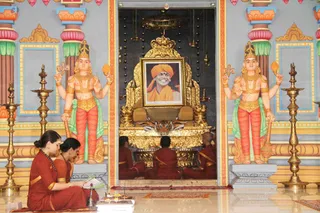
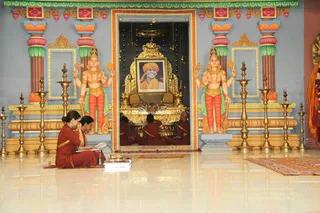
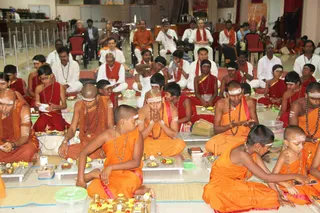
Paduka-Puja
29 photosSource gallery
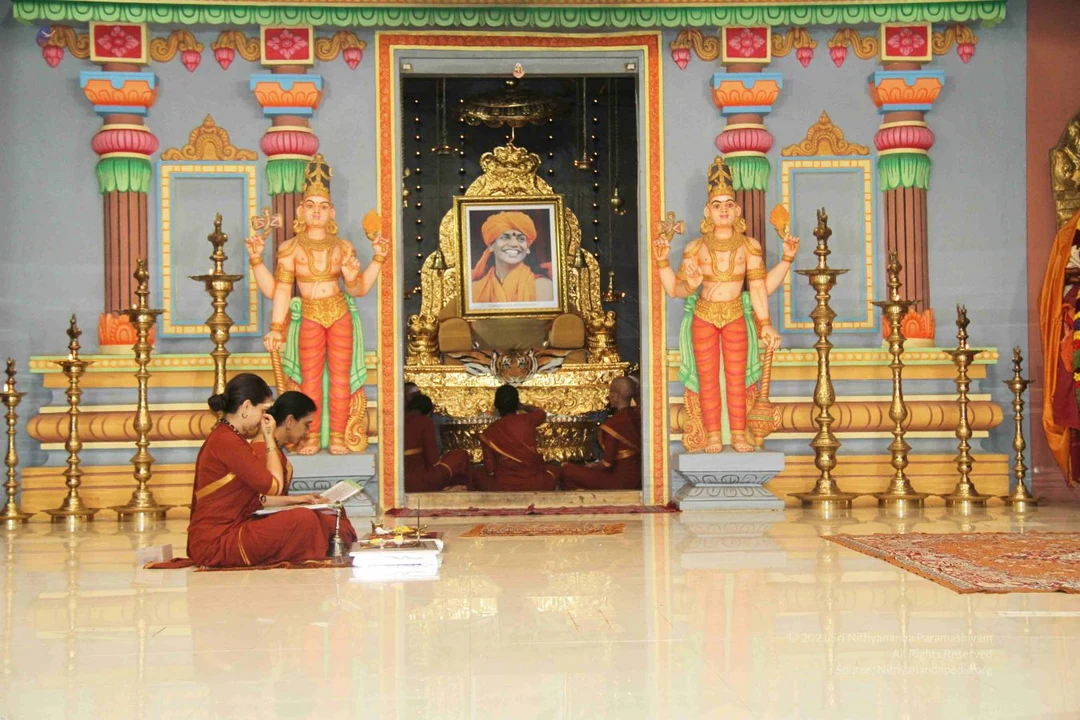
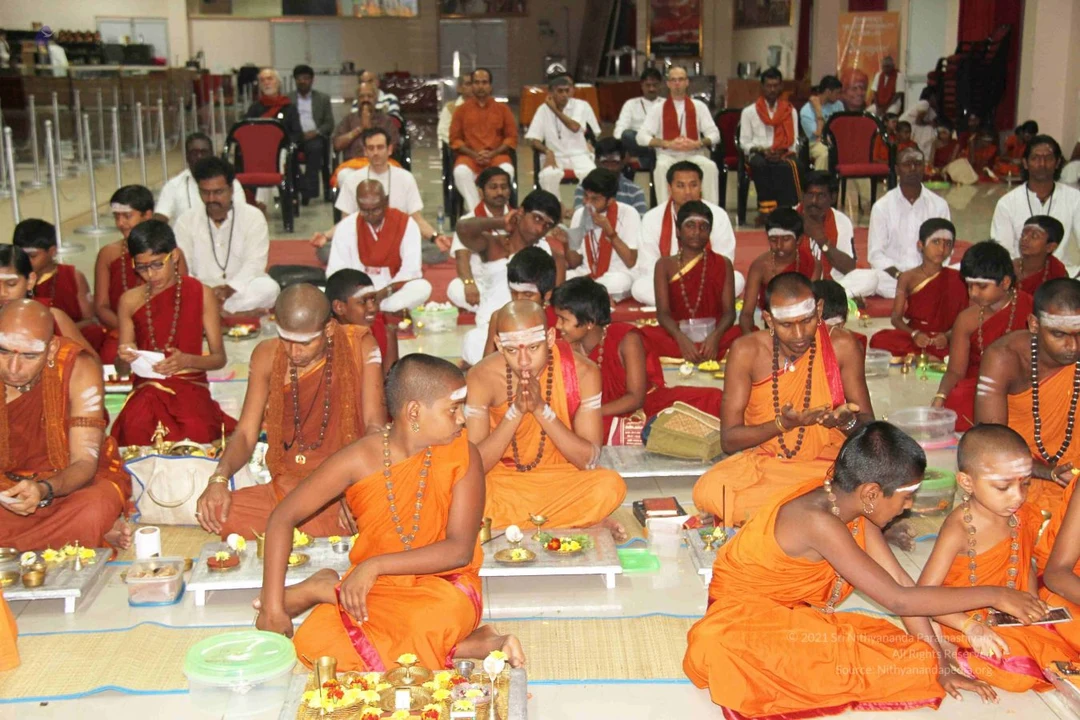
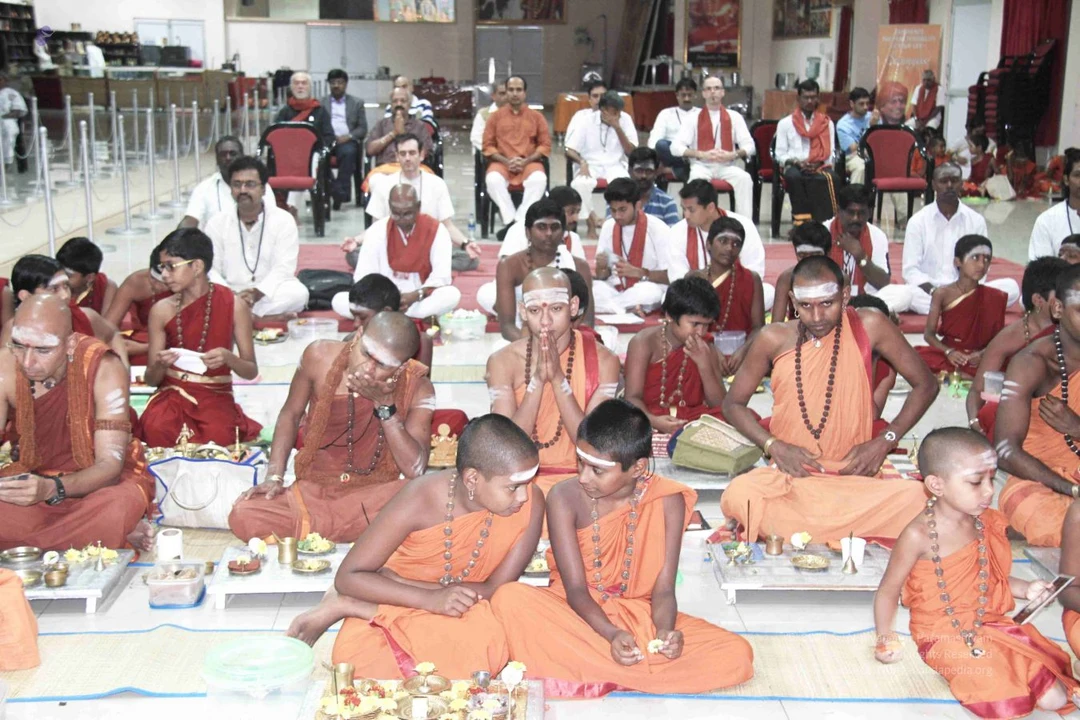
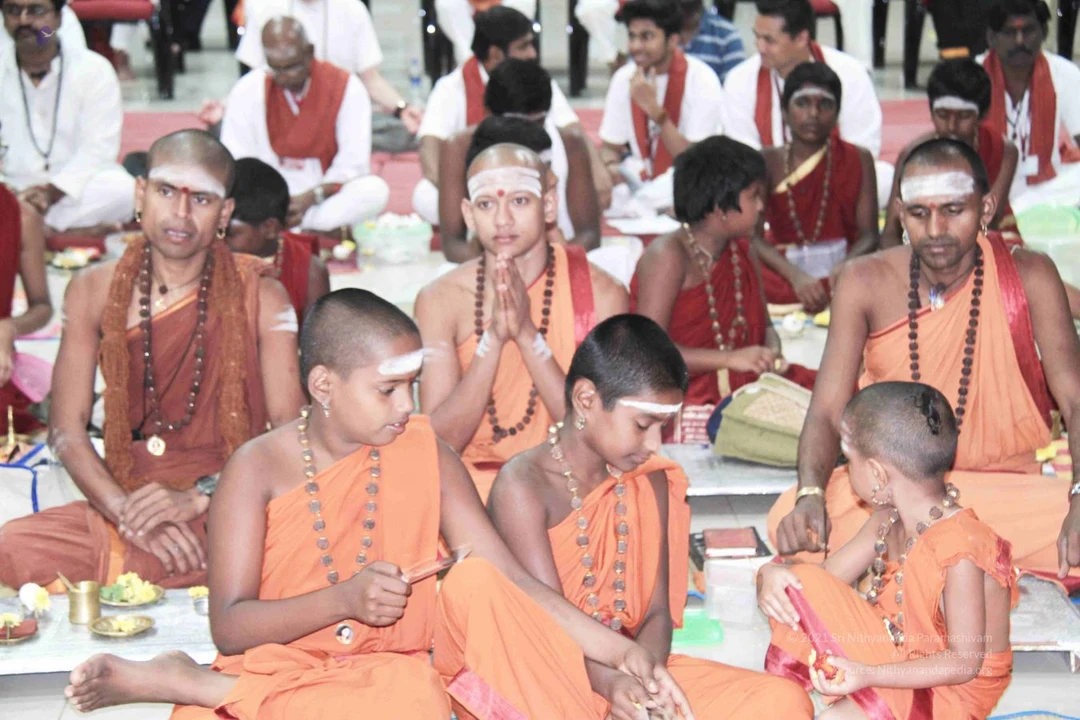
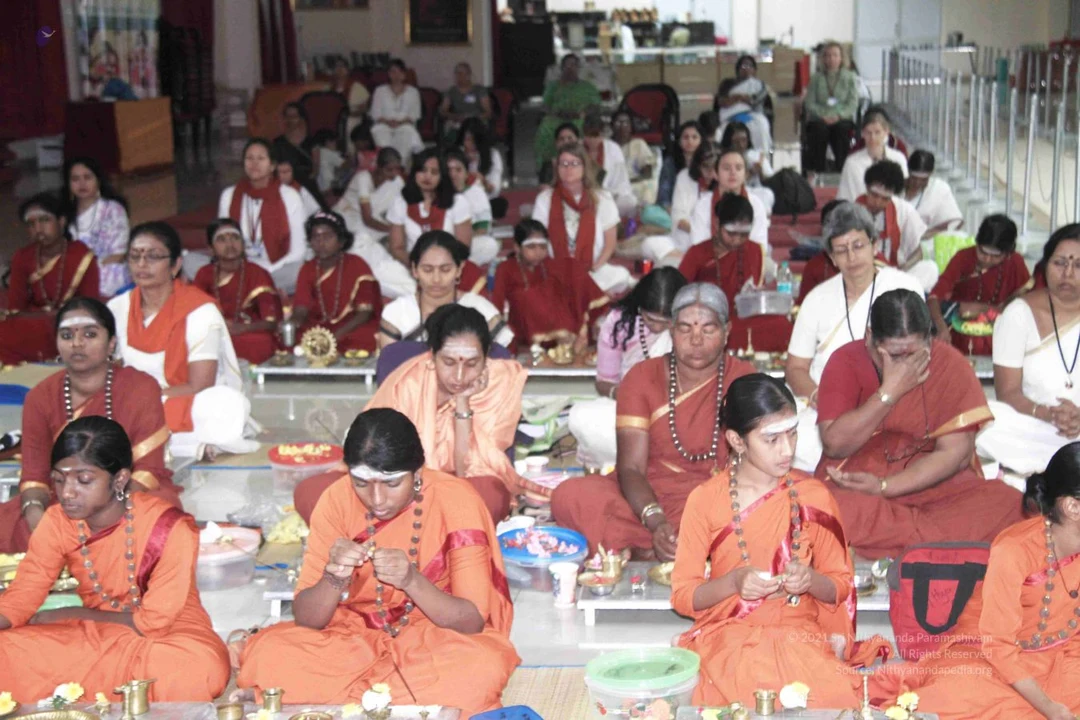
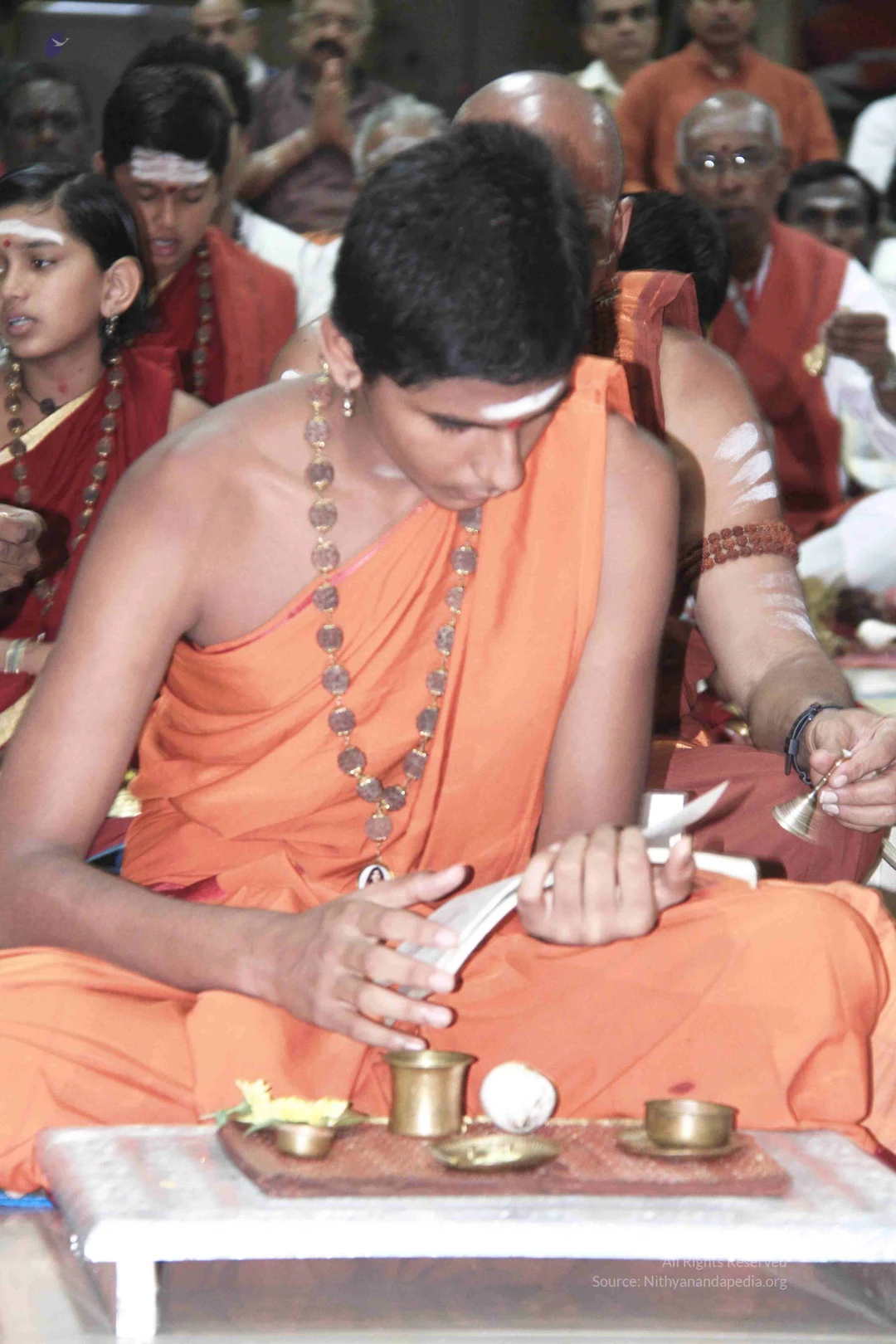
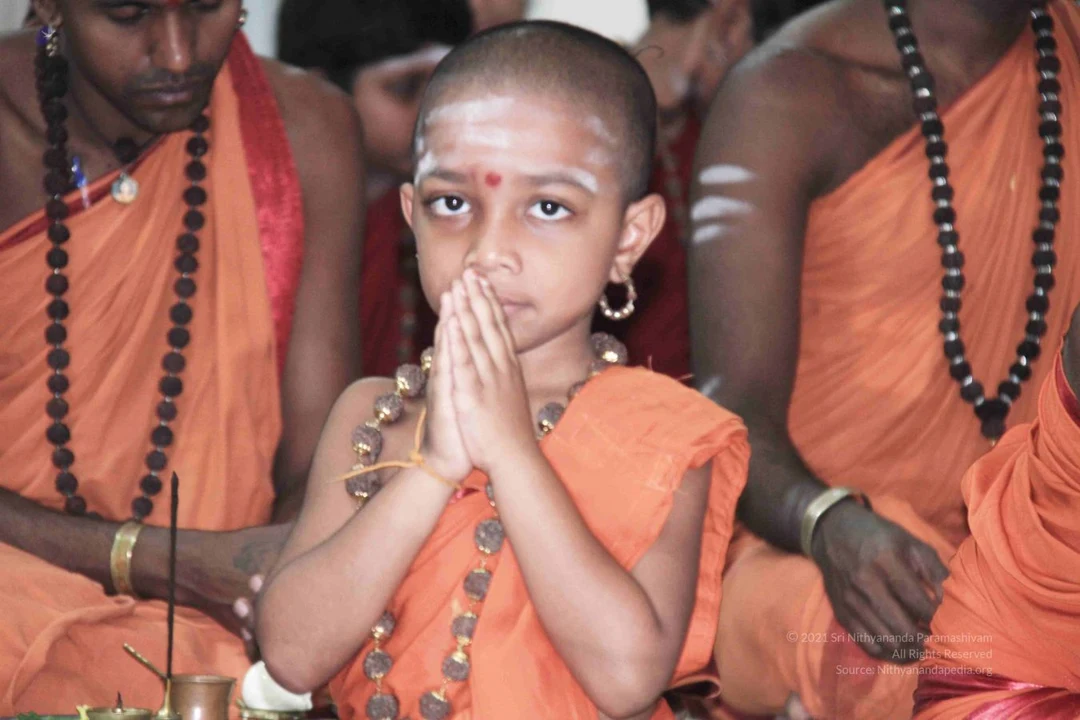
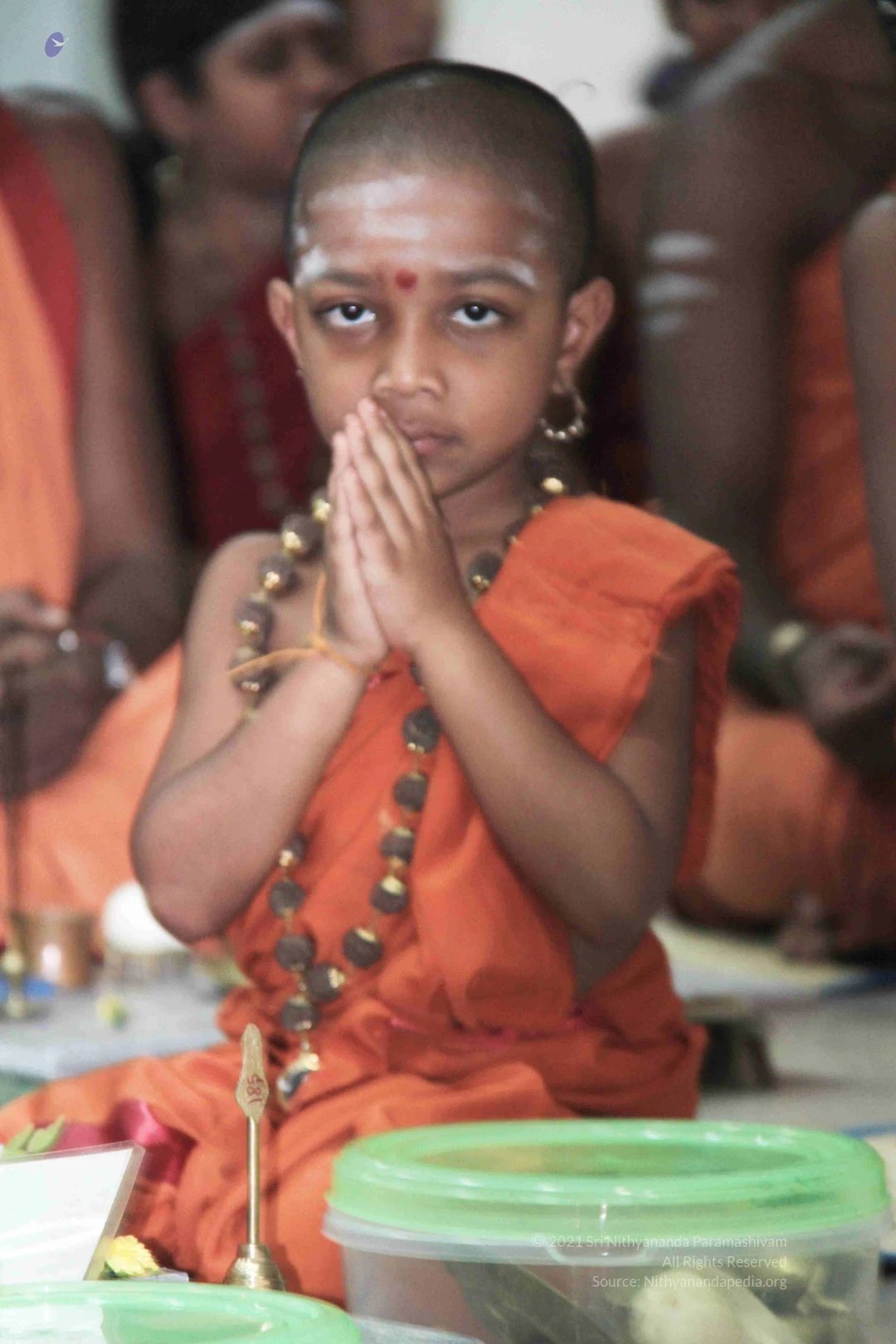
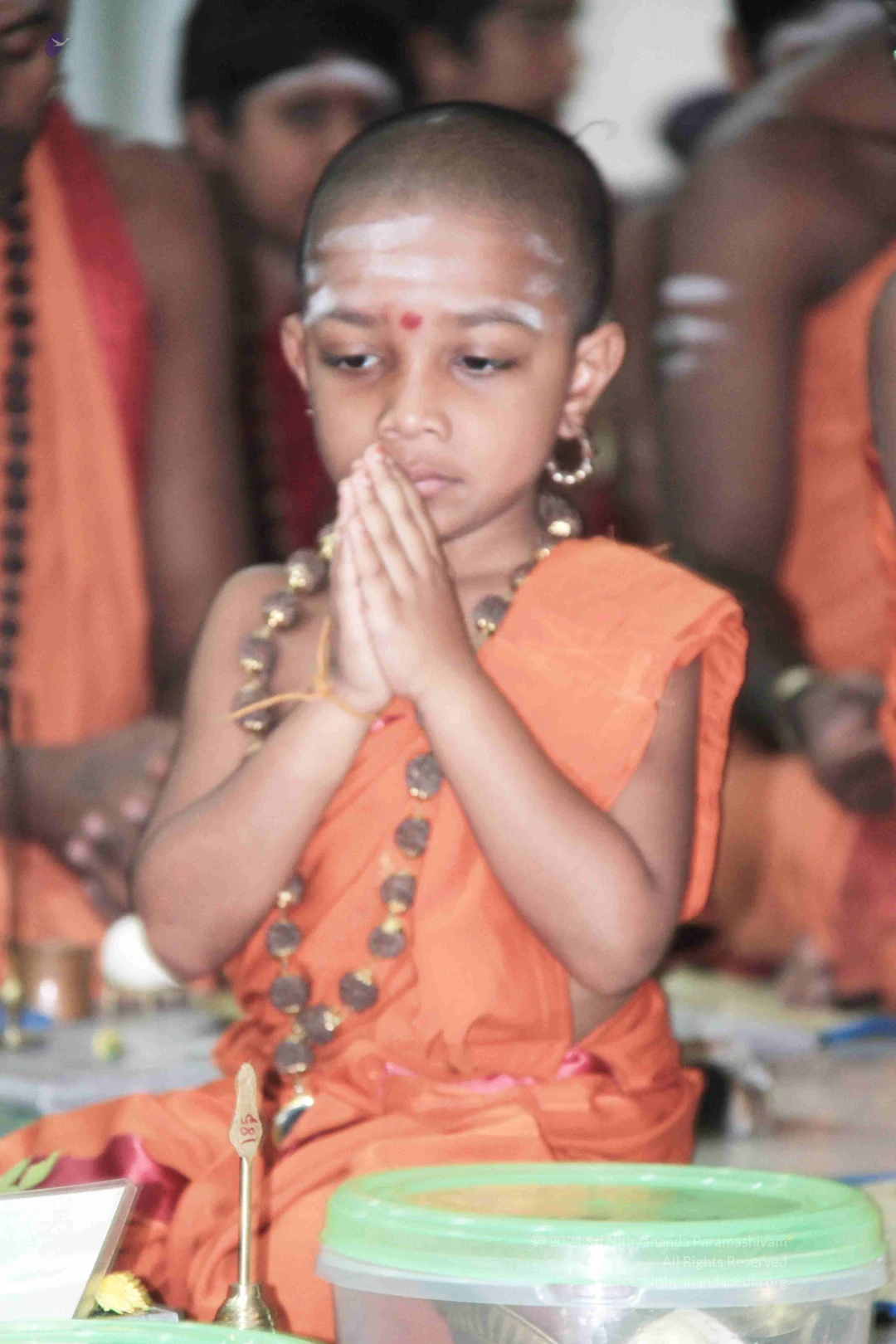
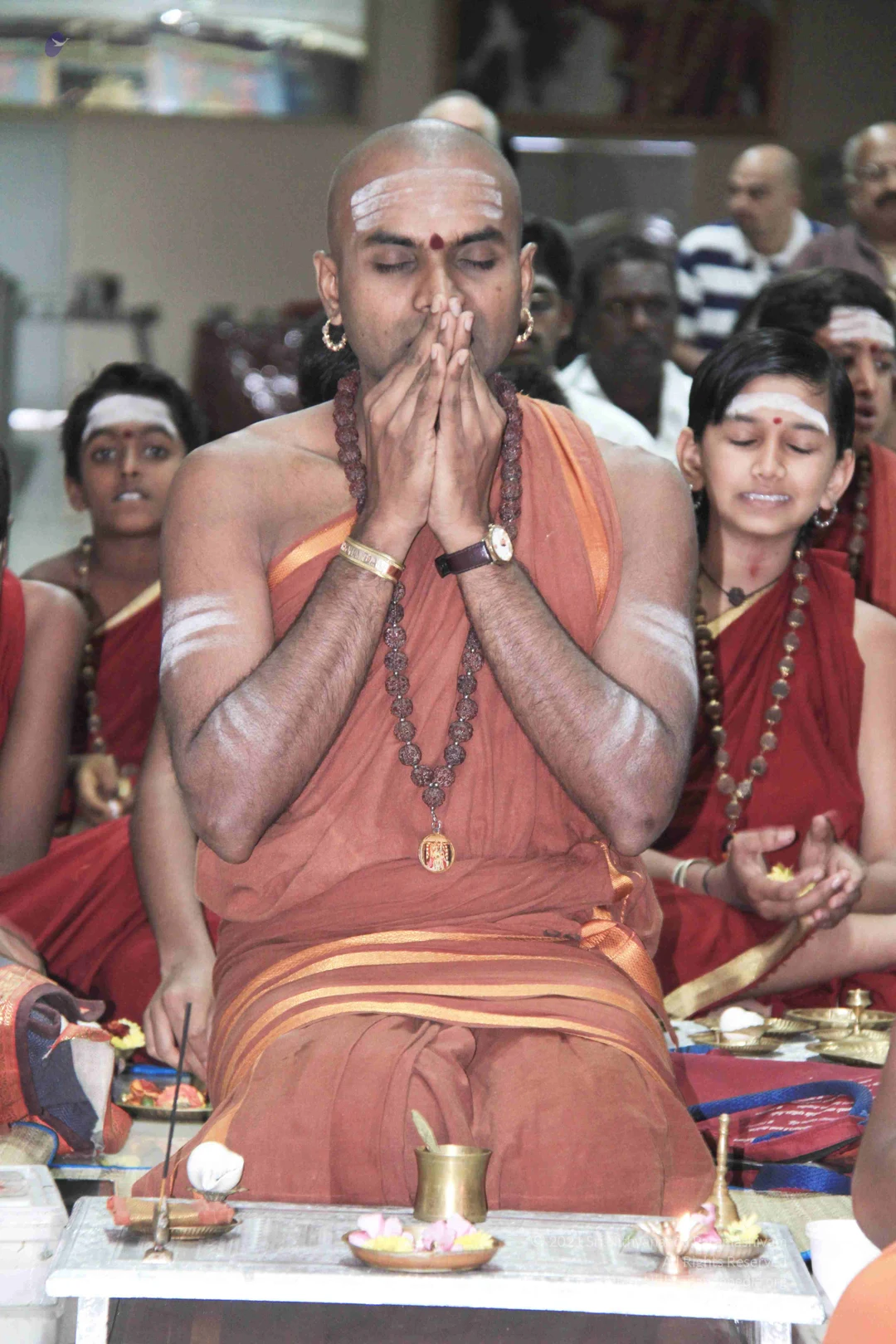
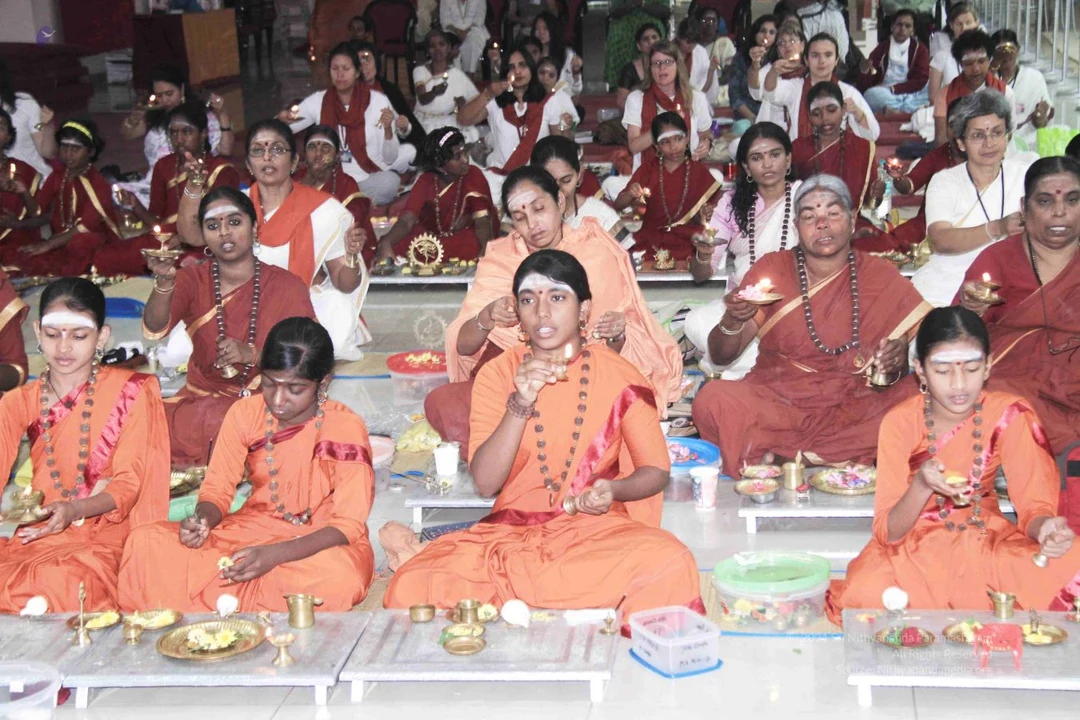
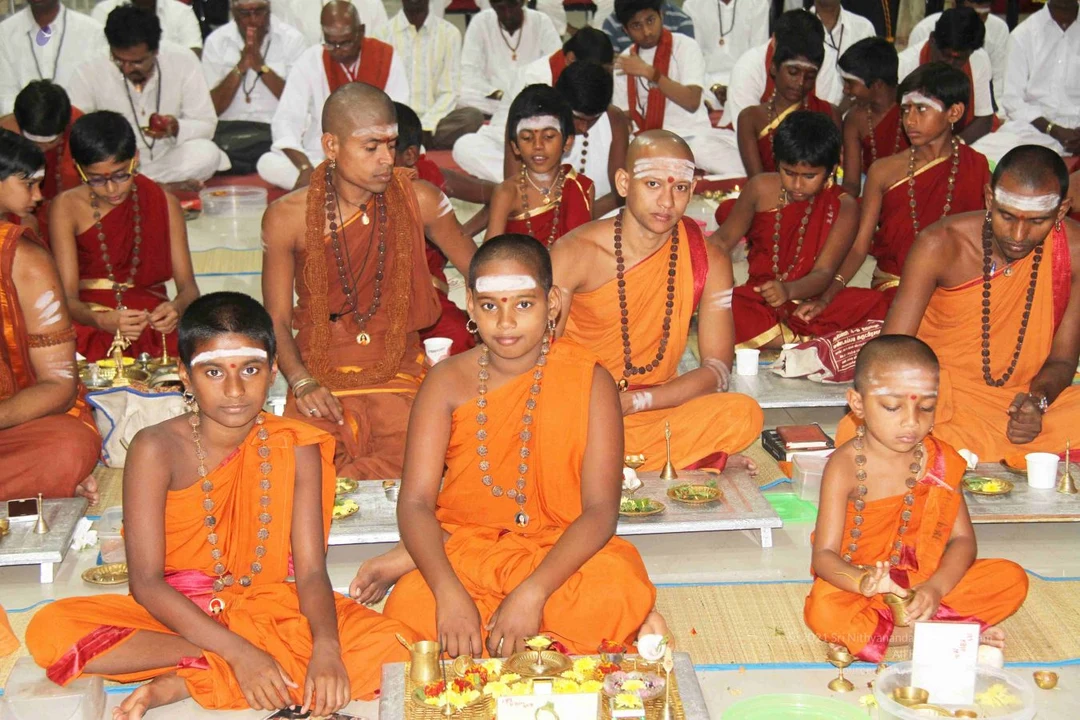
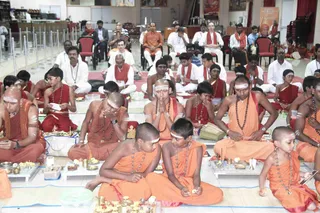
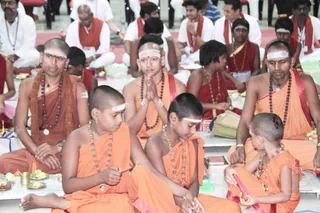
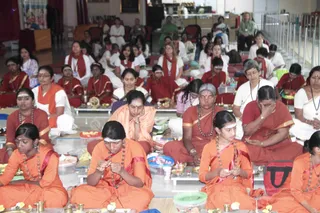
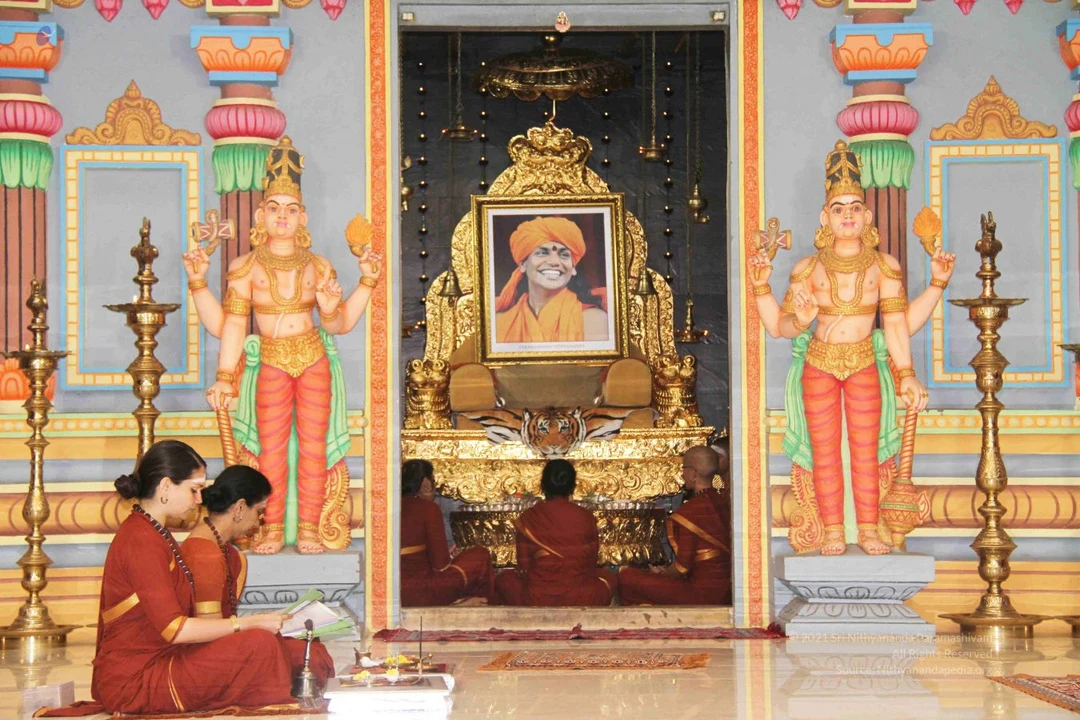
Interior of a temple hall with a golden throne and tiger-face carving at the base, flanked by two painted standing deity statues with multiple arms, golden crowns and red-and-green dhotis. A framed portrait on the throne shows a smiling man in orange robes and an orange turban, labelled as a portrait; this portrait is a depiction, not a physical person. Two women in red-orange sarees sit on the marble floor at left, one reading from a book, with brass lamps and a small brass bell nearby. Several people in orange-red robes sit in front of the throne near the entrance. Brass oil lamps stand on both sides. Ritual offerings and a small brass bell lie on the floor in front of the women.A photograph of a temple hall with a gilded throne at the centre, holding a framed portrait of a smiling man in an orange turban and orange robe, shown as a depiction on the throne. Two painted dvarapala-style guardian figures with four arms, crowns and orange-red dhotis stand on either side of the shrine doorway. Brass oil lamps (deepas) line the glossy white floor. In the foreground, two women in red saris sit on the floor reading from a book, and behind them several people in orange-red robes sit in the inner shrine area, near a small floor puja setup with a tray of offerings.A large indoor hall with rows of people seated on the floor and in chairs, many in saffron-orange robes and white ritual clothing. In the foreground, young boys and men in orange dhotis with white forehead markings and rudraksha malas sit cross-legged before brass puja trays holding flowers, fruit, lamps and small bowls. The central figure, in orange with prayer hands pressed together, sits in a meditative posture while others around him are seated in devotion. Behind them, men in white kurtas and red shawls sit on mats in a seated congregation. Several plastic-covered containers and a brass aarti setup lie on the floor.A seated group of devotees in an indoor hall performs a puja with brass plates of flowers, fruit and small oil lamps arranged on low white stands in front of them. In the foreground, shaved-headed young boys and adult men wear saffron-orange robes and rudraksha malas, with white and red sacred markings on their foreheads and arms. Several men in white clothes and orange or red shawls sit on red mats and chairs behind them, while others are seated at the back of the room. Some devotees have their hands folded in prayer. The scene is a satsang-style ritual gathering, and the people visible number roughly thirty to forty.A seated group of young and adult sannyasis in saffron-orange robes and rudraksha malas, with white tilak and forehead markings, performing a ritual in a hall with red floor covering. Several boys with shaved heads sit cross-legged; one palms together in prayer, others hold small brass items and offering plates with flowers and fruit near them. Behind them, men in white shirts with red shawls sit in rows. Compact, orderly ritual sitting.A large indoor group of women and girls sits cross-legged on the floor during a seated puja or satsang. Most wear orange or saffron saris with red borders and rudraksha malas, while others wear white saris with red shawls. Many have white or sandalwood marks on their foreheads. Brass lamps, small silver or brass vessels, flower petals and bowls of offerings sit on low tables before them, and several sit with hands folded or eyes closed. Seated spectators in the background watch from chairs near a wall with a red-curtained shrine area. No single presiding figure is clearly visible in the frame.

Nithya-Satsang
48 photosSource gallery
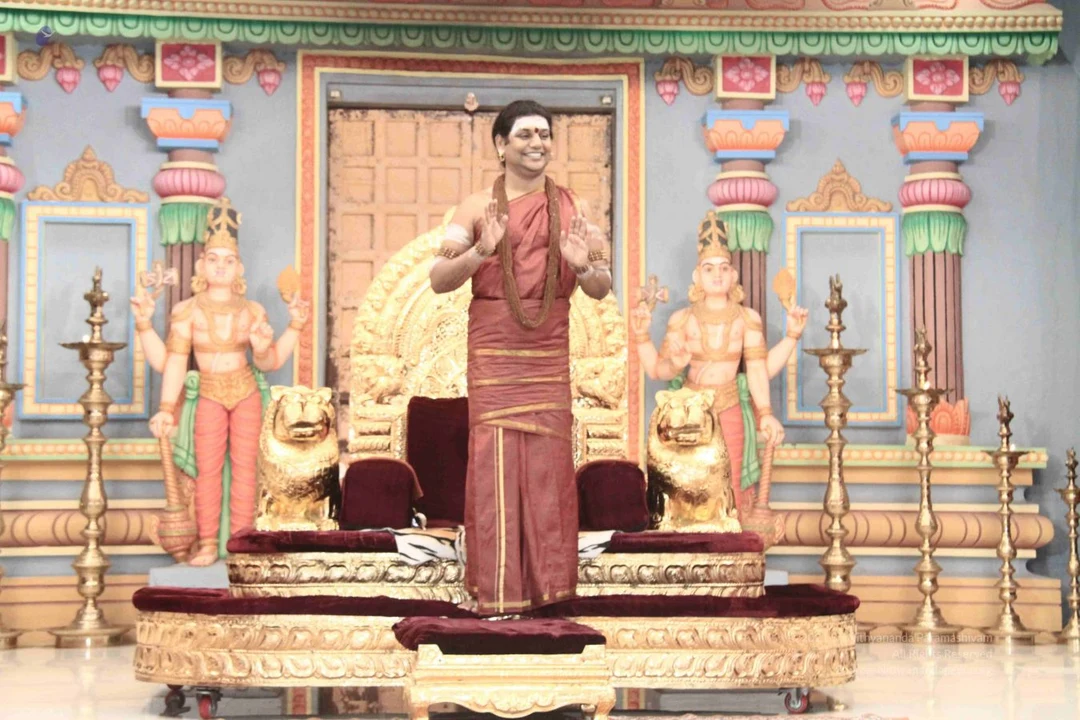
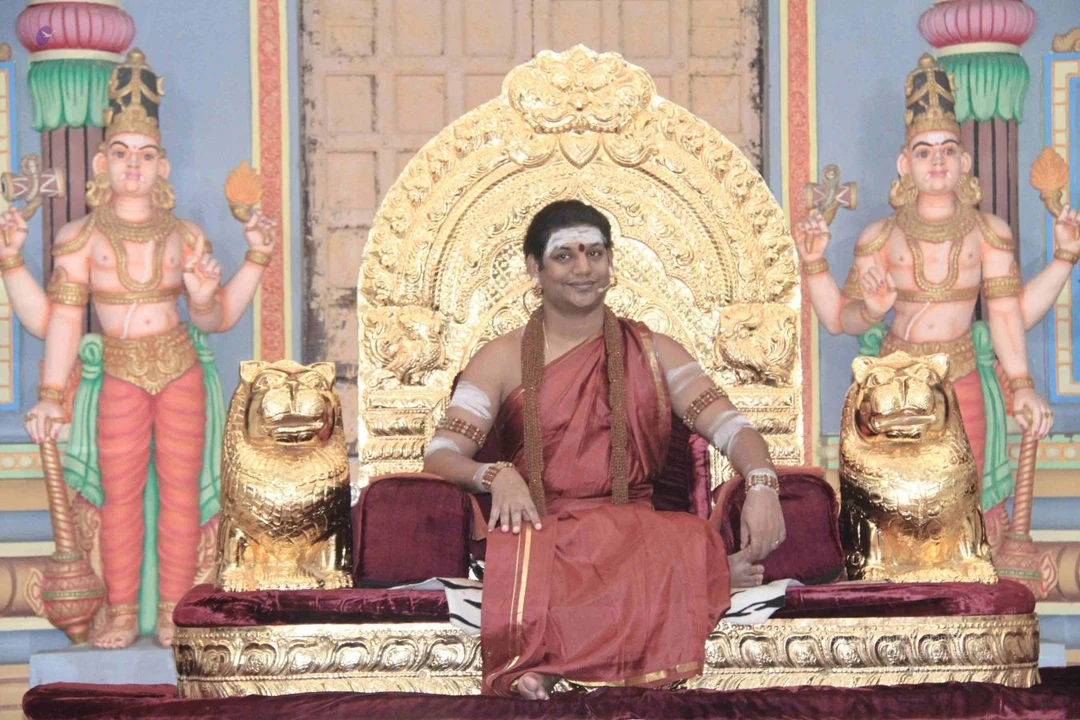
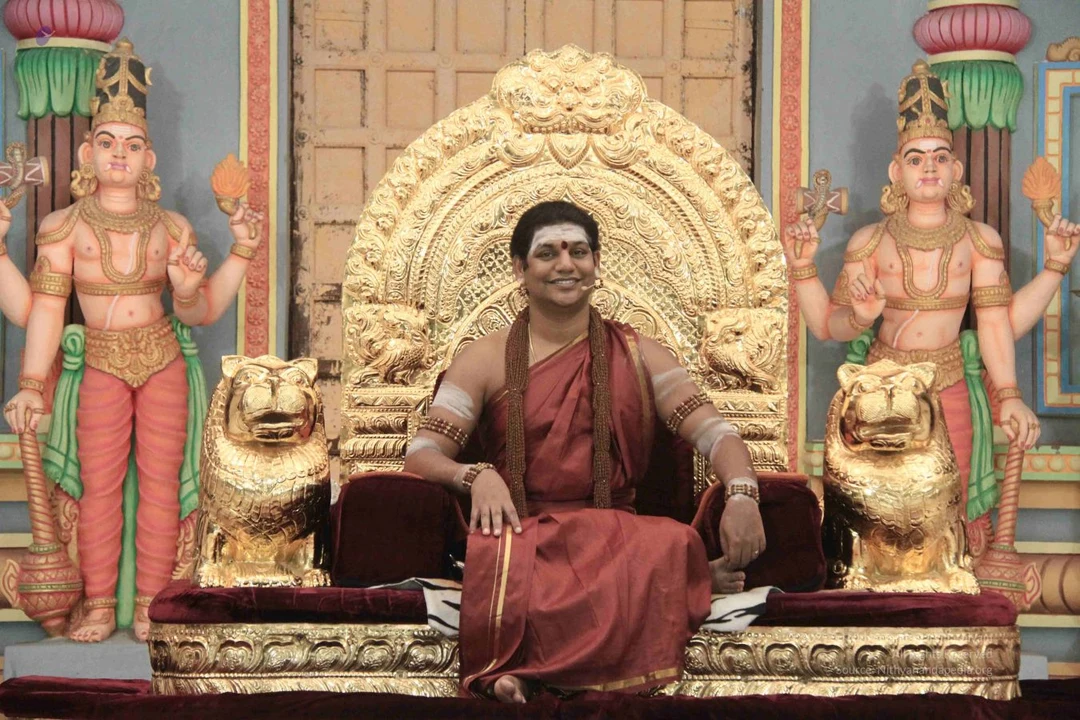
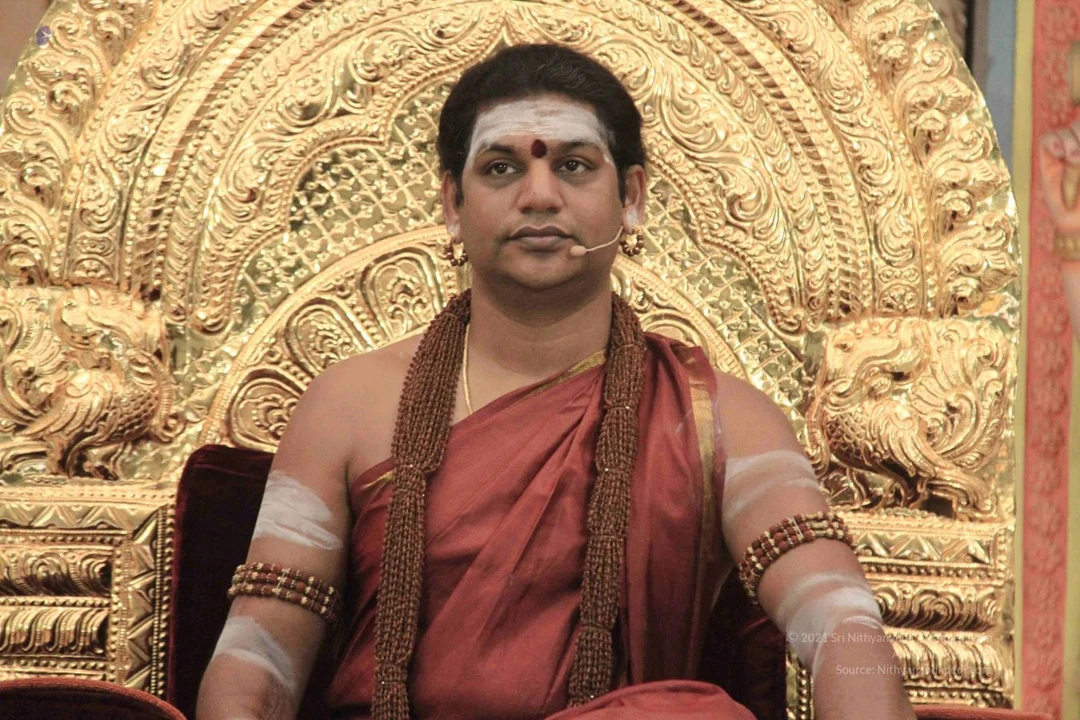
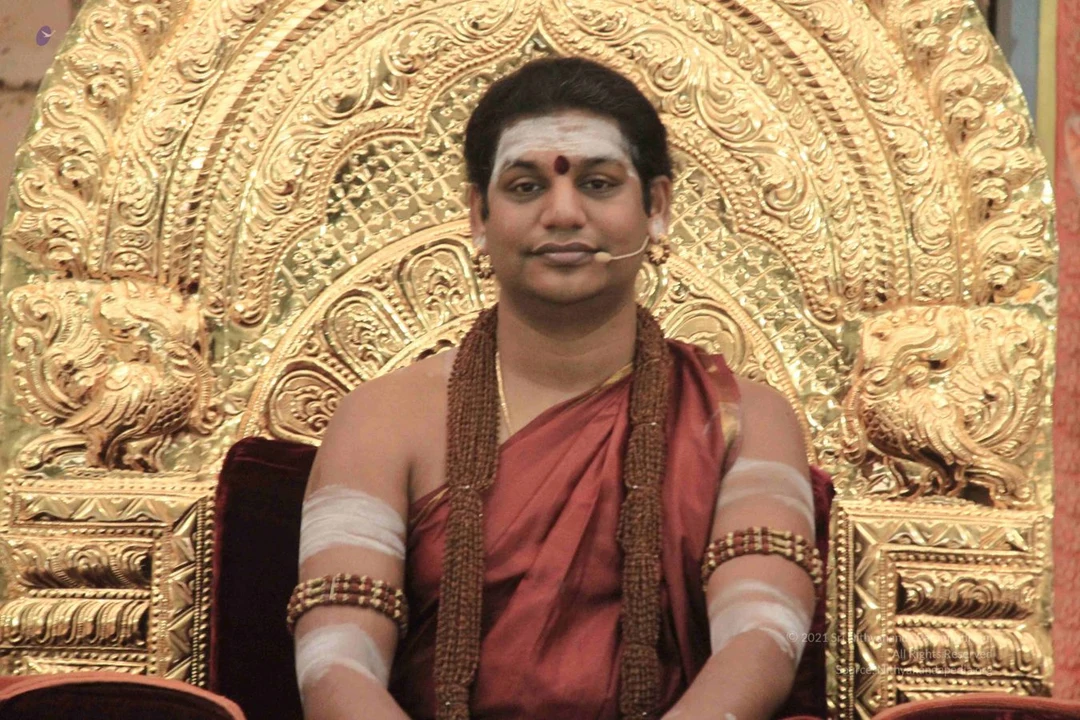
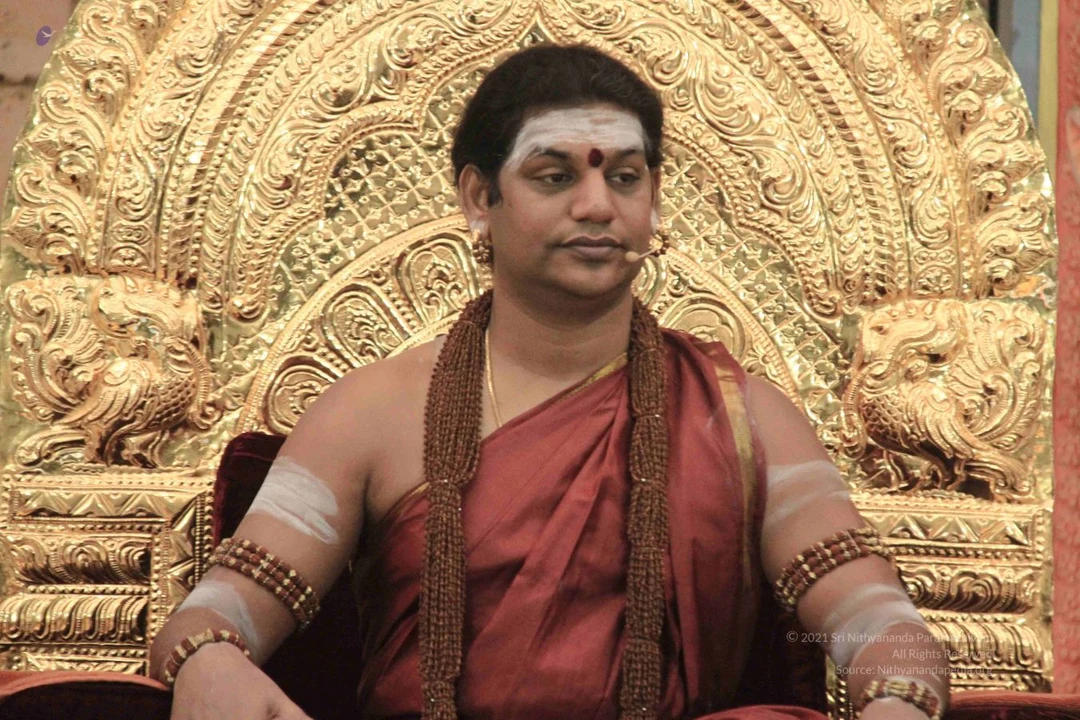
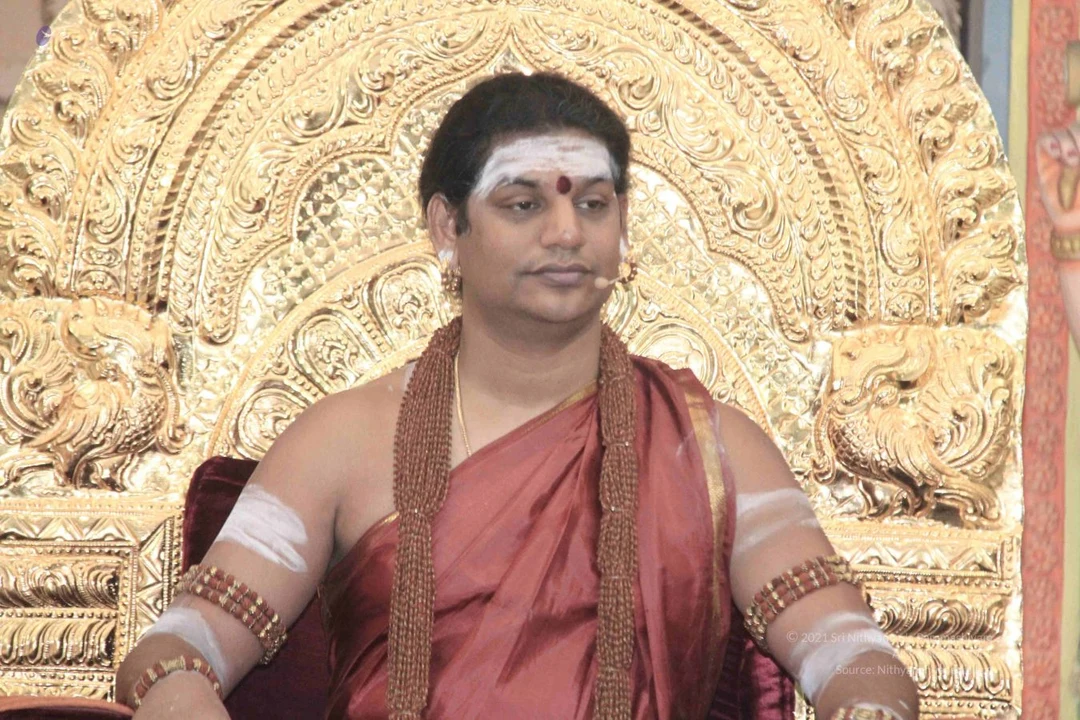
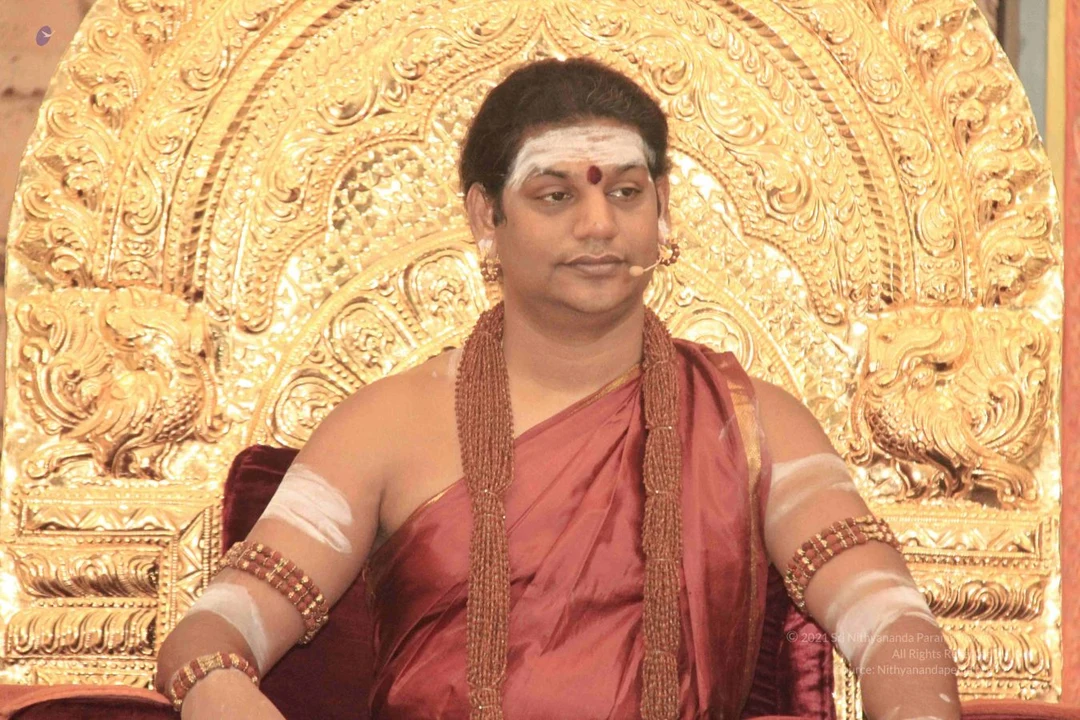
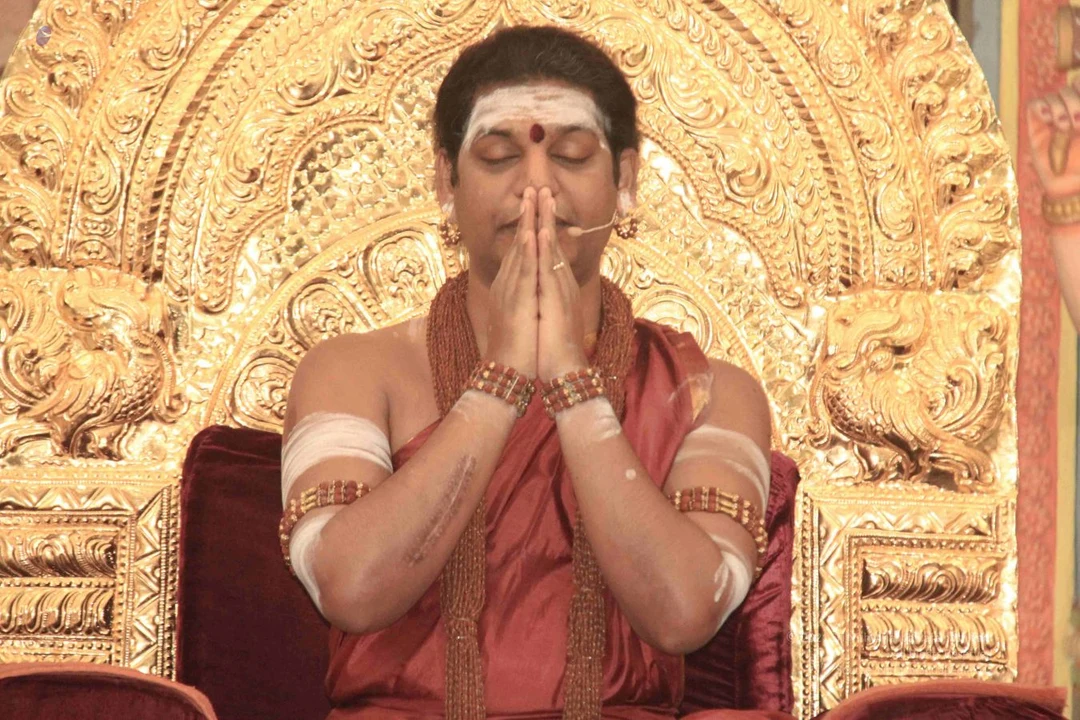
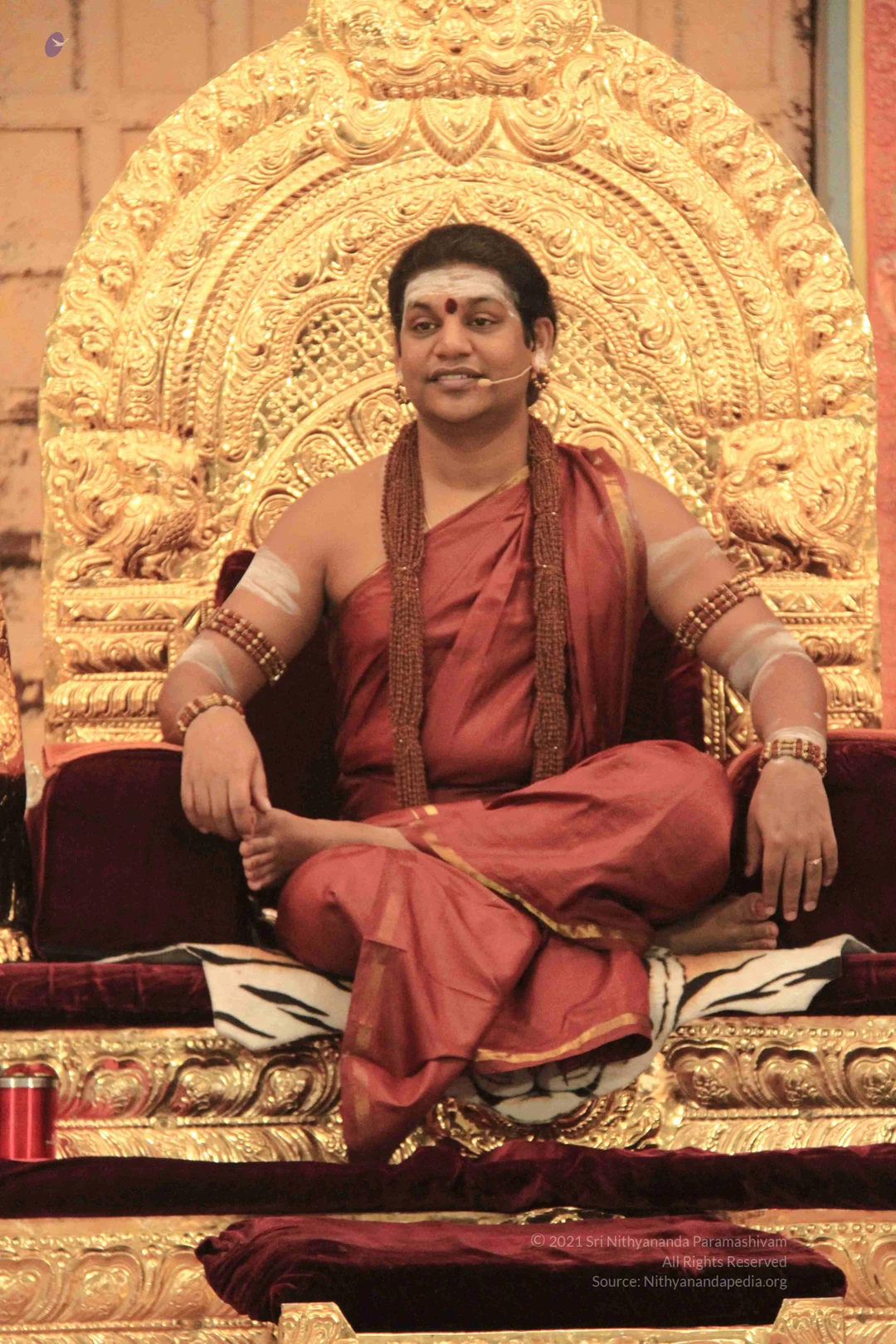
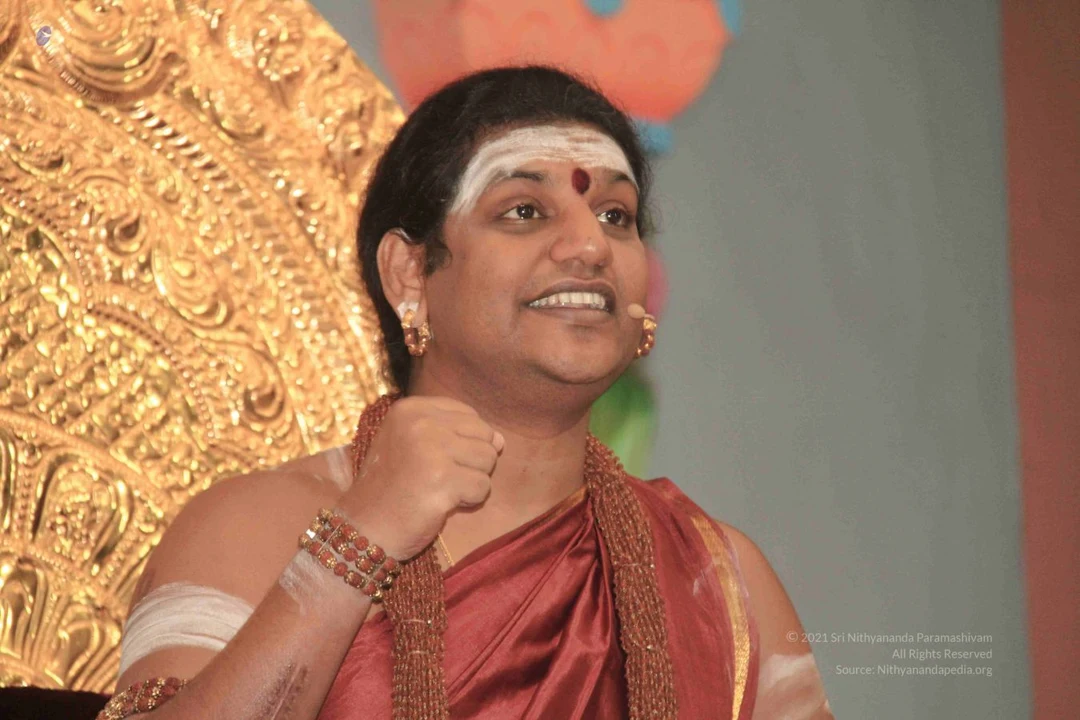
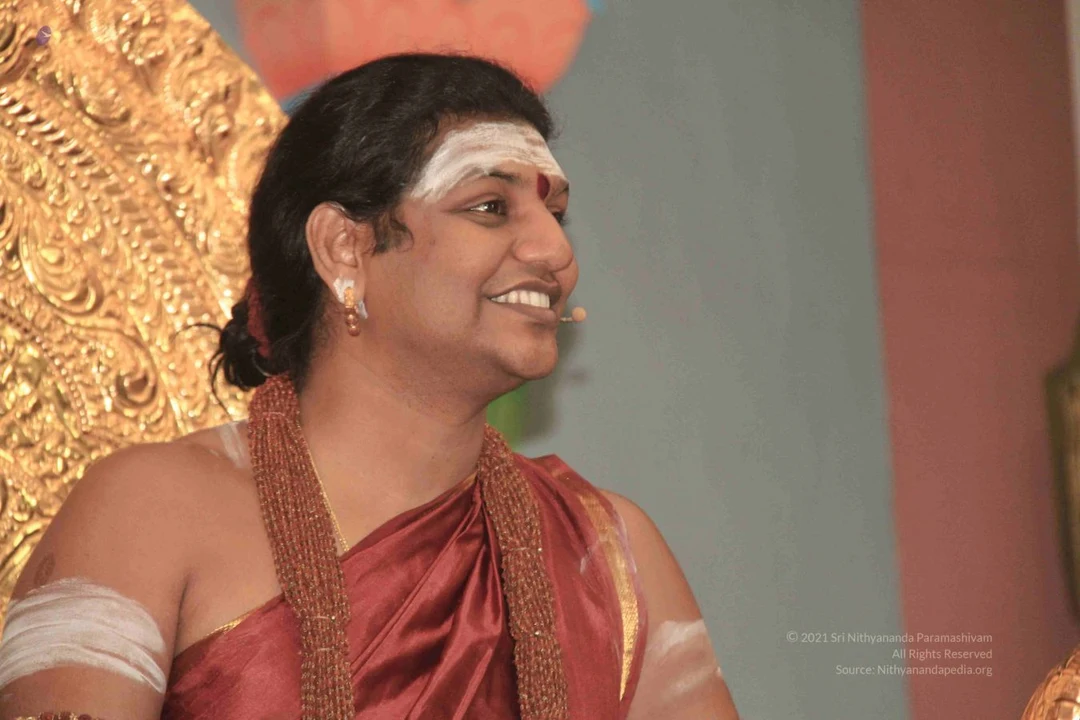
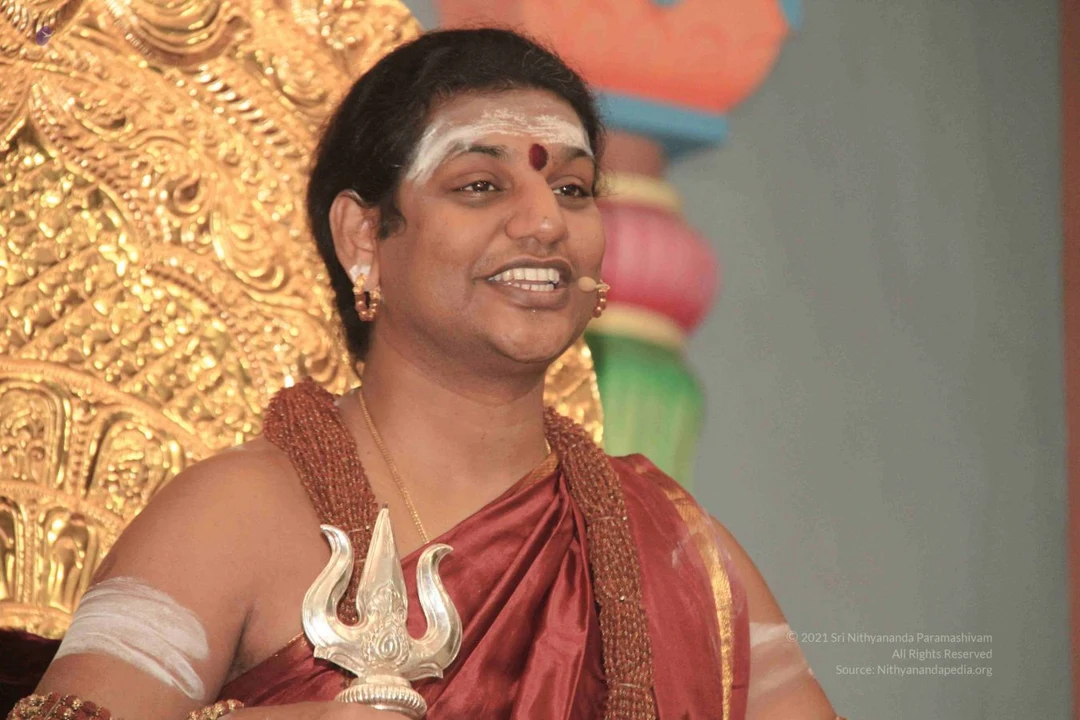
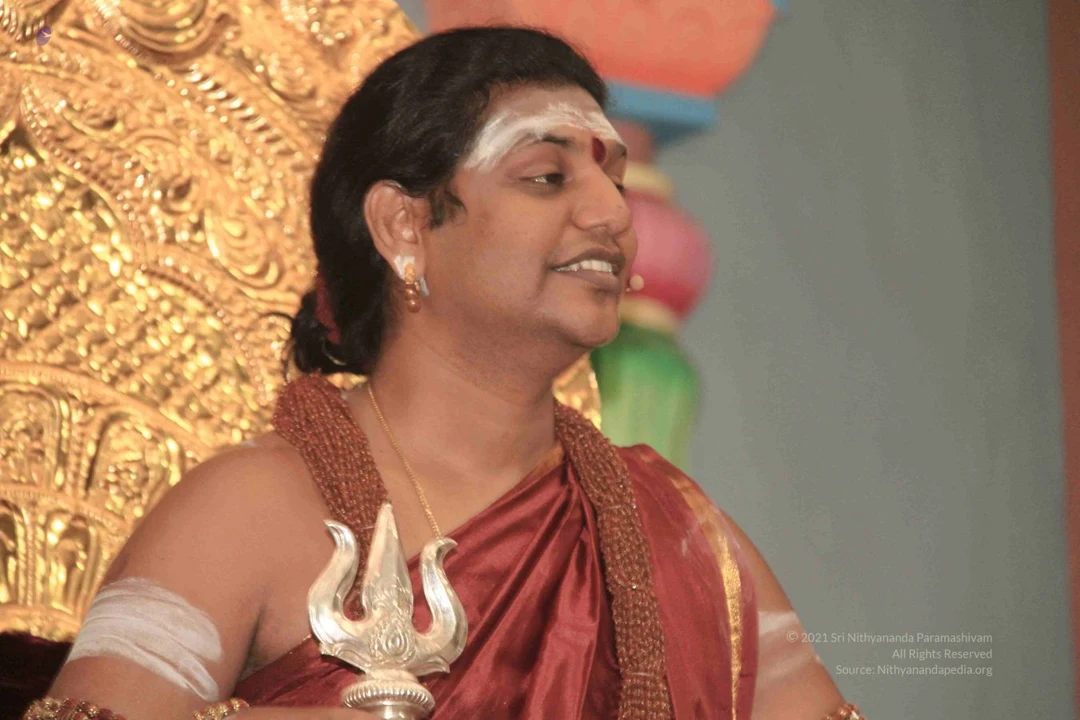
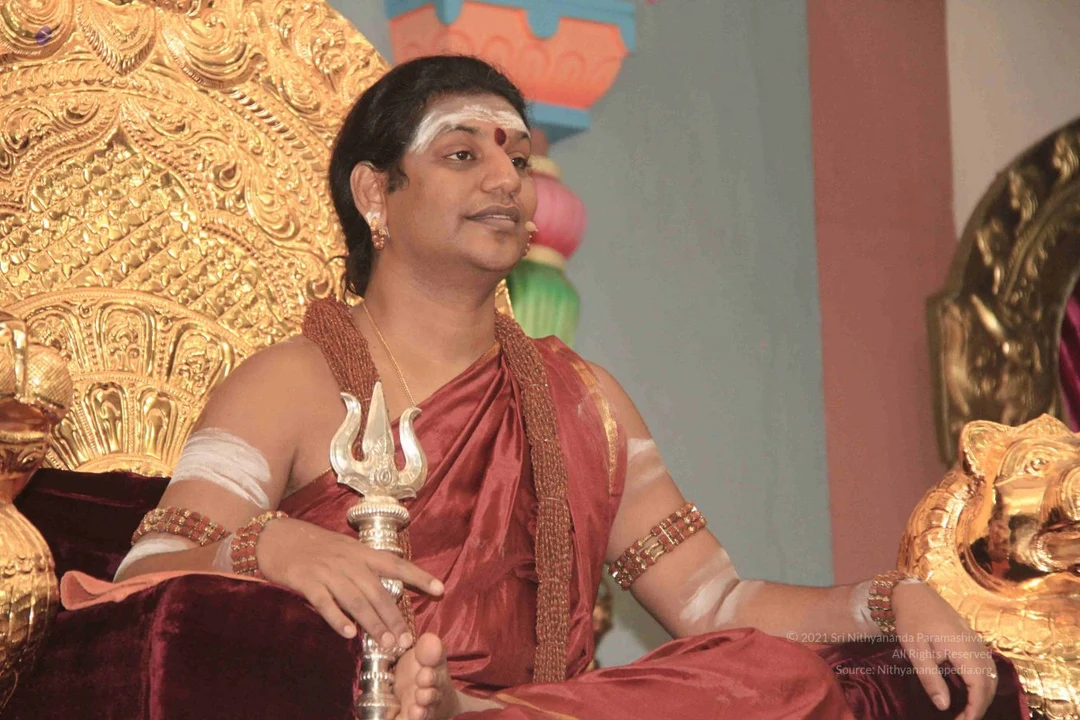
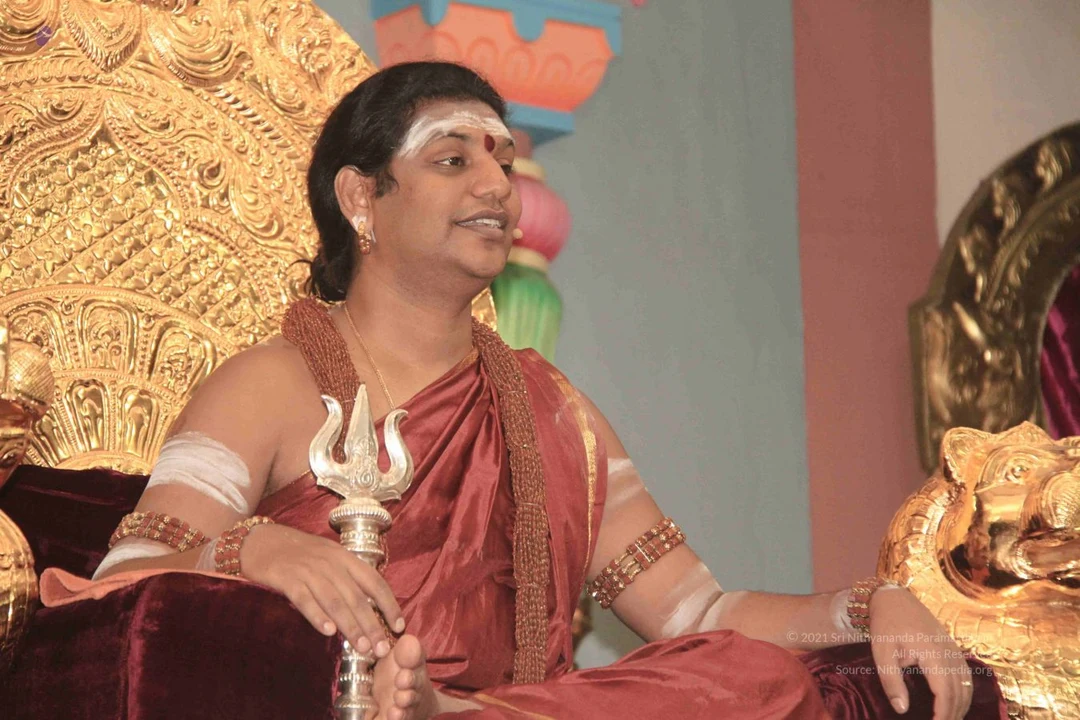
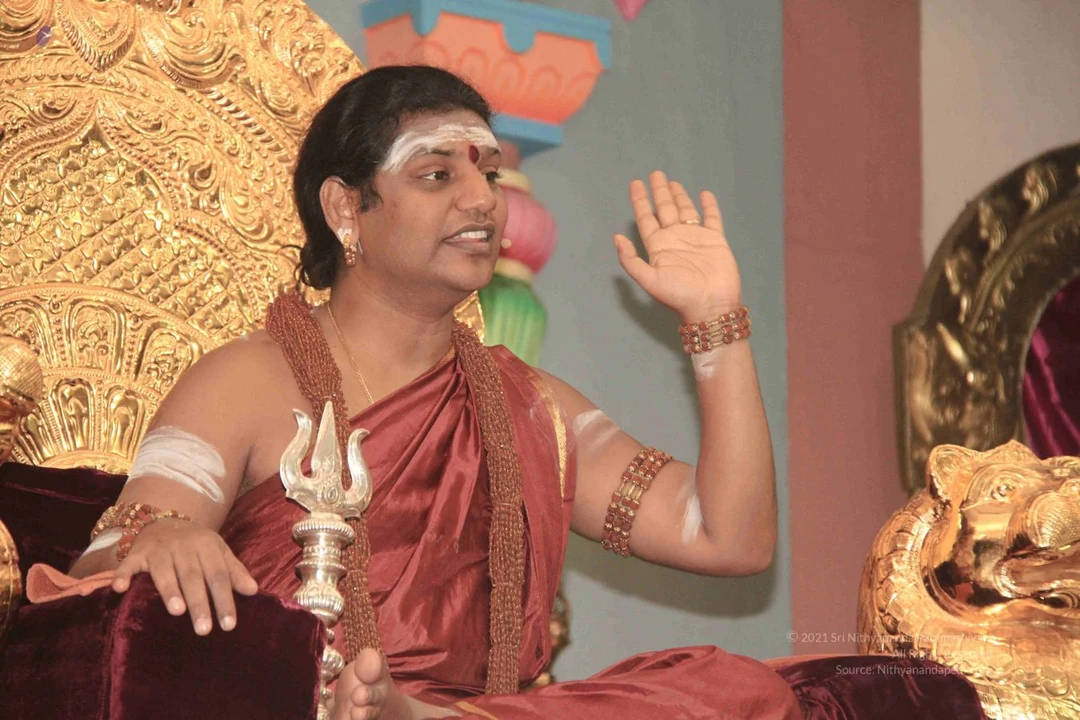
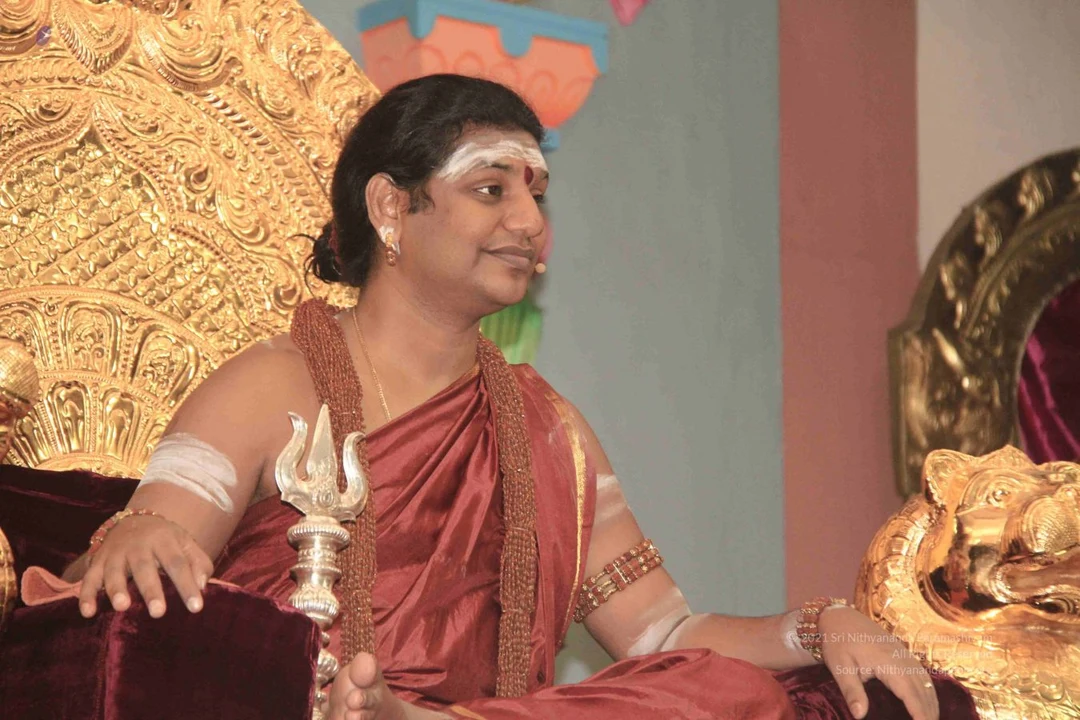
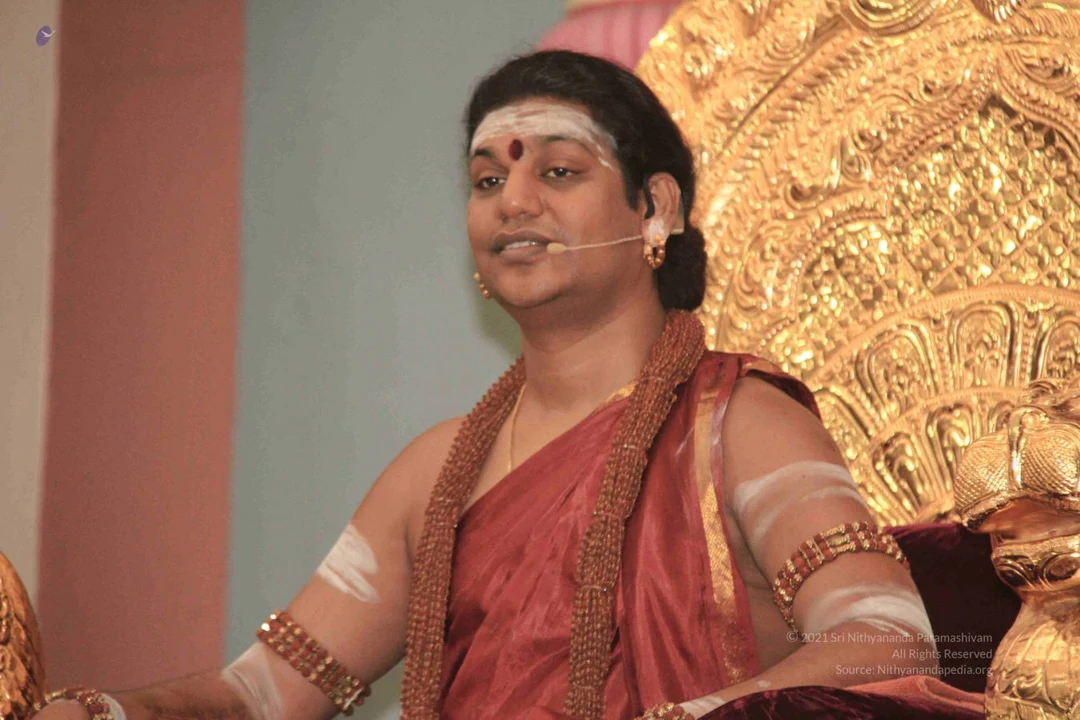
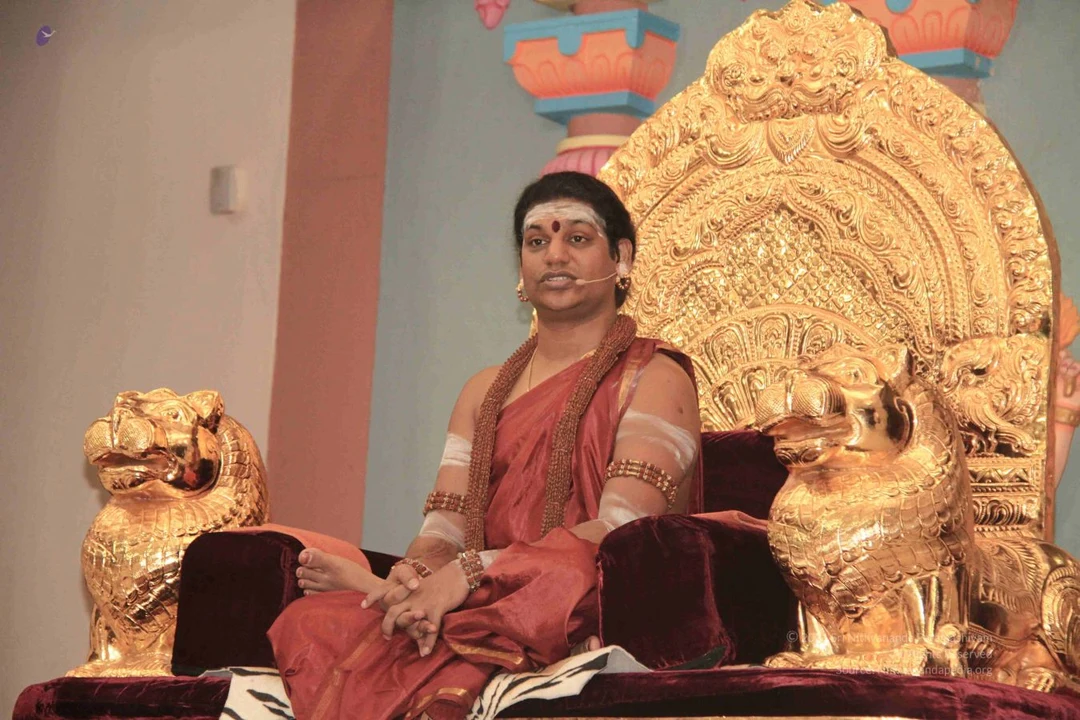
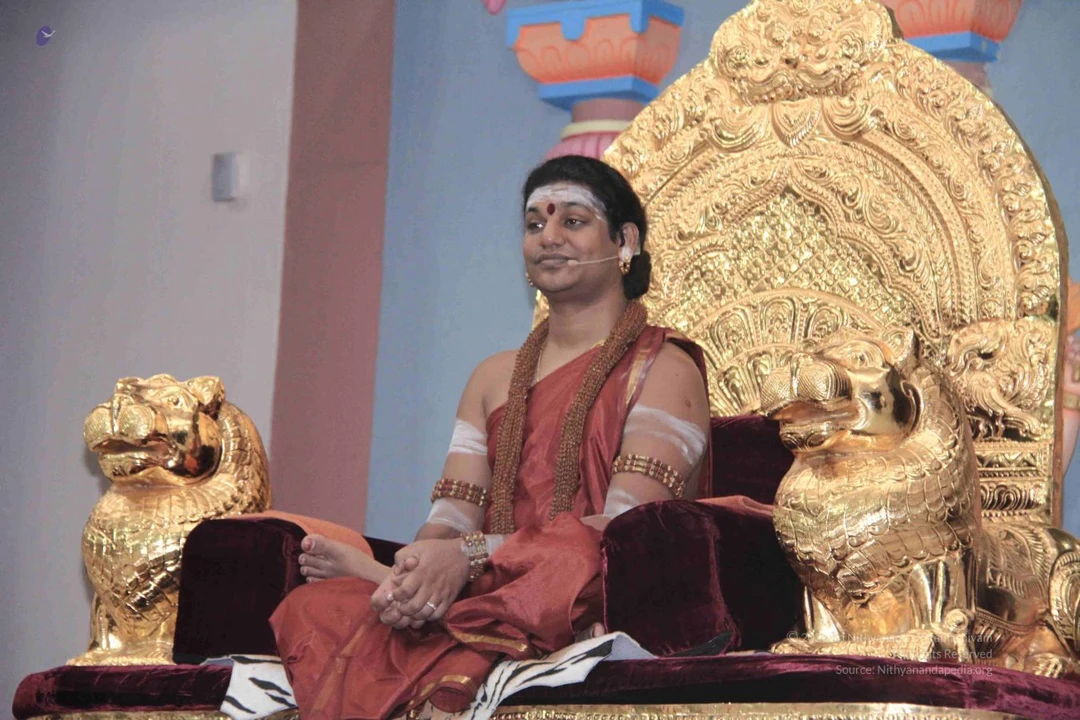
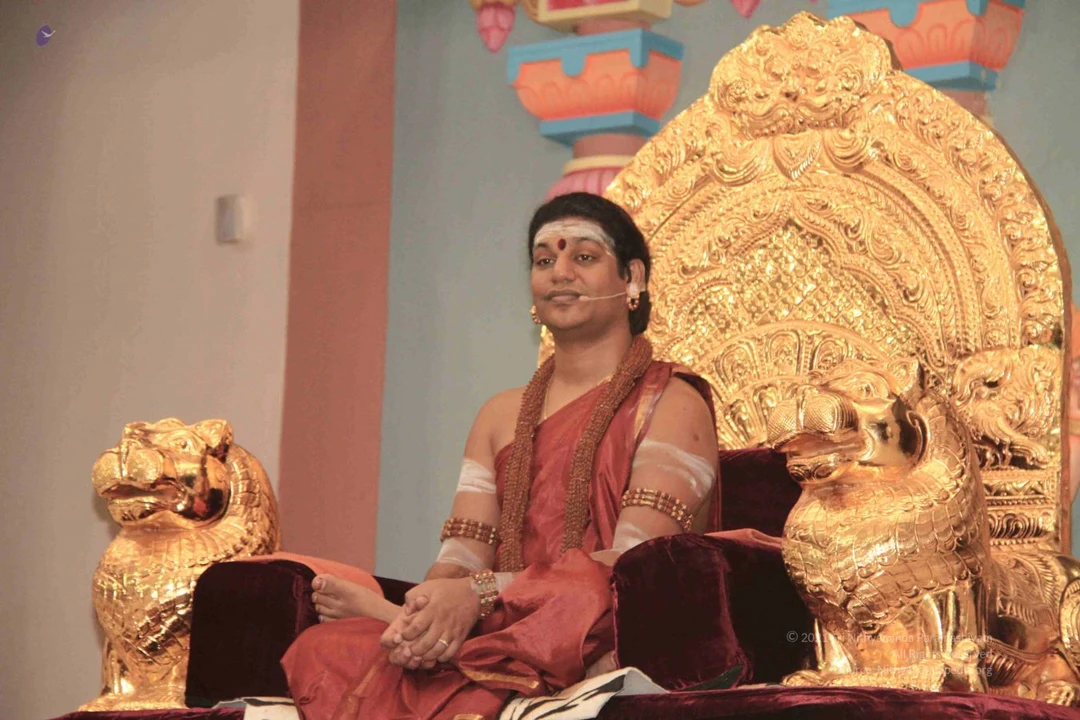
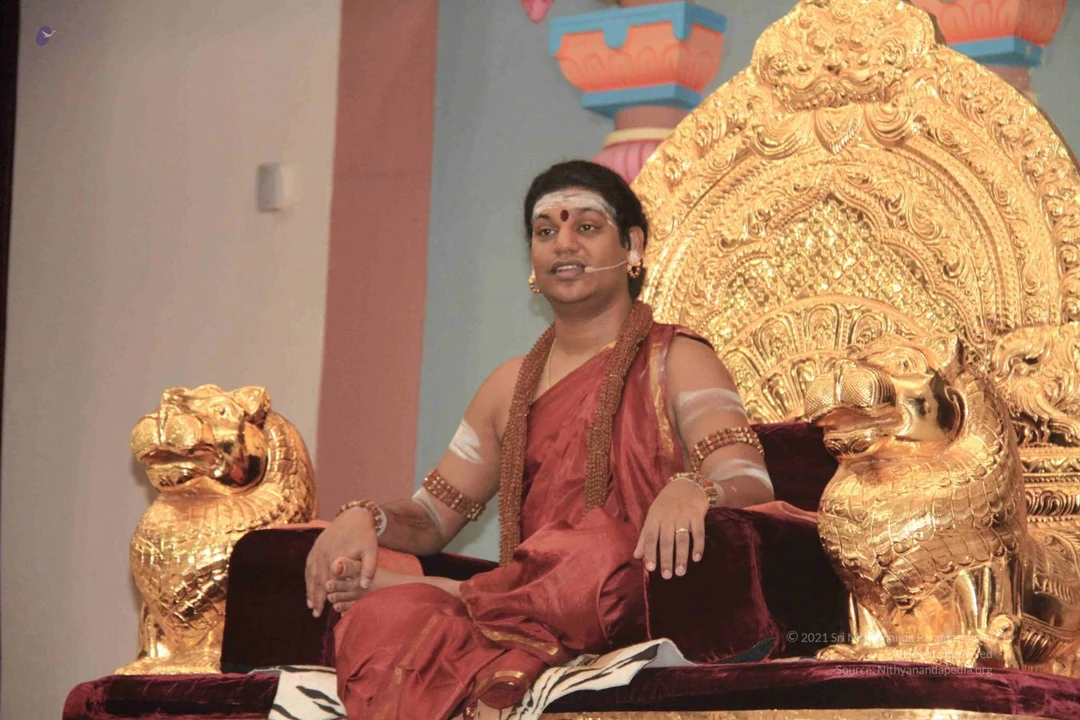
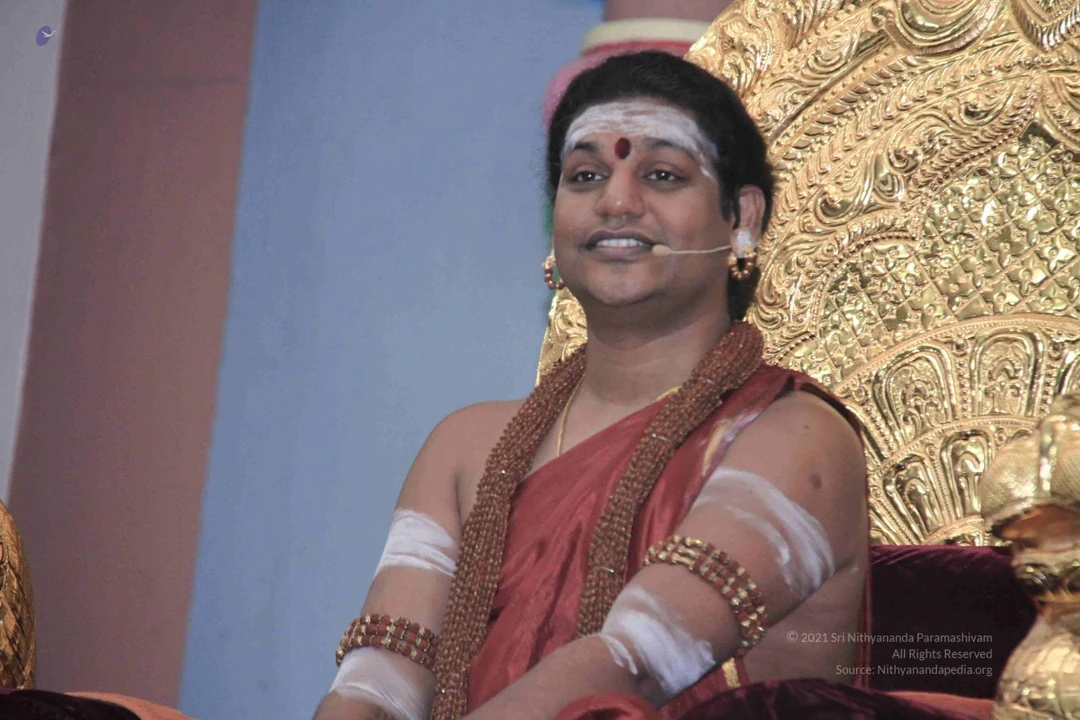
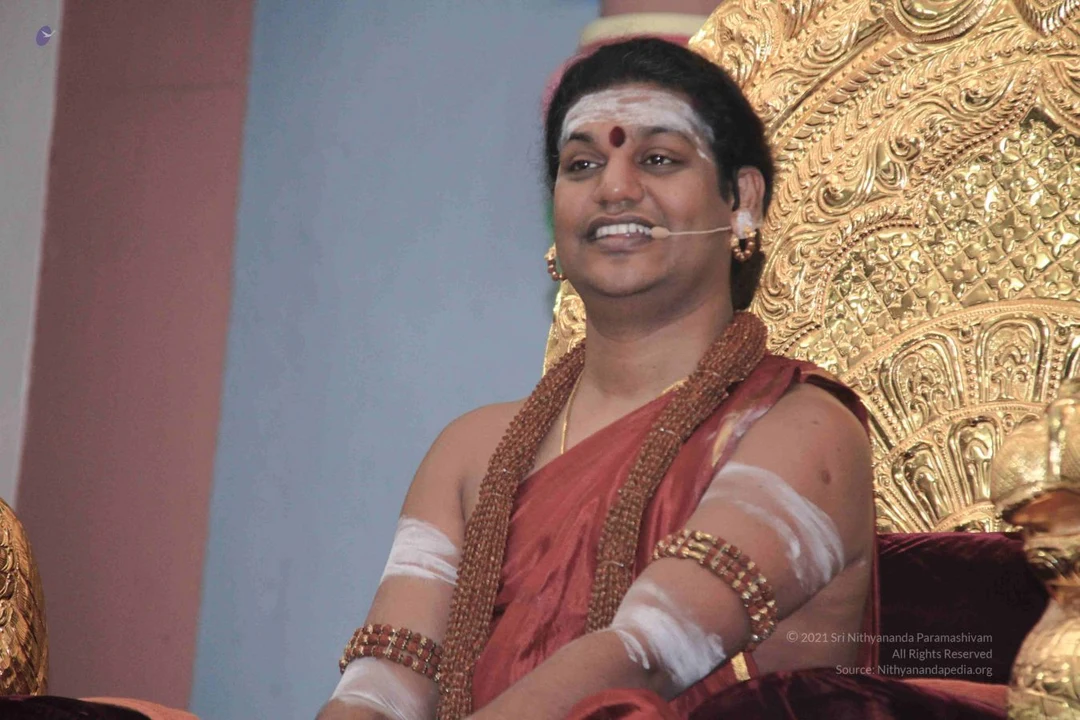
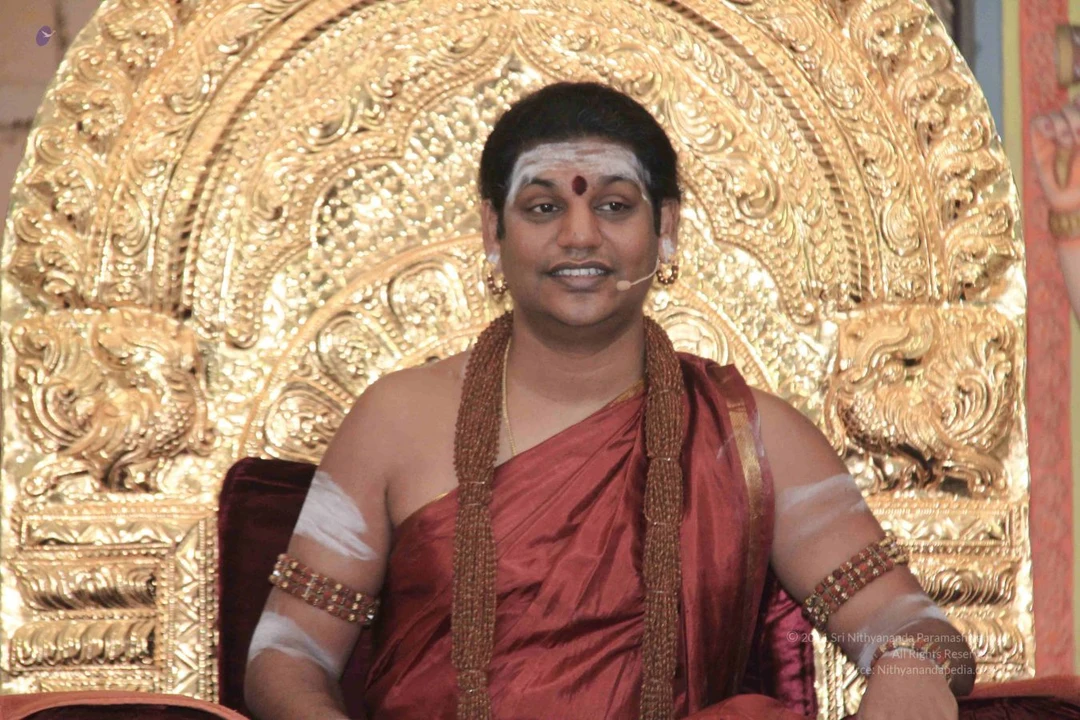
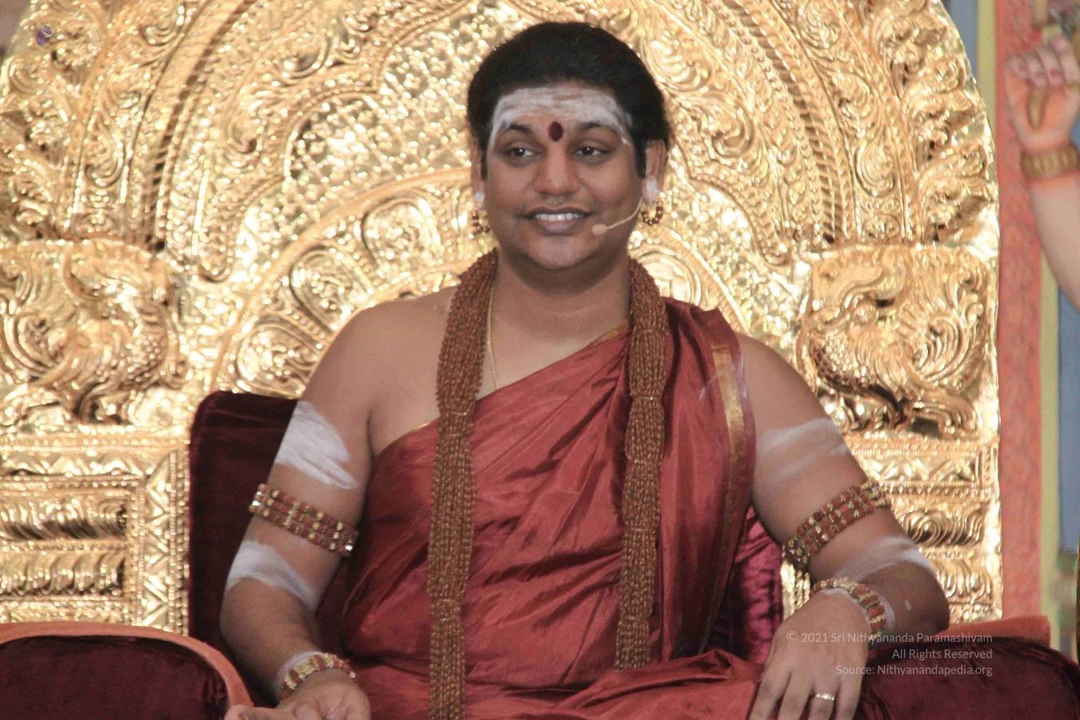
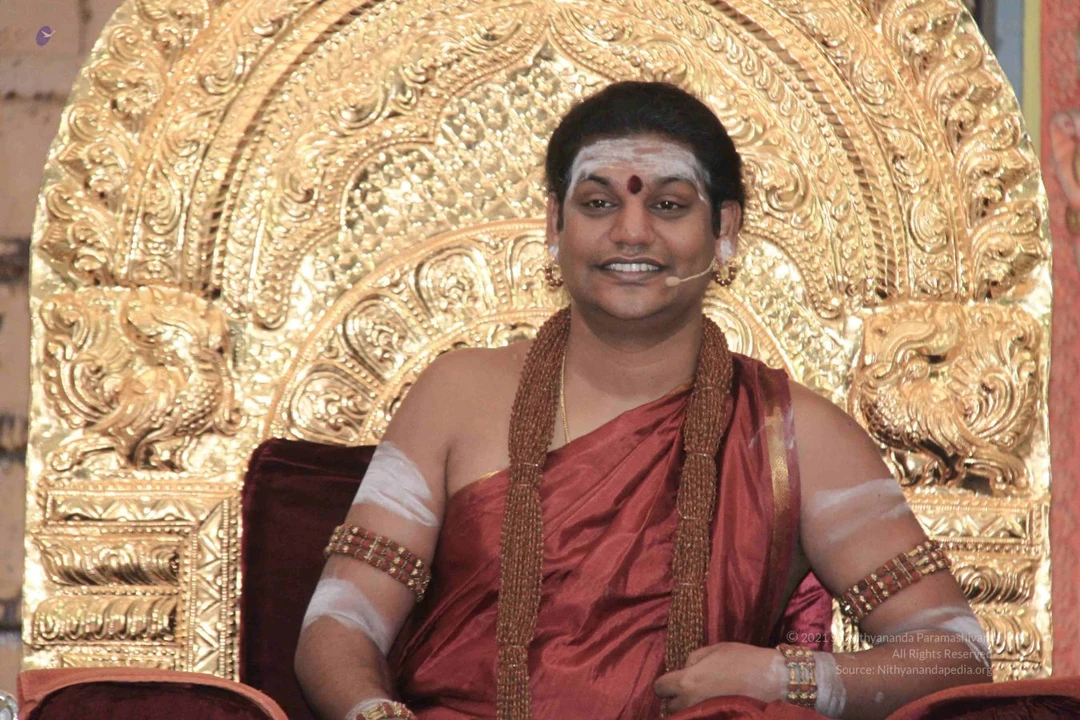
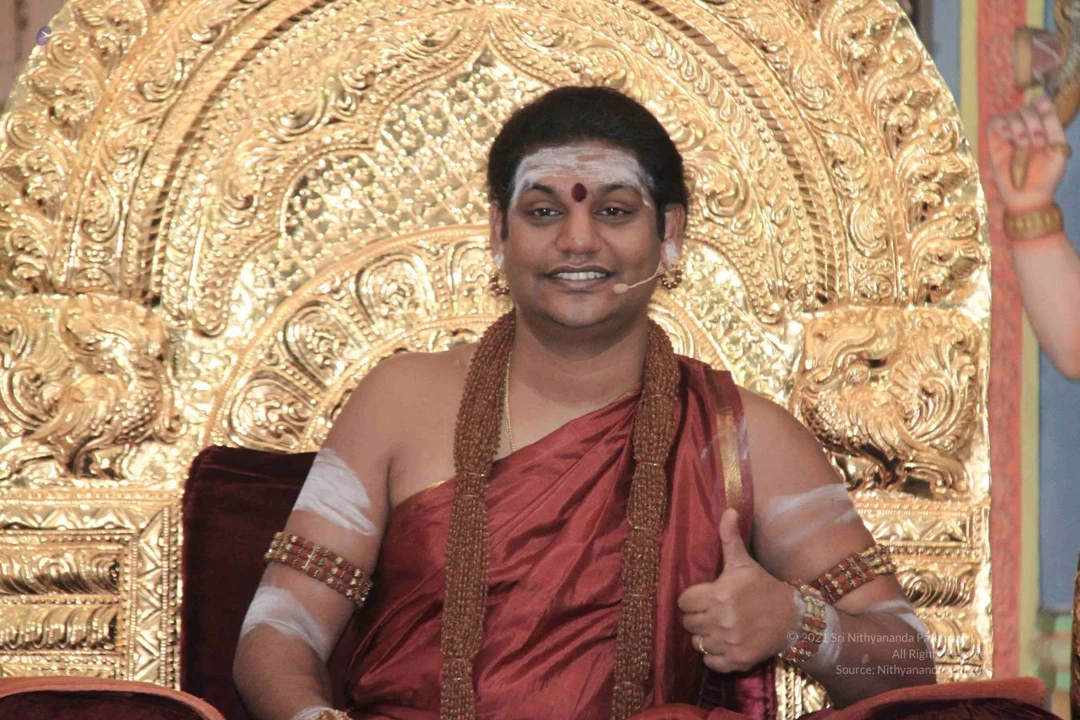
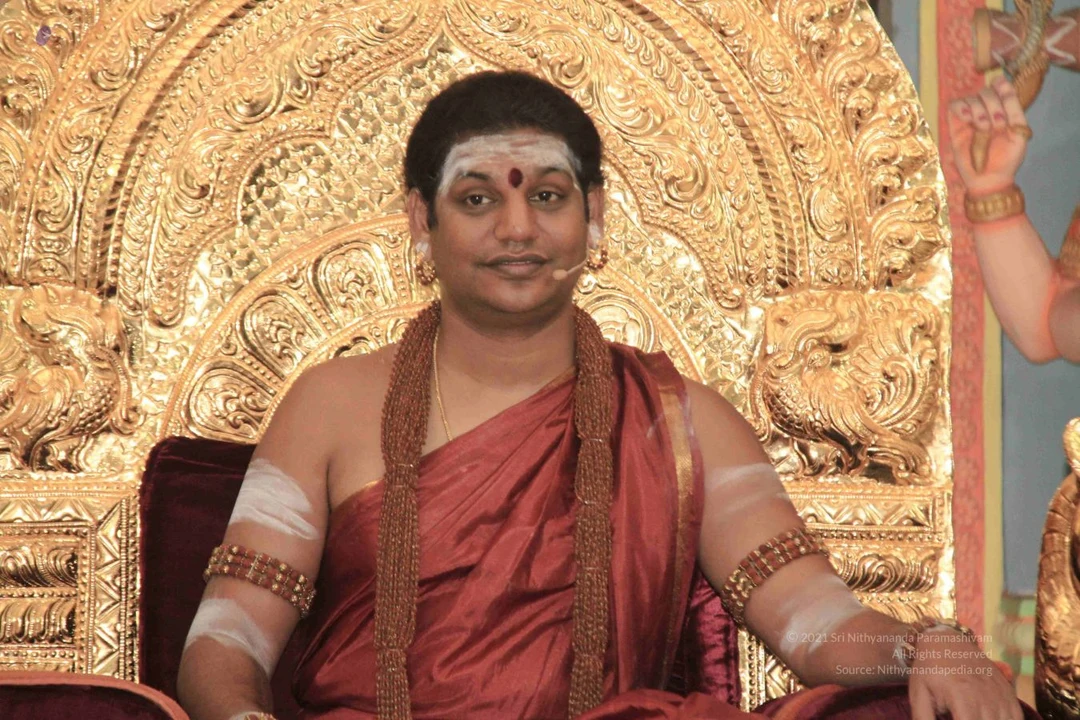
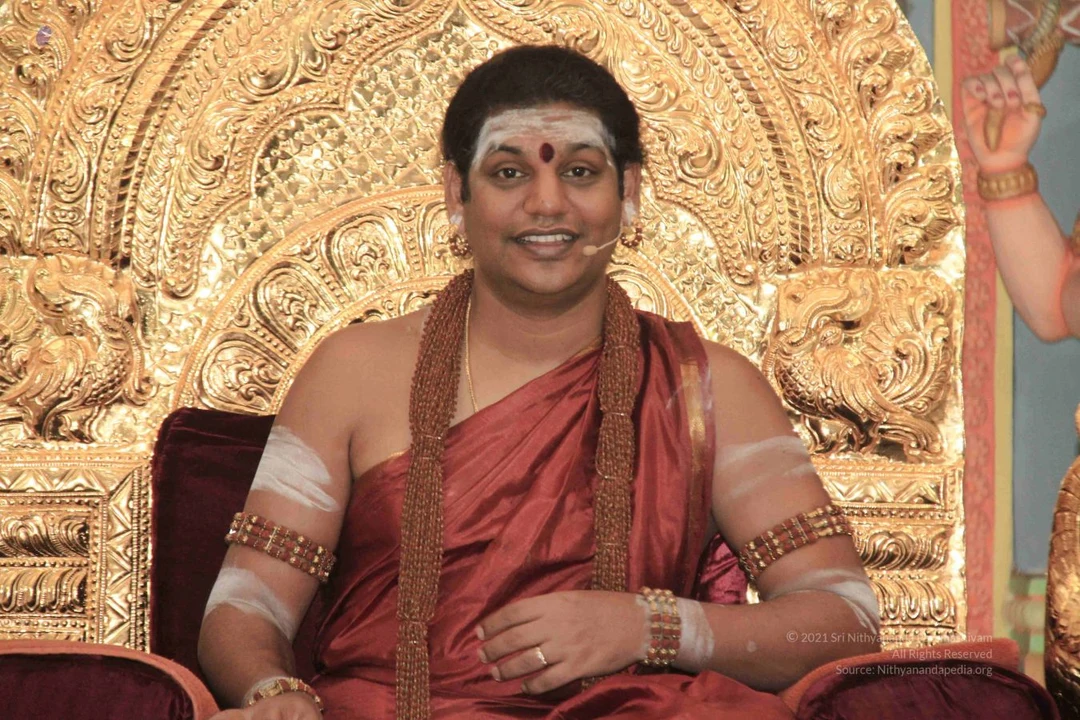
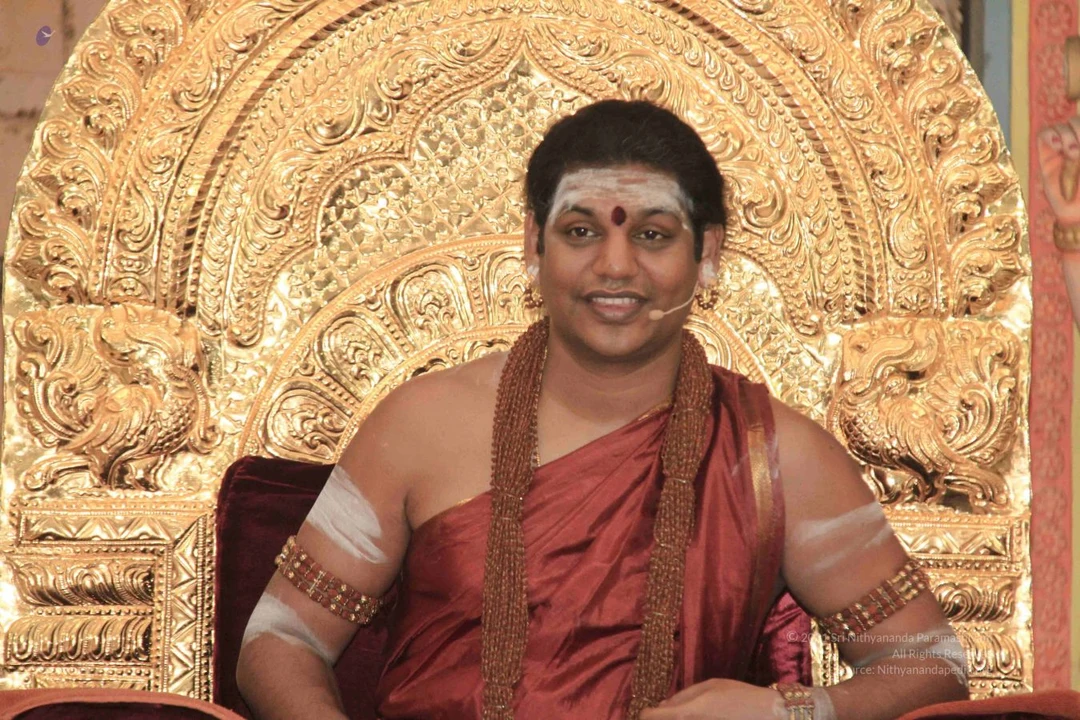
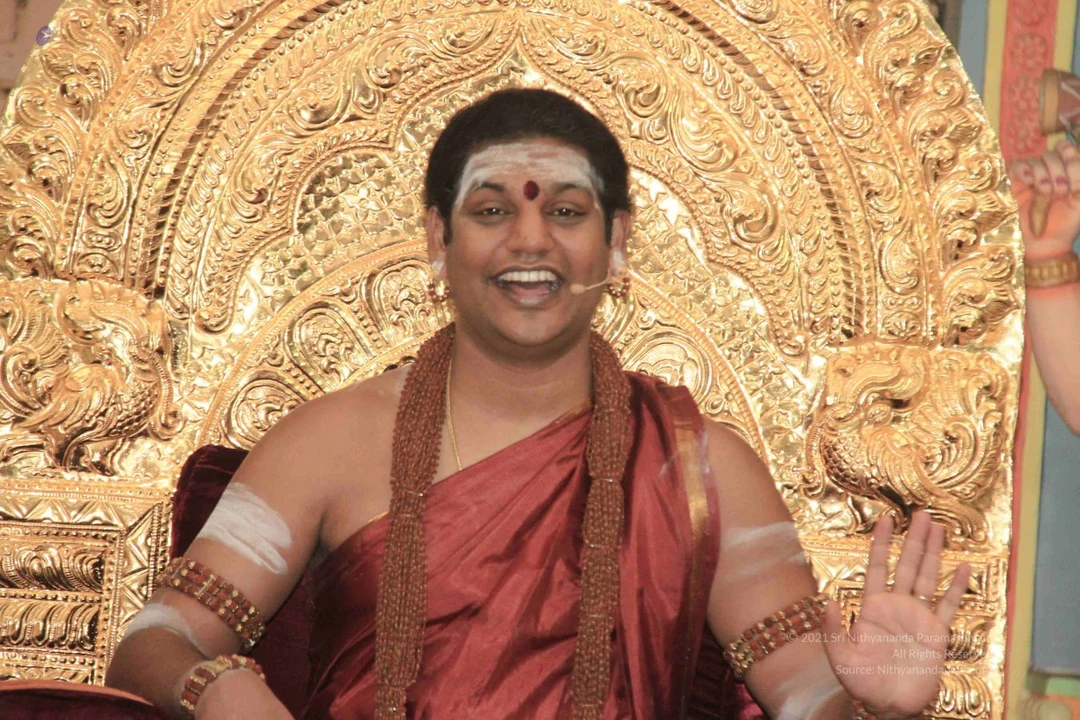
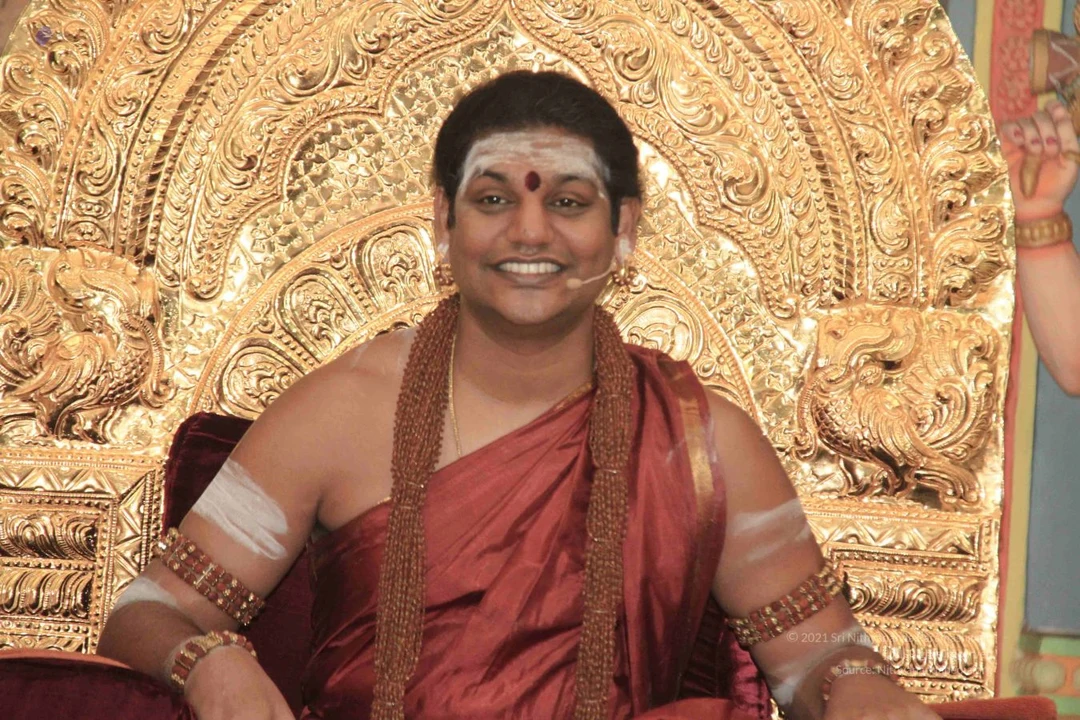
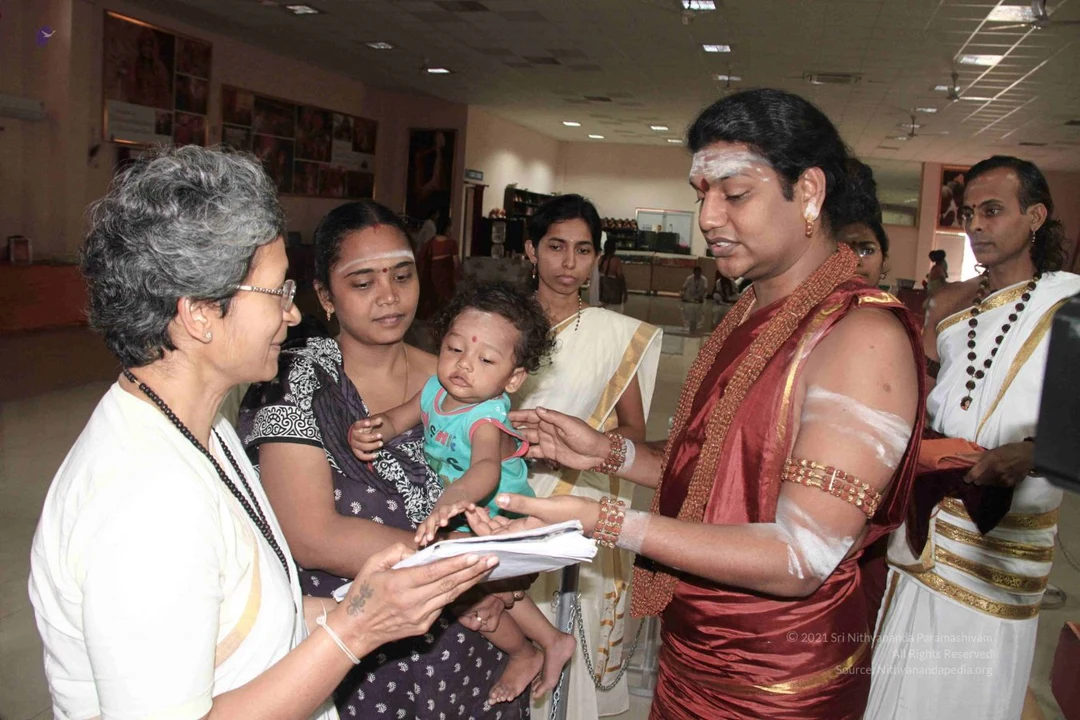
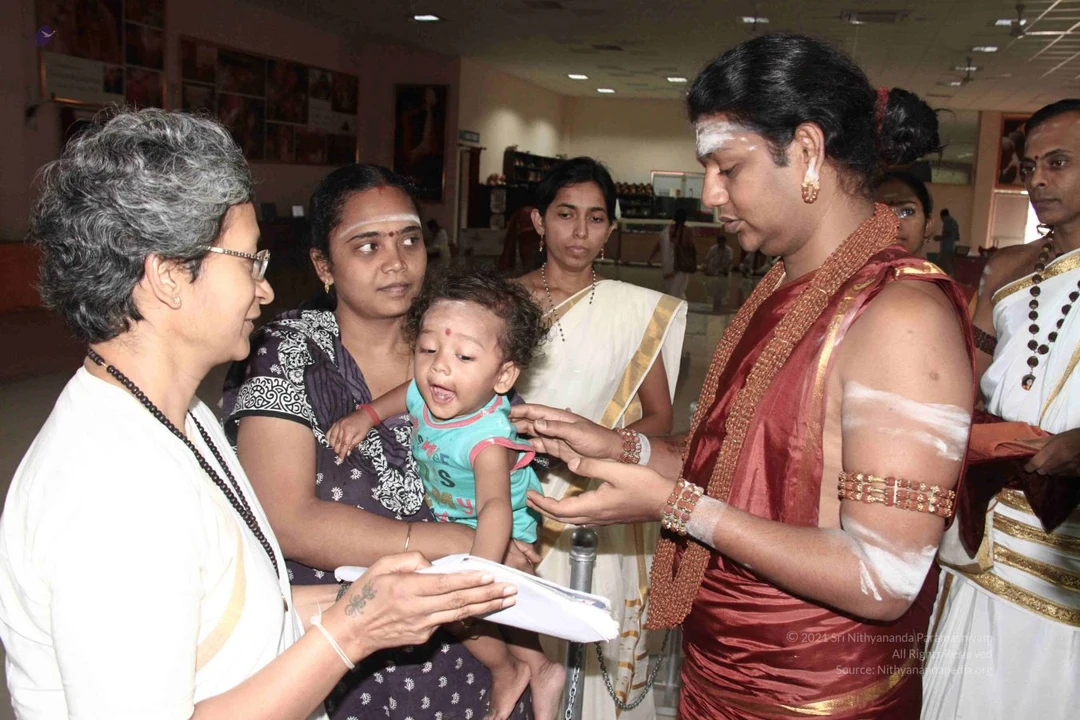
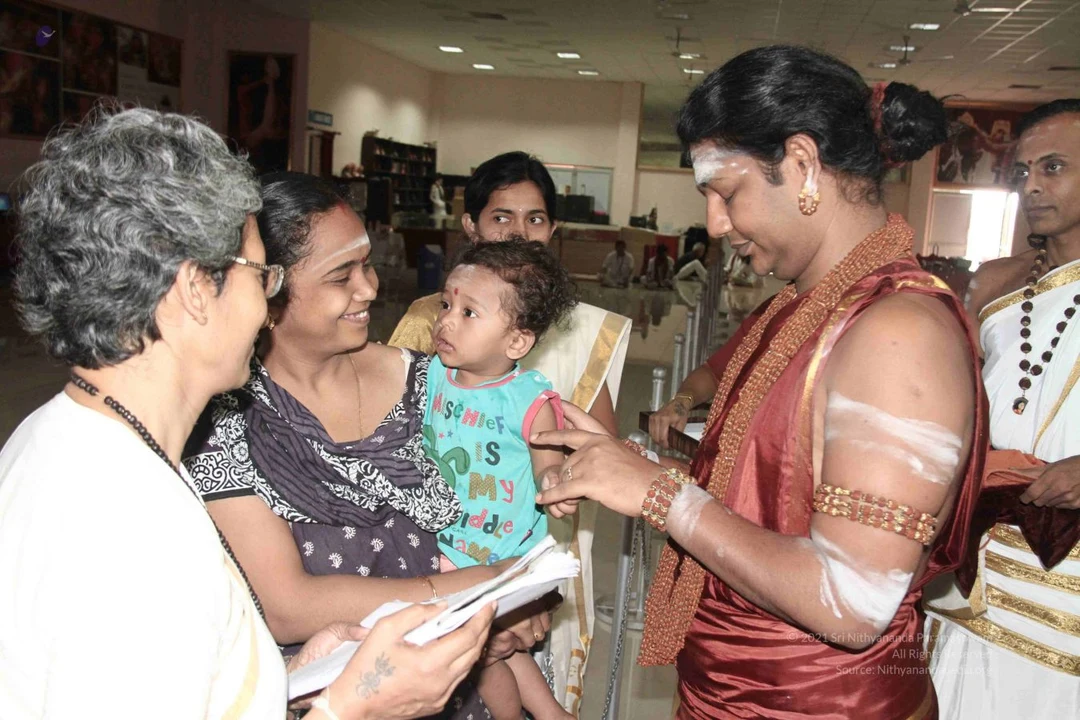
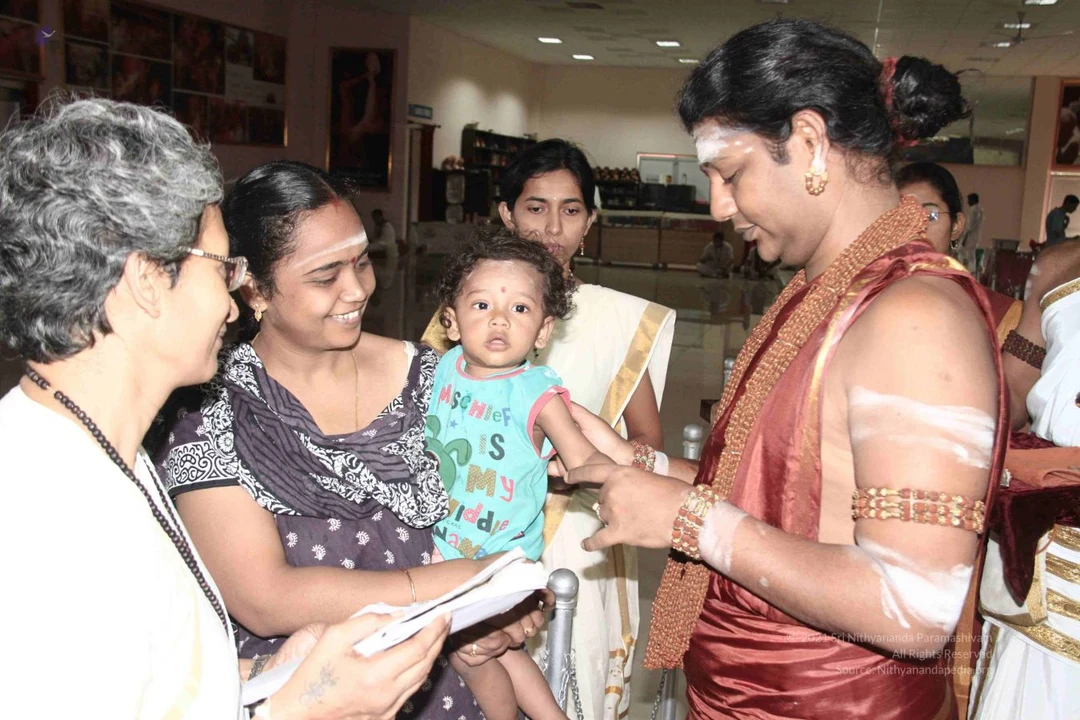
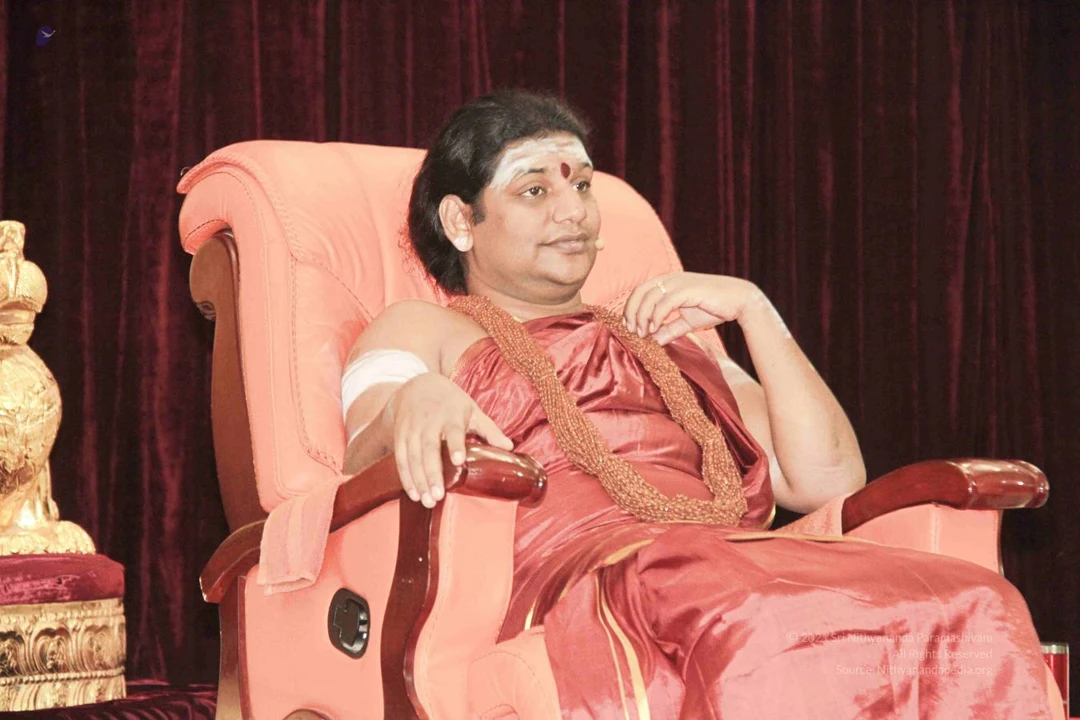
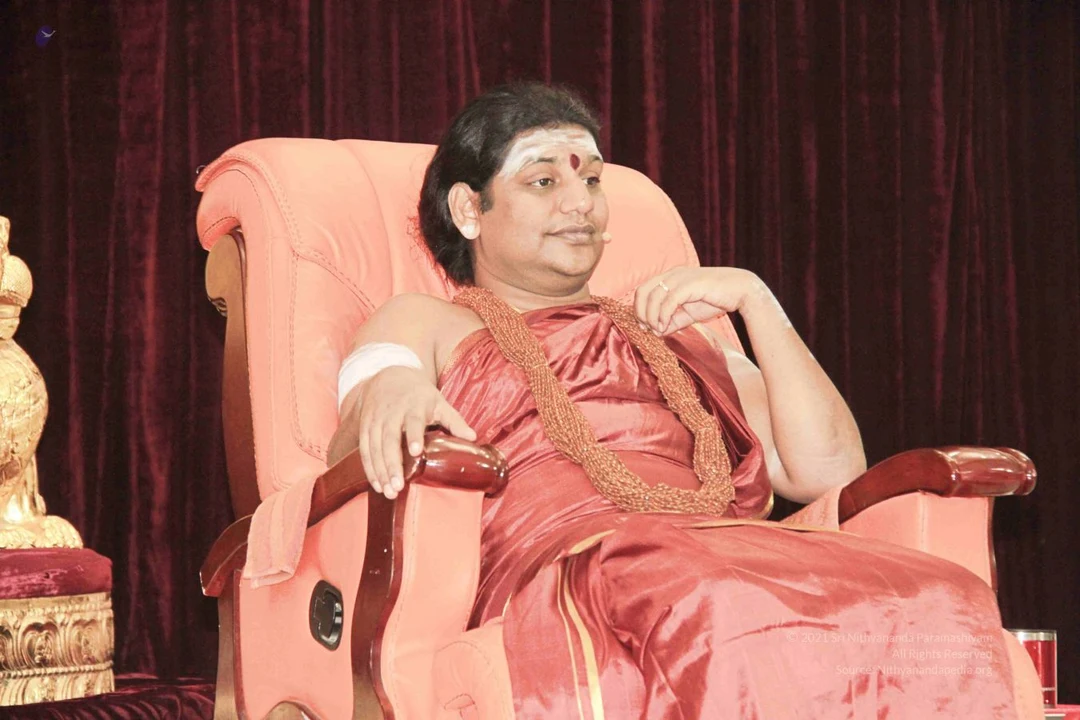
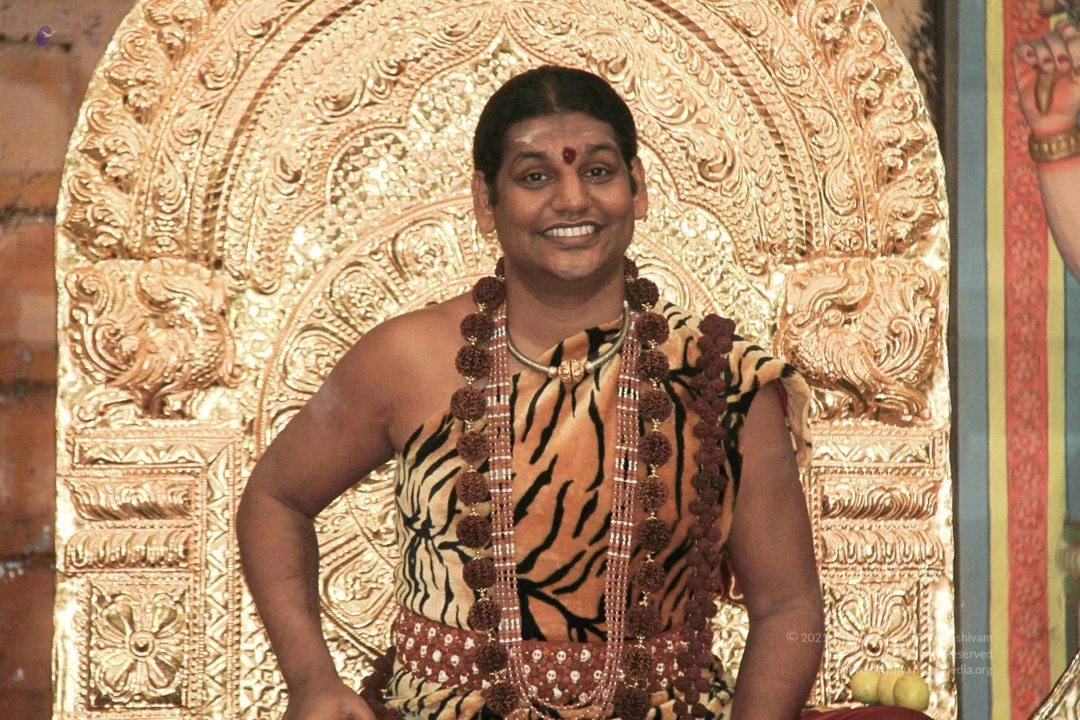
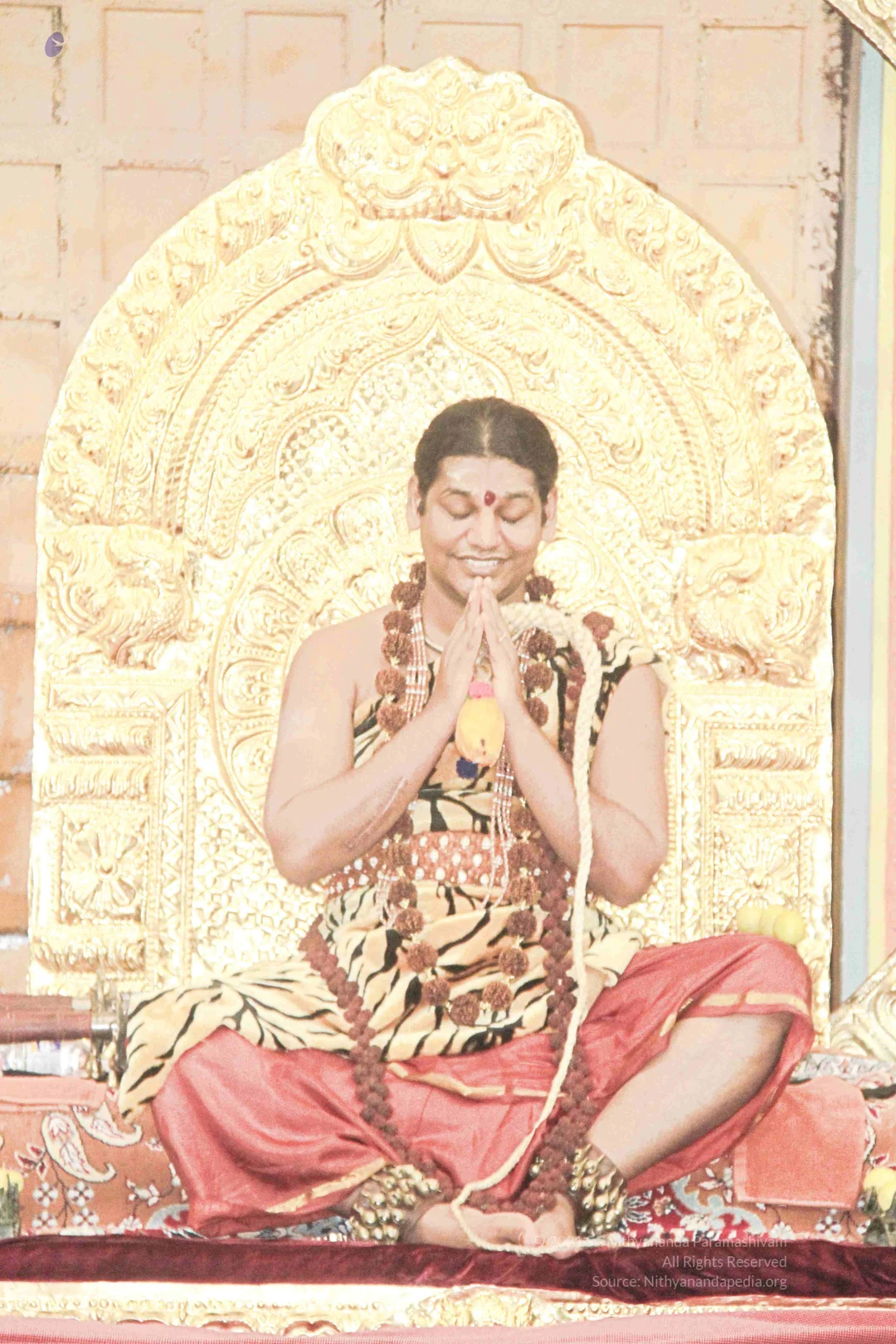
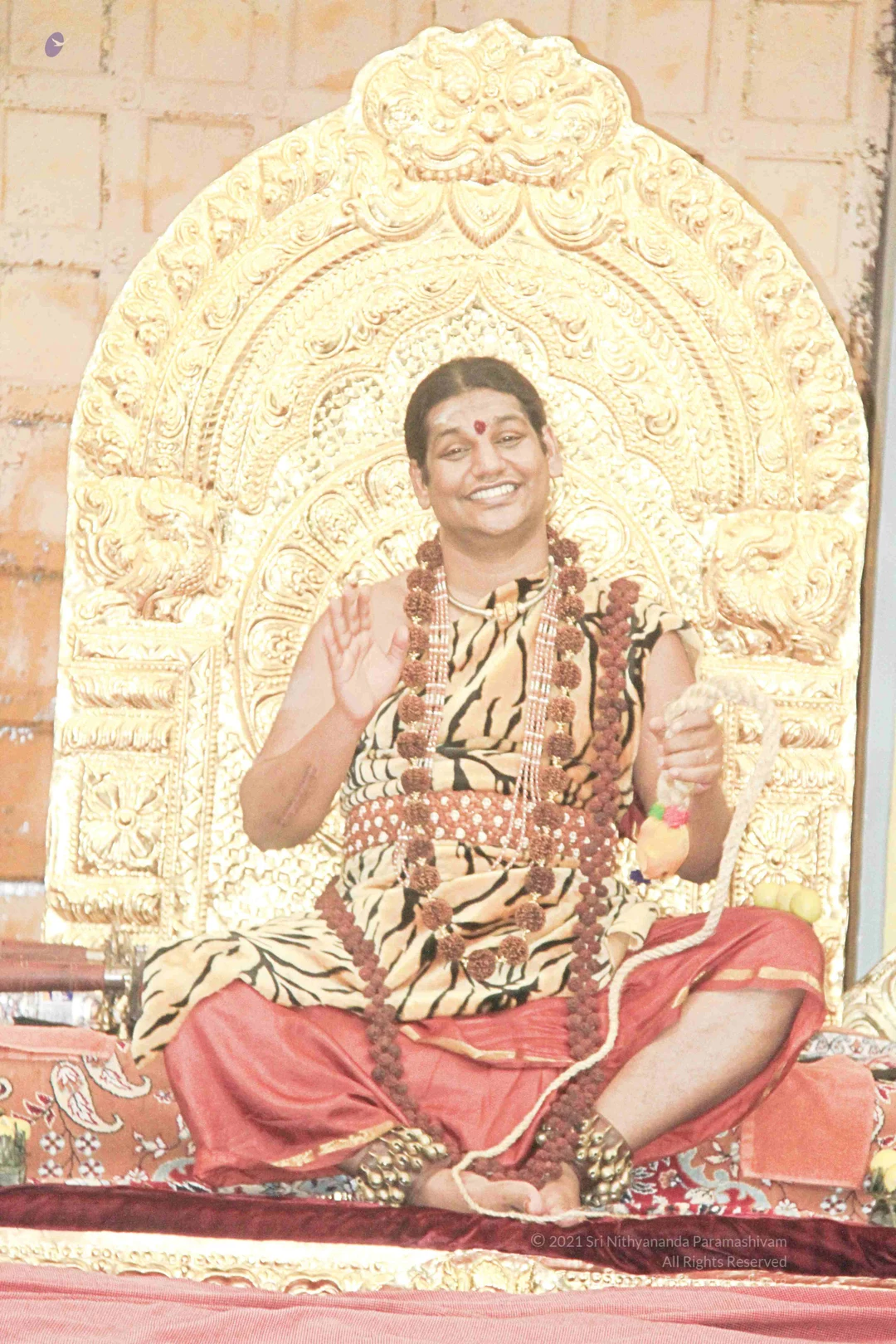
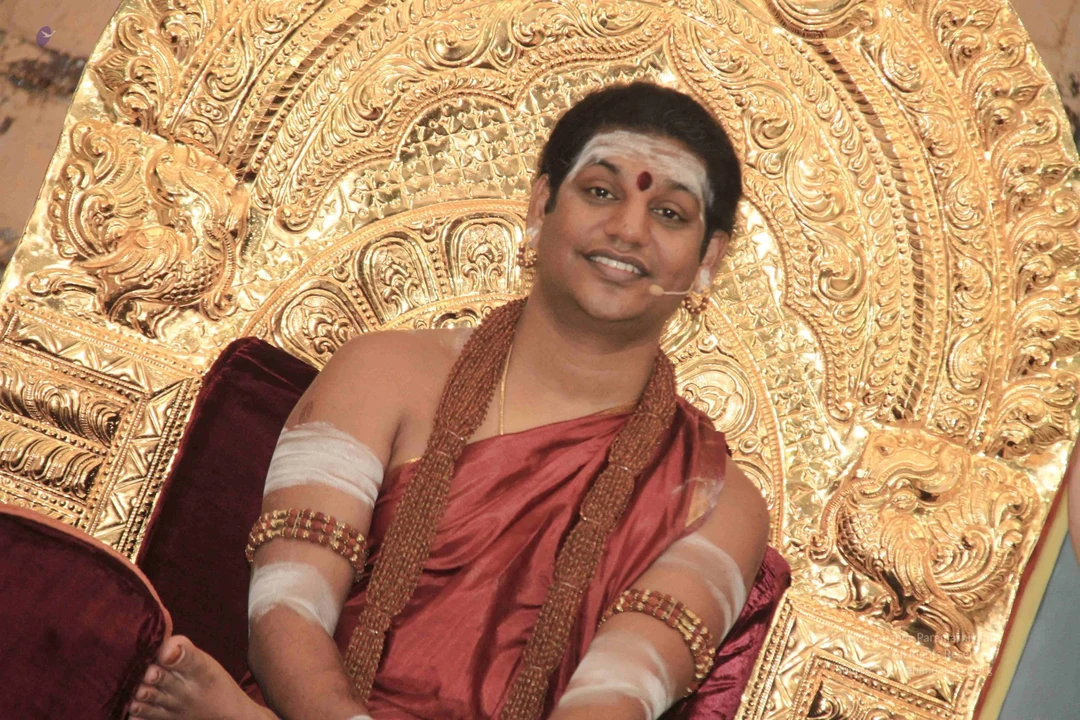
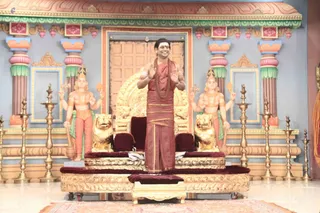
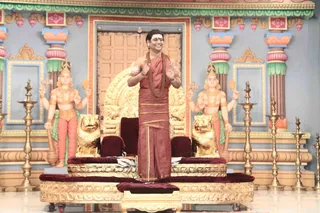
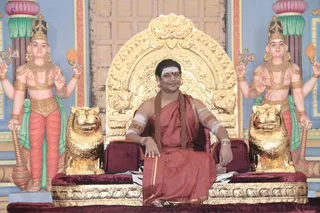
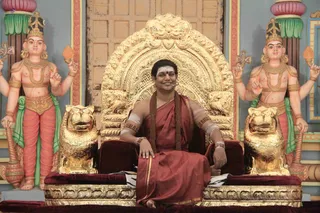
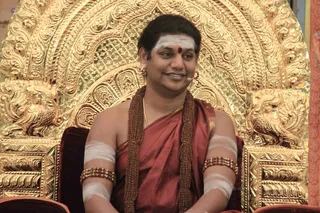
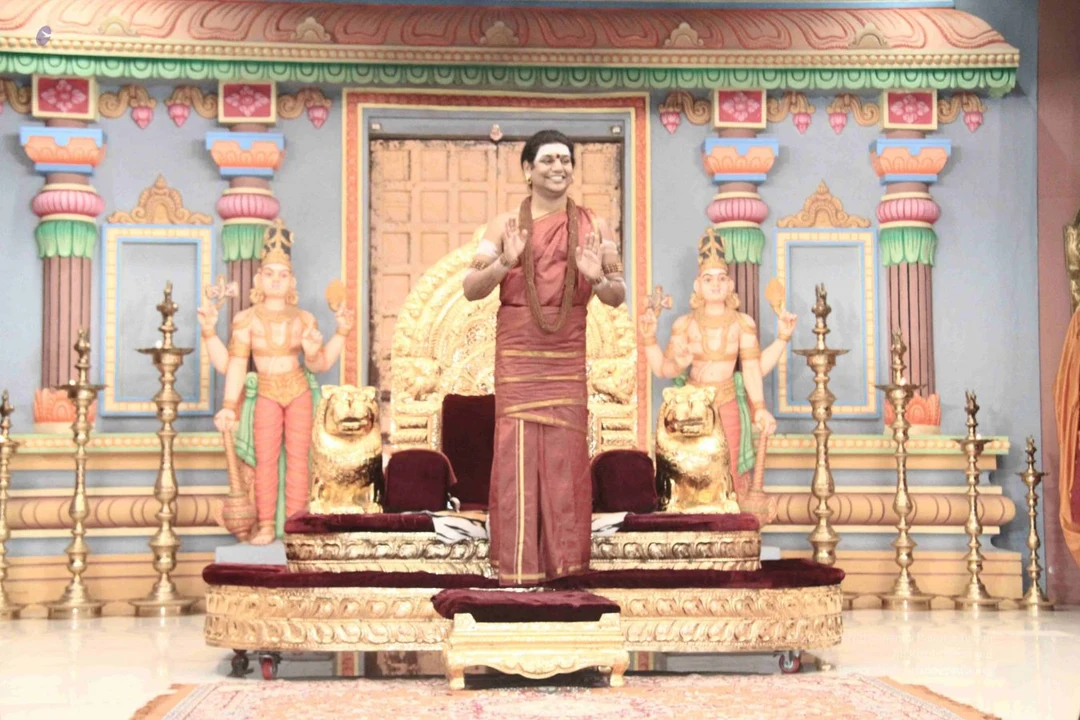
A standing man in a maroon-red dhoti and matching shawl, with a dark rudraksha mala around his neck and gold-toned ornaments, raises both palms in a blessing gesture in front of an ornate golden throne flanked by two gilded lion figures. Two tall gold-painted dvarapala guardian statues with four arms stand on either side, holding staffs and fans. Brass oil lamps line the front of the stage beneath a painted temple-style backdrop of pink and green columns. The scene is a temple-like hall with a patterned carpet and a wooden door in the background.A standing figure in a maroon-red robe with gold border and a long rudraksha mala draped around the neck stands centrally on a gold-carved throne platform with maroon cushions, palms raised in a blessing gesture and smiling. Two gilded lion sculptures flank the throne. On either side stand golden multi-armed deity murti figures holding ritual objects. Behind is an ornate hall with a wooden door, pink and green columns, and brass oil lamps lined up on both sides. Only one physical person is visible.A seated man in a maroon-red sannyasi robe with a gold border sits on an ornate gold throne with a carved arched back and two golden lion-form armrests. He wears a rudraksha mala with a dark-bead strand, a white vertical forehead marking with a red bindi, and white arm bands. He smiles and rests his hands on the throne. Flanking him are two large painted deity murti figures with multiple arms, crowns and gold jewellery, holding ritual objects. The background is a painted blue-and-pink temple wall with a wooden door panel. a person: the man on the throne has a shaved-look short hair, rudraksha mala and red-and-gold sannyasi robe.A seated man in a maroon-red dhoti and shawl sits on an ornate gold throne with a large arched back and two golden lion-head armrests on a red velvet cushion. He has a red tilak, a rudraksha mala draped across his chest, and gold bangles on his wrists, smiling at the camera. Flanking him are two large painted statues of multi-armed deities with crowns, gold necklaces and green sashes, holding ritual objects. a person is shown in this throne setting by the rudraksha mala, the red-orange clothing and the ornate seating, with the appearance cues supporting the attribution.A man seated on an ornate gold throne with carved lion-like figures and filigree backrest, wearing a maroon-red draped garment over the shoulder, multiple rudraksha mala strands hanging across the chest, a gold necklace, beaded red-brown armbands, and a thin microphone headset. He has white horizontal lines on his forehead and arms, a red dot at the centre of the forehead, and gold earrings. a person: the figure wears a rudraksha mala, a gold necklace and a reddish-saffron wrap on an ornate throne, matching the page's a person-at-event flag, though the appearance is only partly distinctive. Background is a gold-and-red decorative backdrop.A seated man in reddish-maroon silk robes sits on an ornate gilded throne with carved floral and bird motifs. He wears a white forehead marking with a red dot, white arm markings, beaded rudraksha-style malas across his chest, and bangles on both forearms. A small microphone is clipped near his face. a person: the man has a swept-back hairstyle, rudraksha malas, and a maroon wrap, which align with the page's claim of his presence at this satsang, so he is an in-person candidate seated on the throne. Only this one person is visible.

Sarva-Darshan

21 photosSource gallery
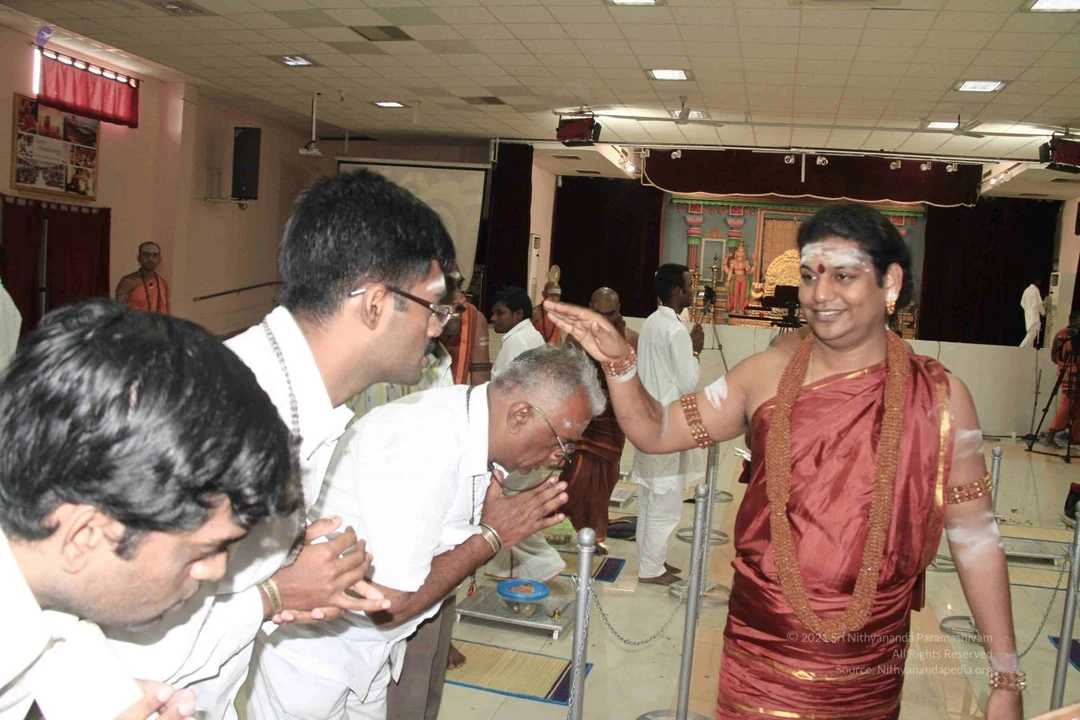
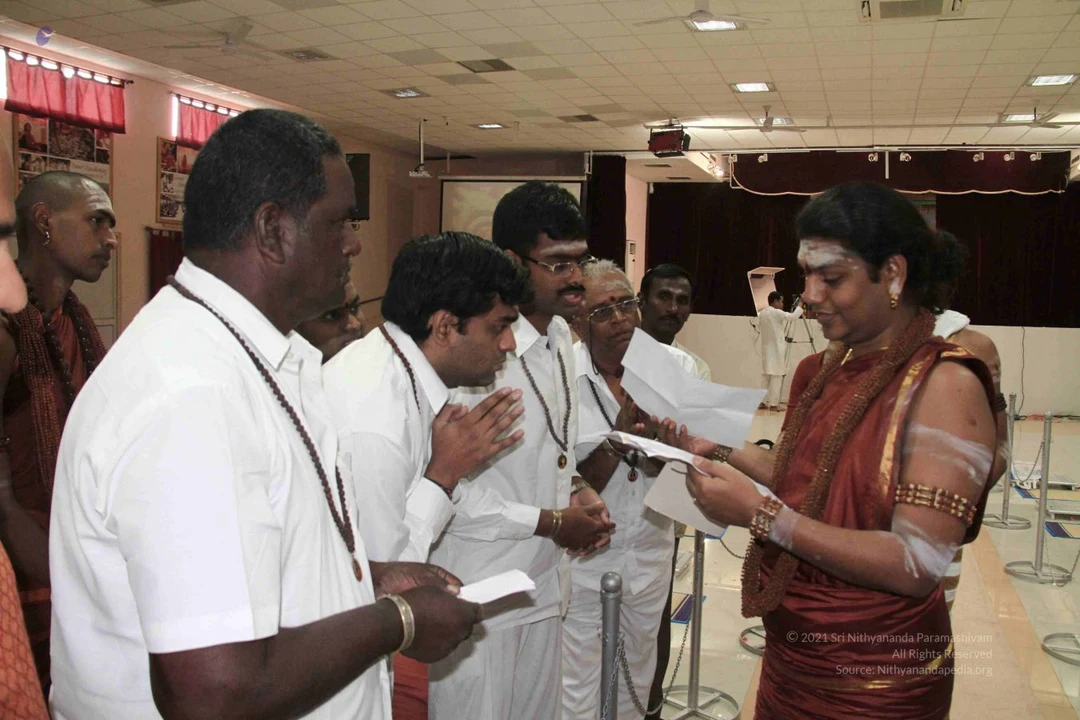
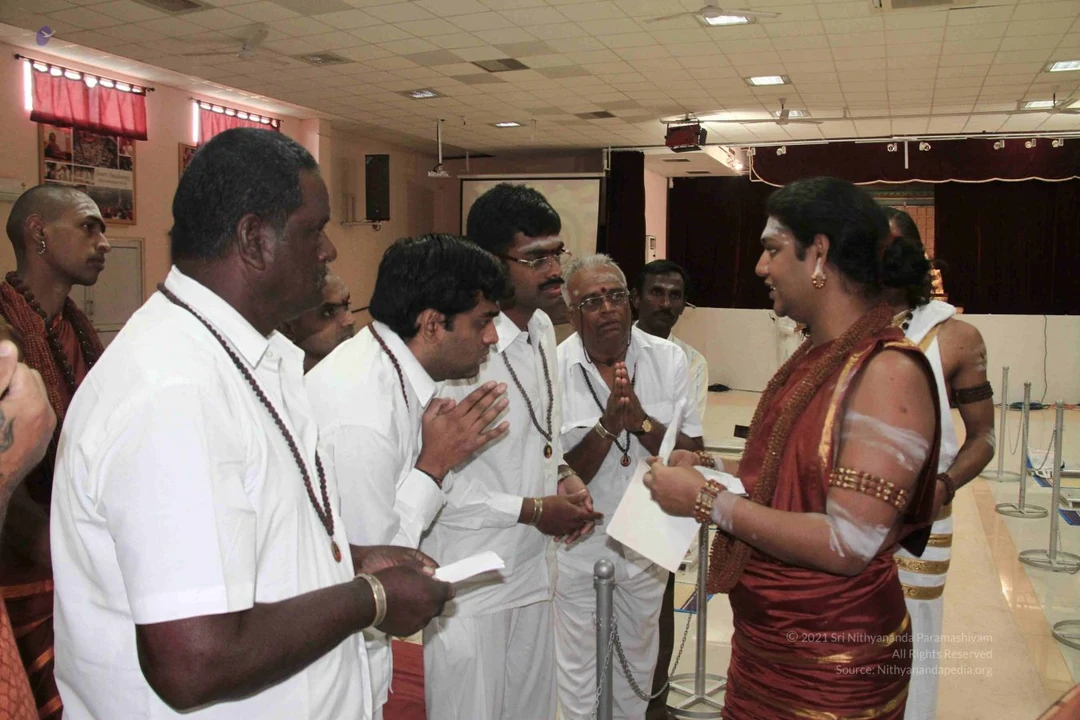
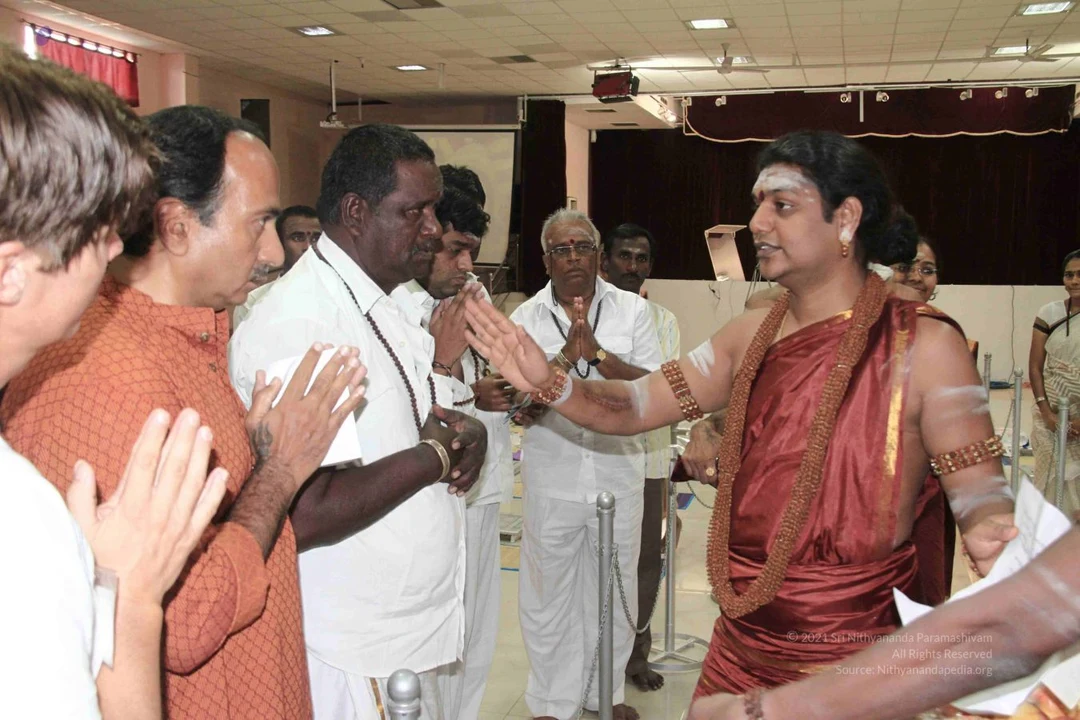
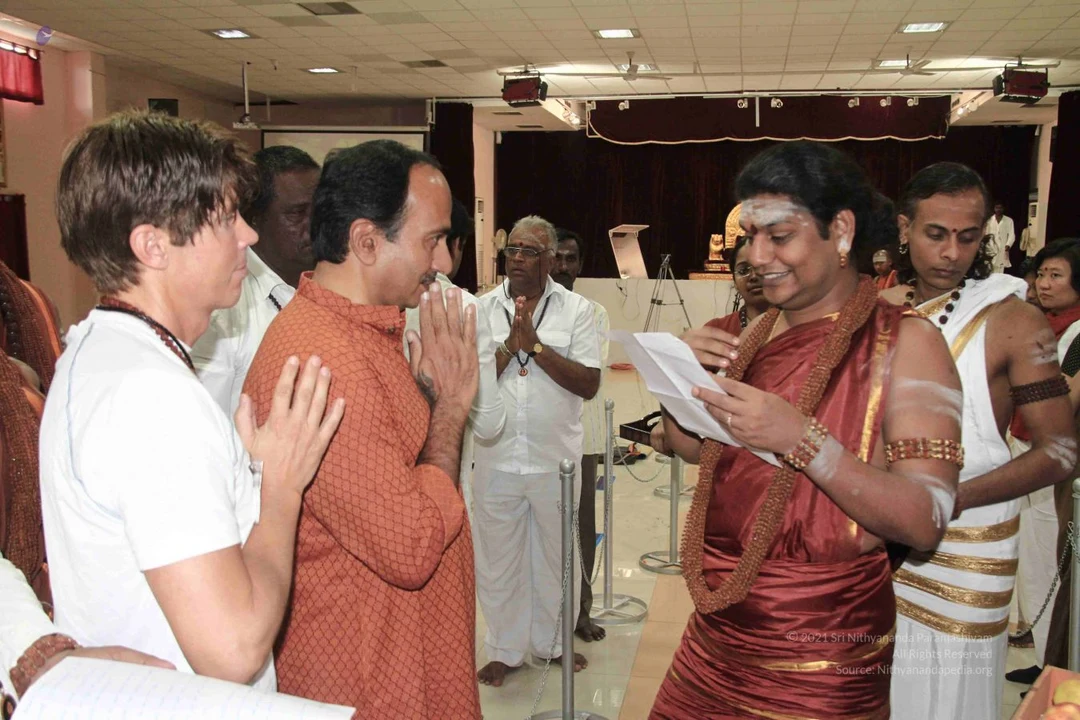
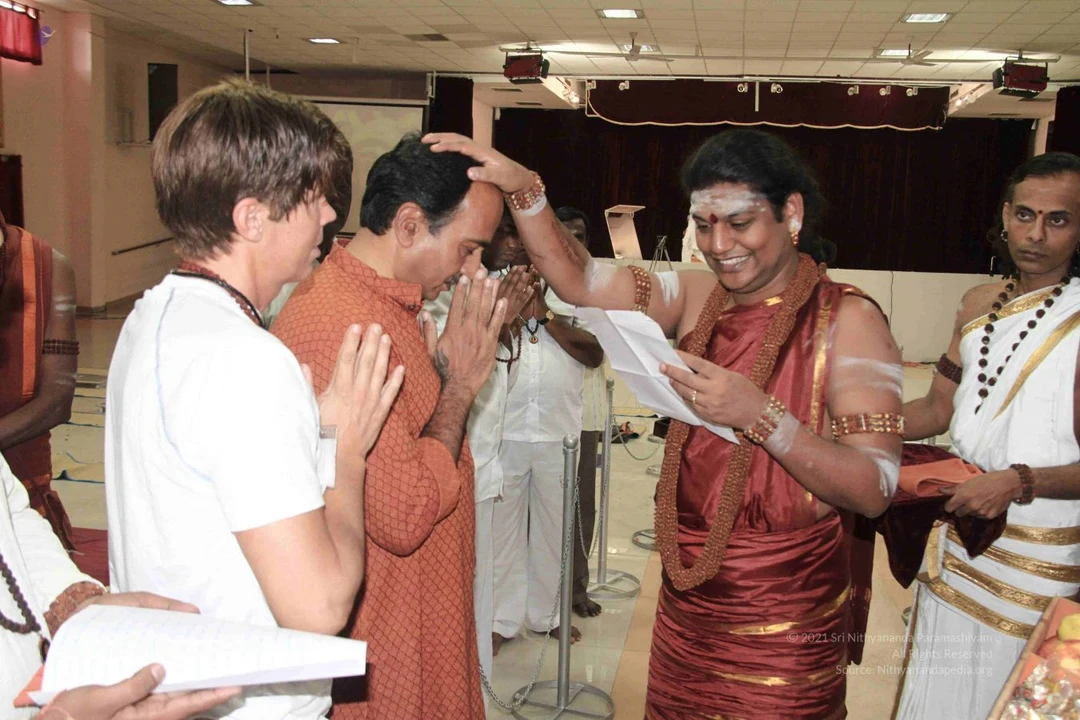
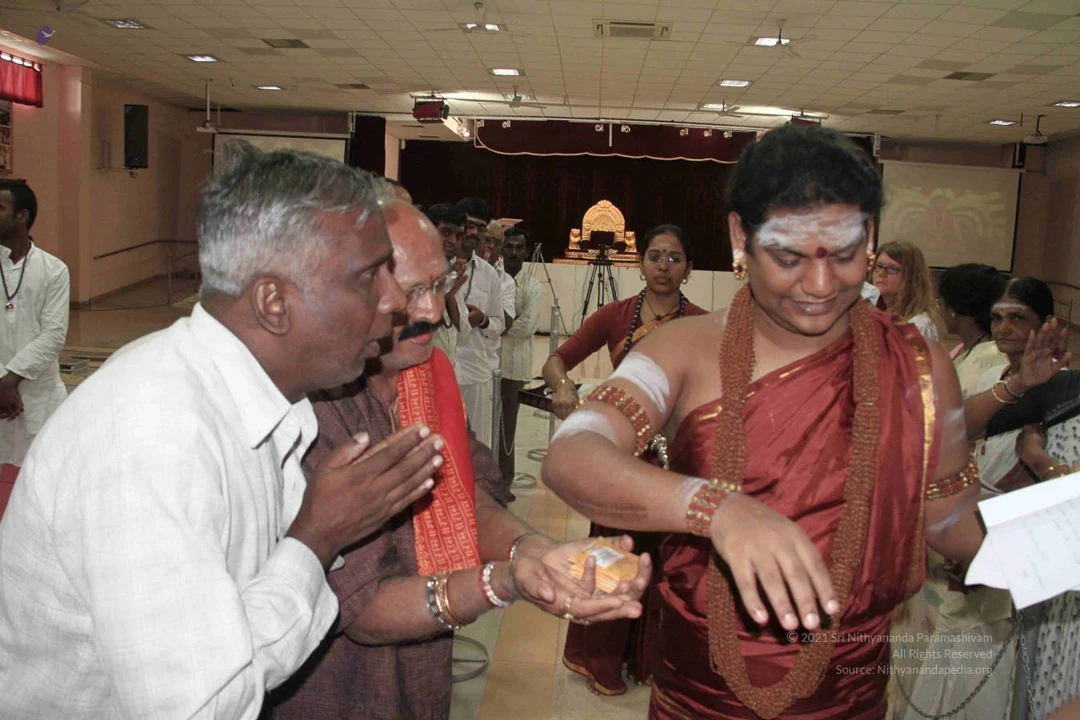
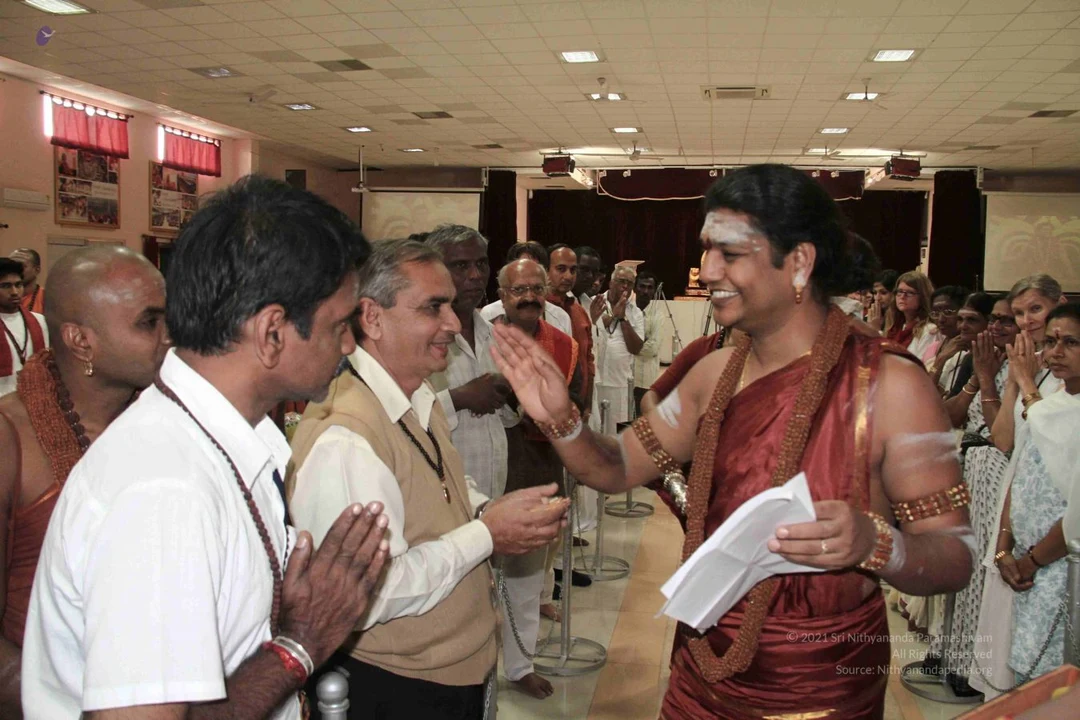
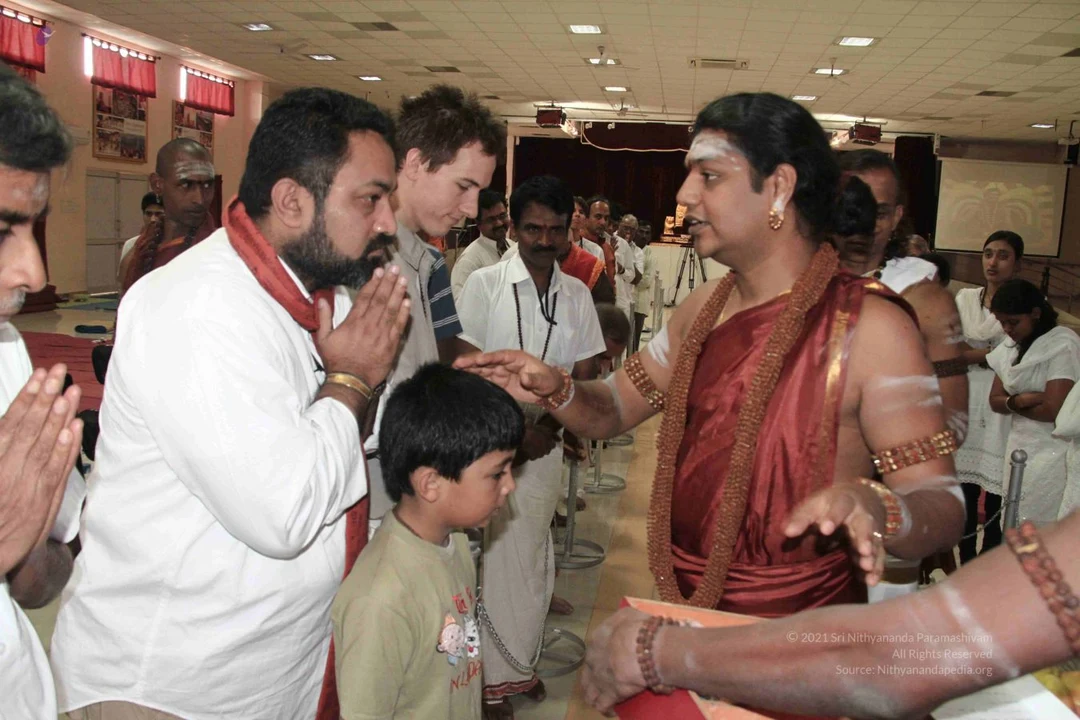
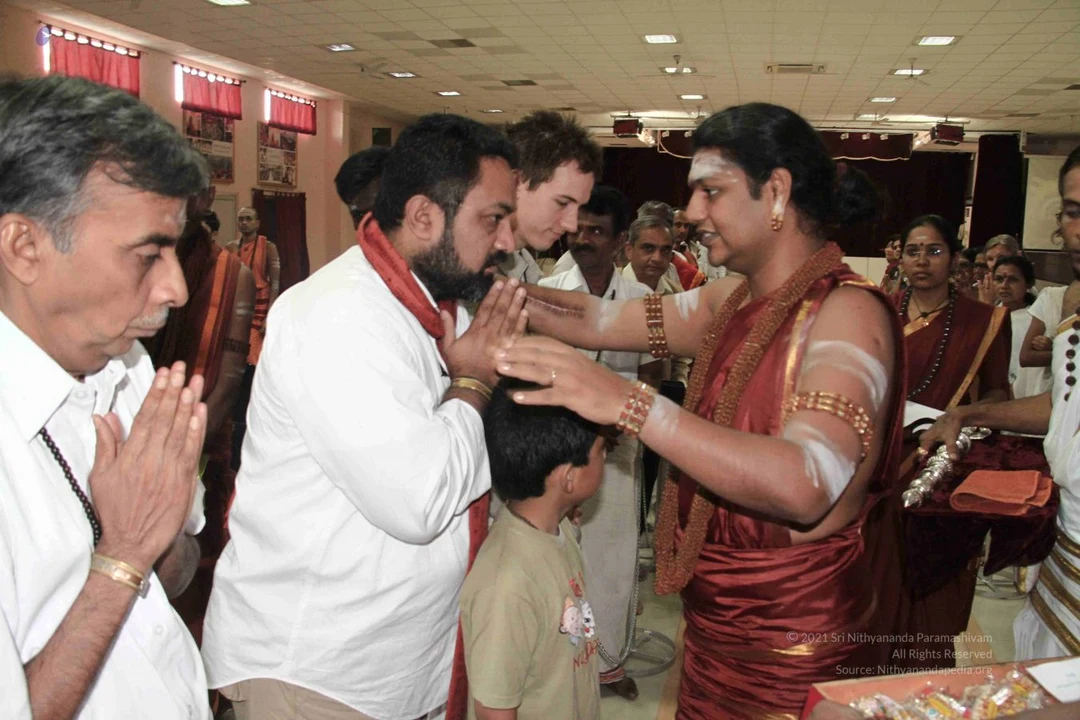
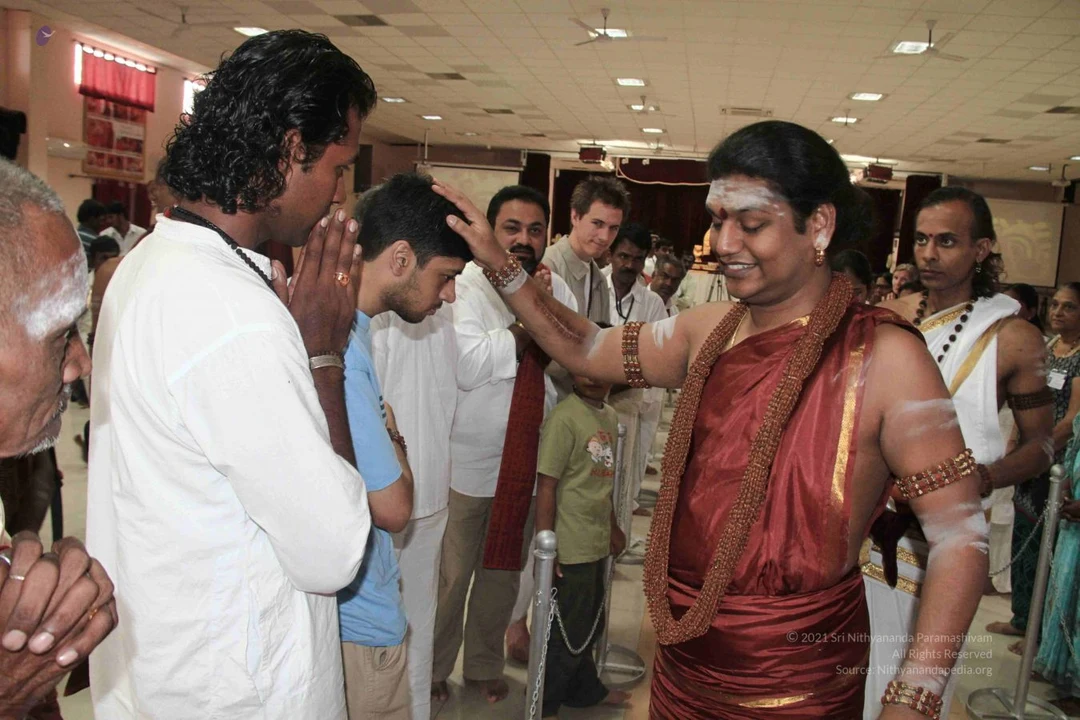
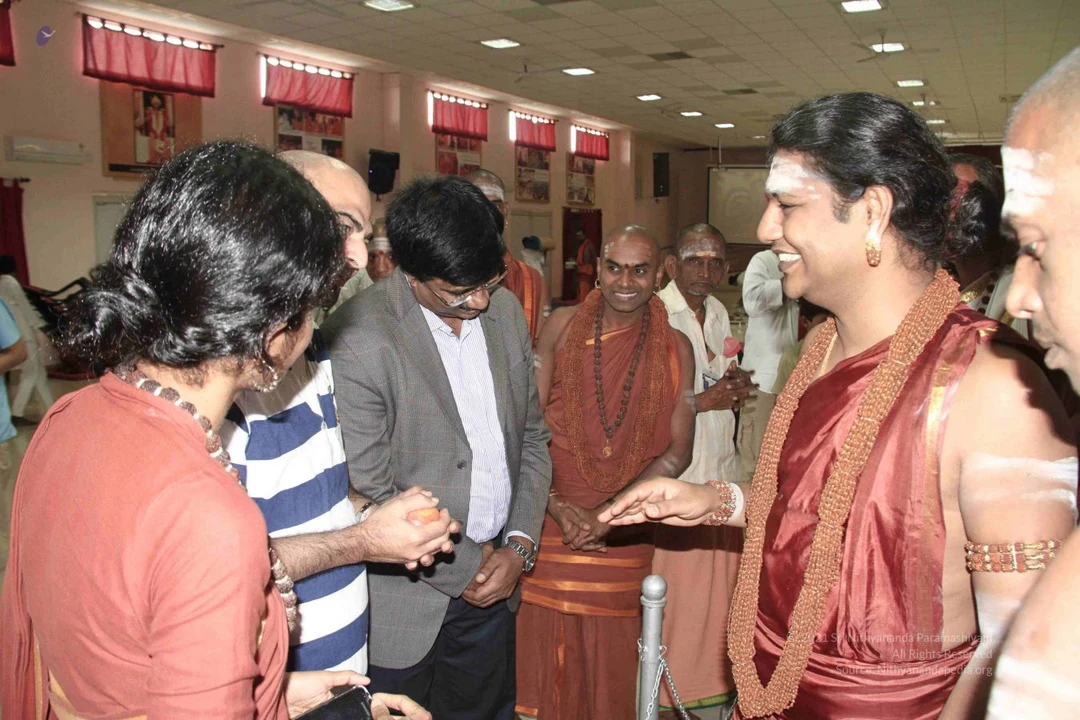
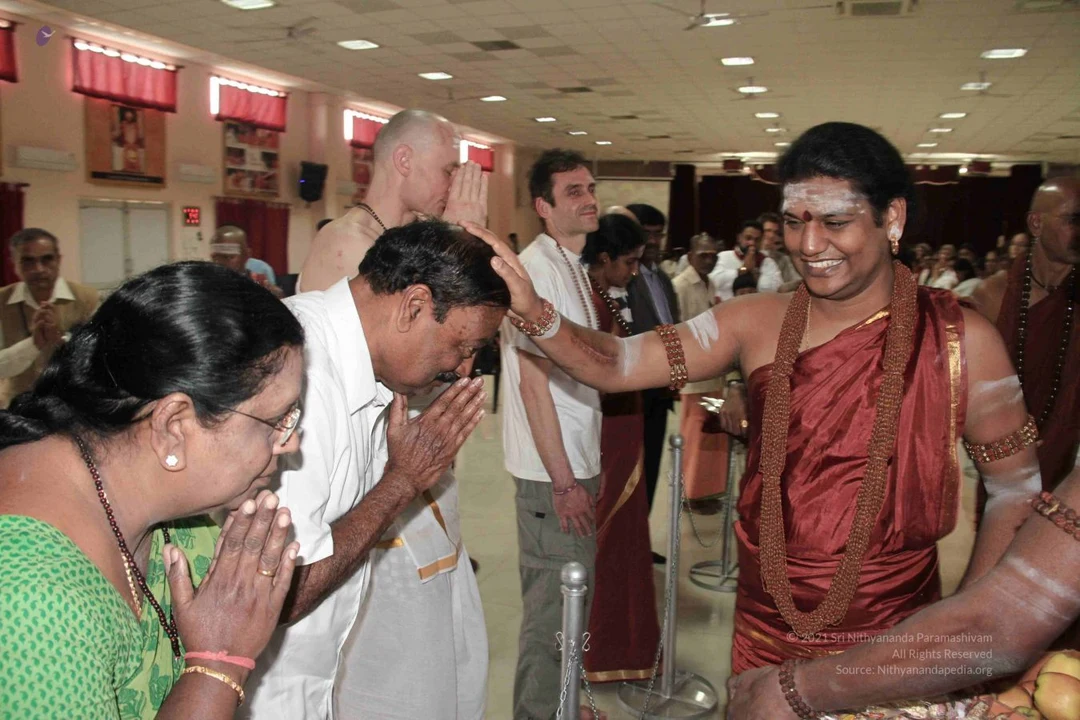
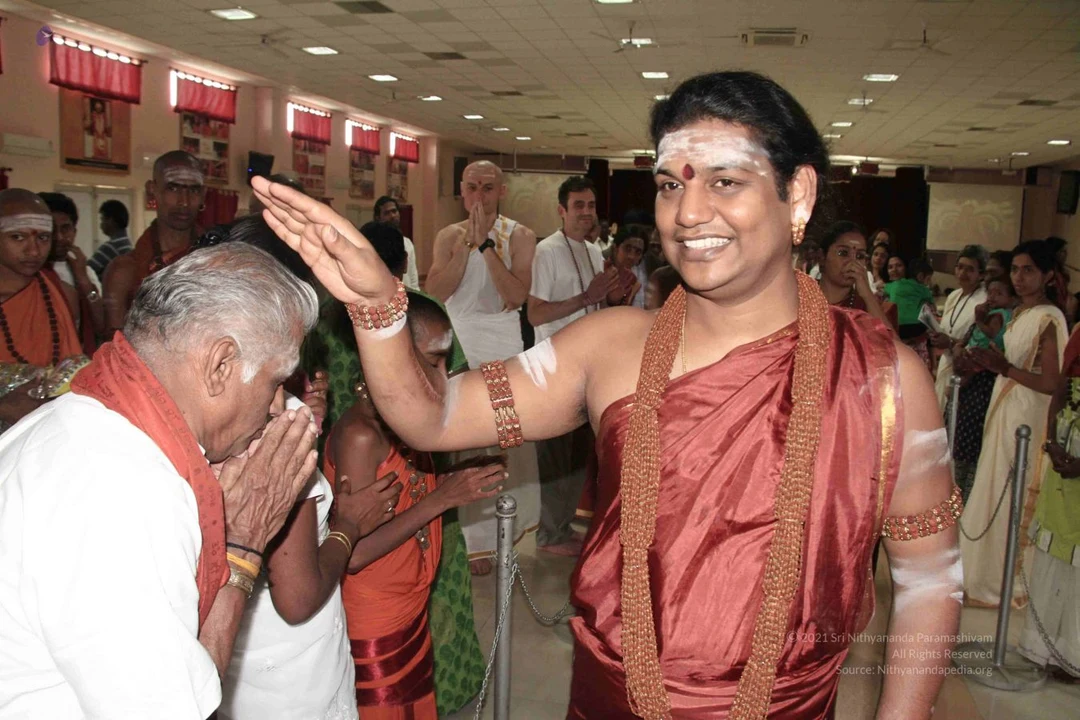
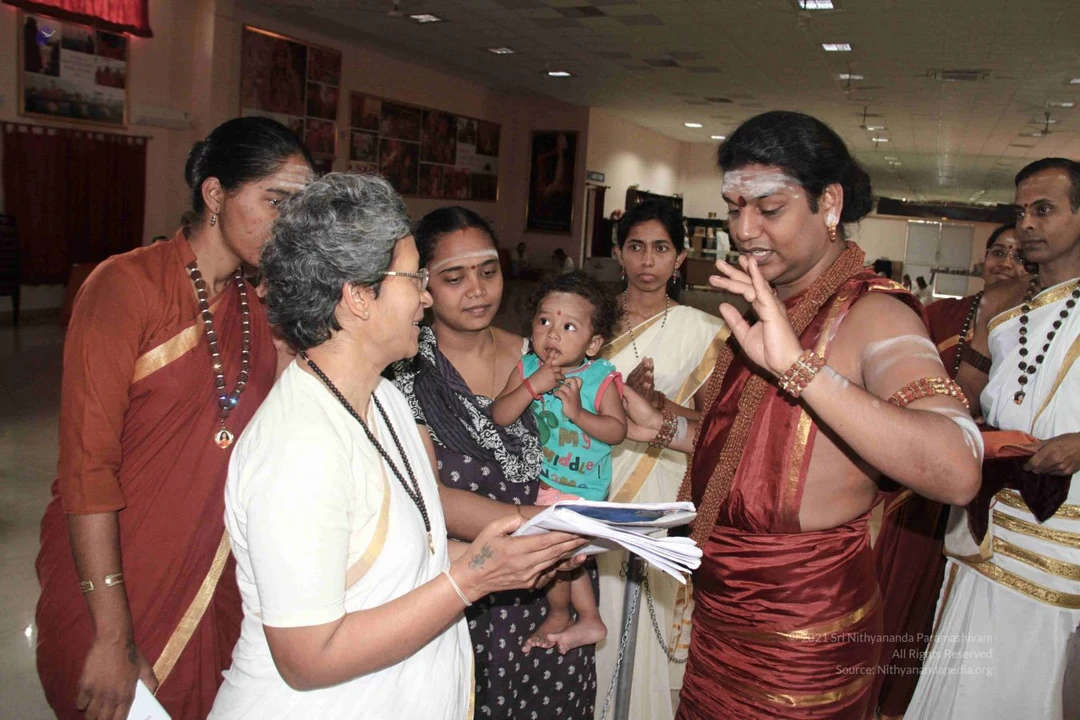
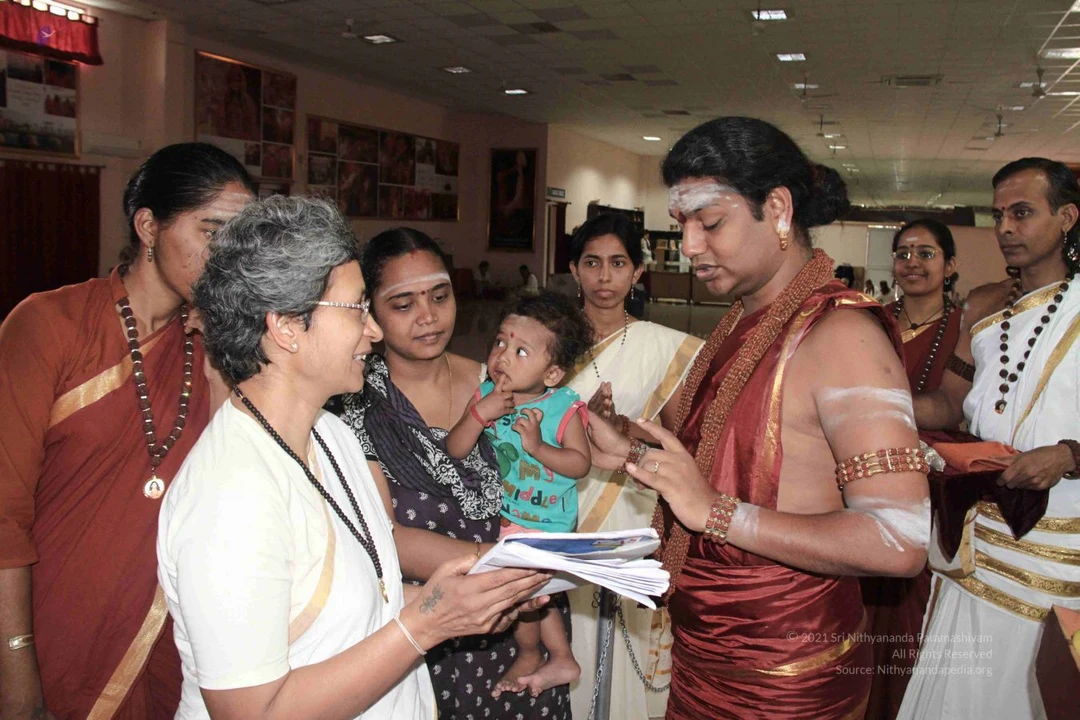
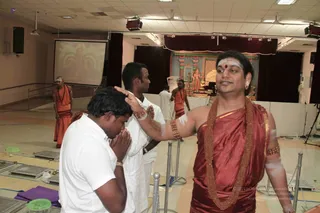
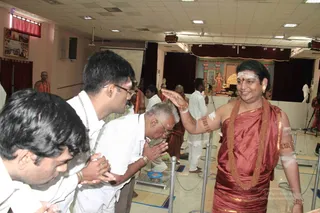
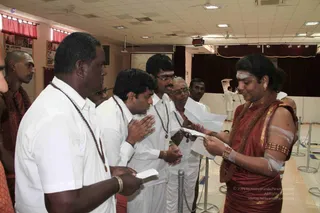
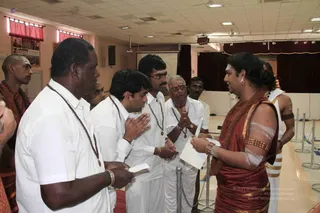
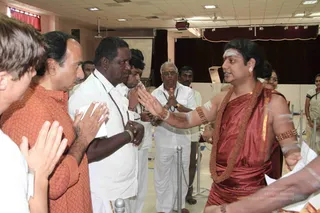
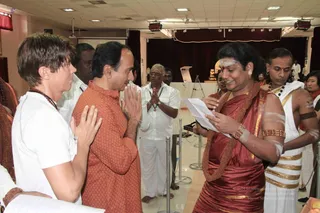
Indoor hall photo during a ritual or blessing. A man in a rust-red robe with a rudraksha-style bead necklace, red bindi and white forehead markings raises his right hand and rests it on the head of a kneeling man in a white shirt whose palms are pressed together in prayer. Behind them, a second man in white stands beside another figure in orange-red dhoti and sash. A projection screen shows a faint image, a red-and-gold deity or temple backdrop stands at the far end, and floor mats, bowls and a green container are scattered on the floor.A photograph in an indoor hall with a tiled ceiling and a stage backdrop showing a painted deity mural. On the right, a smiling man in a maroon-red silk robe and a long rudraksha mala stands with a sacred ash mark on his forehead and his right arm raised in blessing toward devotees. He wears beaded bangles and an ornate necklace, and appears to be the a person candidate, with long swept hair and ceremonial adornments visible. On the left, several men in white shirts lean forward with hands joined in reverence, and an older man in white bows low with palms pressed together. Behind them, other devotees in white and saffron stand near metal barrier posts, and a small brass plate with offerings sits on the floor.A photograph inside a hall with a white ceiling, ceiling fans, pink curtains and a stage backdrop. On the right, a woman in a rust-red sannyasi-style sari with a gold-edged border, rudraksha mala and brass armbands, bears horizontal white tilak lines on her forehead and arms, and holds white papers she is reading or handing over. Facing her, four men in white shirts and white dhotis, several wearing rudraksha malas, stand in a line with hands folded or extended in greeting, and an older man in glasses is among them. Behind them, another person in a red-and-orange robe and a man in white stand in the room. Metal stanchions with queue tape run along the floor.A photograph of a hall with a stage and screen at the back, where a long-haired man in a red-brown dhoti and shawl with gold-coloured arm bands and a rudraksha mala stands facing a group of devotees. He holds a folded white paper and speaks with a standing man in white shirt and white dhoti, who holds his palms together in namaste. Other men in white shirts and rudraksha malas stand nearby, one with hands folded in prayer. A man in a red robe with a shaved head stands at the left edge. Metal stanchions and a red curtain frame the room. Appearance cues on the figure in red are distinctive long swept-back hair, a rudraksha mala and gold arm bands, so the figure may be a person but this is uncertain.A photograph in an indoor hall with a drop ceiling, dark maroon curtains and a projection screen behind. On the right, a figure in a saffron-red silk dhoti and matching wrap, with a long rudraksha-style bead garland and gold armbands, has white sacred ash marks on the forehead and arms and raises an open hand in blessing. Opposite, a man in an orange-brown patterned kurta holds his palms together, while a man in a white shirt and white dhoti with a beaded mala stands with hands folded. Other devotees in white and a woman in a sari stand behind a metal barrier and chain line, several with palms joined in namaskar.Indoor hall photo of a ceremony. A man in a bare-headed ochre-red kurta with a rudraksha mala, hands folded in namaste, stands at left beside a man in a white shirt also in folded-hand greeting. At right, a robed figure in a red-orange dhoti-style garment and shawl, with a long rudraksha mala and gold-toned bangles, has white sacred ash marks on the forehead and reads from a sheet of white paper. Beside him, a man in white dhoti and gold-bordered shawl with white ash marks and bangles stands. Behind them, white-clad attendees, a small golden figure on a stand, a lectern and black drapery are visible.

Final-Blessing

6 photosSource gallery
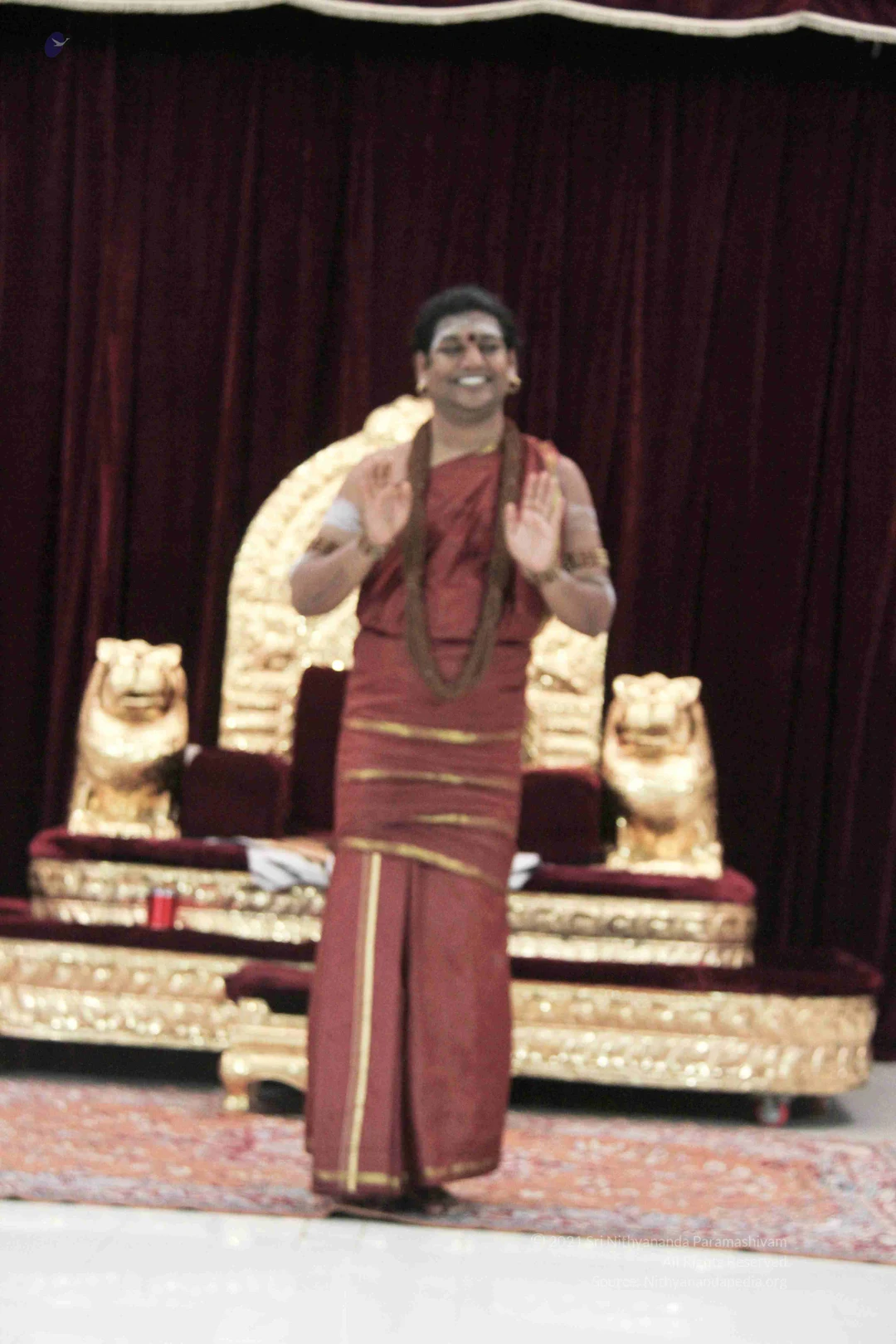
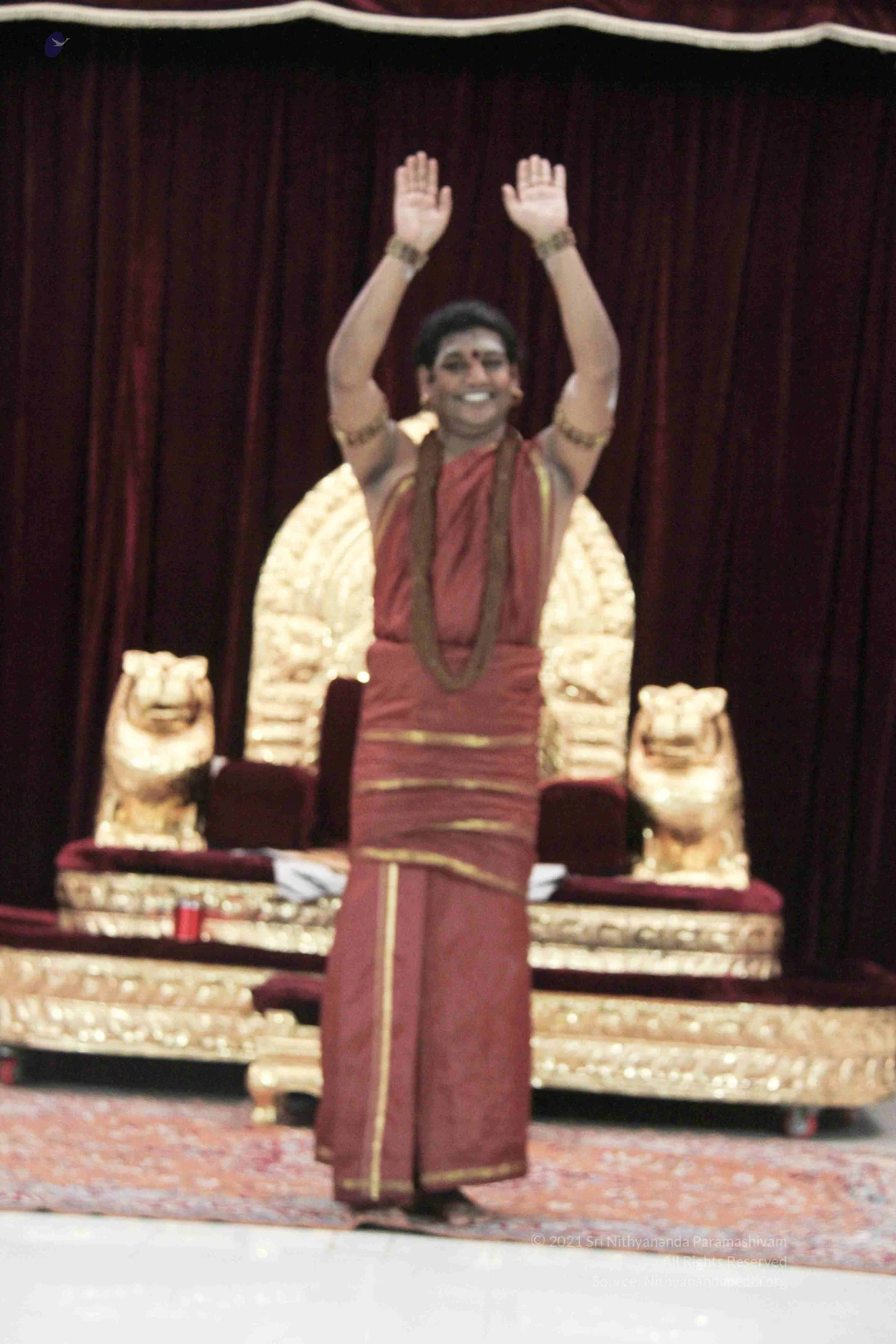
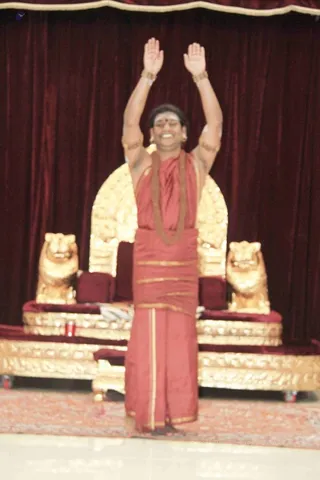
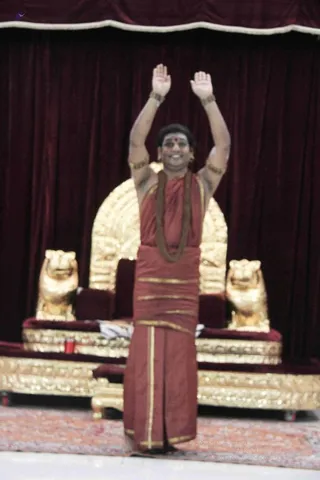
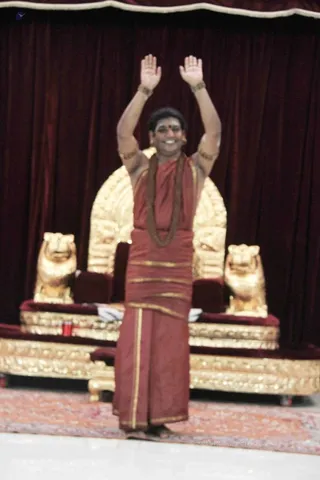
A smiling man in a maroon-red dhoti and wrap stands on a carpeted stage with both arms raised overhead, wrists adorned with gold bangles. A rudraksha-style brown bead mala hangs around his neck and a red tilak marks his forehead. Behind him stands a large gold-leaf throne with carved lion-shaped armrests and red cushions, set against deep maroon velvet drapes. A single red candle or lamp sits on the stage at left.A man stands centrally on a stage in front of a deep red velvet drape, arms raised overhead with palms open, smiling. He wears a rust-red sannyasi-style wrap over his shoulders and a red dhoti with gold border stripes, with a brown rudraksha-style mala around his neck, gold bangles on his wrists and arms, and a red tilak on his forehead. Behind him stands a gilded throne with carved lion figures and red cushions. The image is blurred. One person is visible; the presentation shows no distinctive crown, long swept-back hair or saffron-ornate clothing beyond the mala, so identity is uncertain.A man stands on a carpeted stage with both arms raised overhead, palms open, smiling. He wears a rust-red draped garment with thin gold borders and a long rudraksha mala around his neck, plus gold bangles on his upper arms and wrists. Behind him stands a gilded throne with golden lion figures on each side against a deep maroon velvet drape.A photograph of a single standing man in a rust-red ochre wrap and dhoti with gold borders, a rudraksha mala around his neck and gold armlets on both upper arms. He stands with both palms raised above his head, smiling, with a red bindi on his forehead. Behind him is a deep maroon velvet curtain and an ornate gold throne flanked by two golden lion figures on a red-cushioned dais, over a patterned rug.A blurred photograph of a man standing on a stage in front of an ornate gold throne flanked by two gold lion sculptures against deep red velvet drapes. He wears a maroon-red wrap and dhoti with thin gold borders, a rudraksha mala around his neck, gold armbands and bangles, and a red mark on his forehead. He raises both hands, palms outward, in a gesture of blessing while smiling. Red patterned carpet covers the stage floor.A standing man in a maroon-red dhoti and shawl with gold edging raises both hands overhead, smiling, in front of a deep red velvet curtain. He wears a long brown rudraksha mala and gold armlets, with a red bindi on his forehead. Behind him stands an ornate gold throne flanked by golden lion figures on a red-cushioned dais, with a red-and-cream patterned rug in front. The scene is a stage setting in a satsang hall. The man appears to be a person by appearance, with cues including the rudraksha mala and ornate gold adornments, though his features are not used for identification.

Inner-Awakening-Session

8 photosSource gallery
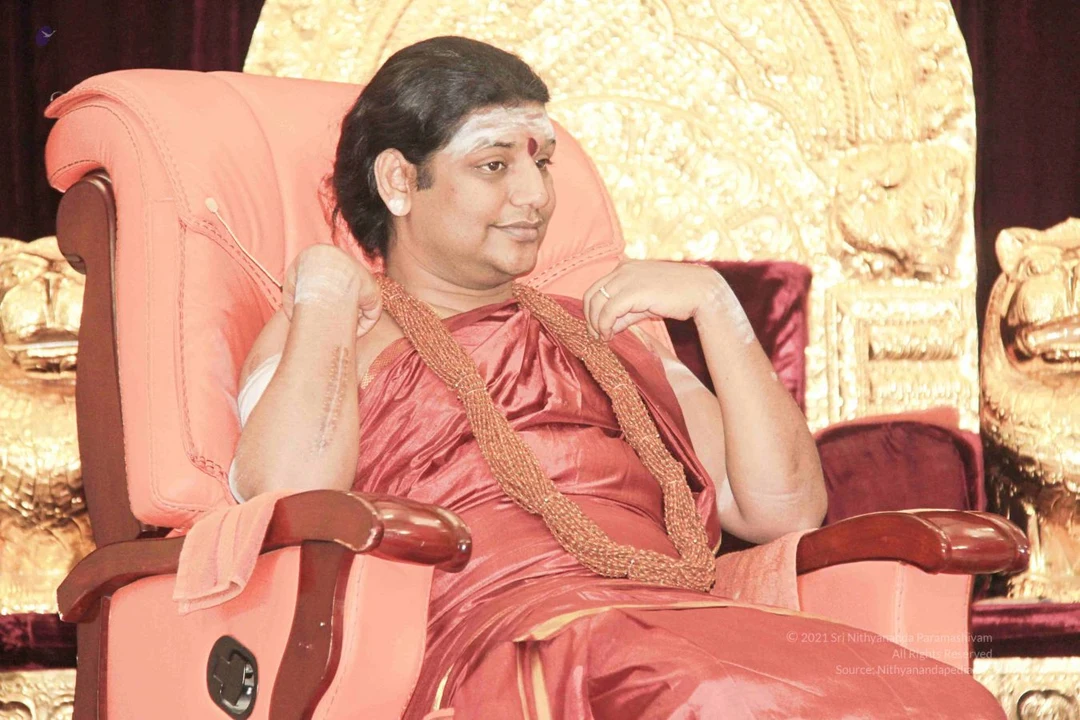
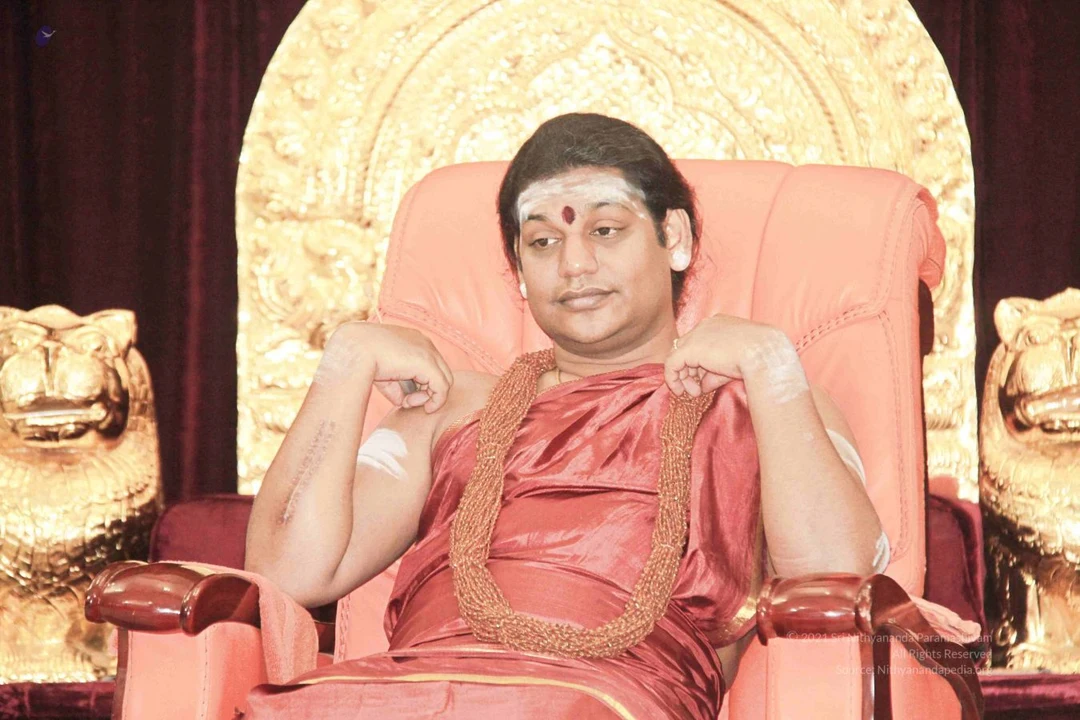
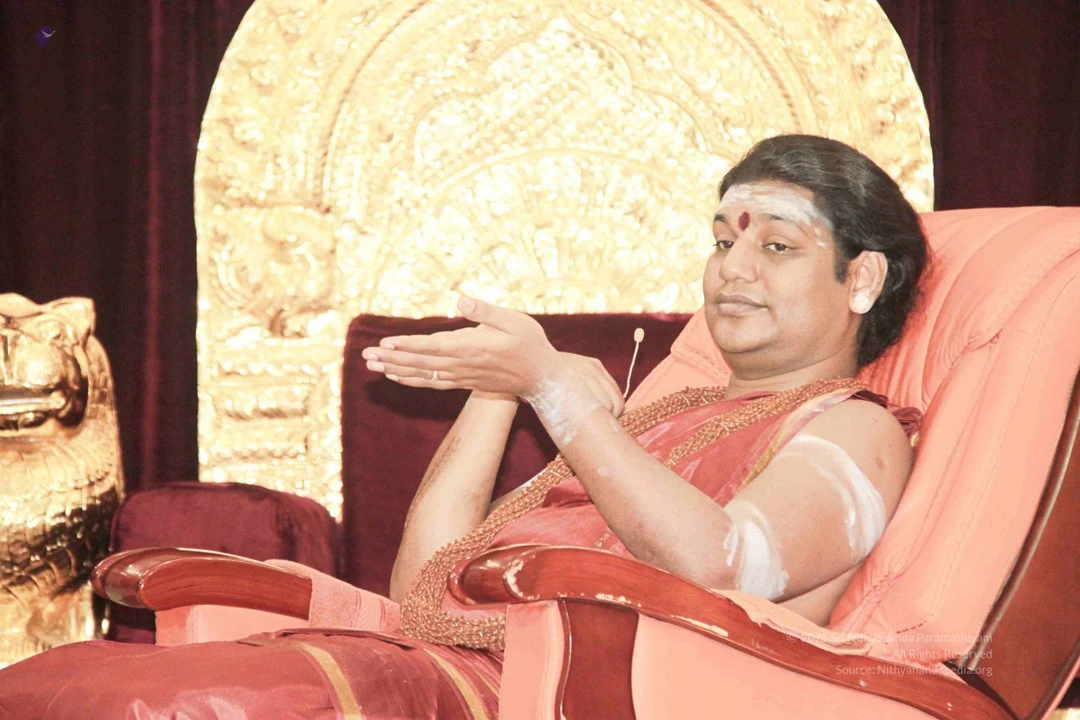
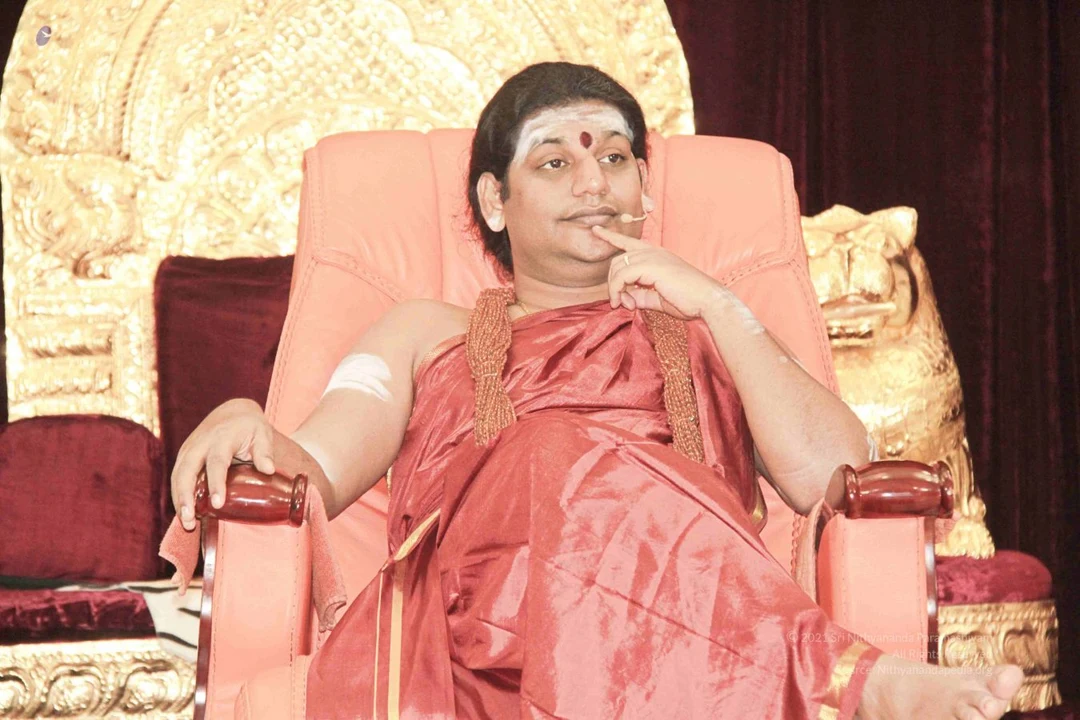
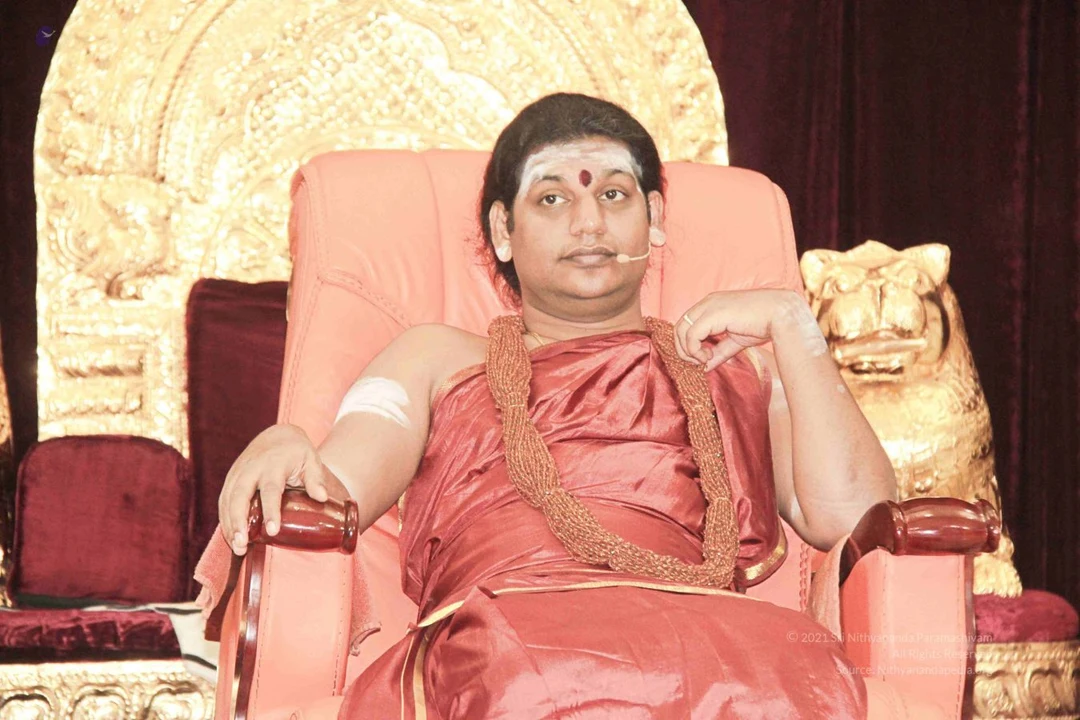
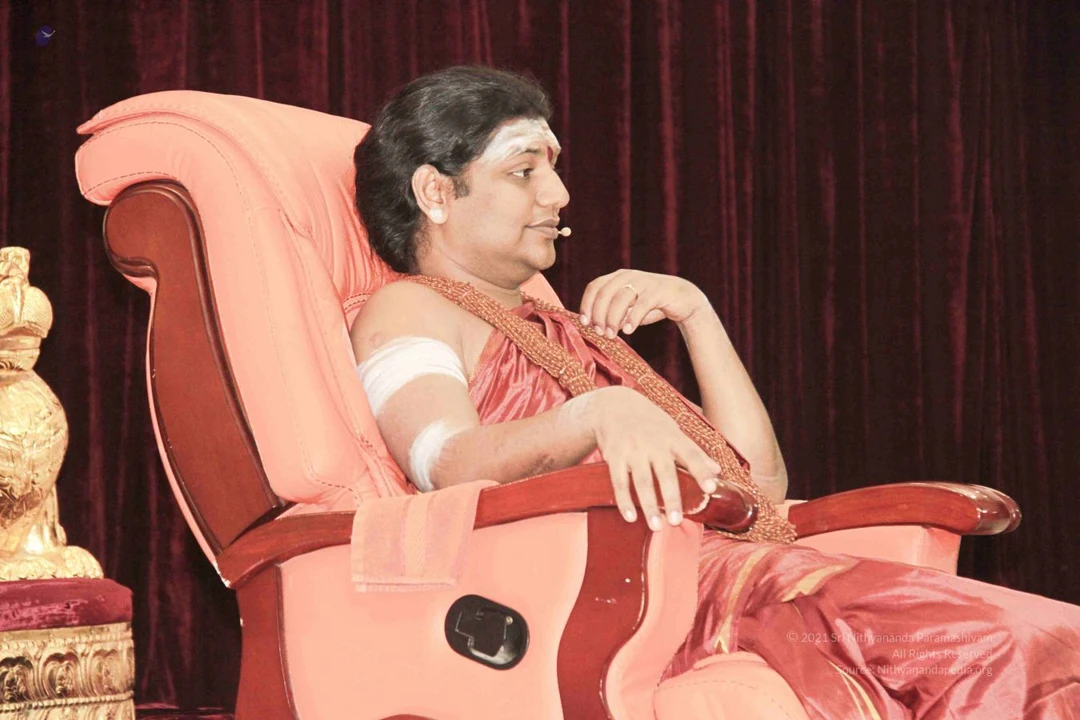
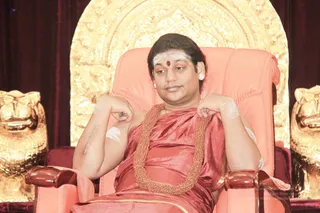
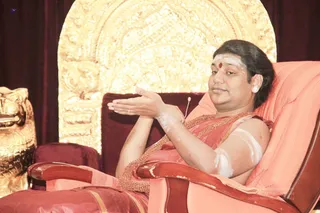
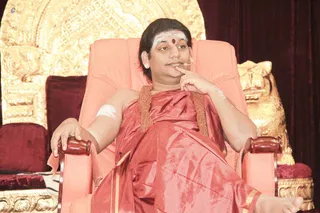
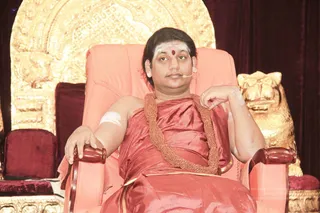
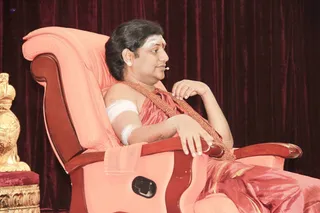
A man seated in a pink leather recliner chair with wooden armrests, wearing a rust-red silk garment draped over his body and a thick beaded rust-coloured mala necklace. He has white vibhuti smeared across his forehead with a red kumkum dot at the centre, and his hands rest near his chest. Behind him stands an ornate gold-toned carved backdrop with lion-shaped armrest finials visible at the edges. a person by appearance cues: the red-robed sannyasi attire, mala and ceremonial setting presented as the speaker's throne, though the face is not clearly identifiable. One physical person is present.A man seated on a salmon-pink leather throne-style chair with carved gold lion heads on the armrest supports to each side and an ornate gold-embossed arch behind him. He wears a rust-red silk garment draped over one shoulder, a thick gold-toned beaded necklace, and a red bindi with white horizontal markings on the forehead. His hands rest at his chest near the necklace while he looks down to the side. a person by his seated throne position, ceremonial gold necklace and red silk robe, appearance-based only.A photograph of a man reclining in a pink leather armchair with wooden armrests, gesturing with both hands held together at chest level. He wears a red-and-orange garment, a gold chain necklace, a red kumkum dot and white vibhuti markings on his forehead and arms. Behind him is an ornate golden repoussé panel with a deity murti-style relief design, and to the left stands a gold lion-headed sculpture beside maroon drapery.A man in a reddish-maroon silk robe sits in a pale peach leather armchair with wooden armrests, one hand resting on the armrest and the other finger touching his lips in a thoughtful pose. He has white vertical tilak on his forehead with a red dot at the centre, and a beaded rudraksha-style mala drapes over his shoulders. Behind him stands an ornate gold carved throne back and a gold lion-form armrest against deep red velvet drapes. A small wireless microphone is clipped near his face. The swami appearance cues here are a red-maroon robe, beaded mala and ceremonial gold-carved throne, consistent with a person seated for satsang.A seated man in a pink cushioned chair with wooden armrests, in front of an ornate gold carved backdrop and a gold lion-head armrest ornament. He wears a red-orange silk drape and a long braided gold-toned beaded necklace, with white ash markings on his forehead and arms and a red bindi. A small headset microphone is attached near his face, and his right hand rests at his chin. Probable Swamiji (long dark hair, ornate gold-and-red attire, rudraksha-style necklace and ceremonial seating cues).A man in a reclining wooden-armed chair upholstered in pink leather sits before a dark red velvet drape during a satsang. He wears a pink-red silk garment, a long beaded rudraksha-style mala across his chest, a white wrap around one upper arm, and a white vibhuti horizontal mark on his forehead; he is speaking with a small head microphone attached near his mouth, one hand resting on the armrest and the other raised to his chest. A gilded ornamental carved stand edges the left side of the frame.

Inner-Awakening-Akashic-Reading

70 photosSource gallery
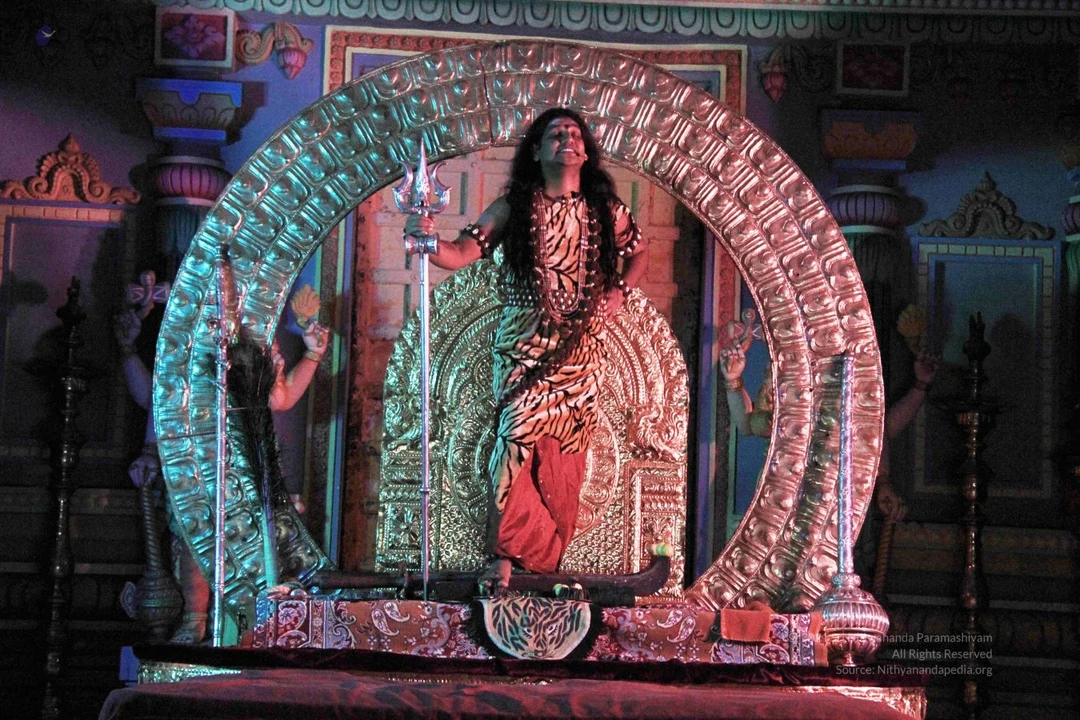
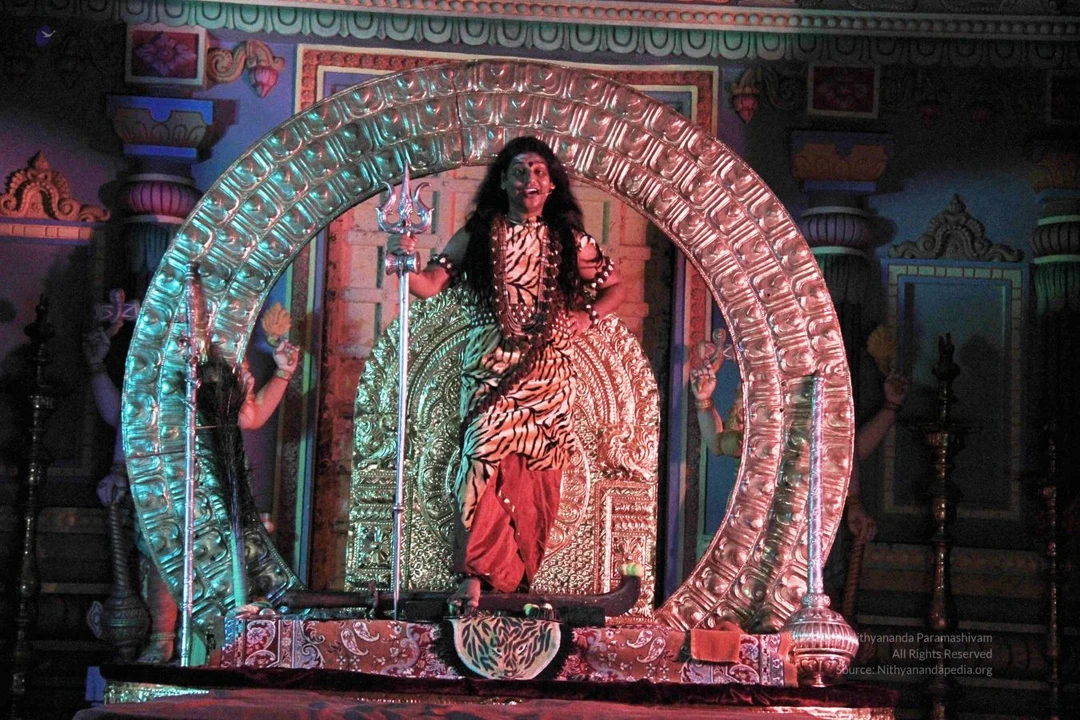
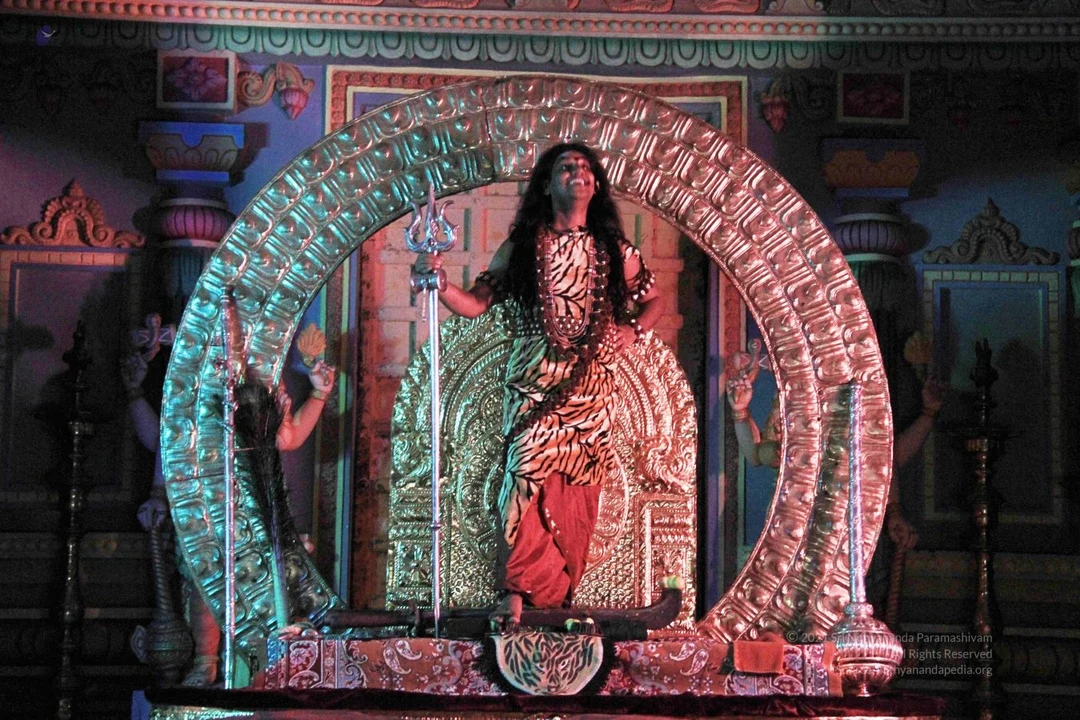
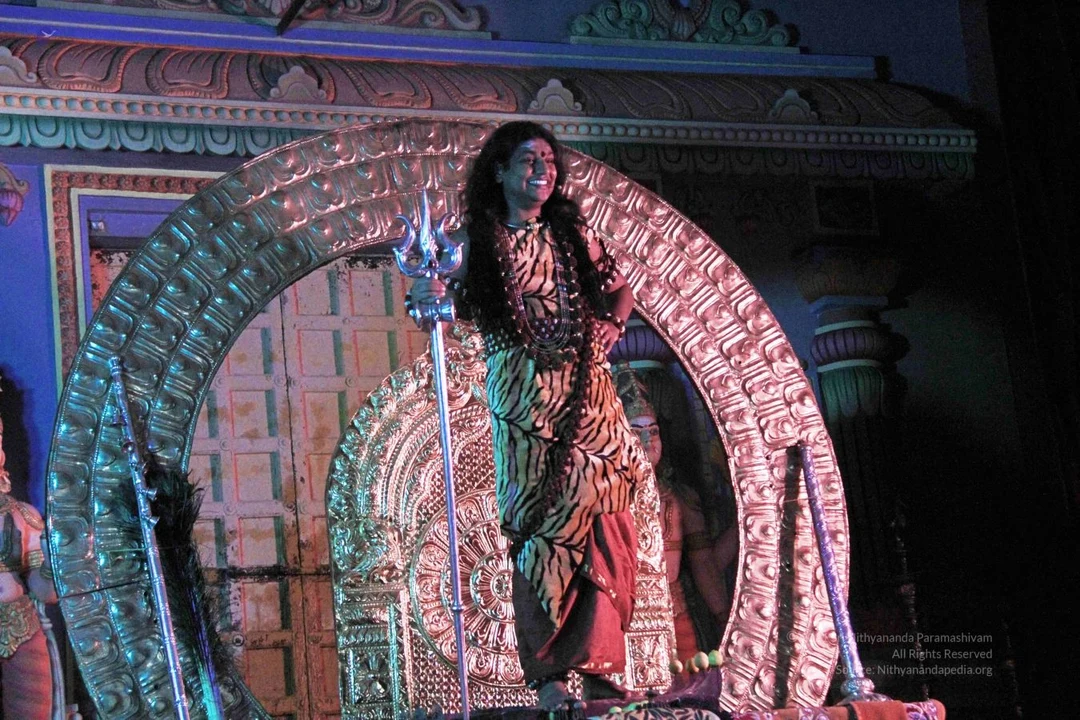
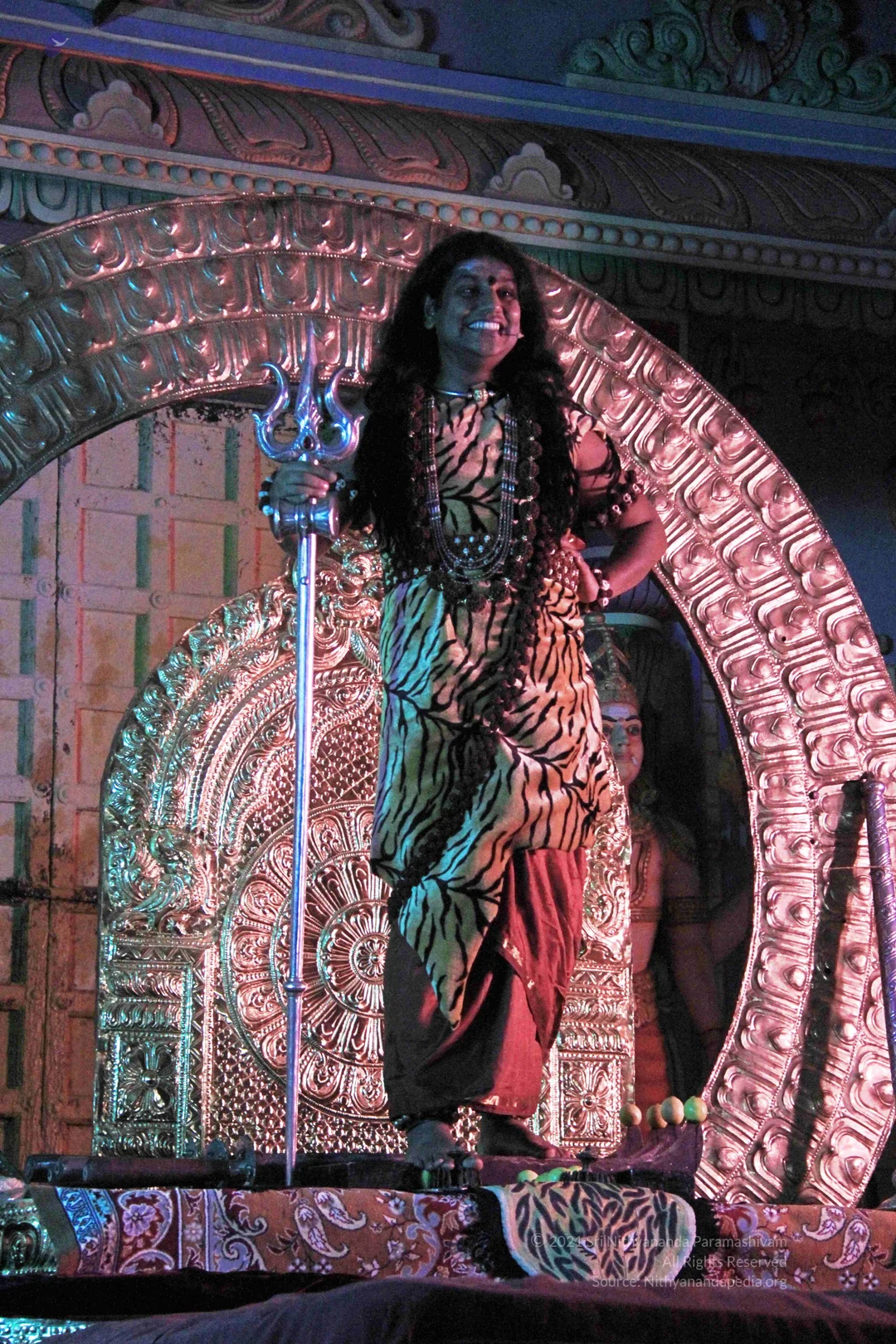
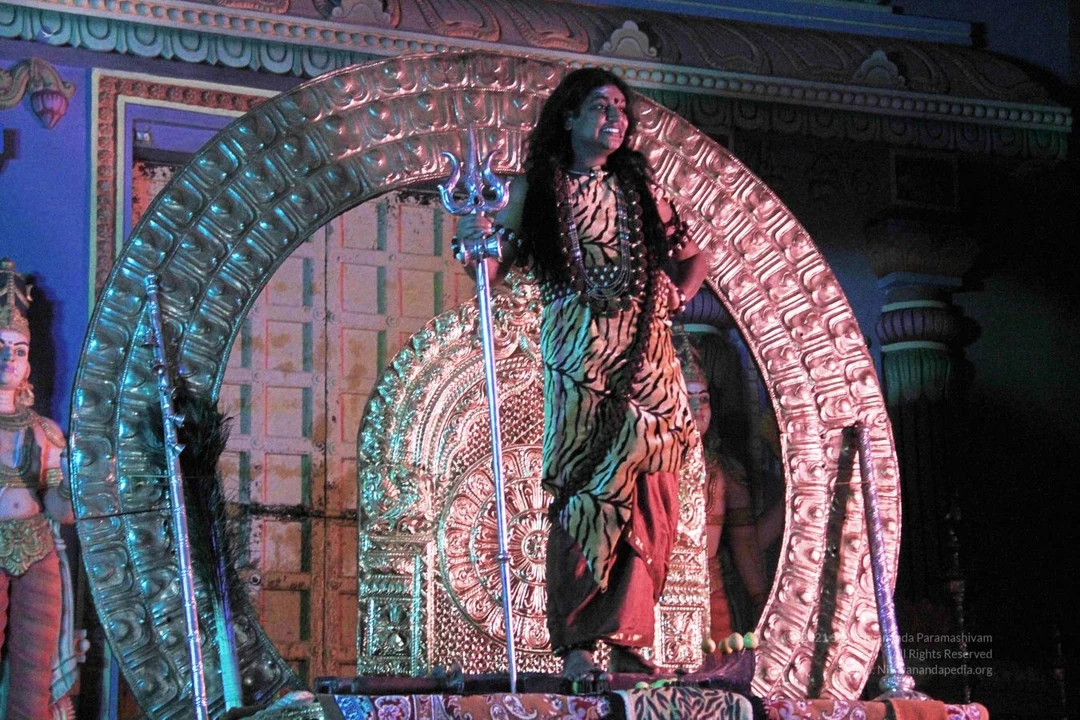
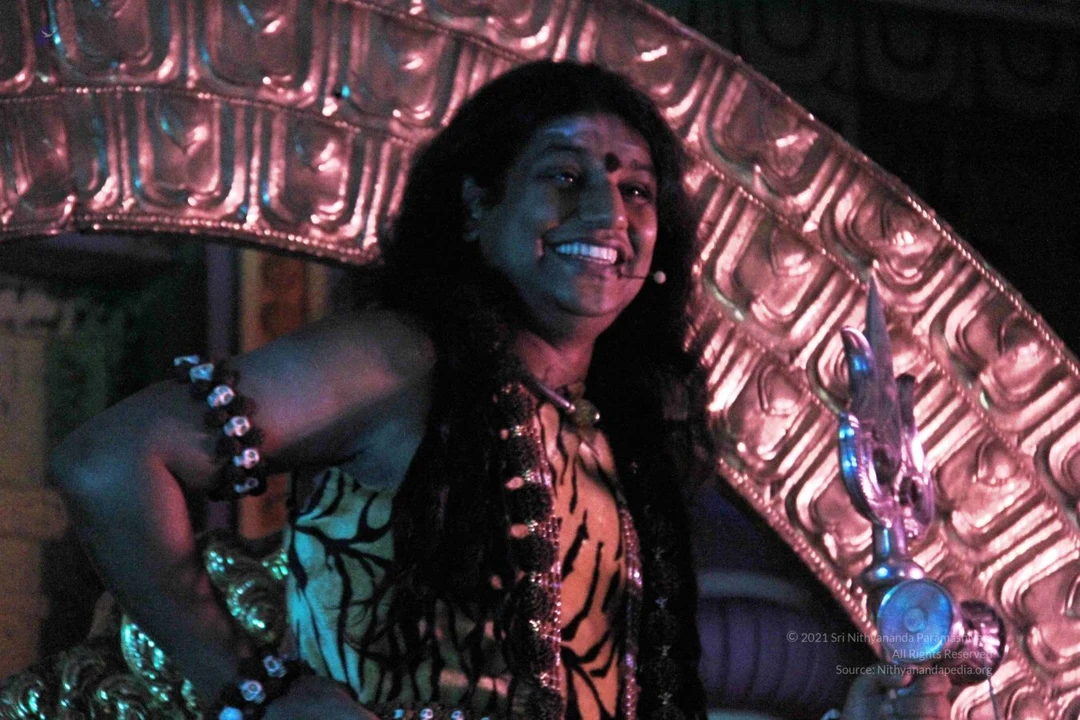
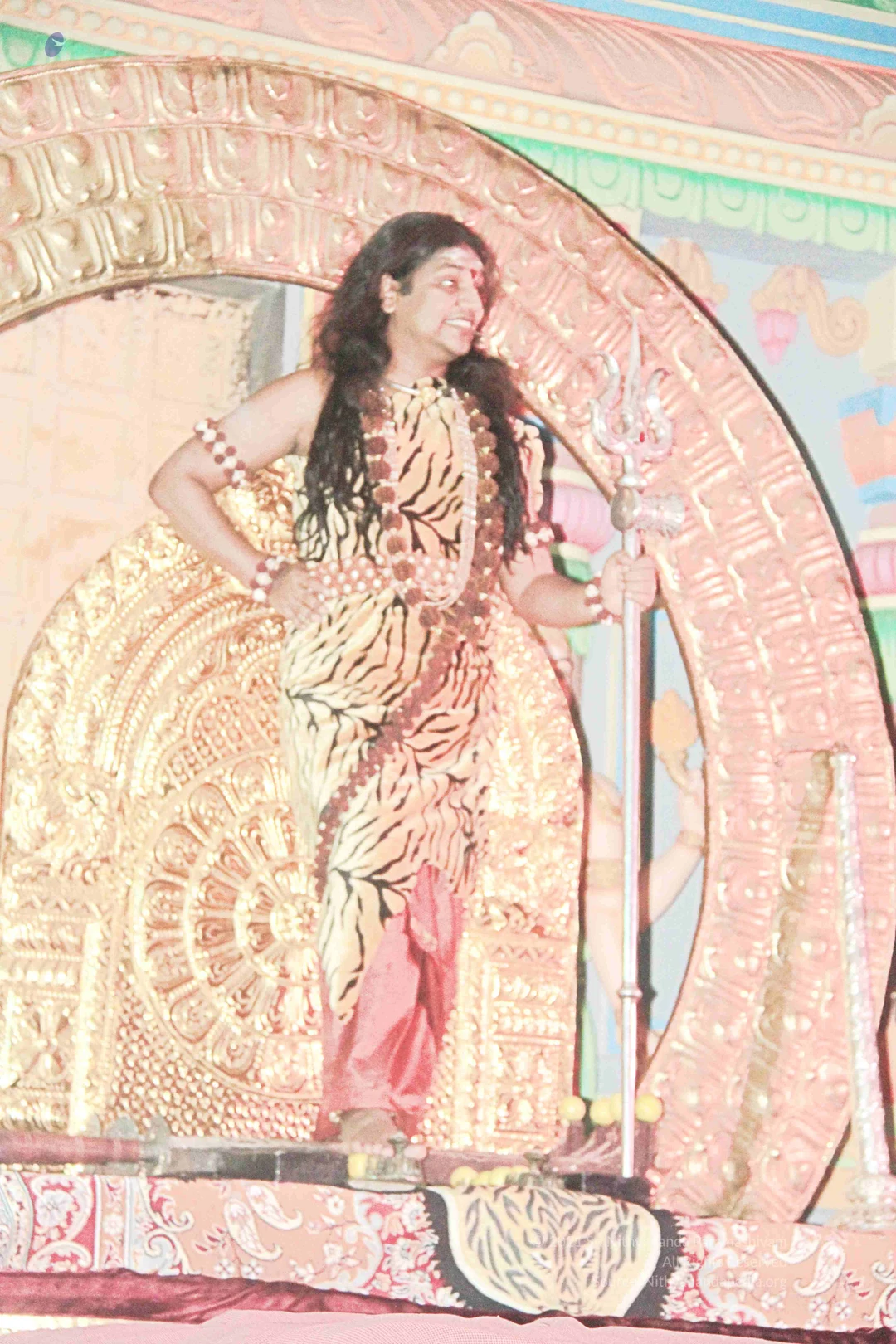
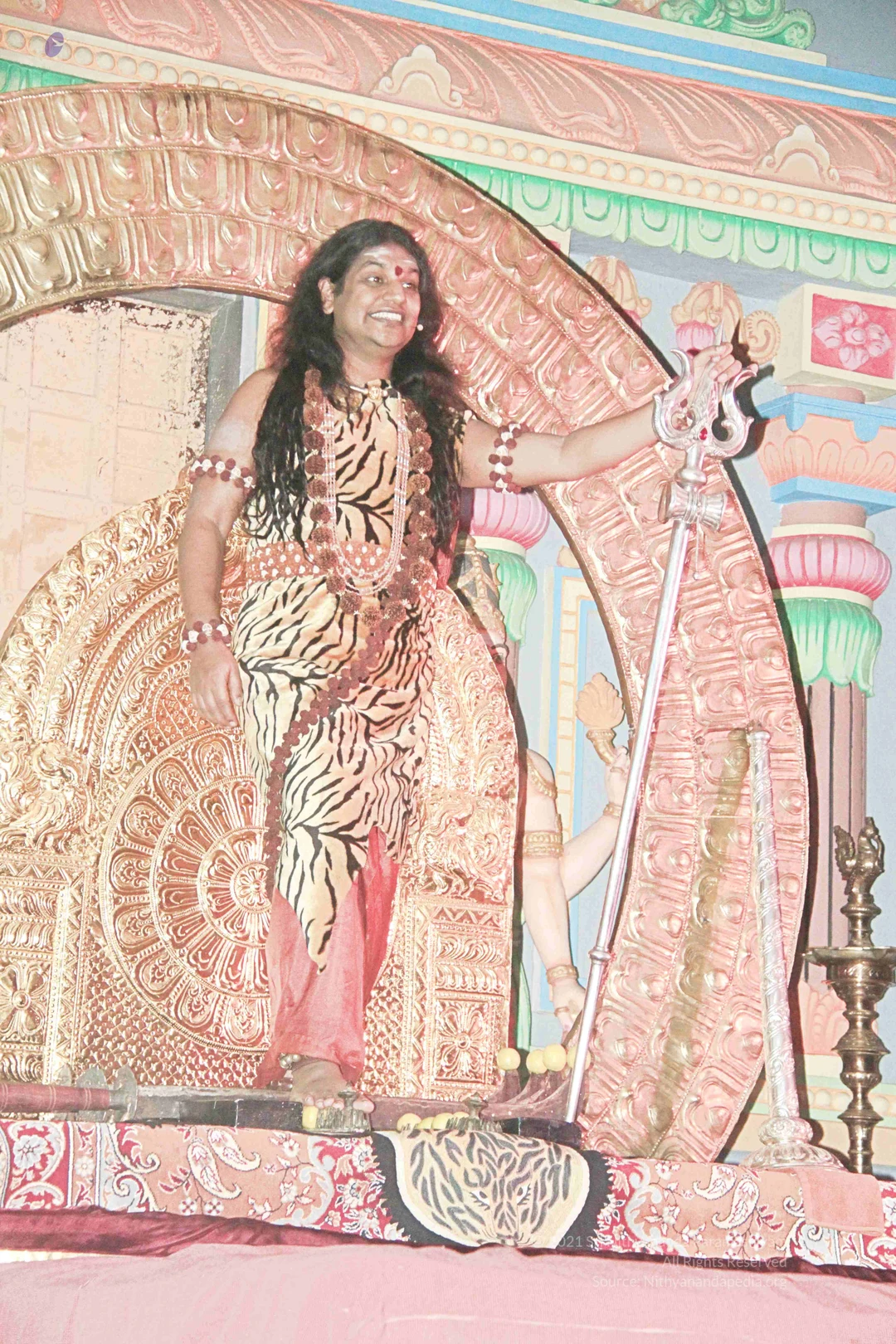
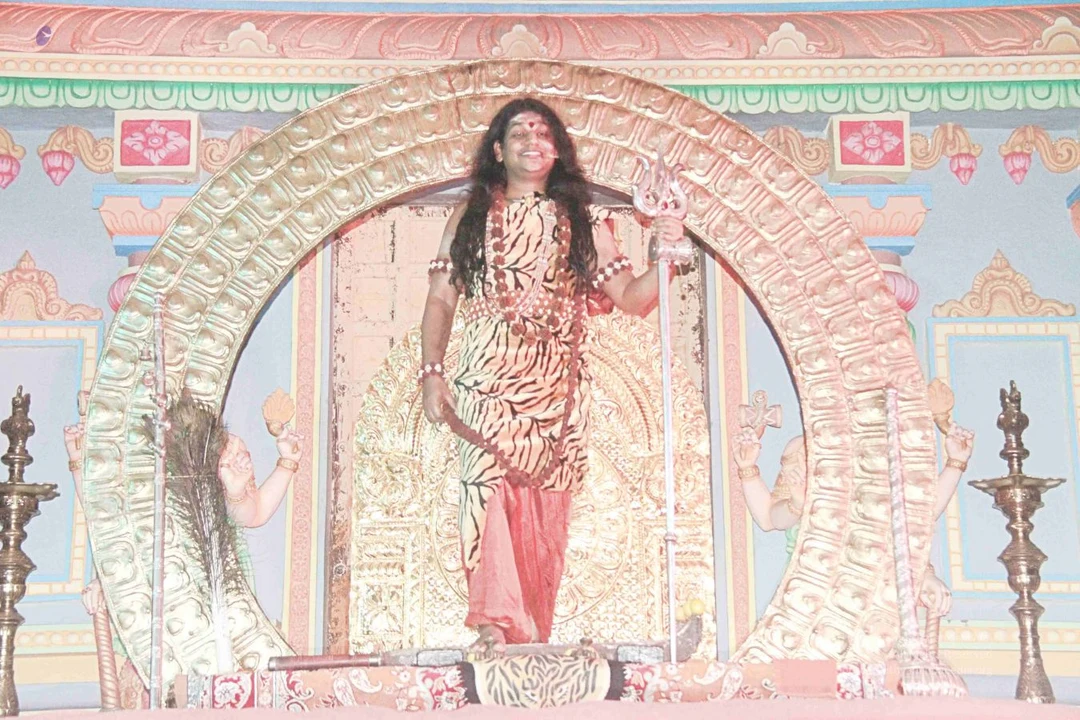
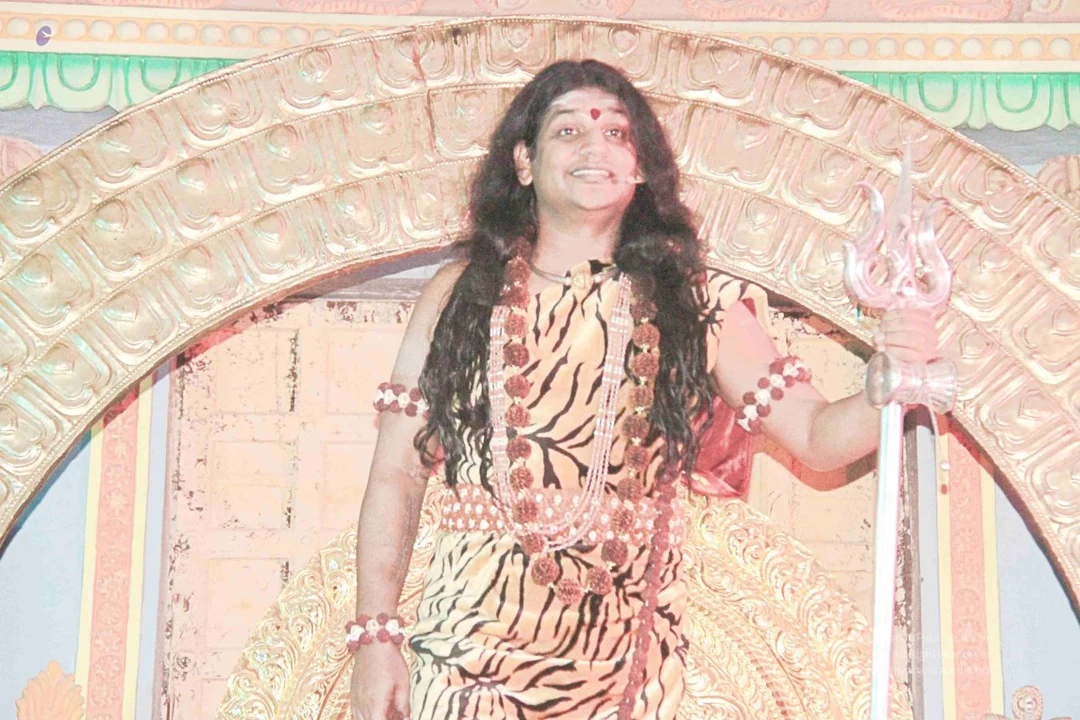
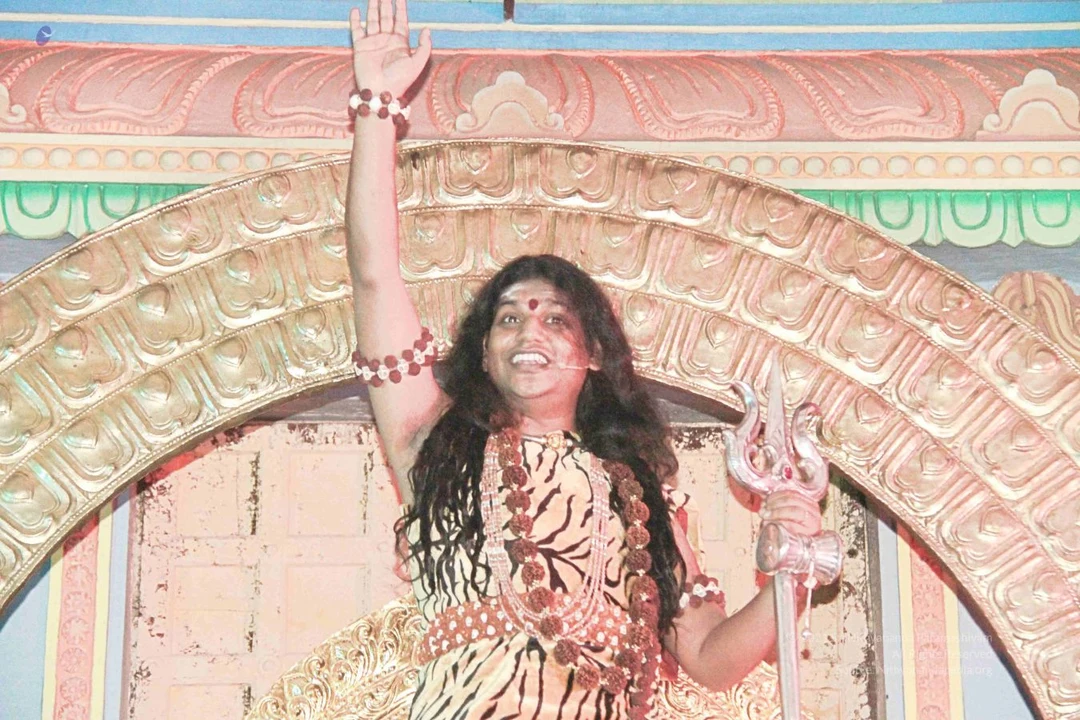
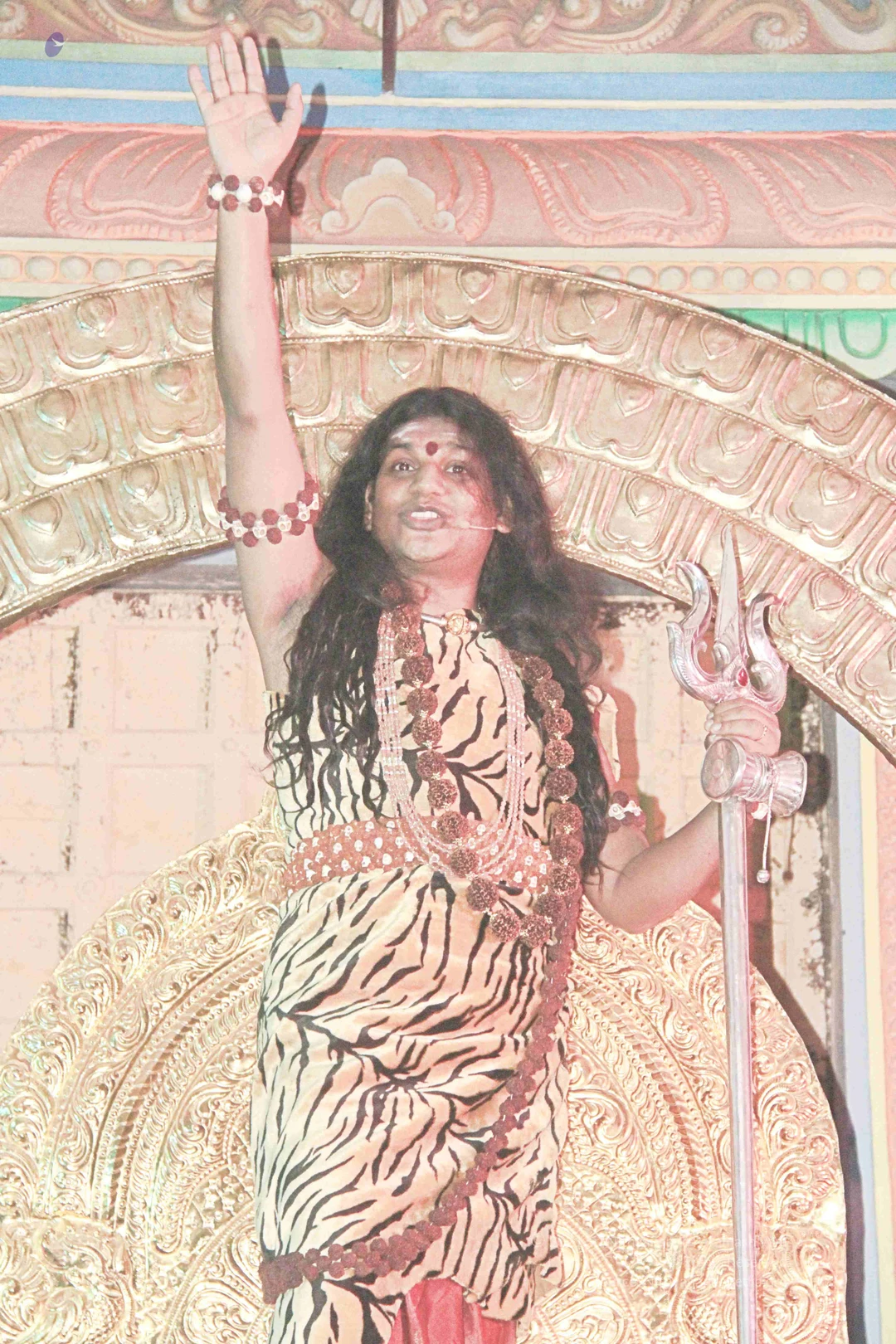
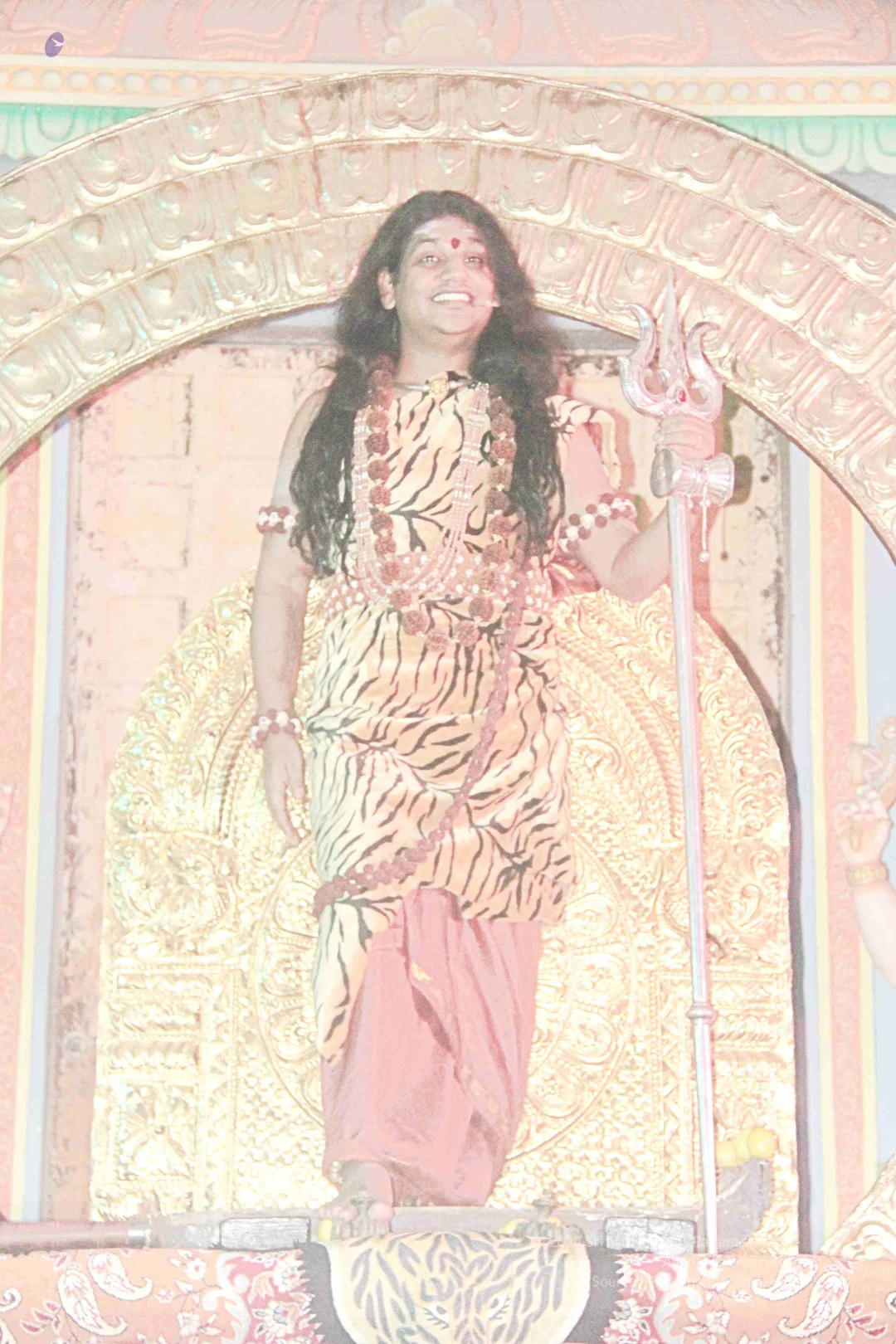
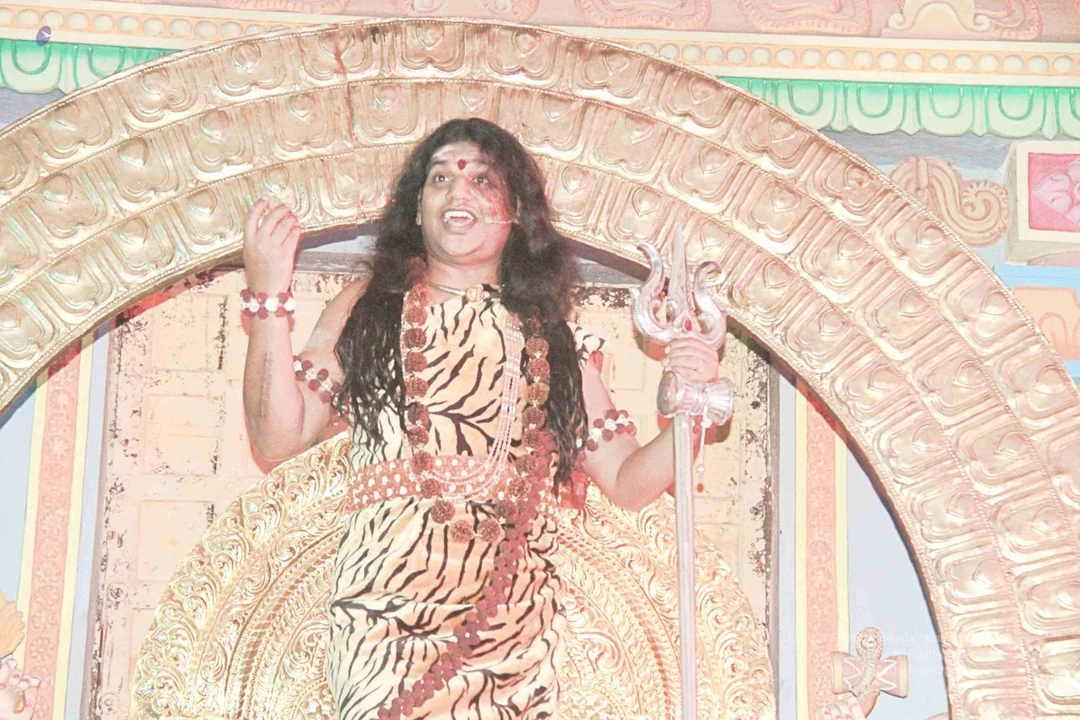
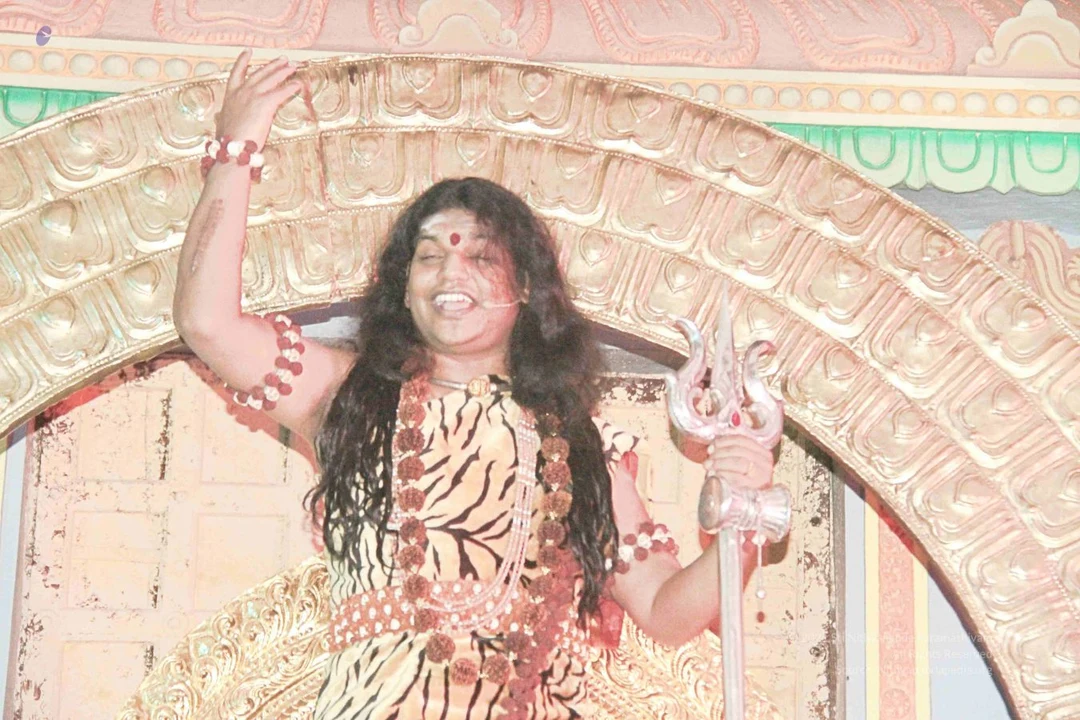
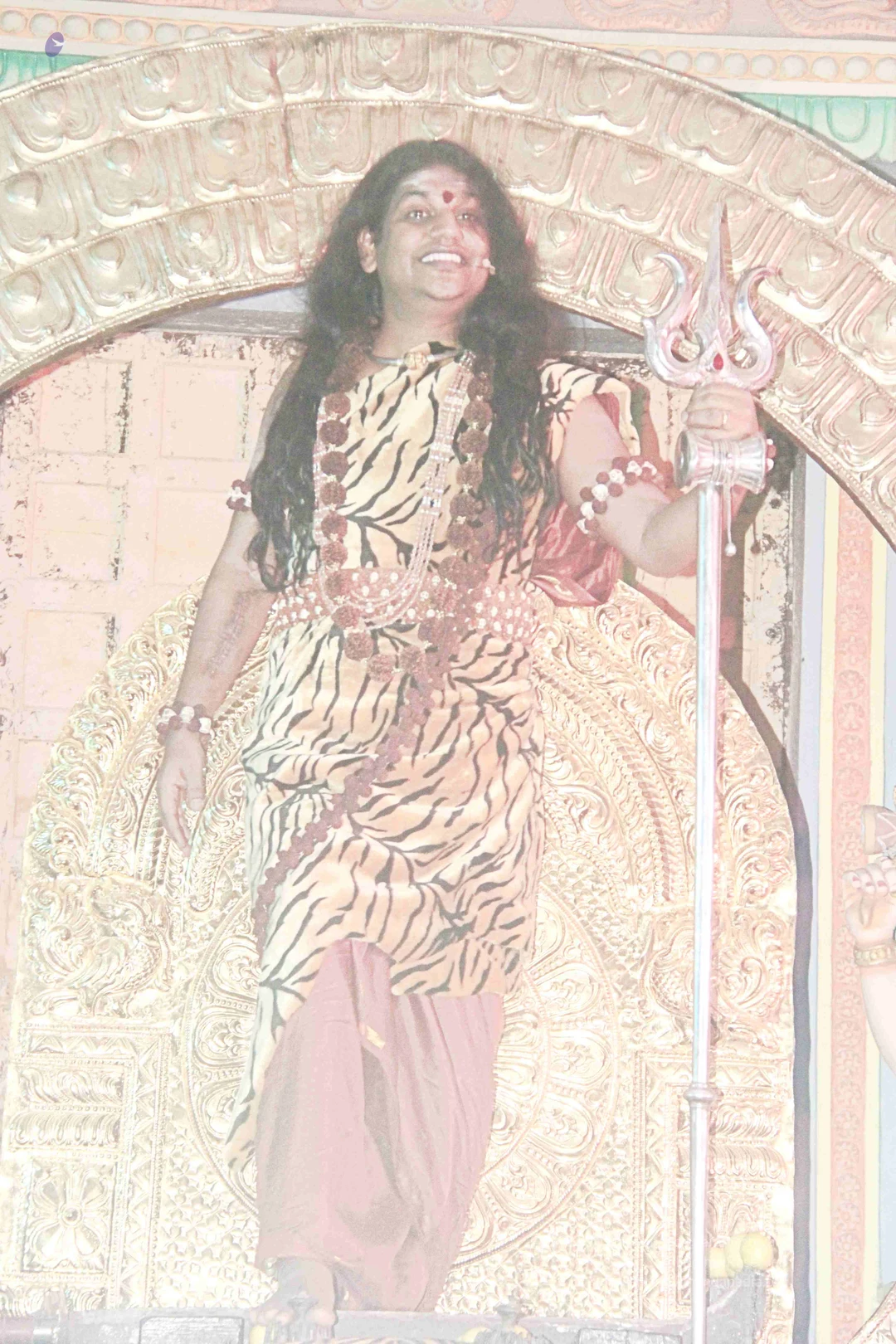
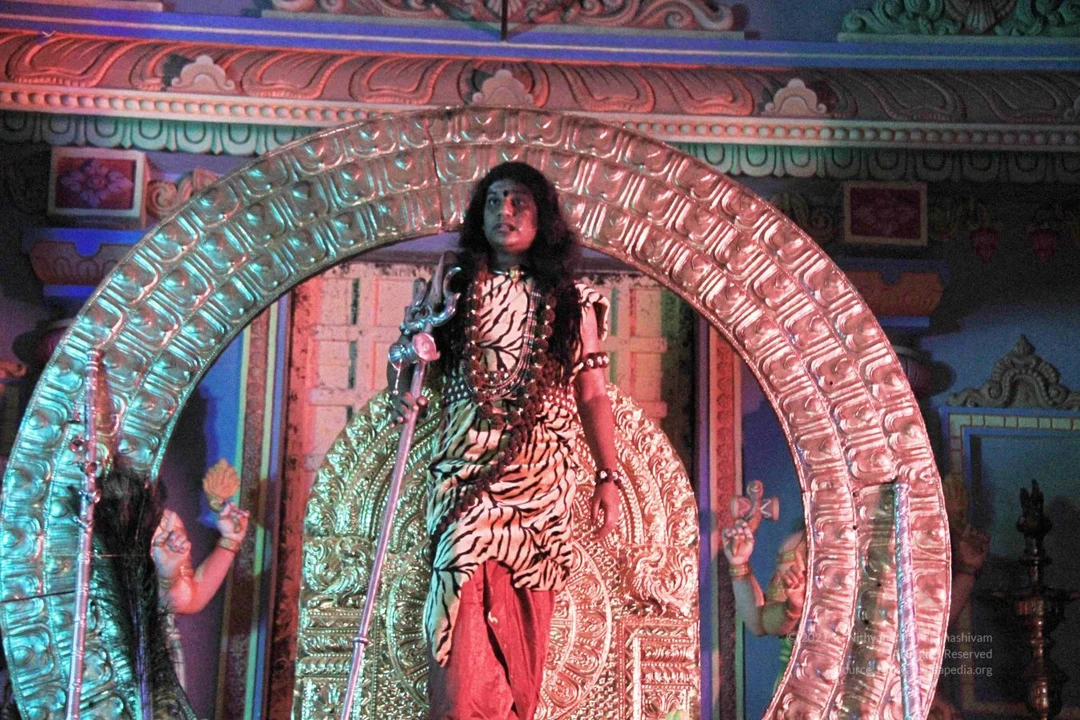
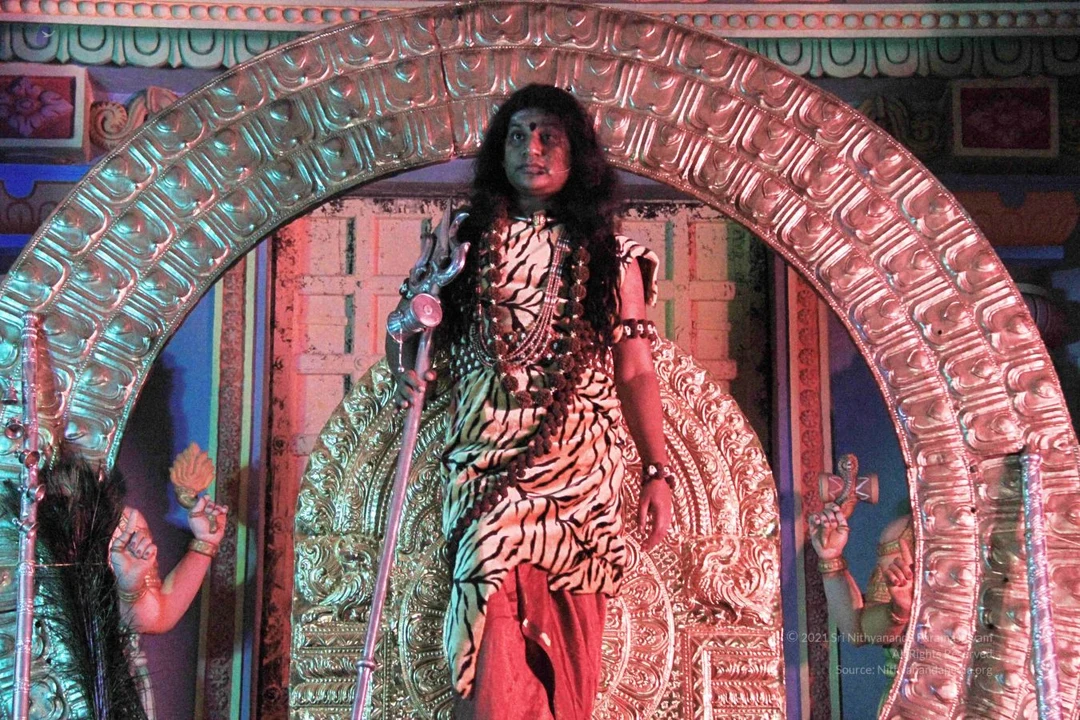
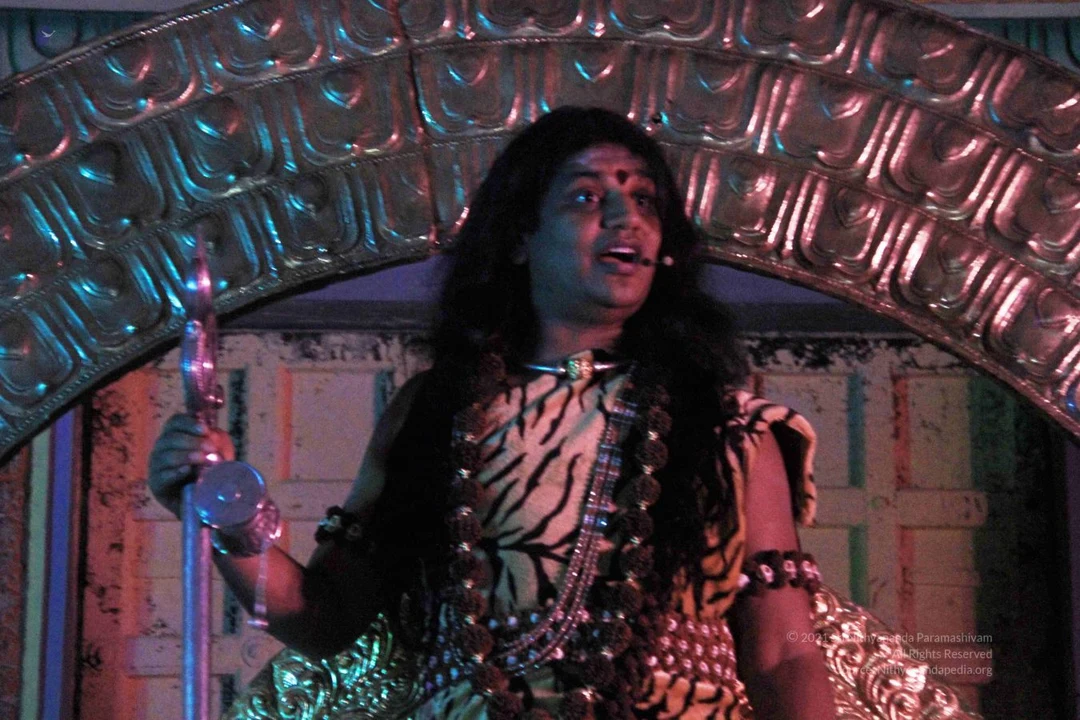
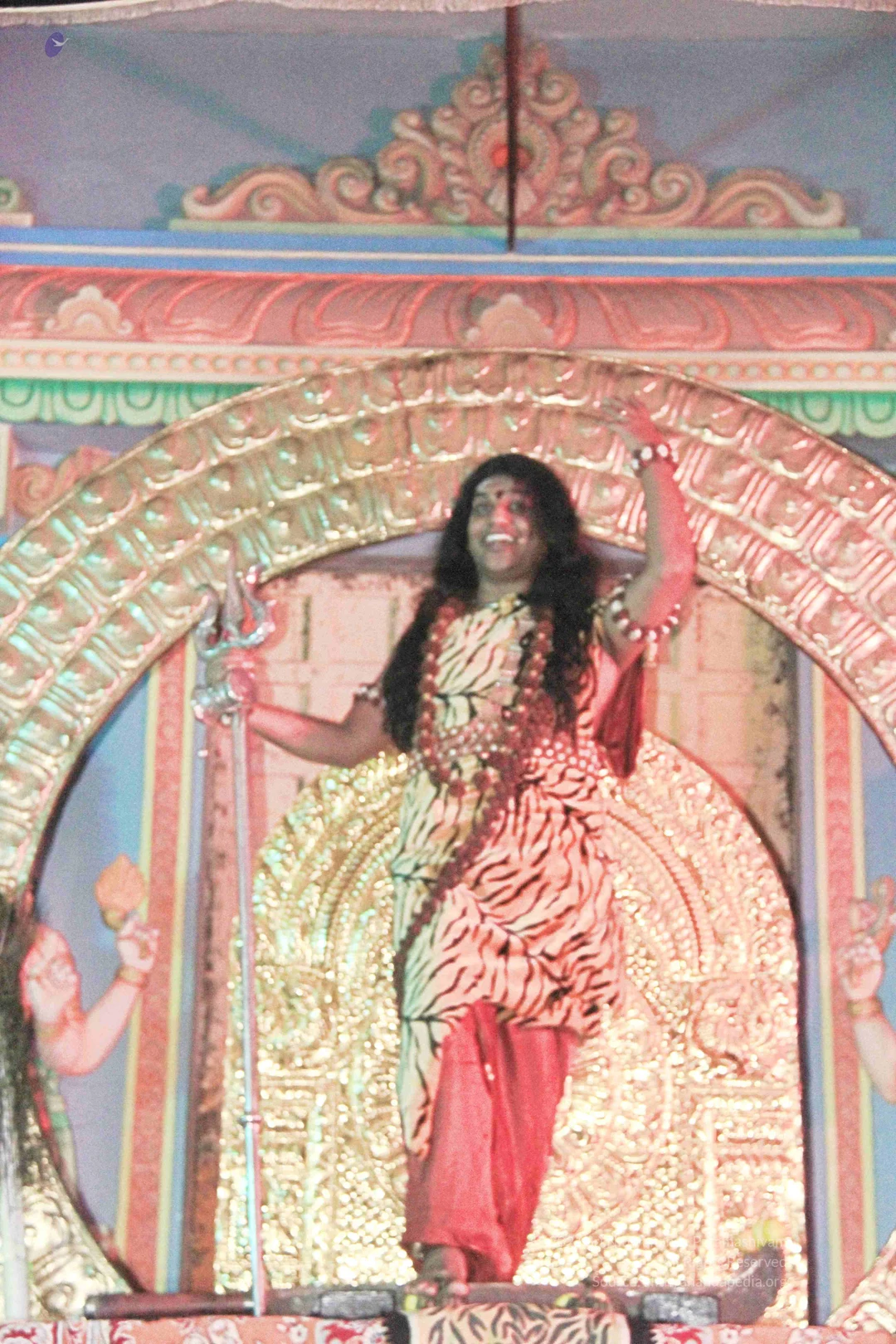
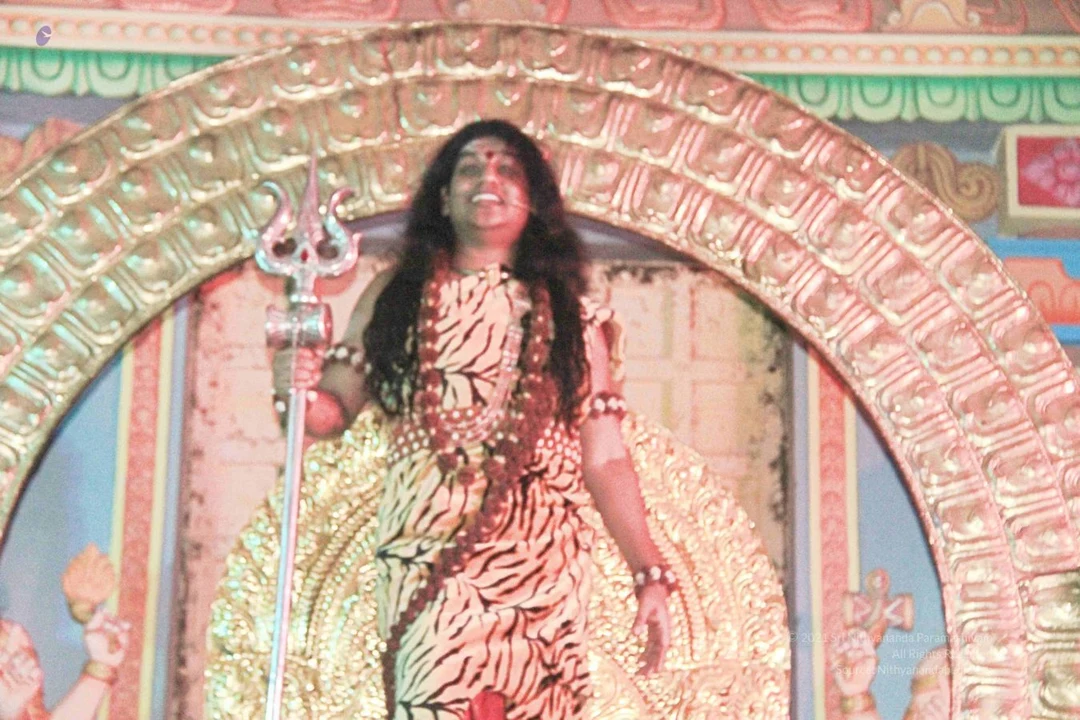
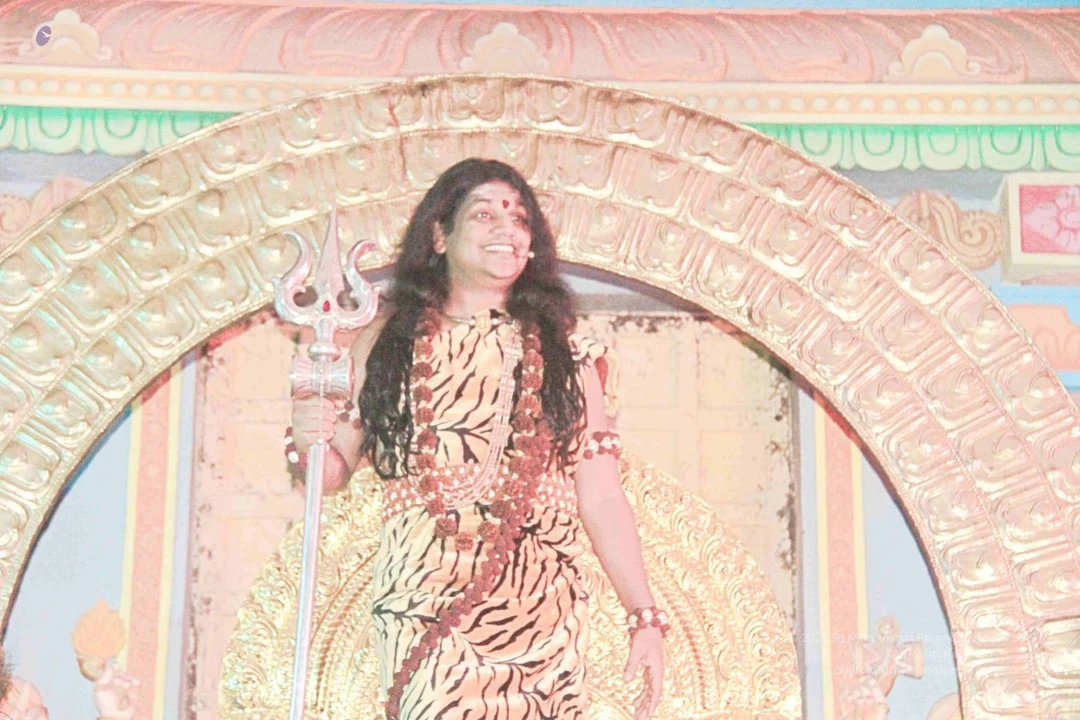
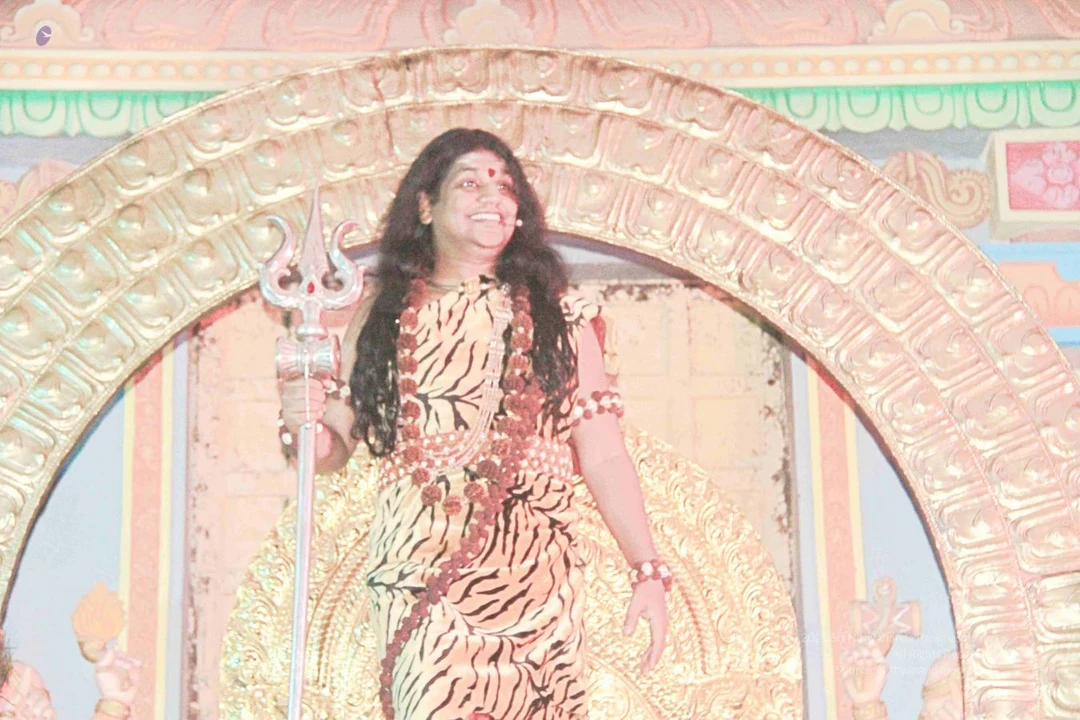
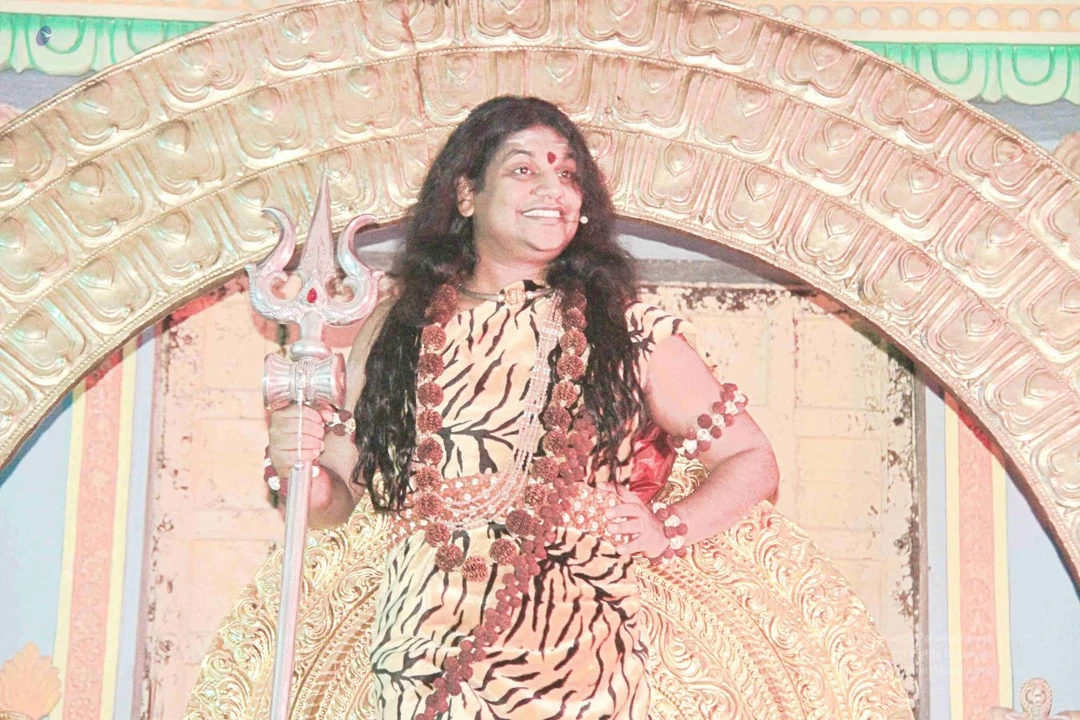
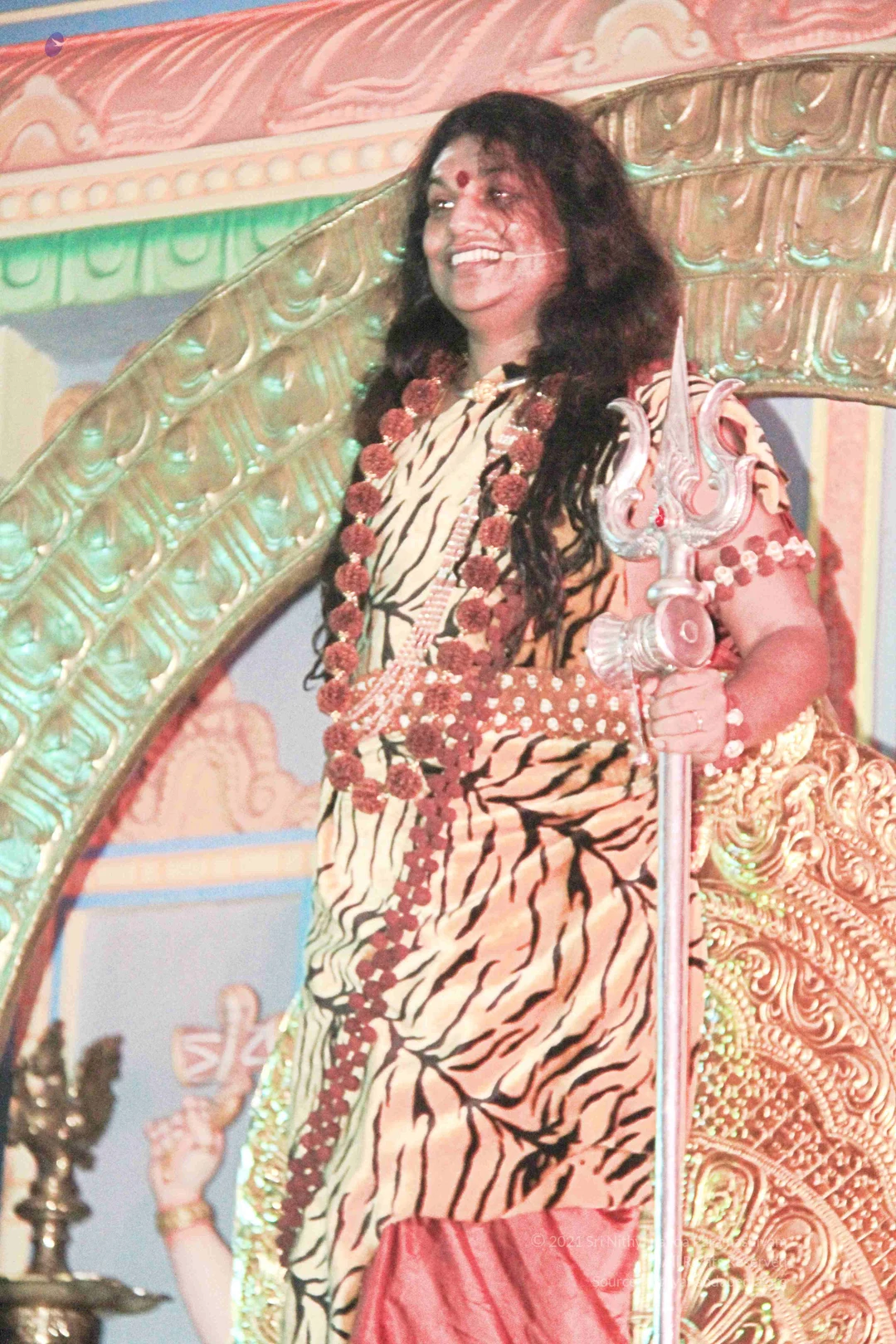
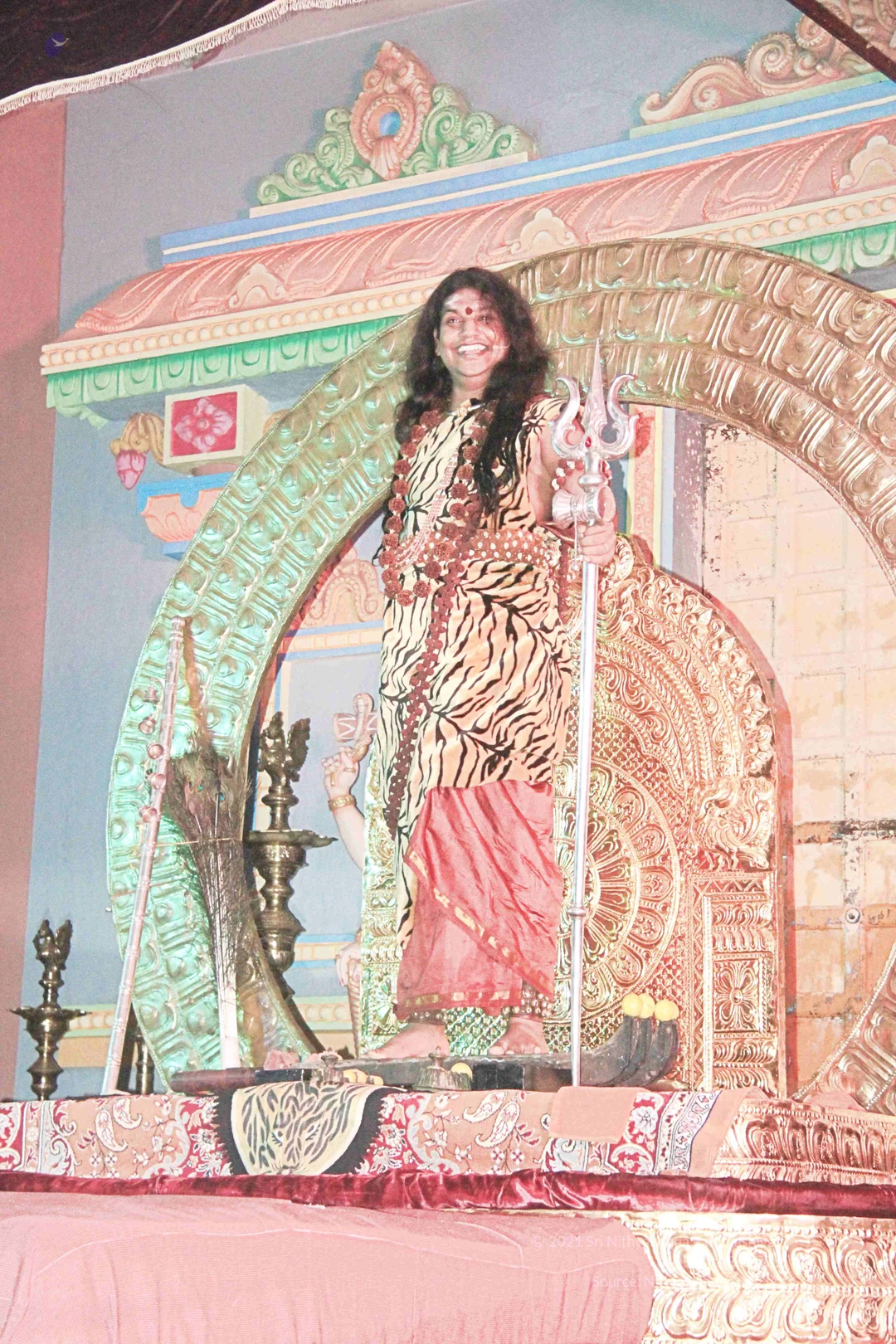
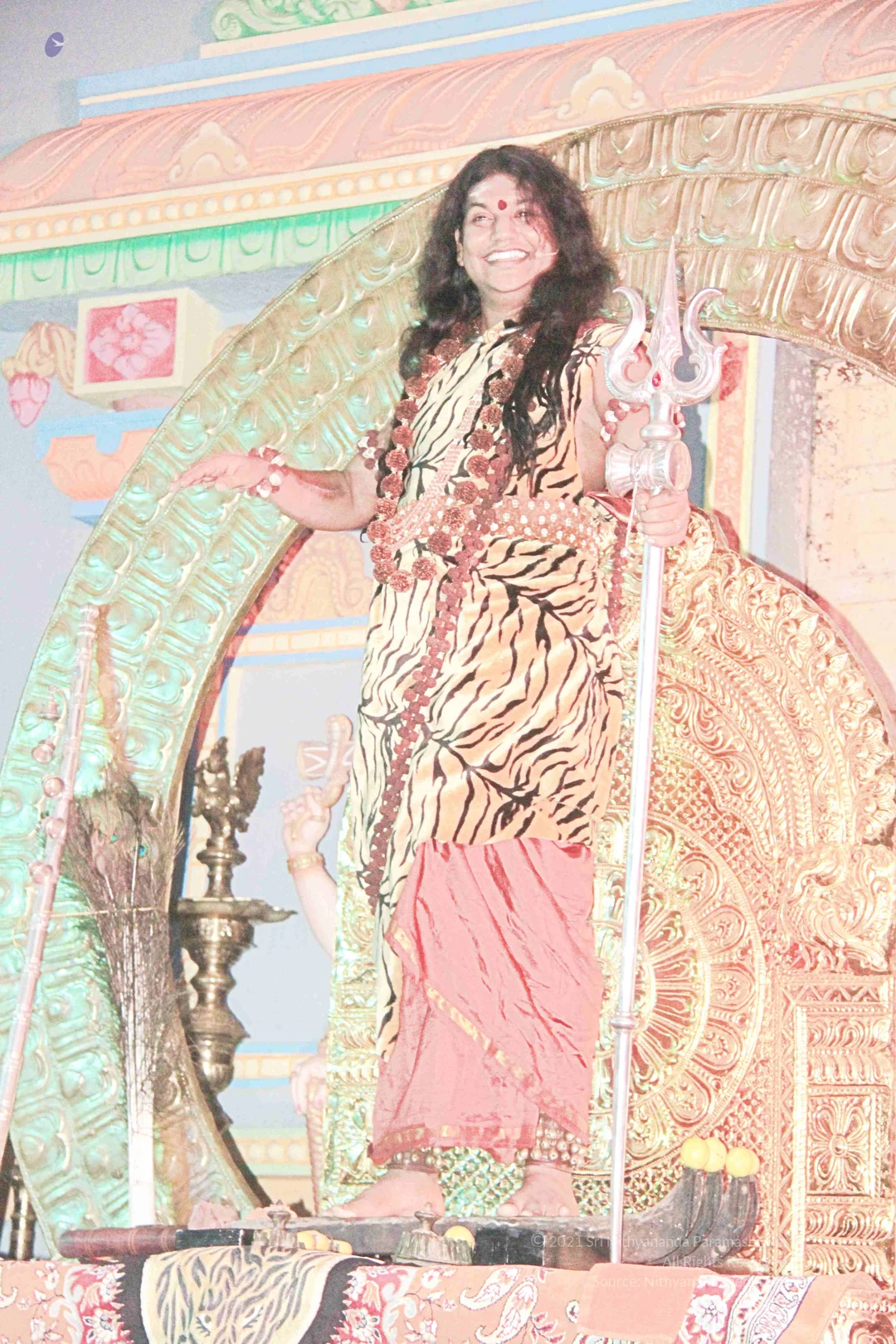
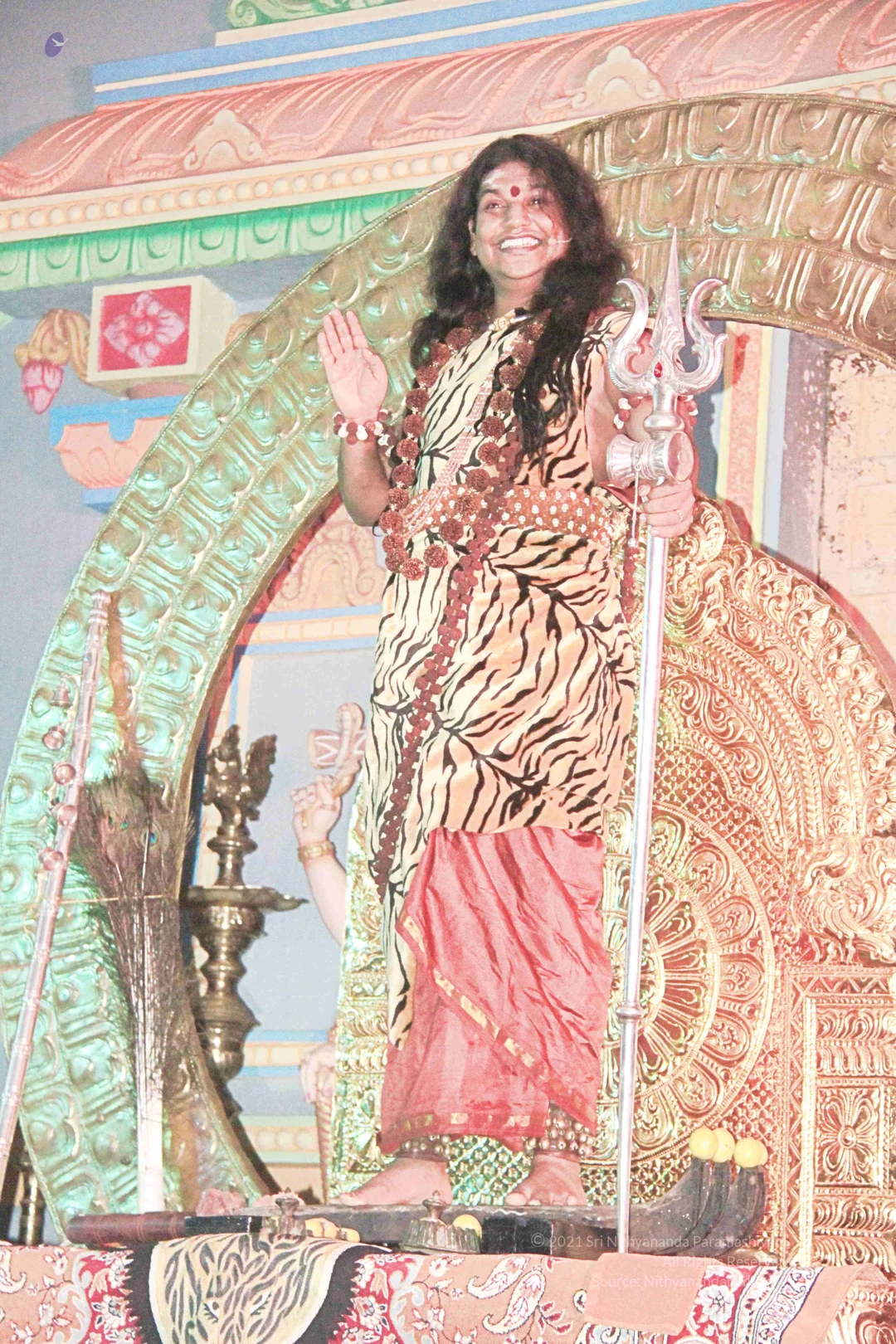
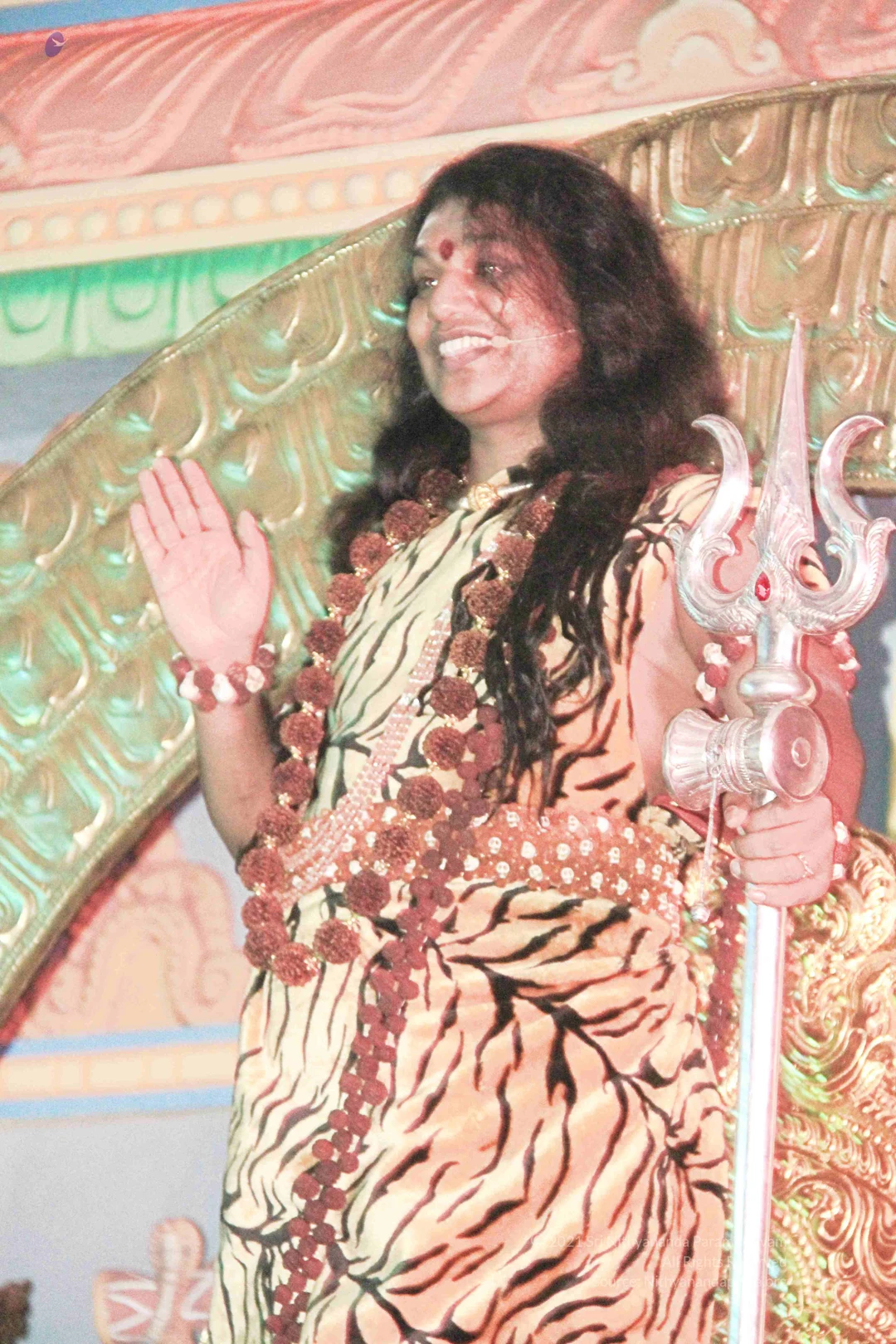
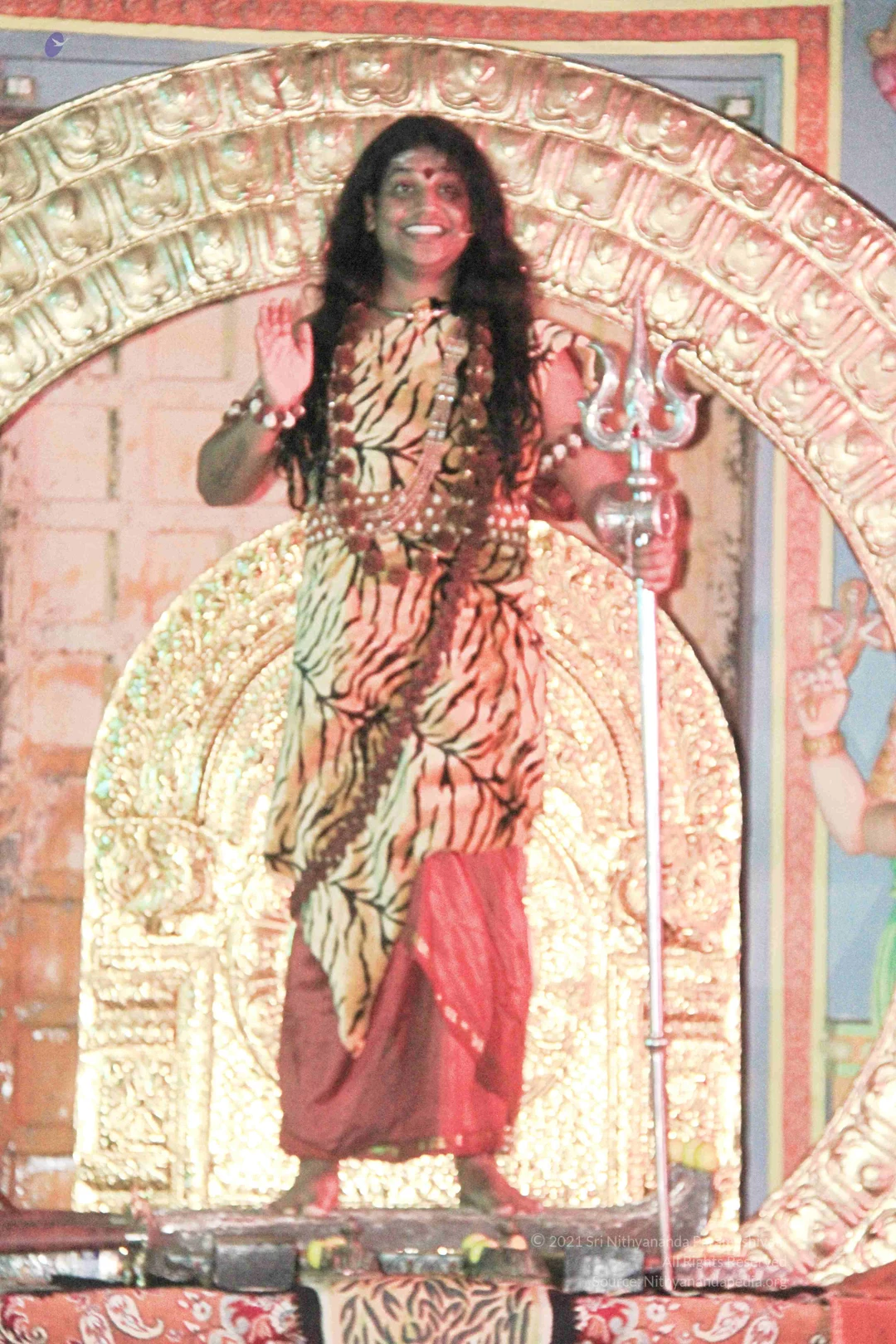
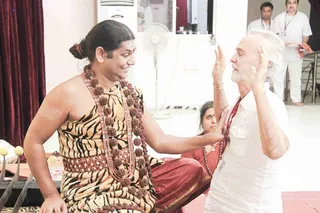
A photograph of a person standing on a raised platform inside an ornate temple-style stage, framed by a large ornate silver arch. The figure has long dark hair and wears a tiger-striped top with a red lower garment, several beaded necklaces, and bangles, while holding a trident. Behind is a silver throne-like backdrop and painted pillars, with brass lamp stands at the sides and a stone-like deity murti figure partly visible. Lighting is dim and blue-tinted.A figure in a tiger-striped costume with a red lower garment stands on a decorated pedestal in front of a large ornate silver-toned arch, holding a trident aloft. A throne-like silver seat and flanking figures with raised arms appear behind, with lamp stands at the sides and colourful painted pillars on the walls. The figure, with long dark hair and a red bindi, is styled as a goddess-like murti or costumed performer.A photograph of a person standing on a raised dais inside an ornate temple-like stage, framed by a large curved golden arch with repoussé patterns. The figure has long dark hair and wears a tiger-striped garment over red trousers, with a rudraksha-style bead necklace and a trident held upright in one hand. Behind them stands a gilded throne-like backdrop, and a dark brass lamp stand flanks the platform. Multi-armed deity statues appear partially at the sides, and a reddish-blue light wash colours the scene.A performer stands on an ornate stage within a large repoussé silver-toned arch, holding a trident in one hand and smiling. The figure wears a tiger-striped garment with red trousers, a red bindi, a long beaded necklace and dark flowing hair. Behind, a golden throne-like seat and multi-armed deity murti figures flank the stage, with brass lamps and ornate painted pillars around. The scene is lit with pink, green and blue stage lighting.A person stands on a raised platform inside an ornate shrine, framed by a large ornamental copper-toned arch. The figure wears a striped tiger-print garment with a red lower wrap, long dark hair, a layered beaded necklace and bangles, and holds a trident upright in one hand. Behind are a golden throne-like backdrop and painted pillars. A tiger-skin motif appears on the platform. The figure's appearance is not clear enough to attribute identity from cues alone, so this is described by role as a performer in a shrine tableau with a tiger motif.A performer stands on a raised stage inside an ornate temple-style set, dressed as a fierce goddess form. She wears a tiger-striped patterned top, red trousers, long dark hair, a layered beaded necklace and bangles, and holds a long trident in one hand while smiling. Behind her is a large repoussé-metal arch and a gilded shrine niche with carved pillars, painted panels and brass lamps. Other figures with multiple arms are partially visible at the sides. Her appearance does not clearly match the page's a person claim, so the person is described by role only.

Inner-Awakening-Darshan

33 photosSource gallery
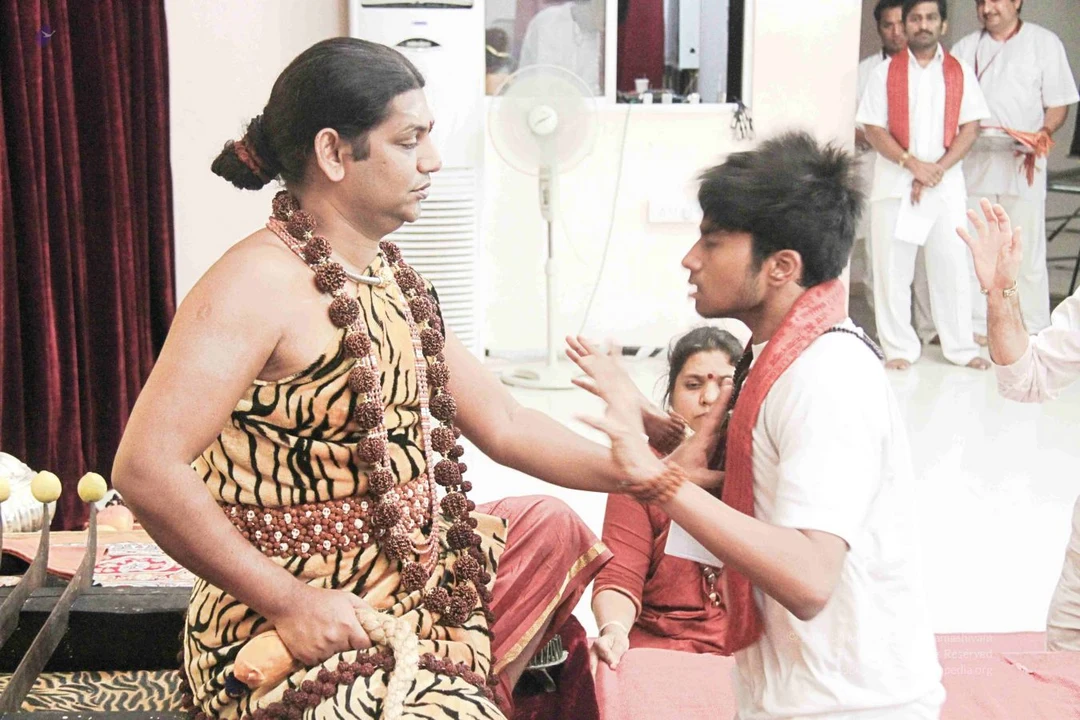
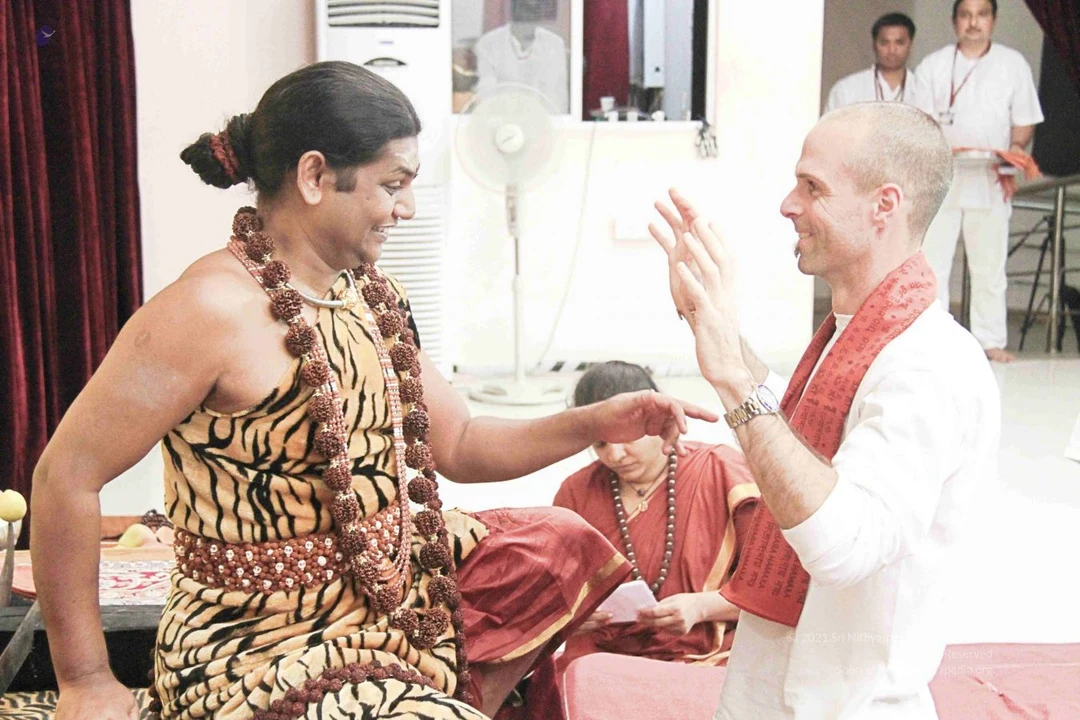
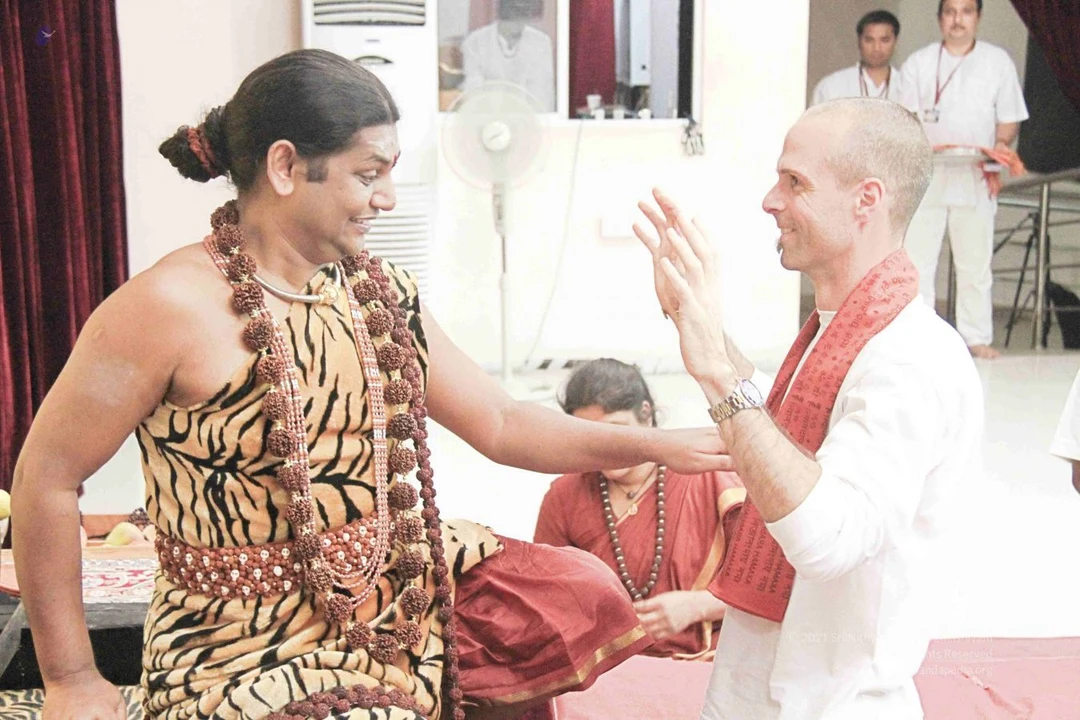
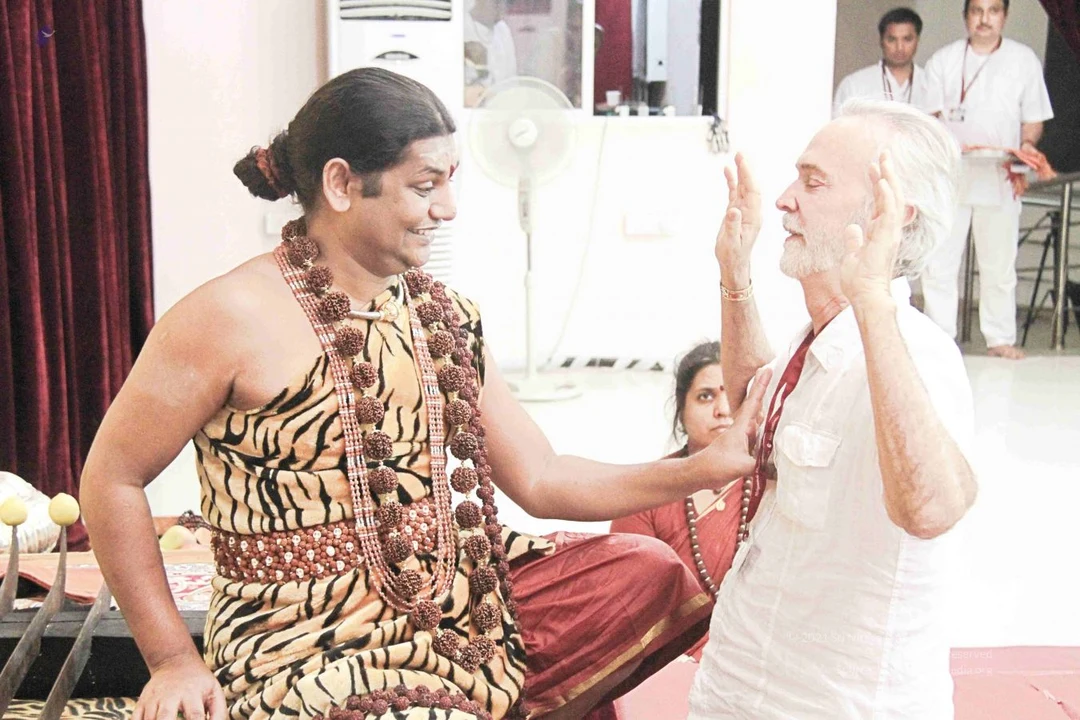
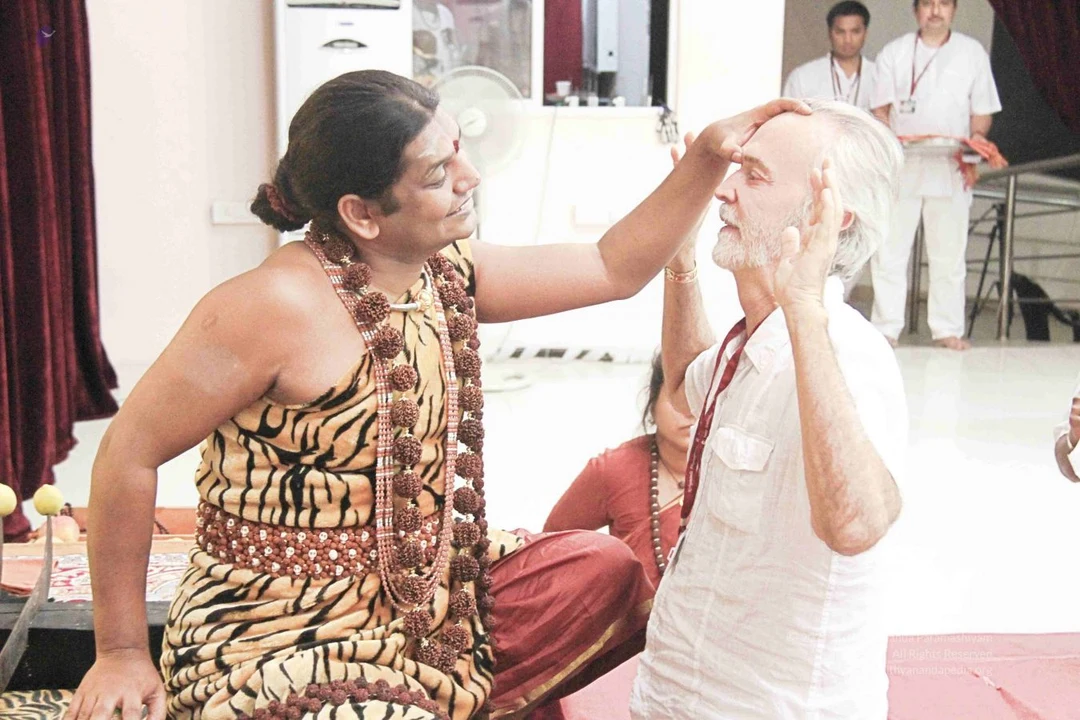
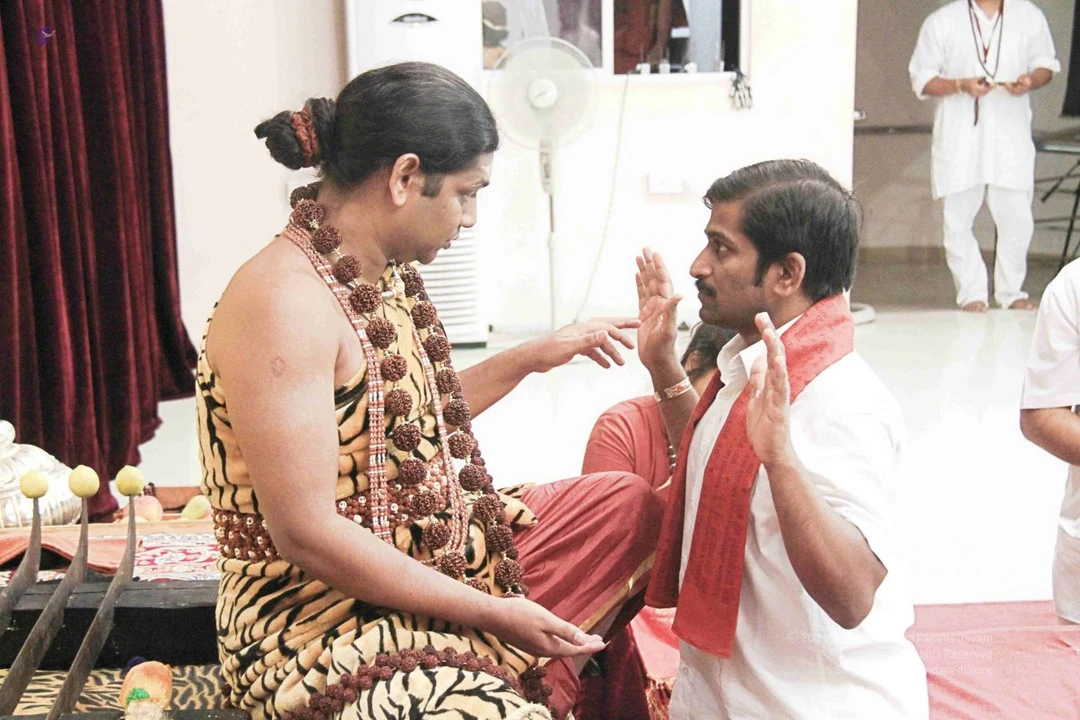
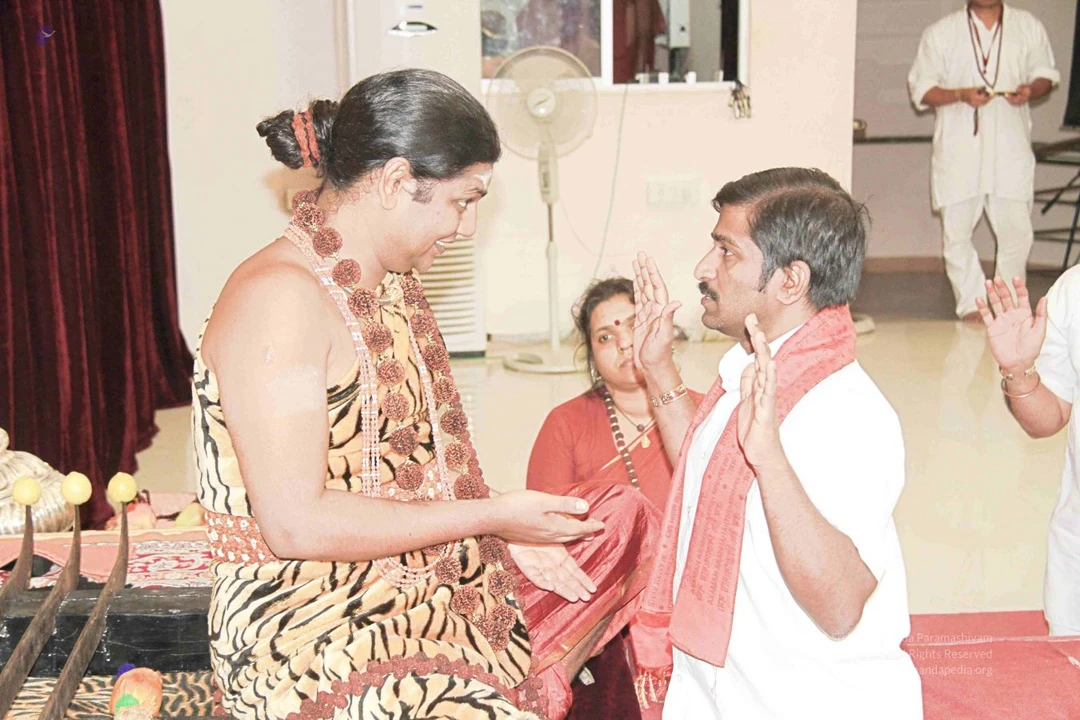
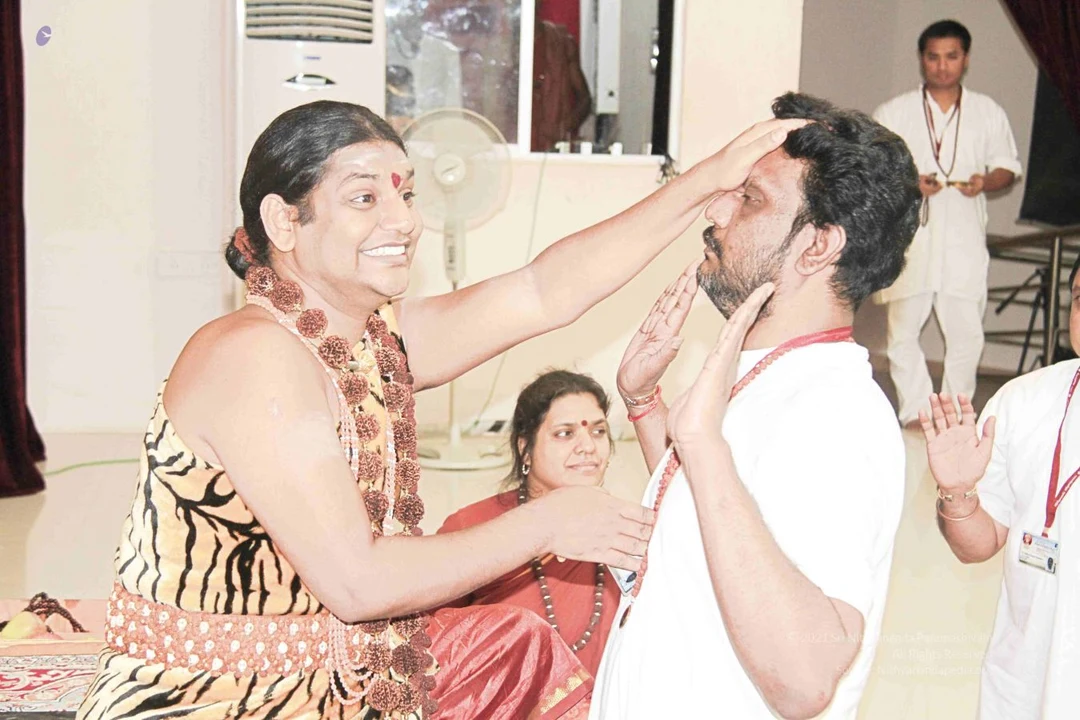
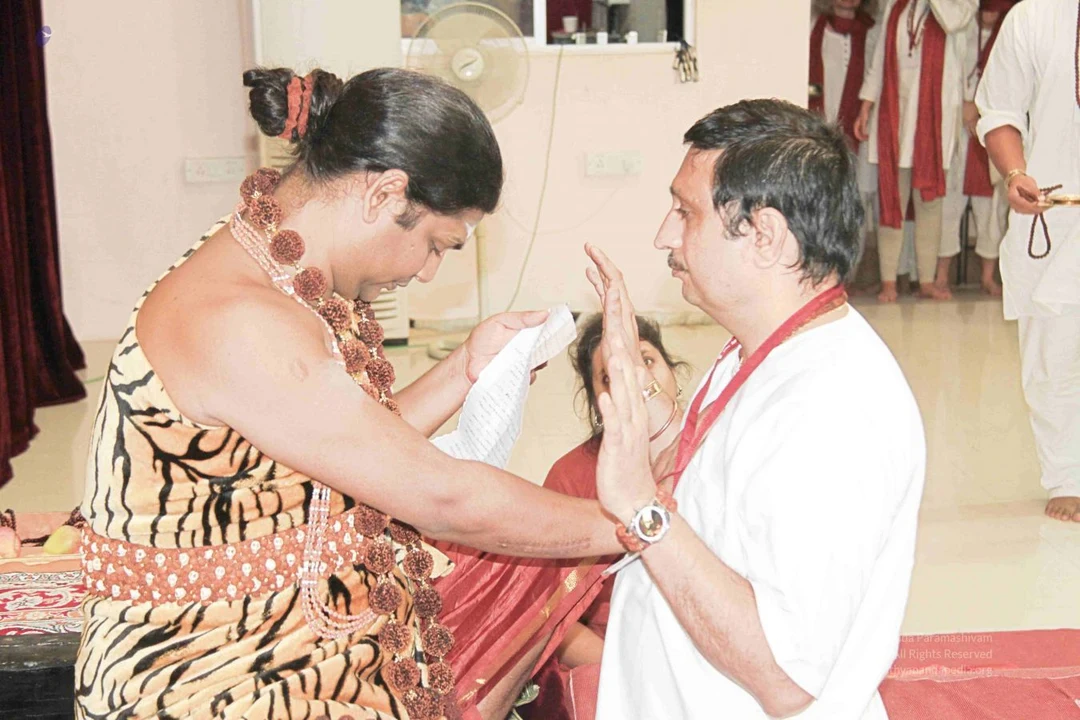
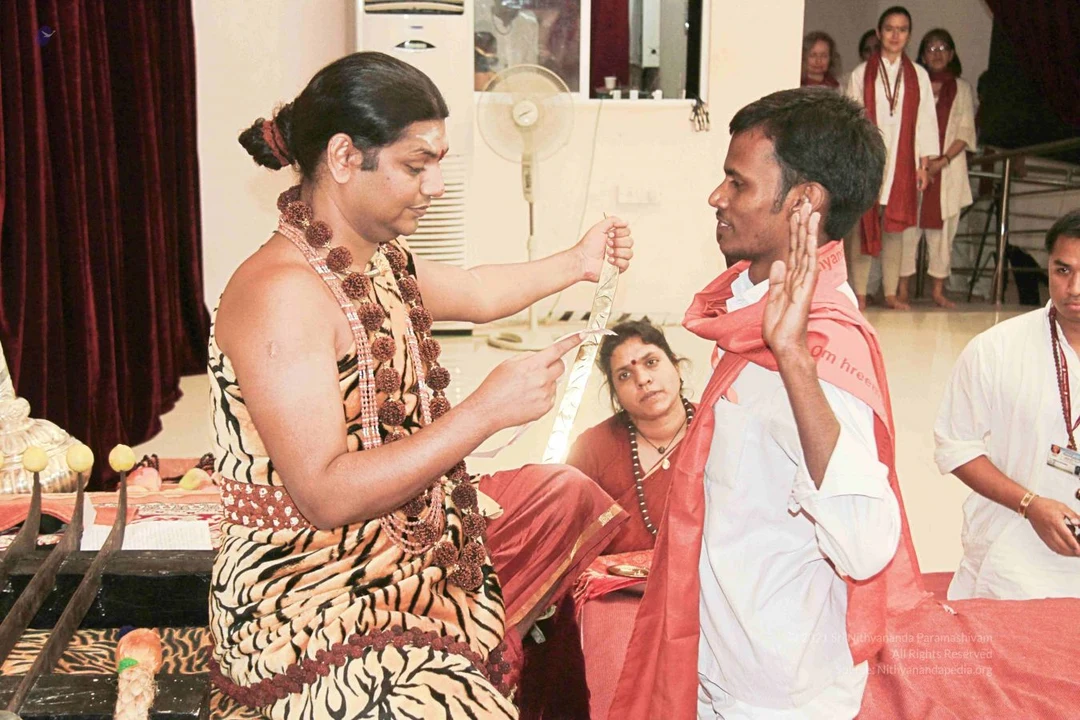
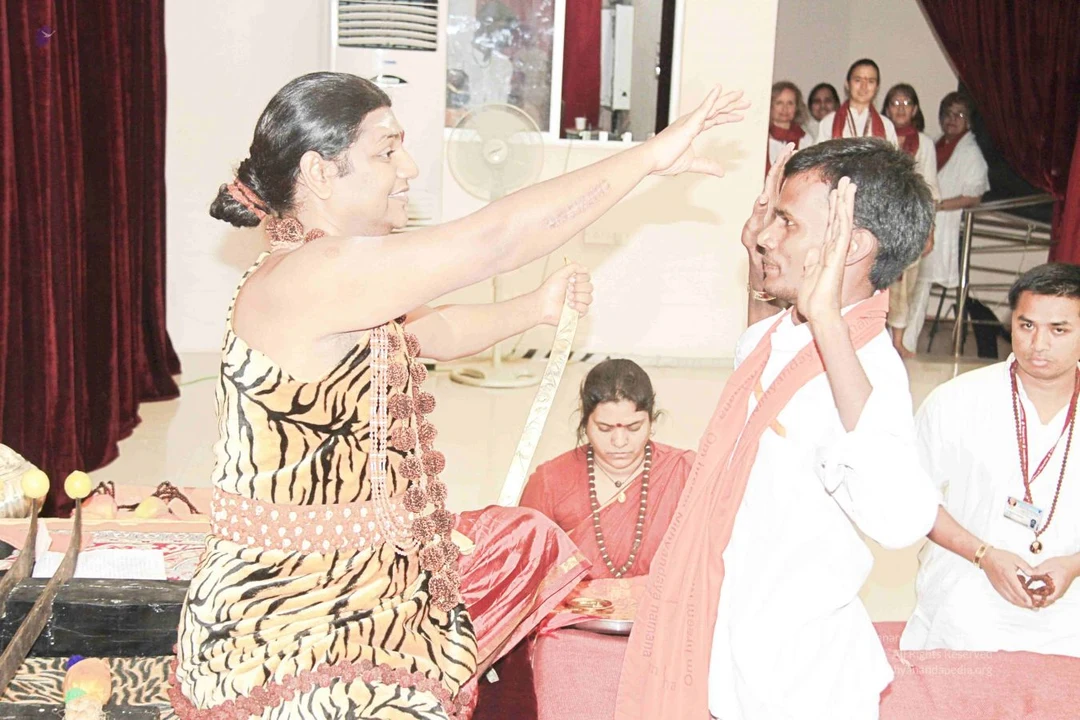
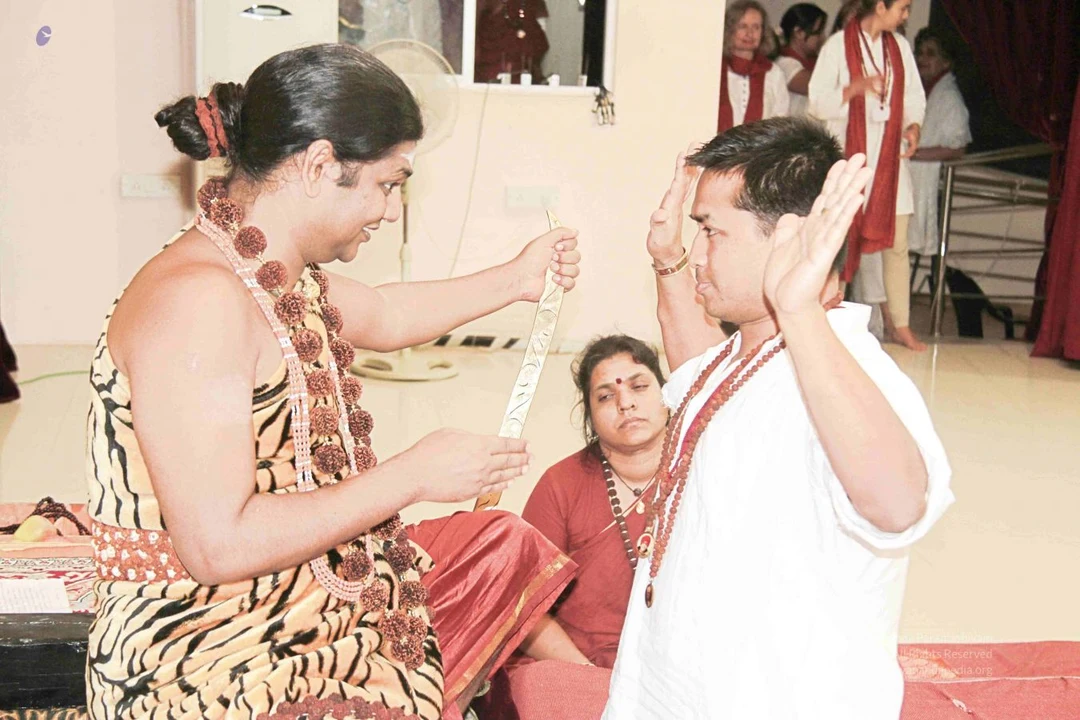
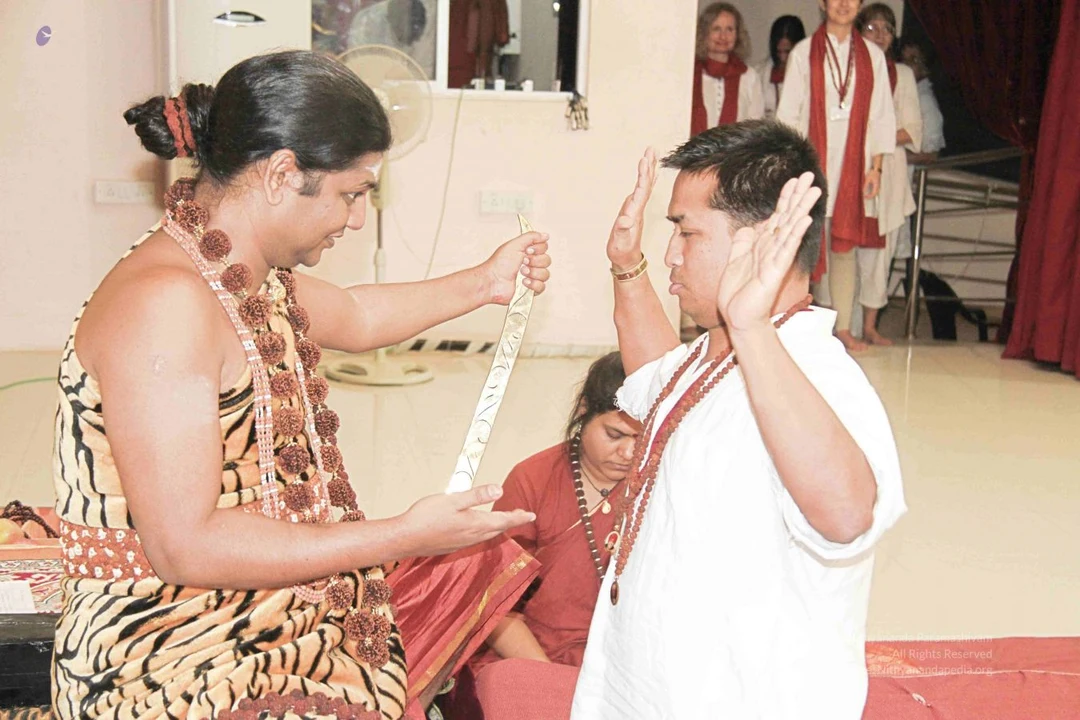
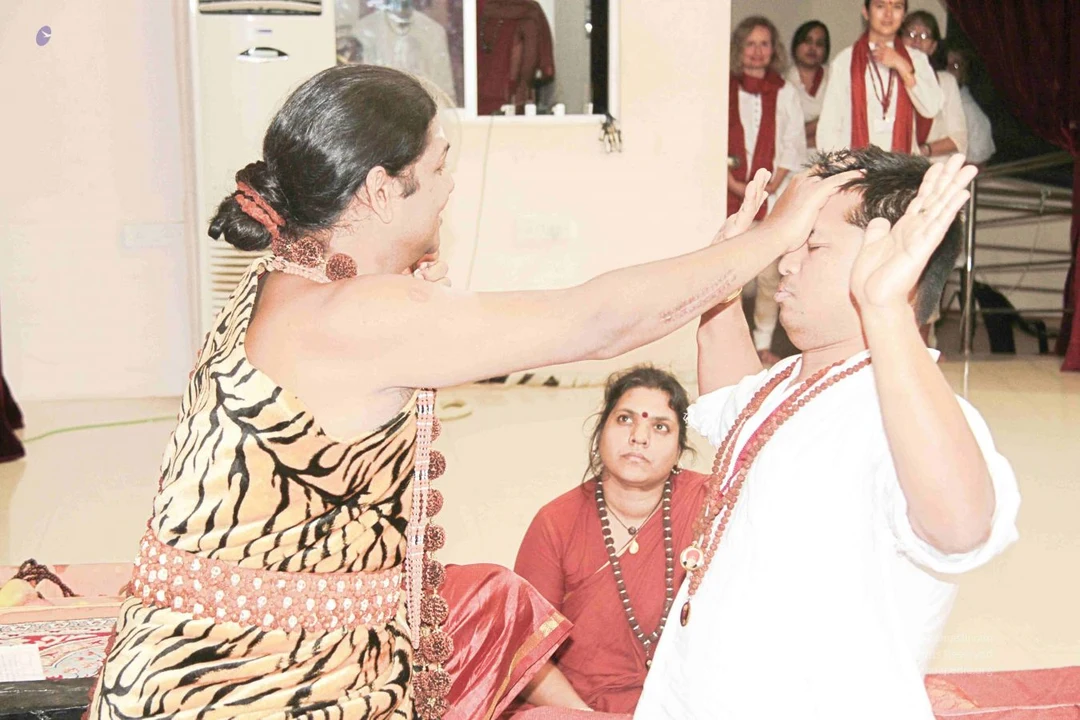
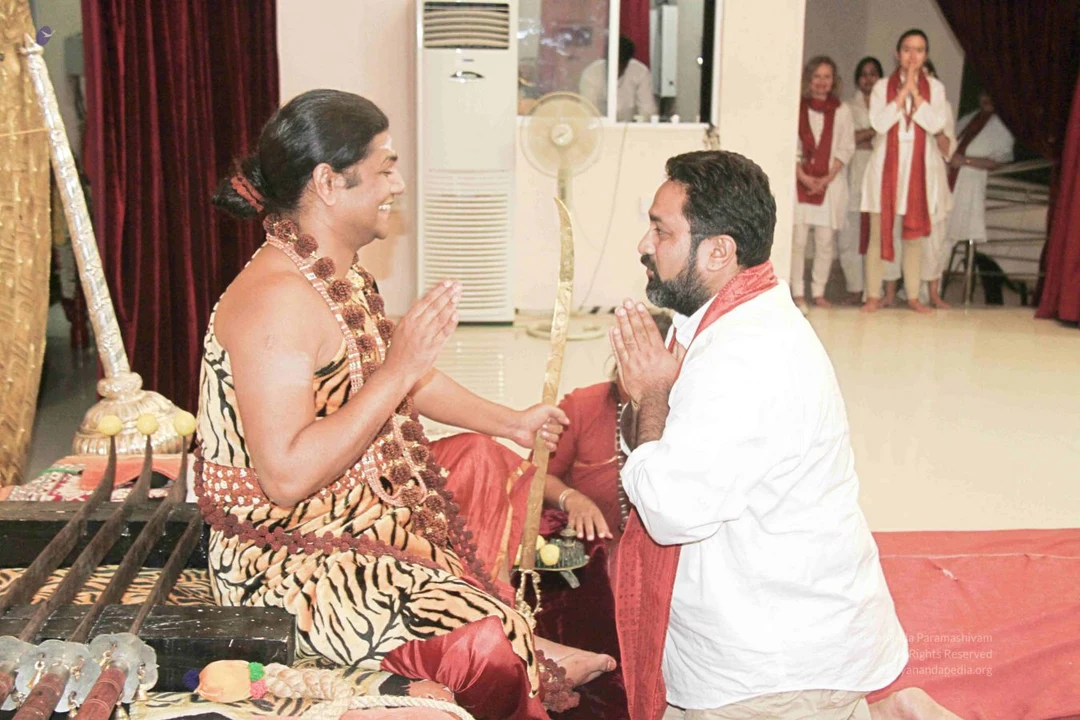
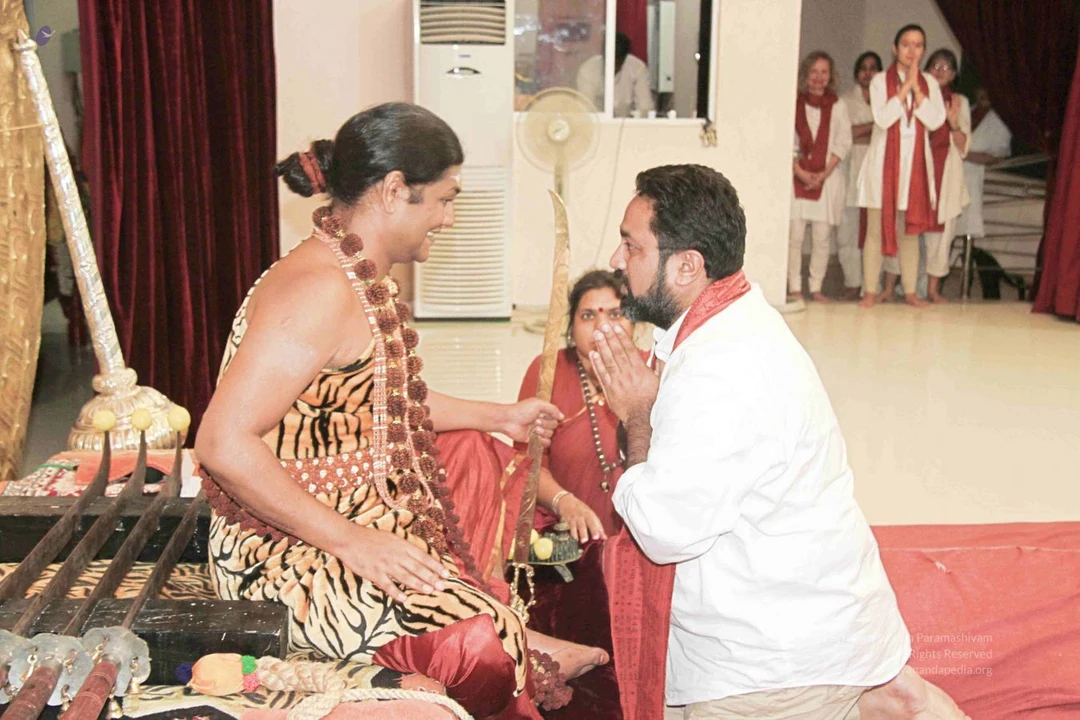
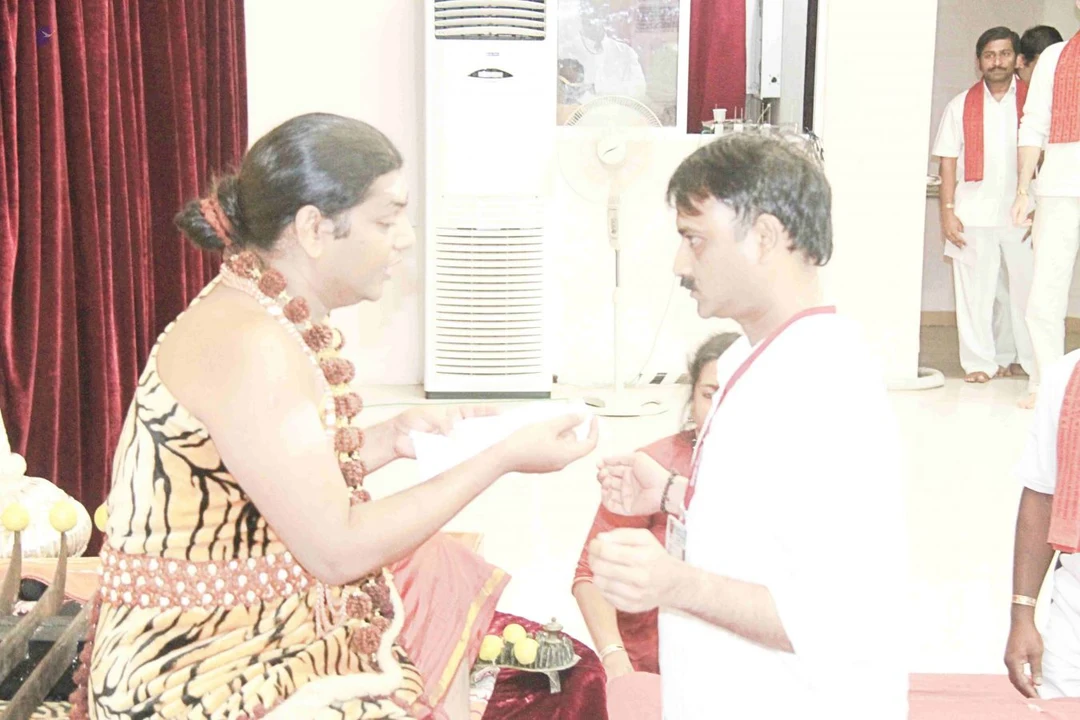
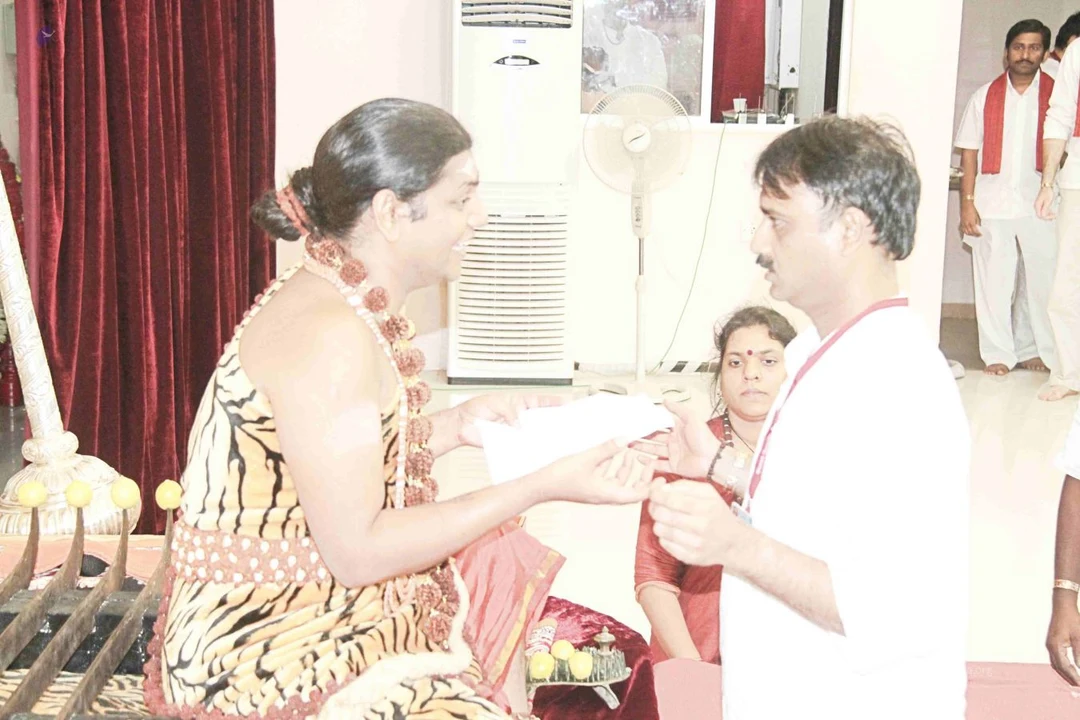
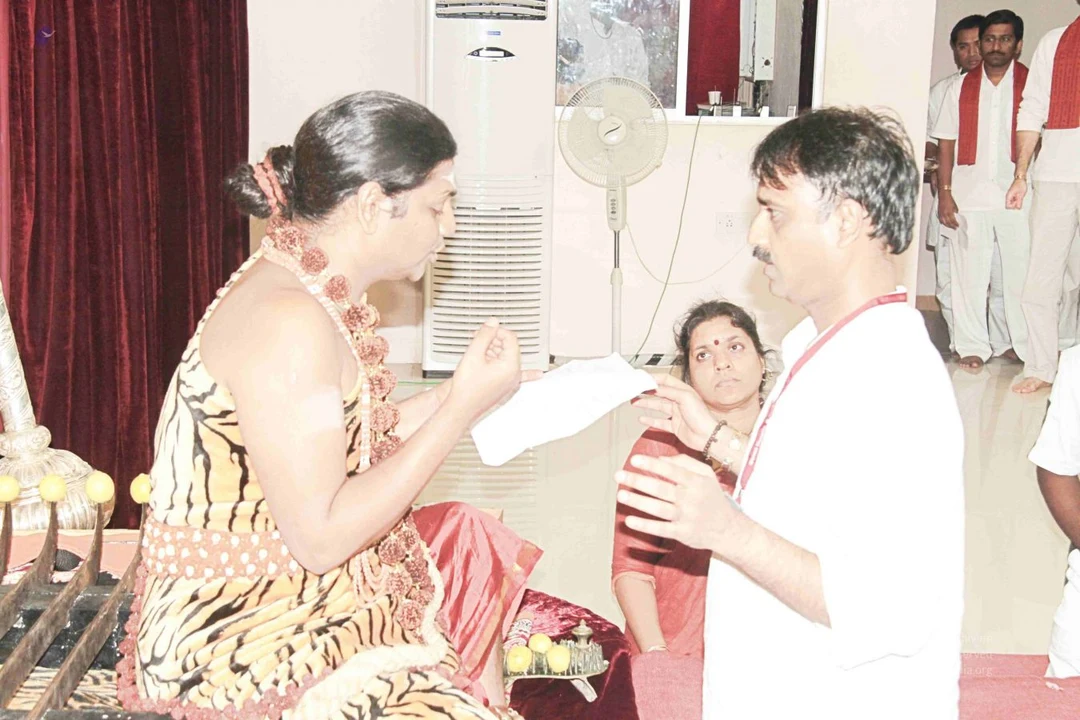
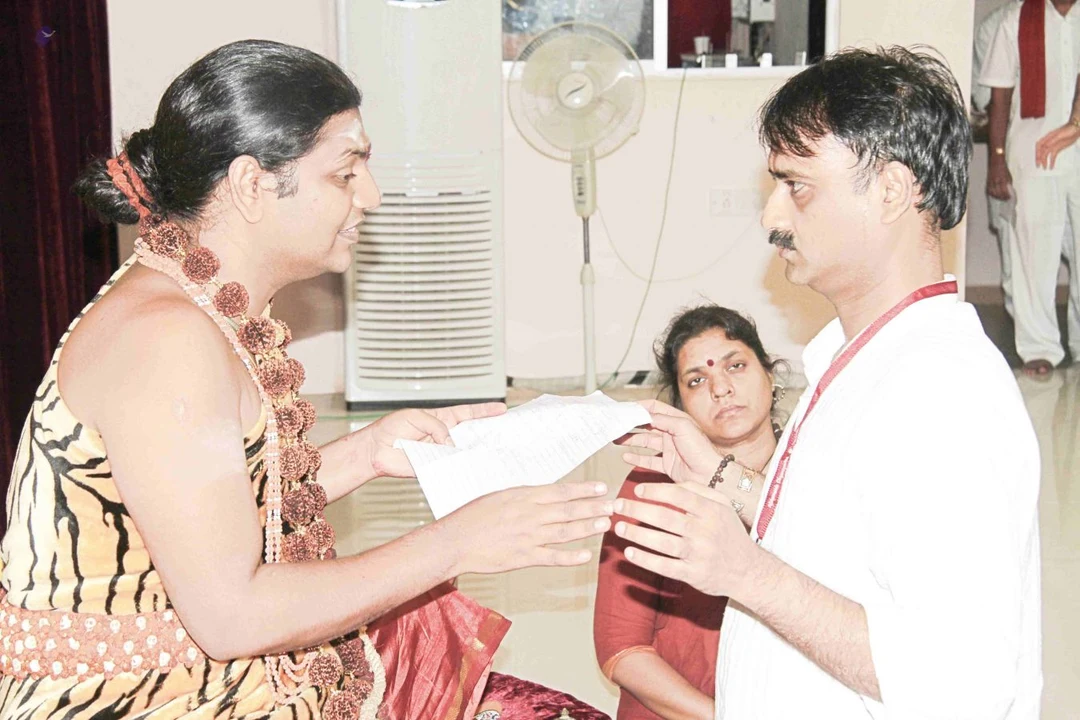
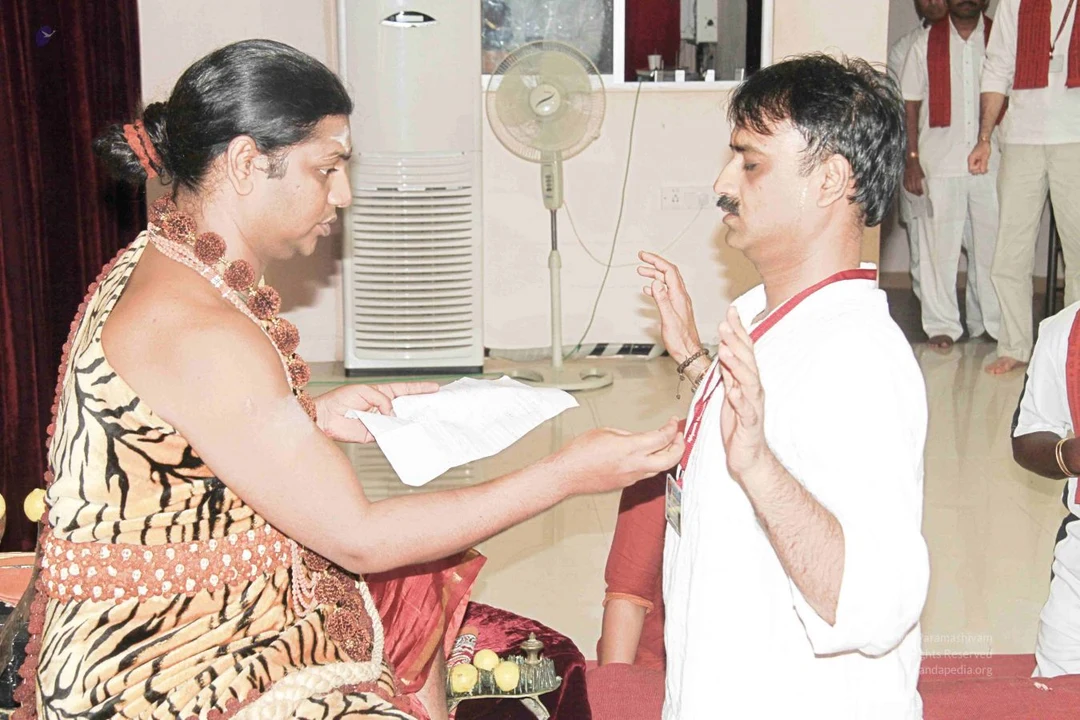
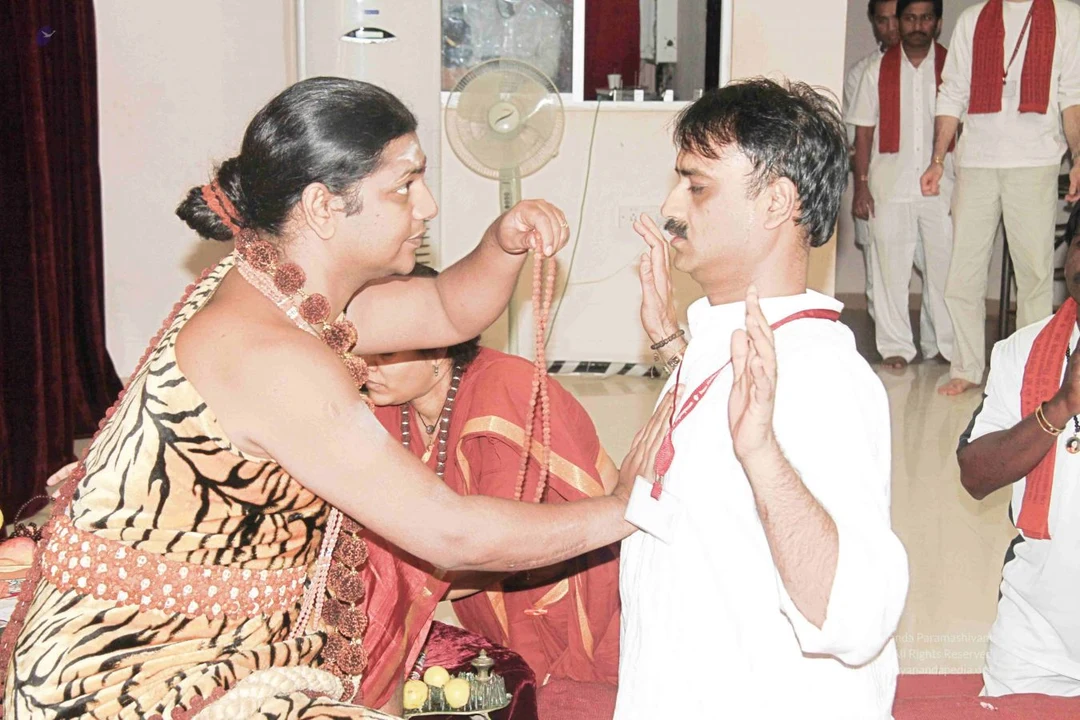
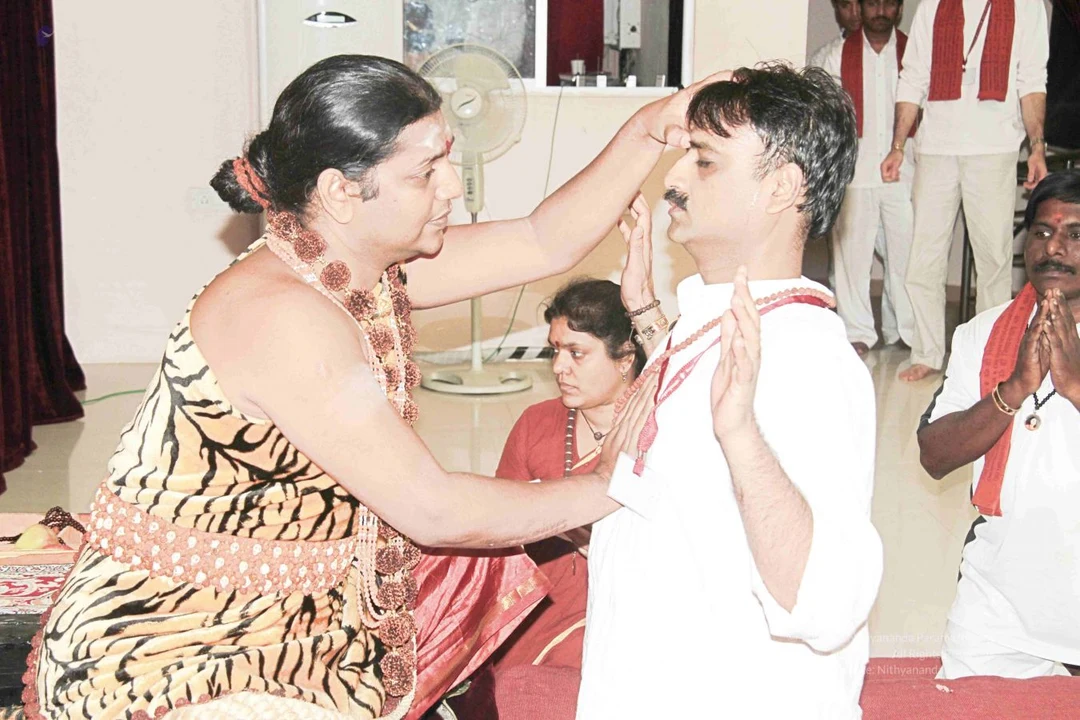
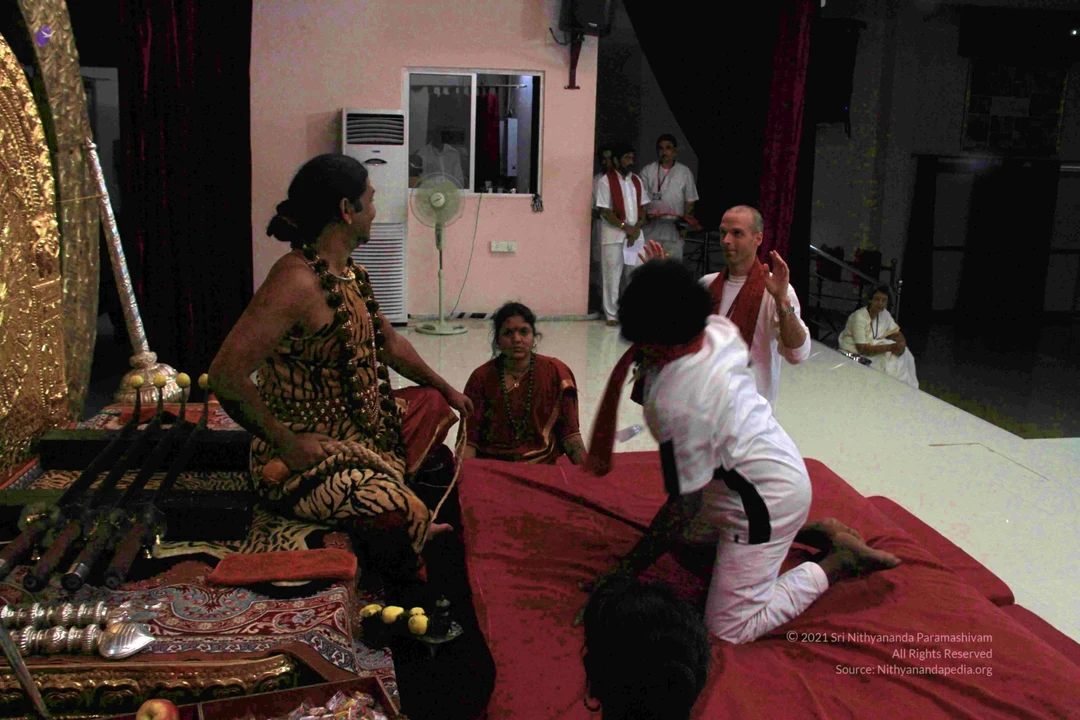
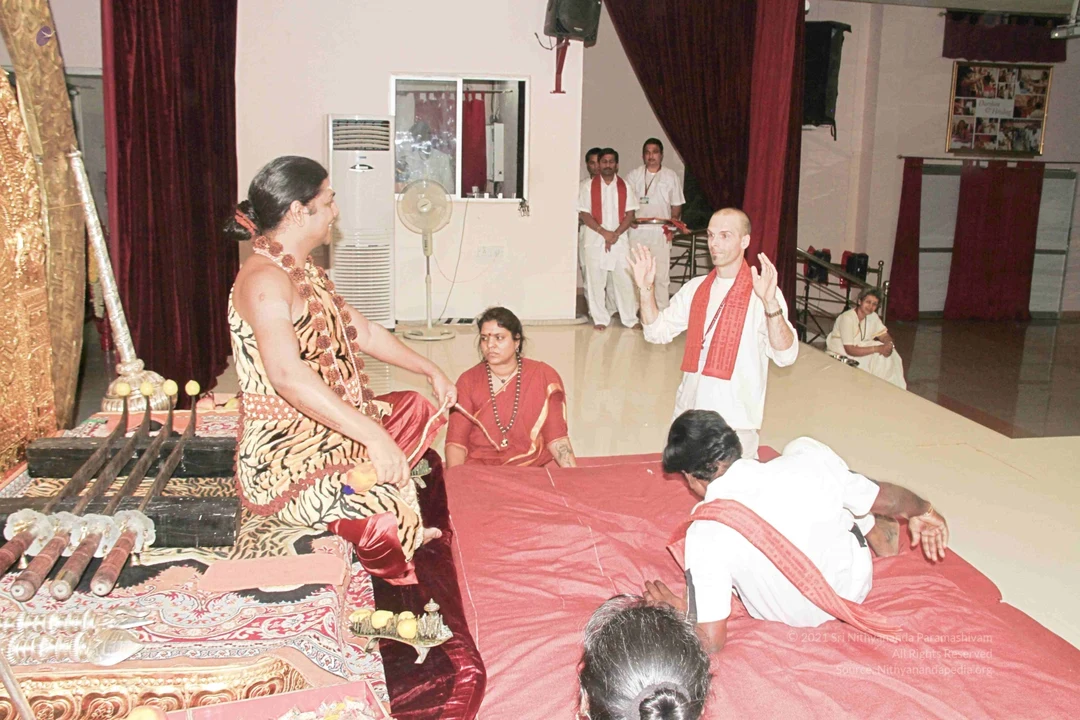
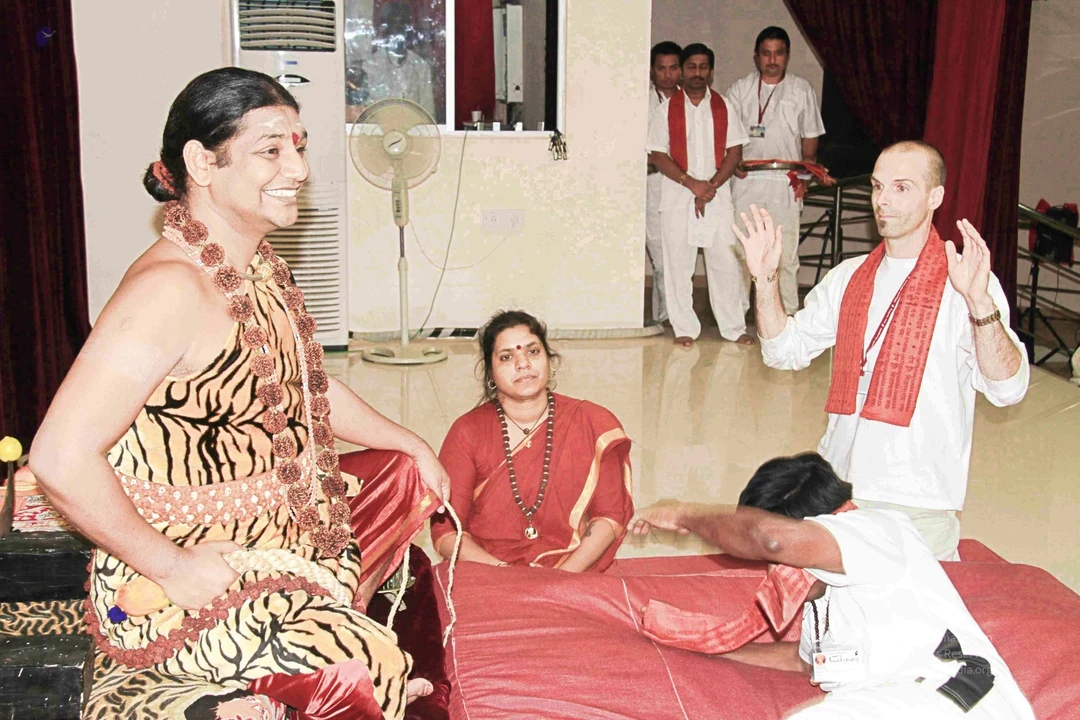
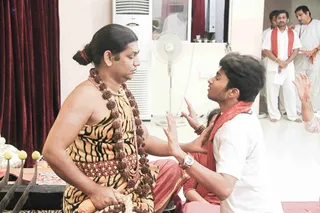
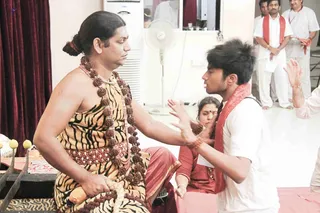
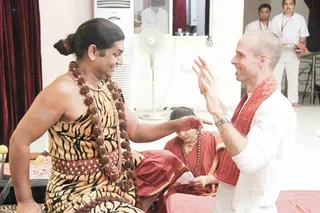
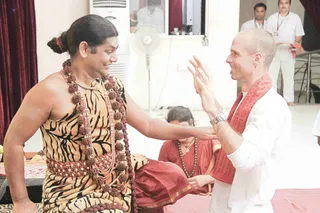
Indoor satsang scene in a hall with red curtains and a gold-rimmed ceremonial gong at left. A man with long swept-back hair, wearing a tiger-striped saffron-and-gold garment and multiple rudraksha malas, sits on a patterned cushion and gestures toward a kneeling man in a white shirt and white pants with a red shawl, who raises one arm. A woman in a red-orange sari with a rudraksha mala sits on the red mat between them. Behind, a bald man in white with a red shawl and other men in white stand near a wall. A brass tray with fruit and small vessels sits on the floor at lower left, and a small fan and air conditioner are visible in the background. a person (the seated man with long swept-back hair, tiger-striped saffron garment and rudraksha malas, seated as the teacher). A printed photo collage hangs on the back right wall.A seated man with long dark hair tied up at the back wears a tiger-striped saffron wrap over his shoulder, a thick rudraksha mala around his neck and a beaded rudraksha belt at his waist, sitting on a low platform. Facing him, a younger man in a white shirt and red shawl kneels with both hands raised toward the seated figure, palms outward. Behind them, a woman in a red sari sits on the floor, and several men in white with red shawls stand near a white wall and a standing fan, with a red velvet curtain at left and brass ritual items at the lower left.A seated man with long dark hair tied up in a bun wears a tiger-striped saffron-and-black garment and a heavy mala of rudraksha beads with a red-and-white bead belt, sitting on a low platform with a tiger-striped cloth. He faces a younger man in a white shirt with a red shawl, whose hands are raised toward him in a gesture of reverence while he kneels. Behind them, a woman in a red sari sits with her hands folded, and several men in white clothes with red shawls stand near a white cabinet and a floor fan in a bright room with maroon curtains. The seated figure's distinctive long hair, rudraksha malas and striped garment are cues consistent with a person candidate, though the appearance is not conclusive.A photograph of two men in a room with red curtains and a white wall. On the left, a man with long dark hair tied up in a bun wears a tiger-striped garment and multiple rudraksha mala necklaces and a rudraksha belt; he smiles and gestures toward the man on the right. On the right, a bald man in a white kurta with a red-and-gold scarf around his neck raises his hands in conversation and smiles. Behind them a woman in a red sari with a rudraksha mala sits, and two men in white stand near a table at the back.Indoor satsang scene in a bright room with red curtains and a standing fan. A man with hair tied in a high bun, wearing a tiger-striped garment, layered rudraksha malas and a rudraksha belt, smiles while reaching toward a bald man in white clothes with a red shawl printed with script. The bald man raises his hands, palms open, in greeting. A woman in a red sari and rudraksha mala sits behind them, and two men in white stand at a table in the background. a person: the man in the tiger-striped garment with rudraksha malas and bun matches the page's a person presence. The shawl and white clothes are ordinary devotee attire.A photograph of two men seated face to face on a pink mat in an indoor hall. On the left, a man with hair tied in a high bun wears a tiger-striped orange-and-black cloth, a long multi-strand rudraksha mala, a beaded rudraksha belt, and a bare chest; he gently touches the chest of the other man. On the right, an older white-haired, bearded man in a white short-sleeved shirt with a red cord around his neck raises both hands toward the first. Behind them a woman in a red sari sits, and two men in white stand near a white cabinet and a fan. a person is the man in tiger-striped cloth with rudraksha malas, a distinctive ritual presentation, and he is physically present.

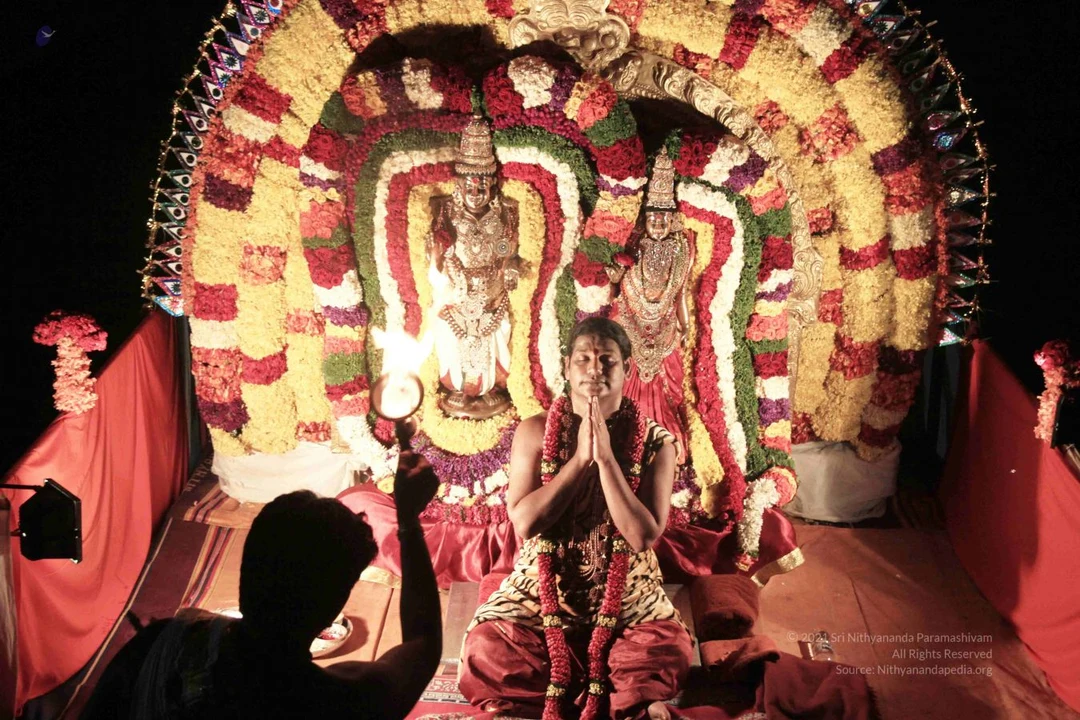
Theppotsavam

98 photosSource gallery
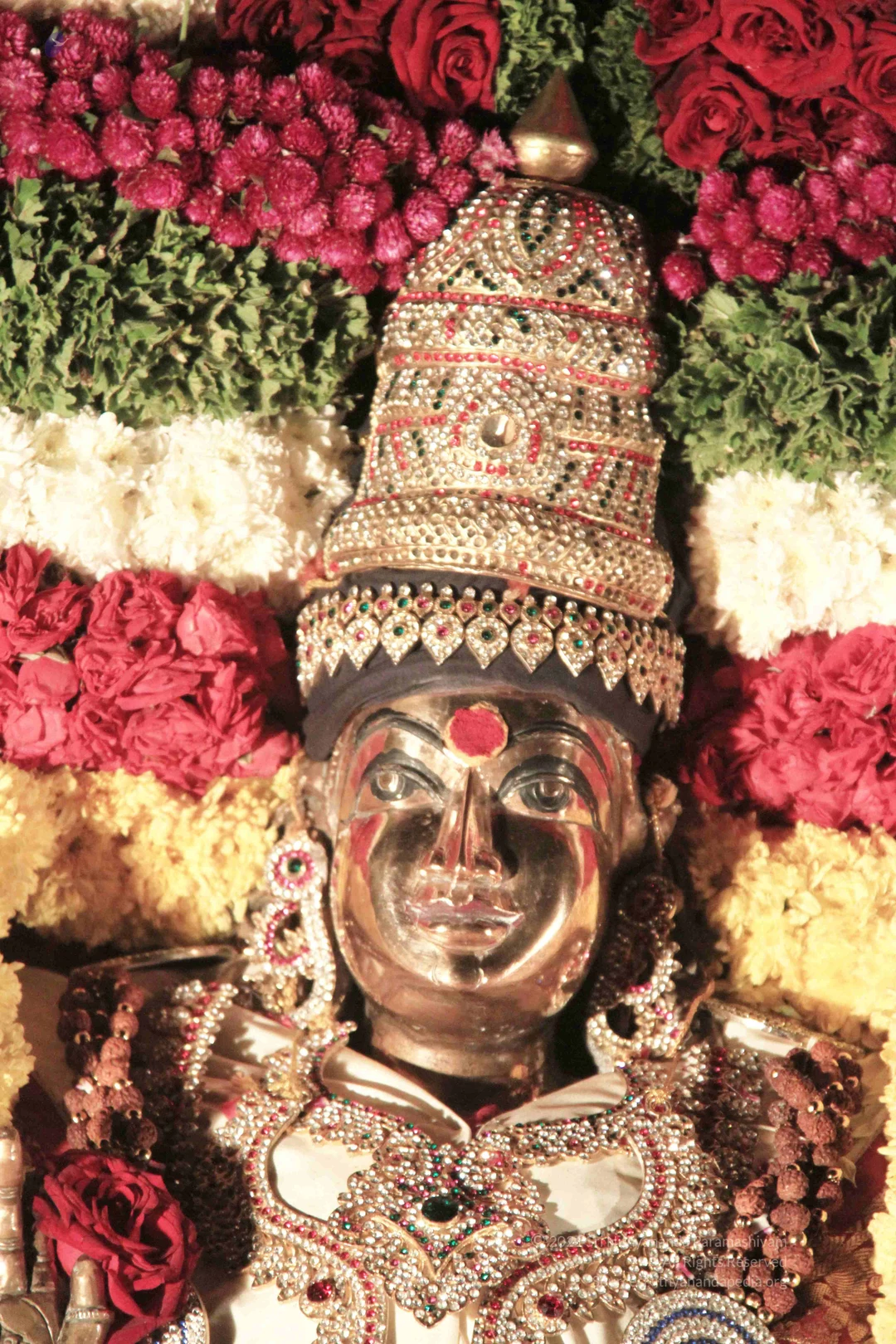
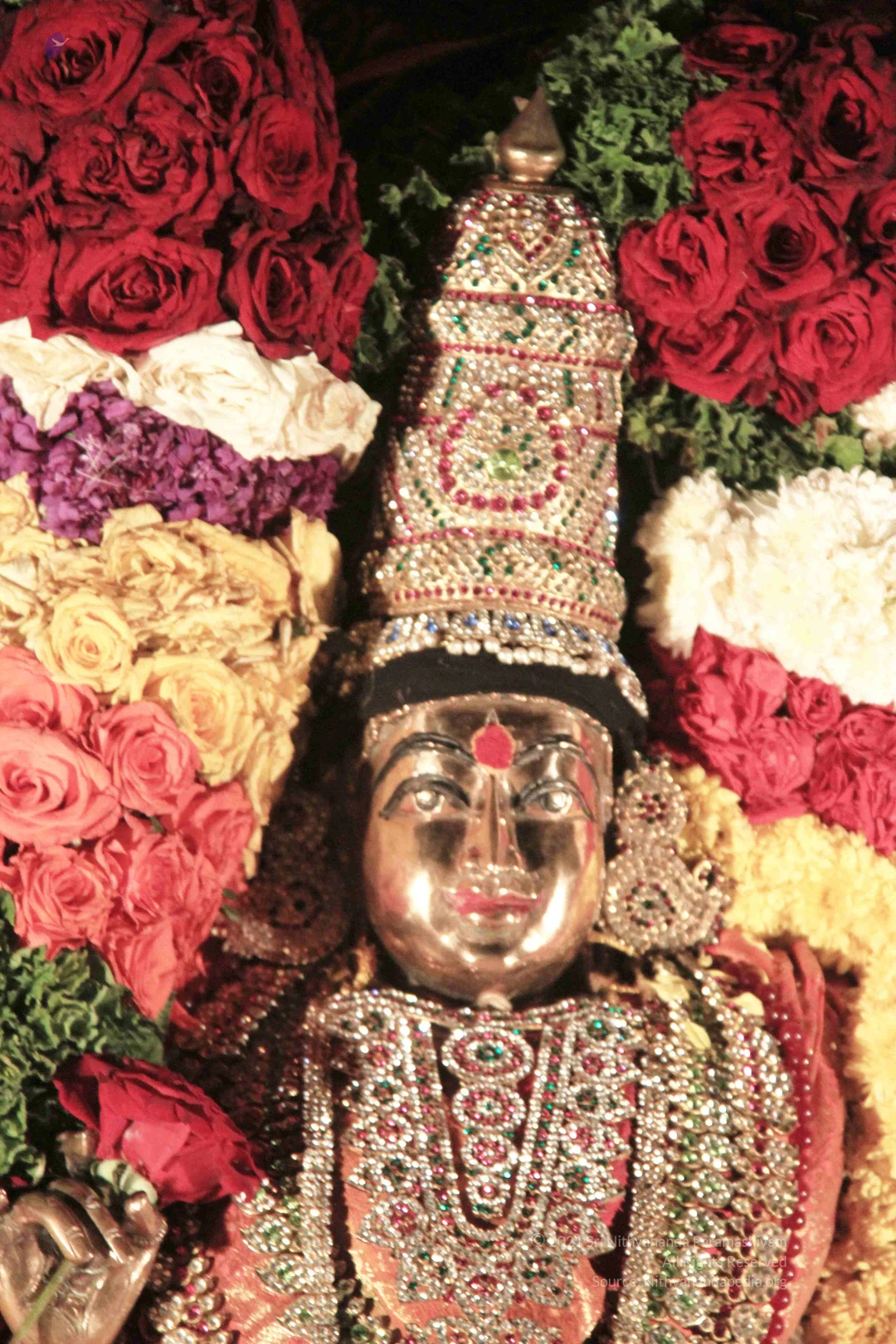
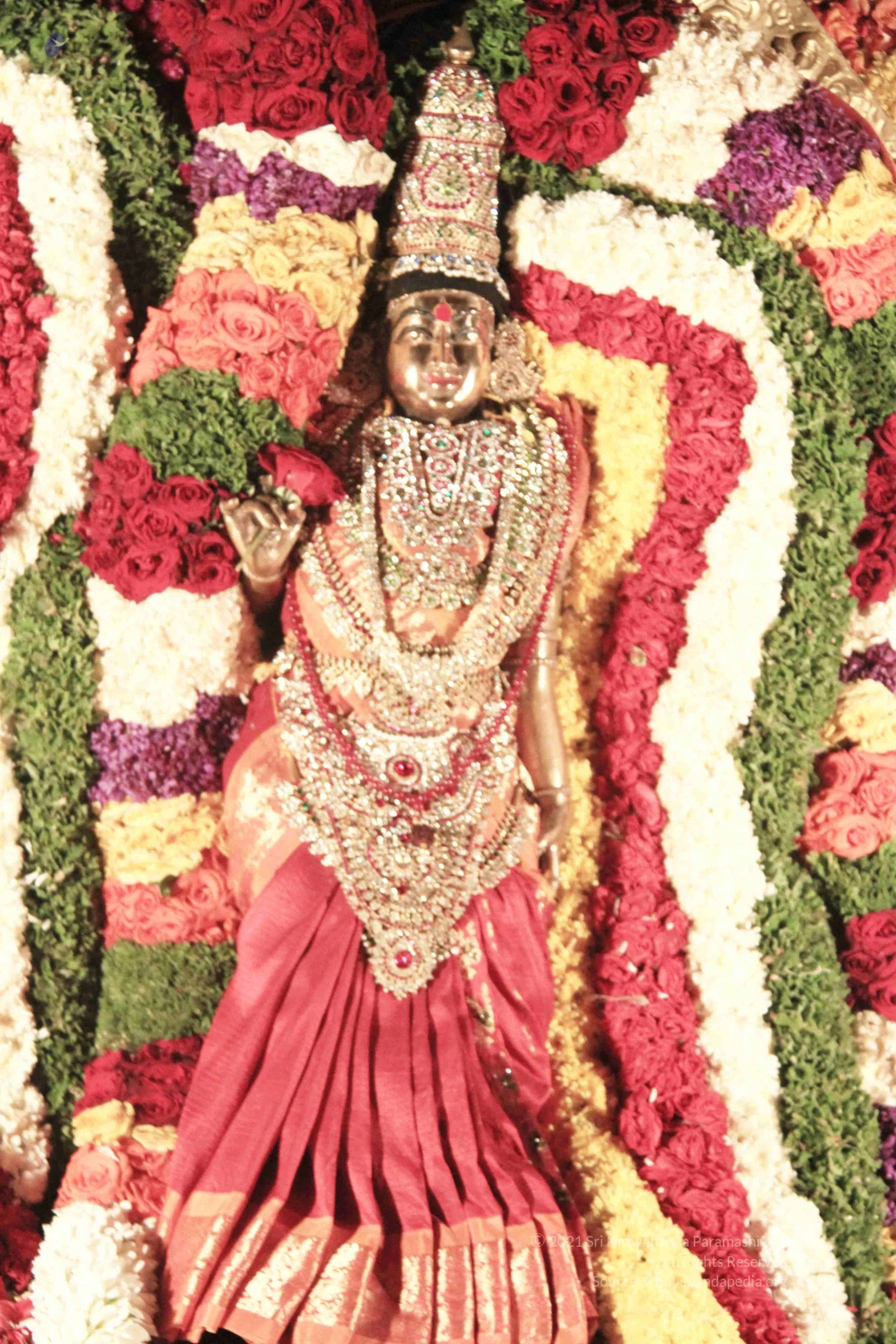
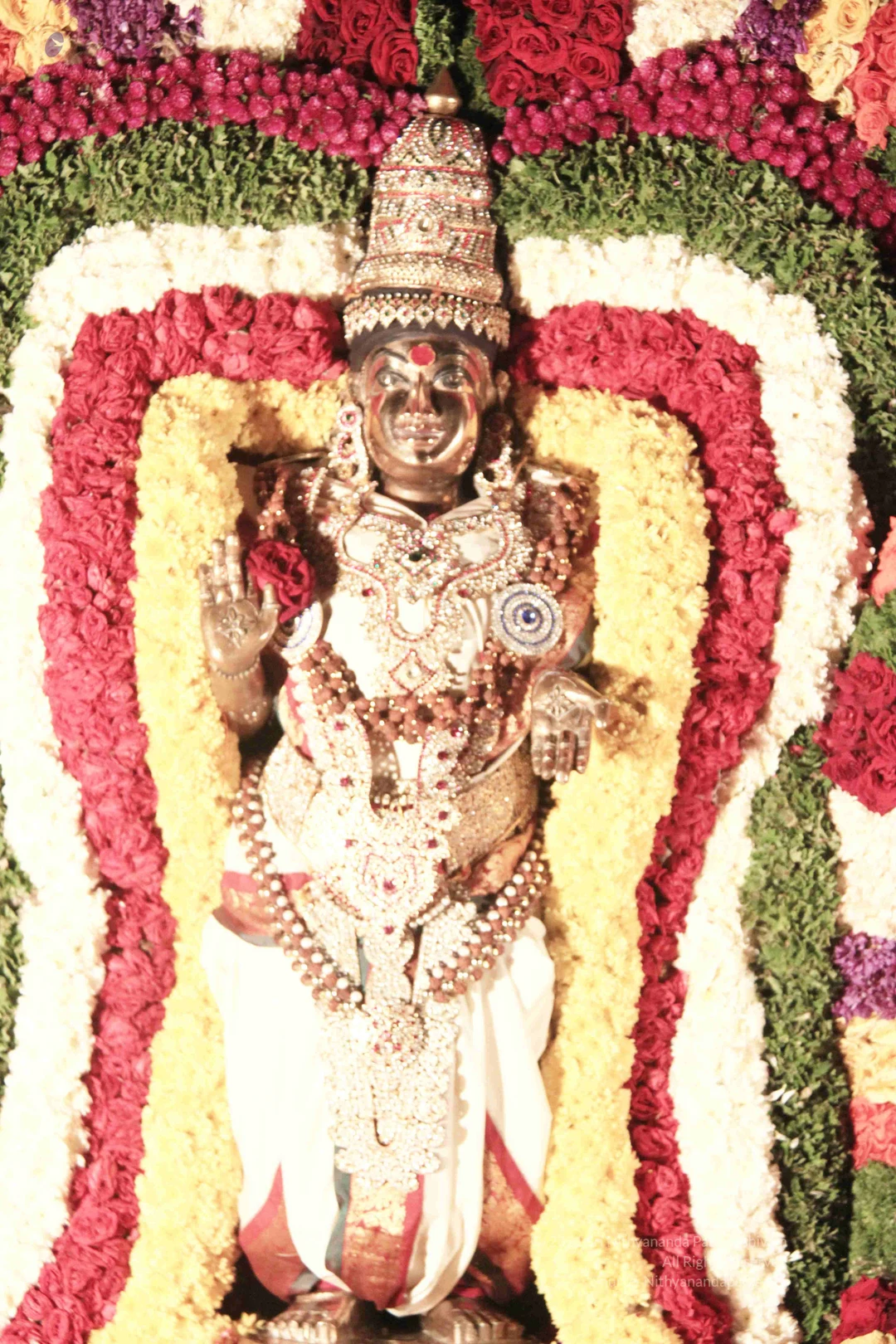
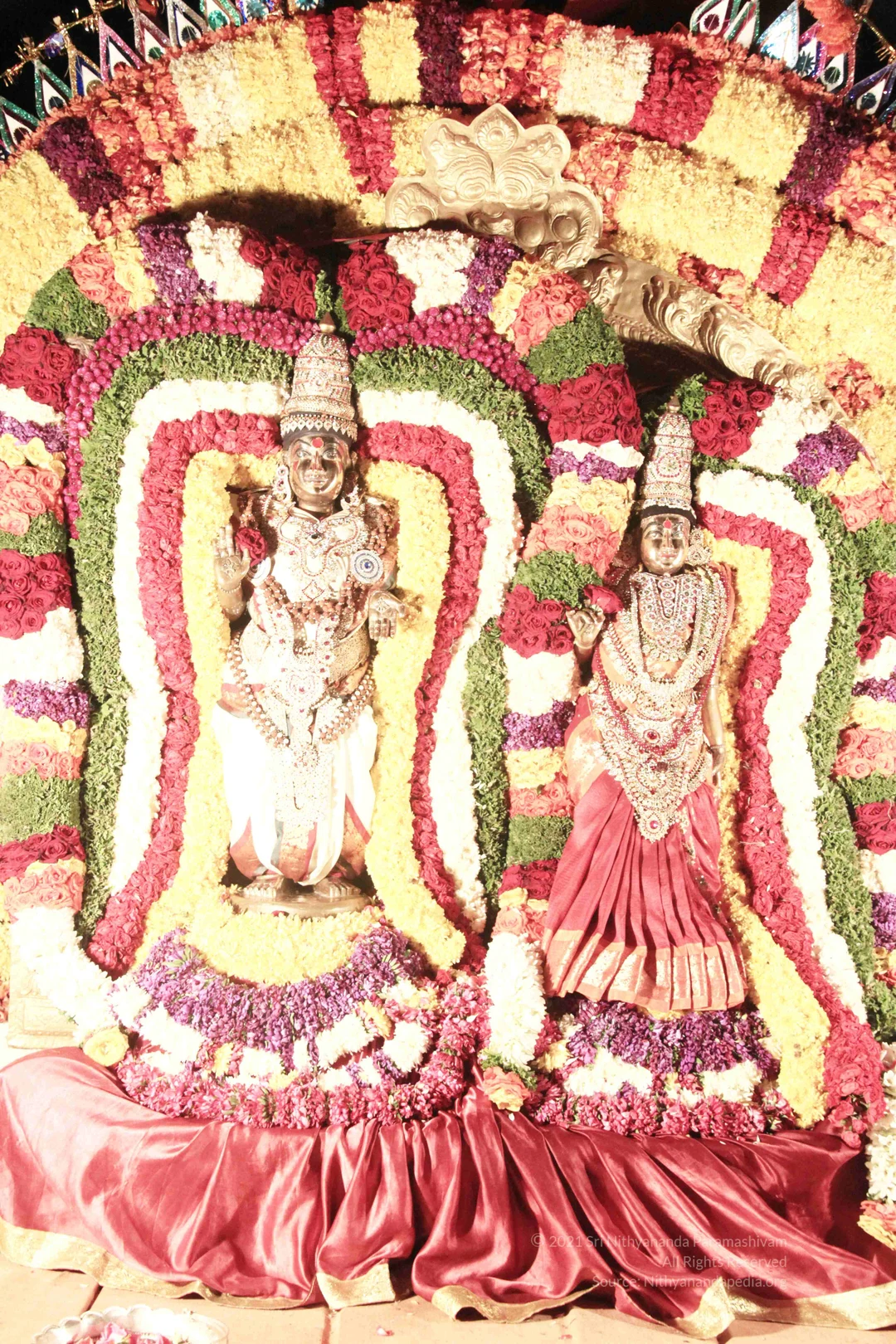
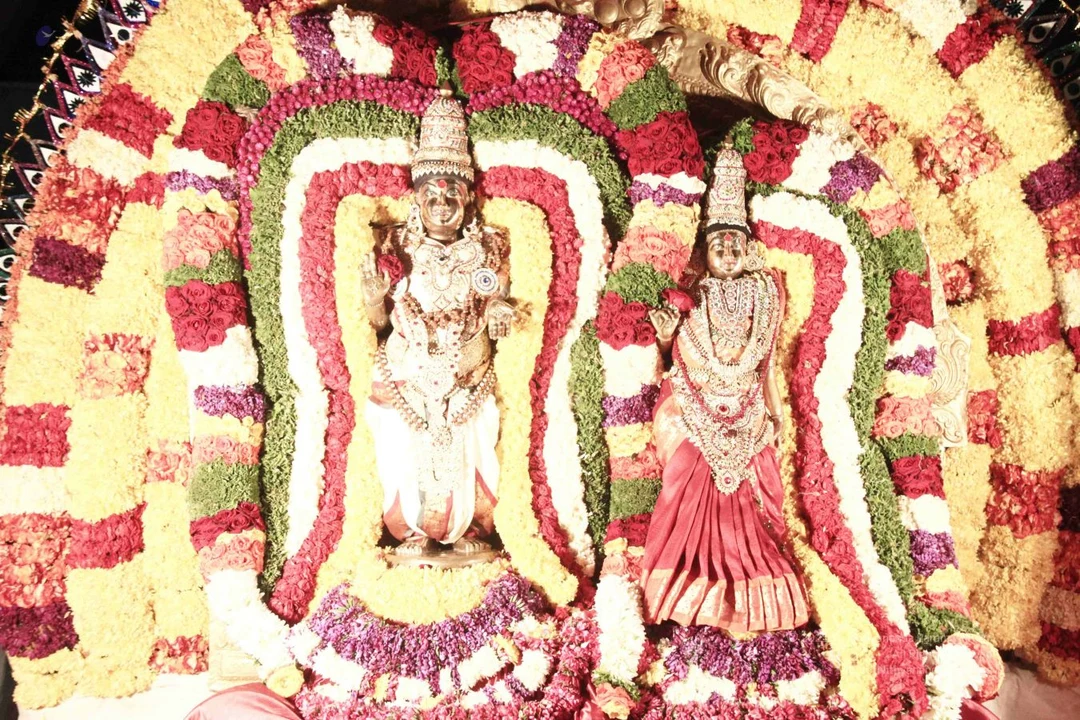
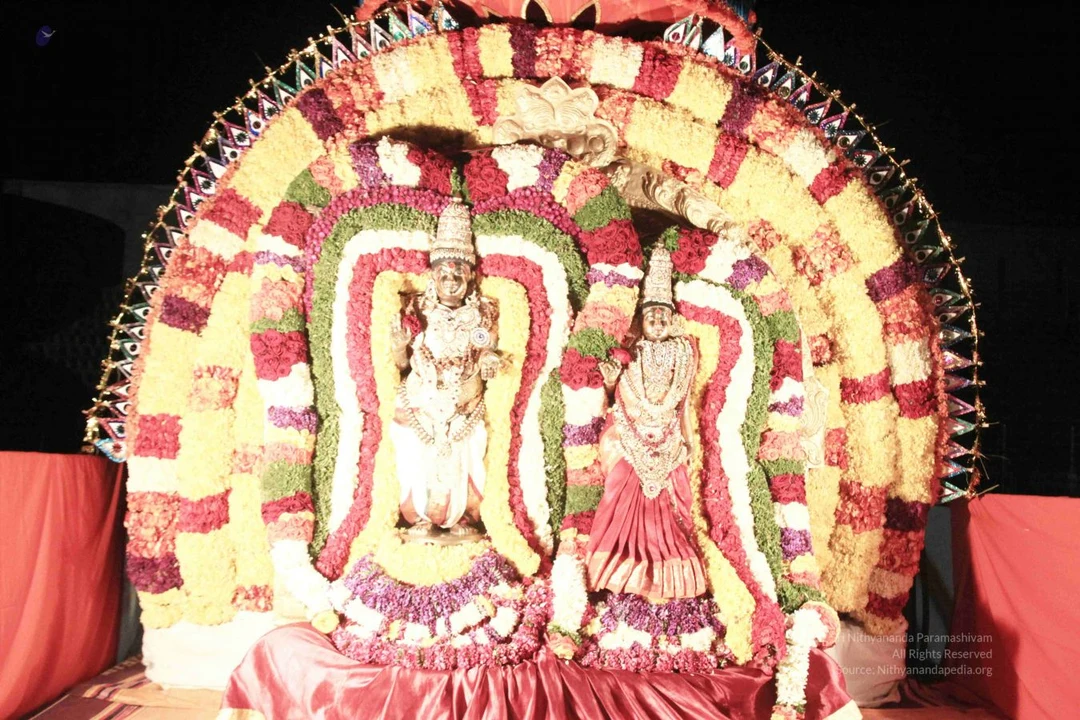
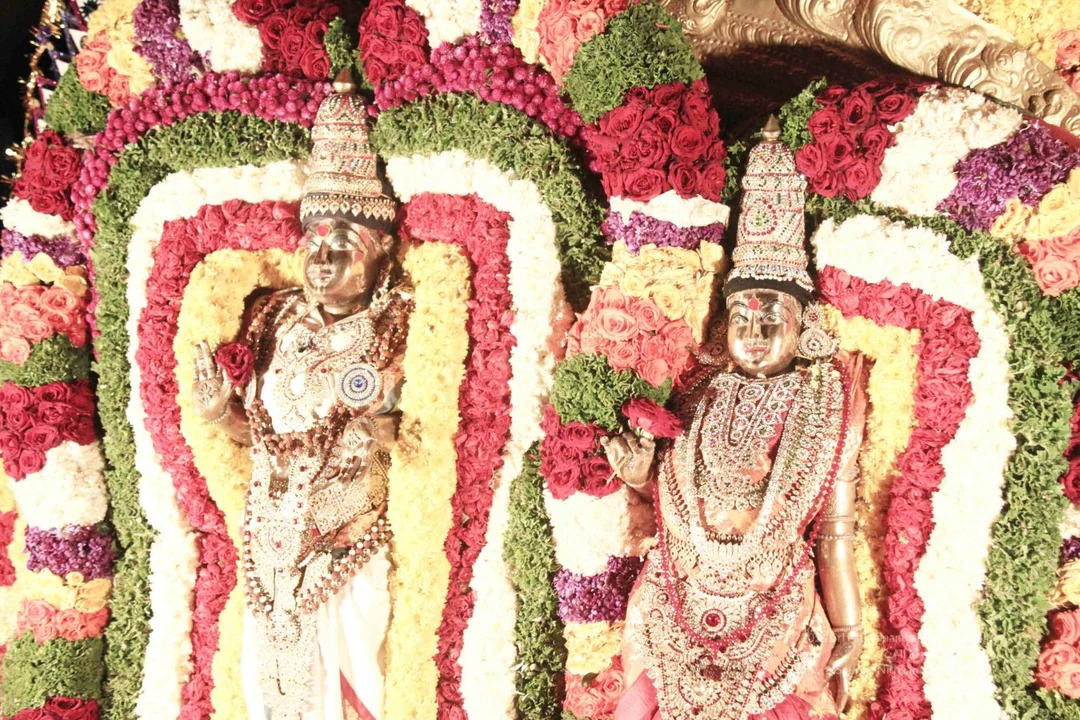
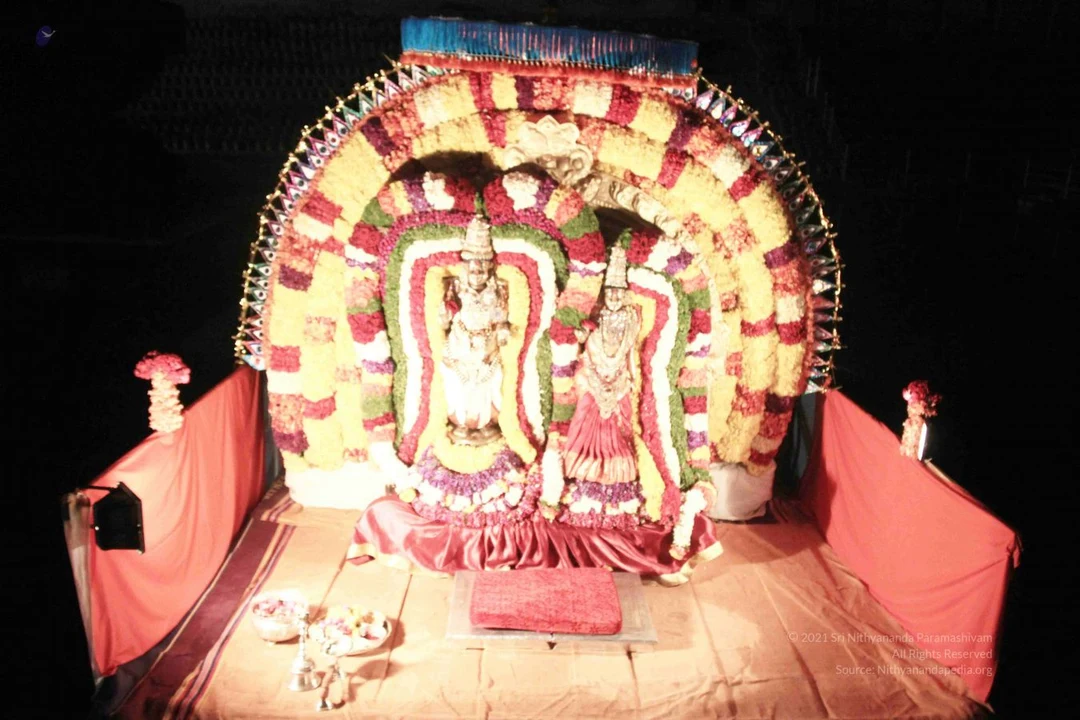
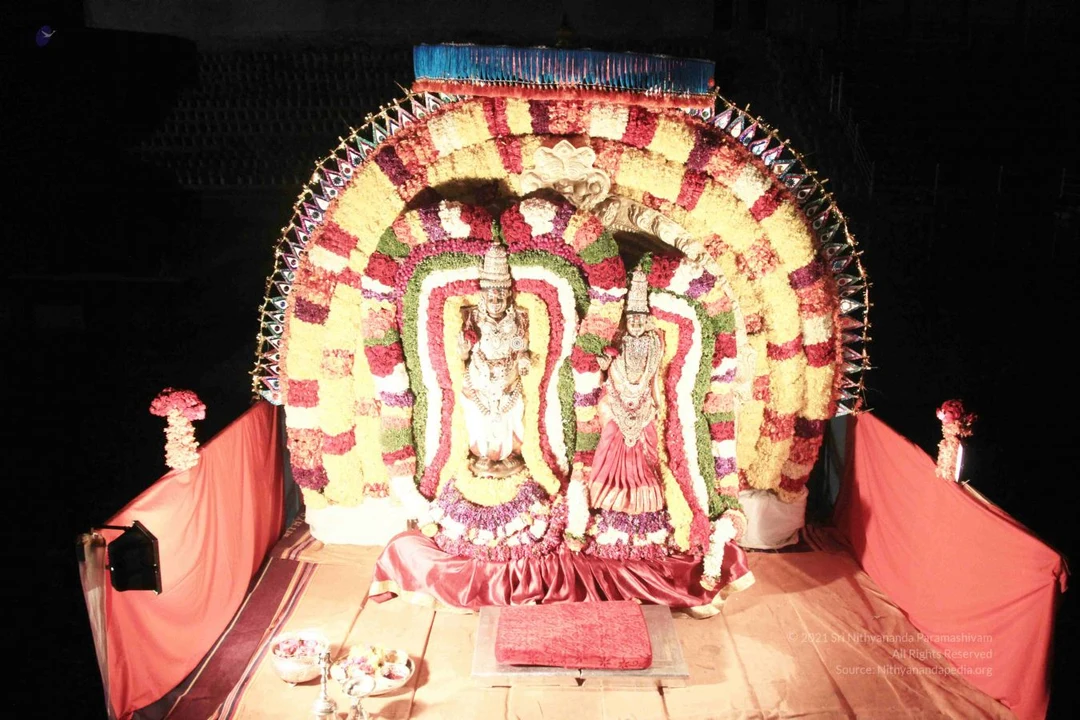
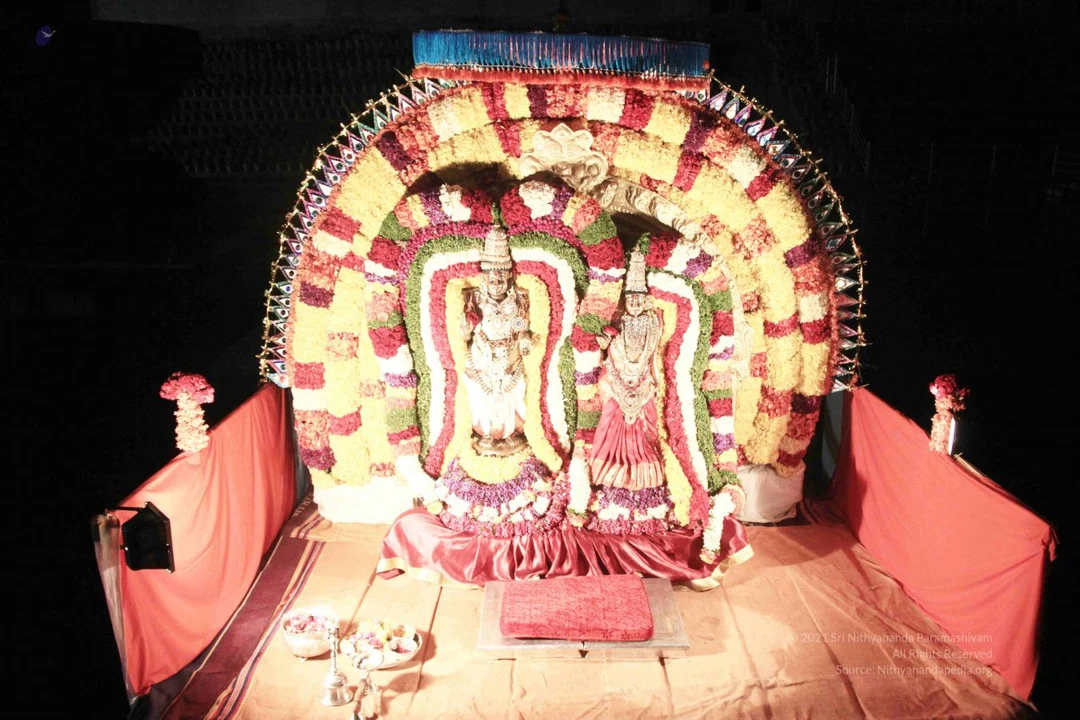
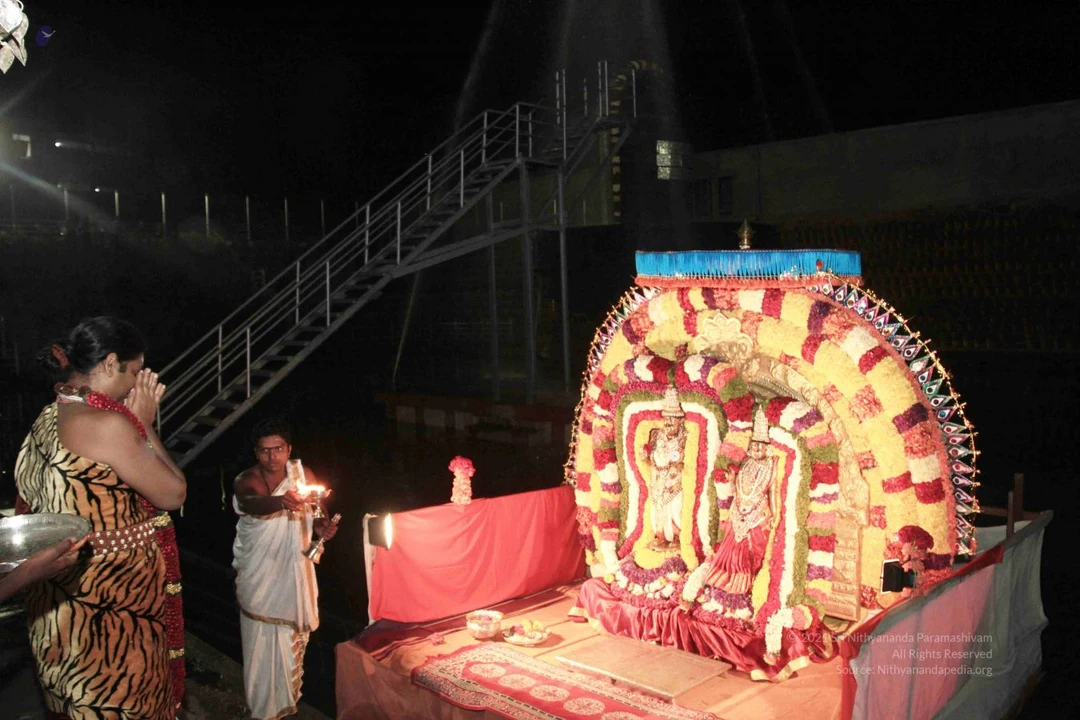
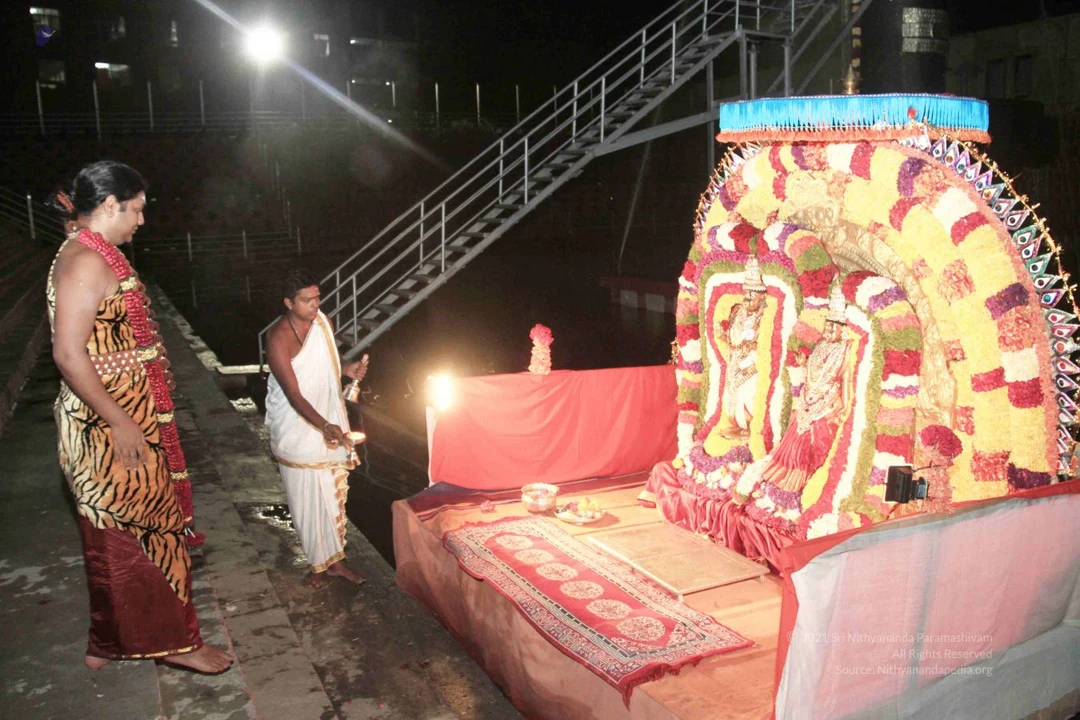
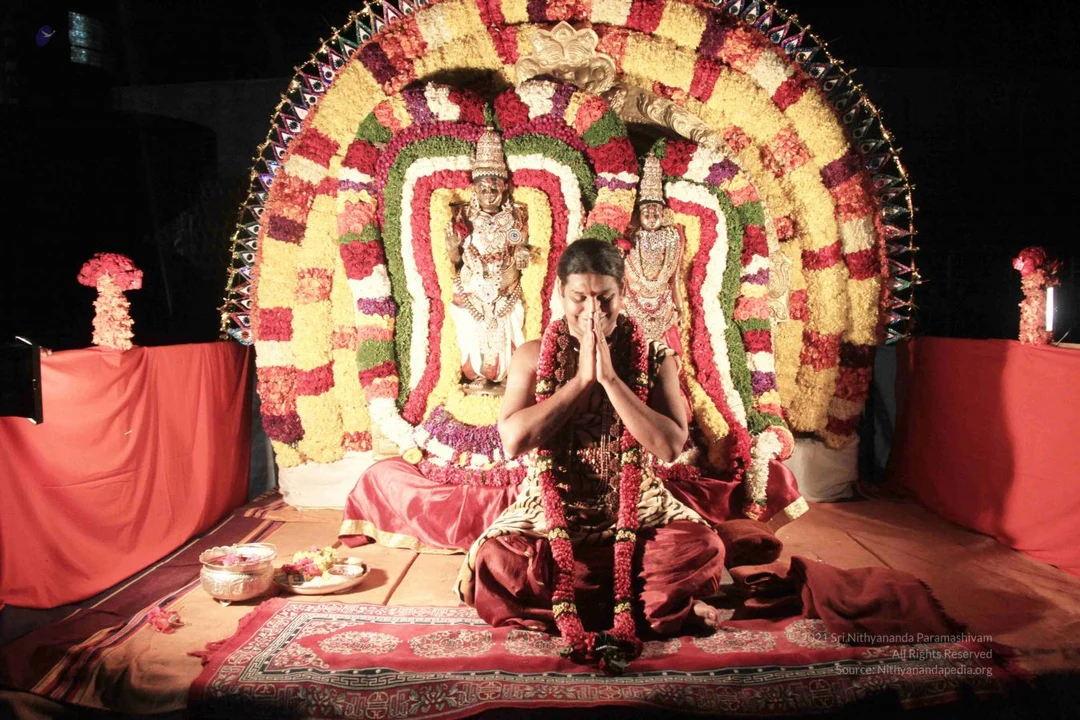
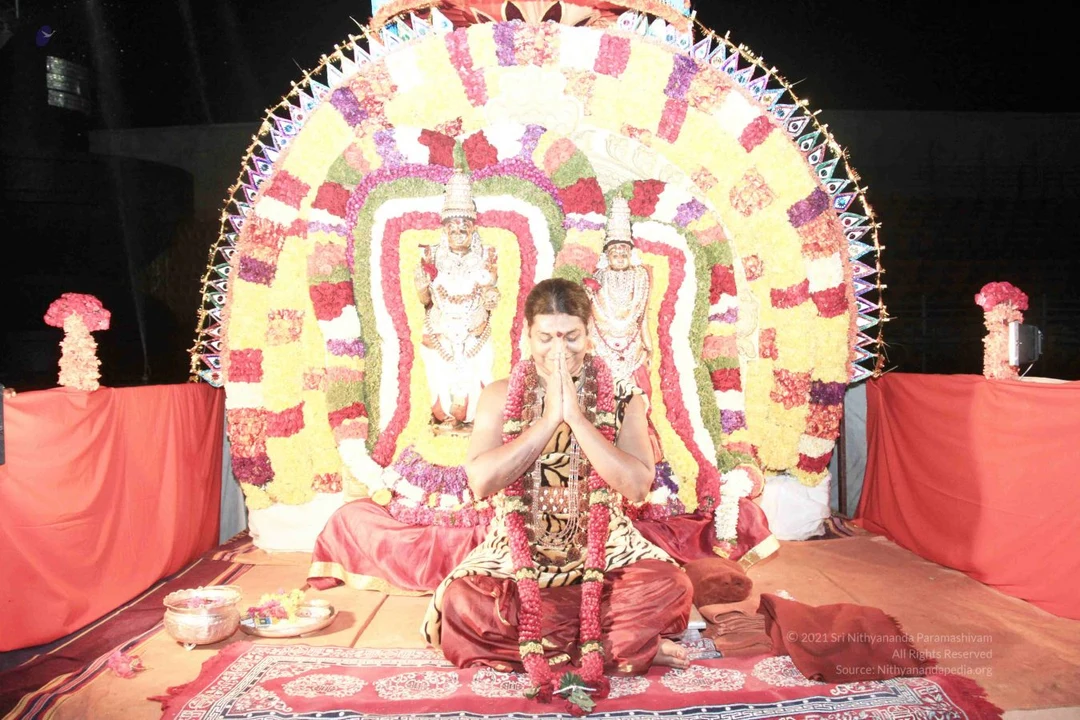
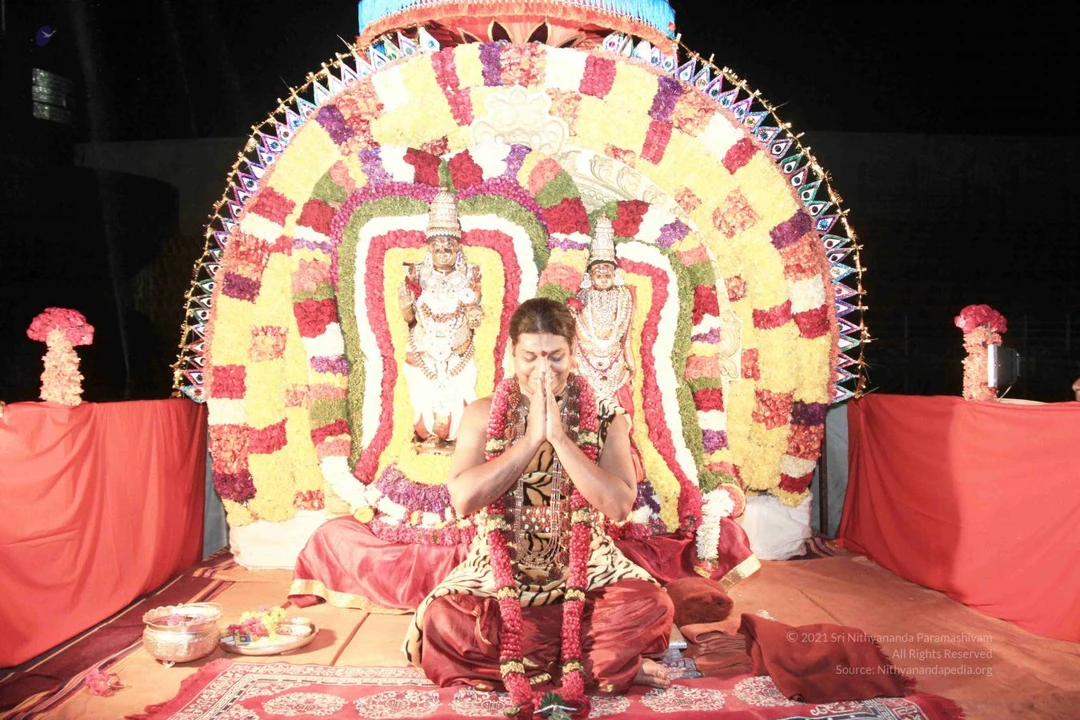
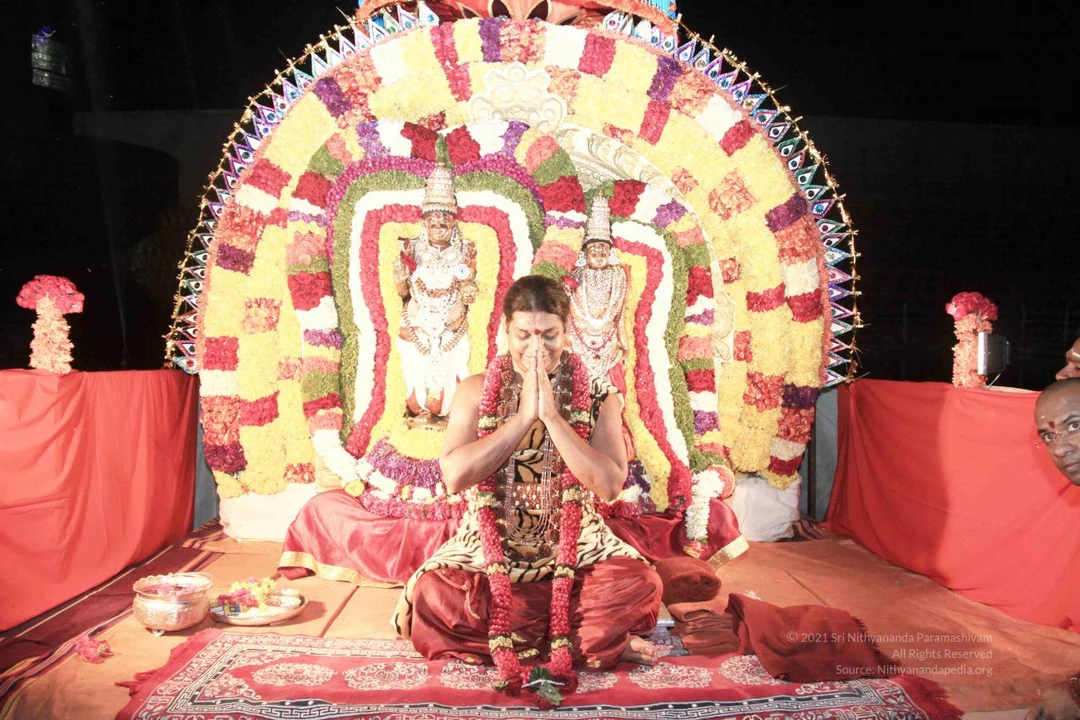
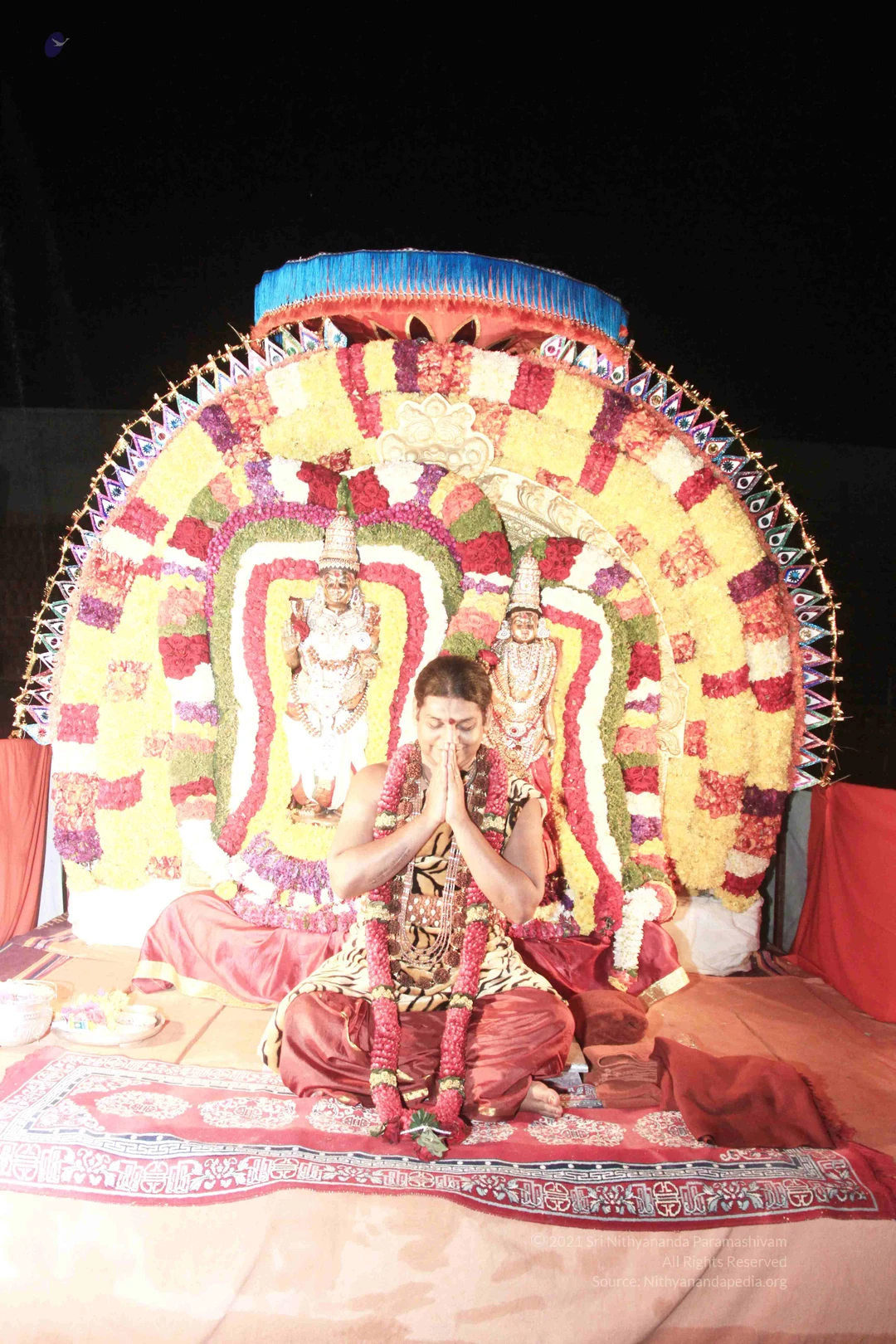
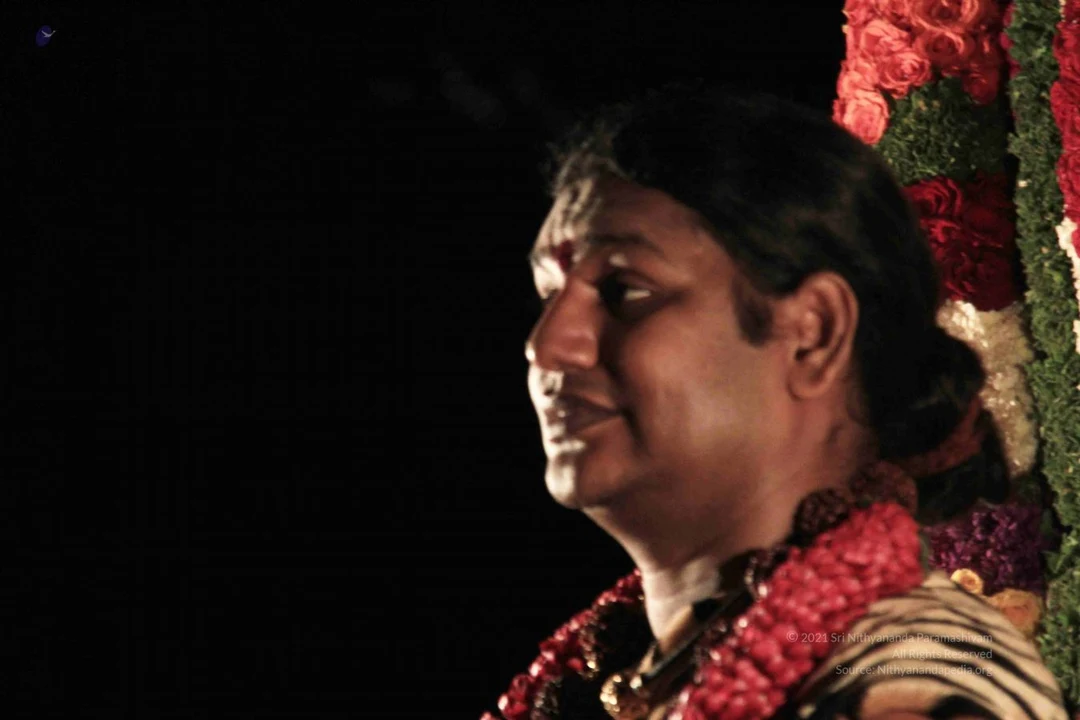
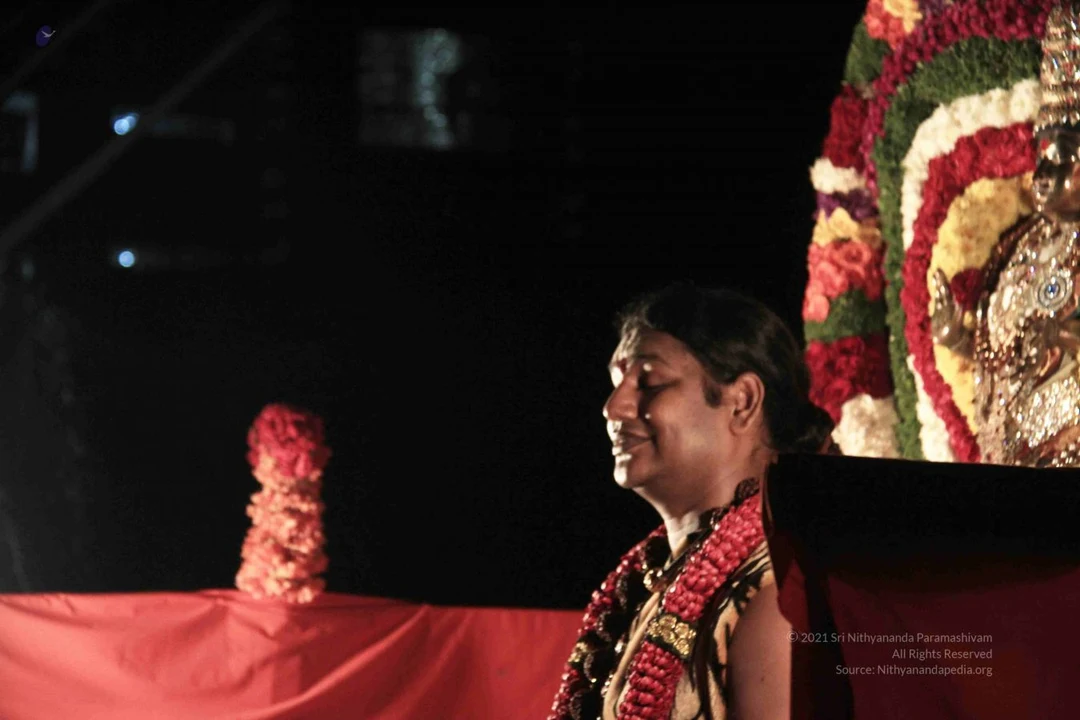
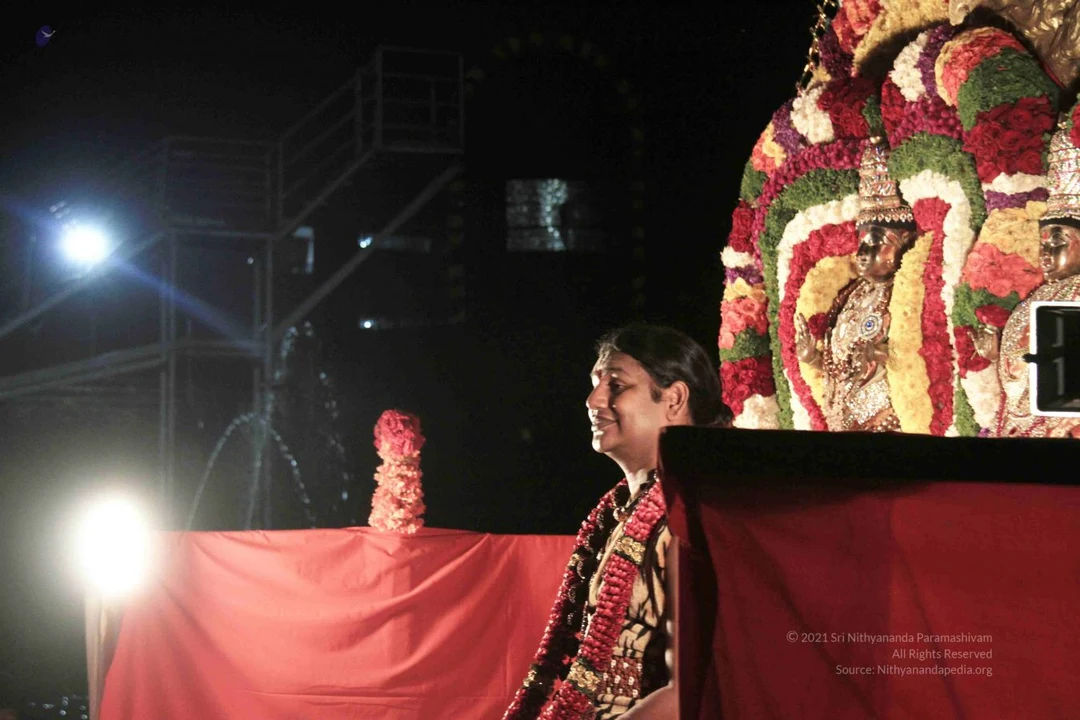
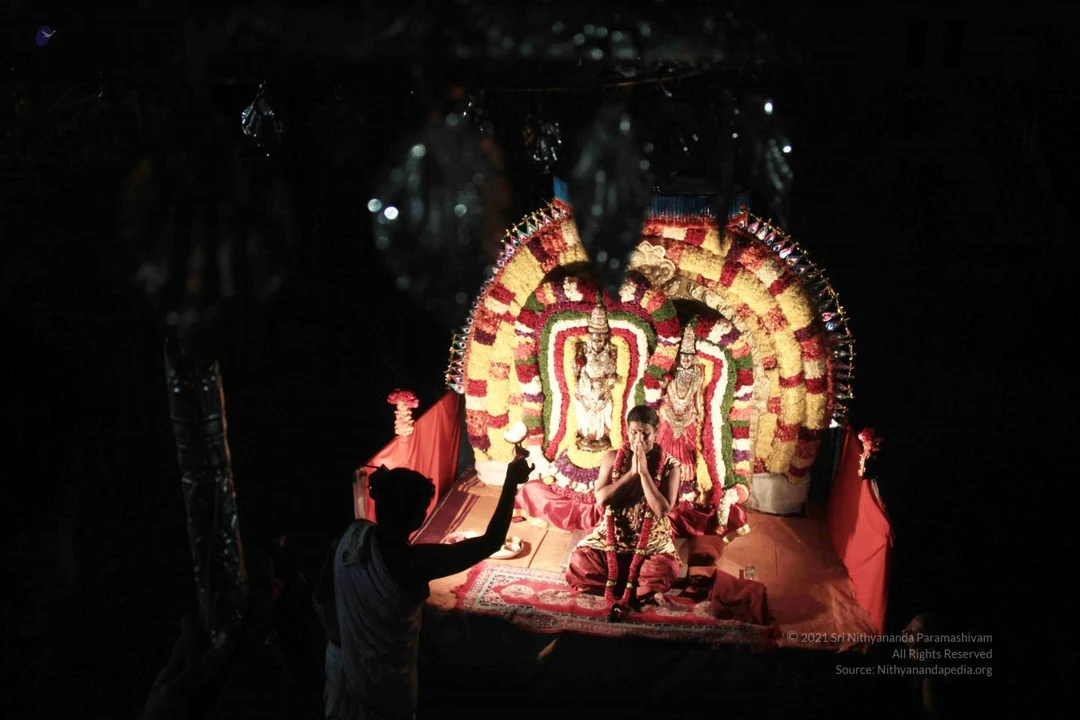
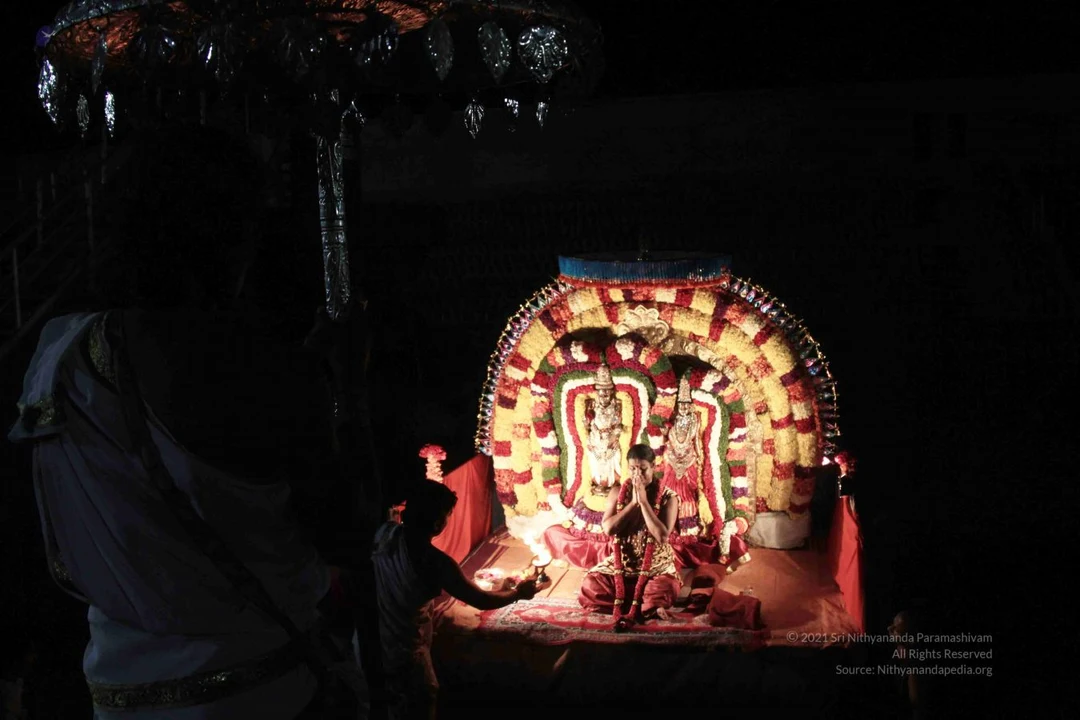
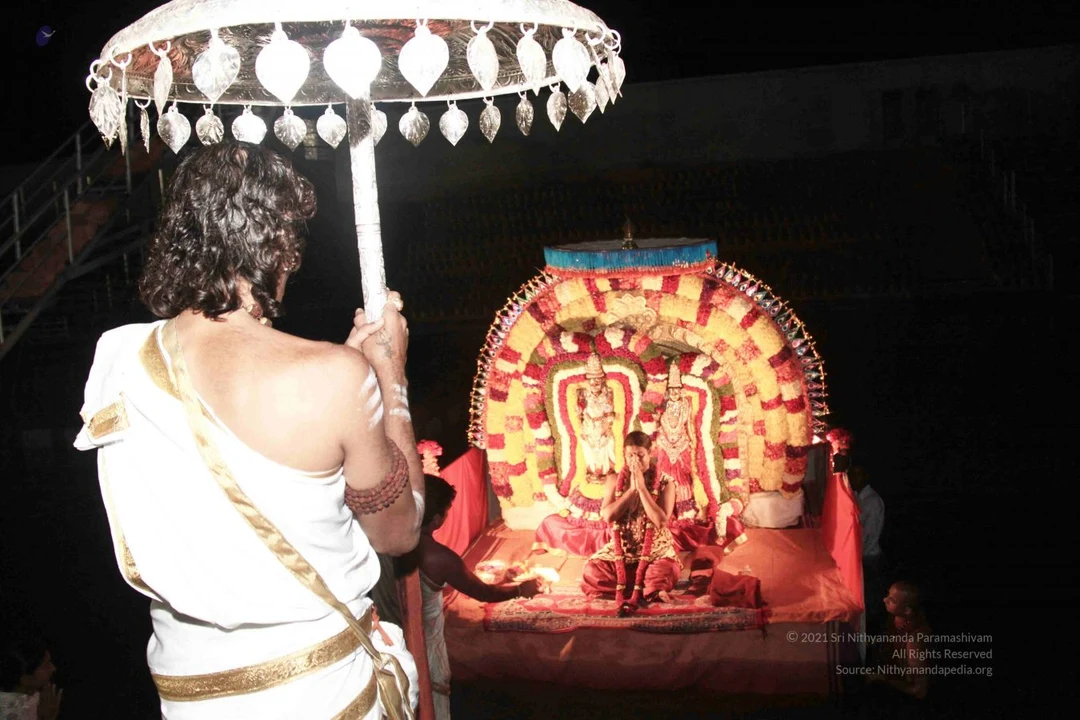
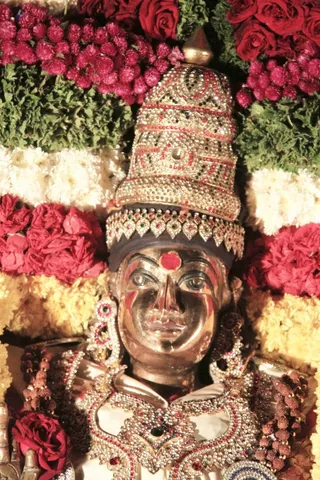
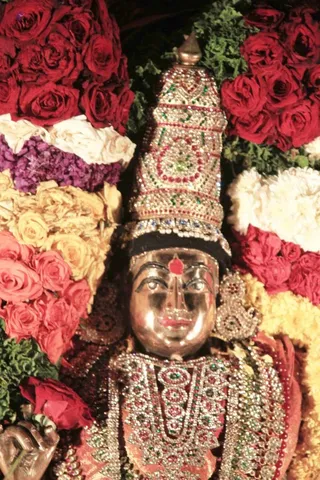
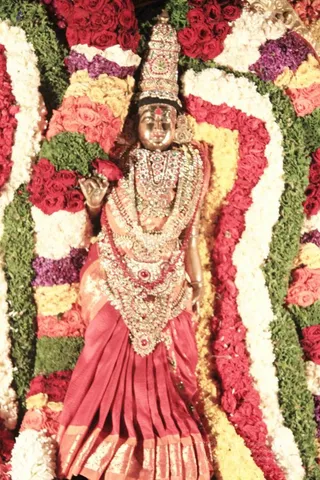
Close-up photograph of a metal deity murti face with a polished silver-gold finish, adorned with a jewelled crown with red and green stones, a red kumkum tilak on the forehead, and jewelled earrings. Garlands of red roses, pink globe amaranth, white jasmine and yellow marigolds surround the head, and rudraksha malas and jewelled necklaces hang at the chest. No people are visible; the image shows only the statue.Close photo of a metal deity murti. It wears a tall jeweled crown studded with red, green and white stones and a heavily ornamented necklace of stones and gold. The murti is surrounded by red roses, yellow roses, white carnations, purple flowers and green foliage. No people are visible.A metal deity murti of a female form is dressed and decorated for worship, standing against a dense backdrop of red roses, white jasmine garlands, yellow flowers and green leaves. She wears a tall crown set with jewels, layered gem-studded necklaces and a red-and-gold draped sari with a zari border, and holds a red rose in one hand. No physical people are visible; the image shows only the decorated deity figure.A metal deity murti stands framed by a large floral arch of red roses, white jasmine garlands, yellow marigold strands and green leaves. The figure wears a tall jewelled crown, a red tilak on the forehead, and layered beaded necklaces, with a white dhoti edged in red. The raised right hand shows a mudra. No physical people are visible; the figure is a statue shown in a decorated alcove.A photograph of two ornately decorated metal deity murti standing within a tall arch of flower garlands in red, yellow, white, green and purple. The figure on the left wears a tall conical crown, a white dhoti, a jewelled necklace and a sacred thread, and raises one hand in blessing. The figure on the right wears a matching tall crown, layered gold and jewelled necklaces and a deep red silk sari with gold border. A golden arch-shaped crown ornament sits at the top, and a red satin cloth covers the base amid garlands of purple and white flowers.Two metal murti of deities stand in a shrine decorated with dense garlands of yellow, white, red and purple flowers arranged in arches. The figure on the left is a male deity in a tall crown with white dhoti and ornate jewellery, holding a hand raised in blessing. The figure on the right is a female deity in a tall crown, layered gold necklaces, and a pink-red sari with gold border. No living people are visible in the image.

03-Nithya-Satsang
3 photosSource gallery
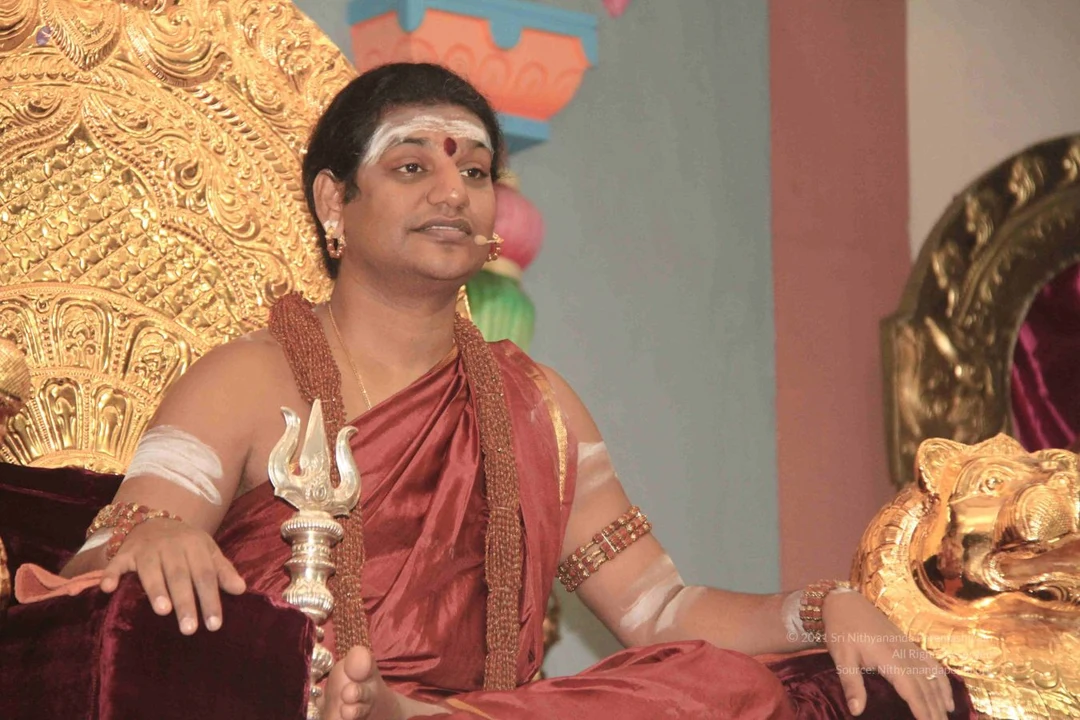
A seated man sits on an ornate gold throne with a deep red velvet cushion and carved gold filigree back. He wears a maroon-red silk shawl over bare shoulders, rudraksha mala strands hanging across his chest, and a gold chain with gold bangles on his arms. White sacred ash marks his forehead and arms, with a red kumkum dot between his brows. Behind him a painted deity figure with raised arms in green and red is visible. a person seated on the throne, wearing red-maroon shawl, rudraksha malas and gold ornaments.A smiling man sits on an ornate gold-leaf throne with carved floral and scrolled panels. He wears a deep red-orange silk wrap over bare shoulders, with multiple strands of brown rudraksha beads across his chest, a thin gold chain, and beaded bangles on his arms. White ash lines mark his forehead and arms, with a red dot at the centre of his brow. A small microphone is clipped near his face. Part of a painted deity figure with raised arms is visible at the right edge.A smiling man sits on an ornate gold throne carved with floral and scrollwork patterns, wearing a maroon-red shawl over his shoulders and a long rudraksha mala with a golden necklace. He has white vibhuti tripundra on his forehead and a red kumkum bindi, white bands on his arms, and gold bangles. A small microphone is clipped near his face. Swamiji (probable) cues: swept-back dark hair, ornate gold throne, saffron-red clothing, rudraksha mala and ceremonial gold necklace.

08-Inner-Awakening-Darshan

3 photosSource gallery
Indoor satsang stage with a pink wall, wall air conditioner and pedestal fan. A seated figure on the left wears a tiger-striped garment, a rudraksha mala and ornate beaded necklaces, with a ceremonial staff and a silver-tipped trident-like rod at the side. Beside him a woman in a red-brown sari and beaded necklace sits on a red cloth. A man in a white kurta and red shawl sits on the red cloth, gesturing with a raised hand toward the seated figure. A man in white clothes with a red shawl stands at the back, and others in white watch from the sides. Fruits and offerings sit on a tray in front. Four or more people are visible.A photograph of an indoor hall with red curtains and a tiled floor. A bare-chested man with long dark hair and a tiger-striped wrap sits on a golden throne-like seat at left, wearing a rudraksha mala and ornate gold-and-bead necklaces, with a red cloth draped over his legs. Before him, a woman in a red sari with a rudraksha mala sits on a red mat, and a man in white kurta with a red shawl kneels on the red mat at lower right while a standing man in white with a red shawl gestures with raised hands. Several men in white with red shawls stand in the background near a wall fan and an air conditioning unit. Brass ritual items and a silver tray with lemons and a small brass lamp sit near the throne. A framed photo collage hangs on the back wall.Indoor satsang or darshan room with cream walls, a floor fan and red curtains. A seated man with long dark hair pulled back, a red tilak and a bead necklace draped over a tiger-striped garment, smiling broadly, appears to be the probable Swamiji (long swept-back hair, ornate ceremonial necklace and distinctive striped clothing). Beside him a woman in a red sari and a rudraksha mala sits. A bald man in a white shirt with a red sash raises both hands in a gesture while standing. A person in white lies face-down on a red mat in the foreground. Several men in white with red sashes and lanyards stand in the background near a window.