Skip to content
Monday

19 November 2012

Supreme Pontiff of Hinduism HDH Bhagavan Sri Nithyananda Paramashivam

Dated photos
18
Source pages
1
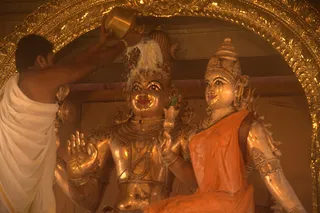
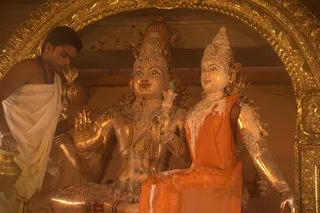
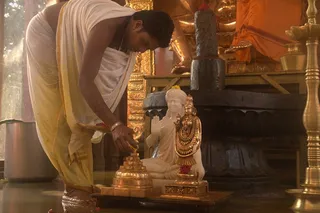
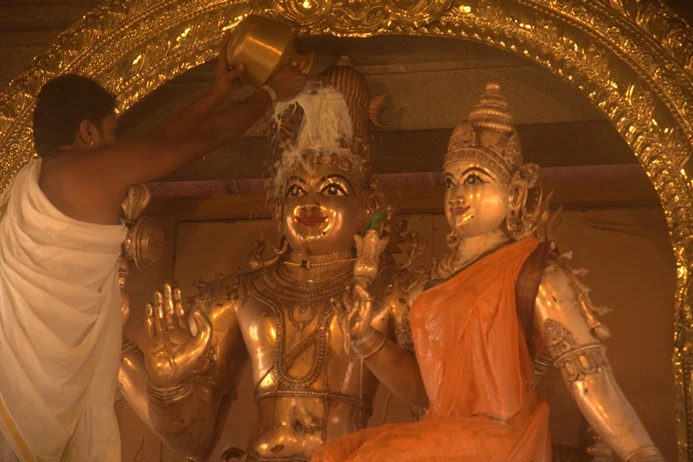
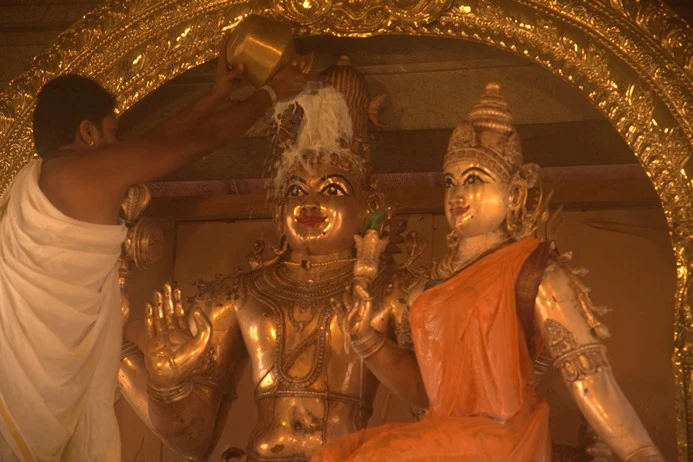
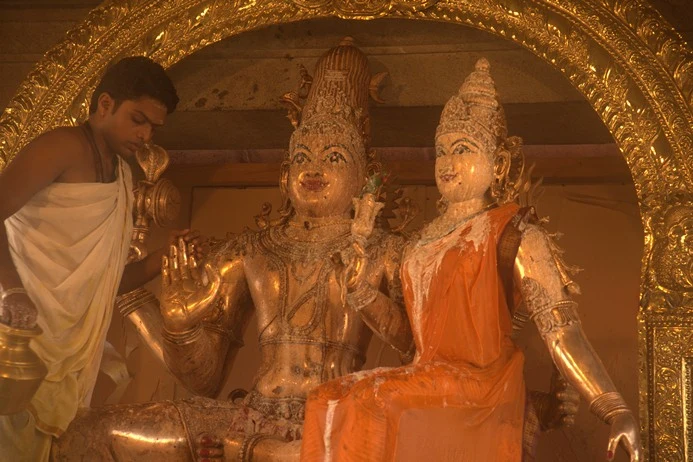
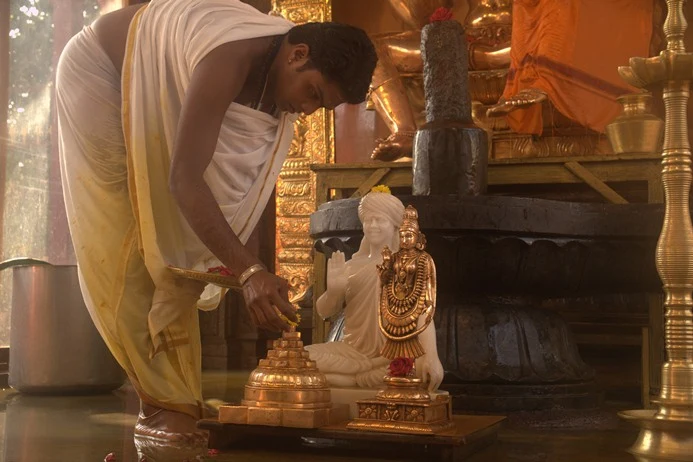
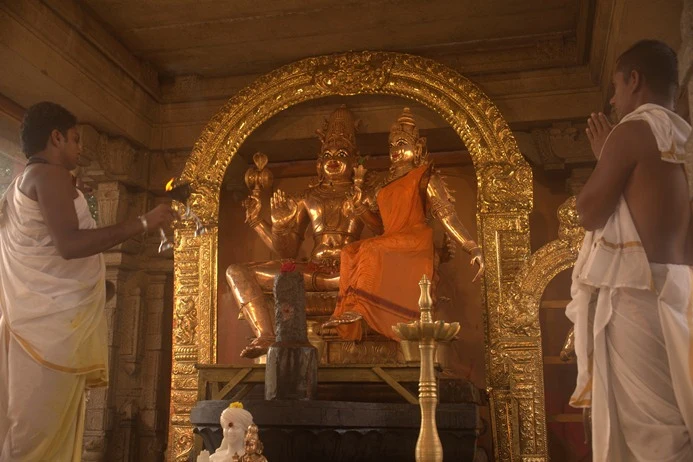
A temple abhishekam scene: a man in white dhoti and white shawl stands at left, pouring liquid from a brass vessel over the head of a gilded deity murti, a Shiva-form image with a tall crown and ornate necklaces, seated beside a goddess murti in orange-saffron sari with gold crown and jewellery. Both statues have gold-painted bodies set within an ornate gilded arch. The white foam or milk-like offering covers the crown of the male murti. Statues are not physical people; the only physical person is the priest.A young priest in white dhoti and shawl stands at left, holding a small brass vessel and pouring or offering, as he attends a pair of golden deity murtis seated side by side under an ornate gold arch. The central figure has a tall conical crown, a bare chest with heavy ornaments and garlands, and raised right hand; beside it a seated female murti wears an orange-red sari, a crown and bangles. Both images are smeared with milk or abhishekam liquid. The scene is a temple sanctum with ornate gold framing.A man in a white dhoti with a yellow-bordered cloth knees on the floor at a shrine, reaching toward a small gold-coloured pyramid-shaped object and a white marble seated figure with gold ornaments and a gold crown, placed on a dark stone base. Behind them stand a large dark stone lingam-like pillar with red flowers and a gold-coloured yoni-shaped basin, a brass pot, and a large gilded figure draped in orange cloth. Brass oil lamps sit at the right edge. The scene suggests a puja or abhishekam at a temple shrine. A figure in a mythological ritual pose appears on the altar, with red flower offerings.

November 19 2012

Original wiki page
Contents

Title:

Supreme Pontiff of Hinduism HDH Bhagavan Sri Nithyananda Paramashivam

Photos From The Day:
Photos from this day

View all 18 photos
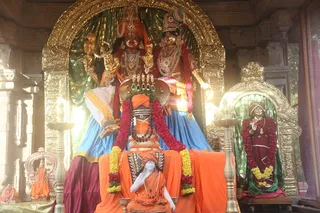
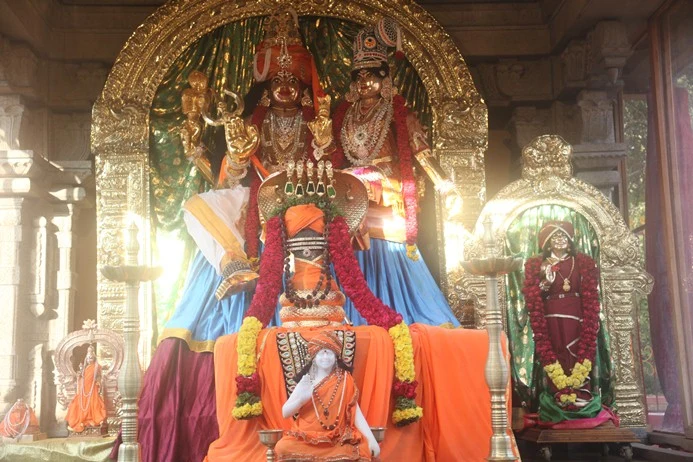
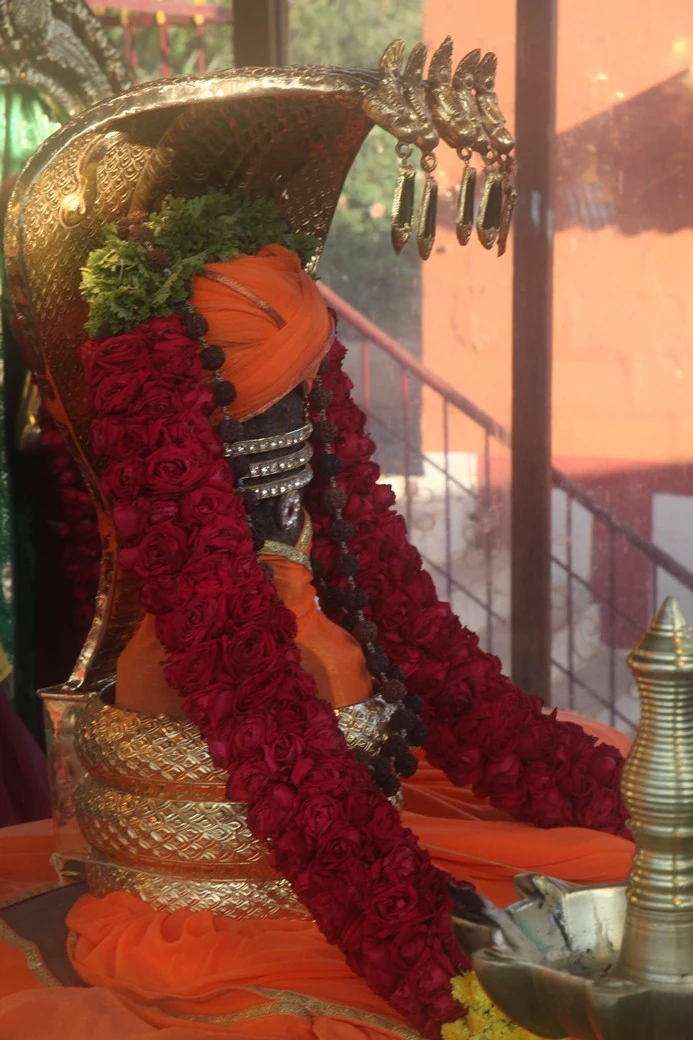
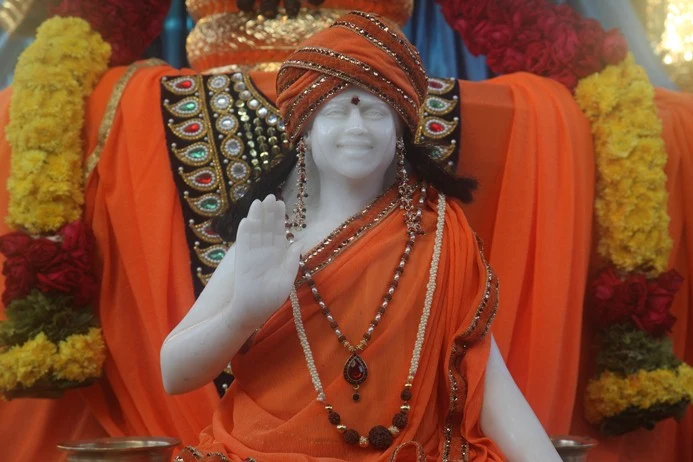
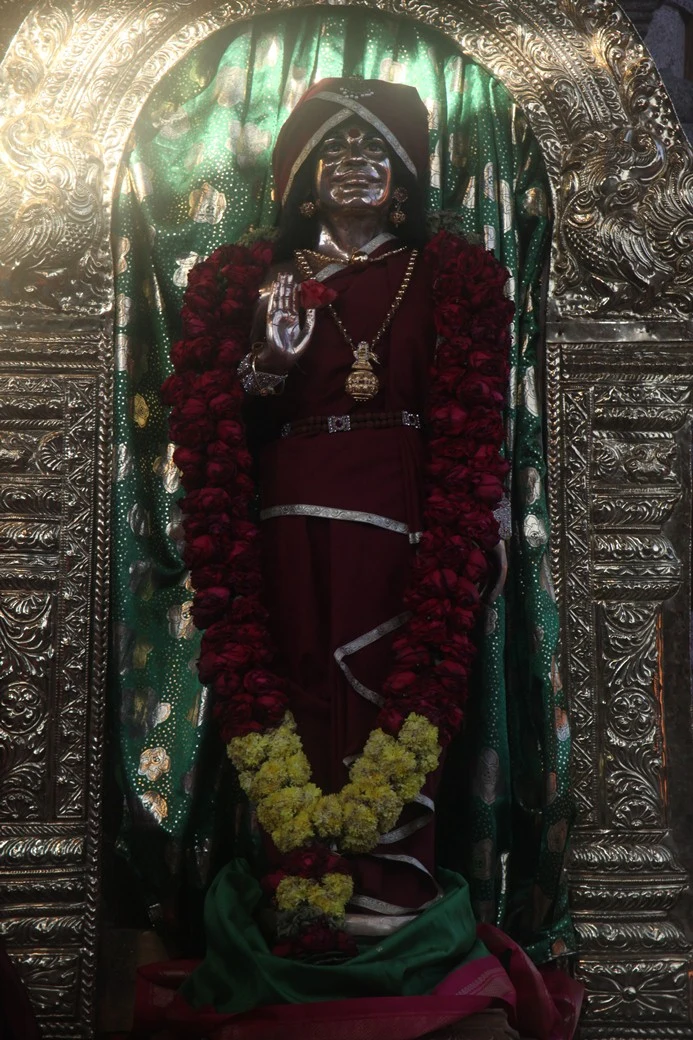
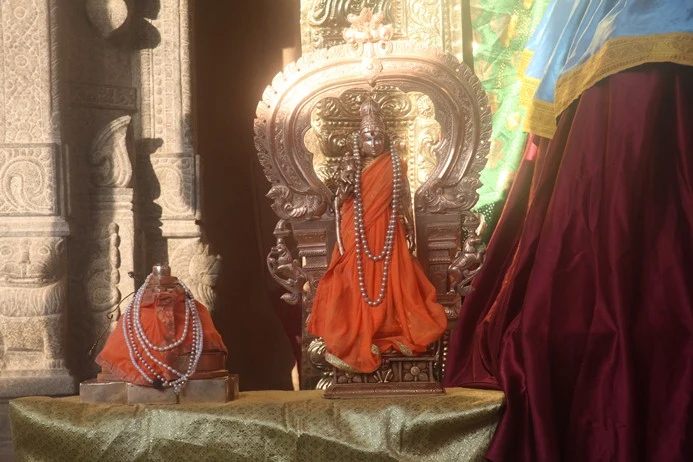
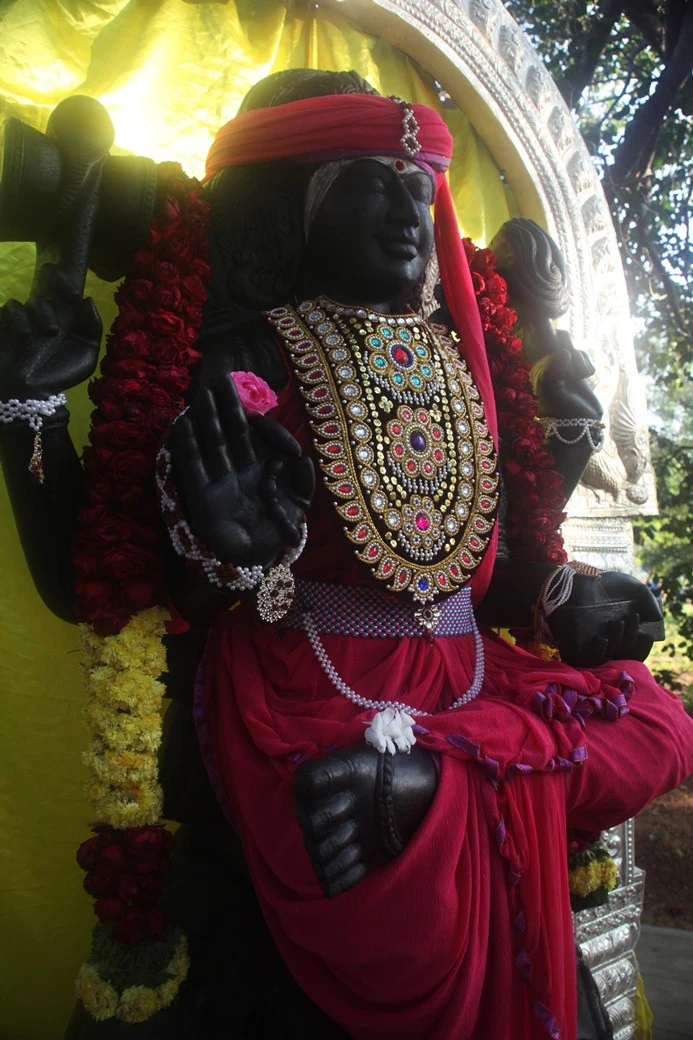
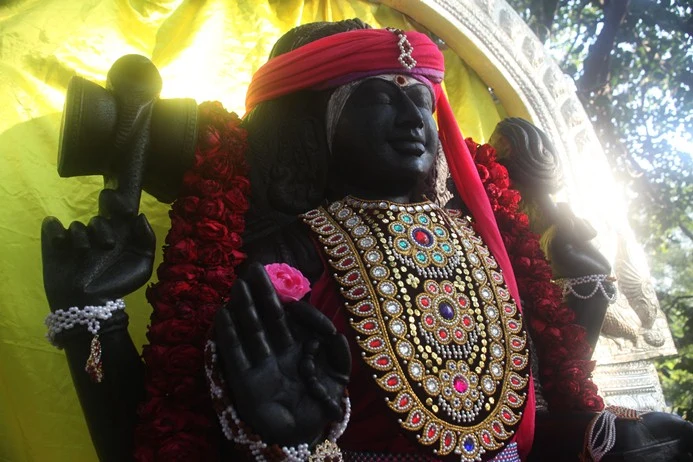
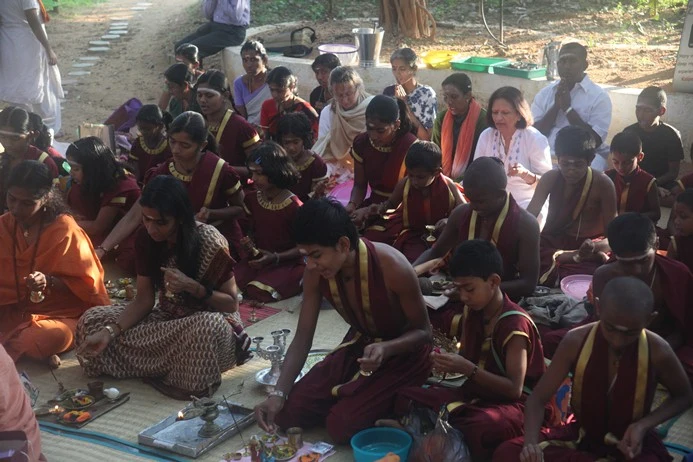
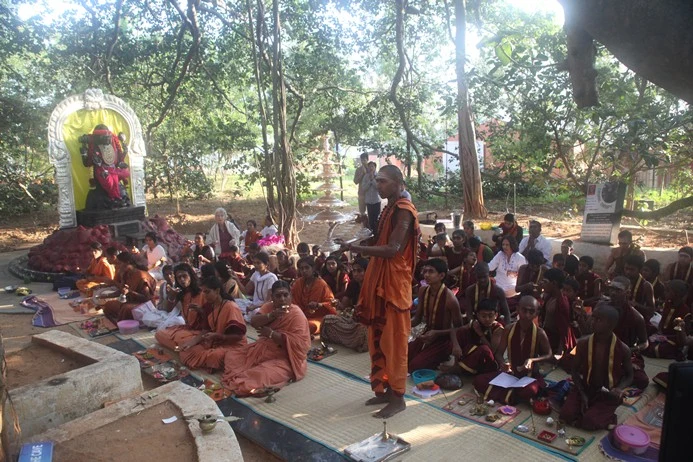
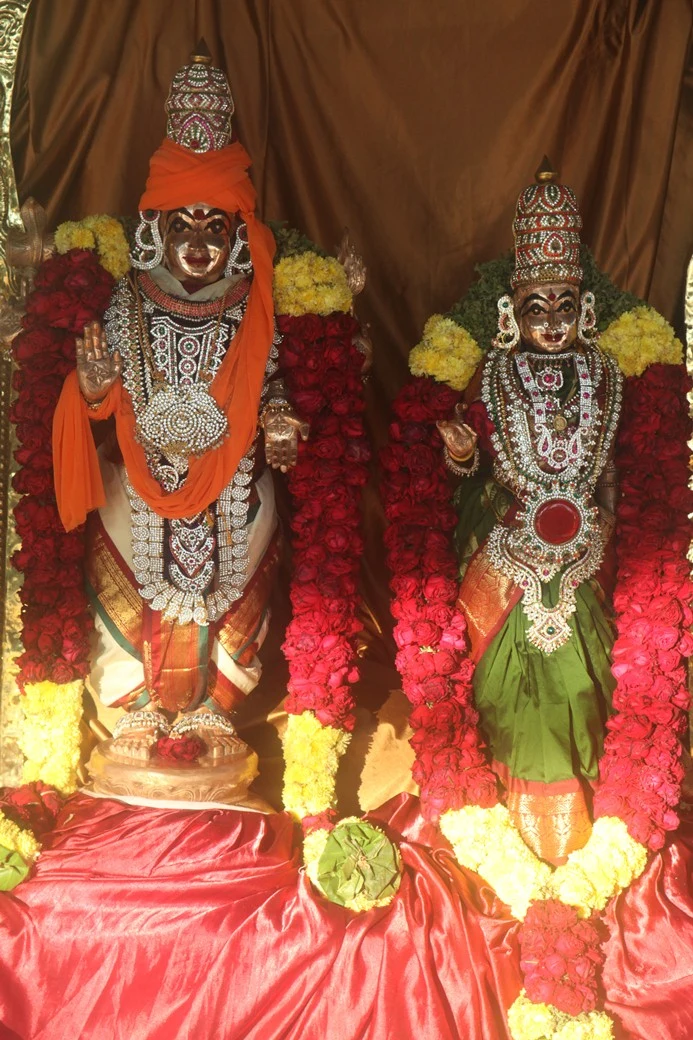
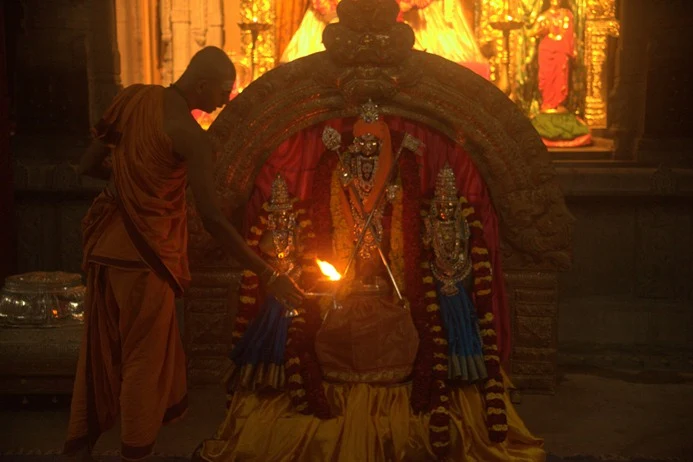
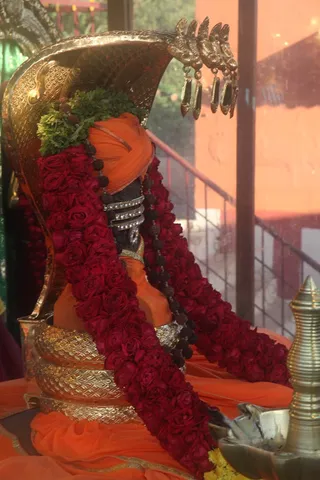
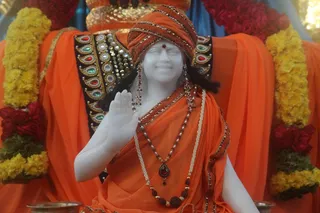
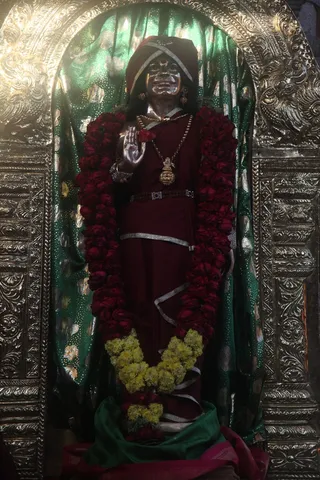
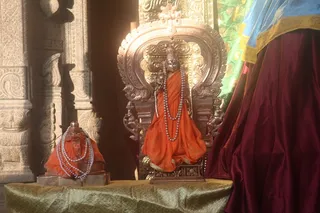
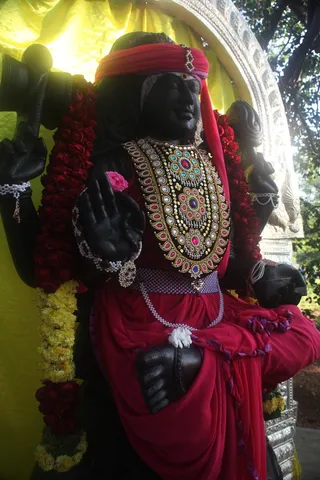
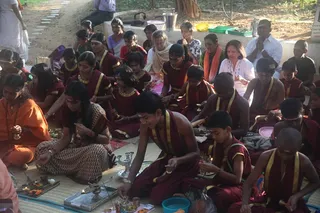
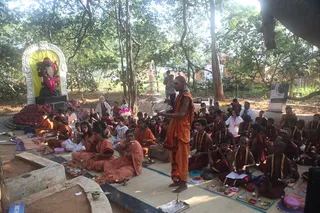
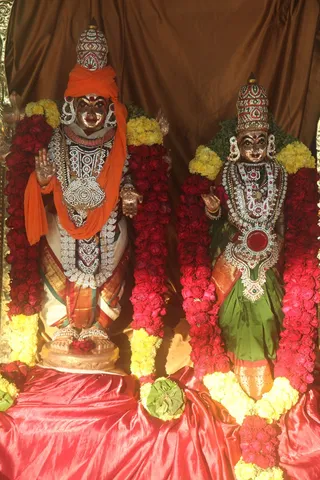
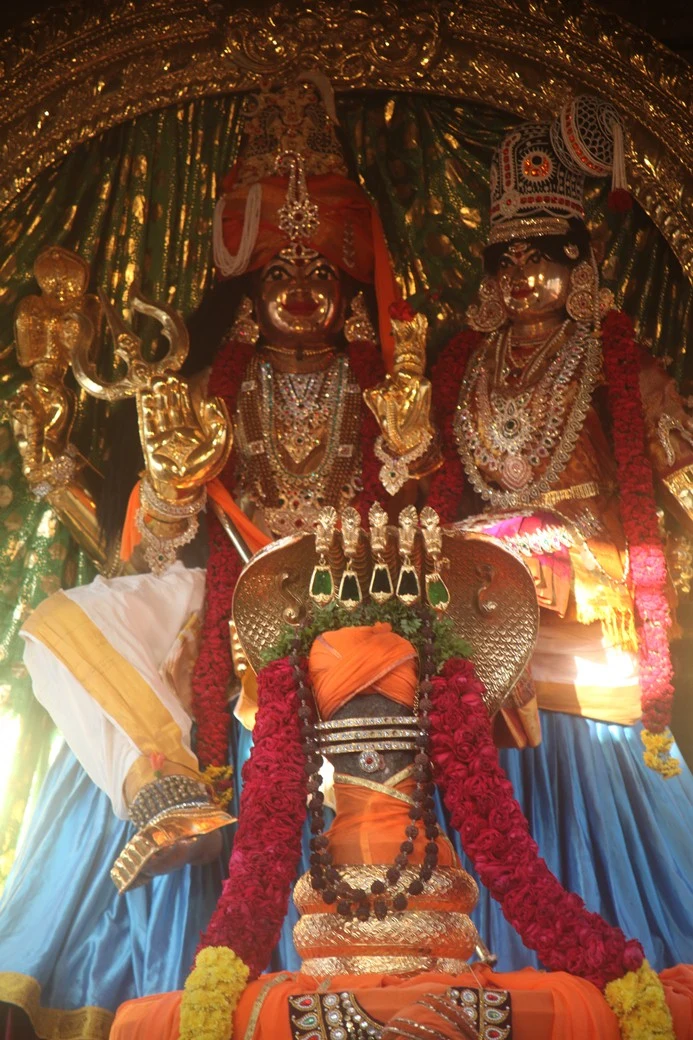
A photograph of a shrine-like decorated deity arrangement dominated by two large gold-and-silver murti figures with ornate jewelled necklaces, crowns and earrings, one holding a trident and the other a raised hand. Before them sits a black stone Shiva lingam wrapped in an orange cloth with a silver band, adorned with red and white flower garlands, rudraksha beads and a silver cobra-hood canopy above. Gold-embroidered green drapery and blue fabric frame the scene. No physical people are visible.Ornate temple shrine with a gilded arch framing a large deity murti pair in blue and orange drapery, wearing crowns and jewelled ornaments. In the foreground, a white-faced murti or sculpted figure sits draped in saffron cloth, with a silver mask-like face, rudraksha-style beaded necklaces, and a dense garland of orange and yellow marigolds with red flowers. Brass oil lamps stand on either side, and a smaller seated figure in orange on the left and a red-garlanded figure on the right complete the arrangement. No living people are visible.A seated deity murti. Its head is covered by a gilded cobra hood with hanging gold ornaments, and gold bands circle the torso and waist. A brass oil lamp with a tall stand sits at the lower right, and a metal bowl holds flowers at the base. Behind the figure are a railing and a warm orange wall.A white marble statue of a seated sage in saffron-orange robes, with a matching orange turban decorated with a red bindi-like mark on the forehead. The figure raises its right hand in a blessing gesture (abhaya mudra) and wears layered rudraksha-style beaded malas, a pendant, and jewelled drop earrings. Behind it is an ornate jewelled orange-and-black backdrop embellished with red, green and gold stones, flanked by garlands of yellow marigolds and red roses. Brass bowls sit at the lower edge of the frame. No physical people are visible; the figure is a statue, so this is a depiction of a murti rather than a person present at the event.A silver statue of a figure in a dark maroon robe stands in an ornate silver arched niche with a green draped backdrop. The statue wears a maroon turban, a gold chain with a pendant, and a silver-banded belt, and its right hand is raised in a blessing gesture. It is garlanded with red rose petal garlands and a yellow marigold garland, and a green cloth lies at its base. This is a murti, not a living person, so it is shown as a depiction.A photograph of a seated figure statue in saffron orange cloth and a long strand of white beads draped over the chest, placed on an ornate carved wooden throne with a curved, scrolled back and metallic inlay. The seated figure is a statue or murti rather than a living person, and a second small figure with a white bead garland sits on a draped gold-green cloth to the left, with a red and blue cloth hanging at the right edge. Carved stone pillars with ornamental motifs frame the scene, lit by warm sunlight.A black stone deity murti stands in an arched niche draped with yellow fabric and garlanded with red roses and yellow marigolds. The figure wears a red turban, a red and magenta draped garment, a large jewelled gold necklace set with red, blue and green stones, a pearl-and-bead belt, and pearl bracelets. A pink flower is tucked at the raised hand, and a white flower sits at the waist. No physical people are visible; the figure is a statue.A black stone deity murti stands outdoors against a yellow cloth backdrop, its face serene and eyes closed. It wears a red headband turban, a red shawl over the shoulders, and a heavy jewelled necklace of gold-toned pendants set with red, green and blue stones and white beads. Red rose garlands drape the body, and a single pink flower rests near the raised hand. Pearl-and-bead bracelets adorn the wrists, and one hand holds a small ceremonial object while the other is raised in blessing. Carved stone arch detail and leaves frame the scene. No physical people are visible.A photograph of a group puja or ritual gathering seated on woven mats outdoors. In the foreground, several young boys wear maroon kurta-style garments with gold-yellow trim and gold-trimmed shoulder cloths, seated cross-legged with brass thalis, small silver lamps and offering plates before them. Behind them, a woman in an orange sari with a gold-bordered wrap stands at left, and a woman in a brown patterned sari holds a brass lamp in the foreground. Several women in maroon and gold-bordered saris sit among the group, and older women in white and pink saris and a man in white clothing sit toward the rear. Brass pots, a steel bucket and a blue tub sit on the ground behind. No one clearly identifiable as a person is visible.Outdoor ritual gathering under trees. A standing man in a saffron-orange robe with shaved head stands centre, holding a metal implement, while a large seated group of around thirty saffron-clad sannyasis and young students sits on mats in rows. In front, a dark stone deity murti is decorated with red and pink flowers and garlands, and brass lamps and small offering plates with flowers lie before the seated devotees. A tall silver kalasha-like stand rises in the centre. A few white-clad devotees sit at the left and back. a person role is not established; the standing figure is described only as a priest officiating.Two deity murtis stand side by side on a red satin cloth in front of a brown drape. The figure on the left is male, wears an orange cloth over his shoulder and a tall ornate crown, and is adorned with a silver-and-jewelled necklace, pendant and bangles. The figure on the right is female, dressed in a green sari with a gold border, with a jewelled crown, a large red-stoned necklace and layered garlands. Both are decorated with red rose garlands and yellow marigold garlands, with a green leaf offering at their base. No physical people are visible.A temple abhishekam scene: a man in white dhoti and white shawl stands at left, pouring liquid from a brass vessel over the head of a gilded deity murti, a Shiva-form image with a tall crown and ornate necklaces, seated beside a goddess murti in orange-saffron sari with gold crown and jewellery. Both statues have gold-painted bodies set within an ornate gilded arch. The white foam or milk-like offering covers the crown of the male murti. Statues are not physical people; the only physical person is the priest.