Skip to content
Tuesday

20 November 2012

Supreme Pontiff of Hinduism HDH Bhagavan Sri Nithyananda Paramashivam

Dated photos
11
Source pages
1
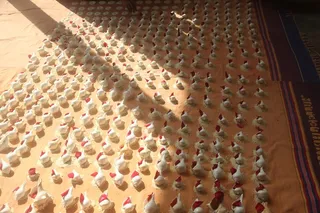
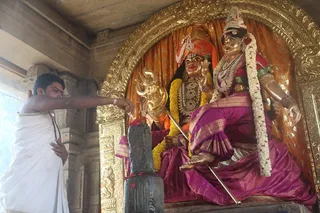
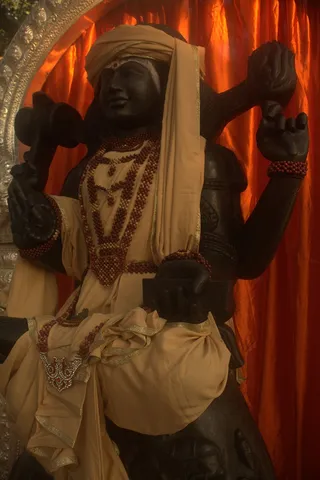
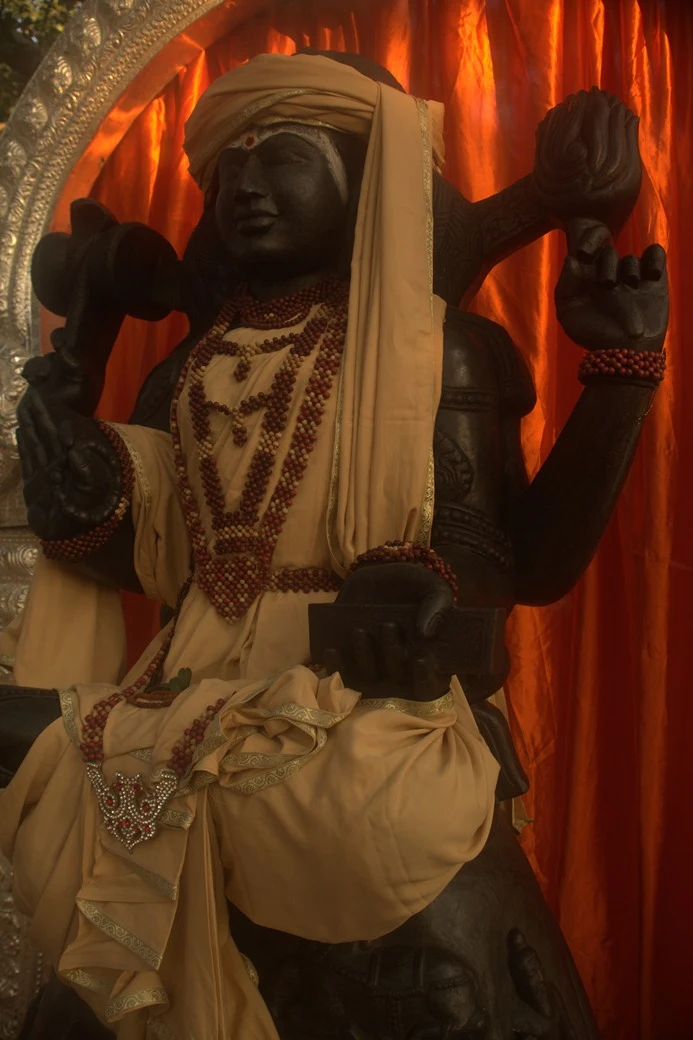
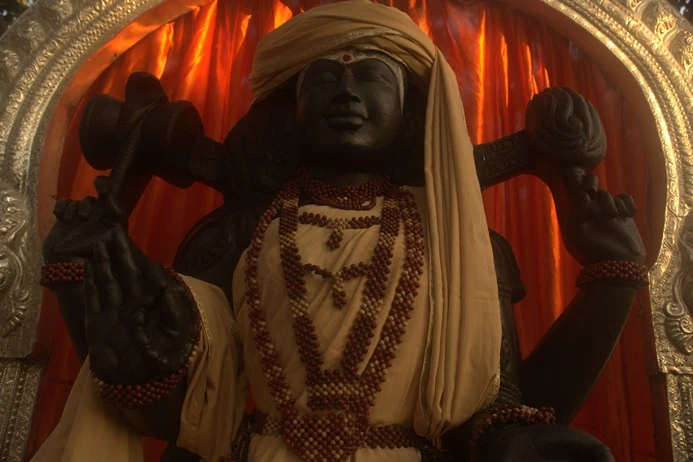
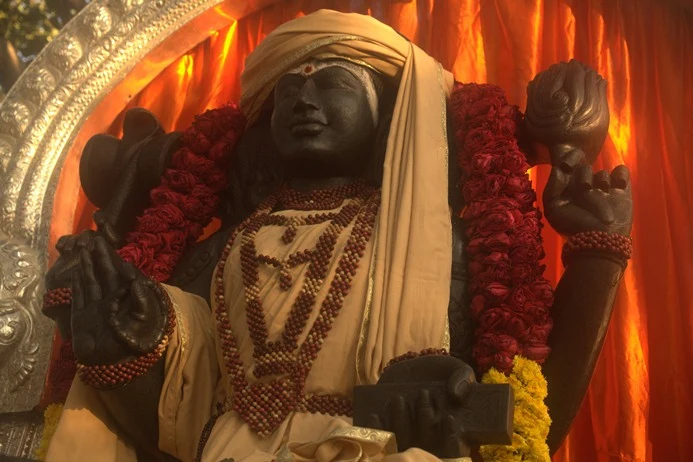
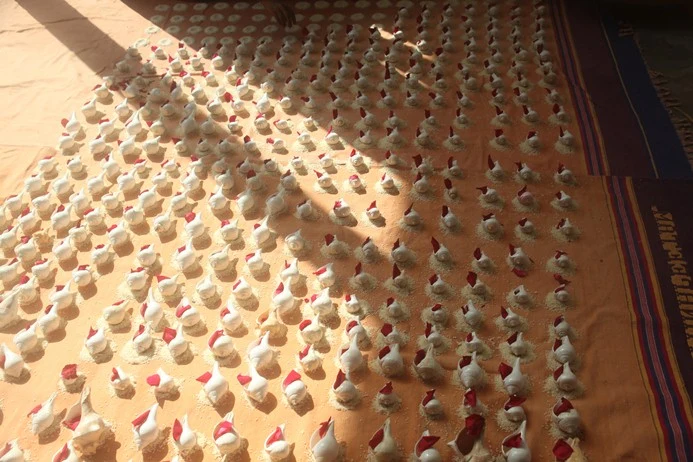
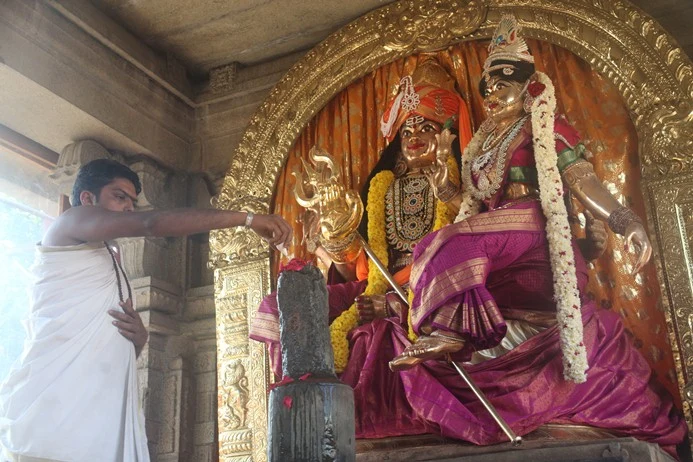
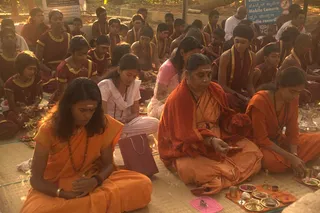
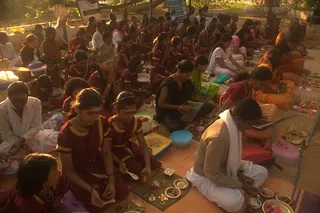
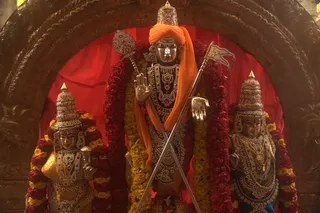
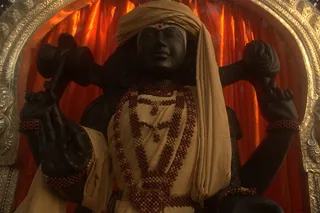
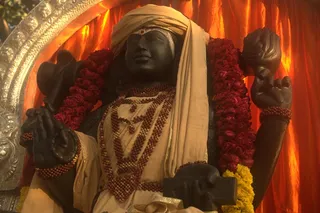
Overhead view of many small white conical clay or dough offerings with red tips arranged in neat rows on a saffron-orange cloth with a woven striped border. Sunlight and shadows fall across the rows. No people are visible in the frame; only the arranged offerings and cloth fill the scene.A shrine interior with a young priest in white dhoti and shawl at left, touching or offering near a black stone shivalinga with red flower petals on its base. Behind it, a gilded arch frames two large deity murti statues seated on a dais: a male figure wearing an orange-and-red turban and rudraksha-style beaded necklace, holding a trident, and a female figure in a magenta sari with white garland and gold crown. Orange draped fabric and flower garlands decorate the backdrop. The scene reads as temple puja or abhishekam, with a plain sandstone wall and carved pillars visible.A dark stone or bronze-toned statue of a four-armed deity figure seated against a bright orange-red silk backdrop with a silver ornamental frame at left. The figure wears a cream-beige turban with a red tilak on the forehead, a cream-beige dhoti with gold-edged borders, and layered red rudraksha-style beaded malas across the chest, waist and wrists. One upraised hand holds a ceremonial object and another rests on a raised block. No physical people are visible; the figure is a statue.

November 20 2012

Original wiki page
Contents

Title:

Supreme Pontiff of Hinduism HDH Bhagavan Sri Nithyananda Paramashivam

Photos From The Day:
Photos from this day

View all 11 photos
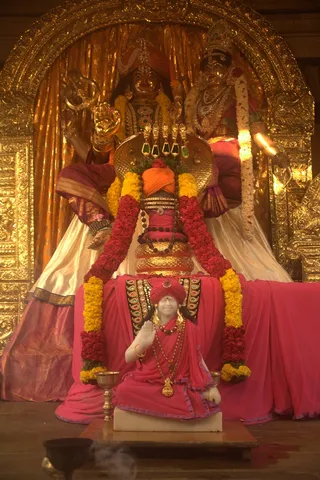
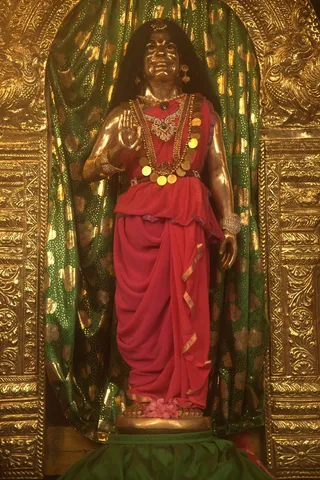
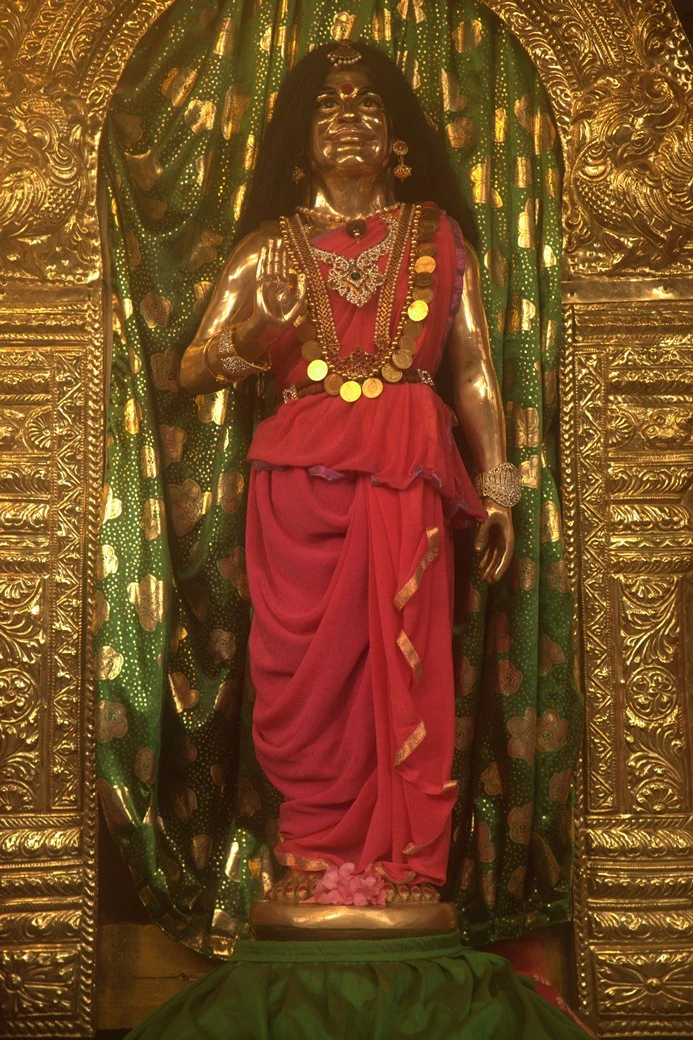
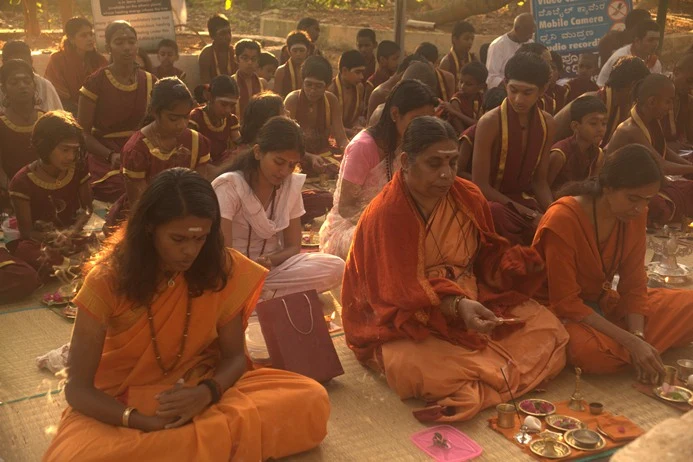
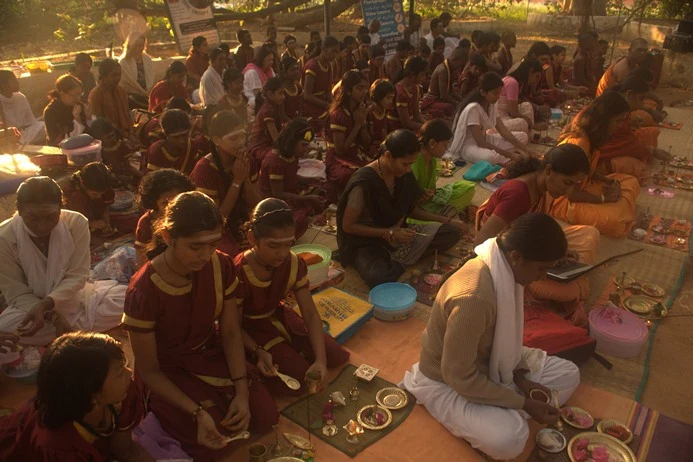
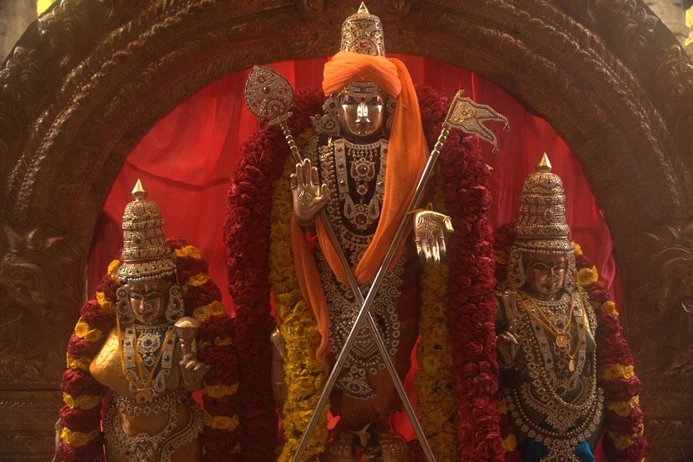
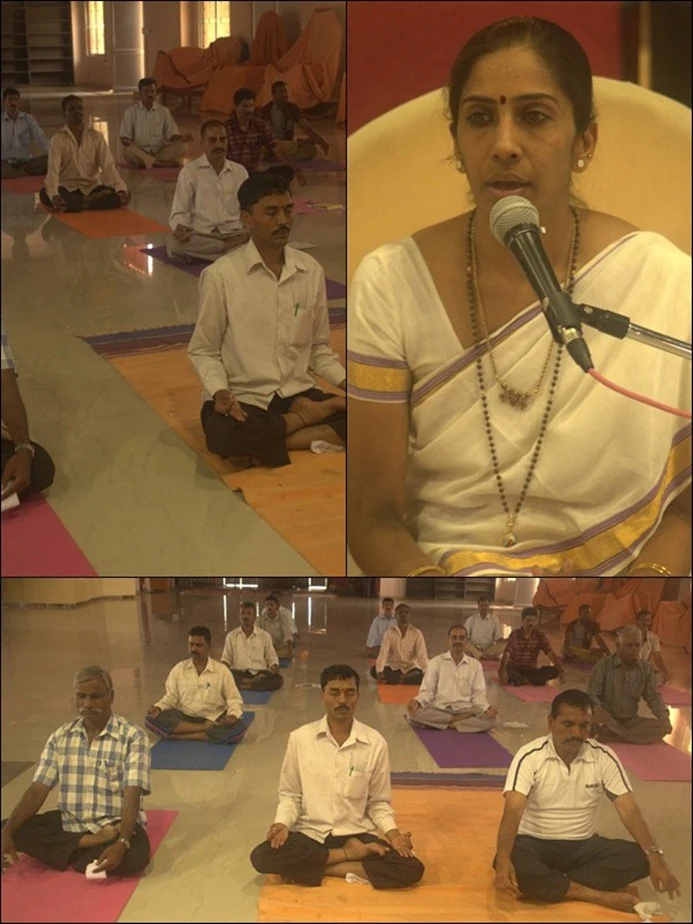
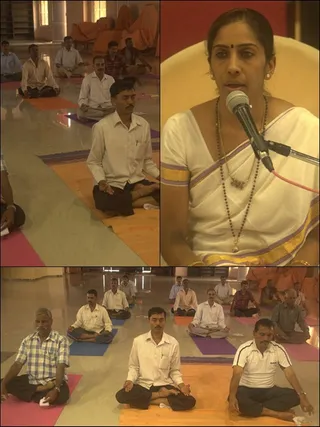
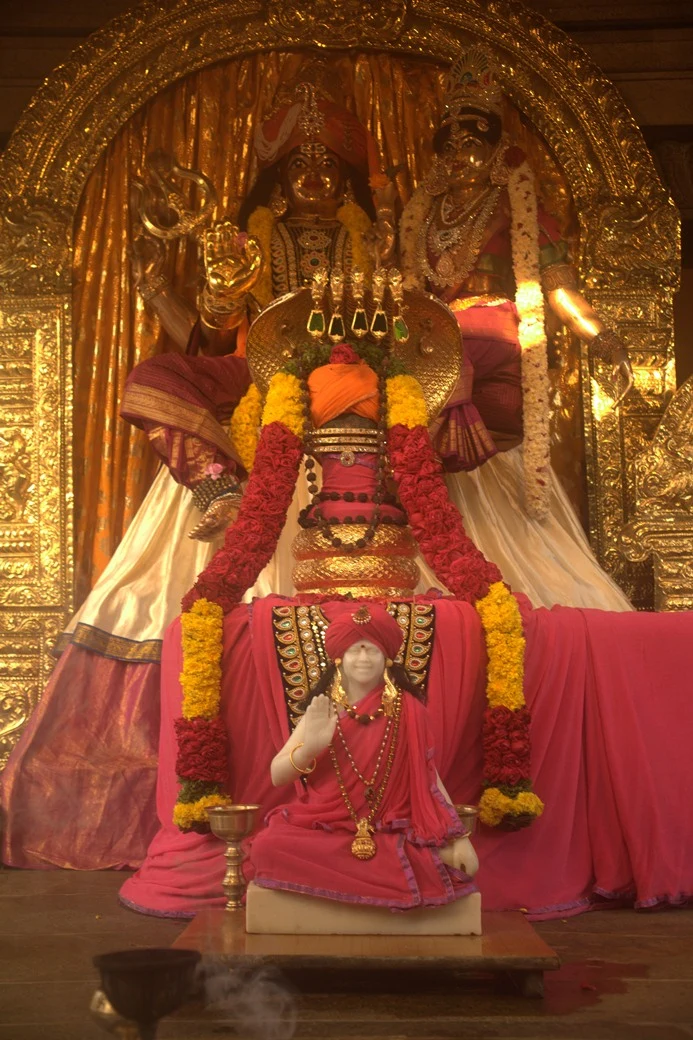
A white marble statue of a seated sage in pink robes and a pink turban sits on a white pedestal in front of a golden shrine. The statue wears a gold necklace and a gold pendant, with bangles on its wrist and its right hand raised in blessing. Behind it stands a large deity murti with a gold crown and a cobra hood, garlanded with red roses and yellow marigolds, and a tall orange turban-like cloth crowns the seated figure. Brass oil lamps flank the pedestal, and a small brass bowl with smoke rises in the foreground. No physical people are visible.A gilded statue stands in an ornate golden shrine niche backed by green cloth with gold motifs. The figure wears a red draped garment with gold border, a jeweled necklace, a gold coin garland, bangles and earrings, and a red tilak on the forehead. The right hand is raised in abhaya mudra, and pink flower petals lie at the base. This is a statue, not a living person, so it is shown as a depiction; the page identifies it as a person but the statue's features do not establish that.Outdoor ritual scene at dusk with a large group seated on woven mats. In the foreground, a woman in an orange sari with a rudraksha mala sits with hands pressed together in prayer. Beside her, an older woman in an orange sari with a red shawl performs a ritual, with brass puja plates, small oil lamps and offerings arranged on a tray in front of her. To the right, a younger woman in orange holds a small brass object over the offerings. Behind them, rows of young people in maroon kurtas with gold-trimmed yellow stoles sit with brass lamps and vessels. A woman in white with a pink dupatta sits in the middle background, and a sign on a pole in the upper left shows Kannada and English text beside a mobile camera notice. The setting looks like a public outdoor puja.A photograph of a large outdoor gathering at dusk or early morning, with many seated participants on mats and cloth. Rows of women and girls wear maroon and red kurtas with yellow trim, while others wear white or orange clothing; a woman in a black sari sits in the middle. Participants sit before brass plates, bowls, small lamps and flower offerings on the ground, and several hold spoons or eat from leaf-like plates. A tree and a banner stand in the background. Several people appear to be meal-serving or sharing food. No identifiable a person figure is clearly visible in this frame.A decorated deity murti in a temple shrine, flanked by two smaller attendant murtis. The central figure wears an orange cloth draped over the shoulders, a tall ornate crown, and heavy silver-toned jewellery, and holds a trident-like staff and a ceremonial fan-shaped implement. Red and yellow marigold garlands hang across all three figures. The shrine has a carved stone arch and a red backdrop, with warm lamplight. No physical people are visible.A dark stone or bronze-toned statue of a four-armed deity figure seated against a bright orange-red silk backdrop with a silver ornamental frame at left. The figure wears a cream-beige turban with a red tilak on the forehead, a cream-beige dhoti with gold-edged borders, and layered red rudraksha-style beaded malas across the chest, waist and wrists. One upraised hand holds a ceremonial object and another rests on a raised block. No physical people are visible; the figure is a statue.A dark stone or bronze-black deity murti stands in a golden ornate shrine niche against a deep orange-red drape. The figure has a cream-colored shawl draped over its head and shoulders, a red tilak on the brow, and wears layered rudraksha malas in brown and cream tones across the chest. Multiple arms hold ritual objects, and its wrists are adorned with beaded bracelets. The gilded frame of the niche and warm lighting give the scene a temple setting.A dark stone or bronze statue of a seated sage-like figure, shown in close view against an orange and red draped backdrop. The statue wears a cream-coloured turban with a red tilak mark on the forehead, a cream wrap over the shoulders, and multiple strands of red-brown rudraksha beads across the chest and arms. Red flower garlands hang over the shoulders and yellow marigold garlands sit at the lower edge. One hand holds a small drum-like object and the other is raised in a blessing gesture, with a silver ornate frame at the left edge. The statue is an image, not a living person, and there is no visible physical crowd.A three-panel collage of photographs from a meditation session. The left and bottom panels show rows of men seated cross-legged on pink, purple and orange yoga mats on a polished floor, with hands resting on their knees in meditation; one man wears a light checked shirt, others wear white shirts and dark trousers. The top-right panel shows a woman in a white sari with purple and gold borders, dark pottu and a beaded mala necklace, speaking into a microphone on a stand. Orange cloth hangs in the background.Overhead view of many small white conical clay or dough offerings with red tips arranged in neat rows on a saffron-orange cloth with a woven striped border. Sunlight and shadows fall across the rows. No people are visible in the frame; only the arranged offerings and cloth fill the scene.A shrine interior with a young priest in white dhoti and shawl at left, touching or offering near a black stone shivalinga with red flower petals on its base. Behind it, a gilded arch frames two large deity murti statues seated on a dais: a male figure wearing an orange-and-red turban and rudraksha-style beaded necklace, holding a trident, and a female figure in a magenta sari with white garland and gold crown. Orange draped fabric and flower garlands decorate the backdrop. The scene reads as temple puja or abhishekam, with a plain sandstone wall and carved pillars visible.