Skip to content
Monday

20 November 2017

Be in Tune with the Cosmic Principle of - 'Life is for Others'

Dated photos
185
Source pages
1
Media
2
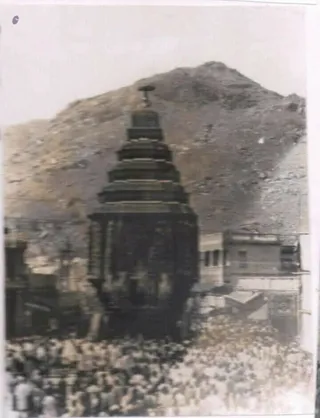
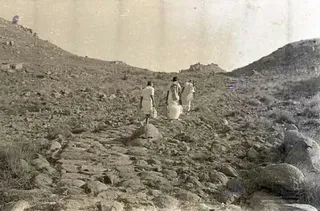
A black-and-white archival photograph of a tiered temple chariot, a tall tapering wooden ratha with stacked roof tiers and a finial, pulled through a dense crowd of people in the foreground. A rocky hill rises behind the chariot, with low buildings with balconies to the right. The image looks like an old print with a faded, grainy texture.A sepia-toned vintage photograph of a rocky hillside path with a worn stone-paved trail winding upward between boulders and sparse scrub. Three people walk away from the camera along the path: the left figure in a white garment carries a small bag, the centre figure in a light wrap carries a large white bundle or container, and the right figure in a pale garment walks behind. Their clothing is simple white and cream, and the landscape is arid and open under a pale sky. A faint photo credit appears in the lower right corner.

November 20 2017

Original wiki page
Contents

Title:

Be in Tune with the Cosmic Principle of - 'Life is for Others'

Description:

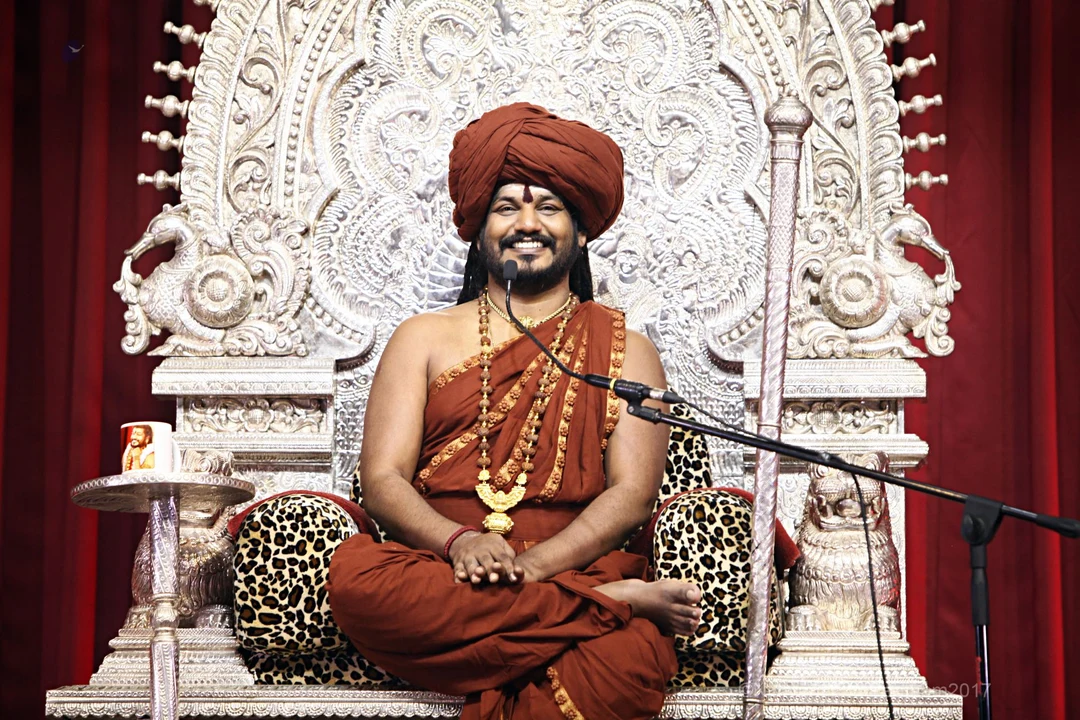
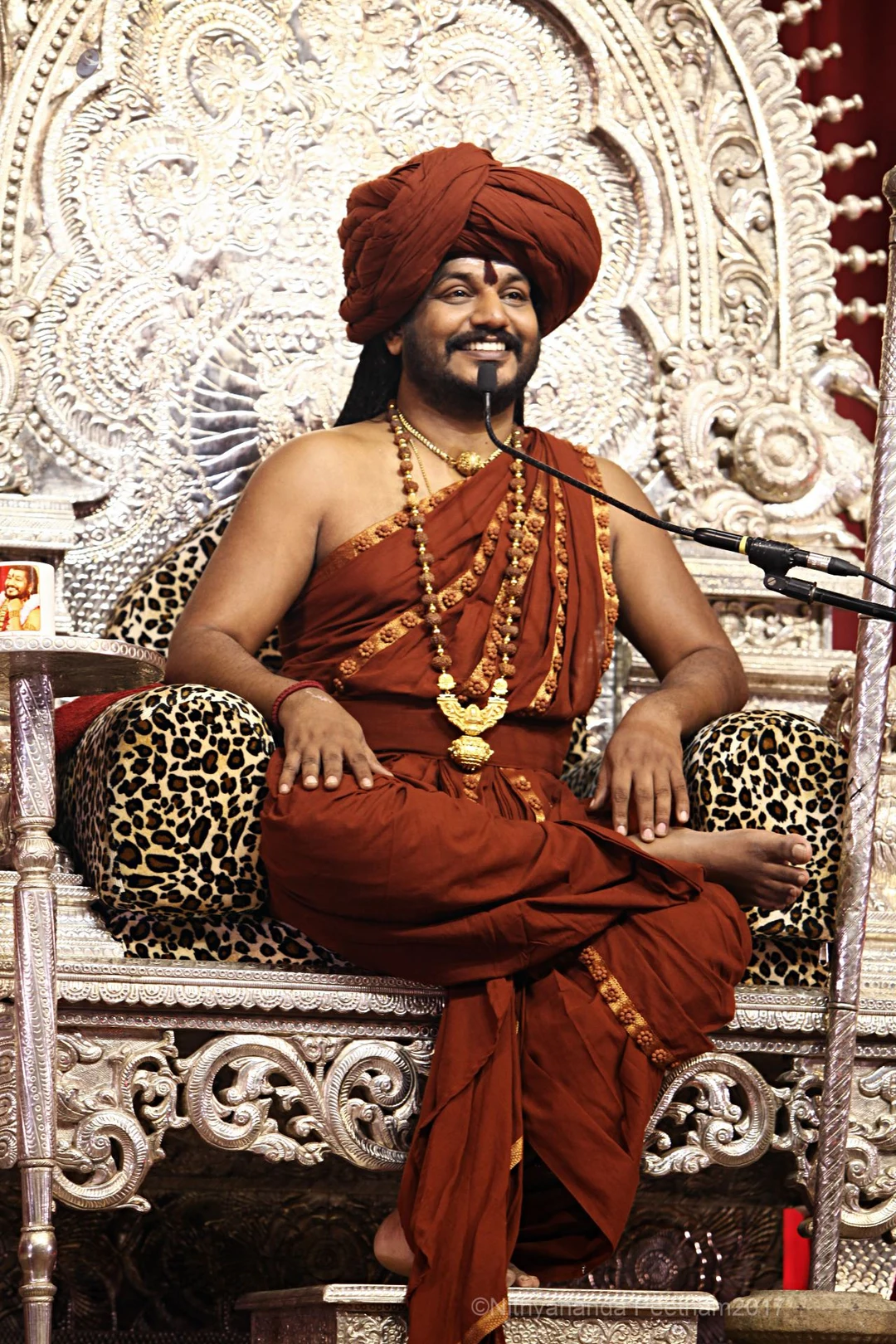
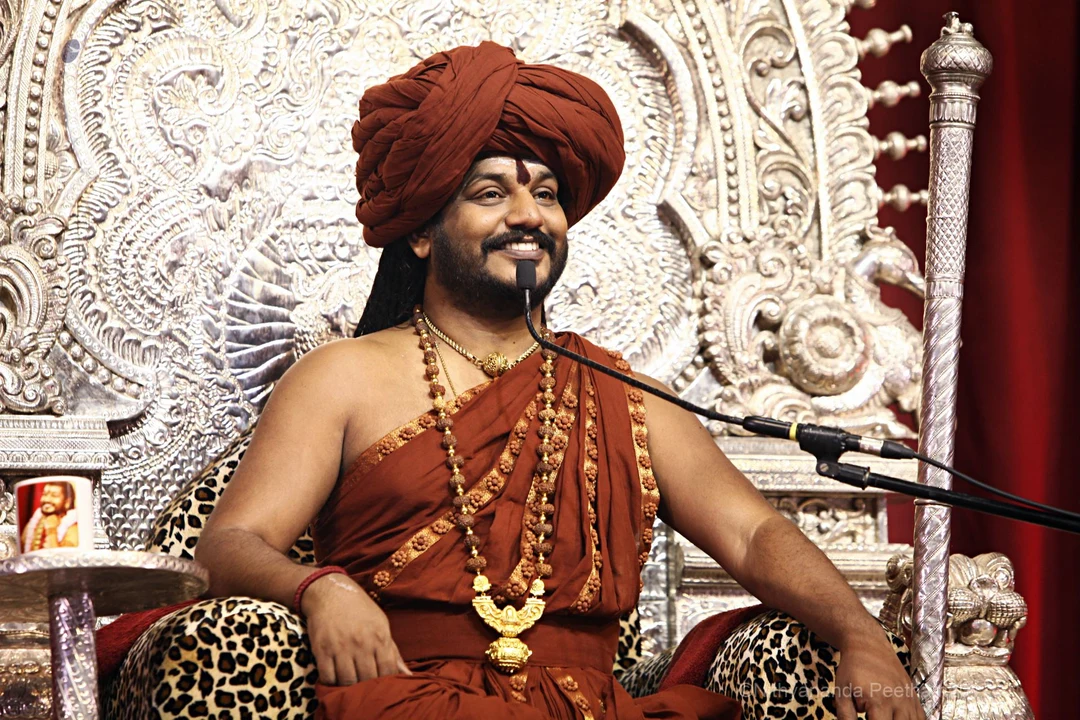
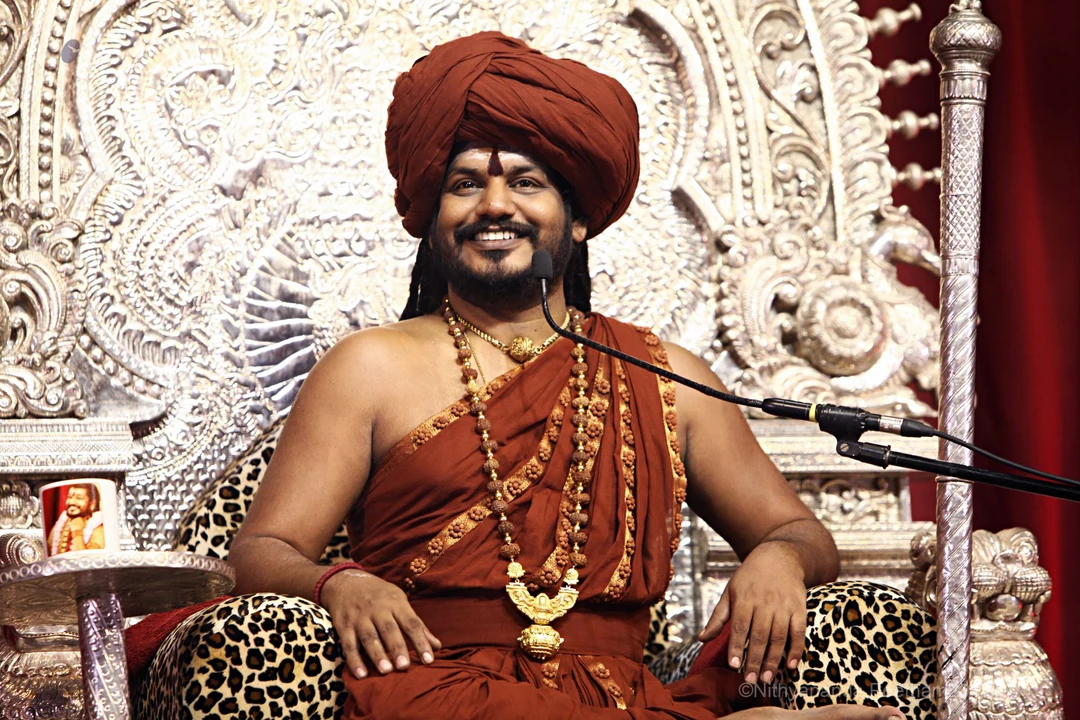
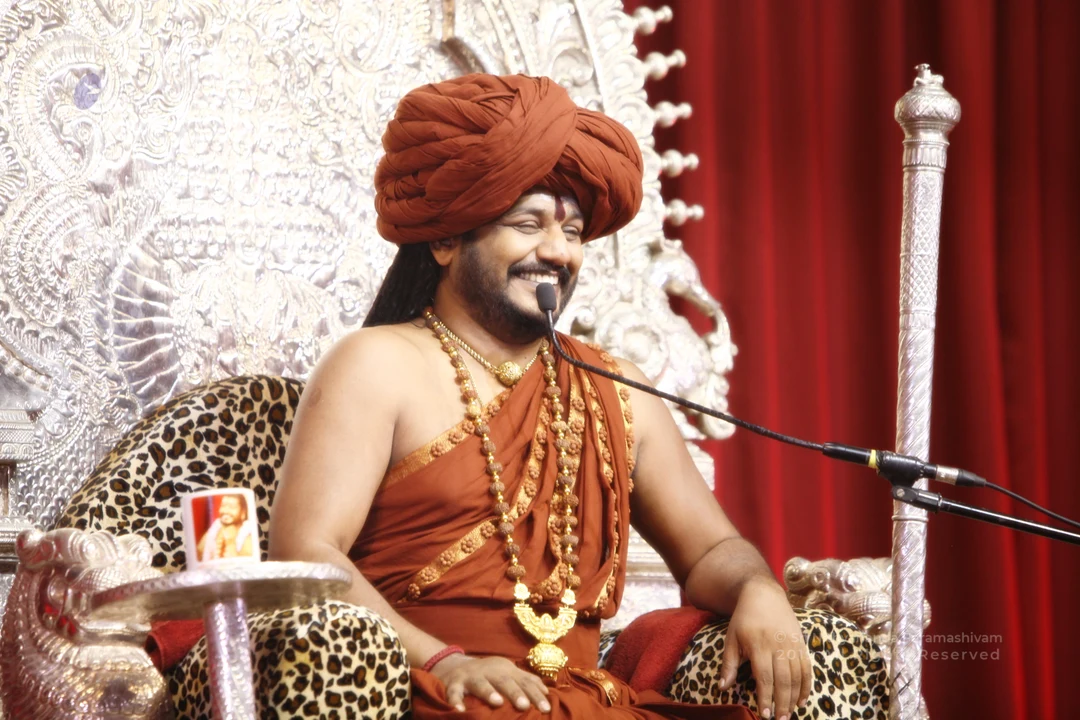
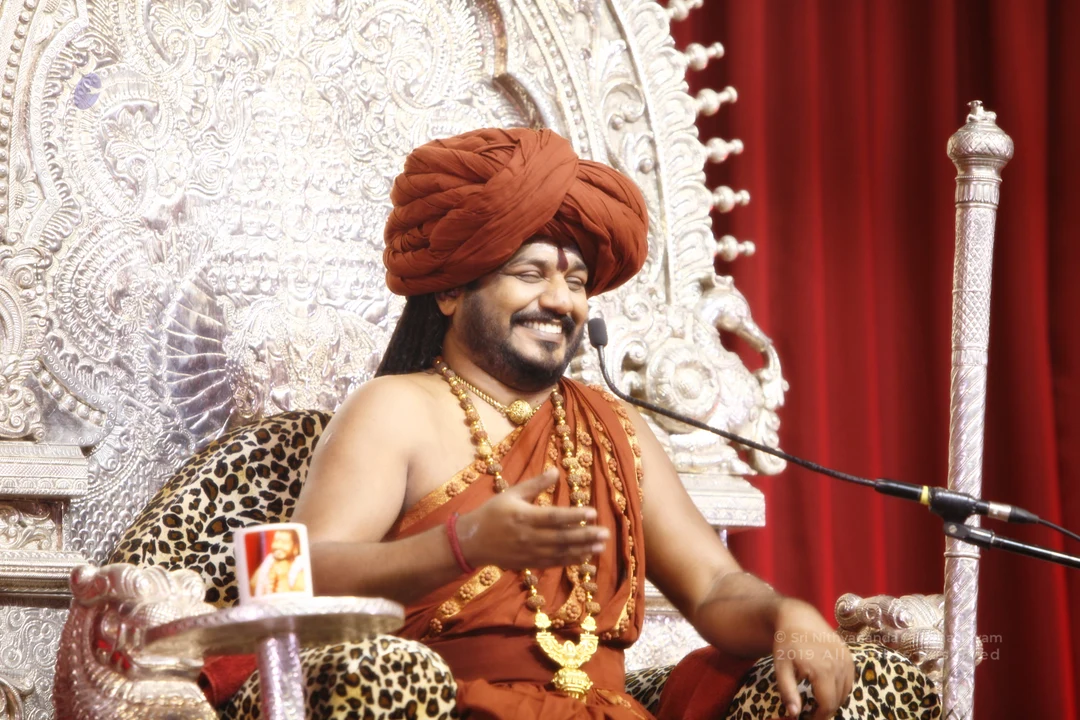
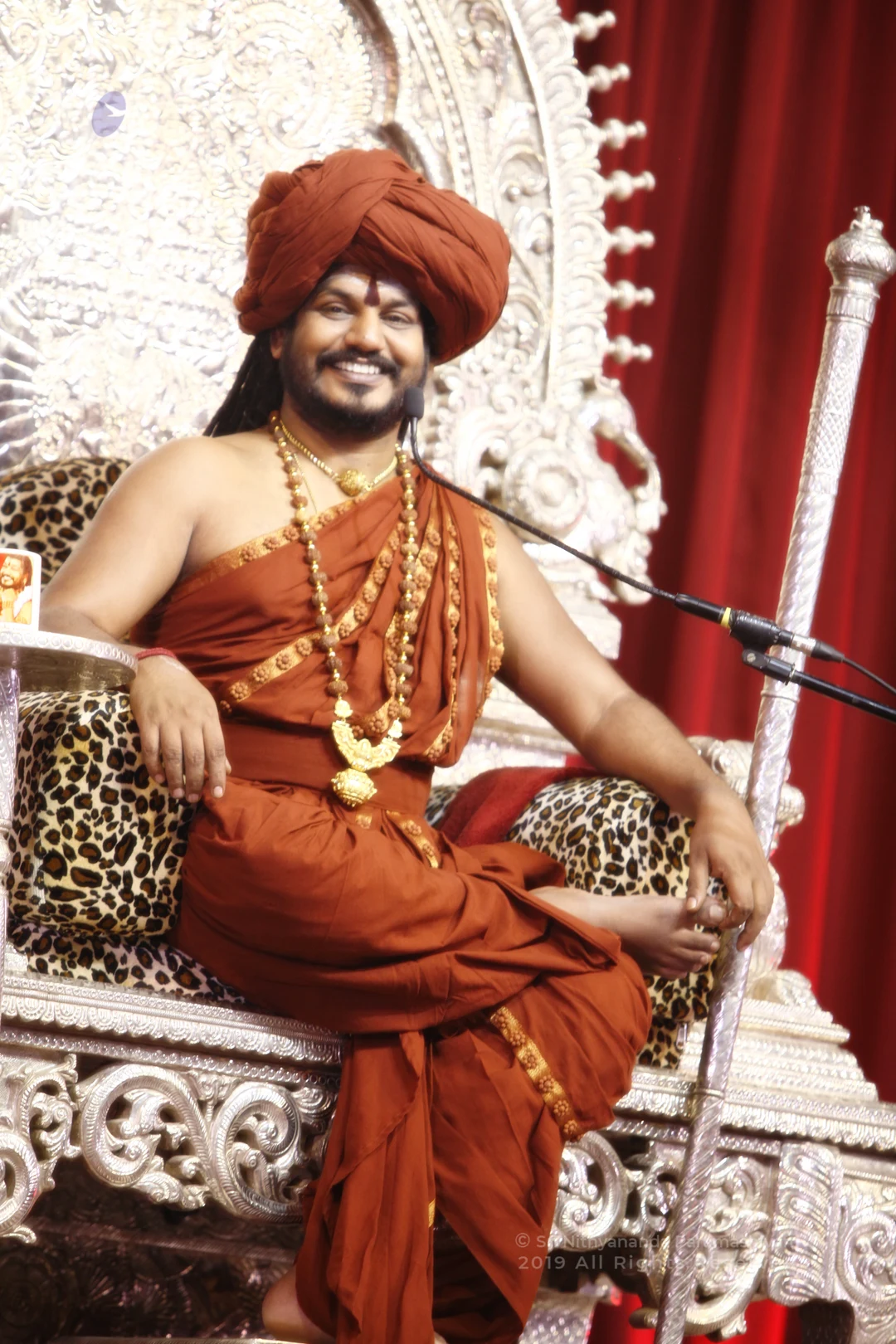
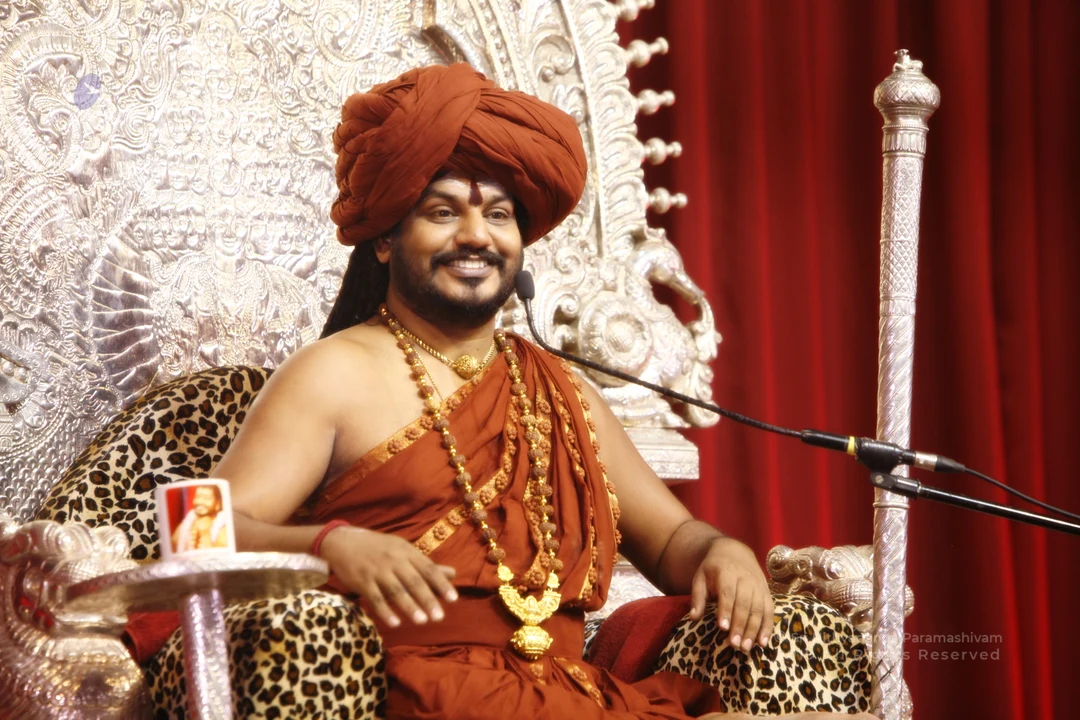
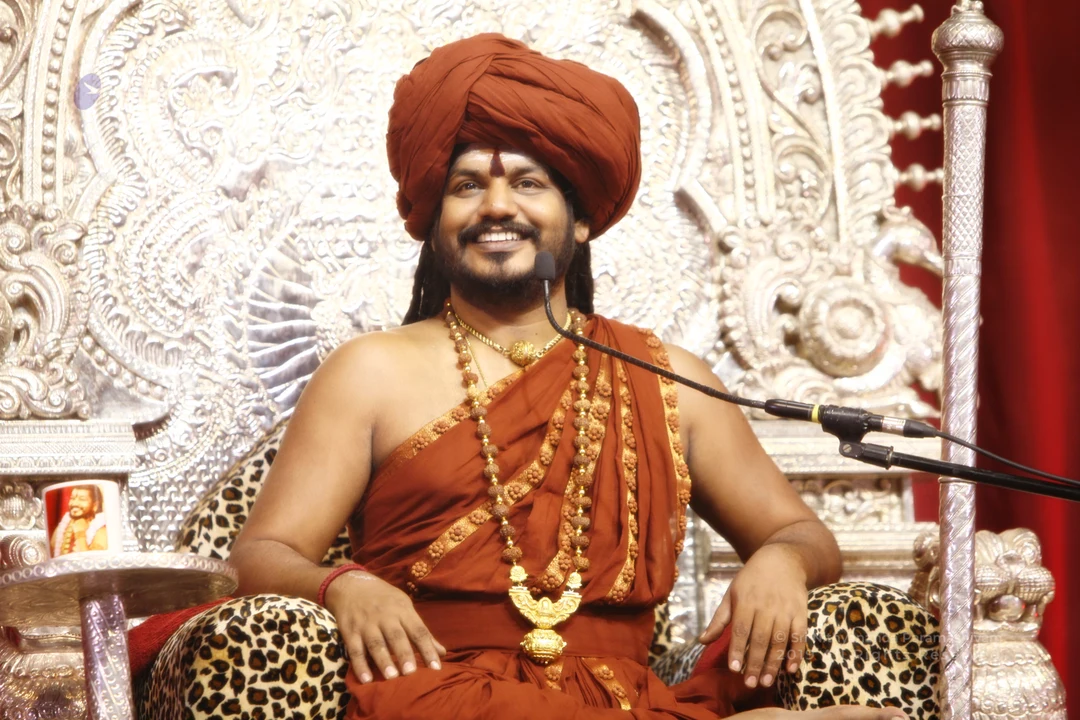
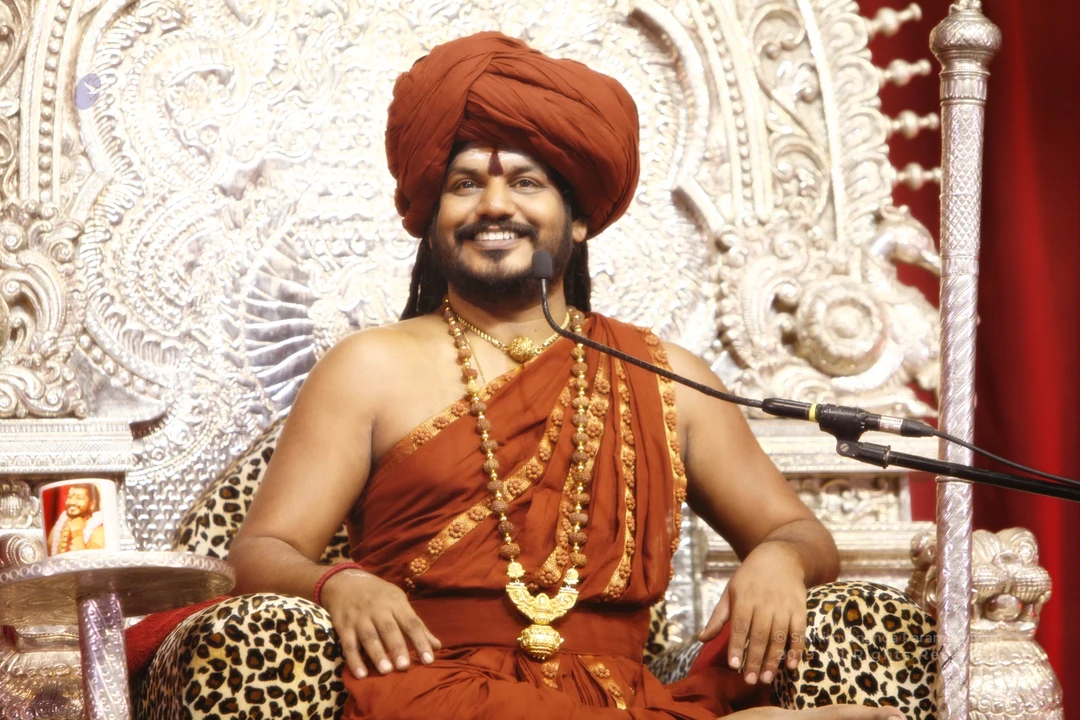
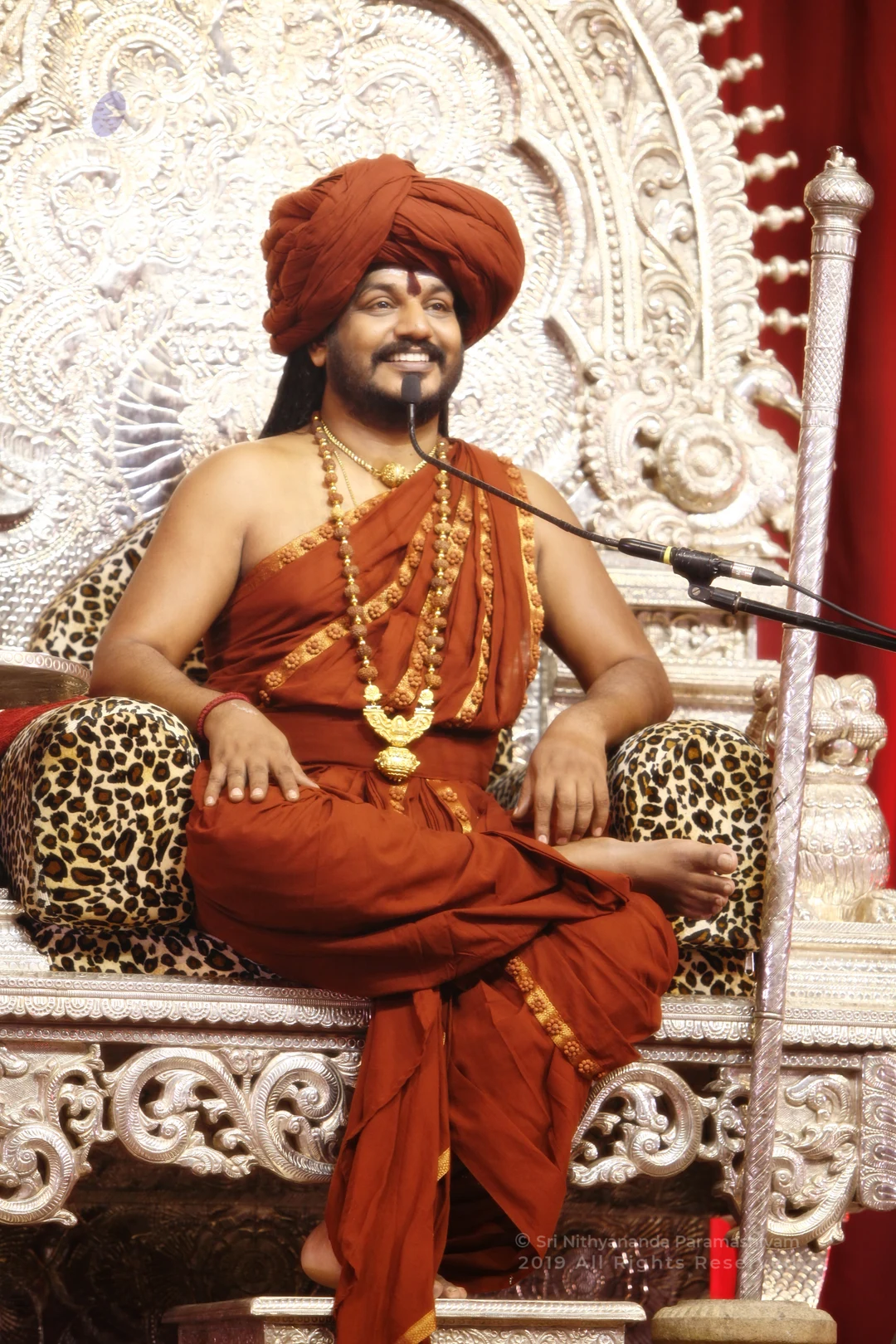
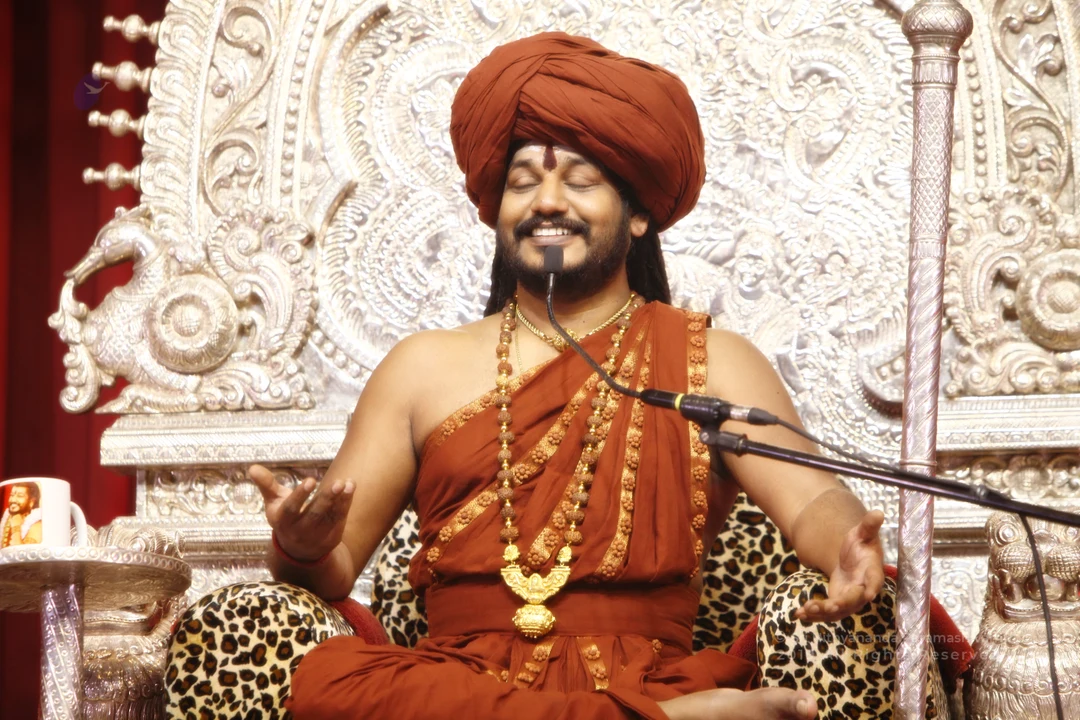
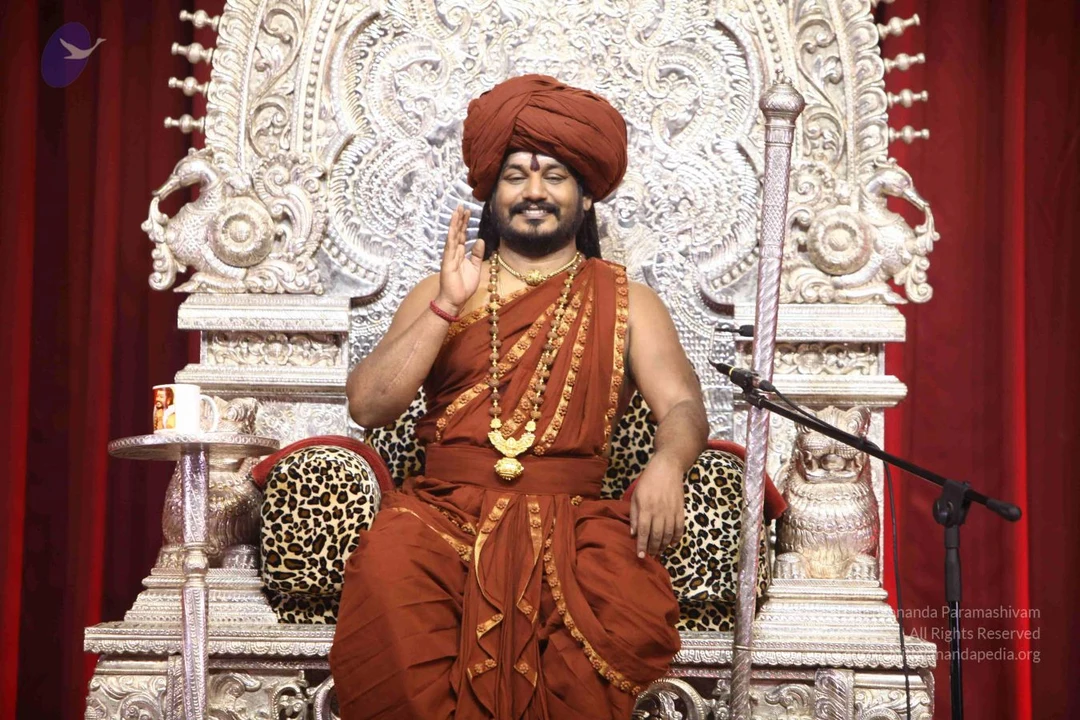
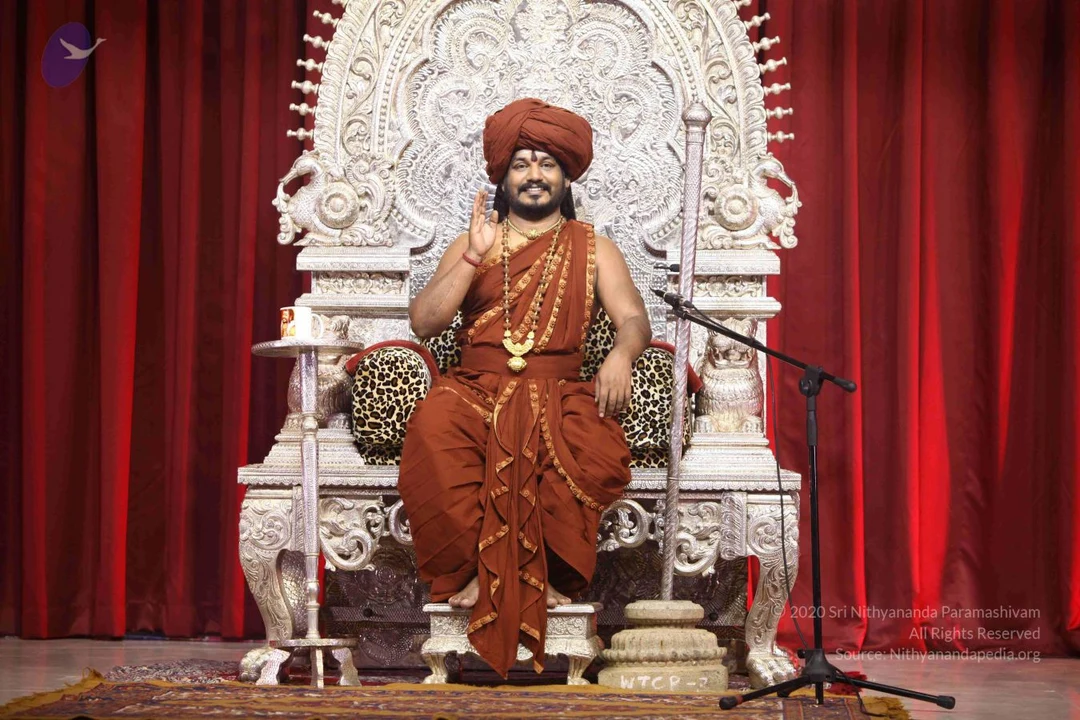
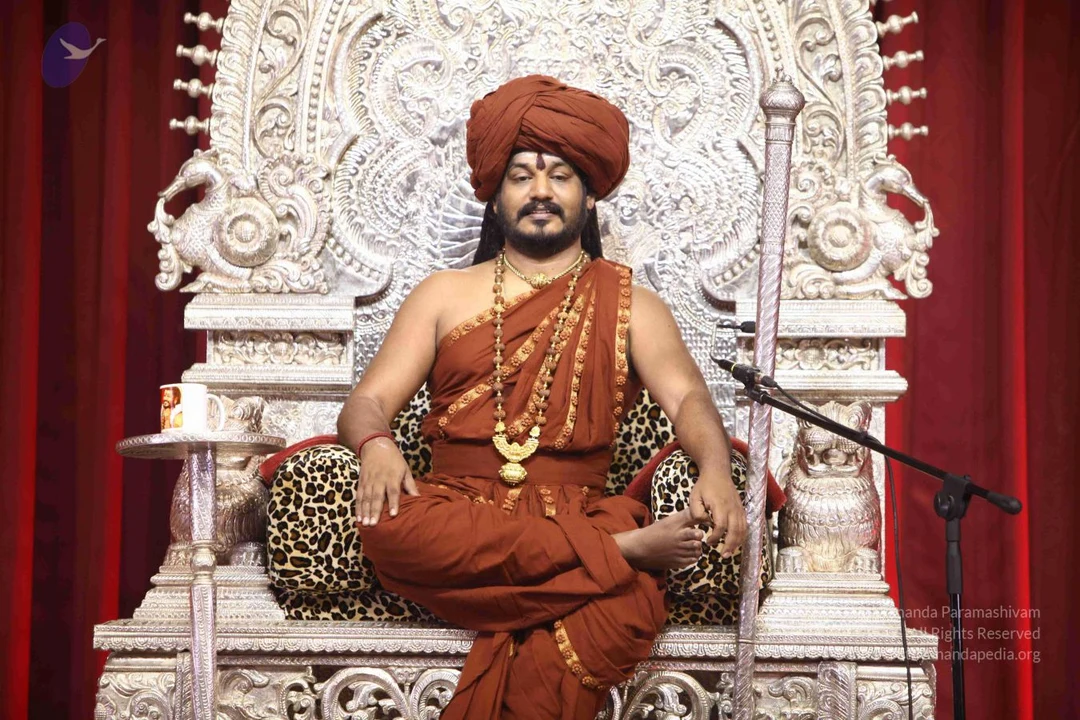
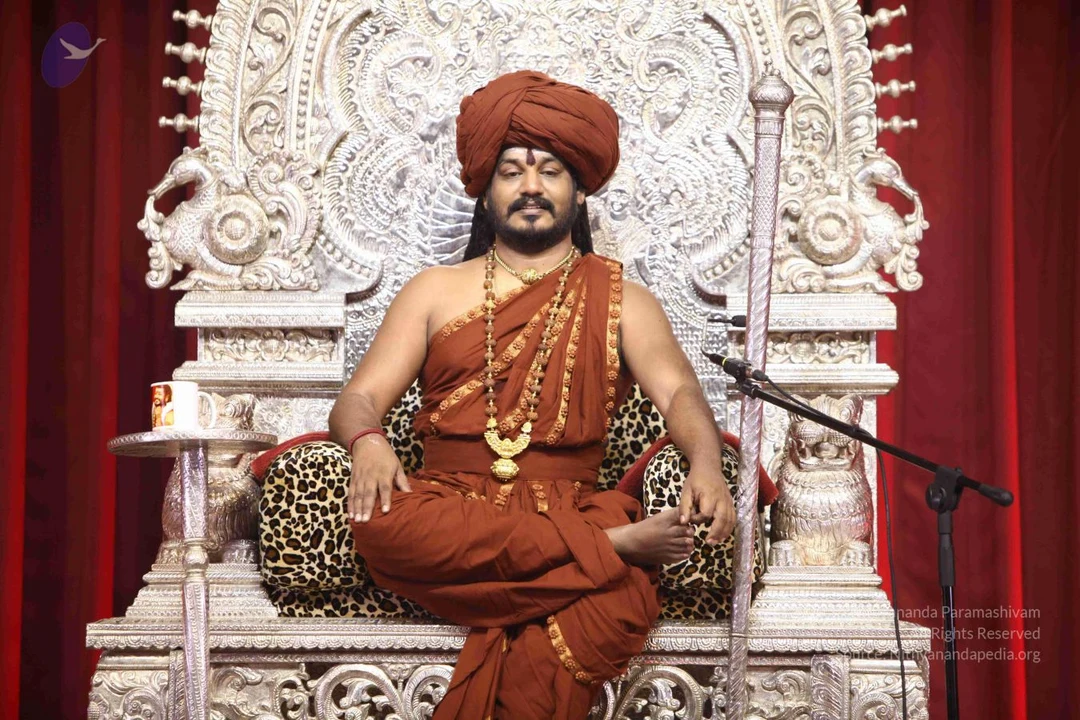
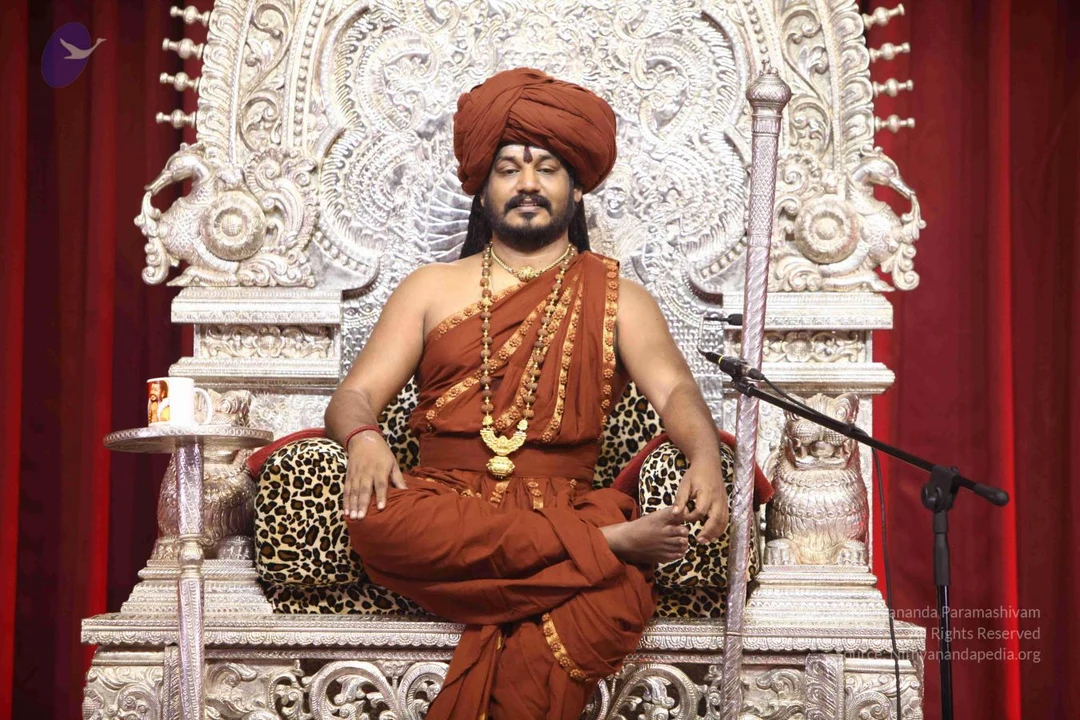
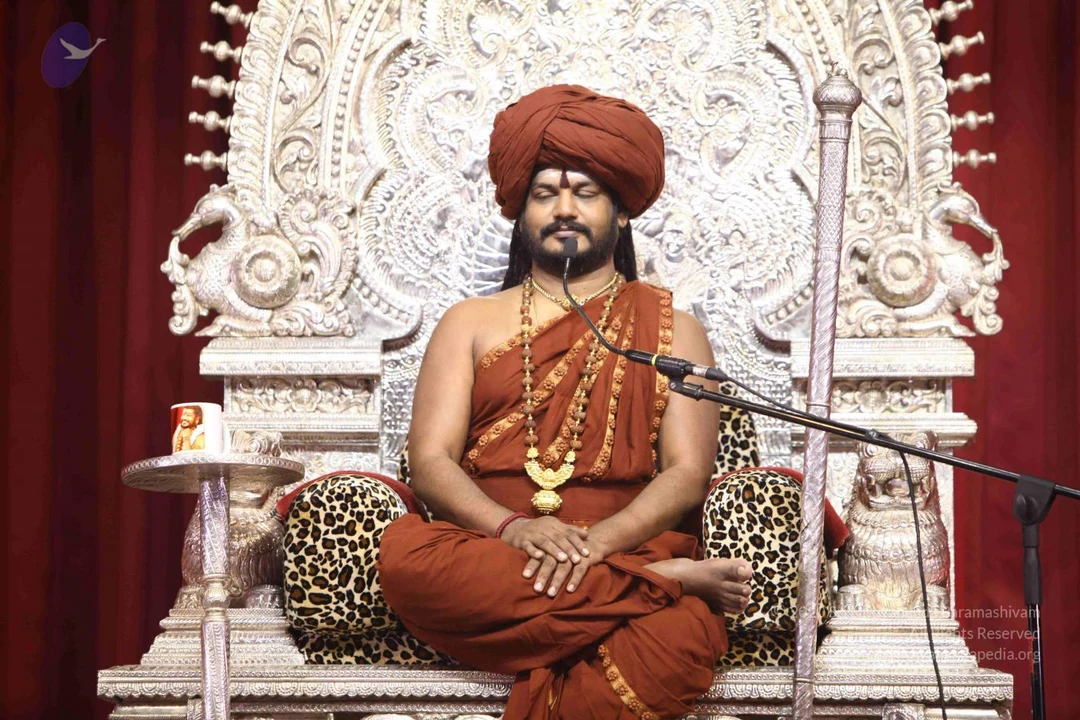
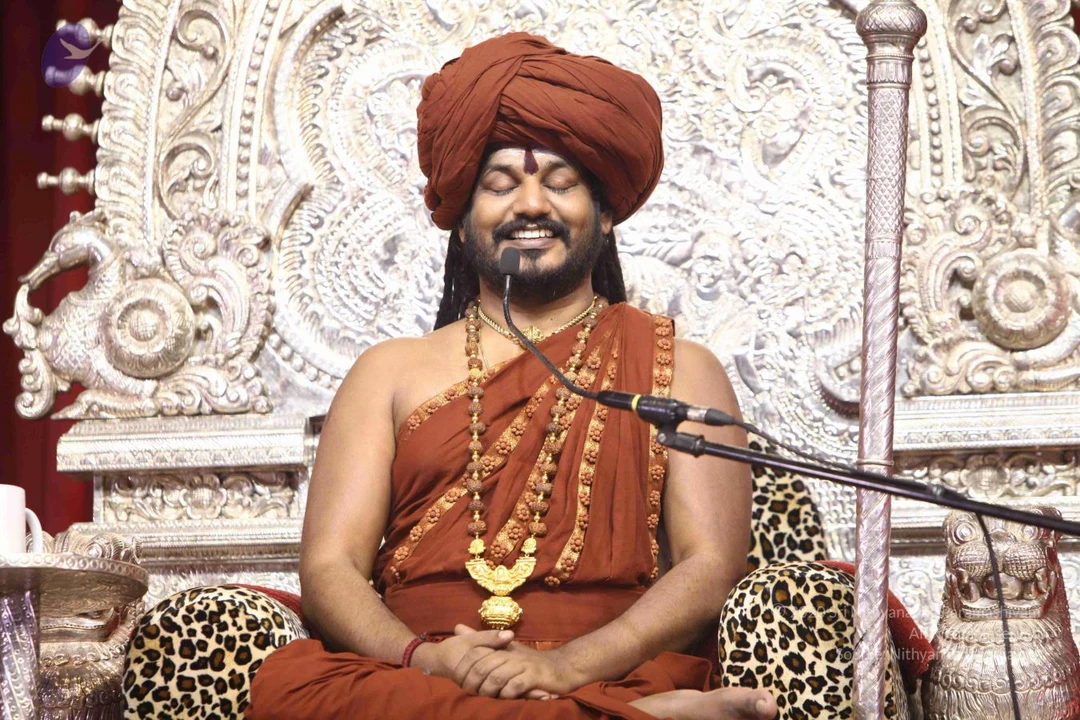
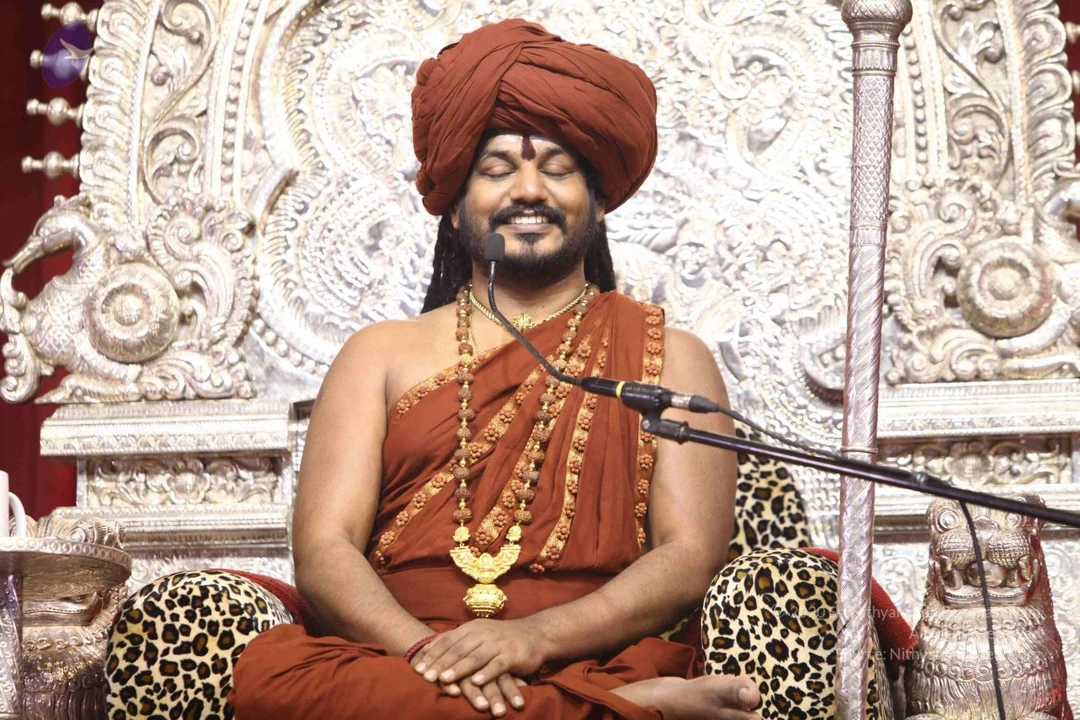
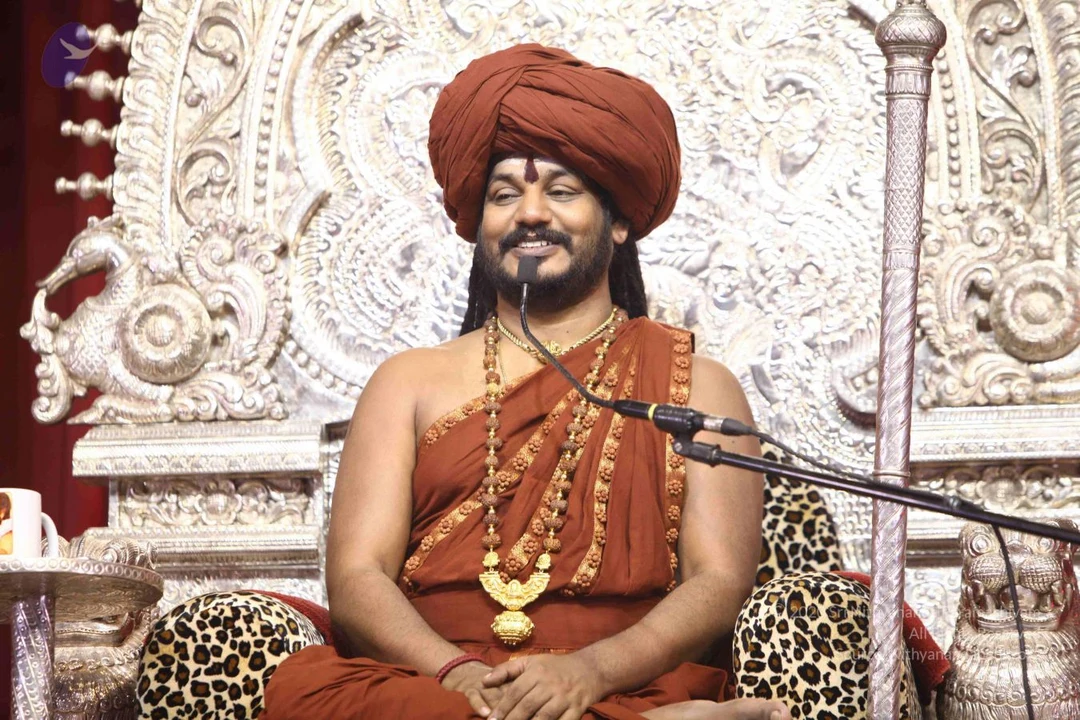
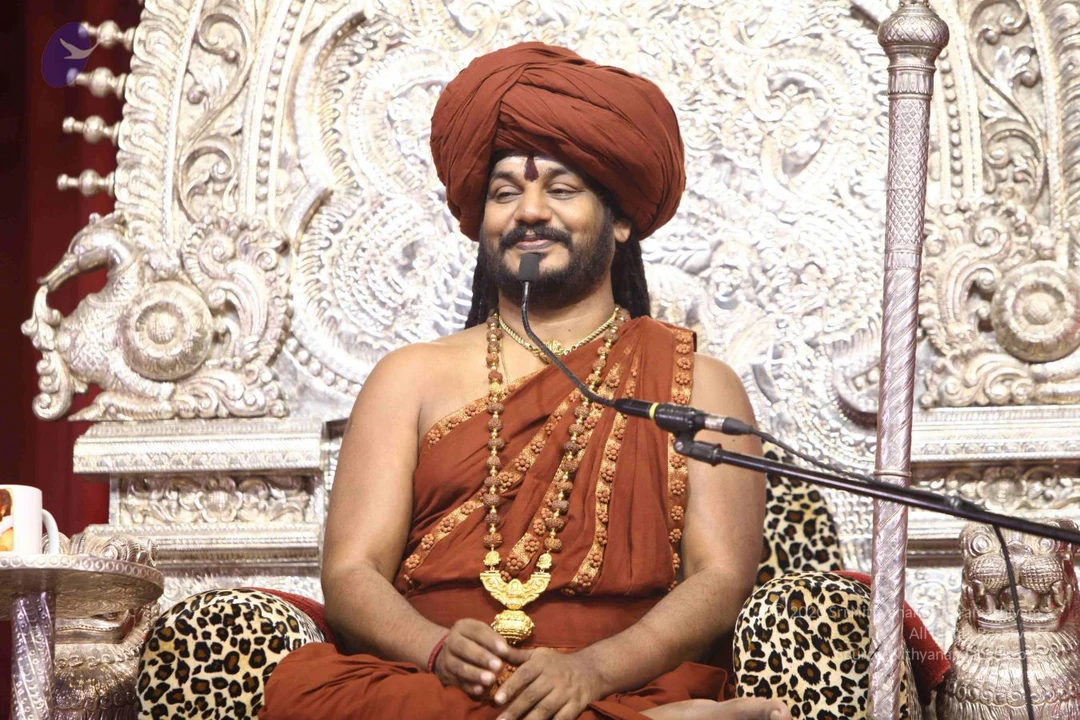
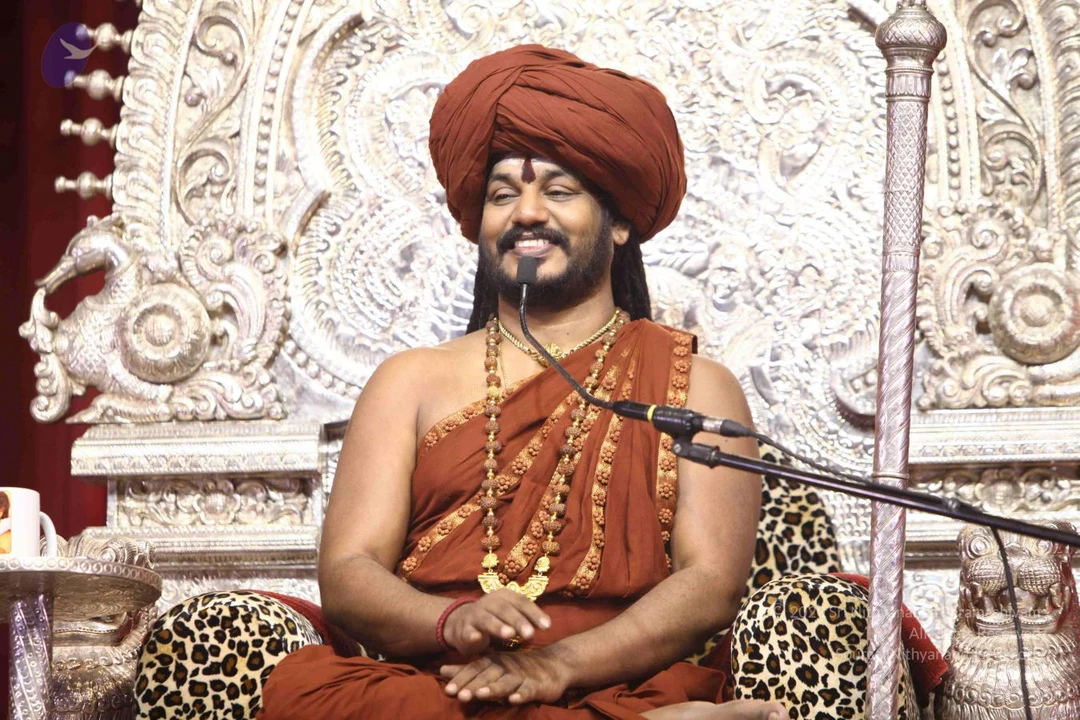
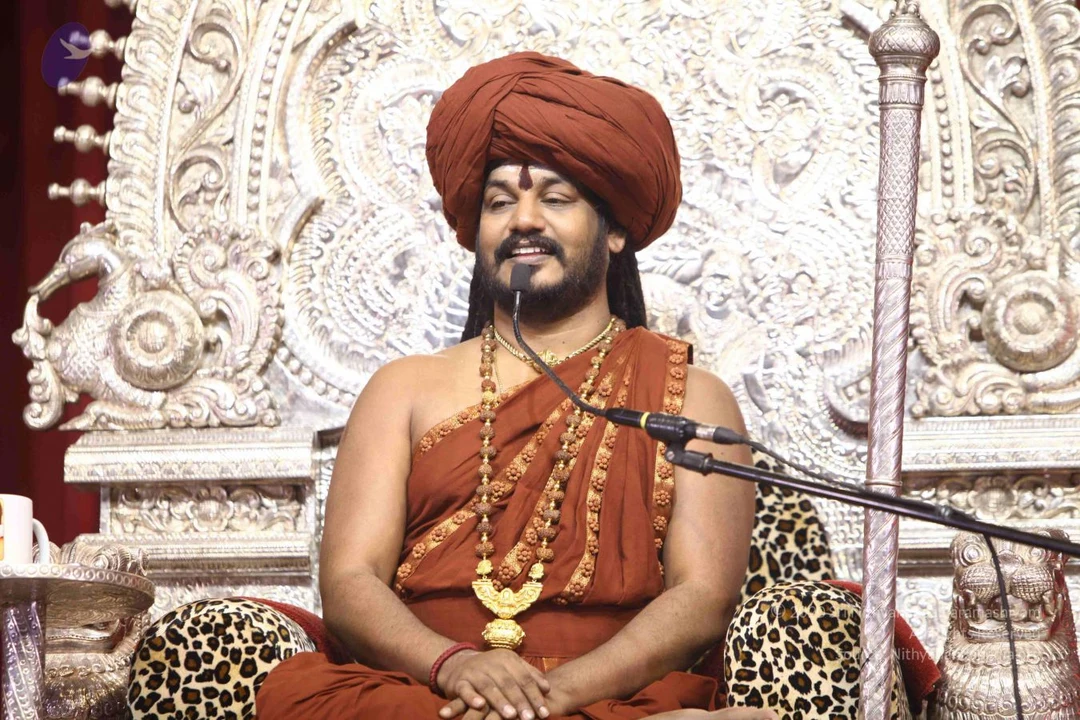
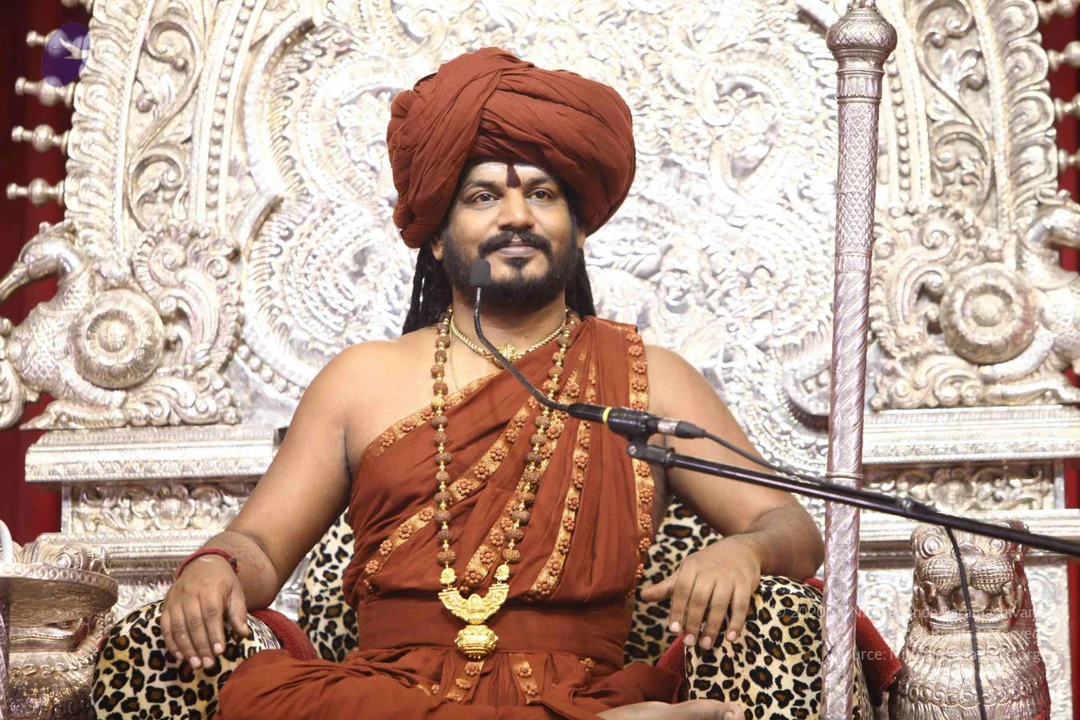
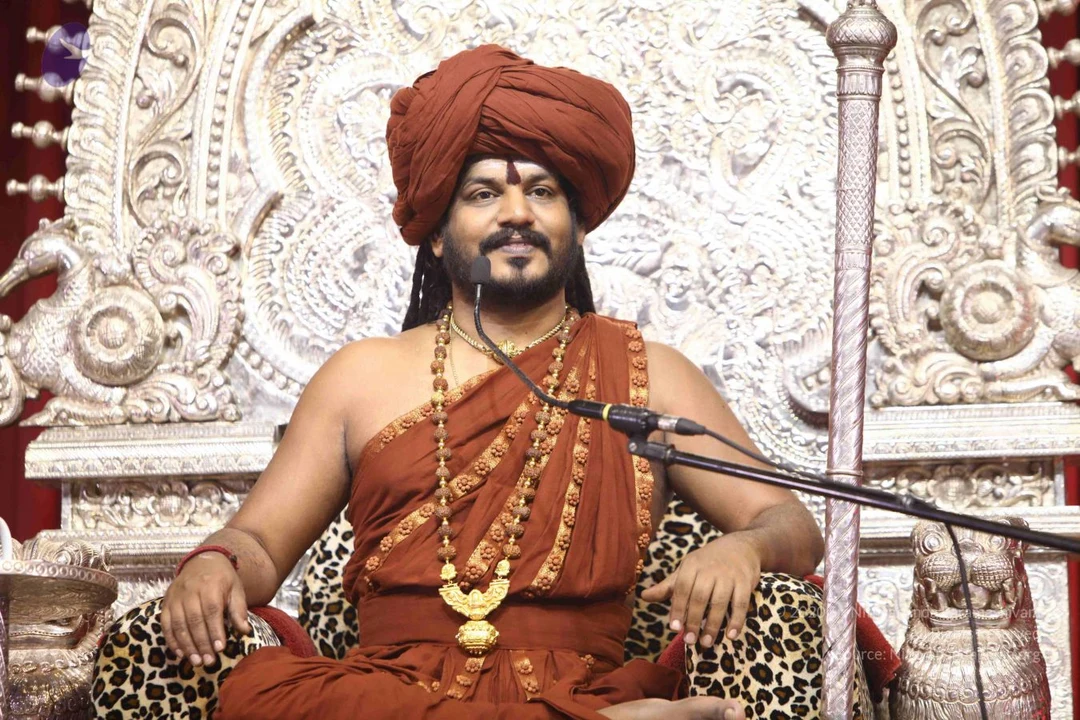
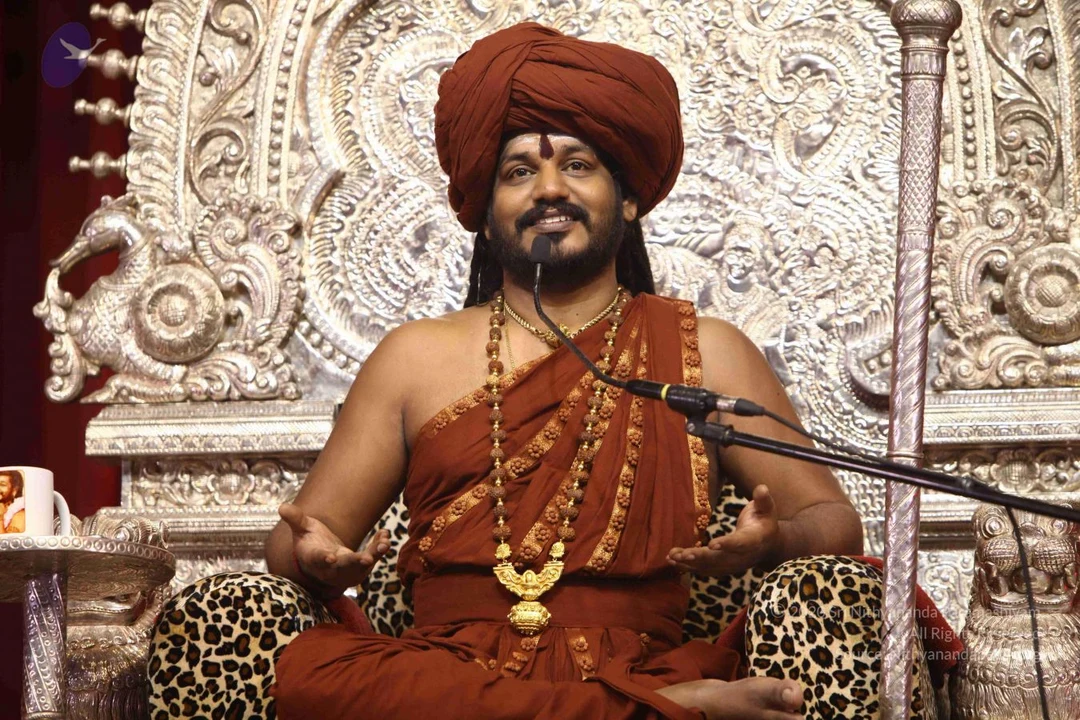
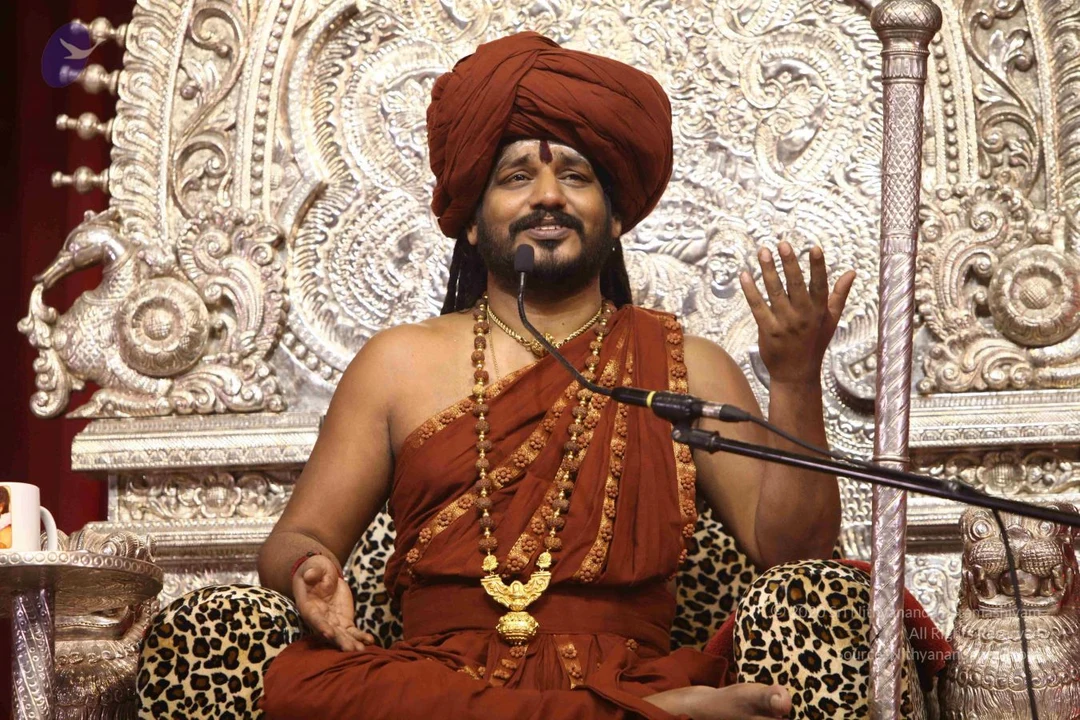
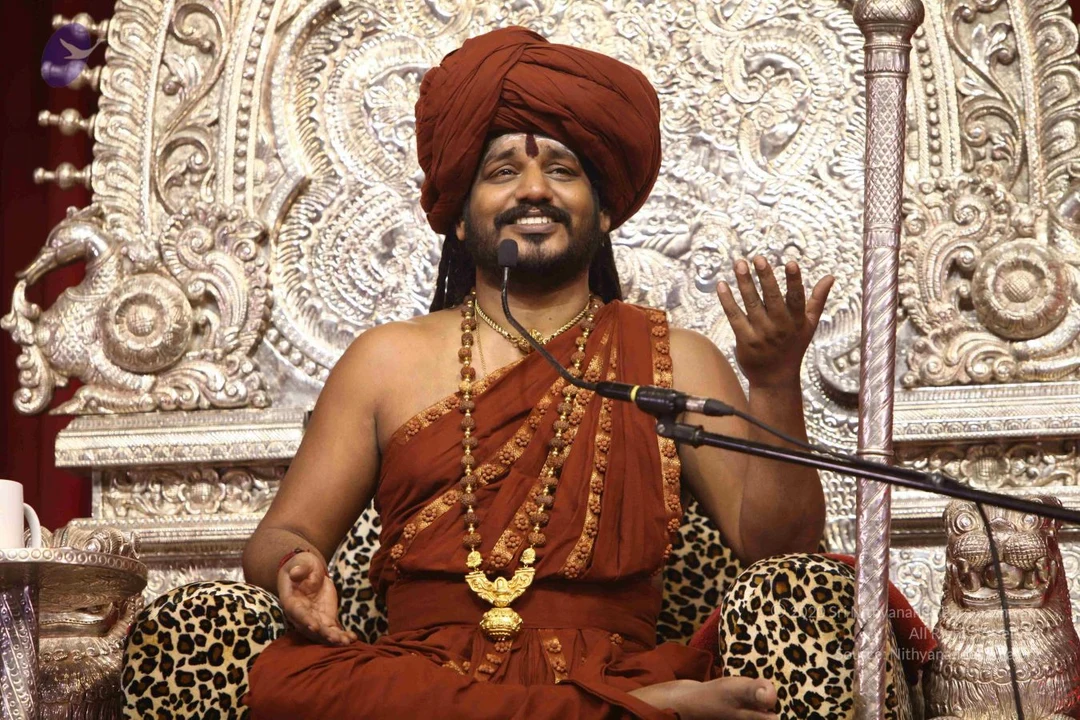
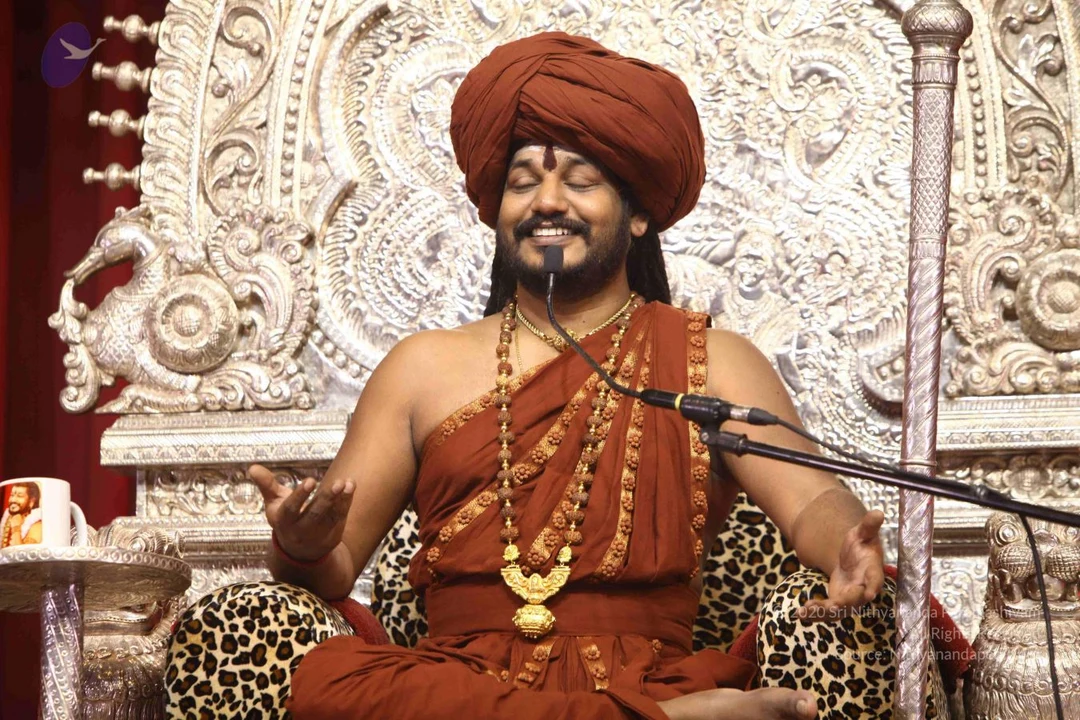
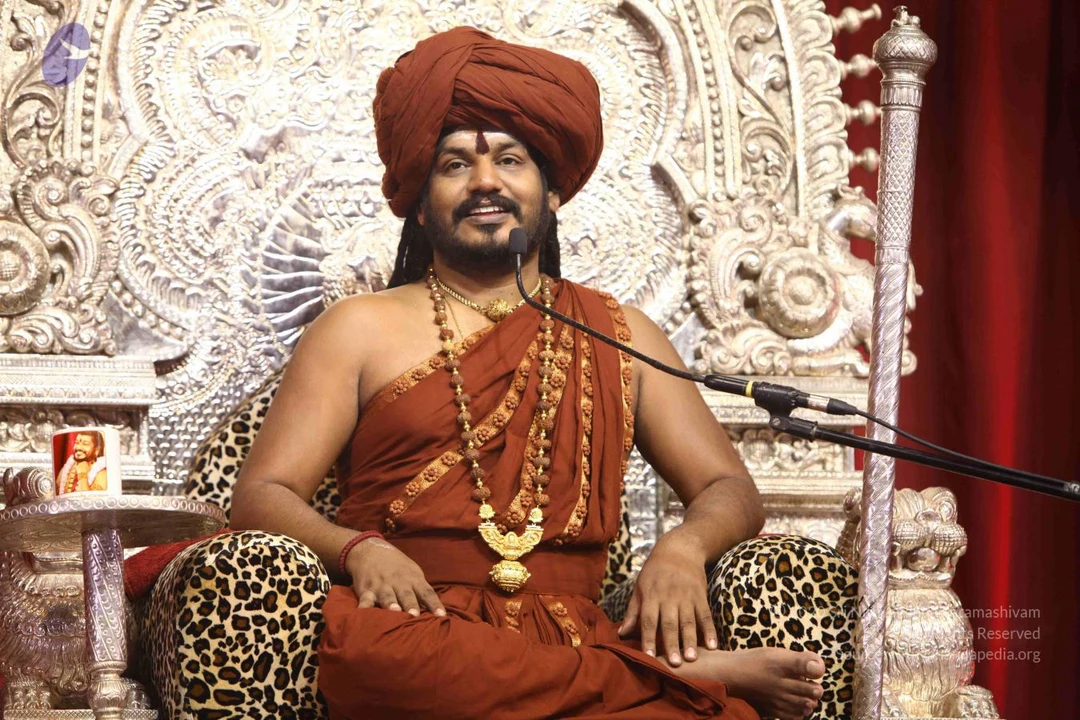
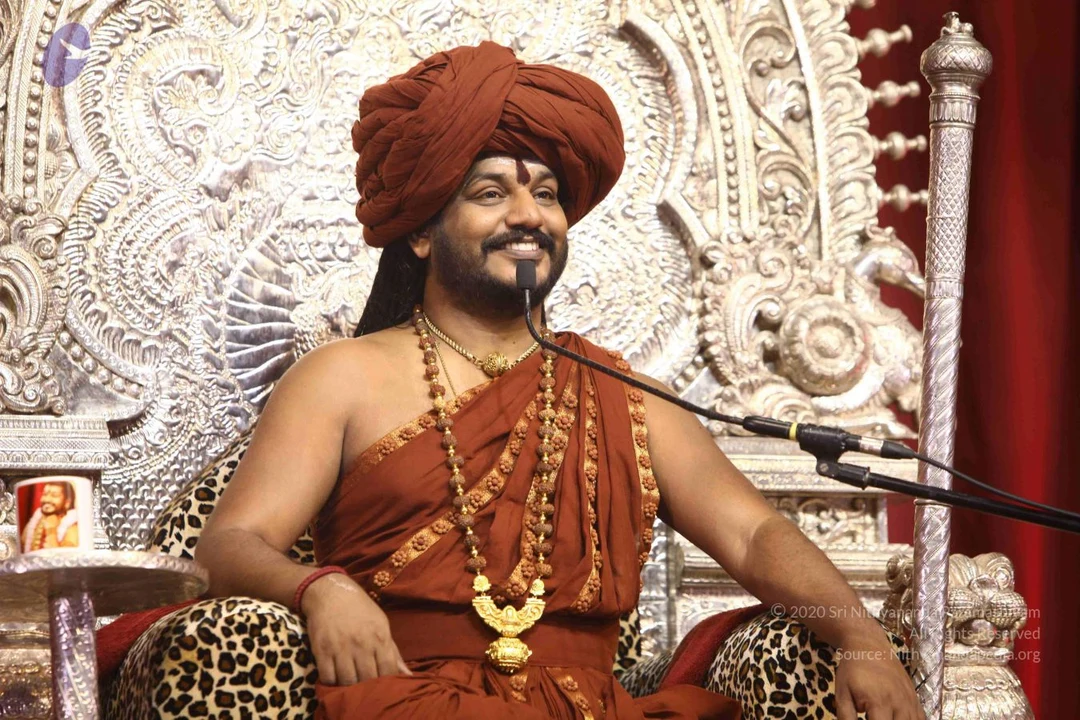
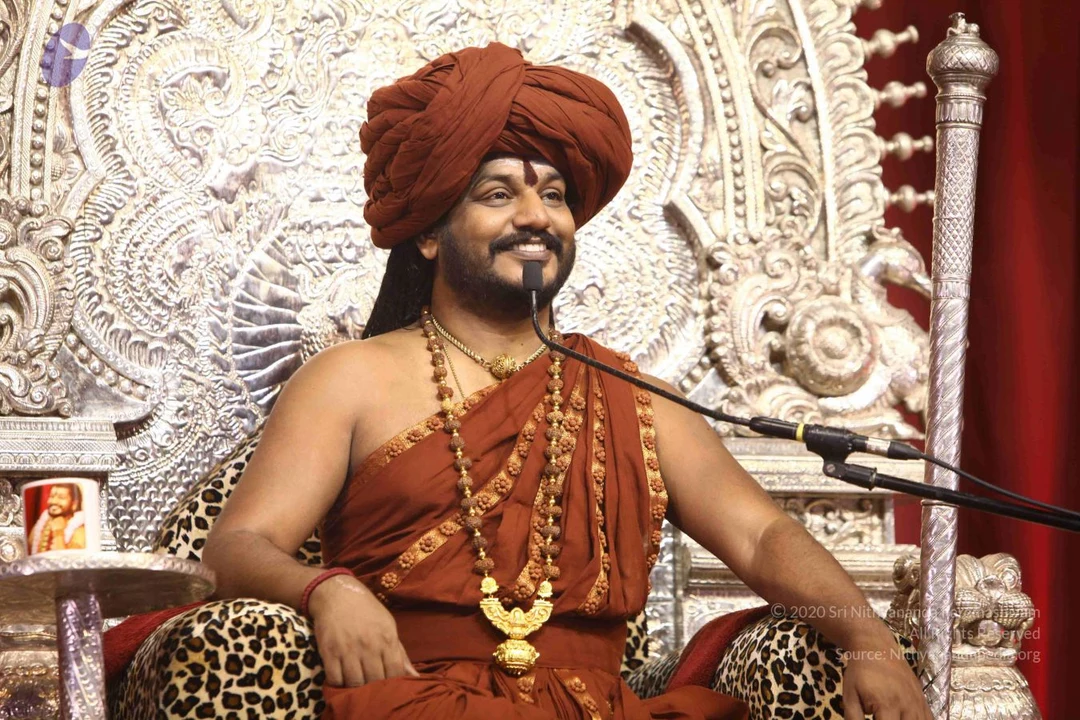
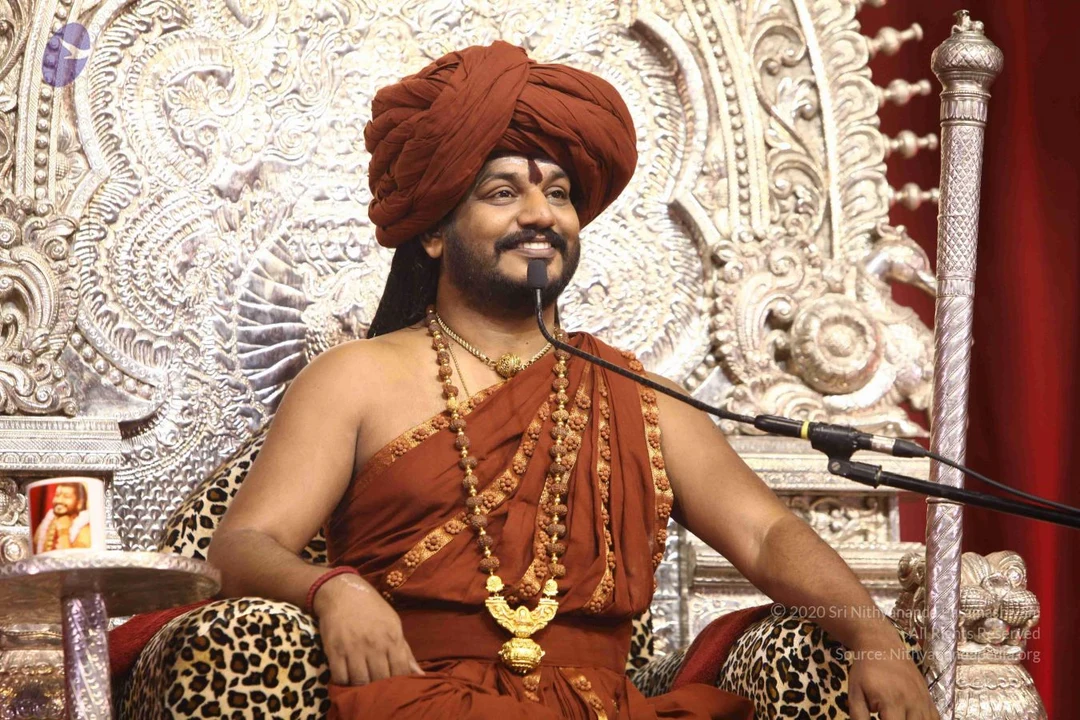
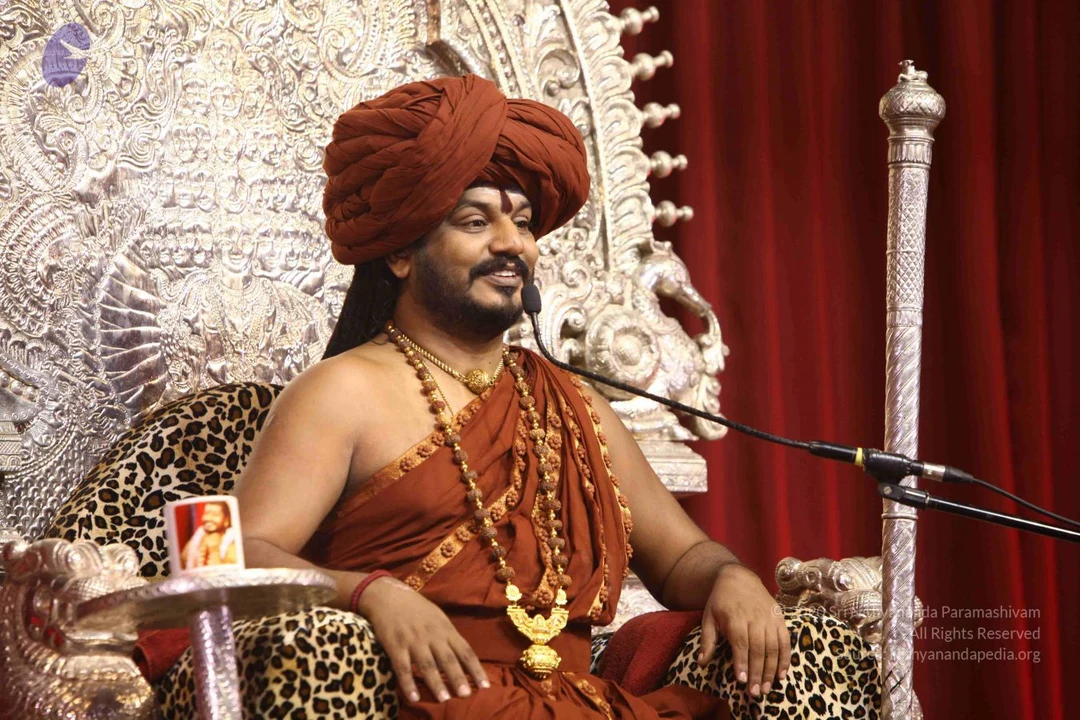
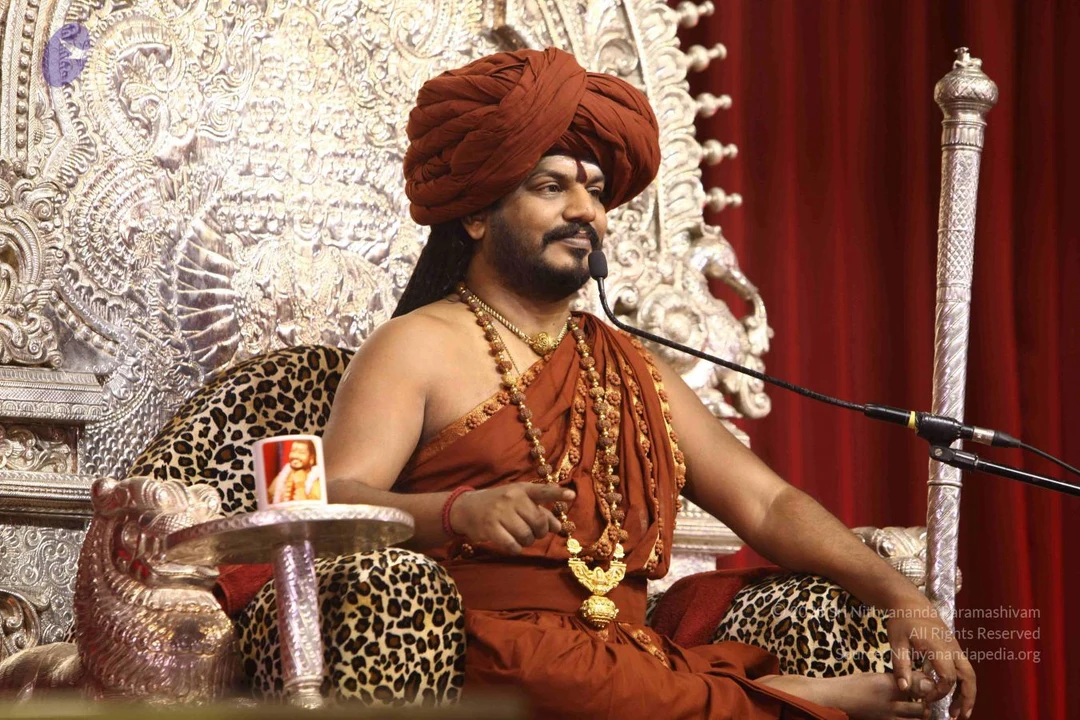
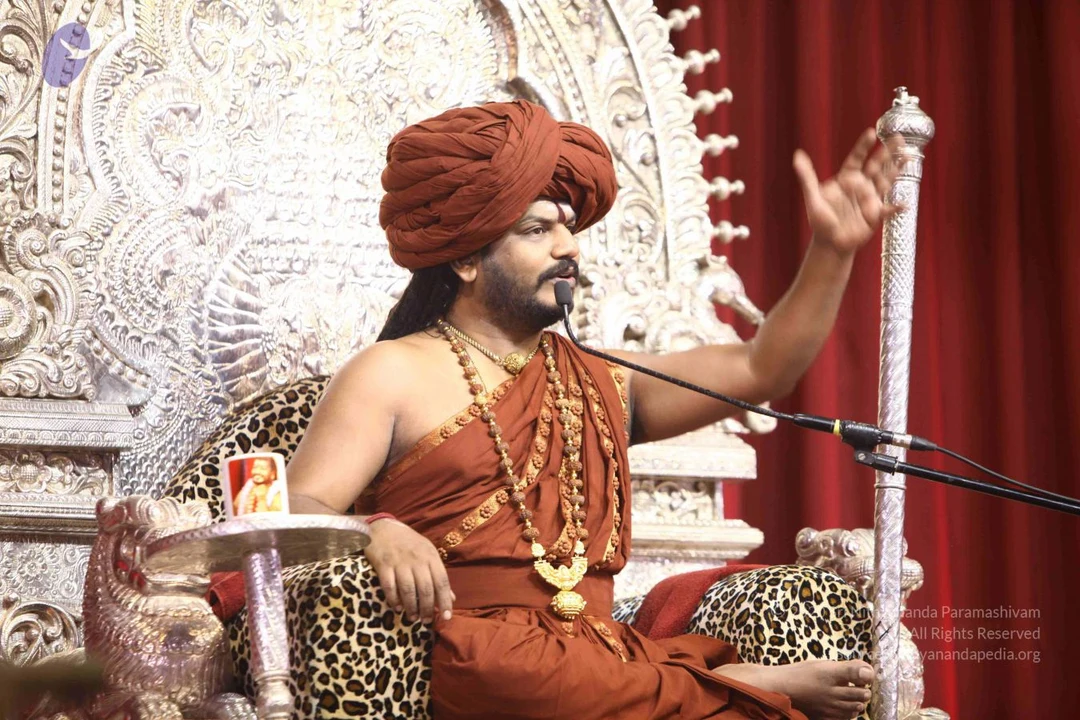
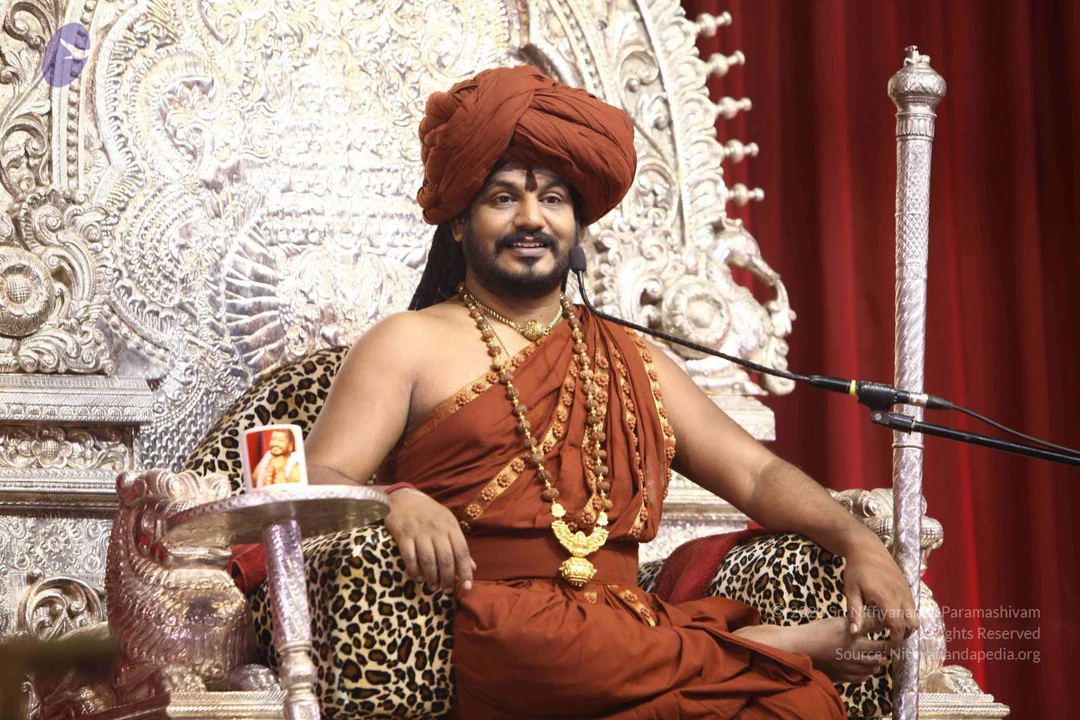
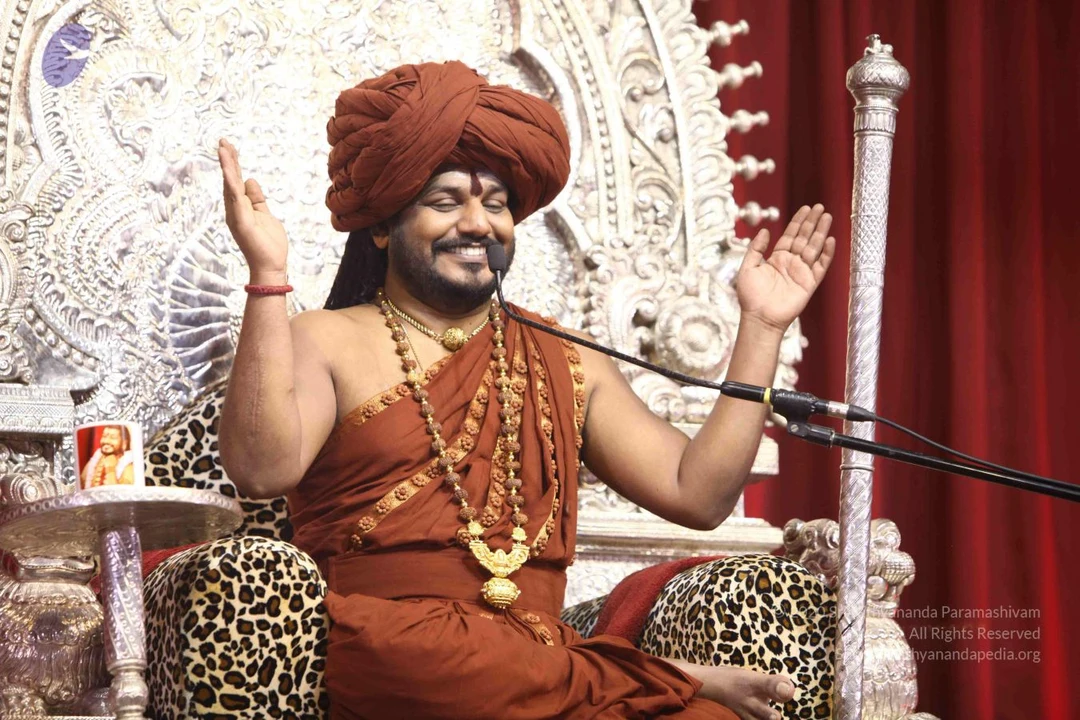
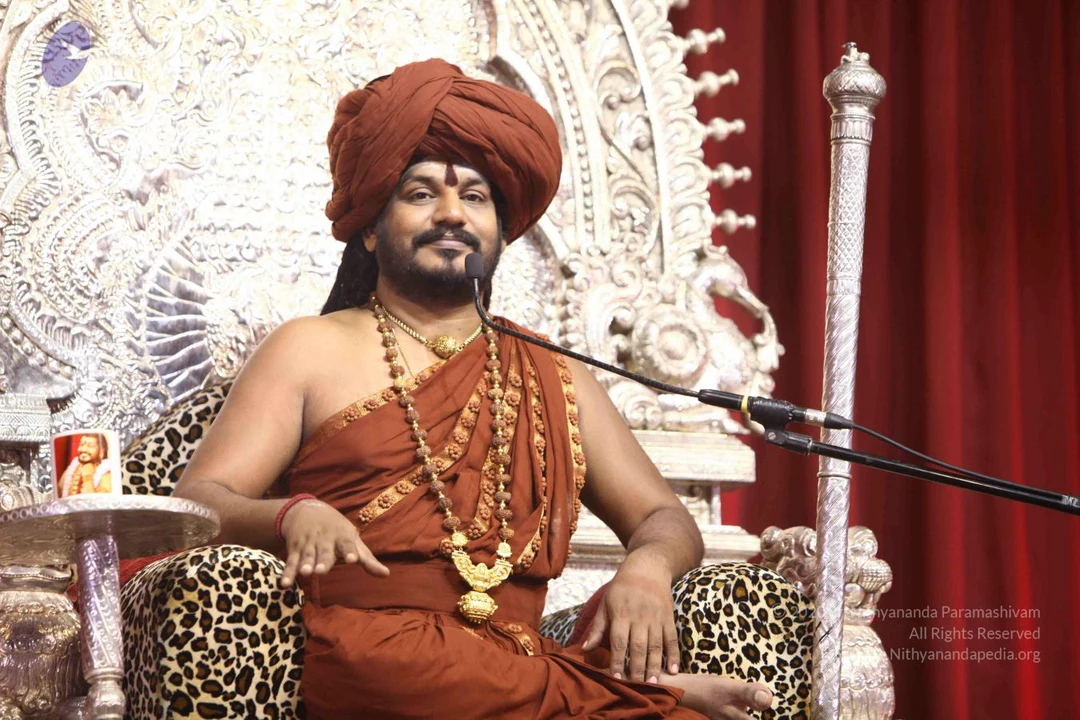
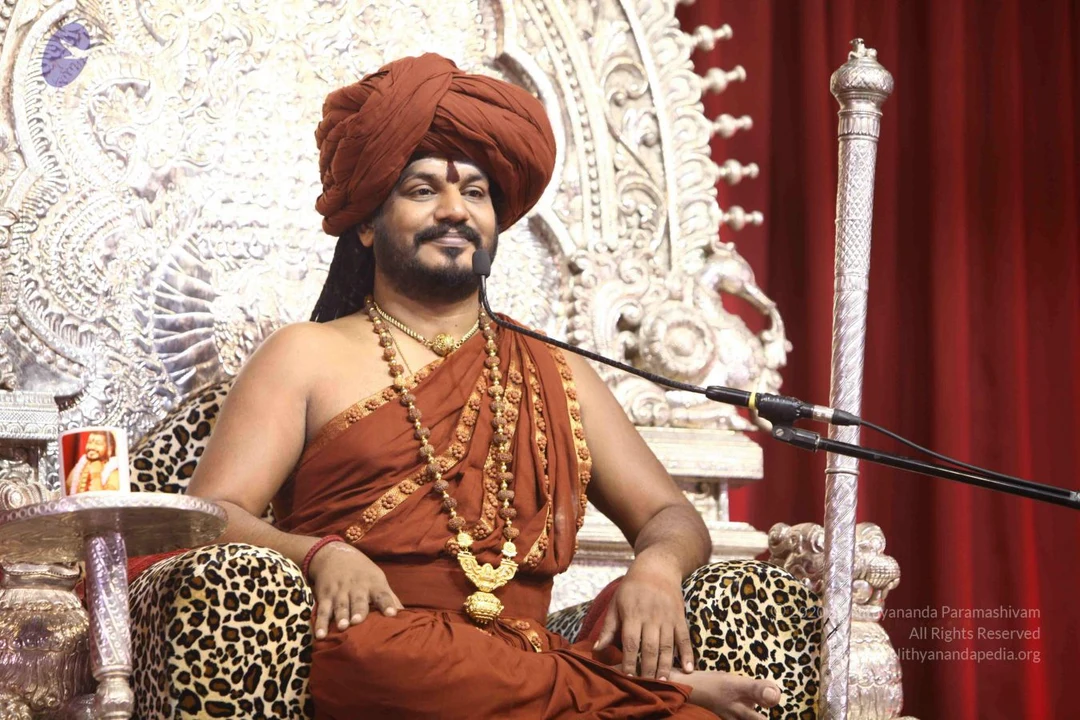
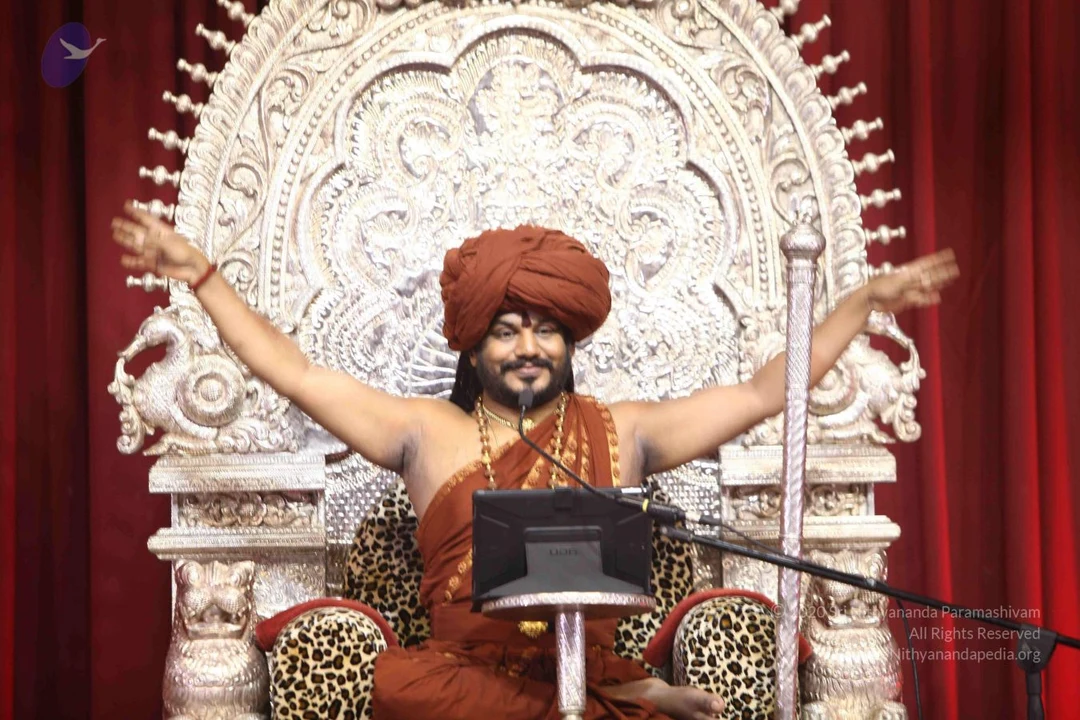
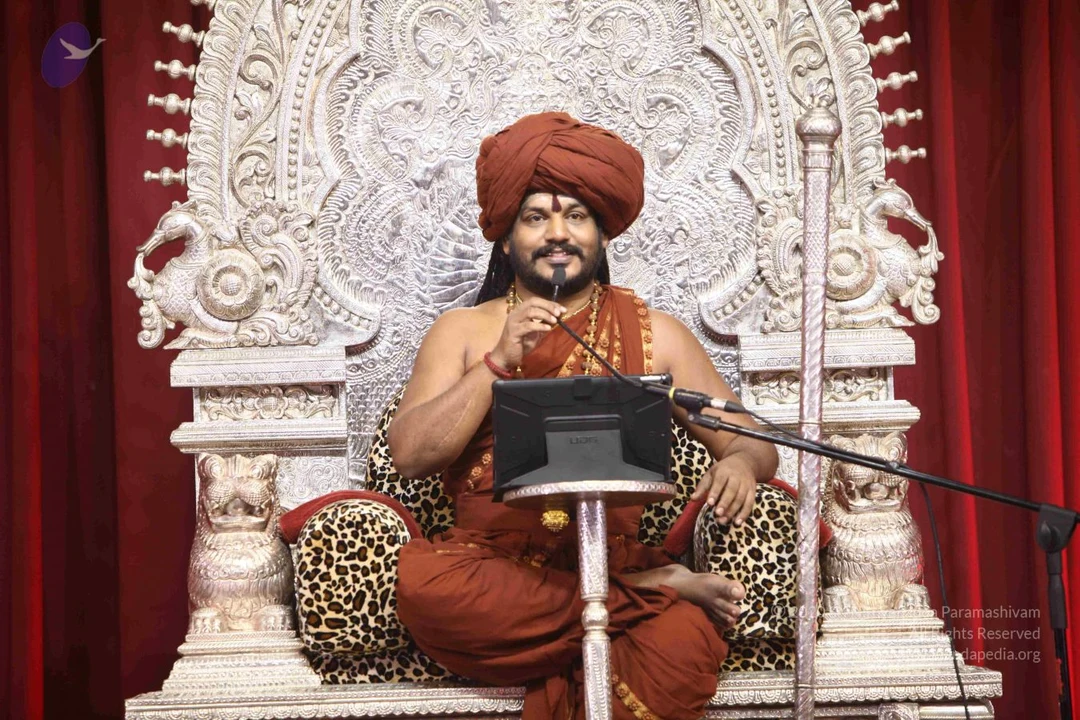
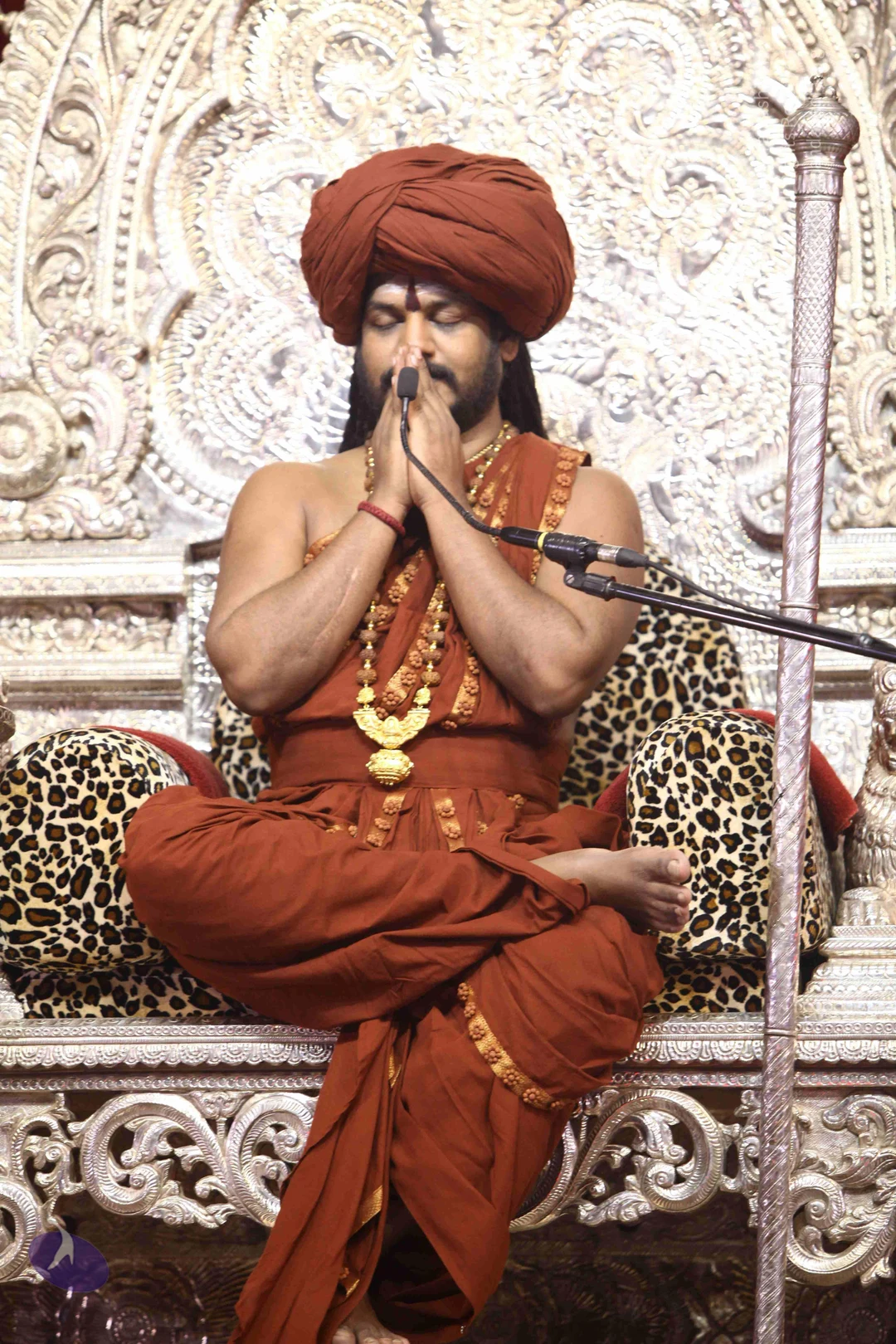
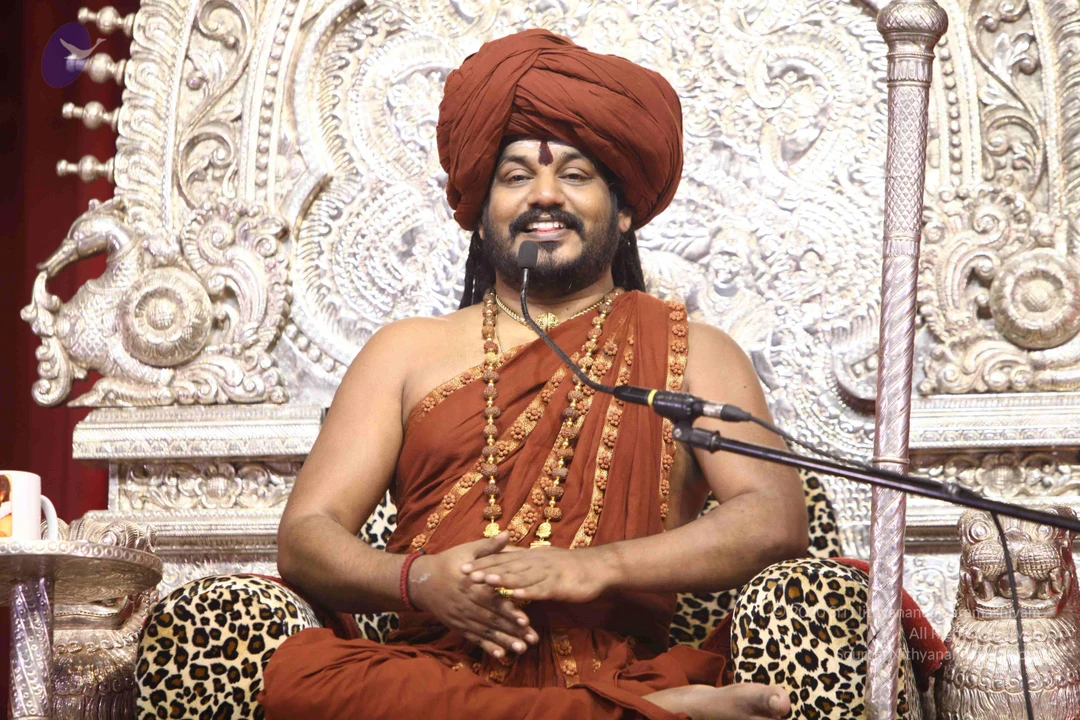
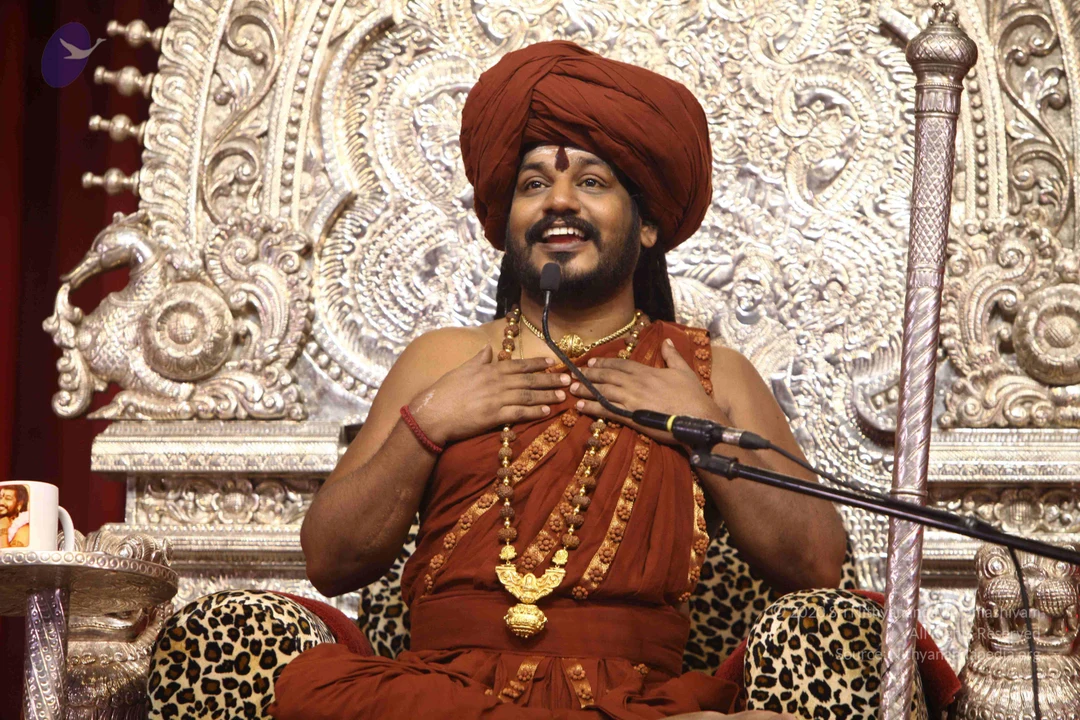
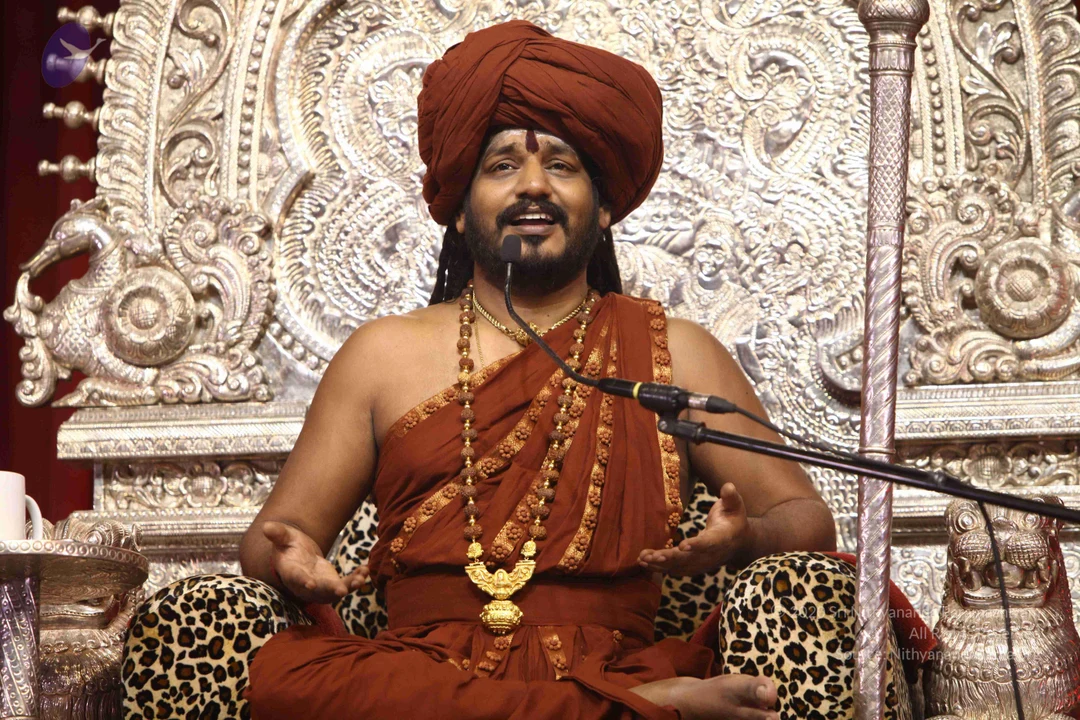
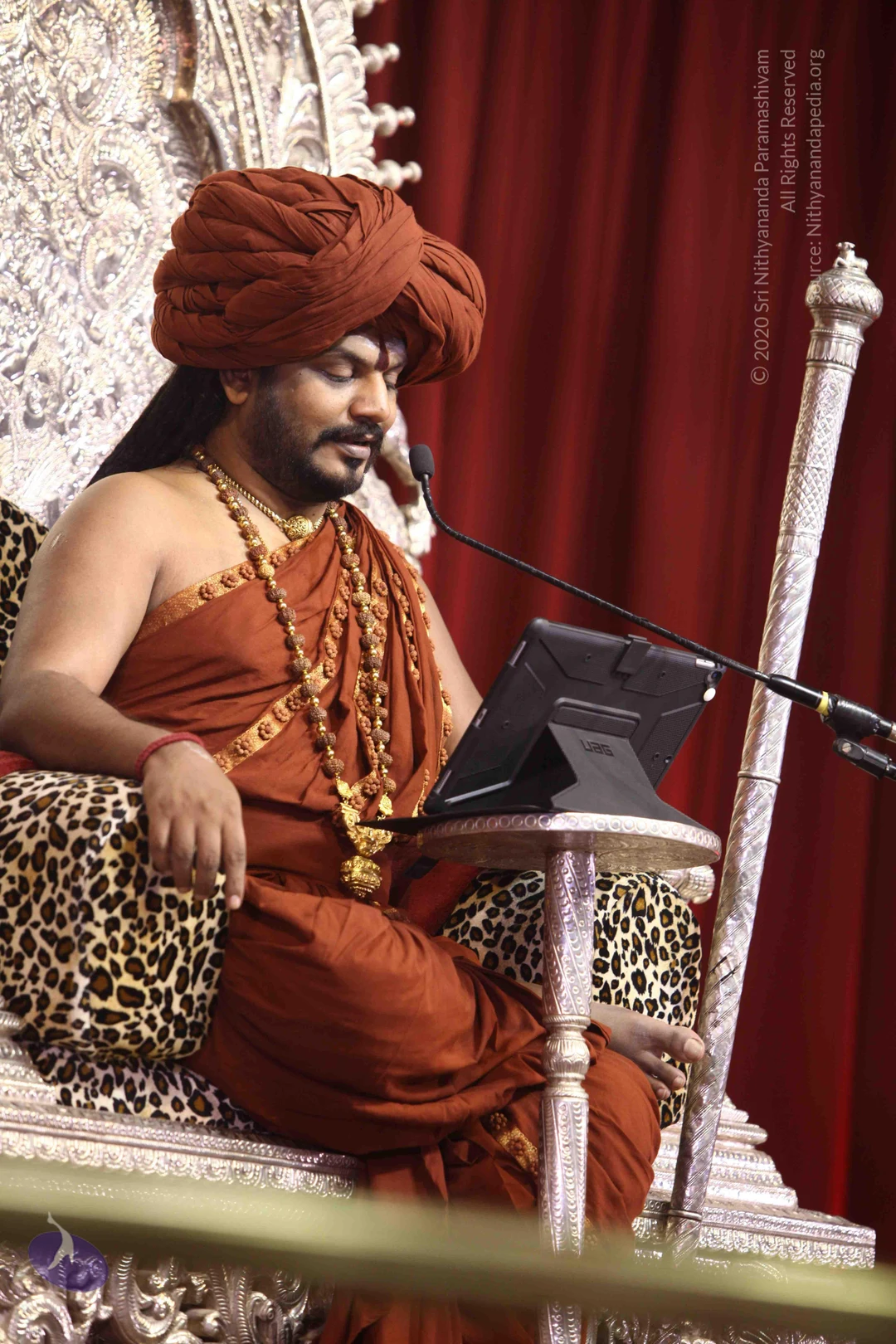
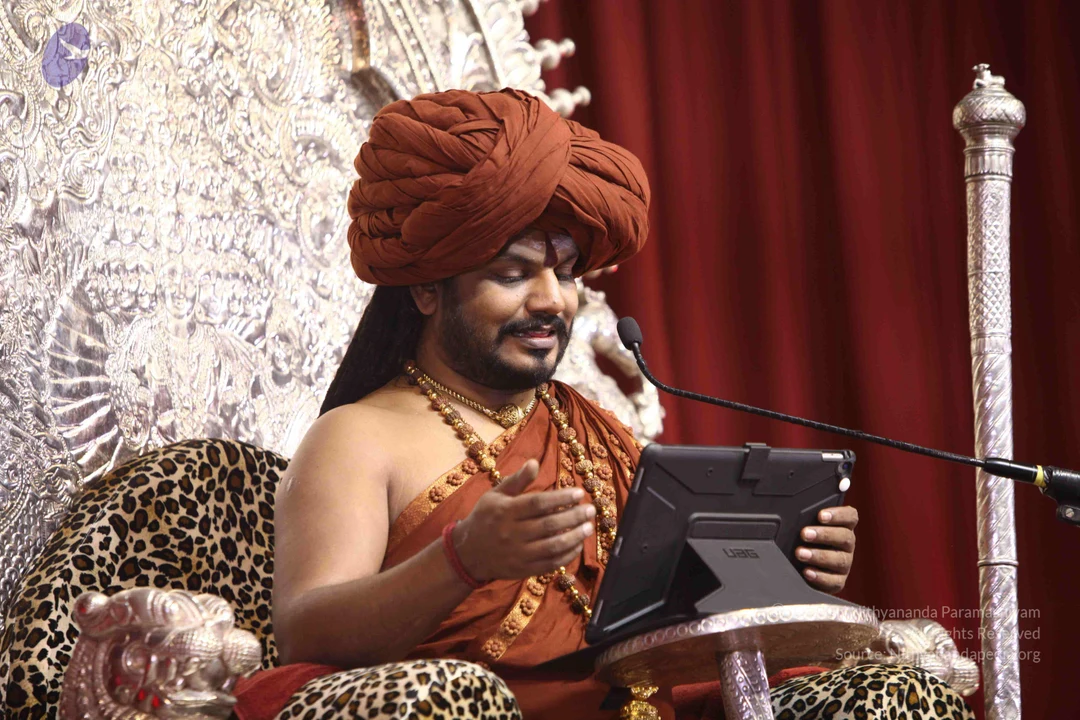
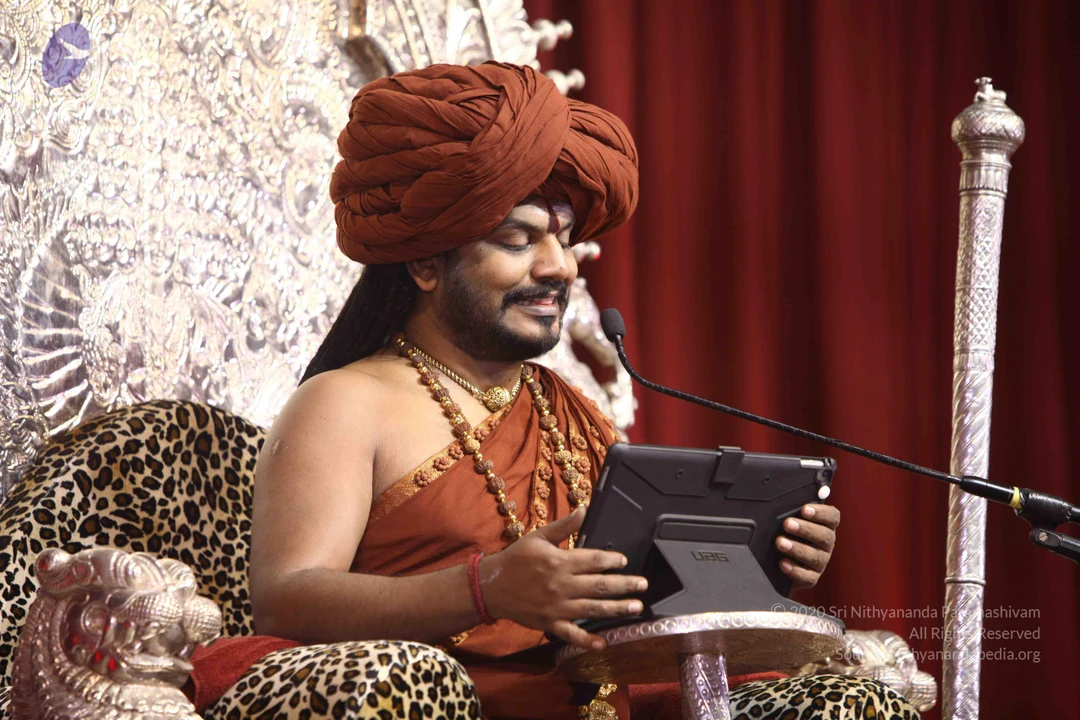
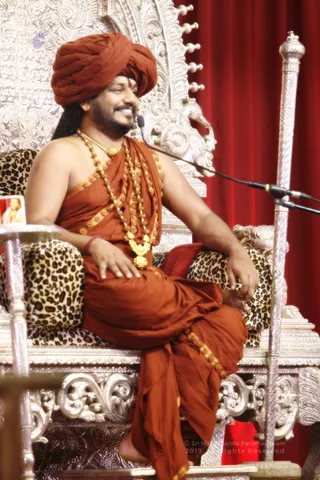
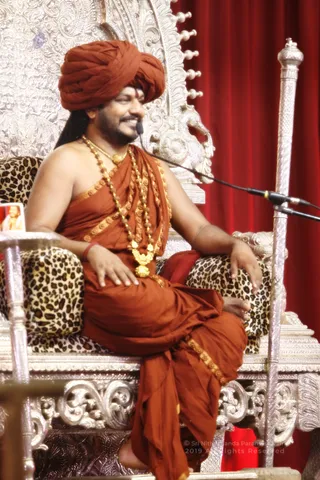
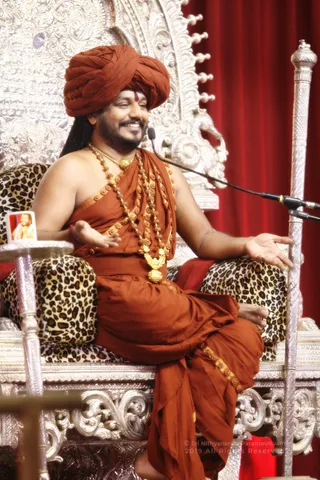
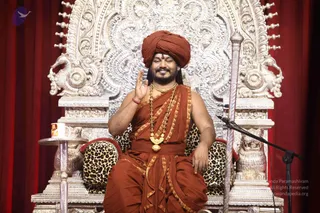
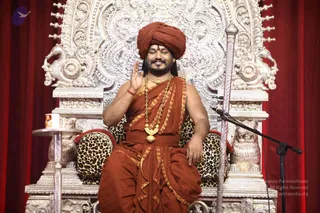
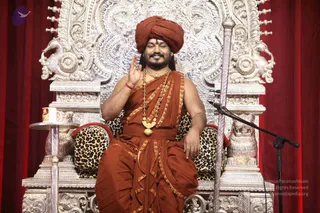
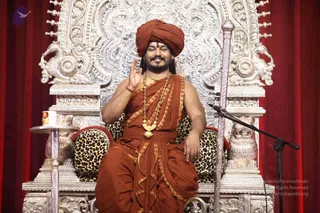
In this video (20 November, 2017), Paramahamsa emphasizes on tuning ourselves to the cosmic principle of - 'Life is for Others'. Enriching and causing others' reality helps cause our own reality.

Link to Video:

VideoAudio

Transcript:

(0:06)

nithyānandeśvara sadāśiva samārambhām nithyānandeśvari ādiśakti madhyamām | asmat āchārya paryantām vande guru paramparām ||

I welcome all of you with My love and respects. I welcome everyone sitting with us through Nithyananda TV, 2-way Video Conferencing, YouTube, Facebook Live having Nayana Deeksha all over the world.

(1:09)

With their blessings let’s start the initiation. Today I am going to connect the length, breadth, depth with third eye and body scanning and healing. Listen, still some of you may not be manifesting the earlier initiation but you don’t have to worry. That is the way sometimes the system functions. After I tell 50 jokes you will start laughing for the first joke. You will understand the first joke. That happens what to do. So, after I finish the 50 initiations, I can read third eye.

(1:54)

I can read third eye! In Tamil initiations koduthu oru Varsha aayirchi..l

But what to do? There are some people, only this is the logic with which they function and it’s ok. At least they function. See, fundamentally, I am doing something which is unprecedented. To tell you honestly which was never done earlier. So, the product I am delivering also is unprecedented. The integrity I demand also is unprecedented. The kind of a whole life need to be just opened and intensified. Kind of a intense connection I had with Arunagiri Yogeshwara, even with that connection it took 9 ½ months to download the whole thing. And to fully start manifesting the whole thing.

(3:27)

With this initiation you can change the size, shape of the organs. Understand. Just this one initiation, if you all master, you can go on living whatever time you want. Because you just need to alter your organs and rejuvenate and freshen up, that’s all. It’s like every morning if you just switch the reboot button, press ctrl-delete and reboot, over. You go on living, living, living. You master the time.

(4:16)

I know lot of fundamental principles need to be understood. Unfortunately, humanity has moved so much away from nature, even basic few things look so complicated and difficult. Sometimes I feel like I am living in a different world and you are all living in a different world. It is not few feet distance. It is few world distance, because the cognitions I carry, the conclusions I have.

(5:09)

Listen, the cognitive shift you need to have for this initiation. Listen carefully, I will repeat once more. Hinduism is not faith based tradition. It doesn’t demand your faith. It is integrity based tradition. It means, let Me explain.

Listen carefully. There are some fundamental understandings about the cosmos. You commit to understand that and be integrated to that. That’s all. Some of the cosmic principles.

No one owns anything. Only violence is sin. I am not saying you can go and rob. If you rob and that fellow is affected by it, you will incur sin. Because his suffering will create karma for you. But if nobody suffers, there is no suffering at all, you don’t get any karma. Understand, you can’t say, ‘oh, let me just rob the water of the river.’ No. In Hindu tradition, even the river is a living energy. So, I am not saying go and rob. All I am trying to tell you is what is right, what is wrong, you need to know so you can constantly function based on cosmic principles.

Violence is the only sin. Nothing else is a sin. Nothing else is a sin. Anywhere pain is created, only then it is a sin, not otherwise. But if someone blackmails you ‘oh, don’t do that. Then I will become painful.’ That doesn’t come as a karma to you.

One of My relative threatened that she will commit suicide if I become a Sannyasi.

I said, ‘quickly finish. I will finish all the last rites and then I will go!.’ I said, ‘quickly finish. I have only few more days to go. Let Me finish your last rites and then I will go.’ She did not commit suicide. She started screaming, ‘how dare you tell that I should die.’

“I did not tell that you should die. You only told that you should die! ‘Why should I die for your sake?”, I said, ‘I did not tell you to die. That is what I wanted. I want you to live long. Live happily.’ I did not tell you to die. You threatened you will die if I become sannyasi.’

In India we have funny kind of relationships. It is all about the social prestige and… one of My uncle, I should describe the whole thing in Tamil and then translate. Only then it will be wonderful. Because it’s an incident happened in My life, very important but funny incident. Now we will have to enter into initiation. So, later on I will describe this incident.

The essence I wanted to convey to all of you, understand, decision to understand, come to cosmic conclusions inside you and be integrated to that is what is integrity.

Listen carefully. Continuously contemplating what is cosmic principle and searching is what is called seeking. Vyakulata, Pratyaghatma Chaitanya Jagrata - individual consciousness waking-up and searching, every moment thinking - ‘What is the cosmic principle I am supposed to follow now, in this situation?’ and going on aligning our self to it.

(10:54)

Now, the power manifestation, the initiation and power manifestation you are going to have - it is working with people. Understand, you are going to be healing others. So, the cosmic principle for which you need to be in tune, you need to be integrated, let me heal the whole universe. Let me enrich and cause the whole universe. Life is for others. Understand, because whatever you think as you is stinking so badly, it cannot be cleaned now. Decide life is for others. Whatever you think as you which is stinking will automatically dry down. So, your idea about you has become stinking like that. Forget you. Life is for others. With this decision, be ferocious with this decision. Be ferocious with this cognition – ‘Decision to enrich and cause others reality.’ Be ferocious with it. Few minutes before entering into initiation, pen down all the in-completions you want to complete, impossibilities you want to break, guilts you want to burn, anything you want to get rid, pen down, even if it is your mother-in-law. Whatever you want to get rid of in your life, pen down. Whatever you want to Complete, pen down.

(13:08)

[Music while participants pen down.]

(14:00)

Let’s start the initiation. Whatever you wanted to Complete, pen down. Sit. Now apply Jnananjana or aushada on your third eye. If you have Atma Linga, get the Atma Linga out and let’s start the initiation.

(14:30)

Process begins

Om Nithyananda MahaSadashivoham

Om Nithyananda MahaSadashivoham

Om Nithyananda MahaSadashivoham

(42:20)

You can all open all your three eyes and manifest Sadashiva’s powers. Listen carefully, intensely again. Hypocrisy does not work in life. Decide with all your intensity, authenticity to take responsibility to enrich and cause others. Become part of the Sangha so every day you can go on manifesting. Understand. Because you can’t do it on your own you need to be given. Sangha is the atmosphere I am creating for you to flower and manifest your ultimate space - Sadashivatva.

Photos From The Day:

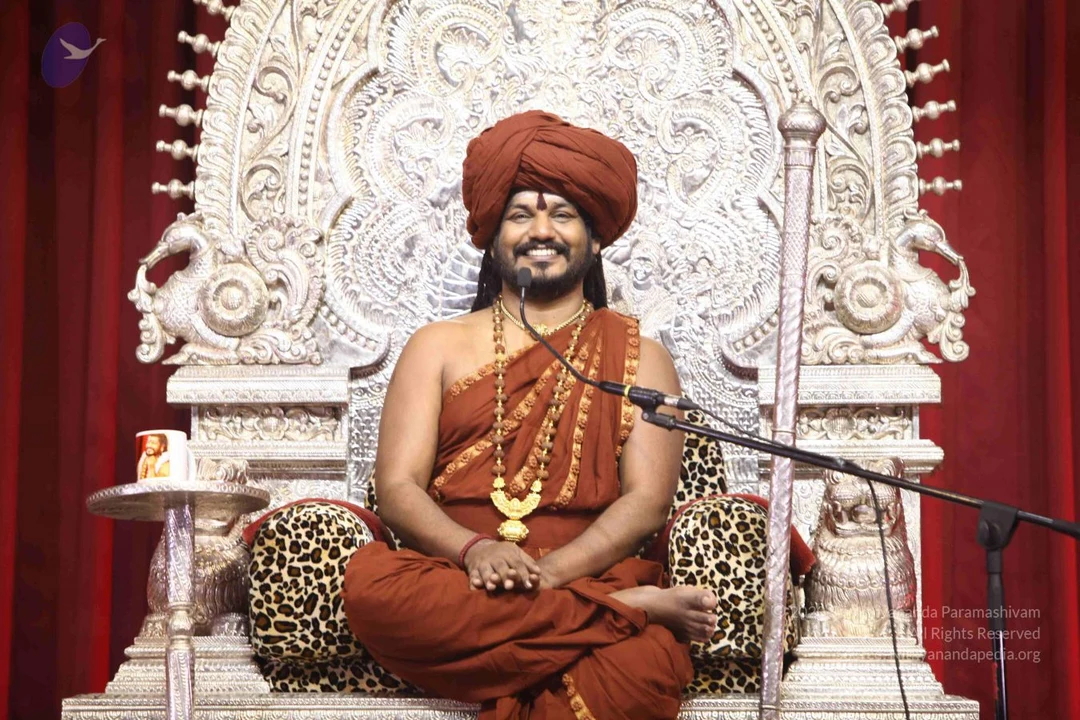
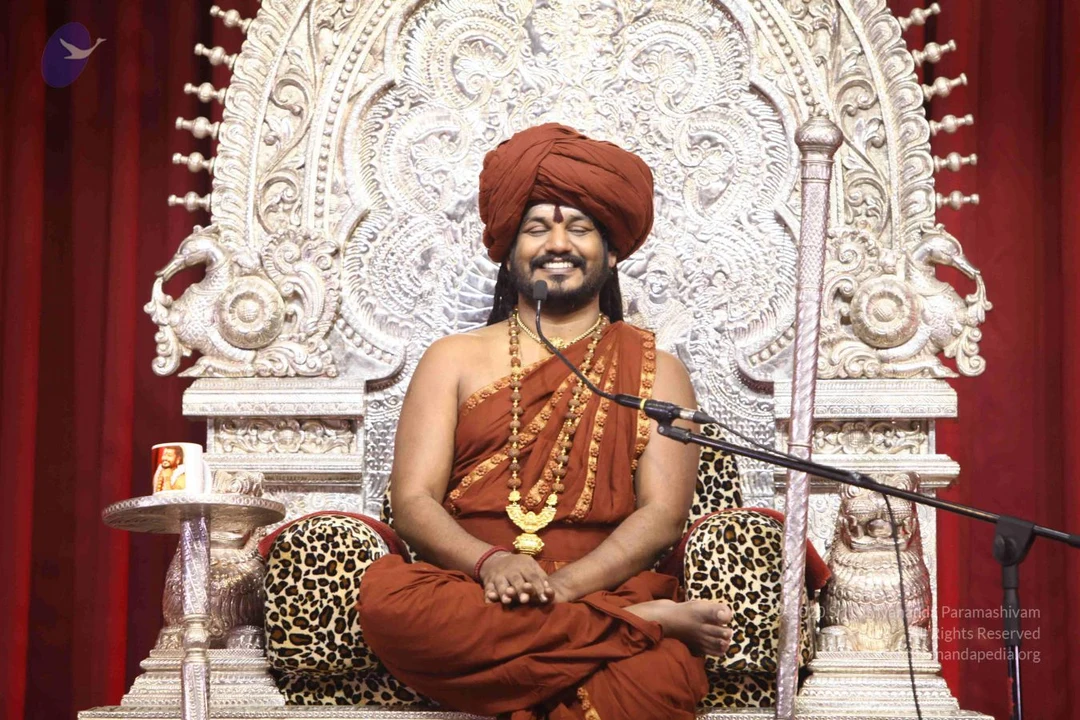
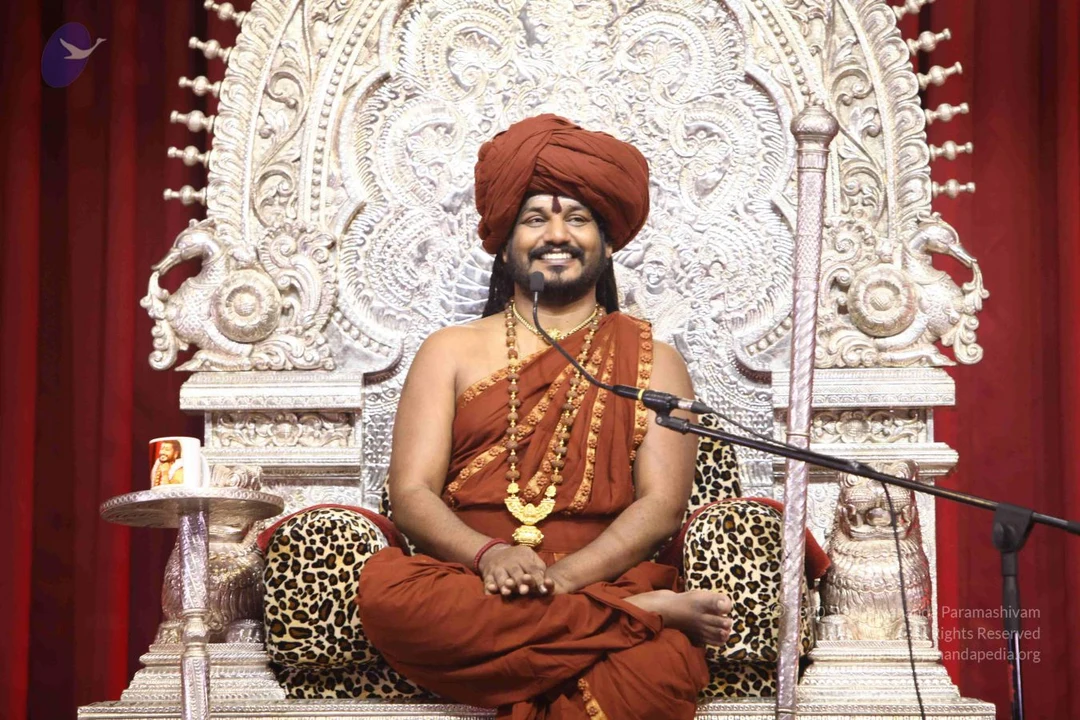
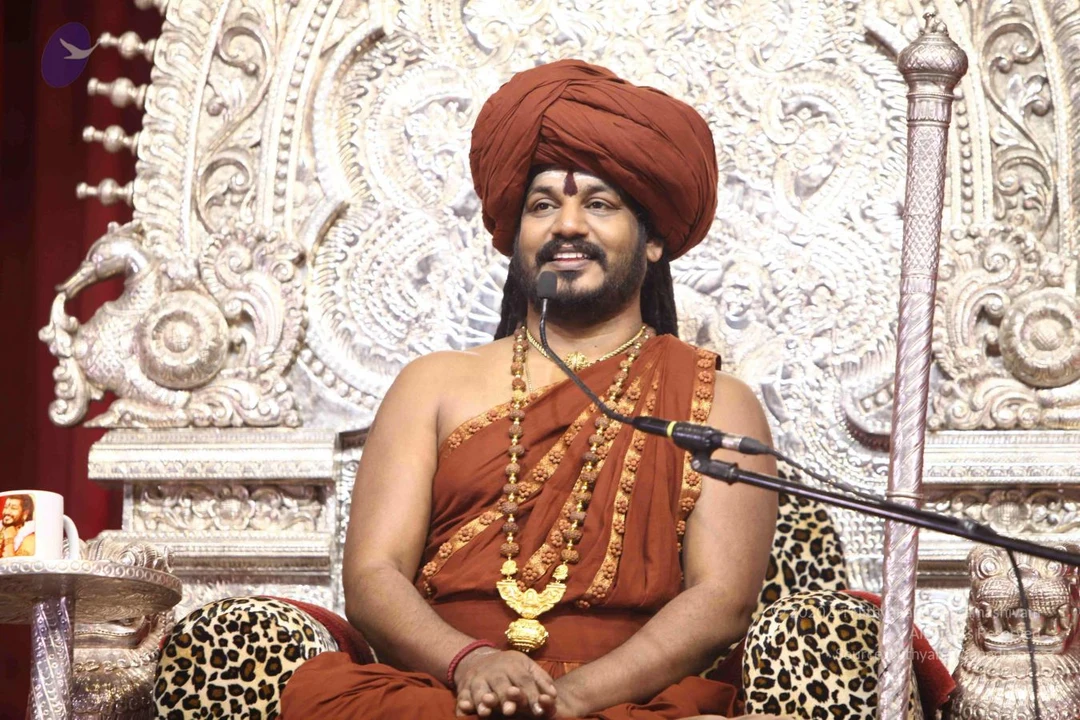
Nithyananda Peetham, Bengaluru Aadheenam | Nithya Satsang
Initiation

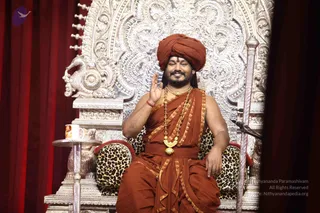
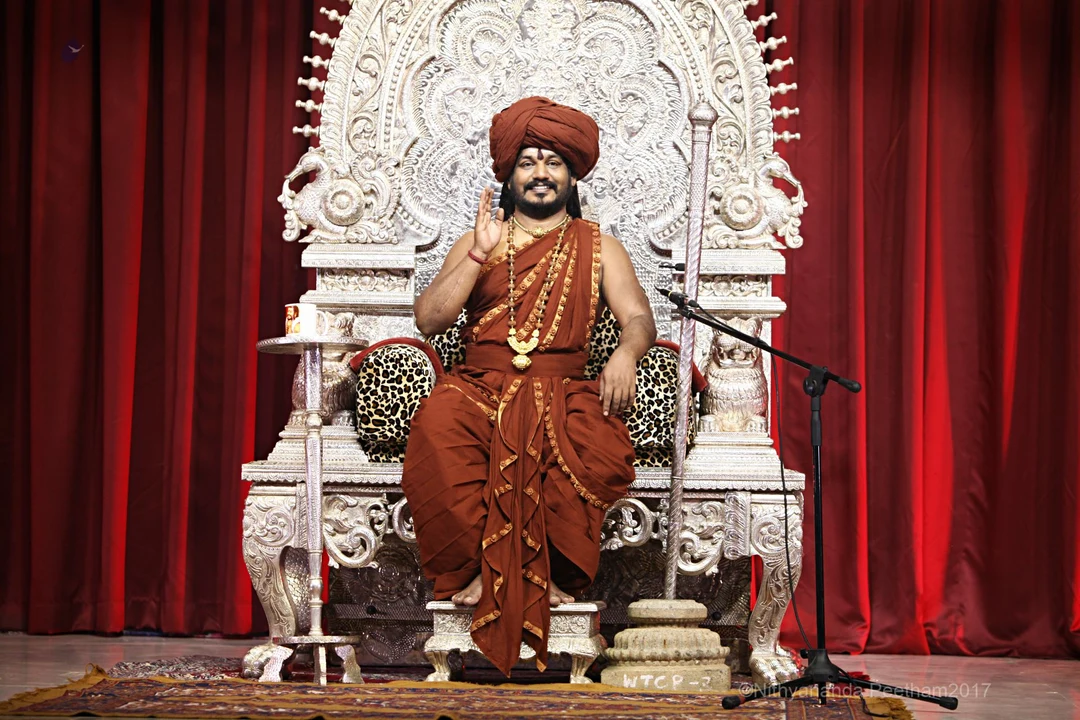
This Day HDH Baghavan Sri Nithyananda Paramashivam Initiates thousands of devotees on line and various temples around the word into Manifesting will making your desires into The Powers of Sadashivattva.

With their blessings let’s start the initiation. Today I am going to connect the length, breadth, depth with third eye and body scanning and healing. Listen, still some of you may not be manifesting the earlier initiation but you don’t have to worry. That is the way sometimes the system functions. After I tell 50 jokes you will start laughing for the first joke. You will understand the first joke. That happens what to do. So, after I finish the 50 initiations, I can read third eye.

Now, the power manifestation, the initiation and power manifestation you are going to have - it is working with people. Understand, you are going to be healing others. So, the cosmic principle for which you need to be in tune, you need to be integrated, let me heal the whole universe. Let me enrich and cause the whole universe. Life is for others. Understand, because whatever you think as you is stinking so badly, it cannot be cleaned now. Decide life is for others. Whatever you think as you which is stinking will automatically dry down. So, your idea about you has become stinking like that. Forget you. Life is for others. With this decision, be ferocious with this decision. Be ferocious with this cognition – ‘Decision to enrich and cause others reality.’ Be ferocious with it. Few minutes before entering into initiation, pen down all the in-completions you want to complete, impossibilities you want to break, guilts you want to burn, anything you want to get rid, pen down, even if it is your mother-in-law. Whatever you want to get rid of in your life, pen down. Whatever you want to Complete, pen down.

[Music while participants pen down.]

Let’s start the initiation. Whatever you wanted to Complete, pen down. Sit. Now apply Jnananjana or aushada on your third eye. If you have Atma Linga, get the Atma Linga out and let’s start the initiation.

Process begins

Om Nithyananda MahaSadashivoham

Om Nithyananda MahaSadashivoham

Om Nithyananda MahaSadashivoham

You can all open all your three eyes and manifest Sadashiva’s powers. Listen carefully, intensely again. Hypocrisy does not work in life. Decide with all your intensity, authenticity to take responsibility to enrich and cause others. Become part of the Sangha so every day you can go on manifesting. Understand. Because you can’t do it on your own you need to be given. Sangha is the atmosphere I am creating for you to flower and manifest your ultimate space - Sadashivatva.

Tags:

Sri Nithyananda Swami, Paramahamsa Nithyananda, Nithyananda, Swamiji, integrity, authenticity, responsibility, enriching, Hinduism not faith based tradition, its integrity based tradition, Life is for others, Enrich and cause others reality, manifest your ultimate space Sadashivatva, third eye, manifest powers

Link to Facebook Page

https://www.facebook.com/ParamahamsaNithyananda/posts/1567583939996117

Photos Of The Day:

Nithya-Satsang

01-SATSANG

Photos from this day

View all 185 photos

Nithyananda Peetham, Bengaluru Aadheenam | Nithya Satsang
21 photosSource gallery
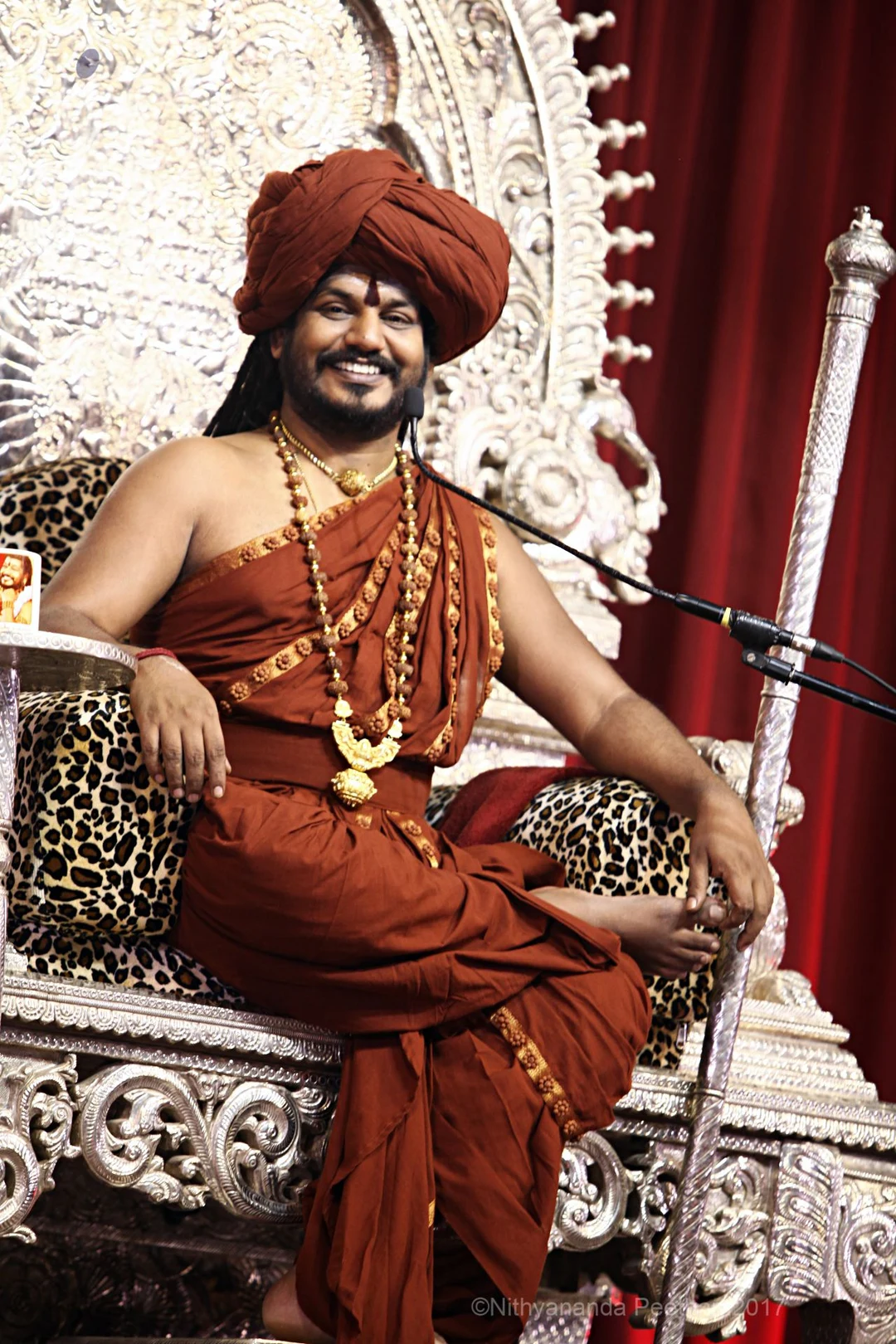
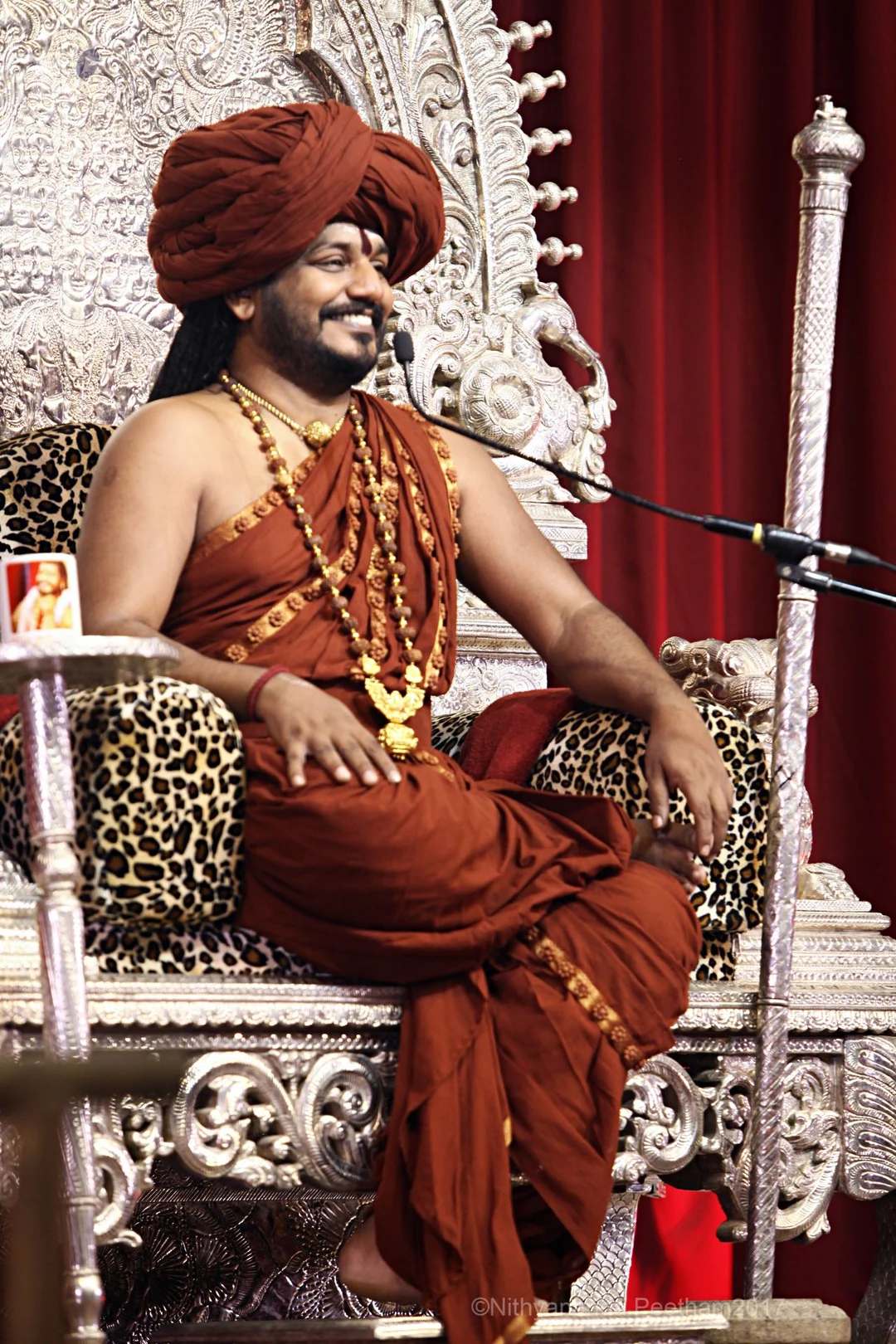
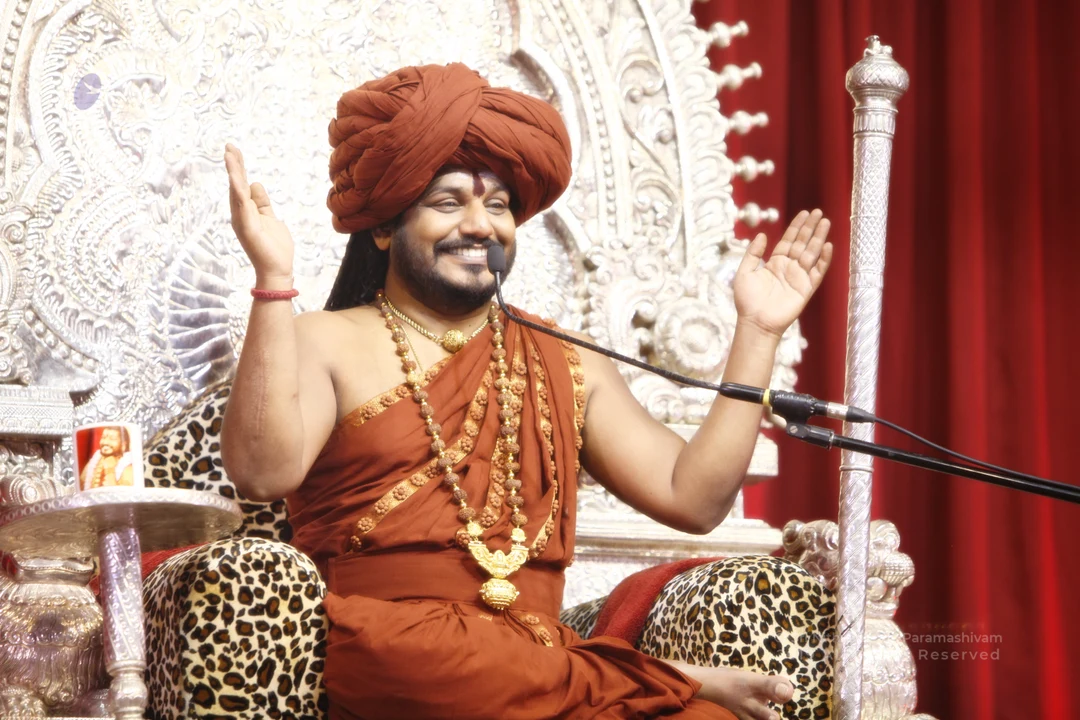
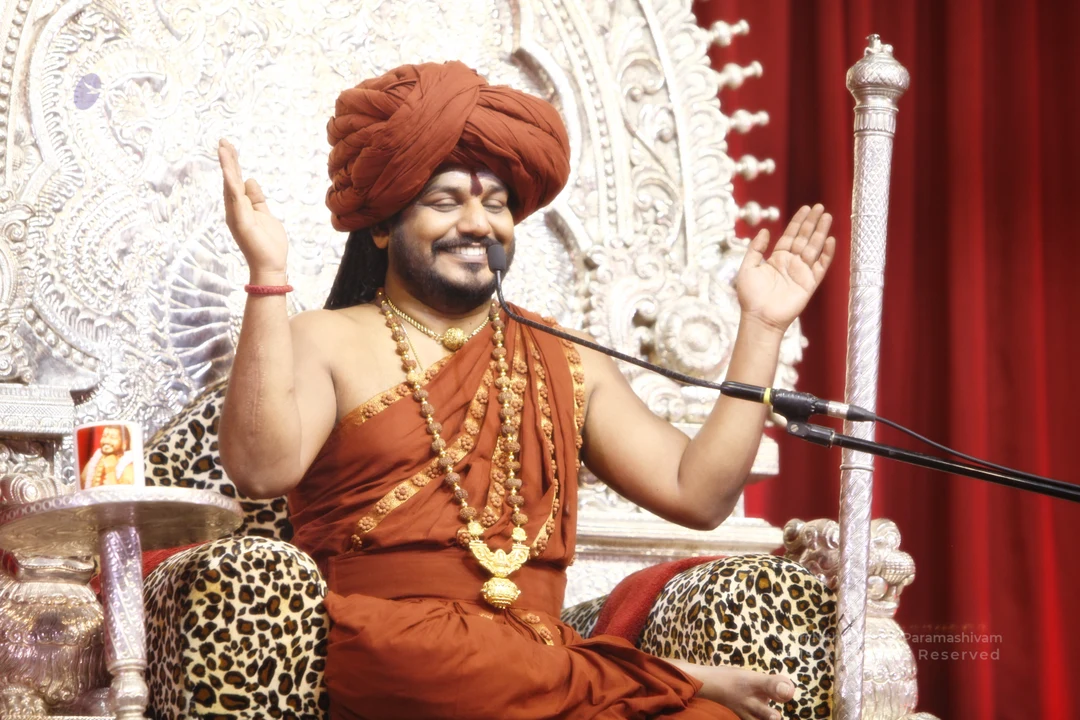
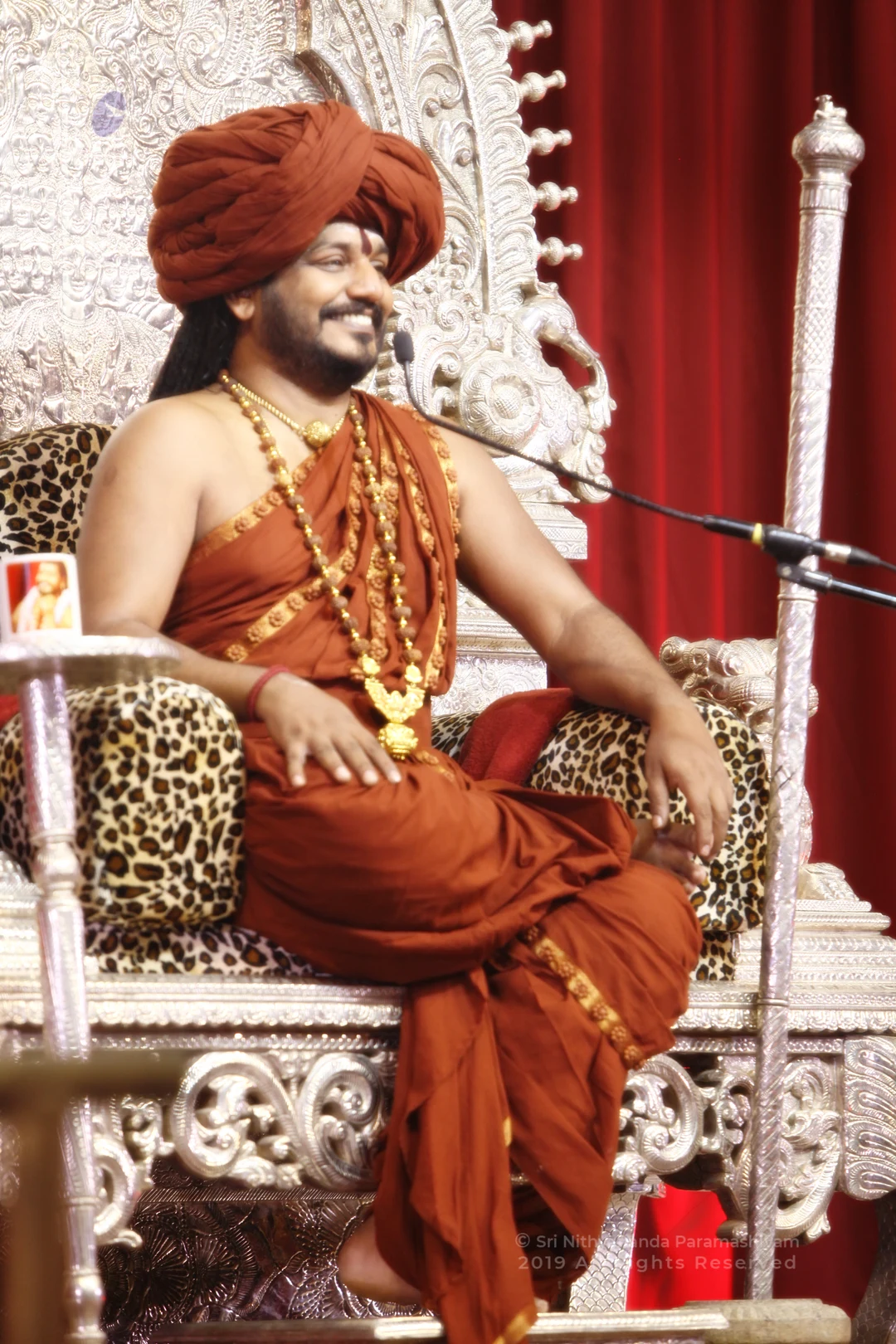
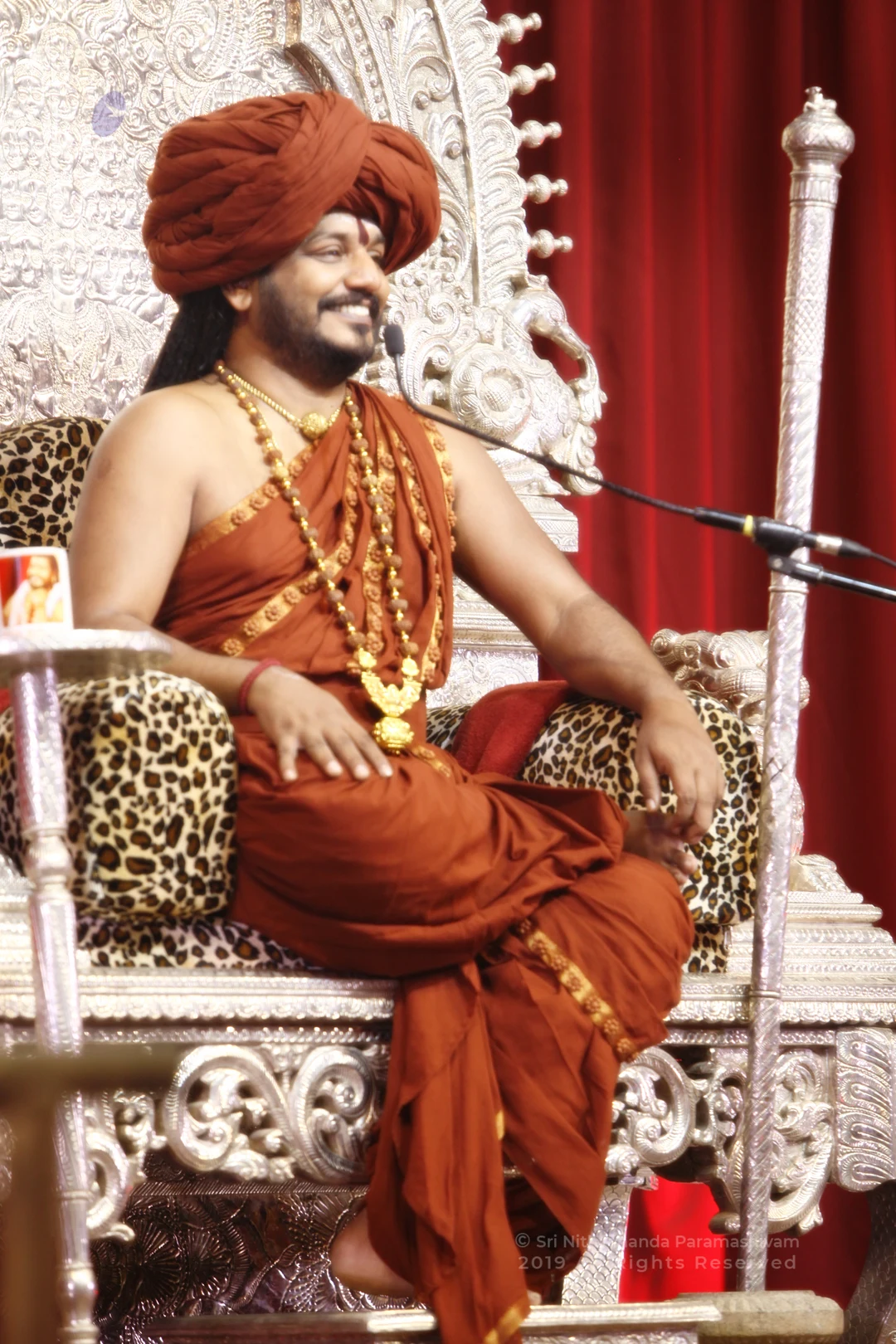
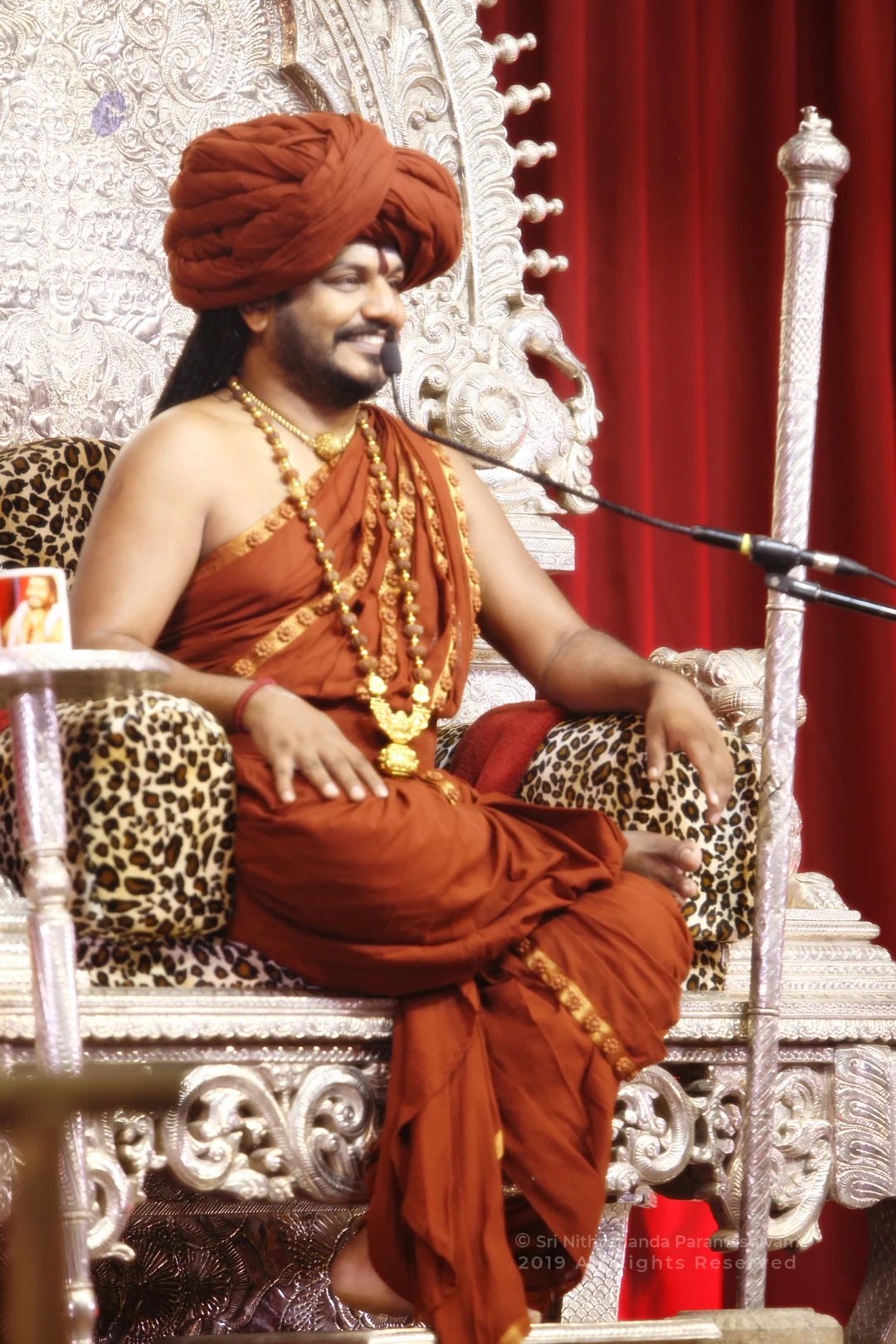
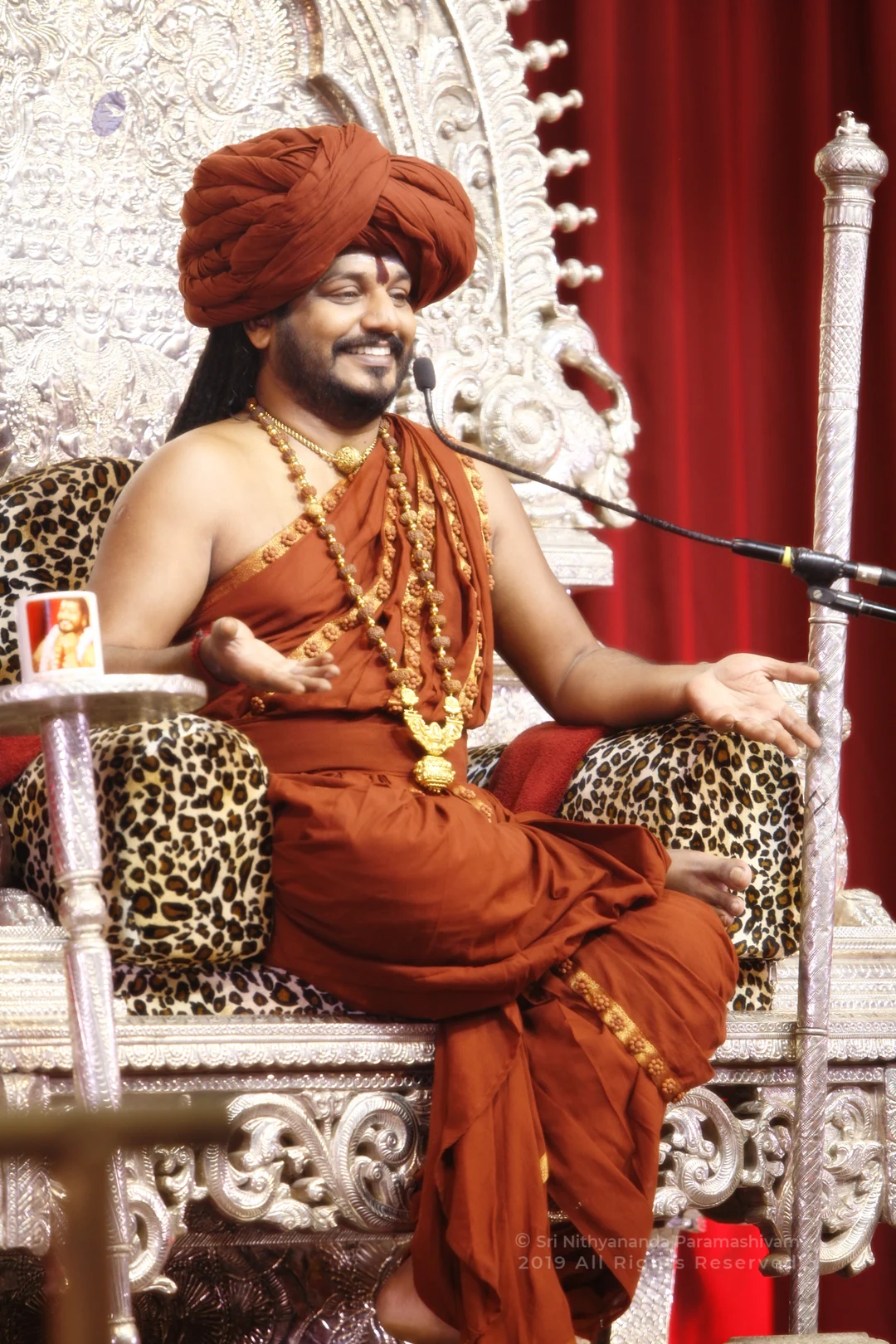
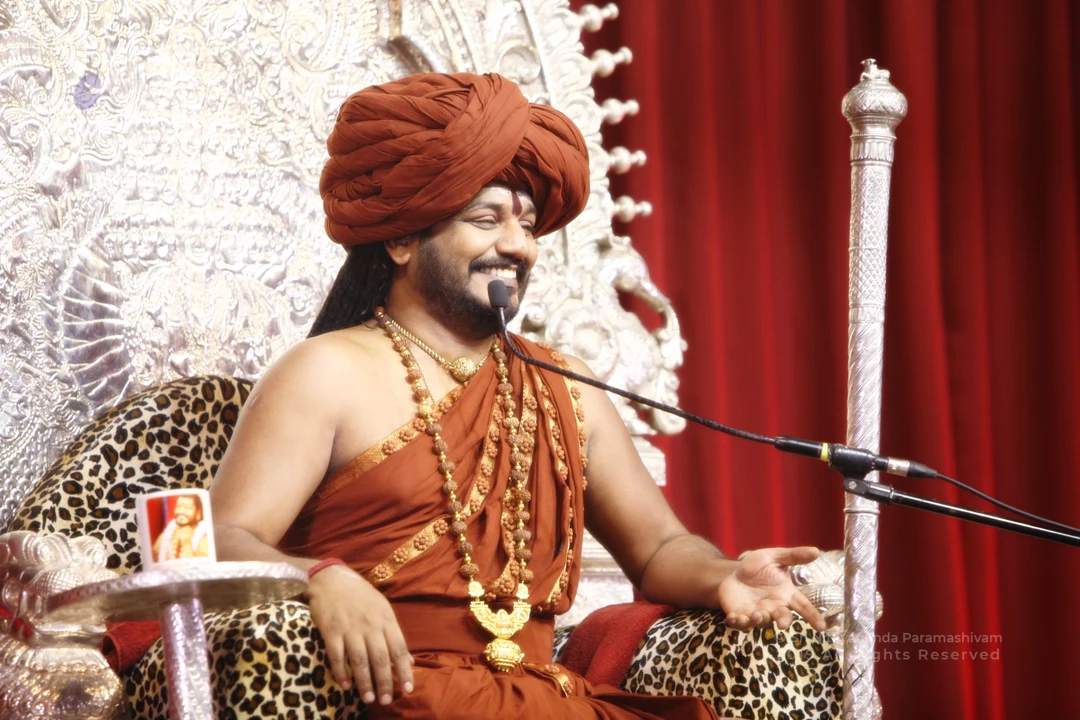
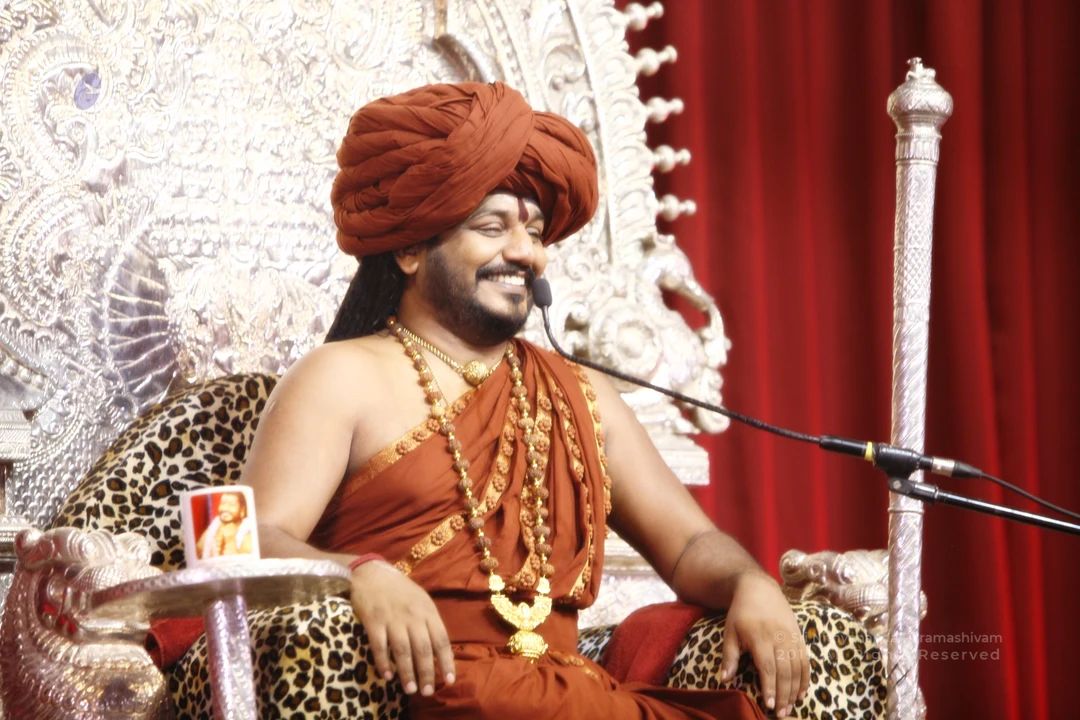
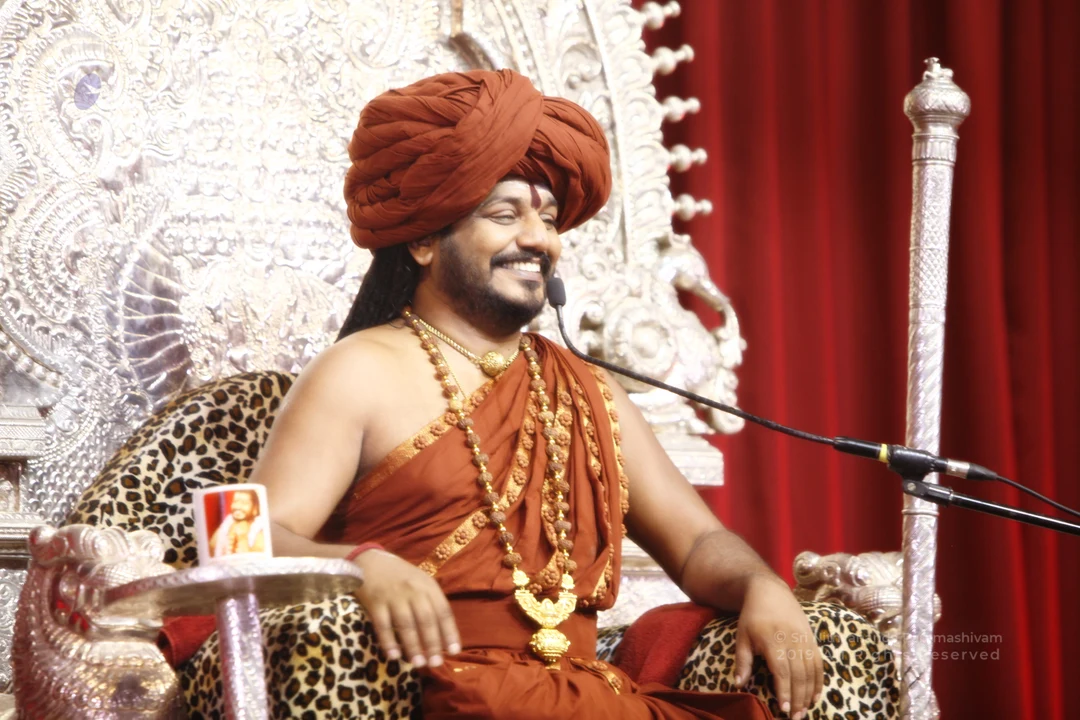
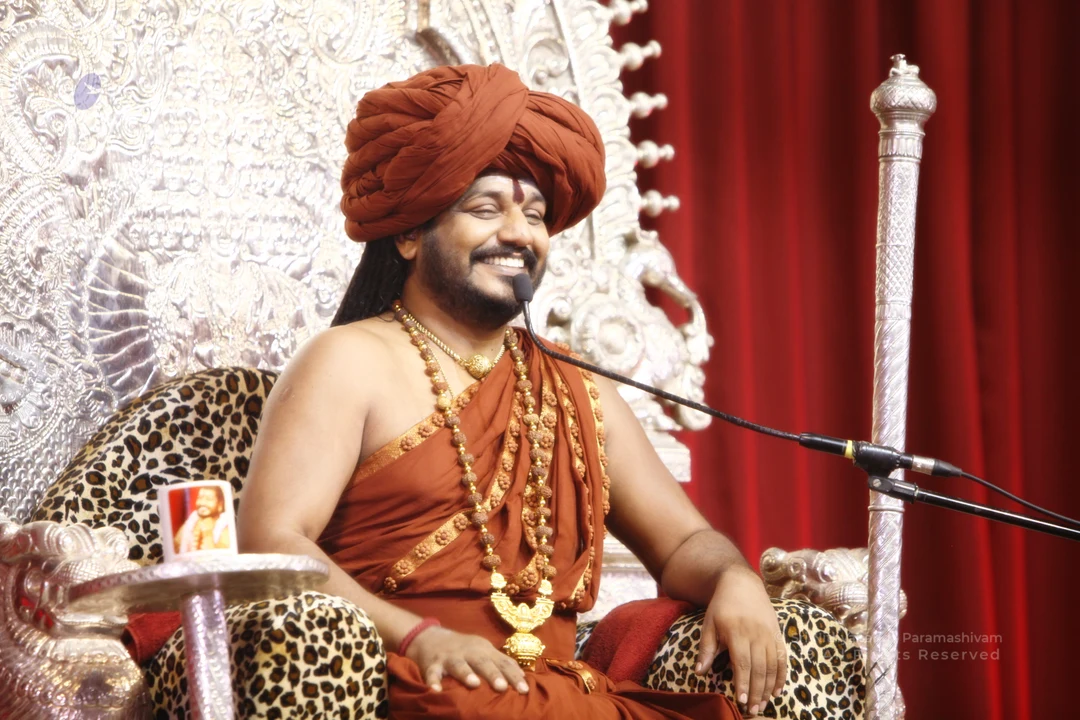
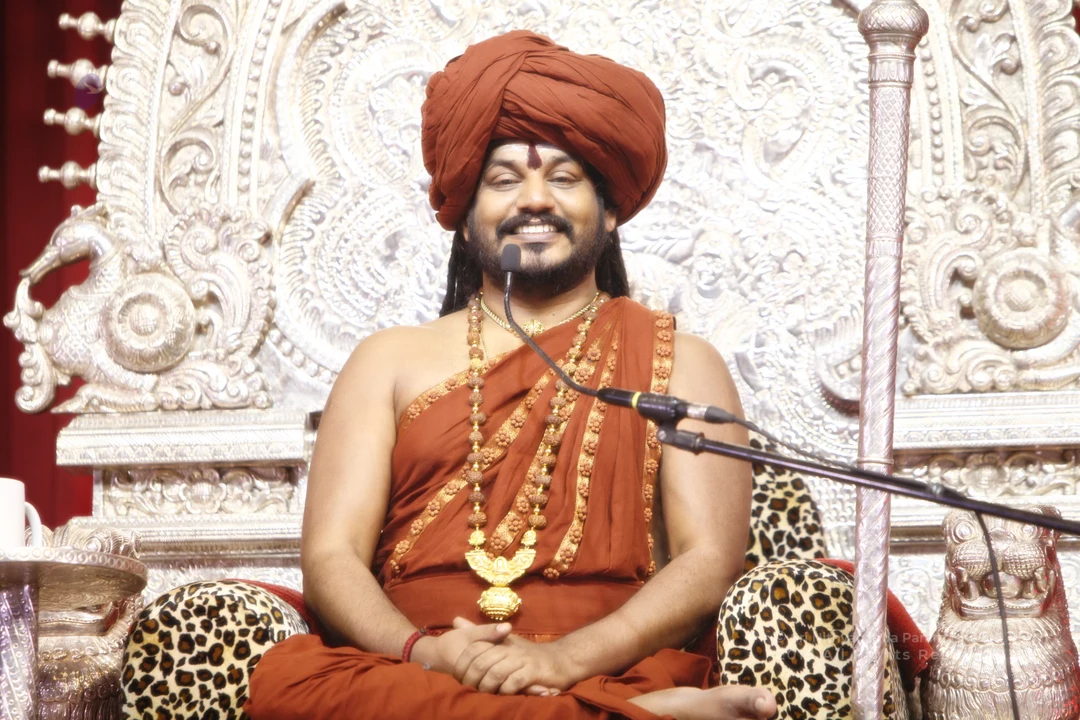
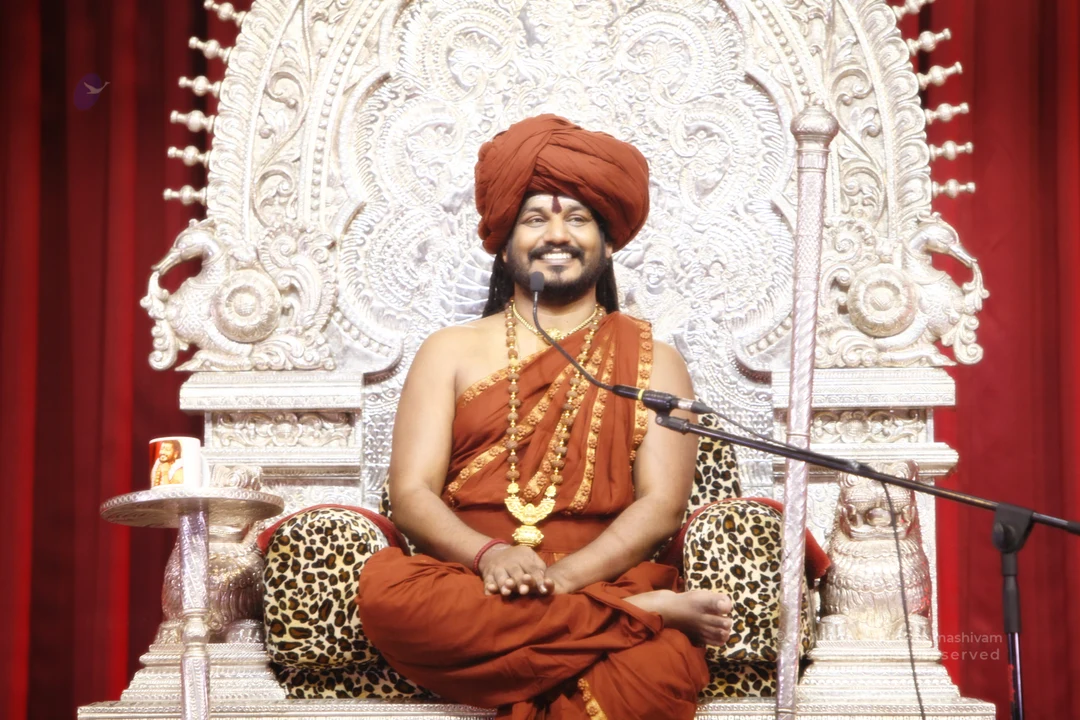
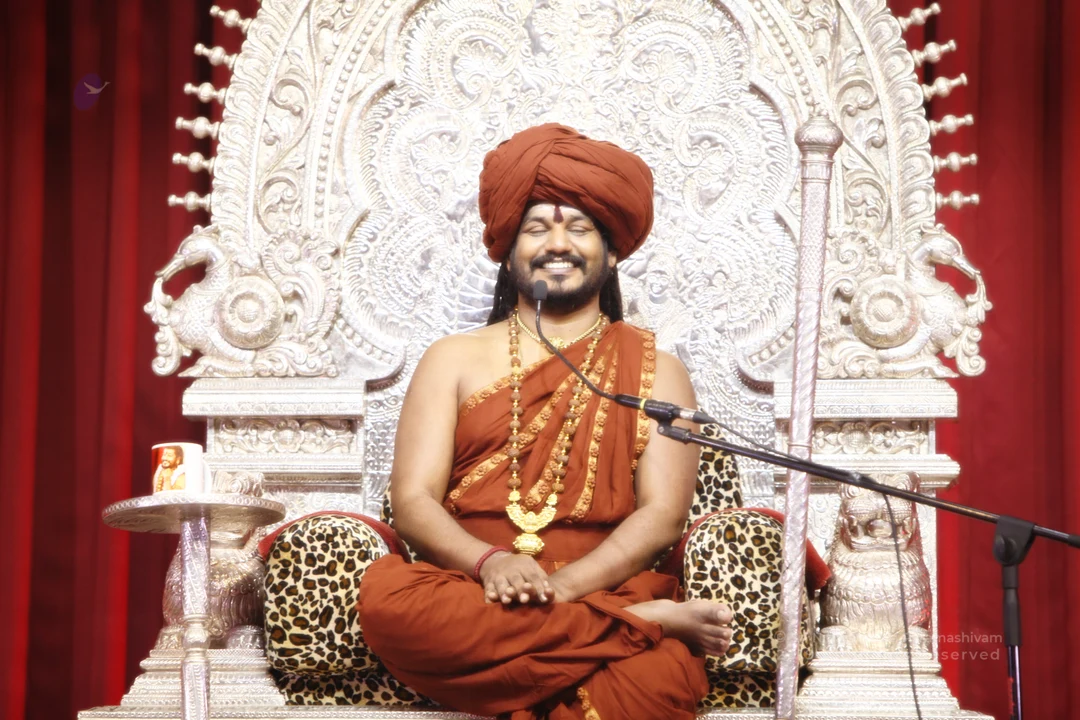
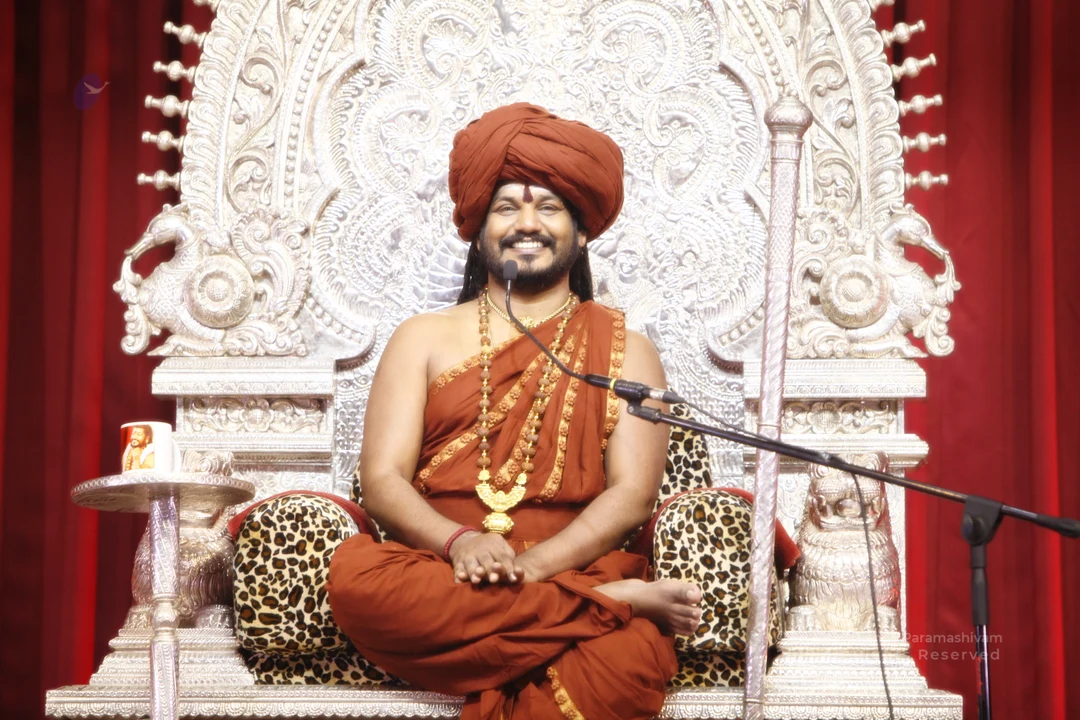
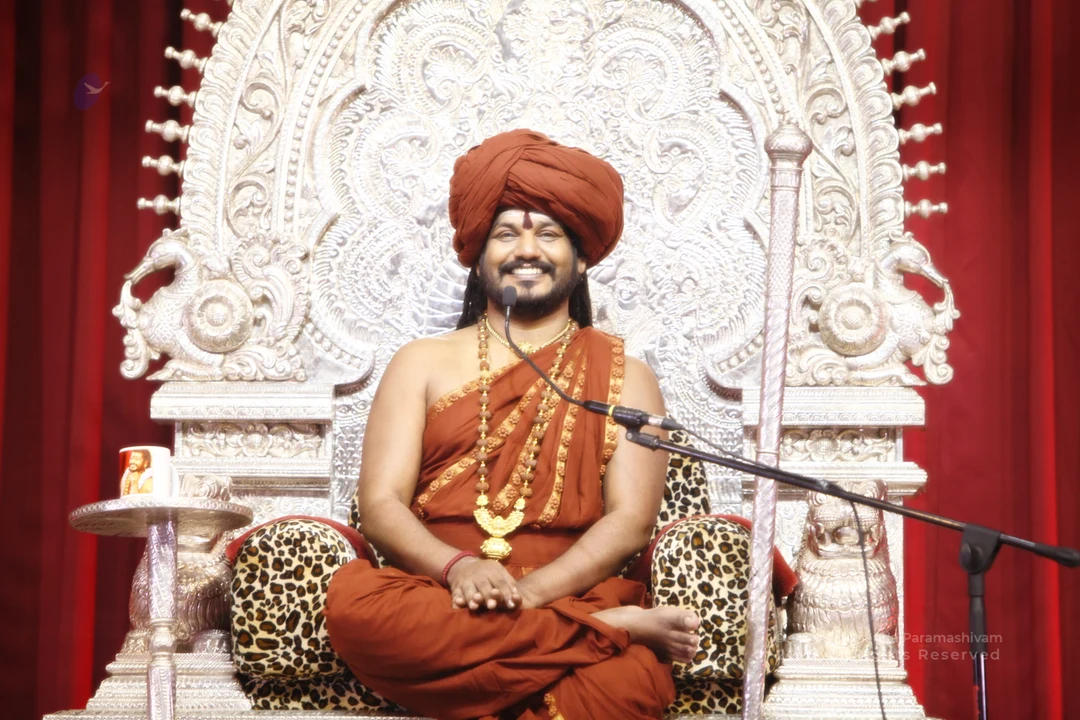
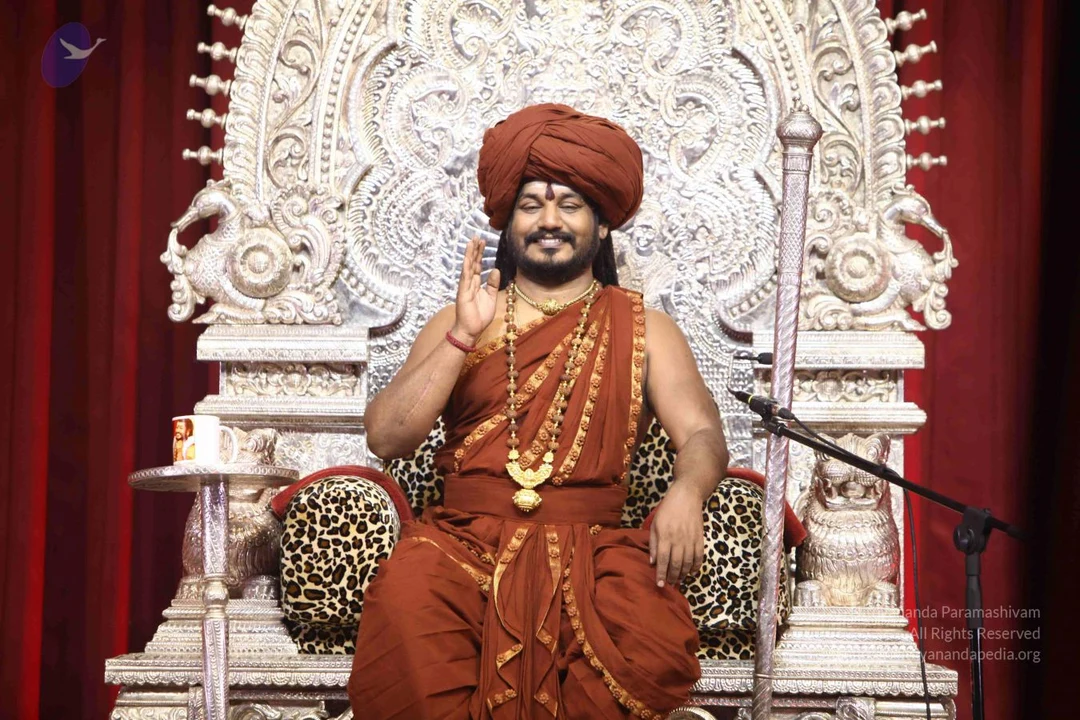
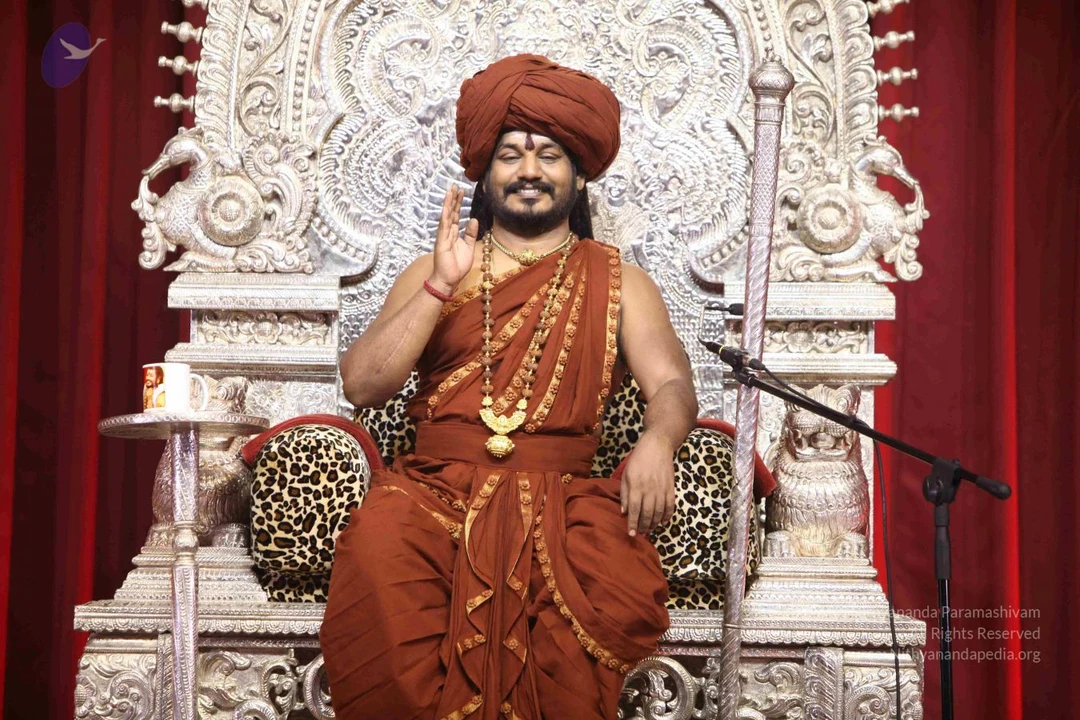
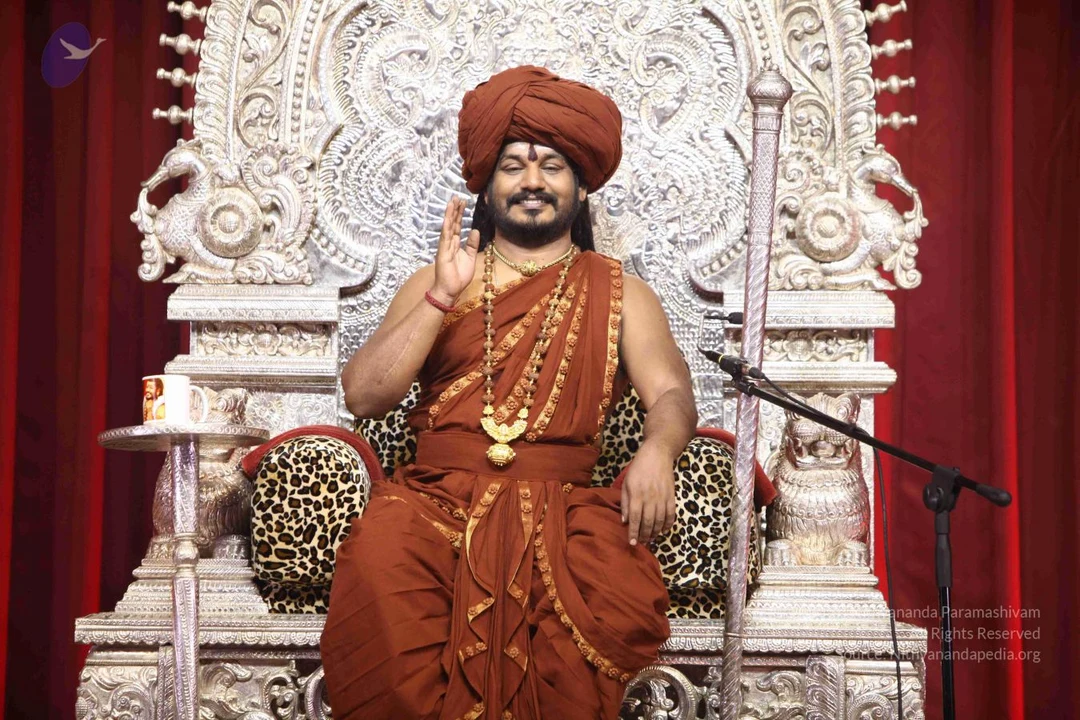
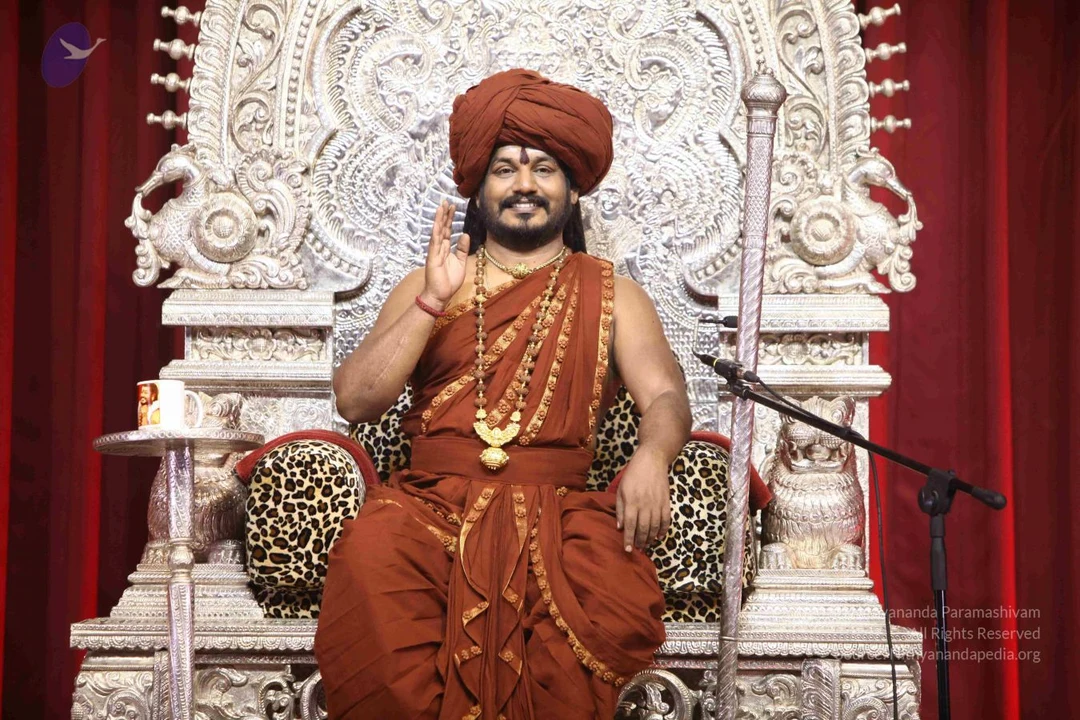
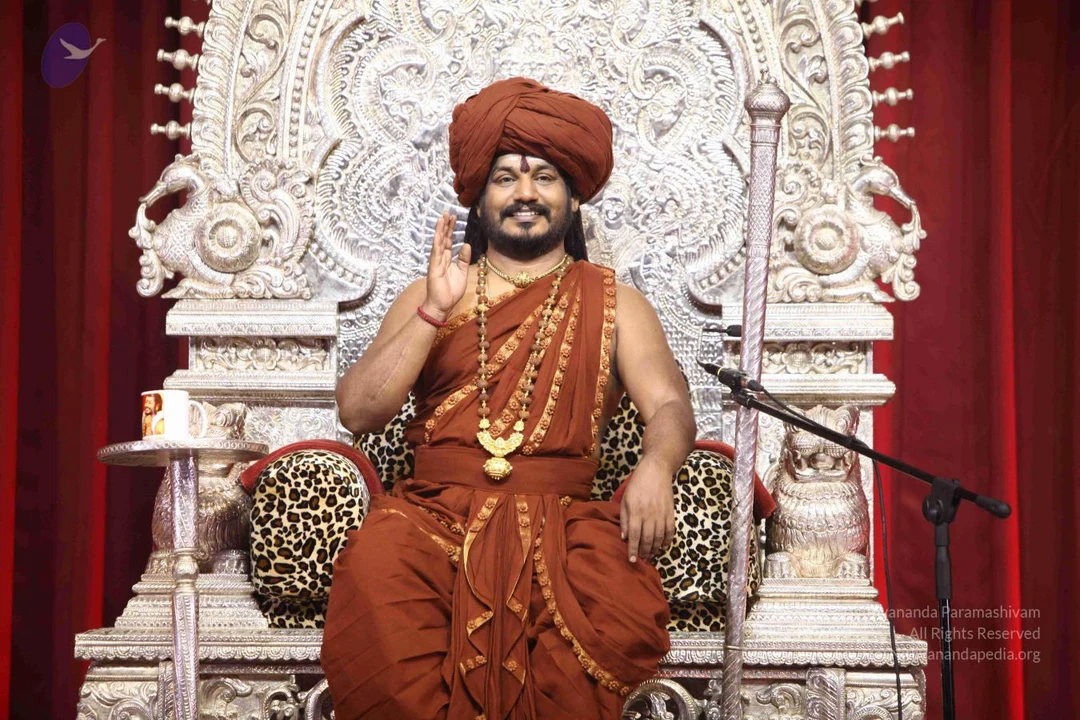
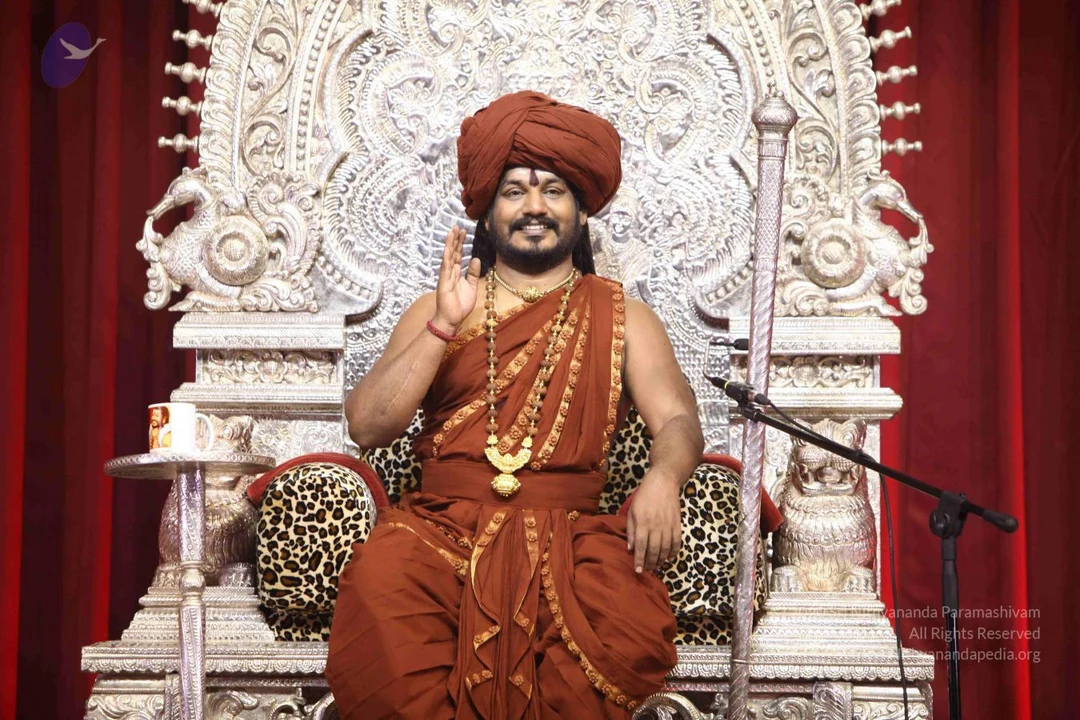
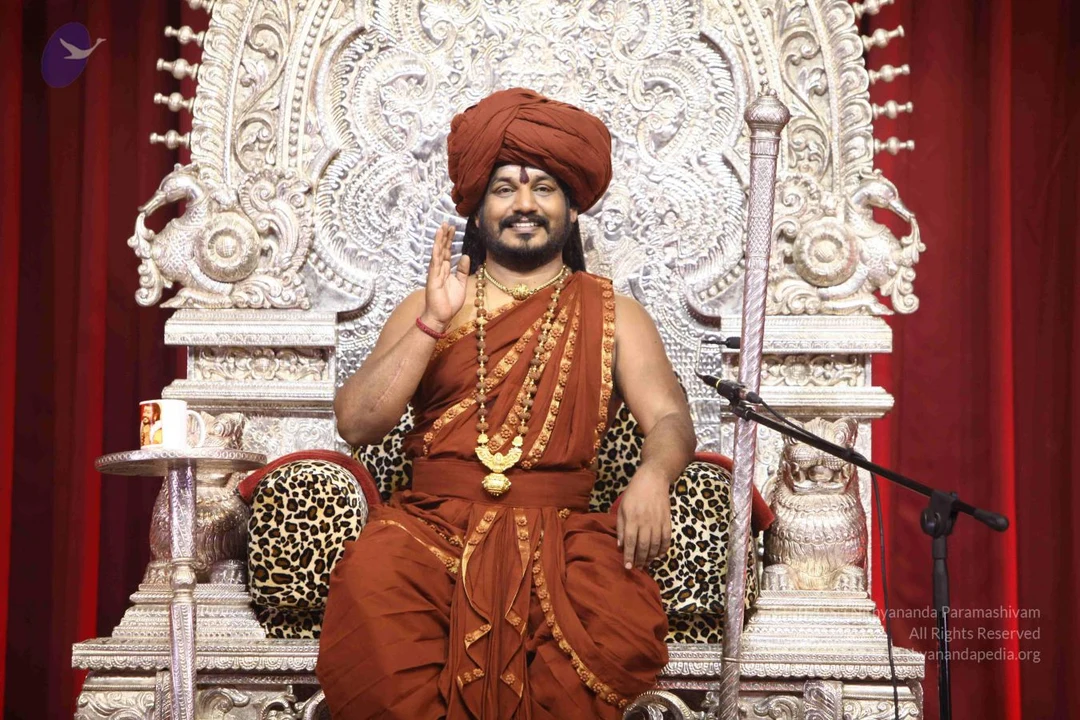
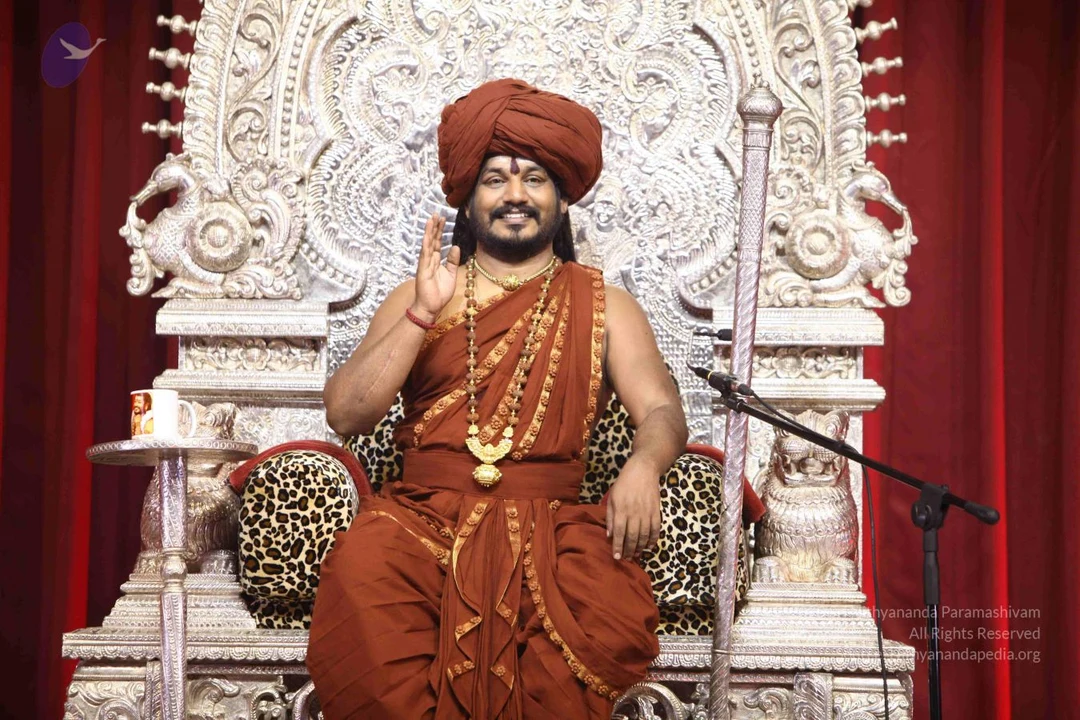
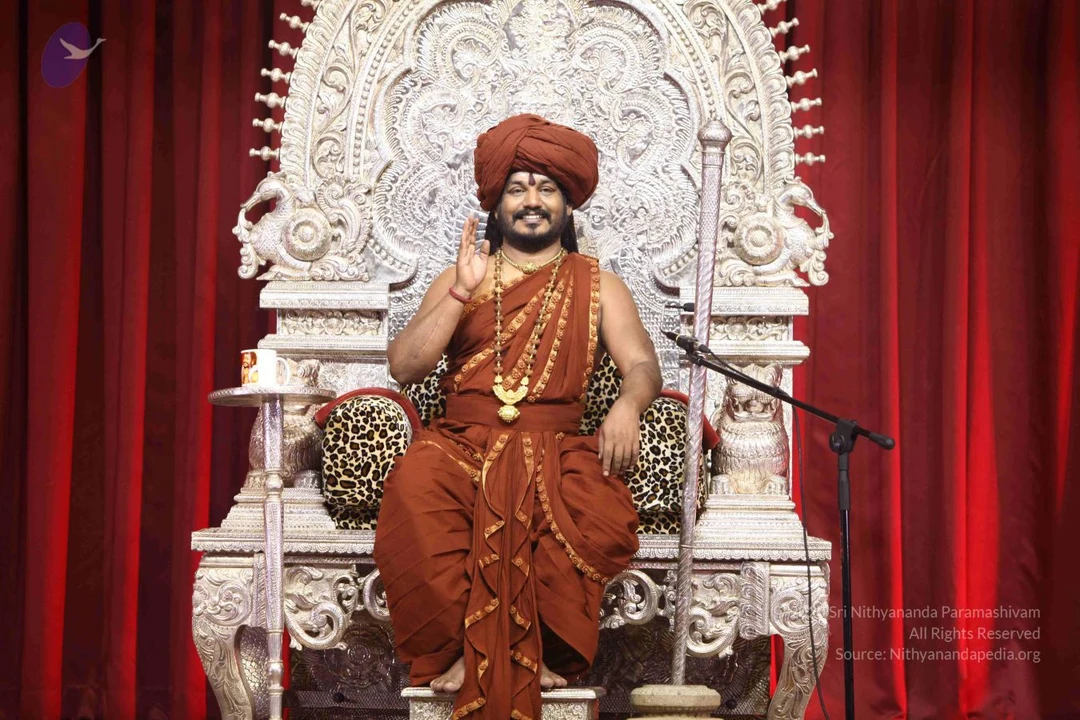
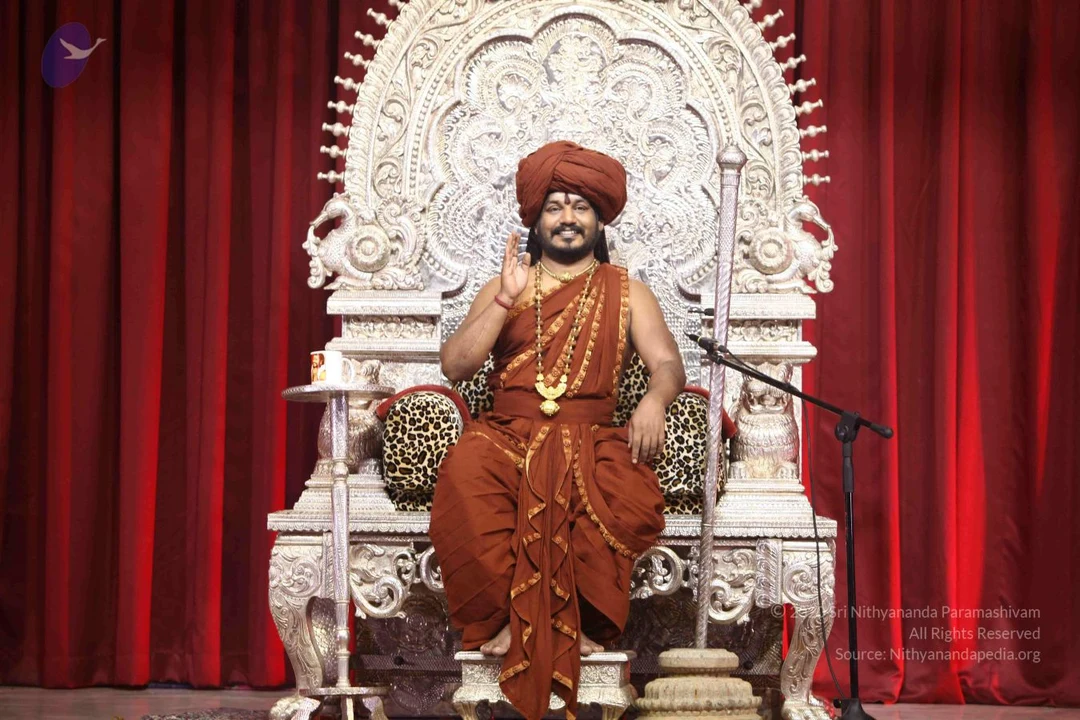
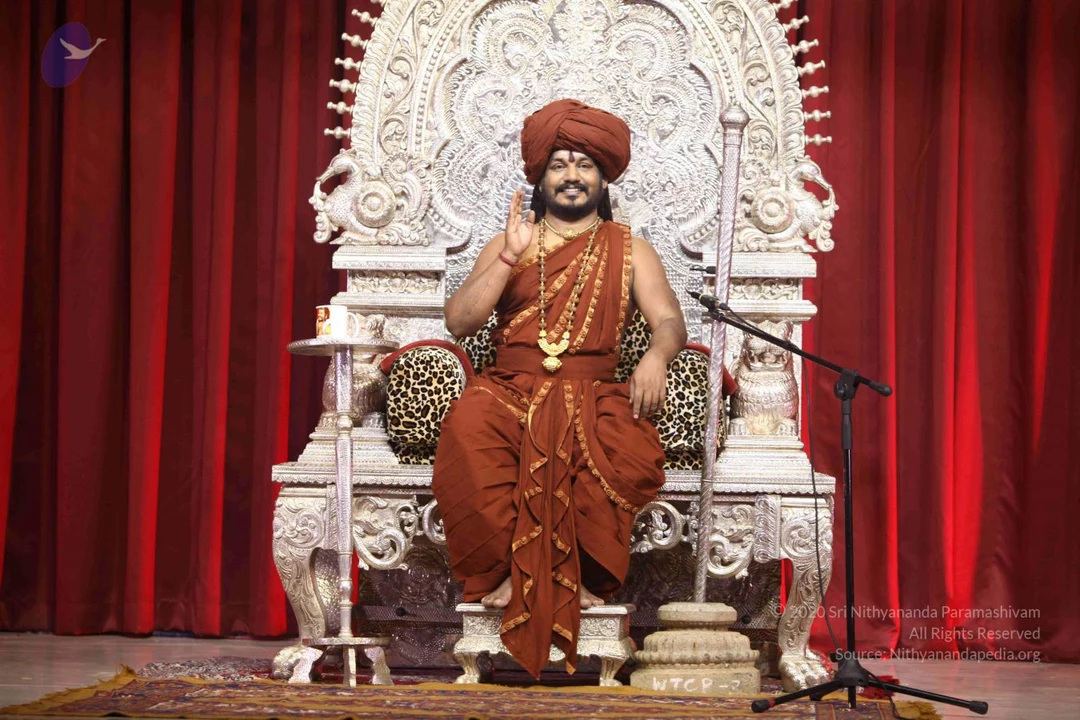
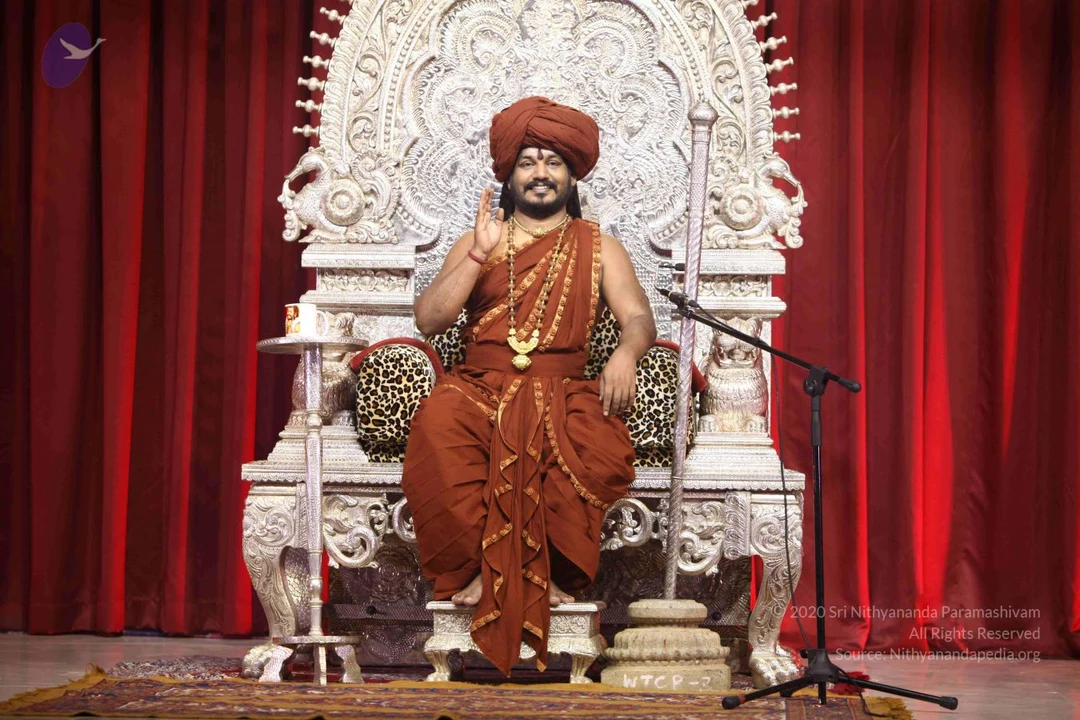
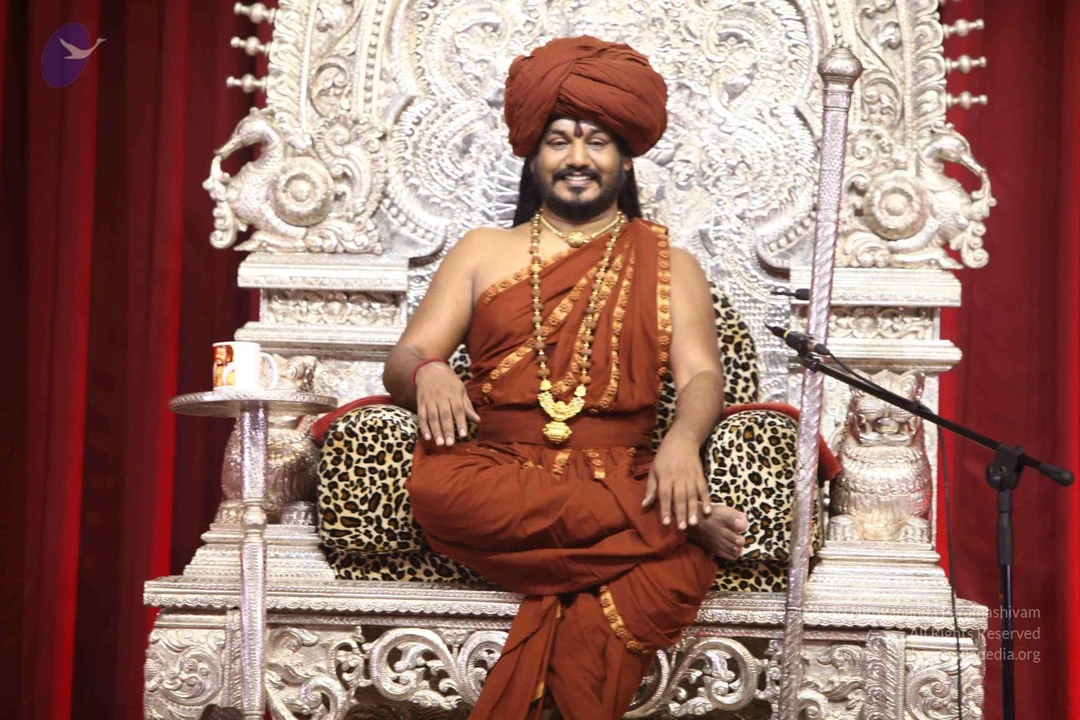
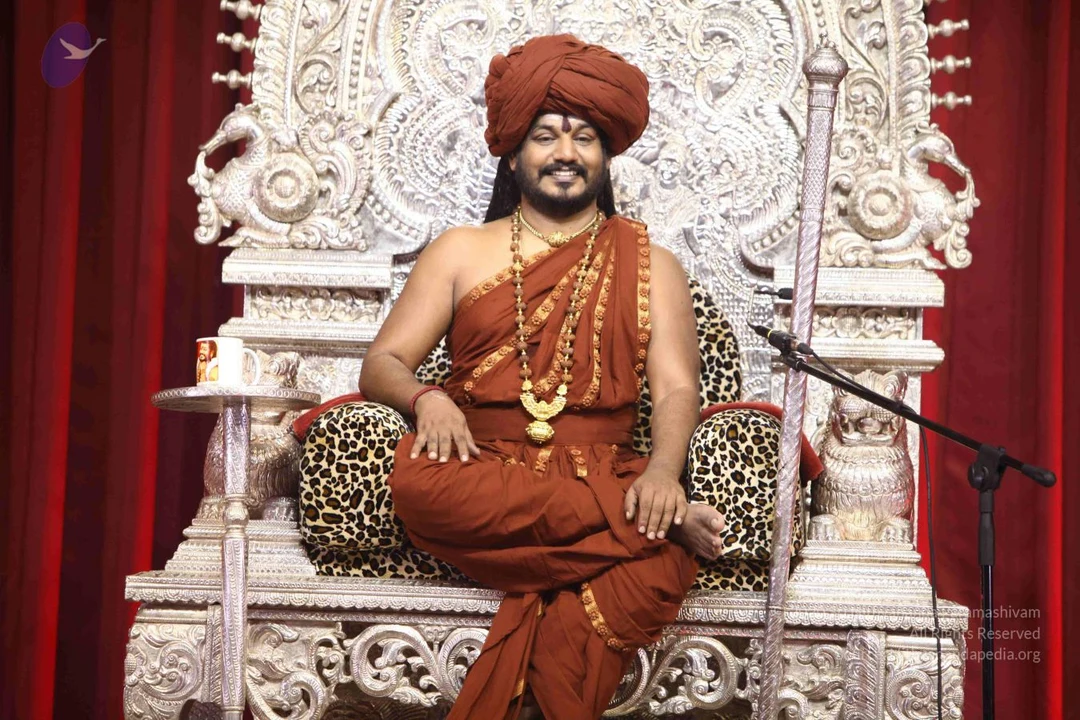
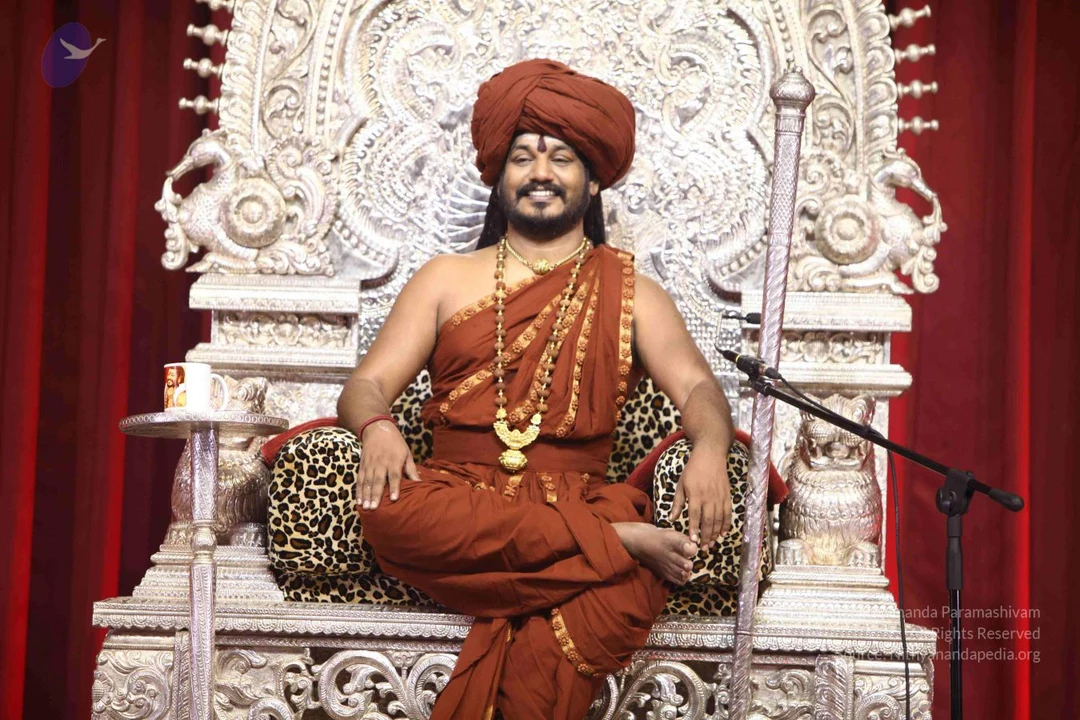
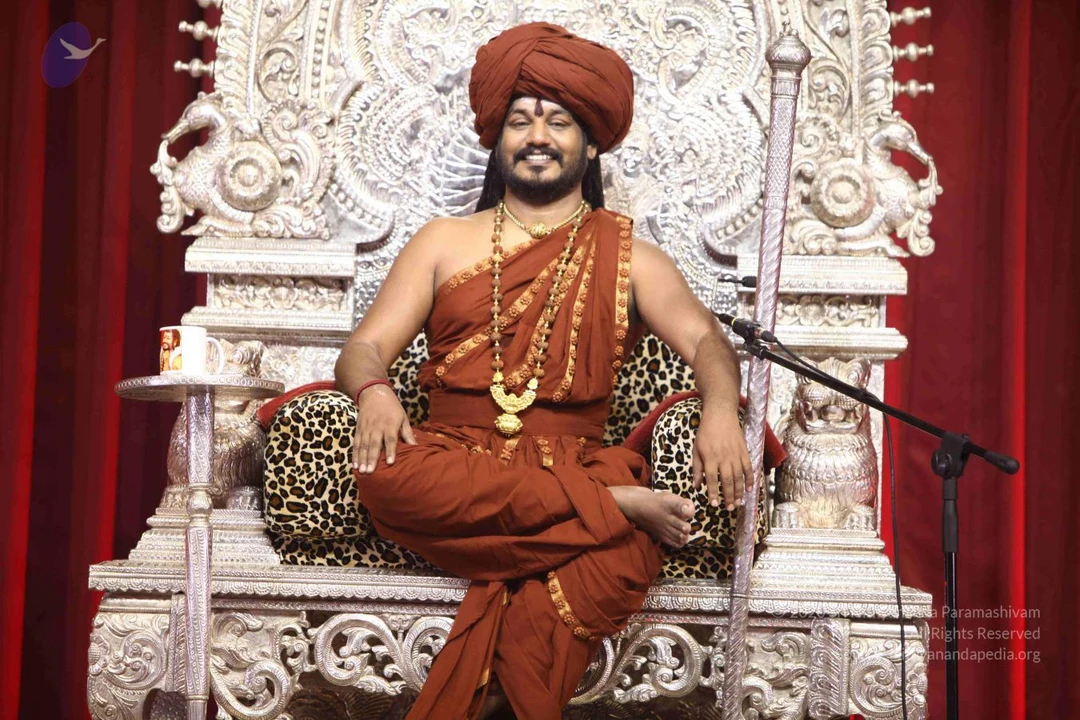
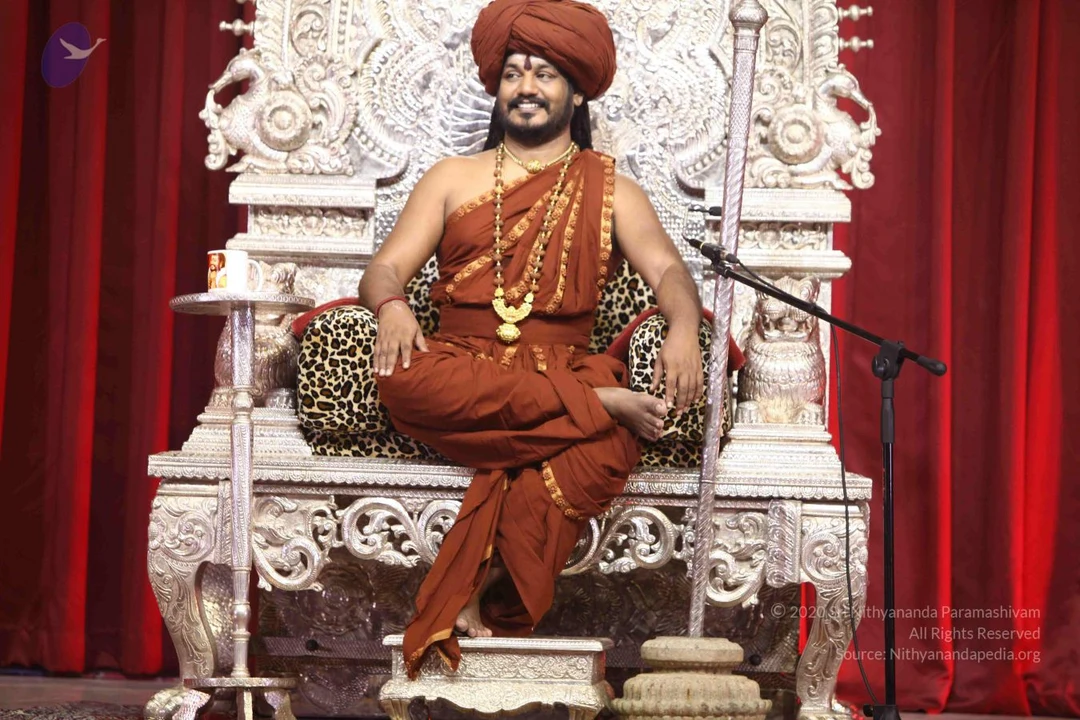
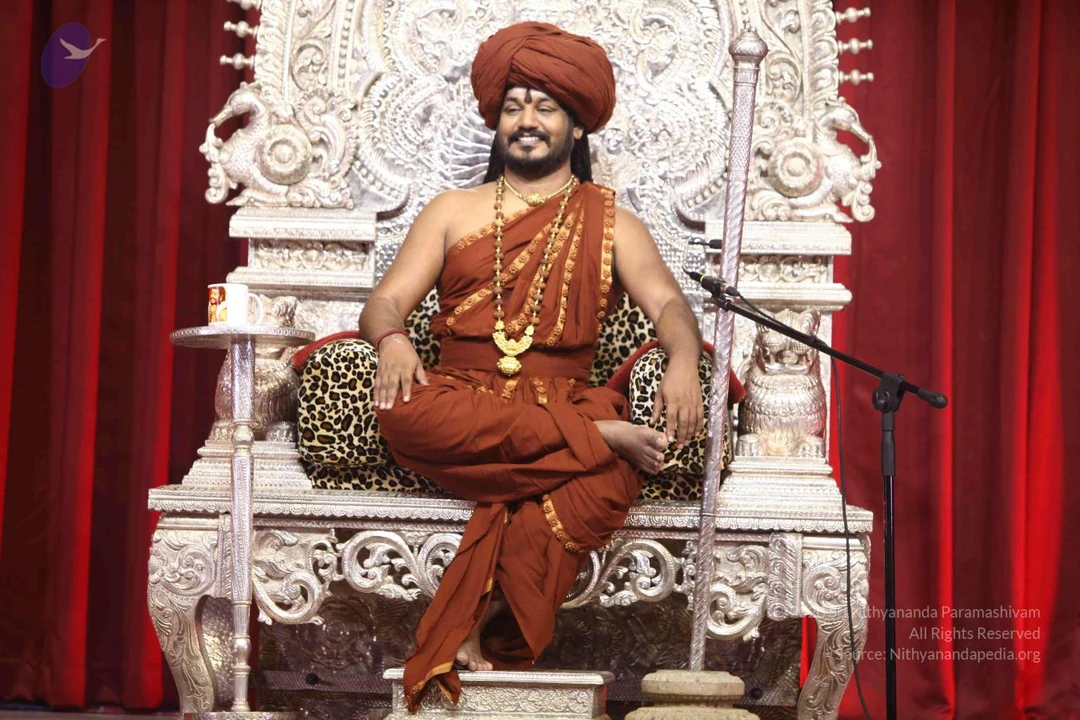
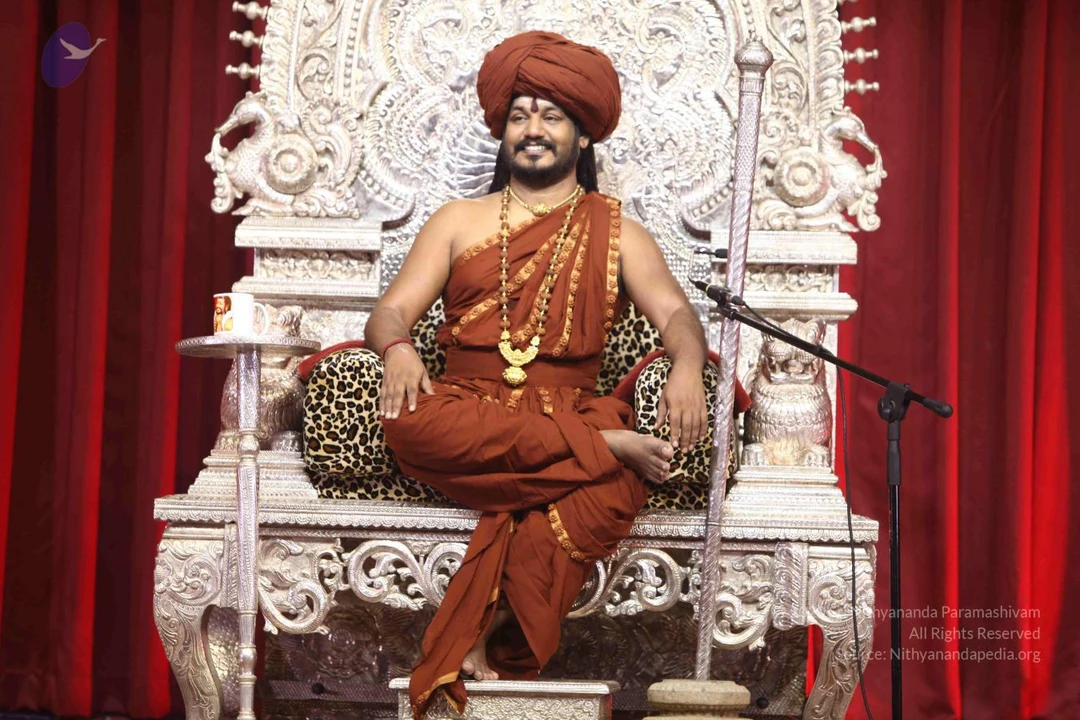
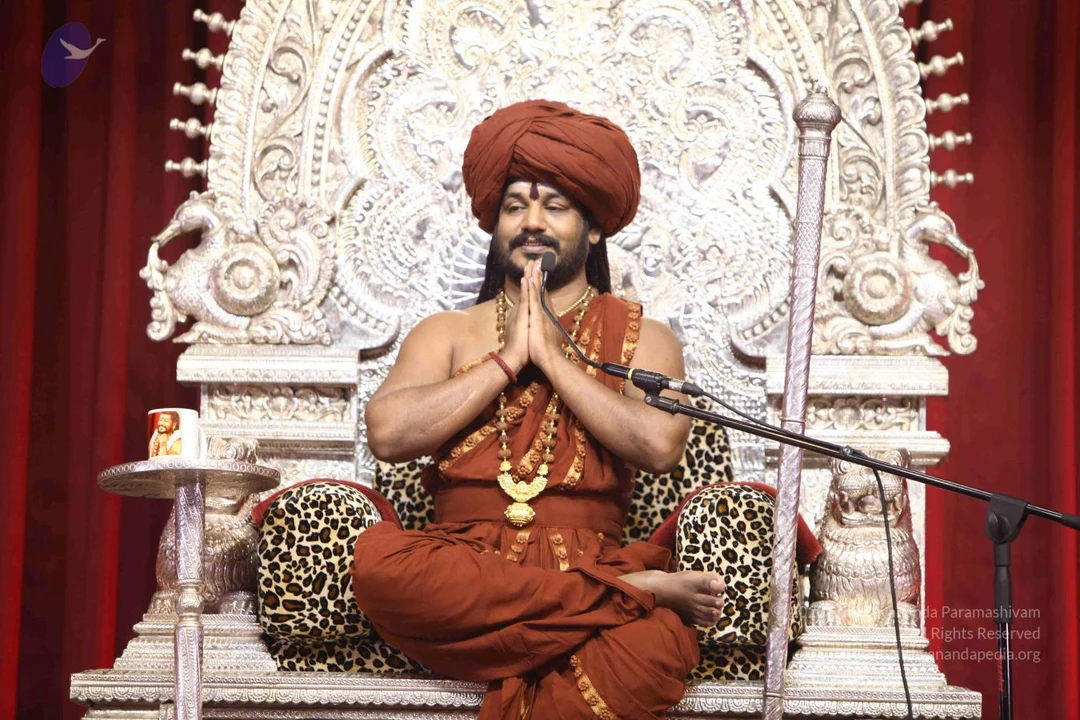
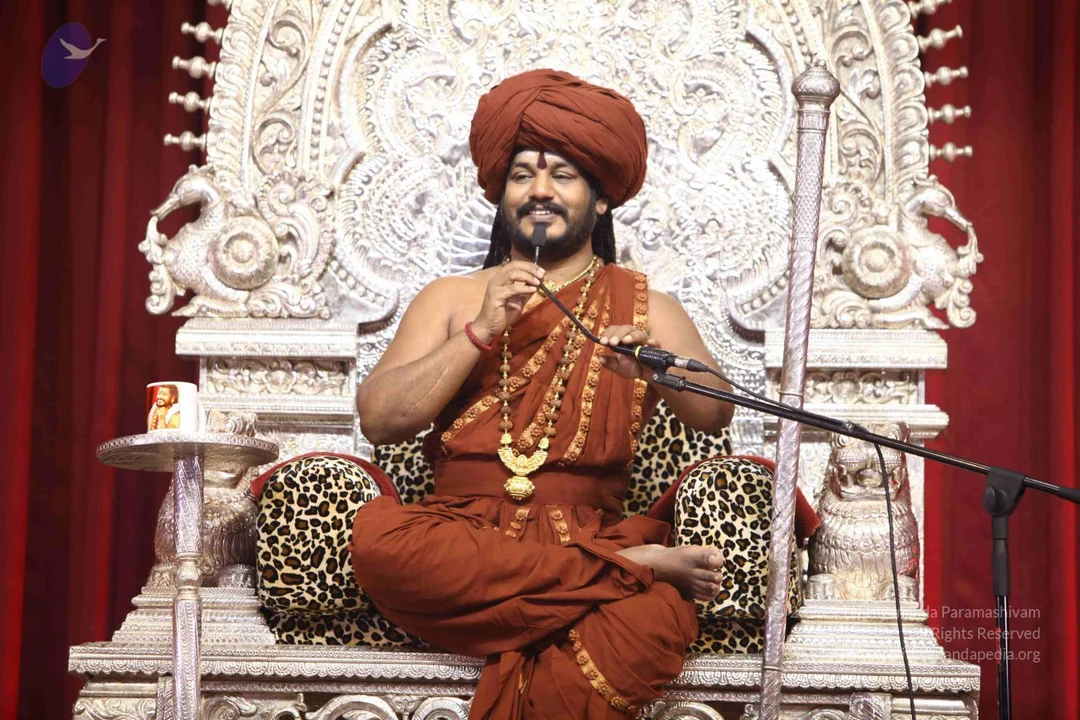
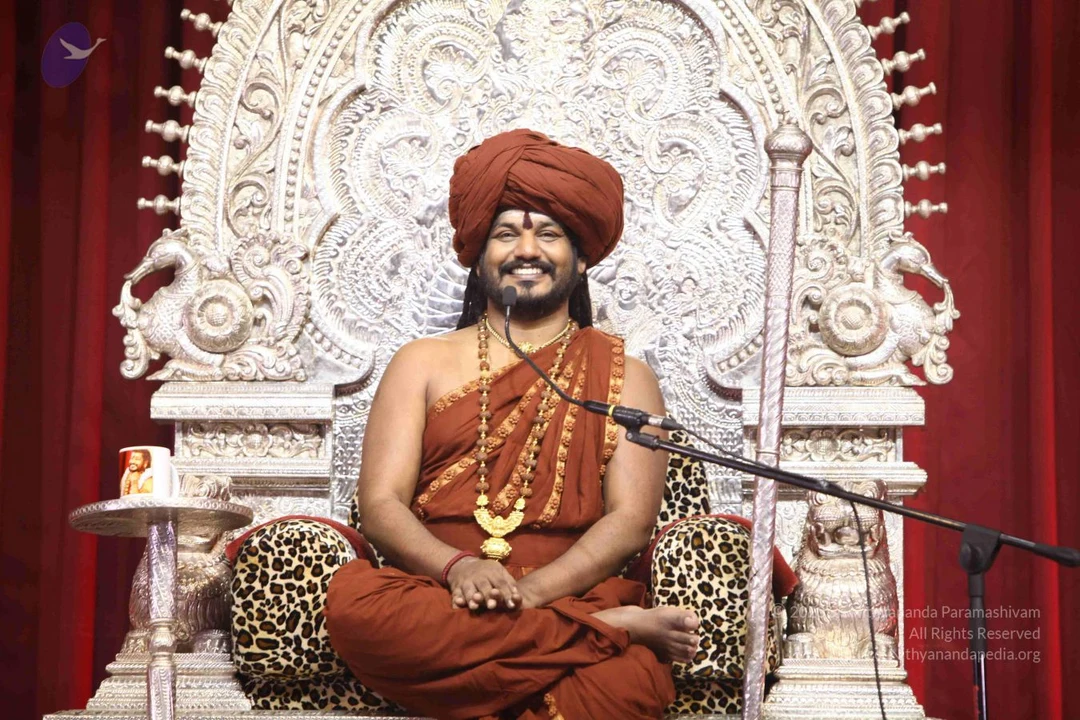
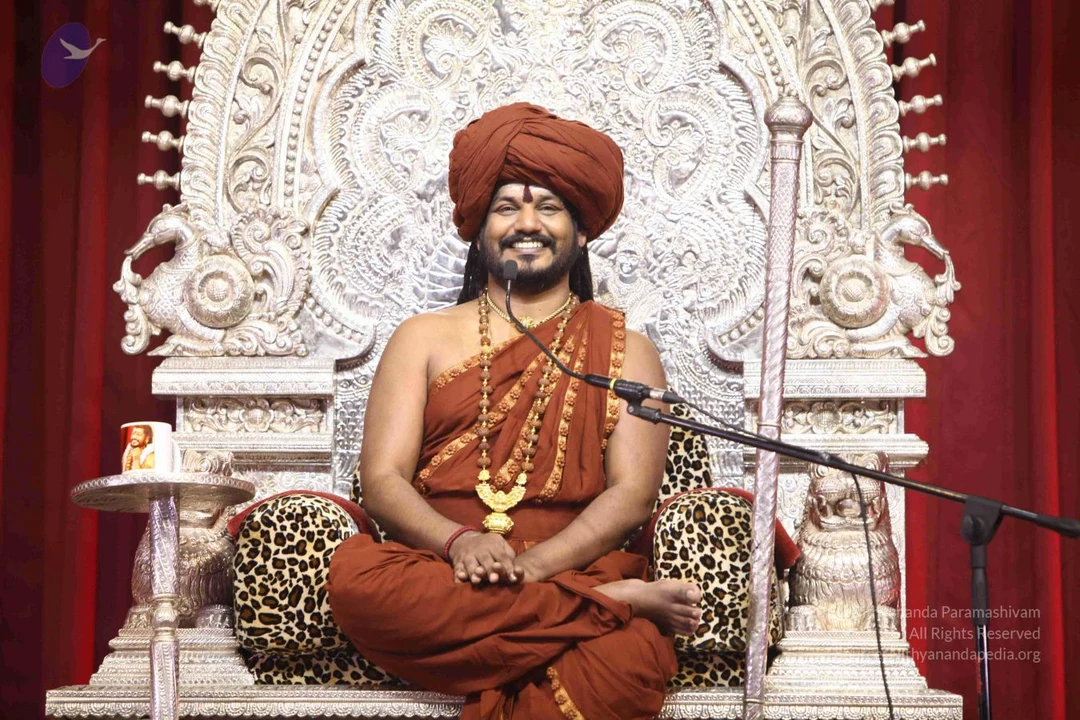
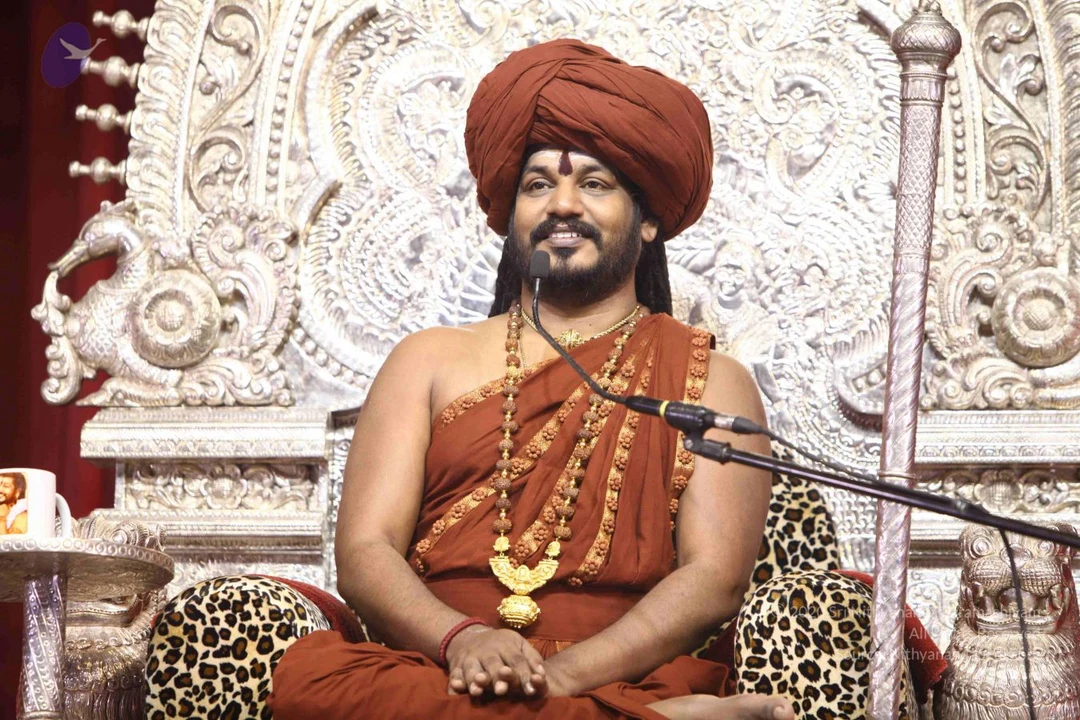
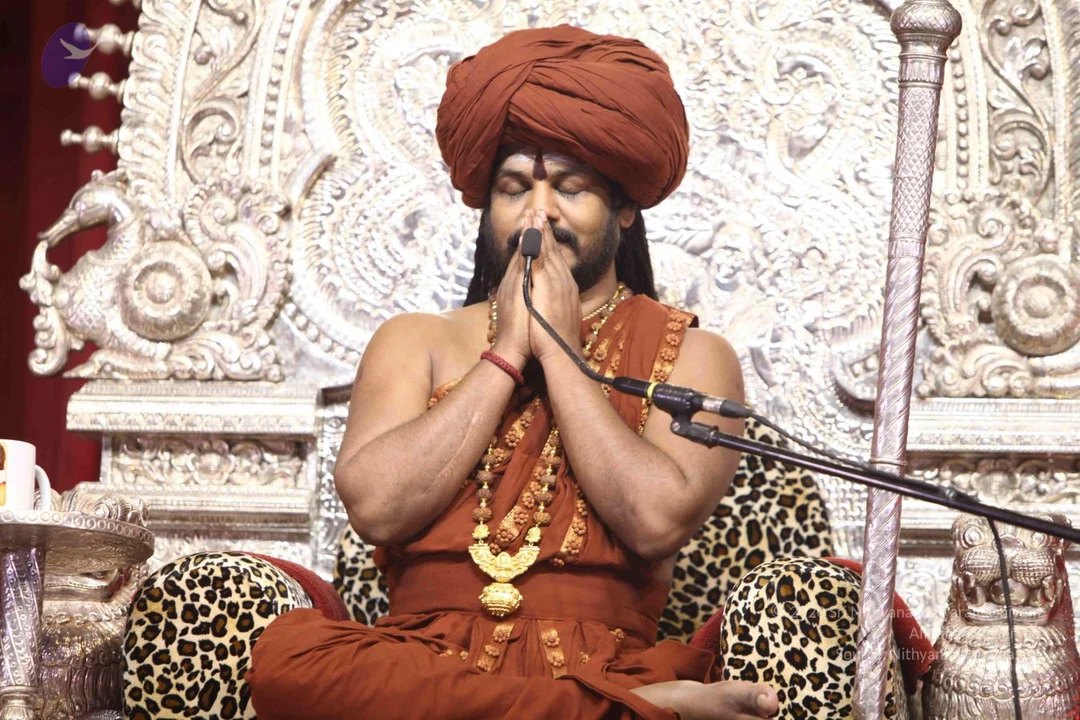
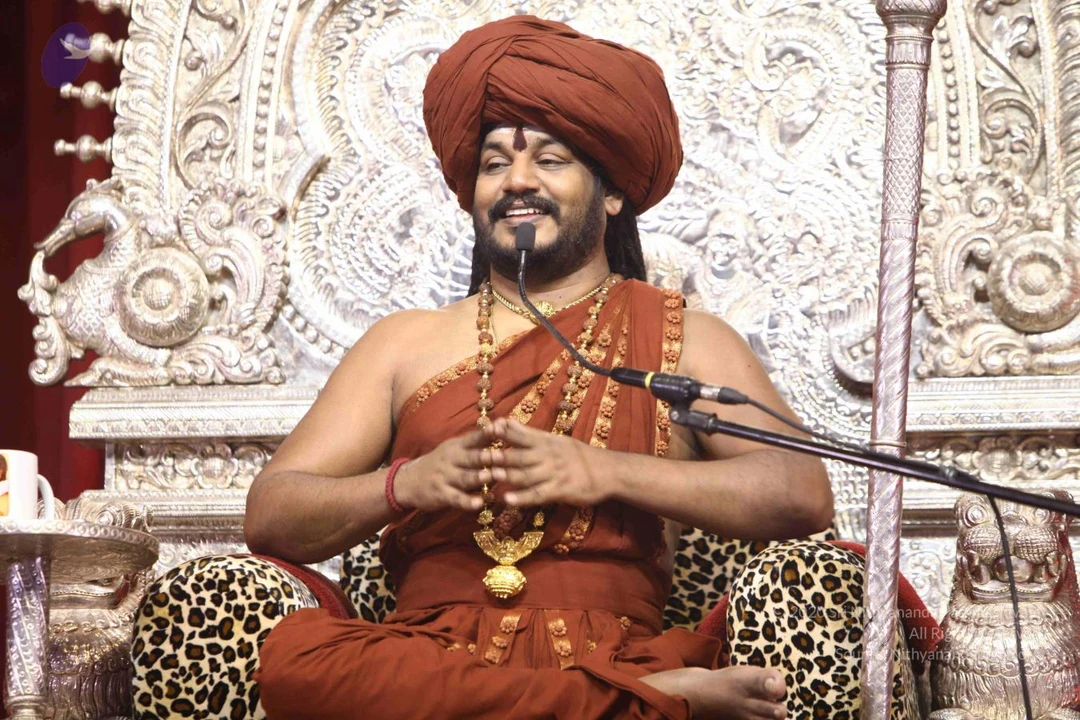
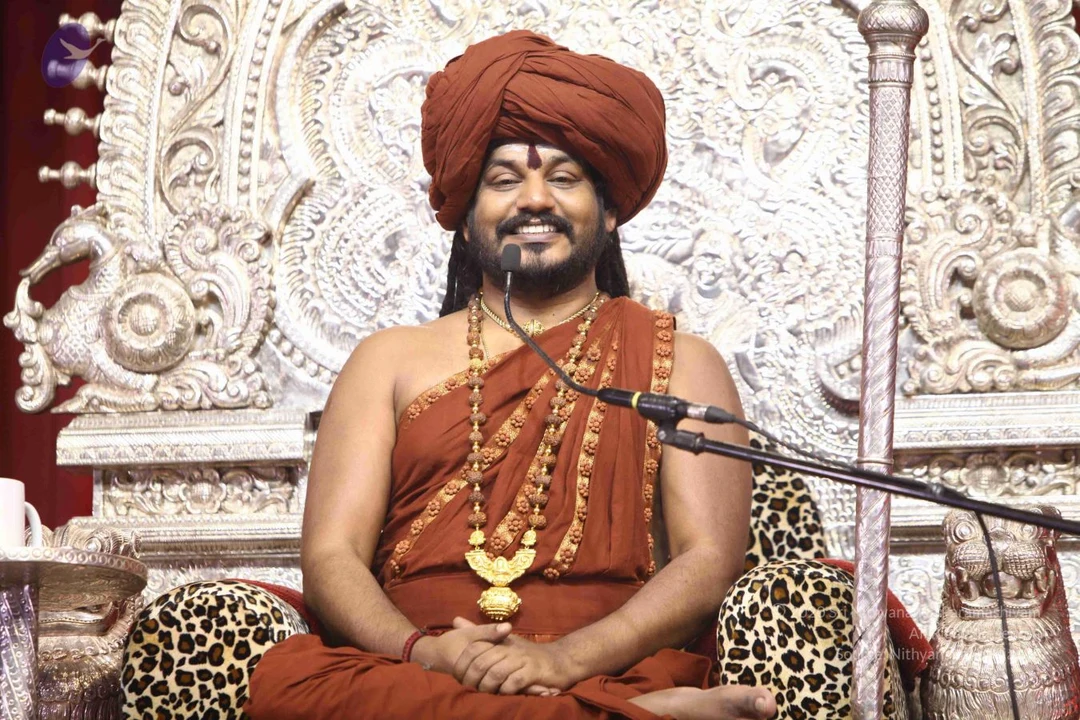
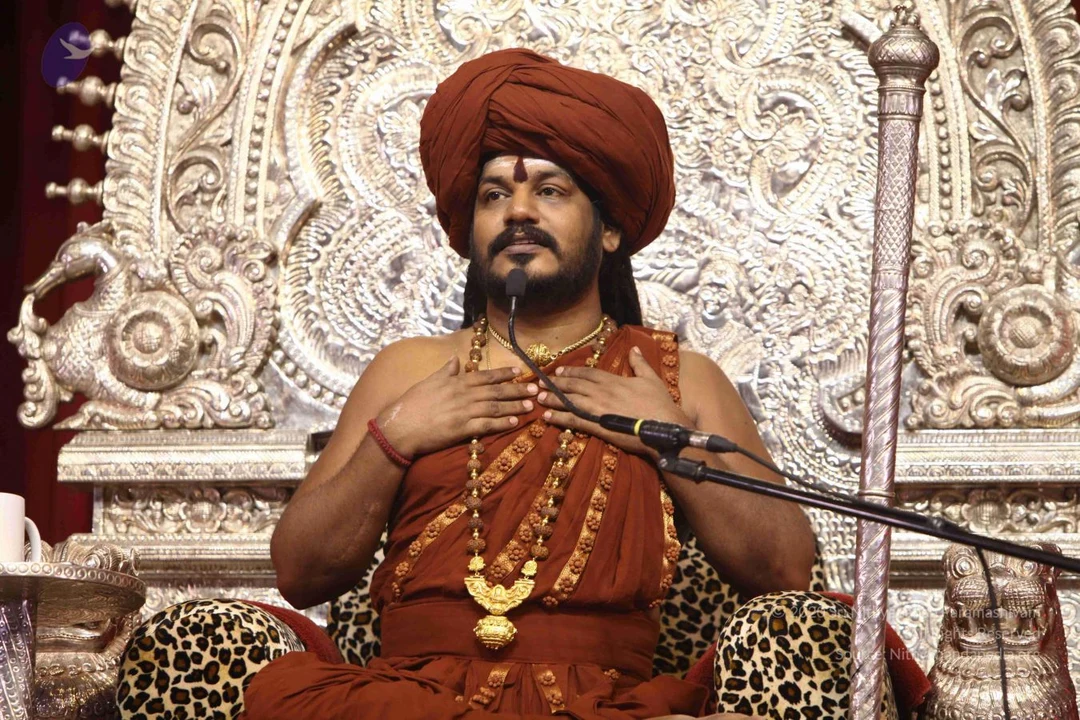
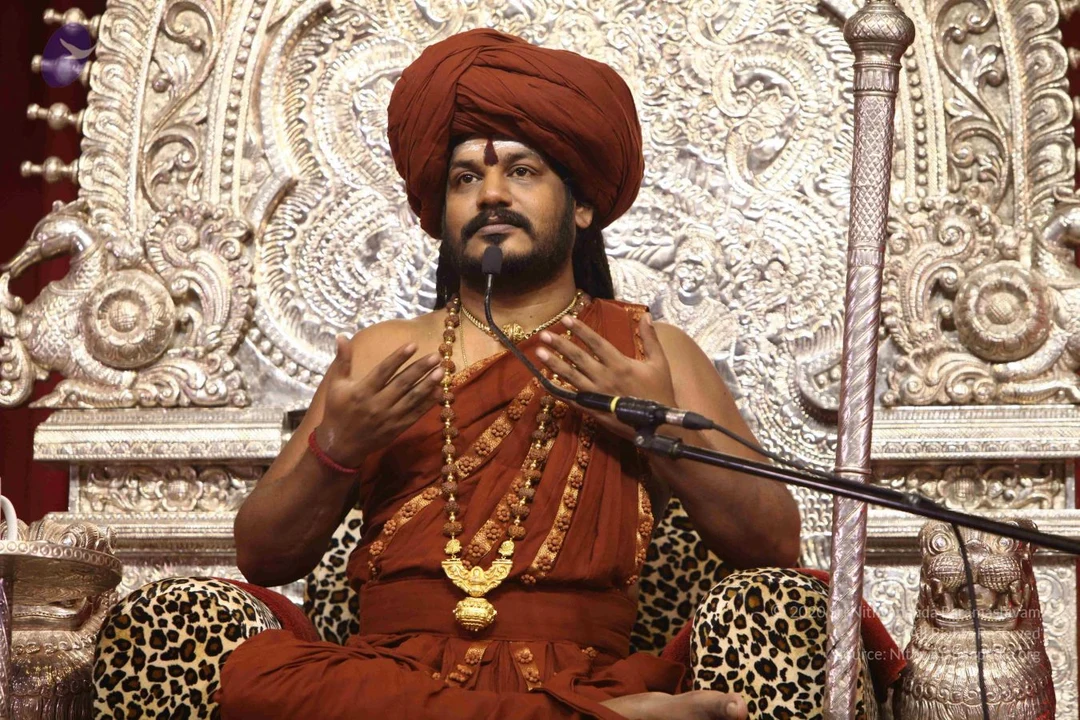
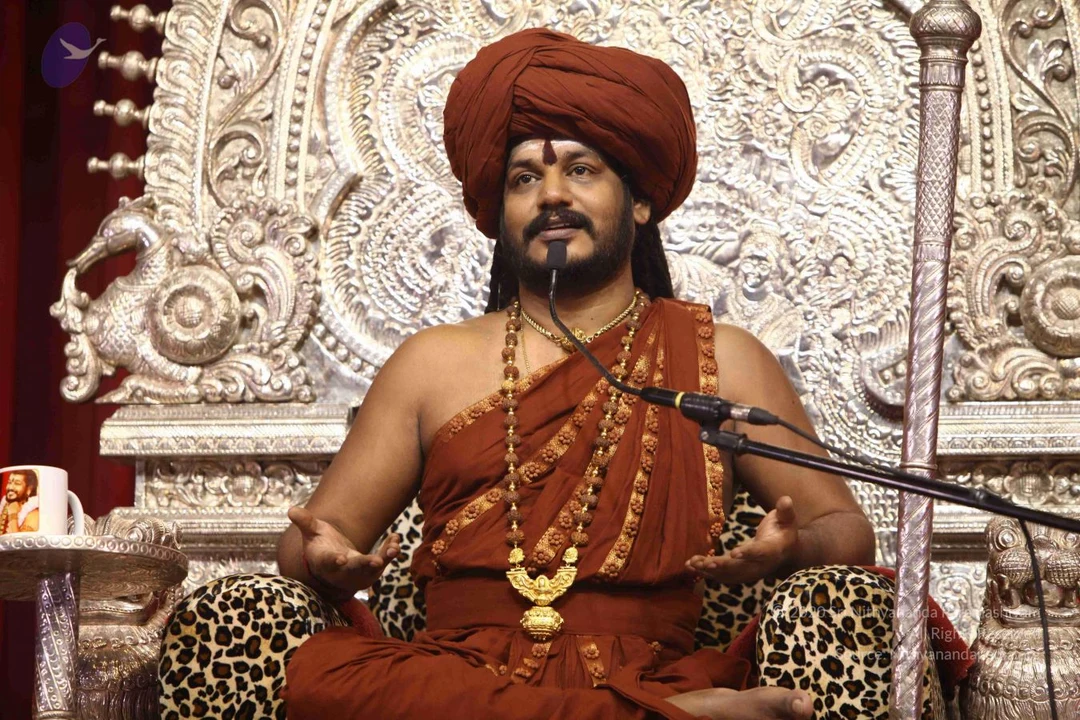
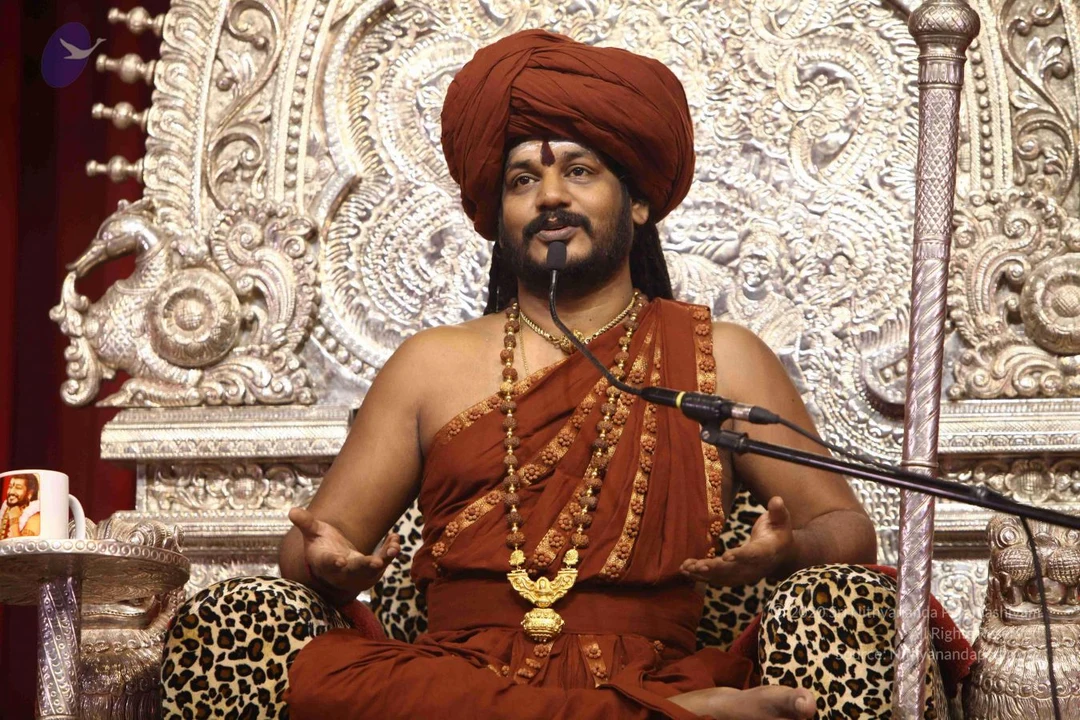
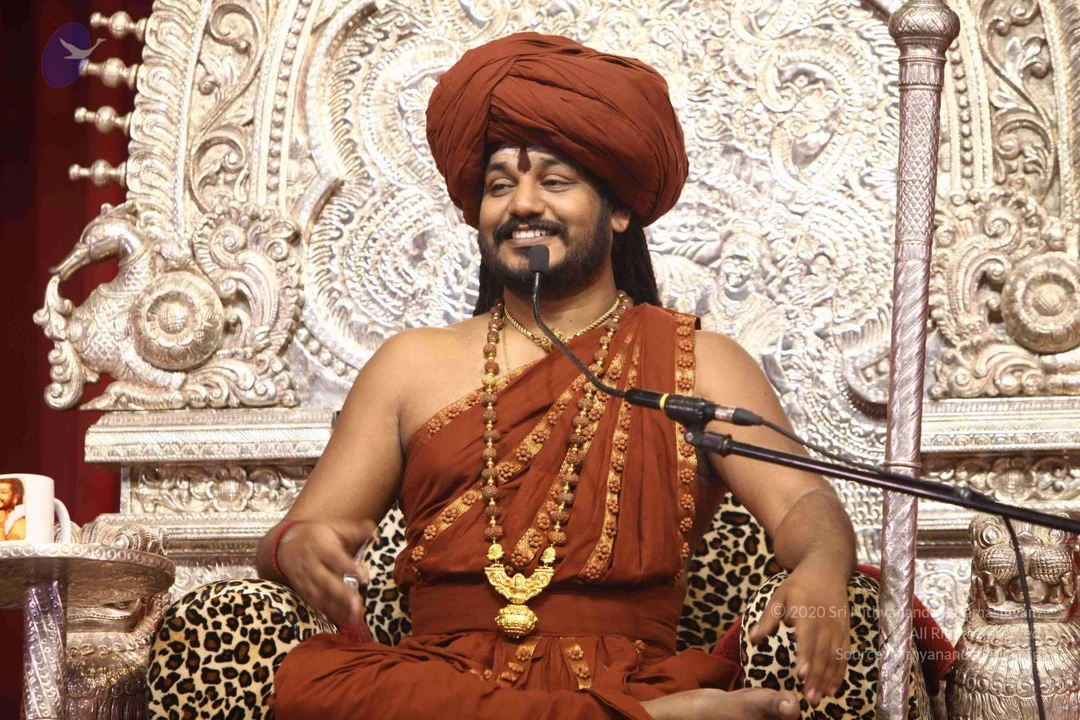
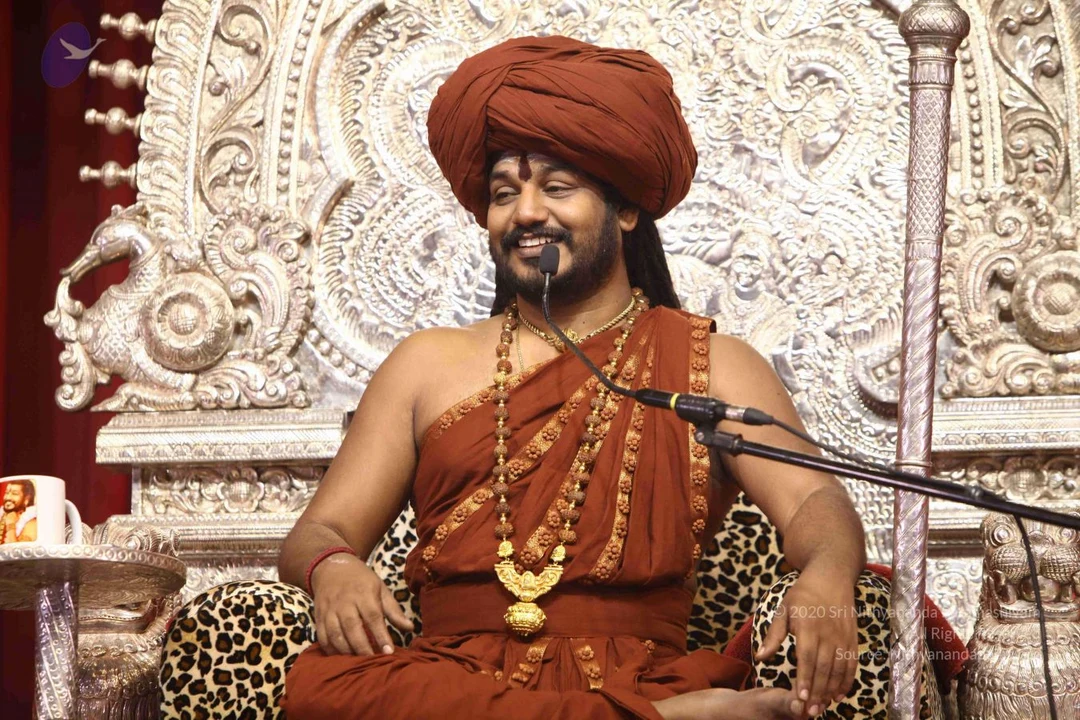
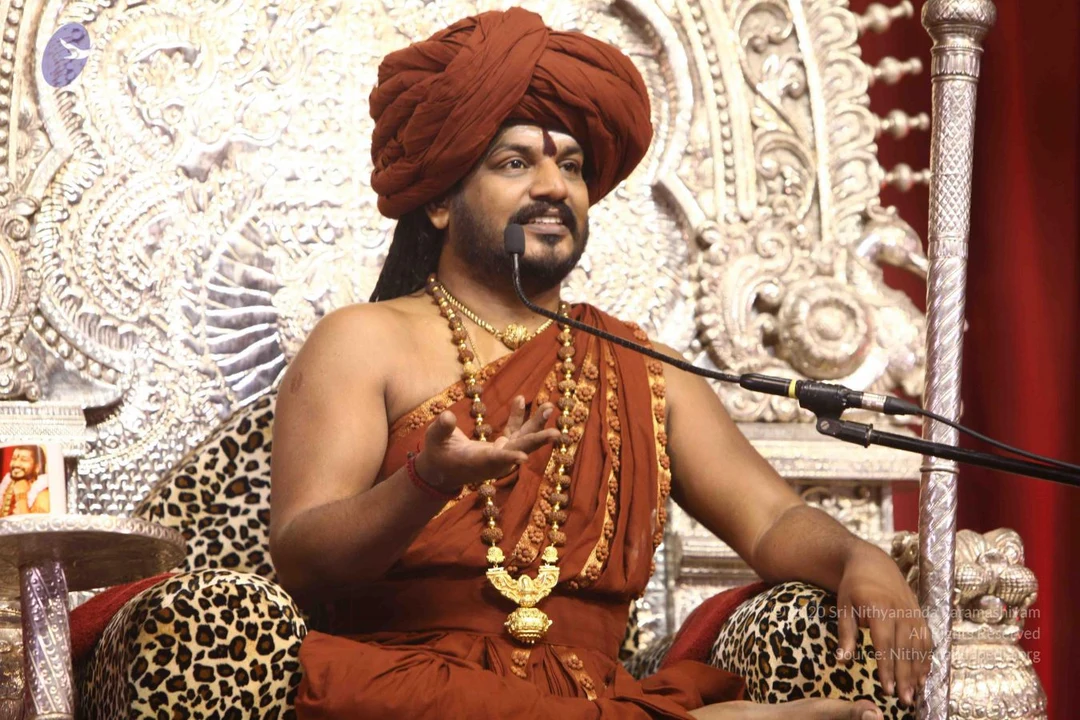
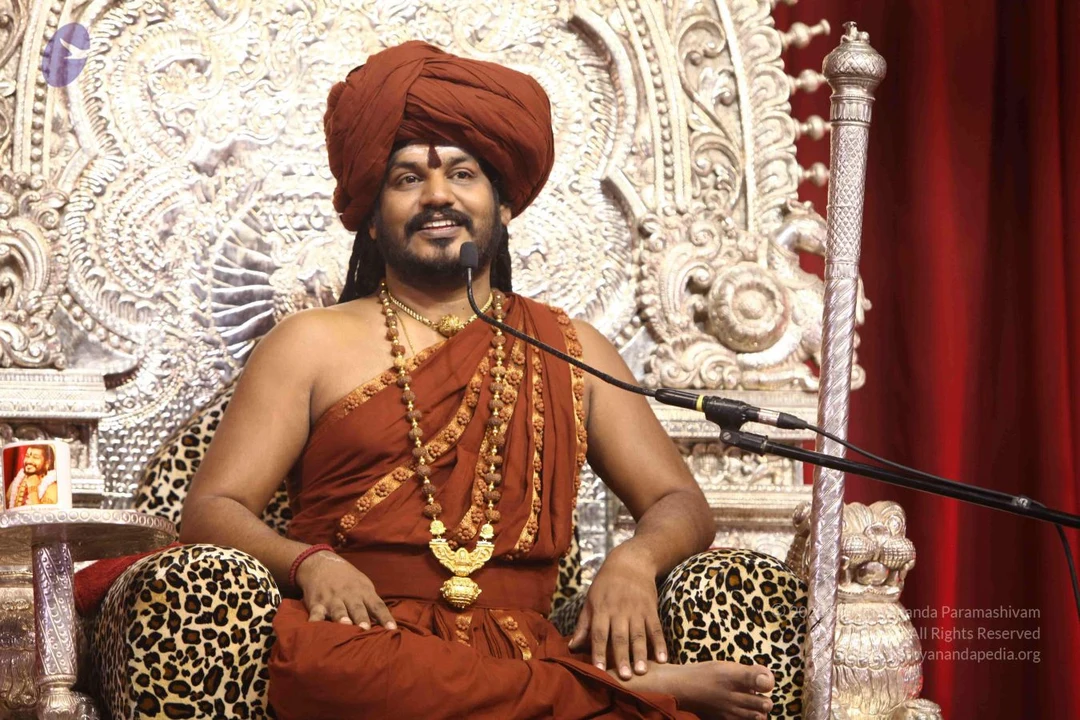
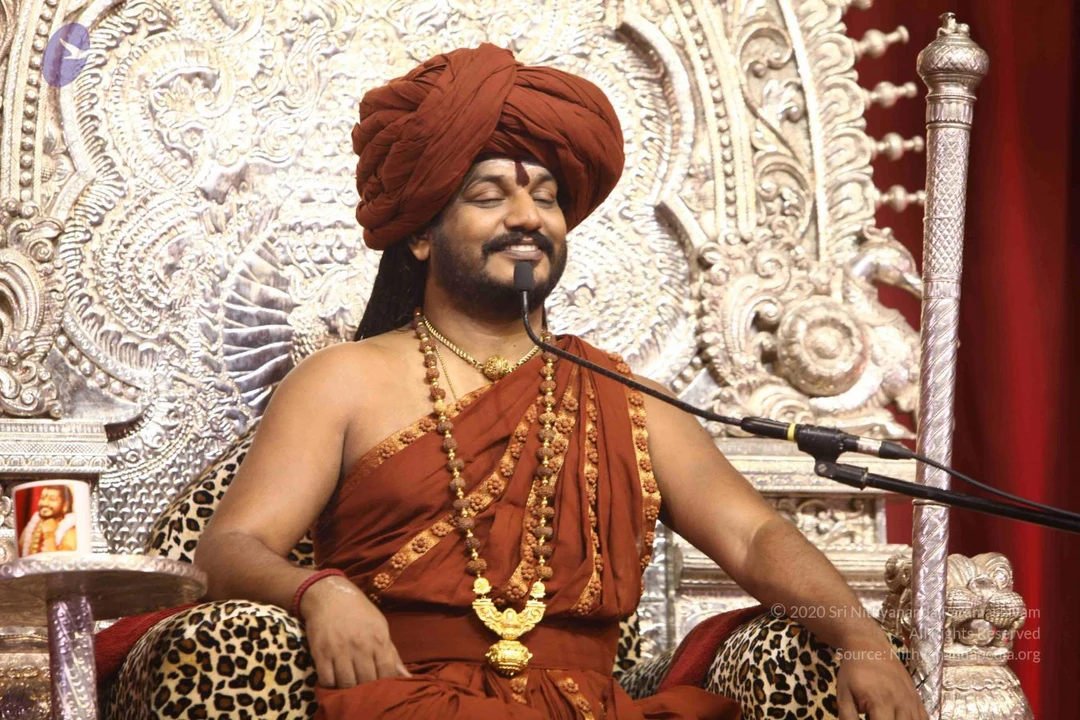
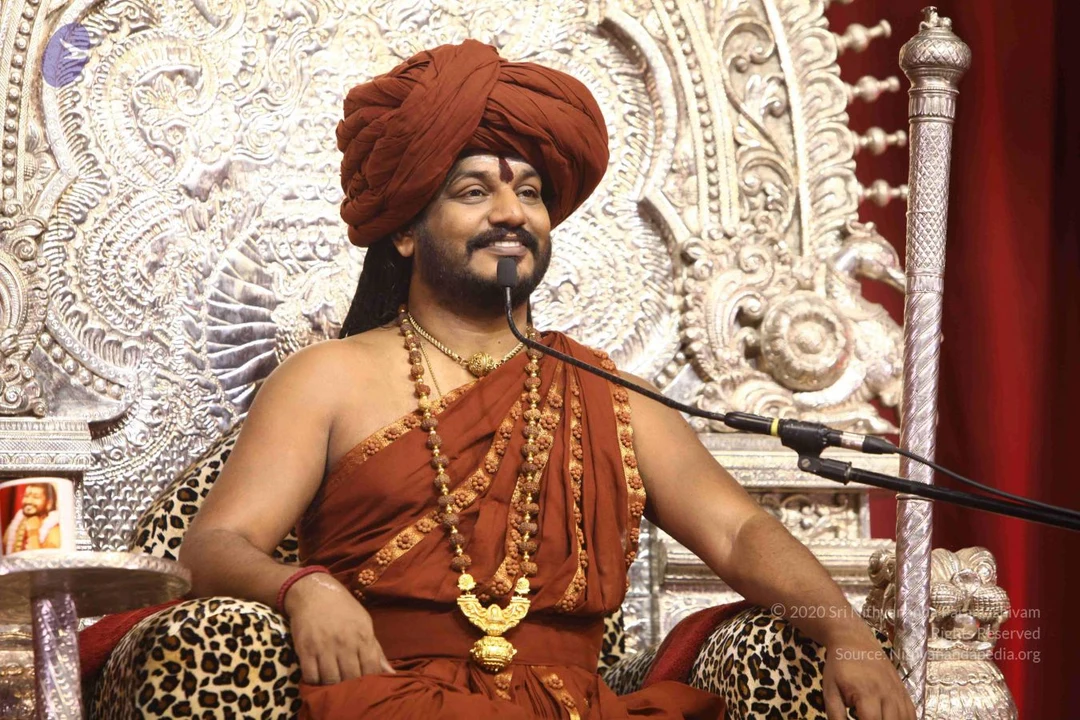
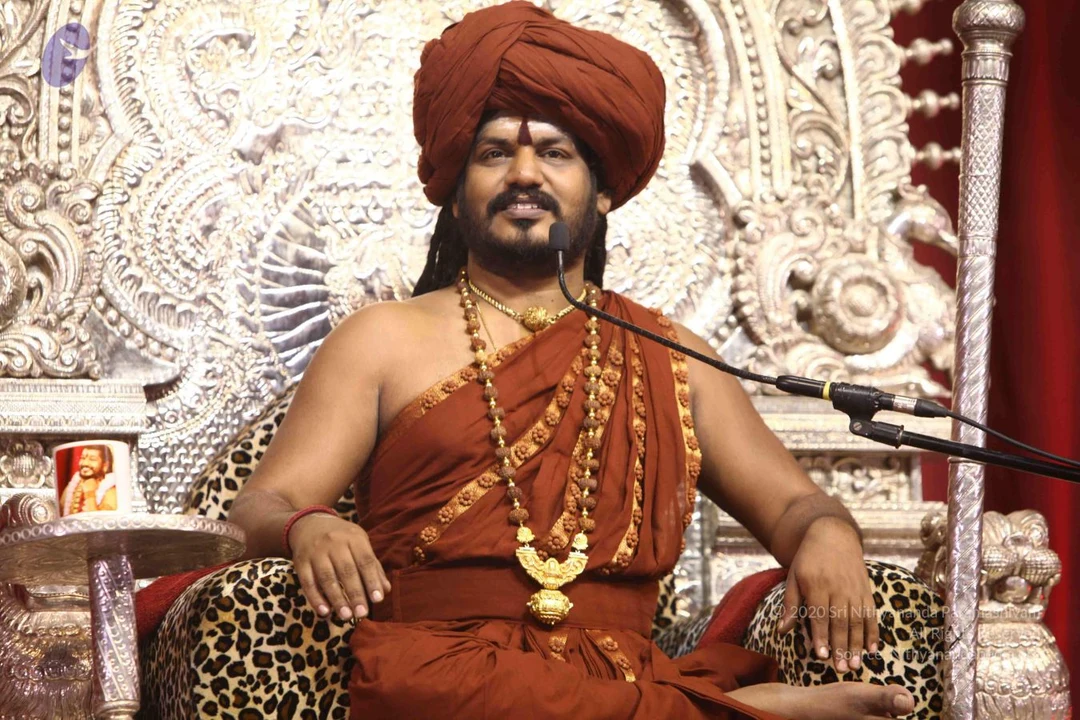
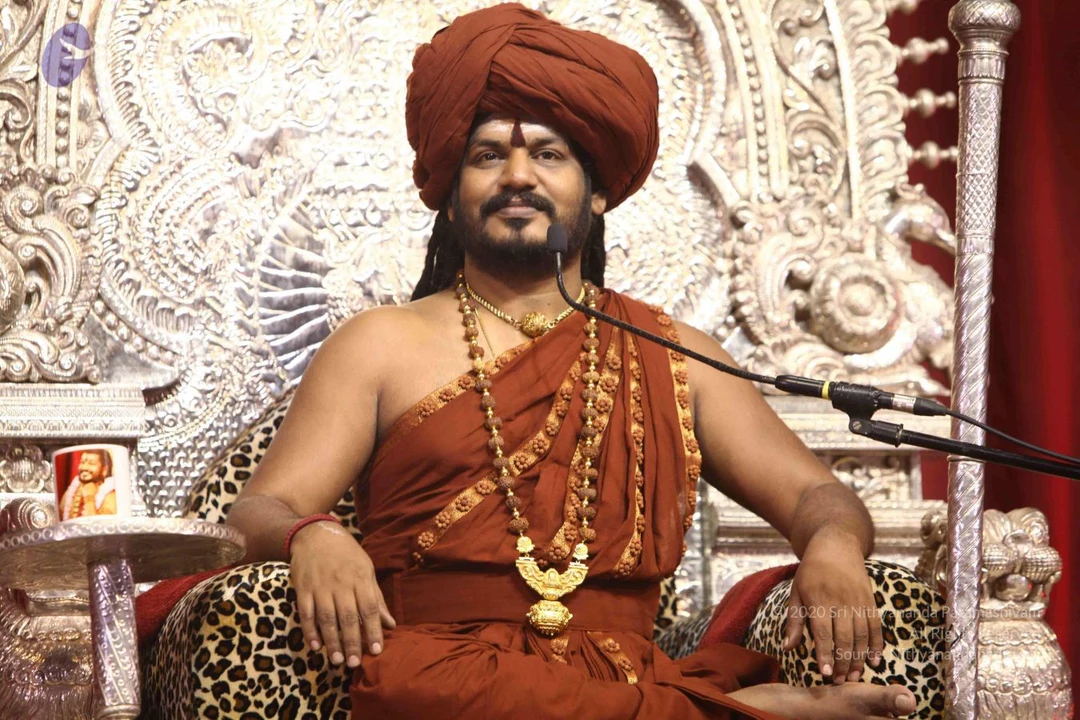
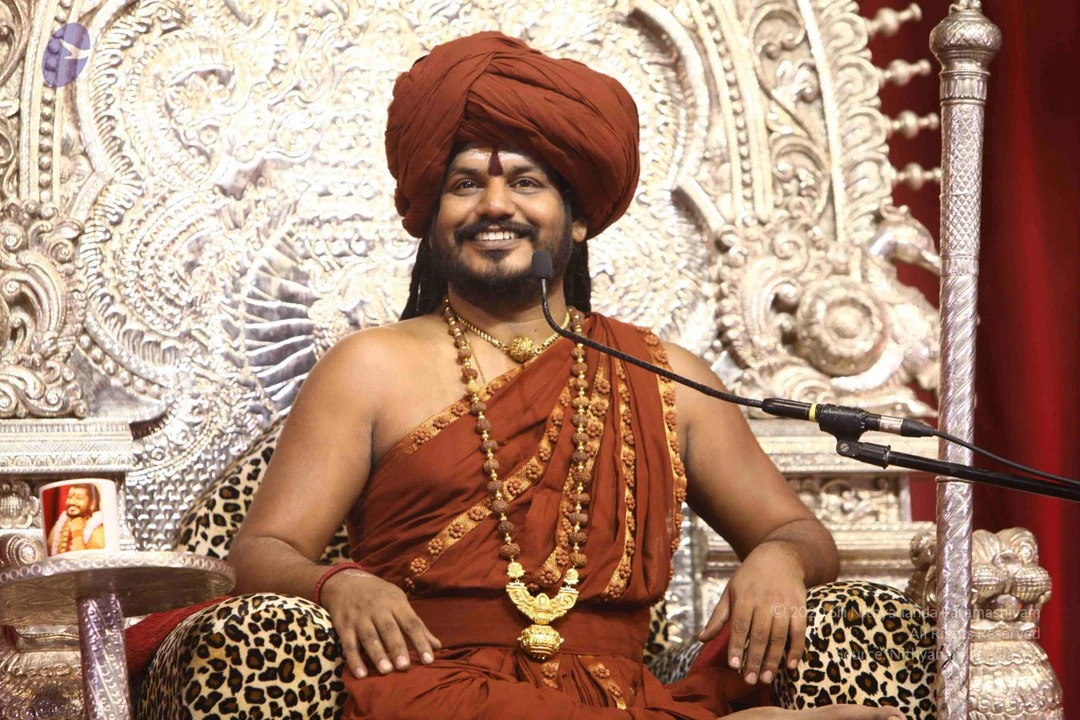
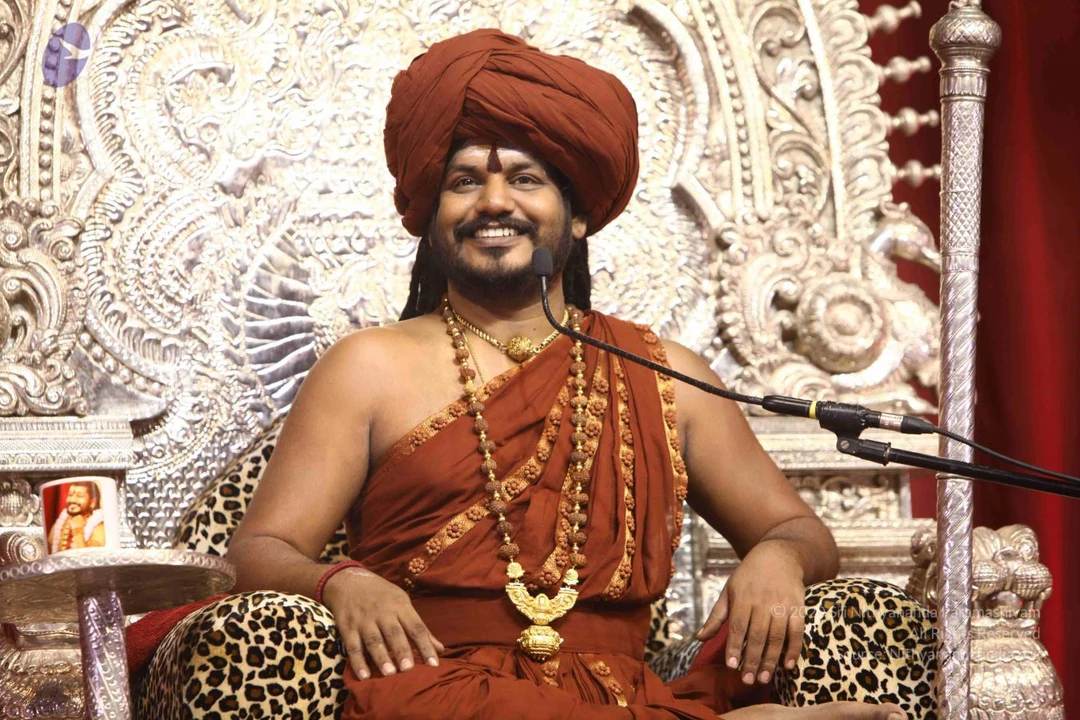
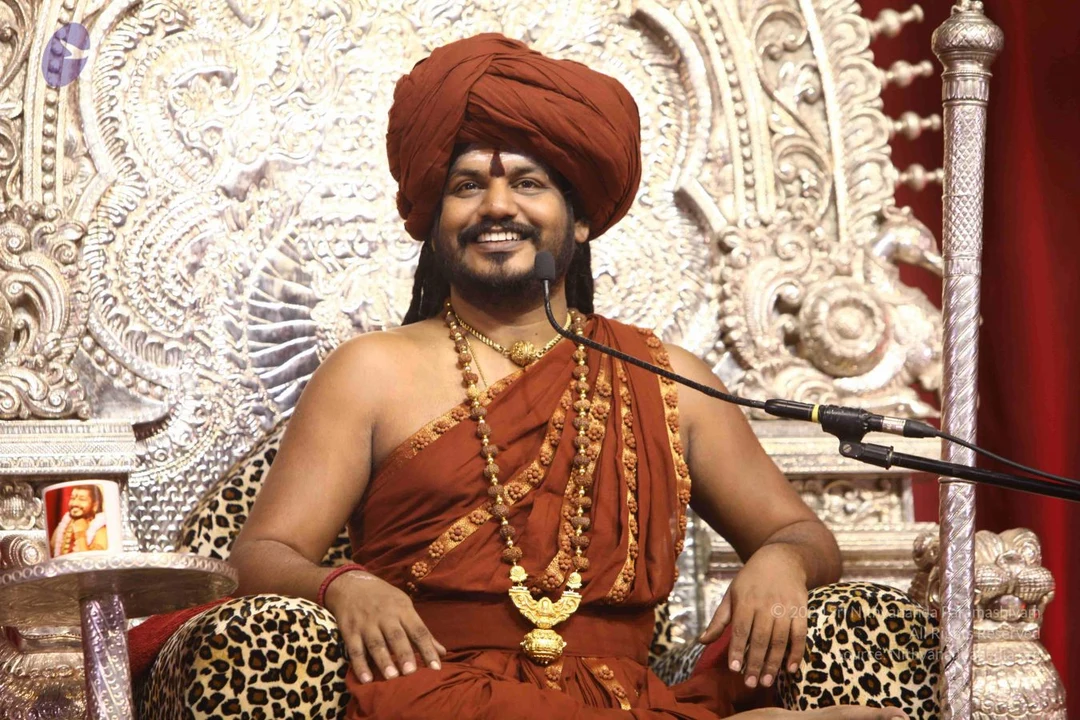
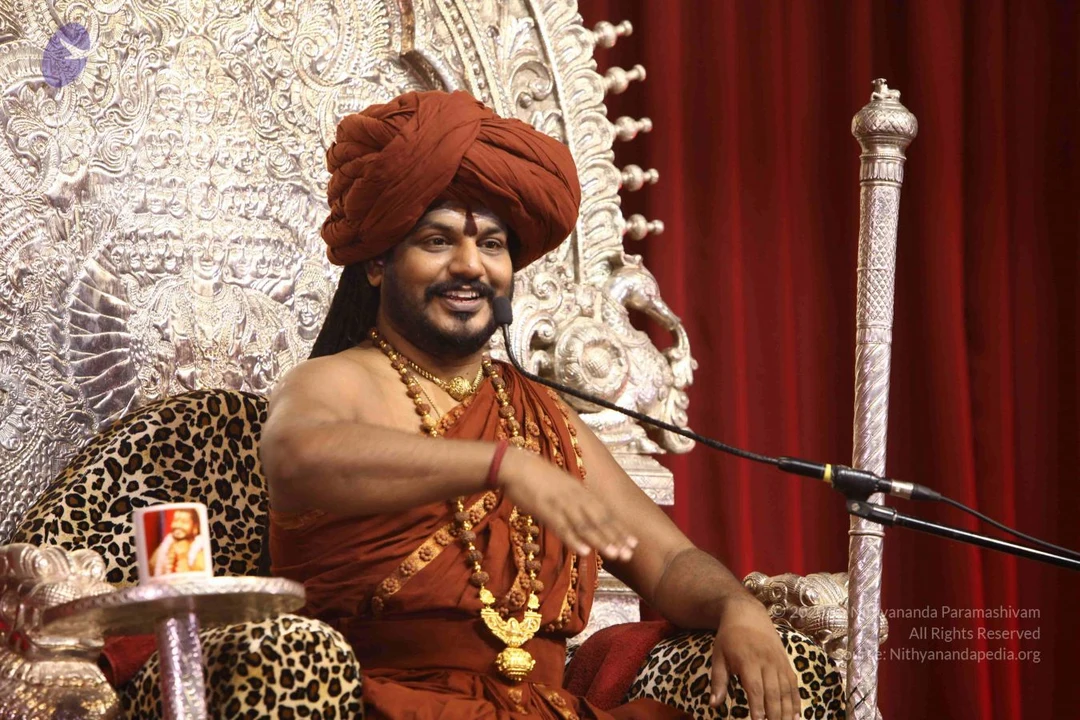
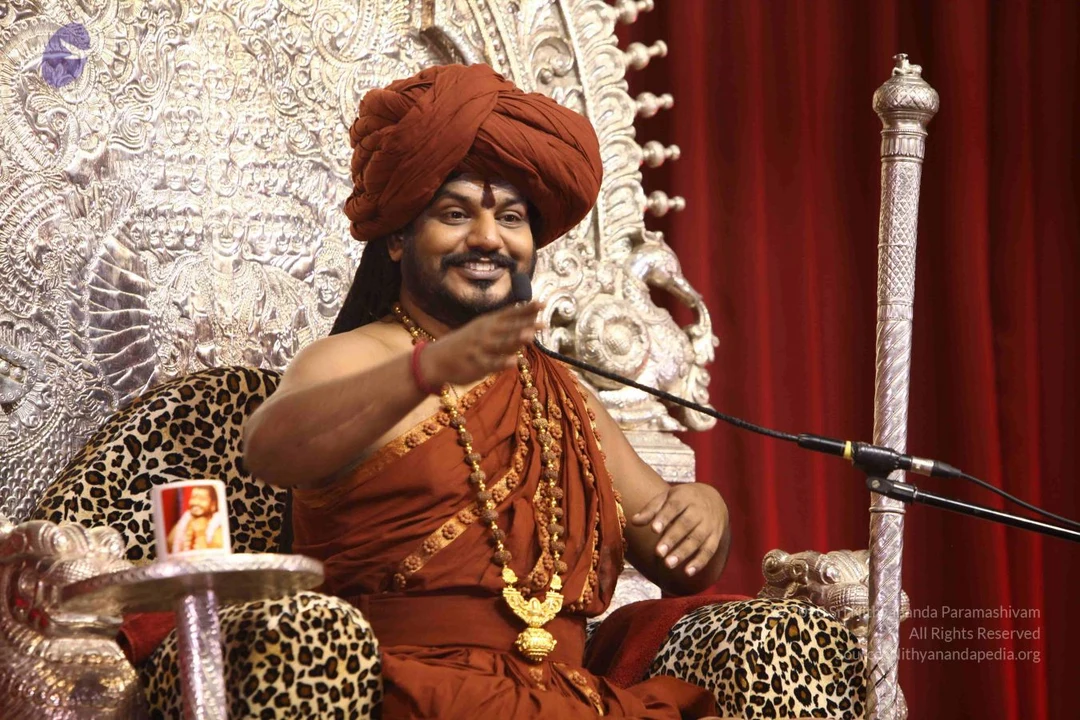
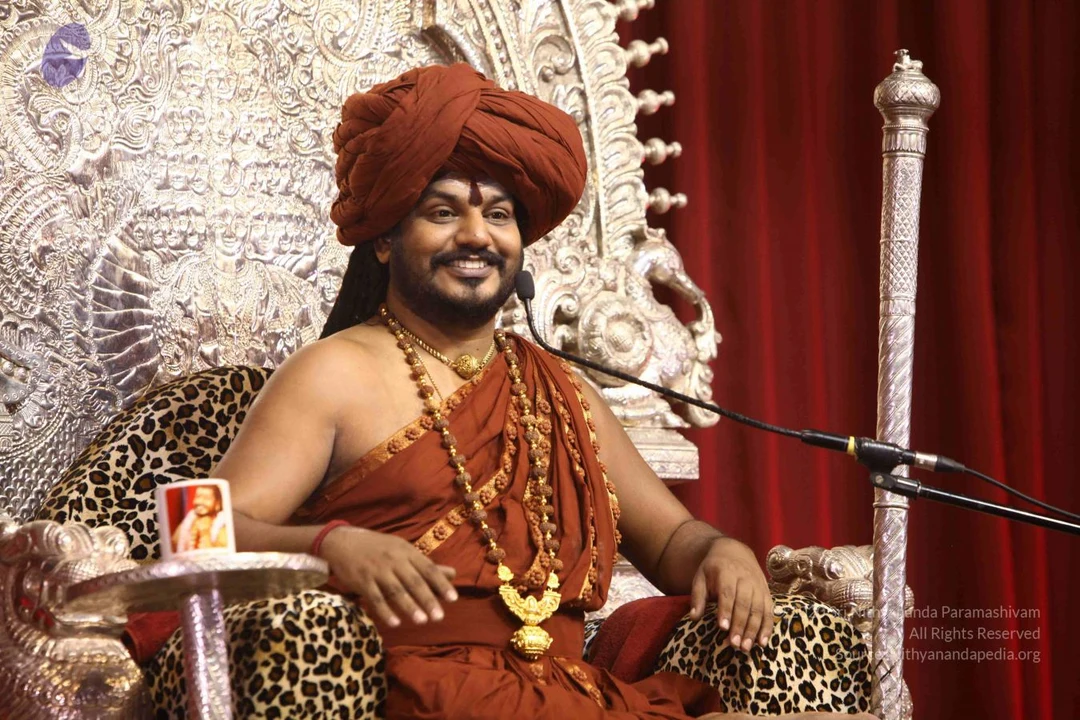
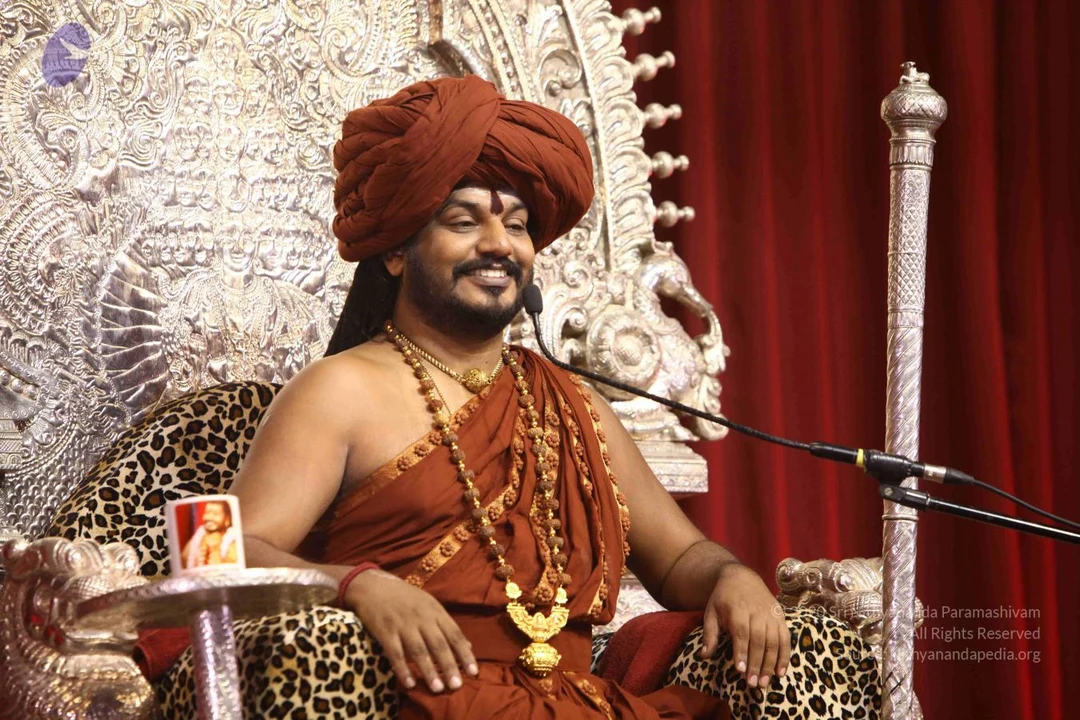
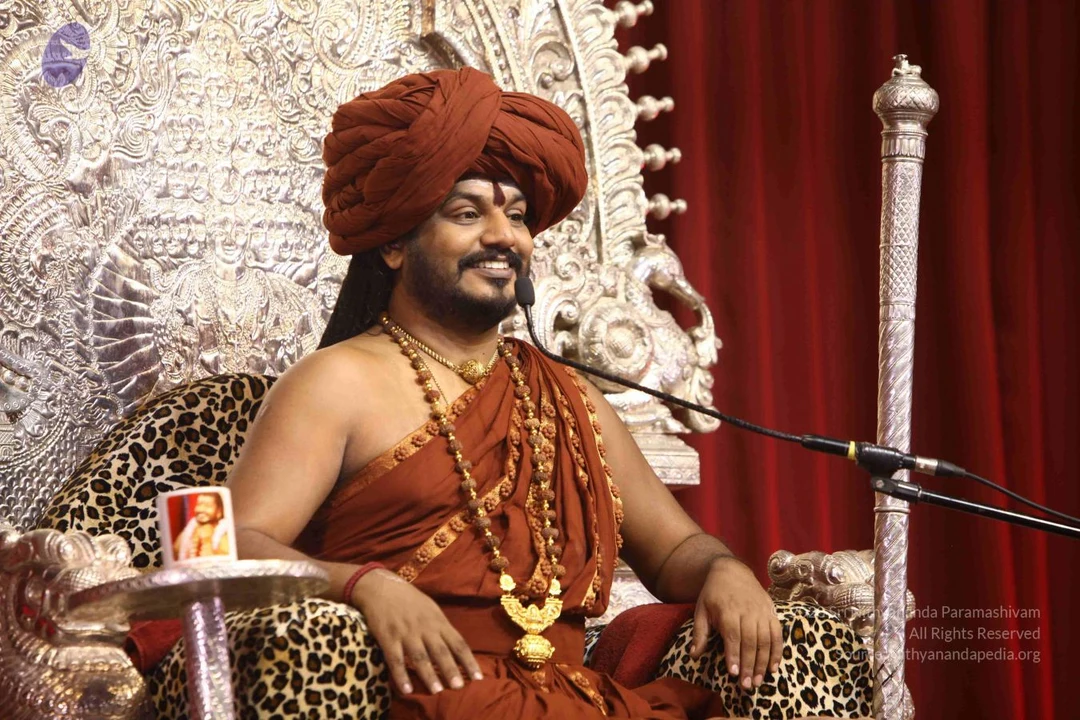
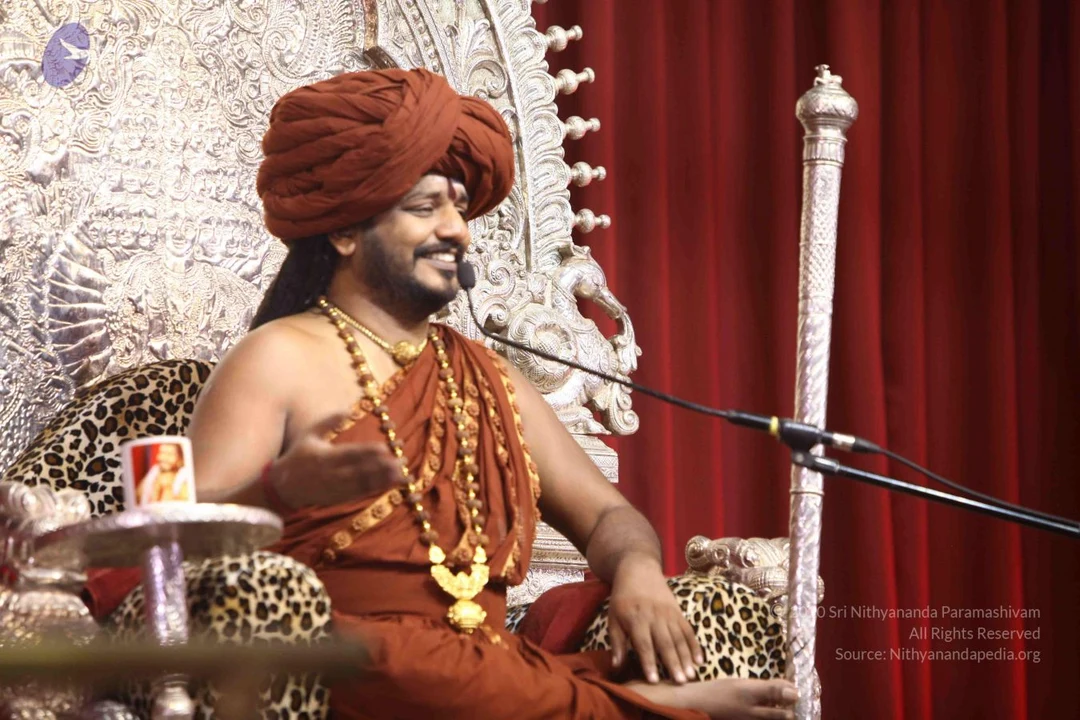
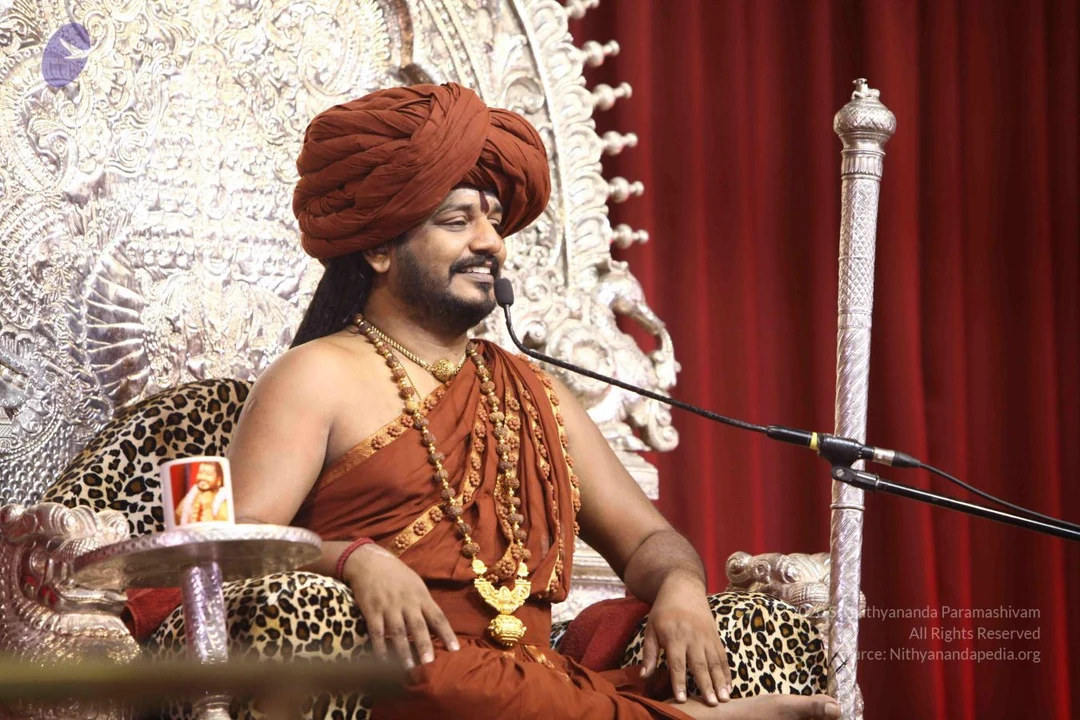
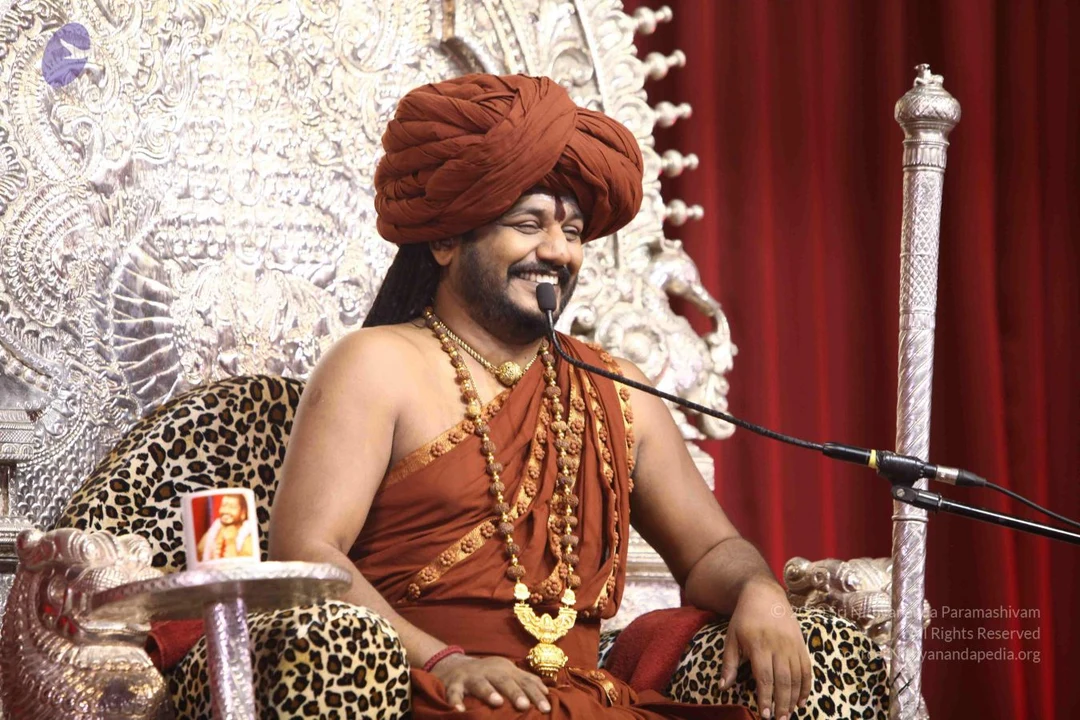
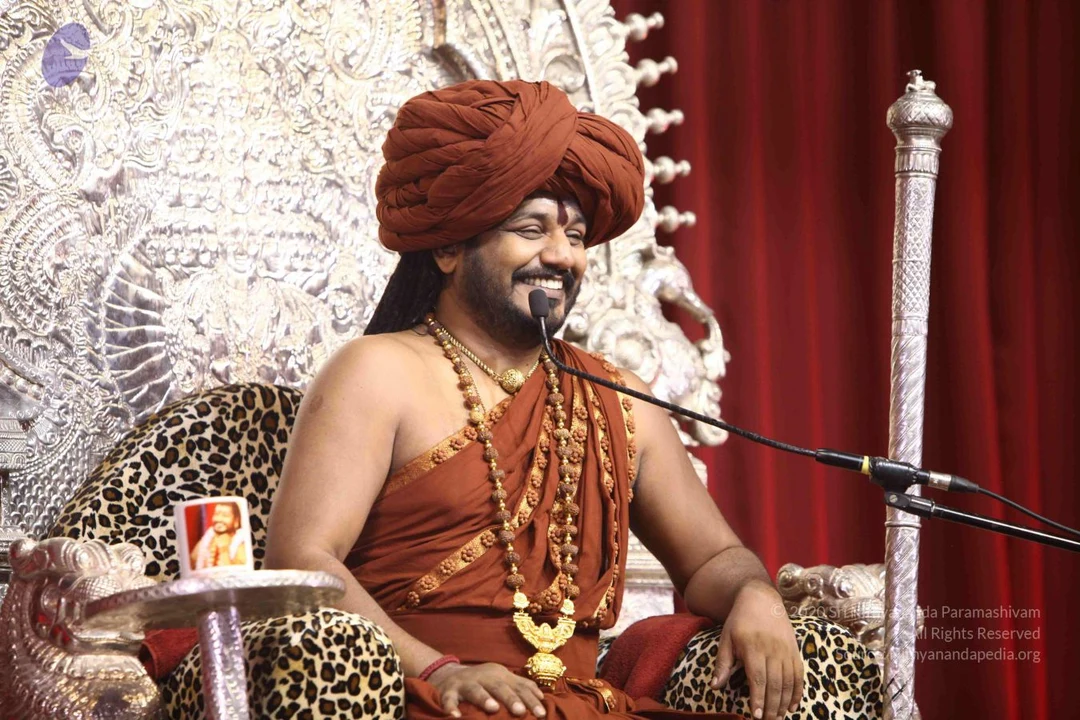
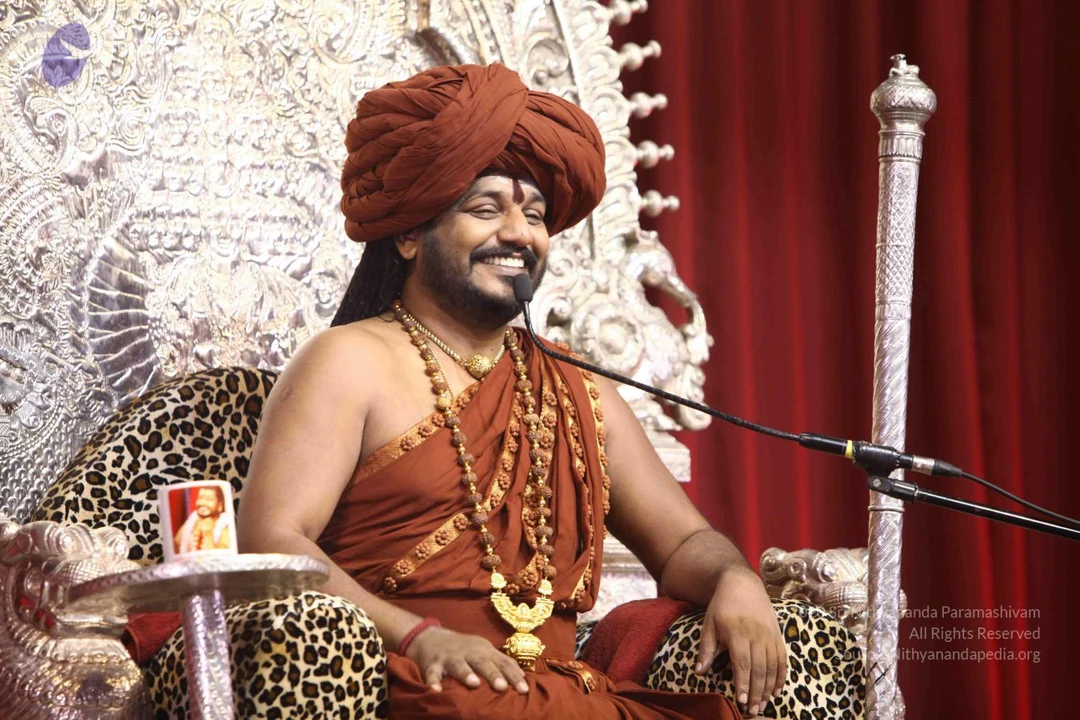
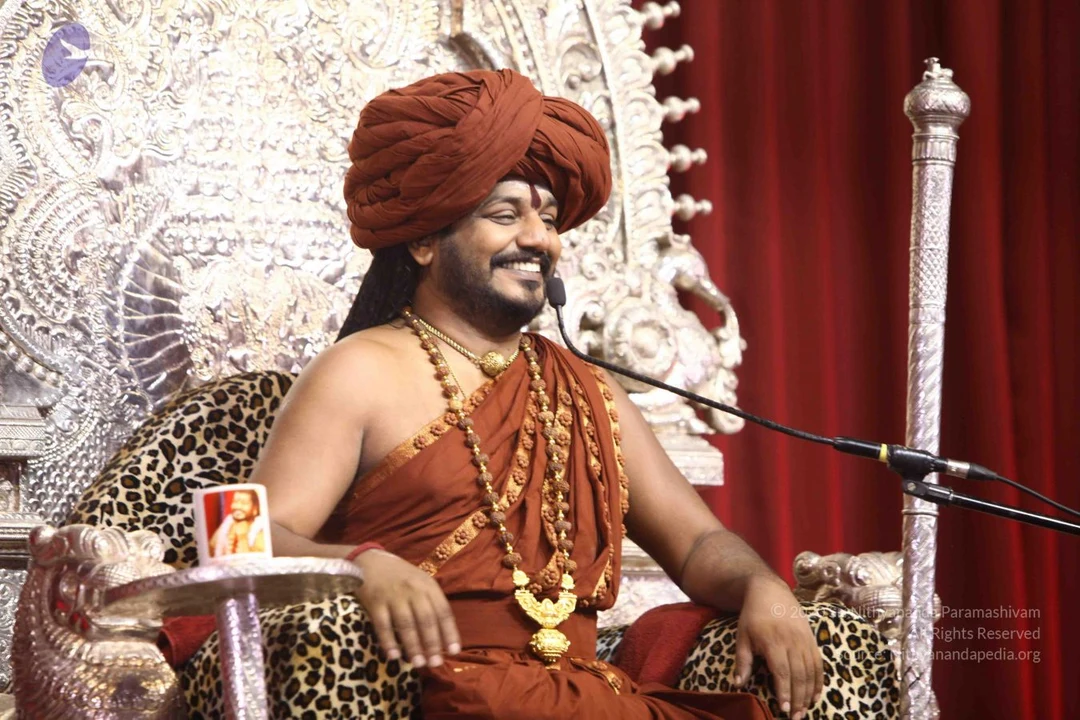
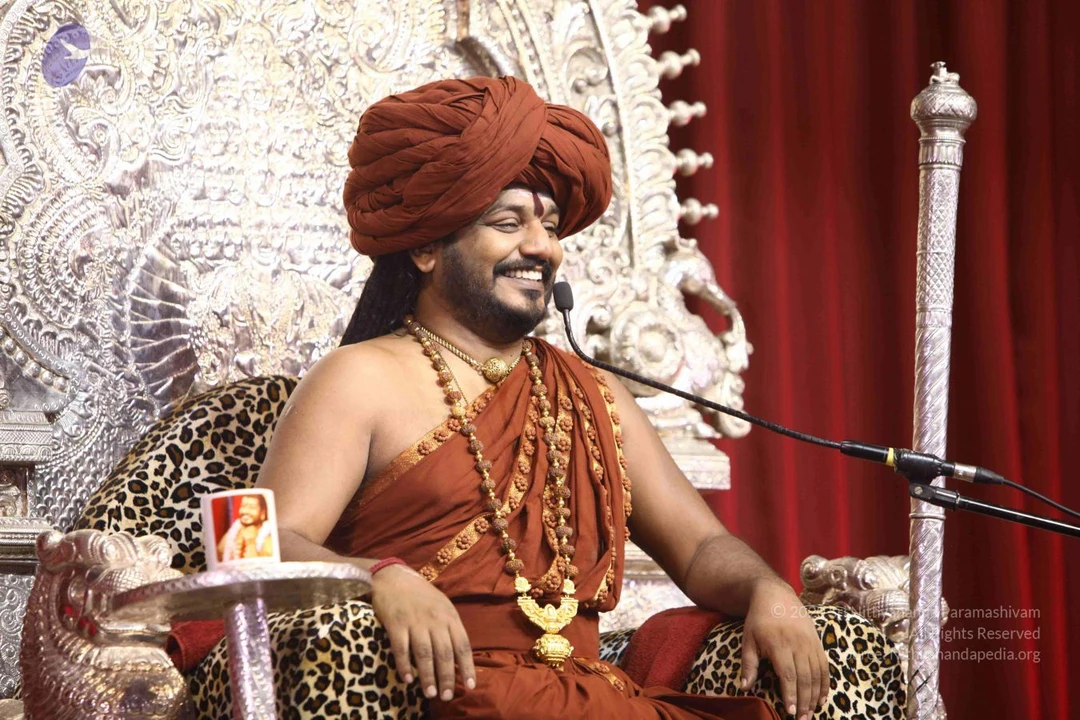
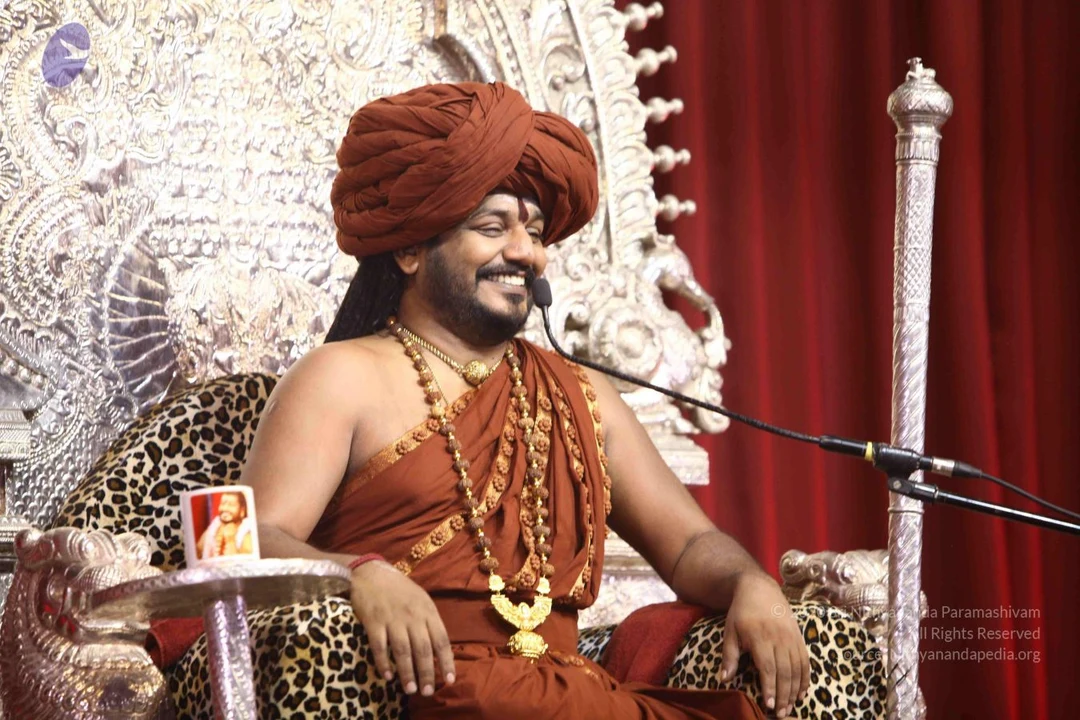
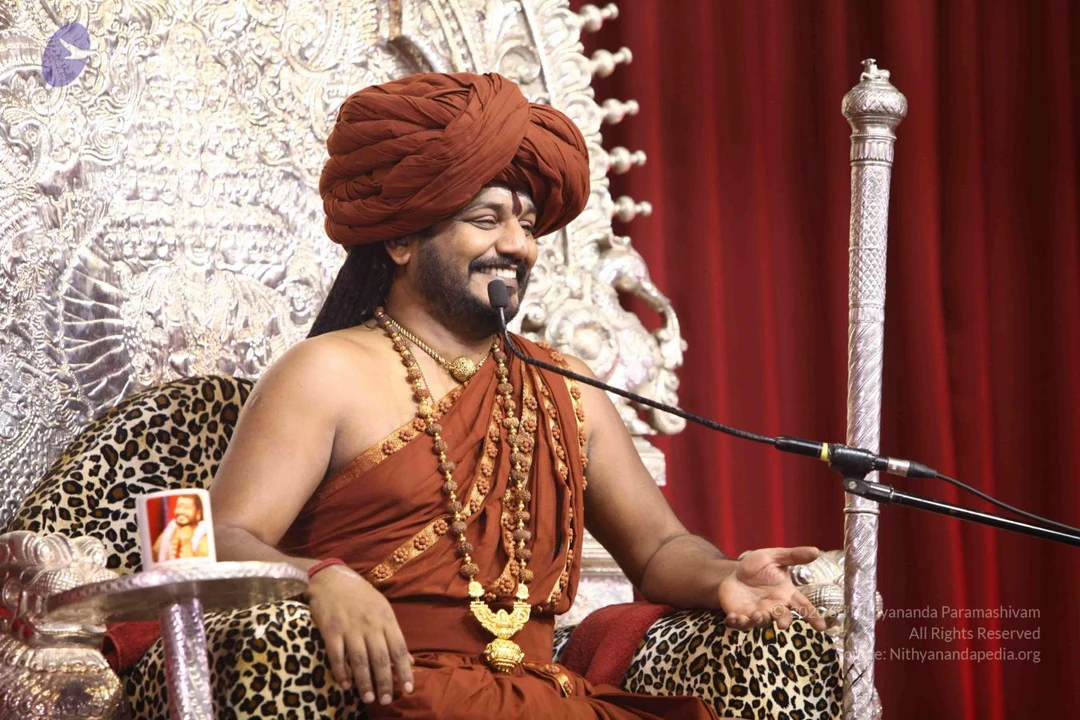
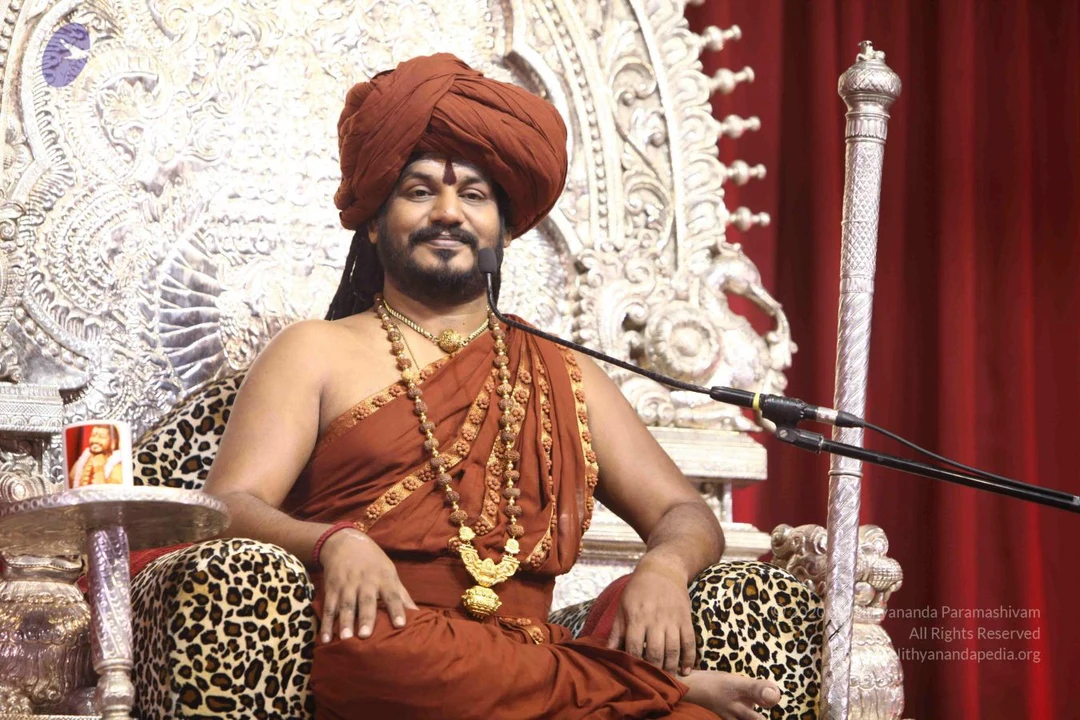
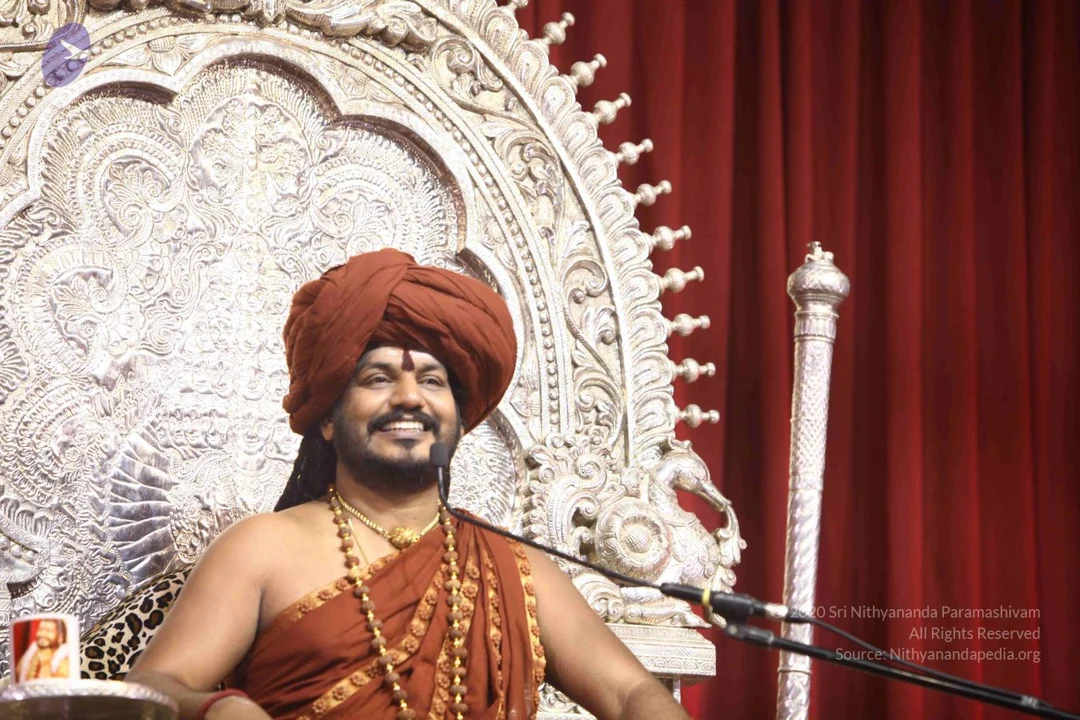
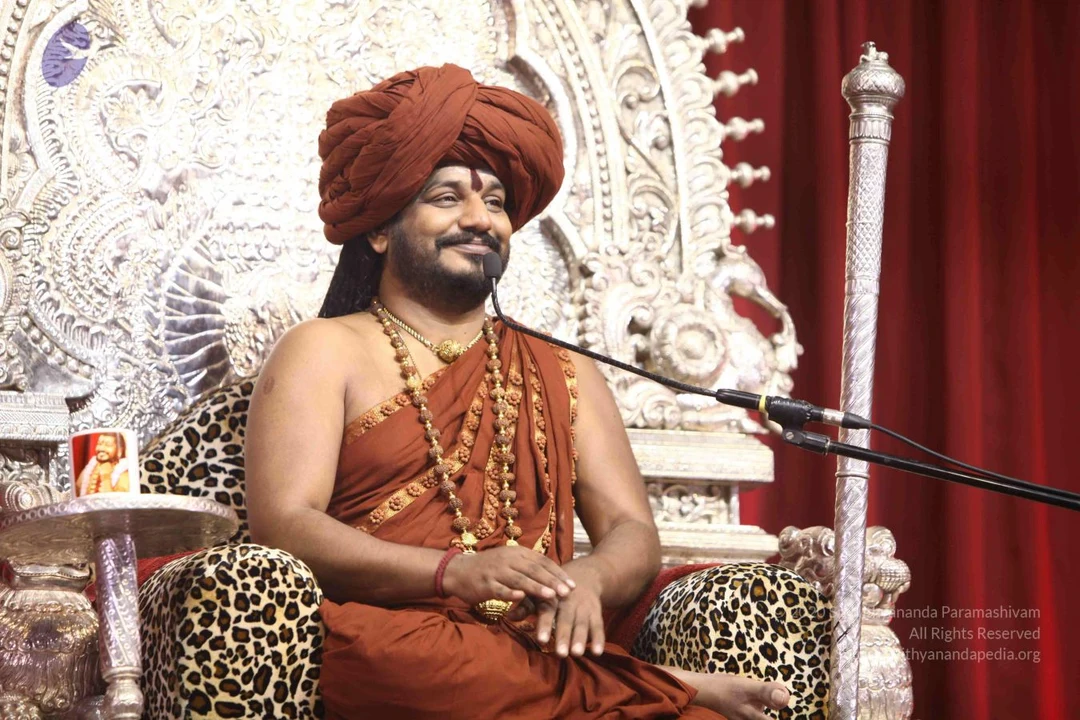
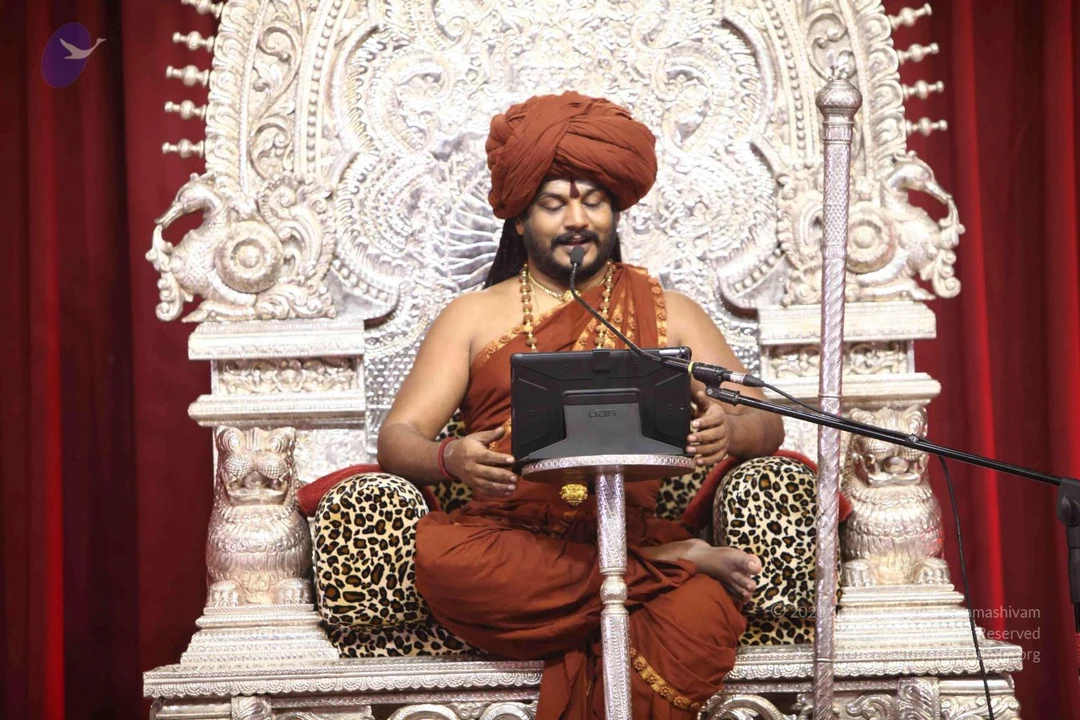
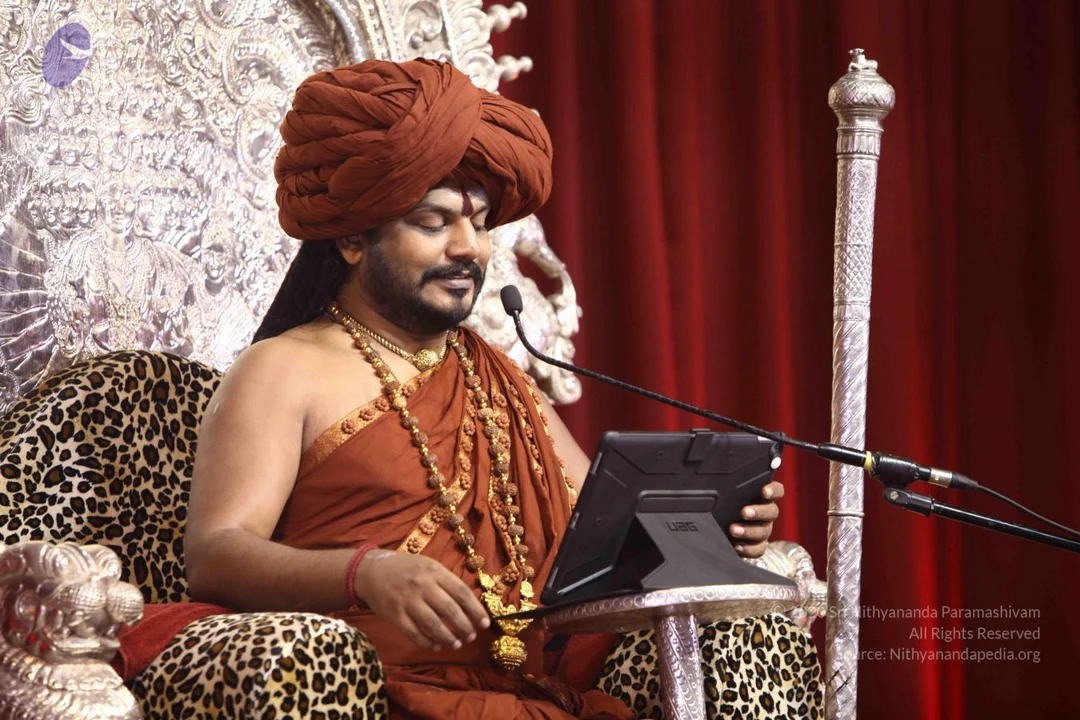
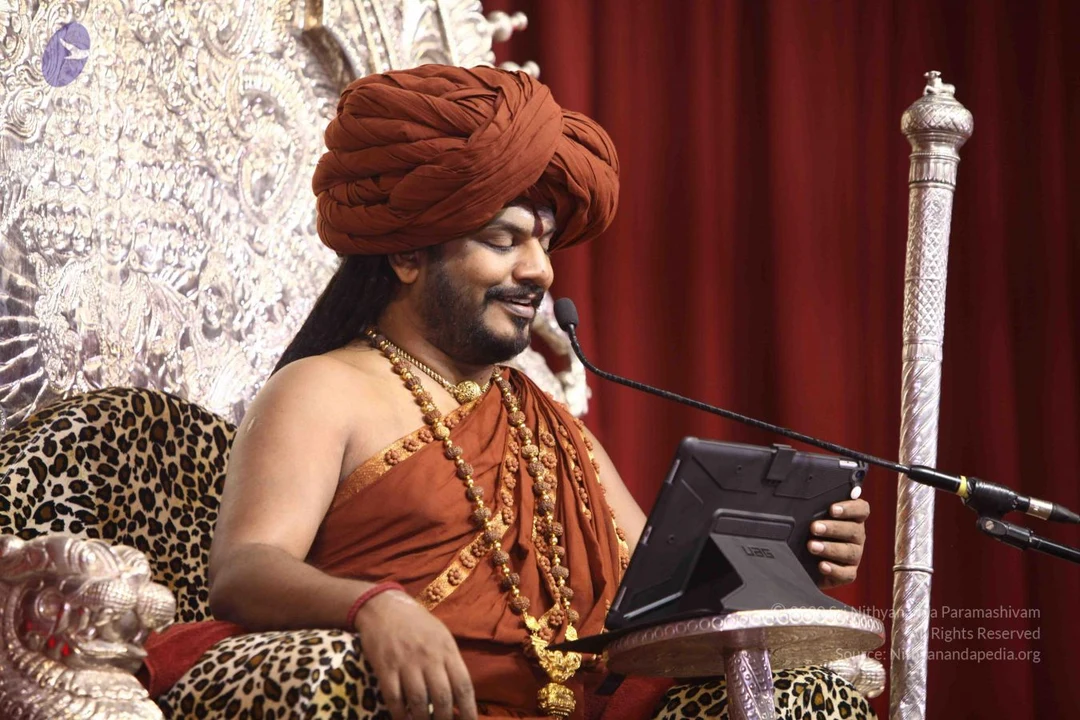
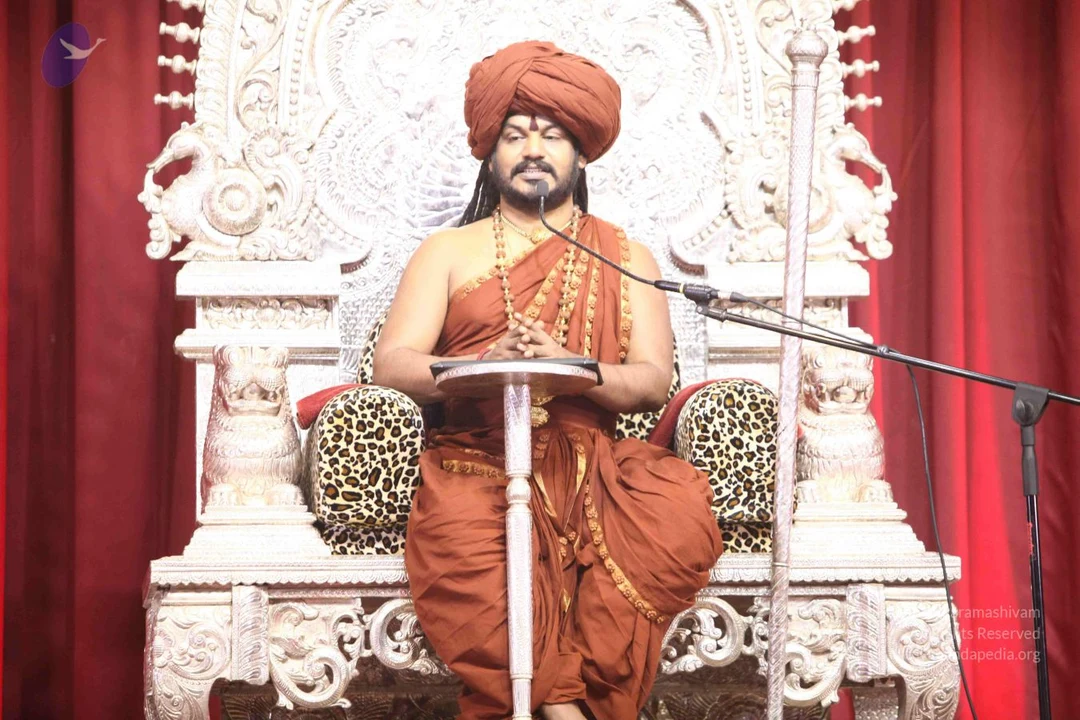
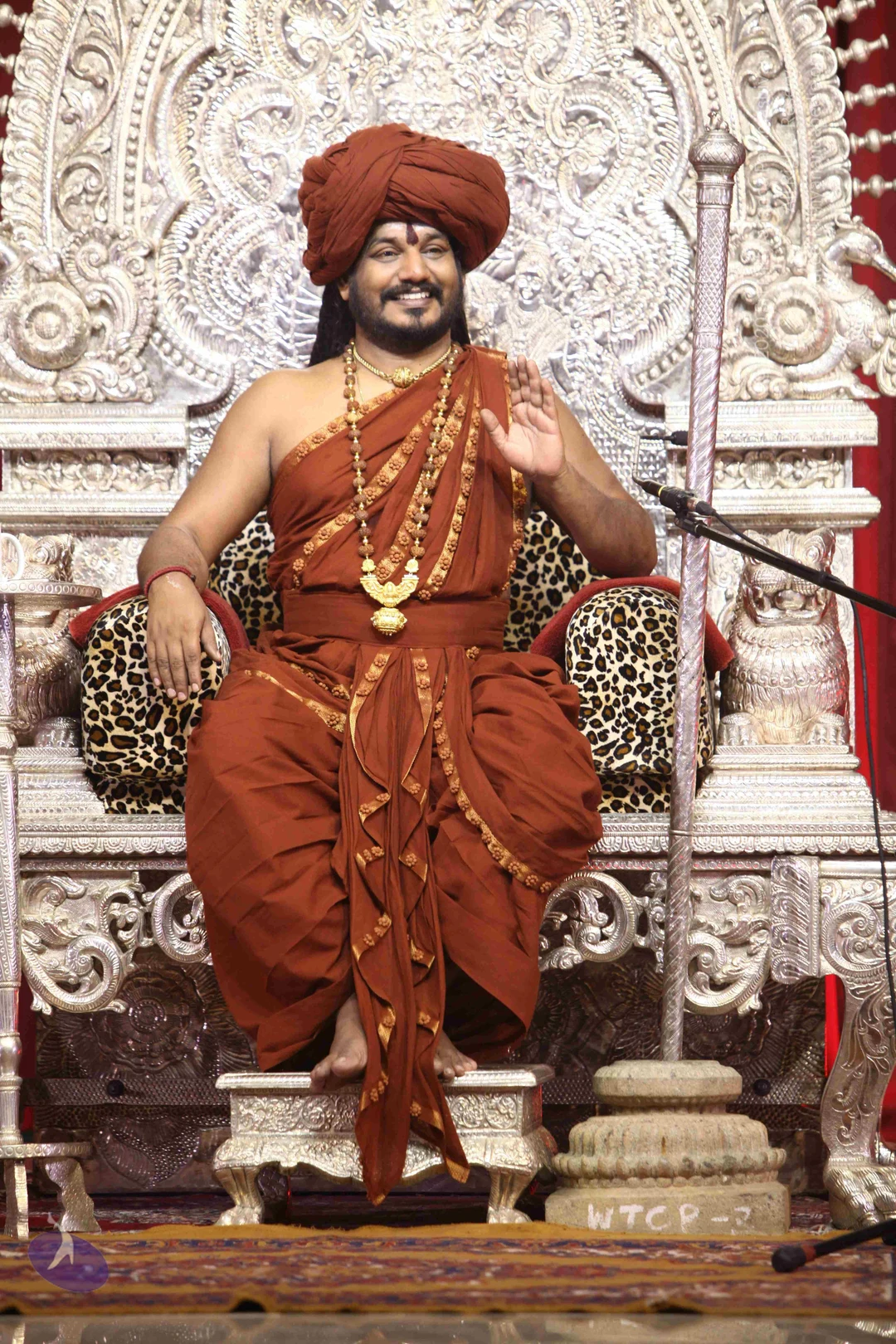
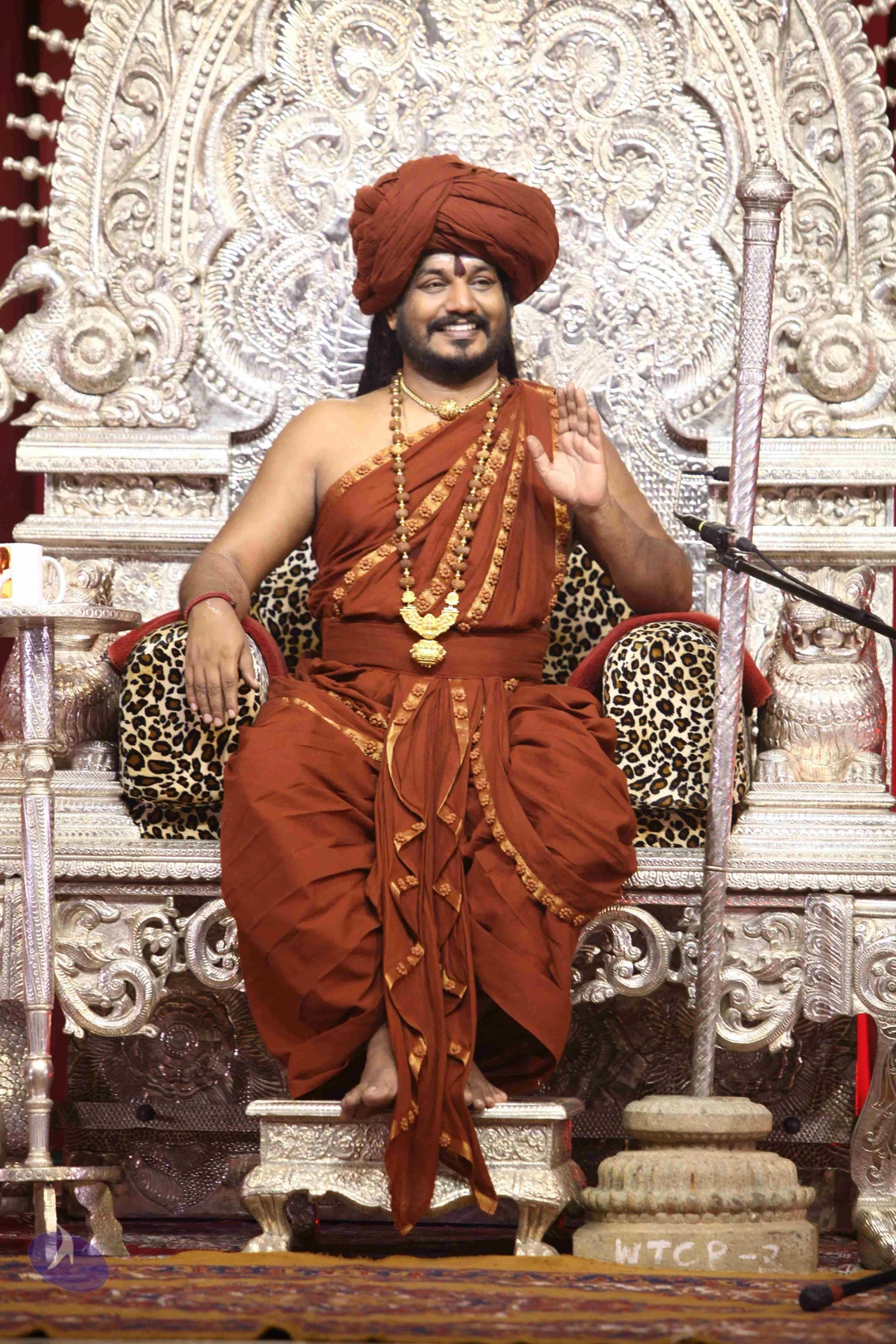
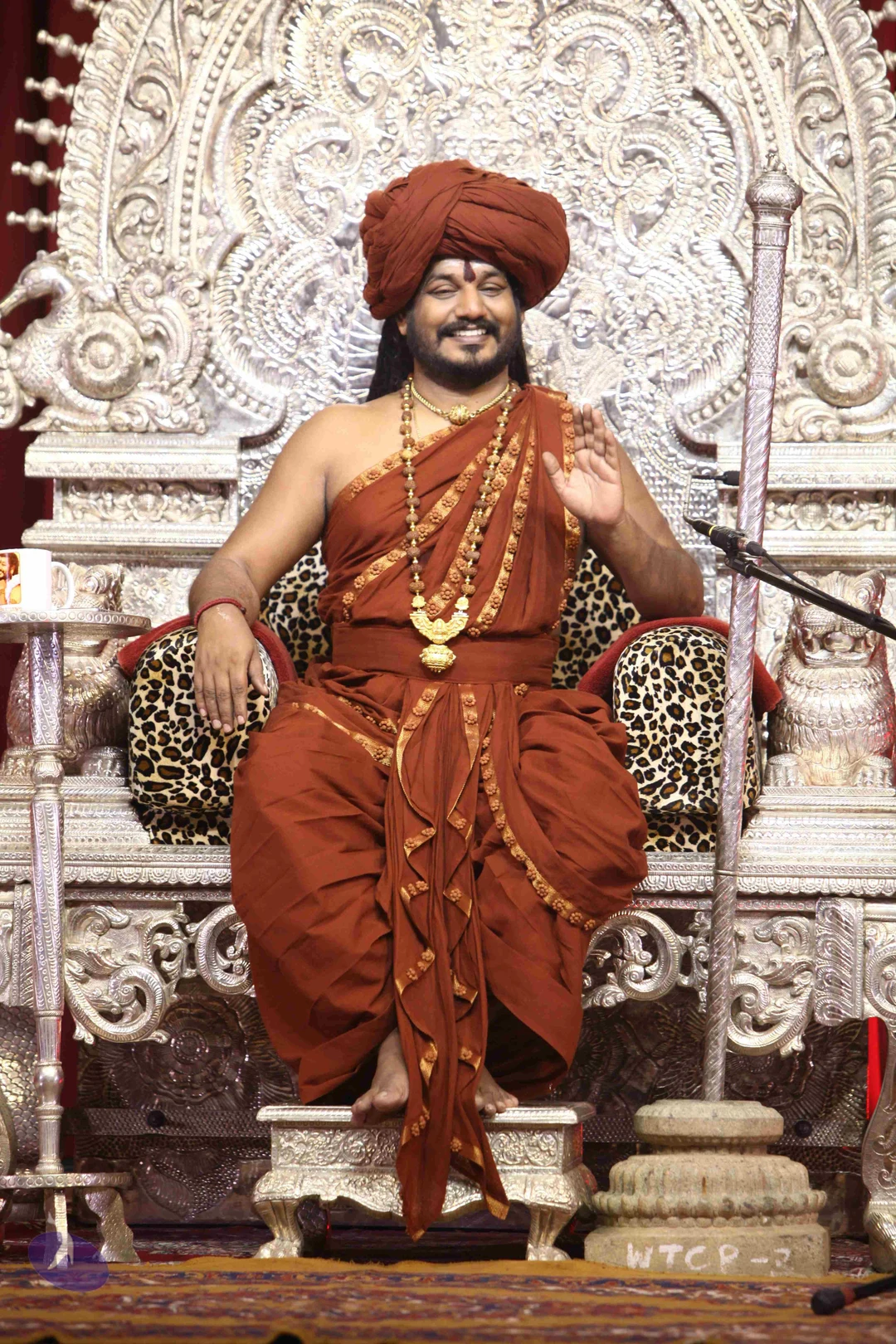
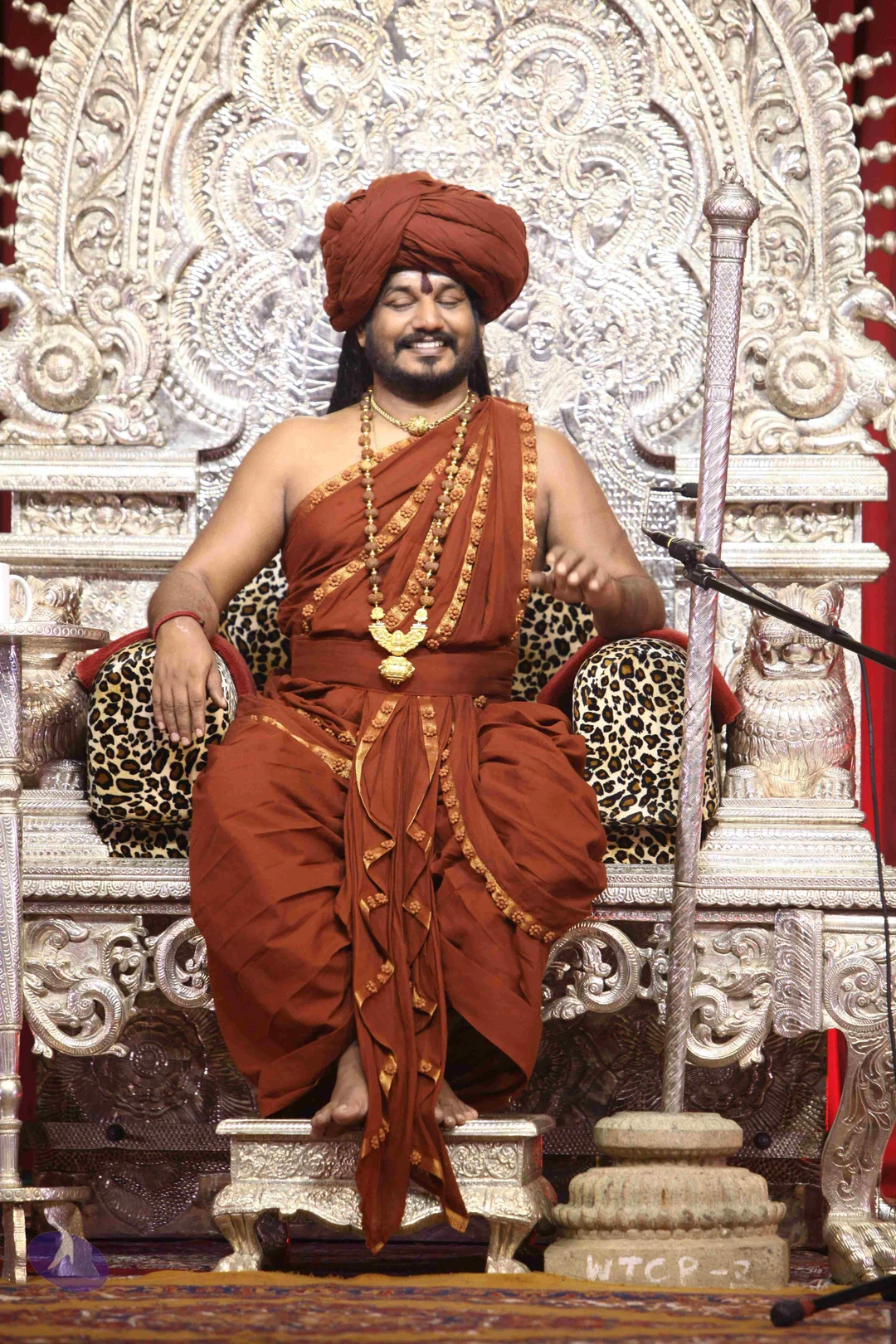
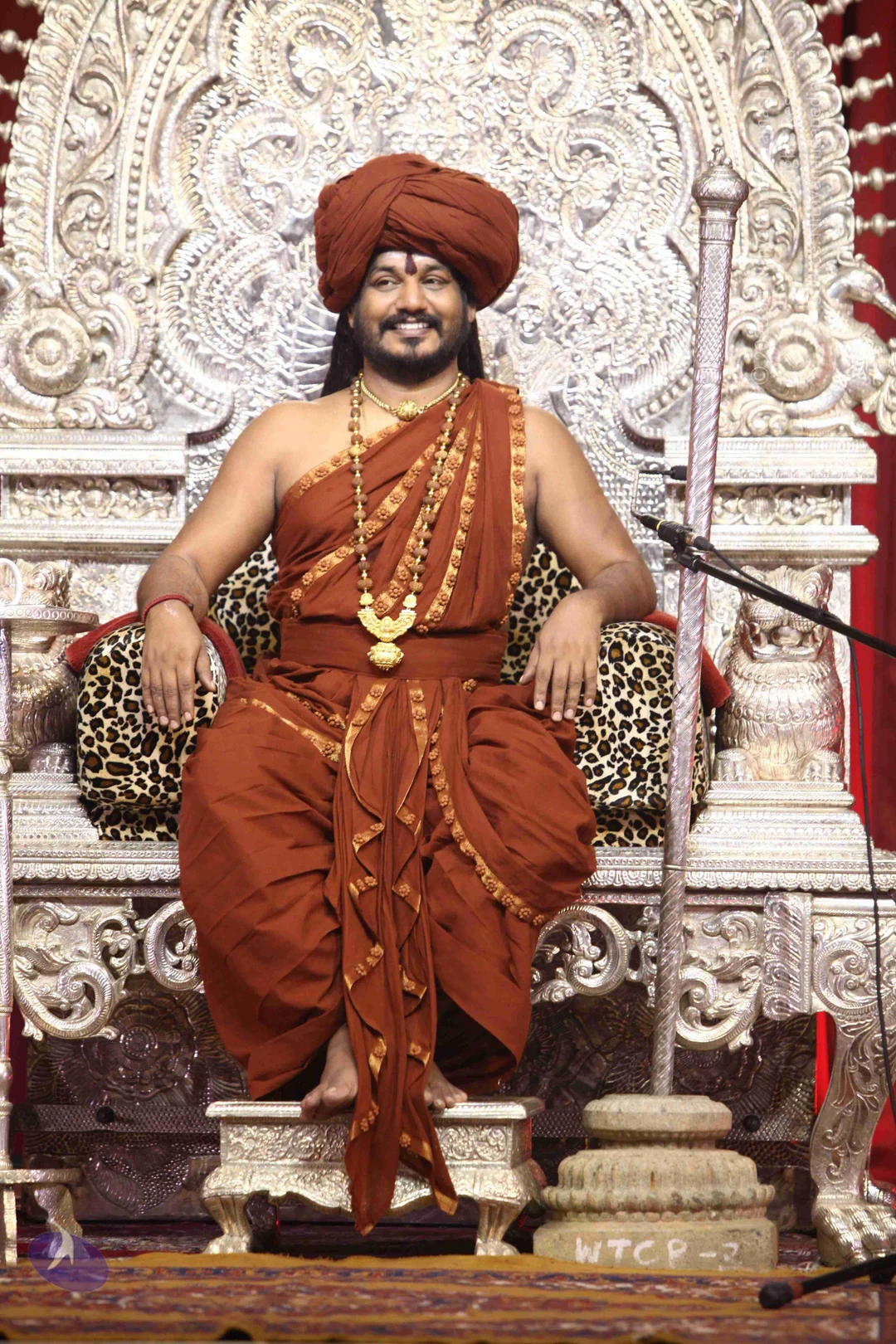
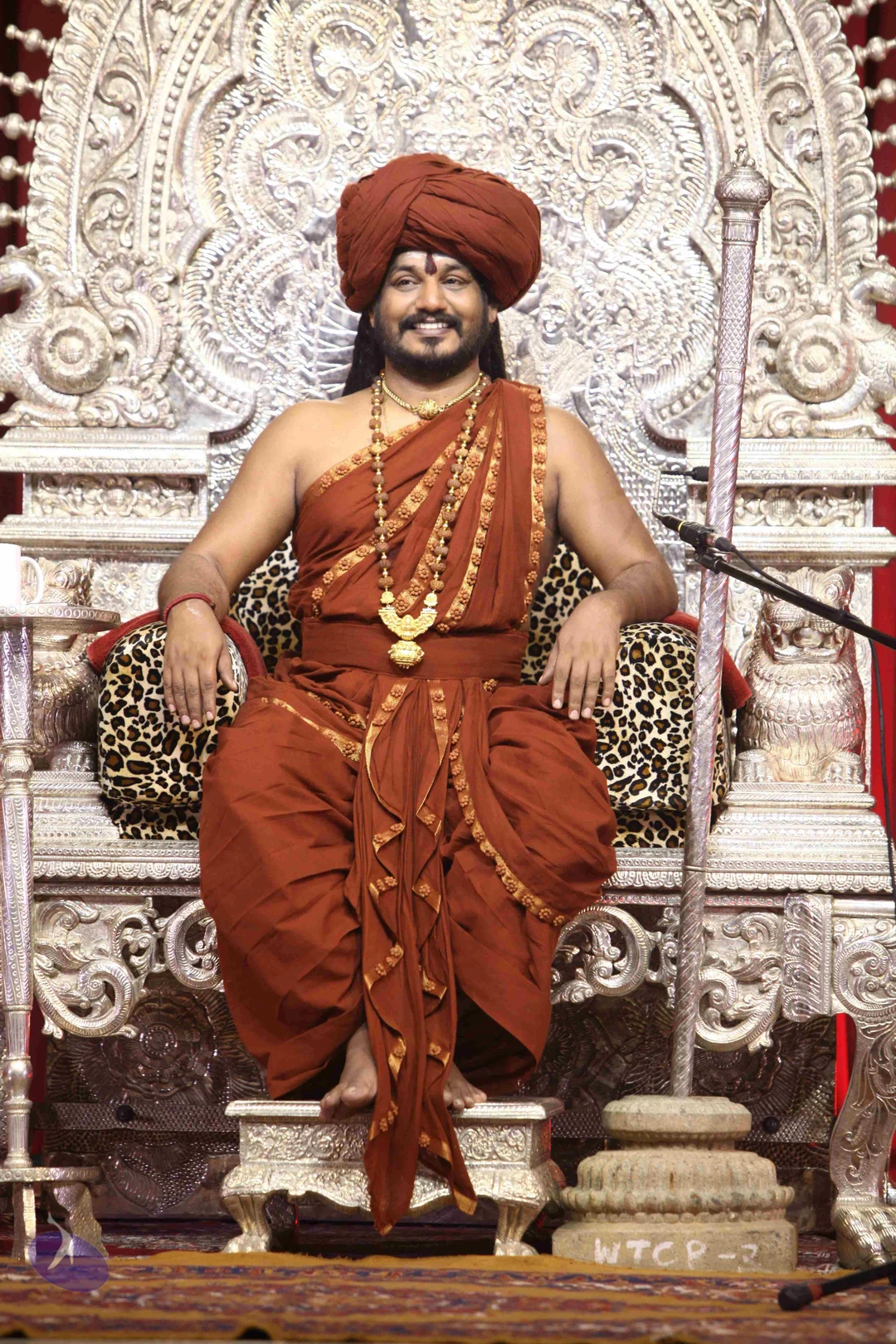
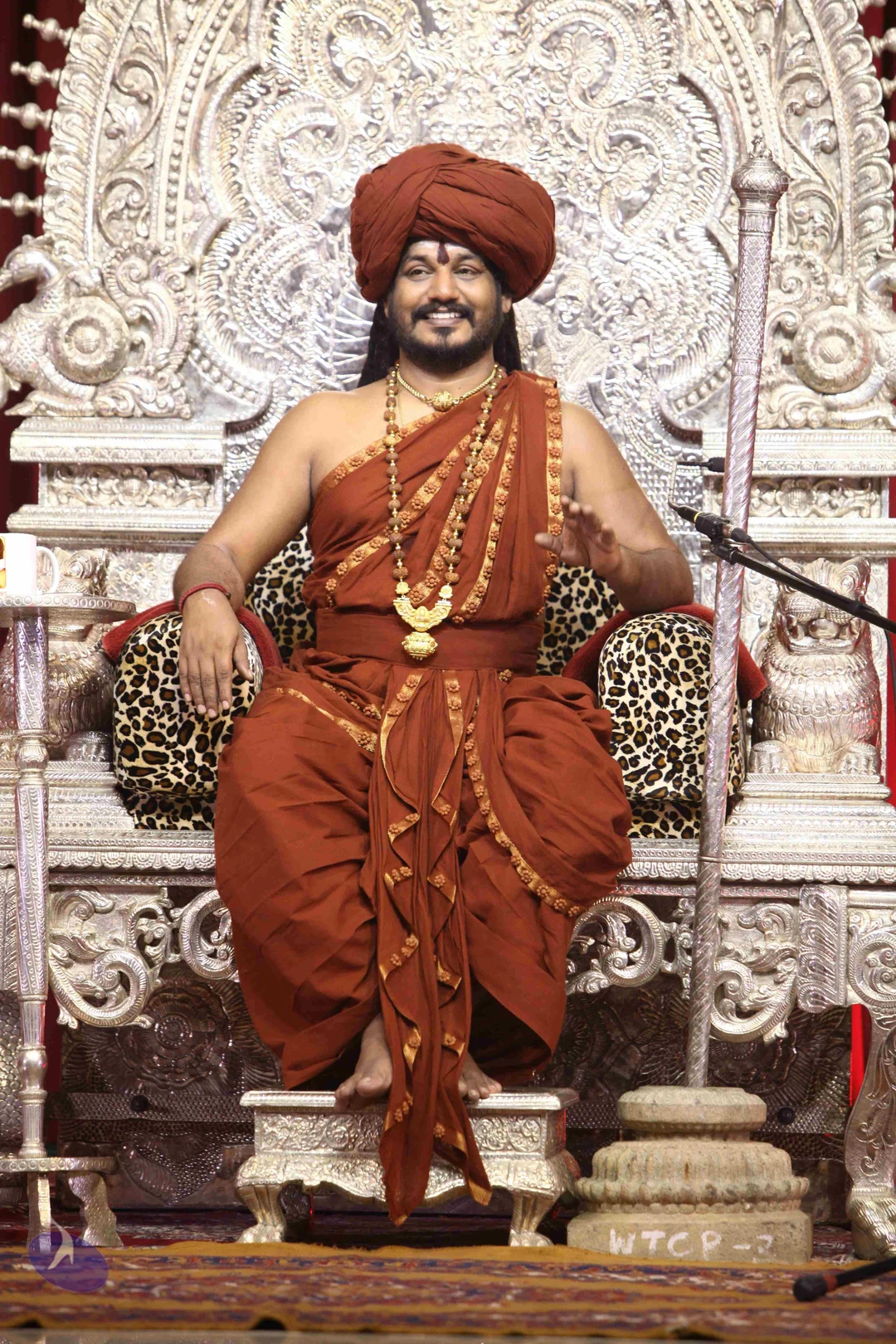
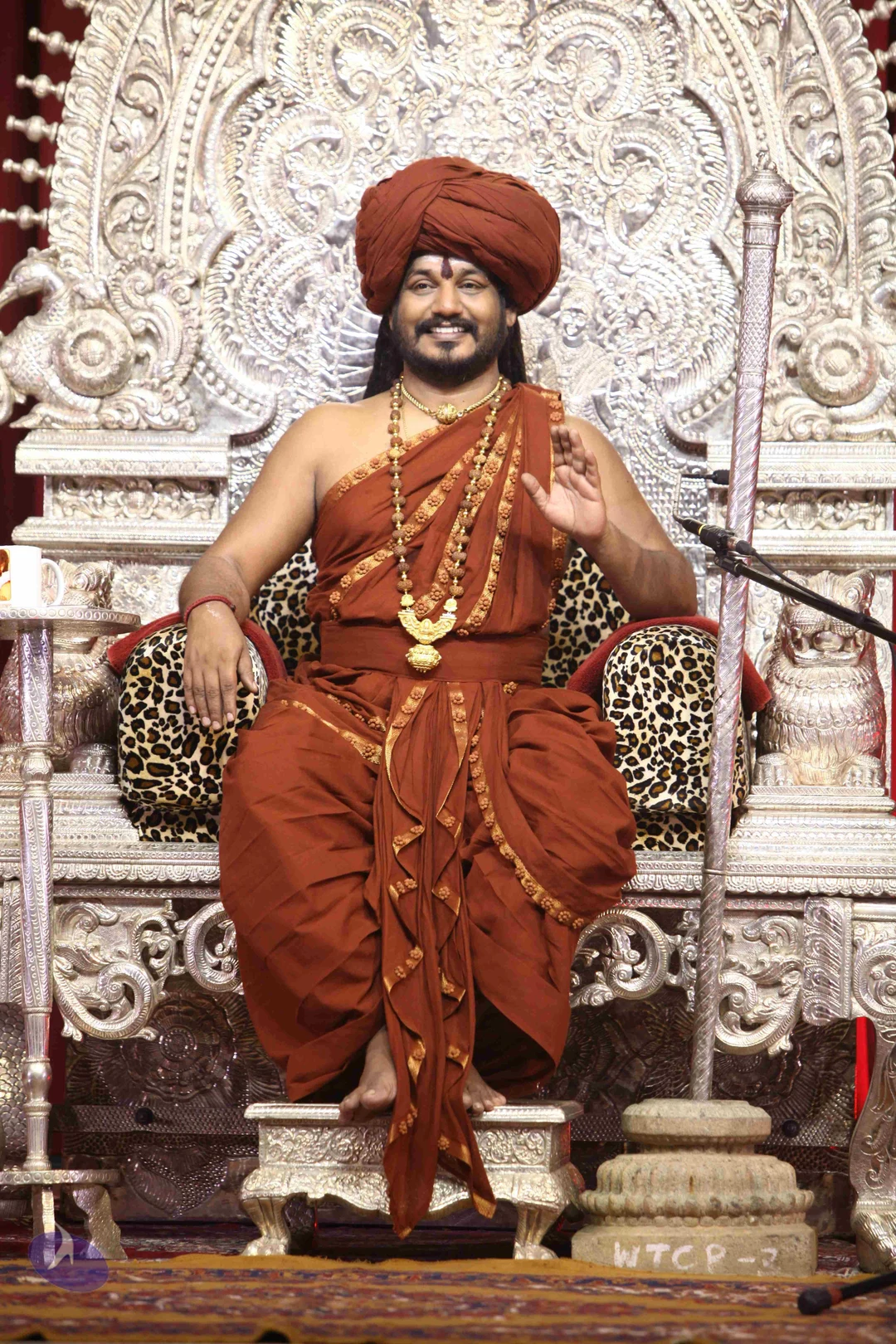
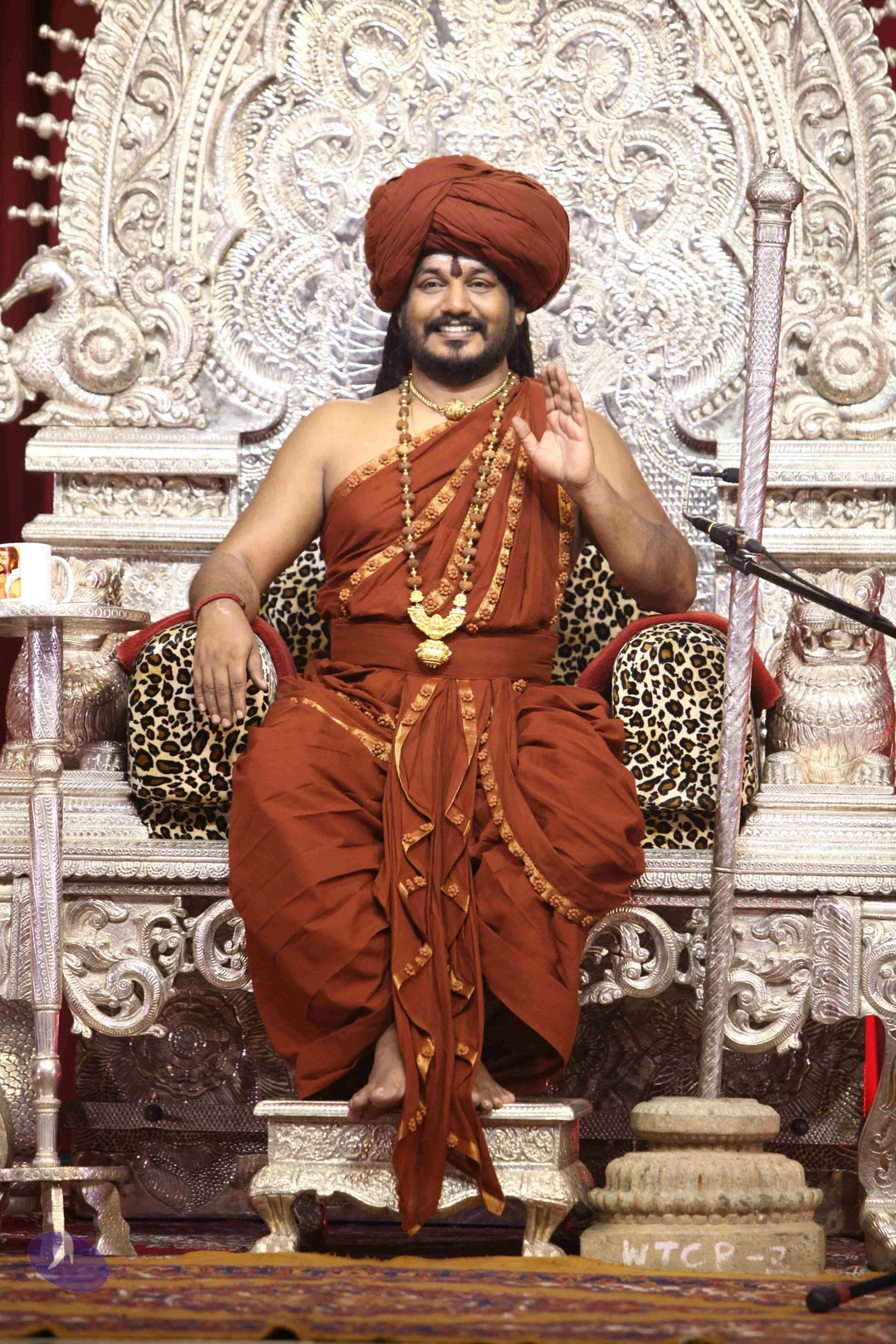
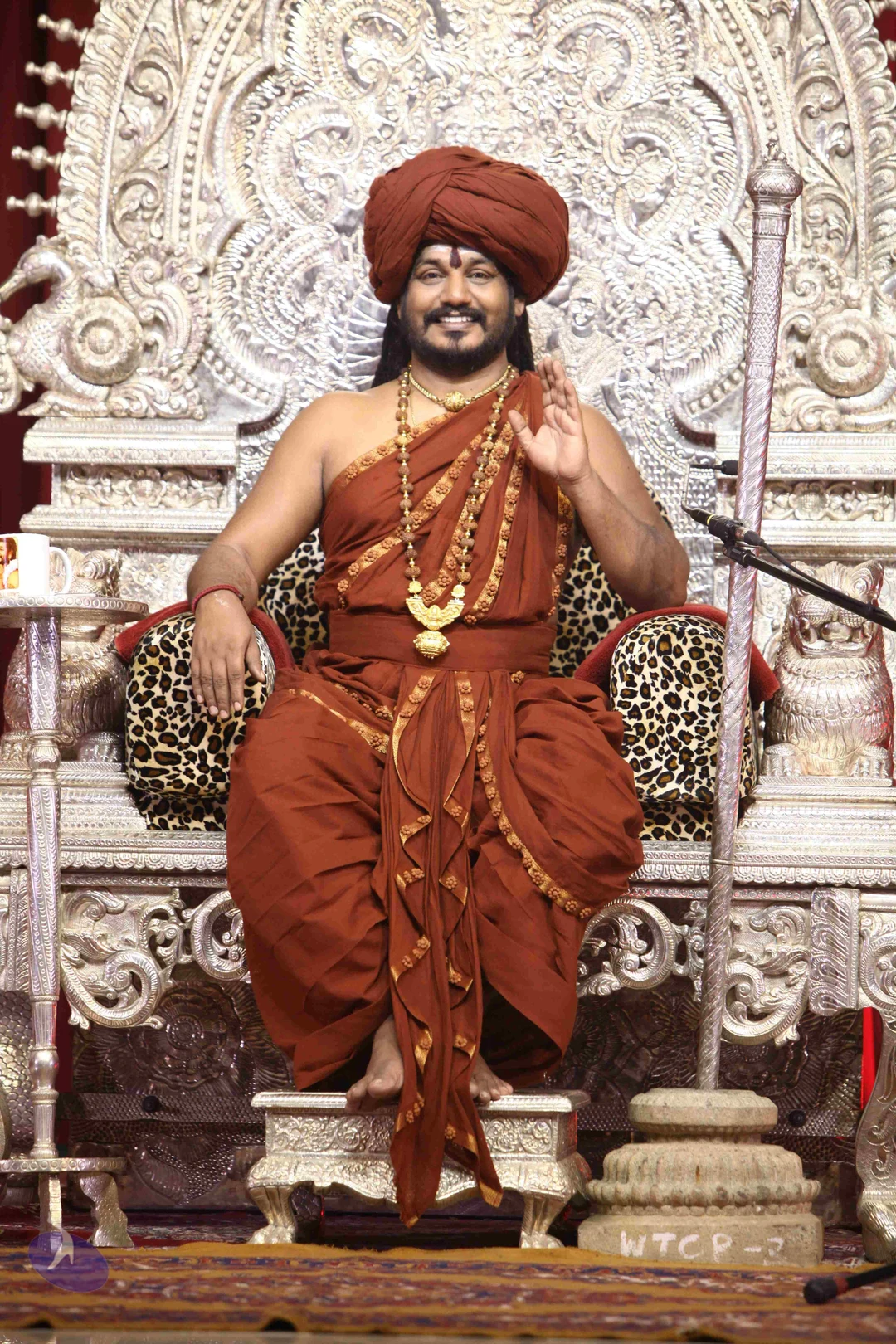
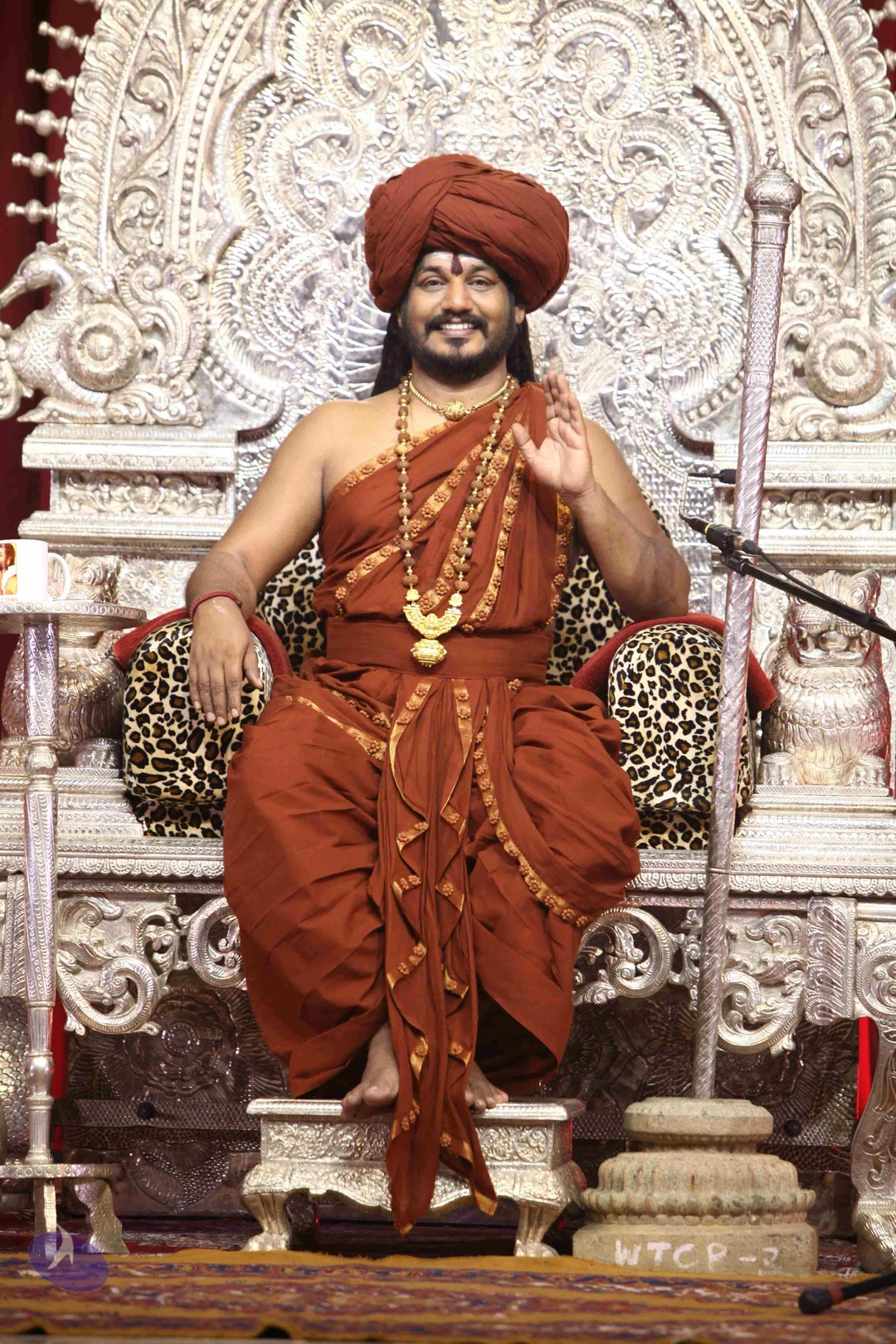
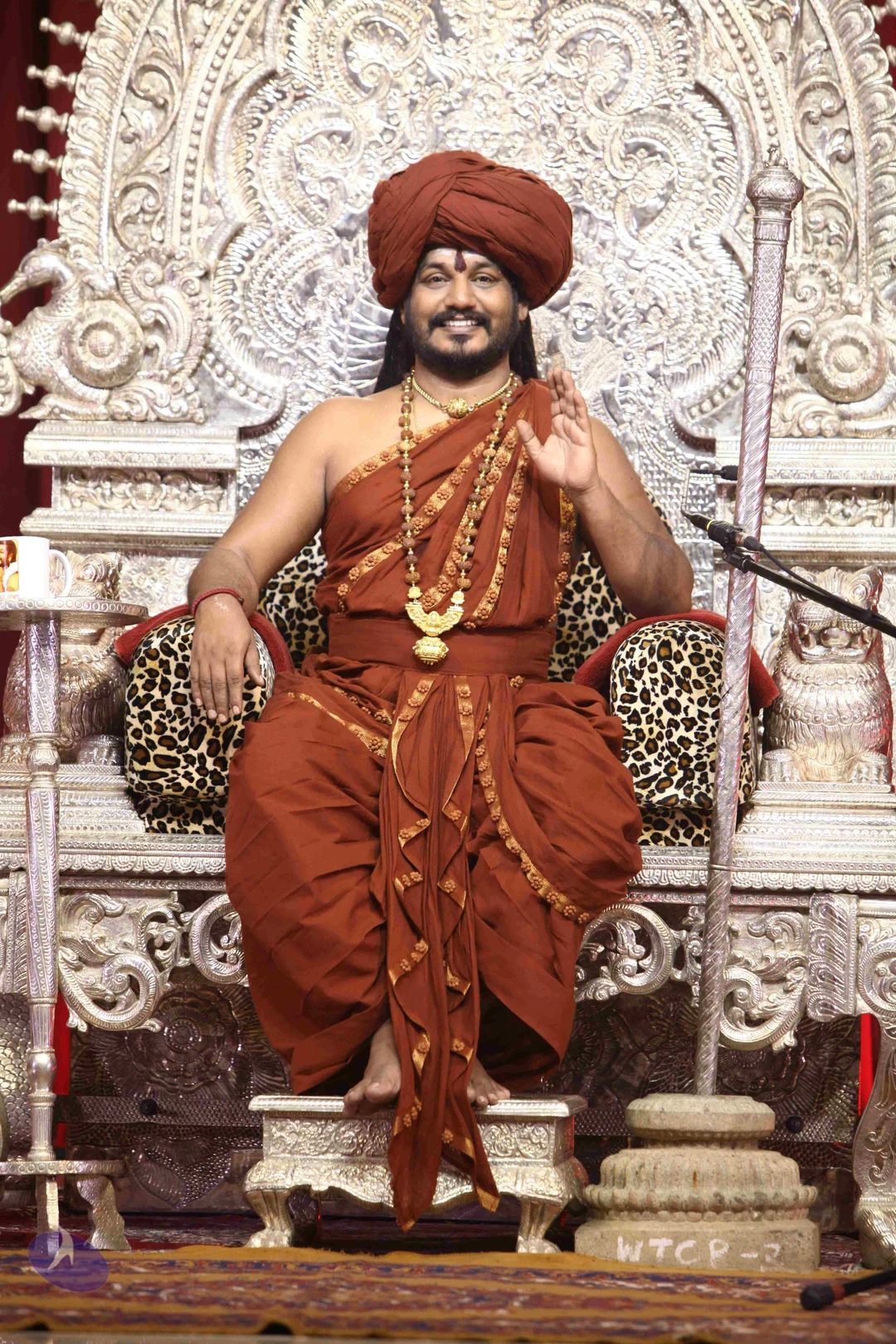
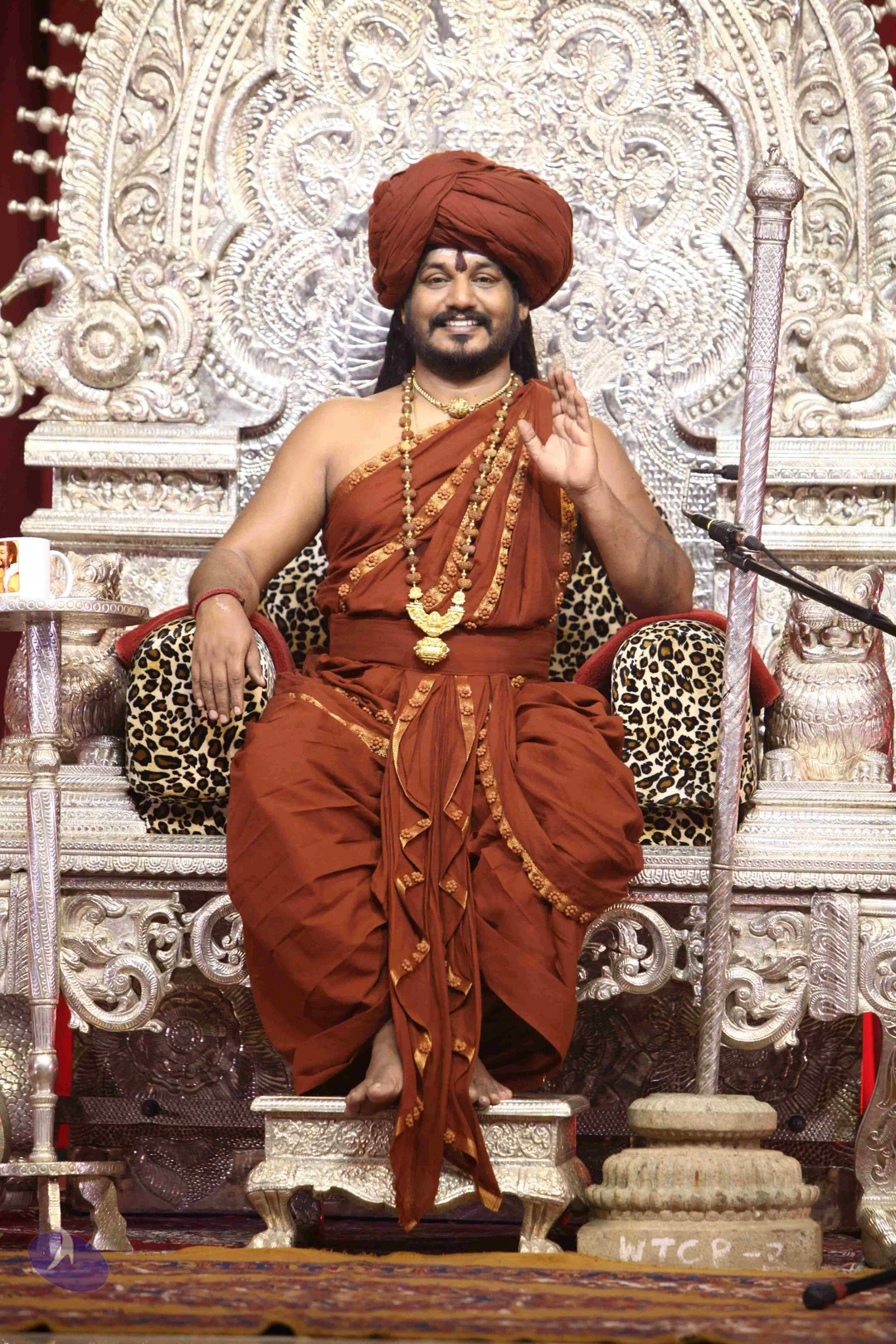
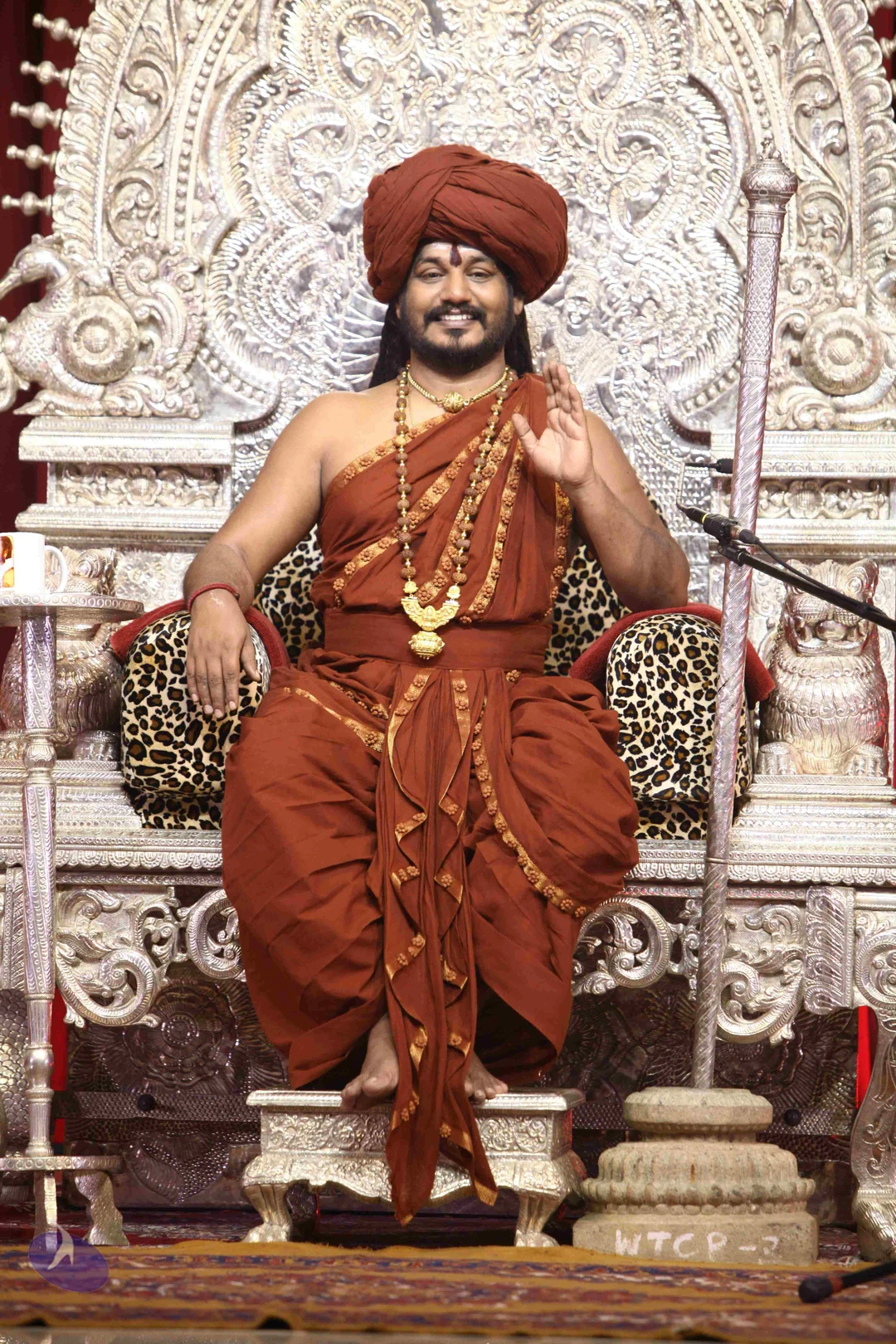
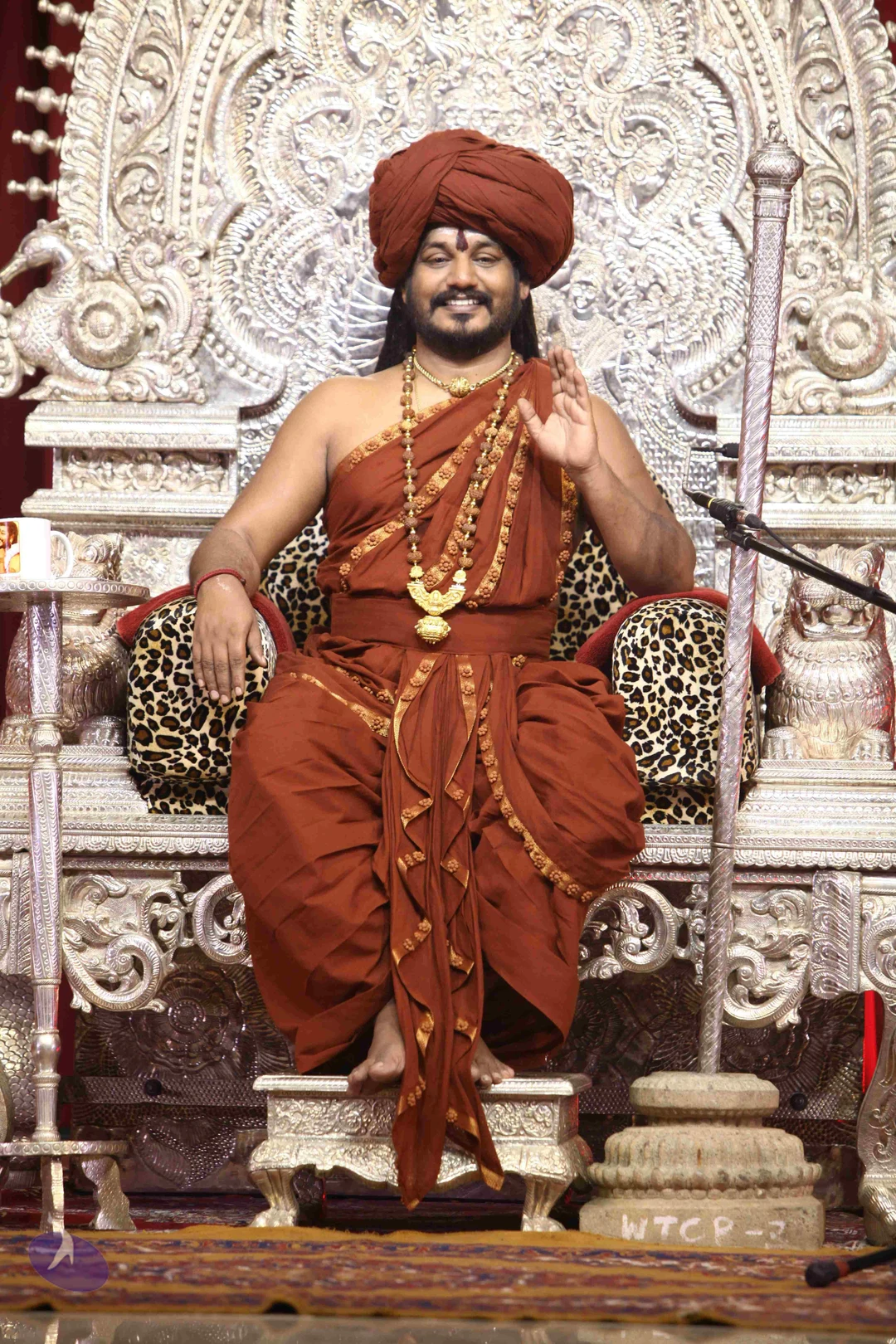
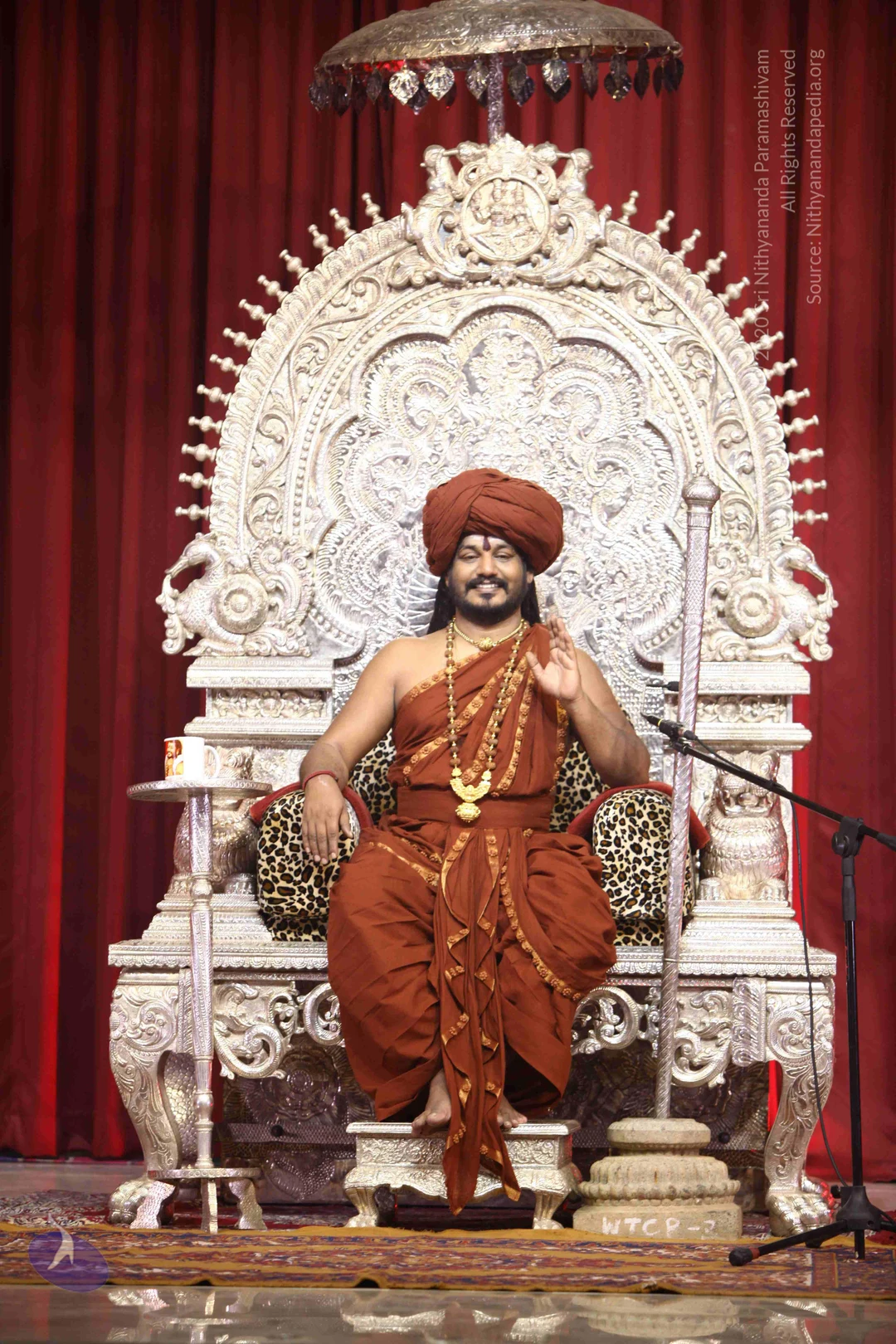
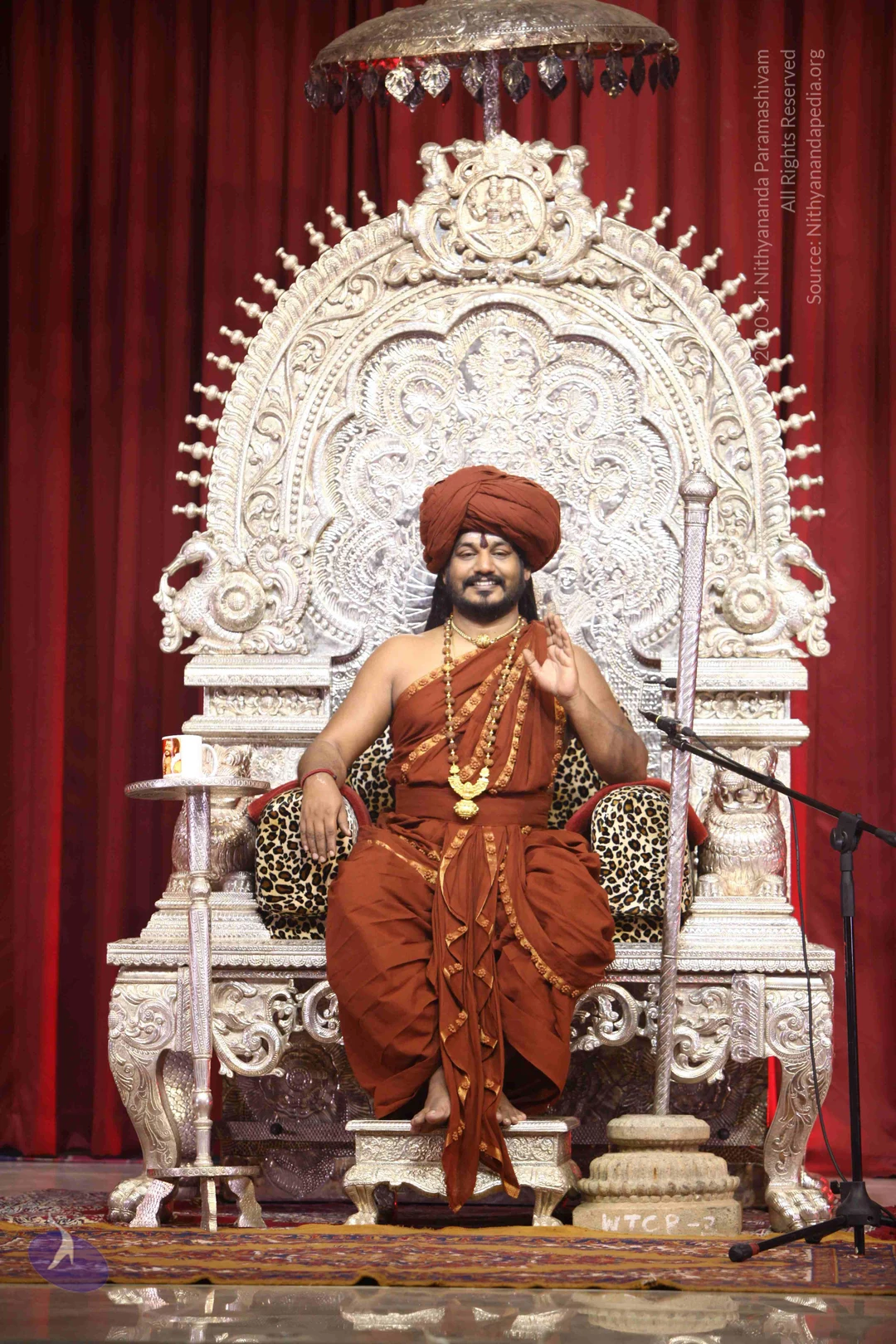
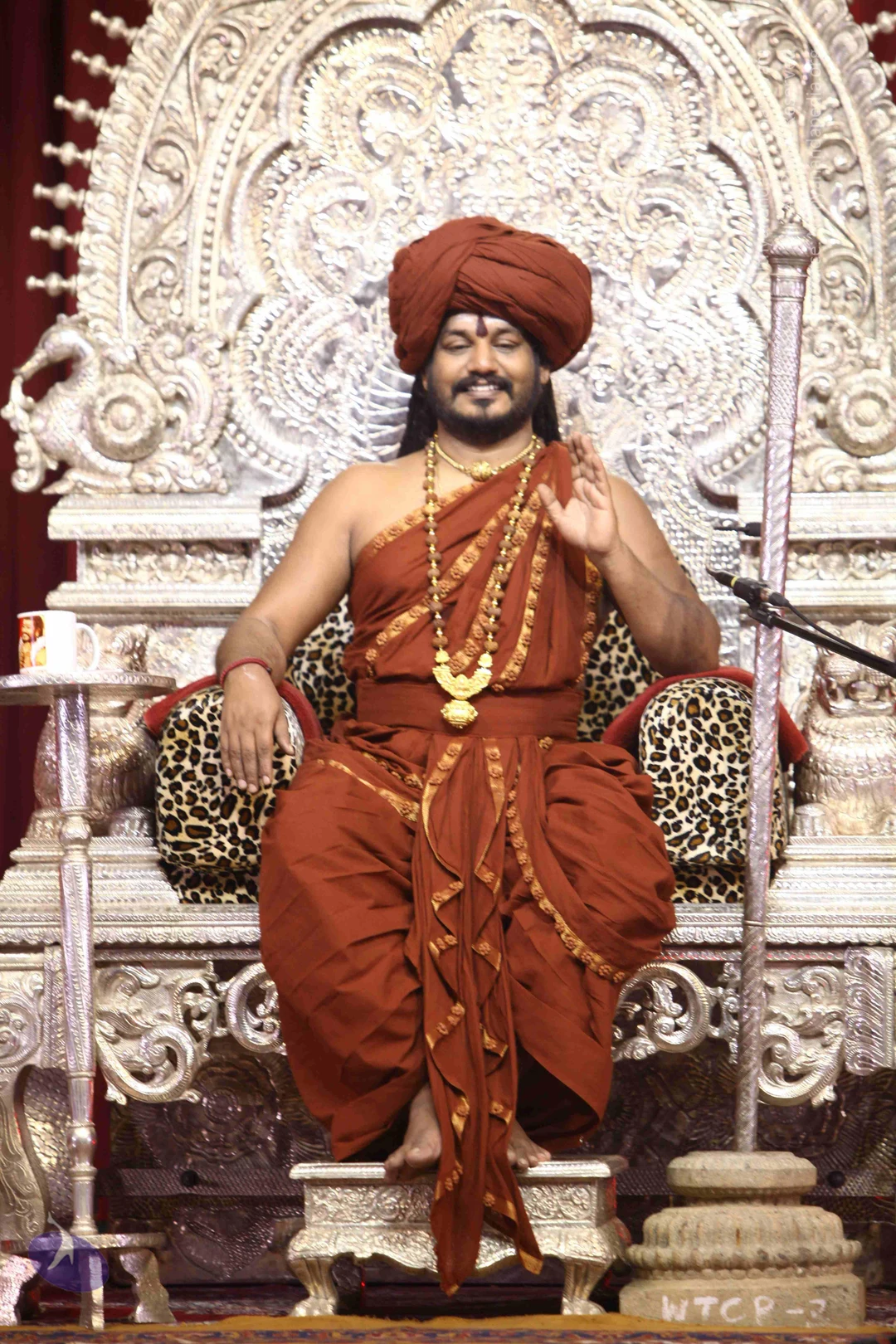
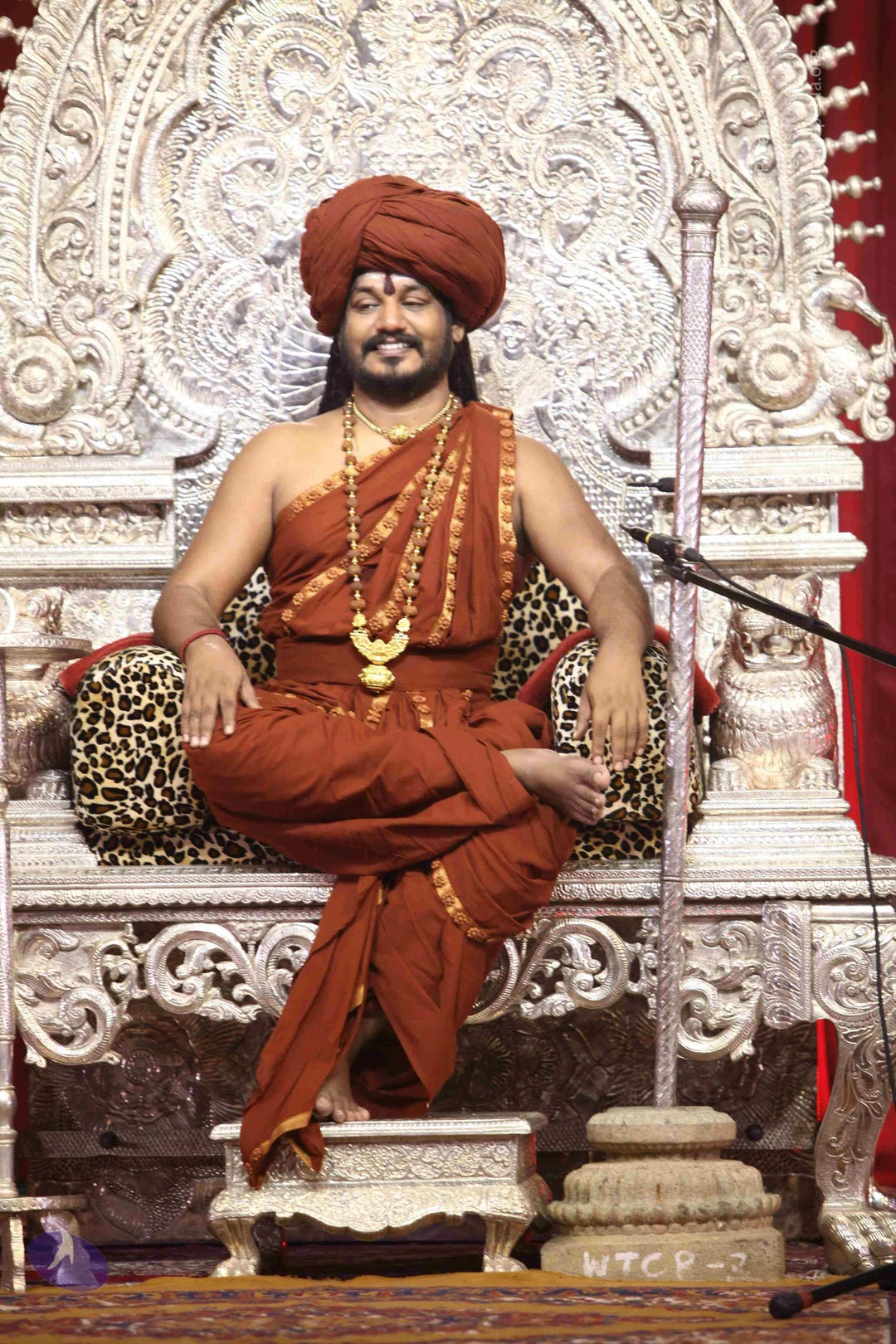
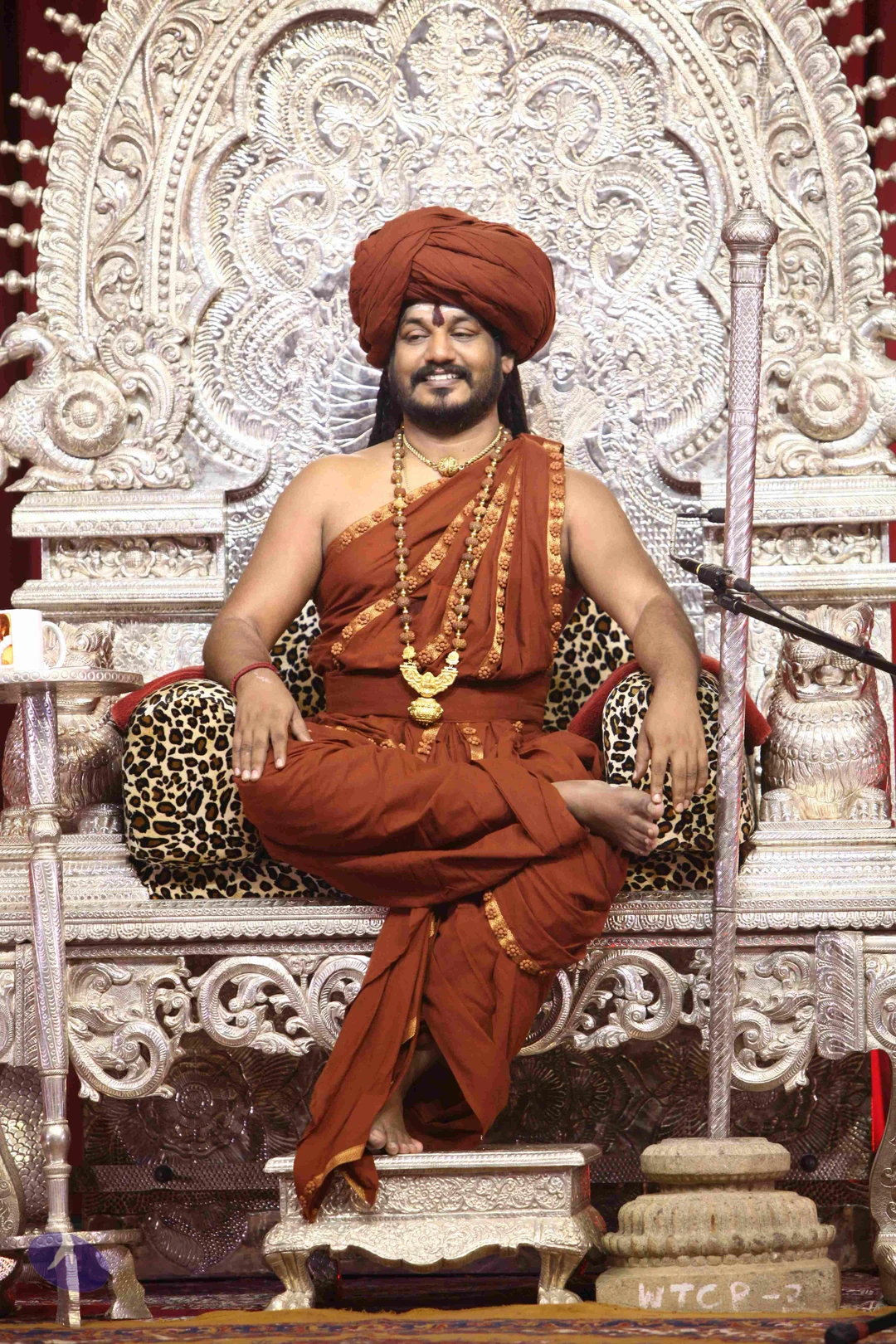
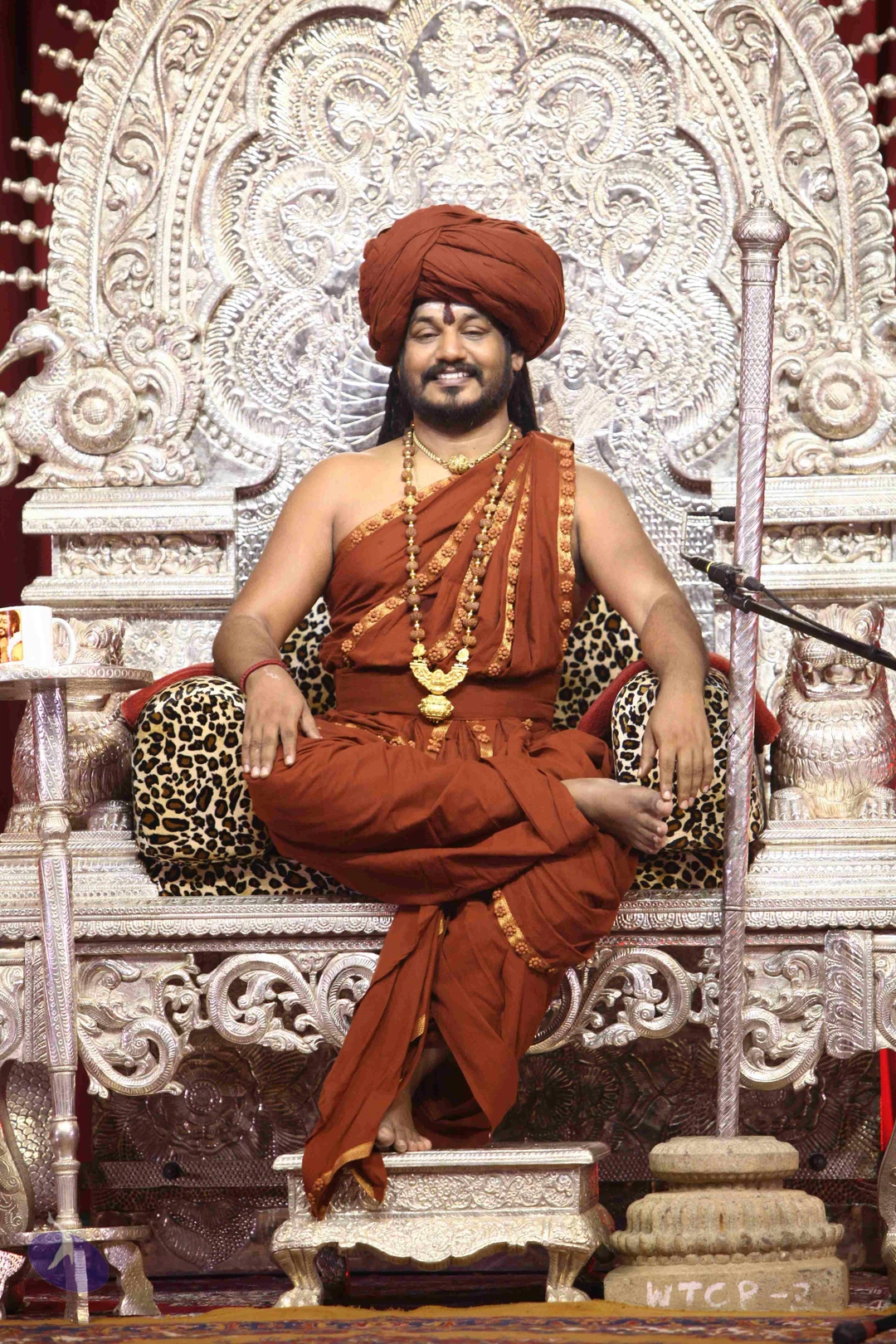
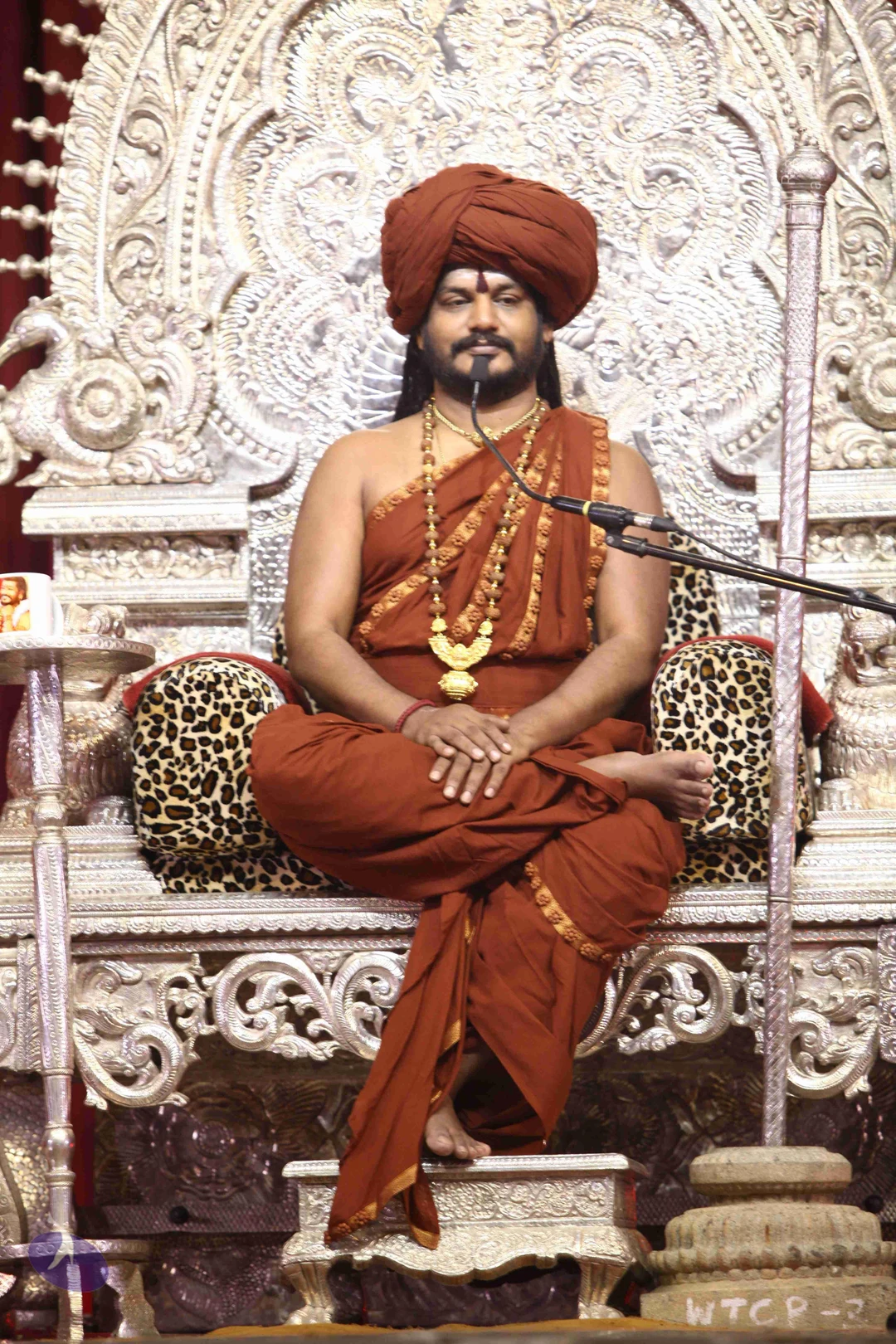
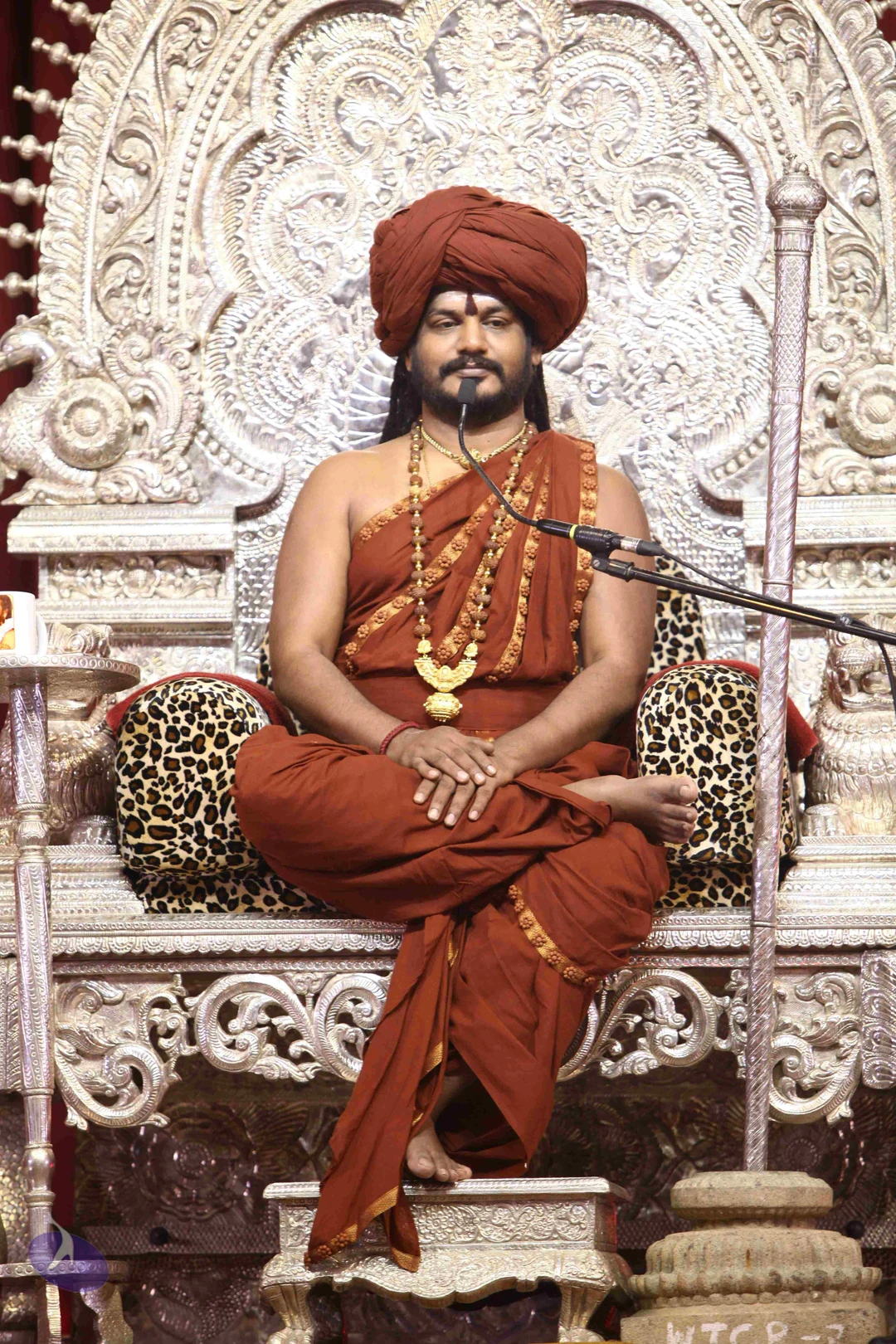
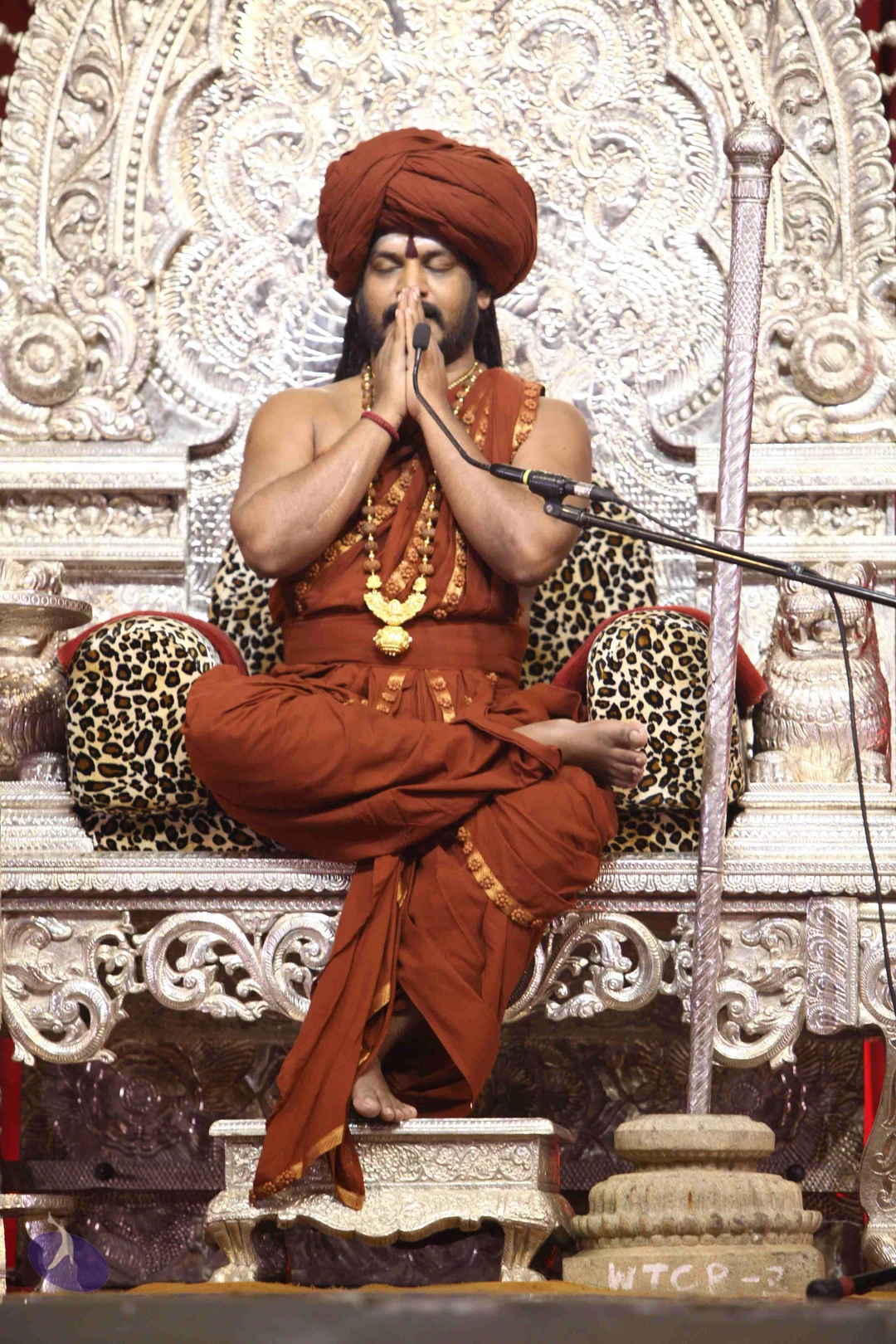
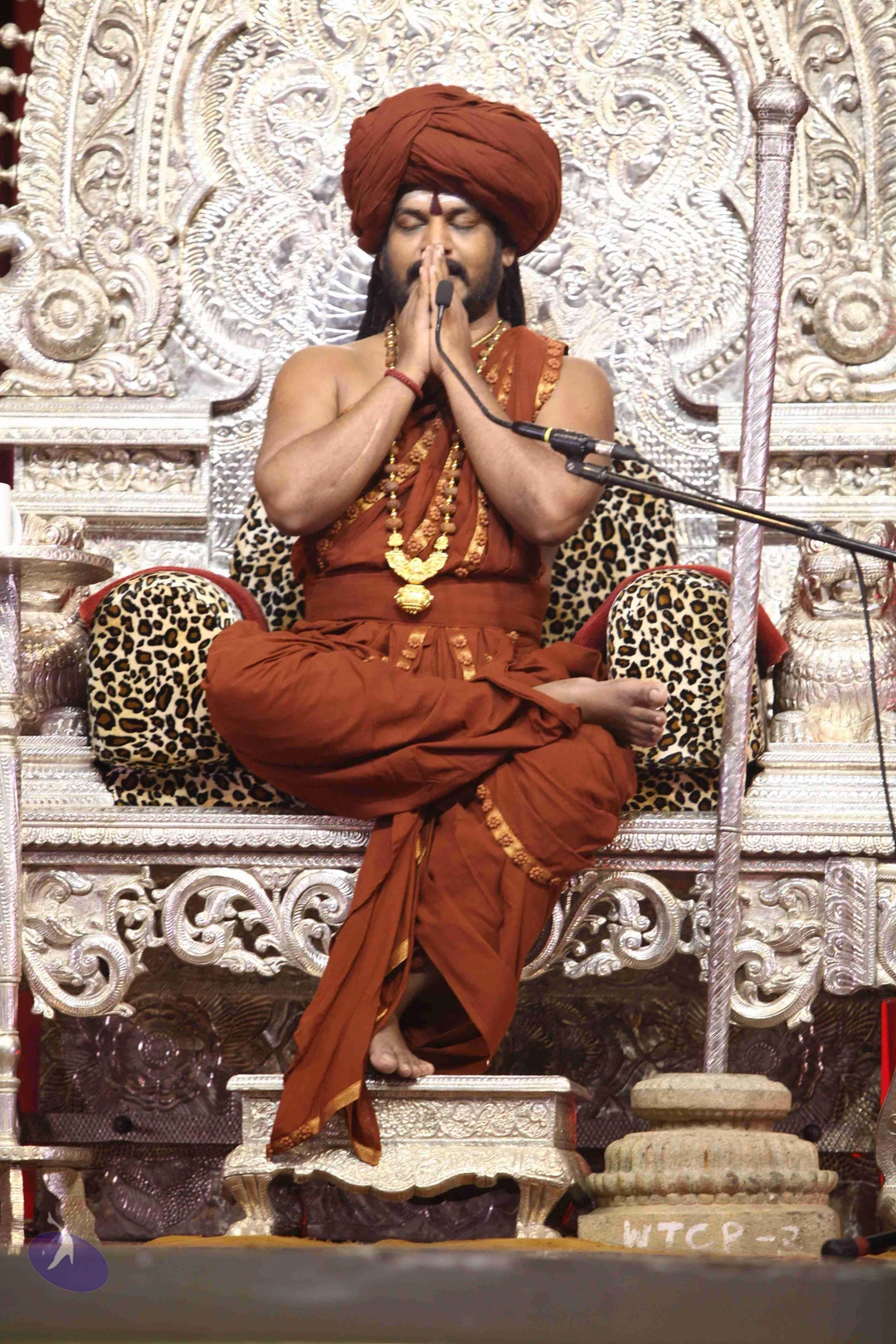
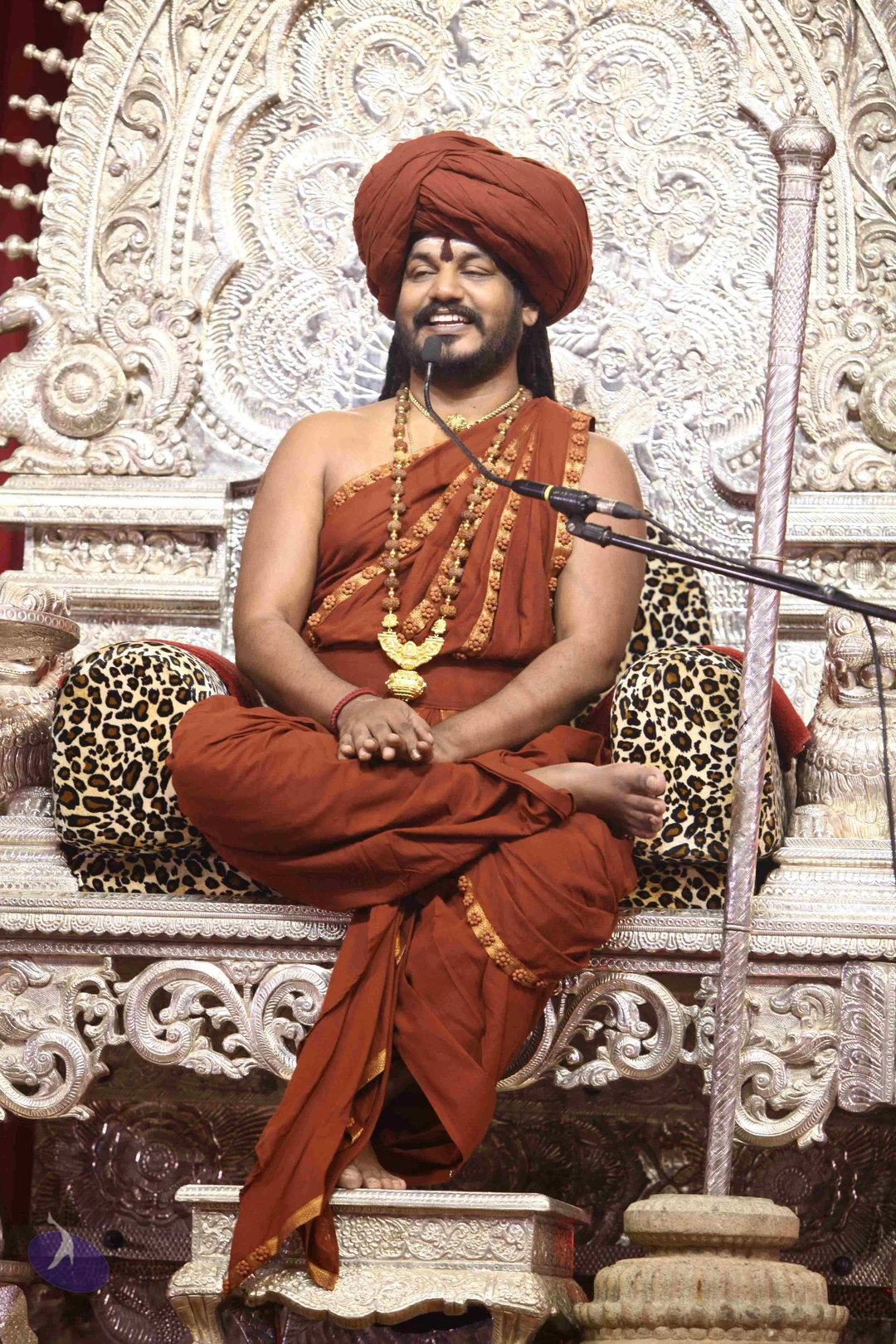
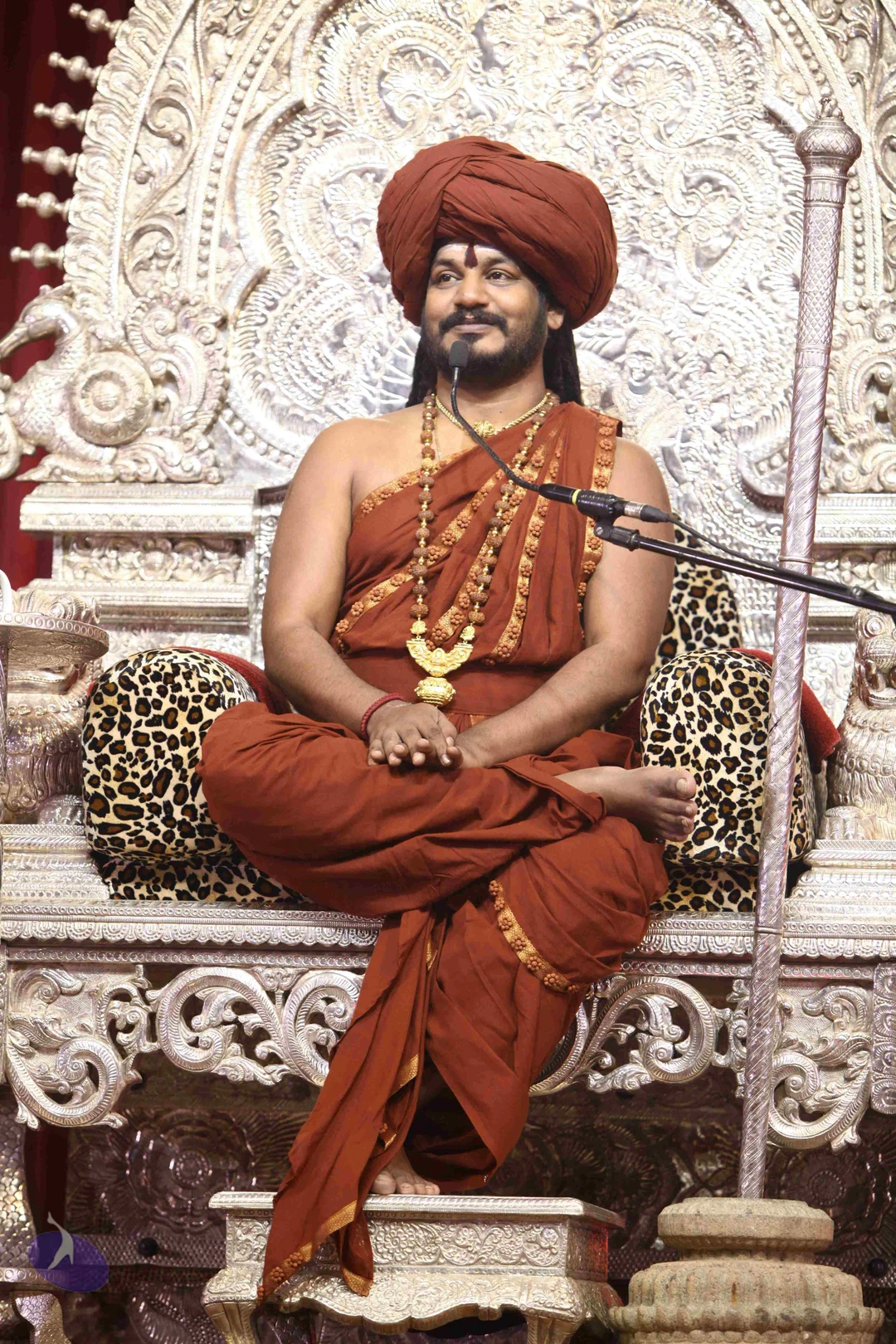
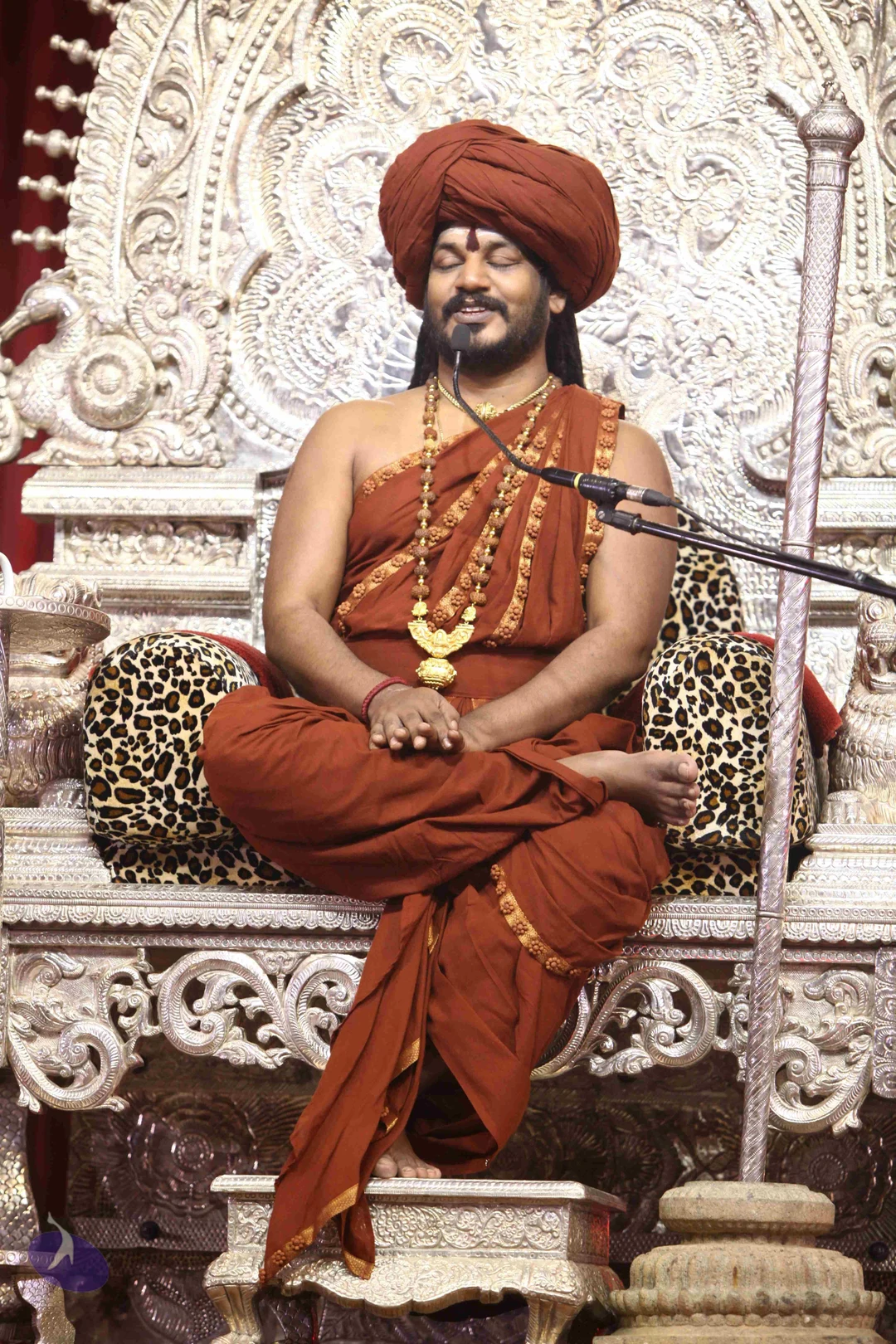
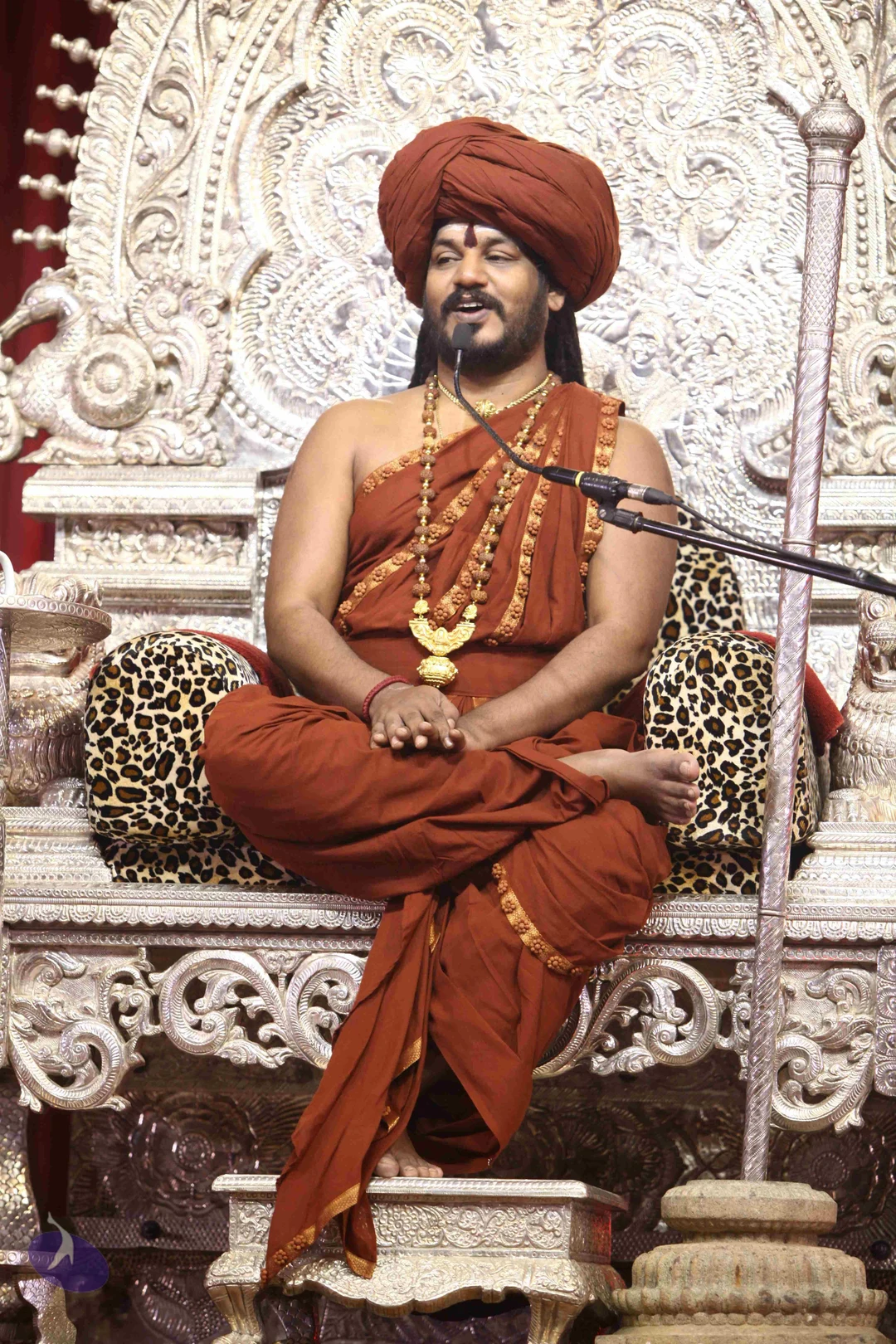
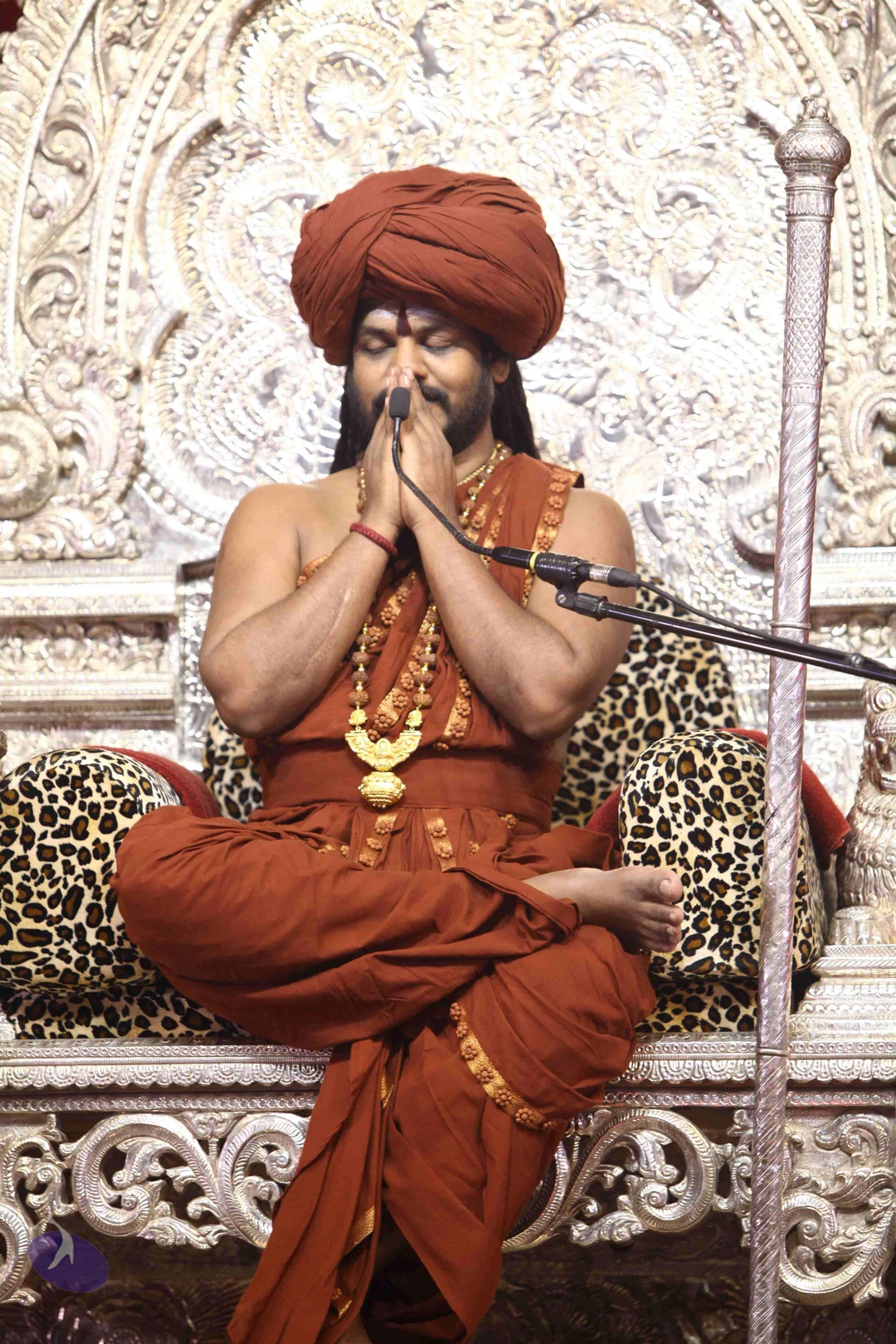
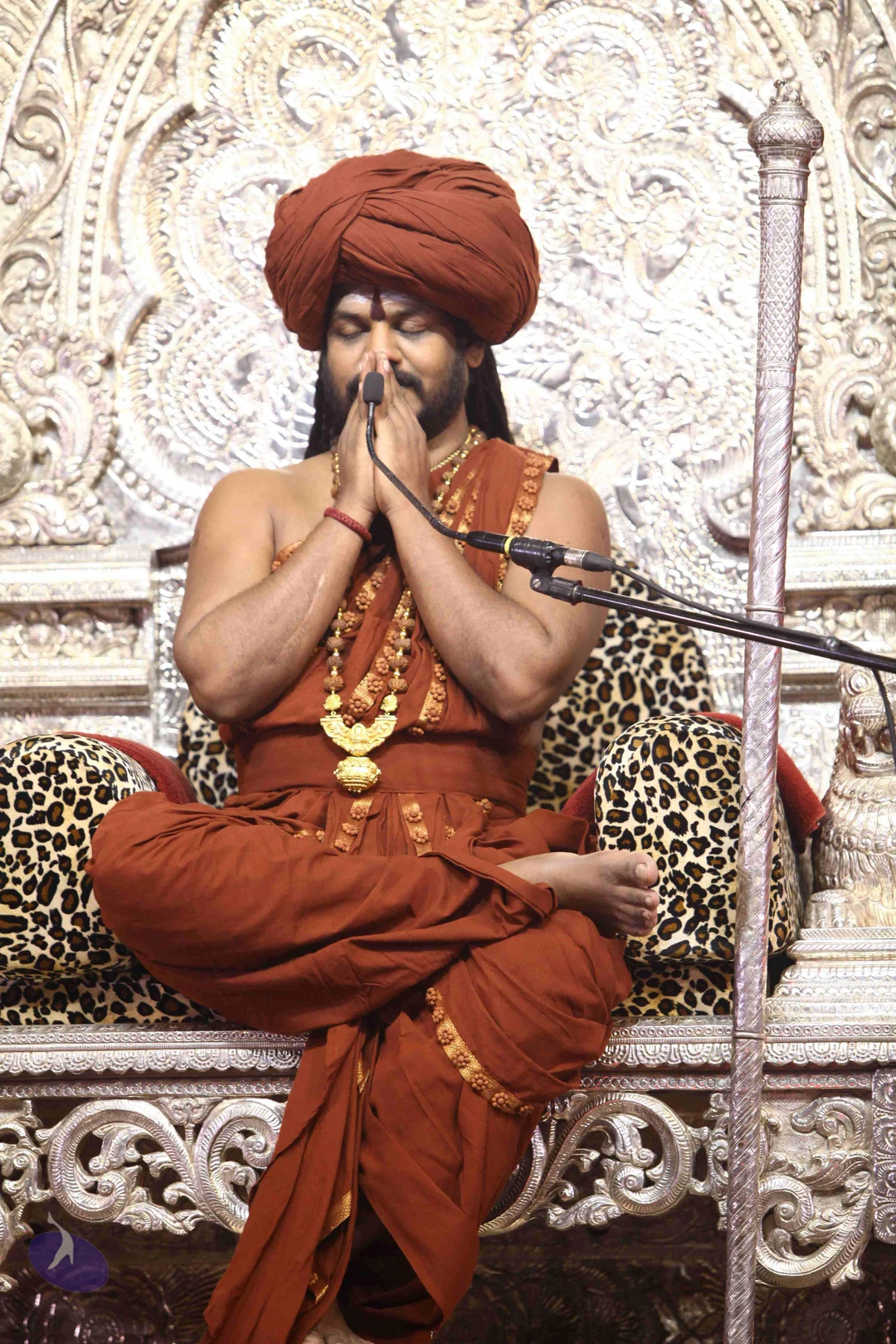
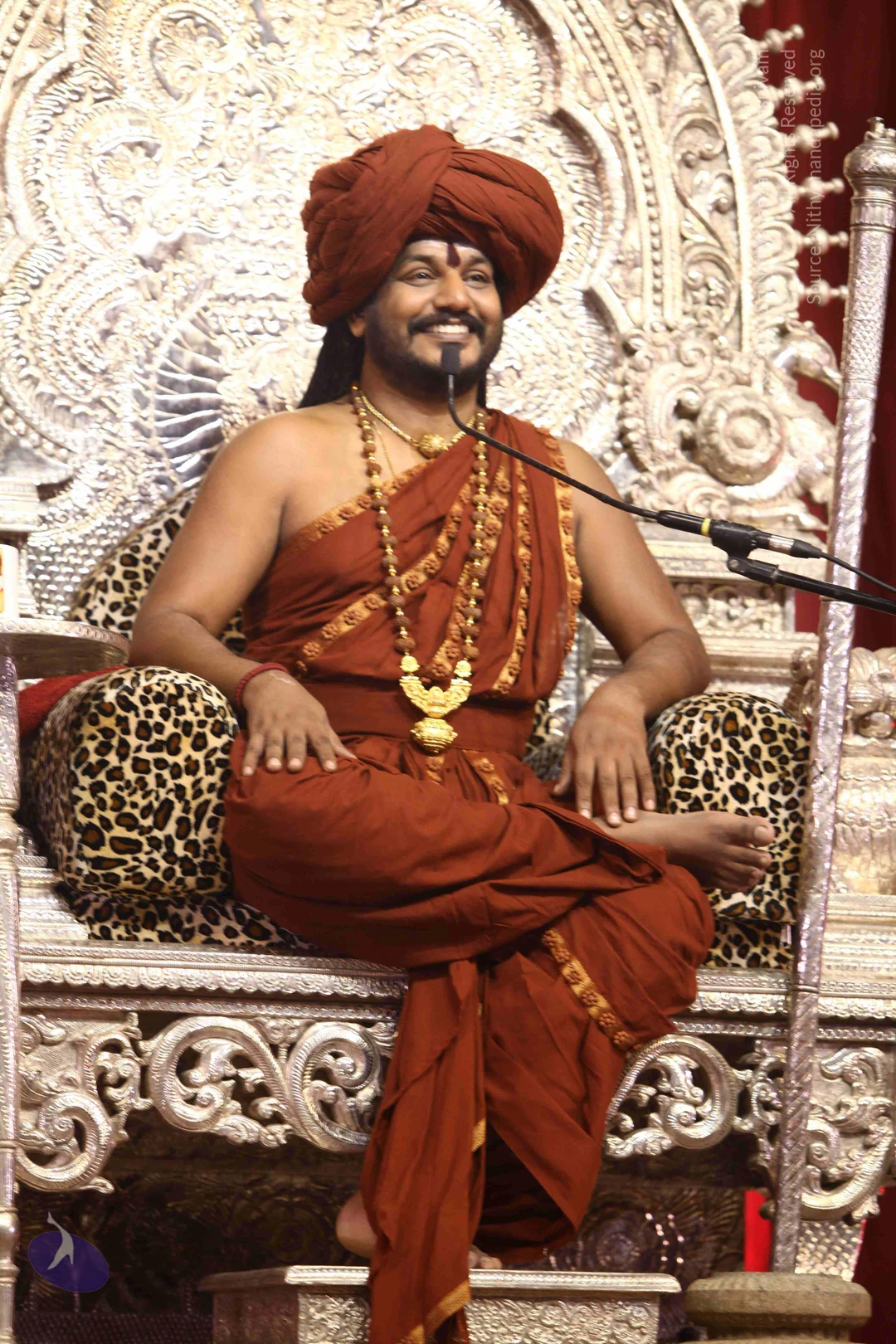
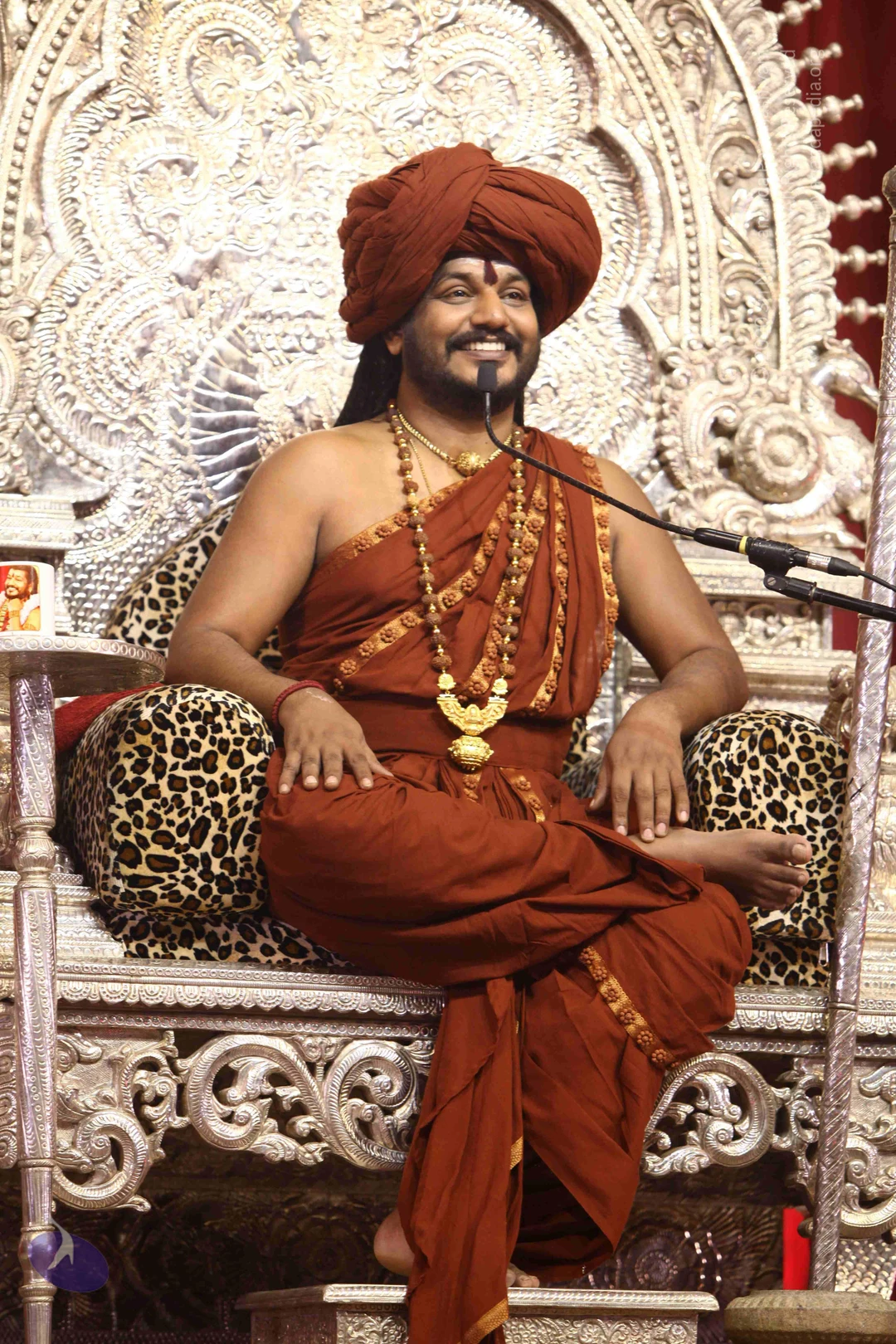
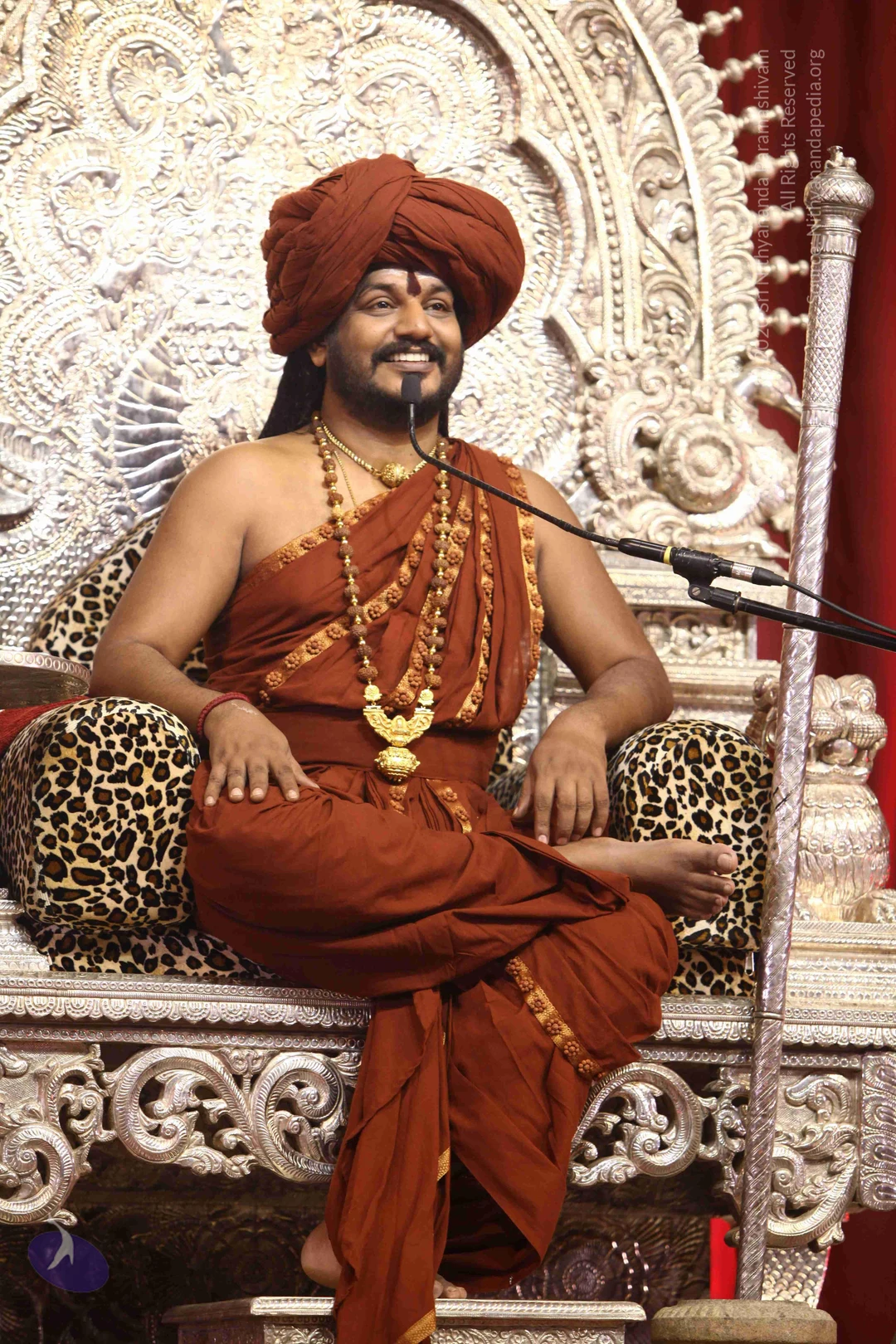
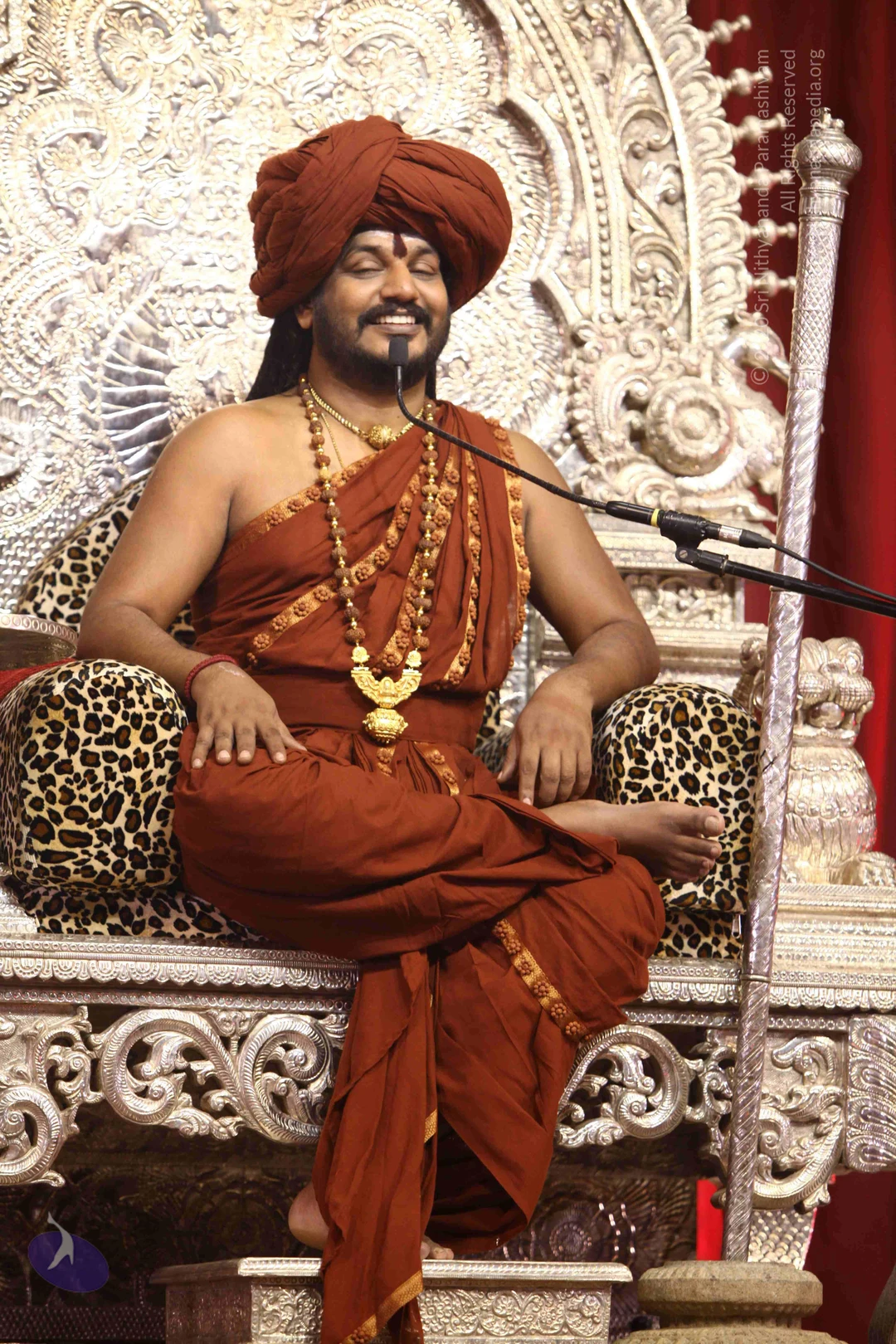
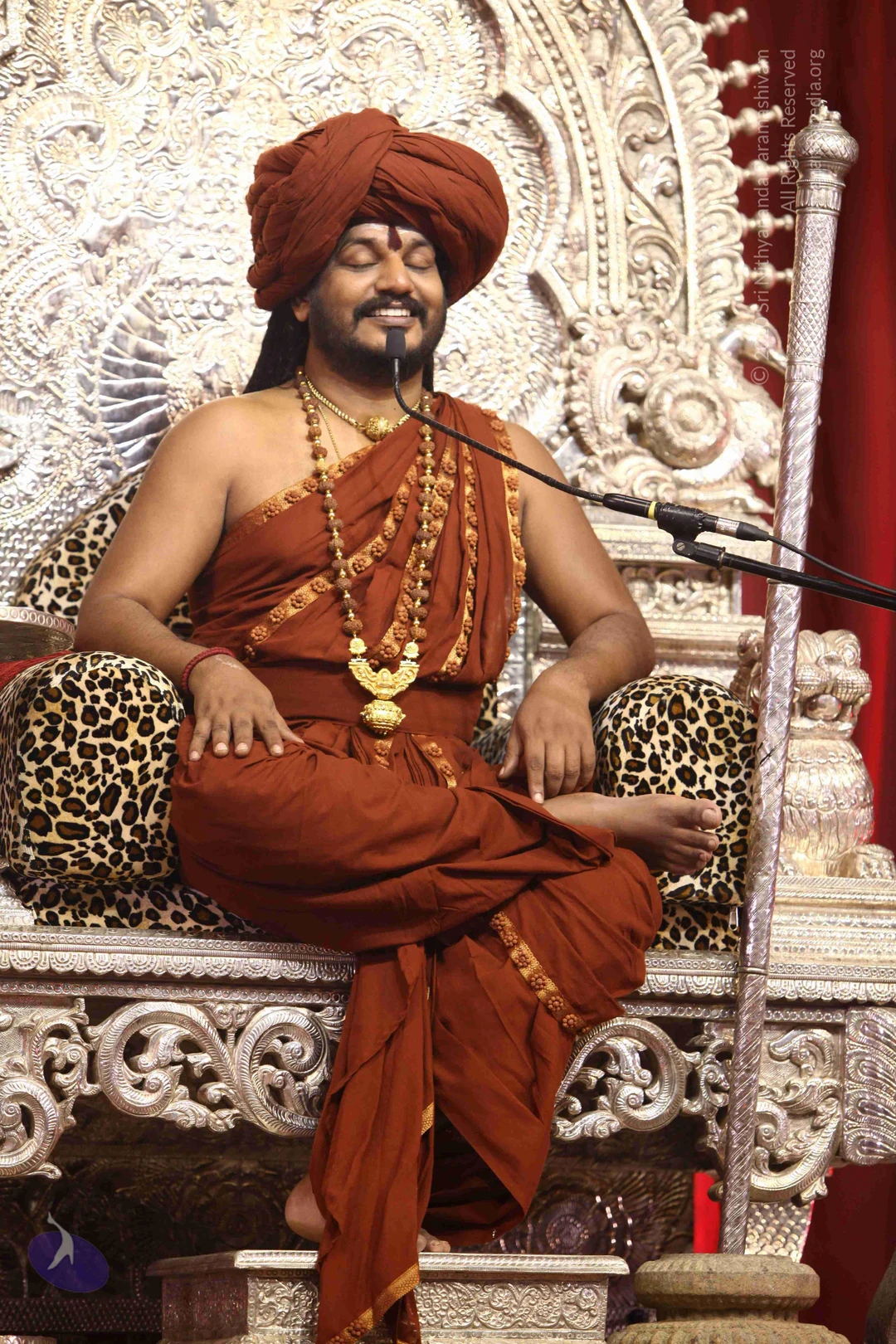
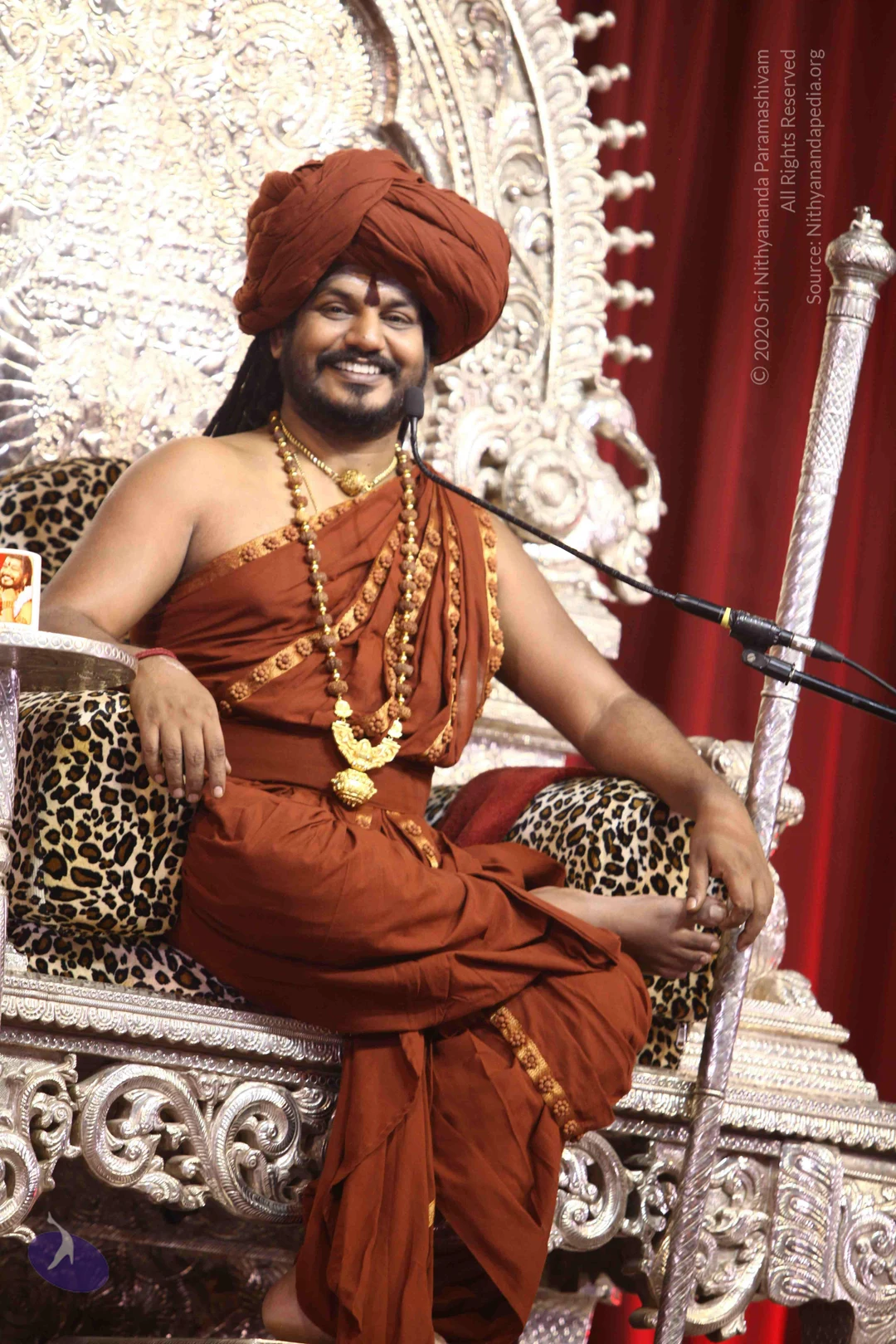
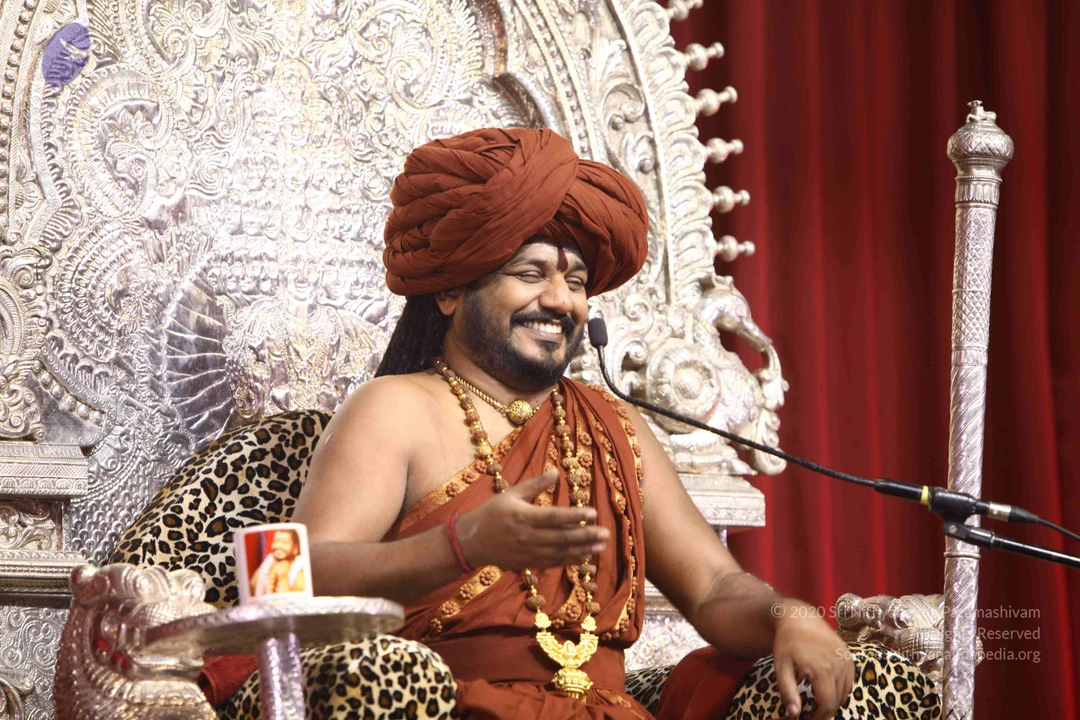
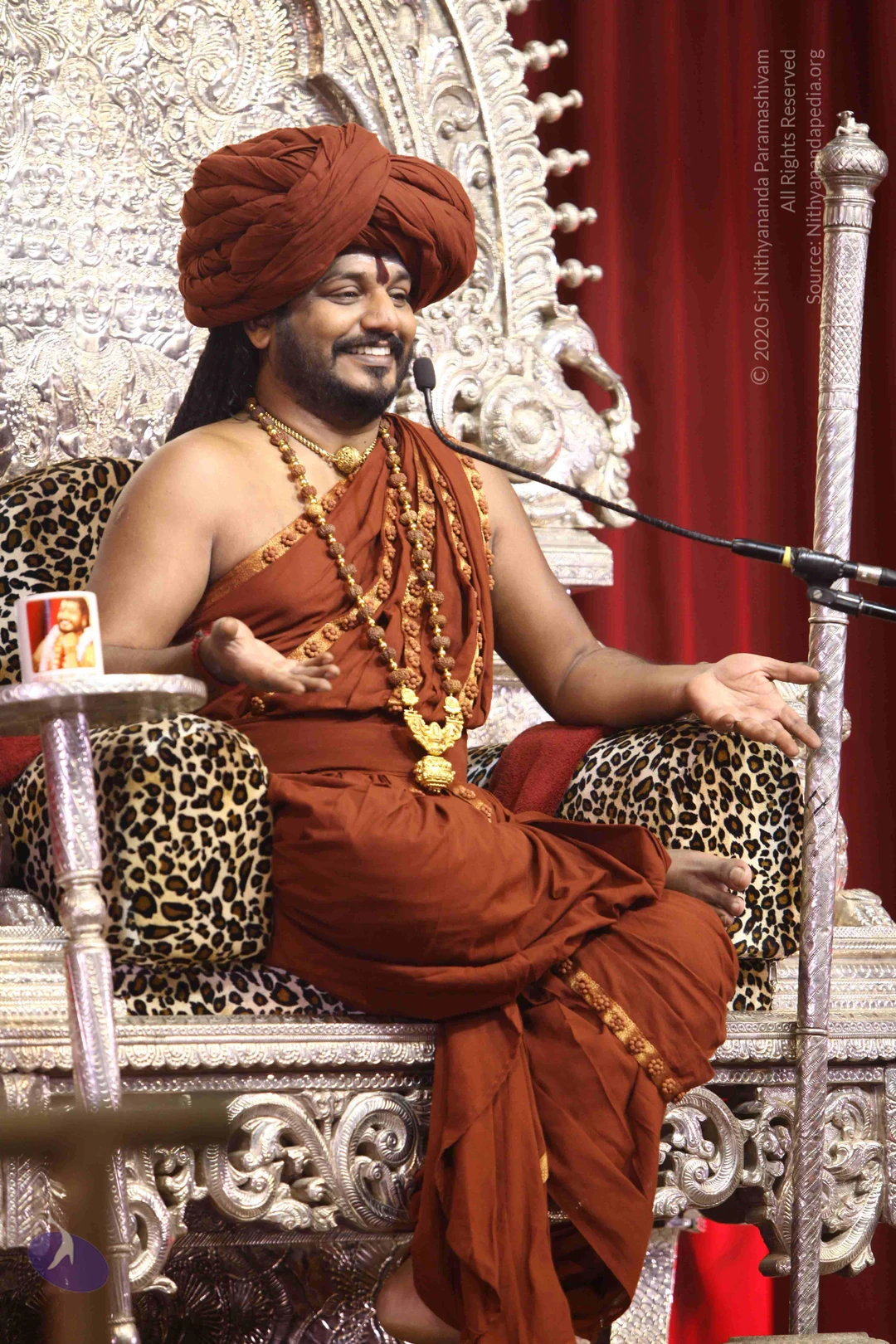
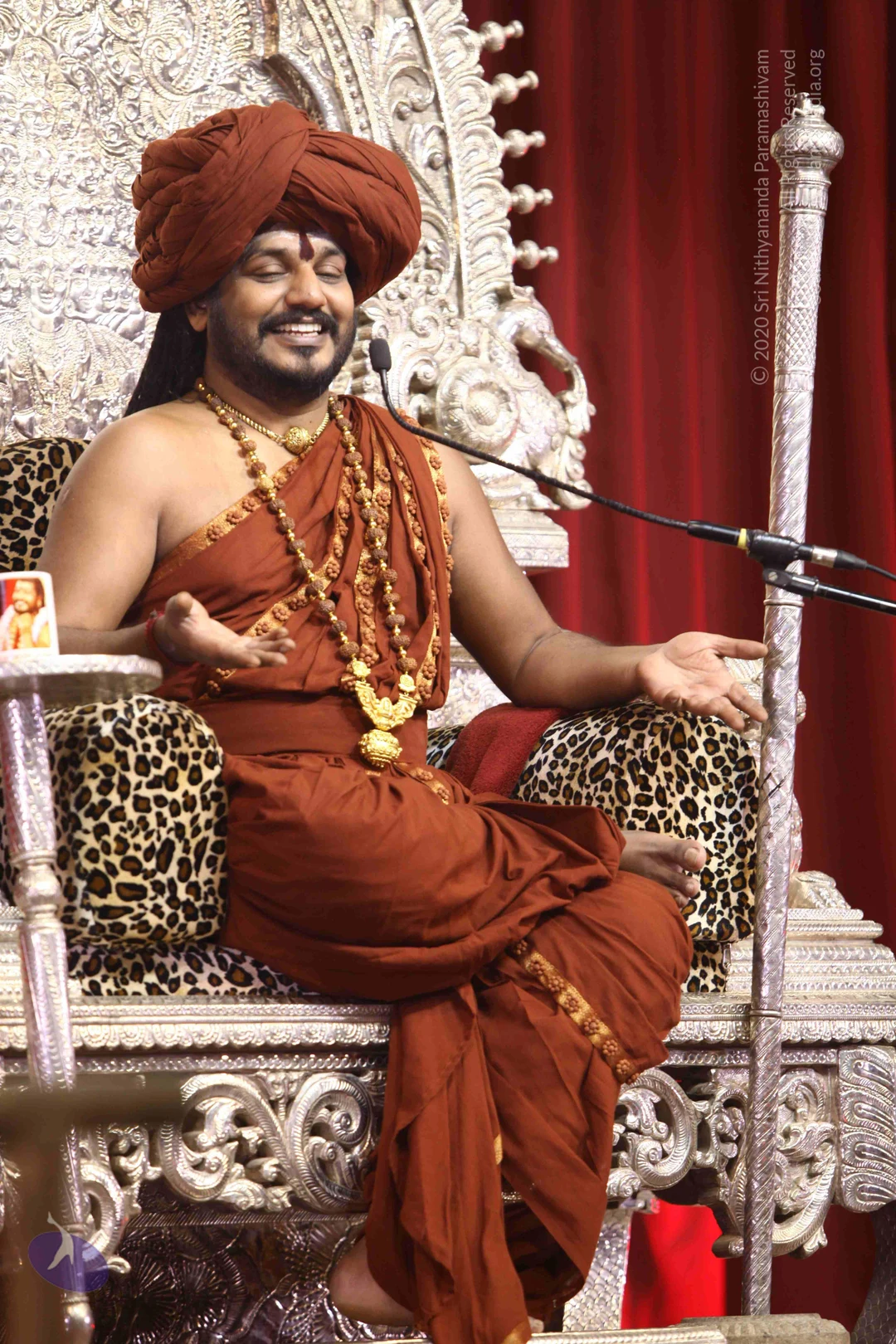
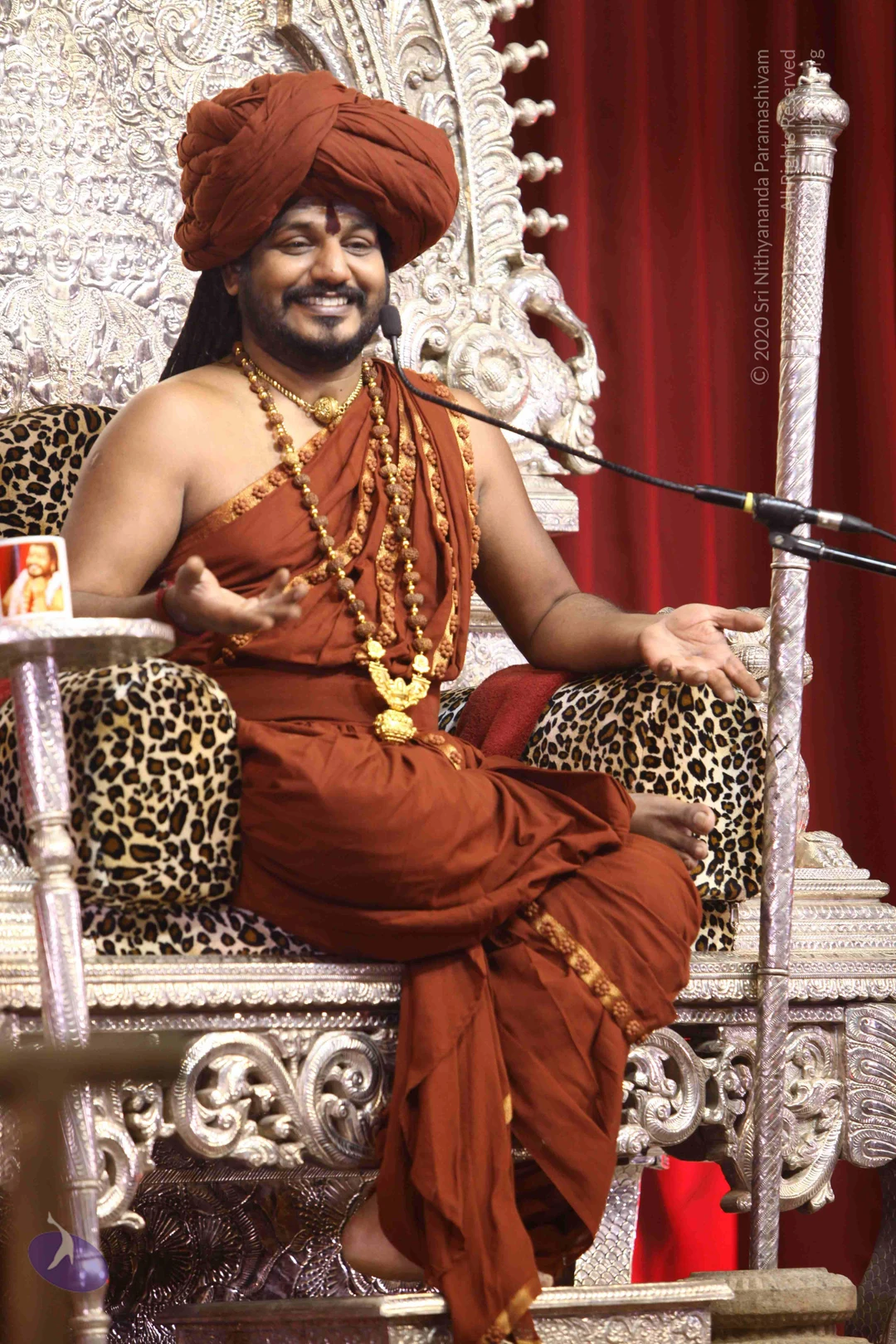
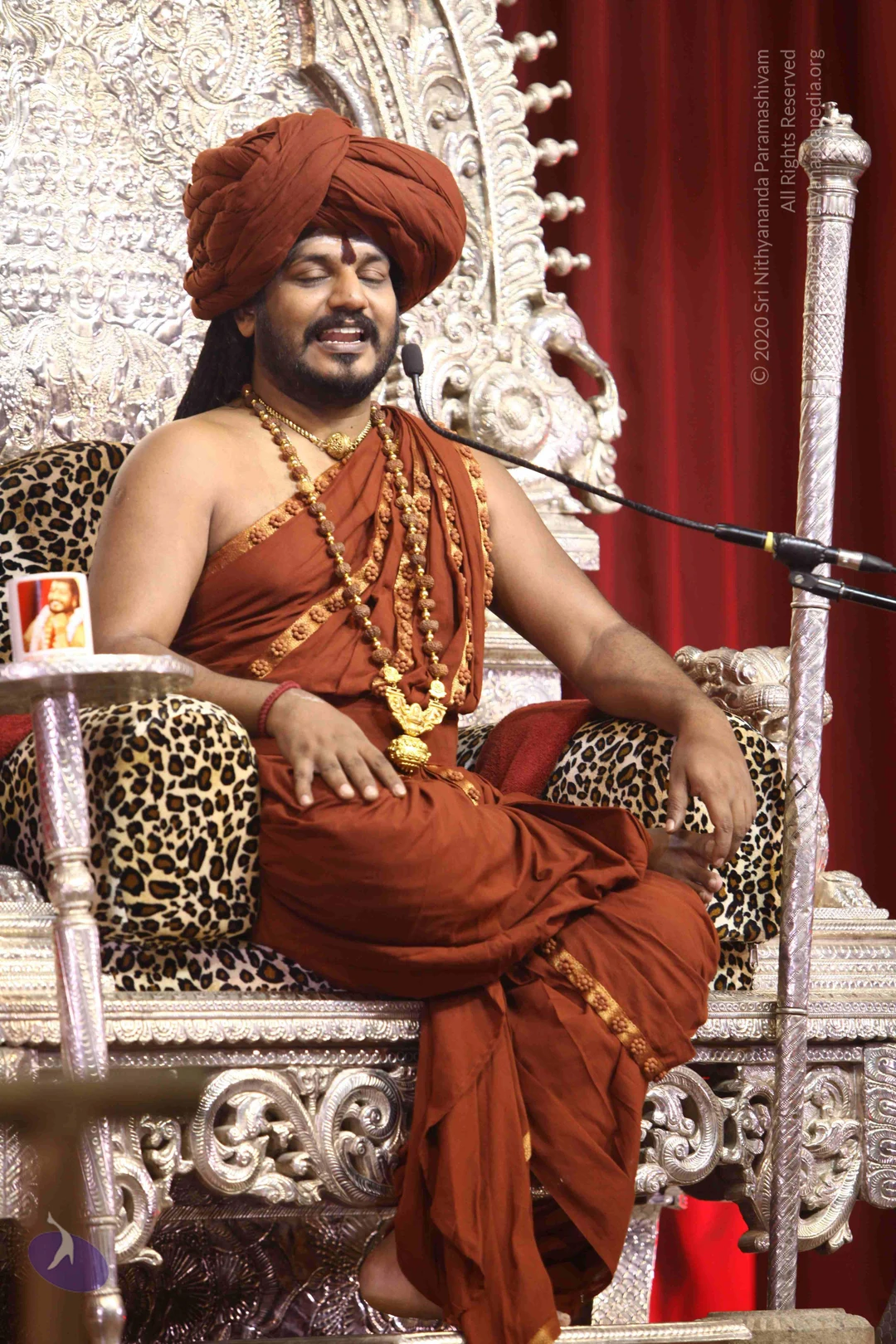
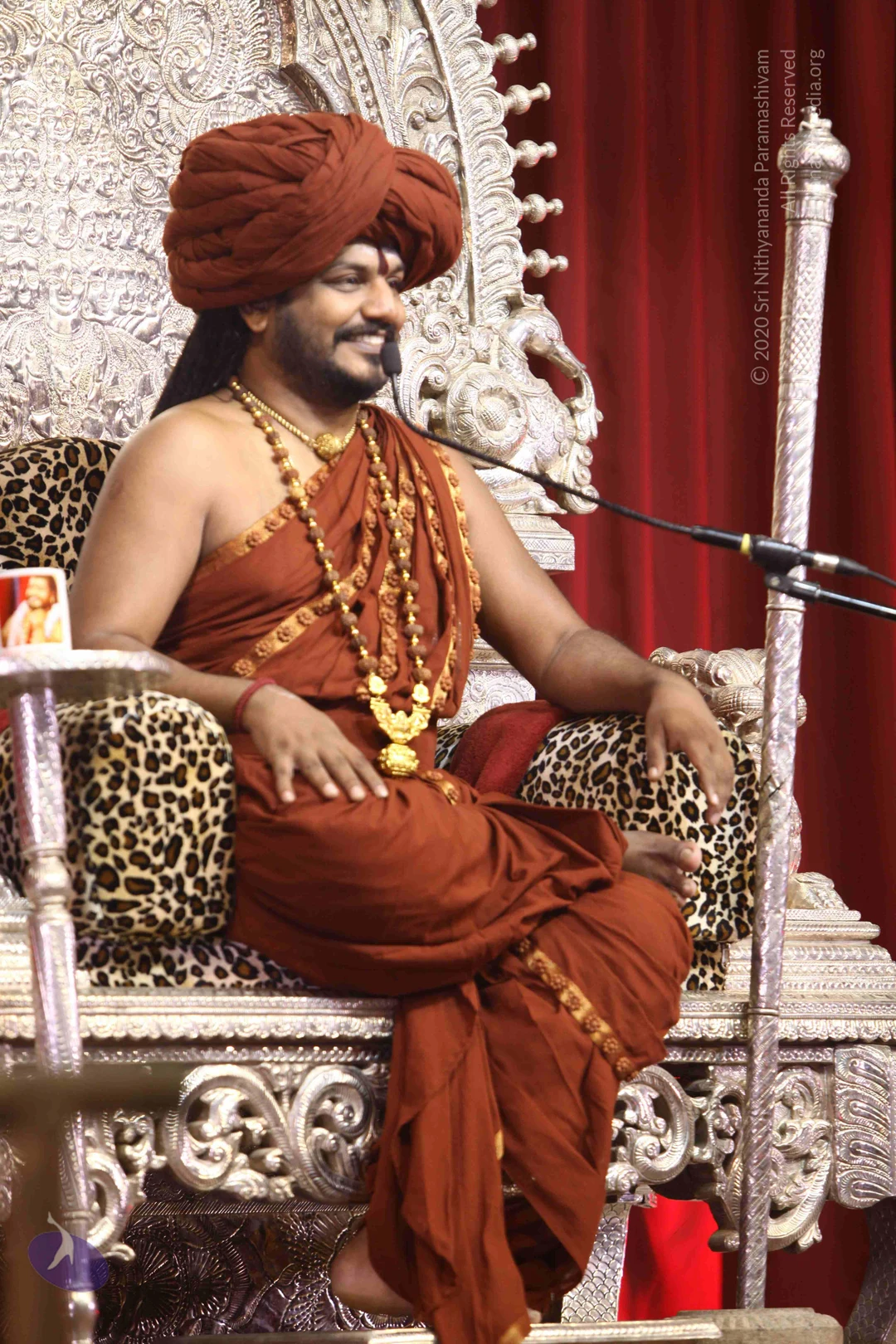
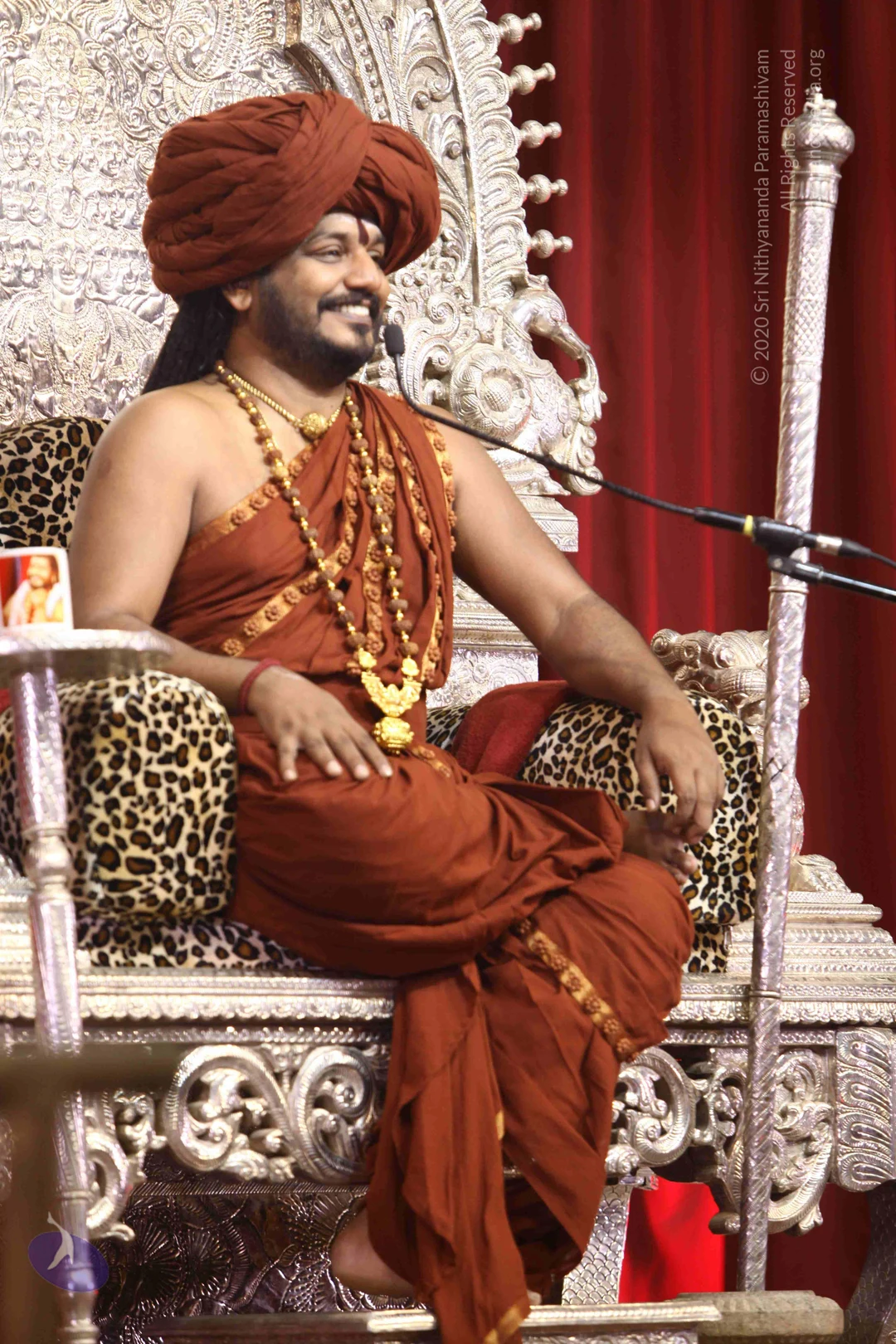
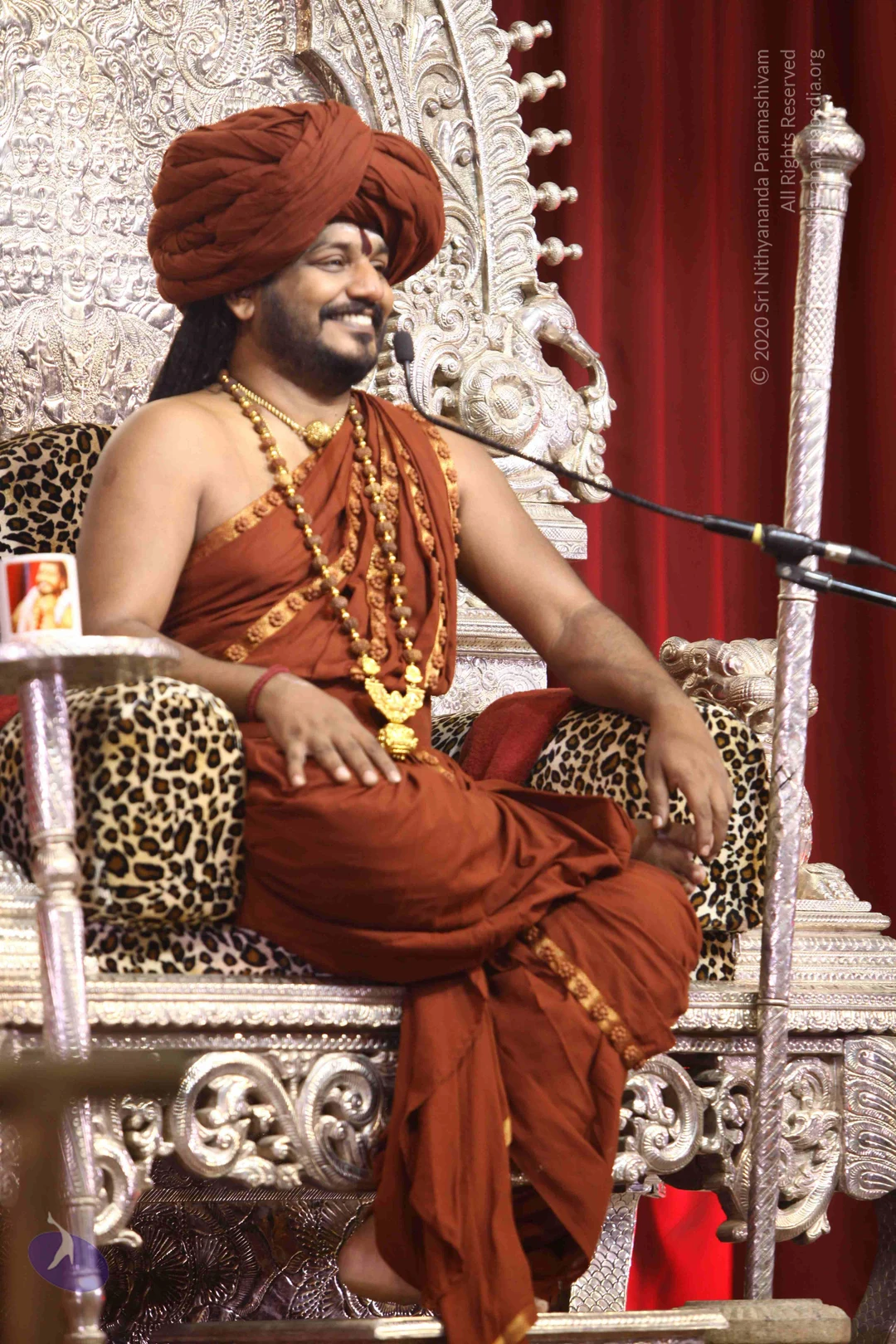
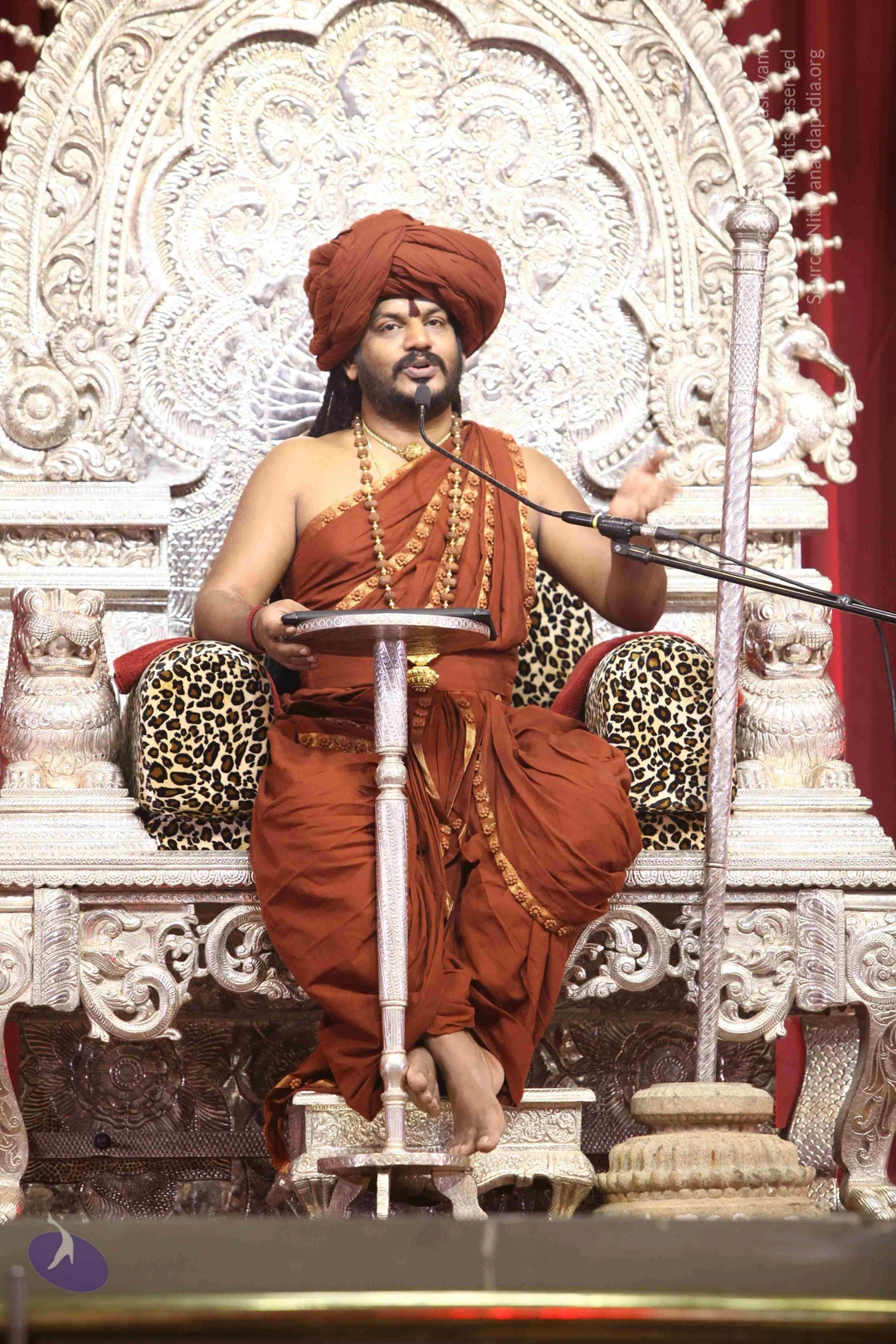
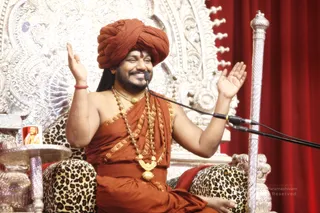
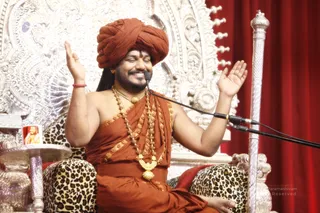
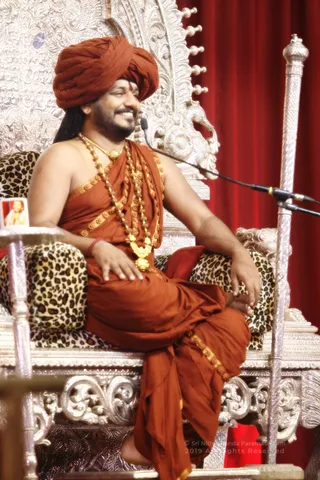
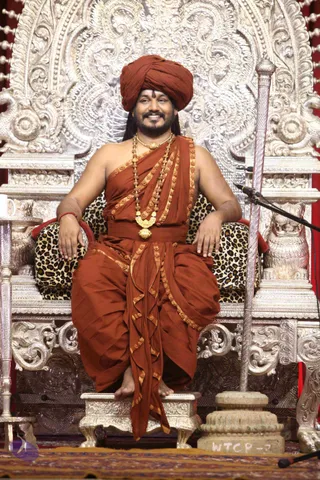
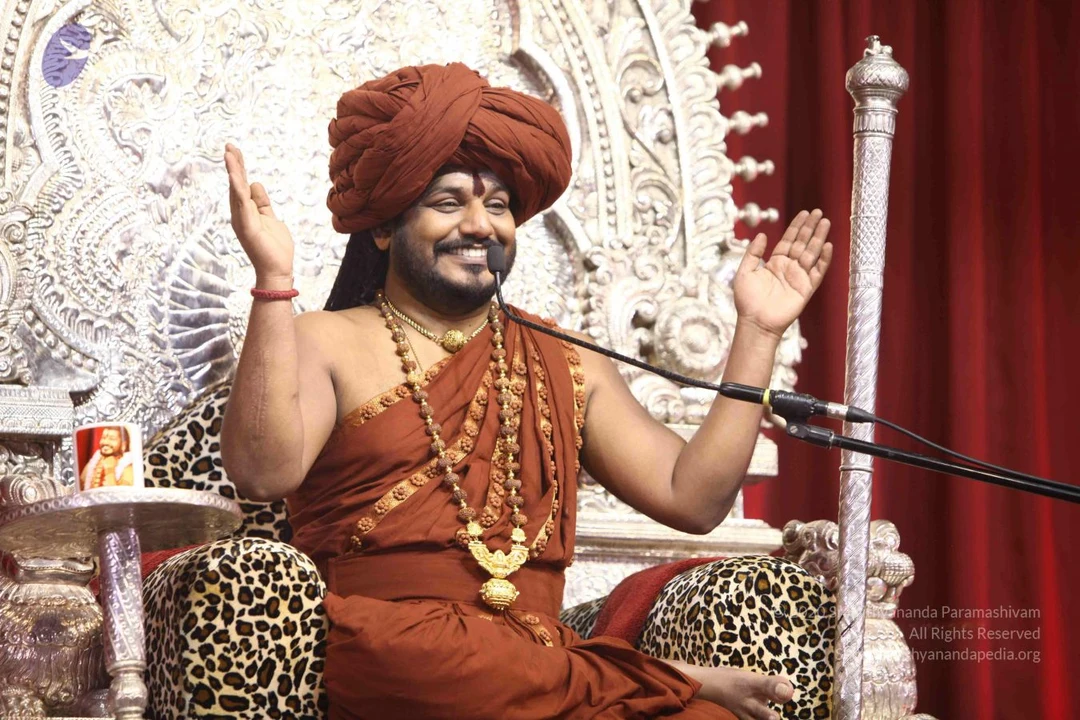
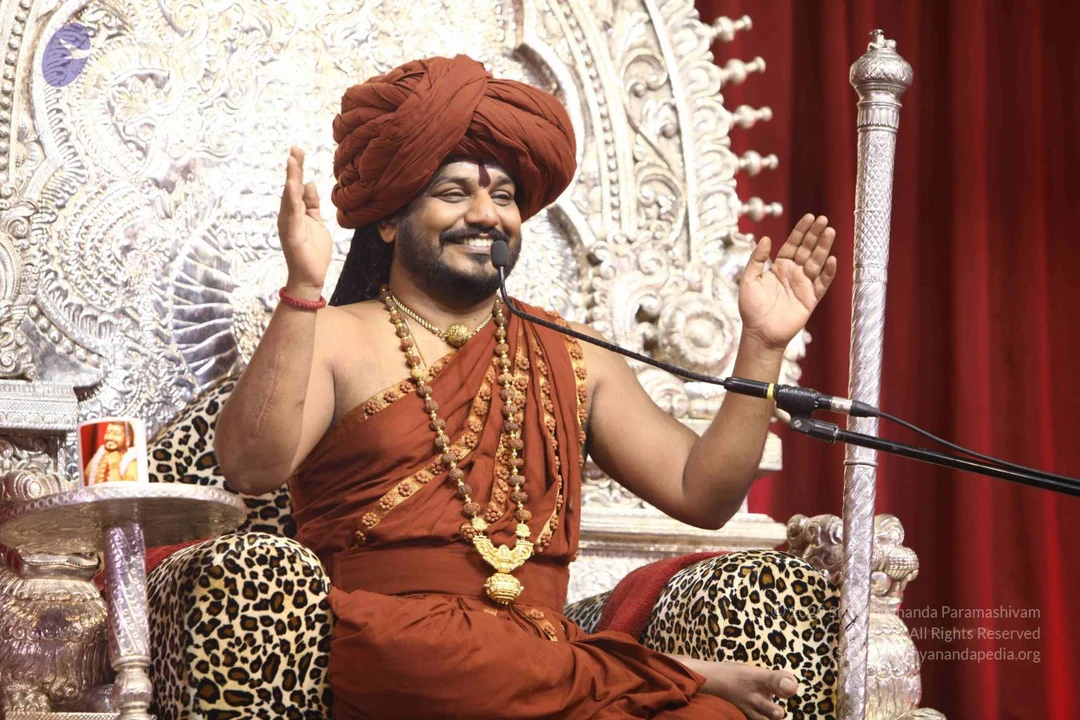
A smiling man in saffron-orange robes and a matching orange turban sits on an ornate silver throne with leopard-print cushions. He holds both hands raised, palms open, while speaking into a microphone on a stand. He wears layered rudraksha malas and a large ceremonial gold pendant necklace, with a red wristband on one arm and a red tilak on his forehead. A tall silver ceremonial staff stands beside the throne, with red velvet drapes behind. A small framed portrait sits on a side table at left. Appearance cues of orange turban, rudraksha malas and gold necklace are consistent with a Swamiji (probable) seated teaching at a satsang.A man seated on an ornate silver throne with leopard-print cushions, smiling with eyes closed and both palms raised in an expressive gesture while speaking into a microphone. He wears an orange-red turban, an orange-red saffron-toned wrap with gold-trimmed borders, a rudraksha mala and a large gold pendant necklace, with a red thread on his wrist. A red velvet curtain and a silver staff stand behind him. Swamiji (probable): long hair visible beneath the turban, ornate gold necklace, rudraksha mala and saffron clothing. A small framed photo sits on a side table at left.A smiling man in a rust-orange turban and matching orange draped robe sits on an ornate silver throne with leopard-print cushions, in front of a red curtain. He wears a multi-strand rudraksha mala and a gold necklace, with a red tilak on his forehead, and a microphone stands beside him. Swamiji (probable) appears to be this seated figure, based on the orange turban, saffron robe, rudraksha and gold adornments; a small framed photo sits on the table at left.A smiling man sits on an ornate silver throne with leopard-print cushions, in front of a red curtain and a microphone stand. He wears a rust-orange turban with a red-orange draped robe trimmed in gold, a rudraksha mala and a large gold ceremonial necklace, and a red thread on his wrist. A silver staff stands beside the throne. a person: long hair, orange turban and gold ornaments indicate a person seated on his throne during a discourse. A small framed photo sits on a side table. Watermarked archive photo.A photograph of a seated man on an ornate silver throne with leopard-print cushions, in front of a red curtain and a microphone stand. He wears a saffron-orange turban, an orange shawl with gold border, a bare upper torso, multiple rudraksha malas and a gold ceremonial necklace, with a red tilak on his forehead. He is smiling and gesturing with one hand while speaking. a person: the long hair, orange turban and ornate gold adornments match the page's a person reference, but this is appearance-based only. A small framed photo of another man sits at the left edge.A smiling man in a rust-orange turban and matching orange drape sits on an ornate silver throne with leopard-print cushions, in front of a red curtain. He wears a long rudraksha mala, a gold necklace and a gold pendant, and has a red tilak on his forehead. His hands are open in an expressive gesture while he speaks into a microphone on a stand. A small framed photograph sits on a silver side table at left, and a silver staff stands at right. The setting appears to be a discourse stage. A photo of a figure with a distinctive cultural cue in the image is consistent with the Swamiji probable candidate, with long hair and rudraksha malas visible; he is seated on a throne.

Nithya-Satsang
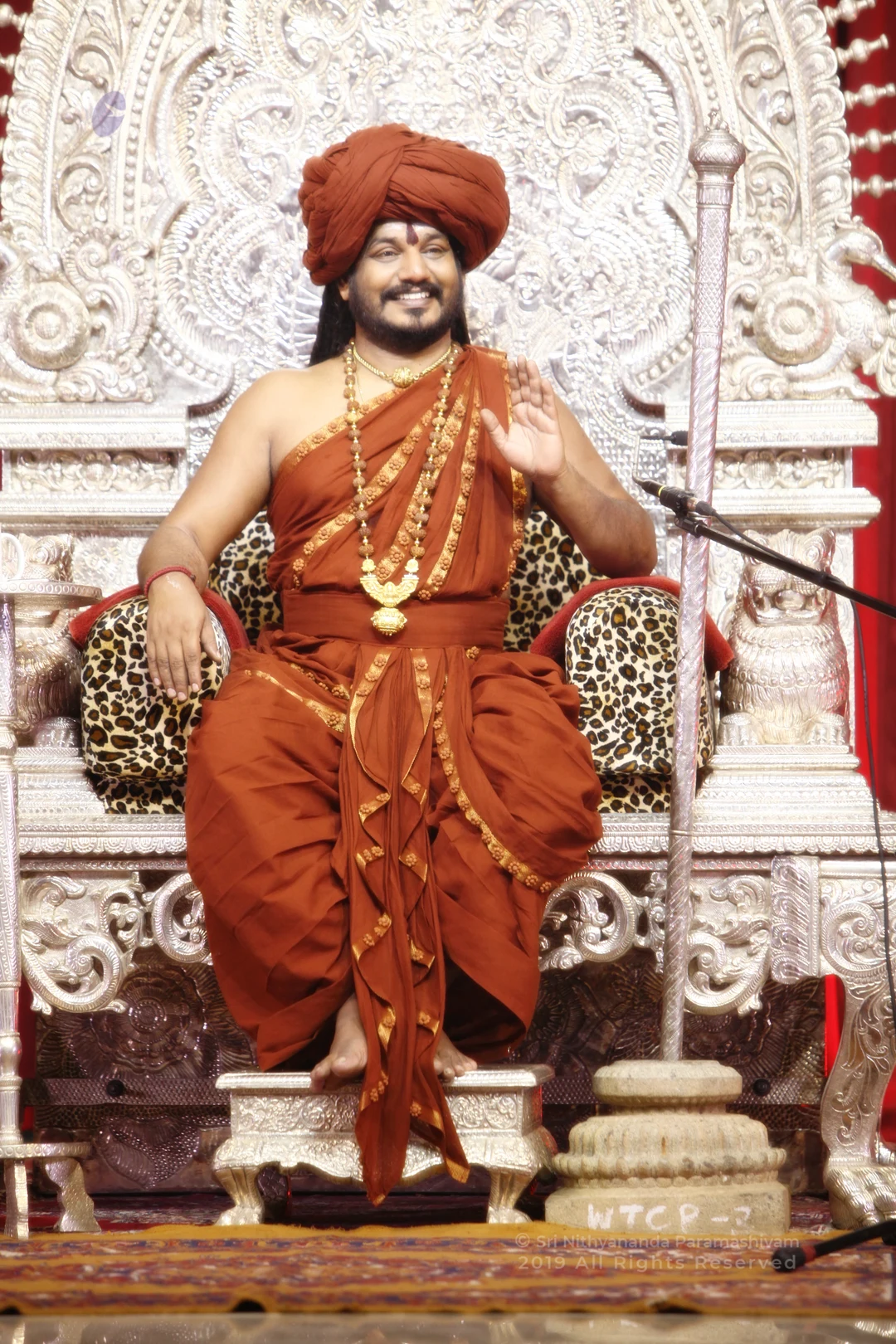
96 photosSource gallery
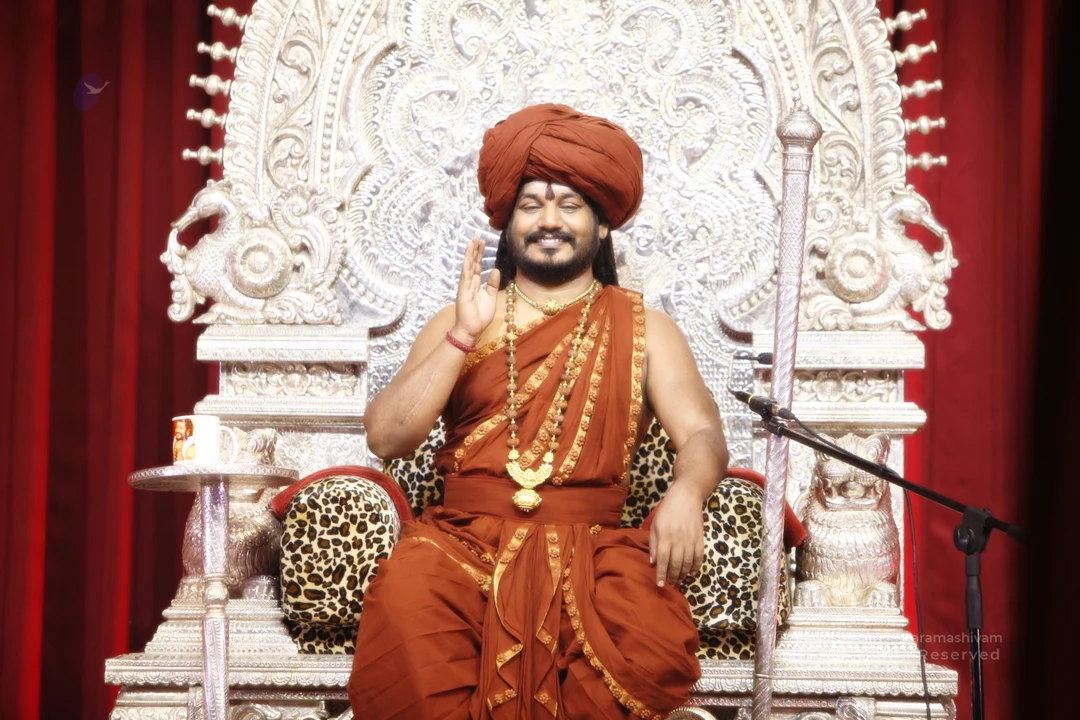
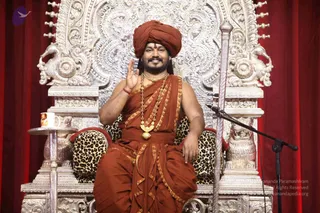
A man in an orange-saffron turban and matching saffron robes sits on an ornate silver throne with a leopard-print cushion, raising his right hand in a blessing gesture while smiling. He wears a rudraksha mala and a large gold ceremonial necklace, with a red wristband on his left wrist. A small side table holds a white cup. Red velvet drapes frame the stage. Swamiji (probable) in a seated, blessing pose, consistent with the Nithyananda Paramashivam identity suggested by the page; the saffron turban, robes, rudraksha mala and gold necklace are the qualifying cues.A photograph of a bearded man seated on an ornate silver throne with leopard-print cushions and carved lion armrests, against red draped curtains. He wears an orange-red turban, an orange-red robe with gold-toned braided cords, and layered gold necklaces. His right hand is raised in a blessing gesture and he smiles. A small silver side table holds a white cup, and a silver staff and microphone stand are beside him. Swamiji (probable): a bearded figure in an orange-red turban and robe, seated on a silver throne, giving a blessing during a discourse.A seated man in an ornate silver-and-carved-wood throne with leopard-print cushions faces forward and raises his right hand in a blessing gesture. He wears a rust-orange turban, an orange-saffron dhoti and shawl with gold border, a rudraksha mala, and a large gold ceremonial necklace. A microphone stands at his right on a stand, and a white cup sits on a small side table at left. Behind him hang red curtains. Swamiji (probable): the saffron and orange clothing, turban, rudraksha mala and gold necklace are visible cues of a guru in a discourse setting. A carved silver peetha throne frames the scene.A photograph of a man seated on an ornate silver throne with carved lion-like armrests and a silver-embossed backrest, set against red drapes. He wears a rust-orange turban, a rust-orange wrap draped over the shoulders with gold trim, a long gold pendant necklace, and layered rudraksha malas. He smiles with one hand raised in a blessing gesture, and a small cup sits on a silver side table beside him. A microphone stand is at right. a person, seated in discourse. The image is a photo of one physical person.A photograph of a smiling man seated on an ornate silver throne with leopard-print cushions, raising his right hand in a blessing gesture. He wears an orange-saffron turban, saffron dhoti and shawl, a rudraksha mala, and a large gold necklace. A small tray with a white cup sits at left and a microphone stands at right against red draped curtains. Swamiji (probable): the orange turban, saffron robes, layered rudraksha malas and ceremonial gold necklace match the page's claim, though appearance alone is only a partial match. Carved silver lion and bird motifs decorate the throne.A man seated on an ornate silver throne with carved lion and mythical animal motifs and leopard-print cushions, in front of red curtains. He wears a rust-orange turban, an orange draped robe with a gold-trimmed sash, a long rudraksha mala, and a gold necklace, with a red sacred thread at his wrist. He raises his right hand in greeting and smiles beside a microphone stand, and a white cup with a colourful design sits on a small side table.
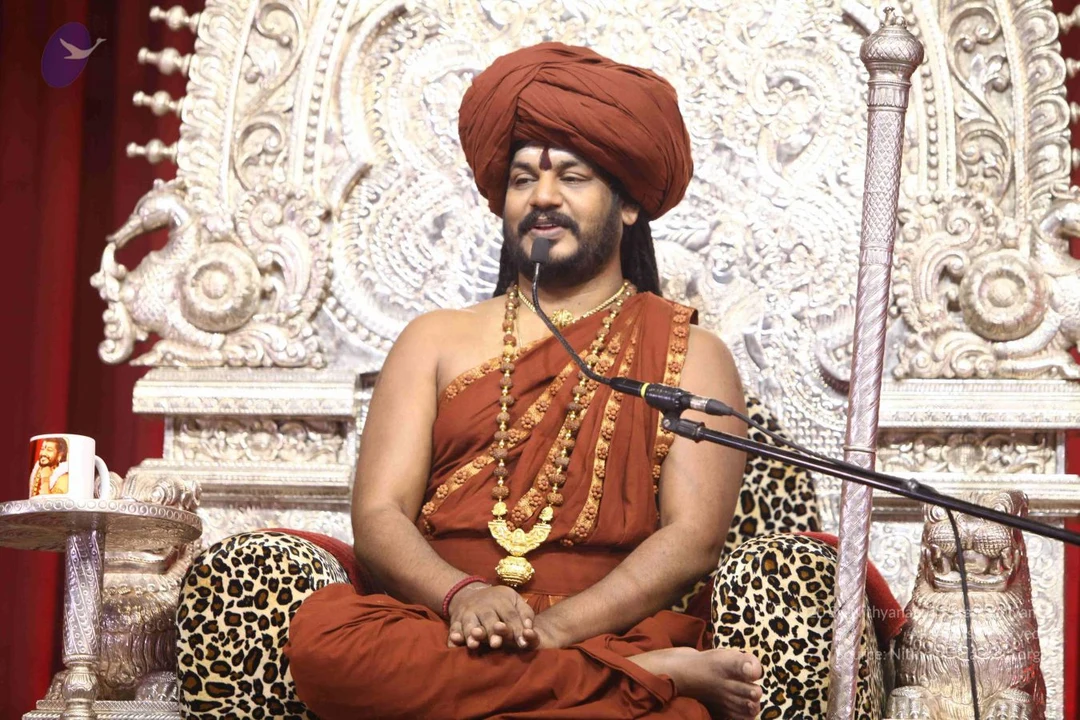
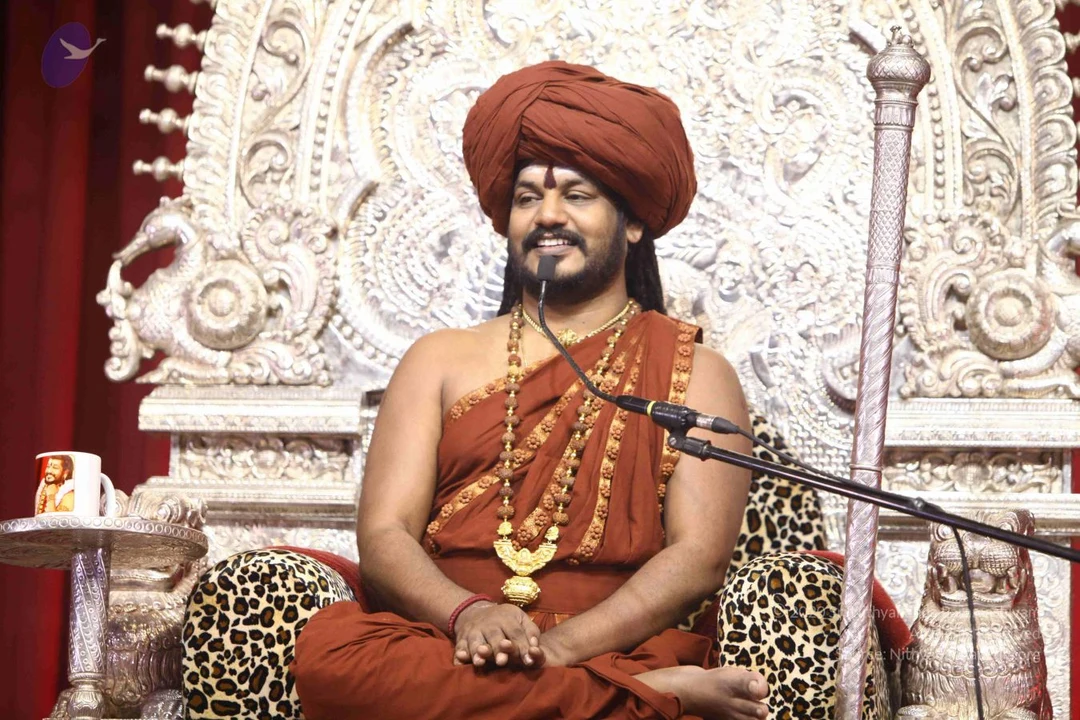
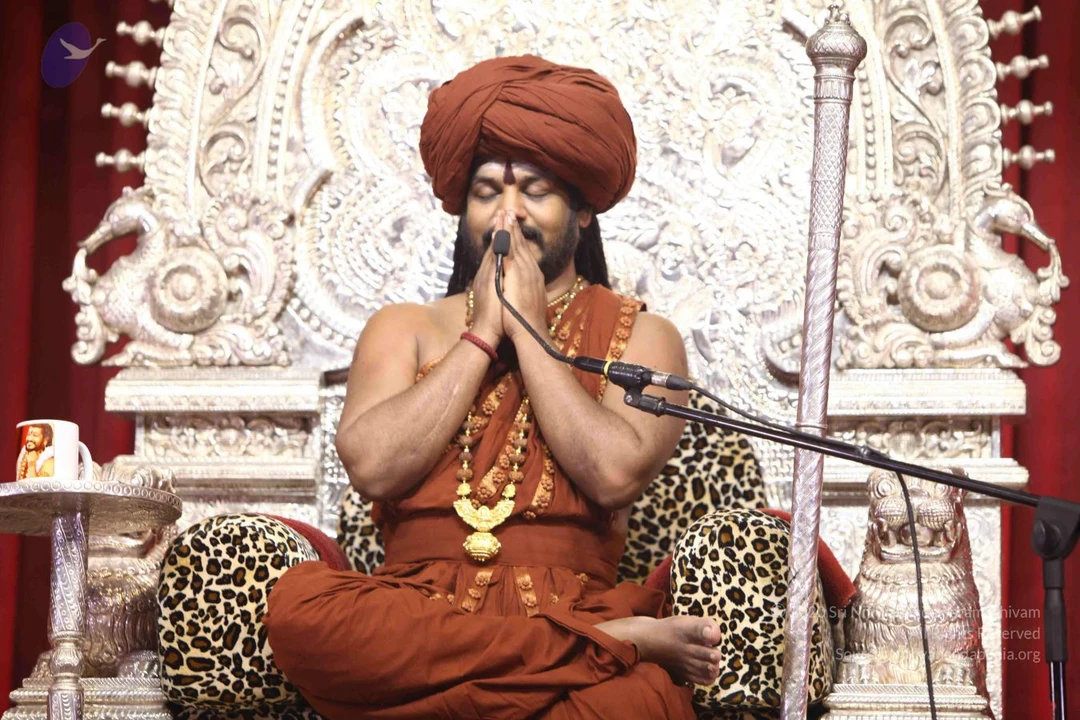
01-SATSANG
44 photosSource gallery
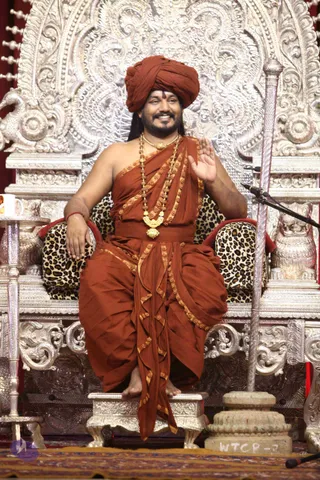
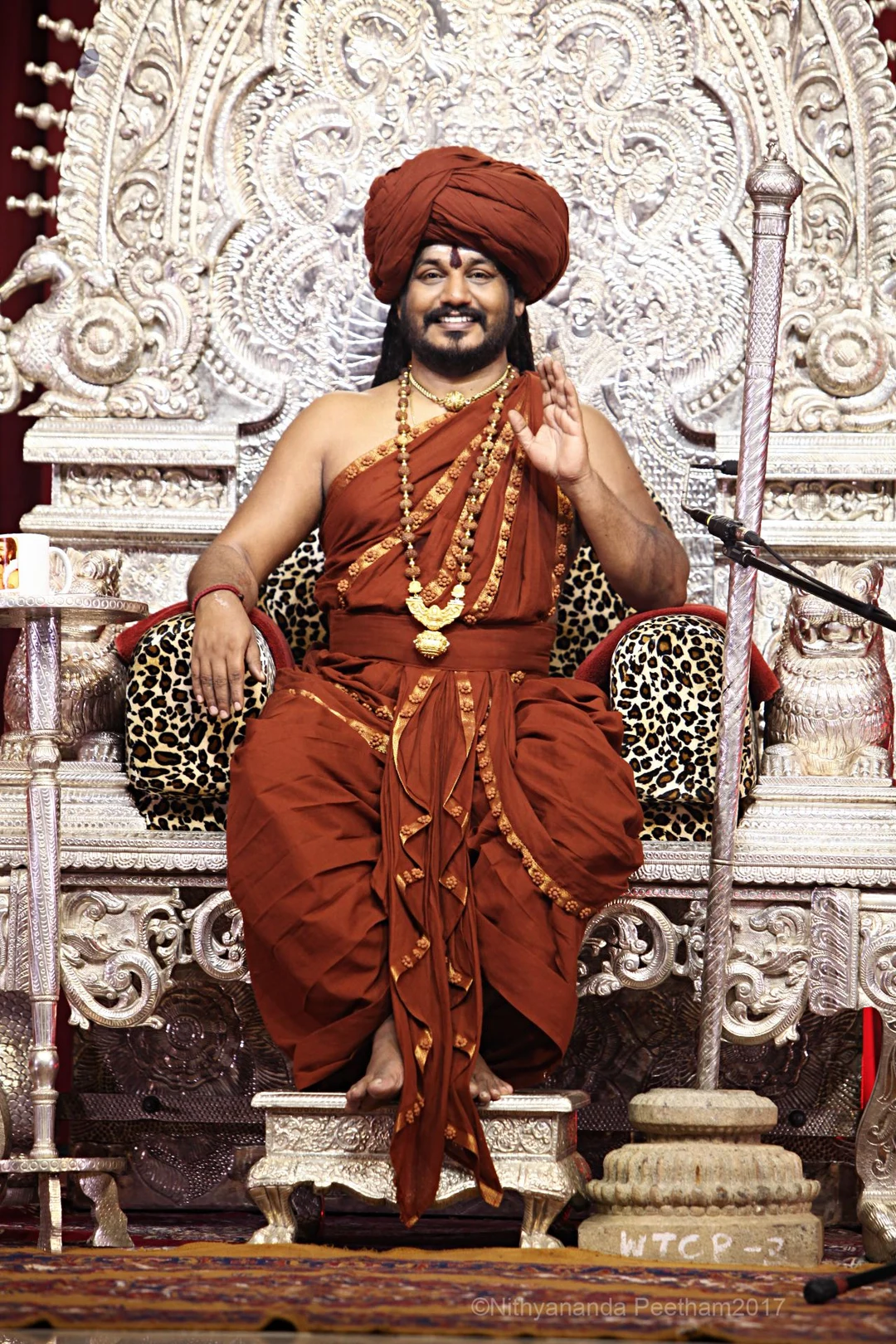
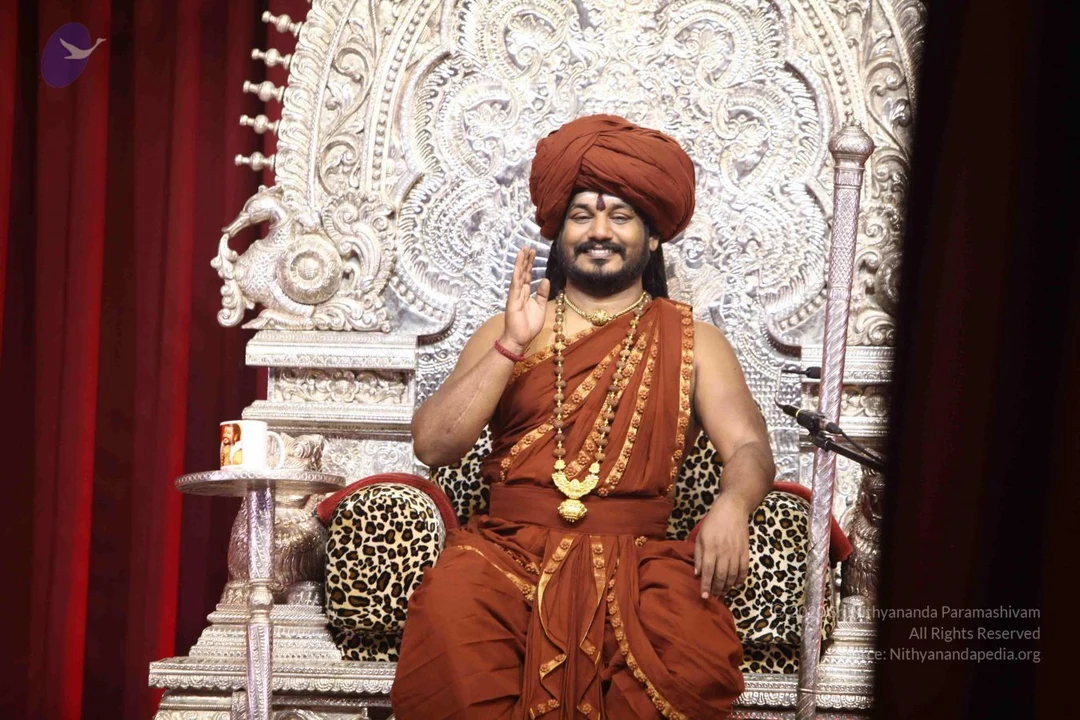
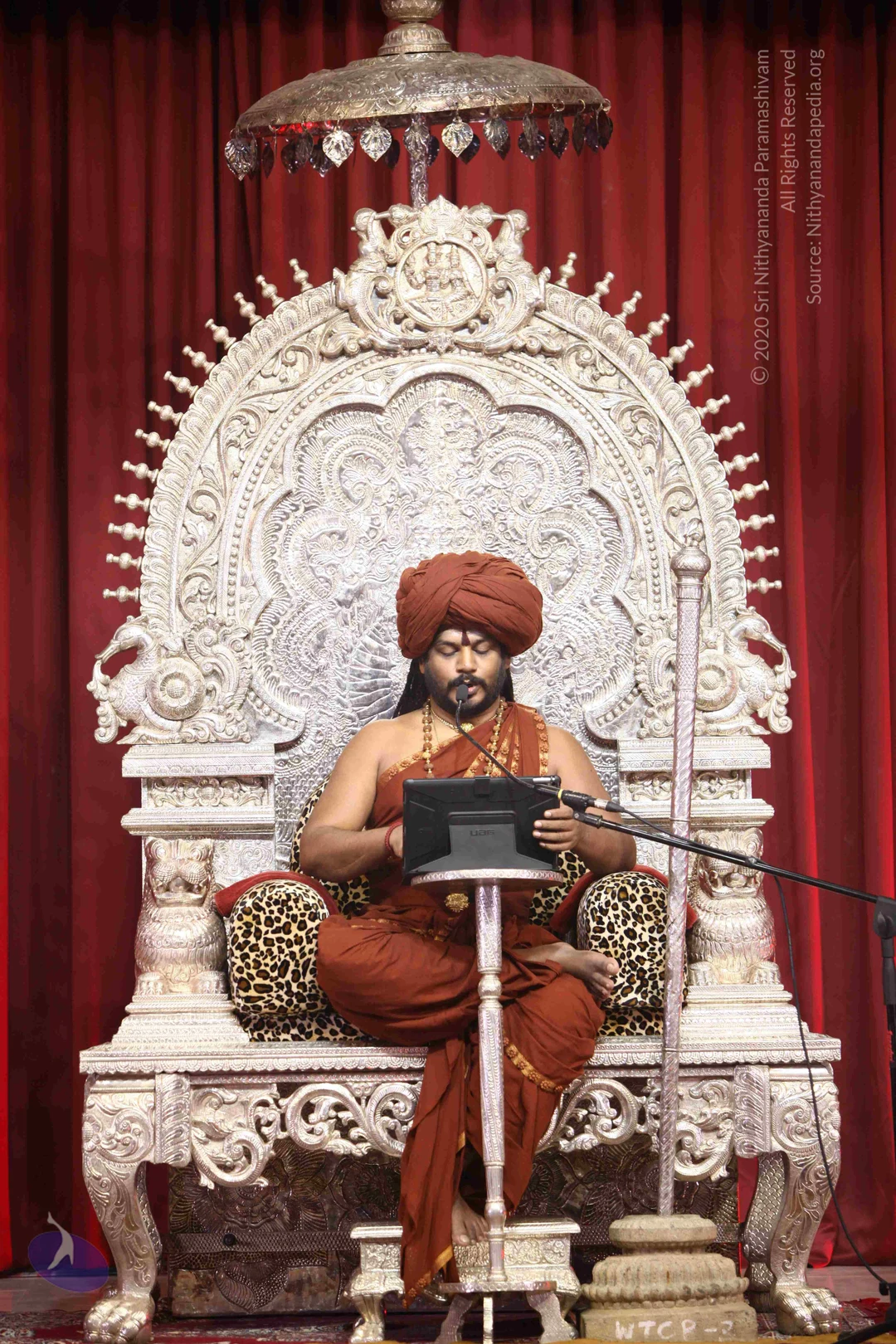
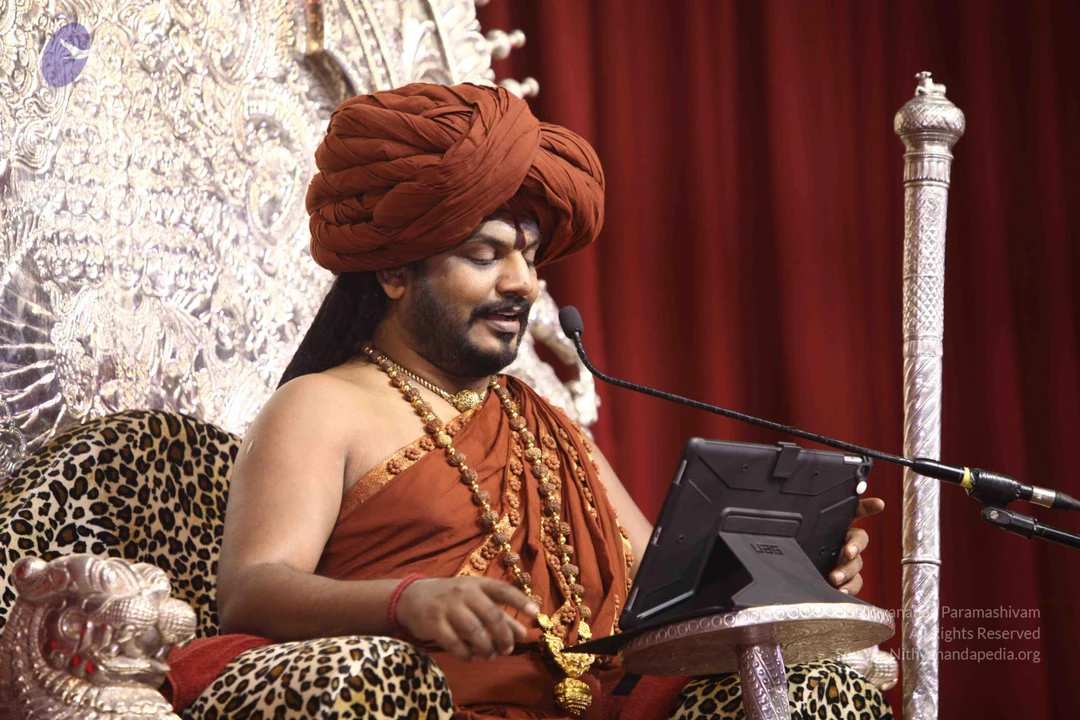
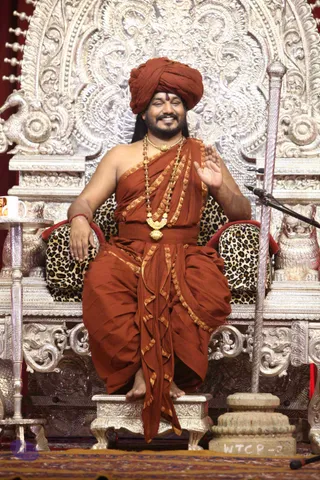
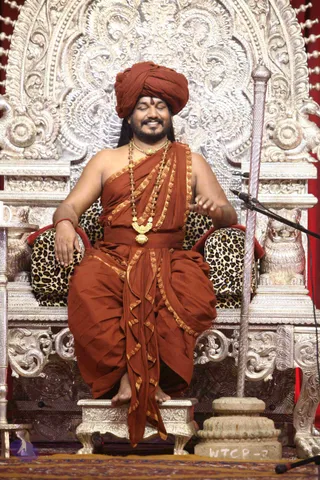
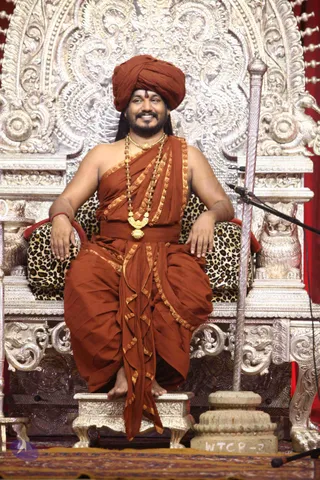
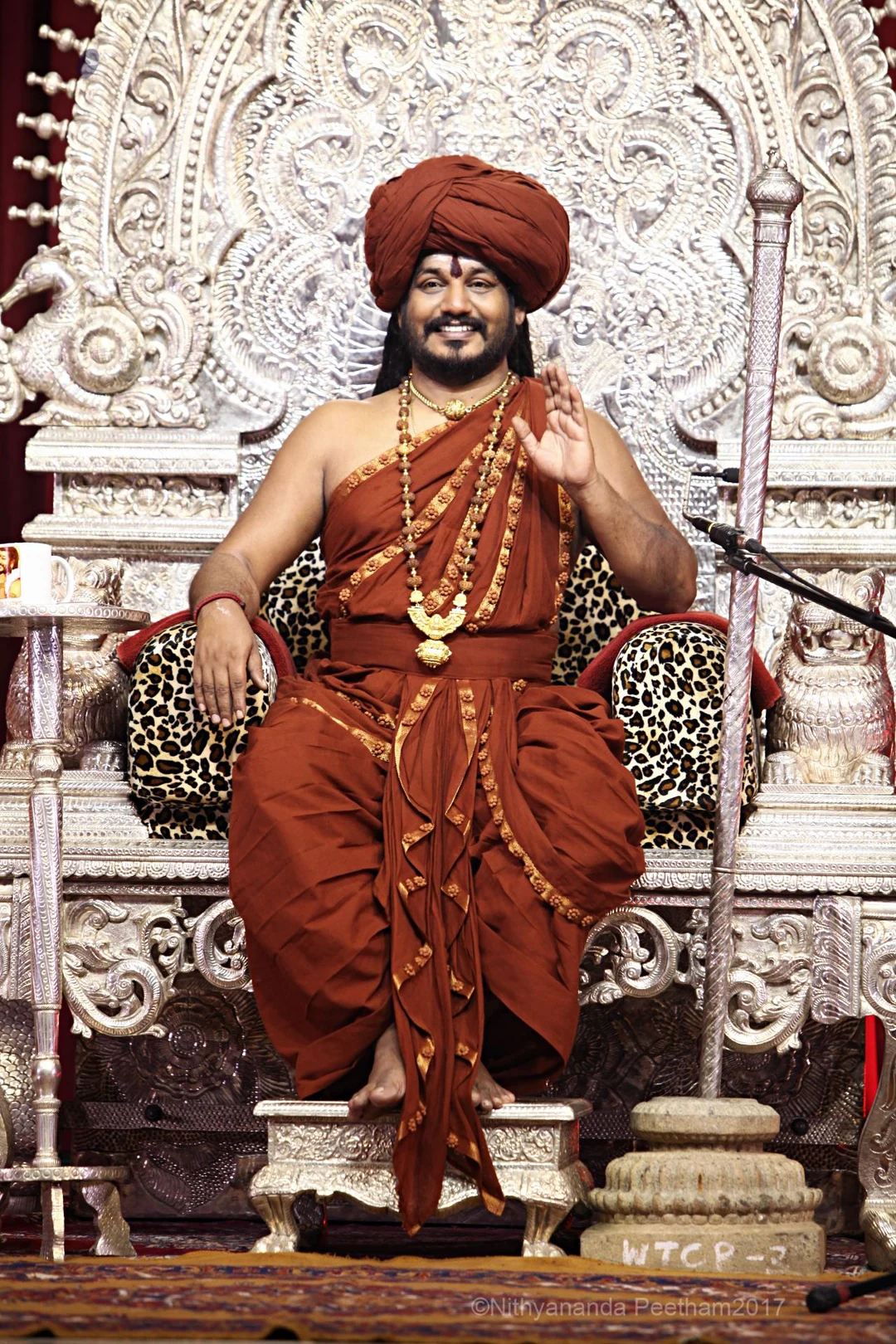
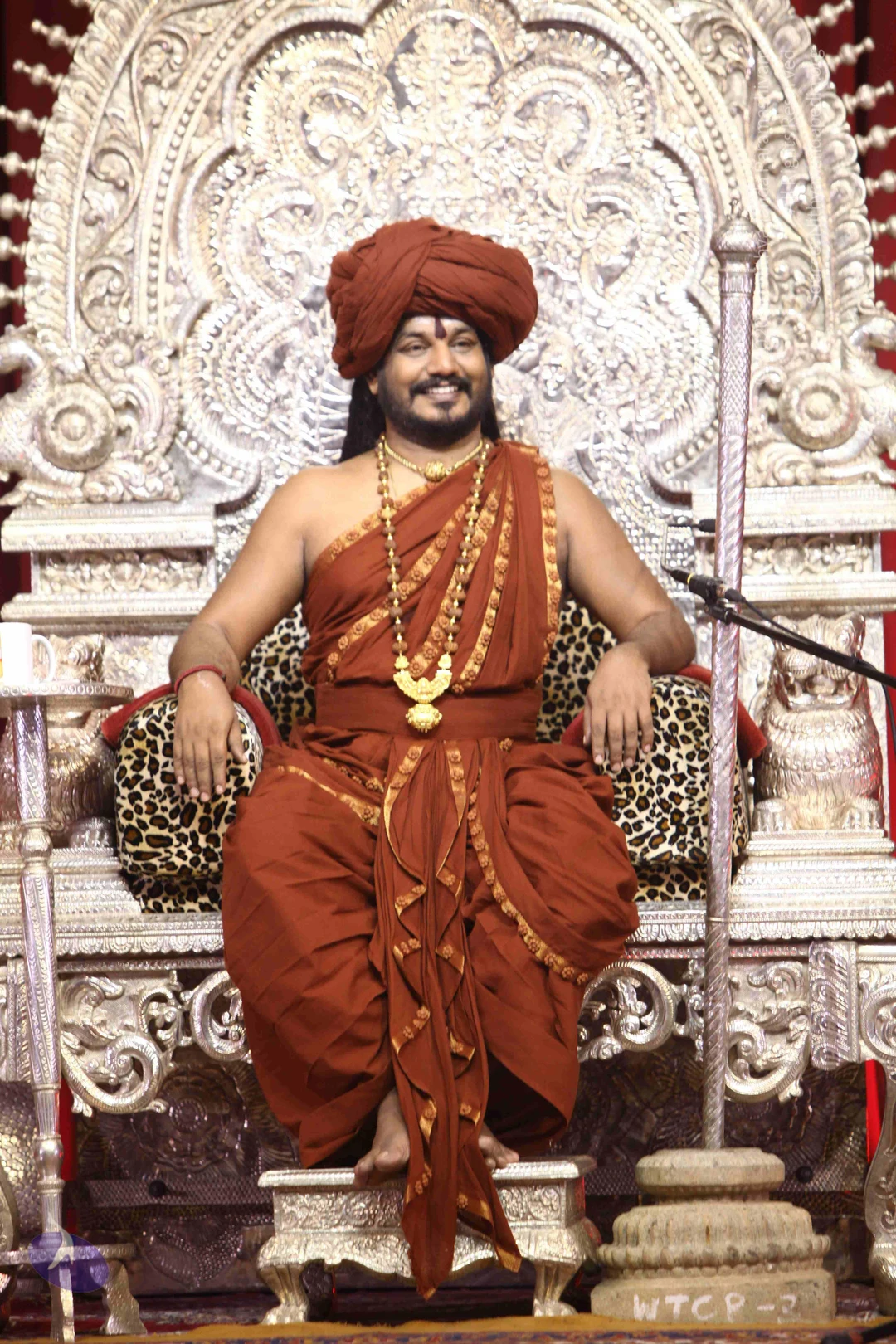
A seated man in rust-orange robes sits on an ornate silver throne with leopard-print cushions and carved lion-form armrests. He wears a matching orange turban with a red forehead mark, a rudraksha mala with a large gold pendant, and a gold necklace. A microphone stands at his right side and a silver staff rests beside the throne. He smiles with bare feet on a silver footstool. Behind him is an elaborate silver backdrop. A white cup sits on a small side table at left.A man seated on an ornate silver throne with leopard-print cushions, smiling and raising one open hand in greeting. He wears a rust-orange turban with a red tilak mark on the forehead, an orange-saffron draped garment with gold trim, a long rudraksha mala and a large gold ceremonial pendant necklace. A silver staff and a microphone stand are beside the throne, and a small silver table holds a cup. The wording 'WTCP-3' is carved on a stone base in the foreground. The appearance of this seated figure with a turban, saffron clothing, rudraksha mala and gold pendant fits the Swamiji description, so he is identified as Swamiji (probable) seated in person at a satsang.A bearded man in an orange-red turban and matching saffron-red draped robe sits on an ornate silver throne with leopard-print cushions. He wears a gold pendant on a rudraksha mala, a red-orange tilak on his forehead, and gestures with his raised right hand while smiling. A silver staff stands beside the throne and a microphone is at right. Swamiji (probable): the long hair, orange turban, saffron robes, rudraksha mala and ceremonial gold necklace match the page's claim that he is present; this is a photograph of a discourse on a silver throne.A man seated on an ornate silver throne with leopard-print cushions and carved lion figures, dressed in a rust-orange turban and draped orange robes trimmed with gold border and rudraksha beads, wearing a long rudraksha mala and a gold pendant necklace, with a red tilak on his forehead and a red thread on his wrist. He sits with eyes closed and smiling, one hand raised gesturing, bare feet resting on a silver footstool, with a silver staff beside the throne and a microphone in front. Appearance-based candidate: a person, seated in the role of speaker giving a satsang-style talk.A smiling man sits on an ornate silver throne with leopard-print cushions and carved lion armrests, against an intricately engraved silver backdrop. He wears a rust-orange turban, an orange-brown draped garment with gold-trimmed borders, a rudraksha mala, and a large gold necklace pendant, with a red mark on his forehead. A microphone stand stands beside the throne, and a stone pedestal sits to the right. The area is covered by a patterned red rug.A man seated on an ornate silver throne with leopard-print cushions, smiling, wearing a rust-orange turban, rust-orange draped garment with gold border, layered rudraksha malas and a large gold pendant necklace, with a red thread on his wrist and a red tilak on his forehead. A microphone stand stands beside the throne and a silver staff rests against it. A silver lion figure is on the right. The probable Swamiji cues are the swept-back long hair, turban, ceremonial gold necklace and rudraksha malas on a throne setting, so the subject is labelled as a probable Swamiji presence in person.

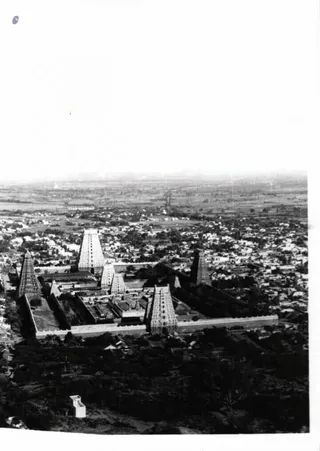
1978 - Arulmigu Arunachaleshwara Temple

24 photosView all
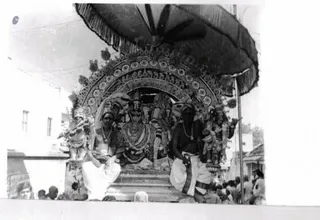
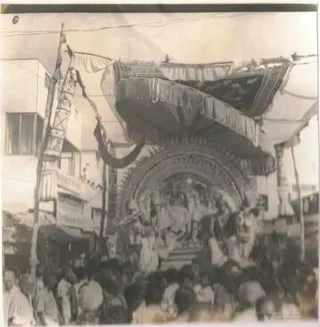
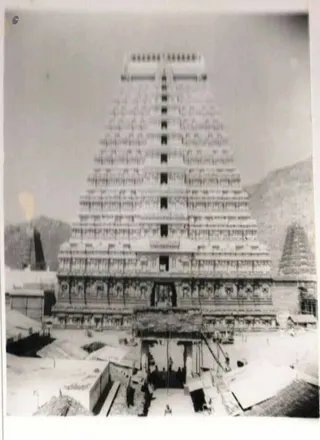
A black-and-white archival photograph of a tiered temple chariot, a tall tapering wooden ratha with stacked roof tiers and a finial, pulled through a dense crowd of people in the foreground. A rocky hill rises behind the chariot, with low buildings with balconies to the right. The image looks like an old print with a faded, grainy texture.A sepia-toned vintage photograph of a rocky hillside path with a worn stone-paved trail winding upward between boulders and sparse scrub. Three people walk away from the camera along the path: the left figure in a white garment carries a small bag, the centre figure in a light wrap carries a large white bundle or container, and the right figure in a pale garment walks behind. Their clothing is simple white and cream, and the landscape is arid and open under a pale sky. A faint photo credit appears in the lower right corner.Black-and-white photograph of a temple procession. At centre, a large ornate palanquin or ratha canopy with a dark fringed umbrella overhead is decorated with rows of round lamps and garlands, and holds a richly adorned deity murti draped in garlands. Two men stand beside it: the one on the left wears a bare upper body with a shawl draped over the shoulder and a white dhoti, with a beaded necklace; the one on the right wears a dark shirt, a white dhoti and a beaded necklace. A crowd of onlookers fills the street below and at the edges of the frame, and a small figure stands on the left side of the carriage.Black-and-white archival photograph of a temple procession in an old town street. A large ornate wooden chariot (ratha) with a carved front panel of deity figures and sculpted reliefs is pulled forward, topped by a fringed canopy with draped cloth. Tall flagpoles with banners rise at left. Dense crowds of people, many in white dhotis and light clothing, fill the foreground and street, and multi-storey buildings with shop fronts line the background.A black-and-white archival photograph of a tall, tiered gopuram temple tower rising in the centre, its stacked levels covered with rows of carved figures and sculpted ornament, with small dark openings running up its height. Lower in the frame, a roofed entrance porch stands in front of the tower, with a few small figures and scaffolding-like poles near the base. A paved or sandy open courtyard surrounds it, with low walls and a smaller shrine structure at right. Hills rise faintly behind the tower under a pale sky. No people in the foreground are clearly identifiable beyond a few tiny figures near the porch.