Skip to content
Sunday

23 June 2013

Are your Negative Patterns Infecting You

Dated photos
796
Source pages
1
Media
2
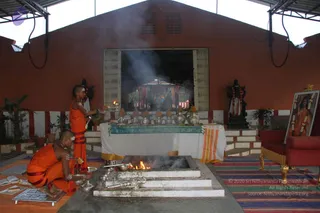
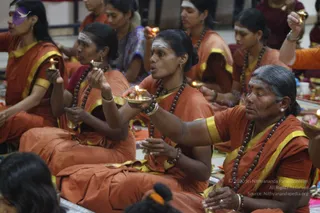
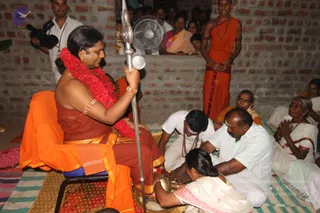
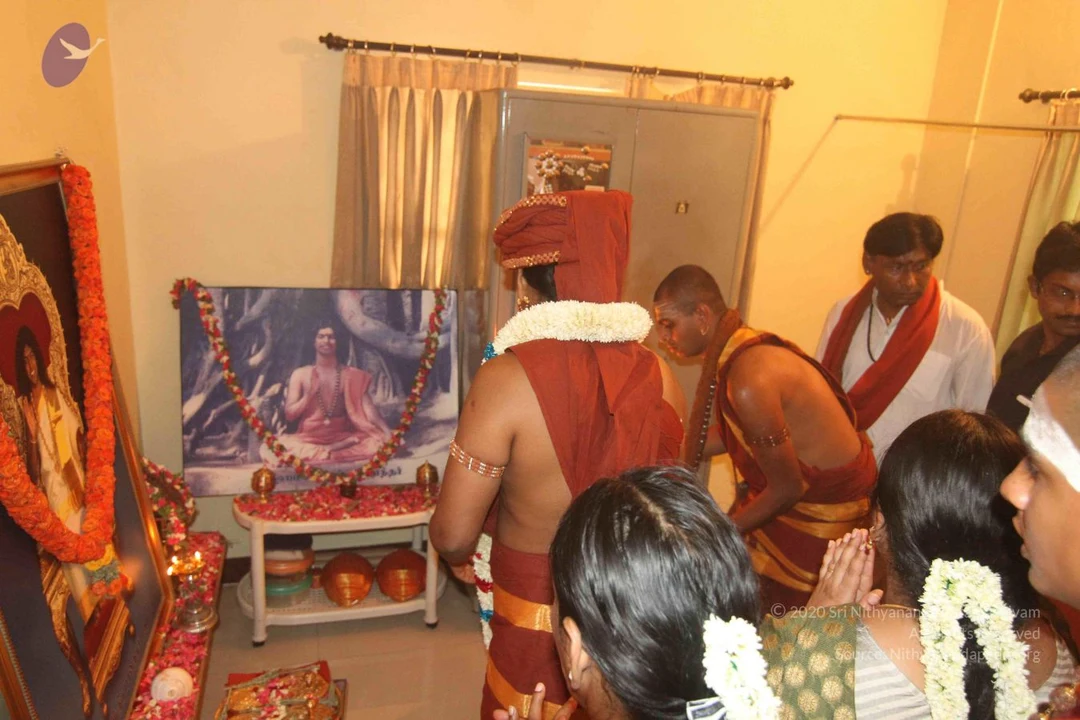
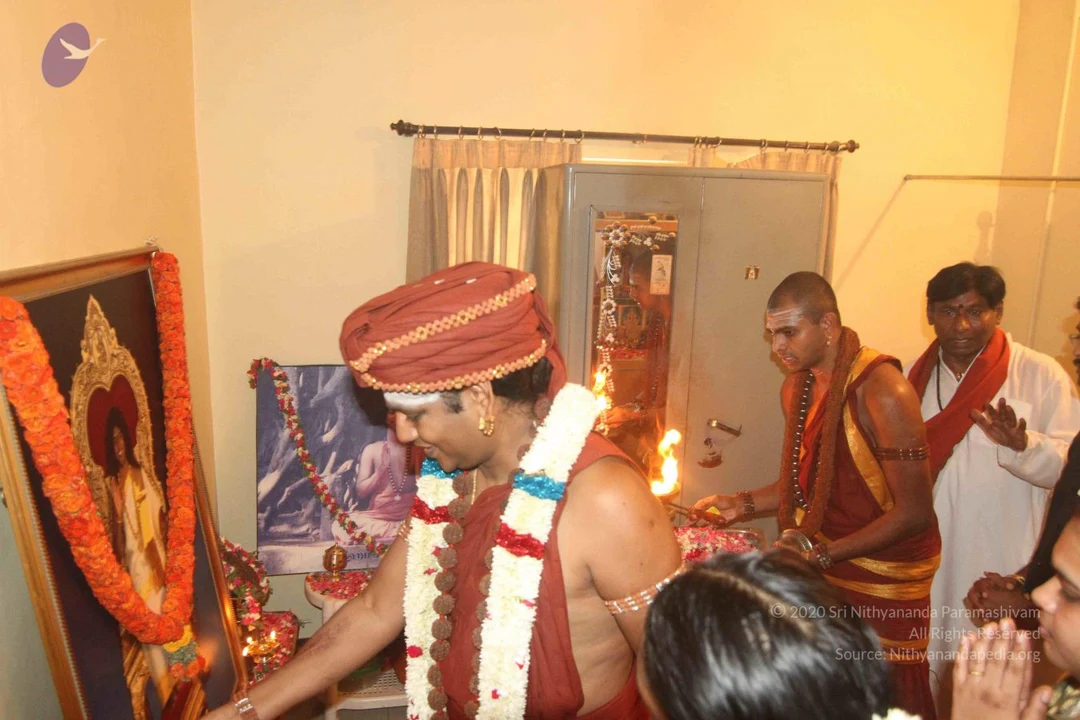
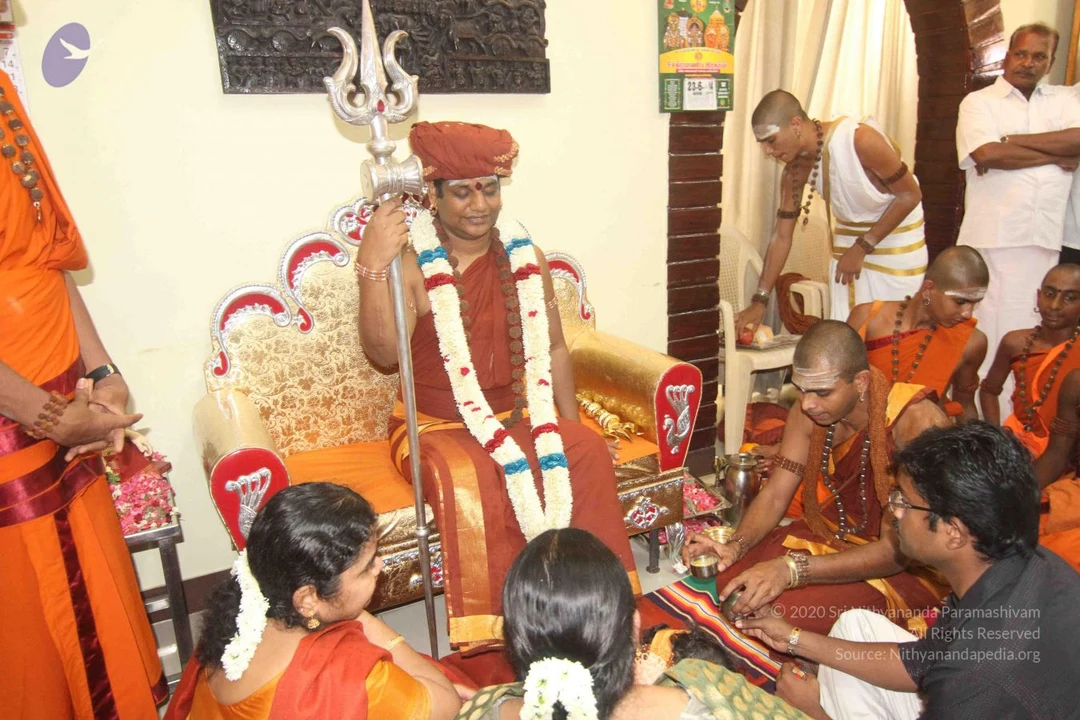
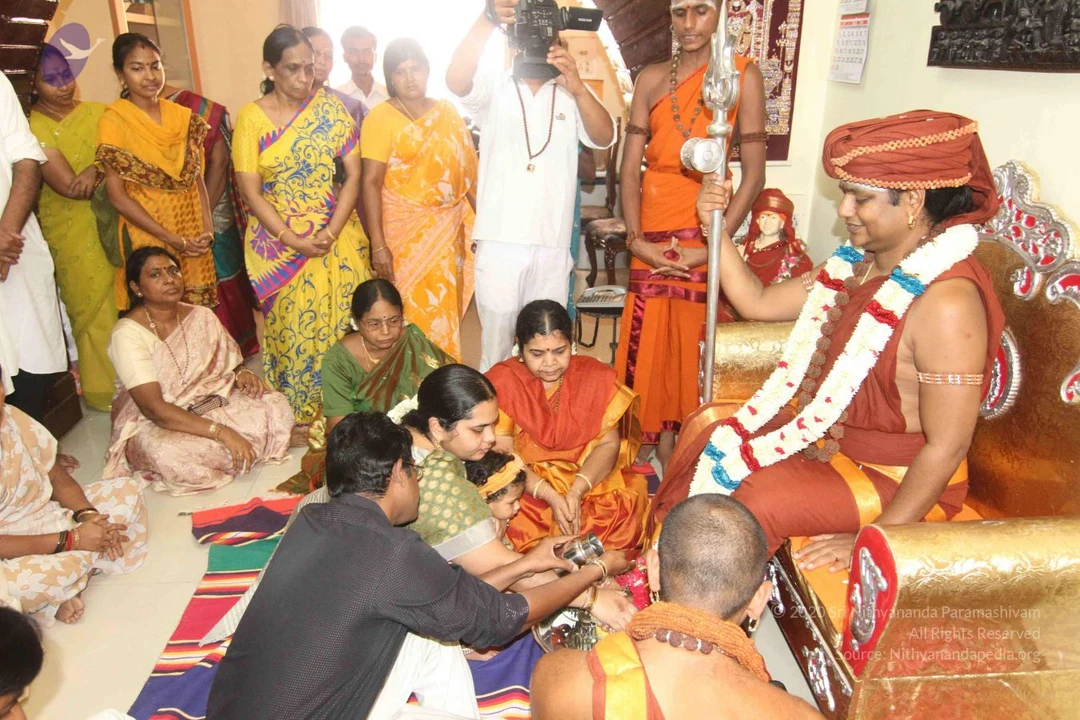
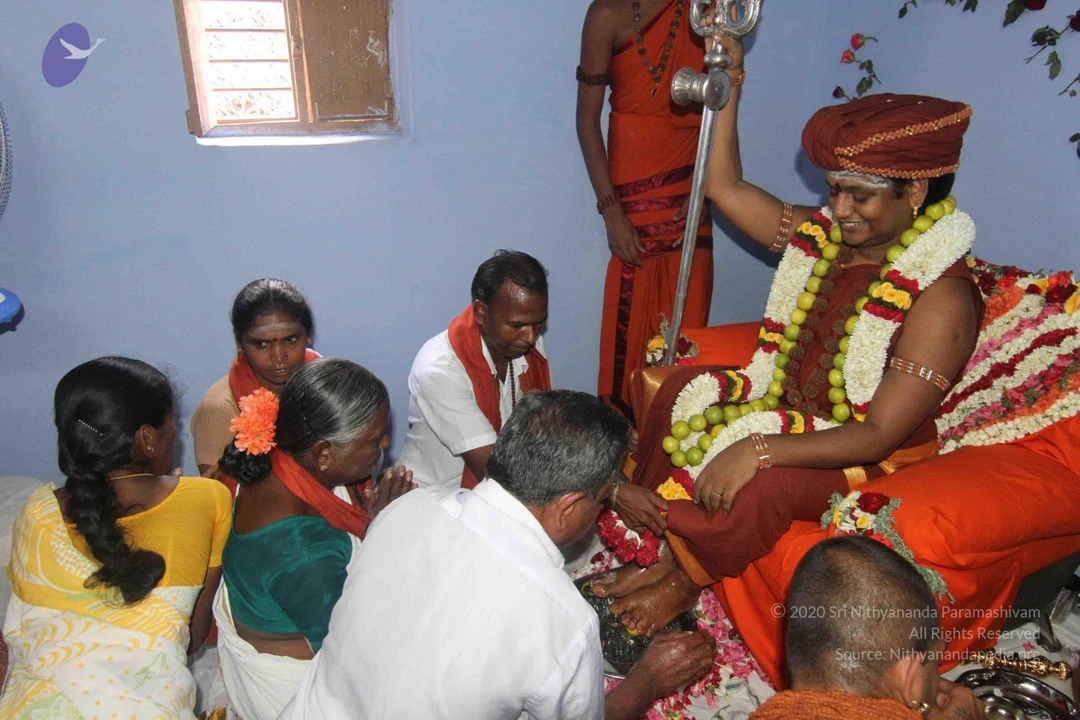
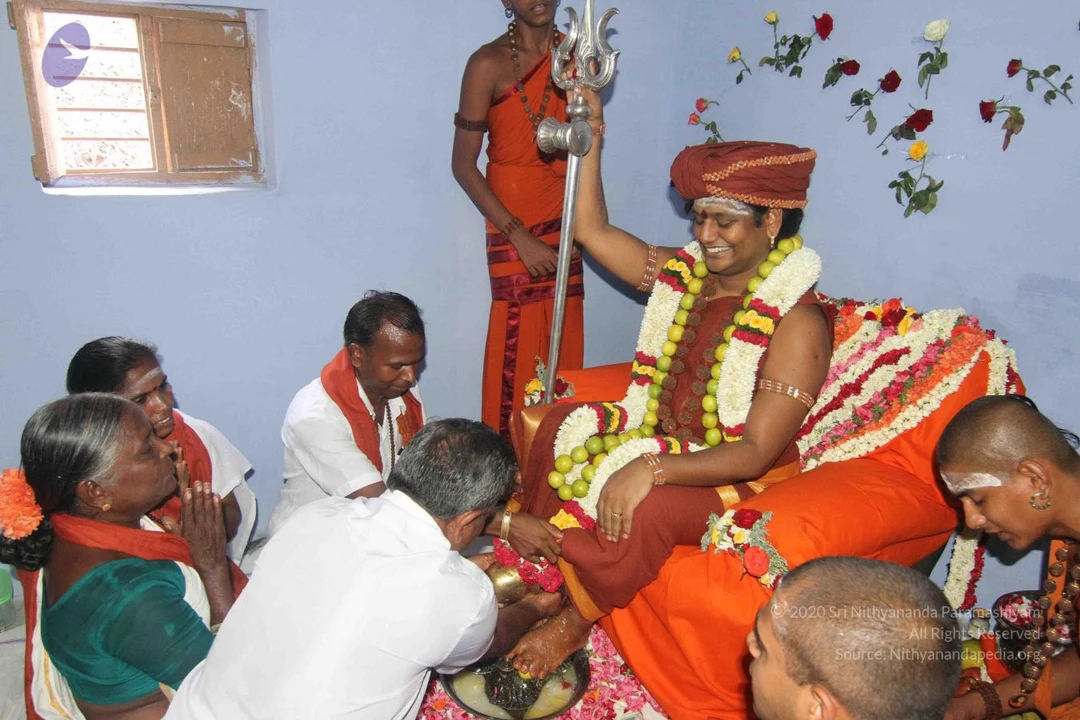
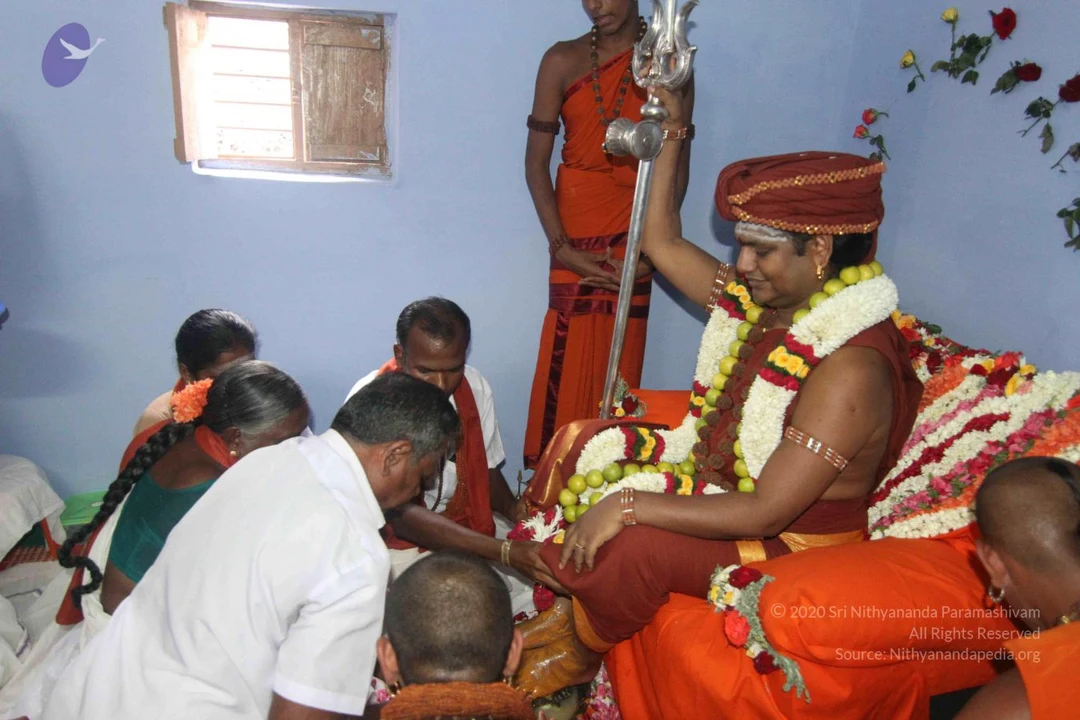
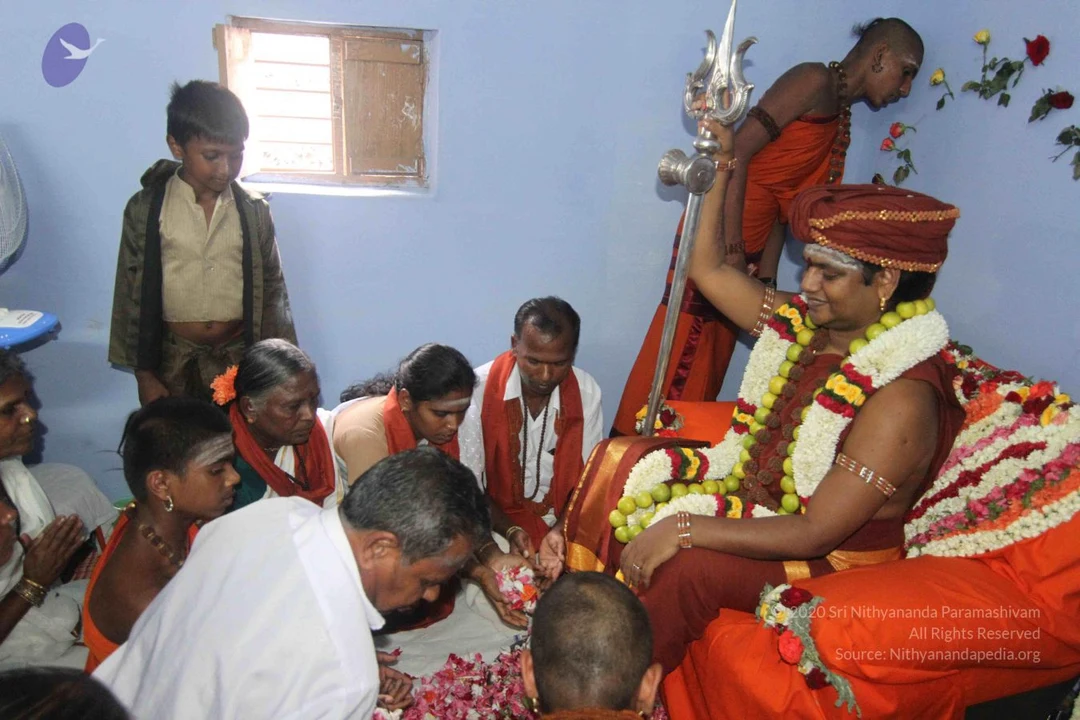
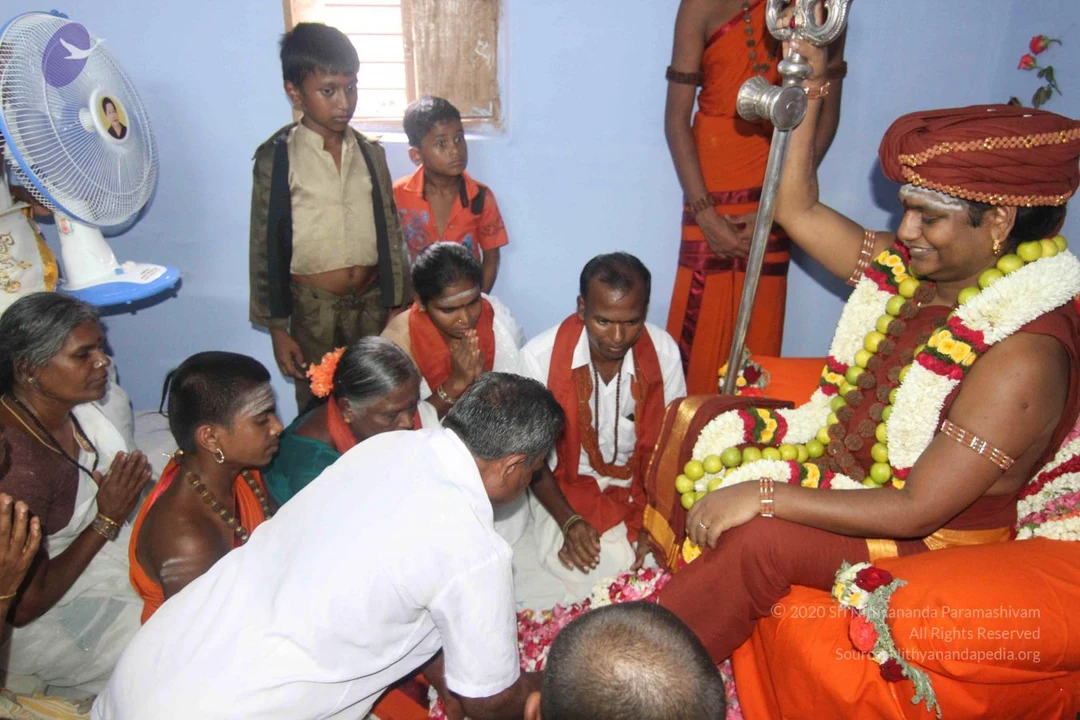
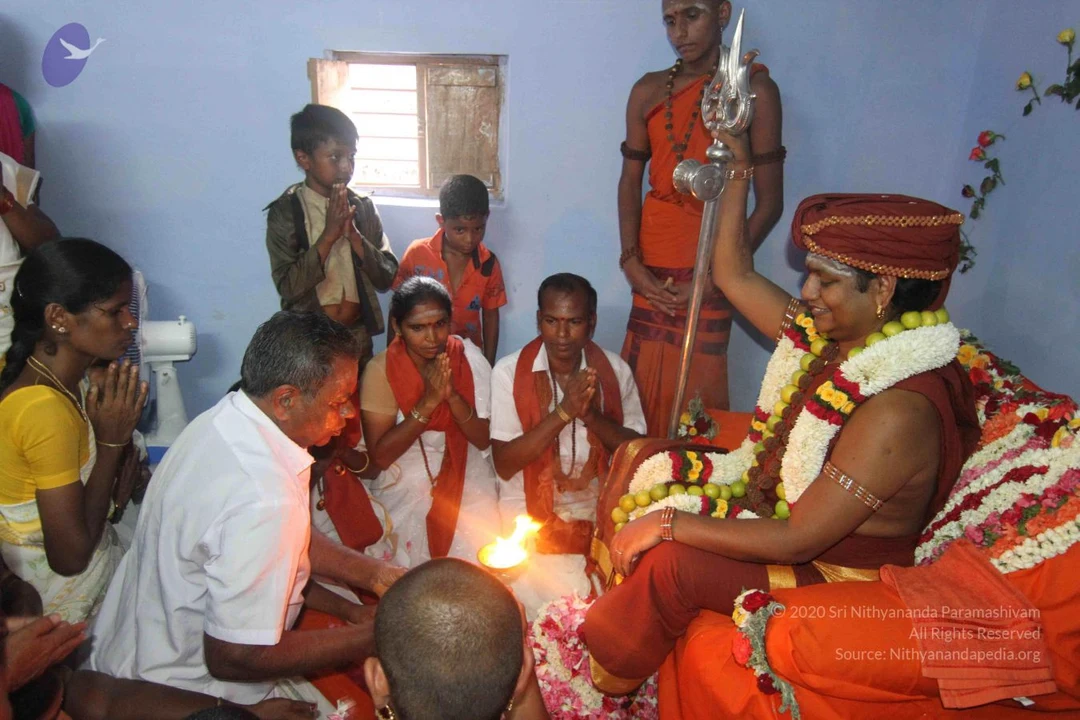
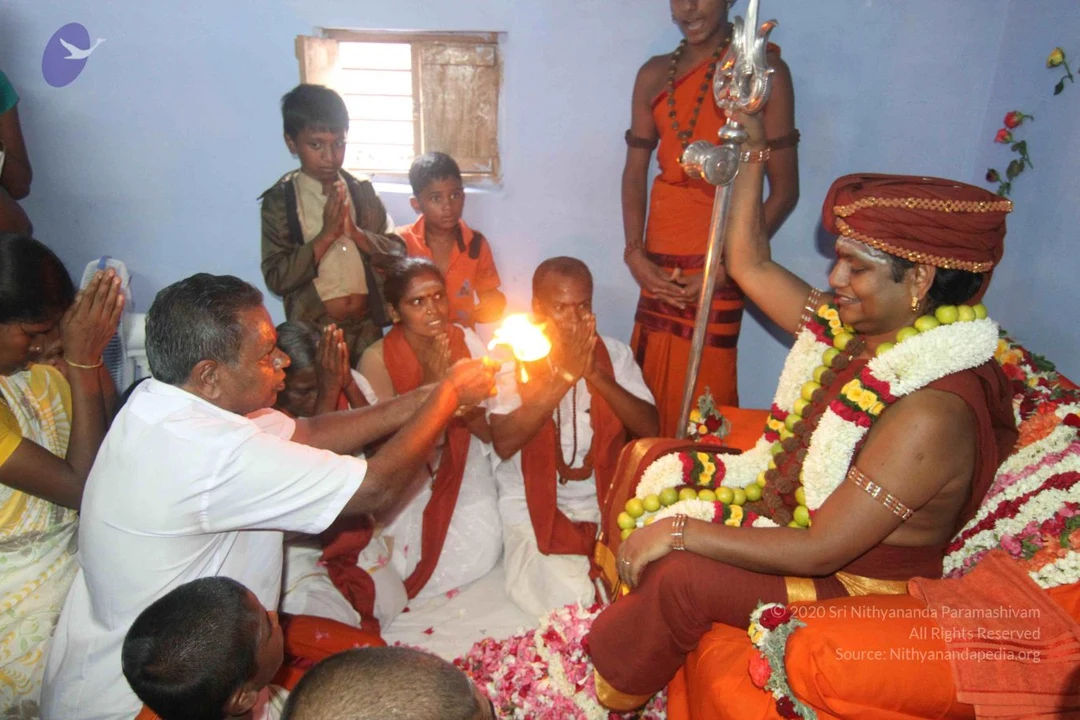
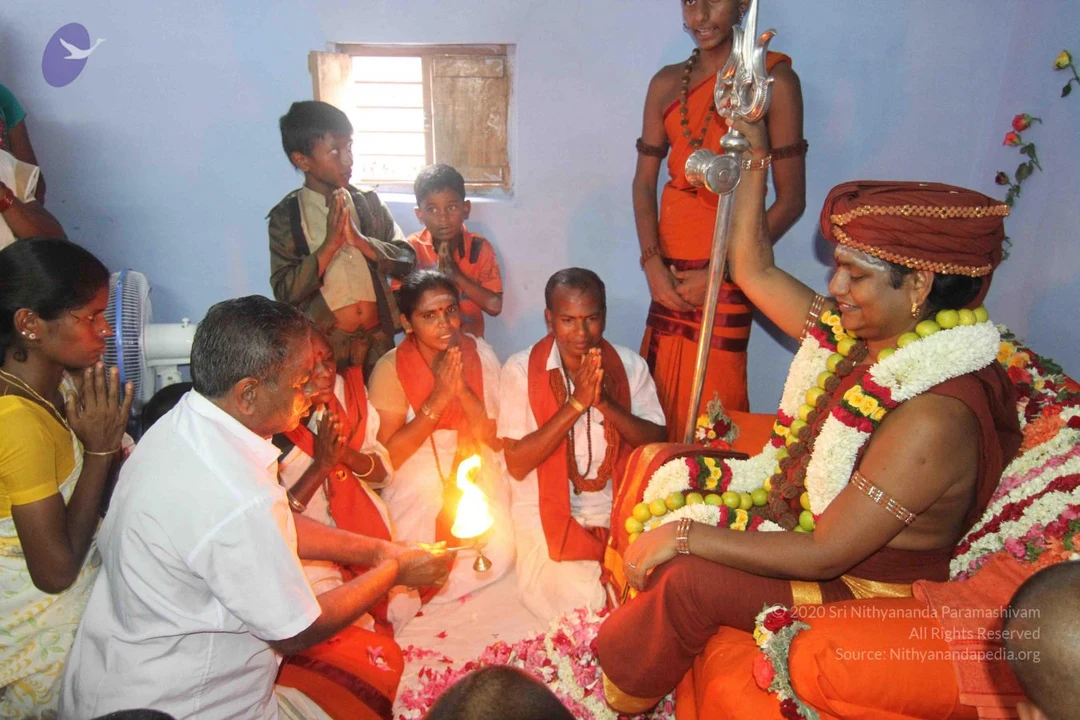
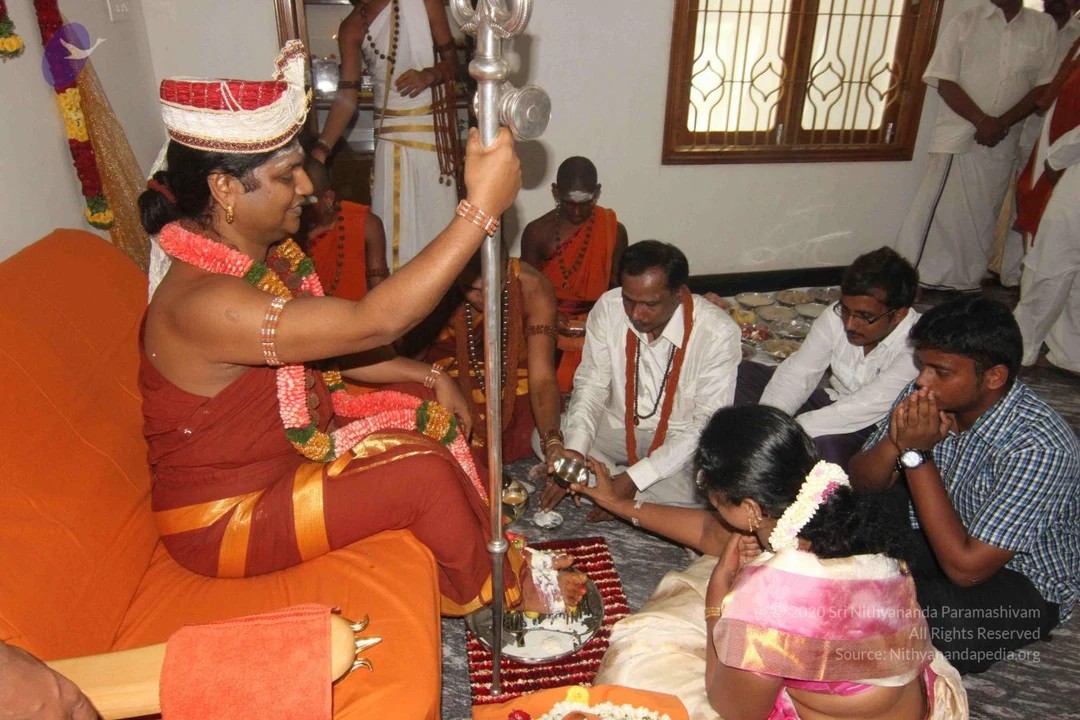
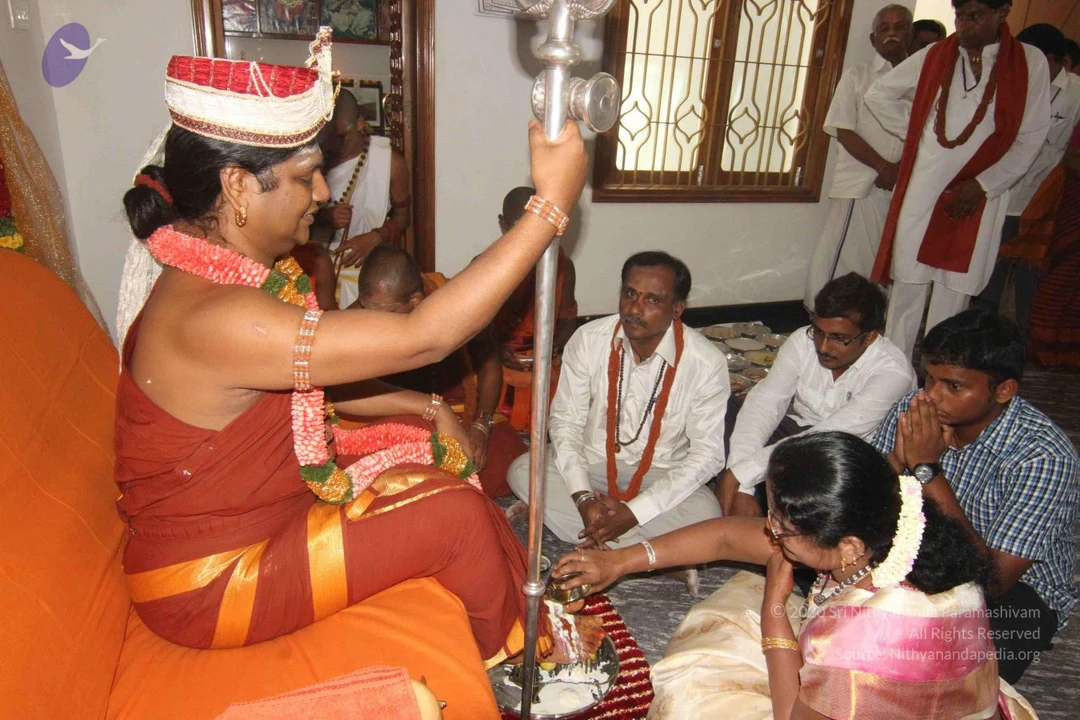
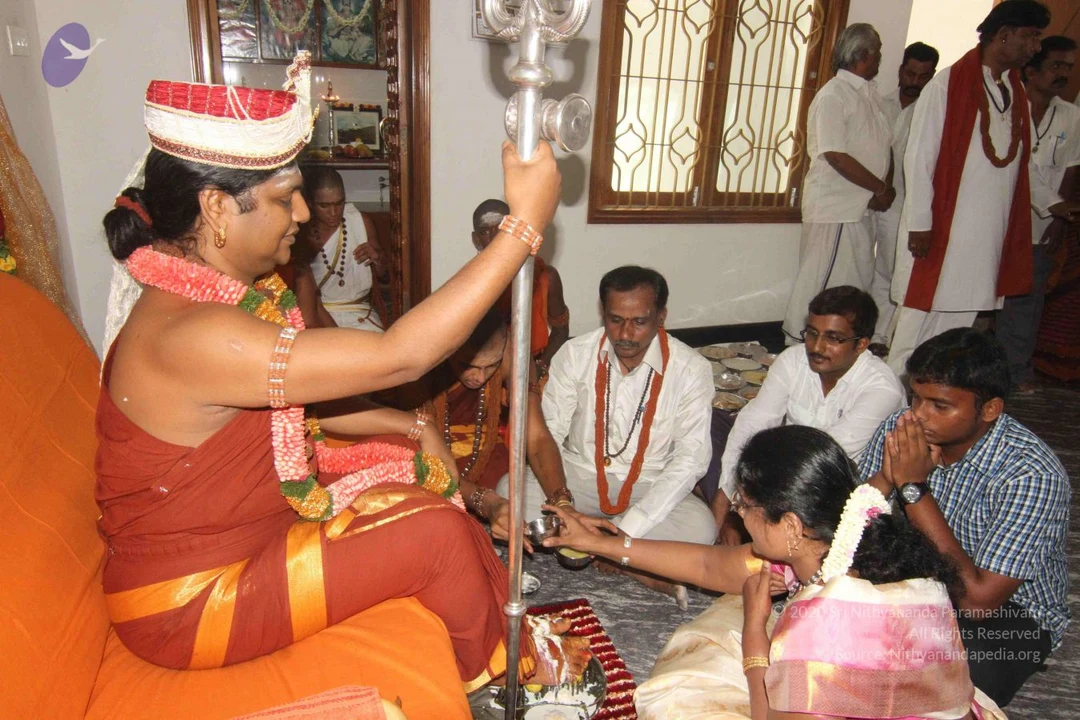
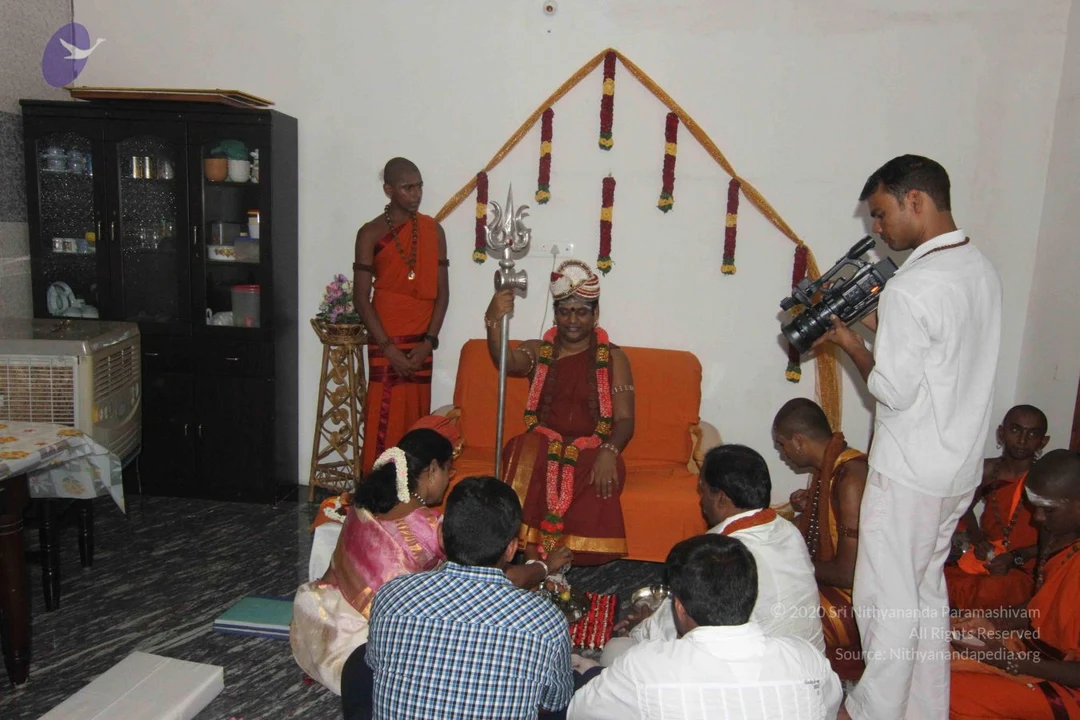
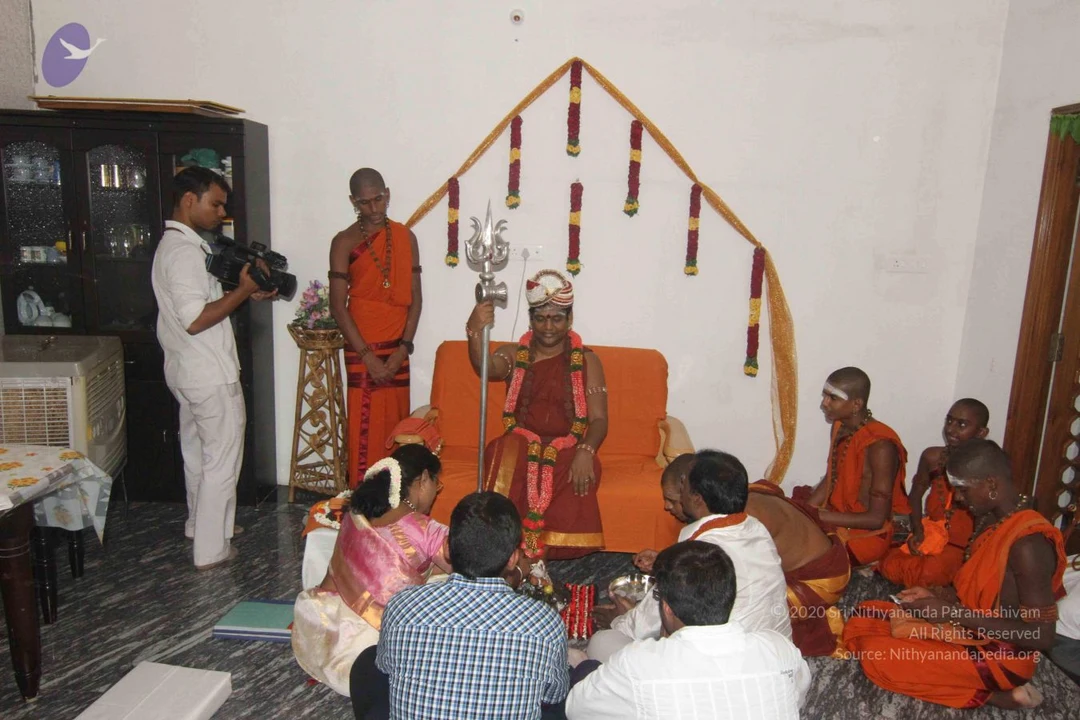
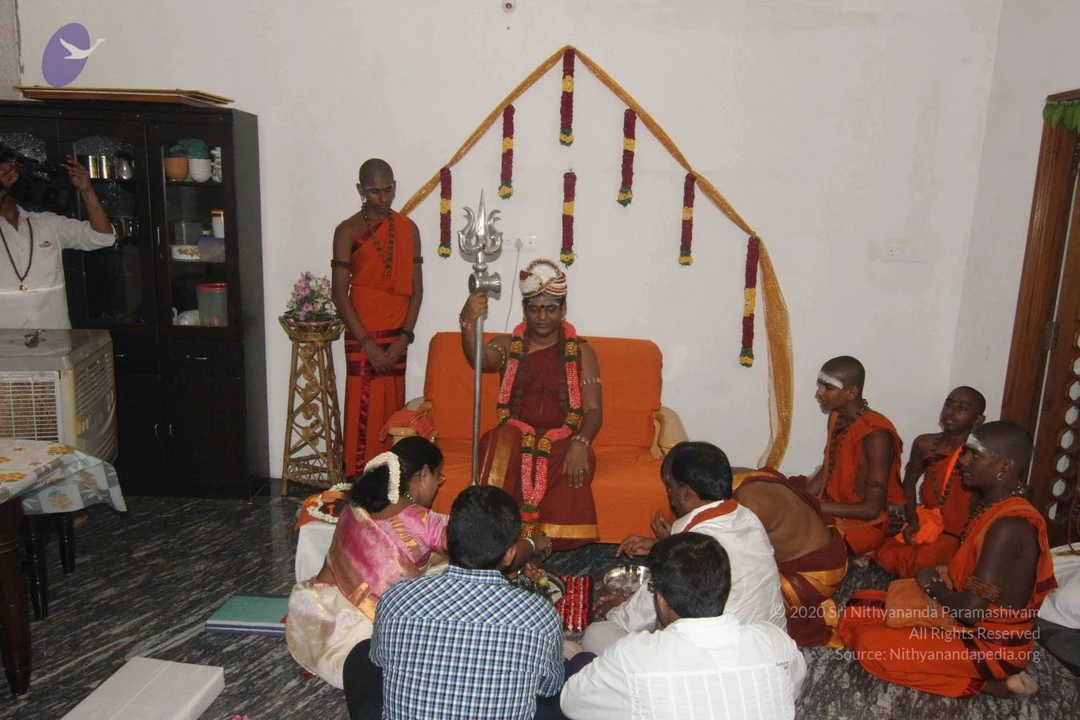
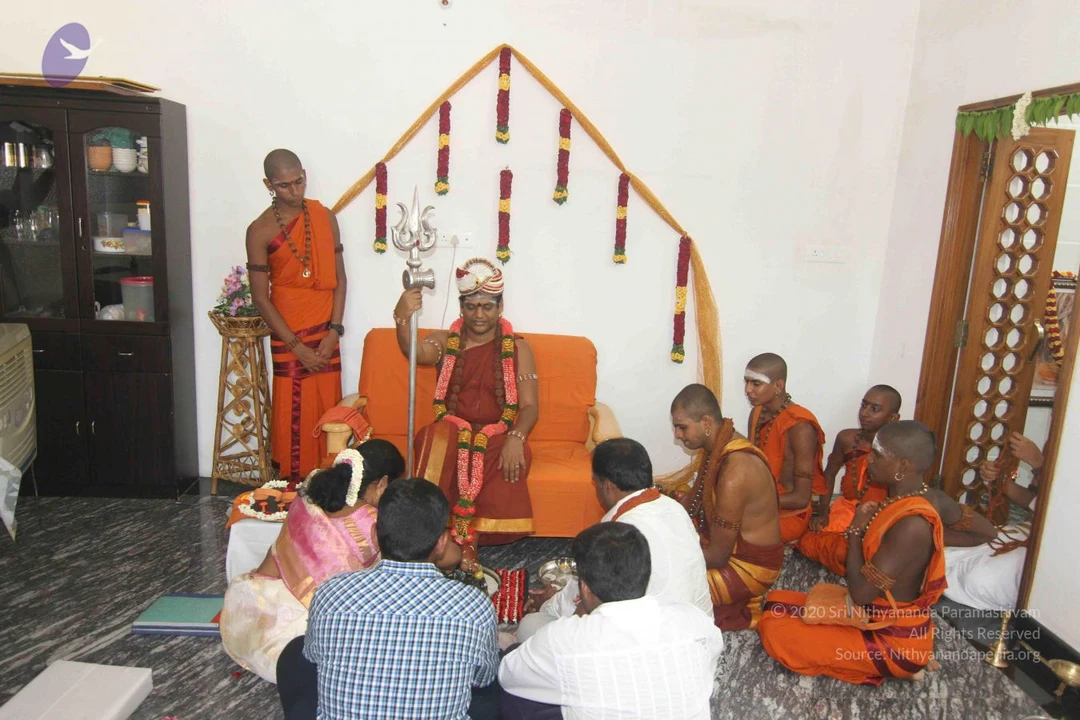
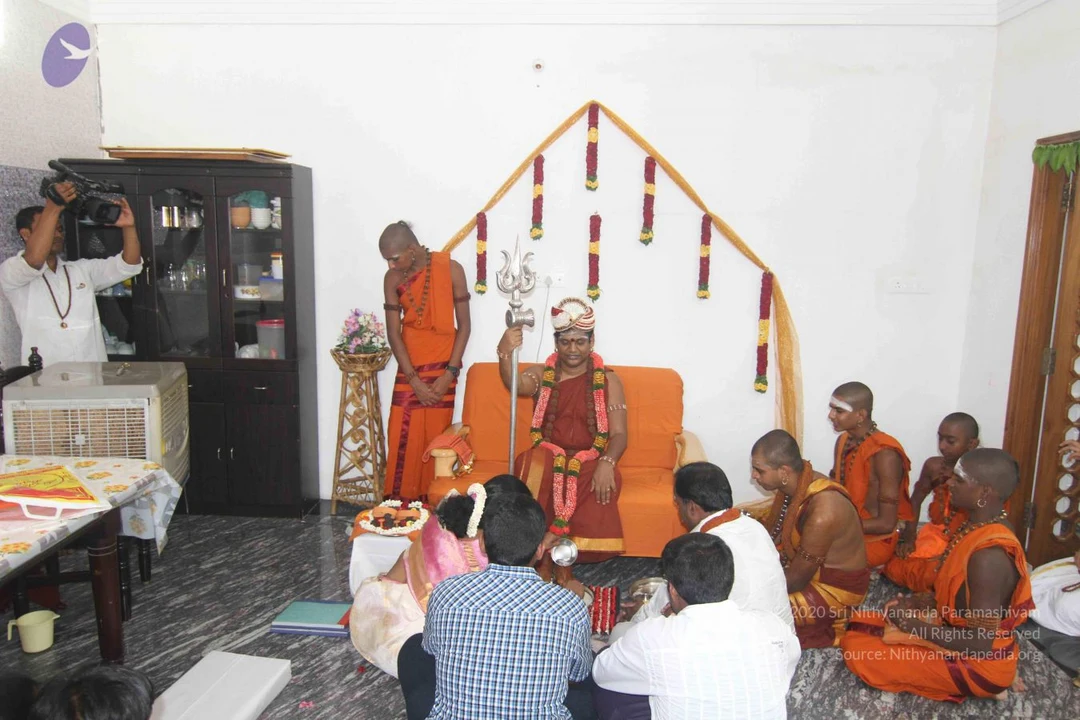
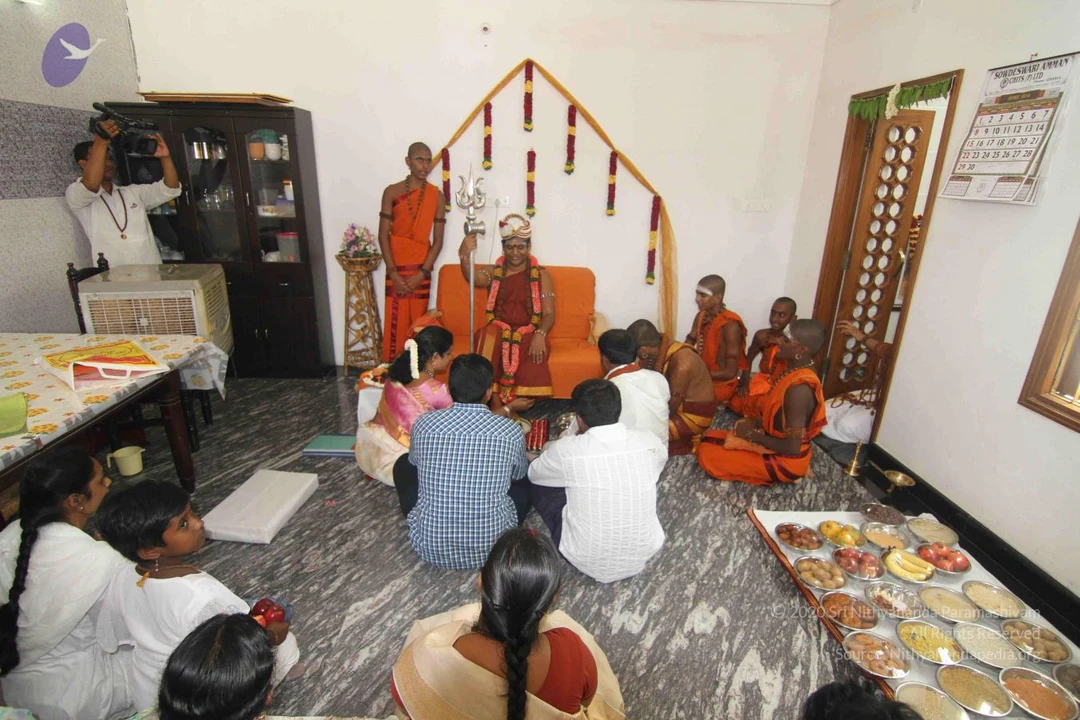
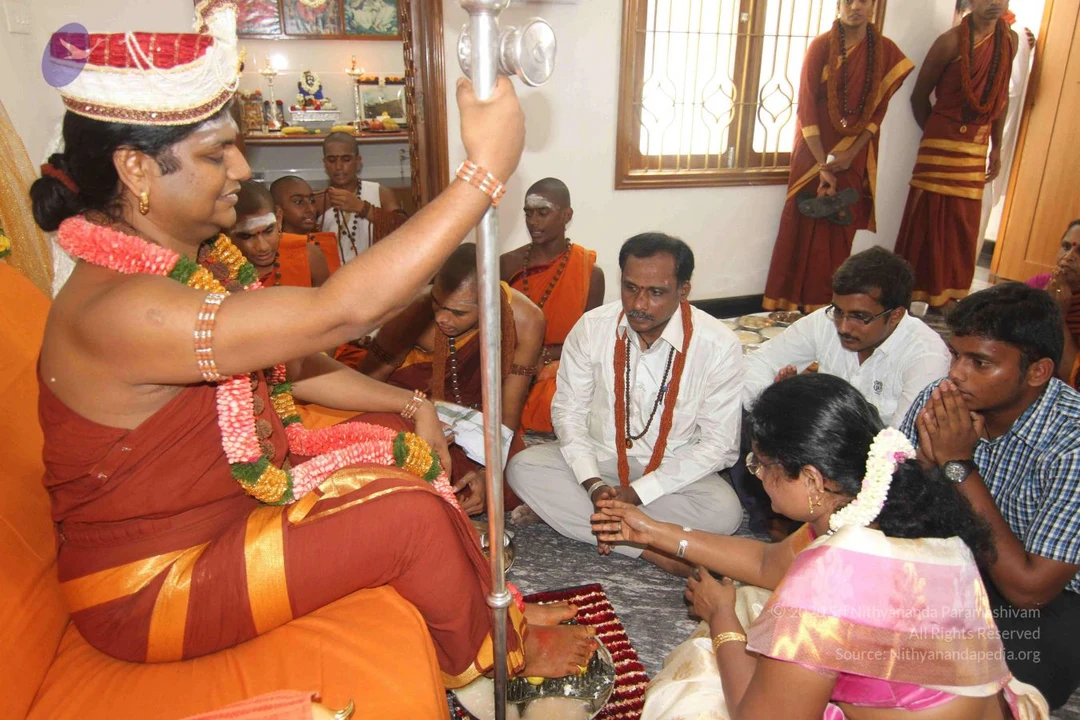
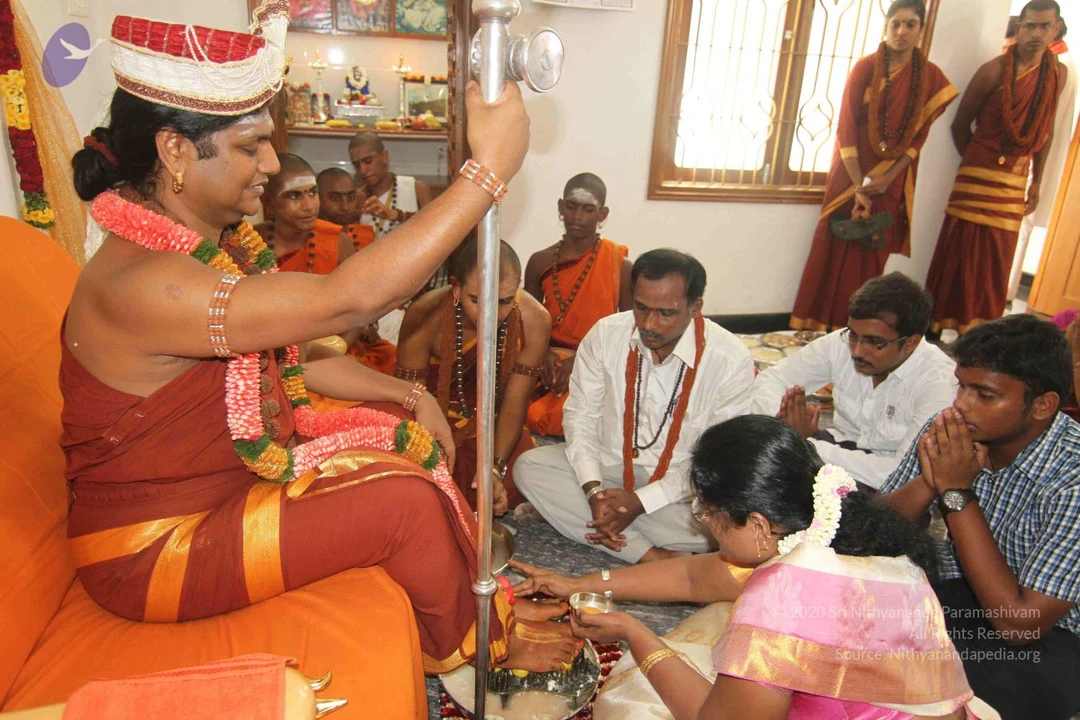
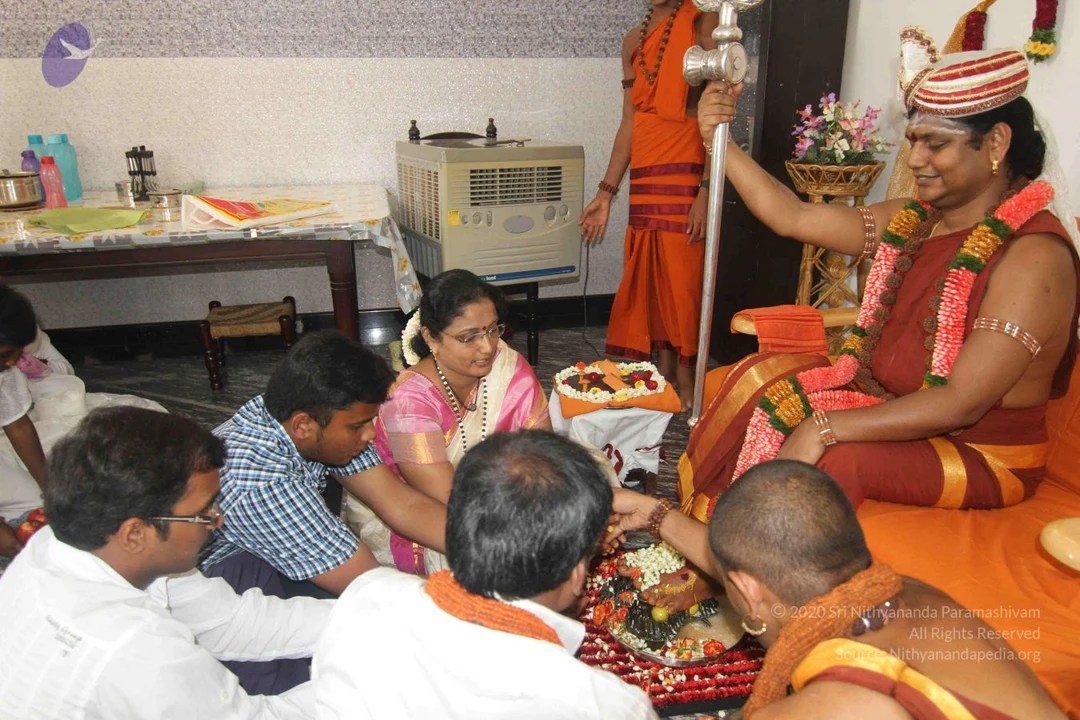
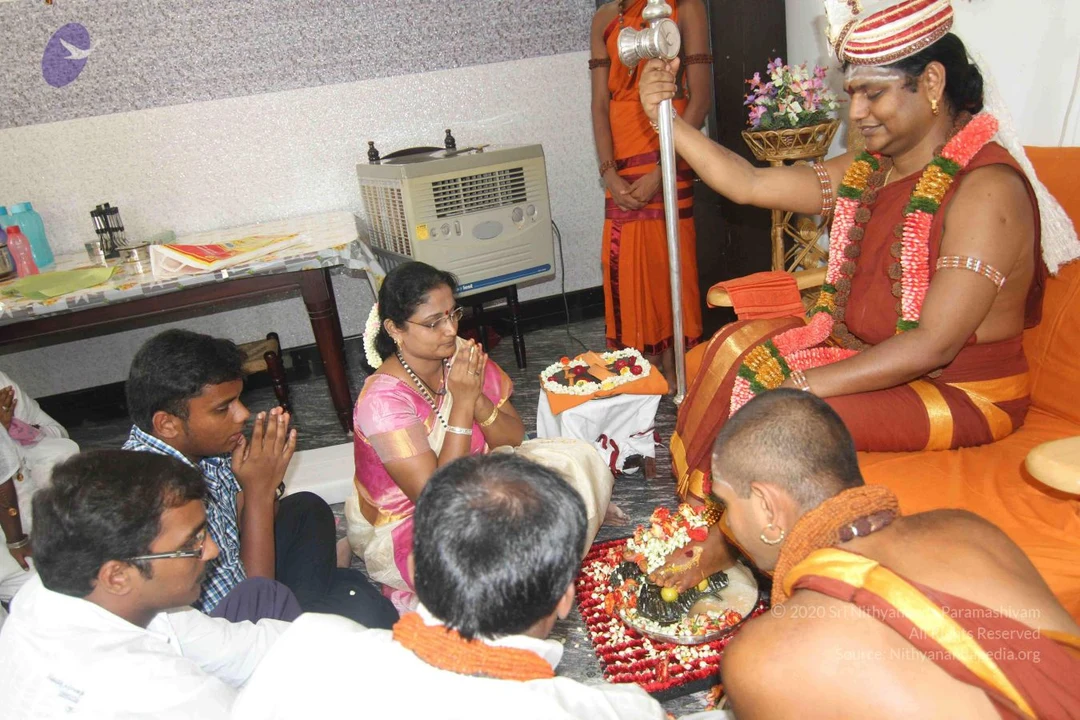
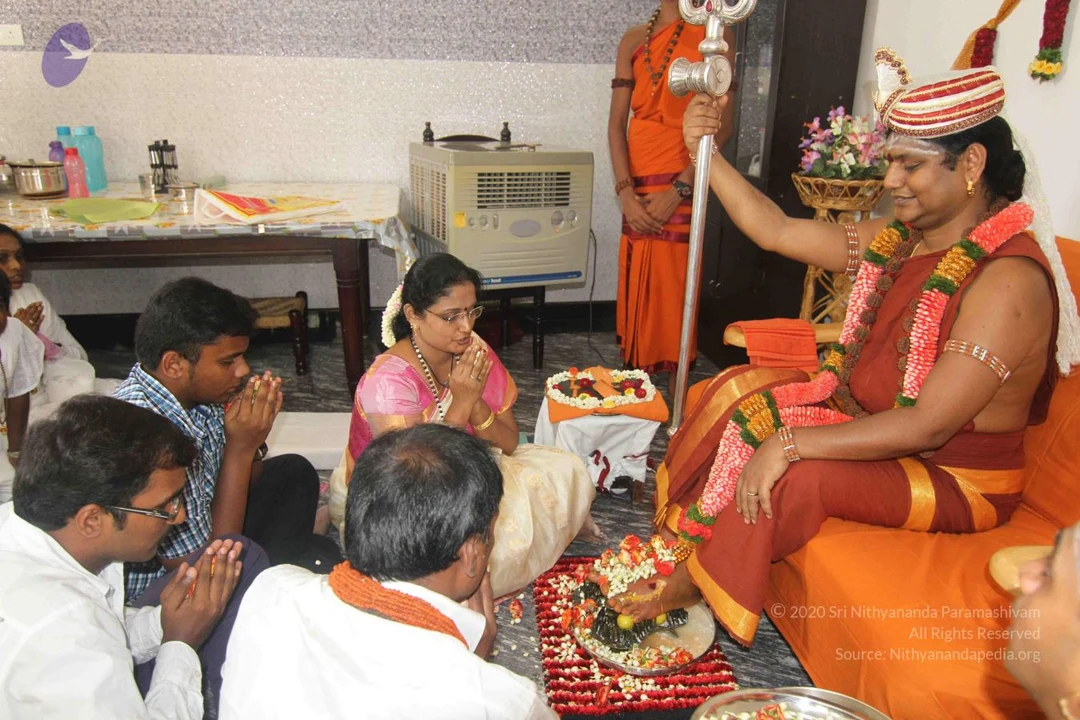
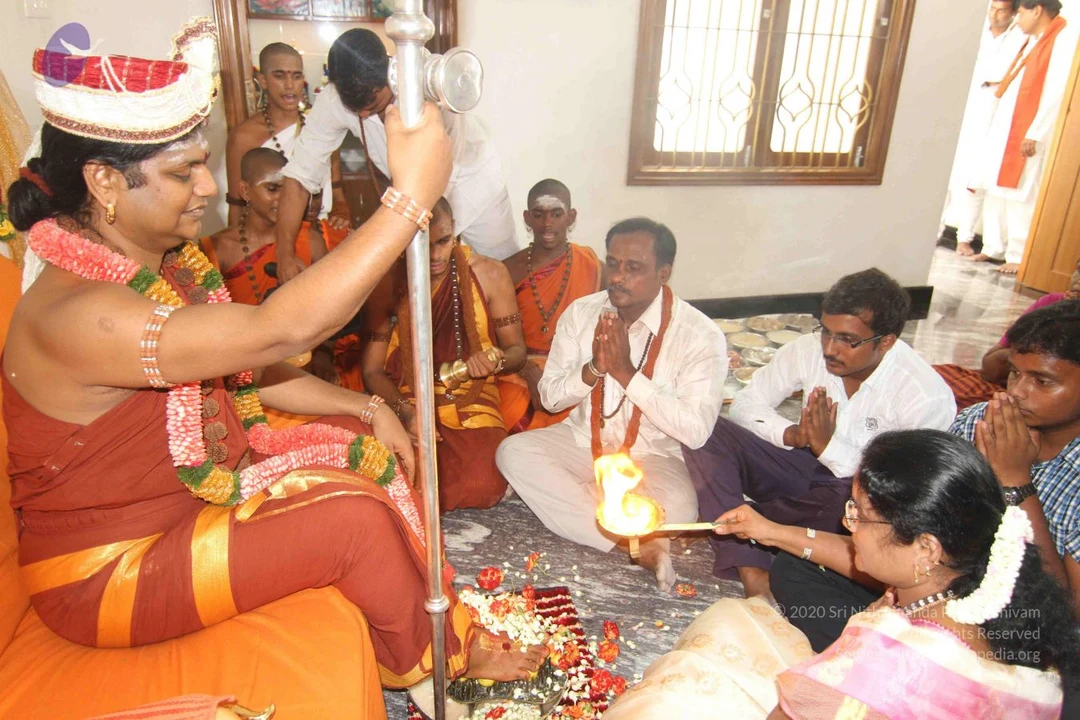
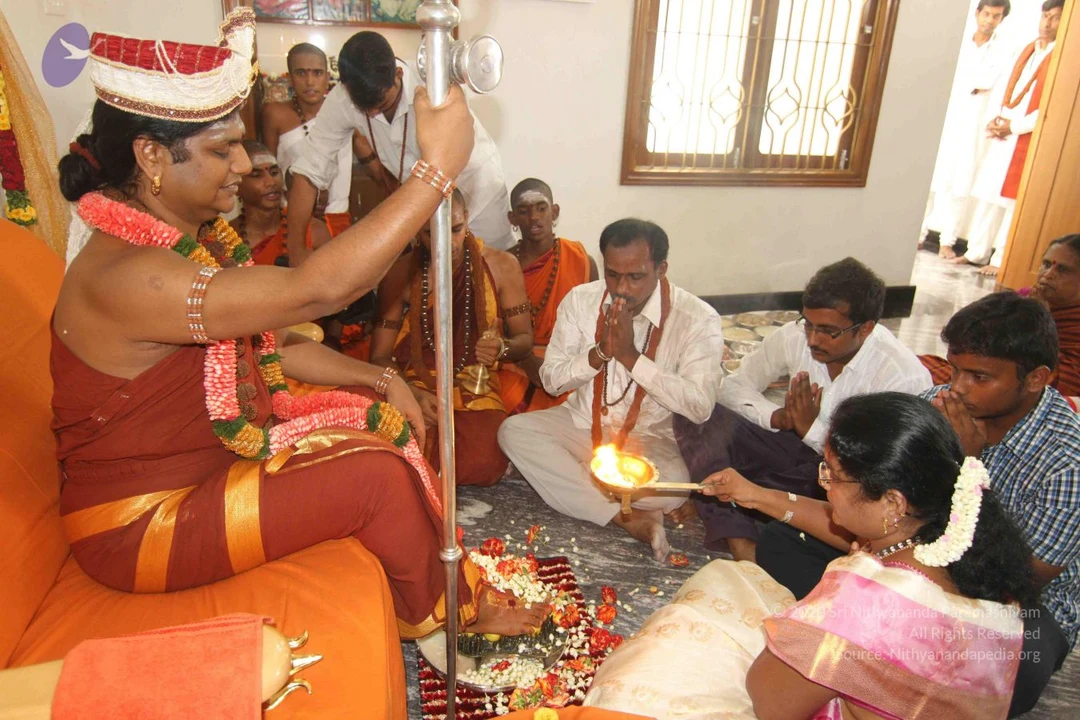
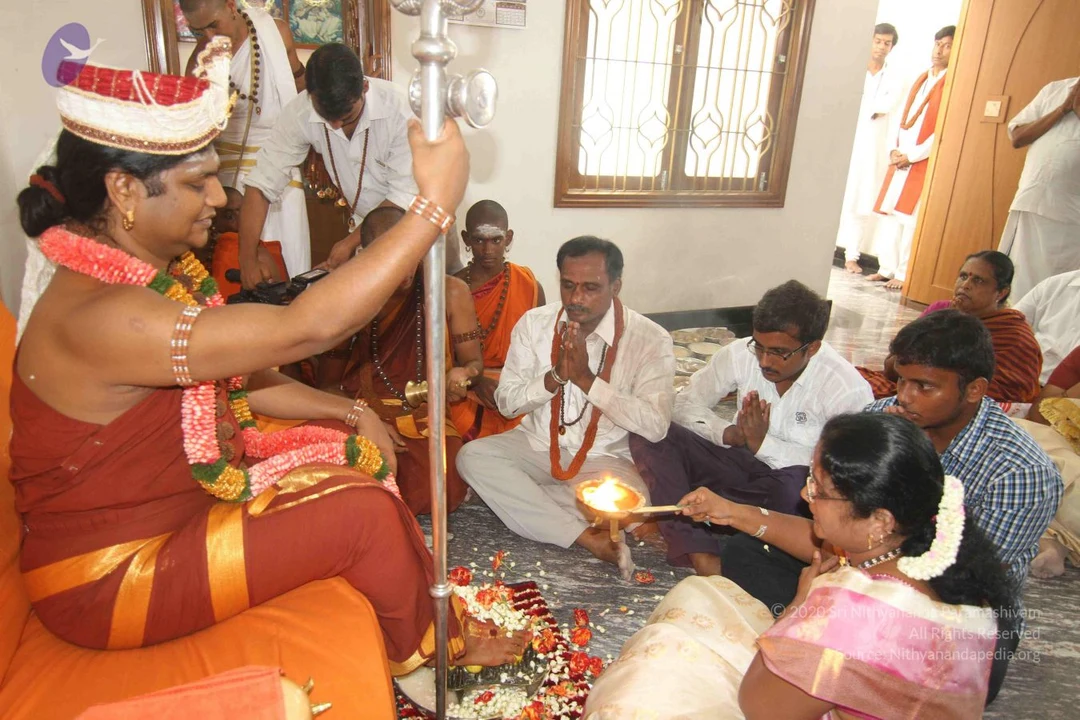
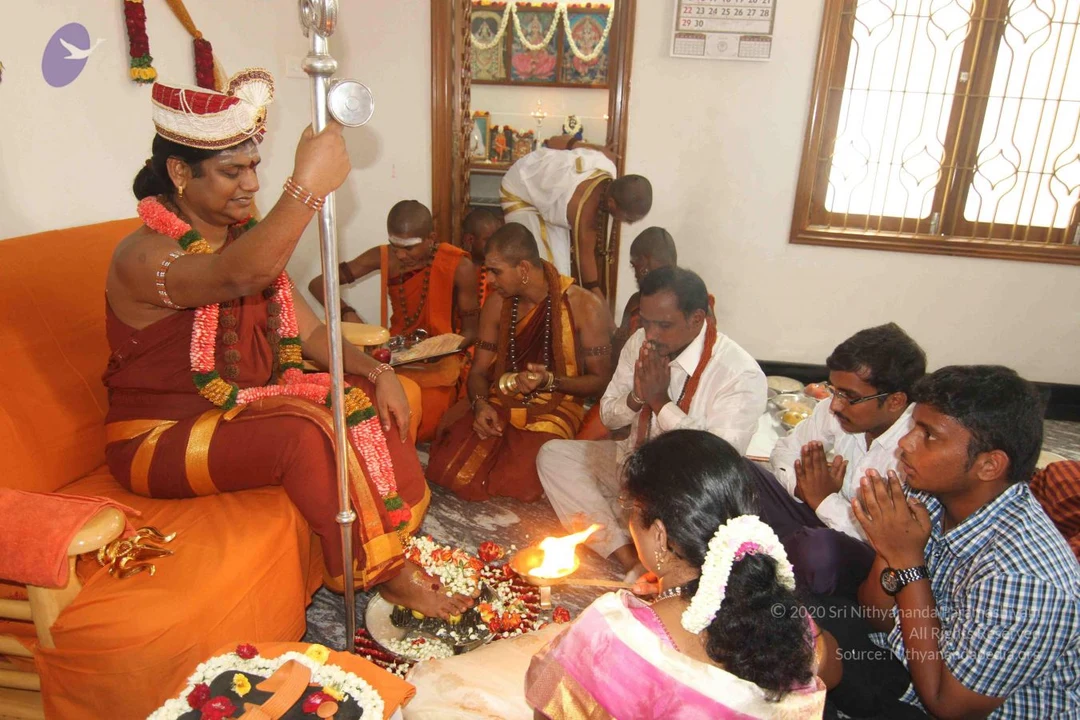
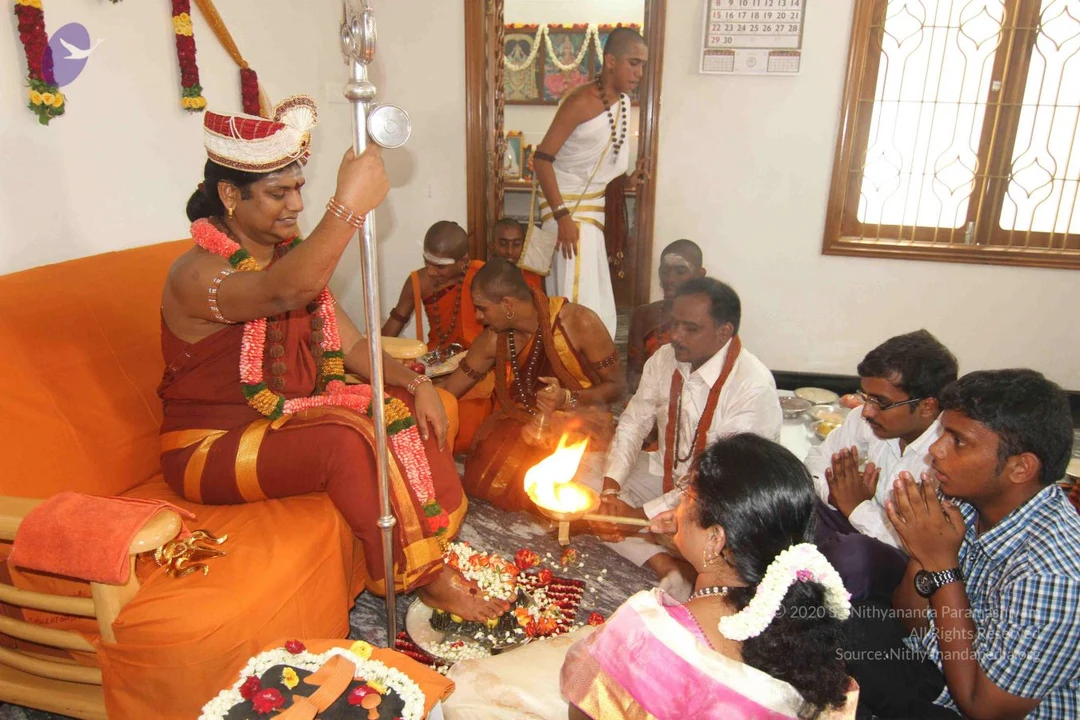
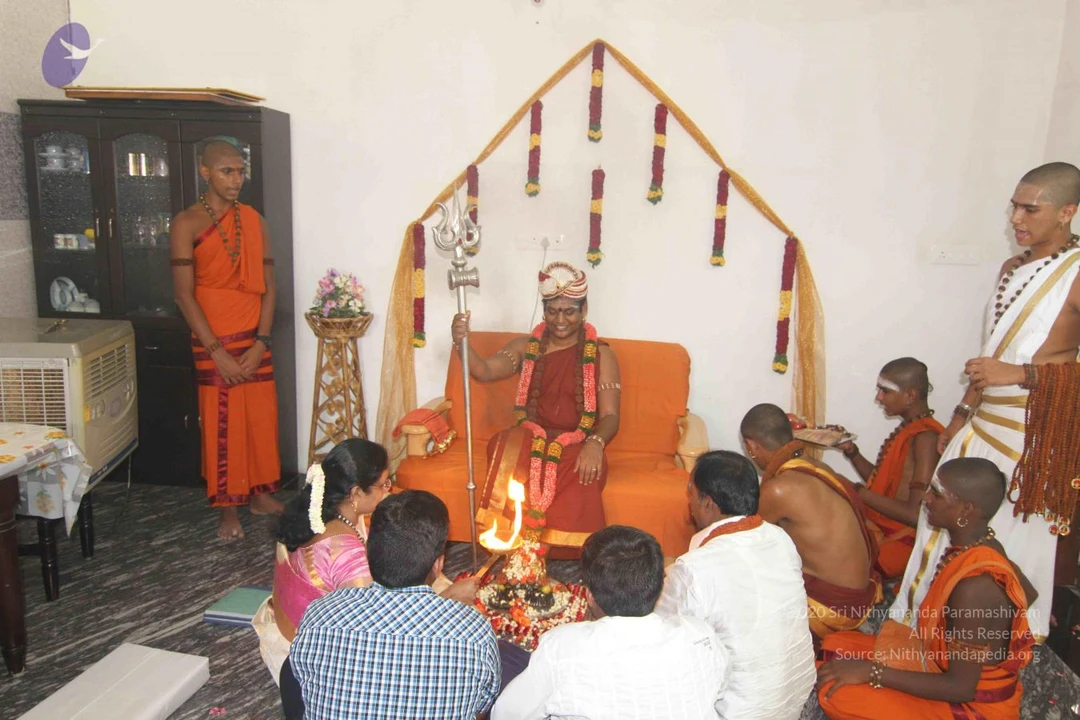
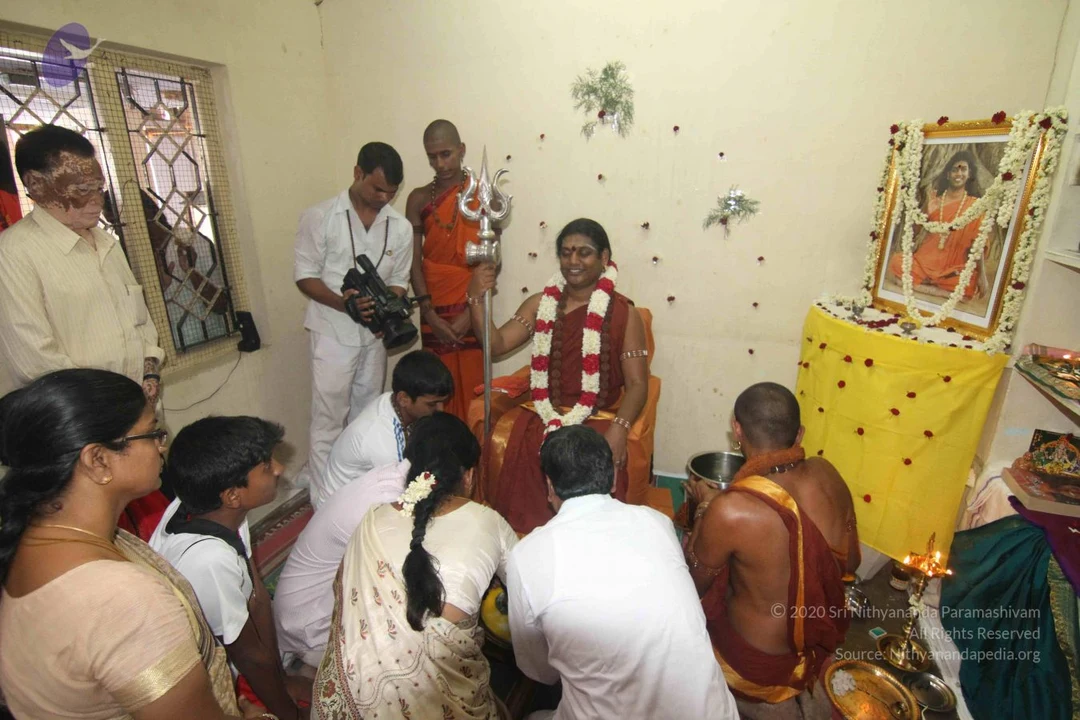
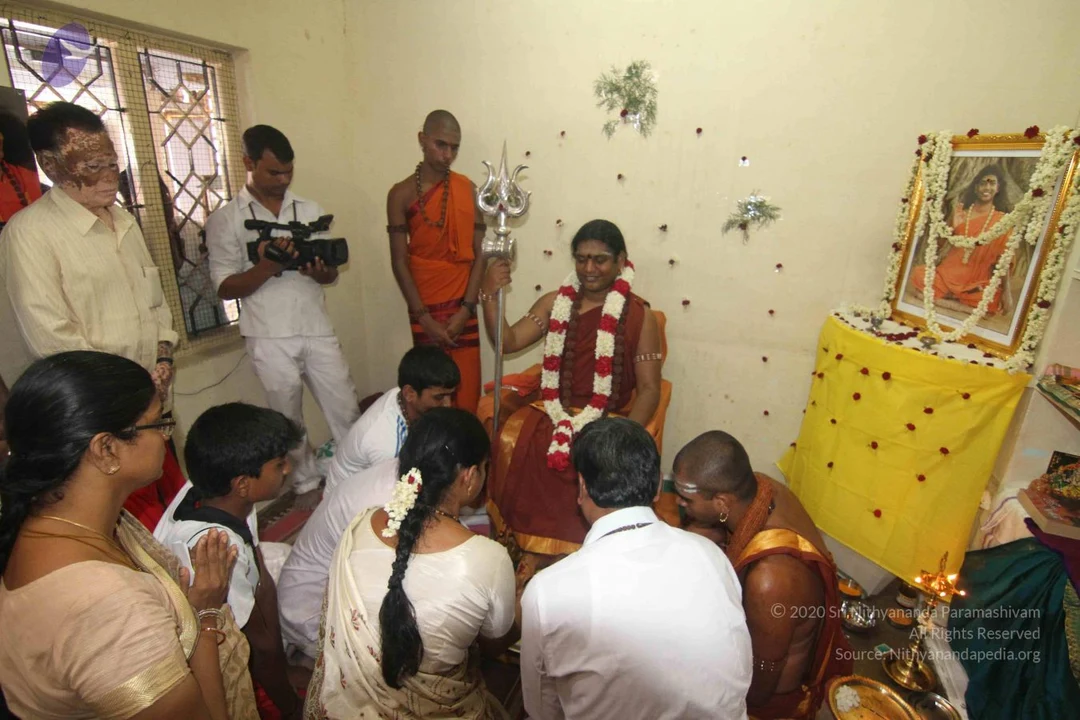
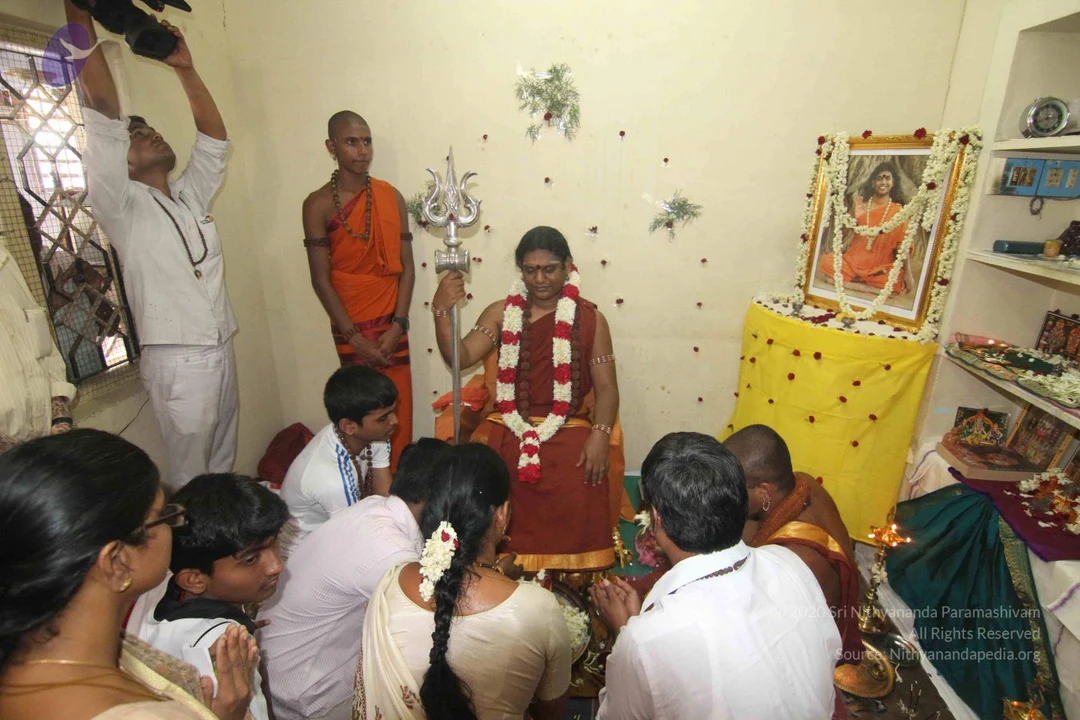
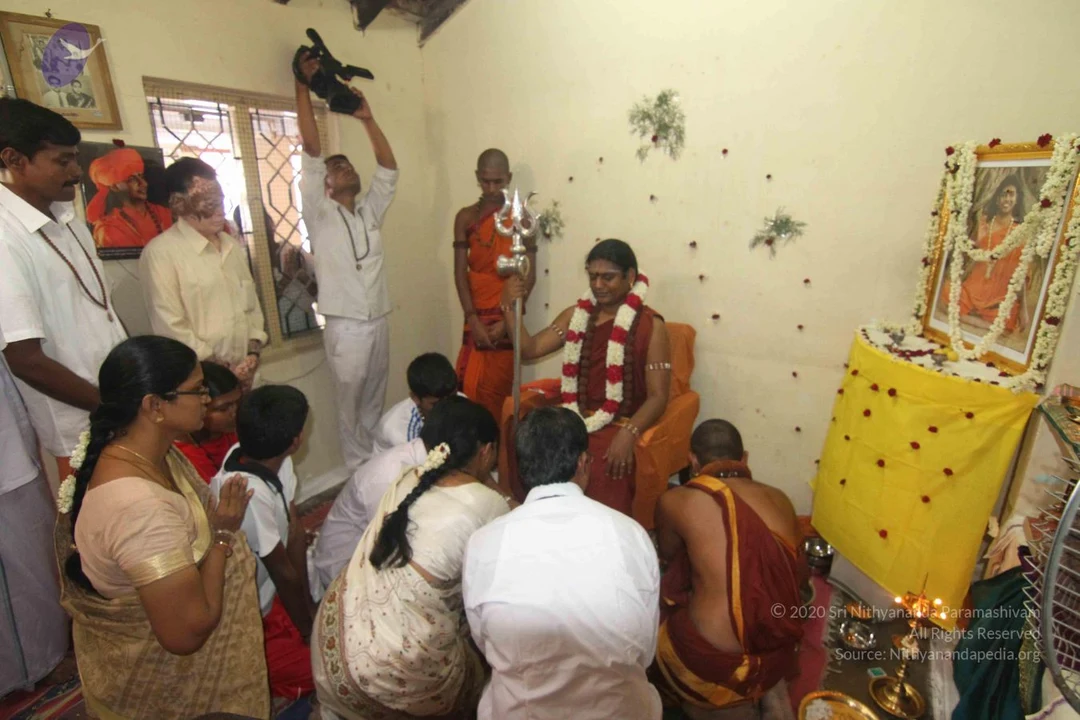
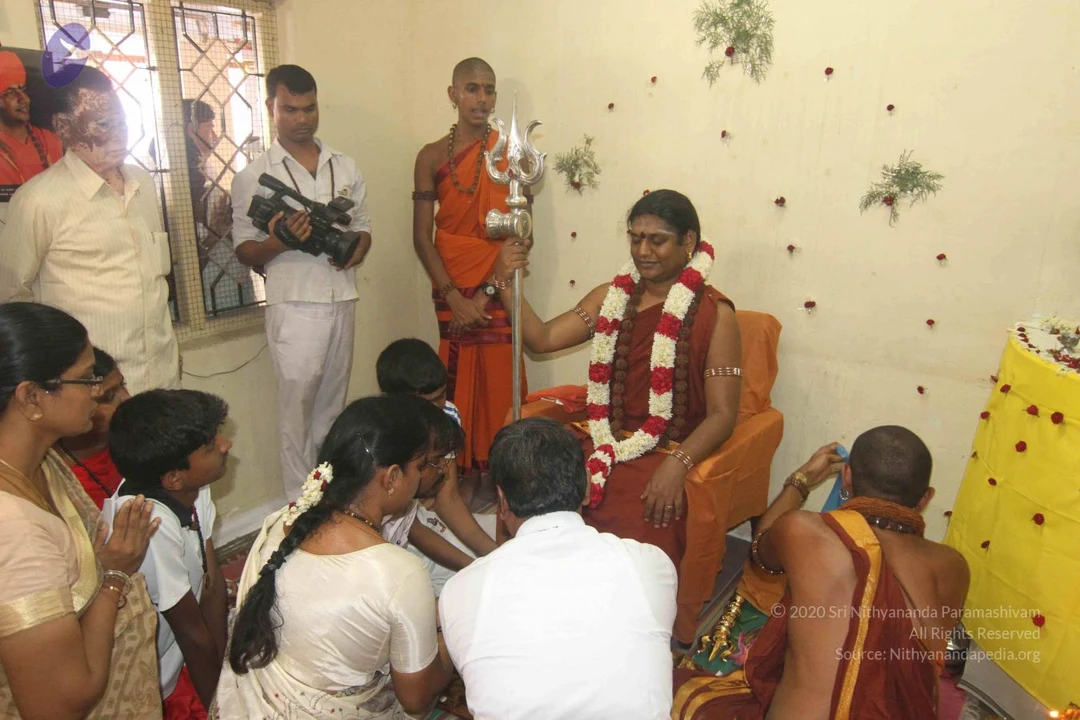
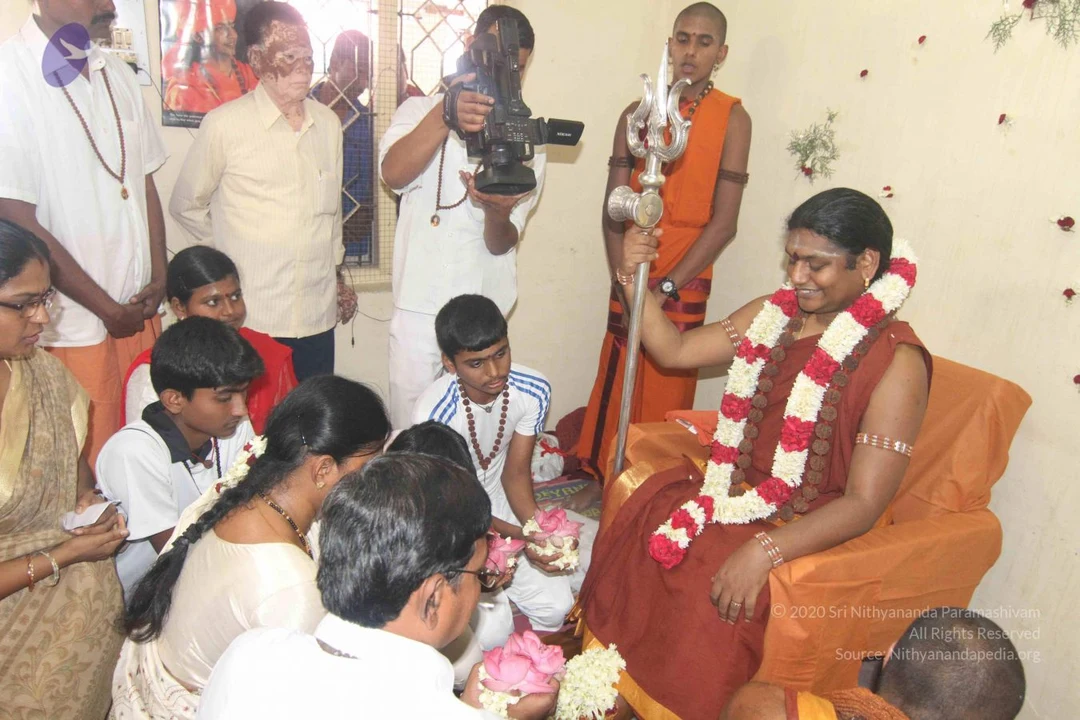
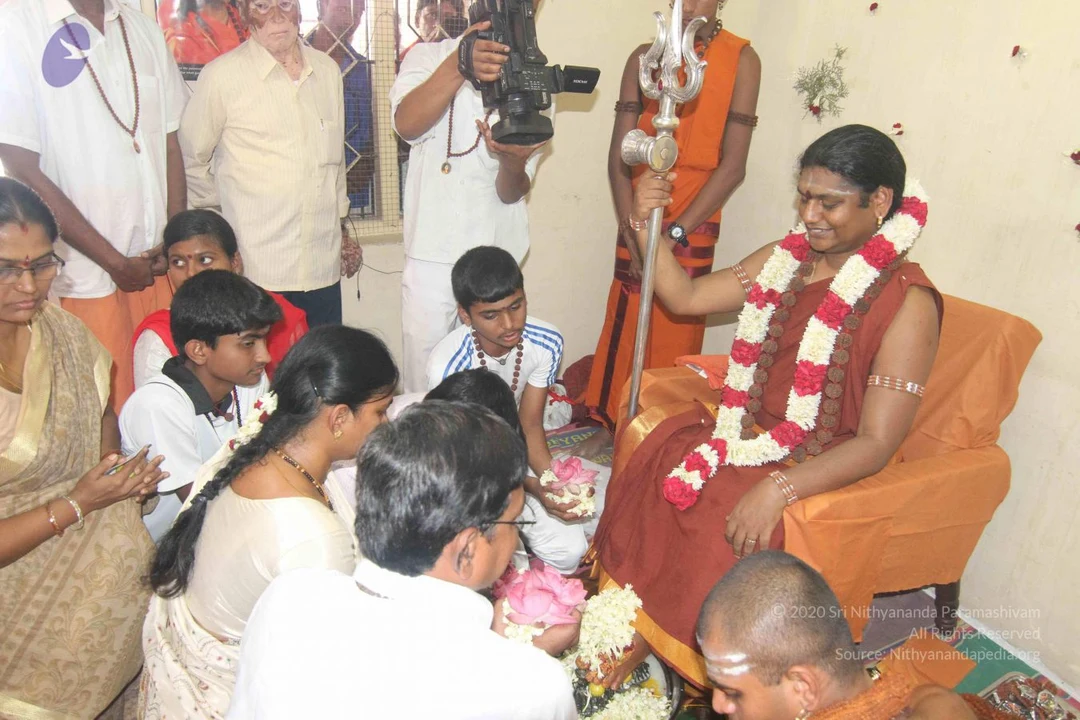
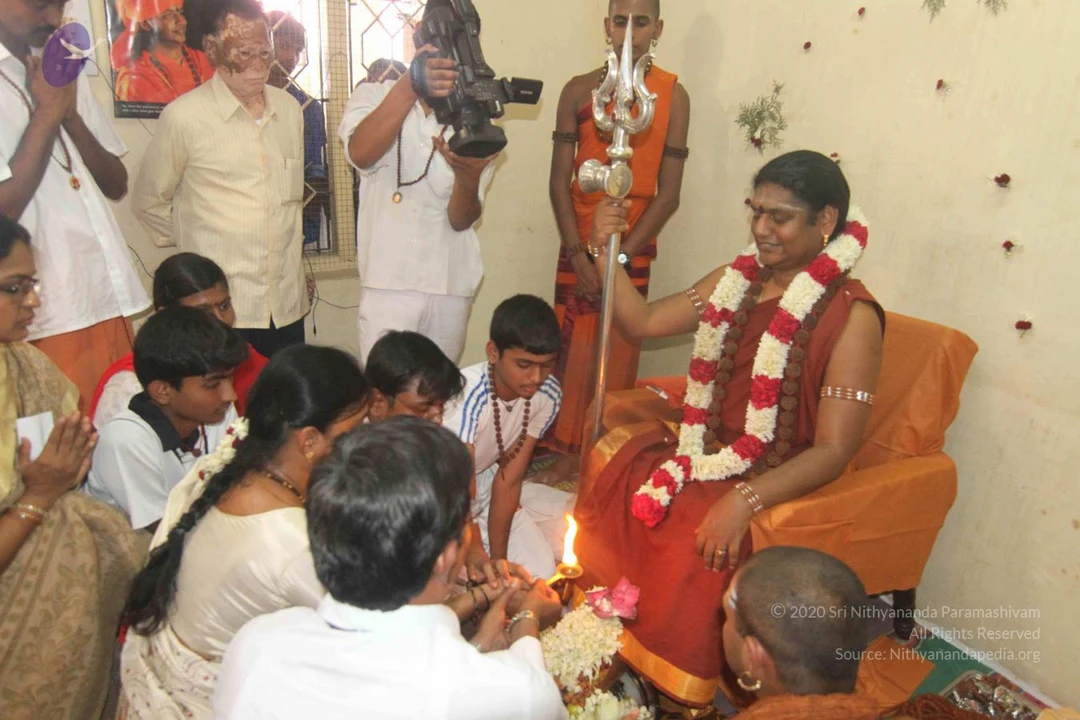
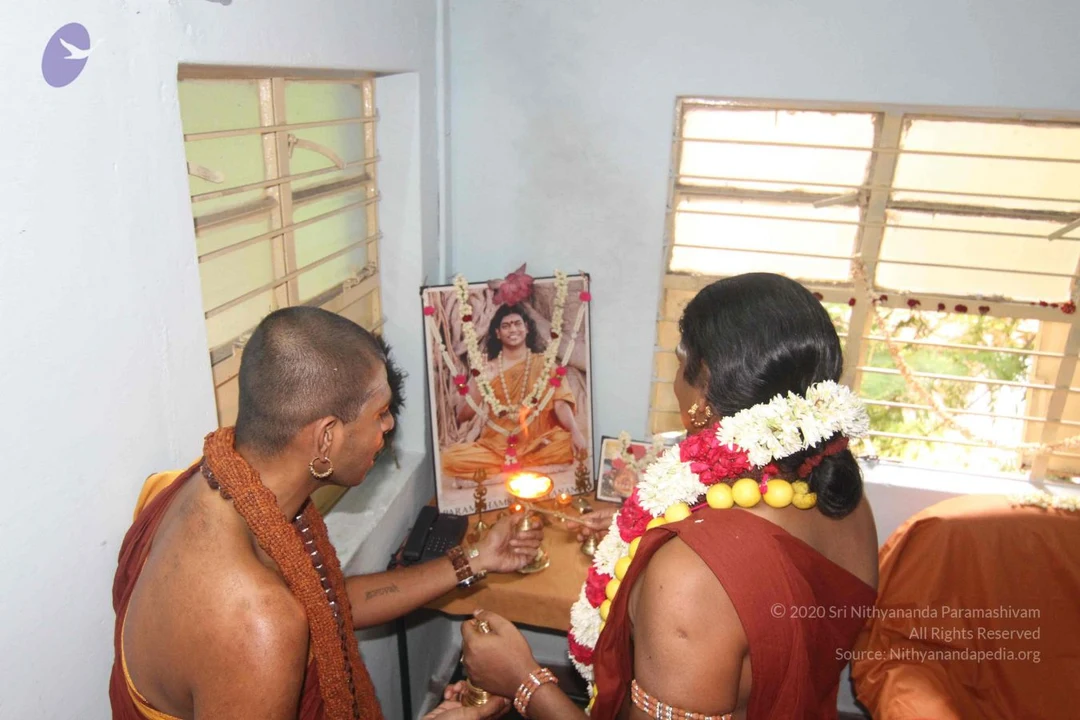
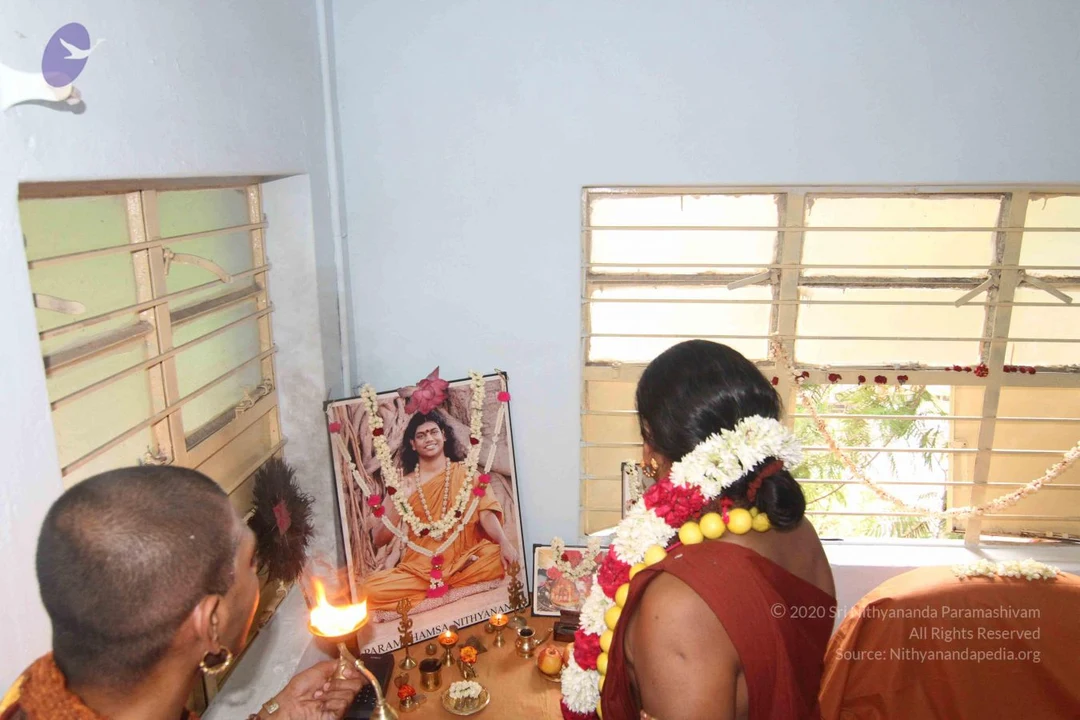
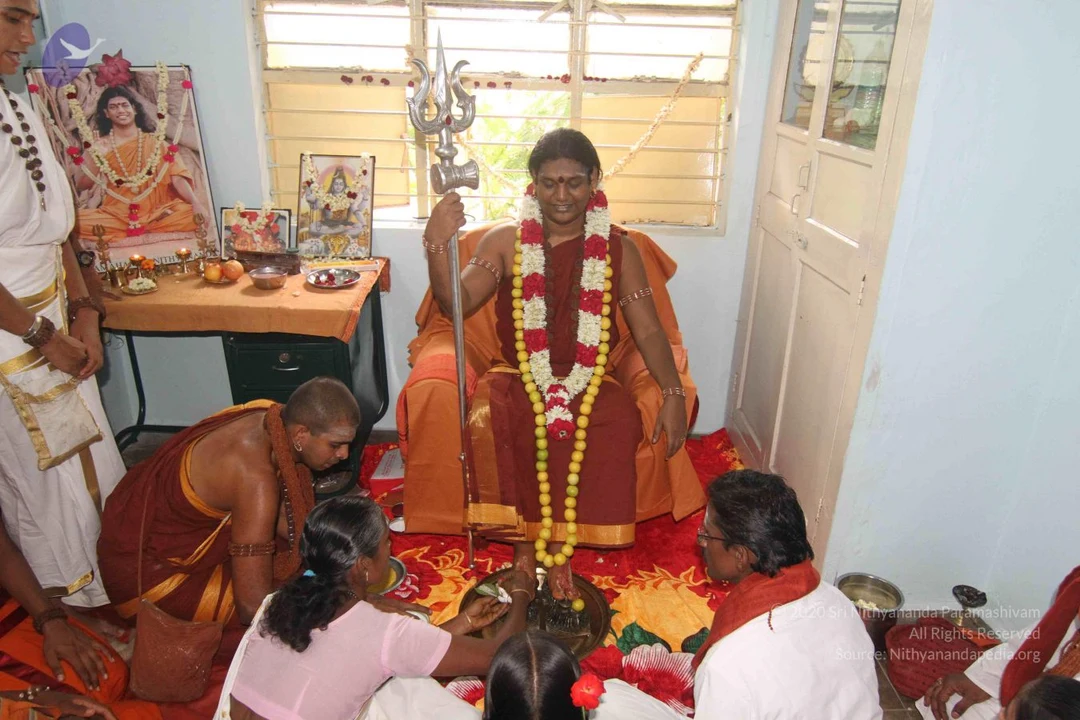
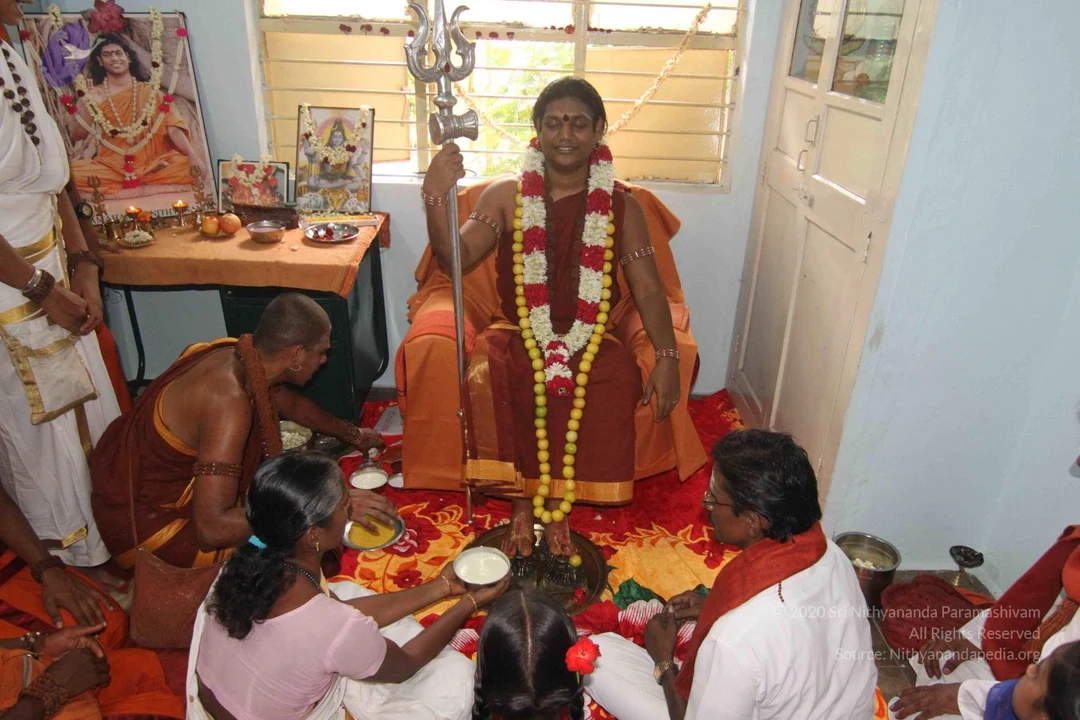
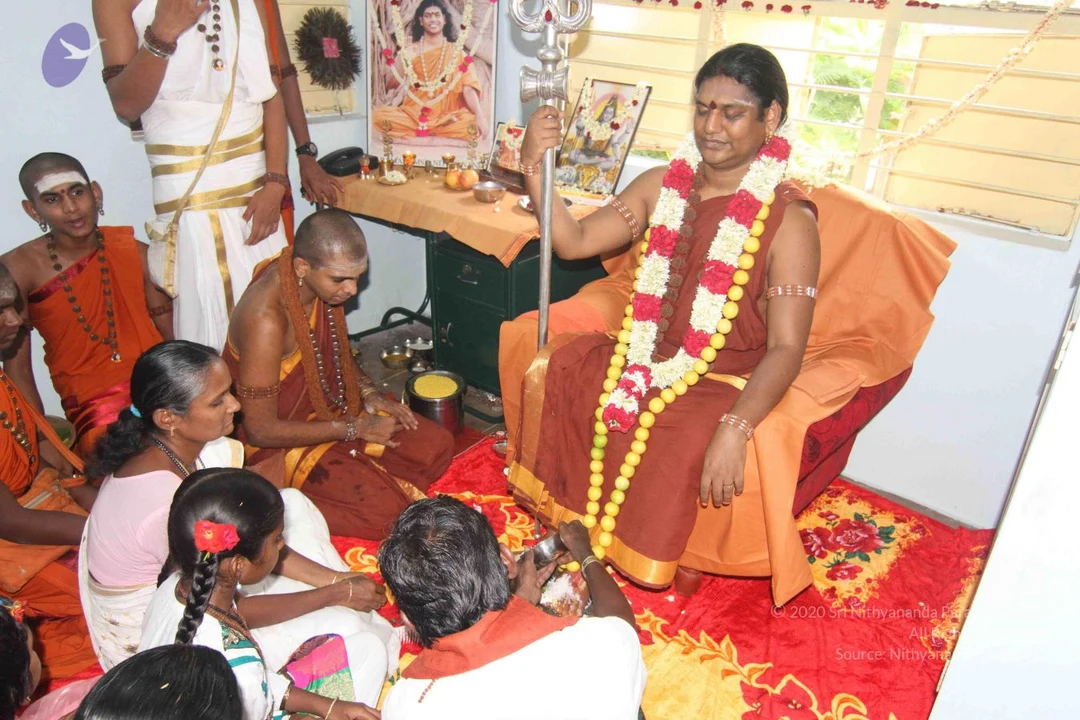
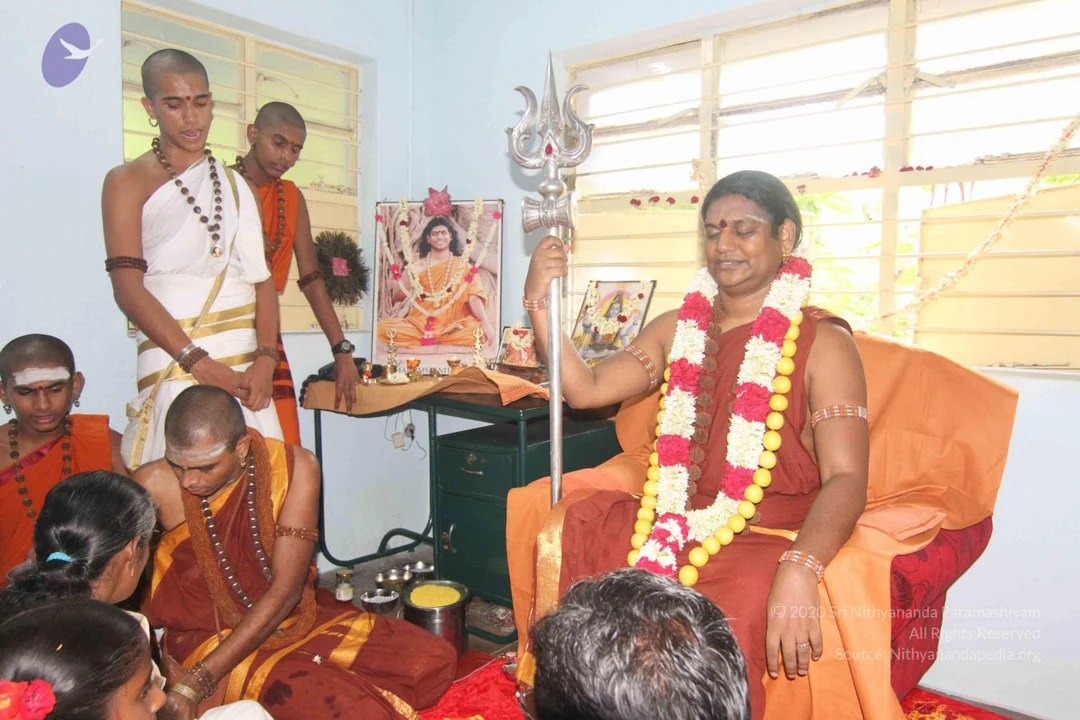
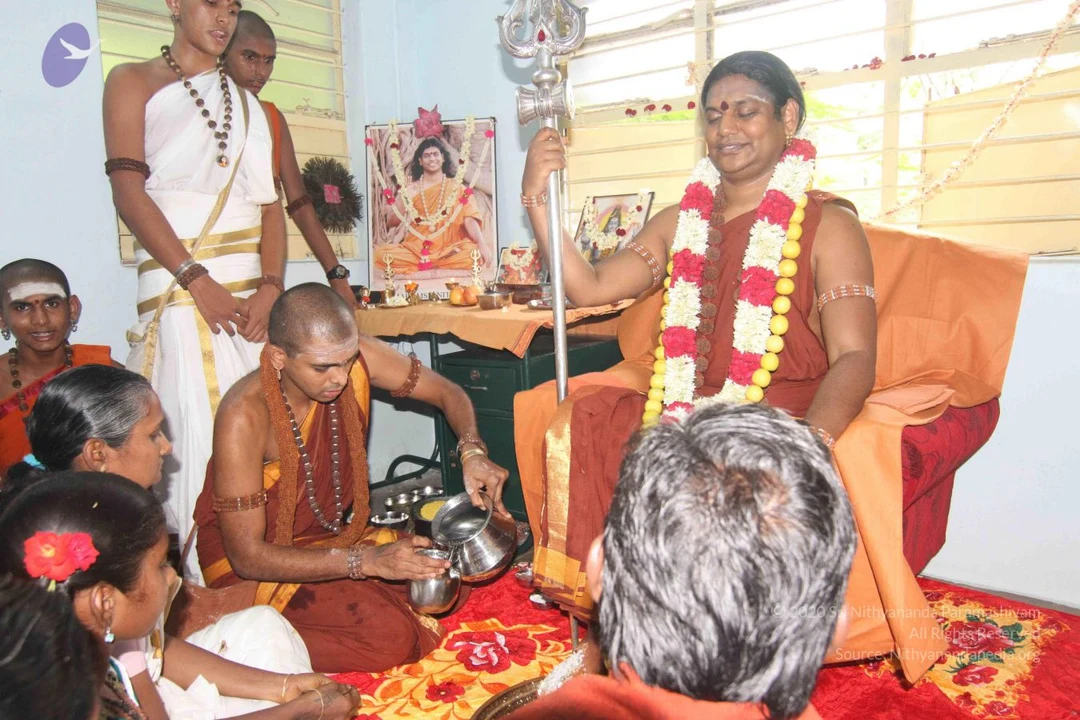
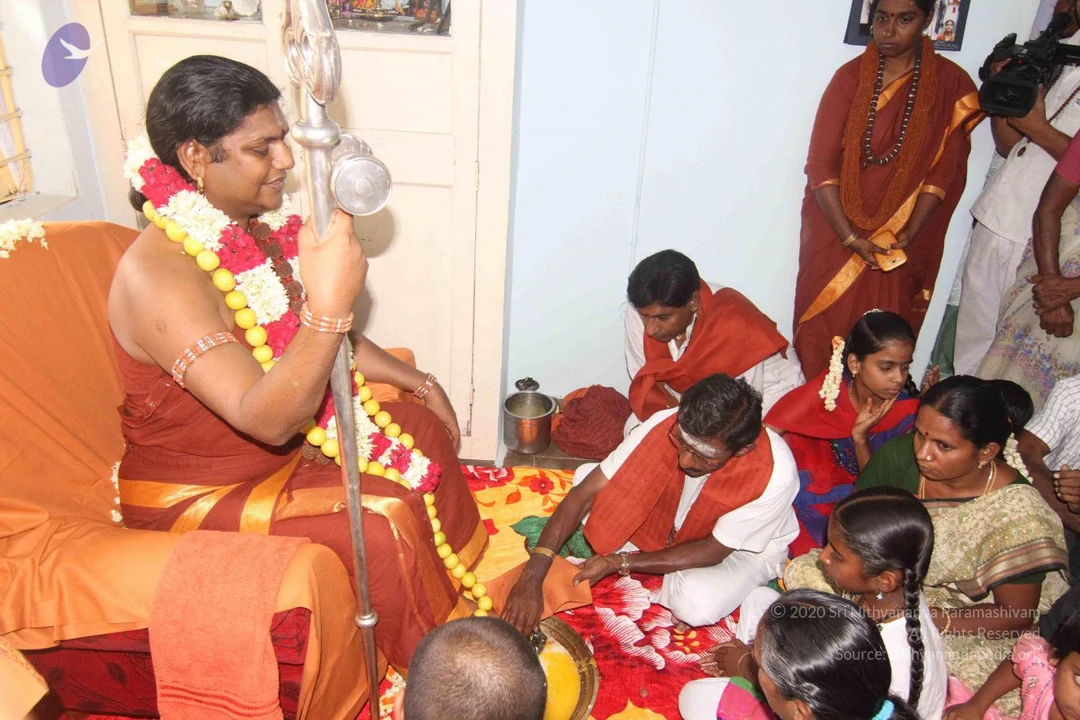
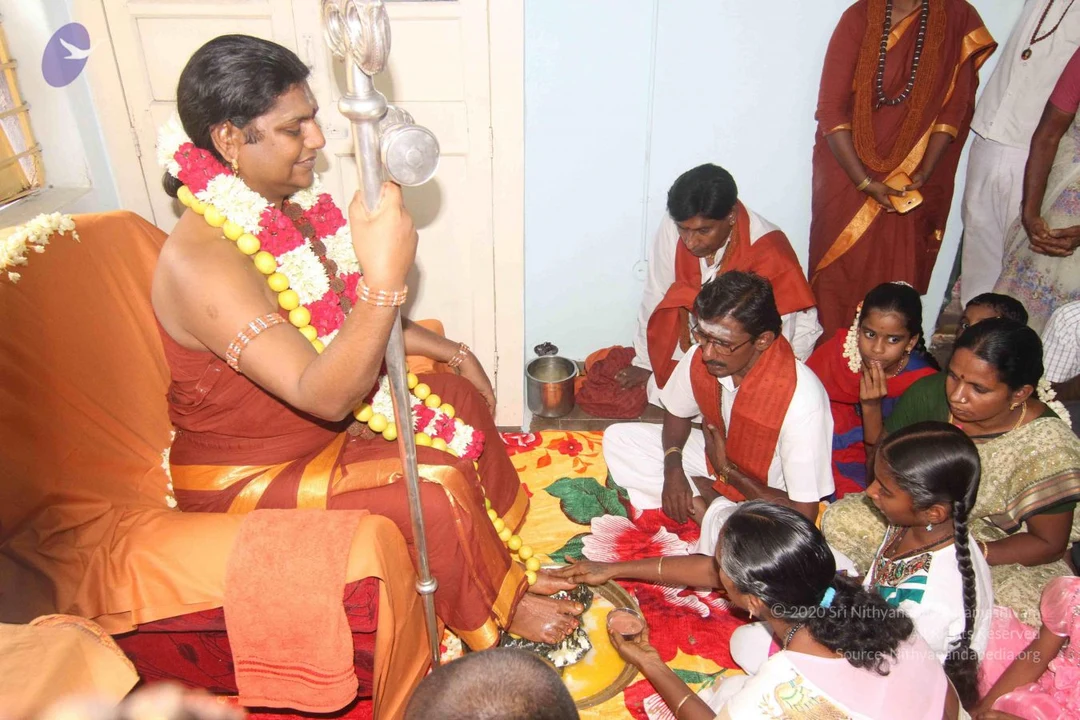
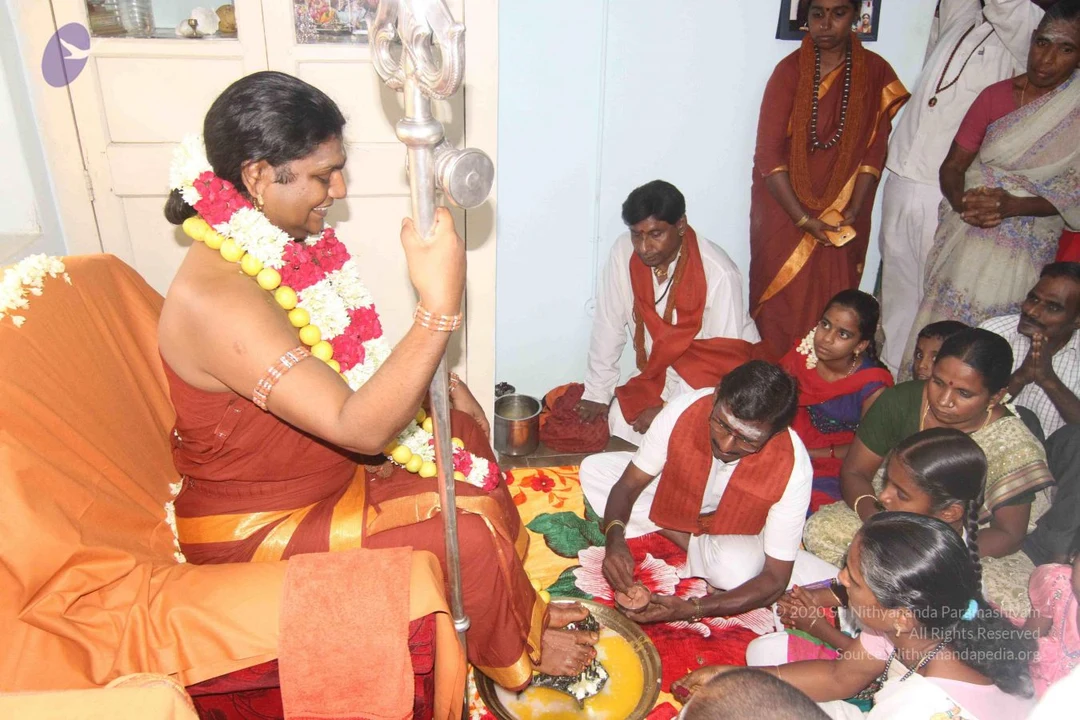
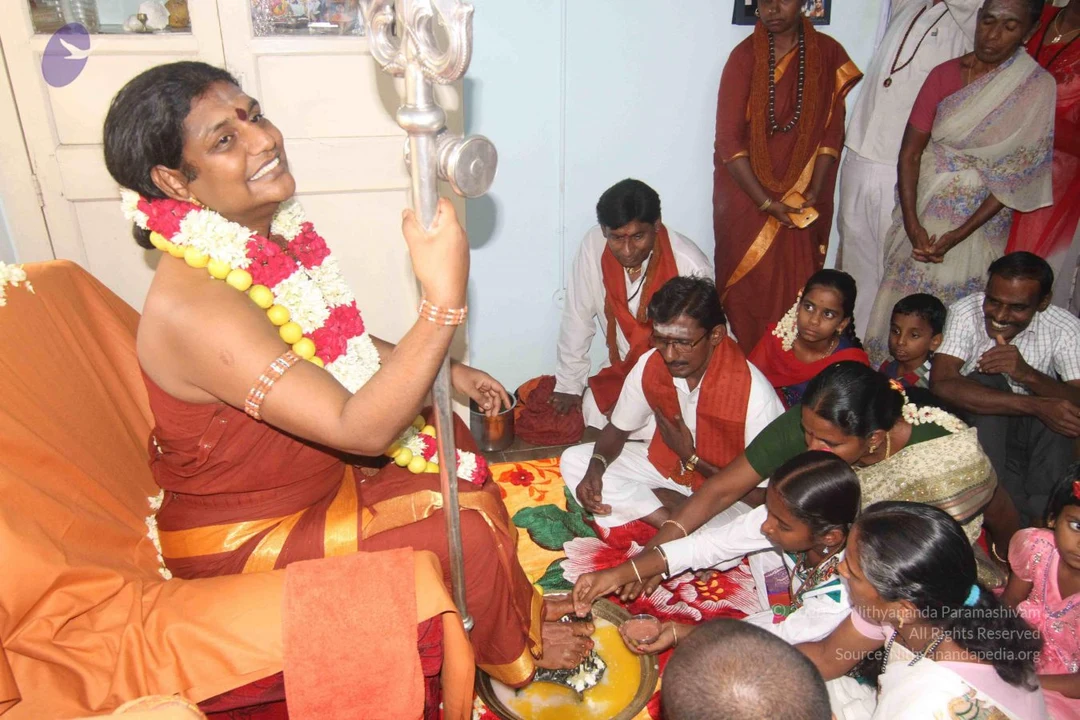
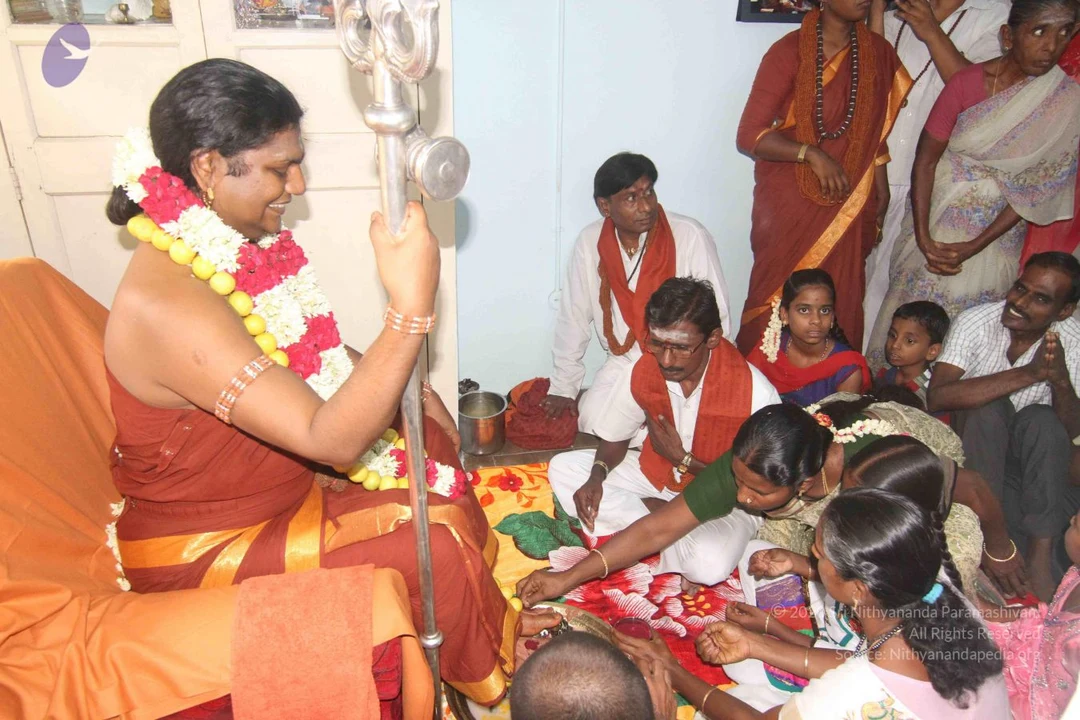
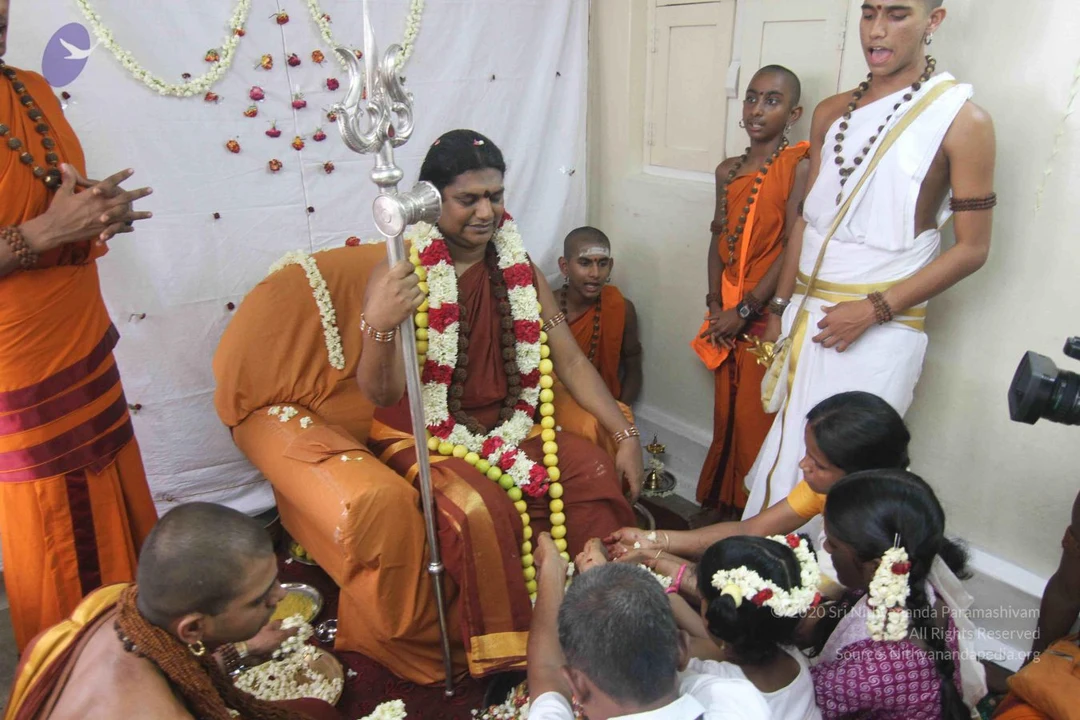
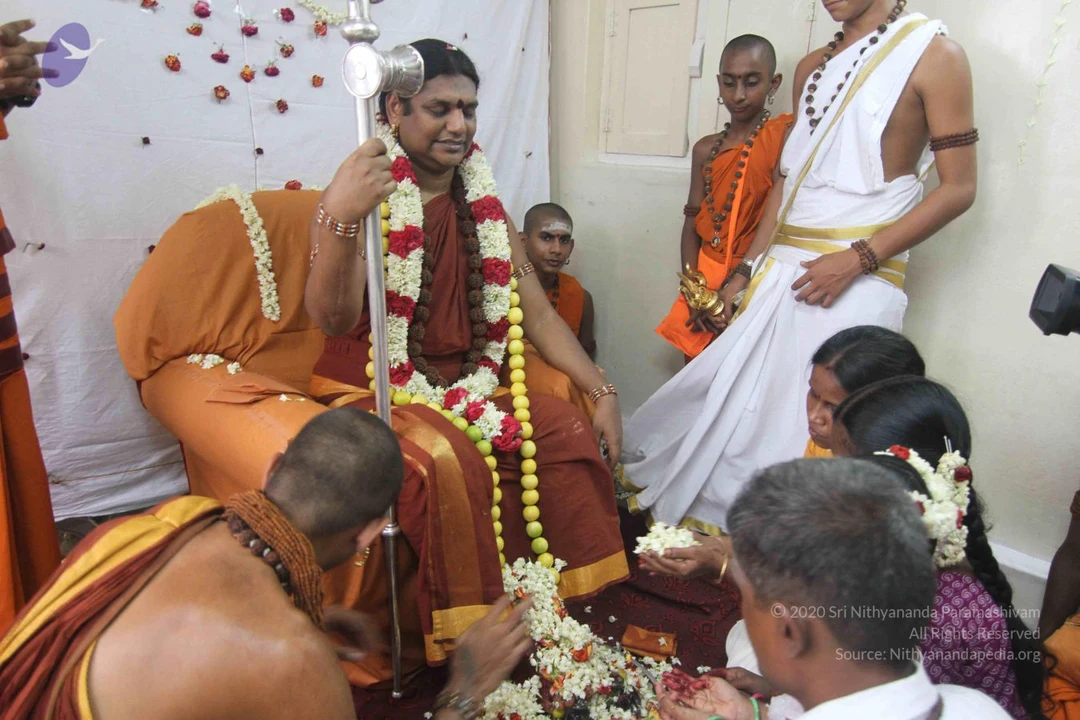
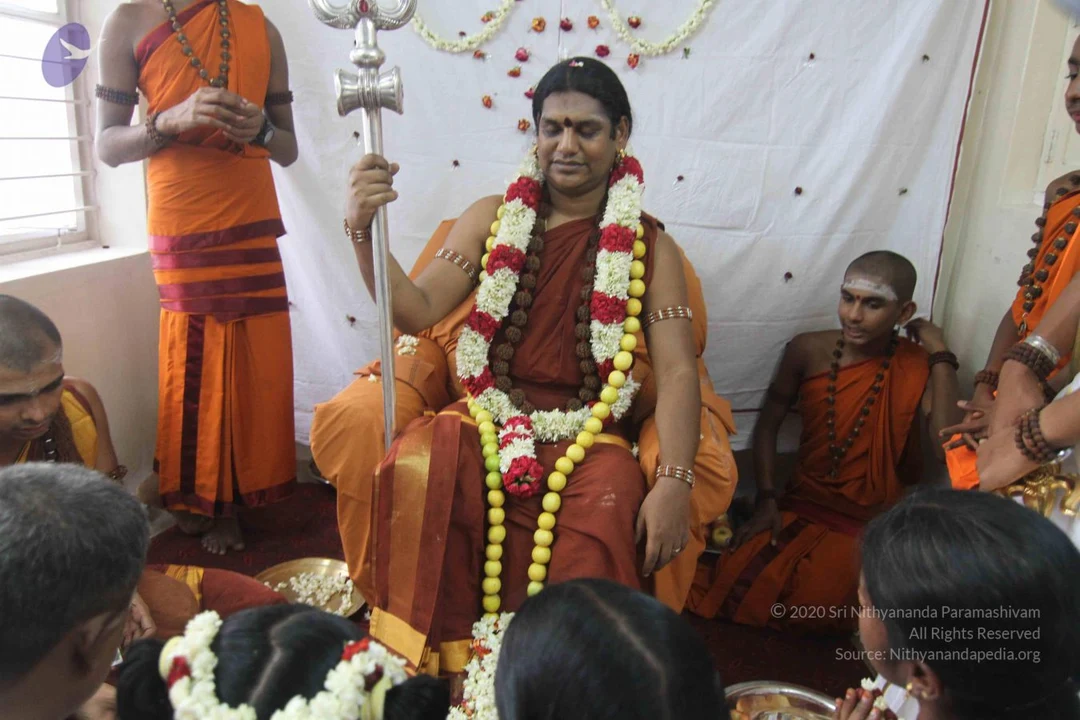
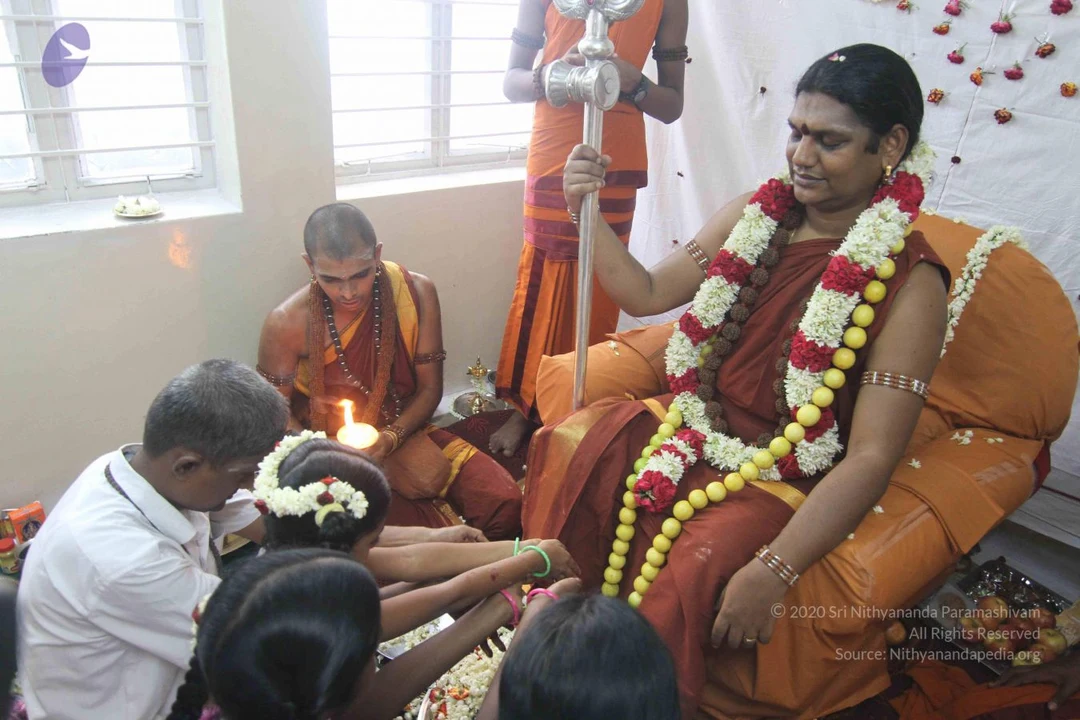
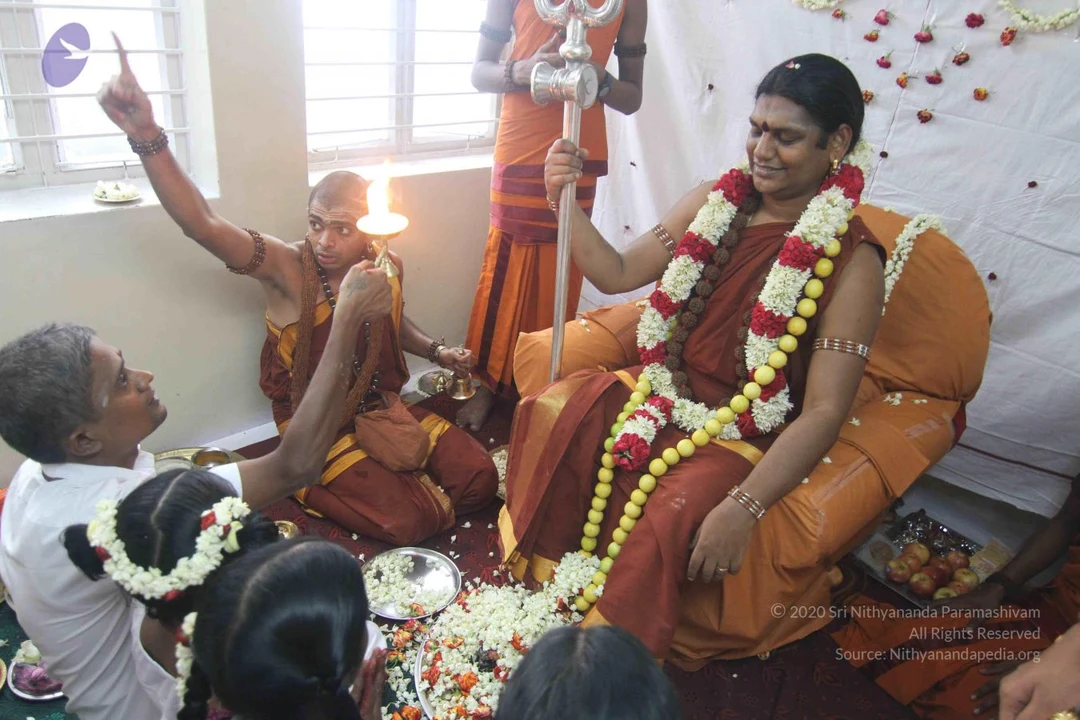
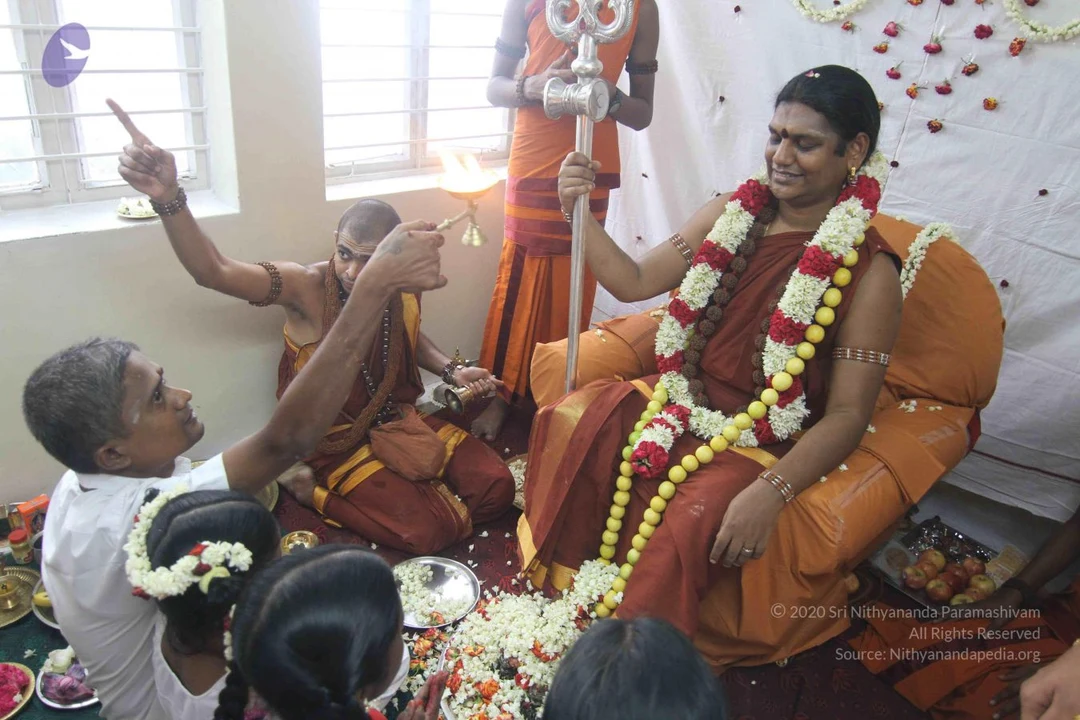
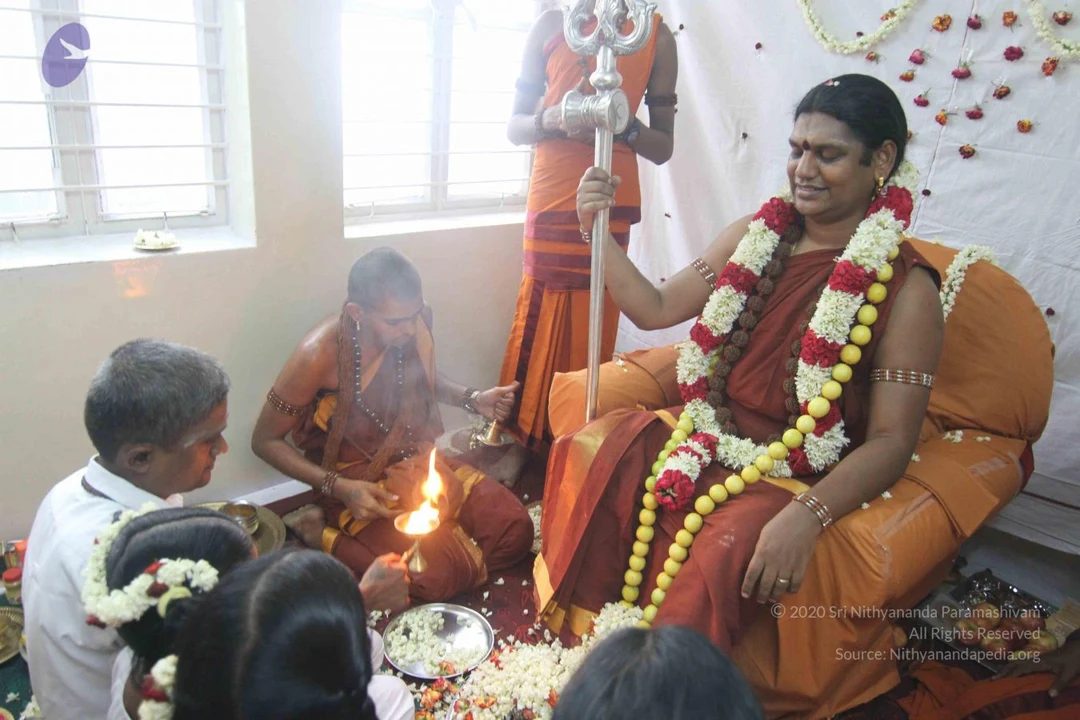
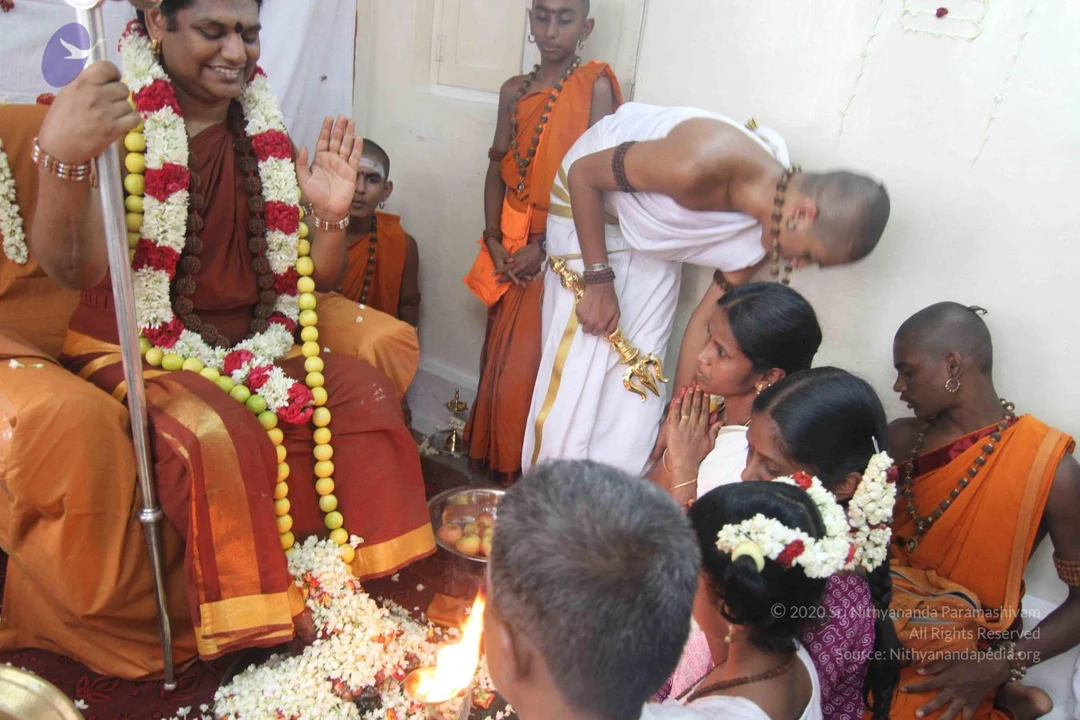
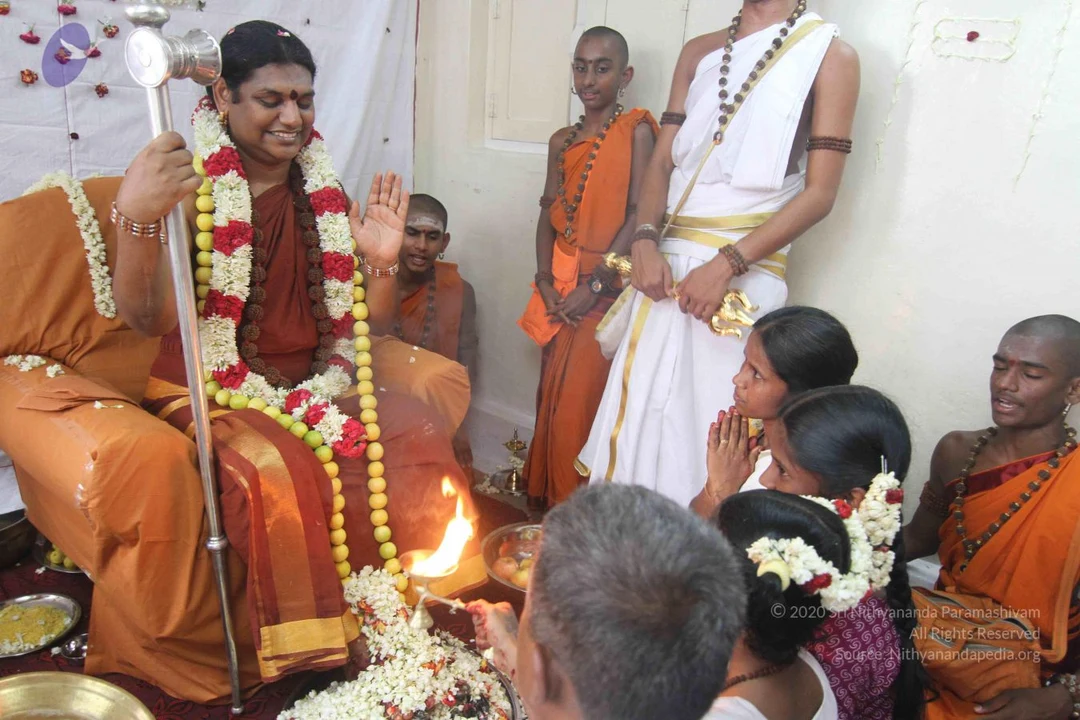
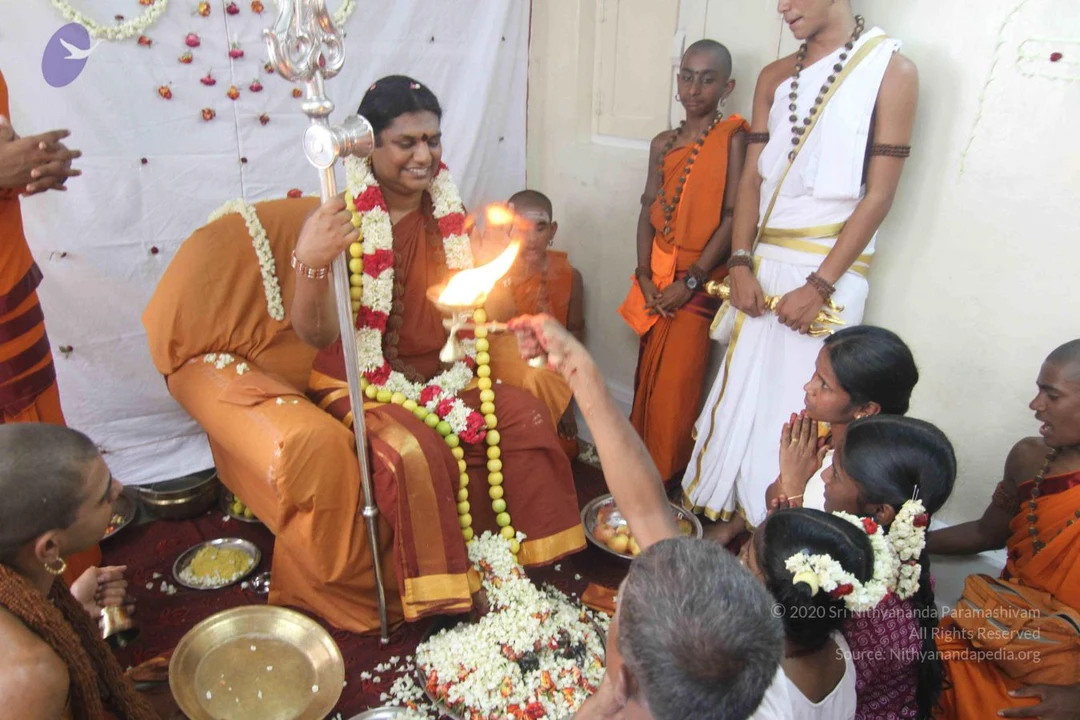
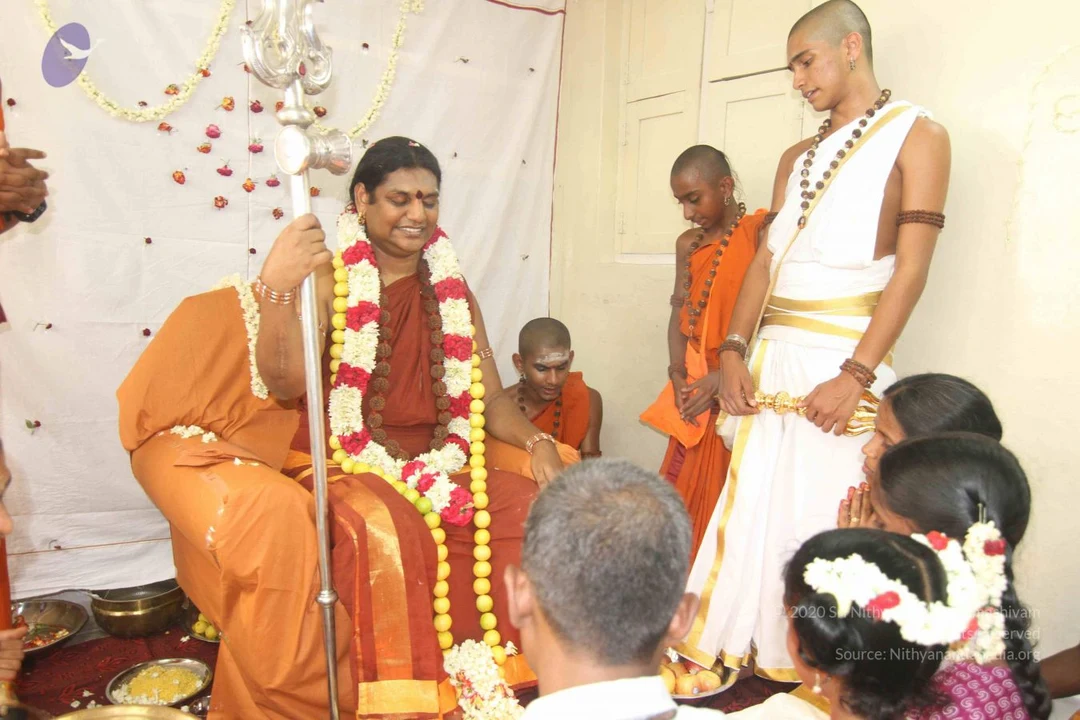
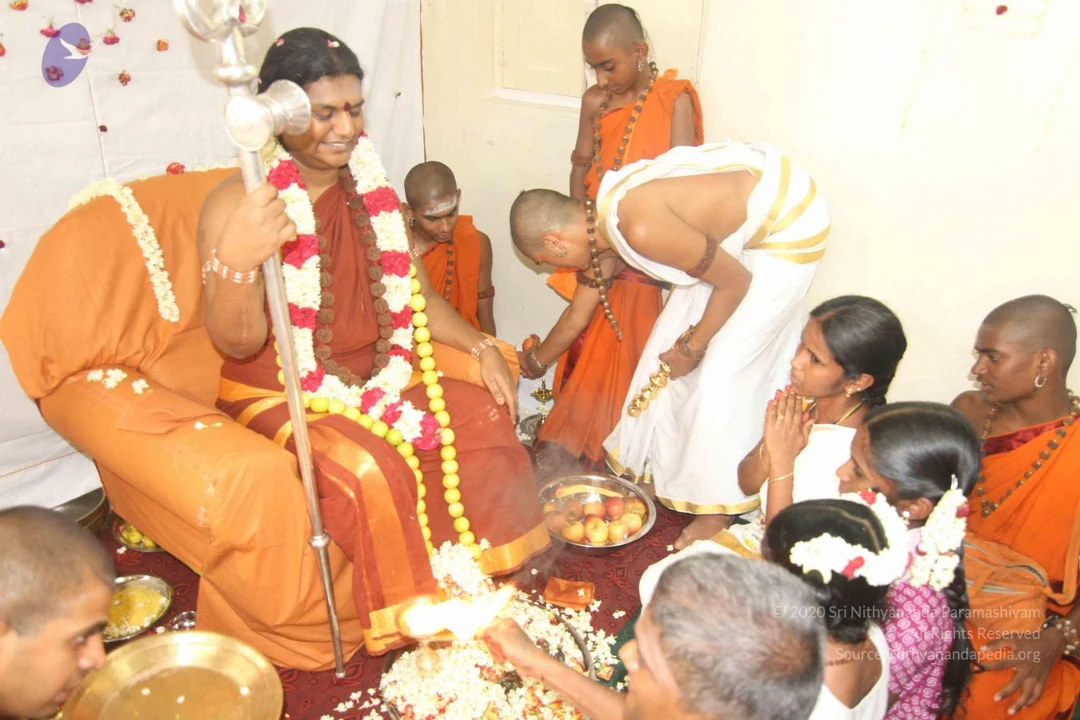
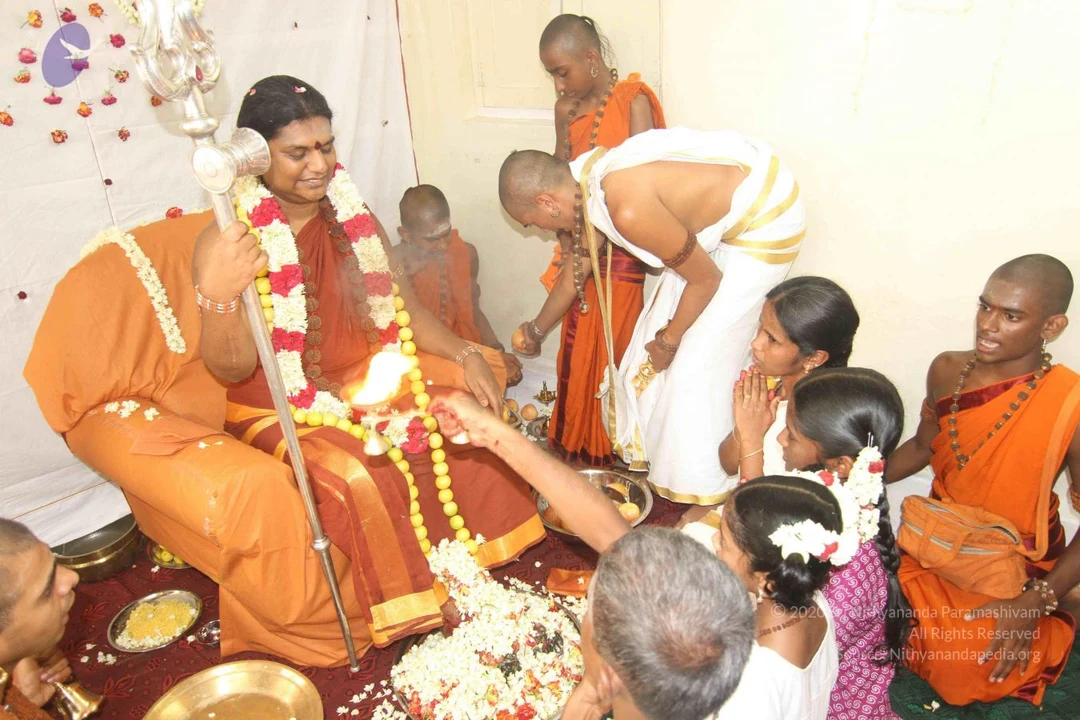
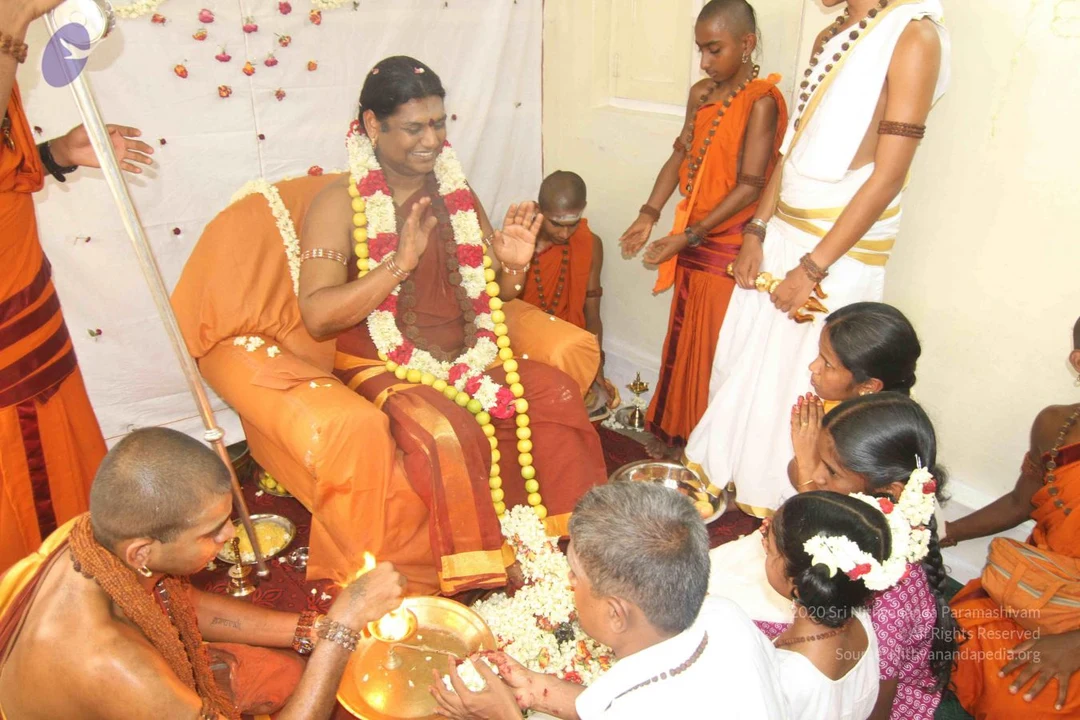
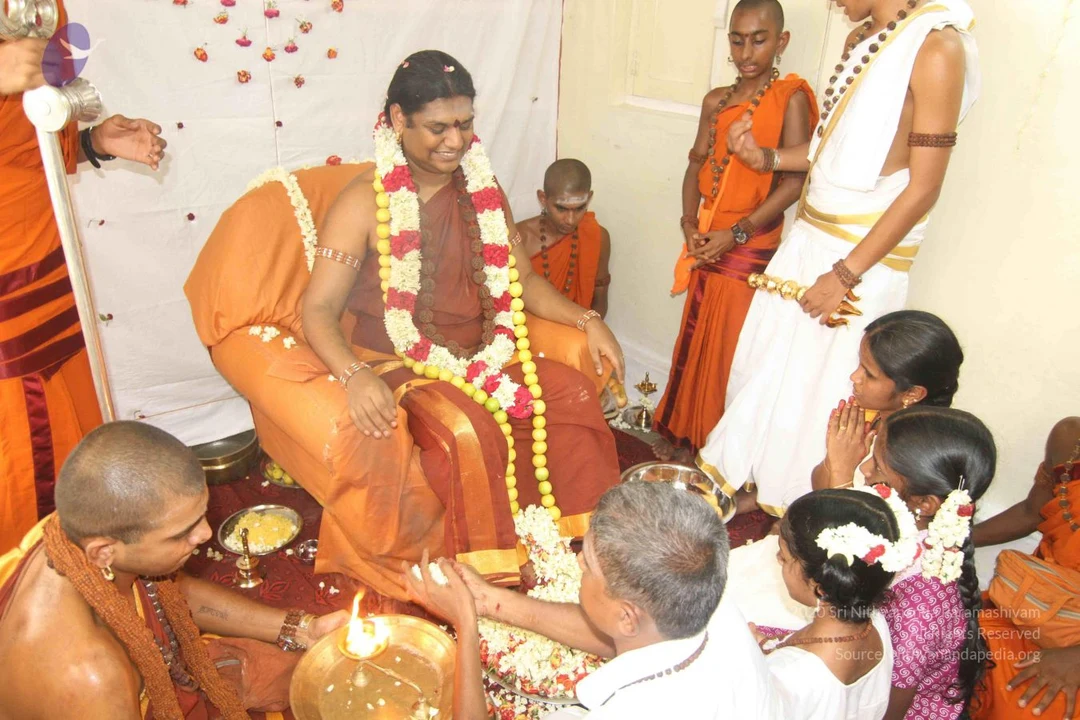
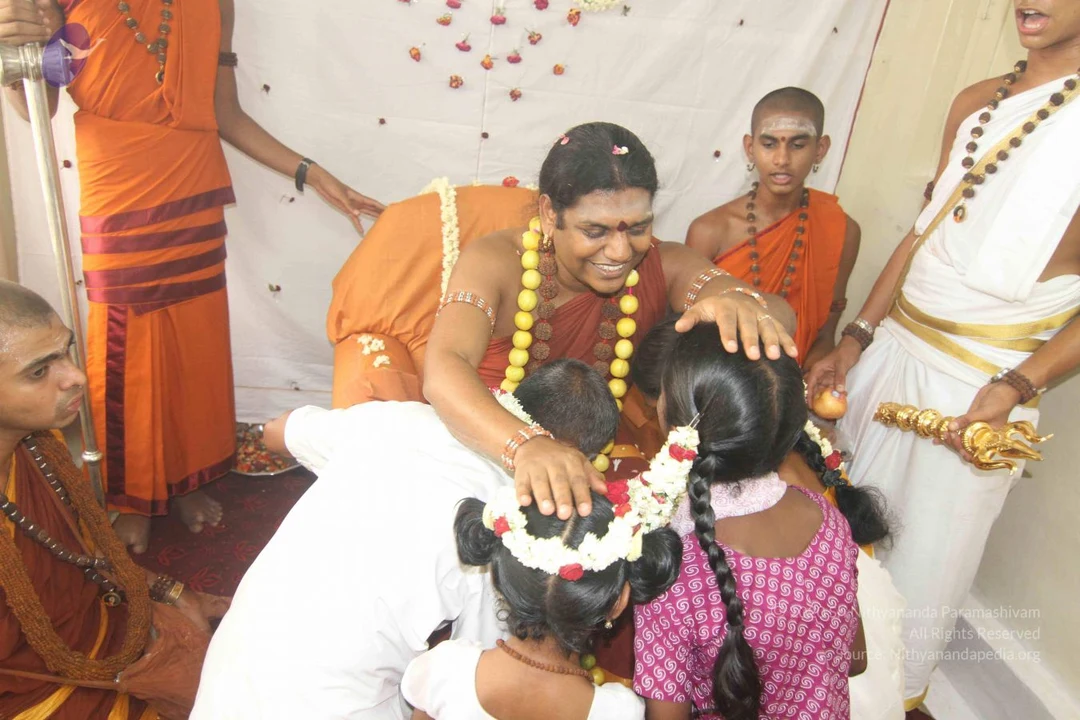
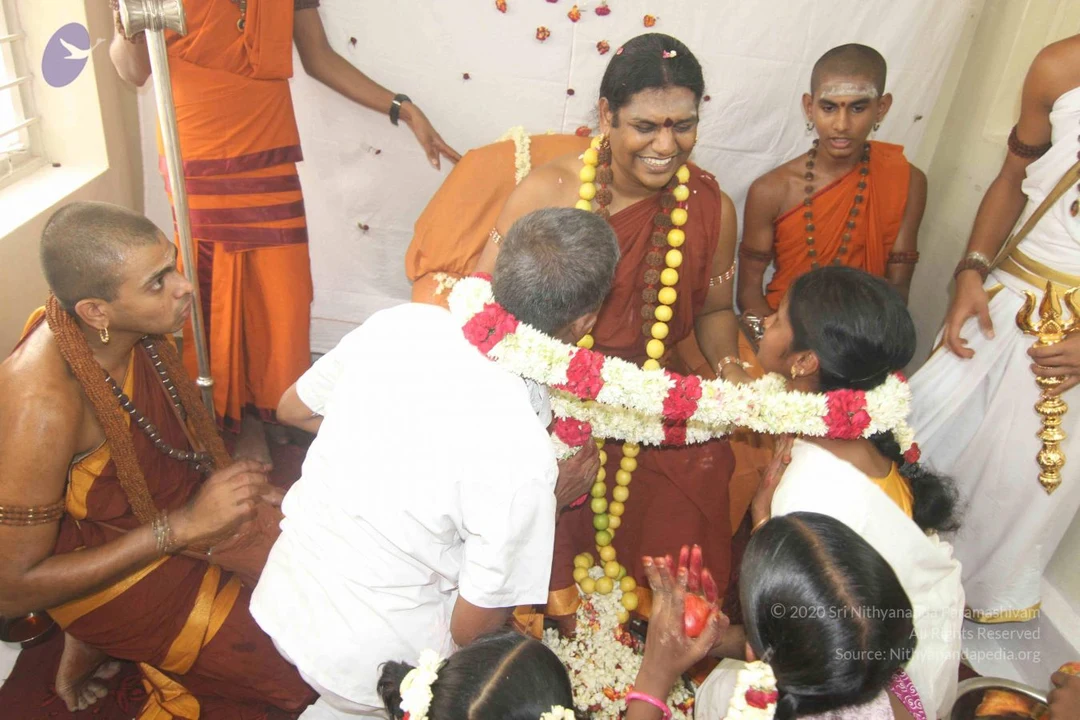
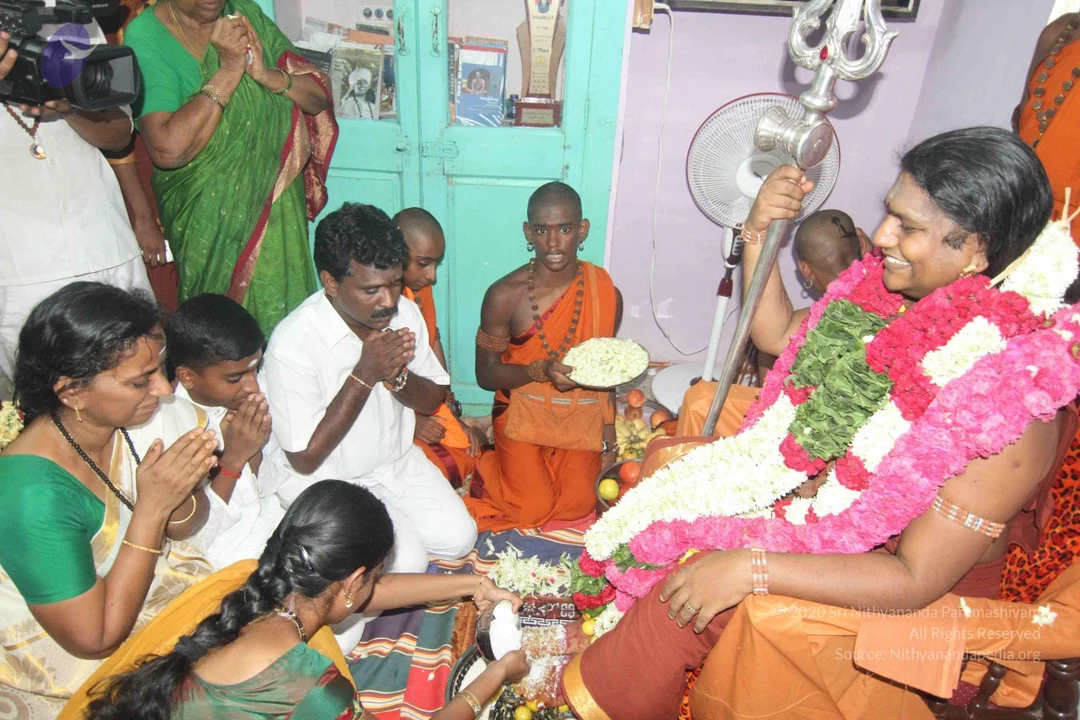
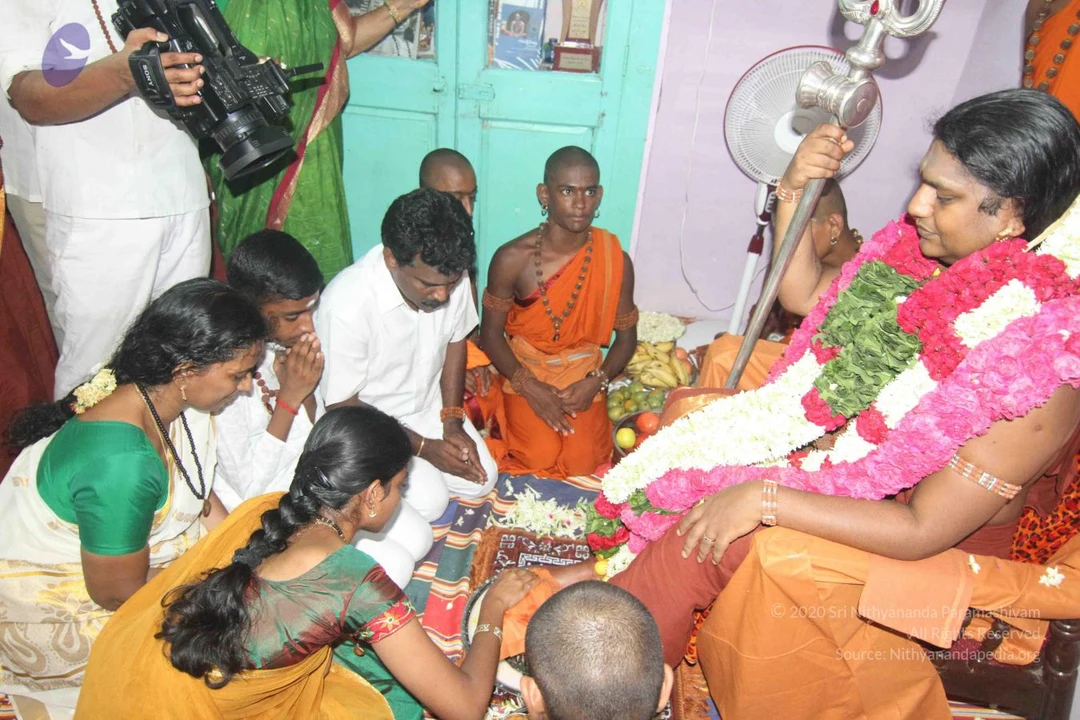
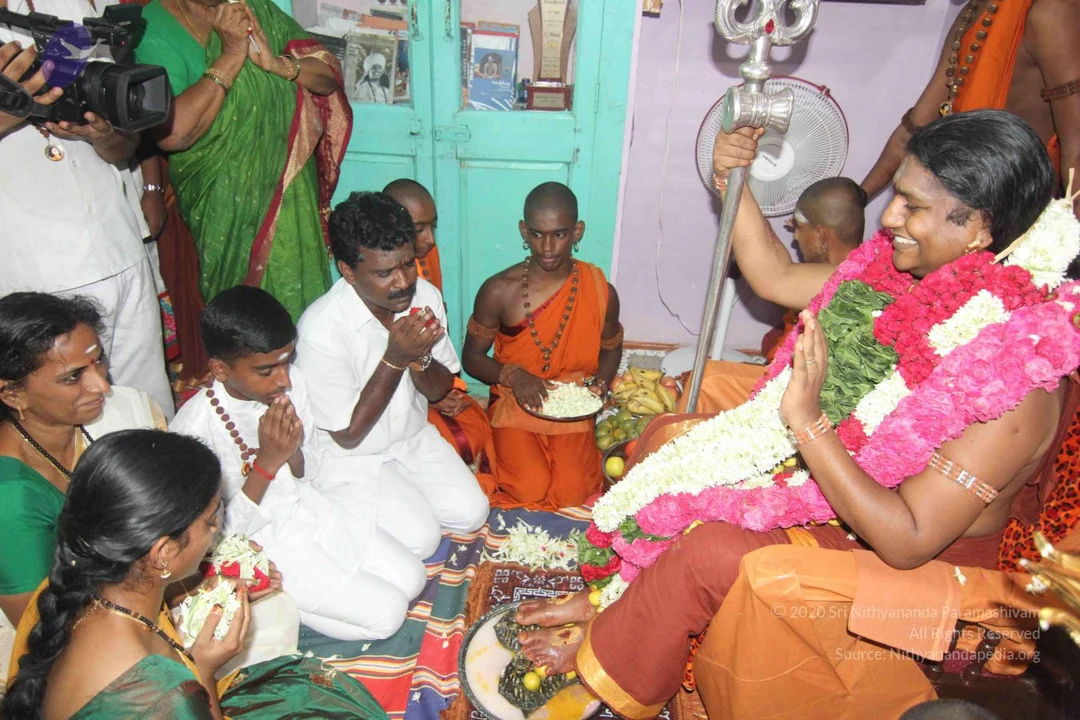
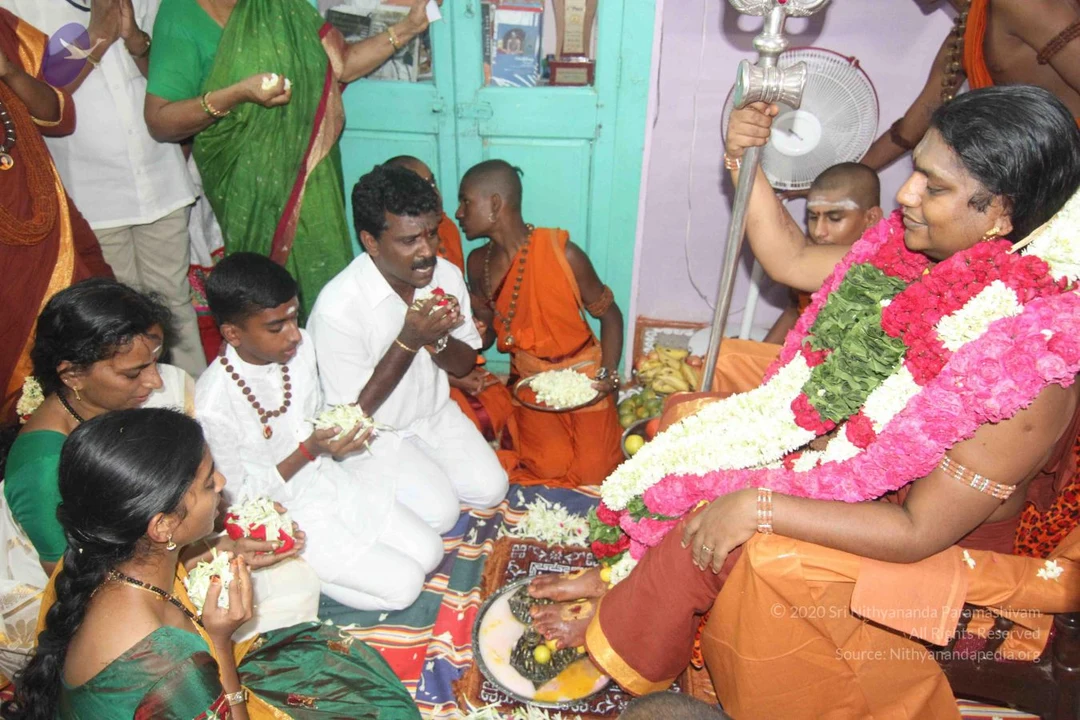
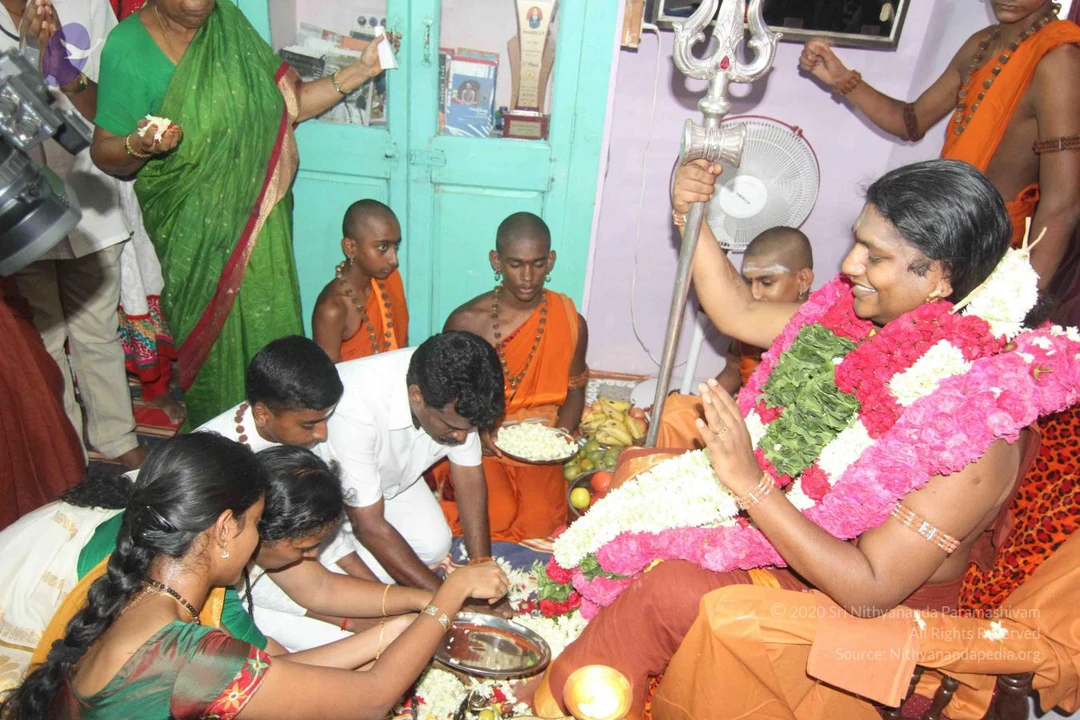
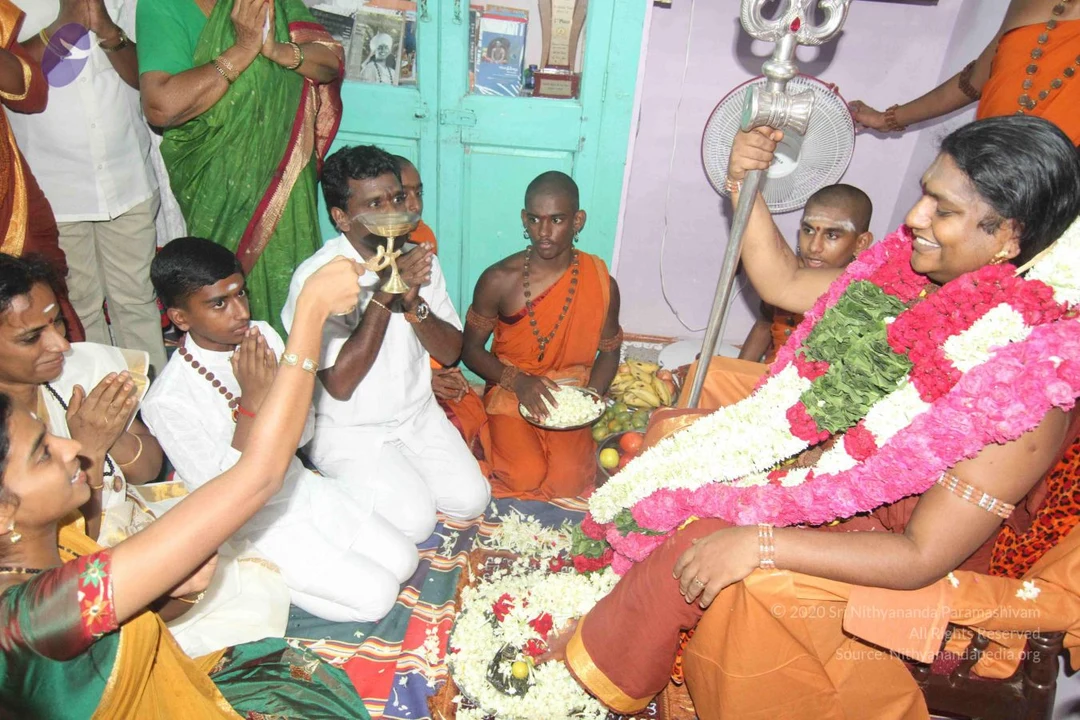
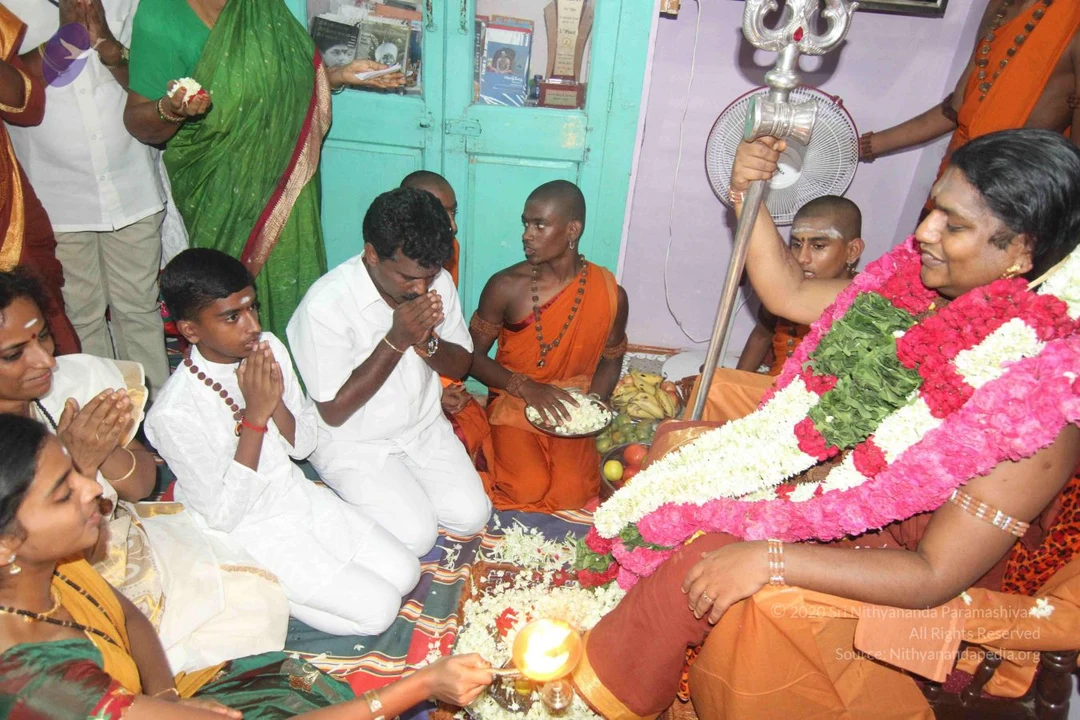
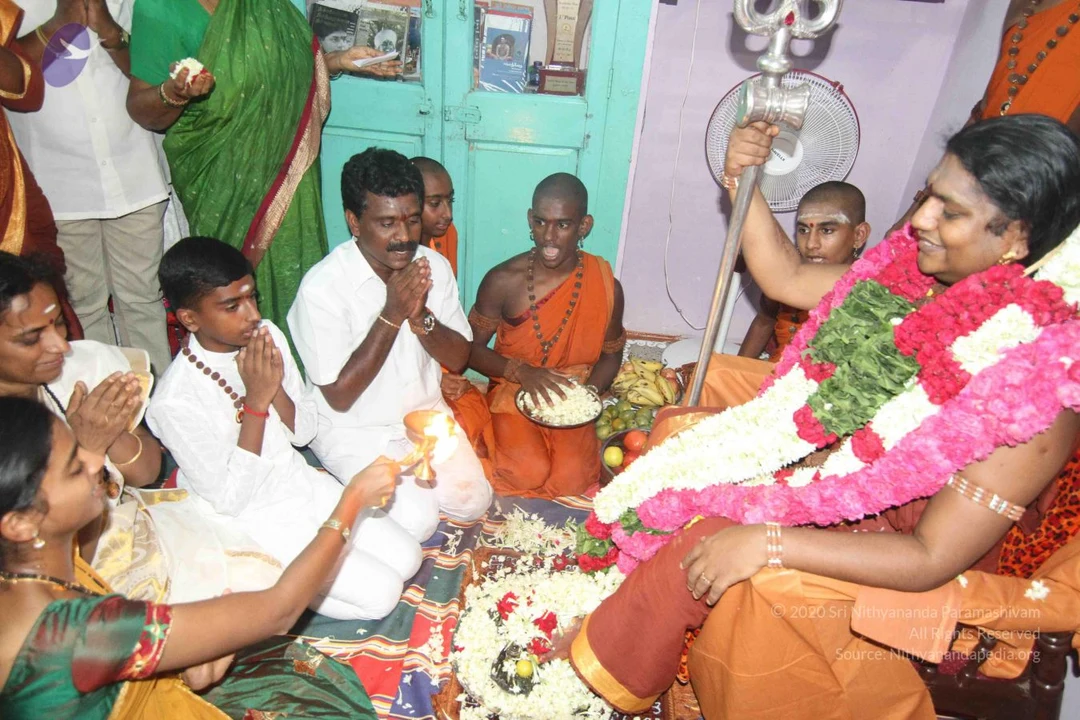
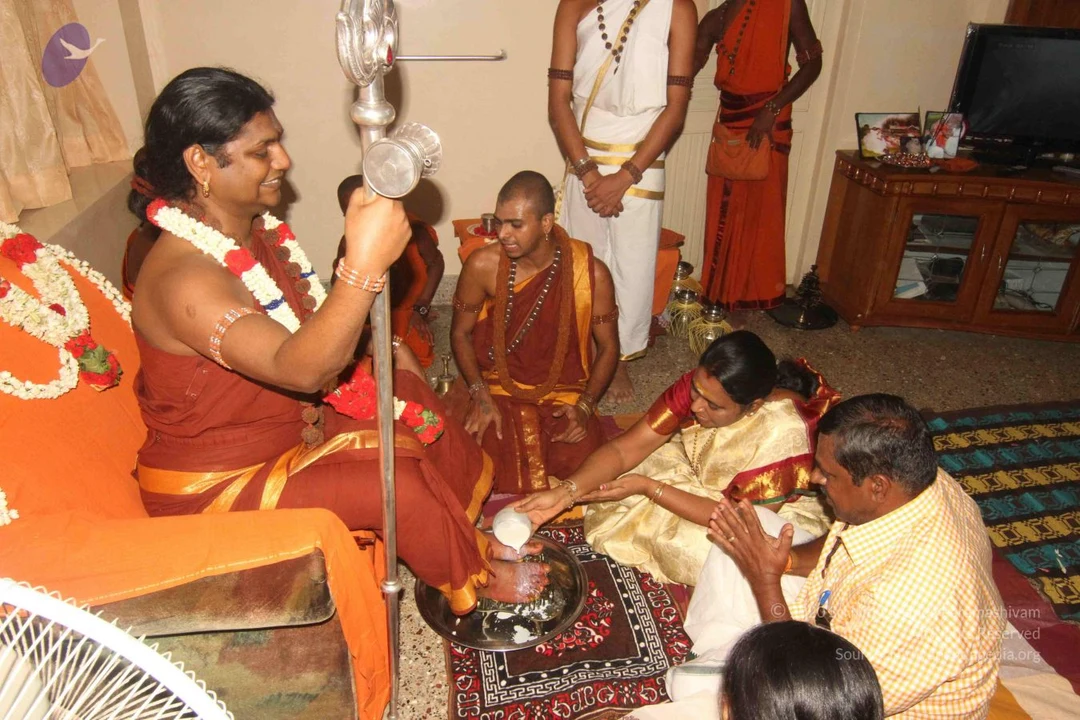
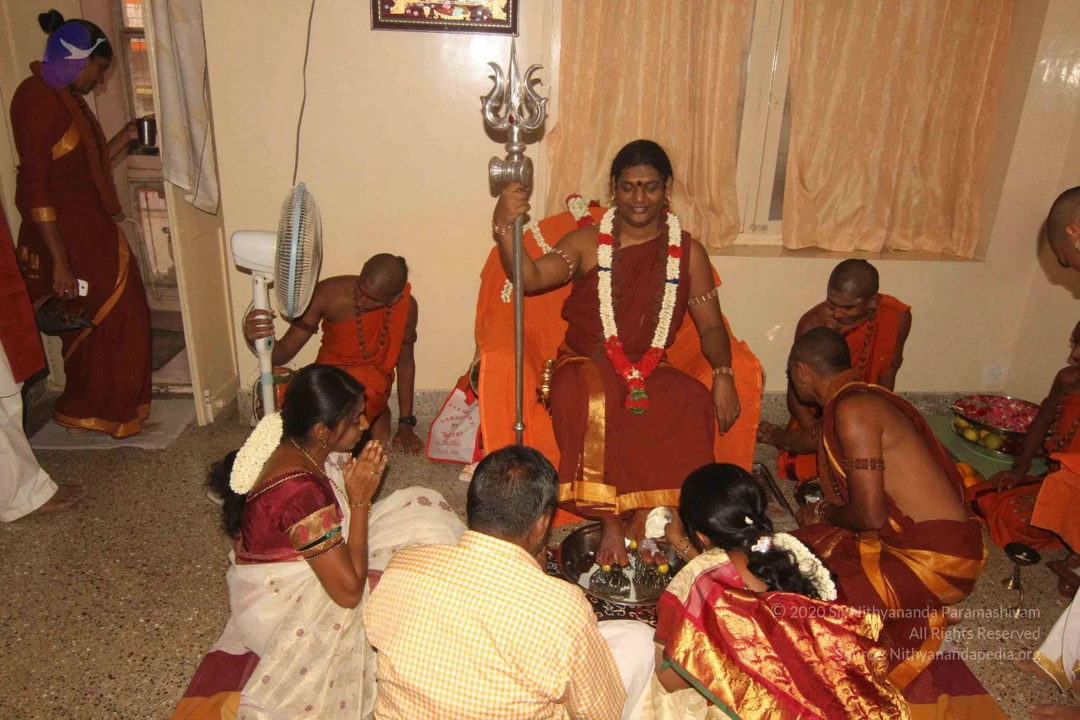
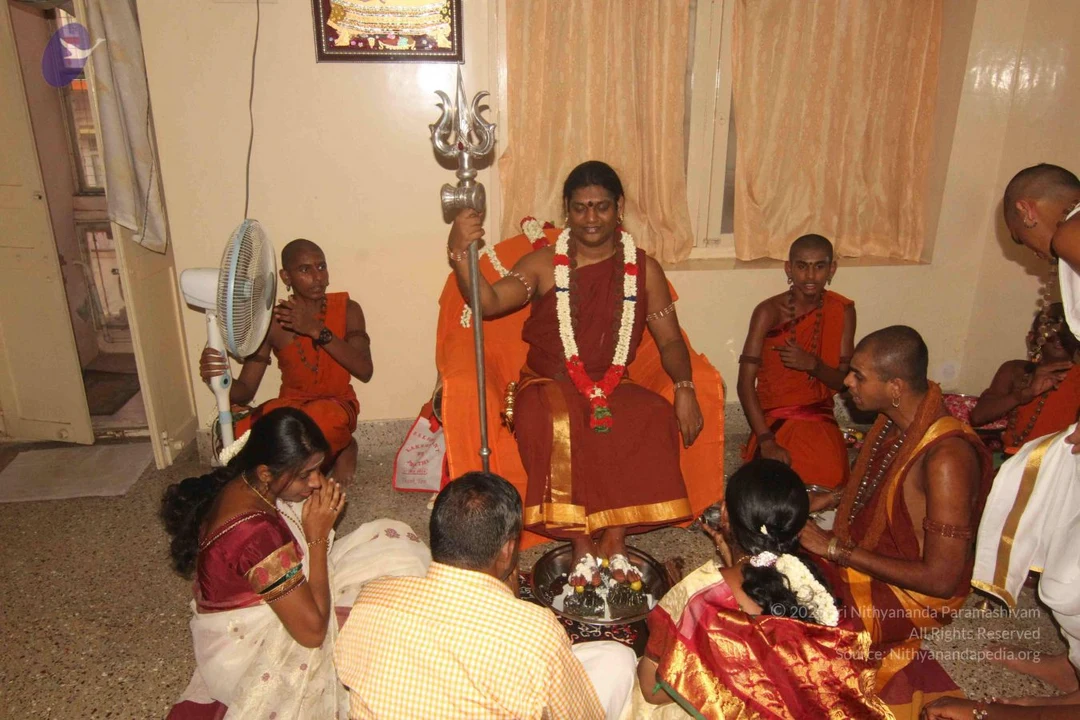
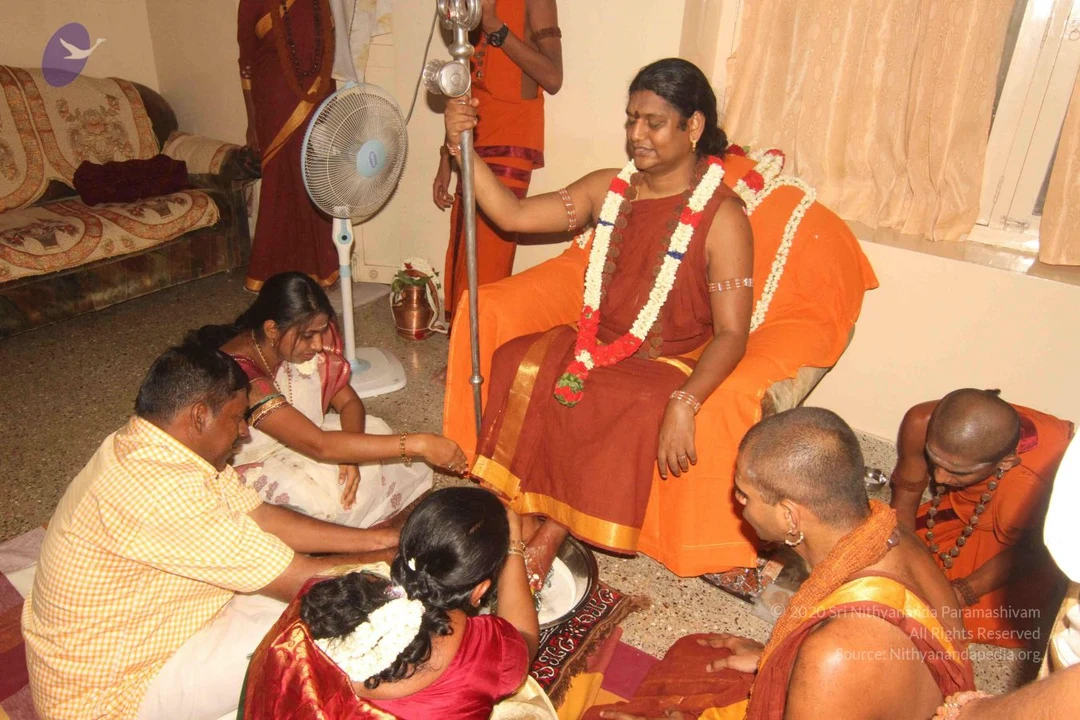
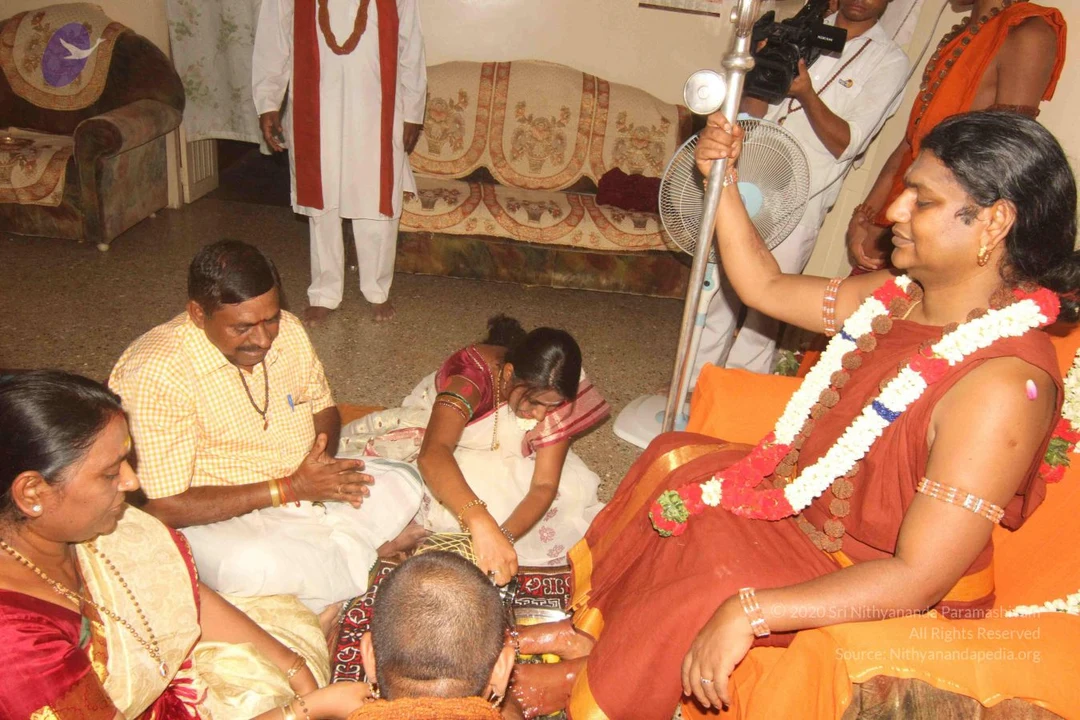
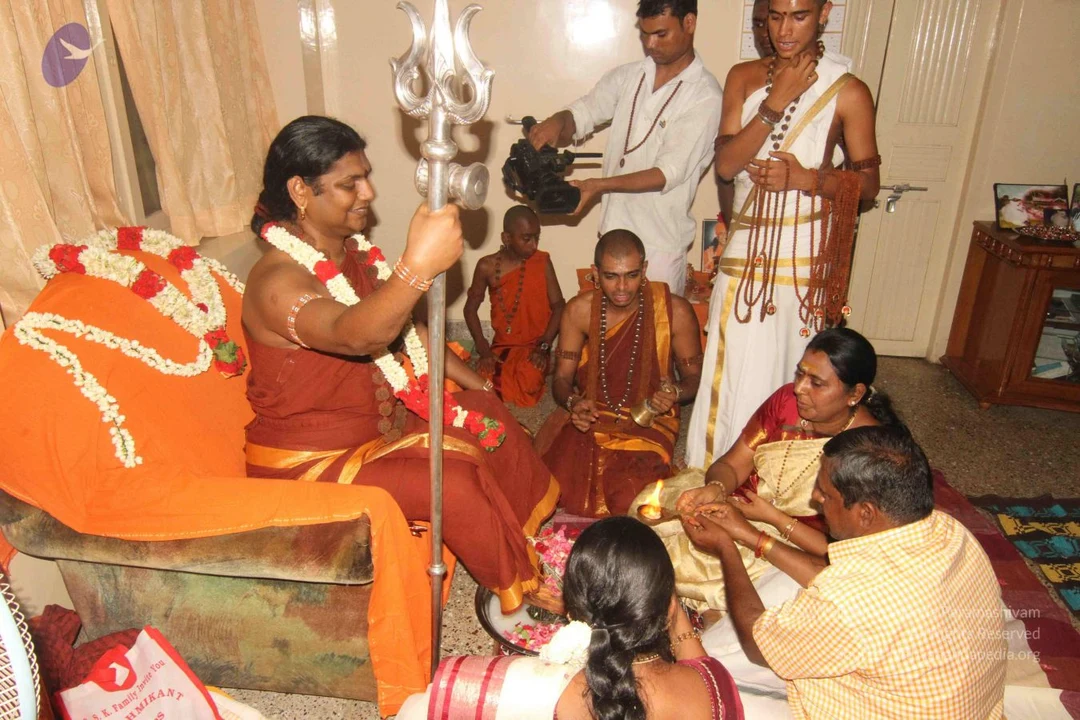
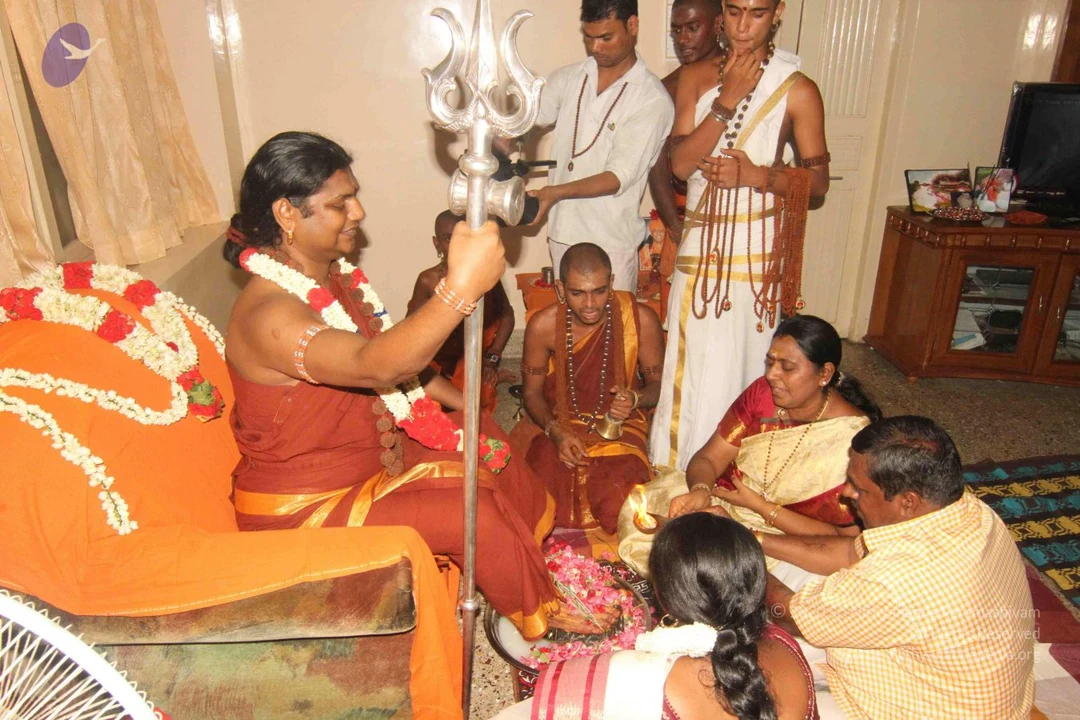
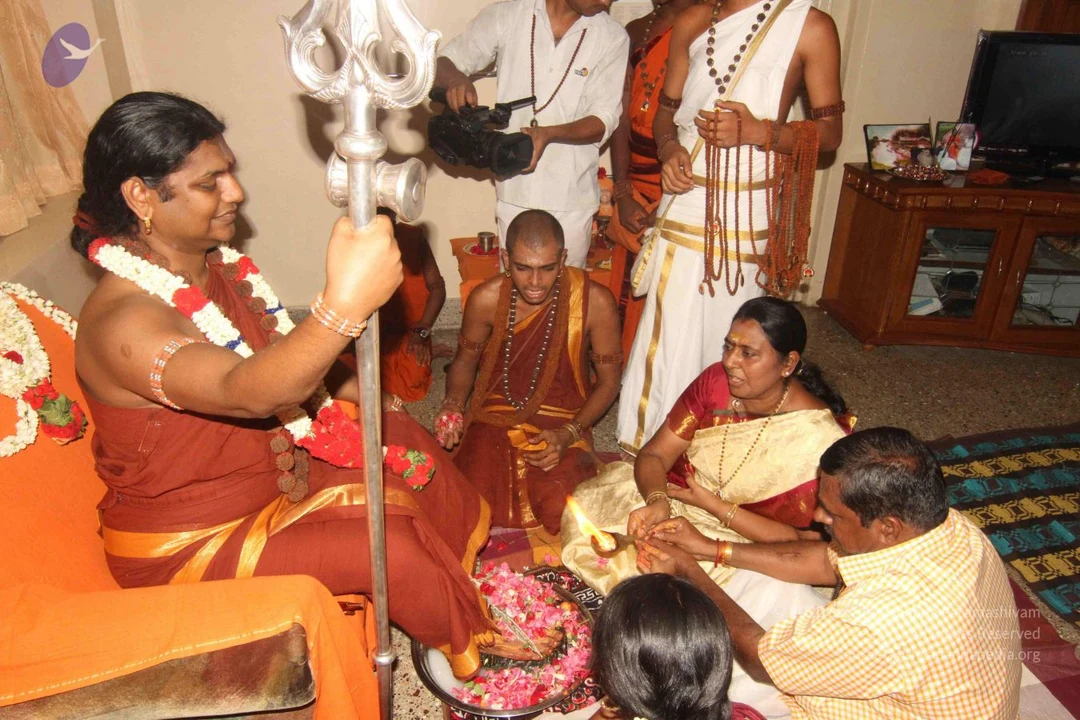
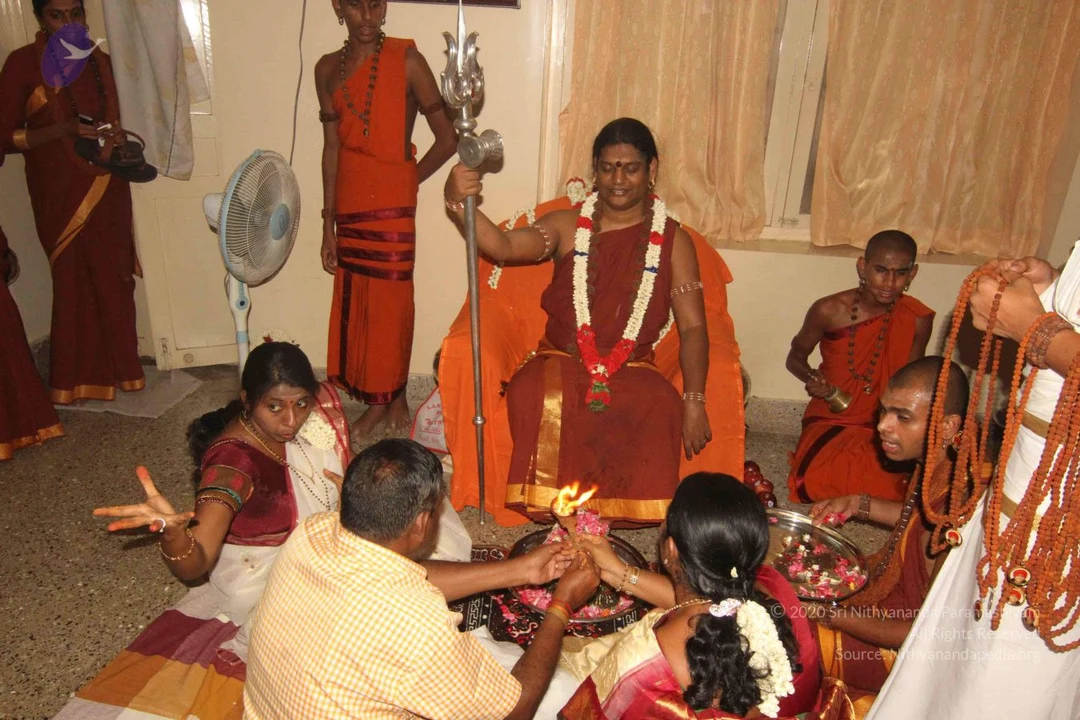
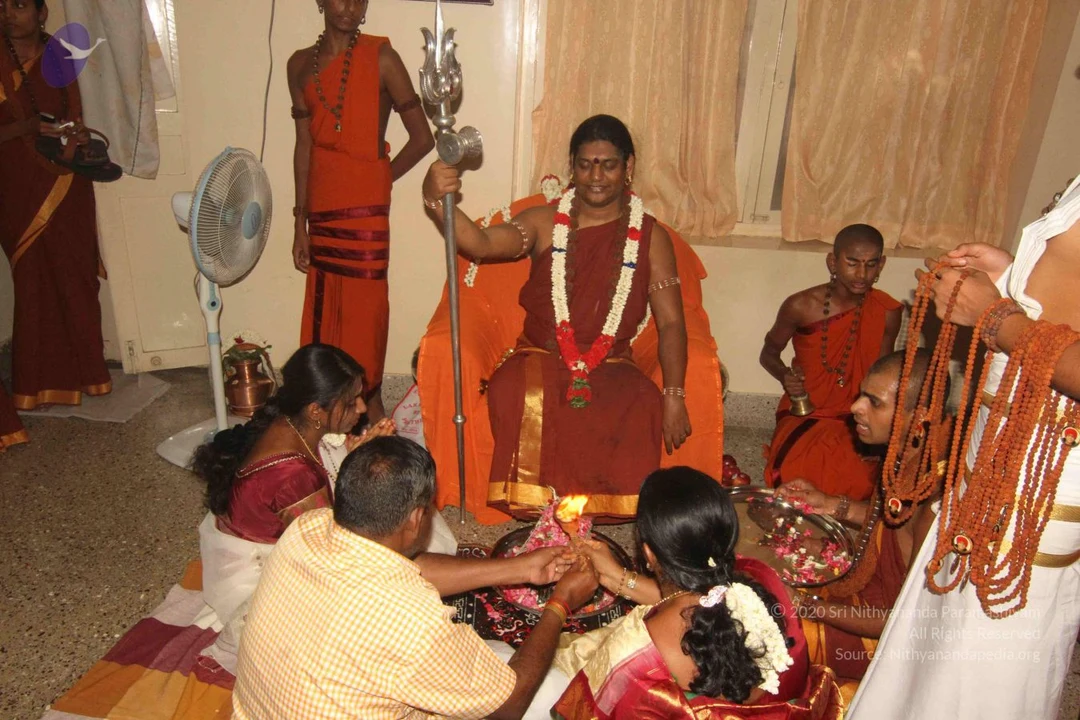
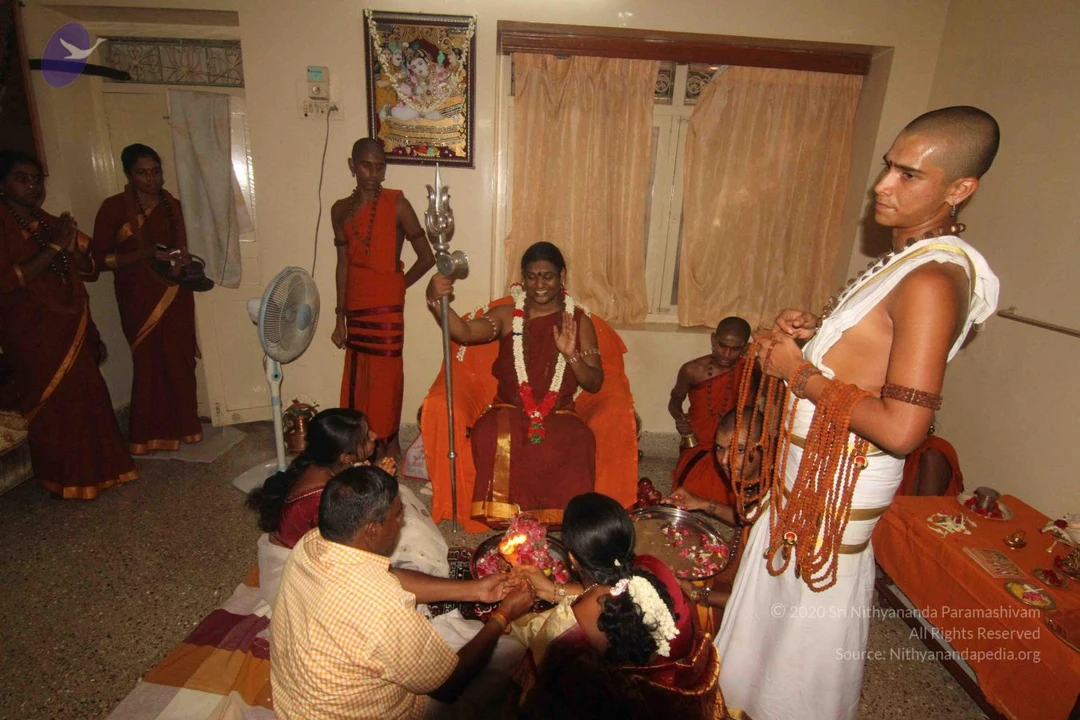
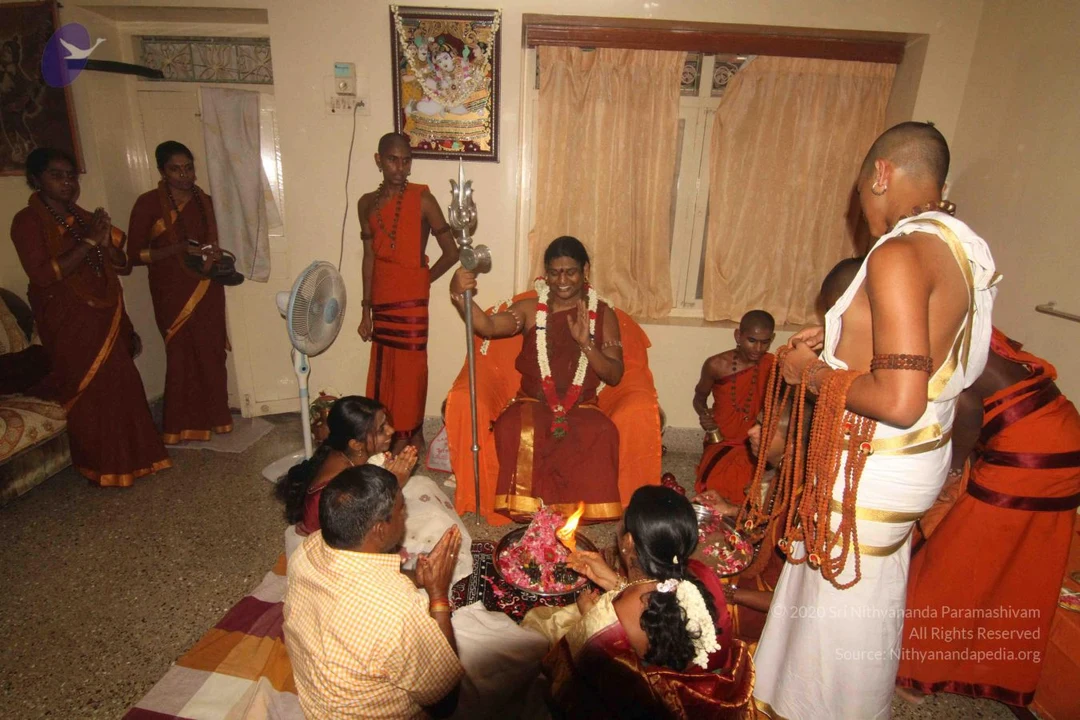
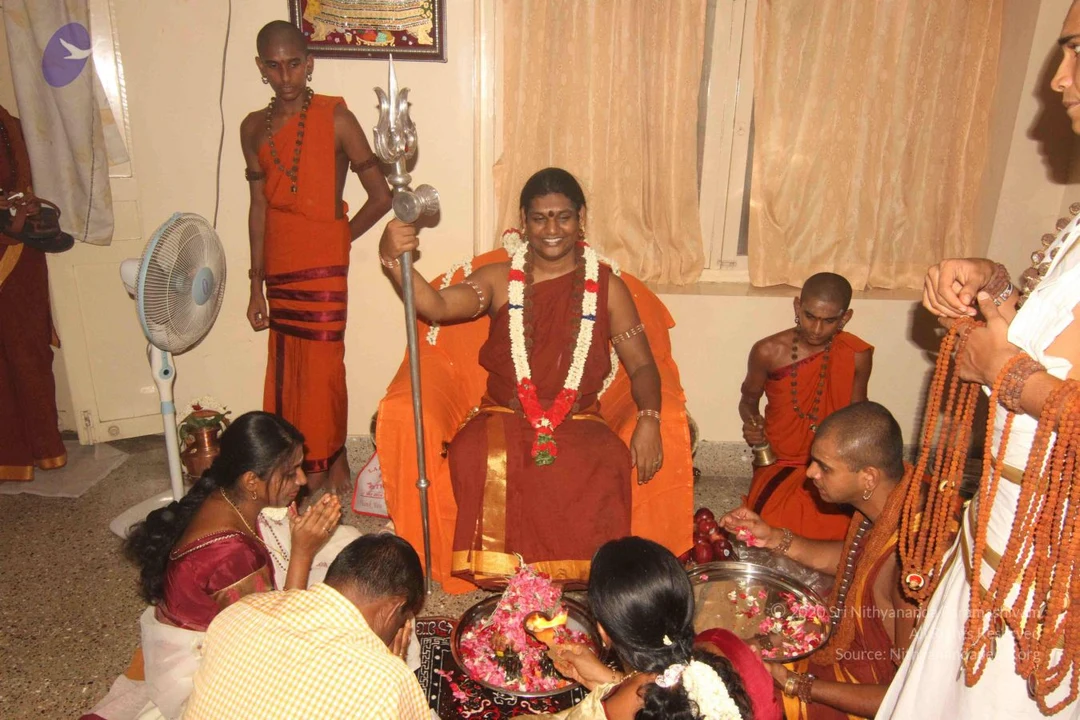
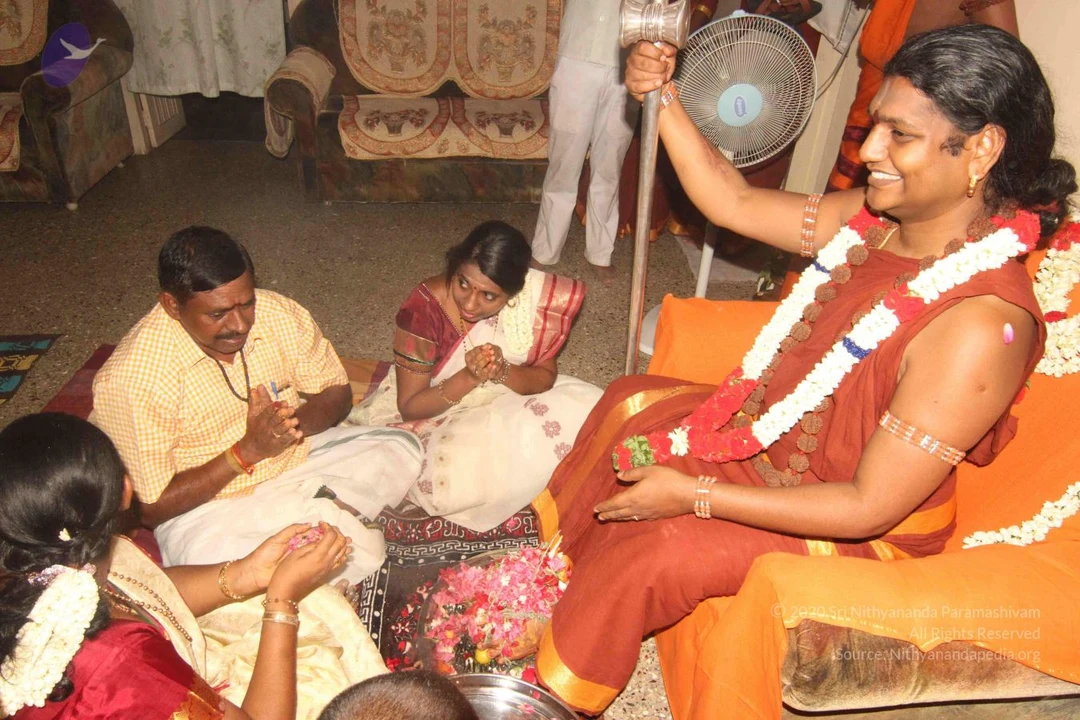
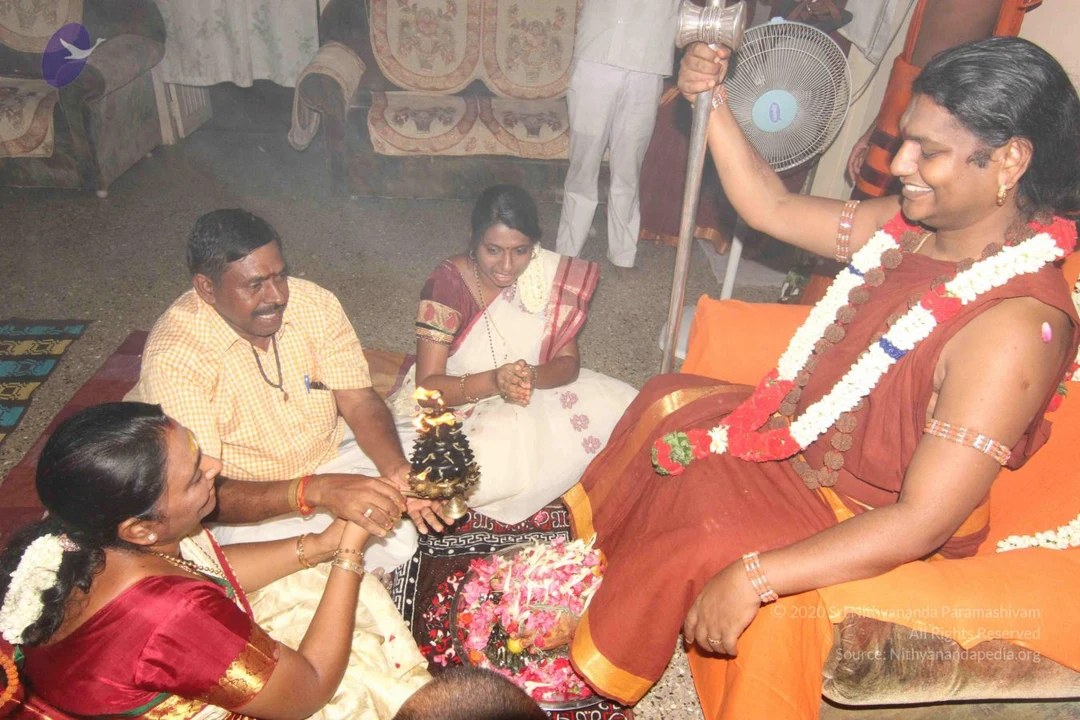
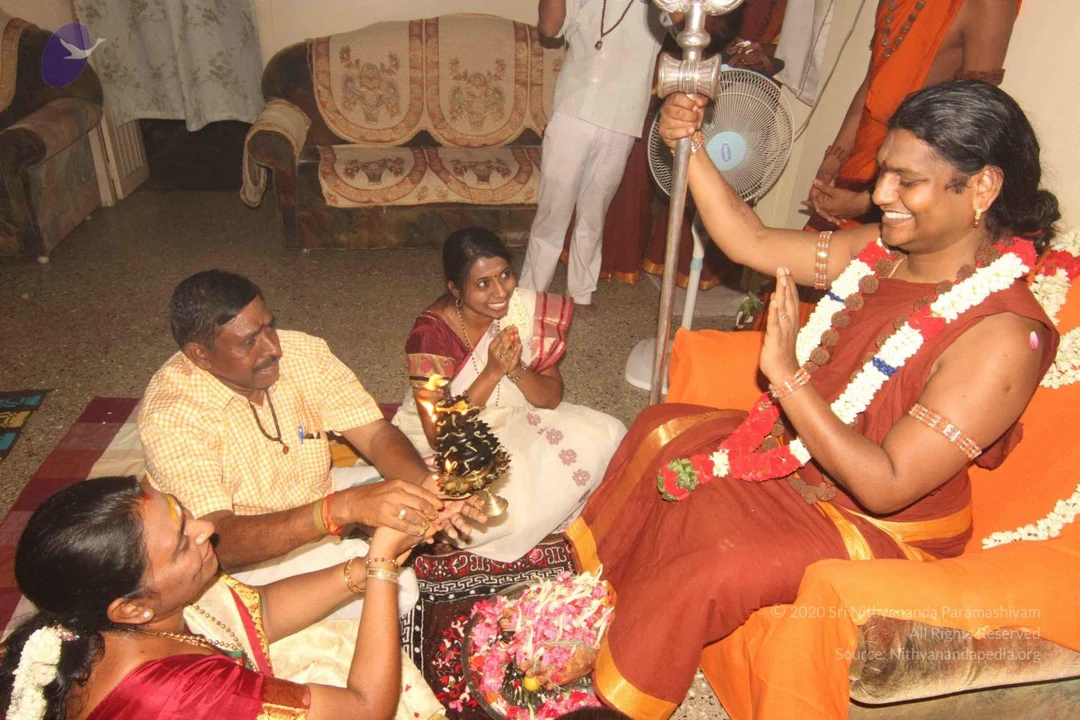
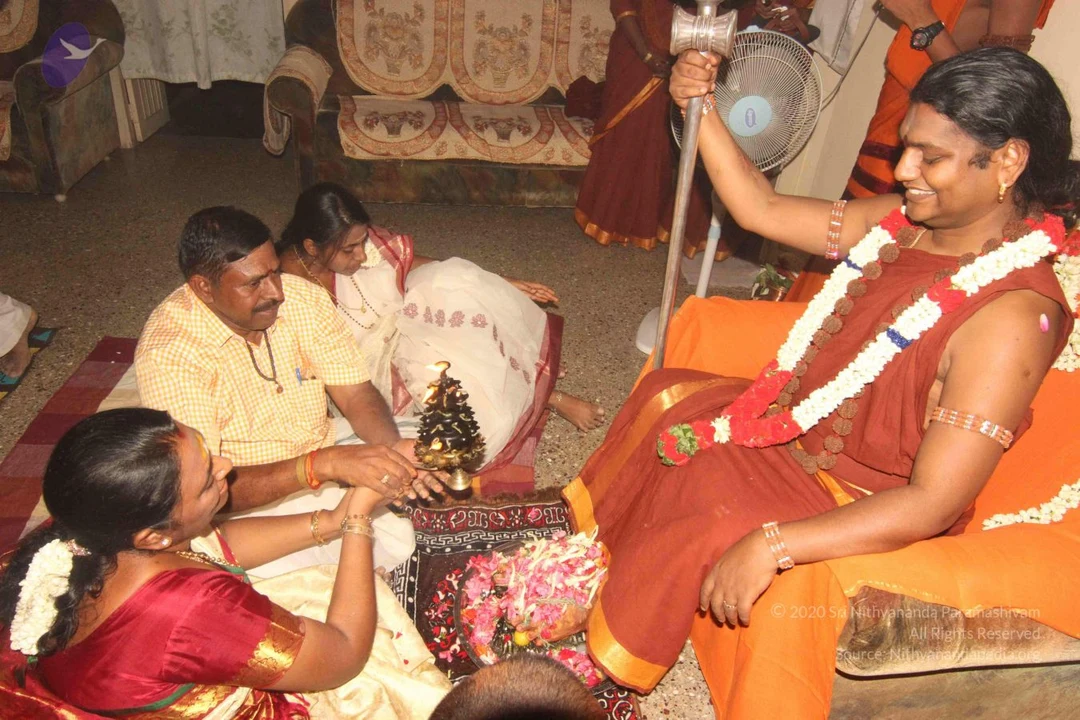
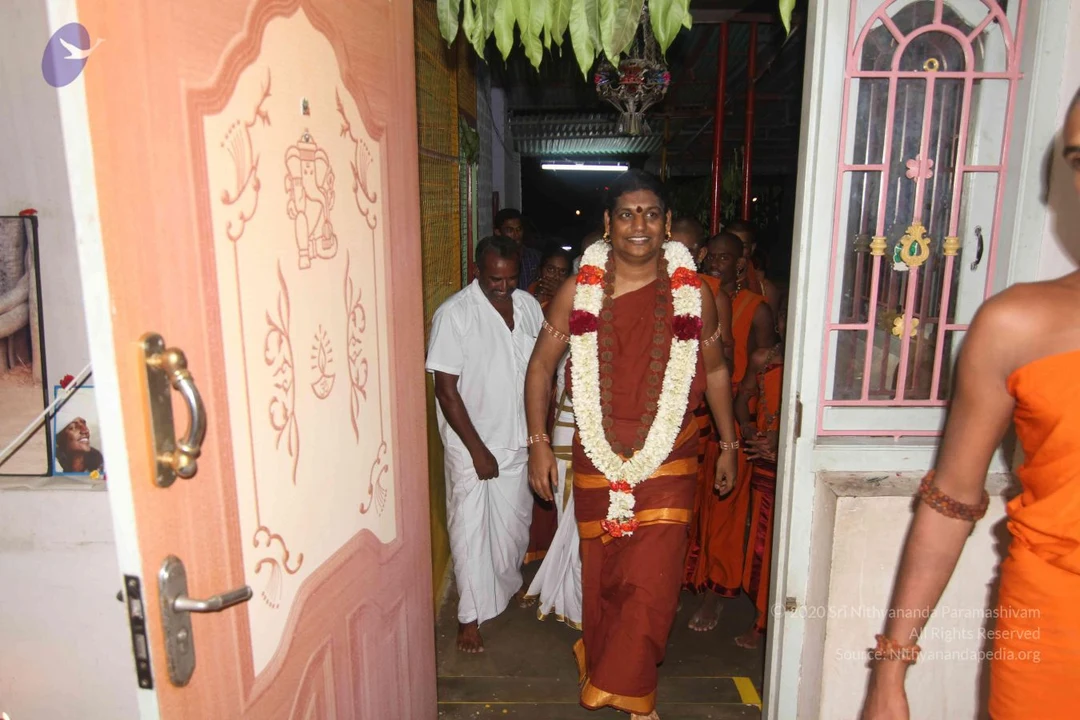
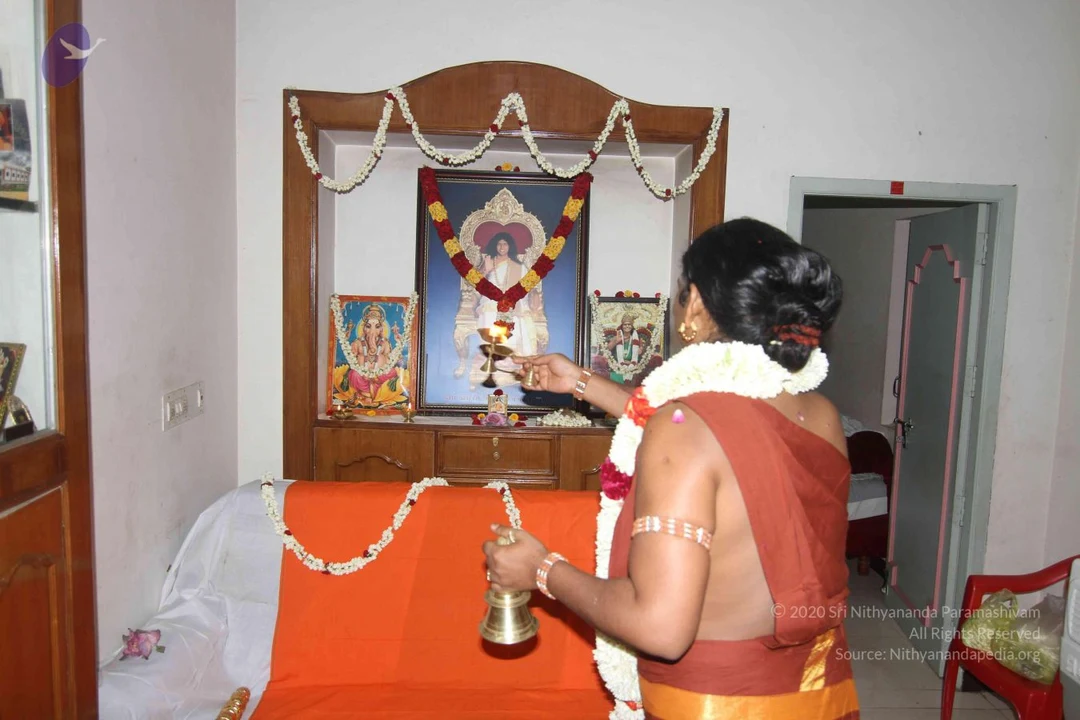
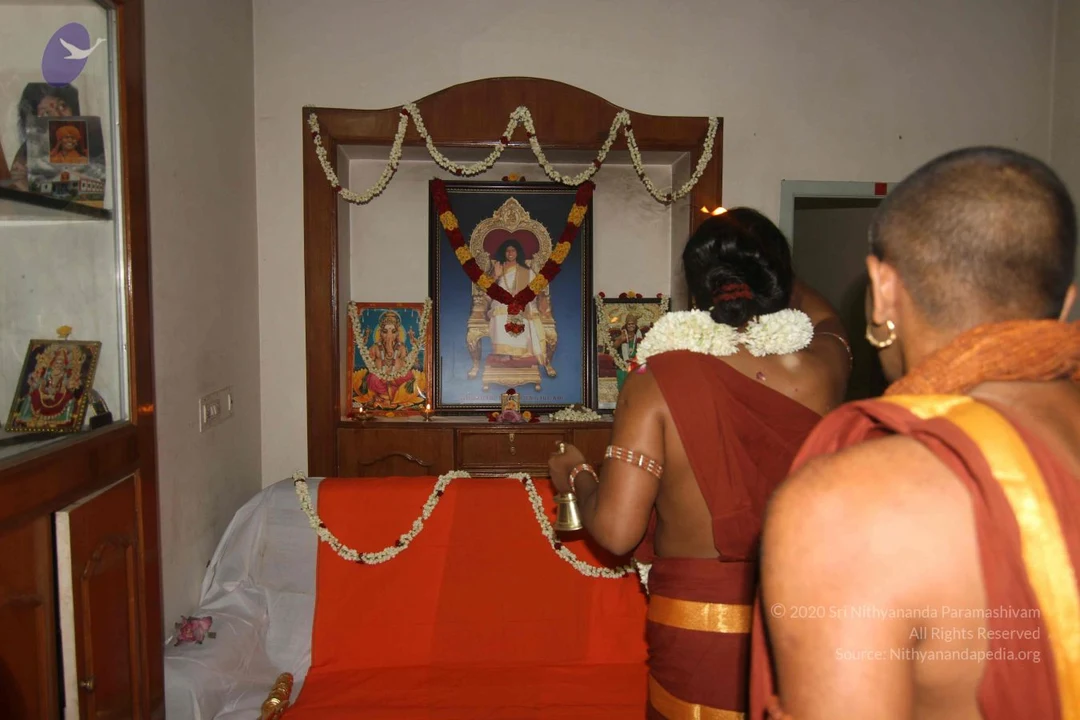
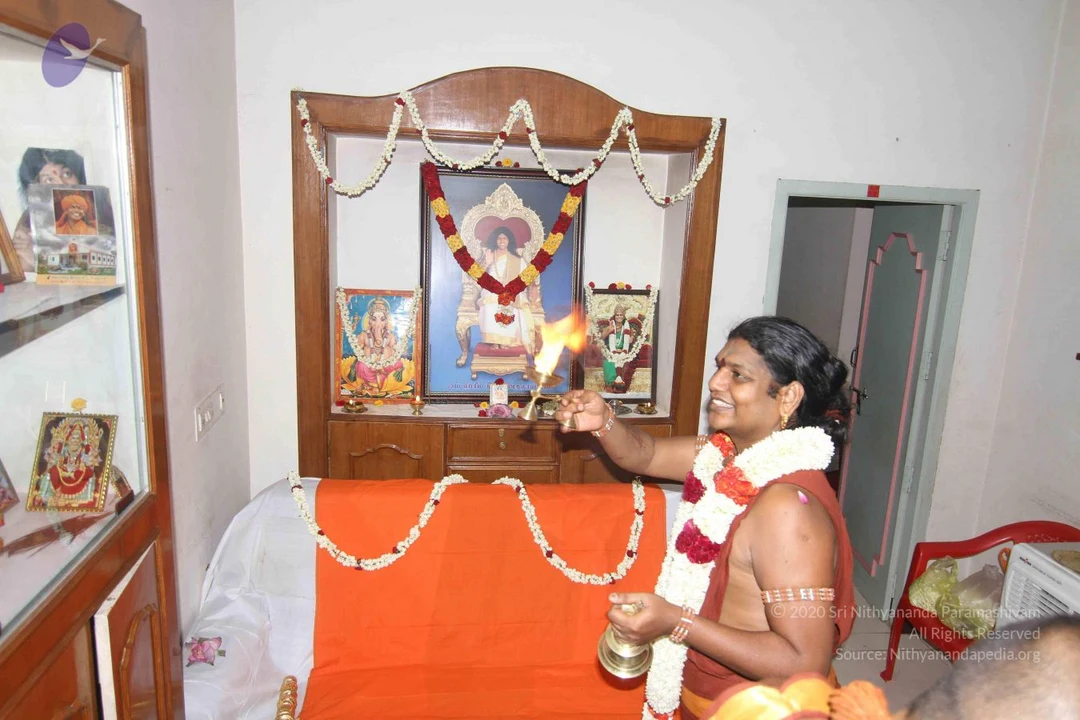
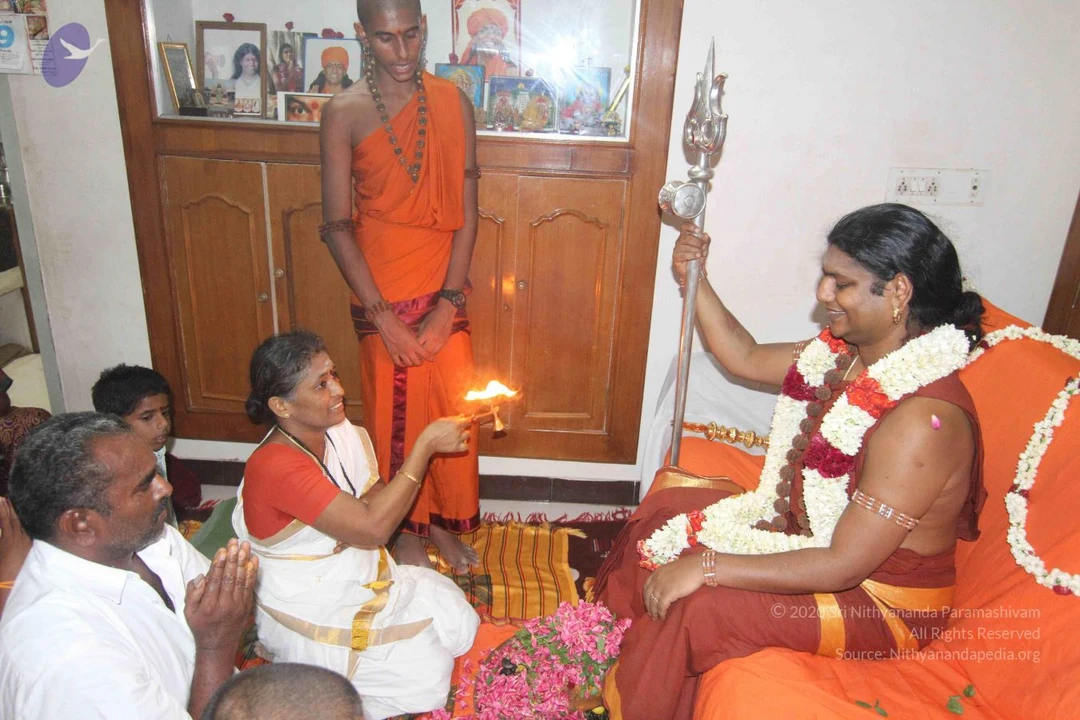
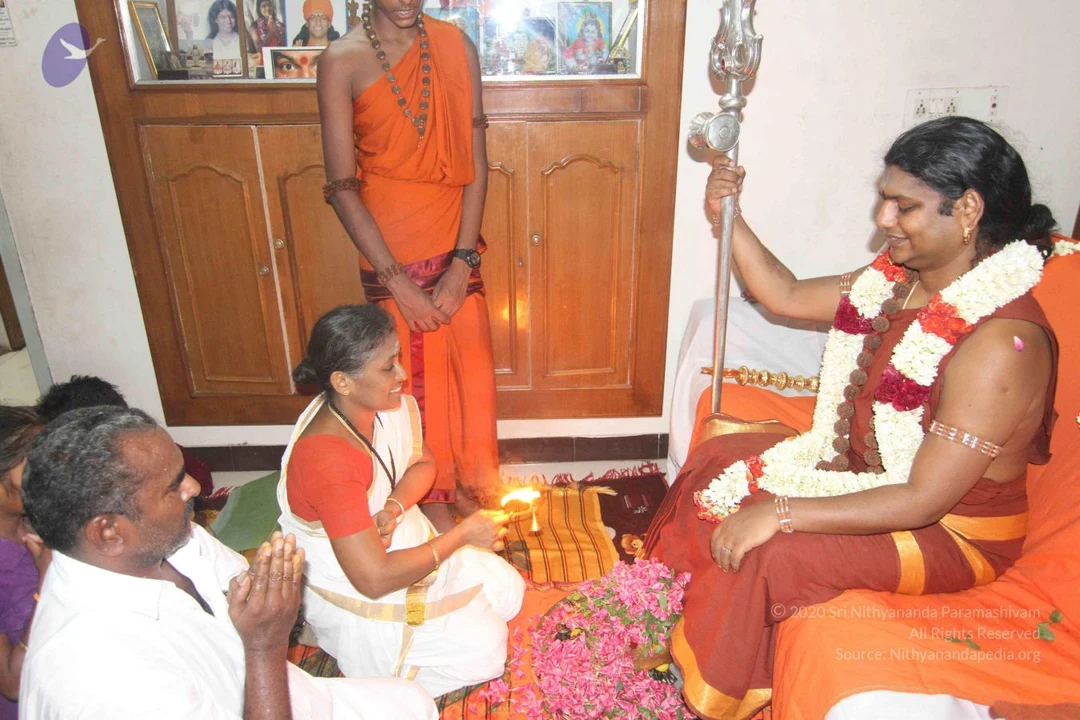
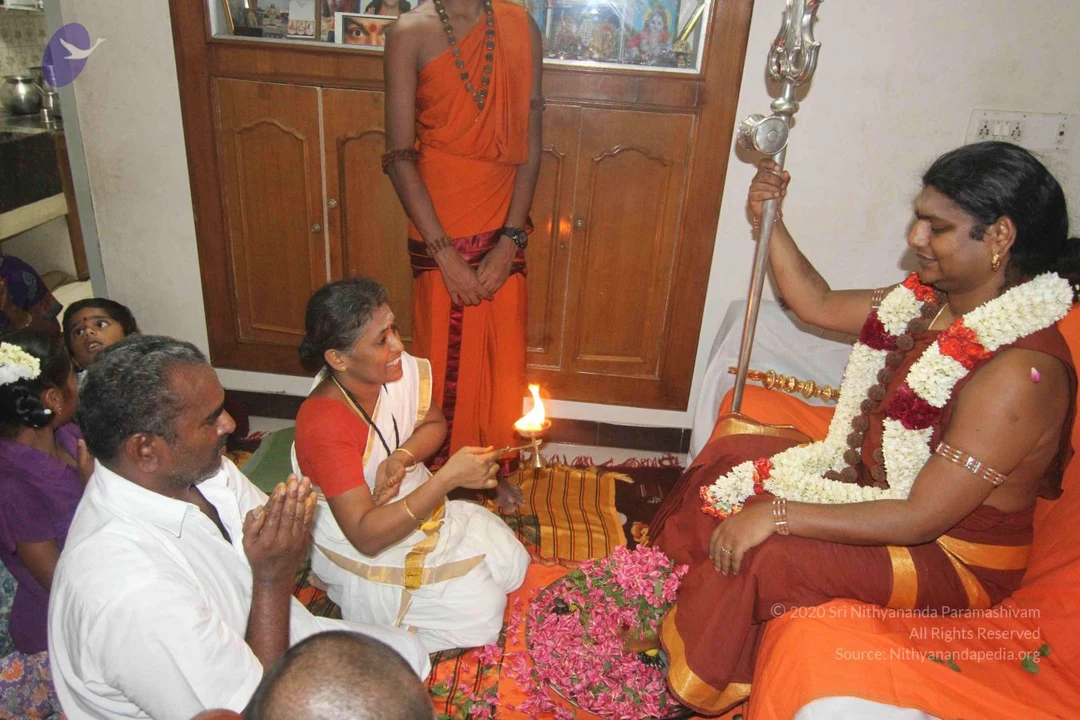
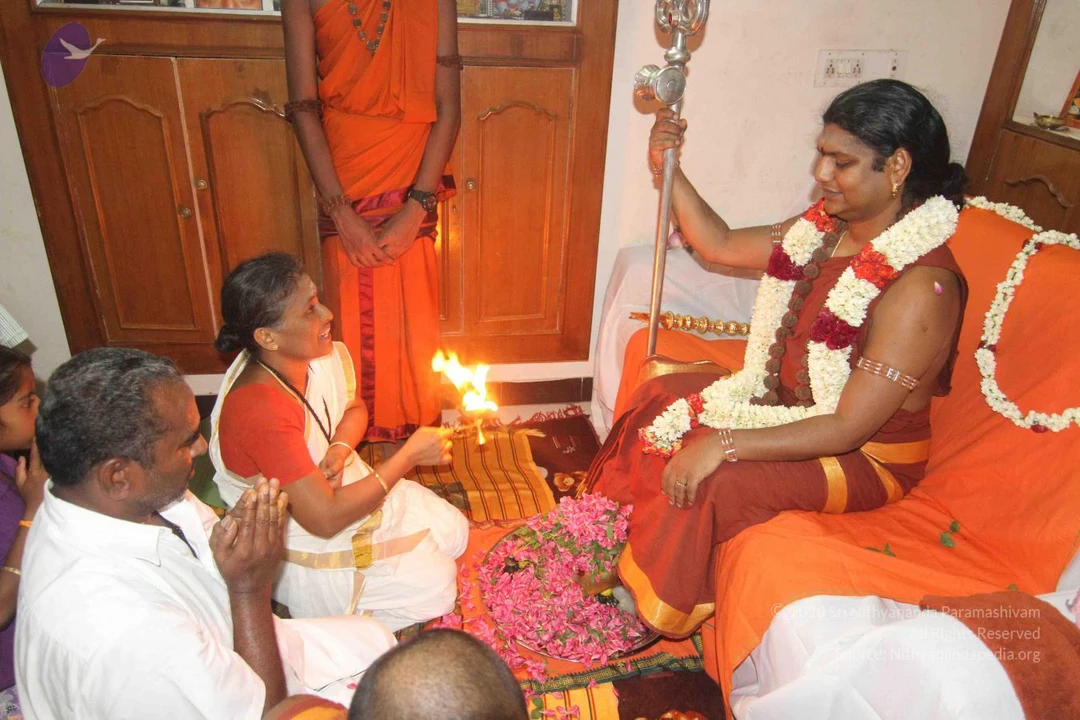
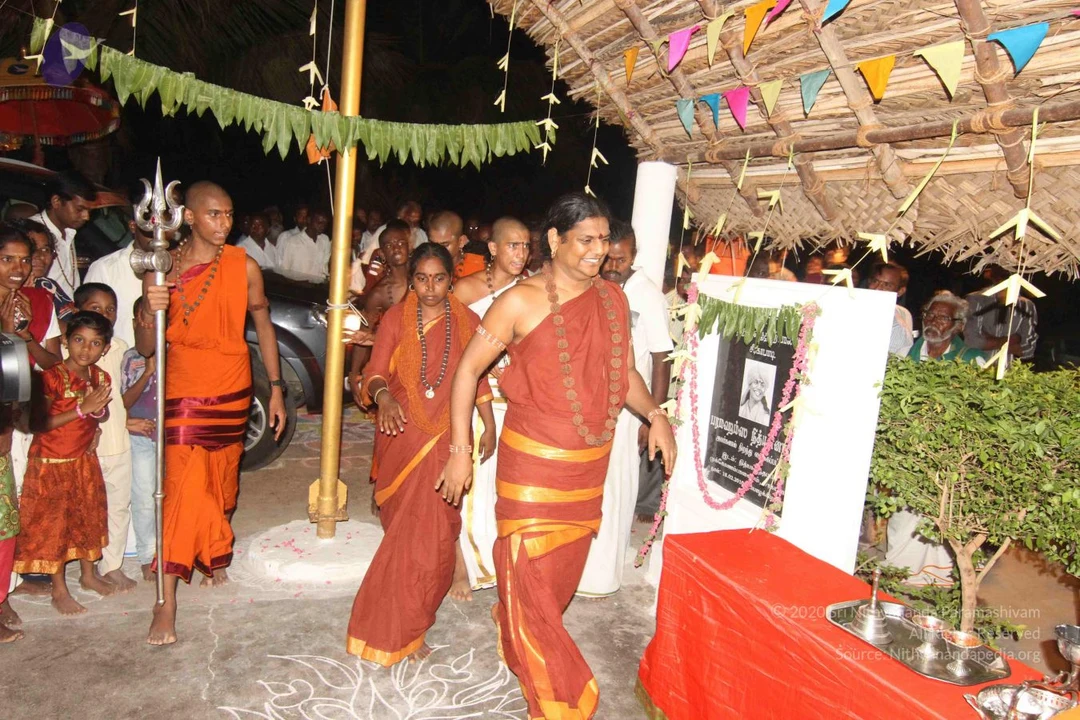
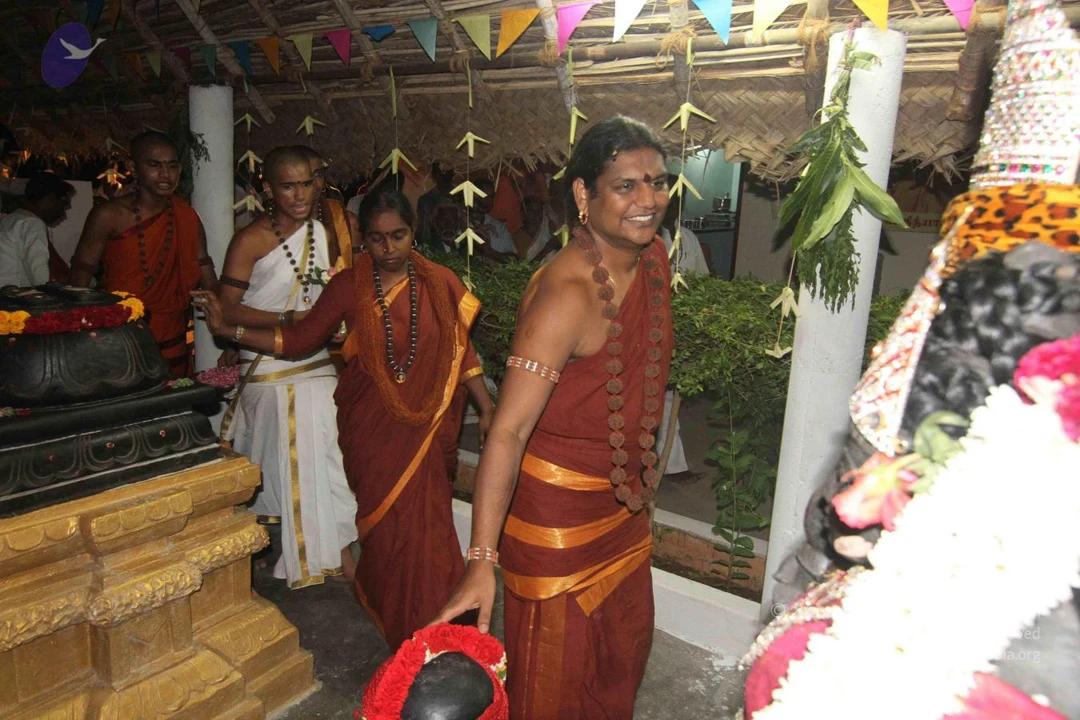
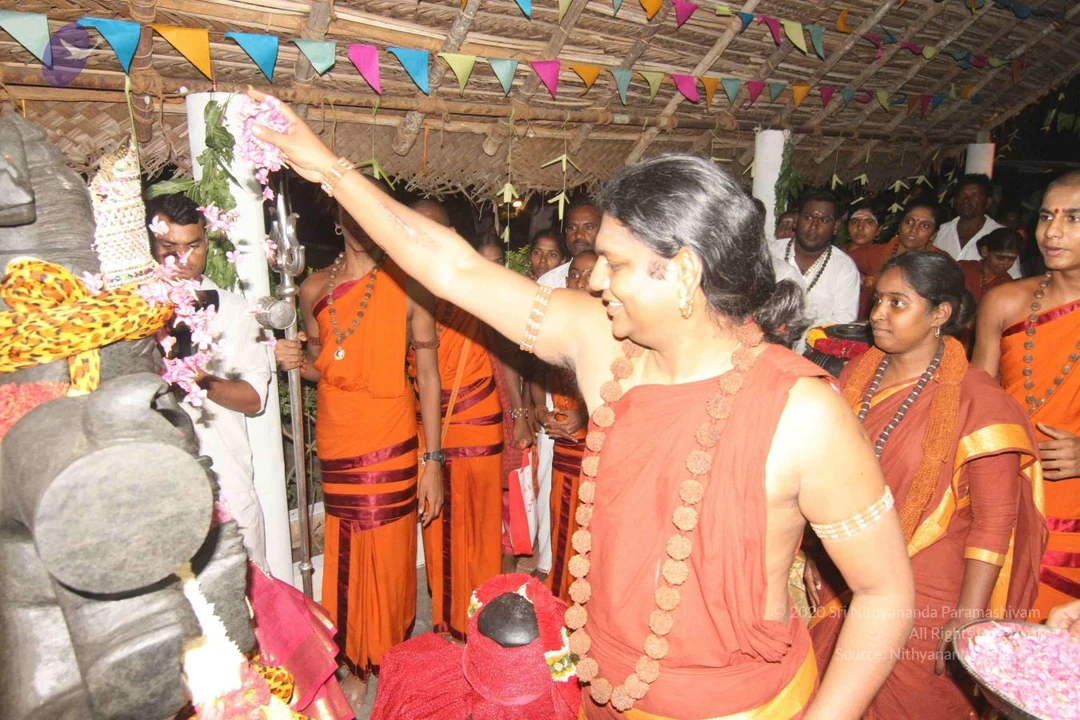
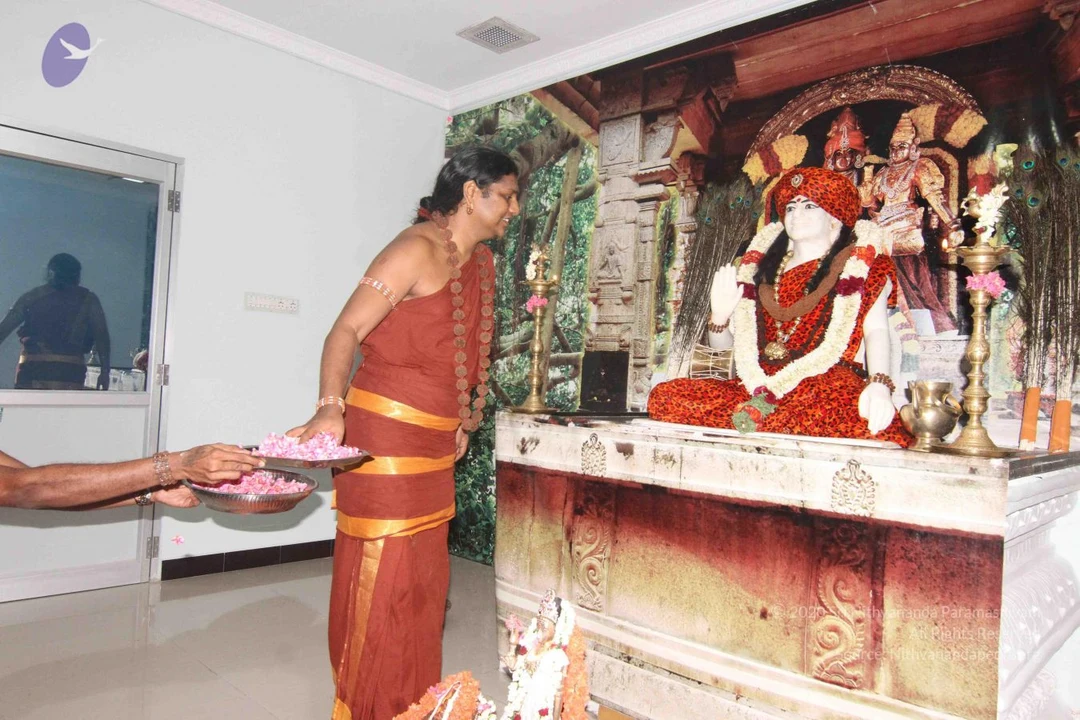
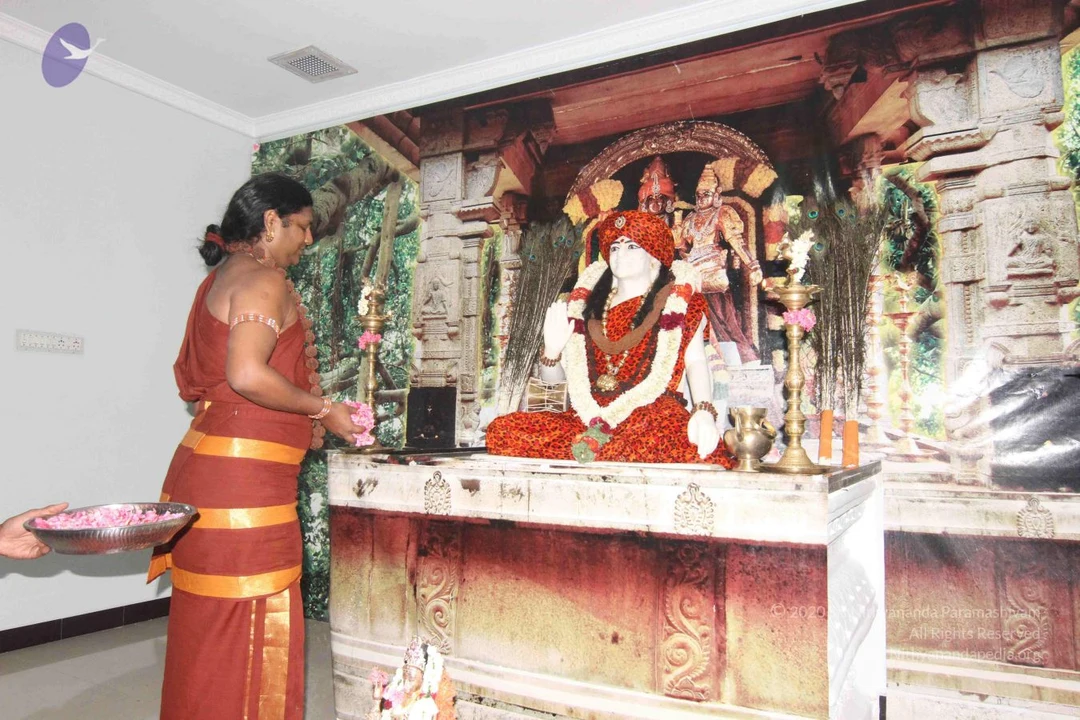
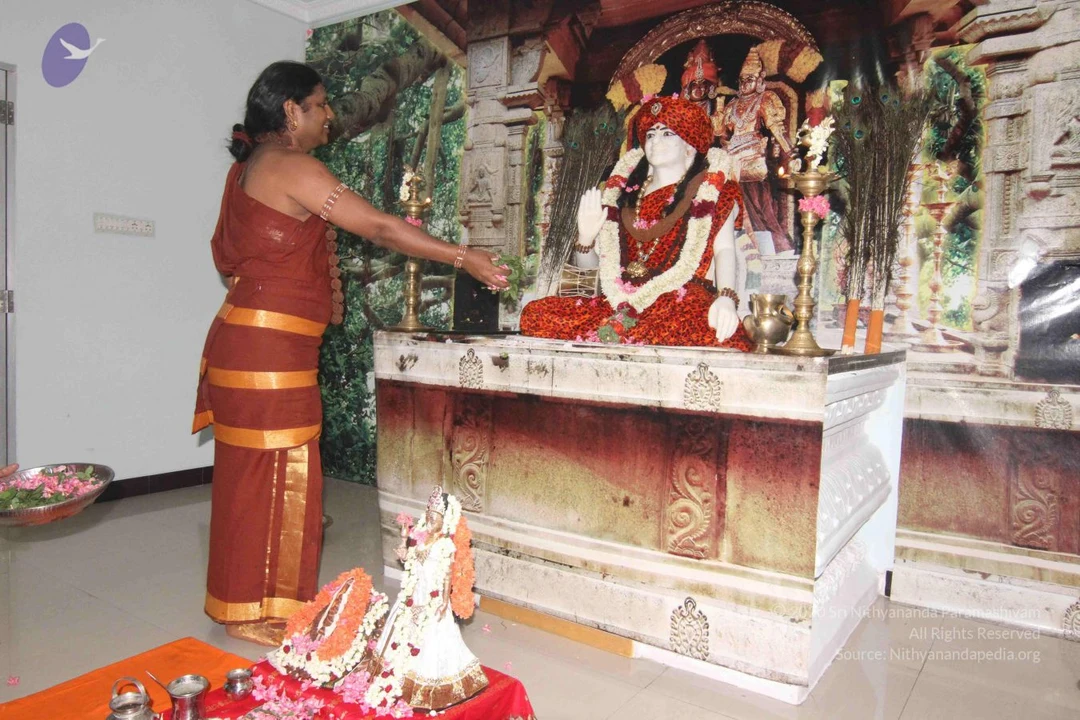
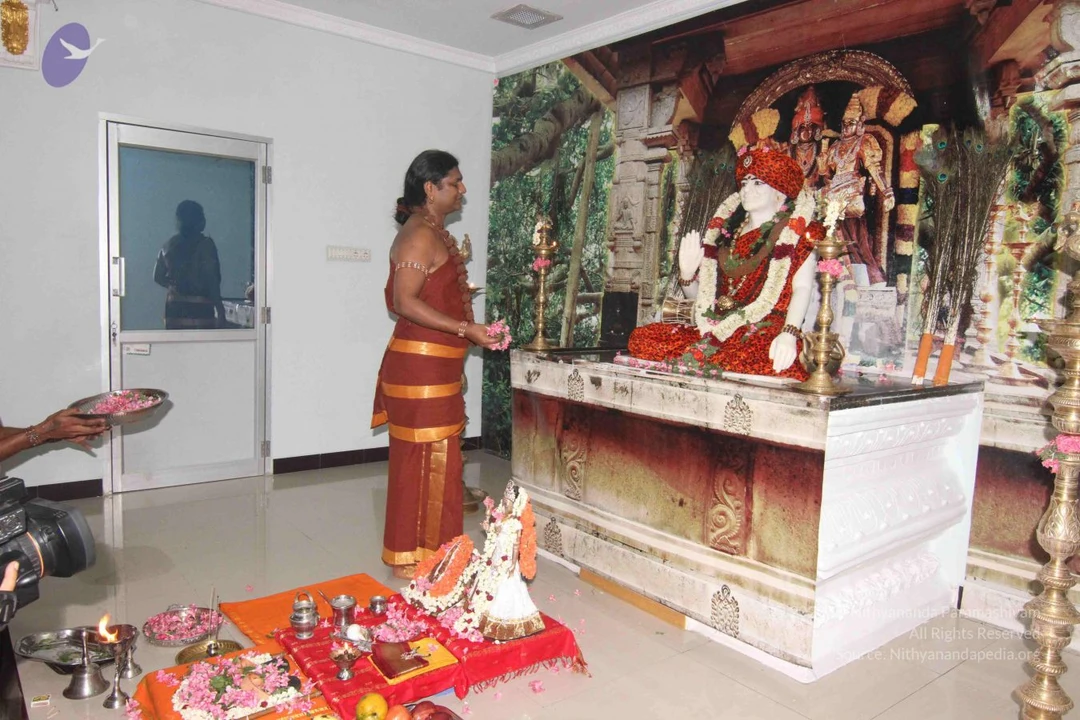
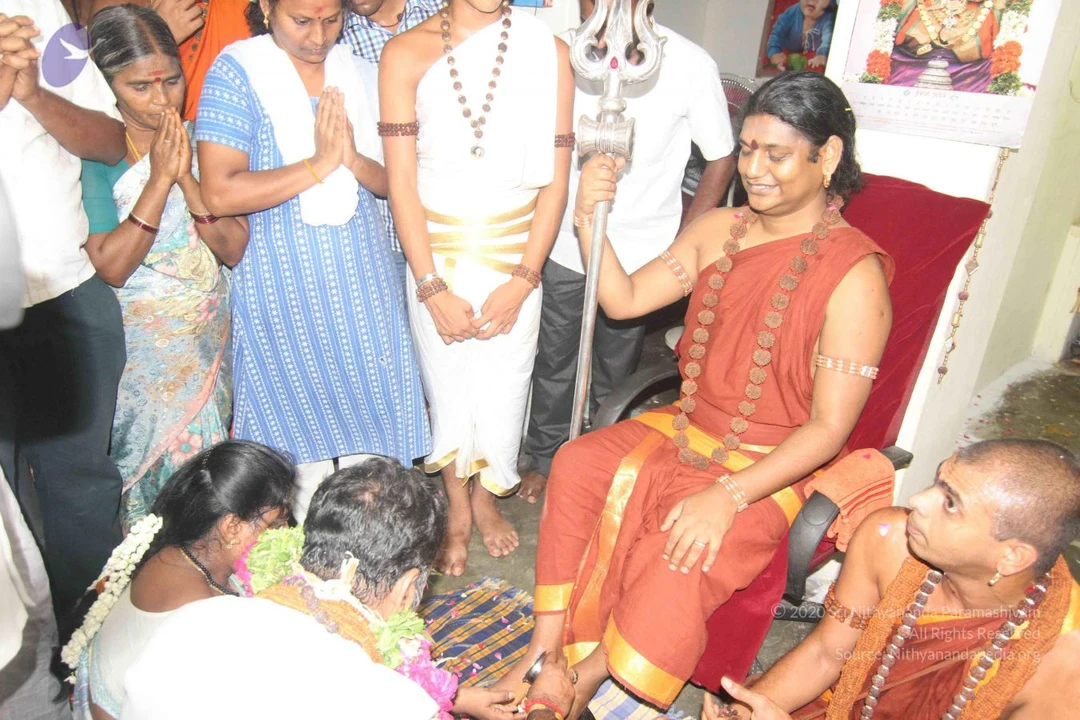
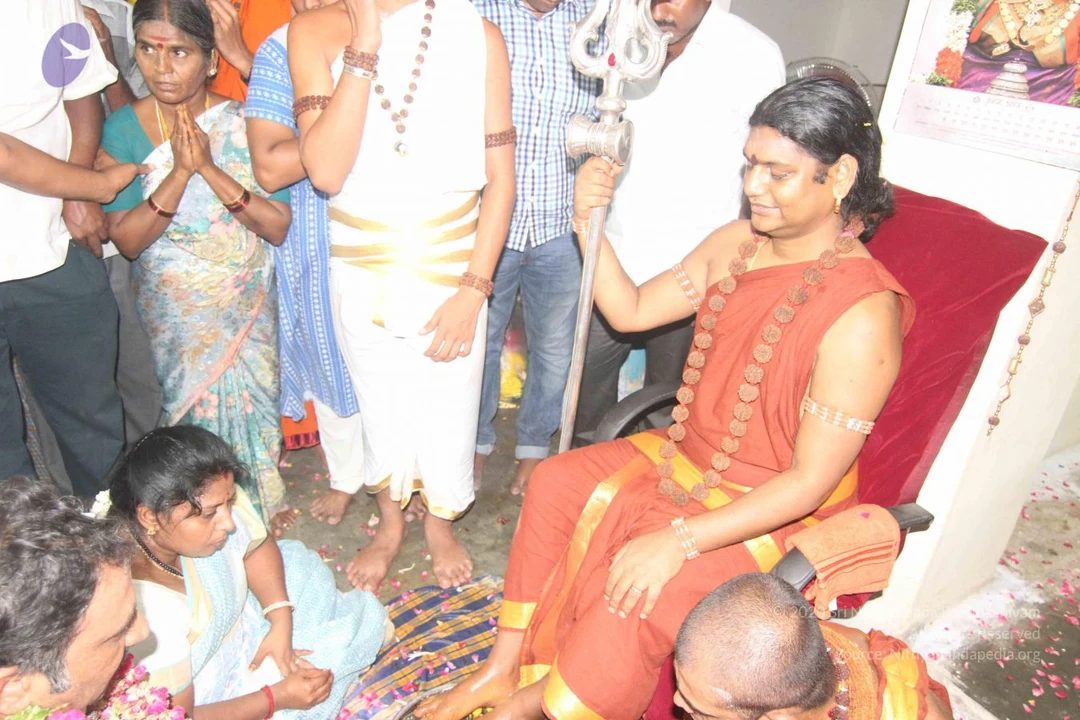
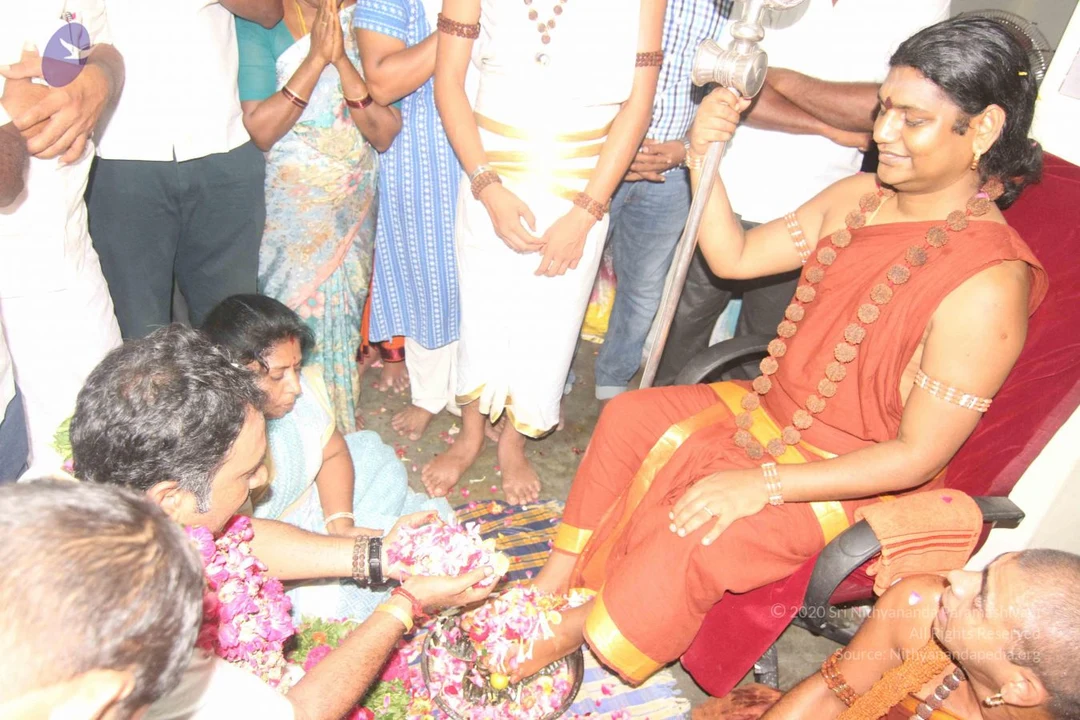
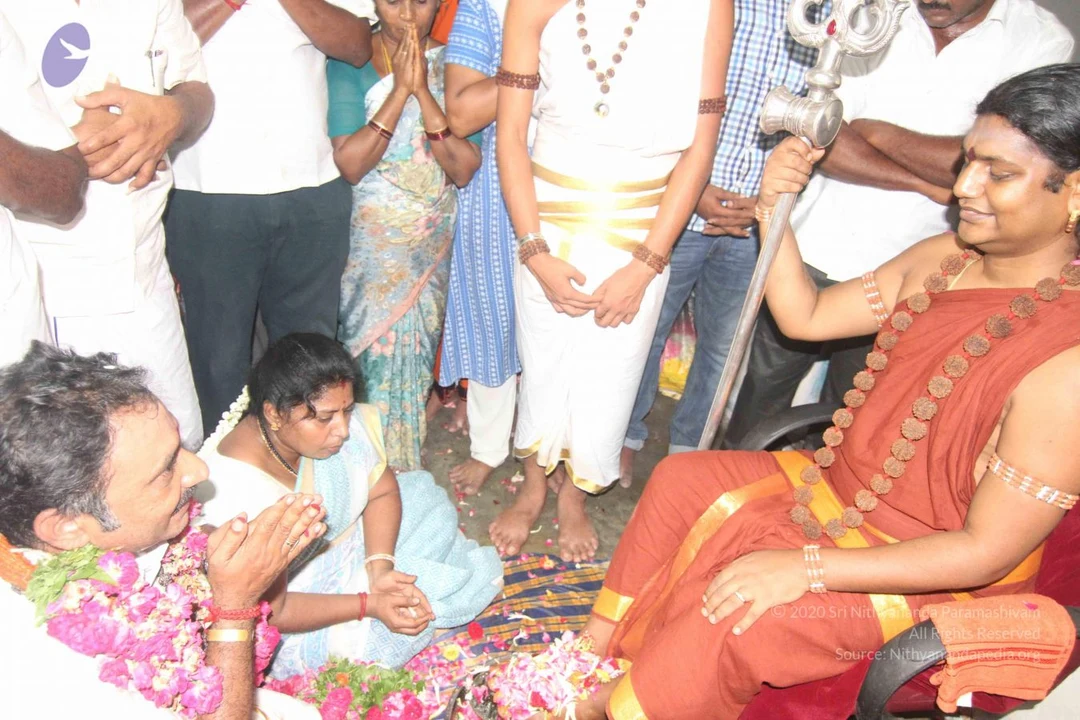
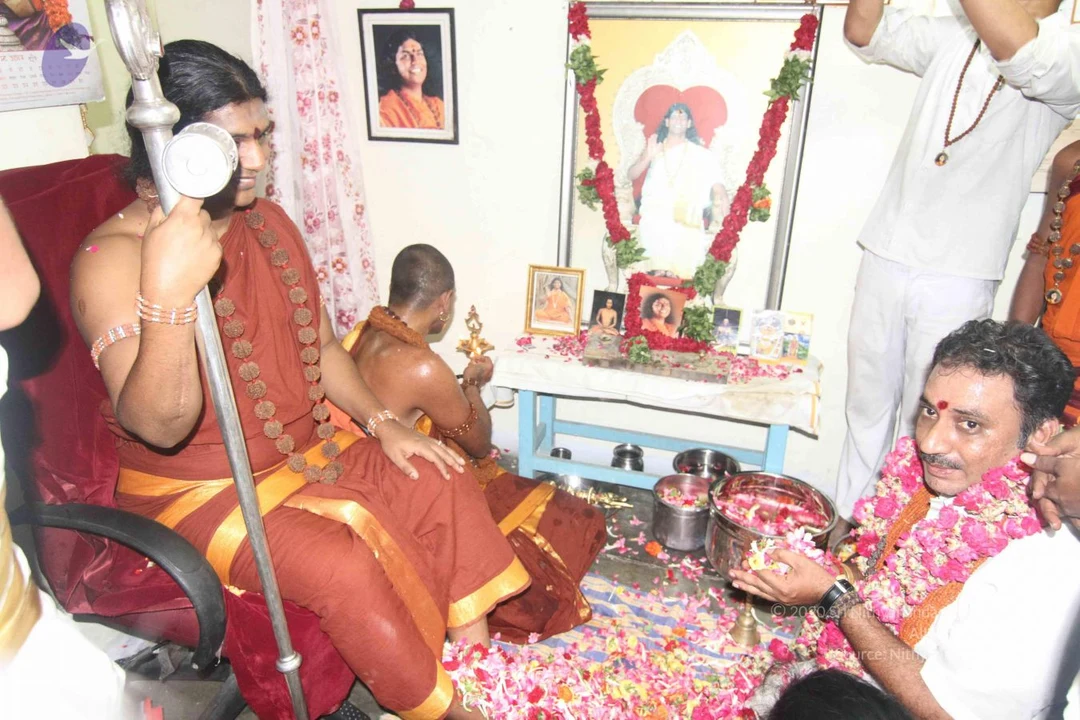
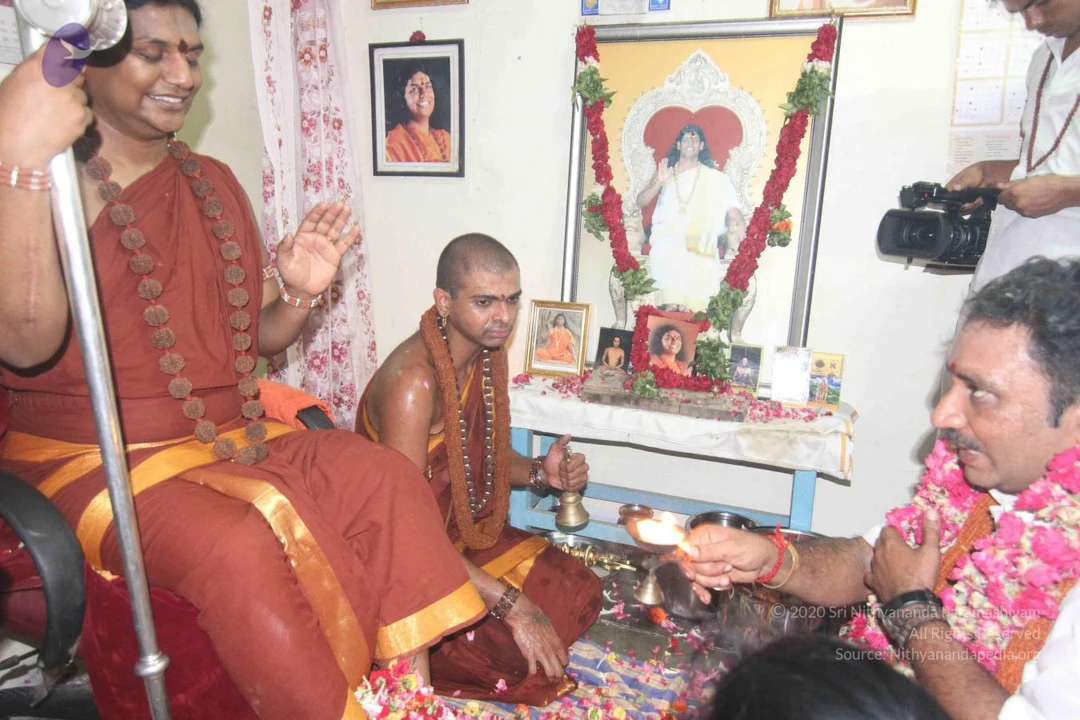
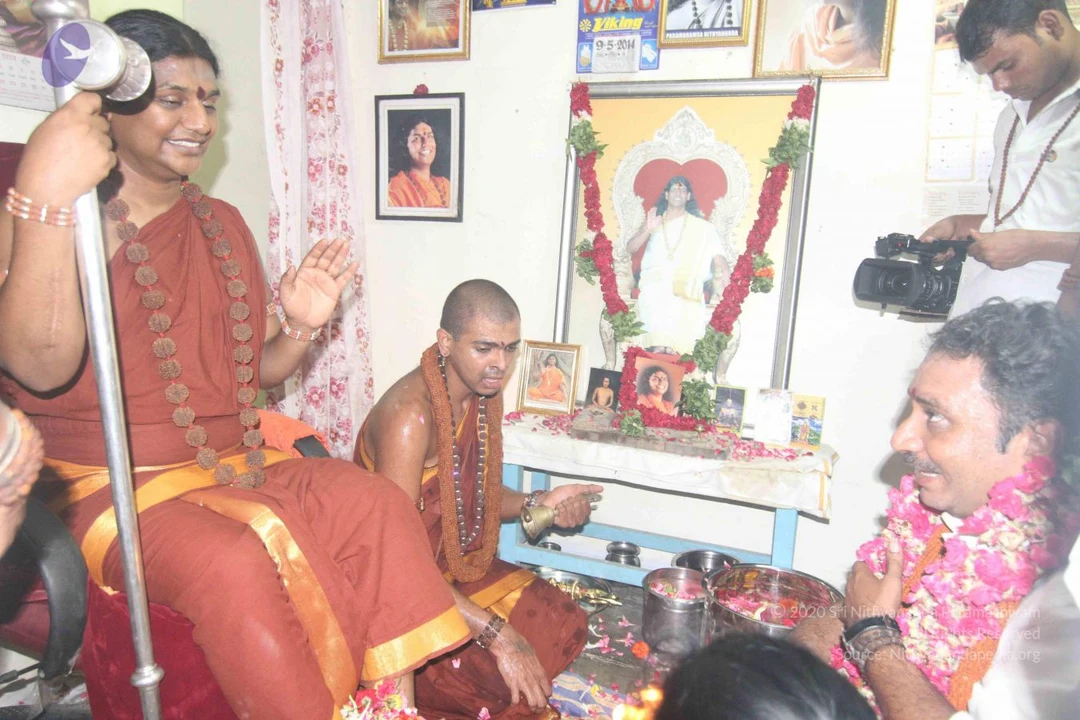
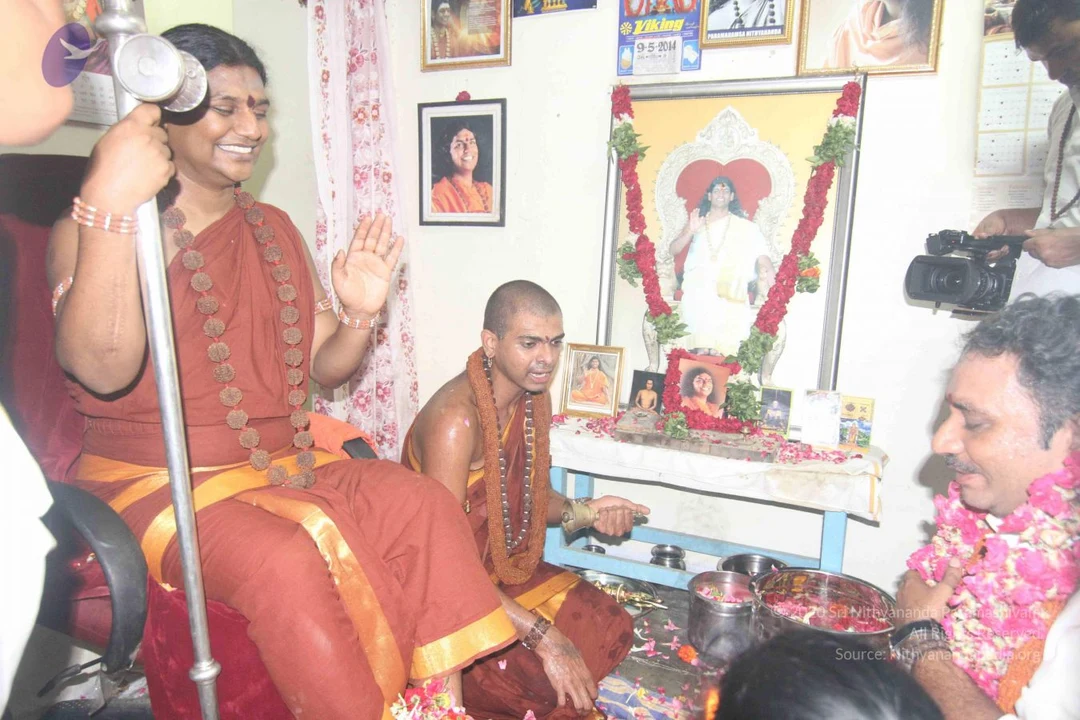
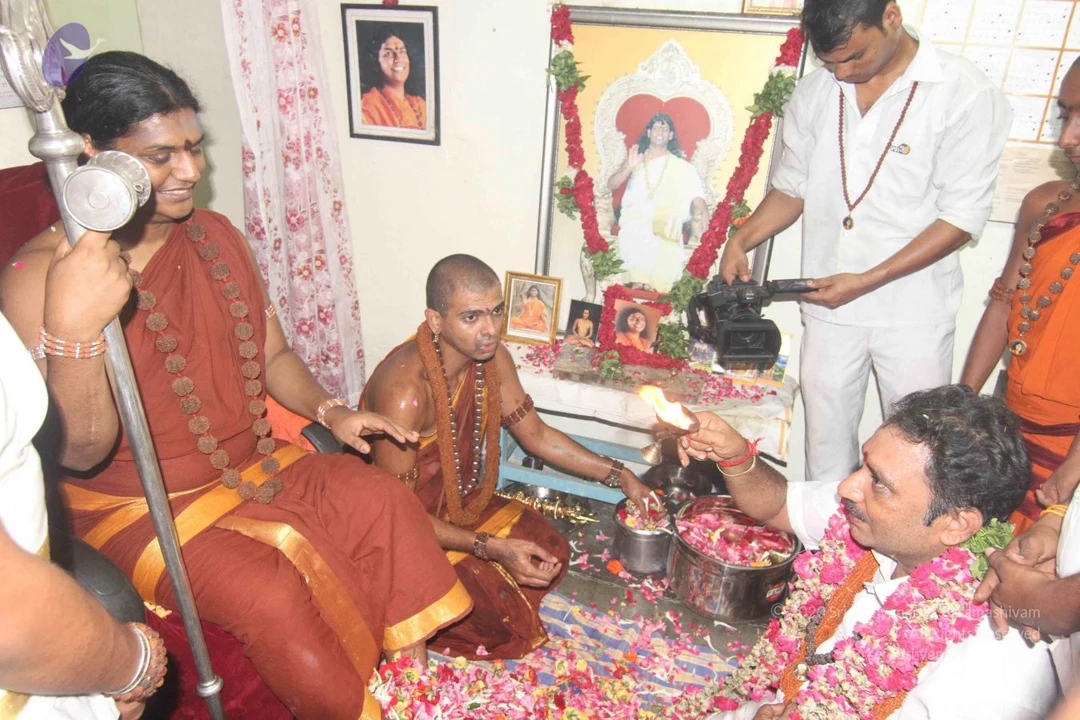
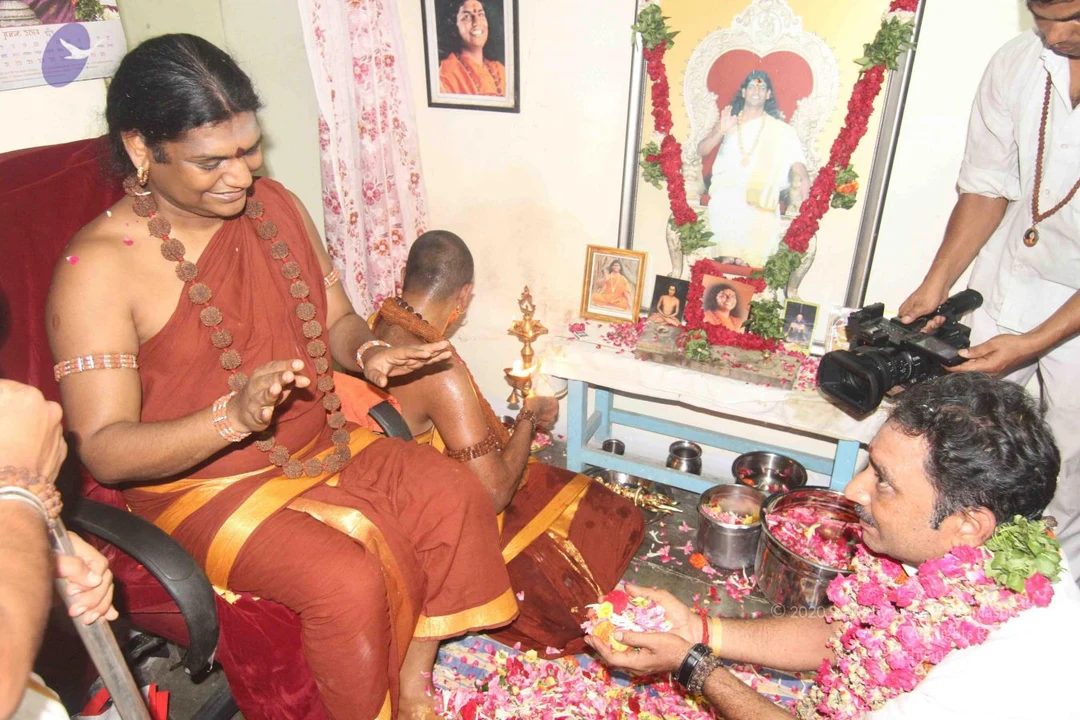
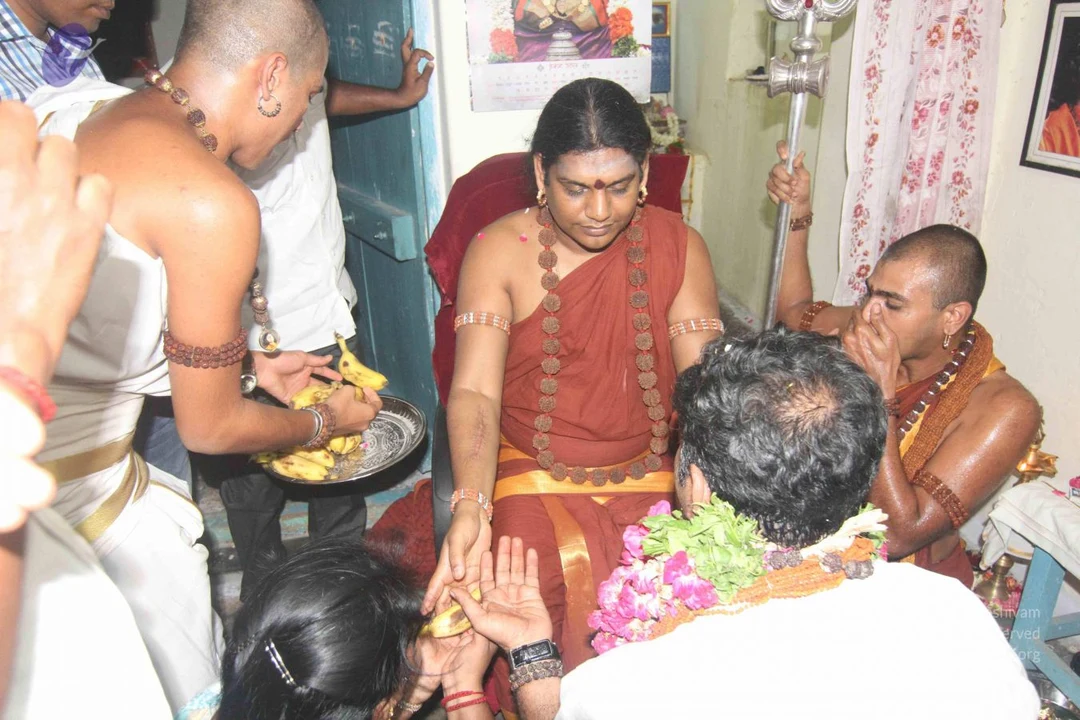
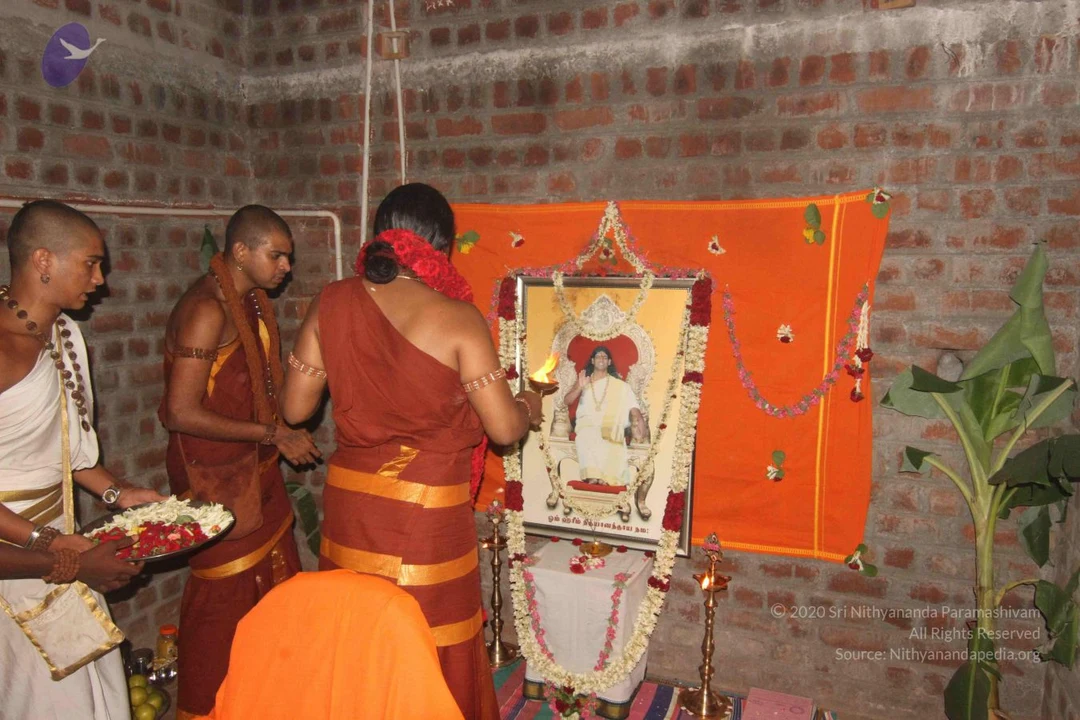
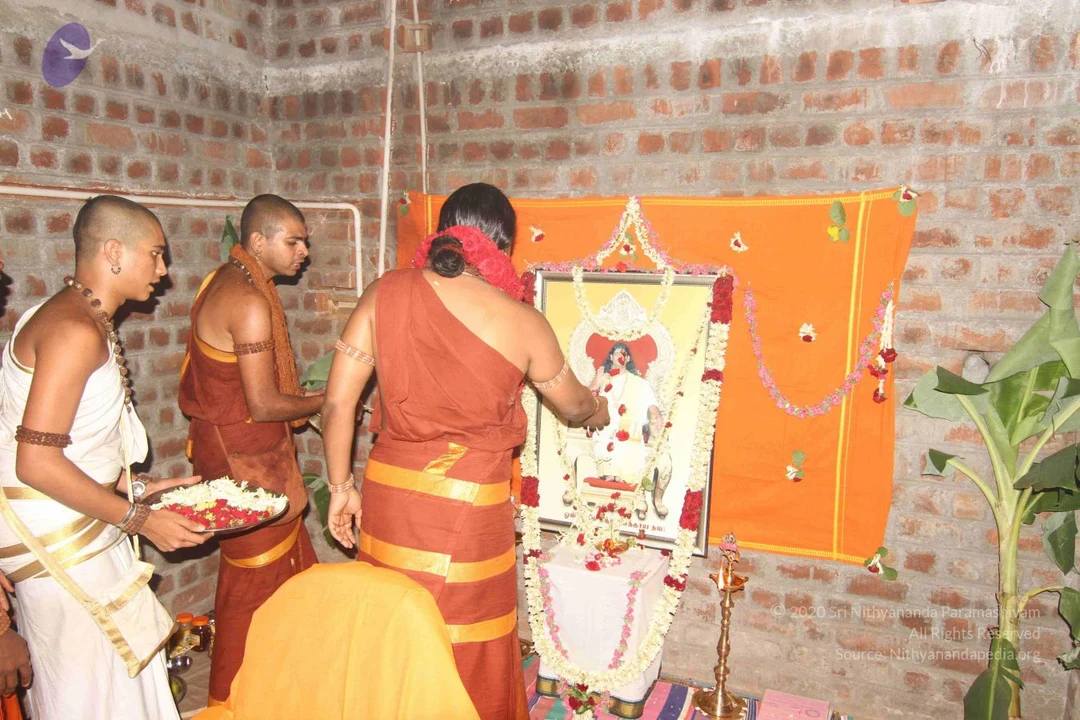
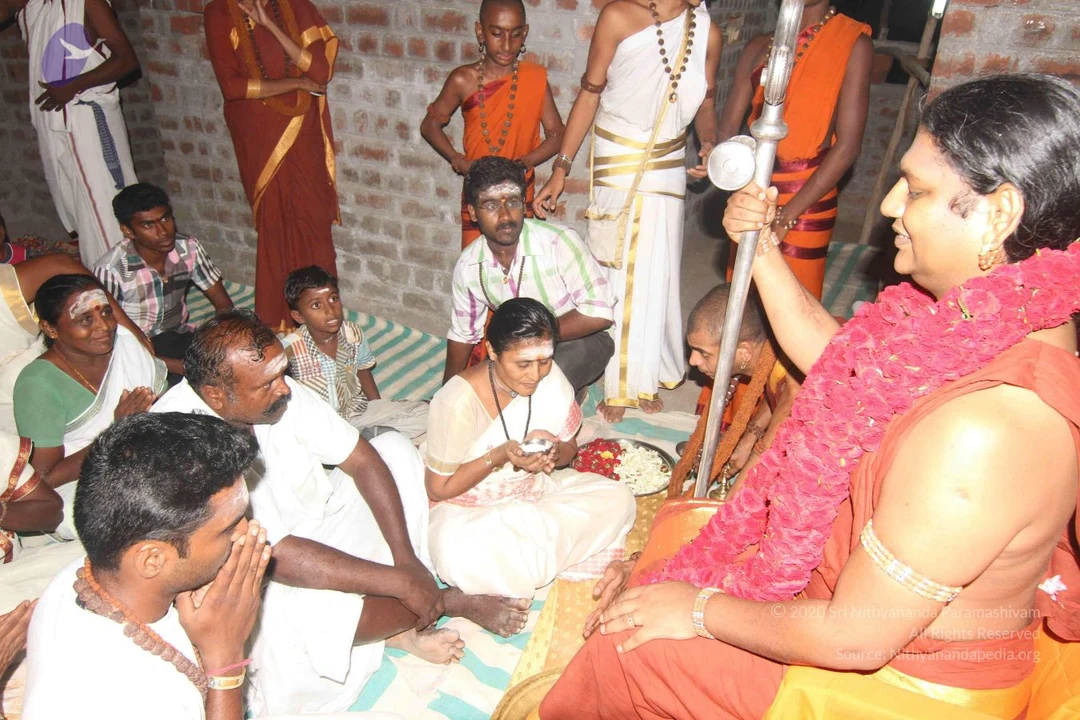
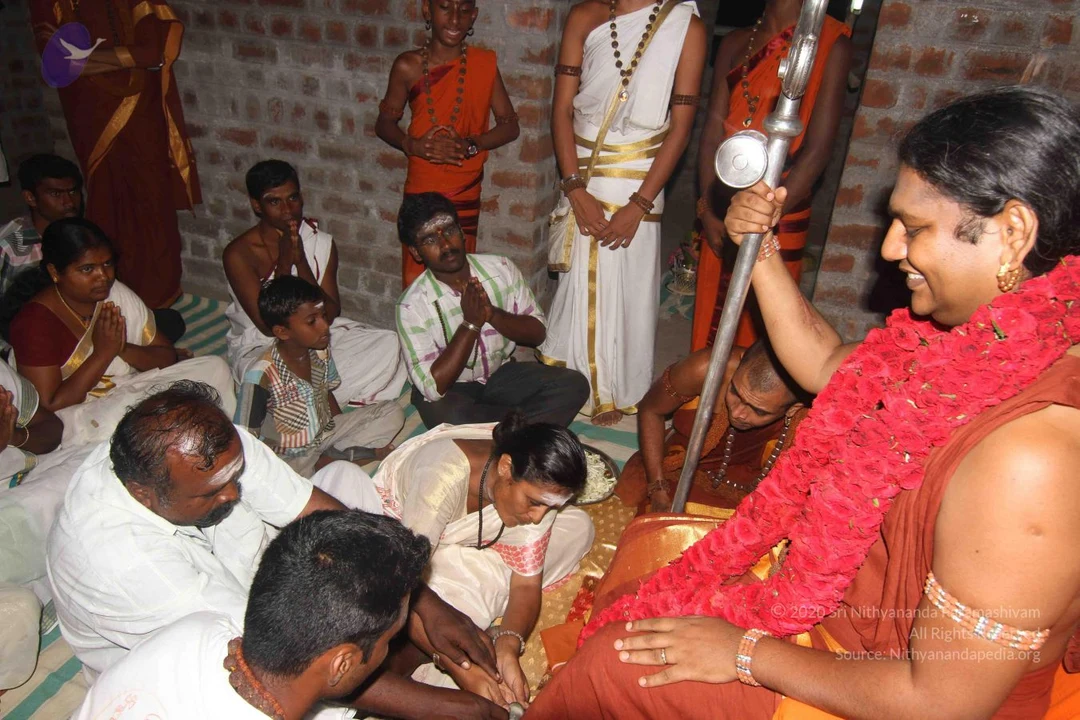
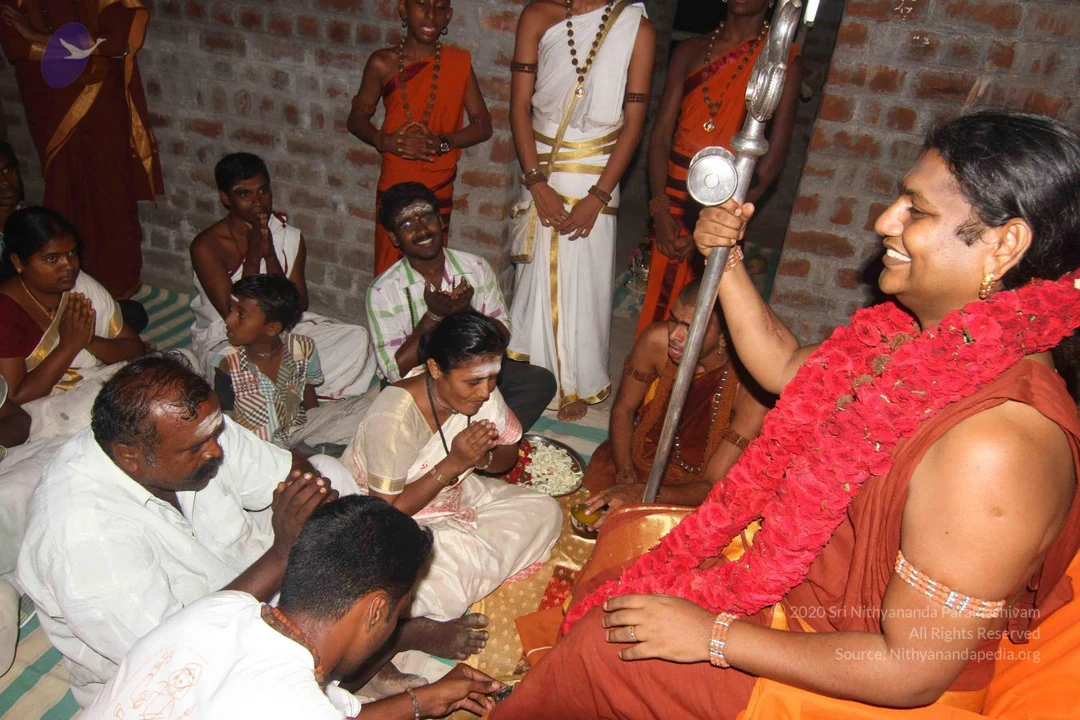
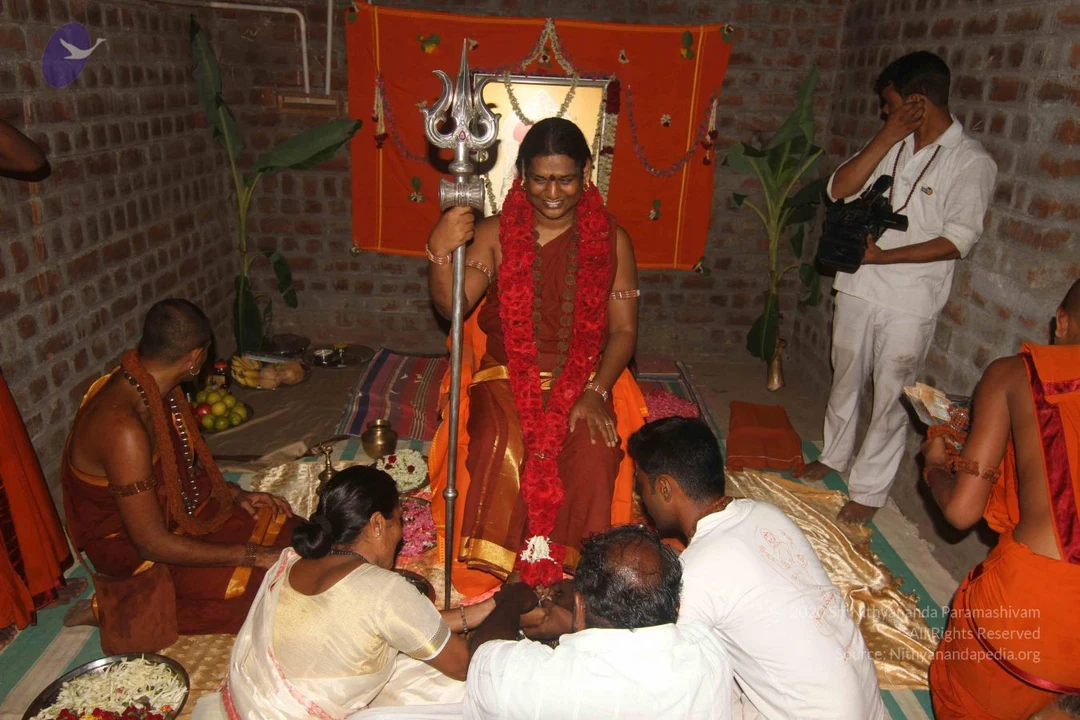
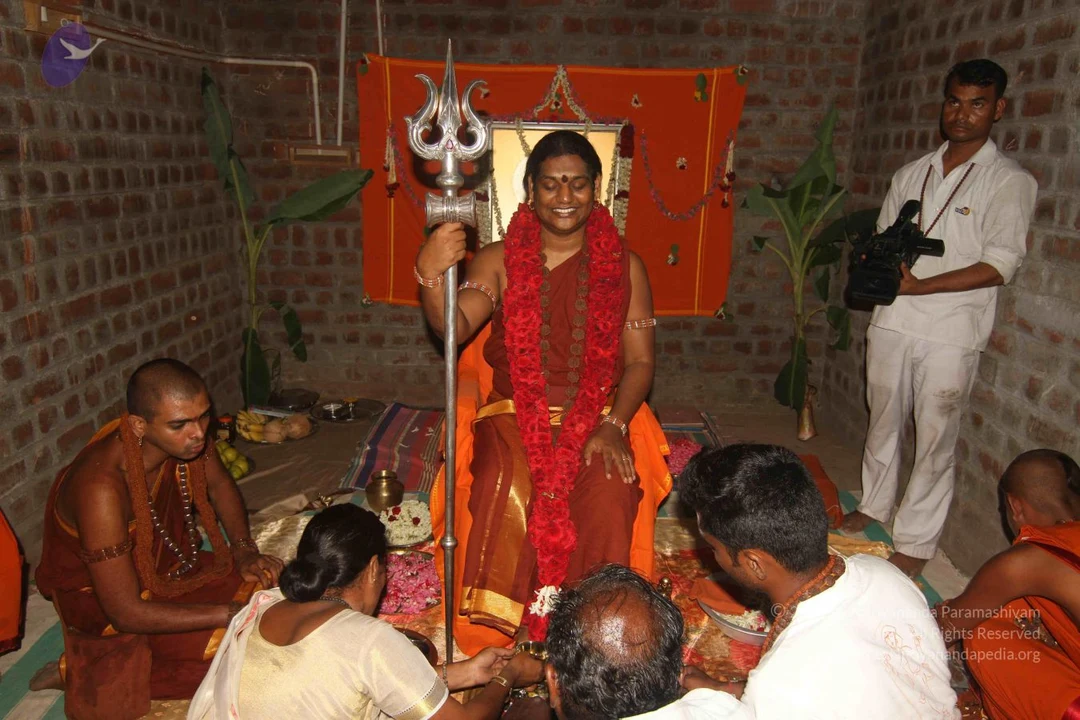
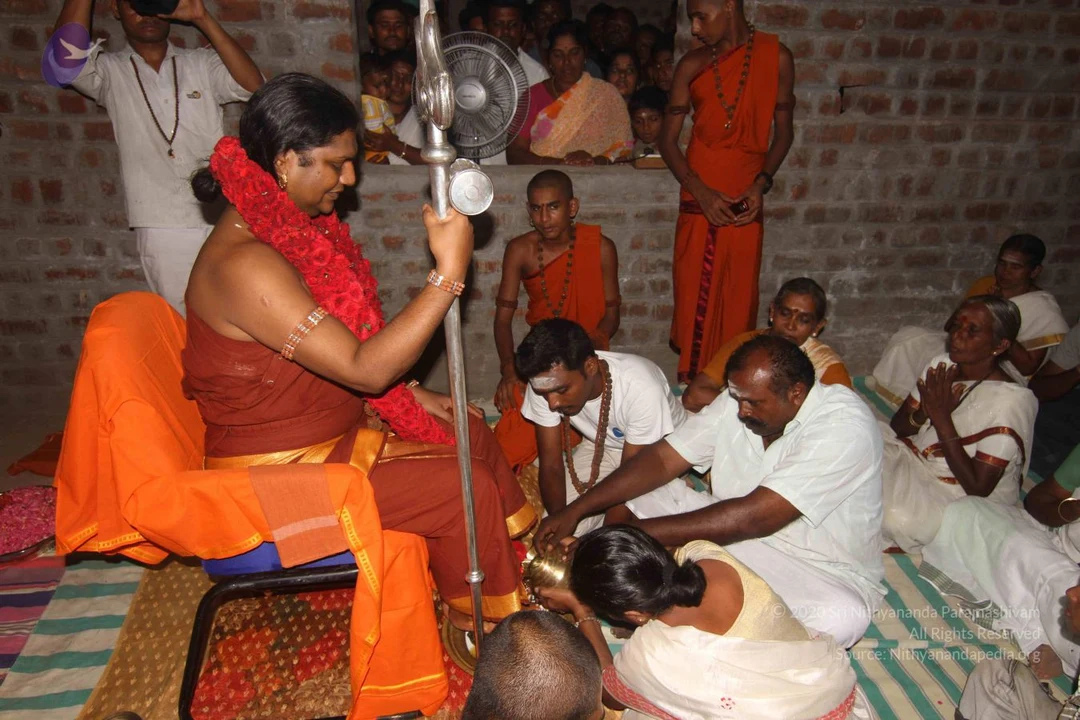
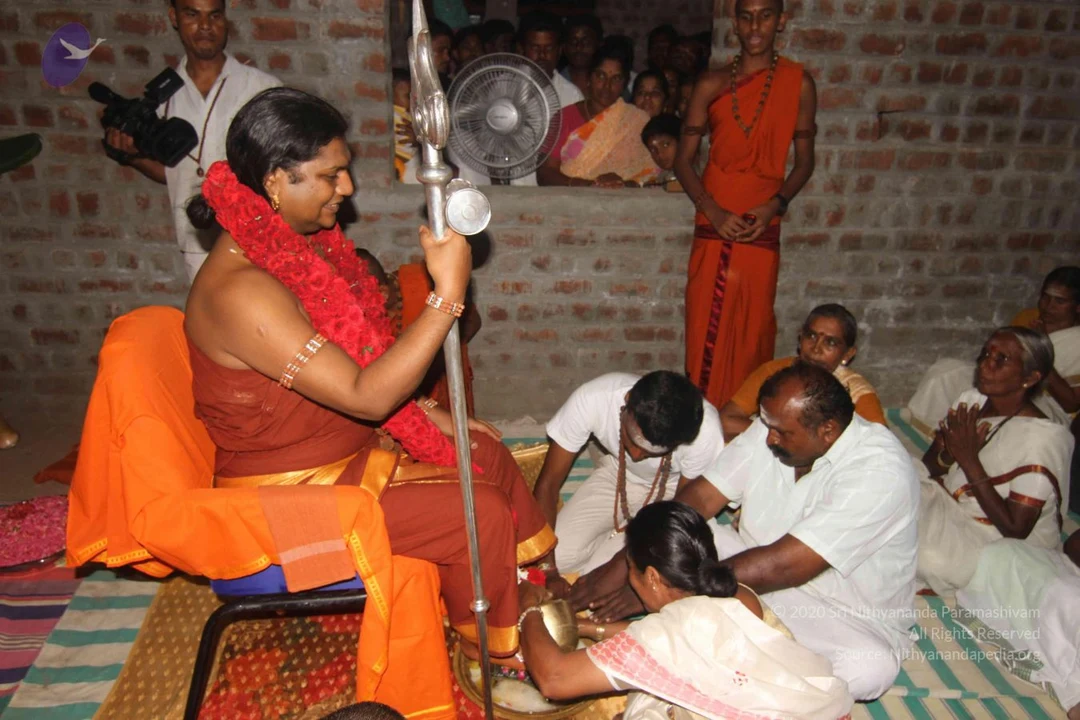
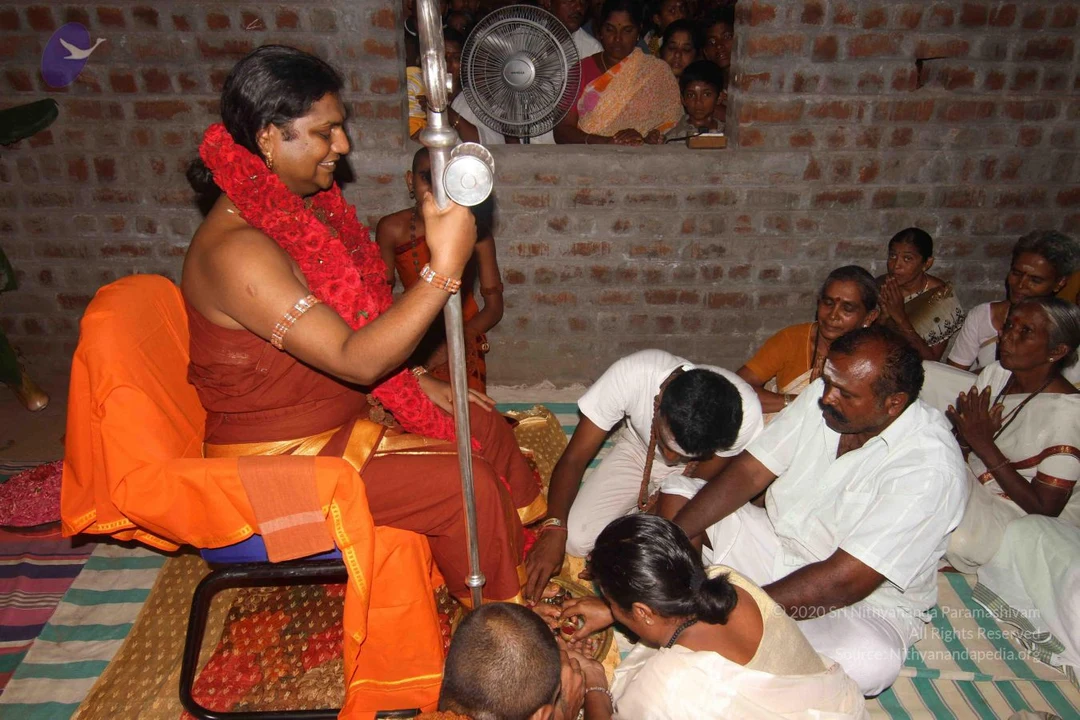
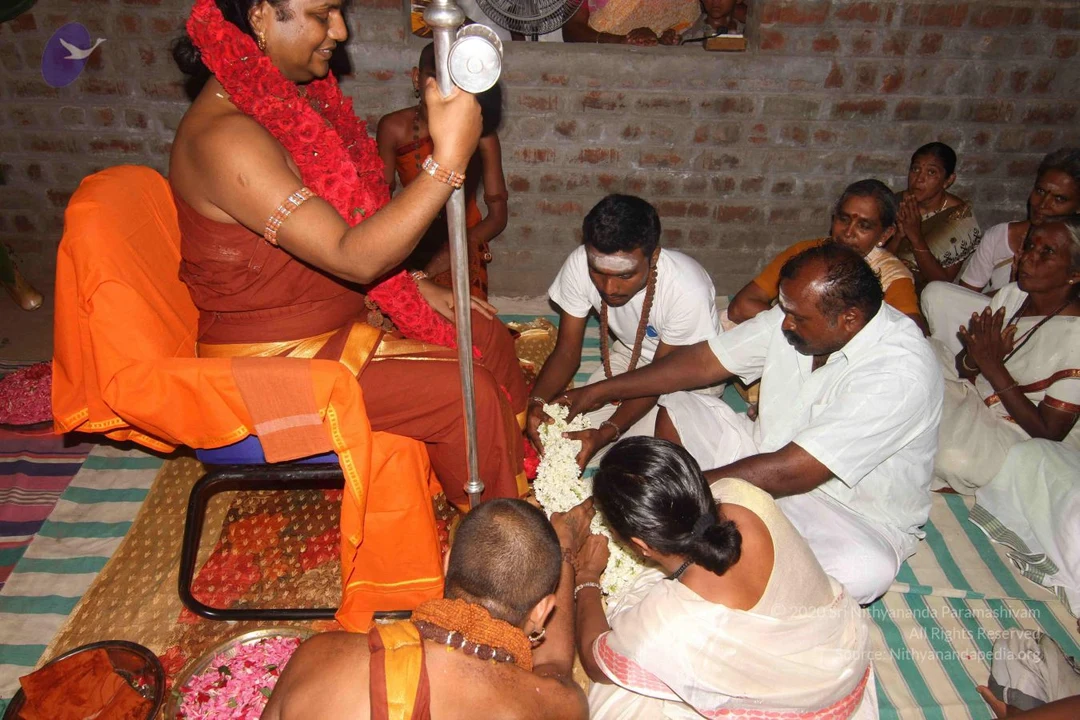
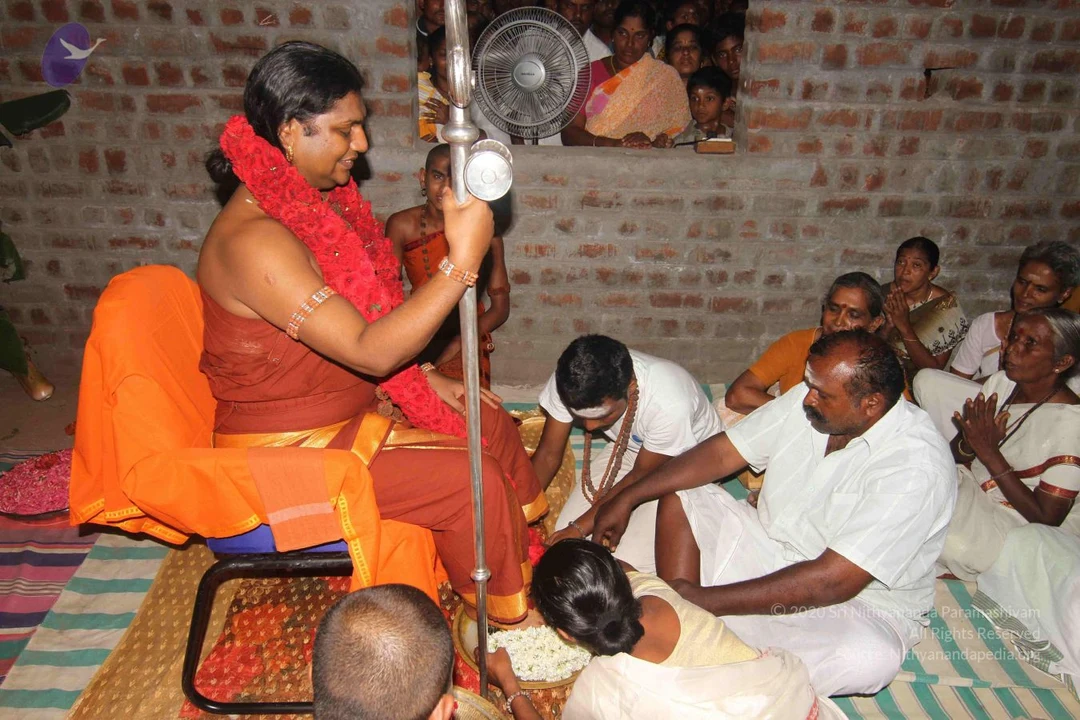
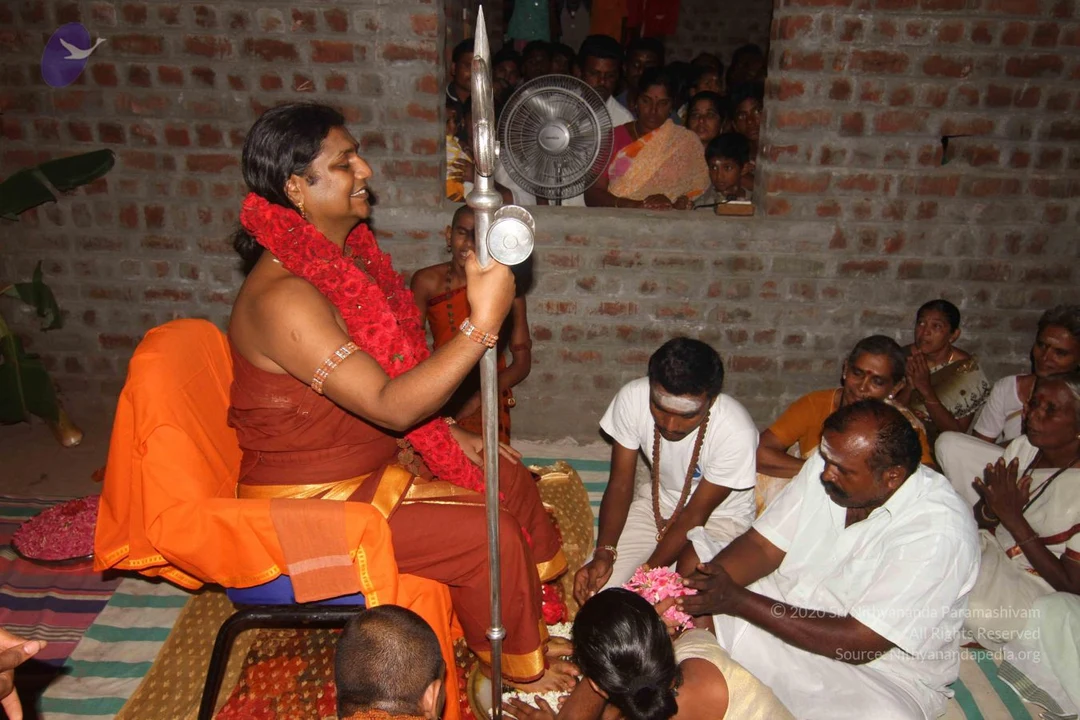
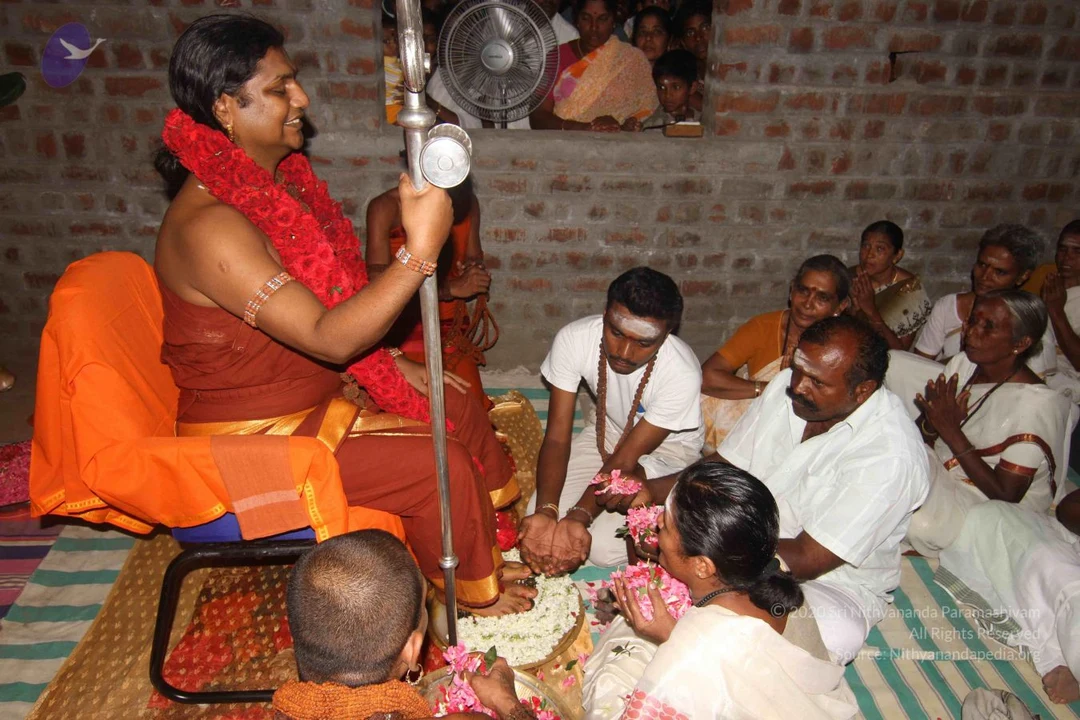
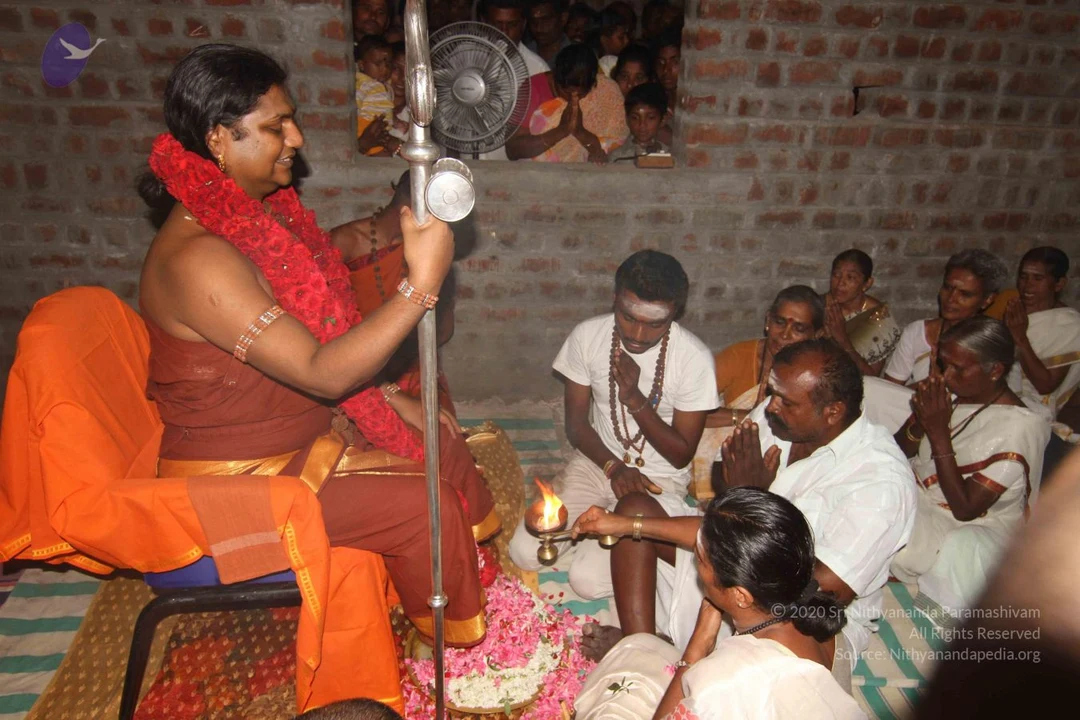
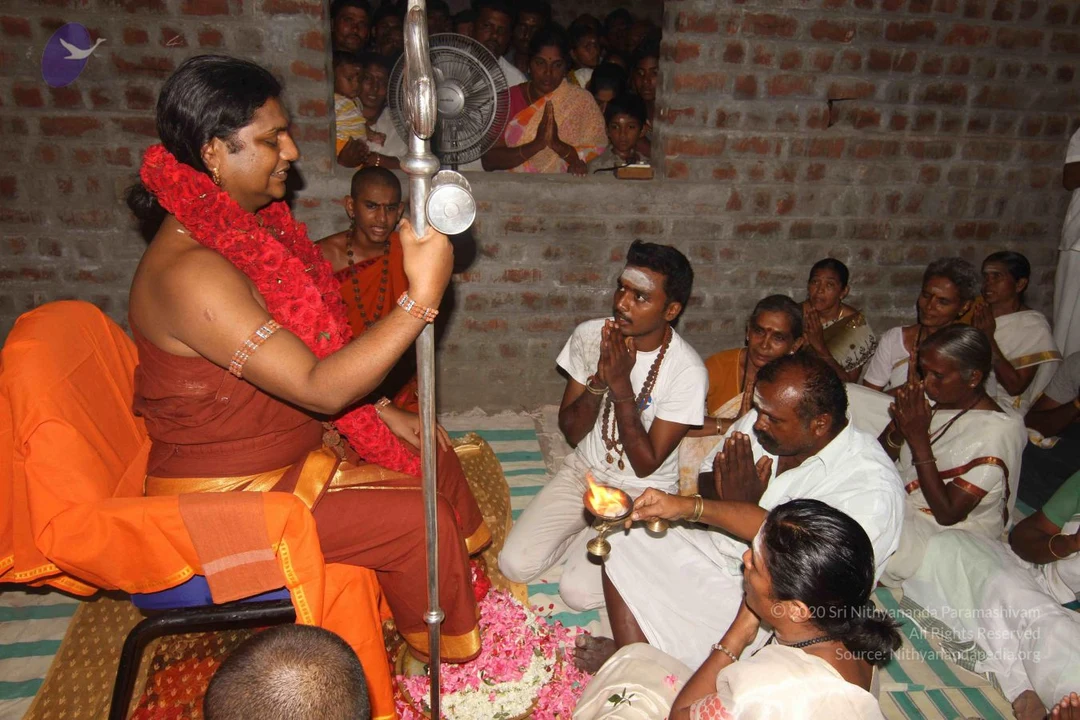
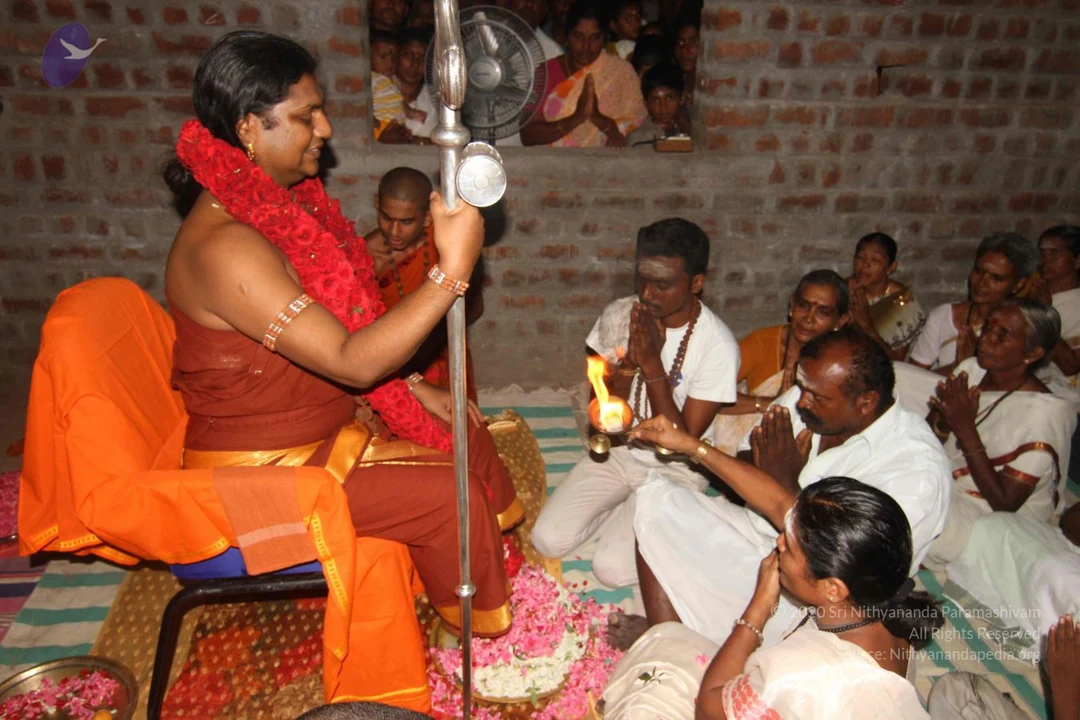
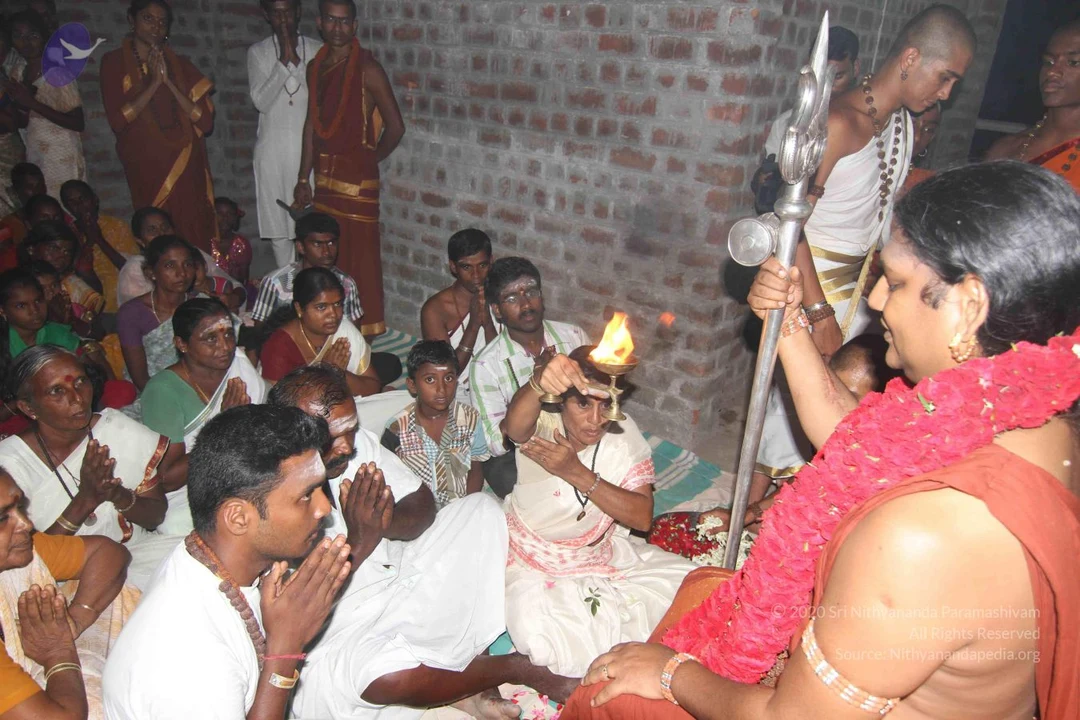
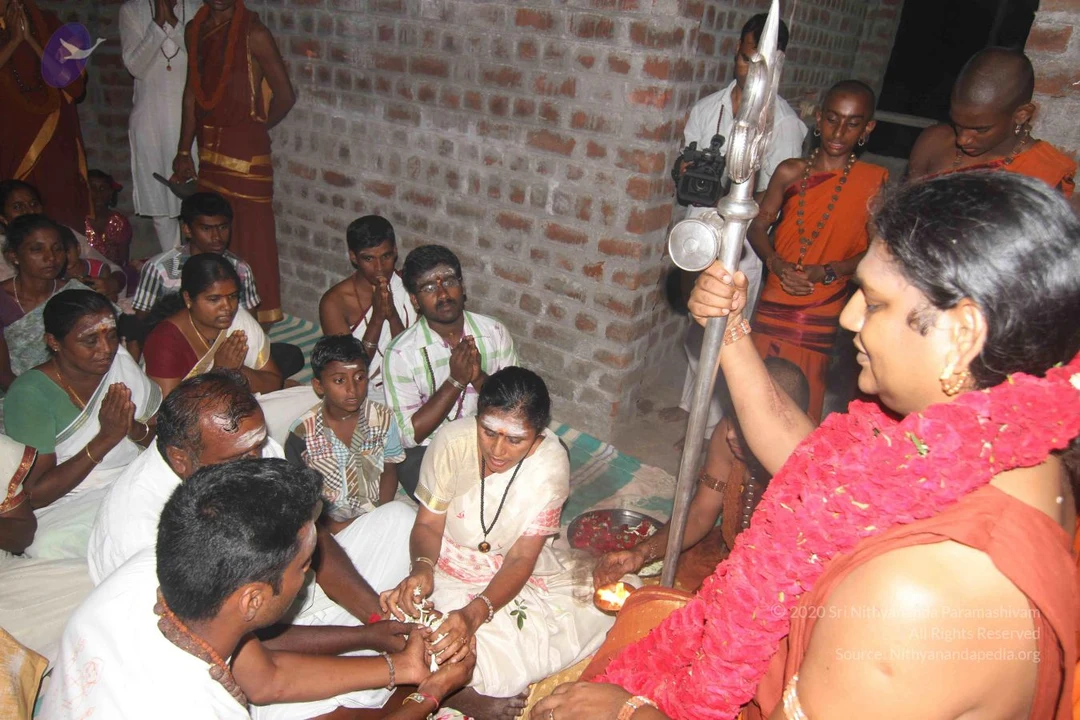
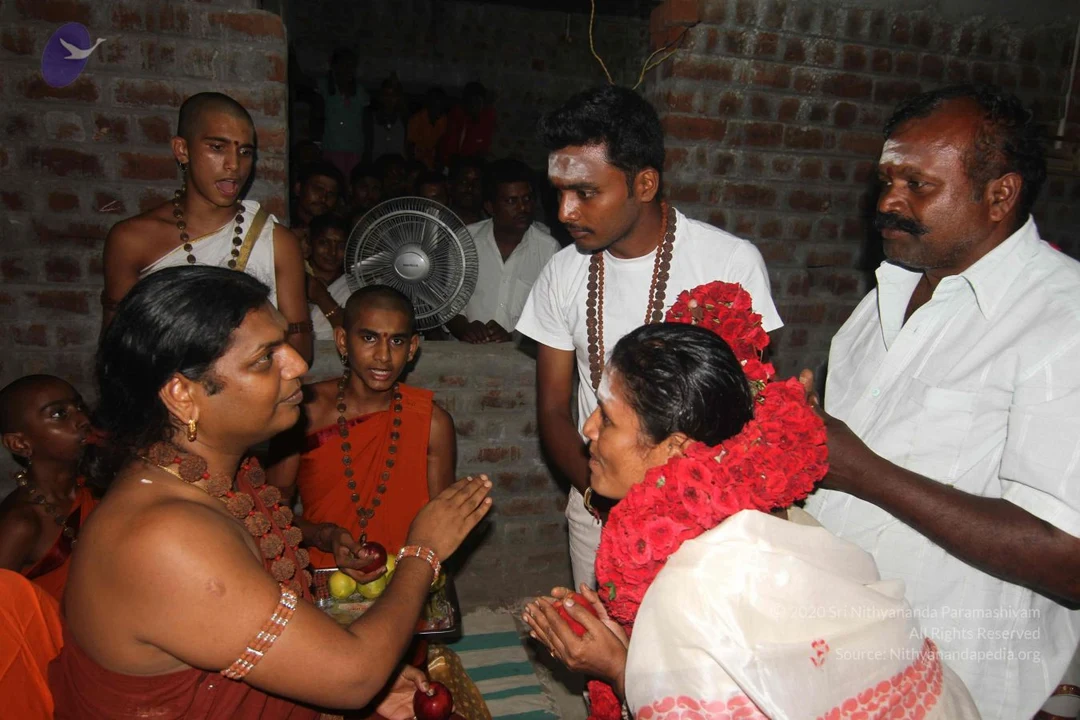
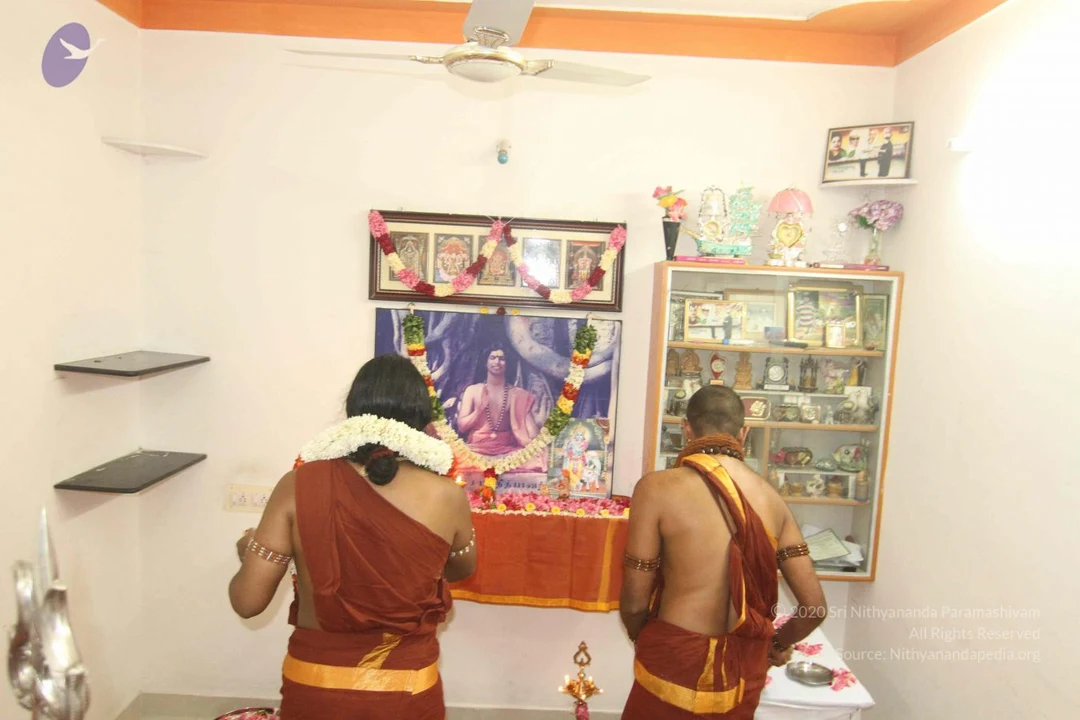
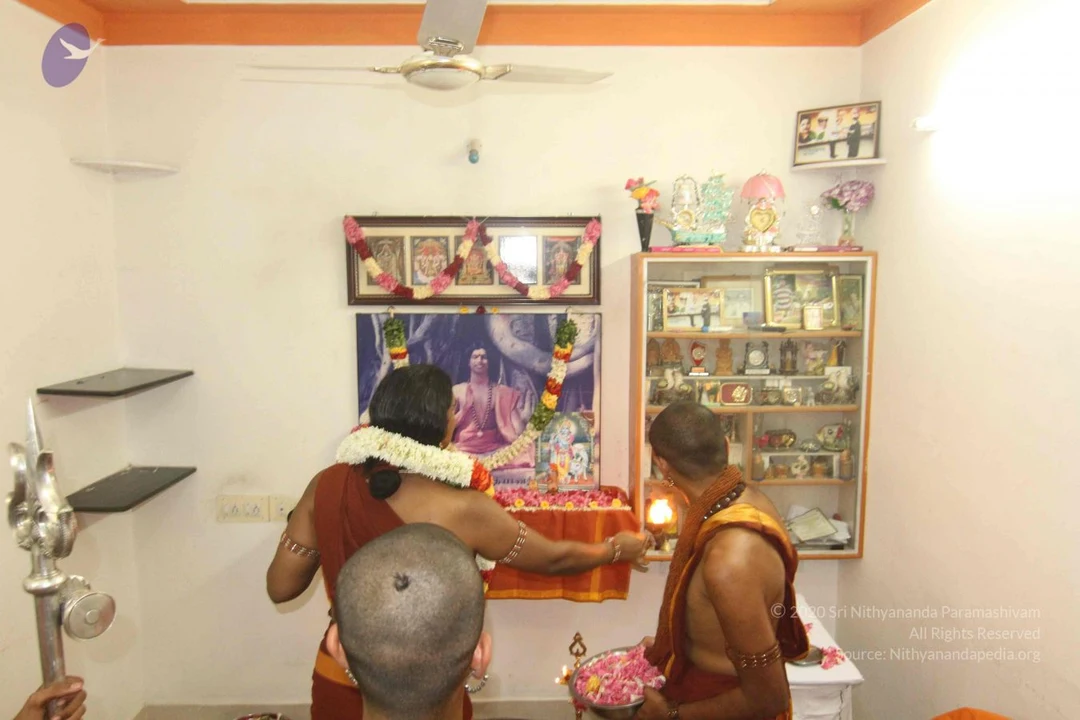
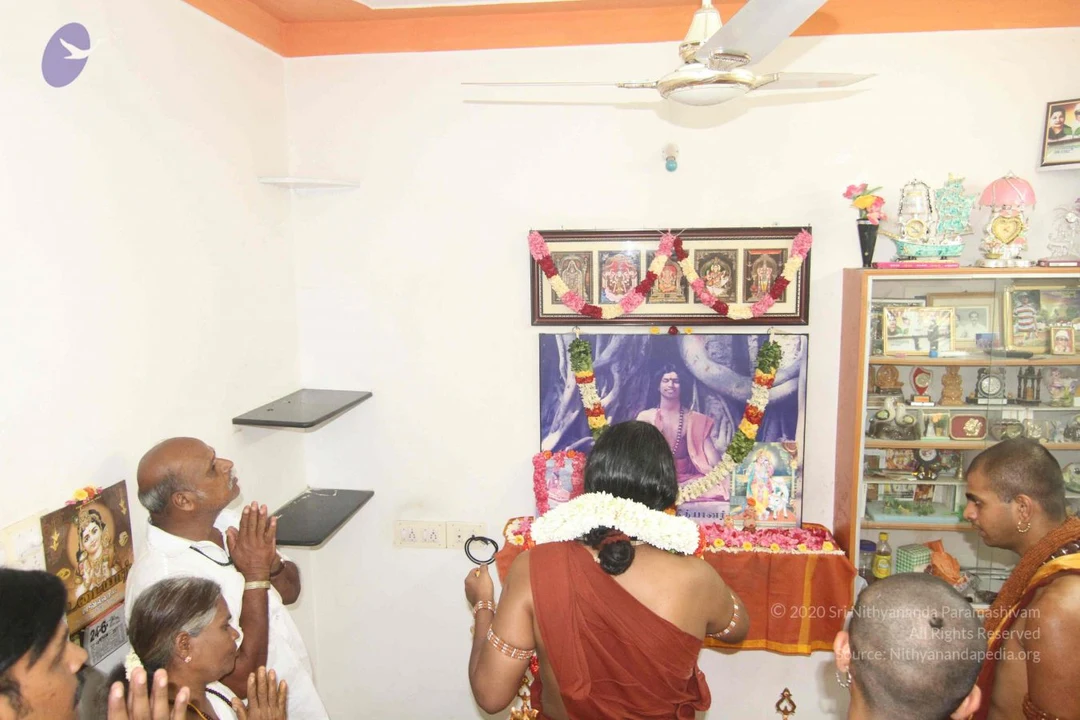
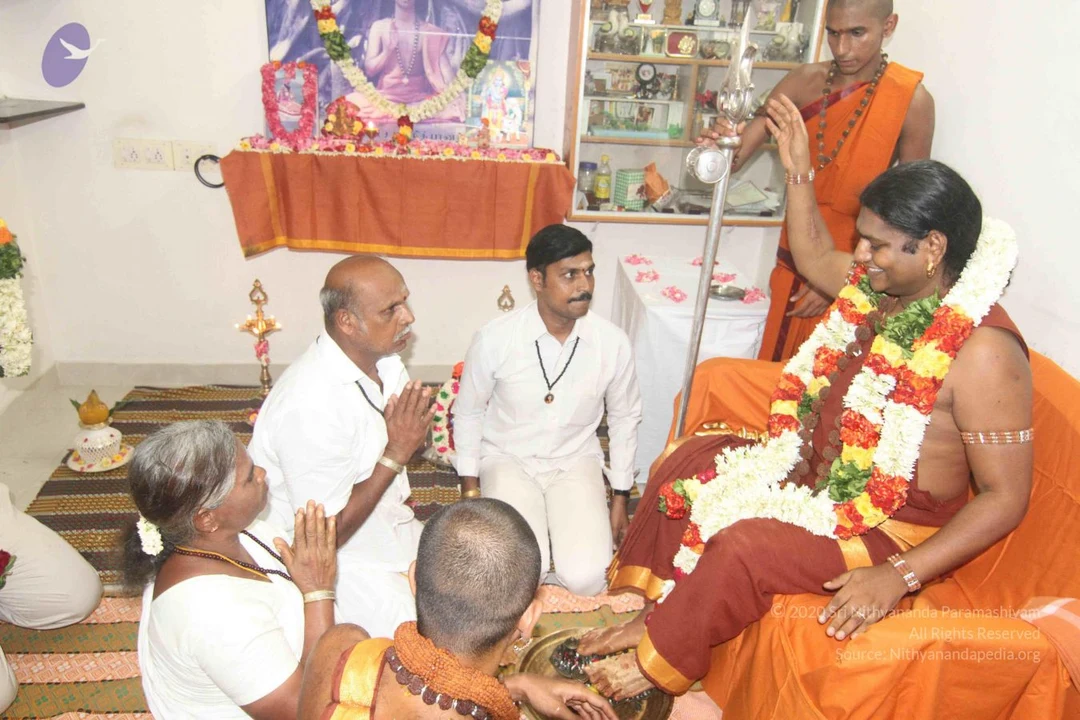
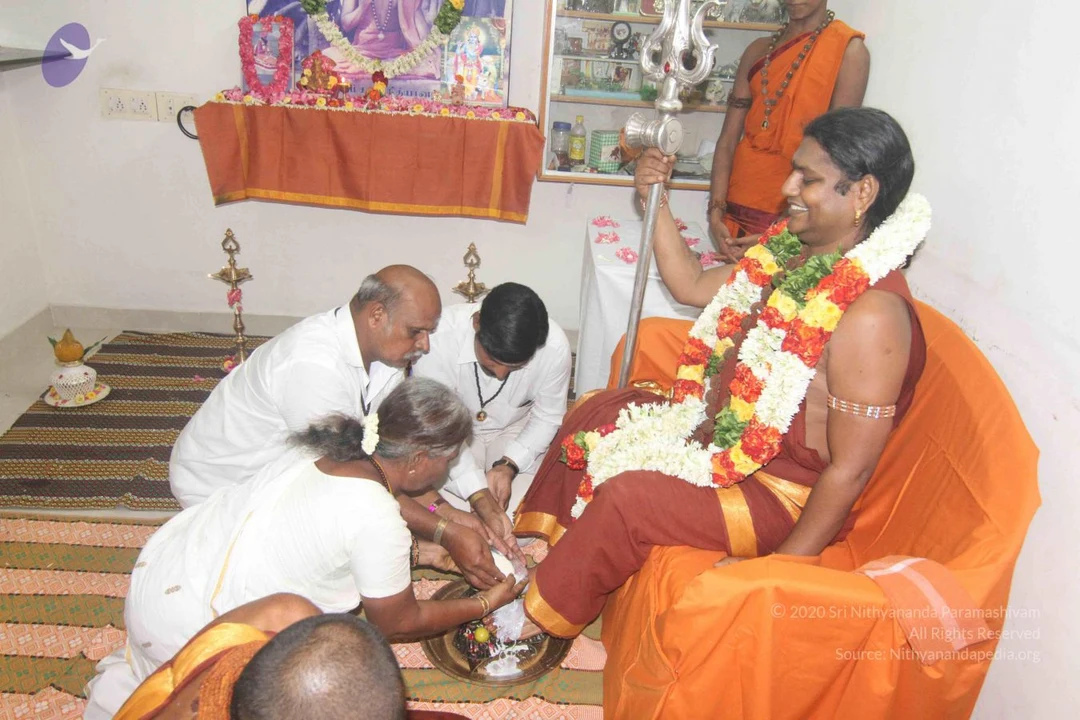
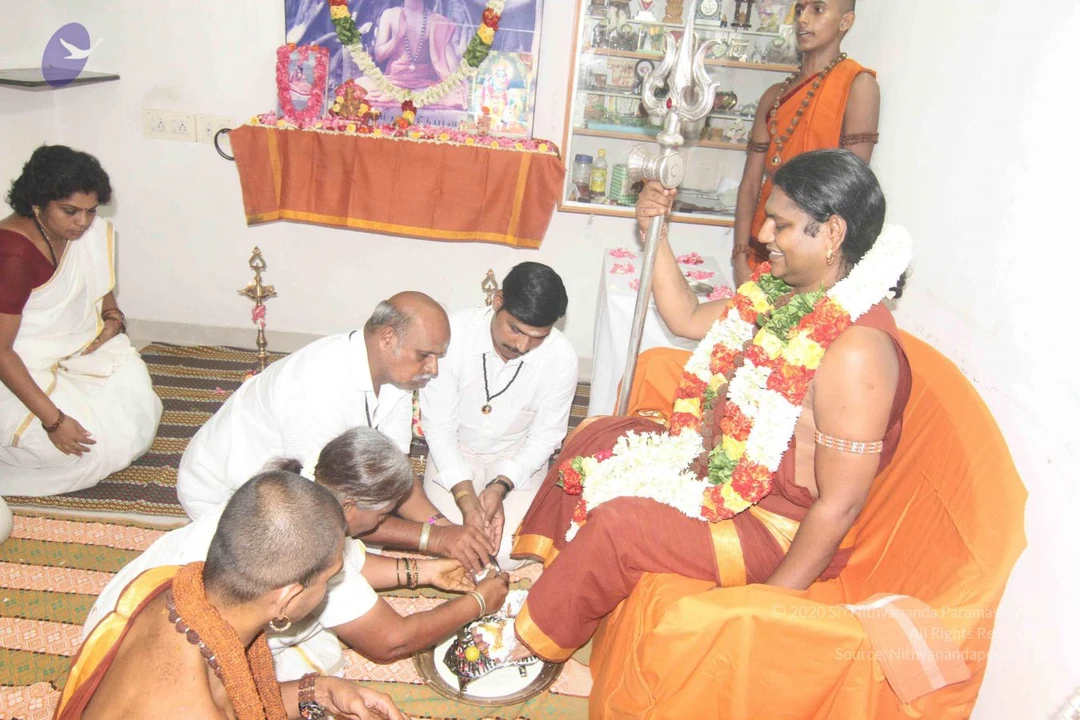
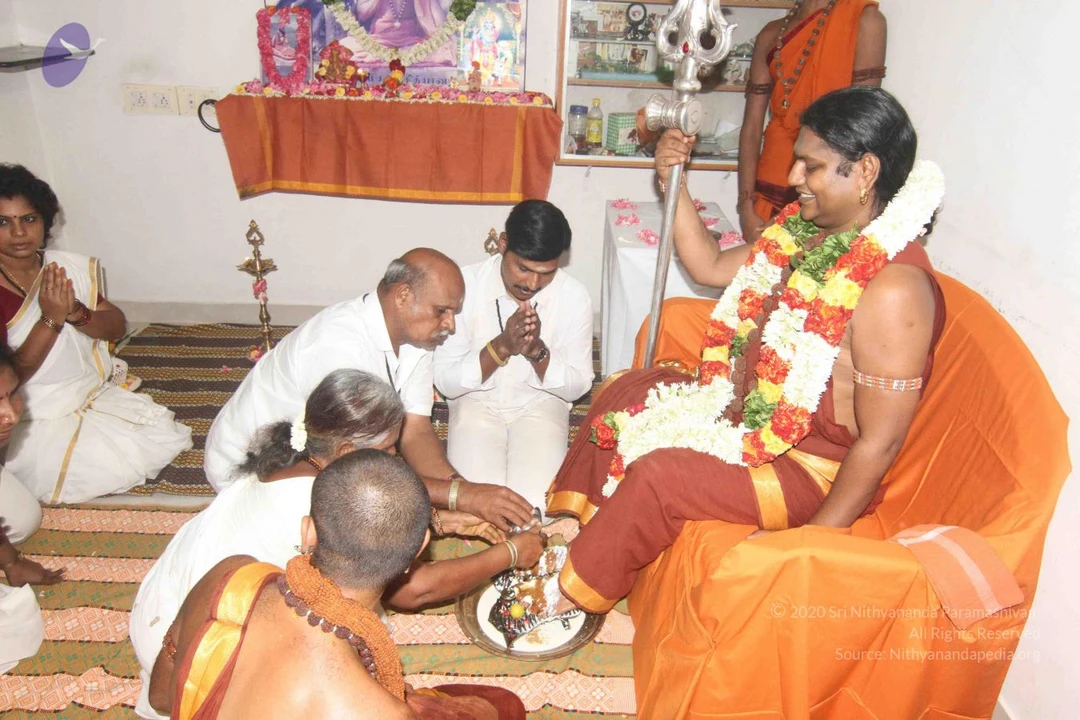
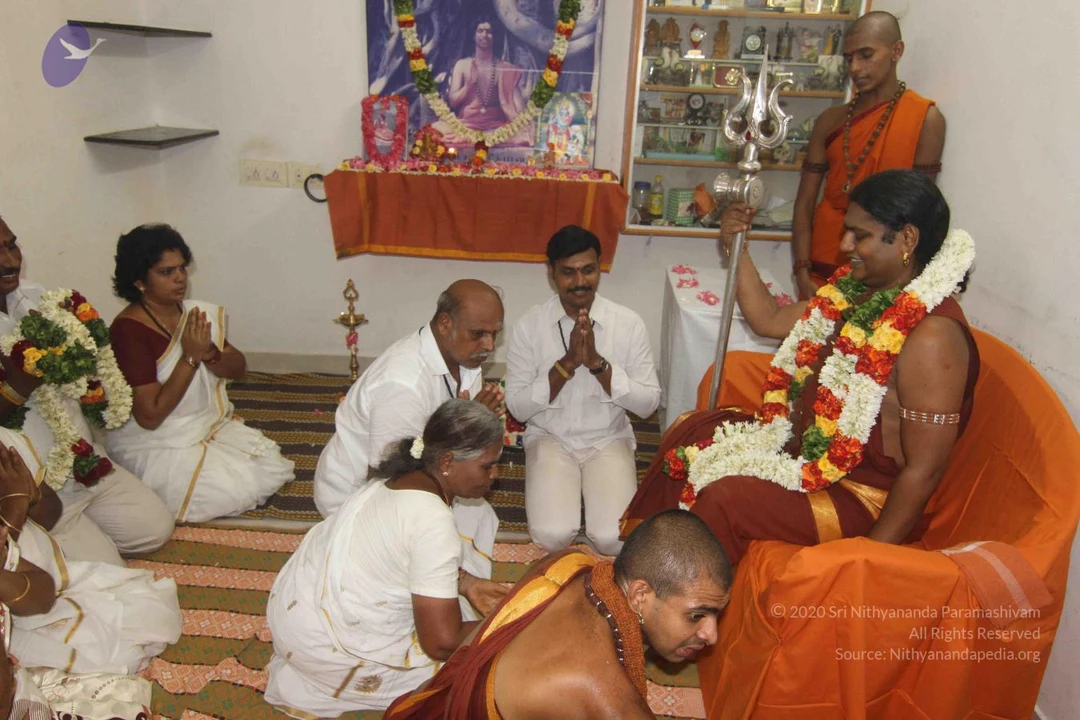
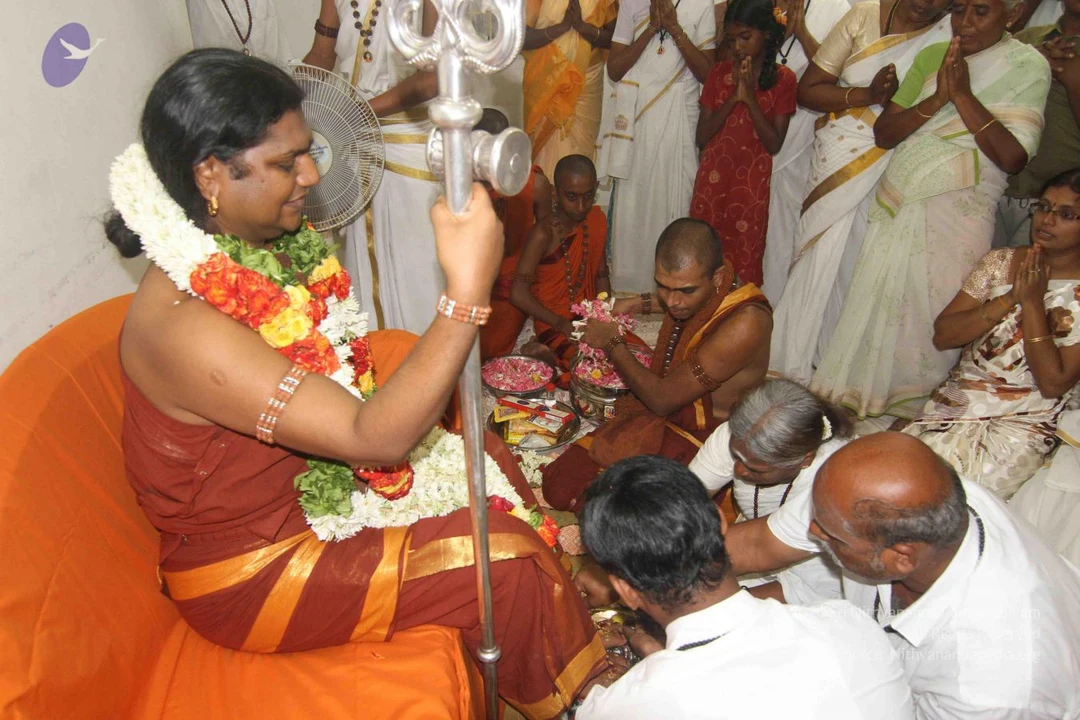
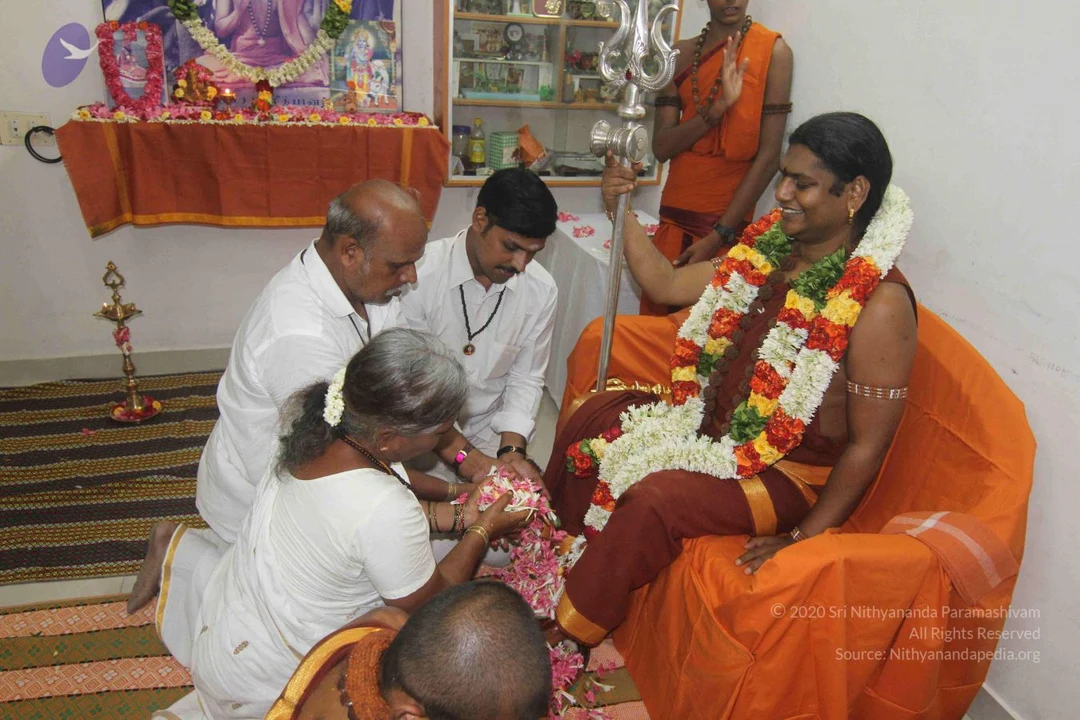
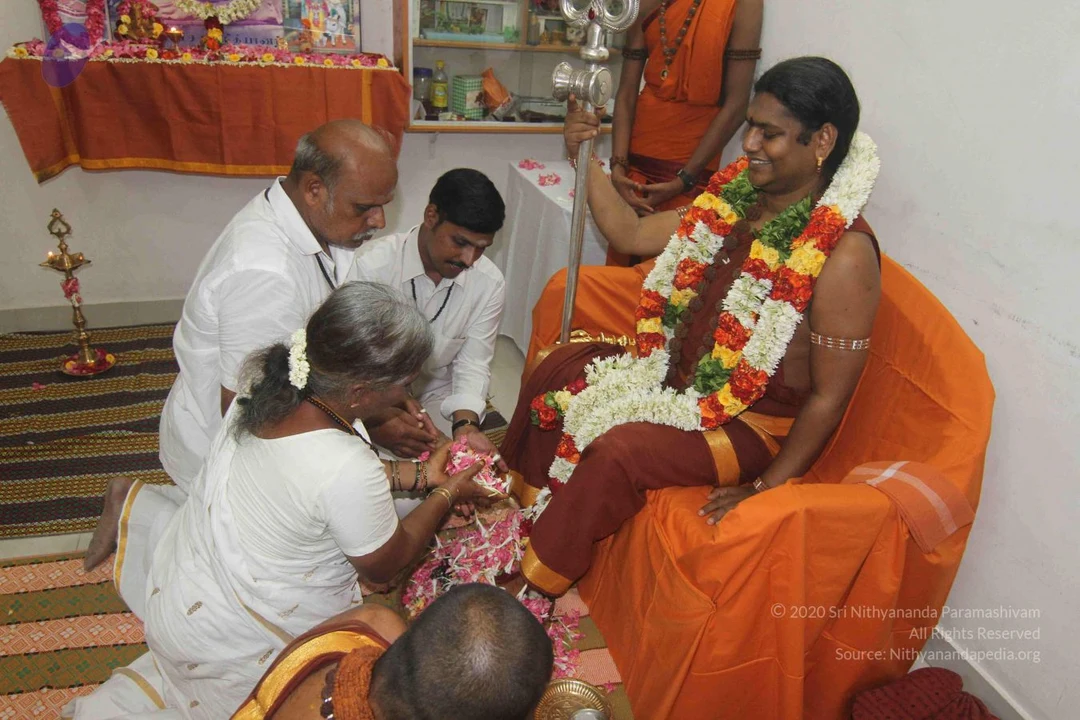
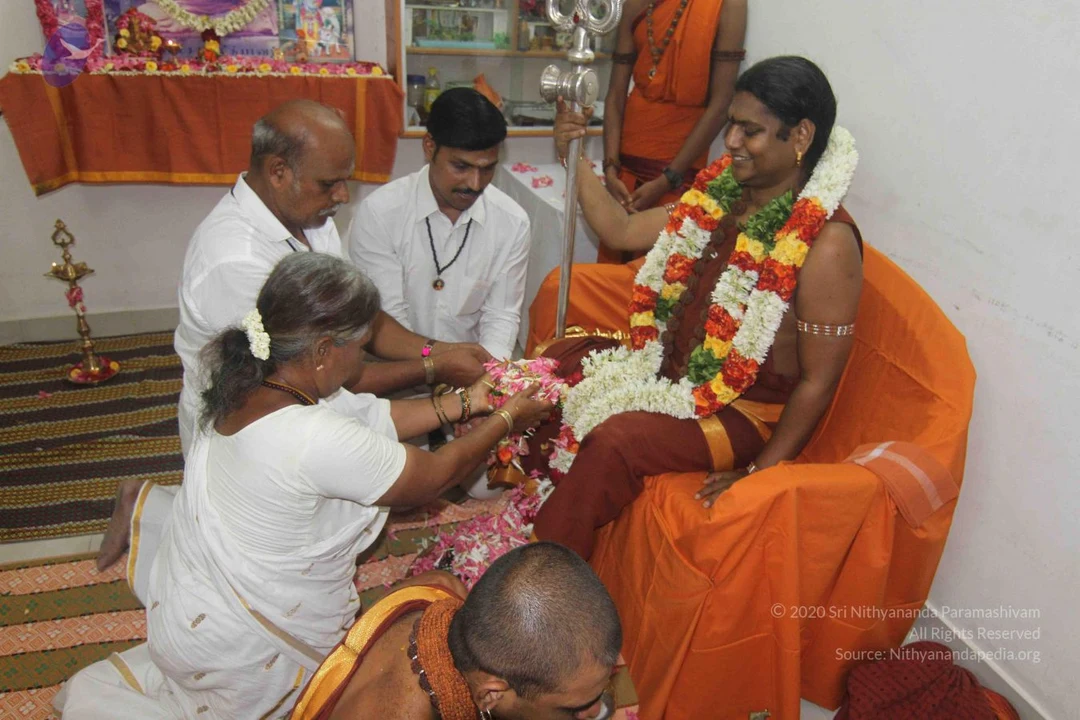
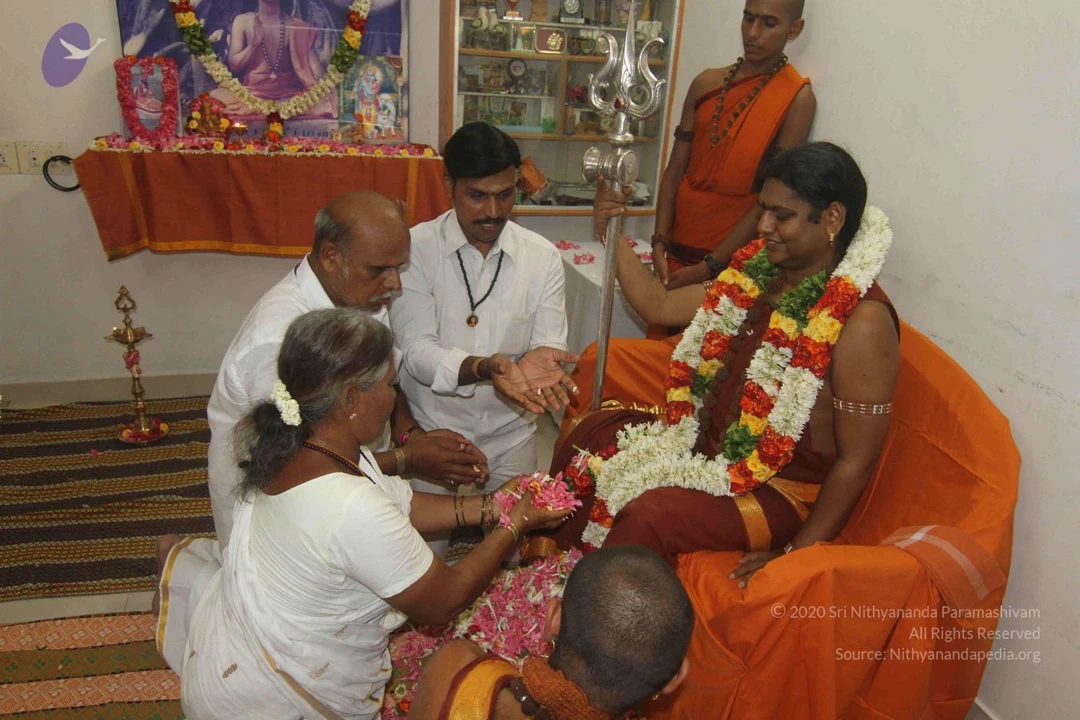
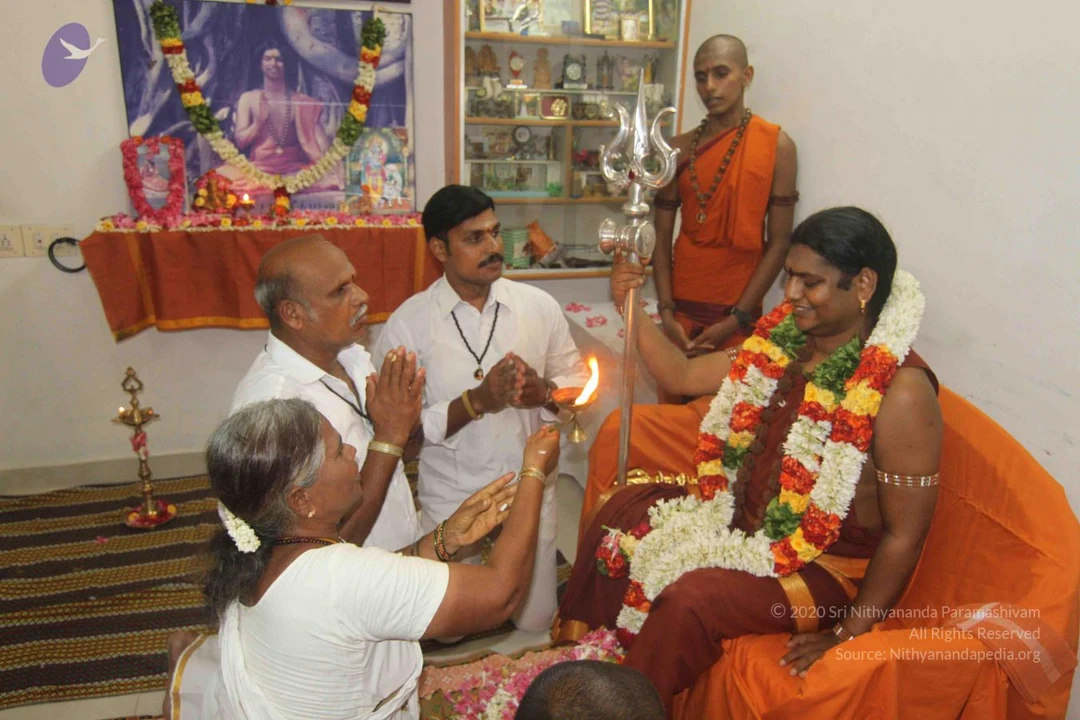
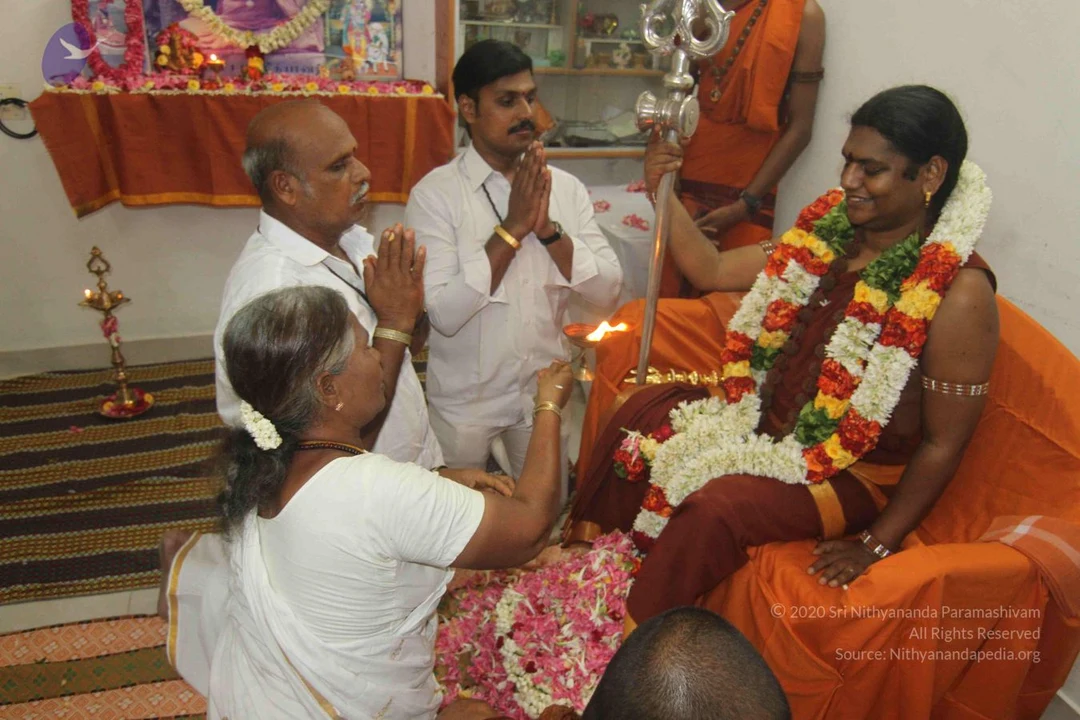
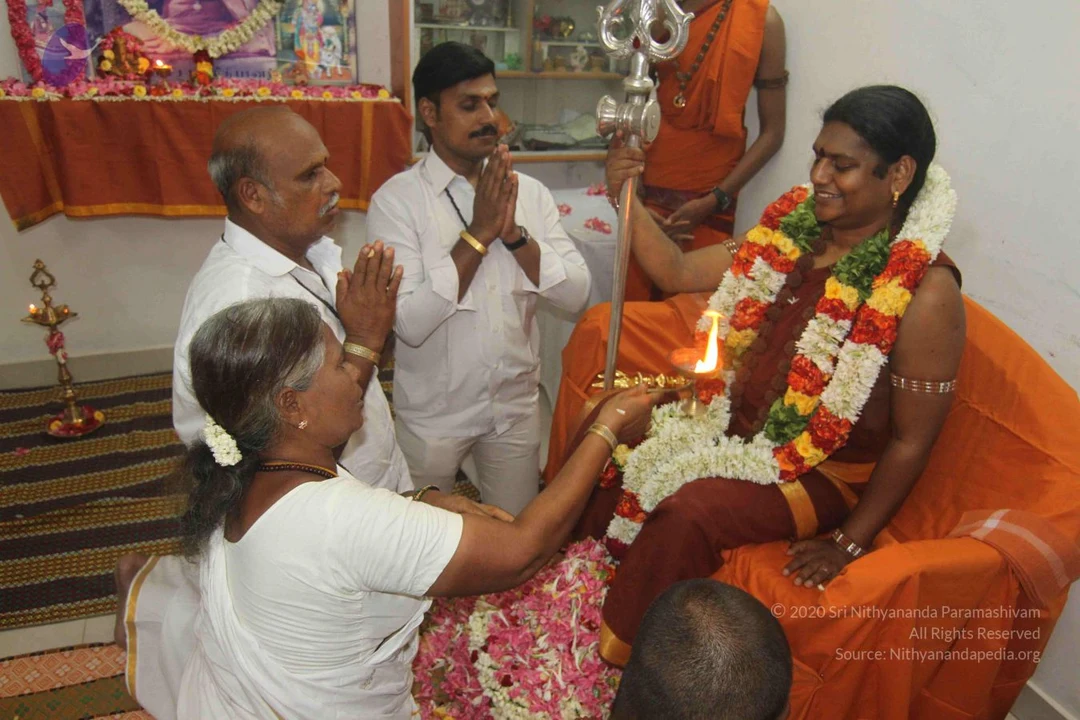
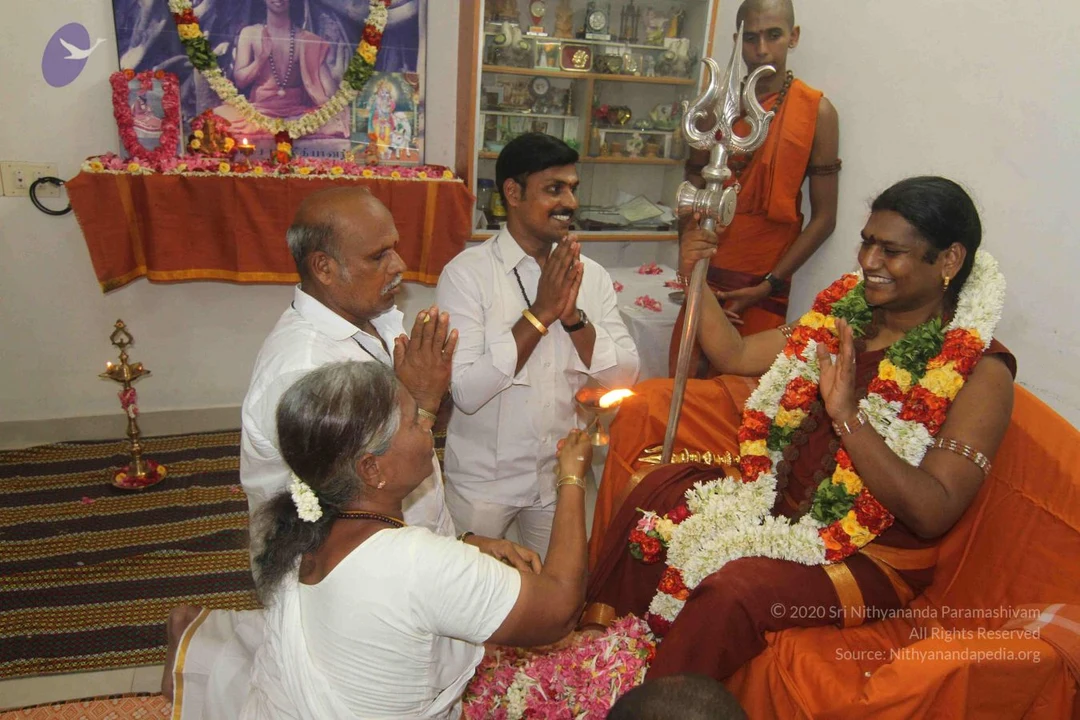
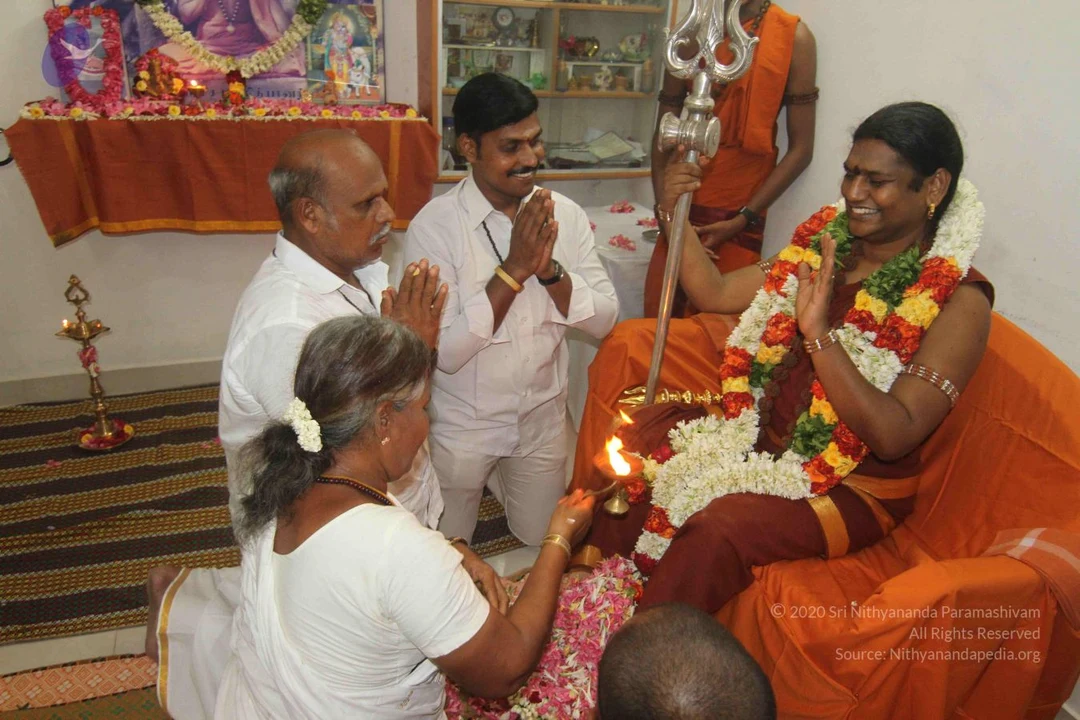
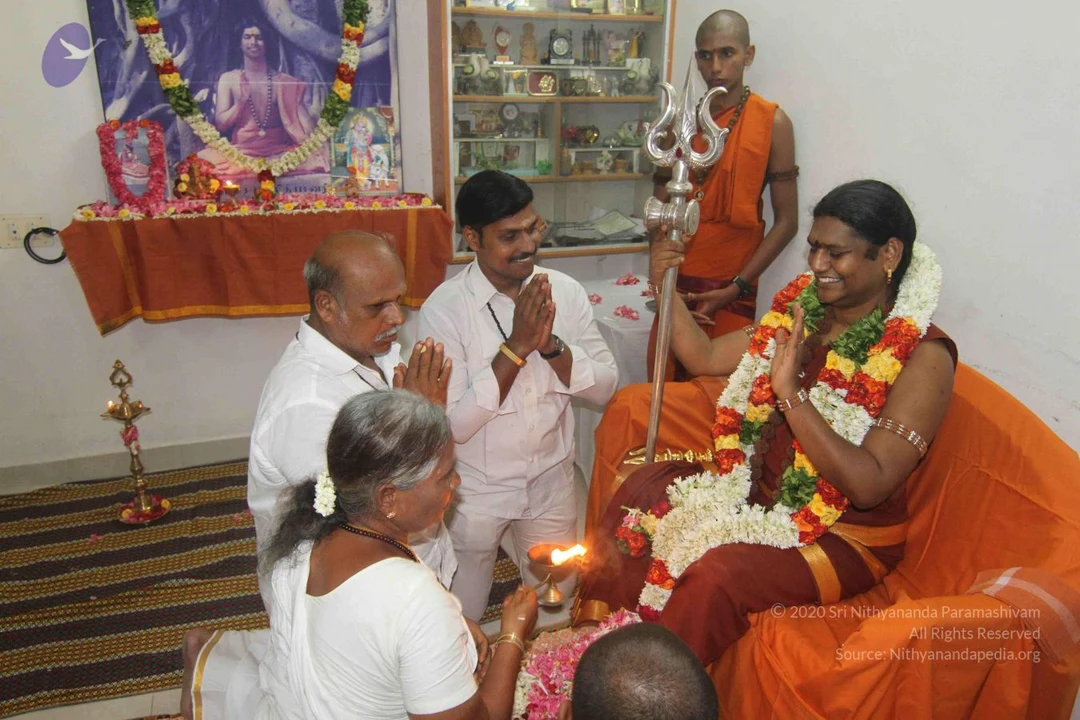
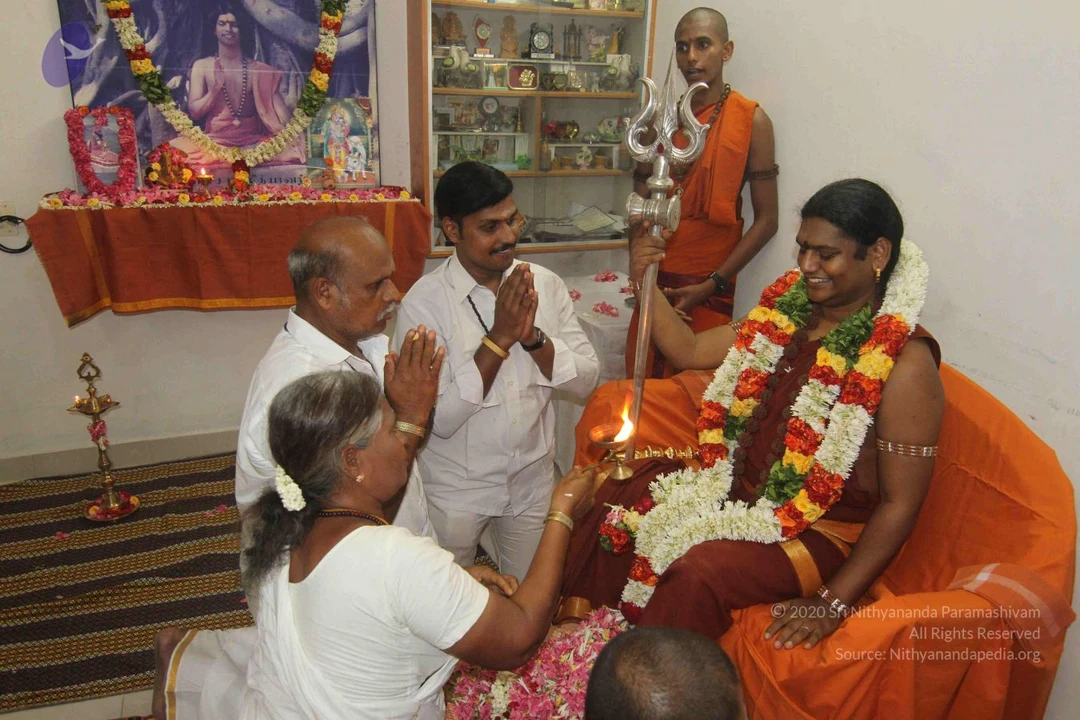
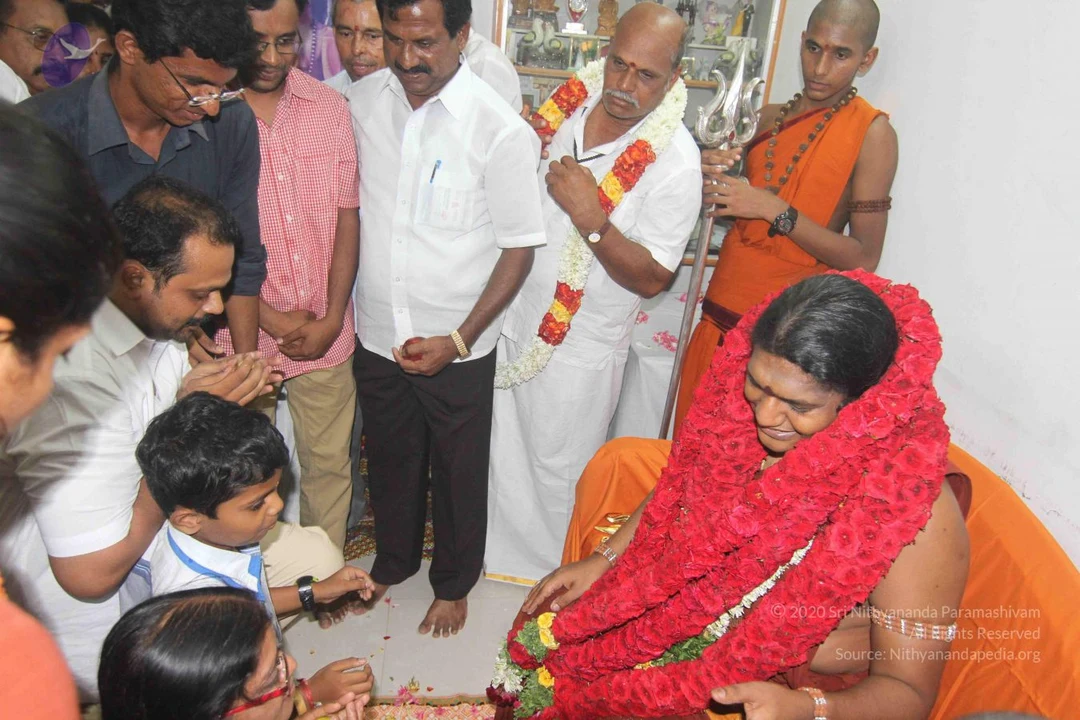
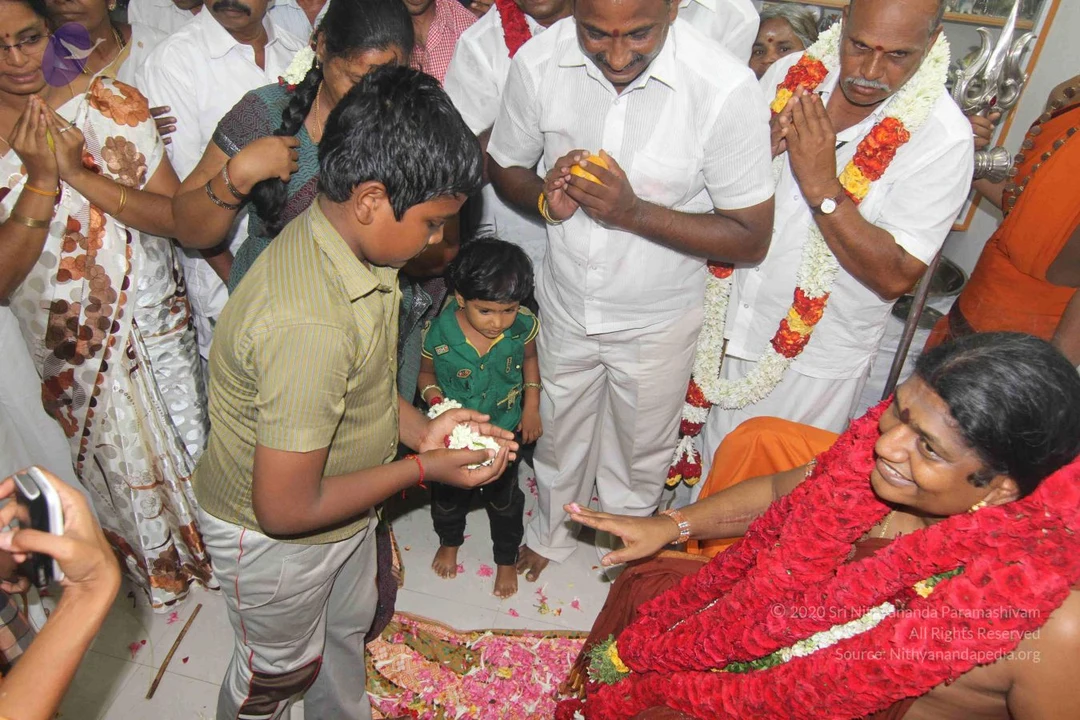
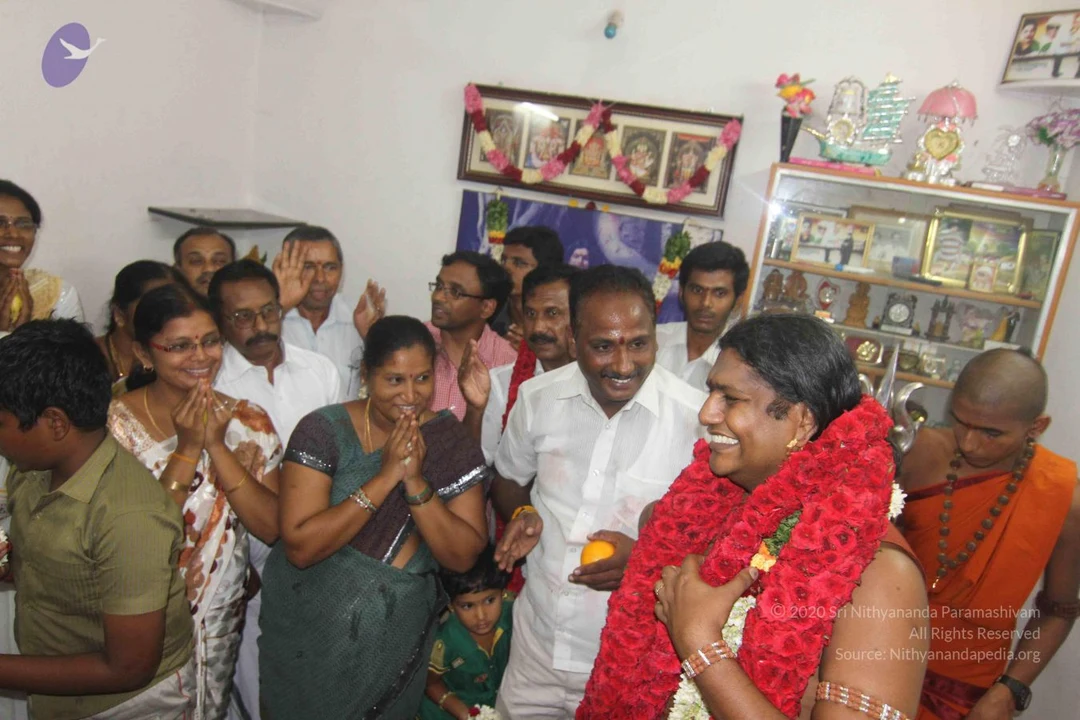
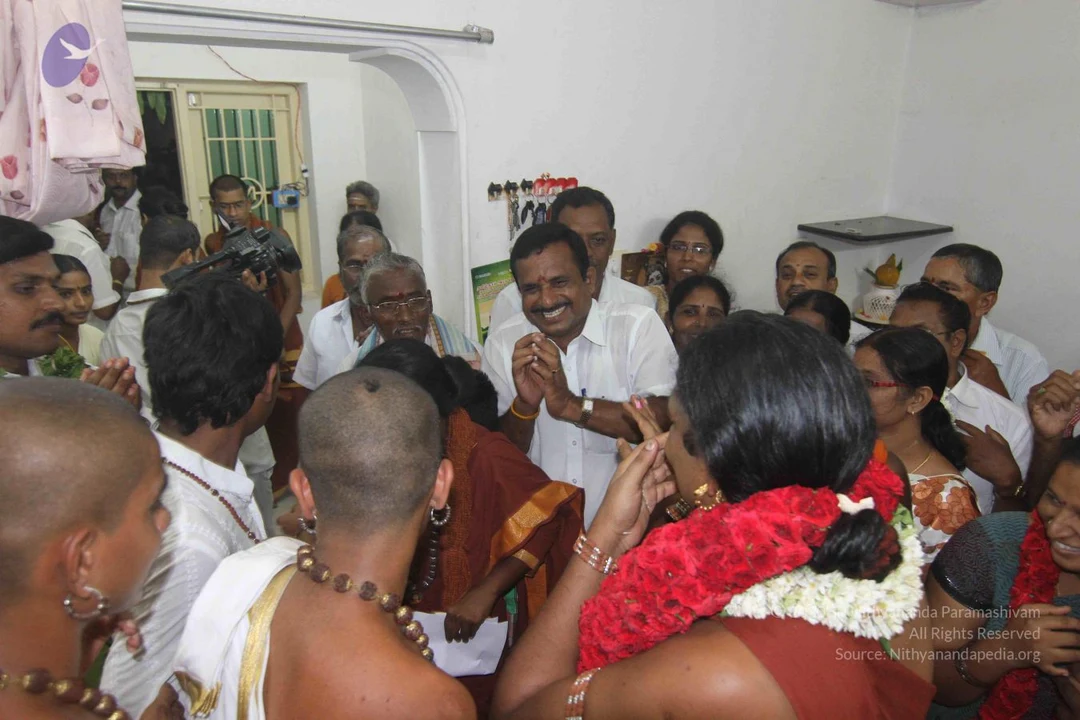
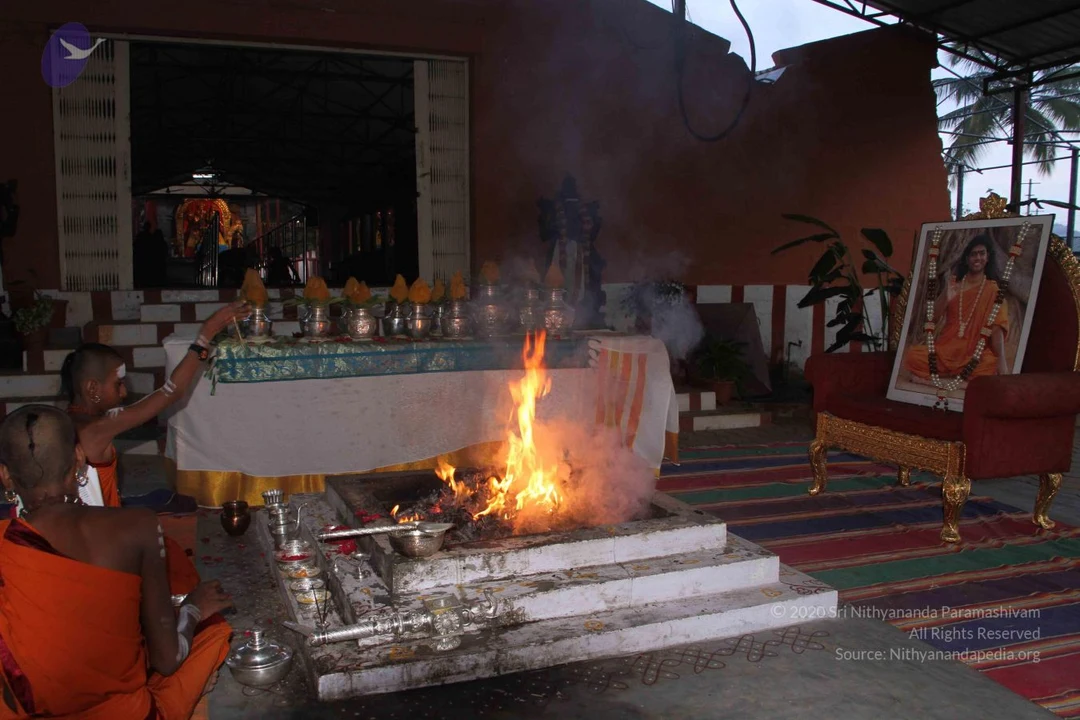
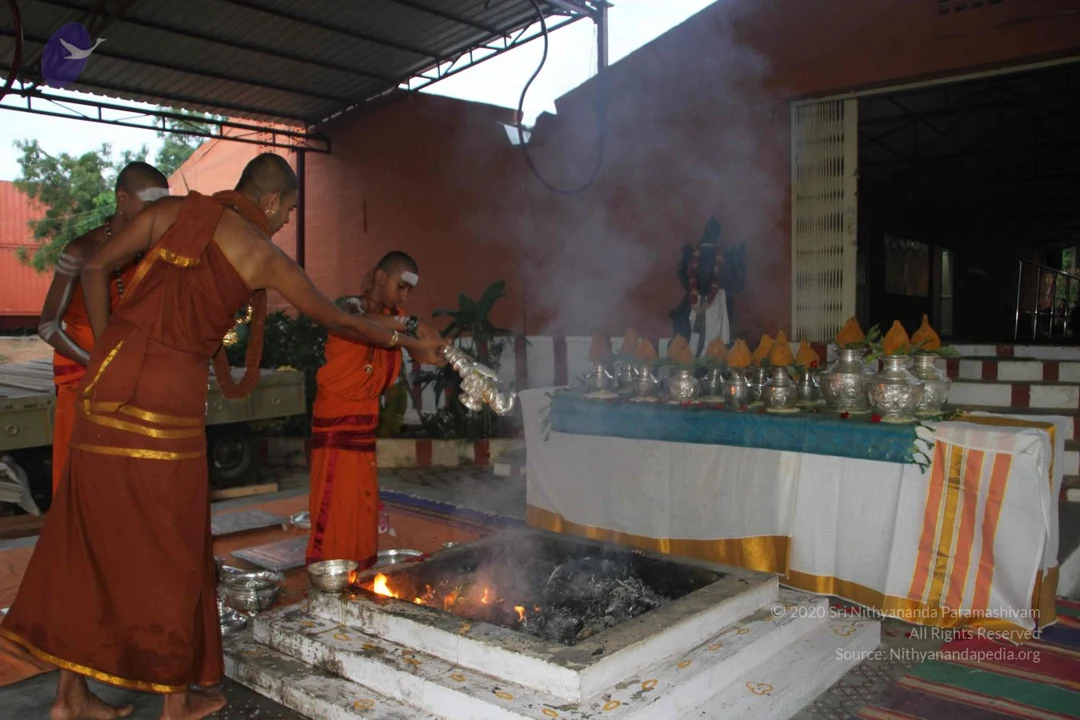
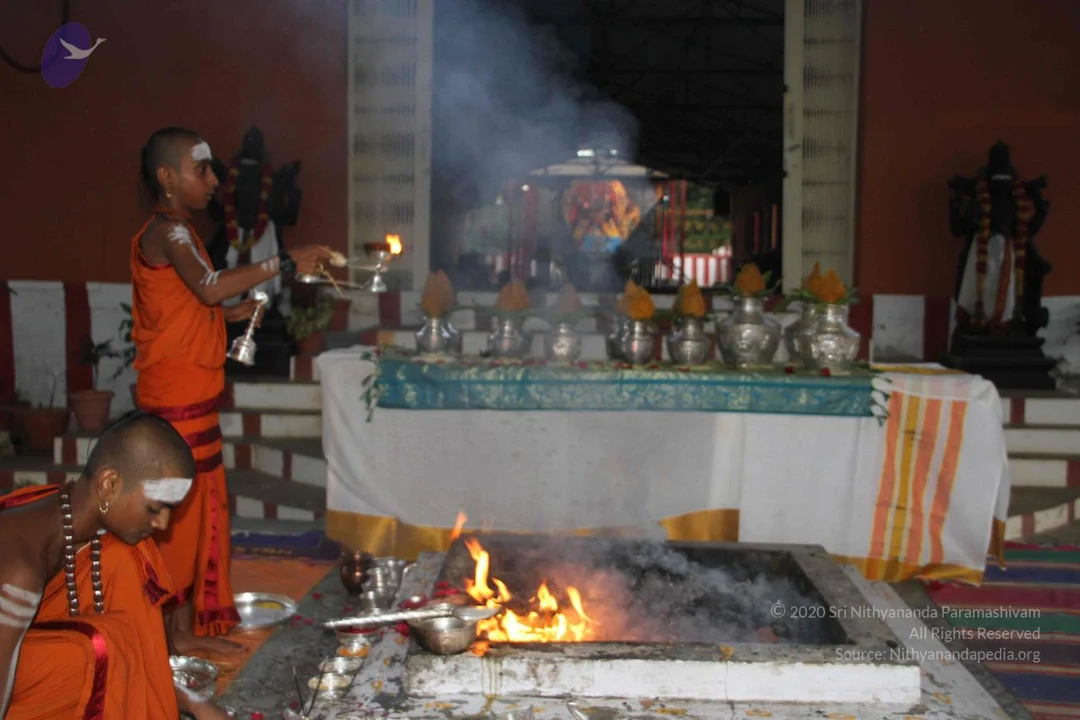
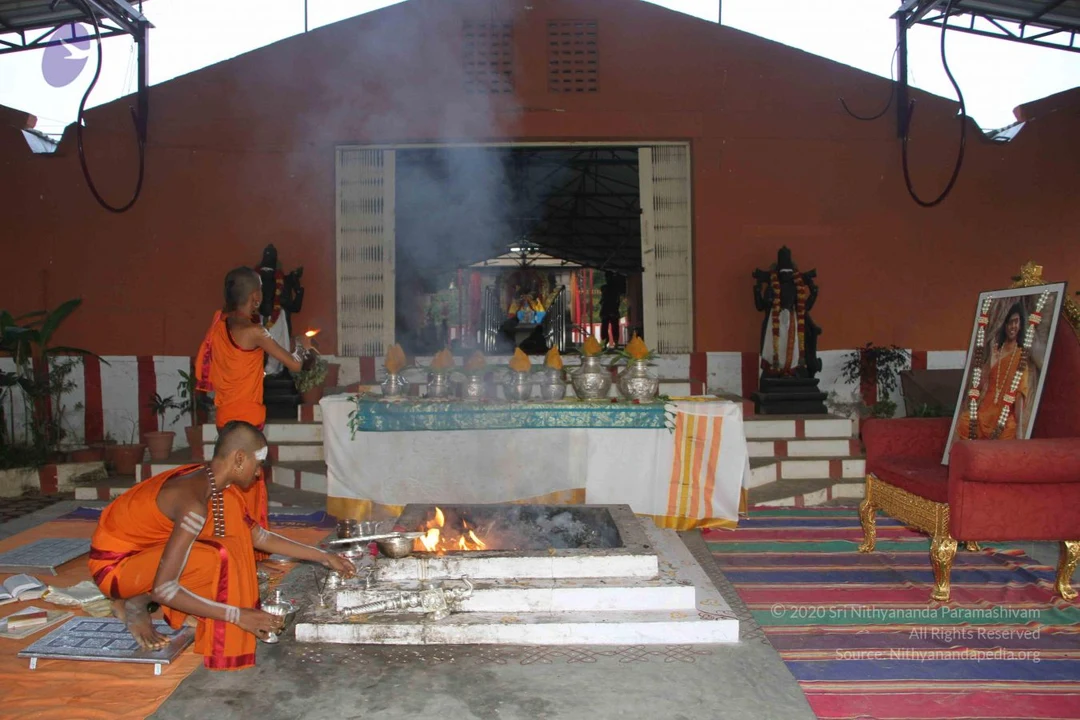
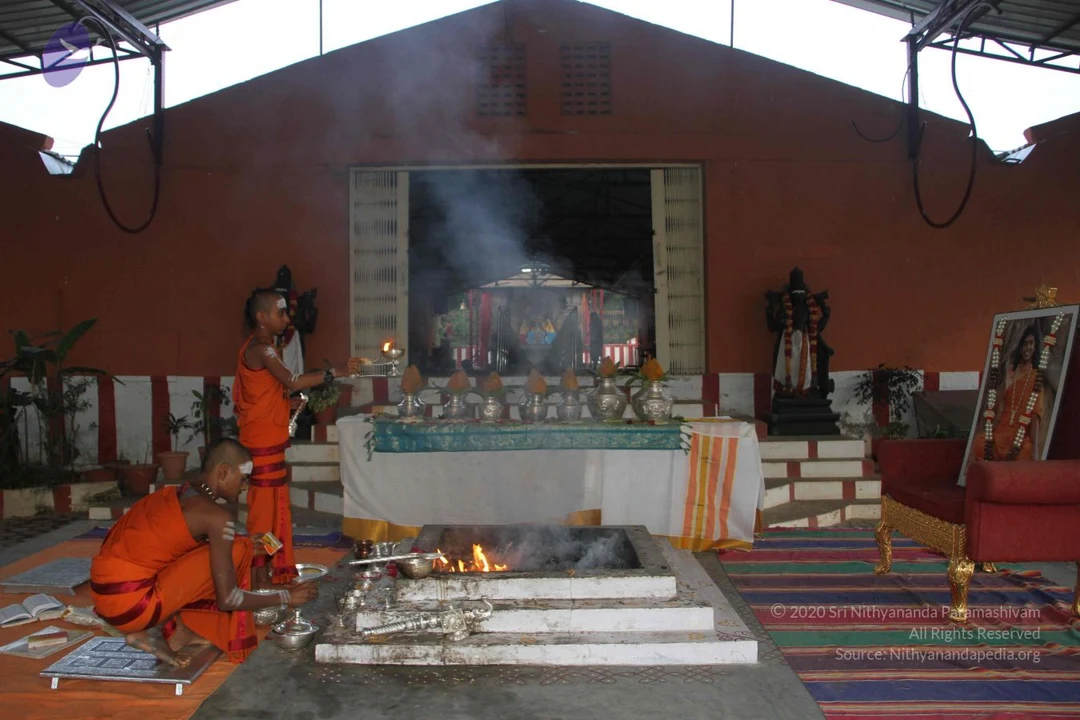
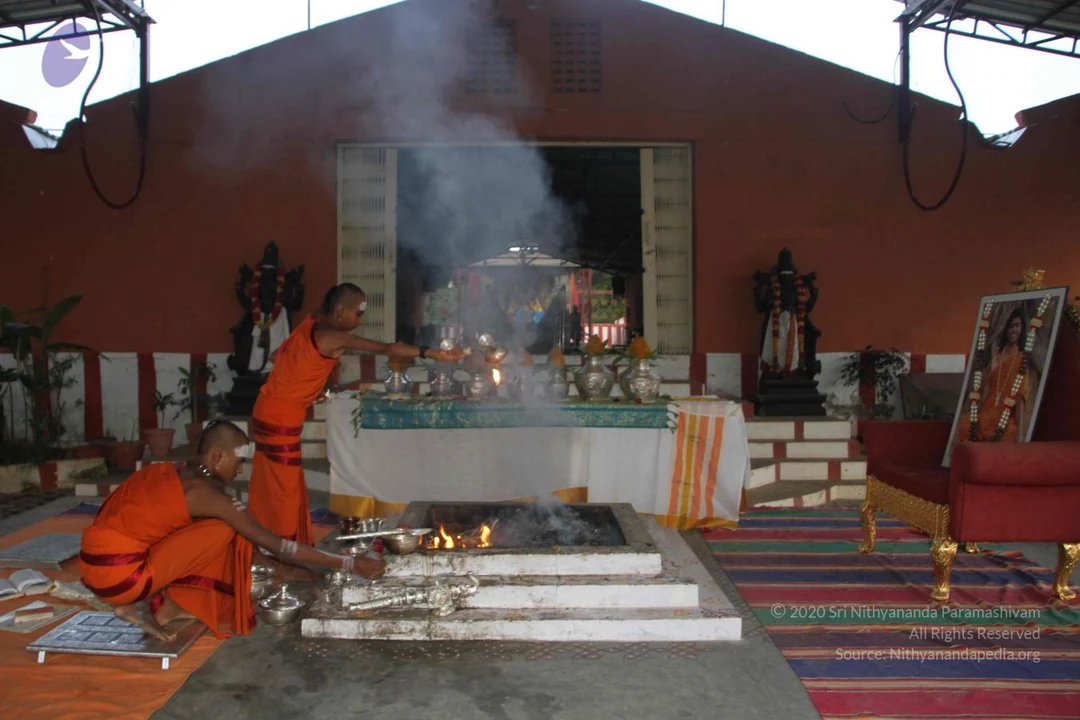
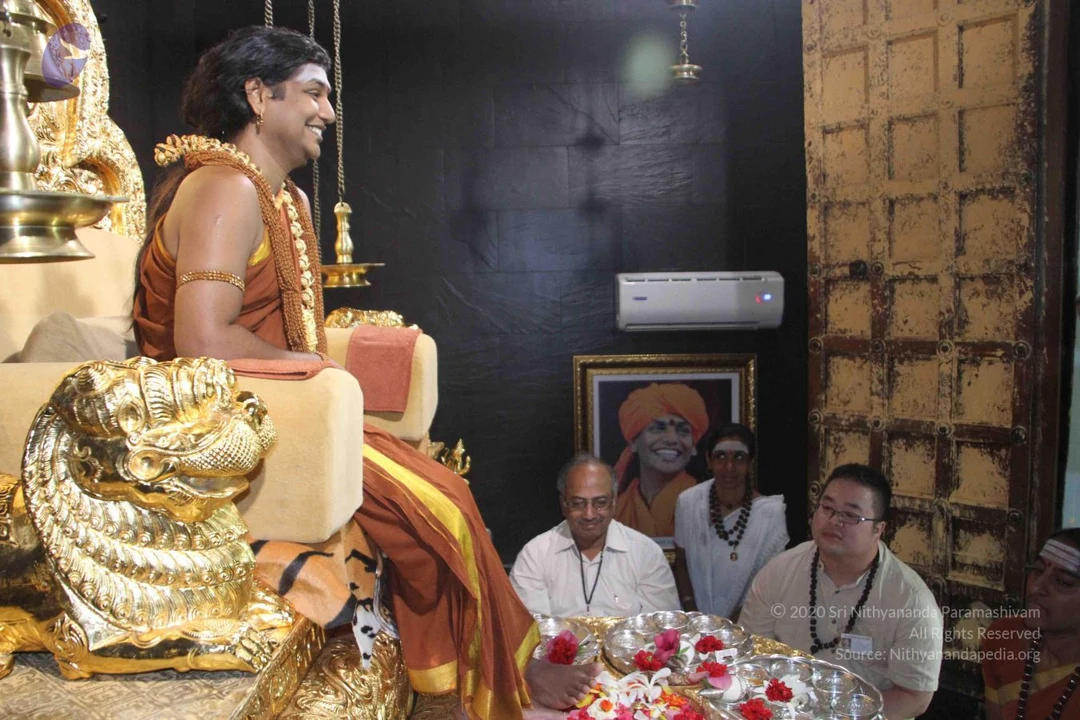
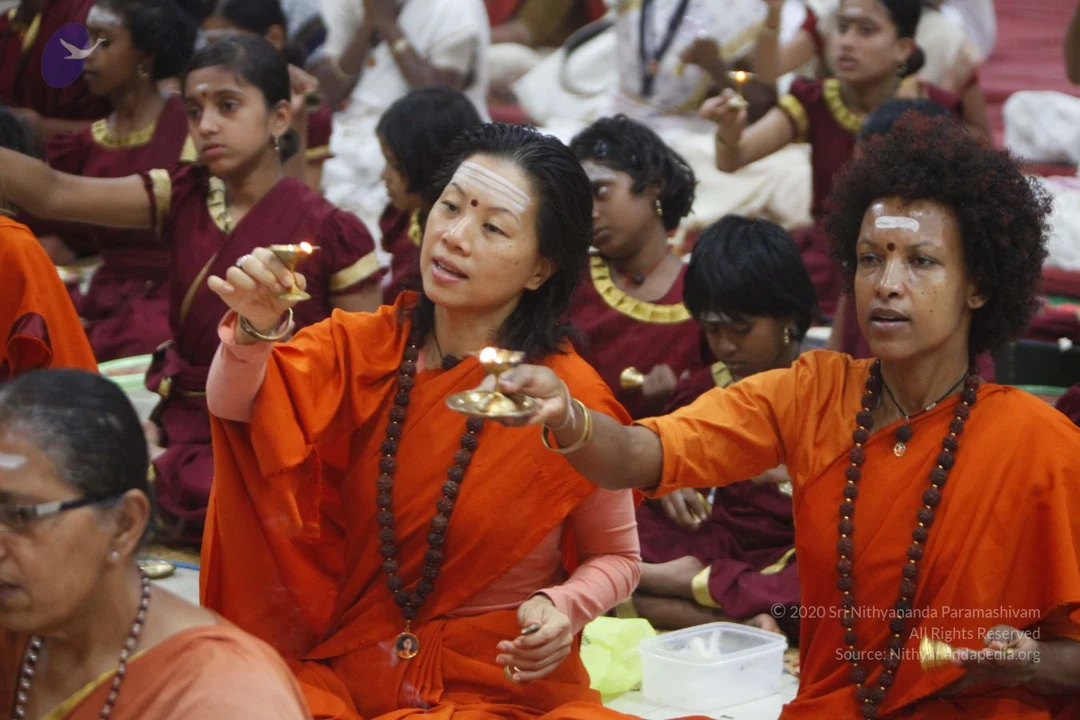
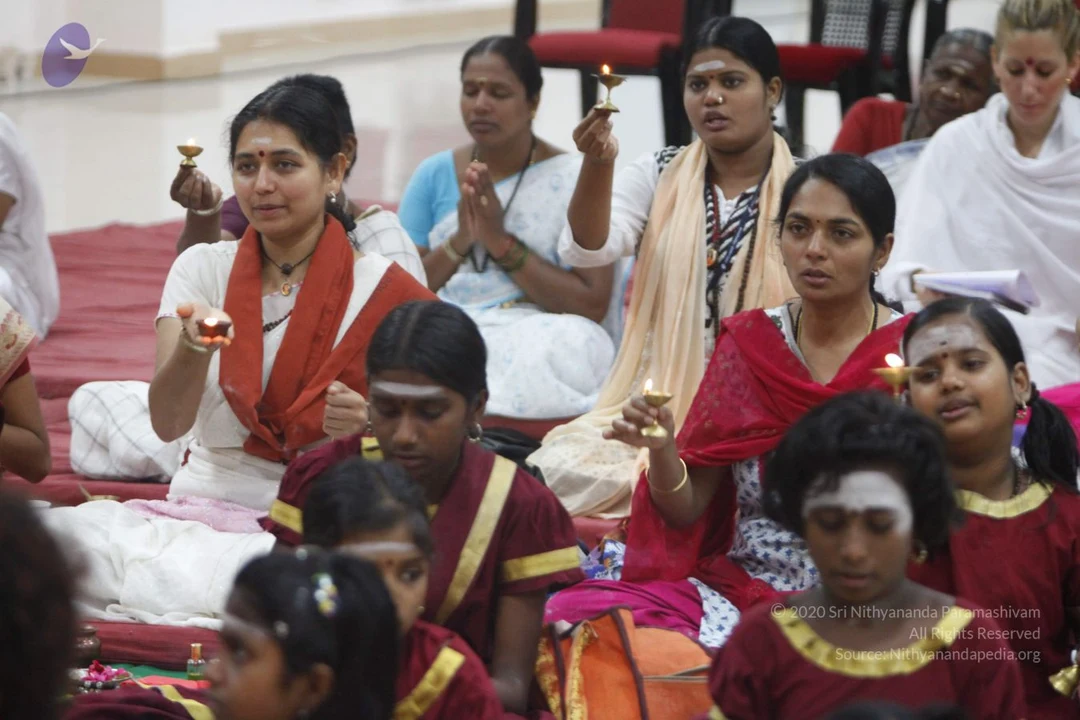
Outdoor temple courtyard with an orange-painted wall. Two young priests in saffron-orange dhotis with white forehead markings stand and kneel before a homa fire pit. The standing priest holds a lit oil lamp and a flower, while the kneeling priest tends silver vessels and a puja plate. Behind them a white-draped altar with brass kalasha pots and a deity murti stands. A framed portrait garlanded with flowers sits at right near a red armchair. Smoke rises from the fire pit and a ritual aarti is underway.A photograph of a group of women seated on the floor in an ashram hall, dressed in saffron-orange saris with yellow borders and rudraksha malas around their necks. Several hold small oil lamps and brass dishes with lit flames, and their foreheads bear white ash markings. The woman in the centre holds a lit lamp on a brass plate, while the woman at lower right, with grey hair, holds a lamp as well. The setting suggests a devotional lamp ritual during a satsang gathering. a person's presence is not visible in this frame.A seated figure in a red-and-orange sari with a red floral garland holds a tall silver trident-like staff upright, smiling. Her feet are being washed in a brass vessel by a kneeling woman in white and a man in white shirt and white dhoti crouched beside her, while another man in white with a sacred thread and beads washes her feet nearby. A standing young man in orange dhoti with a beaded necklace and a seated woman in white with red border watch with folded hands. Behind them a brick wall, a standing fan, a cameraman with a video camera, and onlookers in the doorway. The floor is covered with striped mats and rose petals. This is a padapuja ritual of feet washing. a person candidate: the seated figure is not clearly identifiable from appearance, so no identity is assigned.

June 23 2013

Original wiki page
Contents

Title:

Are your Negative Patterns Infecting You

Description:

In today’s morning Satsang, Paramahamsa Nithyananda provides us with deeper dimensions of completion. He gives a beautiful analogy describing how strong powerless moments and incompletions, which you carry inside, attract more and more incompletions. Like how the fast rotation of the Earth pulls everything to its center, we pull and attract more and more of what is in our inner space; either more moments in completion or more and more moments of powerlessness. The technique is to simply never let powerless moments come into our lives! Never cry out of powerlessness, when you are spiritually vulnerable. Here we are in danger of becoming infected with negative patterns. Choose instead to be in the magnetic field of completion!

Link to Video:

VideoAudio

Transcript:

0:32

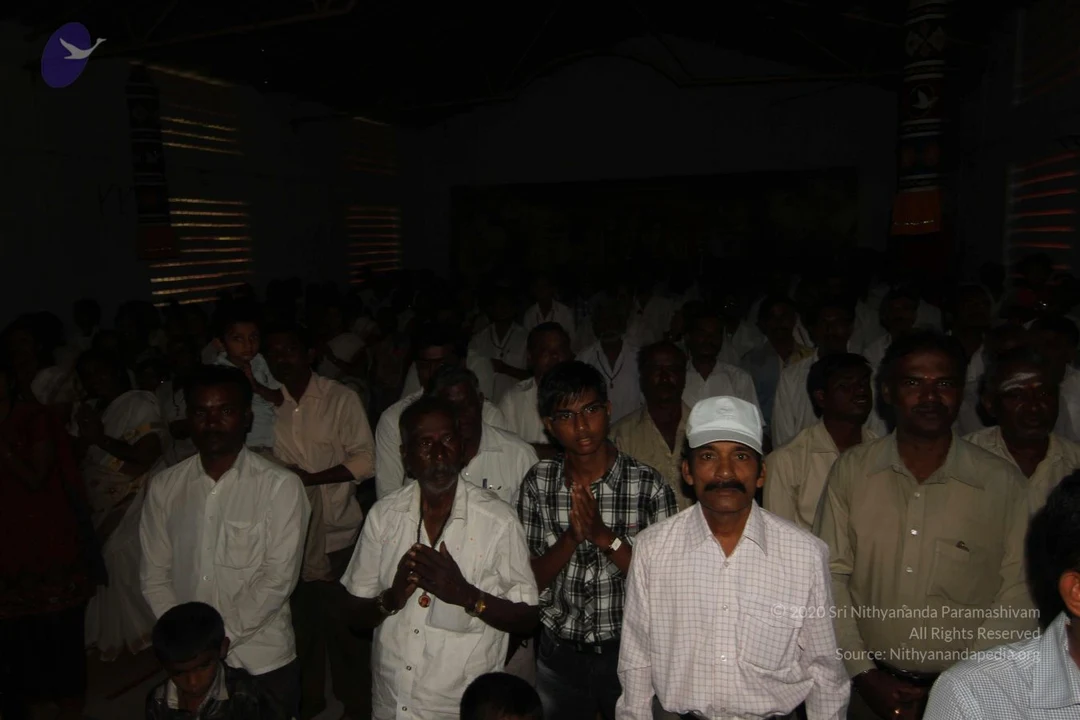
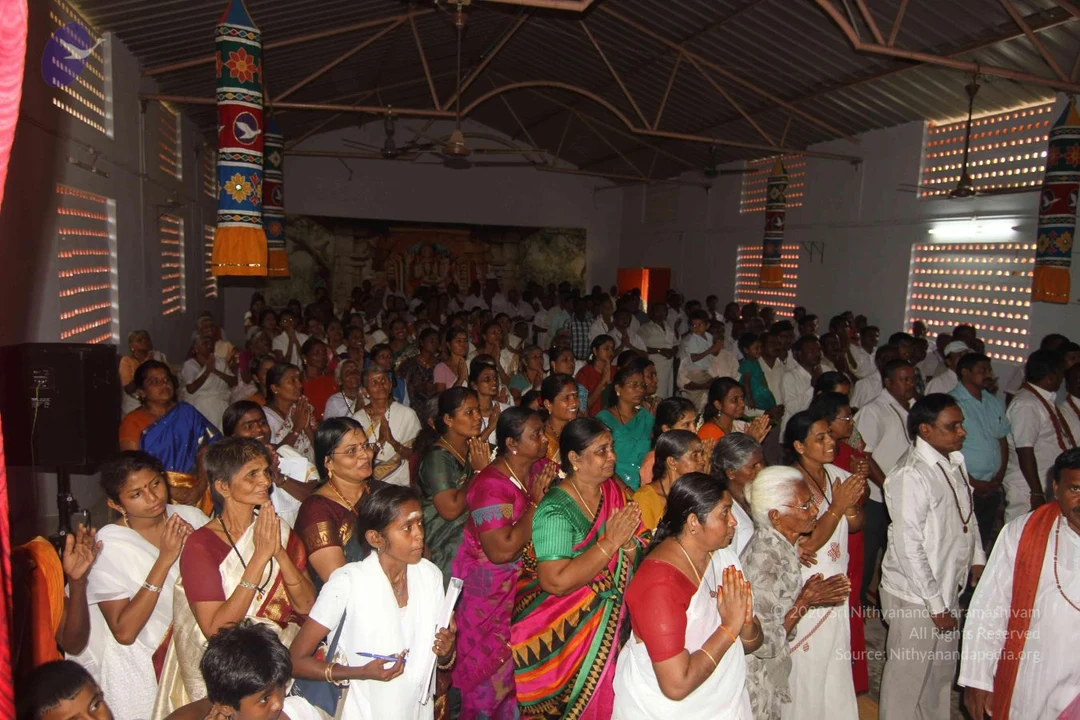
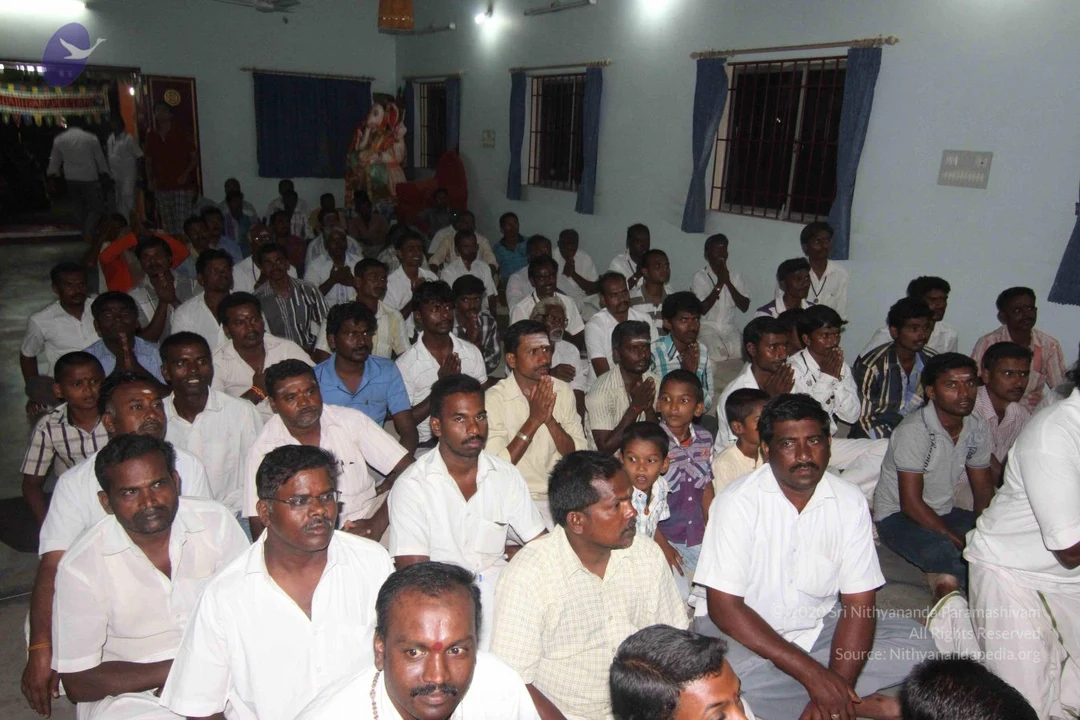
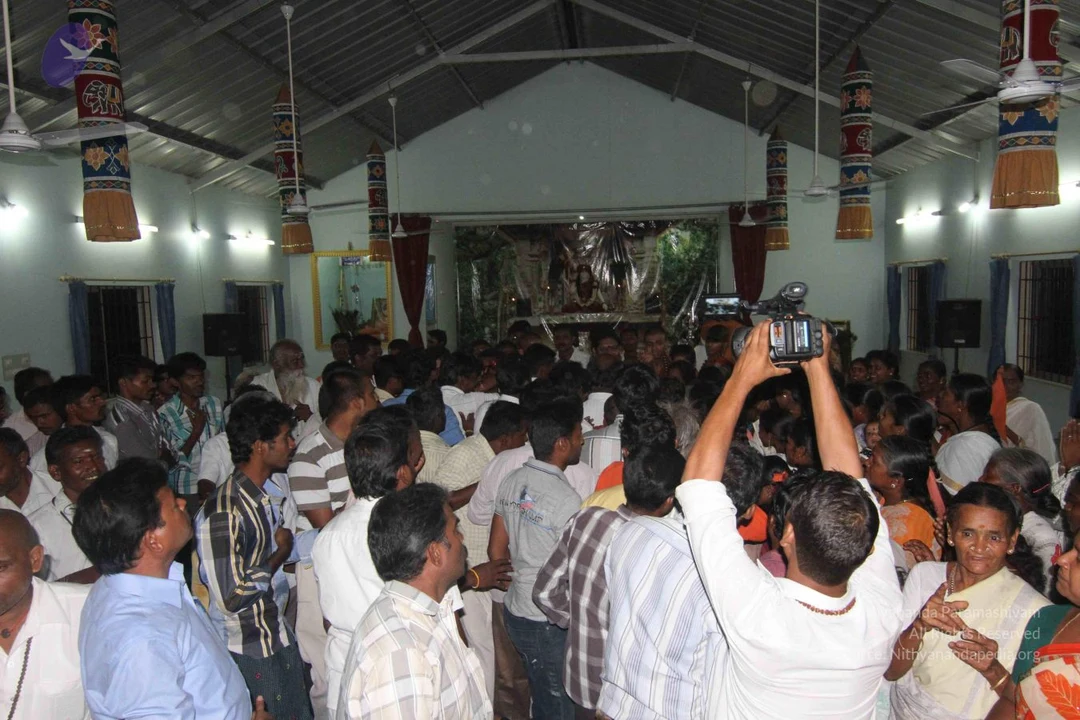
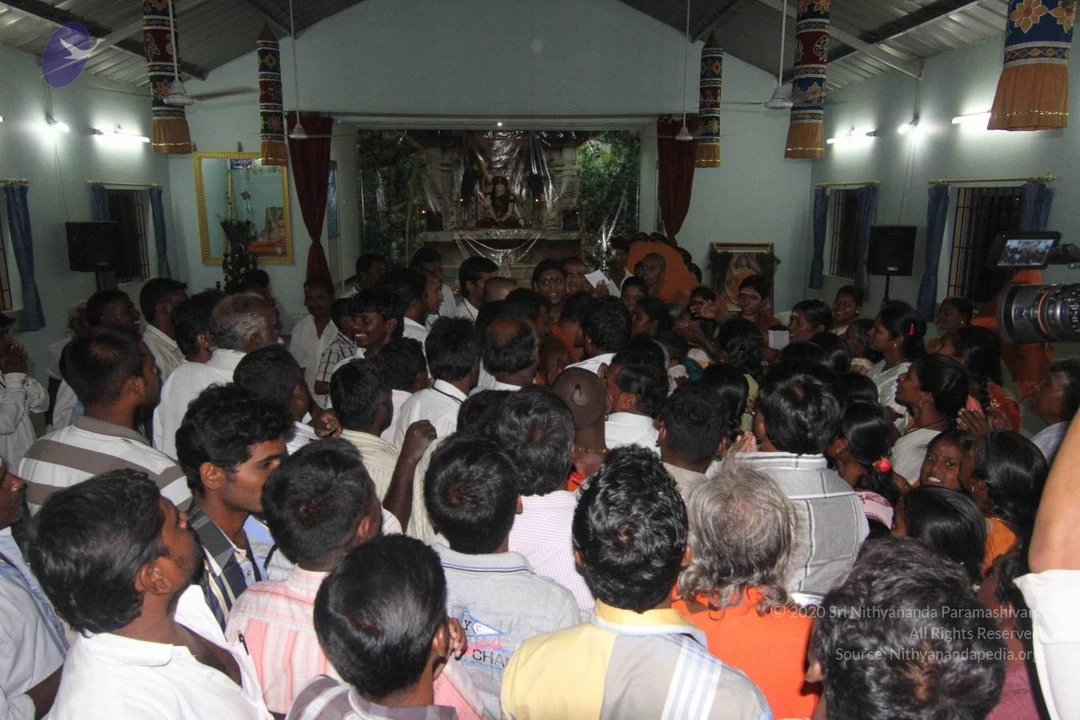
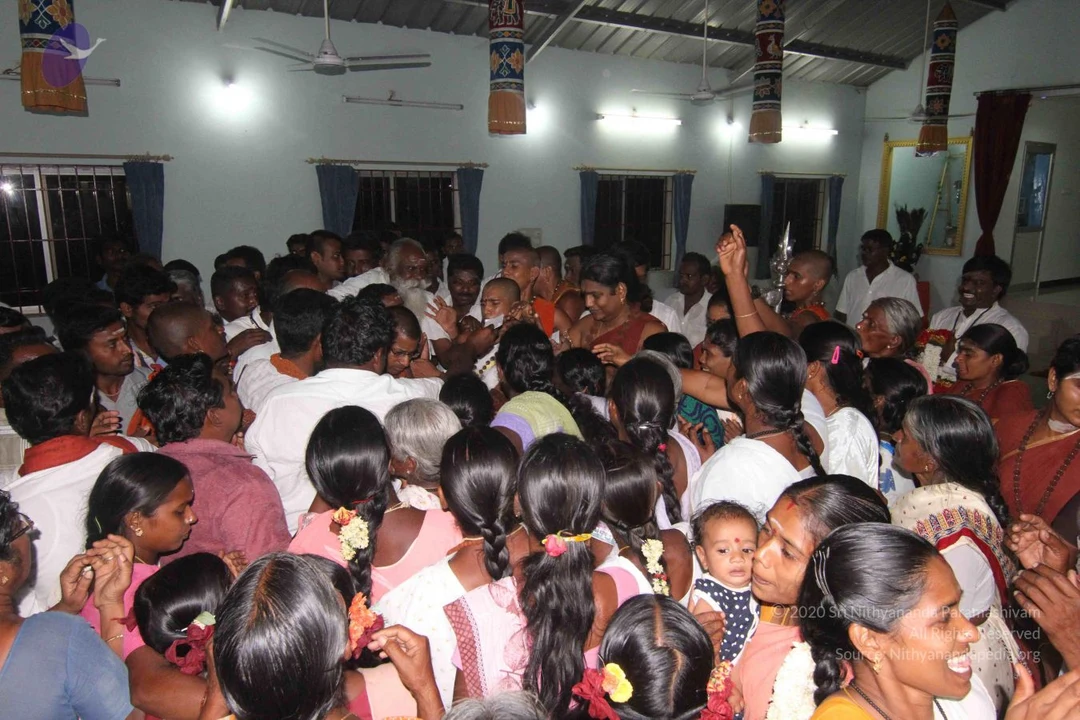
I welcome all the devotees, disciples, television viewers sitting with us around the world at this moment in 222 places through Nithyananda TV, 36 places two-way video-conferencing having Nayana Deeksha, in 121 cities in 21 countries around the world as per the statistics.

The cities sitting with us in 2 way video conferencing Wilmington North Carolina, Devon UK, Washington DC Sripuram, New York Varanasi, Hong Kong Seergazhi, San Hose Madurai, St. Louis Tirumala, Hyderabad Gupta Kashi, Atlanta Ujjaini, Anna Nagar Chennai, Singapore Singapuram, Dubai Vaidyanathan, Ohio Ma Shivananda and San Diego Tiruvalavai, east London UK, Piran tiruparakundram, Bridgetown Barbados, Kathmandu Nepal, Tiruvanmiyur Chennai, chitlapakkam Chennai, New Jersey omkareshwar, Chicago Srirangam, Laspet Pondicherry, Springs USA, Matakalapu Ilangai, Redmond Washington, John creek Georgia and Los Angeles Arunachalam, Gurus Gate California, Seattle Chidambaram, Ohio Prayag, Oman Shivagangai, Varanasi, Tiruvannamalai Arunachalam, Houston Kalahasthi, Vancouver Bhuvaneshwar, Guadaloupe Rameshwaram, Charlotte Srisailam, Hyderabad Bahyanagaram, Calgary Amarnath.

I welcome all of you with my love and blessings.

Dubai Vaidyanatham also I can see and Lotus TV viewers and Sadhana TV viewers, I welcome all of you with my love and blessings.

3:28

Today I will expand on ‘THE DEEPER SIGNIFICANCES OF COMPLETION’.

Please understand. Please come to the space of listening.

Deeper dimensions of completion; listen, when you carry a strong, powerless moment’s memory and the incompletion you created during the strong powerless moments and patterns you created during the strong, powerless moments, please understand, it is like, when there is a mass rotating in high speed, it attracts all the masses towards it, just like the Theory of Gravity. When the Planet Earth is rotating in such a speed, naturally it attracts everything towards its center. Whether it is a completion or incompletion, whatever you carry inside, when your life runs with it, you attract, listen, you attract more and more incomplete incidents, powerless moments, you attract that kind of situations in your life, again and again and again.

(HINDI)

Understand. Understand and listen.

In these four principles – Integrity, Authenticity, Responsibility and Enriching – actual practice has to be done only on completion. Other four principles, only understanding need to be done. Actual practice any person has to start is with completion.

I tell you, when you carry the pattern which you created in some powerless moments as ‘life is against me’ – some pattern, you will see constantly you will attract the incidents, situations, where life is against you and with every situation you will go on confirming the belief you created.

7:33

Please listen, anything you create during the powerless moments will become deeper than faith in you. There are two types of faith you create in your life. Faith you tried to build, build, build, based on your logical conclusions: ‘Oh, if this hill is there, then somebody who created the hill is there. If this tree is there, somebody who created the tree must be there. If this world is there, somebody who created the world, the God, must be there.’ These are all like, through logic you try to build, please listen, through logic you try to build your faith. But during the powerless moments where your logic does not function, the patterns you create is like a straightaway pacemaker surgery is done and that Pacemaker is inserted. Your heart is opened; after your logic being beaten, slapped, your heart is opened, and they enter into your core being and put the idea. Please understand, it is like a army enters and beats your security force, throws them out, straight enters into your capital and puts their flag. It is exactly like that.

In the powerless moments, see, during deep sleep neither your logic works nor any patterns can be inserted. Waking time, your logic works, so patterns cannot be inserted. But during the powerless moments, your logic does not work, but you are aware; so patterns can be inserted. It’s a most dangerous moments of the life. Listen.

It is like a, see in some house, neither security is there nor gold is there; nothing to steal. That is like sleep state. Your logic is also not there. You can’t do anything there. It’s a empty house. Sometimes, the thiefs come and try, search, search, search, search. In their searching process, something what they have stolen from the other house falls in that house and they go back. HAHAHAHAHAHA…. There is nothing to find. That is the state of the sleep.

And waking state is like you have gold and you have security, both. The invaders cannot reach the gold.

But these powerless moments are like all your security is drunk and they are rolling on the ground. They can’t even stand up on their own. And gold is there, open, unattended. Straight the invaders, robbers will come and snatch the whole thing.

11:23

Listen. Never ever allow the powerless moments in your life. Never ever allow the powerless moments in your life; means, crying, weak moments. See, when you sit and complete with yourself and others, crying is okay. You will see that time tears will be there. Or when you sit with the deities, Guru, out of ecstasy tears will roll. That is different. Crying out of powerlessness is not okay. Don’t allow that. Crying out of powerlessness, those moments are the dangerous moments you are spiritually vulnerable. Means, your immune system is down and any wrong negative spiritual concepts can infect you. Infection by infection by the root-pattern can happen in you during those powerless moments. When the infection of negative patterns happens in you, please listen, this is a new word ‘infection by negative patterns’, when that happens in you, it is almost incurable. Only an enlightened master can do the surgery and cure it. The surgery is called Inner Awakening.

Listen. Listen. You are like a magnetic field which is created with the space you carry within you. When you radiate the magnetism of incompletion, you will only attract more and more situations in life which will cause incompletions. People, their behavior all life incidents, will give you only incompletion. If you are carrying the magnetic field of completion, then the same people, life situations, incidents, will either transform or even if they don’t, your experience of them will transform for you to cause more and more completion. So, whether you want to carry a magnetic field of completion or incompletion is totally your choice. When you were small, most of you did not even know this. So by default, you chose to be in magnetic field of incompletion, because, that is what is most of the society around us, our parents, teachers and others run with the society.

Listen, my Gurukul is a default completion space. The whole atmosphere is such; the critical mass of the Gurukul is by default already in completion. Already they are complete. And constantly I am helping them, supporting them with everything. Even the Gurukul teachers, I see their language changes because kids taught them. It is a spontaneous space of completion.

See, in the society, by default society is incomplete. So you are put in that space. Only if you are conscious, you can attract the space of completion. But in the Gurukul, by default it is a space of completion. Only if you are too interested in incompletion, you will attract it.

16:15

Kids are my only hope. My Gurukul is my biggest hope. Listen, especially your friends, your friends between the age of 3, your friends between the age of 3 and 18, that 15 years, your friends has huge influence over you. I tell you, you may be believing your teachers have influence over you. No. You do not open your heart to your teachers. You open only your logic to your teachers. Teachers can only impact you very slowly, long-term. But your friends can impact you immediately, immediately. So, the field of completion is one of the very important thing, because that is what most of the society does not have. Listen, field of completion is very important thing. The field you carry around you and inside you should be complete, should not have any big wounds or the moments of powerlessness as pattern.

I tell you, all Gurukul kids, this should be your next important lesson. Every day, you should spend time in completion before falling asleep till you stop having dreams, because dreams are nothing but incompletions. Only when you don’t have dreams, you are complete. Understand, only when you don’t have dreams, you are complete. It is very easy for the kids to enter into the dreamless space. For kids it may take maximum 30 days of practice. Every night, before falling asleep, complete, complete, complete, complete, complete with whatever happened the whole day or whatever has happened the whole day, whatever contradictions, conflicts you felt, complete with that and trace back the source. In 30 days you will achieve the space of ‘no dream’. I tell you, if you achieved the space of ‘no dream’, pushing you into enlightenment is just a small click (of my fingers) for me. It is nothing but a one energy darshan, because already the work is done.

So, this is the next project for all the kids; next one month - today is 23rd - till next 23rd, that is Guru Purnima, so we have exactly one month. Till Guru Purnima - getting it? Till Guru Purnima, every night you will do completion and fall asleep. Completion with yourself or completion with others; anything is okay. You will do completion and fall asleep. And by Guru Purnima I will awaken your Kundalinis.

21:16

Even other elders, now you know, the space of completion is the biggest asset. I tell you, carry the space of completion. Even if you go and sit in a remote forest under a banyan tree, a city will happen around you. Even if you go and sit in a remote forest under a banyan tree; it was a remote forest, do you know? This campus is a remote forest ten years before till 2005. Behind the Welcome Center, the huge rock you see, many nights I slept on that rock, because bears will walk in the night, elephants will walk. Bears and elephants can’t climb on that rock. It’s very steep rock. That rock is a witness. Many nights I slept on it. In the nights, two-three bears will walk. And sometime, see when a elephant comes as five-six no problem; they will just walk and go. But if a stranded, single elephant is there, it will be agitated, because it is missing the group. It will look this side and that side, it will destroy anything comes in the eyes. Of course, I have never been attacked by any animal. But I have seen by many animals.

So, understand, if you carry the space of completion, magnetic field of completion, even if you go and sit in a remote forest, simply a kingdom will happen around you. Choose to be in a magnetic field of completion from now on. From now, decide you will put all your energies to be in completion, to be in the magnetic field of completion.

(HINDI)

25:46

When you are aware and commit to be in the magnetic field of completion, you will see that you will attract life which will give you more and more completion. Only when you can experience completion, the space of completion is so powerful, the magnetic field of completion is mandatory condition for any creation. And, I tell you, in the space of completion, anything created will be created in all seven space; in all seven planes. Bhur, Bhuva, Sva, Tat, Maha, Tapa; in all lokas. Usually we put Tapa Loka below and Maha Loka above. But I am changing it. Tapo Loka is the topmost.

Anything you create in the space of completion, see, even in incompletion you can build a temple; it will be created only in Bhu Loka. But if you create the space of completion and build temple, it will simply happen in Bhu Loka, Bhuva Loka, Suva Loka, Tapa Loka, Satya Loka; in all lokas, in all planes that temple will happen. Means, even from the mystery field, people will experience the power of that temple.

See Shirdi Saibaba’s Temple, that is there in Shirdi physically; but in the metaphysical plane, the temple exists in metaphysical plane also. That is why in so many people’s dream it goes on appearing. See Tirupati Venkateshwara Temple. That temple not only exists in physical plane, it exists in all seven planes. That is why it goes on inspiring people. There are bigger temples than Tirupati Temple; but those temples exist only in Bhu Loka. You don’t know why you are attracted to Tirupati. The moment I utter the word, I feel like I should take two days off and go and have darshan and come back. And all of us know, not only you, even I cannot stand more than few seconds in front of the deity. Not only you, even I cannot stand more than few seconds in front of the deity. But we feel we should go, we should be there. Of course they are helpless. They are helpless because per day average 100 thousand people have to have darshan. Please understand, last few days, the media report I am seeing, in two days 3 lakh (300,000) people are having darshan; in two days 3 lakh people having darshan. So, what to do? But everyone, everyone, if you had been there even once, you know you want to be there again and again and again; because the being who built that temple, built it out of completion. It is not created by ordinary kings. It is visualized and created by great beings like Ramanuja, Srinivasa.

30:35

Even Vijaynagara emperor Krishnadevaraya; see when I saw the amount of temples he built the work he has done, he has not done anything else in his life other than visualizing about temples and build temples. I think just by that his inner space would have become complete. Because in Tamil Nadu 32 thousand pillar mantapam are there. All 32 are built by Krishnadevaraya. In the whole world there are only 38 thousand pillar halls. In that 36 are built by him.

Out of completion anything you create is created in all planes.

Same way, Meenakshi Temple. It is not the world’s largest-size temple. But the amount of people experience Meenakshi, I know it when I planned the temple I planned it 93 acres. And still the half left, in the incomplete structures if you complete it will be 93 acres.

I know some people will be shocked when Krishna said to Arjuna, ‘I taught this science of enlightenment to Sun God’. Arjuna was shocked. But that is the truth. When you are in completion, when you are in completion, anything you create stands for eternity; it is immortal and eternal. Otherwise, there is no reason why Hinduism should be still alive. When these invaders, fanatics, brutally attacking, assaulting, killing millions of peoples and destroying temples, anything in their eyes they will destroy. When these kind of fellows have invaded India and ruled India not for one generation, for 100s of years, how still Hinduism is left alive flourishing and expanding; because everything, see for a religion to be alive three things are important –

The knowledge of lifestyle - means what is birth, what is death, why life, what is purpose of life; answer for all these questions.

And buildings – arts and architecture.

Third, language

In Hinduism, all three, means,

· The science of lifestyle, the knowledge of lifestyle,

· And architecture and arts,

· And language,

all three are made out of magnetic field of completion. That is why how much ever you try, these three can never be destroyed.

The monuments built out of completion, architectural wonders created out of completion, the linguistic monument, Sanskrit, the linguistic wonder Sanskrit – I tell you, just like the world wonders, if you analyze the linguistic wonders of the world, Sanskrit will be the first and only one – the linguistic wonder of the world, Sanskrit, and the great science of lifestyle, Upanishads, all three are created out of the magnetic field of completion. That is why nothing could destroy it. Nothing can kill it.

36:17

I tell you, wherever the value of democracy is respected, only Hinduism can survive, because Hinduism carries the values of democracy inbuilt in it. It gives you so much of conscious freedom. No single man can exploit it. No single man can dictate terms. No single man’s whims and fantasies can rule it. Hinduism can never be controlled by a single man. At the most, it can be guided by the apex body. A huge collegium of incarnations and enlightened beings only can guide them because everyone is completely, thoroughly given all the secret keys without any hiding. Nothing, nothing is kept secret. Nothing is hidden. Not only you are taught what is the goal, you are taught even methods to design your own path towards the goal. You are not just given meditation techniques; you are given the methods to design meditation for yourself. You are not just taught fishing; you are given the methods, you can create your own, you are given all the secrets and keys, you can create your own different methods of fishing. In most of the religion, only fish is given to you. In very few religions, fishing is taught to you. In Hindu tradition, you are given, provided all the secrets and keys; you can develop your own method of fishing. Wherever the value of democracy is respected, lived, even appreciated, I tell you, only Hinduism has future. All democratic countries, that is the reason, in all democratic countries, Hinduism flourishes like anything.

(HINDI)

As per the United Nations Organization, UNO, 97% of the world languages are directly or indirectly influenced by Sanskrit. It is Mother of all languages. Forbes Magazine has reported in July 1987 issue Sanskrit is the best computer-friendly language. There is a report by NASA scientist that America is creating 6th and 7th generation supercomputers based on Sanskrit language. If you just know Sanskrit, you can learn any language. You know the science of picking up languages. St. James Junior School, London, one of the very popular, well known school, has made Sanskrit as compulsory. Even in Ireland, some schools have made Sanskrit compulsory. Let’s make Sanskrit available in all our Vidyalayas and ashrams. Sanskrit is the only language which uses all the nerves of the tongue.

41:49

Listen. Anything created out of the space of completion stands forever.

(HINDI)

Understand, essence of today’s satsang:

Carry the magnetic field of completion. Carry the magnetic field of completion. Carry the magnetic field of completion. That’s it.

Photos From The Day:
Photos Of The Day:

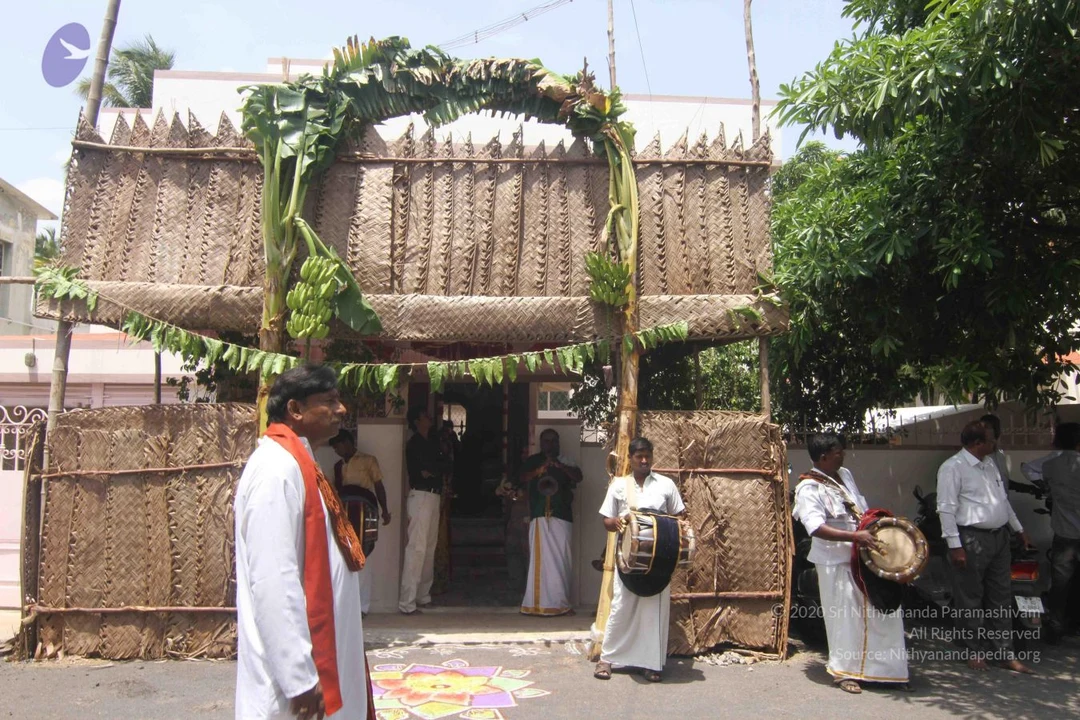
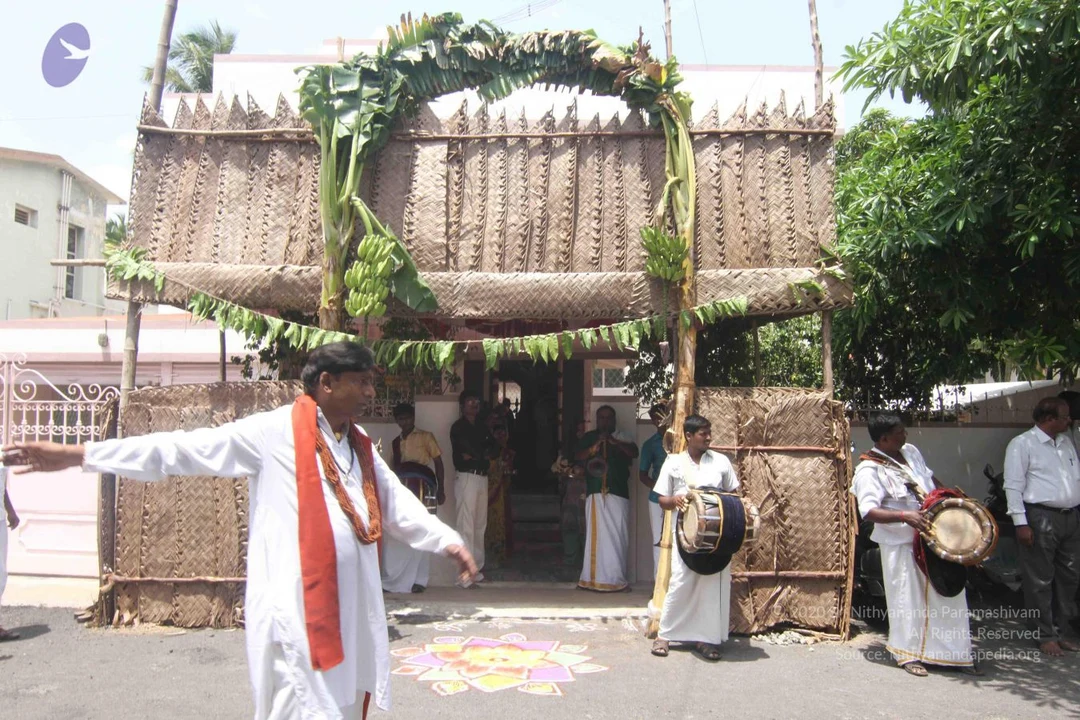
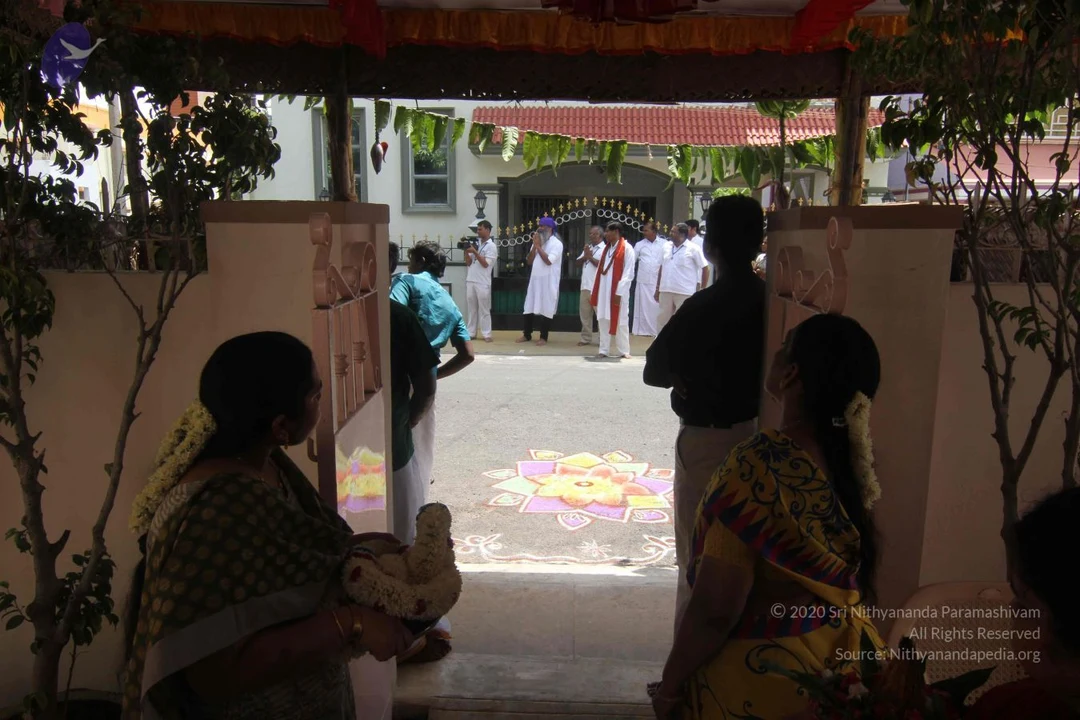
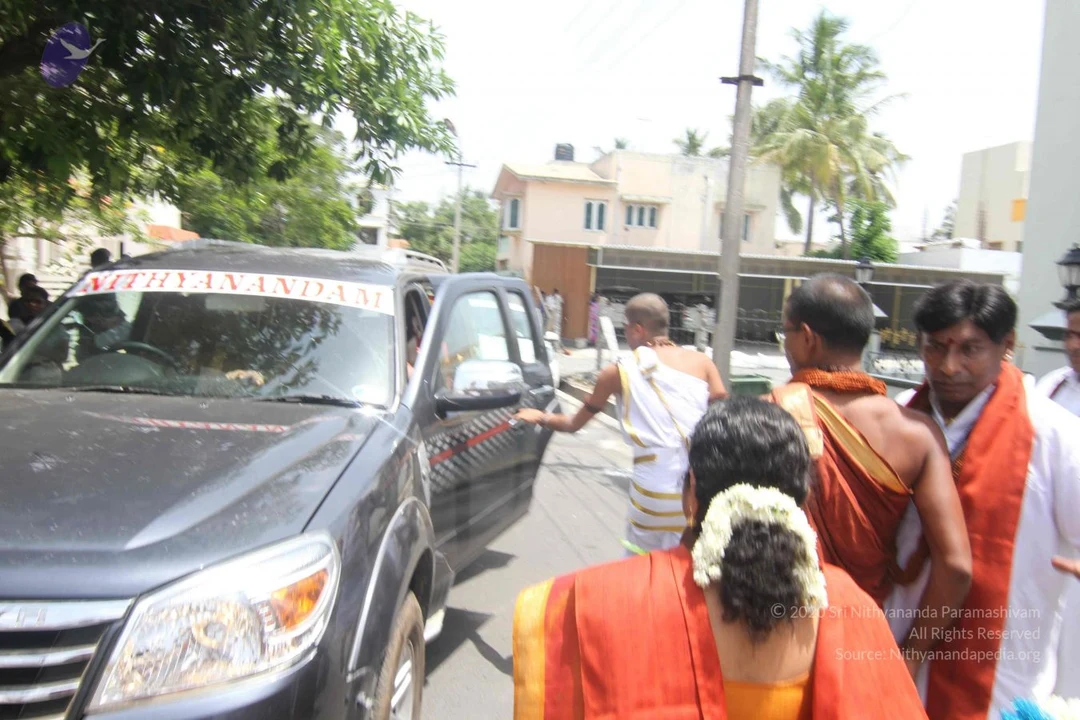
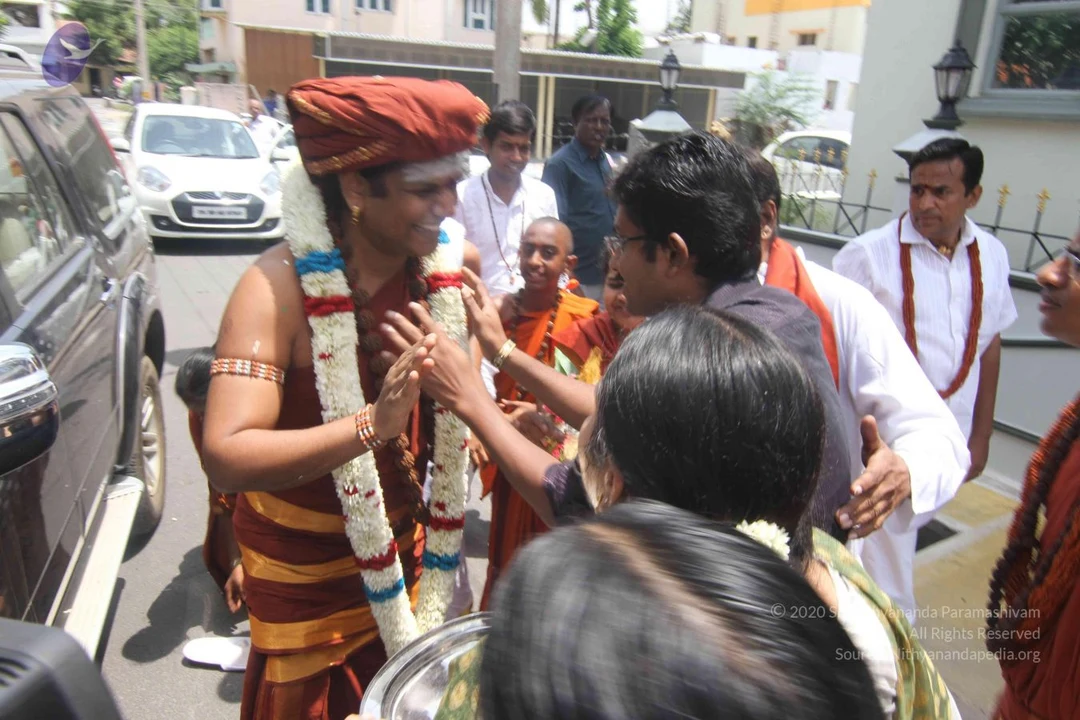
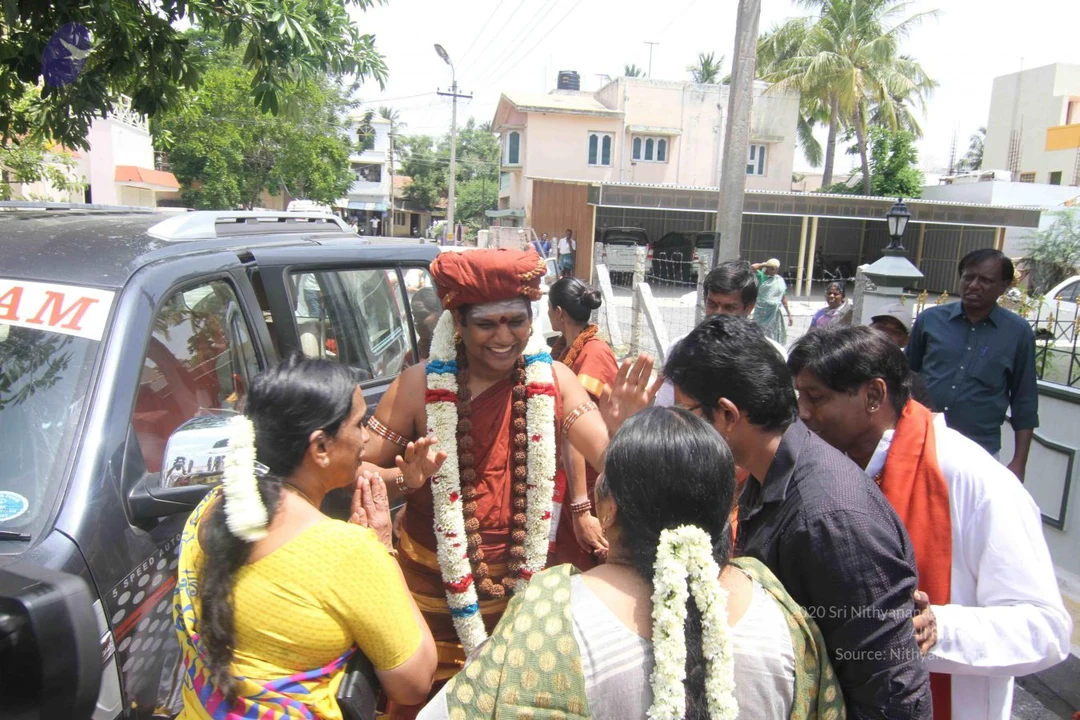
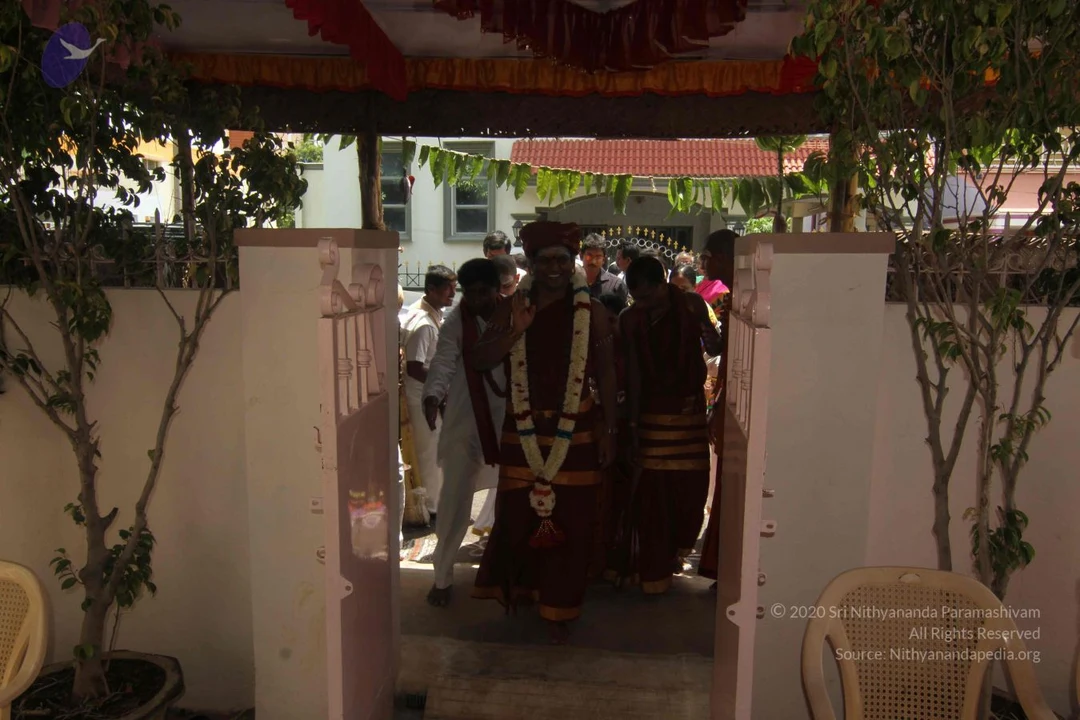
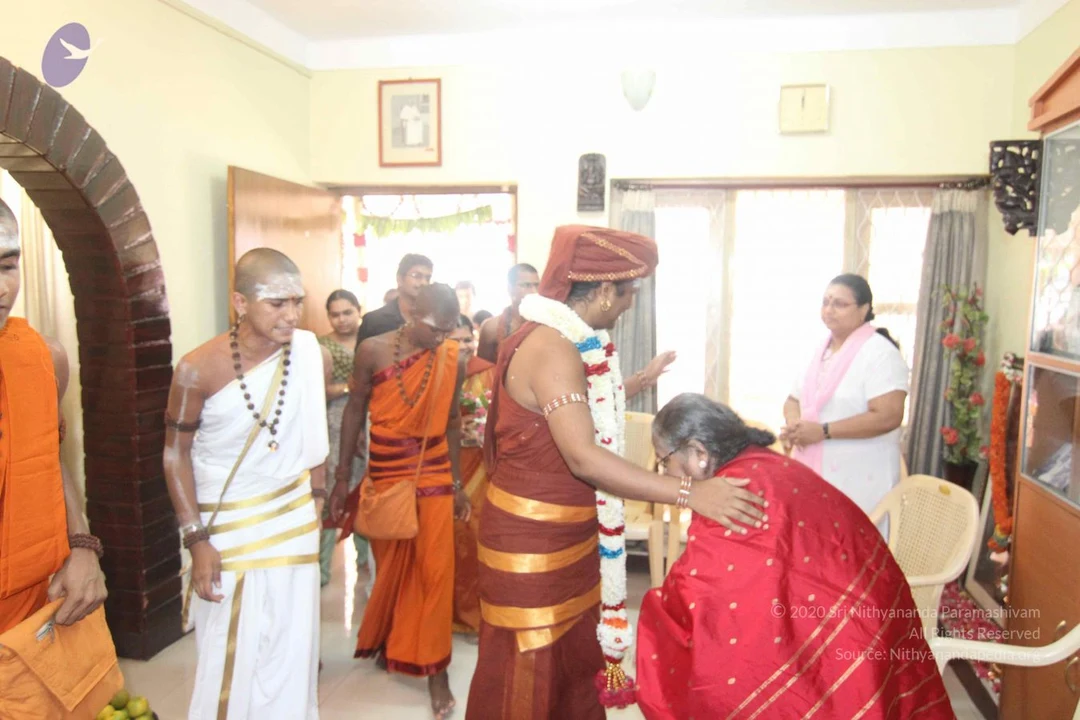
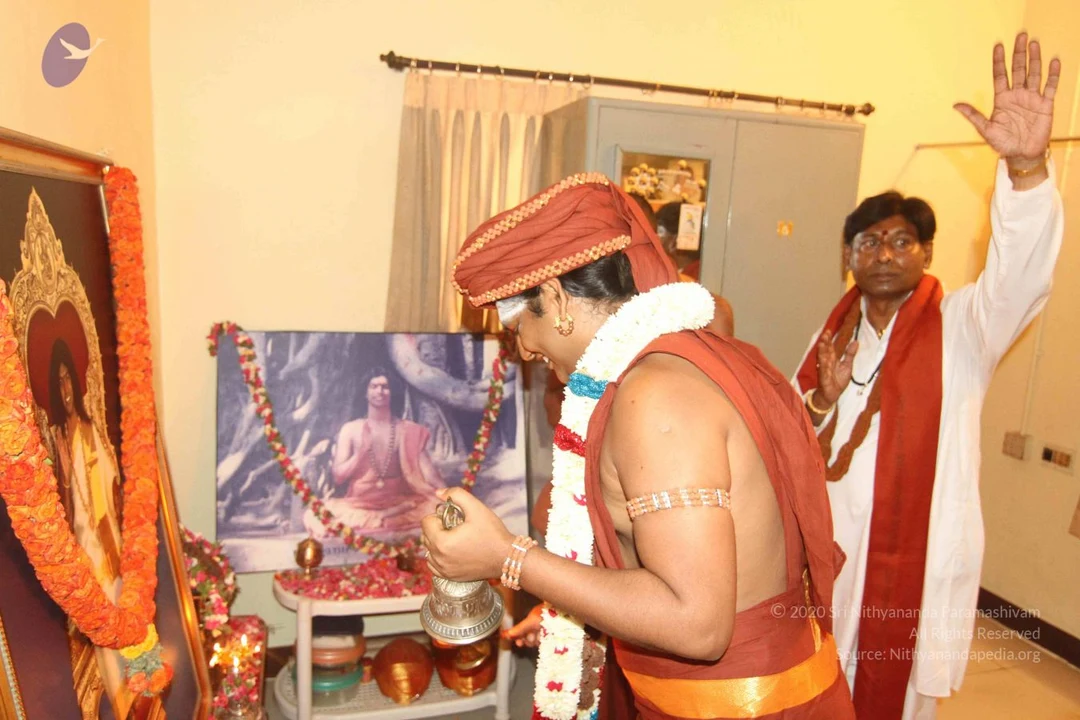
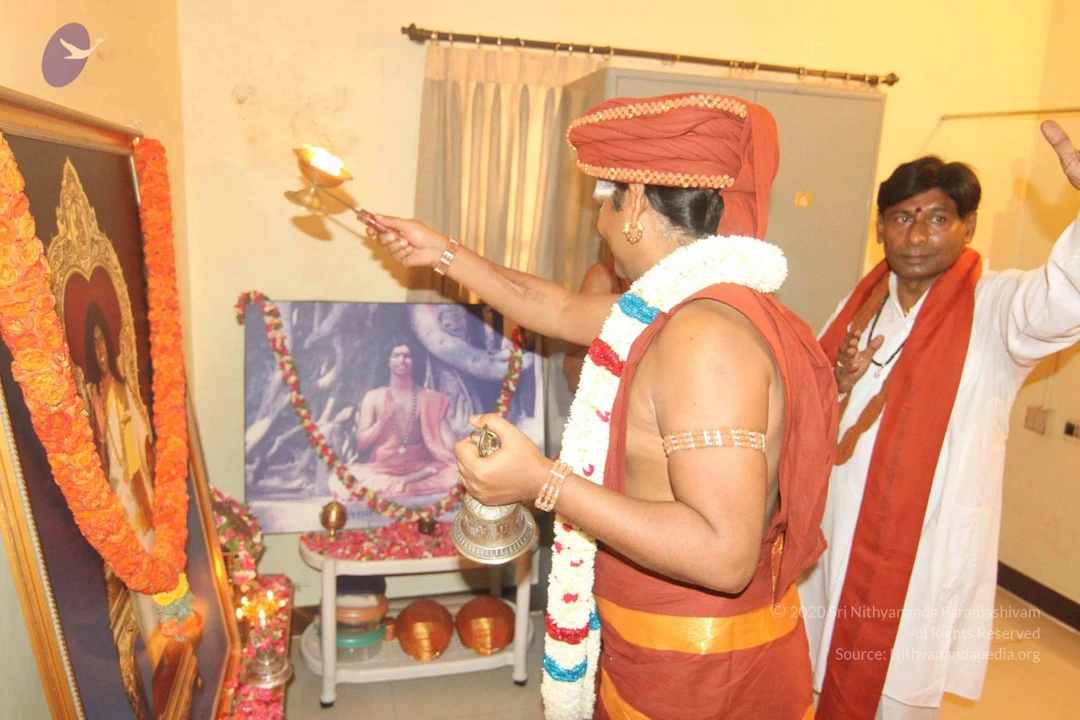
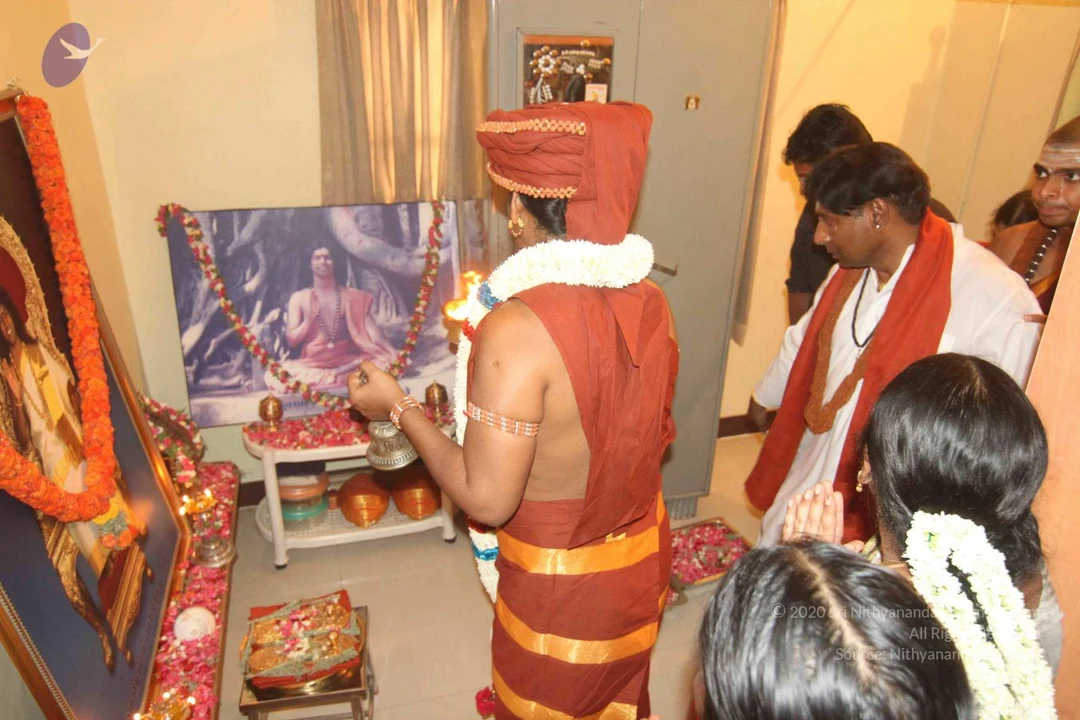
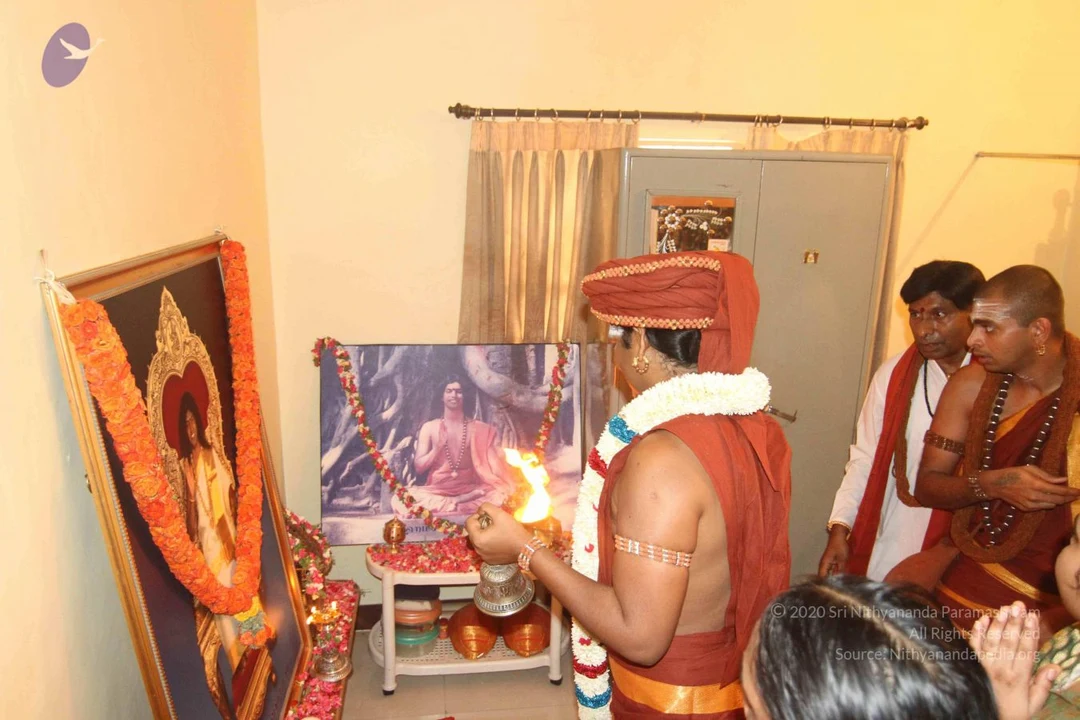
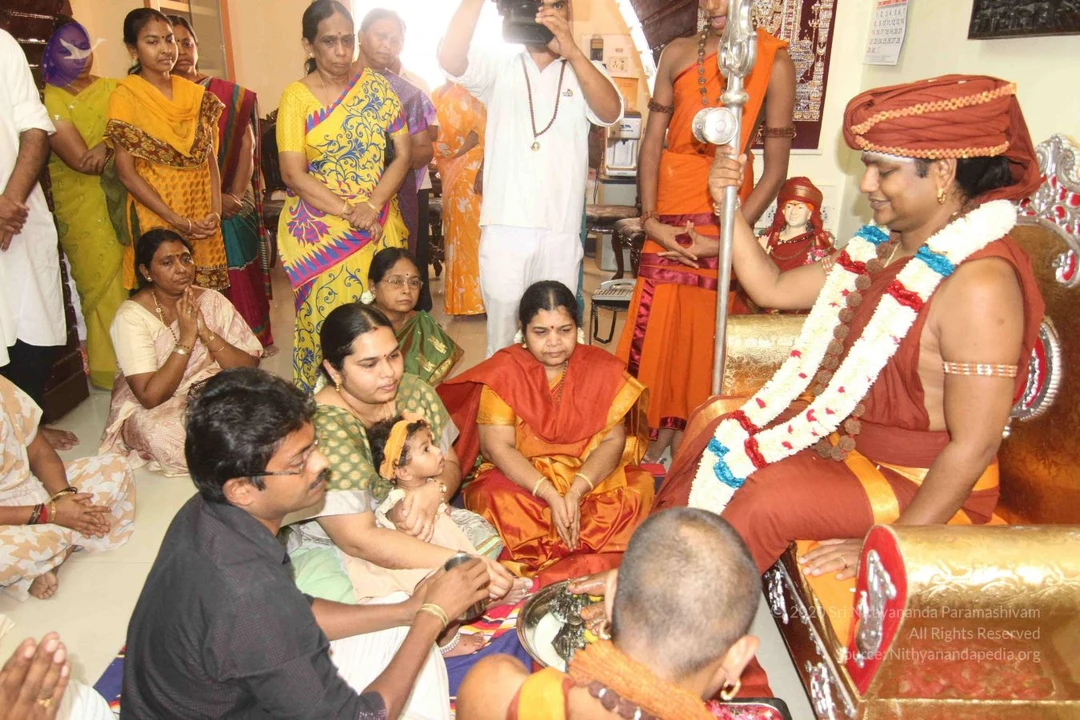
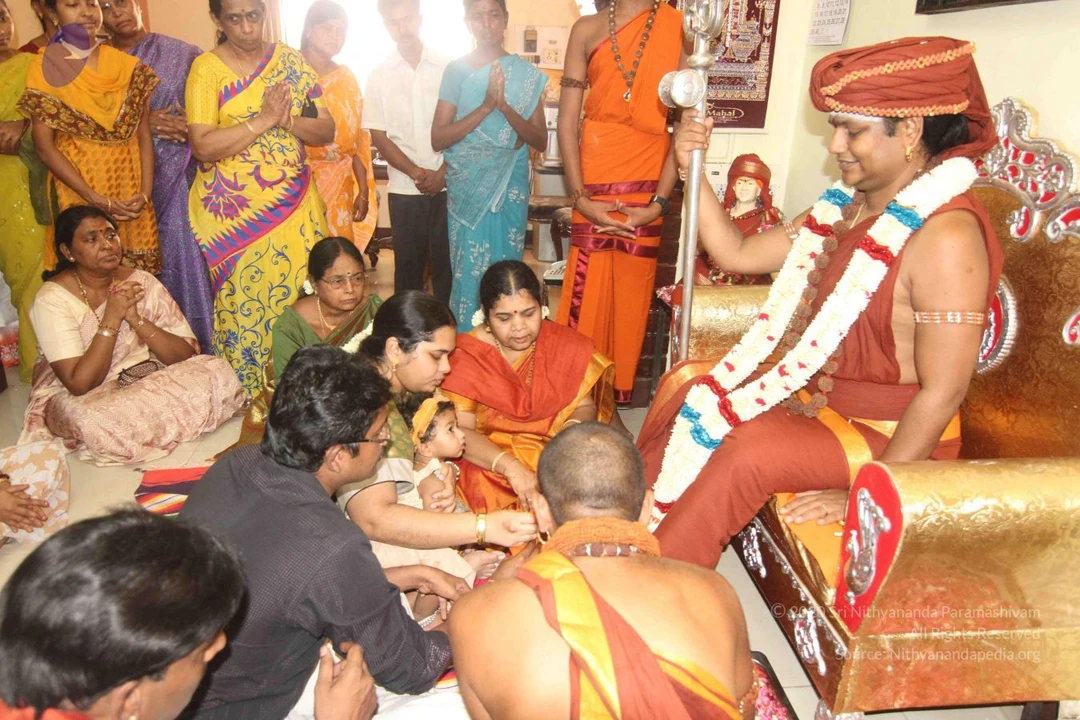
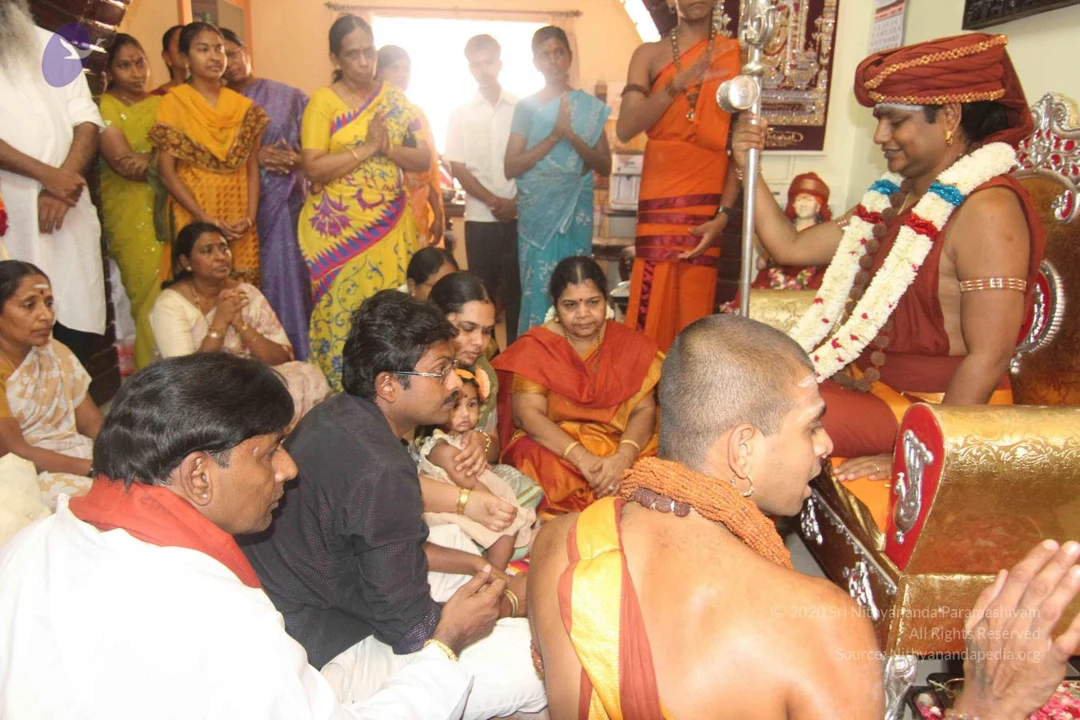
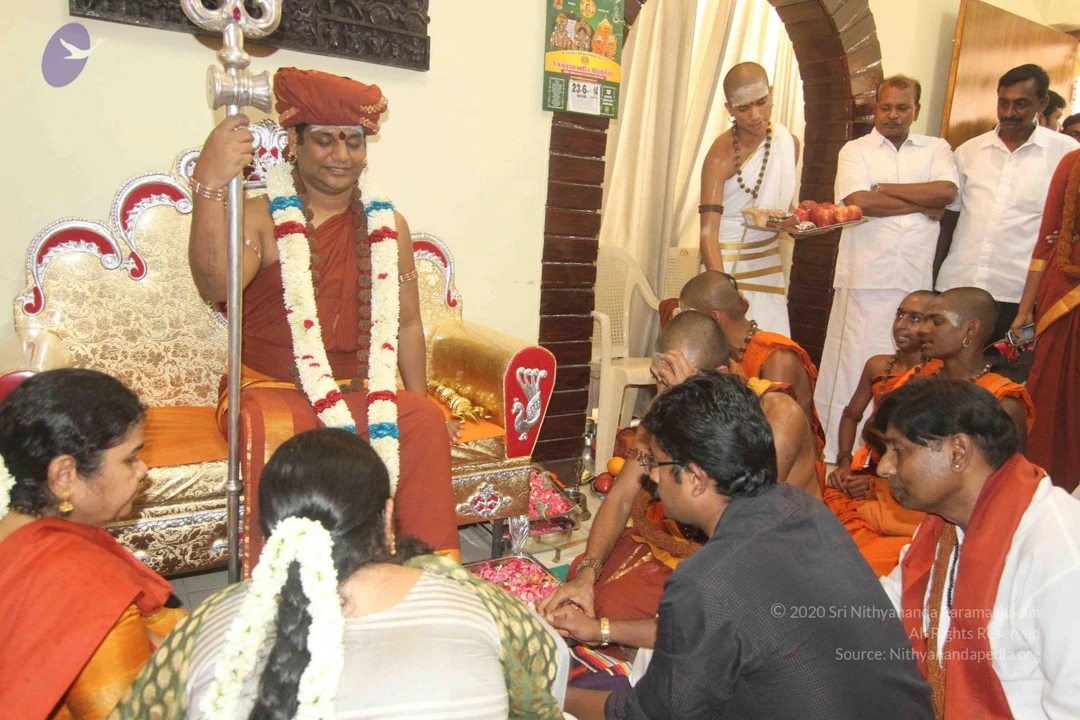
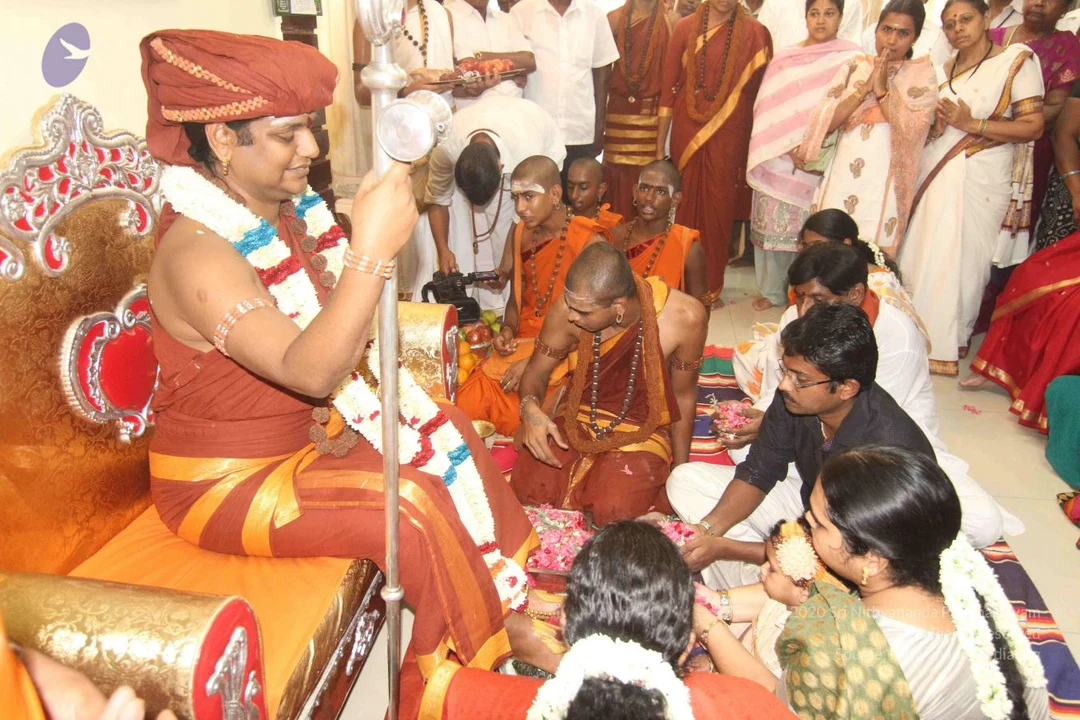
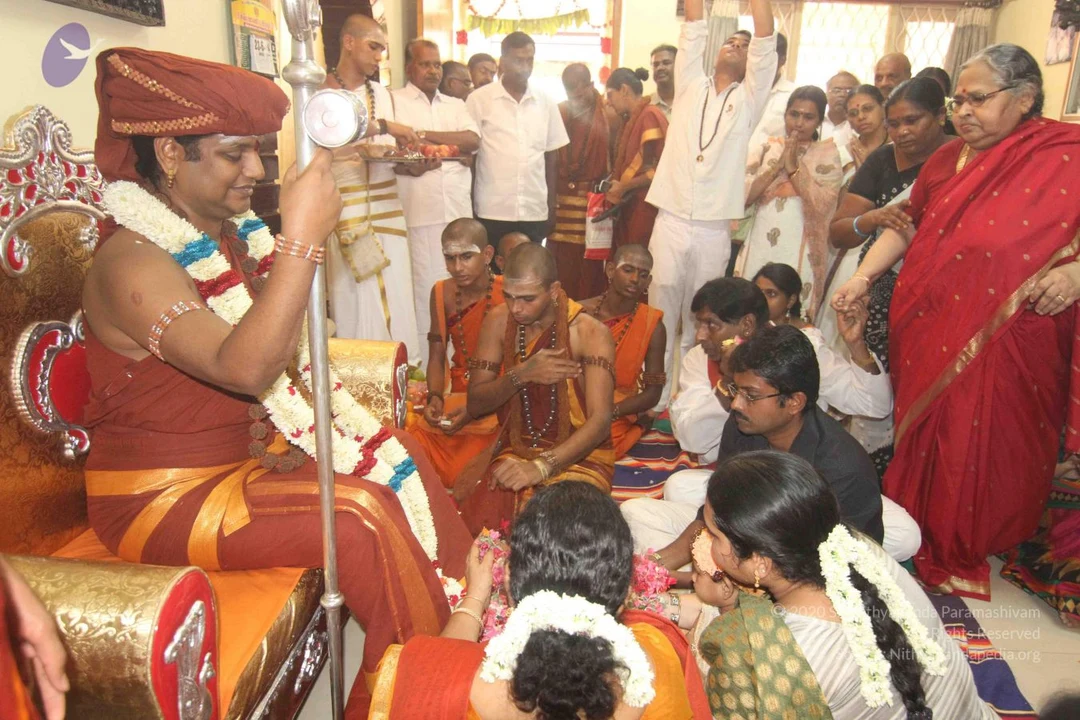
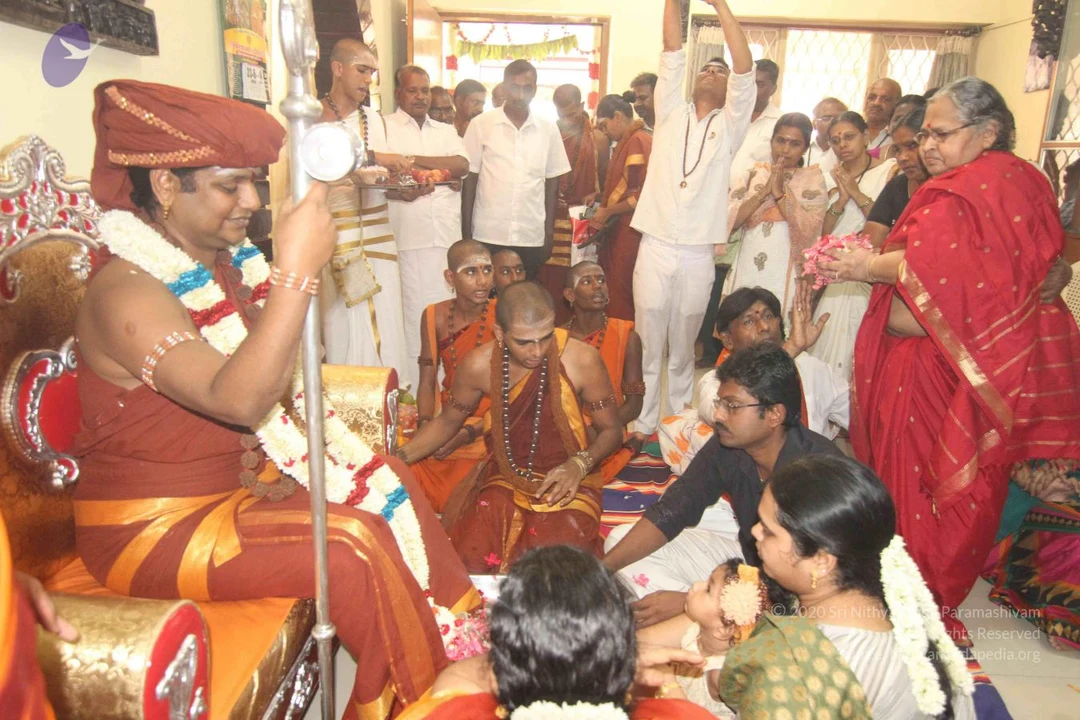
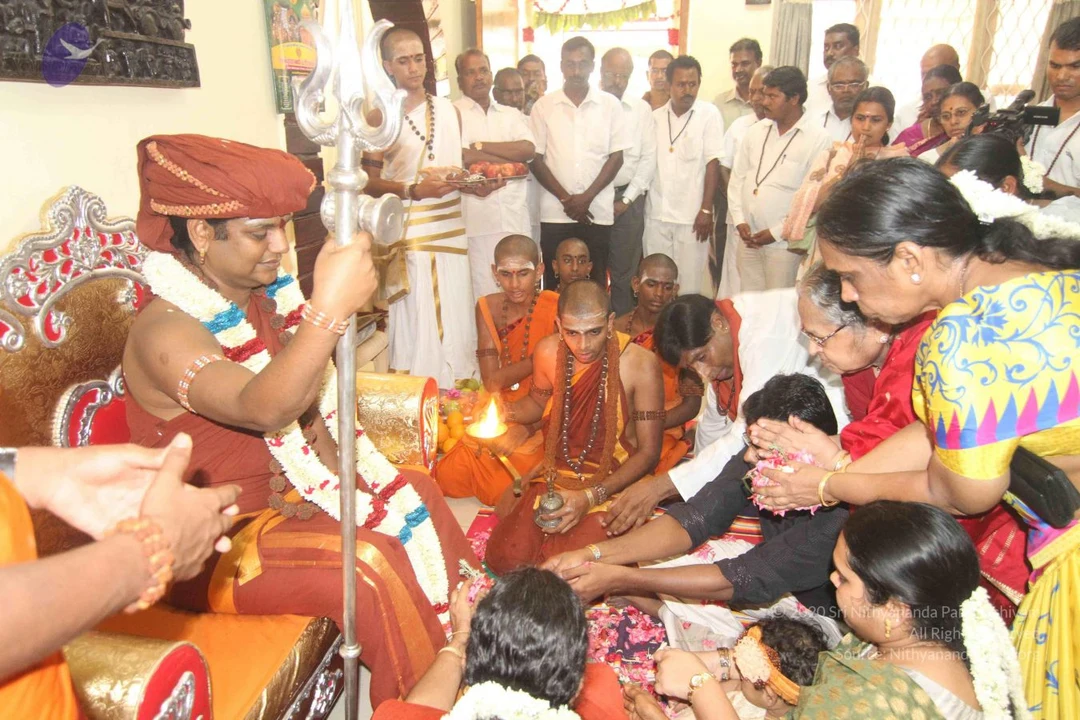
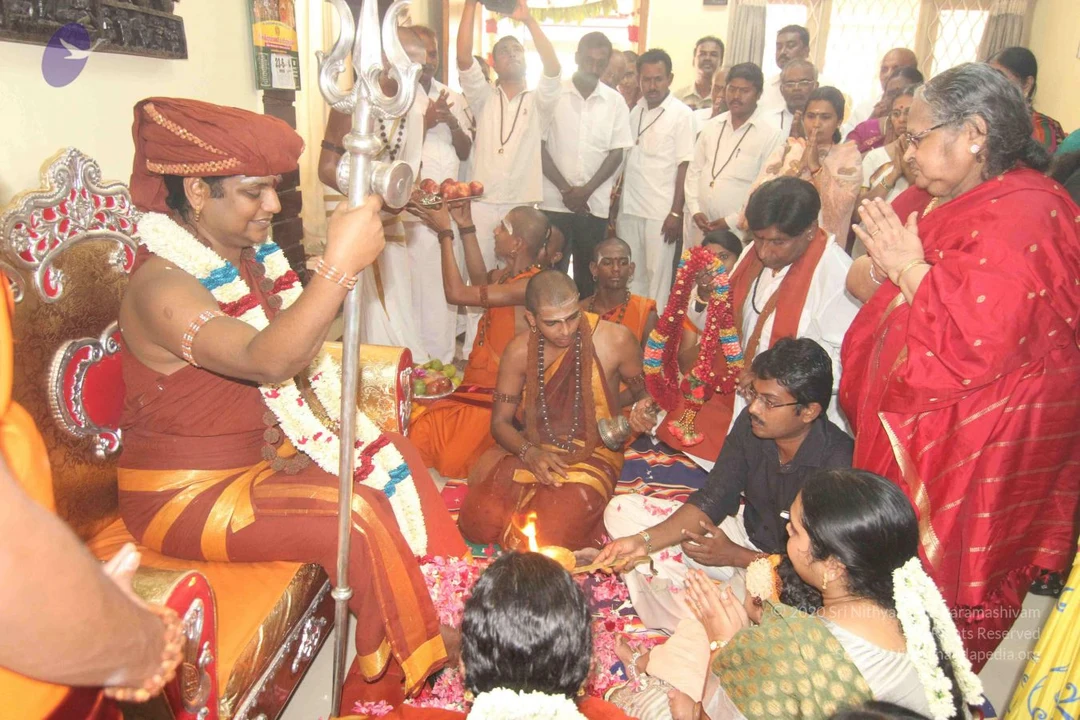
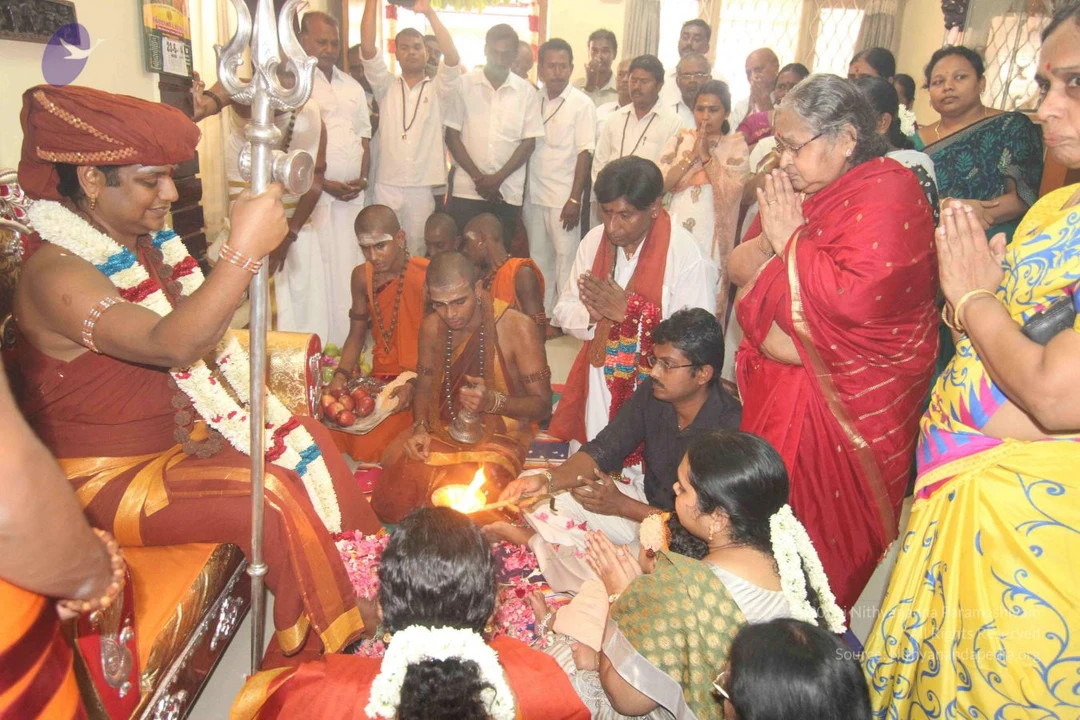
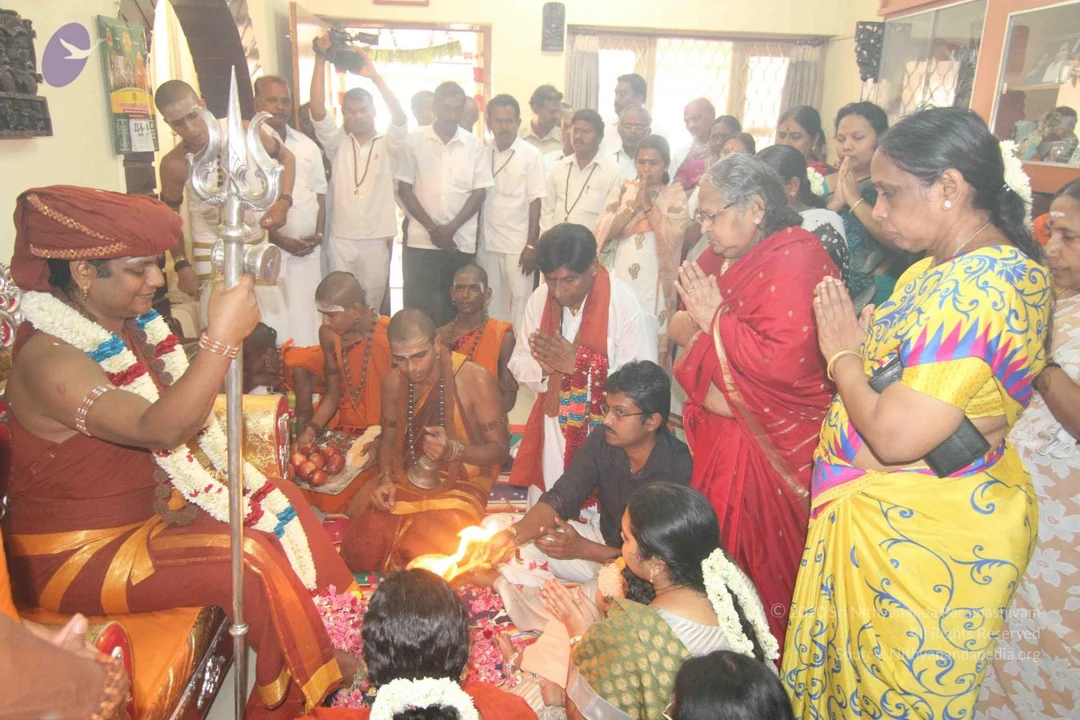
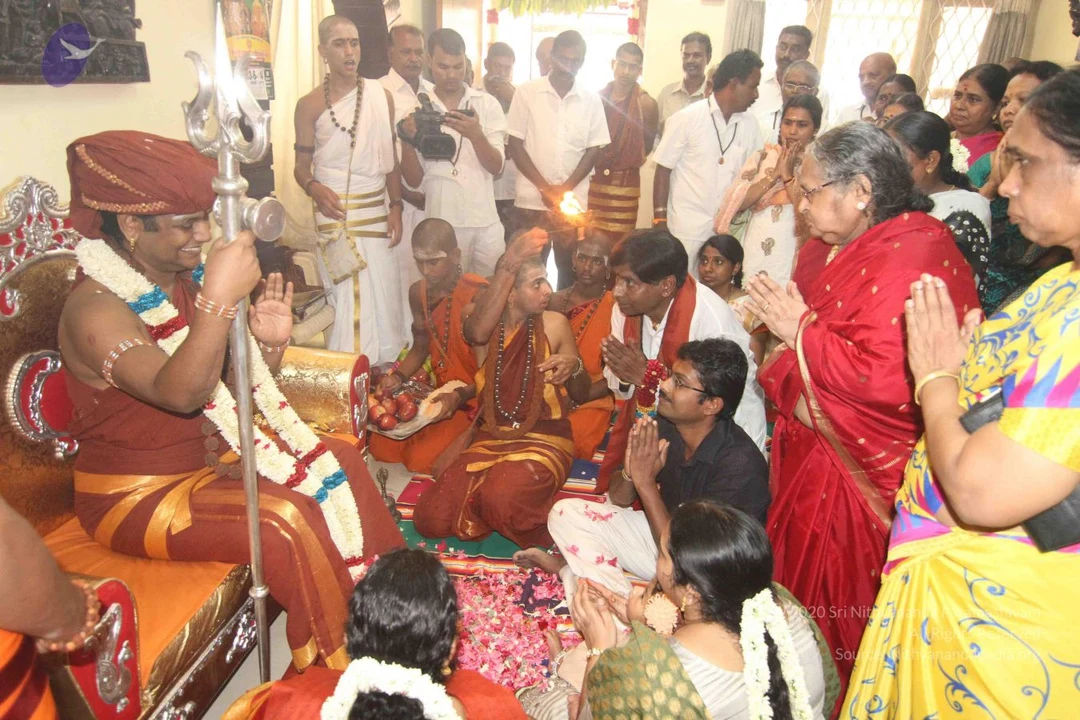
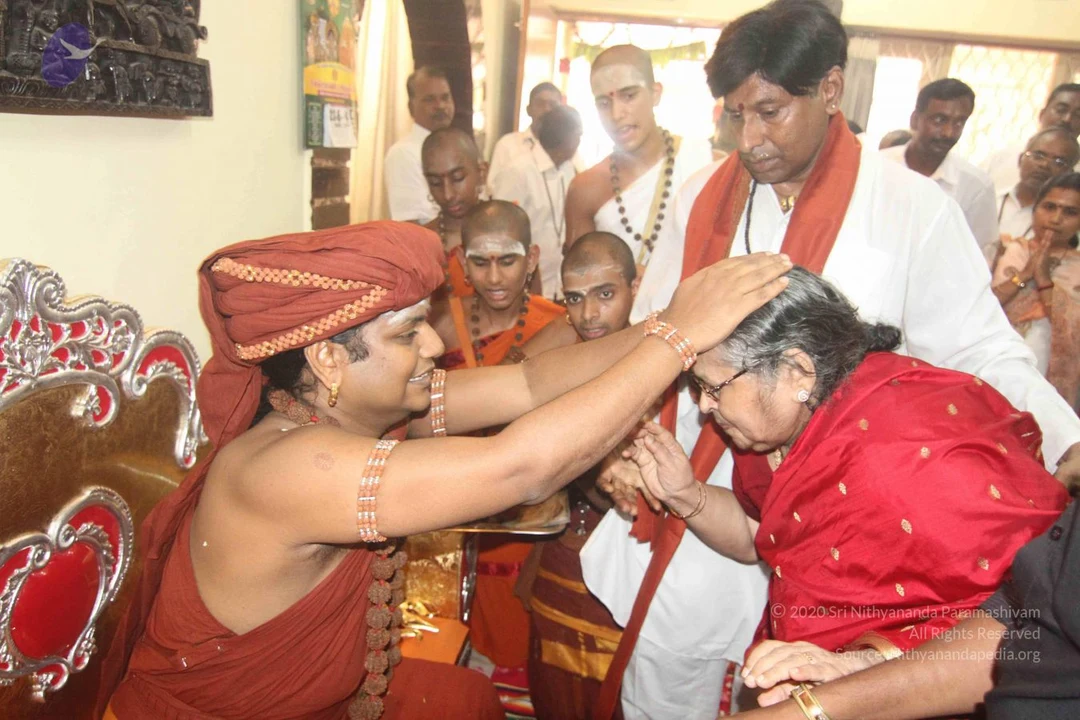
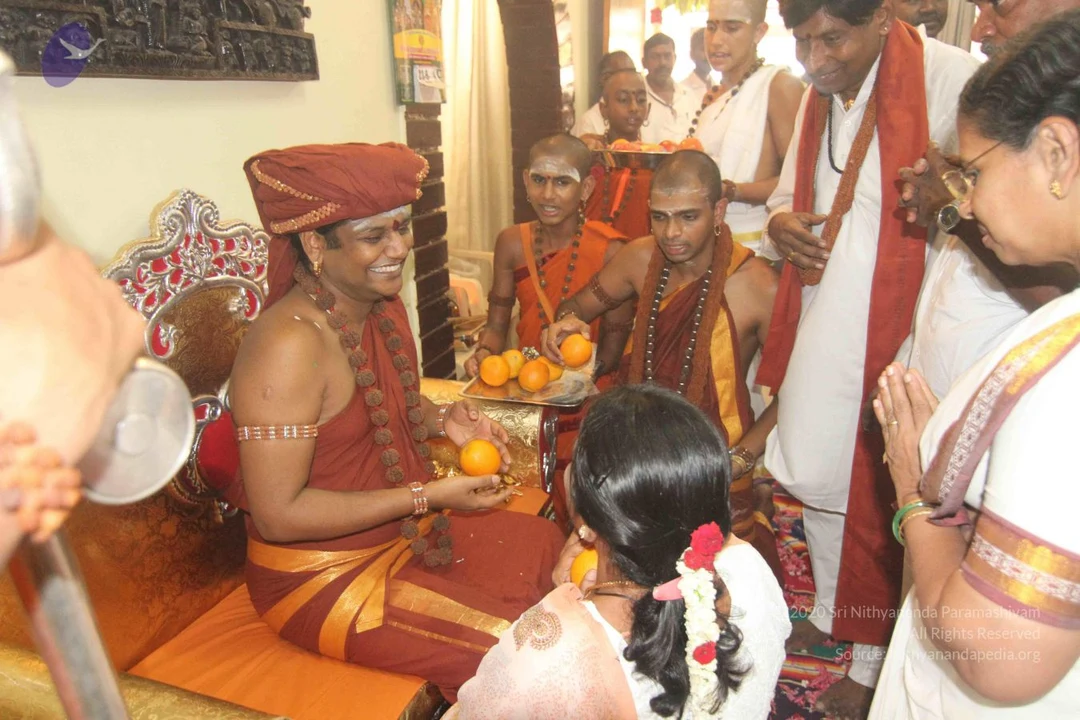
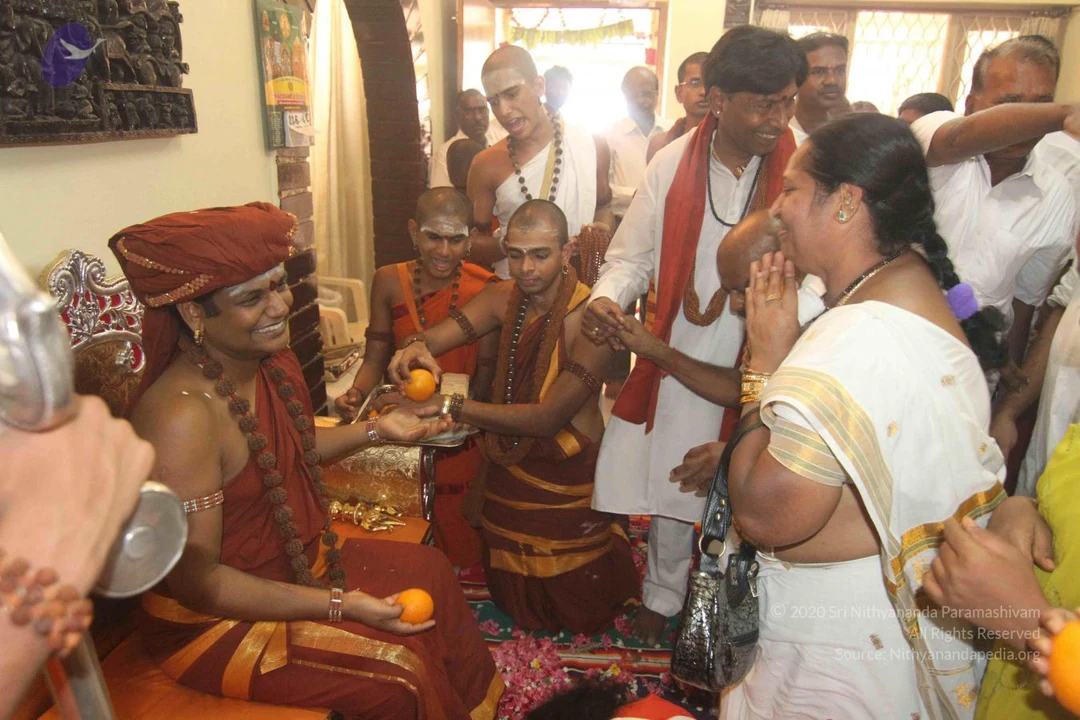
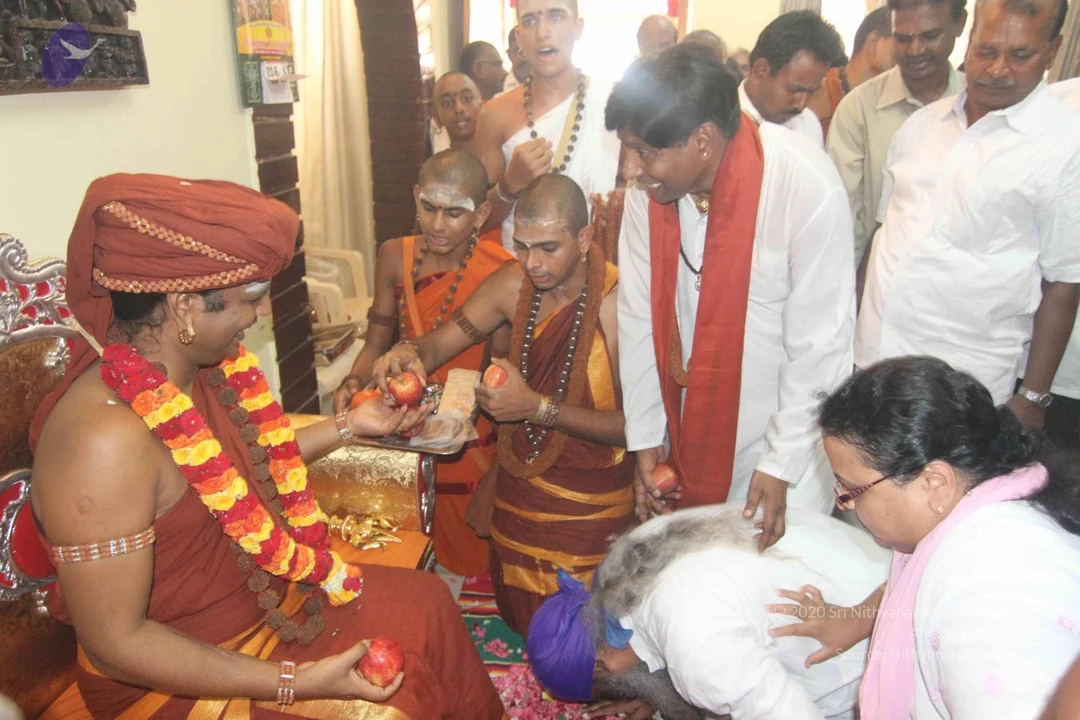
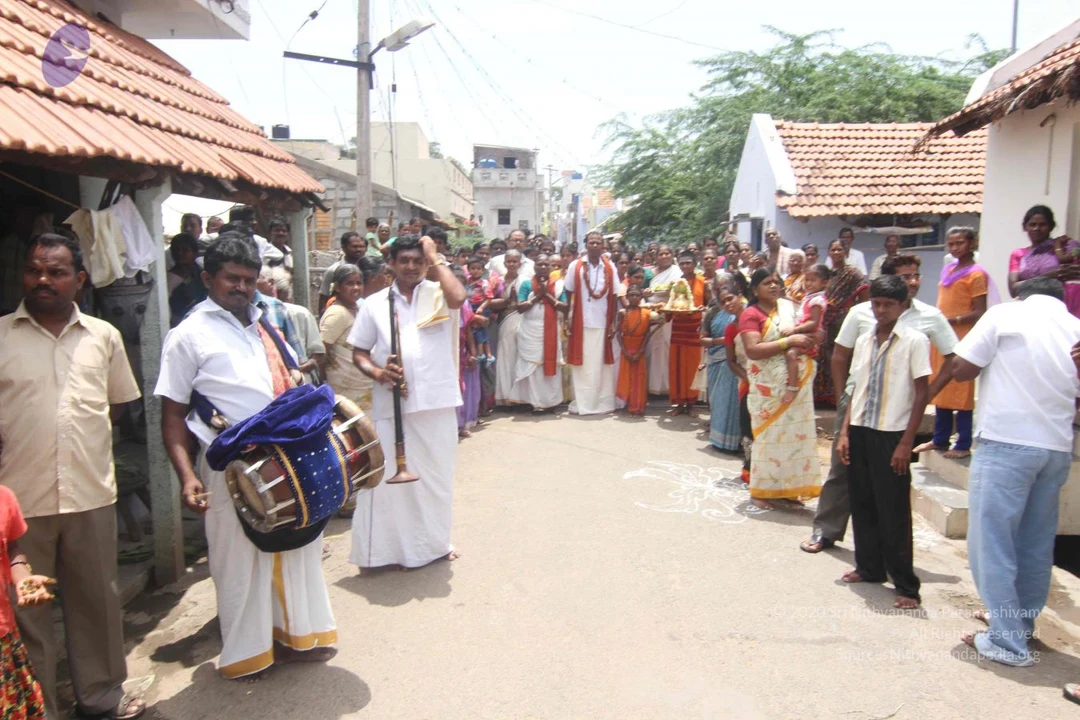
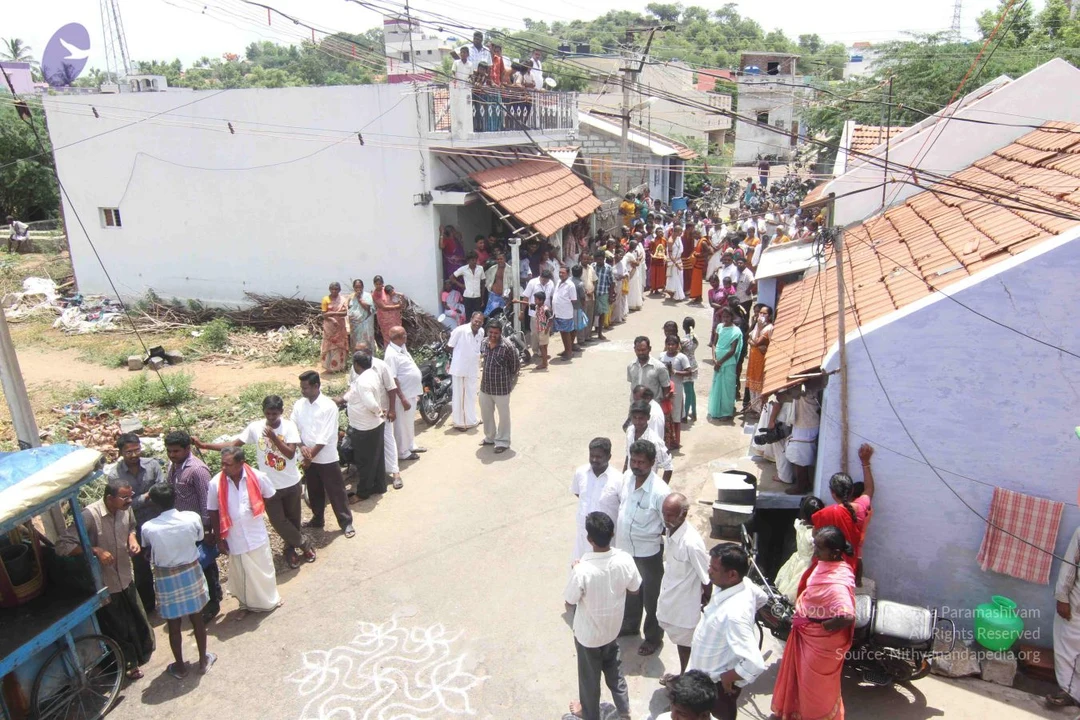
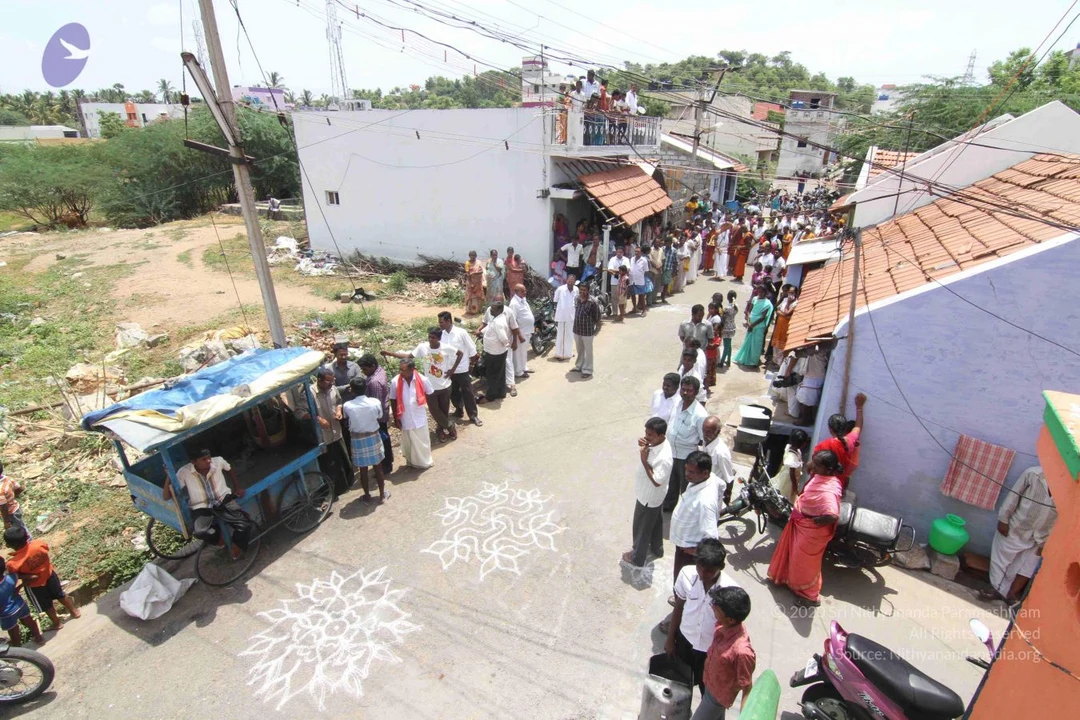
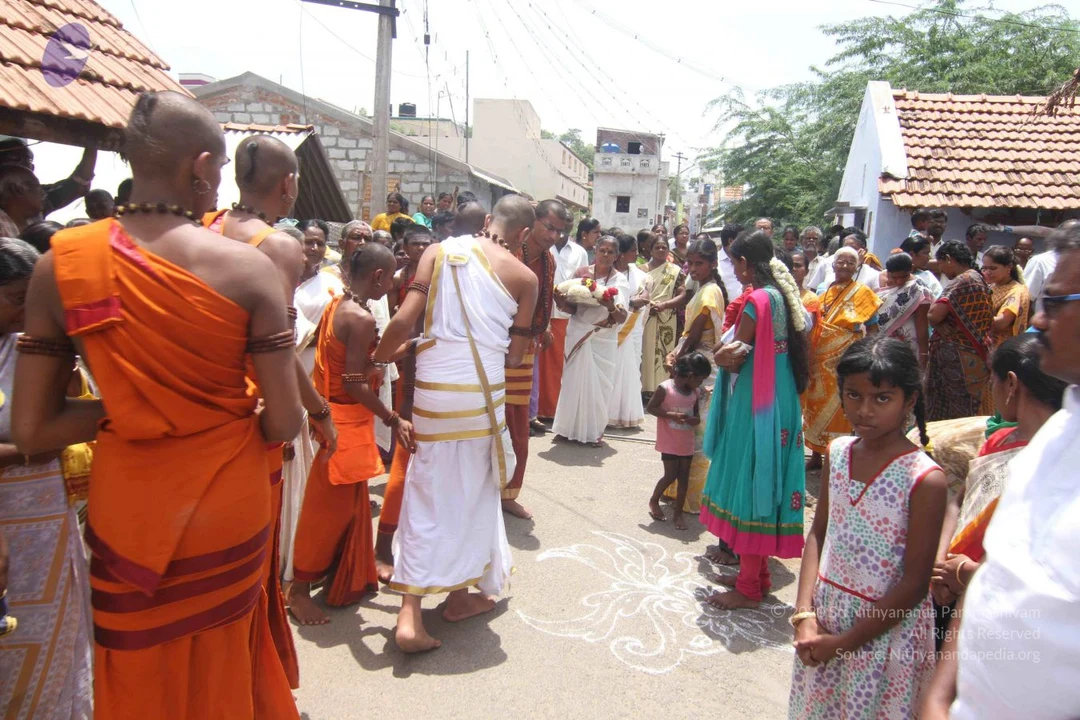
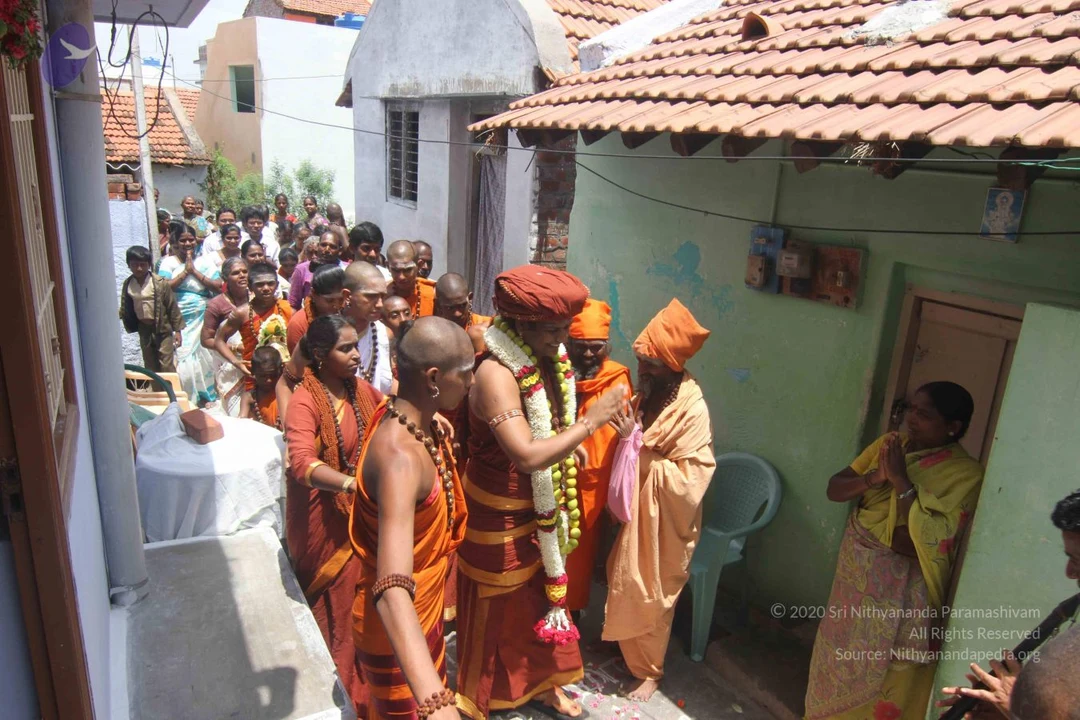
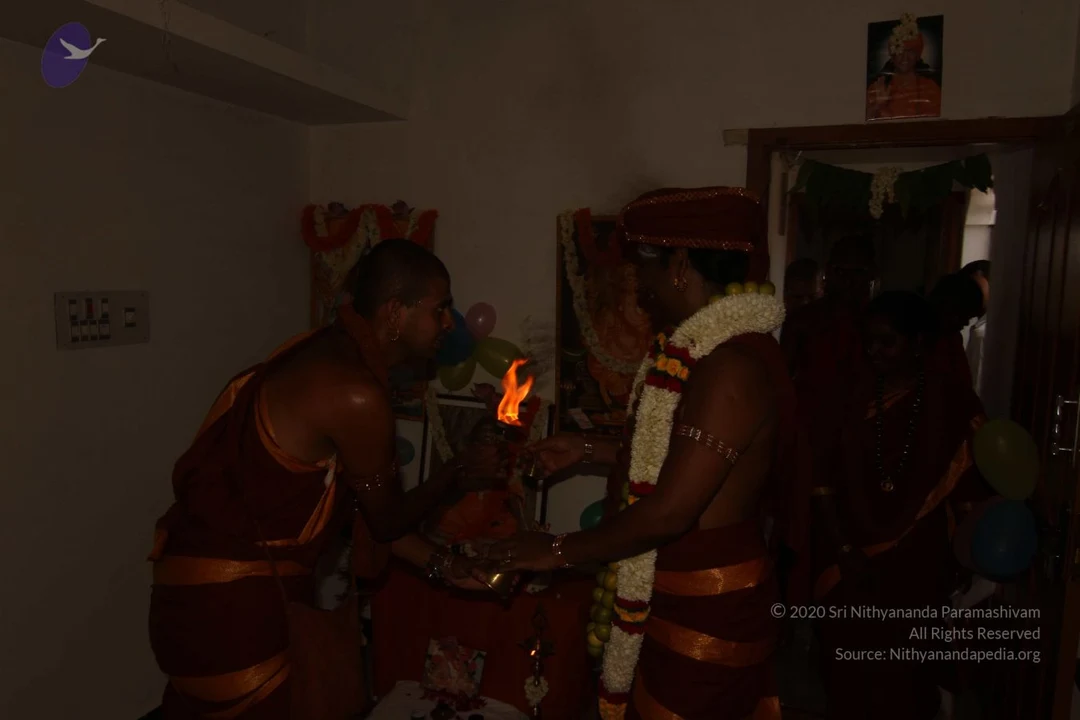
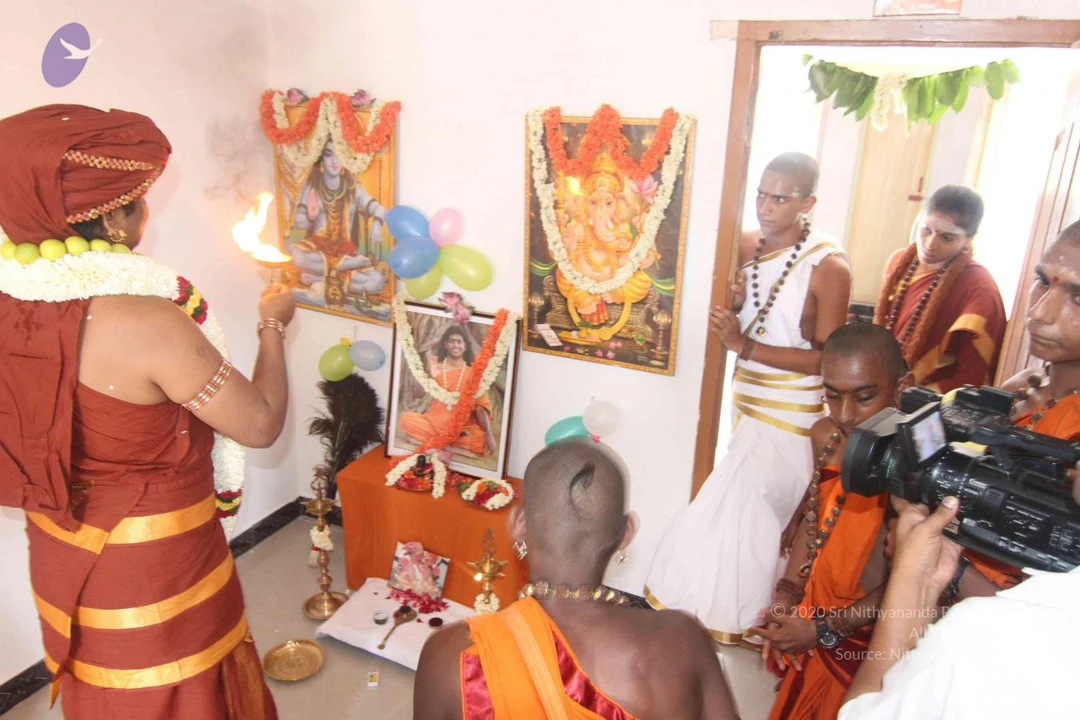
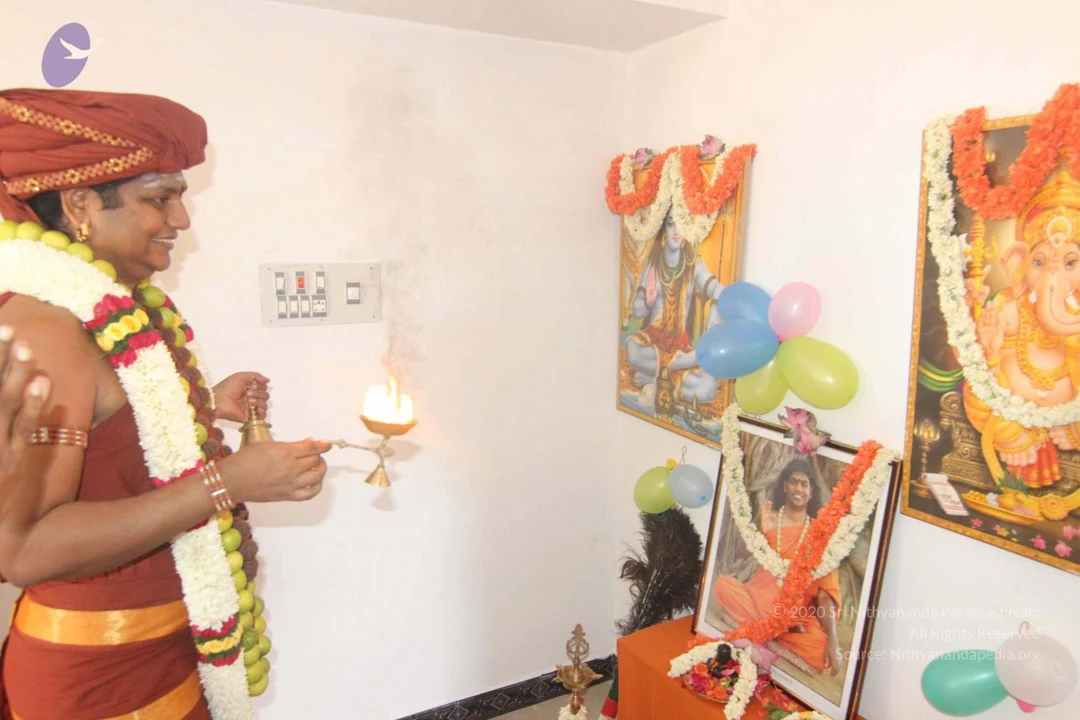
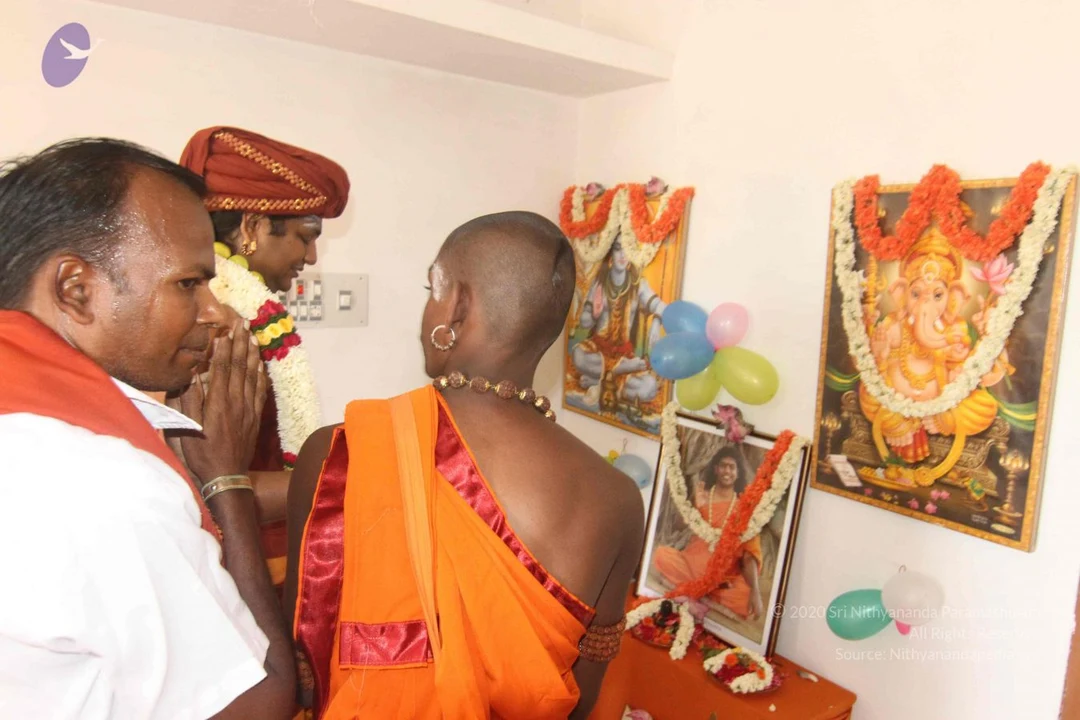
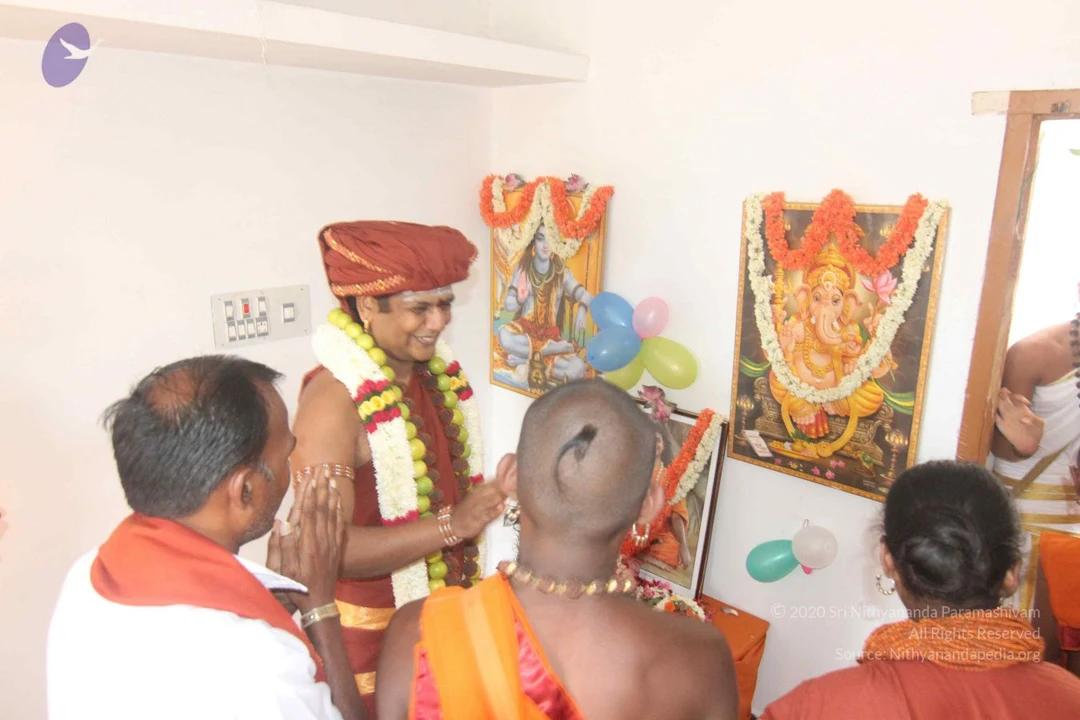
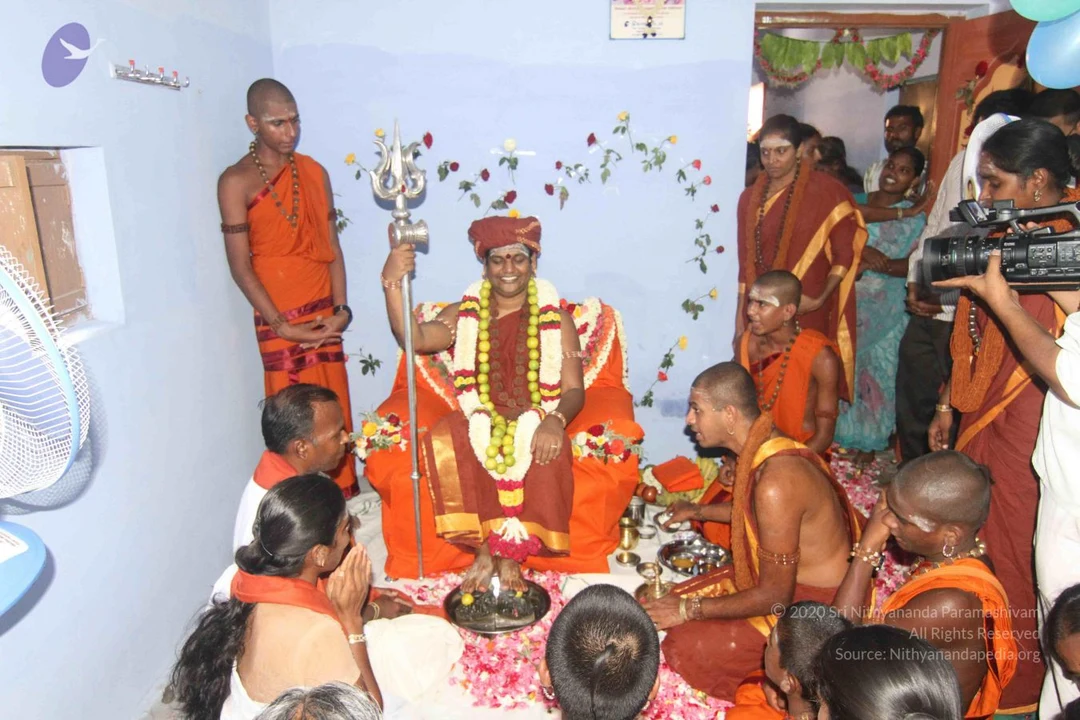
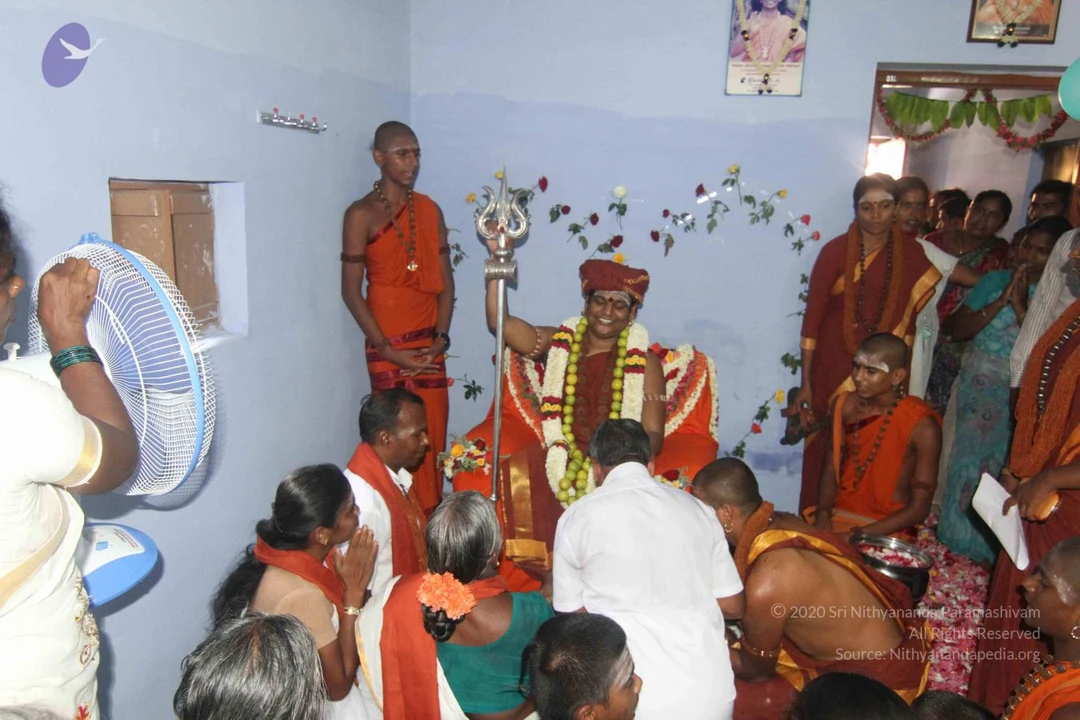
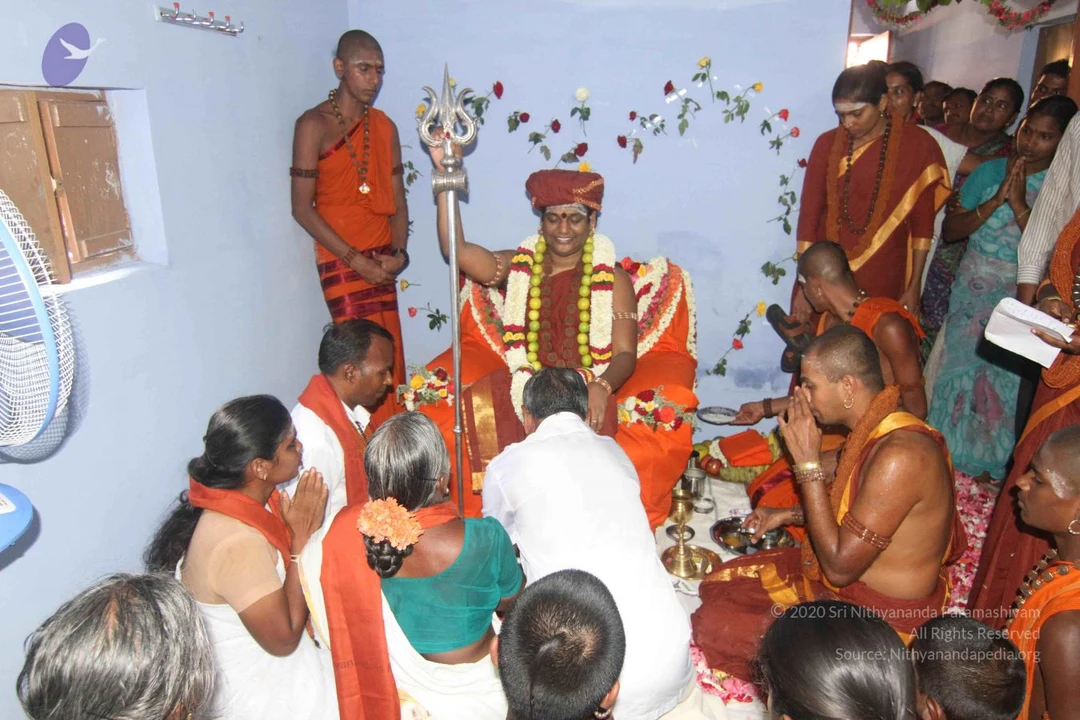
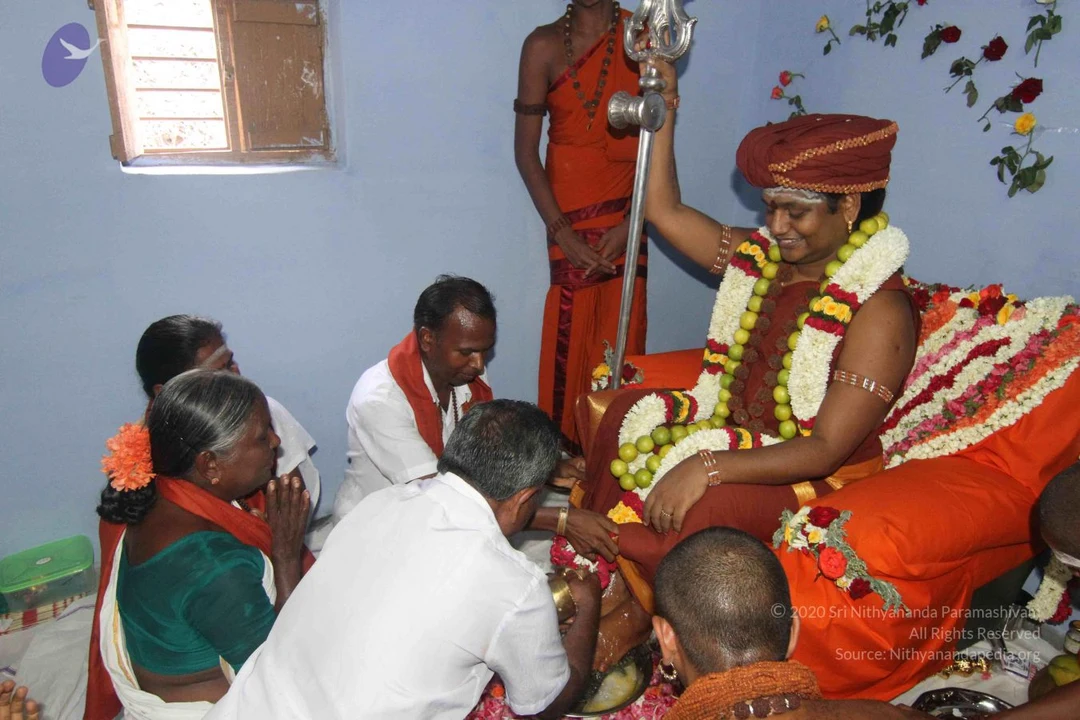
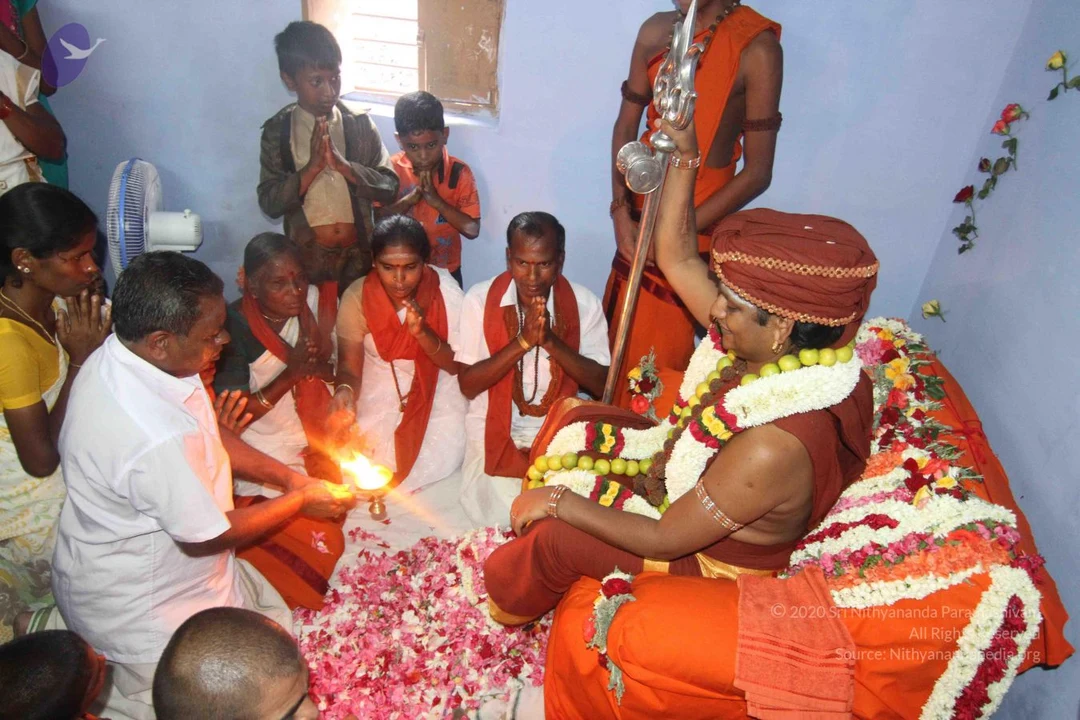
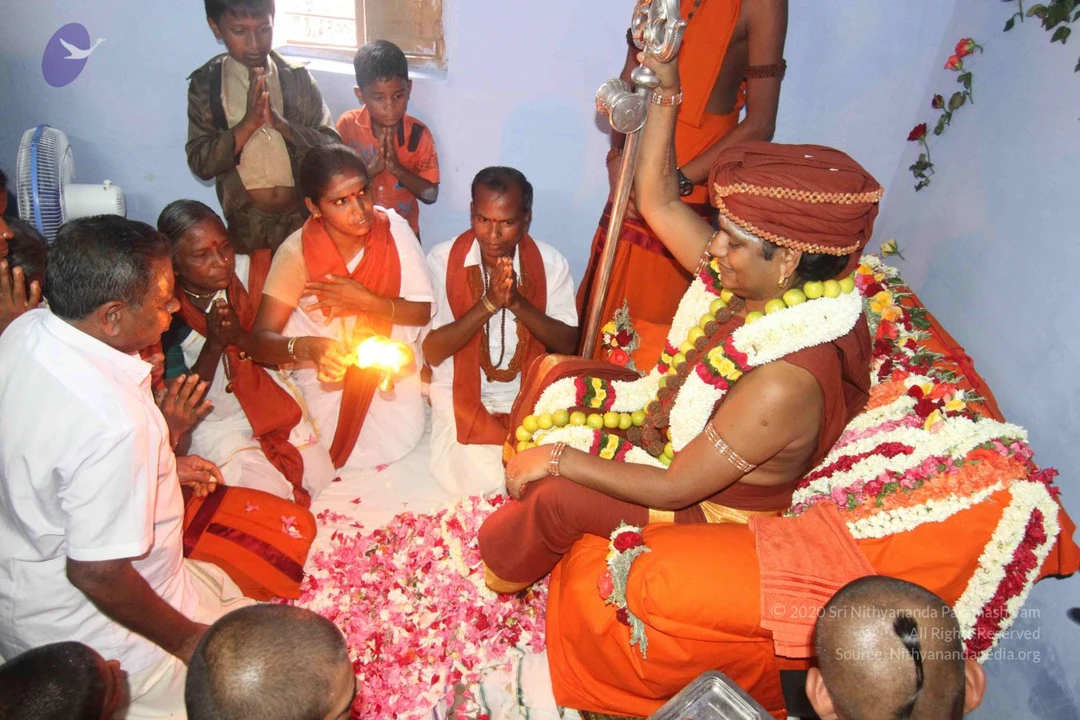
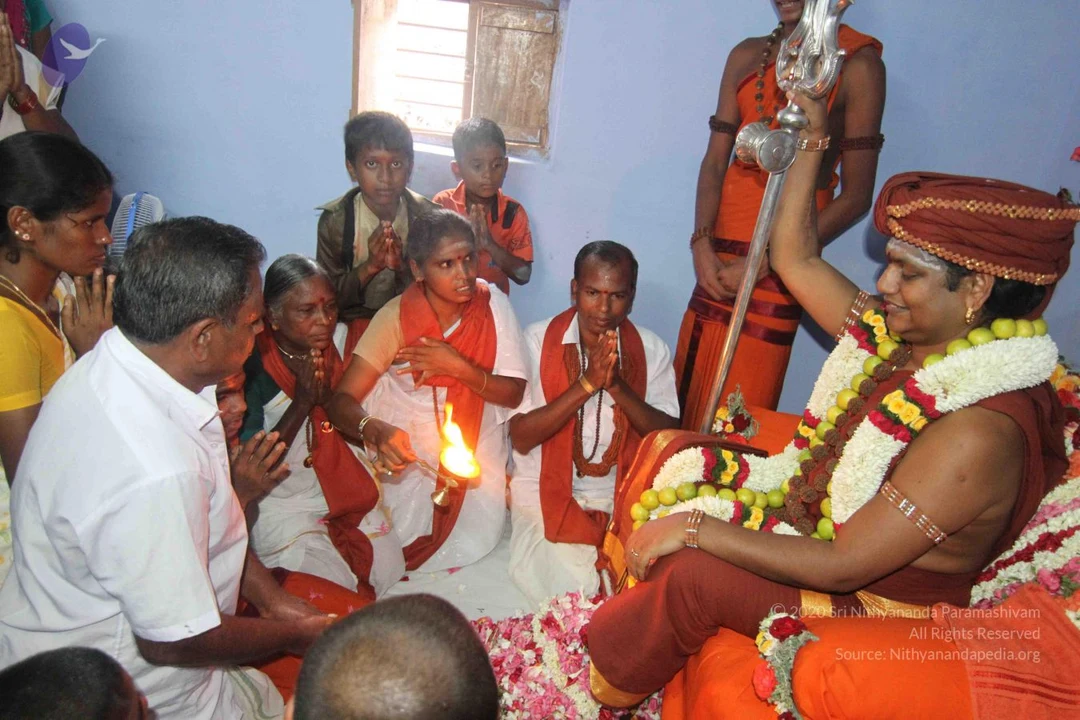
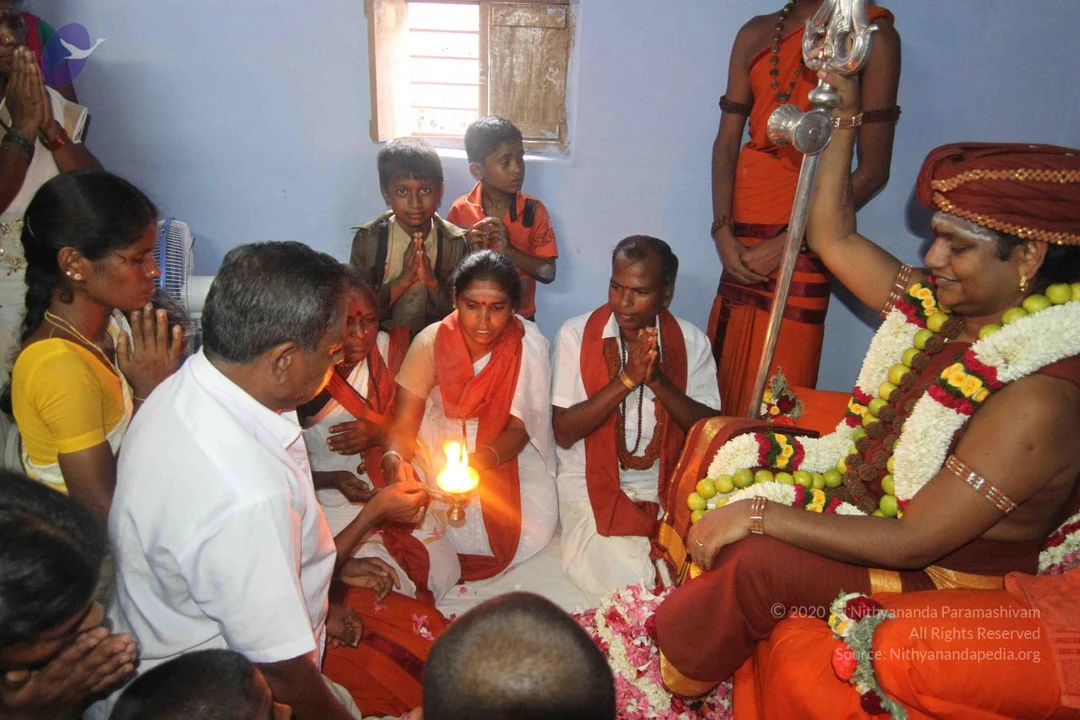
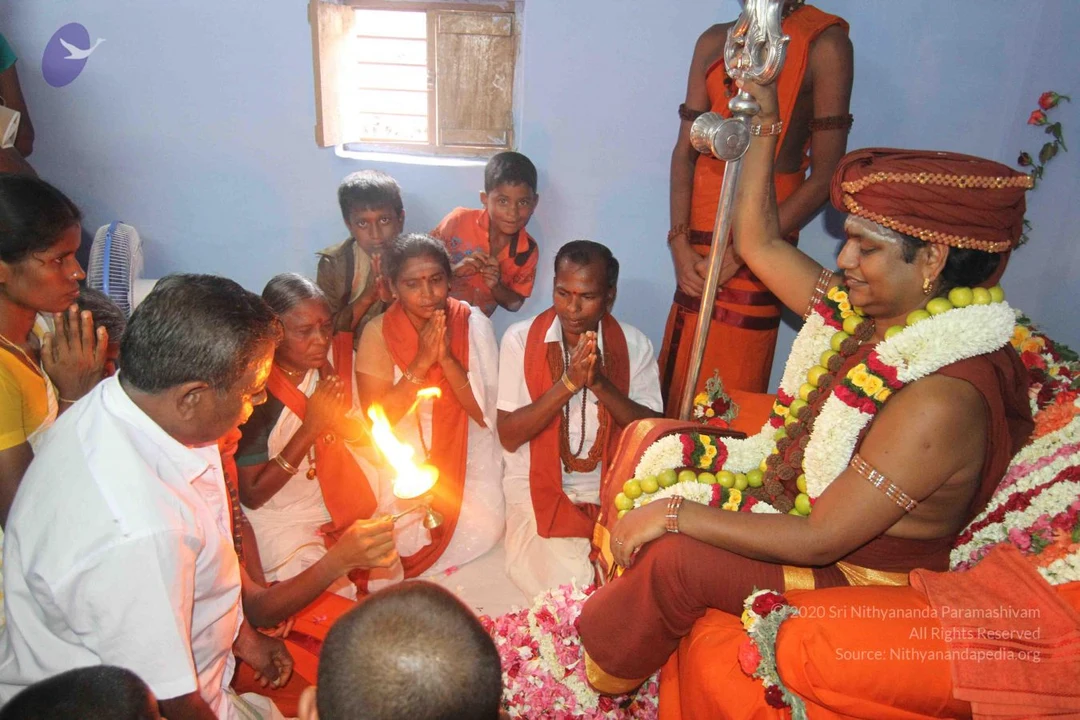
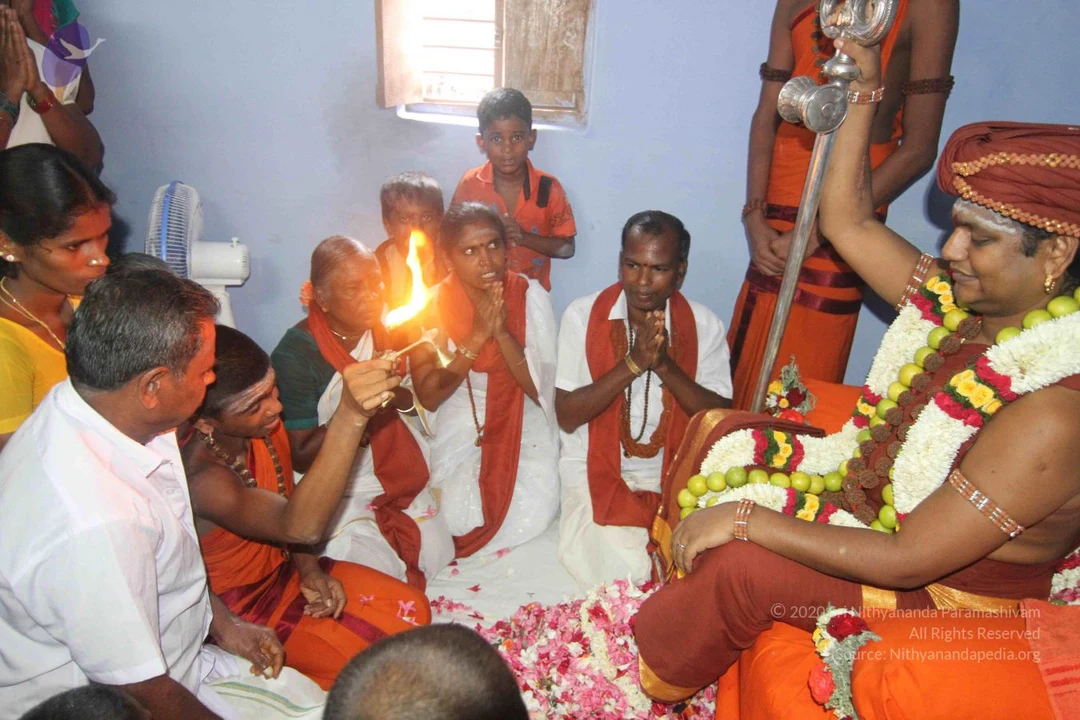
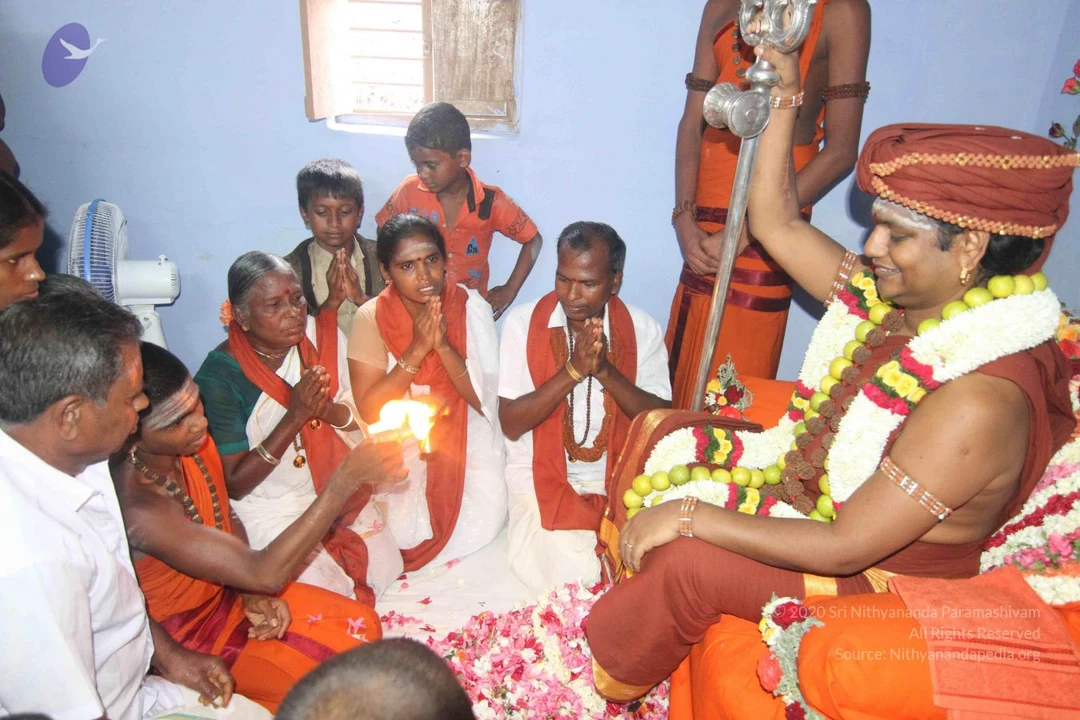
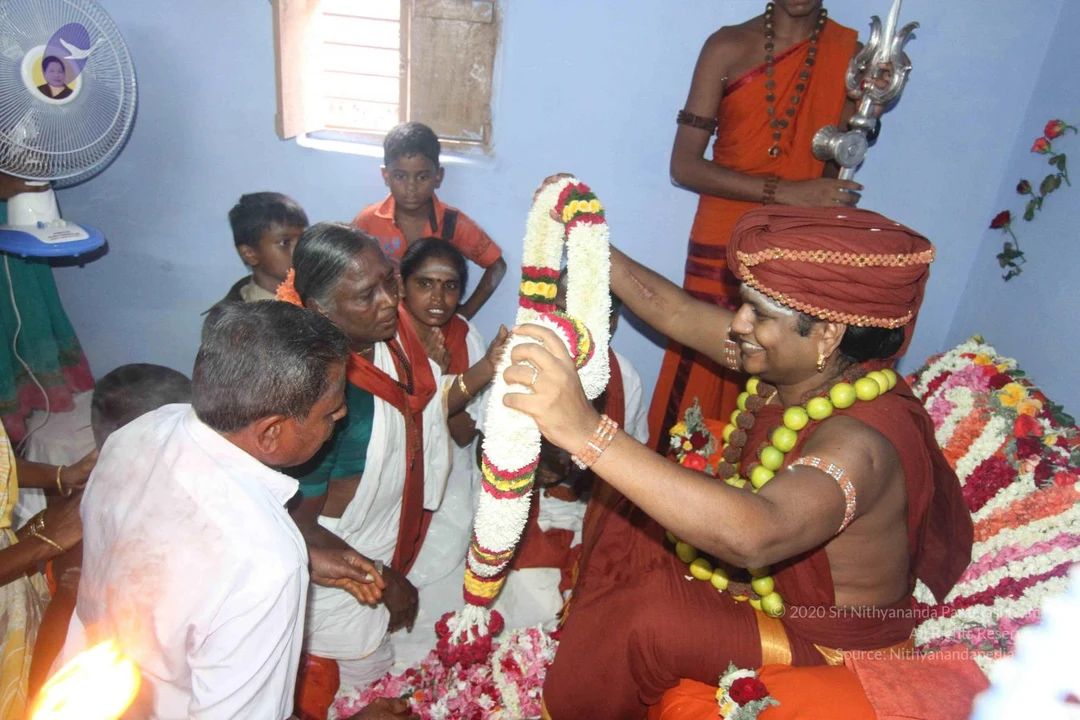
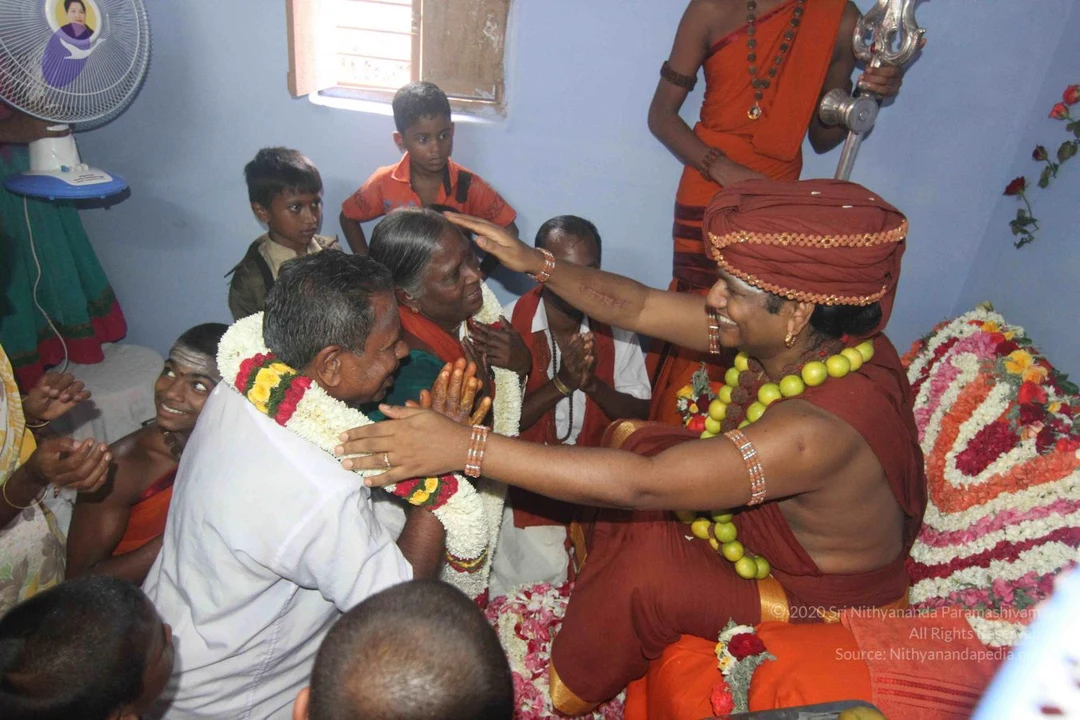
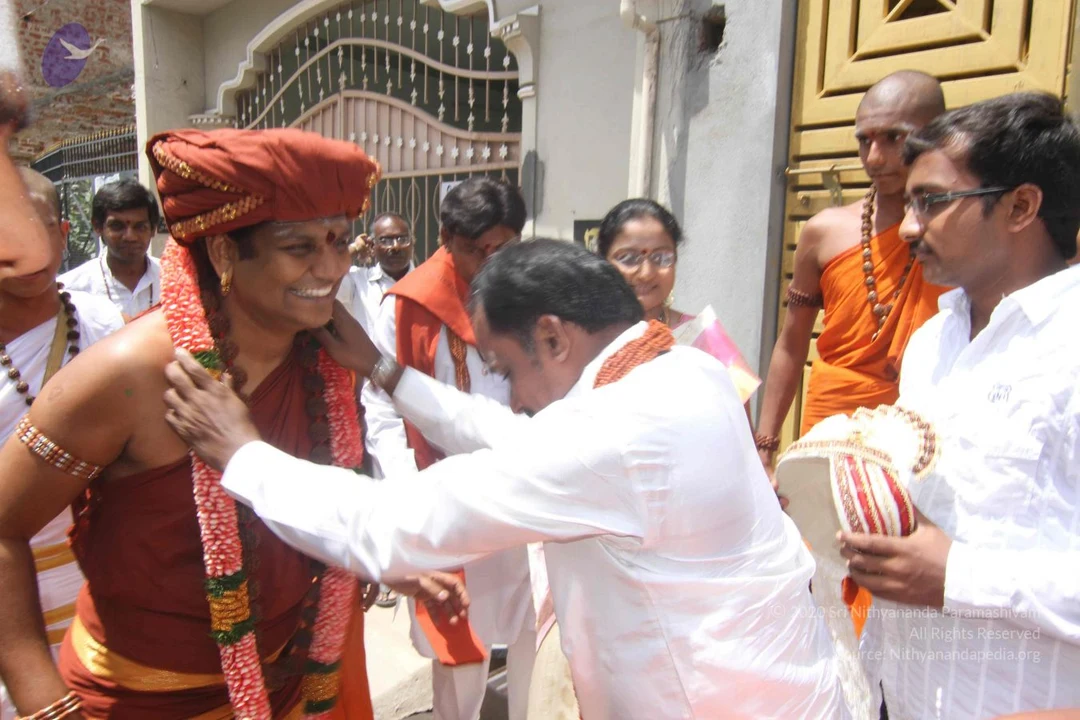
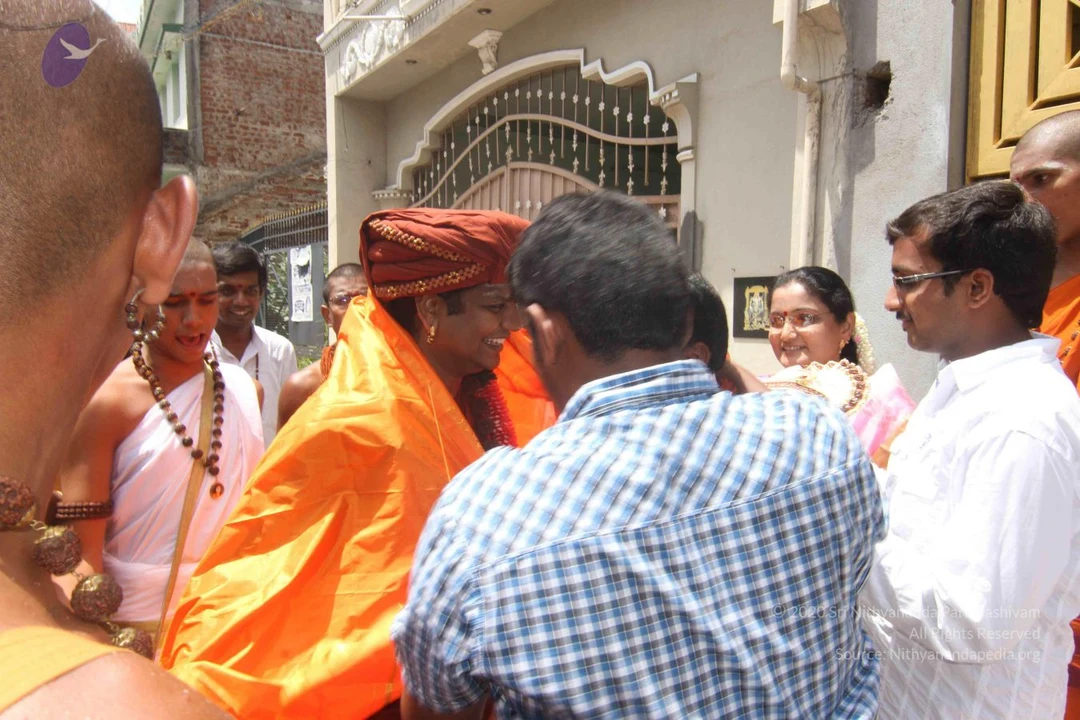
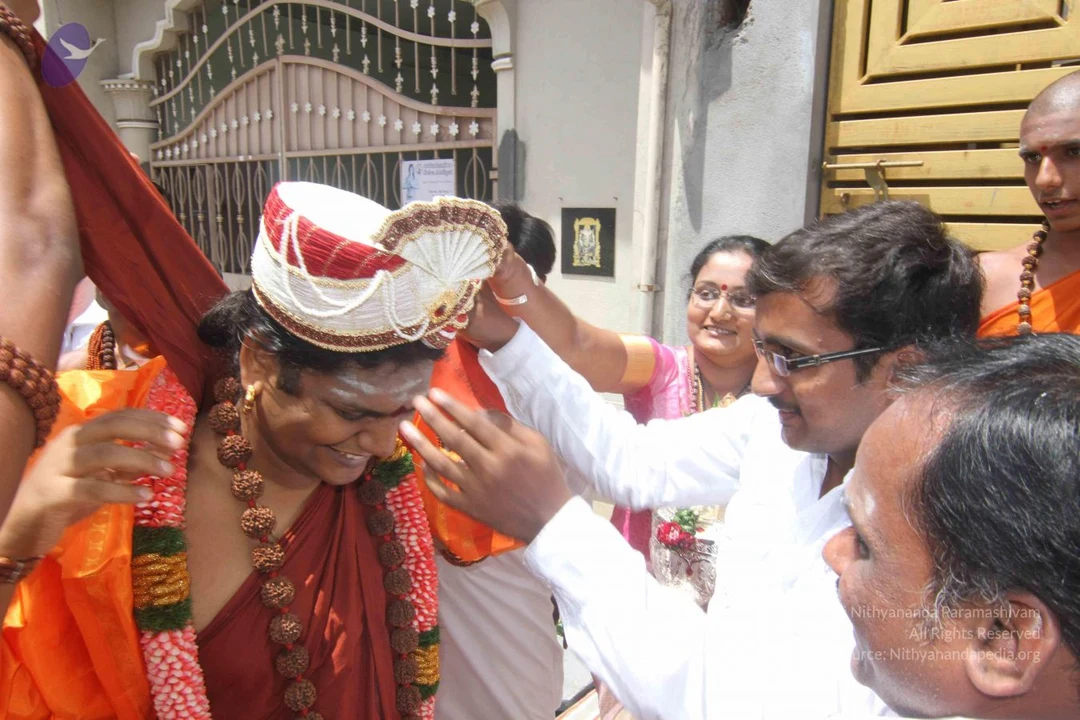
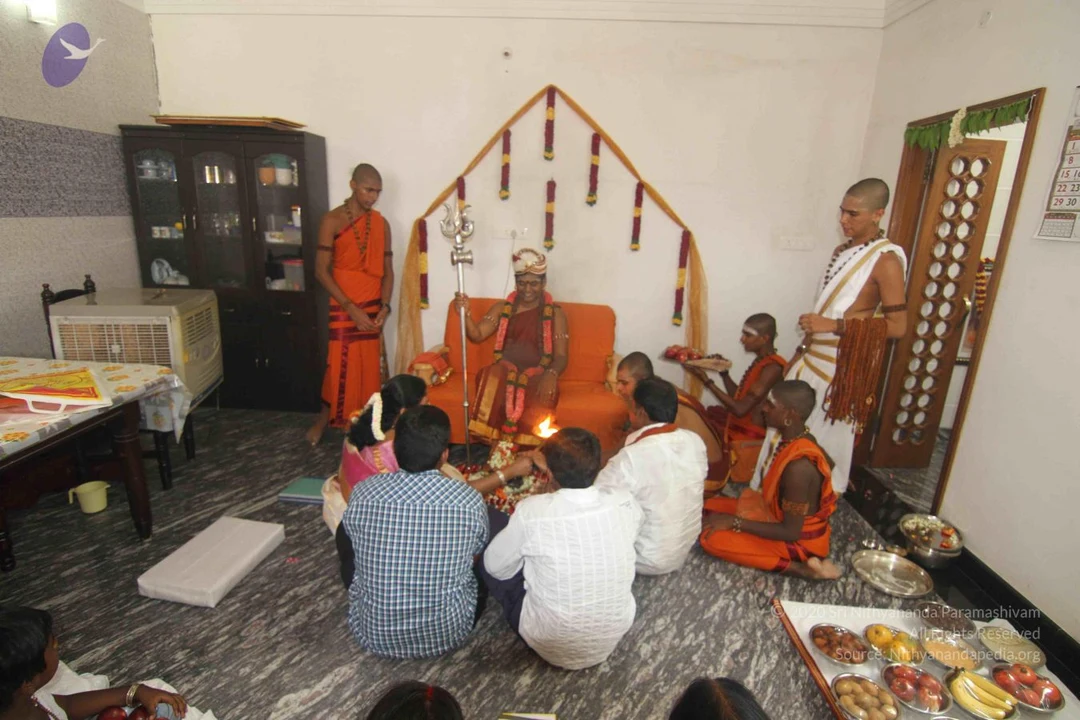
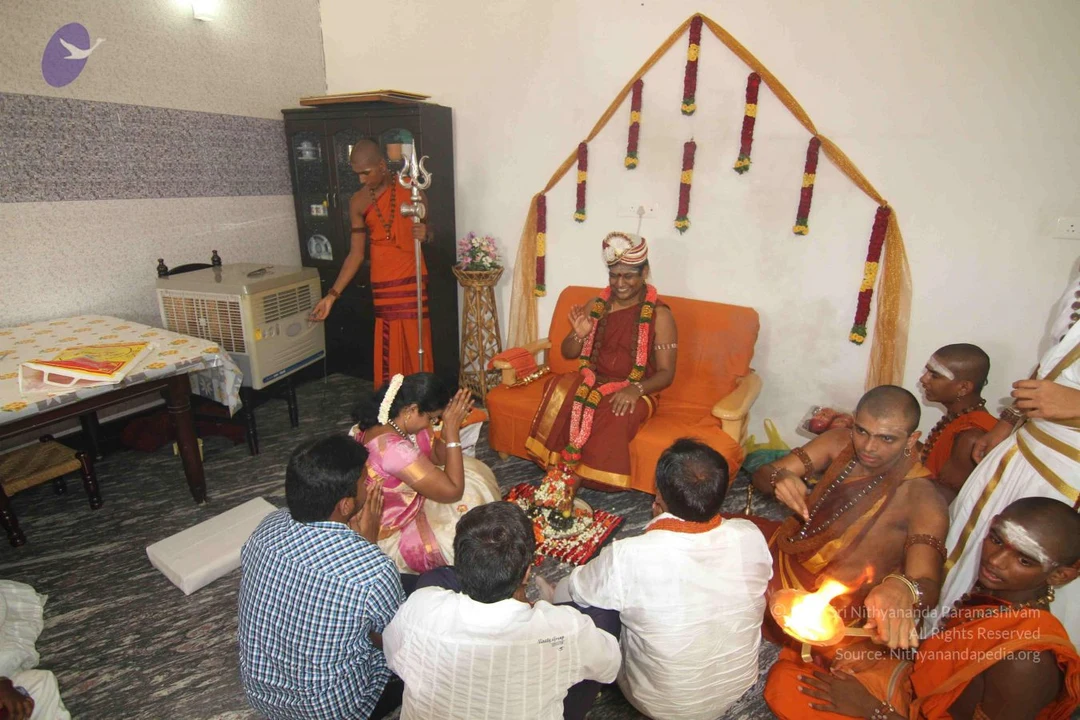
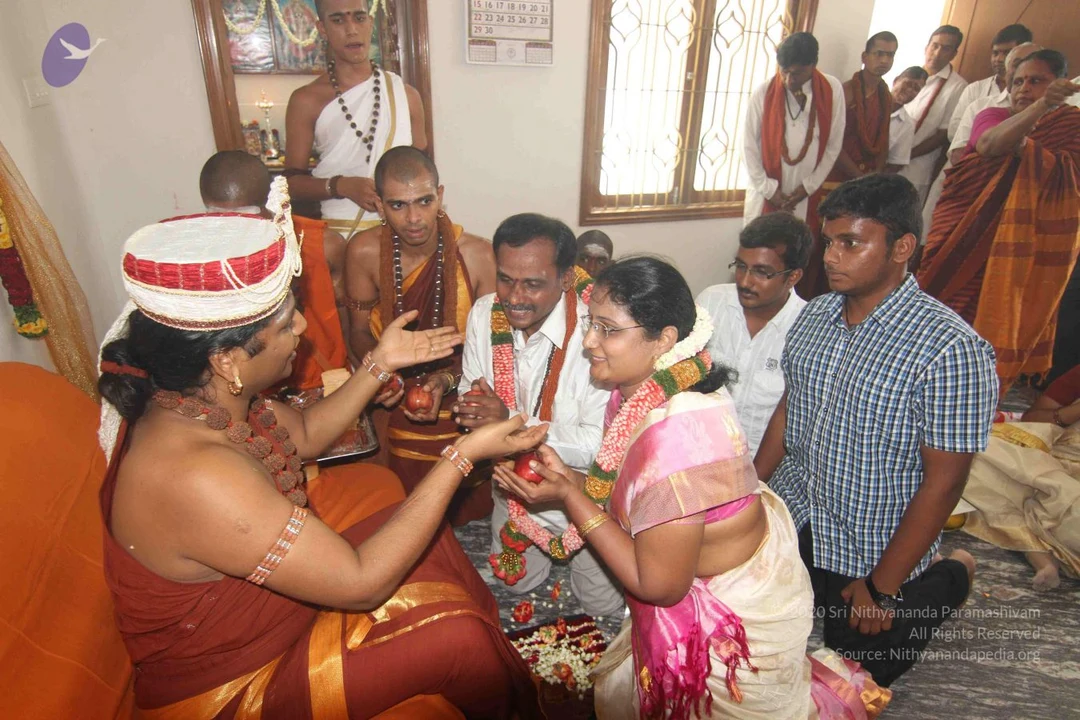
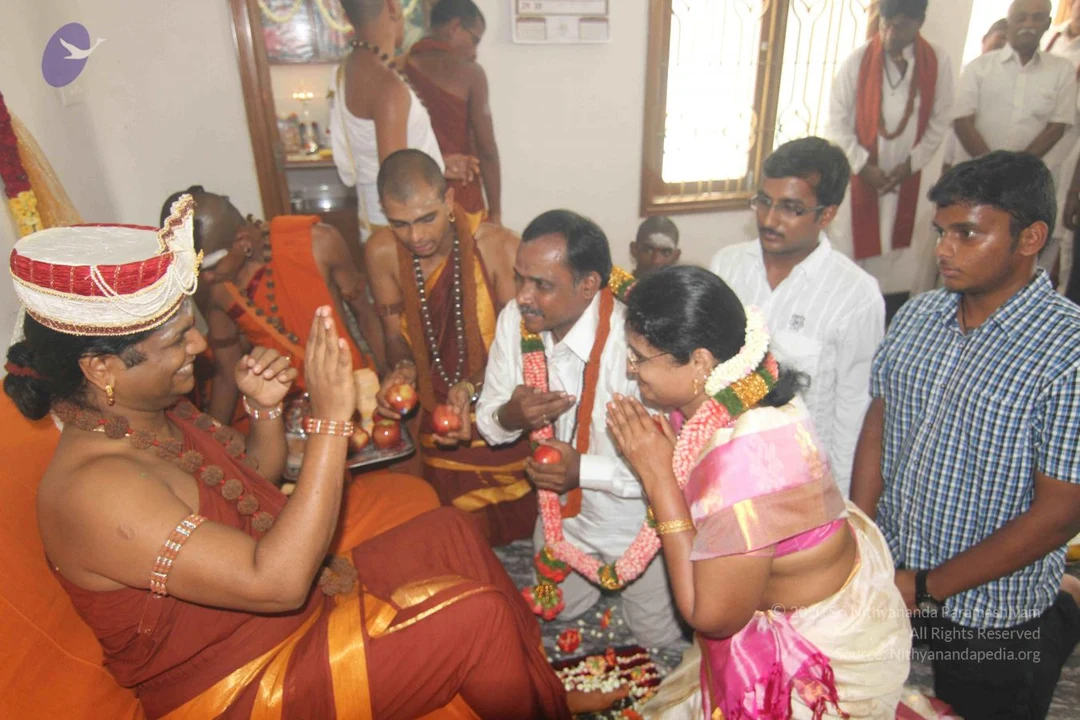
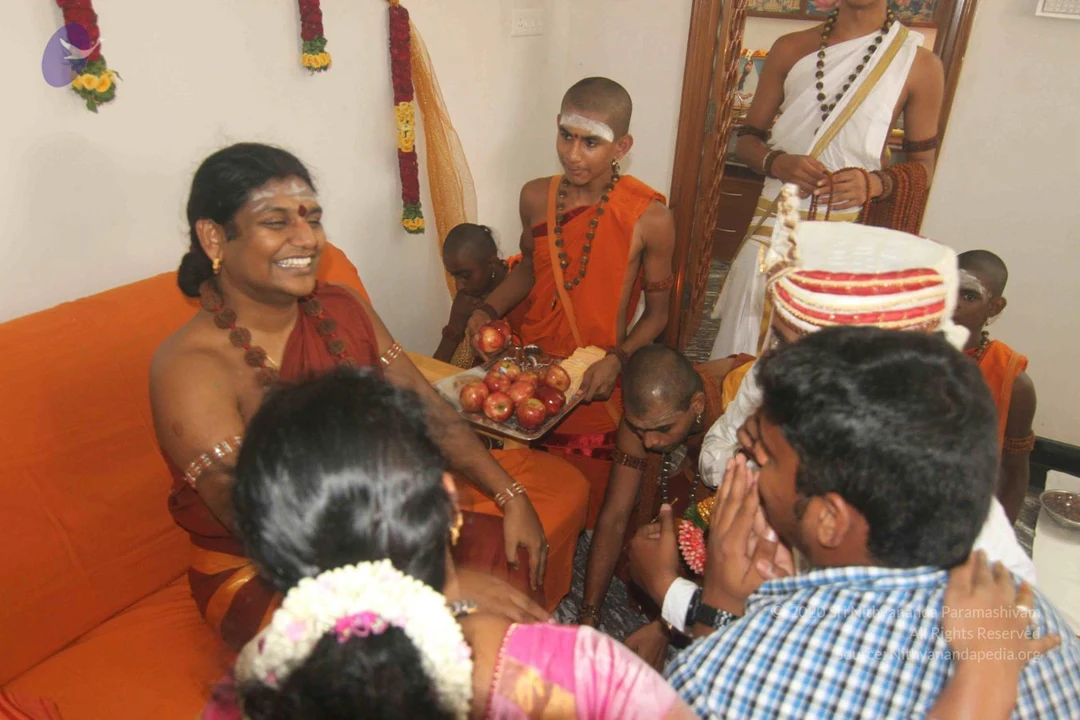
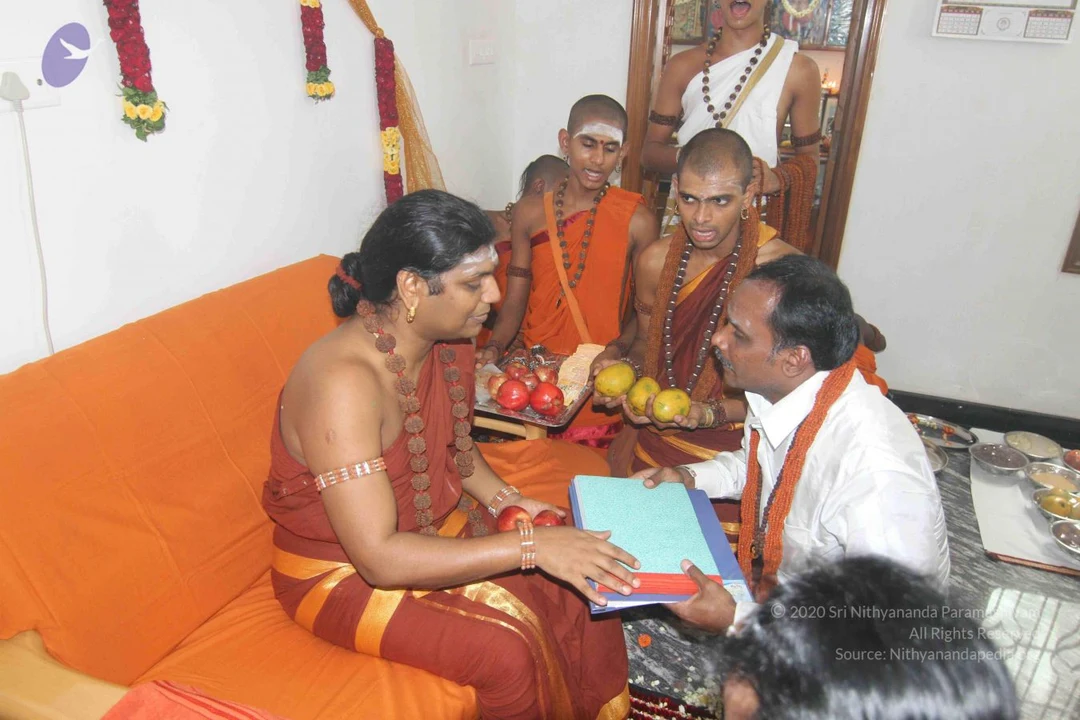
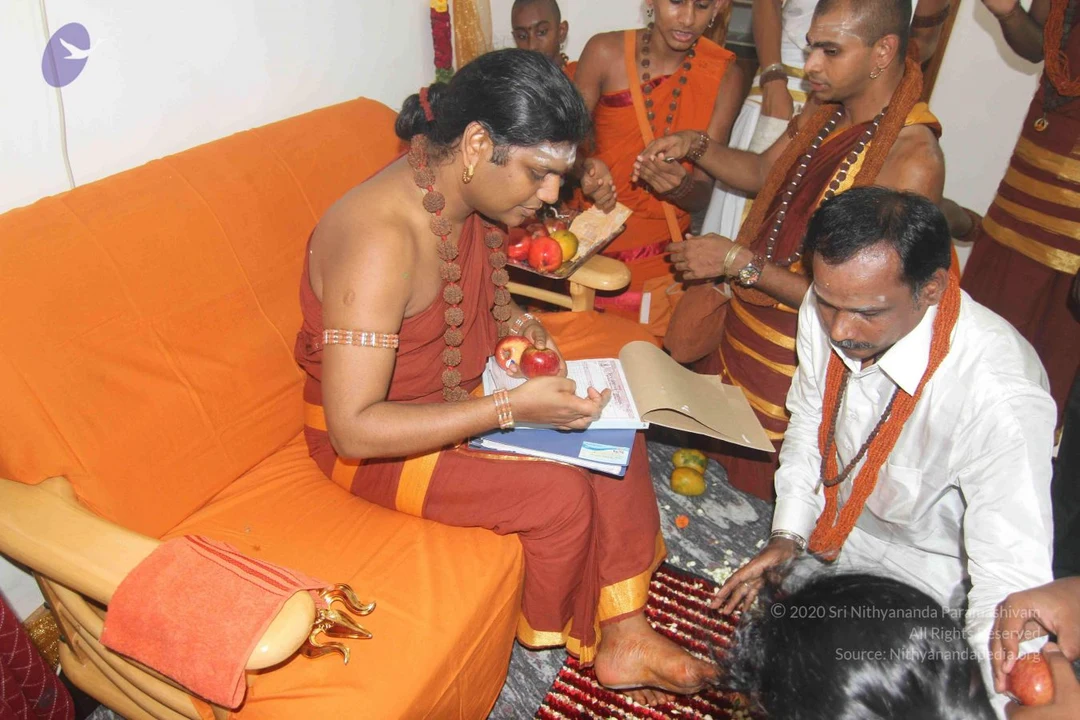
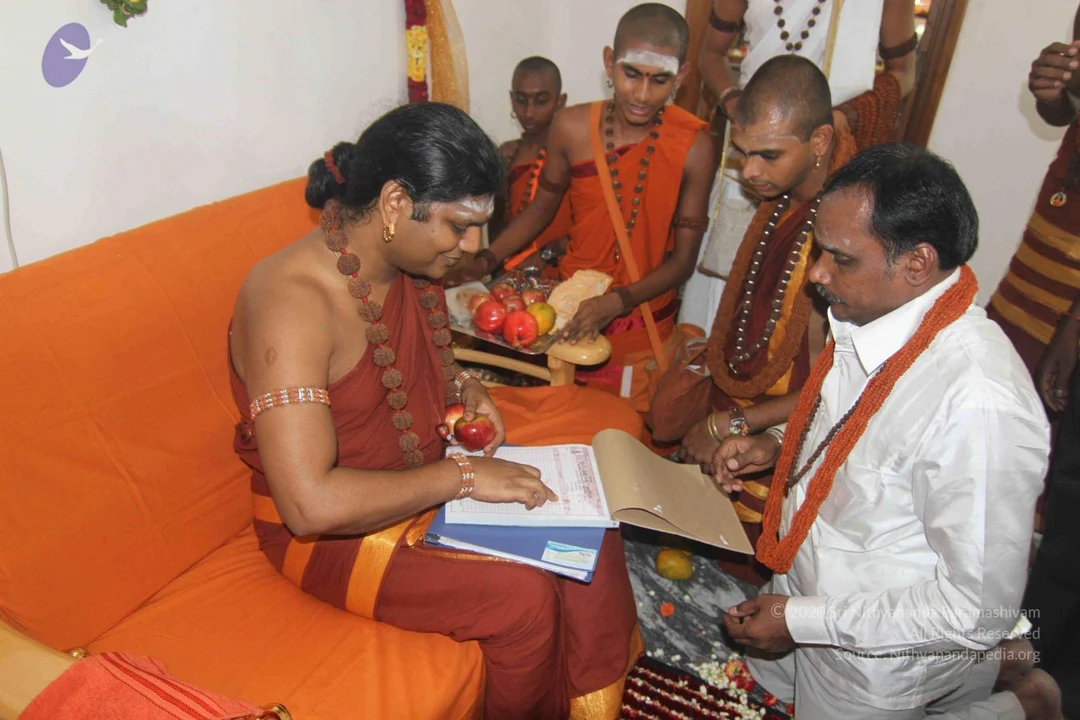
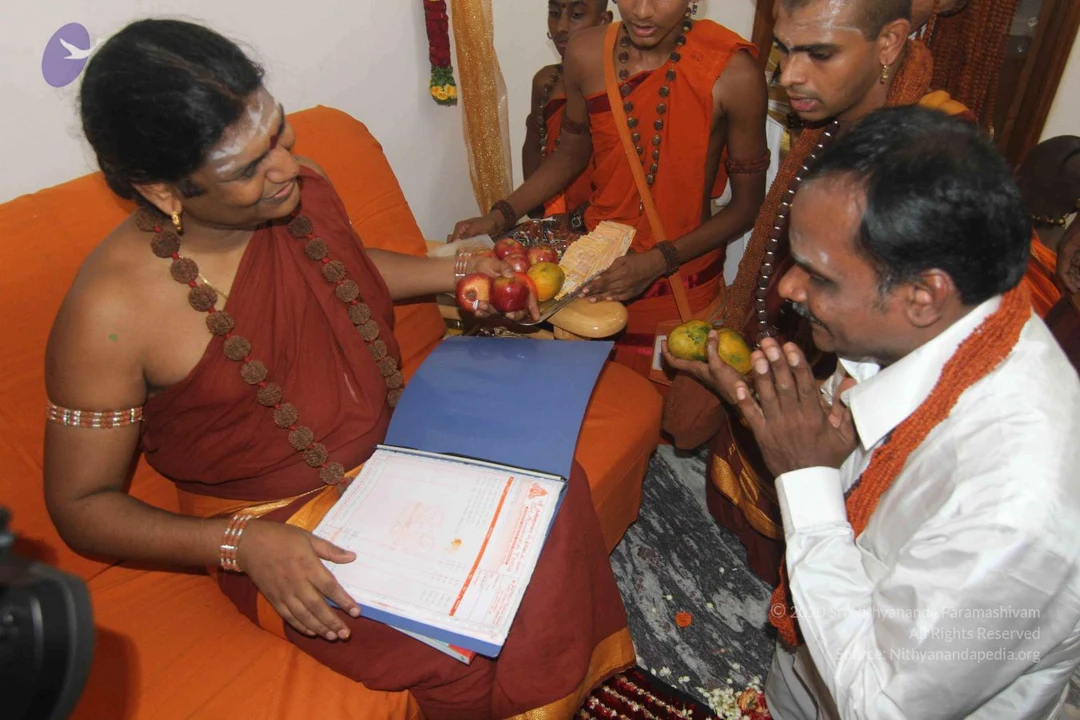
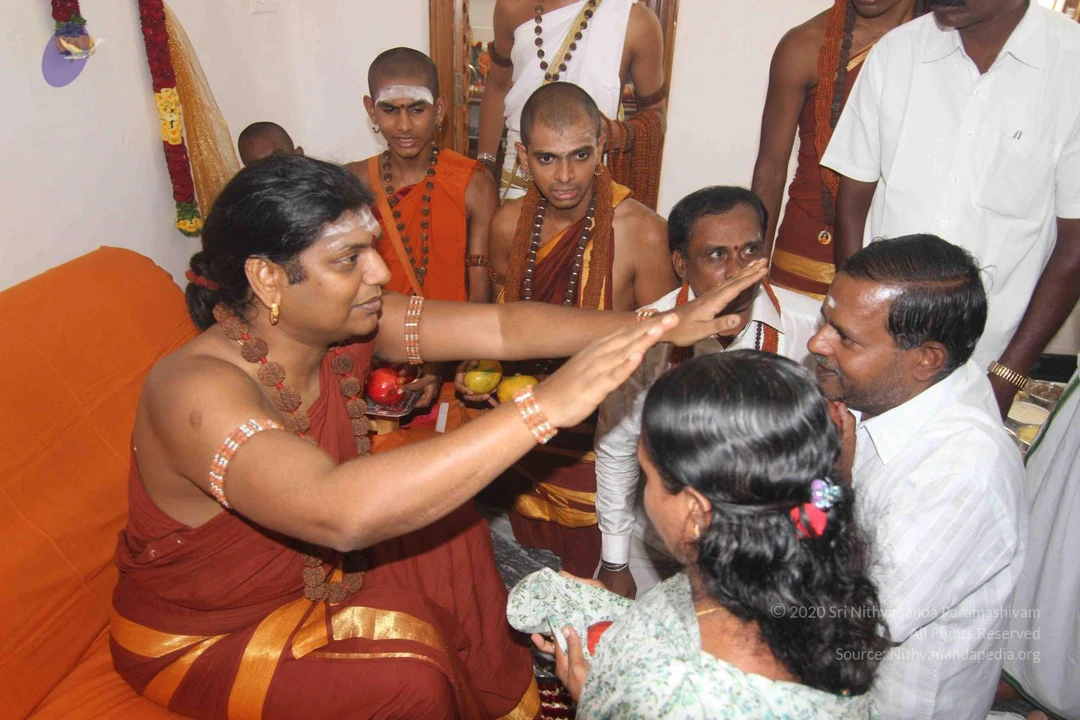
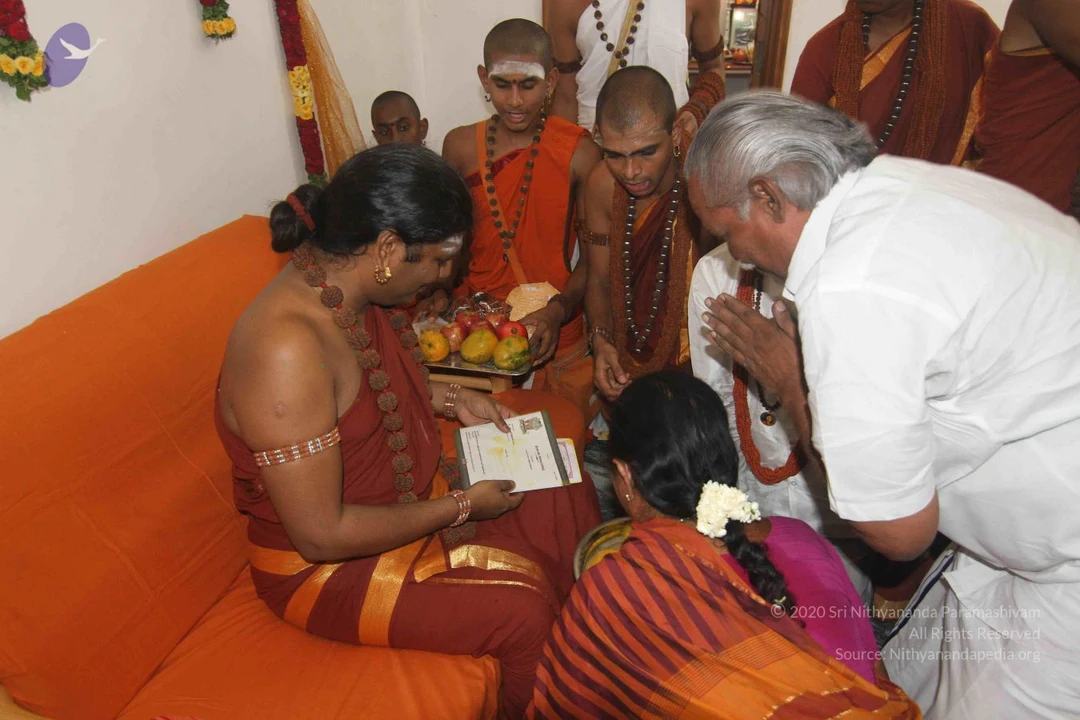
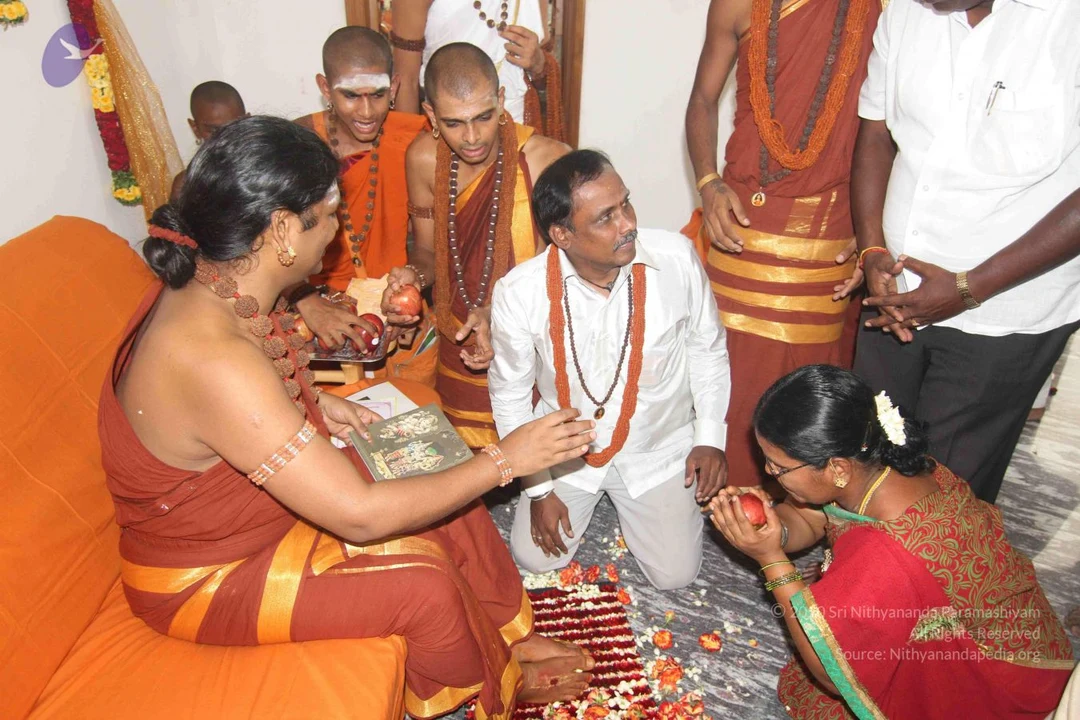
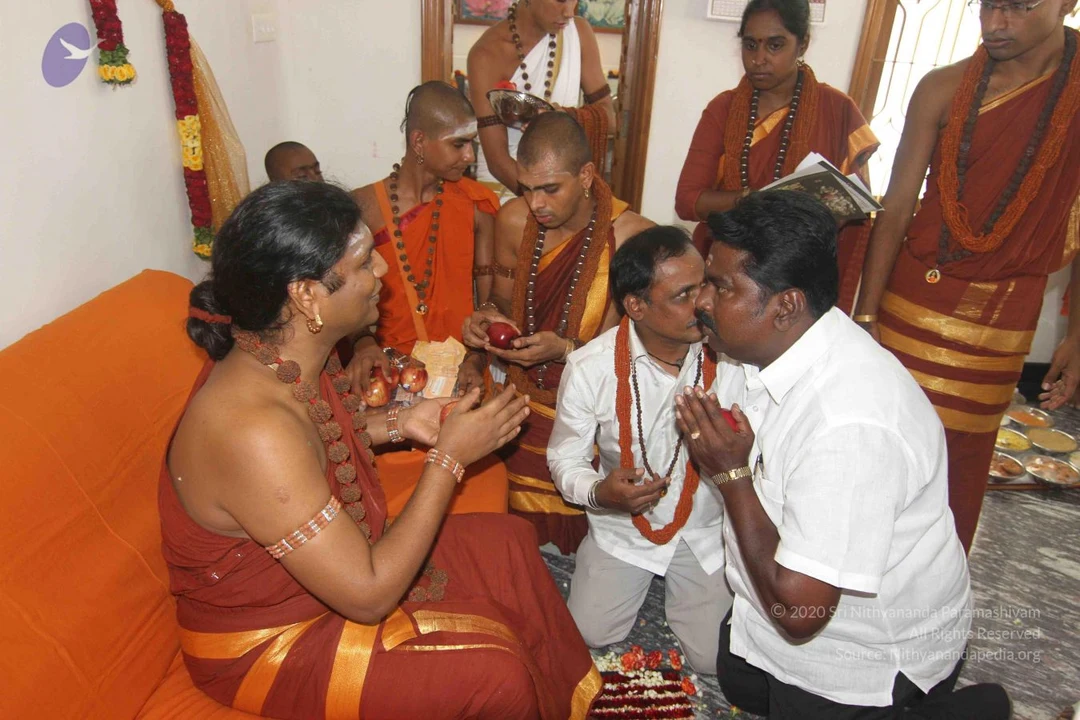
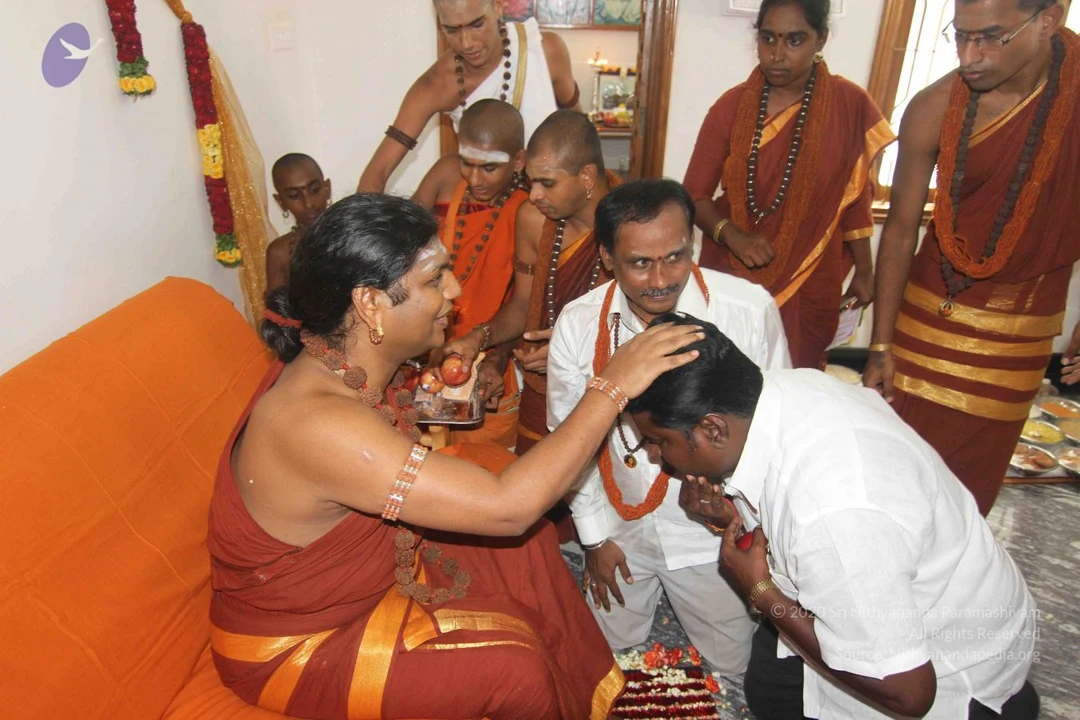
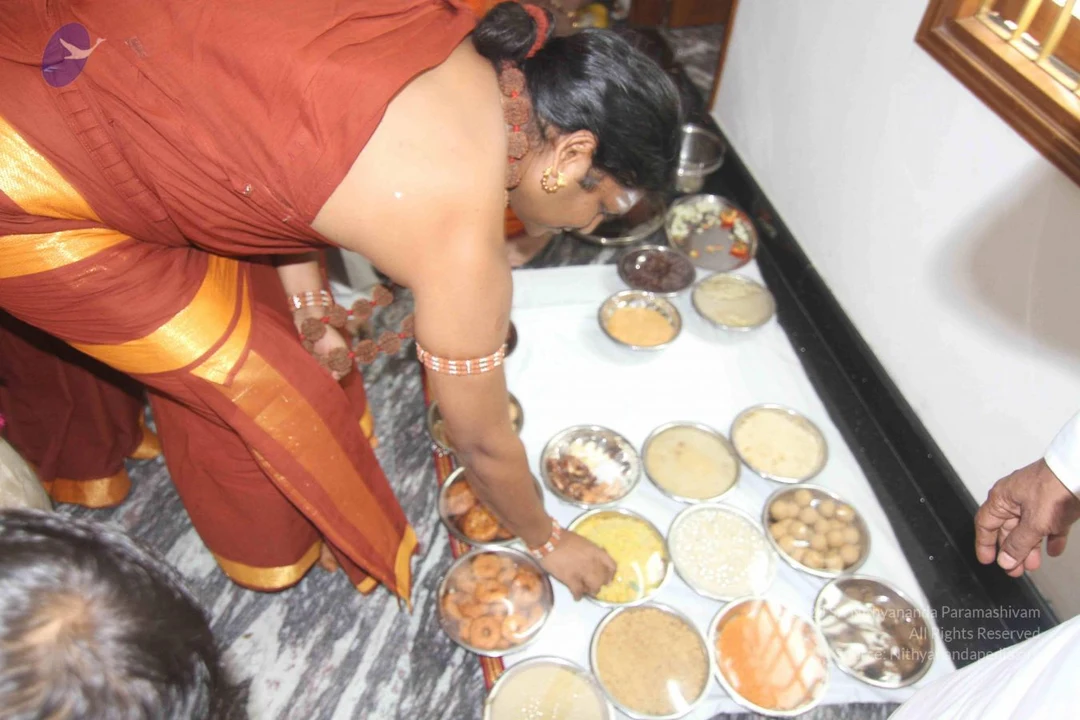
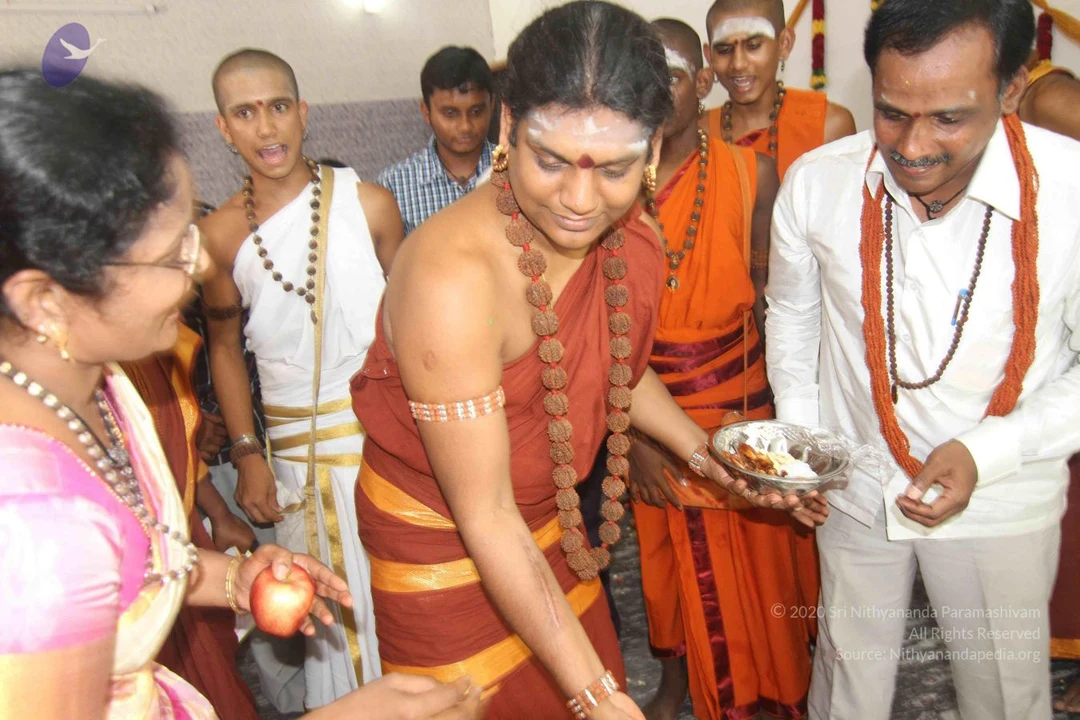
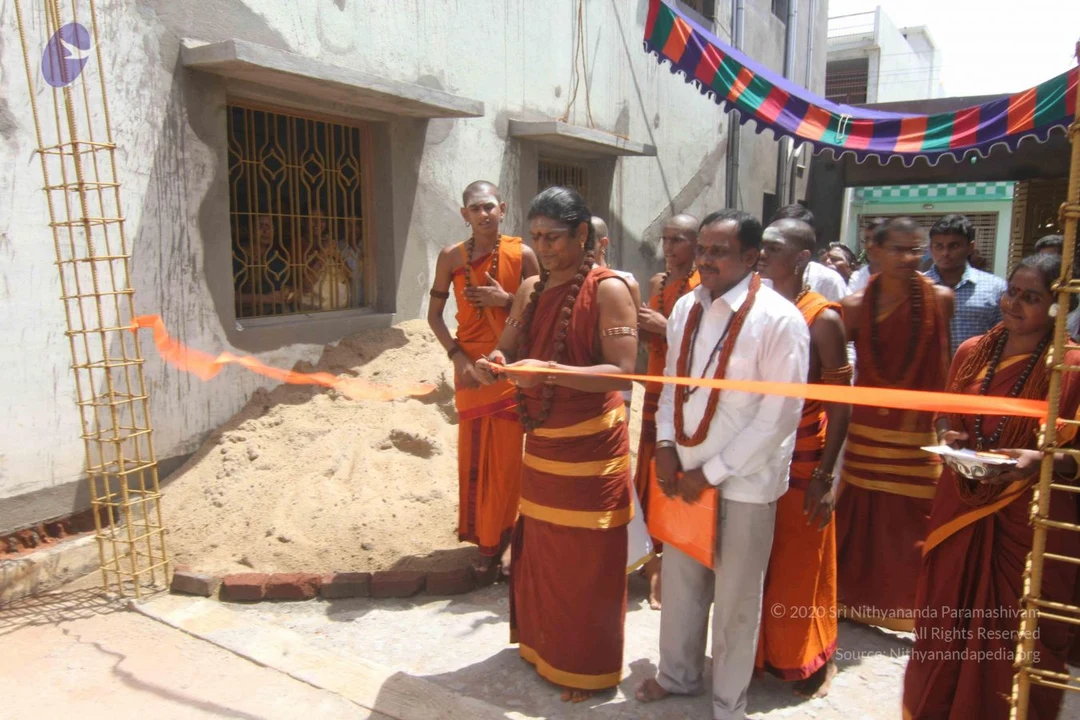
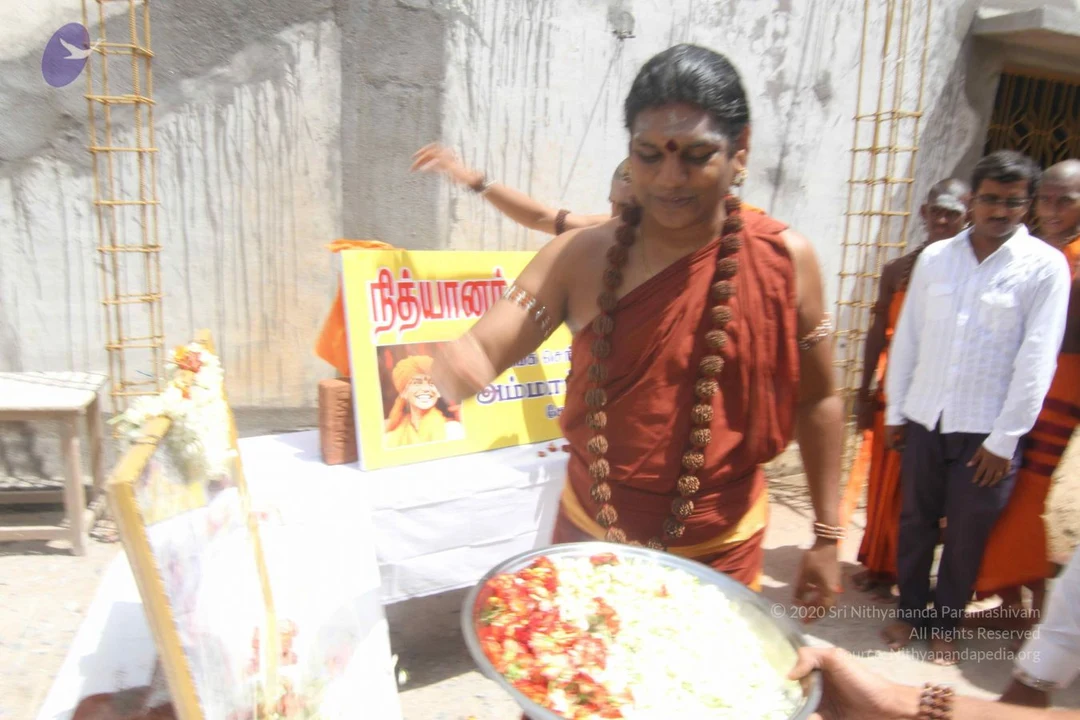
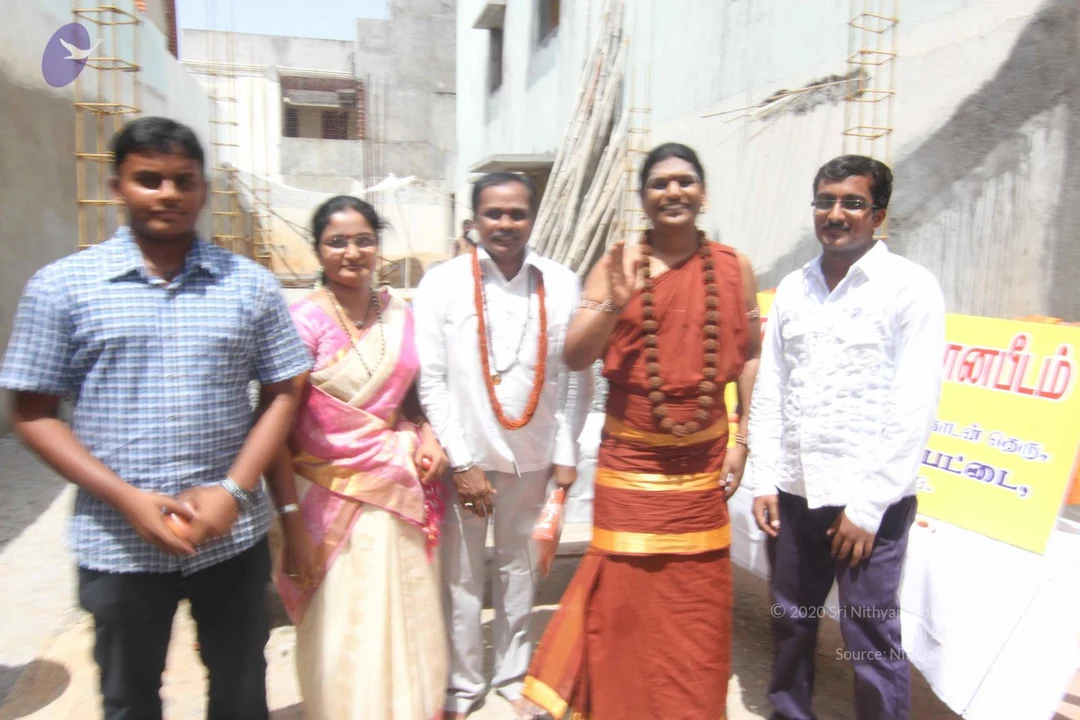
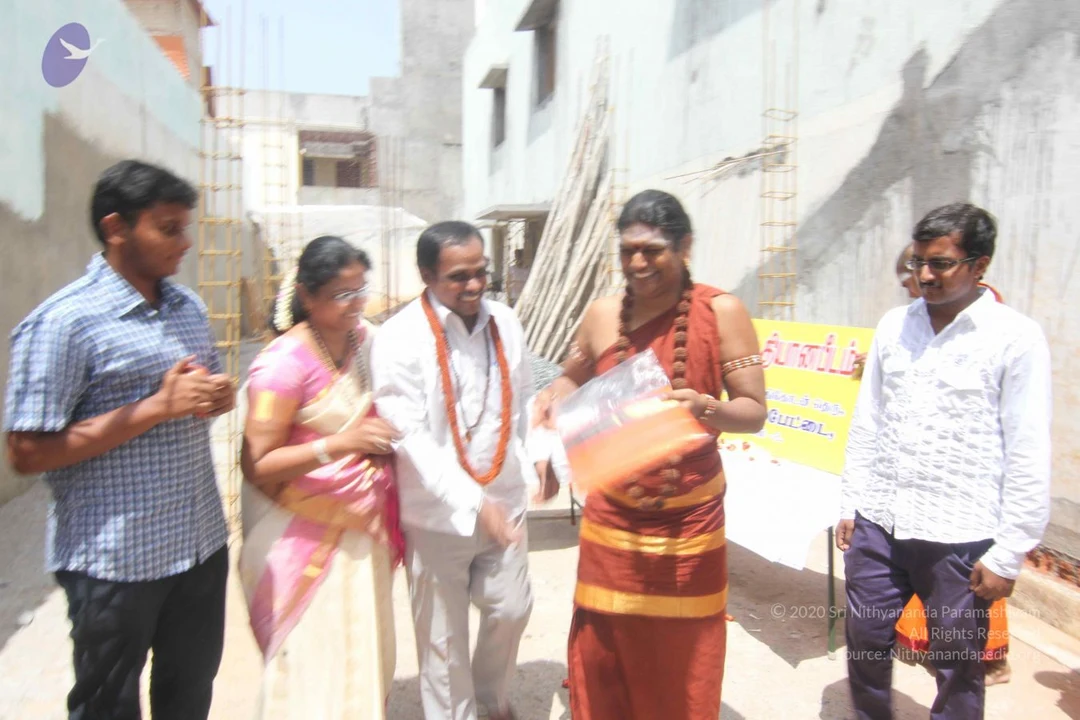
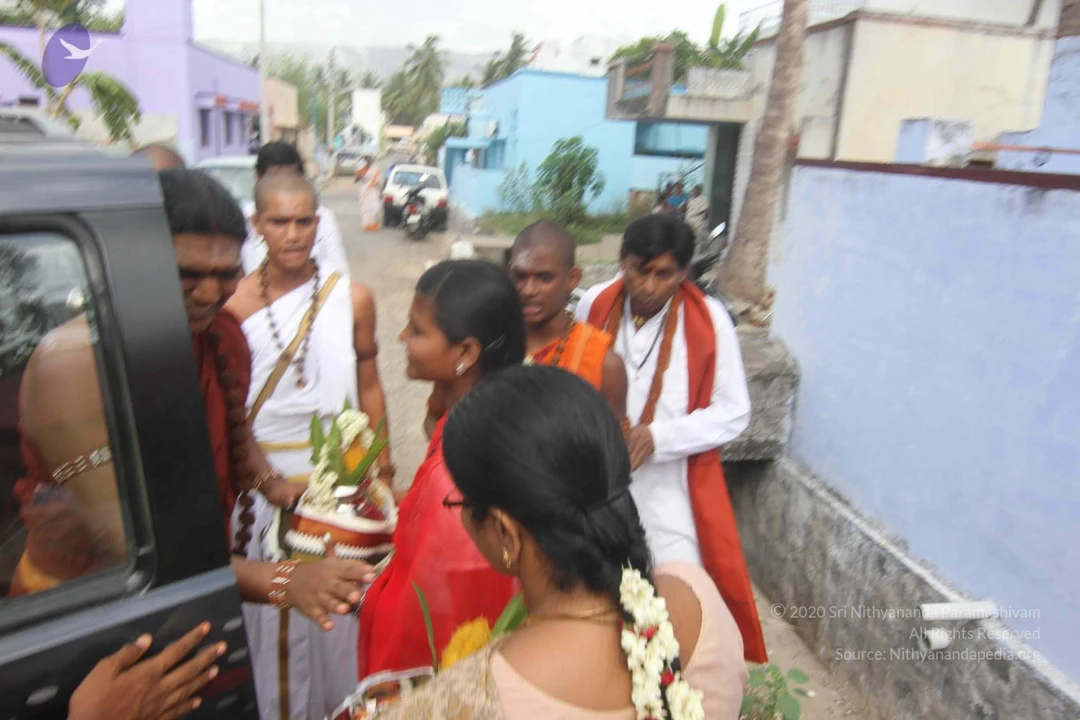
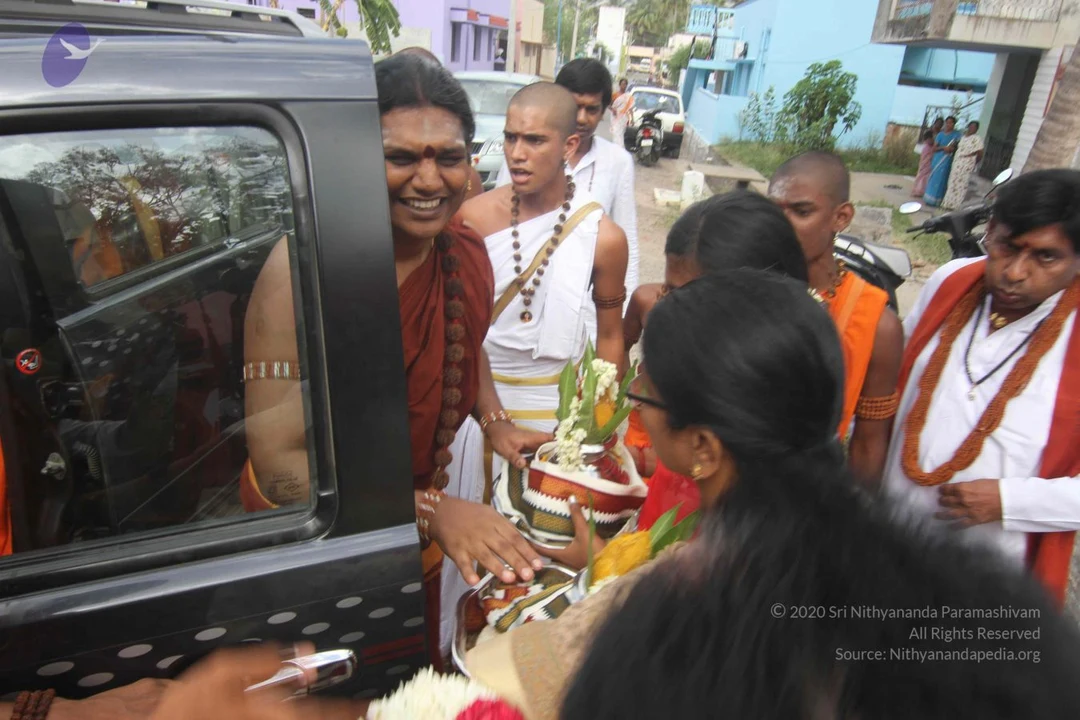
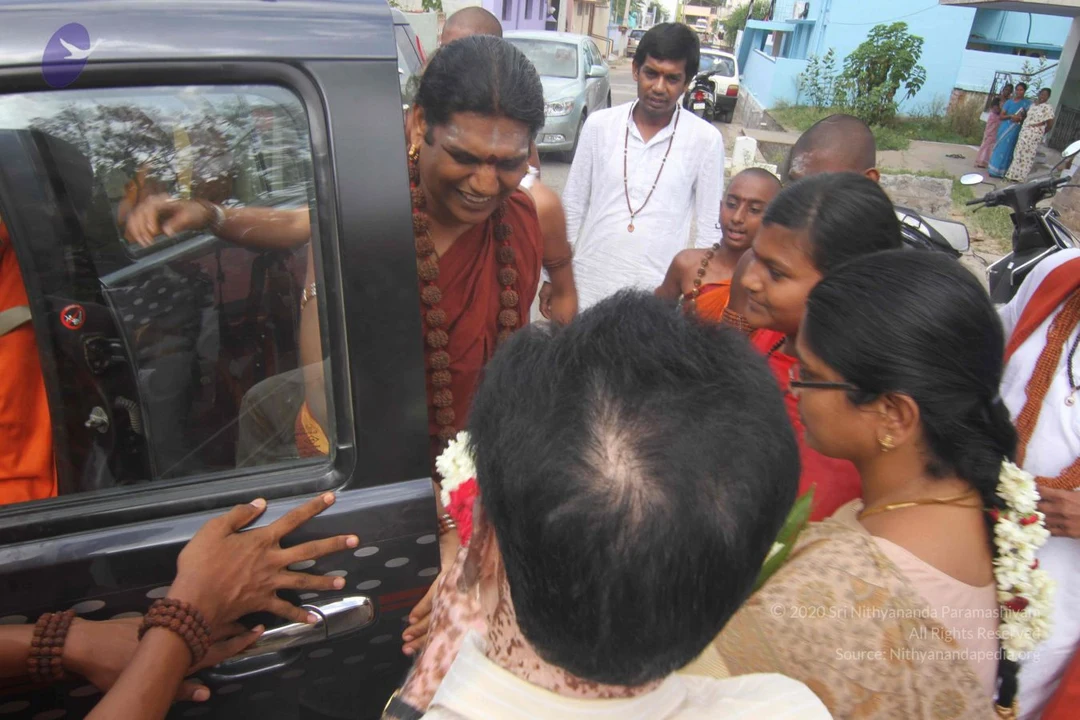
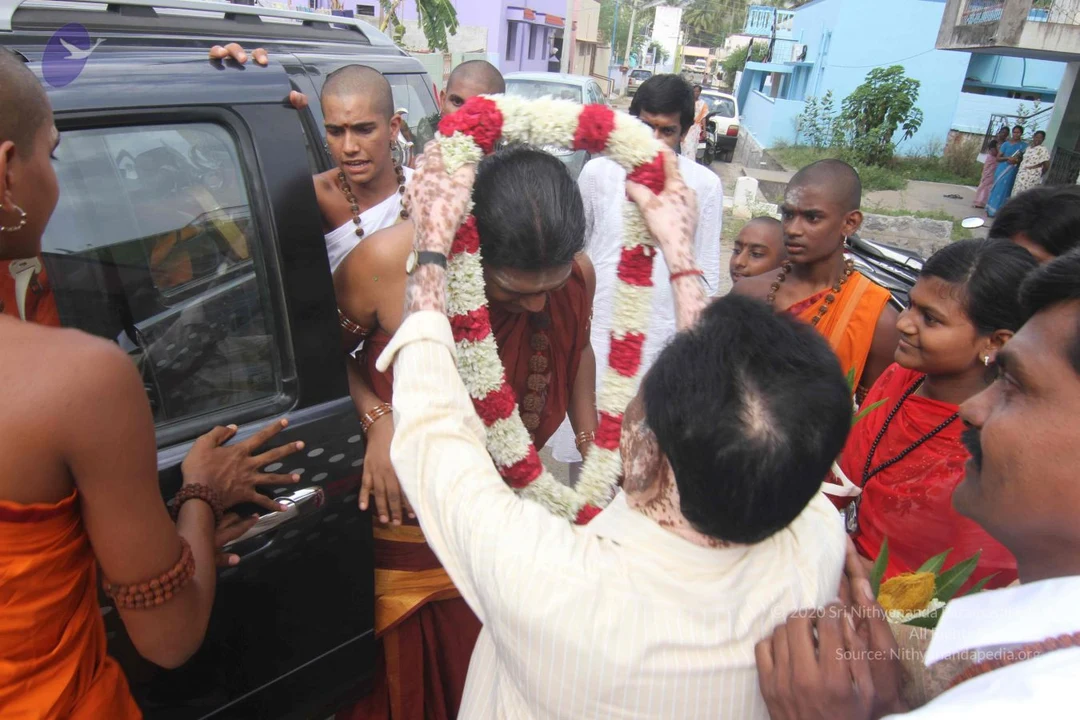
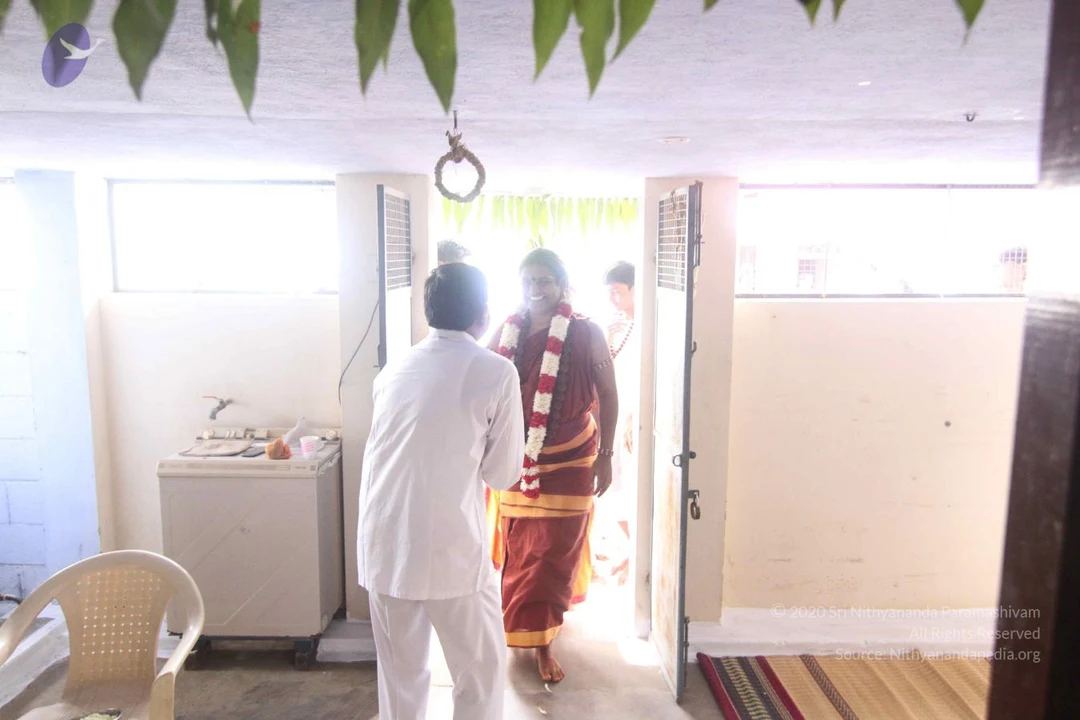
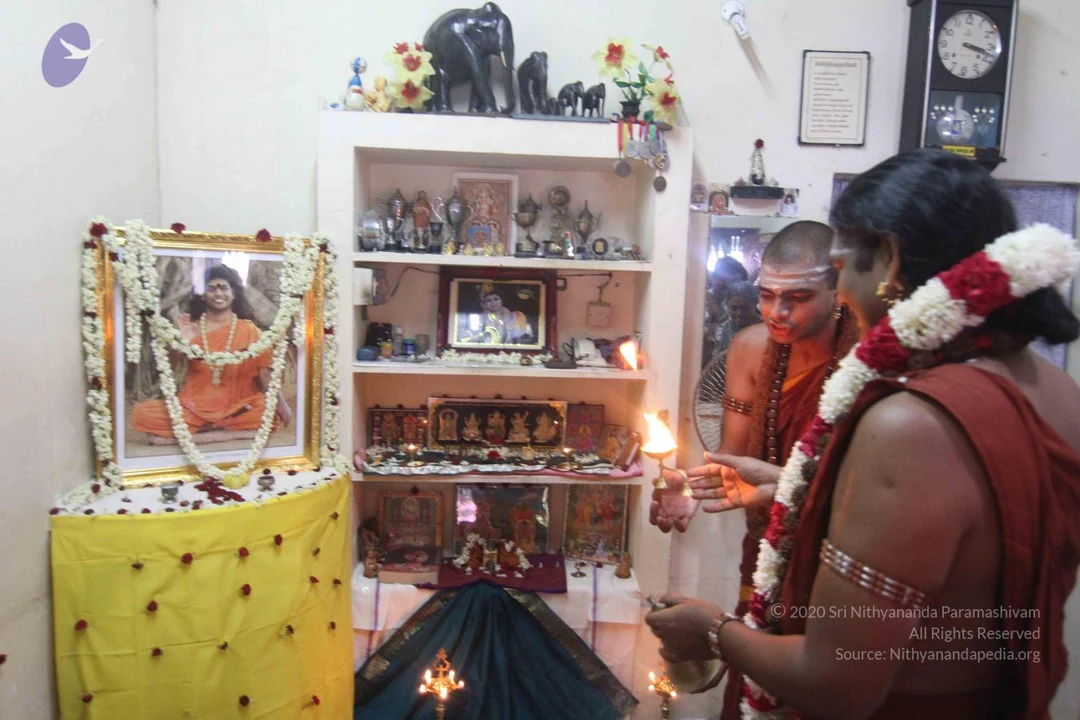
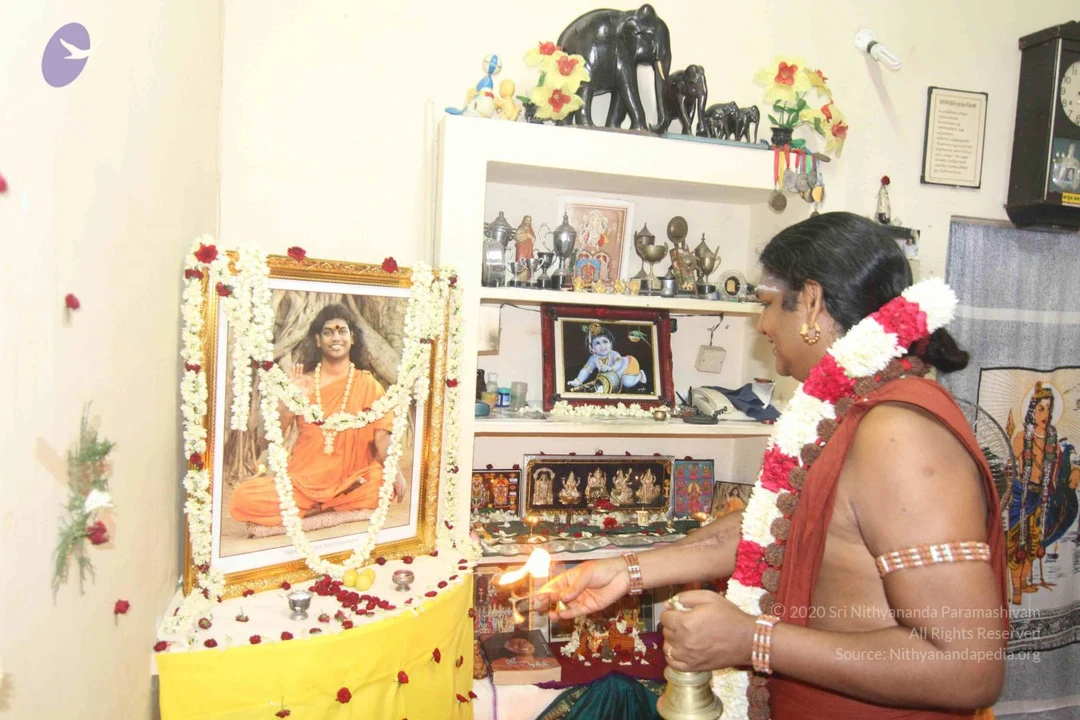
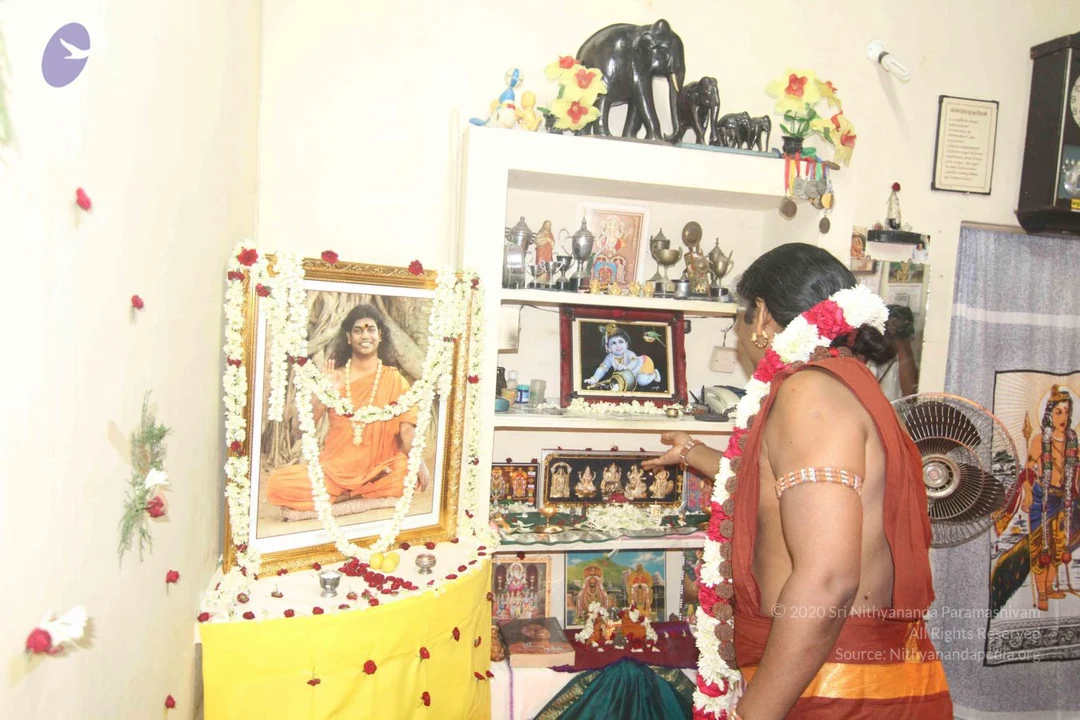
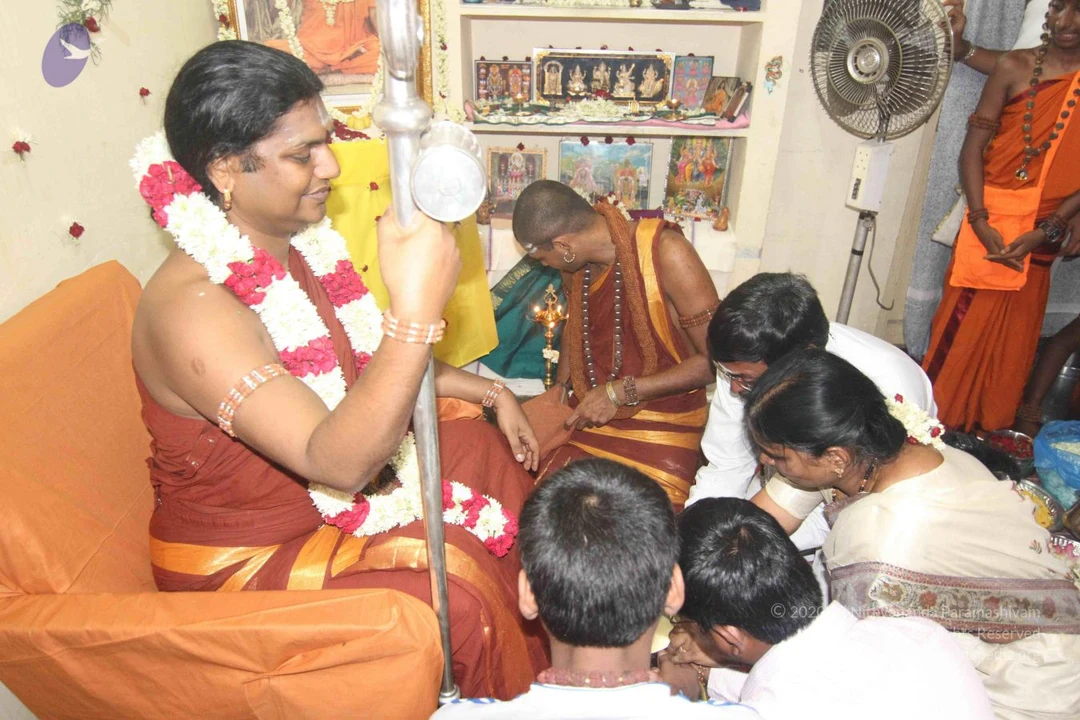
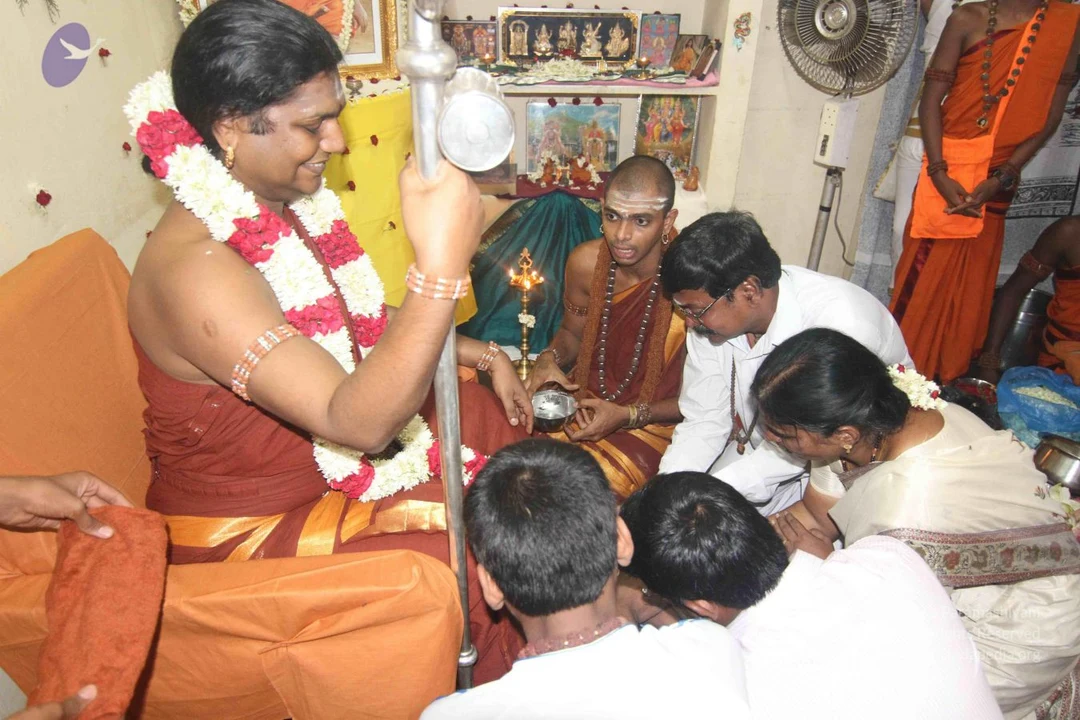
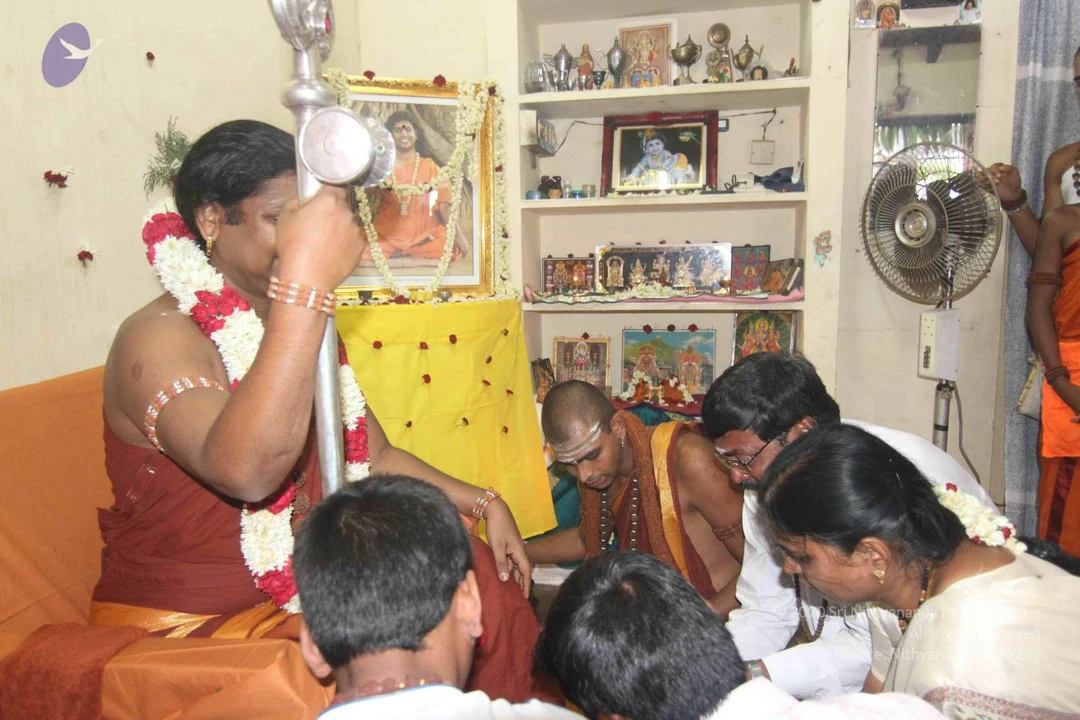
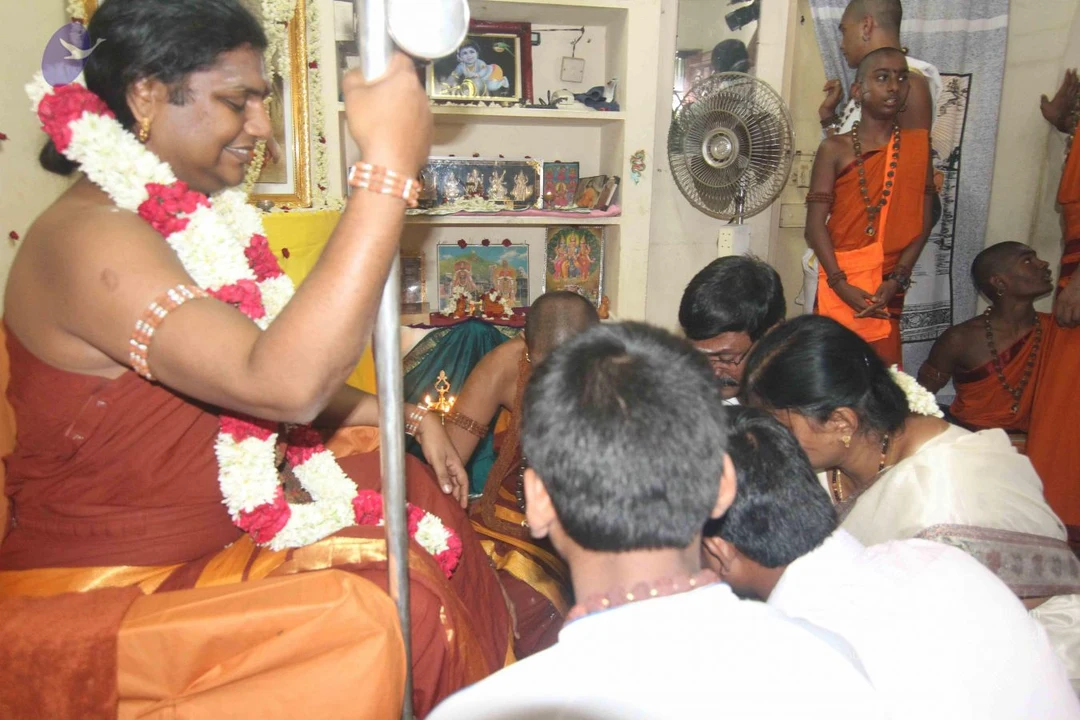
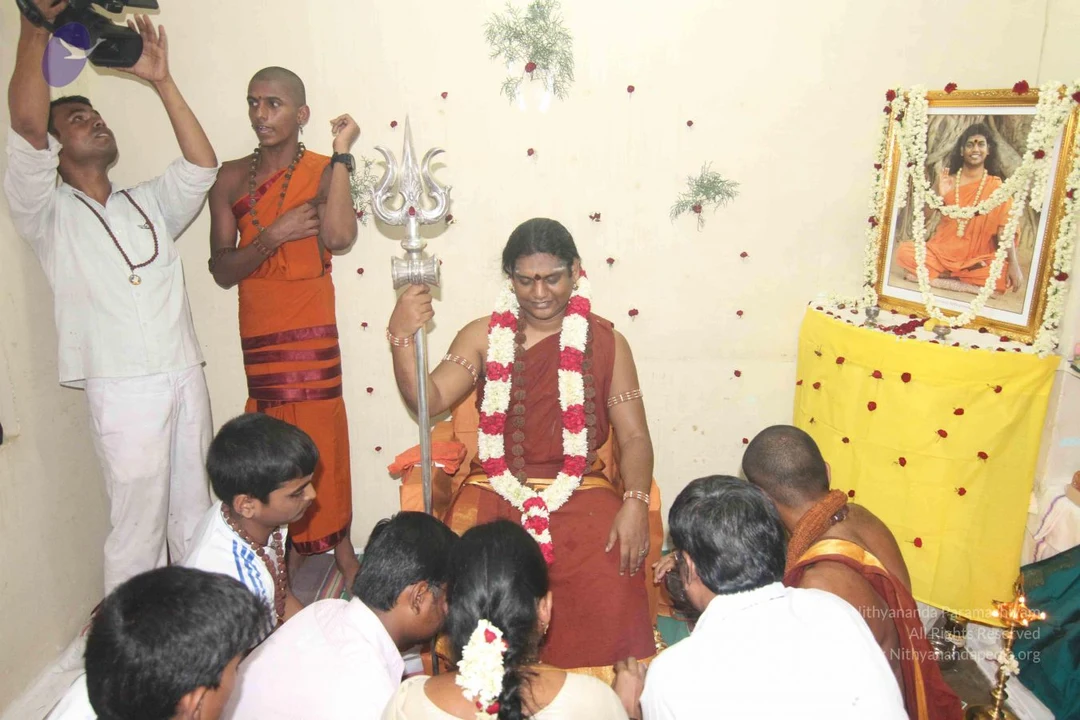
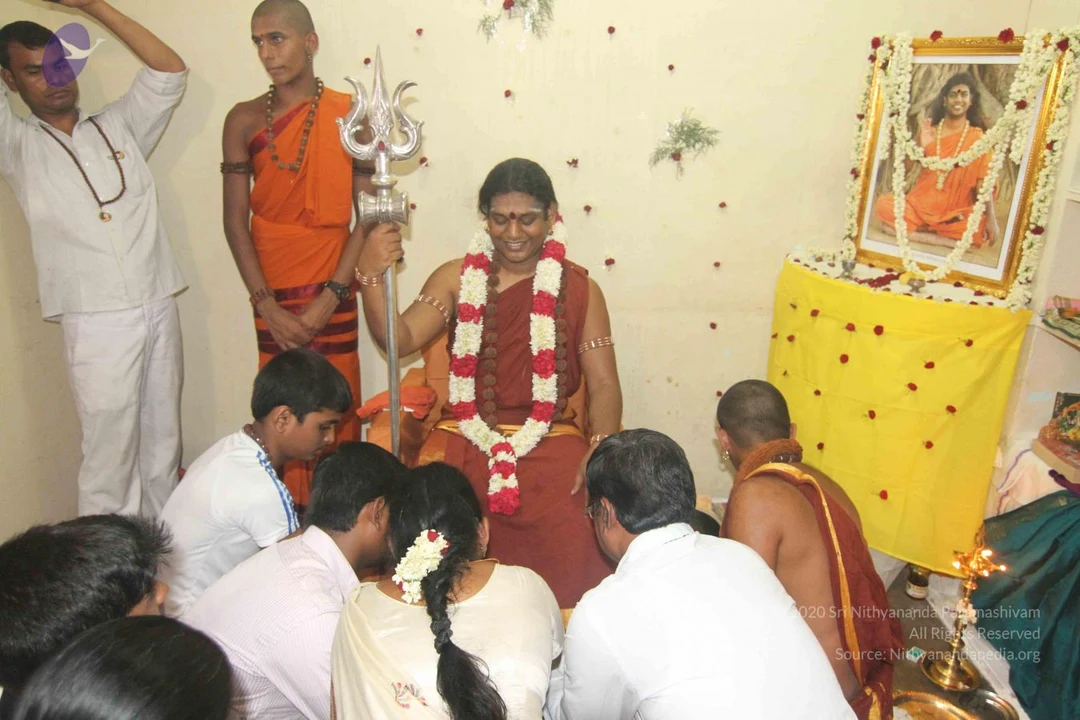
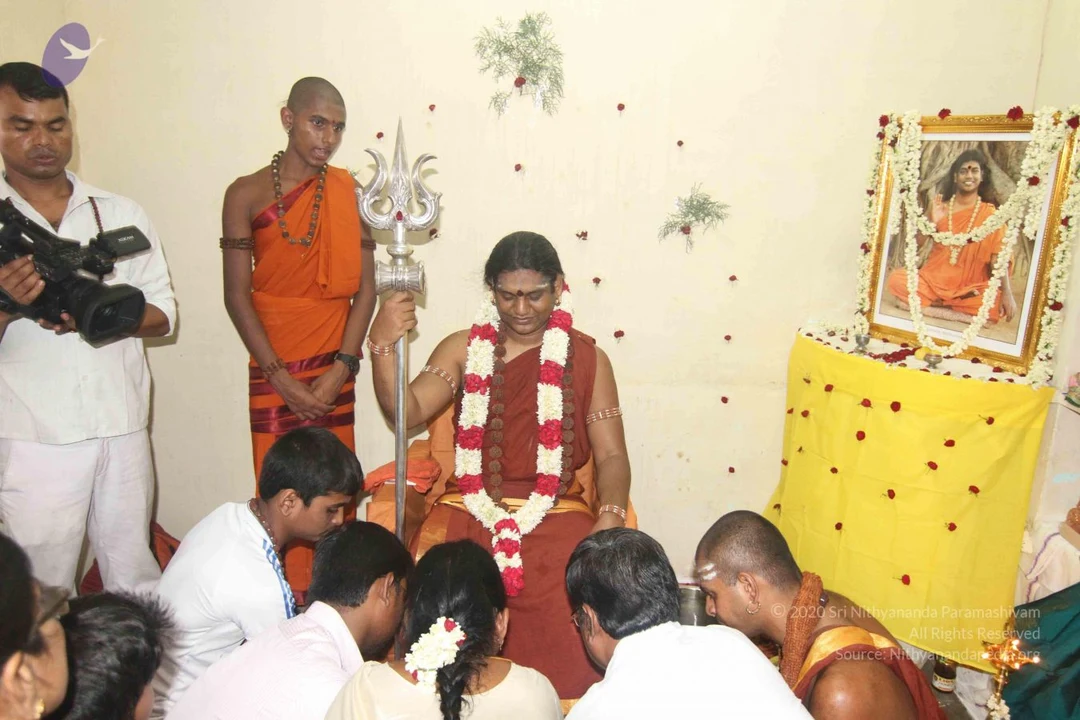
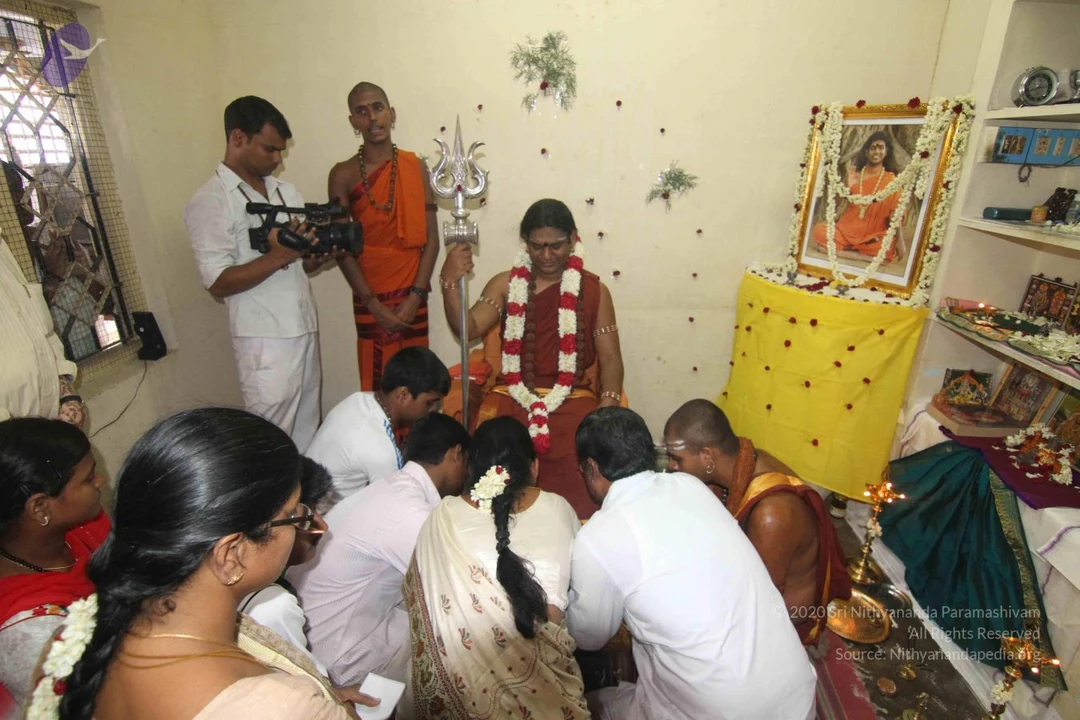
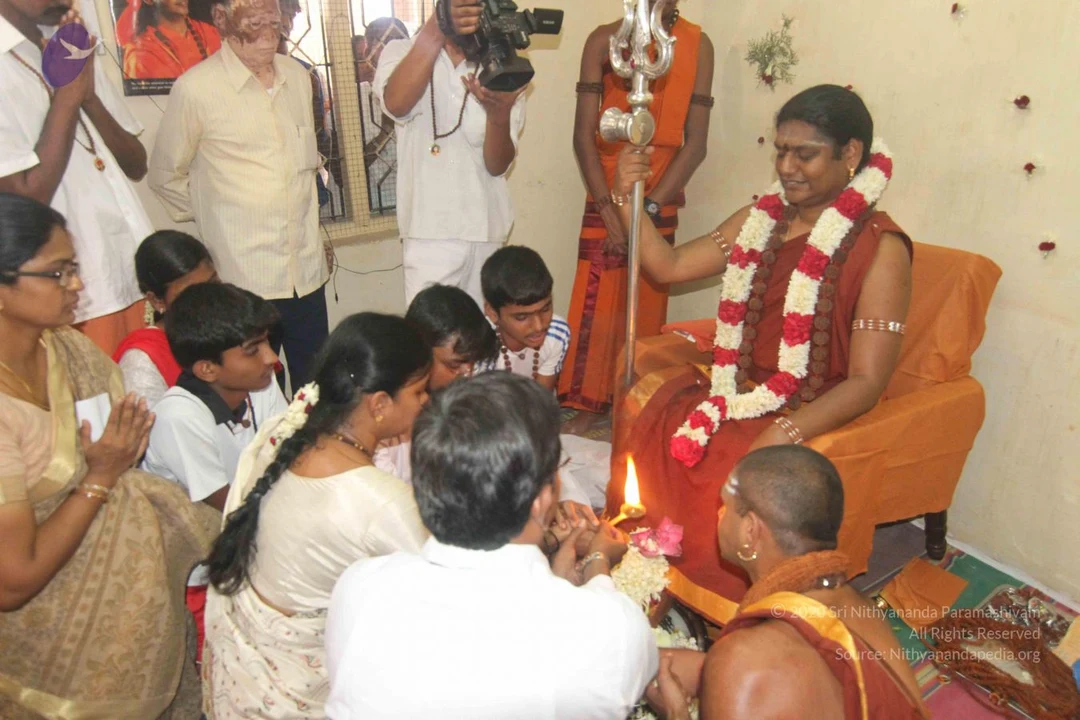
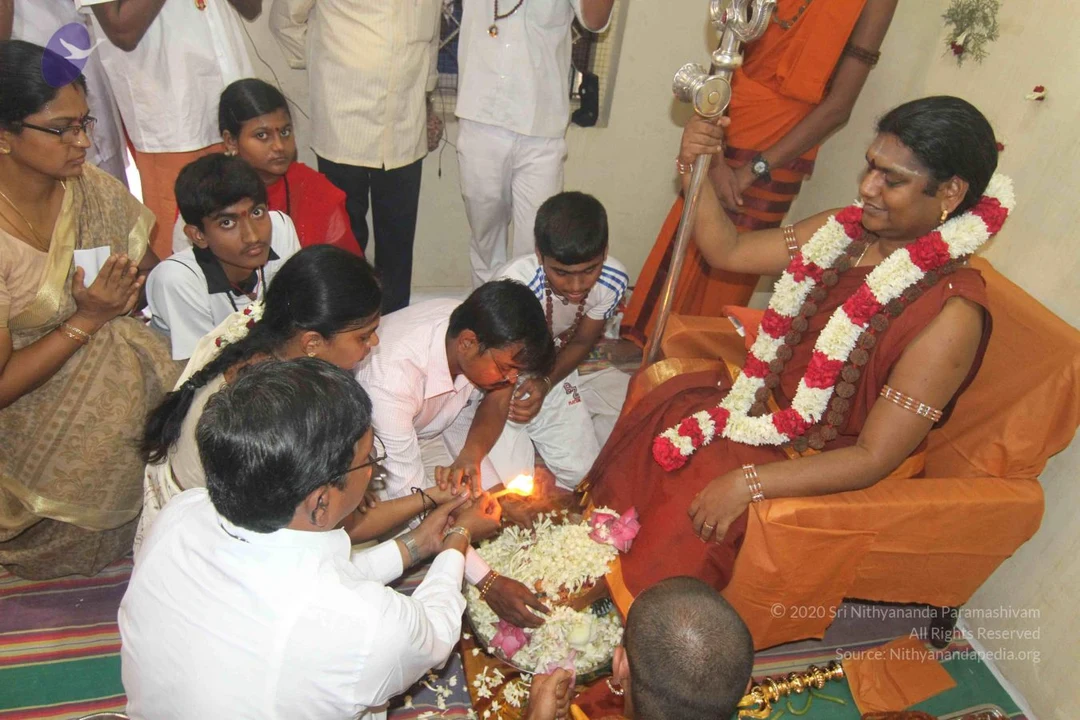
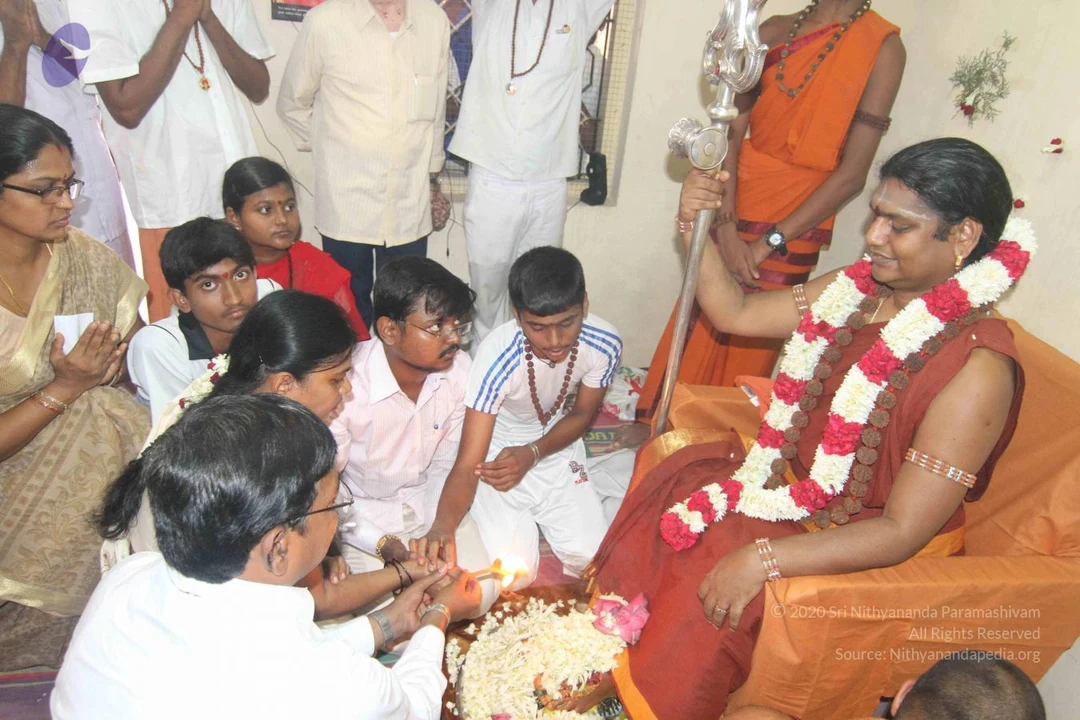
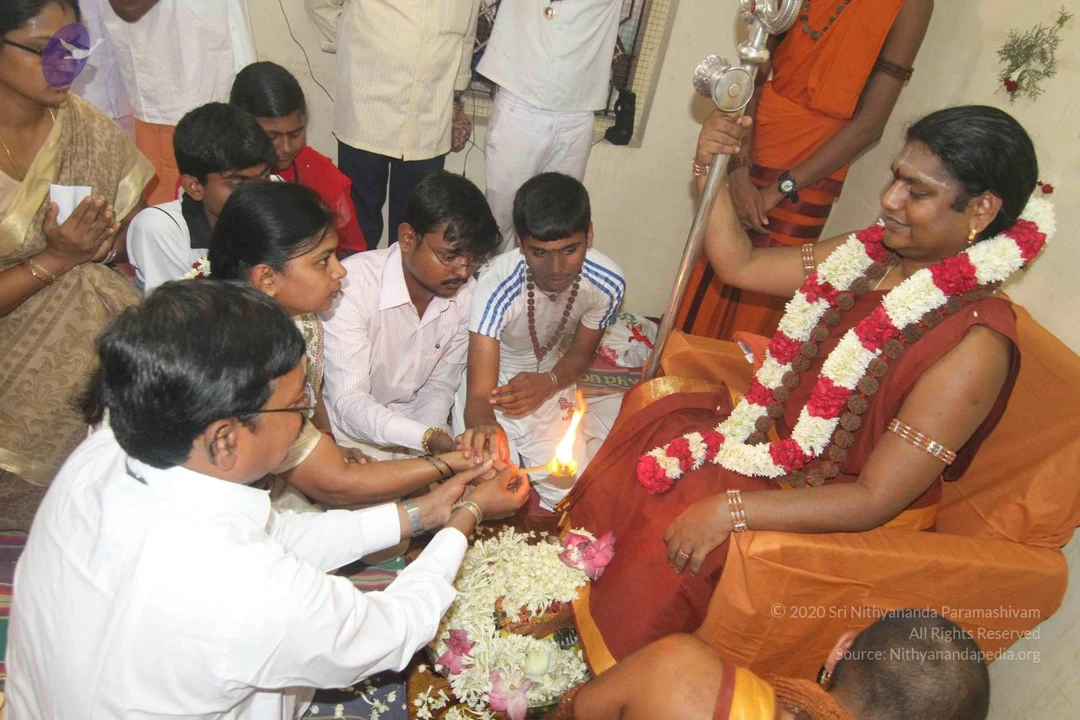
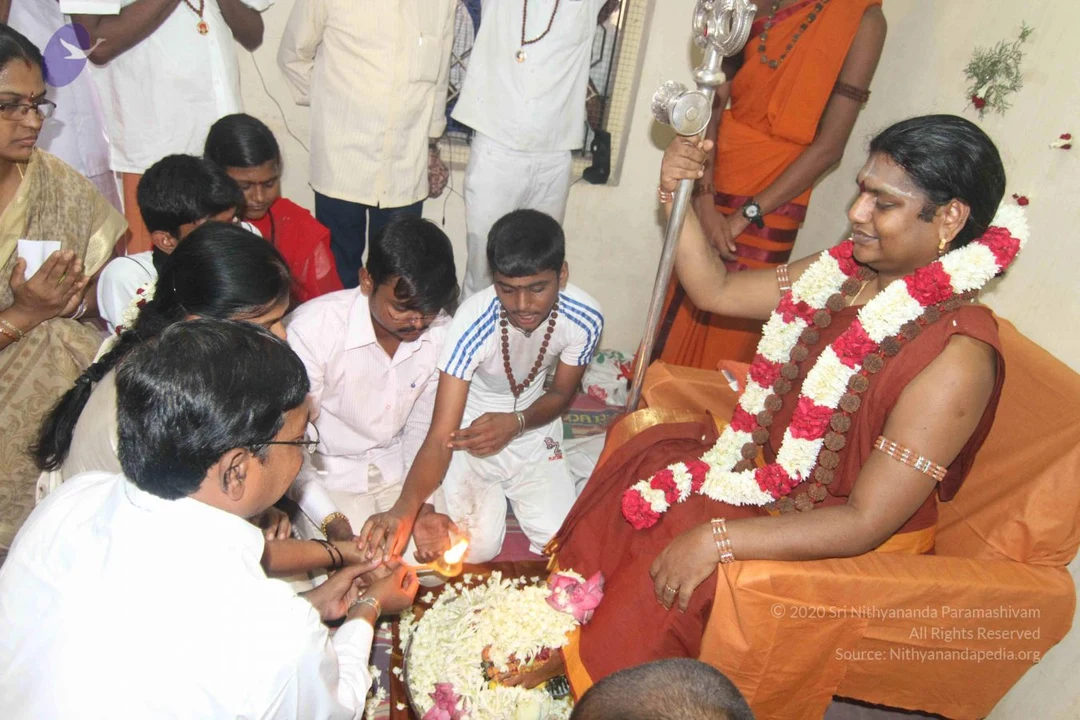
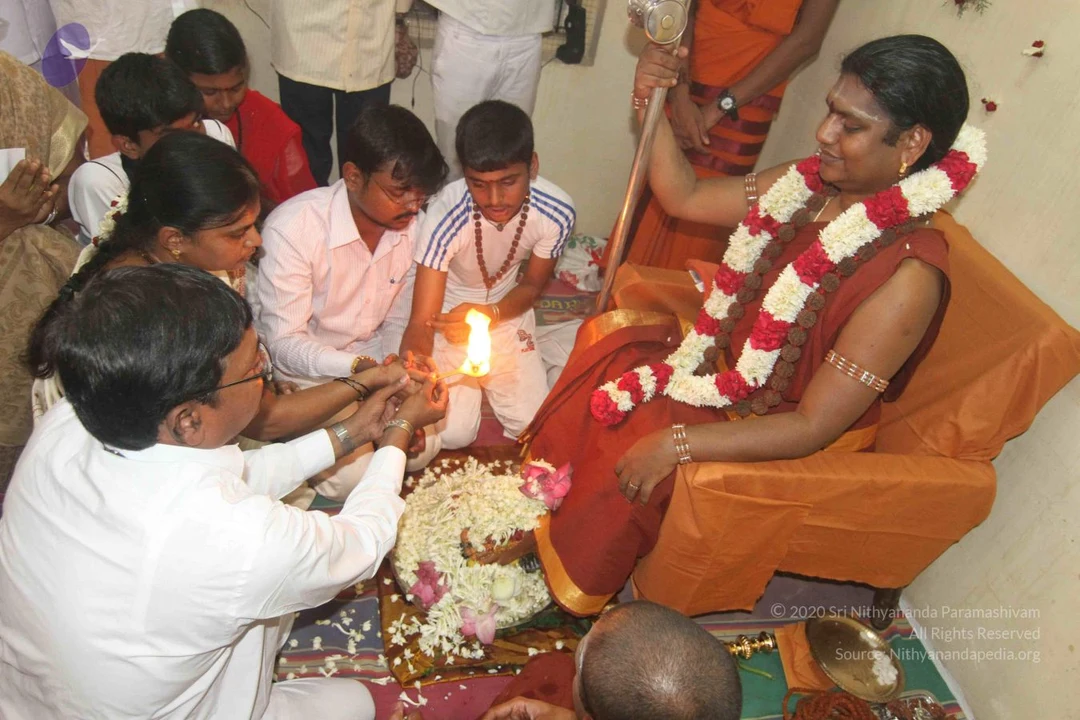
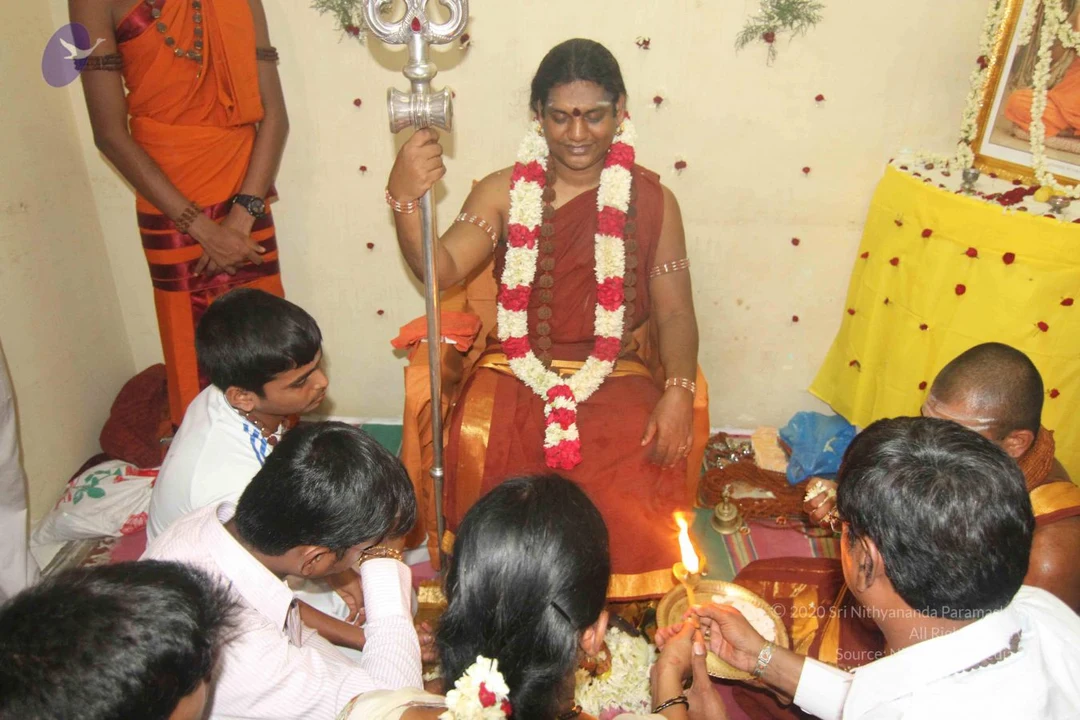
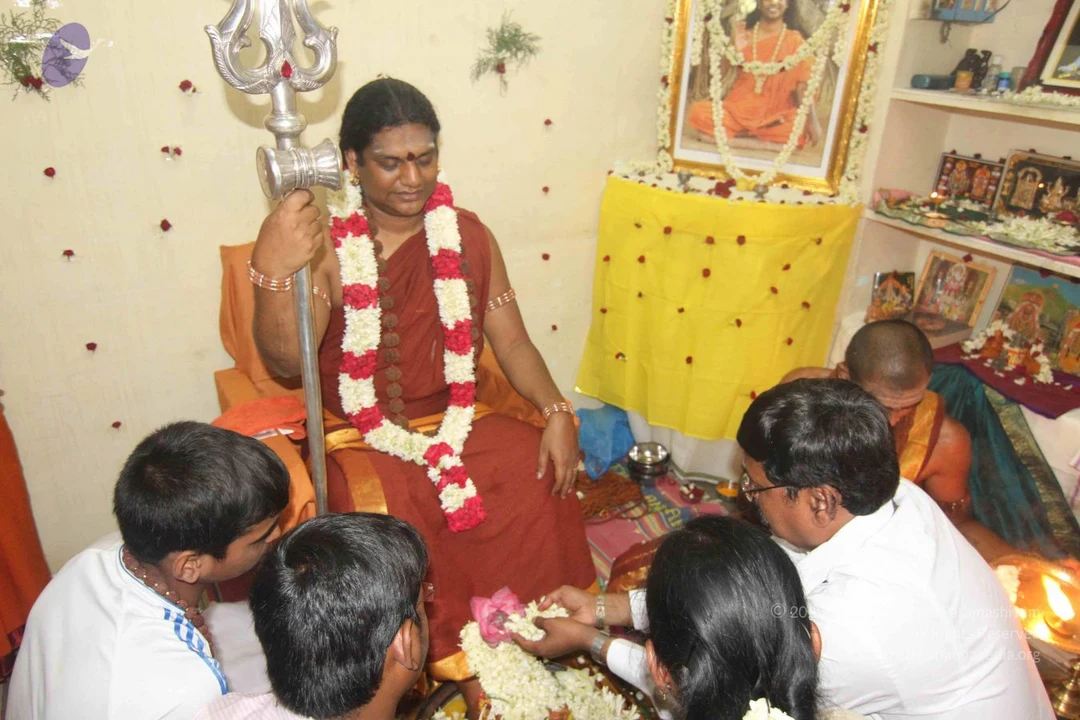
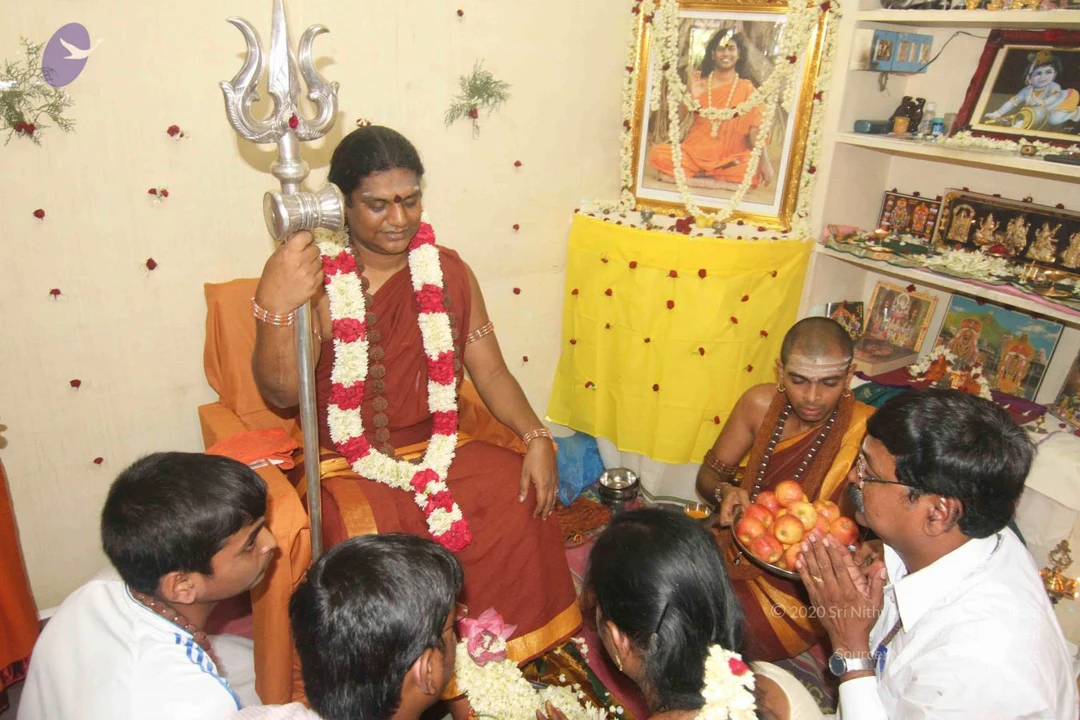
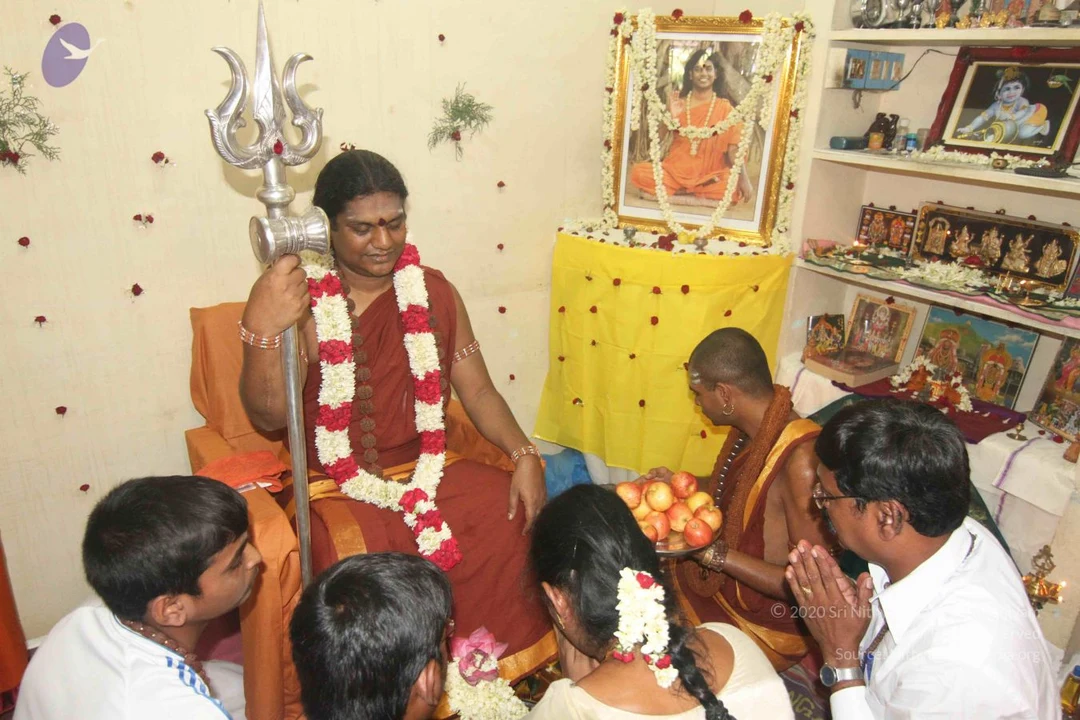
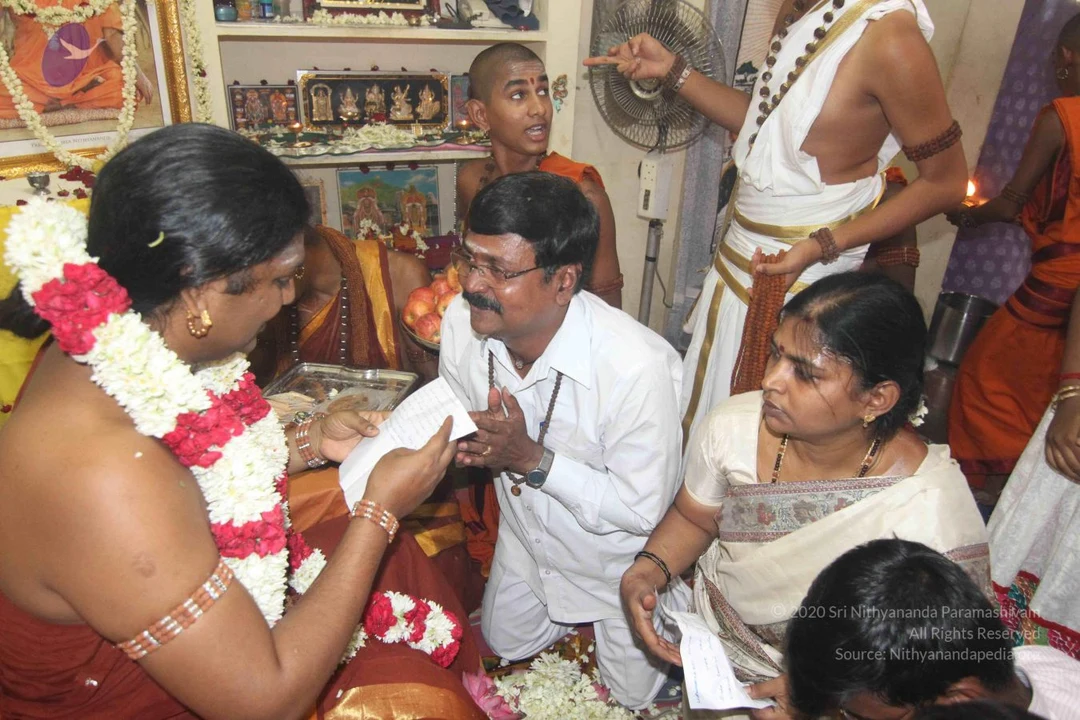
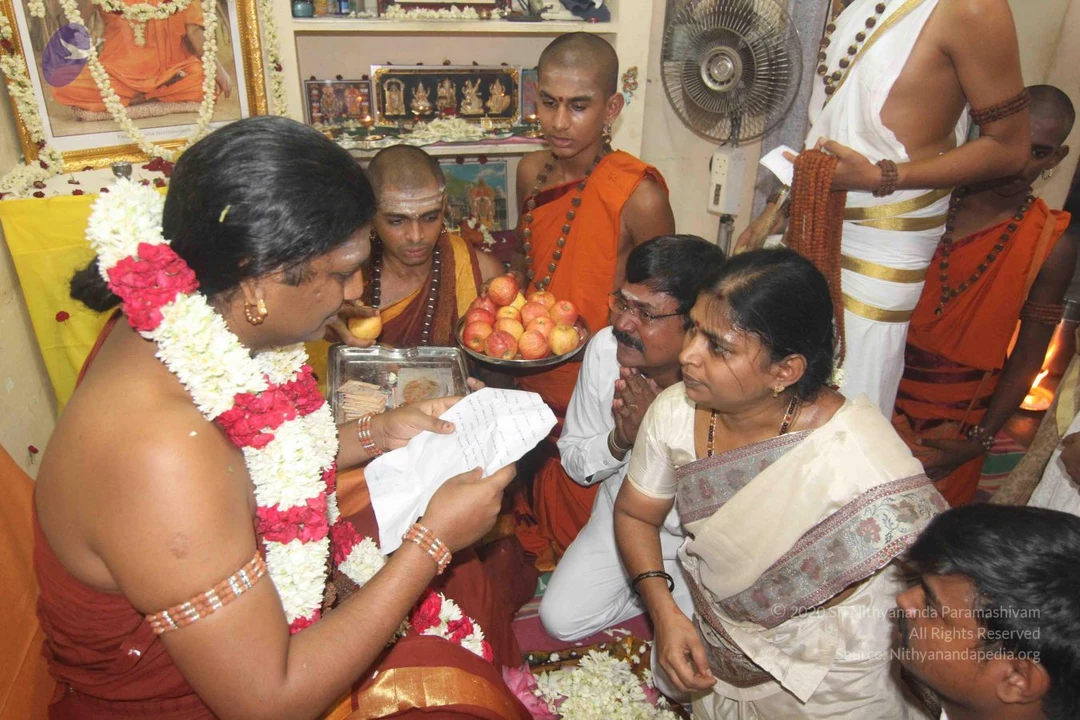
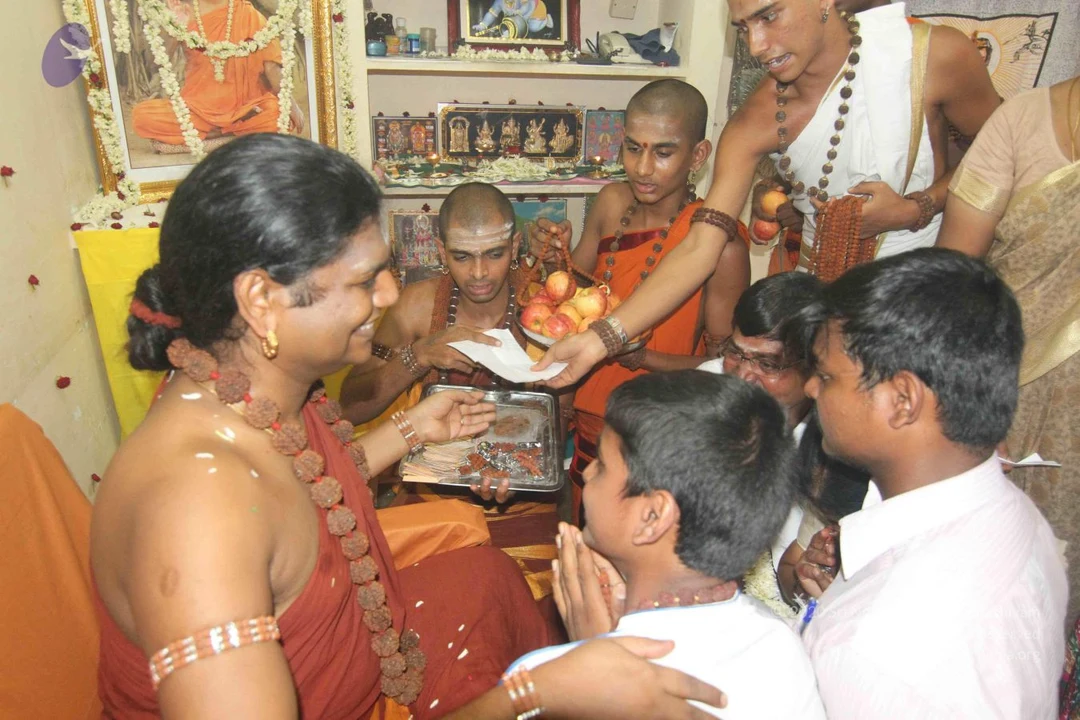
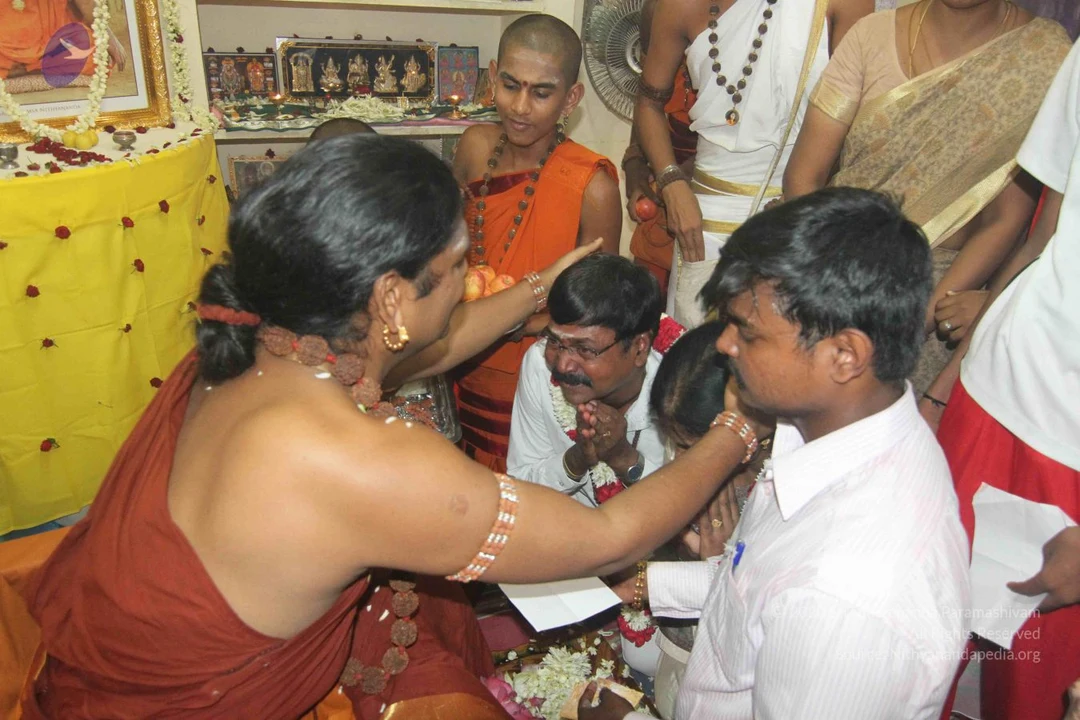
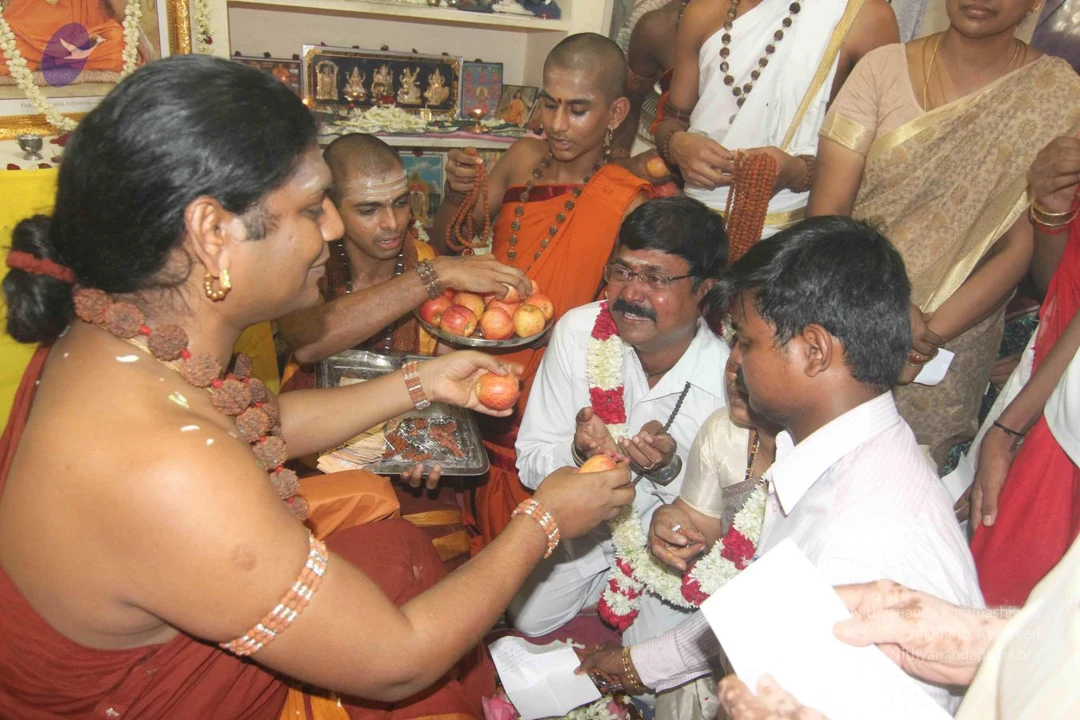
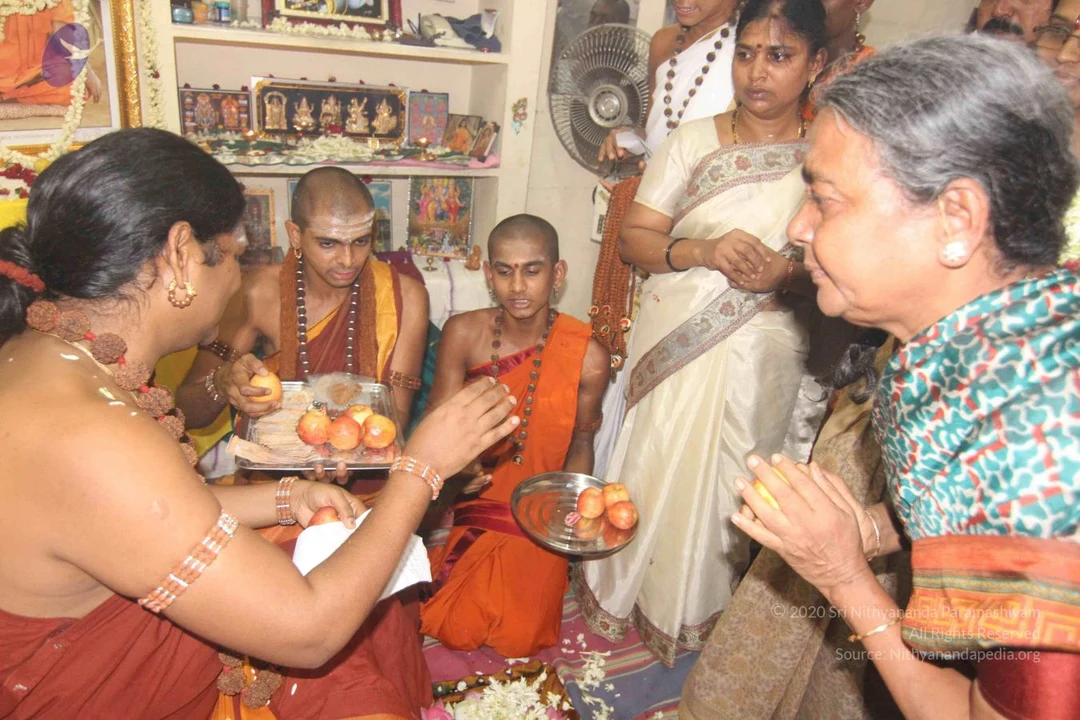
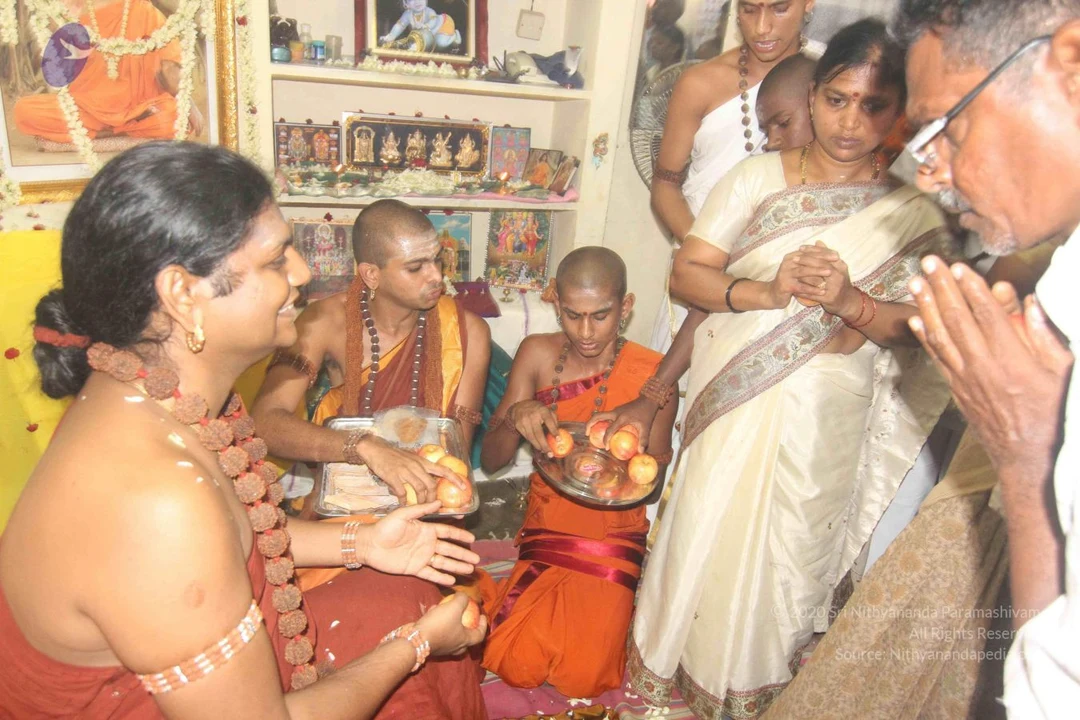
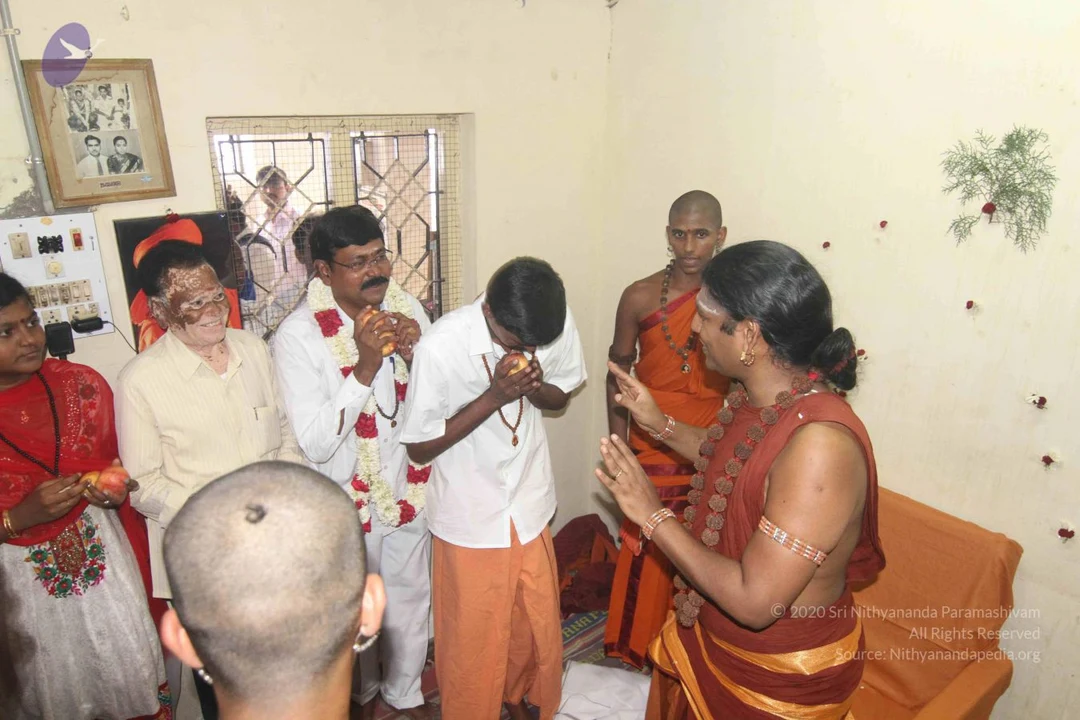
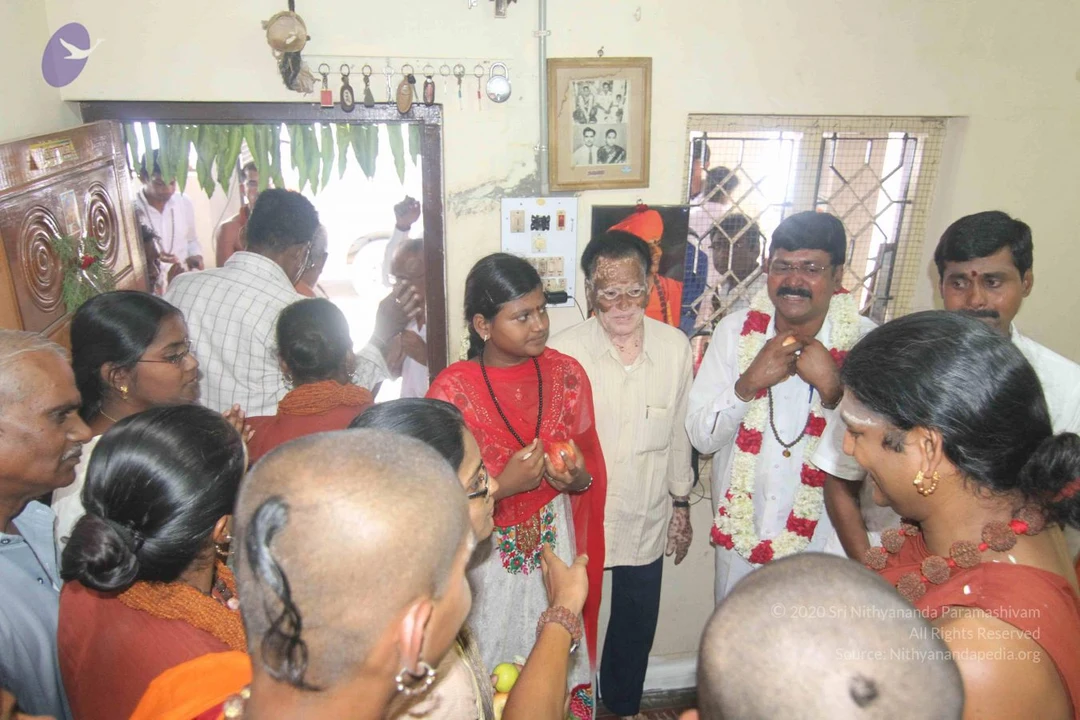
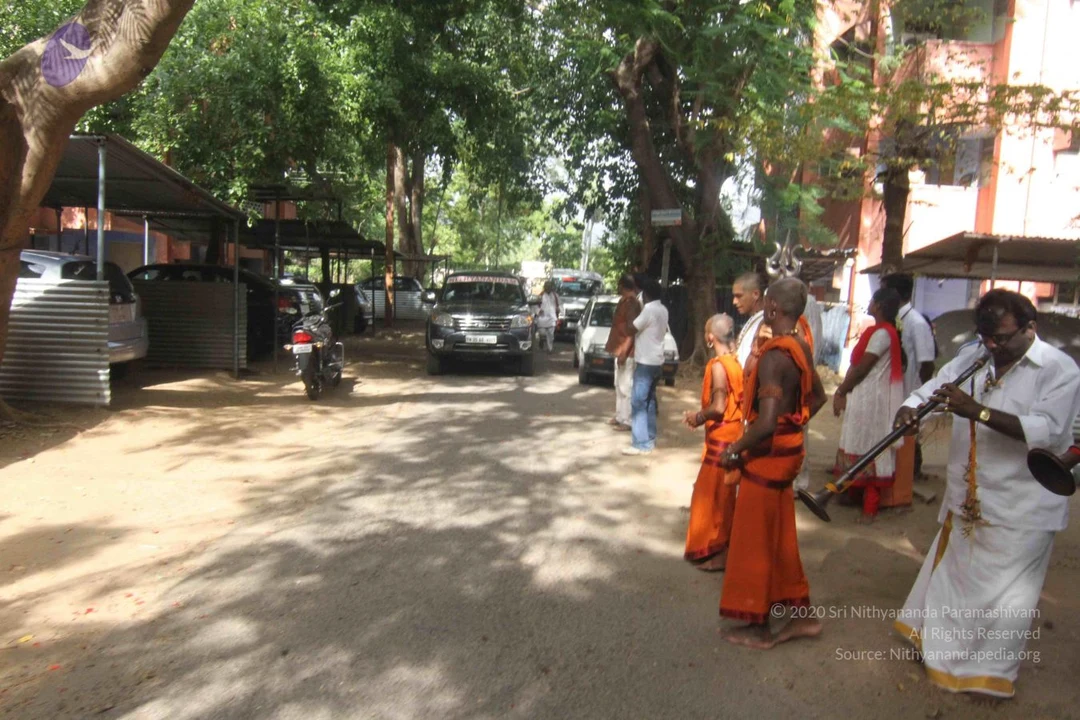
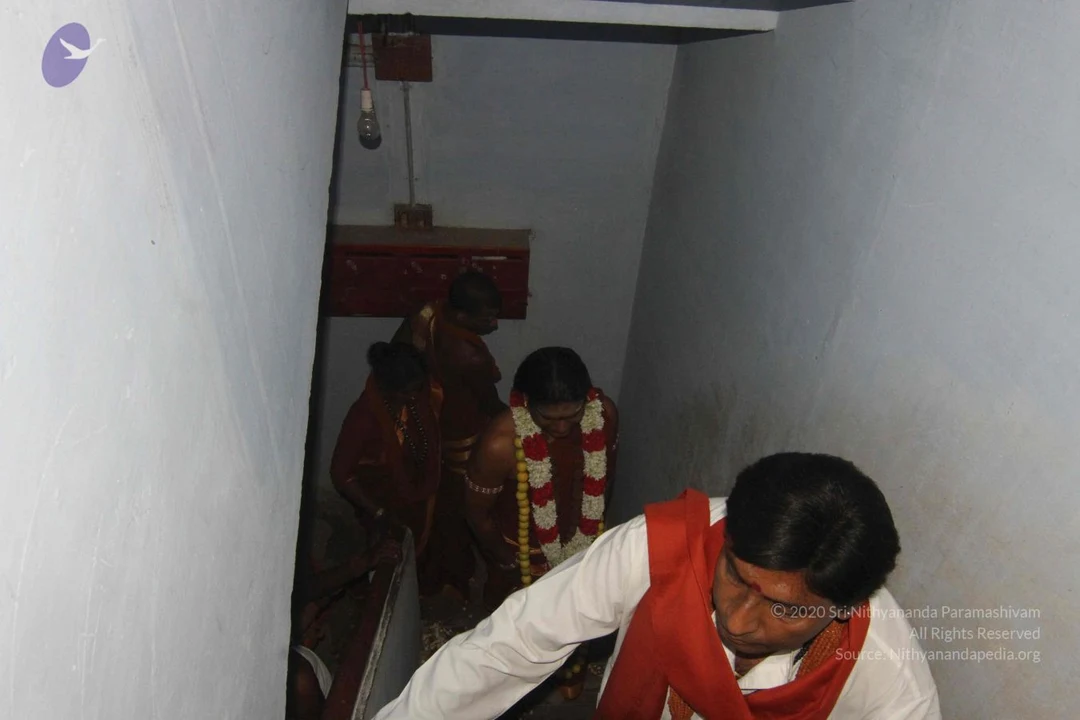
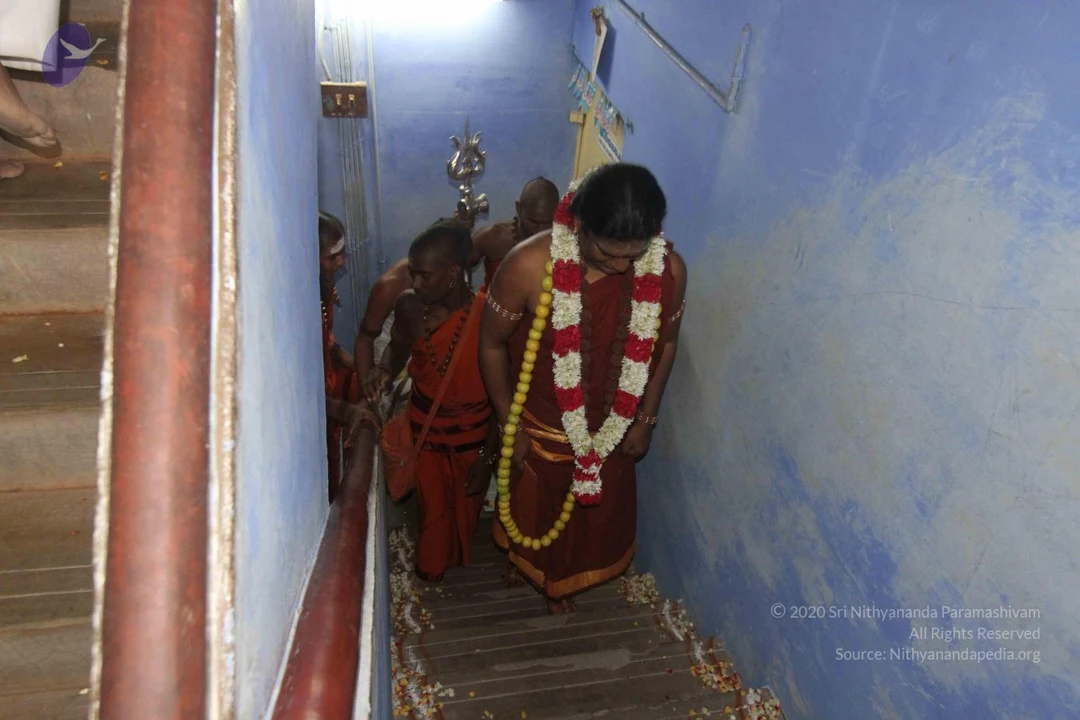
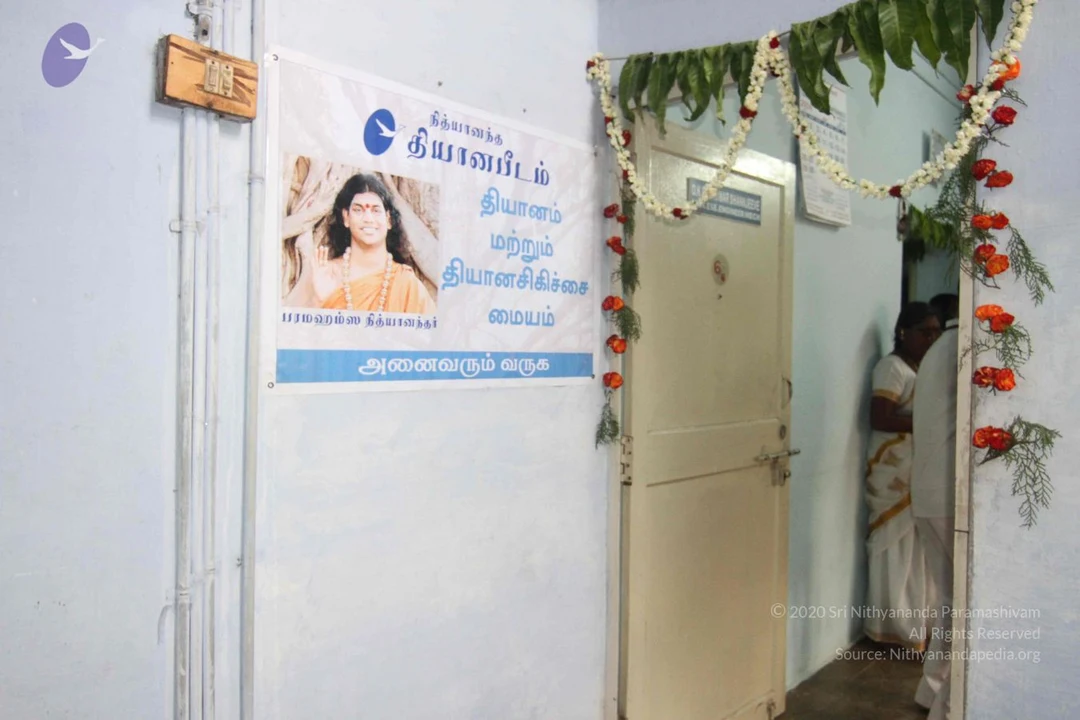
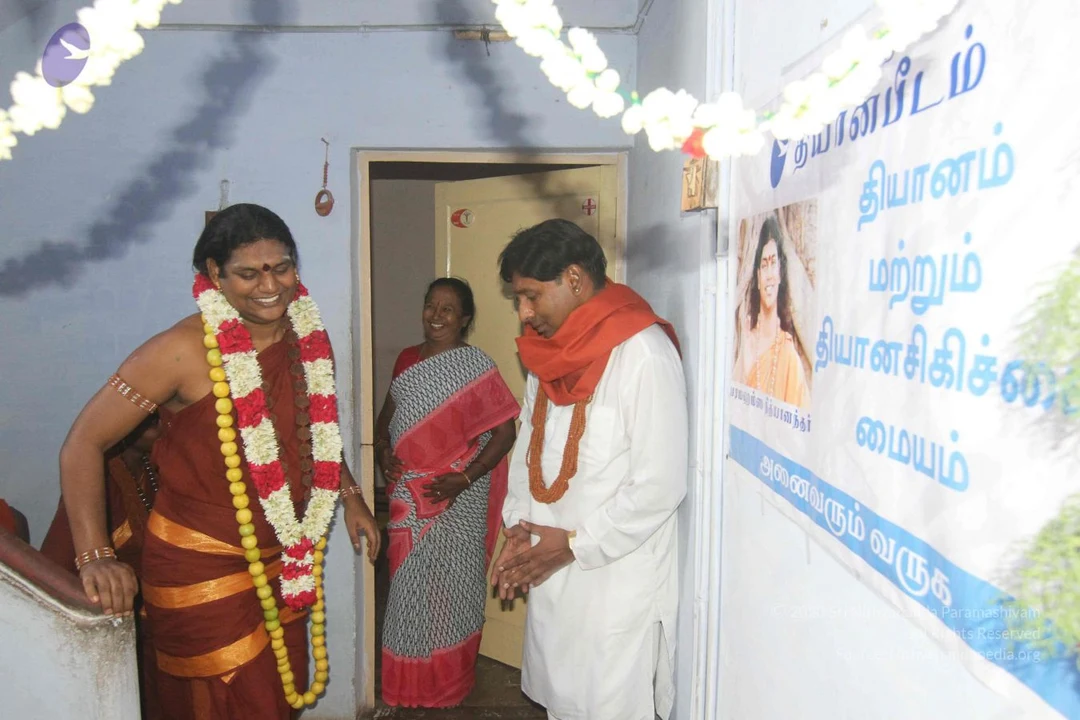
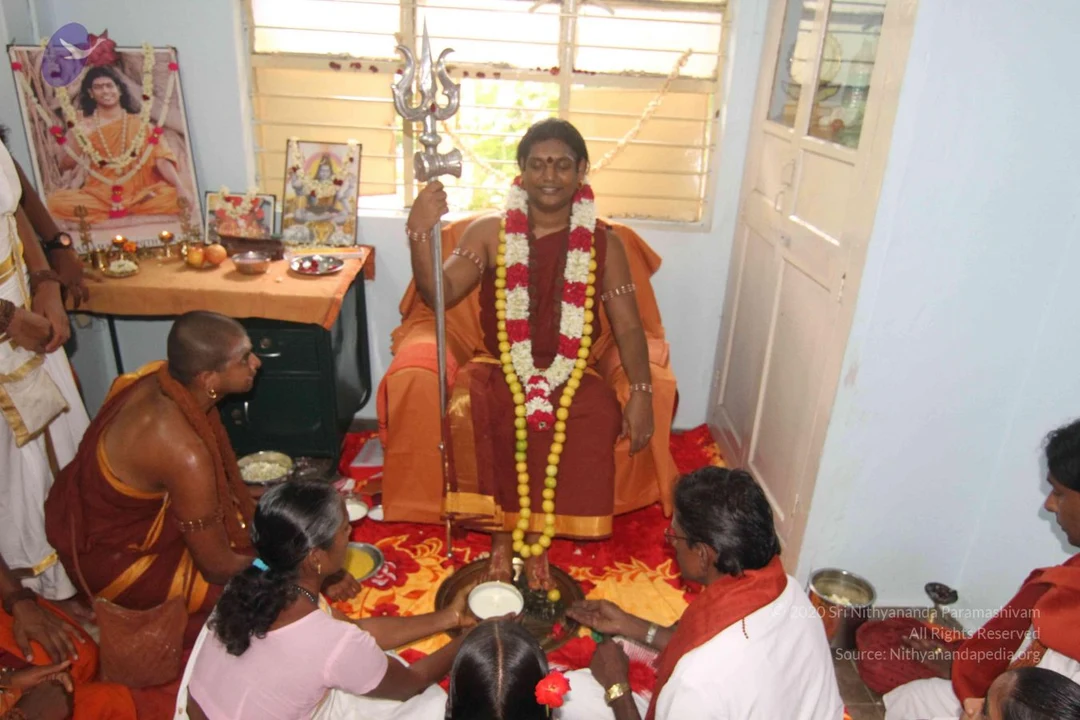
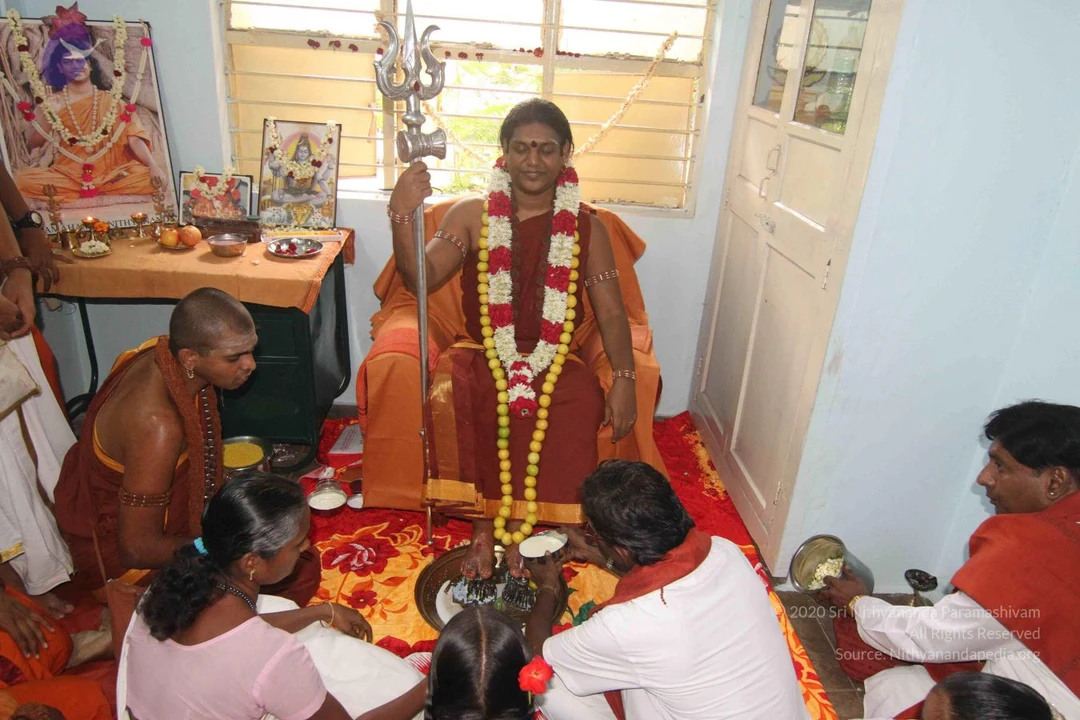
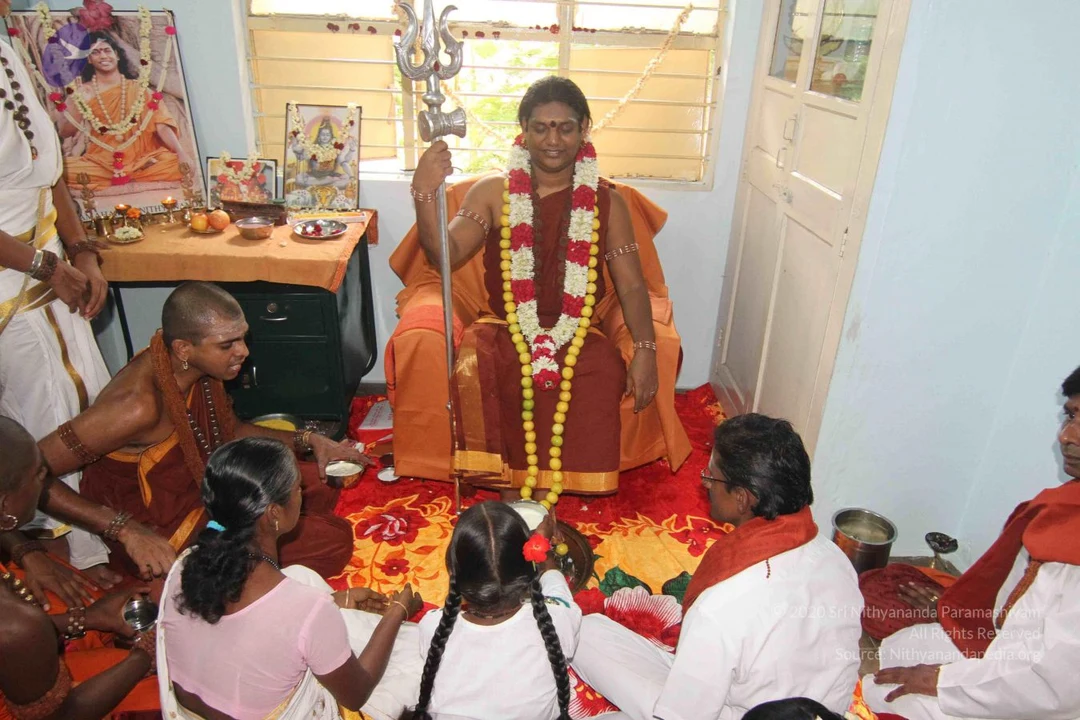
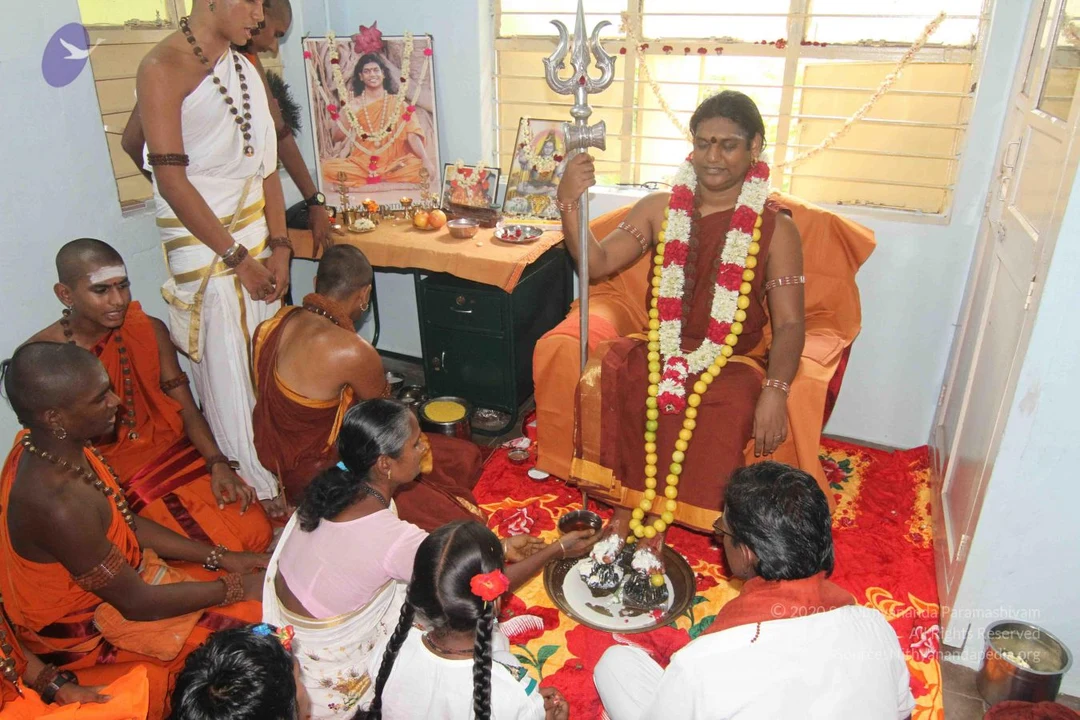
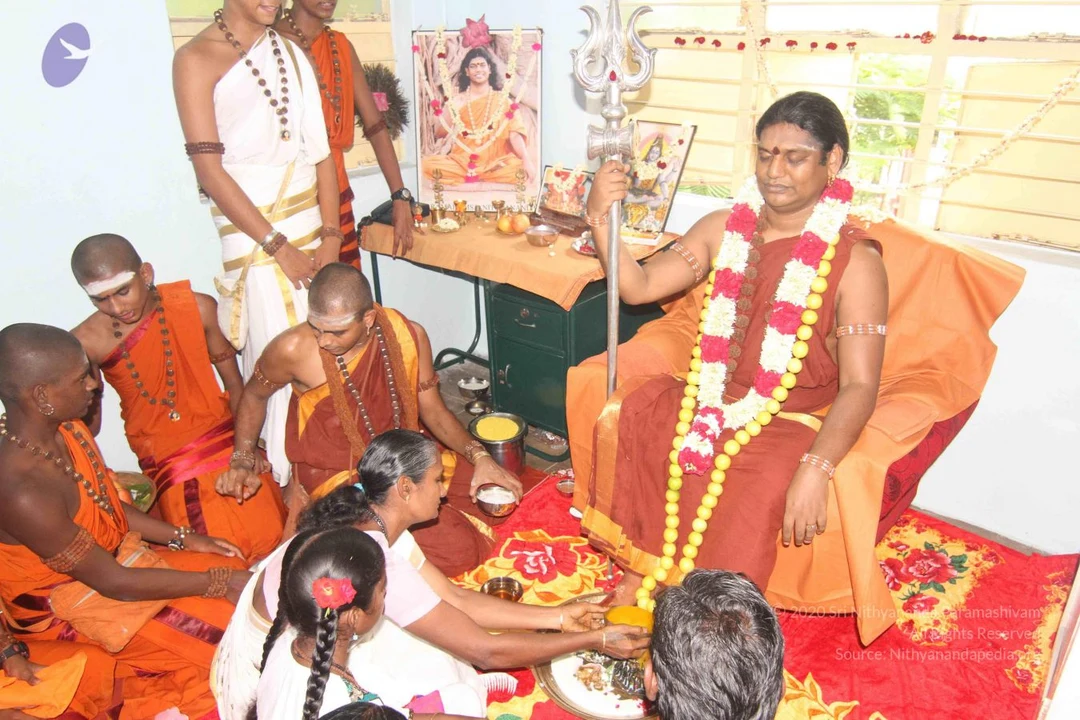
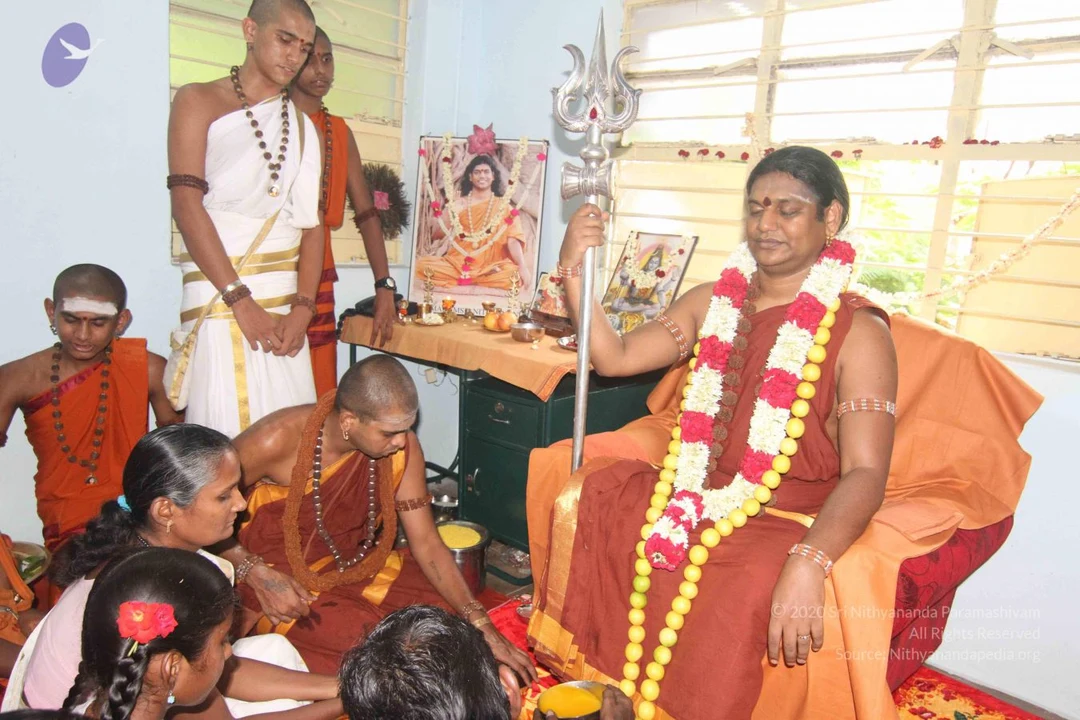
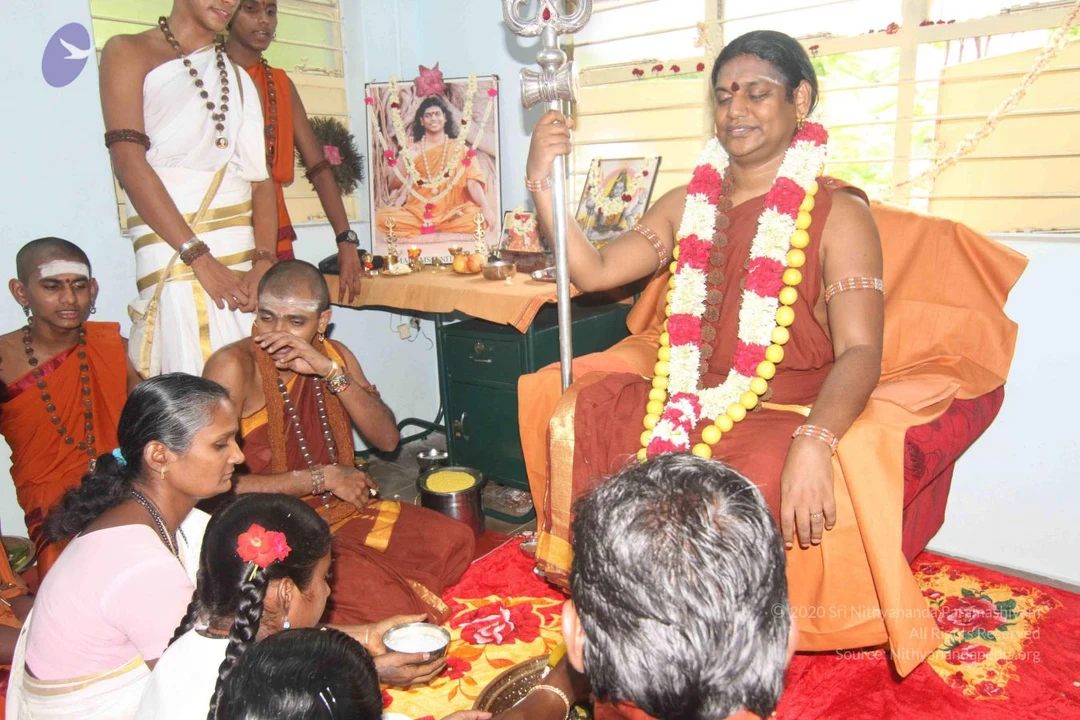
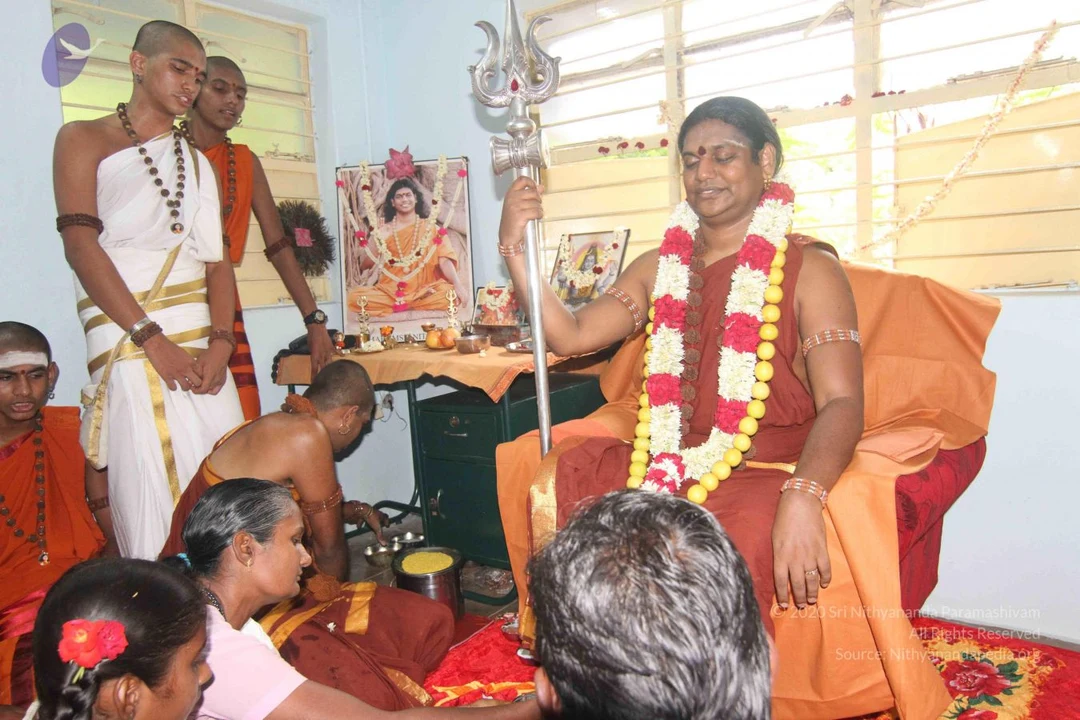
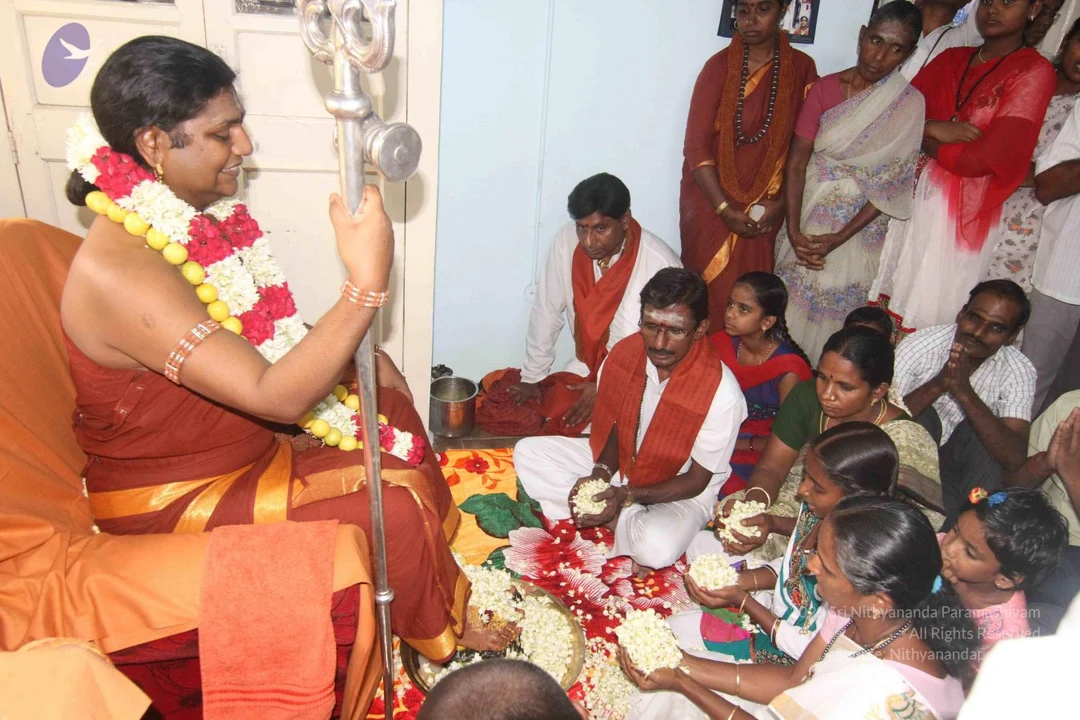
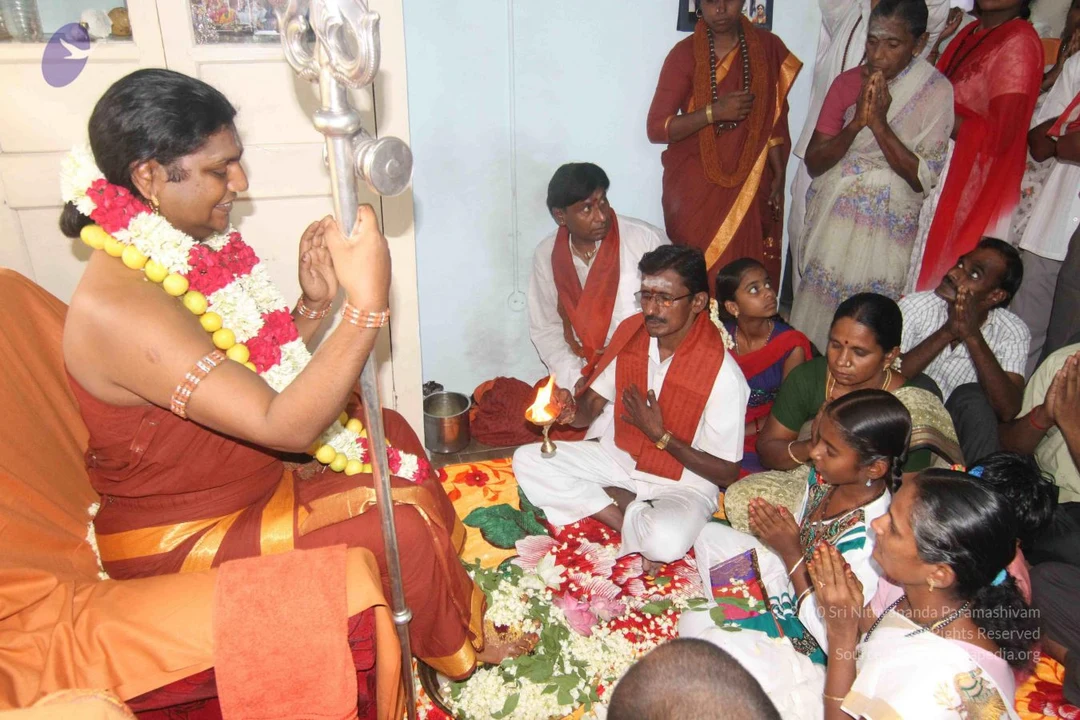
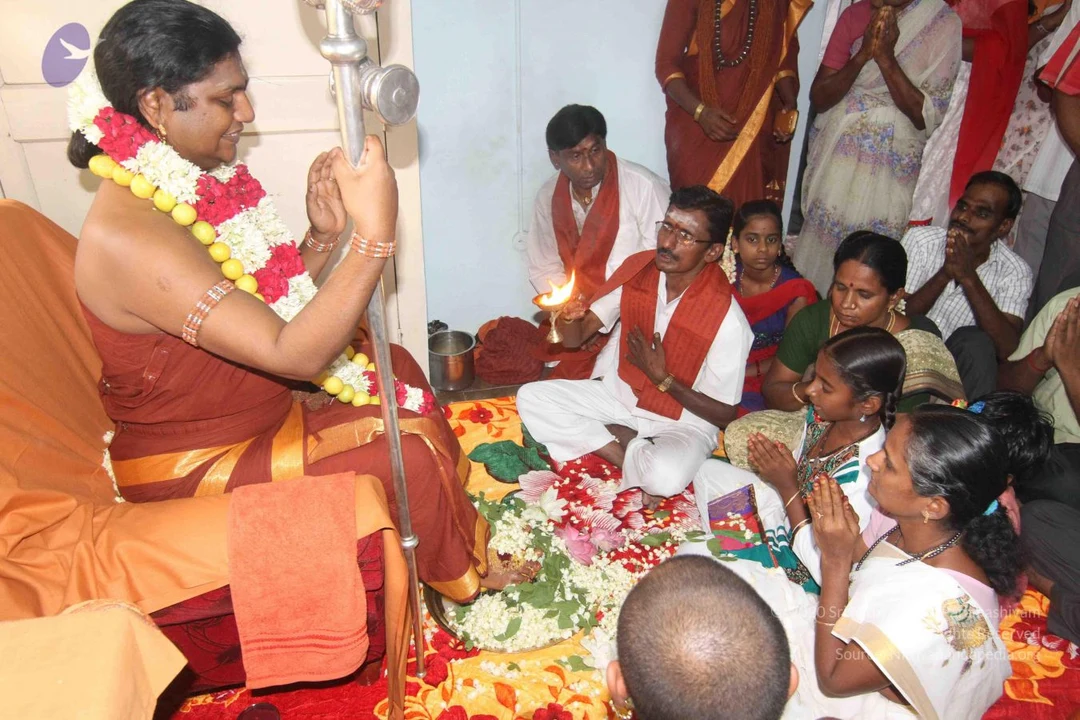
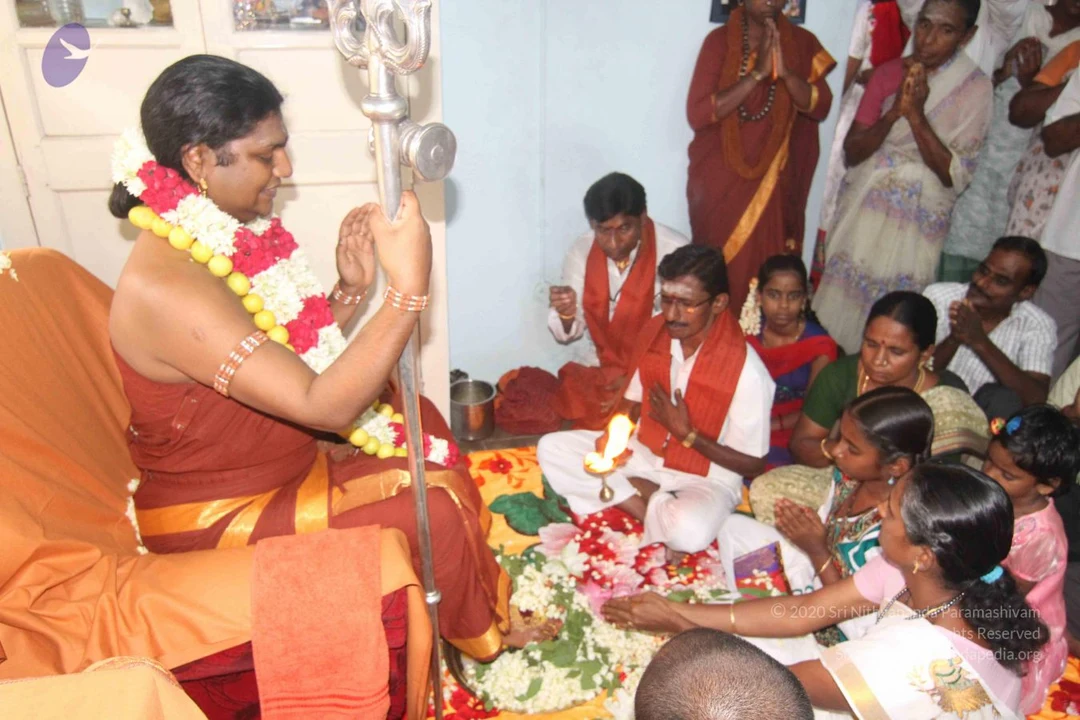
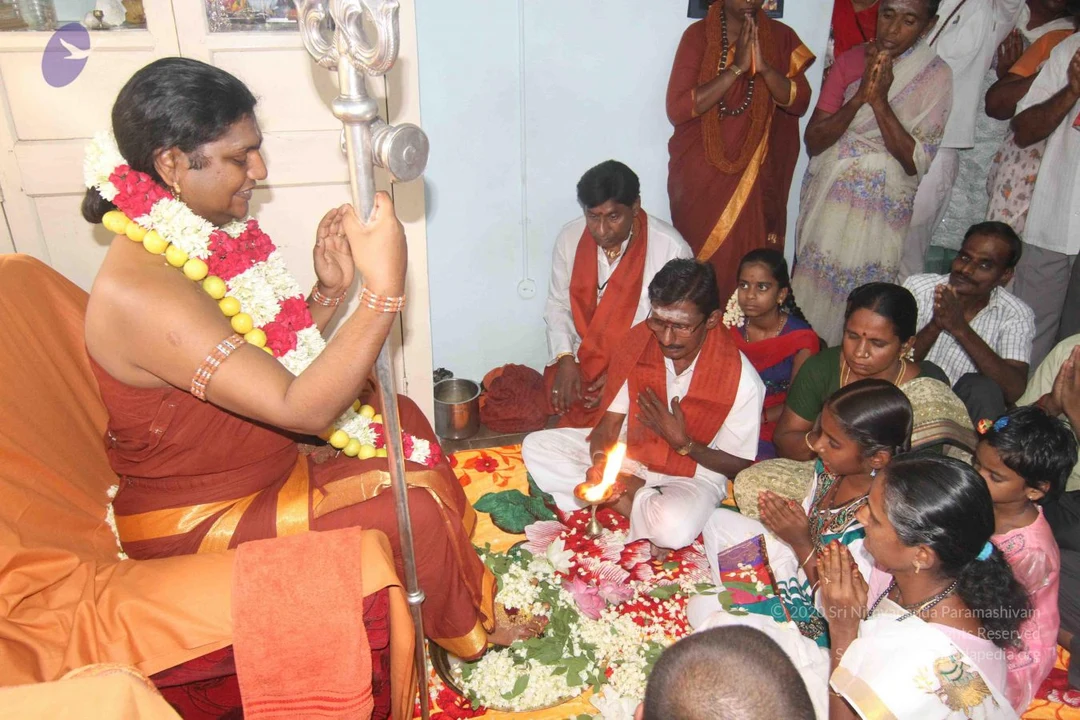
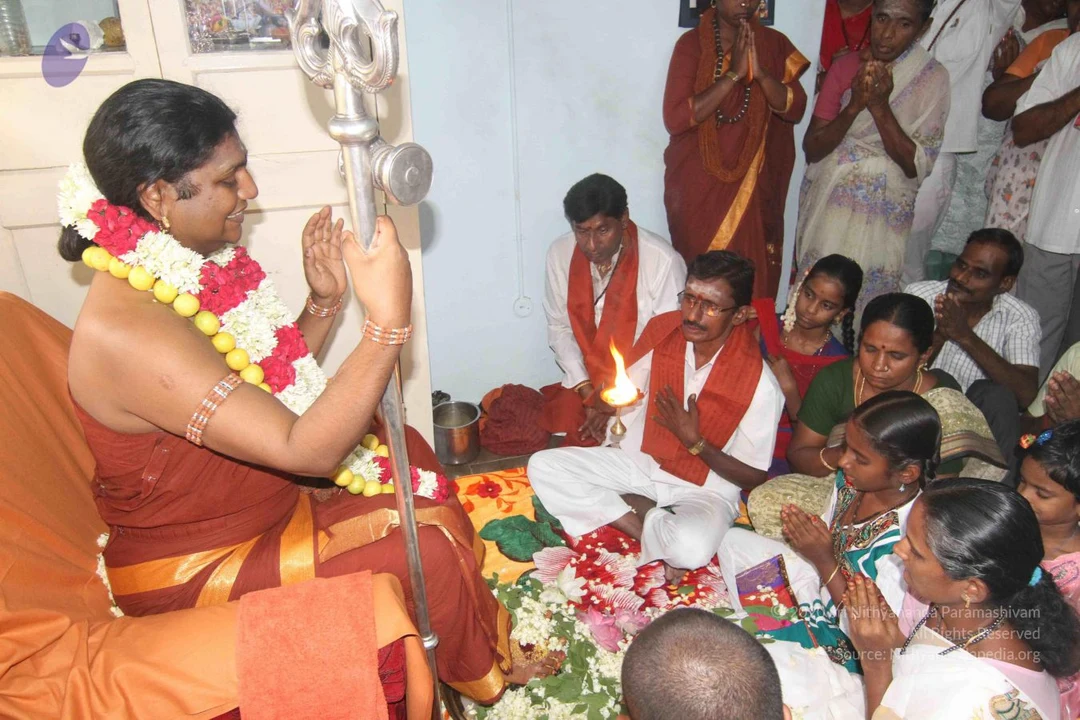
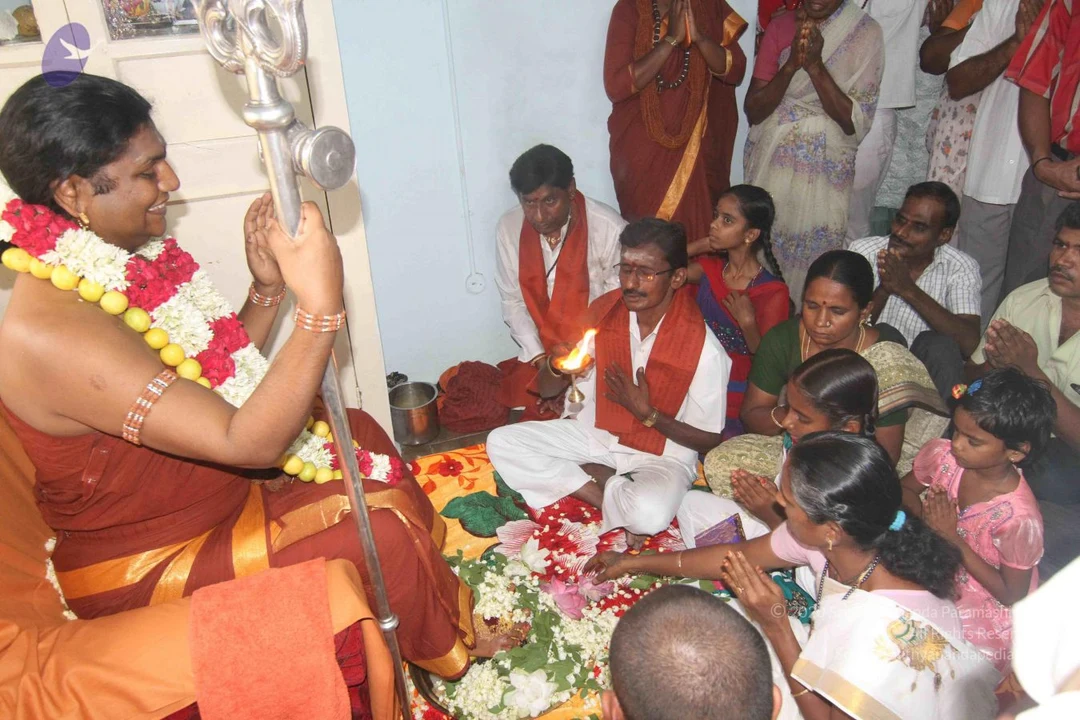
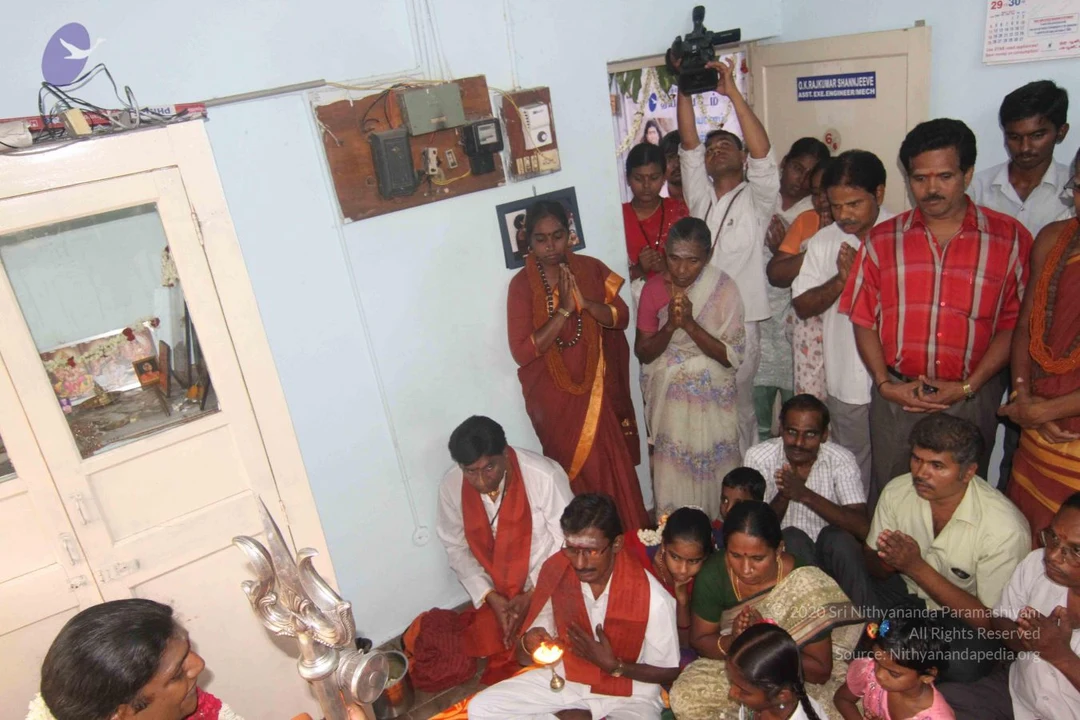
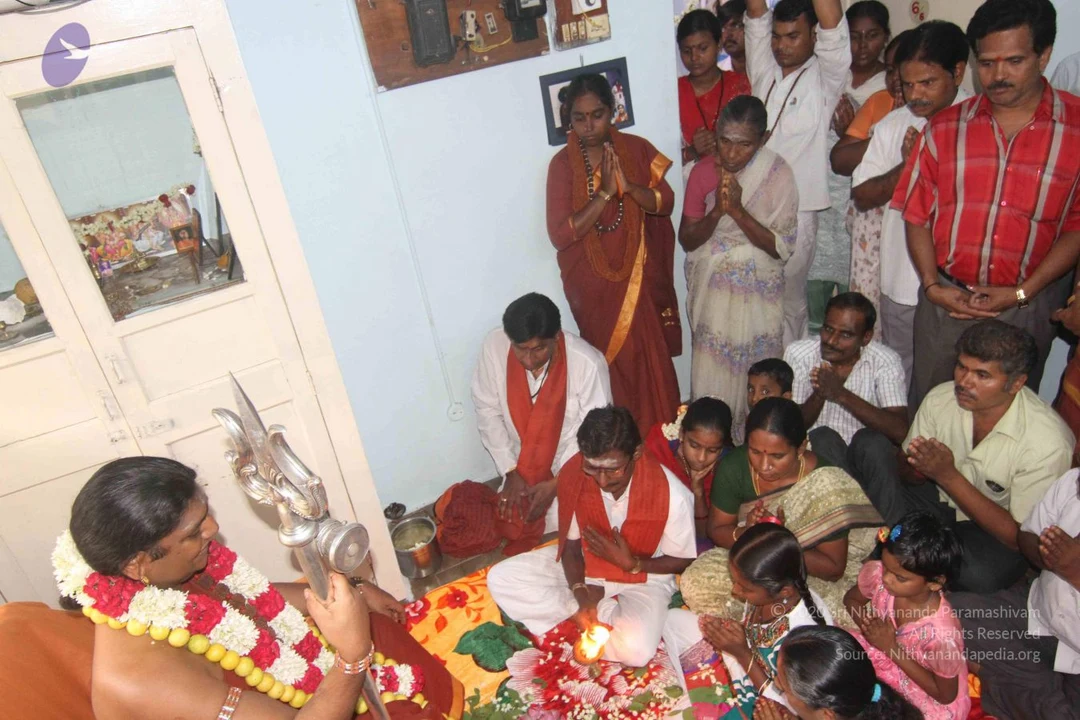
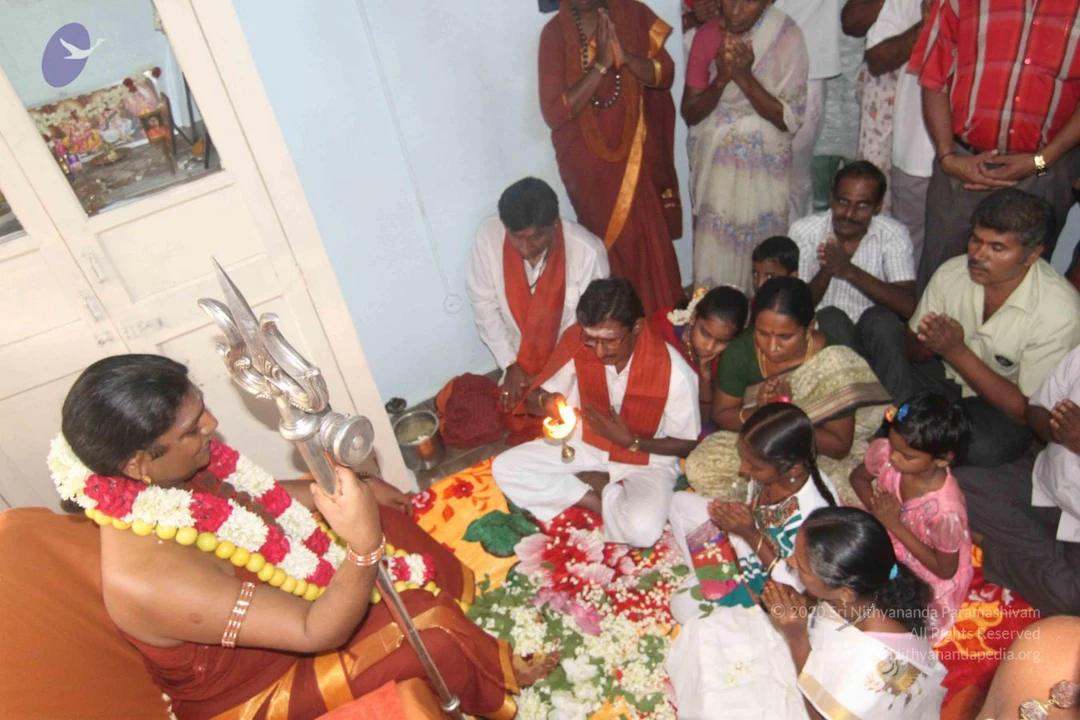
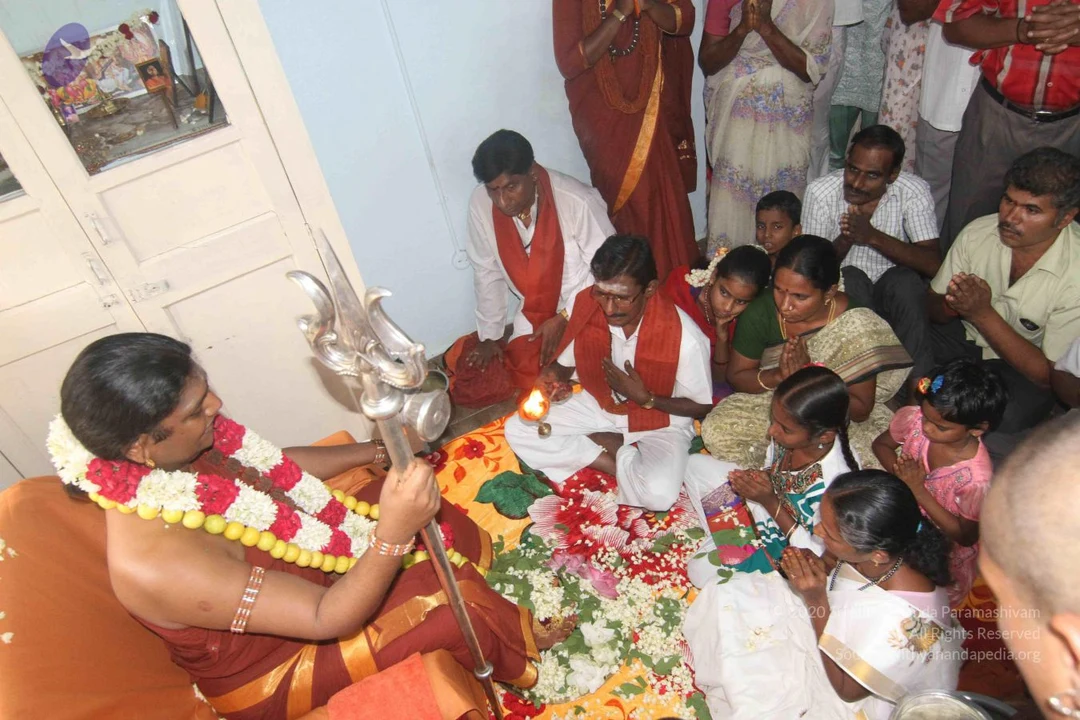
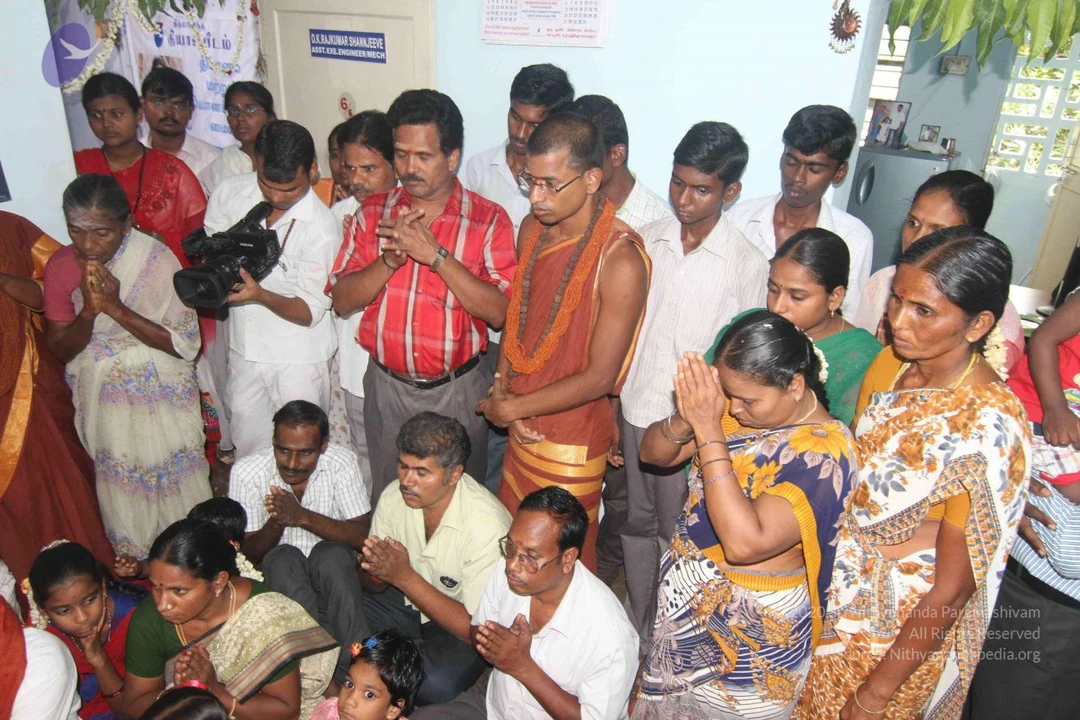
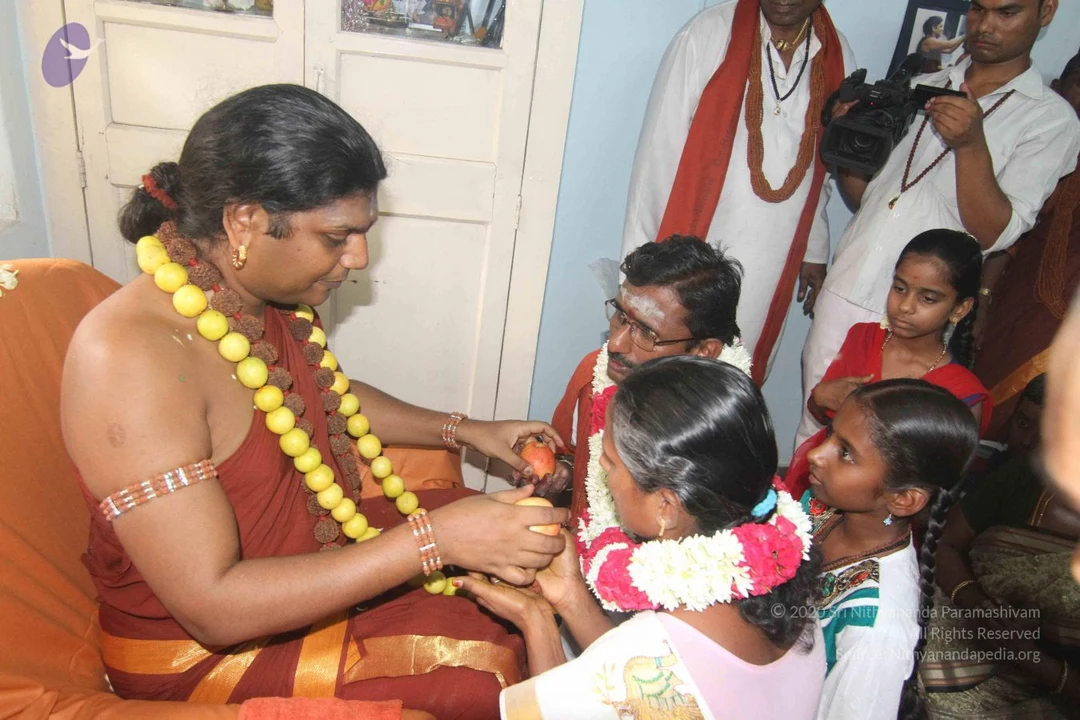
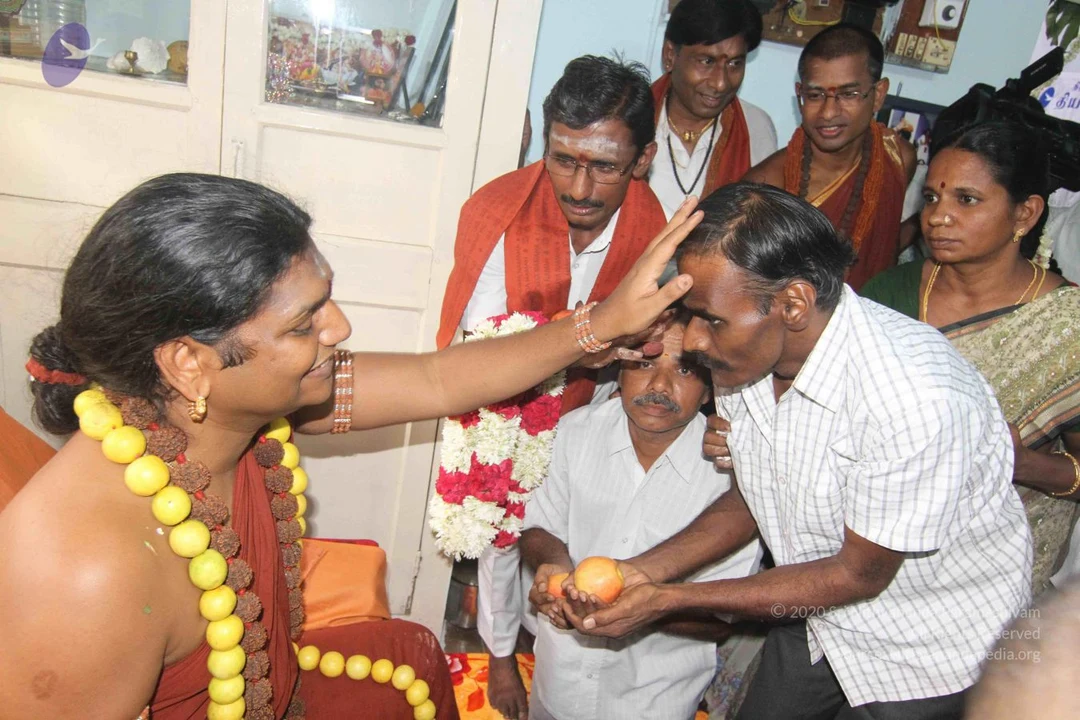
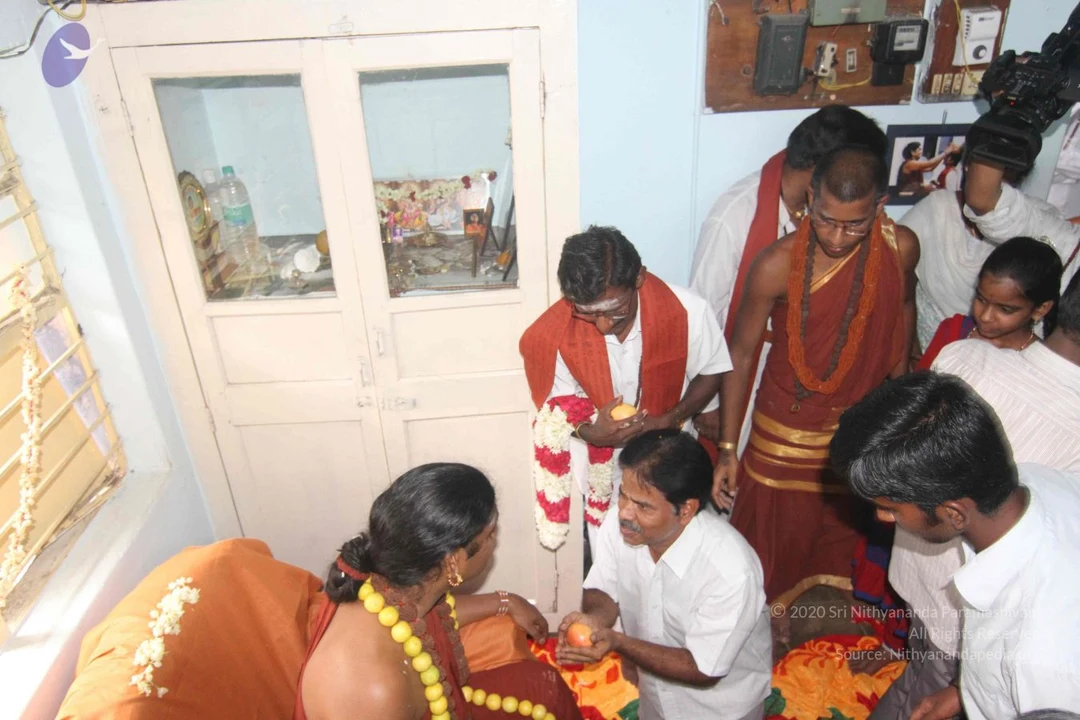
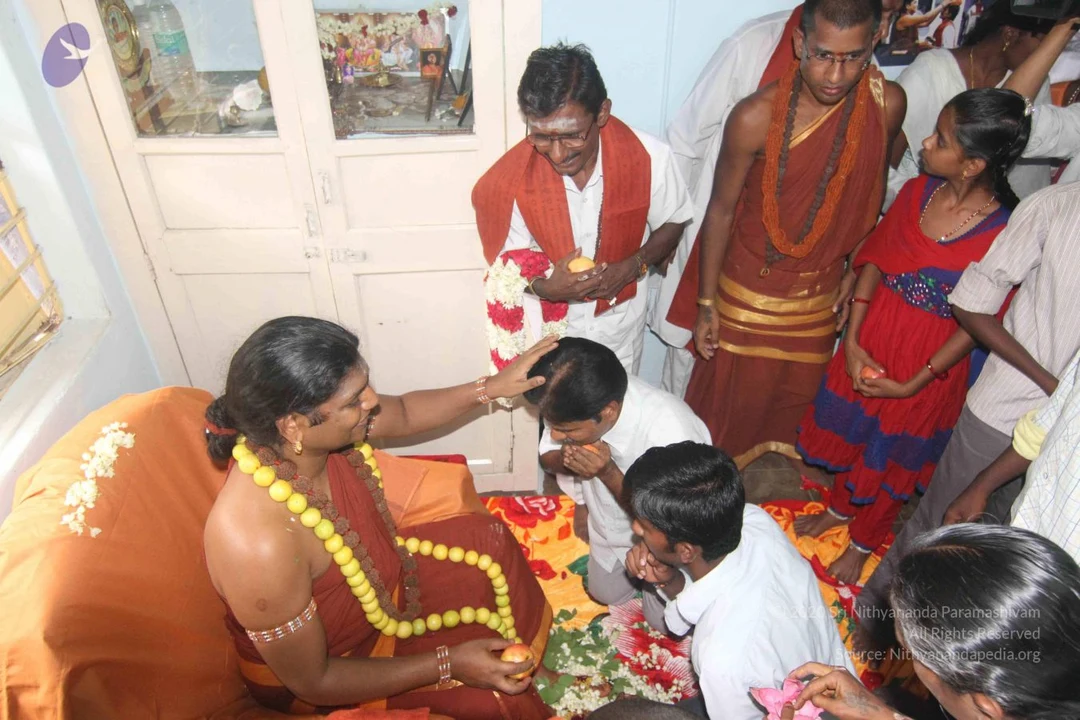
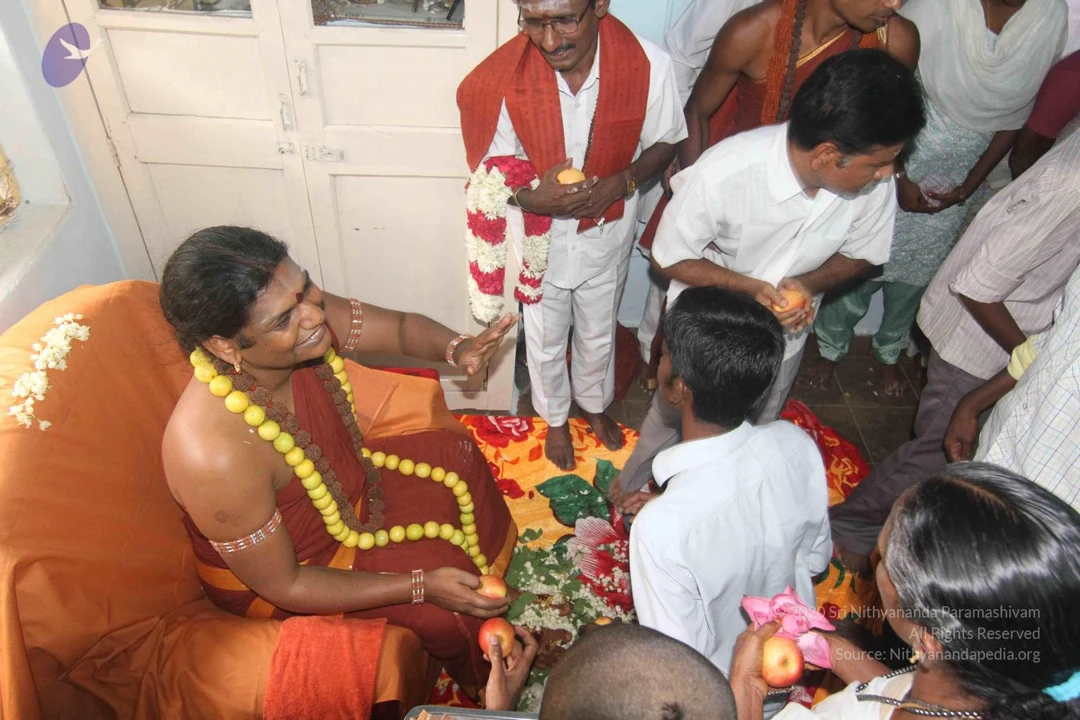
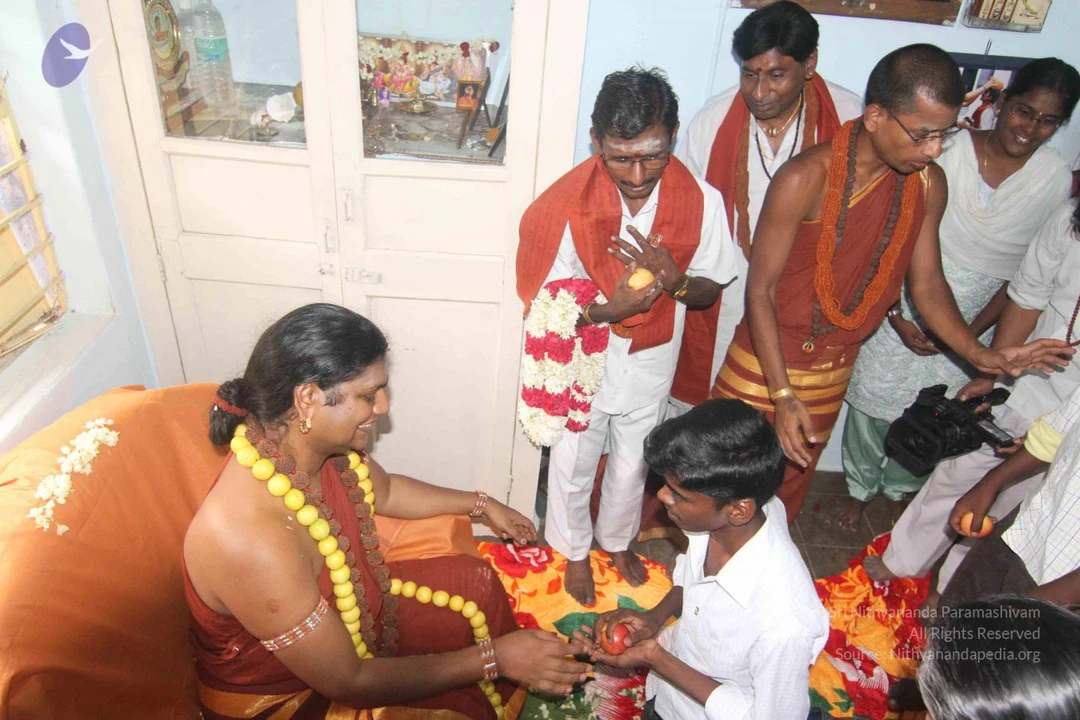
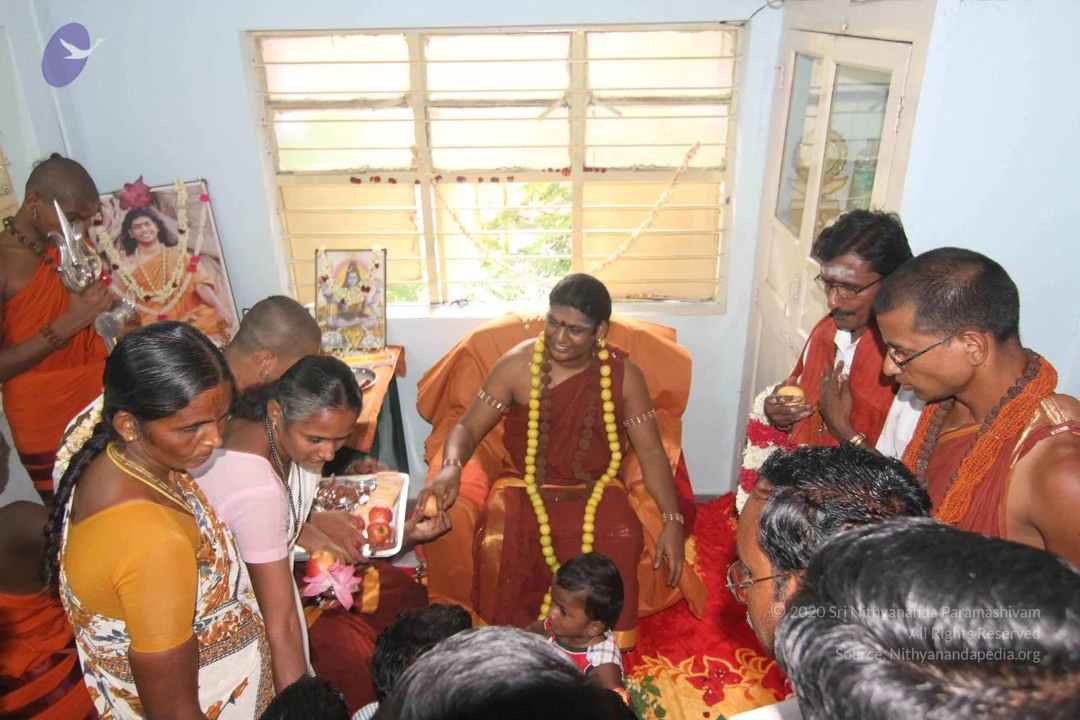
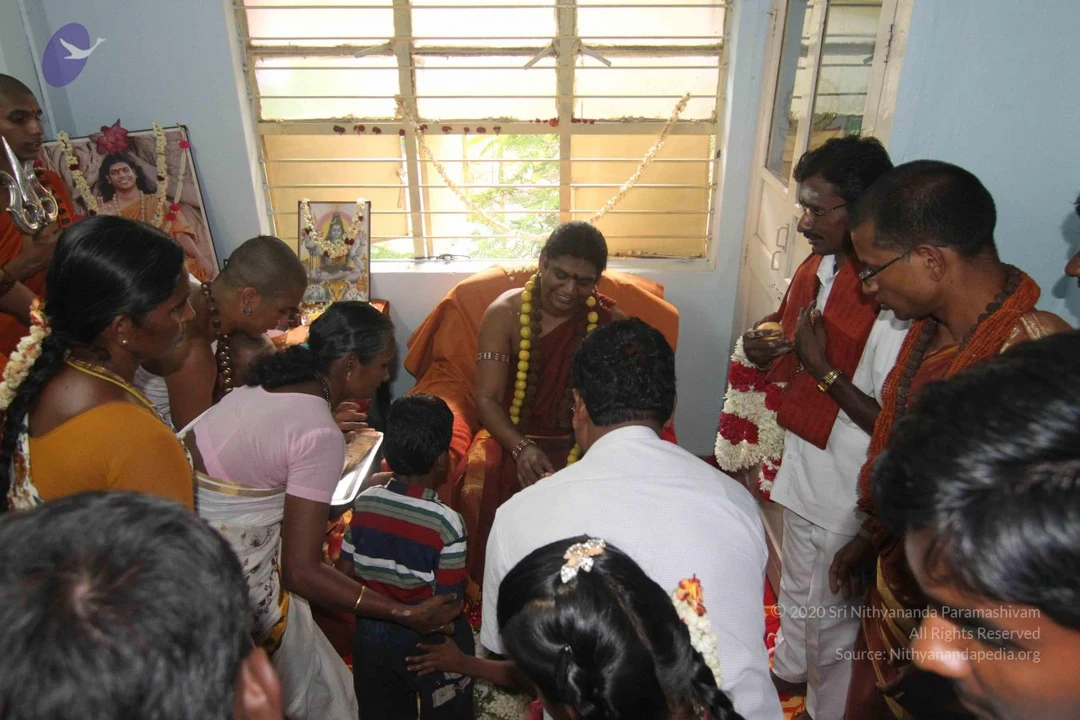
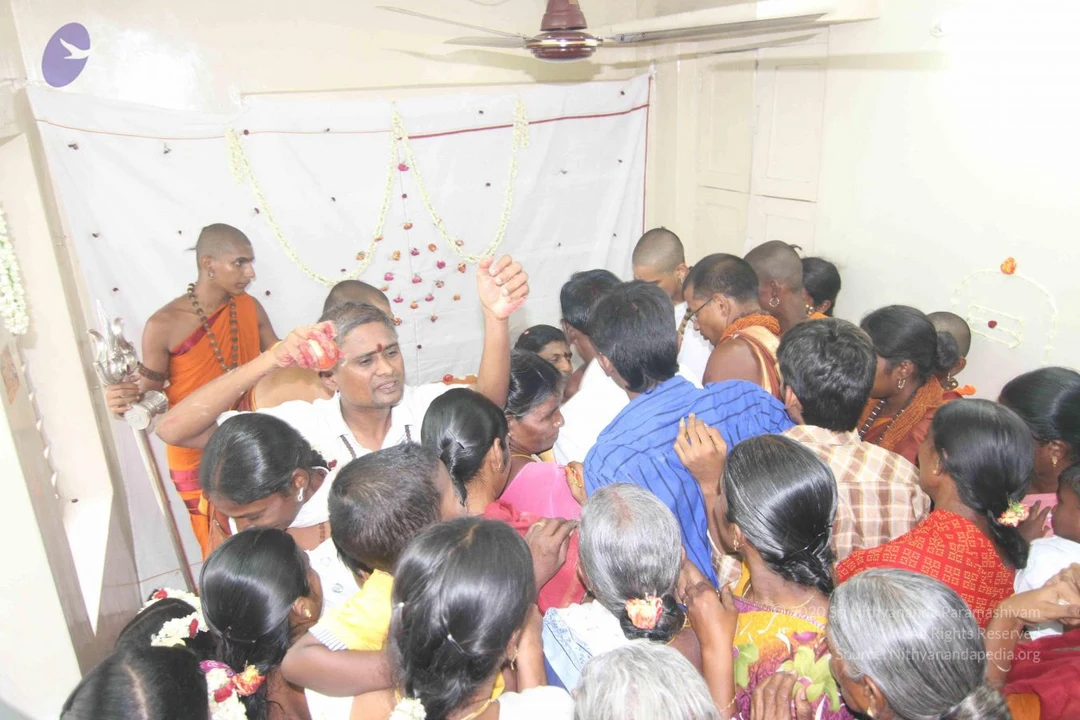
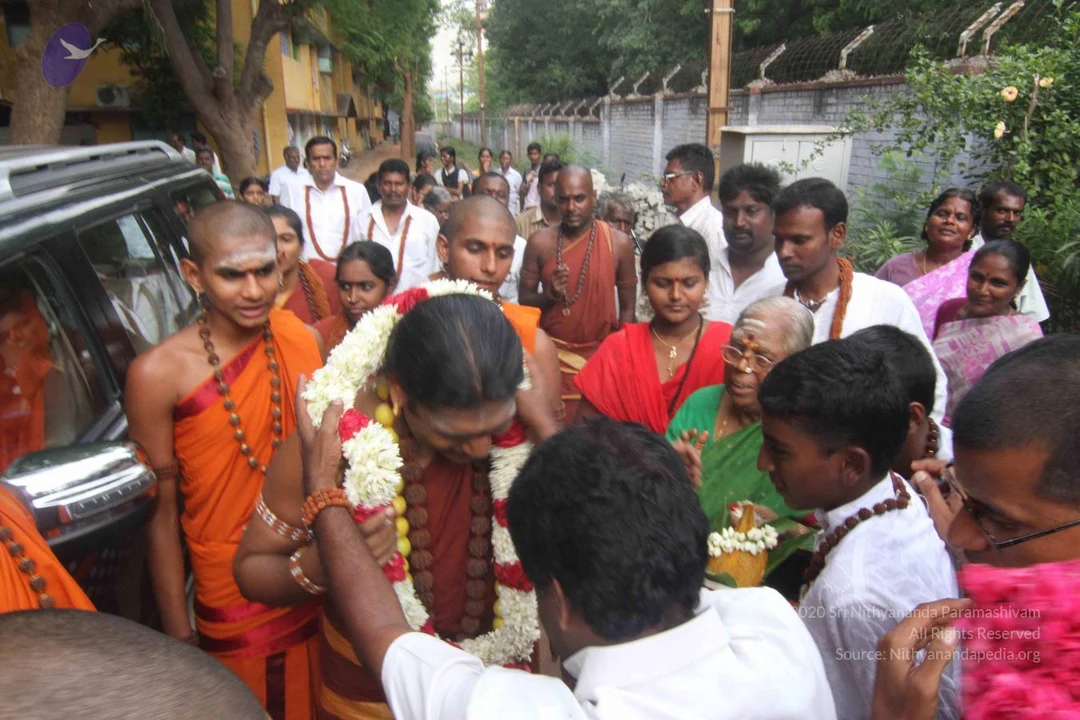
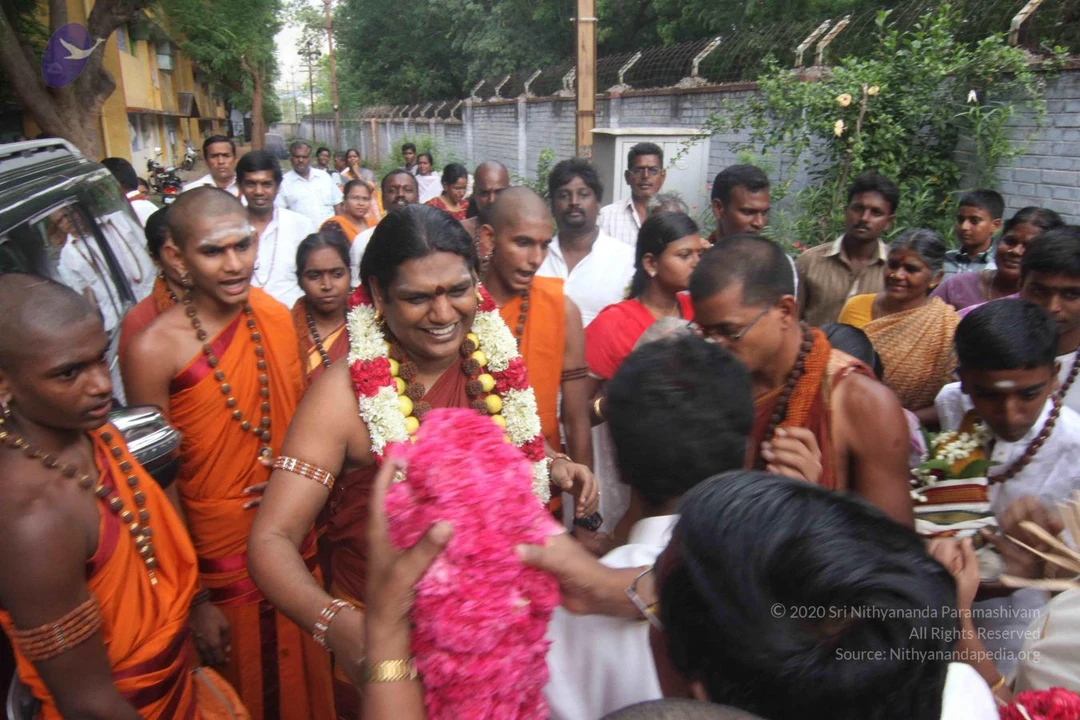
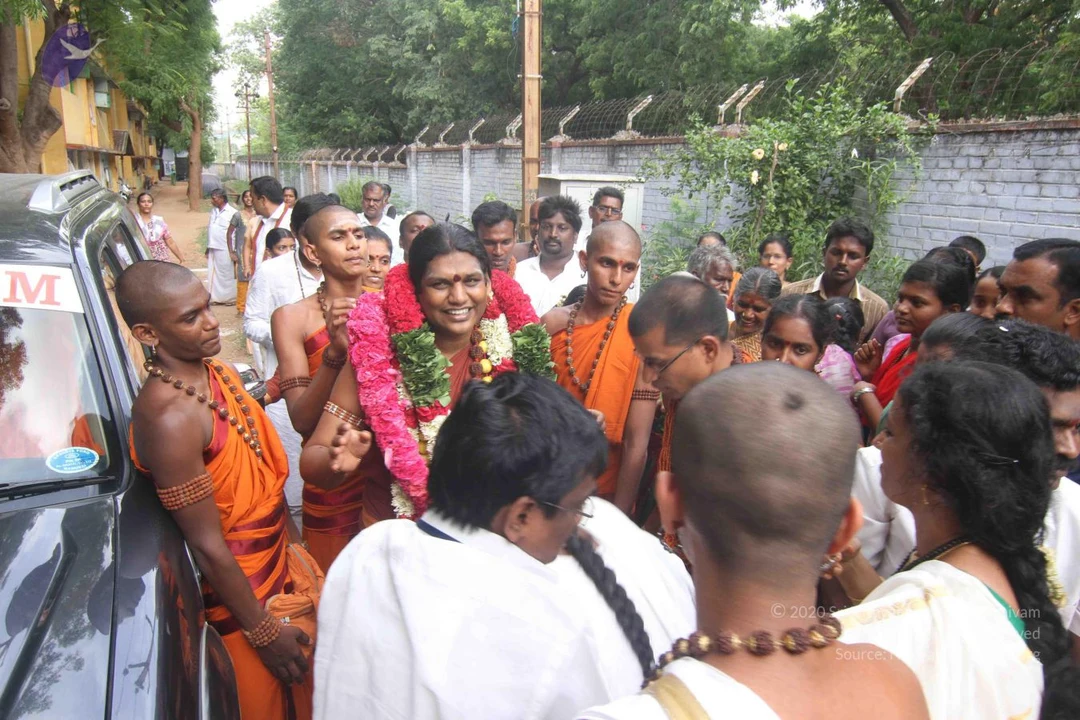
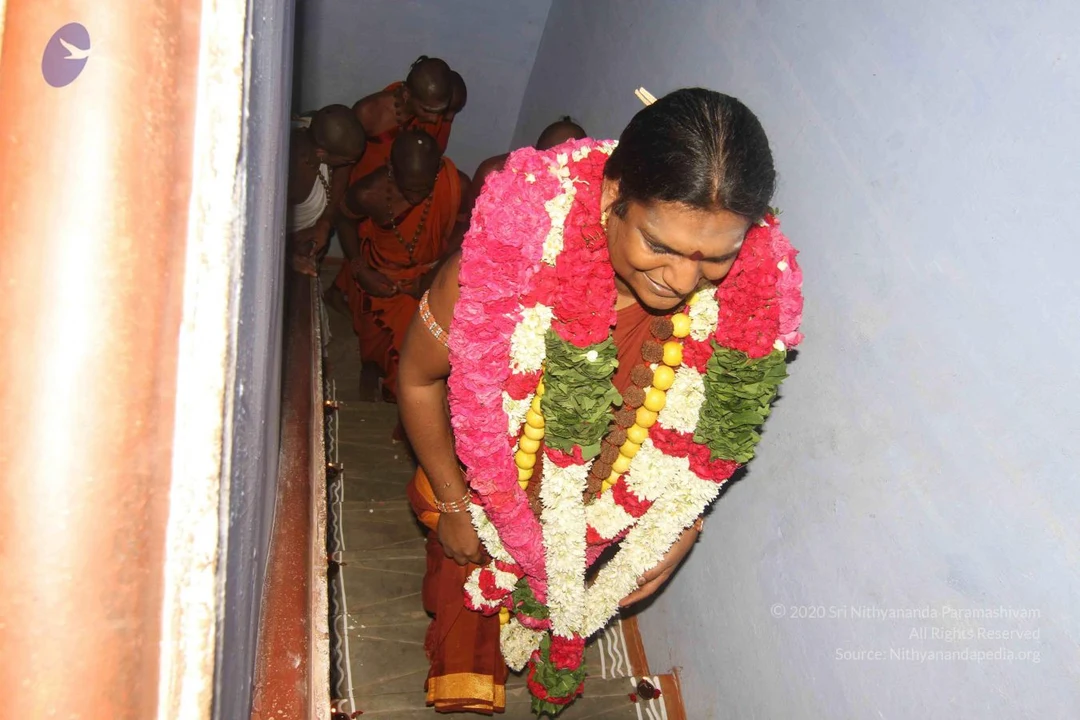
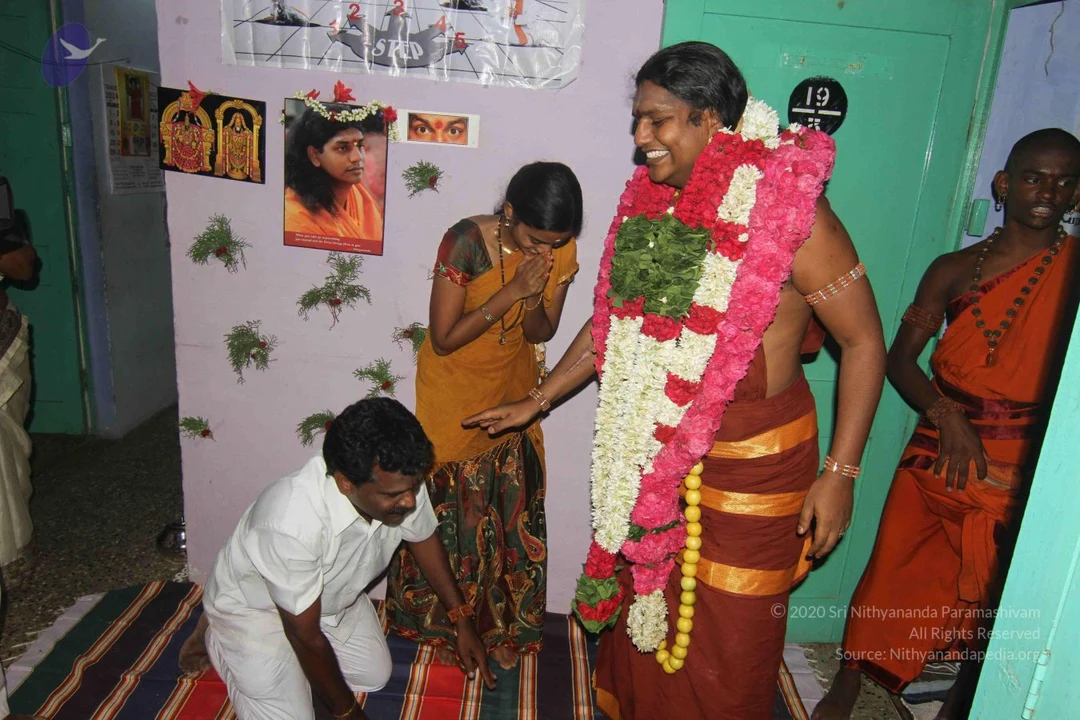
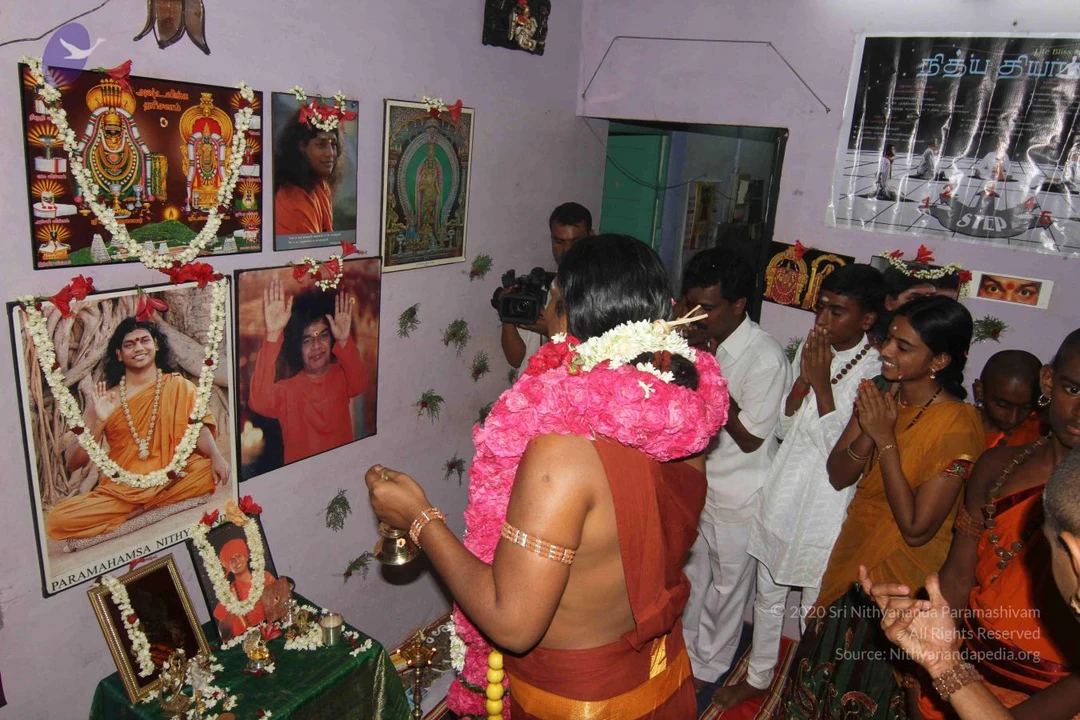
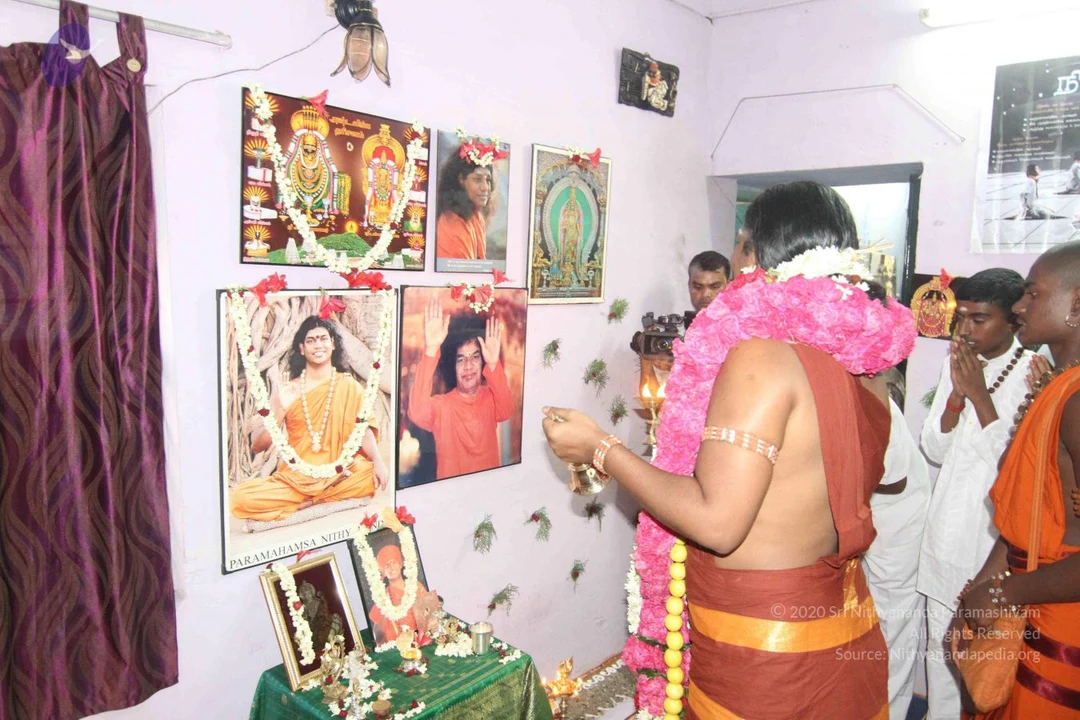
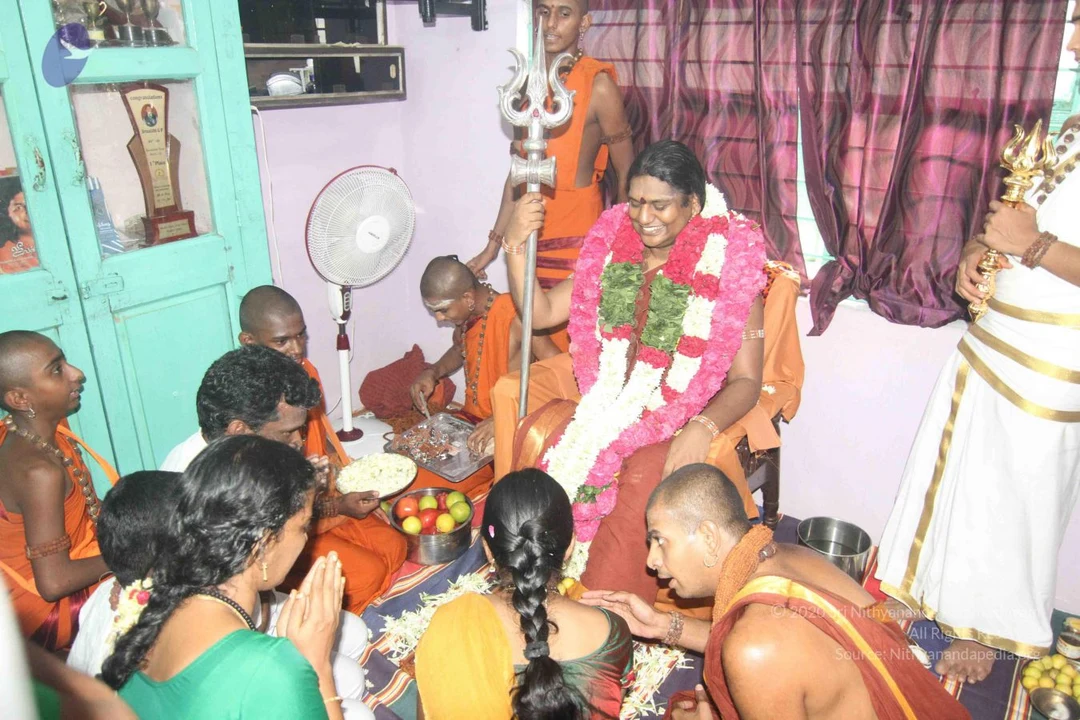
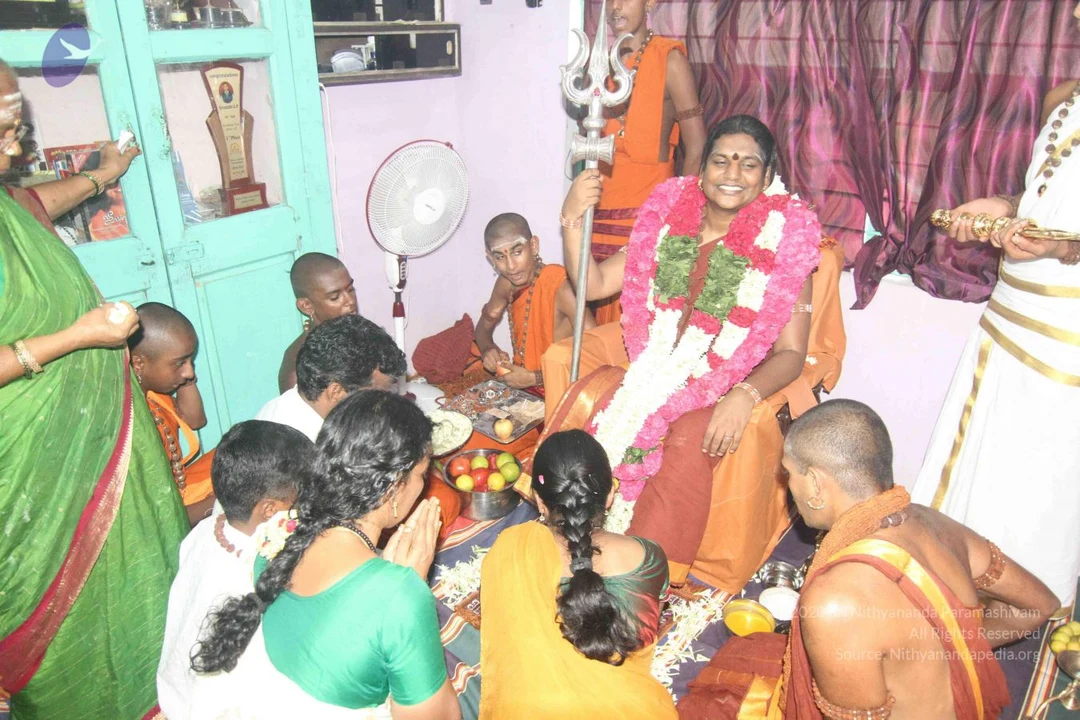
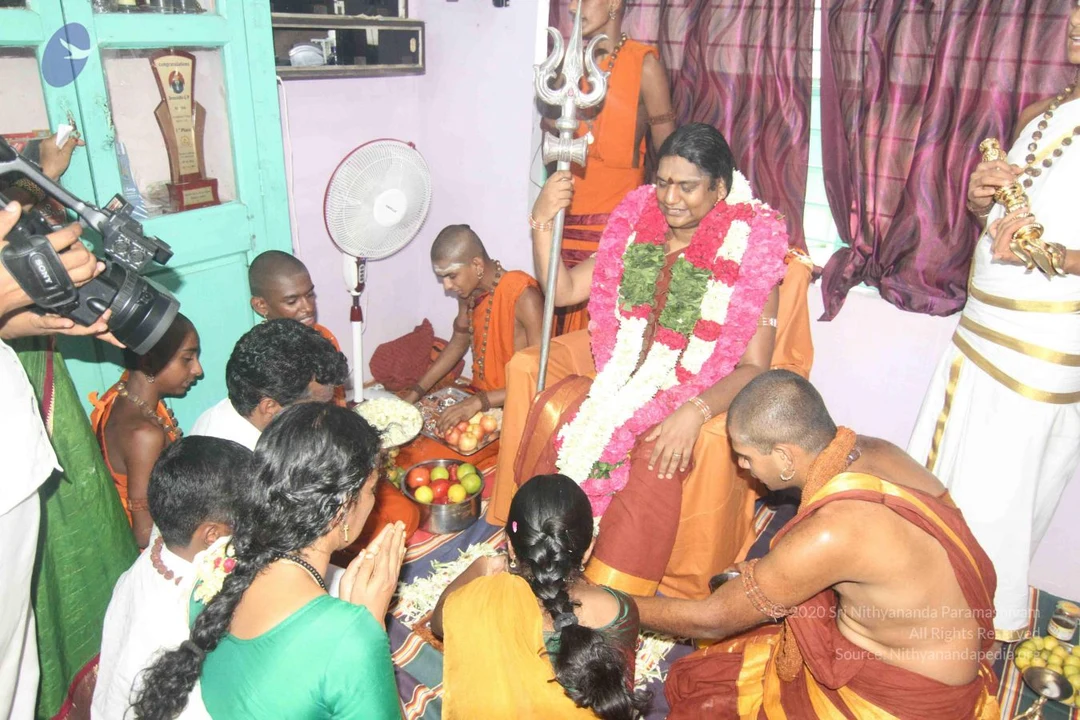
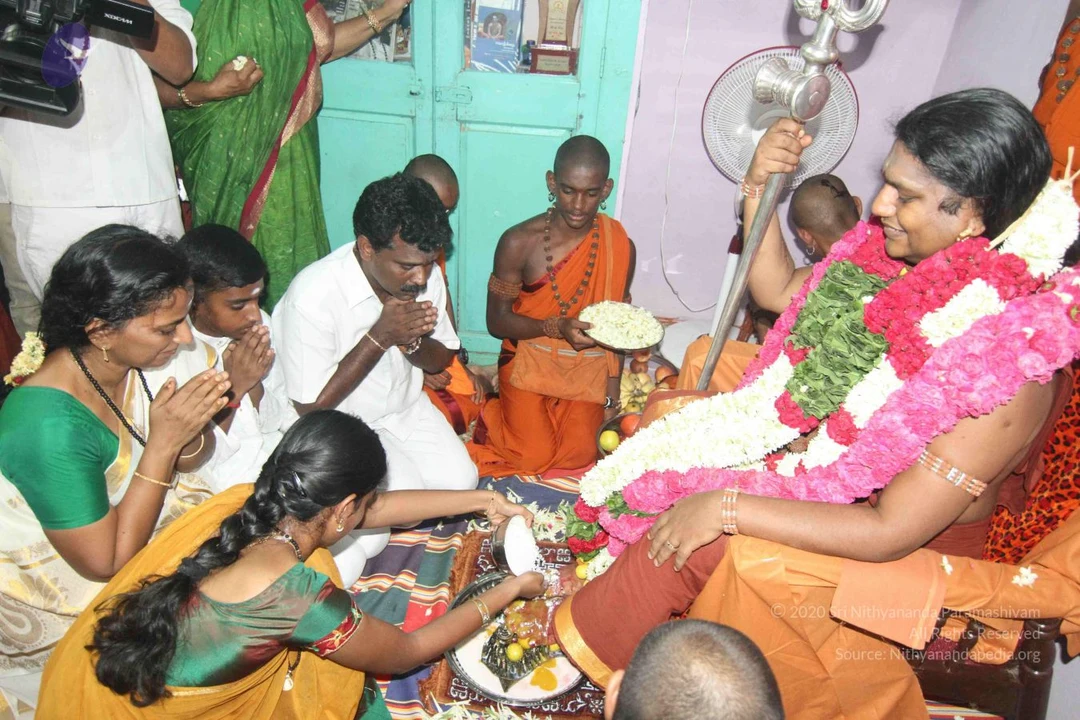
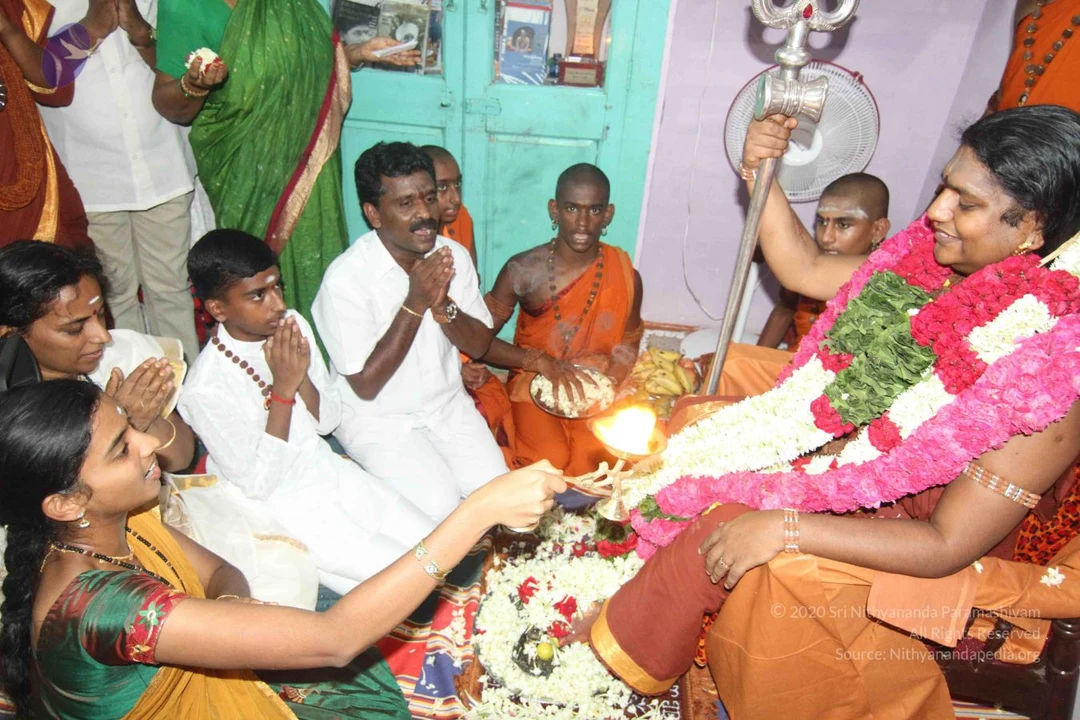
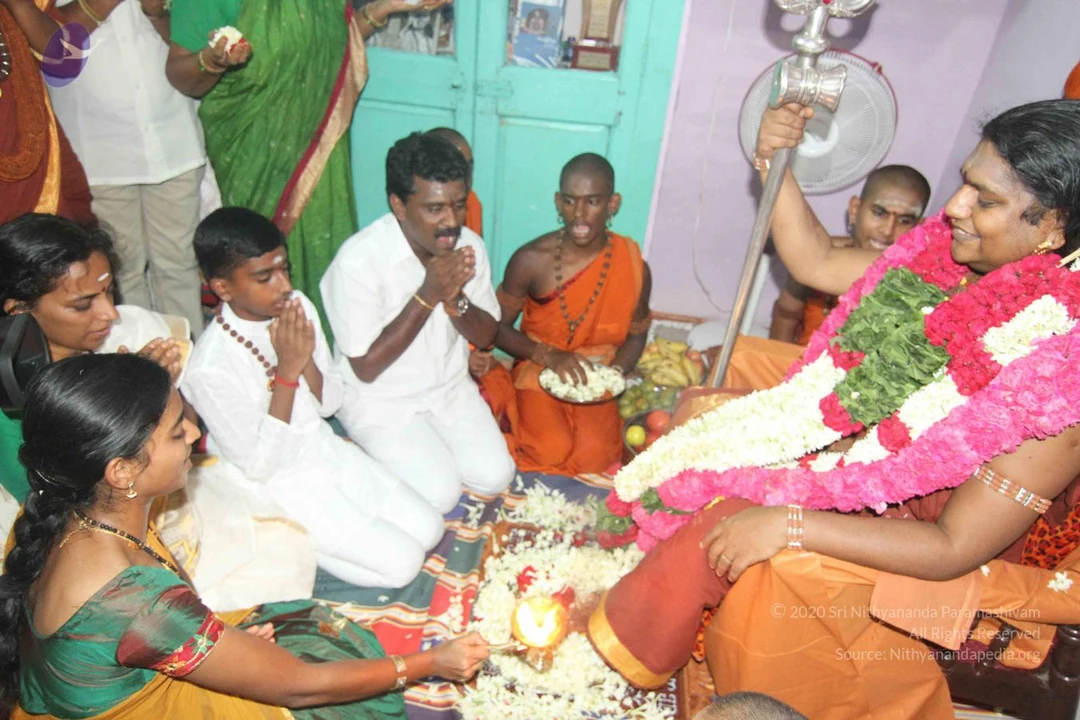
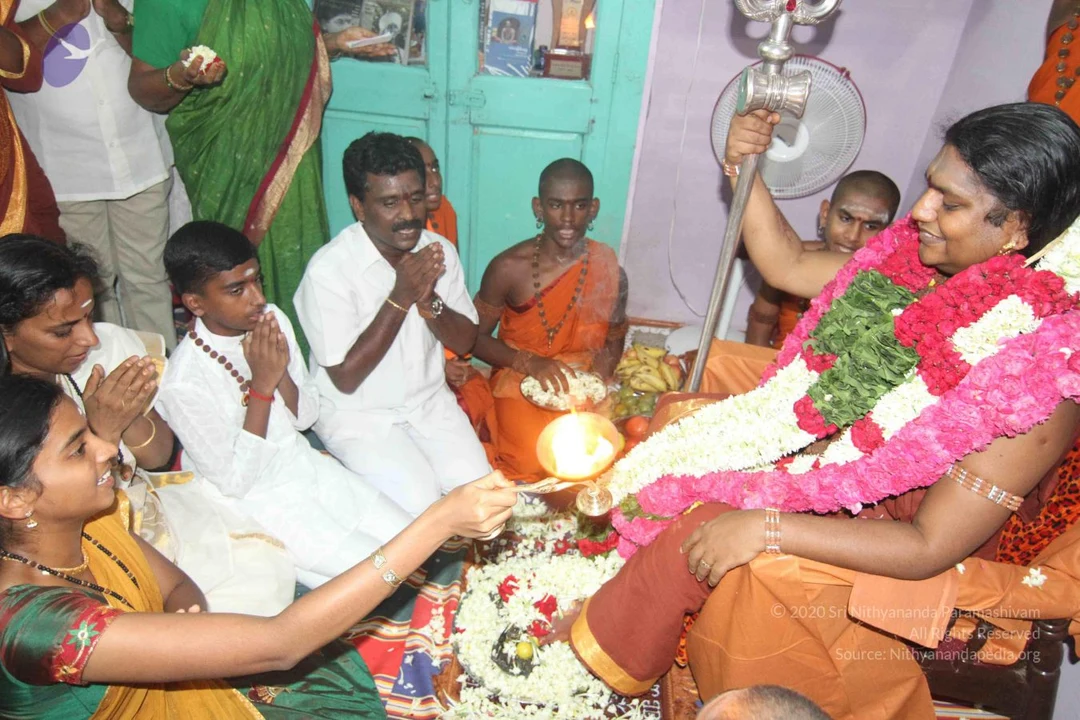
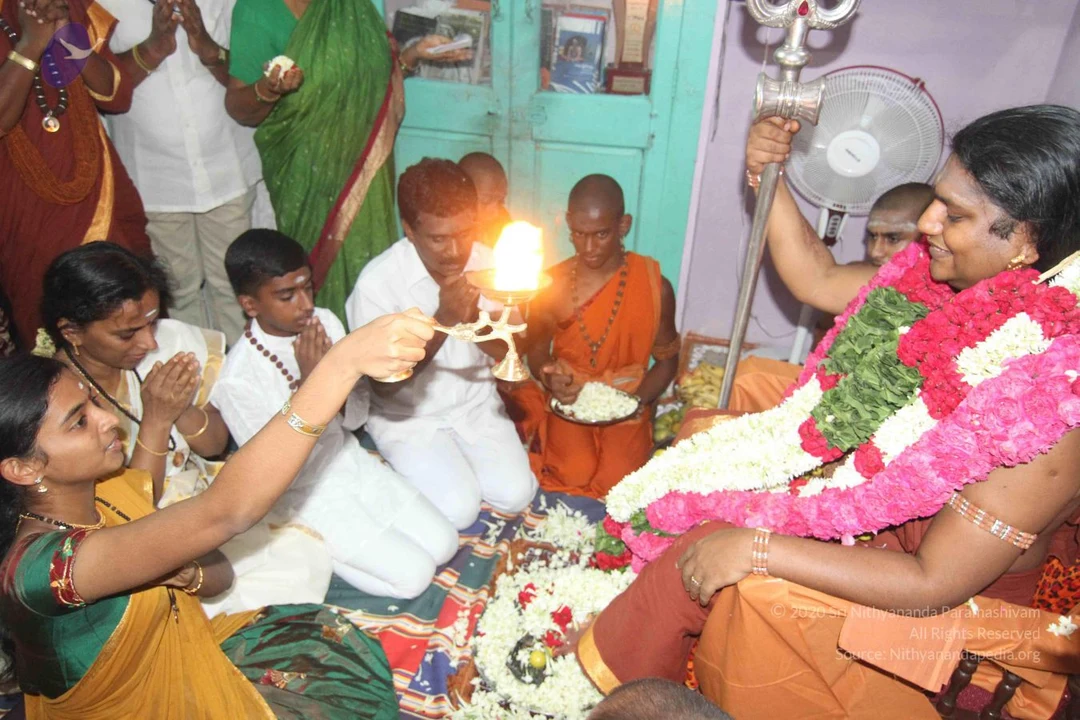
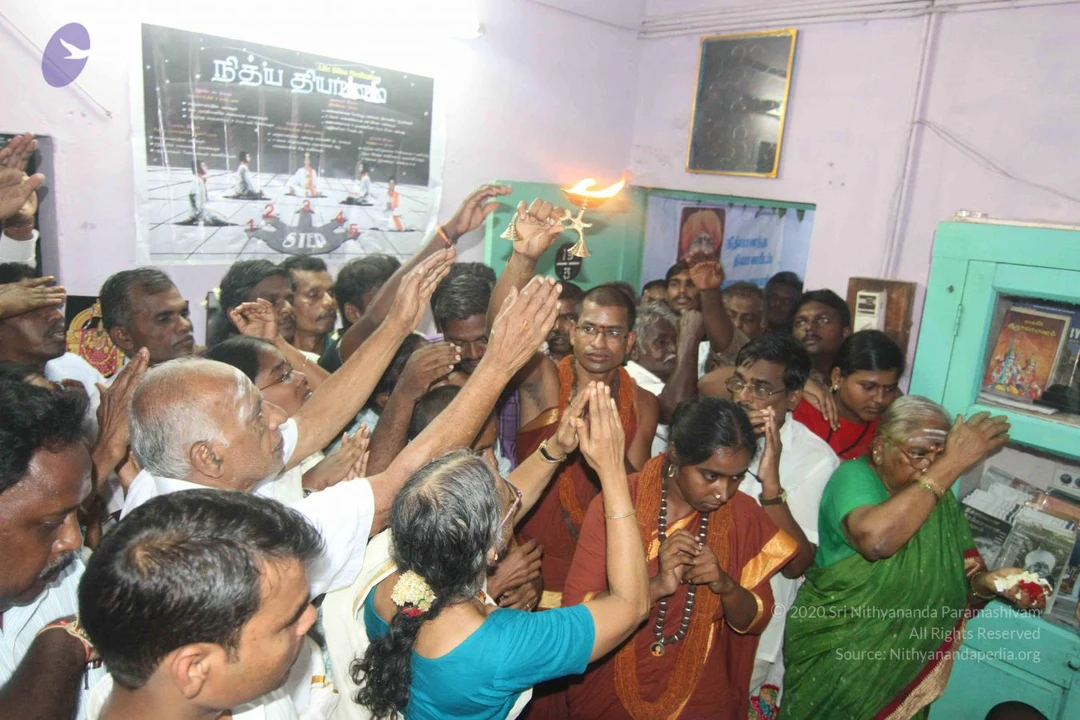
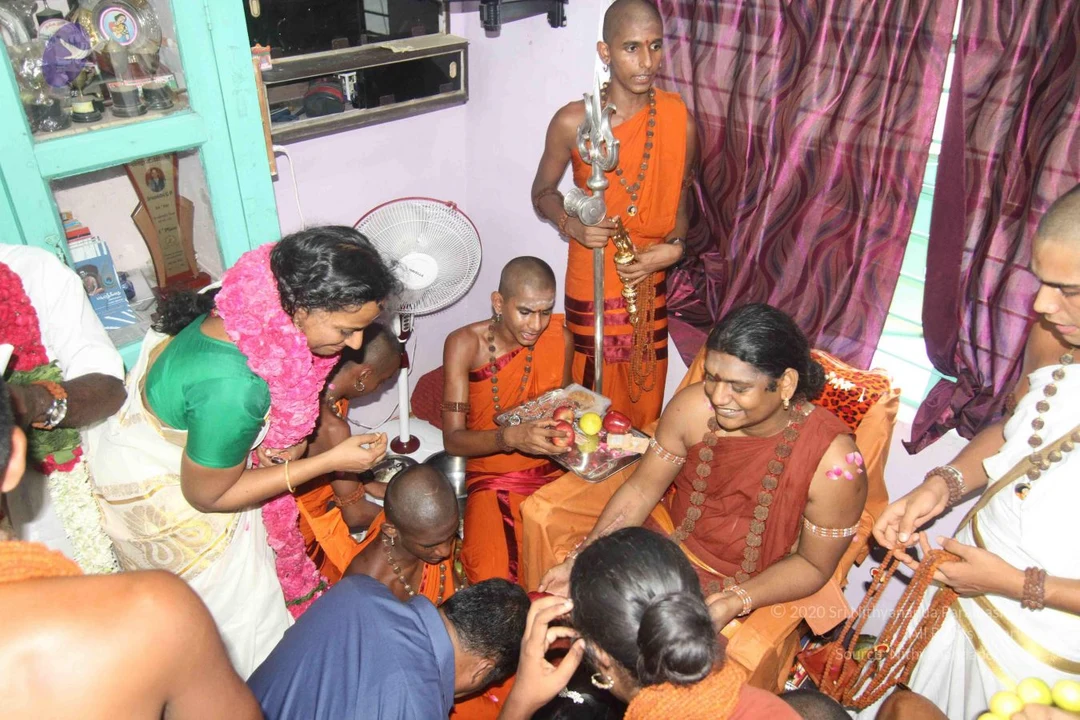
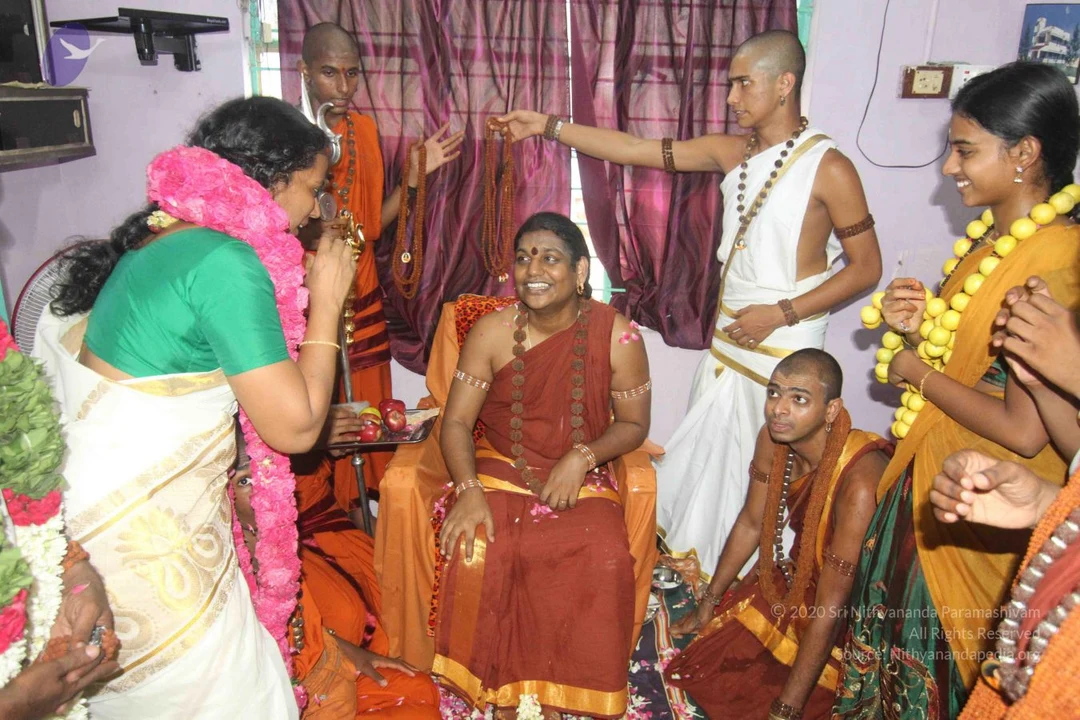
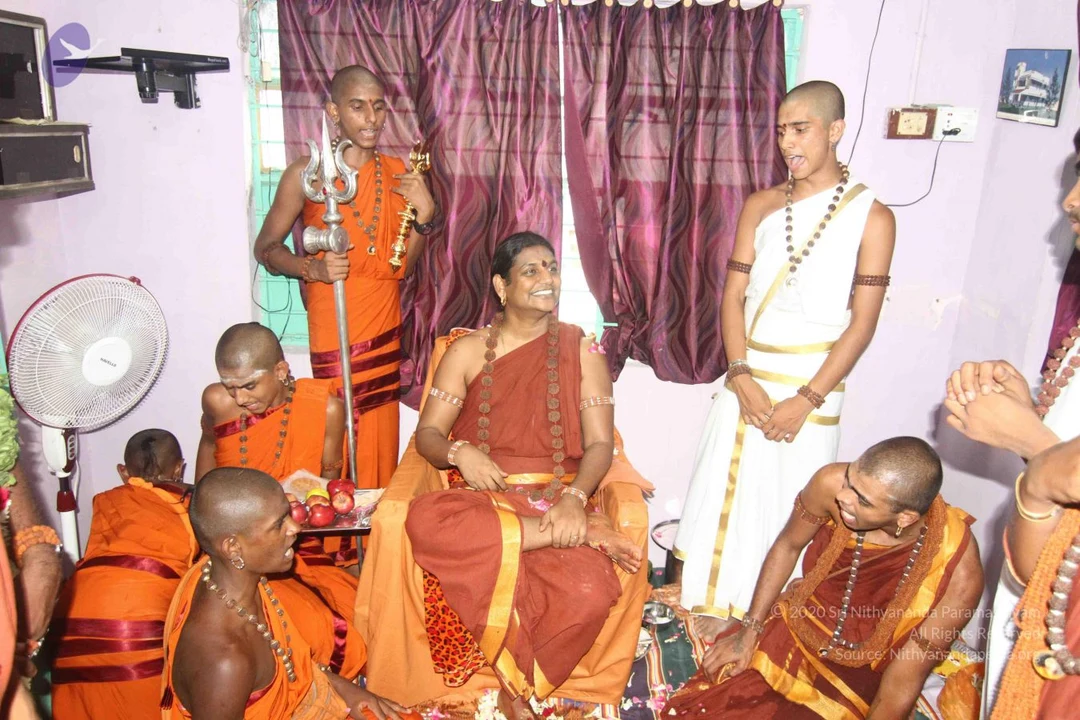
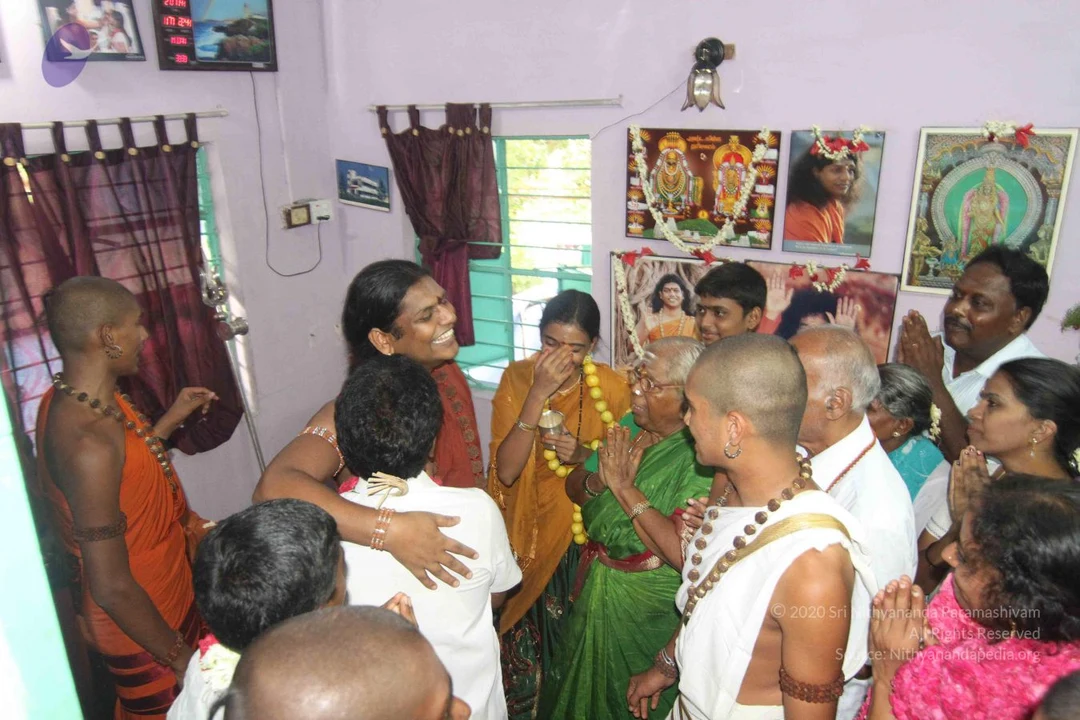
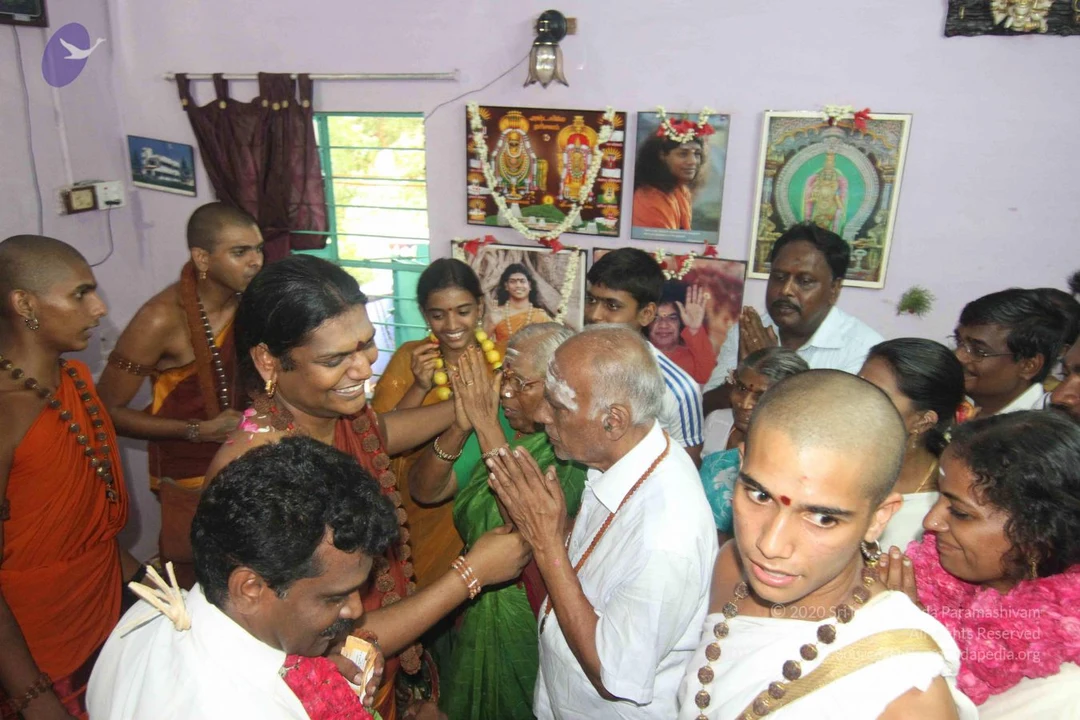
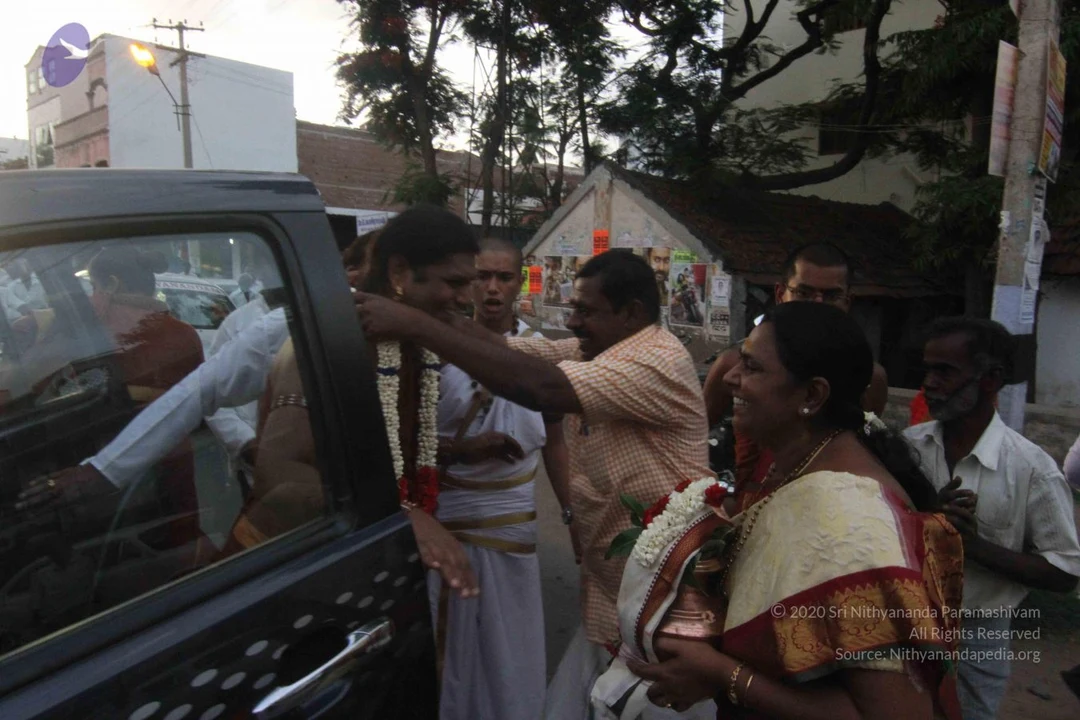
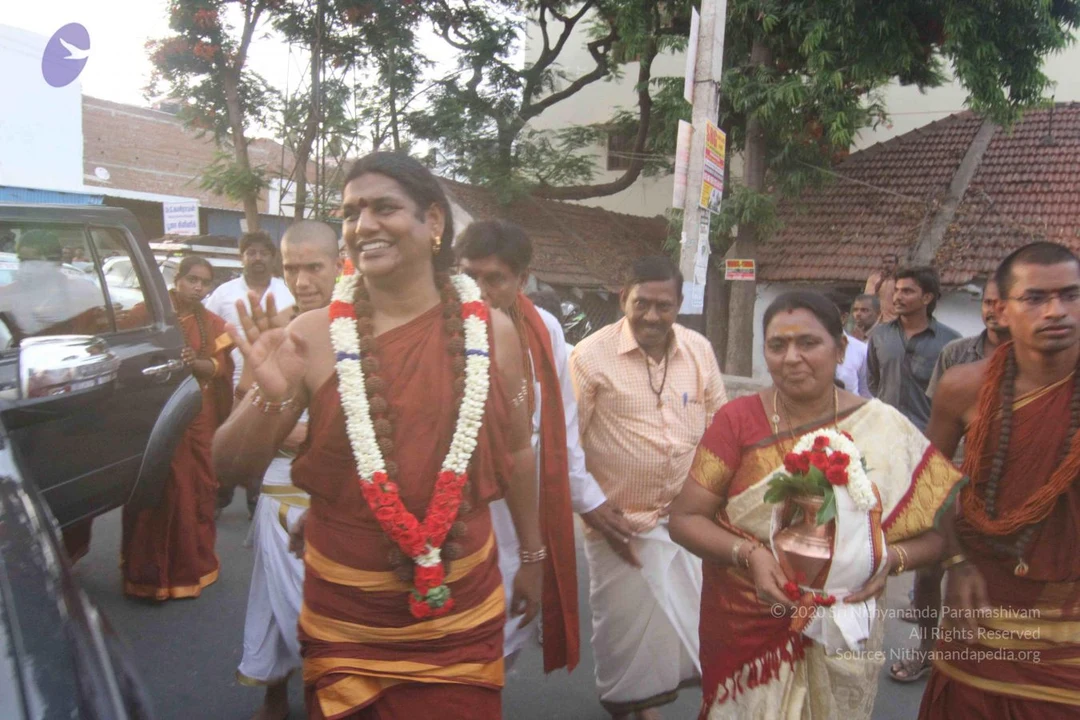
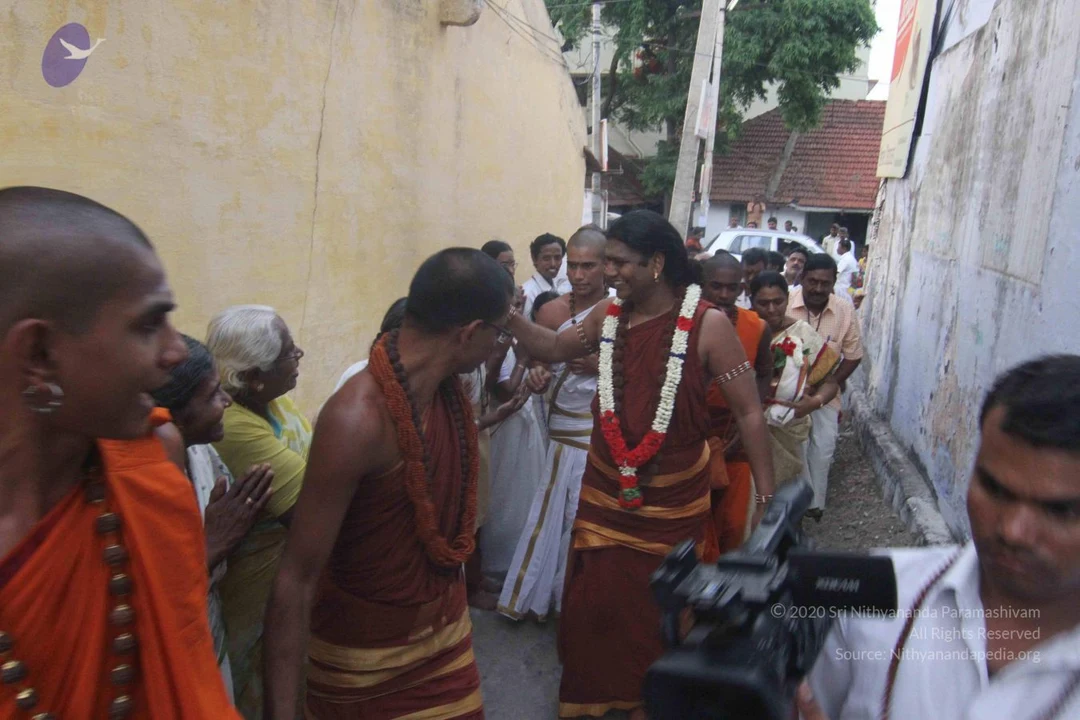
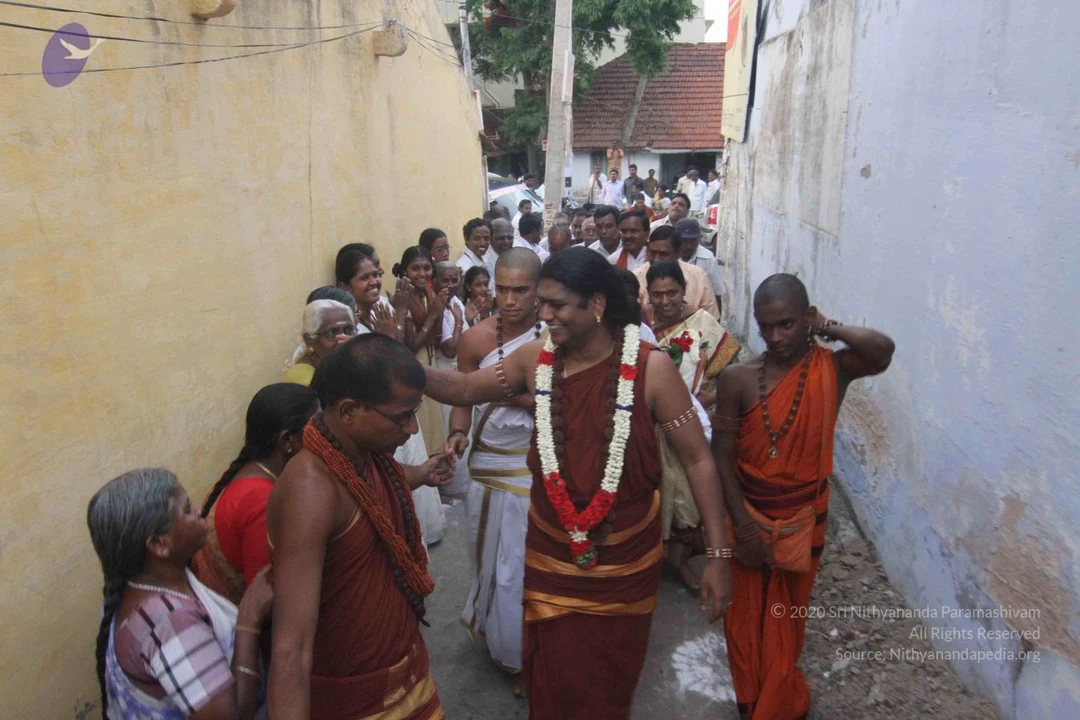
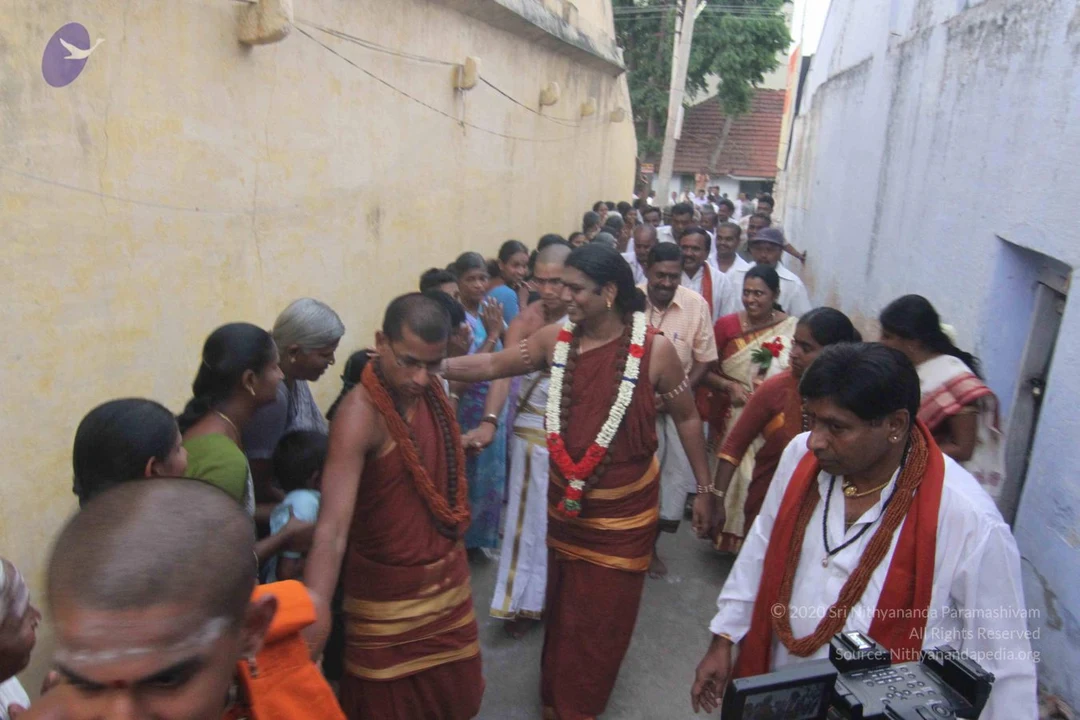
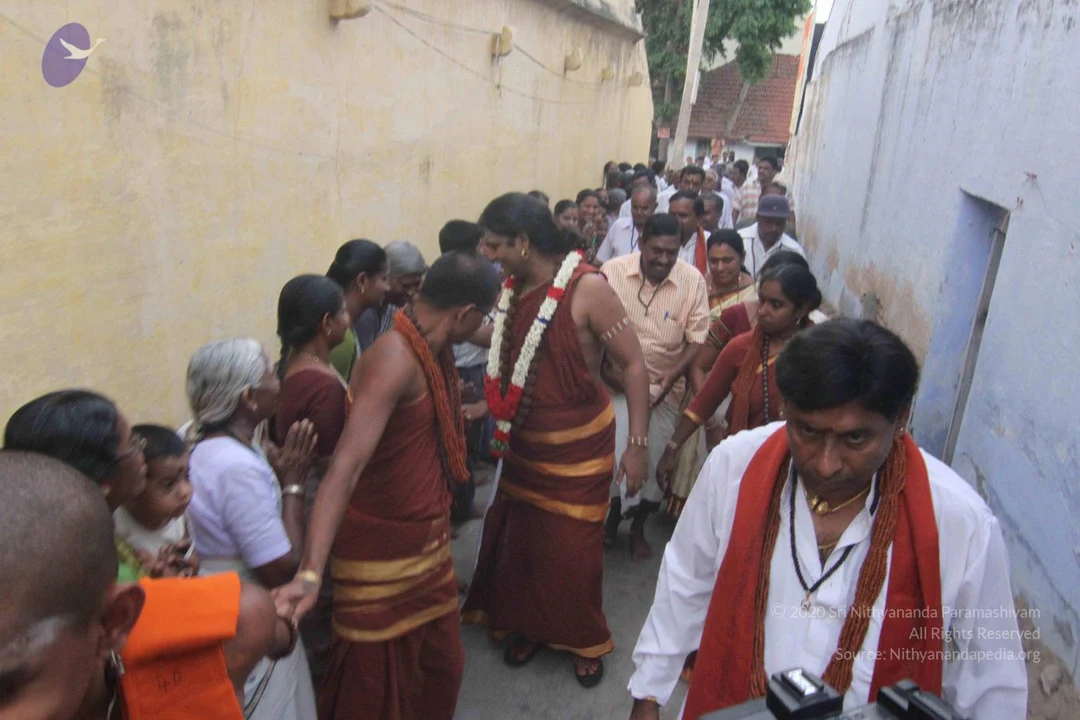
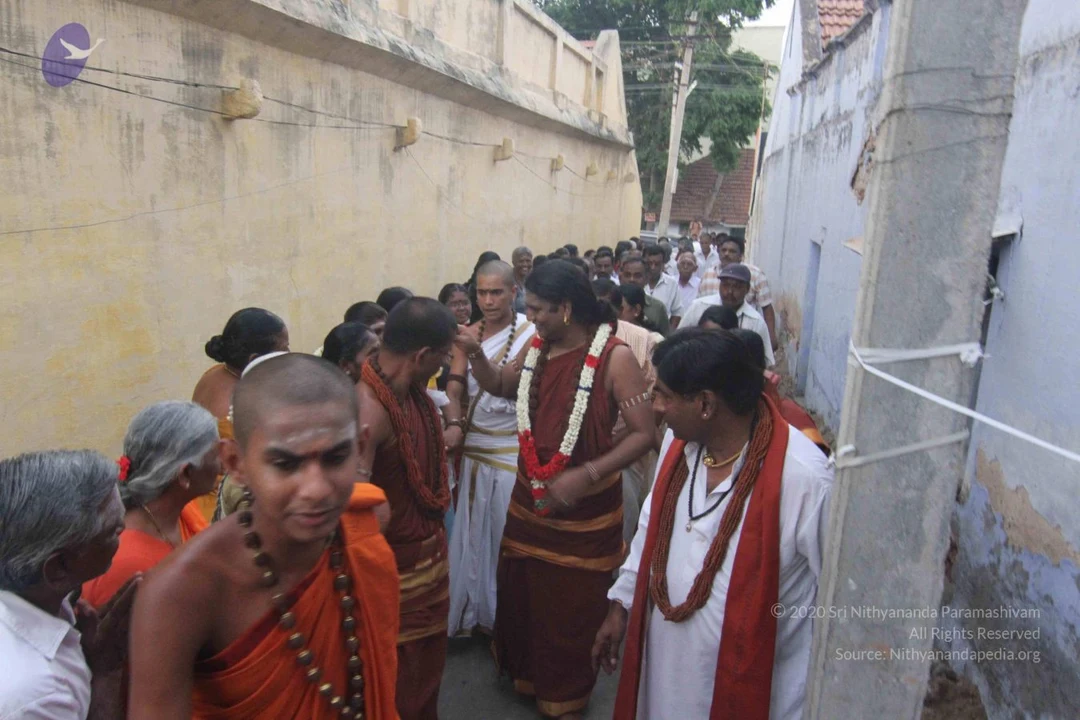
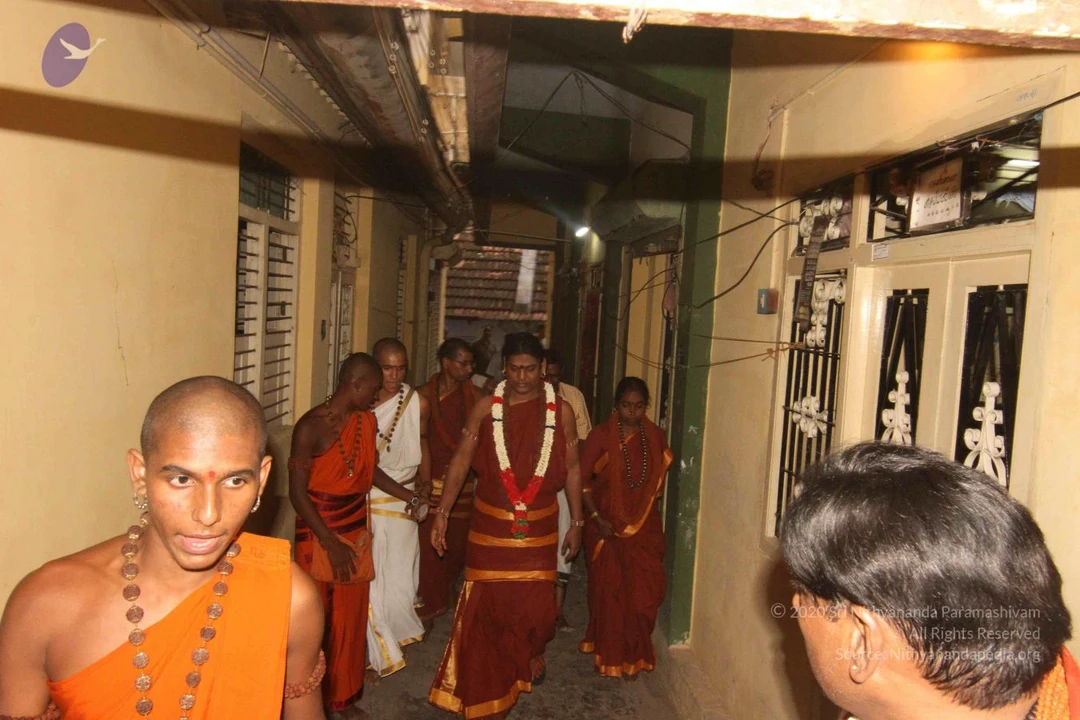
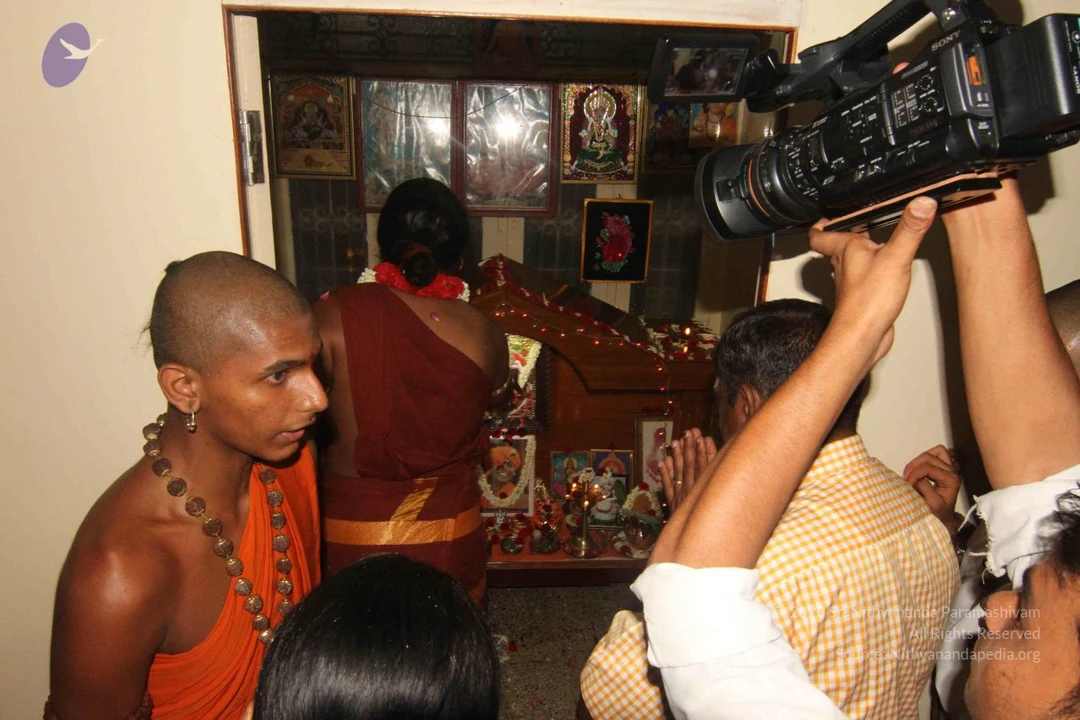
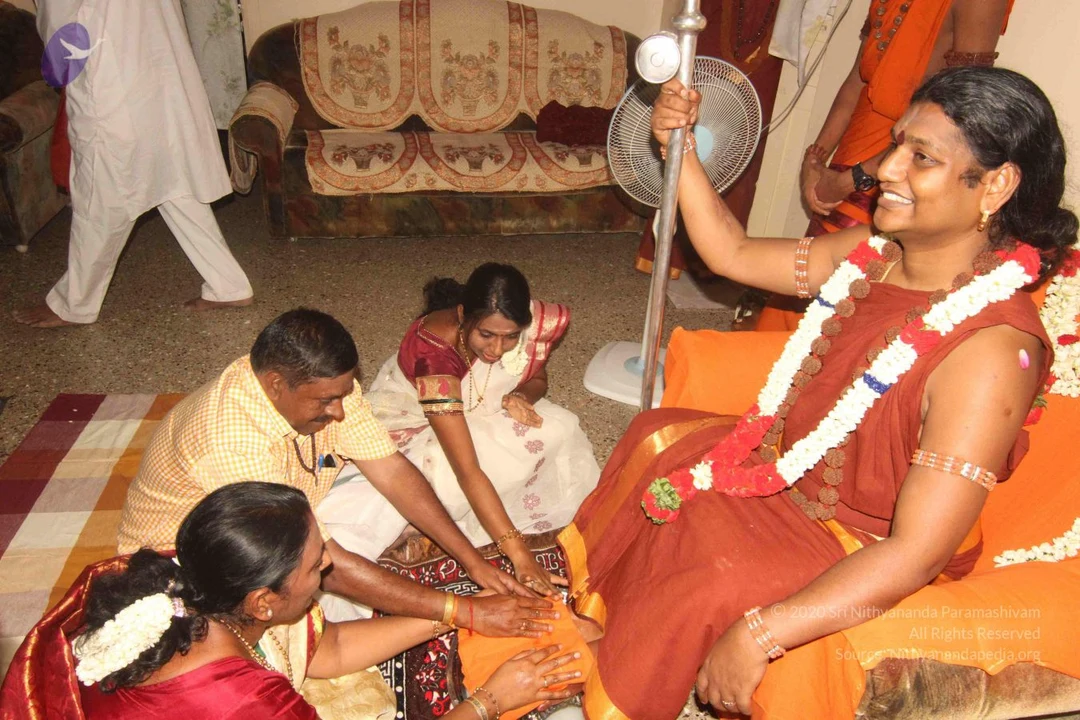
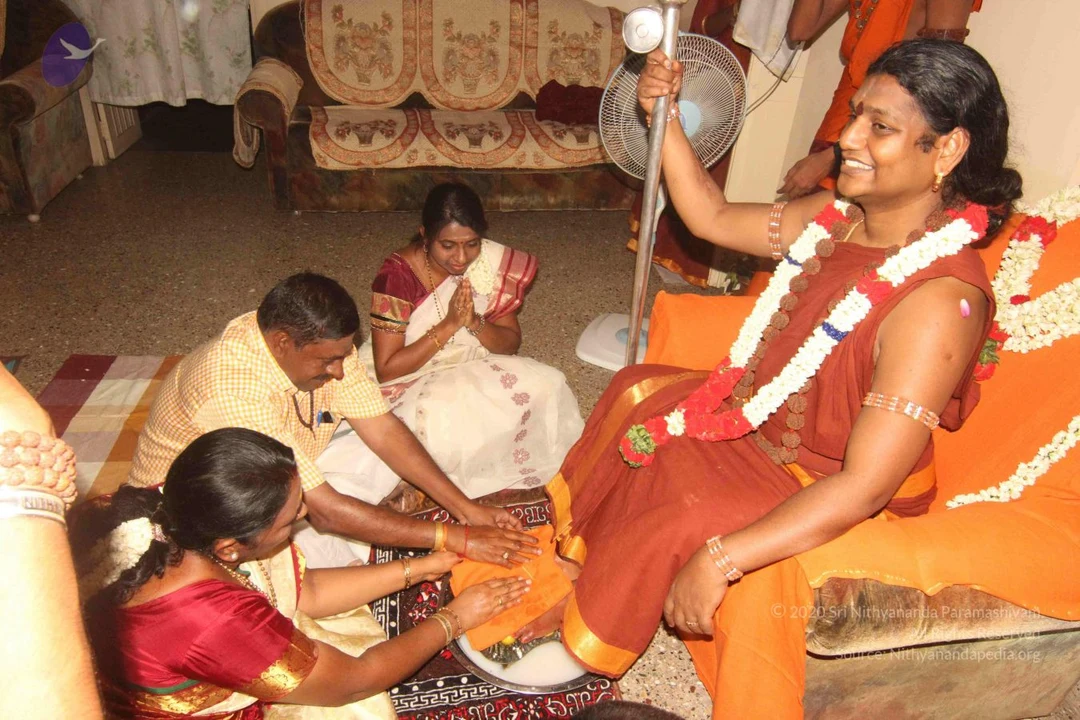
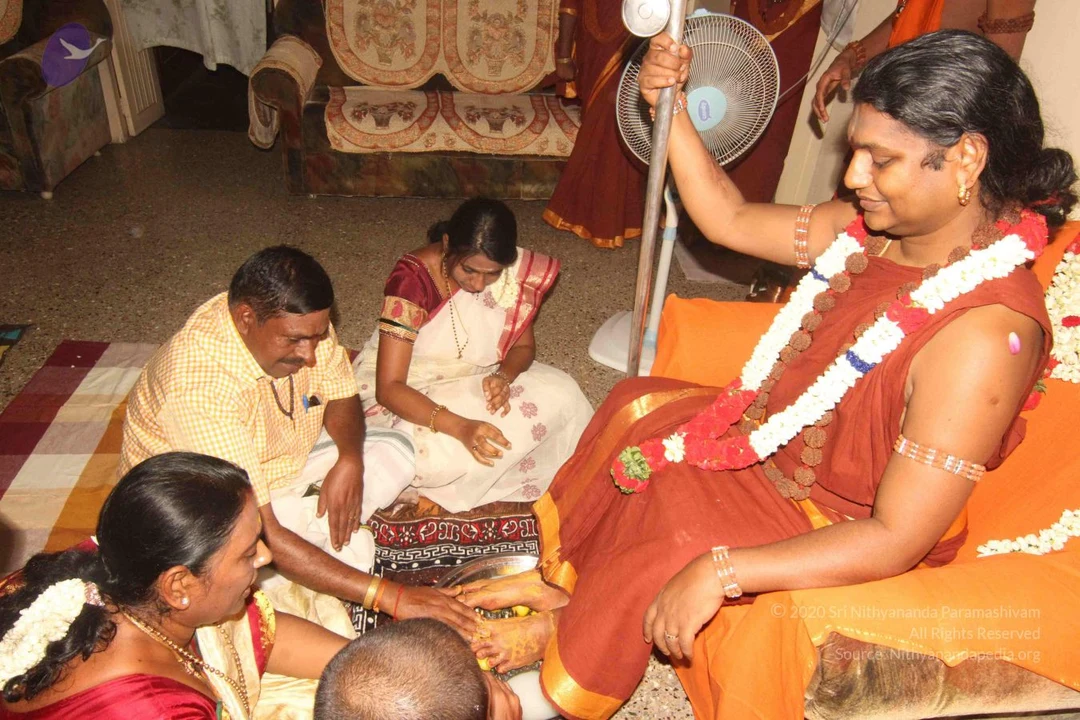
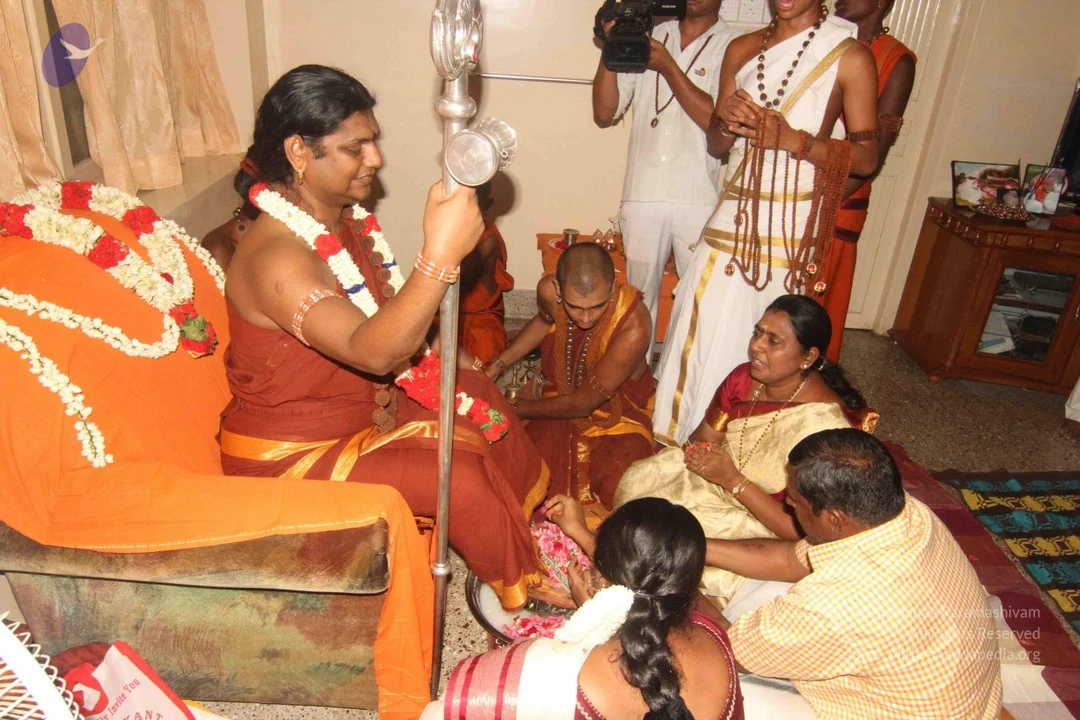
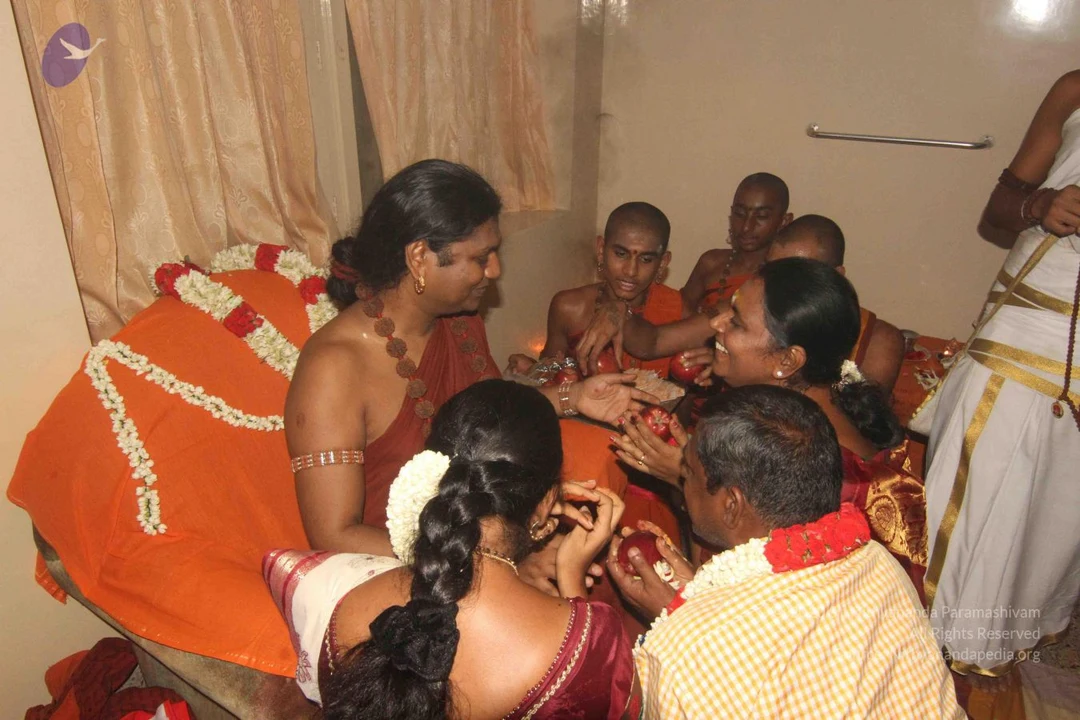
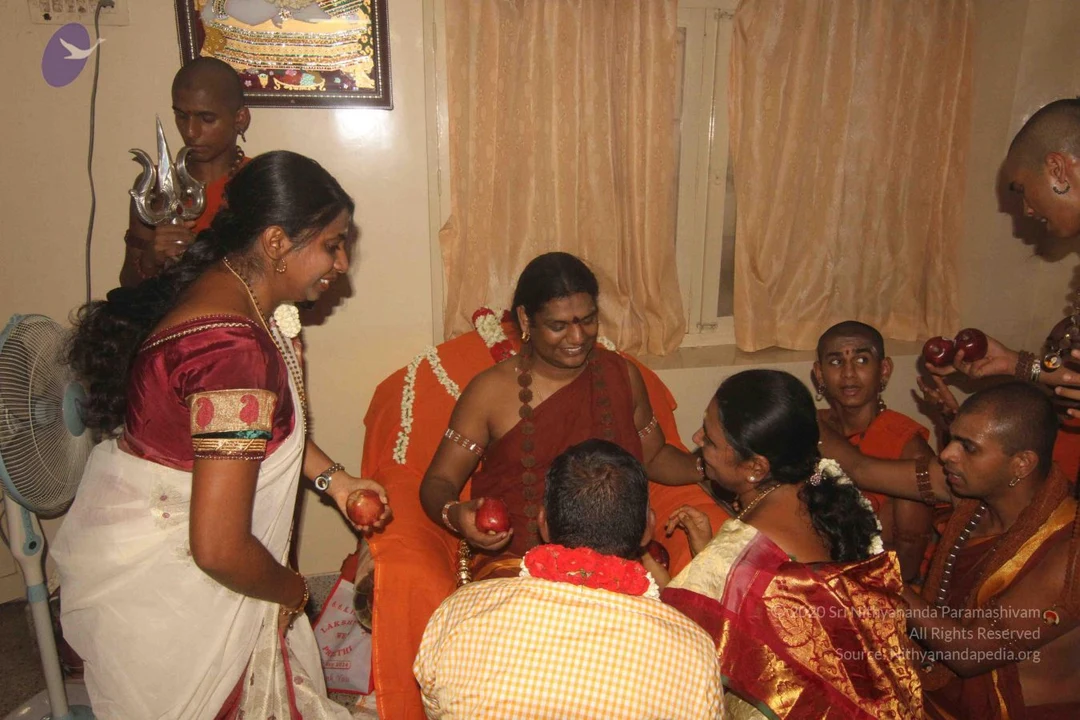
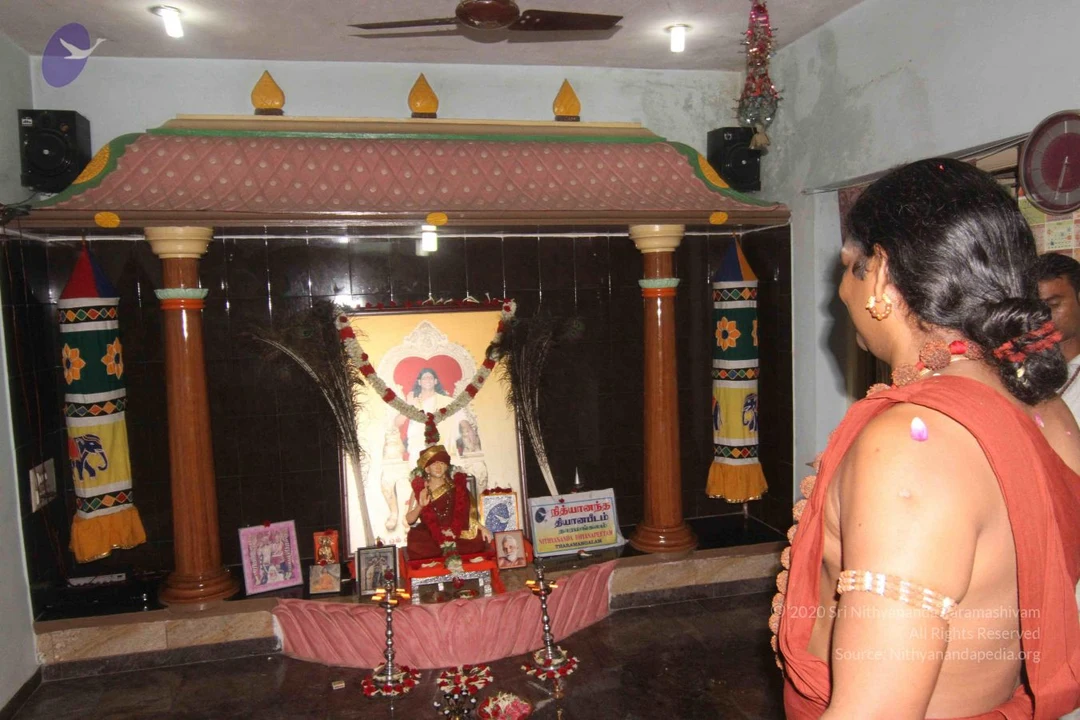
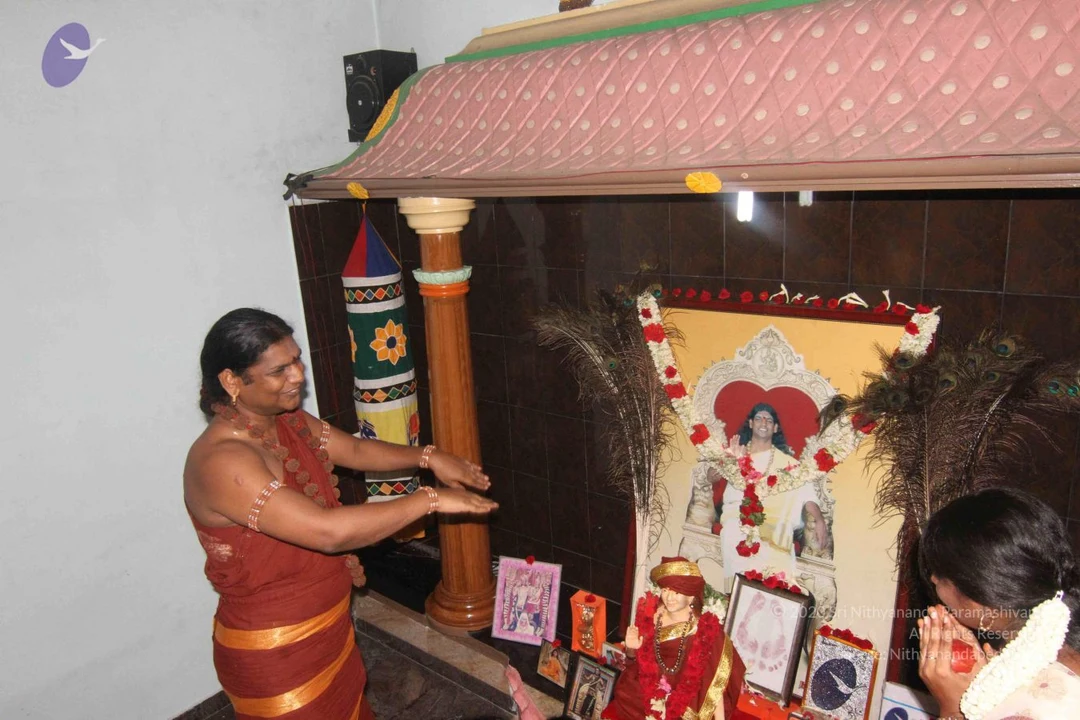
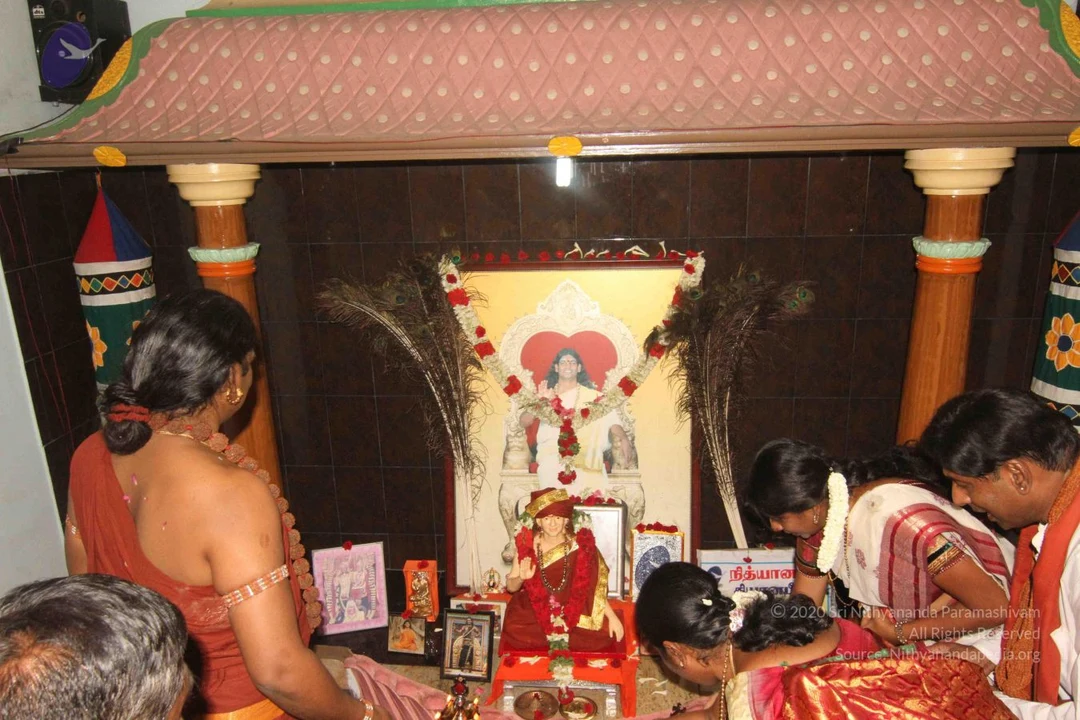
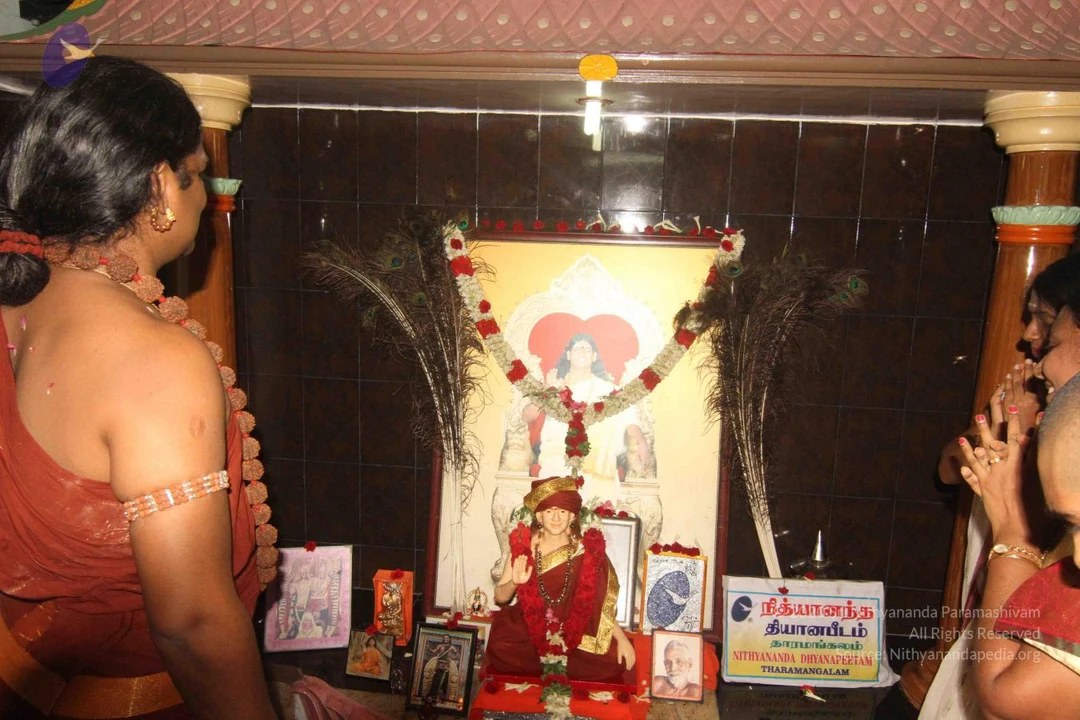
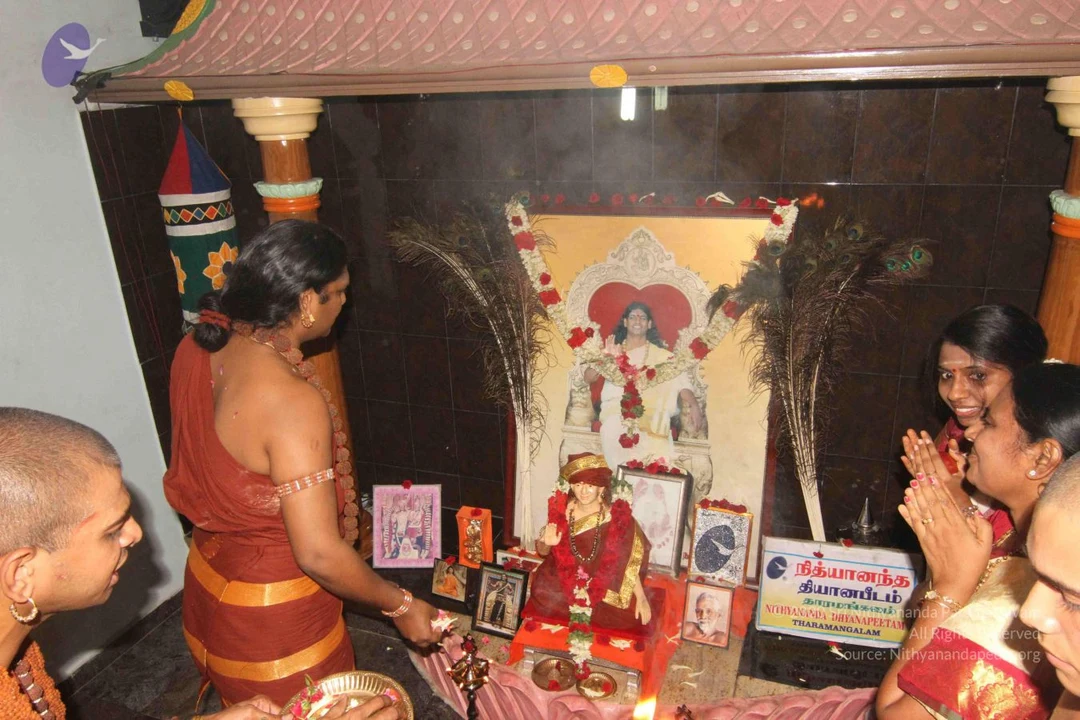
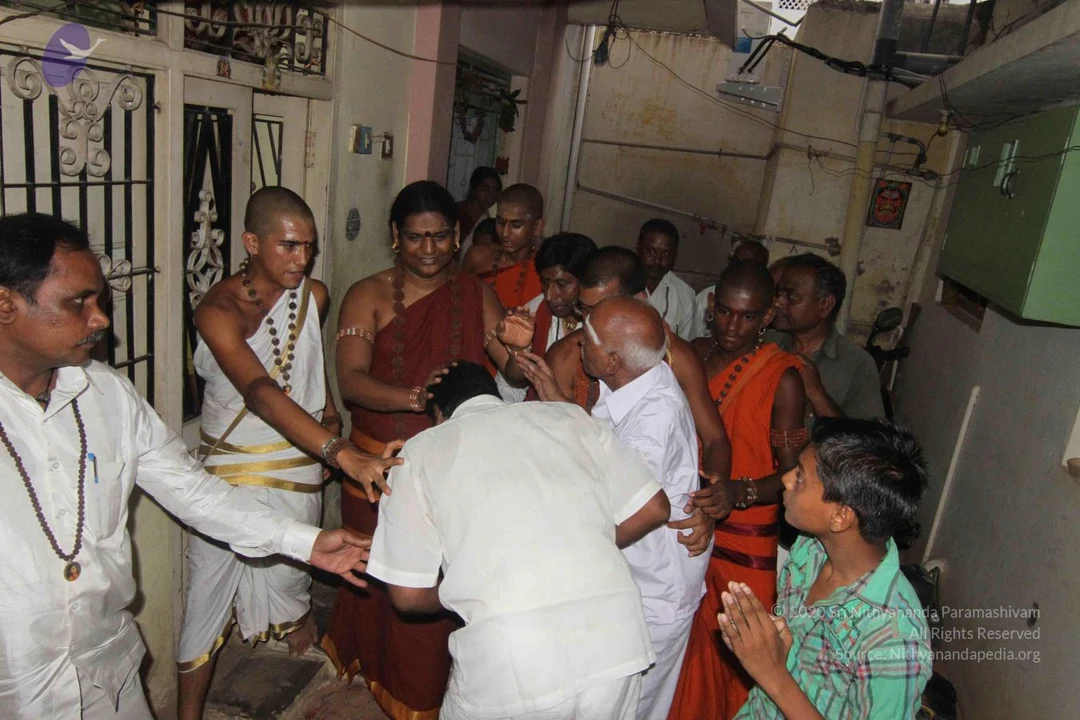
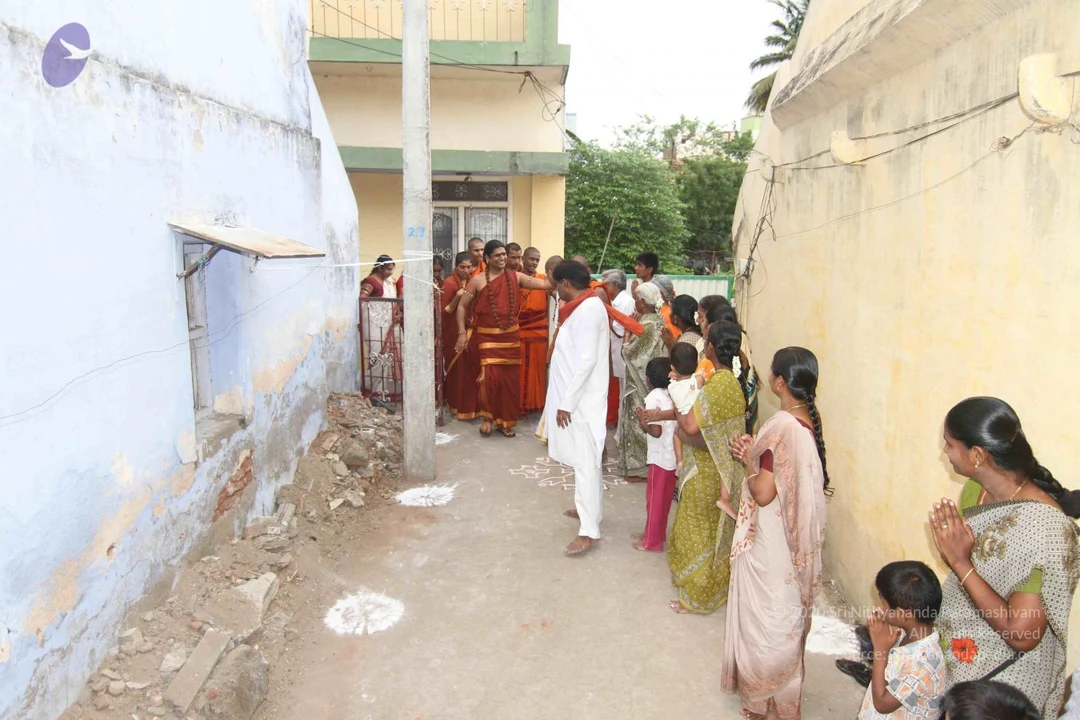
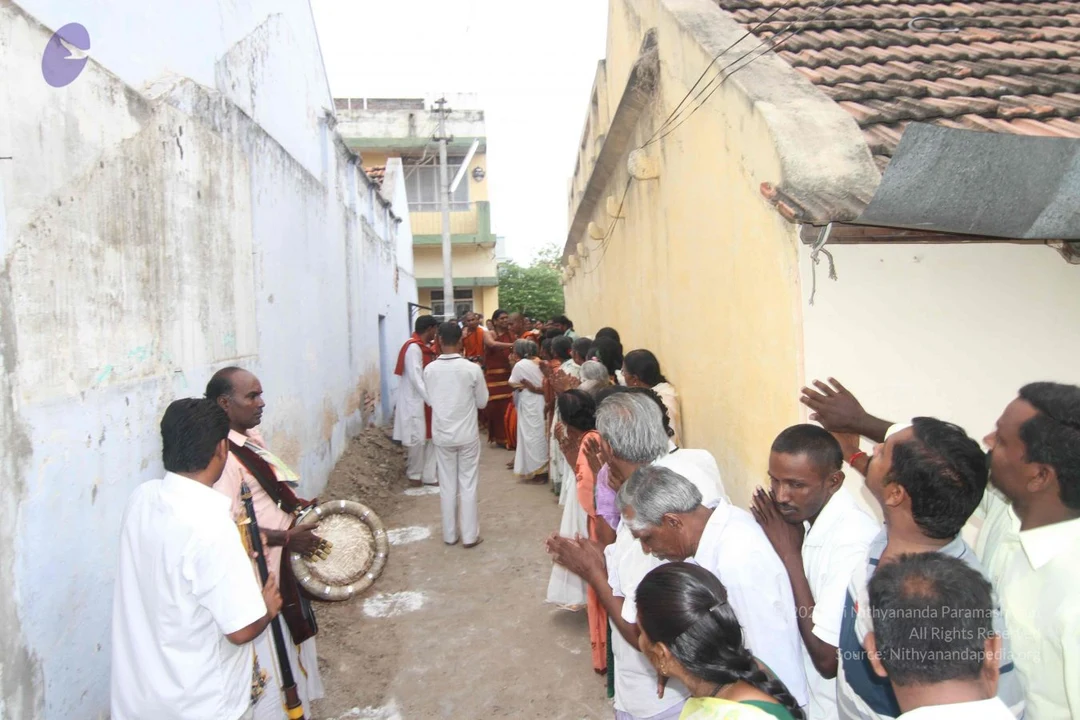
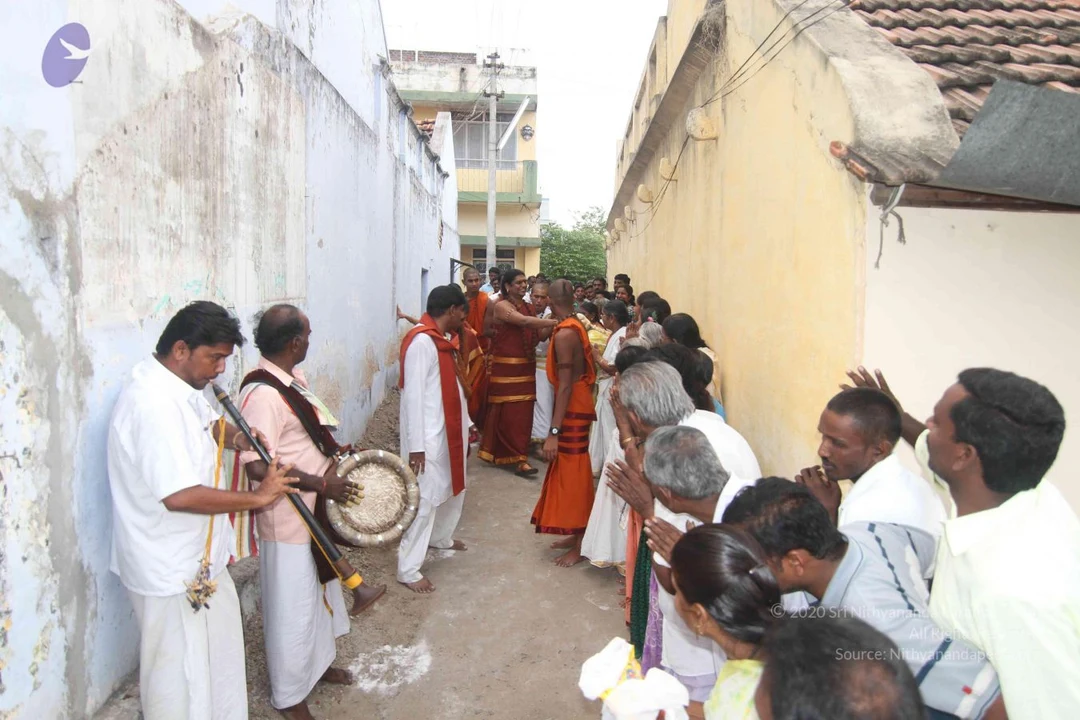
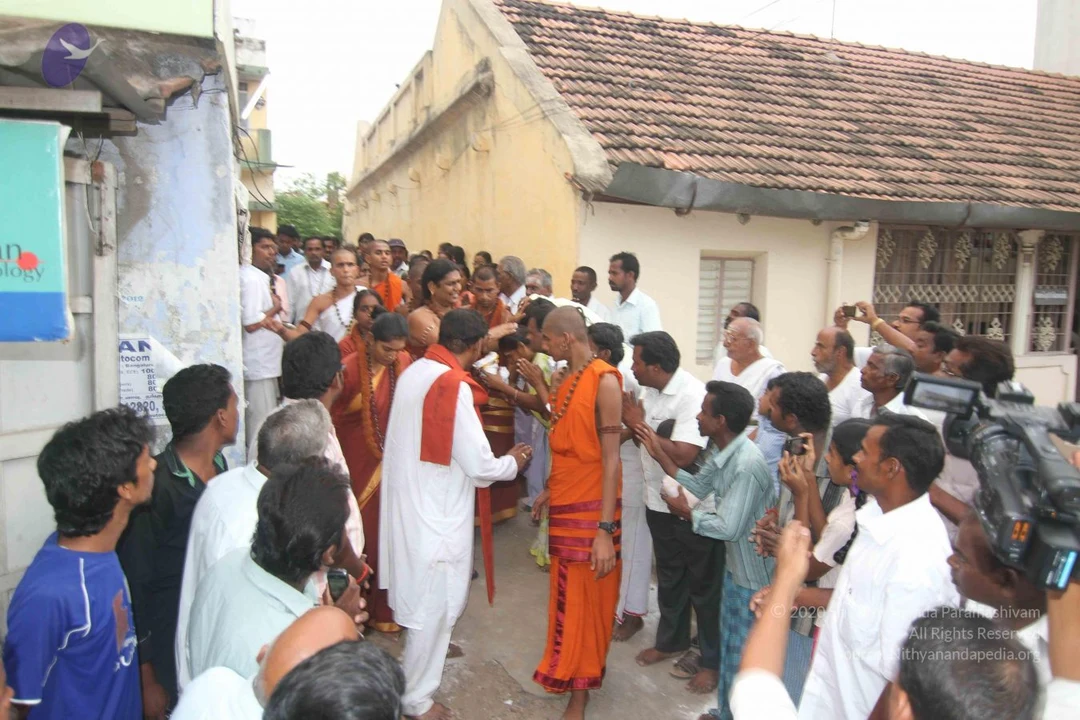
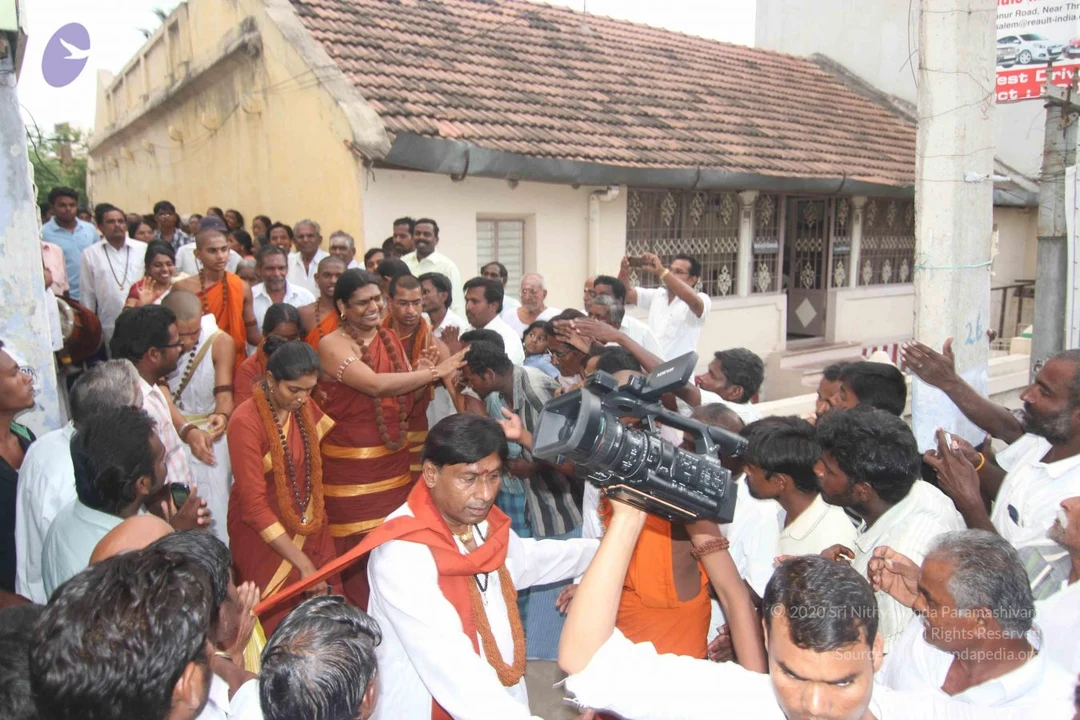
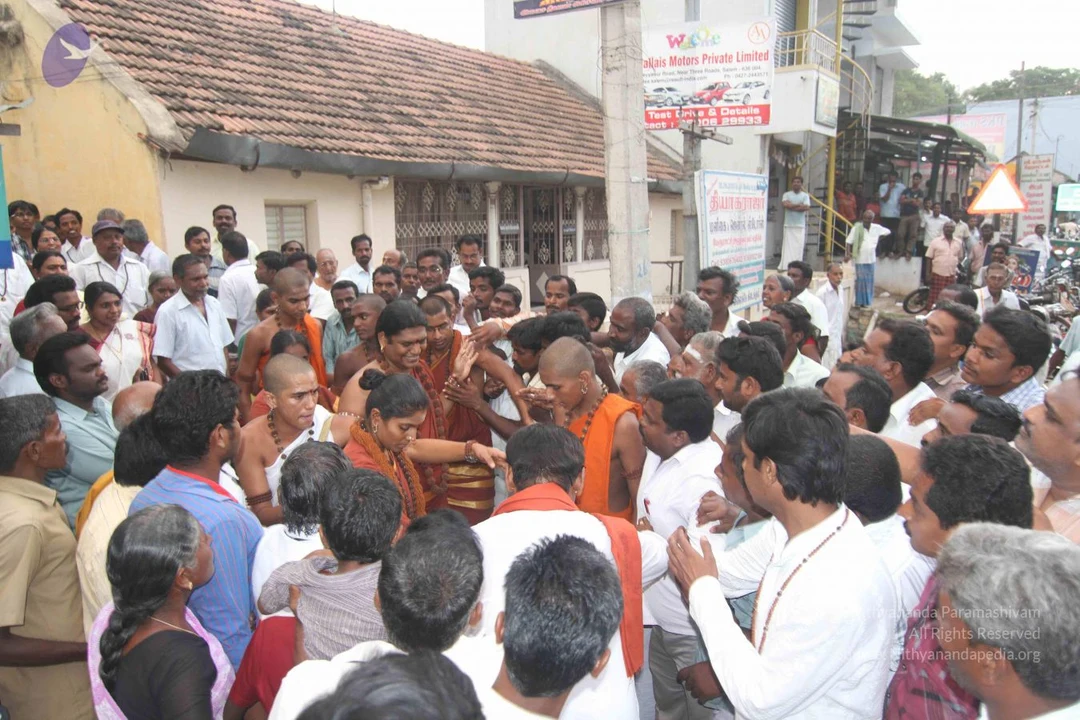
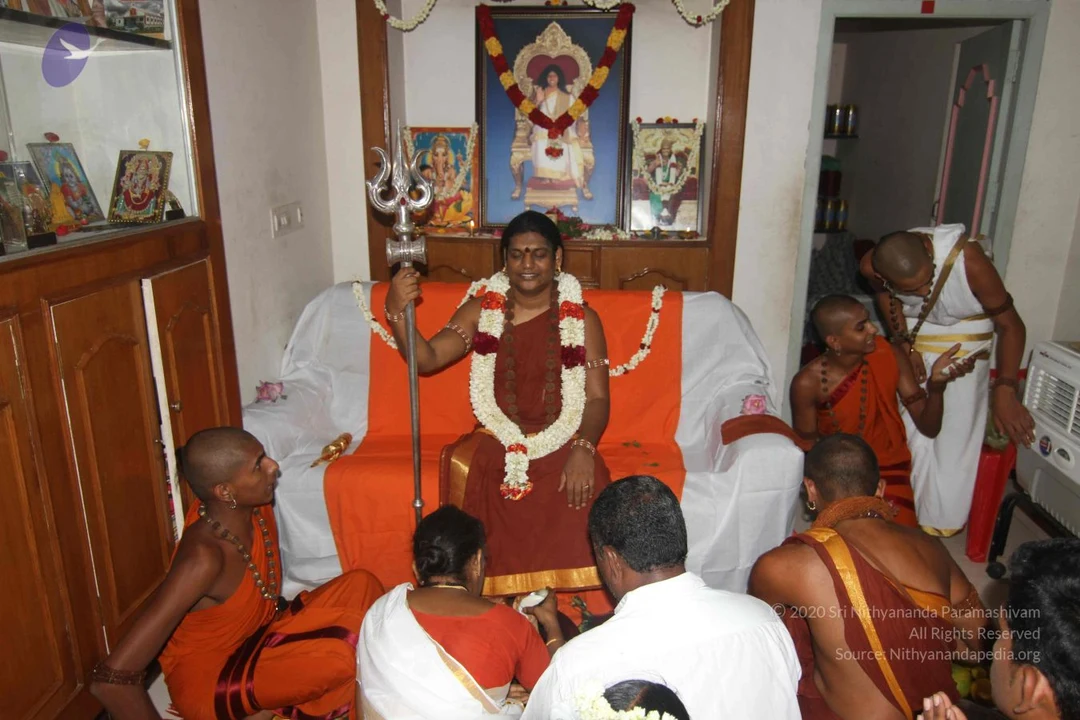
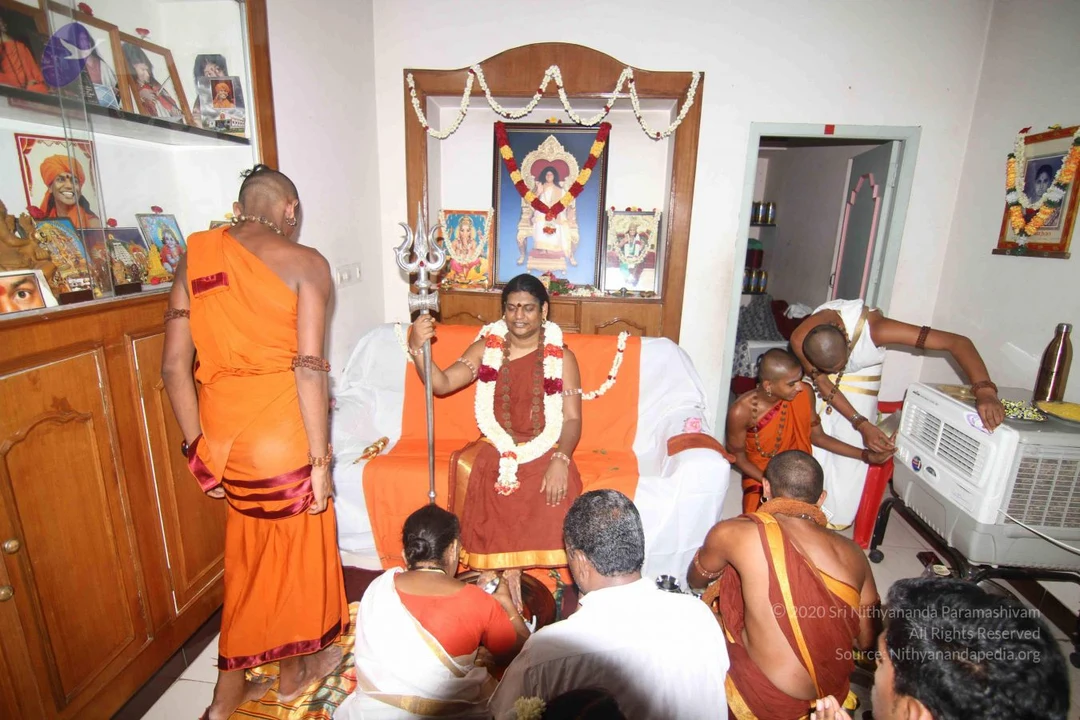
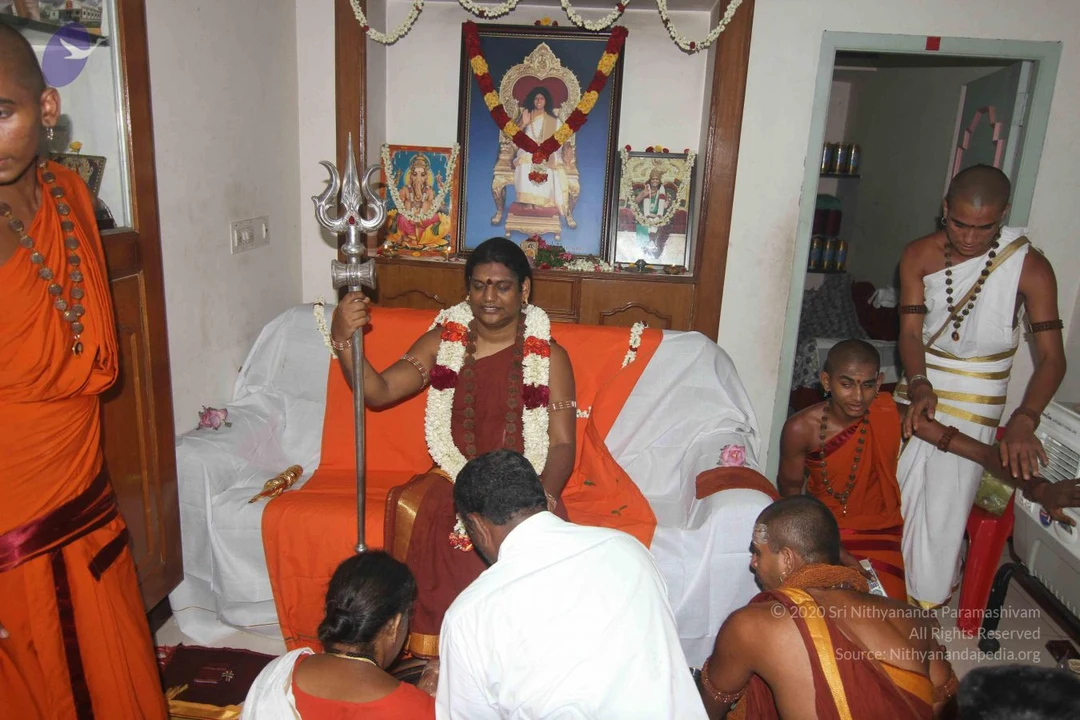
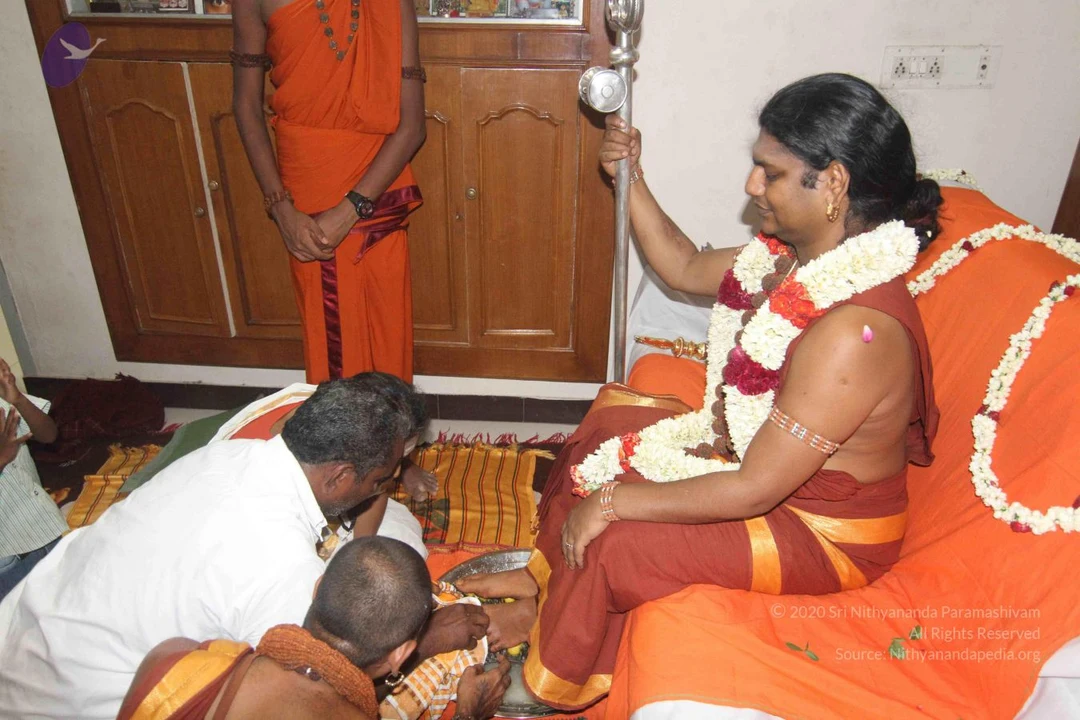
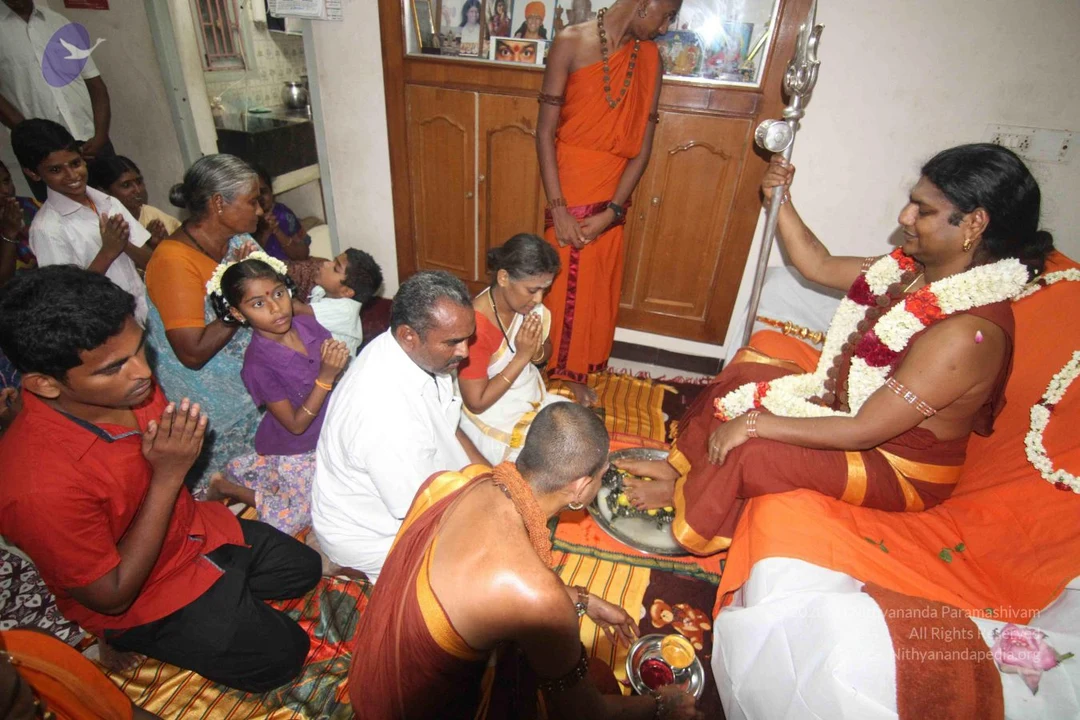
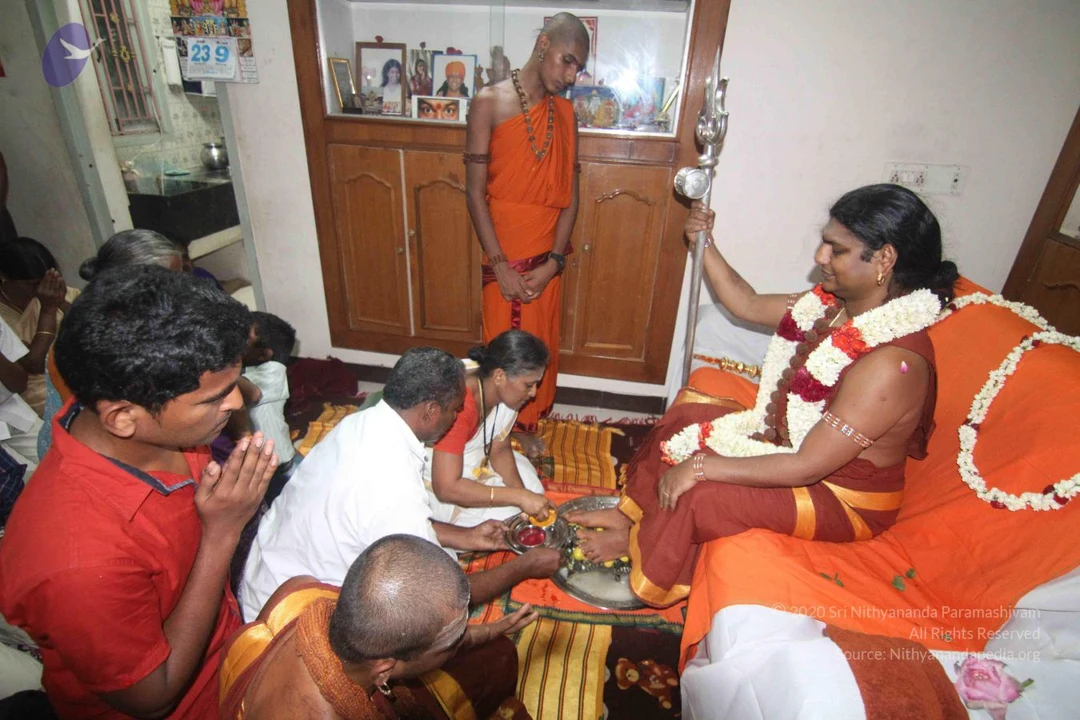
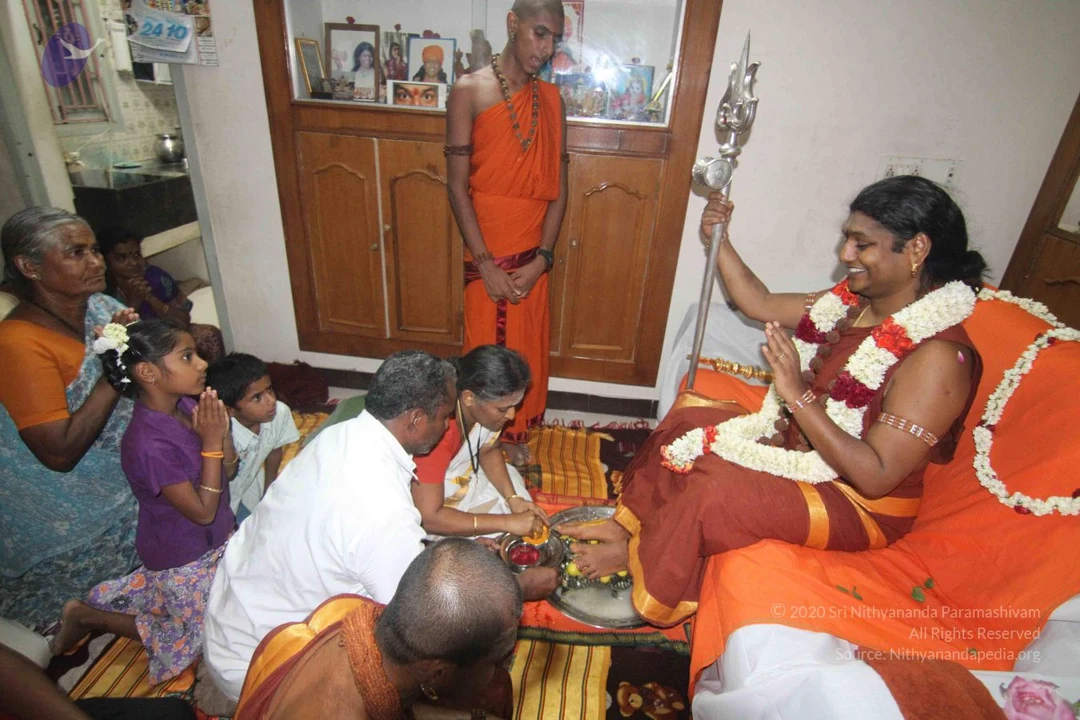
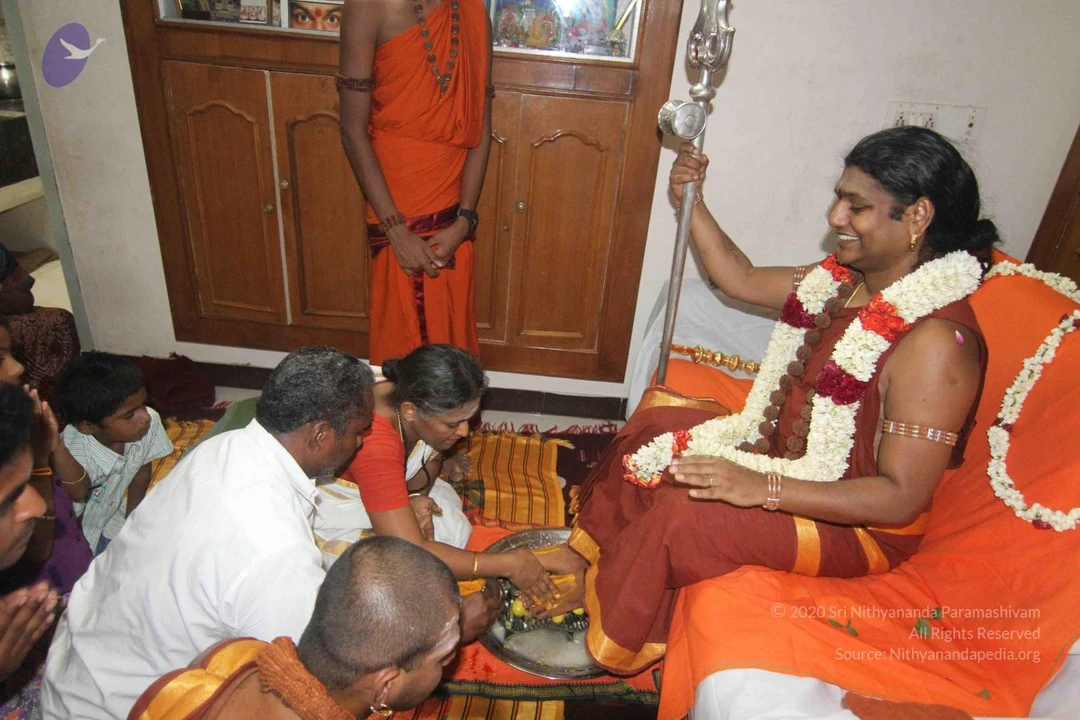
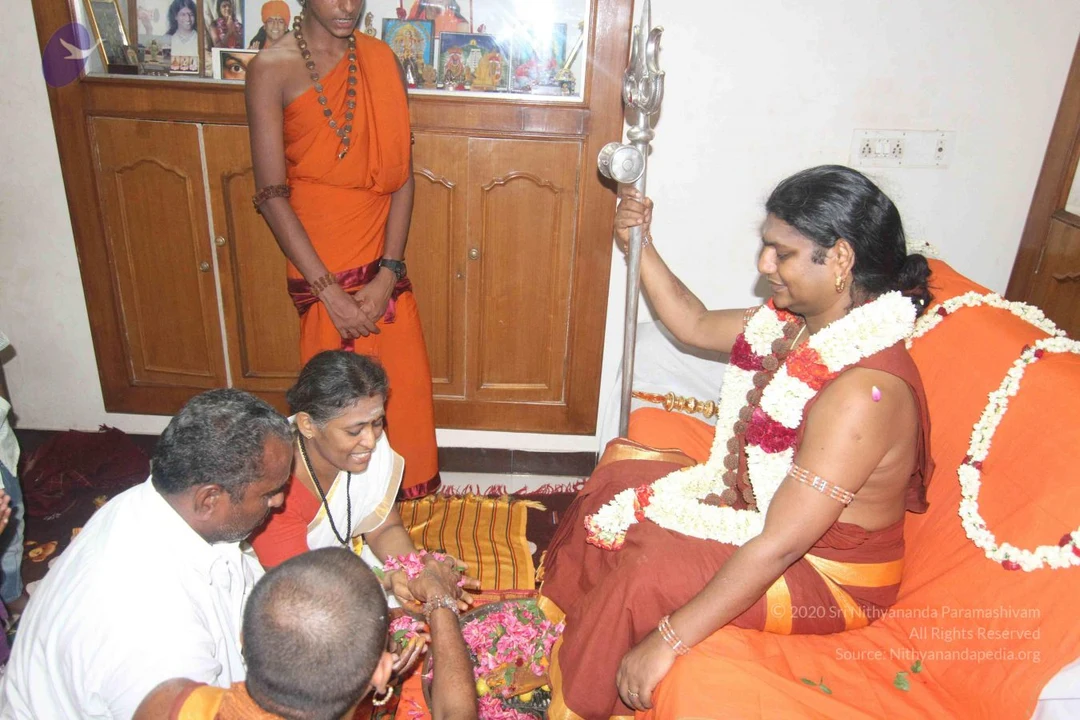
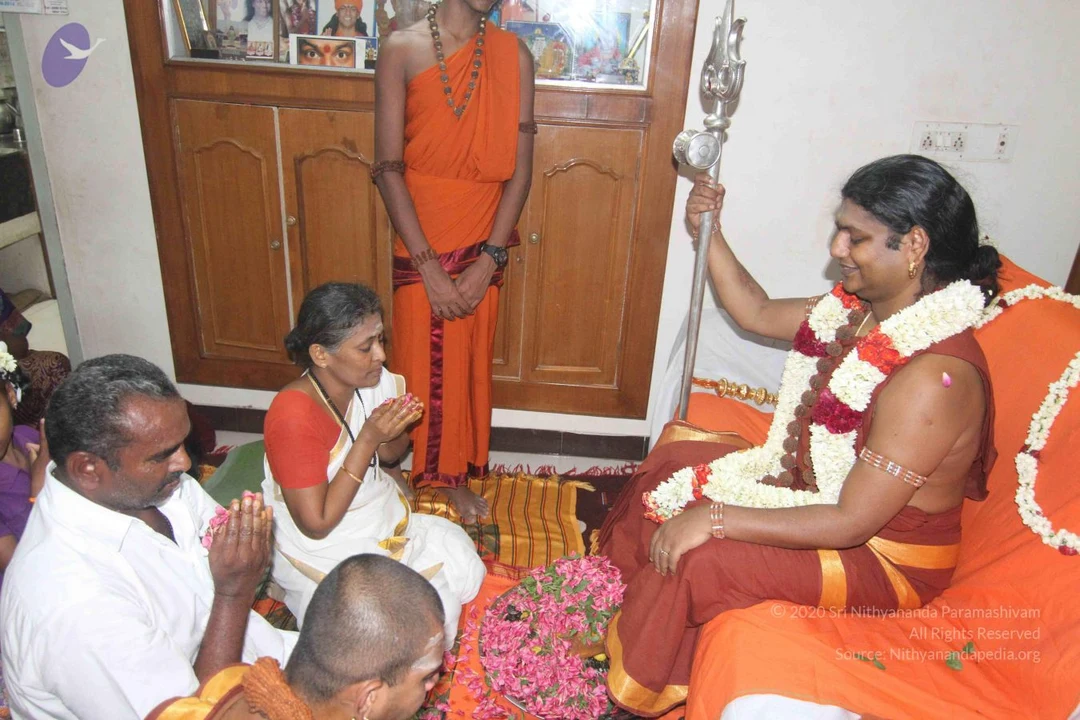
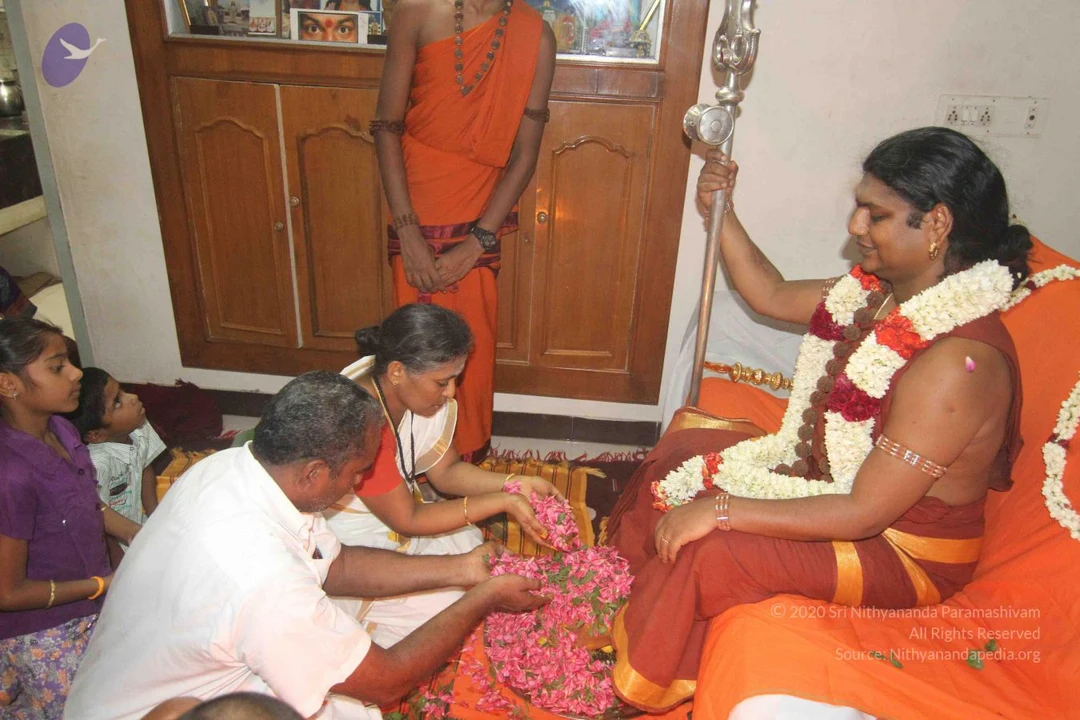
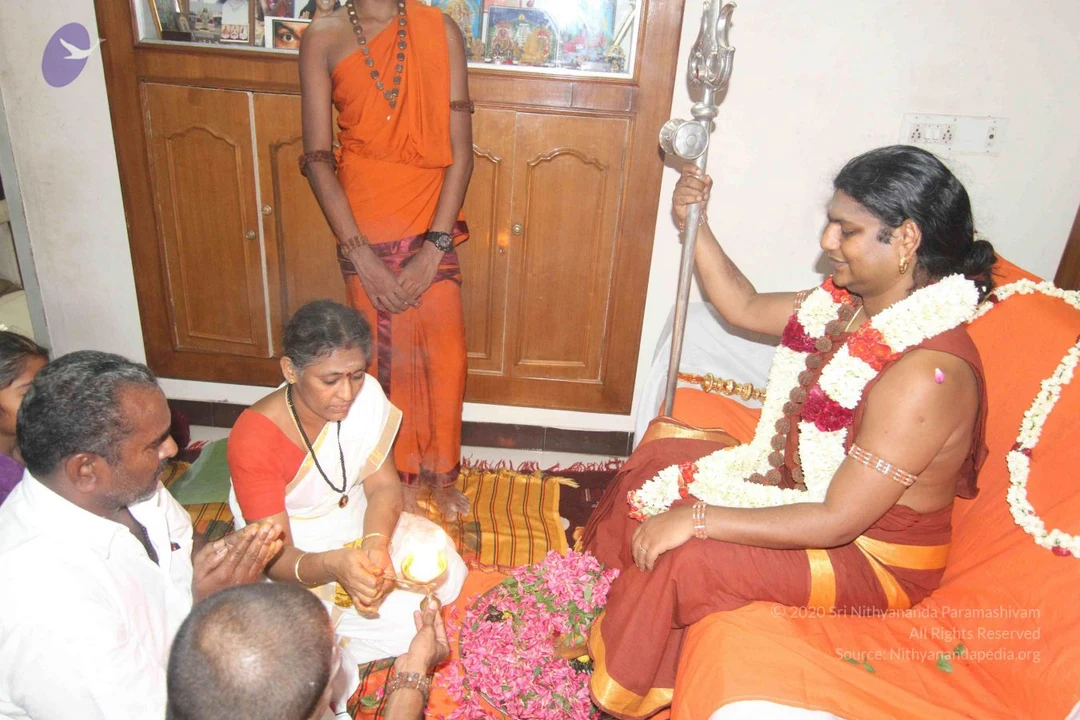
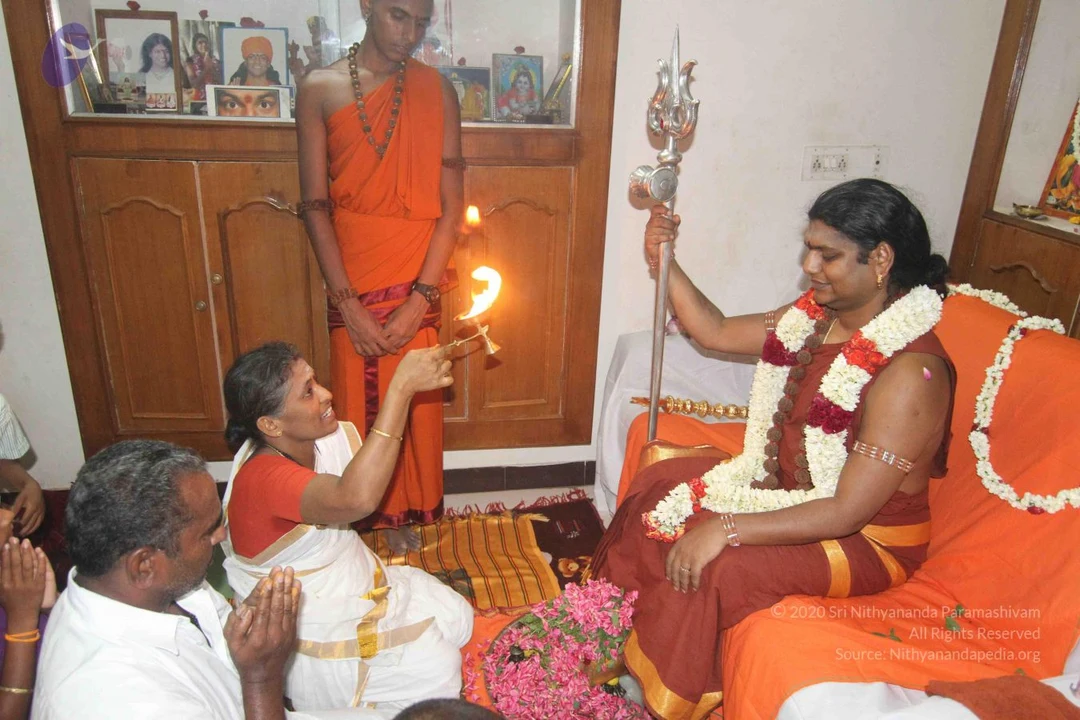
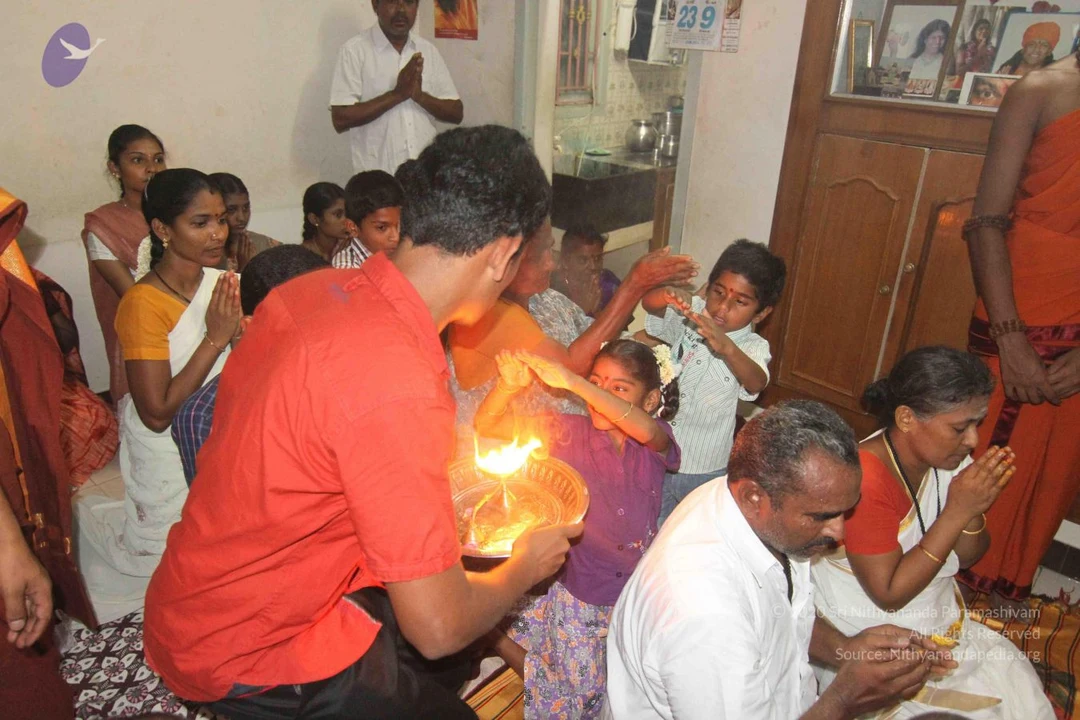
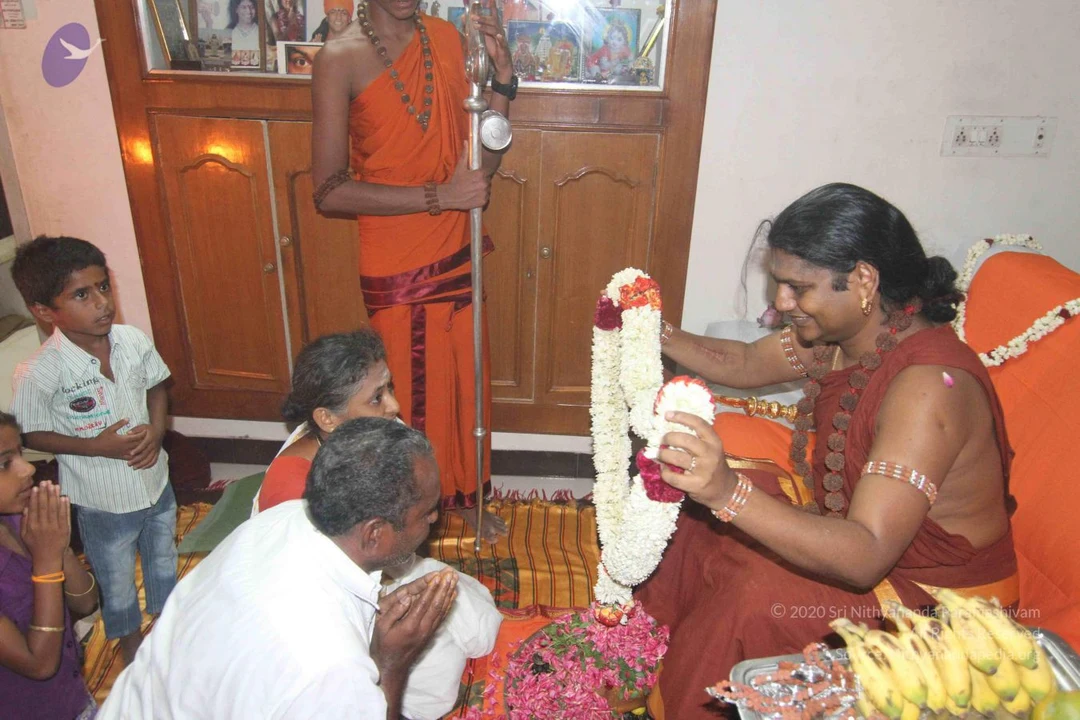
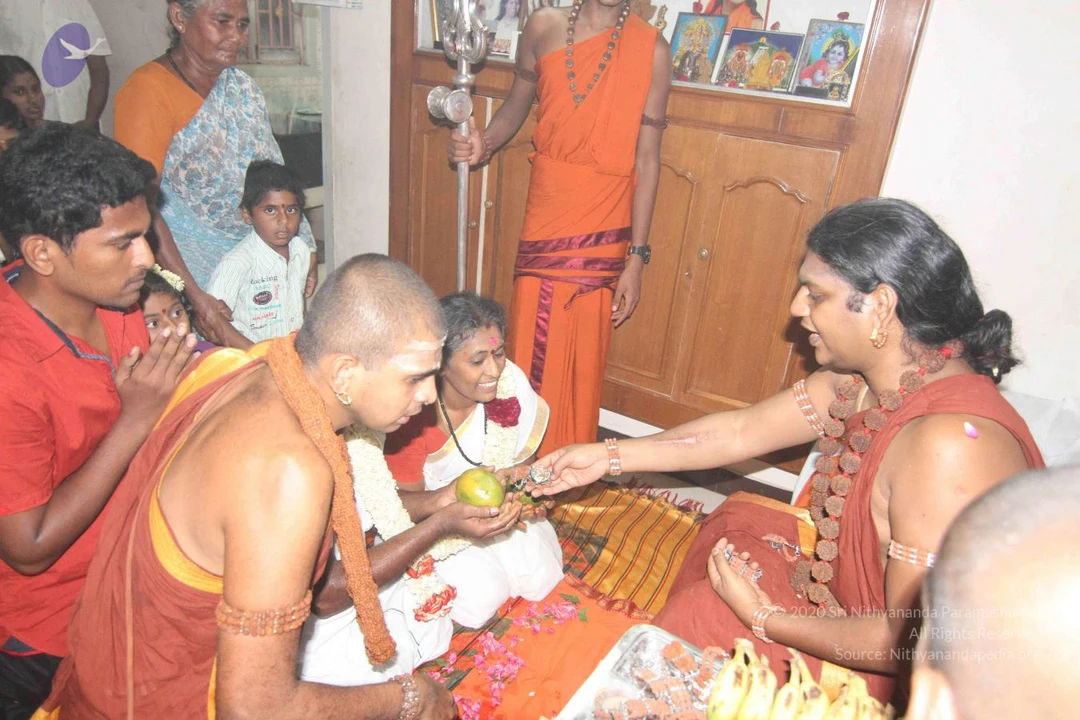
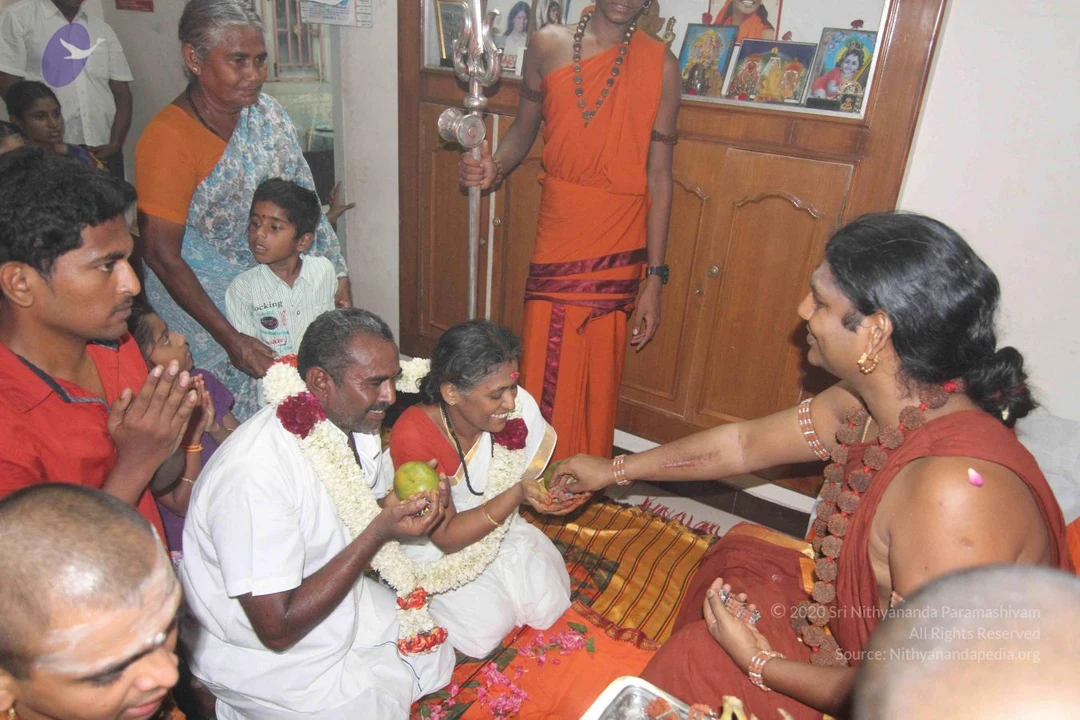
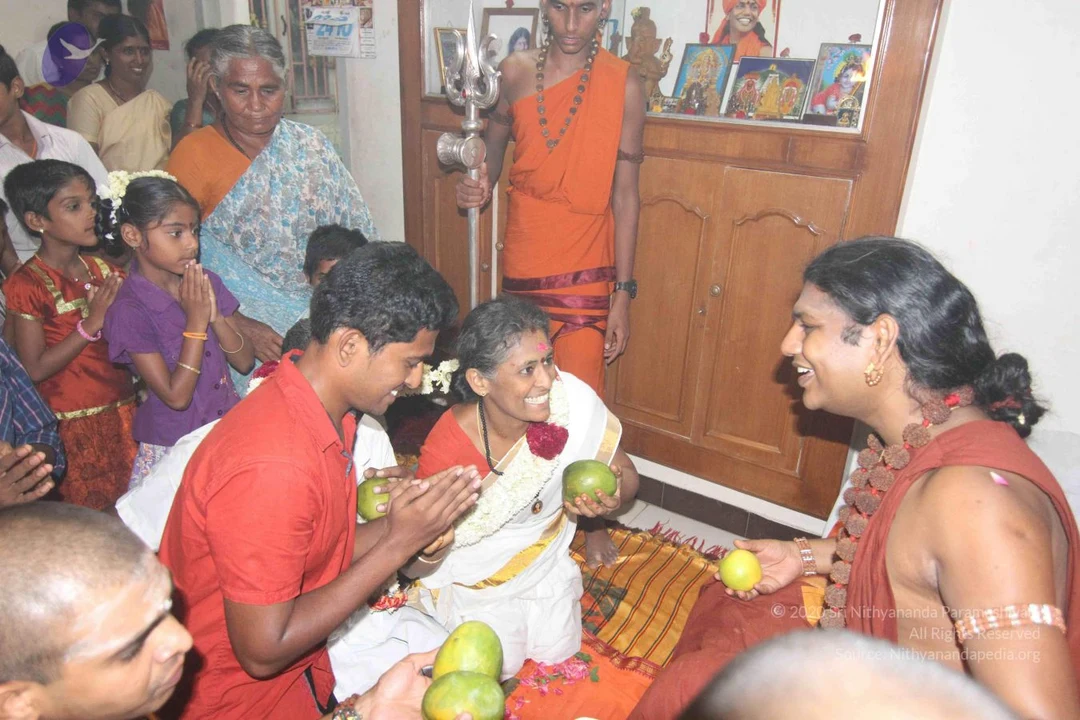
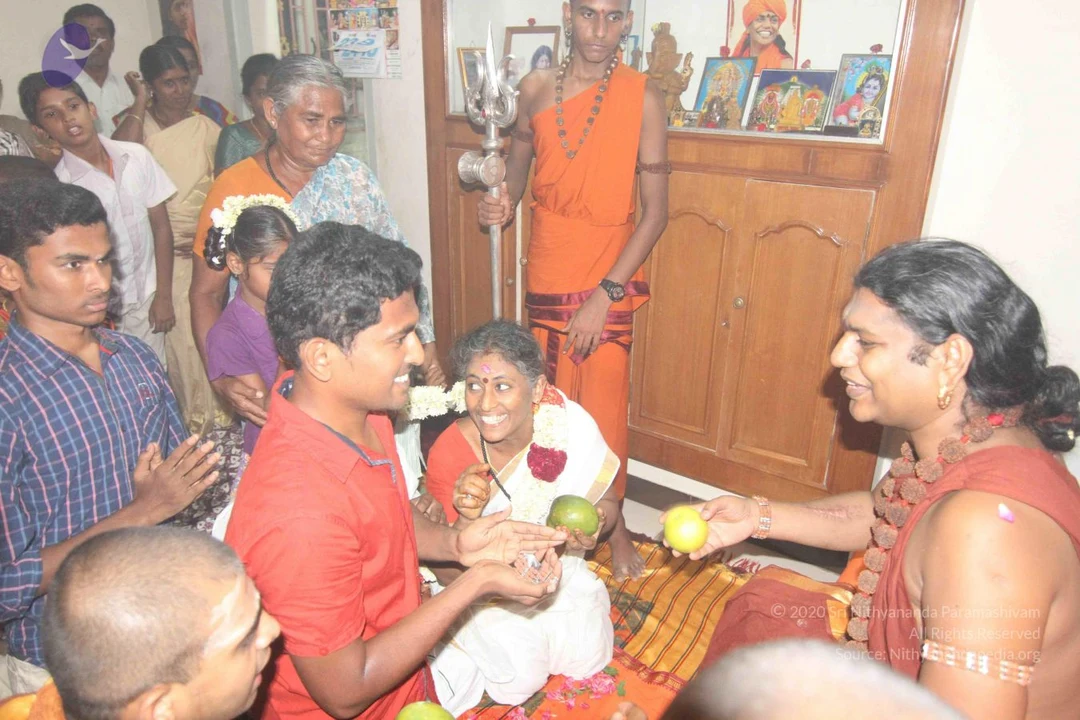
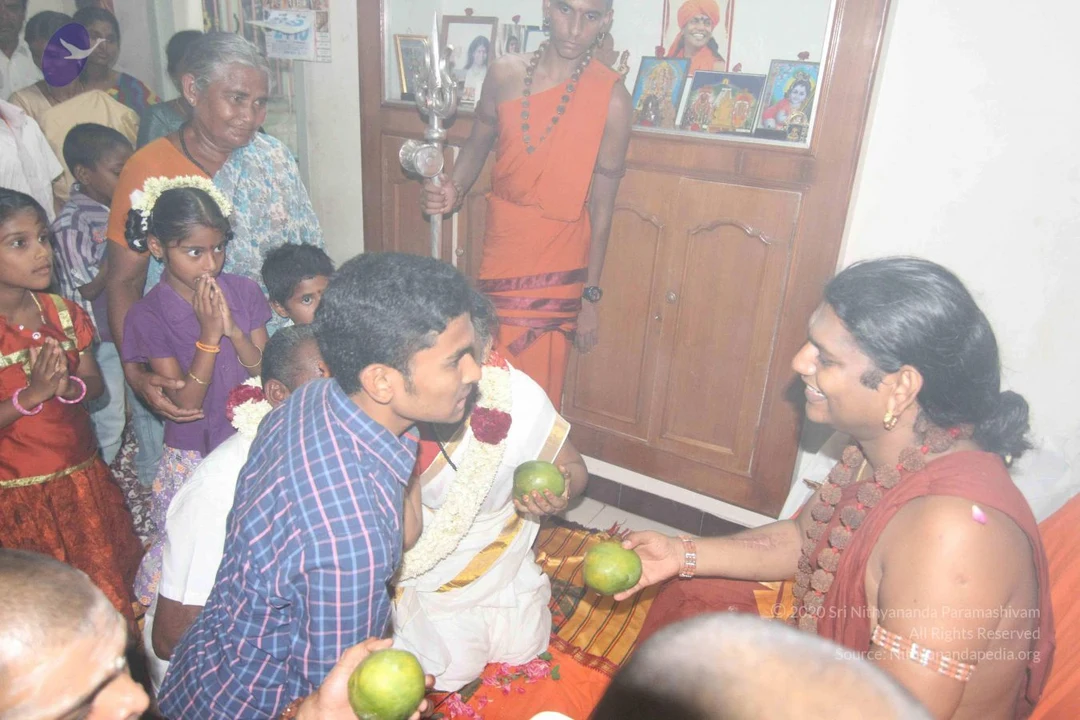
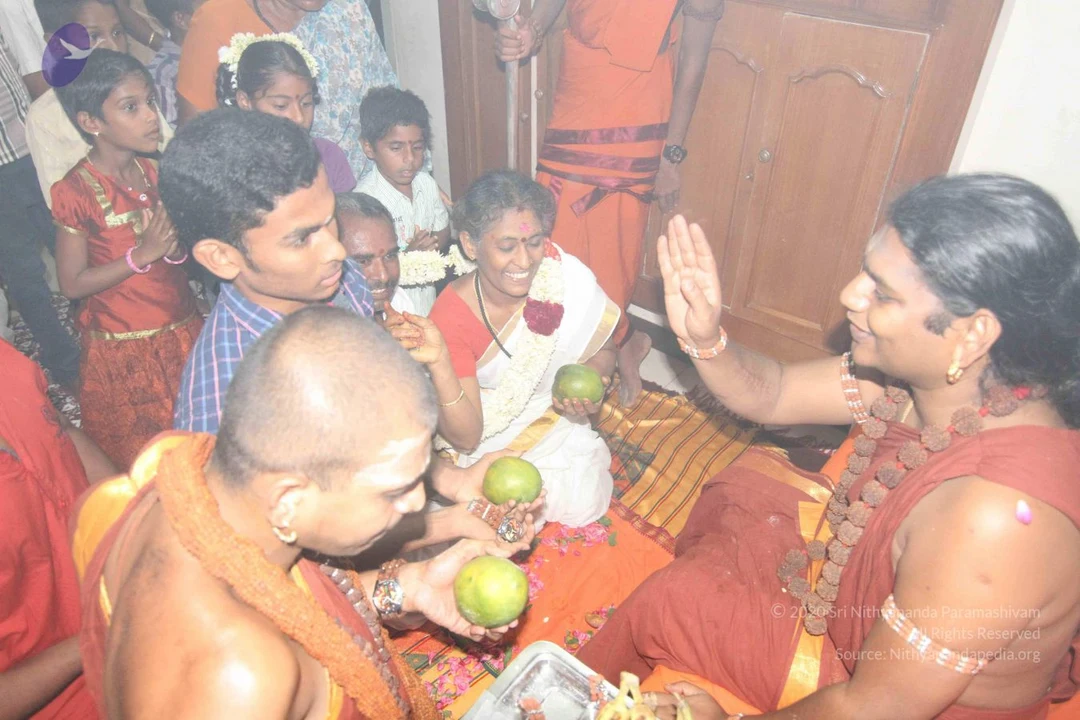
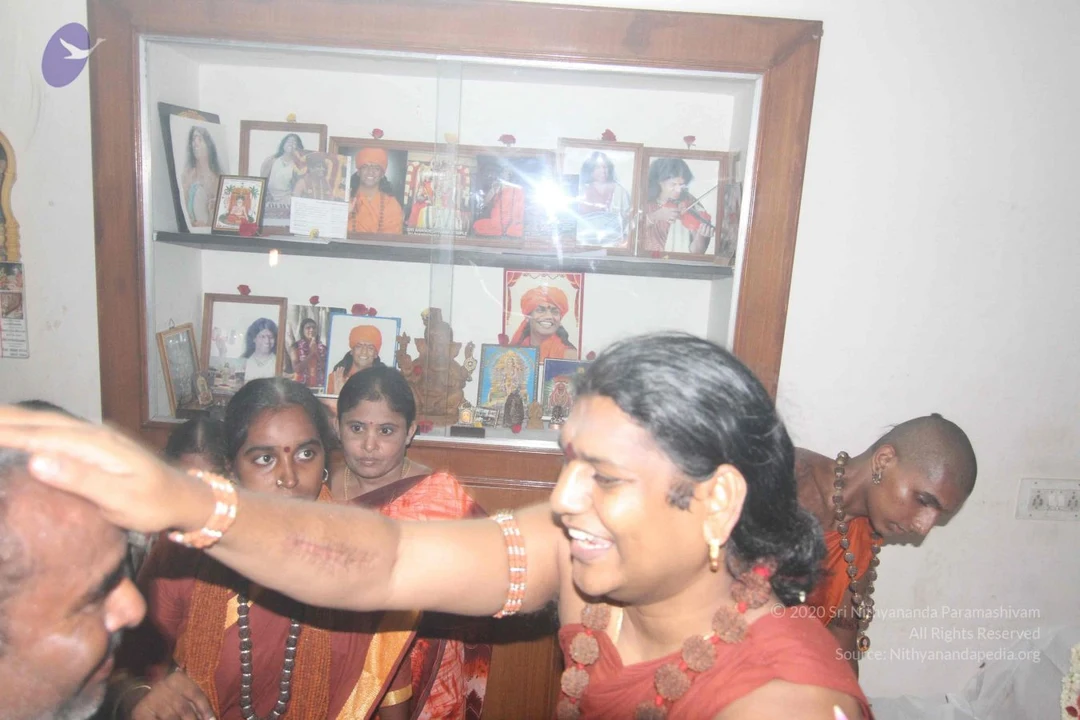
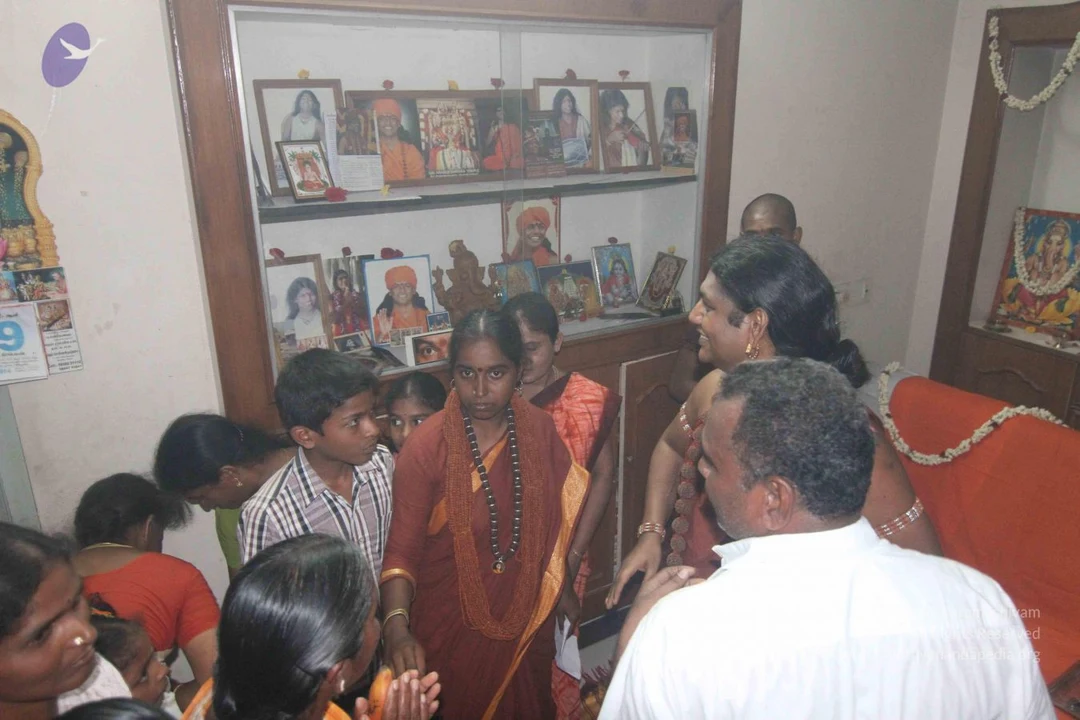
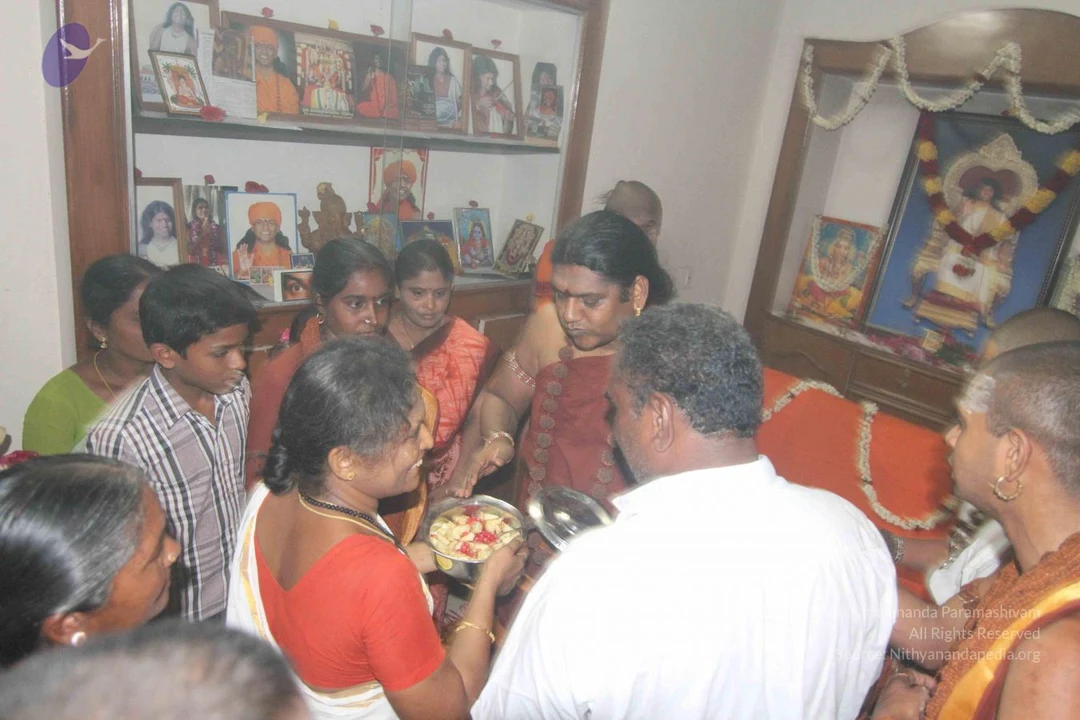
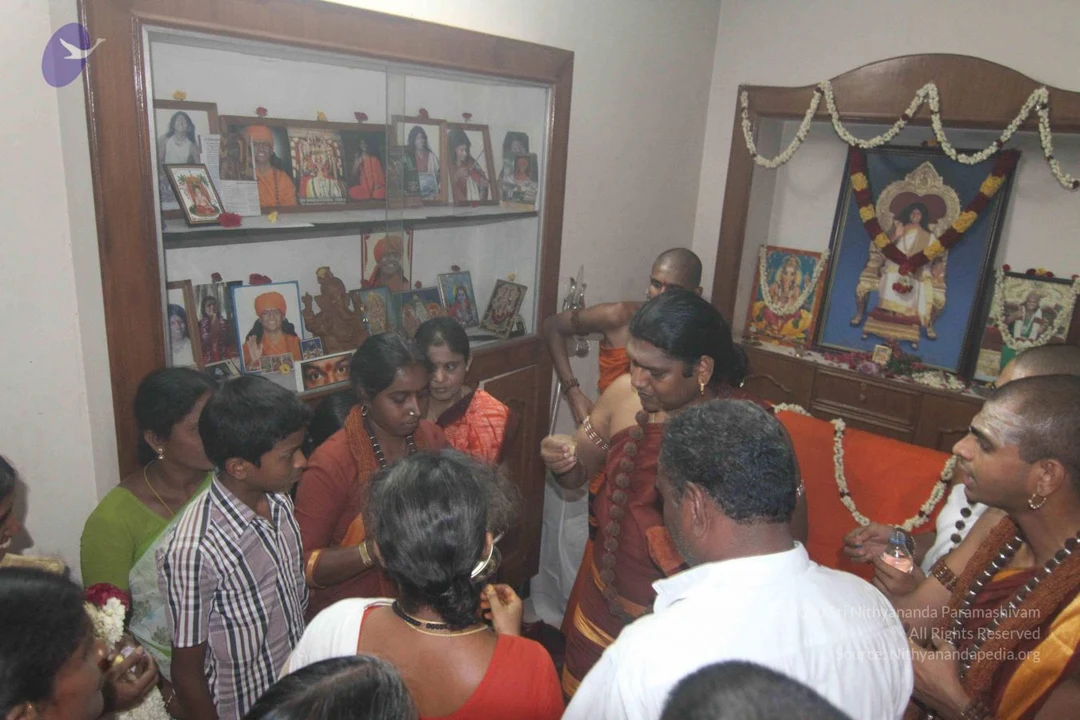
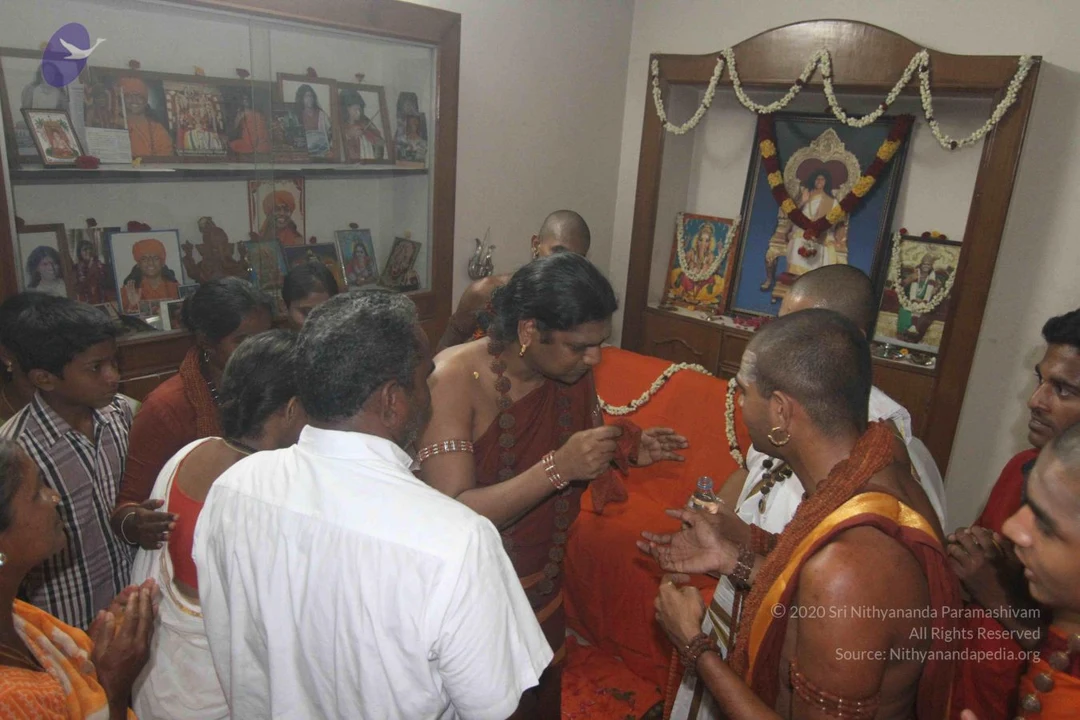
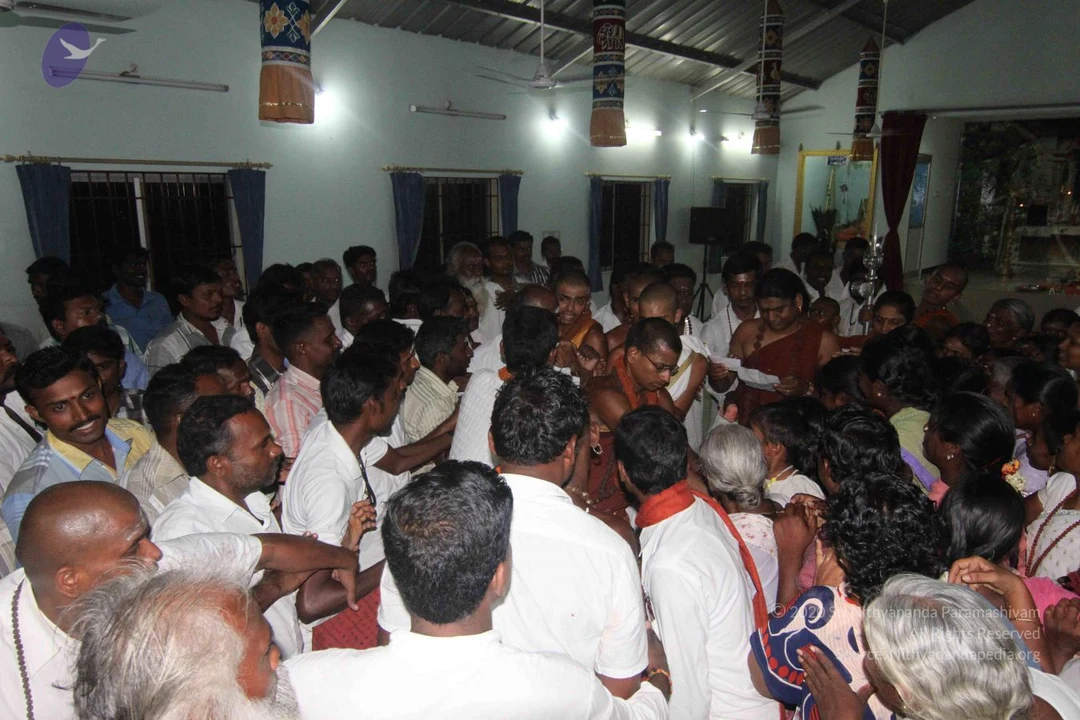
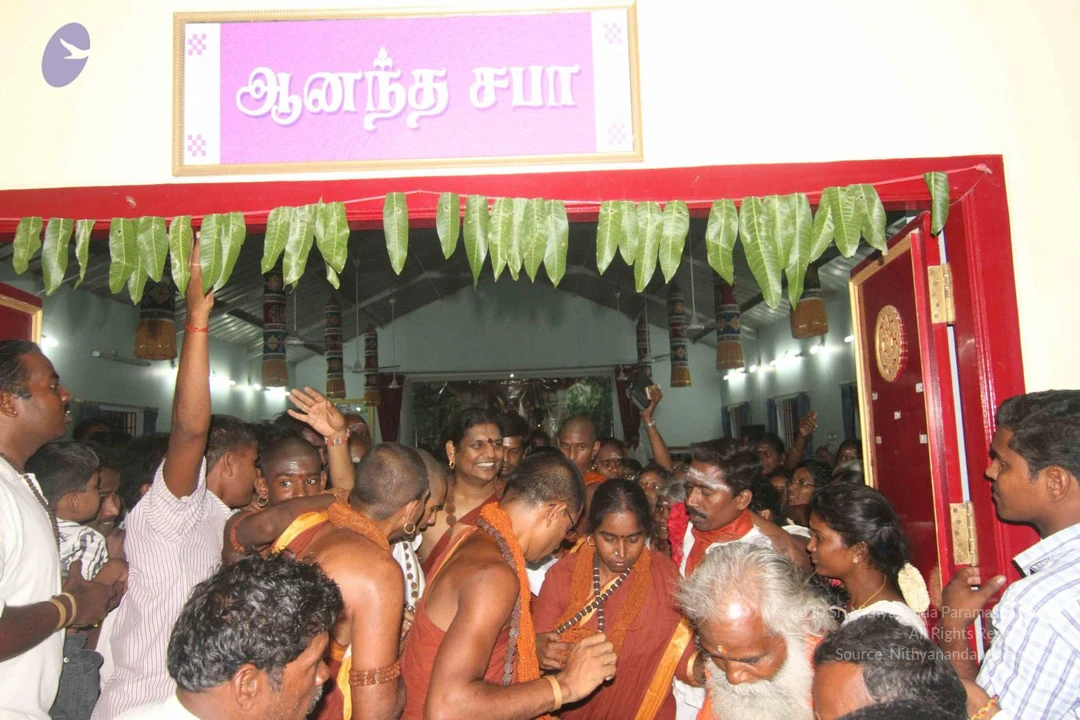
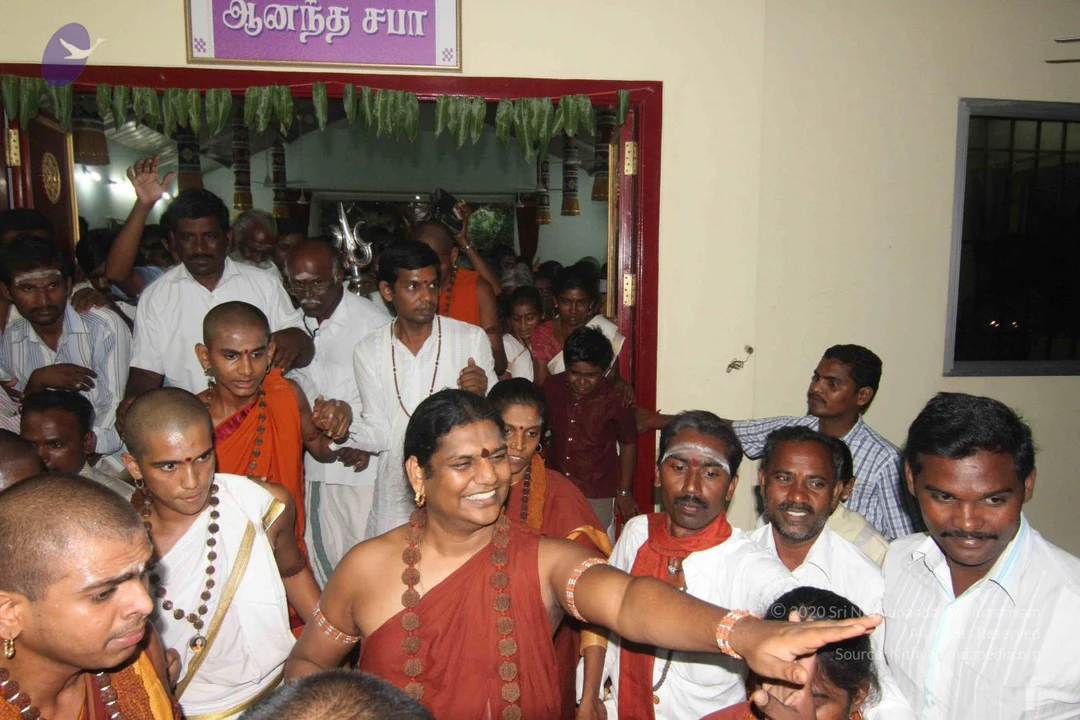
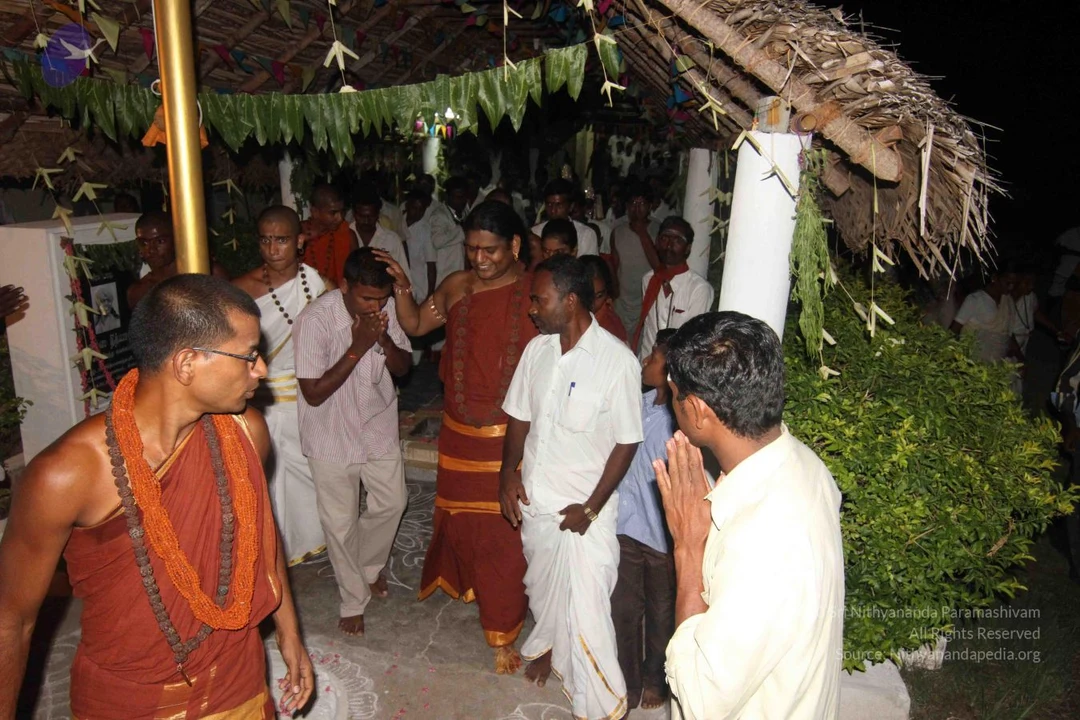
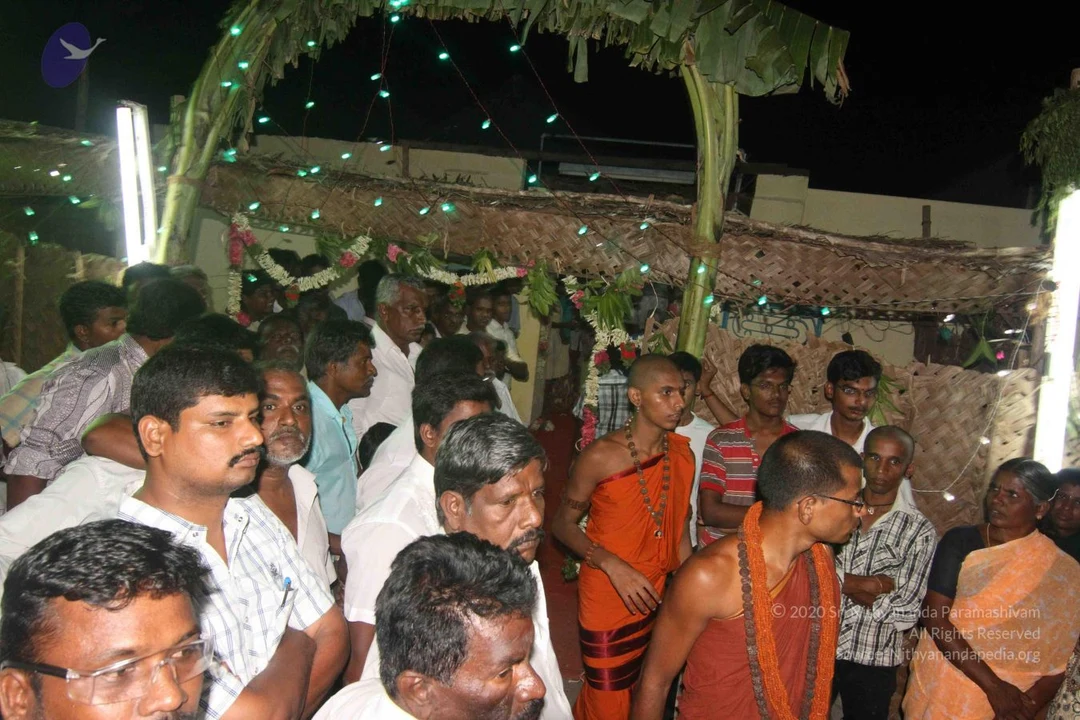
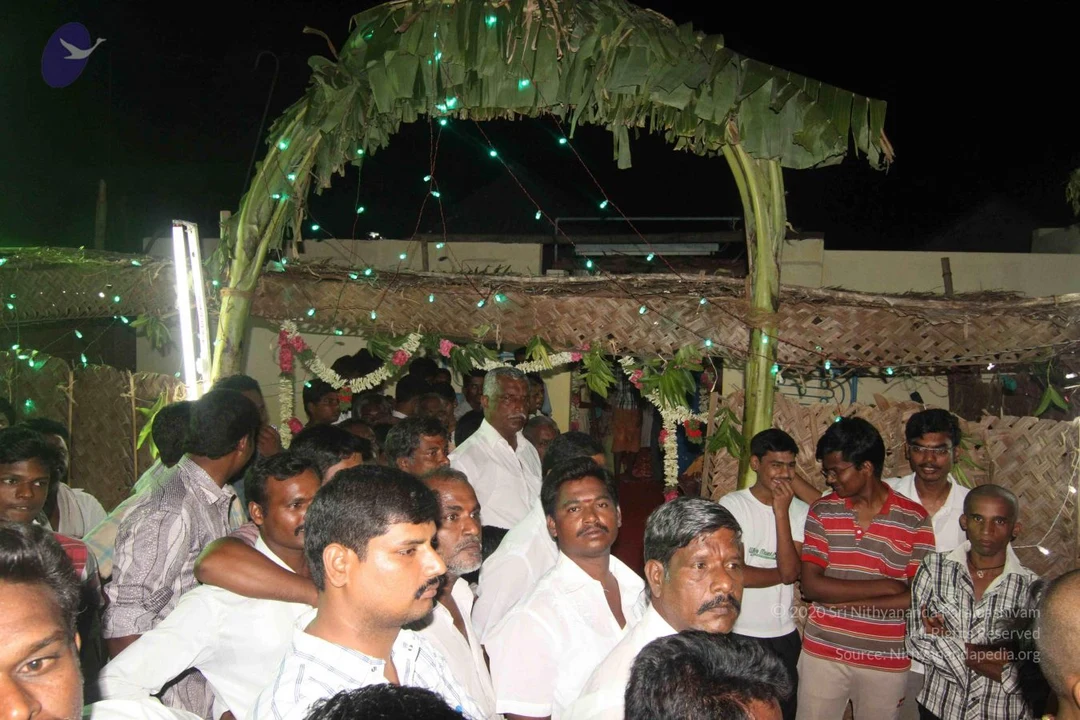
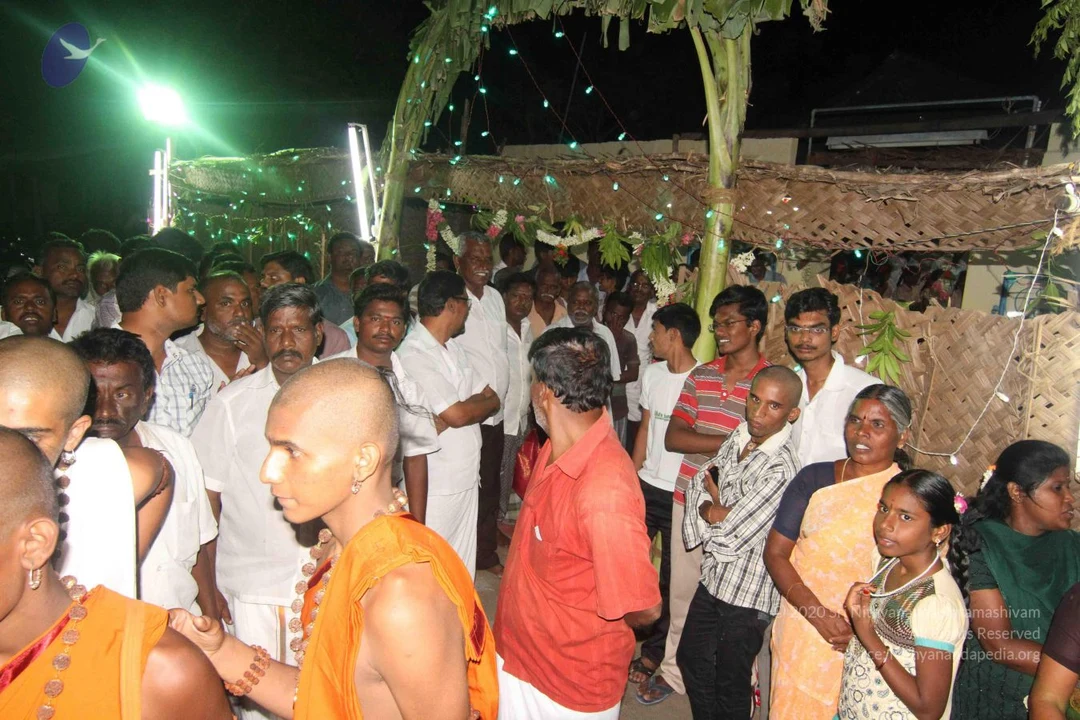
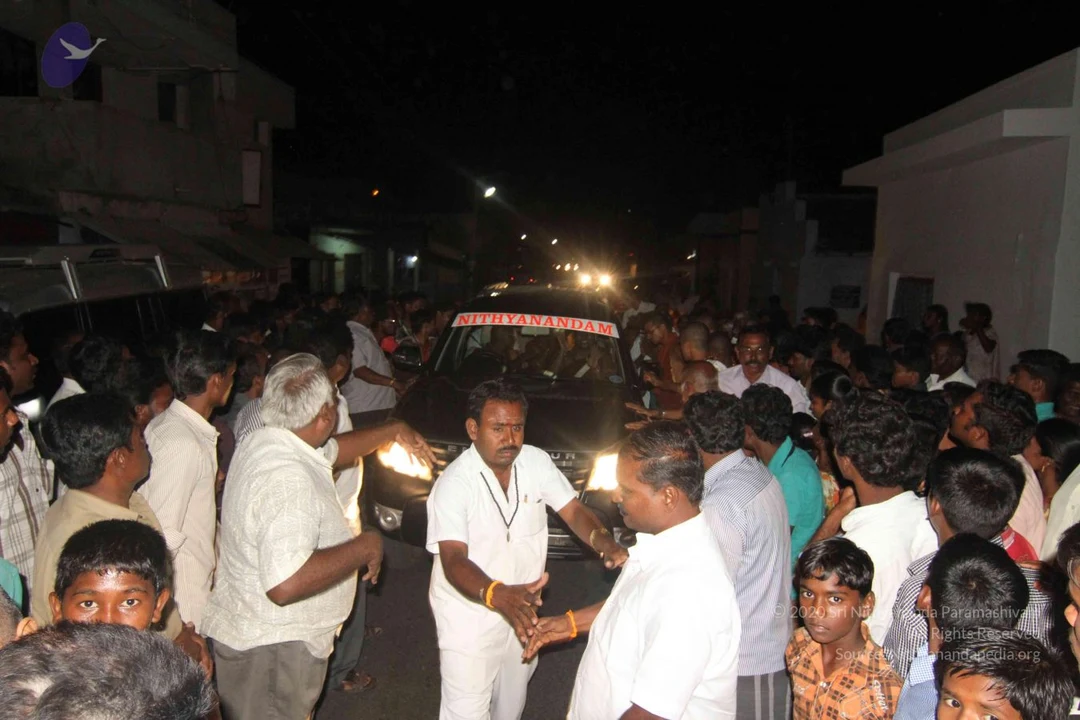
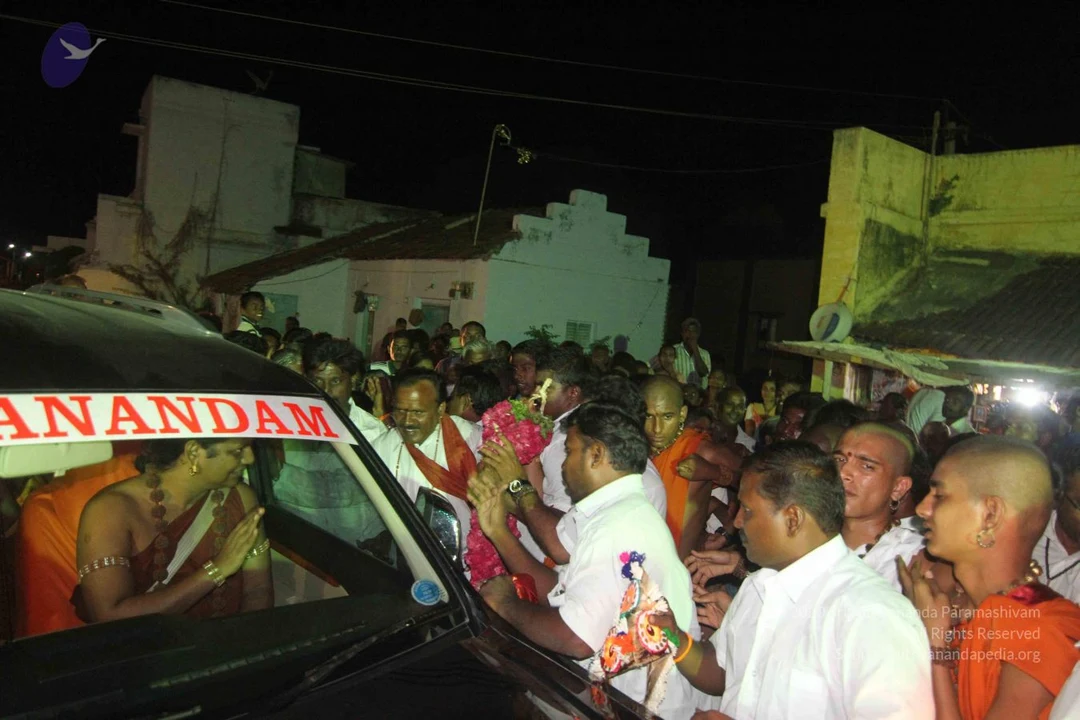
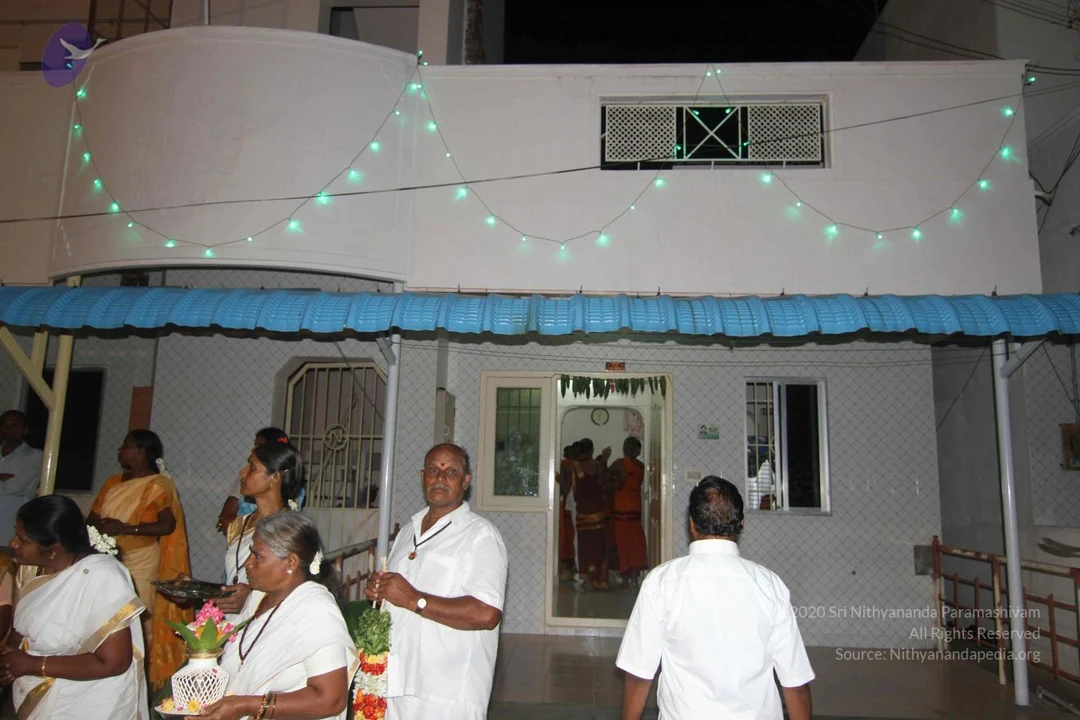
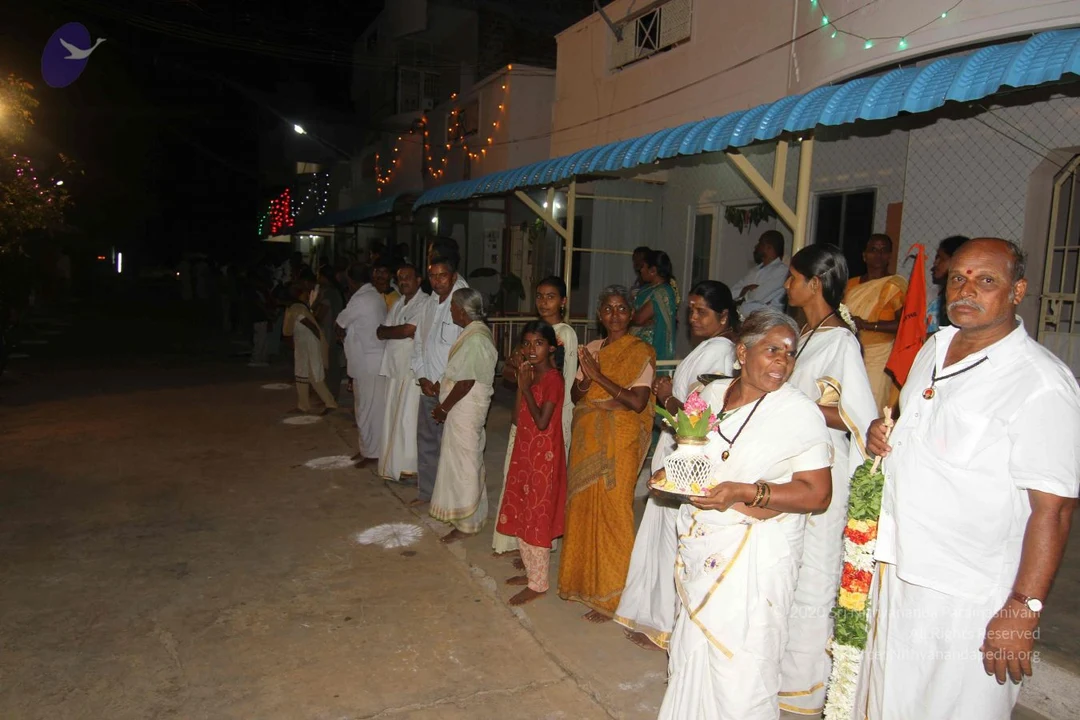
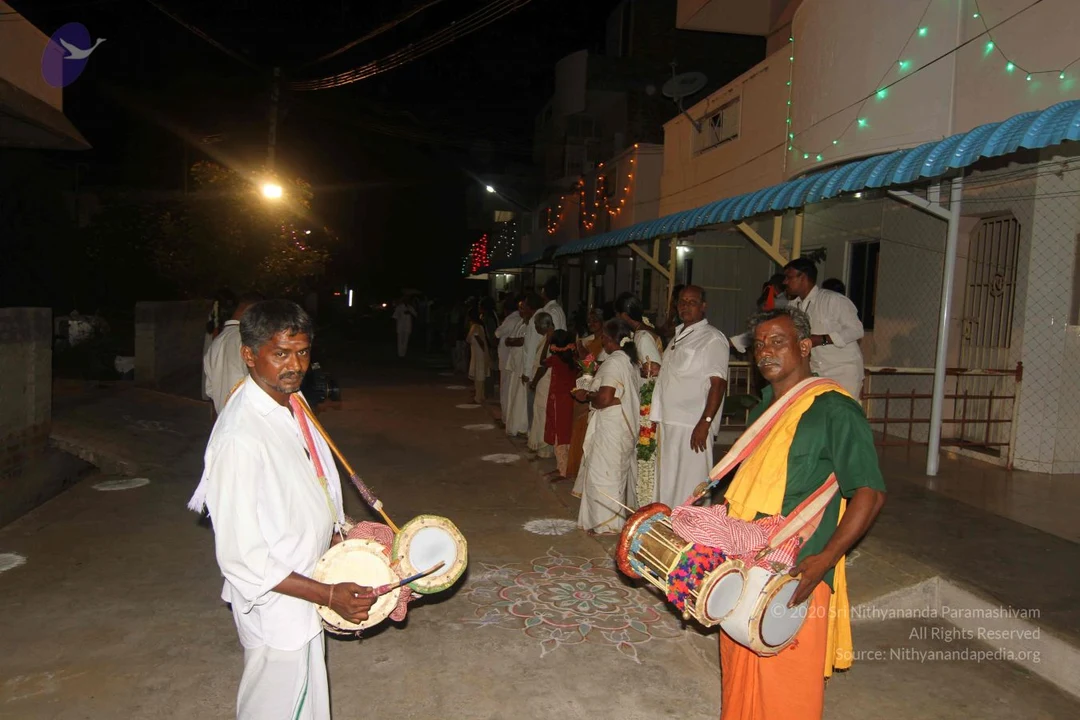
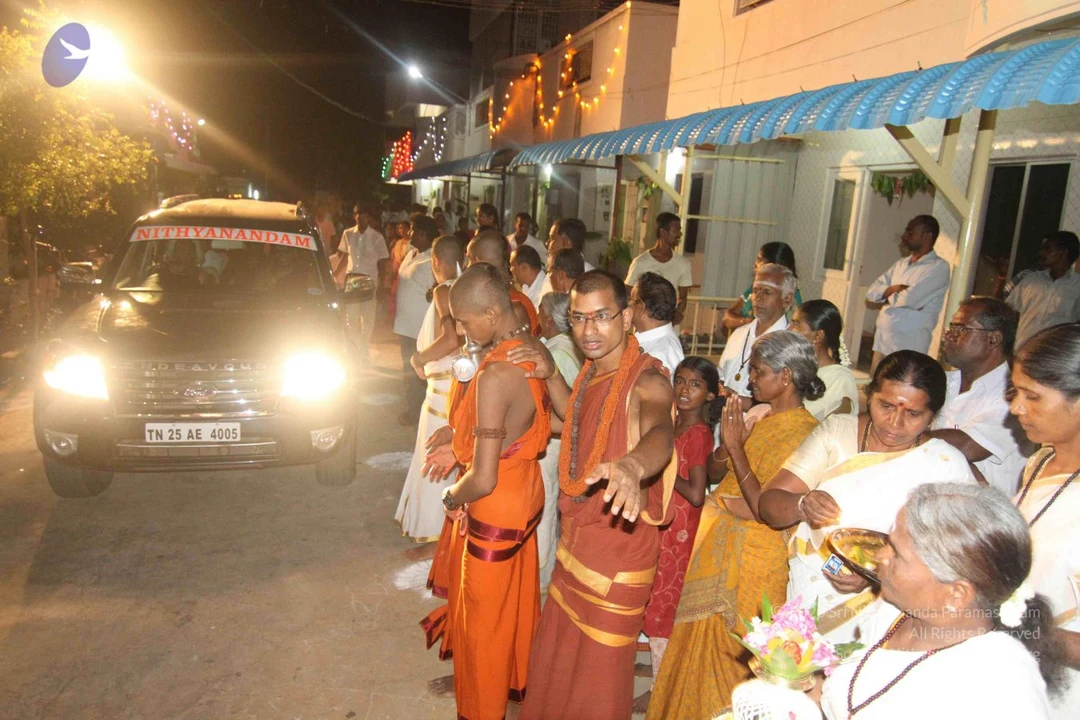
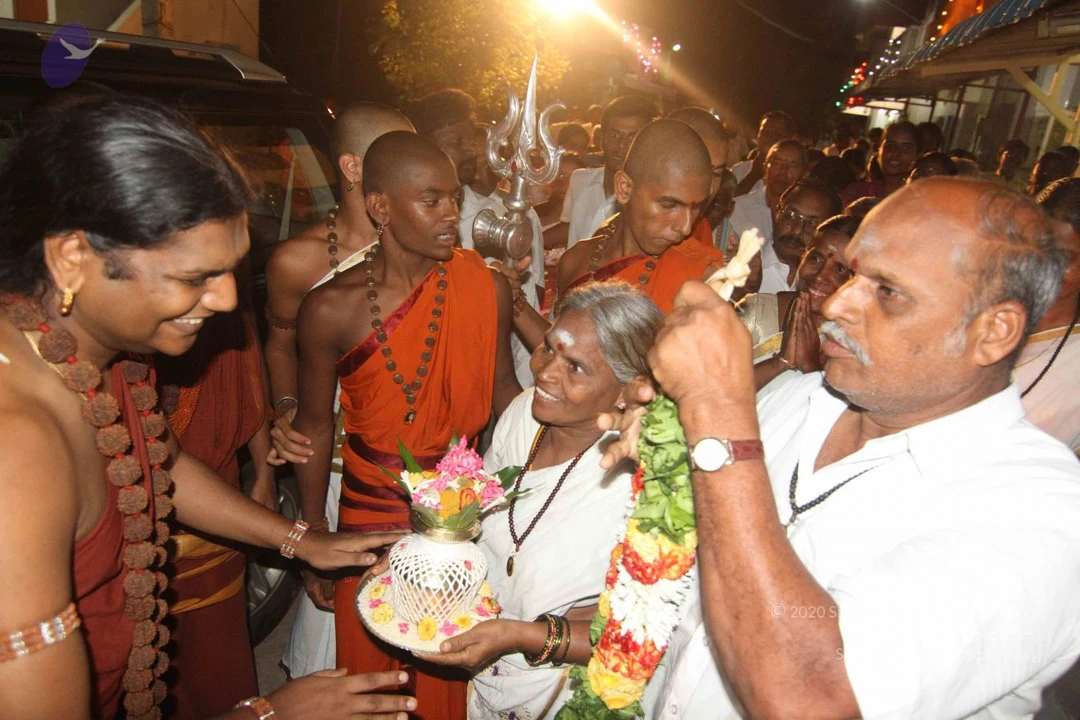
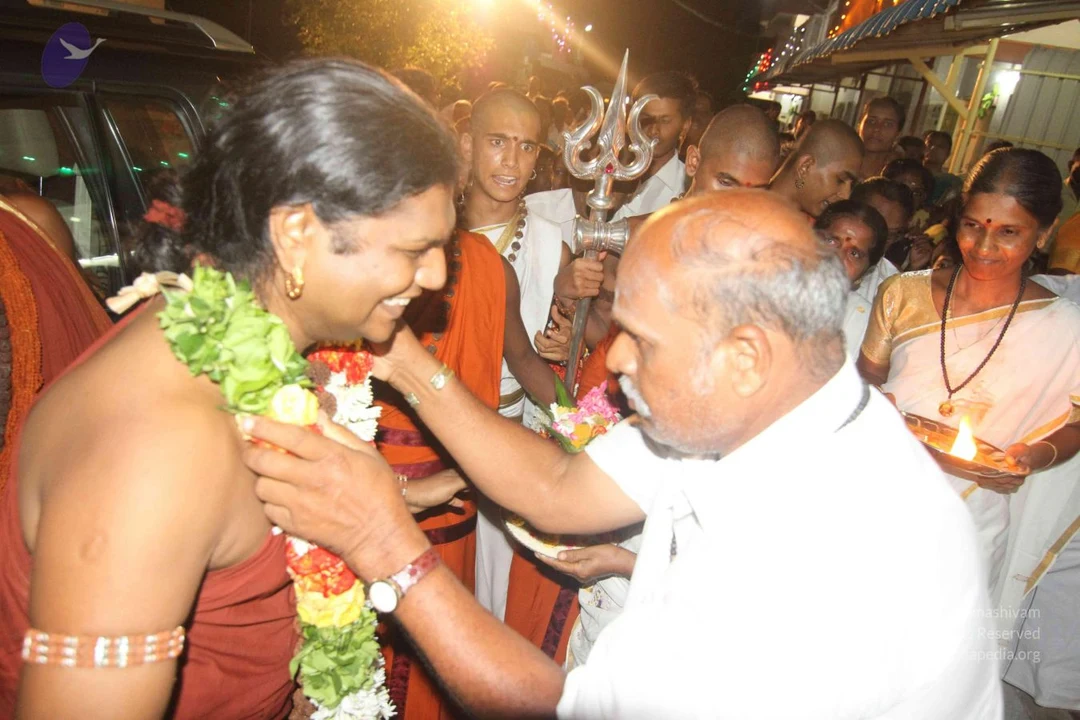
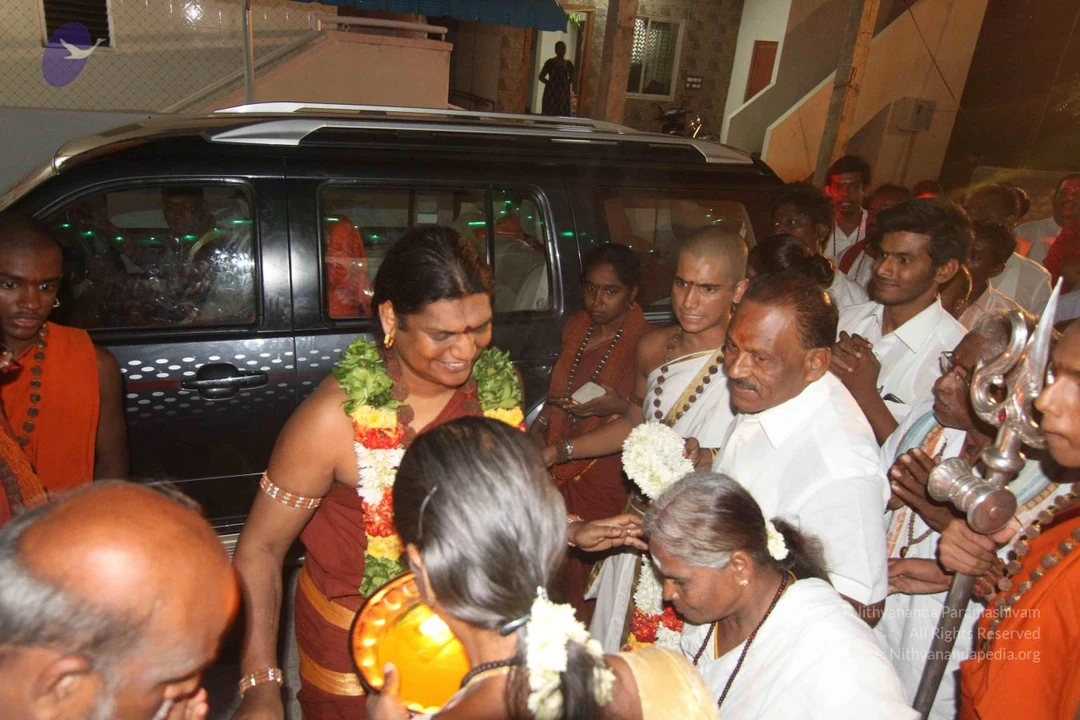
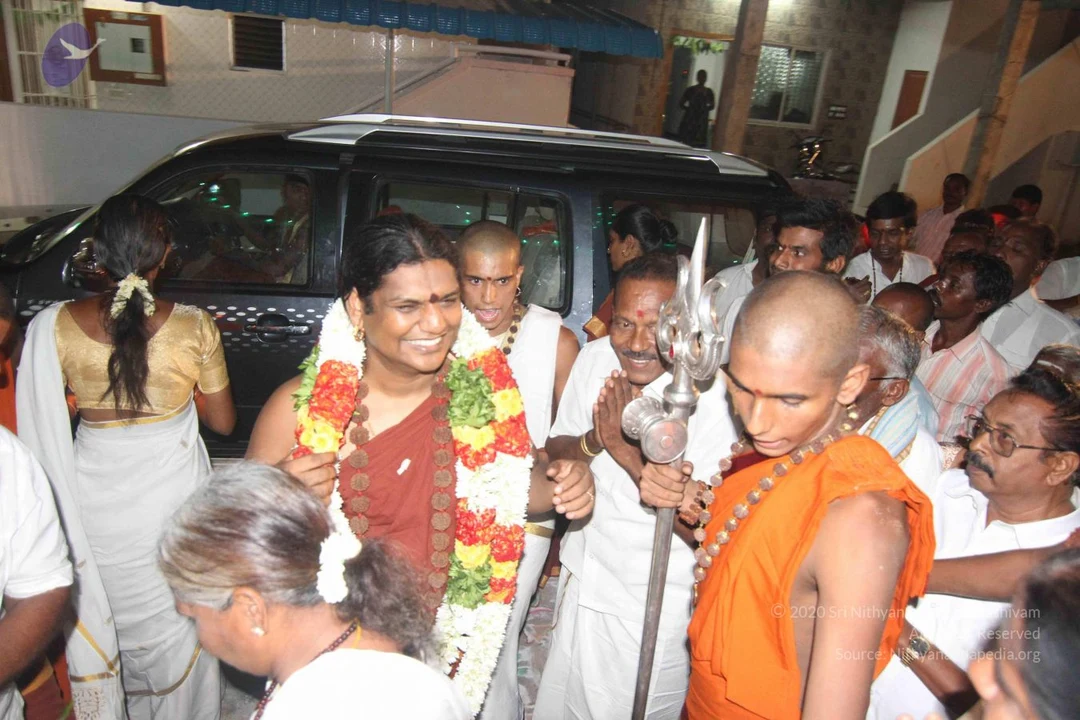
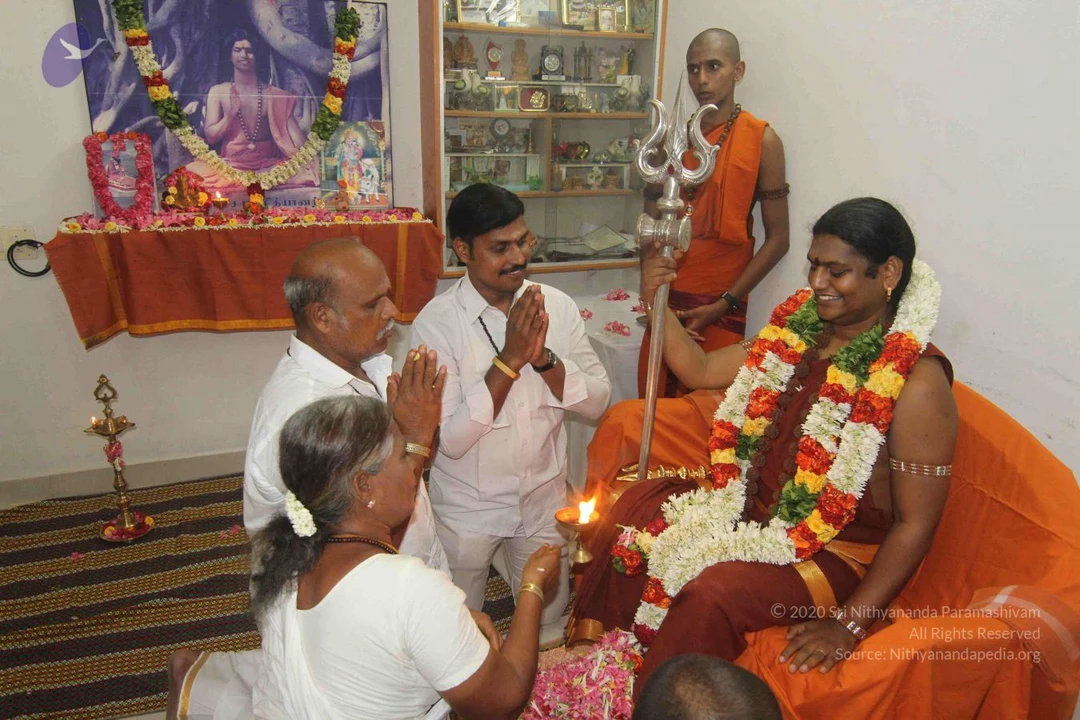
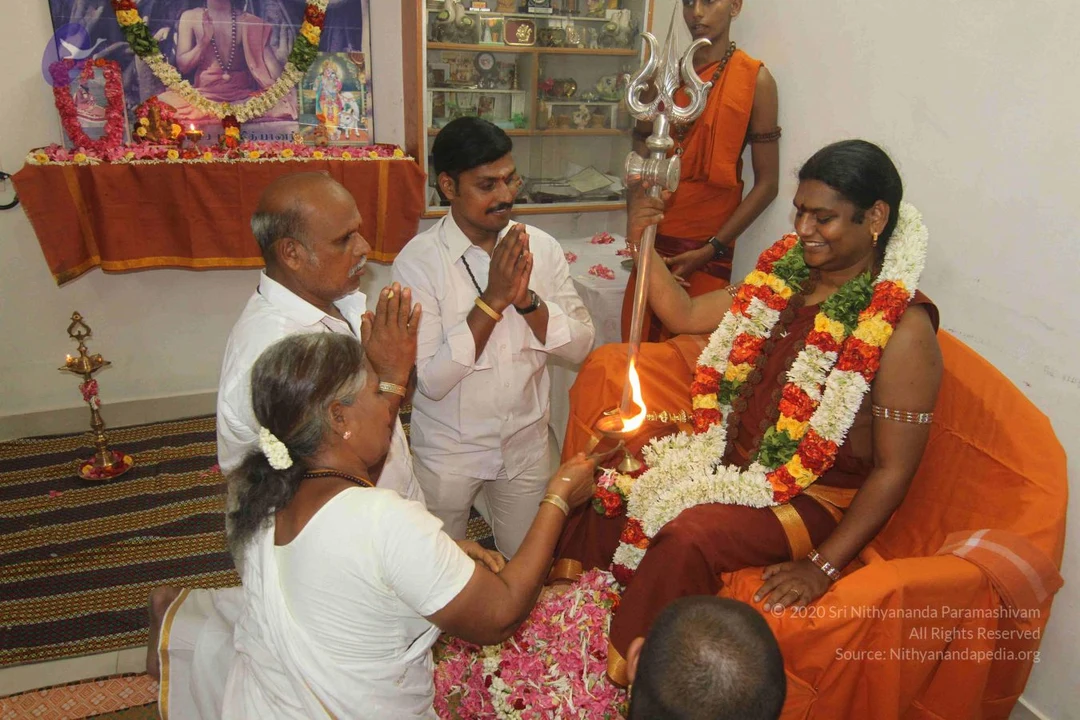
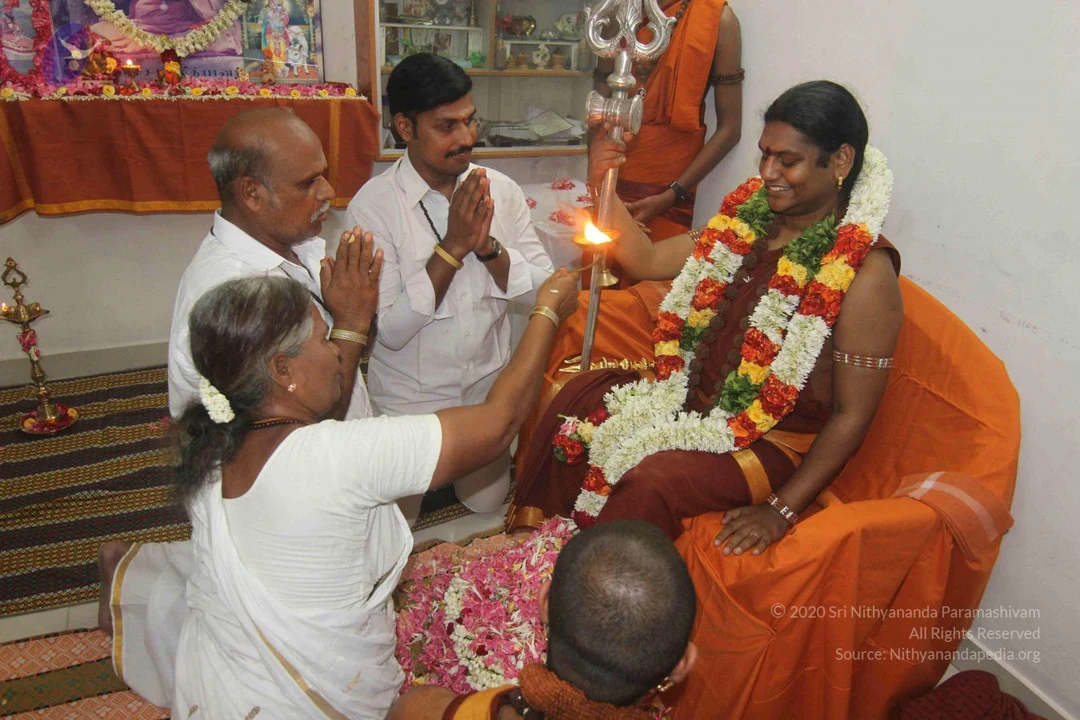
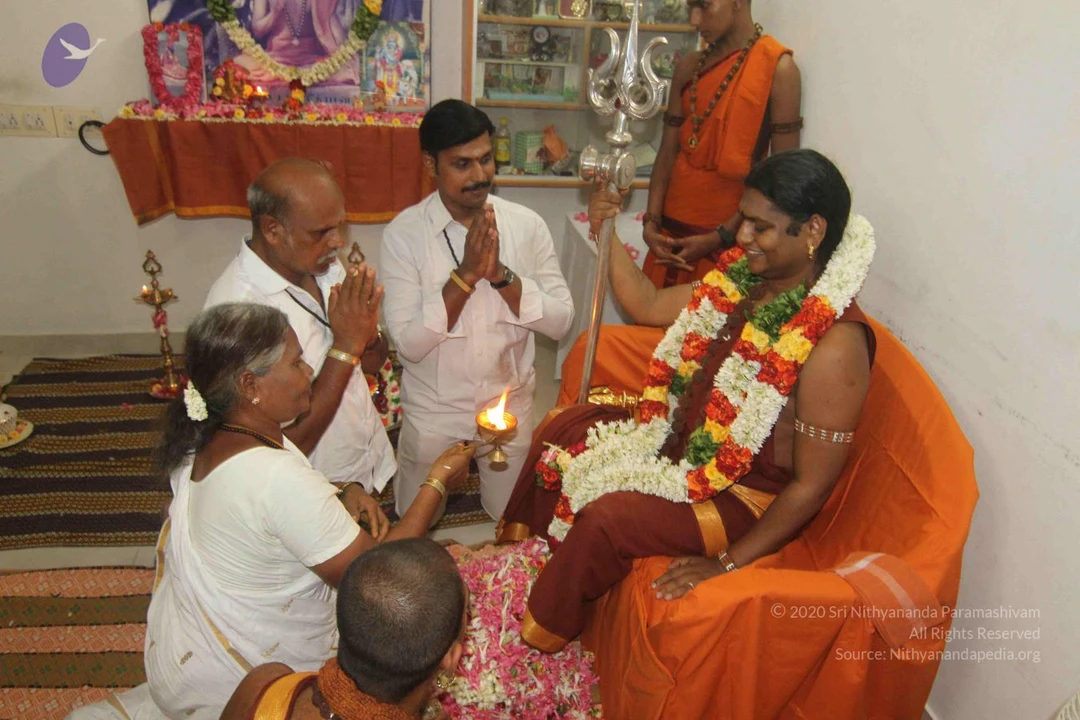
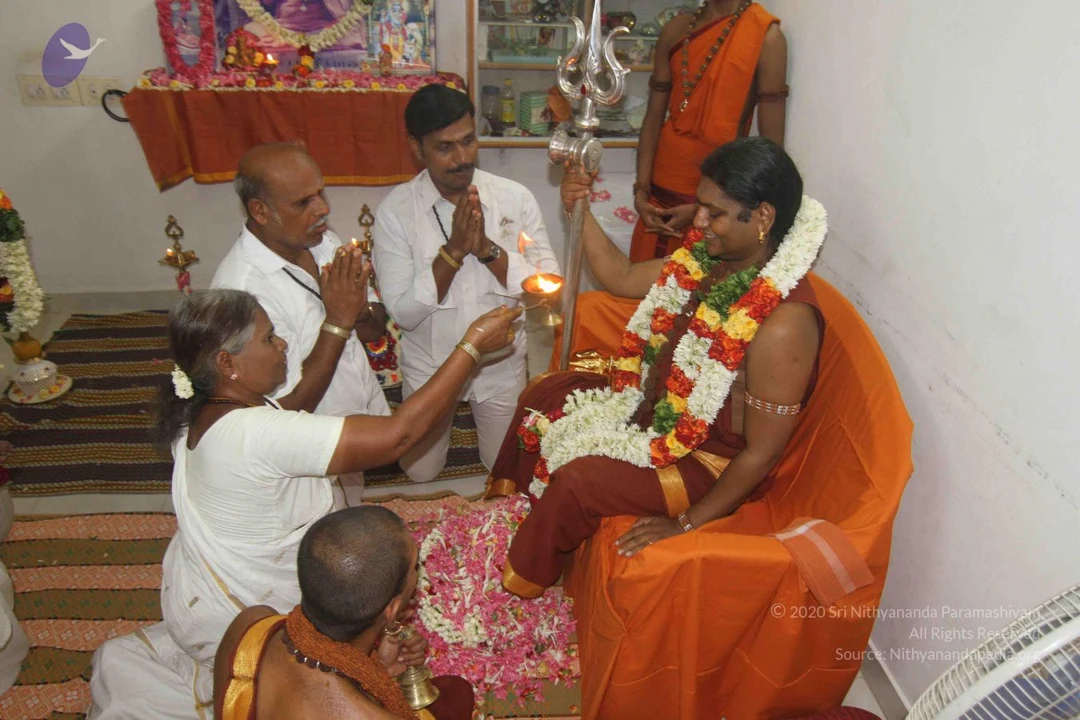
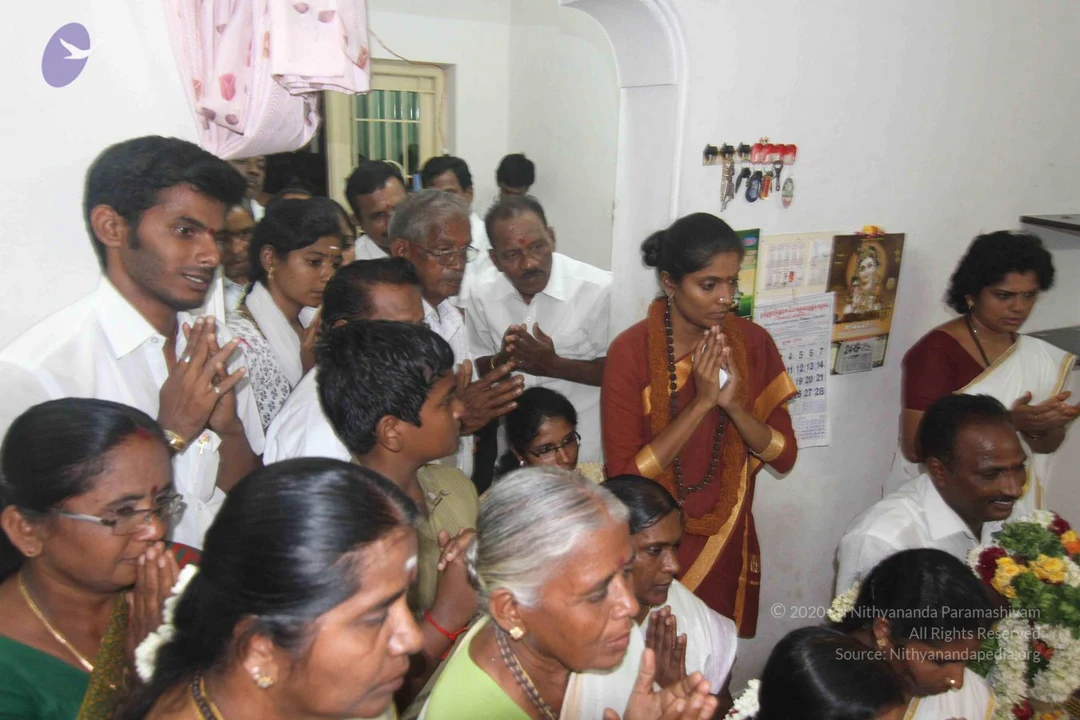
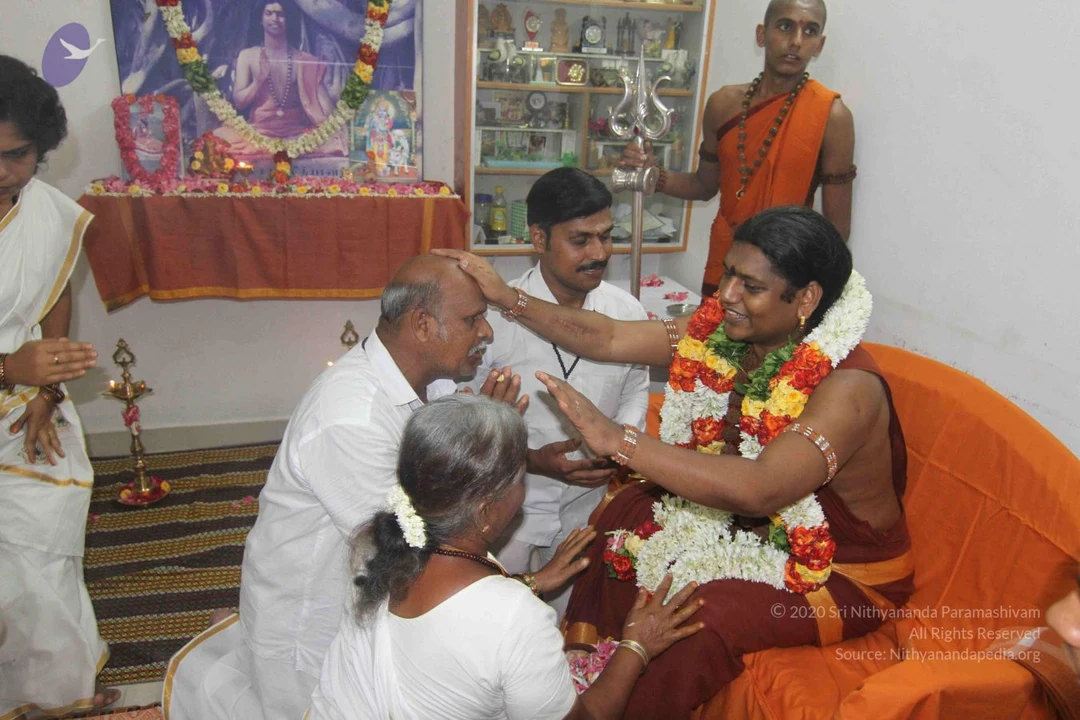
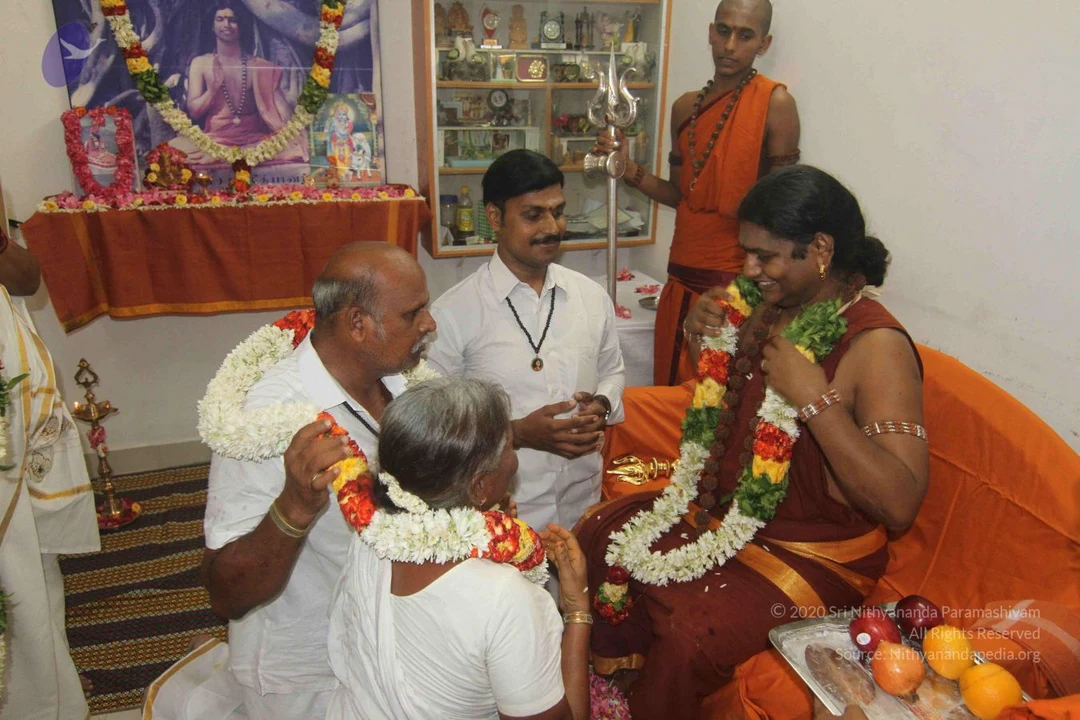
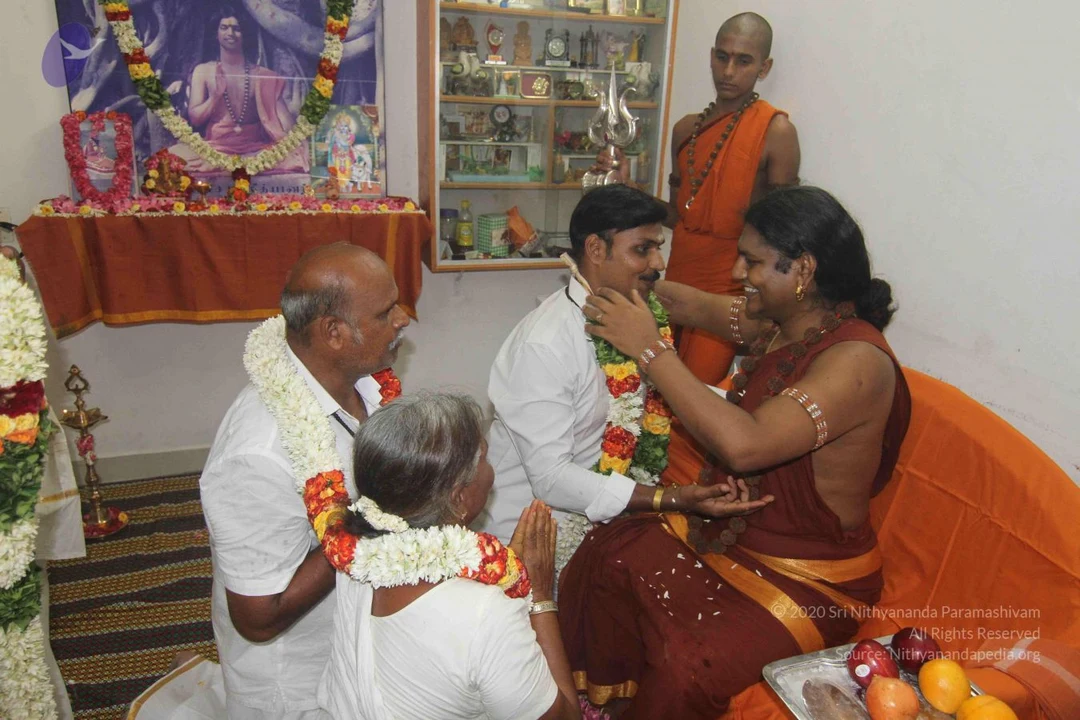
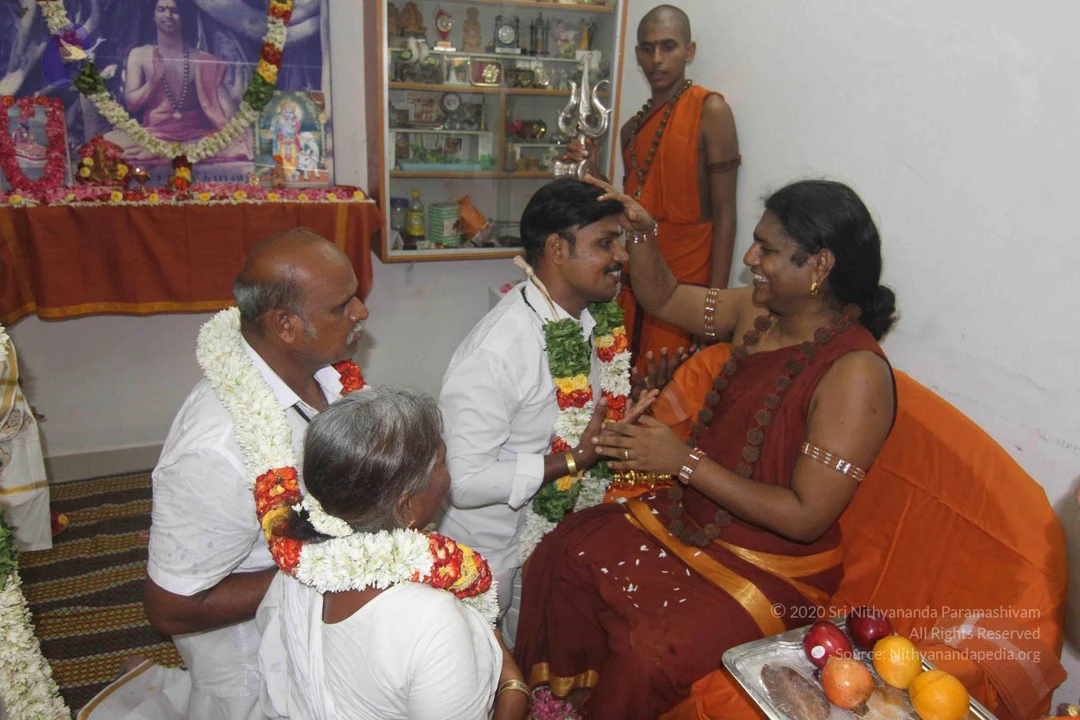
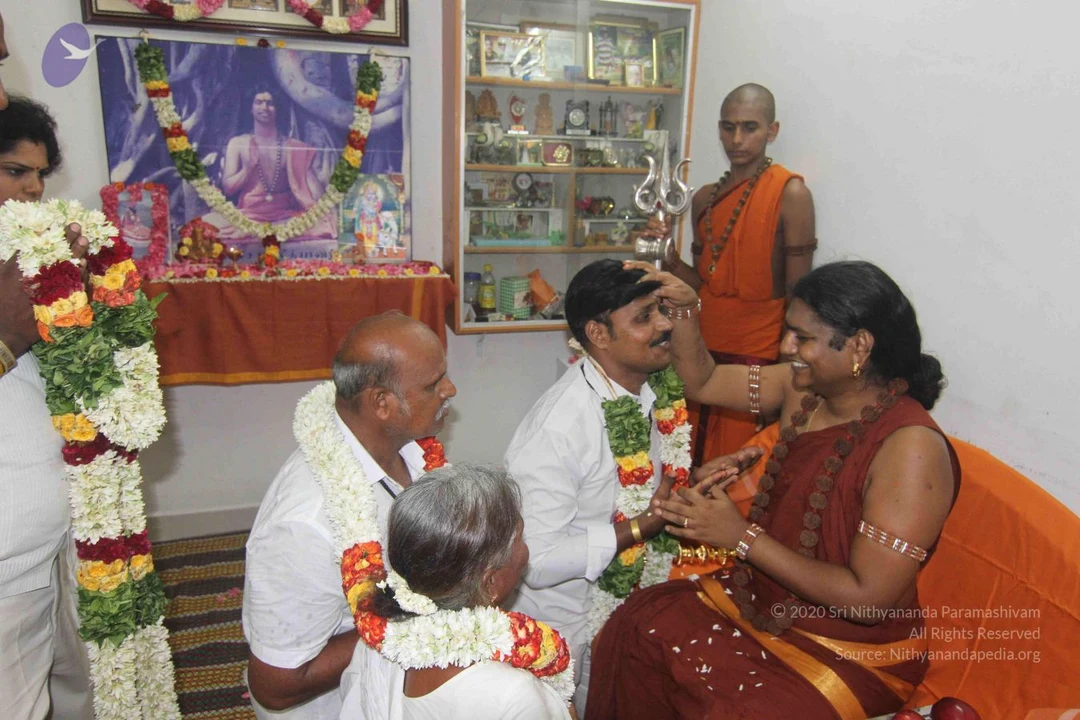
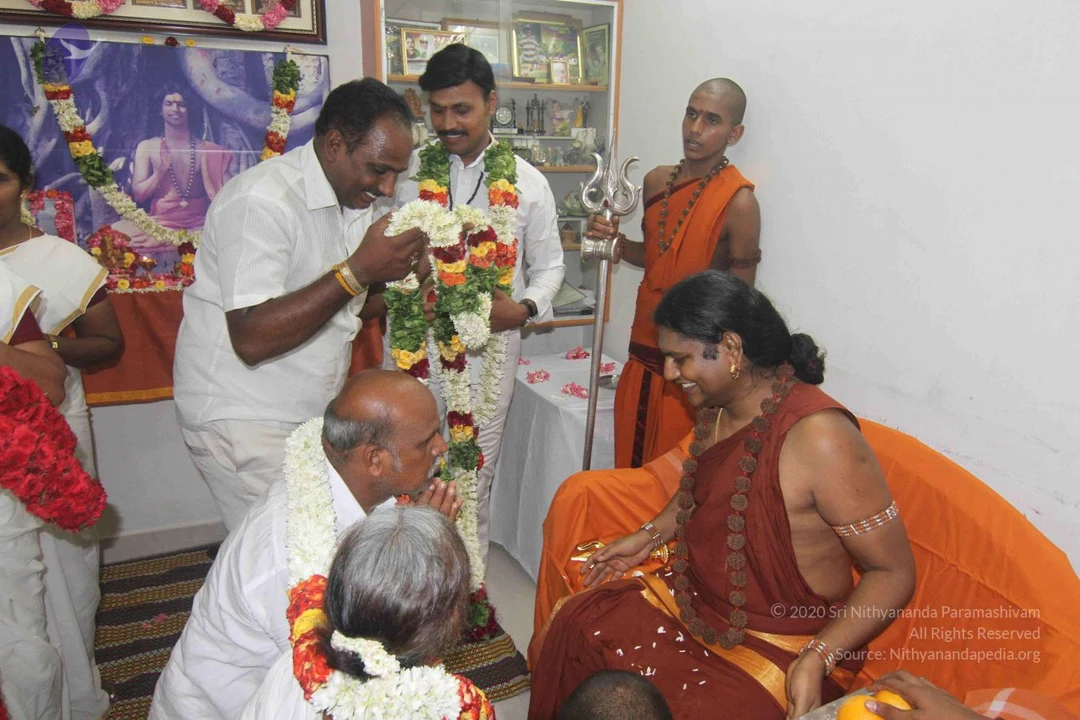
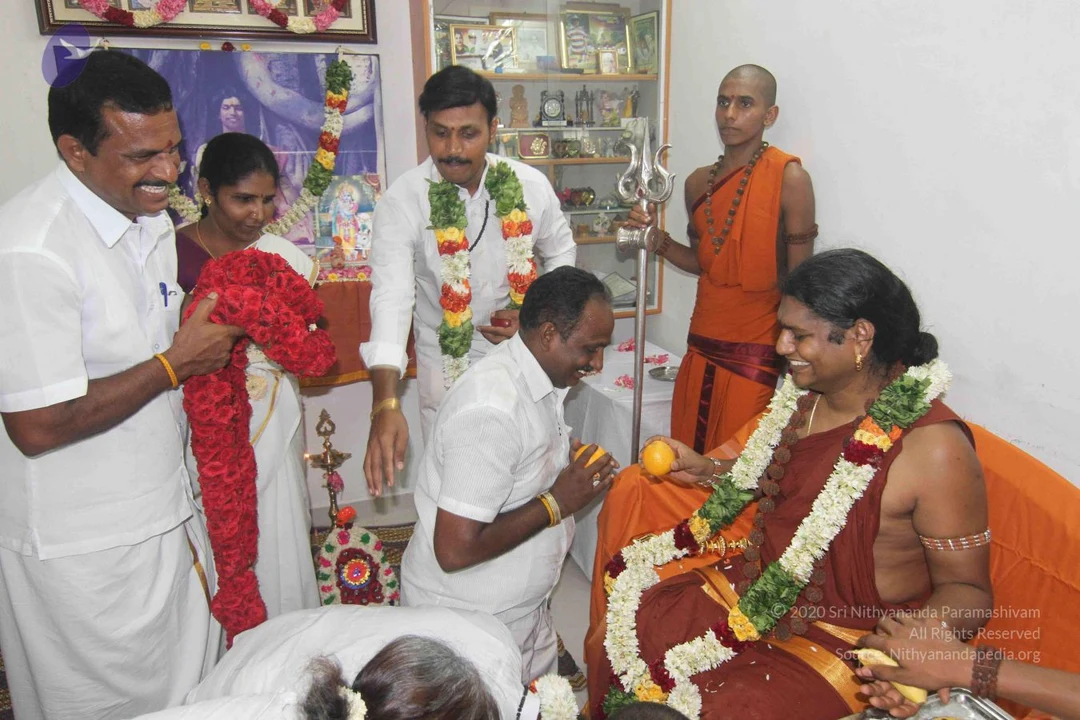
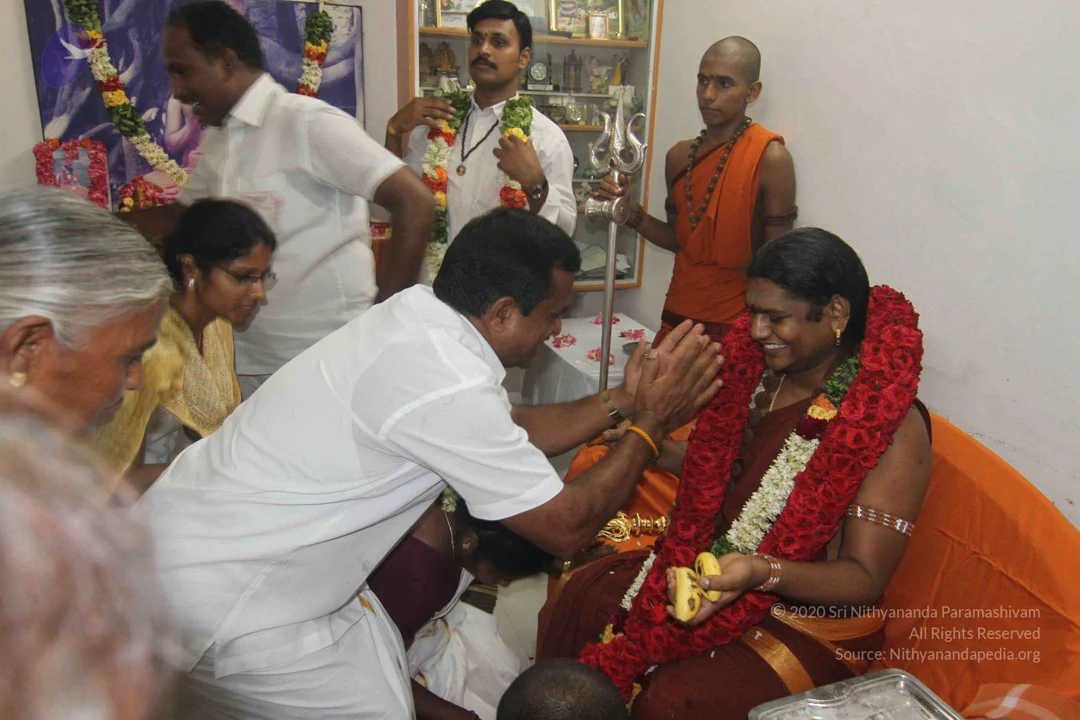
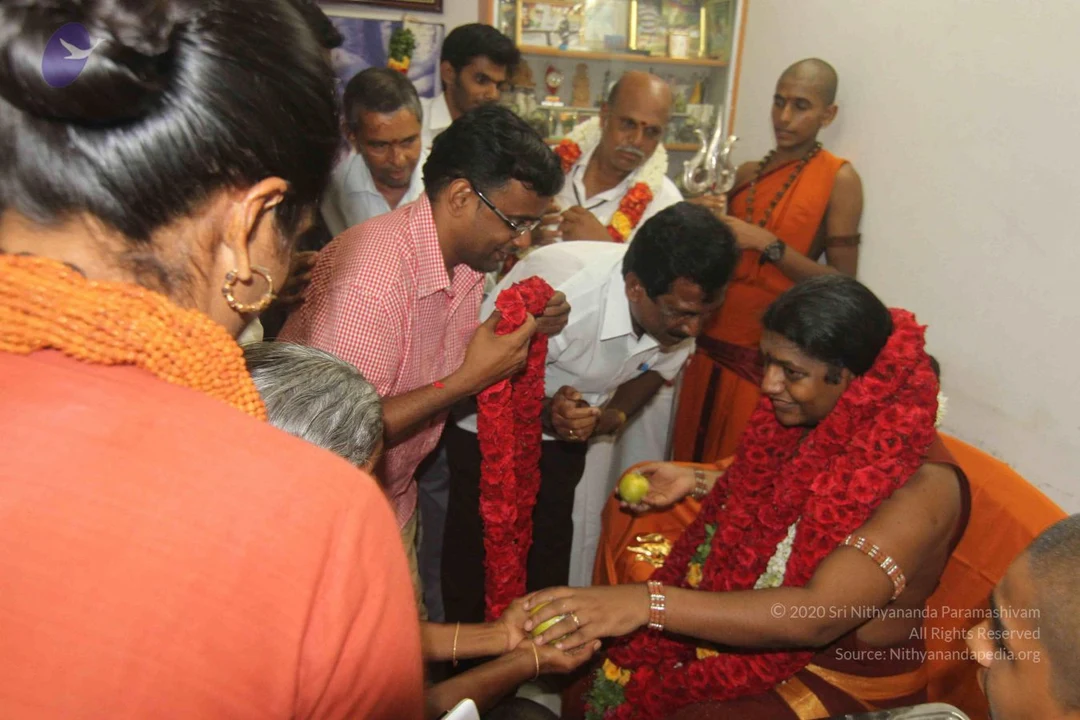
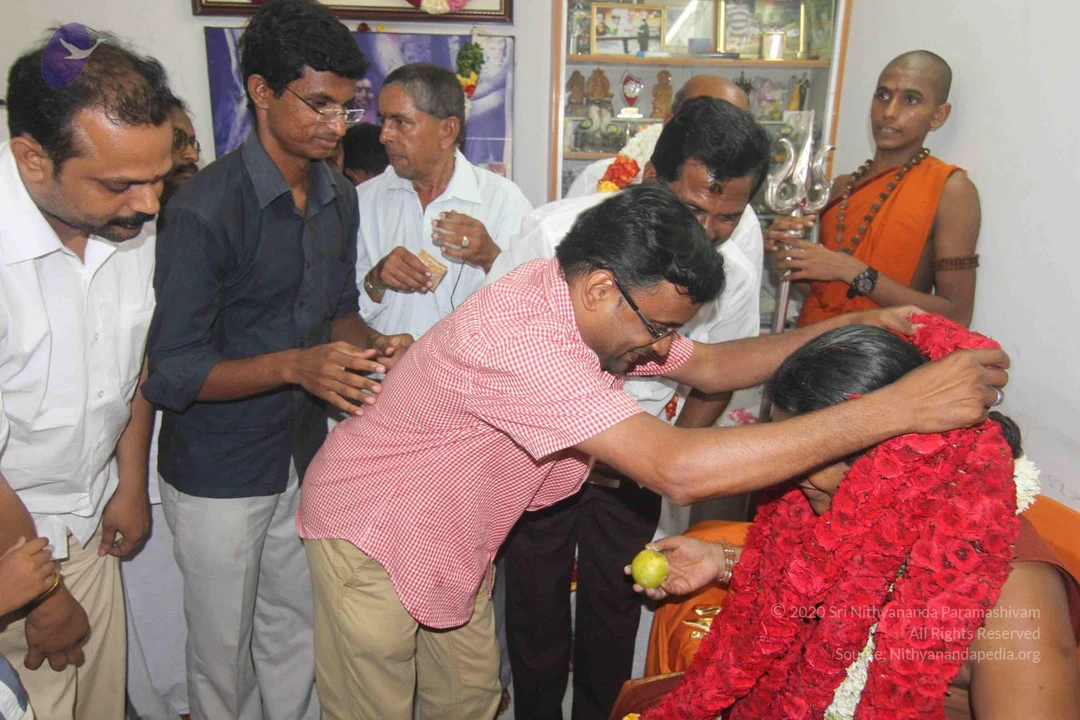
PADA POOJA- HOME VISITS
Tags:

Paramahamsa Nithyananda, dimensions, moments, incompletions, Earth, attract, inner space, completion, powerlessness, patterns, magnetic field.

Photos Of The Day:

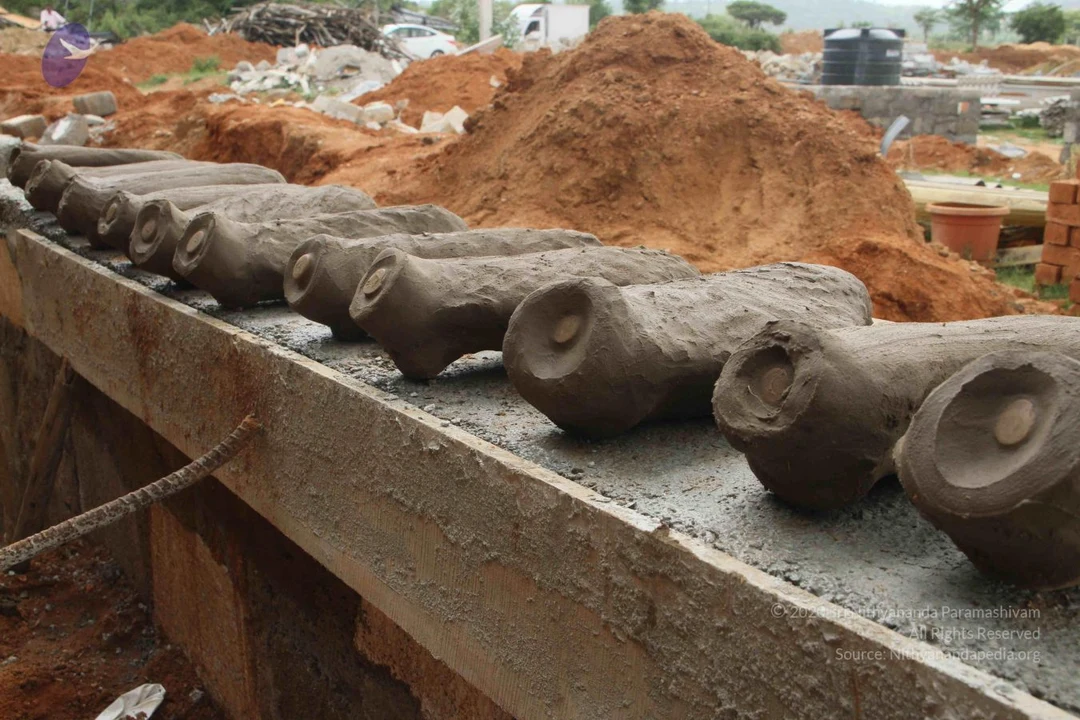
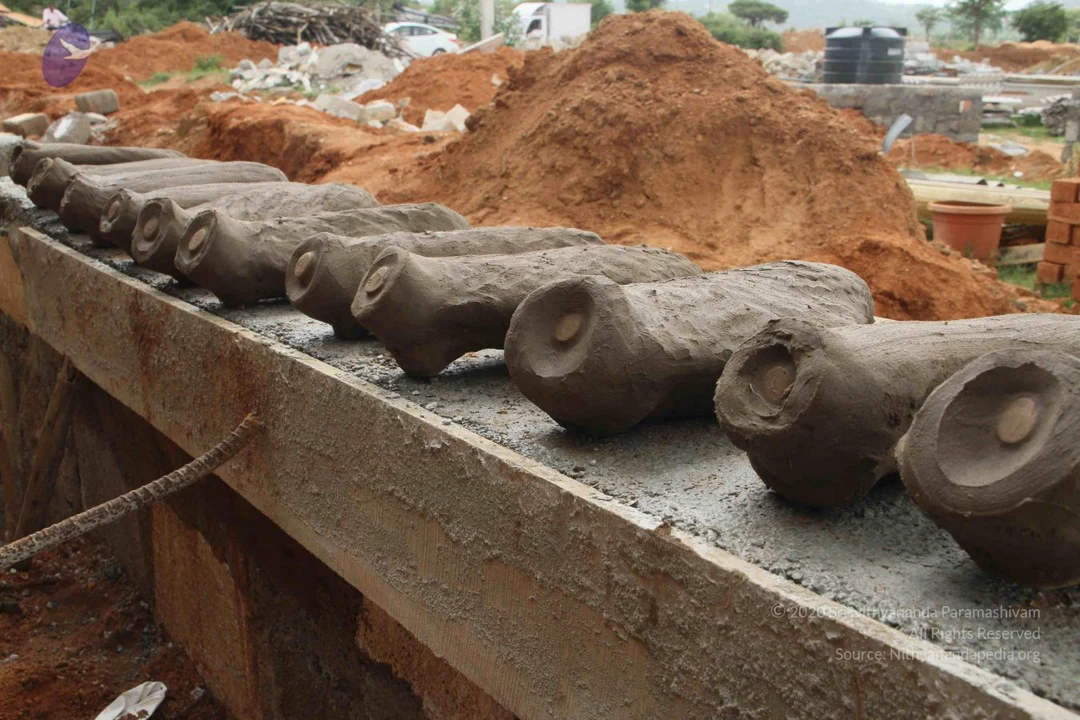
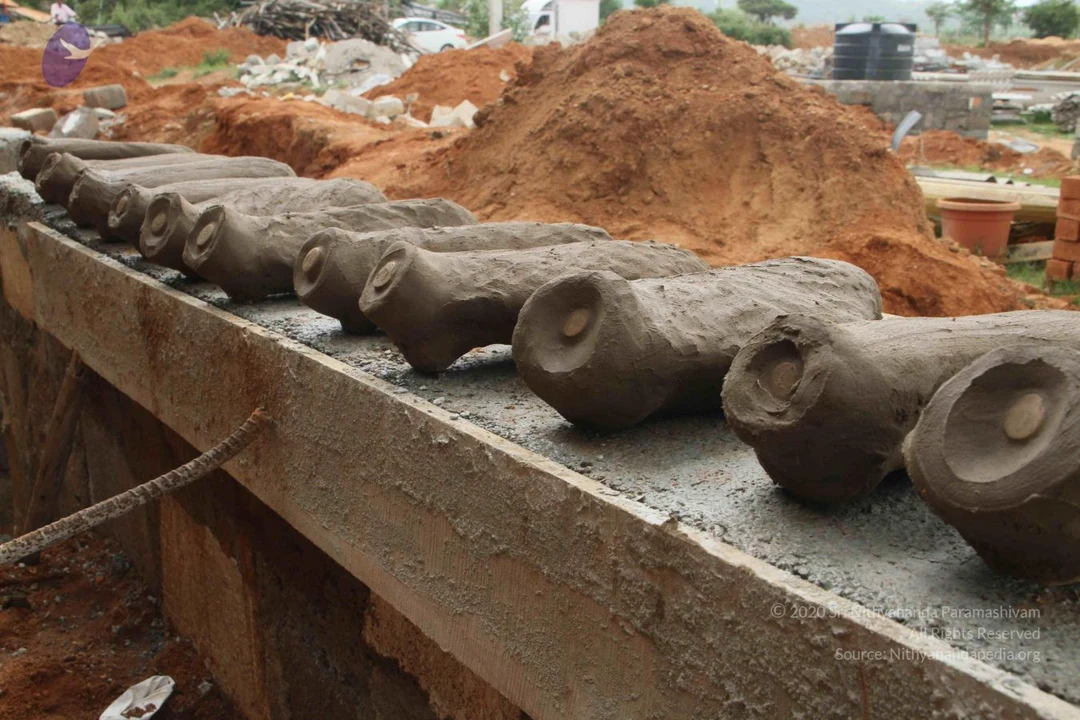
Swamiji Foot Mould

Photos Of The Day:

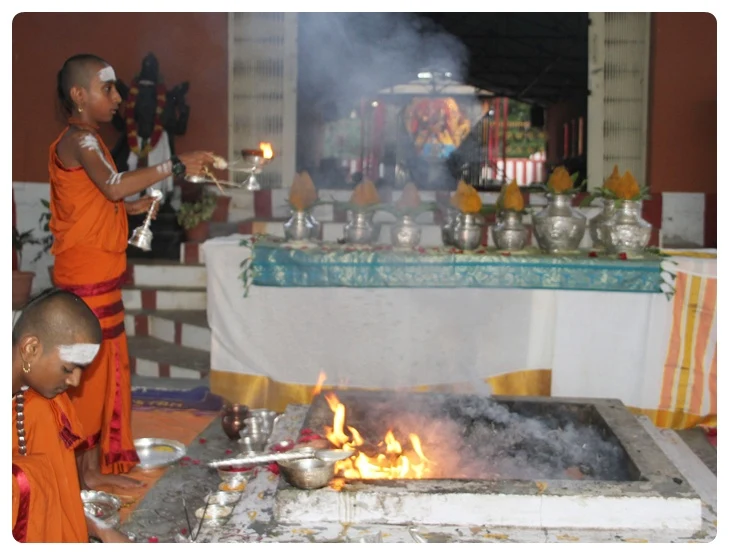
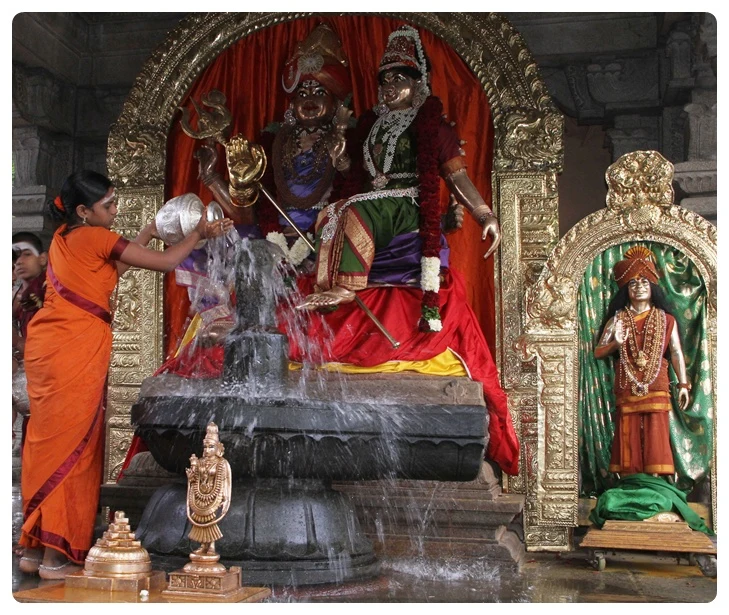
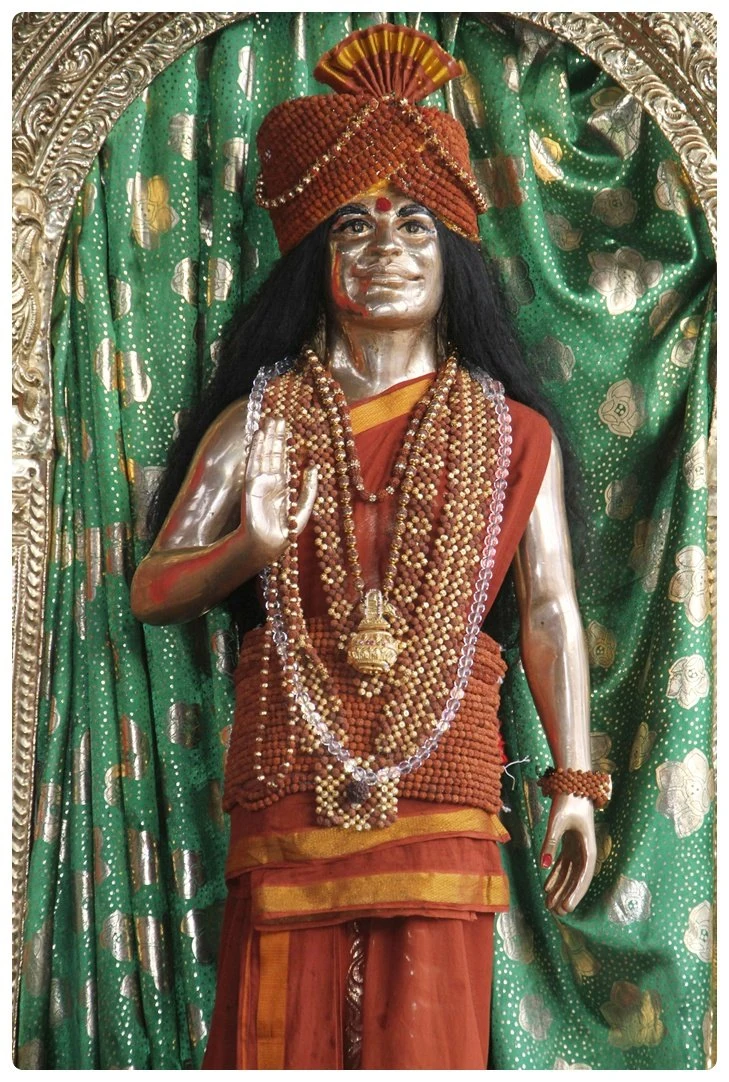
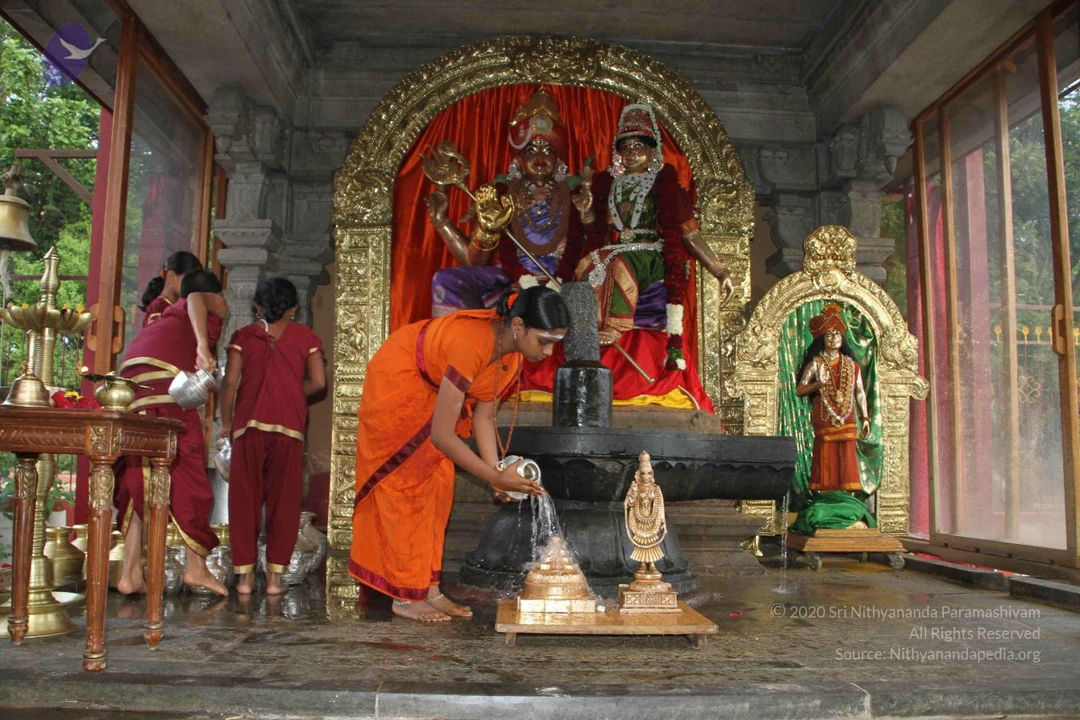
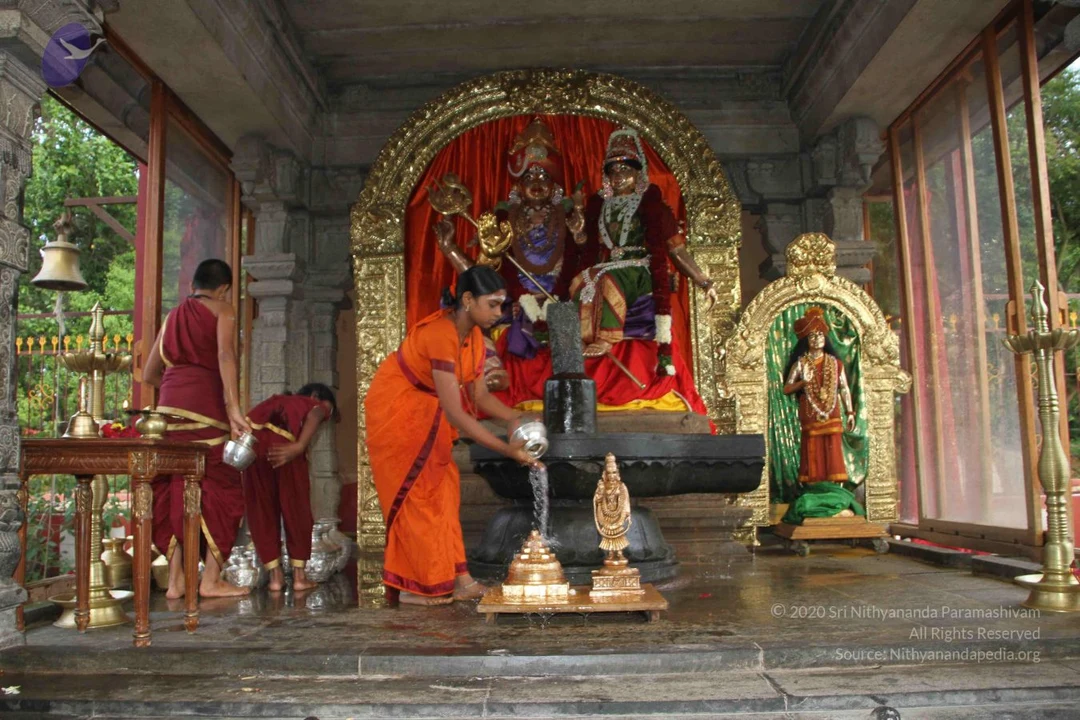
Temple-Homa-Abhishekam

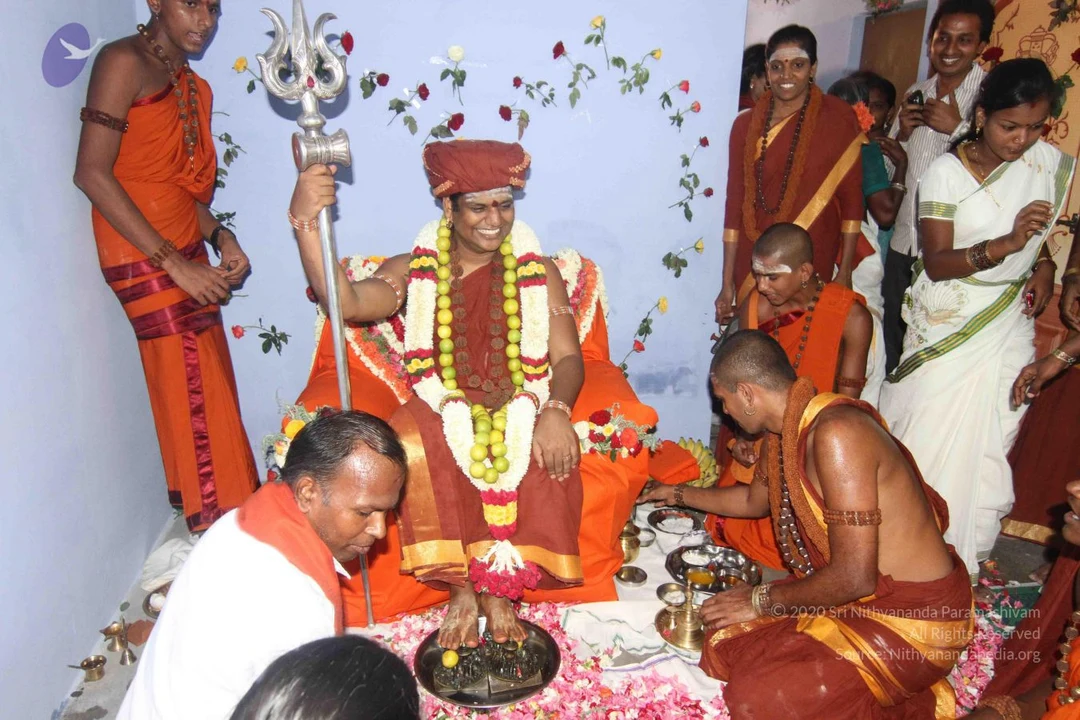
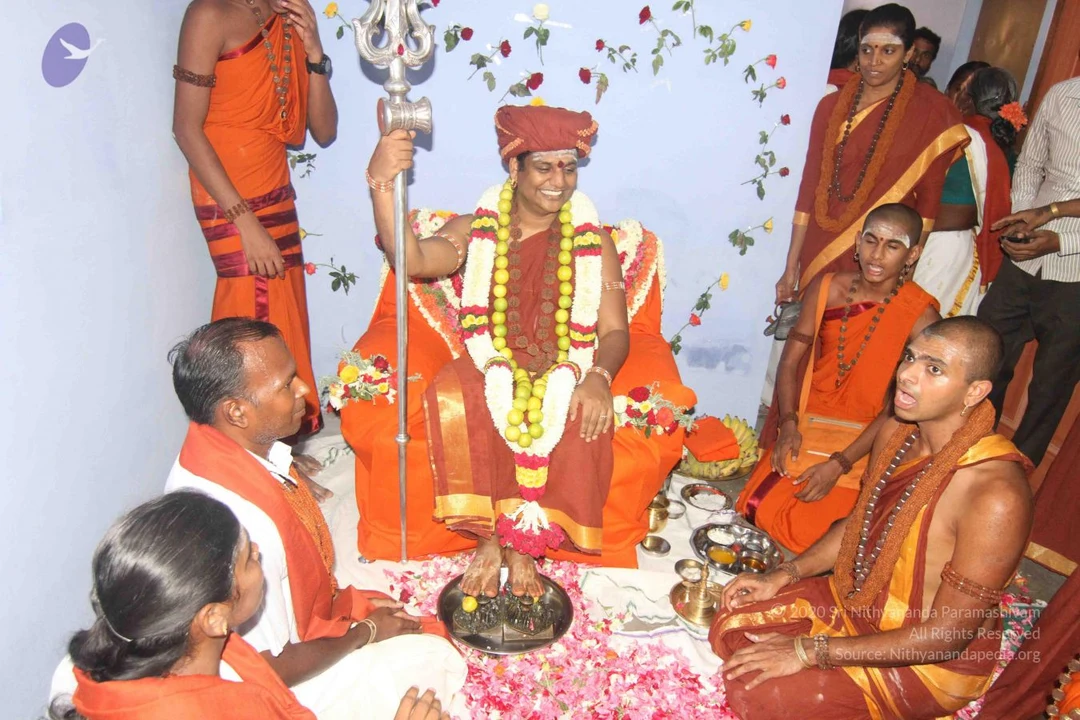
Pratyaksha-Pada-Puja

Veerabadra-Bhairav-dogs

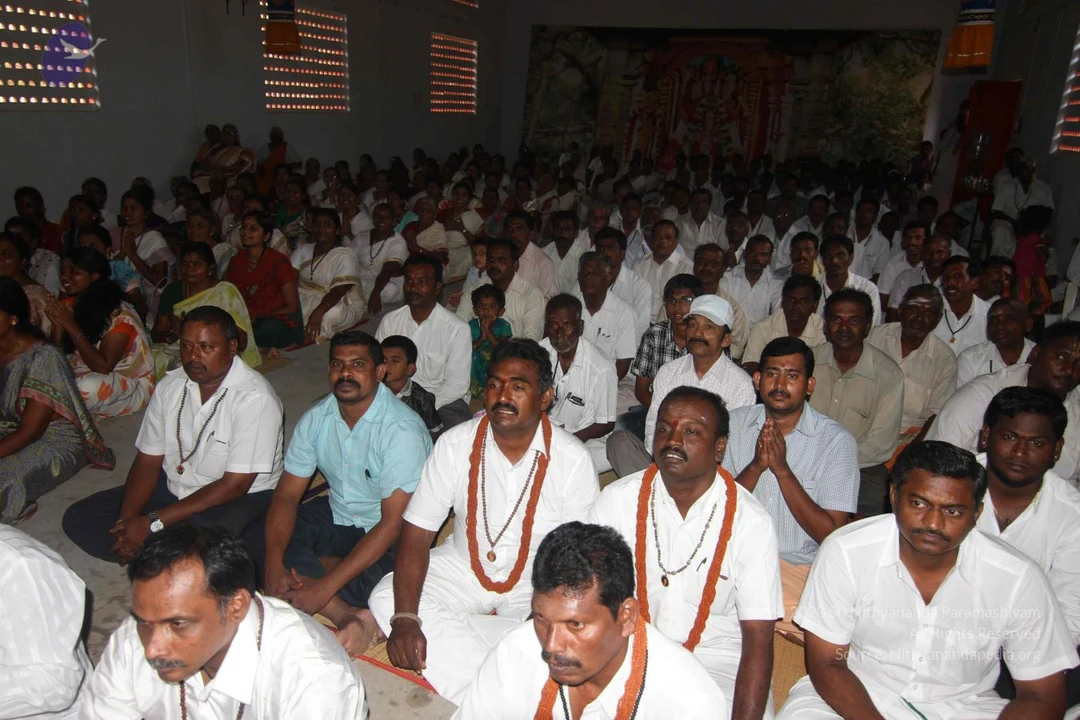
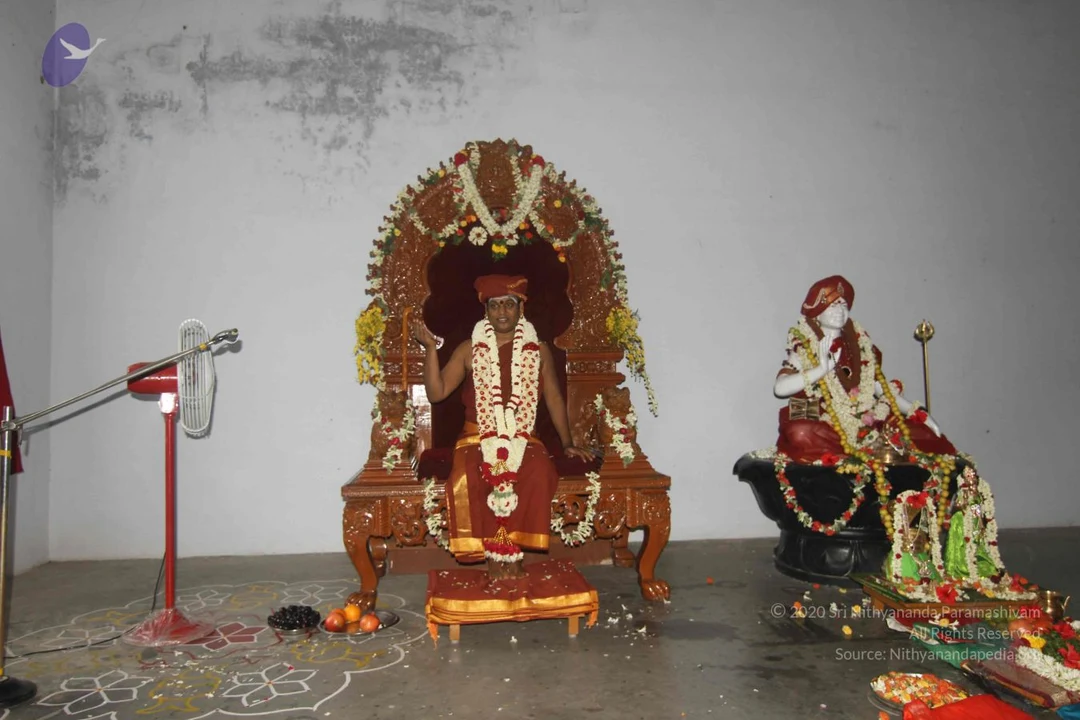
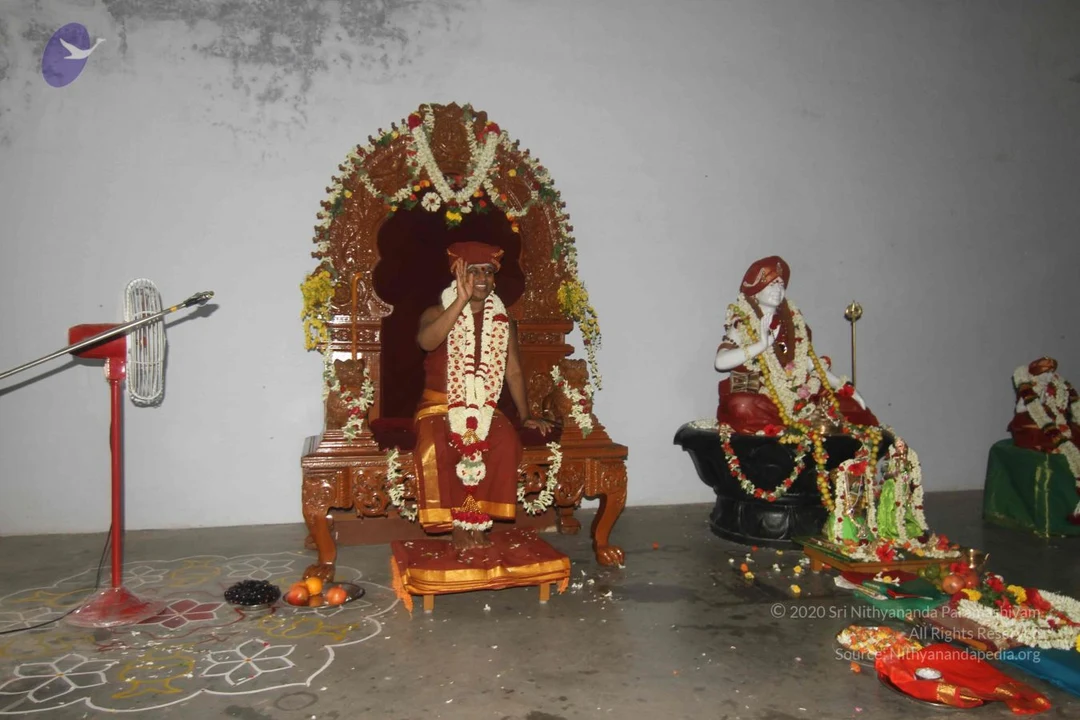
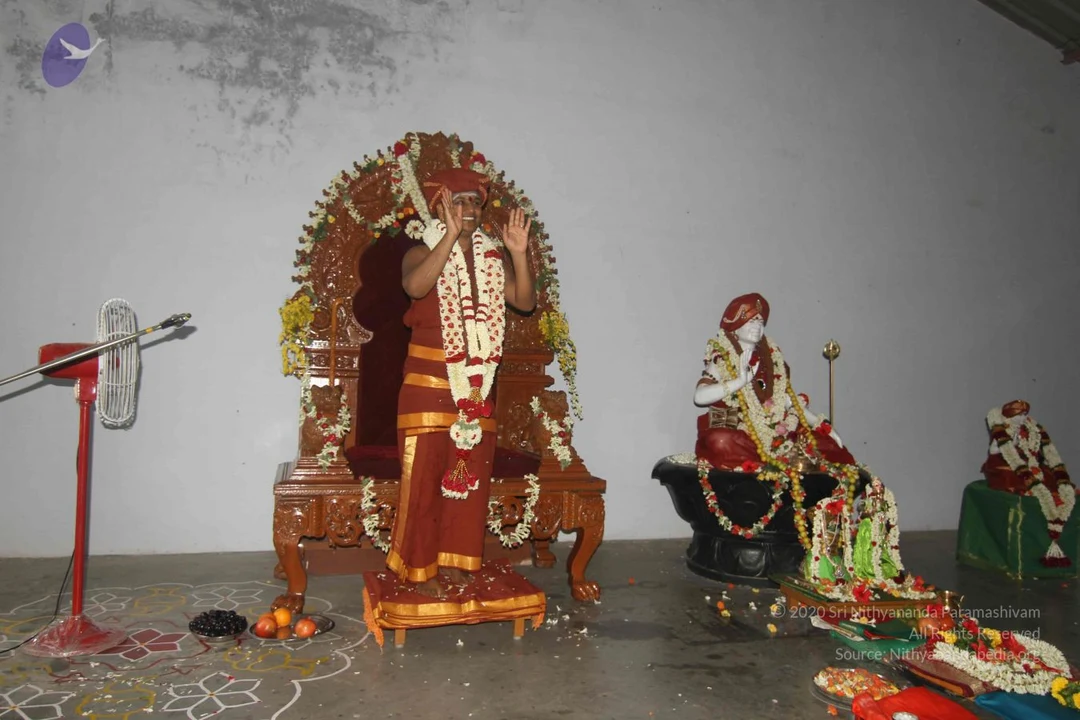
Satsang

Sarva-Darshan

Construction

Sacred-Arts

01-TEMPLE-HOMA-ABISHEGAM

02-PRATYAKSHA-PADA-PUJA

03-NITHYA-SATSANG

04-SWAMIJI-WITH-VEERABADRA

05-SARVA-DARSHAN

06-SWAMIJI-AT-SACRED-ARTS

Photos from this day

View all 796 photos

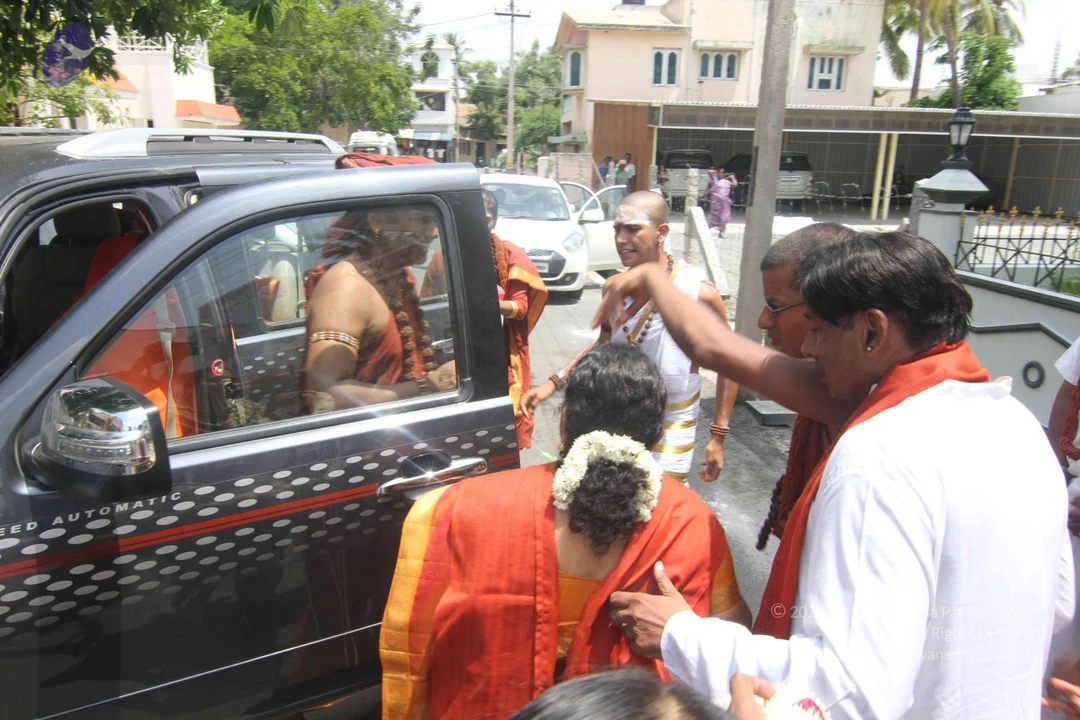
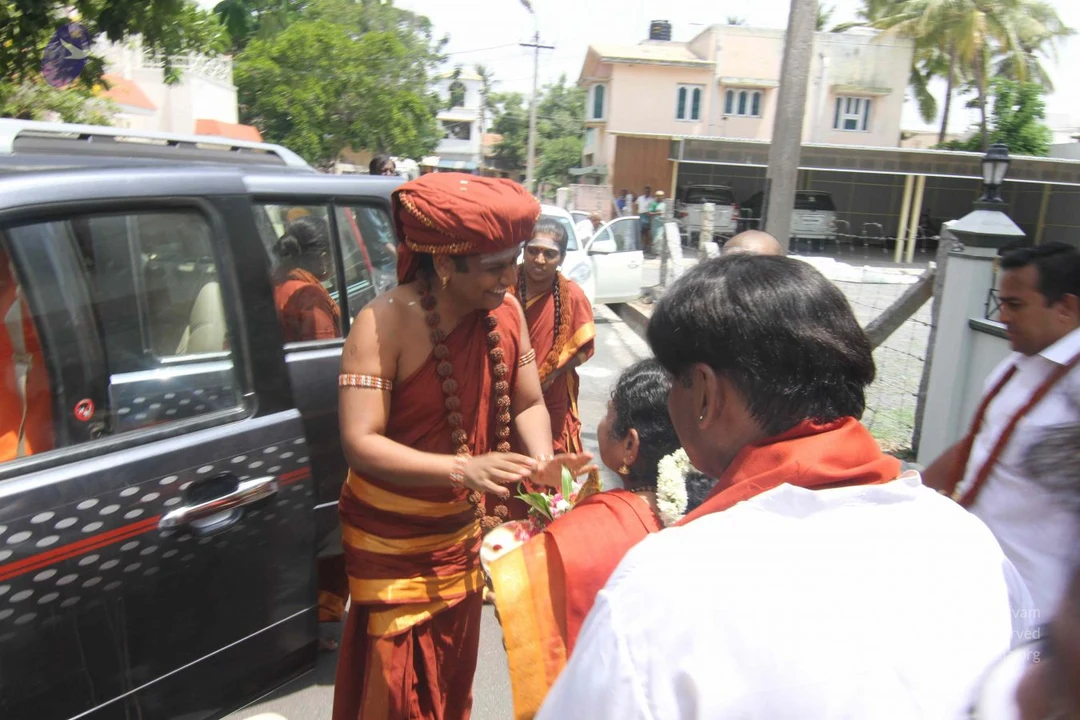
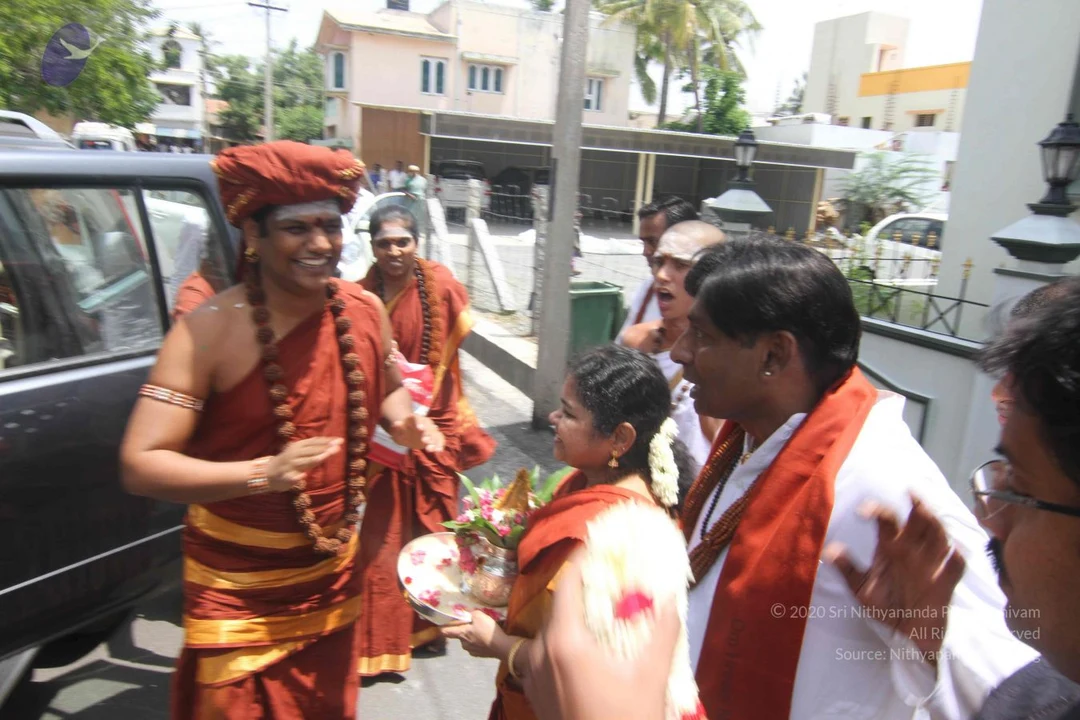
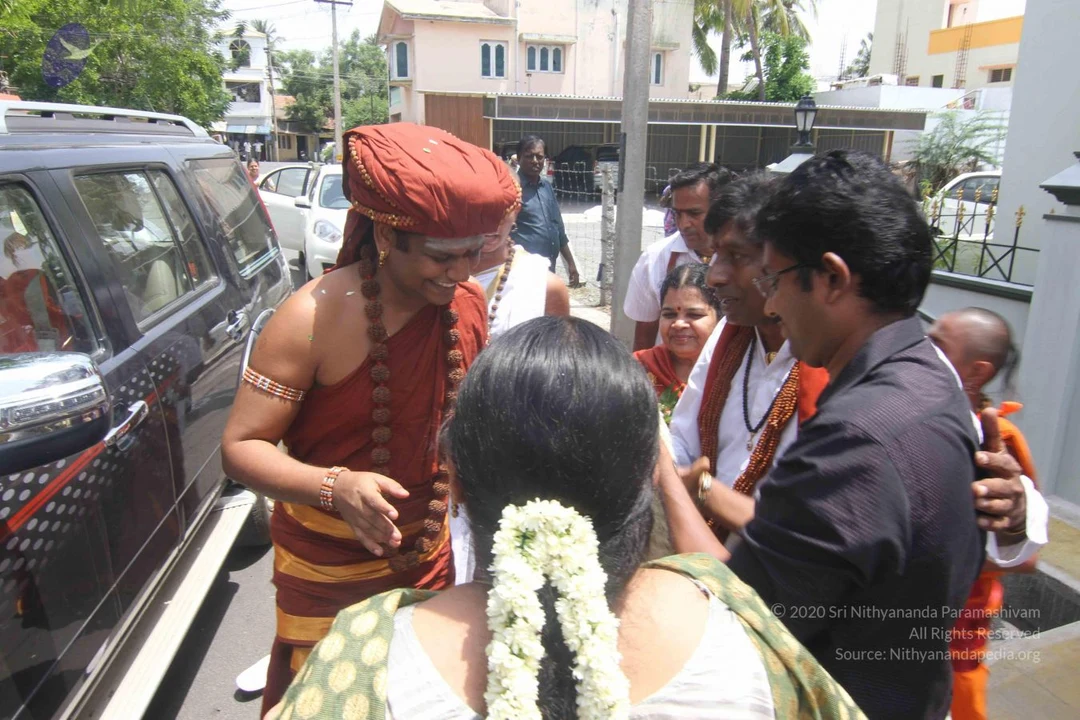
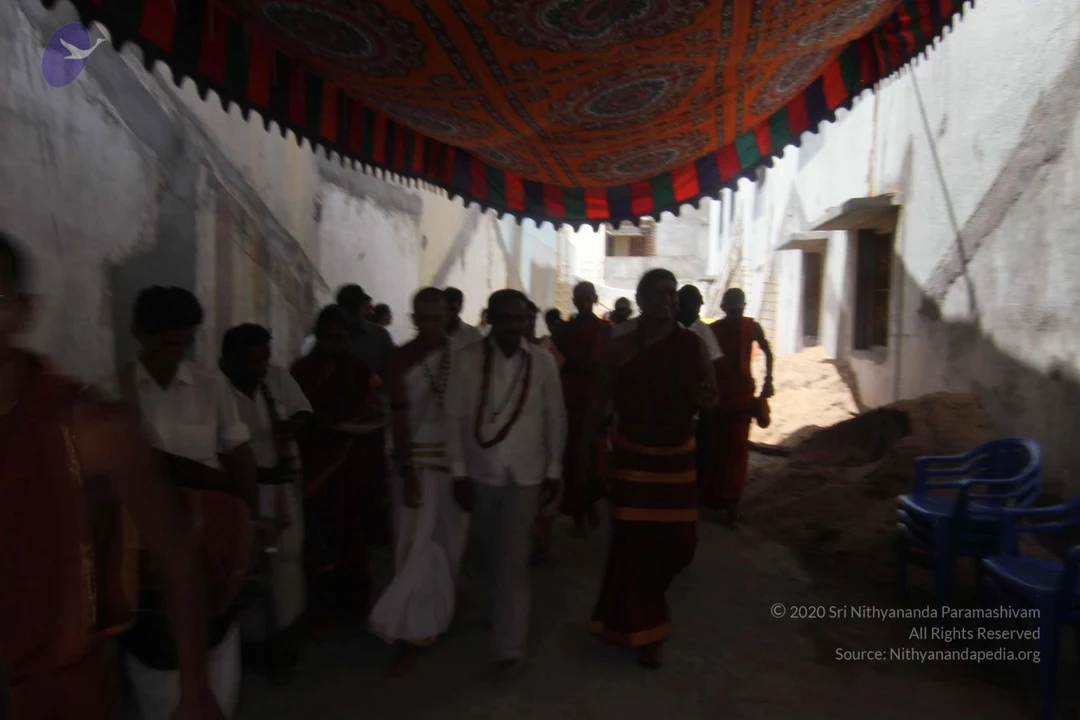
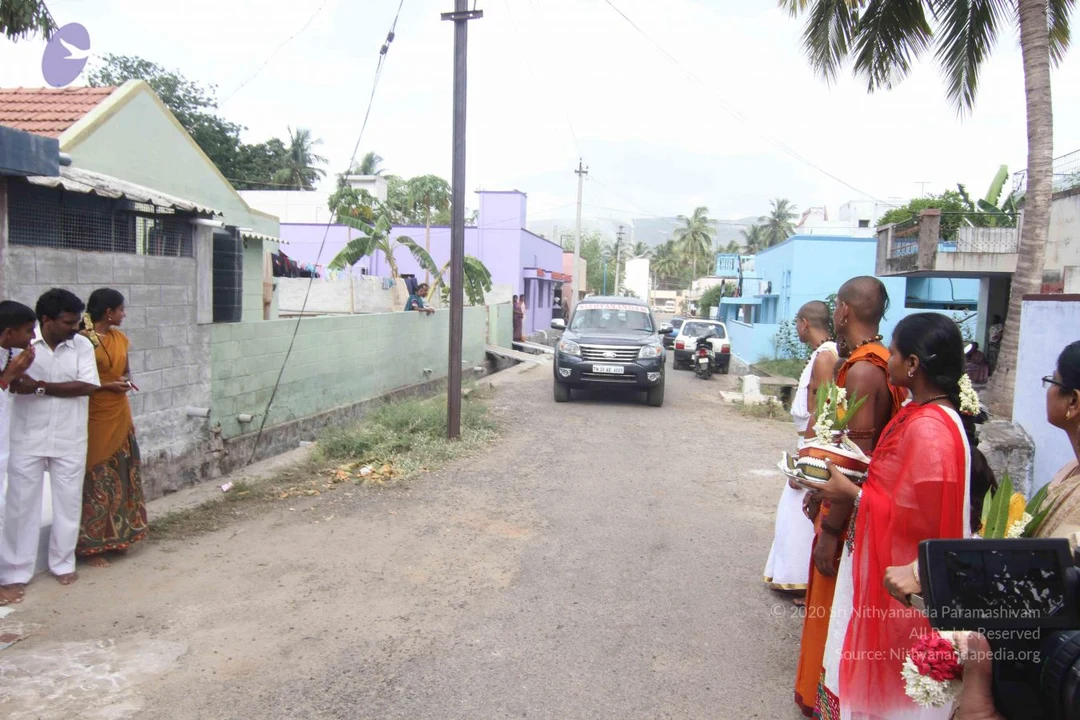
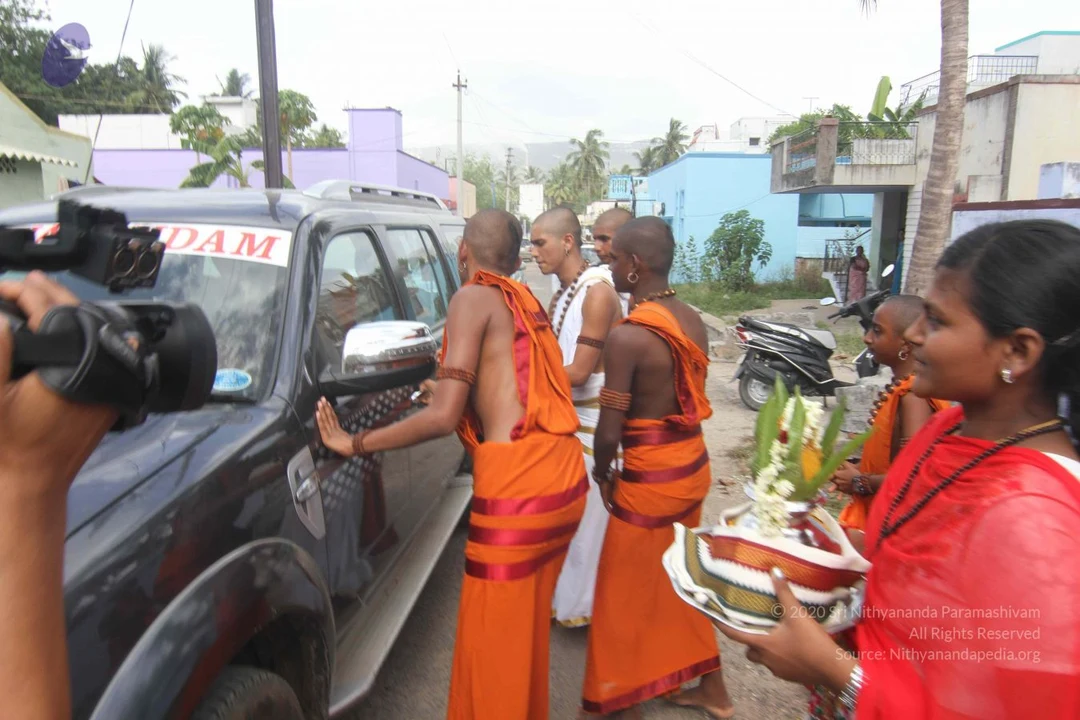
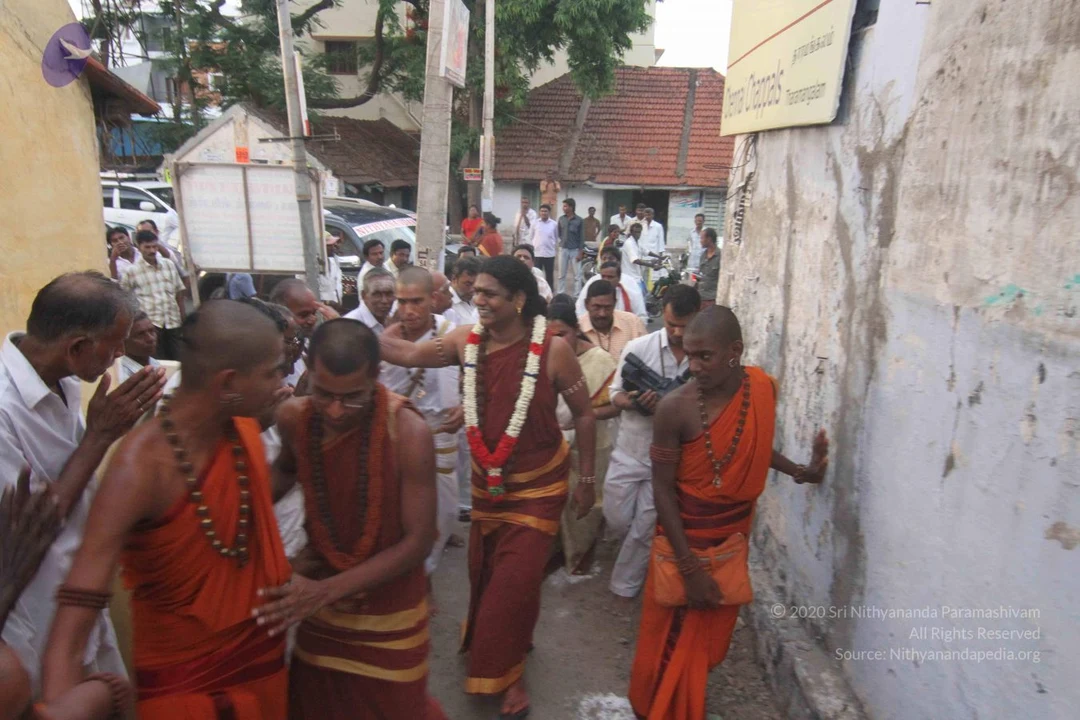
PADA POOJA- HOME VISITS
417 photosSource gallery
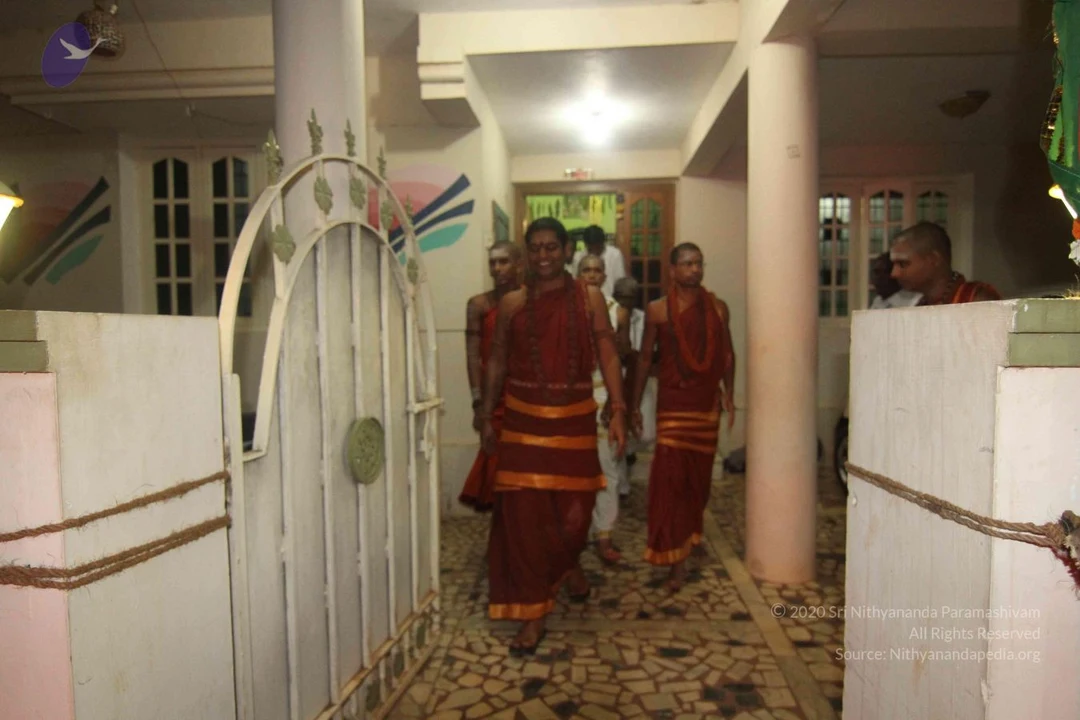
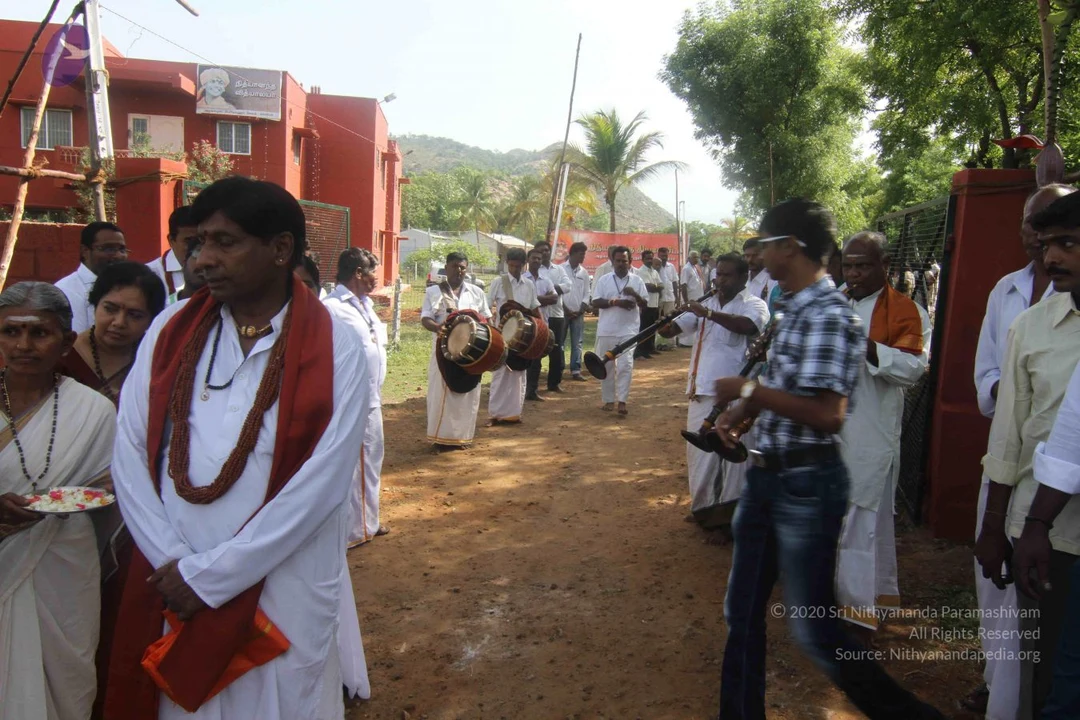
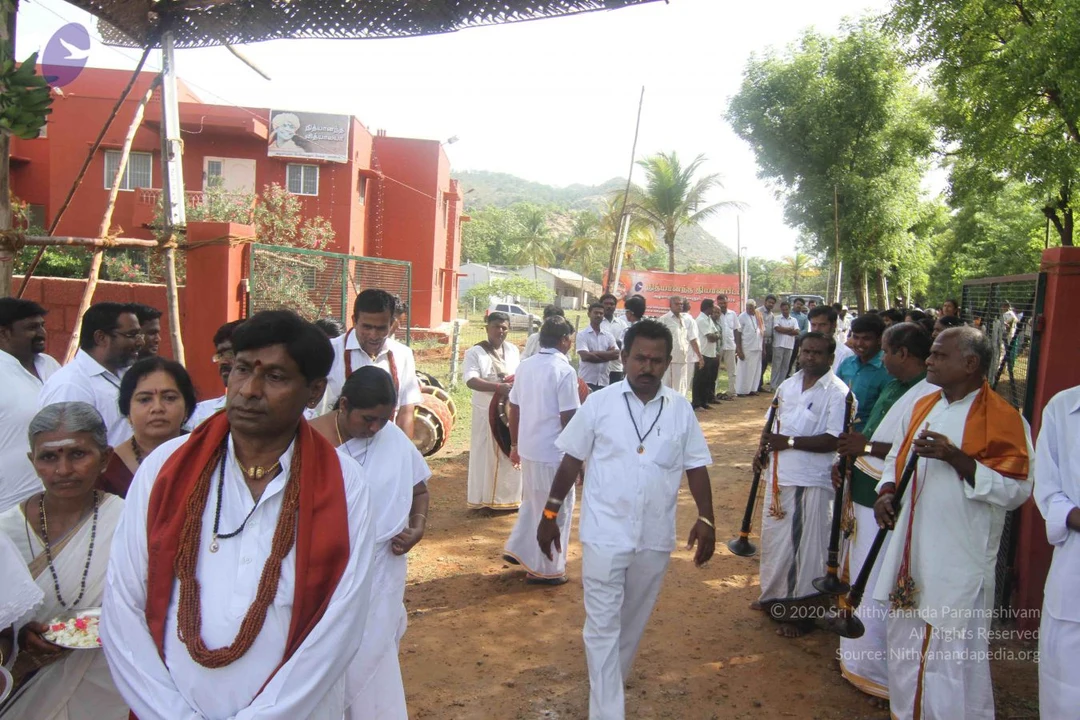
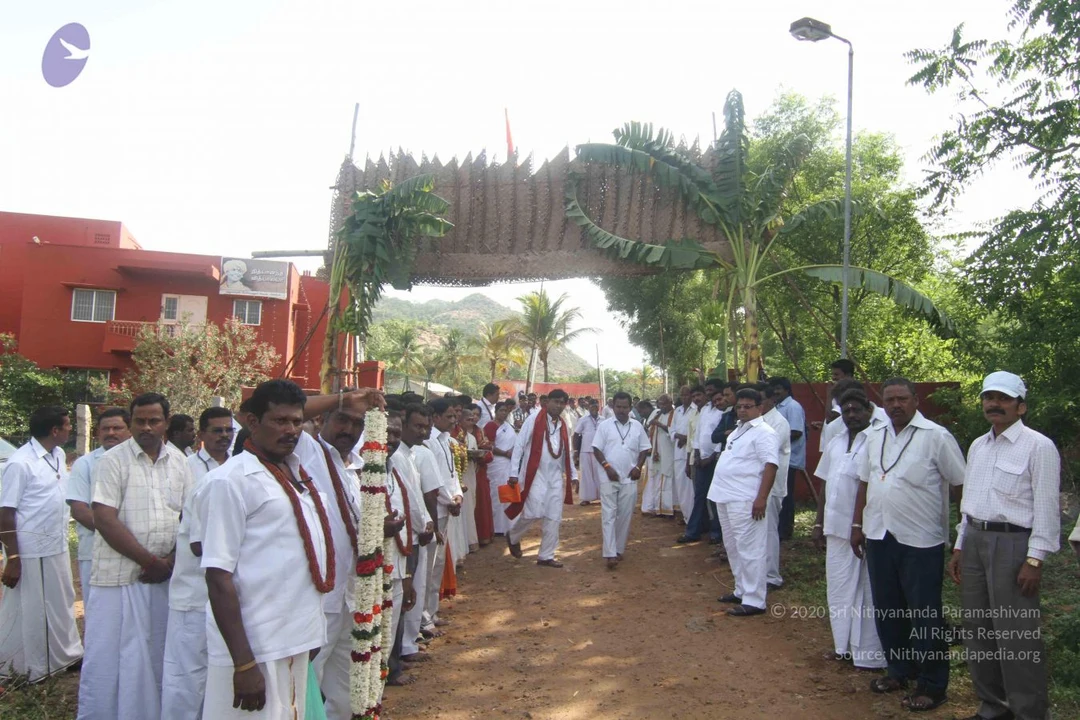
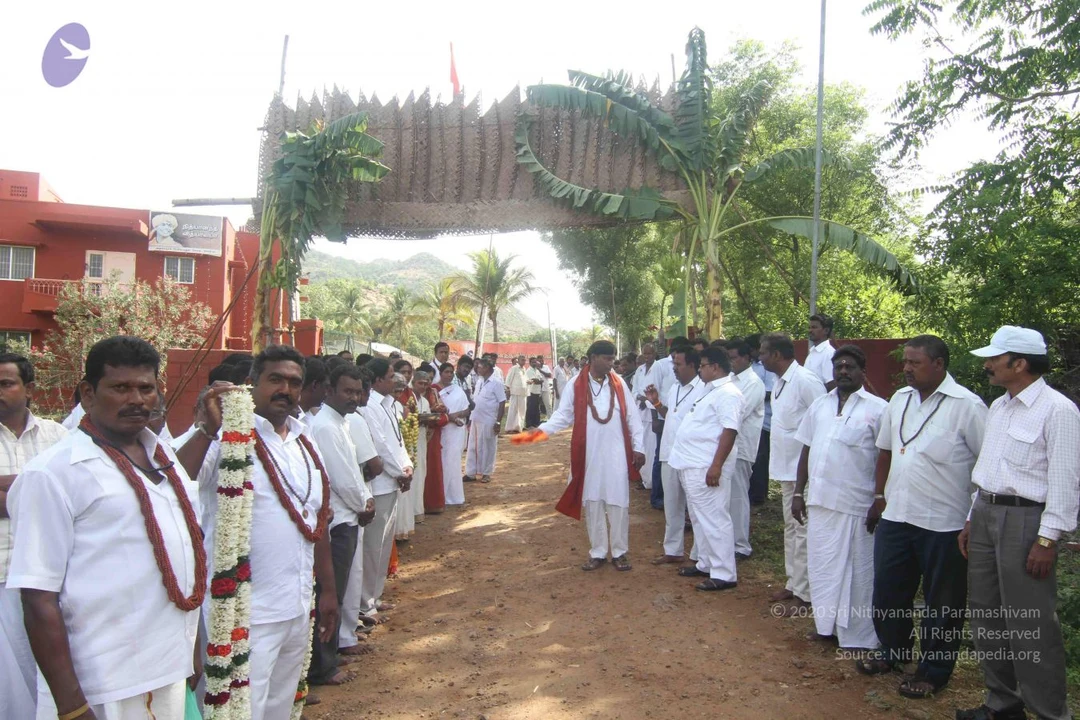
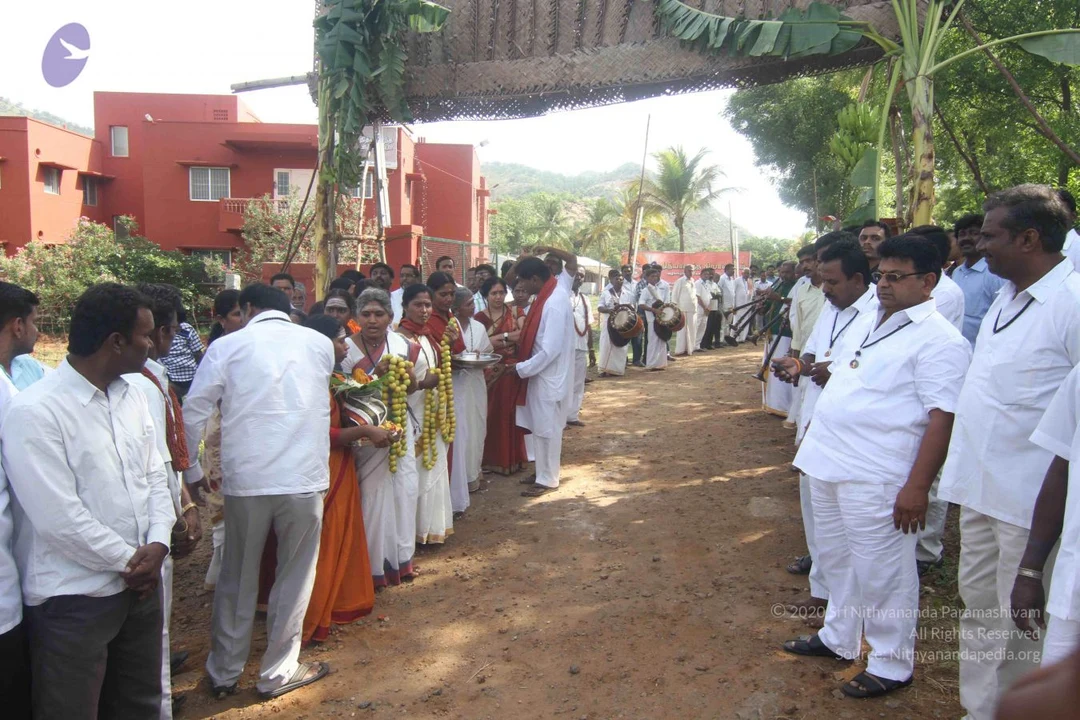
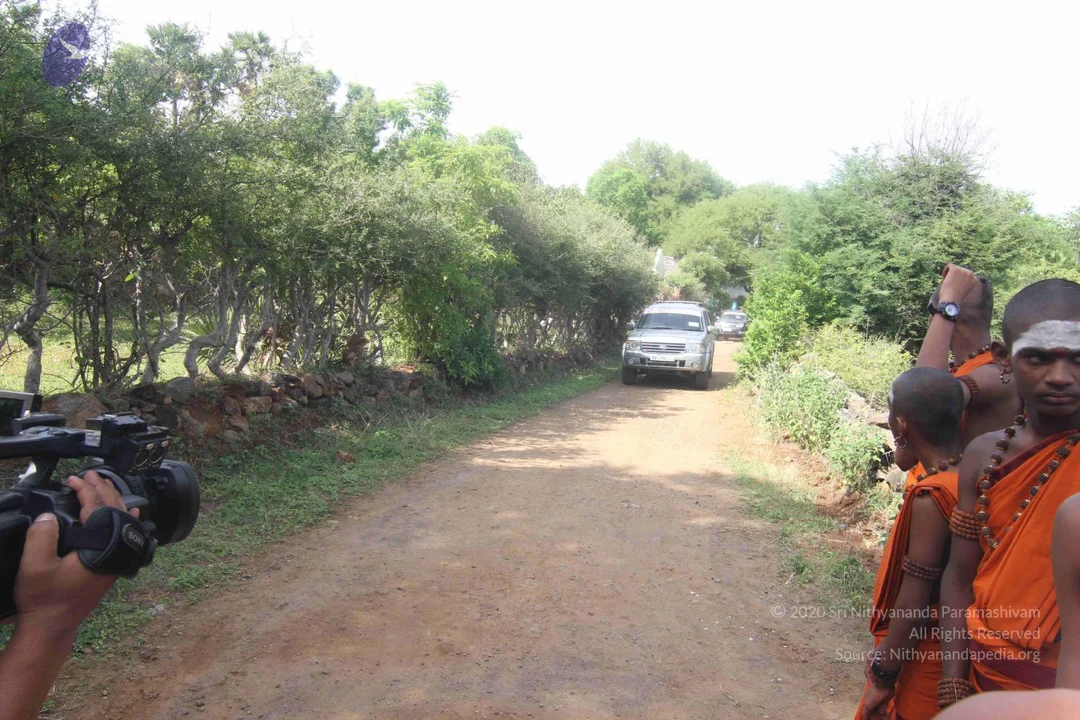
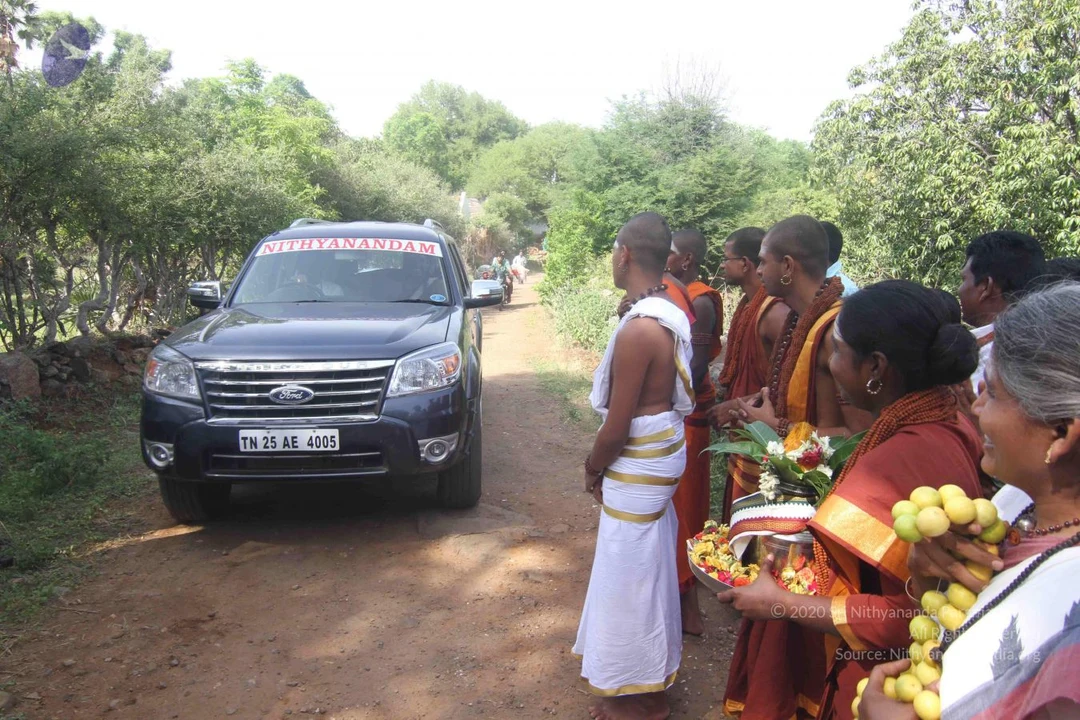
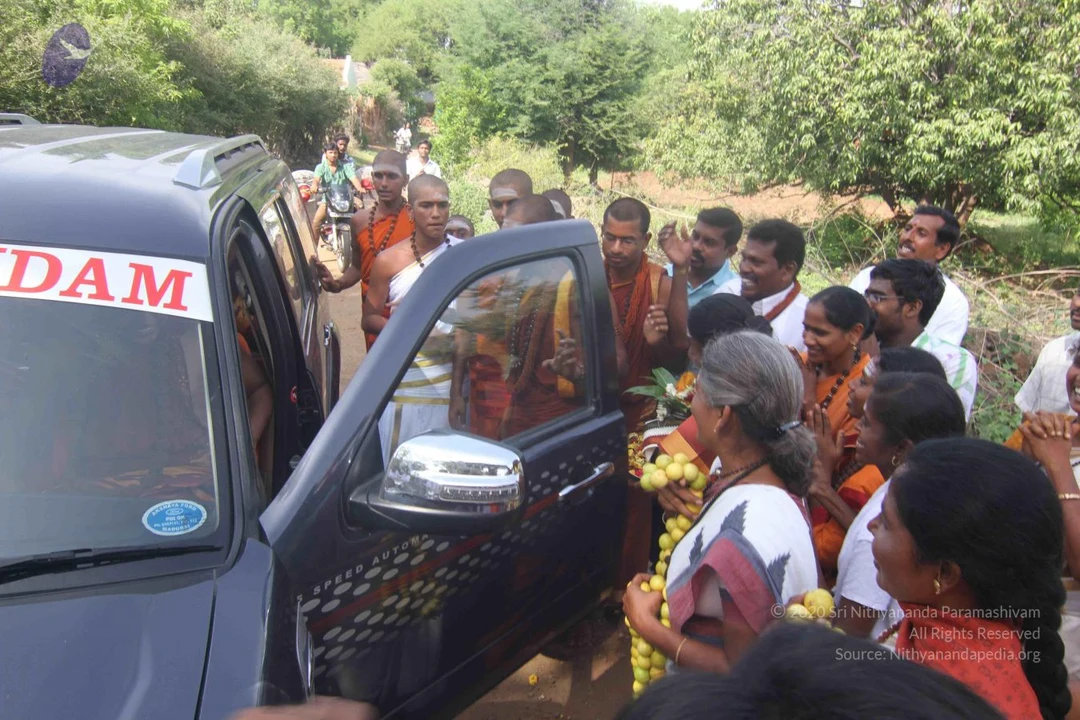
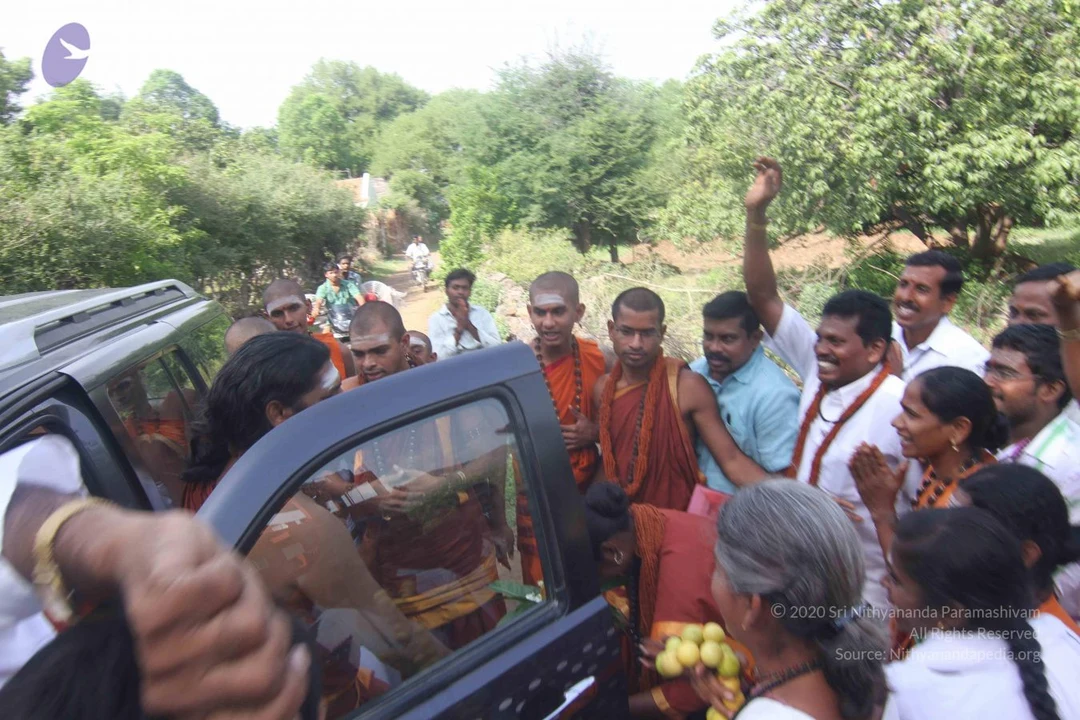
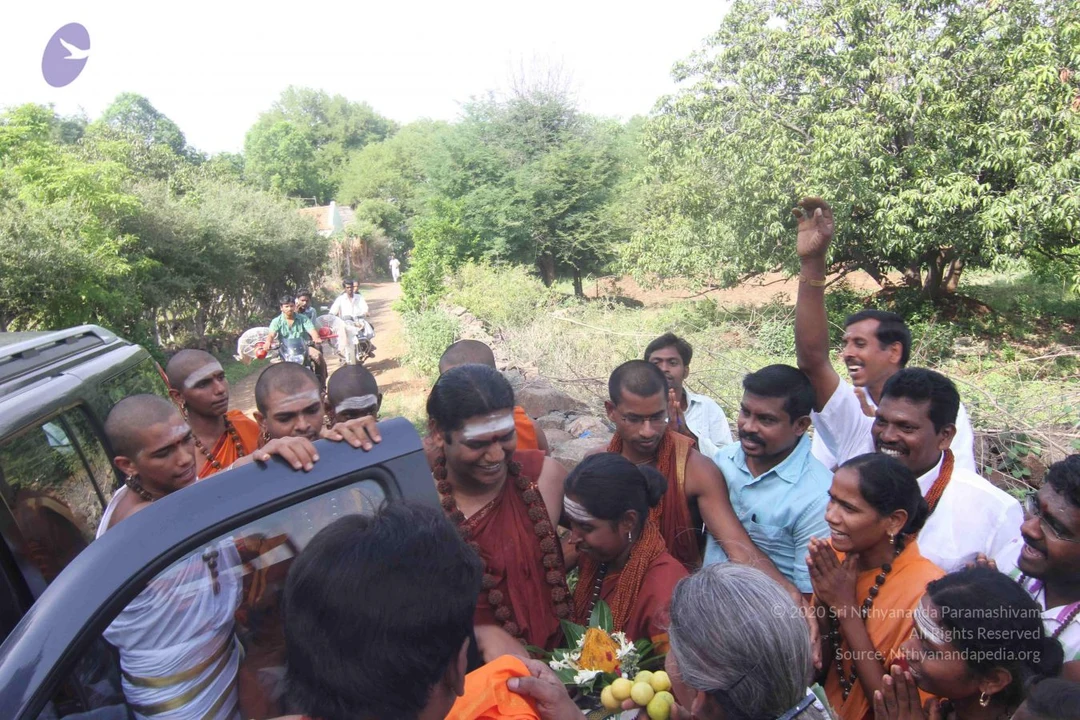
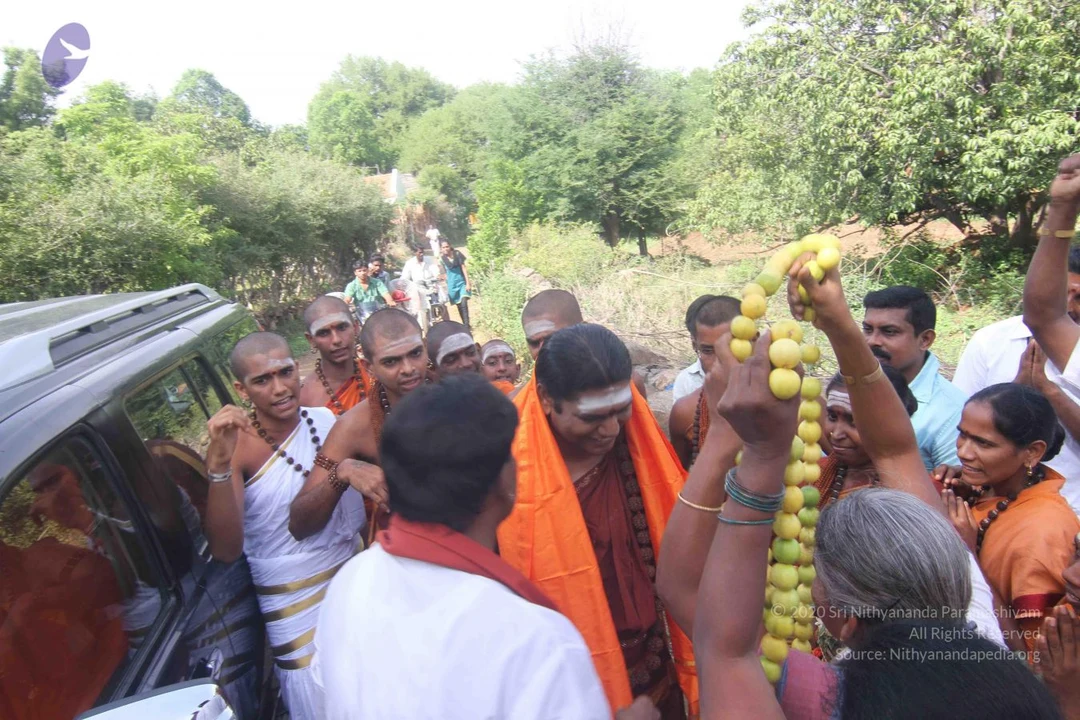
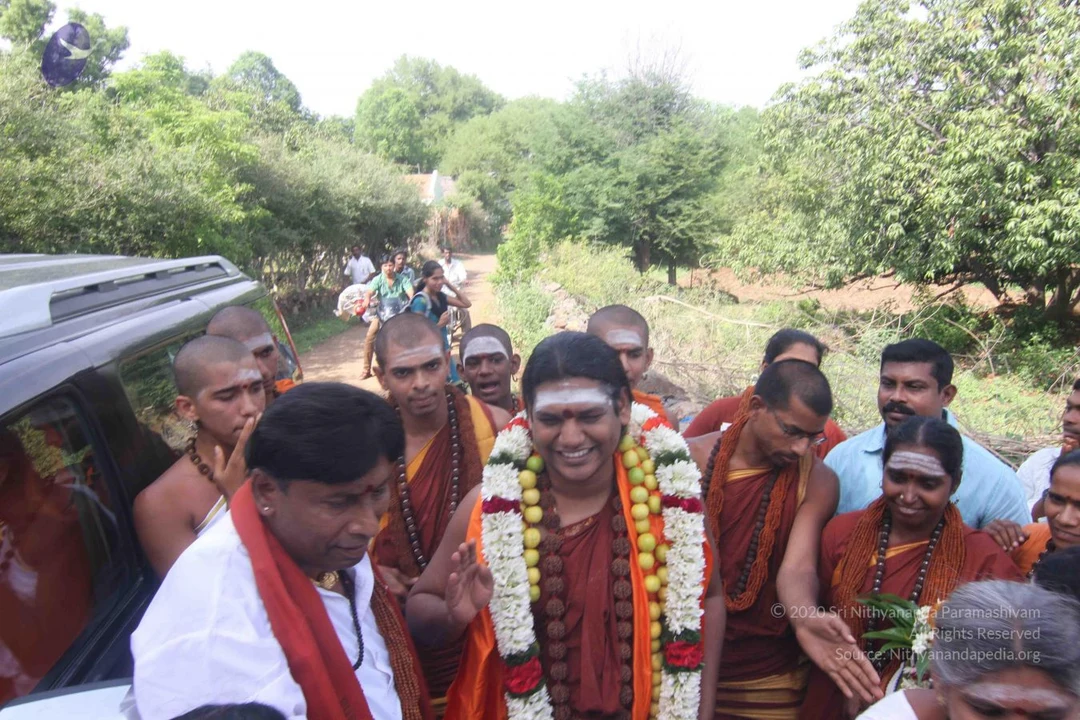
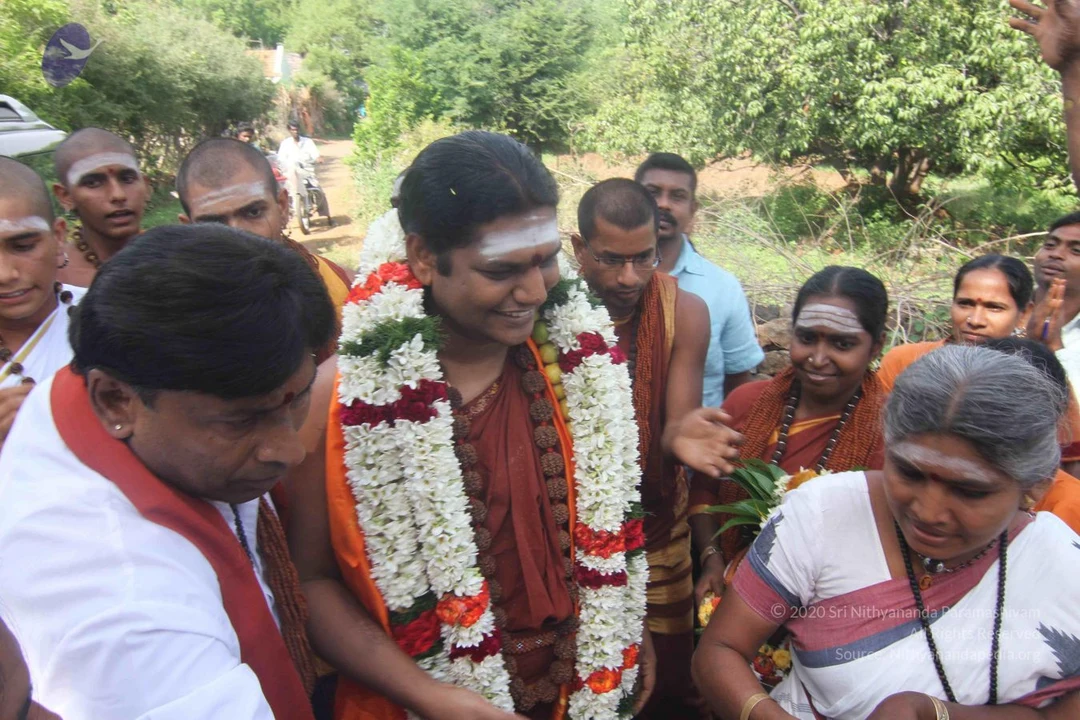
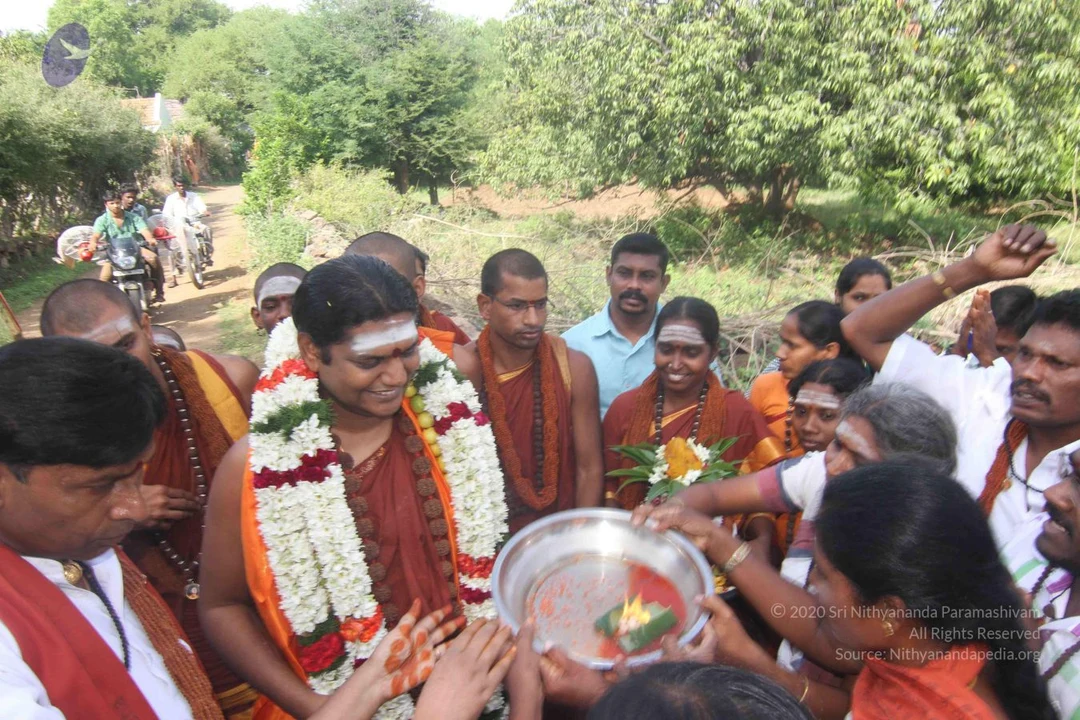
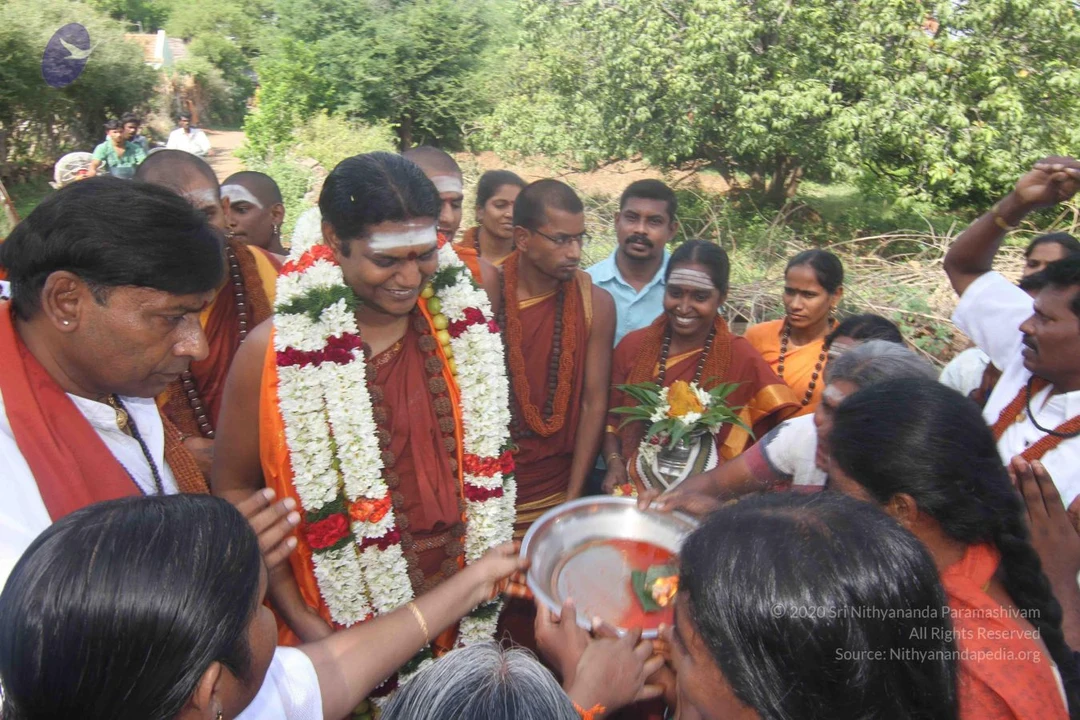
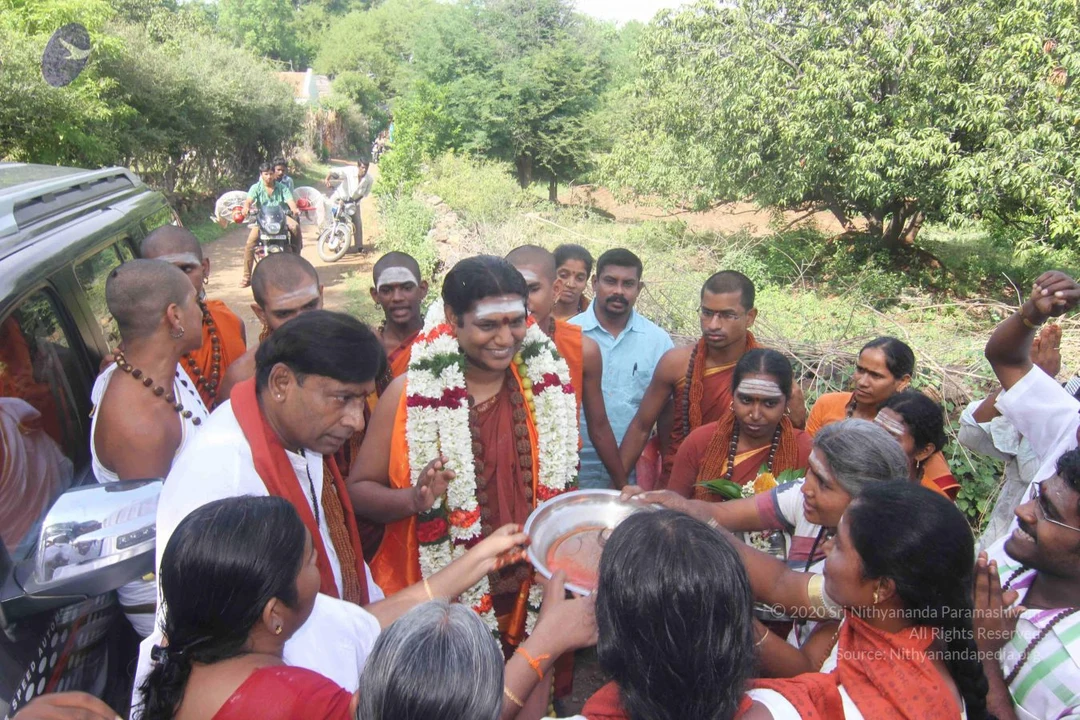
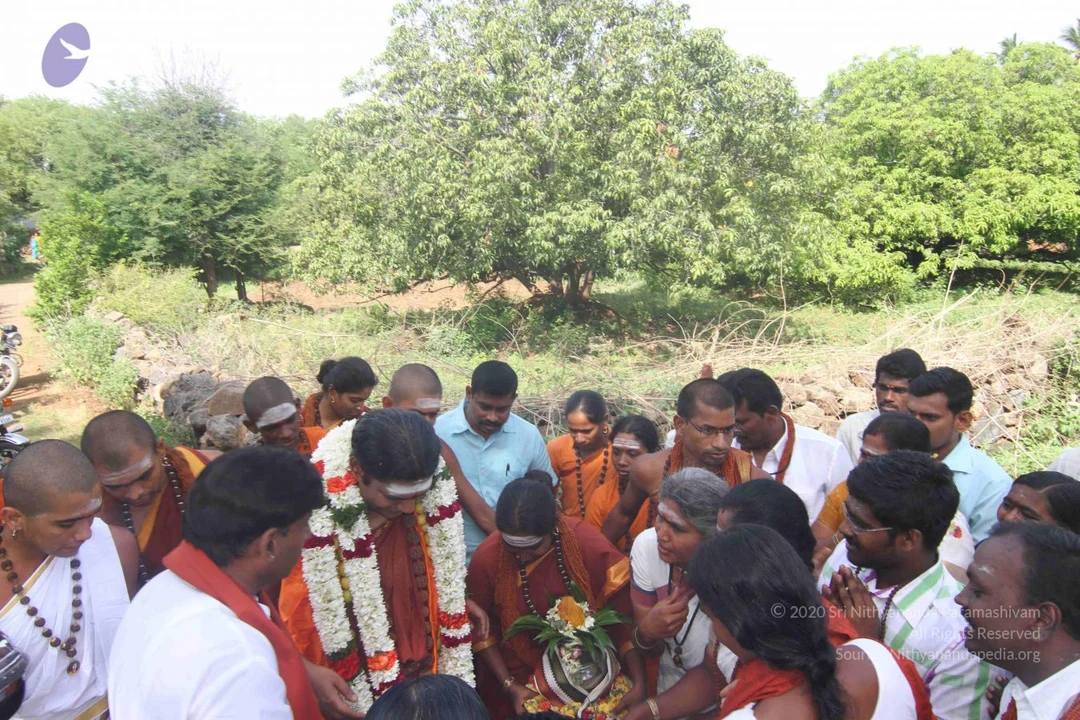
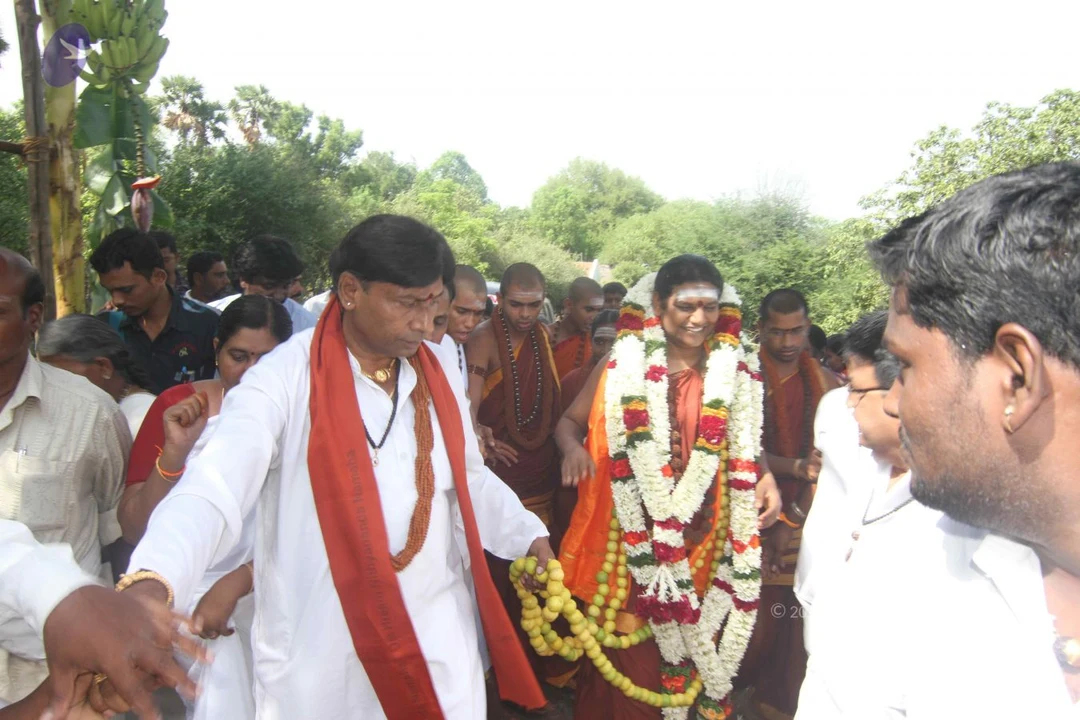
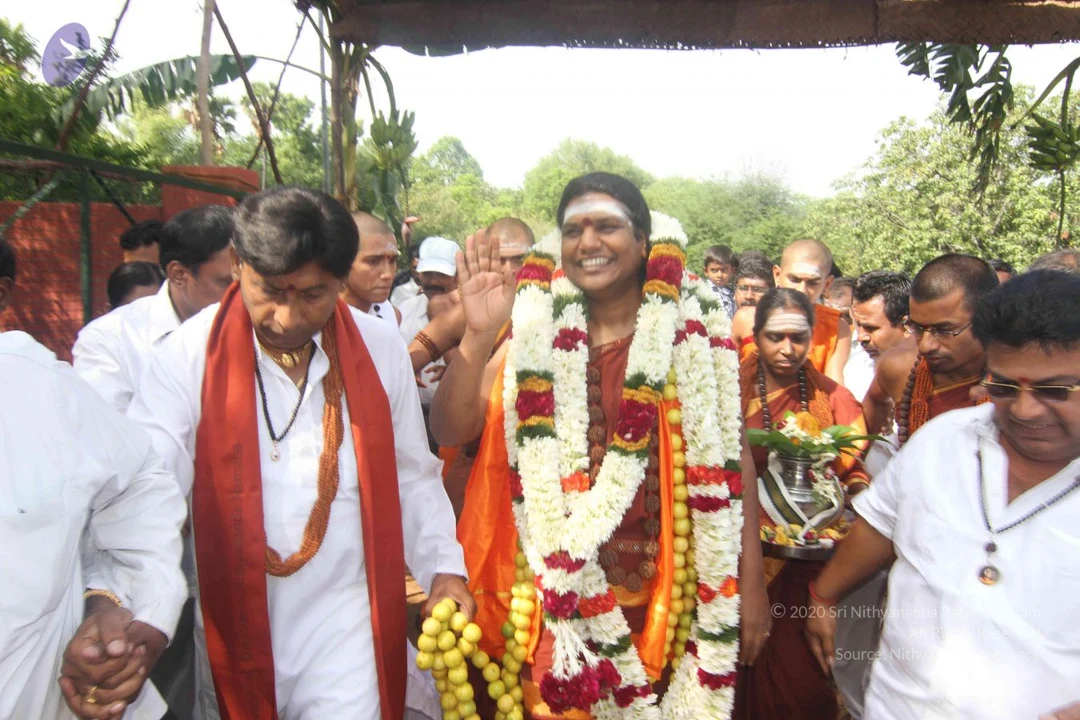
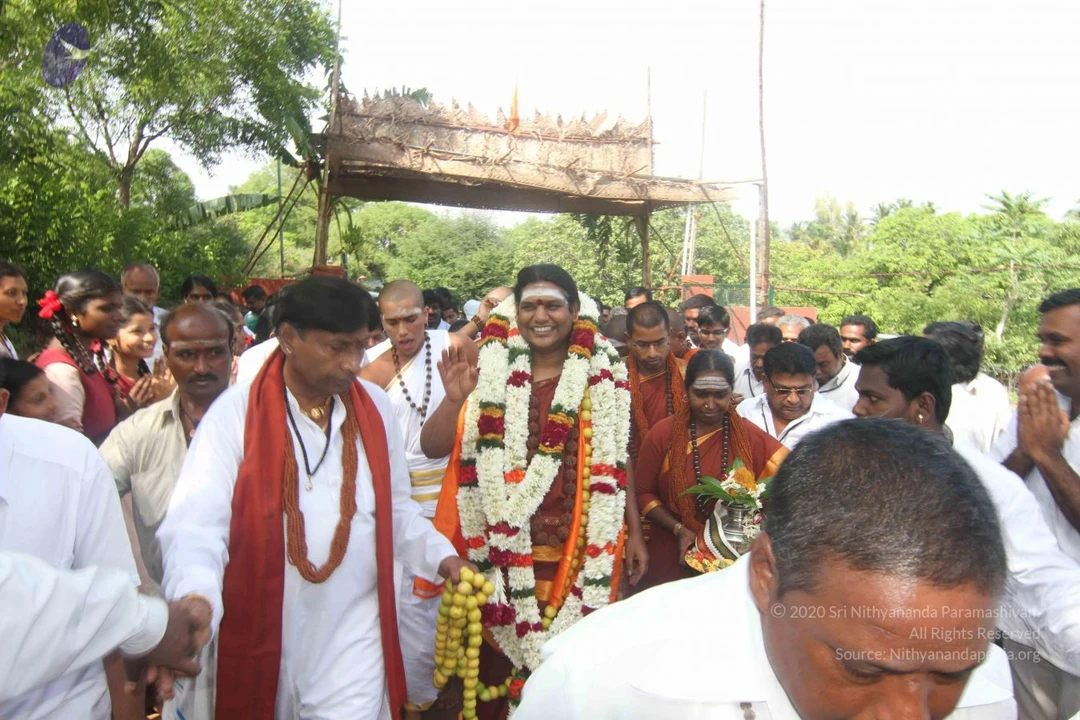
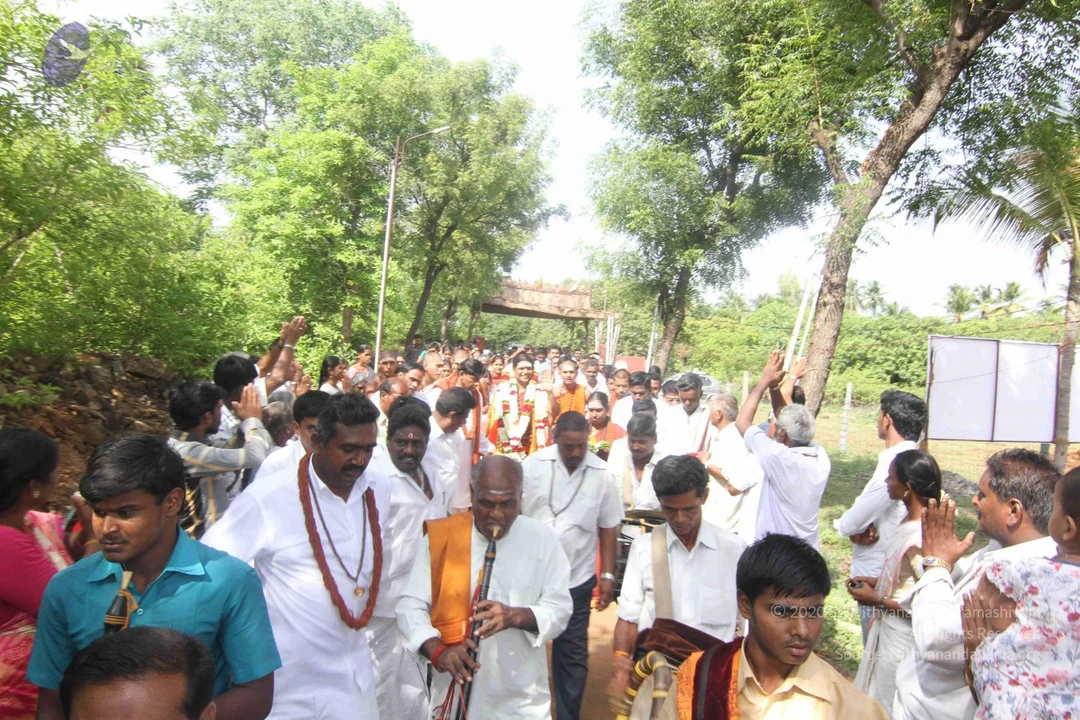
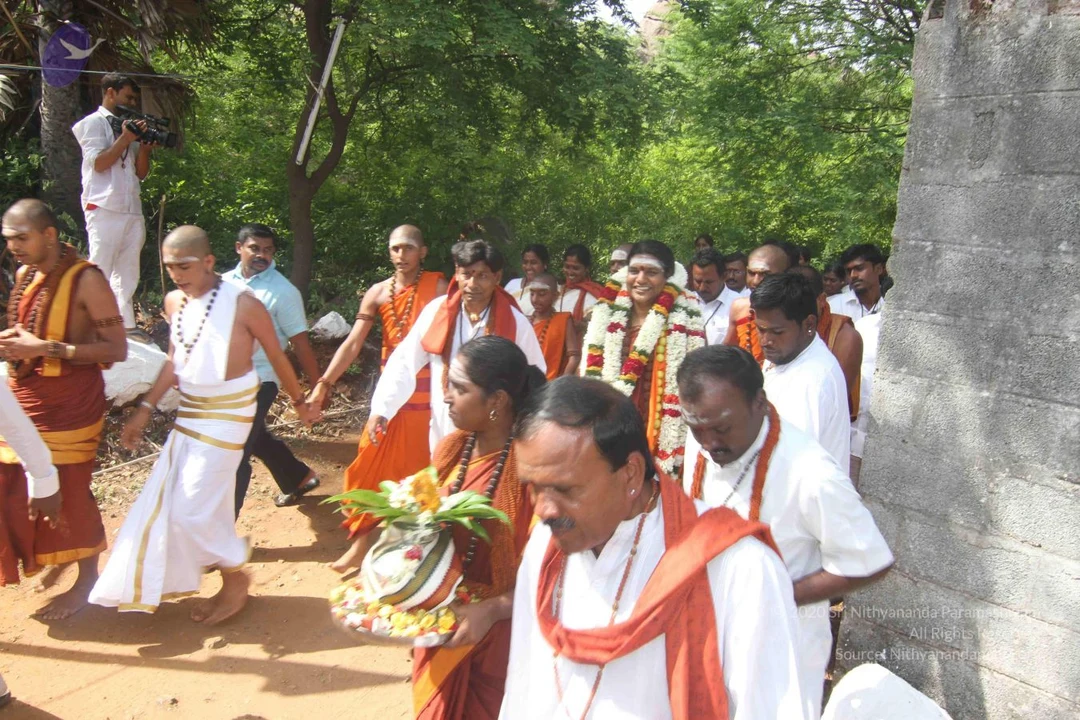
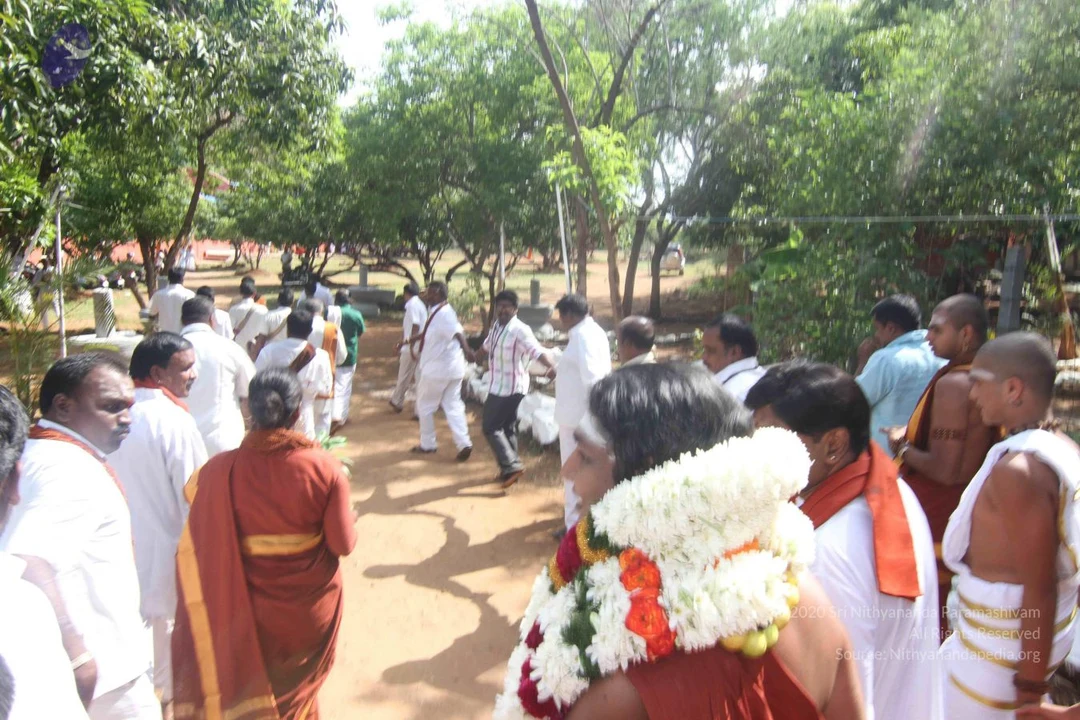
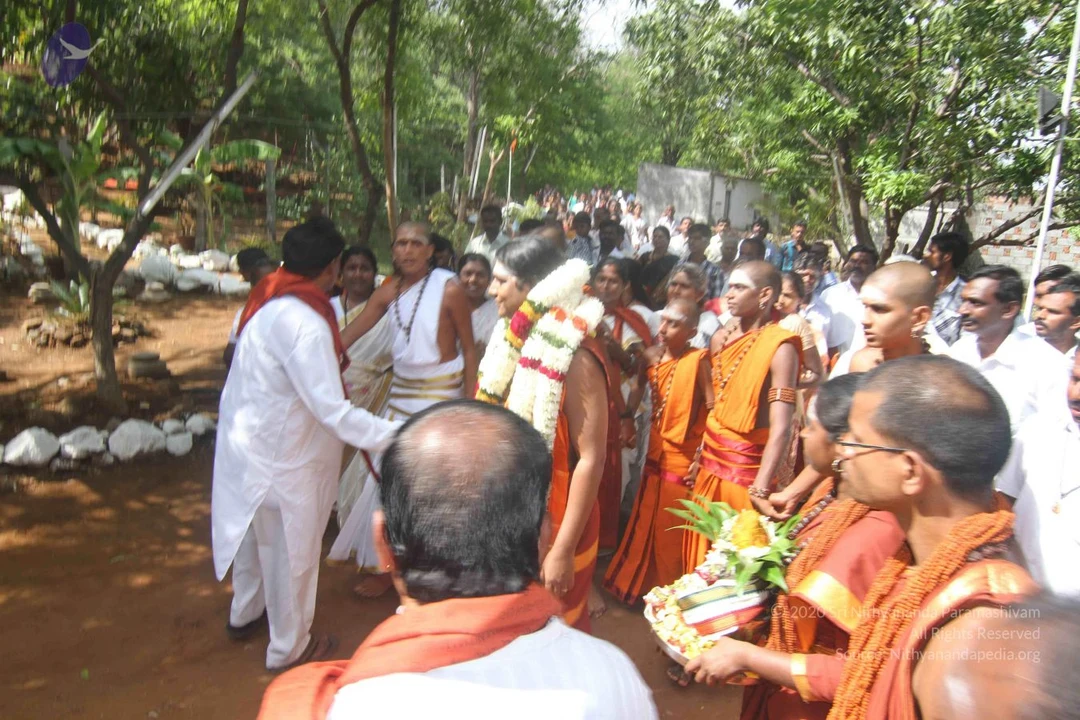
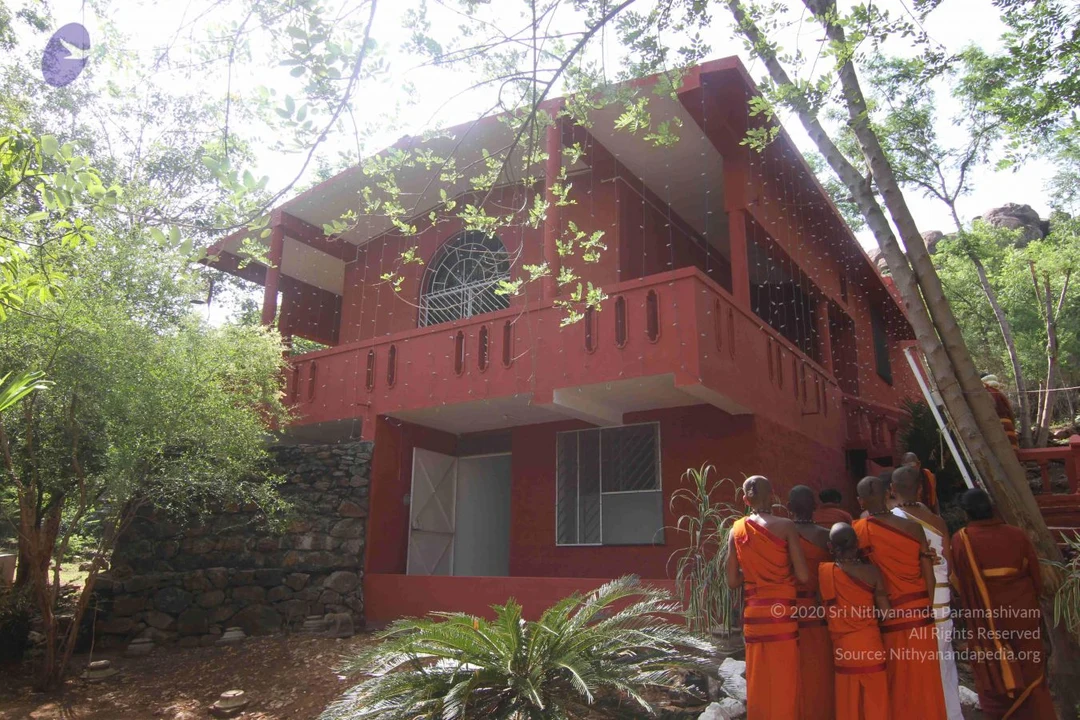
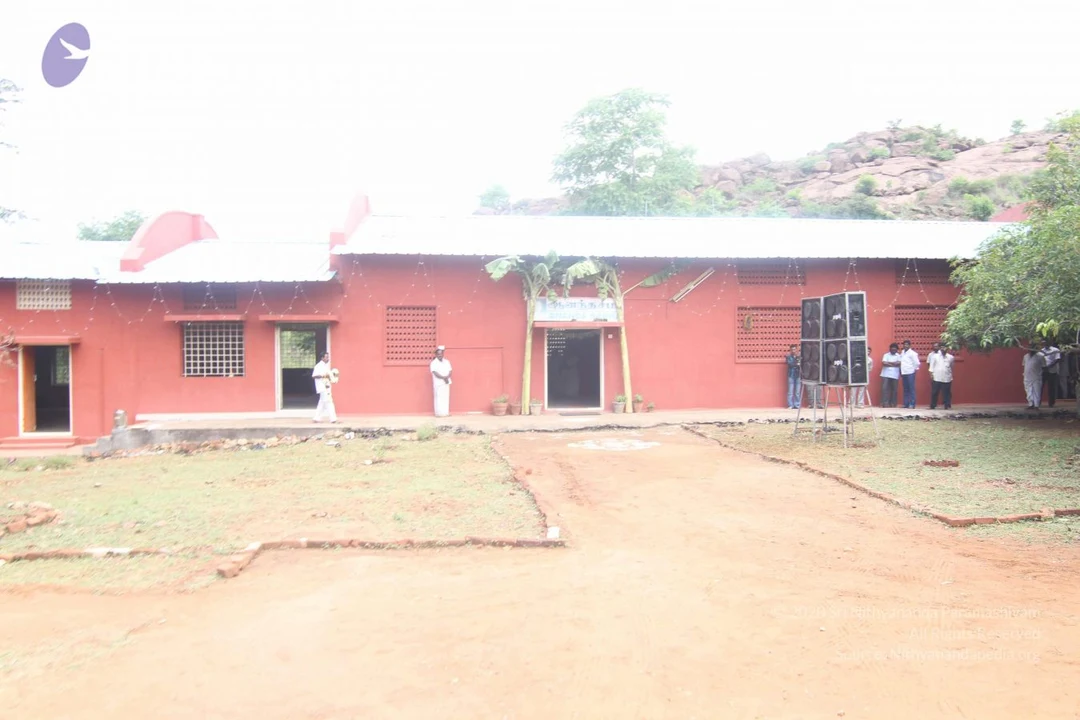
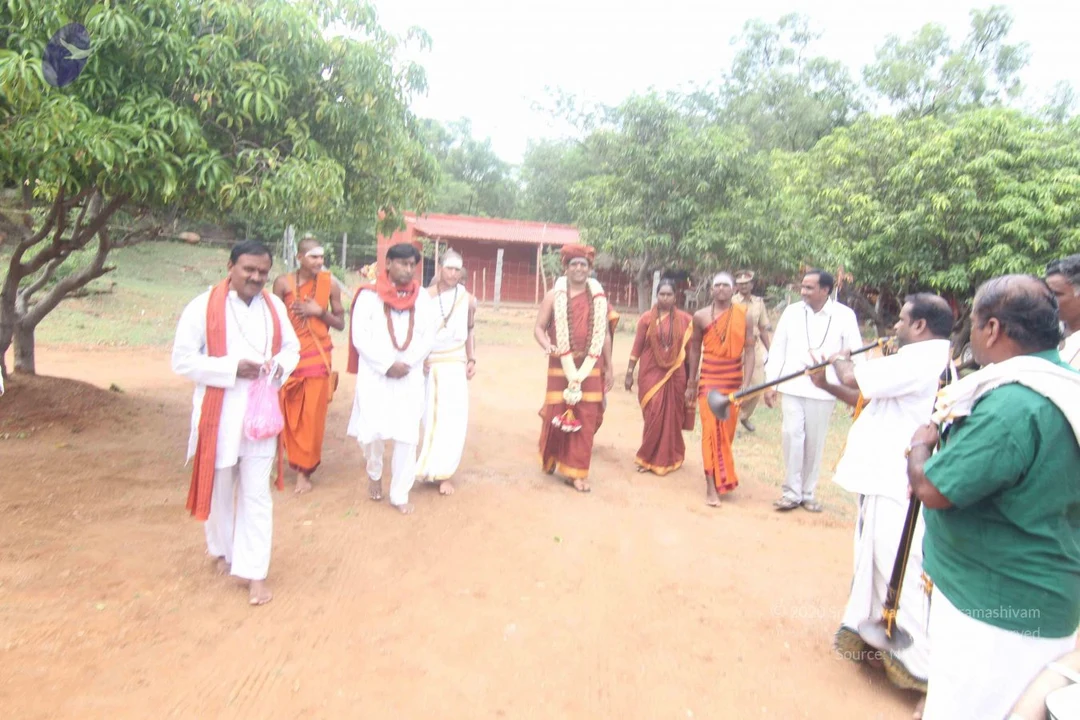
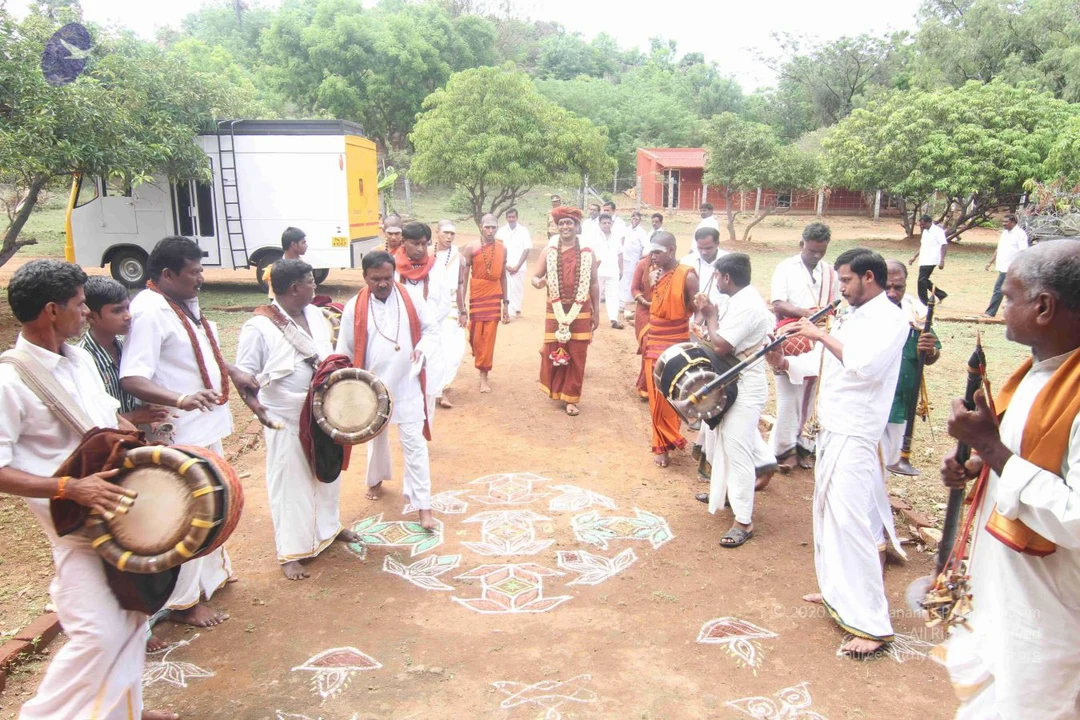
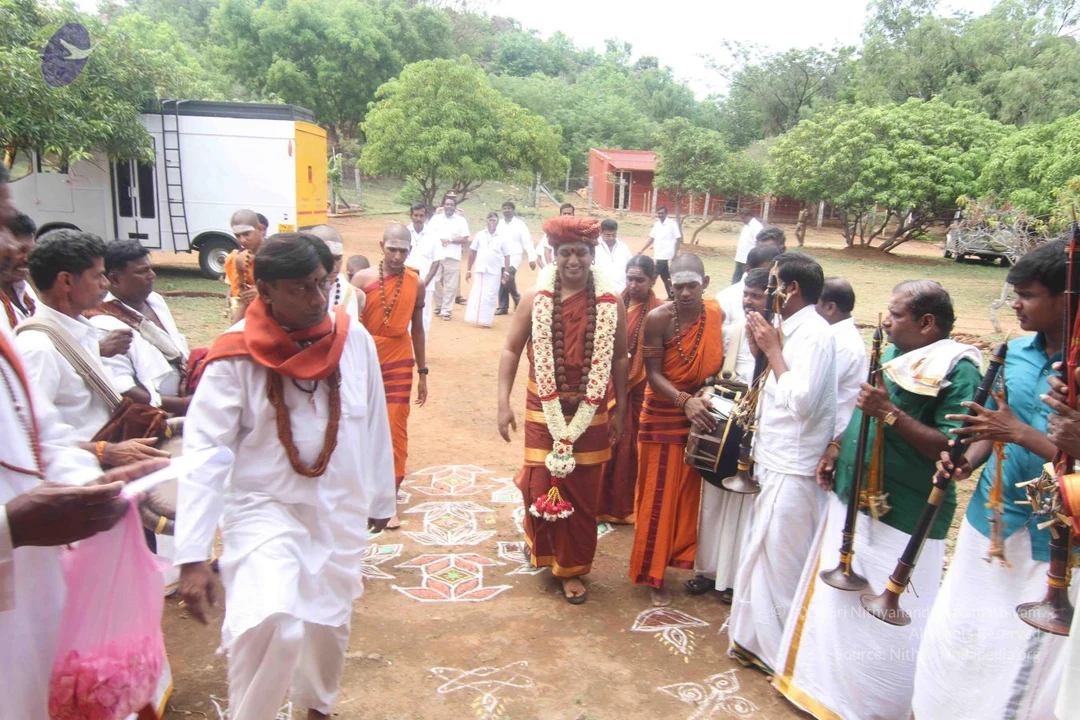
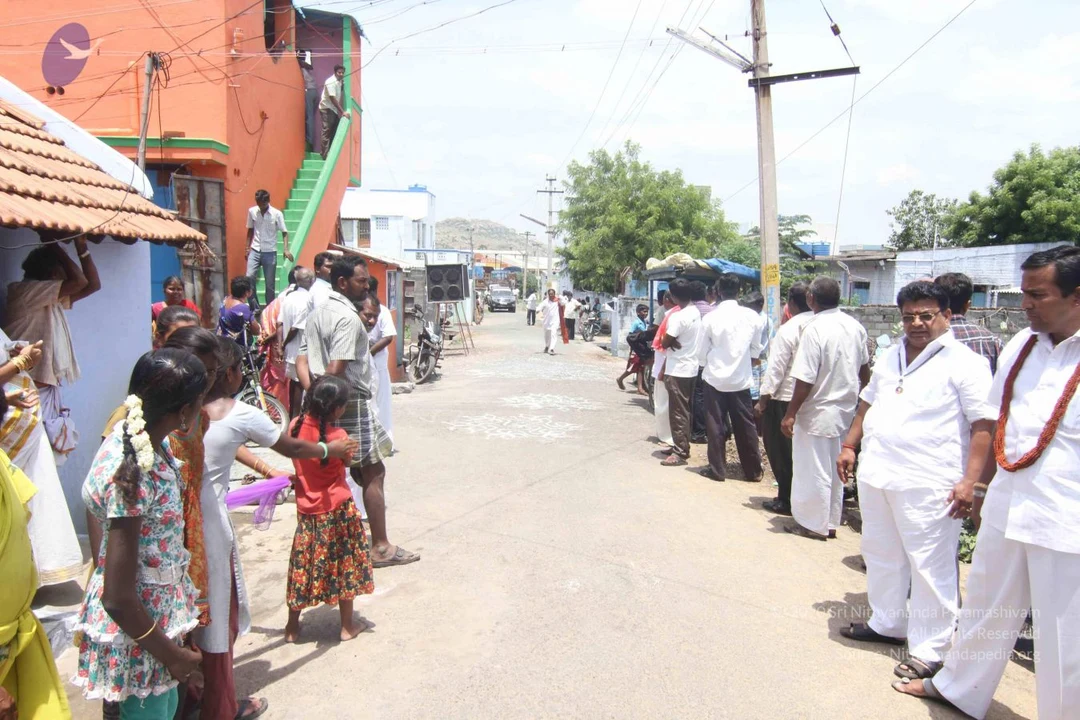
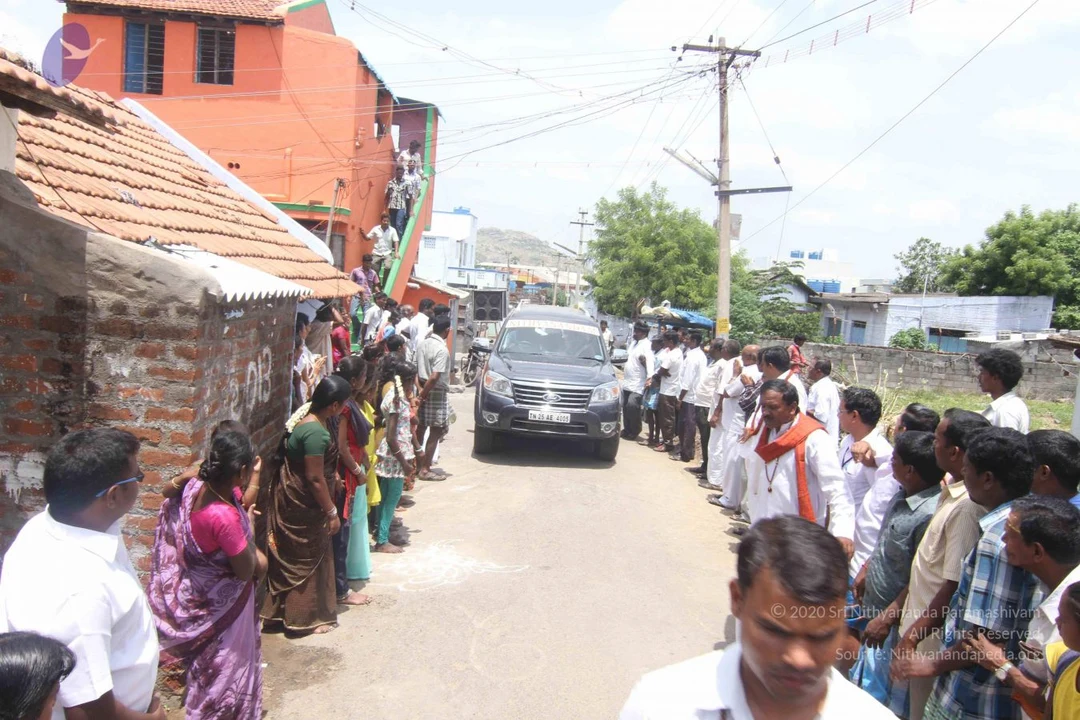
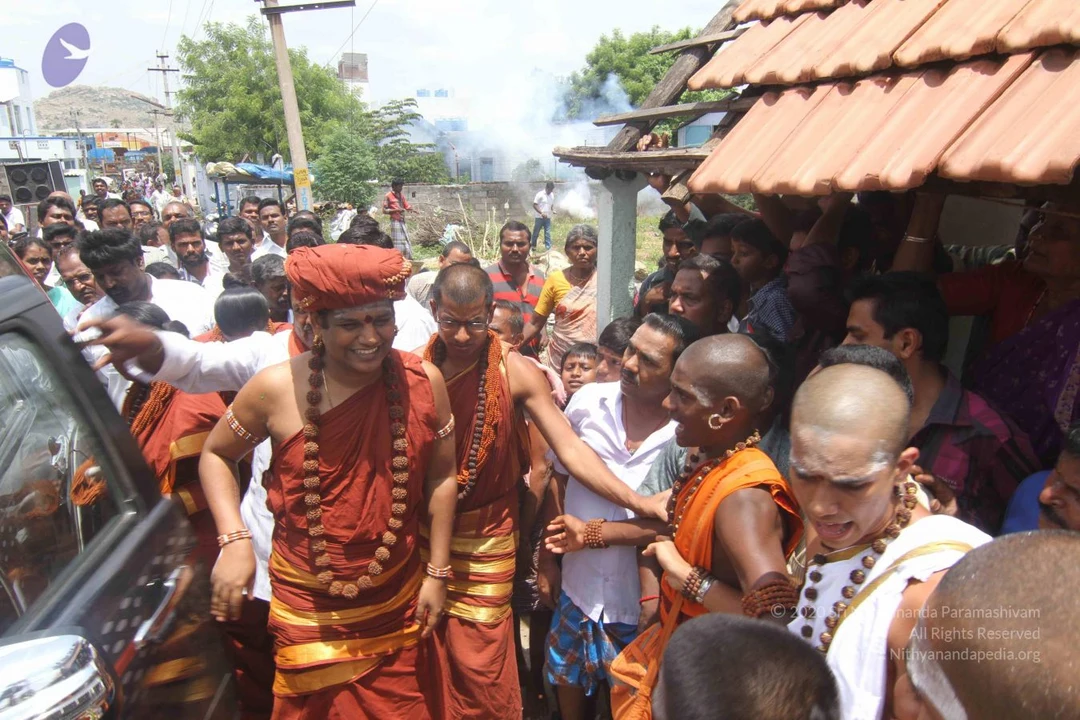
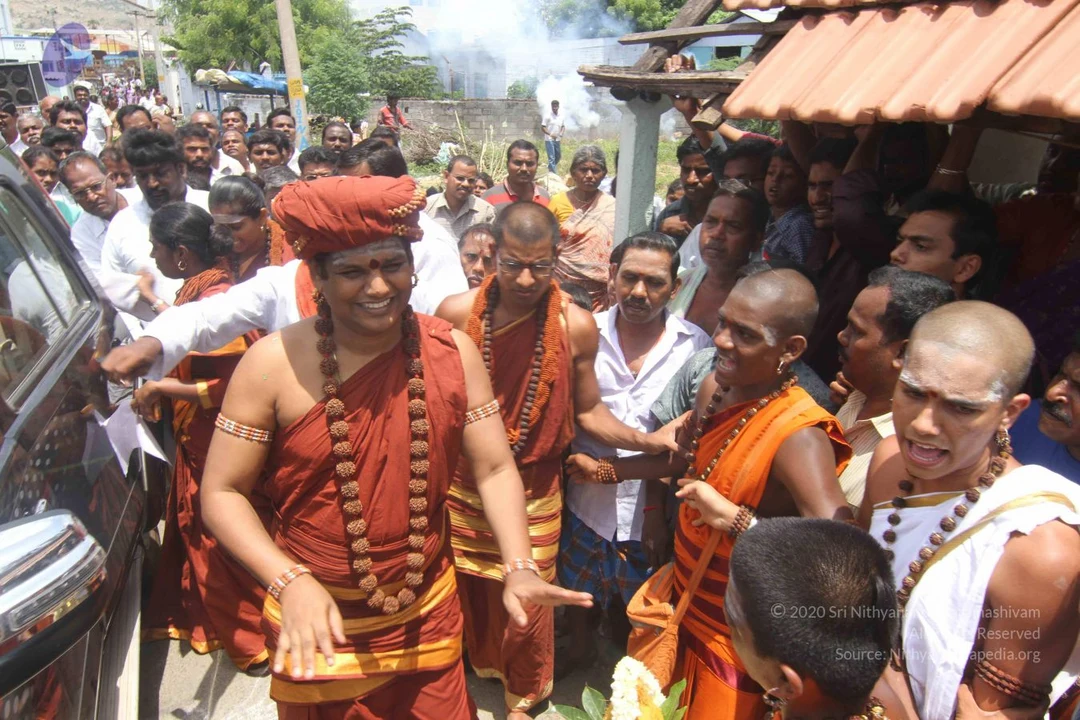
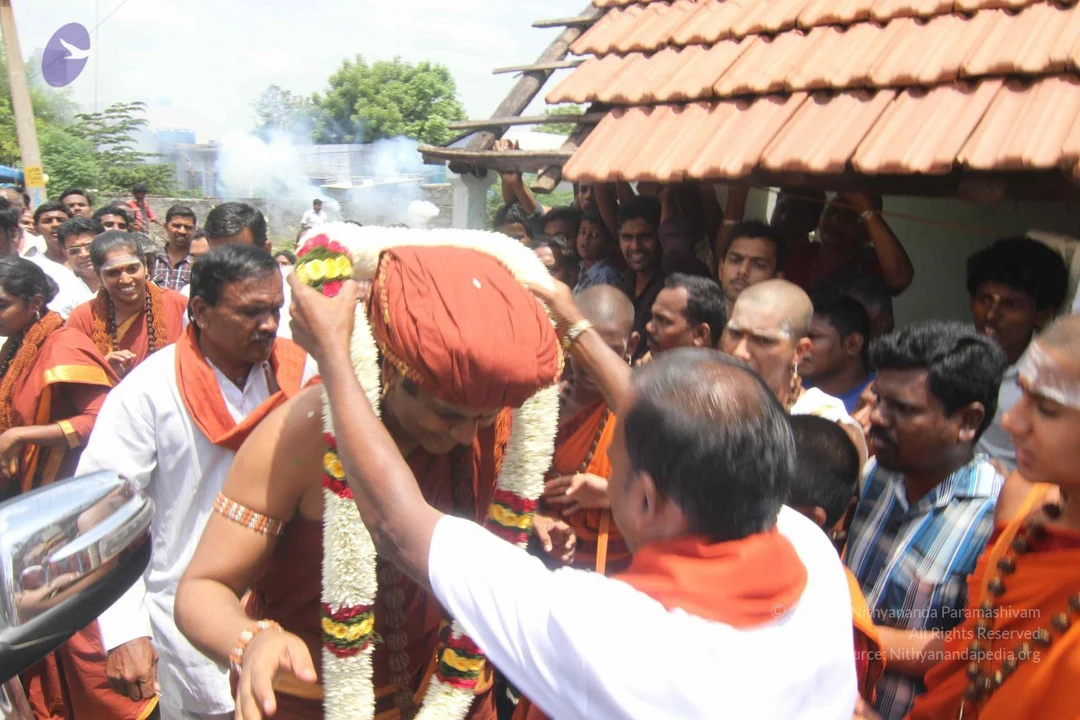
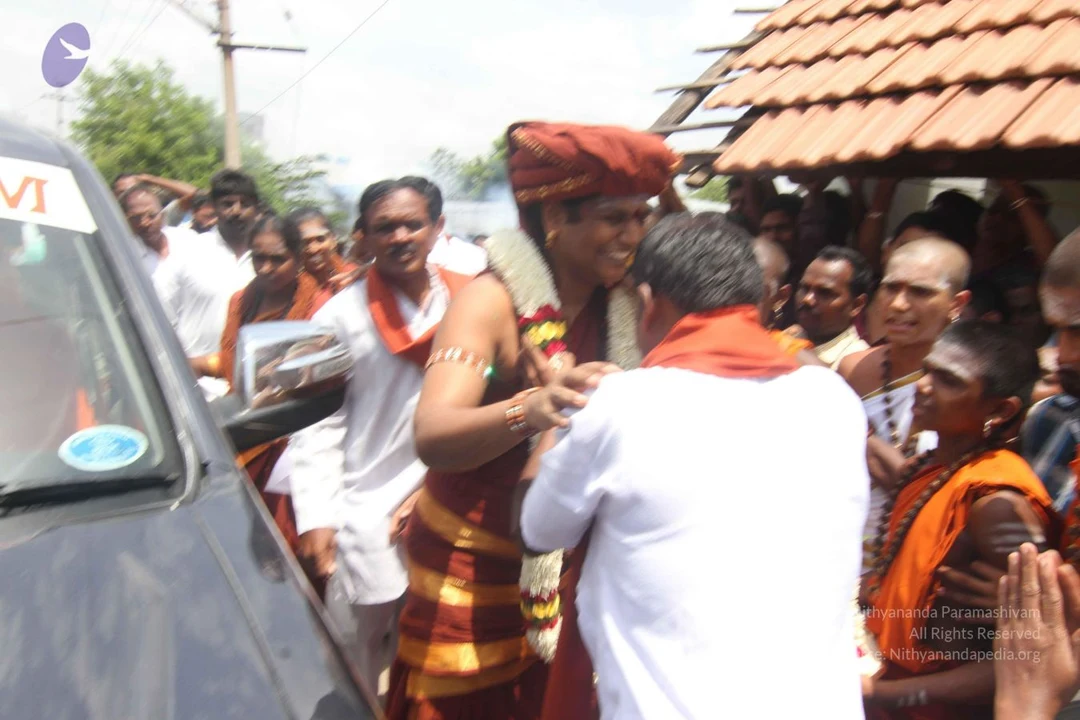
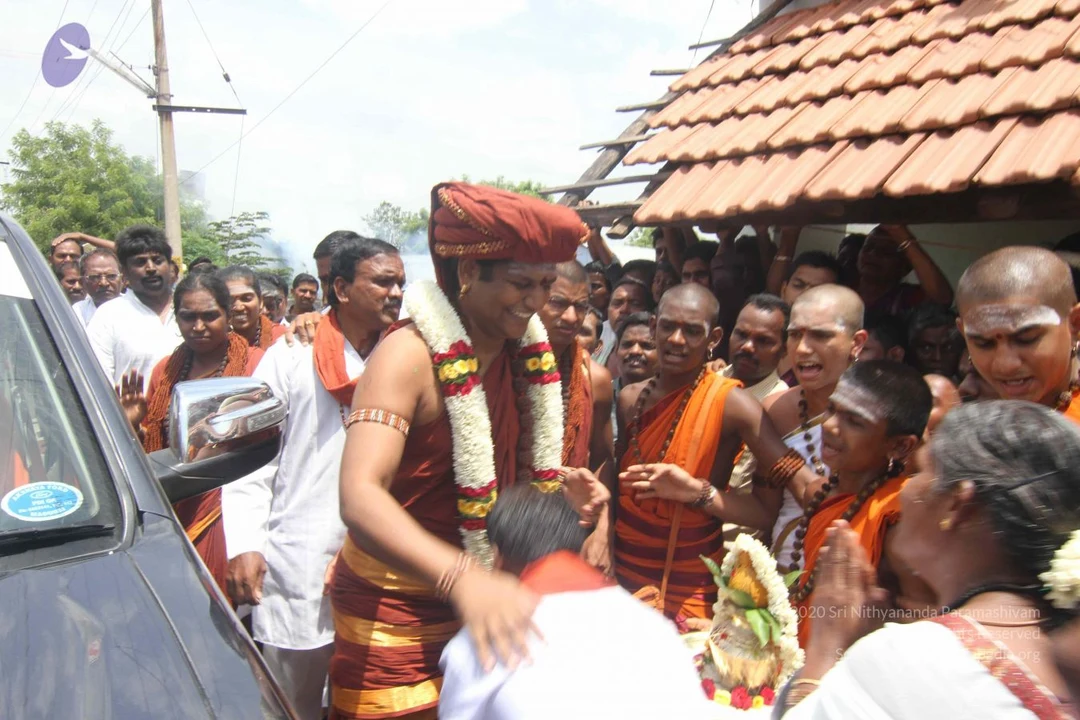
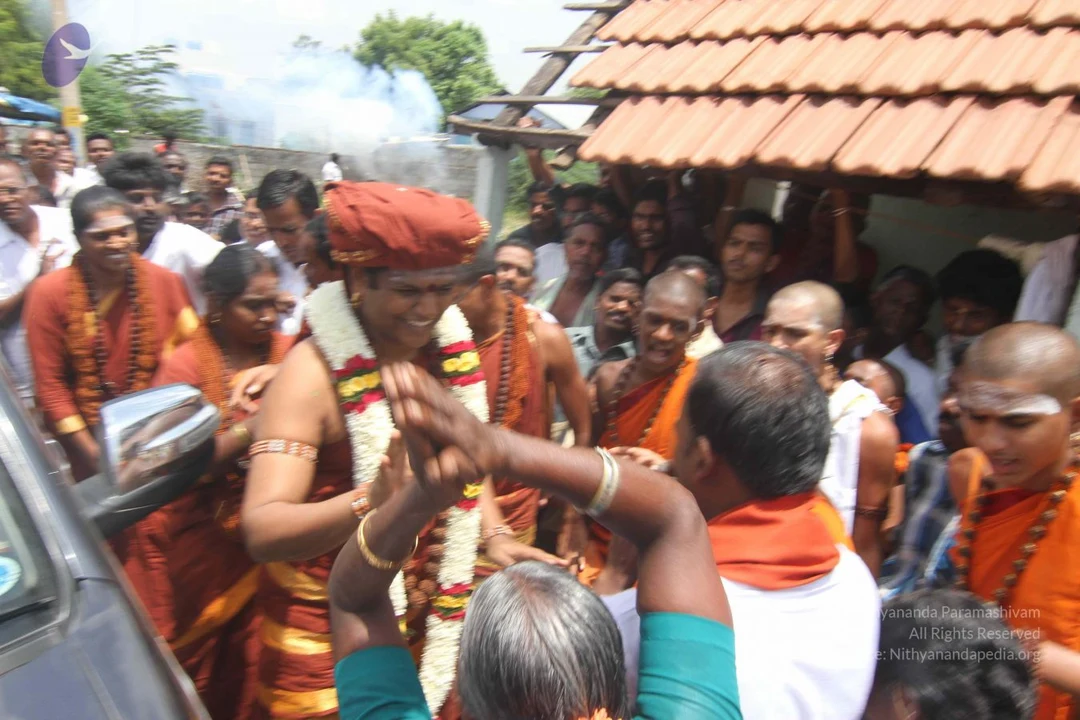
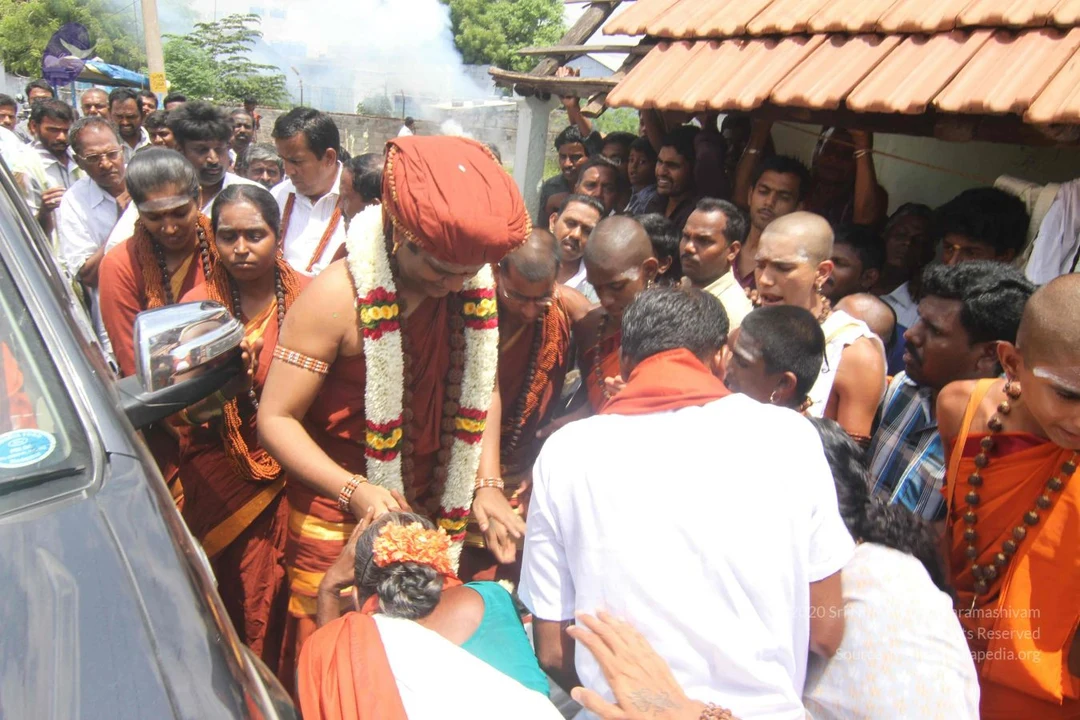
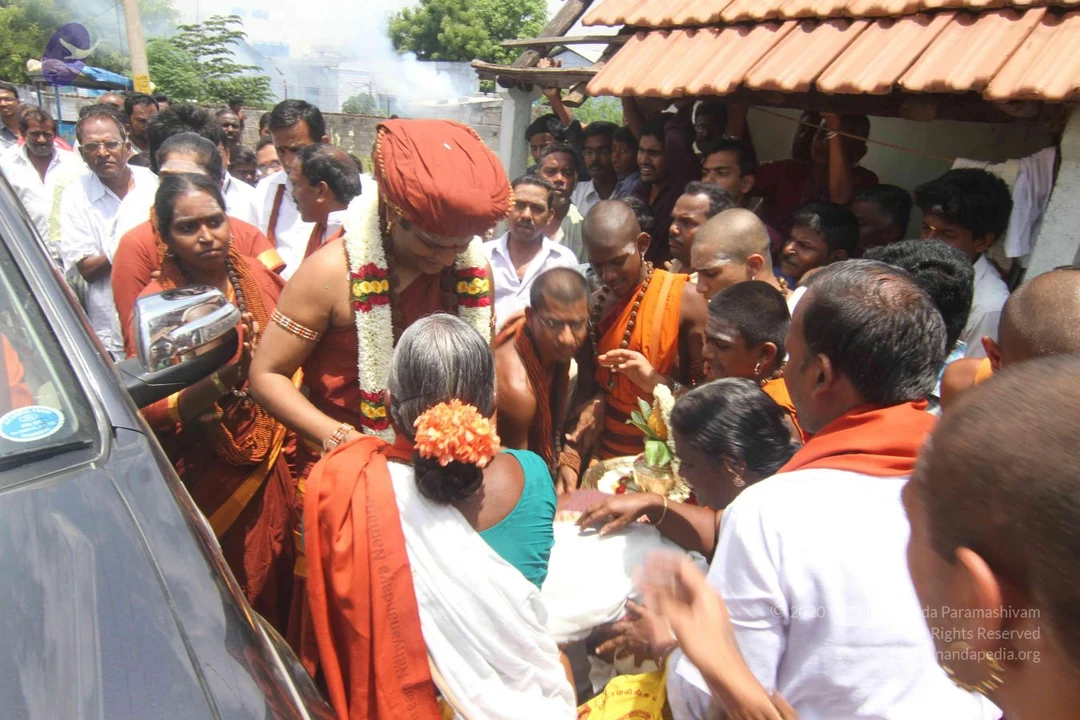
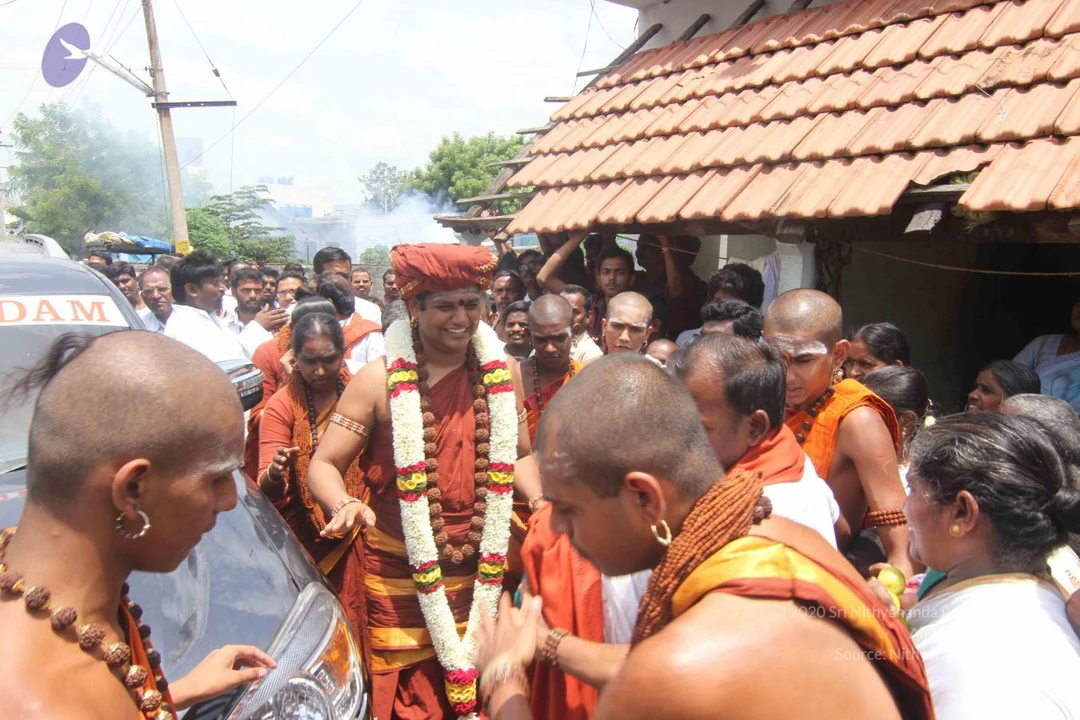
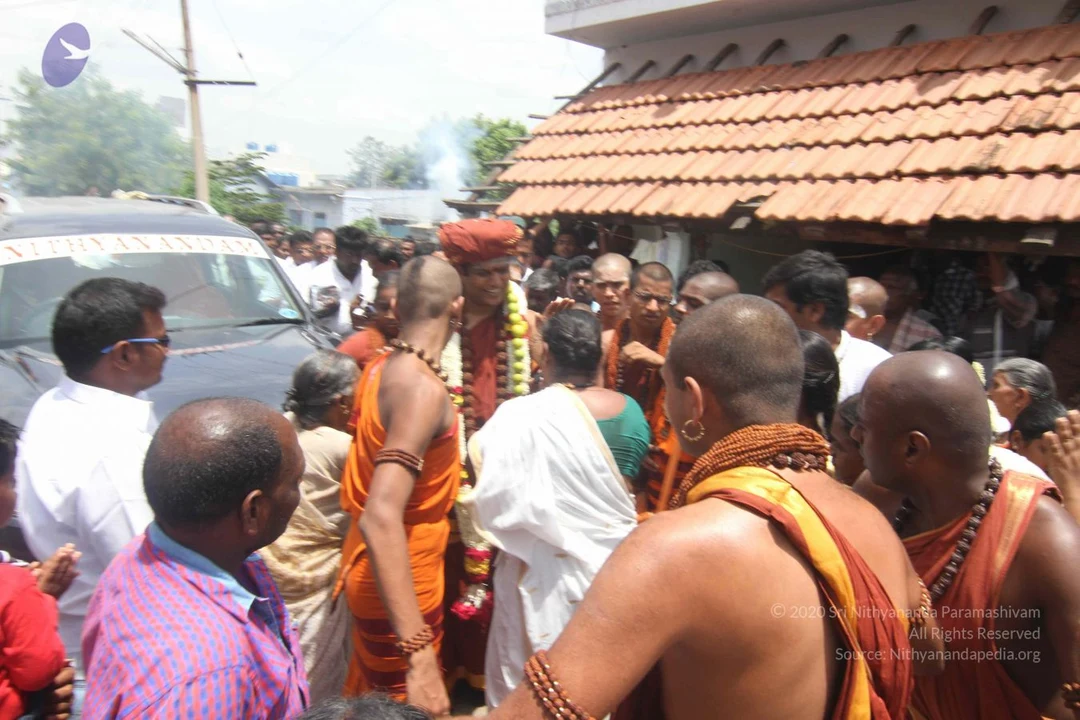
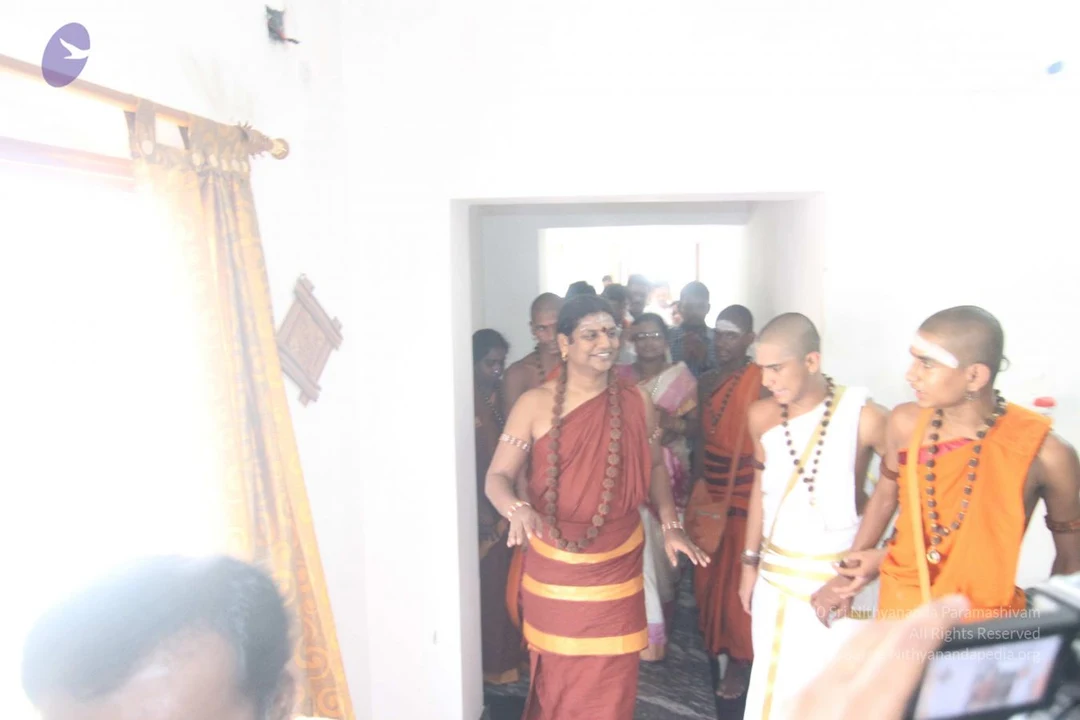
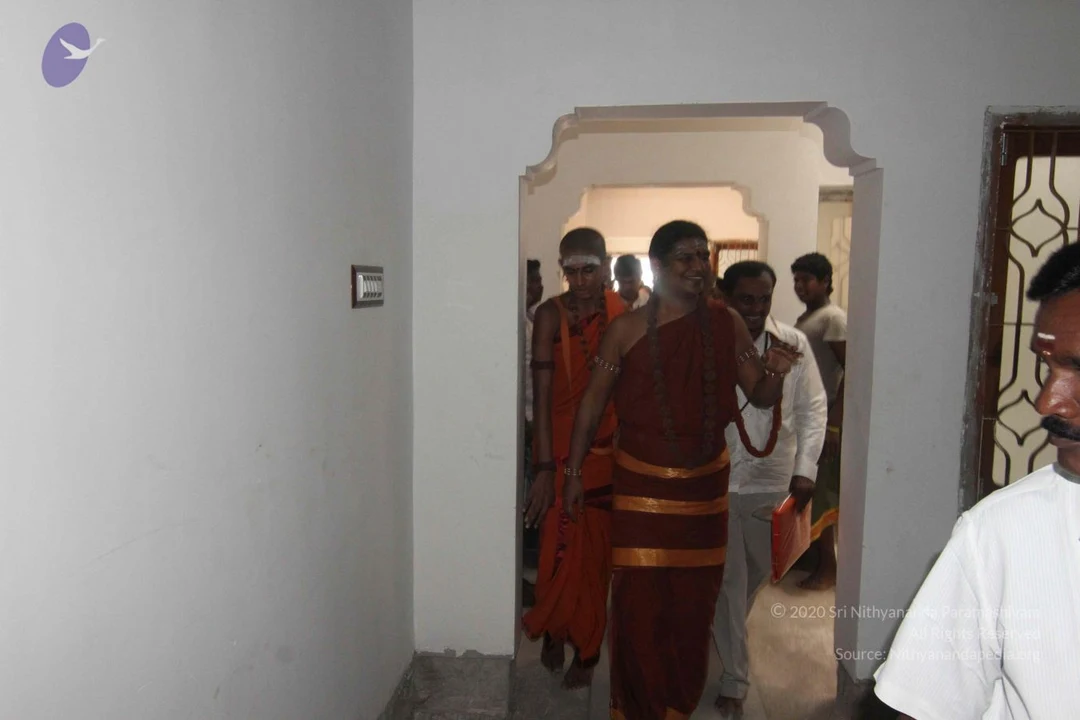
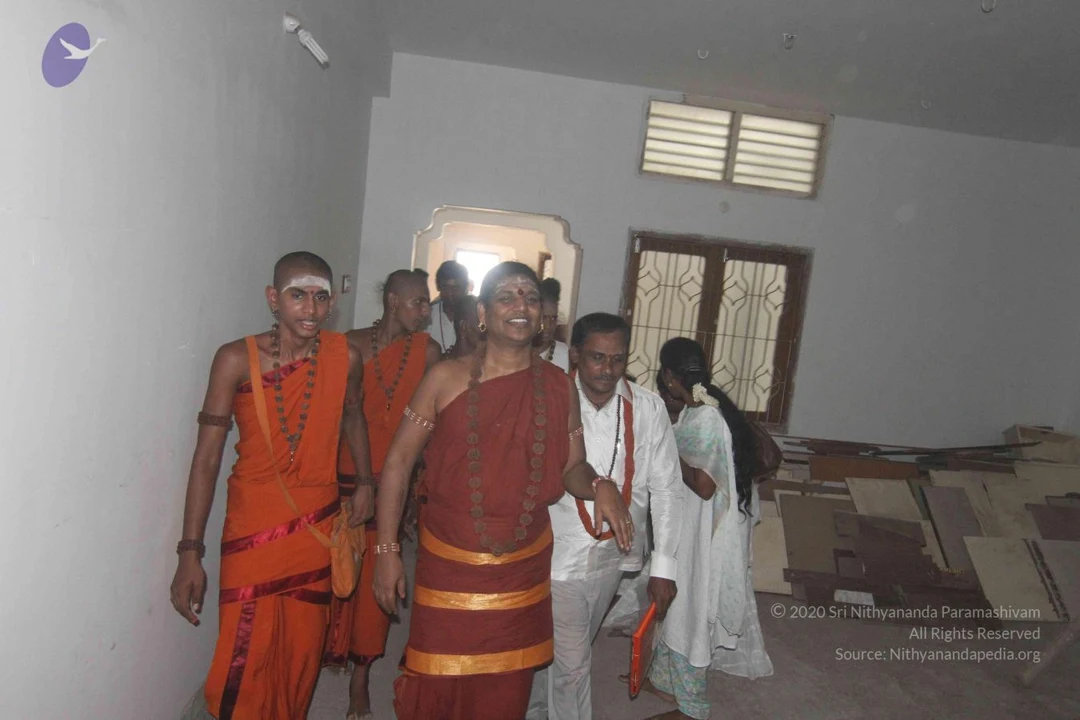
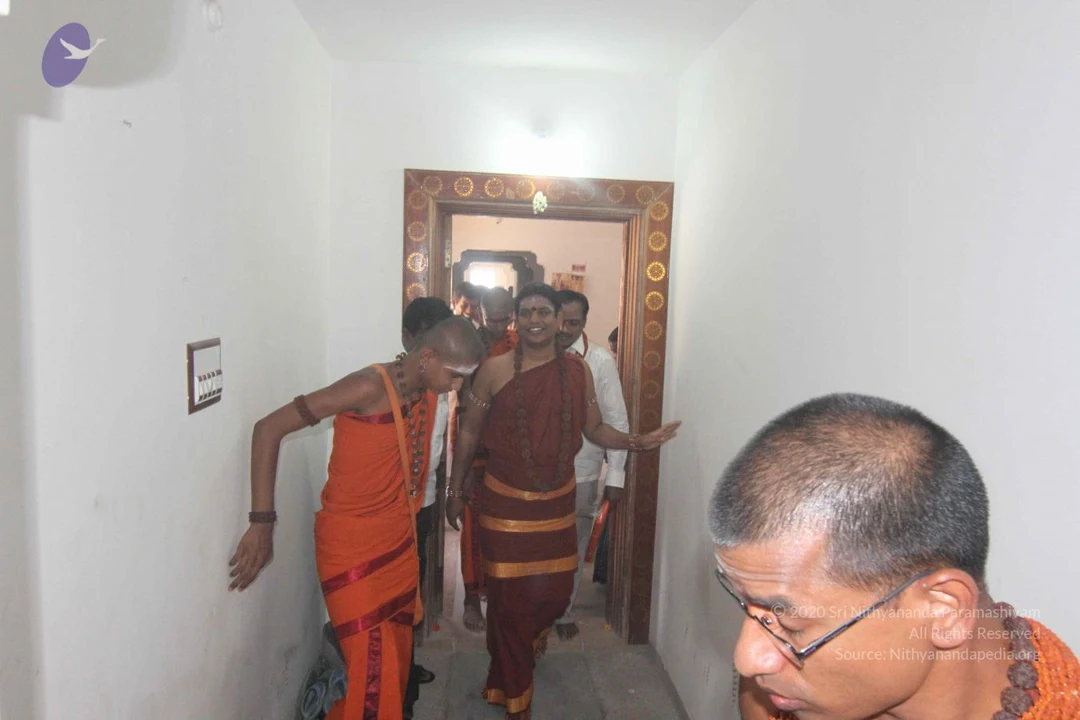
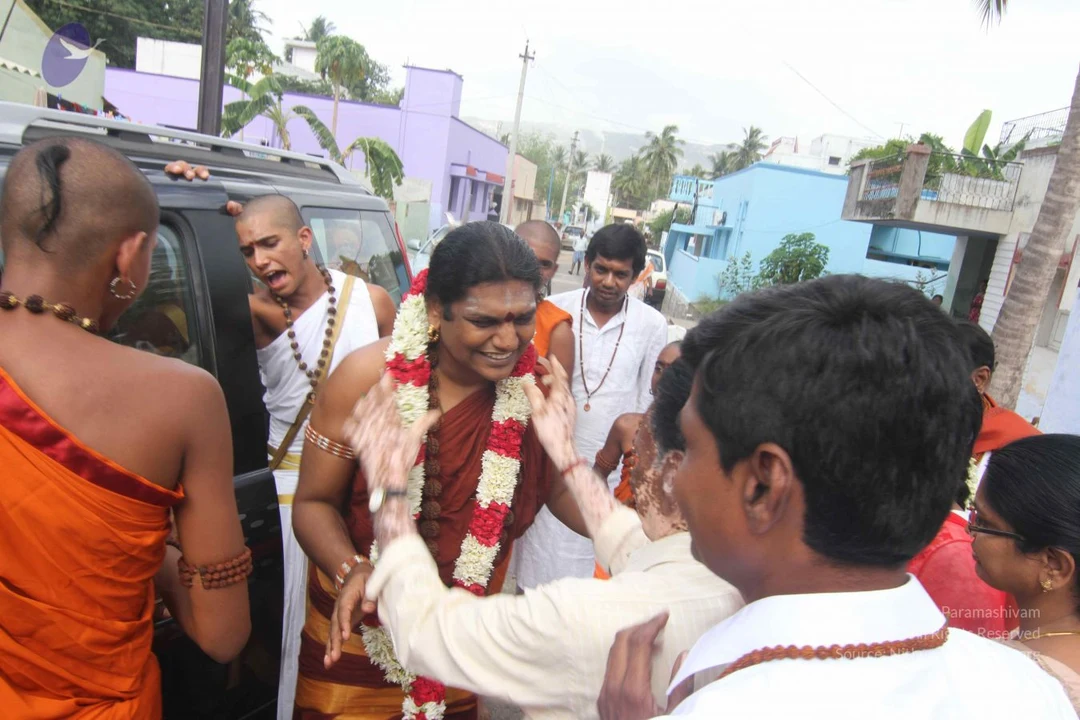
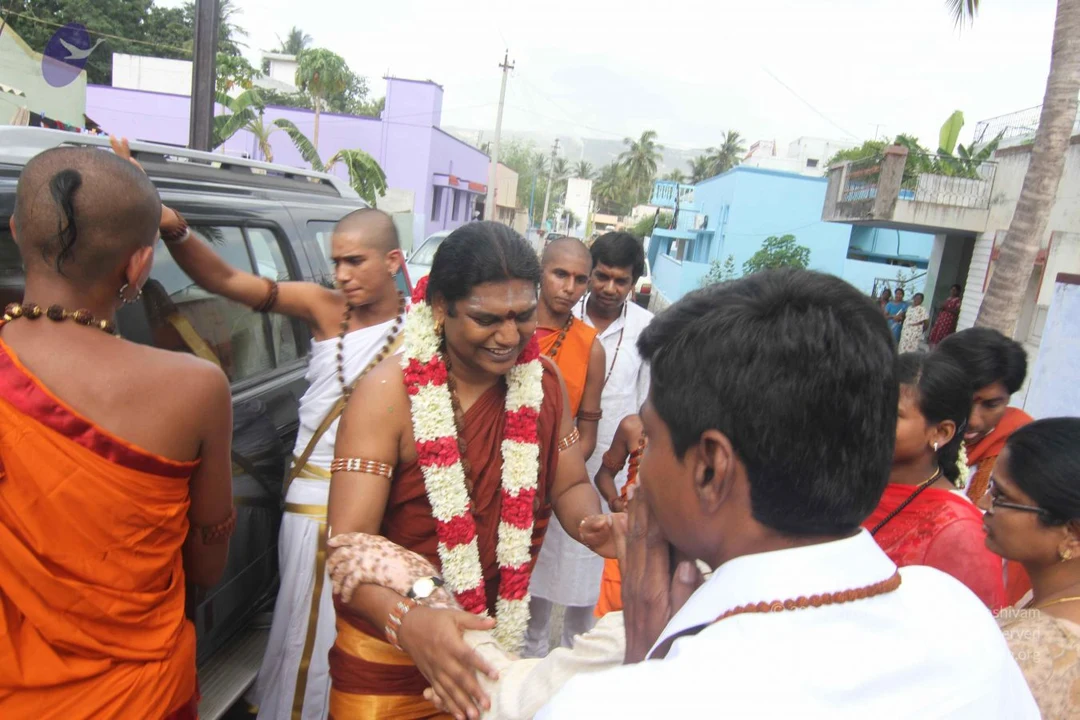
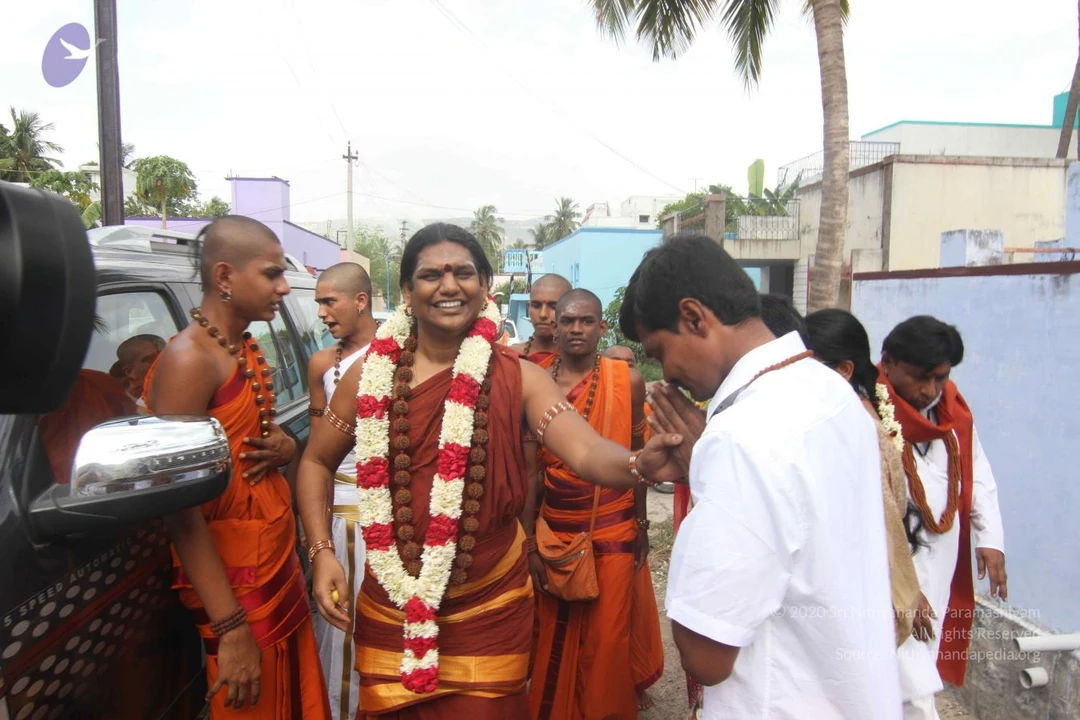
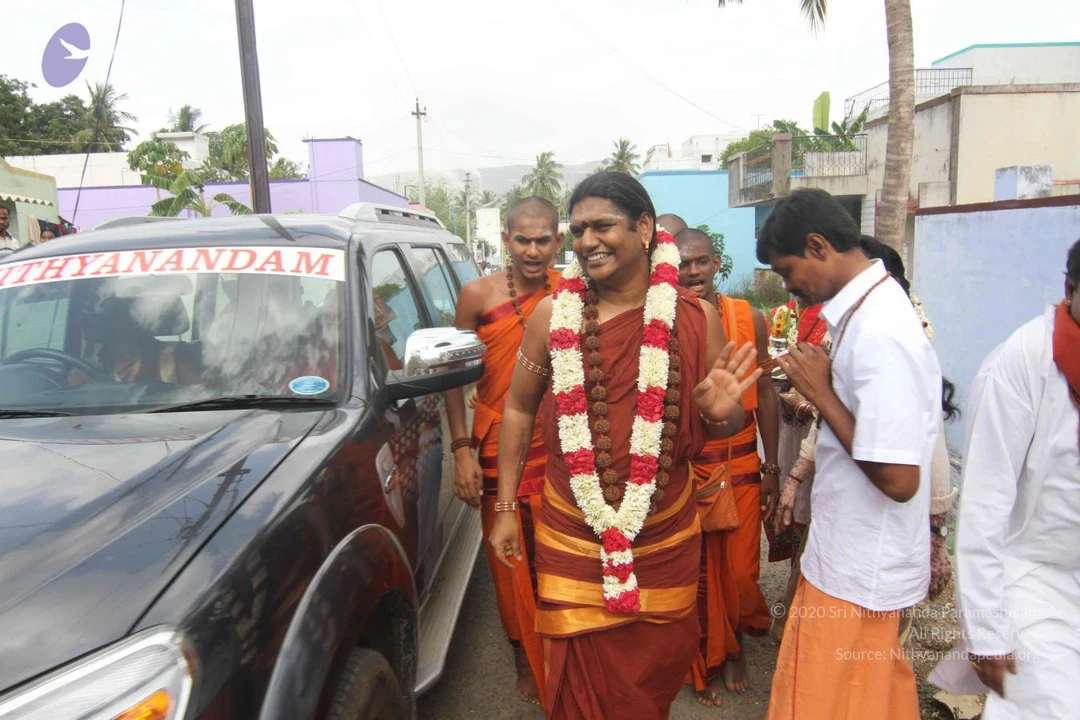
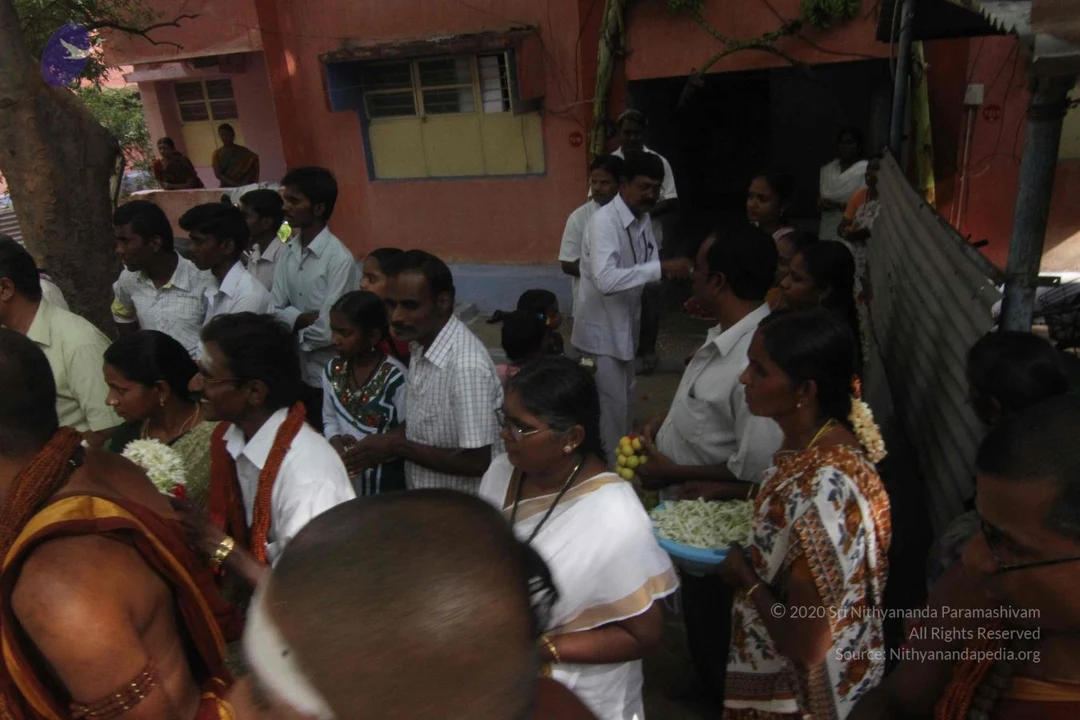
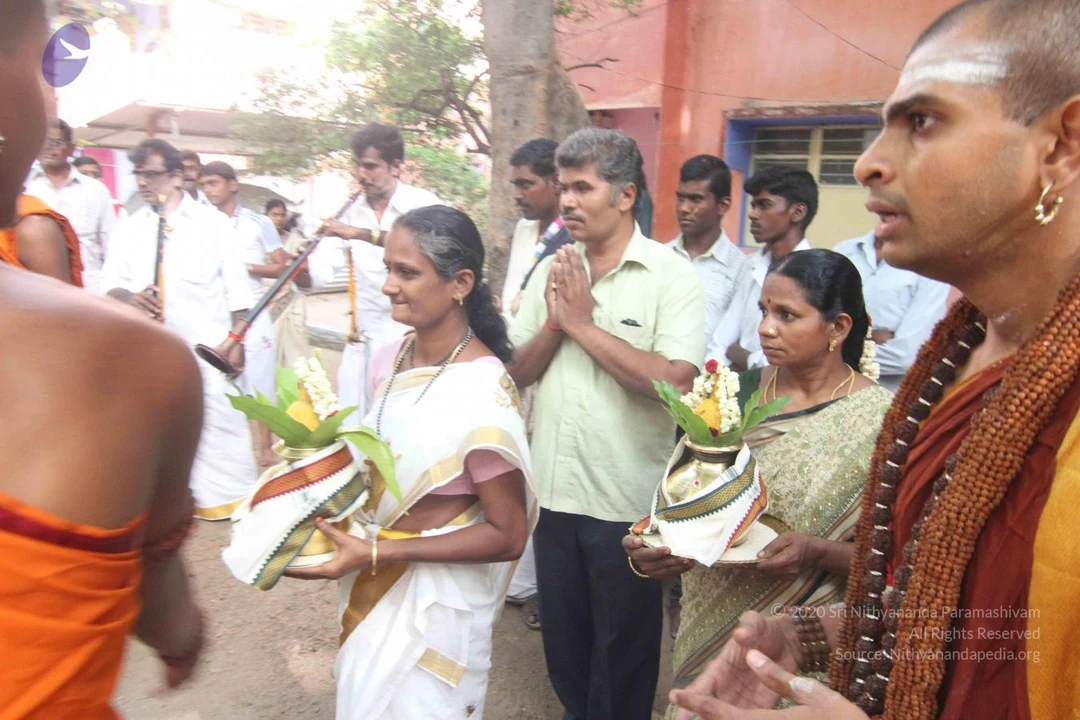
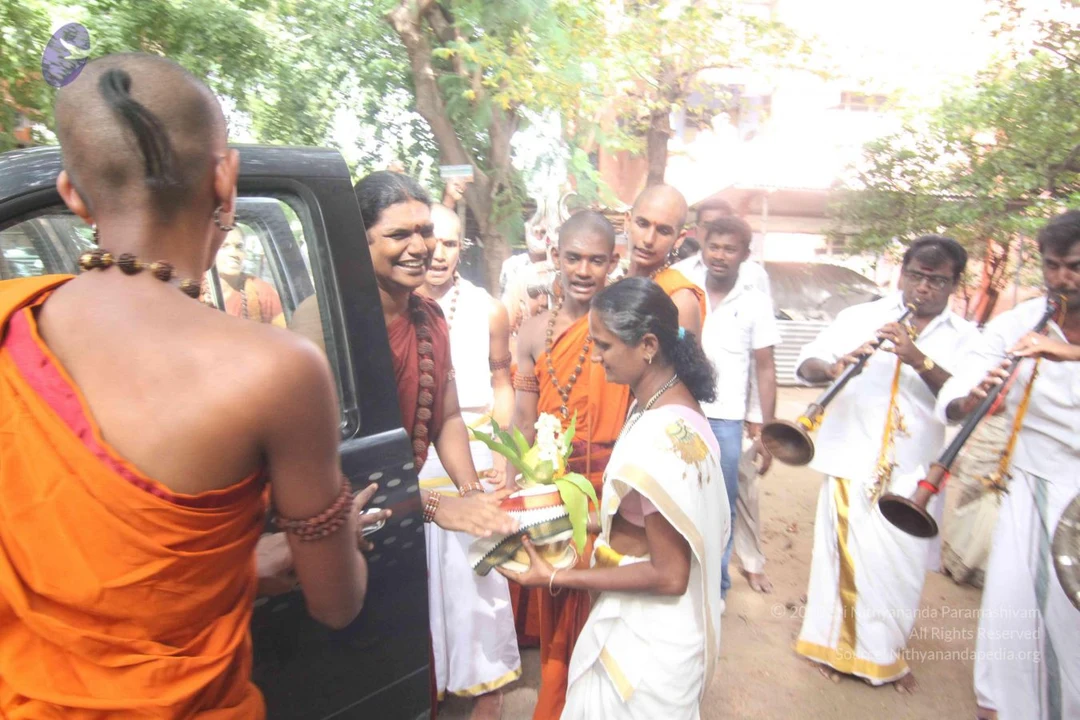
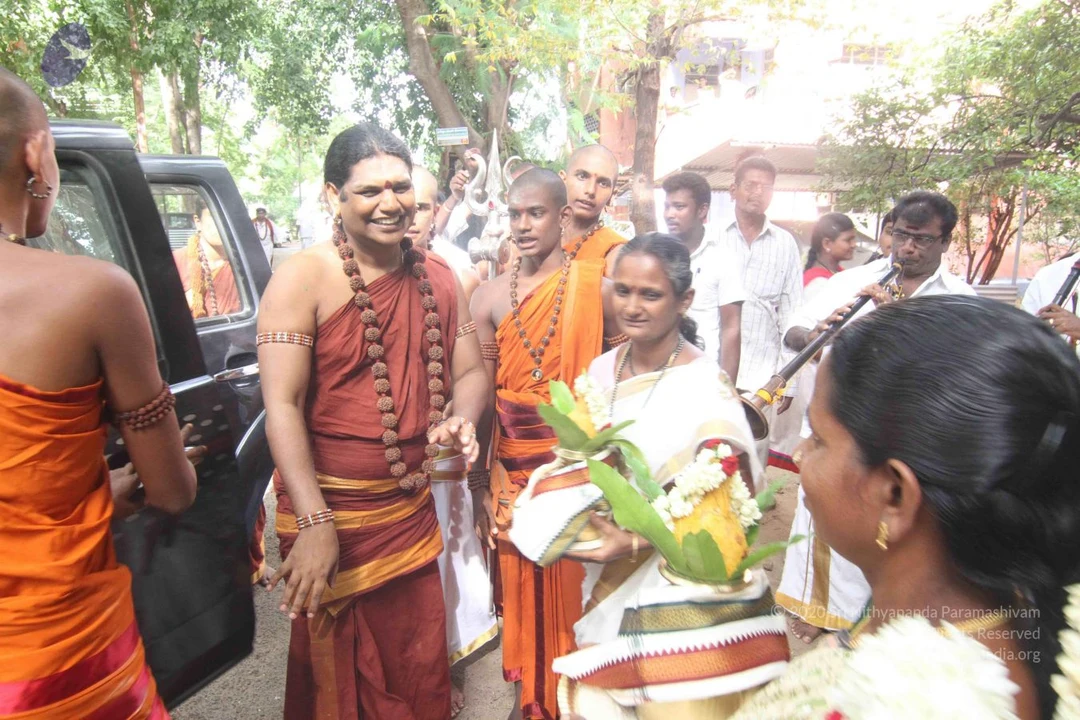
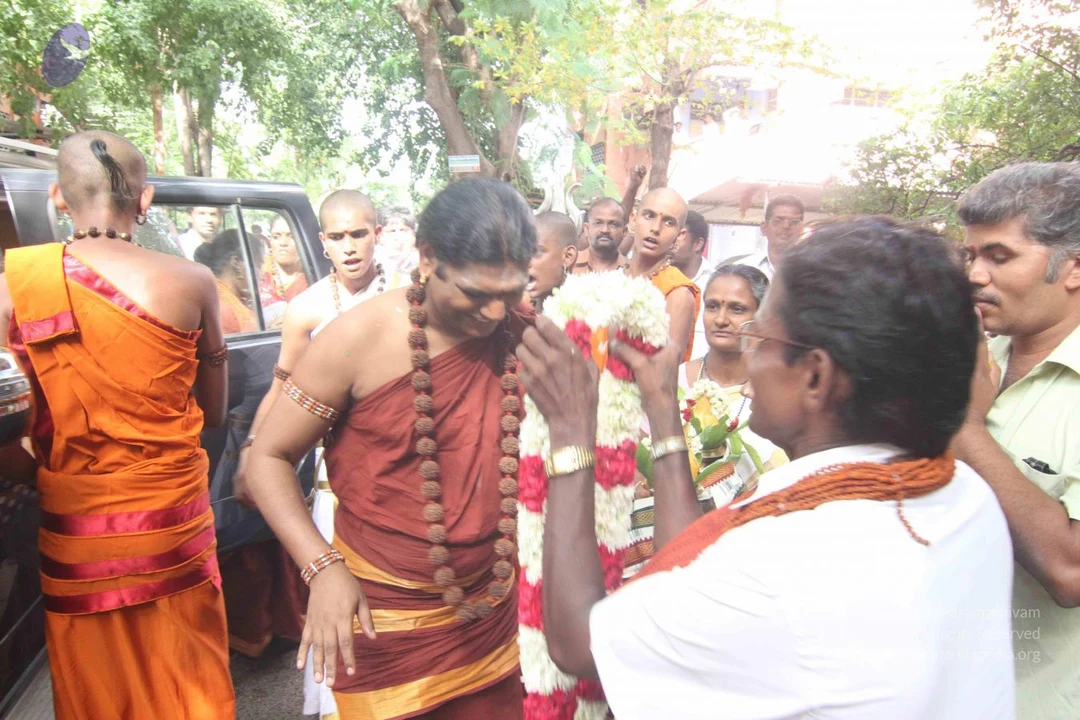
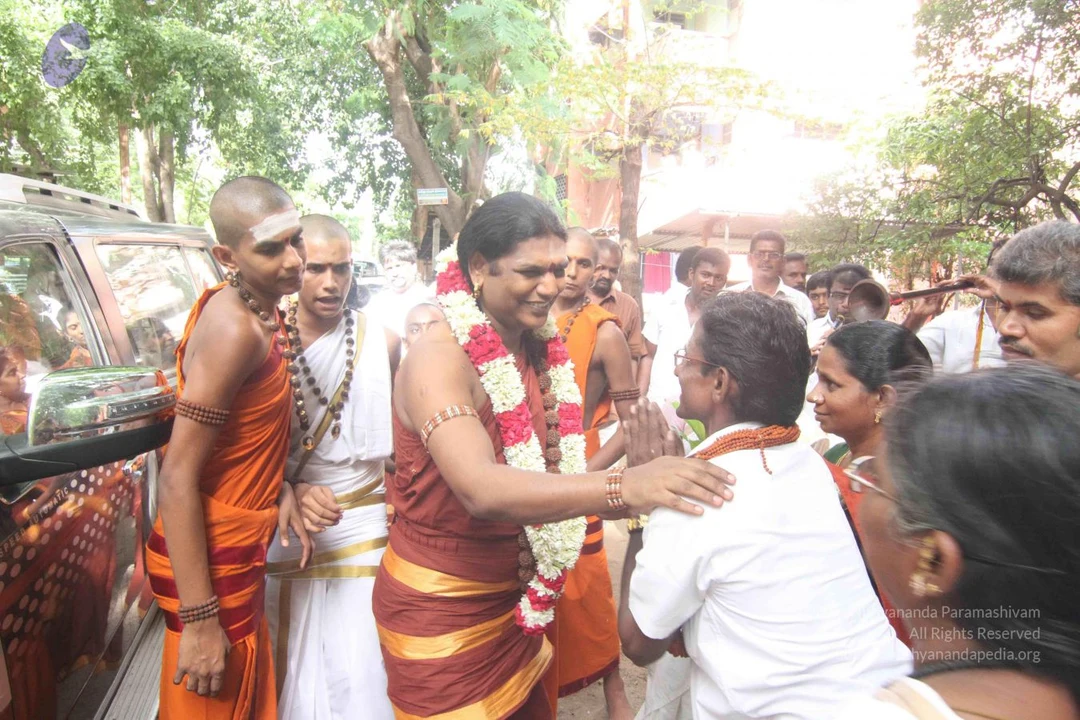
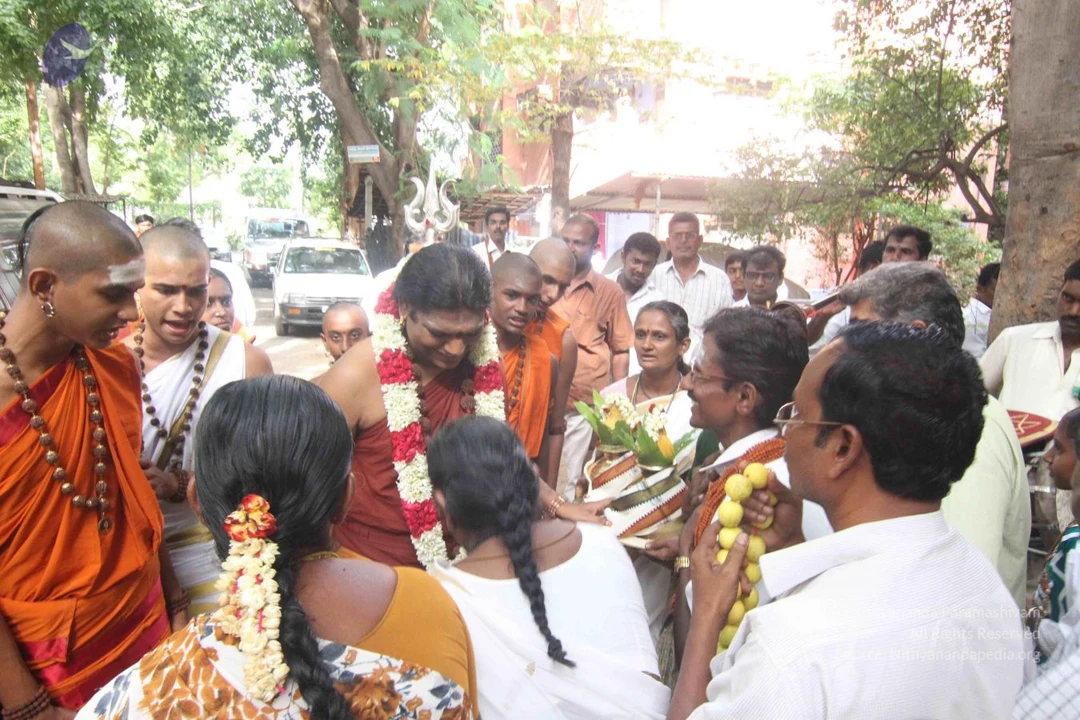
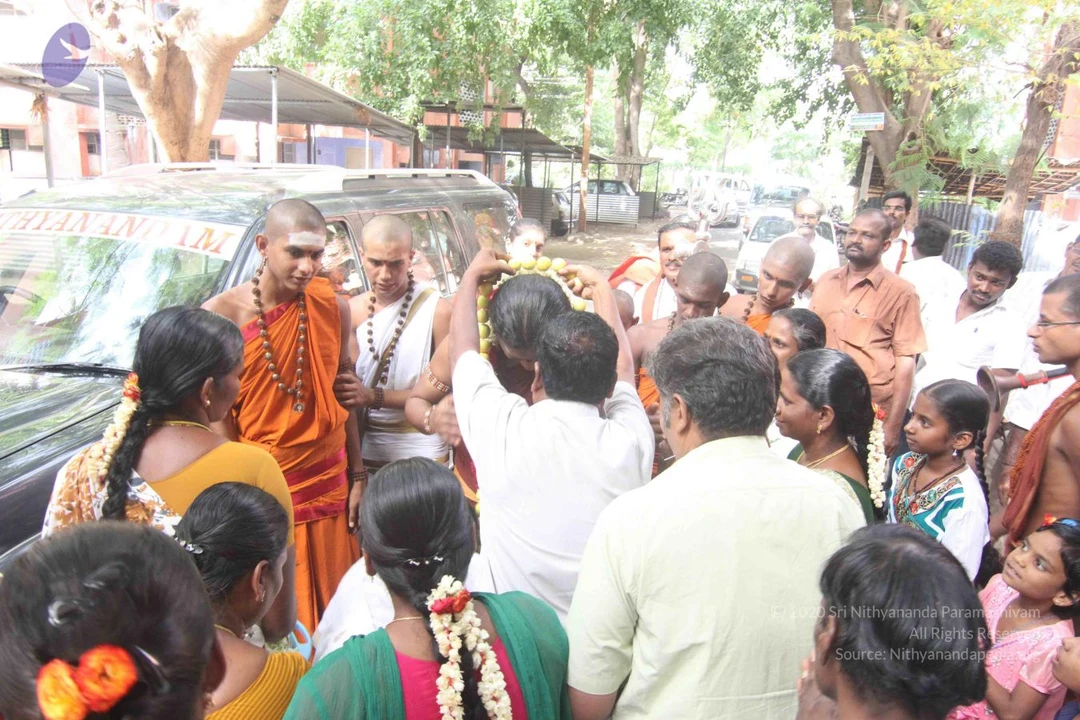
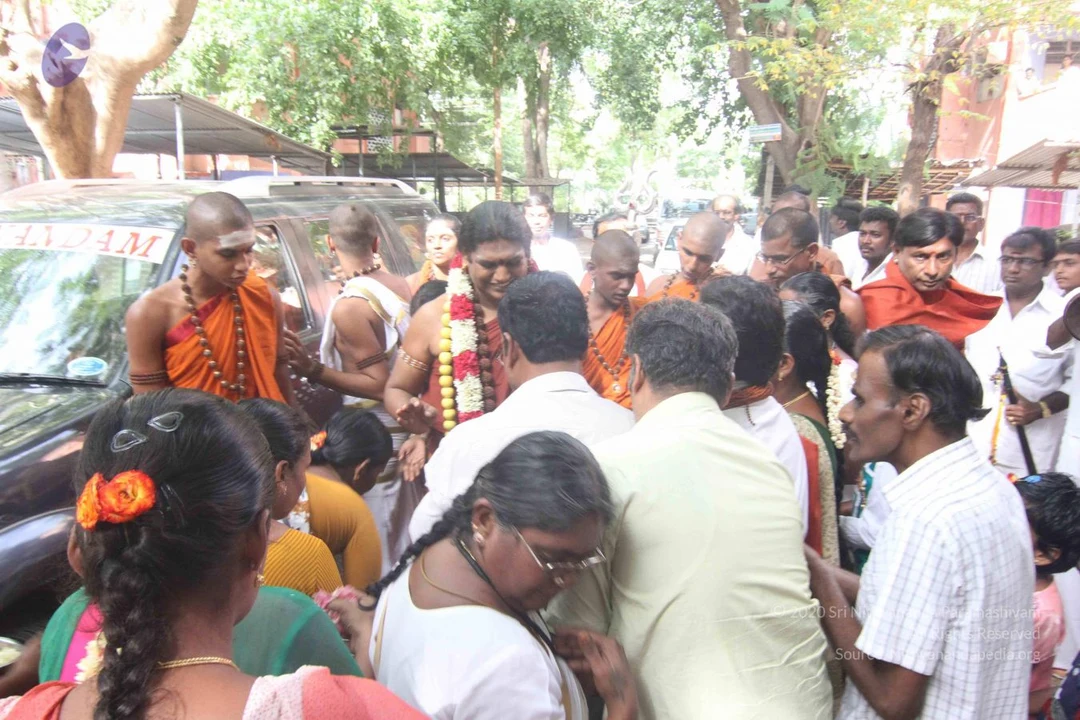
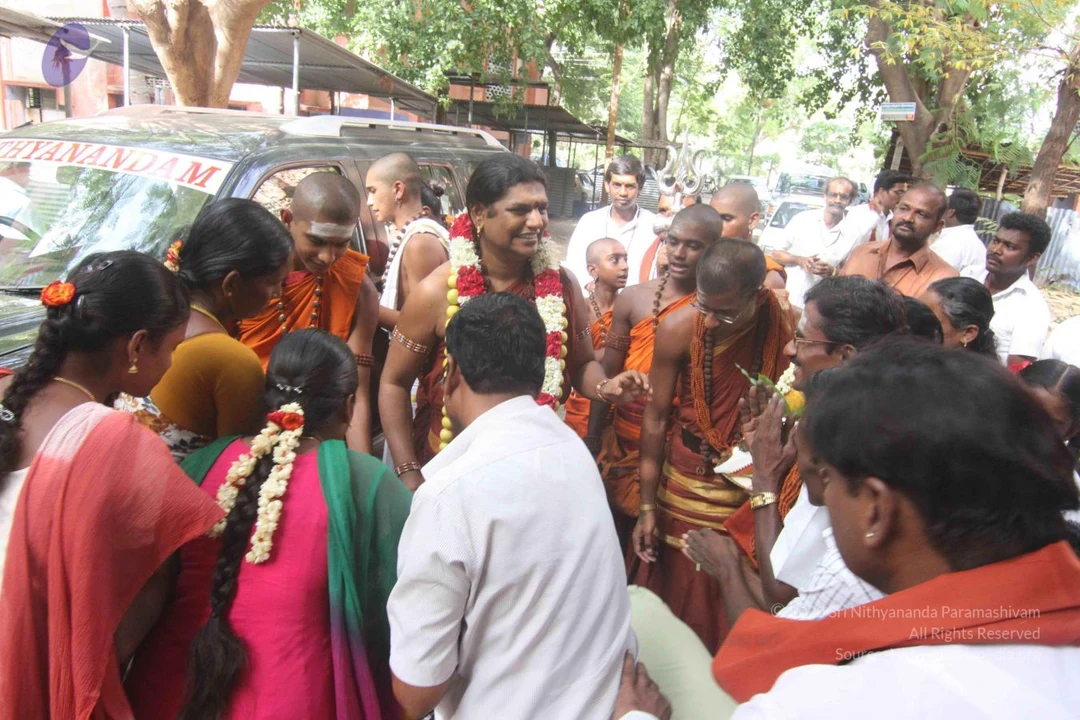
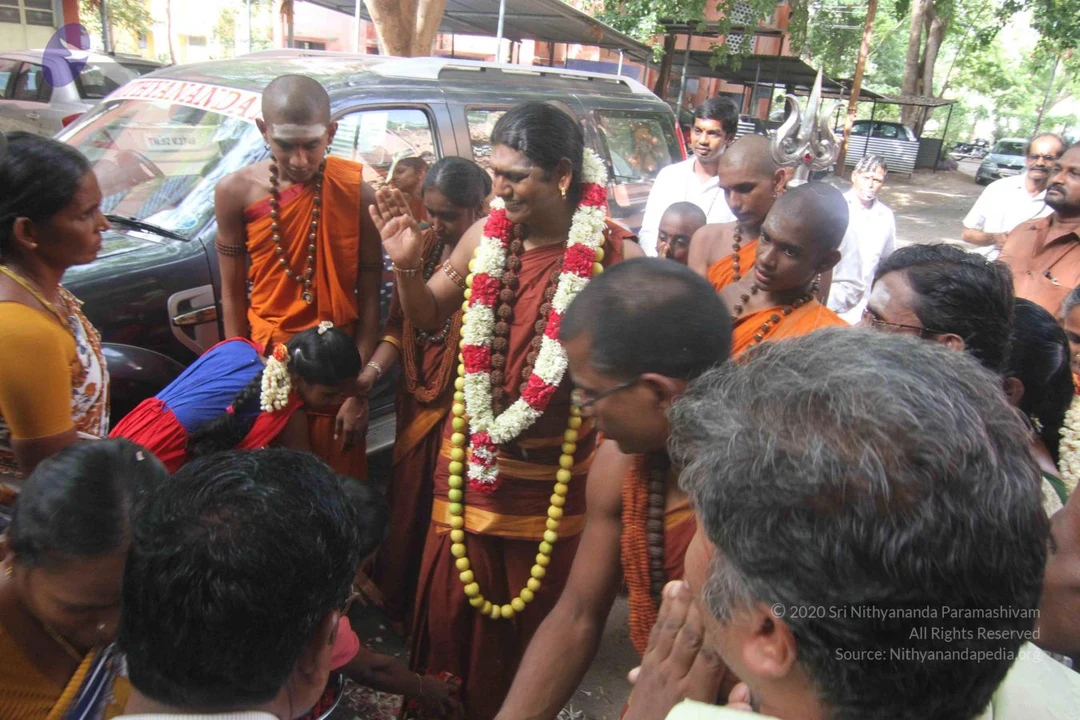
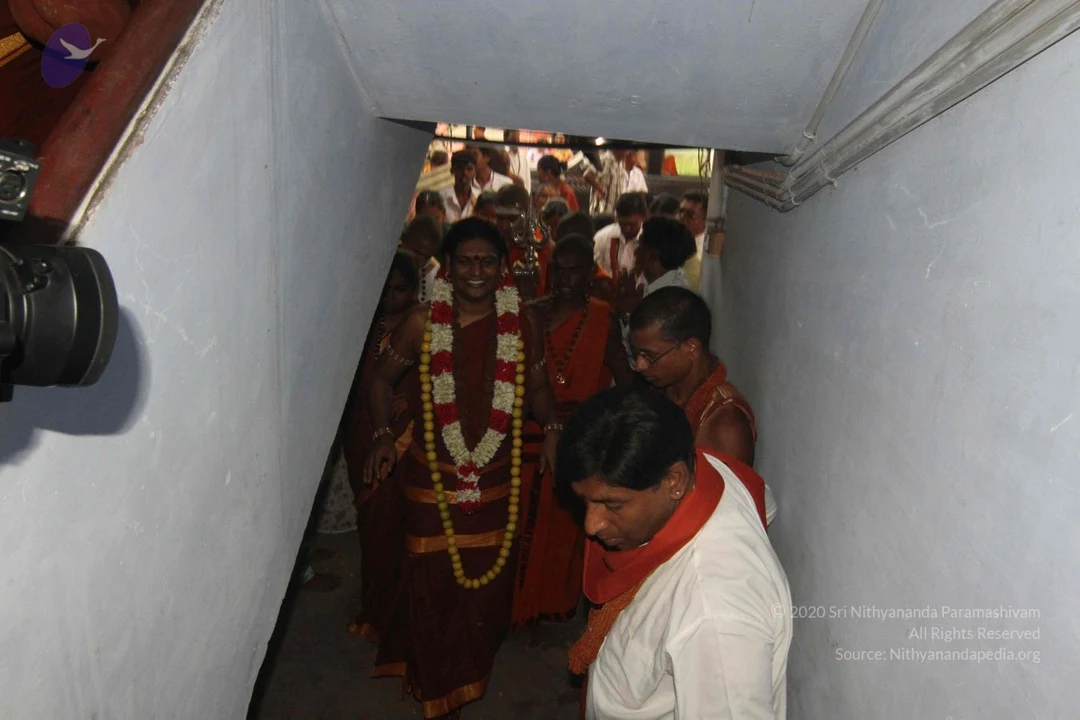
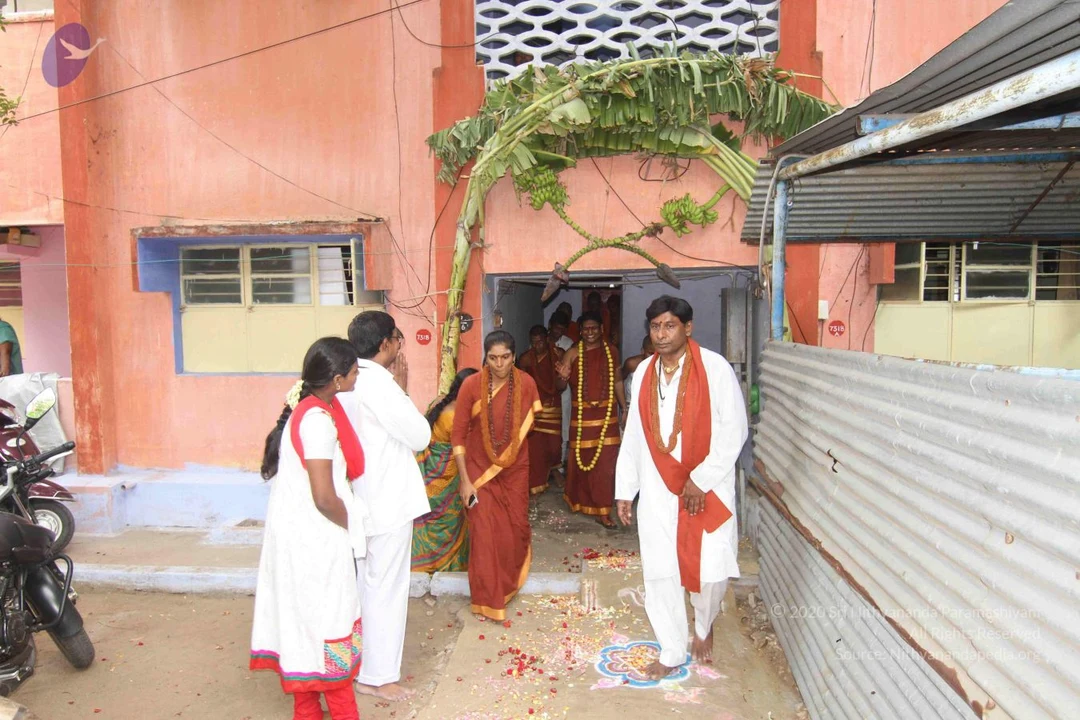
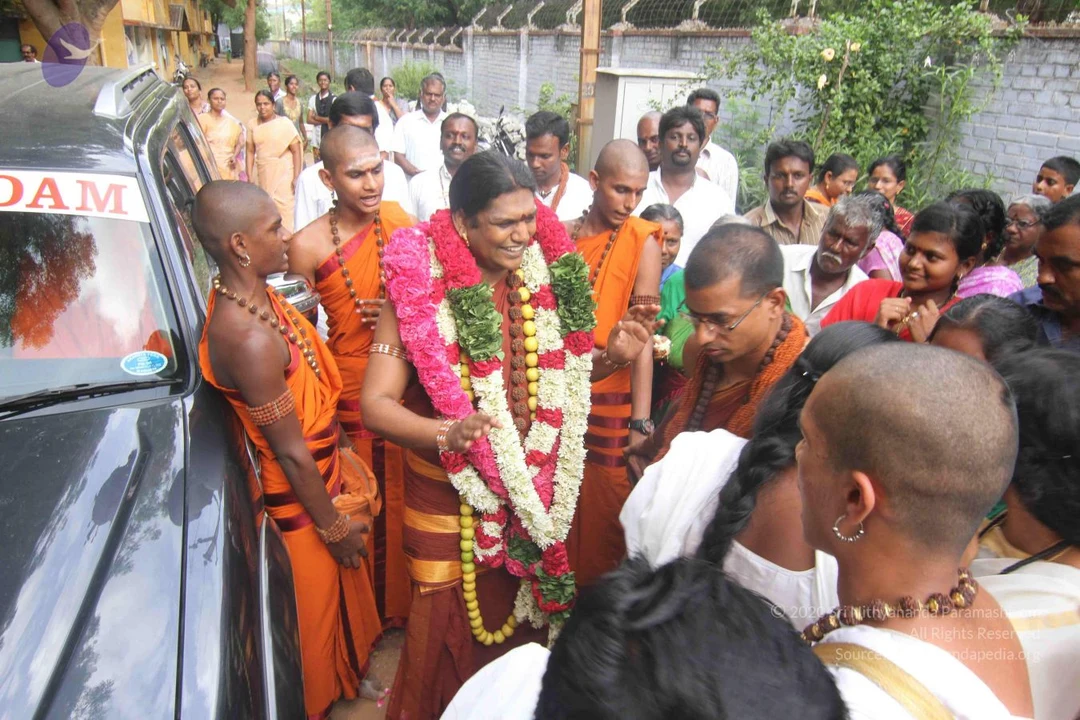
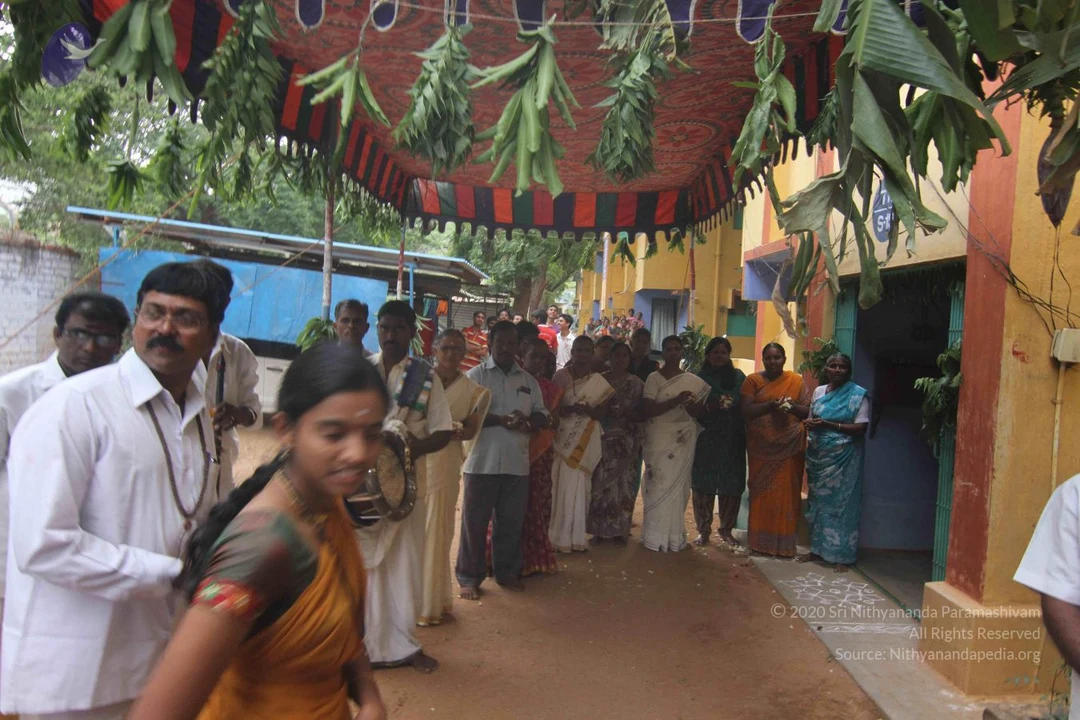
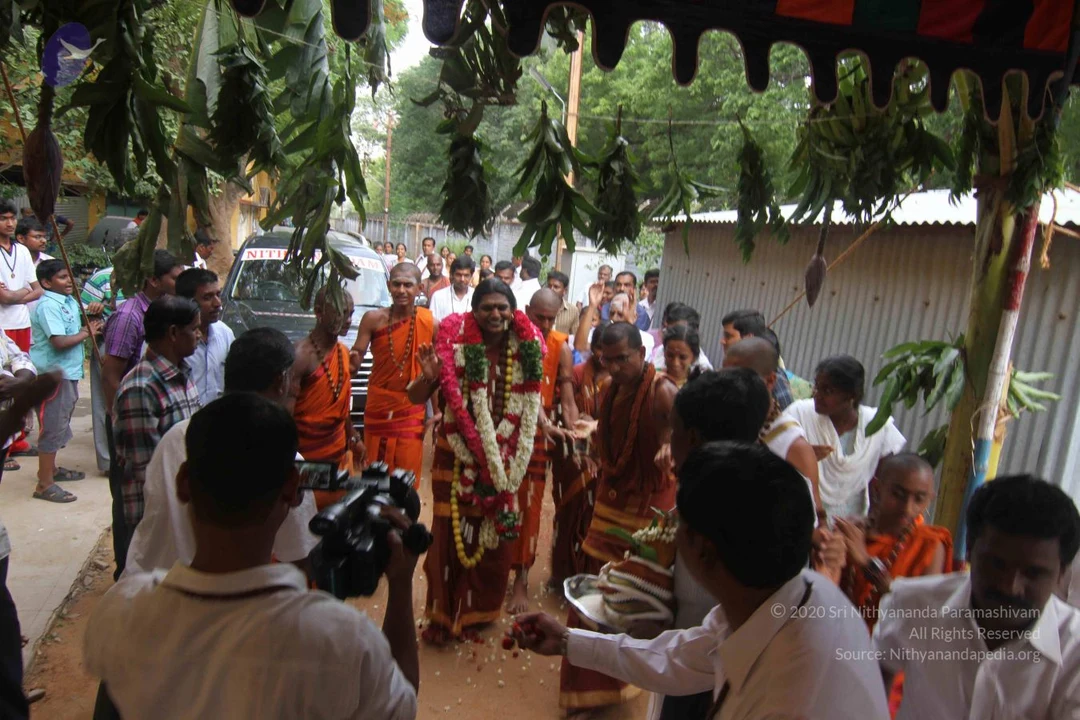
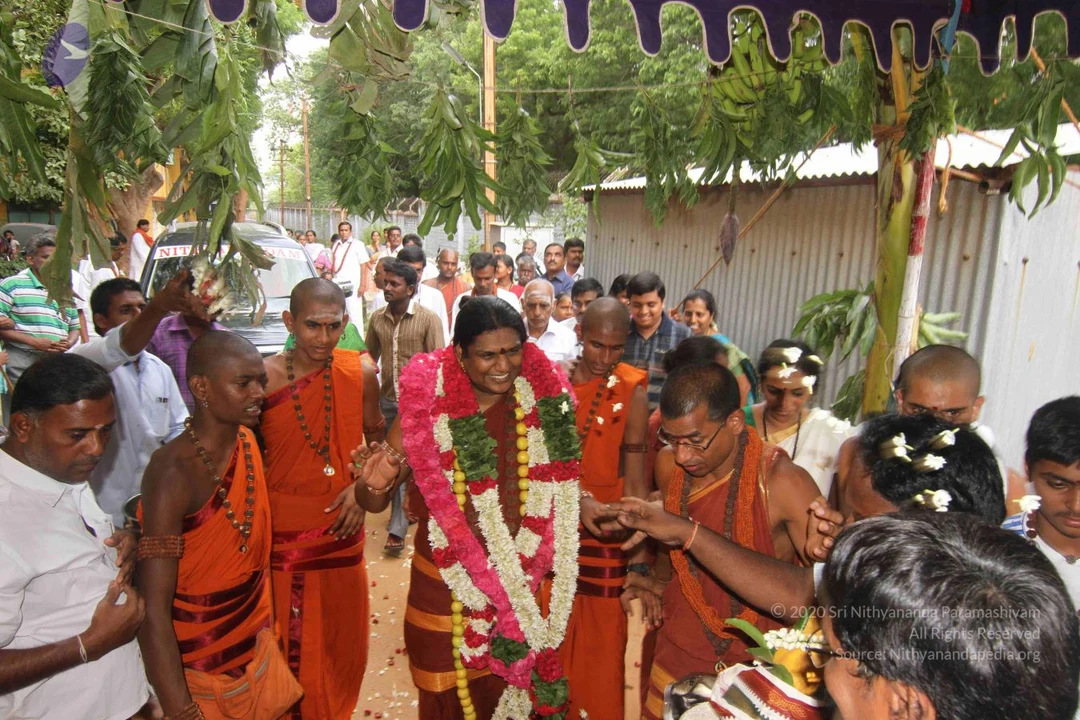
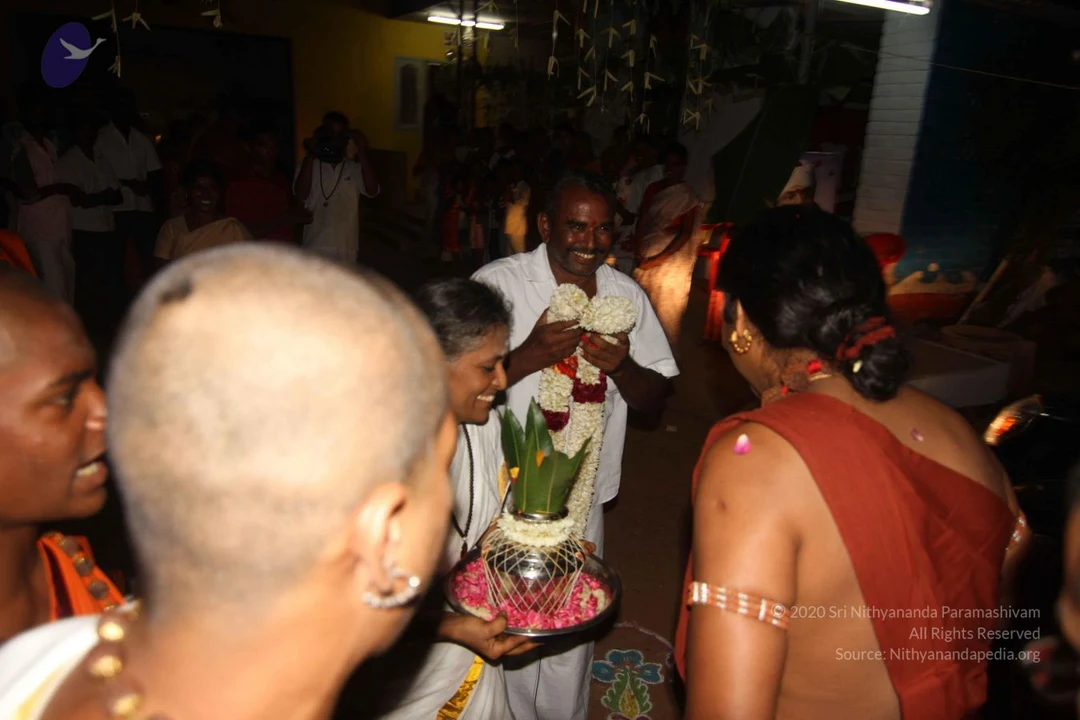
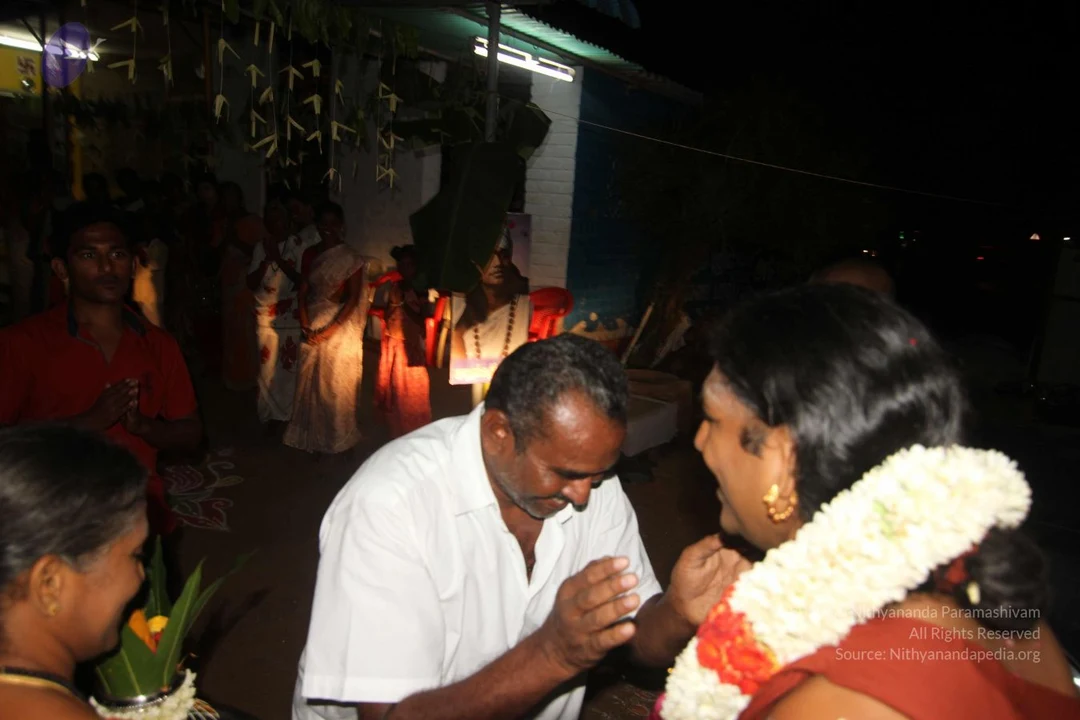
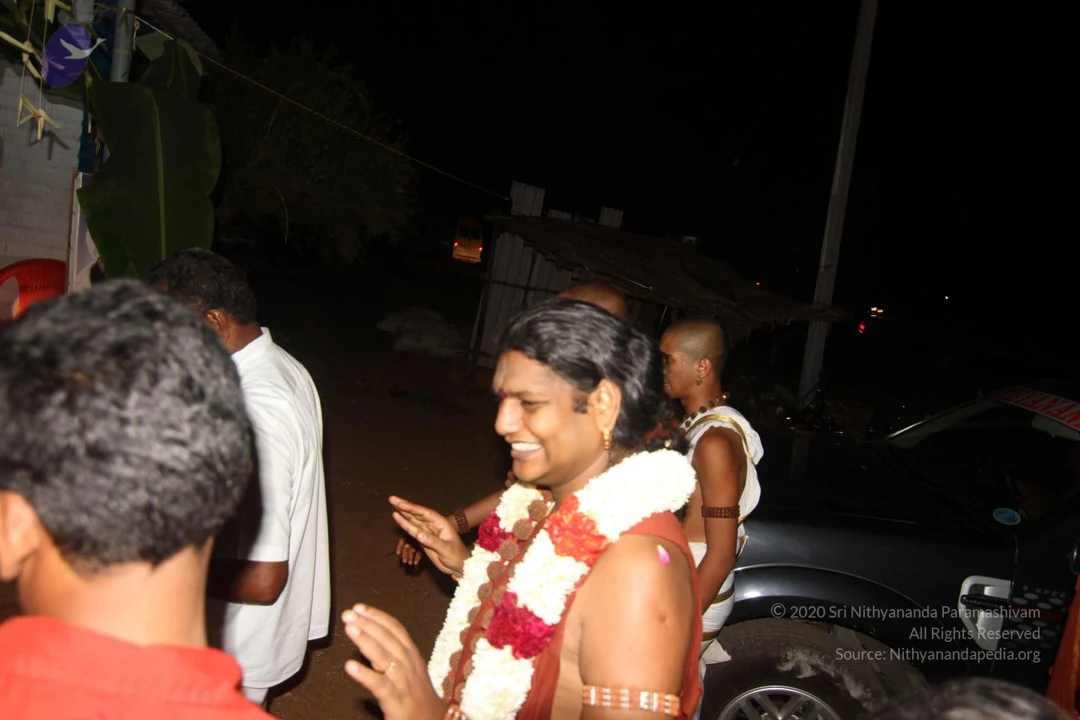
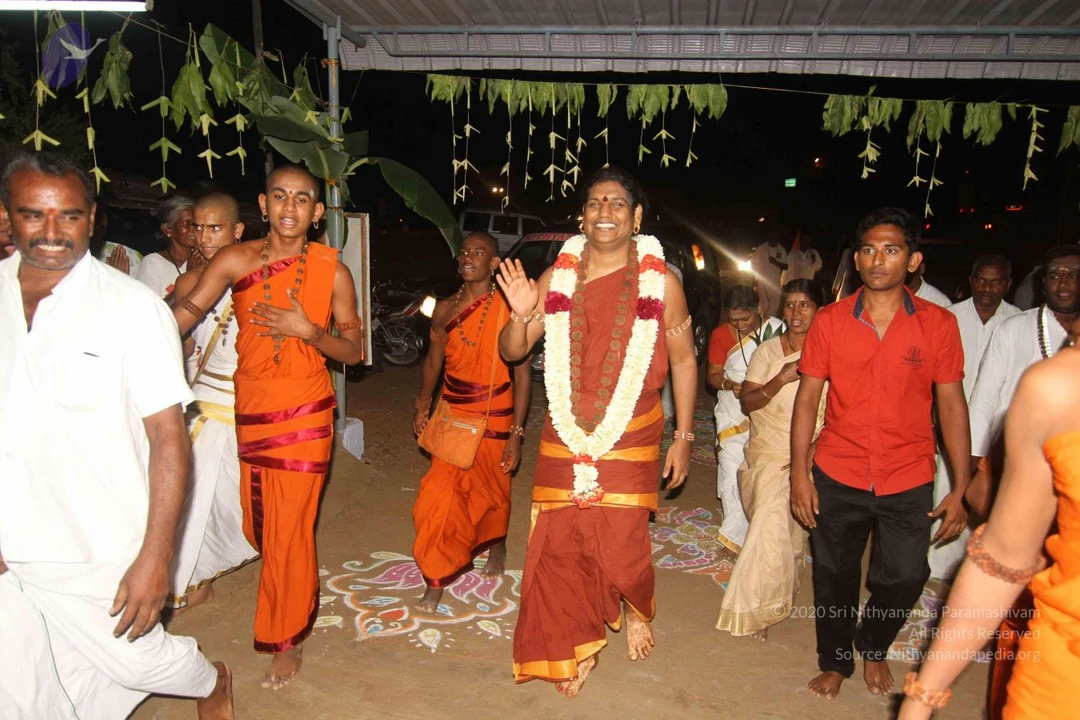
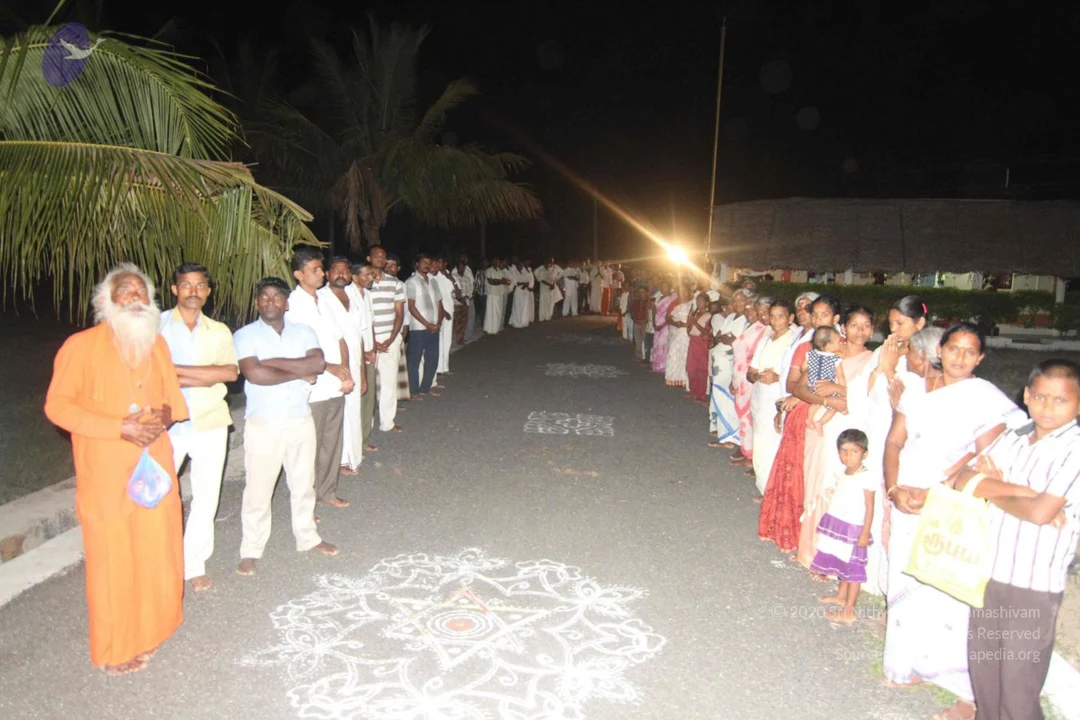
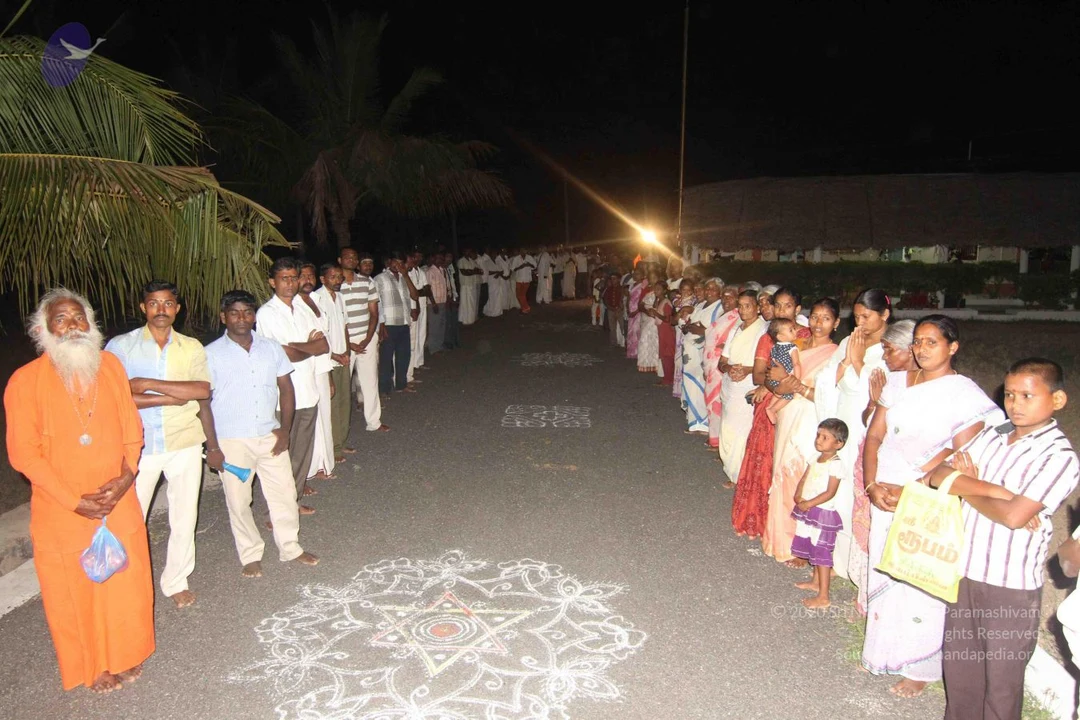
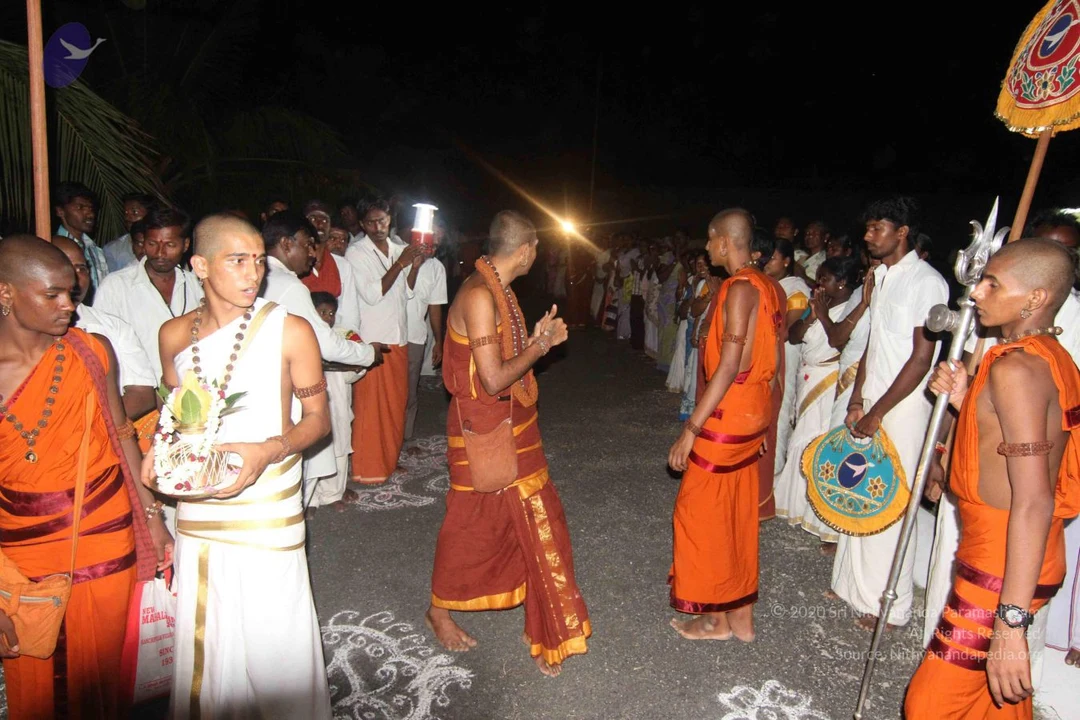
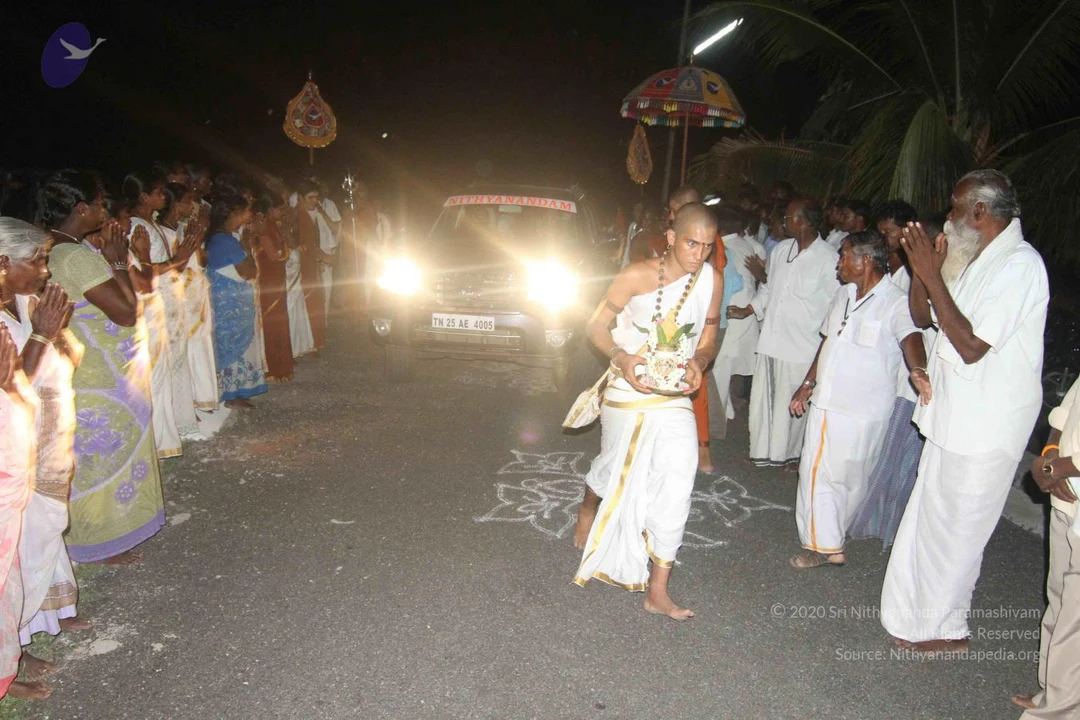
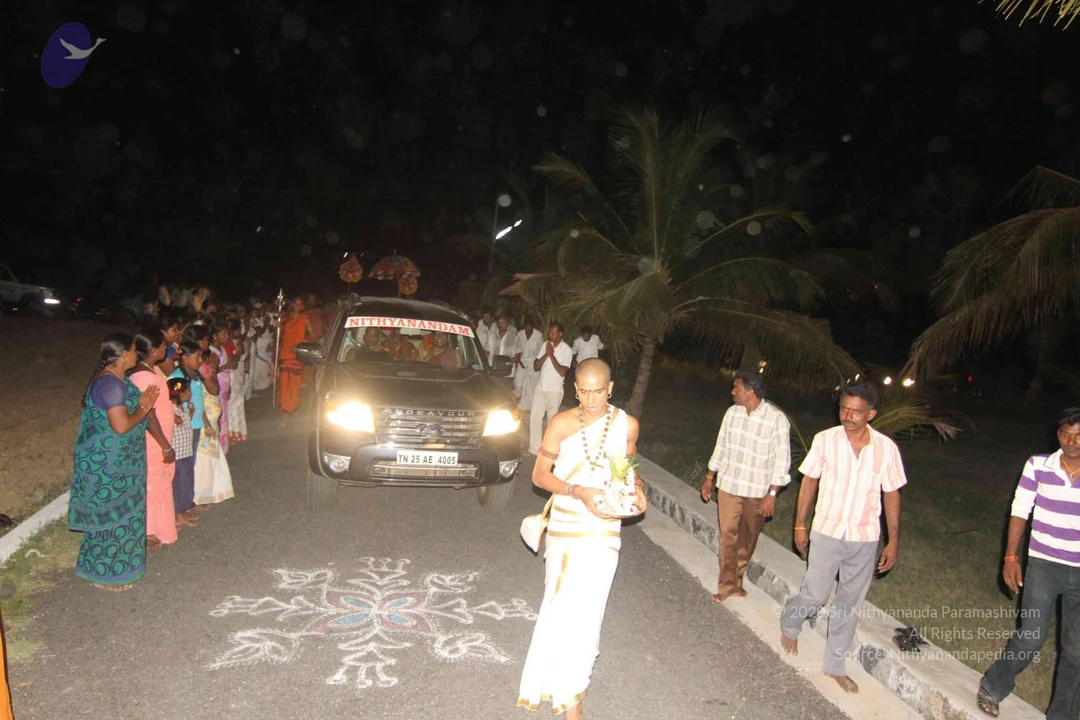
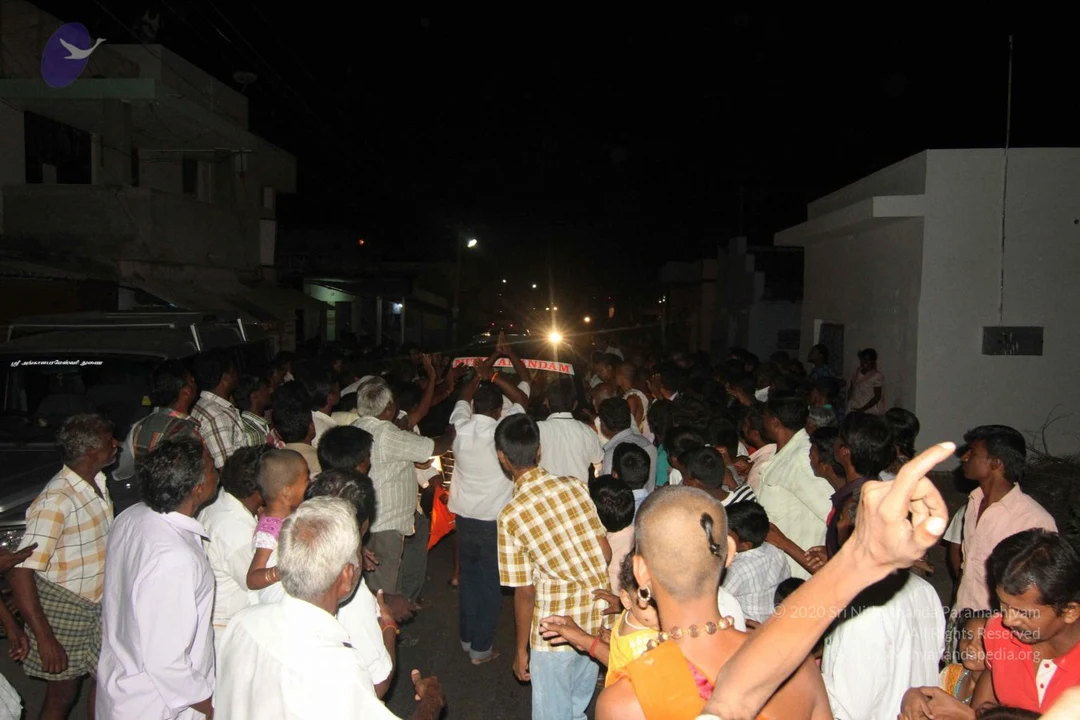
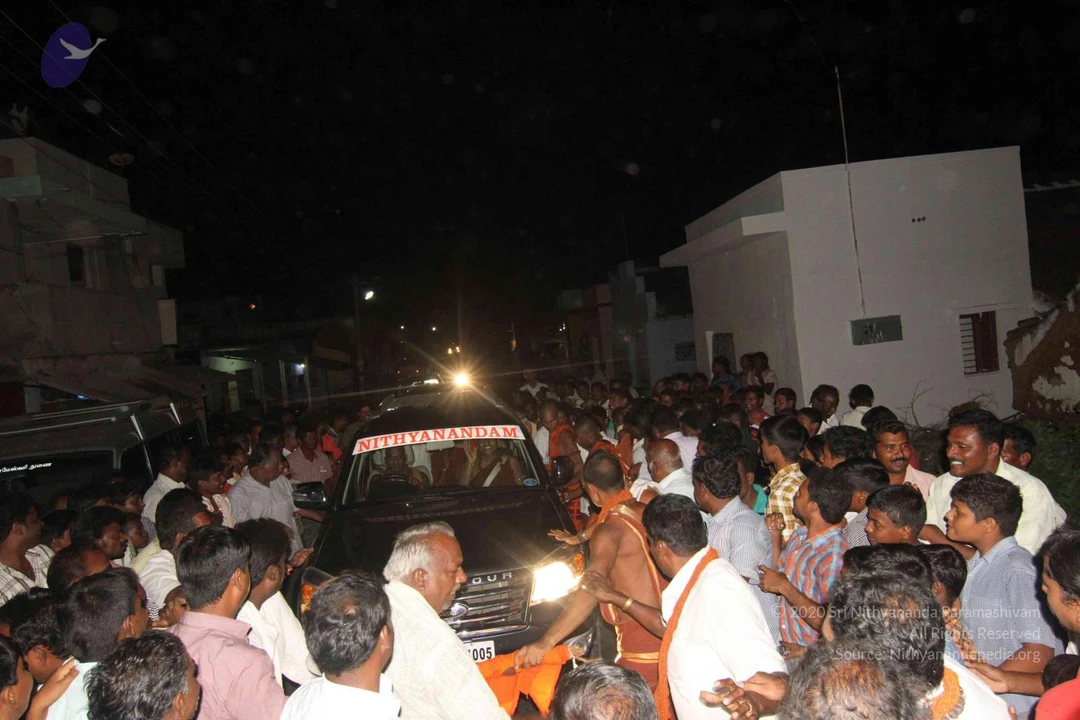
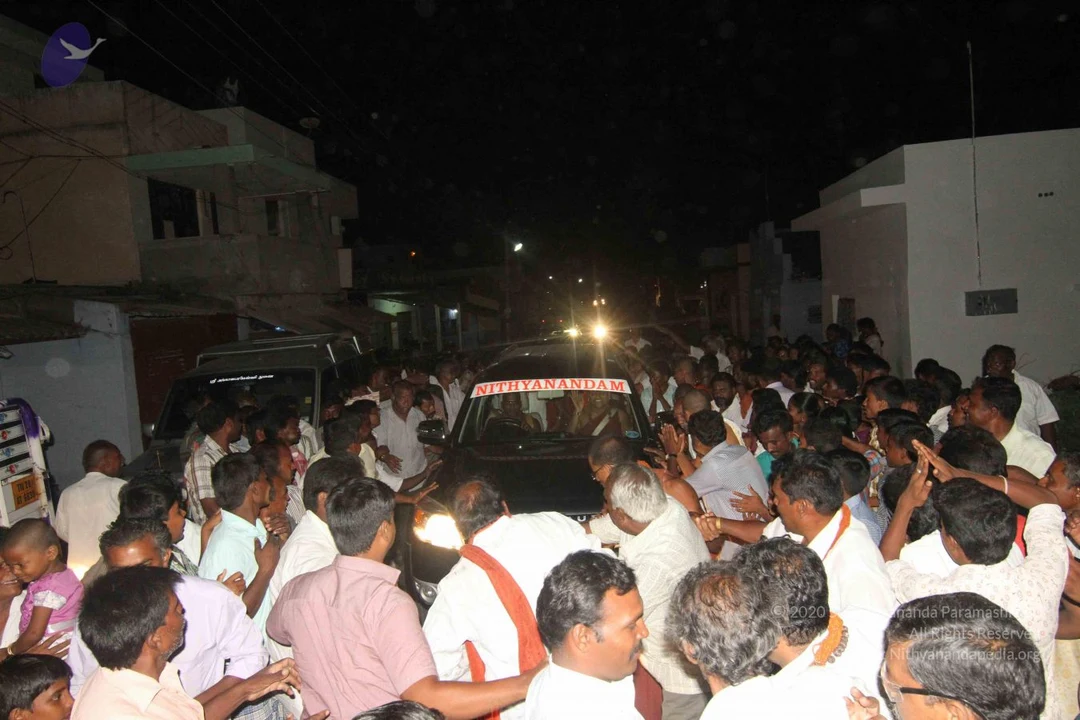
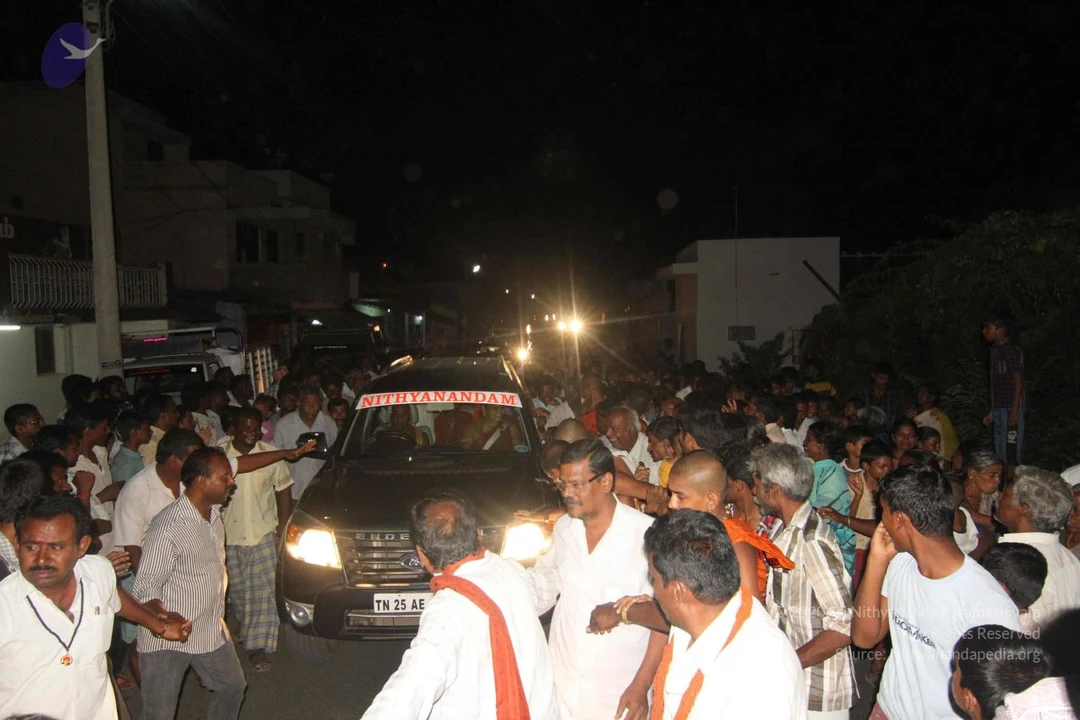
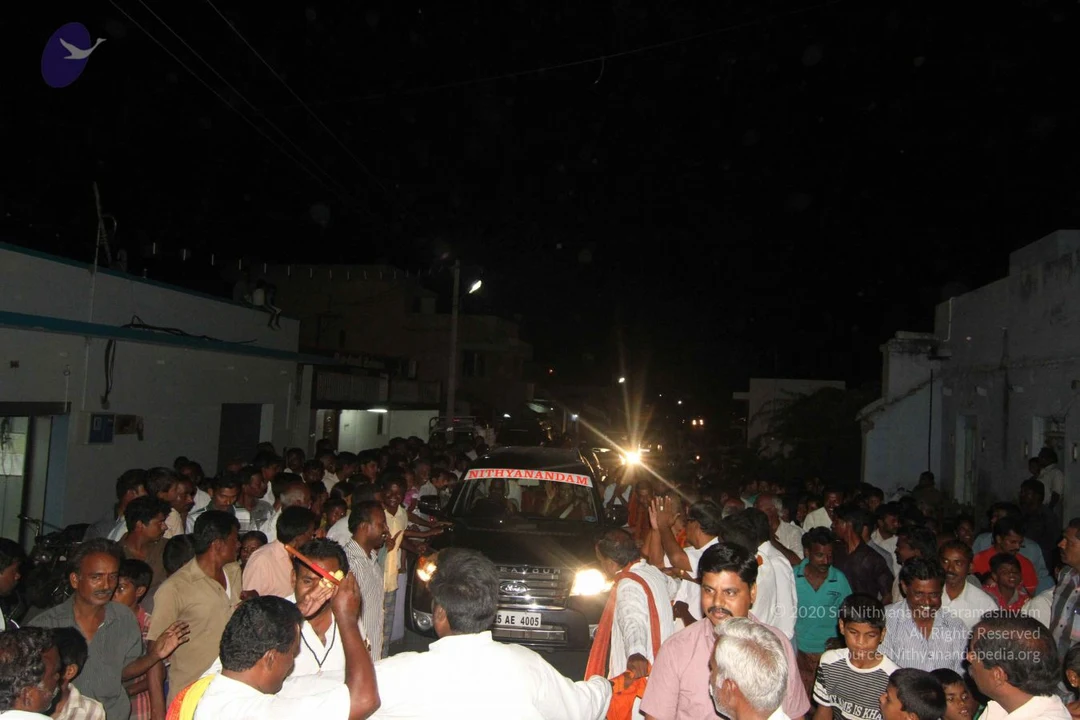
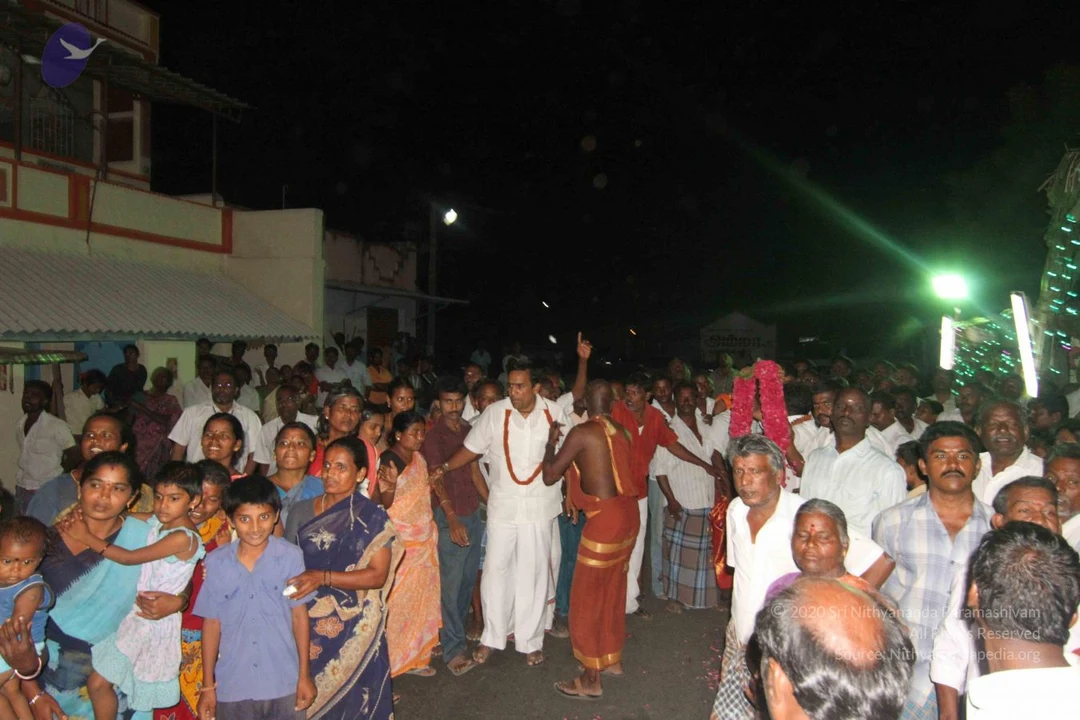
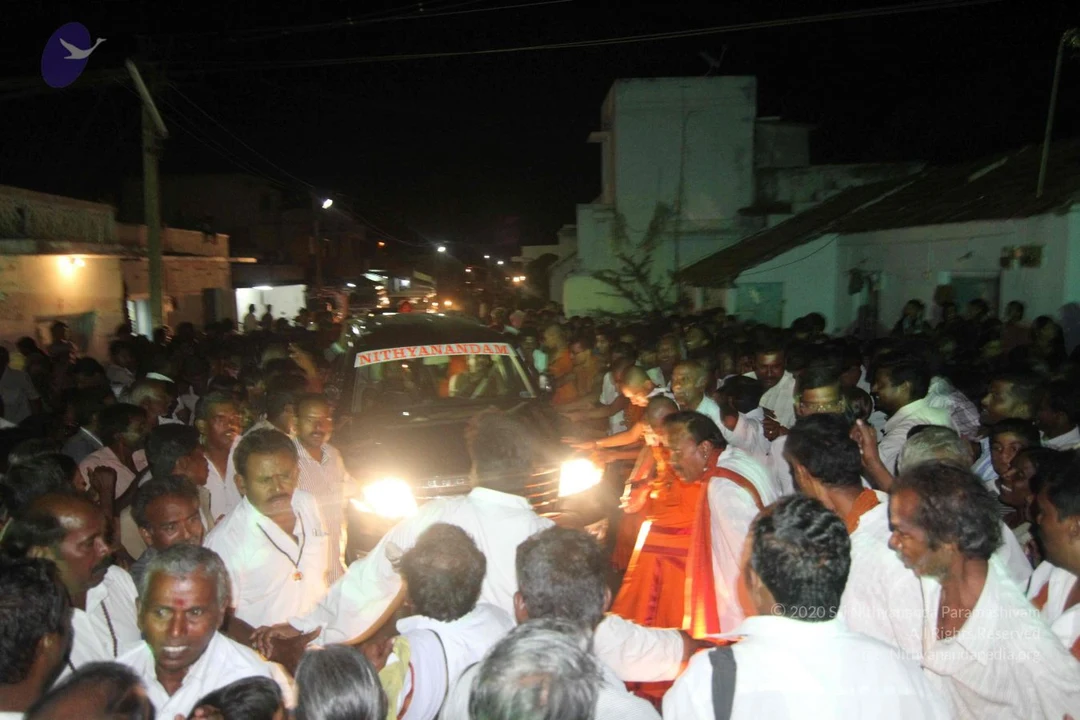
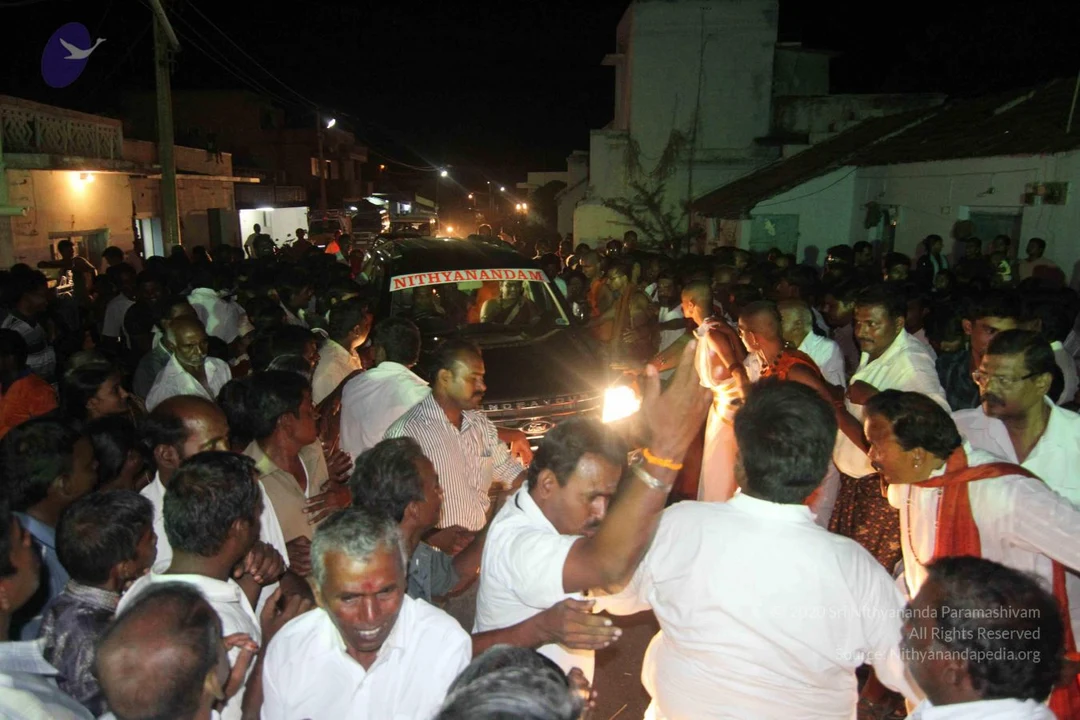
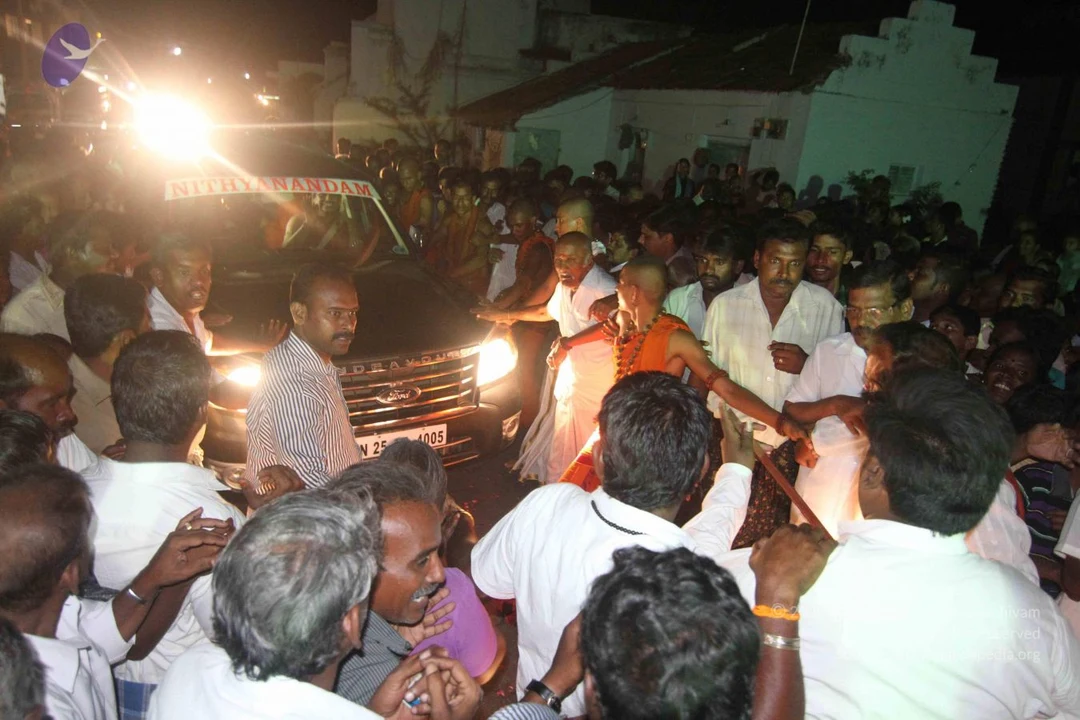
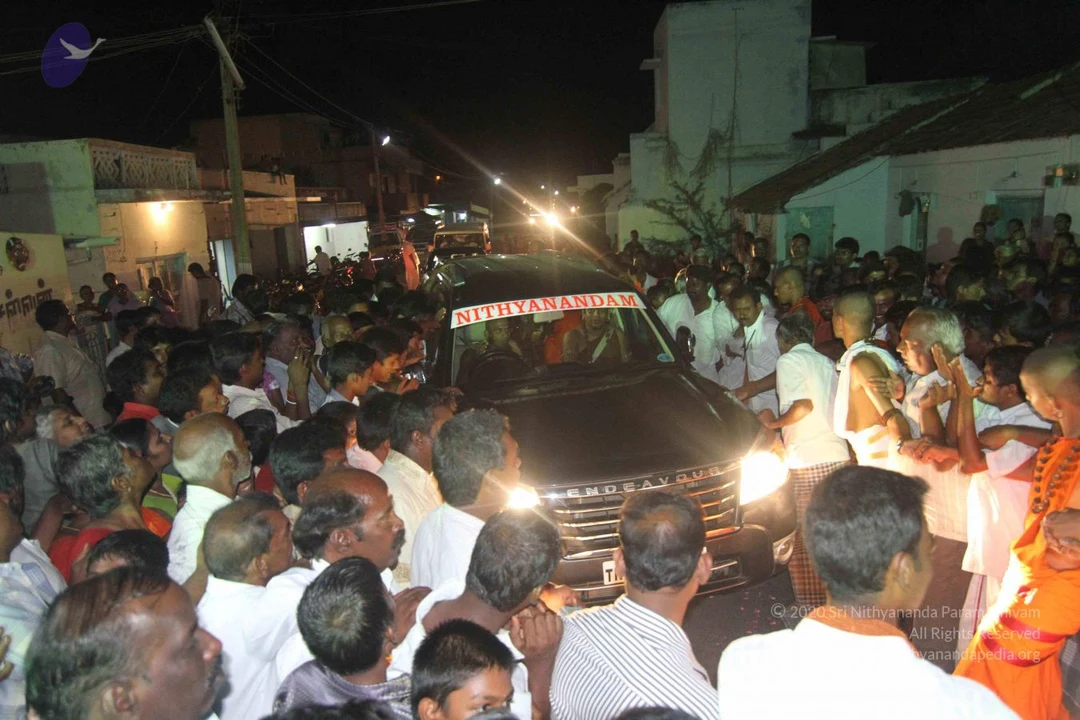
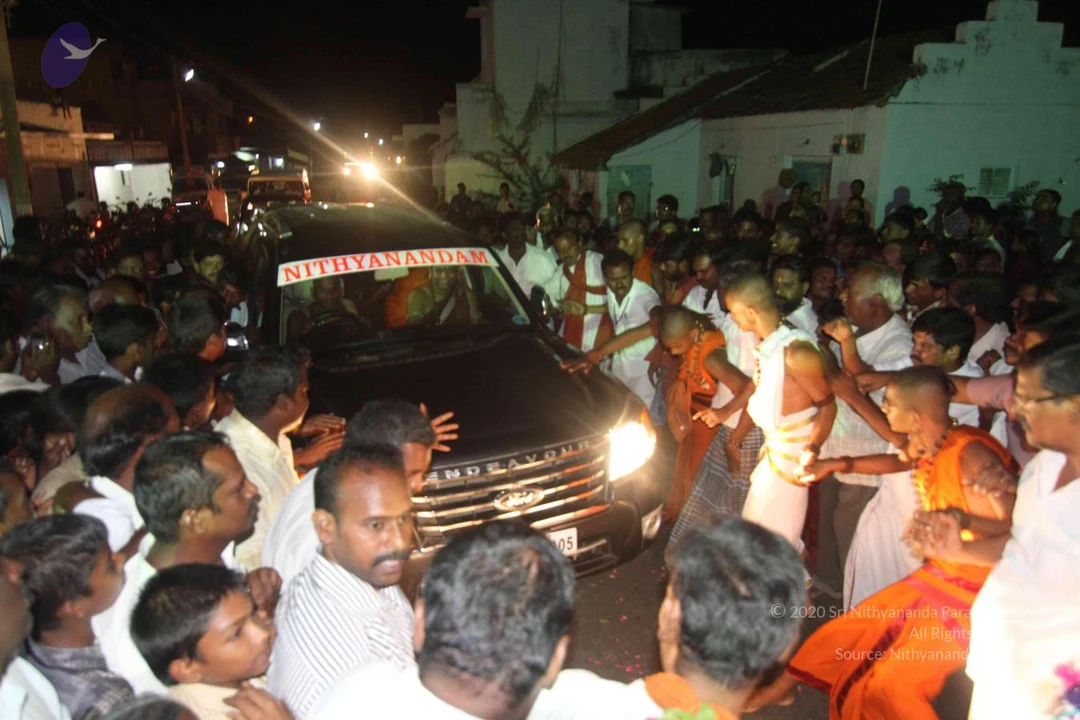
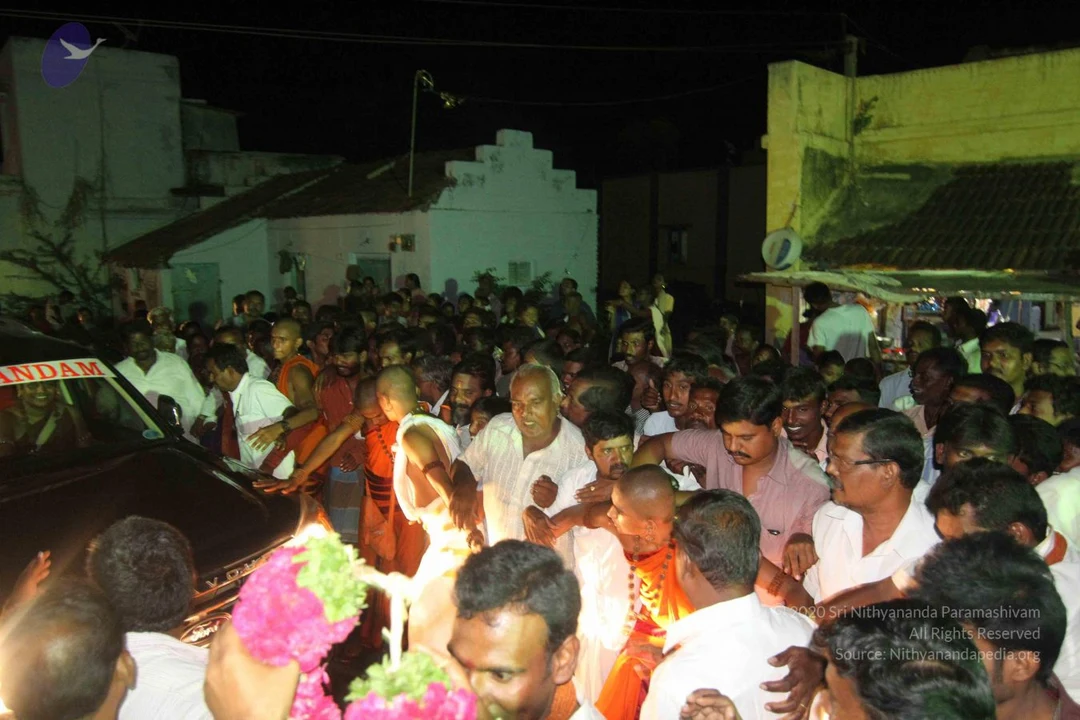
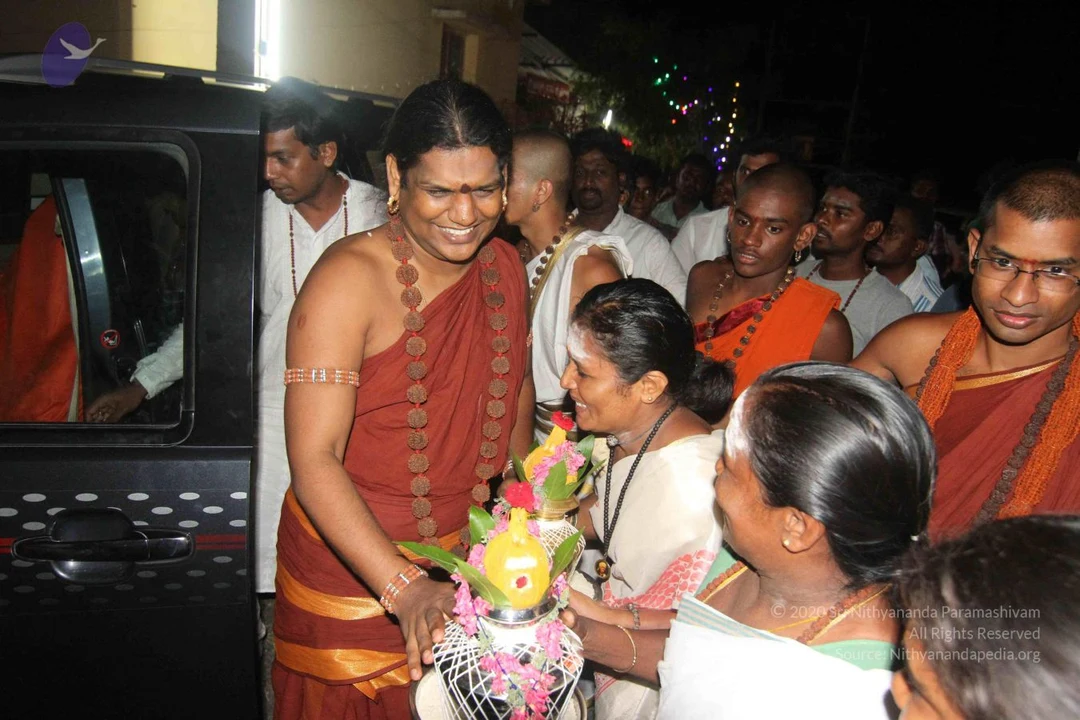
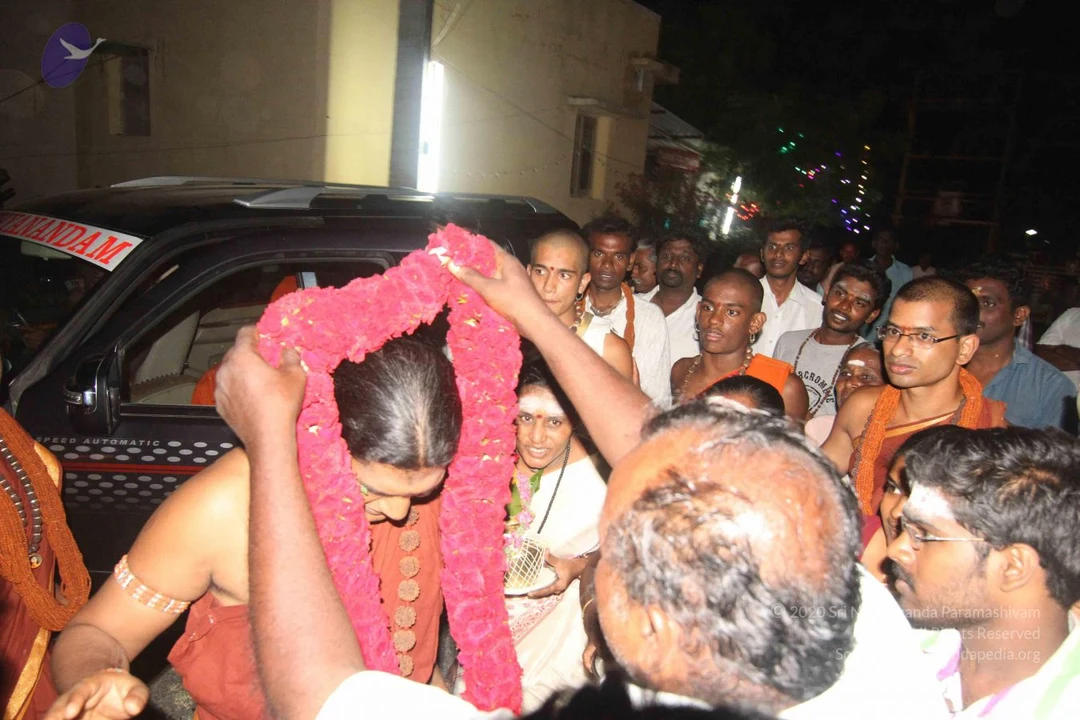
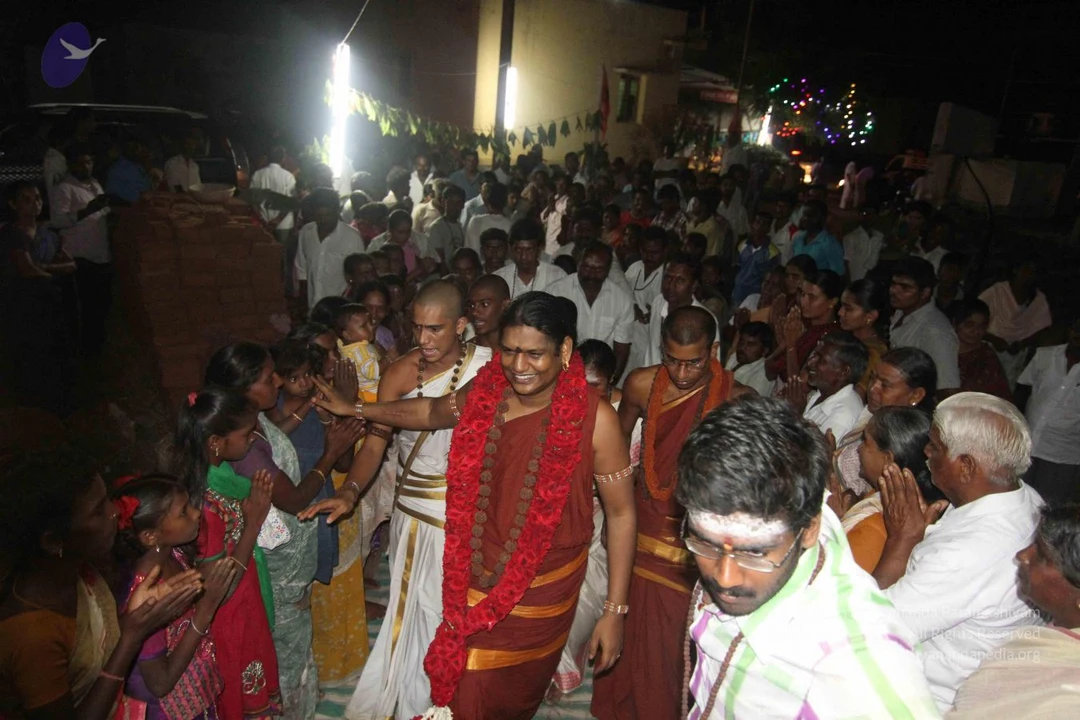
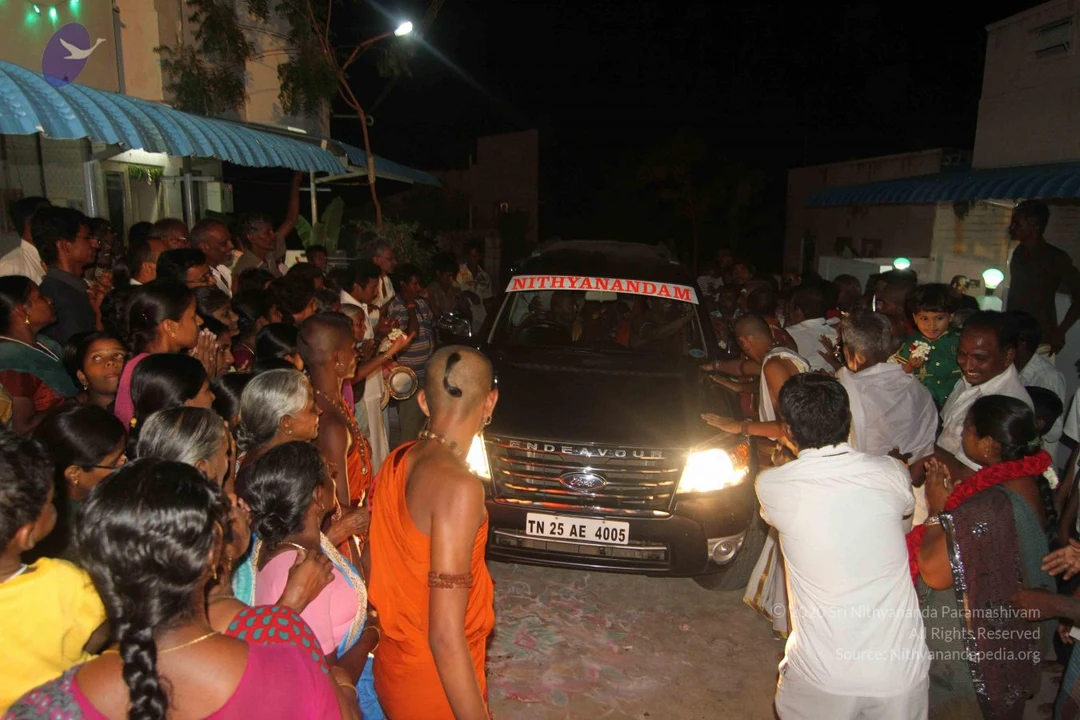
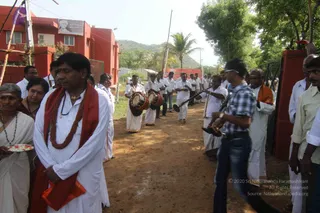
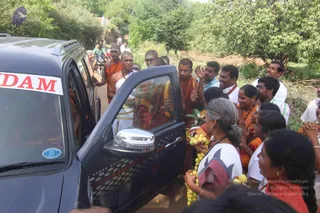
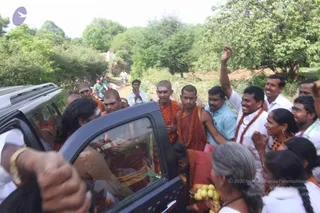
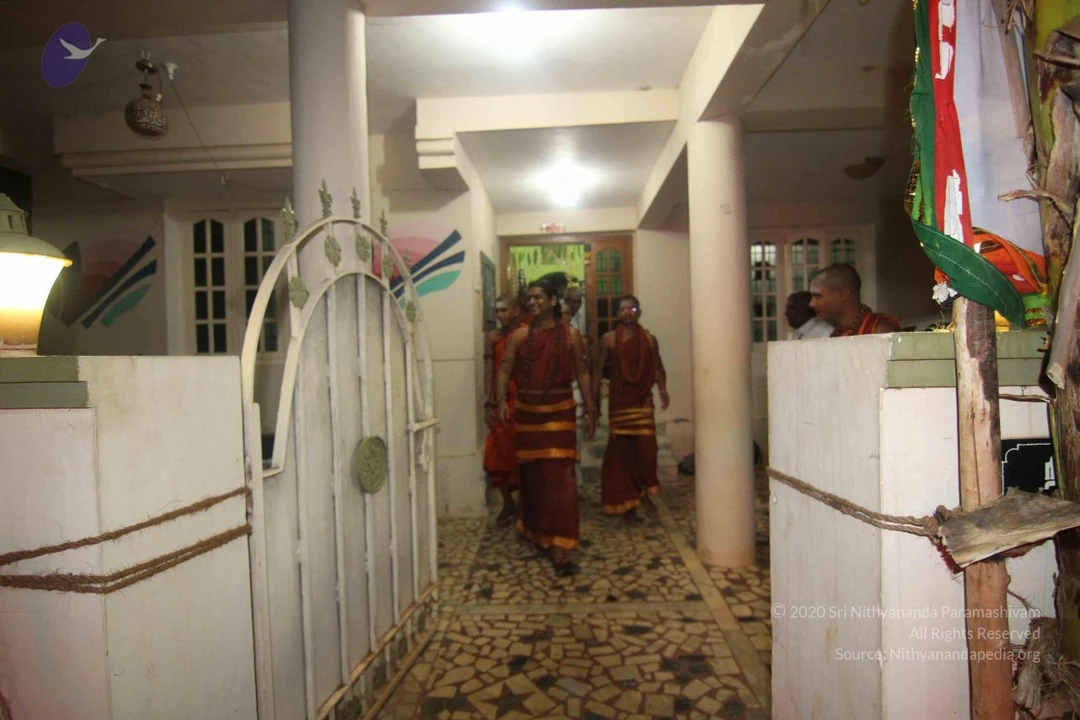
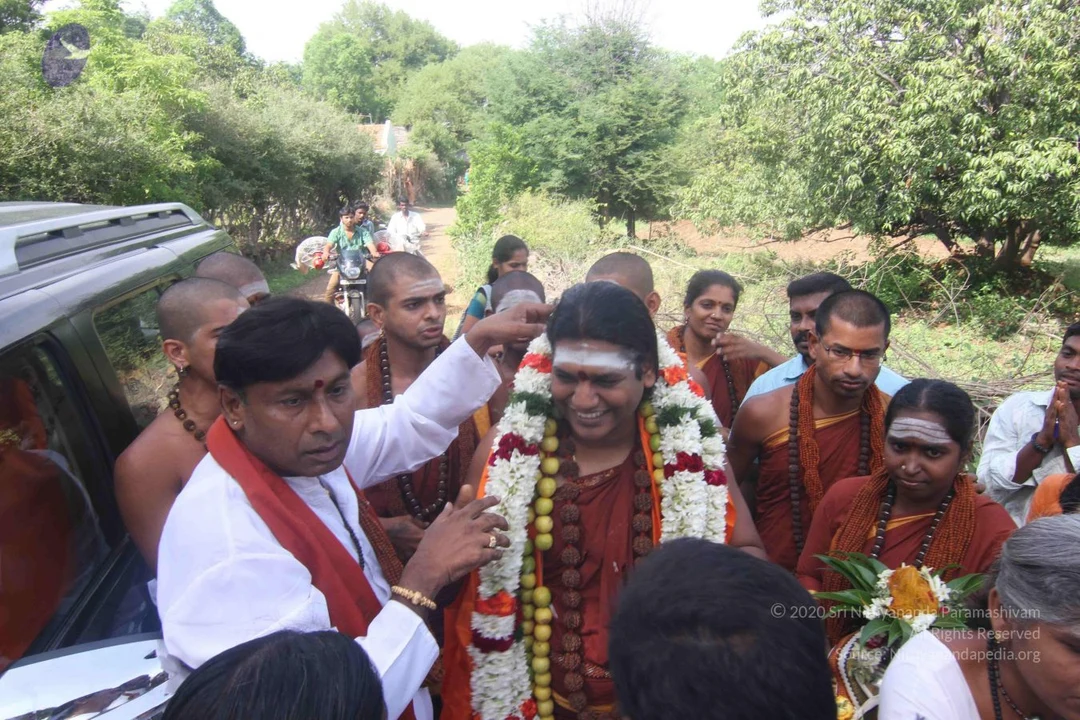
A photograph of a white-walled corridor inside an ashram building with a patterned mosaic floor. Three or four monastics in saffron-orange robes and rudraksha malas walk toward the camera through the passage. The central figure in a maroon-red wrap and long hair appears to lead them. A white arched metal gate with decorative finials stands at left, a lamp hangs from the ceiling, and a green and red cloth hangs at right.Photograph of several saffron-robed sannyasis walking single file along a tiled corridor inside a building with white pillars, barred white gate and windows. The leading figure wears a deep red-orange robe with a broad orange-gold border and a red-orange shawl over the shoulder, and a rudraksha mala around the neck. Behind him, other robed men in matching red-orange robes and orange borders follow, one wearing a red mala, while a figure in white clothing walks among them. The corridor has pale walls with a painted blue and green stripe design and a green signboard at the far end.Outdoor ceremony under a washed-out, bright overexposed sky with a banana tree behind. In the foreground a man with short dark hair and a vermilion forehead mark wears a white garment, a red shawl and a beaded necklace. Behind him, several men in white dhotis and yellow-gold shawls play long brass horns, one holding a large horn, while a man in a teal shirt stands among them. On the right, a man in a checked blue shirt and jeans stands with folded arms beside another man. Several other people, some in white, stand in the background near a red wall. Photographic record of a gathering with horn players.A procession on a dirt path in an ashram-like setting. In the foreground a man in white dhoti and a red shawl wears a long rudraksha mala and a gold chain, hands clasped, standing beside an older woman in a white sari holding a plate of flower petals. Behind them a line of white-clad men play drums and a long wind instrument, and a man in a blue checked shirt and jeans walks with a stringed instrument. A red building with a framed portrait sign and red compound walls stands at left, with palm trees and a hill in the background.A rural roadside welcome beside a dark grey SUV with a red 'DAM' sign on its windscreen and a sticker on the rear window. Saffron-robed sannyasis and shaven-headed young men in orange cloth stand near the open front door, one with a tilak on his forehead. A woman in a white sari with a red border holds a garland of yellow fruit, and women in orange and white saris press palms together in greeting. Green trees and a dirt track fill the background, with a motorcycle and onlookers further back.Outdoor photo on a dirt road beside green trees and scrub. A dark grey SUV has its door open at the centre; a figure with long dark hair and white paint on the upper back stands in the car. Several saffron-robed monks with shaved heads and white tilak marks stand around the vehicle, one wearing a rudraksha mala. Smiling men and women in white shirts, one in a light blue shirt, one with a raised fist, and women holding folded hands crowd close. An older woman in a grey sari holds a bunch of small yellow-green fruit. Two-wheelers and people sit further back on the road.

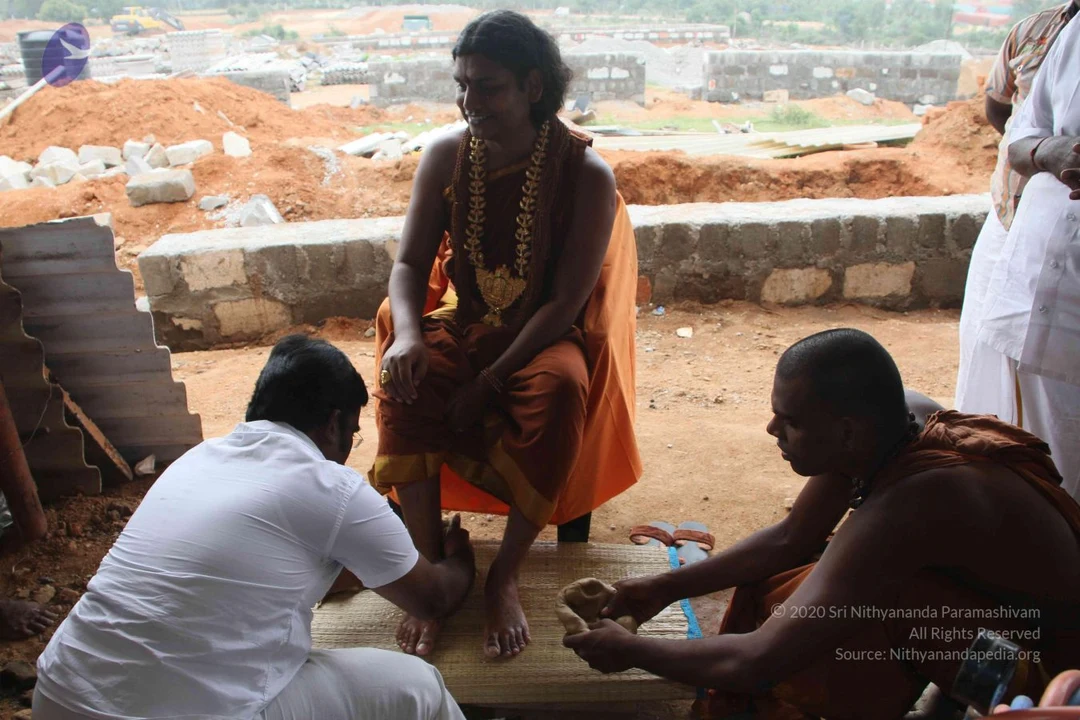
Swamiji Foot Mould

13 photosSource gallery
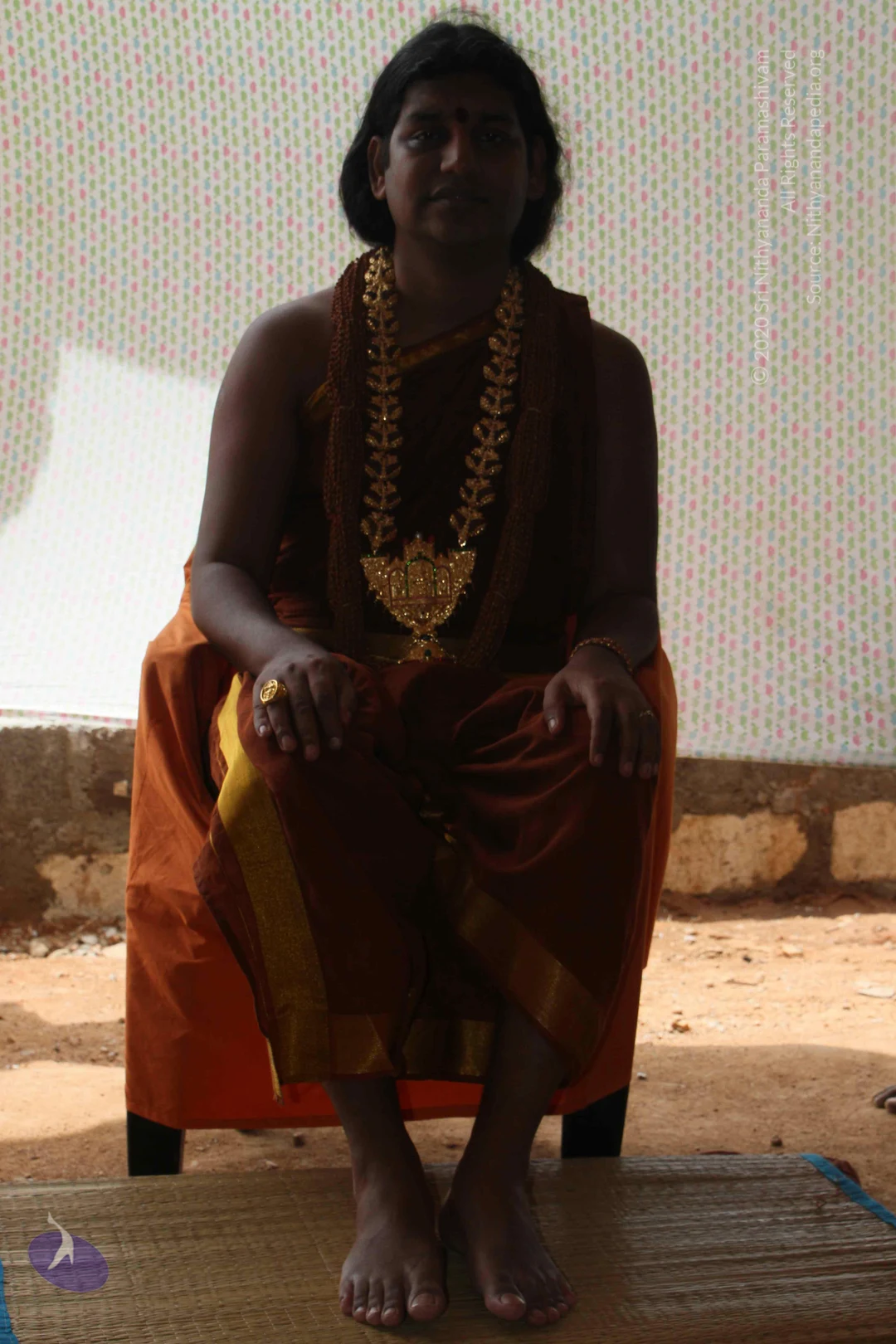
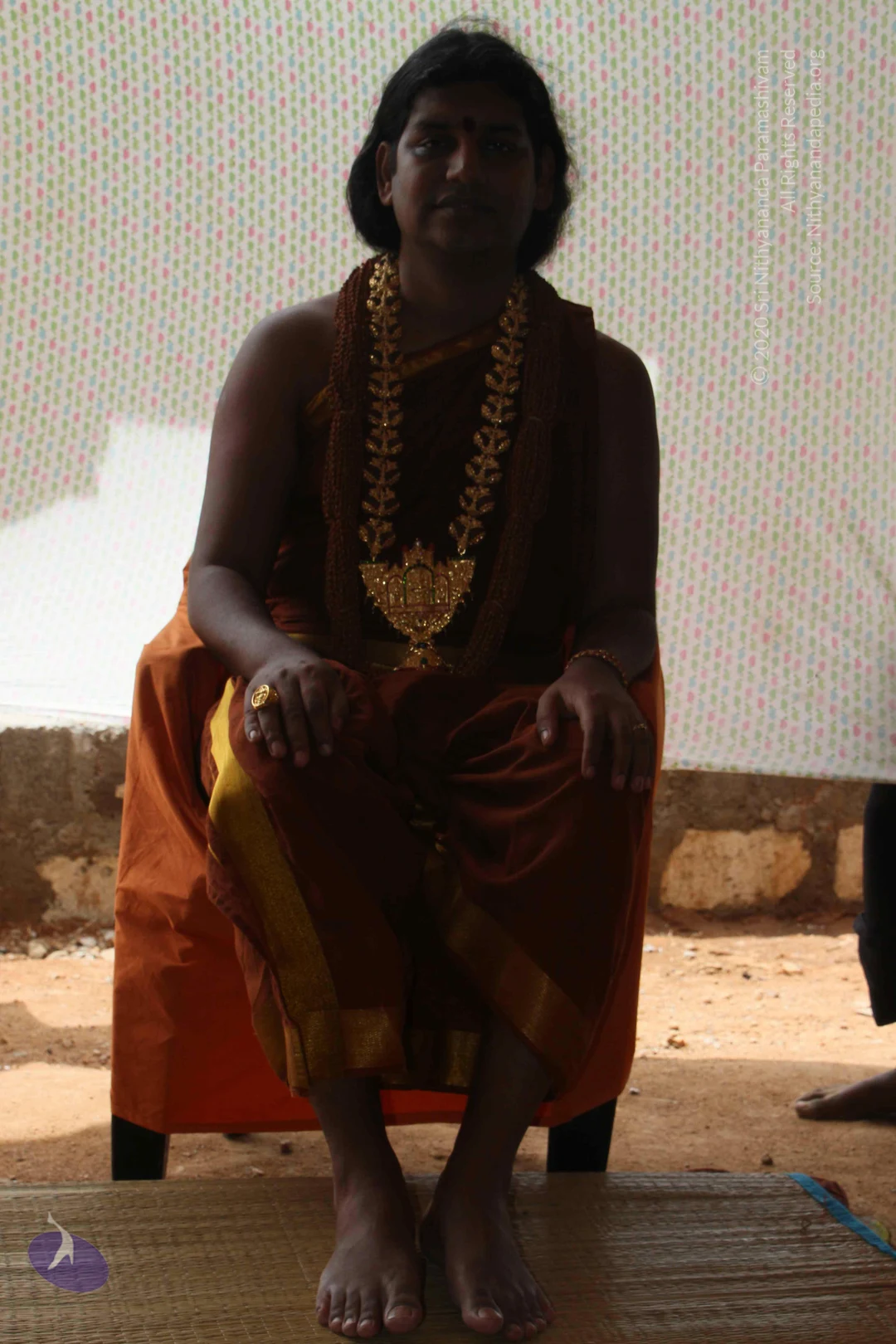
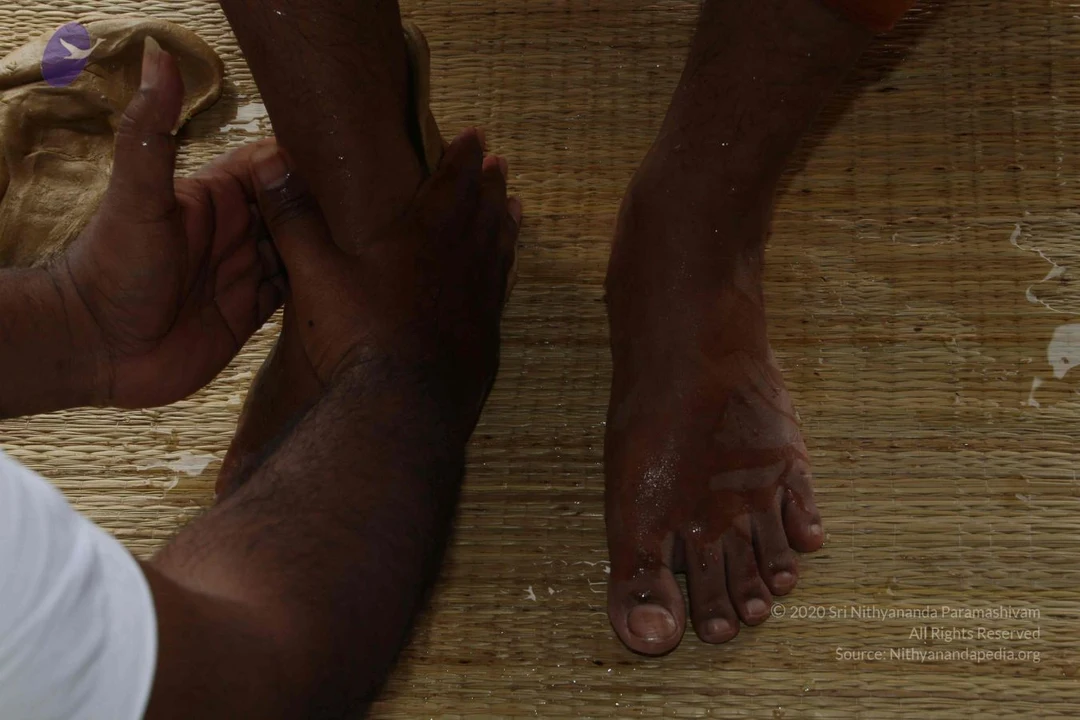
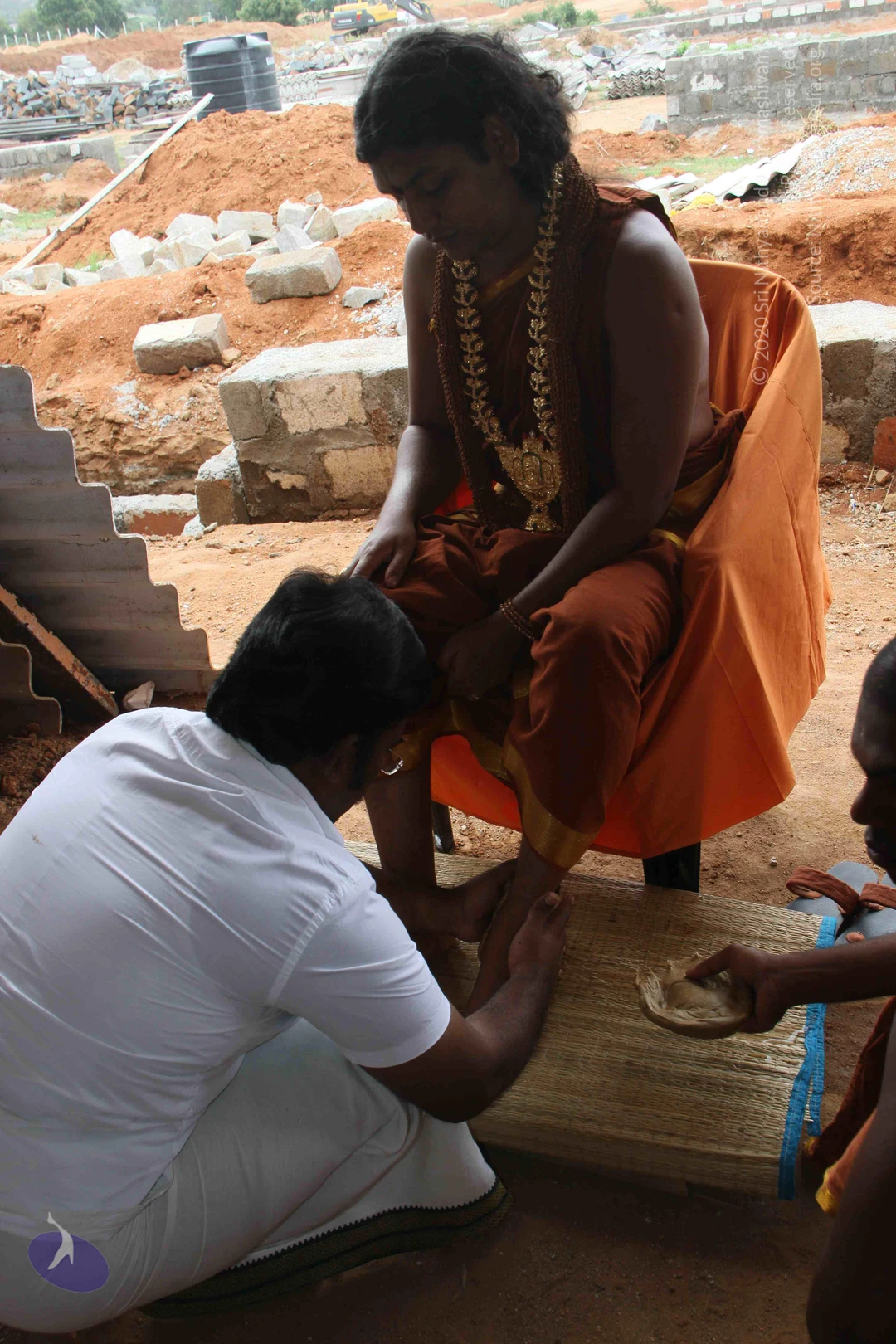
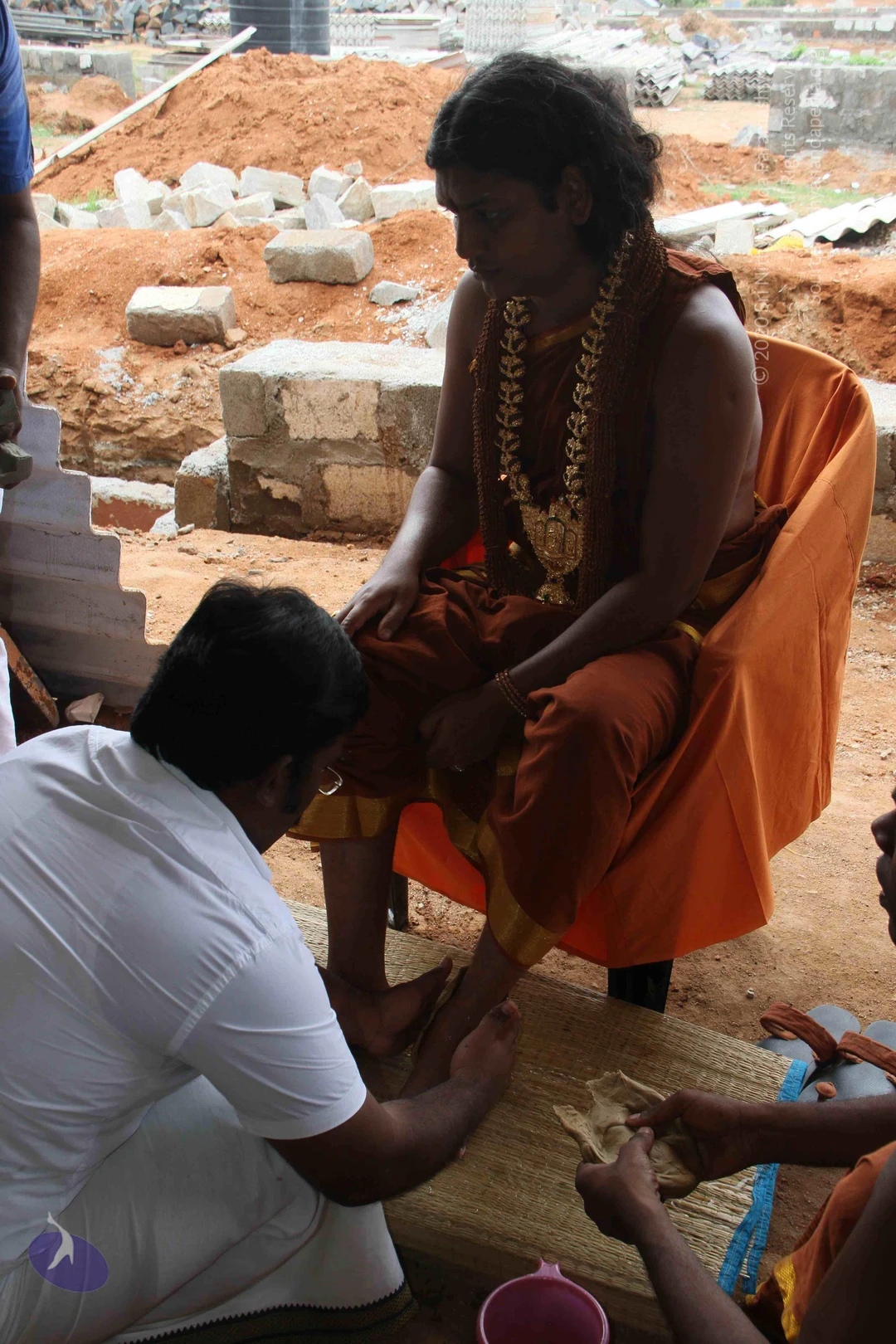
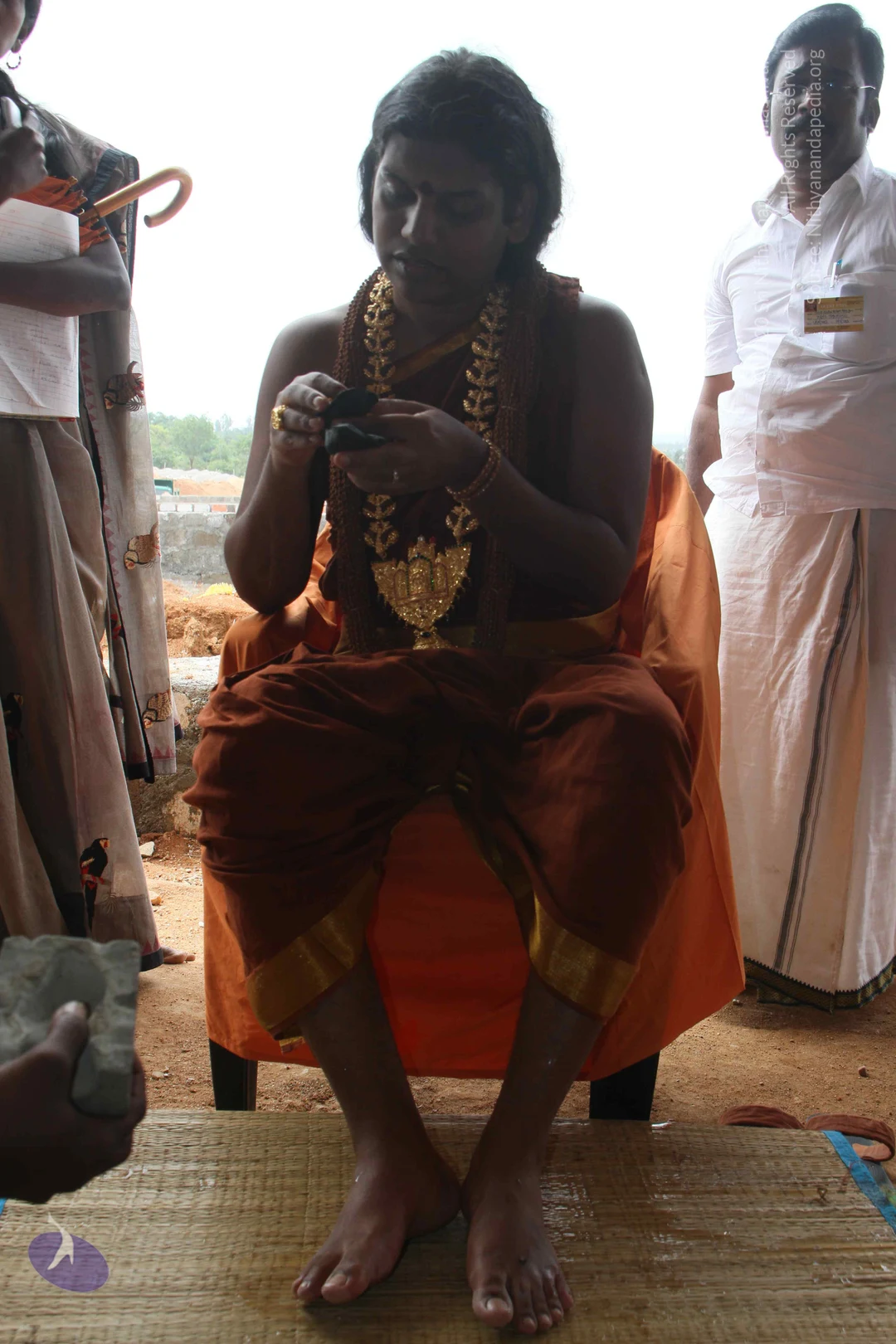
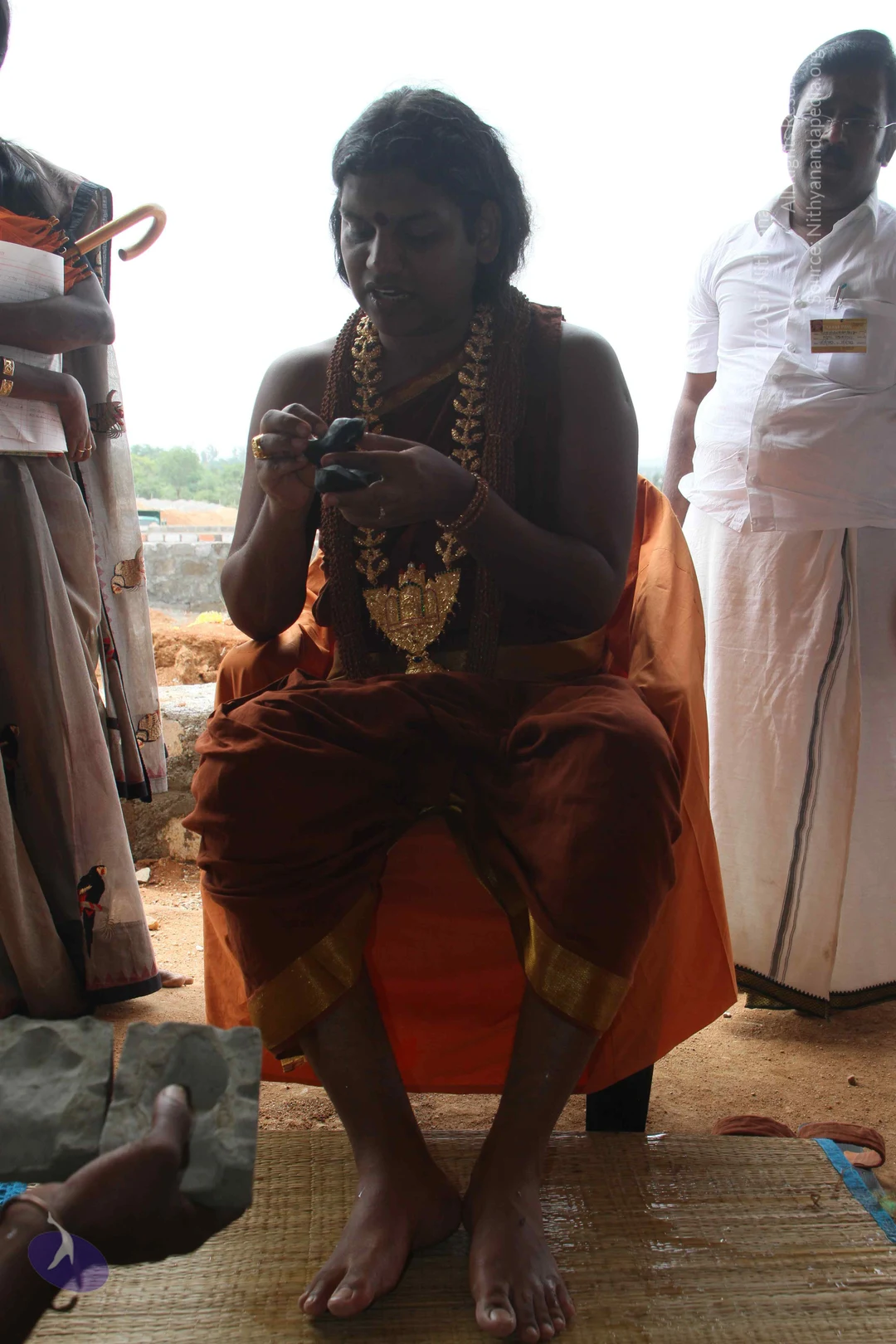
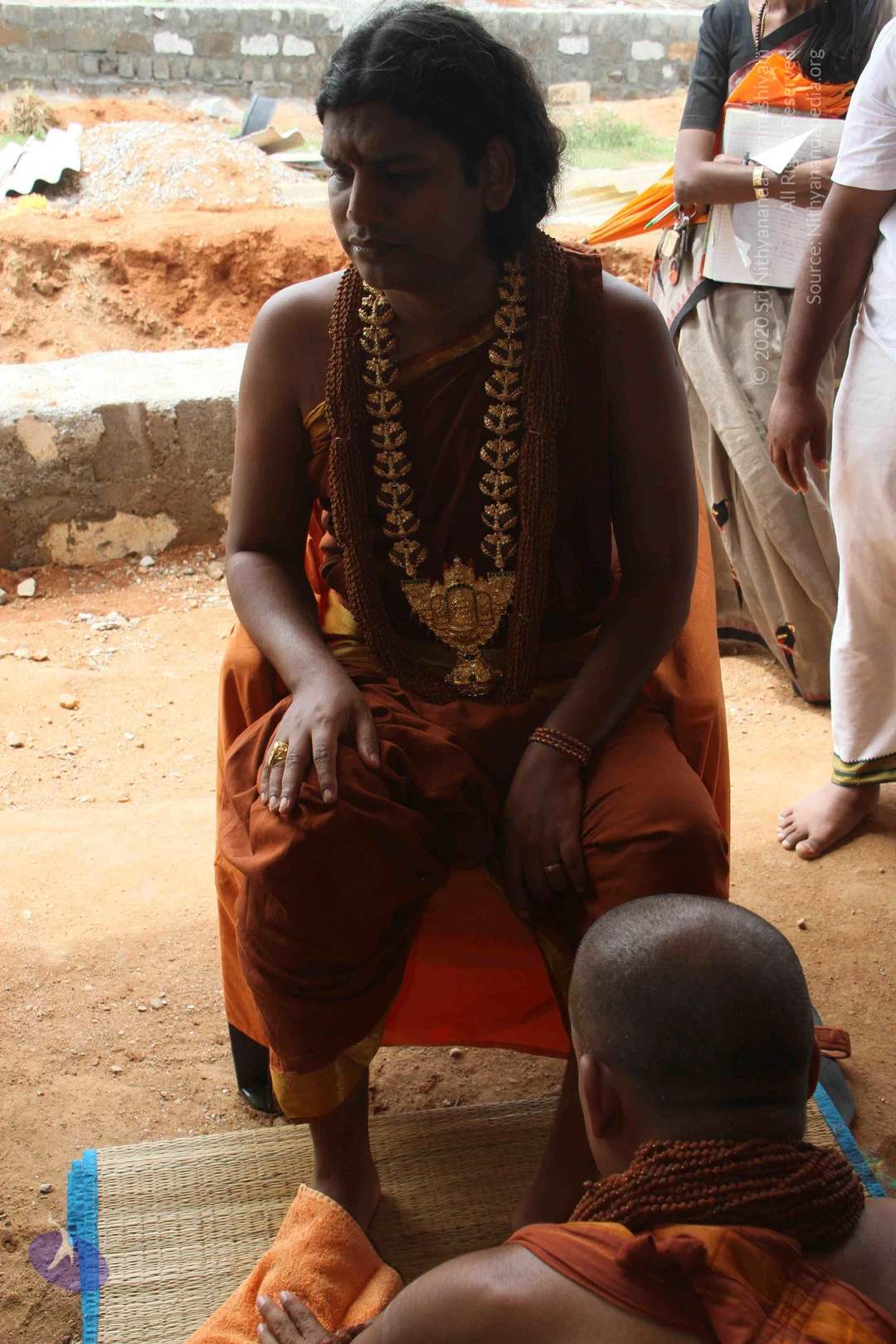
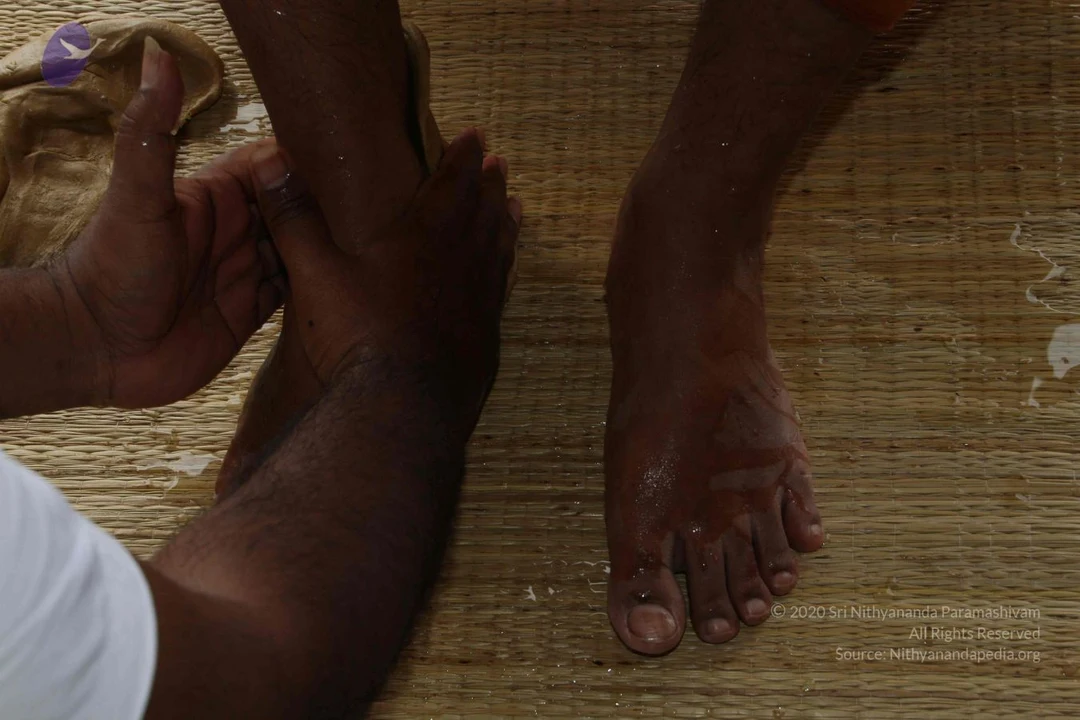
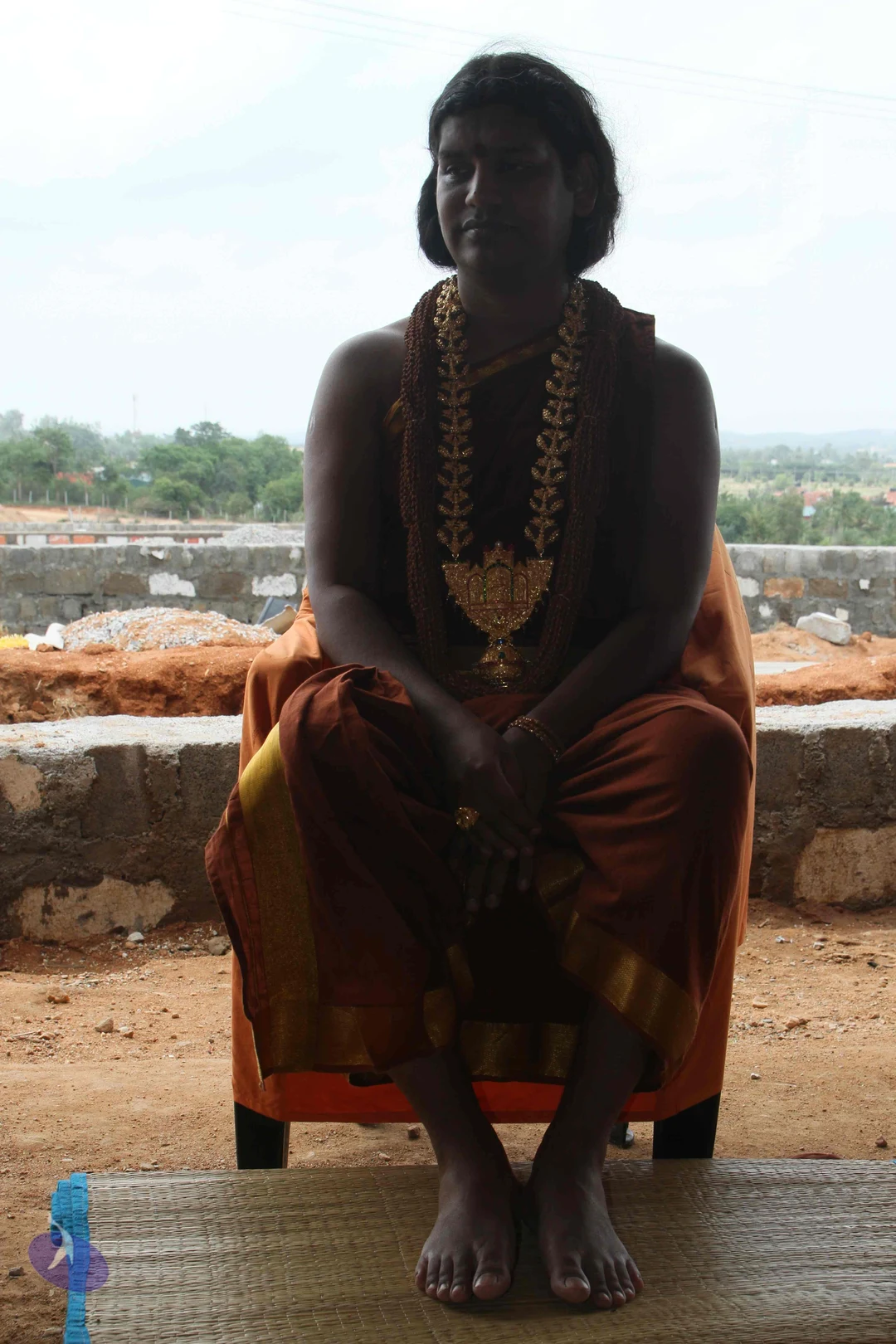
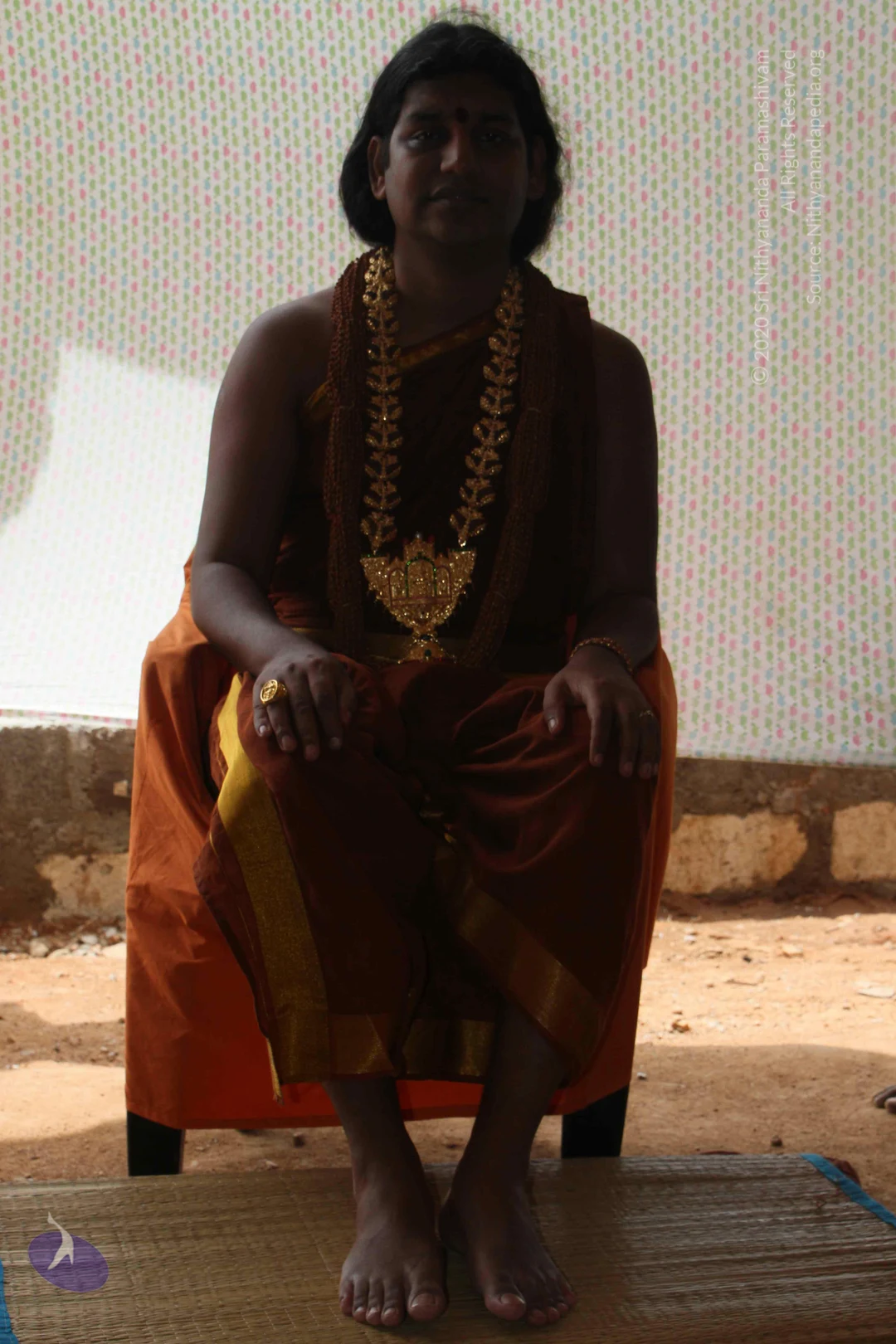
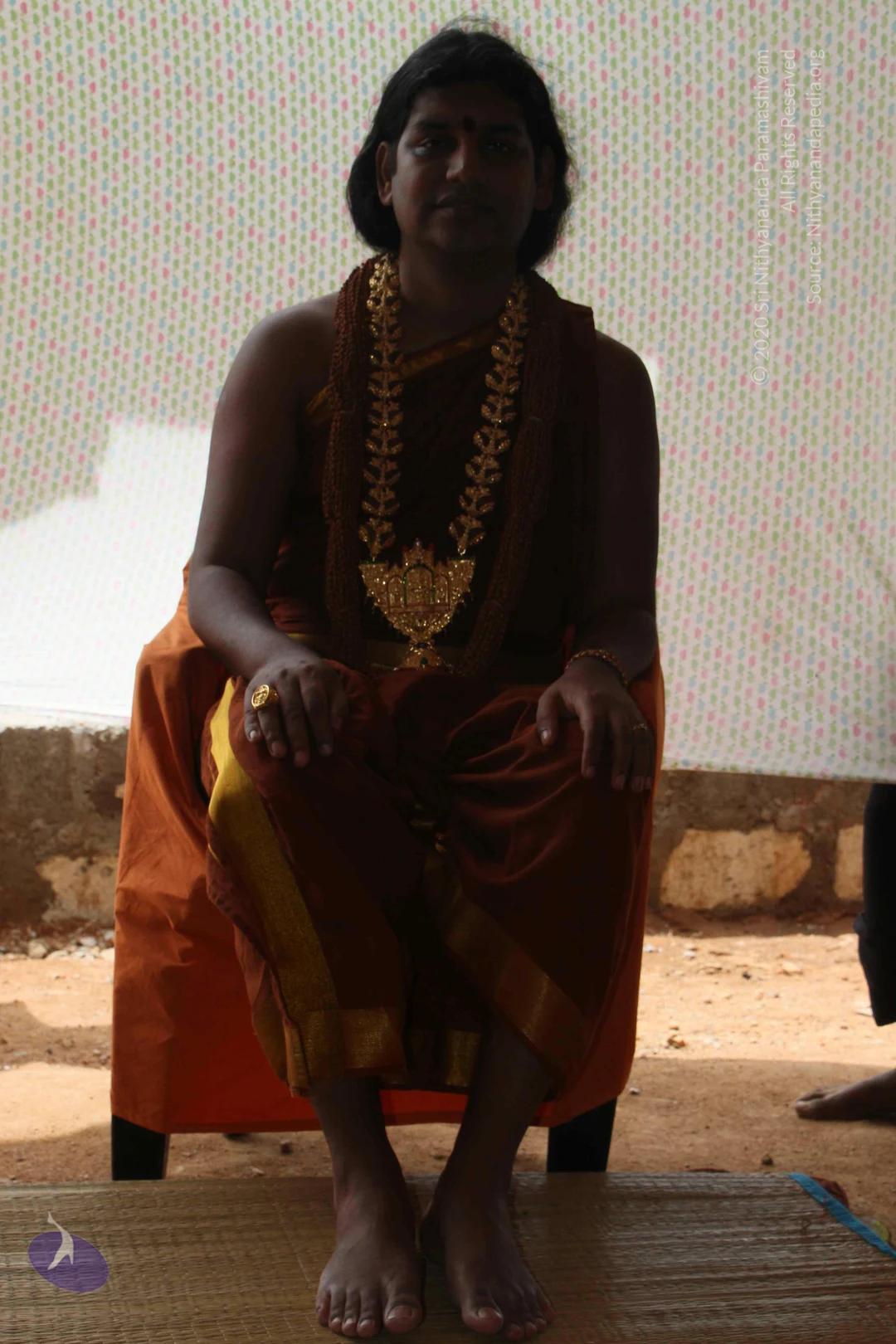
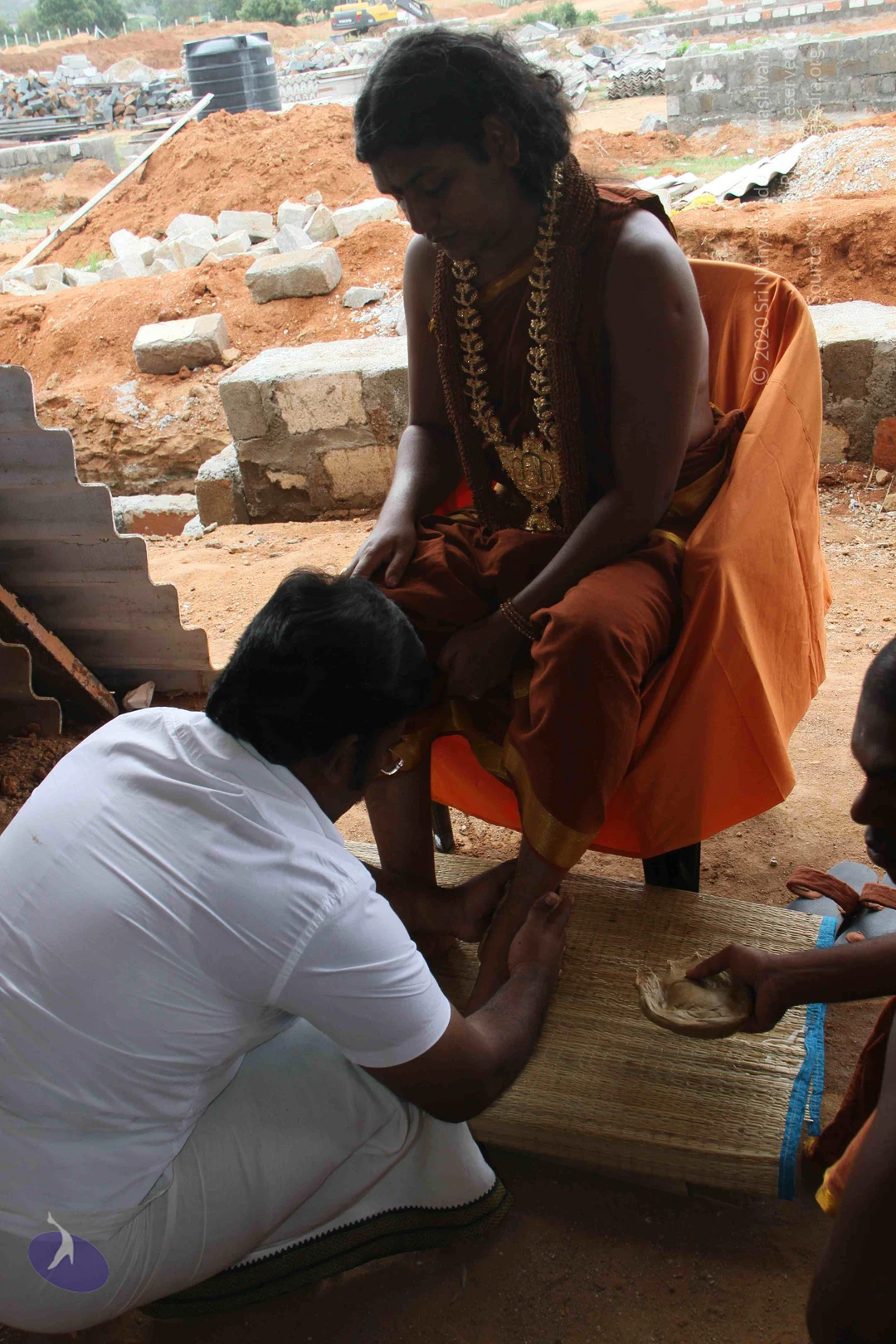
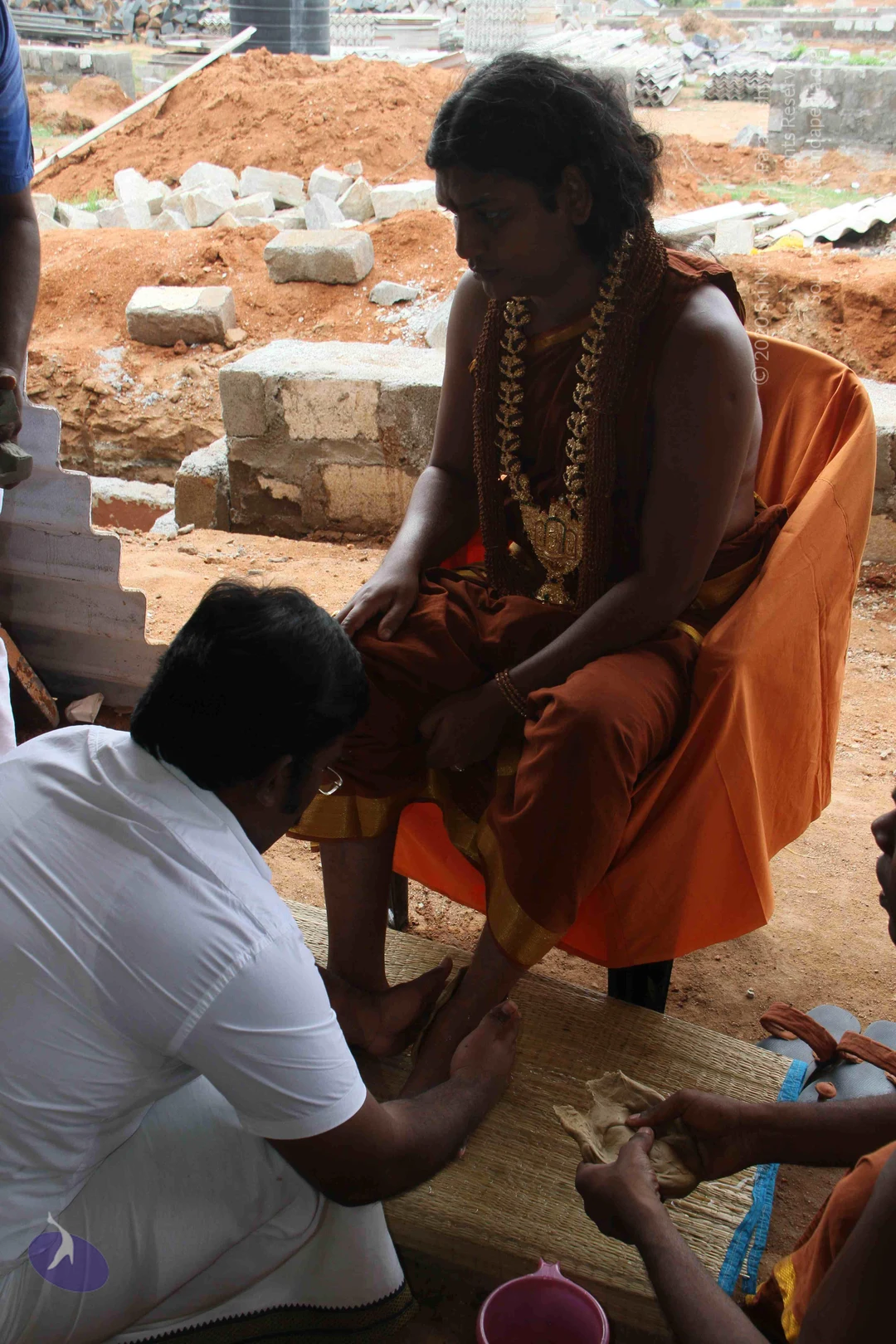
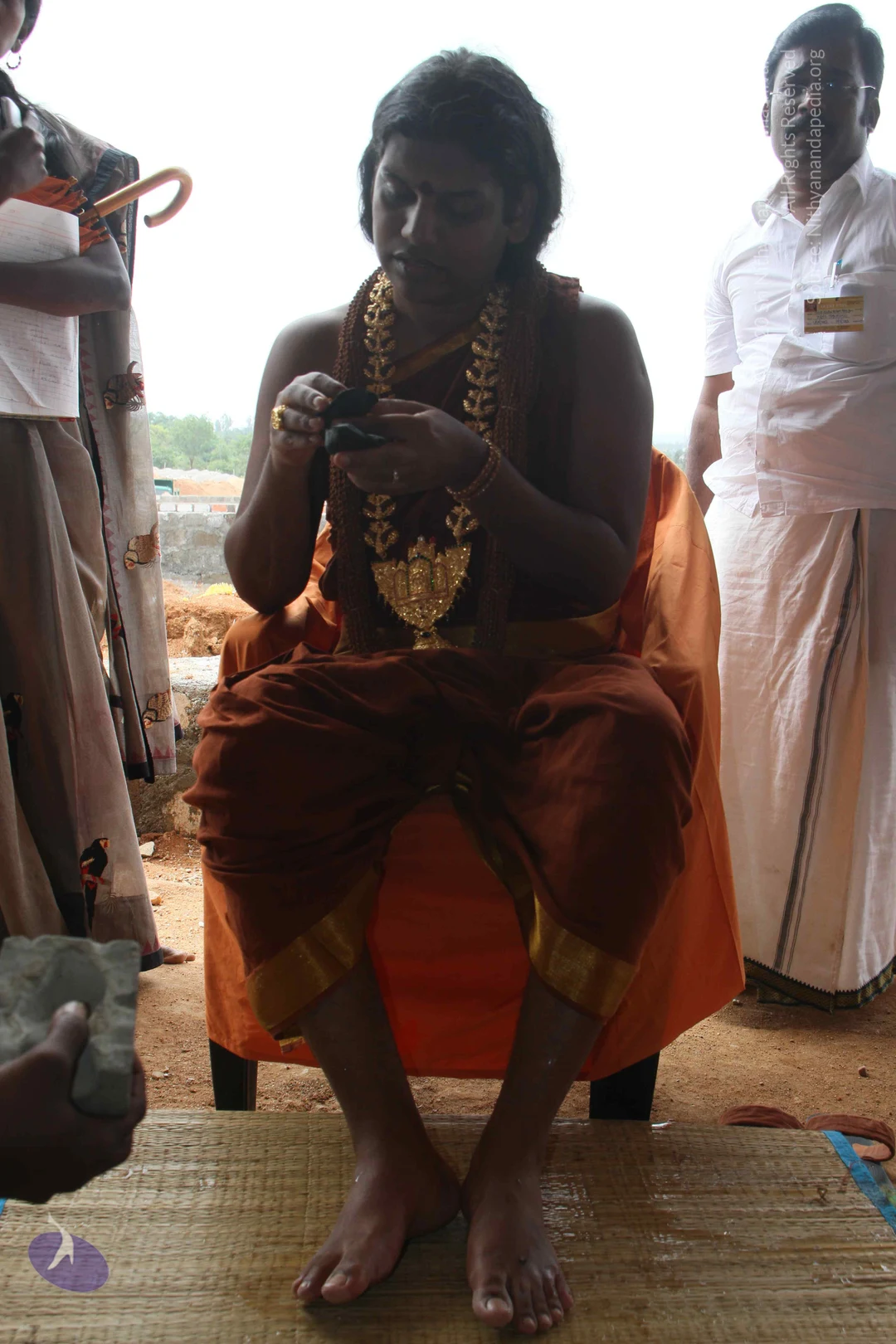
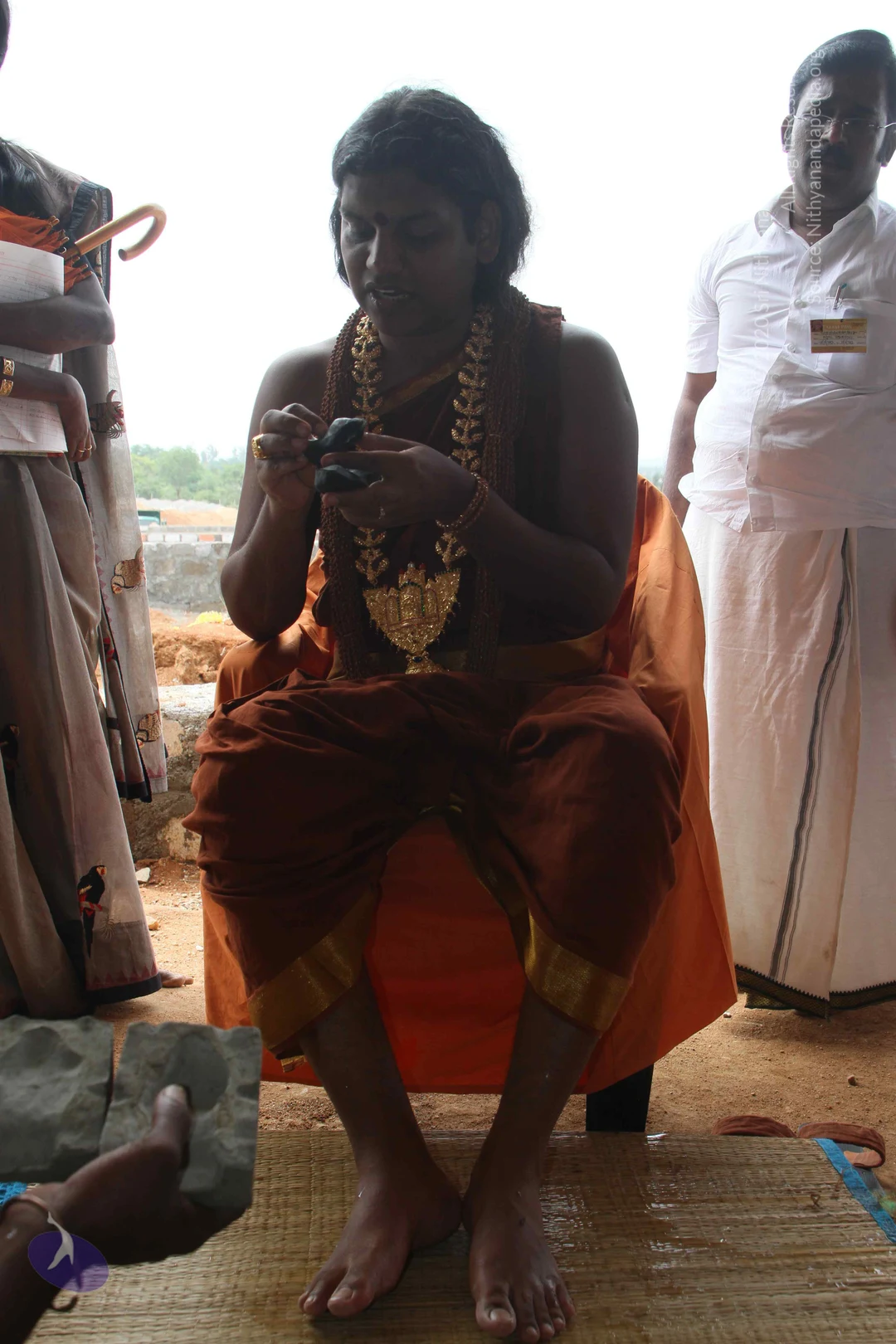
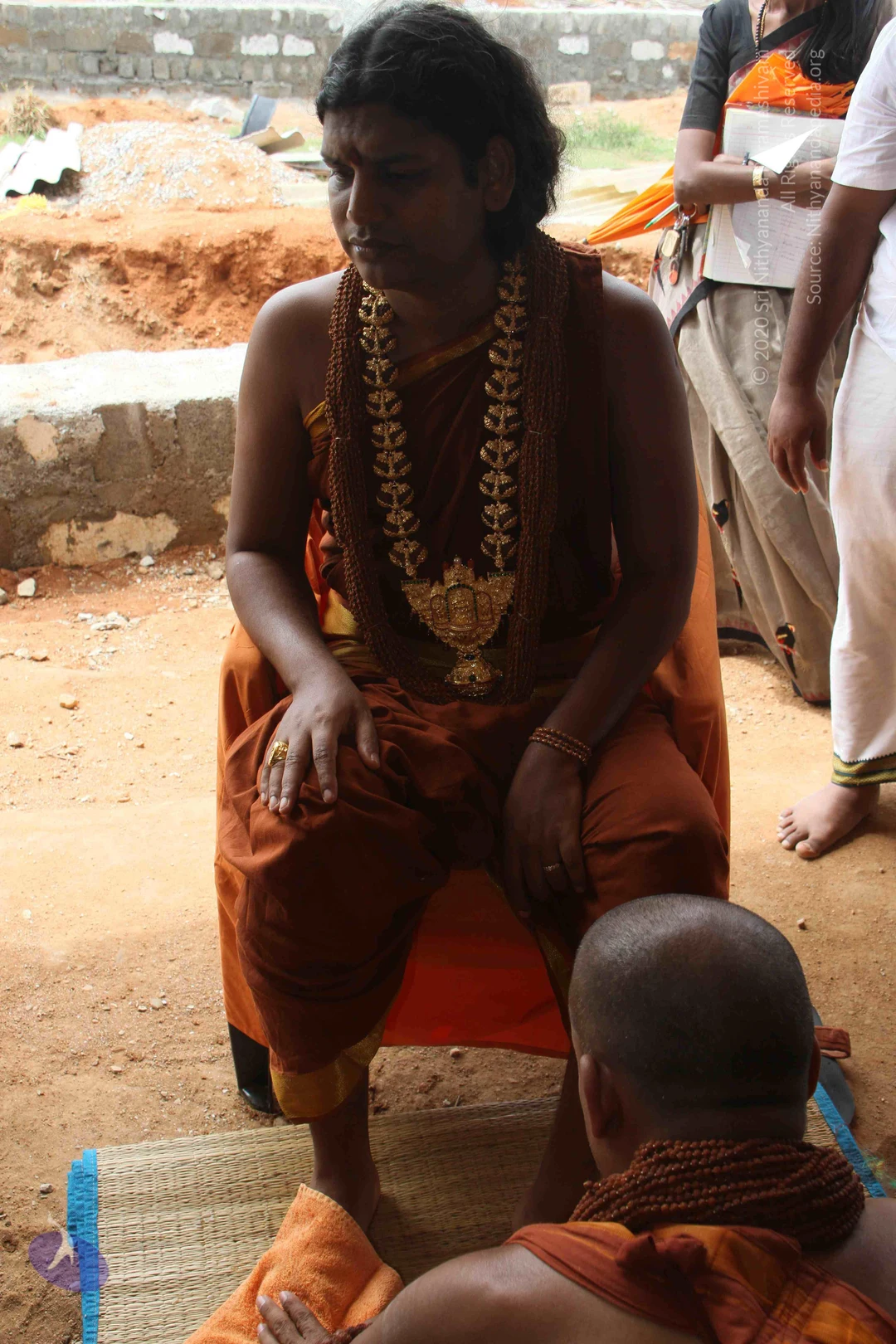
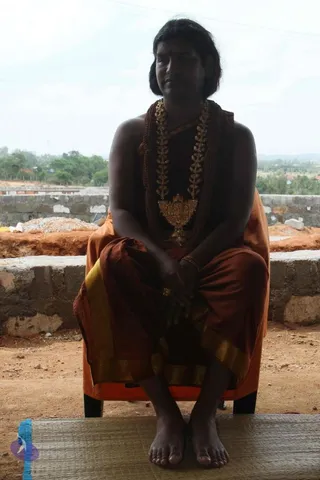
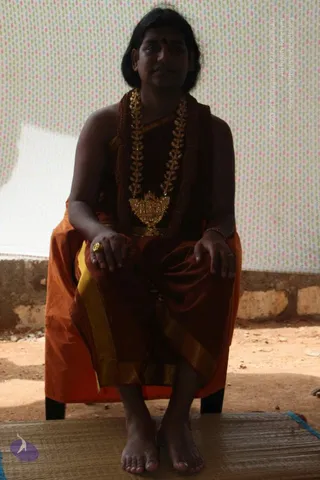
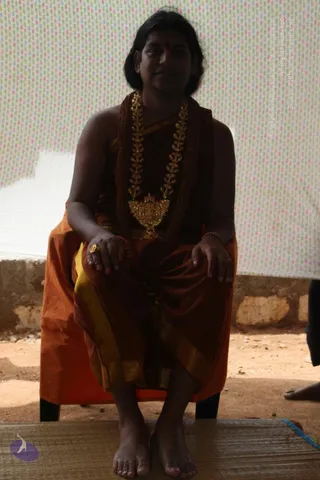
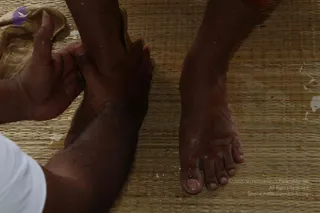
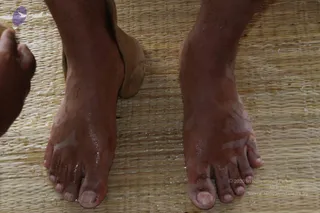
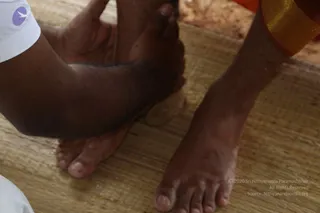
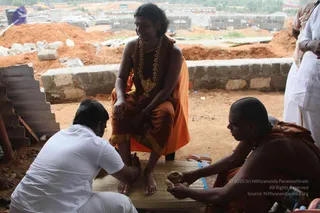
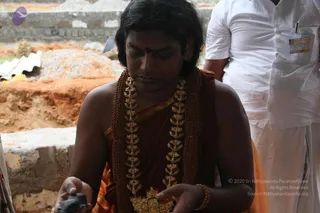
A person sits on a plain wooden chair outdoors on a construction site with bare earth, a low concrete wall and green trees behind. The seated person, bare-footed on a woven mat, wears a saffron-orange upper cloth and rust-brown lower garment with gold-toned borders, a dark rudraksha mala and a large ornate gold pendant necklace. Hands rest folded in the lap. The figure has long swept-back dark hair and a calm expression. Appearance-based label: a person, seated in front of the site, presented in the attire described.A seated figure in a shaded outdoor setting before a pastel patterned fabric backdrop with a dusty ground and a woven mat in the foreground. The person wears a saffron-orange wrap over the shoulder and a rust-brown dhoti with gold borders, with a long gold ceremonial necklace featuring leaf-like links and a large gold pendant, a rudraksha-style brown mala, a gold ring, and a red bindi on the forehead. Bare feet rest on the mat. Probable Swamiji by appearance cues: long swept-back hair, saffron wrap, ornate gold necklace and rudraksha-style mala.A seated man in an orange and maroon garment with gold-bordered edges sits on a chair against a pastel patterned backdrop, bare feet on a woven mat. He wears a long gold leaf-pattern necklace with a gold temple-shaped pendant and a brown rudraksha-style mala over his shoulders, a gold ring, and a red mark on his forehead. Long dark hair falls past his shoulders. Dirt ground and a partly visible person's bare feet appear at the edges. Appearance-based candidate: Swamiji (probable), with long hair, ornate gold necklaces and saffron-orange clothing, seated as a central figure.Close-up photograph of two bare feet on a woven straw mat, with a person's hands in the upper left holding and massaging one ankle. The person wears a white garment sleeve at the lower left edge. The skin appears wet and glistening, with a reddish tint on the right foot.Close overhead photo of a pair of bare male feet resting on a woven straw mat, wet and glistening, with some white paste or wash marks across the tops and soles. A second person's hand or foot appears at the upper left edge. The feet are brown-toned and the mat is pale tan. No face is visible, so the image shows only feet and a partial limb.Close-up photo of two pairs of bare feet on a woven straw mat. In the foreground a person in a white sleeve holds and washes or anoints a foot with both hands, while on the right a bare foot with an orange-and-gold cloth at the ankle rests on the mat. The setting appears to be a simple floor-level ritual, possibly a padapuja foot-washing, though no other context is visible.

Temple-Homa-Abhishekam
23 photosSource gallery
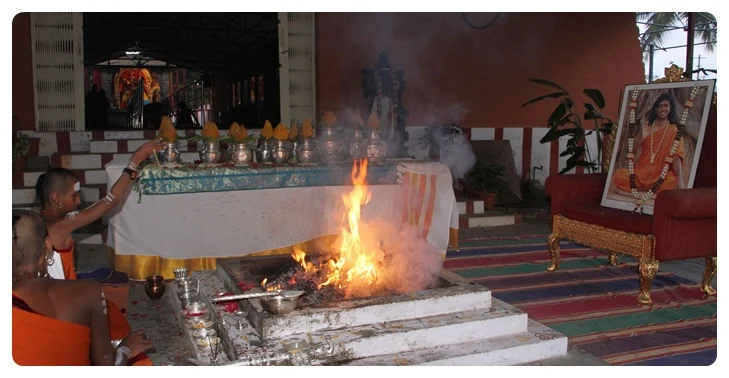
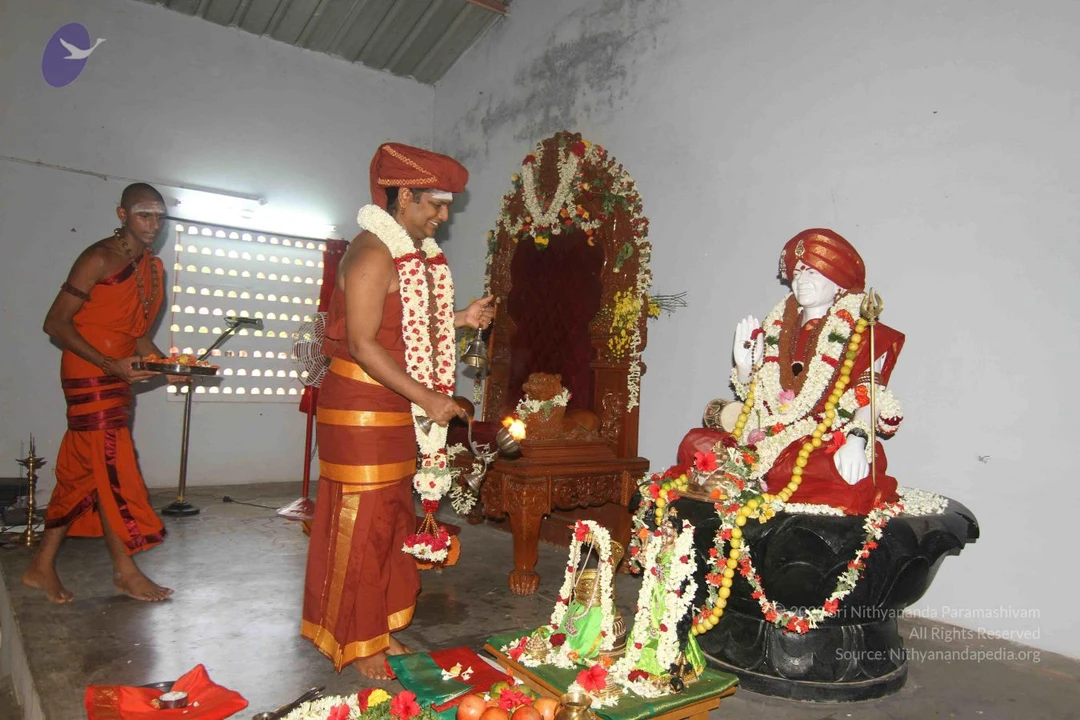
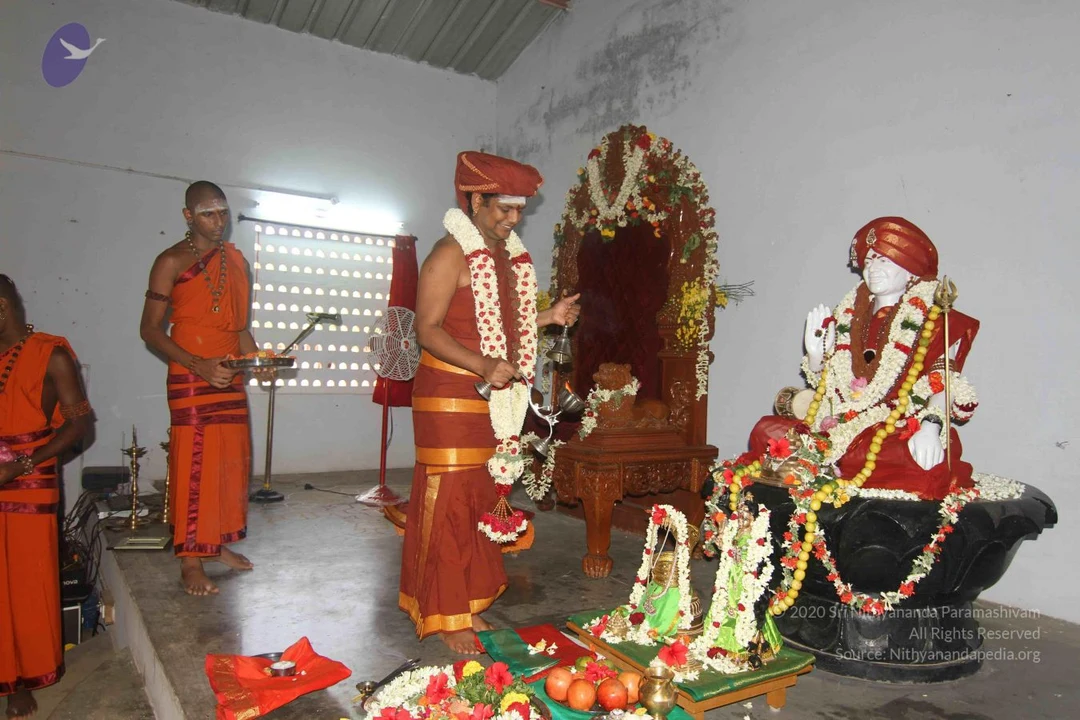
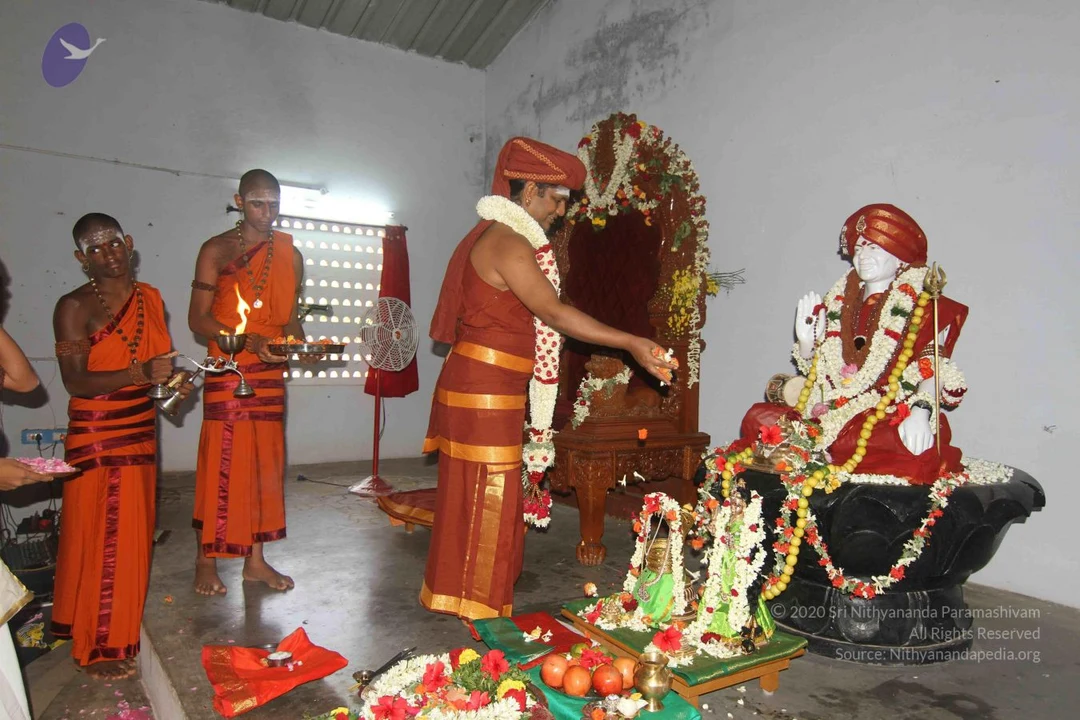
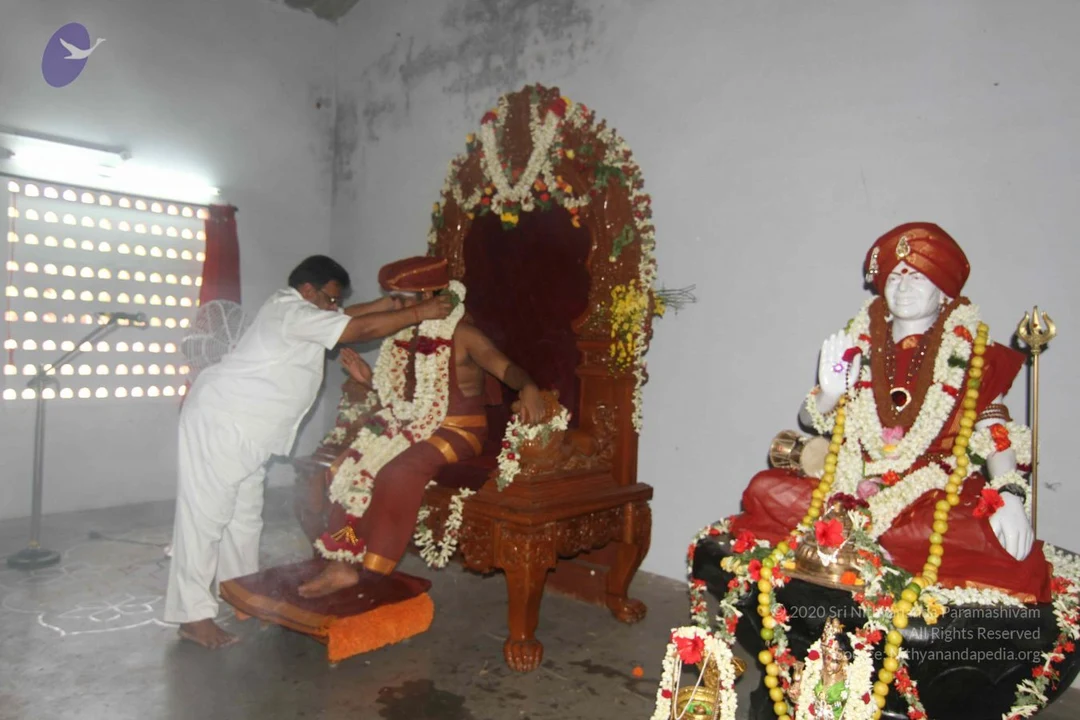
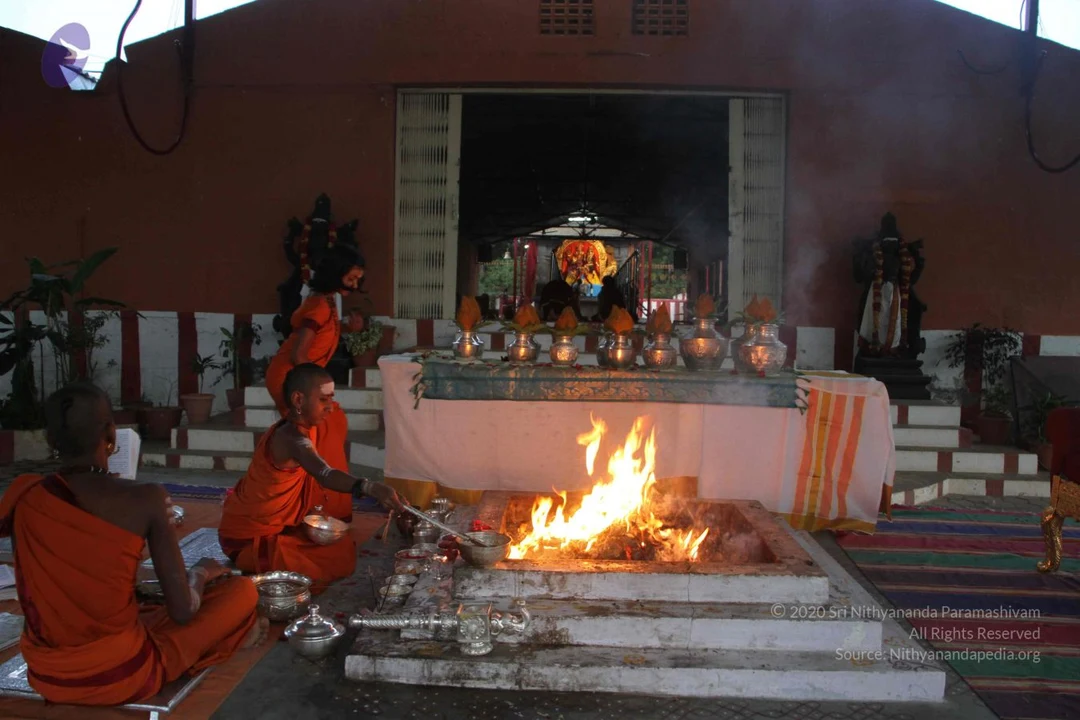
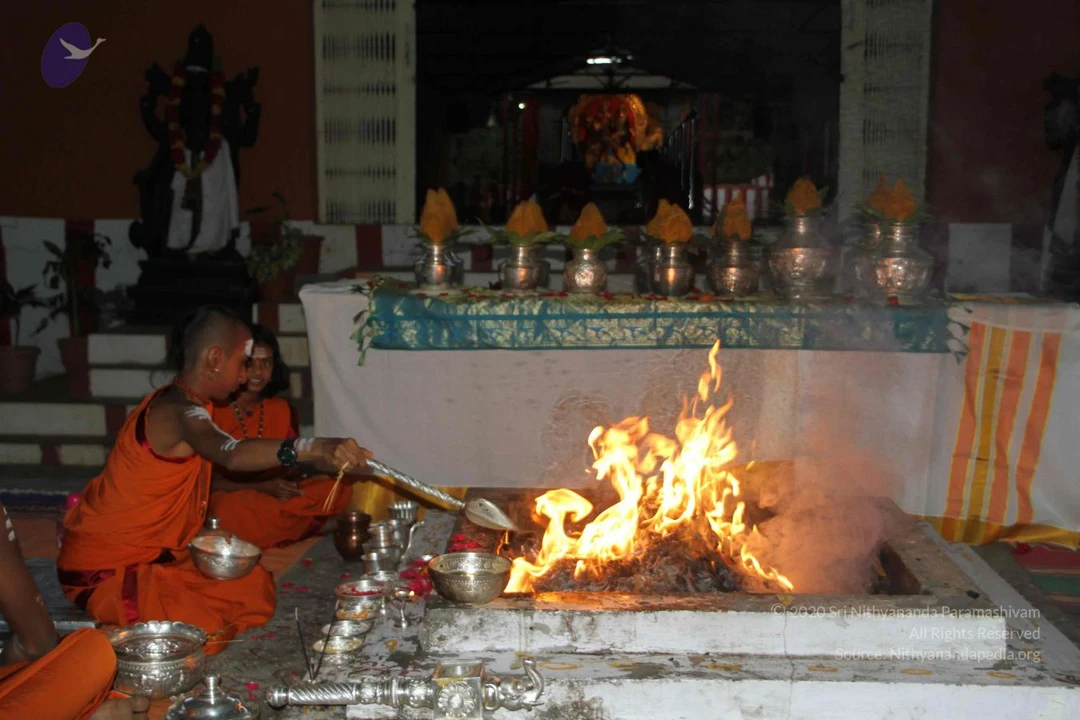
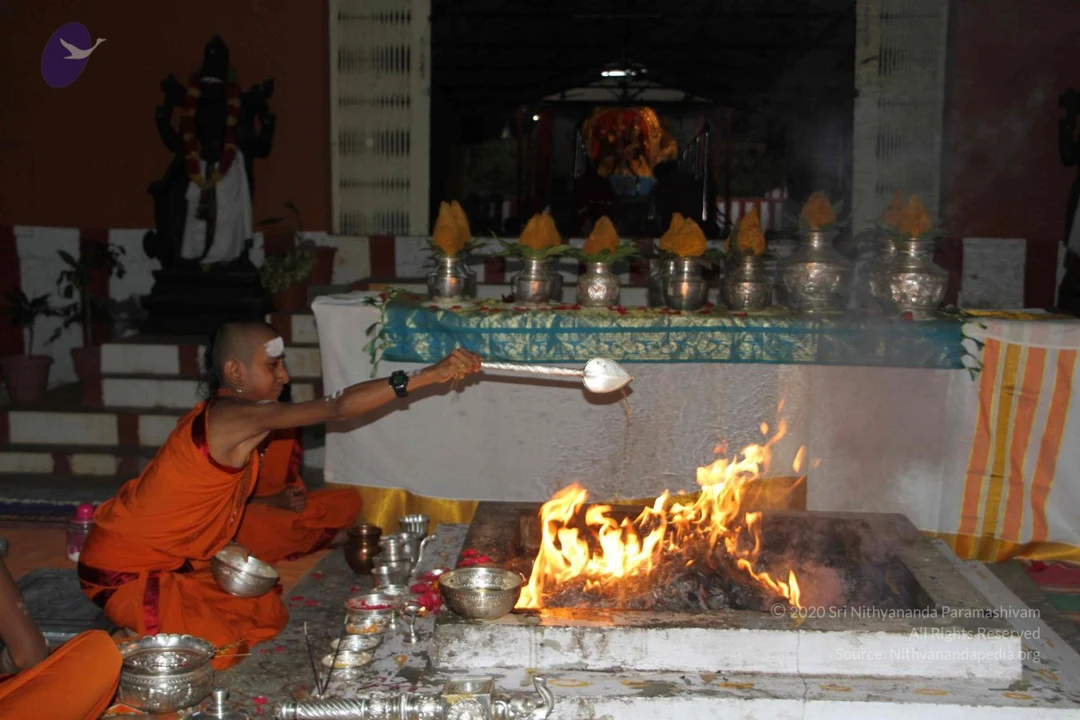
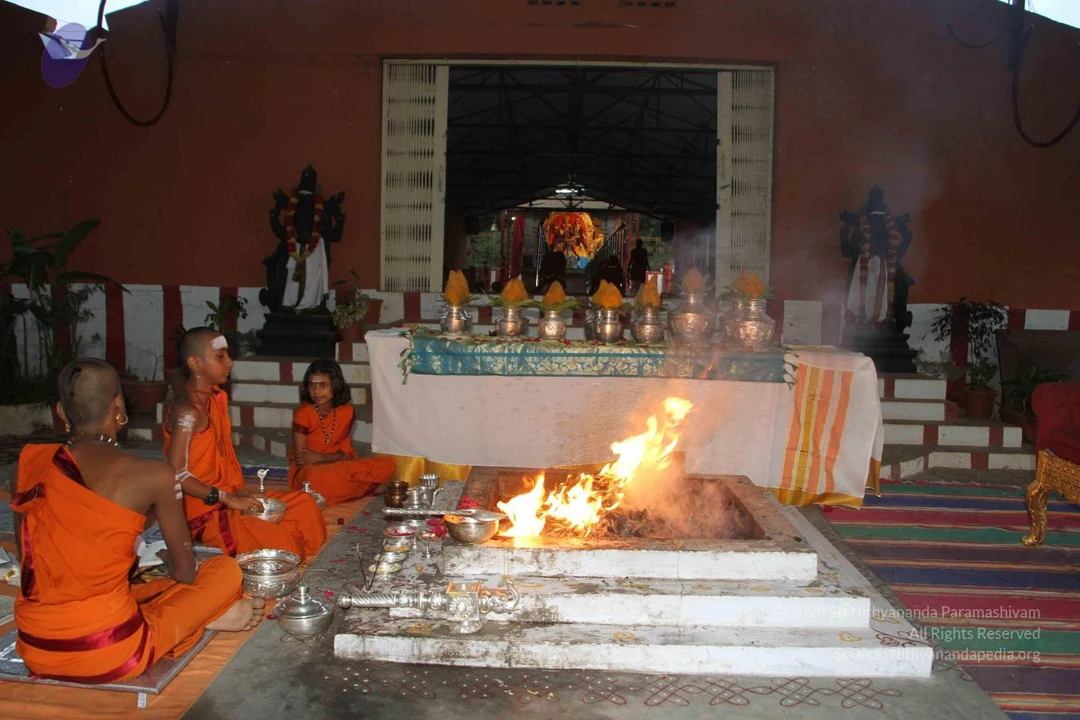
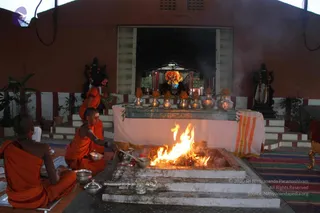
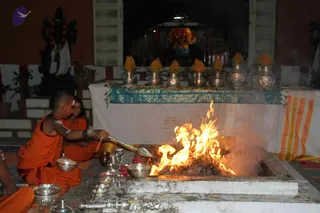
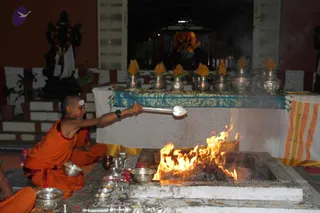
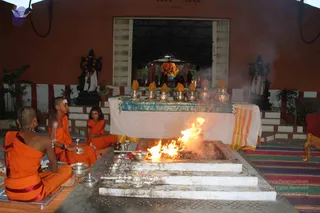
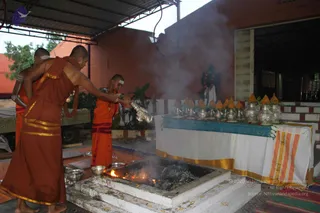
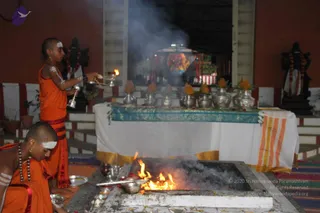
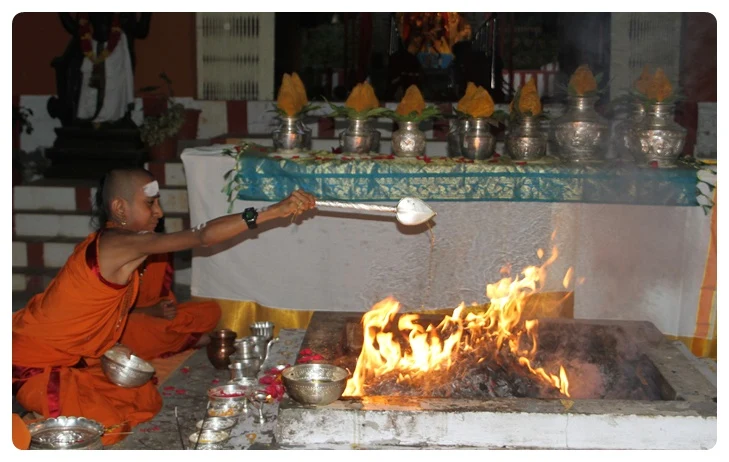
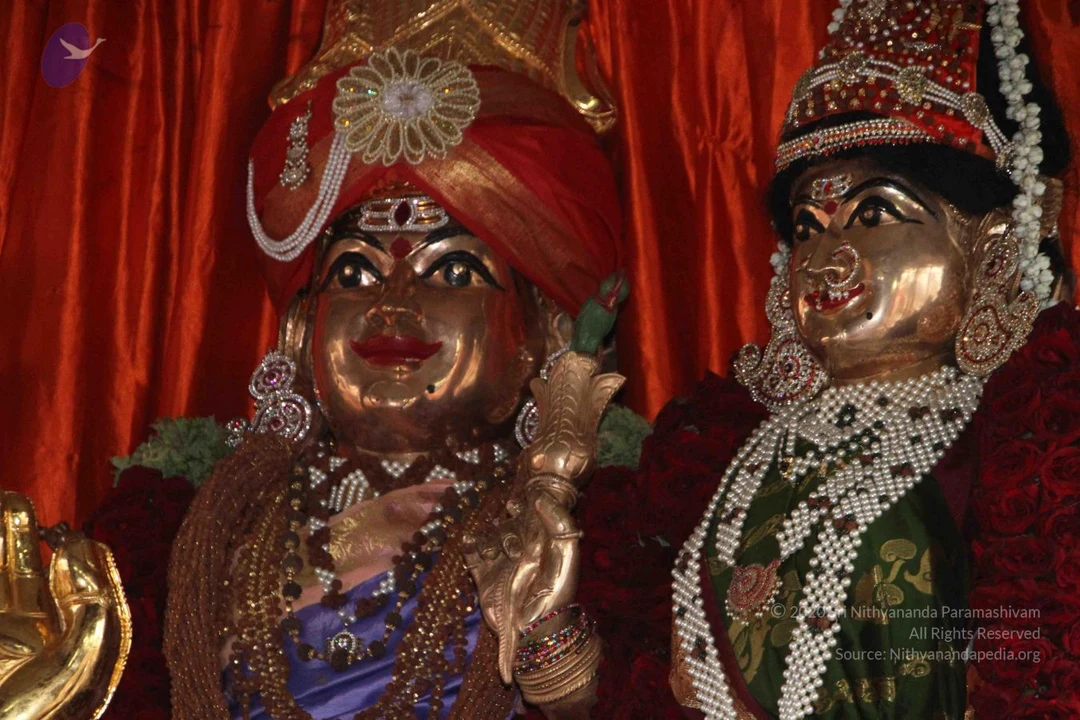
A homa fire burns in a raised stone fire pit in front of a temple shrine. Three monastics in saffron-orange robes are seated or kneeling: one at left with shaved head and bare shoulder, one in the centre with shaved head pouring from a bowl toward the fire, and one standing behind at right with long dark hair in orange clothing. Brass and silver kalashas with orange-tipped coconuts line a white-draped altar holding a deity murti. Stone steps, potted plants and dark-stone dvarapala-type figures frame the terracotta-walled hall. Brass pots and vessels sit on the stone platform beside the fire.A photograph of a homa fire ritual inside a temple hall. Two people in saffron-orange robes sit beside a stone fire pit where a large flame rises. The figure in front, with a shaved head and white markings on the arms and forehead, pours offerings from a long silver ladle into the fire. A second person in orange sits behind with a red bindi and a beaded necklace. Silver vessels and bowls surround the pit, and a row of brass kalasha pots topped with orange marigold flowers stands on a draped altar. A dark deity murti with a garland is visible at left and a shrine is visible in the background.A photograph of a homa fire ritual inside a temple hall. A shaved-headed priest in saffron-orange robes with a white tilak on the forehead sits cross-legged and pours an offering from a silver ladle into a rectangular fire pit with bright flames. Brass and silver vessels, bowls and a small brass pot sit on the floor around the fire pit. Behind, a table draped in a teal and gold cloth holds a row of silver kalashas topped with yellow-orange cloth, and a dark stone deity murti stands on the left wearing a red-and-white garland. Another person in orange is partially visible at the far left edge.Photo of a homa fire ceremony in an open temple hall with a red-painted wall. A large flame rises from a white stone fire pit in the foreground, with brass bowls and a ceremonial ladle beside it. Three people sit on orange mats: one with a shaved head wearing an orange robe and a red-edged cloth, one with a shaved head and white forehead markings in orange robes, and a child in orange clothing. A table draped with a patterned cloth holds rows of brass kalasha pots topped with orange marigold garlands. Two dark stone statues of a deity stand on the sides, and a decorated deity murti is visible in the inner sanctum beyond the doorway.Outdoor homa ritual in a courtyard beside a red-brick wall and corrugated roof. Three priests in saffron-orange dhotis and bare-chested upper bodies with white tilak on their foreheads stand at a square fire pit where flames and smoke rise. The priest at the front pours or offers from a silver vessel into the fire. Behind them a long table draped in white cloth with a teal top holds rows of silver kalashas and vessels topped with saffron-yellow cloth. A dark deity murti decorated with garlands stands in the background. The priests appear to be performing a fire offering.Photograph of a temple ritual. A fire burns in a raised stone homa pit in the foreground, with smoke rising. A standing priest in orange robes with white forehead markings holds a lamp and a metal vessel toward the altar. Beside him, a shaved-headed young man in orange clothes and a beaded necklace kneels near the fire pit, with brass and steel vessels and flower petals around him. Behind them, a table draped in a white cloth with a teal border holds brass kalasha pots topped with mango leaves and orange flowers. A dark deity murti stands at right with garlands, and red-and-white striped pillars frame the hall.

Pratyaksha-Pada-Puja
15 photosSource gallery
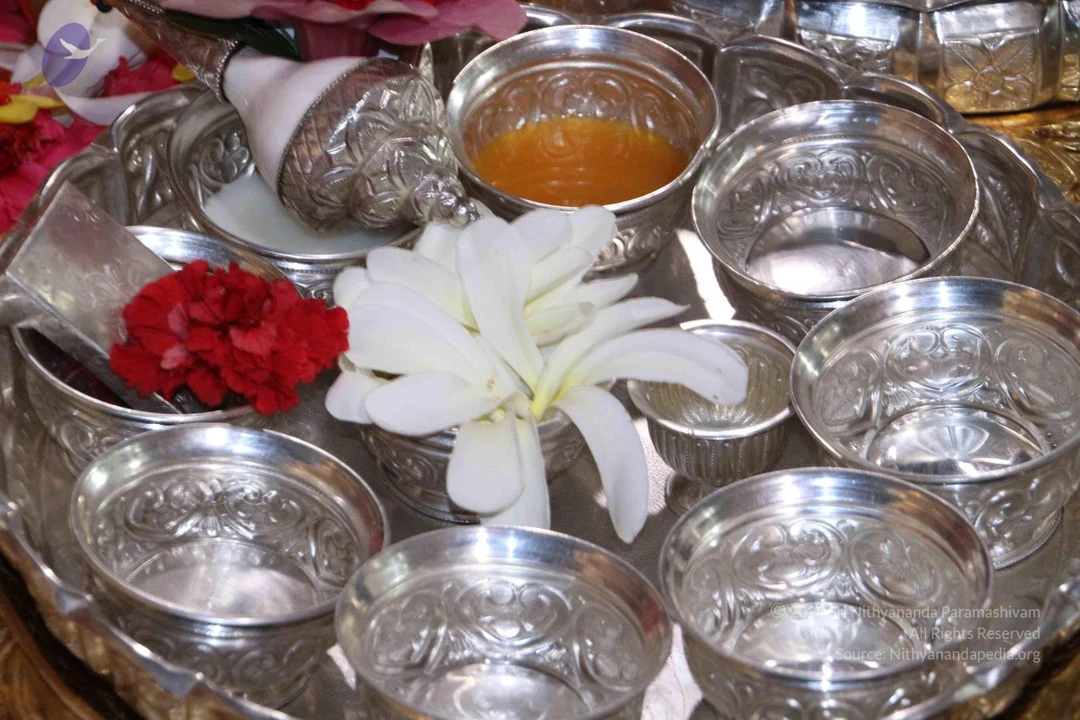
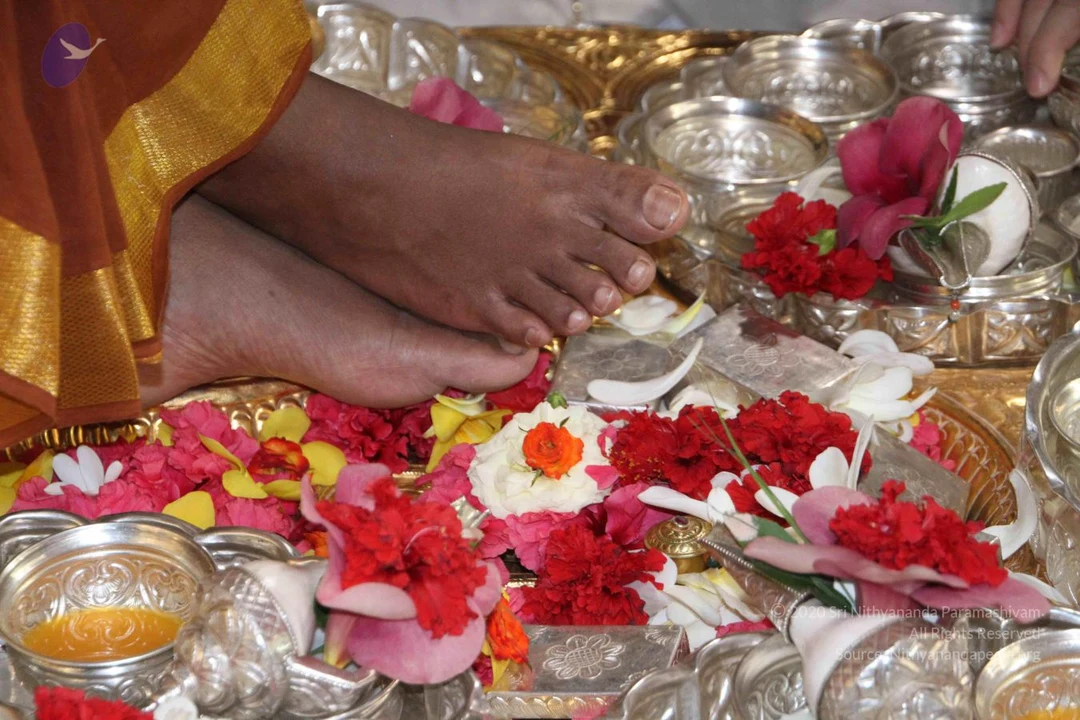
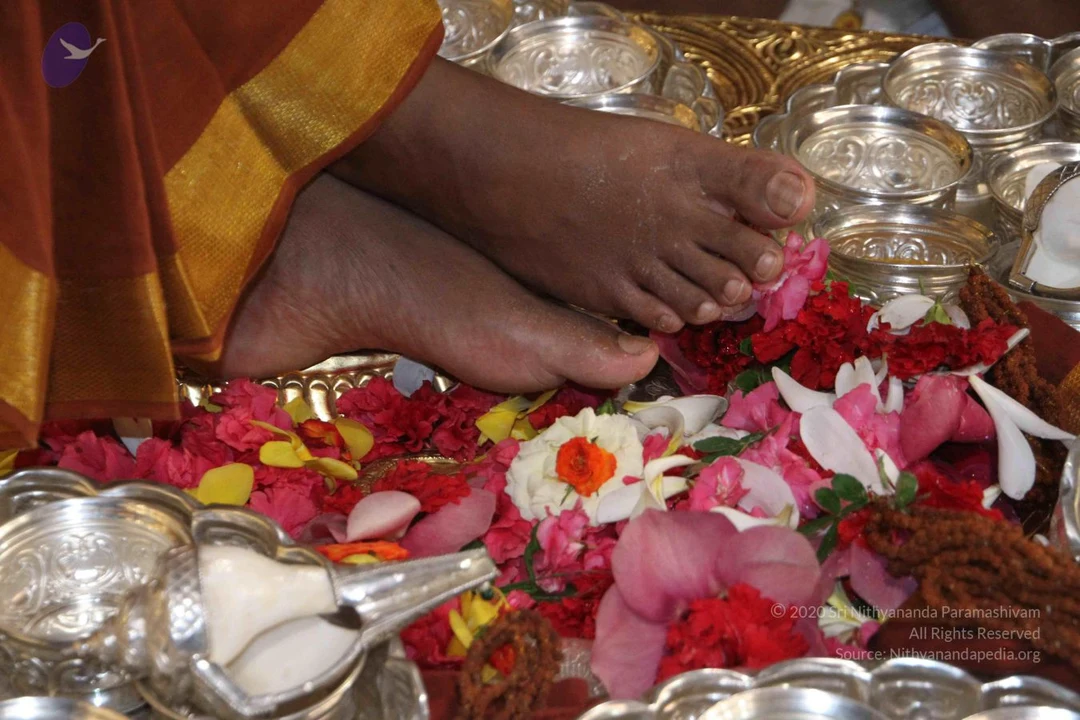
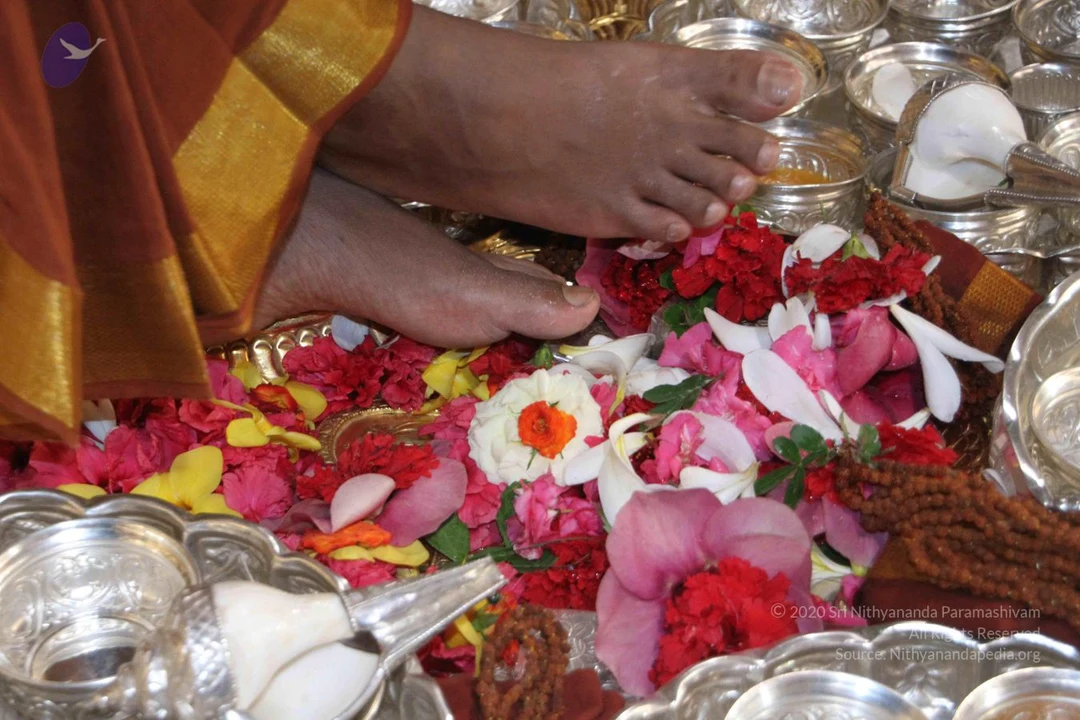
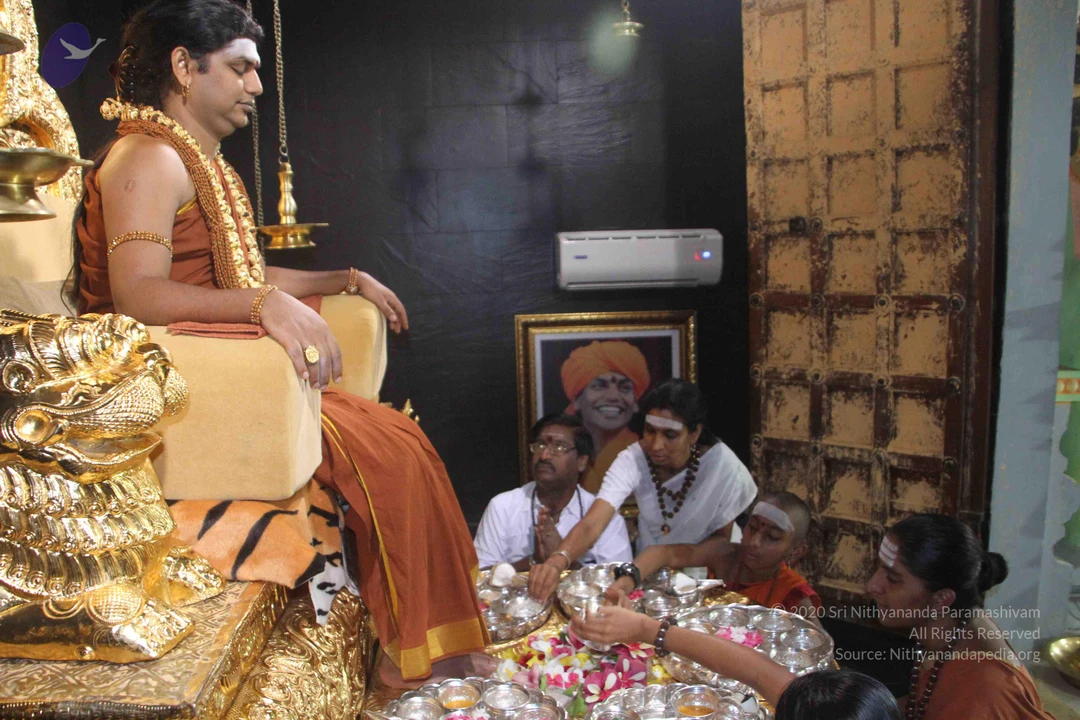
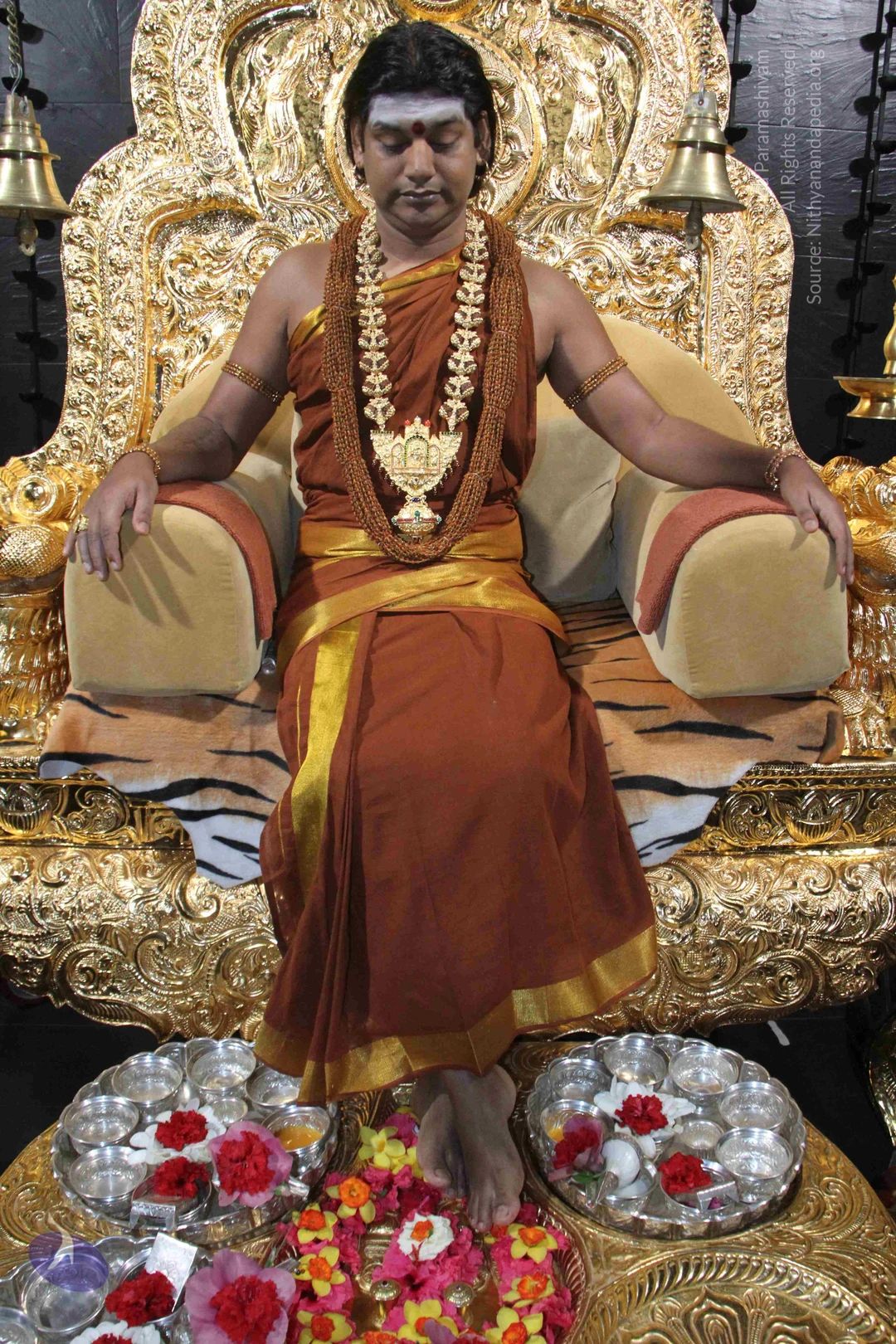
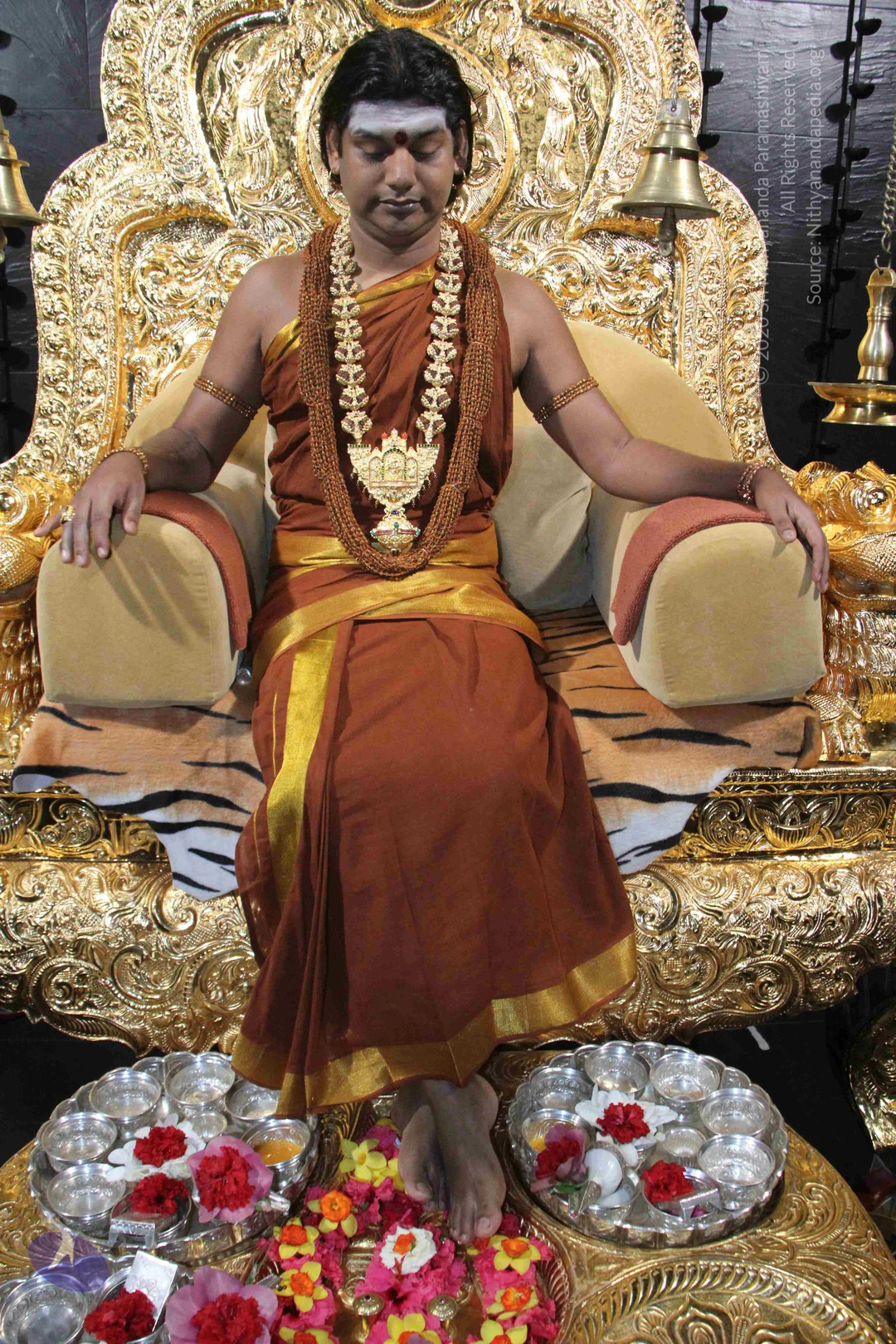
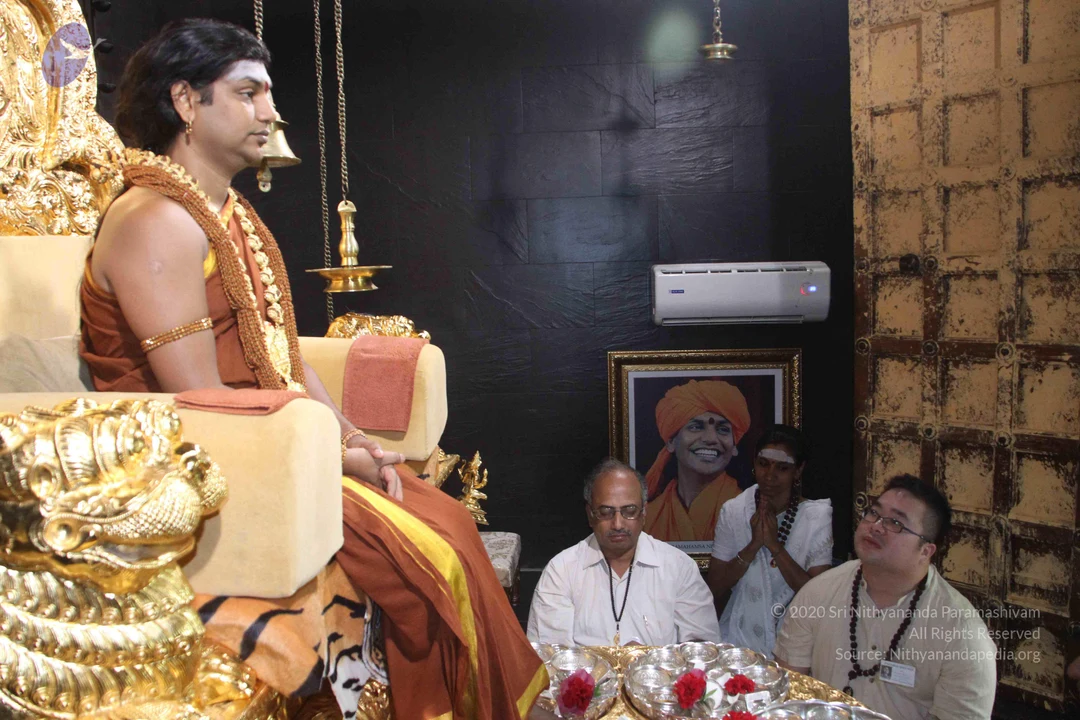
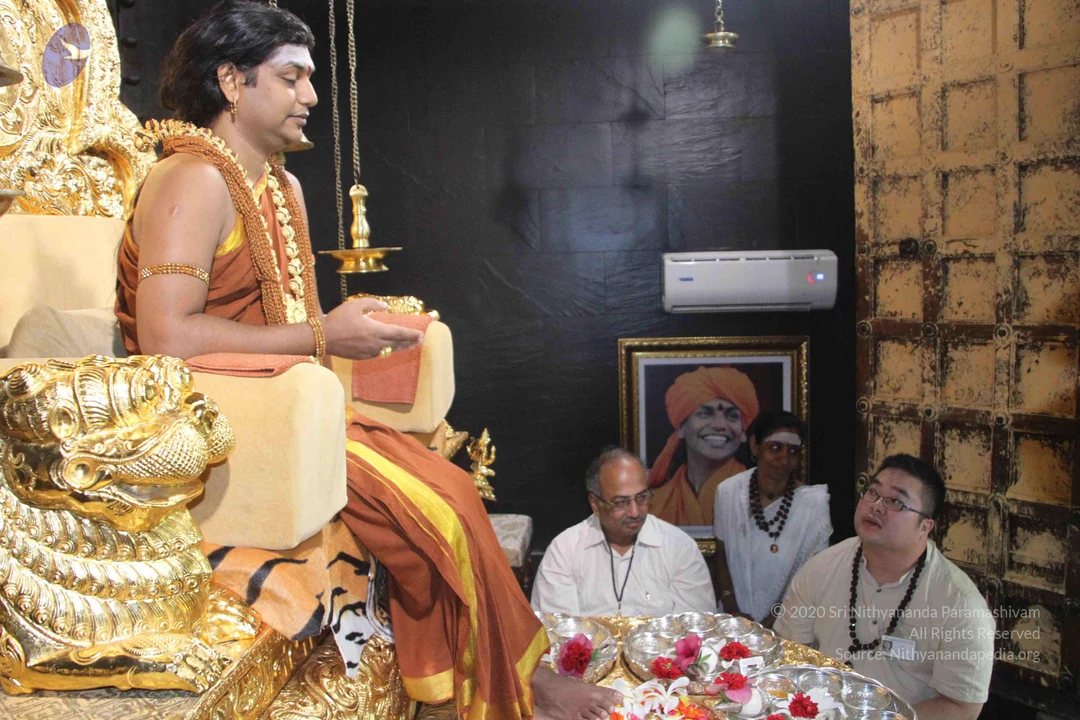
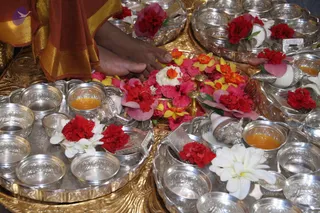
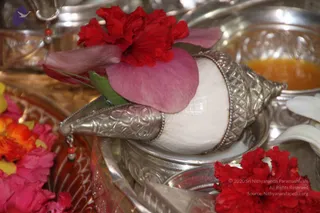
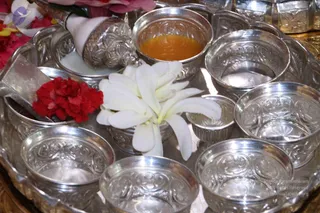
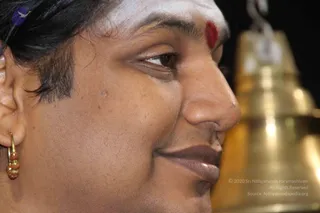
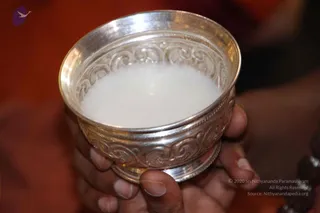
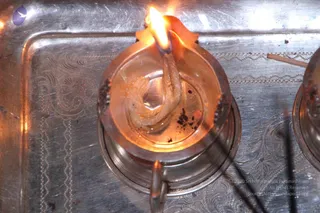
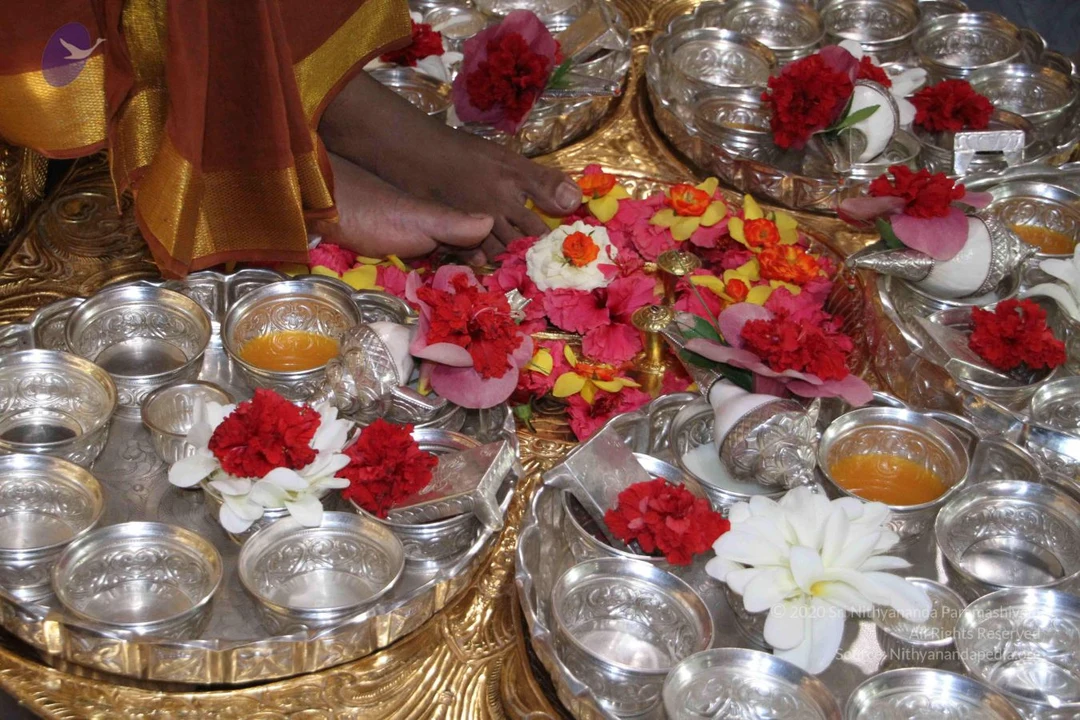
Close view of a padapuja-style offering: bare feet of a person in an orange-red sari with gold border rest on a bed of red carnations, pink and orange flowers, yellow blossoms and white frangipani. Silver bowls and plates filled with orange liquid and ornate silver vessels surround the feet on gilded trays. No faces are visible, so no identity is assigned.Close-up photograph of a white conch shell (shankha) with a silver-toned metal rim and tip, resting in a silver plate. Red and pink hibiscus flowers and petals are placed on and around the shell, with an orange-yellow liquid in a bowl behind it and more flower petals in the foreground. No people are visible.Close-up photo of a ceremonial silver puja tray with embossed floral-patterned bowls. White plumeria flowers sit in a small silver cup at the centre, a red carnation lies at the left edge, and a silver spouted vessel with white cloth wrapped around it stands at top left. One bowl holds a golden-orange liquid, and another holds clear water. No people are visible in the frame, and no a person candidate appears.Close-up profile photograph of a man's face in side view, with a white vibhuti band across the forehead and a red kumkum dot at the centre. He has short dark hair pulled back and wears a gold earring with a rudraksha bead. A large brass bell with a hanging chain is visible blurred in the background on the right. The a person appearance cues are limited to the face and forehead marks, so the identity is uncertain.Close-up photo of two hands holding an ornate silver bowl with embossed scrollwork around its rim and base, filled with a white liquid. Only the fingers and part of a wrist are visible; a blurred orange cloth and a strand of rudraksha beads appear at the edge of the frame.Close-up photograph of a small brass oil lamp on a polished silver tray engraved with floral scrollwork. A cotton wick burns with a bright flame in a pool of oil, with soot marks around the rim. Another lamp is partly visible at the right edge. No people are visible.

Veerabadra-Bhairav-dogs
6 photosSource gallery

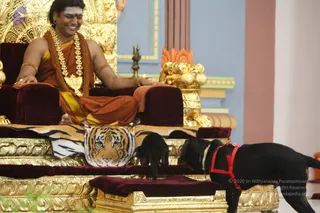
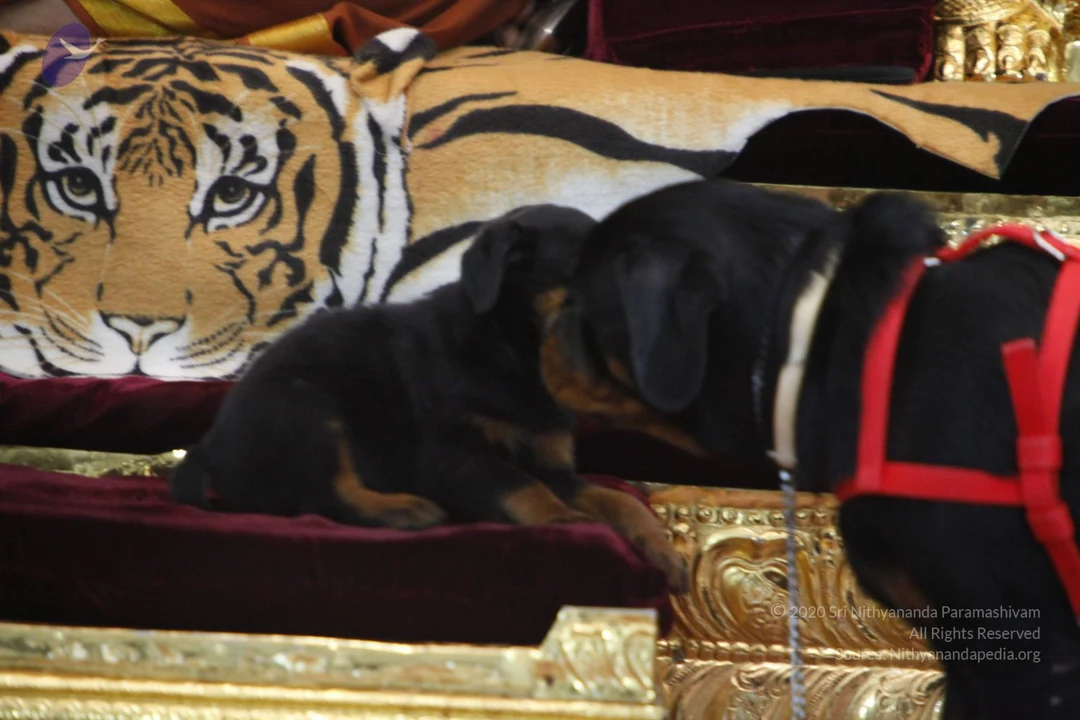
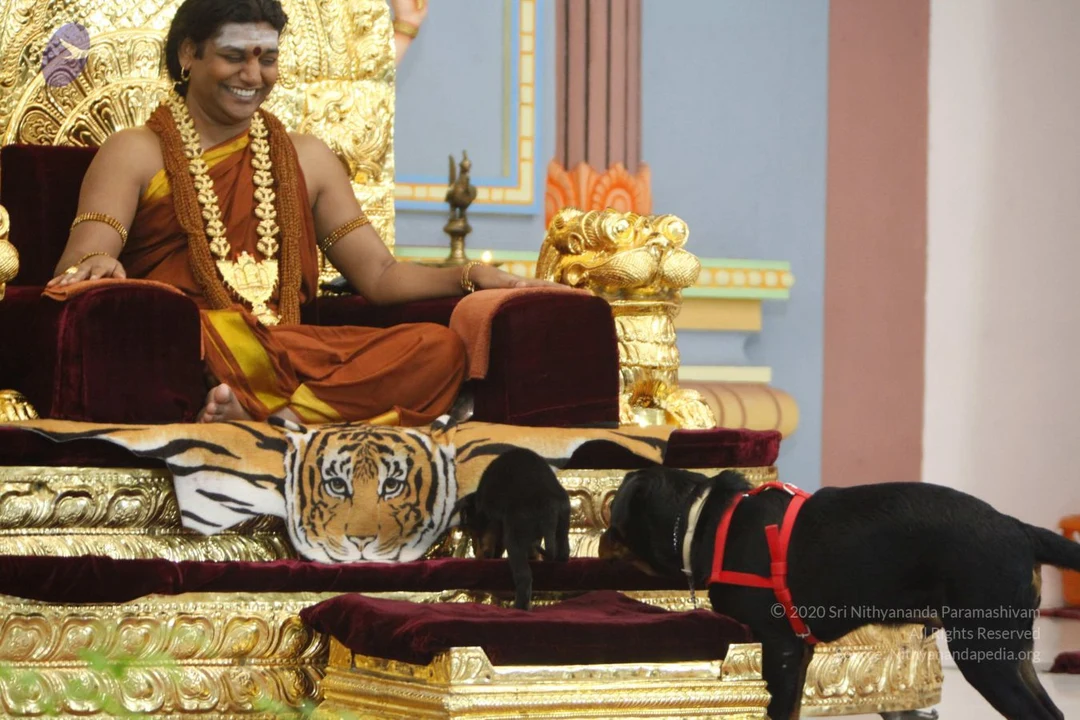
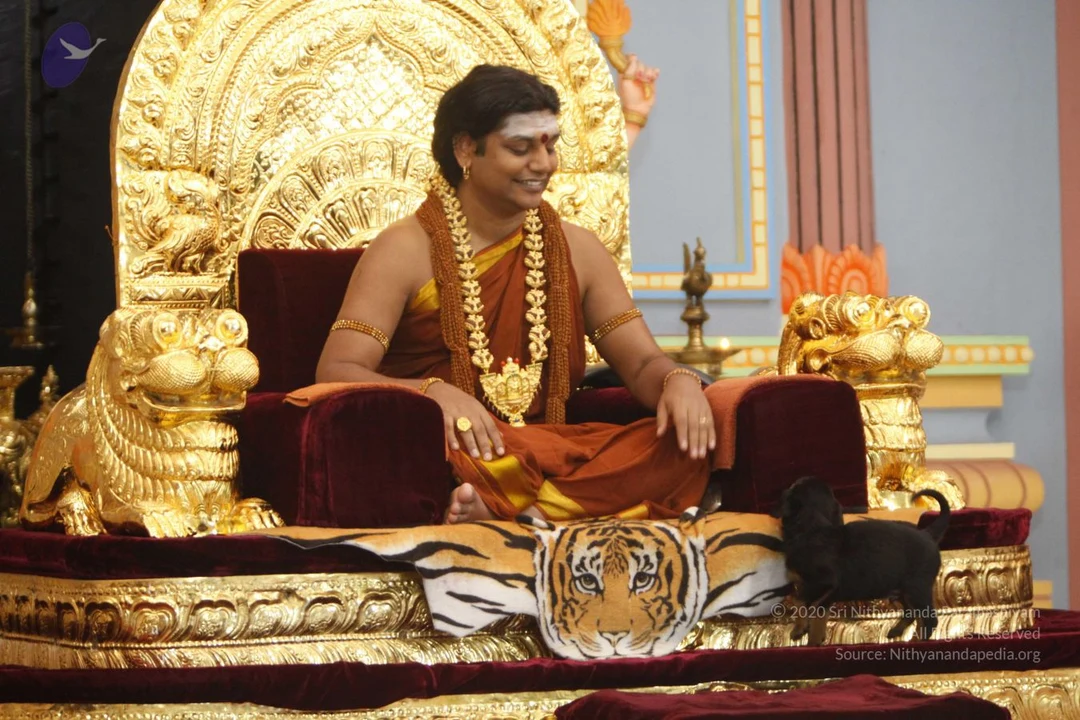
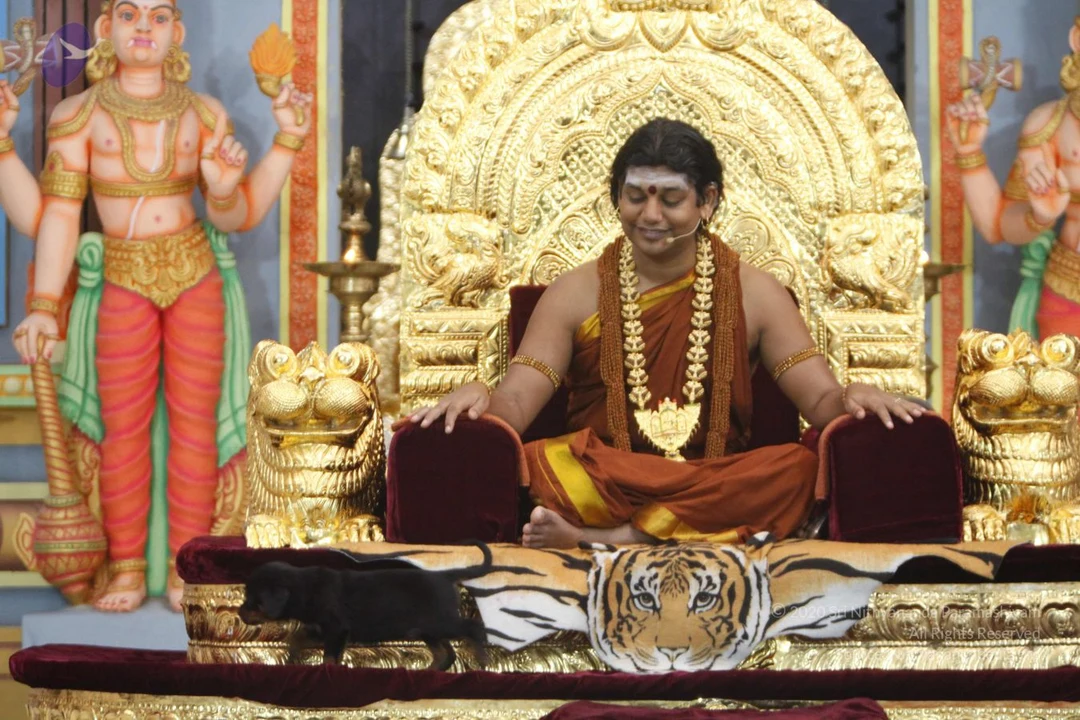
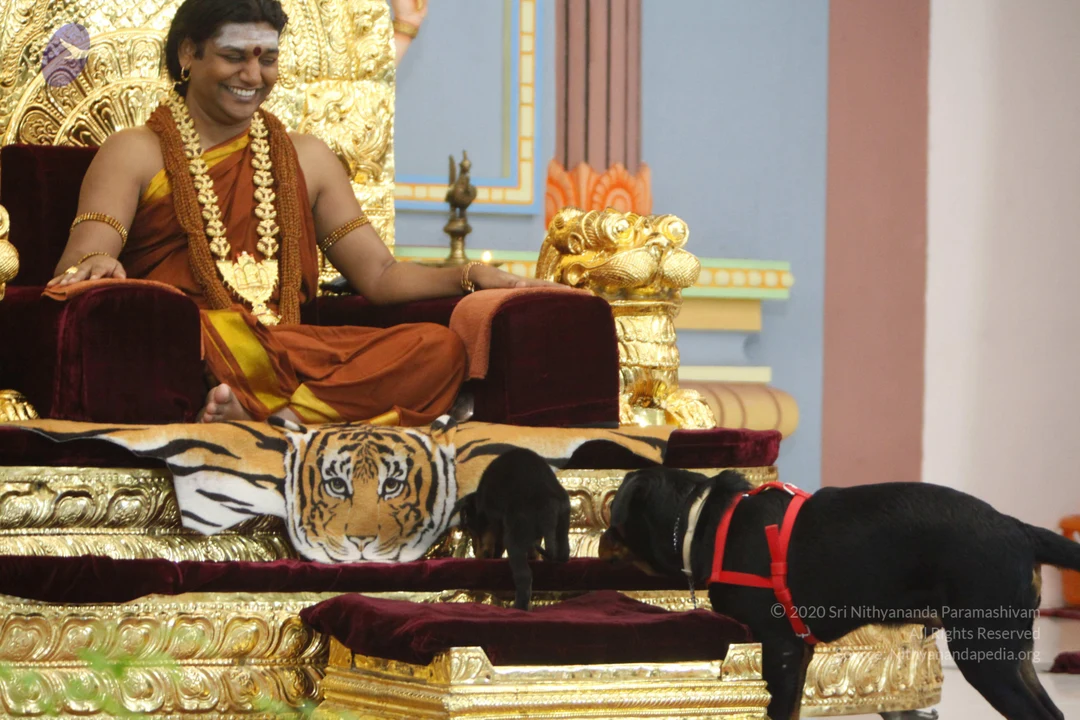
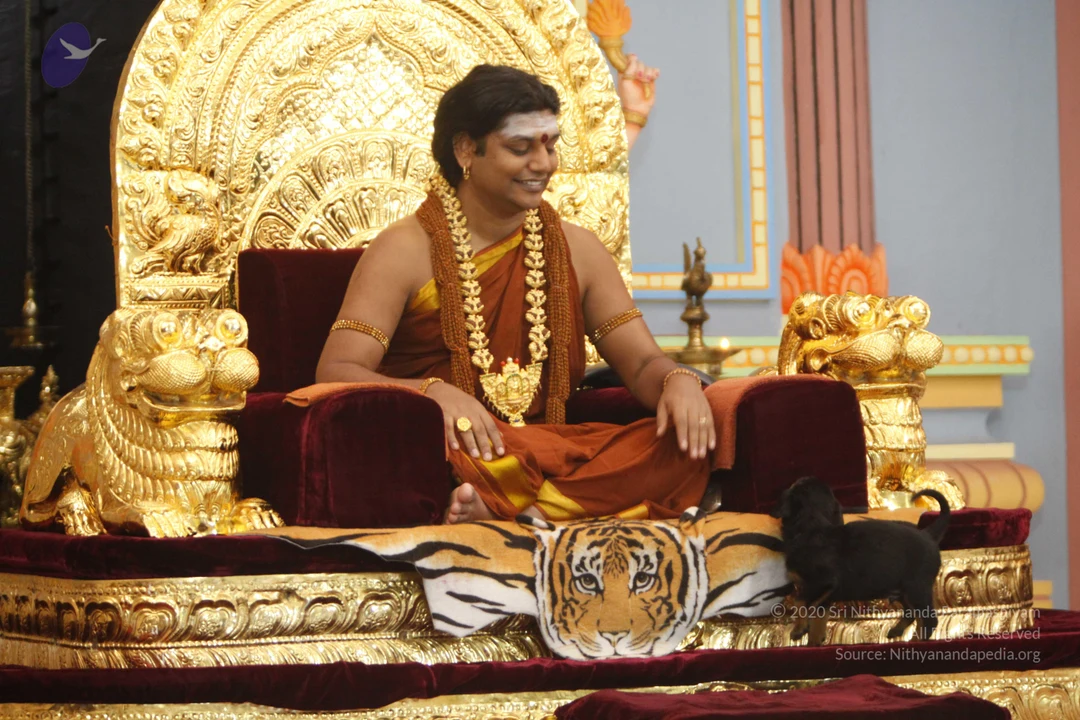
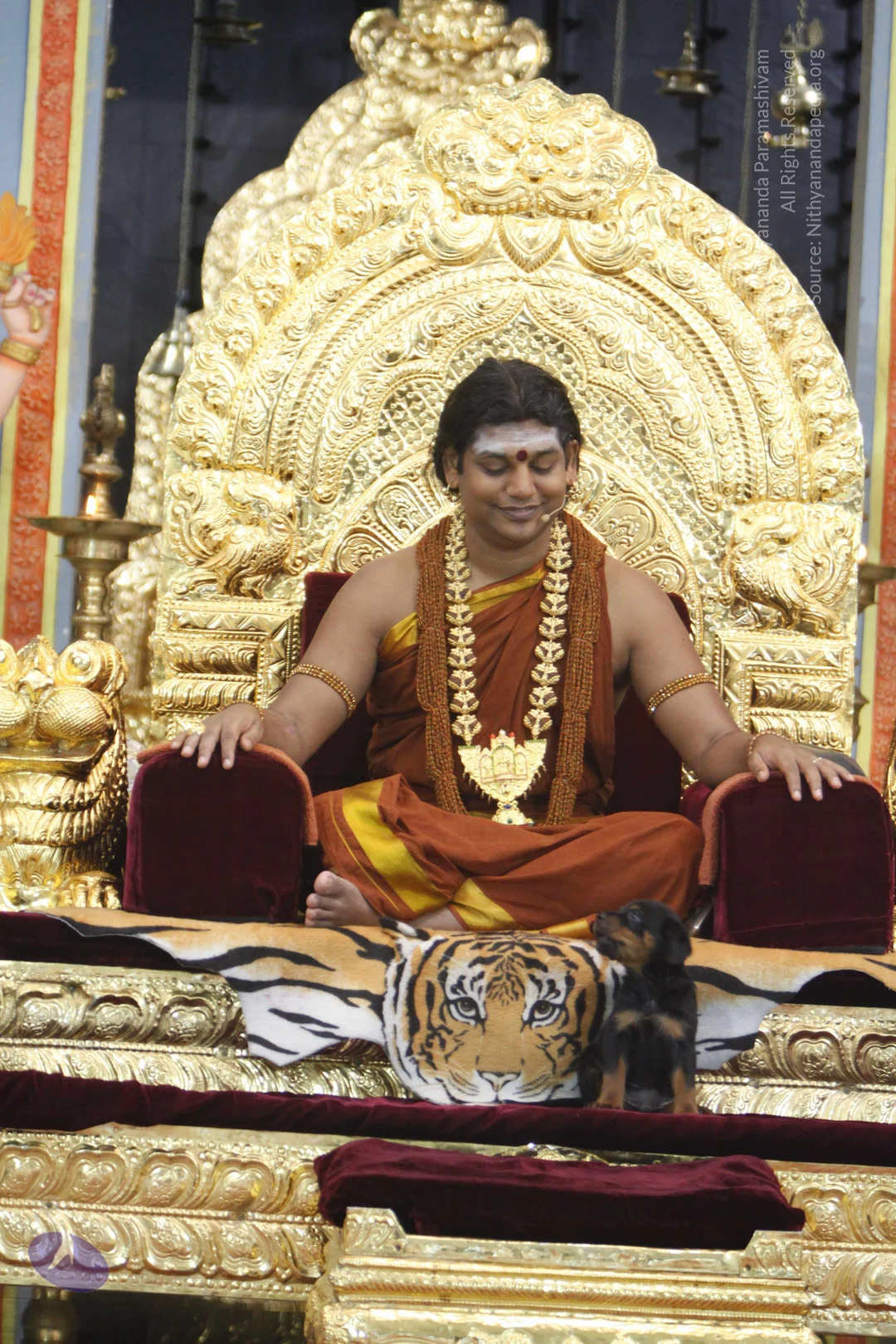
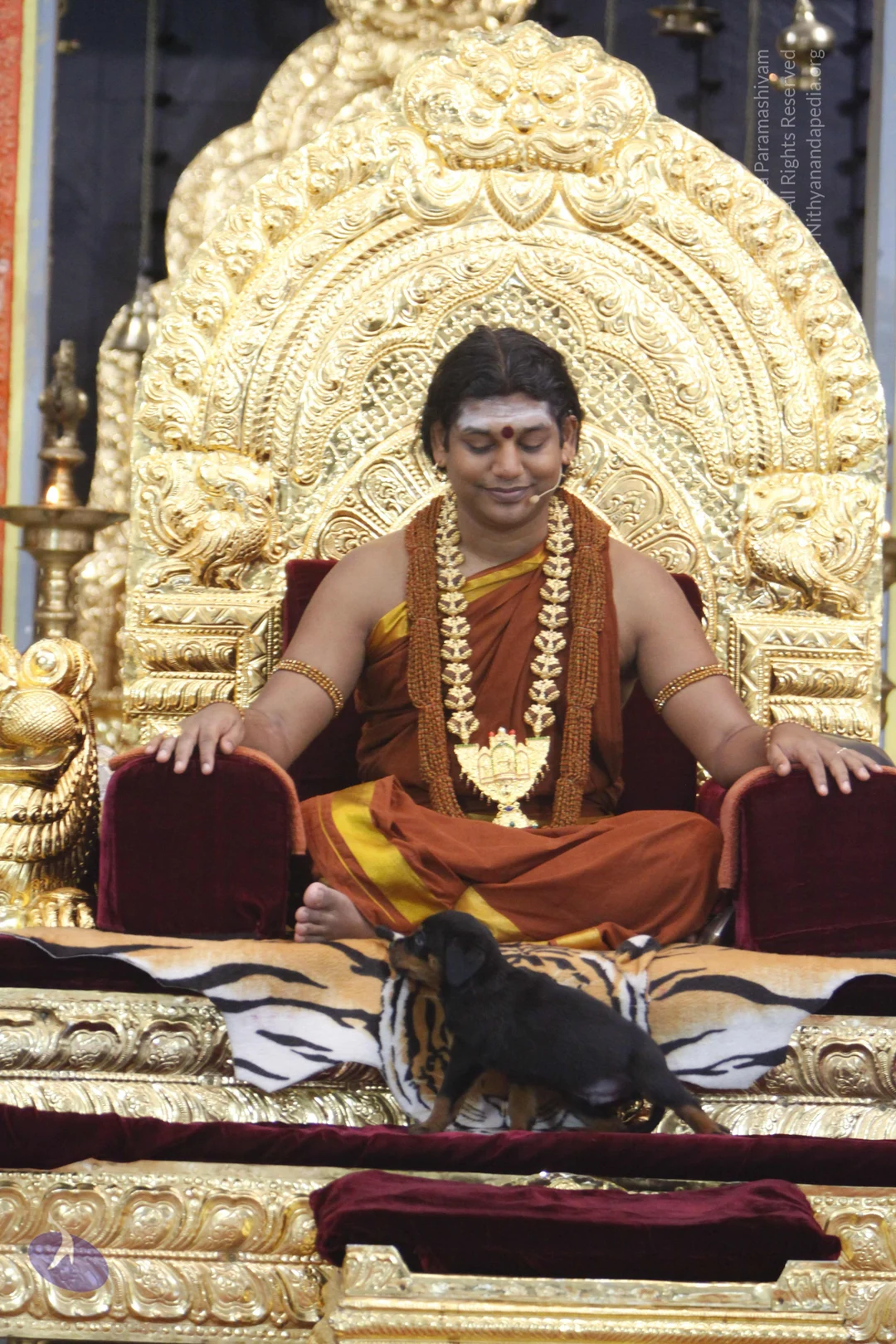
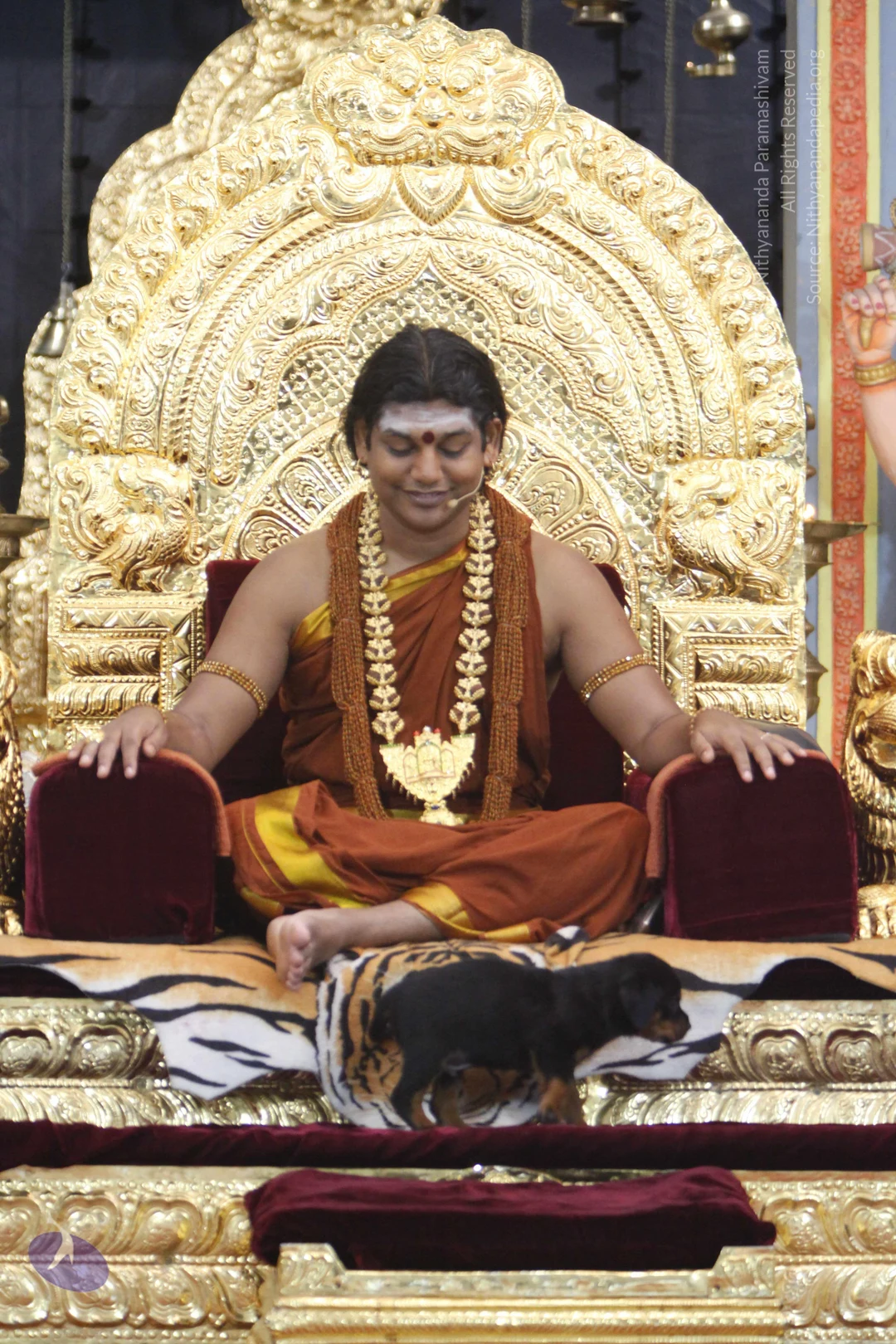
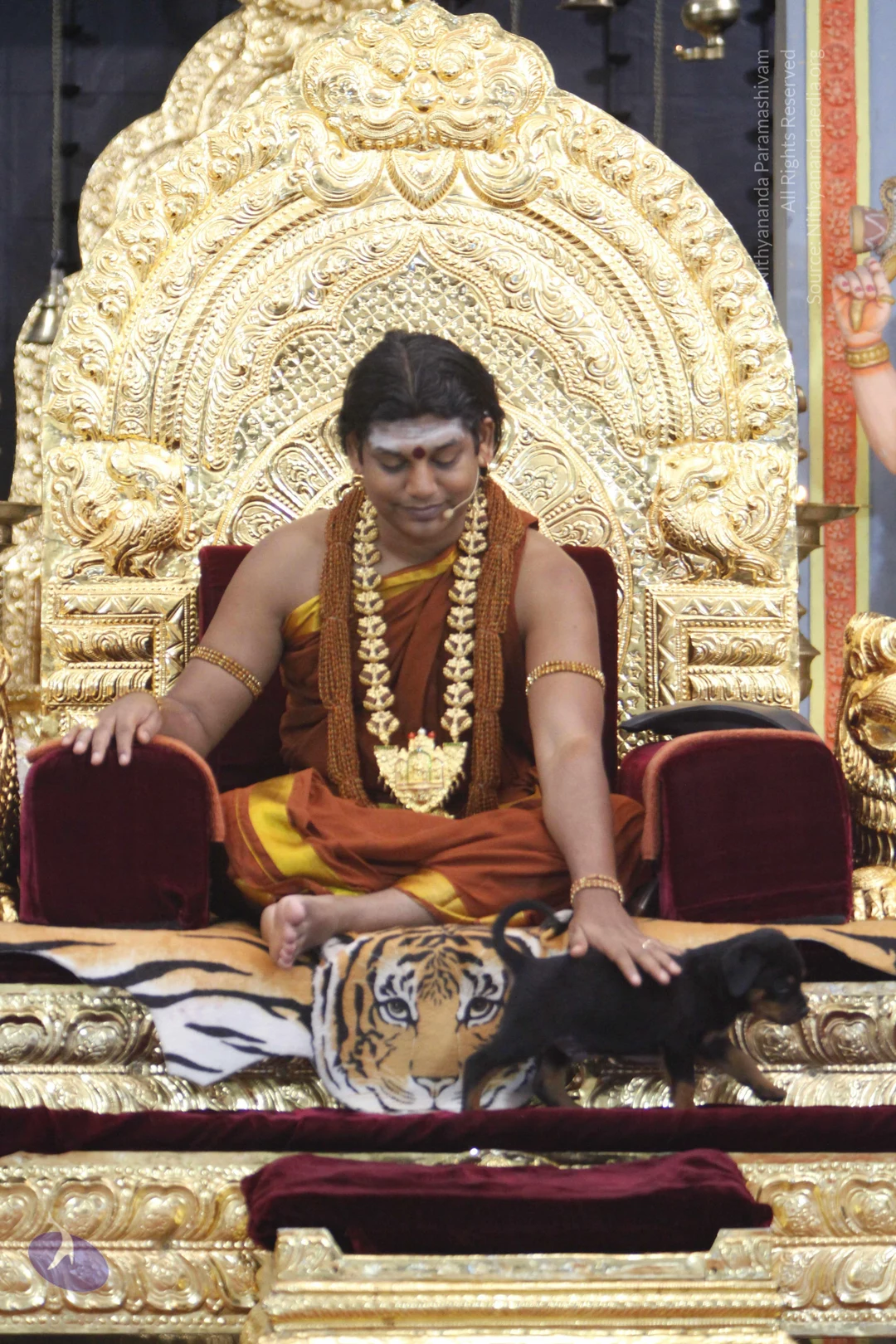
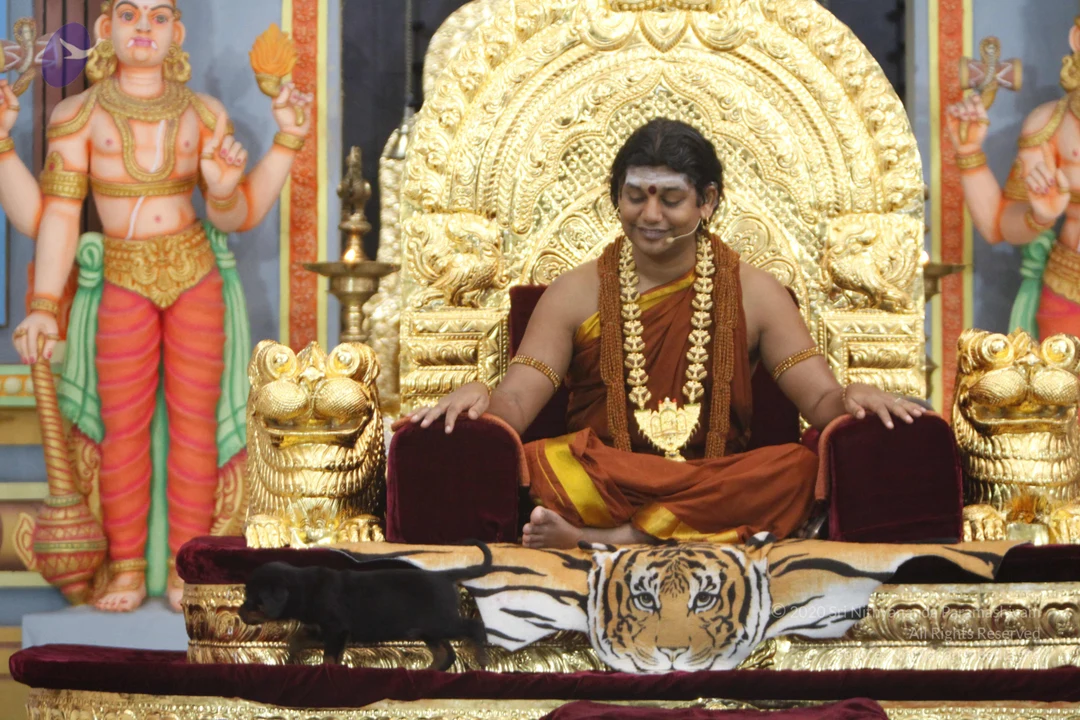
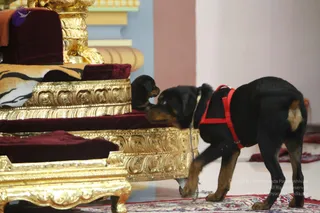
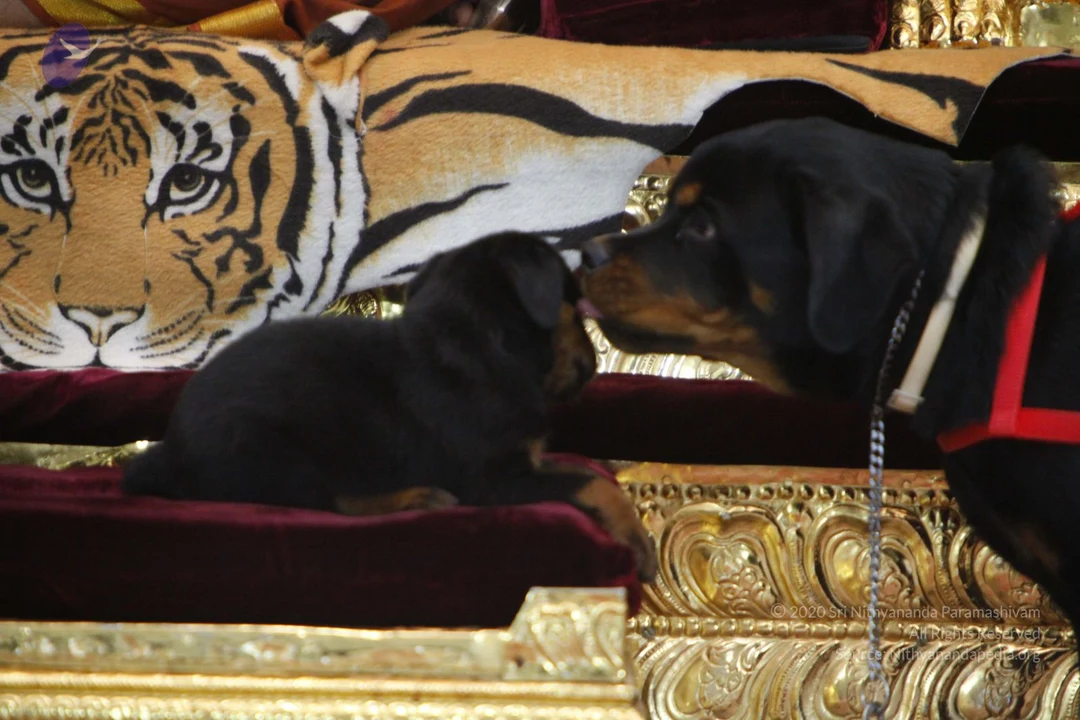
A photograph of two black-and-tan Rottweiler dogs on a gold-trimmed ornate platform with a maroon velvet cushion. Behind them is a large printed tiger-skin rug showing a tiger's face with bright eyes. The adult dog in the foreground wears a red harness and a white collar with a lead, while a smaller puppy lies on the cushion beside it. No people are visible in the frame.A seated man in an ornate gold and maroon throne sits on a tiger-skin covered dais, smiling and resting his arms on the armrests. He wears an orange-saffron shawl over his shoulders and yellow dhoti, with a white-flower garland and a gold necklace, gold bangles, and a white tilak on his forehead; a person by appearance. Two black puppies with one wearing a red harness sniff the dais near the throne. The gold-carved throne, blue and pink wall panels, and a brass figurine on the dais form the background.A man seated cross-legged on an ornate golden throne with lion-shaped armrests and deep red velvet cushions, smiling. He wears an orange-saffron dhoti with a yellow border, a long beaded rudraksha-style mala, a layered gold necklace, gold bangles and a ring, with a tilak on his forehead. A tiger-striped cloth covers the dais at his feet, and a small black puppy sits to the right. Behind the throne are gold-trimmed panels and a brass lamp. a person: the saffron clothing, rudraksha mala, ceremonial gold ornaments and throne match the page's description, but the face is not used for identification.Two black and tan Rottweiler puppies stand on a red velvet cushioned platform trimmed with ornate gold carved edging. The larger puppy on the right wears a red harness and a metal chain leash and faces the smaller puppy on the left, which is peering over the cushion. The background is a soft pink and blue wall. No people are visible.A photograph of two black-and-tan Rottweiler dogs in a temple-style hall. A small Rottweiler puppy stands on a red velvet cushioned seat with ornate gold carved base, leaning forward toward an adult Rottweiler wearing a red harness and a silver chain leash. Behind them are pastel pink and blue walls and a gold-decorated object at the upper left. No humans are visible.Two black and tan Rottweiler dogs stand on a red and blue patterned carpet in front of an ornate golden throne. The larger adult dog wears a red harness and sniffs toward a smaller puppy that stands on the throne's lower golden tier. The throne has maroon velvet cushions and a tiger-striped cloth draped over its seat, with gold-carved panels and a golden deity murti visible above. The setting appears to be an ashram hall with pink and beige walls. No people are visible.

Satsang

7 photosSource gallery
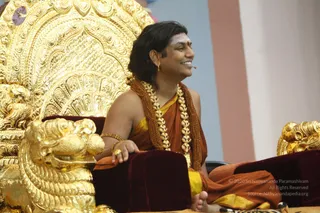
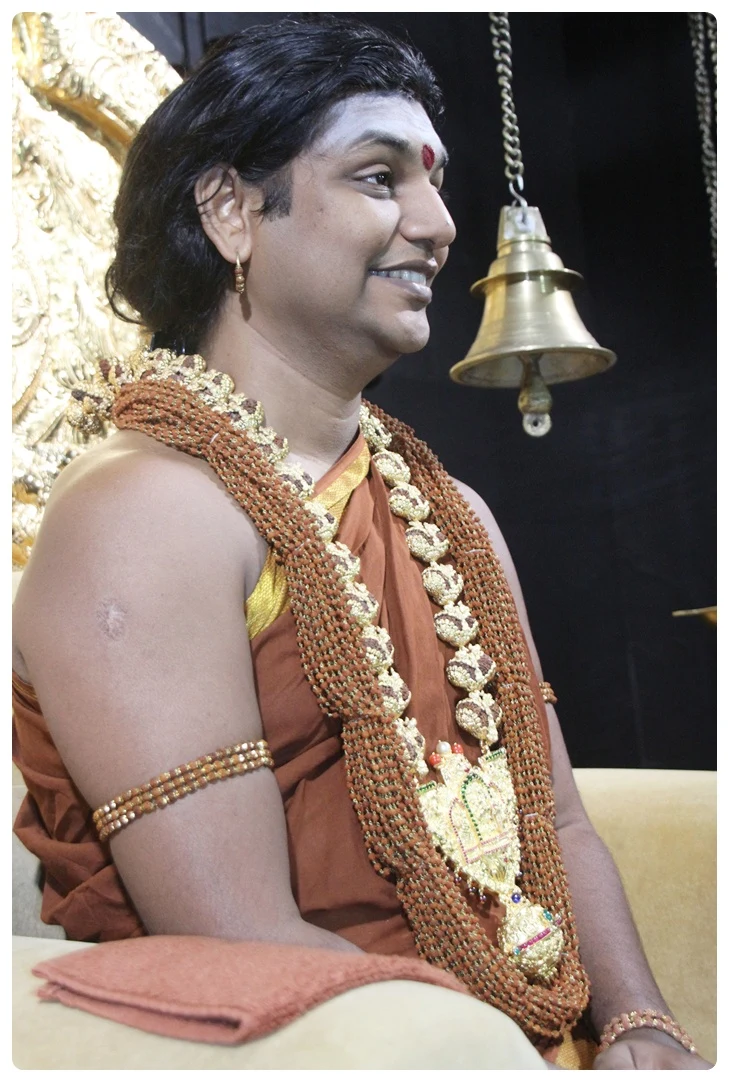
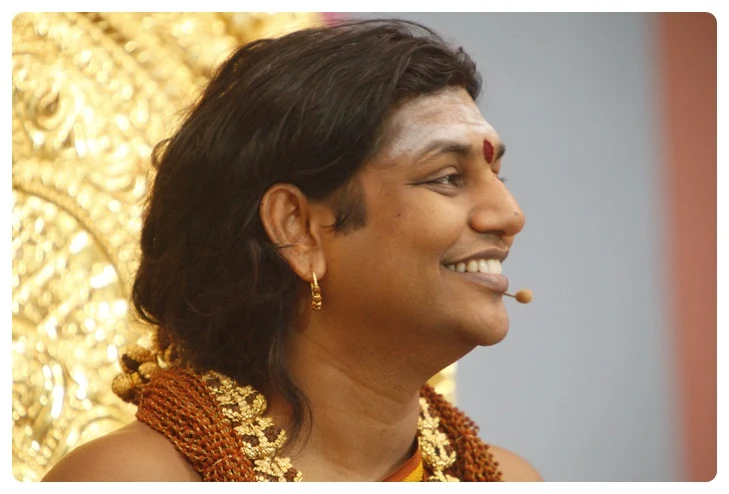
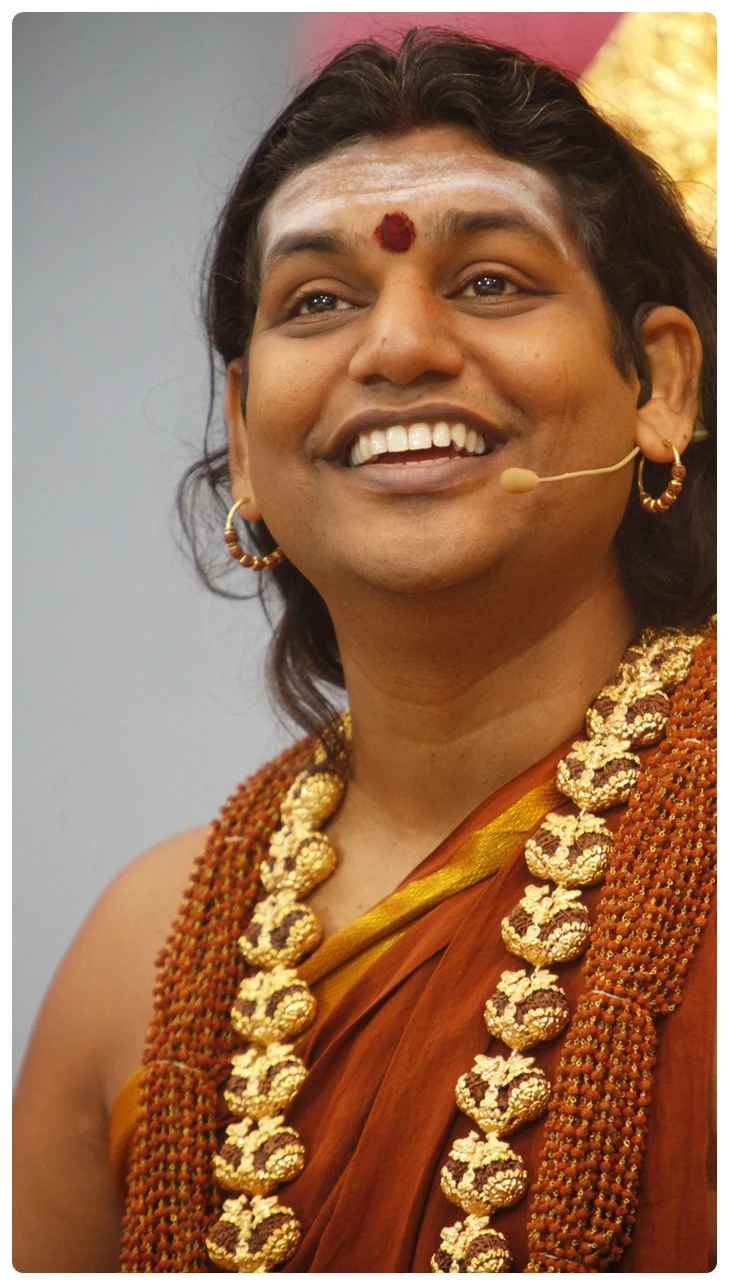
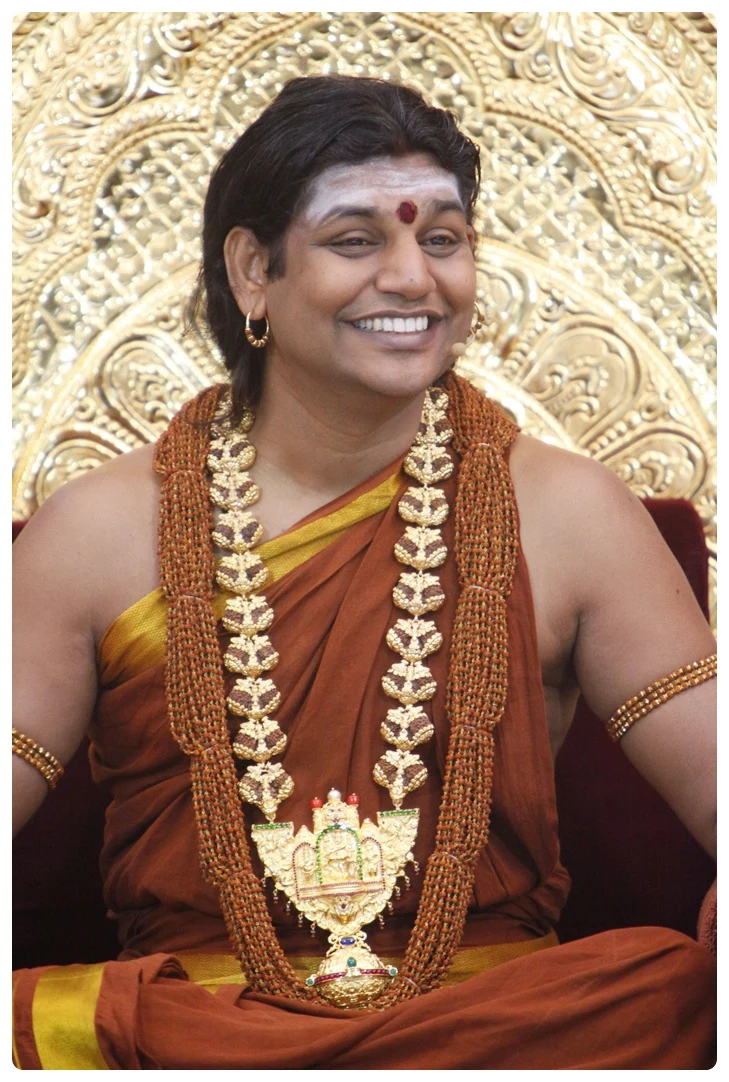
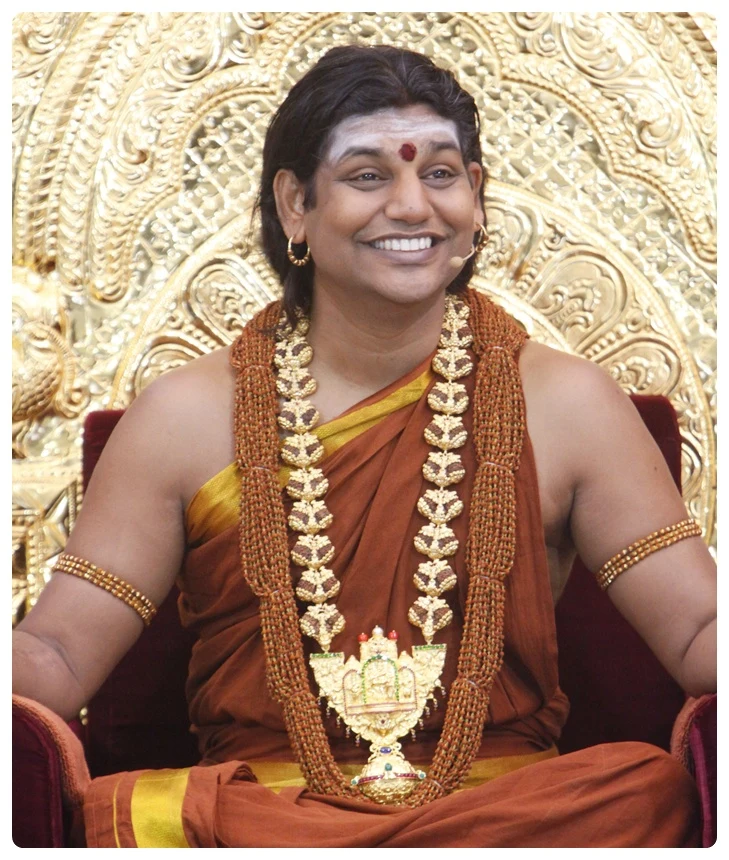
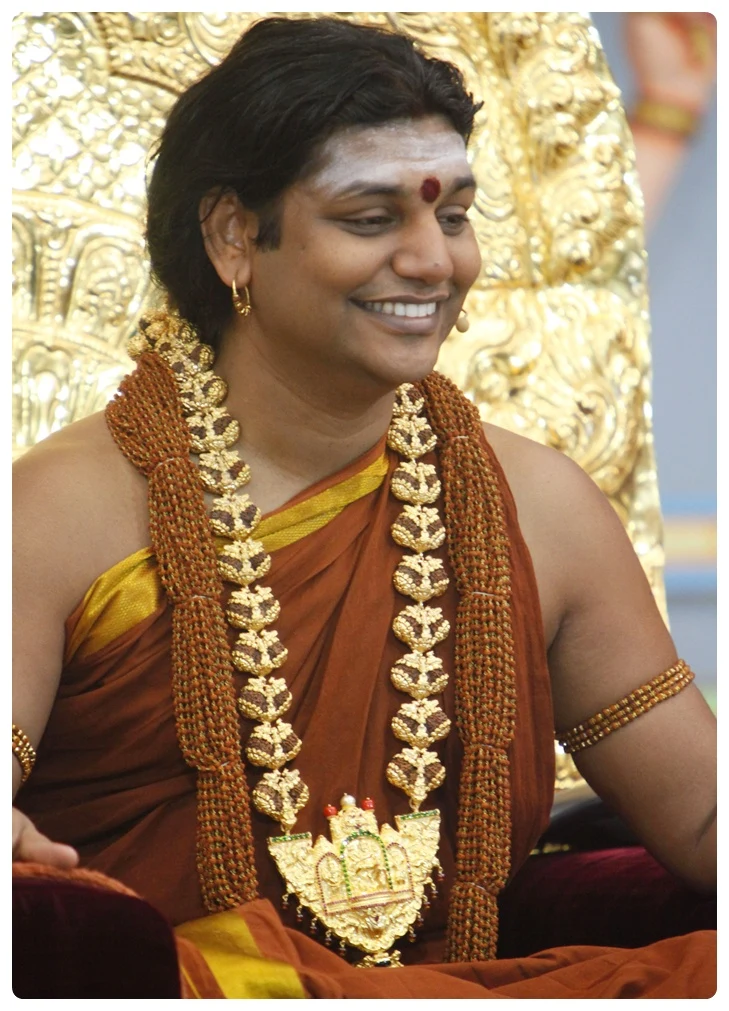
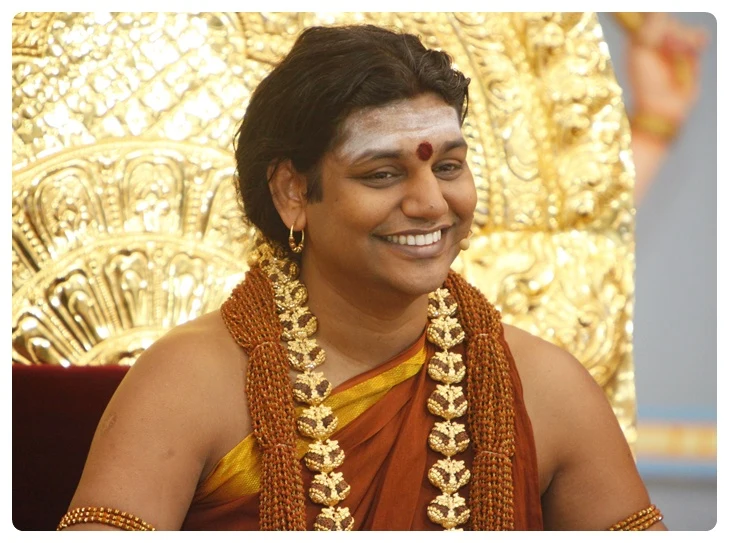
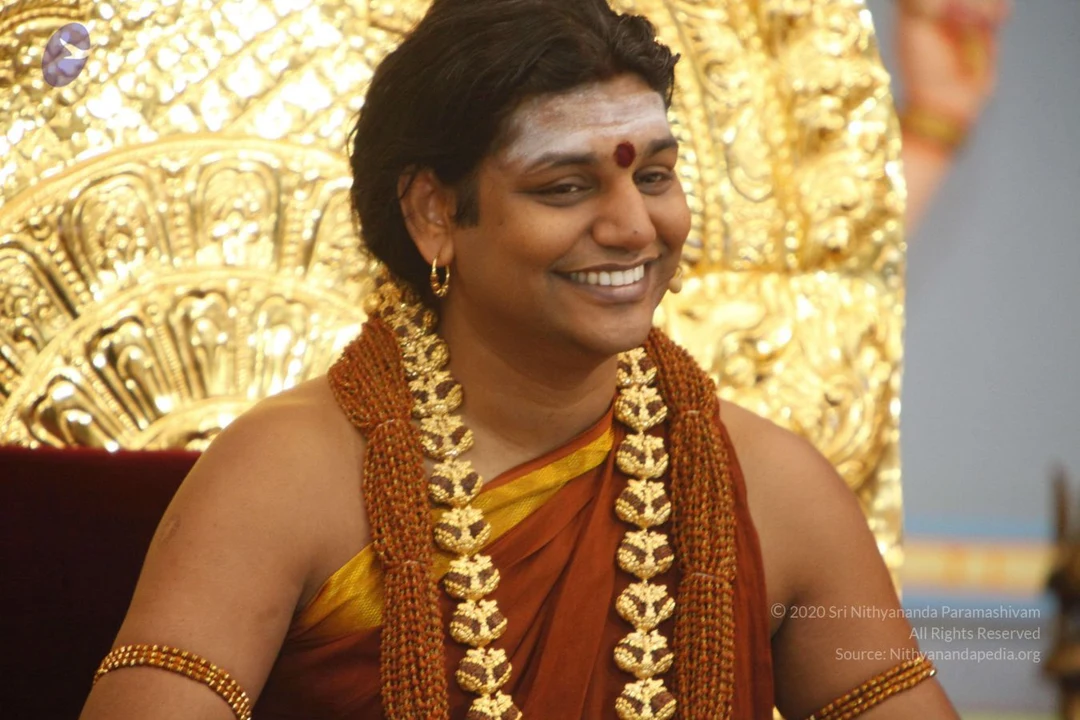
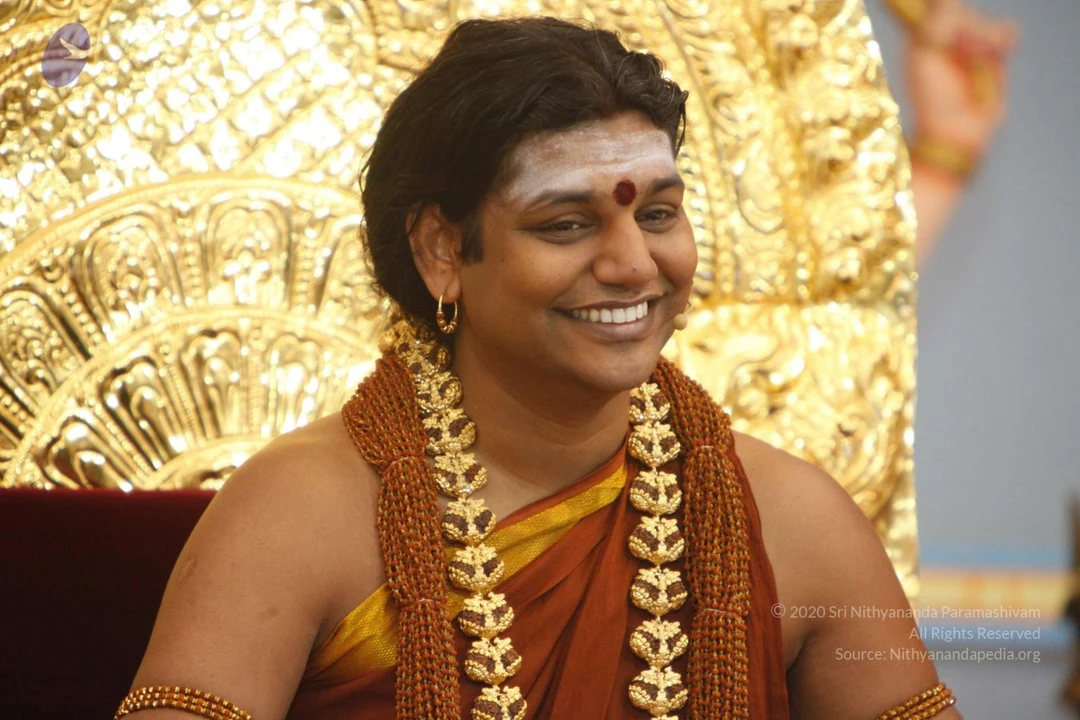
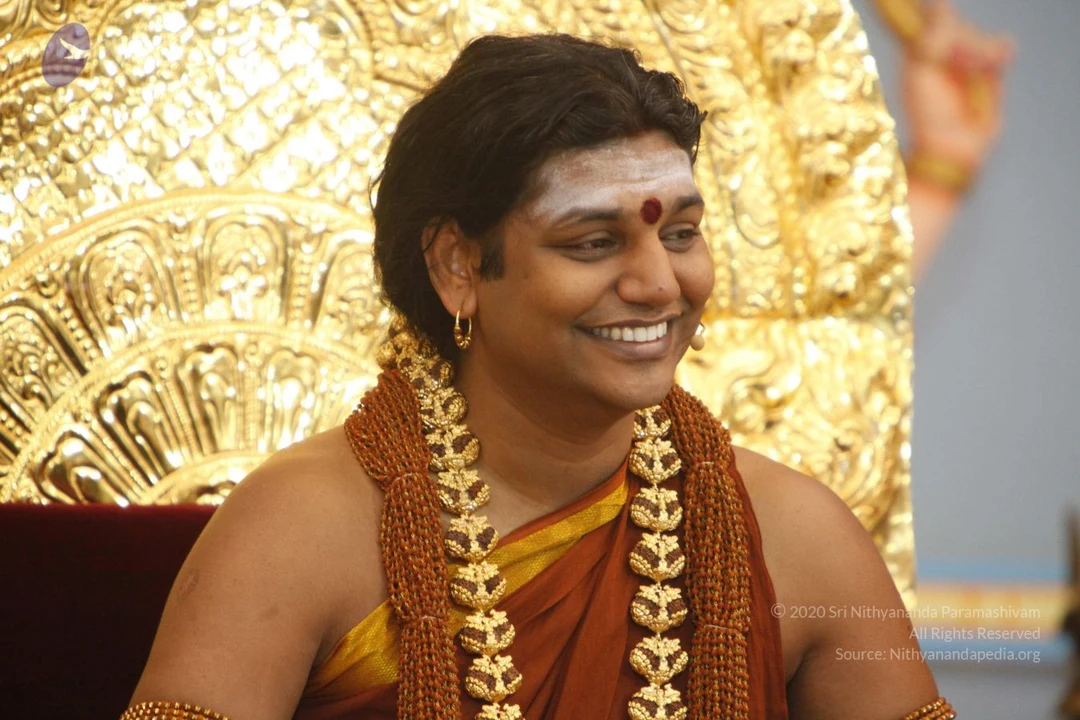
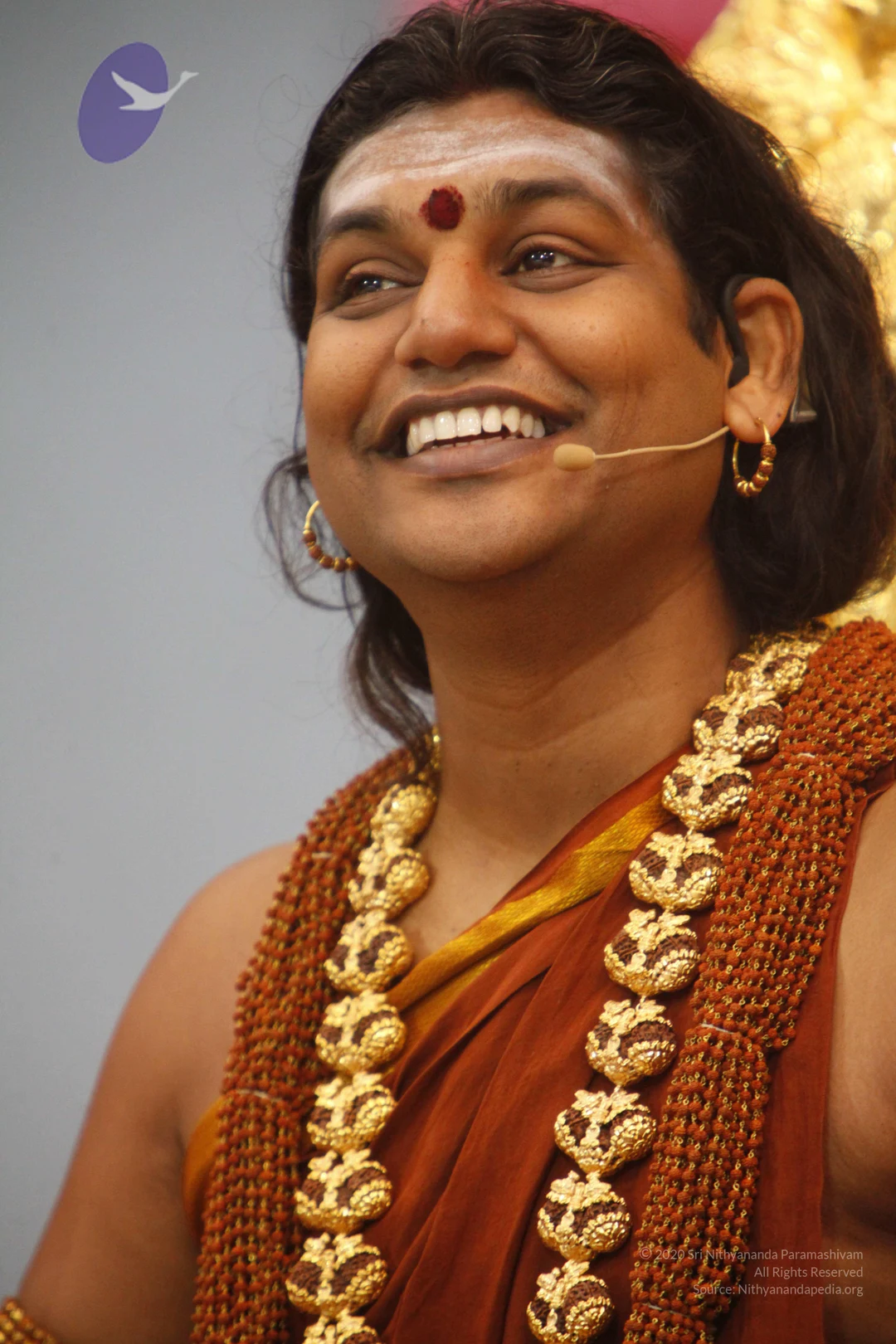
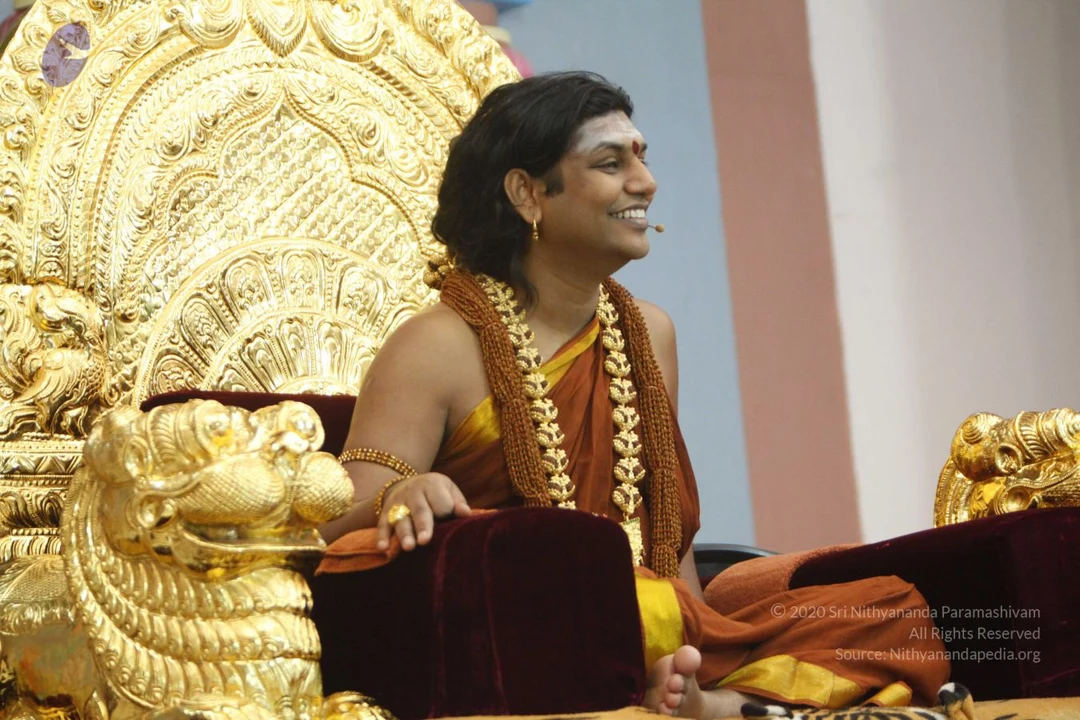
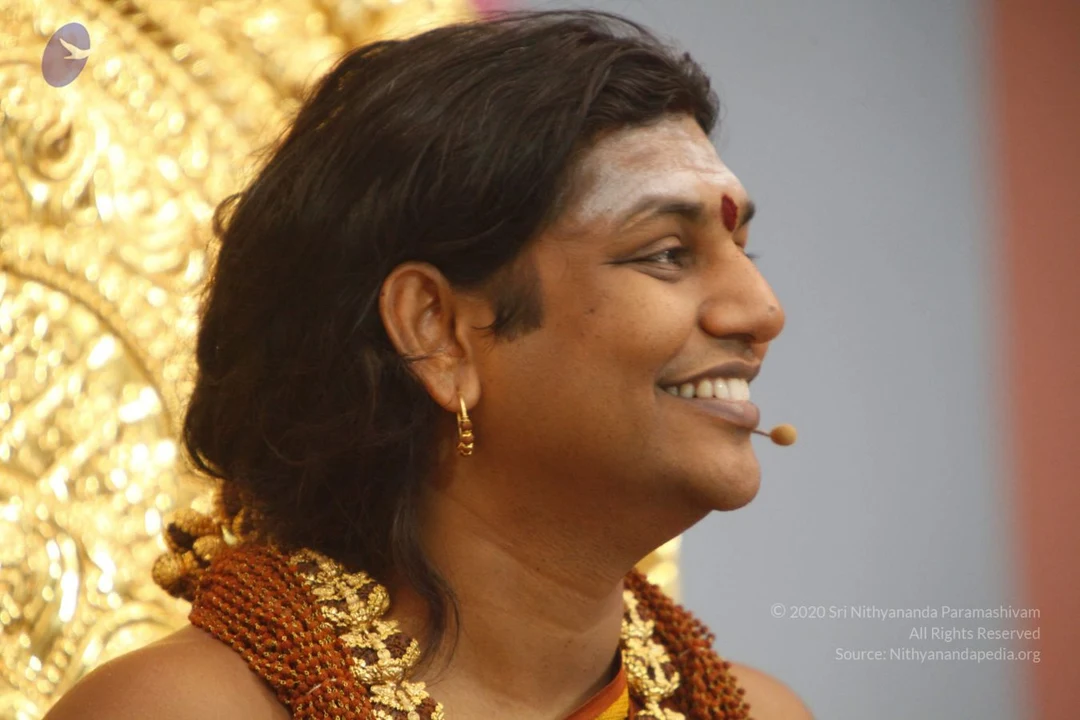
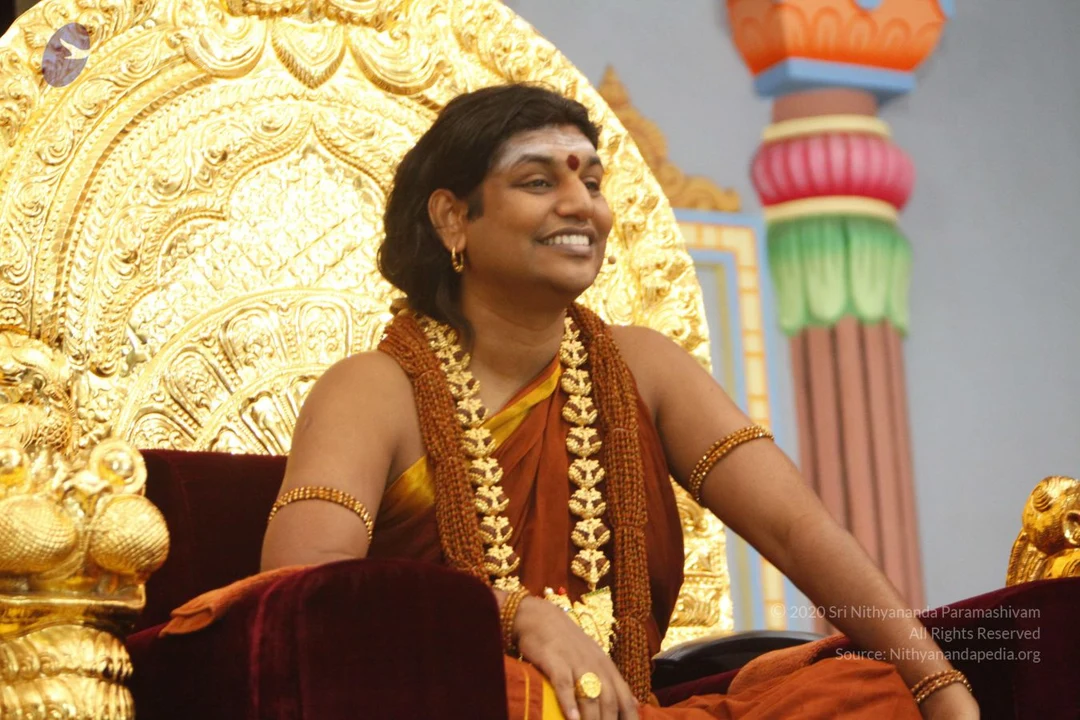
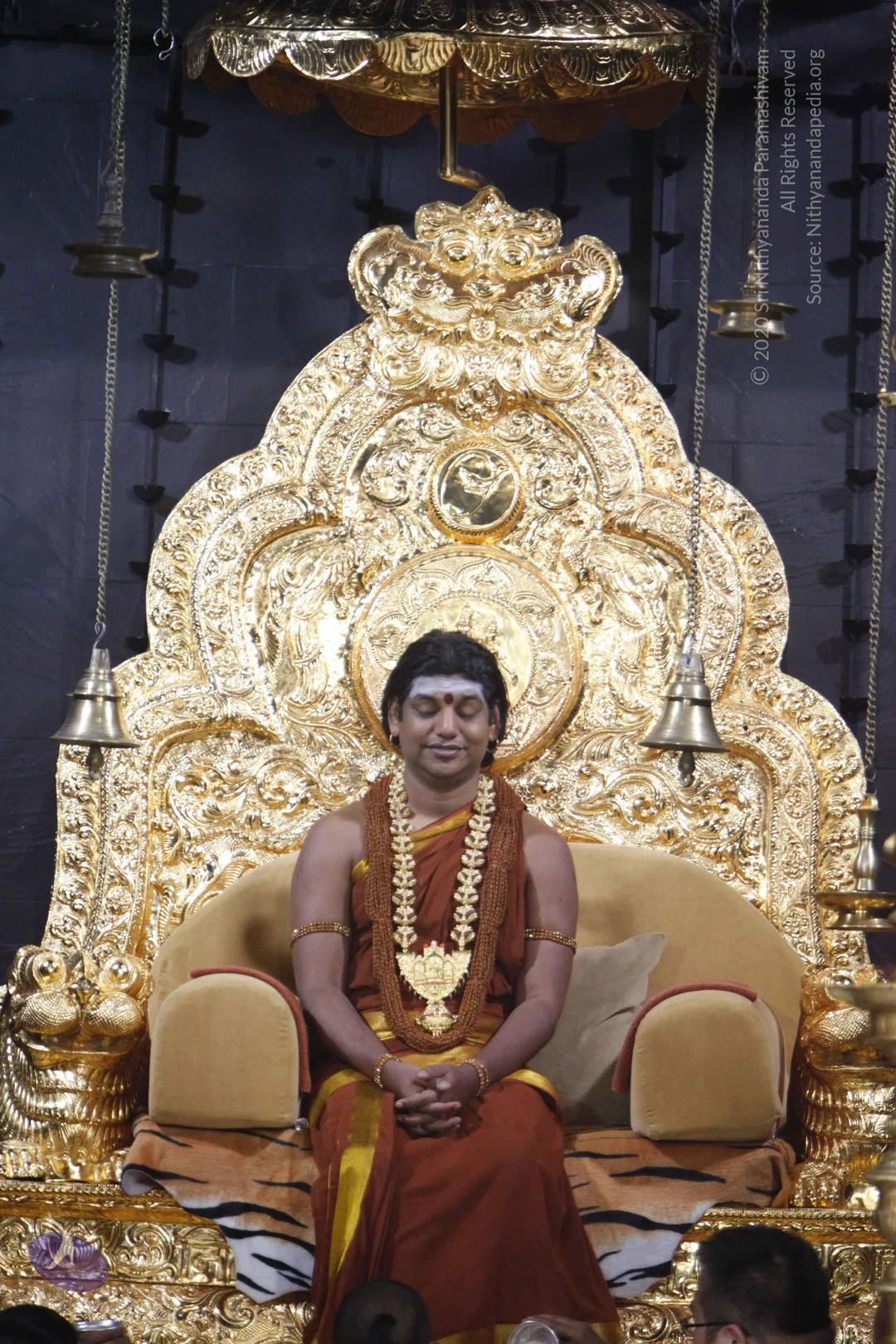
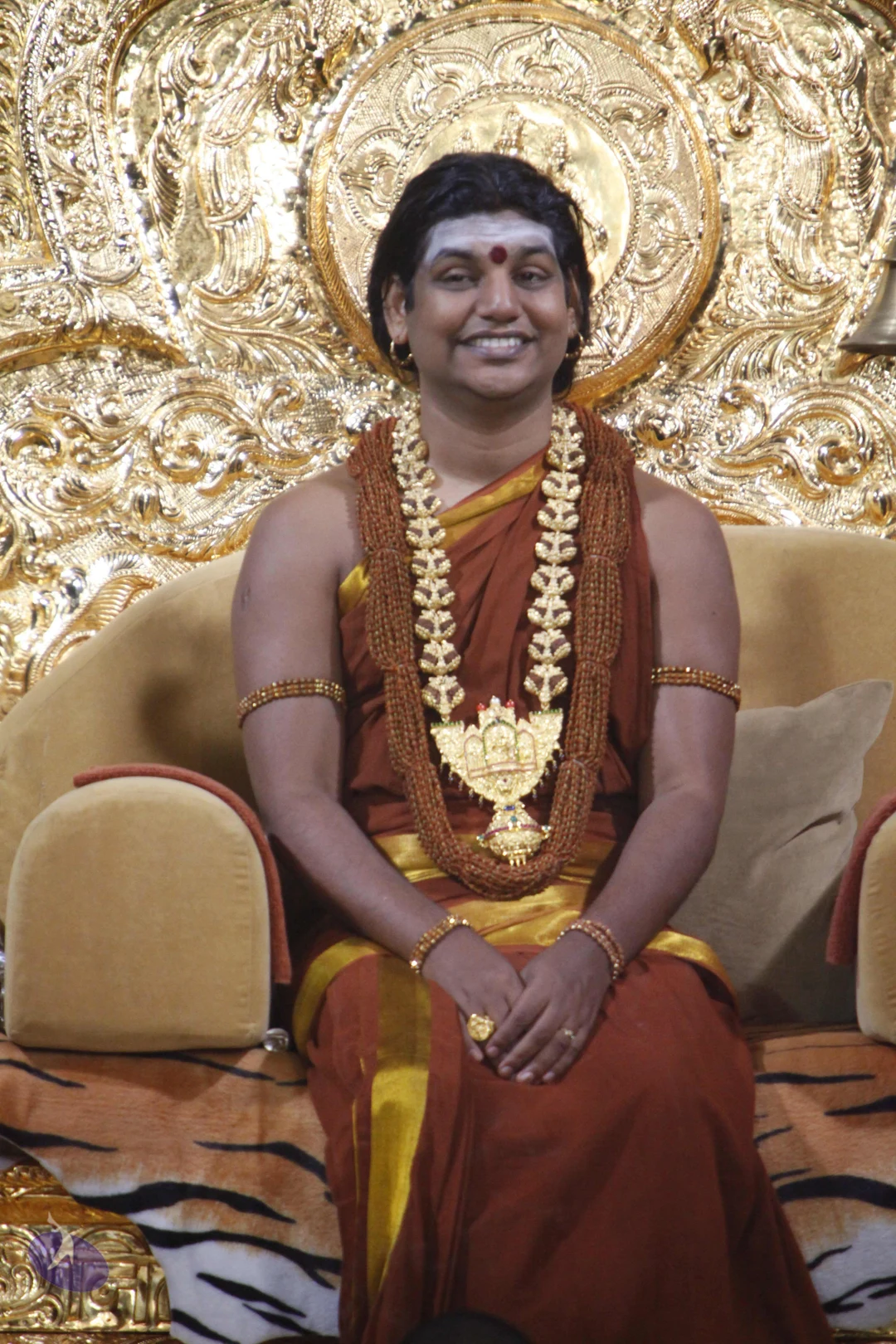
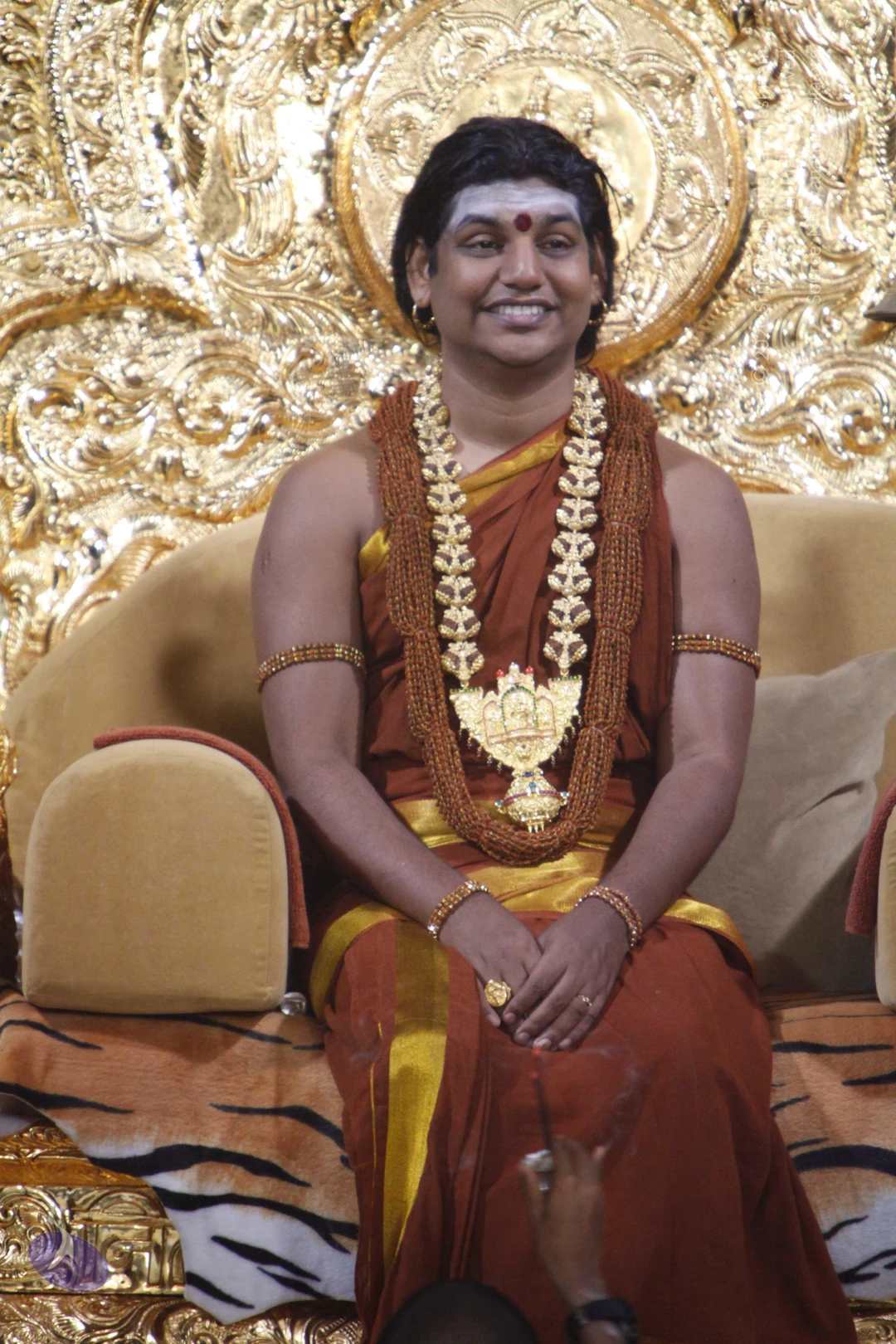
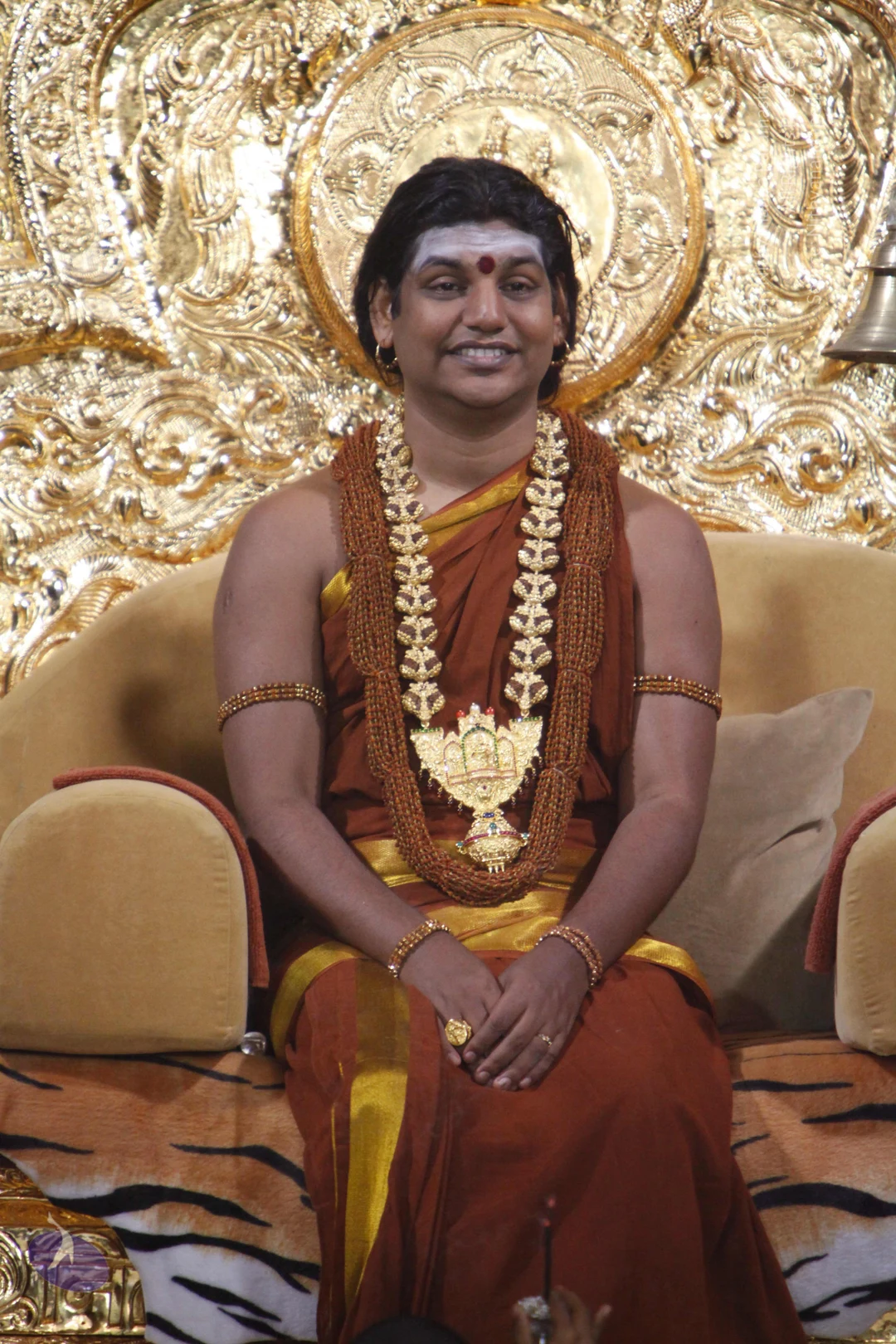
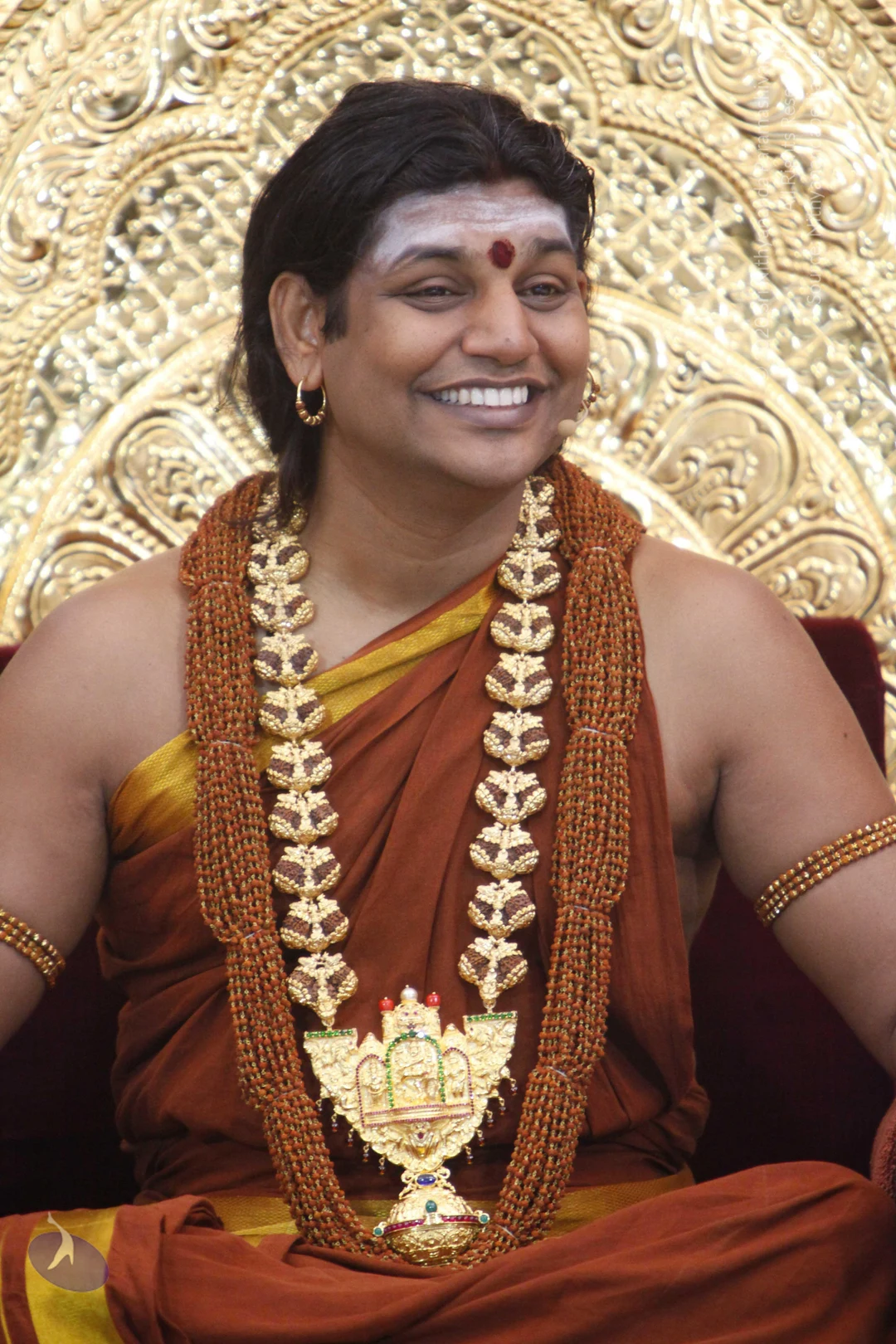
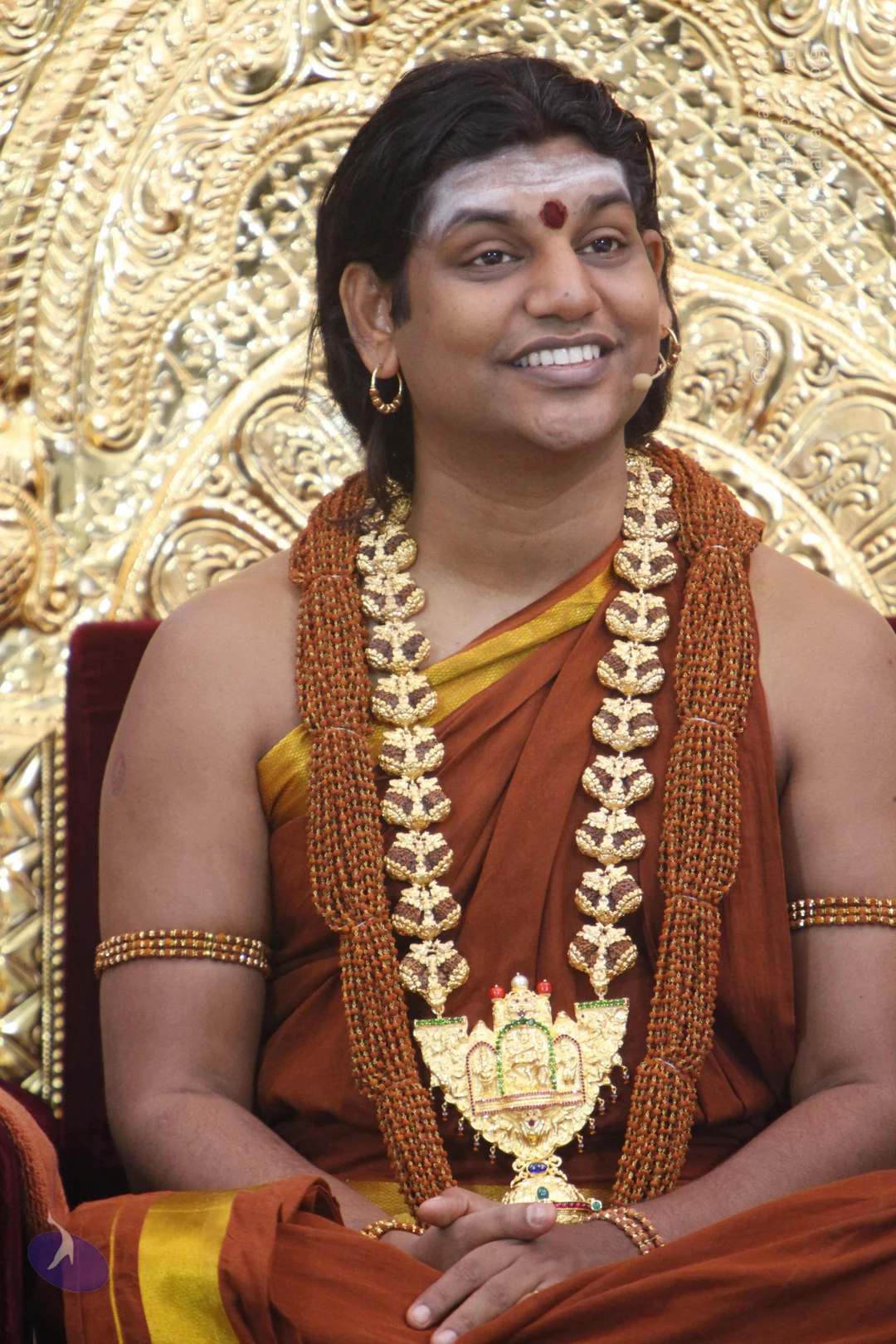
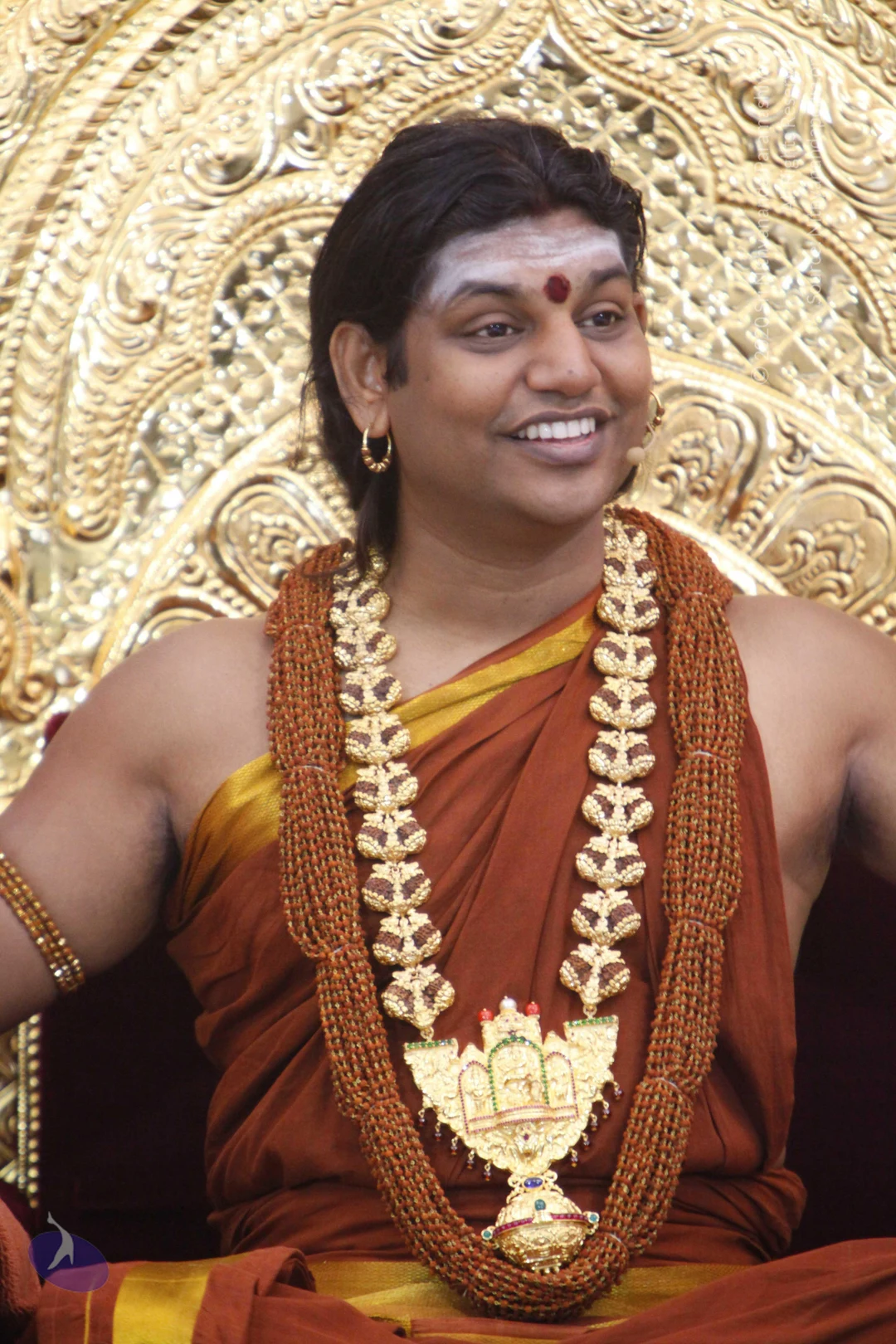
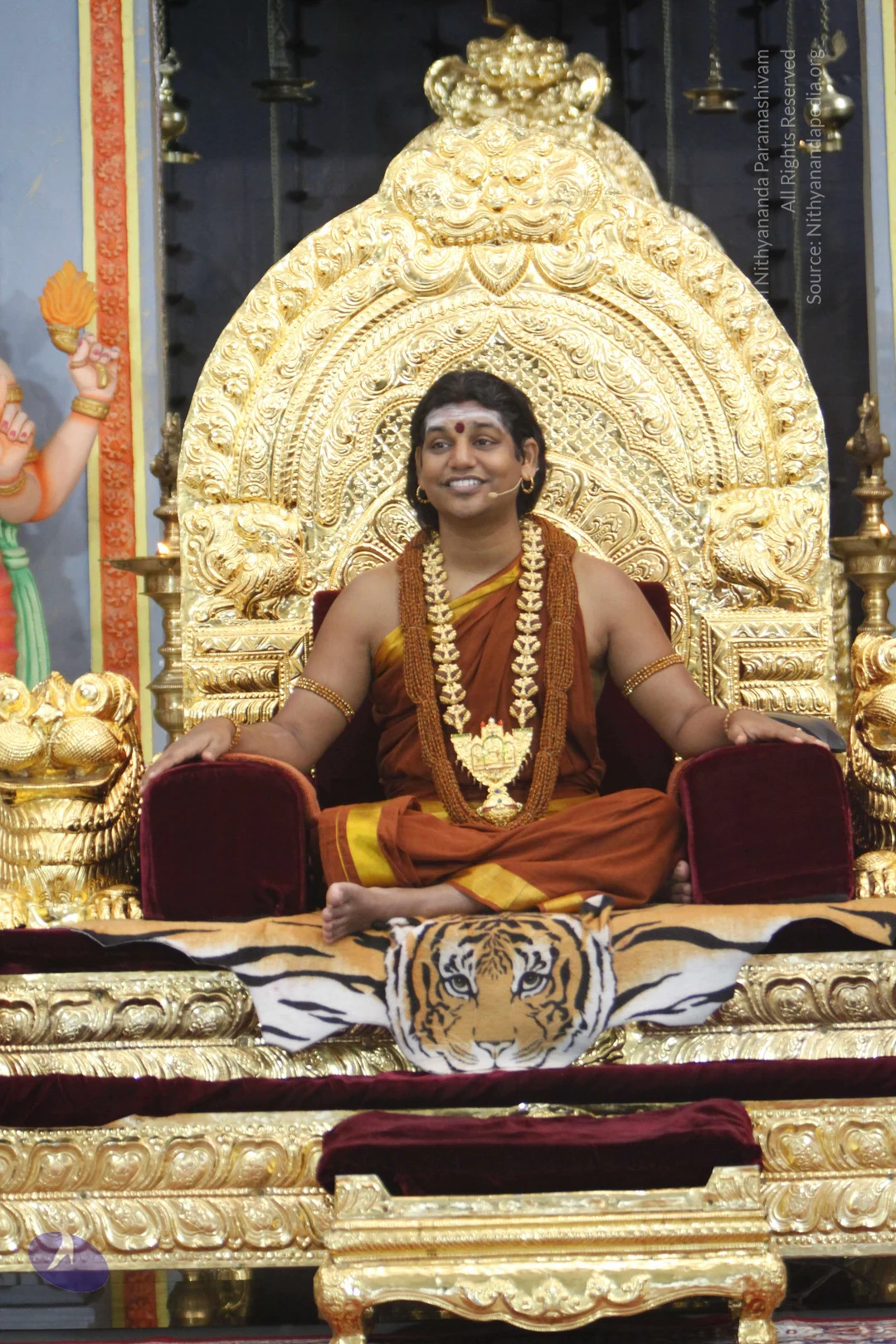
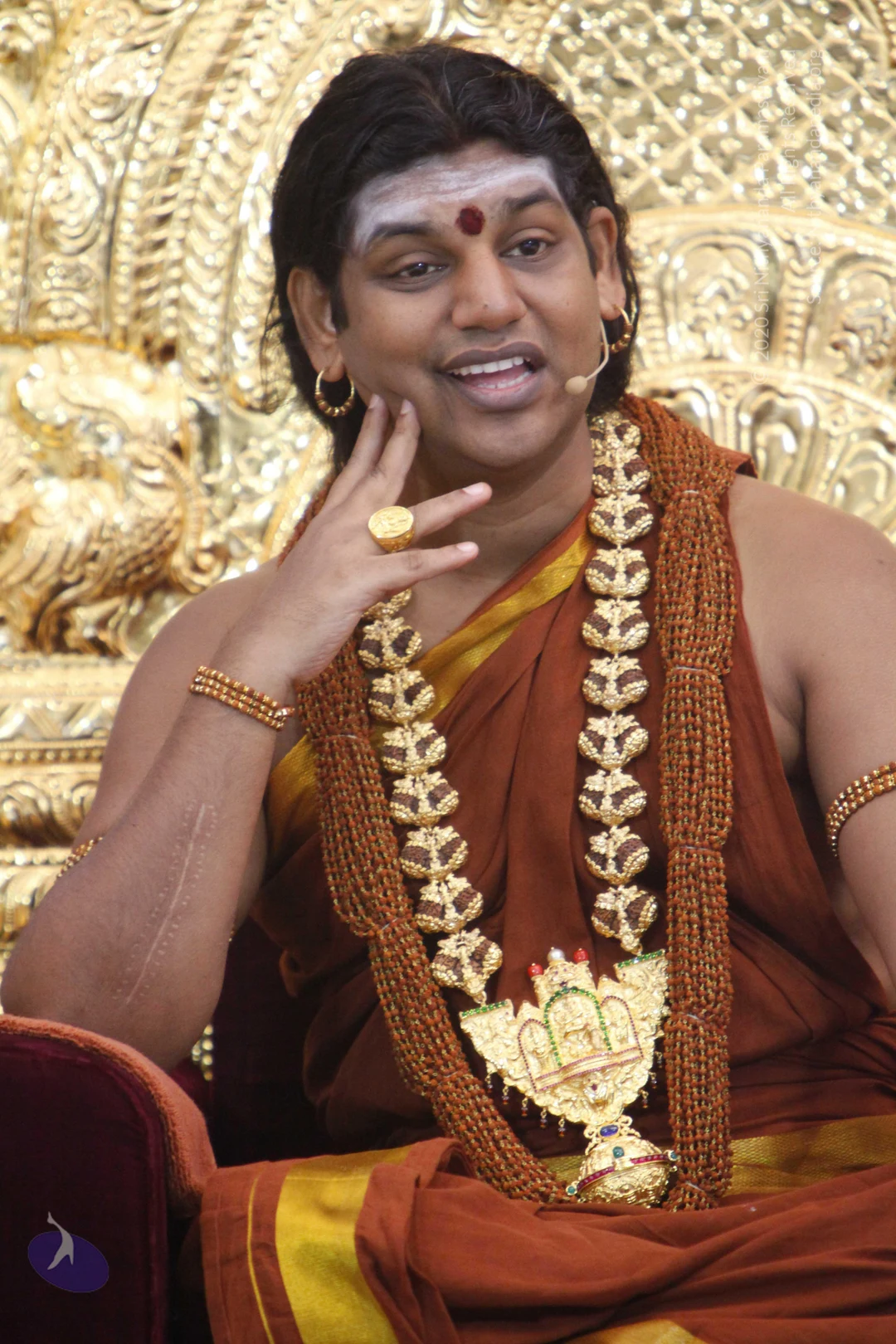
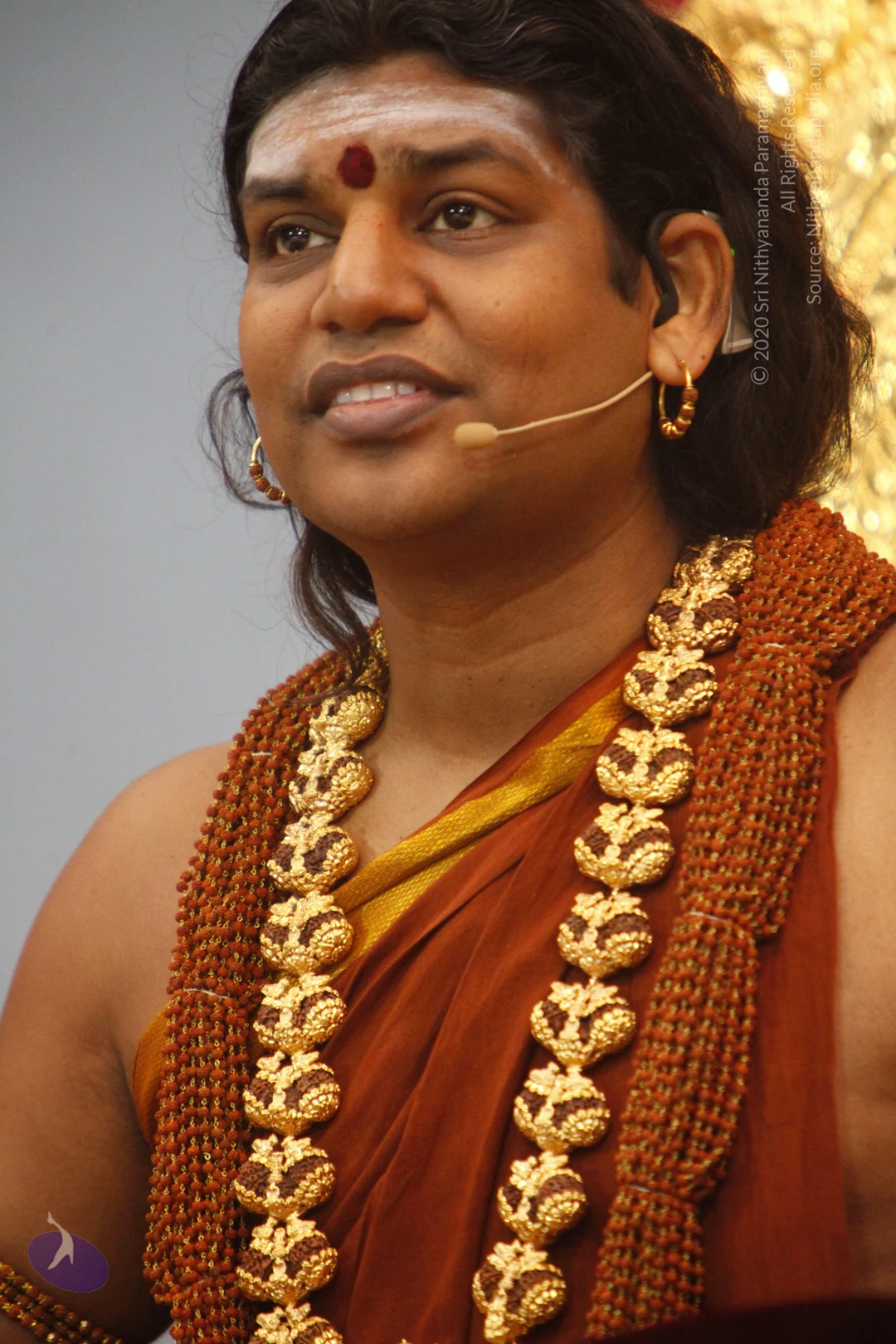
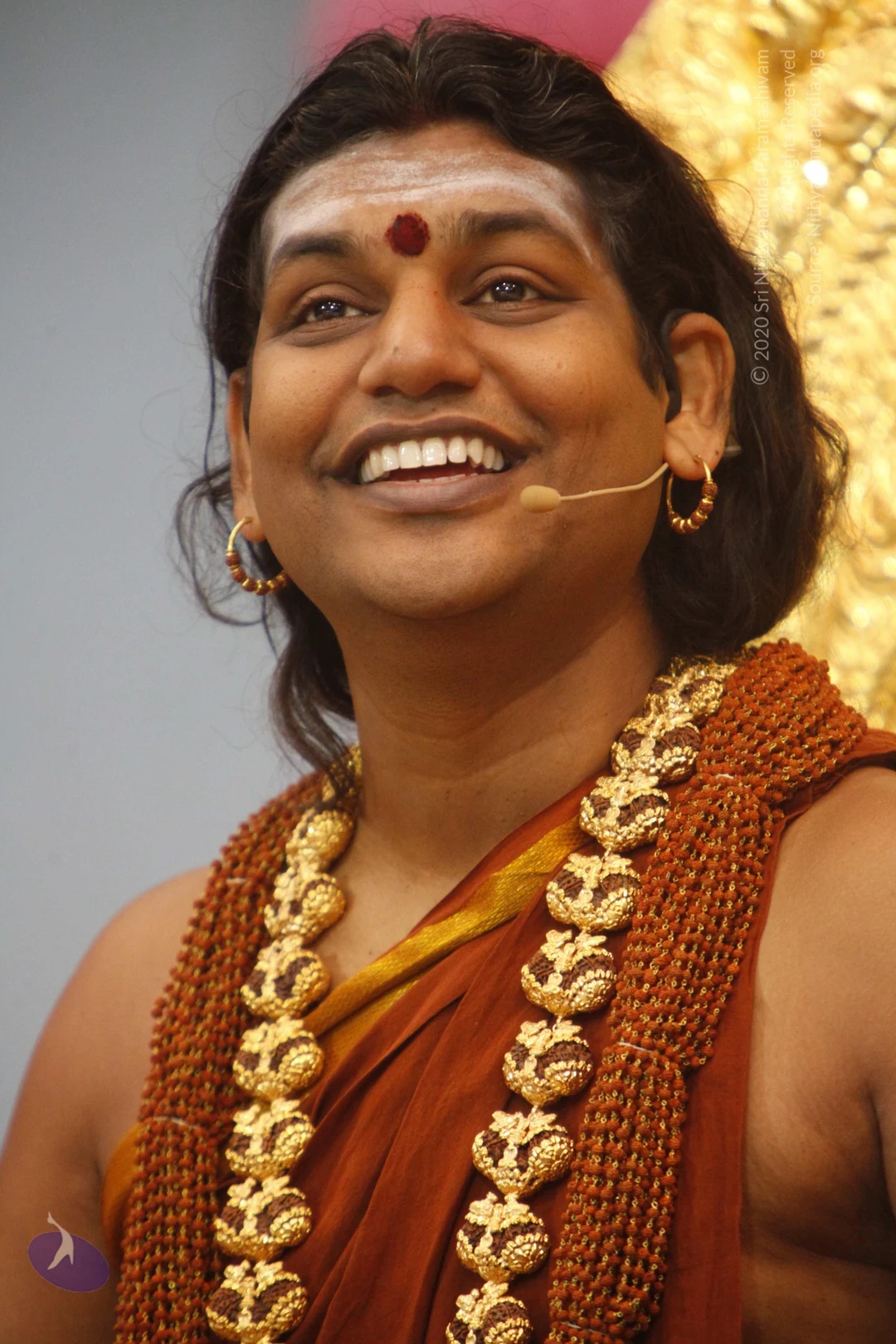
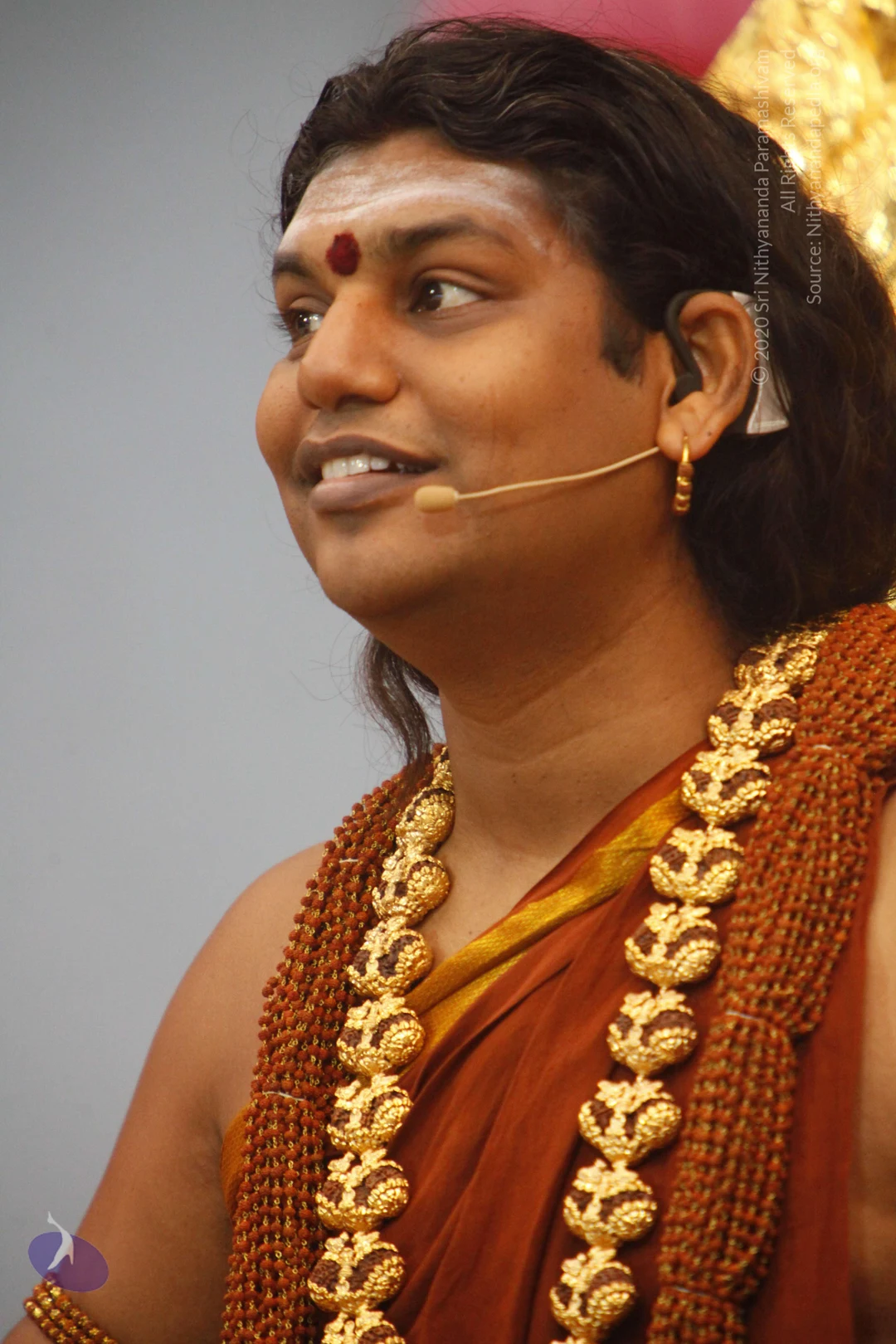
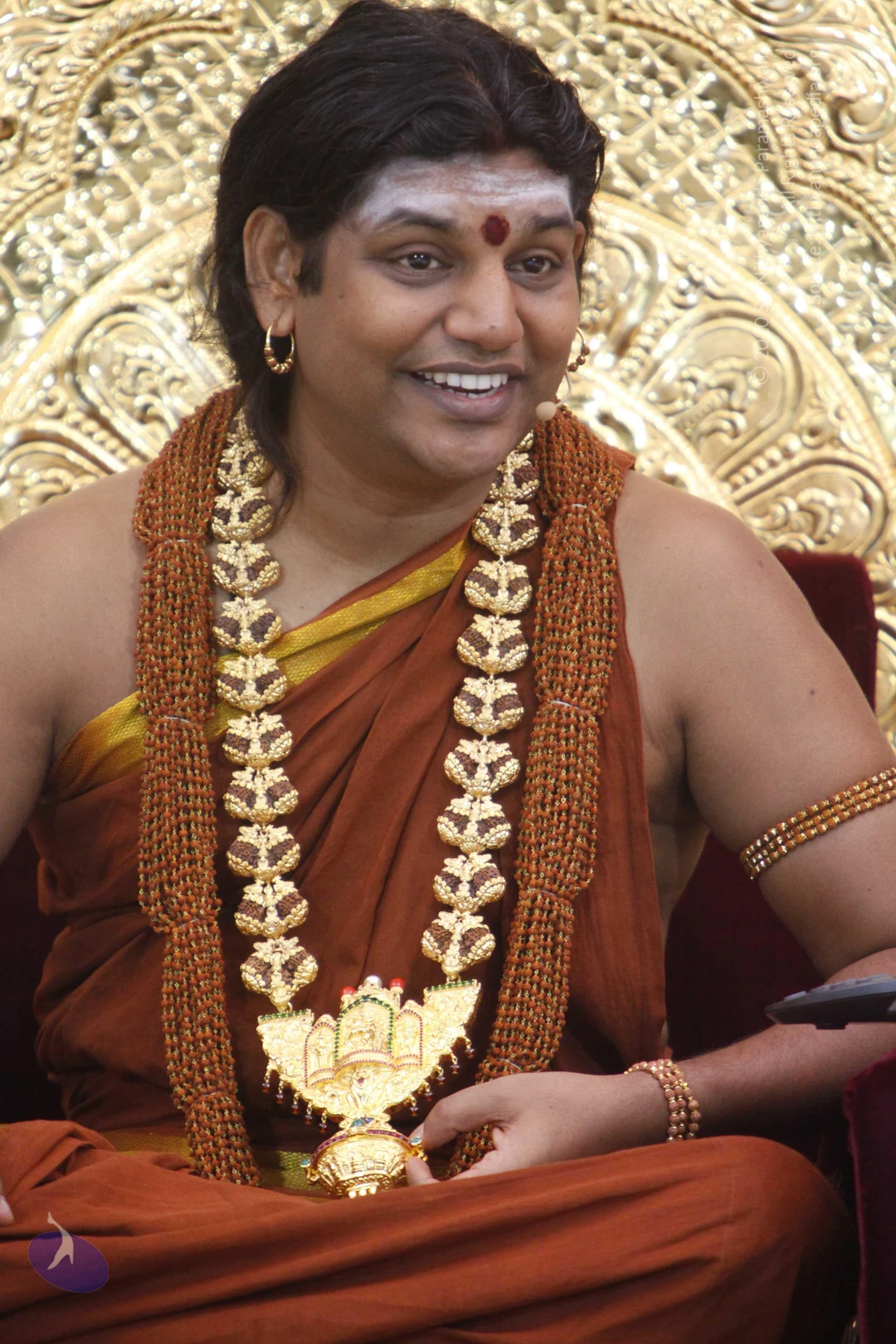
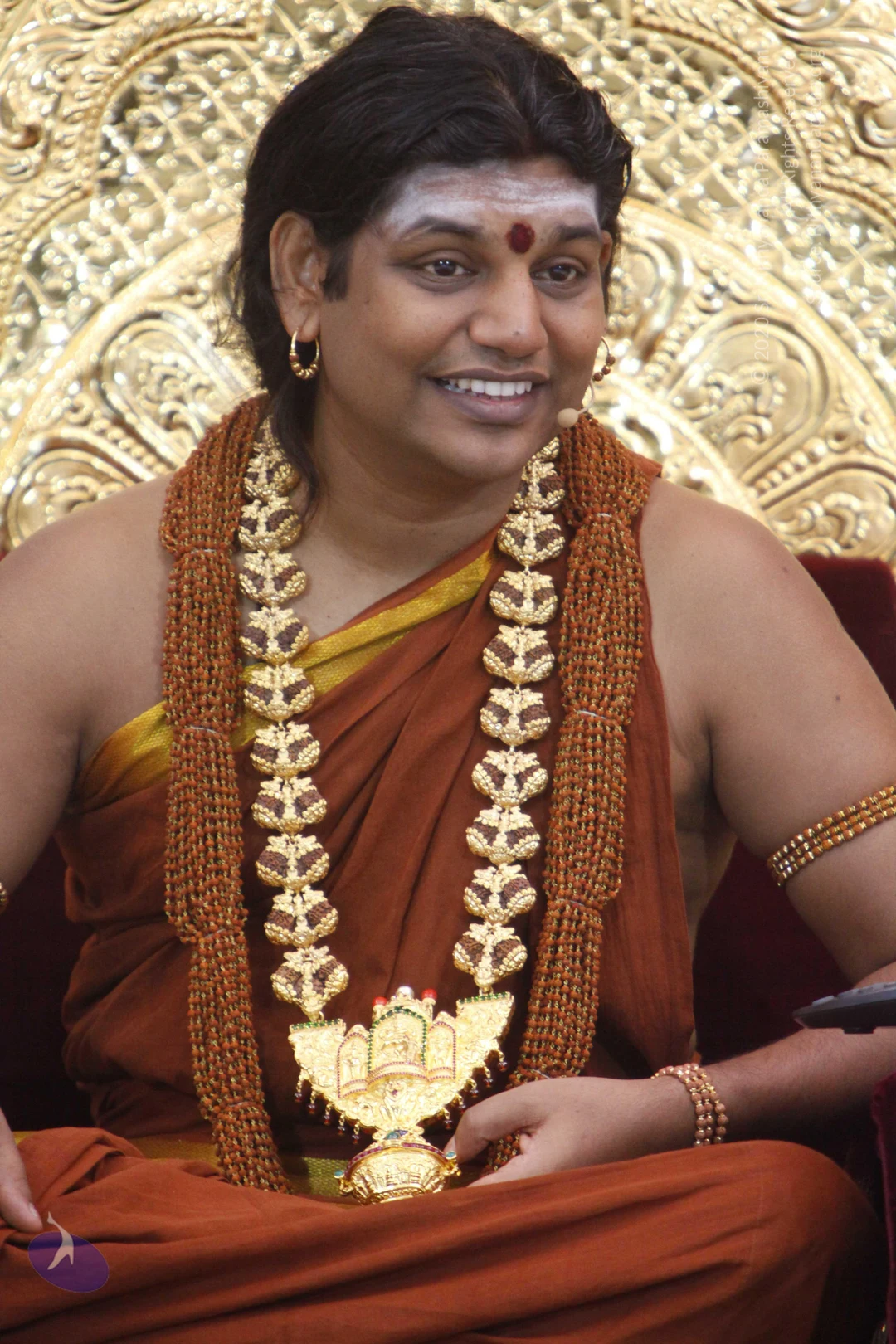
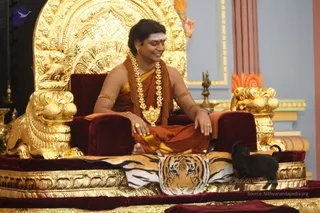
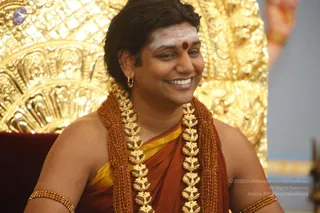
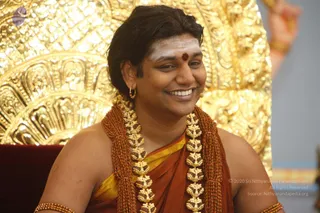
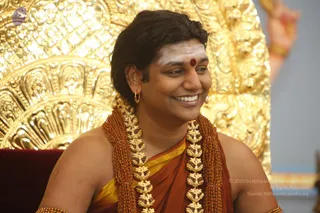
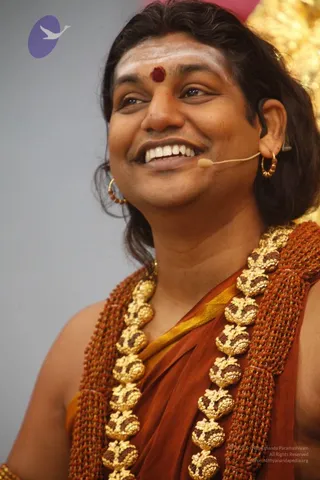
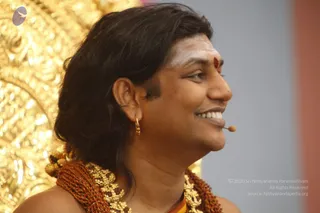
Close photo of a smiling man seated before a large gold repoussé backdrop with fan-like radiating motifs. He wears an orange-saffron cloth draped over one shoulder with a yellow border, layered rudraksha-style brown beaded malas with gold bead ornaments at the chest, gold bangles on his upper arms, and gold hoop earrings. His forehead bears white sacred ash with a red kumkum dot, and his long dark hair is swept back.A smiling man with swept-back dark hair sits before an ornate gold repoussé backdrop. He wears a white vibhuti line and a red kumkum dot on his forehead, a gold hoop earring, a saffron-orange shawl over the shoulder with a gold-yellow border, a long necklace of gold-toned beads and rudraksha-style mala beads, and gold arm bands. a person is seated in a ceremonial setting in front of a golden throne-like panel, with a blurred figure visible at the right edge. A small circular logo appears in the upper left.A smiling man sits on an ornate gilded throne with elaborate repoussé carving behind him. He wears a saffron-orange shawl over bare shoulders, a gold-and-brown beaded necklace with large ornate gold pendants, and gold hoop earrings. He has white sacred ash on his forehead and a red dot at the centre. A red velvet cushion is at lower left. The image is a photograph of a single seated person, with a faint partial figure visible at upper right. Appearance-based cues are consistent with the a person candidate, identified by saffron shawl, rudraksha-style beaded necklace and ceremonial gold ornaments while seated on a throne.Close-up photo of a smiling man with long dark hair, white vertical forehead markings and a red bindi, wearing a small headset microphone and beaded hoop earrings. He wears an orange-brown robe with a gold border and multiple layers of gold-and-rudraksha beaded necklaces. Bare shoulders, plain grey backdrop at left and blurred gold decor at upper right. a person appearance with rudraksha malas, gold ceremonial necklaces and saffron-toned robes, shown speaking at a satsang setting.A smiling man with shoulder-length dark hair sits cross-legged on an ornate gold throne with carved lion-head armrests and maroon velvet cushions. He wears an orange-saffron dhoti and shawl with a gold border, multiple rudraksha malas and a ceremonial gold necklace, gold bangles and a gold earring, and a red bindi with white tilak on his forehead. A small microphone is at his face. a person is seated in a teaching setting, with a pink-and-blue painted wall behind him.Close side profile photograph of a smiling man with shoulder-length dark hair swept back, a white vertical forehead mark with a red dot, a small gold hoop earring, and a small clip-on headset microphone near his mouth. He wears a thick rust-orange and brown rudraksha mala with gold-toned ornamental beads around his neck, and bare shoulders. Behind him is an ornate gold carved backdrop and a pale grey wall with a coral-pink edge at right. a person by appearance cues: long swept hair, rudraksha mala with gold ornaments, sacred forehead marks, and seated stage setting, consistent with the page's claim. He is seen speaking during a satsang-style event.

Sarva-Darshan

3 photosSource gallery
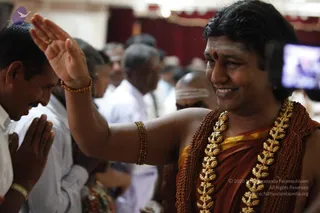
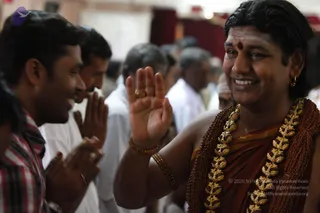
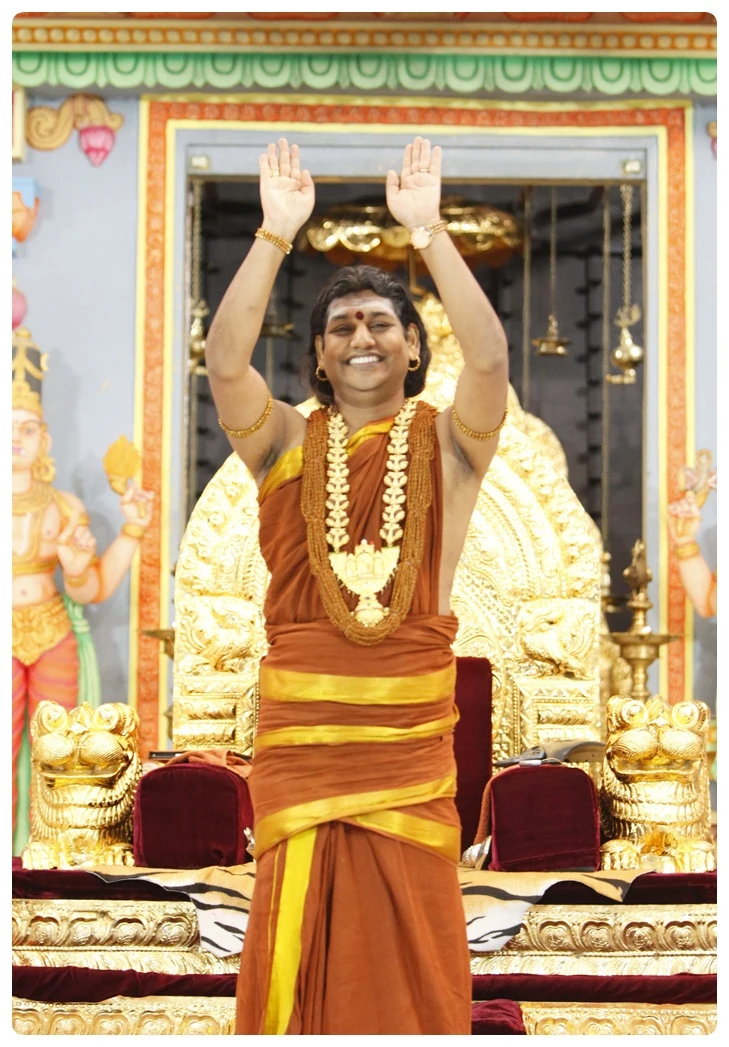
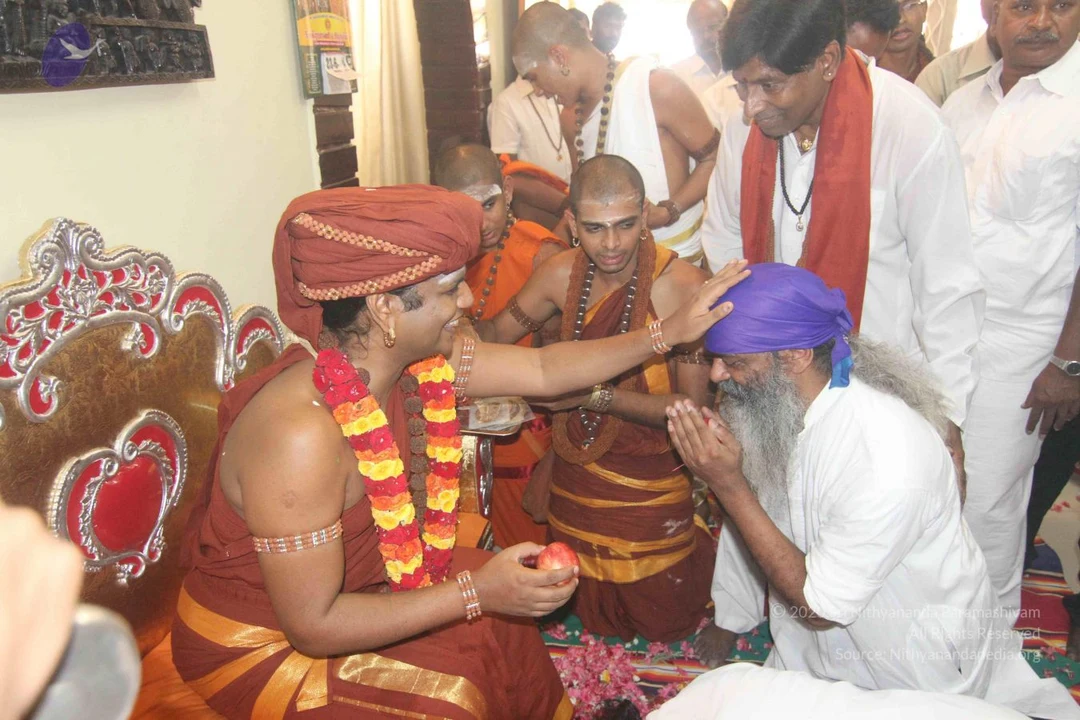
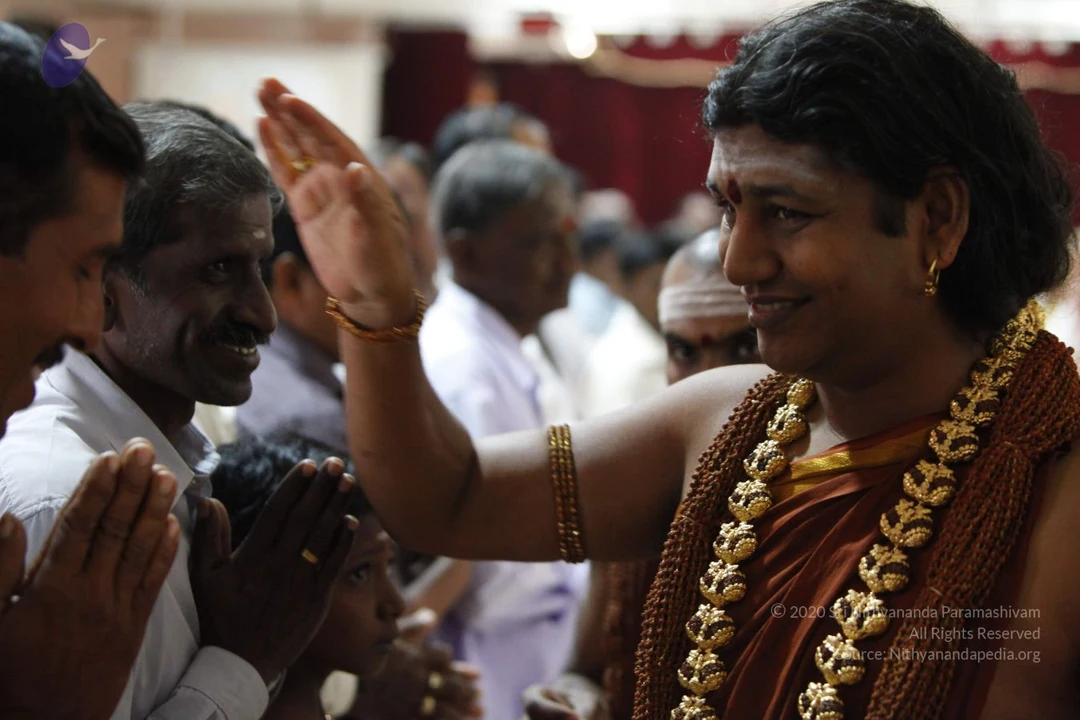
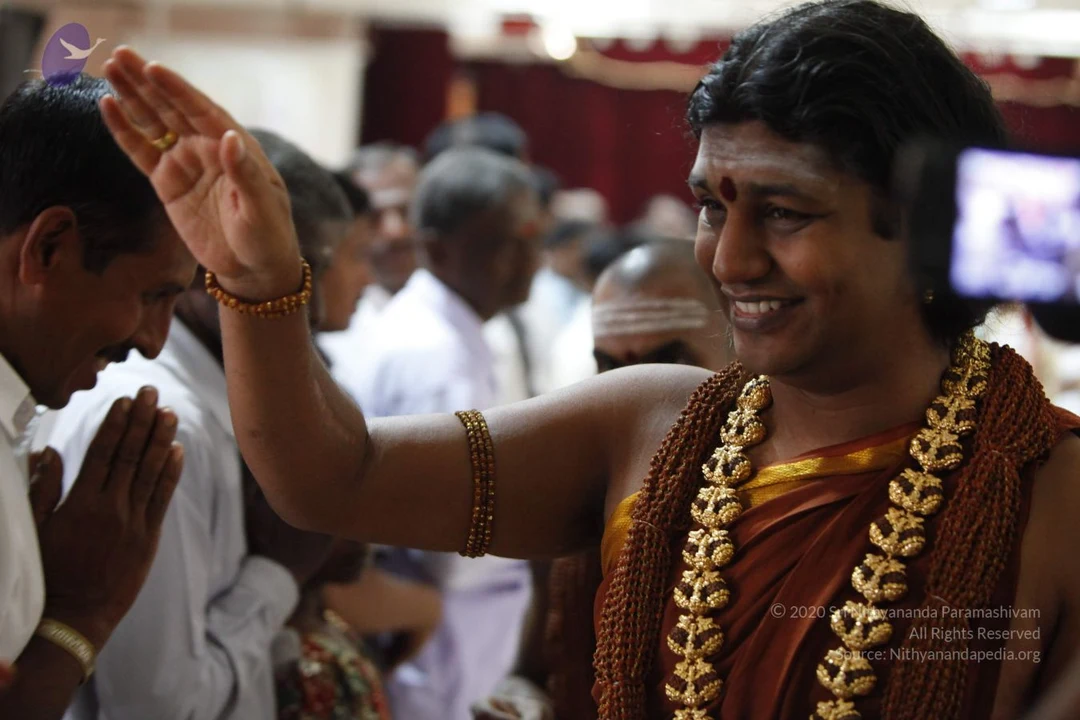
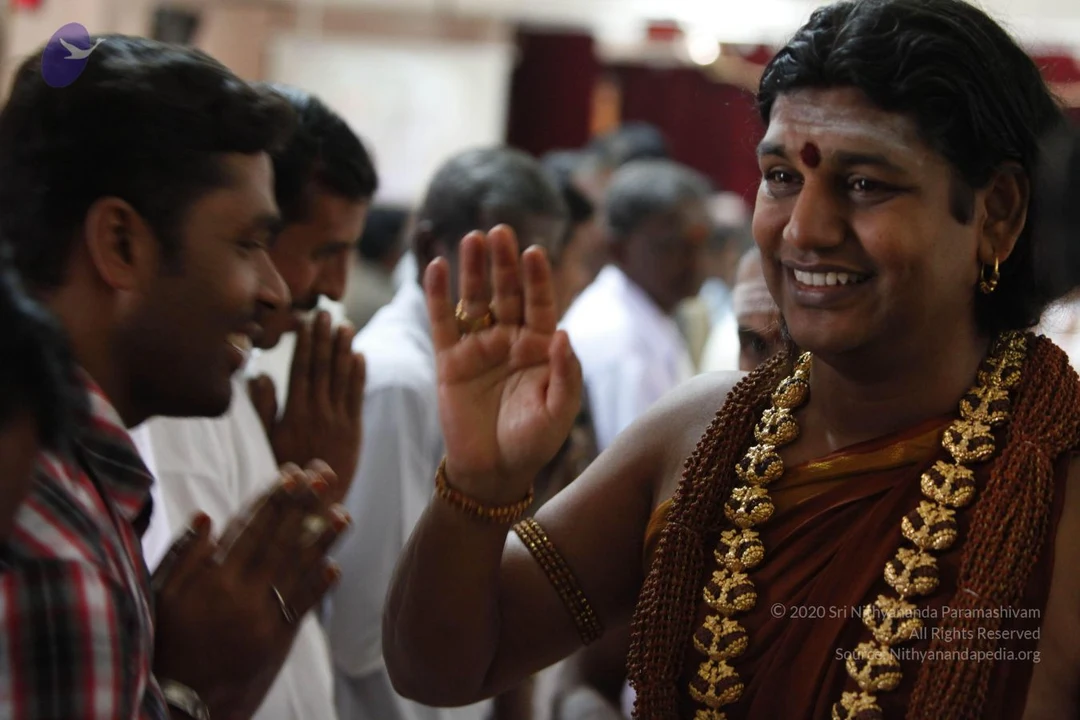
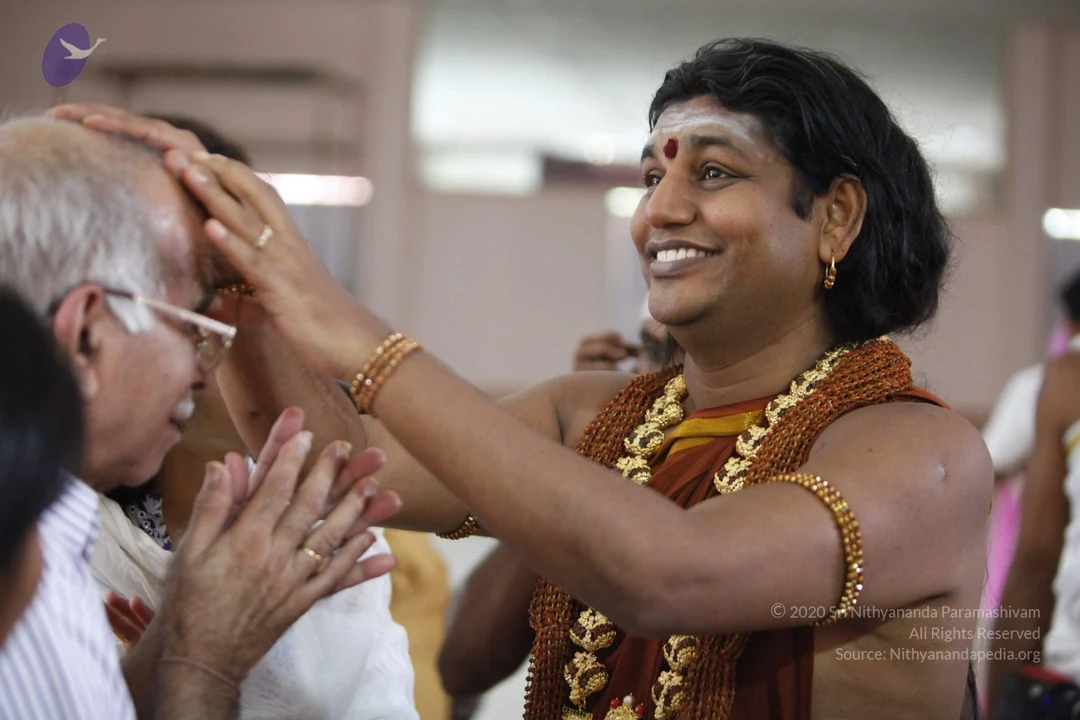
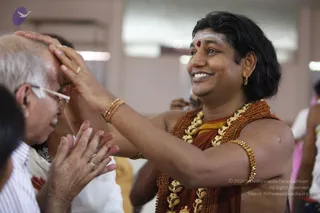
A smiling man with long dark swept-back hair and a red bindi raises his right hand in blessing toward devotees. He wears a rust-orange sannyasi-style wrap, a thick gold-and-beaded ceremonial necklace of ornate gold pendants on rudraksha-style brown beads, and a gold-and-beaded bangle on his upper arm. Behind him, a man in a white shirt and an older man with a shaved head and white tripundra markings stand among other devotees in white. On the left, a man in white folds his palms in anjali. Red curtains and a blurred camera screen appear in the background.A smiling man with a red bindi and a swept-back hairstyle stands at right, raising his right palm in greeting. He wears a rust-orange shawl over his bare shoulder and a long gold ceremonial necklace with a rudraksha-style mala beneath it, plus gold bangles and a small gold earring. To the left, a man in a red-and-white checked shirt and other men in white clothing press their palms together in namaste. Blurred figures stand in the background of a hall with red drapes.Photograph of a smiling man with long swept-back dark hair, a red bindi and white forehead markings, wearing a saffron-orange wrap, multiple rudraksha malas and gold ceremonial necklaces, plus beaded bracelets. He rests both palms on the head of an older bald man wearing glasses and a white shirt, who has his hands pressed together in prayer. Other people with white and pale clothing are partially visible at the edges of a bright indoor hall. This appears to be a blessing or initiation gesture. a person is described by his appearance, with long swept-back hair, a crown-free ornate saffron wrap and multiple rudraksha malas and gold necklaces, while the page identifies this event as a 2013 satsang.

Construction

3 photosSource gallery
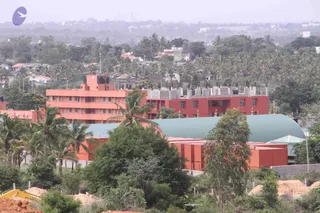
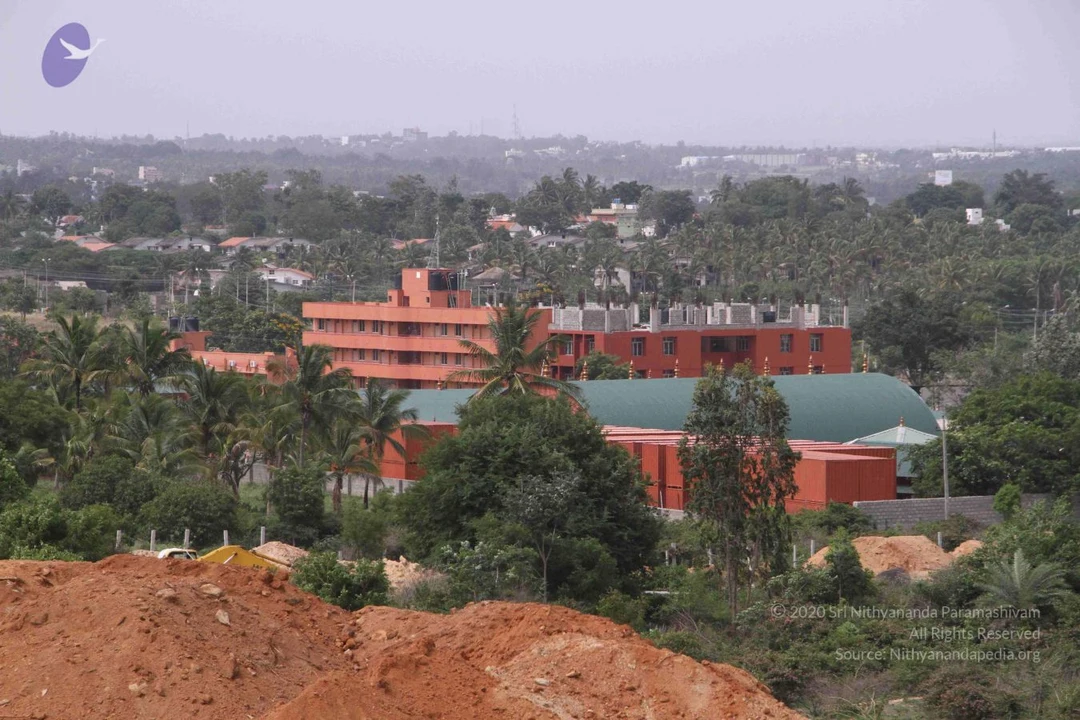
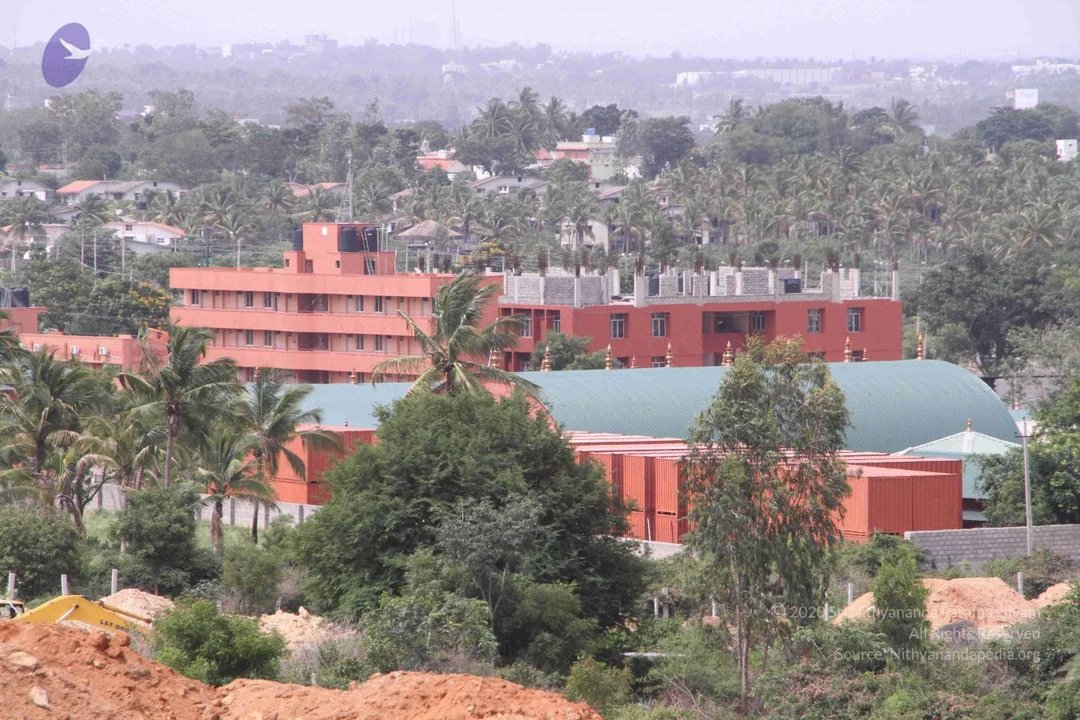
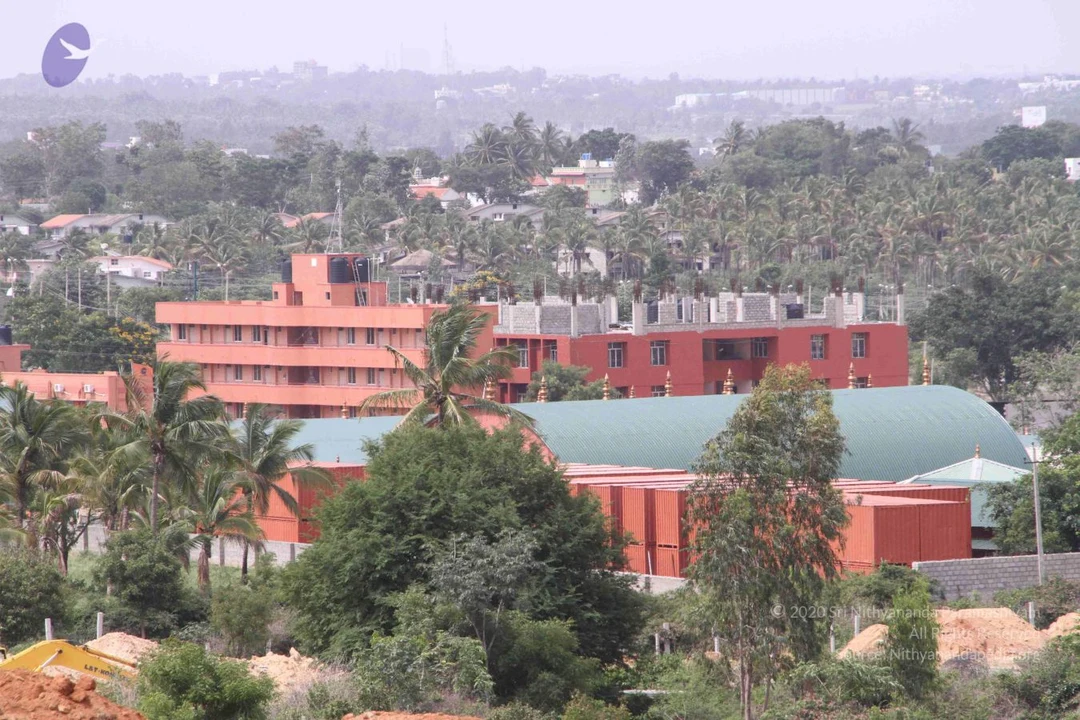
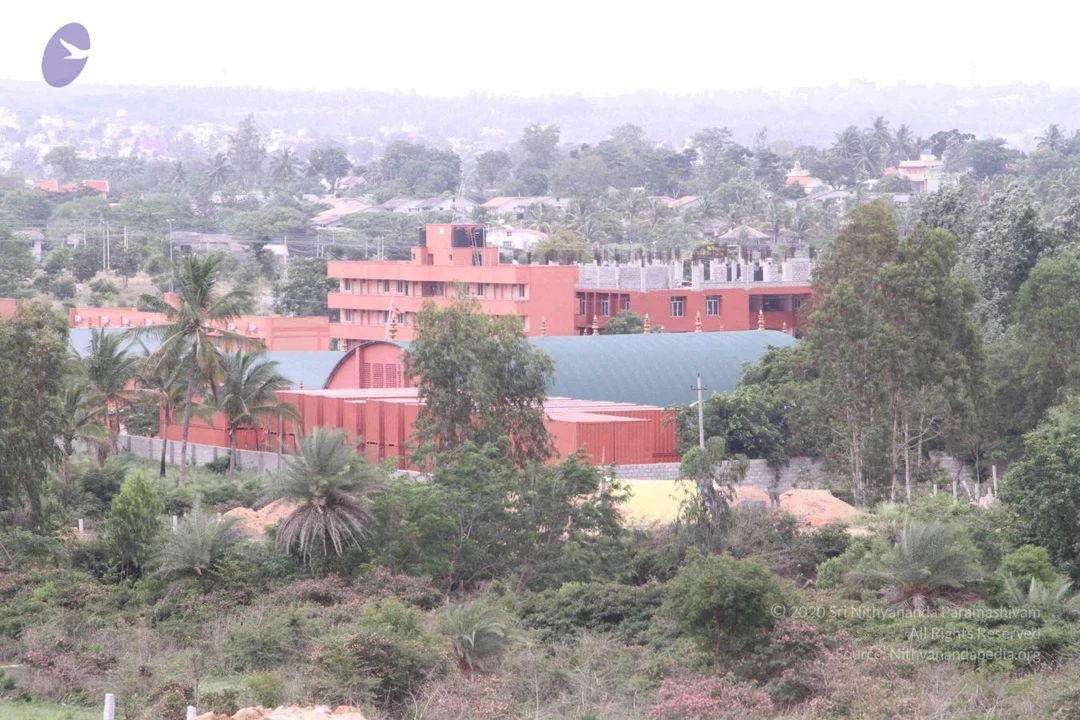
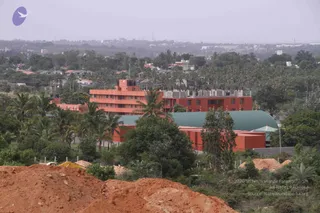
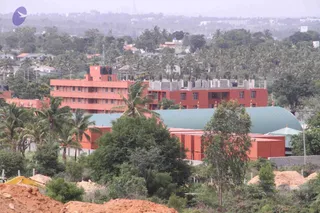
A wide landscape photograph of a red-orange multi-storey building complex among dense green trees and palms, with a long green-roofed hall and stacked orange containers beside it. In the foreground are piles of reddish-brown earth, a yellow vehicle partly visible at left, and a fence line. Distant low-rise houses, trees and hazy urban buildings fill the background under a pale sky. No people are visible.Aerial view of a hilly, tree-lined landscape with a cluster of new orange-red multi-storey buildings and a long green-roofed warehouse. Stacks of orange shipping containers sit beside the warehouse, a yellow excavator is parked at lower left, and dirt mounds surround the construction site. Palm trees and dense foliage fill the foreground and background, with houses and high-rise towers visible in the distance under a hazy sky. No people are visible.Aerial view of a wooded suburban area with tall palm trees and dense green canopy. In the foreground stands a multi-storey terracotta-orange building with rows of windows and a flat roof with water tanks, beside a long building with a green corrugated arched roof and stacked orange shipping-style containers. Unfinished concrete block walls and piles of red earth sit at the lower right, with a yellow construction vehicle partly visible at the bottom left. Residential houses and more palms fill the background under hazy sky. No people are visible.

Sacred-Arts

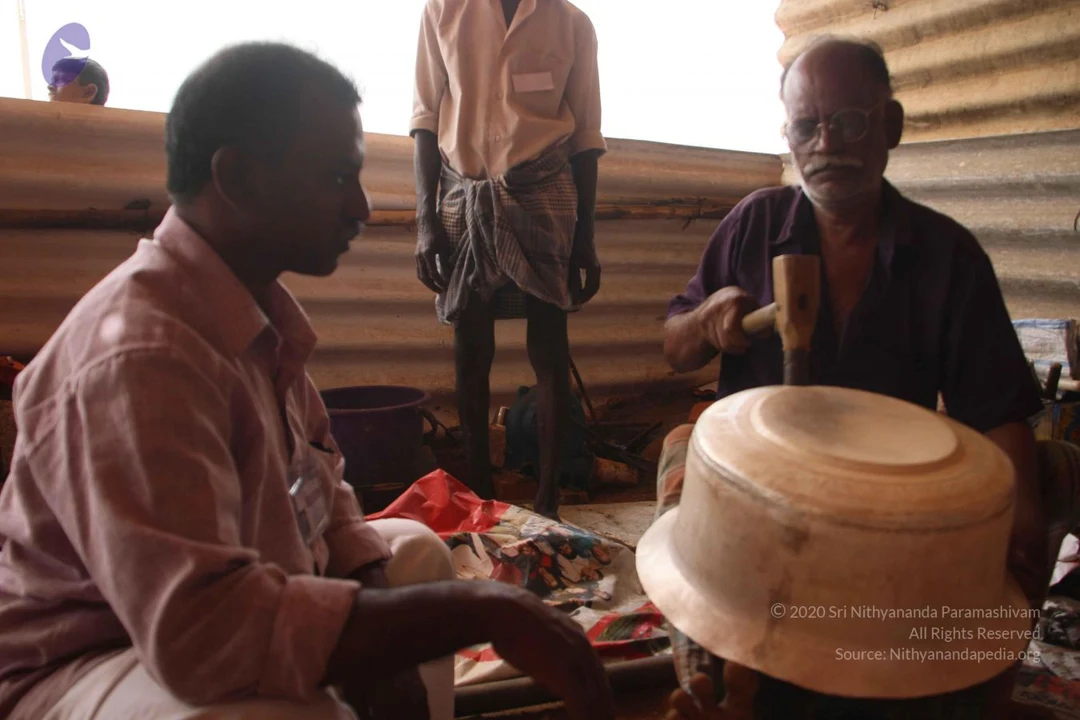
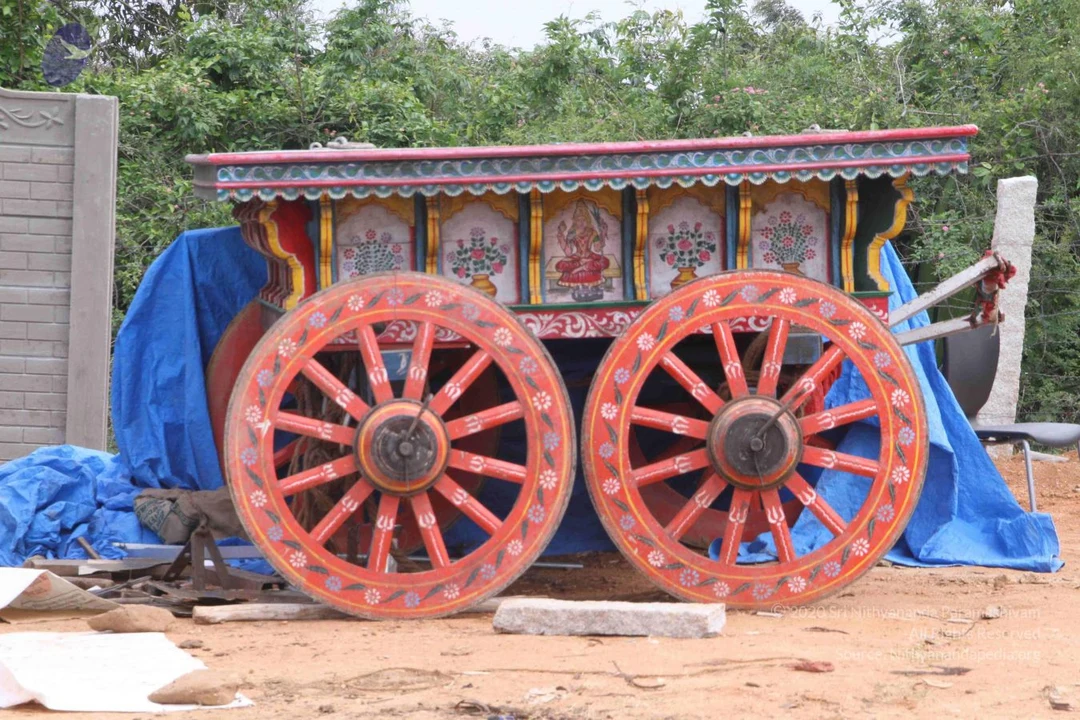
17 photosSource gallery
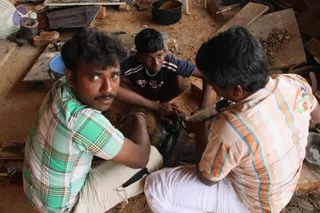
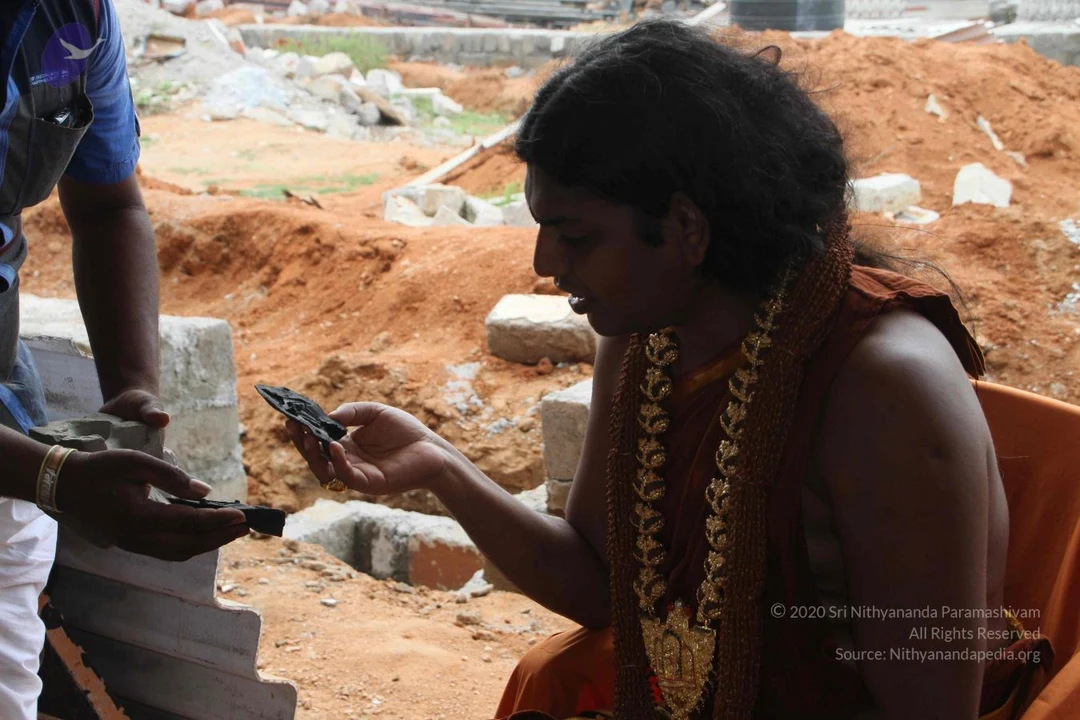
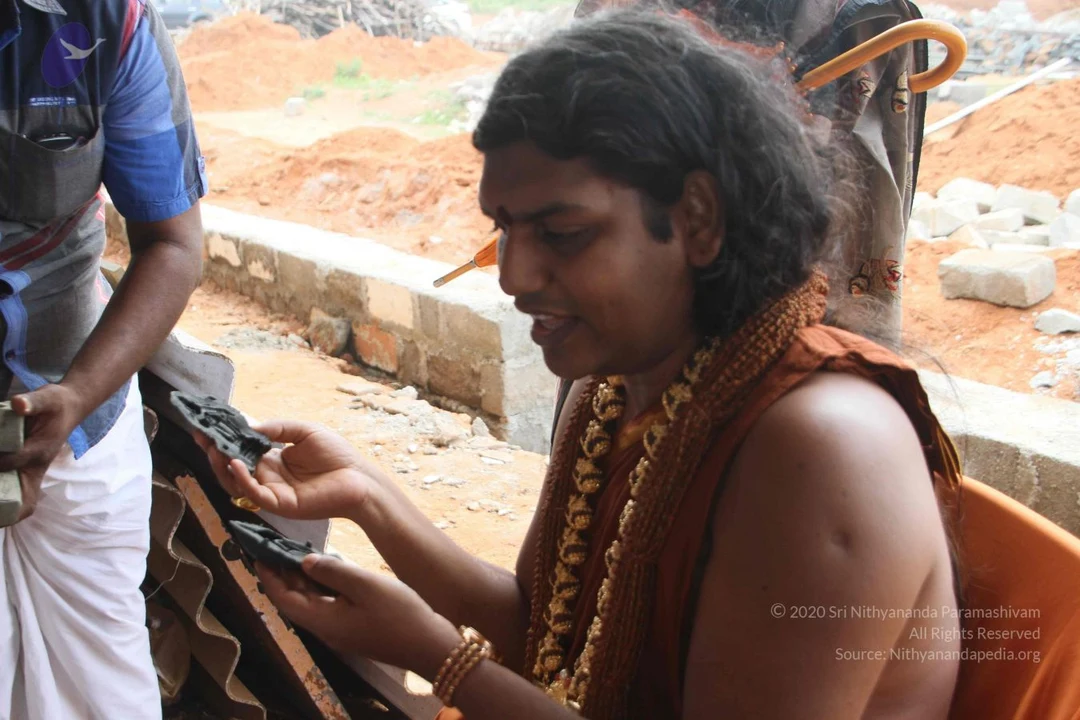
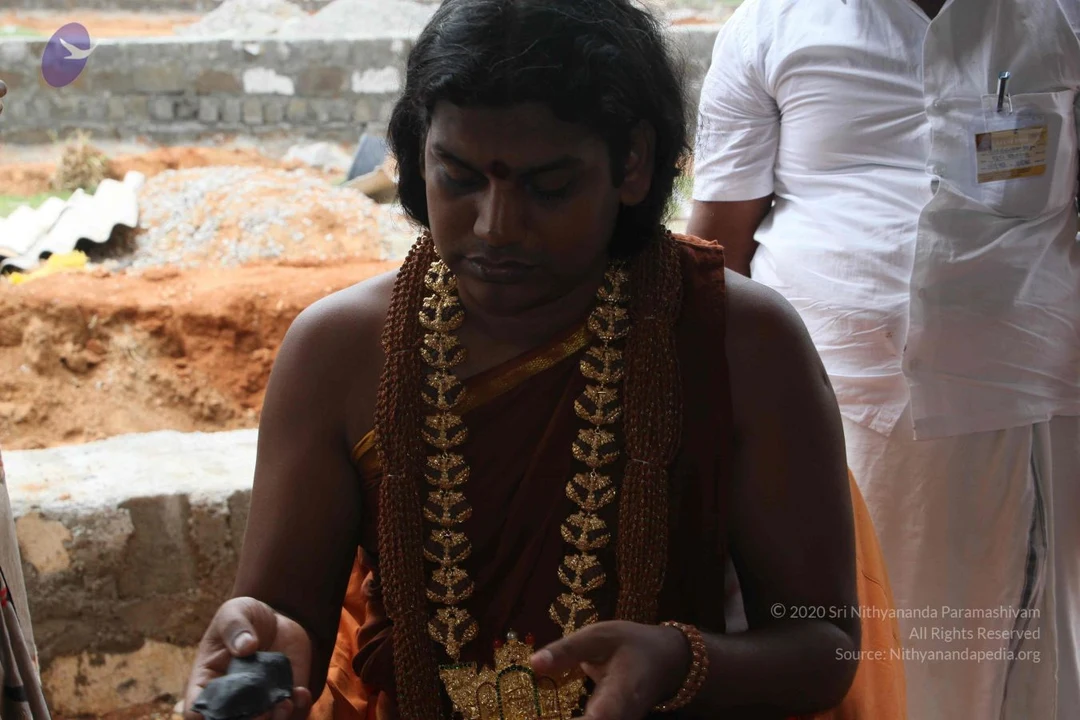
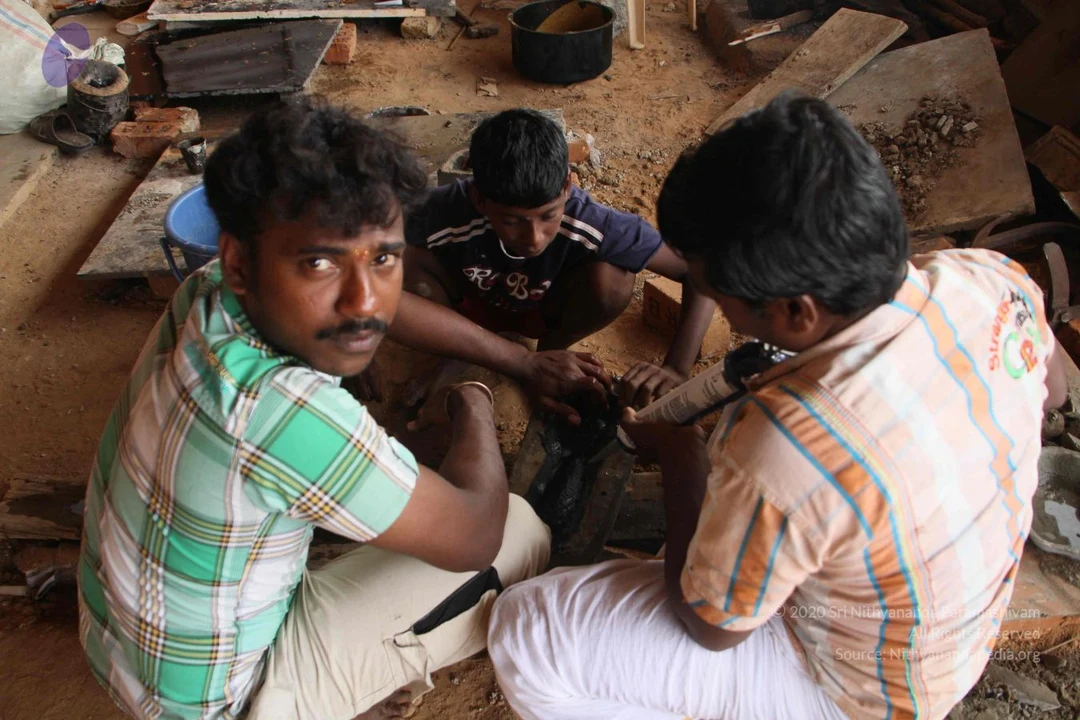
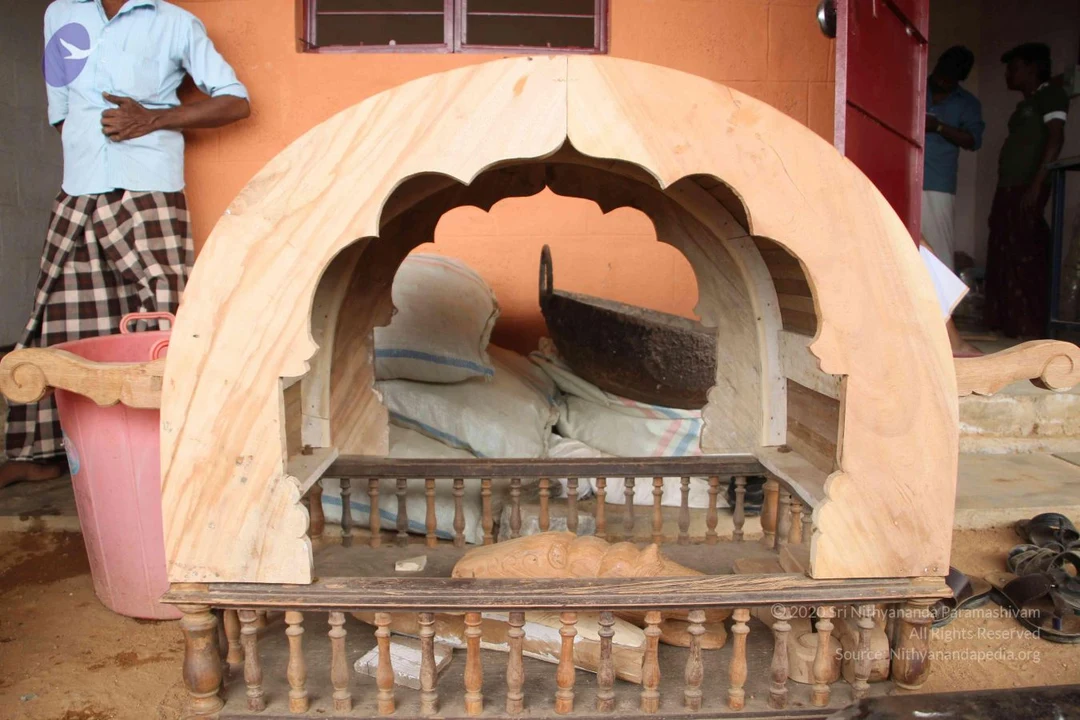
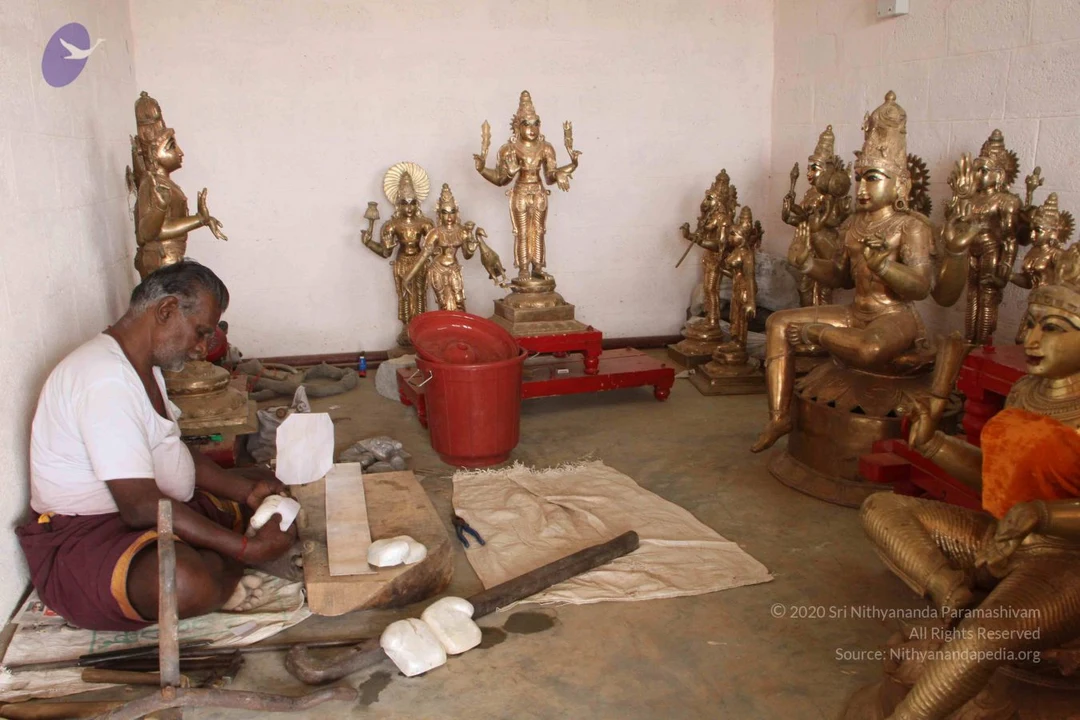
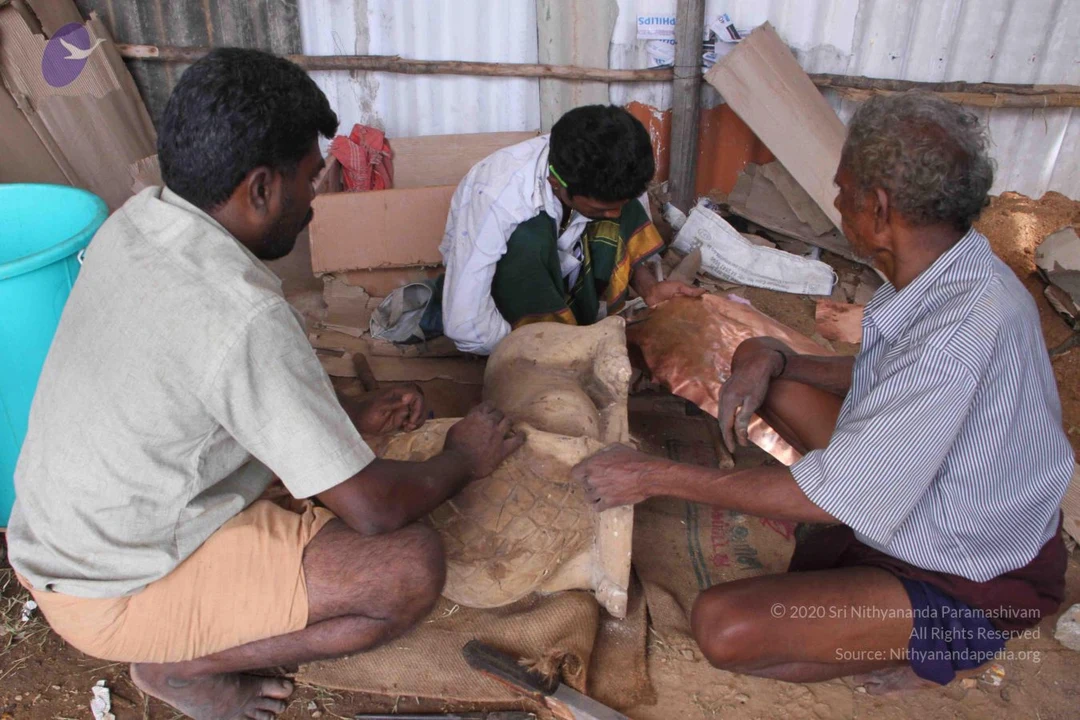
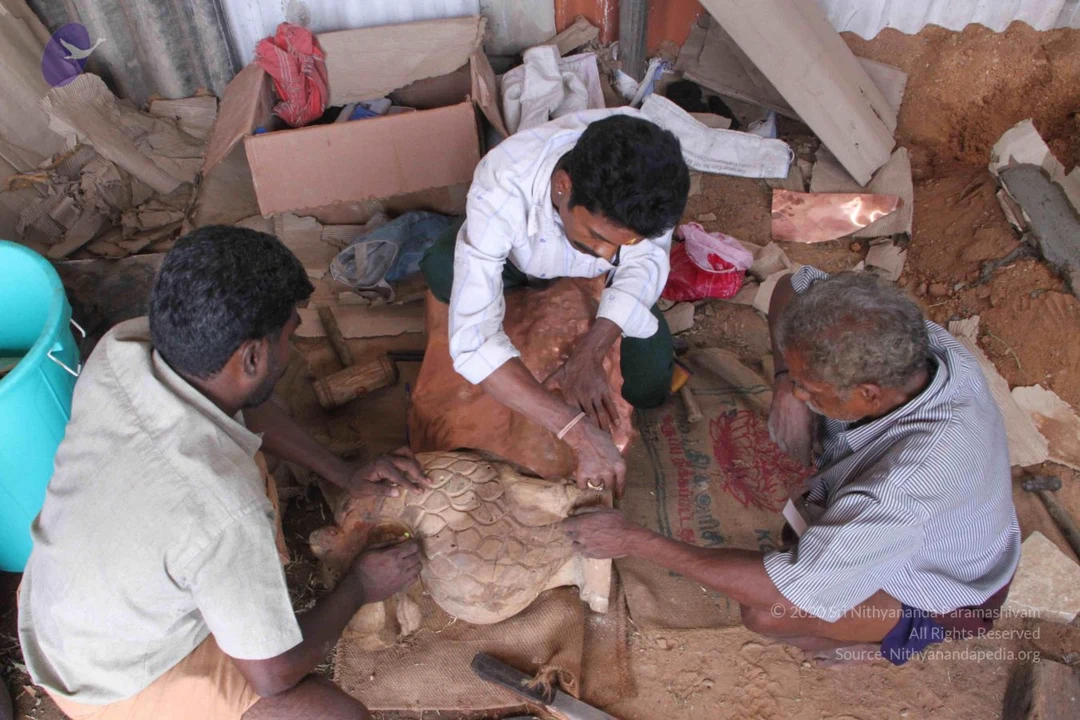
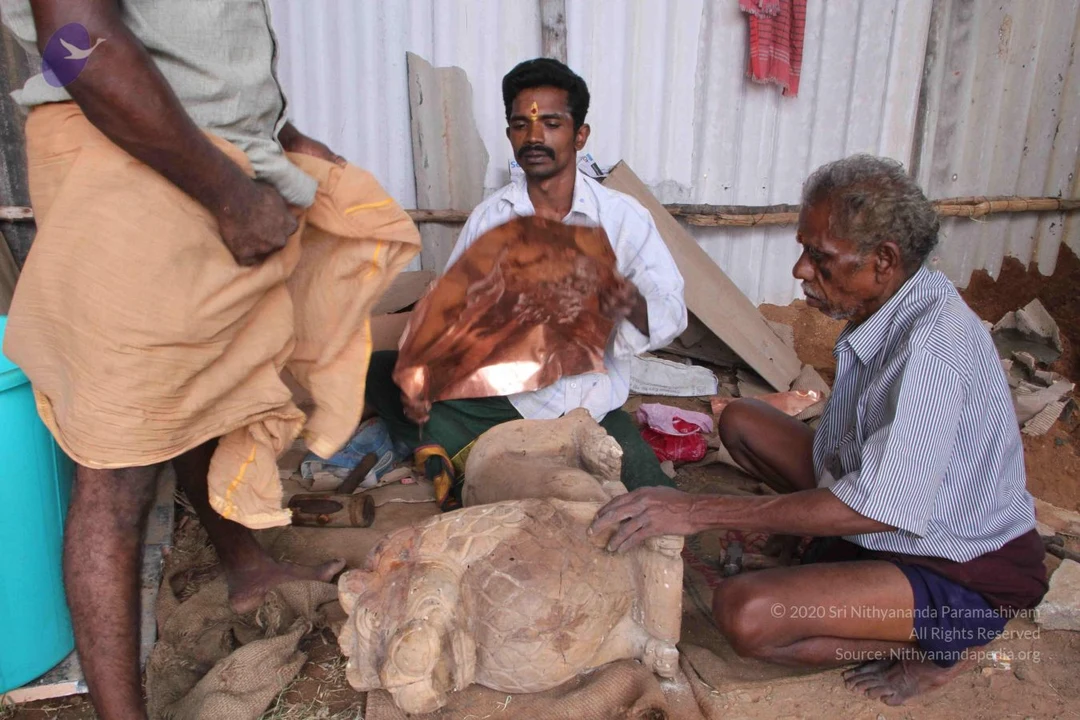
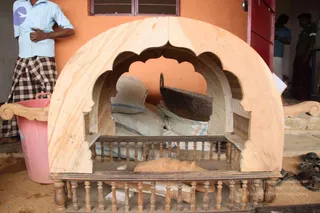
Close overhead photo of a pair of bare male feet resting on a woven straw mat, wet and glistening, with some white paste or wash marks across the tops and soles. A second person's hand or foot appears at the upper left edge. The feet are brown-toned and the mat is pale tan. No face is visible, so the image shows only feet and a partial limb.Close-up photo of two pairs of bare feet on a woven straw mat. In the foreground a person in a white sleeve holds and washes or anoints a foot with both hands, while on the right a bare foot with an orange-and-gold cloth at the ankle rests on the mat. The setting appears to be a simple floor-level ritual, possibly a padapuja foot-washing, though no other context is visible.A seated figure with long dark hair wears an orange-saffron garment with a brown-and-gold border, a rudraksha-style brown bead mala, and a large gold pendant and ceremonial necklace of white flowers. He sits on a wooden platform on a construction site of red earth and concrete blocks. A man in white clothes kneels at his feet, washing or tending them, while a shaven-headed priest in saffron robes beside him holds a small clay or stone object. Other people in white stand at the right edge.A photograph of a shaven-faced man wearing a saffron-orange and maroon shawl over his shoulders, with a red bindi on his forehead. He wears layered gold ornamental necklaces and rudraksha-style beaded malas, with a gold pendant. He is looking down, holding a small dark stone or object in his hands, and a bangle is on his wrist. Behind him, a man in white dhoti and shirt wears an ID badge on the chest. The background shows a construction site with brick walls, piled orange earth and stones.Three men sit on a dirt floor in a rough workshop amid scattered bricks, wooden planks, a black metal pot and a blue bucket. The man on the left wears a green and white checked shirt with a red tilak on his forehead and looks toward the camera. A younger boy in a navy shirt with red and white lettering crouches in the middle, watching. The man on the right, in an orange-and-white striped shirt and white dhoti, works with a tool on a dark object between them.A wooden arched canopy structure with carved scalloped edges and turned balusters stands in front of an orange wall. Inside, a carved wooden figure lies on a rail-enclosed base beside sacks and a dark metal bowl. Two men stand at the left and right edges in the background, one in a light blue shirt and checked lungi, the other in a green shirt and maroon lungi. A pink plastic tub sits at left and sandals lie at lower right.