Skip to content
Saturday

22 June 2013

Be a Leader For the Right Reason

Dated photos
250
Source pages
1
Media
2
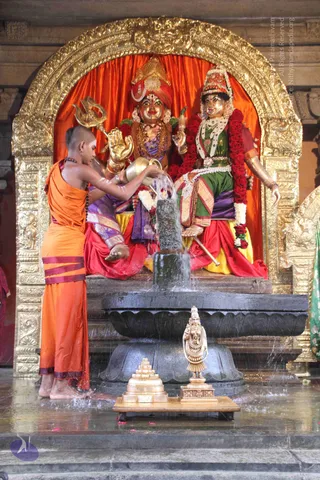
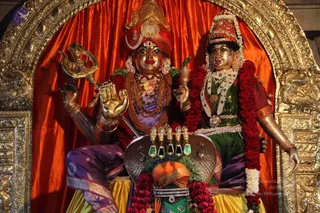
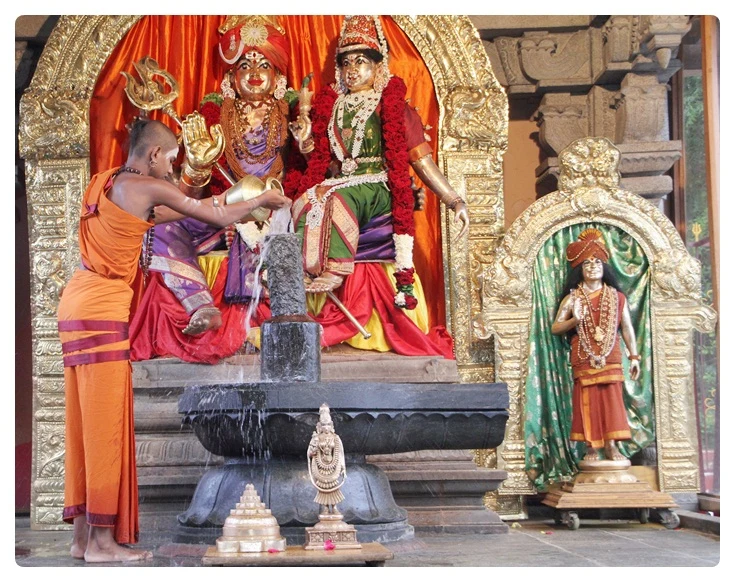
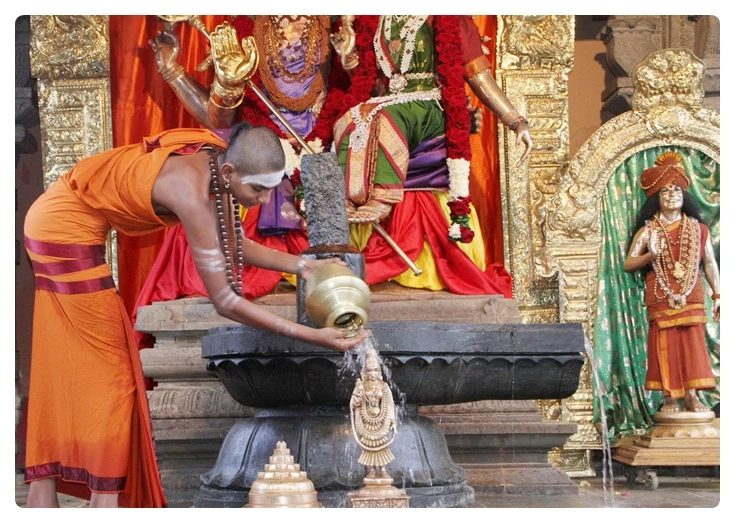
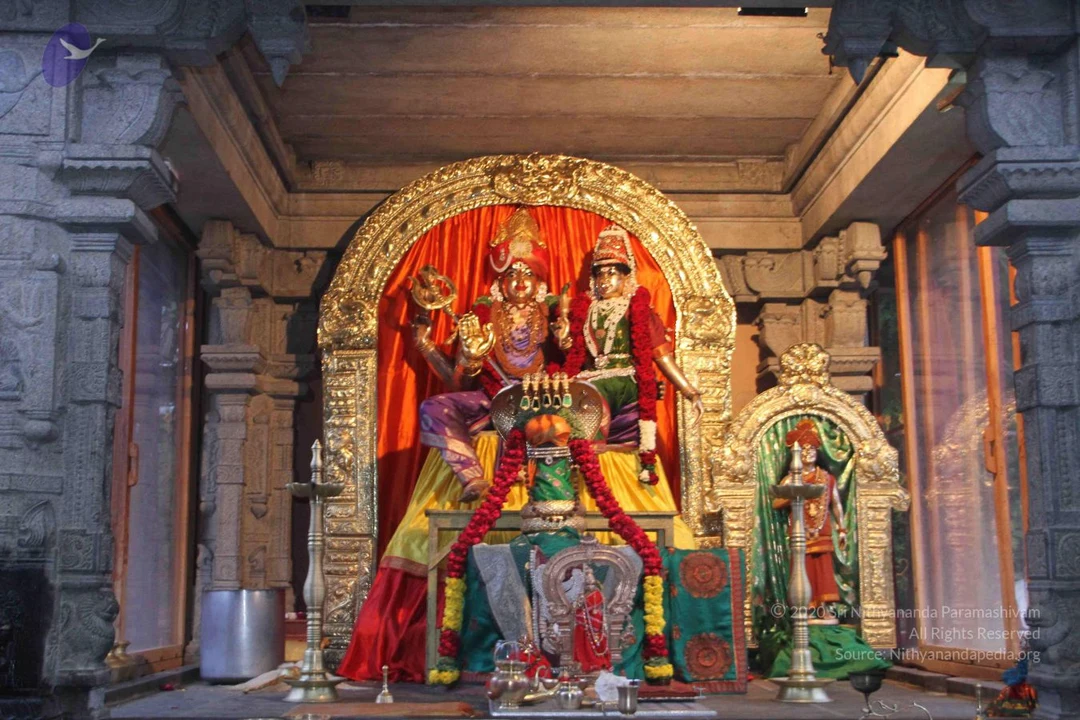
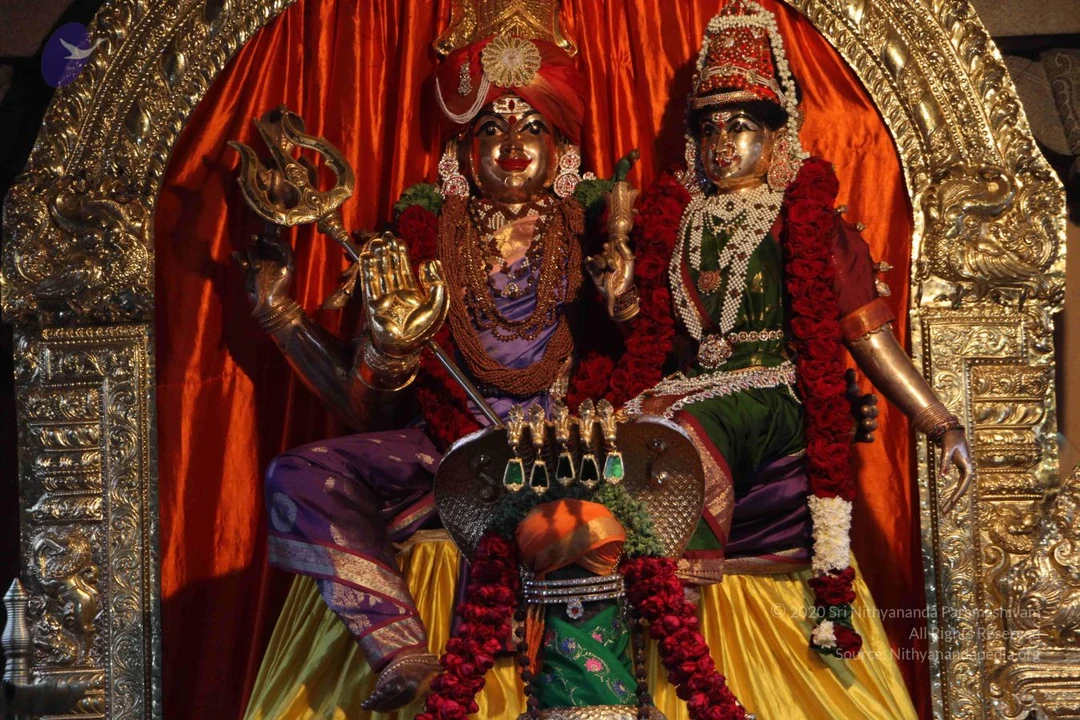
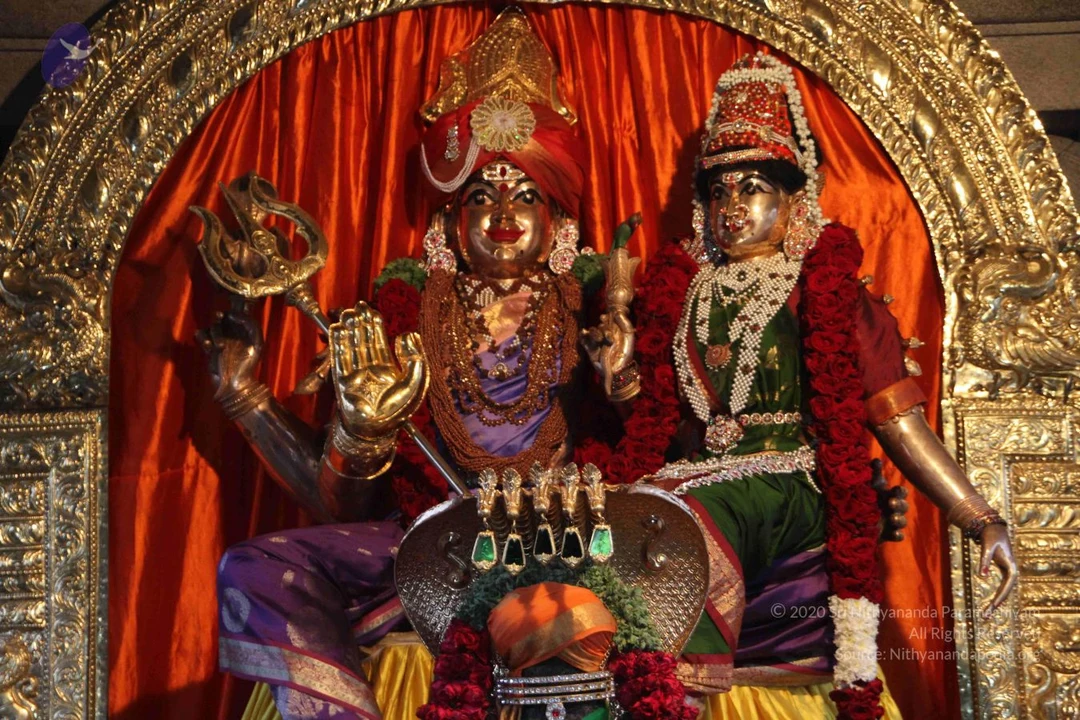
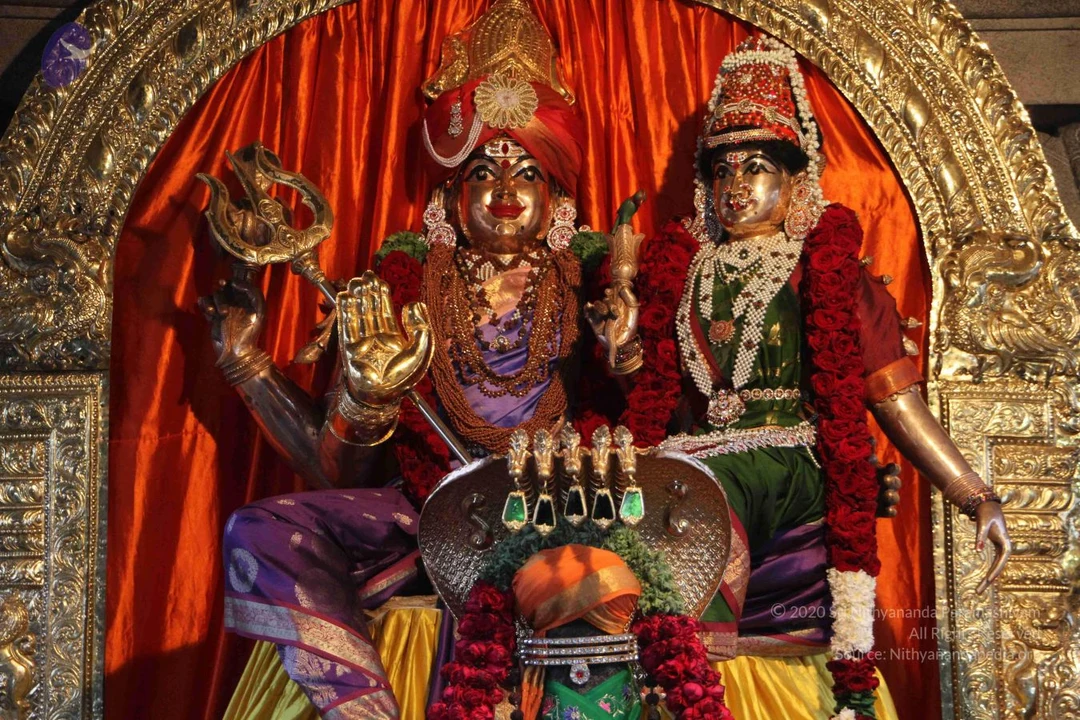
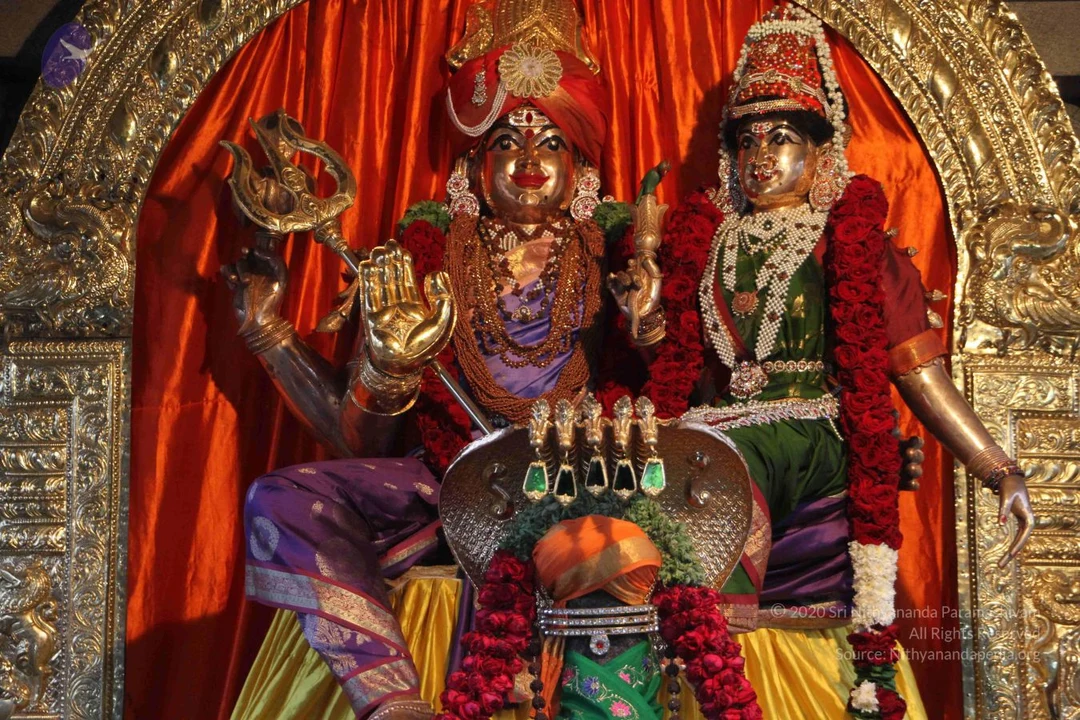
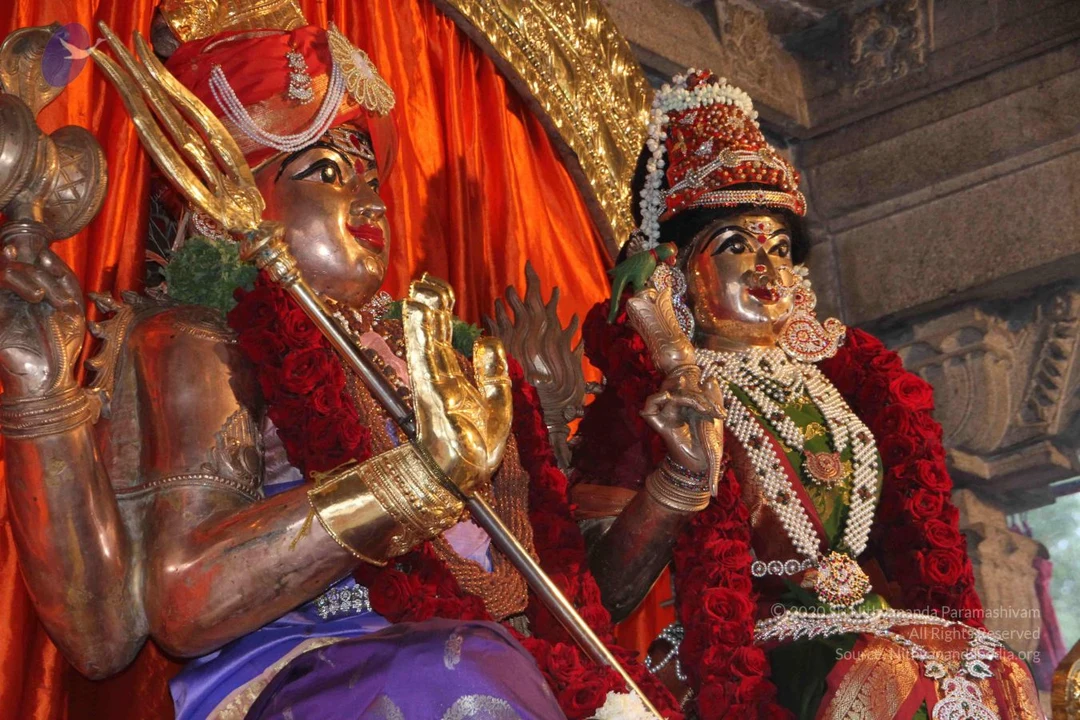
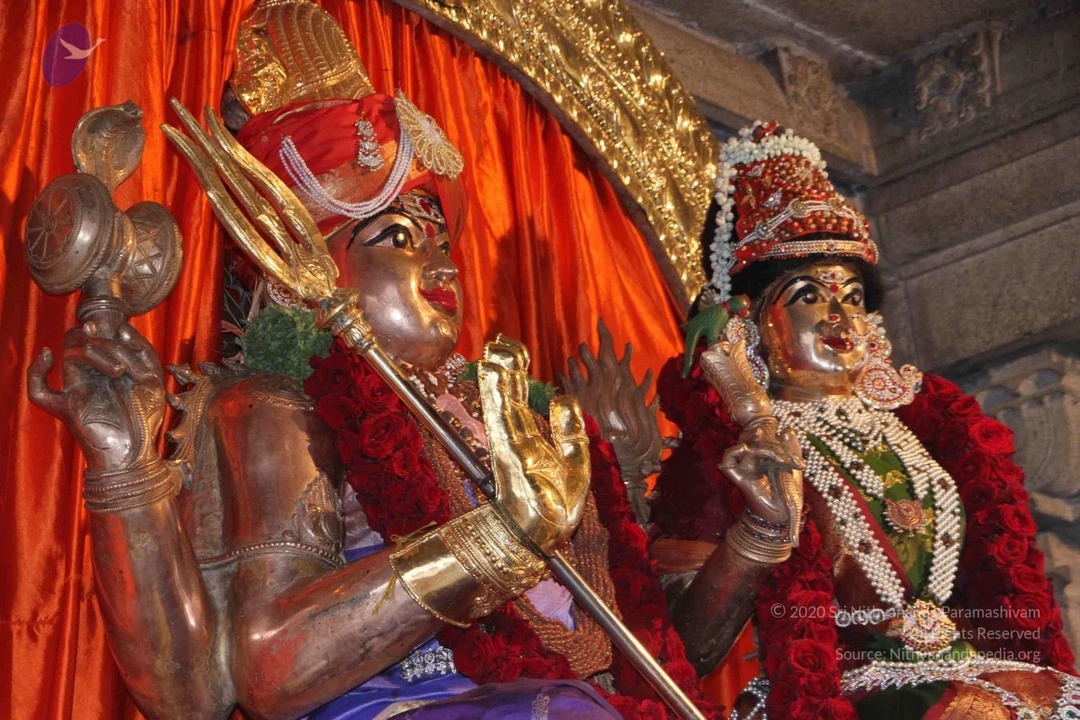
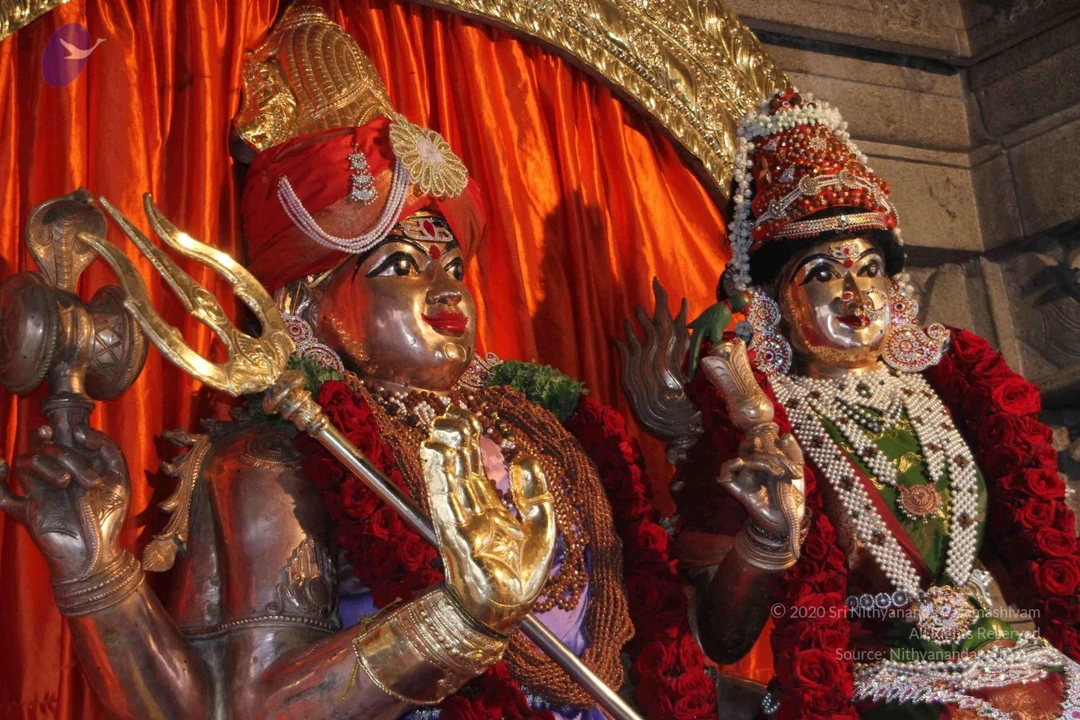
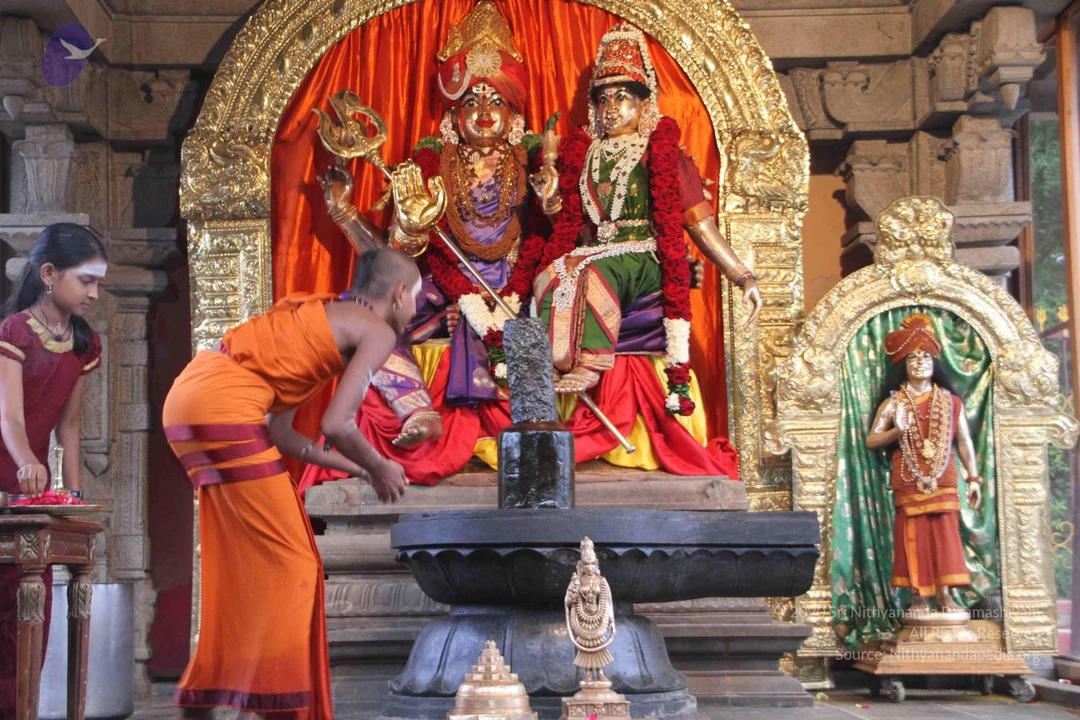
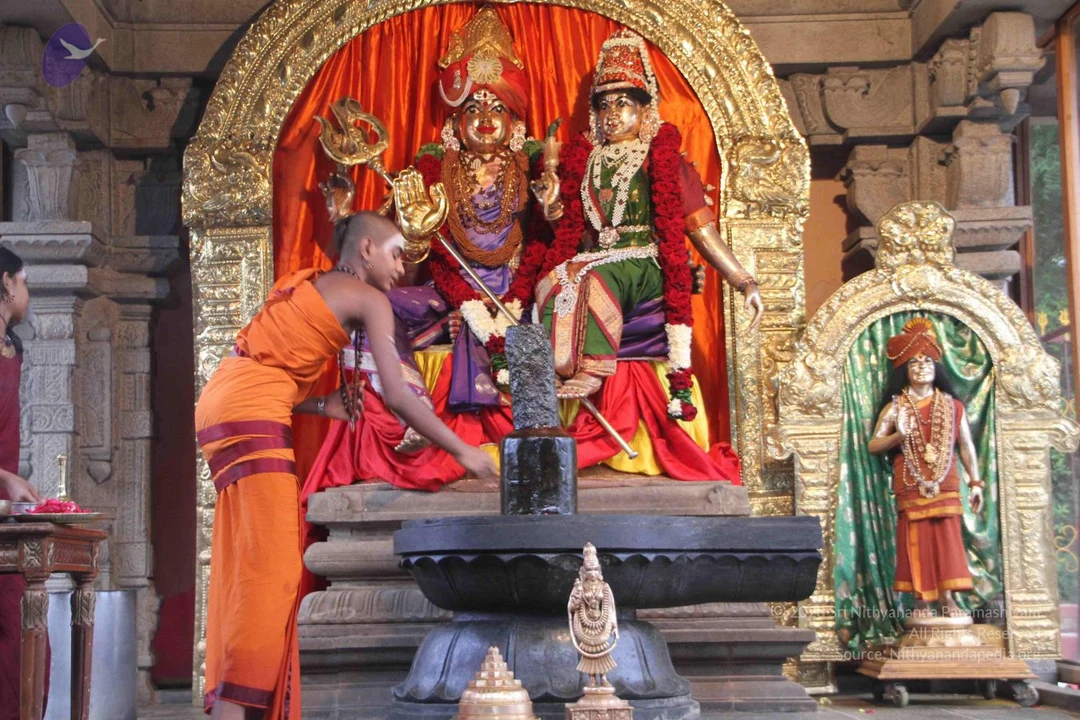
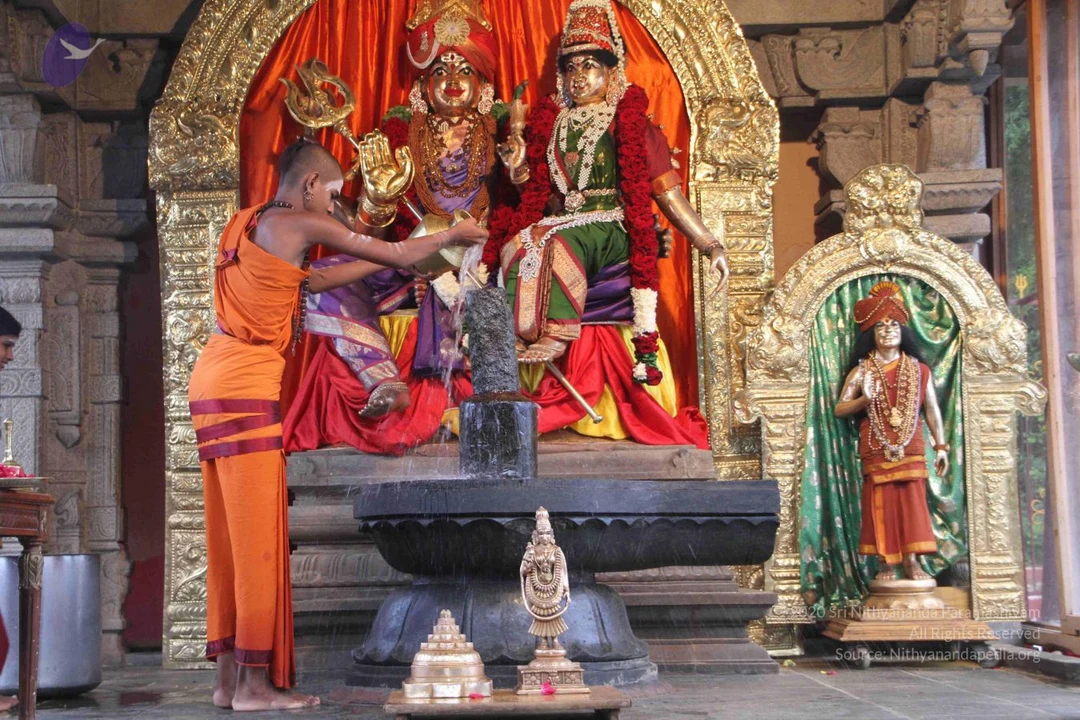
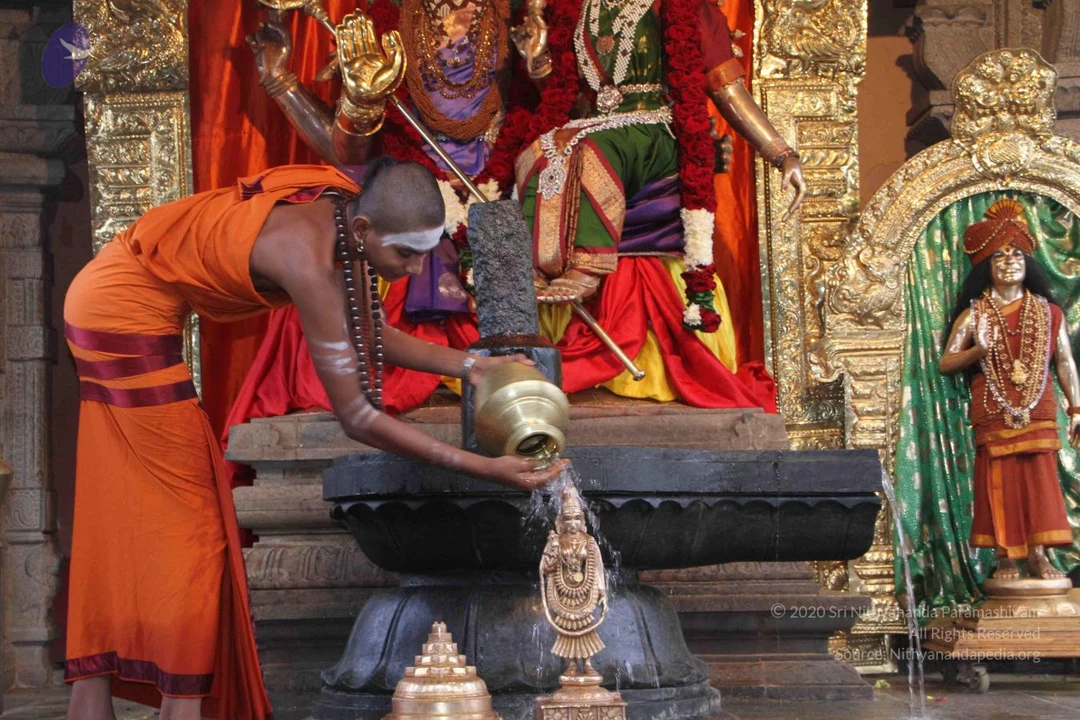
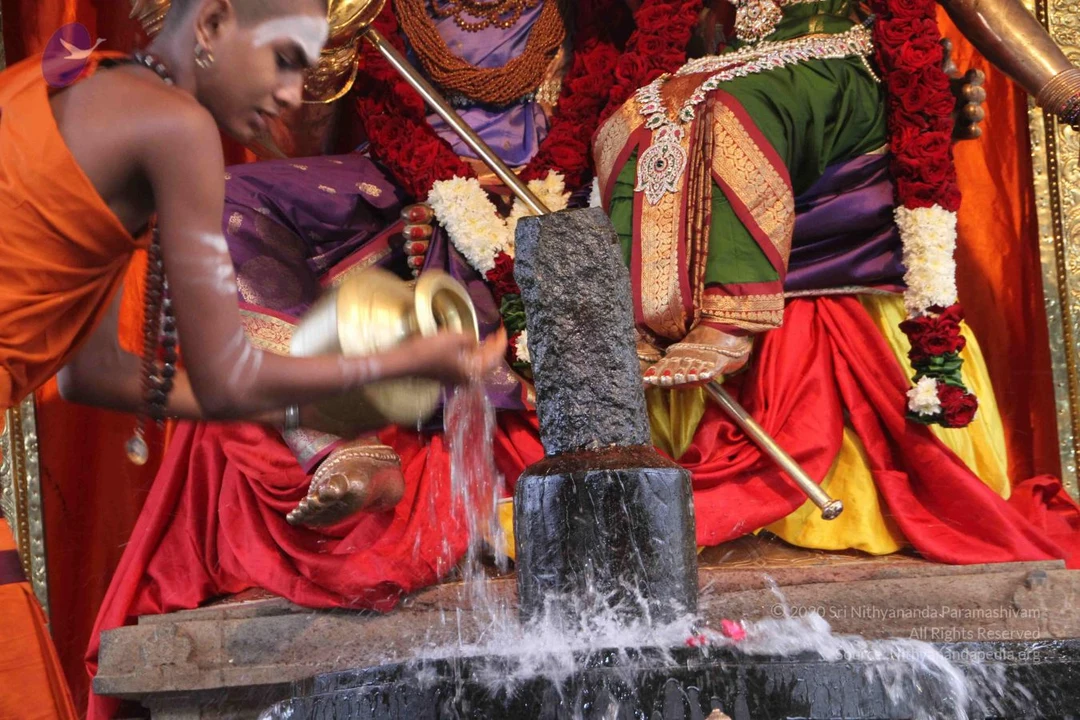
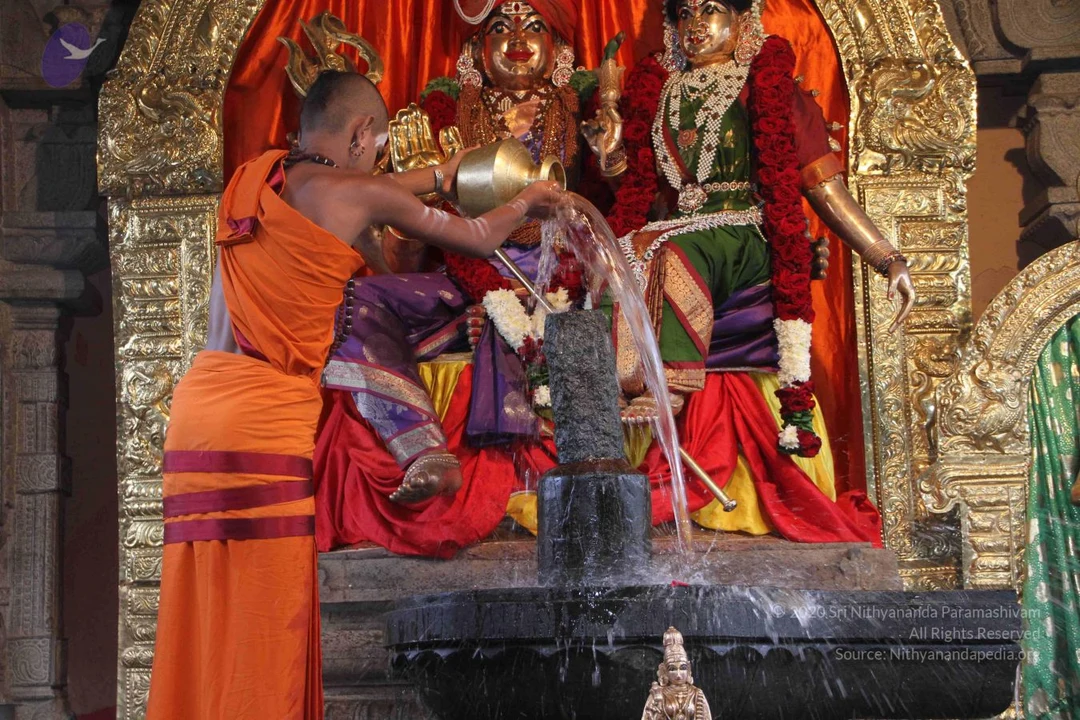
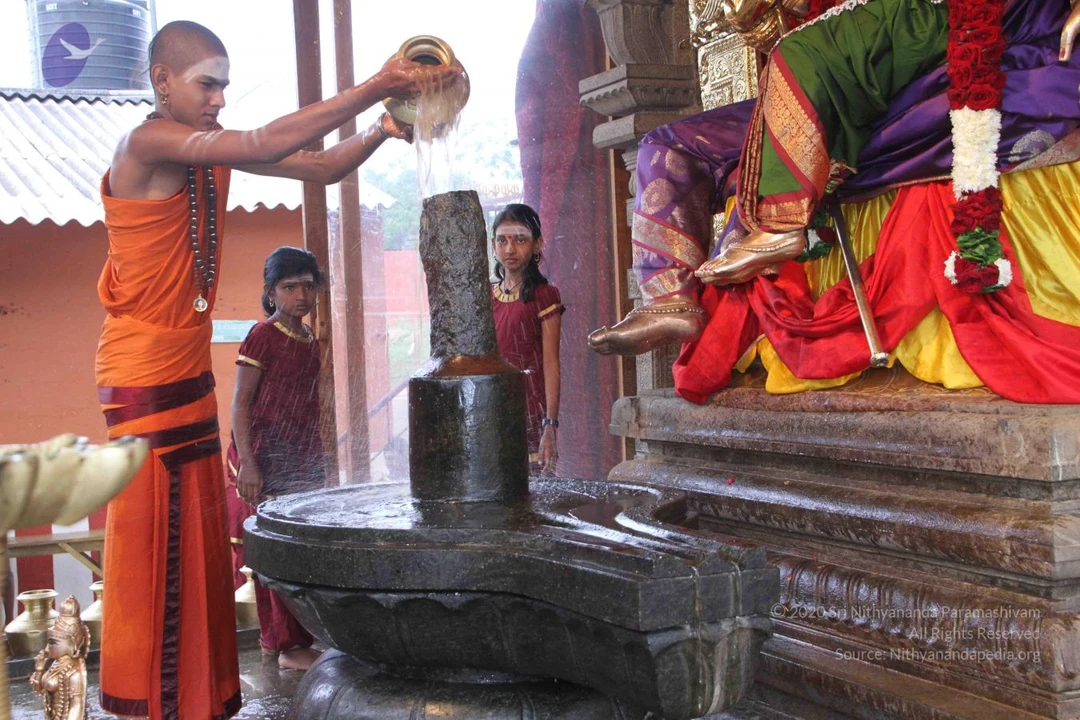
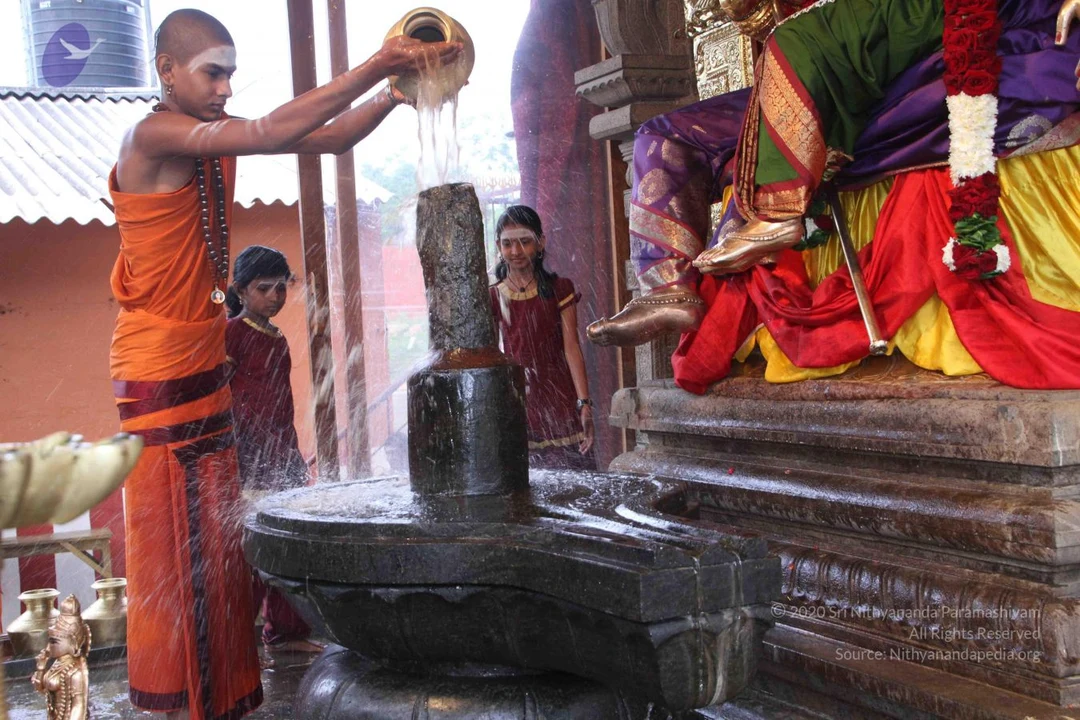
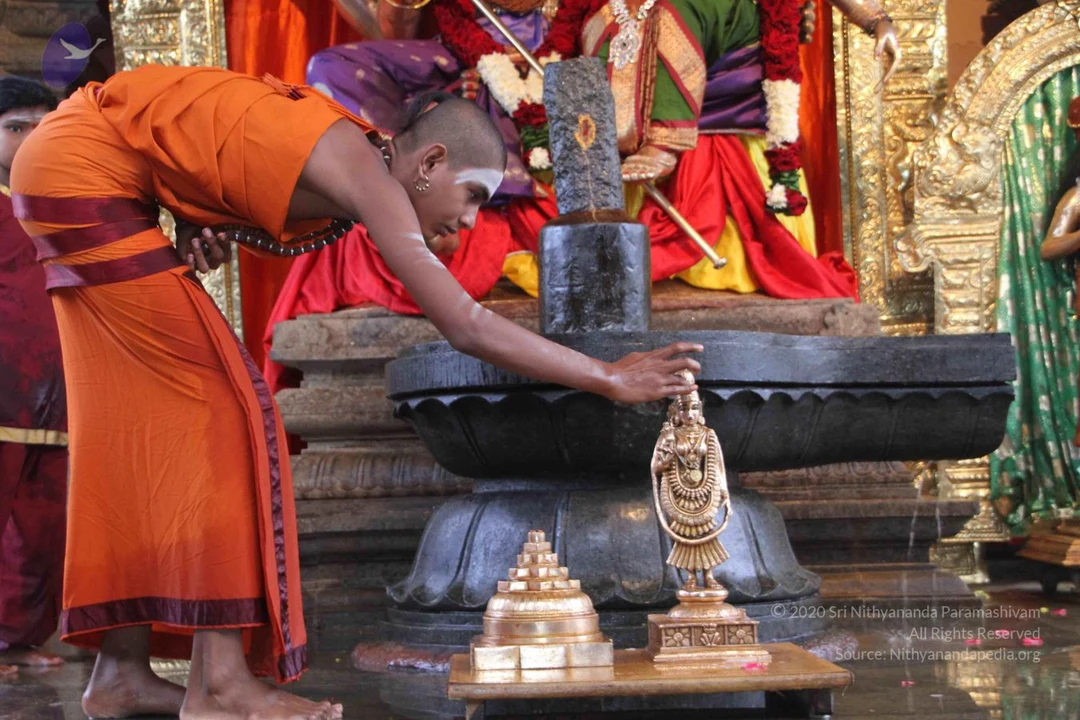
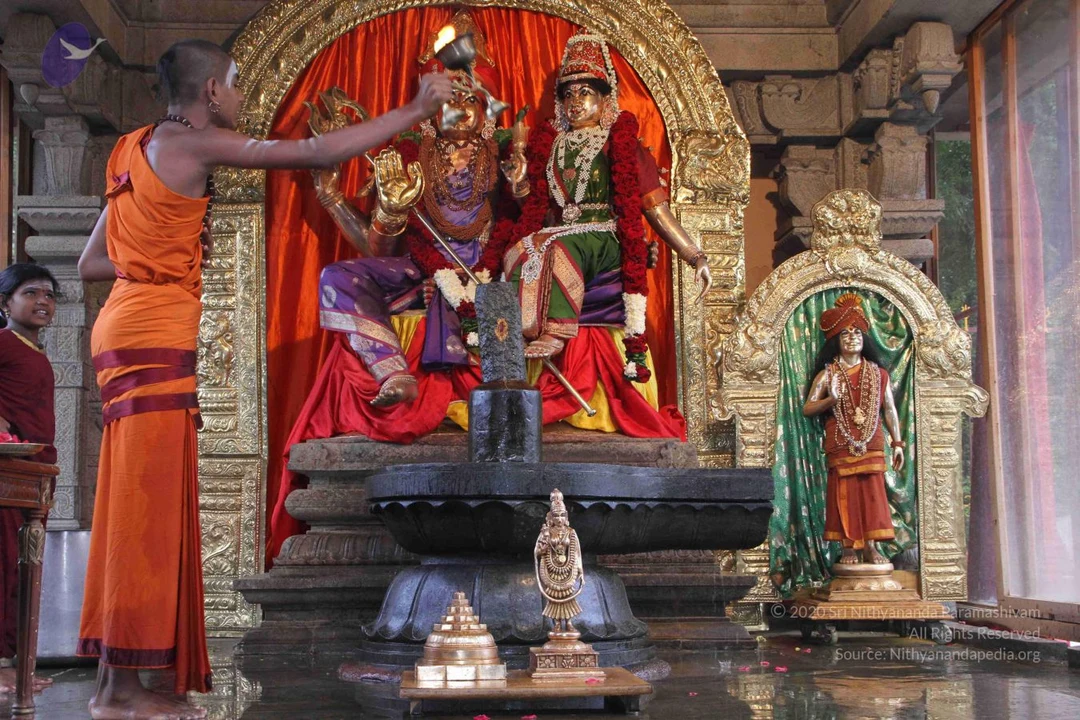
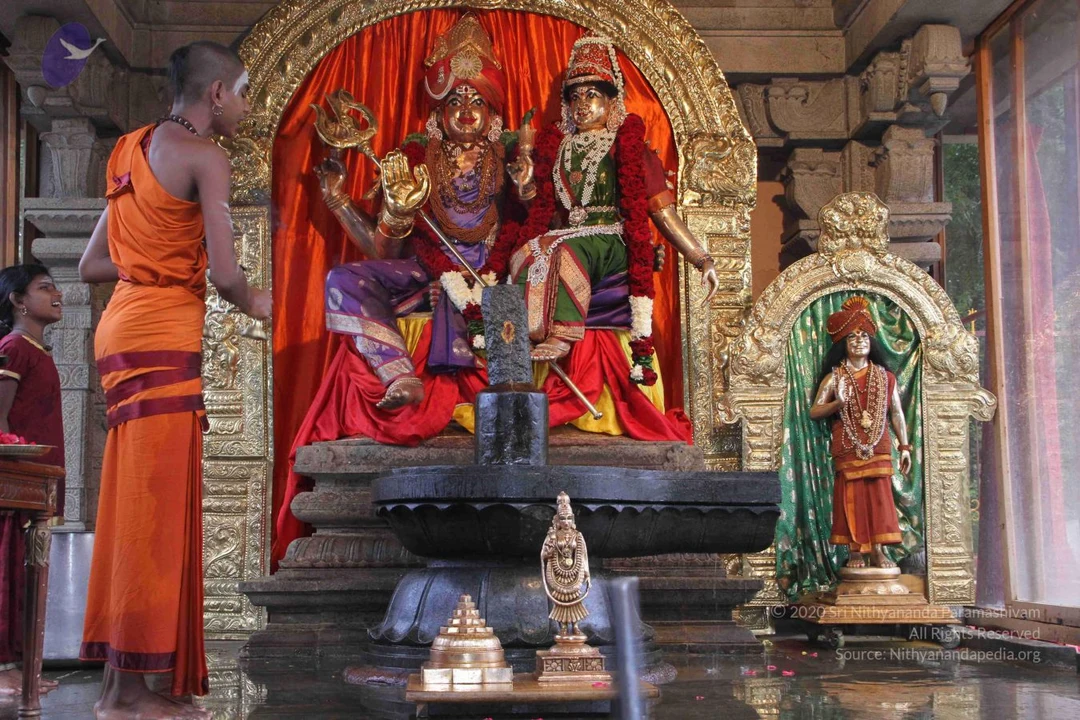
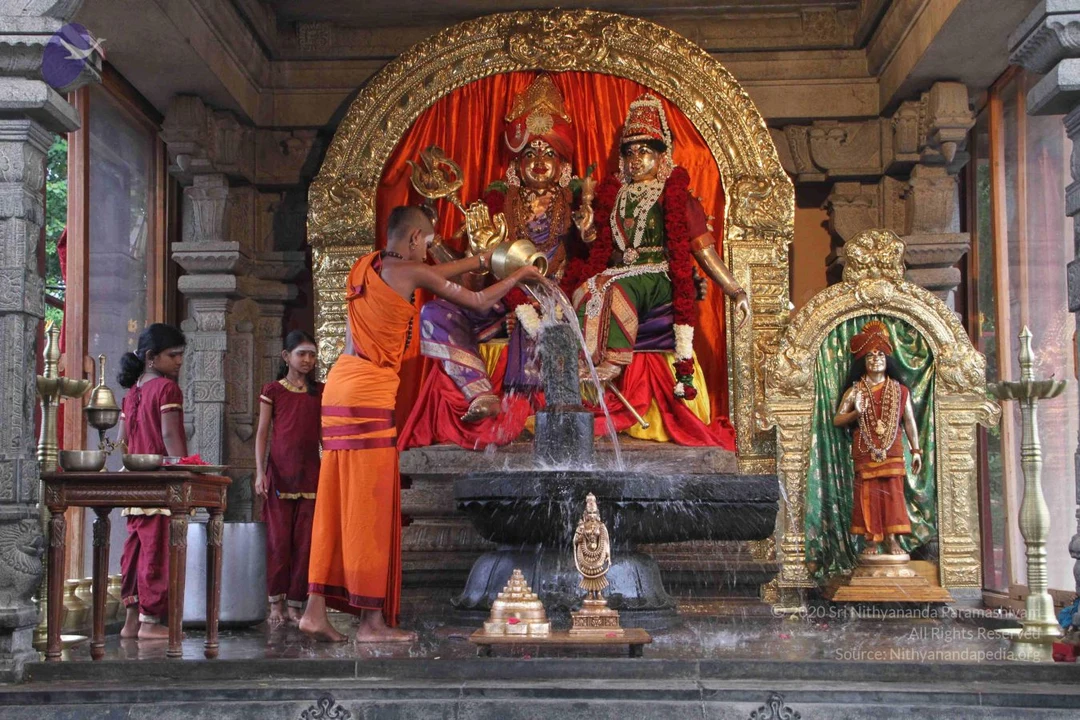
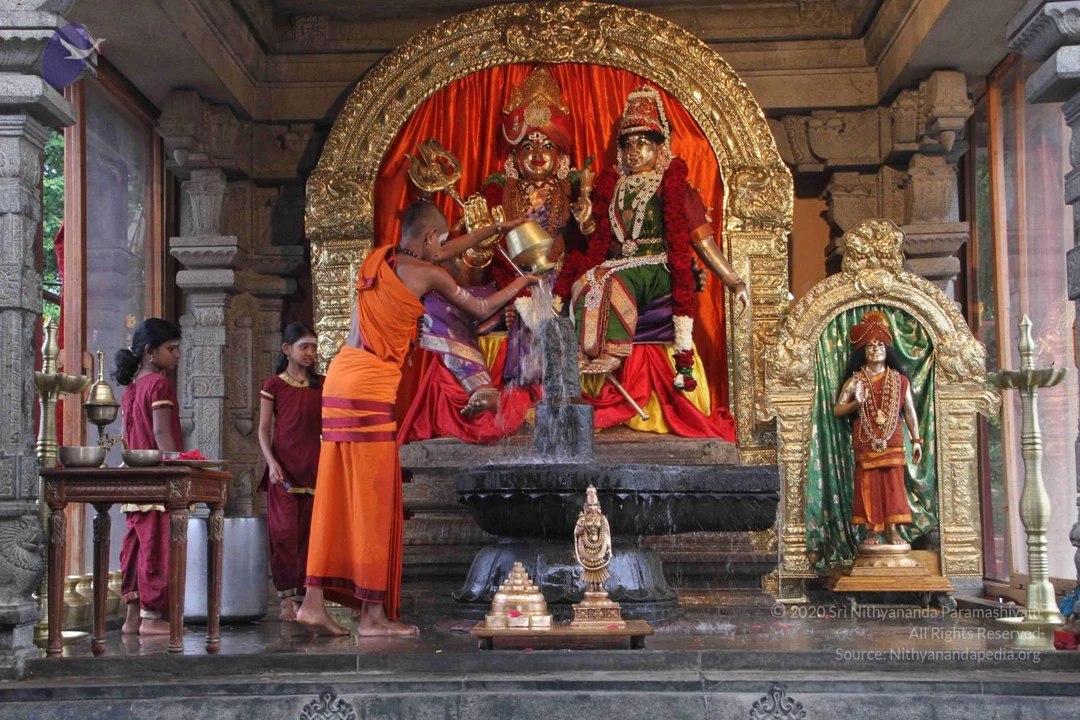
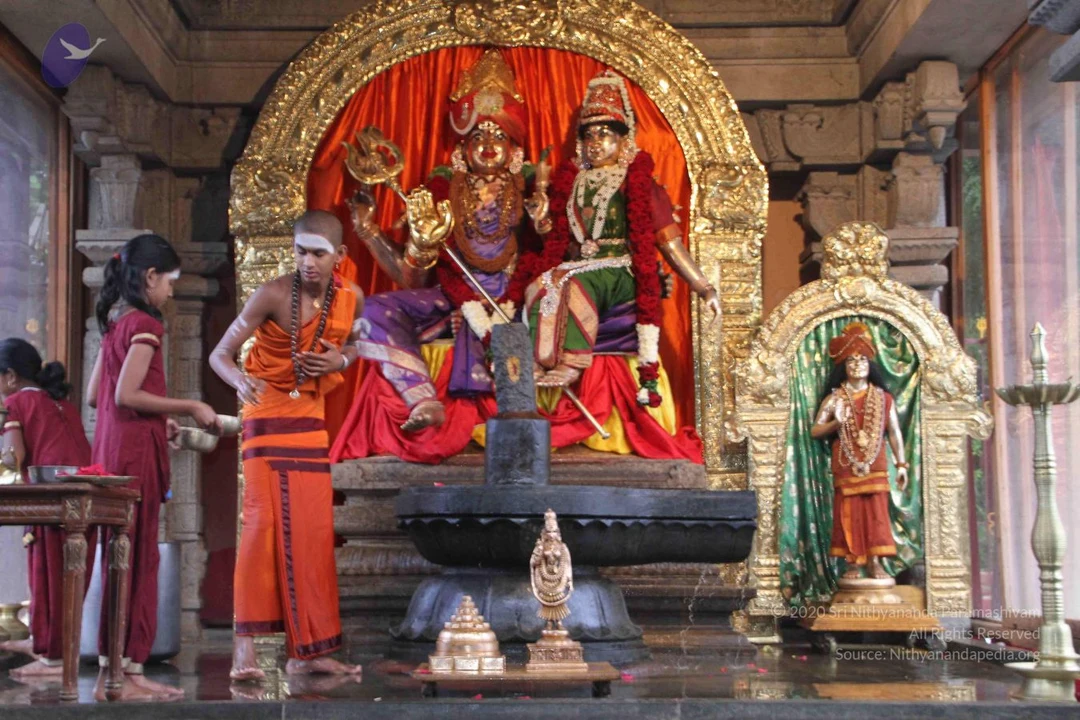
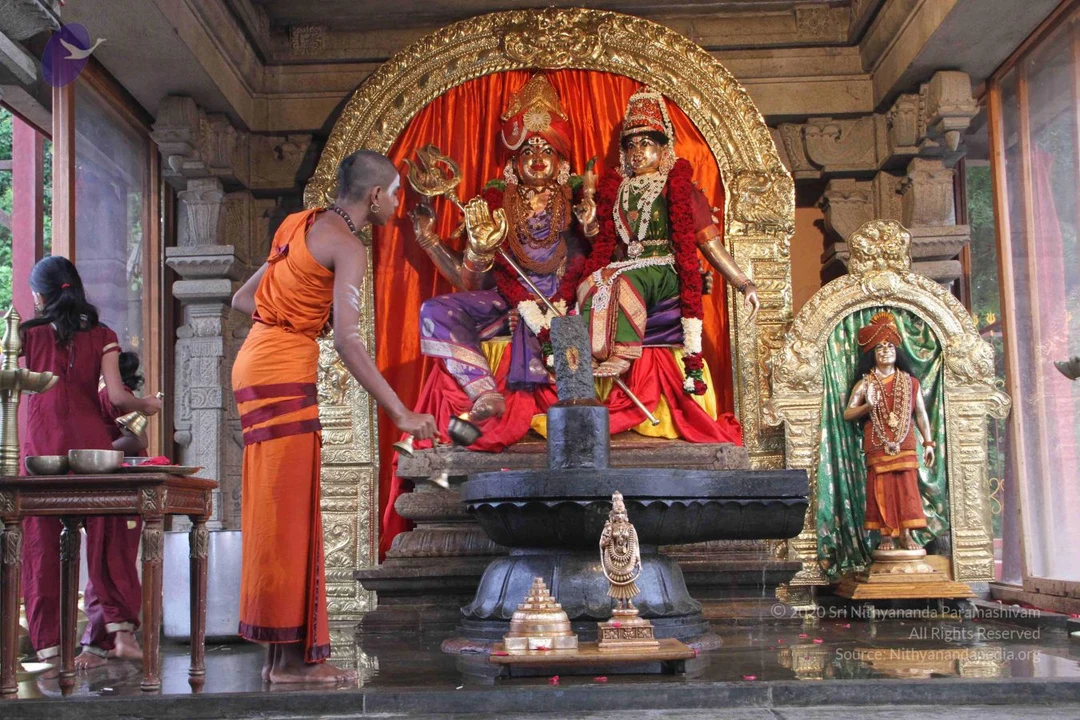
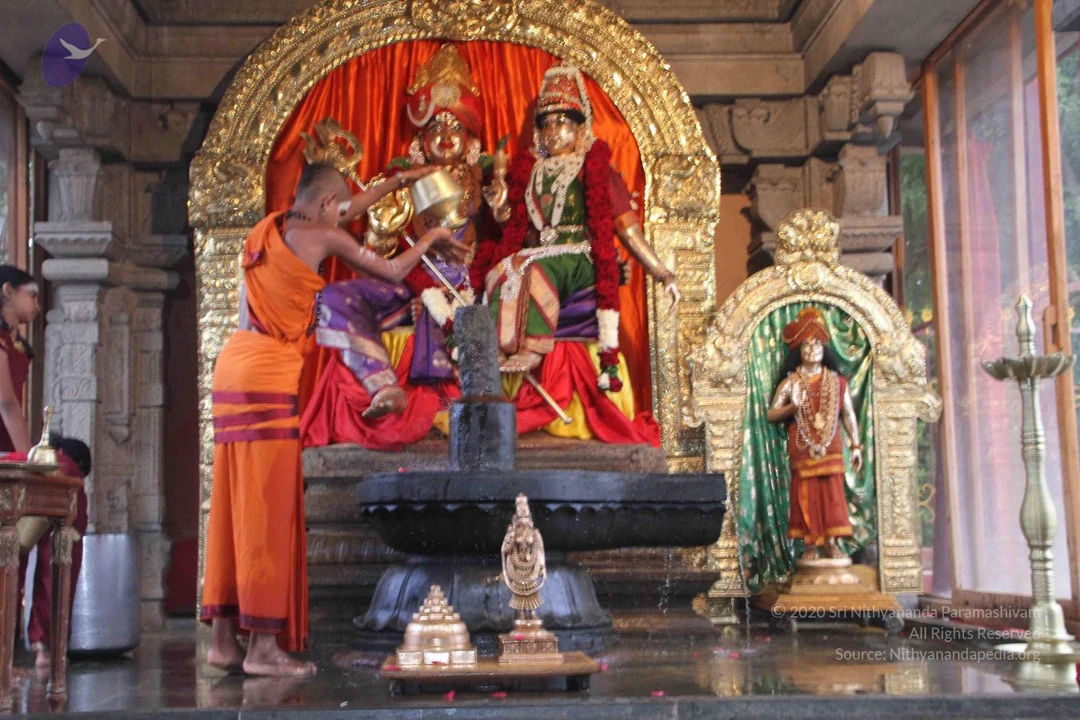
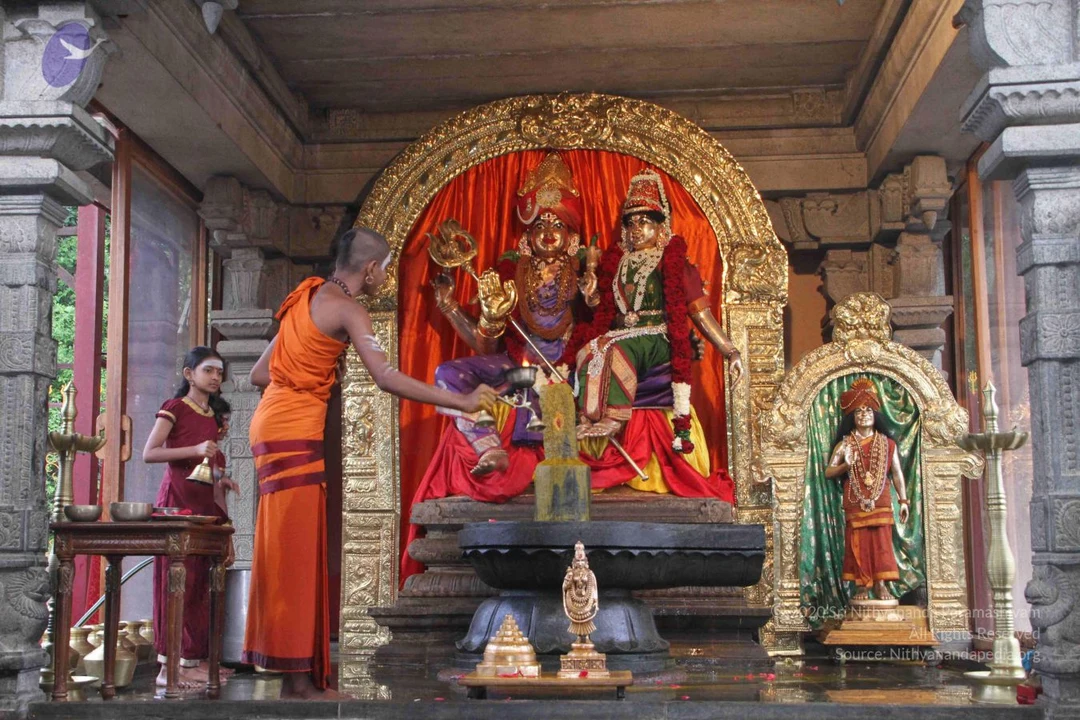
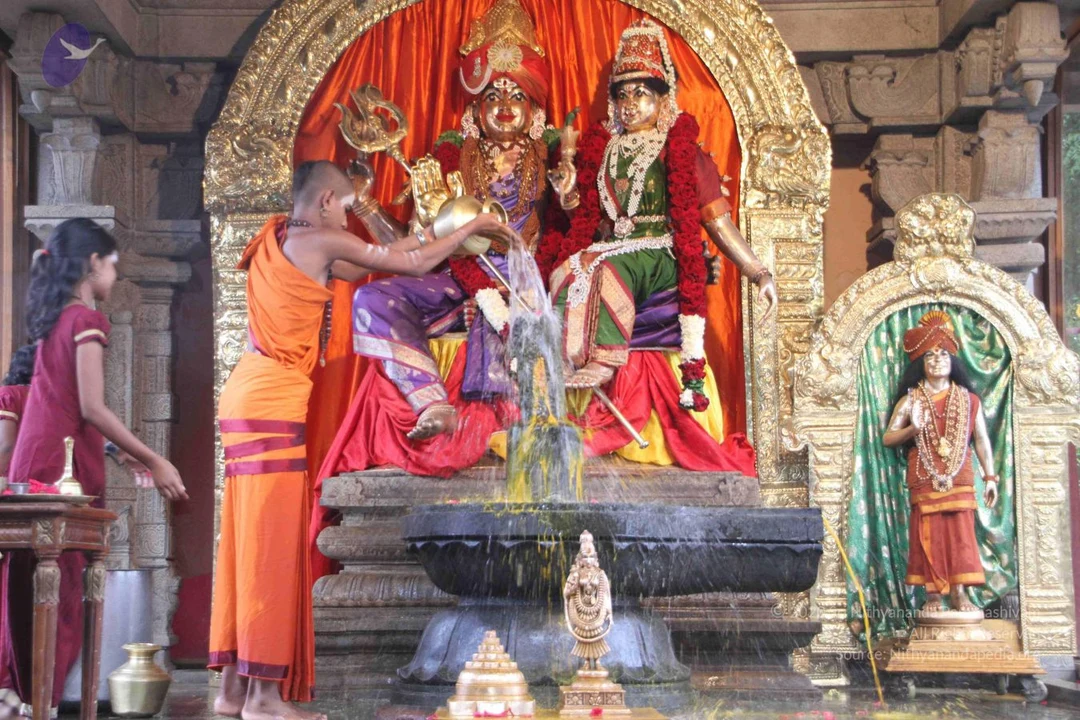
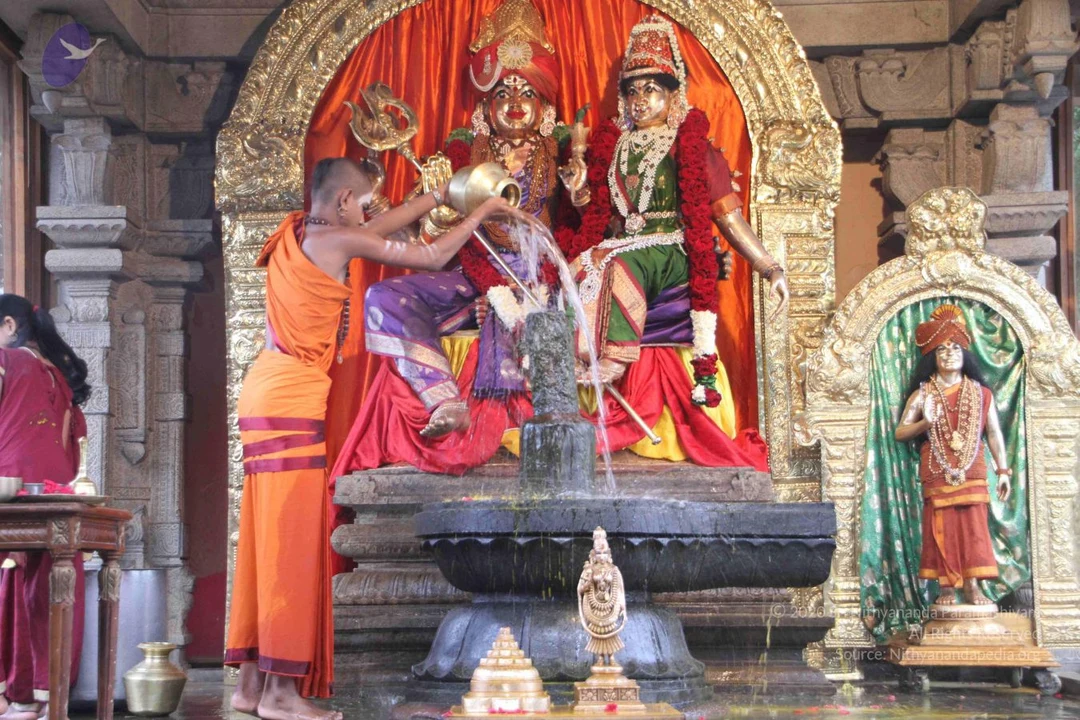
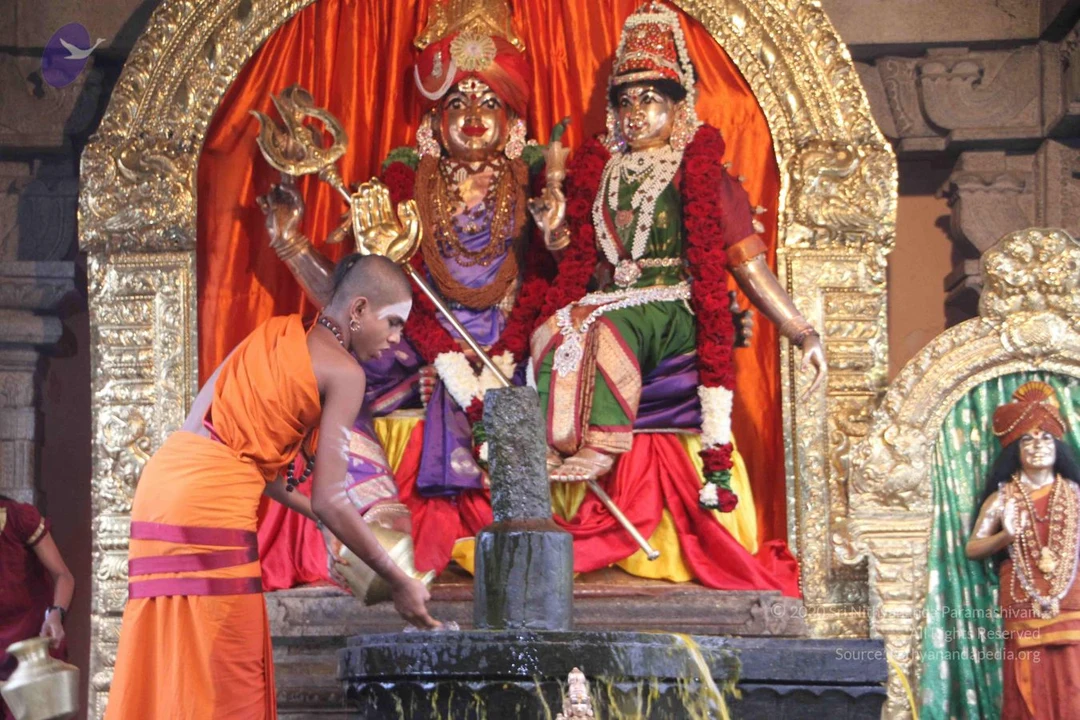
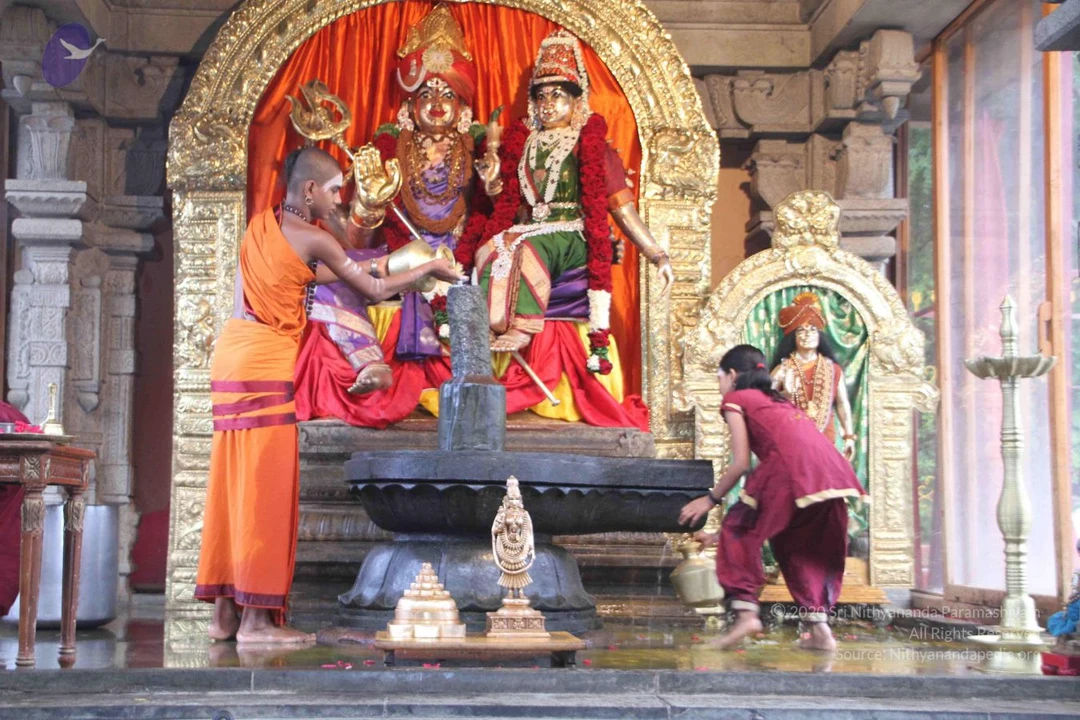
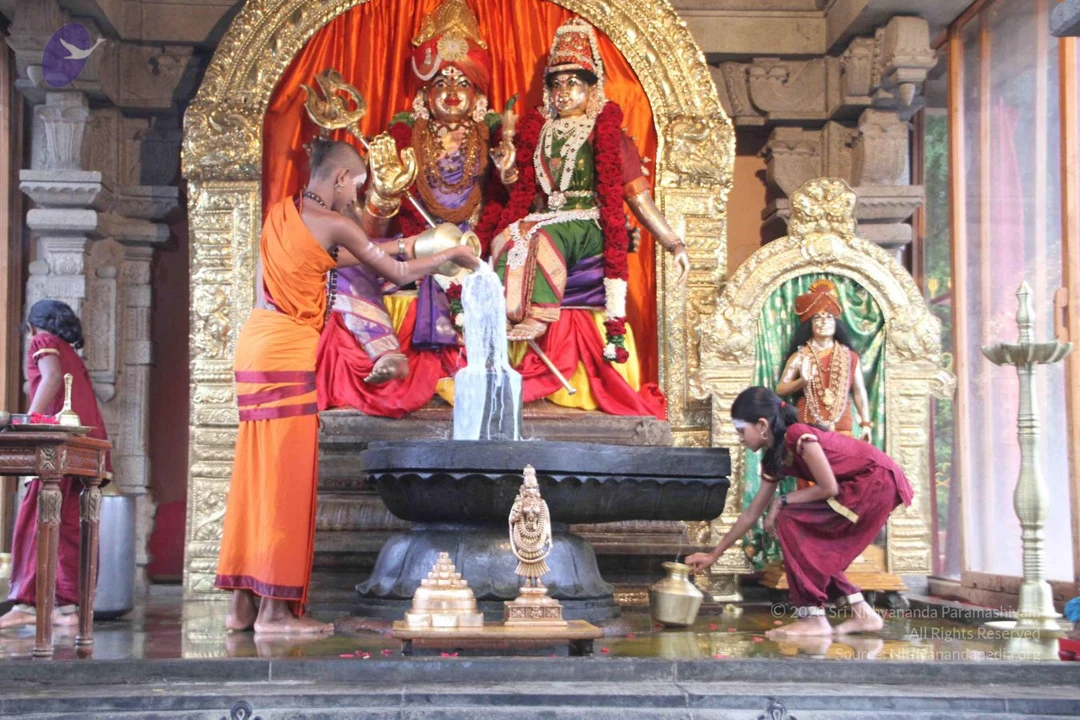
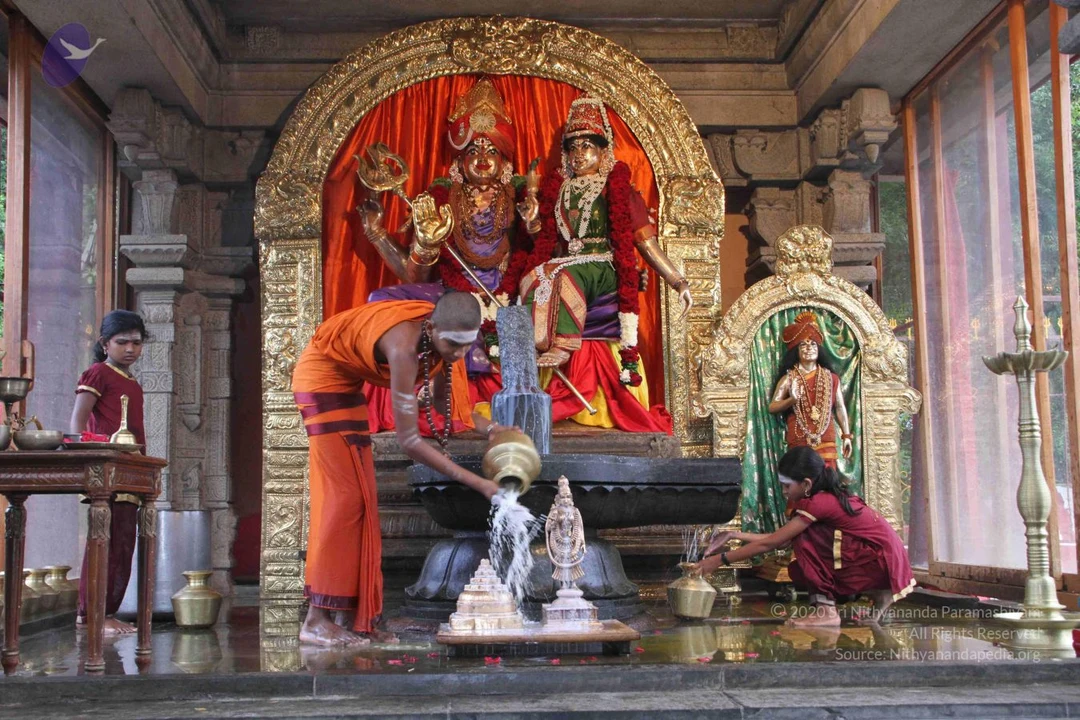
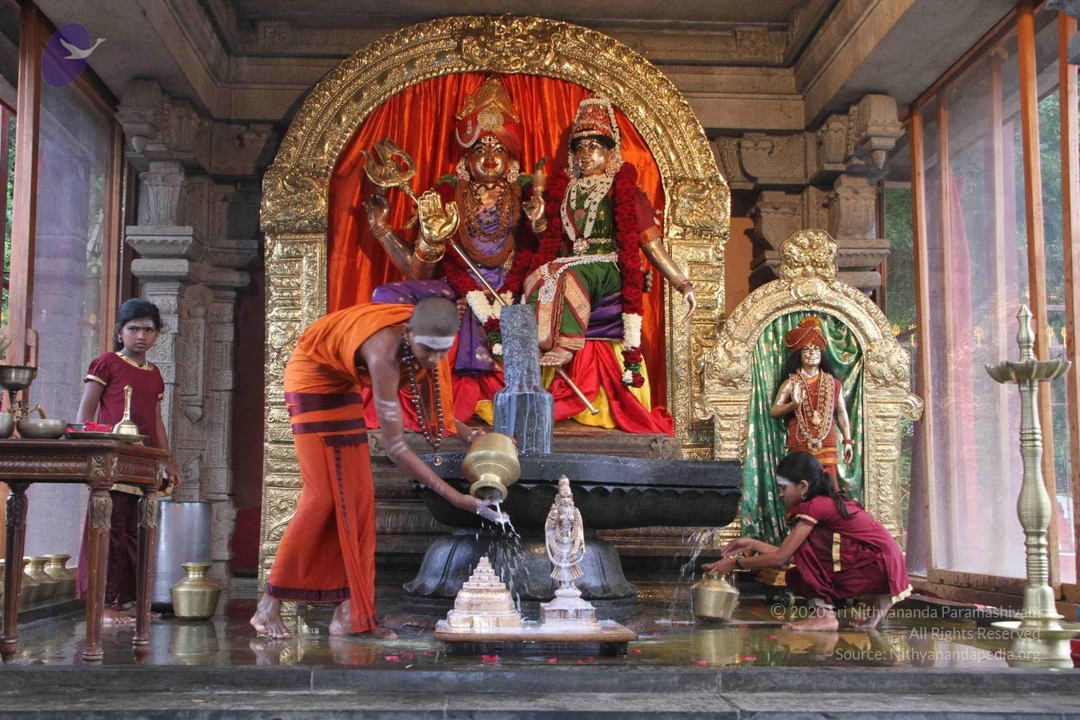
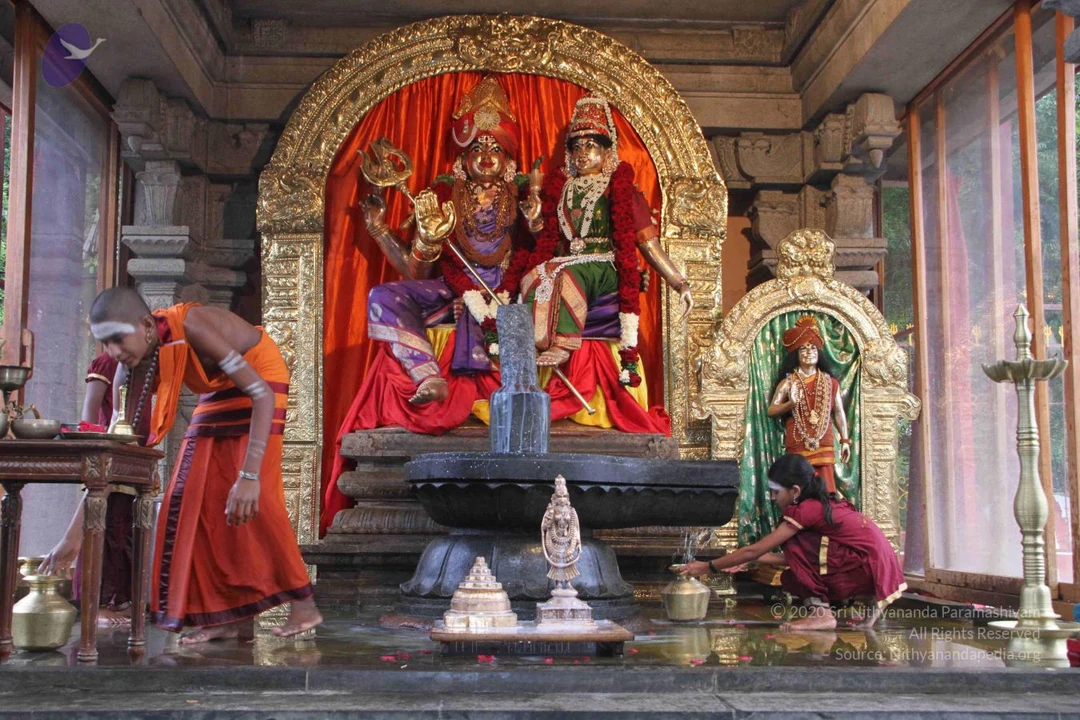
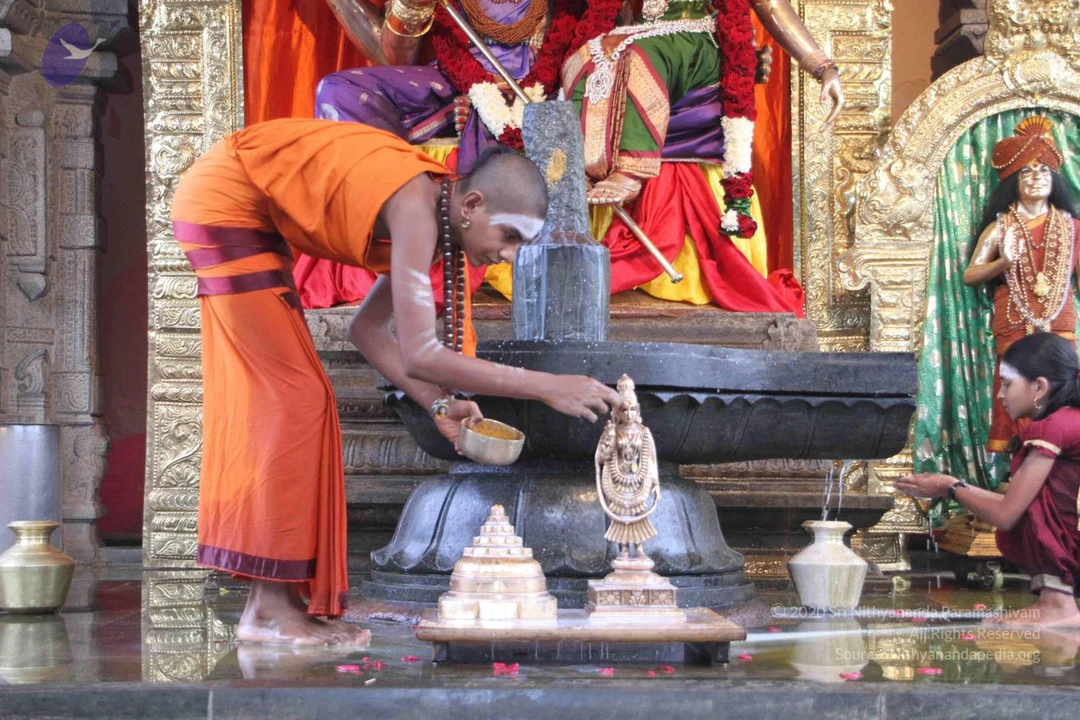
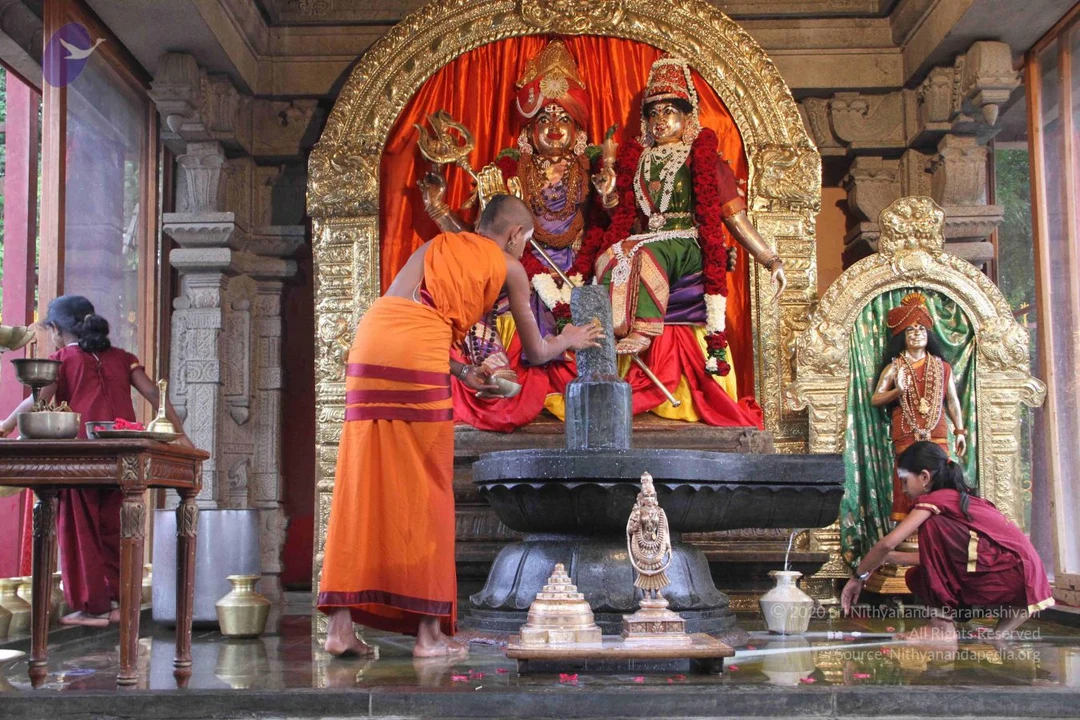
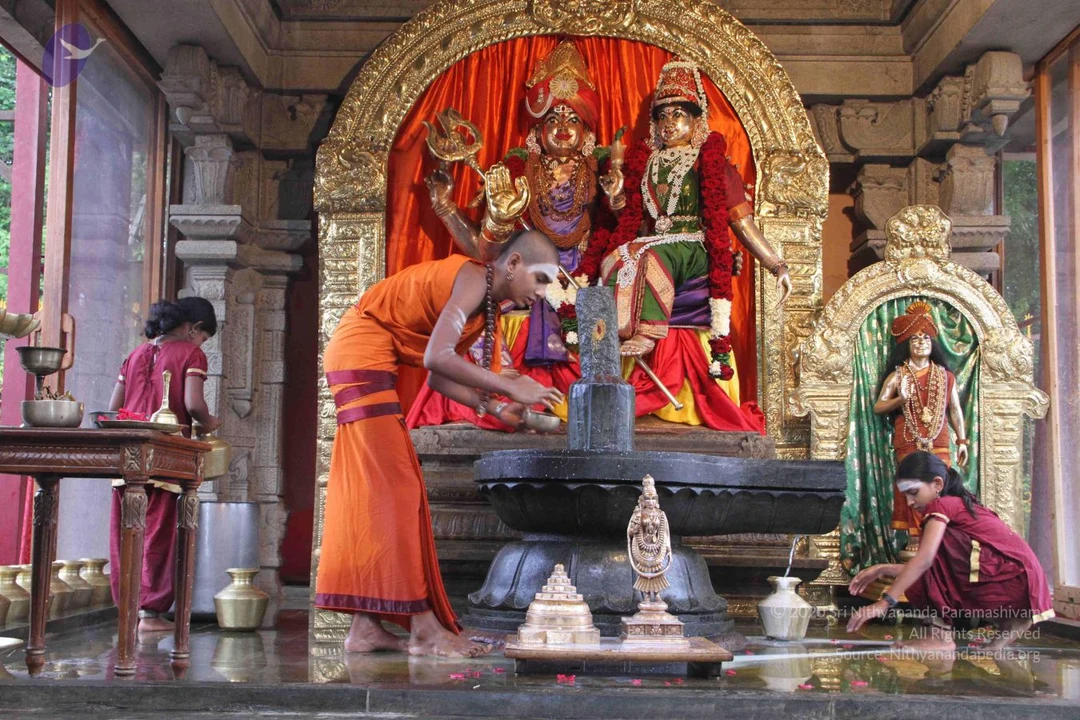
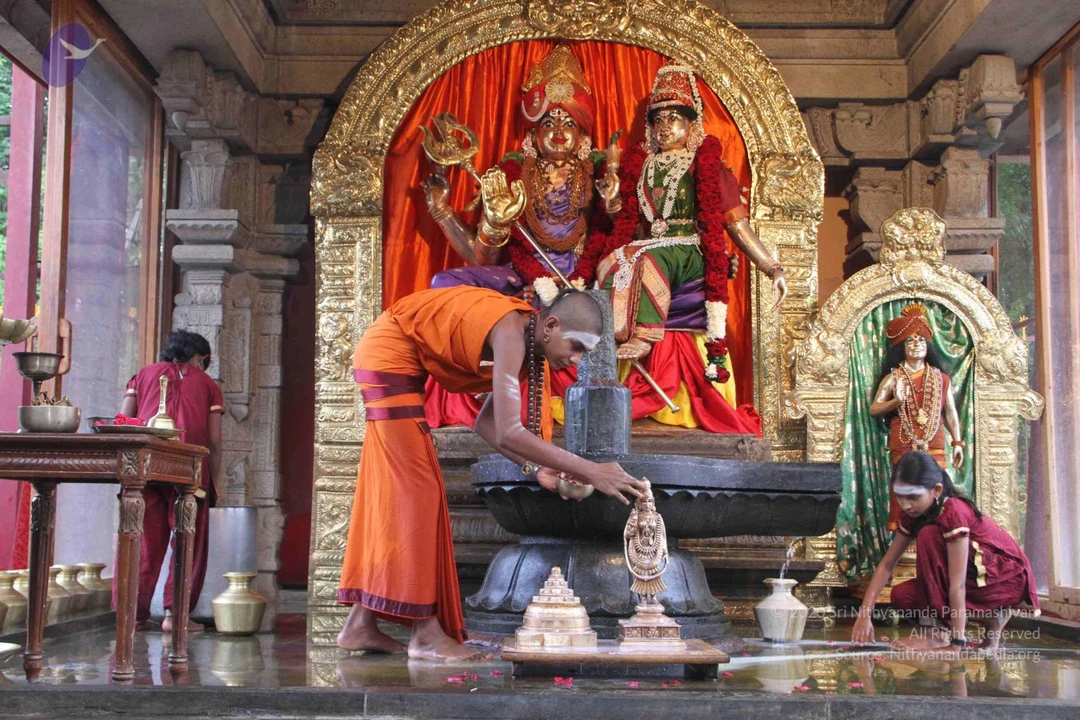
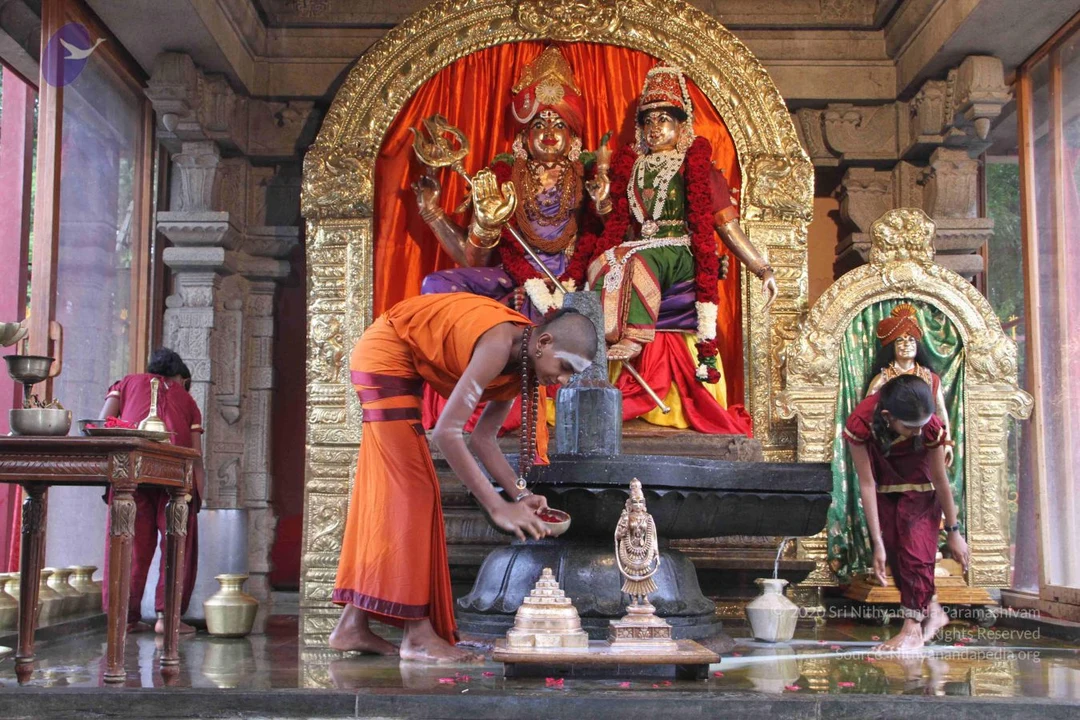
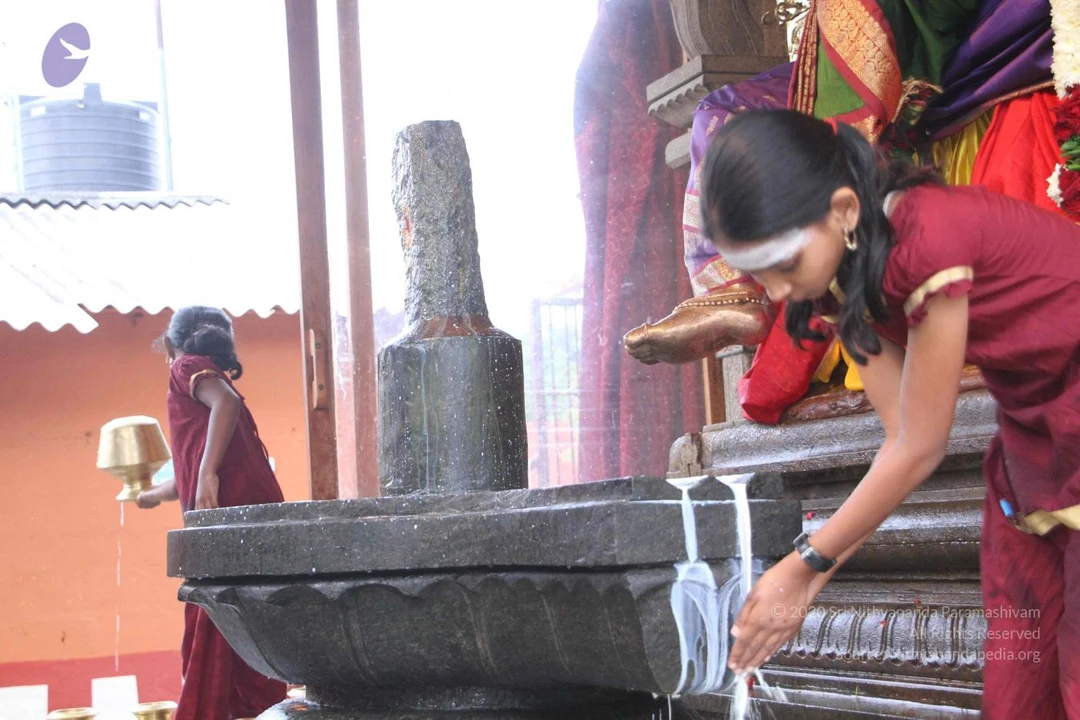
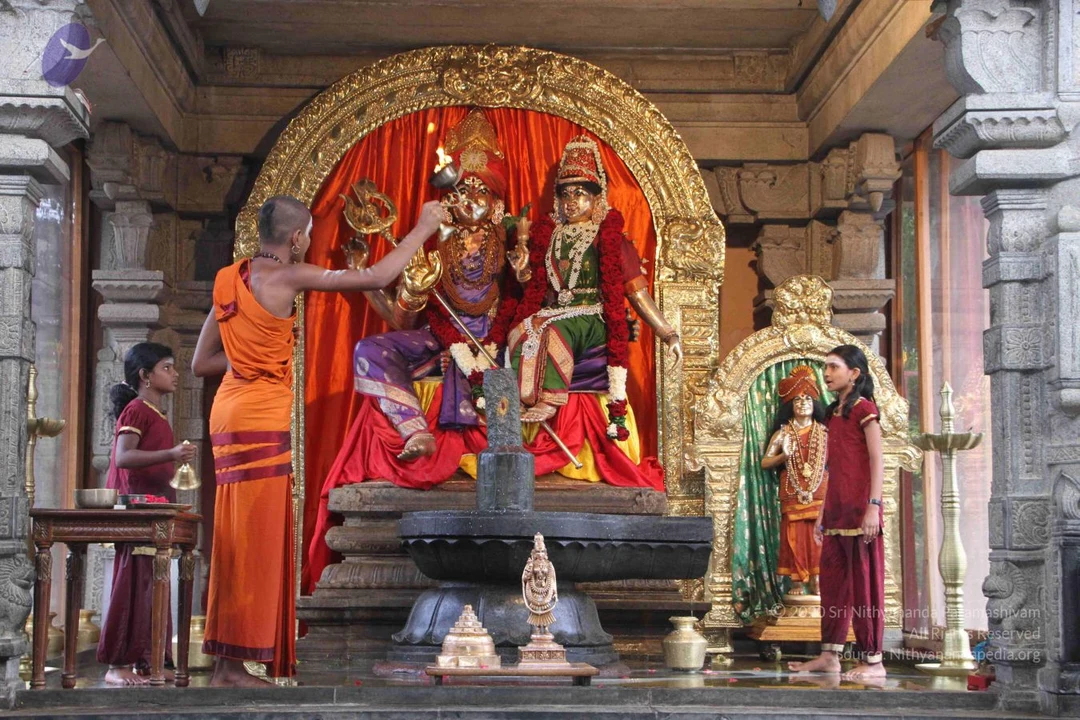
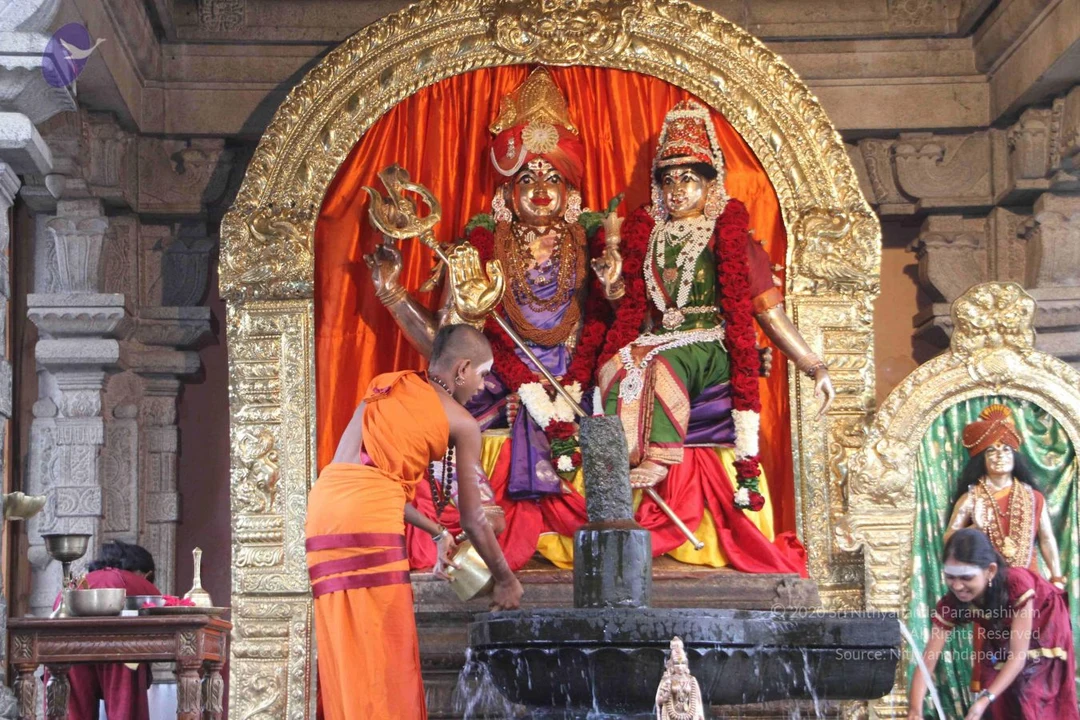
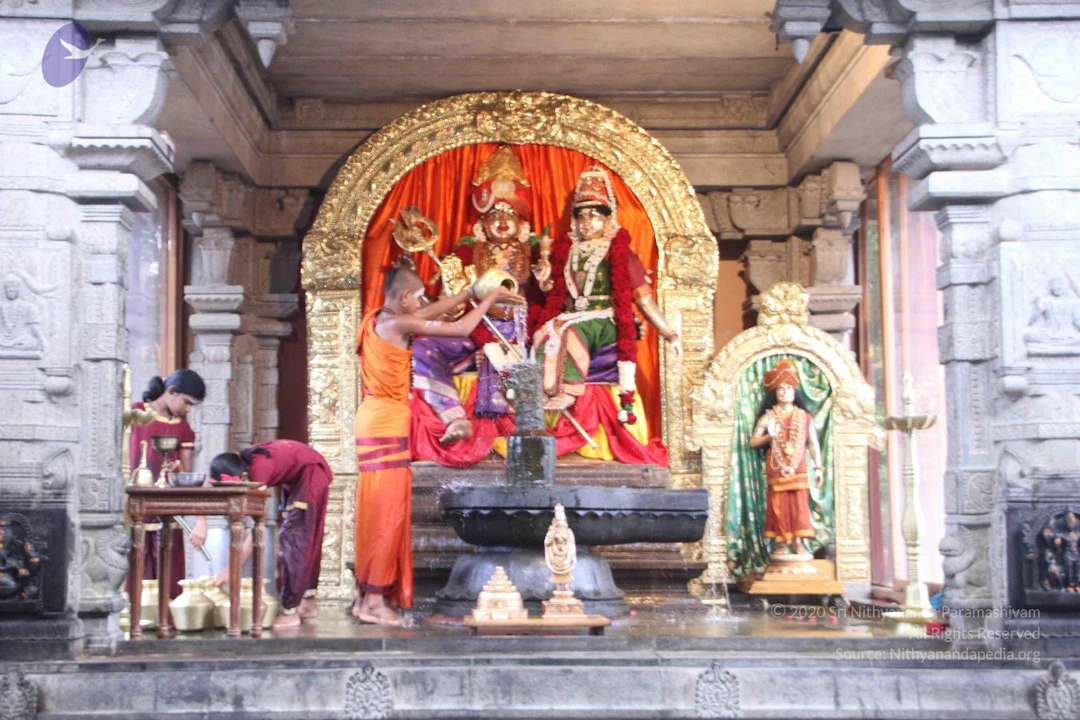
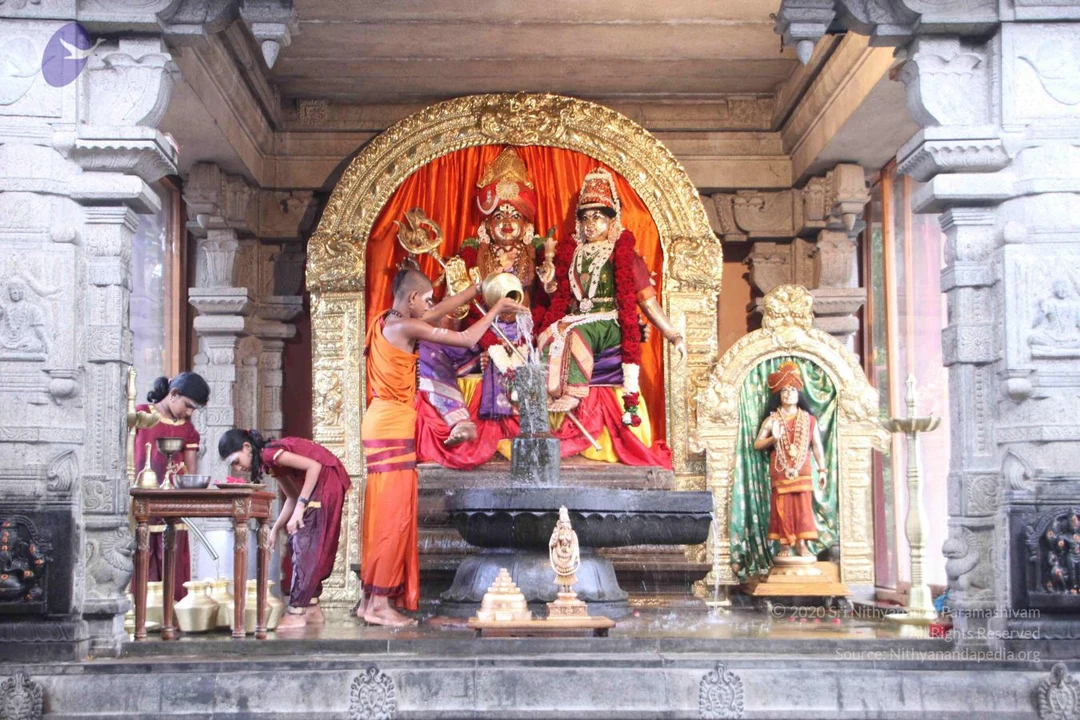
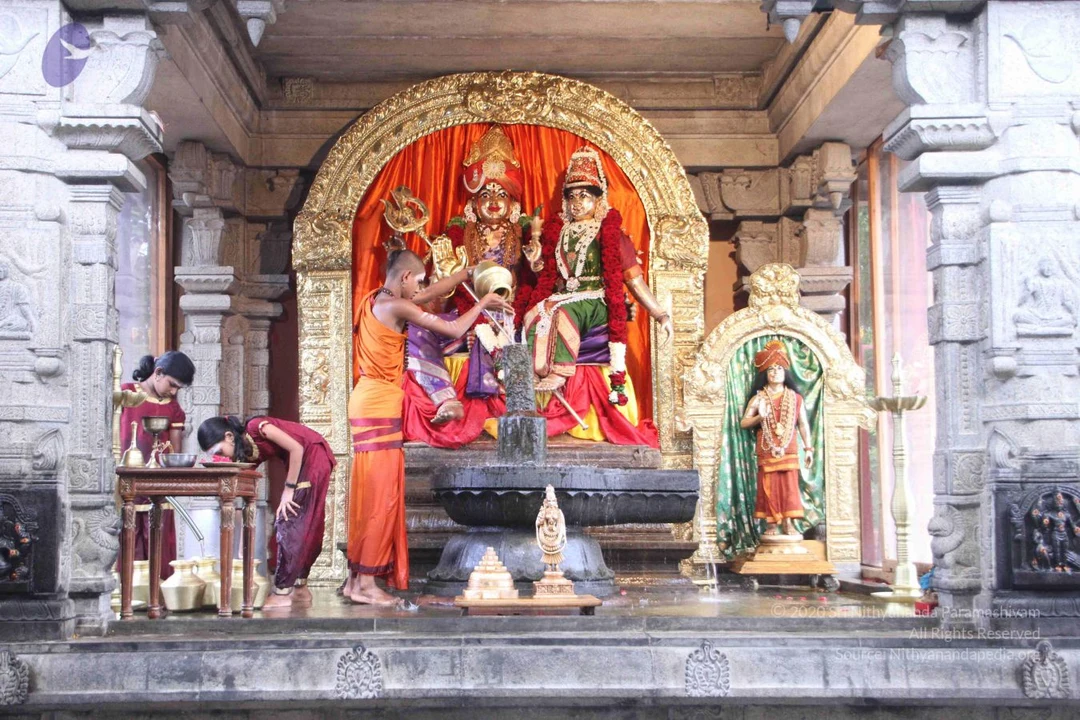
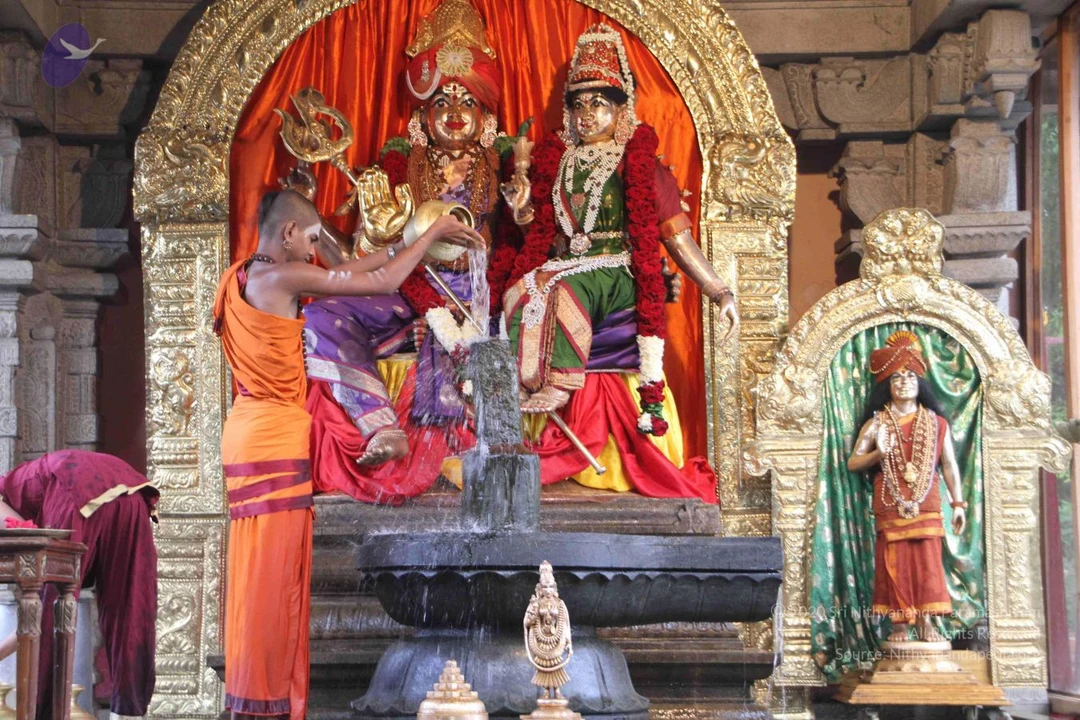
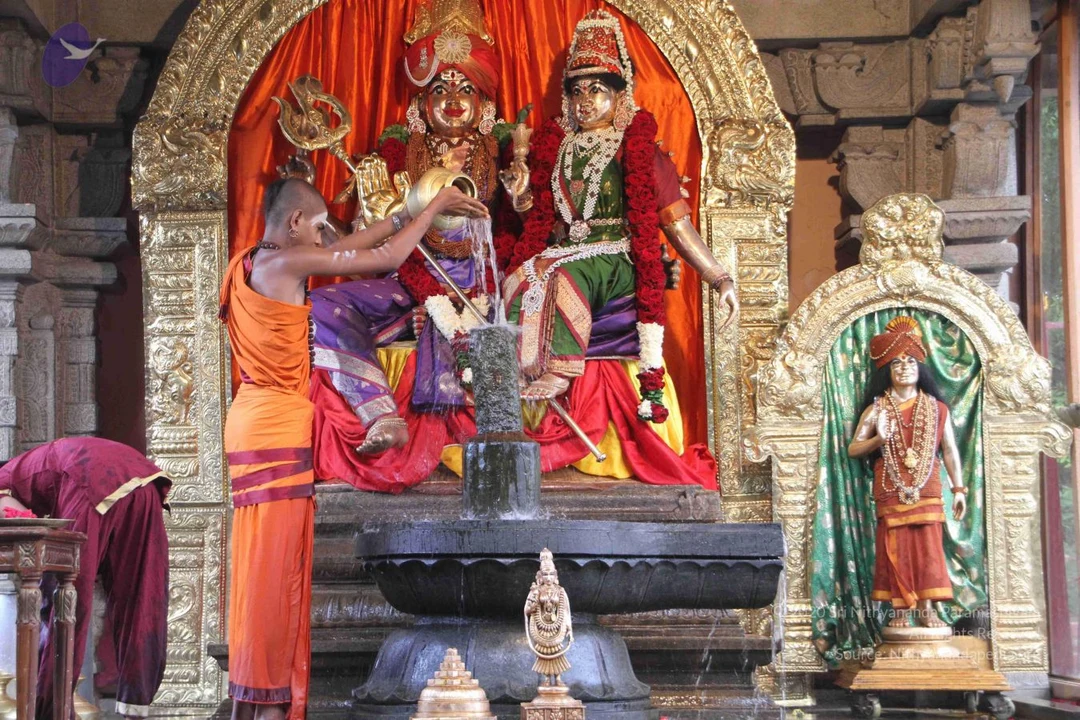
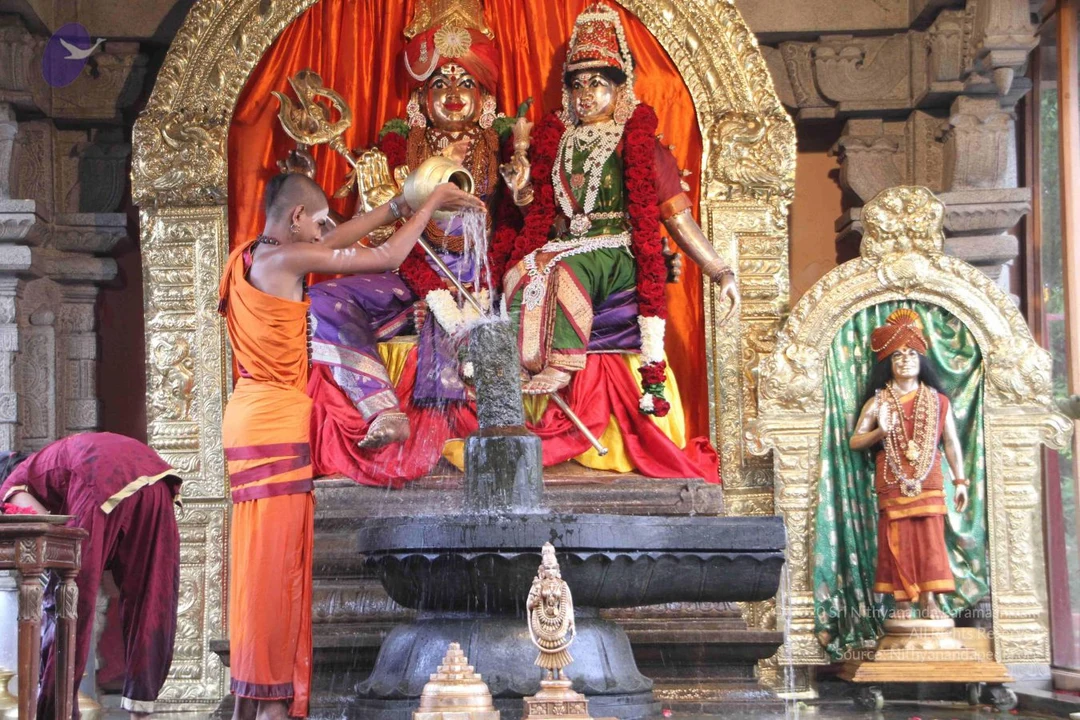
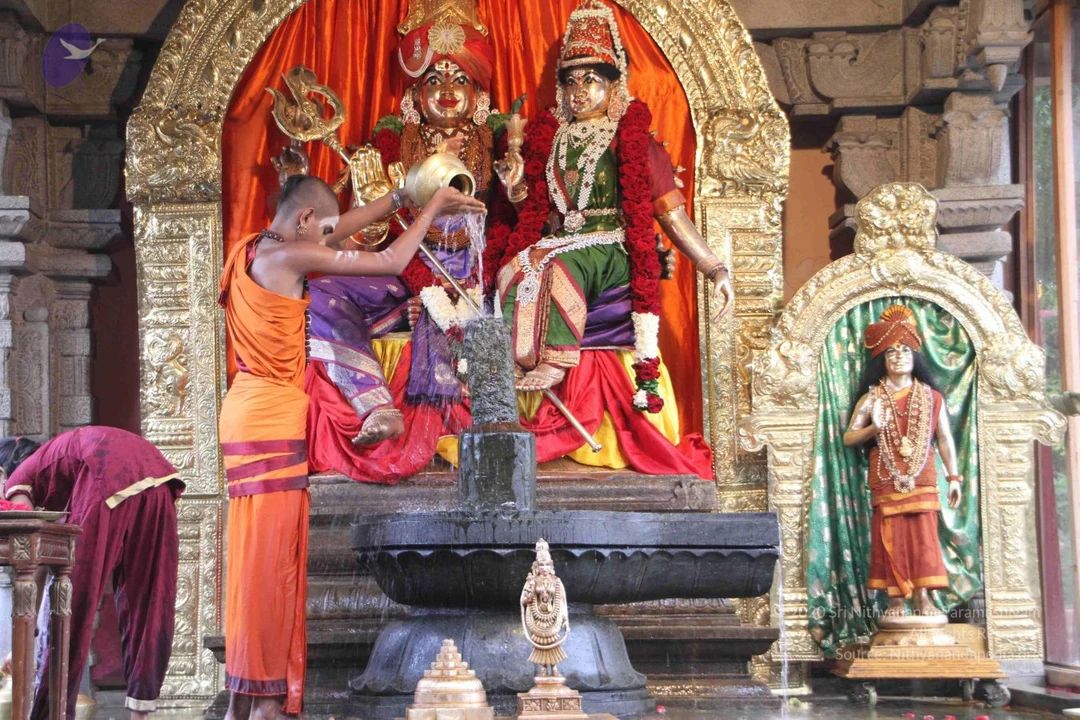
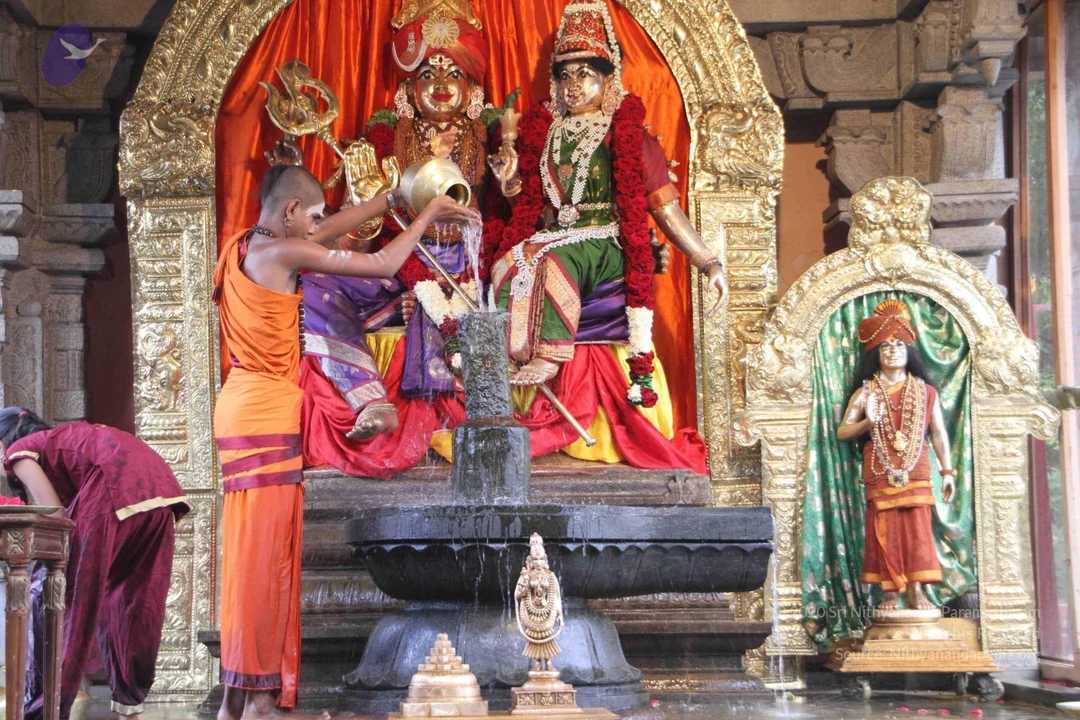
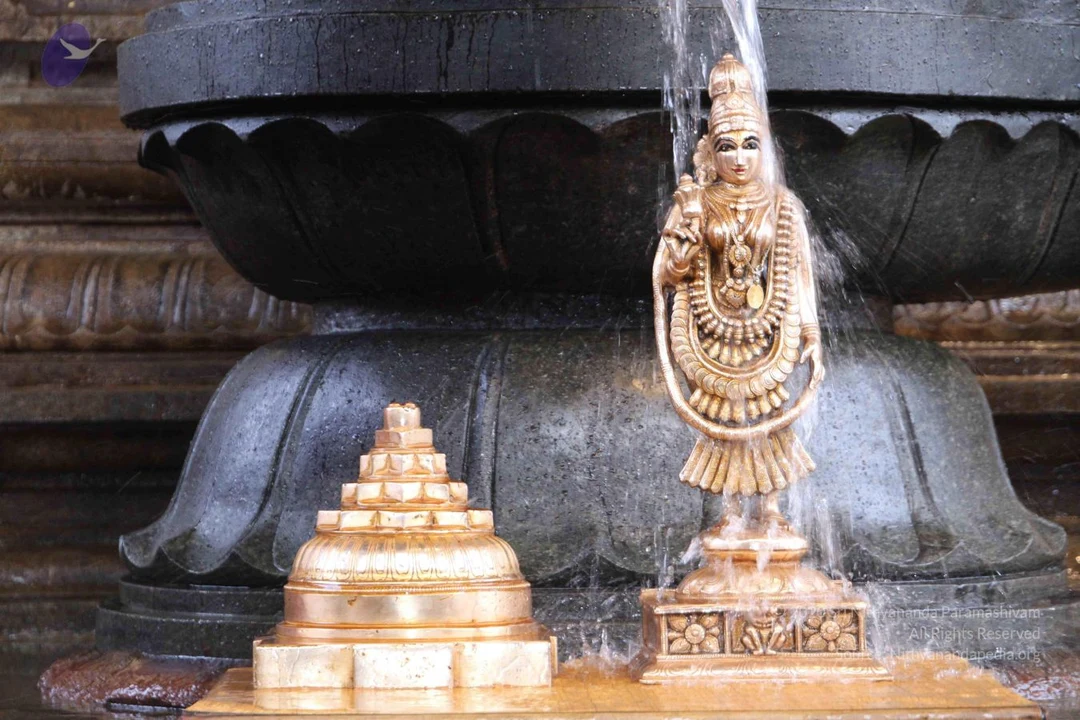
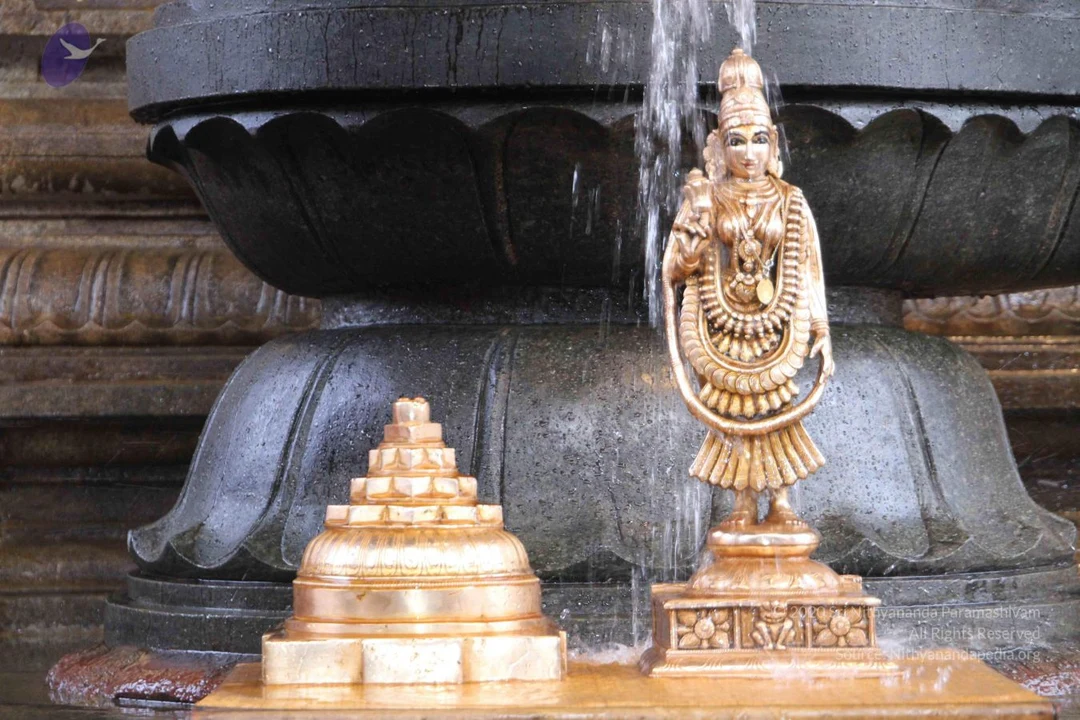
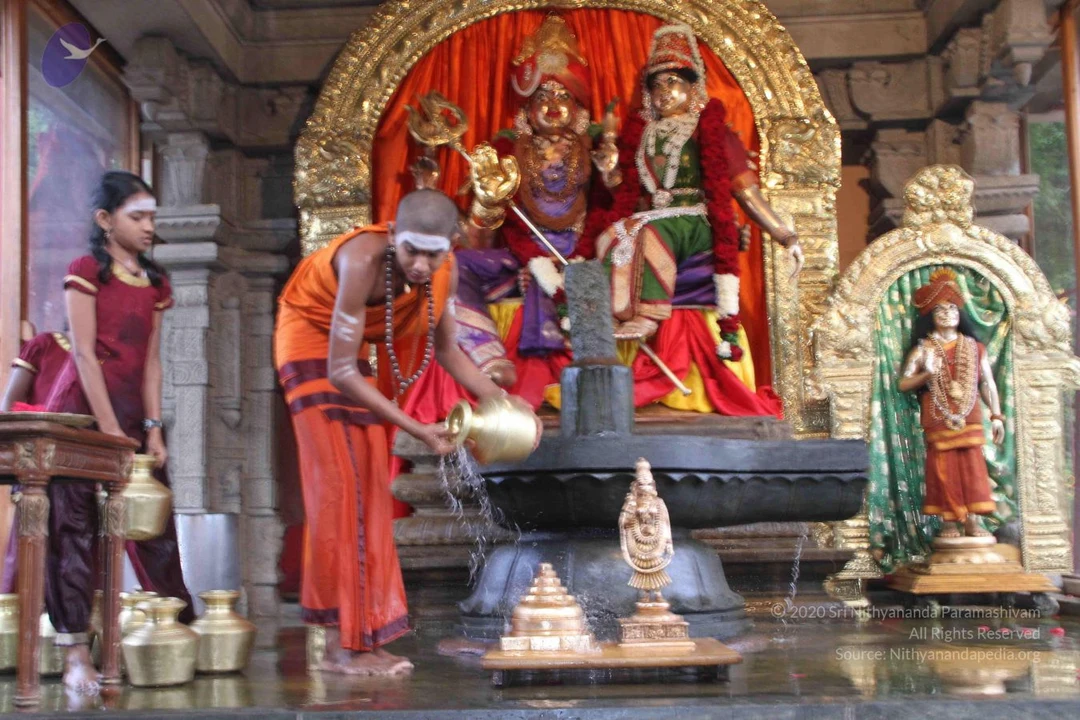
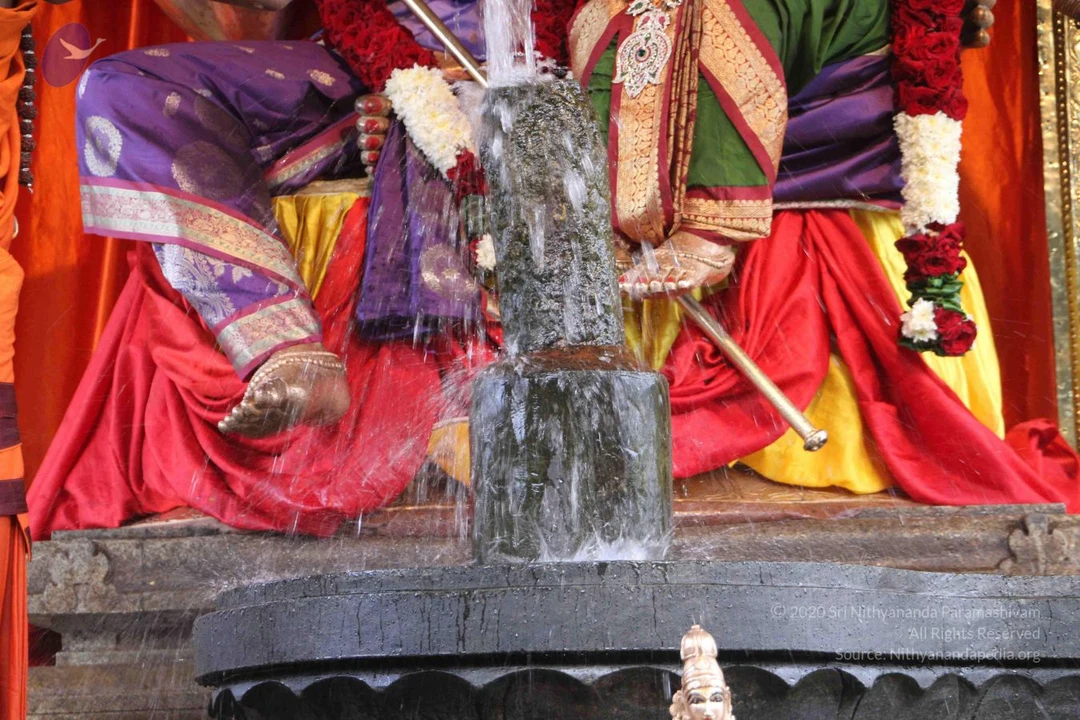
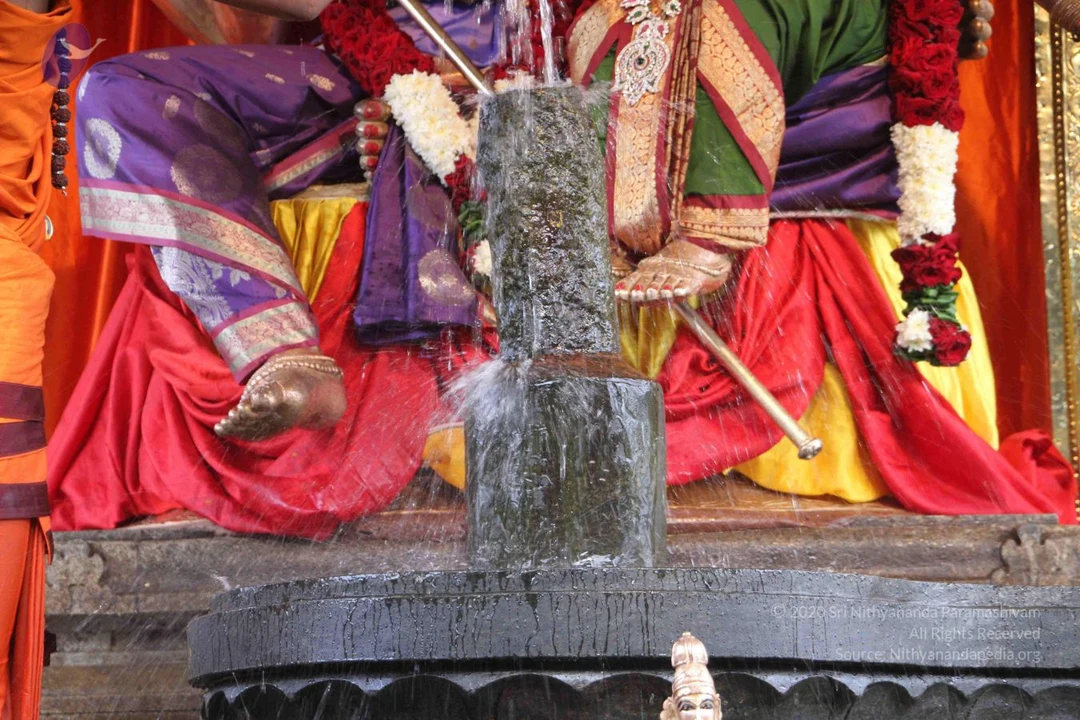
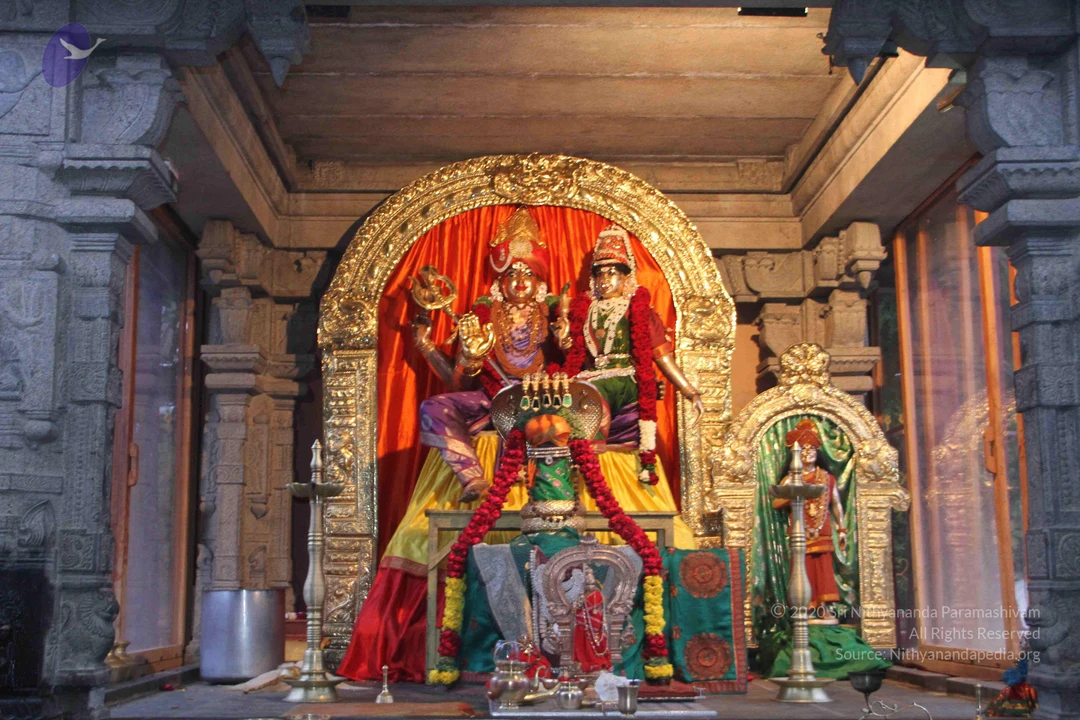
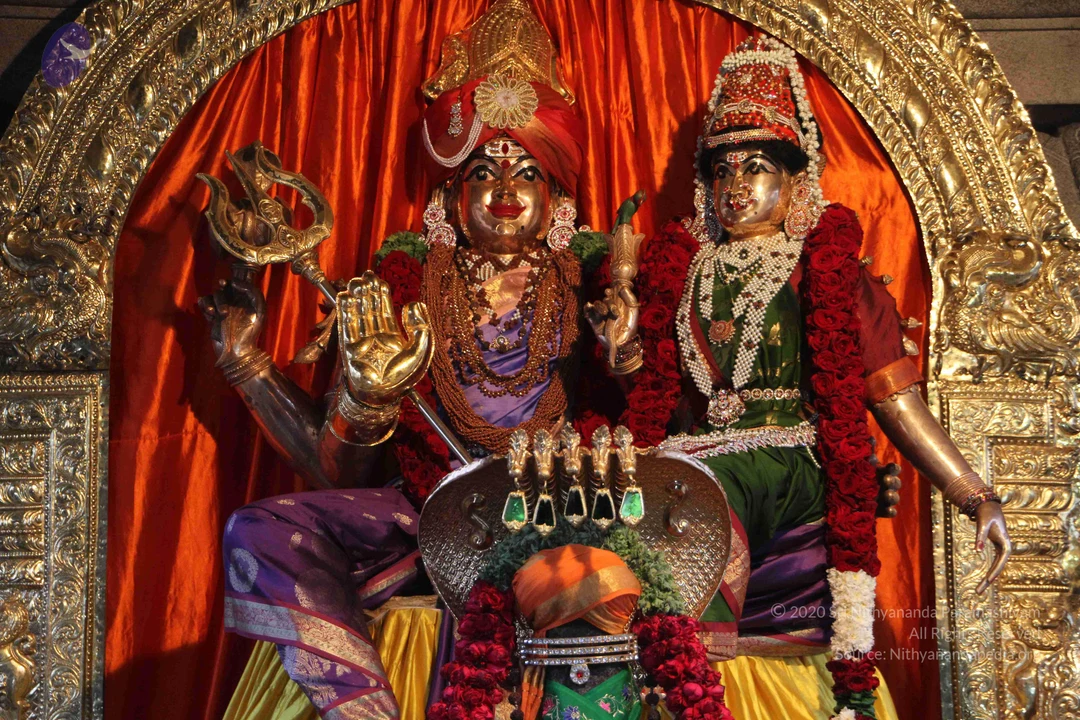
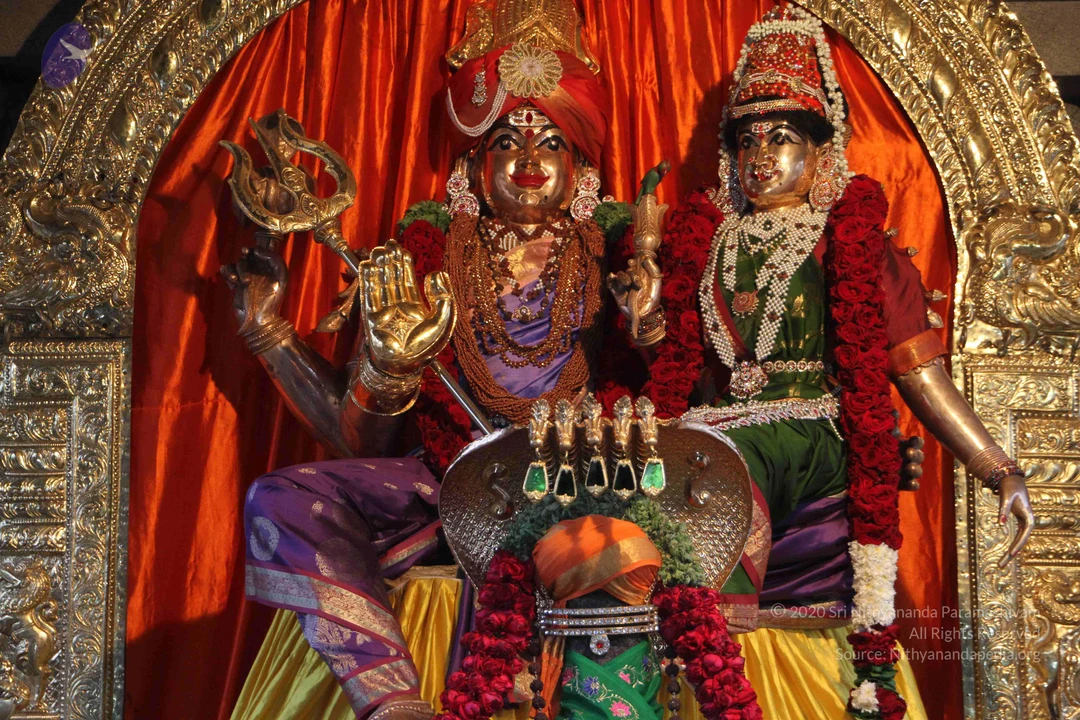
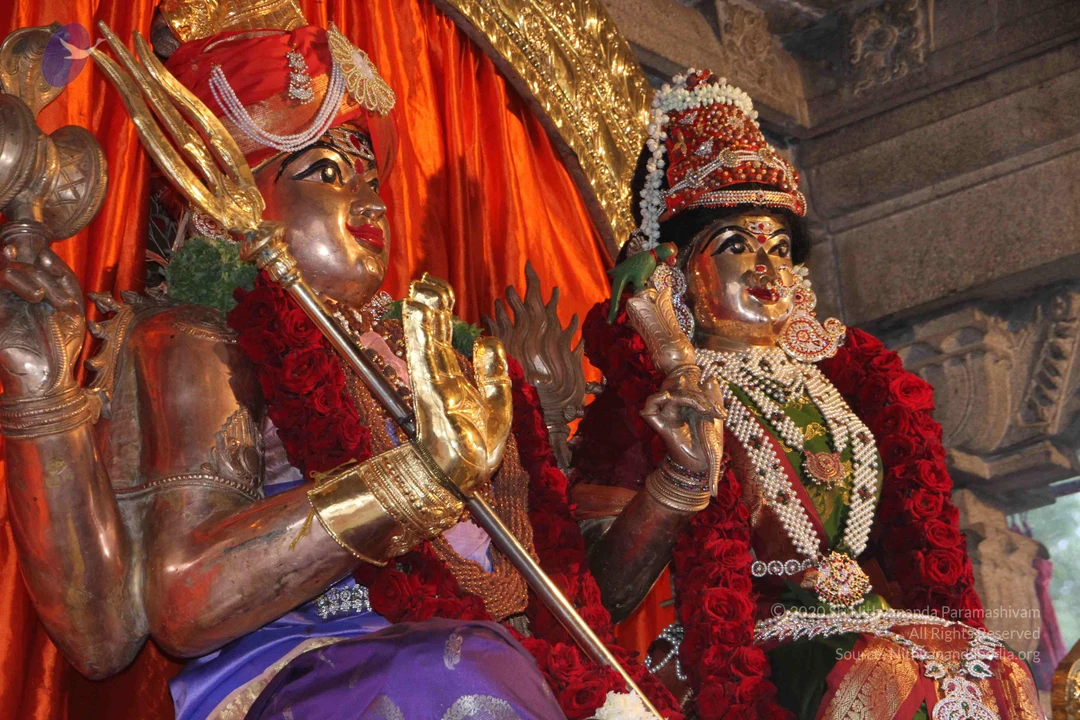
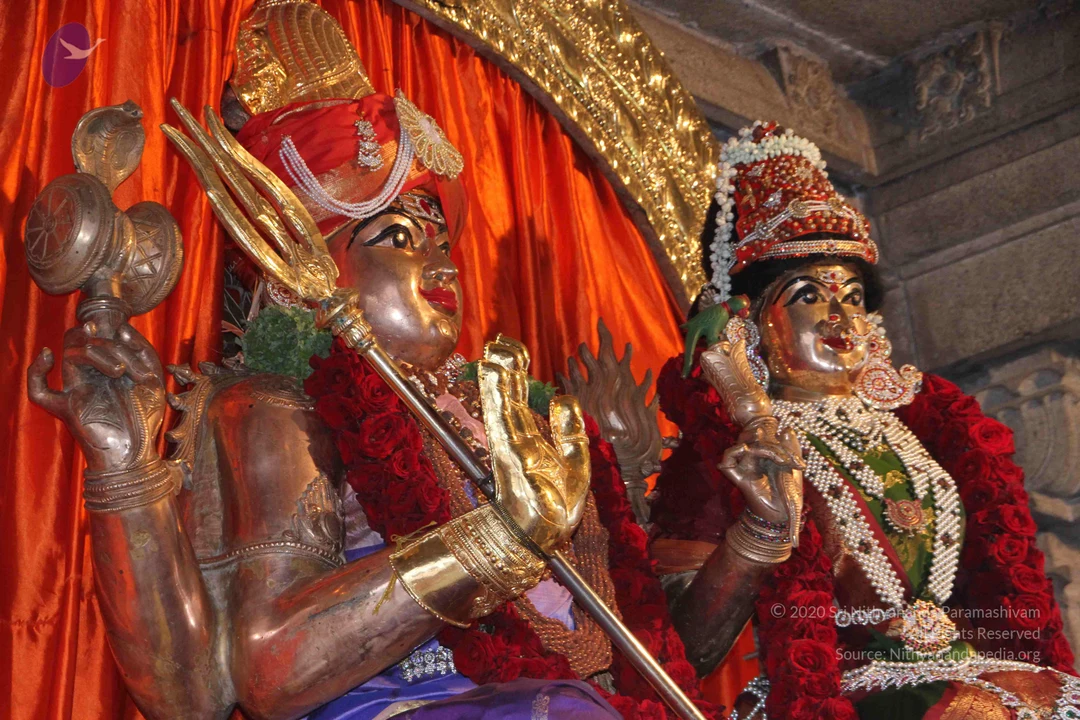
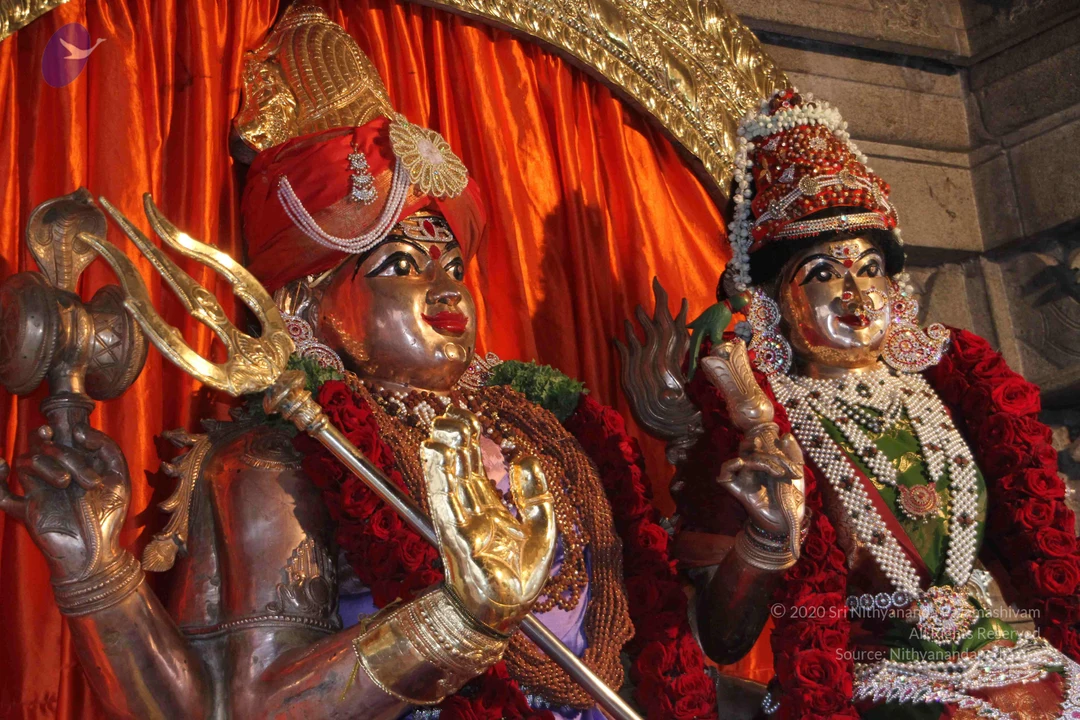
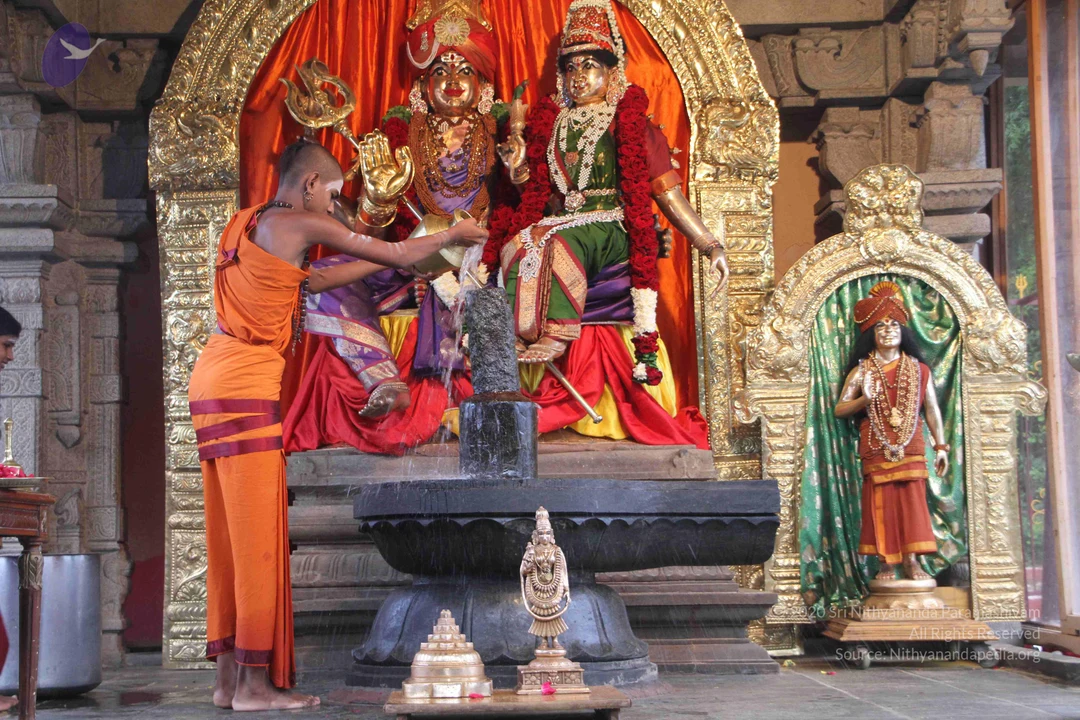
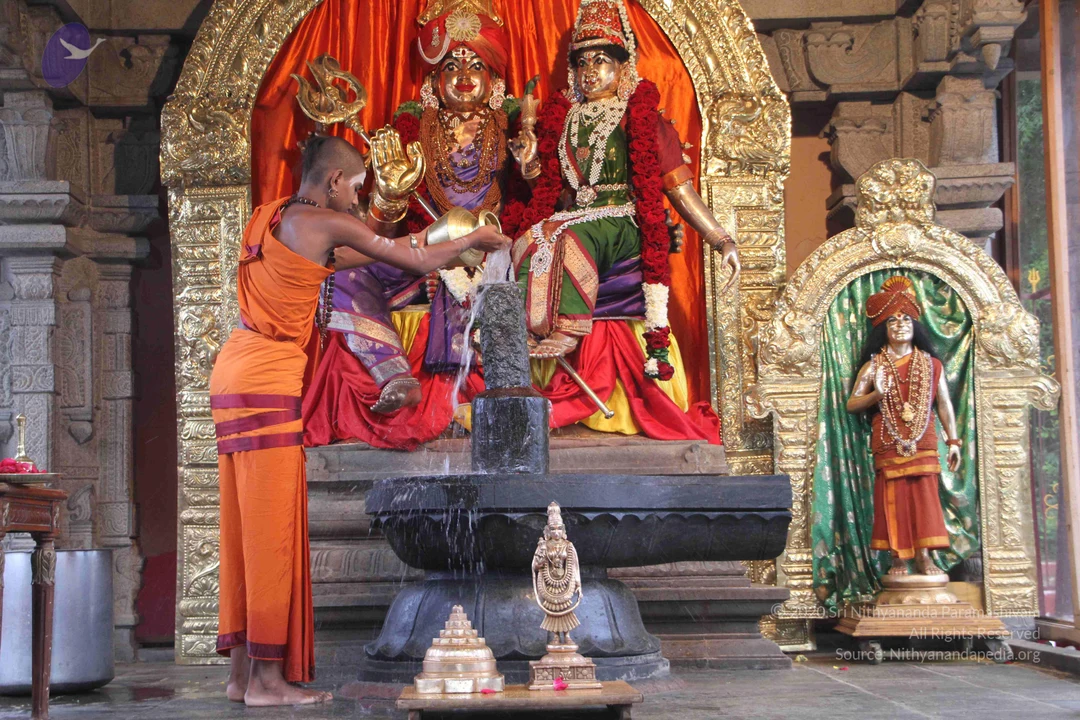
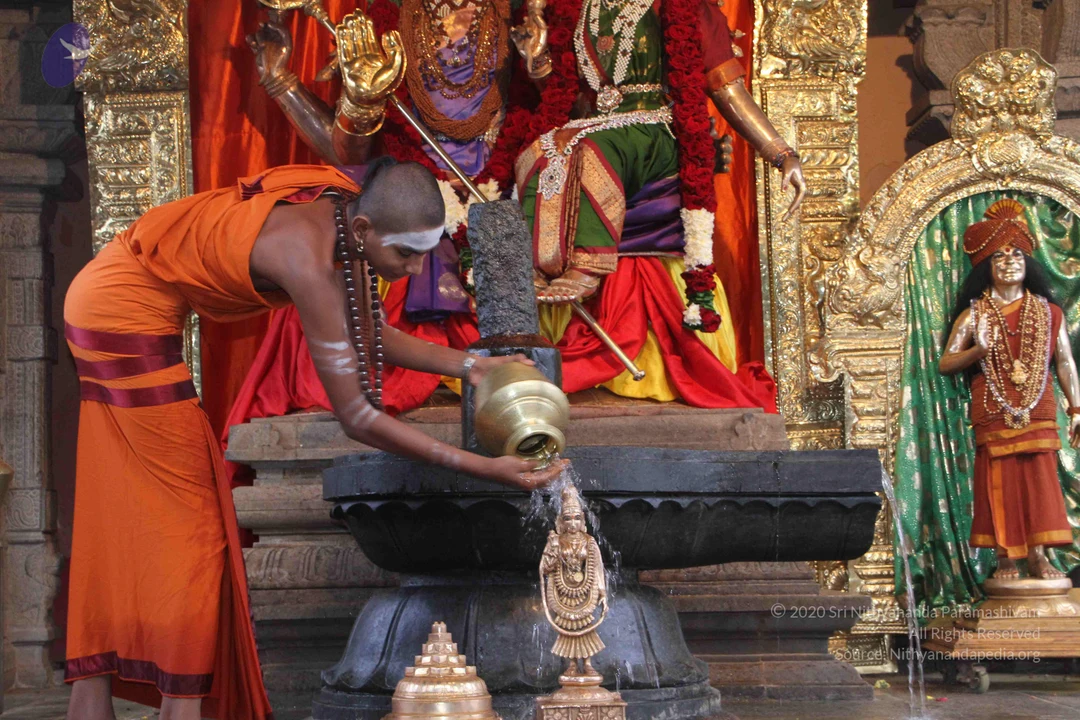
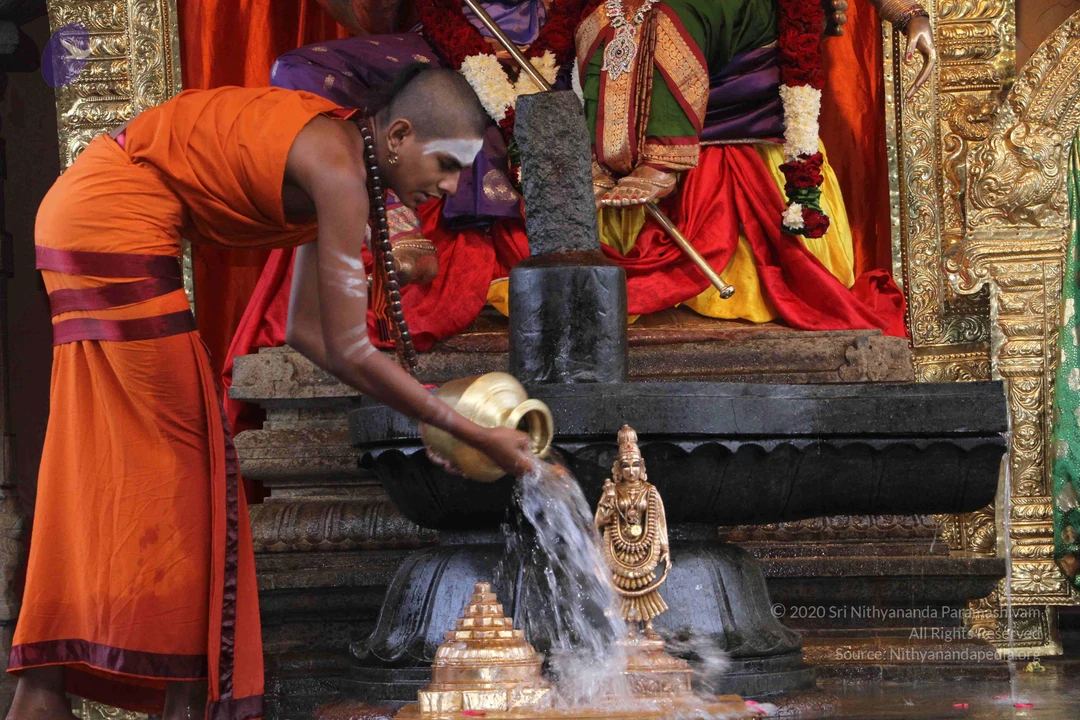
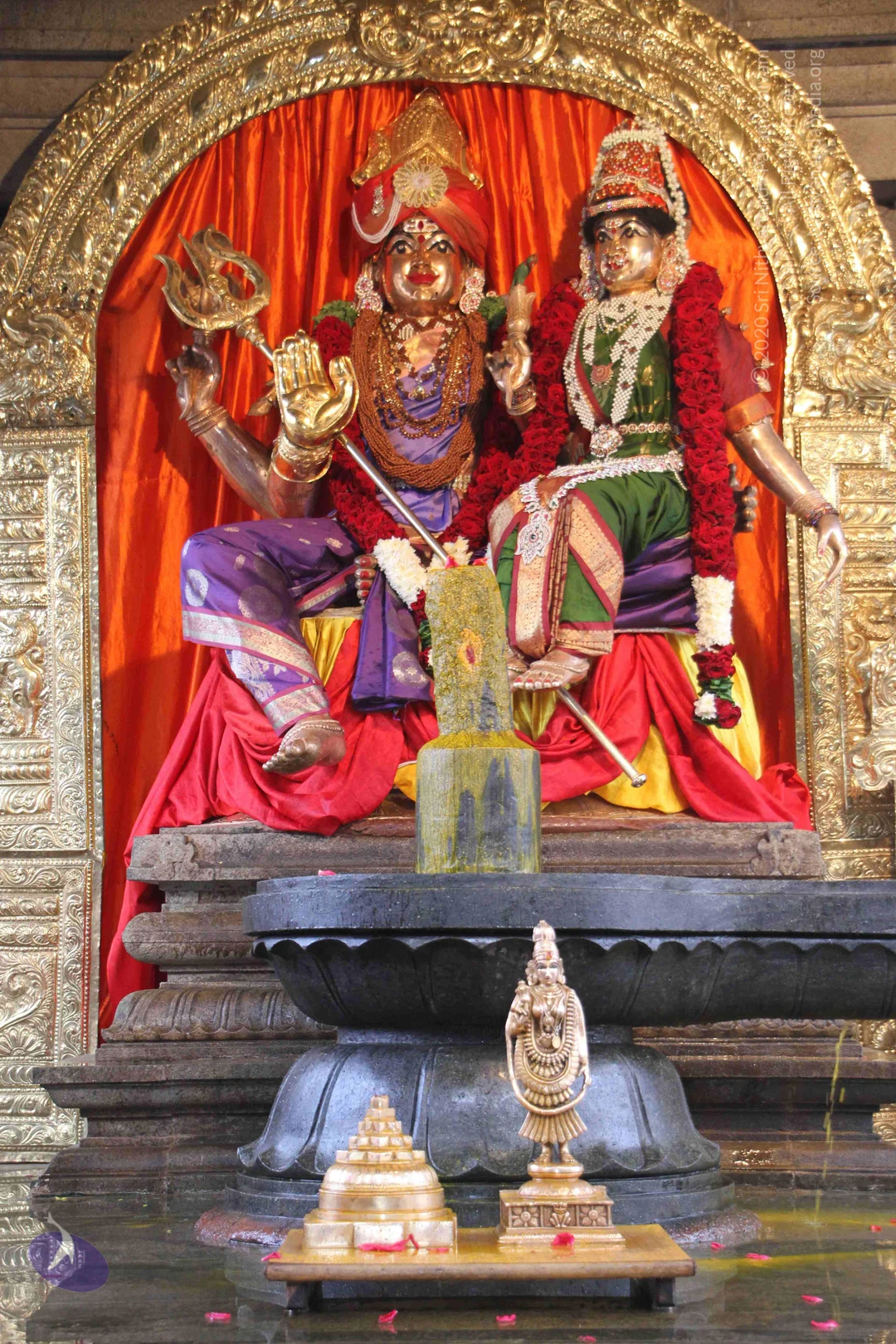
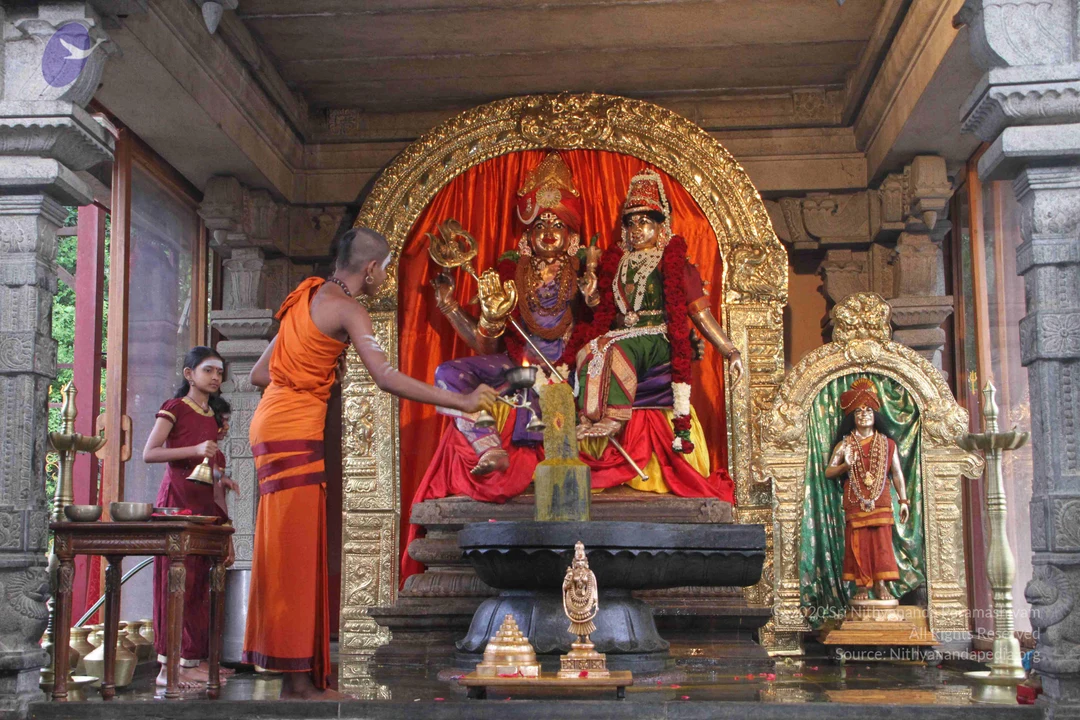
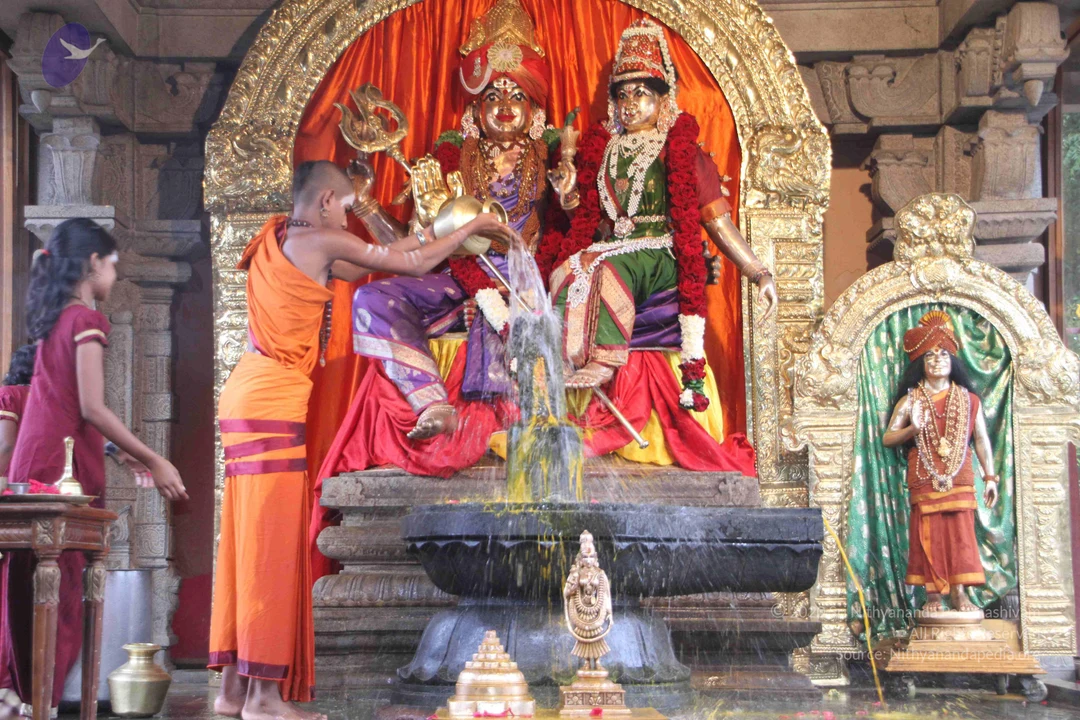
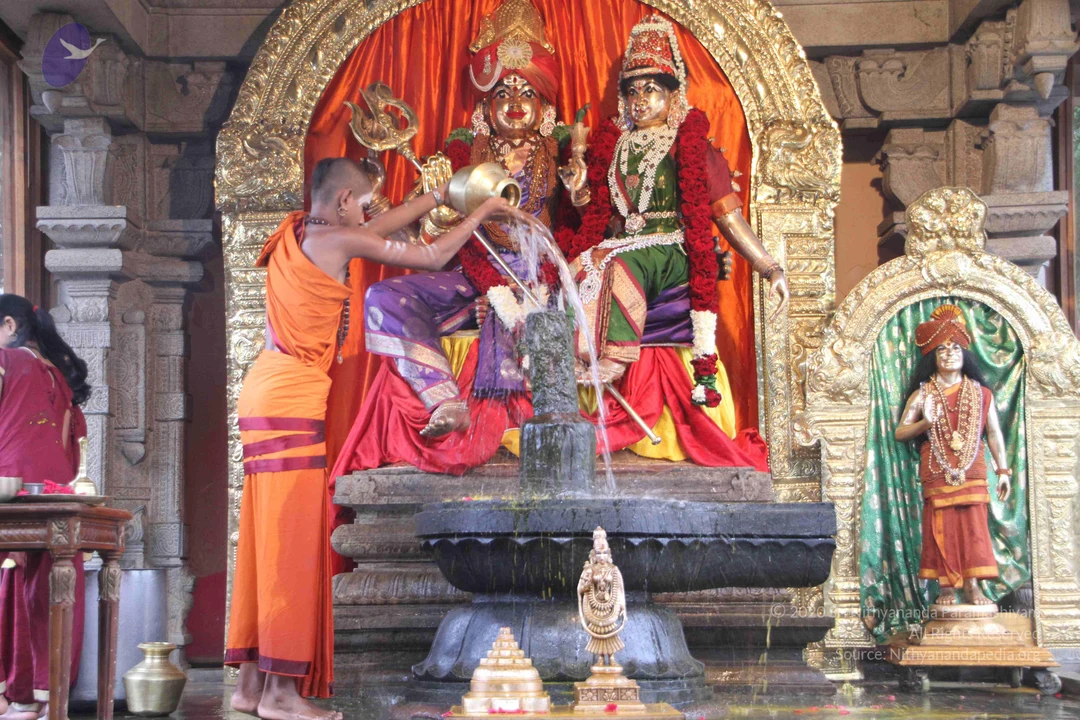
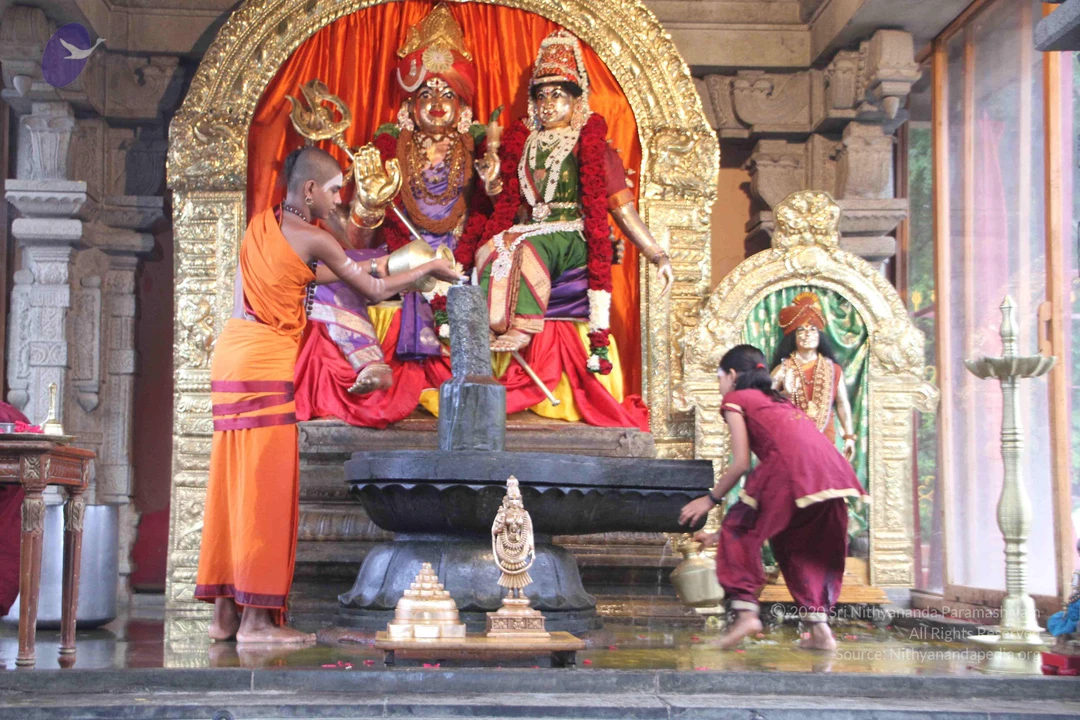
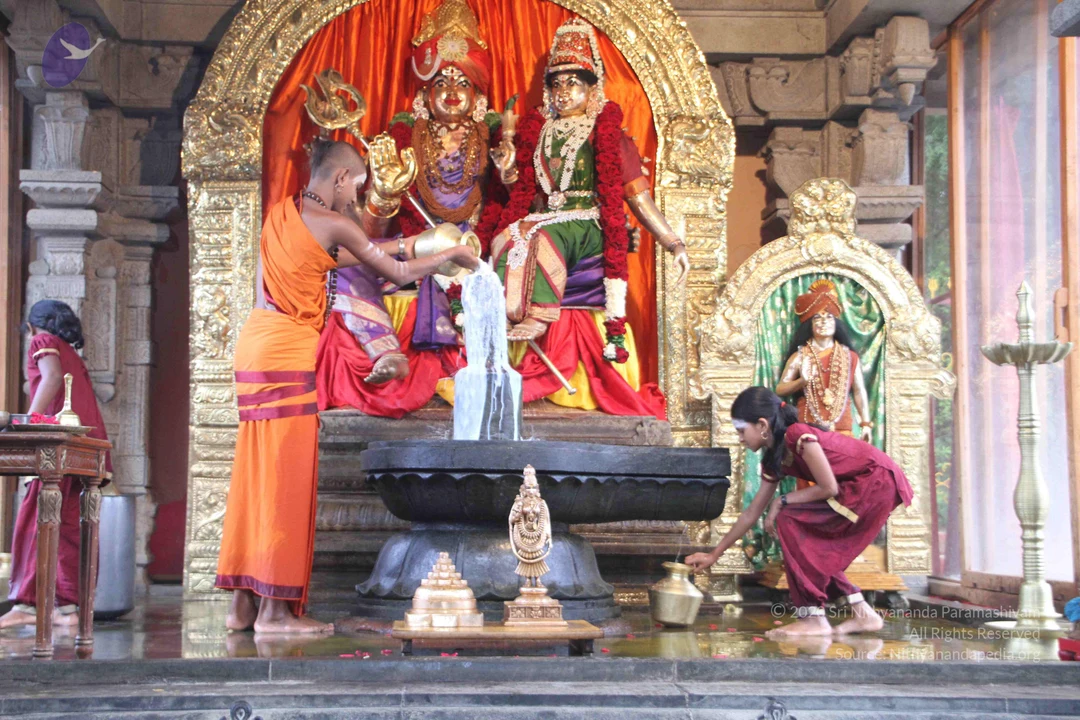
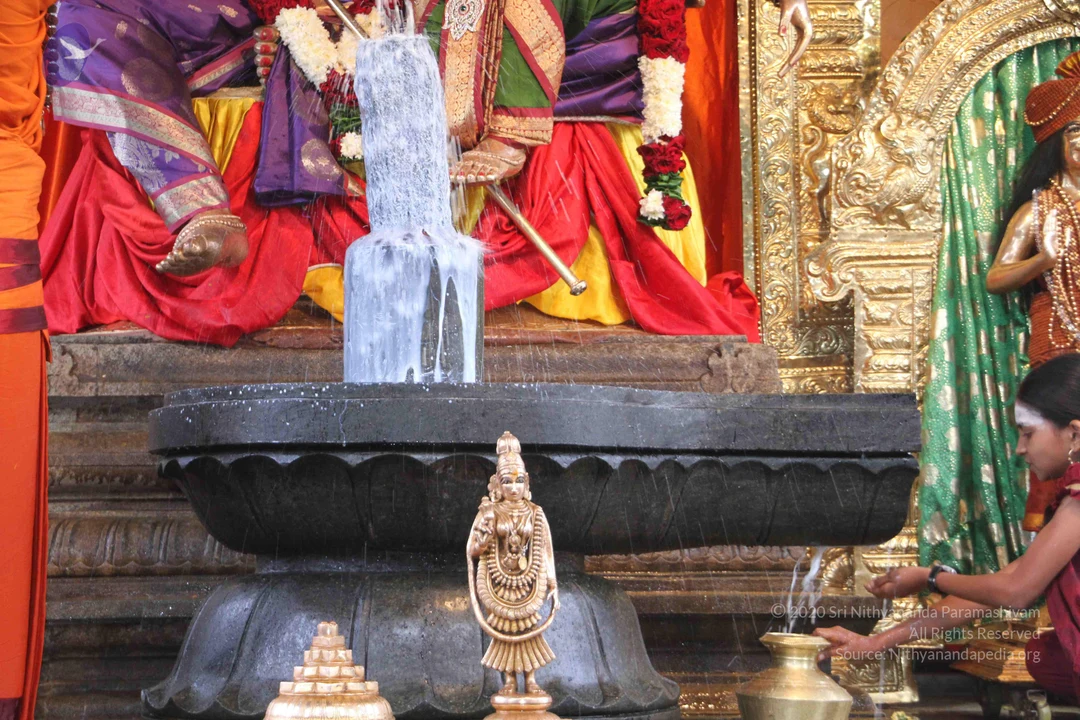
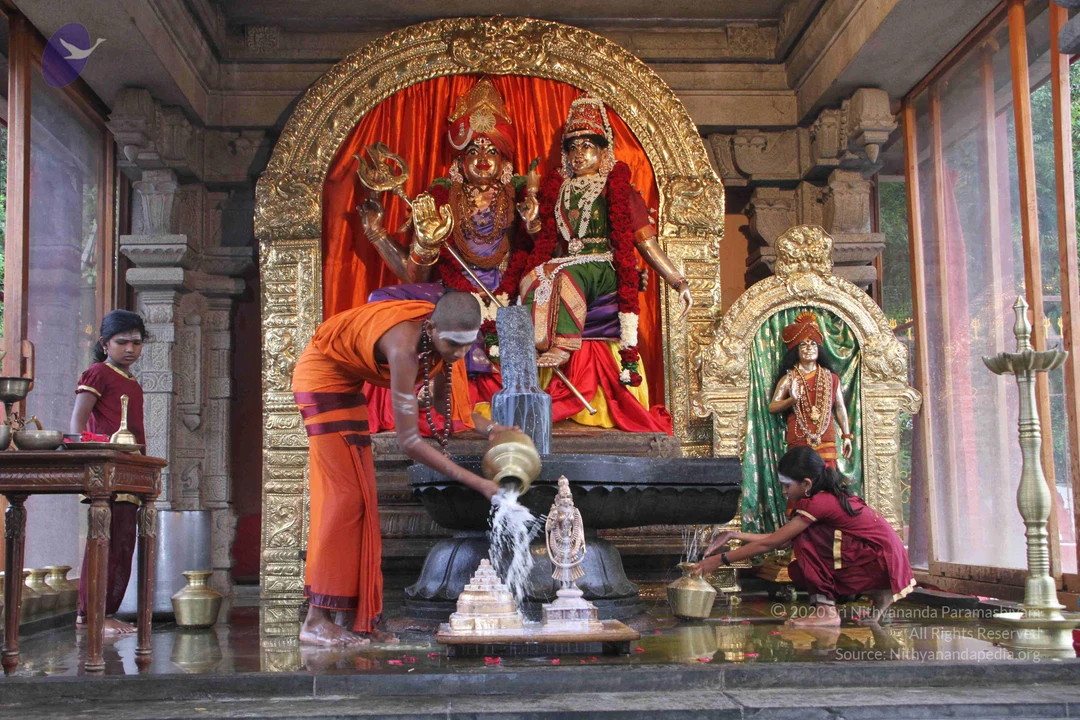
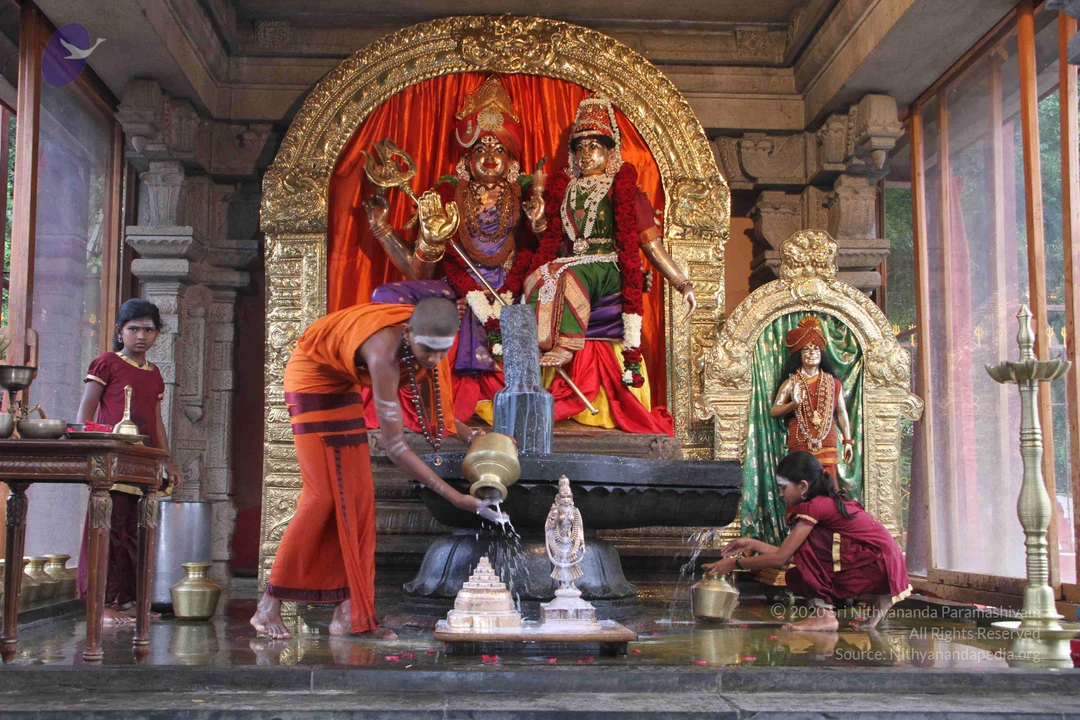
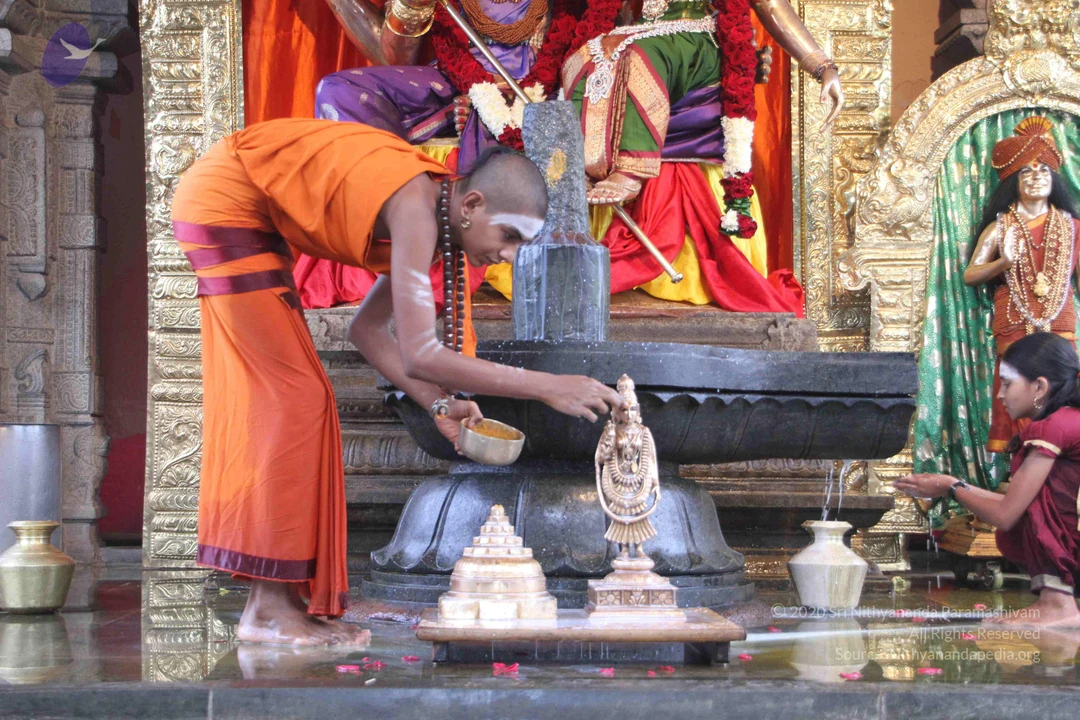
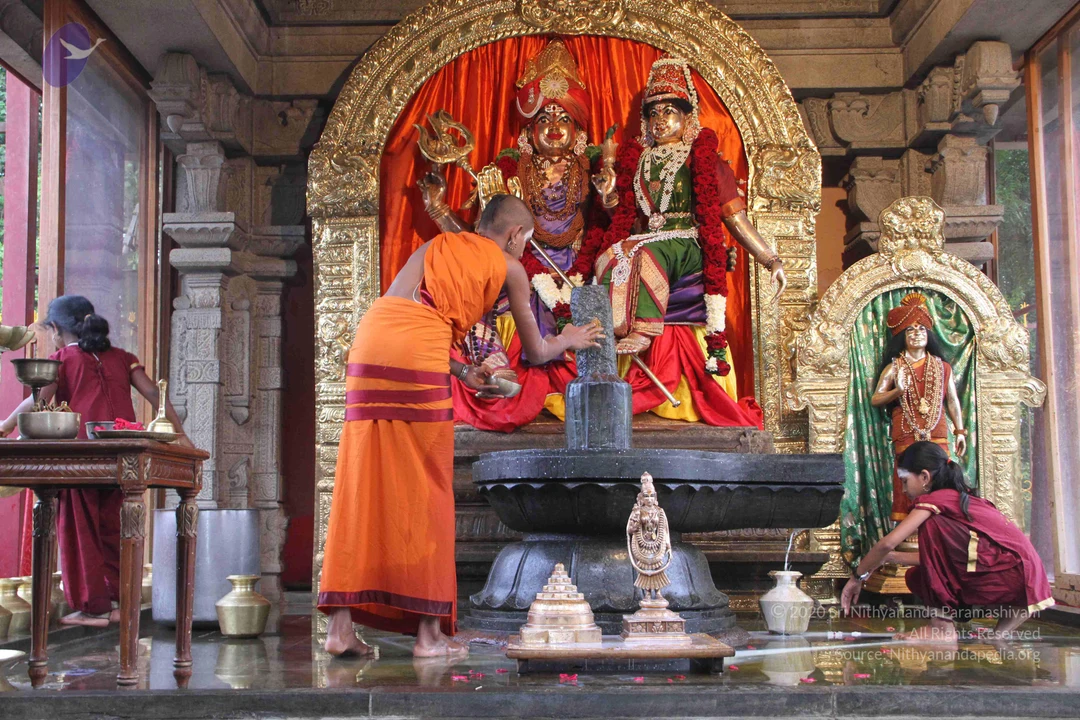
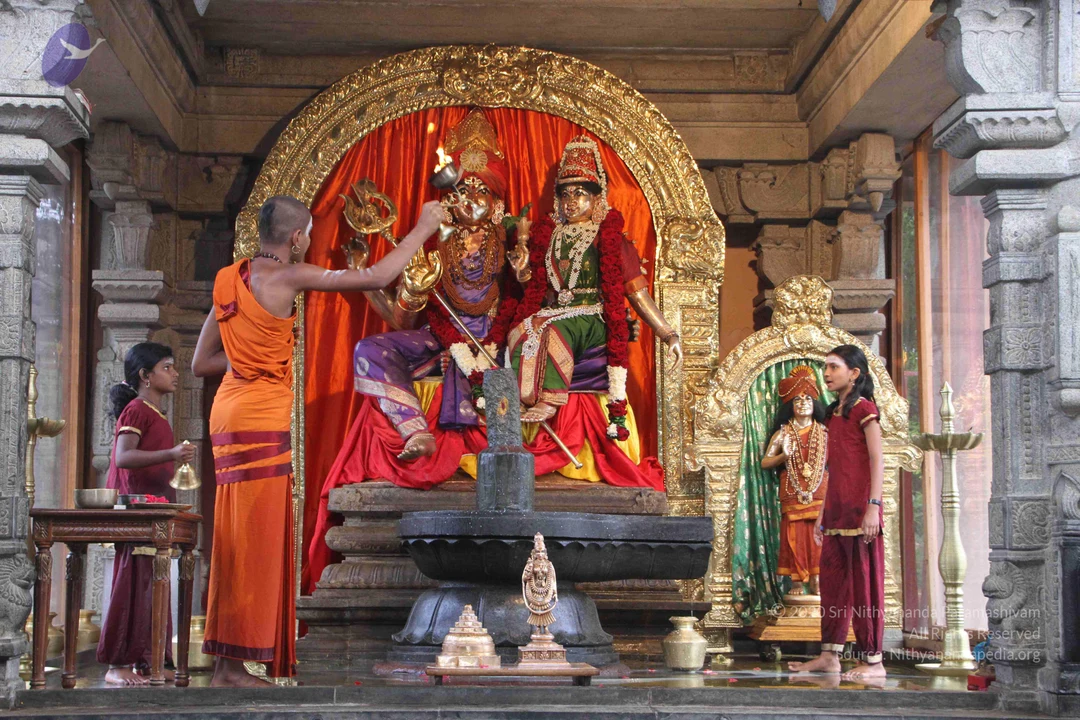
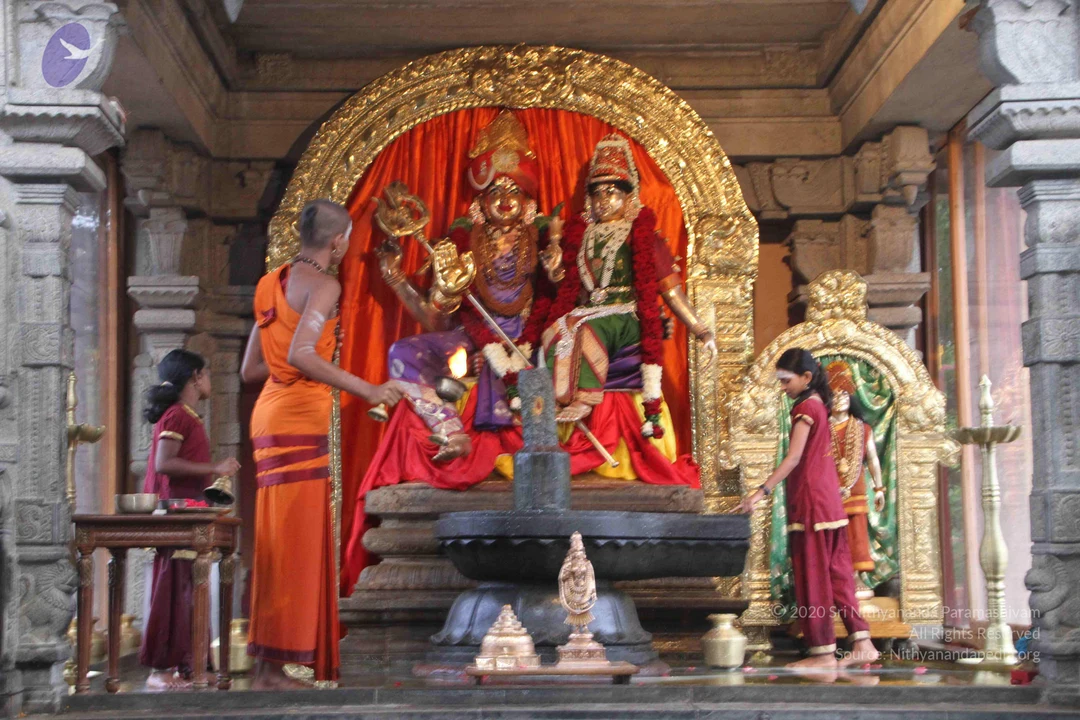
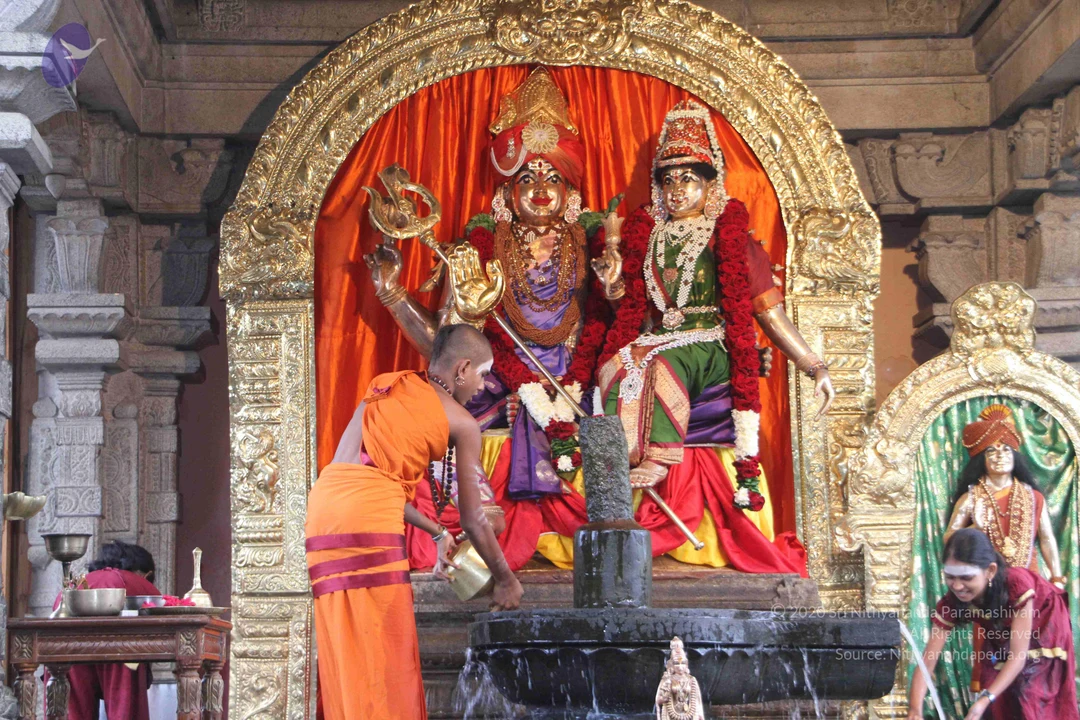
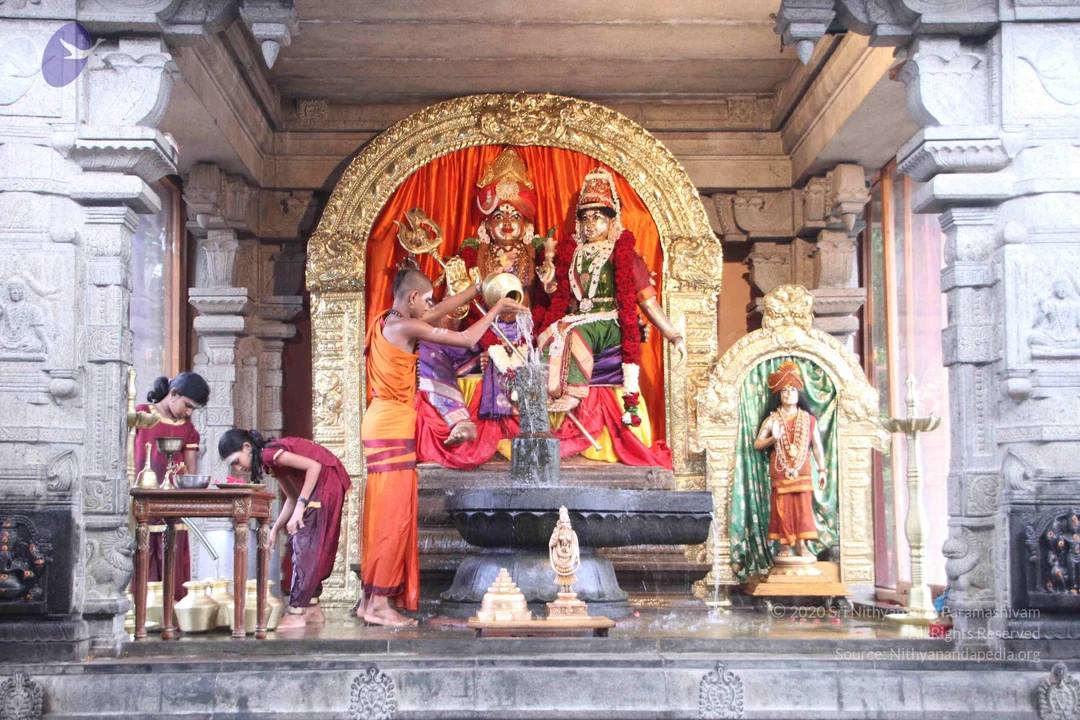
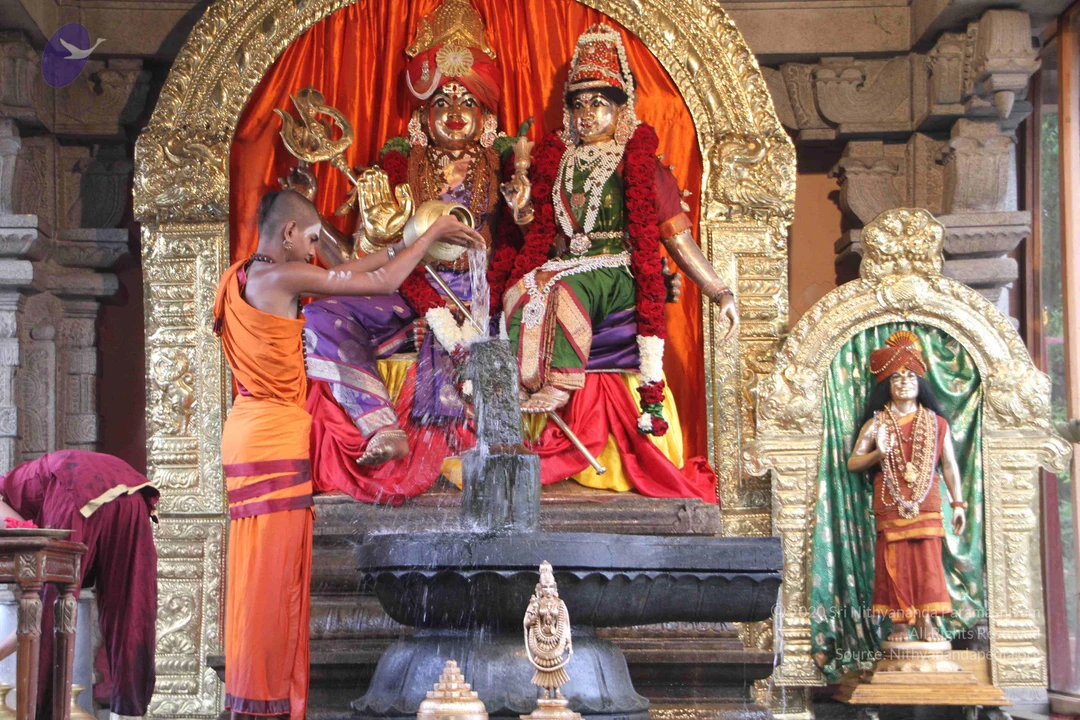
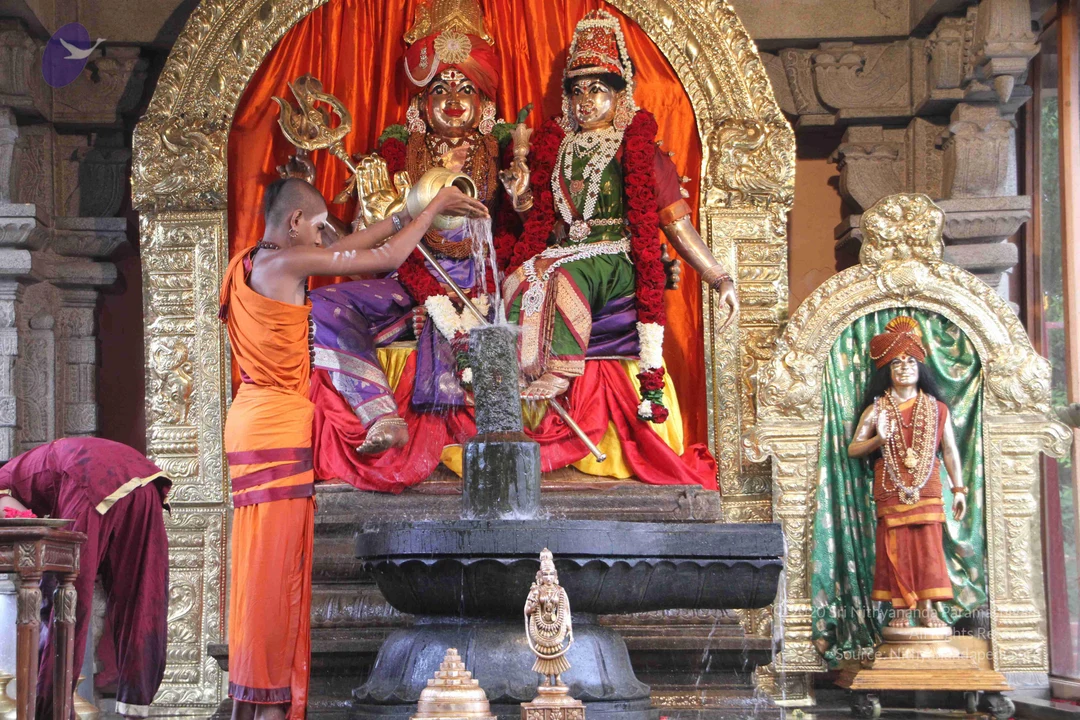
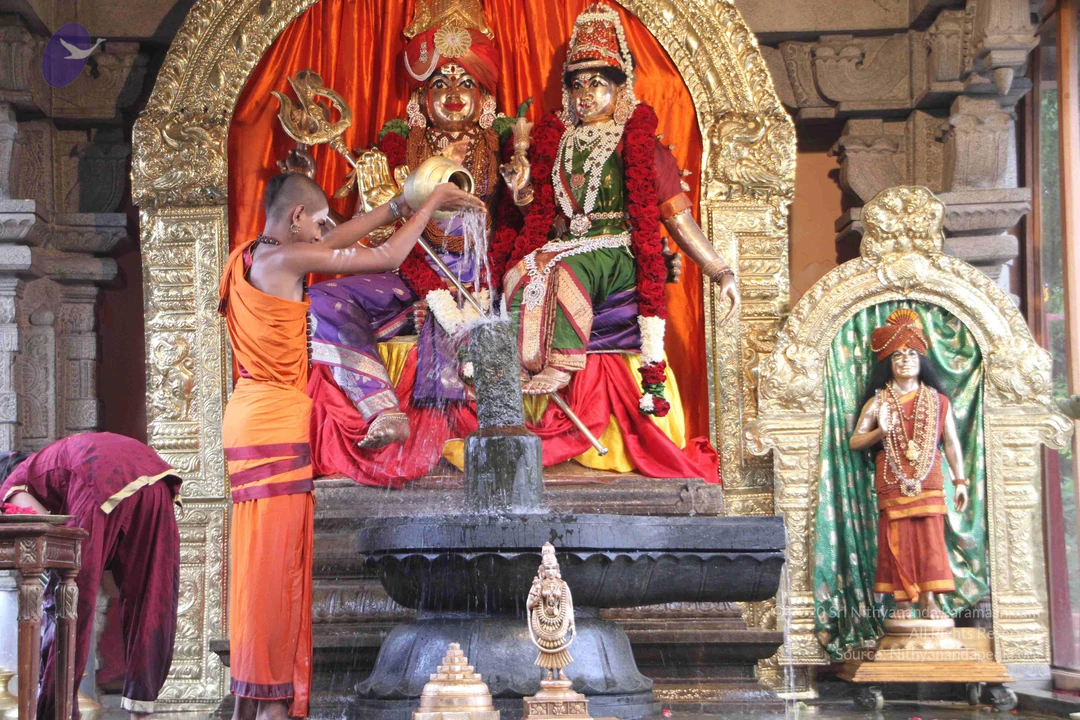
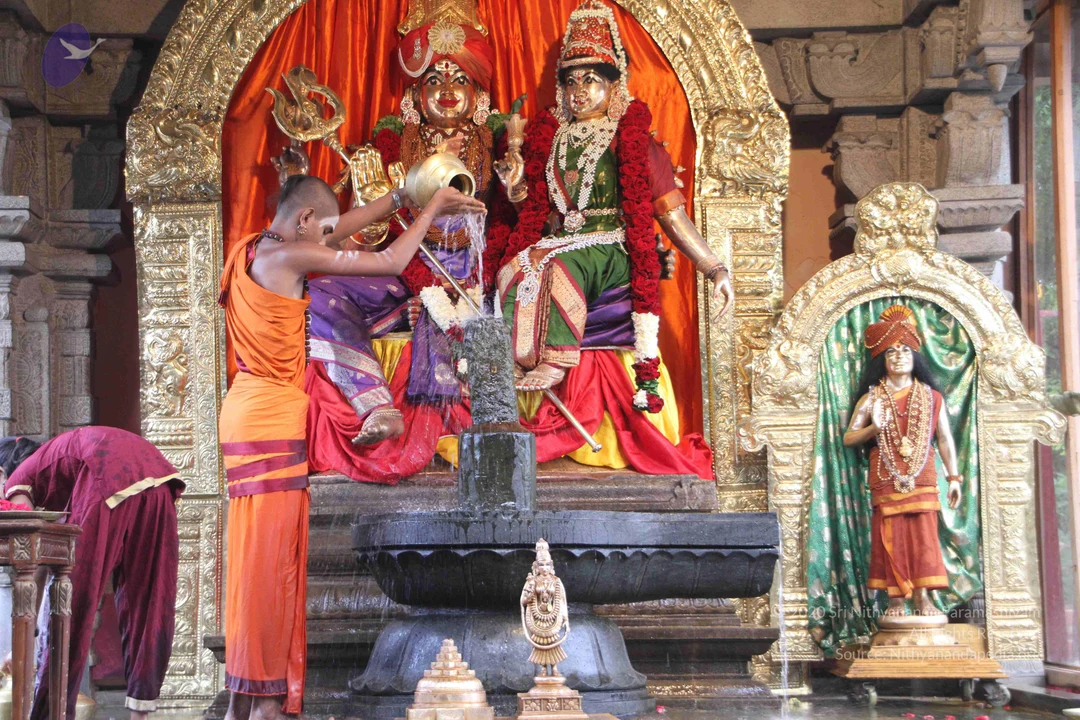
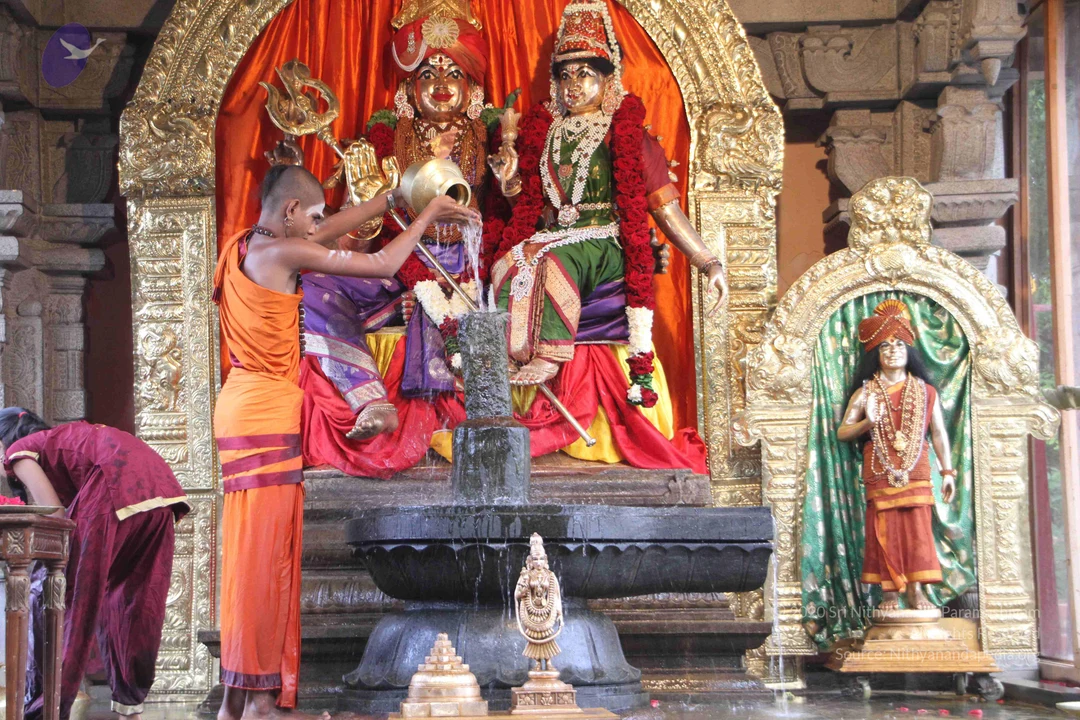
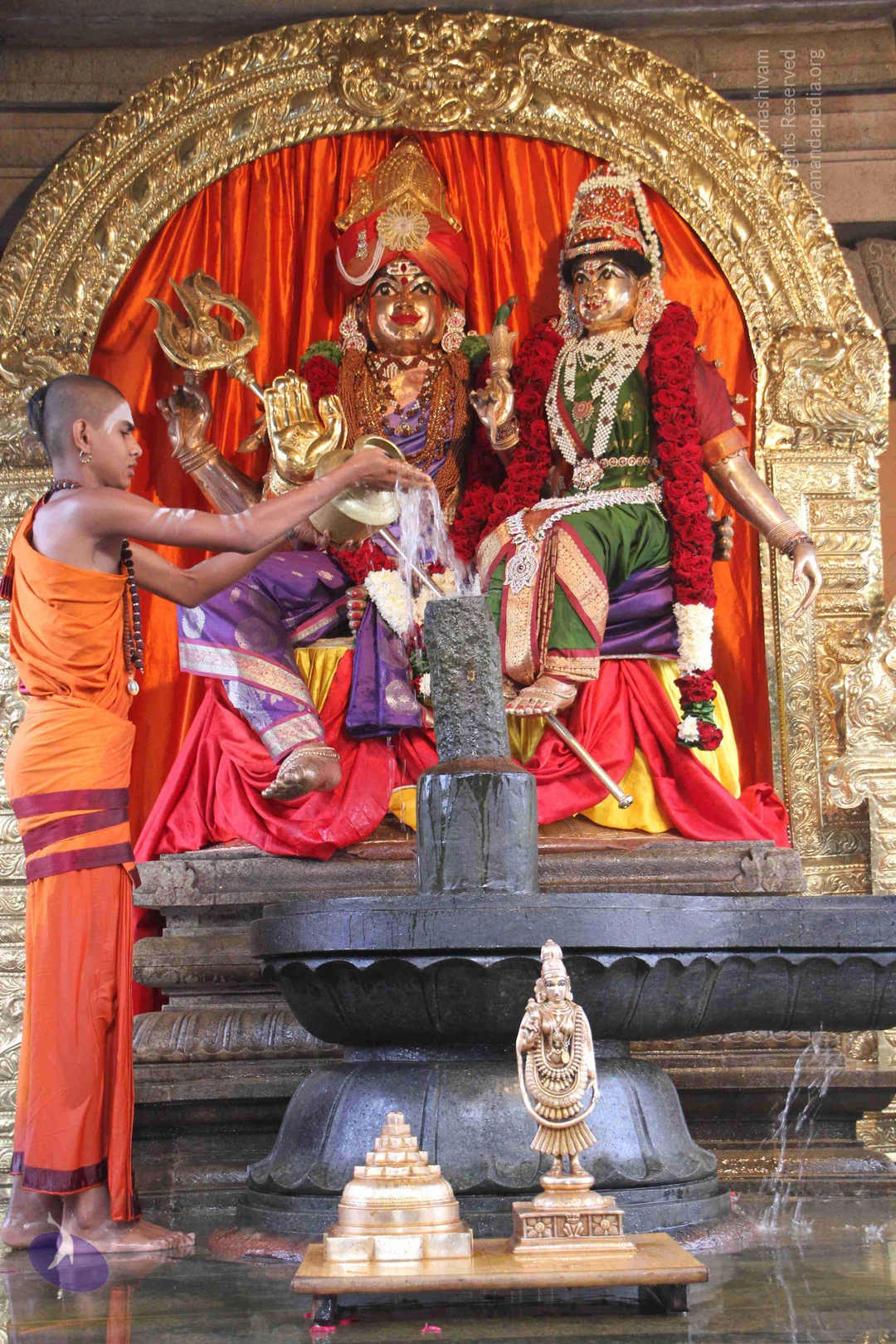
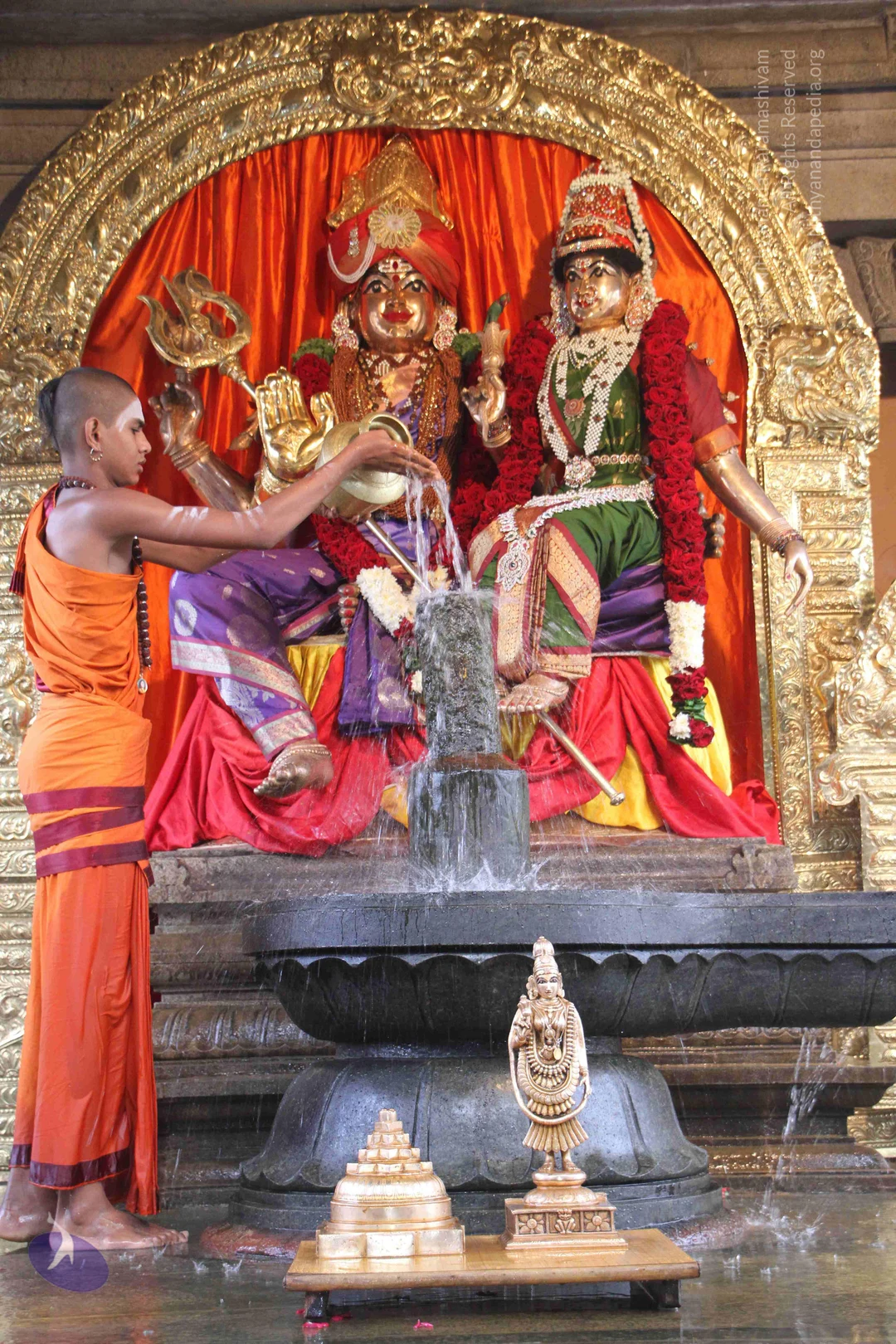
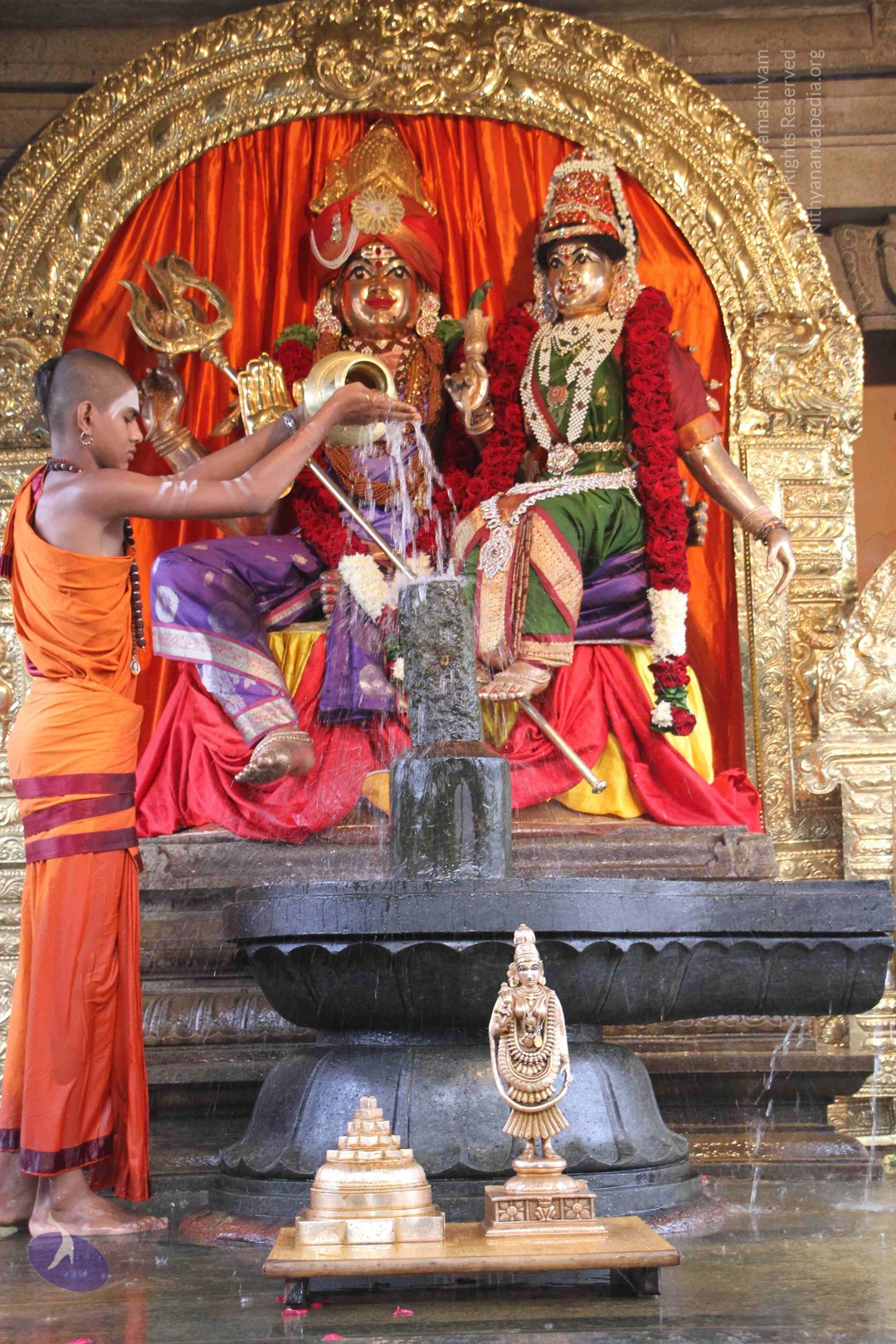
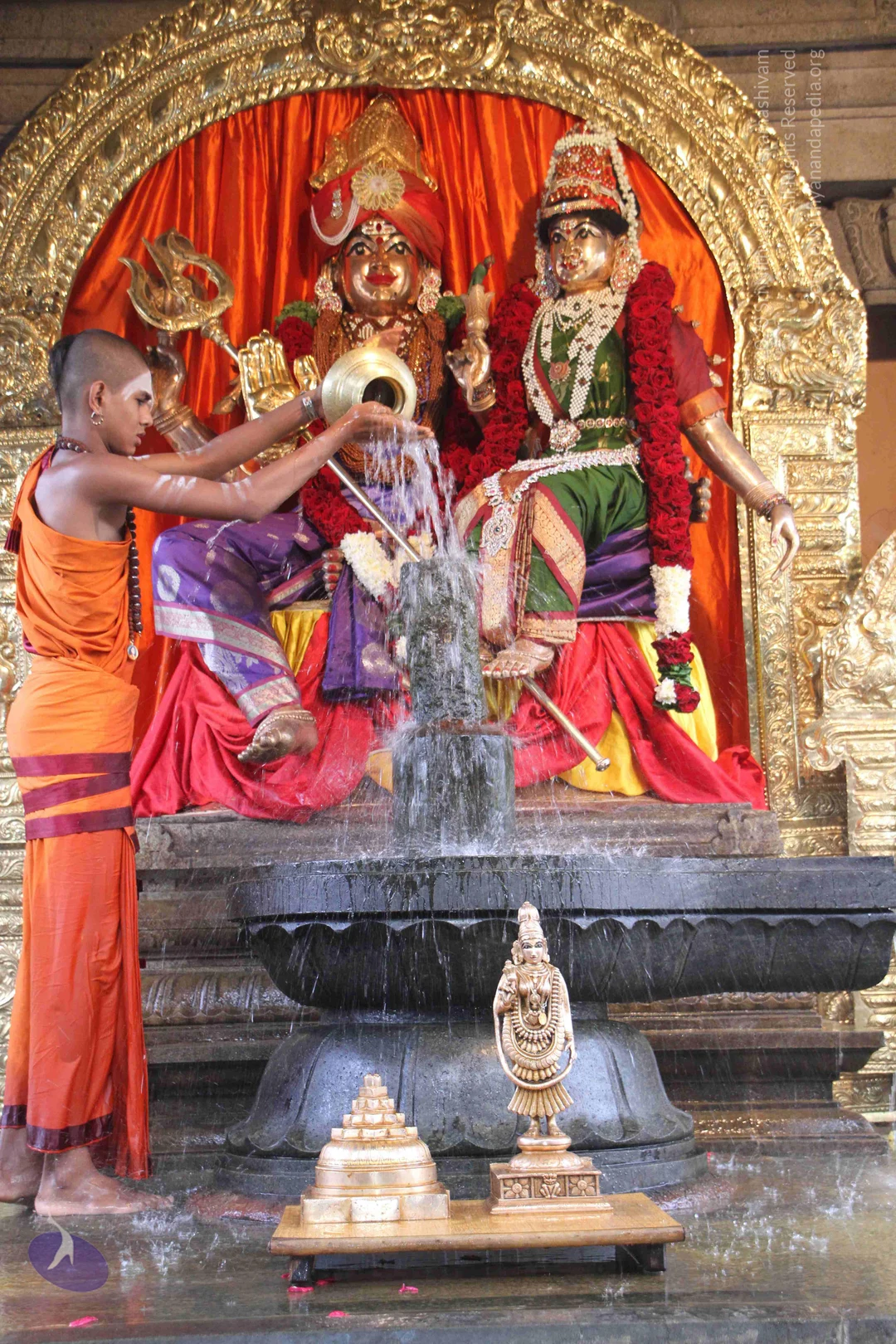
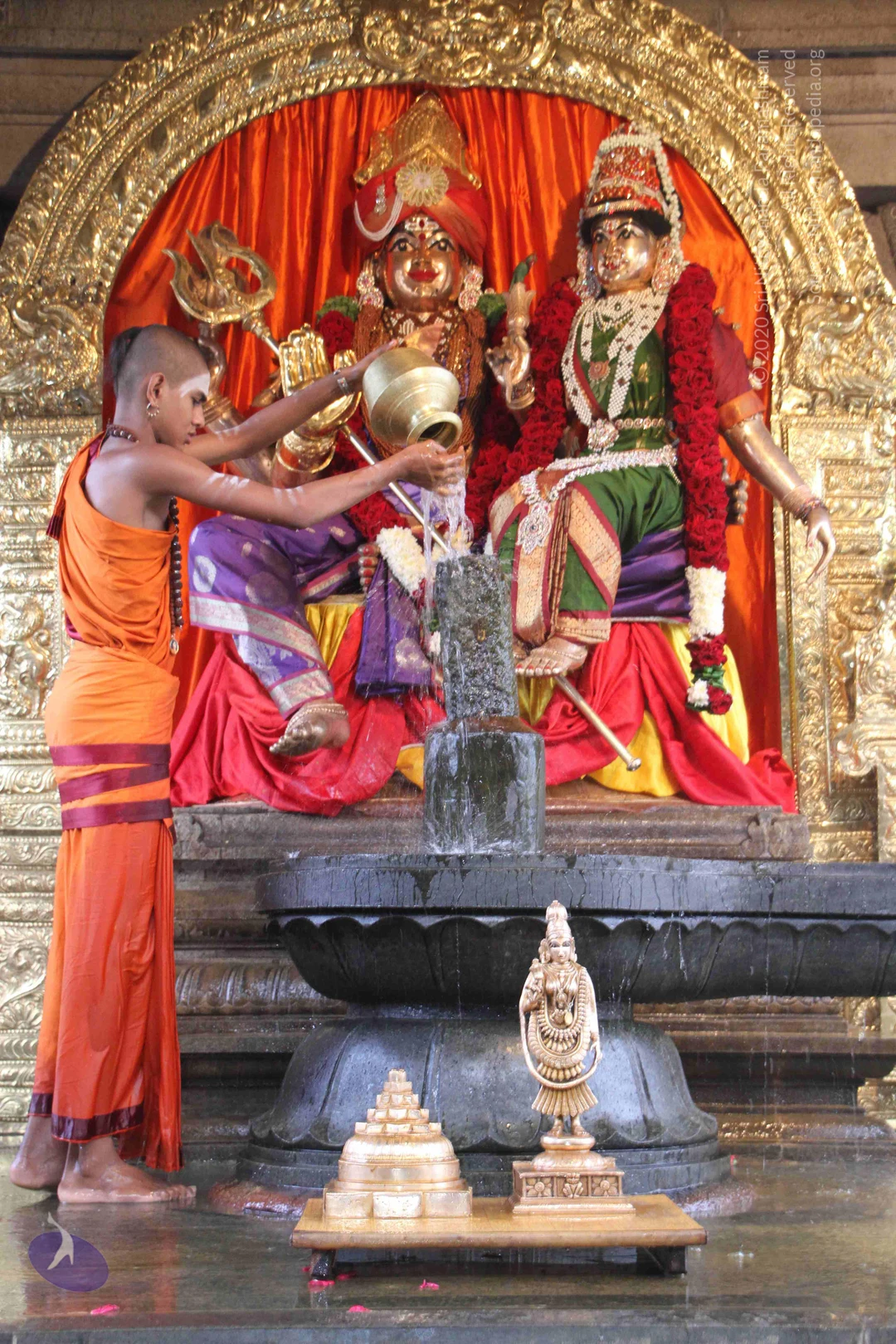
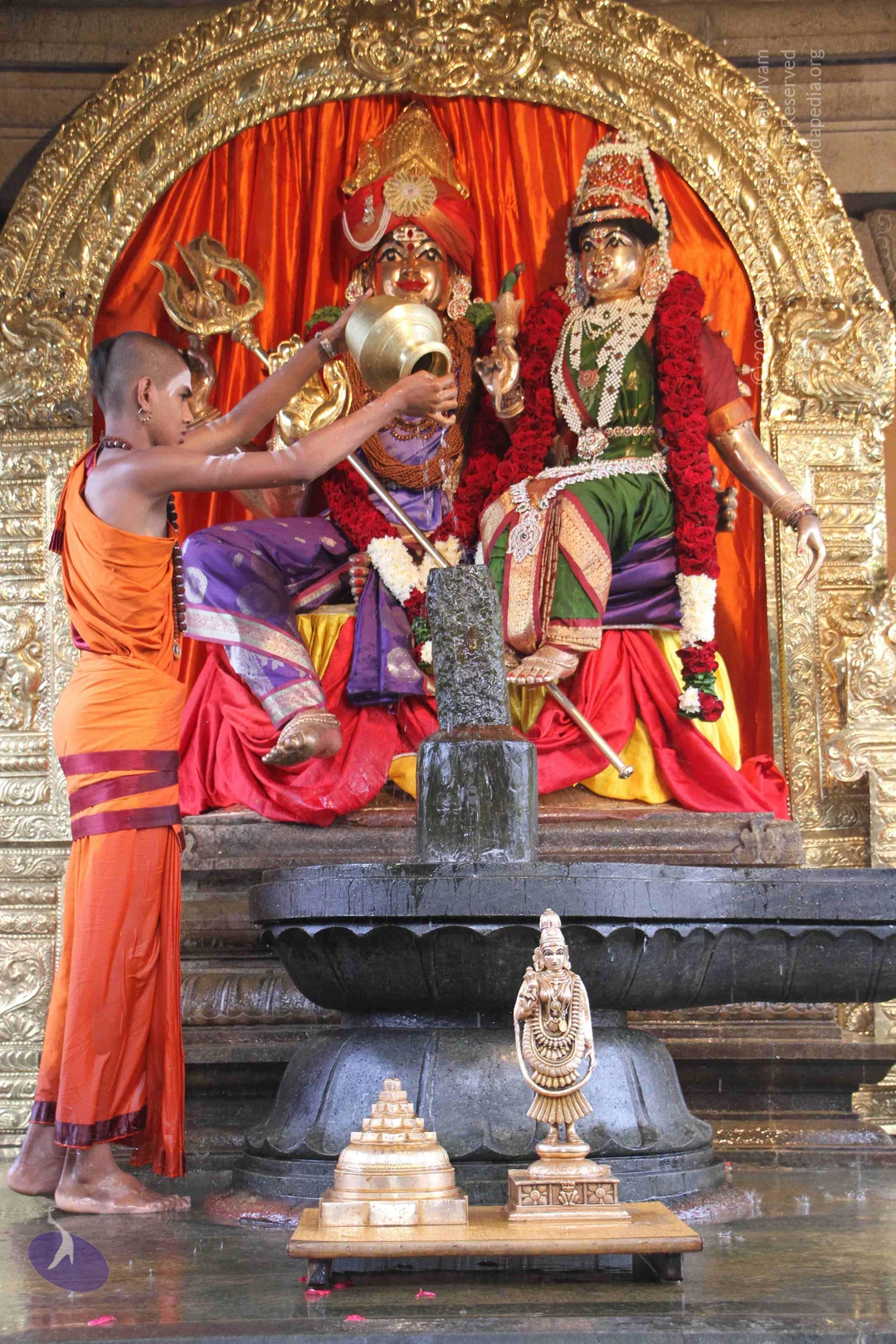
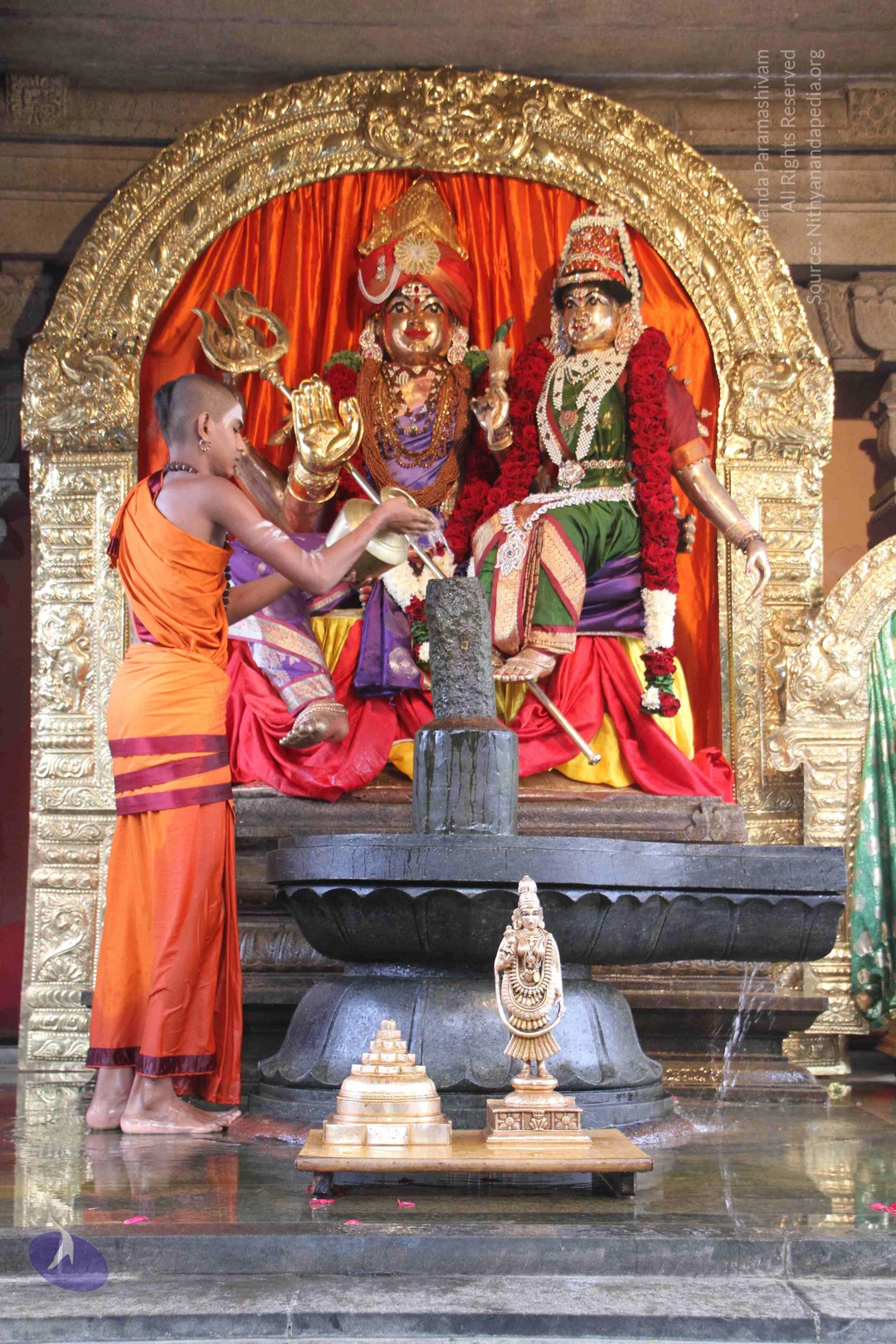
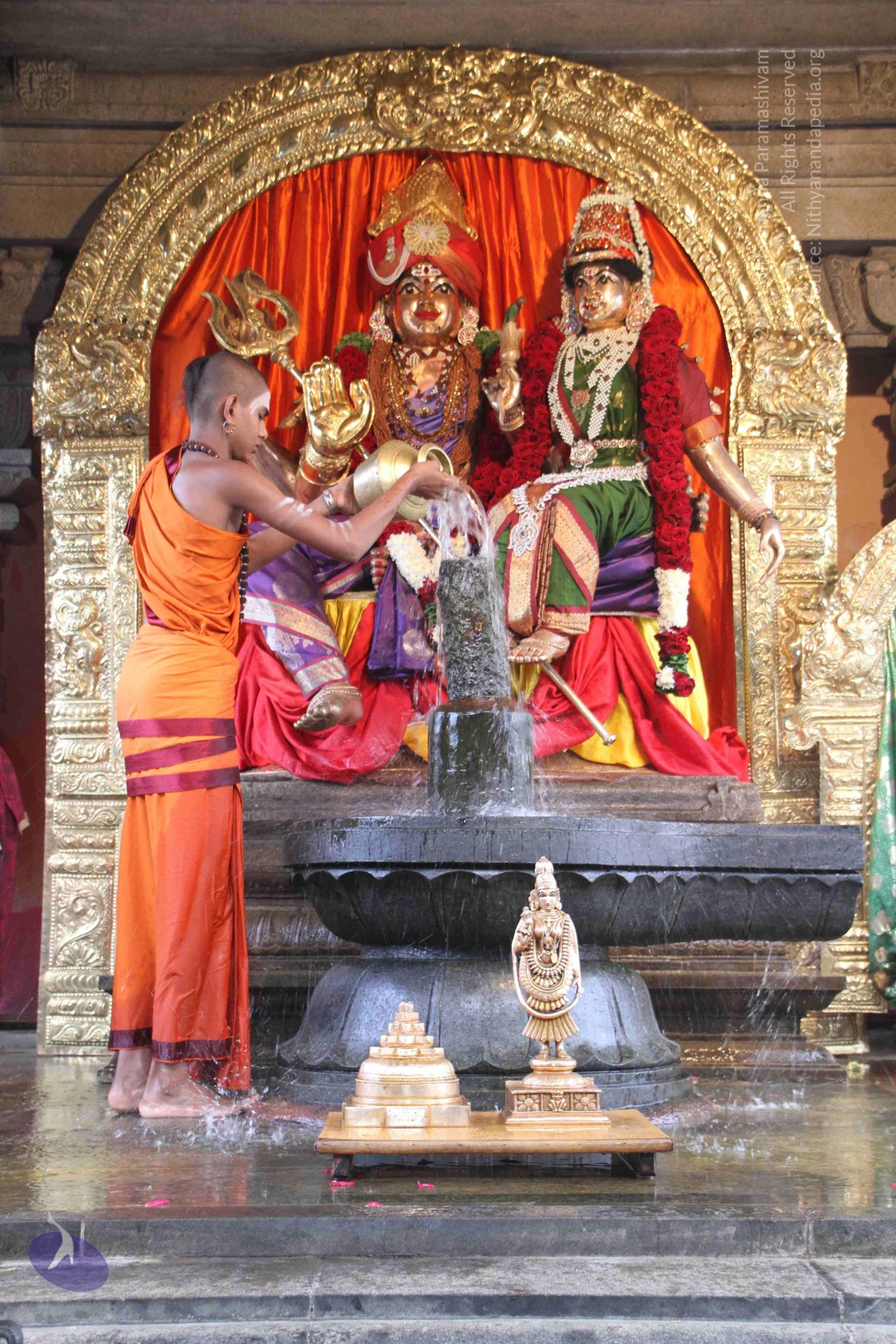
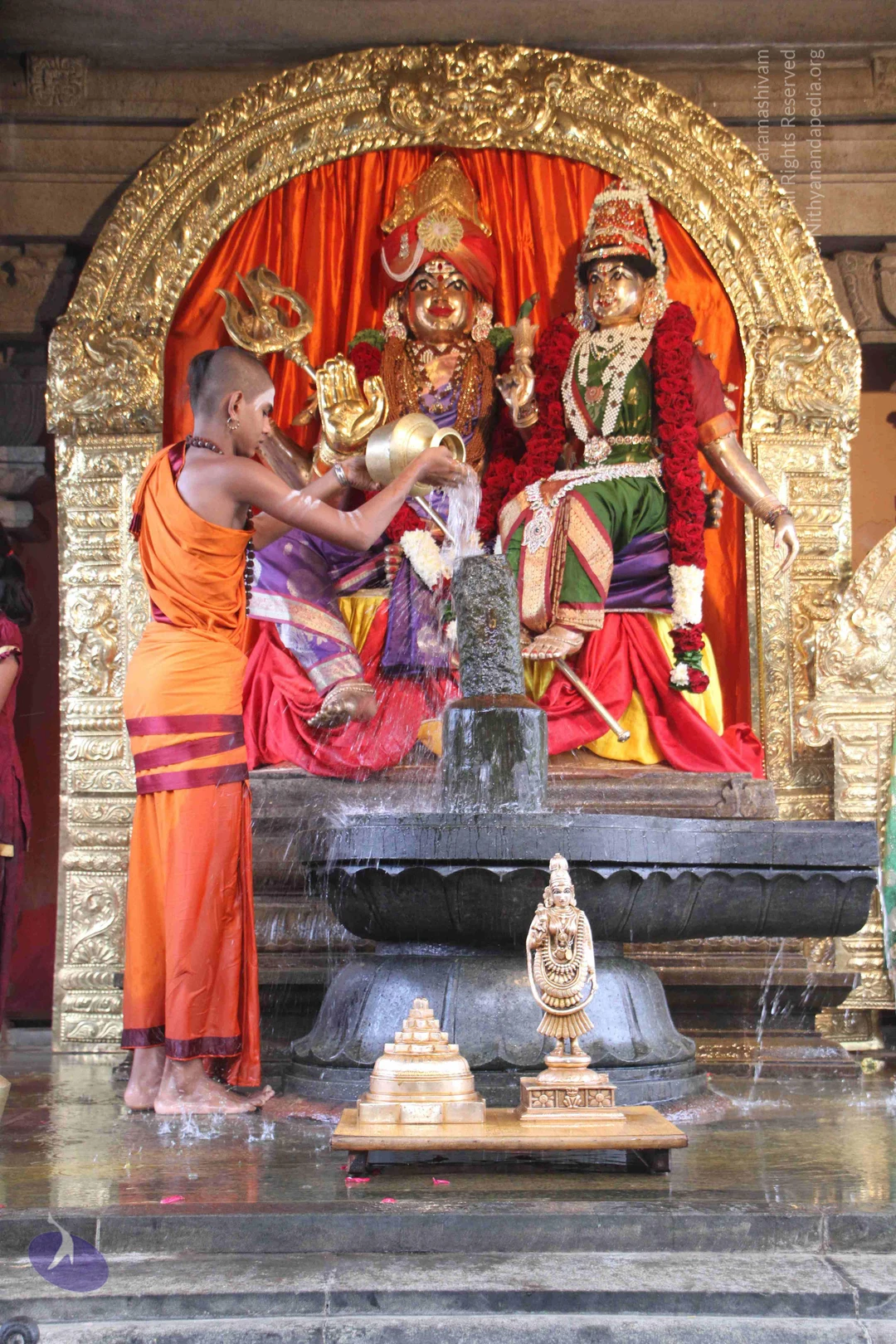
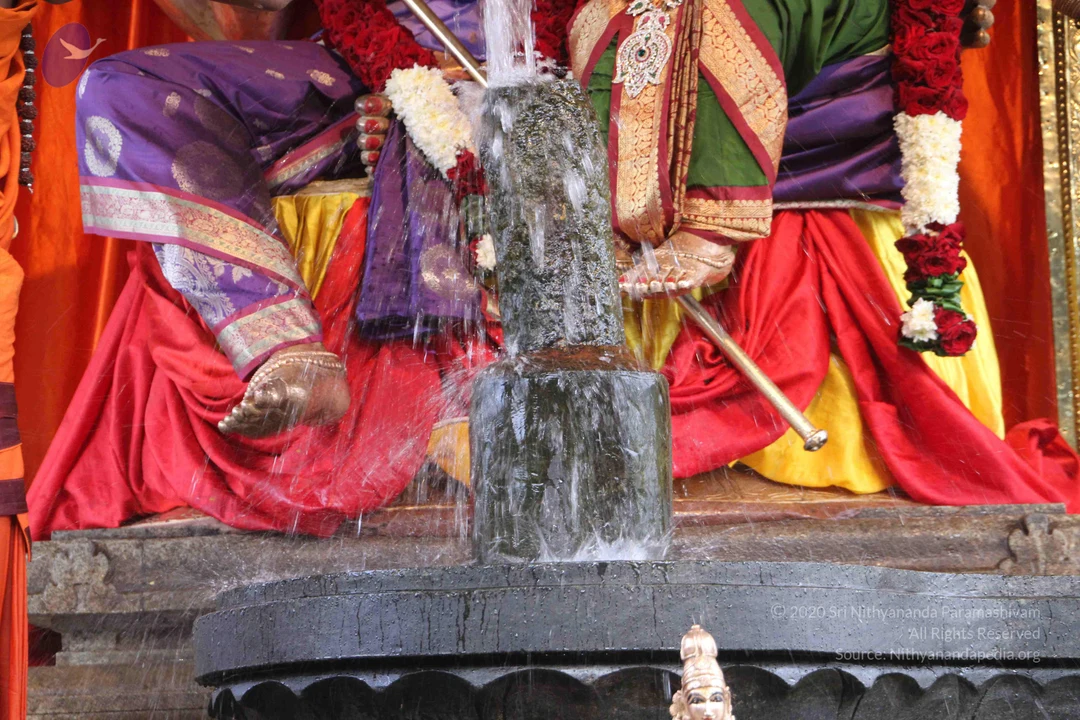
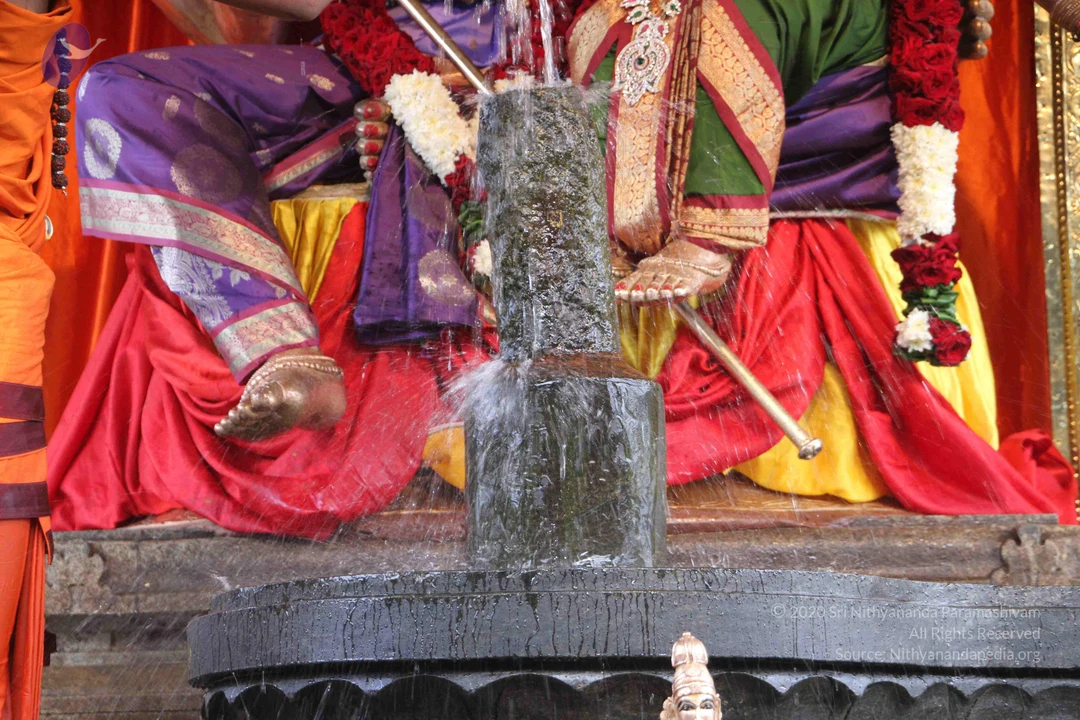
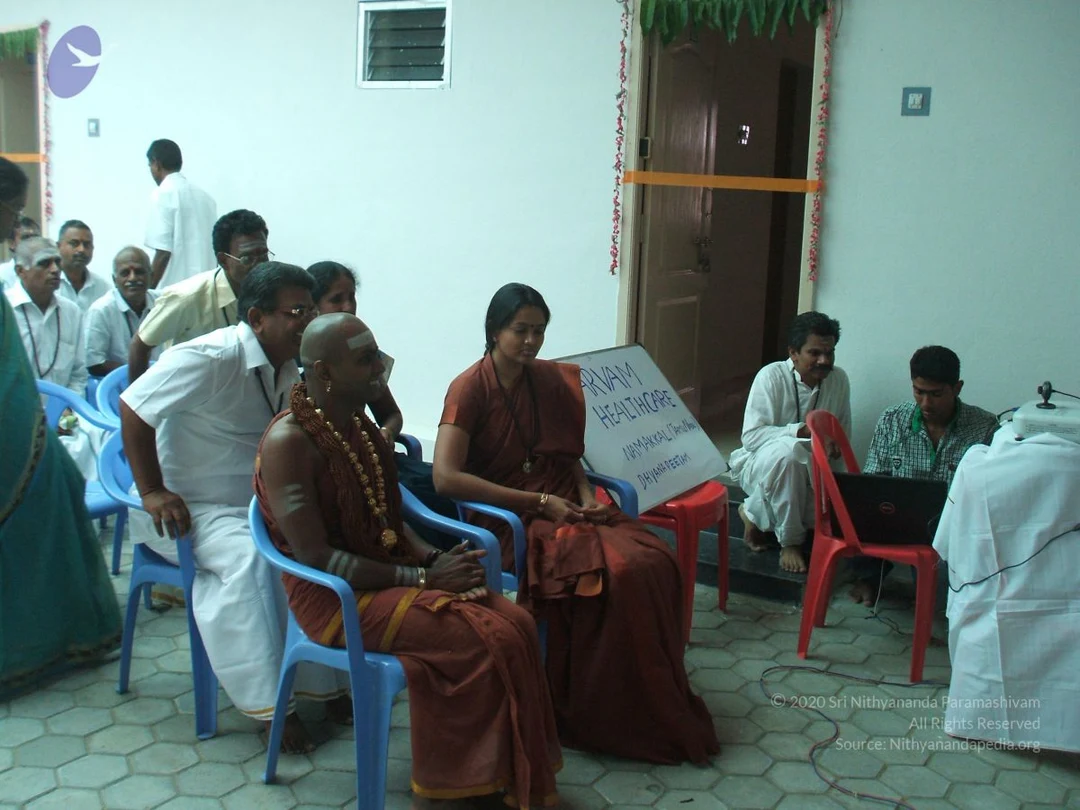
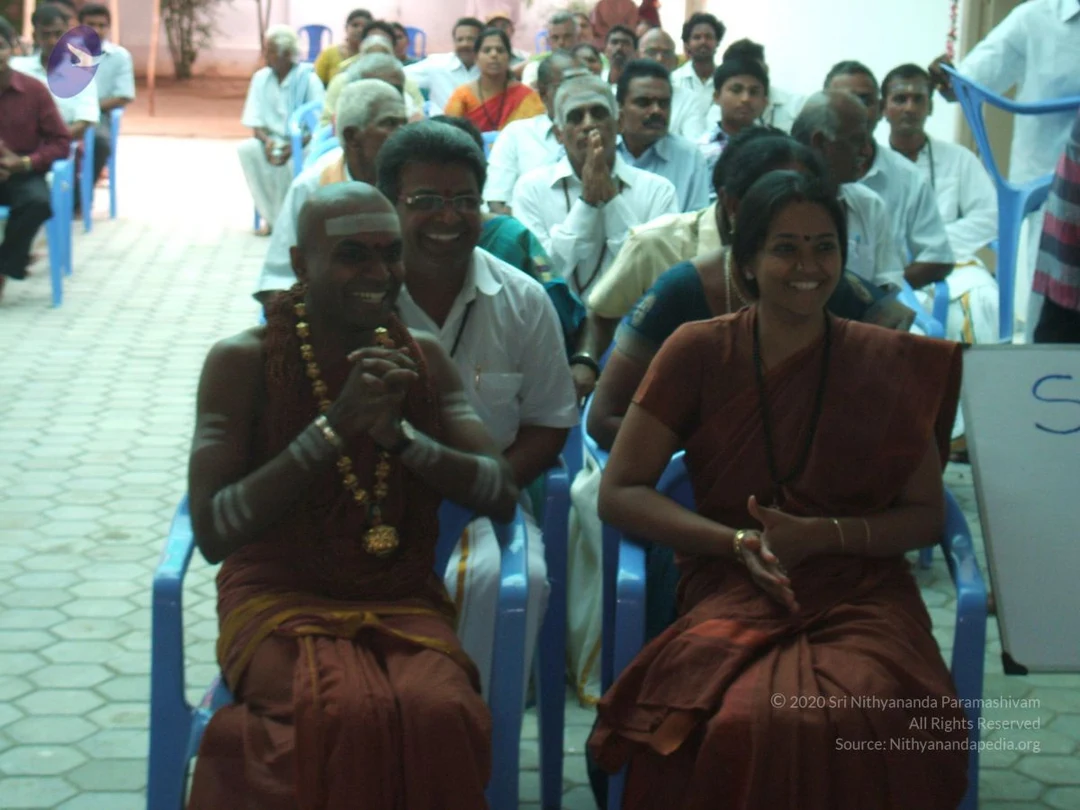
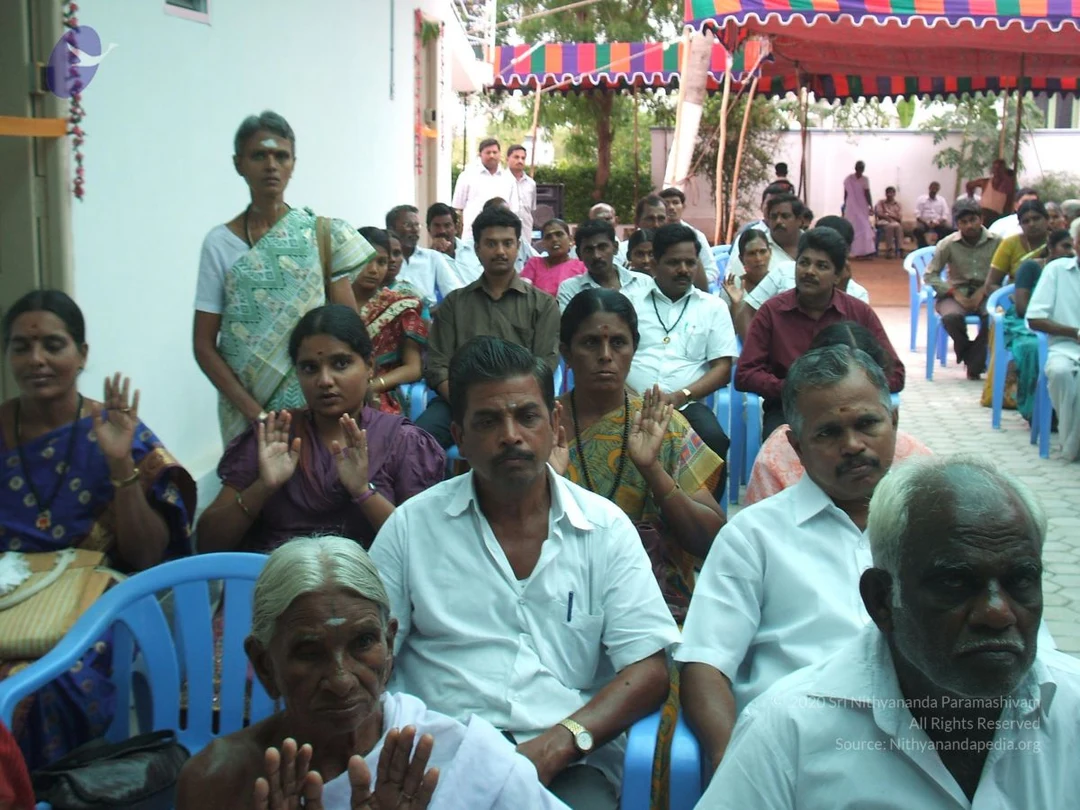
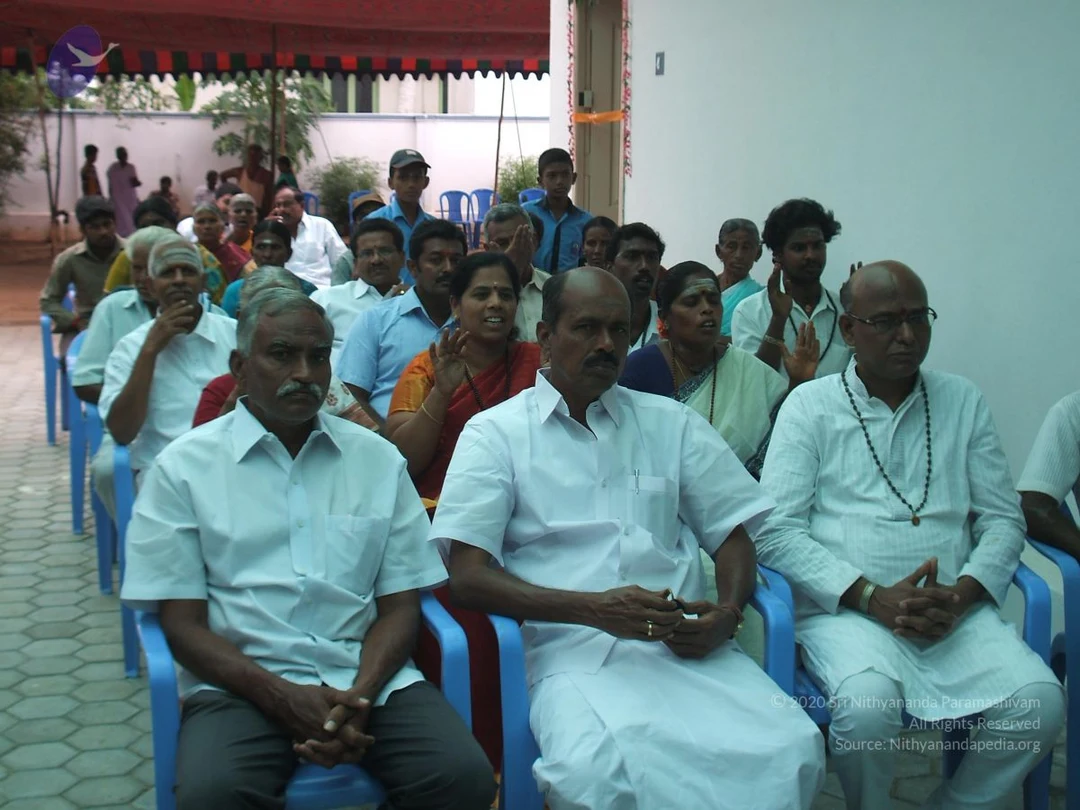
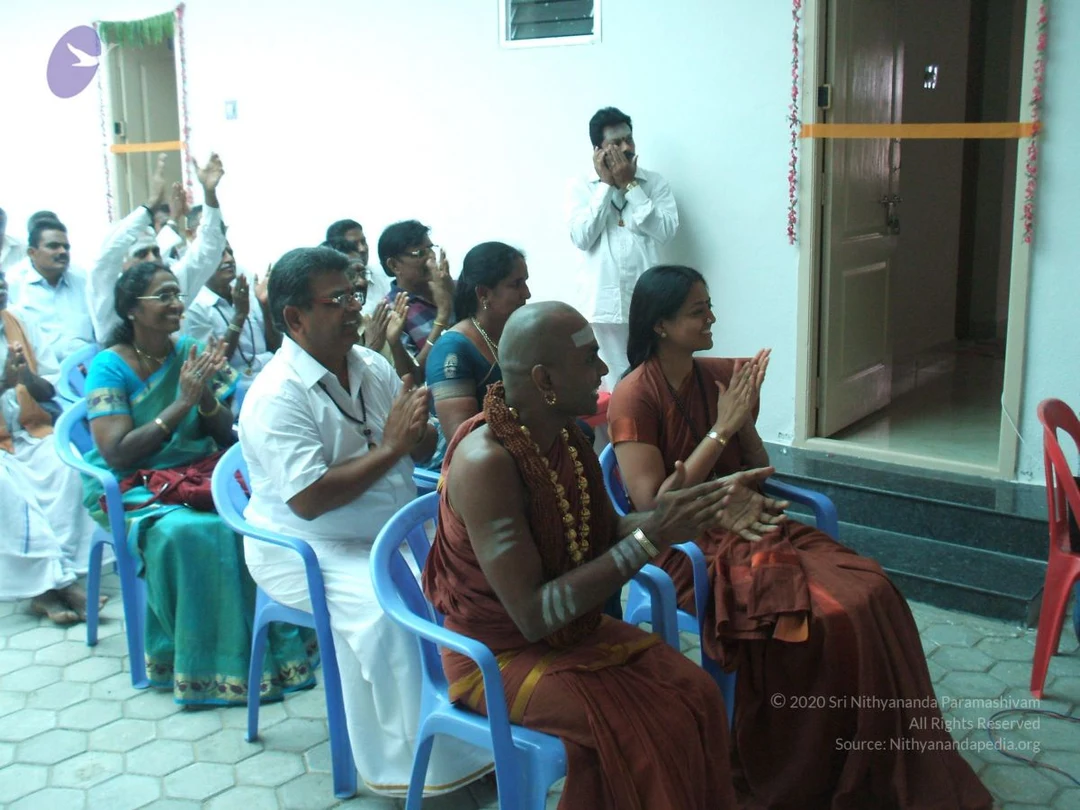
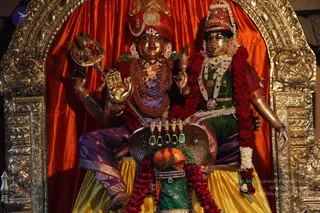
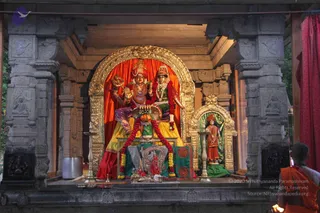
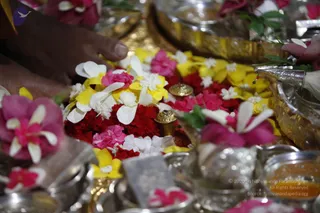
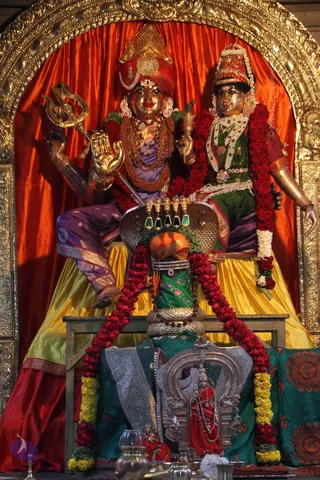
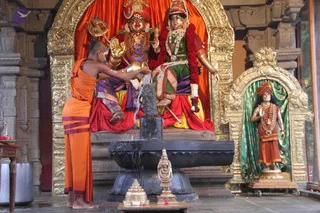
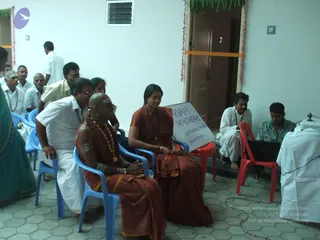
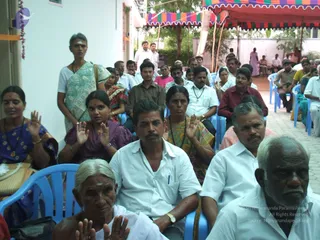
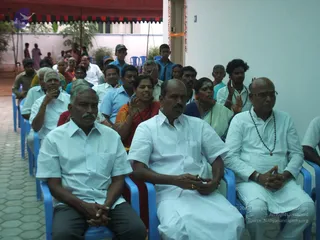
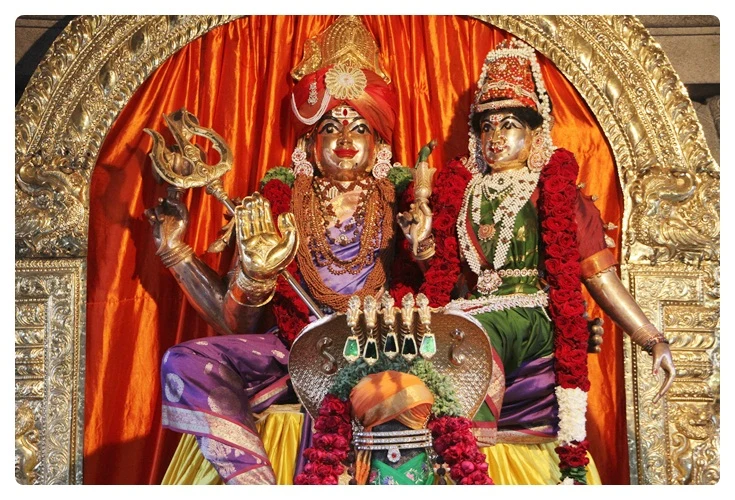
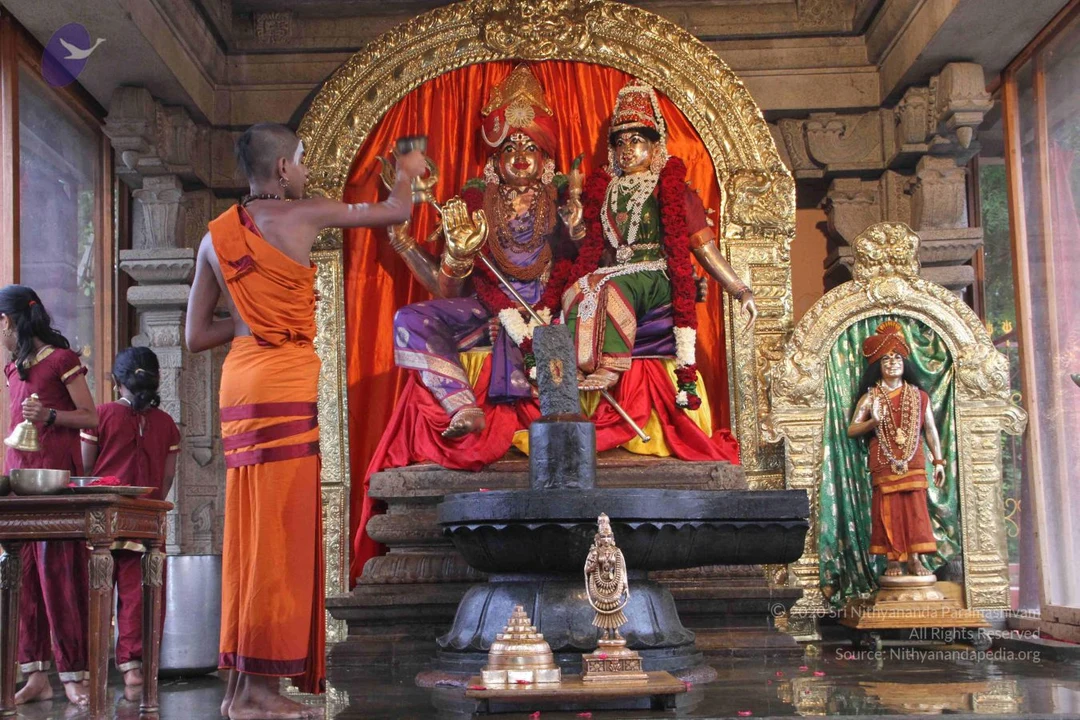
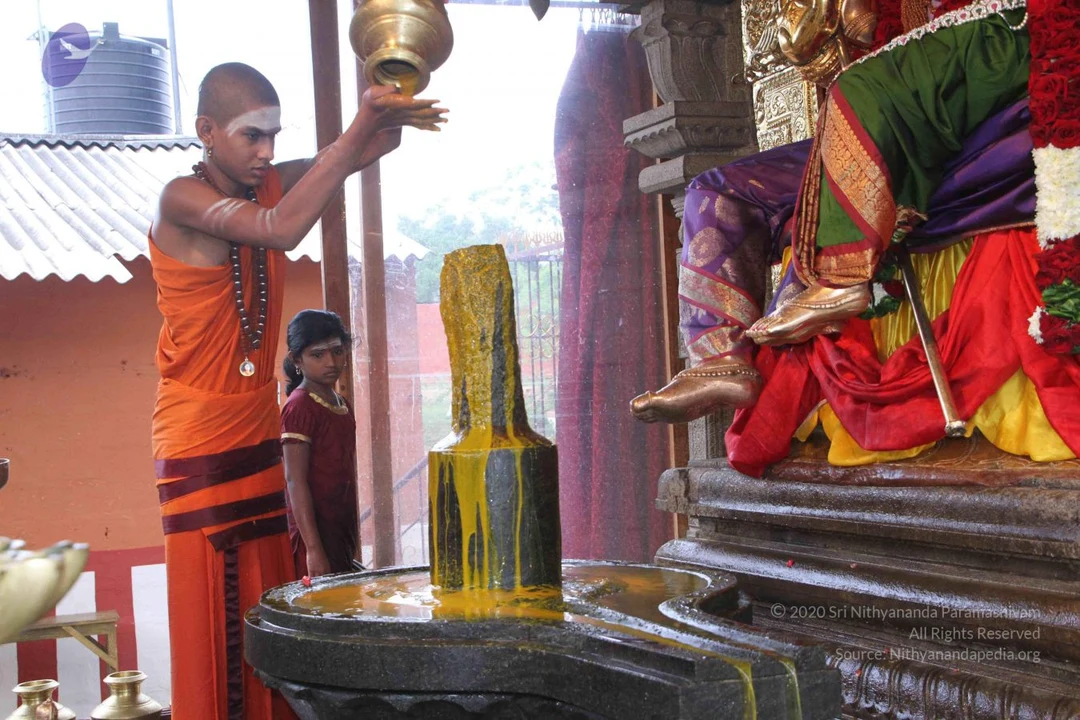
A photograph of an abhishekam at a golden-arched shrine. A young priest with a shaved head, orange garment and white sacred markings stands at left, pouring water from a brass vessel over a black stone Shivalingam set on a dark stone yoni pedestal. Behind it sits a pair of deity murtis on a red and orange draped backdrop: a figure in a red turban and gold-toned ornaments holding a trident, and a figure in a green and red sari with red garlands and white beaded jewellery. A small golden temple-tower model and a small golden standing figure rest on a wooden tray in front. Water splashes across the floor.A photograph of a gilded deity murti pair seated before a deep orange draped backdrop within an ornate gold-toned arched frame. The figure on the left, with a golden crown and orange turban, holds a trident and wears a rudraksha mala, purple dhoti with gold border and a purple wrap, while the figure on the right wears a crown with white beaded garlands, a green blouse and green skirt. Both are heavily decorated with red rose garlands, a copper-toned shield-like backdrop with green gemstone ornaments sits in front, and an orange cloth and floral offering lie at the base. No living people are visible.A photograph of a seated audience at an outdoor satsang on a paved courtyard. In the foreground, a smiling shaved-headed man in a rust-orange cloth wrap with ash-white horizontal markings on his arms and forehead wears a gold-beaded necklace and presses his palms together. Beside him a smiling woman in a rust-orange sari with a black beaded mangalsutra and bindi sits on a blue plastic chair. Behind them a man in a white shirt and glasses smiles, and rows of seated devotees in white and colourful saris and dhotis fill the background, with a white podium at right. Visible people are many, roughly a crowd of over twenty.

June 22 2013

Original wiki page
Contents

Title:

Be a Leader For the Right Reason

Description:

In today’s morning Satsang, Paramahamsa Nithyananda expands on how completion takes us to the space of real responsibility. The space where everything turns positive, even if it looks negative at first, is experienced when we are complete. Initially, it is ok to take responsibility out of greed for wanting to be a leader and be successful in our careers and families. But beware of making the right decision for the wrong reason. We will know we took responsibility for the right reason only when we are in completion. When we take responsibility for our lives; including the whole world, then we have realized we are the source for everything around us. Then anything we do in our lives becomes a spiritual practice.

Link to Video:

VideoAudio

Transcript:

I welcome you all with my love and respects.

We will start the Nithya Satsang once Sadhana and Lotus TV join us live.

I welcome all the devotees, visitors sitting with us through Sadhana TV and Nithyananda TV, two-way video conferencing all over the world.

Today, I will expand on “HOW THE COMPLETION MAKES YOU TAKE THE REAL RESPONSIBILITY”.

Listen! Please come to the space of listening!

With completion, you experience a space where everything goes positive for you. Even if it looks a little negative, it may look like only with Completion, you will feel a power of compassion, you will feel Responsibility.

One more thing, you can take responsibility in your life even out of greed. Understand, just to have a best family, you can take responsibility for your family. Just to be a leader, you can take responsibility in your office. Just to be a successful team head, you can take responsibility for your team. For various reasons, you can take responsibility, but only the responsibility you take after completion will make you a Jeevan Muktha!

So, just out of greed to have a good family, if you take responsibility for the family, you will have a good family, no doubt. Just to be a successful leader if you take responsibility for your company, you will become a good leader, no doubt. Just to have a successful business if you take the responsibility for your business, you will have a good business, no doubt. But all those responsibilities are not complete responsibilities.

Listen! I am not a corporate Guru to teach you responsibility for the sake of your corporate success. No! I am not a trekker Guru who will teach you responsibility for the sake of your business success. Understand, even the right decision should not be taken for or out of wrong reason. Even right decision should not be taken based on wrong reason.

I will tell you a story:

Three mad fellows wanted to get discharged from the mental asylum, mental hospital. They went to the doctor and begged, ‘Please release us. We want to go back to the house’. Doctor said, ‘Come tomorrow morning. I’ll give you all a test, and after the test based on how you perform I will decide whether you can go back or not’. So, the doctor orders for a test. Next day all of them come, all the three. Doctor takes them to a swimming pool which is empty, no water.

He asks the first mad guy, ‘Jump in and swim!’ The guy jumps and breaks his hand!

Second guy he calls and says, ‘Jump inside and swim!’ The second guy jumps and breaks his leg!

Doctor calls the third guy and asks, ‘Jump and swim!’ The third guy said, ‘No, I will not jump!’

Doctor was very happy. Yes, now this fellow can be discharged!

He says, ‘You can go back to the house. You are no more mad. You are cured!’

So doctor says, ‘Come to the office and do the paperwork, and then you can leave’.

So, the mad guy goes to the office, doing the paper work, doing the bills and signing, doing all the paperwork to leave the mental hospital. Doctor slowly asks, ‘May I know why you did not jump?’ Out of curiosity. The guy tells, ‘You don’t know? I don’t know swimming!’

Not jumping into the swimming pool may be the right decision, but taken for the wrong reason! Right decision taken for wrong reason! Even if it is right decision taken for wrong reason, leads to danger, because later on when you think you know swimming, you may jump into the empty swimming pool! See, this guy if he has not jumped into the swimming pool because he does not know swimming, then after learning swimming he may jump into the empty pool again then!

Even if the right decision is taken out of wrong reason, you are in danger! Even if responsibility is taken out of wrong reason, you are not going to be responsible!

Understand, in those days, the autocratic kings used to have Rajagurus, so that all the ideas to exploit the common-man he himself will not tell alone; he will tell through the Rajaguru! Same way, in the modern world, there are many corporate Gurus. The corporate CEOs, because they want productive workers, staff, clerks, team members, they themselves cannot teach many things. The king himself never behaves responsibly; so if he teaches Responsibility, nobody will listen. So, he will have one guy who is projected as a very responsible guy, so that he will teach Responsibility. He will be branded as a very responsible guy and he will teach Responsibility. Just like autocratic kings use Rajagurus for their selfish ends, in the modern day the corporate kings, CEOs use corporate Gurus for their ends. I tell you, don’t go to the corporate Gurus who don’t have any sampradaaya, paaramparya, parampara. These corporate Gurus and Gurujis, creating cults, they teaching Responsibility and me teaching Responsibility is totally from different context. Please understand, they tell you not to jump into the swimming pool because you don’t know swimming. They are not telling ‘don’t jump because there is no water’. You need to be told don’t jump because there is no water and you don’t know swimming. Both the reasons should be given. Only then even if one reason is eliminated, you will hold on to your decision till all the reasons are eliminated. I am not a corporate Guru, trekker Guru to teach you Responsibility for the sake of corporate performance. No! I am teaching Responsibility for you to become a Jeevan Muktha! Yes, when you learn this Responsibility, you may naturally perform well in your office, in your business, in your family. You will become responsible, no doubt. I am not against it. I am not against you performing in your office. I am not against you performing in your business. I am not against you taking responsibility for your family. But all that should be the side-effect! [10.02 mins] The main effect of your responsibility should be you becoming Jeevan Muktha, living enlightenment!

That is why, if you ask these trekker Gurus why you should take responsibility, they have no answer other than saying “only then you can be productive, you can be a performer, you can be a leader”. No! No! If you take responsibility because you have to be a performer or a leader or productive, you will feel responsibility is a weight on you! I’ll tell you why you need to take responsibility. Why you should take responsibility! Whatever happens in and around you, you ARE the source! That is why you need to take responsibility for whatever is happening in and around you. You need to take responsibility, because you are responsible, and not for any end reason. Whether you believe it or not, you ARE the source! With this clarity, out of this context if you take responsibility, every action, even taking your son to the hospital, daughter to the school, attending to your calls, attending to your business meeting, everything will become a spiritual practice leading you to Jeevan Mukthi!

If you are a doctor, know it, you are responsible for the whole world. So you are responsible for your patients also! With this context when you start functioning, even you attending to your patients will become a spiritual practice leading you to enlightenment, because in any context you do any action, that context will become your bio-memory and reality. With that decision, context, cognition, sankalpa of being blissful, even if you do acts like jumping, rolling, laughing, you will experience bliss! With that decision, cognition that “I should become blissful”, even if you cry you will become blissful! Your cognition decides the effect of any act on you. So, if you are with the cognition that, “I am the source of everything, so I am responsible for everything”, any action you do with this cognition, every action becomes spiritual practice for you to become a Jeevan Muktha!

Krishna says beautifully, ‘Even women, Shudras, can achieve enlightenment!’

I think in those days, those were the groups, society was feeling it was very difficult for them to achieve enlightenment. Now I want to tell you, even lawyers and politicians can become enlightened!

Live this principle of Responsibility. Live this principle of Responsibility. If you live this principle of Responsibility, if you are an MLA (Member of Legislative Assembly), you are responsible even for the people who have not voted for you! Even for them you are an MLA! If you are a Minister, you are a Minister even for the people who have not voted for you! If you are a Chief Minister, you are Chief Minister even for the people who have not voted for you! You will understand, all your decisions will be out of the experience “I am the source”! I am the source! Listen! All of you should understand, the experience, I AM THE SOURCE! If you function with this truth “I am the source, so I am responsible”, if you function with this understanding “I am the source, so I am responsible”, everything, everything, everything you do will become a spiritual practice! Will become Spiritual practice!

Even if you take responsibility without having right understanding, or with half understanding, it is not going to be real responsibility. It is going to be out of context. Listen! Understand, only when you complete, you will know the right reason for taking responsibility. You will know “why I should take responsibility, why I am responsible”. Only then you taking responsibility will be really, really, really useful to you. So understand, responsibility, responsibility, responsibility can happen in you only after completion! [20: 15]

Enriching! Whatever enriching you do, whether for you or to others, it will be successful only when you complete. Before completion, your enriching yourself and others will not have strength. So, complete, complete, complete! It is completion which is the first and foremost requirement. Start from today. Till Guru Poornima, decide you will spend your time and energy only for completing and enriching. Complete, complete, complete! Continuously complete, and your continuous completion only will teach you to take responsibility and enriching. Only that can teach you responsibility and enriching!

Understand, if you think you are not able to live Integrity, Authenticity, Responsibility and Enriching, I tell you, start your practice, spiritual practice from completion and listening. Start your spiritual practice from completion and listening! When you complete, you will experience an extraordinary space open up inside you. All your suffocations will disappear! You will feel like you are always in the open space, vast space! Now, even if you are in open space, you feel like you are inside a 3’ x 4’ cell. Even when you are in the roof-top looking at the sky, you feel you are in the 3’ x 4’ cell, or you are afraid you will get into that cell once you come down from the roof-top! That 3’ x 4’ cell, your own self-imposed life-imprisonment cell, never leaves you! You carry it wherever you go! You suffocate yourself with it. How a caged lion is always agitated and angry, waiting to attack anybody who comes in front of it, you are a caged, agitated lion ready to attack anybody who comes in front of you! So, constantly you behave like a stray dog, street dog, who has gone mad! Rrrrrrrr! Rrrrrr! Rrrrrr! Constantly that sound and smell can be felt around you! Everyone who comes around you are enriched by that Rrrrrrr! Rrrrrrr! Rrrrrrr!

I tell you, when you complete, suddenly that space, you feel you are established in that extraordinary space. You are established in a powerful, large space. When you complete, you will experience an extraordinary space open up inside you which will have extraordinary gush of energy happening inside you, flowing inside you. Use that space and energy to enrich others. If you do not use that energy to enrich life outside you, others outside you, you will again fall back into your old incompletion.

The only expression of completion is that you will express real responsibility; which is being responsible for every human-being in your breathing space, and being responsible for their completions. You will experience being responsible for liberating other human-beings from the sufferings of their life and you will be responsible for their expansion, for they experiencing expansive space and energy in them!

Please listen! Listen! Completion with yourself and with others is a basic need, before you do anything. Before you start your education, complete with you and others. Before you plan for your career, complete with you and others. Before you start your marriage, complete with you and others. Before you plan for your child, complete with you and others. Before you put your child into the school, complete with you and others. So, the only way to know if you are complete or not is to see if you are being responsible and enriching others out of the right context that you are the source of everything in and around you.

Understand, on enriching out of right context! Enriching out of right context! Enriching out of right context! With the right and enough of reasons, and complete reasons! If you think you are responsible for your business, you will be the Eshwara of your business; you can be called only as Businesseshwara! If you take responsibility for your family, you will be only the Eshwara of your family; you can only be called as Familyeshwara! If you take responsibility for the whole world, only then you are called Jagadheeshwara! Only when you take responsibility for the whole Jagath, you can be Jagadheeshwara! So take responsibility out of the context of Jagadheeshwara! If you are complete, then responsibility with the right context that you are the source, therefore, you are responsible, will be a natural self-expression of who you are, and enriching others will be your natural self-expression. Just like how a flower radiates fragrance, naturally you will also radiate responsibility and enriching naturally just because that is who you are! That is what you are! Responsibility with the right reason, for the right reason, with the right context, for the right context! [30:00]

Your business, career, physical health, mental health, family, spiritual contentment, enlightenment, all are different dimensions of you! If you are complete and responsible, feeling responsible only in one dimension, it will be like only your hand has grown larger than your thigh, your belly has grown ten times your chest! Your body will not have belly, your belly will have your body. I have seen some people, almost like a pumpkin, have small, drumstick-like legs and hands. You become uneven! So, do not learn responsibility from corporate Gurus. Learn responsibility from original source of Vedic tradition, original source of Vedic knowledge! It is Vedic tradition; it is Vedic tradition which will give you the right and all reasons to be responsible. Don’t get carried away by these trekker Gurus who read one or two books here and there, corporate Gurus who don’t know anything, who can’t digest, who come and pronounce ‘Uu-pa-nee-shaadh’! No! I am not against westerners becoming Gurus. I welcome them. But learn from the original source and become Guru, not from the corporate sources and become Guru.

Find out the source you are learning. Is it really from Gangothri or the company sewage outlet? Sometimes both merge, but that does not mean Gangothri and company sewage outlet are one and the same! These trekker Gurus have done so much of damage to Hinduism; they’ve damaged Hinduism much more other religious missionary militants and militant missionaries. These pseudo-secularism….! I am all for practicing secularism in politics. In politics, religion should not mix. Maintain secularism in politics. How can you have secularism in spiritual organizations? Spiritual organizations should be completely based on authentic, true religious traditions! Pseudo Secularism in Spiritual organizations, I am really surprised, these Gurus and Gurujis, they steal all the knowledge from Hinduism! All the Kriya and Pranayama, everything they teach, yoga, everything is from the source of Hinduism! Then how they go on claiming they are a secular organization? What do they mean? It is like you swindle all your father’s property, but you will not use his name as your surname. Ungrateful fellows!

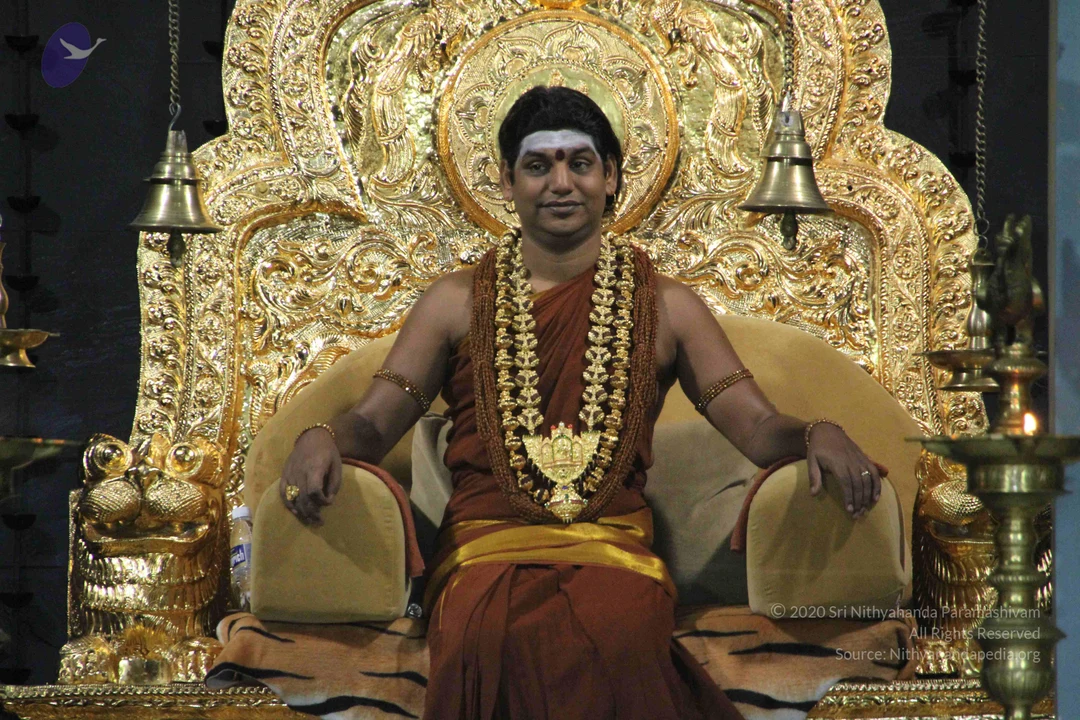
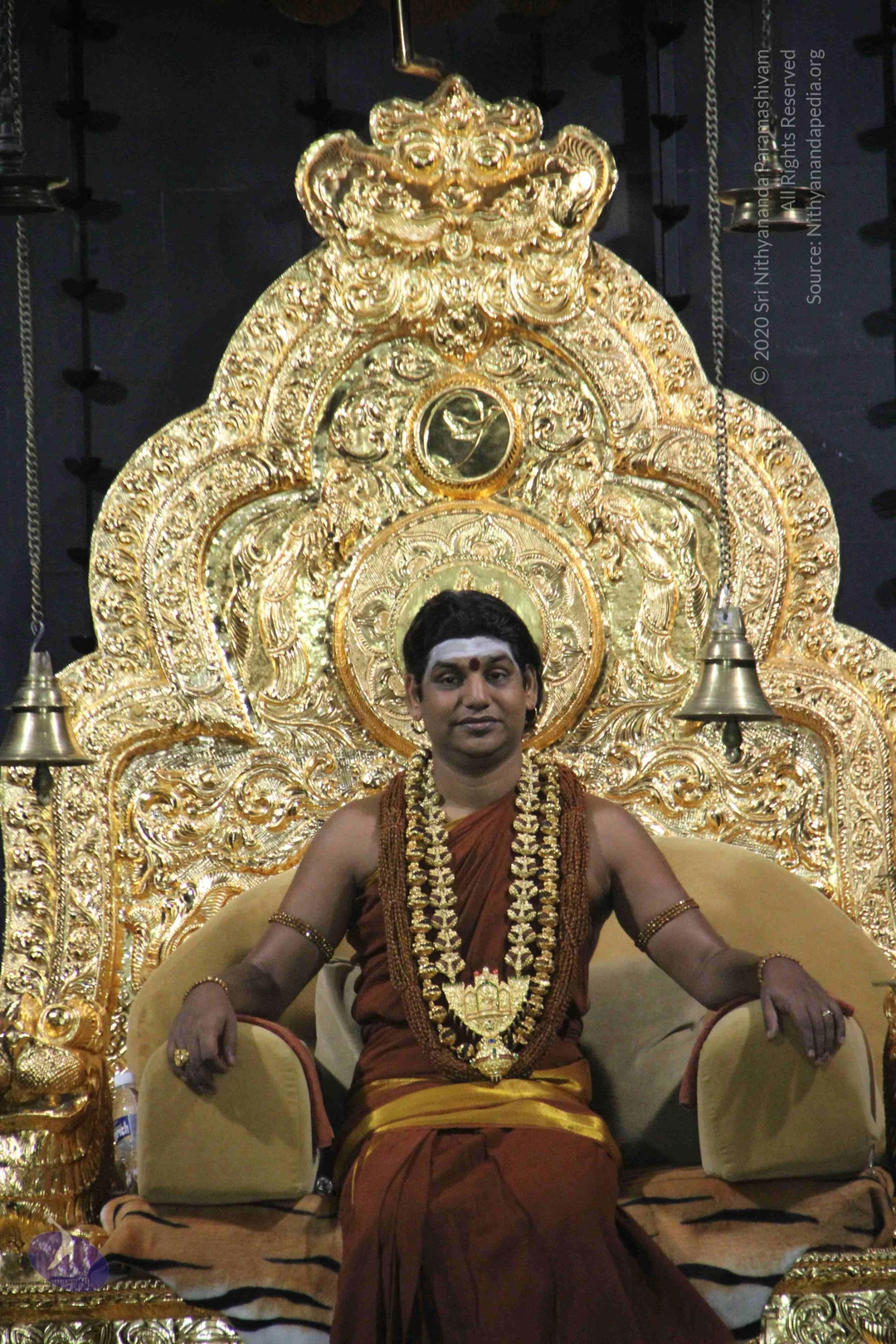
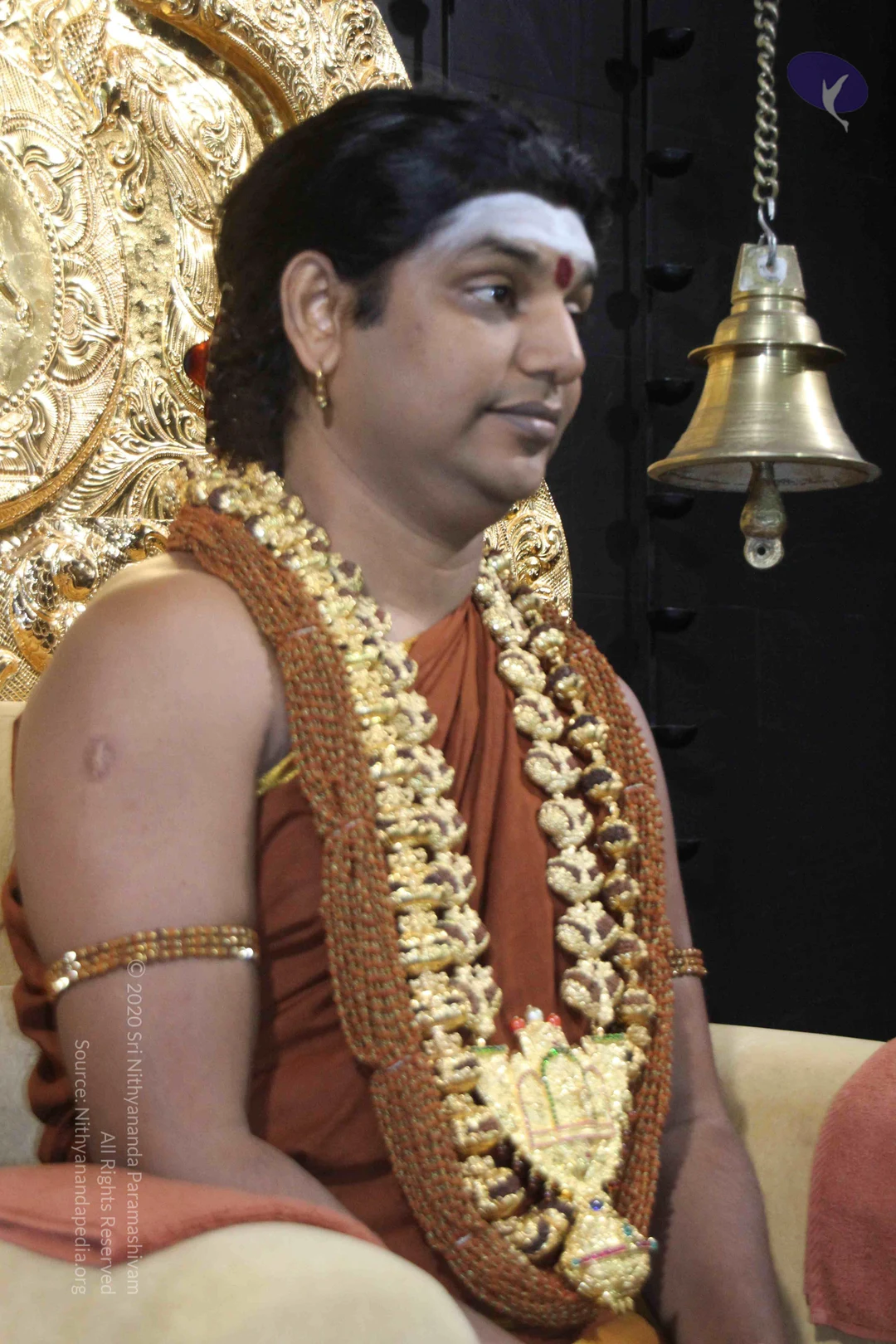
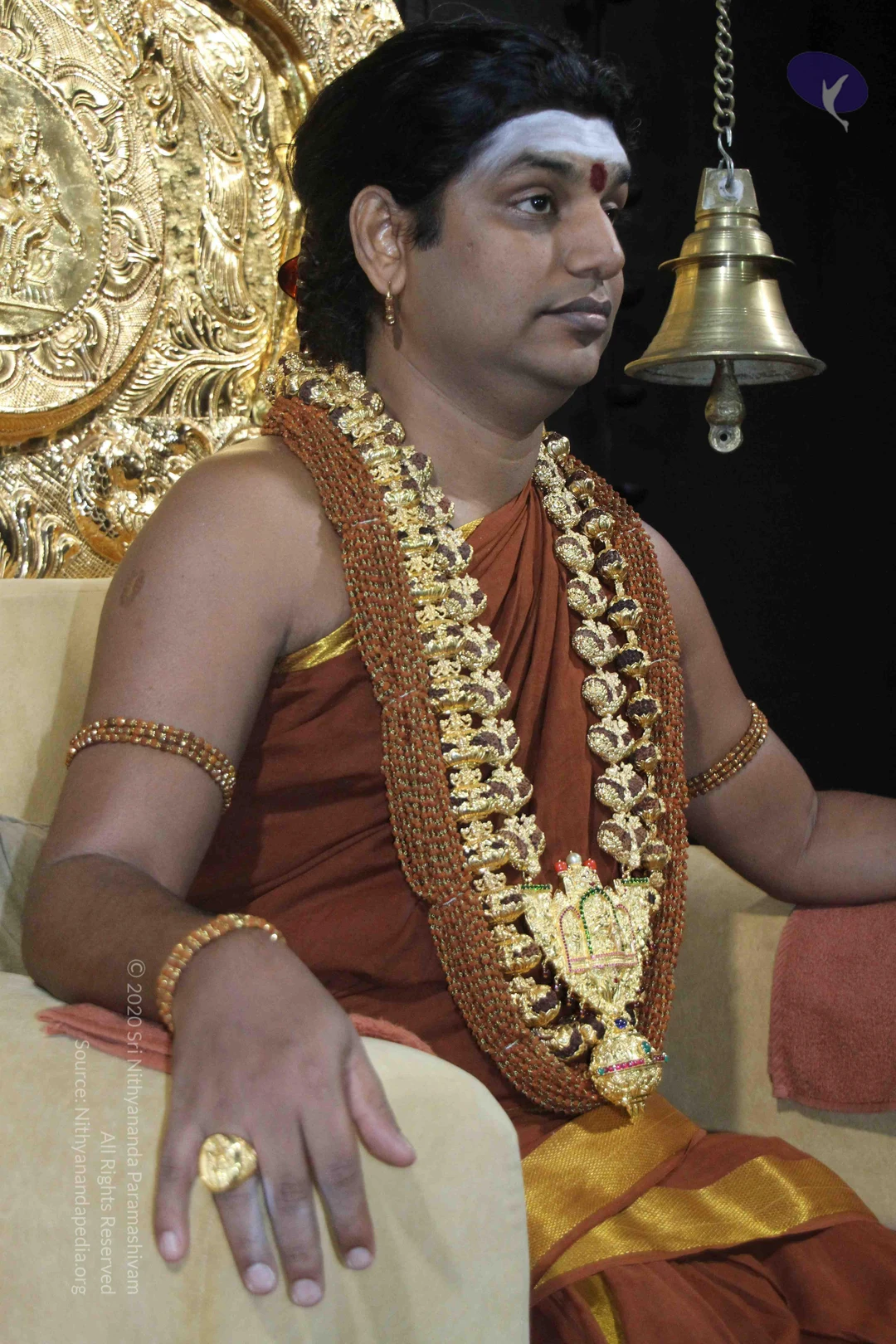
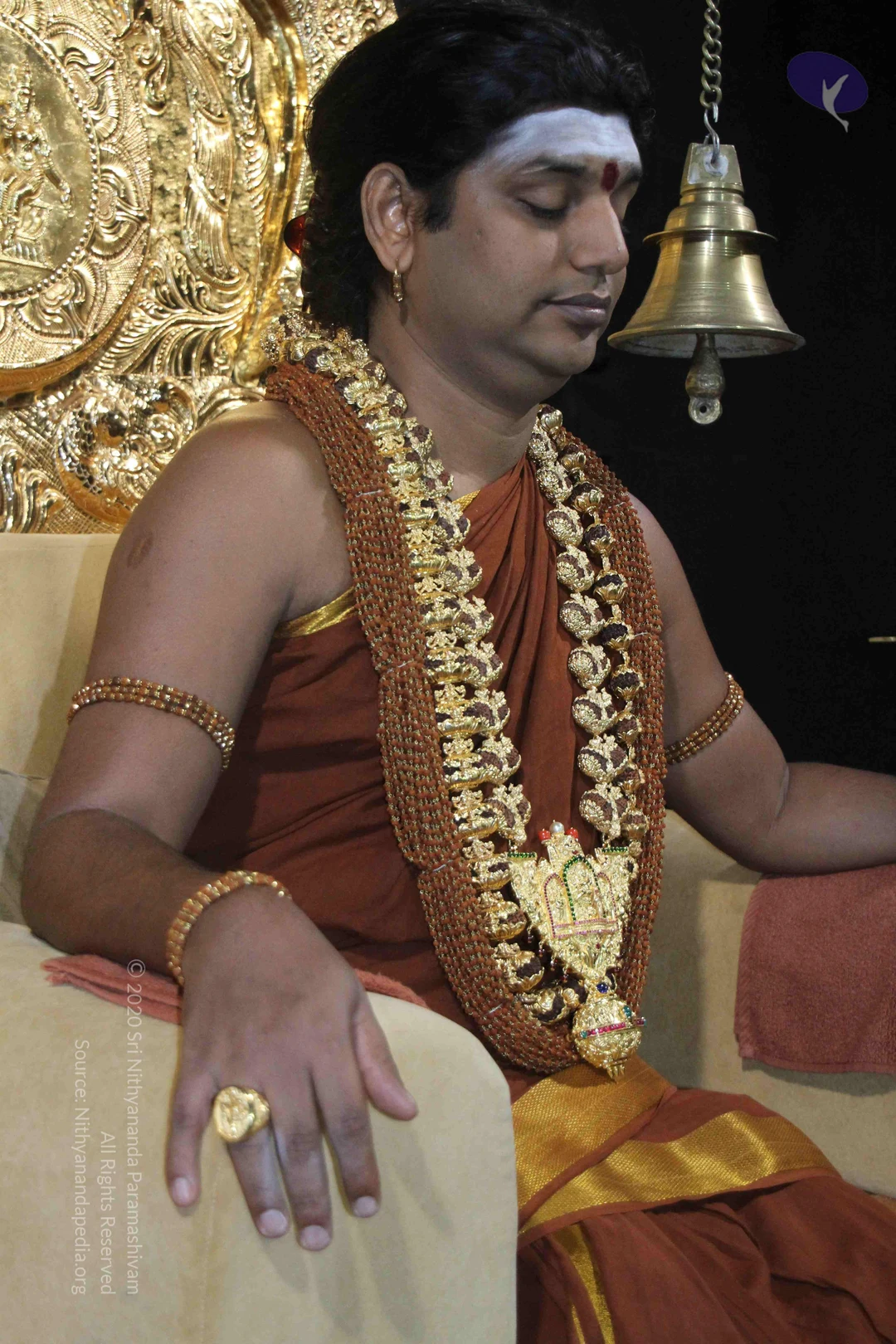
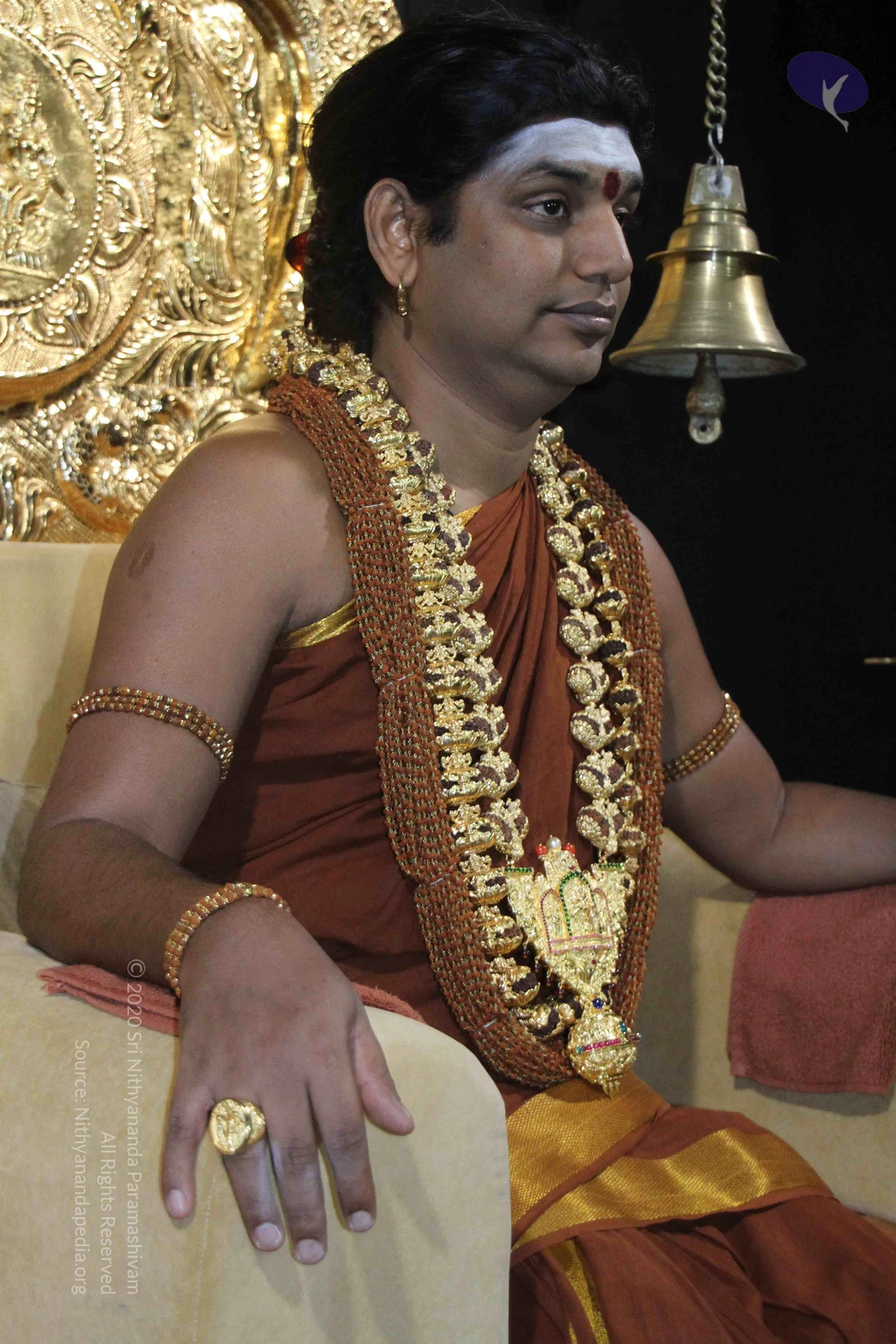
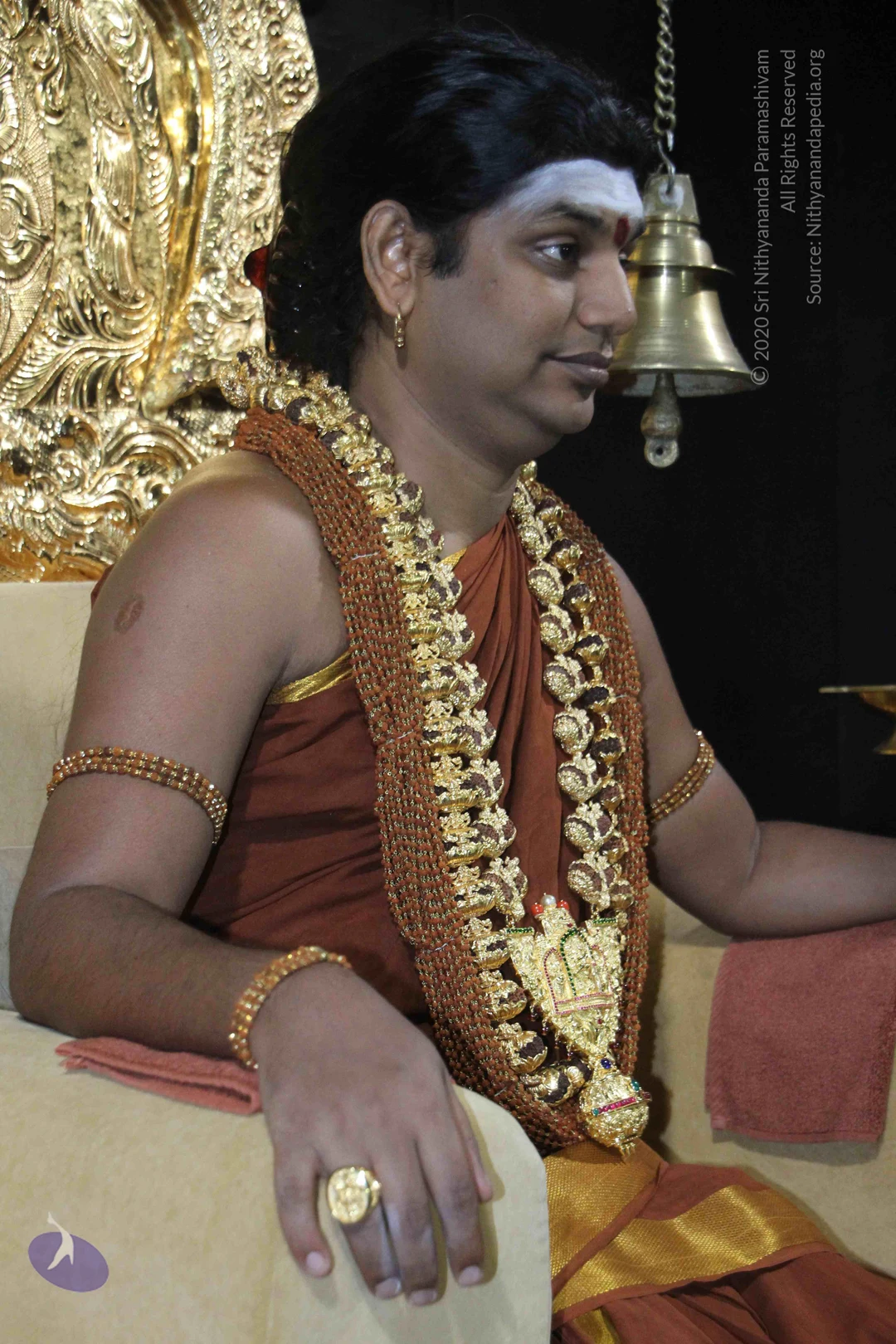
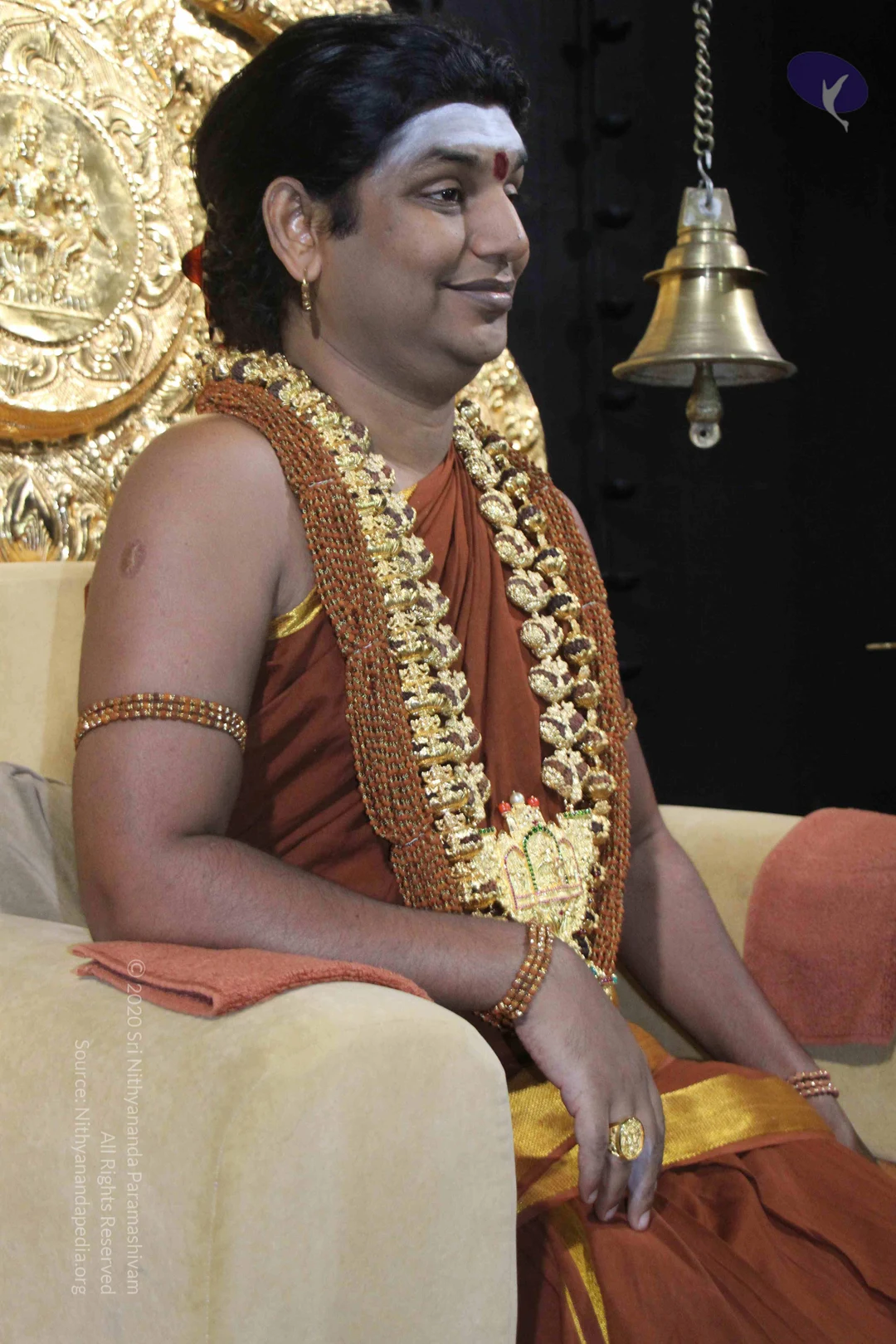
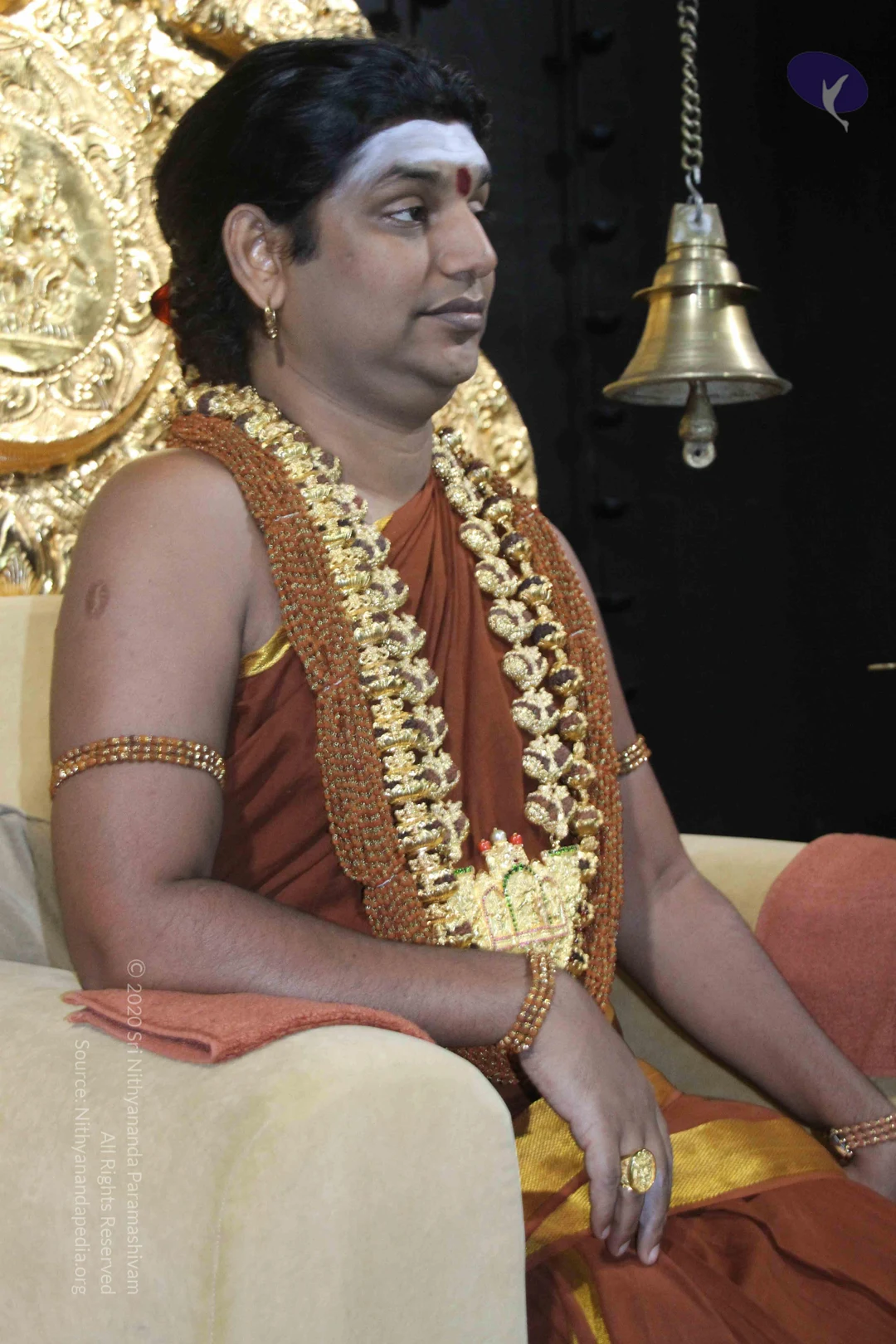
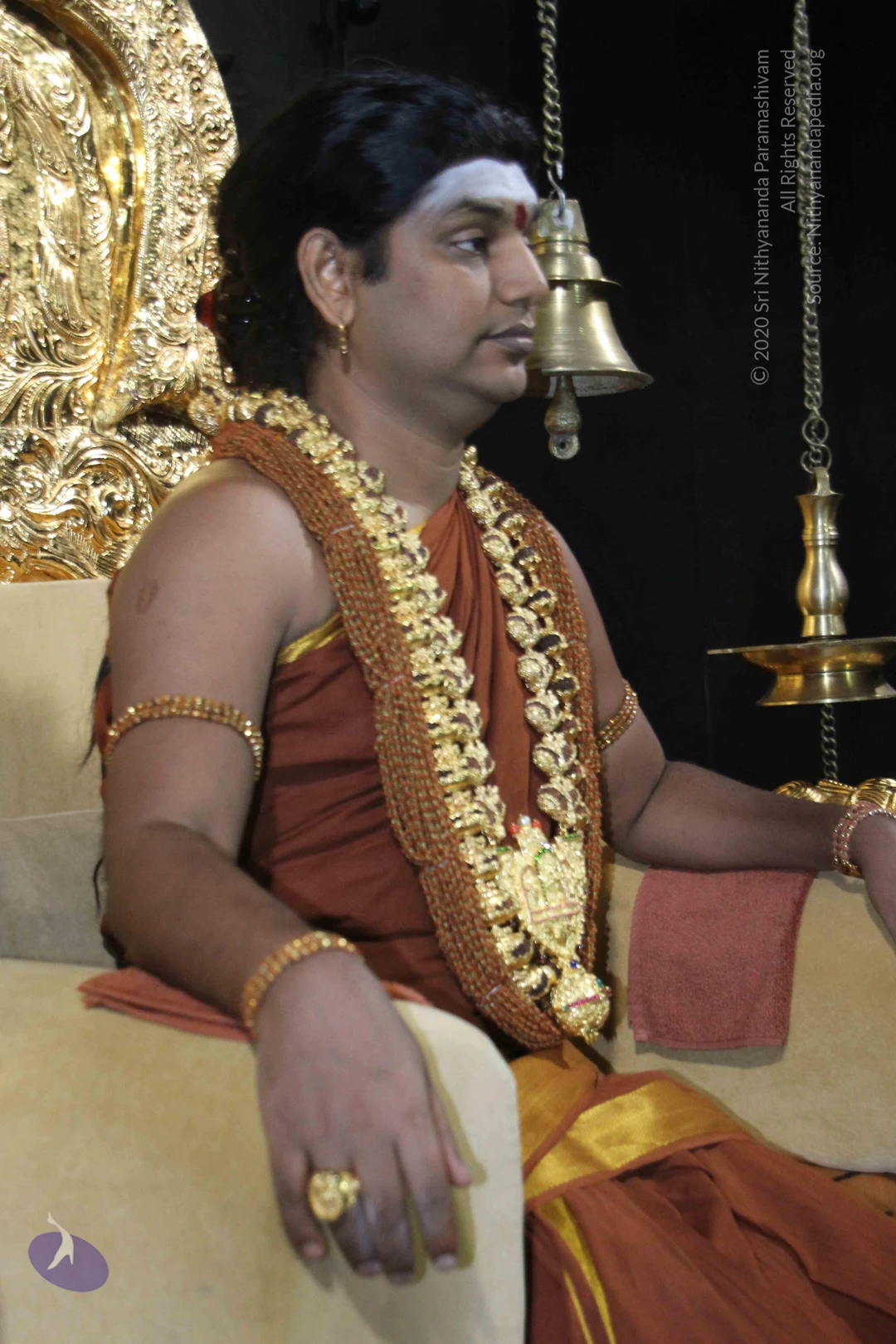
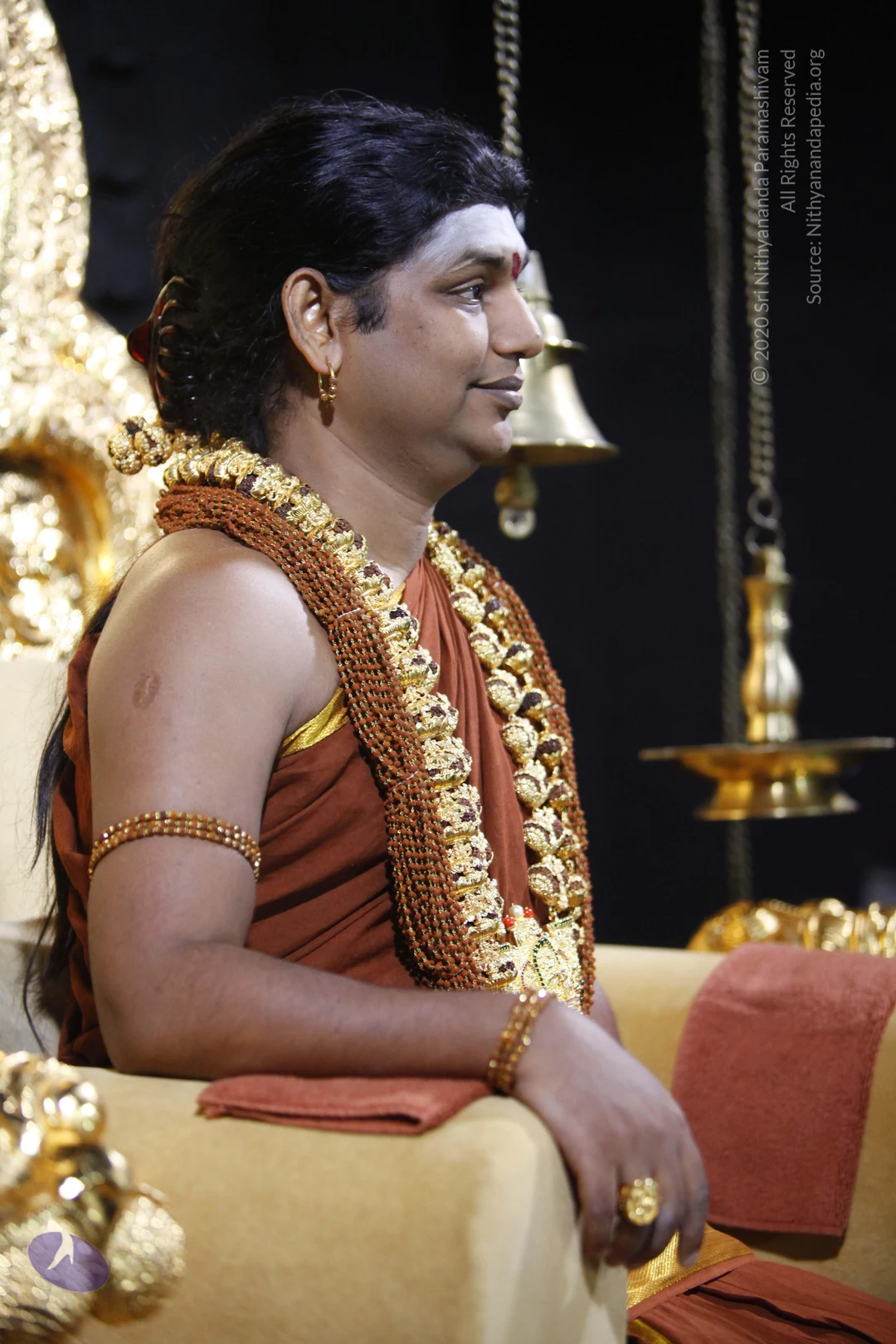
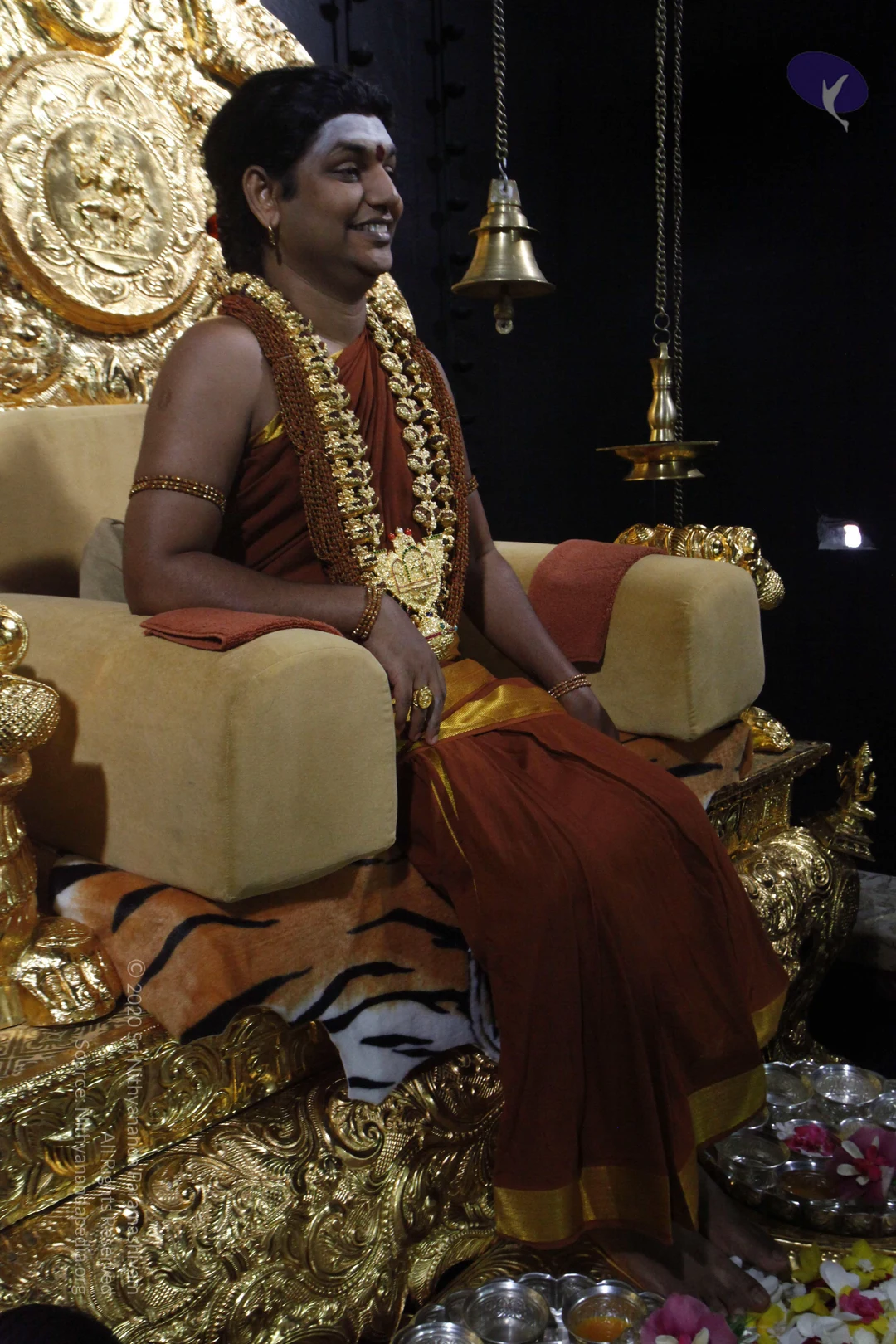
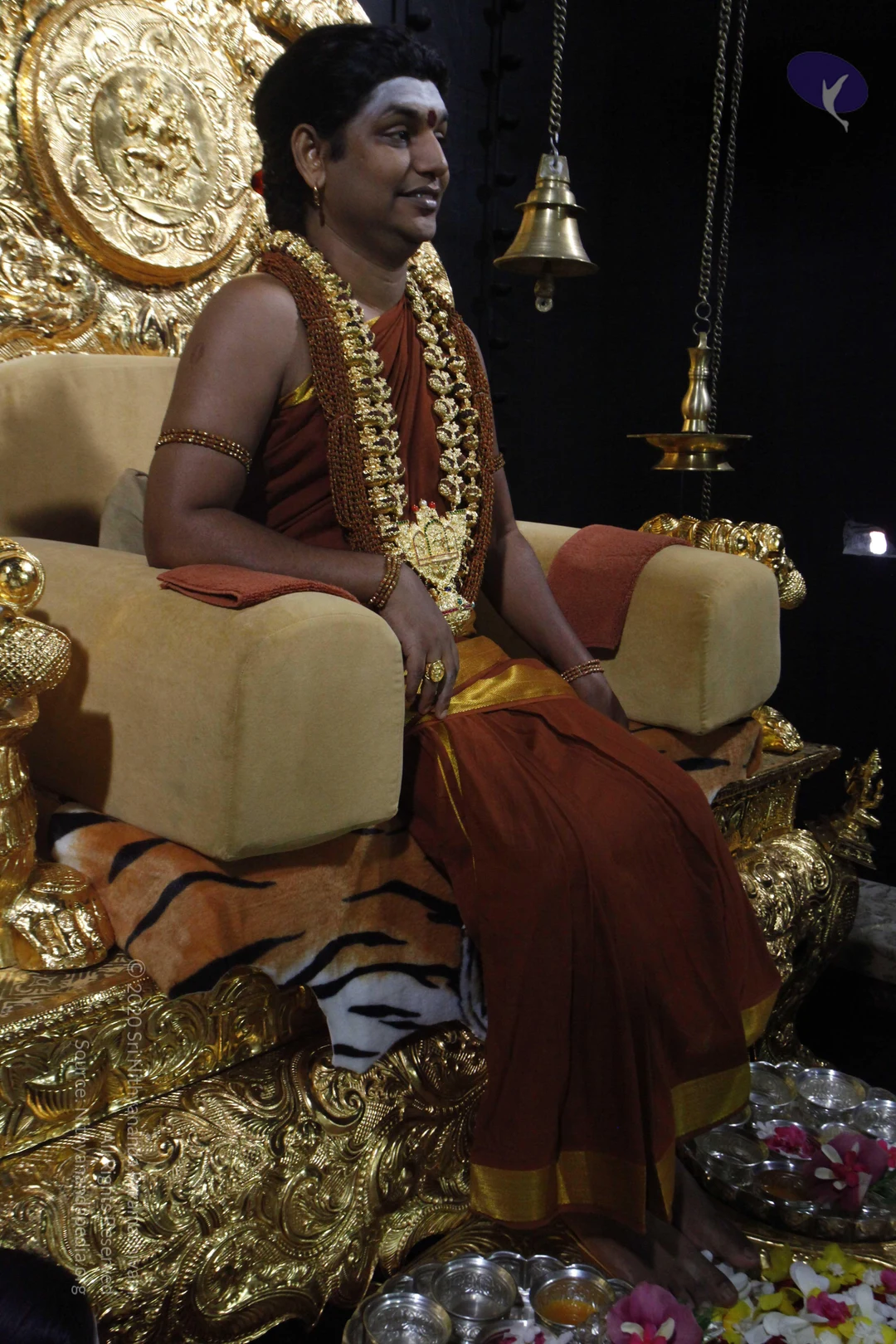
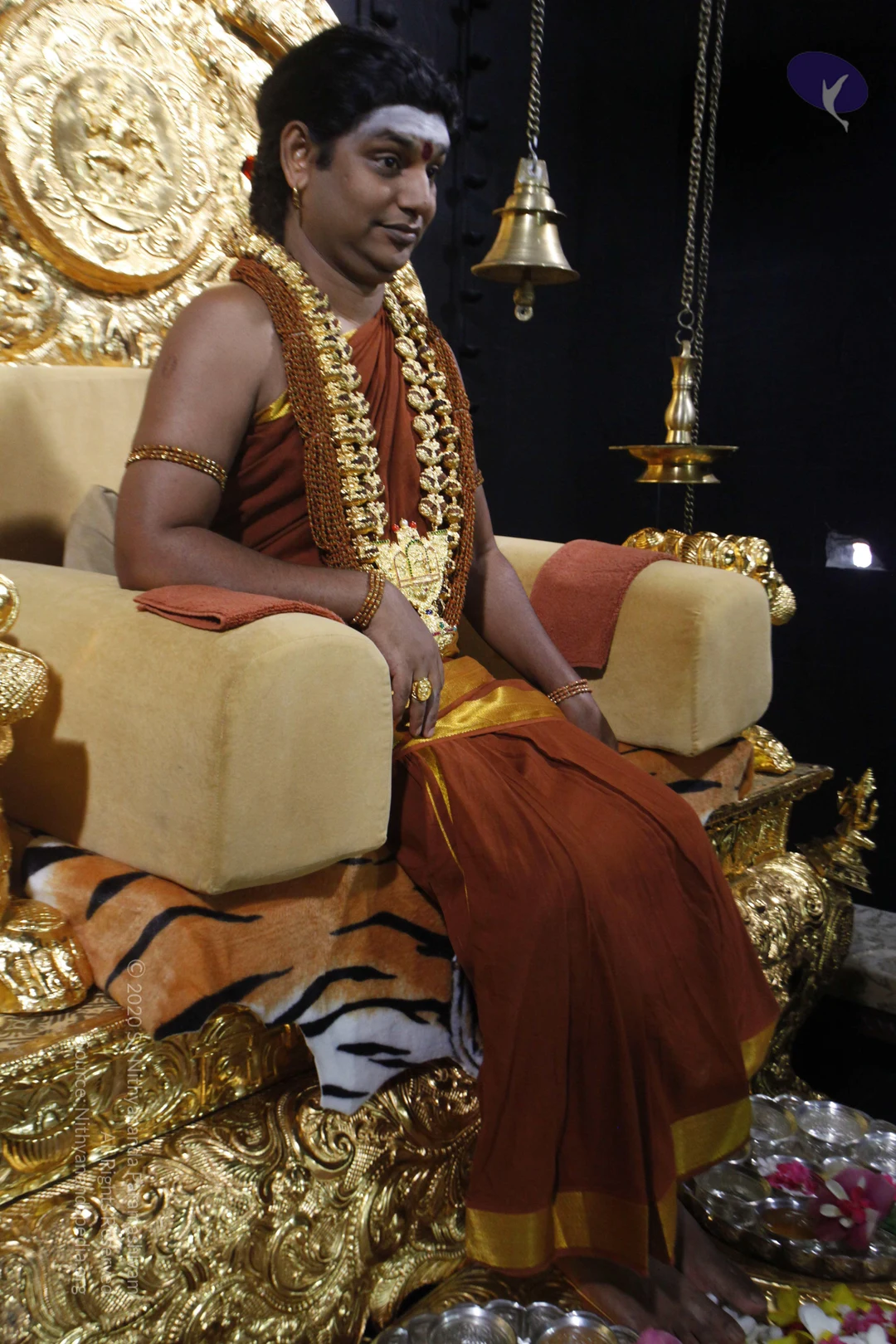
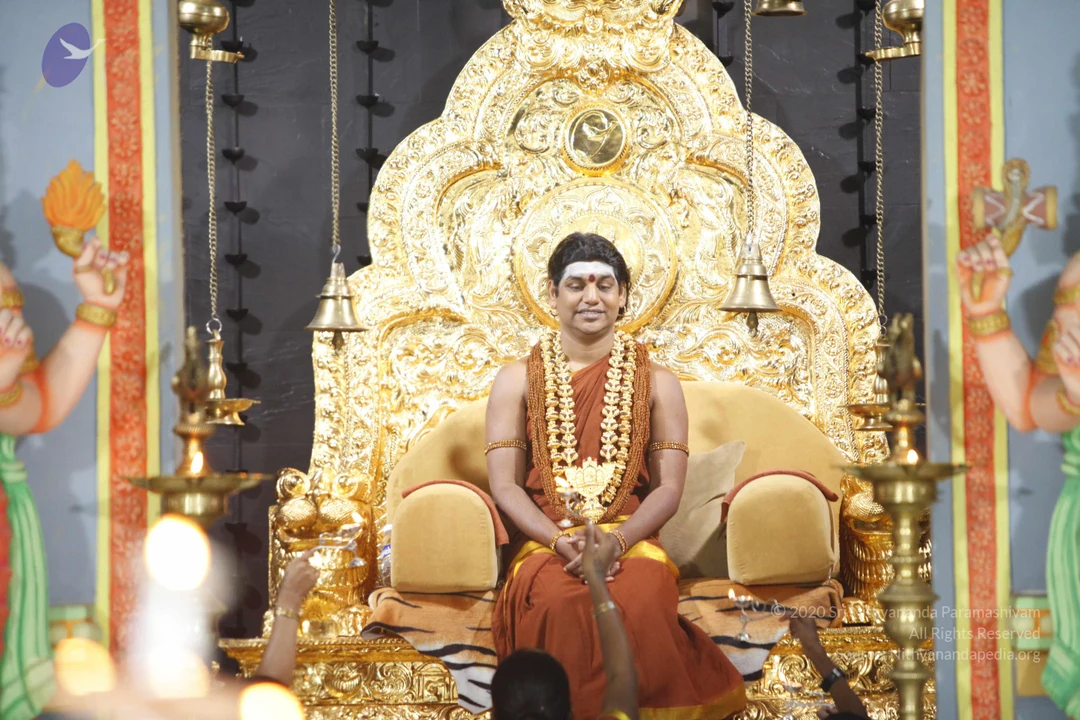
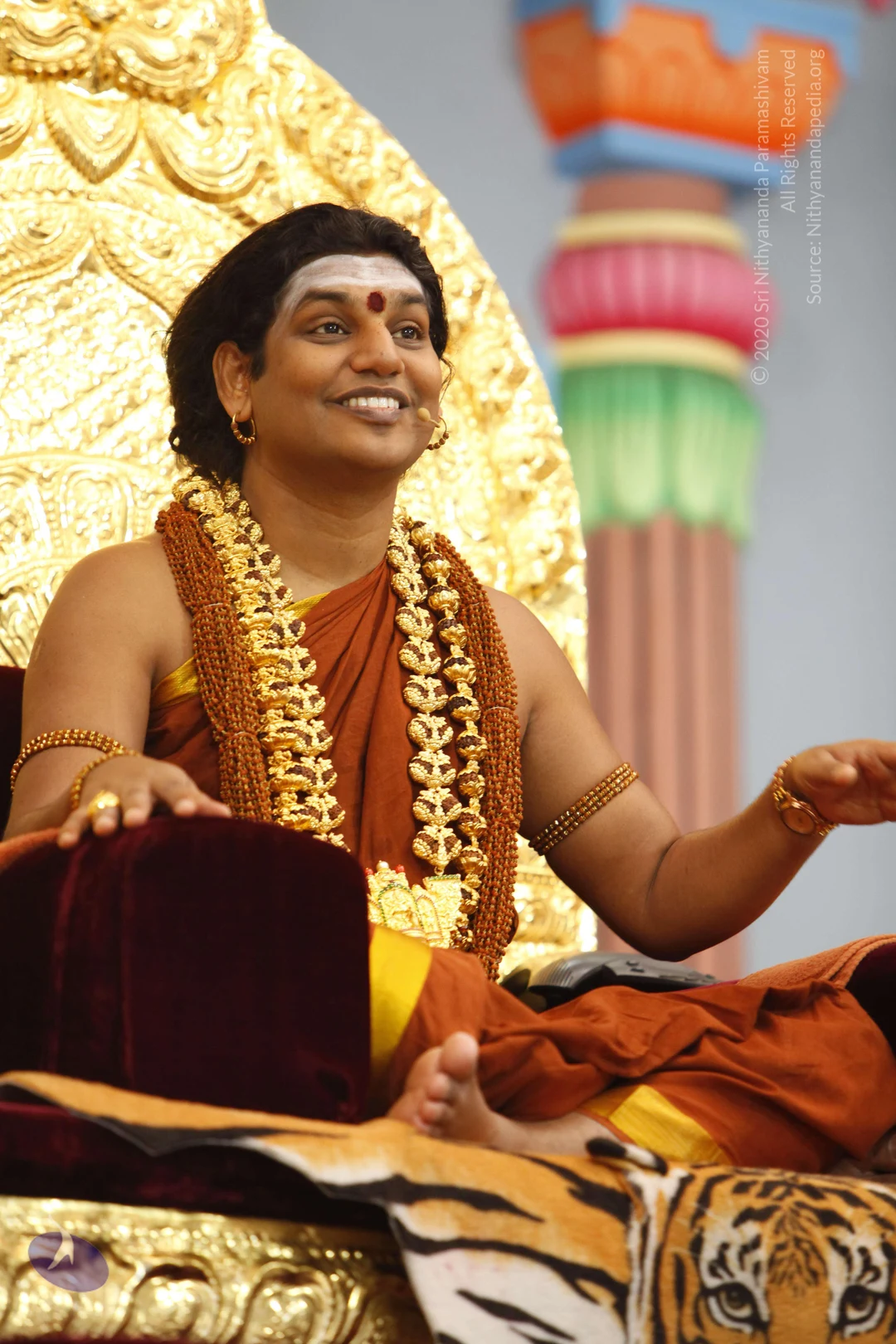
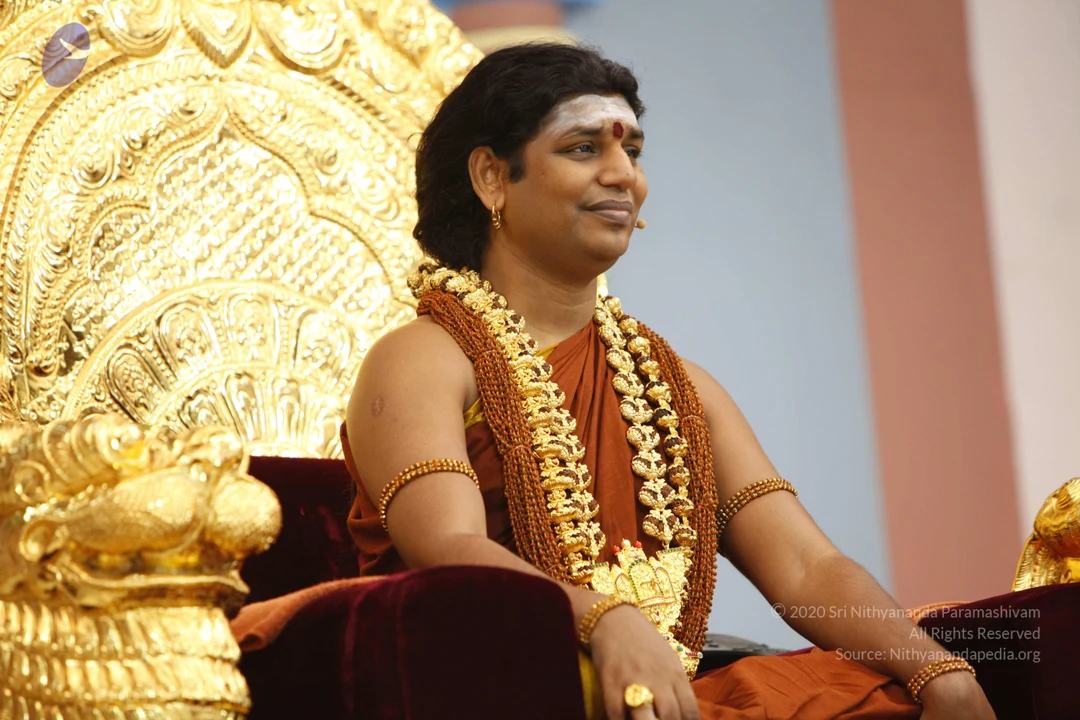
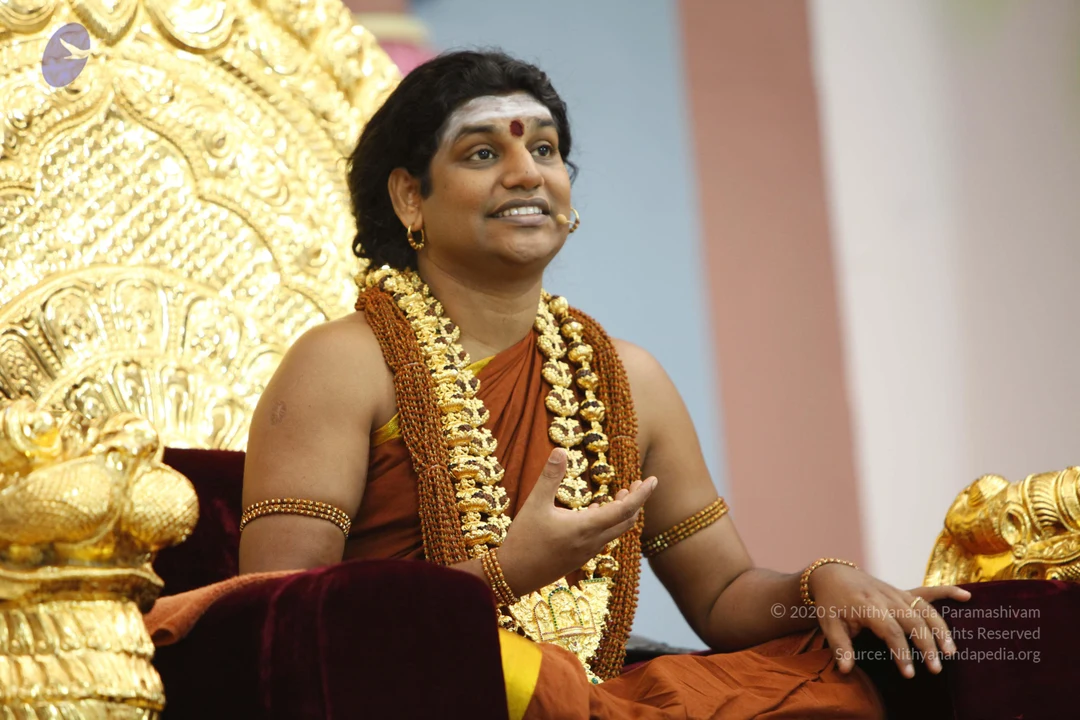
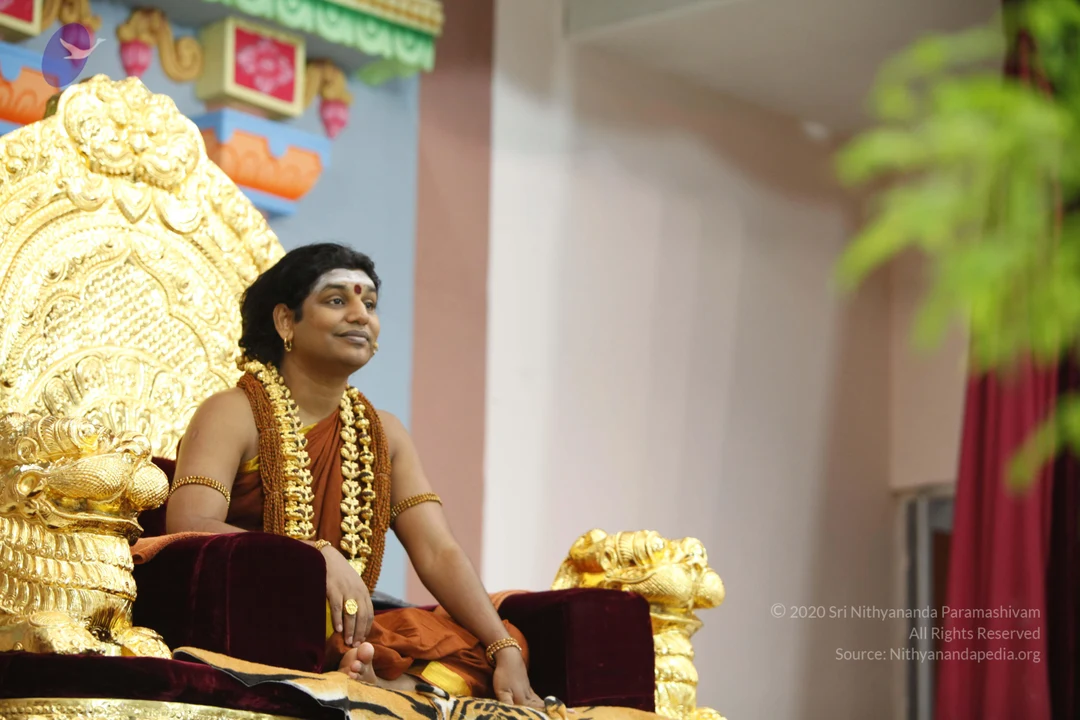
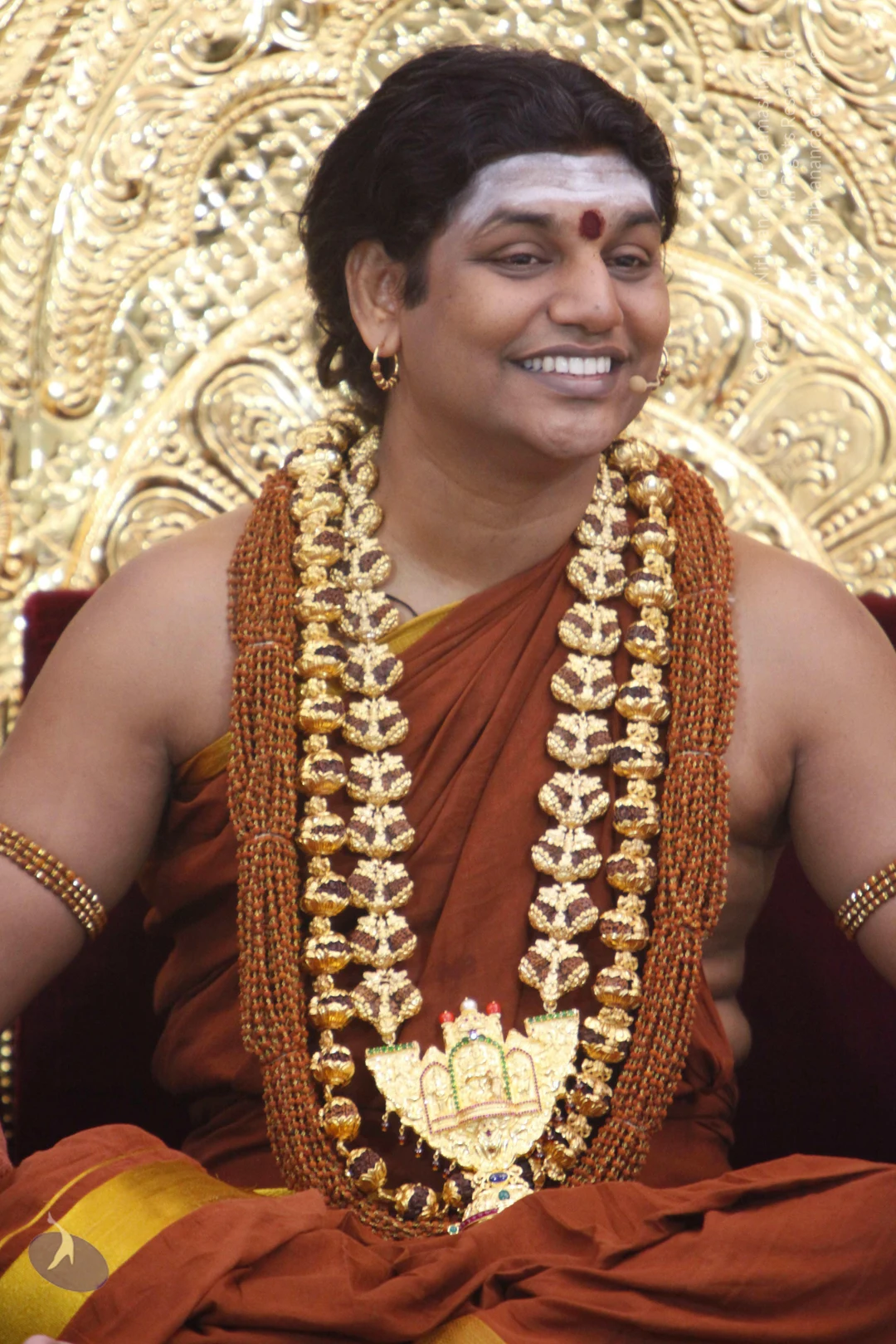
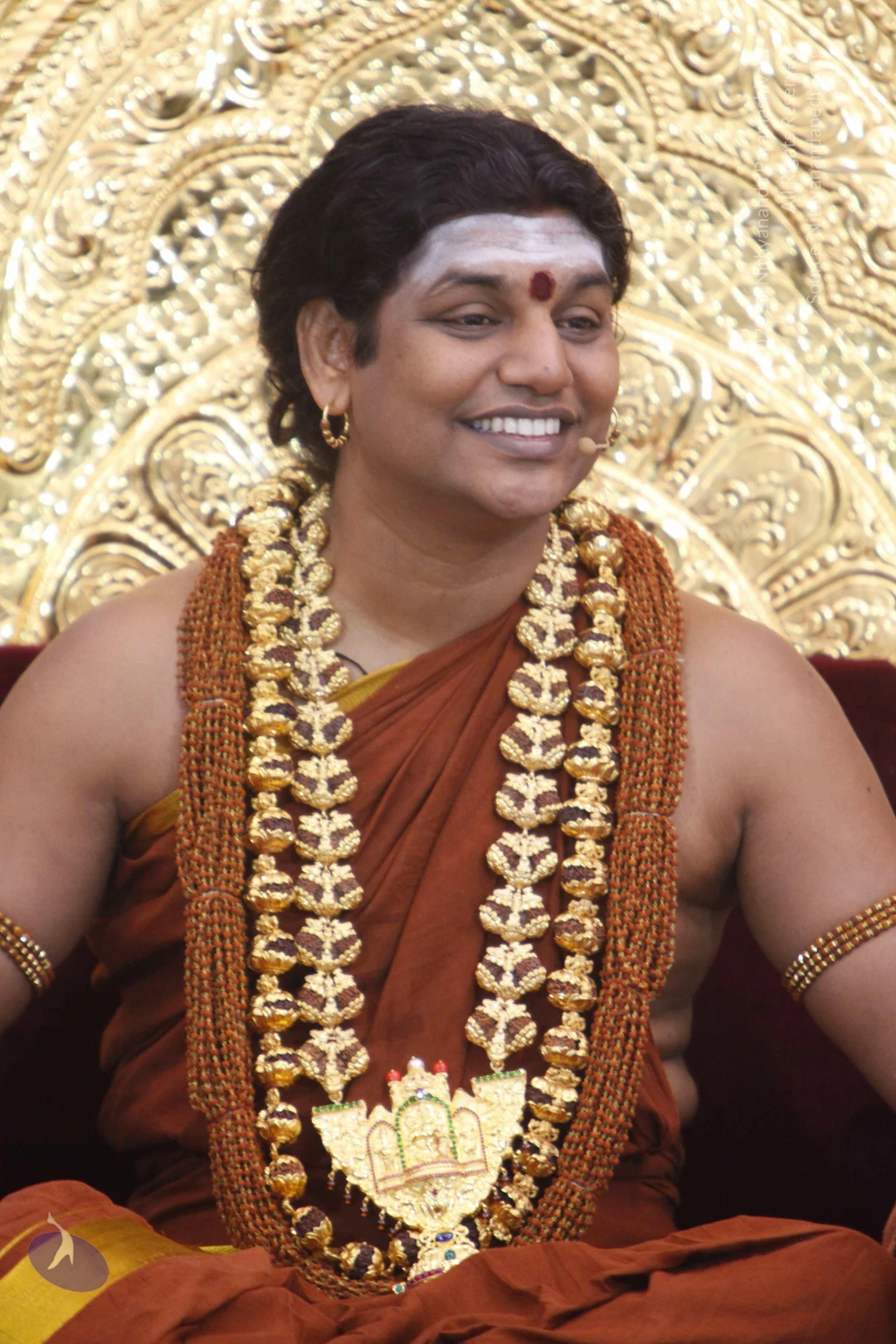
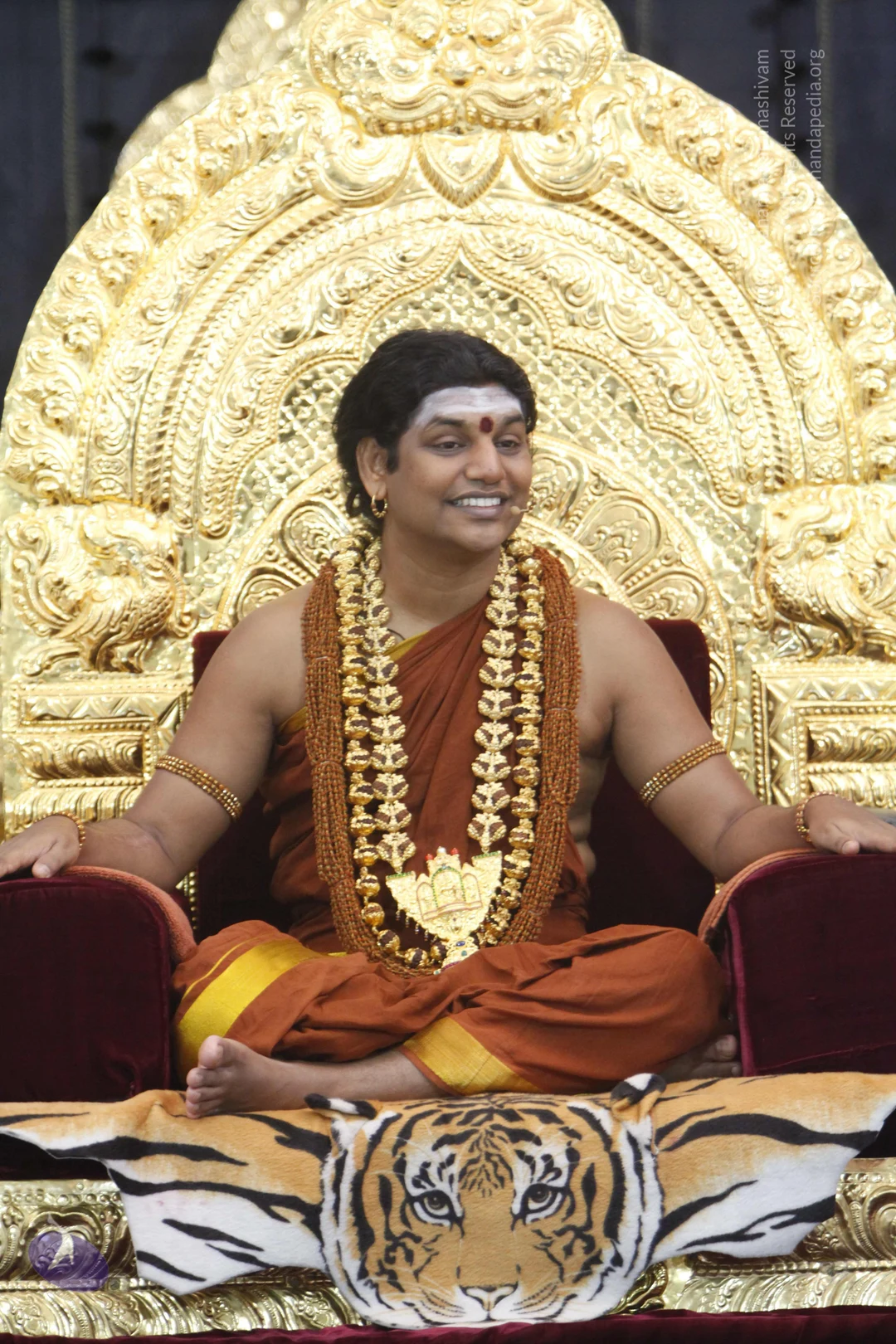
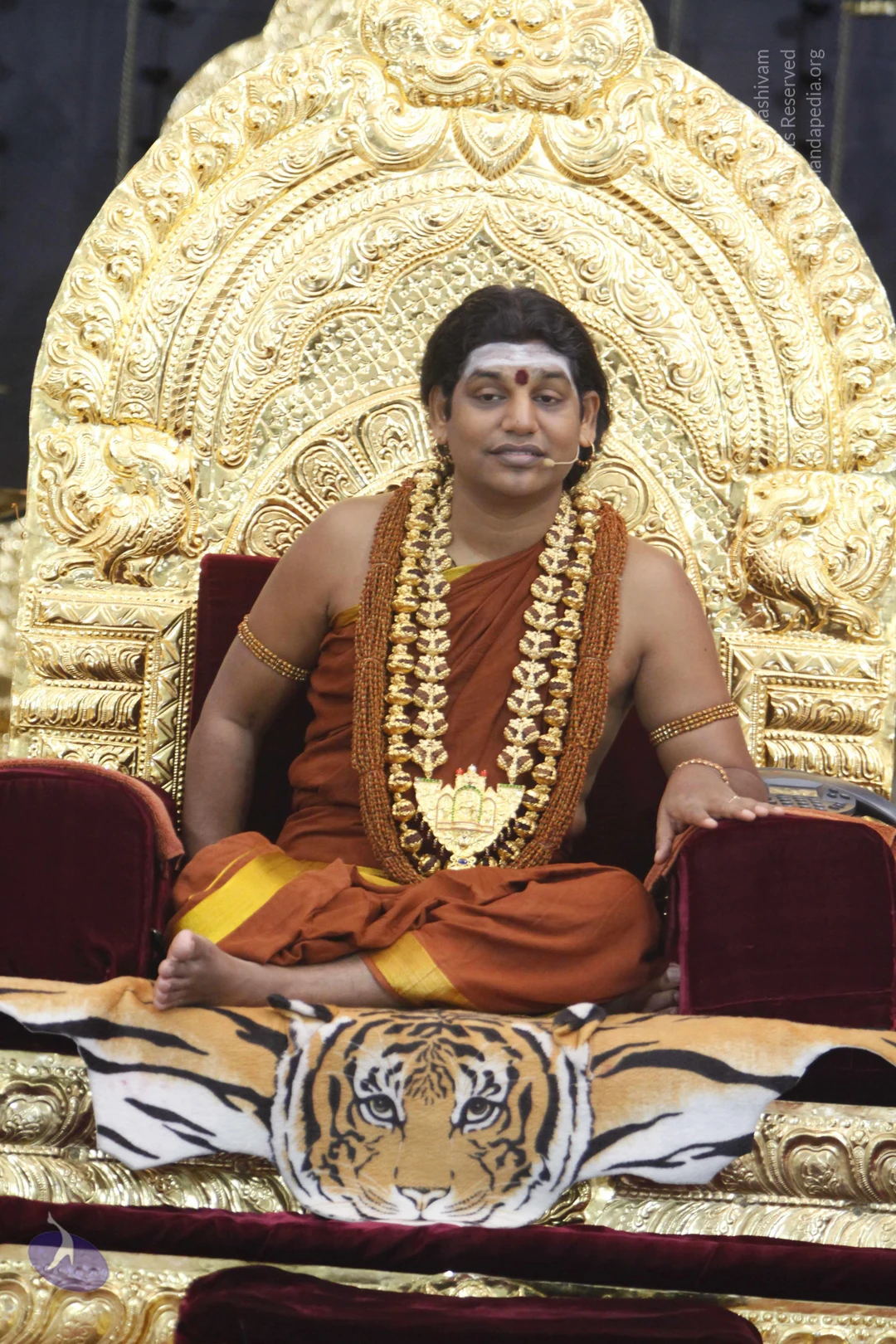
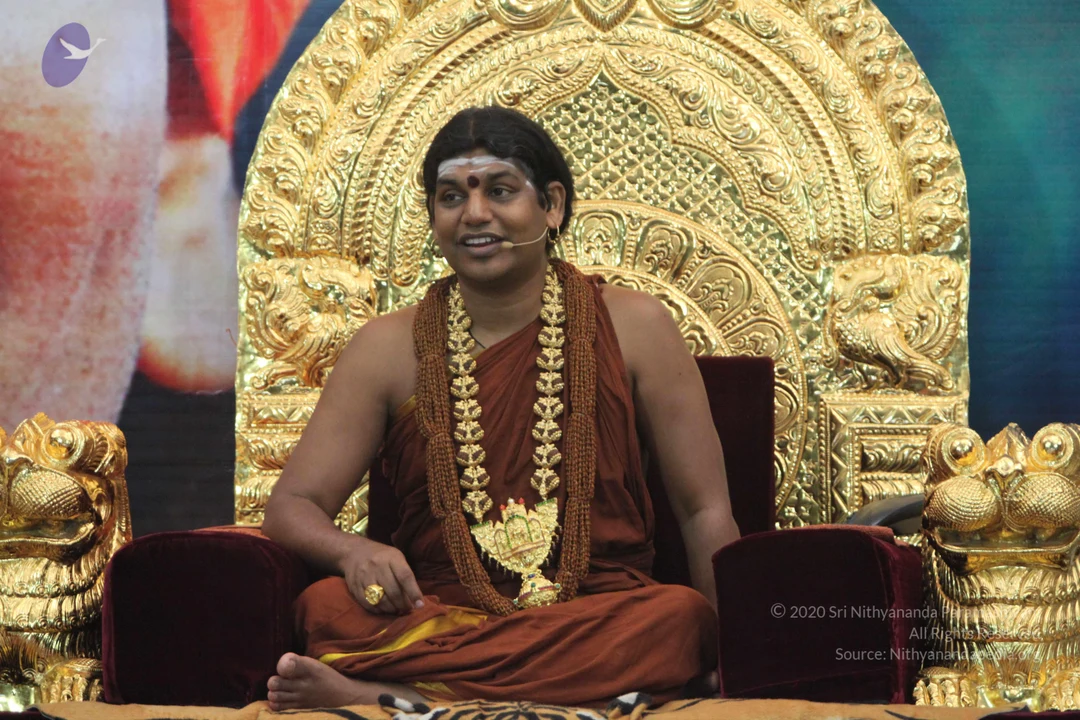
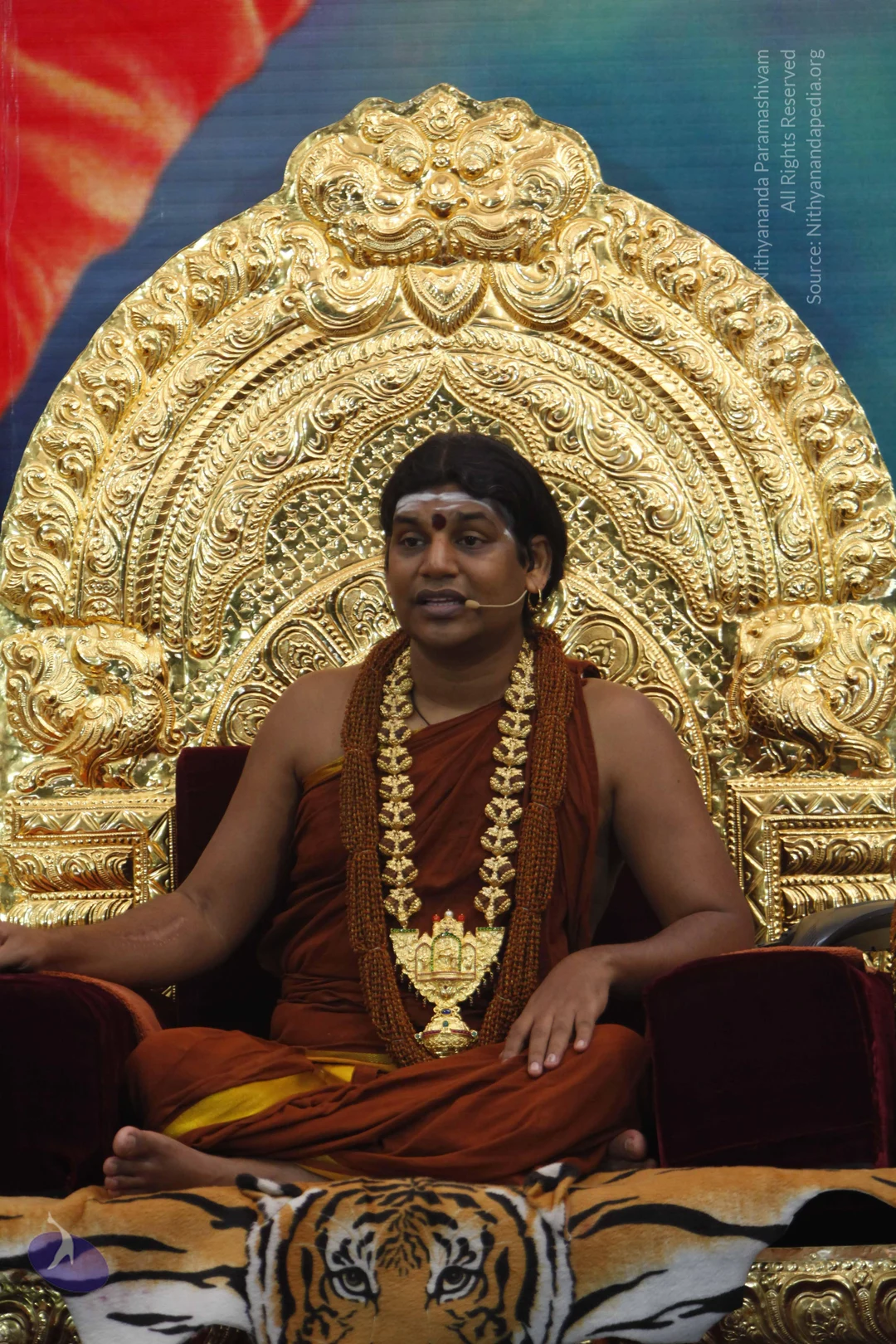
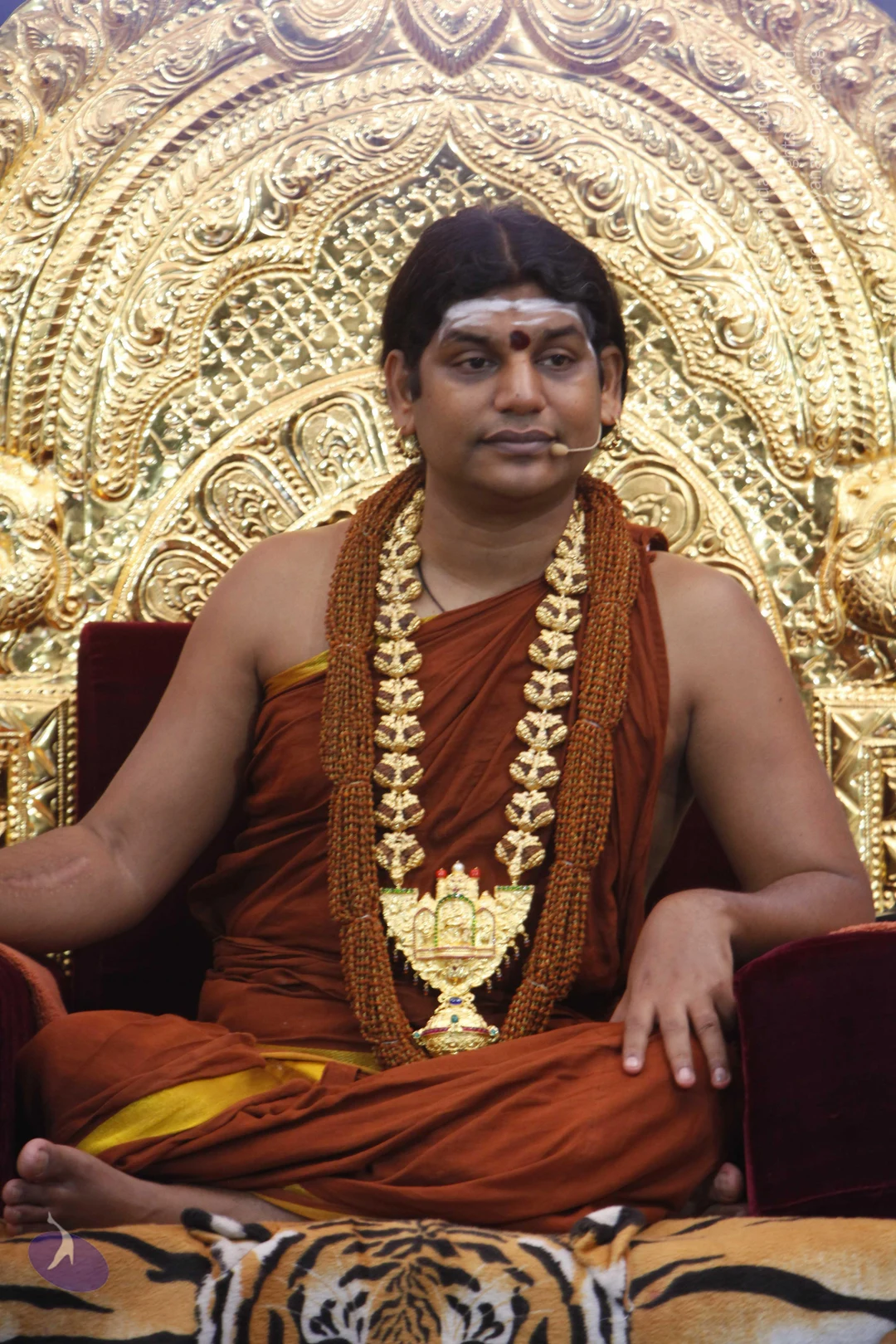
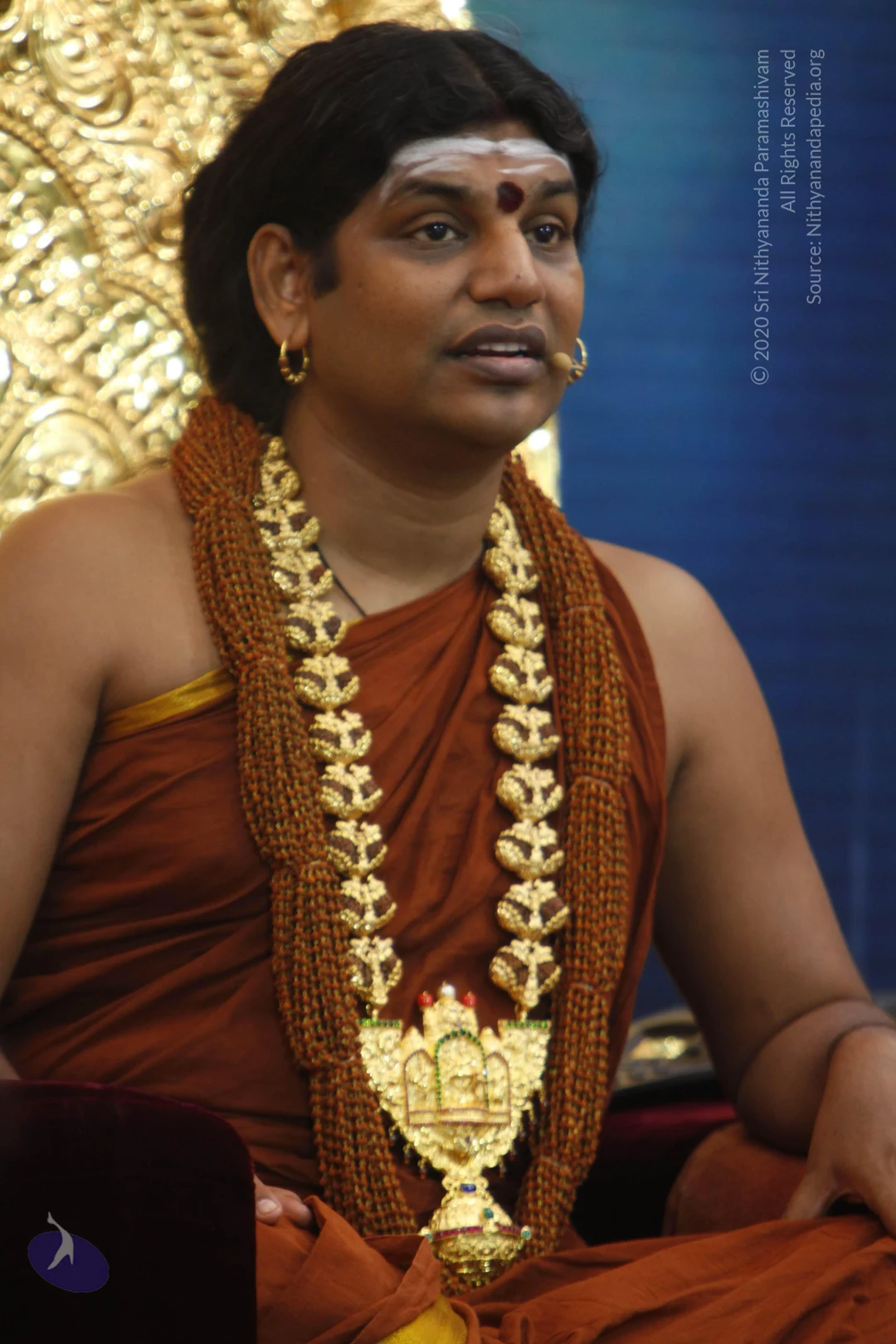
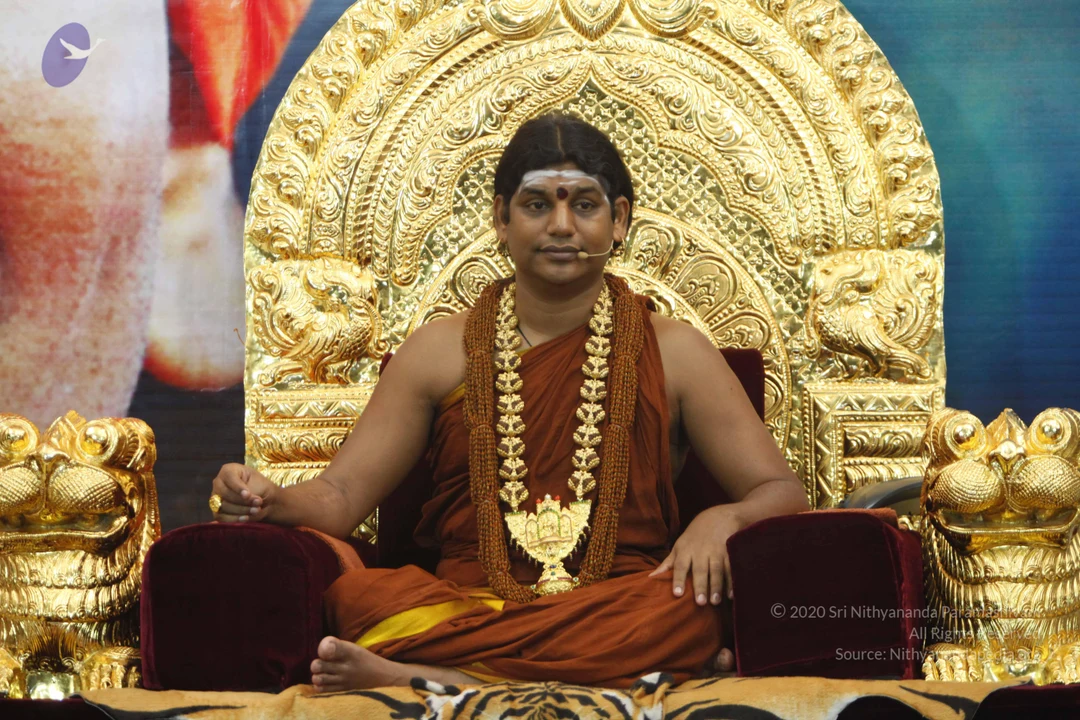
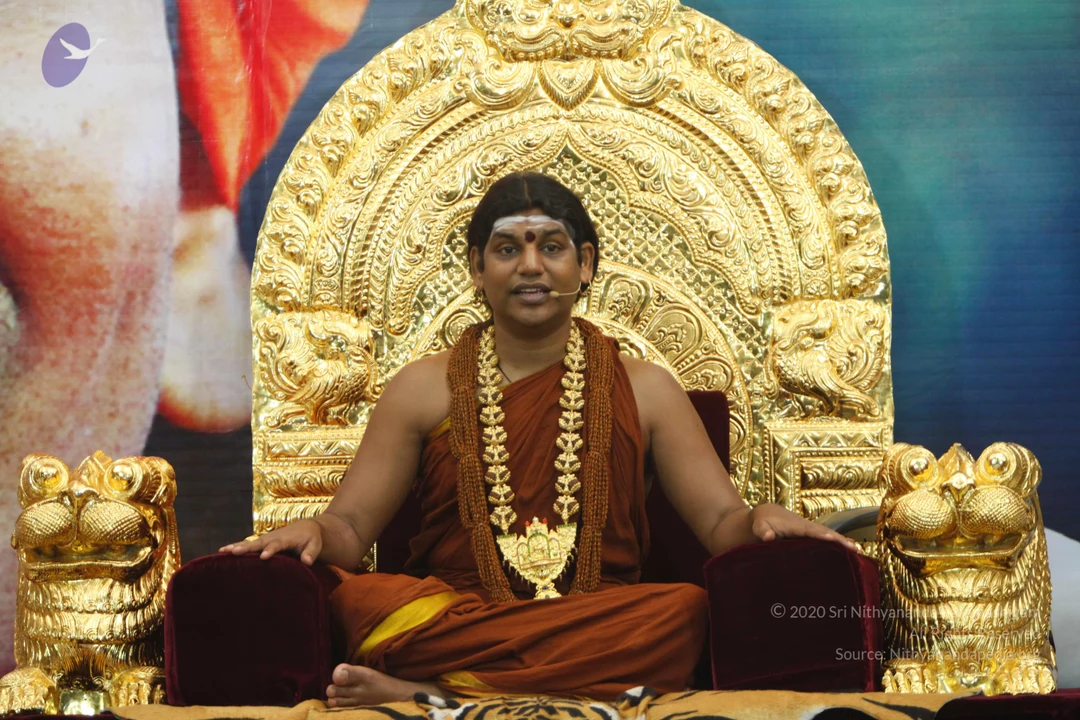
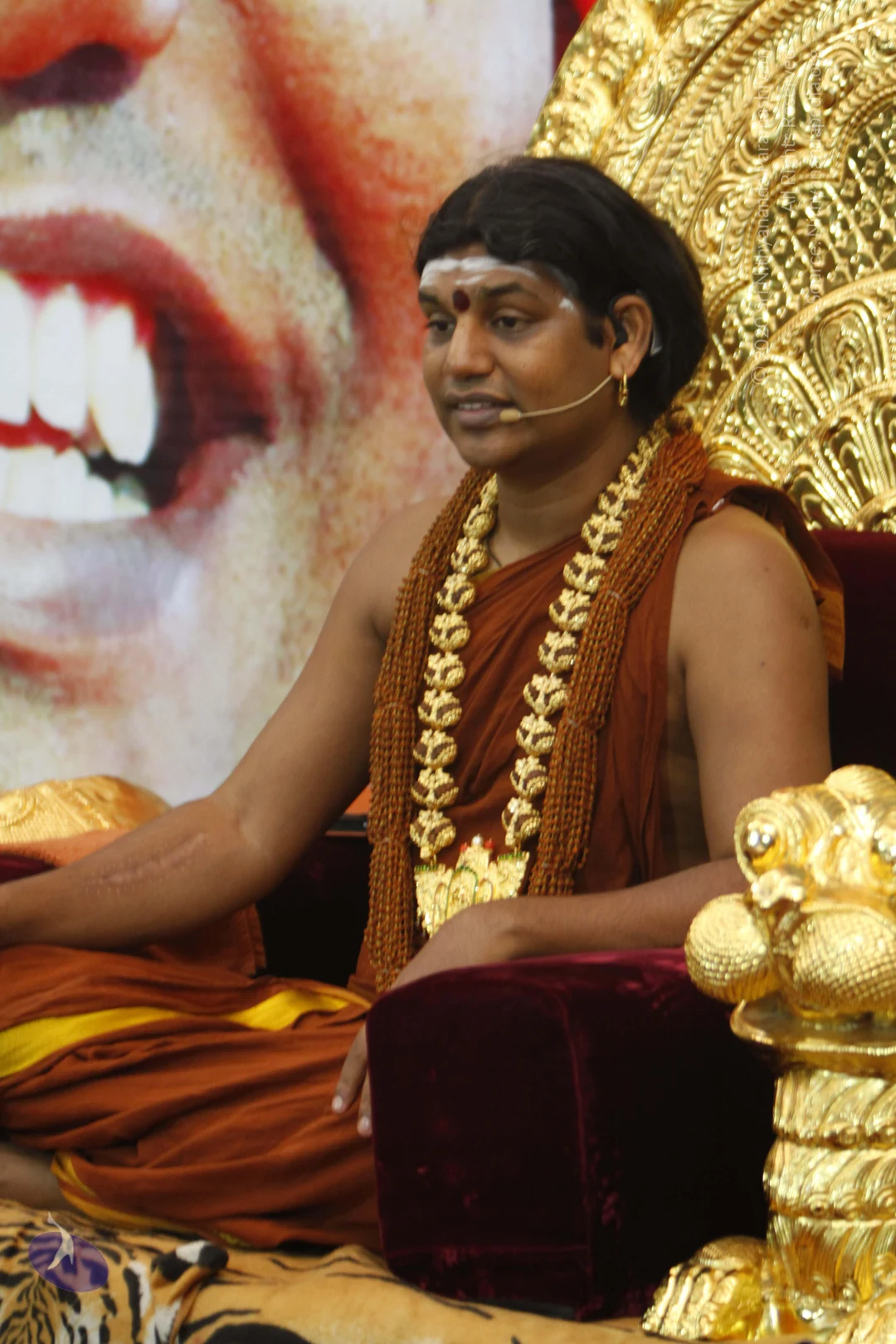
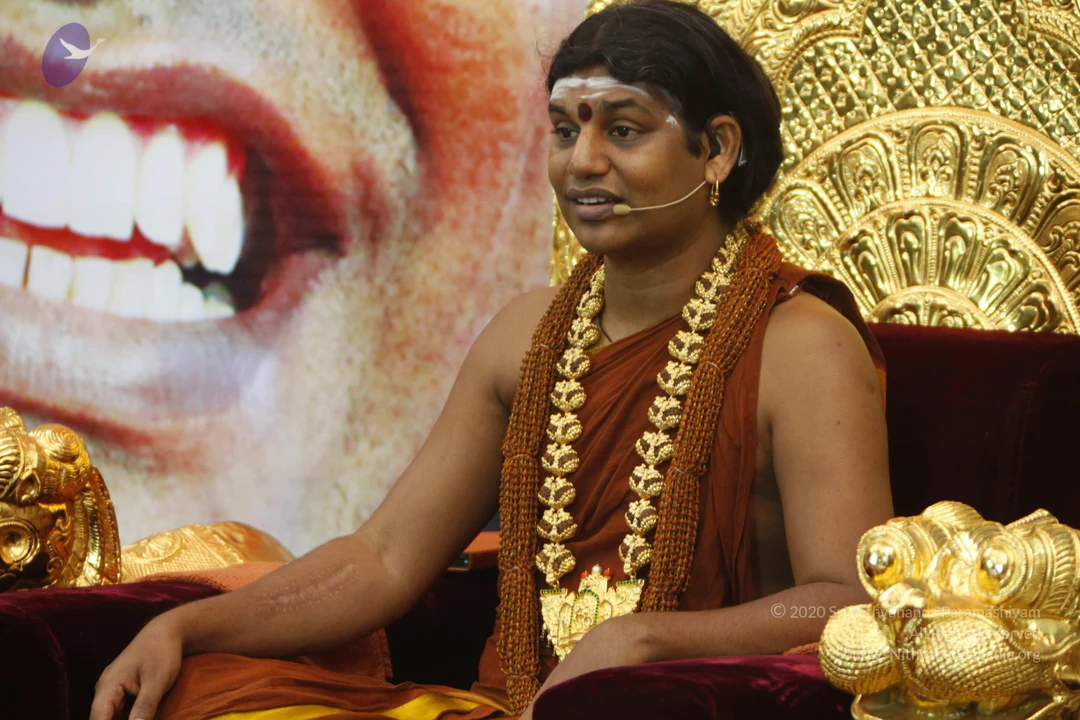
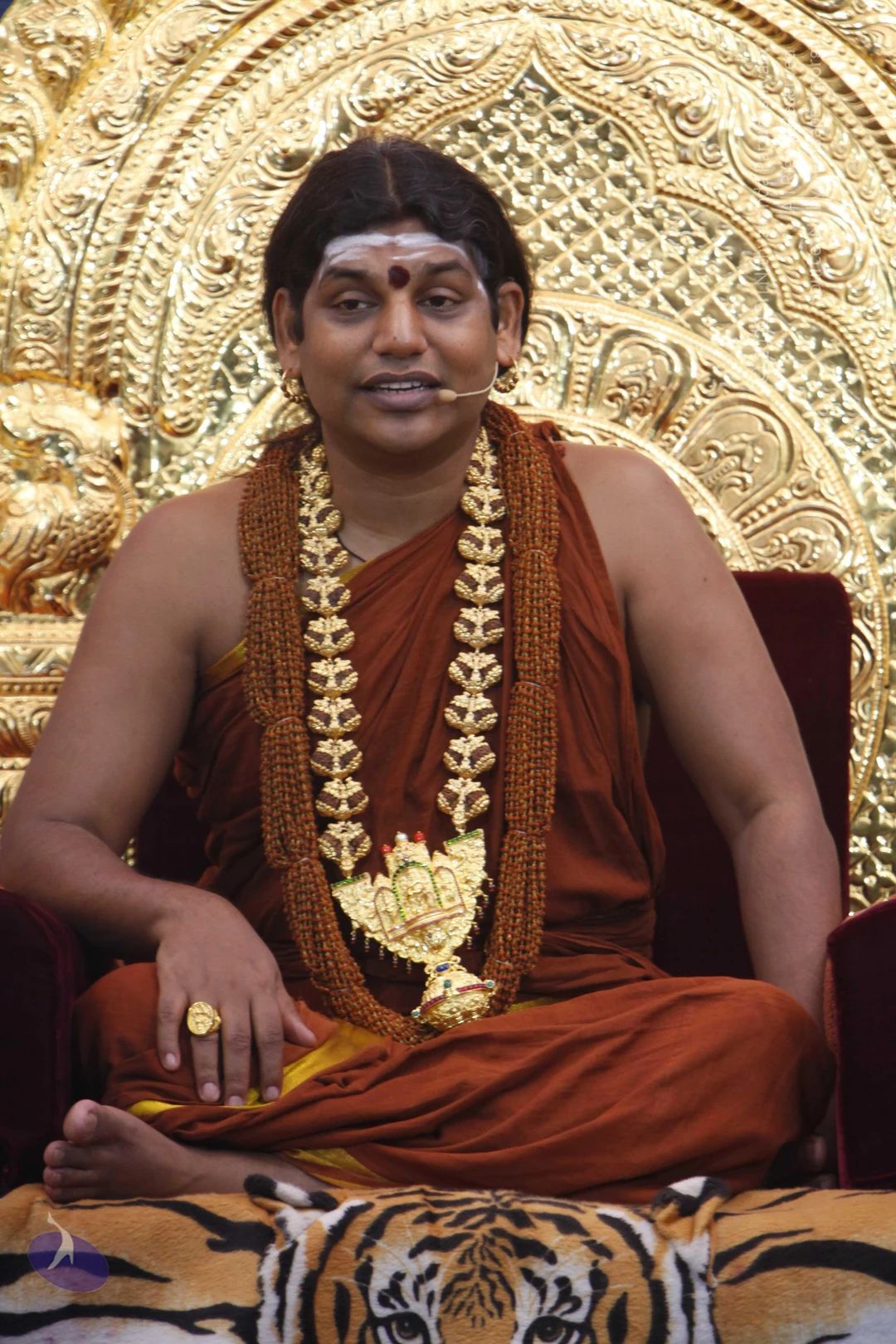
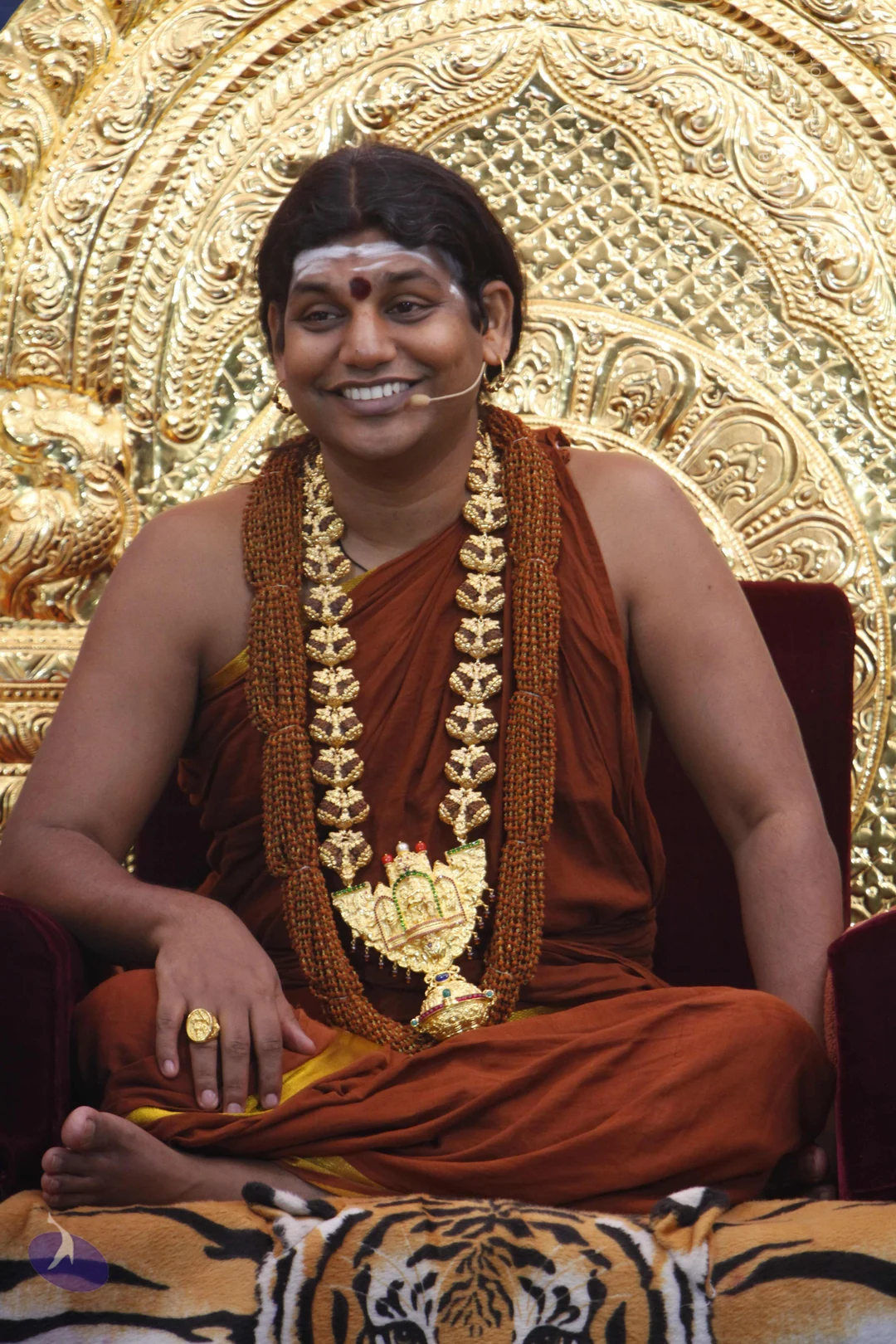
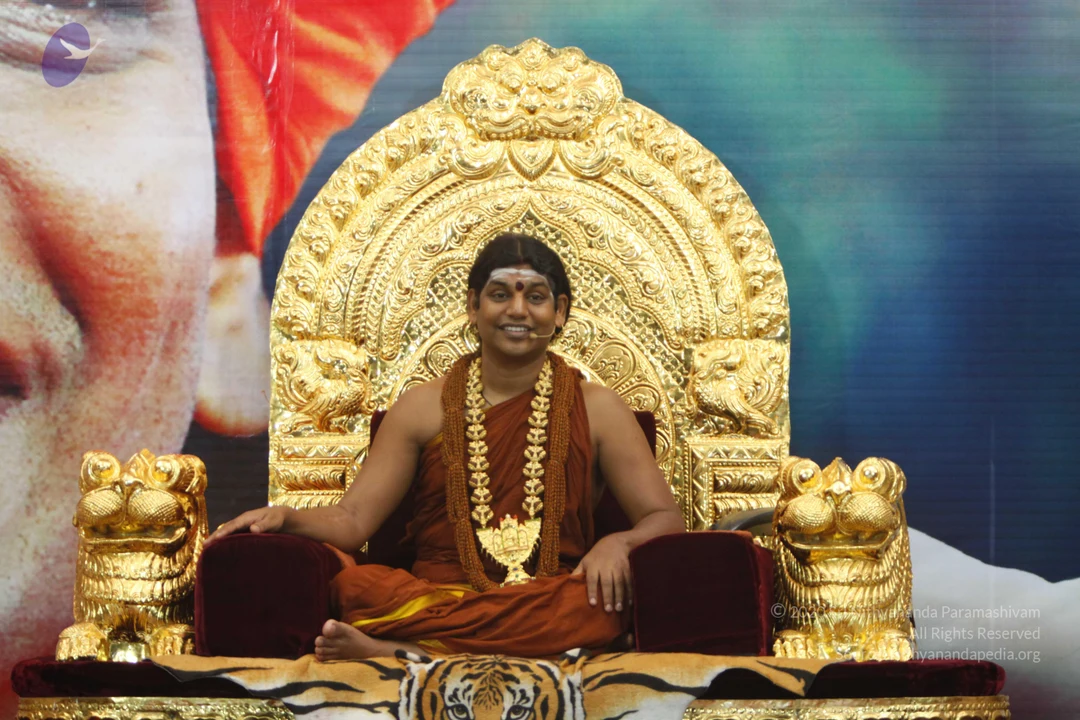
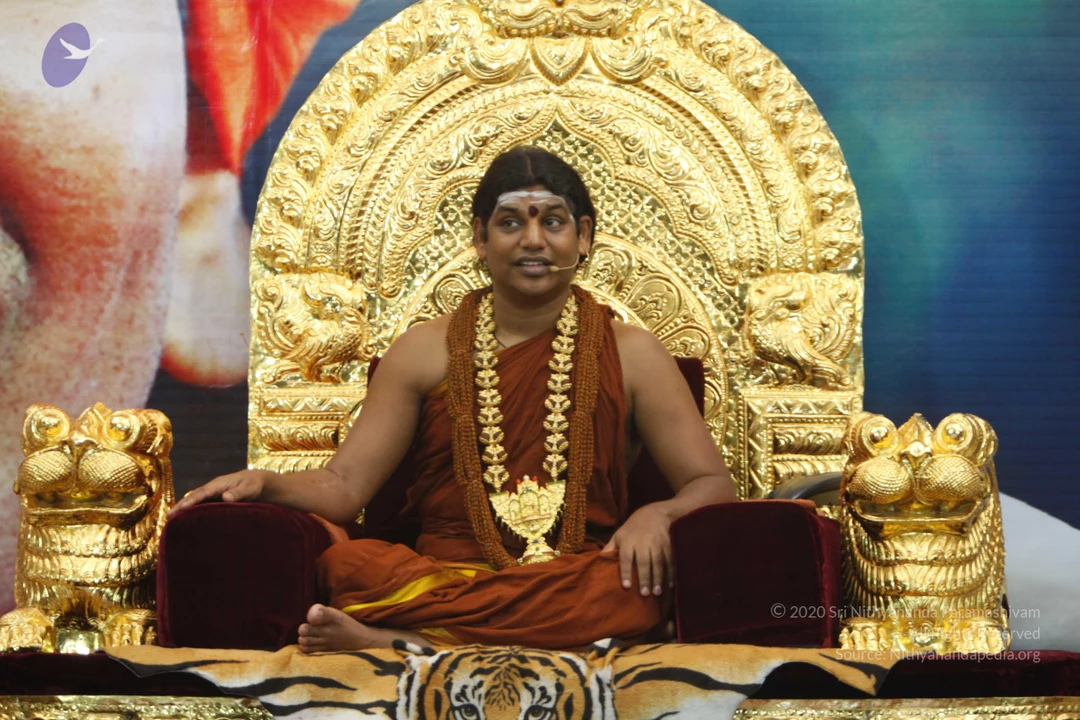
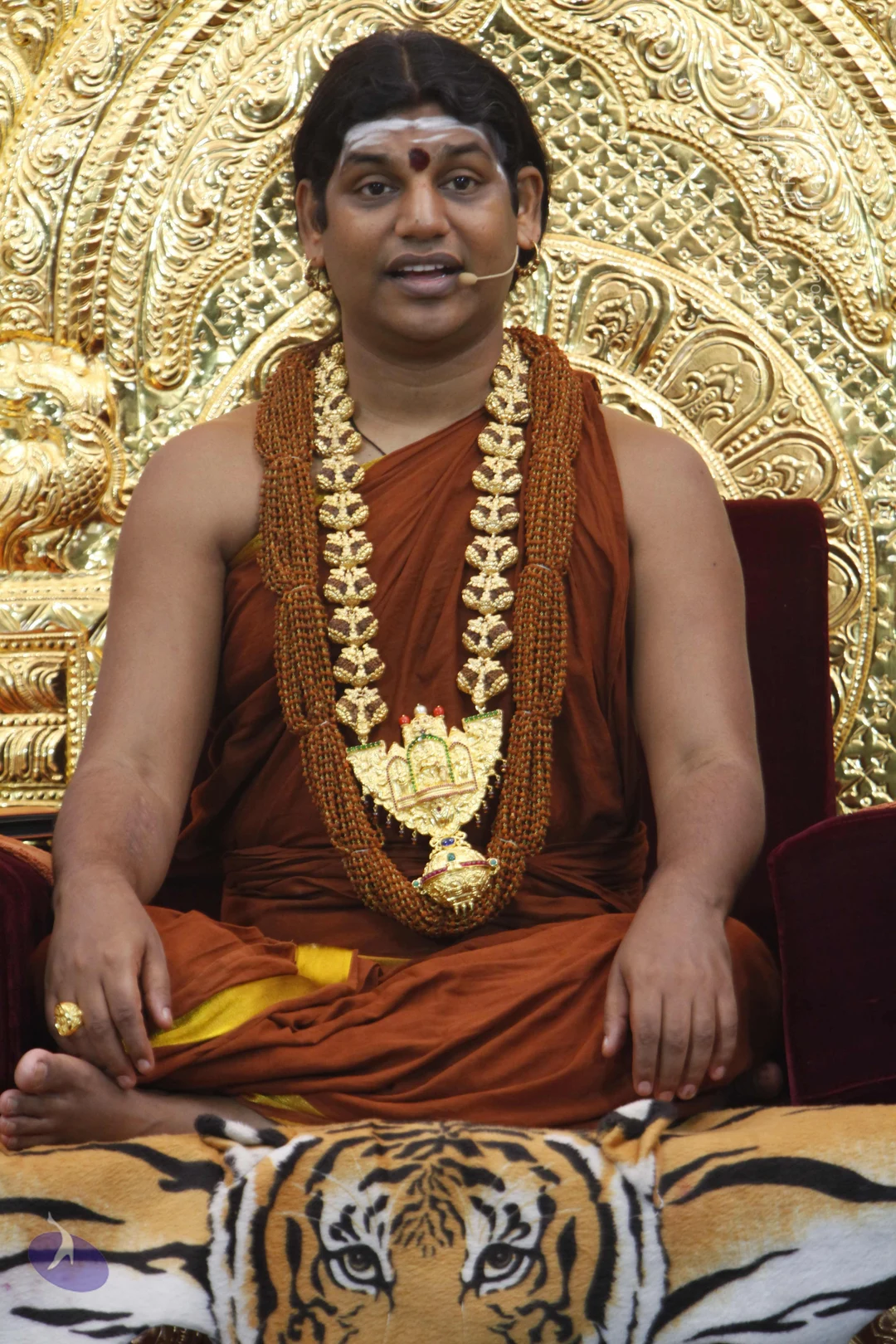
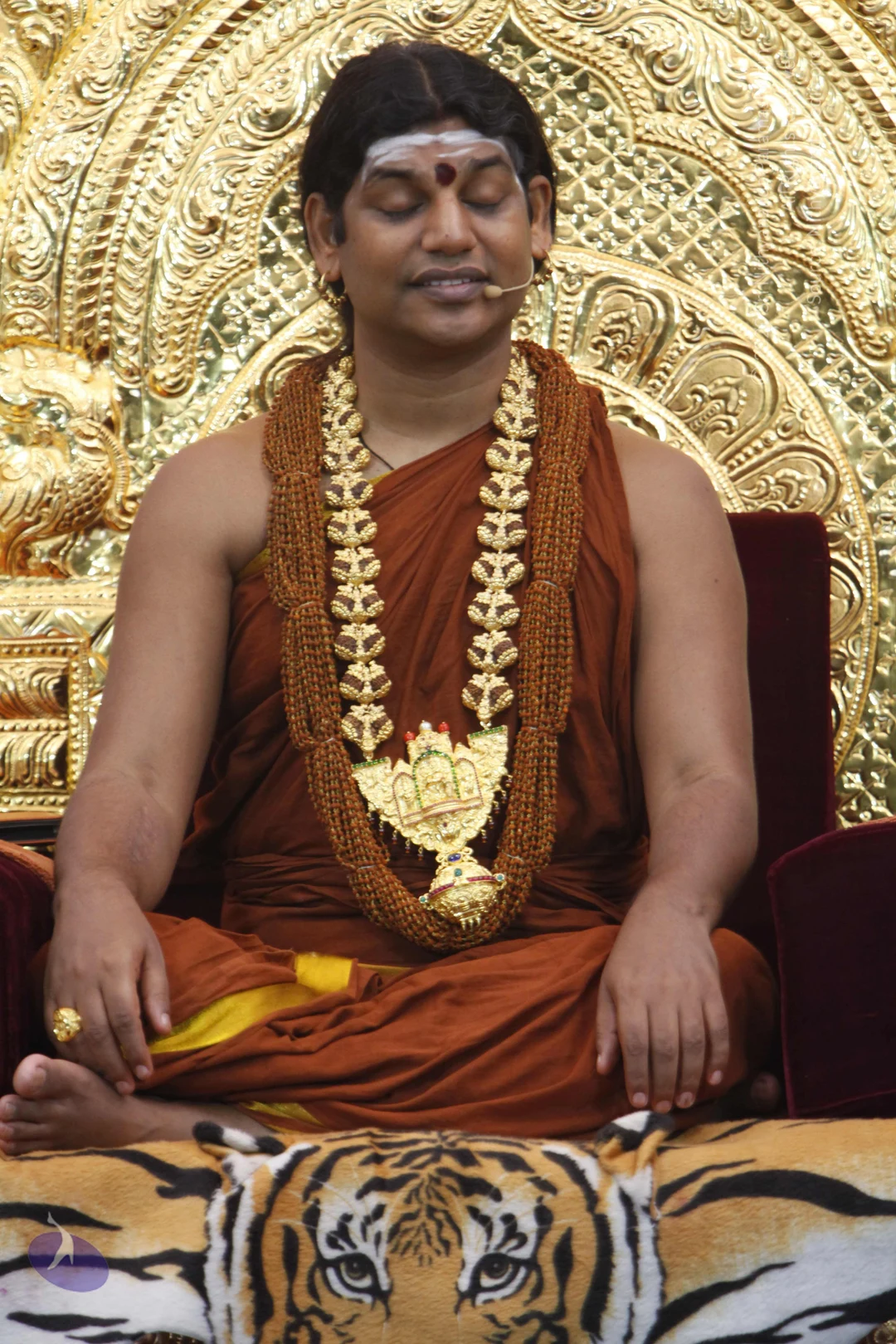
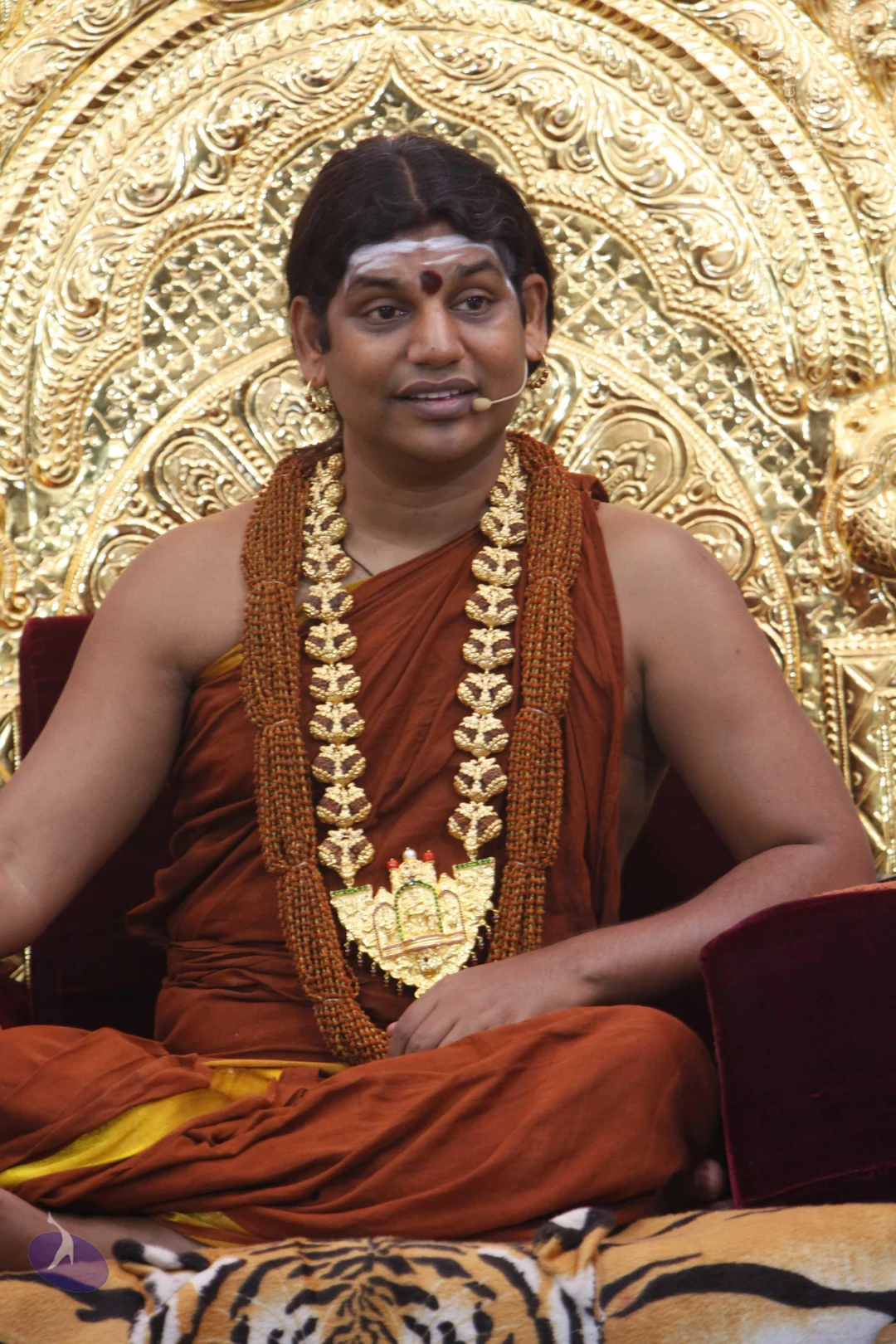
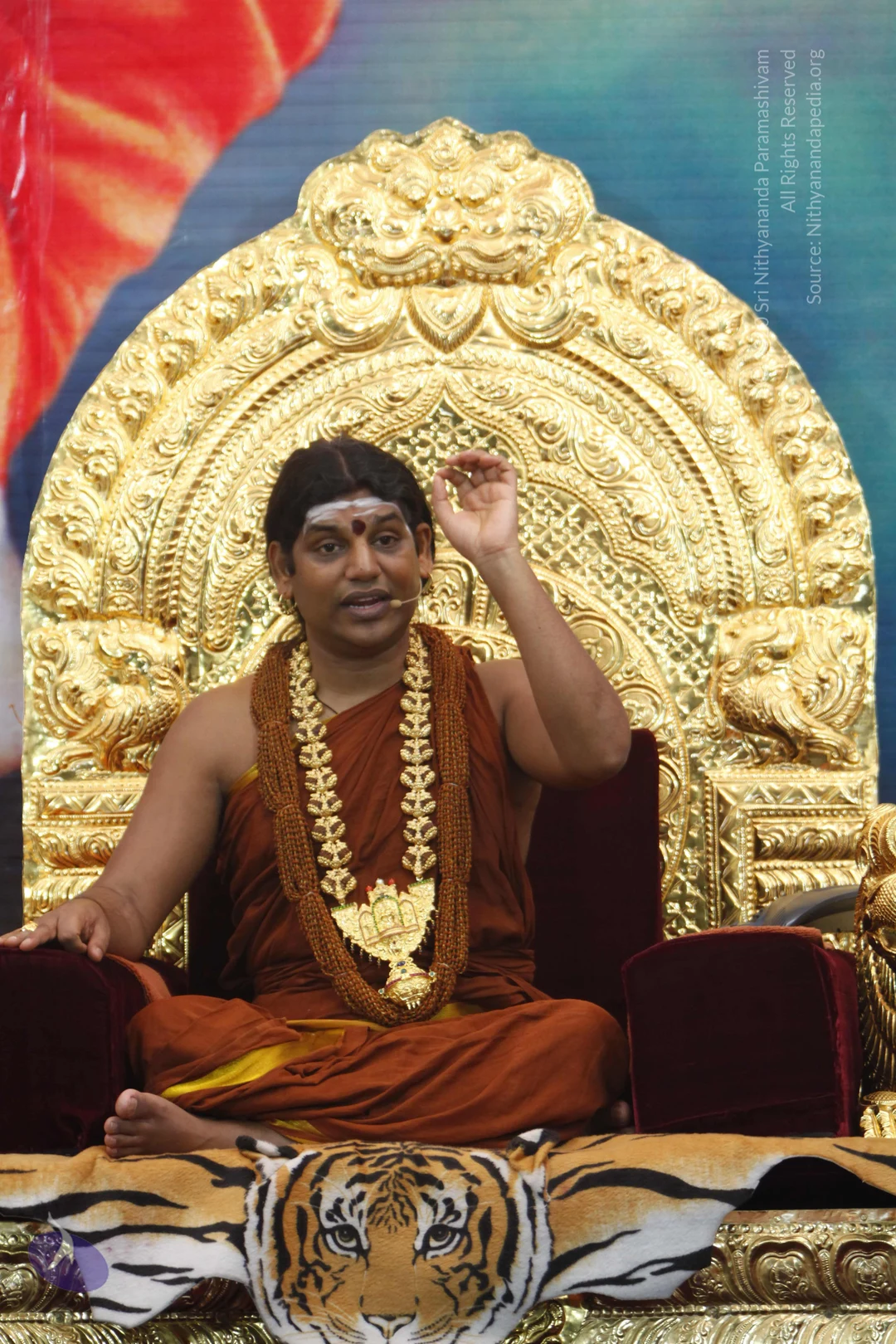
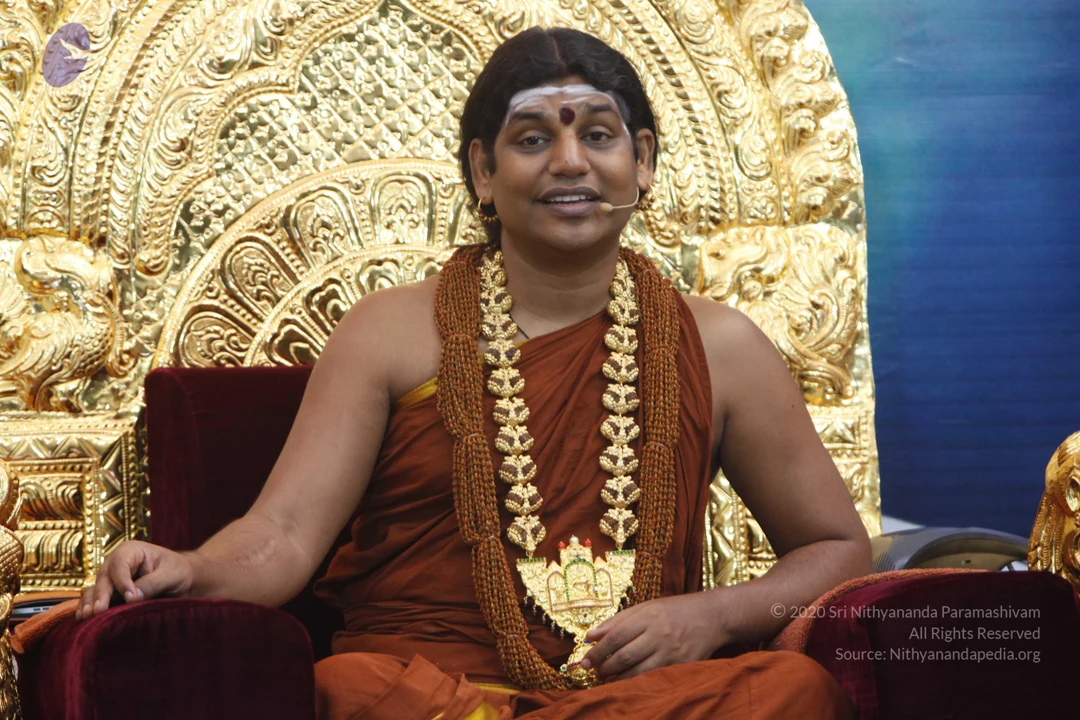
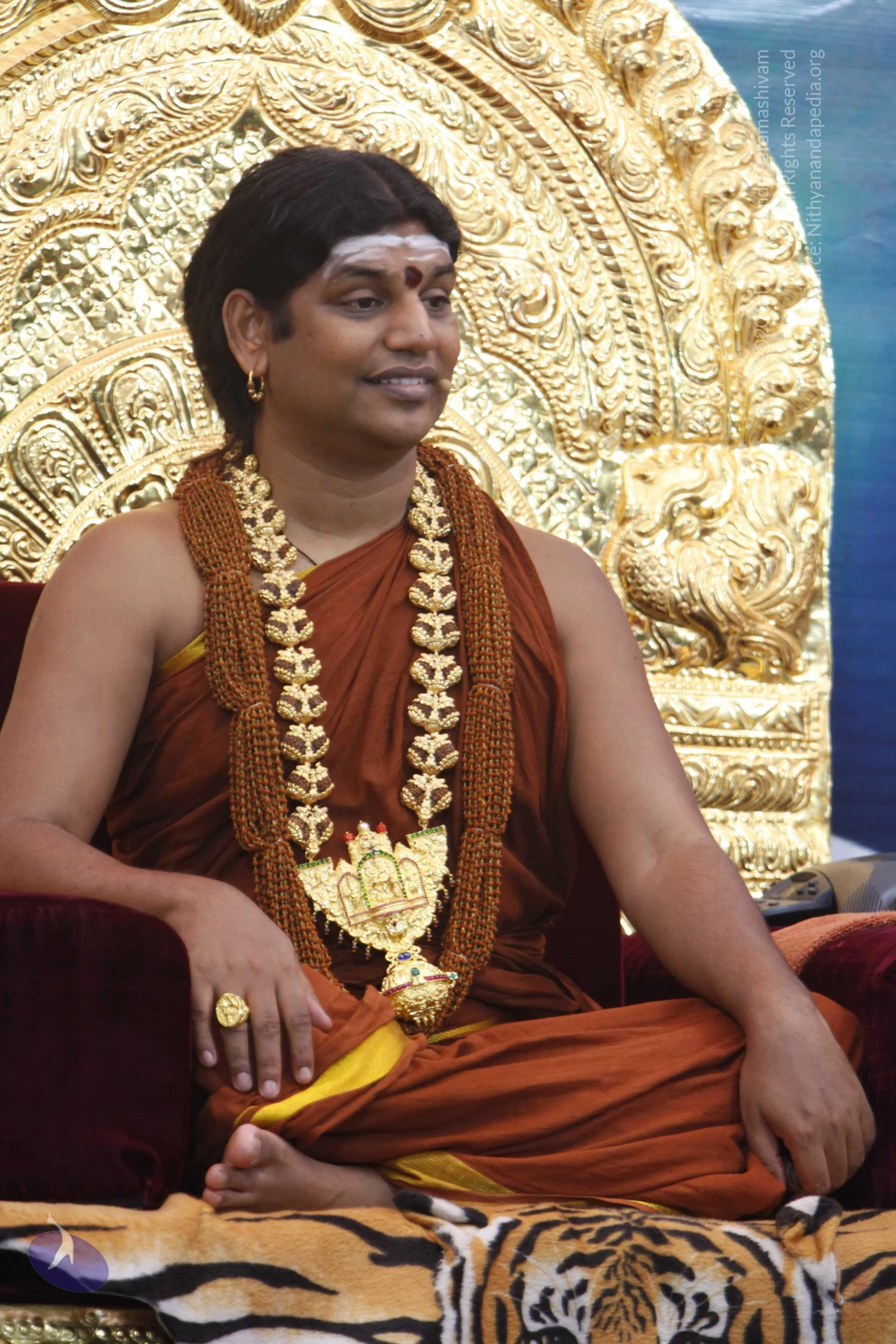
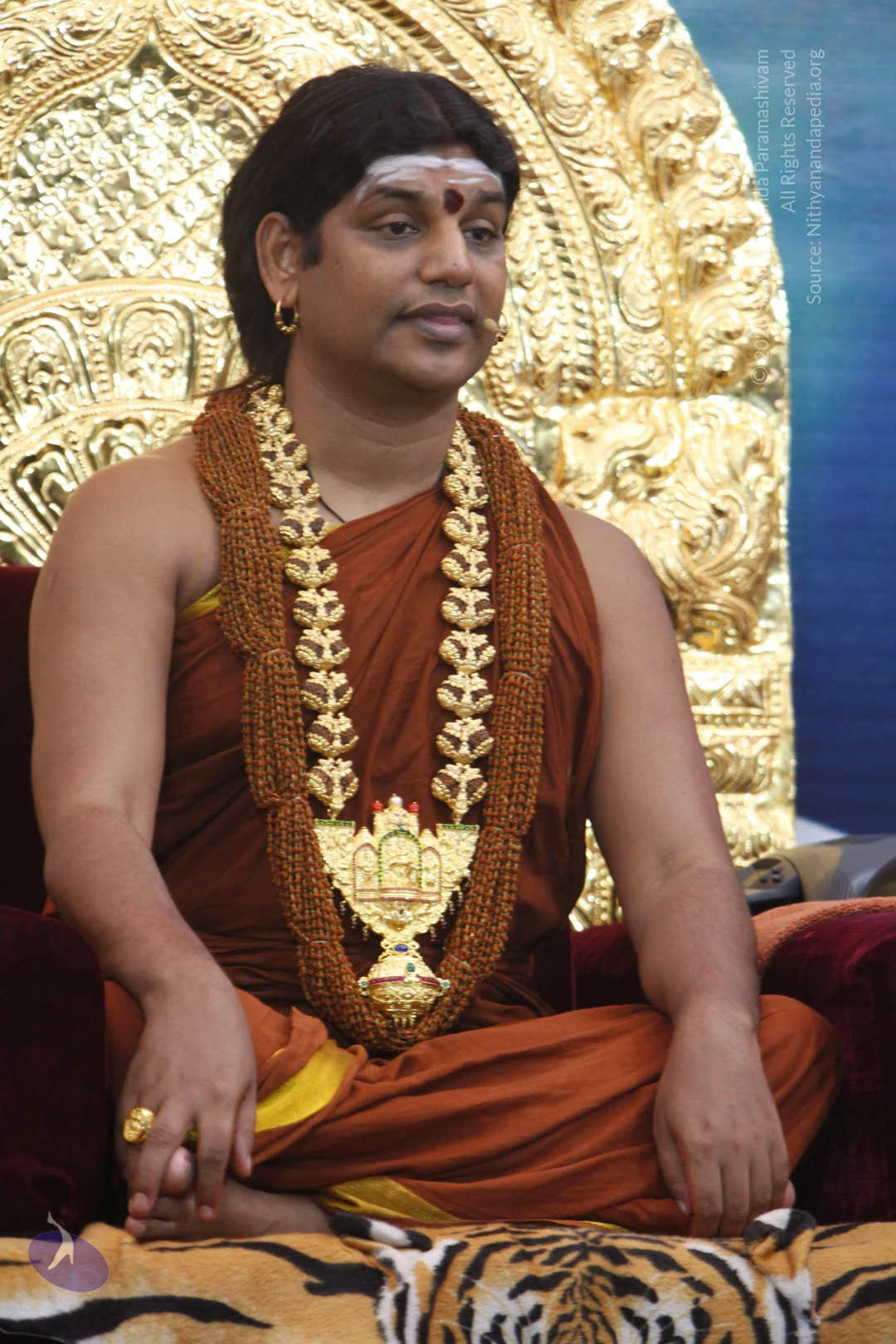
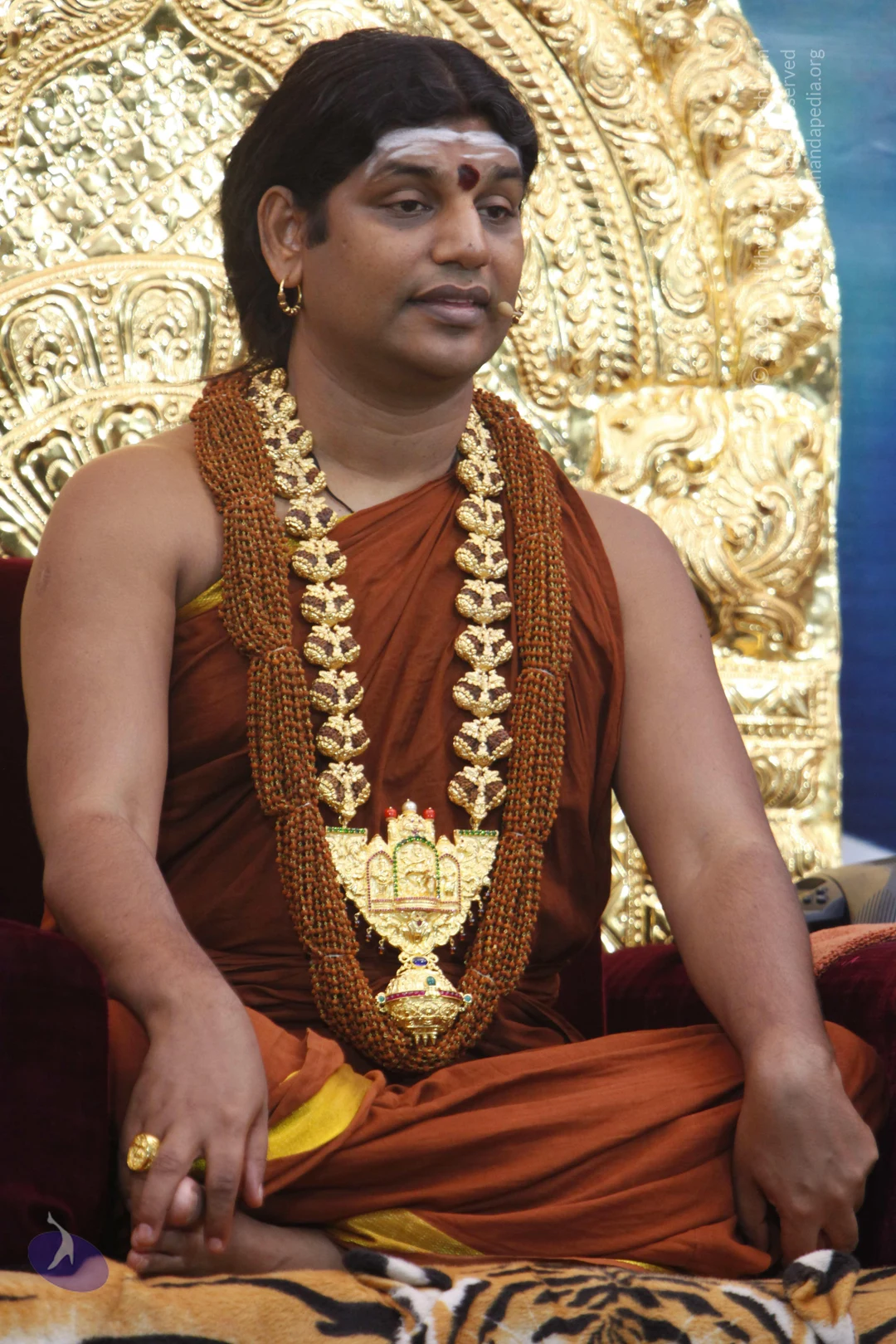
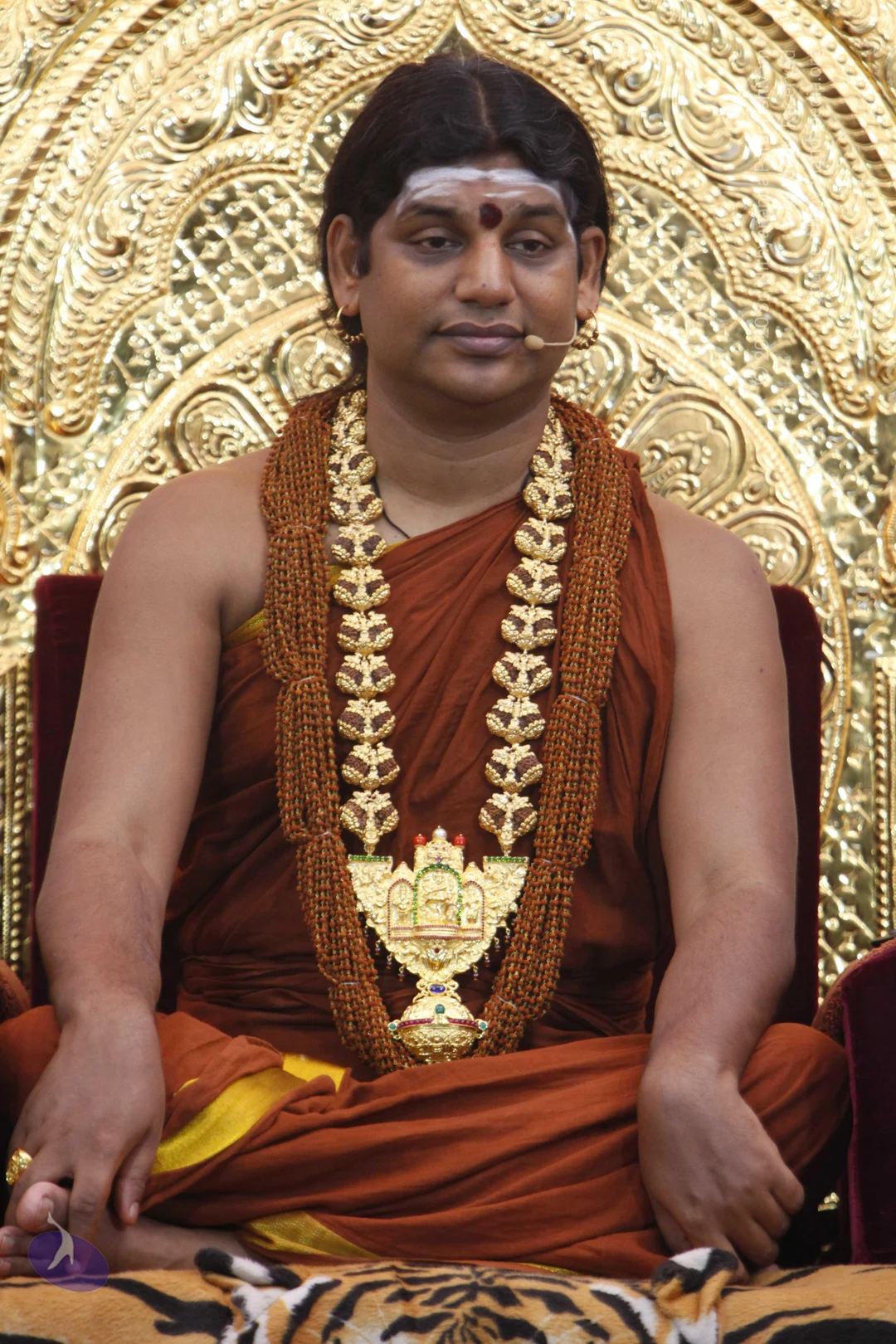
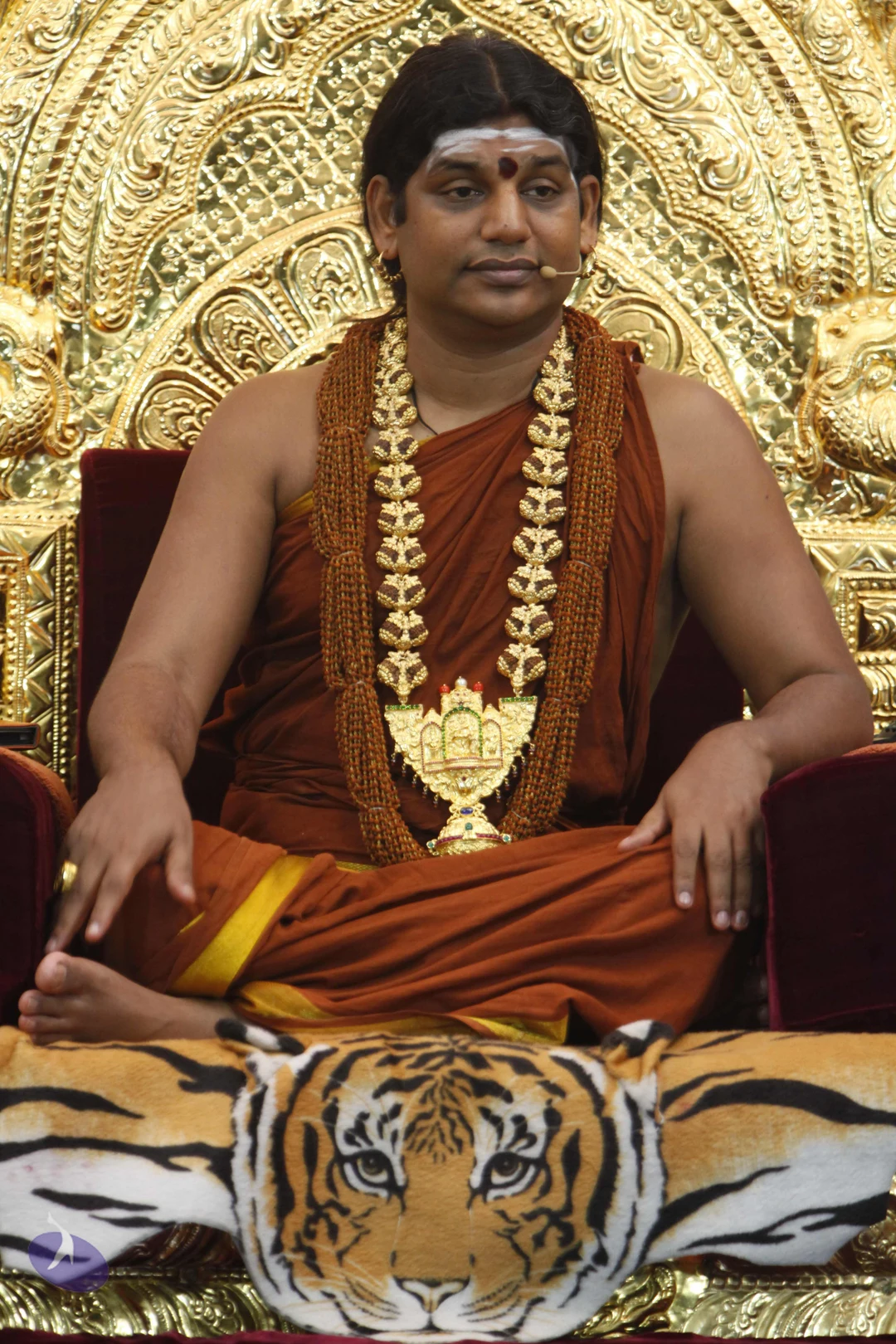
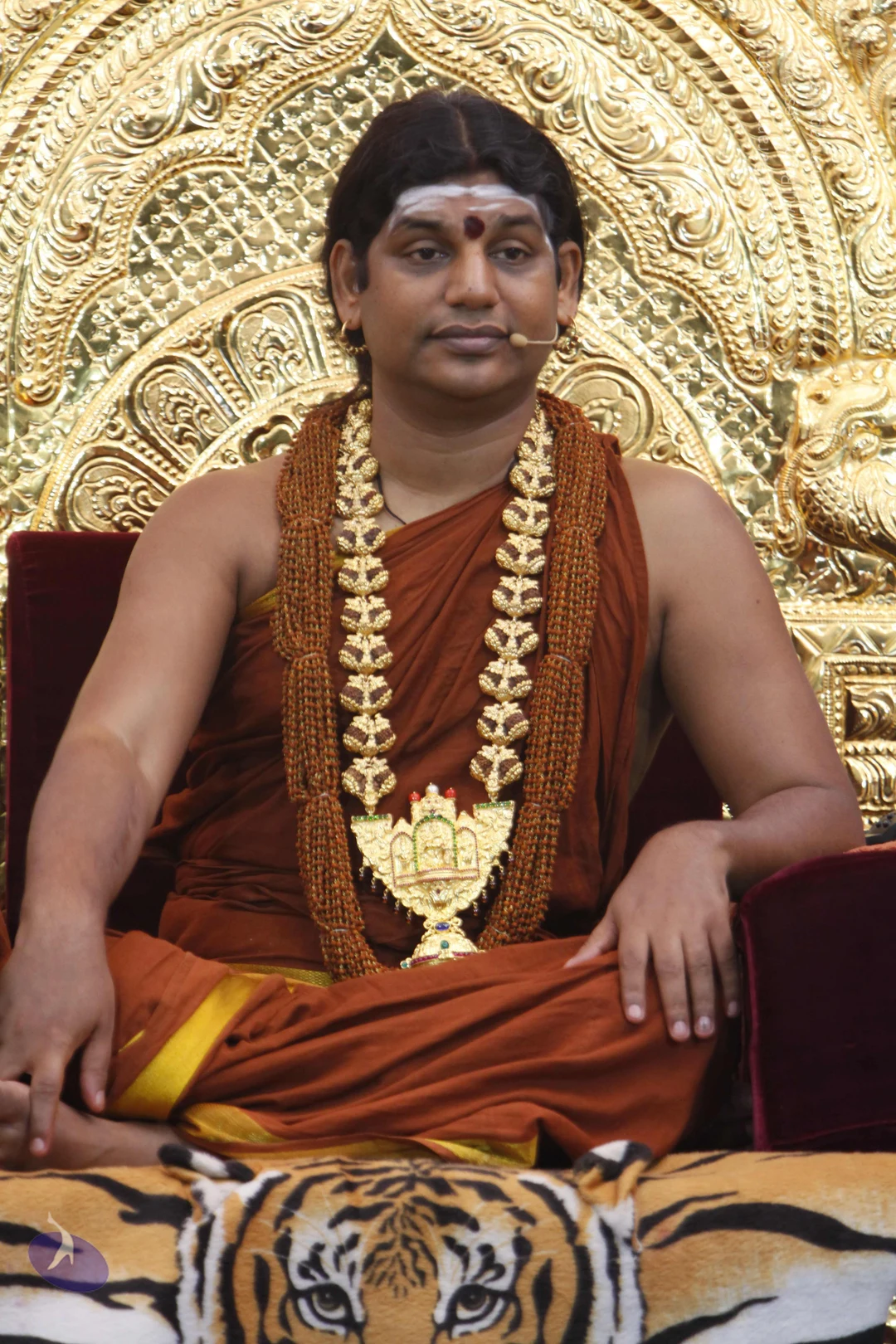
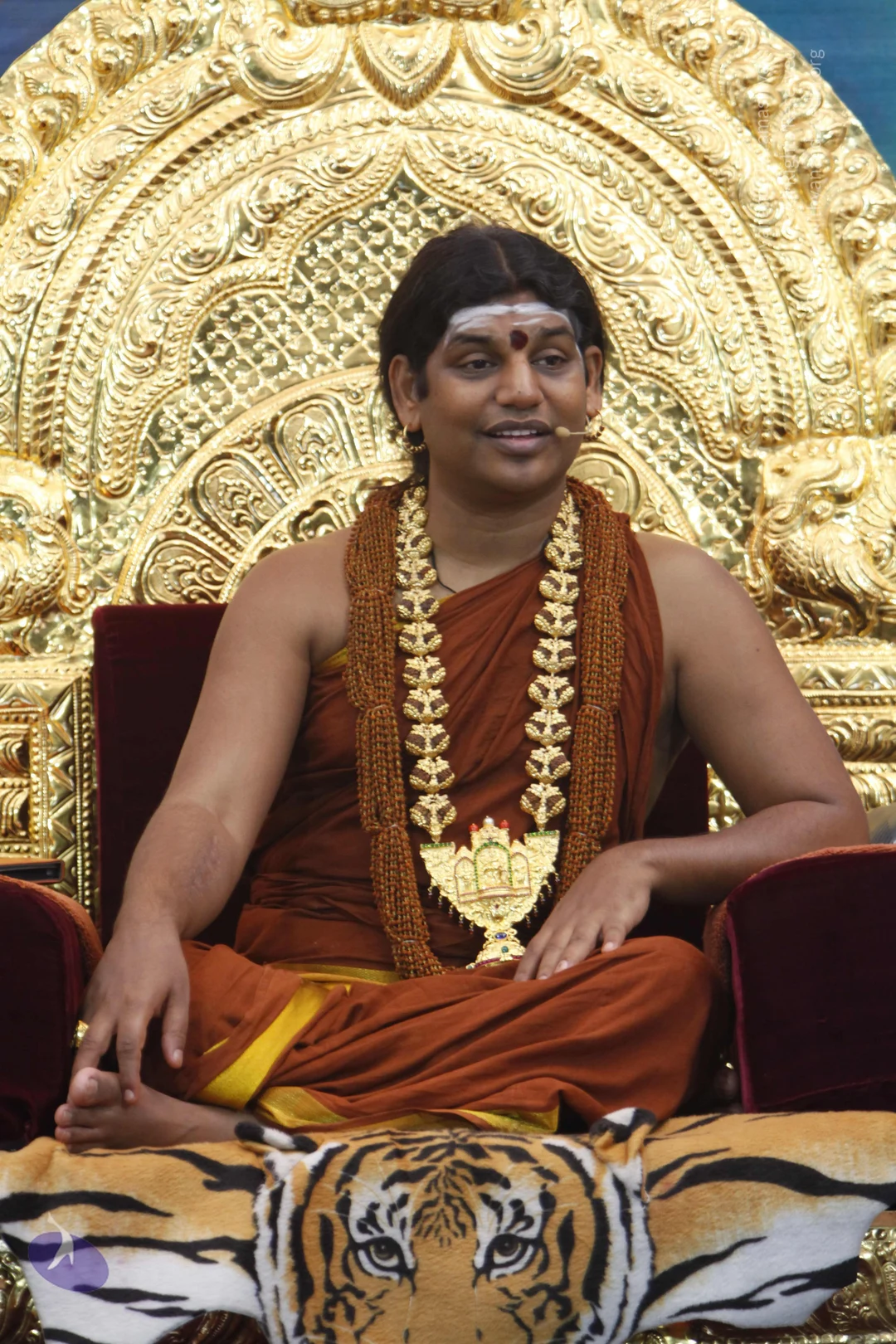
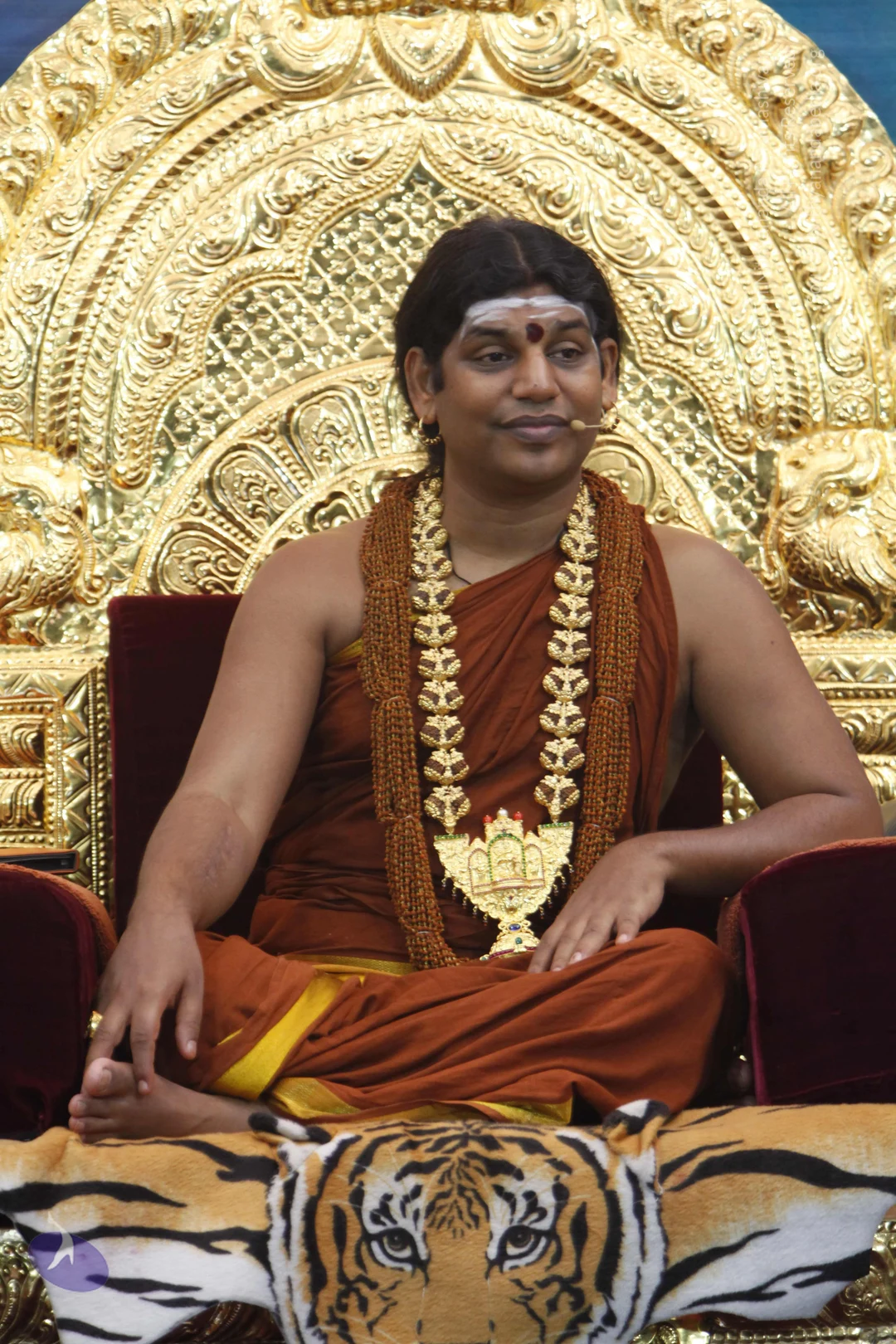
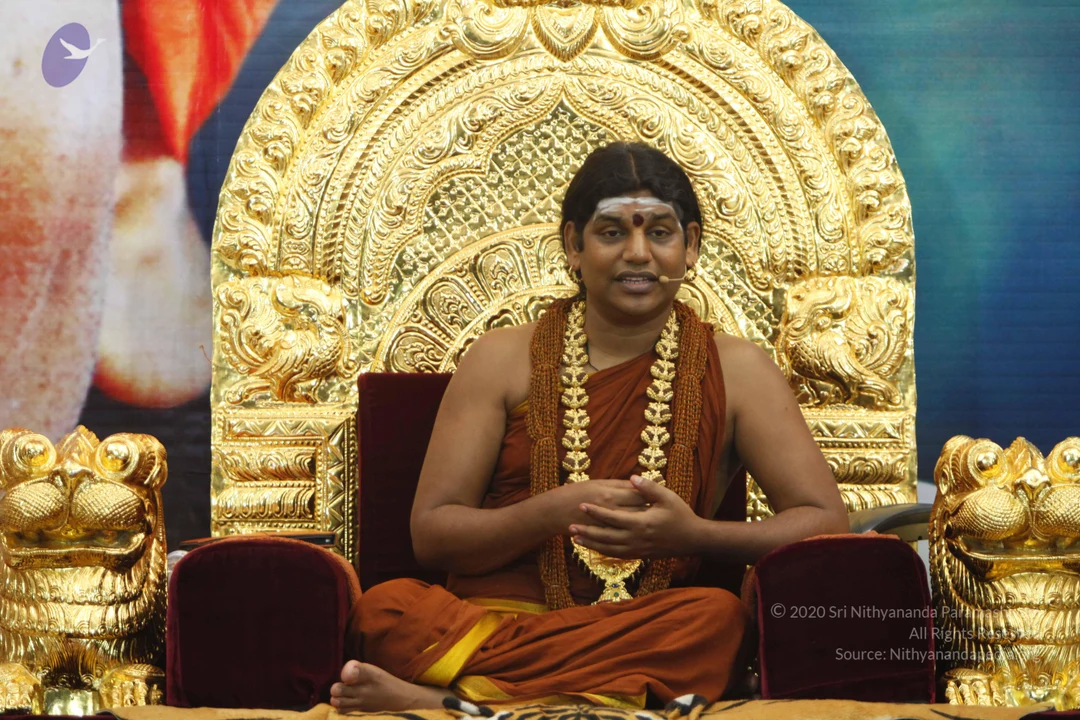
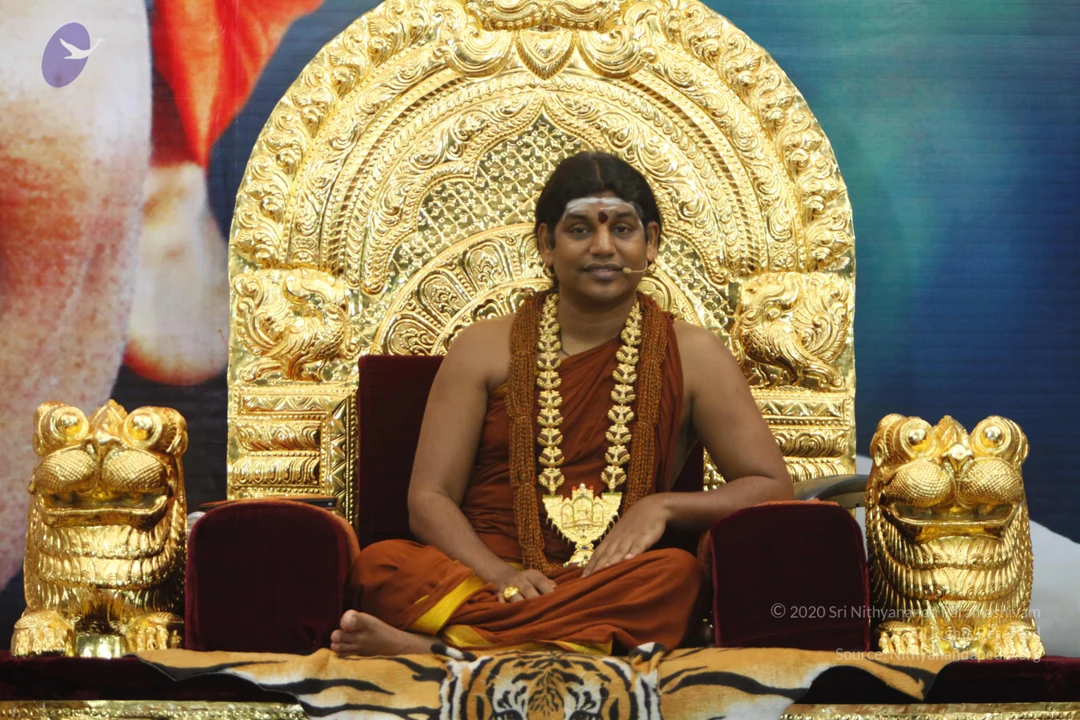
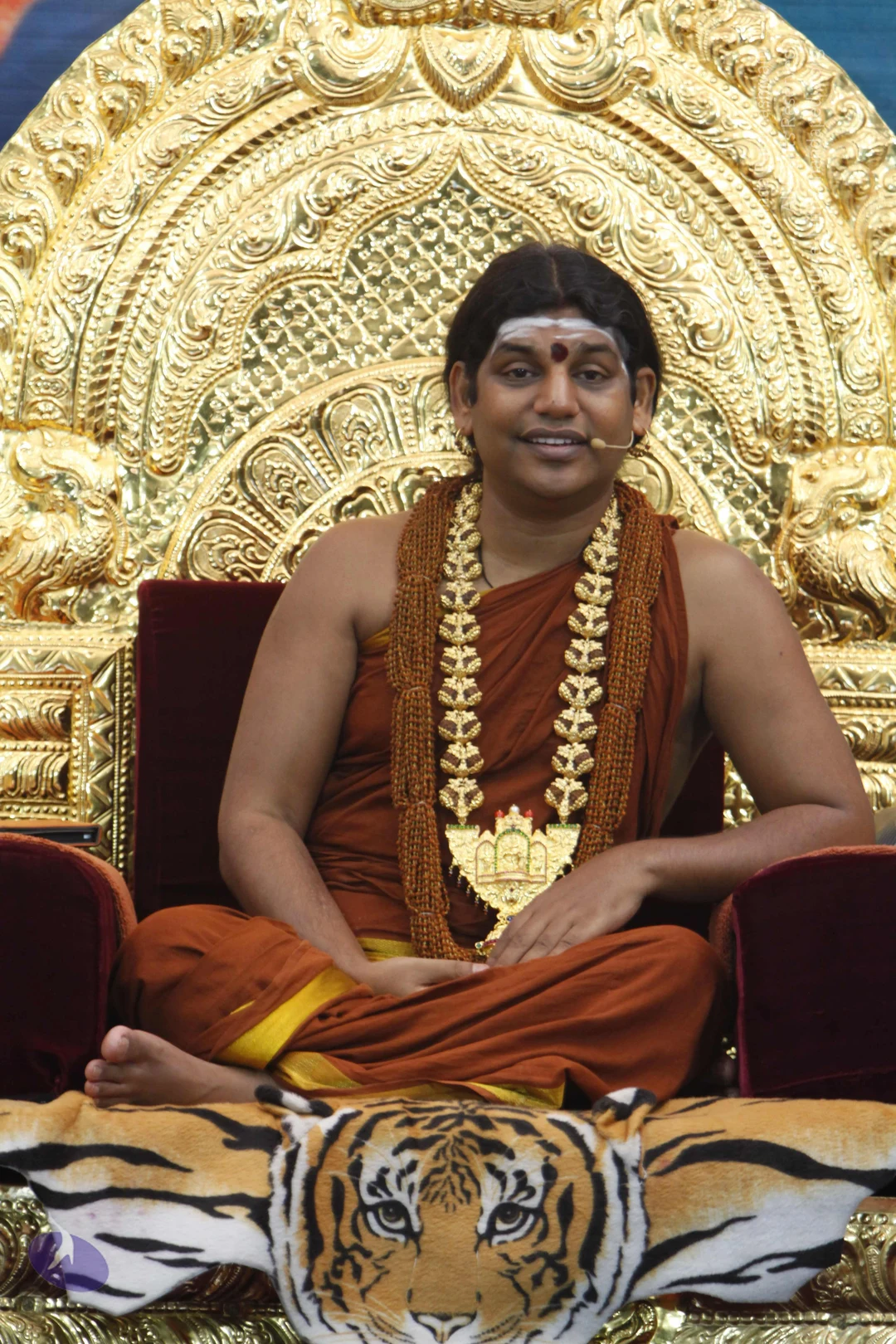
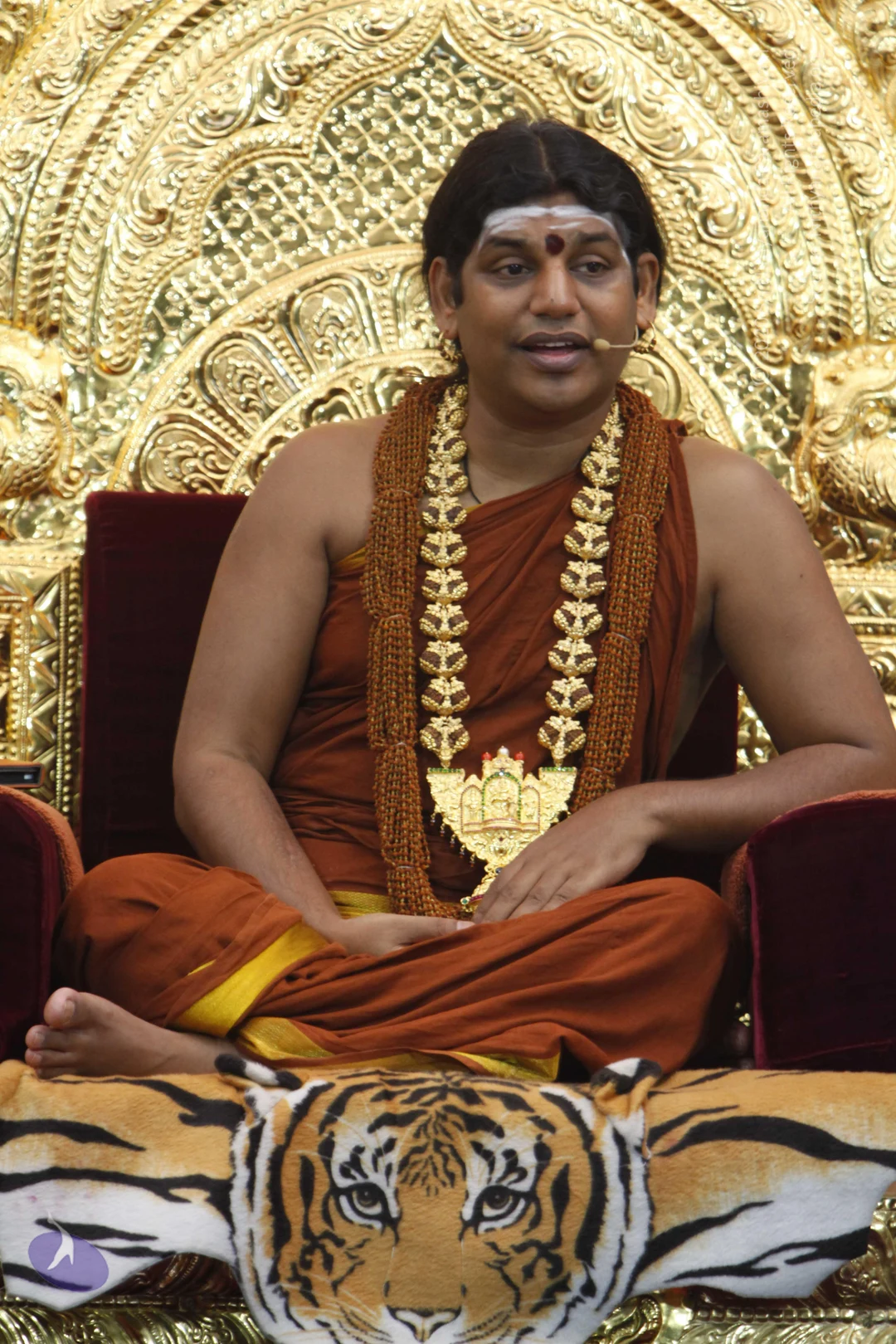
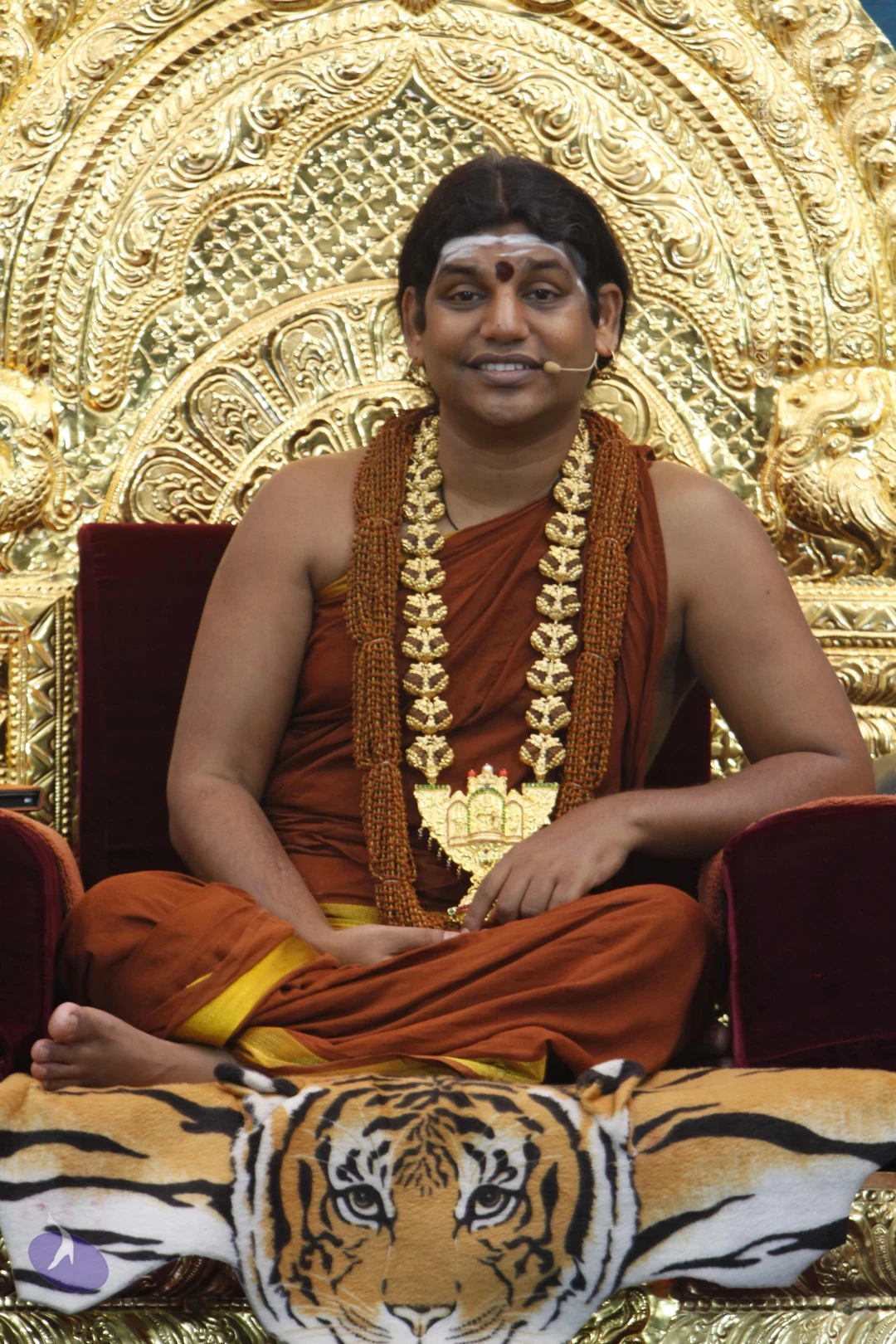
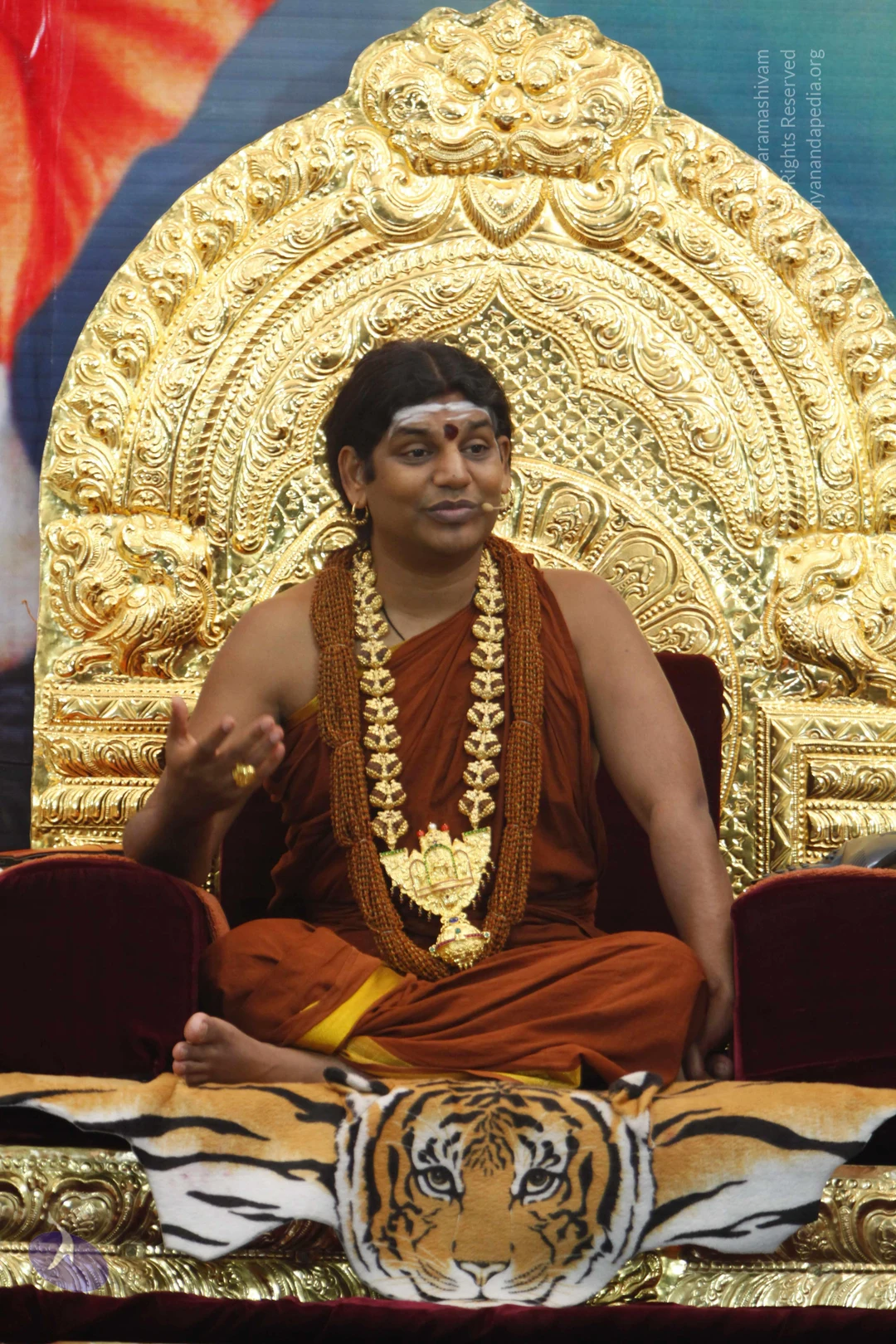
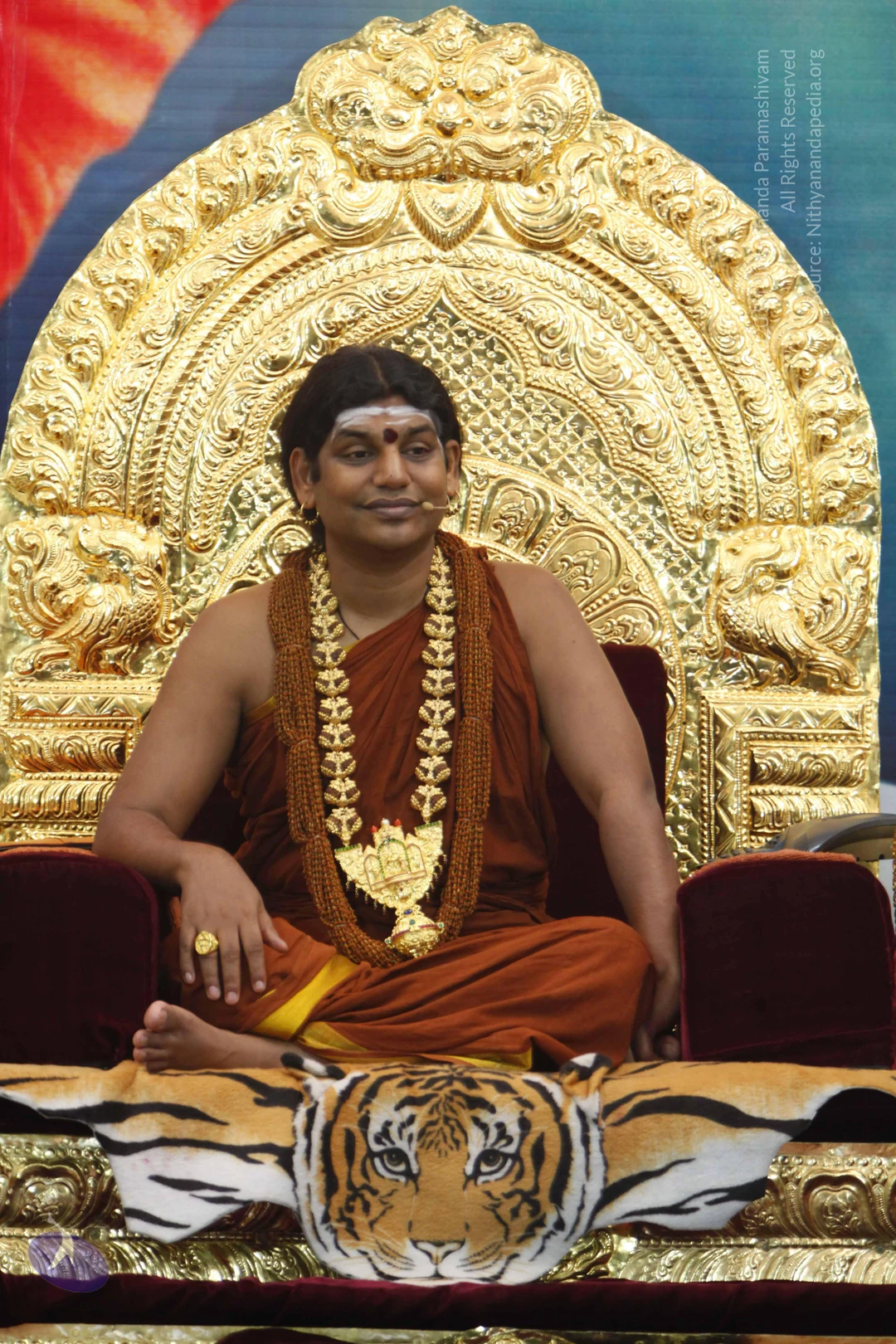
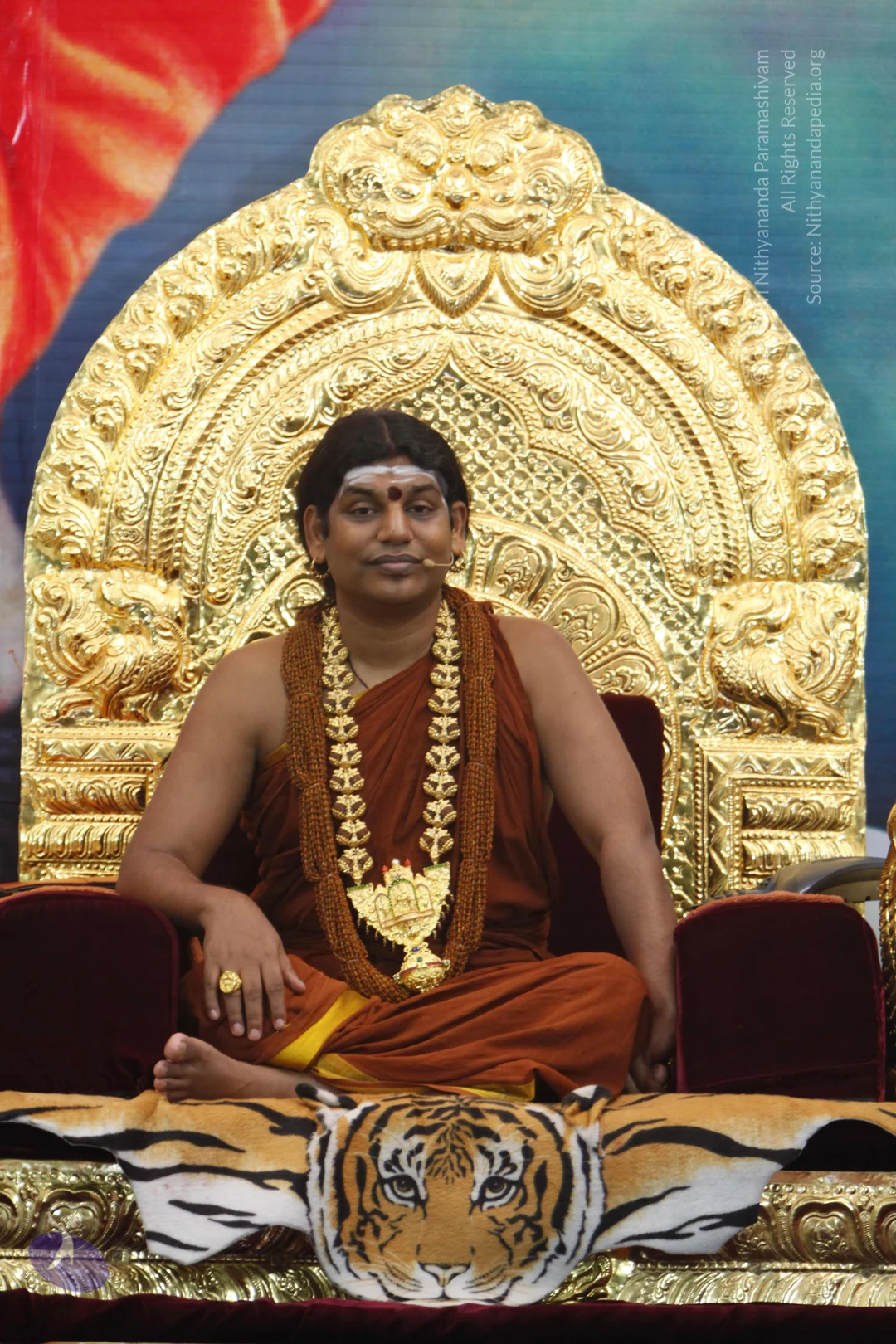
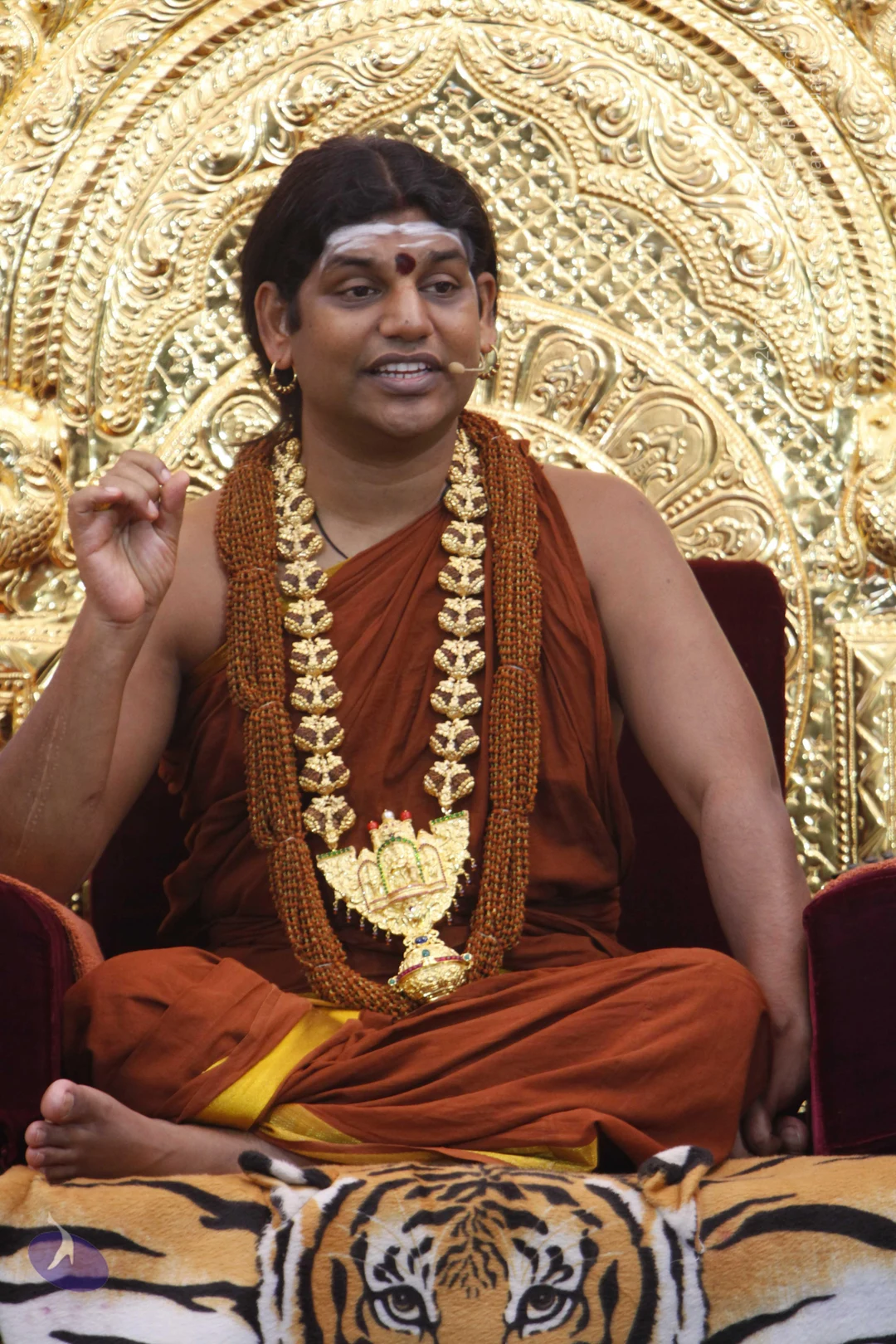
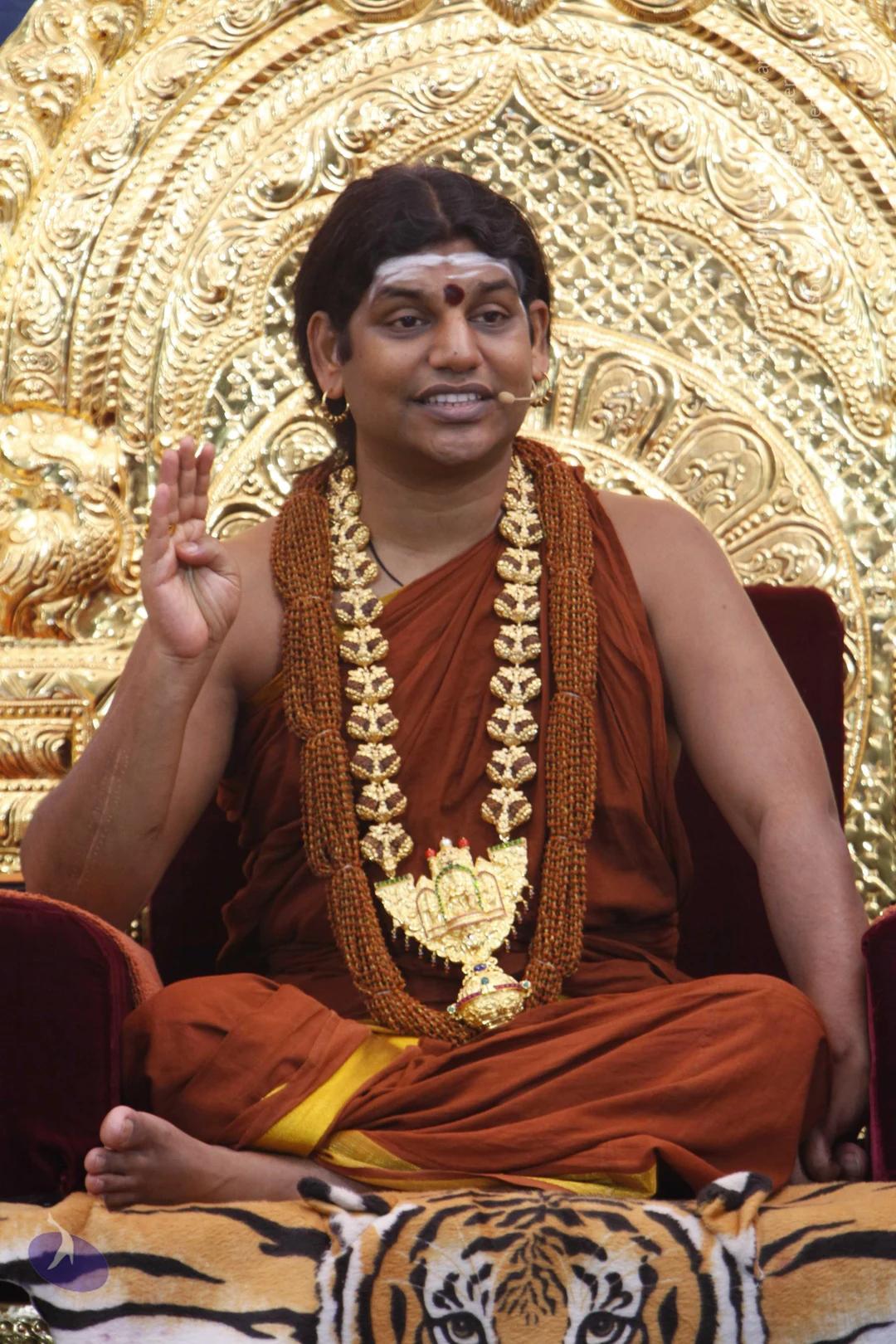
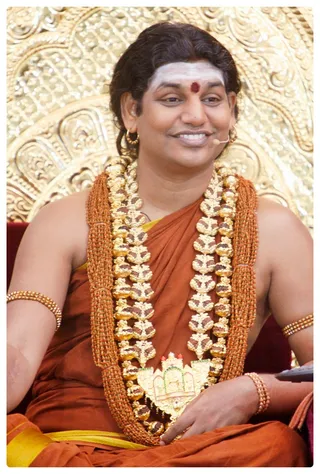
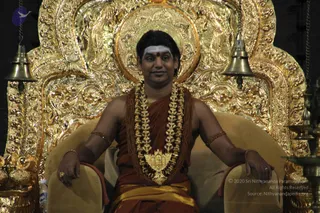
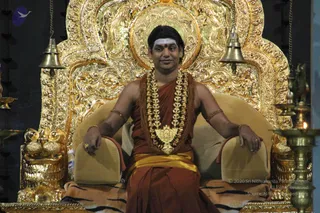
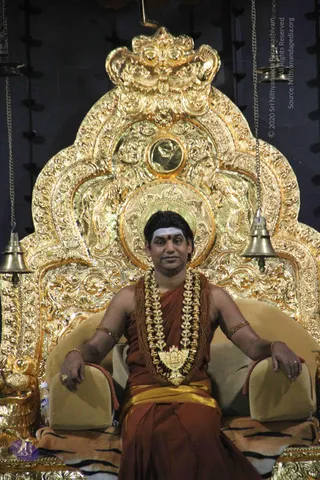
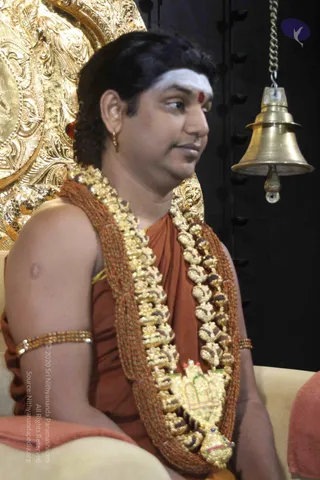
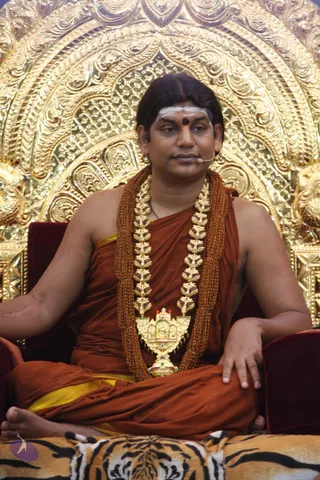
I sit in these types of seats, wear these type of religious jewelries to show that I am not Pseudo Secular! I am rooted in Hindu tradition! I accept all religions, serve all religions and all traditions, but I’m rooted in Hindu tradition, Vedic tradition! I am grateful to the source from which I learned everything. These guys they will steal all the knowledge from Hindu the tradition and sell, make money, have name and fame, but will not water the root! It is like they will cut the branches of a Banyan tree and use the leaves, use the shade, use everything, but will not water the root so that the tree can be alive for the next generation. They will eat the coconut, use the coconut leaves, enjoy everything from the tree, but will not water the tree for the next generation to enjoy what they enjoyed! I tell you, the irresponsibility of the pseudo-gurus, corporate Gurus, has damaged Hinduism much more than other militant missionaries and missionary militants!

These Gurus who don’t have parampara and have removed their Gurus’ photos from their Guru parampara list, and who don’t have any parampara, they are the dangers for Hinduism! And they go on criticizing Gurus with a parampara, tradition, sampradaaya!

The essence of today’s satsangh:

Be responsible by doing completion and the right context. [38:00]

I bless you all! Let you all radiate with Integrity, Authenticity, Responsibility and Enriching with eternal bliss, Nithyananda! Thank you!

Photos From The Day:
Tags:

Paramahamsa Nithyananda, completion, space, responsibility, positive, negative, greed, leader, successful, careers, families, whole world, source, lives, spiritual practice.

Photos Of The Day:

Temple-Abhishekam_-Homa
Pratyaksha-Pada-Puja

Satsang

Sarva-Darshan

Construction

Sacred-Arts

01-ADIKAILASA-TEMPLE-ABISHEGAM

02-PRATHYAKSHA-PADA-PUJA

03-NITHYA-SATSANG

04-SARVA-DARSHAN

05-CONSTRUCTION-ADIKAILASA

06-SACRED-ARTS

07-LOTUS-TV-TELECASTING

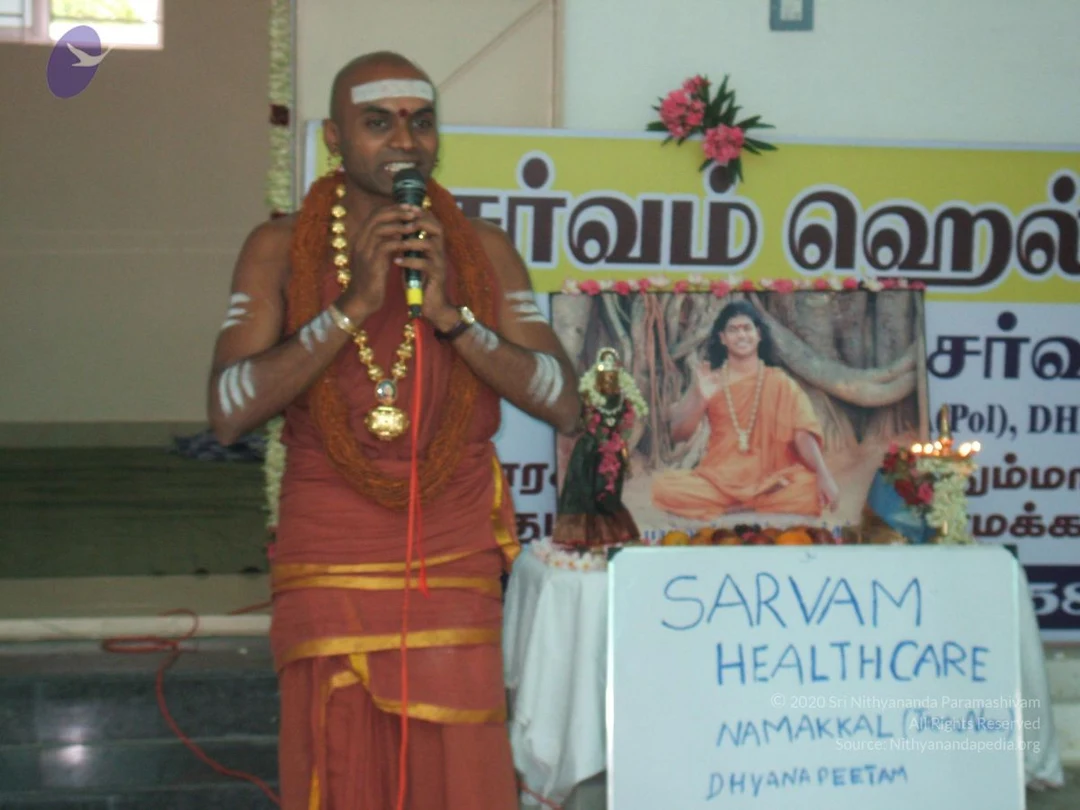
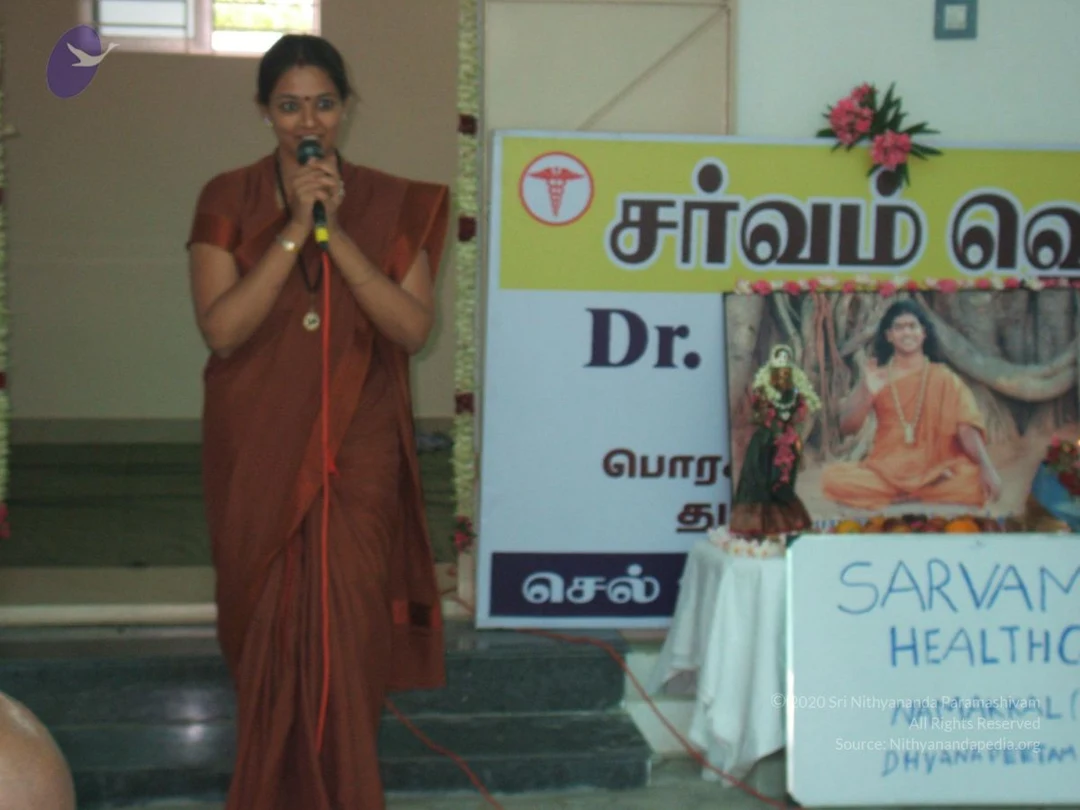
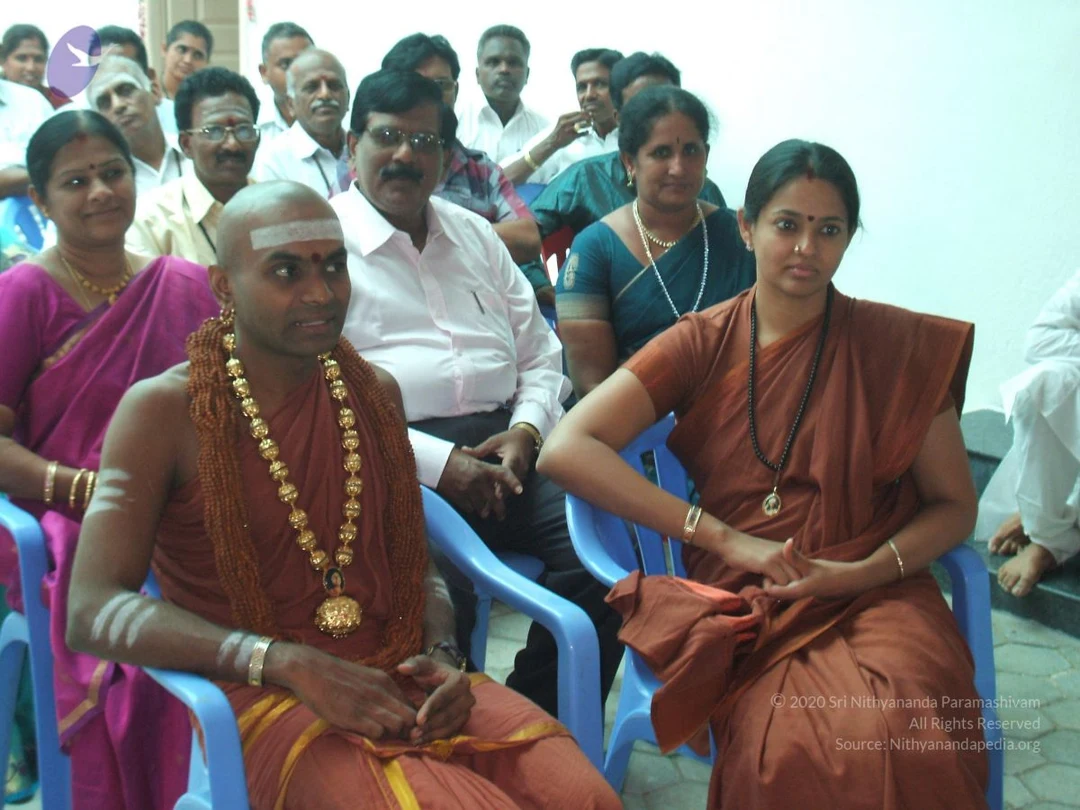
Sannyasis Inaugurating a Health Care Center at Namakkal, Tamil Nadu

Photos from this day

View all 250 photos

Photos From The Day:

13 photosSource gallery
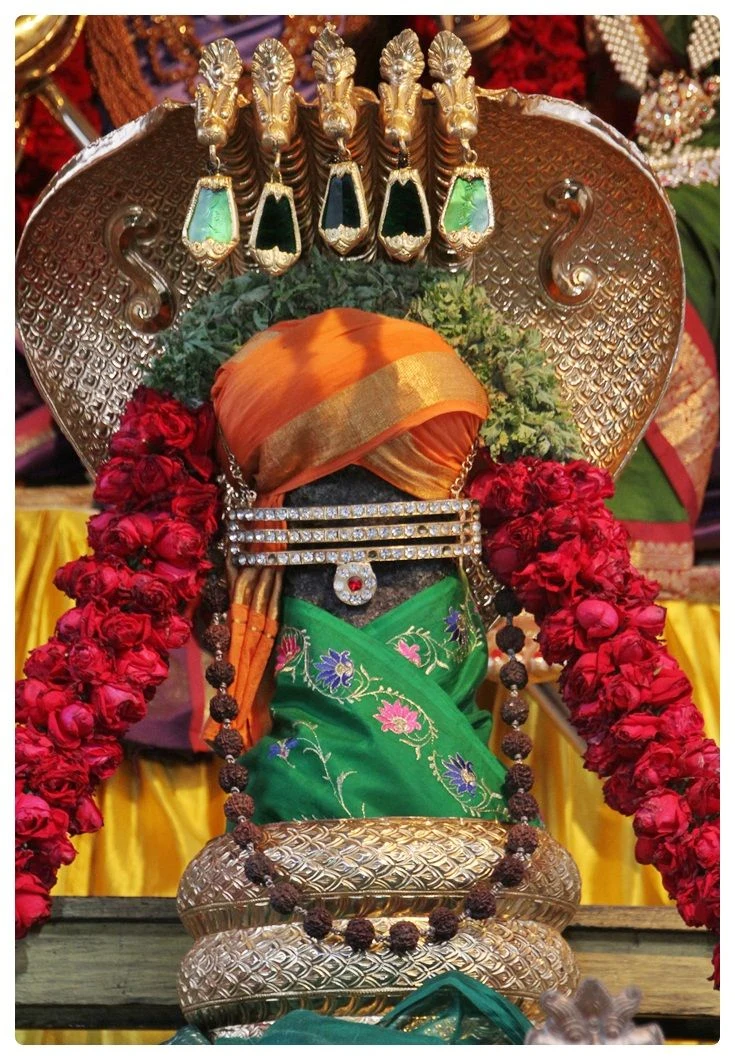
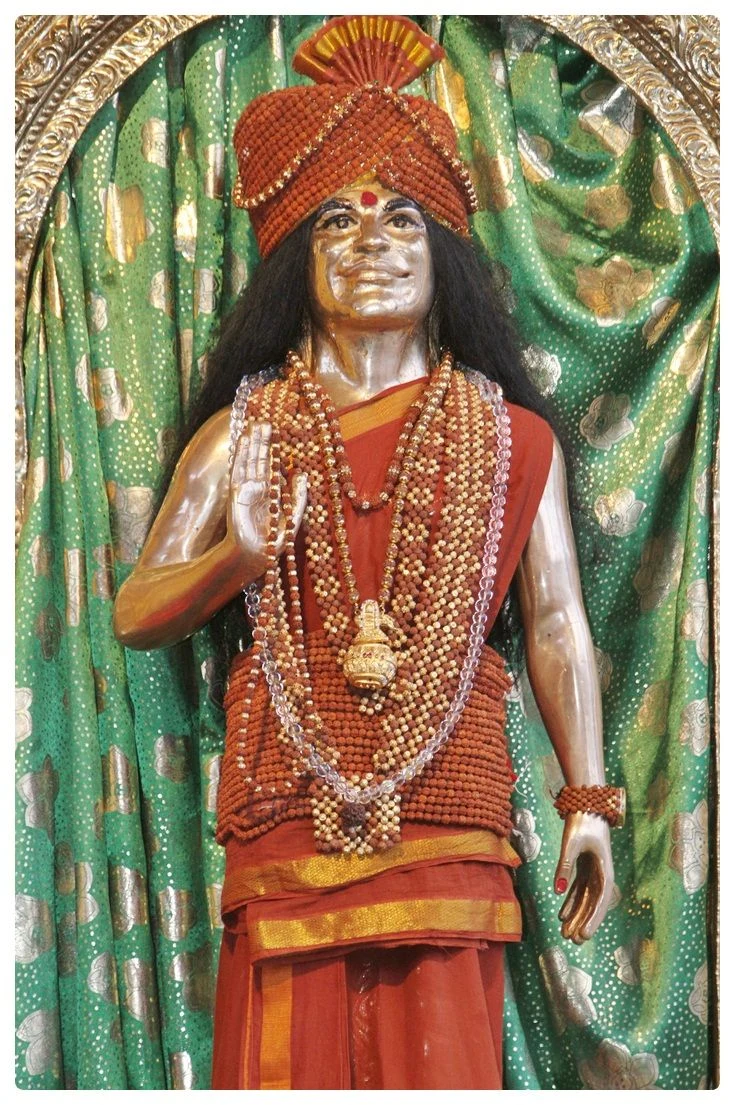
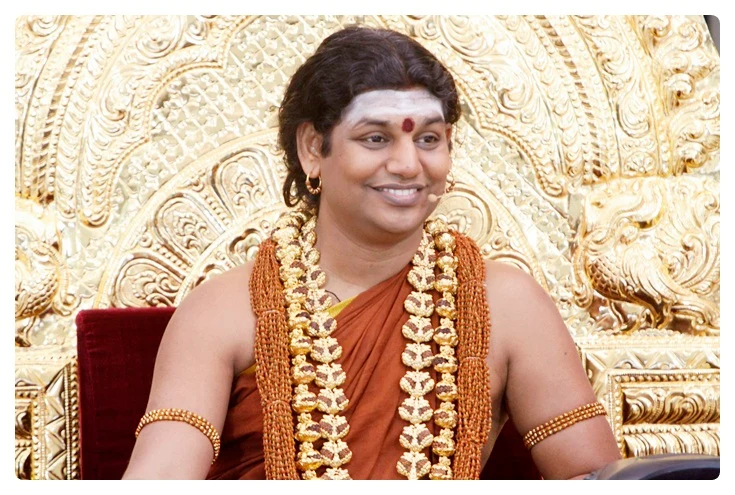
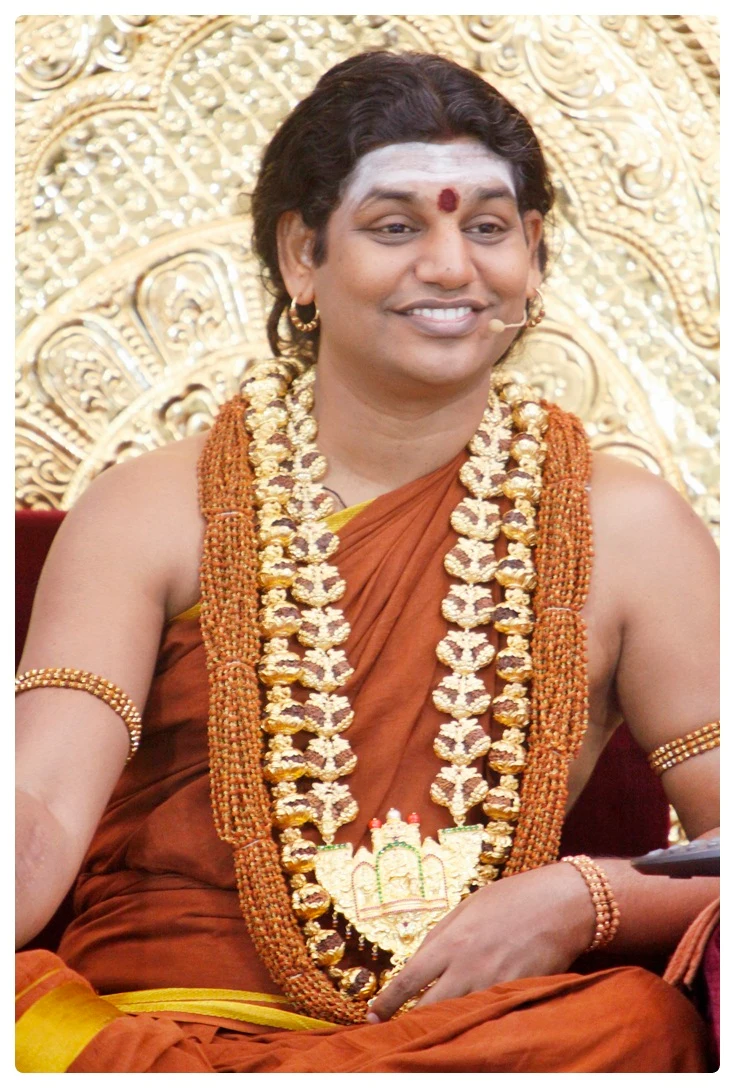
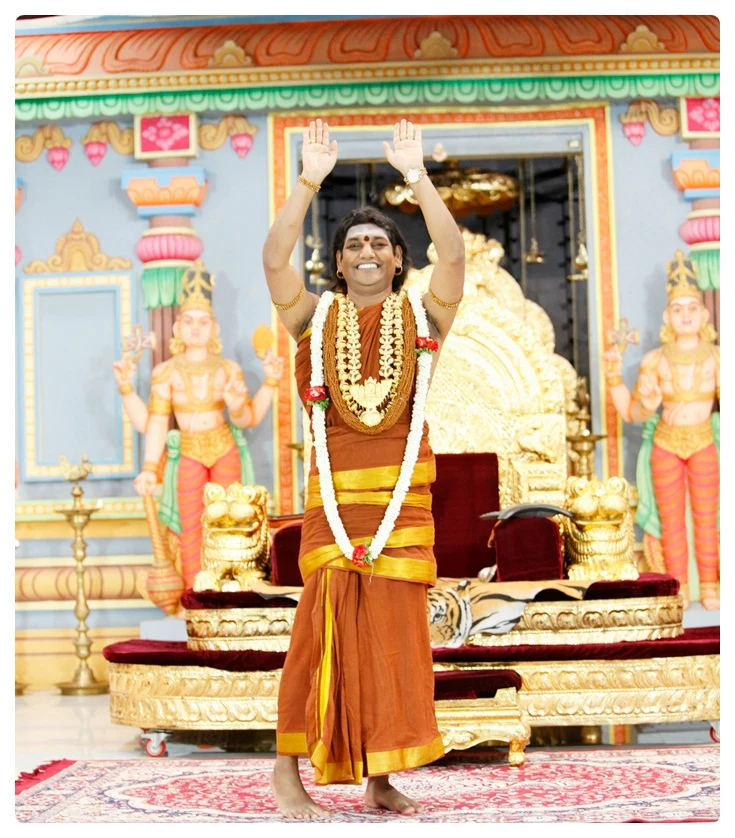
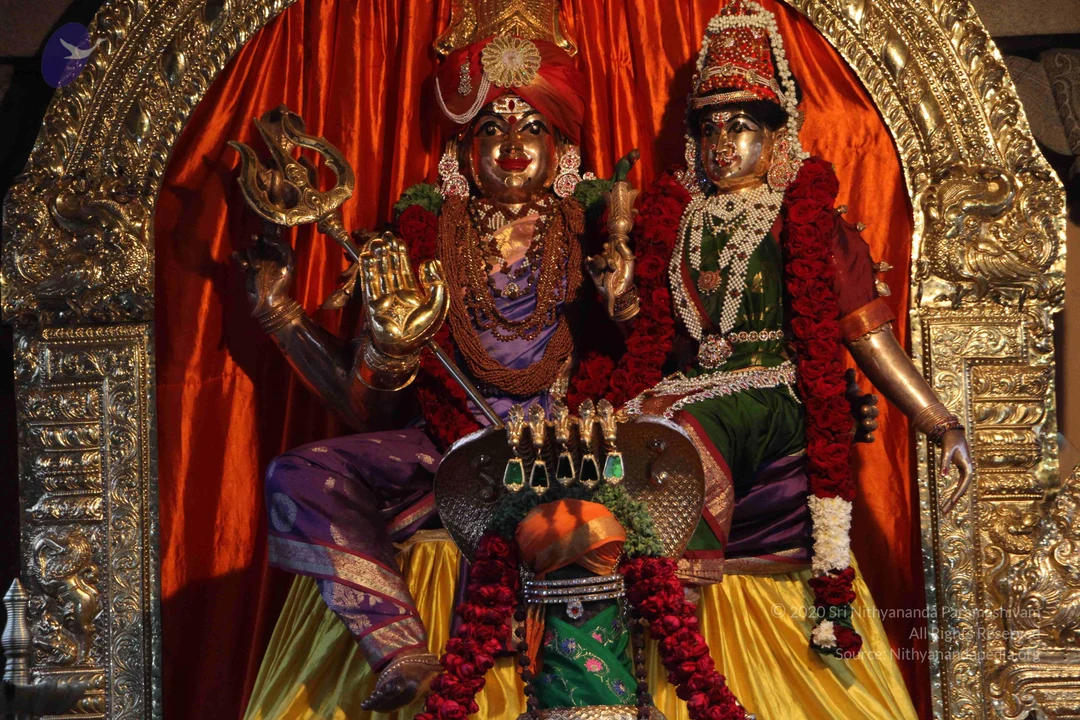
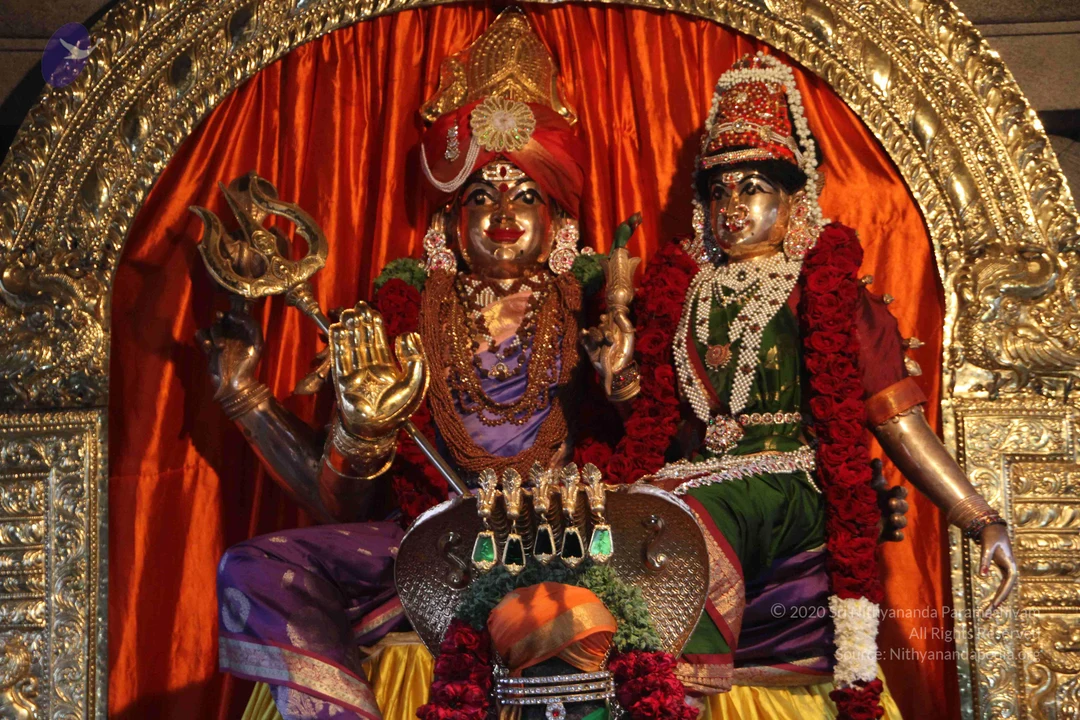
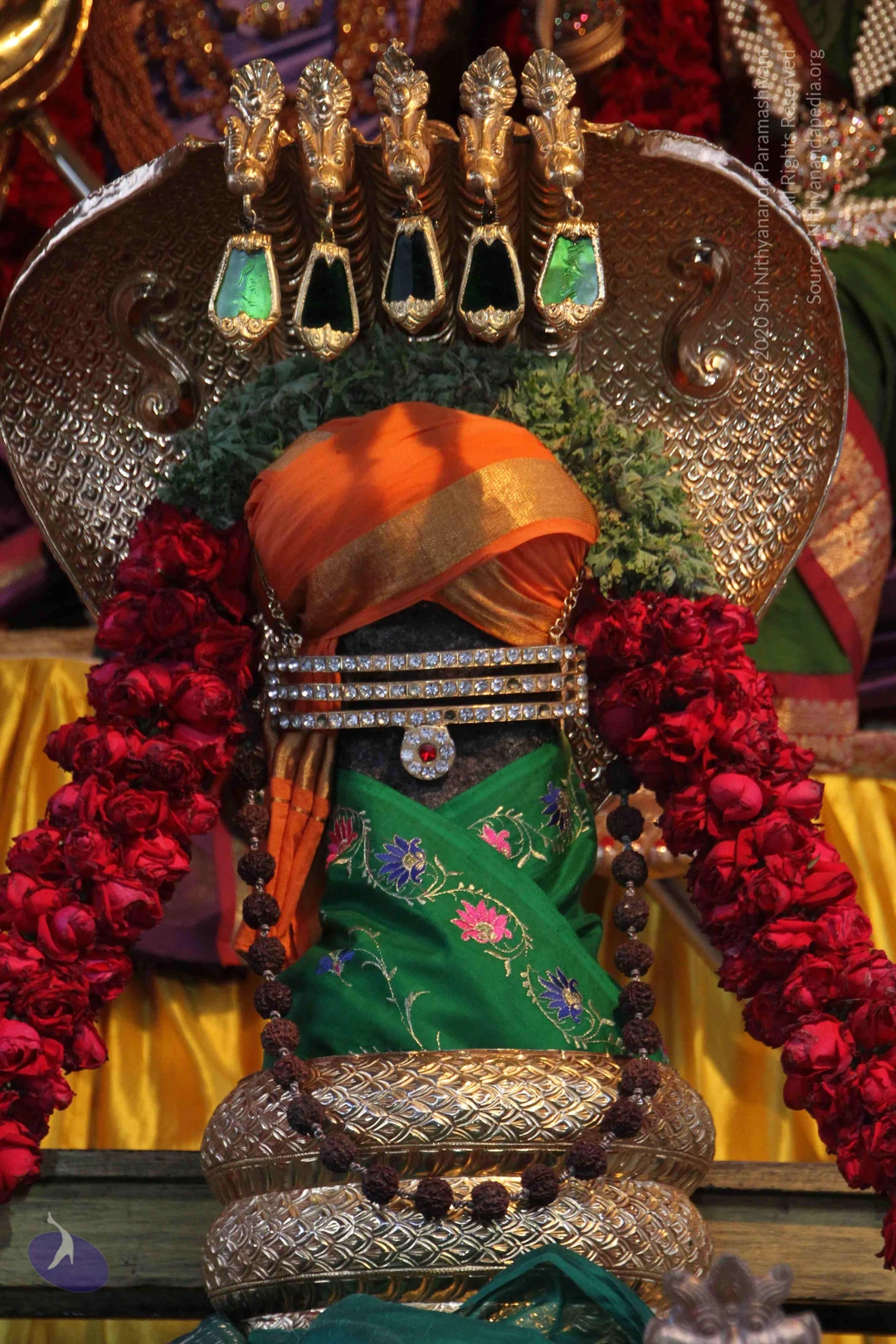
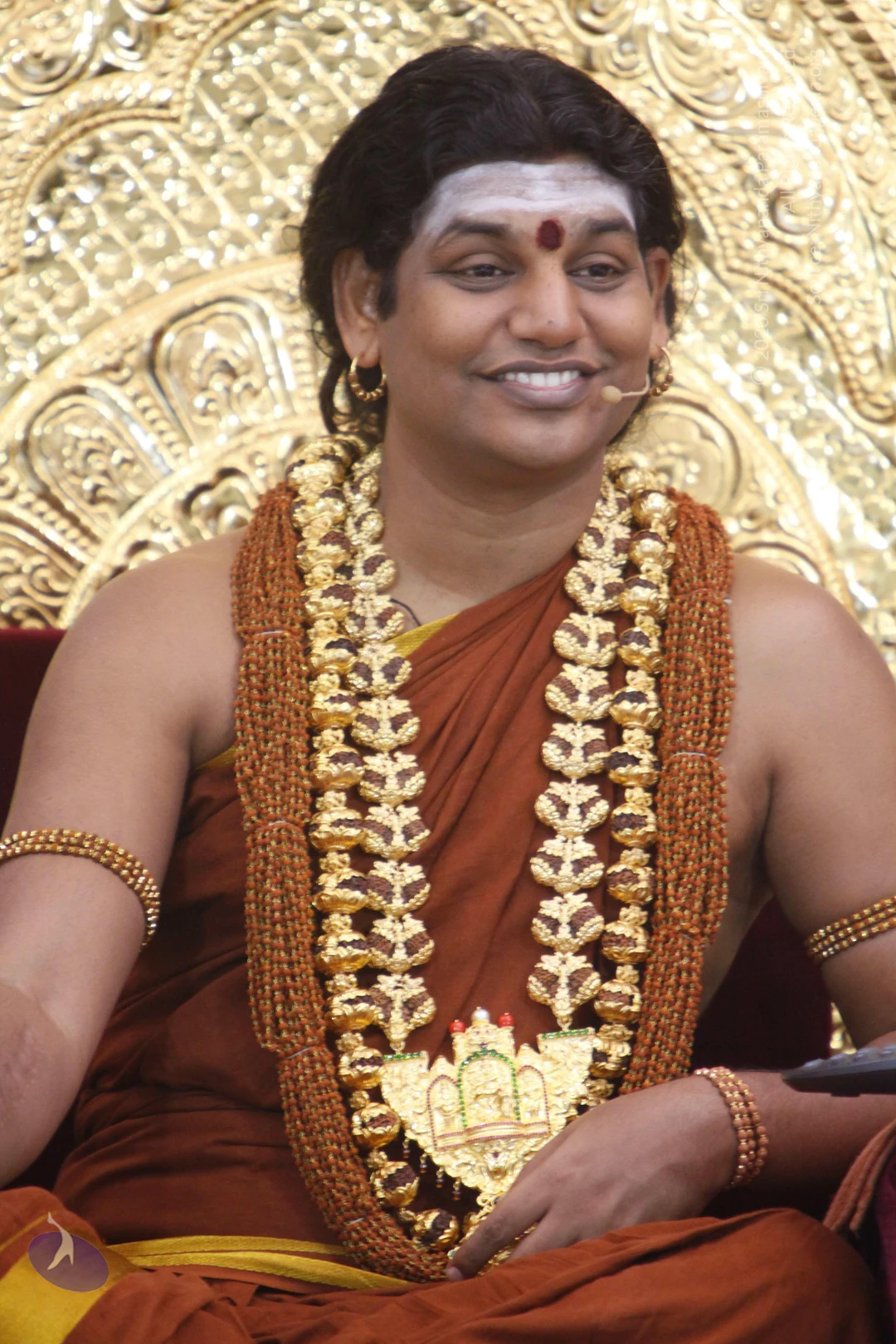
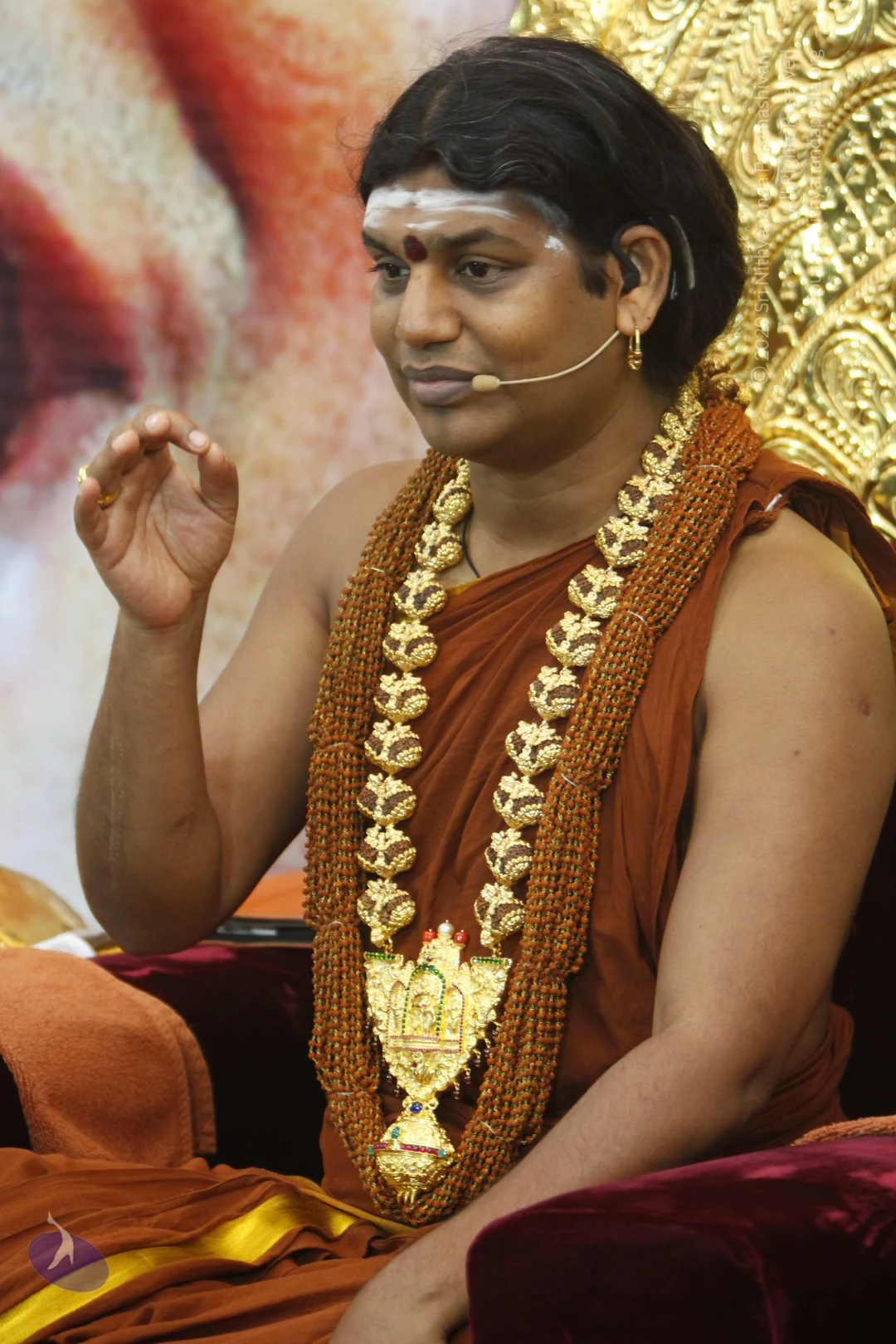
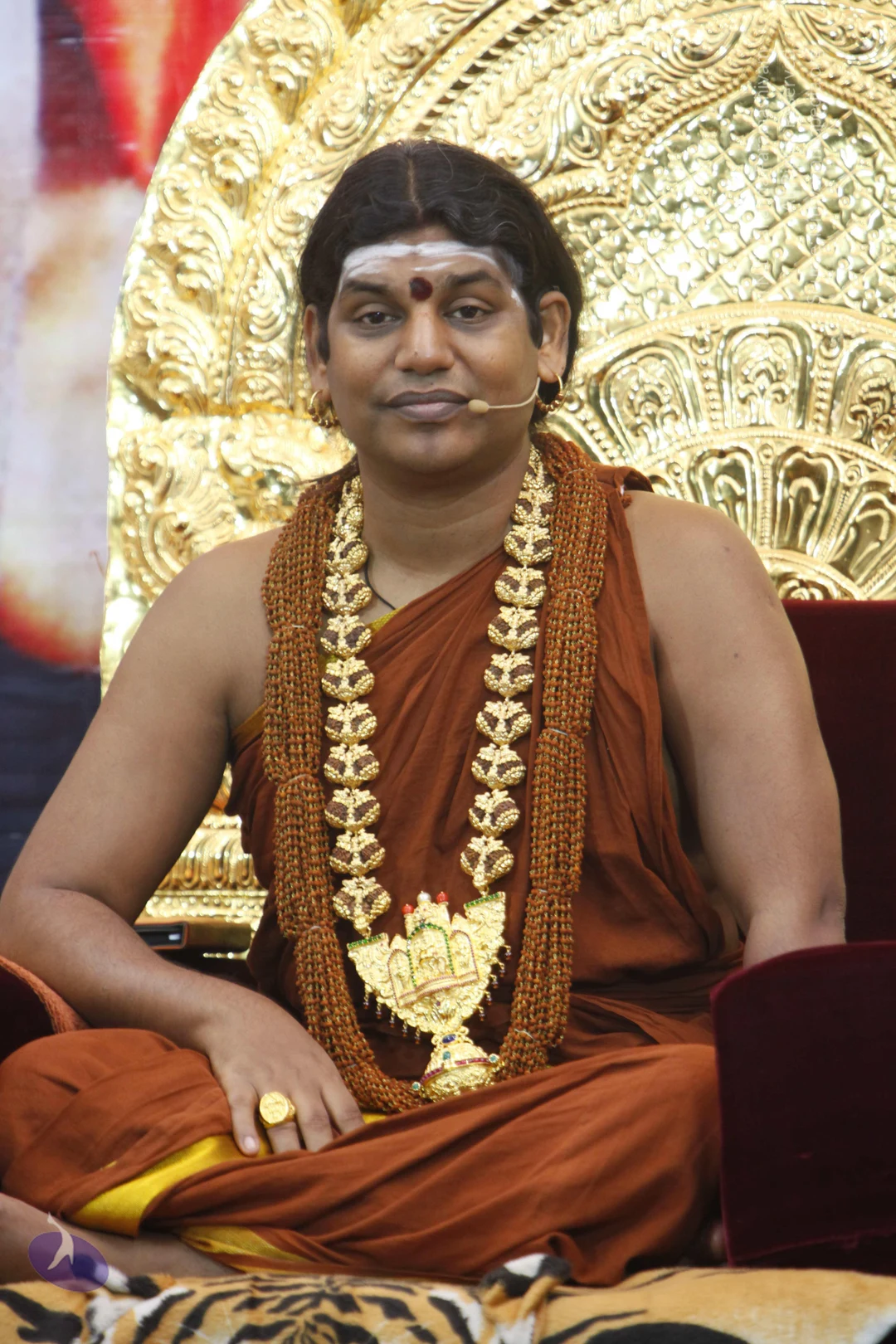
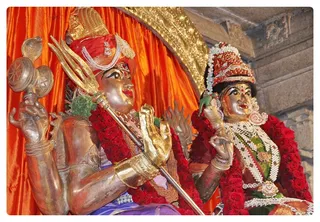
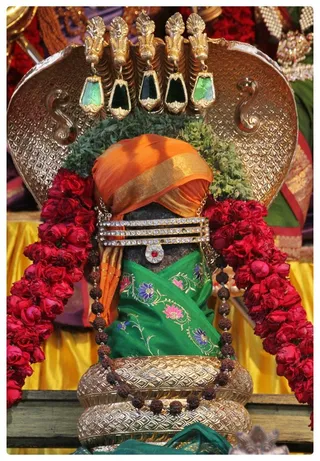
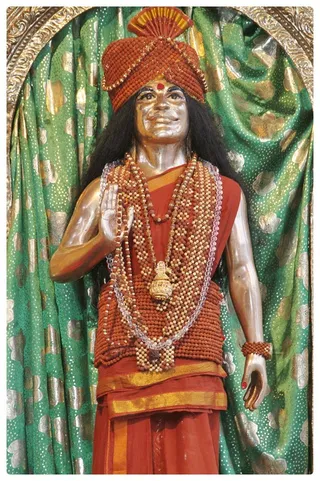
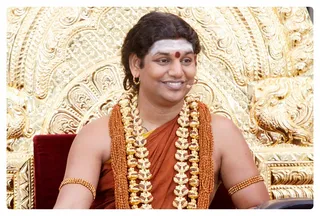
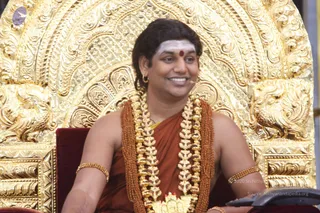
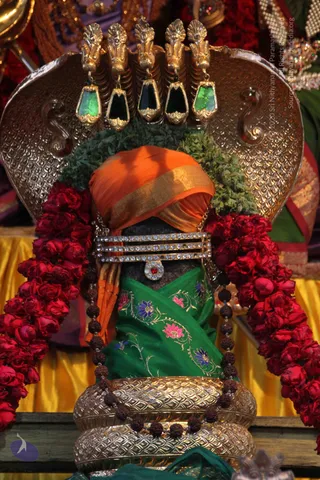
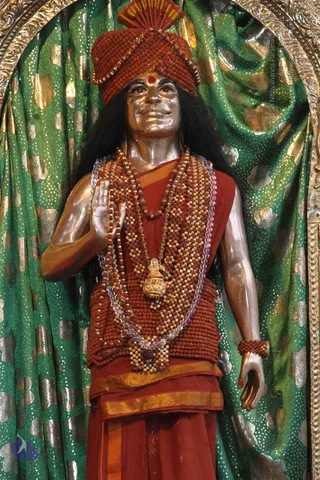
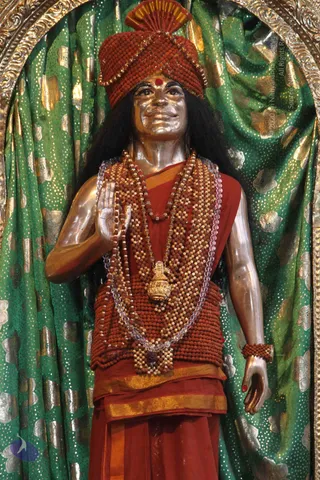
A gilded murti of a deity couple seated on a decorated peetha in front of a deep orange silk backdrop framed by ornate gold arch. The figure on the left, with a tall red and gold crown and trident raised in one hand, wears a purple and gold garment, layered beaded necklaces and red roses garlands. The figure on the right wears a green and gold garment with white flower garlands, a red crown, and holds a green stalk. Red rose garlands drape the base. No physical people are visible.Two bronze-toned utsava murti statues of Hindu deities stand in a temple shrine before a bright orange silk backdrop with gold trim. The male figure holds a trident and a rattle-like drum, wears a red and gold crown and a purple dhoti, and is draped in a garland of red roses. The female figure wears a red and gold crown, layered pearl and gold necklaces, a red and gold blouse, and is also decorated with a red rose garland and bangles. Ornate carved stone pillars frame the scene.Close view of a deity murti. A five-hooded golden naga canopy with green gem-set hoods rises above it. An orange turban-like cloth and a green silk shawl with embroidered blue and pink flowers wrap the form. A band of diamond-like stones and a red gem are set on the front, and rudraksha beads hang in a mala. Red rose garlands and green leaves surround it, and a gold ornate base sits at the bottom.A life-size statue of a male sannyasi stands in an arched niche before a green fabric backdrop printed with gold floral motifs. The figure has a silvery-gold complexion, long black hair, a red-orange turban with a gold fan-shaped top, and a red bindi. He wears a red-orange saffron-toned dhoti and shawl, multiple rudraksha malas, a white crystal bead necklace, a gold pendant, and a red beaded bracelet. His right hand is raised in abhaya mudra, blessing gesture, while his left arm hangs at his side. The statue is a depiction, not a physically present person.A smiling man seated on a red cushioned chair in front of an ornate gold-carved throne backdrop with floral and lion motifs. He wears a saffron/orange dhoti-style wrap, multiple ceremonial gold necklaces of beads and clusters with rudraksha-style beads, gold bangles on both upper arms, gold earrings, and a white vibhuti line with a red kumkum dot on the forehead. Probable Swamiji by appearance cues: long swept-back hair, saffron clothing, rudraksha malas and ceremonial gold necklaces, seated on a throne. Single physical person.Close photo of a smiling man seated against an ornate gold repoussé backdrop. He wears an orange-saffron robe with a gold-bordered shawl, layered rudraksha malas with gold bead spacers, a large gold pendant at the chest, gold bangles on the upper arms and wrists, and a headset microphone. A white vibhuti band and red kumkum mark decorate his forehead. a person by visible cues of saffron clothing, rudraksha and gold ornaments, and a ceremonial seated setting.

Temple-Abhishekam_-Homa
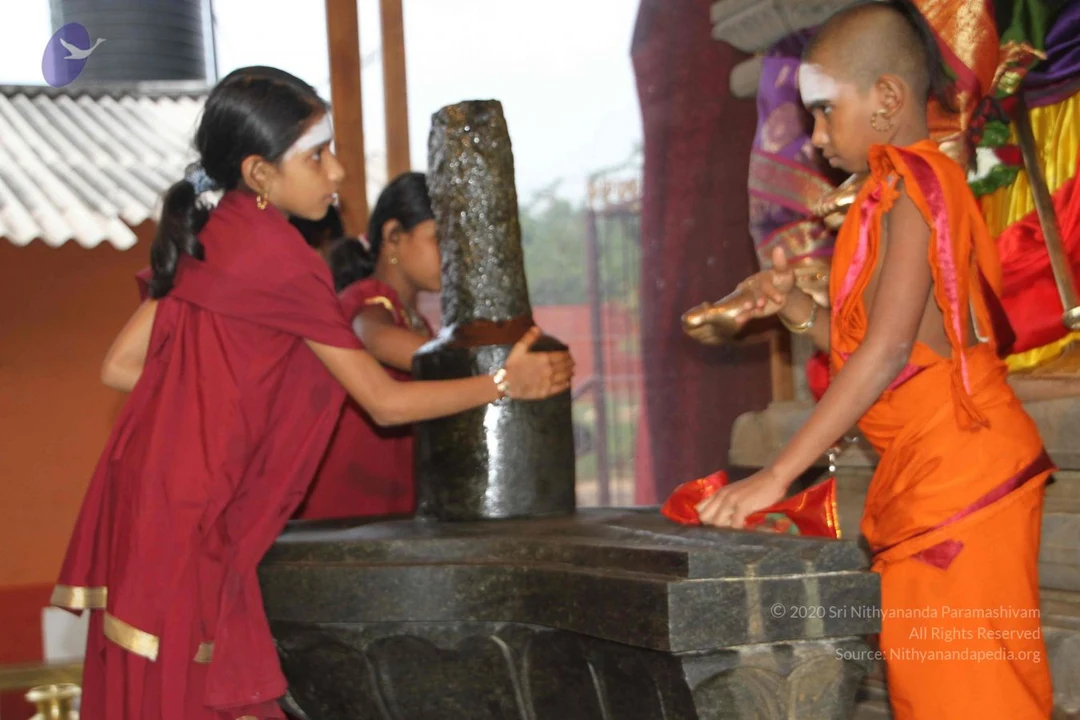
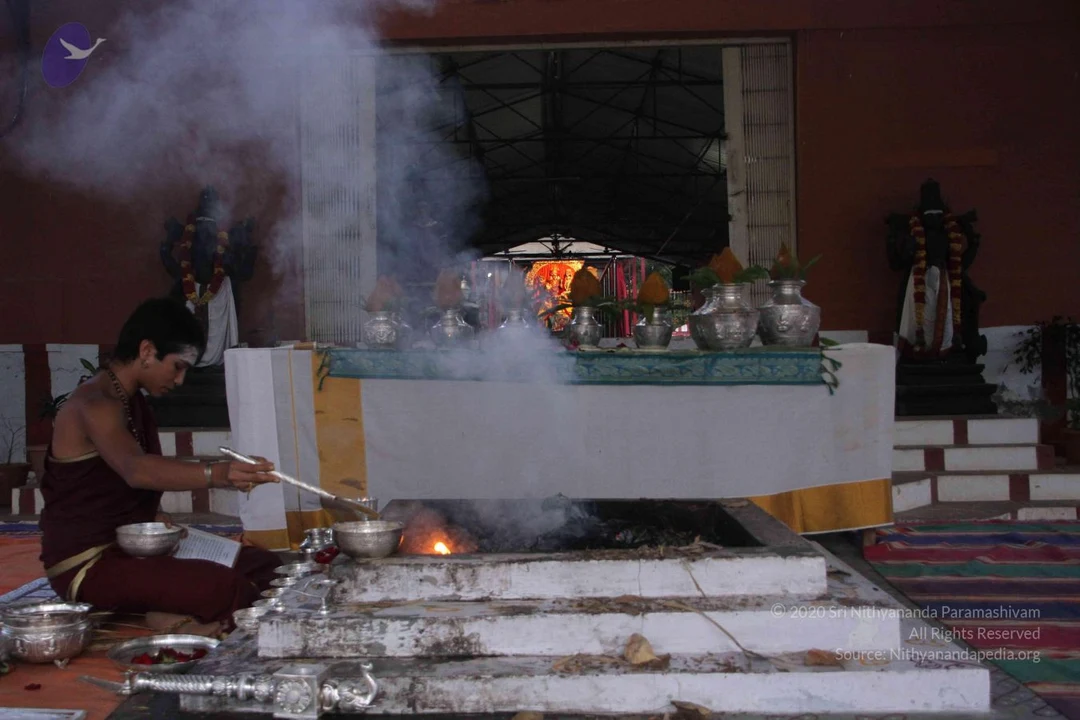
70 photosSource gallery
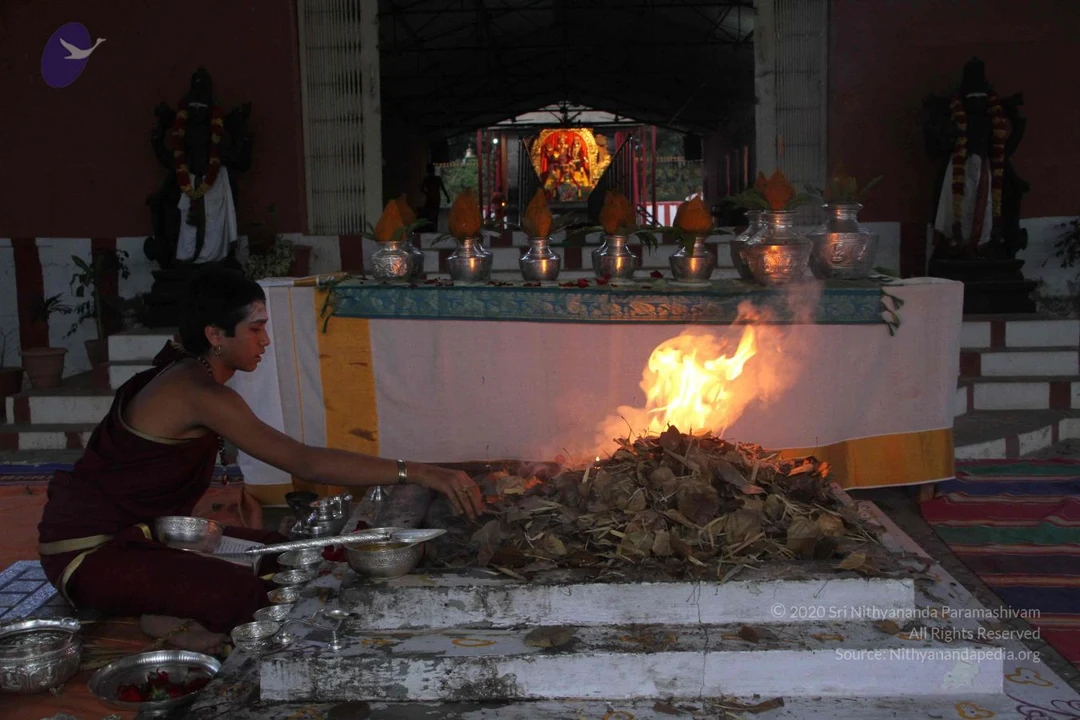
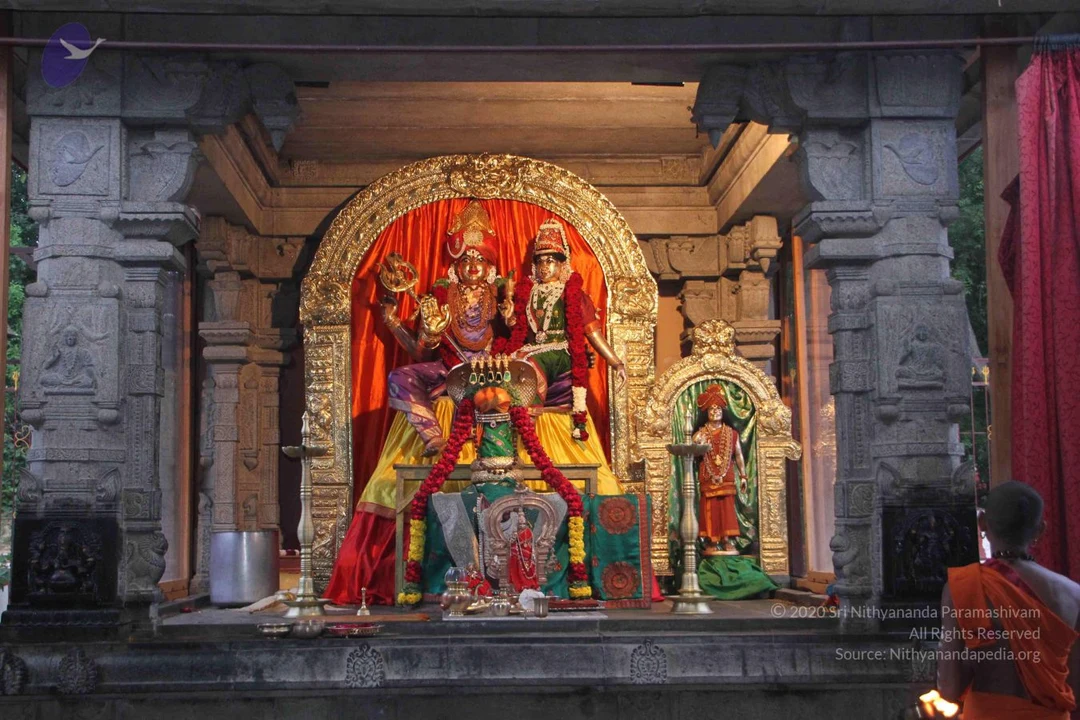
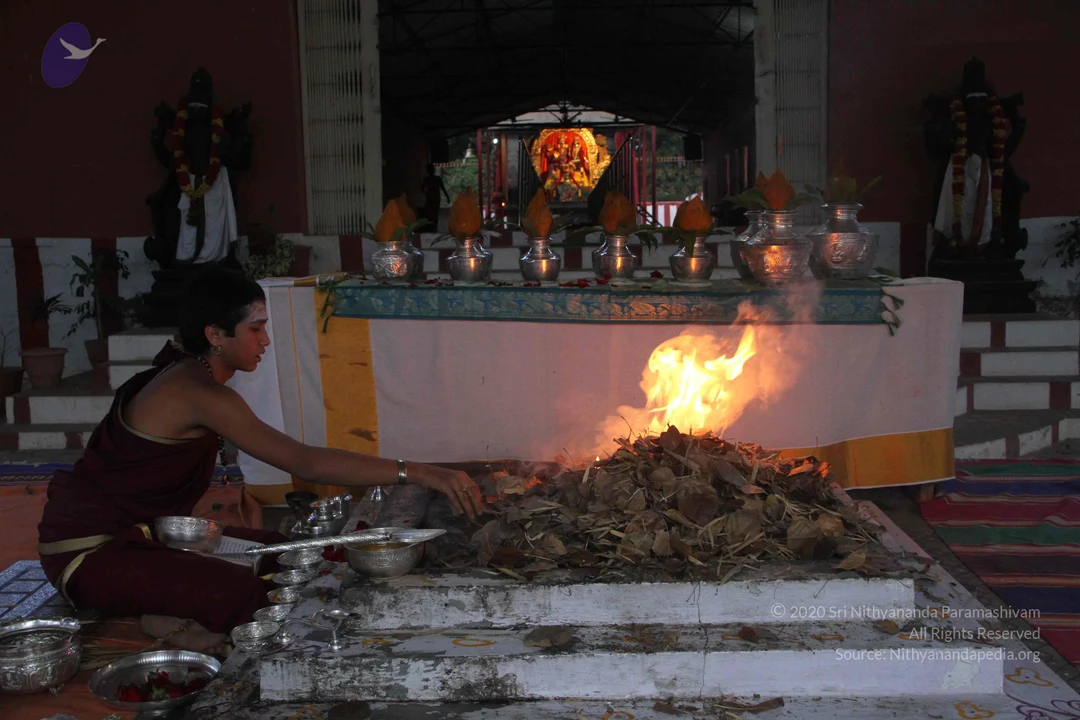
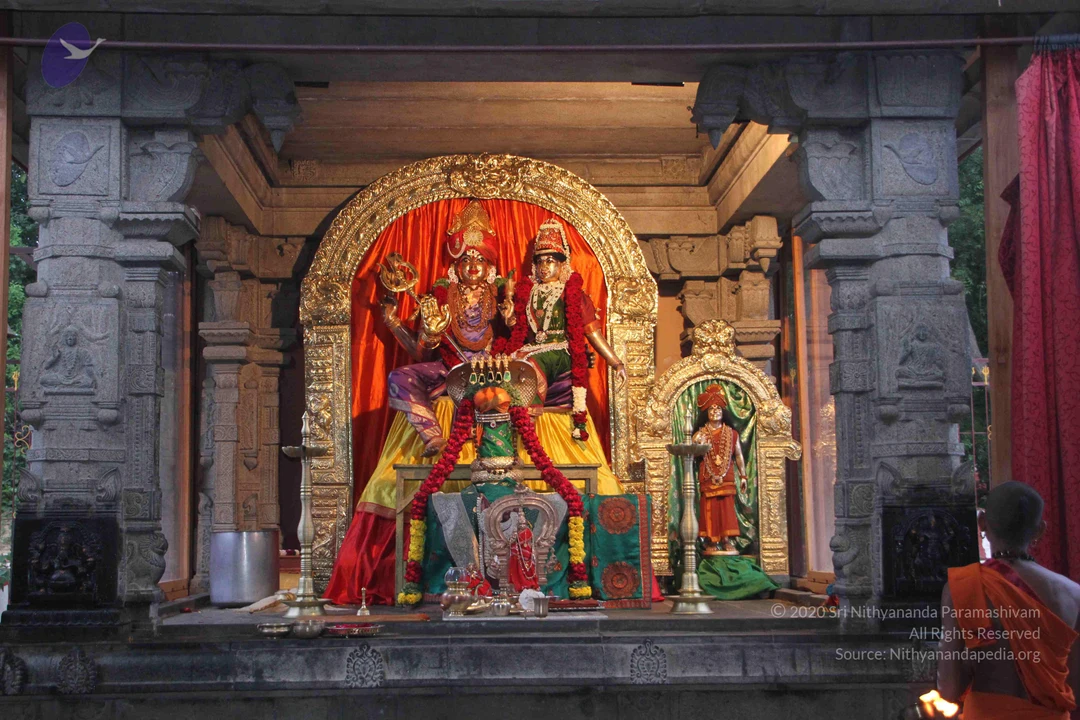
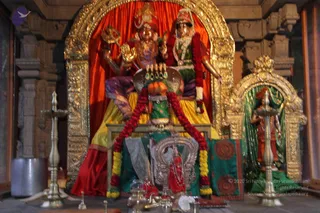
A young priest in a maroon dhoti and an orange-gold cloth sits cross-legged on a mat at a fire pit (homa/yagna) built of white stepped stone, feeding offerings into the flames with a long ladle while holding a small bowl and an open book. Smoke rises across the frame. Behind the fire, a row of polished silver kalashas topped with mango leaves and coconuts sits on a draped altar. Two dark stone deity murti statues flank the altar, garlanded with marigolds, and a lit lamp glows in the shrine beyond. Brass and silver bowls with flower petals sit at the priest's side.A photograph of a homa fire ritual in a temple courtyard. A priest in a maroon dhoti with a gold-bordered cloth sits cross-legged at a low stone platform, feeding dry leaves and offerings into a blazing fire pit. Steel bowls, a ladle and a plate of fruit sit around him. Behind the fire, a table draped in white and yellow cloth holds rows of brass pots topped with orange flowers. Two dark stone deity figures in garlands stand on either side, and a bright decorated shrine is visible further back. The priest's face is turned away from the camera, and no reliable appearance cues establish his identity.A photograph of a temple shrine with a gilded arched frame around a red-orange backdrop. Two deity murtis, one holding a trident and one adorned with a crown, sit on a raised peetha draped in yellow and green cloth, garlanded with red and yellow flower strings. Brass oil lamps stand on either side of the shrine, and a smaller gilded niche with a green curtain holds another figure. No people are visible.A photograph of a pair of gilded murti statues seated side by side on a golden throne-like pedestal before a deep orange silk backdrop, framed by an ornate gold-leaf arch. The figure on the left, a male deity murti, wears a red-and-gold turban, a purple and gold dhoti, a rudraksha-style mala and holds a trident. The figure on the right, a female deity murti, wears a red-and-gold crown, a green and gold blouse, pearl and bead necklaces and a long rose-red garland. Both are draped with red and marigold garlands, and a silver-framed decorative piece with green jewelled ornaments sits at their feet. No physical people are visible.A photograph of a temple shrine with a large gilded arch framing a pair of painted deity murti seated side by side. The figure on the left has four arms, a red crown, and holds a drum-like instrument; the figure on the right wears a red-and-gold crown and a green-and-gold garment. Both are adorned with red and orange garlands and gold ornaments. Below them, a small silver murti and red-and-green cloth offerings sit on a low altar, flanked by brass oil lamps. A red and orange curtain hangs behind. At the lower right corner, a partly visible figure in an orange-saffron robe kneels or stands at the edge of the frame.Photograph of a temple shrine with a gilded arch framing a golden deity murti of a goddess with multiple arms, holding a trident and a raised hand, wearing a crown and a green and gold outfit with red-and-white garlands. Beside her, a smaller golden figure in a red garment. A red and orange draped backdrop hangs behind the shrine, and a seated figure sits on a silver peetha draped with a green cloth. Brass oil lamps stand on either side, with a small brass vessel and offerings in the foreground. No physical people are visible.
Pratyaksha-Pada-Puja
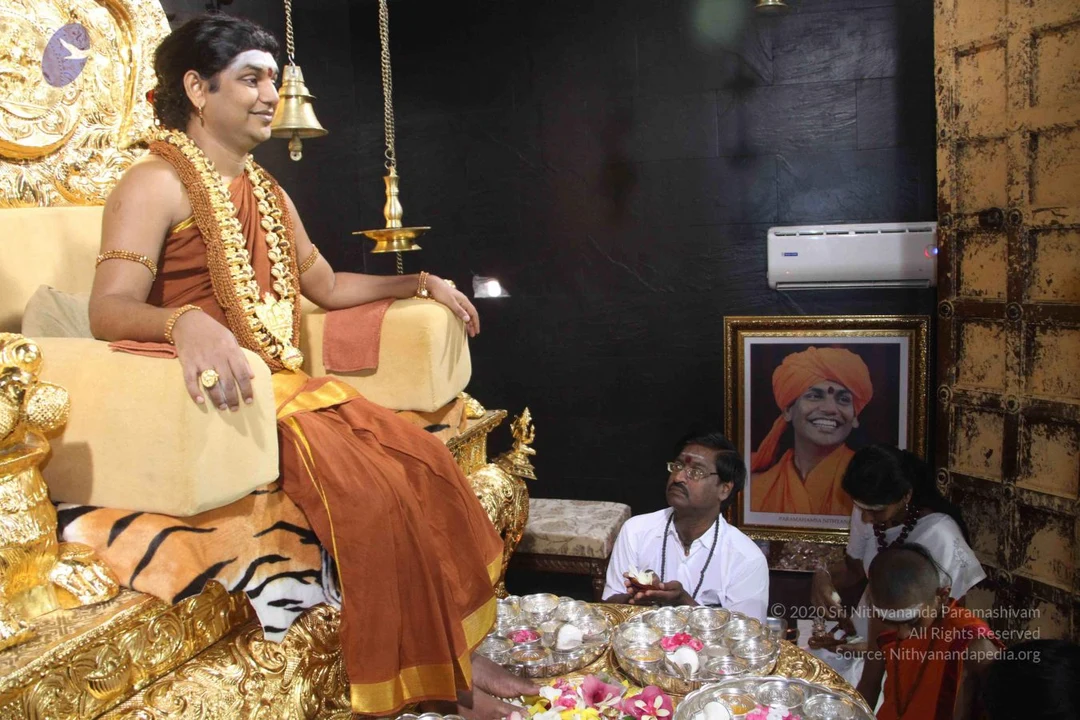
12 photosSource gallery
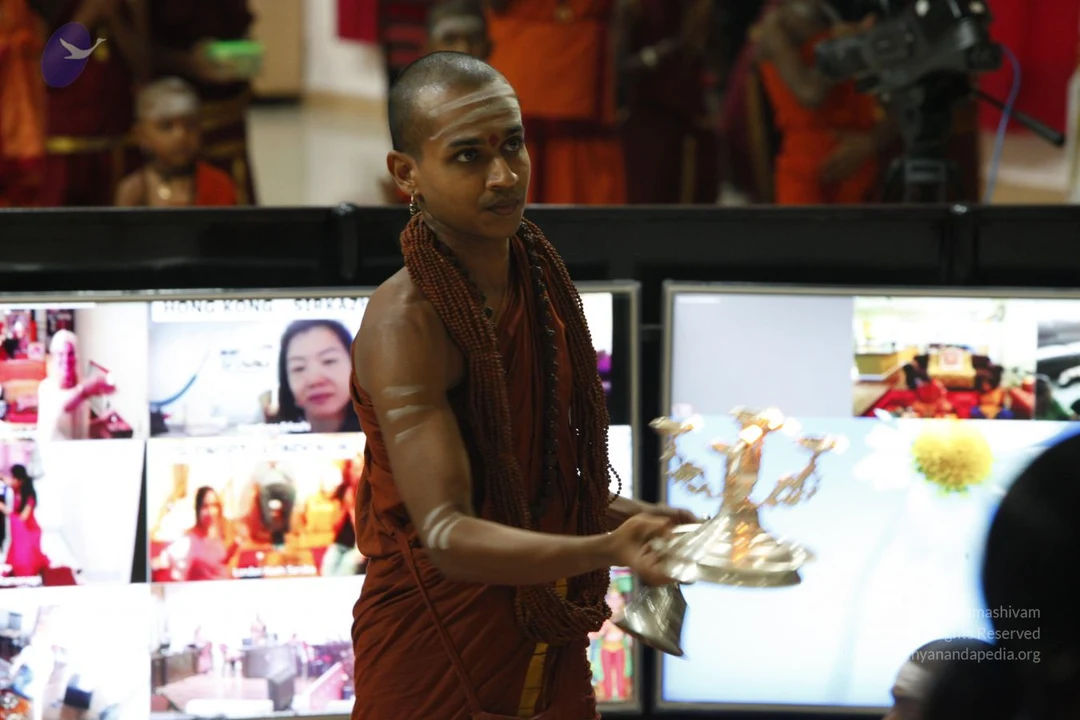
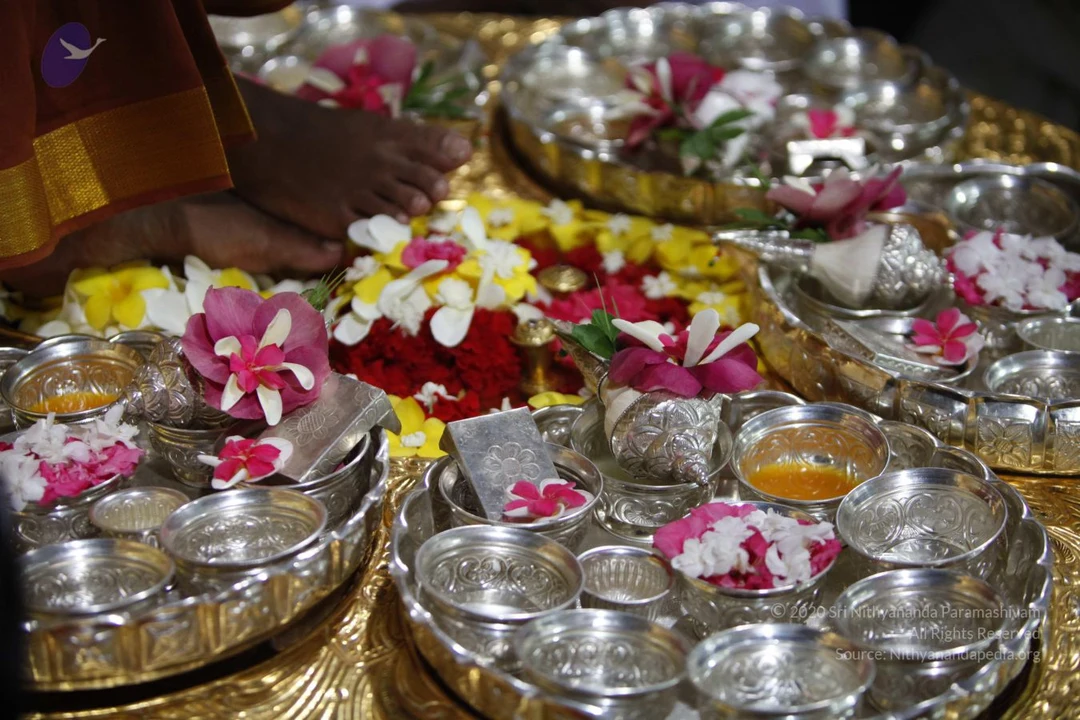
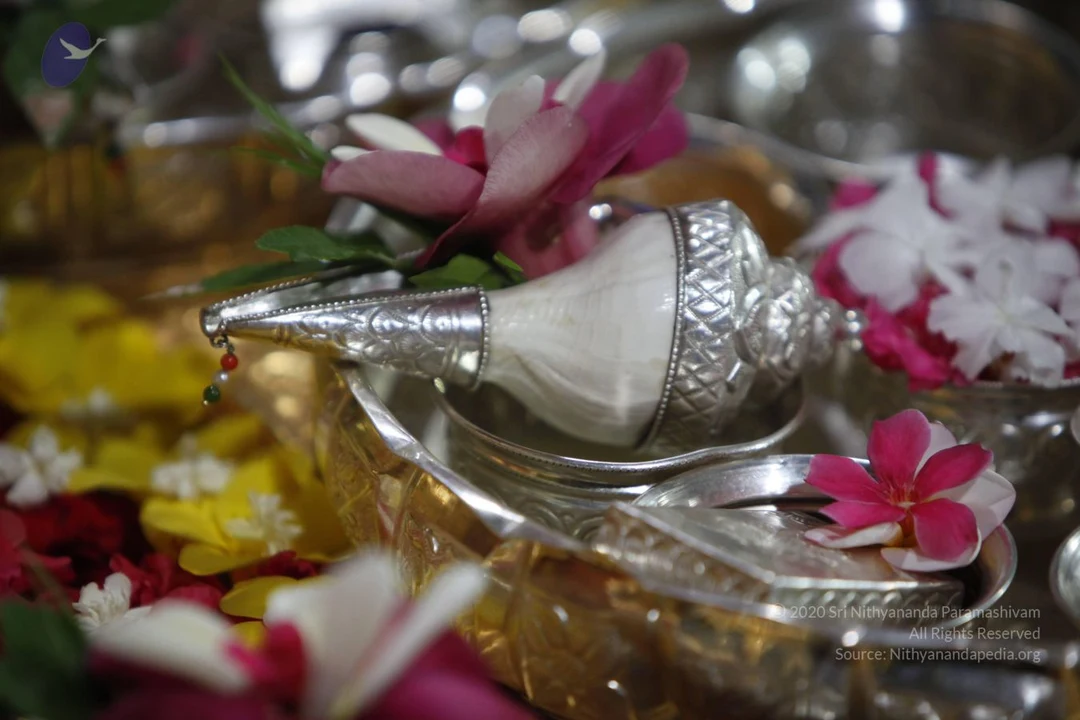
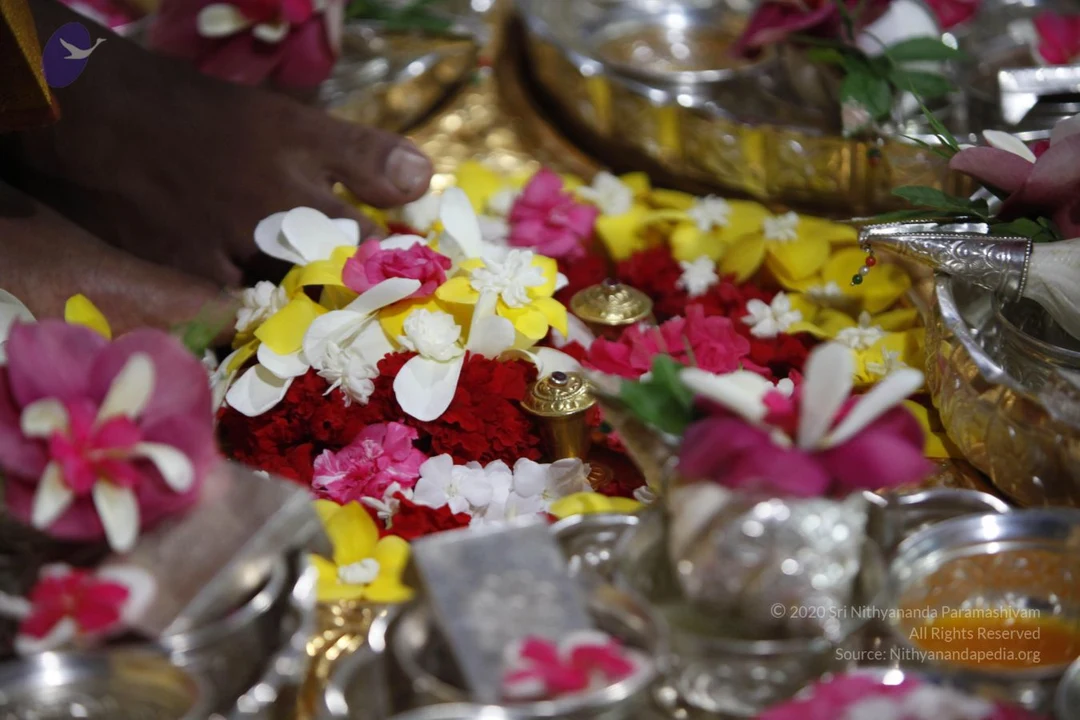
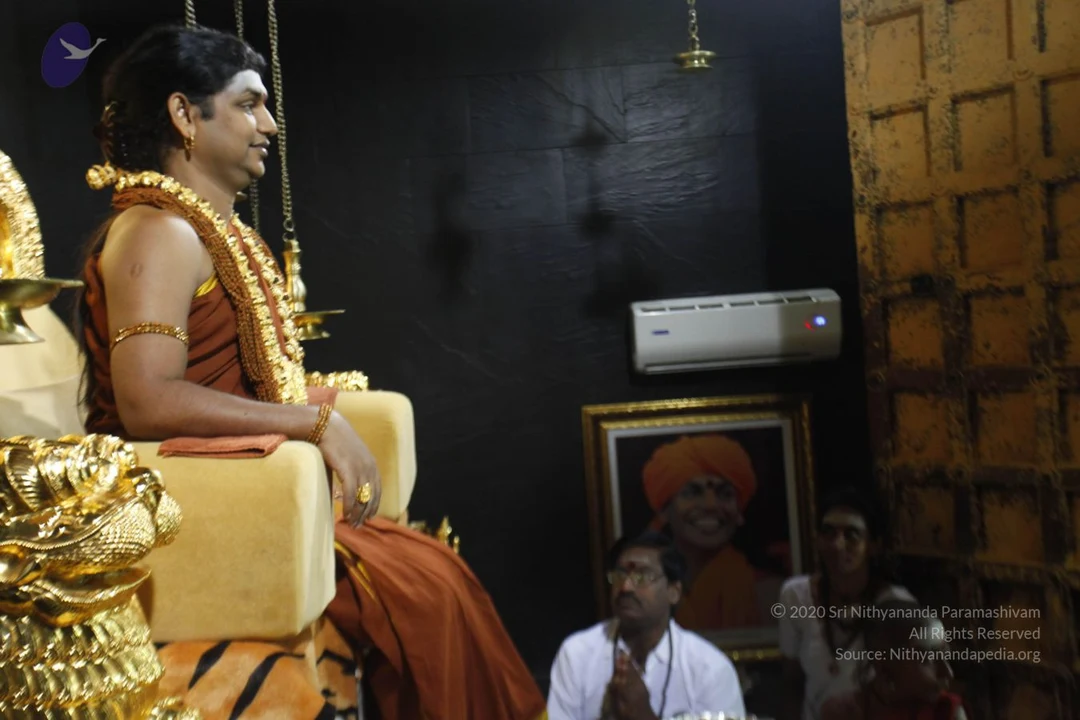
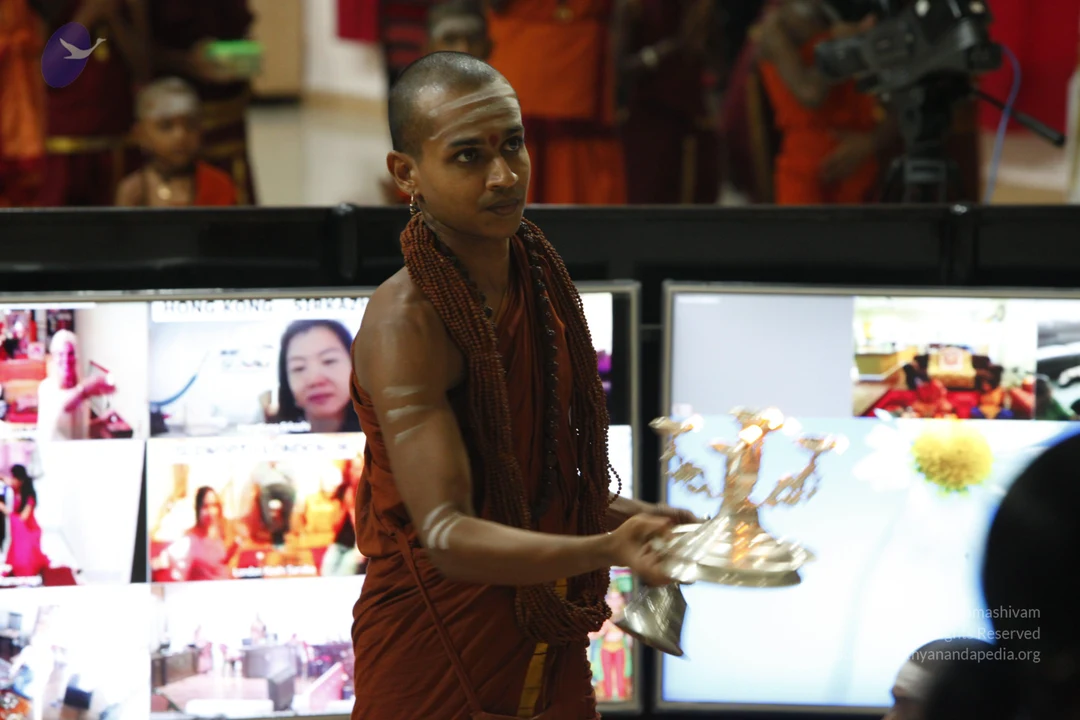
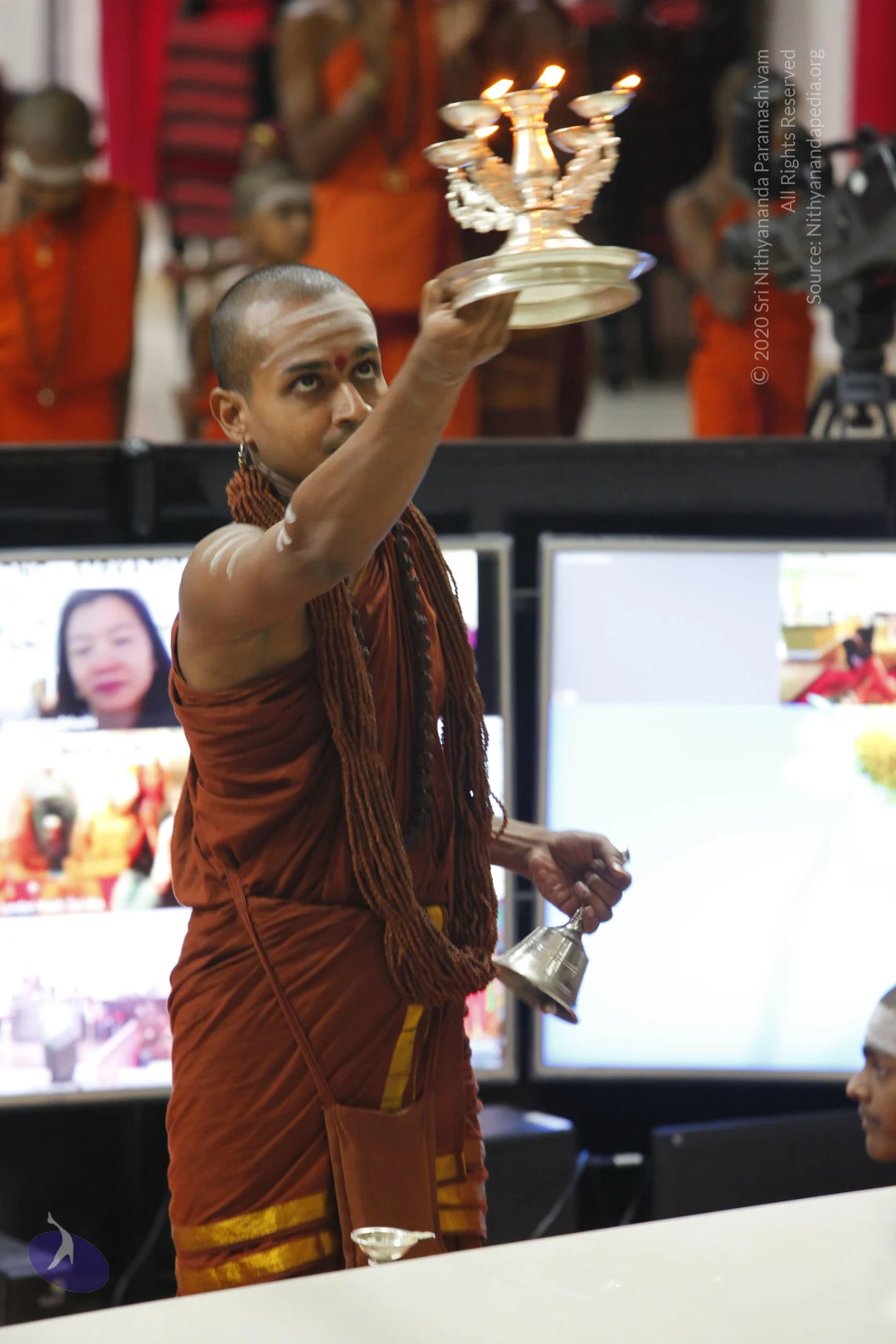
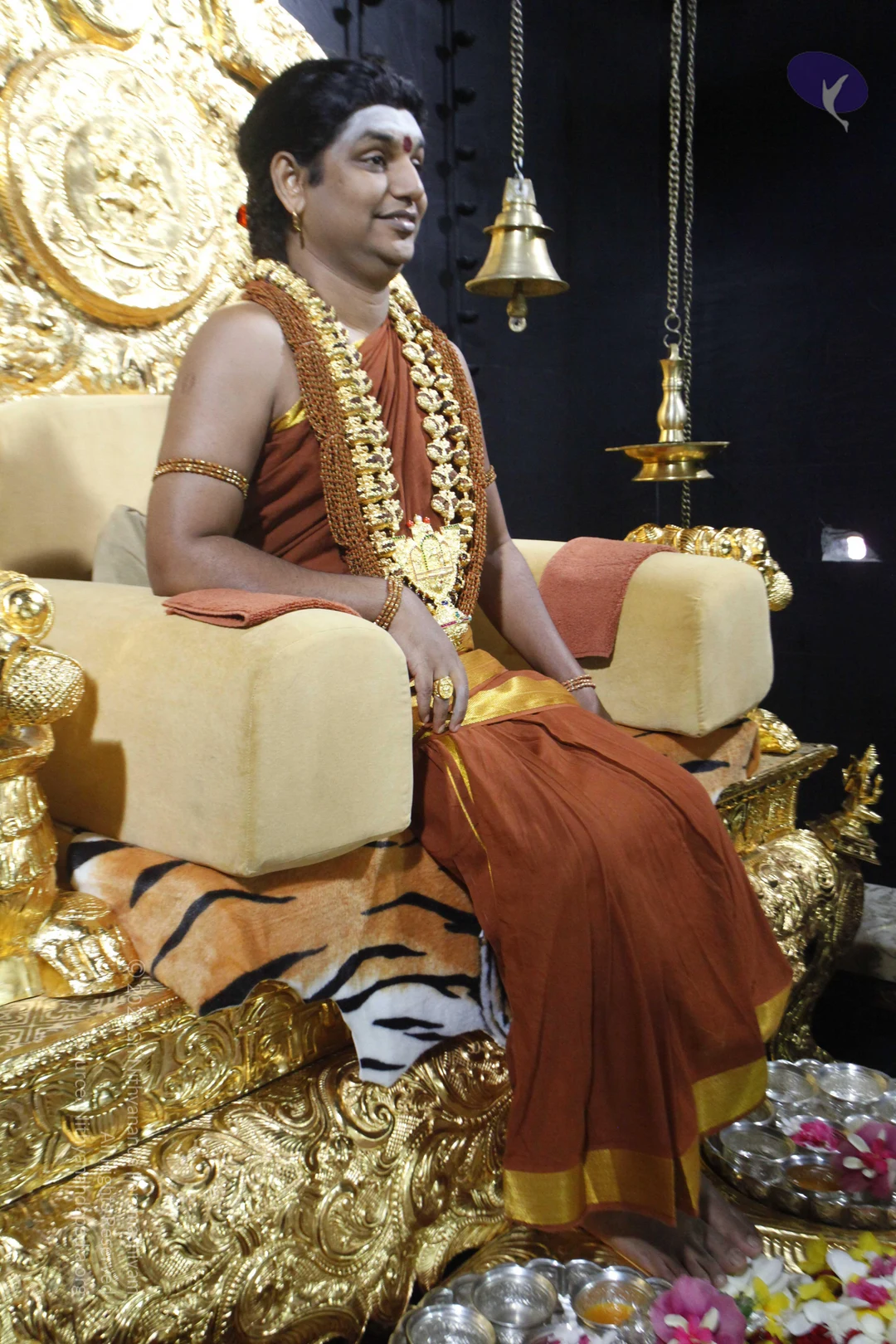
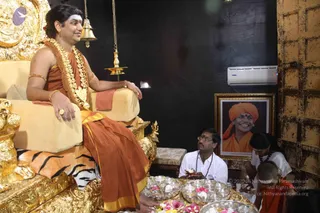
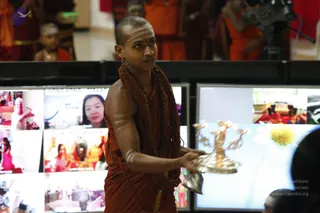
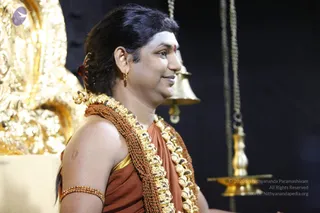
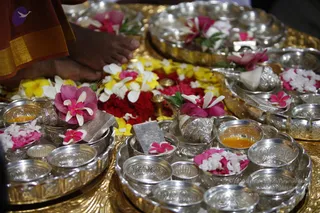
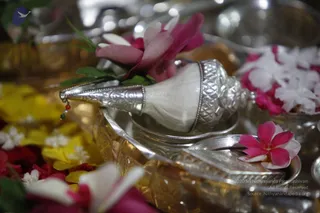
A photograph of a figure seated on an ornate gilded throne draped with a tiger-striped cushion. The seated figure wears a saffron-orange dhoti and upper cloth, a long layered gold-and-beige garland, gold bangles and a gold ring, with dark hair swept back and a white forehead mark. A bronze hanging lamp hangs beside the throne. In the foreground, a man in white with rudraksha beads and glasses sits near a silver tray of flowers, coconut and small brass vessels, while a woman in white and a saffron-robed person work beside it. On the right wall, a framed portrait labelled "Paramahamsa Nithyananda" shows a smiling person in an orange turban and robe. The wall holds a wall-mounted air conditioner and a large ornate golden door panel. The seated figure has distinctive long swept-back hair, a gold necklace and saffron clothing, so this is a probable Swamiji in person.A young sannyasi with a shaved head and white tripundra markings on his forehead and arms stands in front of a bank of video-conference monitors, holding an ornate brass lamp with a multi-branched flame in his right hand. He wears a rust-orange robe with a yellow sash and a long rudraksha mala draped over his shoulders. Behind him, other saffron-robed monks stand in a hall, and a camera operator films the scene. The monitors show live feeds of participants, including a woman in Hong Kong, and one screen displays a lotus image. The setting appears to be a satsang broadcast with two-way video links to devotees worldwide.A seated man in a saffron-orange draped garment wears a long gold-and-rudraksha ceremonial garland over his shoulders and an orange-brown woven shawl, with a gold armlet on his upper arm. His dark hair is swept back and he has a small red bindi on his forehead, smiling to the side. Behind him a large gold ornate deity murti sits on the left, and a brass bell and brass hanging lamp hang on chains against a black background.Close photo of a puja arrangement on a gold tray. A bare foot in a red-and-gold bordered garment rests at the top edge, stepping toward the offerings. Silver bowls, silver vessels and small silver dishes hold saffron-yellow liquid, red and white flower petals, and pink orchid-like blooms. Yellow marigold-style flowers and red blossoms form a bed beneath the metalware, and a small brass lamp stand sits among the vessels. No person's face is visible, and no one is identifiable as a person in this image.Close-up photograph of a ritual conch shell (shankha) with a white shell body and ornate silver fittings and collar, resting on a silver and gilded tray. Pink and white frangipani-style flowers and yellow blossoms scatter around it, with a small pink flower placed on the tray. A silver bowl and other silver vessels are visible in the background. No people are visible.Close photo of a ritual padapuja-style offering: a bare foot rests on a bed of flower petals arranged in yellow, red, pink and white. Silver and brass vessels and small brass oil lamps surround the flowers, with a silver spouted vessel at right and a bowl of orange-yellow offering at lower right. No people's faces are visible, only the foot. The flowers are laid out densely around the foot in a ceremonial arrangement.

Satsang

4 photosSource gallery
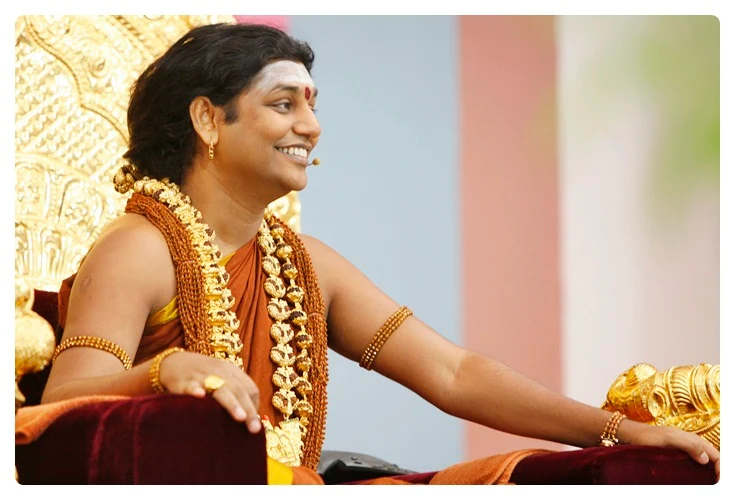
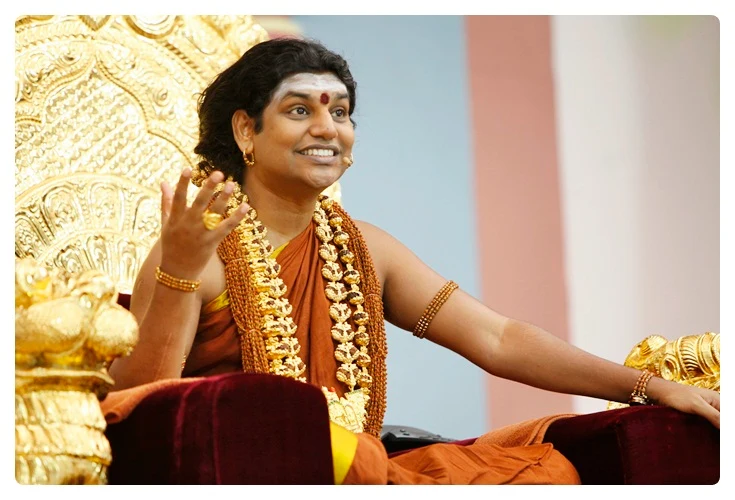
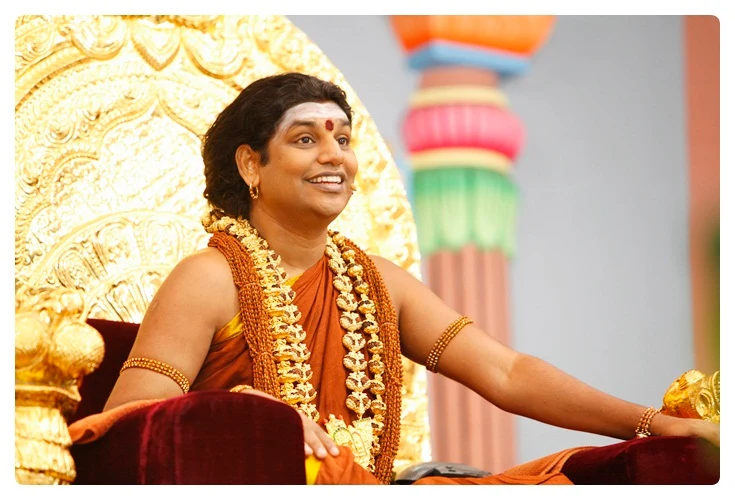
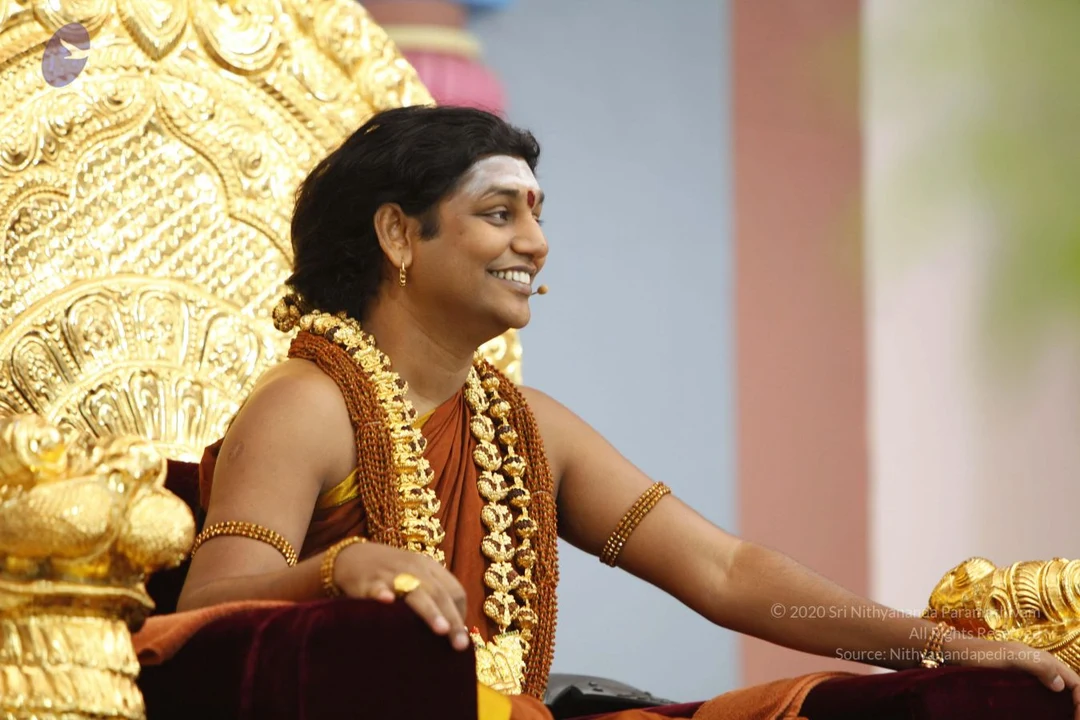
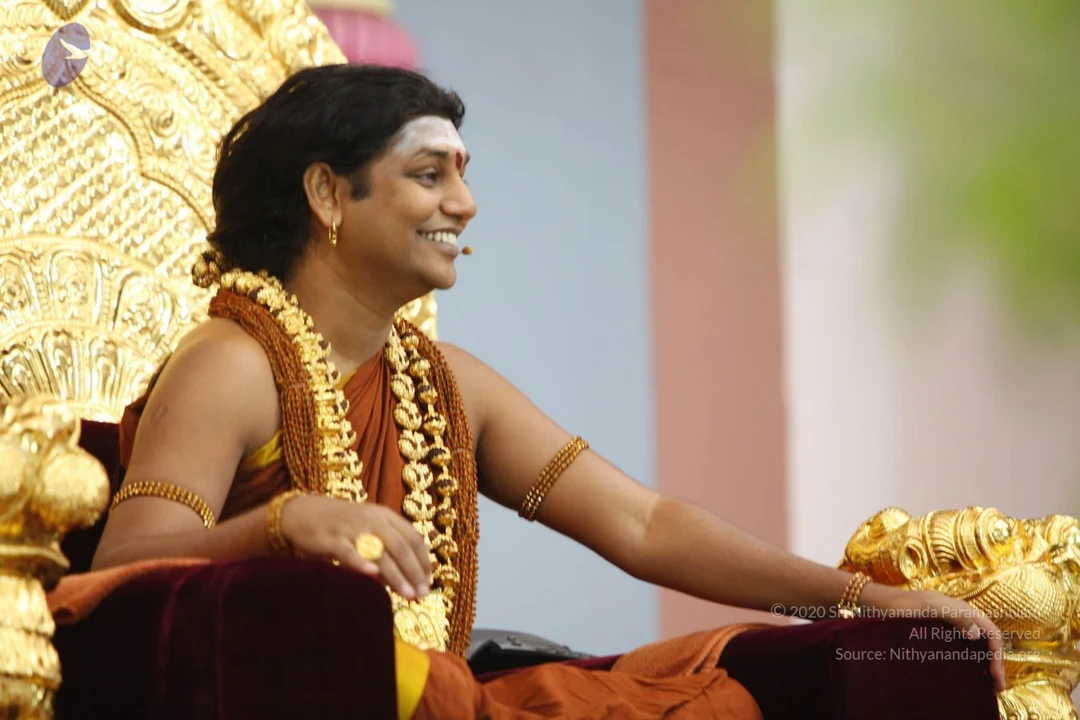
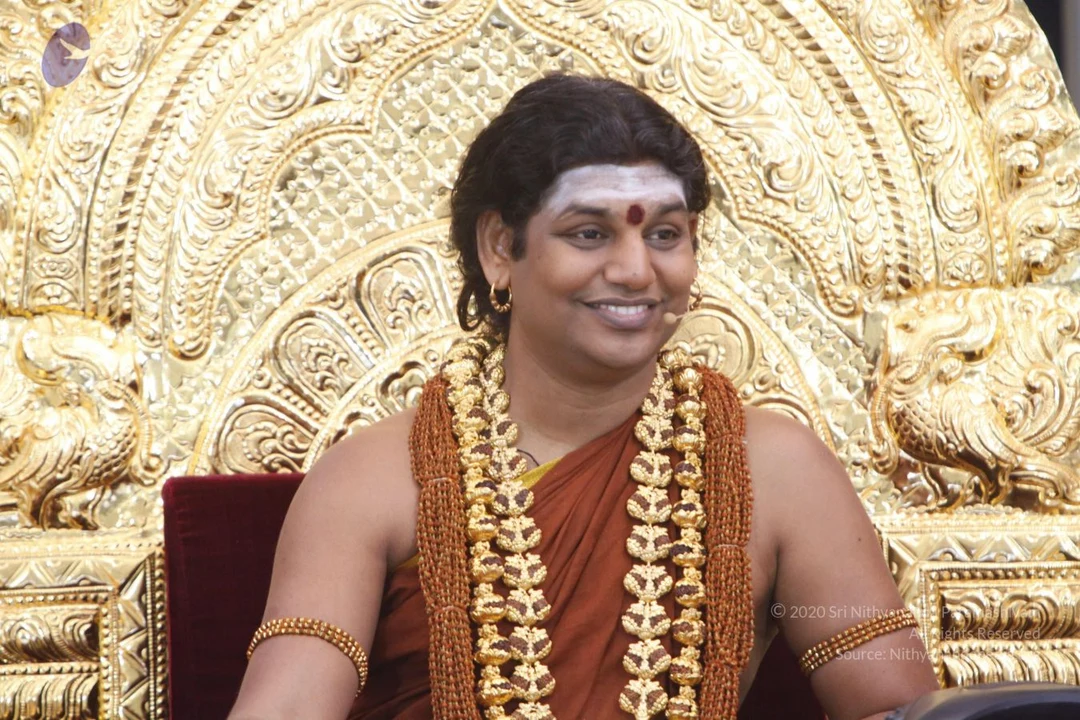
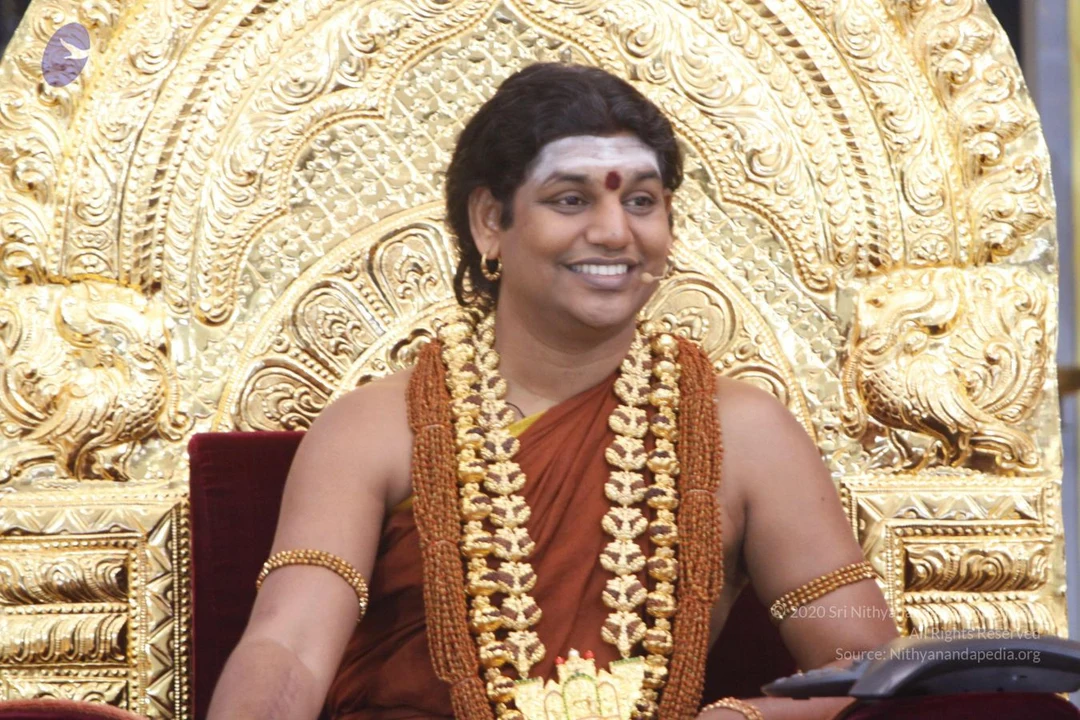
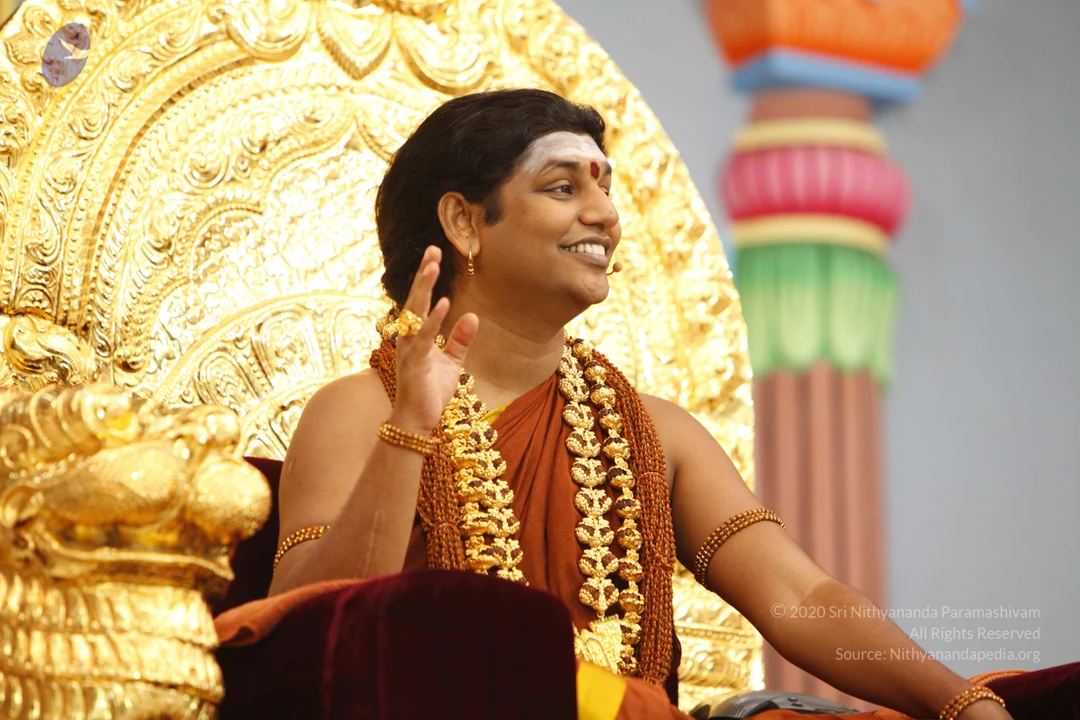
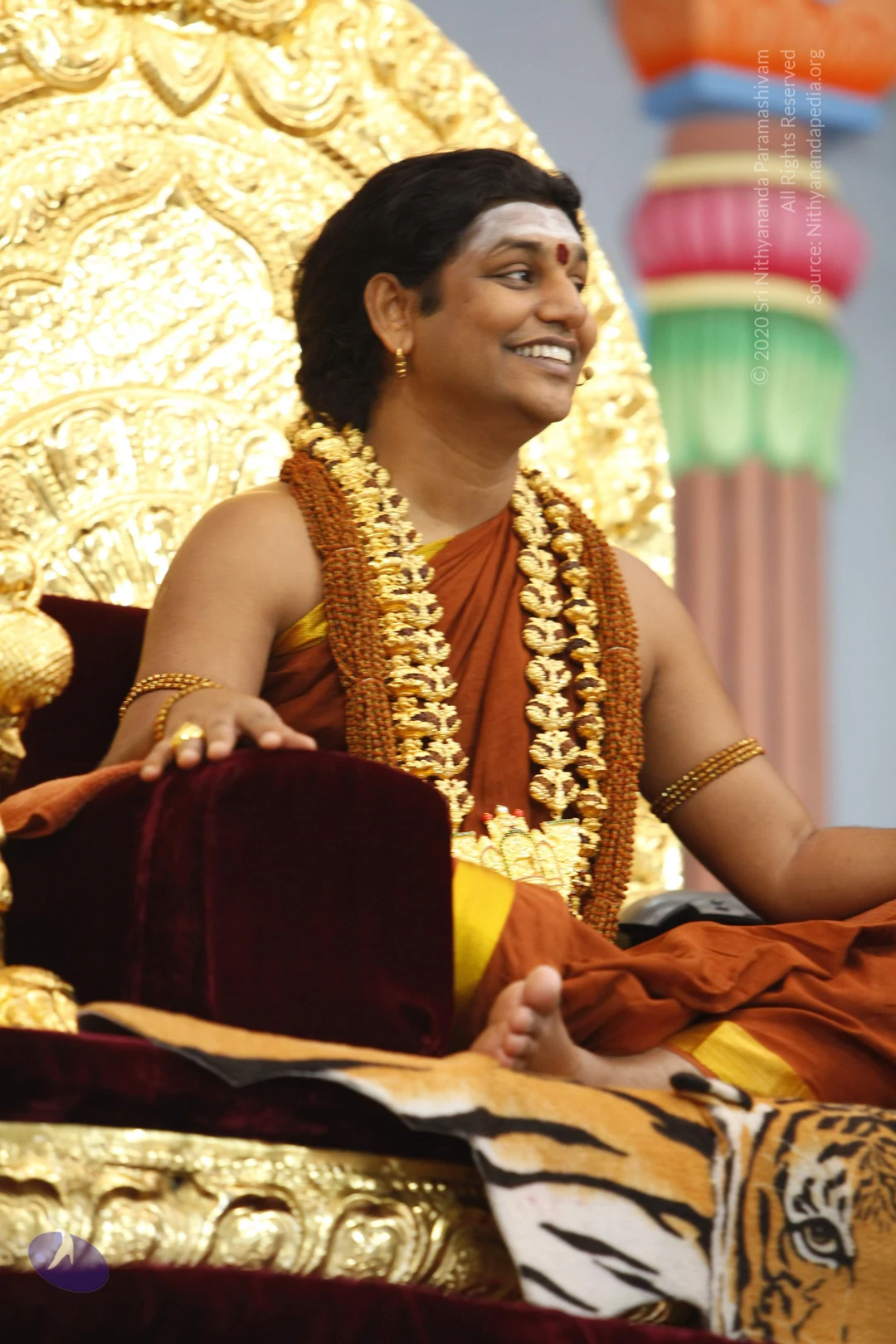
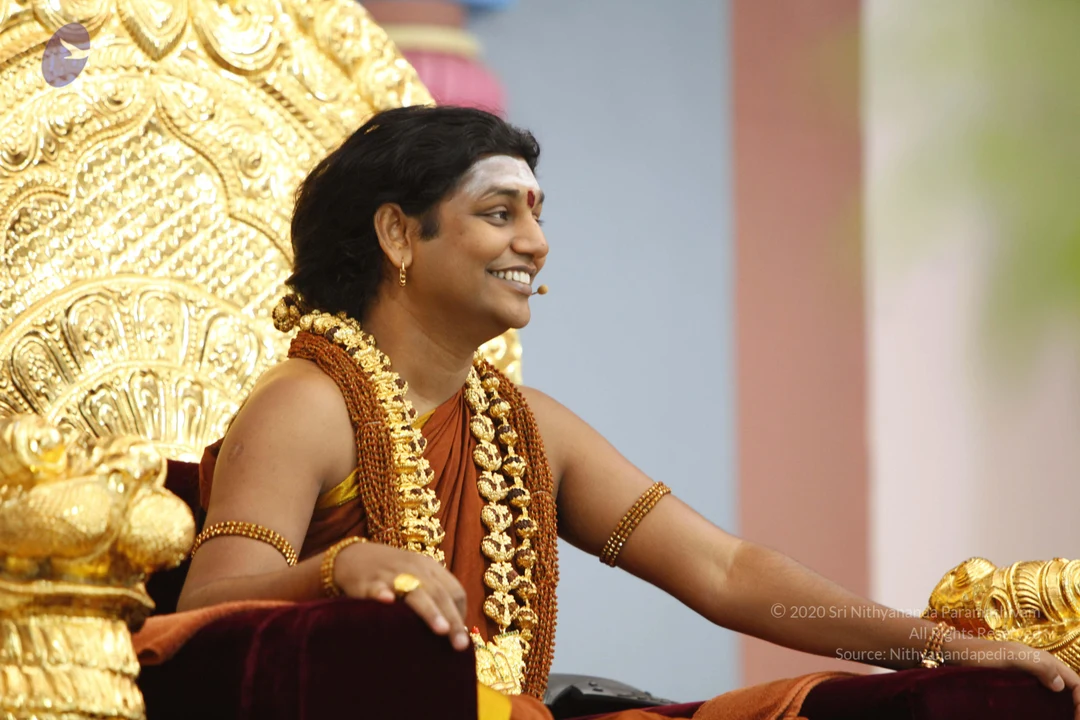
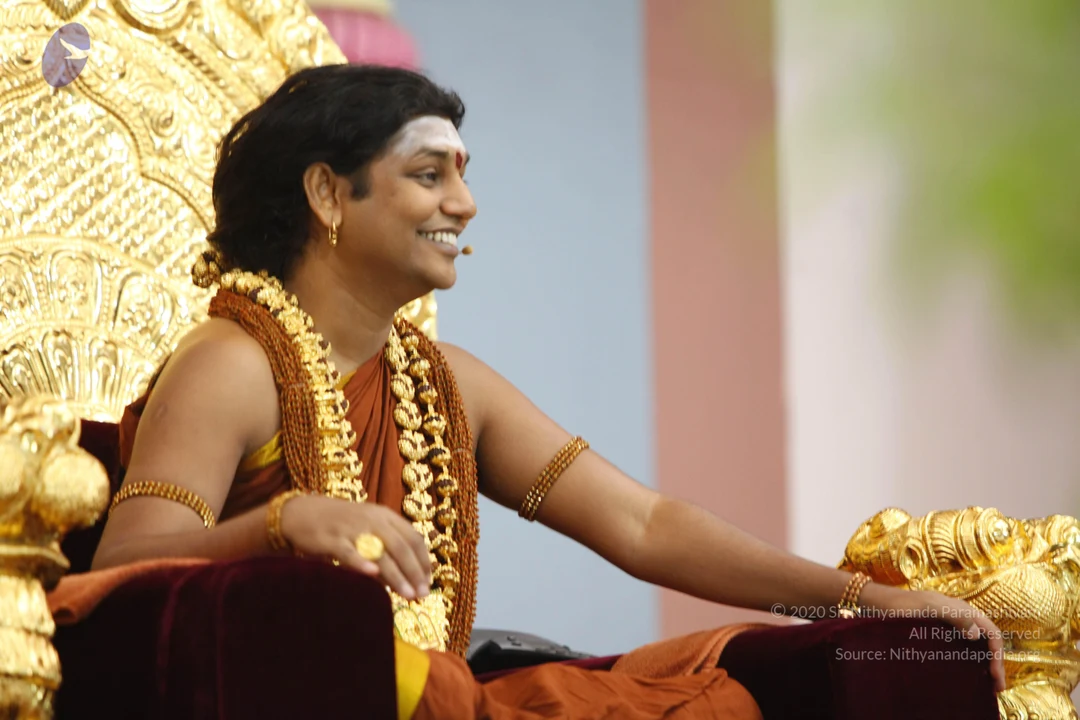
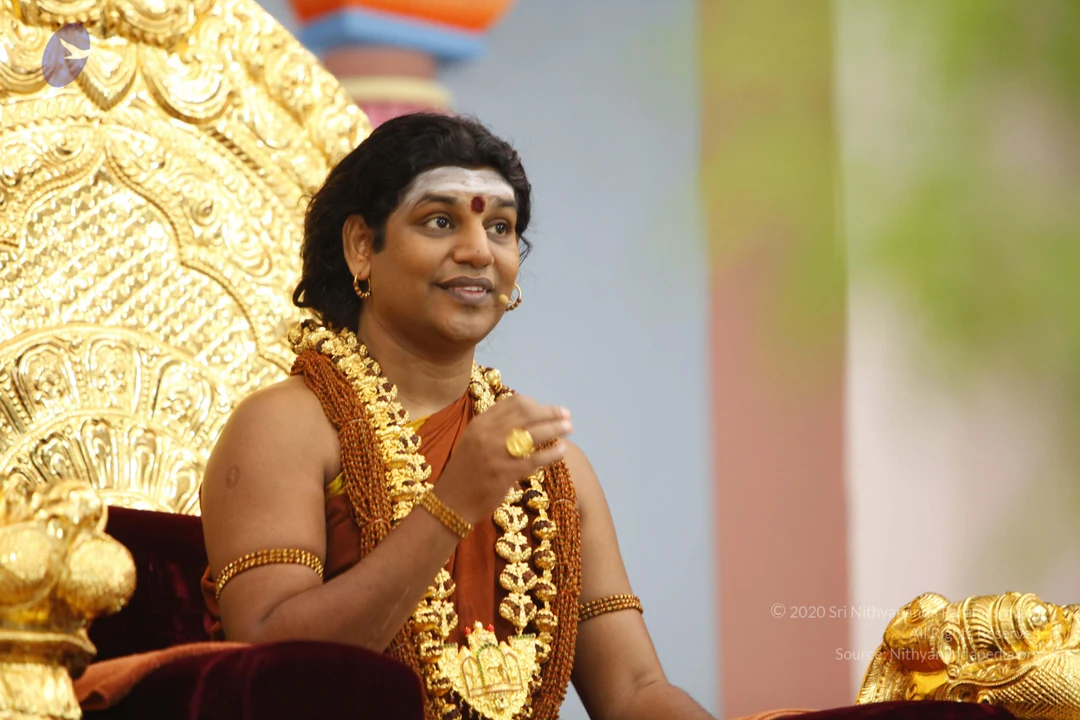
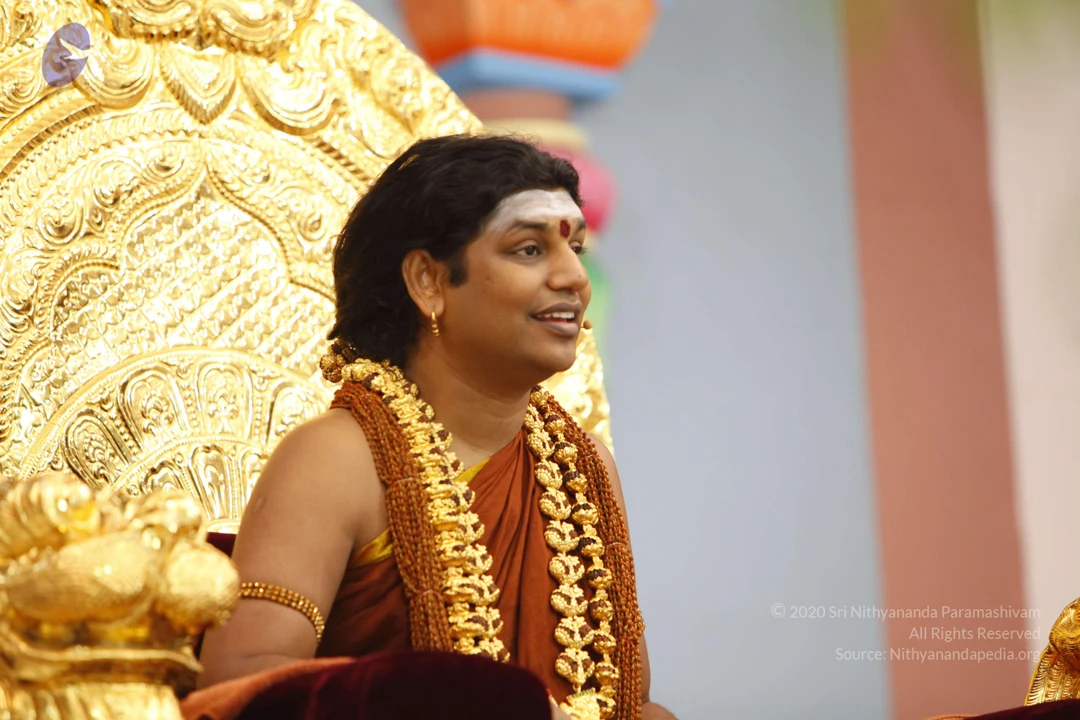
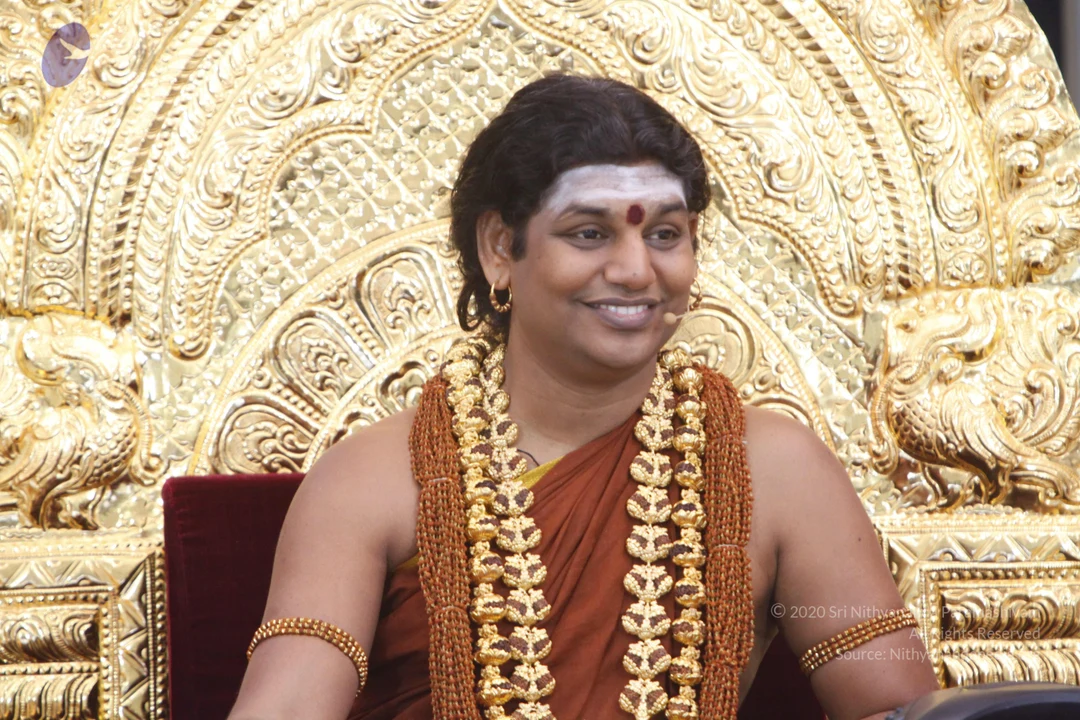
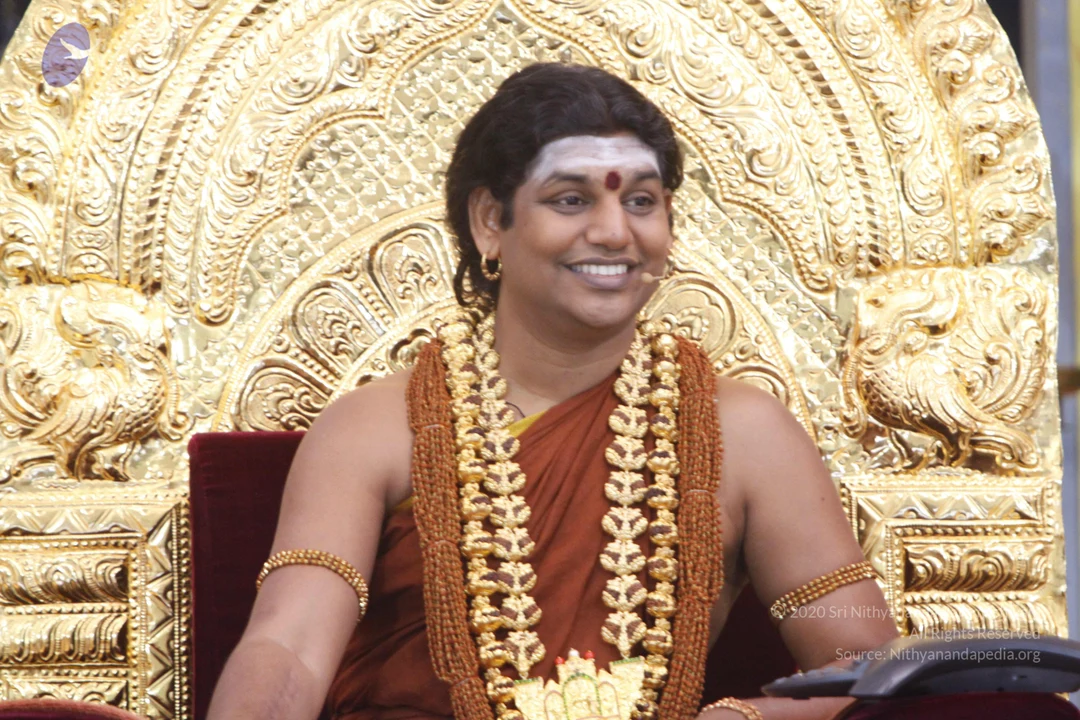
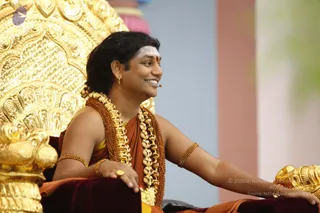
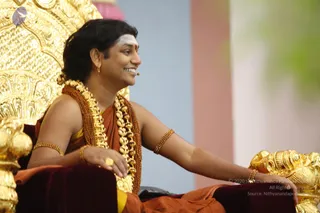
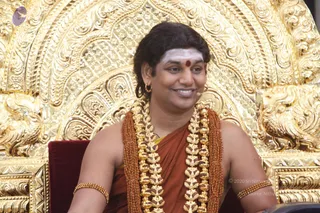
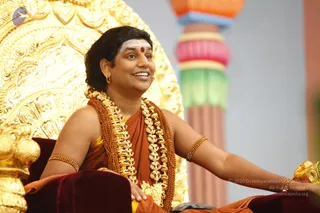
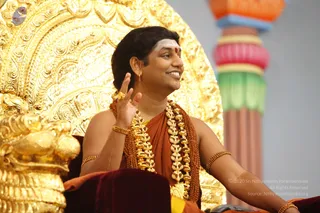
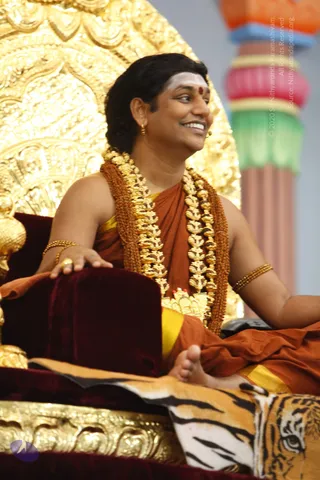
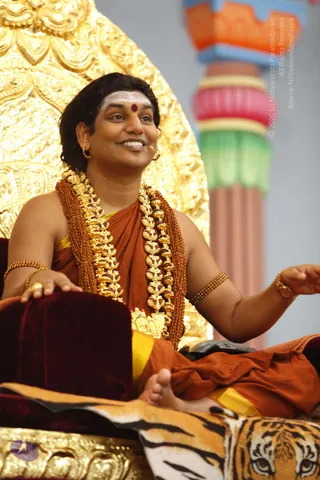
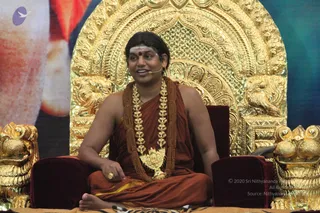
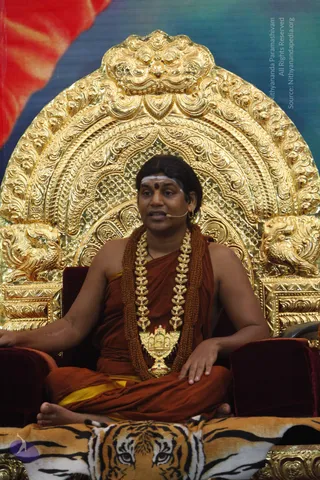
A smiling man sits on an ornate gilded throne with red velvet cushions, turned to his right and leaning his arm along the armrest. He wears an orange-saffron dhoti-style wrap over bare shoulders, layered gold and beaded necklaces, gold bangles and a gold ring, and has a white vertical tilak with a red bindi on his forehead. A small lapel microphone is clipped near his chin. Swamiji (probable): long swept-back dark hair, saffron clothing, ceremonial gold necklaces and a throne presence. Behind him are pastel-painted pillars at a temple-style event stage.A man seated on an ornate gold throne with carved lion-like armrests and a deep red velvet seat, smiling and gesturing with his right arm extended toward the right side of the frame. He wears an orange-saffron cloth draped over his shoulders and upper body, a thick gold-and-brown beaded necklace with a large ornamental pendant, gold bangles on his upper arms and wrists, gold earrings, and a gold ring. His forehead bears white paint with a red dot. A small microphone is visible near his face. The background is pale blue and pink with a blurred green element at upper right. a person appears in this seated throne setting with ceremonial regalia and a microphone, consistent with a satsang discourse.A smiling man with swept-back dark hair sits before an ornate gold throne carved with lion and floral motifs. He wears a saffron-orange shawl over his bare shoulders, a long gold and rudraksha necklace, gold bangles on his upper arms, gold earrings, and a white vibhuti mark with a red dot on his forehead. A small microphone is visible near his face. a person appears in person, seated and speaking.A smiling man sits on an ornate golden throne with elaborately carved gold backrest featuring scrolled and beast motifs. He wears a saffron-orange draped garment over bare shoulders, layered gold-and-beaded necklaces and rudraksha-style brown beads, and gold armlets. His face has a white vertical tilak and a red dot on the forehead, and he has a small lapel microphone clipped near his chin. Tthe man has swept-back dark hair and gold hoop earrings. The setting appears to be a satsang stage with a microphone and an orange-brown cloth draped over a red-cushioned seat.

Sarva-Darshan

3 photosSource gallery
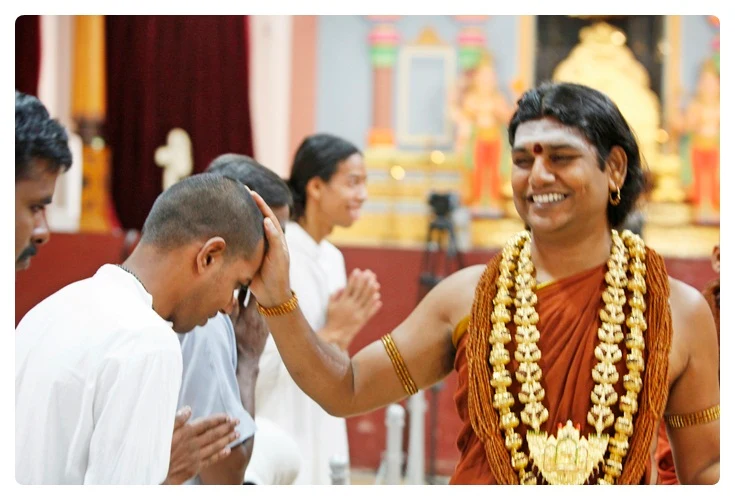
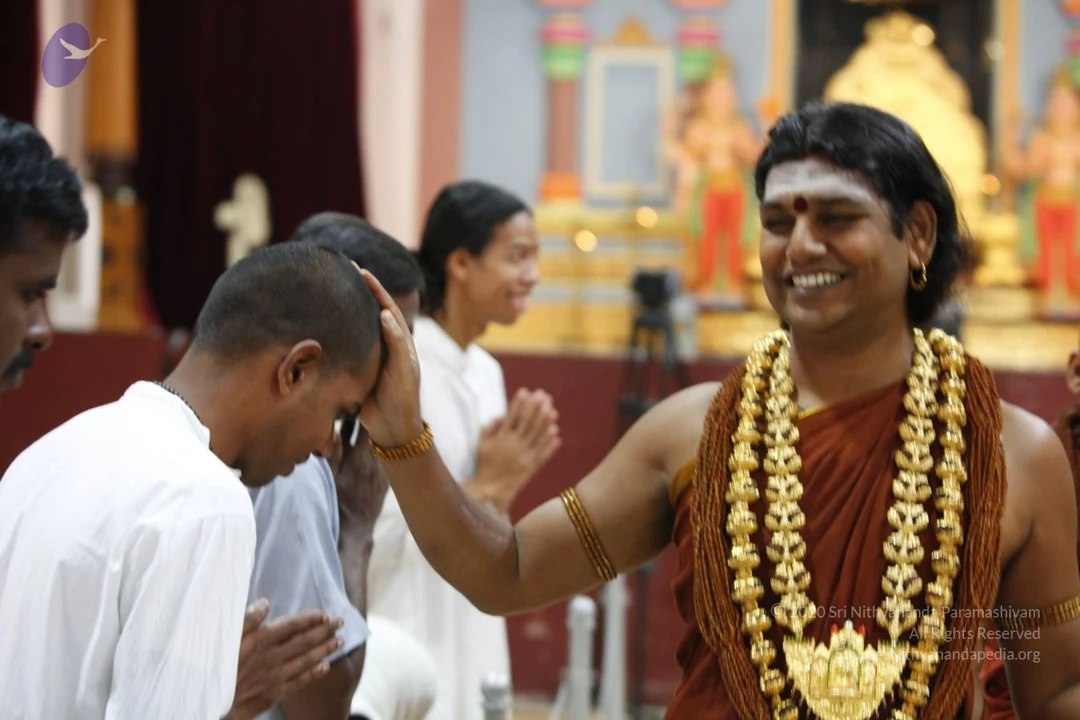
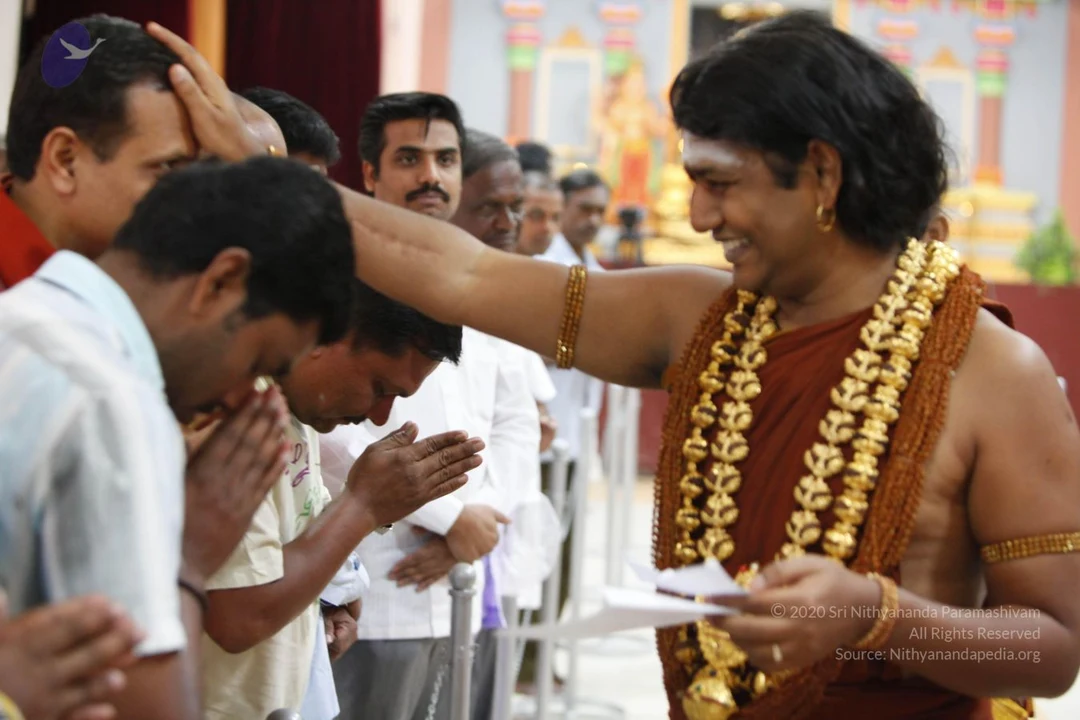
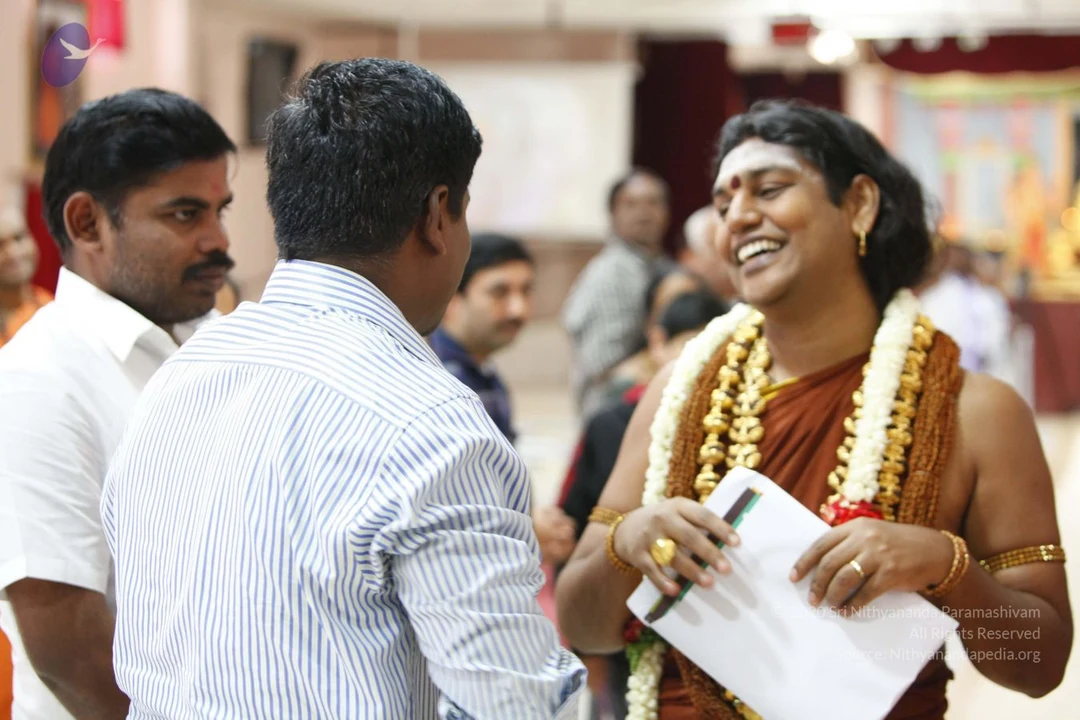
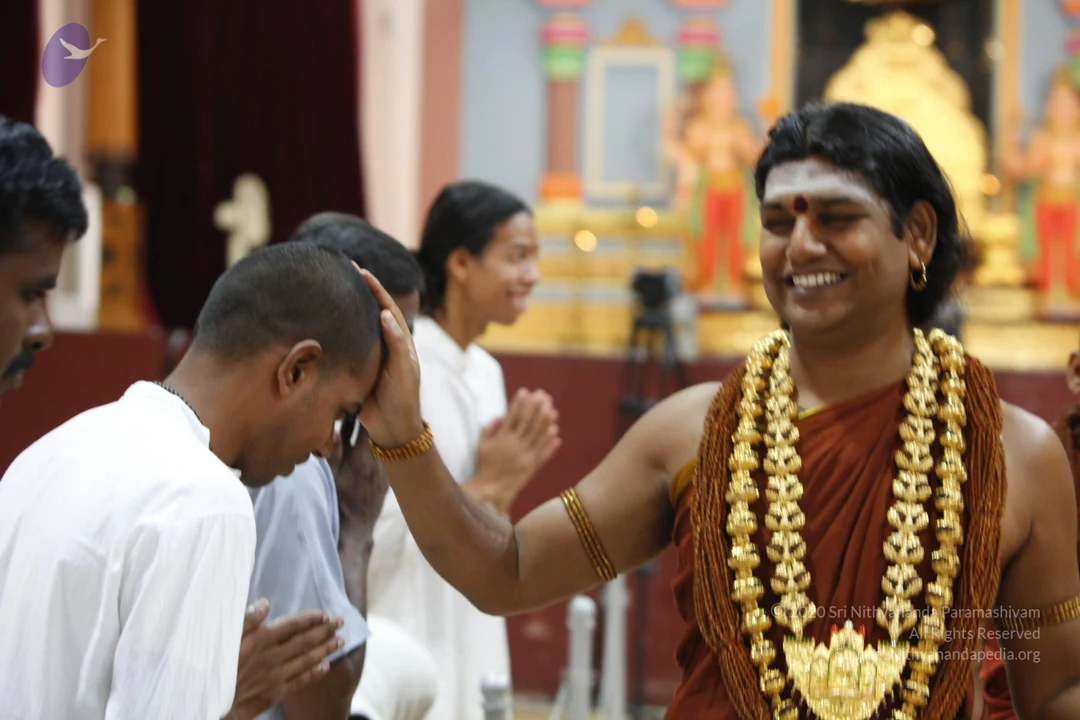
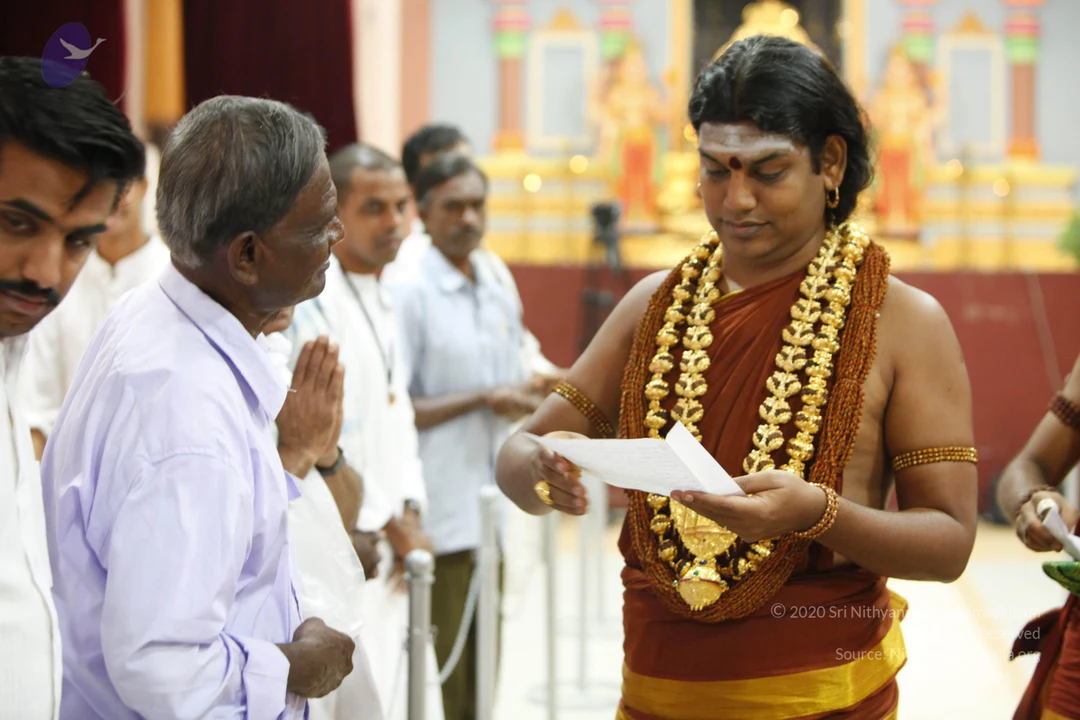
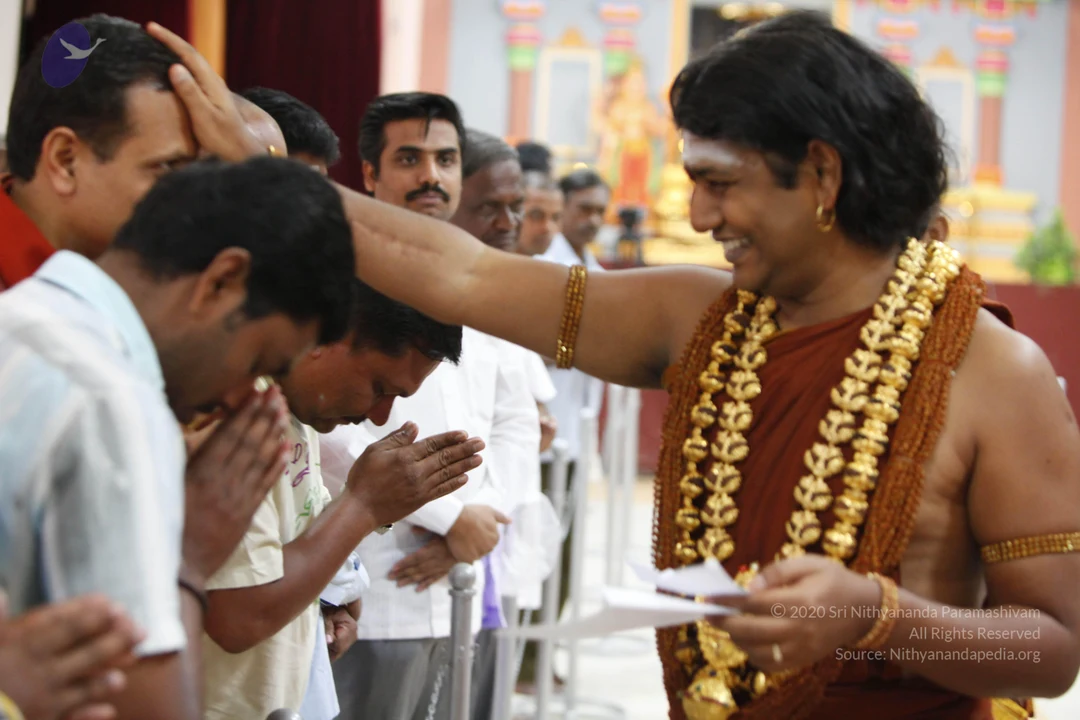
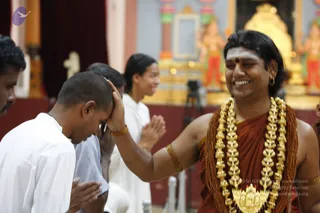
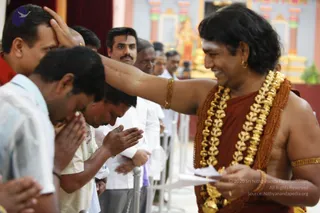
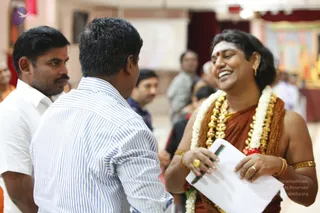
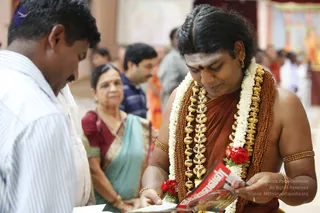
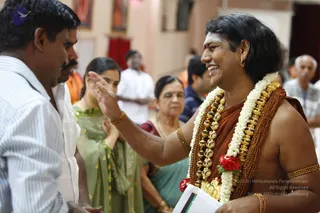
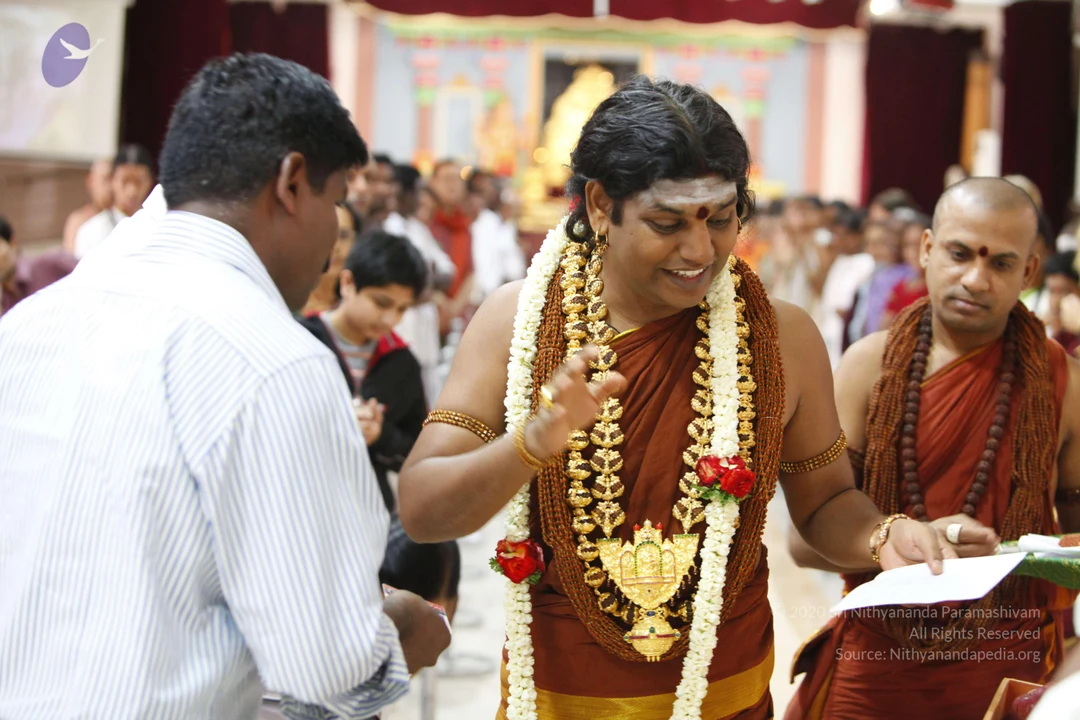
A photograph of a man in an orange-brown saffron robe and a heavy gold necklace of ornate pendants and rudraksha beads, with a sandalwood tilak and red bindi on his forehead and gold bangles on his wrist, smiling as he places his right hand on the head of a shaved-headed devotee in white who bows with palms joined. Other devotees in white and grey stand behind and to the left. In the background are gold-accented shrine decorations, golden deity figures in orange and red, and a red curtain. The man in saffron matches the described appearance and presentation of the a person, so he is identified as a probable in-person a person, bestowing blessing on a devotee.A photograph of a devotee line at a temple-style hall. A man with long, swept-back dark hair, wearing a rust-orange saffron robe, a heavy gold multi-strand ceremonial necklace, gold bangles and a gold armlet, smiles while placing his hand on the head of a kneeling devotee in a light striped shirt with palms pressed together. Other devotees in white shirts and light clothing stand or bow behind in a row. Behind them stands a golden deity murti under a decorated arch with colourful painted pillars. The man with the gold necklace and saffron robe is a person (appearance-based label), shown as a blessing giver to devotees.A candid photograph of a smiling person in an orange-brown robe draped over the body, wearing a white jasmine garland and a heavy gold-coloured bead necklace, with bangles on the wrists and a red-and-white forehead mark. They hold a folded white paper with a pen clipped to it and turn to laugh with a man in a blue-and-white striped shirt standing in the foreground. Another man in a white shirt watches at left. Indoors, a blurred crowd and a red curtain, with a decorated altar area in the background. A person in a saffron-hued robe with long swept-back hair, a garland and ornate gold necklaces is the distinctive presentation consistent with the page's a person claim, so the candidate is present but not clearly confirmed.

Construction

9 photosSource gallery
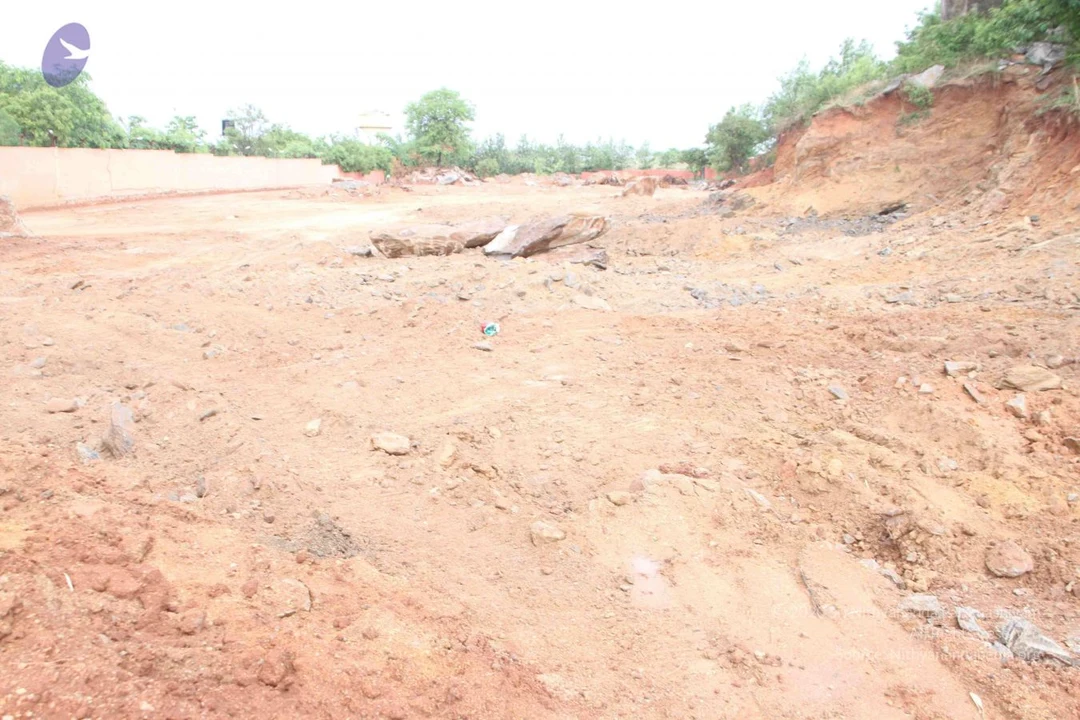
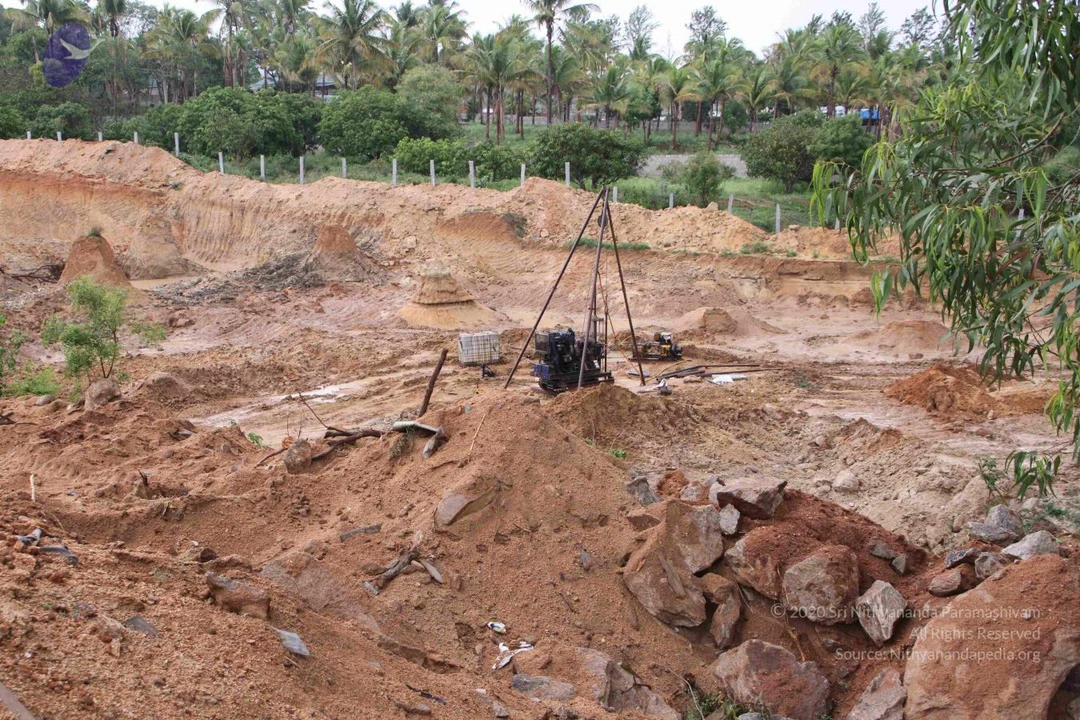
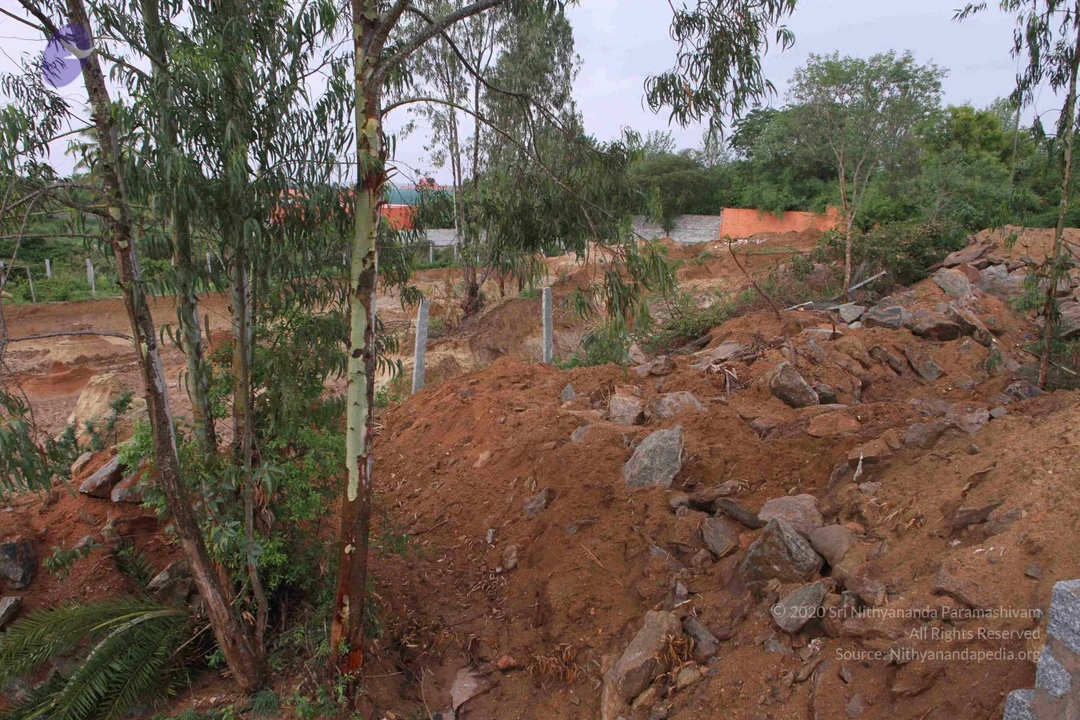
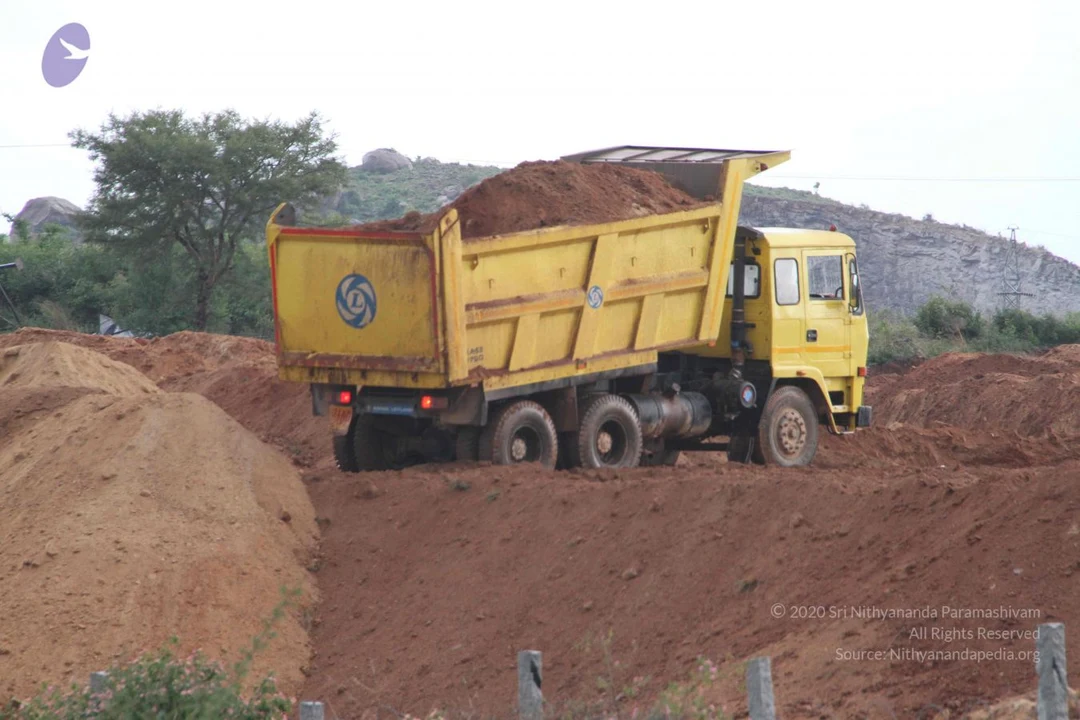
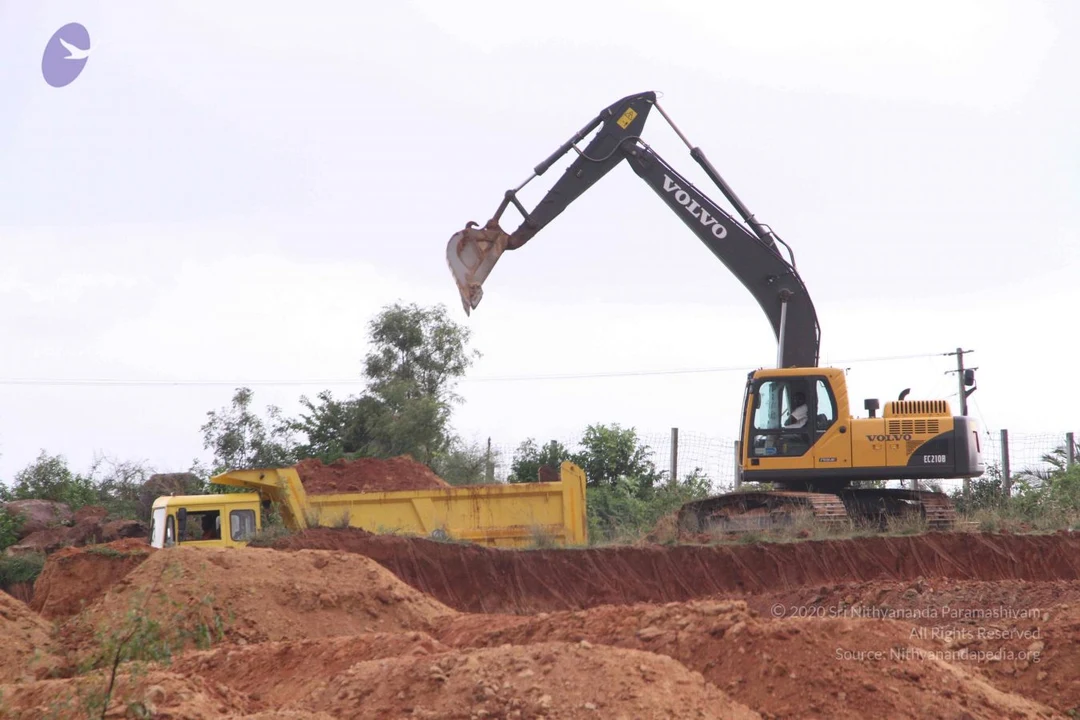
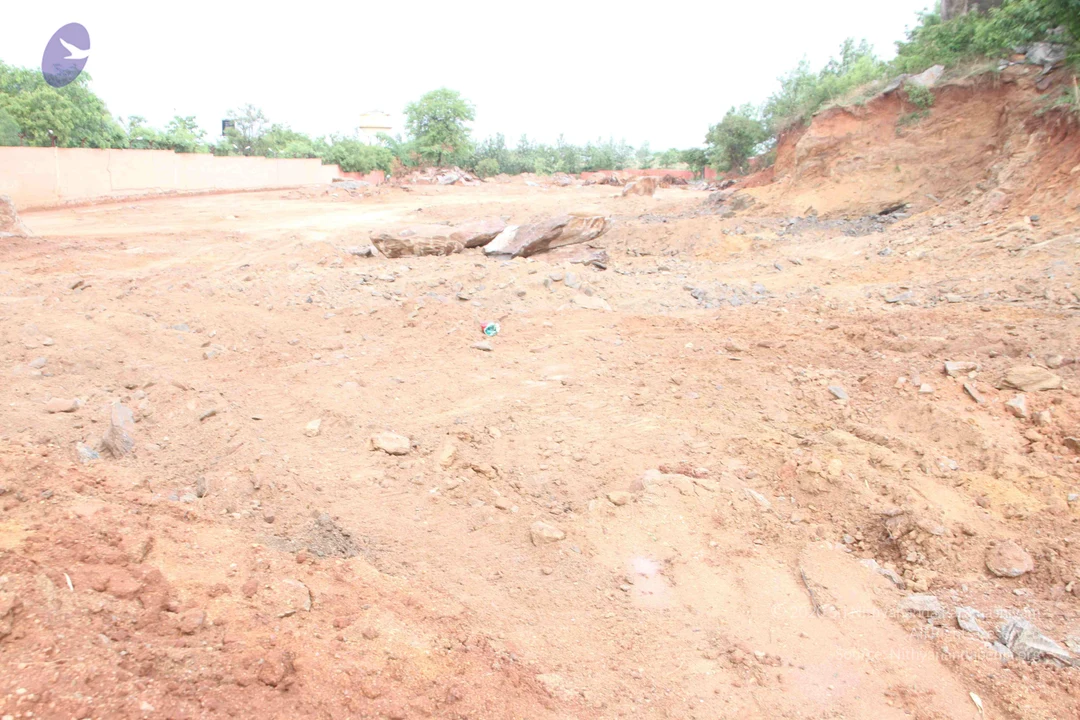
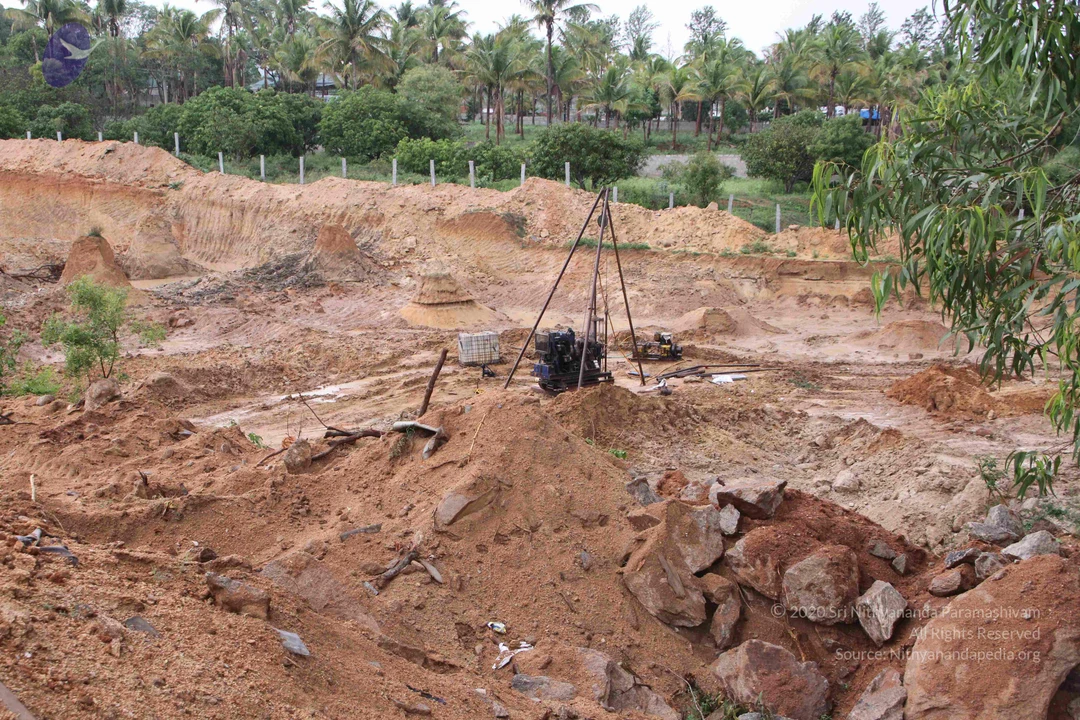
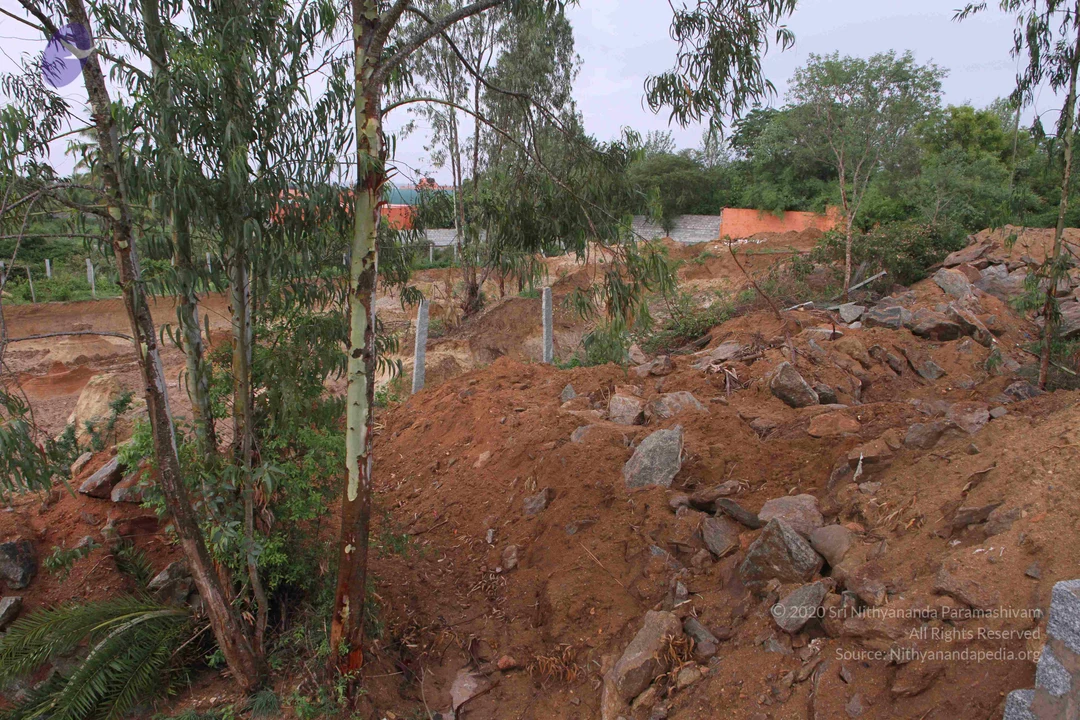
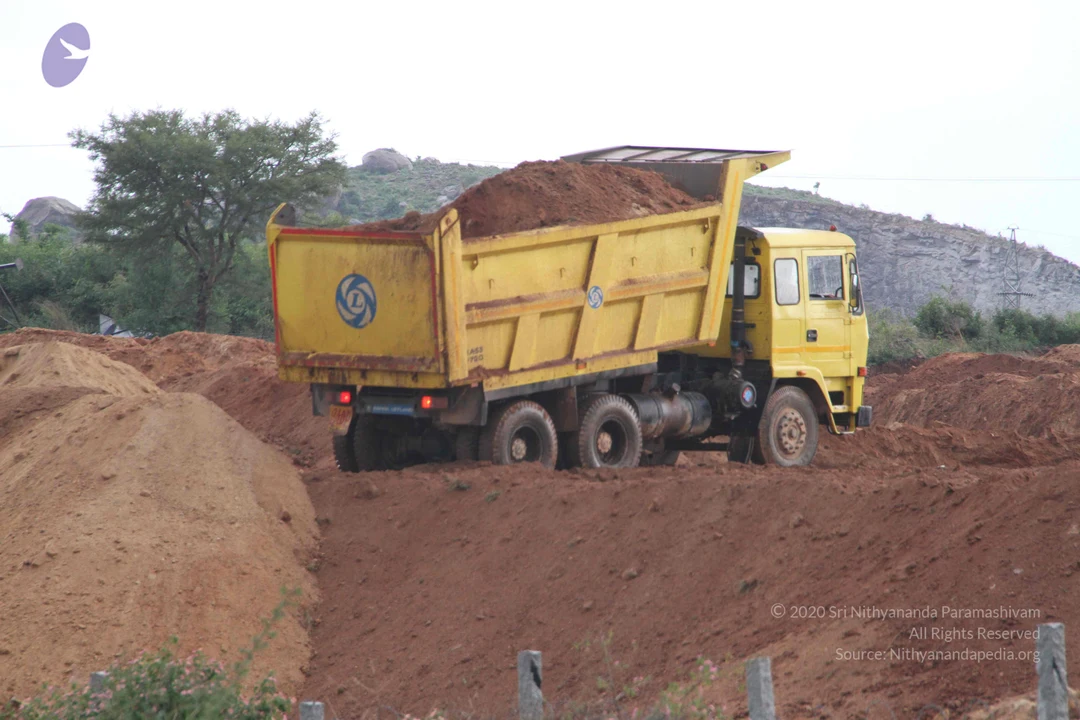
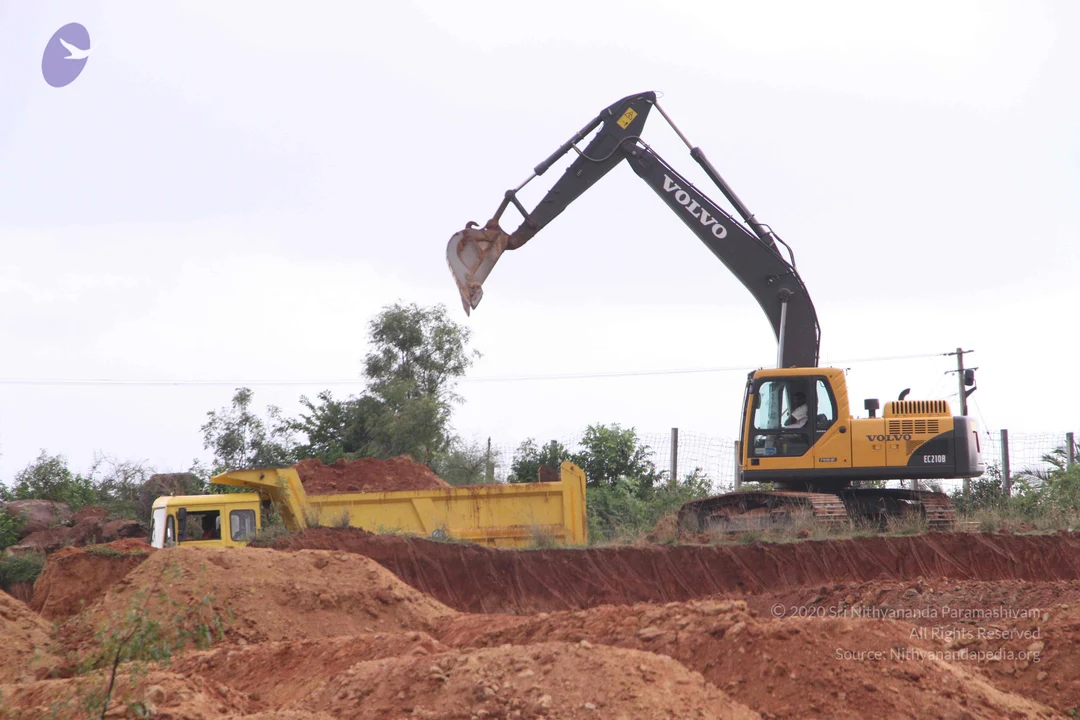
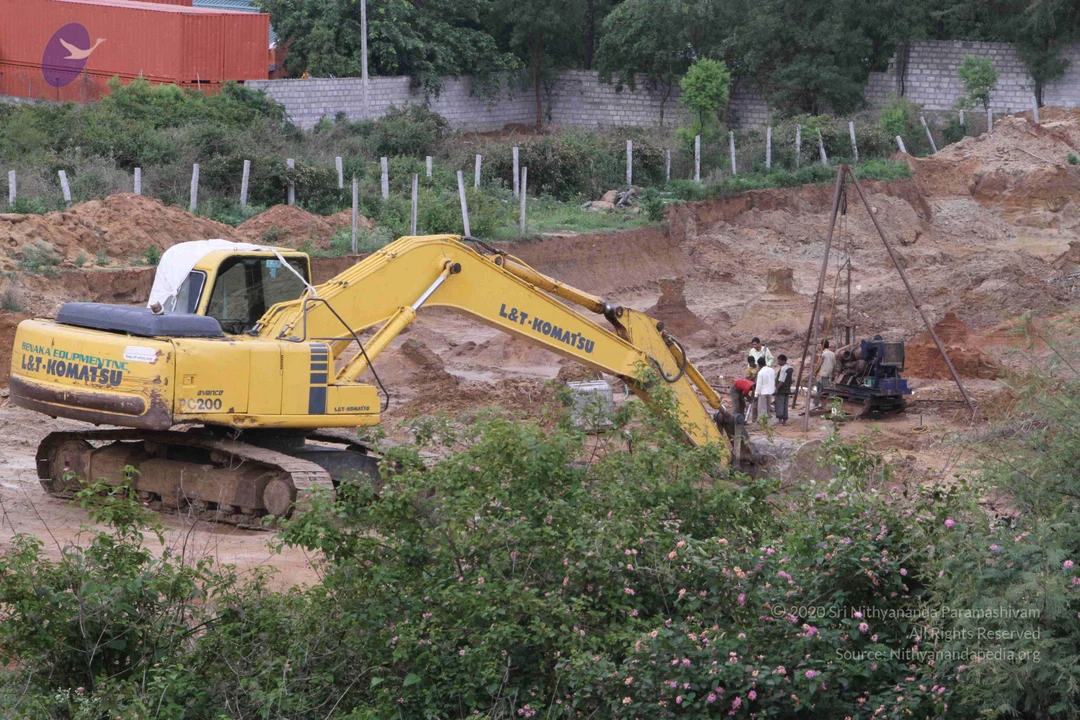
A photograph of a cleared, excavated plot of reddish-brown earth with scattered loose stones and several larger flat rocks in the middle distance. A pale beige boundary wall runs along the left side, with a cut earth bank and a few shrubs and trees on the right. A small crumpled piece of material lies on the ground near the centre. No people, ceremony or deity is visible, and the scene shows only ground preparation work.A photograph of an excavated red-earth site with mounds of loose soil, scattered rocks and a drilling rig with tall mast on a metal frame. A small dark machine with a generator-like unit and a yellow excavator sit in the cleared area, with a row of white fence posts and dense palm trees and shrubs beyond. No people are visible in the scene.A rough construction or land-clearing site with reddish-brown excavated soil and piles of grey boulders in the foreground. Tall slender eucalyptus trees with pale peeling bark stand on the left, and a few small shrubs and a fern grow near the edge. Thin wooden stakes and a low wall or fence line run across the mid-ground, with orange-painted boundary walls and green foliage behind. No people are visible.A photograph of a construction site with a yellow L&T-Komatsu excavator digging into a bare, reddish-brown earth pit. The excavator's boom and bucket are extended across the mud and loose soil, with puddles and piled dirt around the site. Palm trees, green shrubs and an orange boundary wall with a green-roofed structure stand in the background under an overcast sky. No people are visible in the scene.A photograph of a yellow tipper lorry with a bright yellow cab and tipping body, dumping reddish-brown earth onto a graded mound of the same soil. The truck has a blue circular logo on its side and a rear tail light. Behind the site are scrubby green trees and a rocky hillside with a utility pole, and a wire fence runs along the bottom edge. No people are visible.A yellow tipper truck with its dump bed raised at an angle, unloading reddish-brown earth onto a dirt site. Red triangular warning reflectors are mounted on the grille, and the registration plate reads KA-03 linked to a Sri Venkateshwara vehicle label on the cab. Behind the site are green trees, scattered low buildings and a grey, hazy sky. No people are visible in the scene.

Sacred-Arts

8 photosSource gallery
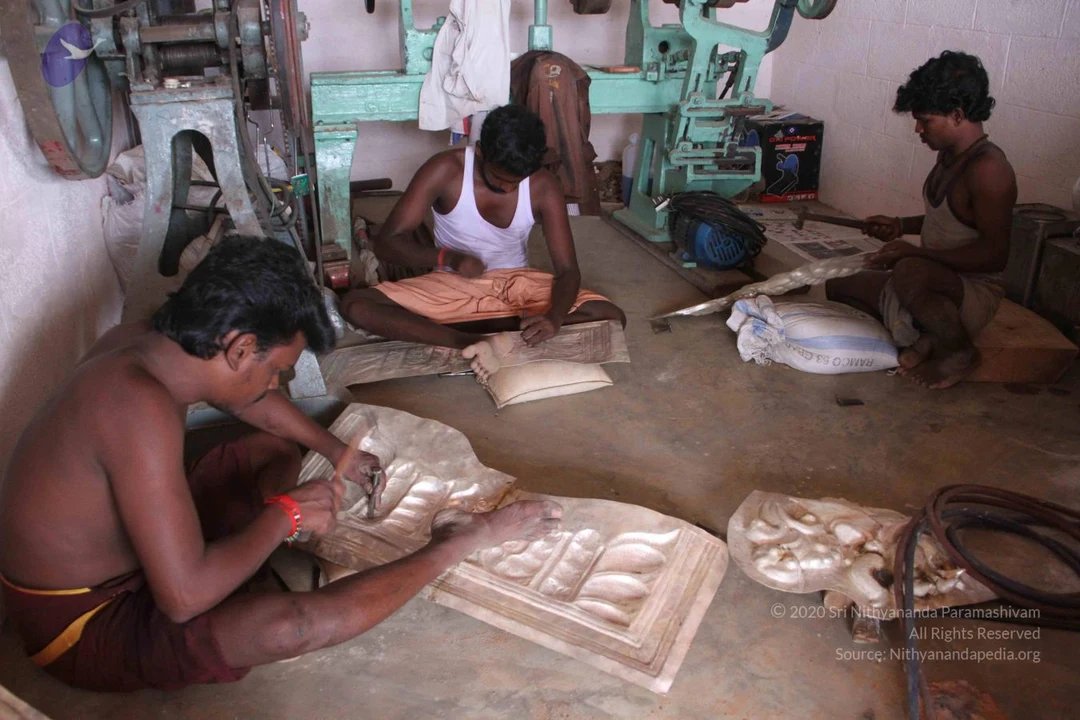
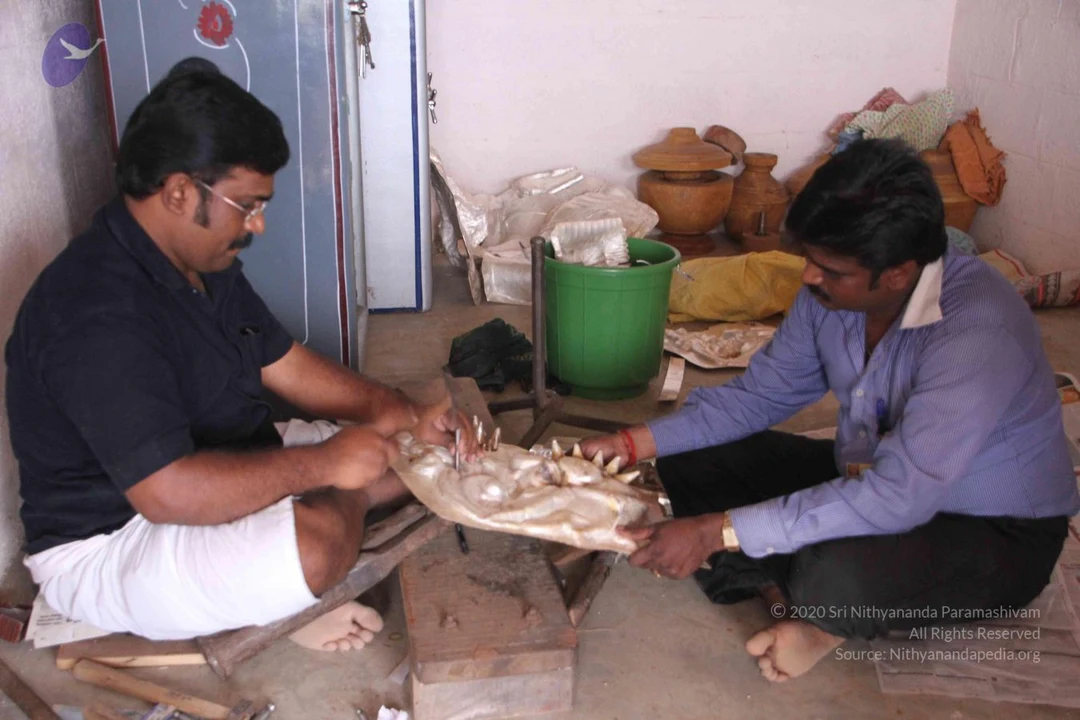
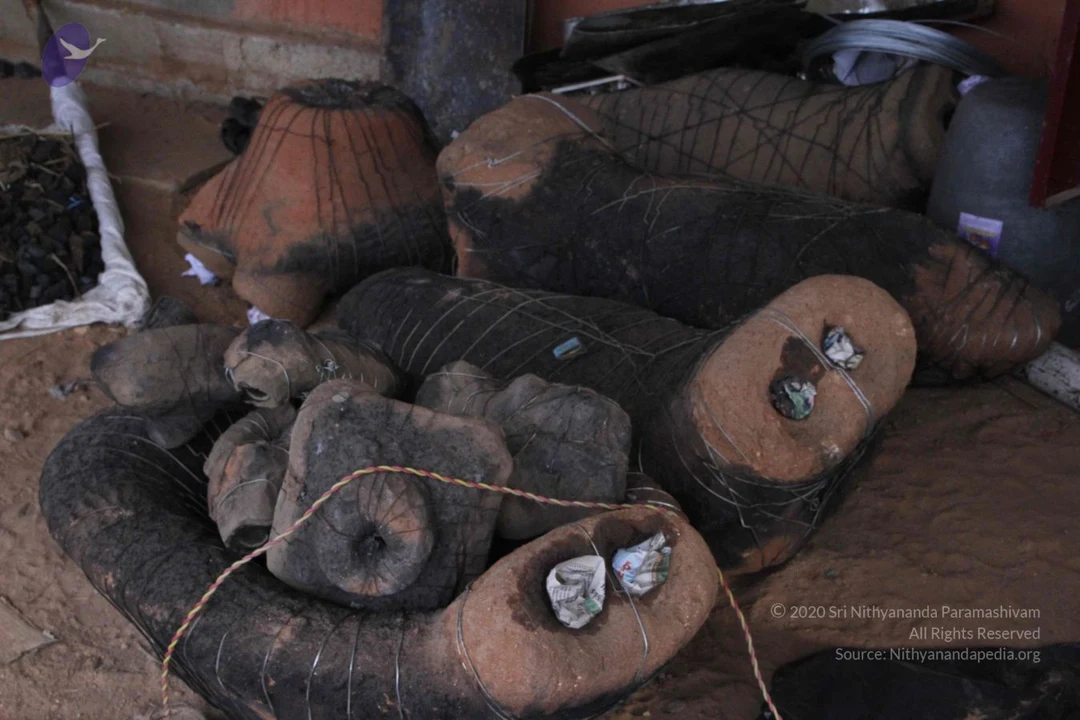
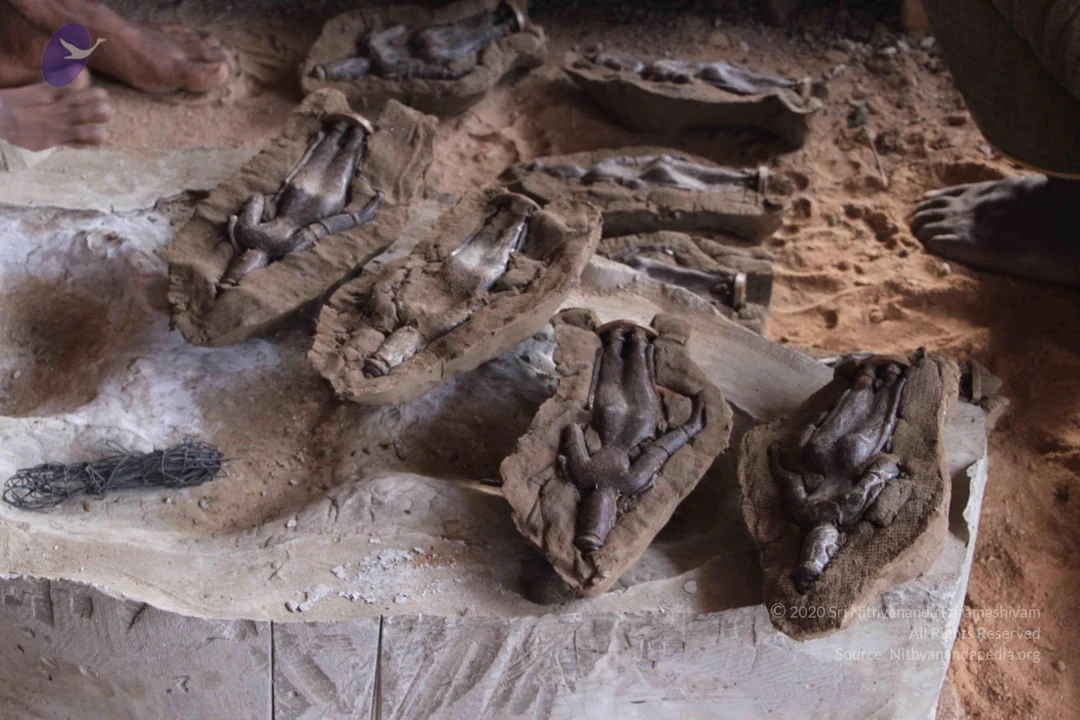
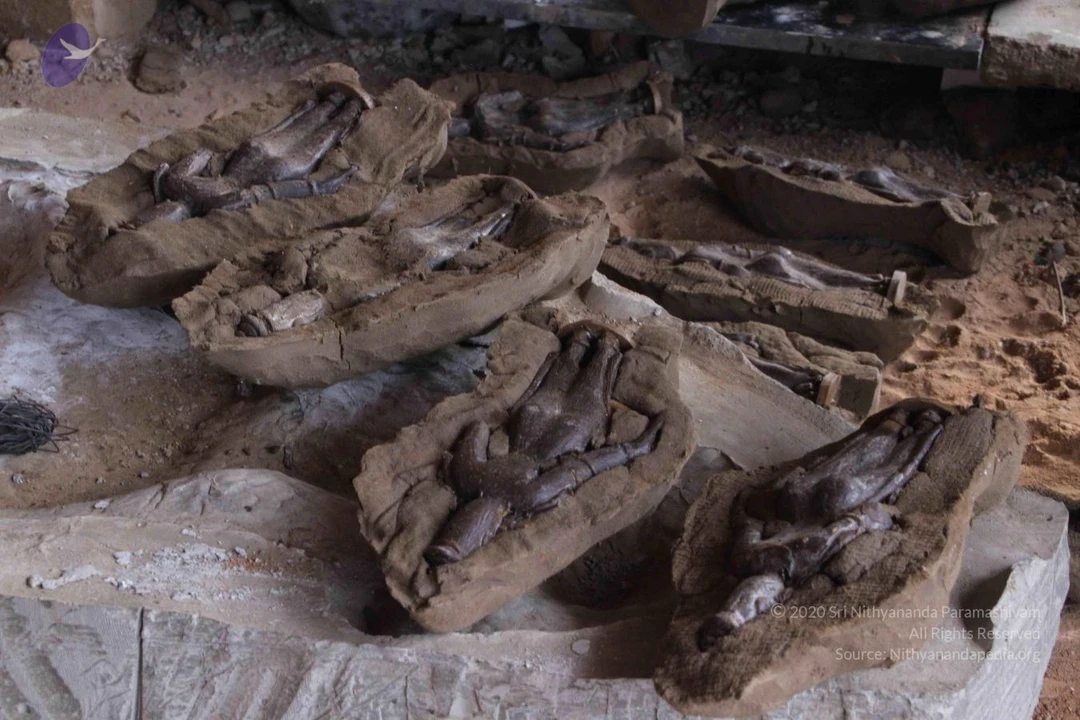
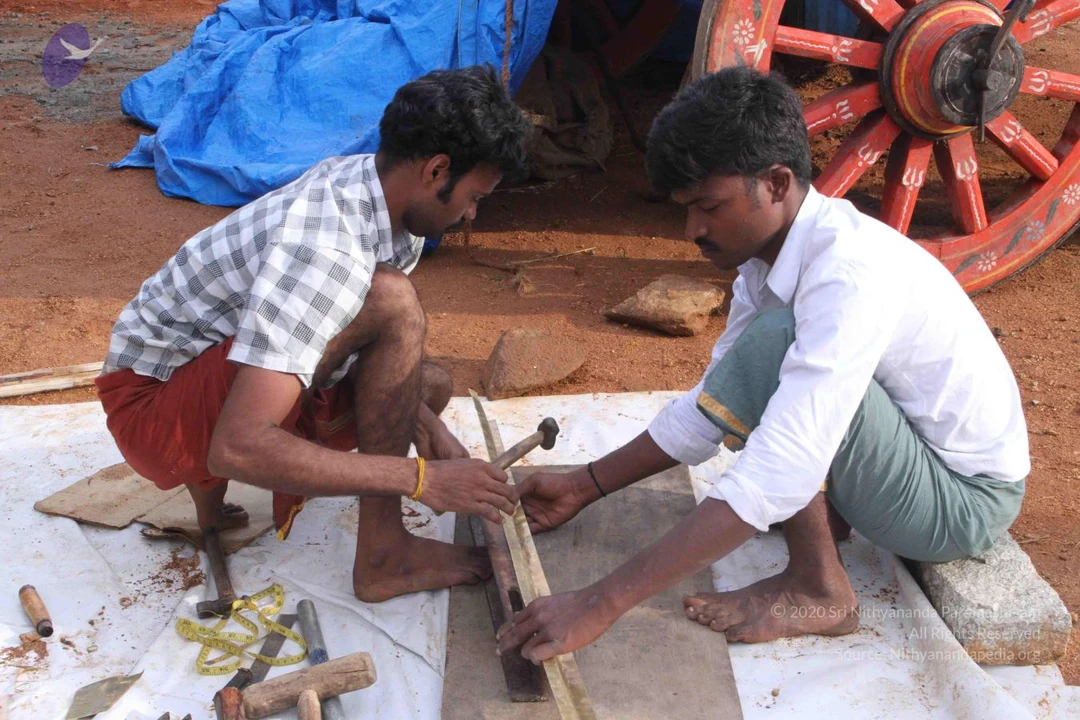
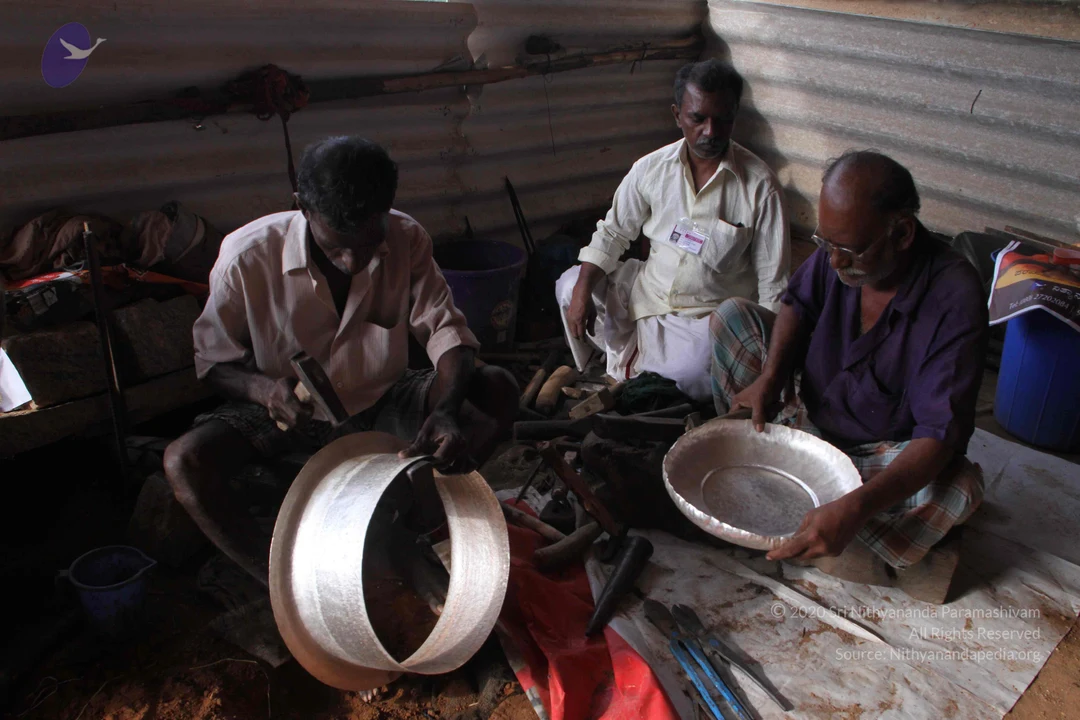
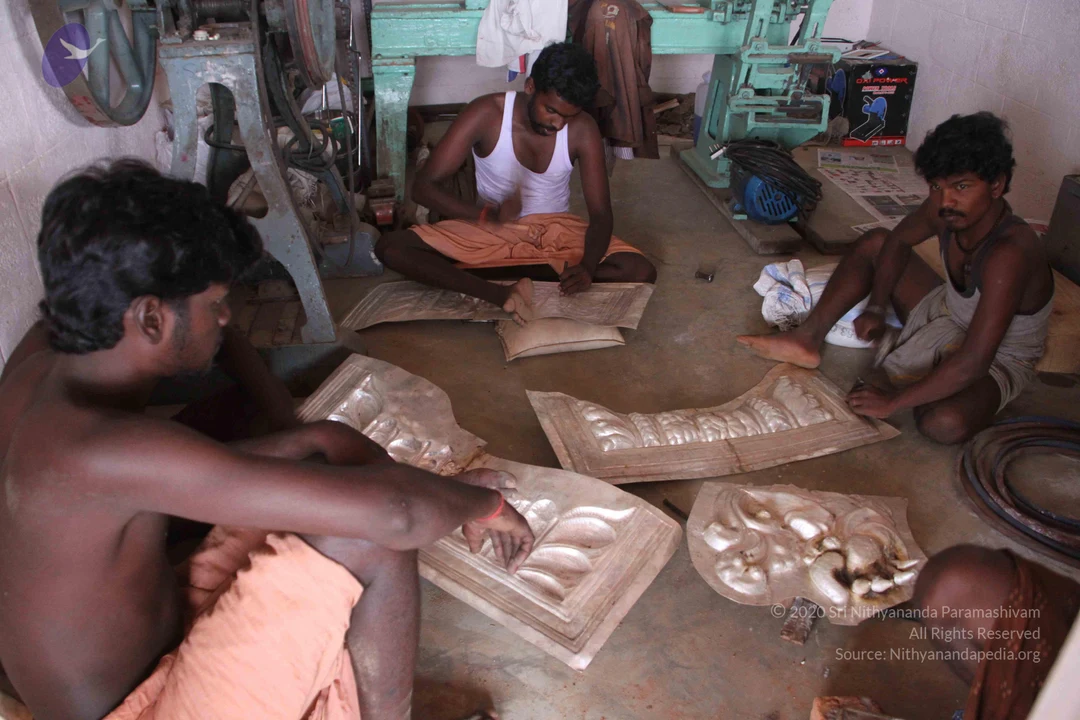
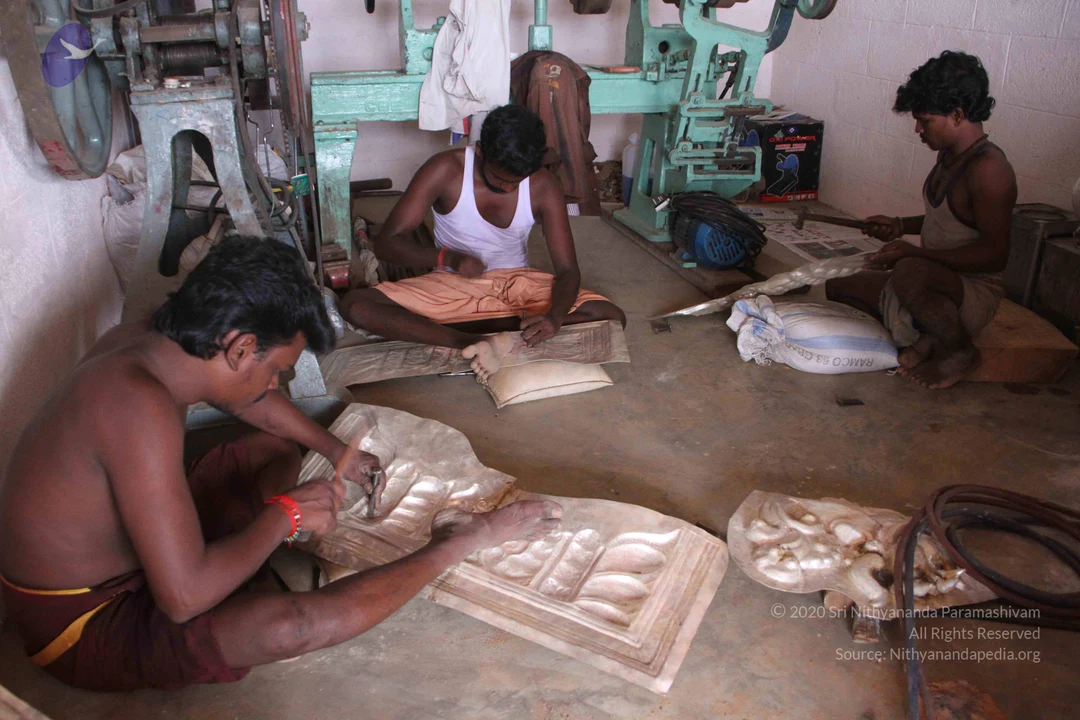
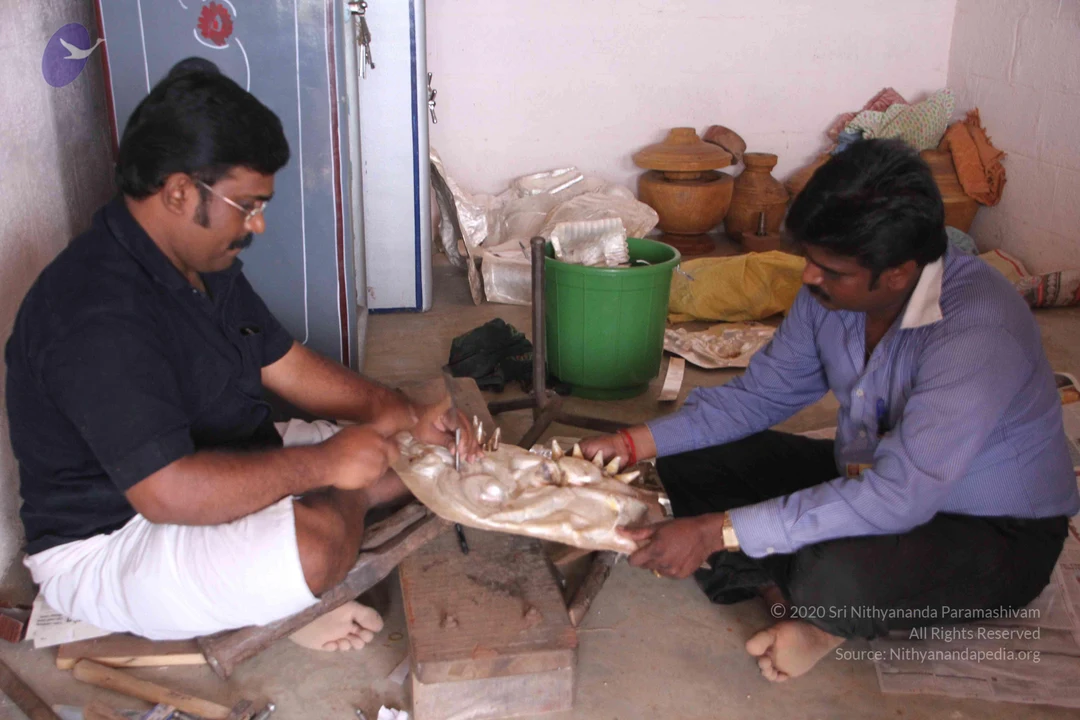
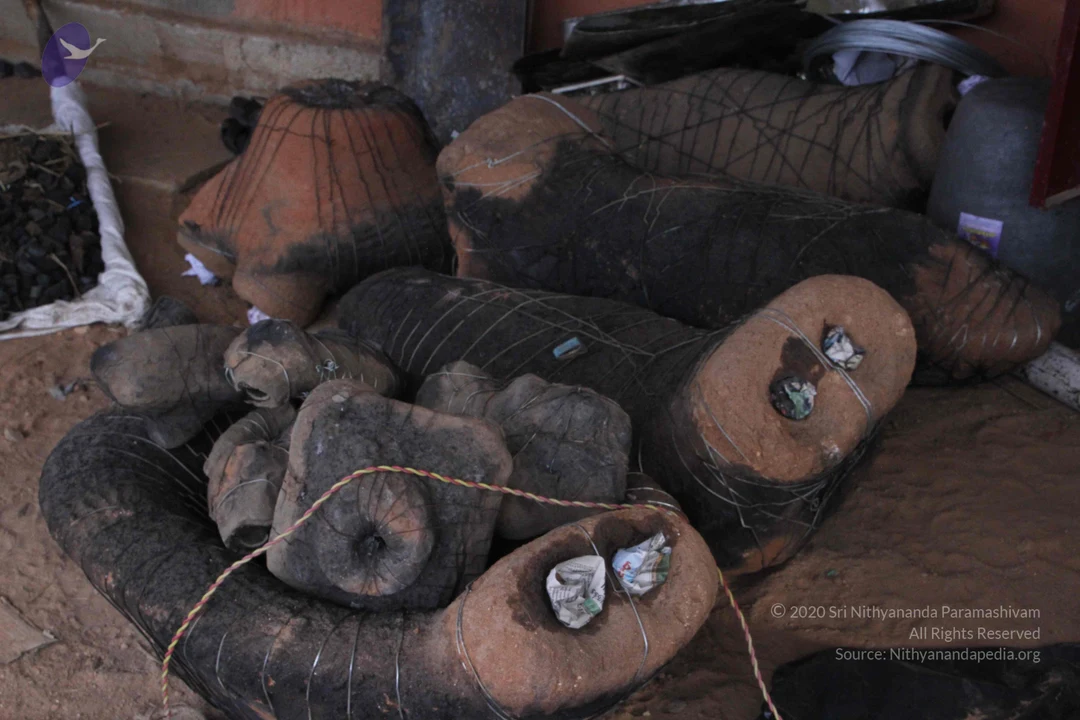
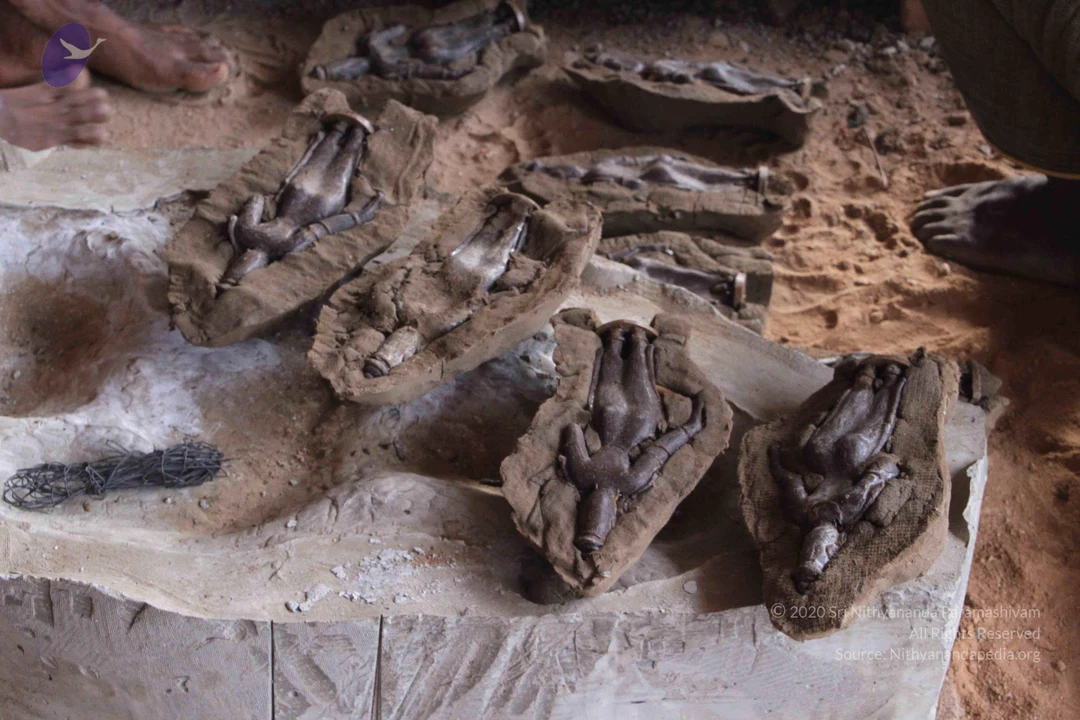
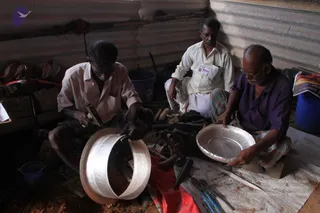
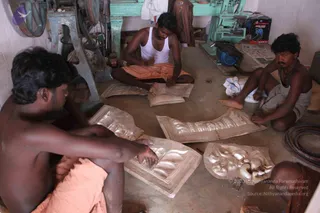
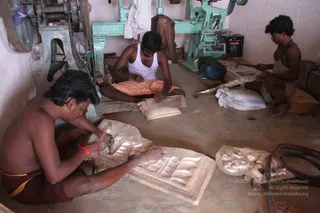
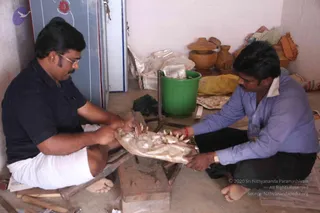
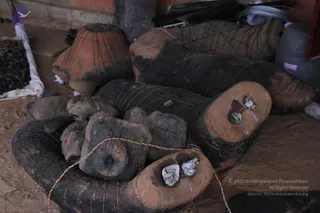
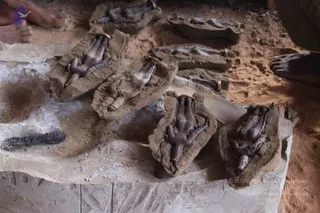
Three men work sitting on the ground under a corrugated metal roof, shaping metal vessels with hand tools. The man on the left wears a white shirt and dhoti and hammers a large silver-coloured cylindrical piece. The man in the centre wears a white shirt and white dhoti and watches, with a small badge on his shirt pocket. The man on the right wears a purple shirt and checked lungi and holds a shallow silver-coloured bowl. Hand tools, metal rods and a blue bucket lie on a cloth on the ground, and a colourful cloth hangs at the upper right.Three young men work on the floor of a workshop carving decorative stone or plaster architectural panels with floral and leaf relief patterns. The man on the left, bare-chested and wearing an orange cloth, leans forward toward a panel, while the seated man in the centre wears a white vest and orange dhoti and works on another piece. The man on the right, bare-chested in a grey undershirt, sits with his feet stretched out among finished carved pieces. Machinery and a green workbench stand behind them. No a person candidate is visible.Three men work on carved stone panels in a workshop with a concrete floor. The man on the left, bare-chested and wearing a maroon and yellow cloth with a red wrist thread, carves a relief panel with a chisel. The man in the centre wears a white vest and orange cloth and chisels a second piece. The man on the right, barefoot and bare-chested, holds a tool over a pale panel. Behind them are old green machinery, a hanging cloth and a white sack. The pale carved panels show floral and leaf motifs. No a person candidate is visible.Two men sit on the floor of a bare, whitewashed room working on a pale, sculpted object resting on a low wooden stand. The man on the left wears a dark navy short-sleeved shirt, white dhoti and glasses, and holds the piece with both hands. The man on the right wears a light blue striped shirt, dark trousers and a red thread on his wrist, holding the other end of the piece. Around them are a green plastic bucket, clay pots, folded cloth, a plastic sheet and scattered tools. A blue door stands behind them.A photograph of a pile of large, dark-coated clay or earthen forms bound with thin wire and twisted string, resting on a sandy or earthen floor against a reddish wall. Some forms have wrapped paper or cloth bundles tucked into their openings, and a black sack and metal objects sit at the edges. No people are visible.A photograph of several clay moulds on a pale stone slab in an outdoor sandy setting. Each mould holds a dark metal casting of a small figure with raised arms, one of them pressed into a shallow earthen bed wrapped in cloth. A coil of wire lies at left. Bare feet of workers are visible at the top and right edges. No a person candidate is visible; the figures are cast objects, not people.

01-ADIKAILASA-TEMPLE-ABISHEGAM
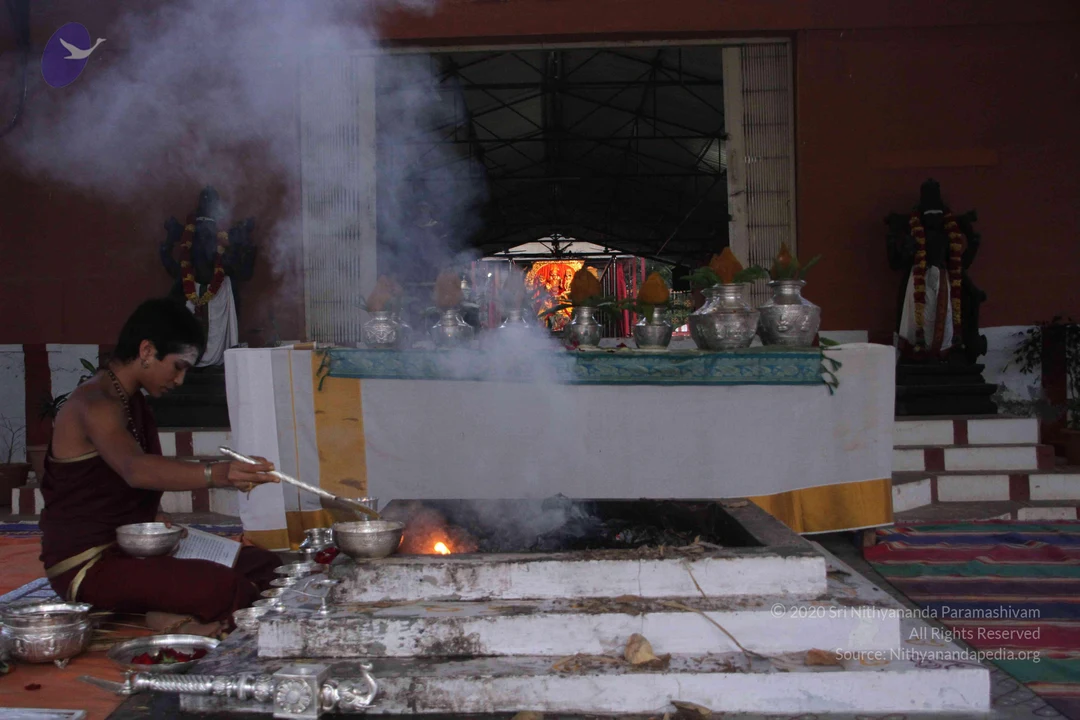
20 photosSource gallery
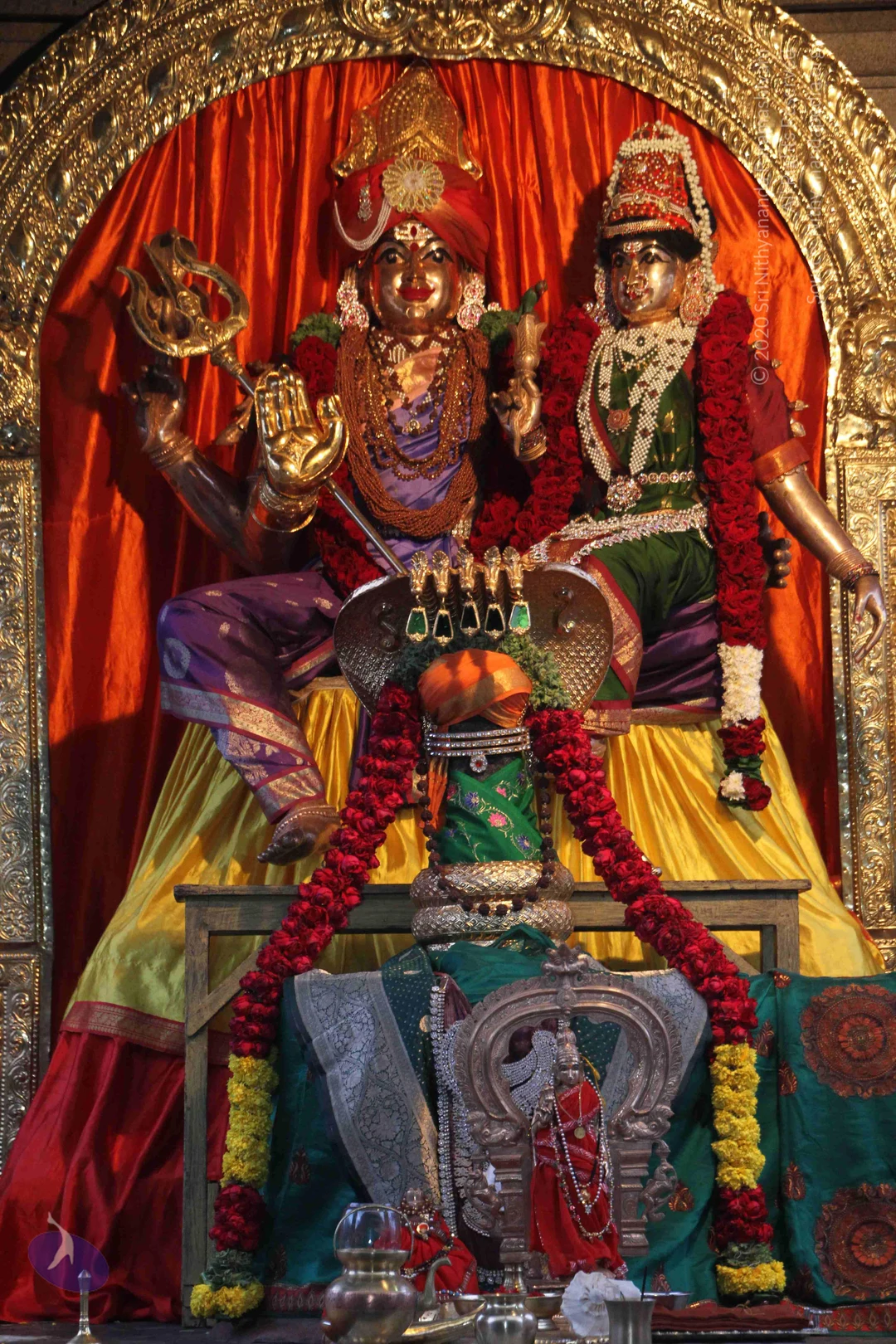
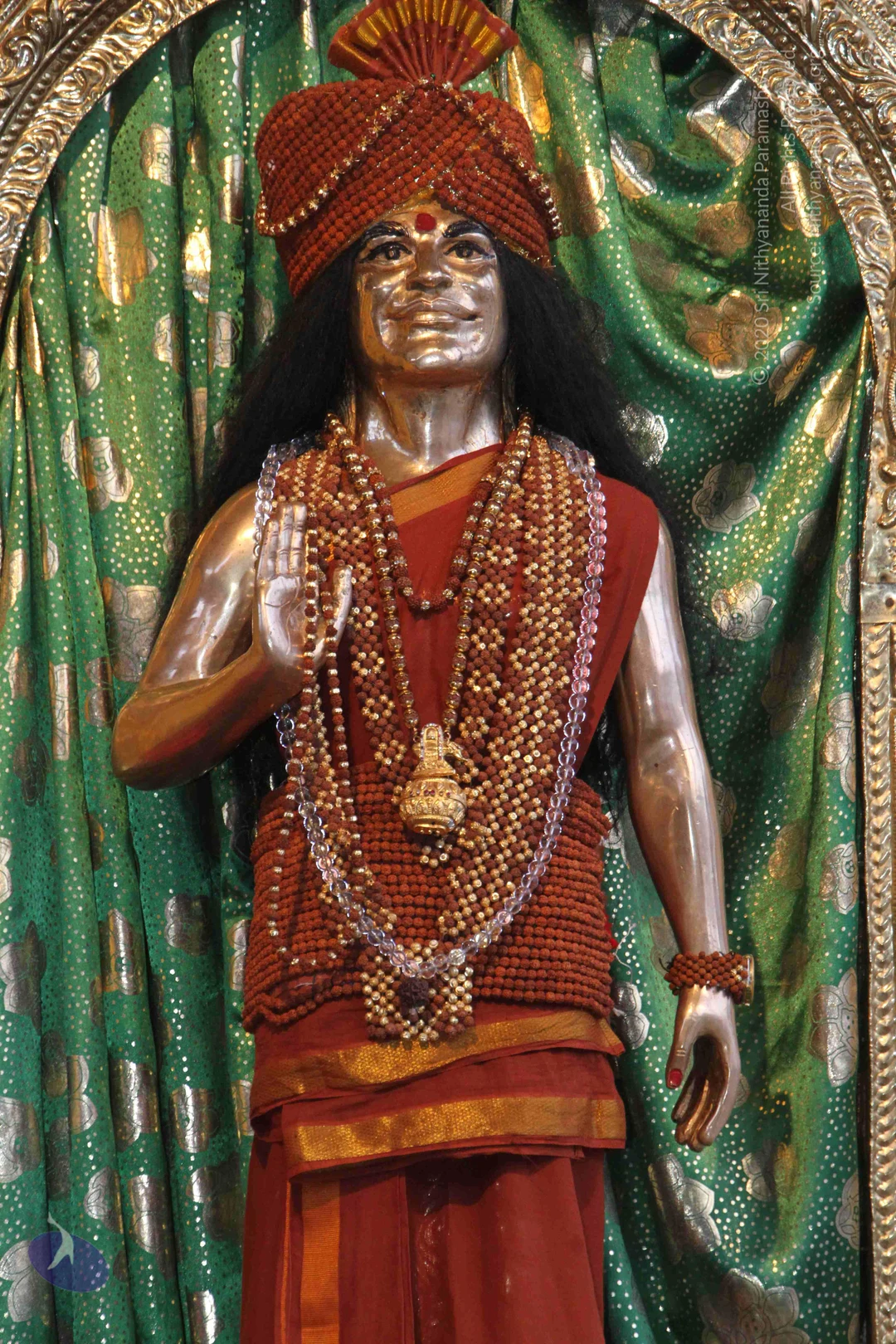
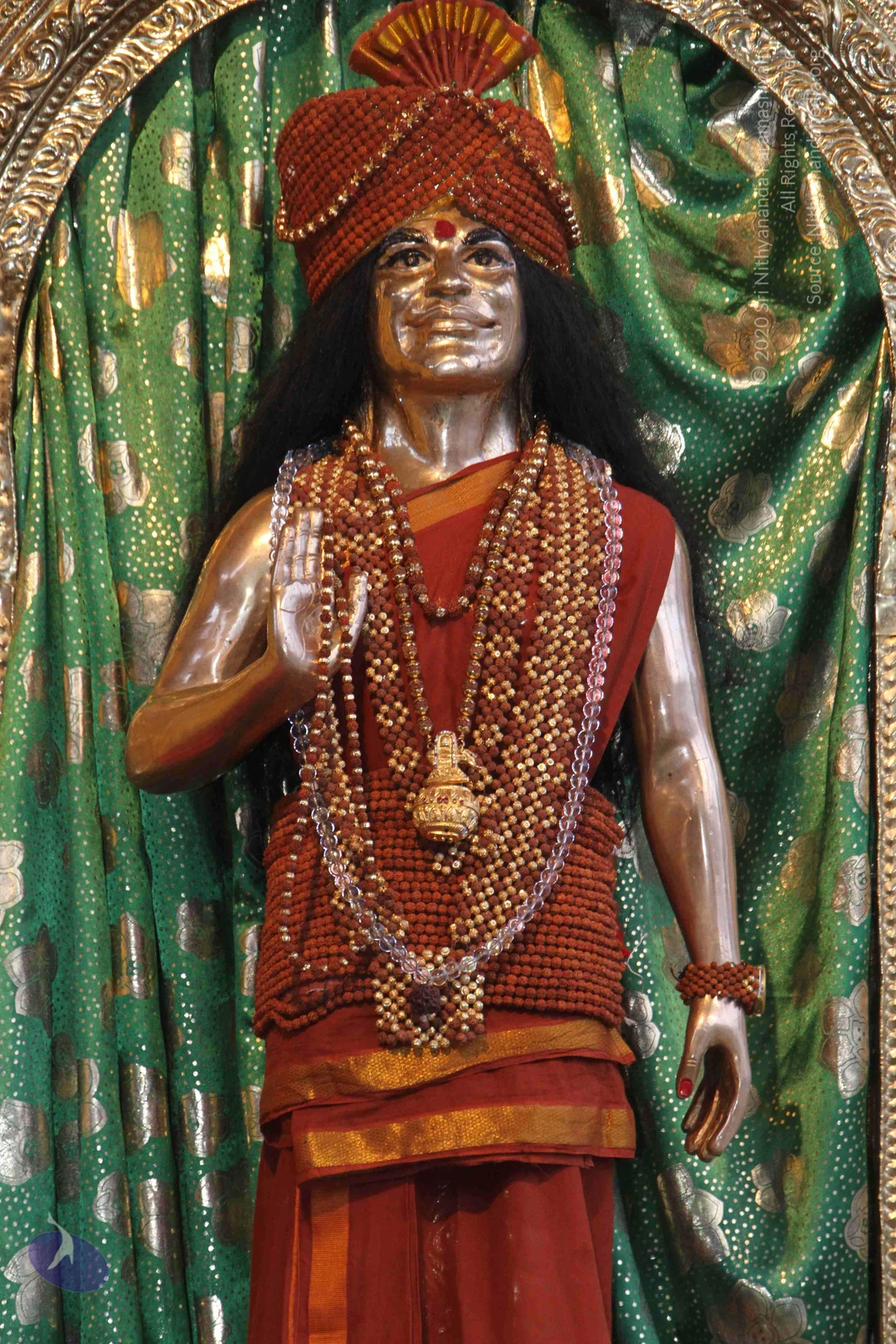
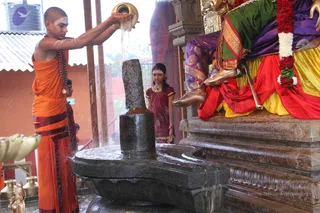
Photograph of a golden deity murti pair seated on a yellow and red draped throne within a gilded arch, with red and white flower garlands. The left figure, a four-armed Shiva-like form, holds a trident and wears a red turban and a rudraksha mala; the right figure wears a green blouse with pearl necklaces and a red-and-gold crown. Between them sits a silver and green-draped object topped with an orange cloth and flower garlands. In front, a small silver figure in red stands in a silver arch with an oil lamp and offerings.A decorated deity murti of Shiva-form is dressed for worship: an orange turban with gold border, a green silk cloth with embroidered blue and pink floral motifs, a jeweled diadem with rhinestone bands and a central red stone, and a thick red rose garland. Rudraksha malas hang across the chest and a cobra hood with five golden snake heads and green gem pendants arches above. Brass and silver pedestal bands sit below. Greenery leaves frame the head. The image is a photograph of the decorated murti, with no visible people.A metallic golden statue of a long-haired sannyasi stands in a gilded arched niche against a green shimmering backdrop with gold floral motifs. The figure wears a rust-red rudraksha-beaded turban with a golden fan-shaped top, a red bindi, and layered rudraksha and golden-bead malas with a golden pendant. A red-orange cloth wraps the torso and lower body with a gold border. The right hand is raised in abhaya-style blessing while the left hangs at the side wearing a rudraksha bracelet. This is a statue, not a living person.A life-size statue of a saint-like figure stands in a gilded arched niche against green and gold brocade drapery. The statue has a metallic silver-gold finish, wears a red-orange turban with a fan-shaped crest and a red bindi, and has long dark hair falling behind the shoulders. It is adorned with layered rudraksha and gold-bead malas, a clear crystal mala, a gold pendant and a rudraksha bracelet, with a red-orange sleeveless garment and a red dhoti with gold border. The right hand is raised in a blessing gesture while the left hand hangs at the side. Photographed as a statue, not a living person.A priest in saffron-orange dhoti and shawl, with a shaved head and tripundra marks, pours water over a black stone shivalinga set on a dark stone yoni-peetha base during an abhishekam. Behind the lingam stand two golden deity murtis, one holding a trident and one wearing a crown, draped in red garlands and set against an orange-red backdrop. A small golden sculpture of a sage in orange robes and rudraksha stands in a green-curtained niche at right. Brass pots and small golden vessels sit at the foreground and left. The priest is the only physical person visible.A photograph of an abhishekam at a temple shrine. A shaved-headed priest in an orange dhoti and orange shawl with a rudraksha mala pours water from a brass pot over a dark black stone shivalingam set on a stone yoni pitham. A young girl in a maroon dress with a tilak stands beside the lingam watching. Behind them a large deity murti wears a purple and gold garment, red and gold trim, a garland of red and white flowers and gold footwear. Rain or water spray falls in the open-sided shrine, and brass vessels sit at the lower left.

02-PRATHYAKSHA-PADA-PUJA
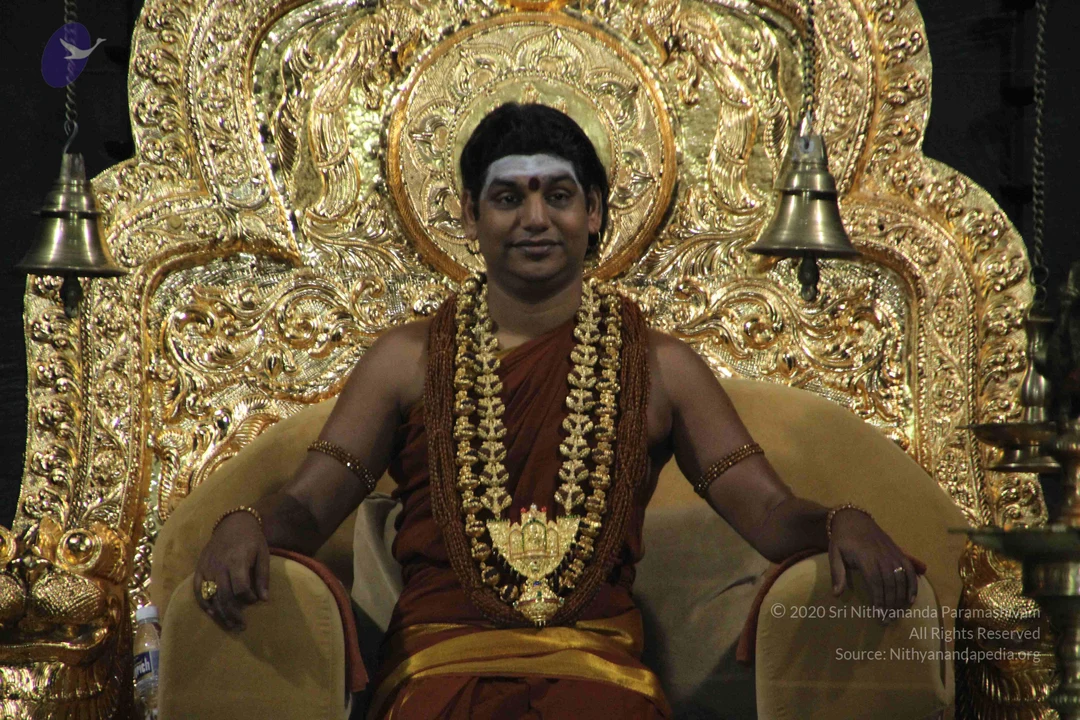
24 photosSource gallery
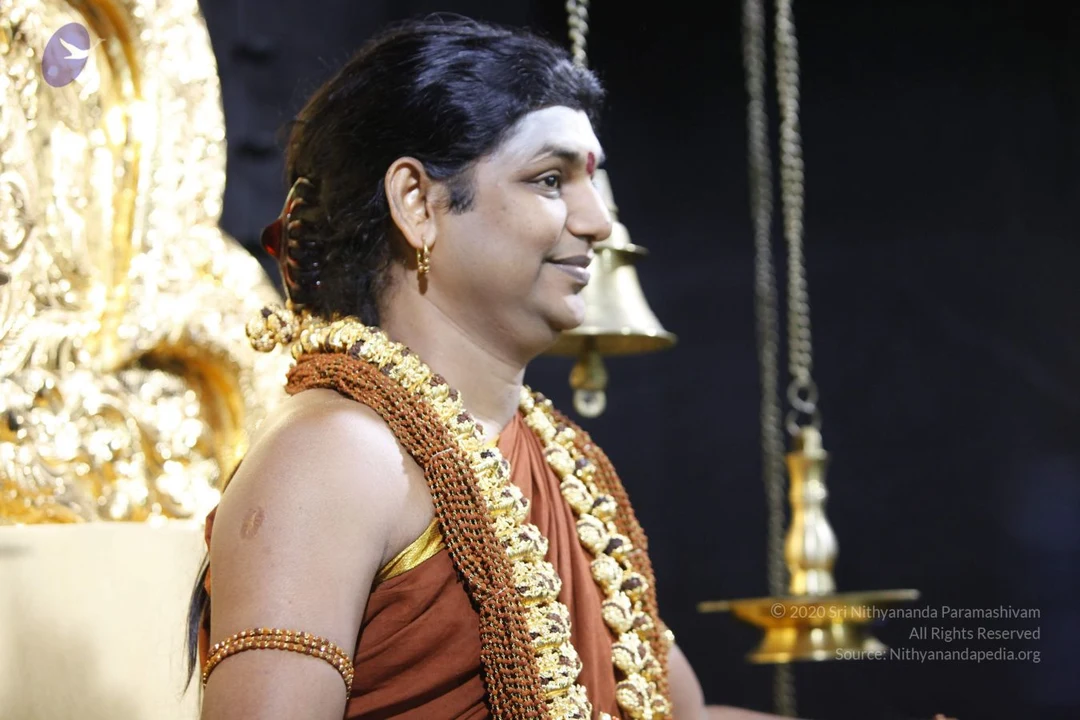
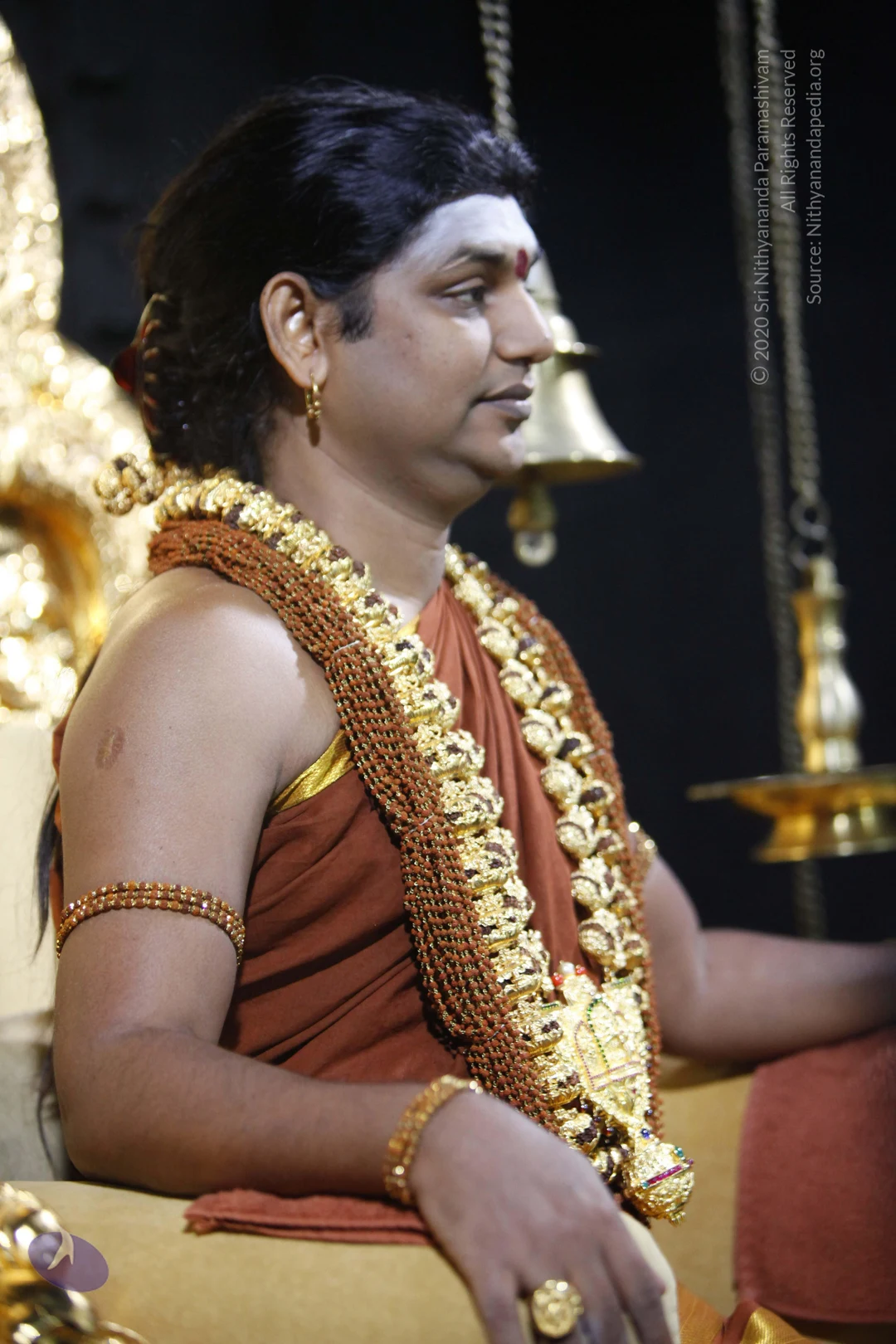
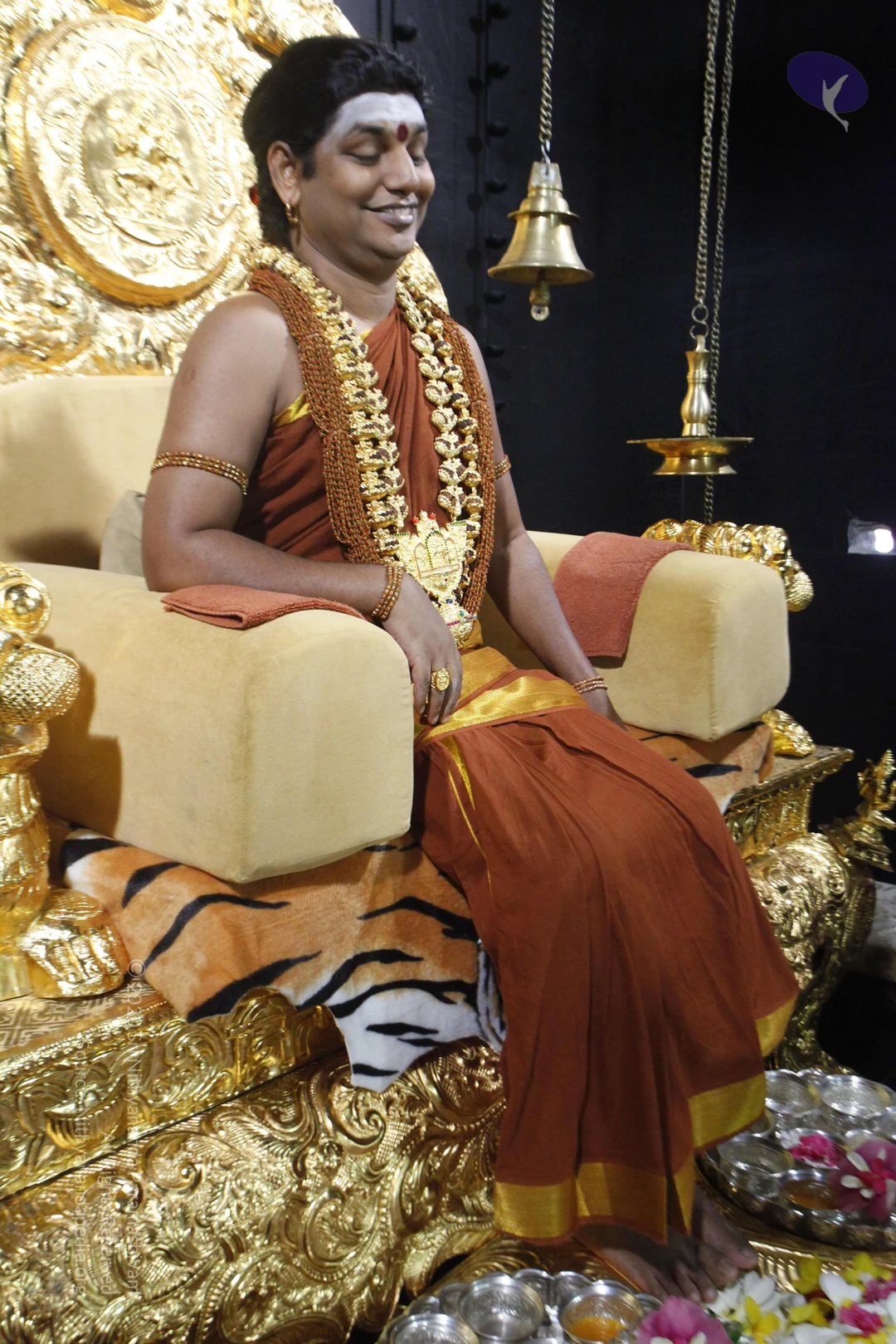
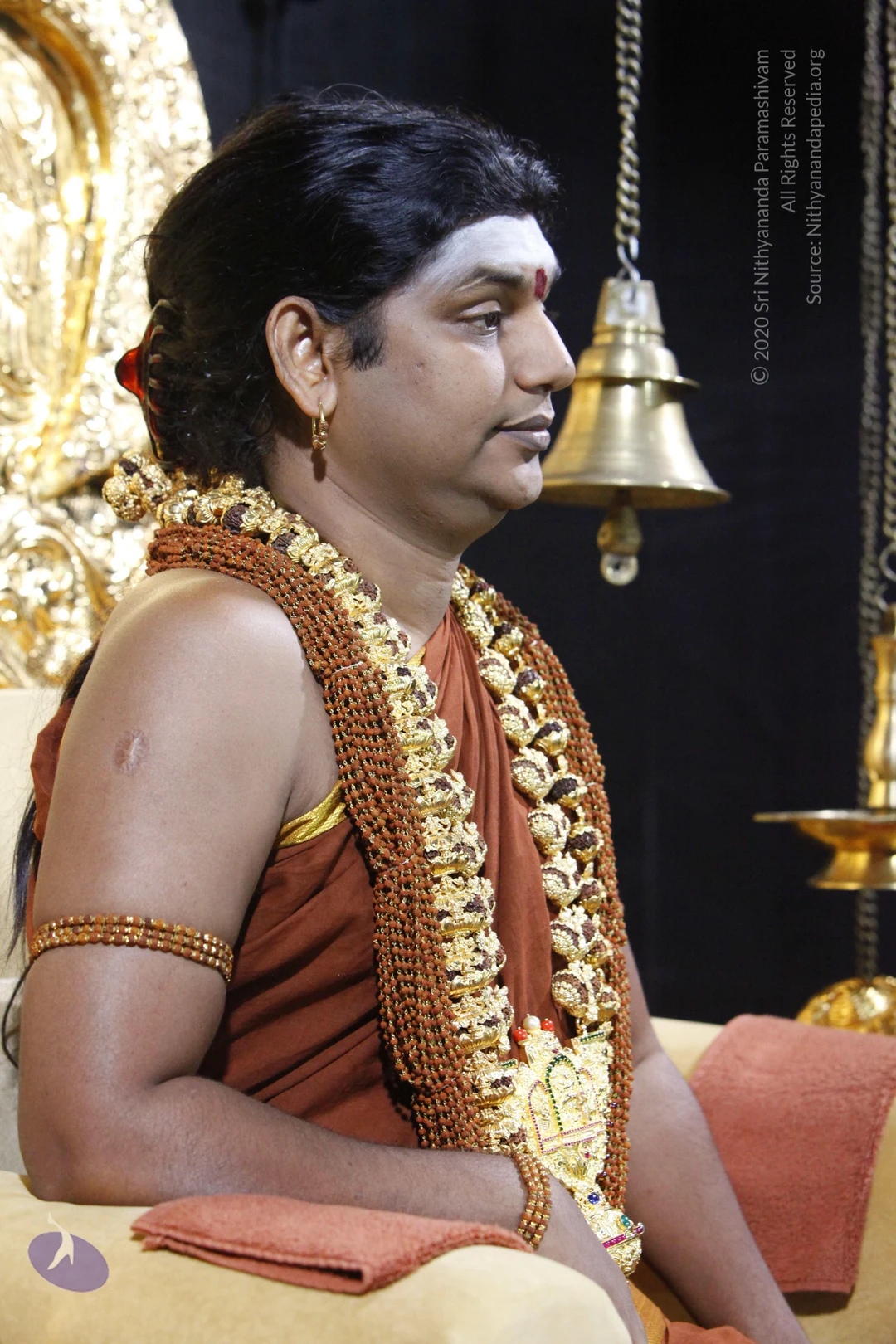
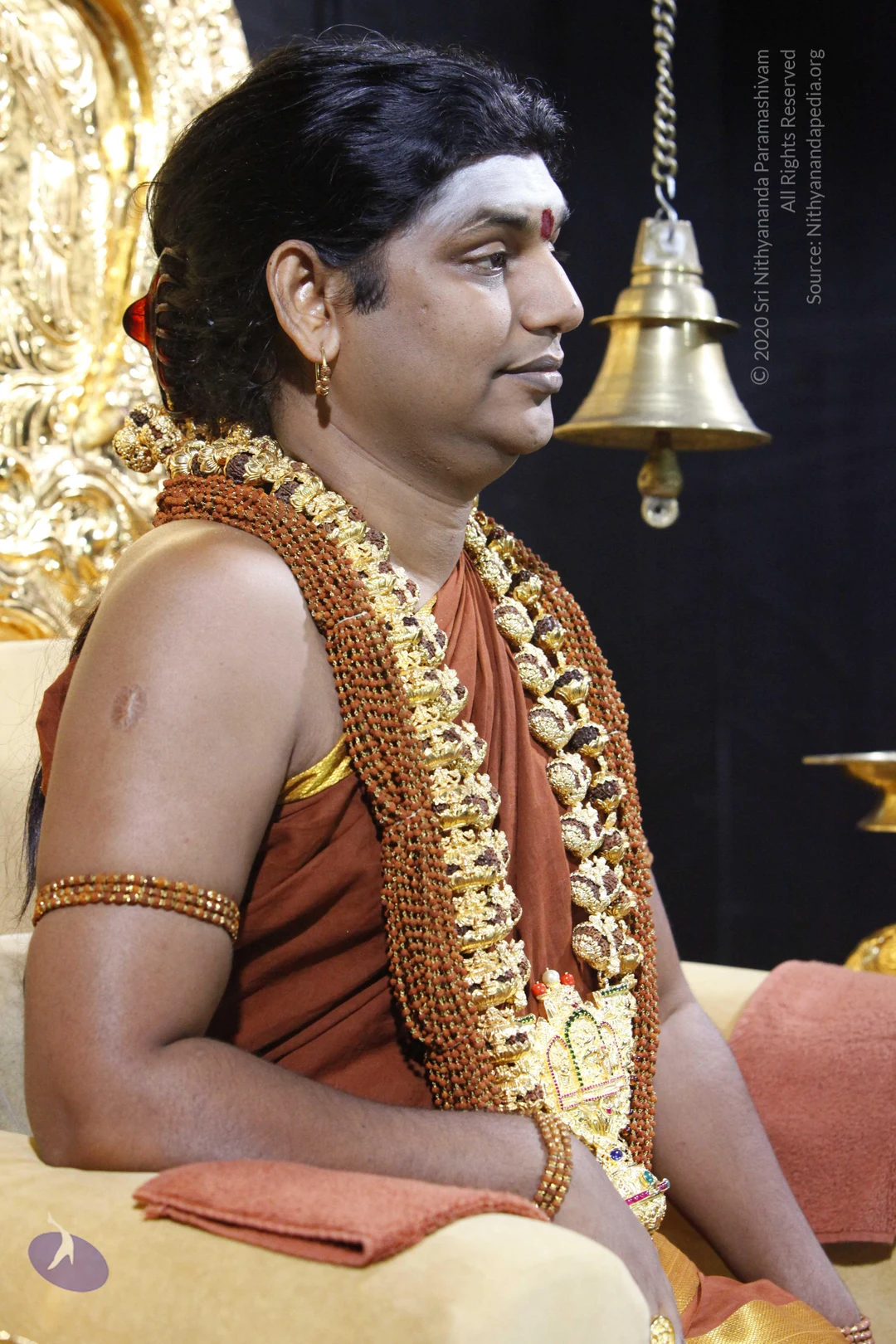
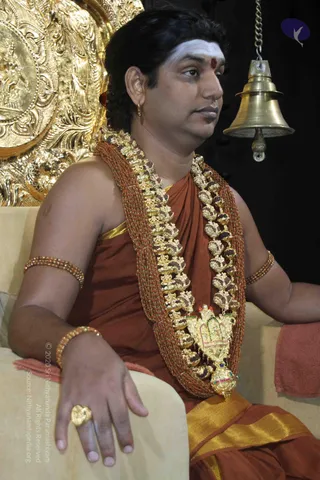
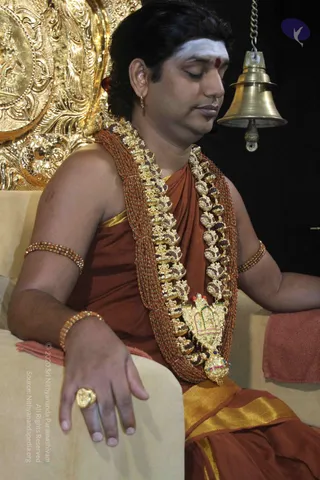
A photograph of a man seated on an ornate gilded throne with elaborate floral and figural carving, with a brass bell hanging at the right and a brass oil lamp at the lower right edge. He wears a saffron-orange garment wrapped over his shoulders, a long multi-strand gold-and-beaded necklace with a gold pendant, gold armlets and bangles, and white and red forehead markings. His hands rest on the cushioned armrests. The appearance matches the a person (a person) based on the saffron clothing, ornate gold necklace and throne, though the identification is uncertain, and this is one person seated alone.A man with short dark hair and white and red forehead markings sits on an ornate gilded throne carved with lion heads and floral scrollwork, draped with a striped tiger-skin cloth. He wears a rust-red robe with a golden yellow sash, a multi-strand gold necklace with a large gold pendant, gold bangles and rings, and smiles toward the camera. Brass oil lamps and hanging bells flank the throne. a person: the seated figure has short hair, a sash and gold ornamentation consistent with the page's a person claim, though the cues are limited to the throne setting and gold jewellery.A man with short dark hair, white forehead paint and a red vibhuti dot sits on an ornate gilded throne with a large golden back carved with scrolls and a central emblem. He wears a rust-red bare-chested garment, a heavy gold and rudraksha-style layered necklace with a gold pendant, gold armlets and rings, and a gold sash at the waist. A tiger-striped cloth covers the seat base and hanging brass bells frame the throne.A seated man in profile wears a saffron-orange wrap over bare shoulders, with a thick orange-brown rudraksha mala and a heavy gold-and-bead garland with a pendant draped across his chest. He has a white vertical tilak with a red dot on his forehead, a small gold earring, and an orange-beaded armlet. Behind him is an ornate gold throne with carved floral patterns, and to the right hangs a brass temple bell on a chain against a dark wall. Appearance-based label: Swamiji (probable), given long swept-back hair, saffron clothing, rudraksha mala and ceremonial gold necklace.A seated man in a golden-ornate throne setting beside a hanging brass bell. He wears a rust-orange draped garment with a gold border, a long gold-and-rudraksha mala with a gold pendant, and matching rudraksha armlets and bangles. He has white forehead paint with a red dot and a gold ring on his hand. Probable Swamiji by appearance cues: swept-back hair, ornate gold-and-rudraksha regalia, and saffron-toned clothing, seated in a throne-like setting.A seated man in a reddish-brown (rust orange) unstitched robe with a gold-bordered edge drapes over his shoulders, wearing a long multi-strand necklace of gold-toned beads and rudraksha seeds with a large gold pendant, plus beaded bracelets on his upper arm and wrist and a gold ring. His eyes are closed and he has a white forehead marking with a red dot. Behind him is ornate gold-embossed decoration, and a brass bell hangs at right.

03-NITHYA-SATSANG
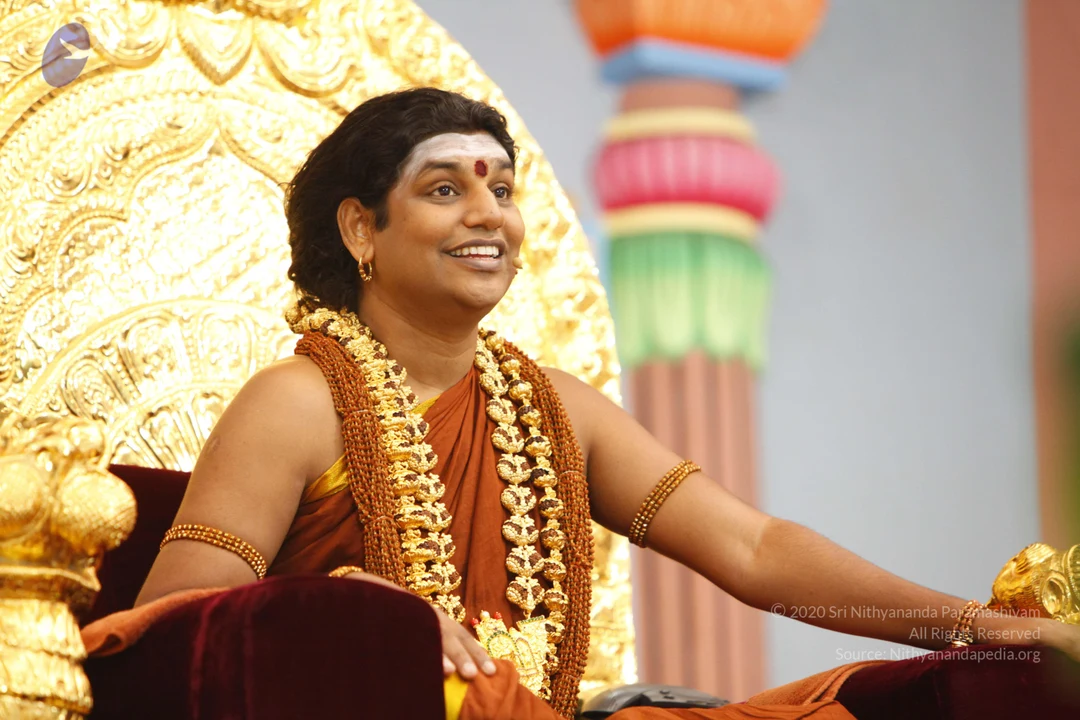
14 photosSource gallery
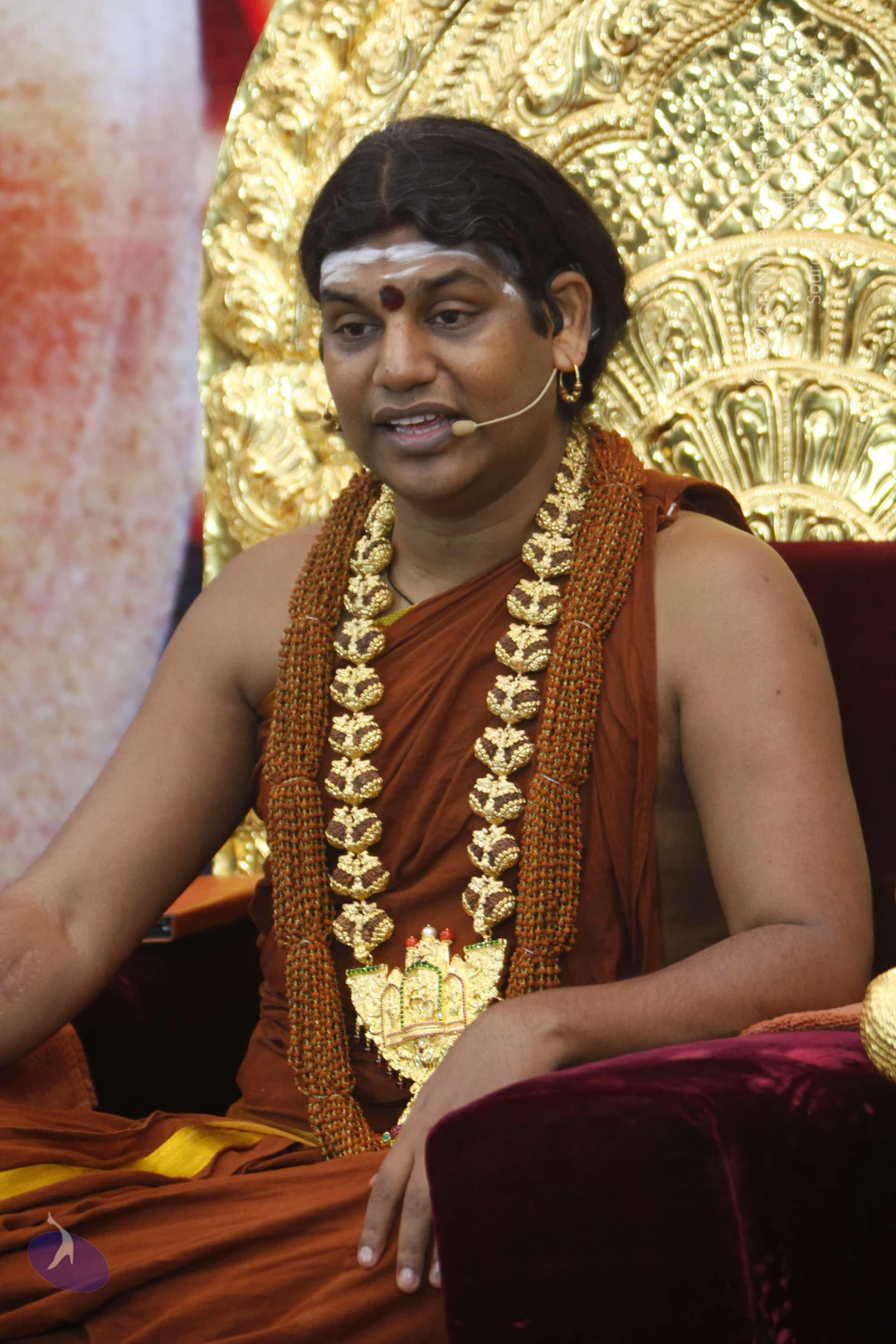
A photograph of one man seated on a red velvet throne with ornate gold carvings behind him. He wears an orange-saffron cloth draped over his body, multiple rudraksha malas, a gold floral garland and gold bangles on his upper arms. He has long swept-back dark hair, white vibhuti with a red kumkum dot on his forehead, and a smile as he looks off to one side, one arm extended toward a gold armrest. Behind him stands a colourful pillar with pink, green and yellow bands. Swamiji (probable) appears in person, distinguished by the long hair, saffron robe, rudraksha malas and gold garland while seated on the throne.A man seated on an ornate gold throne with a large gilded backrest and a carved lion-head armrest, smiling and gesturing with his raised right hand during a satsang. He wears an orange-saffron cloth draped over the shoulders, multiple gold-toned beaded necklaces and rudraksha-style mala strands, gold bangles on both wrists, and a small gold earring. His forehead bears white vibhuti with a red kumkum dot, and his hair is dark and swept back. Behind him stand tall pillars with bands of pink, green, yellow and orange. Appearance-based identification suggests a person presence on the throne, given the saffron attire, gold ornaments, mala and throne setting, though the image is not conclusive.A smiling man with swept-back dark hair, a white vertical tilak with a red dot on his forehead, and gold earrings sits on an ornate throne with a red velvet armrest and gold-embossed backrest. He wears an orange-red sannyasi drape over a yellow-edged garment, layered gold garland necklaces and orange rudraksha malas, and gold bangles on his wrist and upper arm, with a gold ring on his finger. His bare feet rest on a tiger-striped cloth draped over the throne. Behind him a pillar with pink, green and orange bands is visible. Probable Swamiji seated on a throne in satsang, based on his swept-back hair, rudraksha malas, orange robes and gold adornments.A man with swept-back dark hair, white vertical forehead markings and a red dot sits on an ornate gold throne with a maroon velvet cushion and a tiger-print cloth beneath him. He wears saffron-orange robes with a gold border, a multi-strand gold and rudraksha necklace, gold bangles and a gold ring, and gestures with one hand while smiling. Behind him stands a colourful pillar in red, orange, green and blue. This is a Swamiji (probable) in a seated satsang setting, with the sitter's presentation including swept-back hair, saffron robes, rudraksha mala and ceremonial gold necklace.A photograph of a seated man on an ornate gold throne with a large gilded backrest and a carved gold lion-head armrest, upholstered in deep maroon velvet. He wears an orange-saffron cloth draped over his shoulders and torso, a heavy gold and beaded necklace, gold armlets with beaded bracelets and a gold ring. He has a white-painted forehead with a red dot and a small gold earring, and a lapel microphone is visible near his chin. He gazes to the side with a slight smile. a person is seated on the throne as the presiding teacher, shown in an orange robe with ornate gold garlands and a red-dotted tilaka, appearing to be a satsang discourse setting. No other people are visible.A photograph of a seated man on an ornate golden throne with a deep red velvet seat and gilded lion-head armrests. He wears an orange-saffron cloth draped over one shoulder with a gold-bordered yellow edge, a long multi-strand rudraksha mala, and a gold-and-green ceremonial necklace with a central pendant. Gold bangles and gold earrings are visible, and a white sacred ash mark with a red dot is on his forehead. He gestures with one open hand while speaking into a small headset microphone. A single person is present. Consistent with the page's appearance-based cues of saffron clothing, rudraksha malas and ceremonial gold necklaces, this is a person seated in a discourse setting.

04-SARVA-DARSHAN
9 photosSource gallery
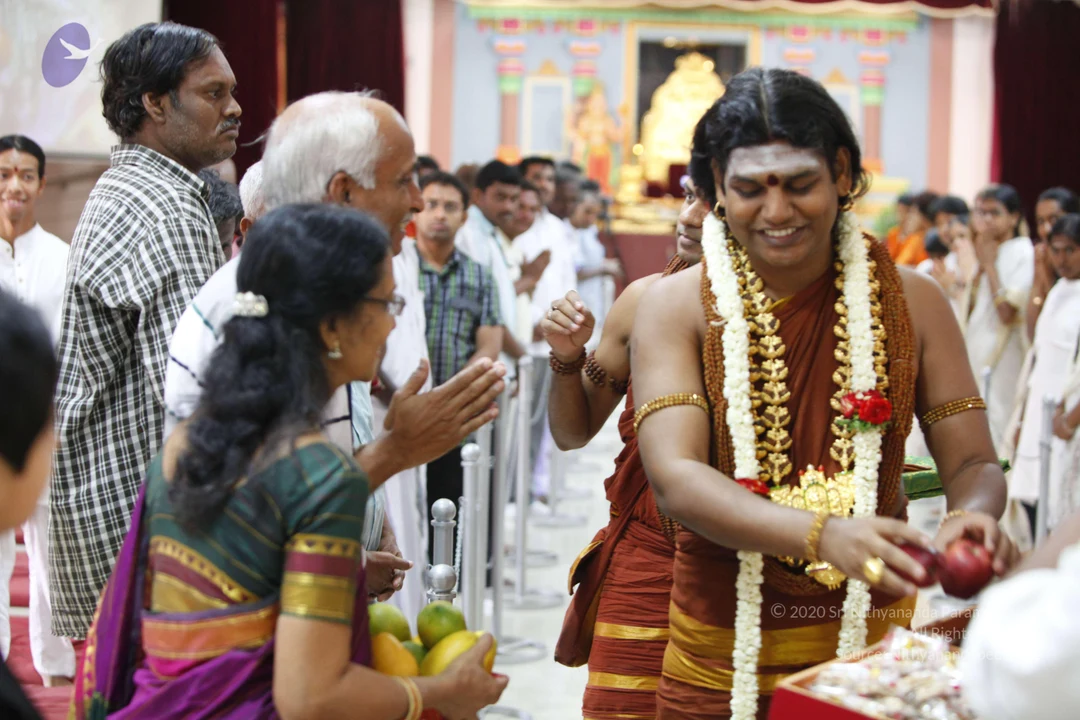
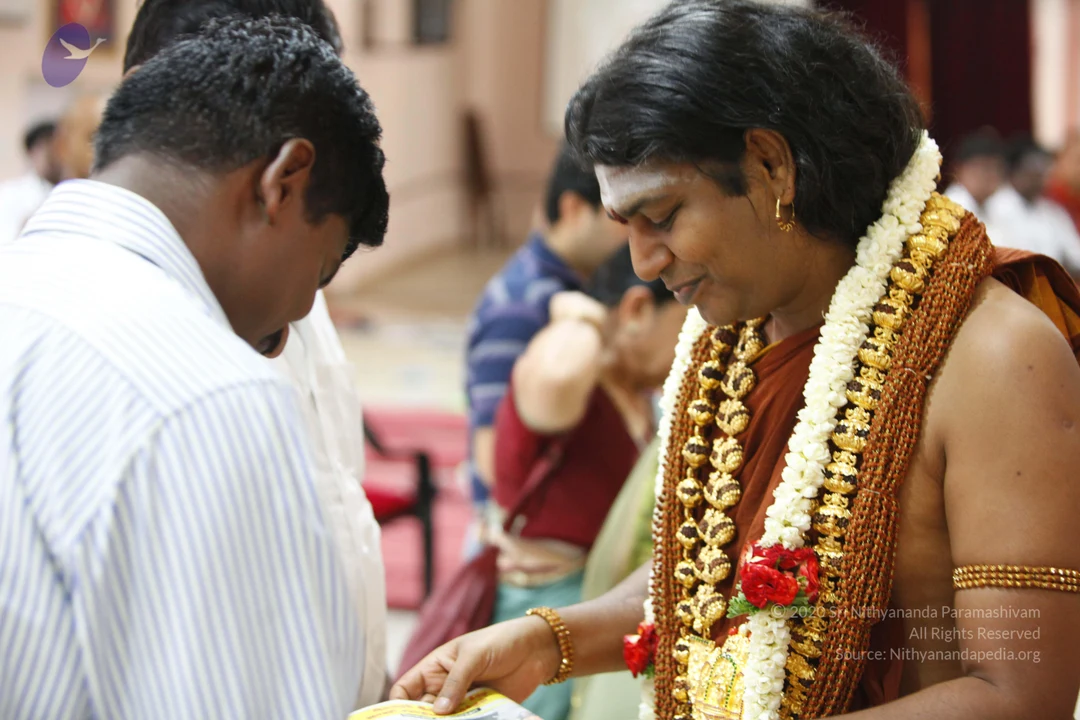
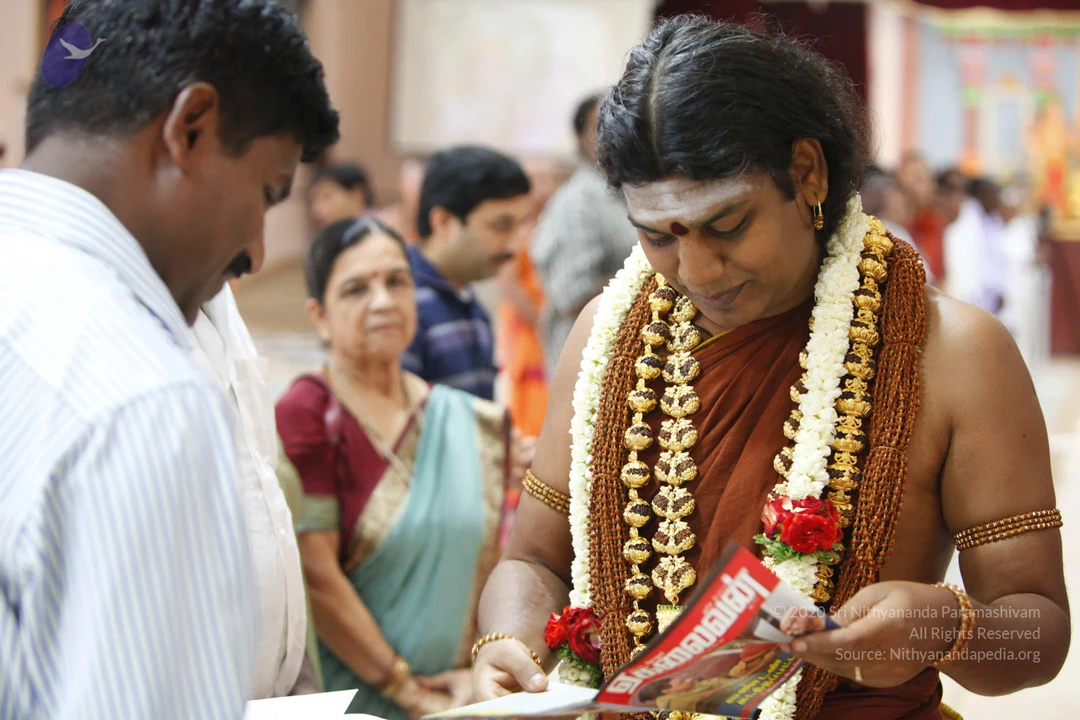
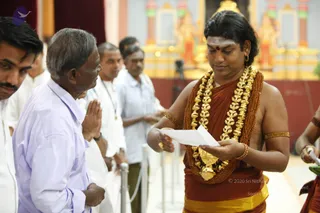
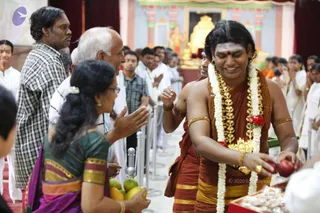
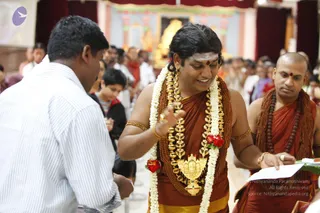
A man in an orange-red saffron dhoti and shawl, wearing a heavy gold and beaded garland, bare-chested with gold armbands and a red bindi, reads a folded white paper while holding it in both hands. Facing him, an elderly man in a lavender shirt stands with palms pressed together in namaste, and several other people in white shirts stand behind a metal barrier. Behind them, gold-coloured deity murti figures and ornate pillars in red and gold are visible in a temple hall. a person: the robed man wears distinctive gold garlands and saffron-orange clothing with ornate adornments, consistent with the page's claim of his presence.A photograph of a sarva darshan setting inside a temple hall with a golden deity murti and a decorated backdrop. A central figure in saffron-orange robes, a gold ornamental necklace, white jasmine garlands, rudraksha beads and sandalwood-and-kumkum forehead marks is smiling and holding fruit, apparently offering or receiving it. Nearby, a woman in a green and gold sari sits with a tray of mangoes while an older man with white hair and a white shirt joins his palms in greeting. Several devotees in white dhotis and kurtas stand behind a metal railing, and a woman in orange further back is also present. Several fruits sit on a tray in the foreground. Probable Swamiji cues: swept-back long hair, saffron robes, gold necklace and garlands.A photograph of a man in an ornate hall receiving or handing over an item at a darshan line. The central figure has swept-back long dark hair, a vertical sandalwood tilak with a red dot, a rudraksha mala and a long strand of white jasmine garlands with red flower accents, and a large gold ceremonial pendant. He wears a rust-orange wrap and gold armlets, with a gold-bordered cloth at his waist, and is smiling while gesturing with one hand. Beside him, a shaved-headed attendant in a matching orange wrap and rudraksha beads holds a white paper and a tray. A man in a white striped shirt stands at left facing him. Behind them, a crowd of devotees fills a room with a golden deity murti, red drapes and colourful decorations. Swamiji (probable) is identified by long swept-back hair, rudraksha mala and ceremonial gold necklace.A photograph of a person with a shaved-looking short dark hairstyle wearing a saffron-orange sannyasi-style wrap over a bare chest, draped with a white jasmine garland and a thick brown rudraksha-style mala with gold beads, plus red flower accents and a gold armlet and gold earring. The figure, with white and red tilak on the forehead, is handing a small yellow printed booklet to a man in a white and blue striped shirt who is leaning forward to receive it. Other people stand in the background, including a woman in a red sari. Pale pink walls and a red carpet suggest an indoor gathering hall.A photograph of a bare-chested figure in a rust-orange cloth draped over the shoulders, wearing a long white flower garland and layered rudraksha malas with large gold beads, plus gold armbands and a white and red forehead marking. The figure is looking down at a printed magazine held in both hands. Beside them, a man in a white striped shirt looks down at papers, and a woman in a maroon and teal saree stands behind. Other people stand in the blurred background of a hall with a colourful wall display. The figure has long swept-back hair, a gold stud earring and a red bindi, matching distinctive ceremonial cues, so the appearance is a person in person.A photograph of a smiling man in a brown-orange robe and long swept-back dark hair, wearing a thick rudraksha-style mala of gold and brown beads, a white jasmine garland with red flowers, gold bangles and gold earrings, reaching out with one hand to greet a man in a white-and-blue striped shirt. Behind them, a woman in green and a woman in teal saris, an older man in white and other onlookers stand in an indoor hall with pale walls and red curtains. a person cues include the long swept hair, ornate gold mala and garland with saffron robe. Some people stand in the background.

07-LOTUS-TV-TELECASTING
46 photosSource gallery
A photograph of a seated man in a rust-orange robe, draped over one shoulder with a yellow edge, sitting cross-legged on an ornate gold throne with carved lion-head armrests and a large gold arched backrest. He wears a long beaded rudraksha mala with a gold ceremonial pendant and gold necklaces, a white and red forehead marking, a small headset microphone, and a ring. He is speaking and smiling, with his bare feet visible. A red and orange backdrop is partly visible behind him.A seated man in a saffron-orange robe speaks during a satsang on a golden throne with ornate gilded carvings and a tiger-striped rug in front. He wears a long rudraksha mala and a heavy gold necklace with a jewelled pendant, has a white tilak and red bindi, and wears a small headset microphone. Probable Swamiji: long swept-back hair, ornate gold jewellery and saffron clothing identify him as the ceremonial figure on the throne.A man seated cross-legged on an ornate gold repoussé throne with a red velvet armrest, wearing an orange-brown saffron-toned cloth draped over the body with a yellow border at the waist. He has a long swept-back dark hair, white vertical tilak and a red dot on the forehead, a headset microphone, and wears a long multi-strand rudraksha mala with a ceremonial gold necklace and a large gold pendant with coloured stones. His feet rest on a tiger-striped fabric cushion. One person is visible.A seated man in an orange-saffron cloth draped over one shoulder speaks into a small headset microphone during a satsang. He wears a heavy gold ceremonial necklace with a large gold pendant set with coloured stones, a rudraksha-style mala of beads, gold hoop earrings, a white vertical tilak with a red dot on the forehead, and long swept-back dark hair. A gilded ornate chair or throne with repoussé gold carving sits behind him, against a blue backdrop. Probable Swamiji by appearance: saffron cloth, long swept-back hair, ornate gold necklace and ceremonial gold pendant, seated in a satsang setting.A seated man in an orange-saffron robe sits cross-legged on an ornate golden throne with lion-head armrests and a tiger-skin covered dais. He wears long swept-back dark hair, a white and red tilak on his forehead, a headset microphone, and multiple garlands including a gold ceremonial necklace with a pendant and rudraksha malas. He rests his hands on the armrests in a calm, composed pose. Behind him a large red and blue backdrop with a partial image is visible. a person seated as the speaker at a satsang on the throne. The image is a photograph of one person.A seated man in an orange-saffron robe and yellow waist cloth sits cross-legged on a tiger-skin-covered dais before an ornate gold throne with carved lion heads. He wears a rudraksha mala and a long ceremonial gold necklace with a gold pendant, a tilak on his forehead and a red bindi, and a headset microphone. His hands rest on the gold armrests of the throne, and a blurred red and white backdrop is behind him. a person: long swept-back hair, saffron robes, rudraksha mala and gold necklace match the page's identification, but the appearance is only partly distinctive so this is a tentative label.

Sannyasis Inaugurating a Health Care Center at Namakkal, Tamil Nadu
18 photosSource gallery
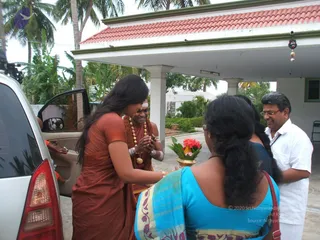
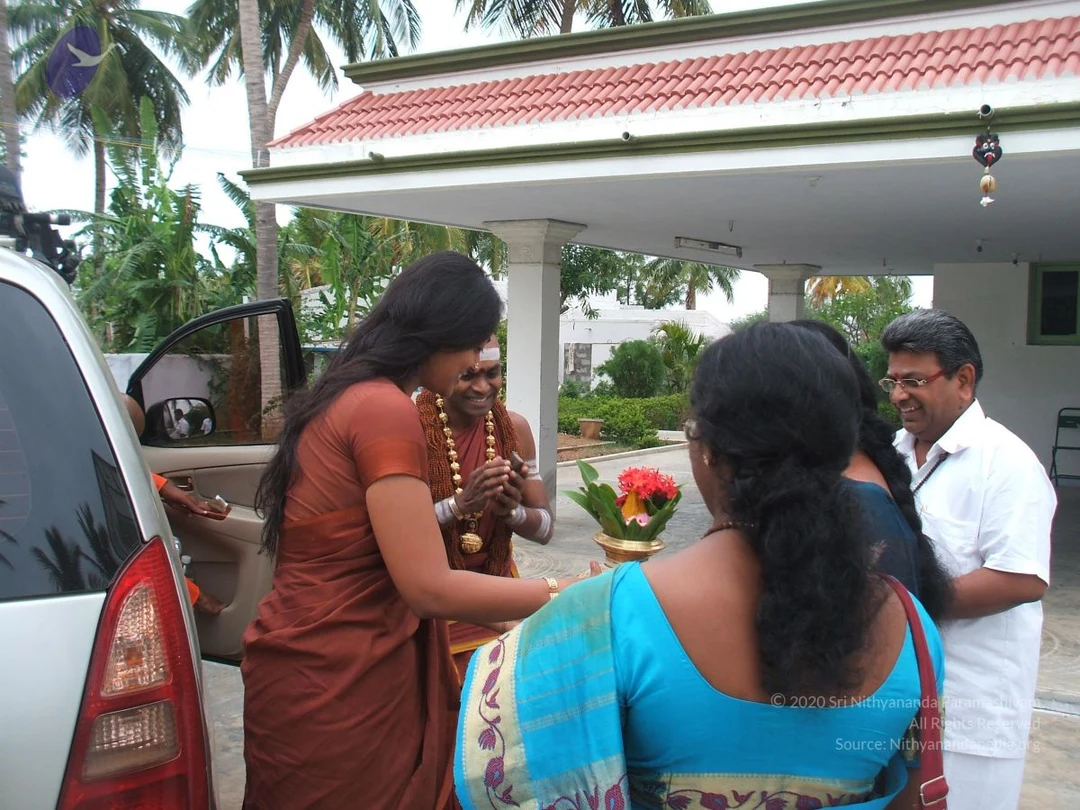
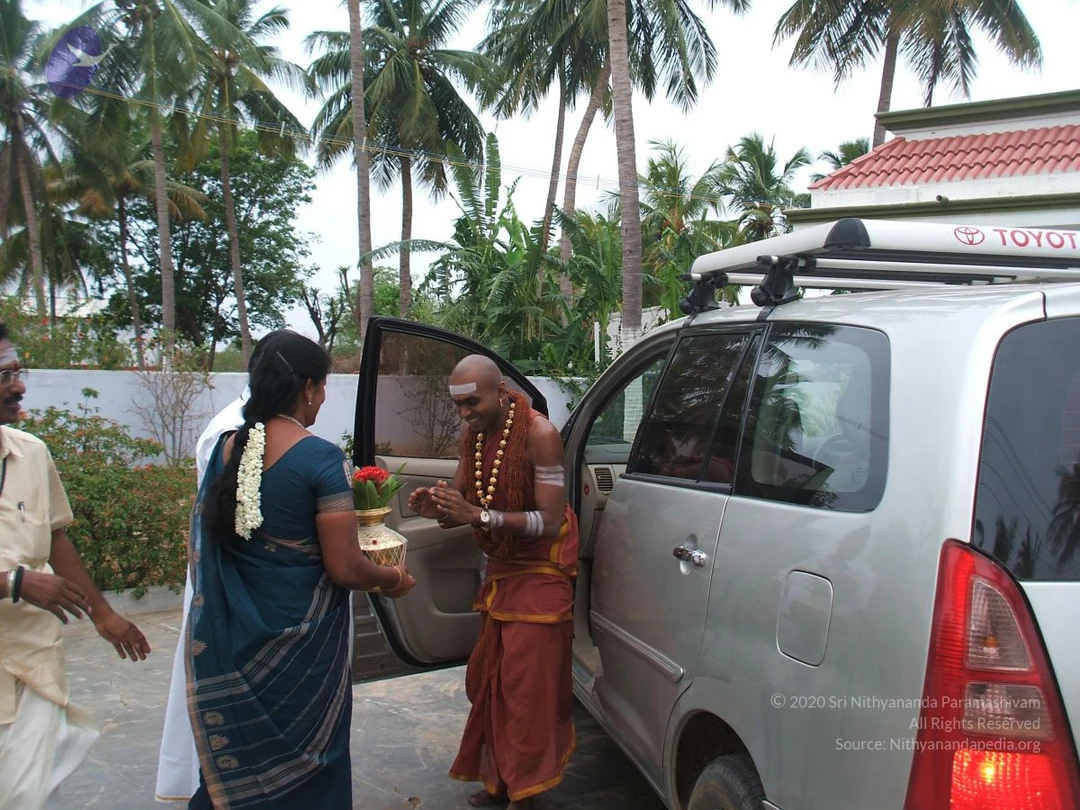
A photograph of an outdoor arrival at a compound with palm trees and a white wall. A bald man in an orange-red dhoti and shawl, with a rudraksha mala and white forehead marks, stands beside an open silver Toyota van and greets with folded hands. A woman in a dark blue saree with a jasmine garland holds a brass pot topped with red flowers and offers it to him. A man in a cream dhoti stands at the left edge. Beyond them are banana plants and a red-roofed building.A photograph of an outdoor covered porch at an ashram-style building with a red tiled roof and palm trees behind. A woman in a rust-orange sari with long dark hair stands beside a silver minivan, palms pressed together in greeting toward a man in a rust-orange robe with a rudraksha mala, gold necklaces and a white forehead mark, who smiles and holds his hands in namaste. A woman in a blue sari with her back to the camera offers a brass plate of red flowers, and a man in a white shirt and glasses stands at right. a person: the man in the orange robe with rudraksha mala and gold necklace is described as the honoured guest receiving greeting.A photograph taken in a plain tiled room with white walls, where people sit on blue and red plastic chairs. In the foreground a shaved-headed man in orange-saffron robes sits with a thick gold and beaded necklace and a white tilak mark on his forehead, beside a woman in a rust-orange sari wearing a pendant. Behind them a white board reads a healthcare-related heading. Several men in white dhotis and shirts sit or stand along the wall, and a man in a green checked shirt works at a laptop on the right. Green leaf garlands hang over the doorway. Whether the robed man is a person cannot be confirmed from appearance alone, so he is described by role as a devotee in saffron robes.A photograph of a seated audience at an outdoor satsang on a paved courtyard. In the foreground, a smiling shaved-headed man in a rust-orange cloth wrap with ash-white horizontal markings on his arms and forehead wears a gold-beaded necklace and presses his palms together. Beside him a smiling woman in a rust-orange sari with a black beaded mangalsutra and bindi sits on a blue plastic chair. Behind them a man in a white shirt and glasses smiles, and rows of seated devotees in white and colourful saris and dhotis fill the background, with a white podium at right. Visible people are many, roughly a crowd of over twenty.A photograph of a seated audience at an outdoor satsang, with rows of blue plastic chairs under a red and colourful striped awning. Front row devotees sit with hands raised palms-forward in greeting or prayer; a woman in a blue sari with gold bangles and a neck chain is on the left, a woman in a purple top and a woman in a yellow-green sari sit beside a man in a white shirt and an elderly man with white hair in white clothes. Others stand in the background near a white wall with a garland hanging at the upper left, and a few people sit further back near a stage area.A seated audience of devotees in plastic chairs under an awning at an outdoor satsang. In the foreground a man in a white shirt and white dhoti sits with hands resting, a woman in a red sari with bangles raises one hand in a gesture, and a bald man in white kurta with a rudraksha mala and wrist beads sits with clasped hands. Many other devotees sit behind them in white shirts and blue shirts, some raising hands. A small tiled courtyard and white wall with a red and black awning frame the scene, with a tiled patio and standing onlookers in the background.