Skip to content
Friday

21 June 2013

Life Begins With Completion

Dated photos
221
Source pages
1
Media
2
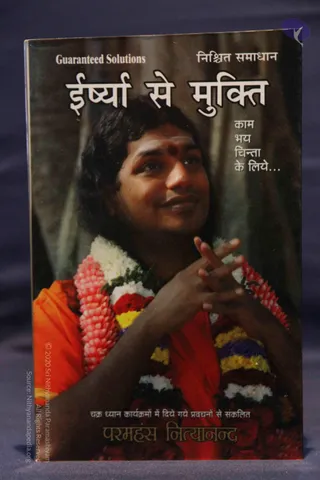
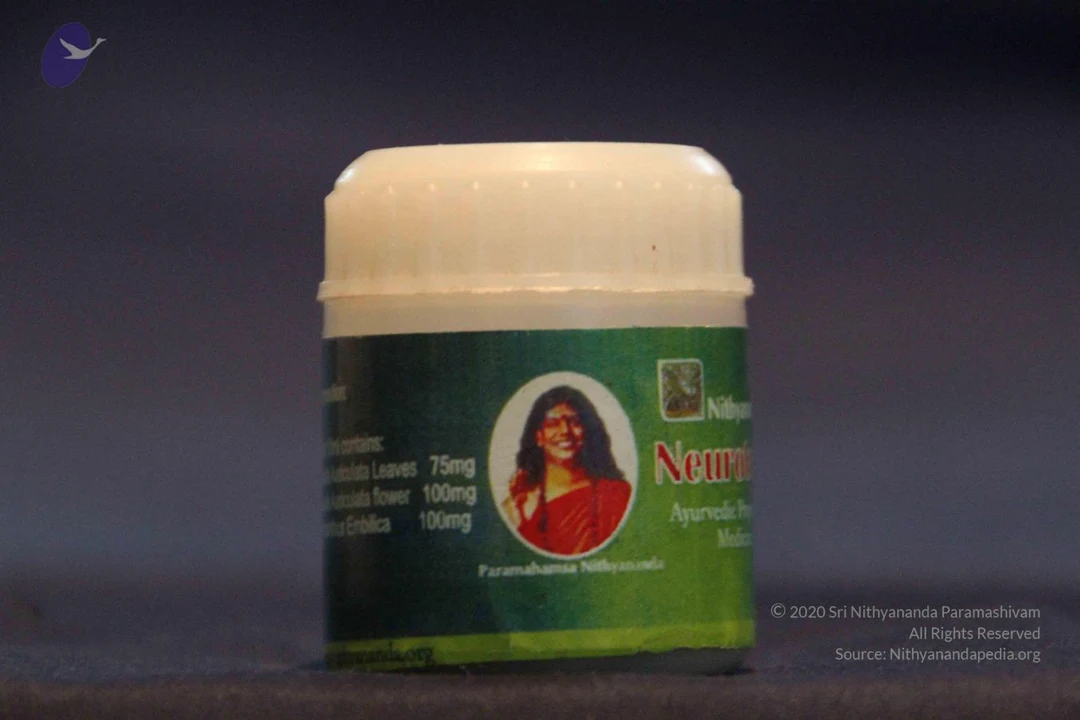
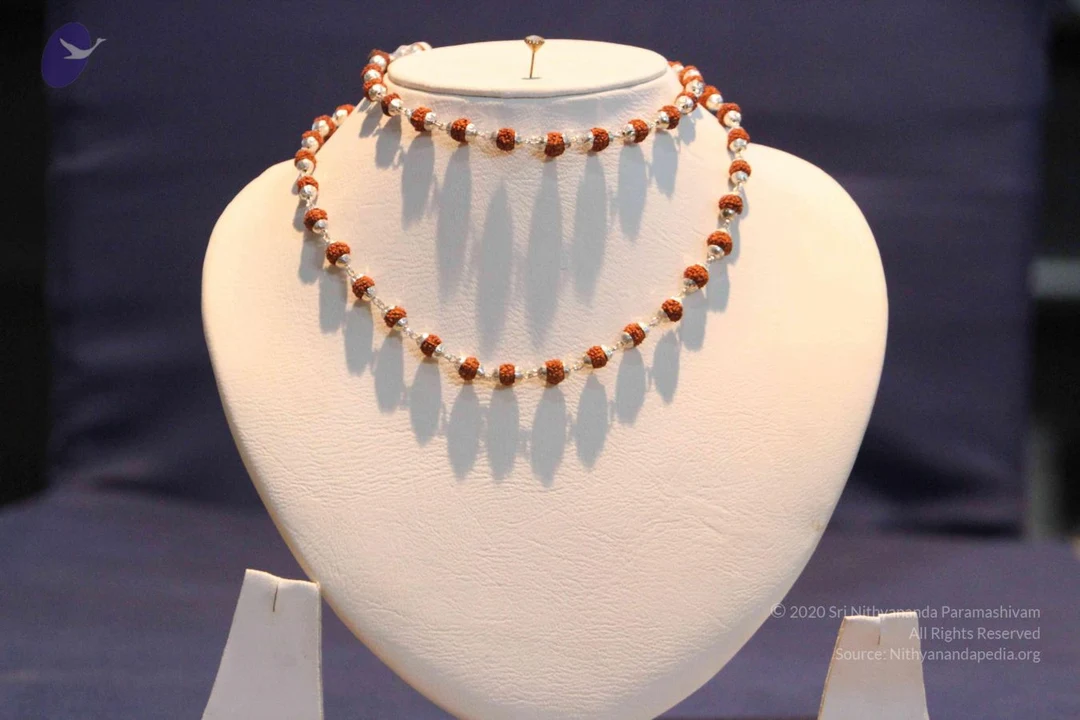
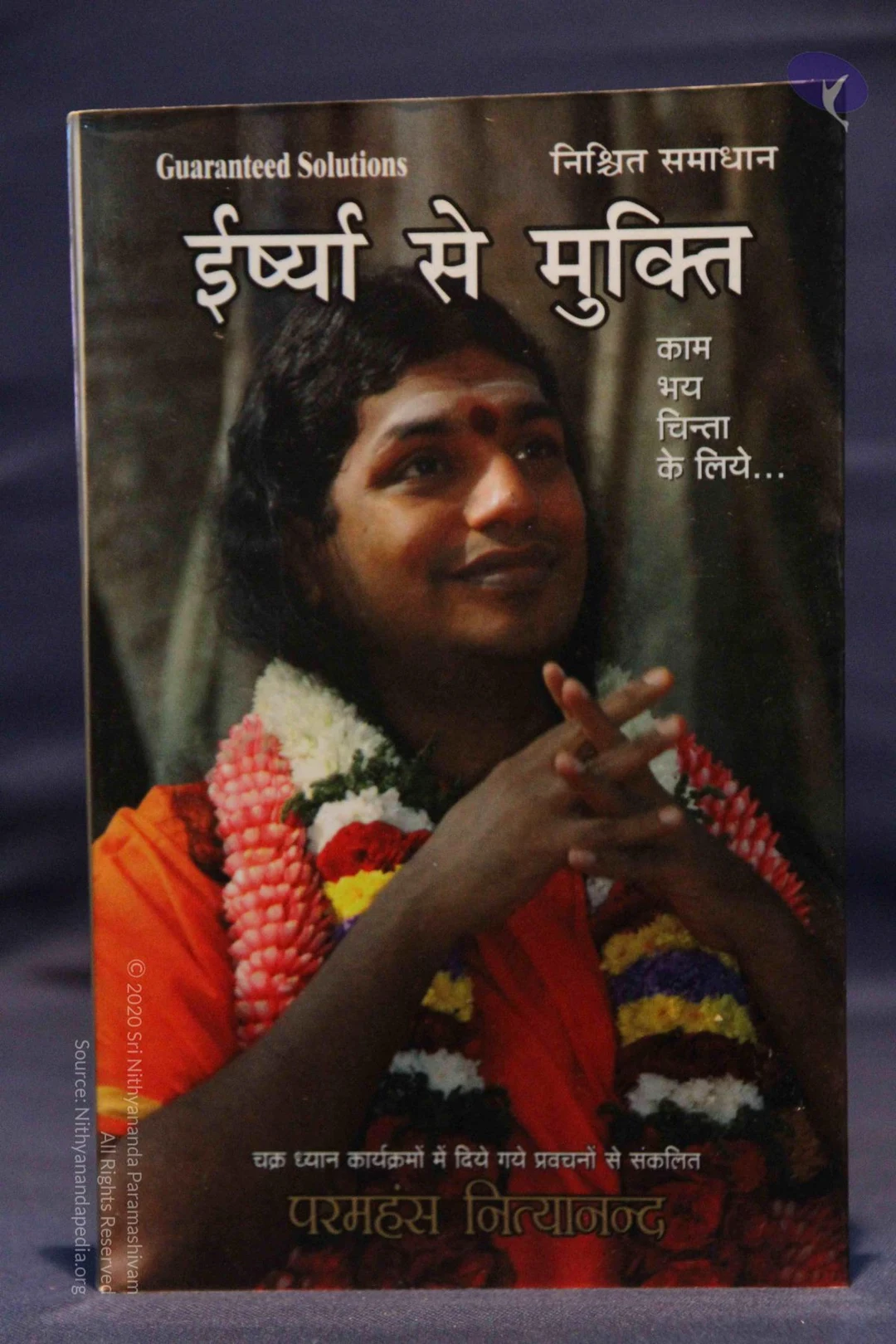
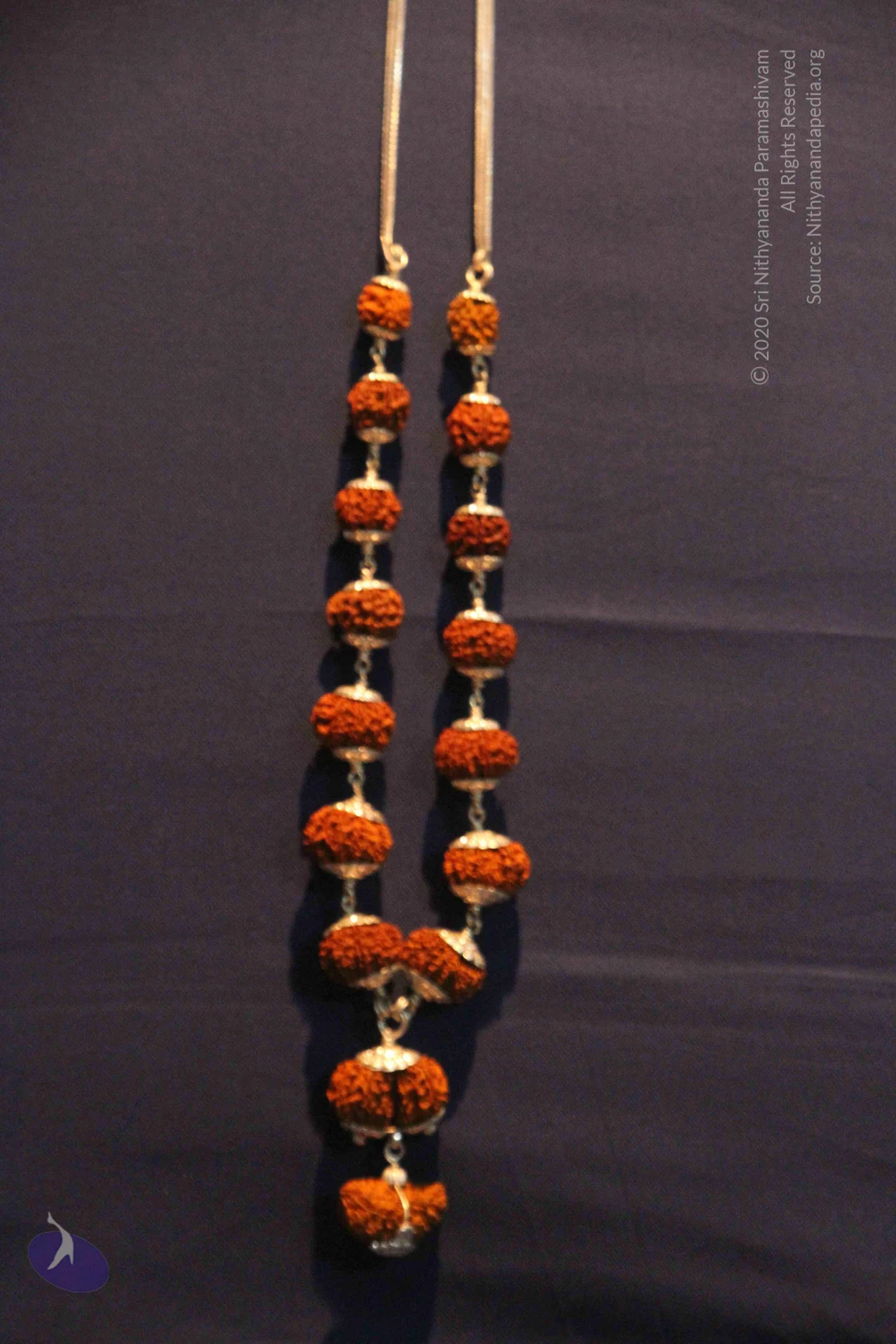
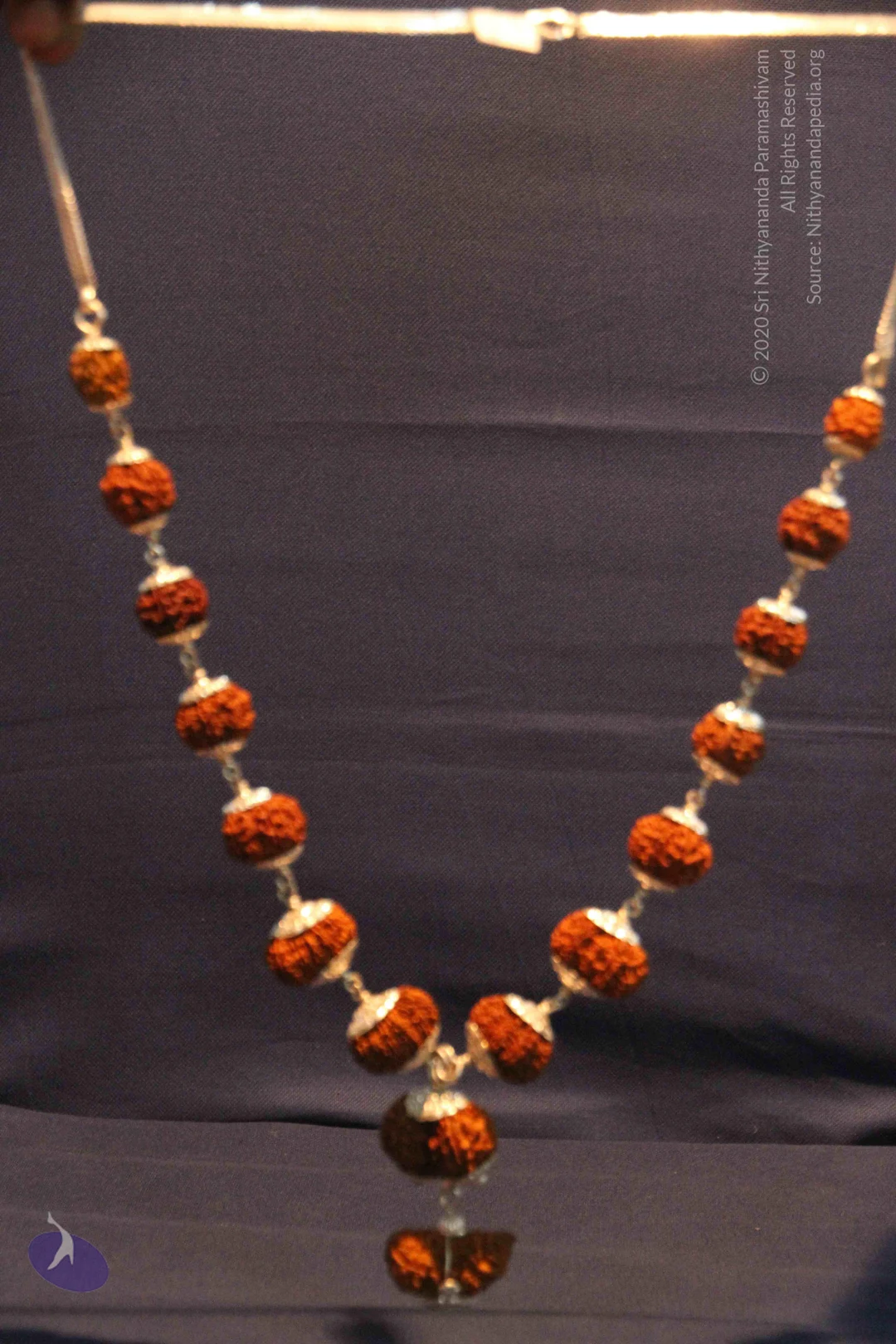
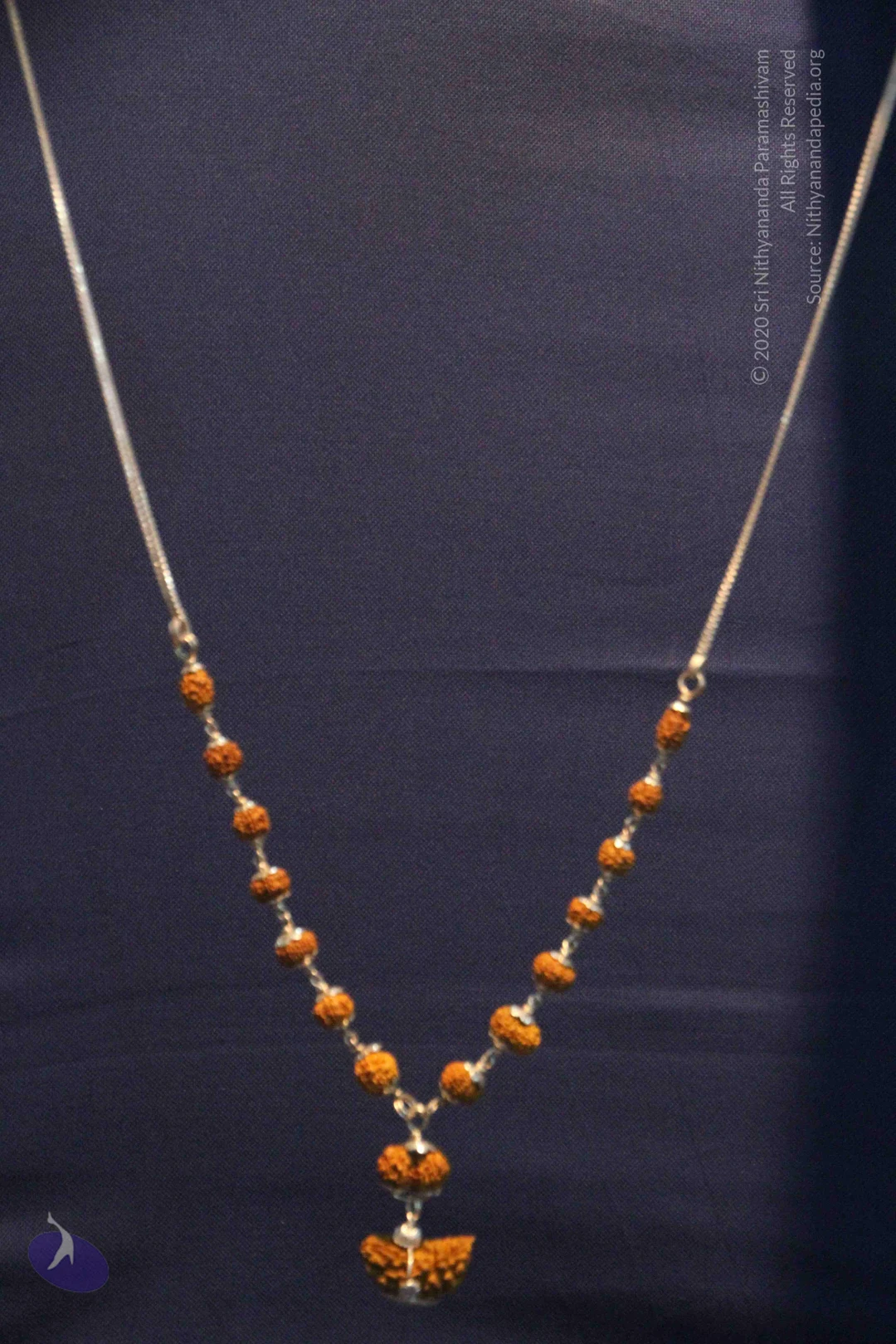
Front cover of a Hindi book photographed on a plain grey-blue backdrop. The cover has a photograph of a smiling man with long dark hair and a red bindi, wearing an orange shawl and layered garlands of white, pink, red, yellow and purple flowers, with his hands pressed together at his chest. Printed Hindi title ईर्ष्या से मुक्ति with the subtitle 'Guaranteed Solutions' and 'काम भय चिन्ता के लिये...' above. Bottom reads 'चक्र ध्यान कार्यक्रमों में दिये गये प्रवचनों से संकलित' and the author name परमहंस नित्यानन्द.A photograph of a rudraksha mala necklace hanging against a dark navy fabric backdrop. A thin silver chain holds a V-shaped line of orange-brown rudraksha beads spaced by small silver spacers, converging to a pendant of larger rudraksha beads with a silver bead. No people are visible.A small white-capped green plastic jar of Ayurvedic medicine stands on a grey surface against a dark background. The green label shows an oval portrait of a smiling woman with long dark hair wearing a red sari, with the printed caption "a person" beneath it. Partial label text reads "Neuro" and "Ayurvedic" with a list of herbal ingredients and milligram amounts. No people are physically present.

June 21 2013

Original wiki page
Contents

Title:

Life Begins With Completion

Description:

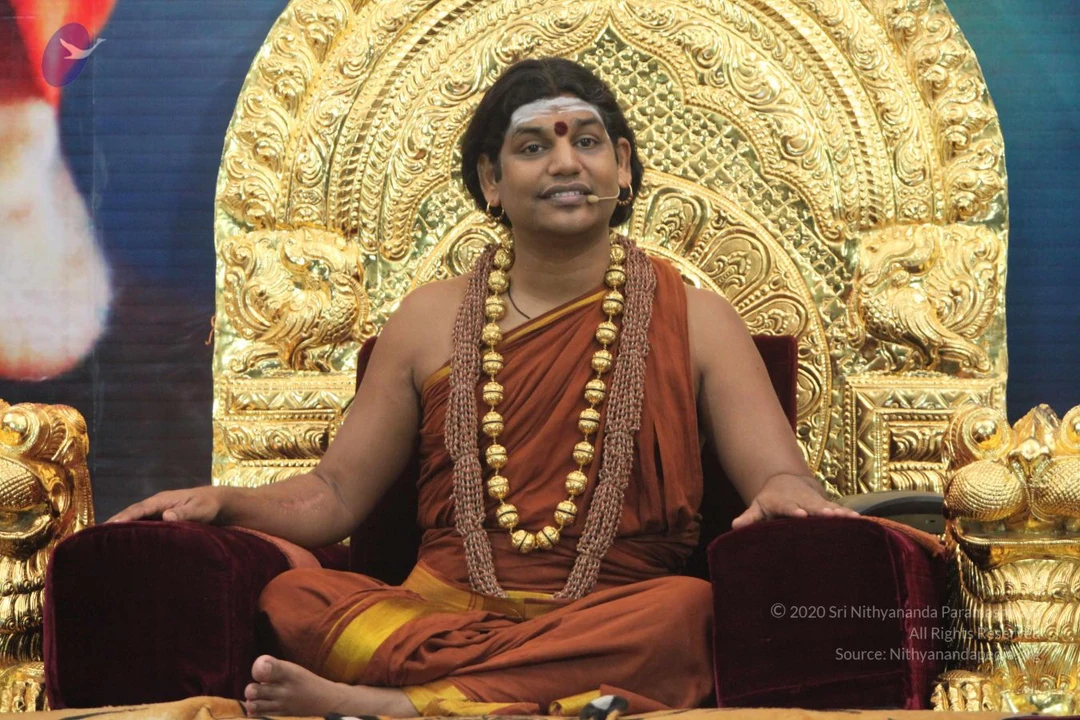
In today’s morning Satsang, Paramahamsa Nithyananda reiterates the importance of completions with yourself and others. Until we are complete, there are multiple personalities living inside us which attract problems like disease and depression; quickening the death of our lives. Only after completion, we become an integrated, solid being in which life starts happening and we experience auspiciousness, consciousness, and enlightenment. The basis for living the 4 Tattvas is completion and listening. Once we are living in Integrity; strength, knowledge, energy, power, and everything good happens in us. Let us empower ourselves and take up the practice of doing completions every night before sleeping.

Link to Video:

VideoAudio

Transcript:

Nithyanandeshwara Samaarambhaam Nithyanandeshwari Madhyamaam | Asmadaachaarya Paryanthaam Vande Guru Paramparaam ||

I welcome every one of you who are sitting with us all over the world at this moment.

Today I will continue to expand on “COMPLETIONS”, some more intricate details of Completions, Intricacy! Intricate details you need to know about Completion. Understand, only after completion, you become

integrated, means, one person. Only after Completion, you become One Person! Till then, you are multiple personality. Because you are multiple personality, you do not know what is good, what is bad. Many a time, you attract disease, thinking that is much better than living with these fellows. No, really! Understand, you attract, you attract, many times, diseases to escape from the situations. I tell you, relationship problems directly create diseases in the body. Diseases directly create depression in the body. Depression directly quickens death of your life! It is all completely inter-connected how you feel about you. If that is a constant shivering, how you feel about you is a constant unstable fear or a constant shivering inside you, then simply you can expect disease, depression, everything which should not come in your life.

When you have a multiple personality, unintegrated being, what you attract not only you do not know, you do not know why you attract that. People come and ask me, ‘Why me? Why me? Why me? Why did I attract this disease? There are more bad people! Why I am attracting? I am such a good person! I never thought and did anything wrong to anybody!’ Understand, it is nothing to do with good or bad, because “good” or “bad” is certified by society, and that certificate does not get accepted by the Cosmos! Whether you are integrated or not, is only accepted by the Cosmos. Understand, whether you are integrated or not is only accepted by the Cosmos. “Good” or “bad” is not accepted by the Cosmos. Somebody may be bad, but he is integrated. What to do? You may be good, but you are disintegrated. So, a disintegrated person neither knows what he is attracting nor knows why he is attracting, or can be clear.

Integrity is absolute! Good and bad is decided by society. Integrity is absolute! Good and bad is decided by society. Integrity does not change with society, age, time or with anything. Integrity is not social ethics, it is spiritual principle! It is not even a spiritual value, it is a spiritual principle! Till you are integrated, you do not know and you will not know what you are attracting in your life! Only when you are complete, integrated, you will even know about where you are in life, what is life. Good and bad keeps changing with age, time and society, but Integrity is absolute! It is there forever! Only when you are complete you will be integrated. Only when you are complete, you will become Authentic. Without completing, you do not know which part of you, you should expand, which part of you is your Mamakaara. Instead of enriching you, you will be enriching your parasites, the parasites which are sitting on you! Instead of enriching and consciously building your Mamakaara, you will be enriching your unconscious root-patterns! Unconscious root-patterns! I tell you, no wealth is a wealth if you are not integrated. No energy is energy, if you are not integrated. Anything comes in life will not have its positive impact on you, if you are not integrated.

Understand, completion is the basic need! How many hours I may sit and talk, you may sit and spend your time here. One more thing, unless you start completion, you will not even be able to maintain listening! Even listening is achieved with completion! Without completion, even listening will be difficult. With a lot of difficulty, you have to force yourself, literally like putting a stick between both your eyelids, so that it doesn’t close! With completion, listening starts! With completion, life starts! Without completion, first of all, you won’t be able to listen. And even if you listen, never Integrity starts, Authenticity starts, Responsibility starts, and Enriching starts. Look, look, look in your life. Completion is the most important aspect of Cosmos. Understand, your completion is not just experienced by you, your completion is celebrated by the Cosmos! When every individual completes, Cosmos feels complete through you. Cosmos celebrates!! It feels, ‘Wow! Now I am complete! Now I am complete! Now I am complete!’ Cosmos feels “WOW!”

Understand, only when you complete, complete, complete, you learn what is Integrity. And only then you will know how to be Authentic, what is Authenticity. And, only then you will know what is Responsibility! Responsibility, starts only after you complete. Only after completion, Responsibility starts. Only after completion, Integrity starts, Responsibility starts, Enriching starts, Authenticity starts.

Understand, how many hours you may listen to these words – Integrity, Integrity, Integrity,

Authenticity, Authenticity, Authenticity, Responsibility, Responsibility, Responsibility – but you will neither catch it nor get it! You will neither catch it nor get it from just the word! Only after you complete, only after the completion you will really know the meaning of Integrity. You will see suddenly a new understanding about Integrity evolves in you. The very understanding you have about Integrity goes to the next level! The understanding you carry about Authenticity moves to the next level! Responsibility and Enriching you carry, you cognize, goes to the next level! Get it! Integrity, Authenticity, Responsibility and Enriching, all the four will become reality in you only after completion. It is like once you complete, a screen opening! Till the screen opens, whoever is on the other side, you will not get it. Till the screen opens, whoever may be on the other side, you will not get it. Same way, till the completion happens, you will not know really about Integrity, Authenticity, Responsibility and Enriching. Only with Integrity, Authenticity, Responsibility and Enriching you will start living. So, with completion life starts!

When you complete, only then the whole day you will start perceiving your personality as an integrated single being, flowing in one direction. An incomplete being is like a broken river: you become streams. End of the day, you may dry up. Even if water gushes in you, it won’t be useful for you or the society. Broken streams are not directly useful to life. When you are in Integrity, life happens to you as one. You make life happen to others as one. Without that, life doesn’t happen. Instead of becoming authentic in your being, you will become authentic in your root-patterns.

I have one sannyasi in my Sangha. Once in three months, he will say, ‘I am leaving!’ No advice will work on him!’ If somebody shouts at him more loudly, then he will keep quiet. That is his pattern. He will say, ‘I am leaving!’ You don’t need to console him. Nobody needs to console him, ‘Why do you want to leave? Why don’t you meditate, continue your sadhana, complete ….?’ No! Just if somebody shouts at him for some reason, he will settle down! ‘No, no, I am here!’ So unfortunate, sometimes people give strength to the root-patterns instead of being.

Feeling responsible…..only after you complete, you will feel responsible. Otherwise, as disintegrated beings, sometimes you will feel responsible, sometimes you will not feel responsible. Only after completion you become a solid being, on which all these four principles can start functioning. Till then, these four principles cannot start functioning in you. Integrity will become part of your life when you enlighten your being with completion. Understand this word! I am using the word “enlightening your being with completion”, because completion literally enlightens you, awakens the new dimension of you for you! Completion makes you live the whole life. Completion allows you to eat while you eat, sleep while you sleep! Eat while you eat, sleep while you sleep!

Completion is a very important component, I can say, the first and last component for enlightenment!

I have seen how when you take responsibility after completion, you just explode in auspiciousness. See, some people build one school, and they just know the knack and immediately the franchising starts, in ten years they have thousand schools! But some people build a school, for whole ten years they just sit with the same school, number of students going down. When you complete and take the responsibility, life brings auspiciousness, life supports you. If you don’t complete, even if you take Responsibility, it is like climbing uphill; you will be waiting to give up on you and others. Sometimes, almost on the top you give up! That is too dangerous! So complete, complete. Every night before sleeping, spend time on completion. Unless you complete, life doesn’t start for you, Integrity doesn’t start for you, Responsibility doesn’t start for you, Enriching doesn’t start for you. Every night, spend a little time on completion. Every night spend a little time on working on your each root-patterns.

There is a beautiful Zen story:

Disciple asks Master, ‘What is the difference between you and me?’

Master replies, “I eat when I eat, I sleep when I sleep!’

Only if you are complete, you can do this! Only when you are complete, you can eat while you eat, you can sleep while you sleep. Unless you are complete, you can’t eat while you eat. You will be doing everything while you are eating! You will be doing everything while you sleep! Eat while you eat, sleep while you sleep.

Completion is enlightenment! Completion is auspiciousness! Completion is consciousness! Complete!

You will become more conscious. Complete! You will become more auspicious. Complete! You will have enlightenment! Complete! You will have life!

Understand the life! Understand the strength! You will stop feeling powerlessness only after completion. Till completion, every moment of your life, in some way or other, you will have that shivering, feeling powerlessness continuously in you. Feeling powerless happens because you are broken to pieces!

Integrity makes you feel powerful, strong. Strength happens in you with Integrity. Strength happens in you with Integrity. Knowledge happens in you with Integrity. Energy happens in you with Integrity. Power happens in you with Integrity. Everything good happens in you with Integrity, but Integrity happens in you only with completion! So, Completion and Listening are the base foundation on which these four principles stand as a pillar, and the space of miracles stands as a roof, enlightenment as a Kalash, and this is the building of Jeevan Mukthi!

Completion and Listening are the foundation. Completion and Listening are the foundation. Without this foundation, nothing is possible. So, learn to find your root-pattern and complete! Learn to find your root-pattern and complete! Learn to find your root-pattern and complete! Learn to find your root pattern and complete!

The essence of today’s satsang is:

Completion! Completion is the real Enriching you will do to you and to others!

I bless you all with Integrity, Authenticity, Responsibility and Enriching! Let you all radiate with Integrity,

Authenticity, Responsibility and Enriching with eternal bliss, Nithyananda! Thank you!

Photos From The Day:
Tags:

Paramahamsa Nithyananda, completions, personalities, problems, disease, depression, death, lives, integrated, life, auspiciousness, consciousness, enlightenment, 4 Tattvas, listening, integrity, strength, knowledge, energy, power.

Photos Of The Day:

Deity-Darshan
Pratyaksha-Pada-Puja

Nithya-Satsang

Nithya-Galleria

Lotus-Tv

Photos Of The Day:

Deity-Darshan
Pratyaksha-Pada-Puja
Nithya-Satsang

Nithya-Galleria

Lotus-Tv

01-ADIKAILASA-TEMPLE

02-PRATYAKSHA-PADA-PUJA

03-NITHYA-SATSANG

04-NITHYANANDA-GALLERIA

05-TELEVISION-PROGRAMME

Photos from this day

View all 221 photos

Photos From The Day:

12 photosSource gallery
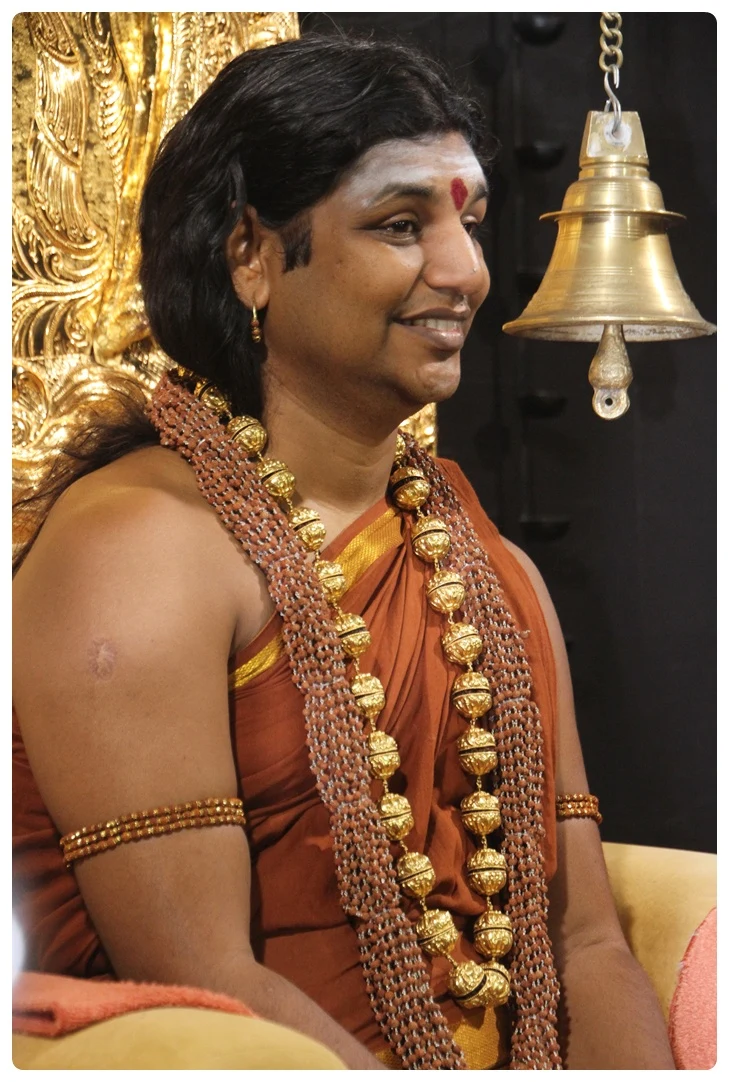
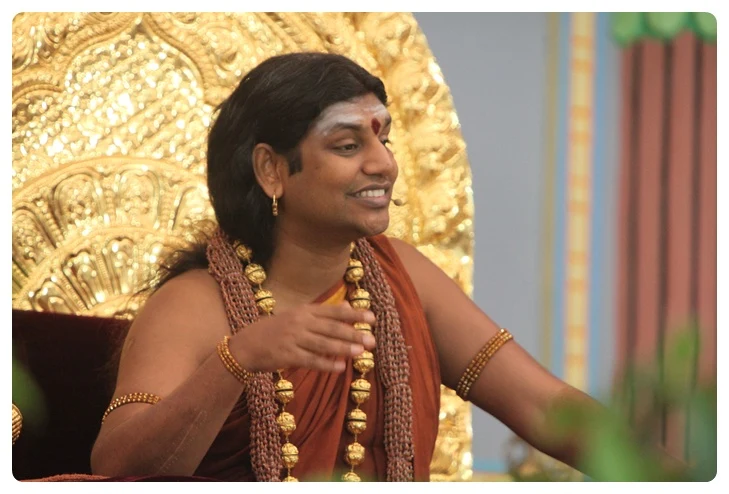
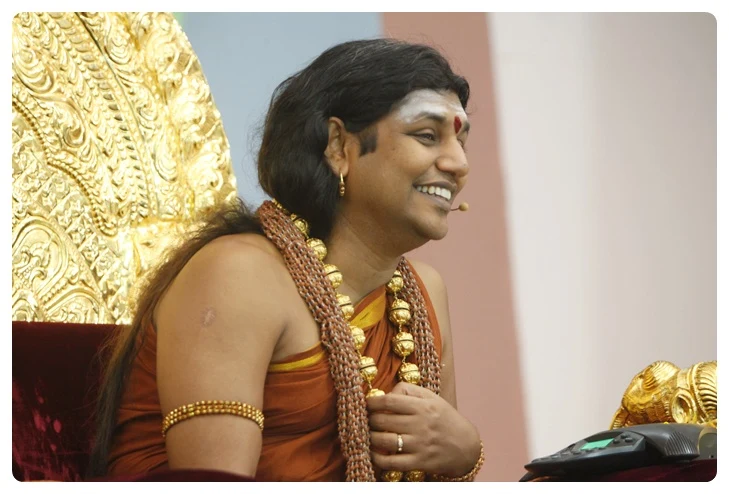
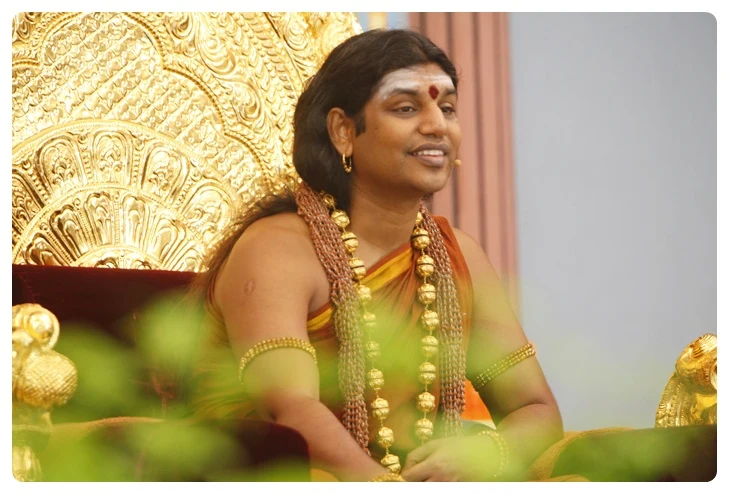
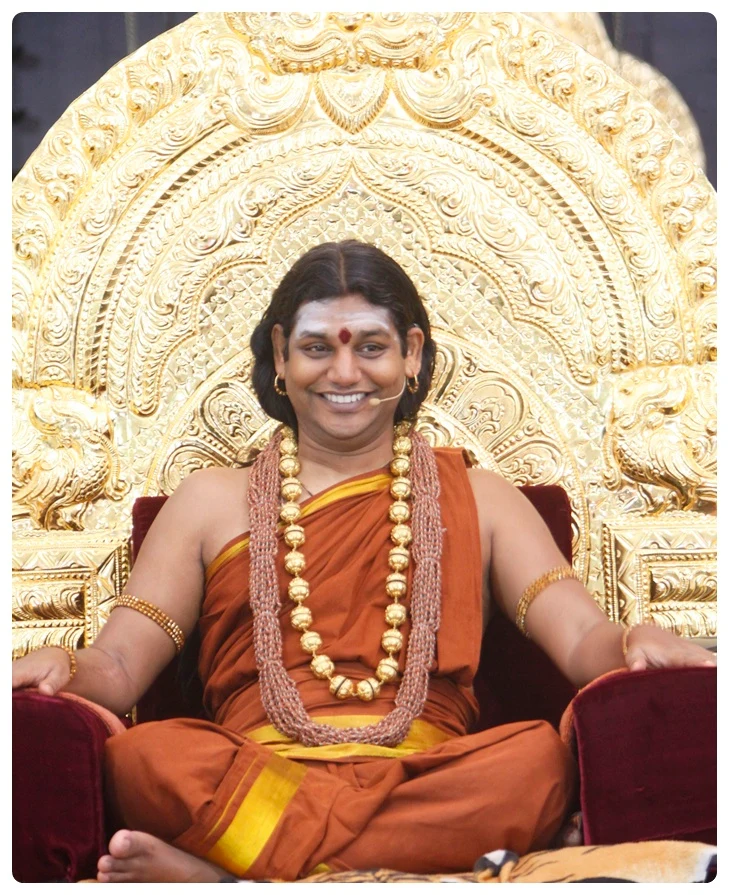
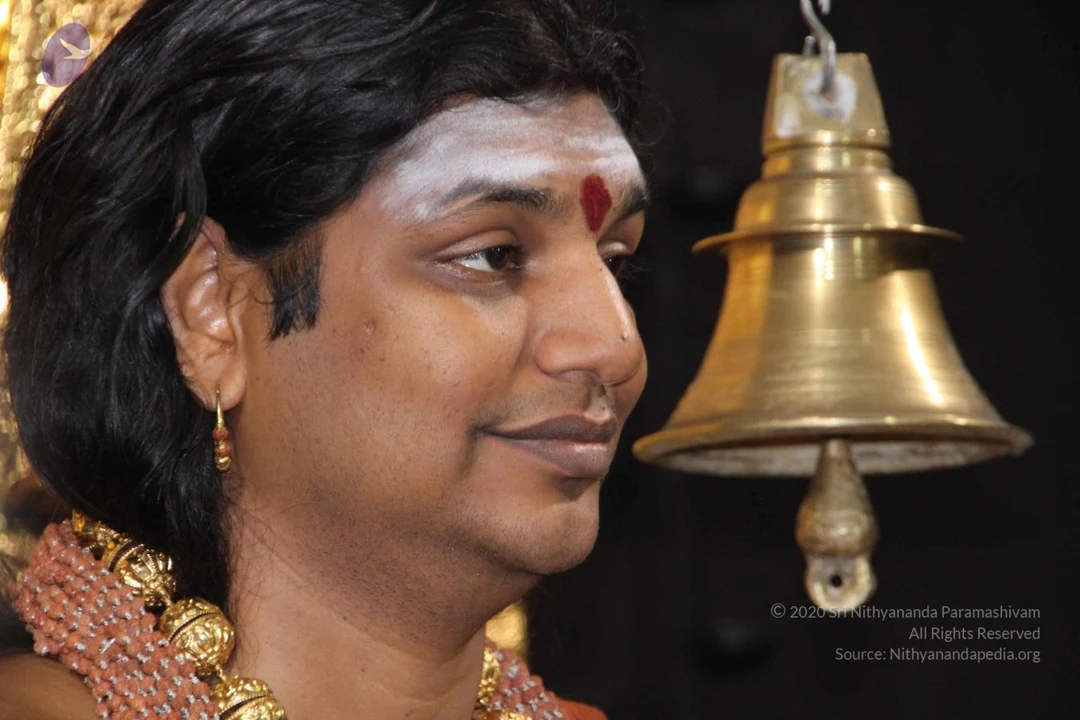
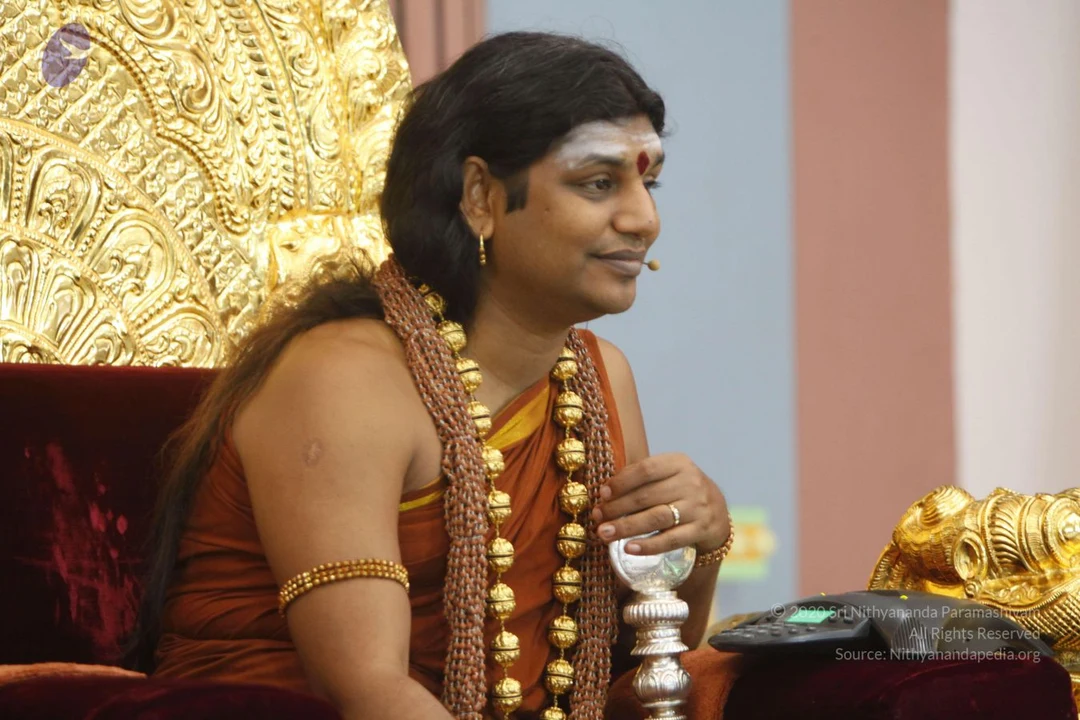
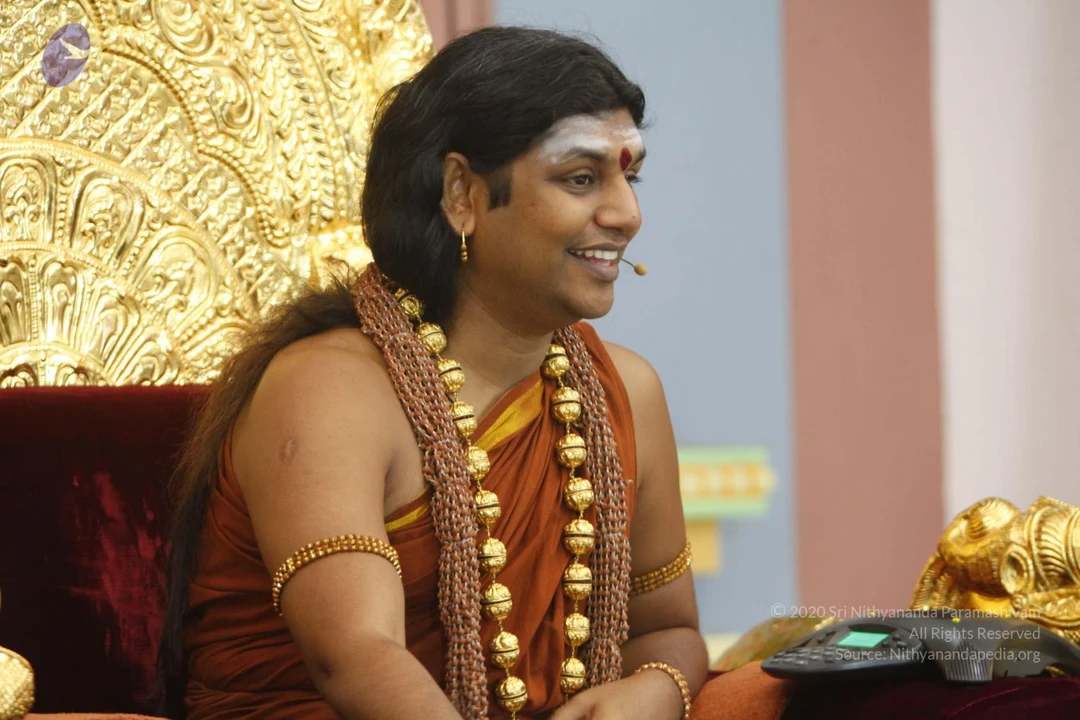
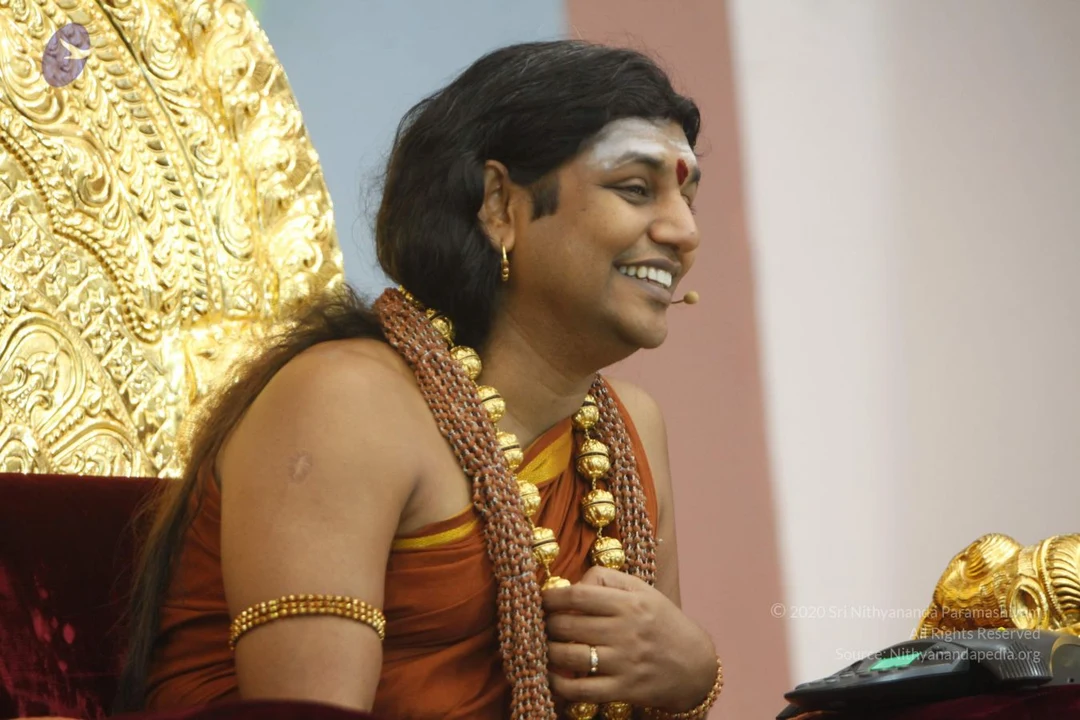
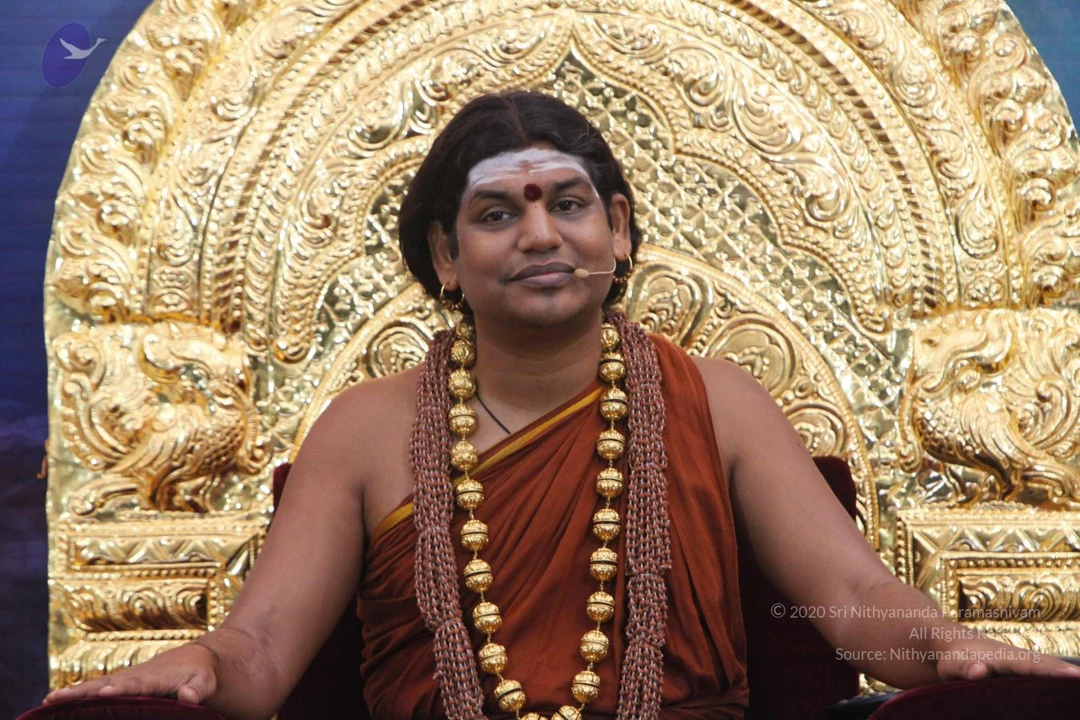
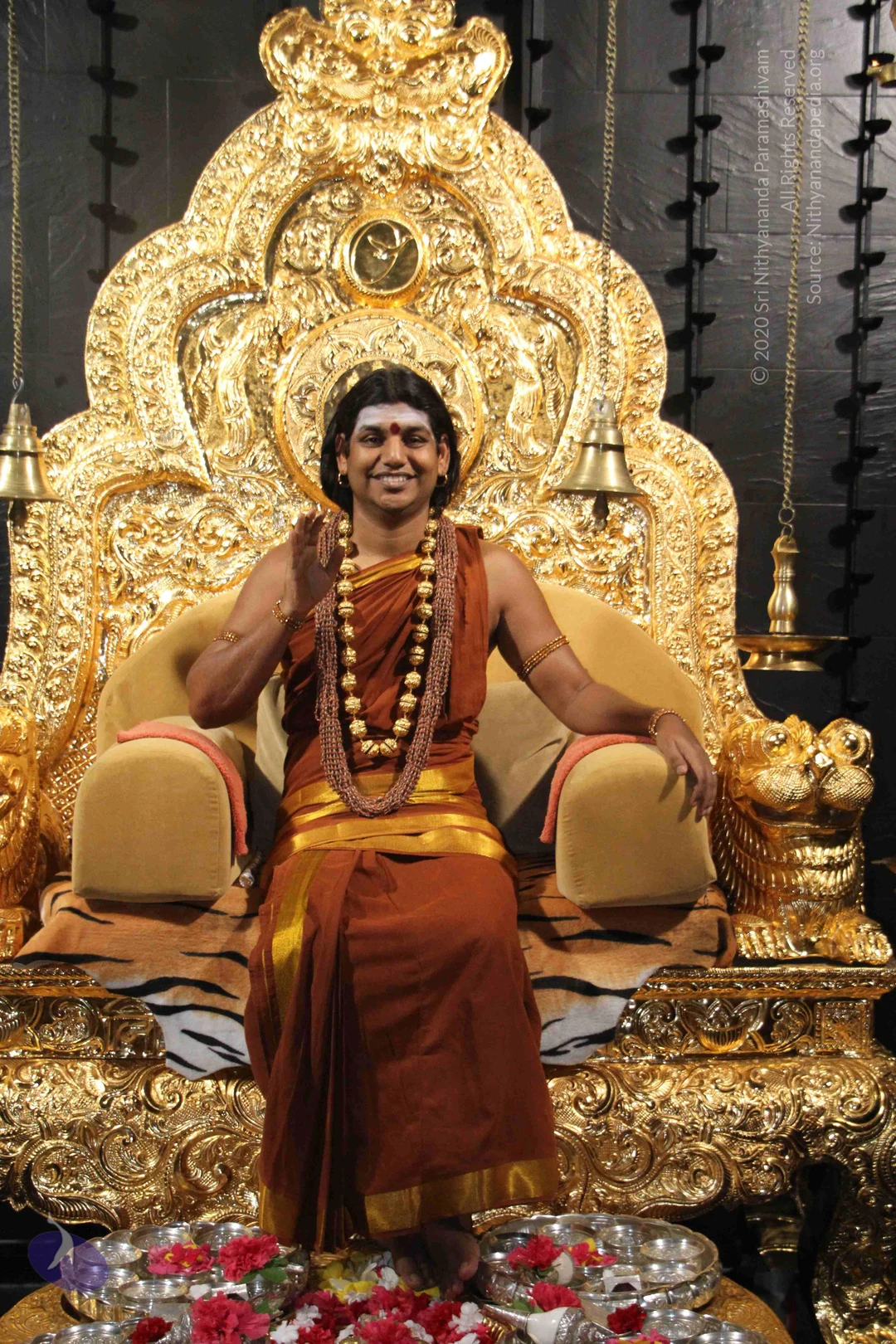
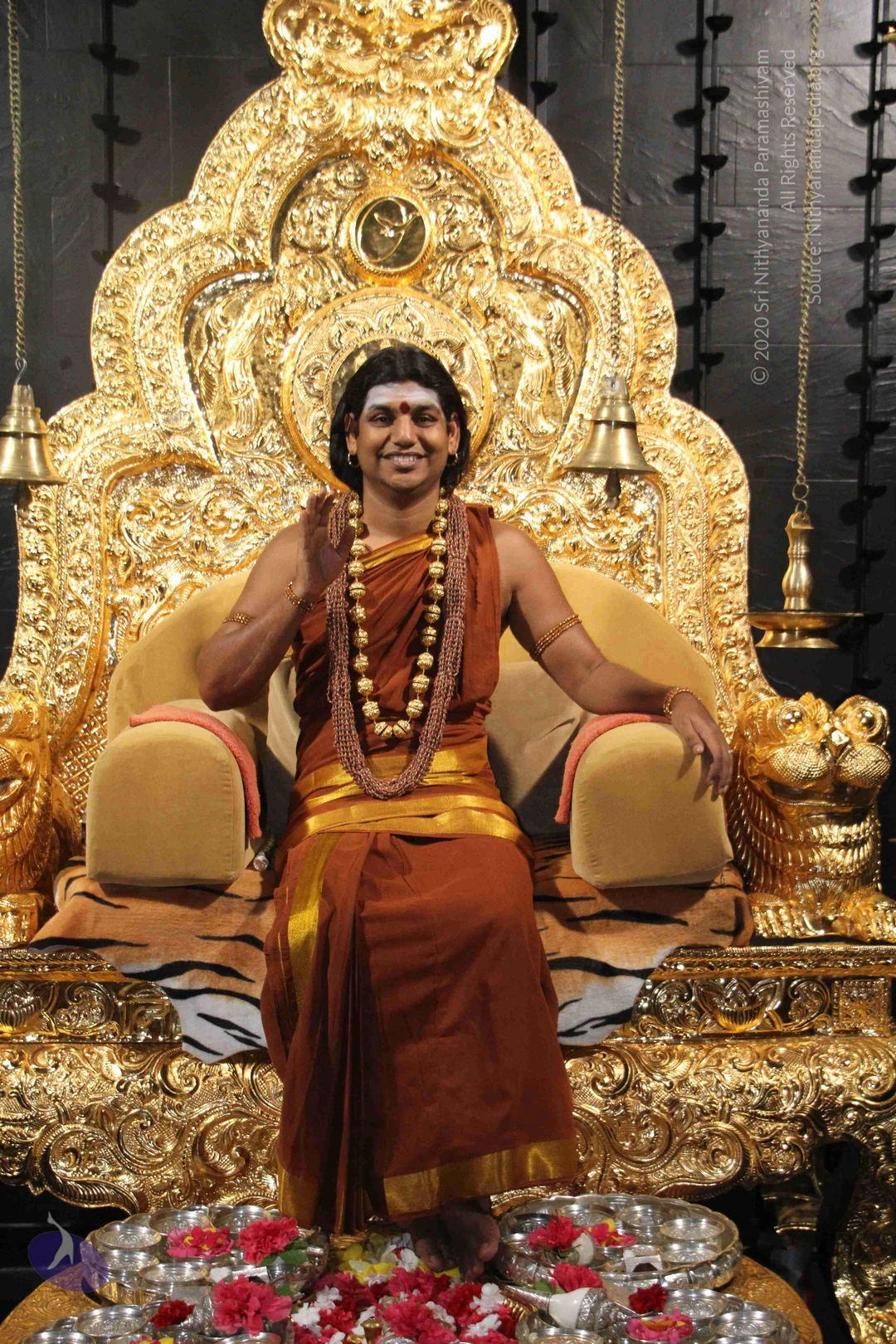
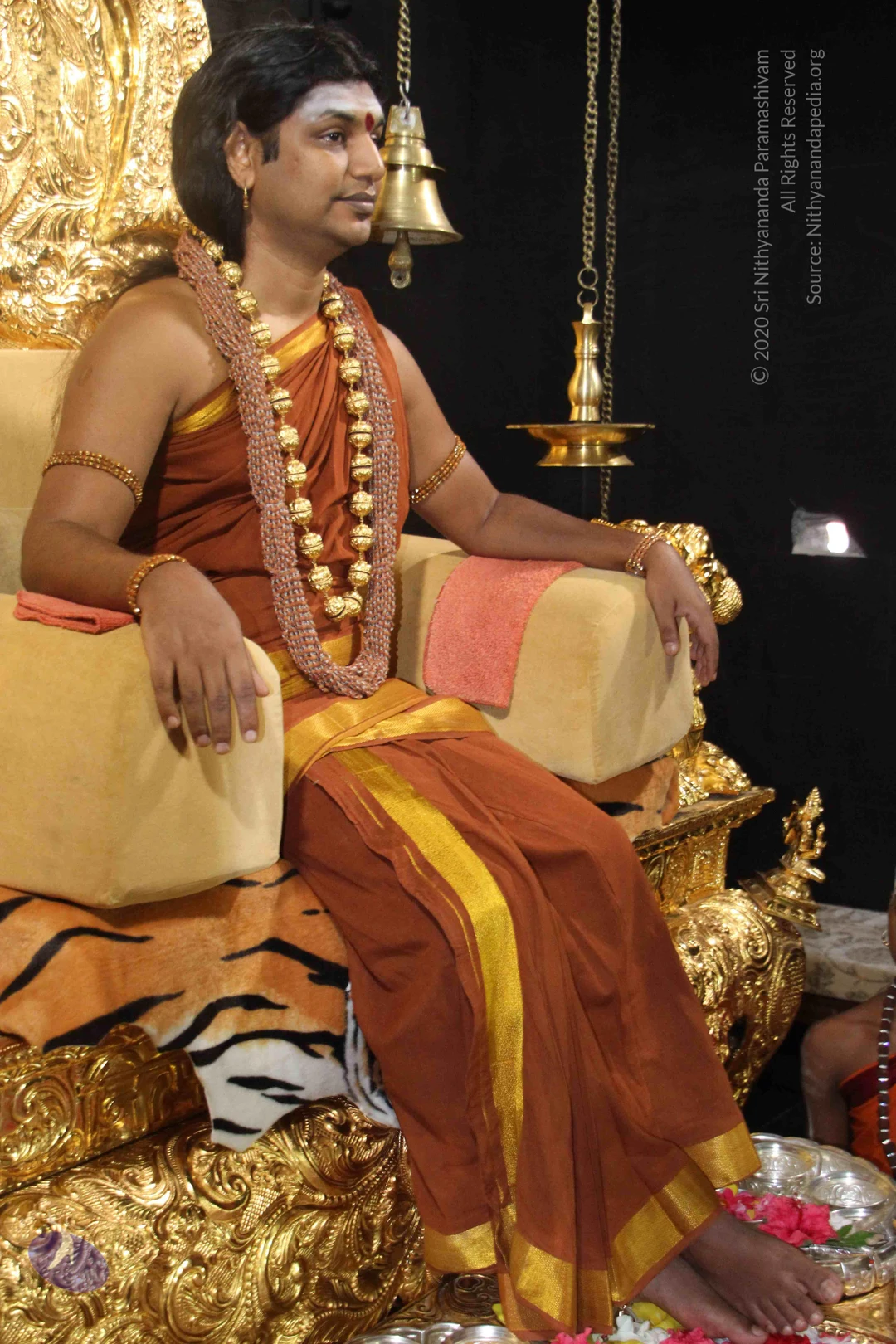
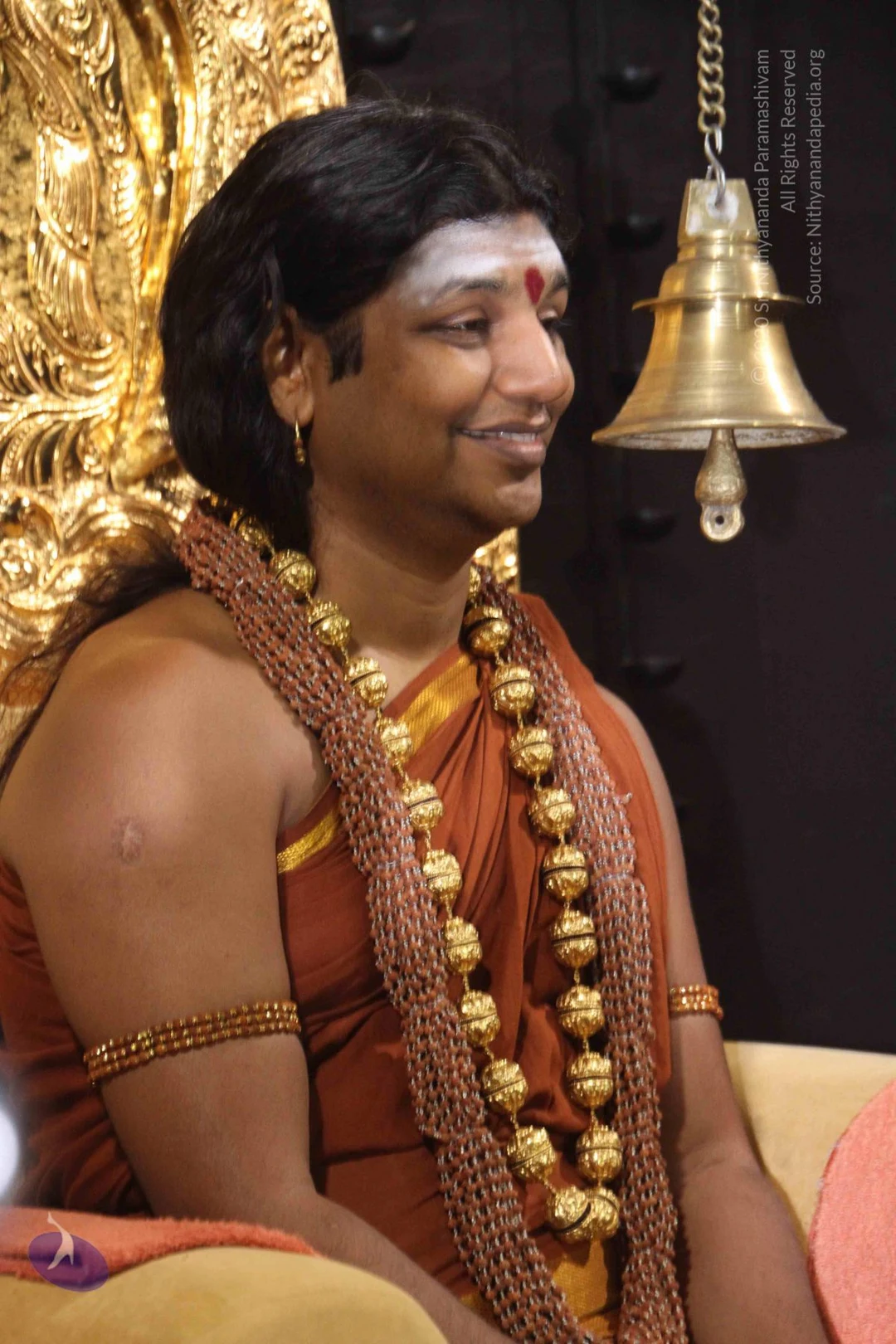
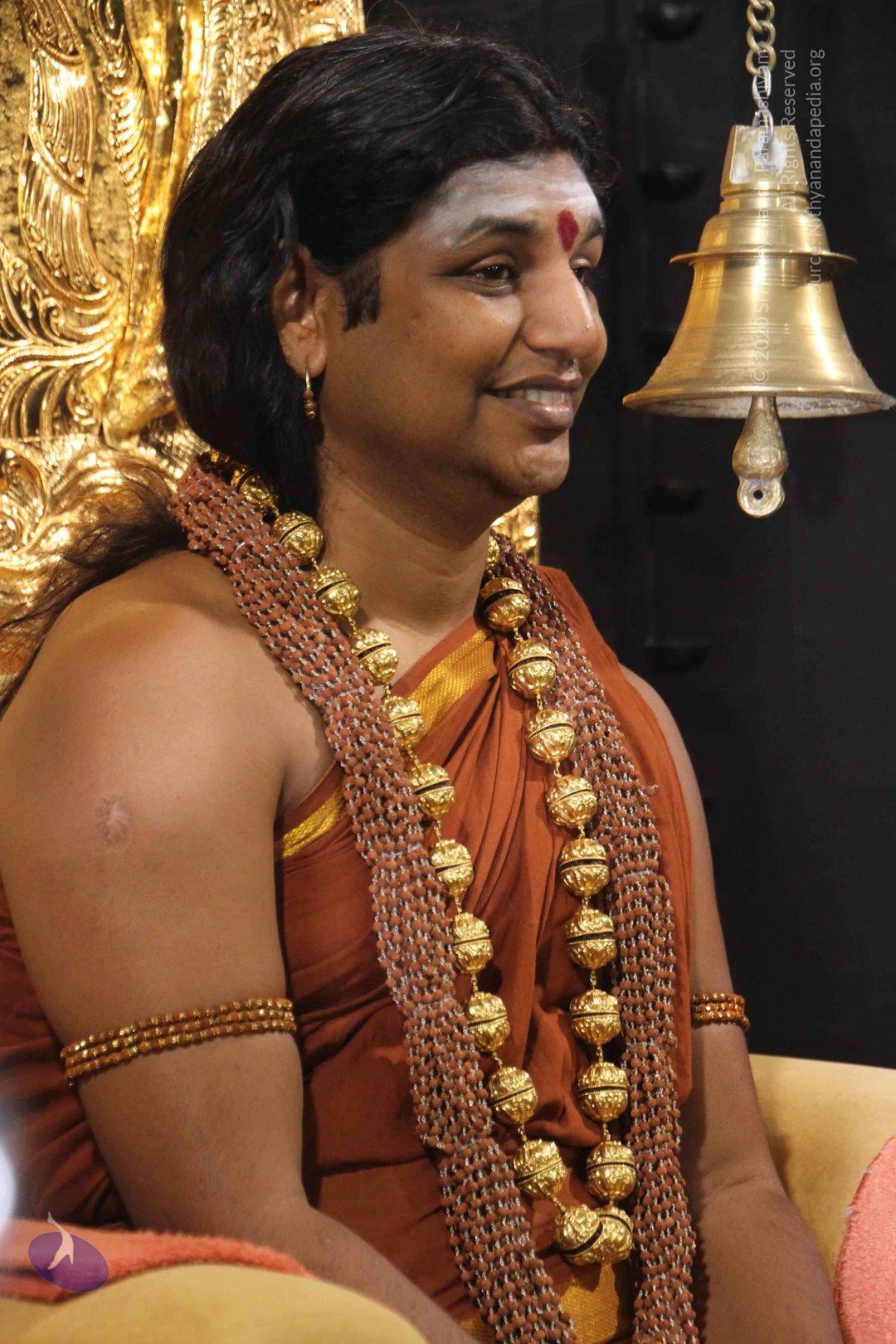
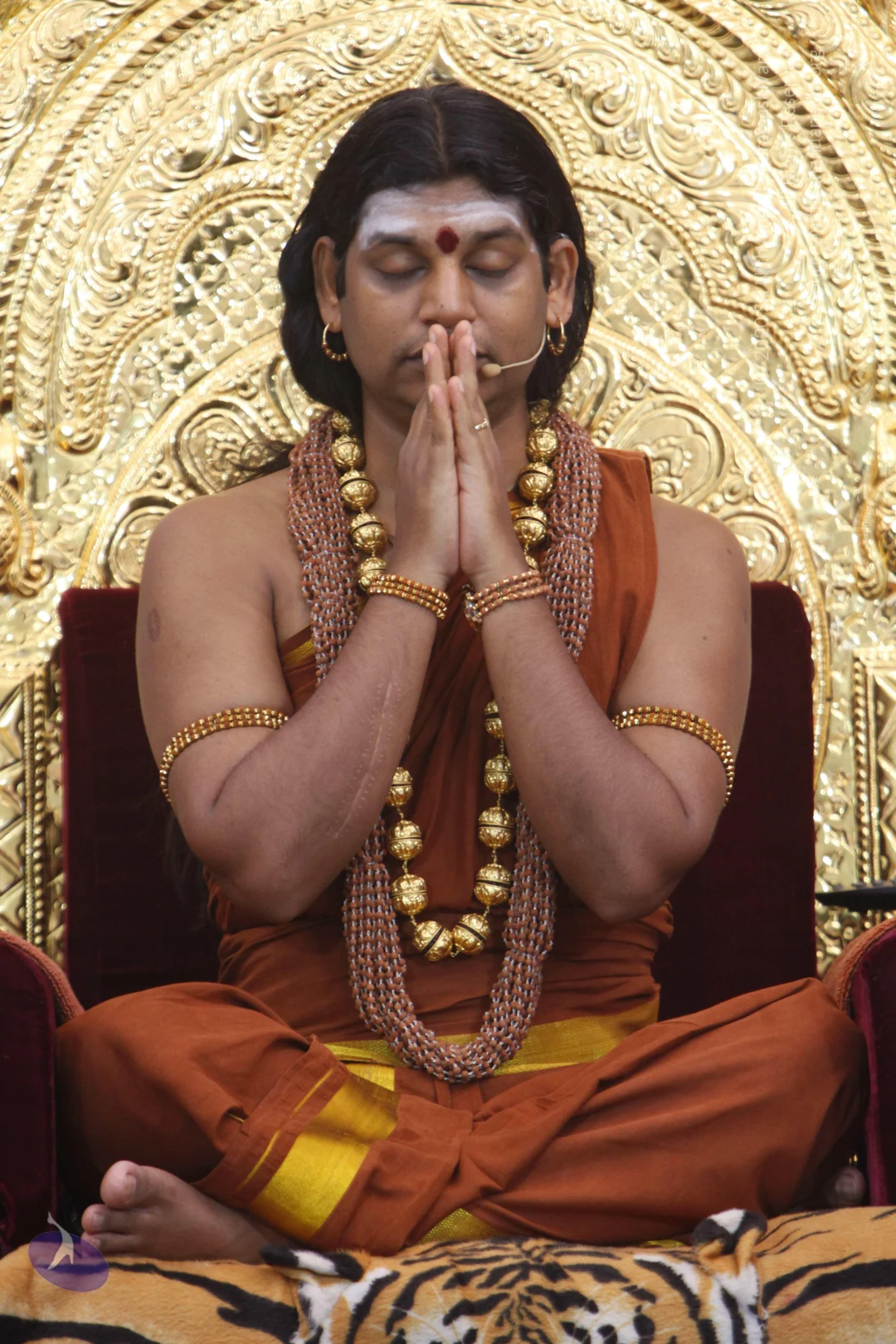
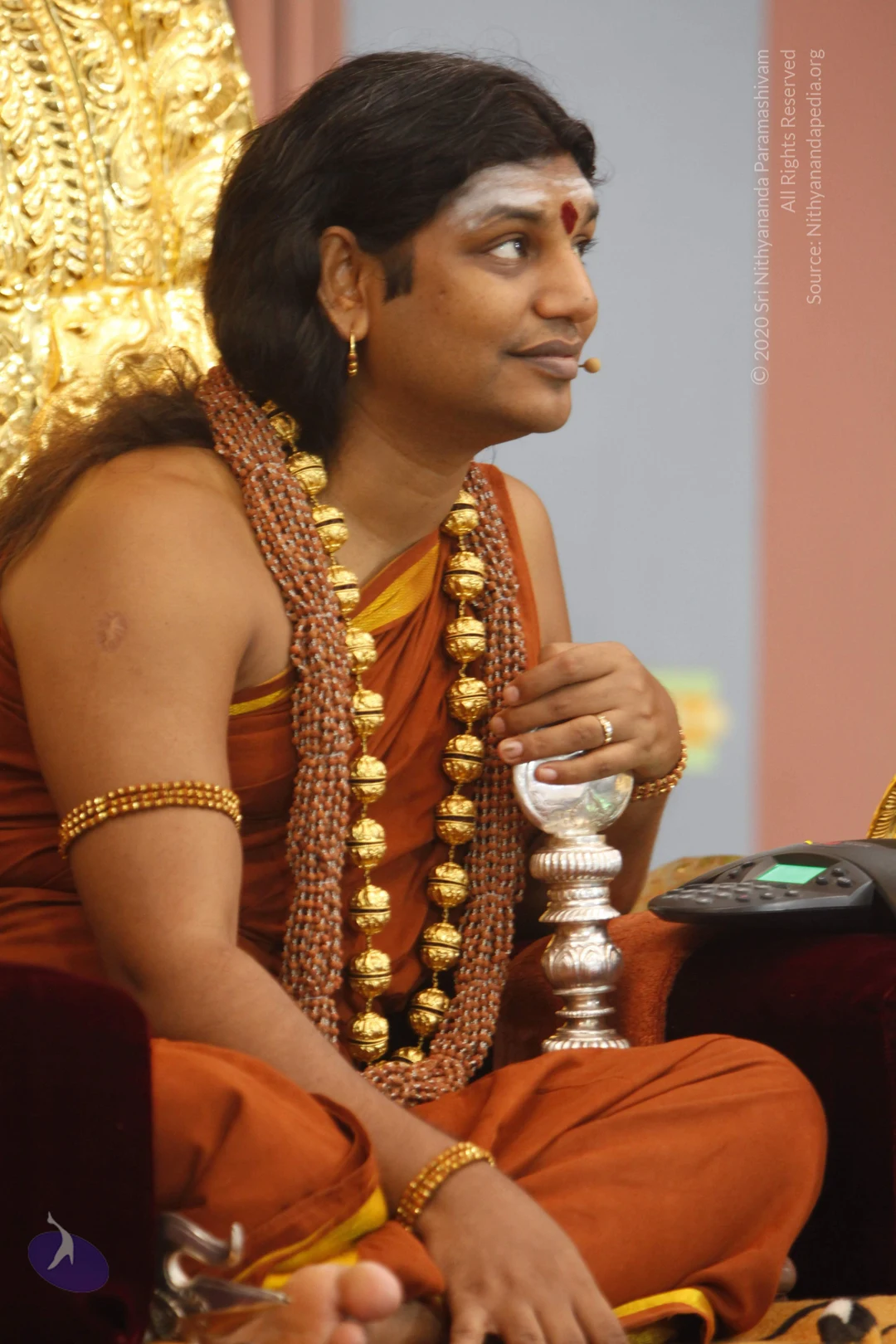
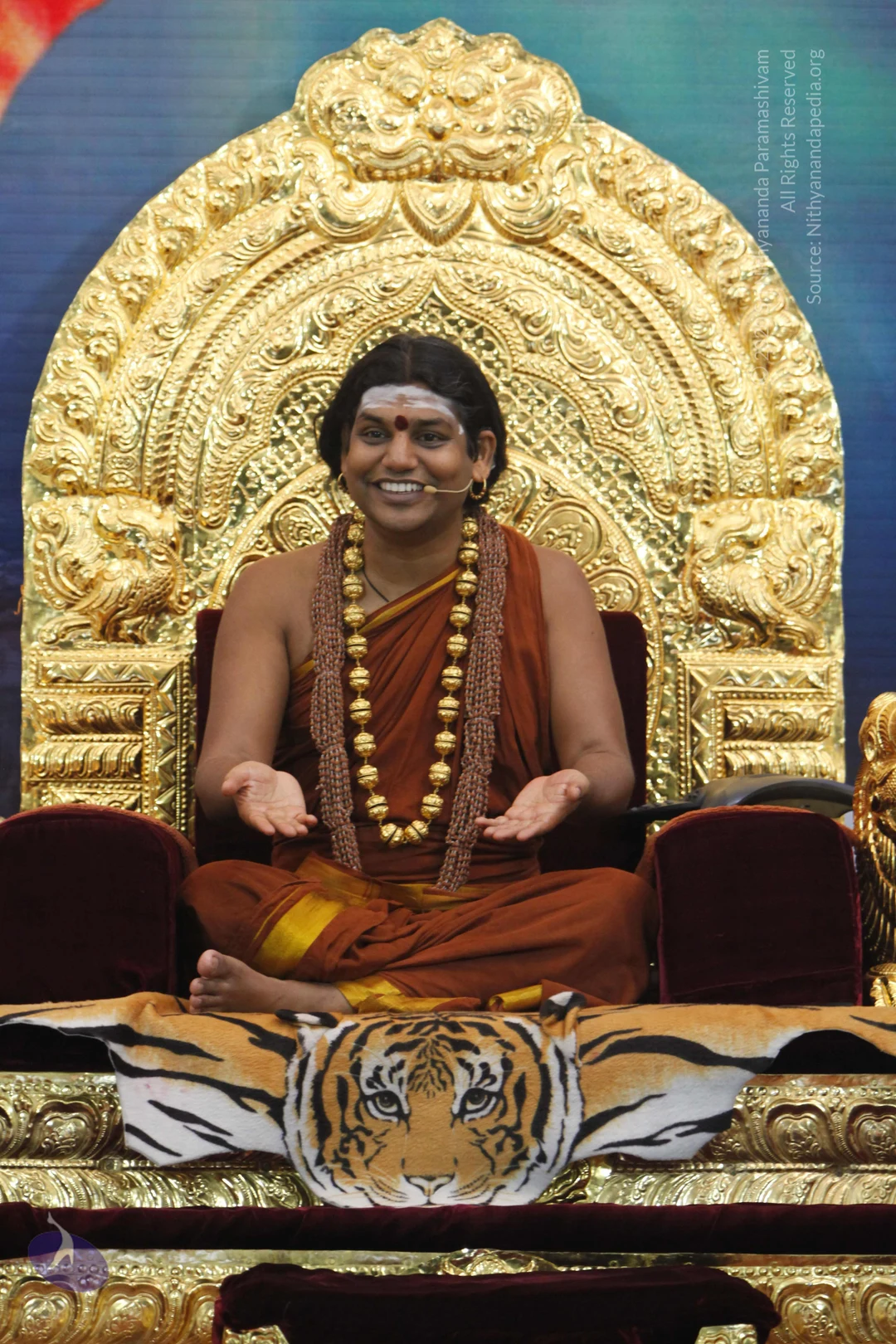
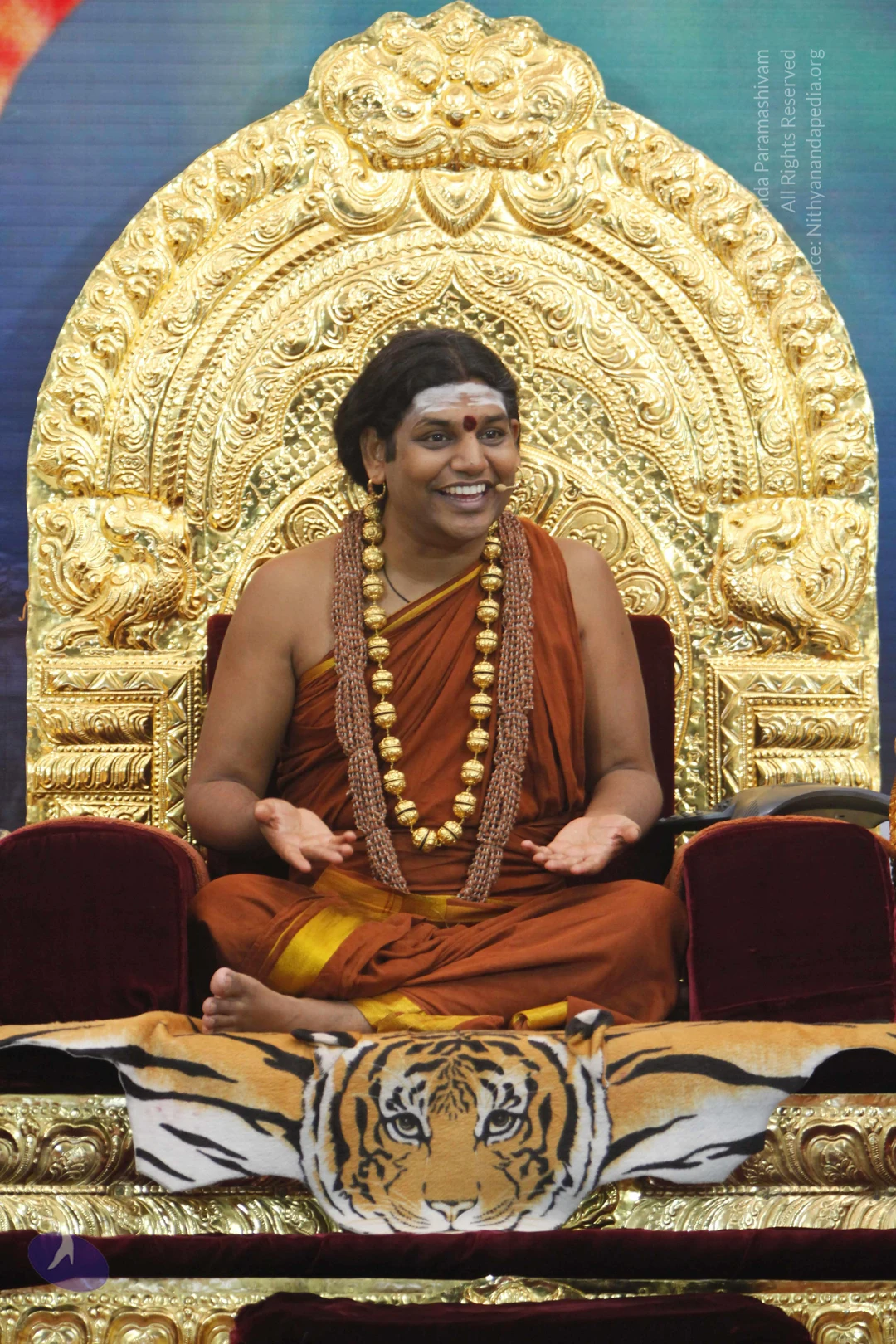
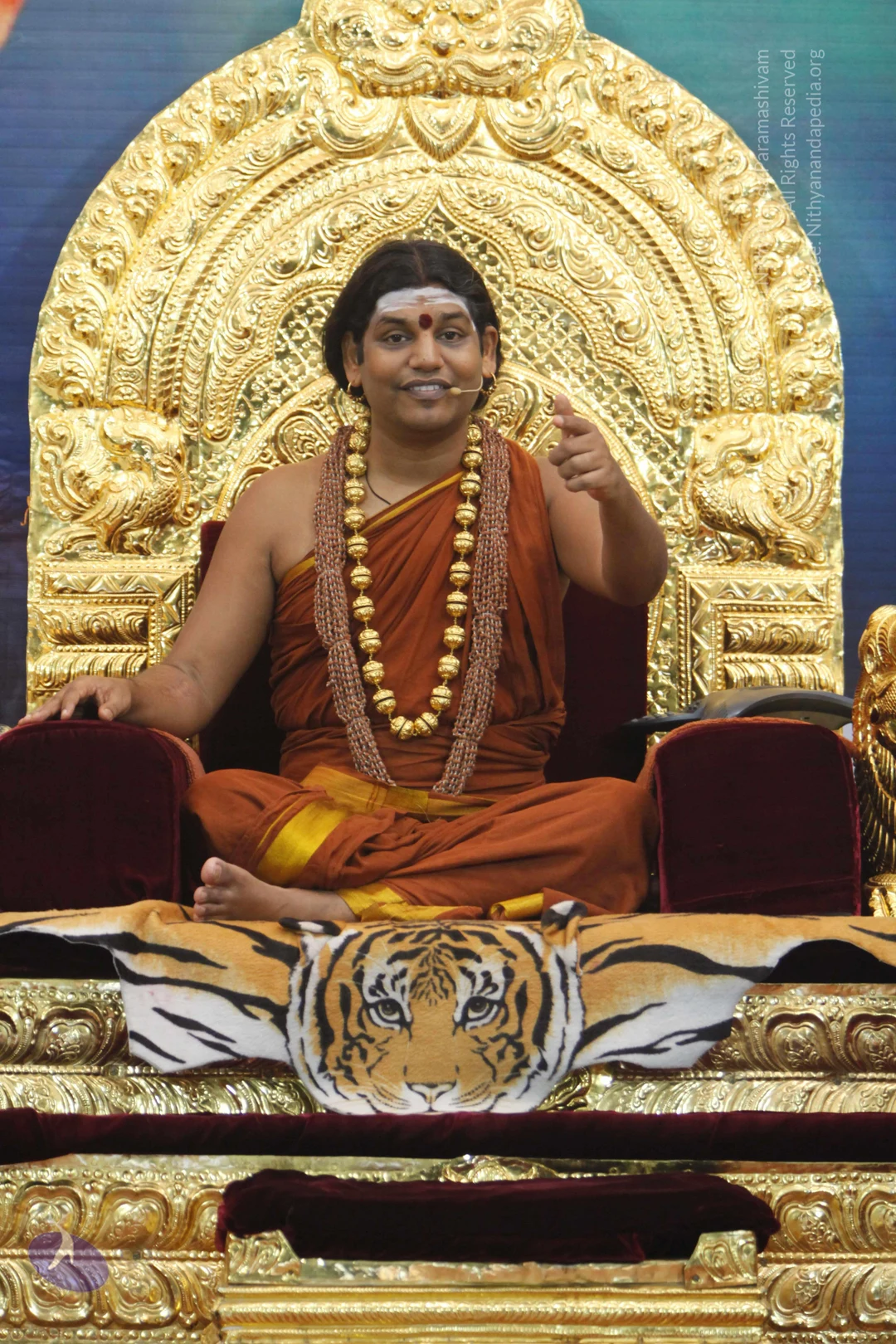
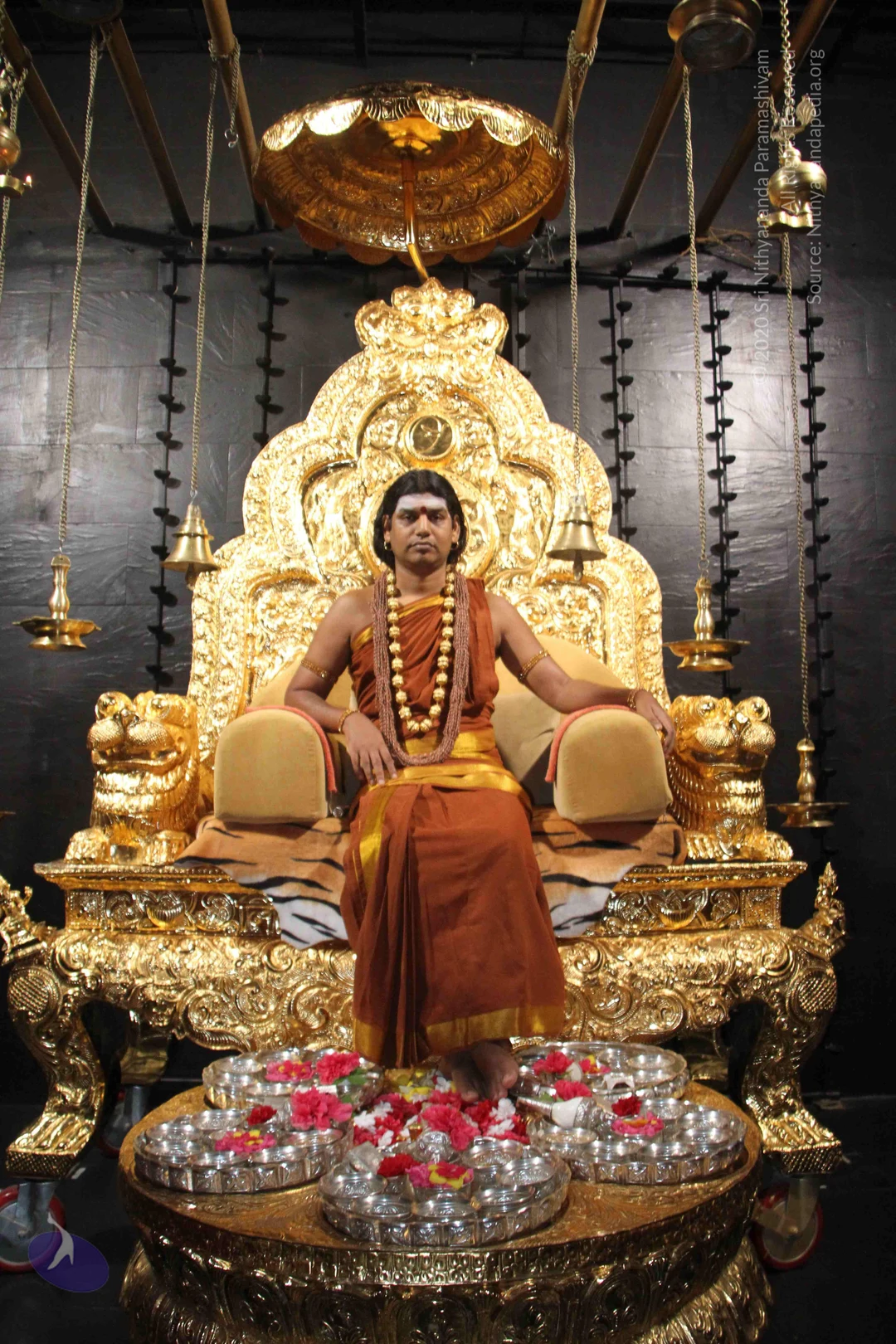
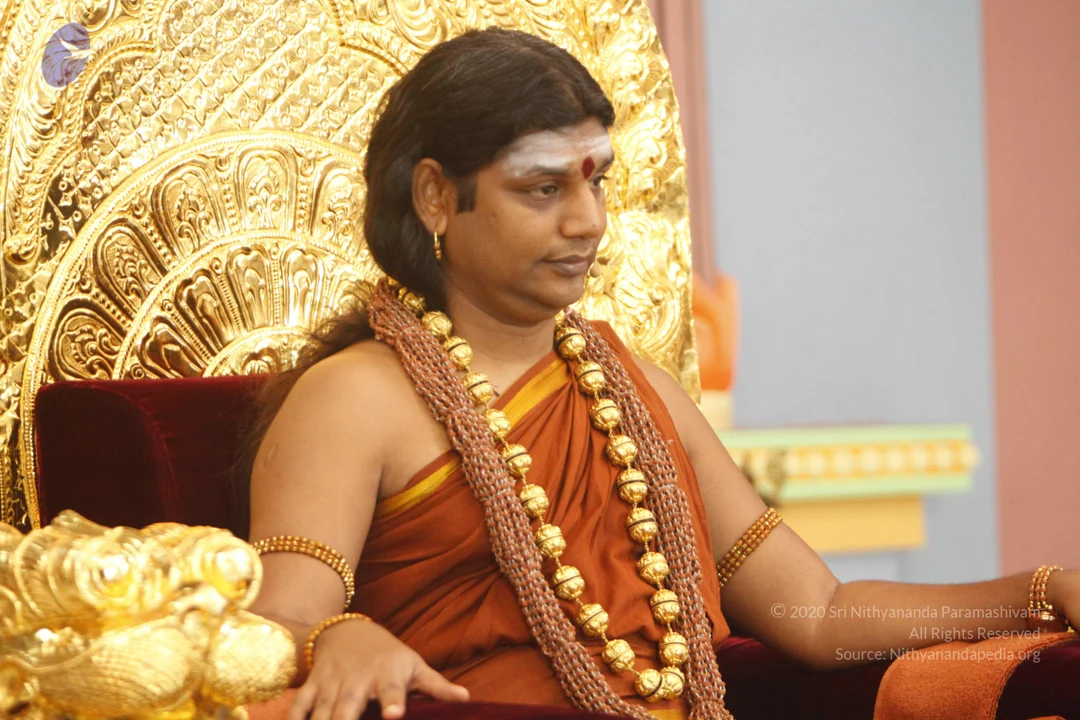
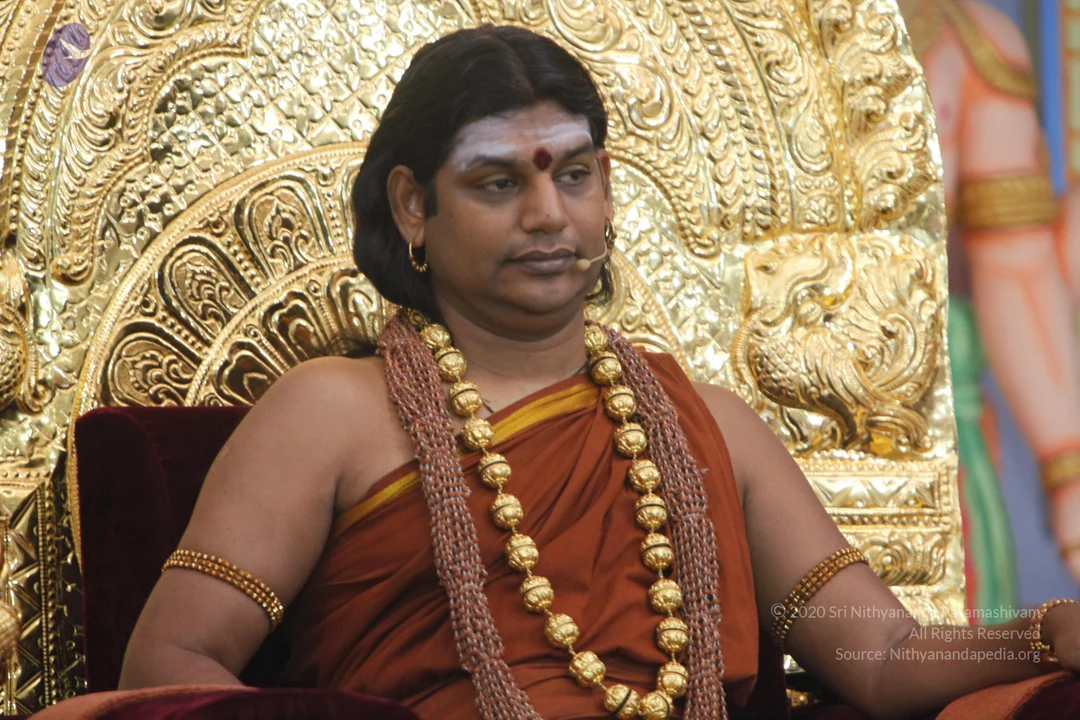
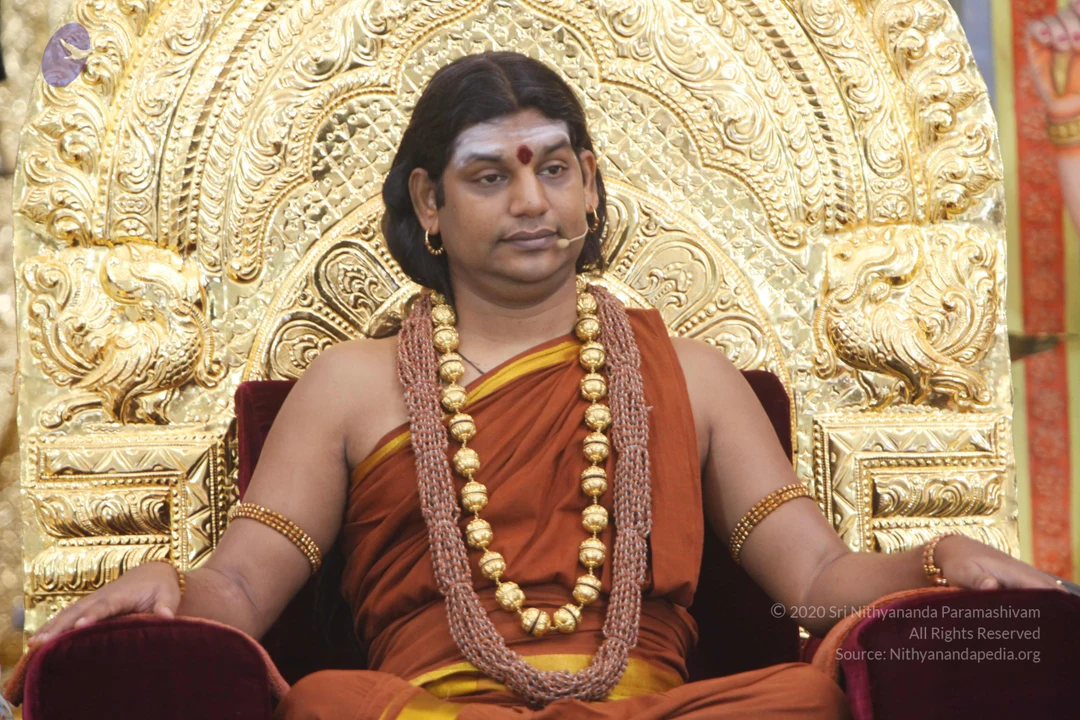
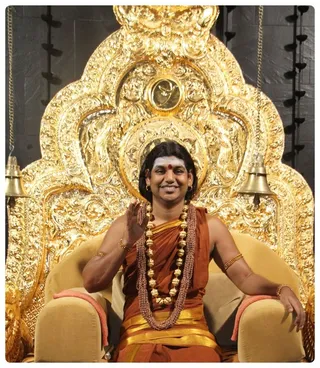
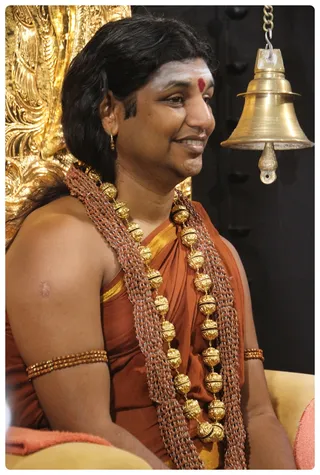
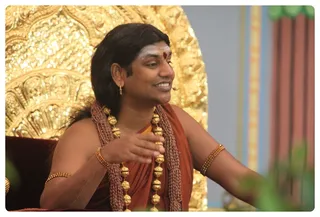
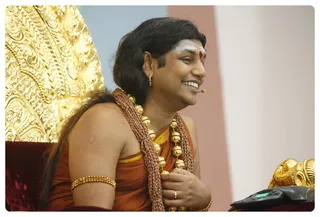
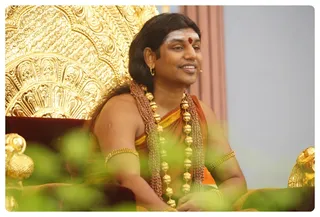
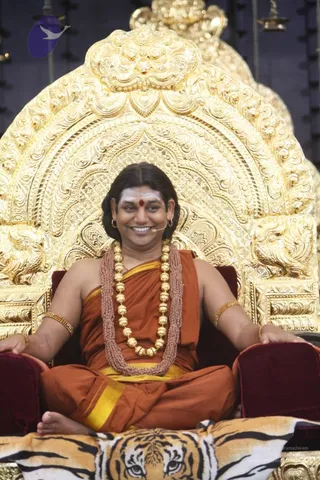
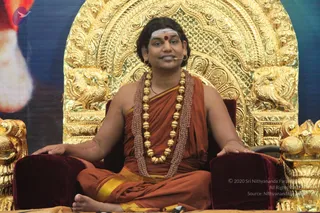
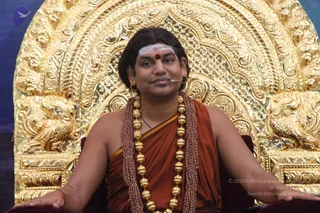
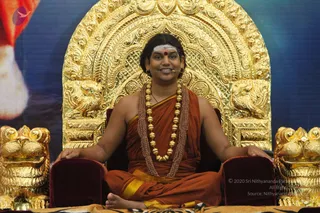
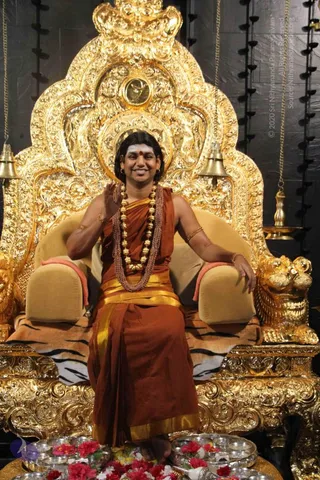
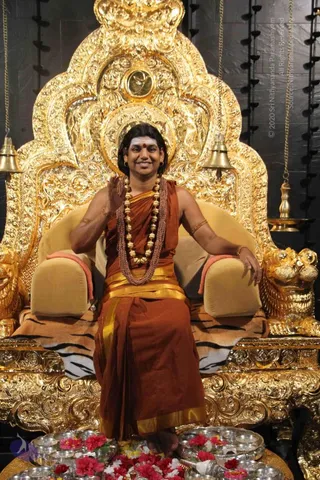
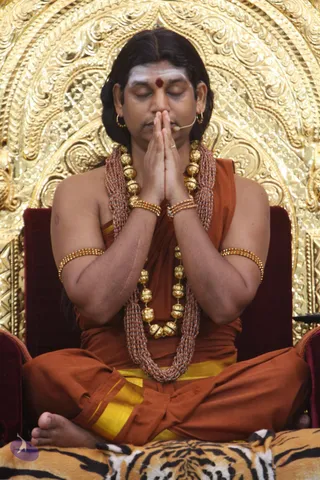
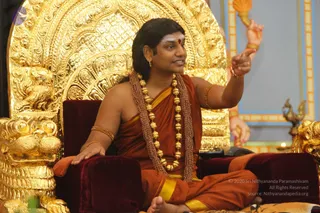
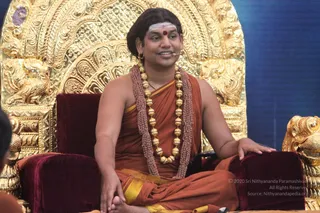
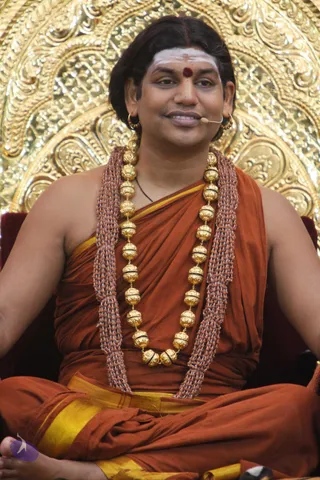
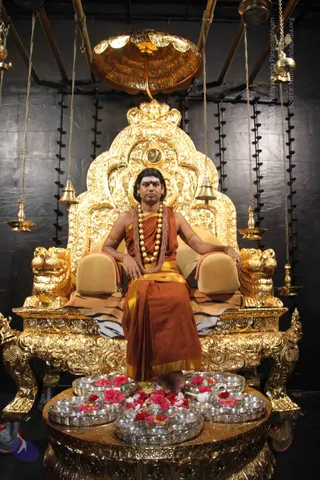
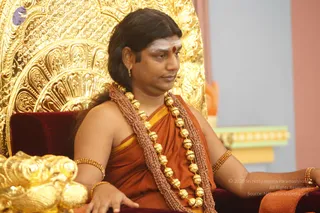
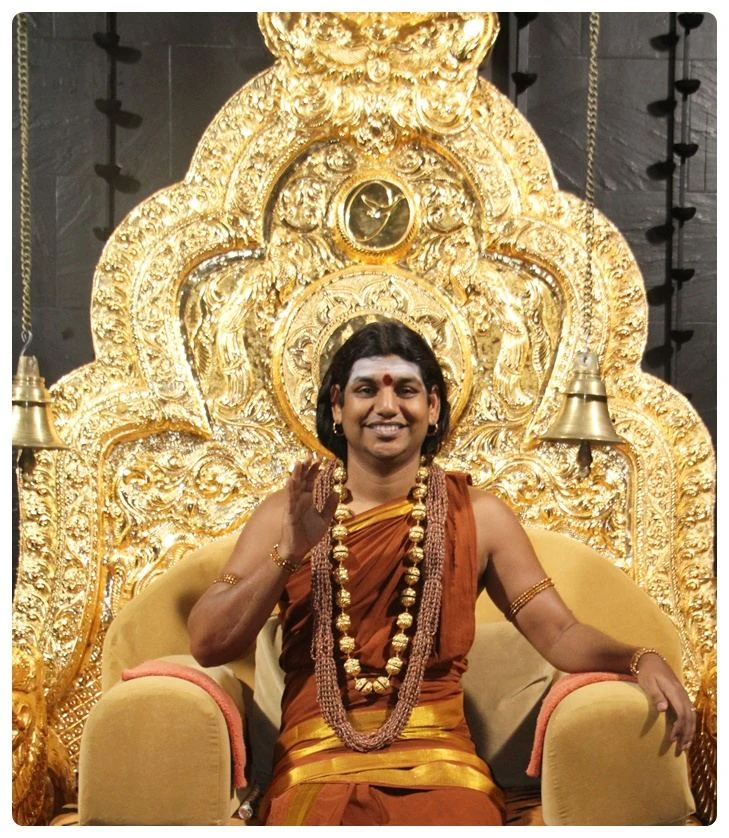
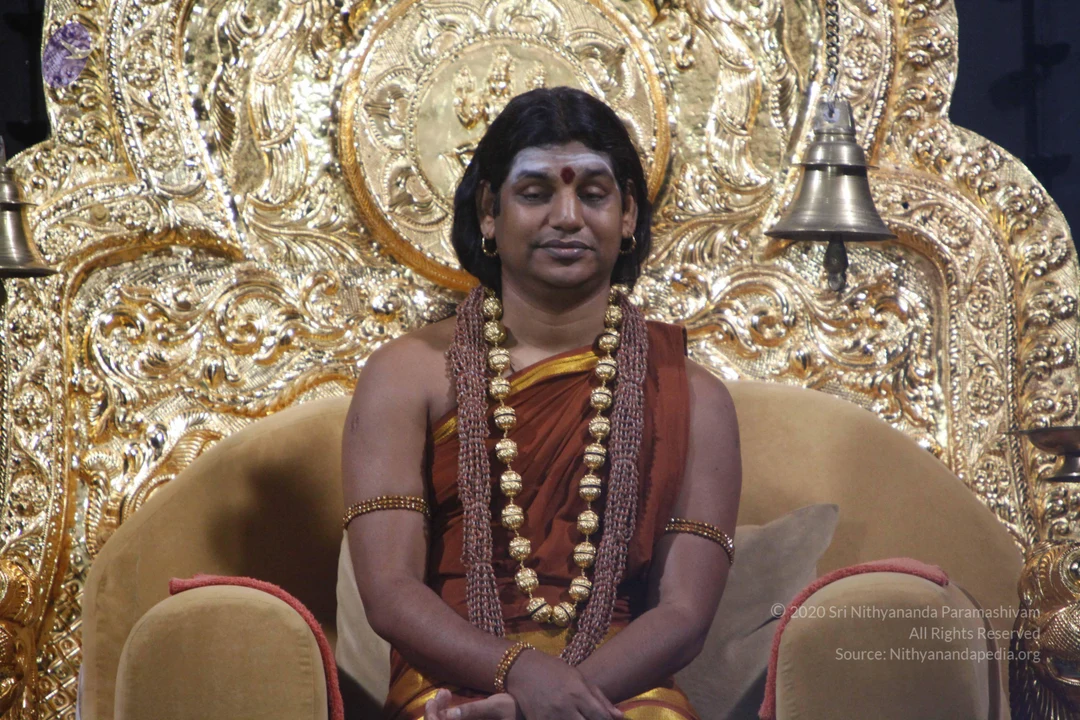
A smiling man sits in a cream upholstered armchair in front of an ornate gold repoussé throne with a central om emblem and bells hanging at its sides. He wears a rust-orange dhoti and shawl, a gold-bead necklace and a rudraksha mala, gold bangles and an armband, and has a red bindi and white forehead markings. He raises his right hand in a blessing gesture. a person by the appearance cues of long swept-back hair, saffron clothing, rudraksha mala and ceremonial gold necklace, seated on a golden peetha throne.Photo of a smiling man seated on a golden throne, with long dark swept-back hair, white forehead markings and a red bindi. He wears an orange-saffron draped garment with gold border, a gold-bead rudraksha-style mala and a chain of grey-silver beads across his chest, plus gold bangles on his upper arms and a small gold earring. A brass hanging bell with a chain is visible at right, beside an ornately carved gold backdrop.Close view of a ritual offering arrangement on a gold-embossed brass tray. Bare feet in the upper left, with a rust-red and gold-bordered garment, stand beside the setup. Multiple round silver bowls hold yellow turmeric or saffron liquid, white and red flowers, and pink and yellow blossoms are scattered across the tray and in bowls. Small silver vessels and a silver spoon are arranged among the offerings. No faces are visible. This looks like a puja or abhishekam preparation, with flowers and liquid offerings laid out for worship.A smiling man seated on an ornate gold throne with a carved gilded backrest, speaking during a satsang. He wears a saffron-orange shawl draped over his shoulders, long rudraksha-style beaded necklaces with ornate gold bead pendants, gold bangles on his upper arm and wrist, a gold earring, and a red bindi with white markings on his forehead. His right hand gestures in front of his chest while he speaks. Swamiji (probable): long swept-back hair, saffron shawl, and ornate gold ceremonial necklaces match the presentation of the page's subject, though the image itself does not confirm identity. Green foliage blurs in the lower foreground.A smiling man sits on a red cushioned seat in front of an ornate gold throne-back, wearing a saffron-orange garment draped over one shoulder with a rudraksha mala and heavy gold bead necklaces. He wears gold armlets and bangles, a white forehead marking with a red bindi, and a small headset microphone, and his hand rests on a gold necklace while a black conference-style device sits on a table beside him. Swamiji (probable): his long swept-back hair, ornate gold regalia and saffron clothing with rudraksha are consistent with the page's description of a discourse event, though the presentation is uncertain, so the candidate is marked probable and in_person is used.A seated man in orange and saffron draped clothing sits on an ornate gold throne with carved gilded panels. He wears a rudraksha mala and layered gold ceremonial necklaces with large gold beads, gold bangles on his upper arms and wrist, a red bindi and white forehead markings, and a small gold earring. He smiles and looks to the side while a blurred green plant leaf fills the foreground. Swamiji (probable) appears in person, distinguished by the long swept-back hair, saffron clothing, rudraksha mala and ceremonial gold necklaces. The setting appears to be a satsang stage.

Deity-Darshan

10 photosSource gallery
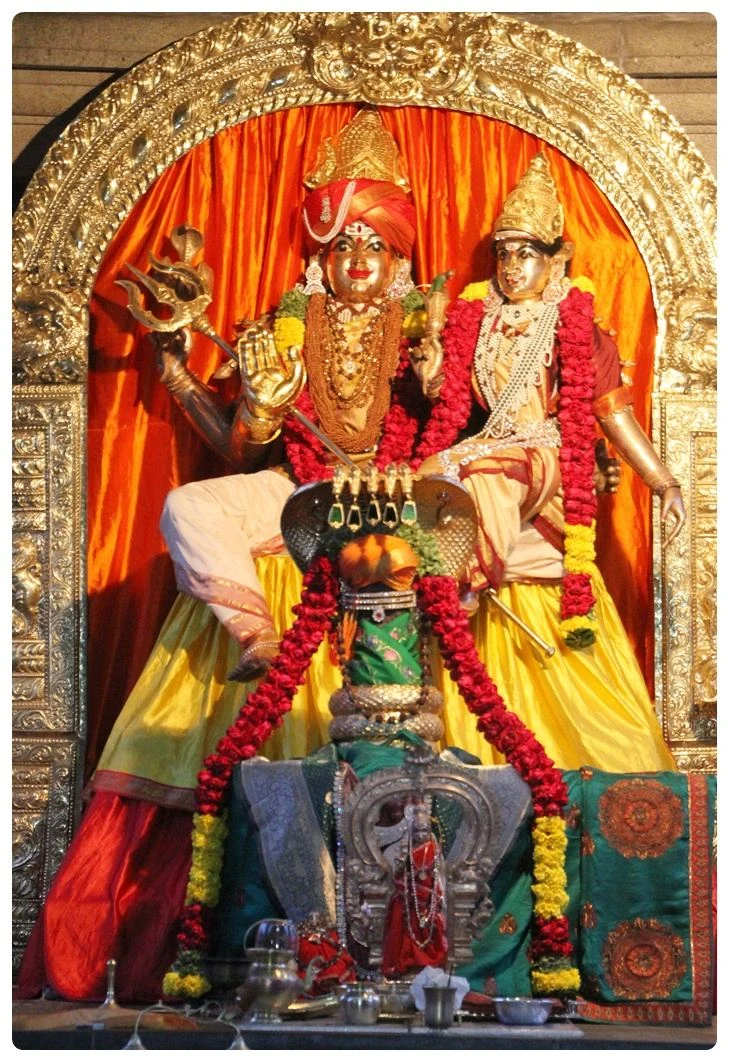
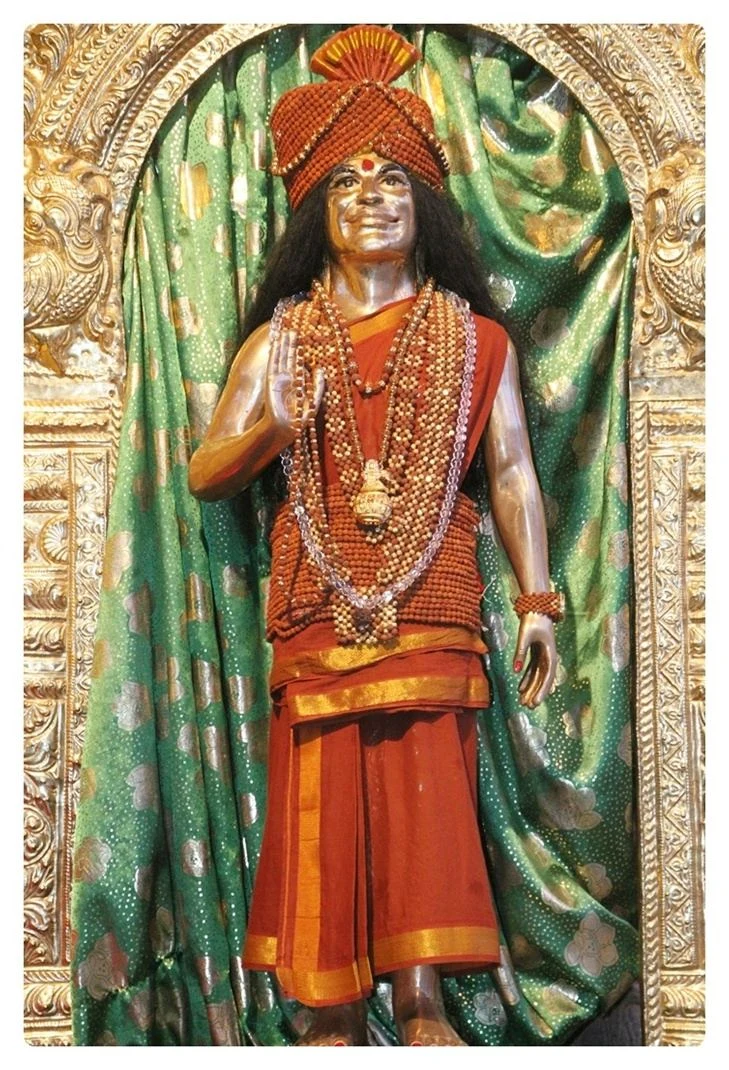
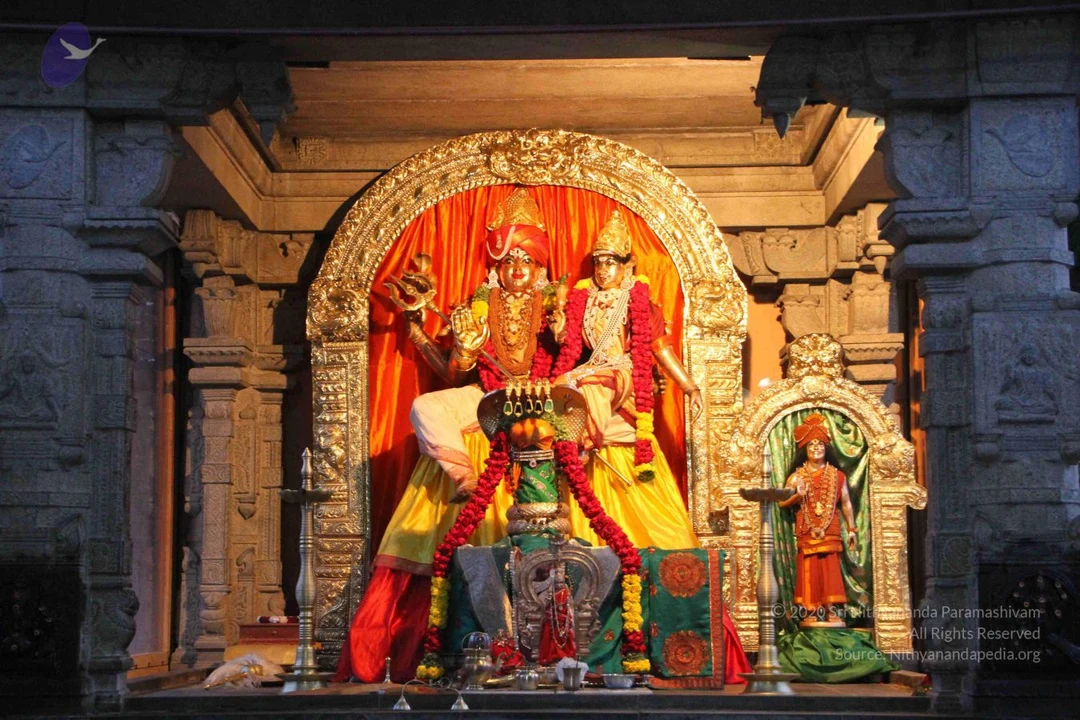
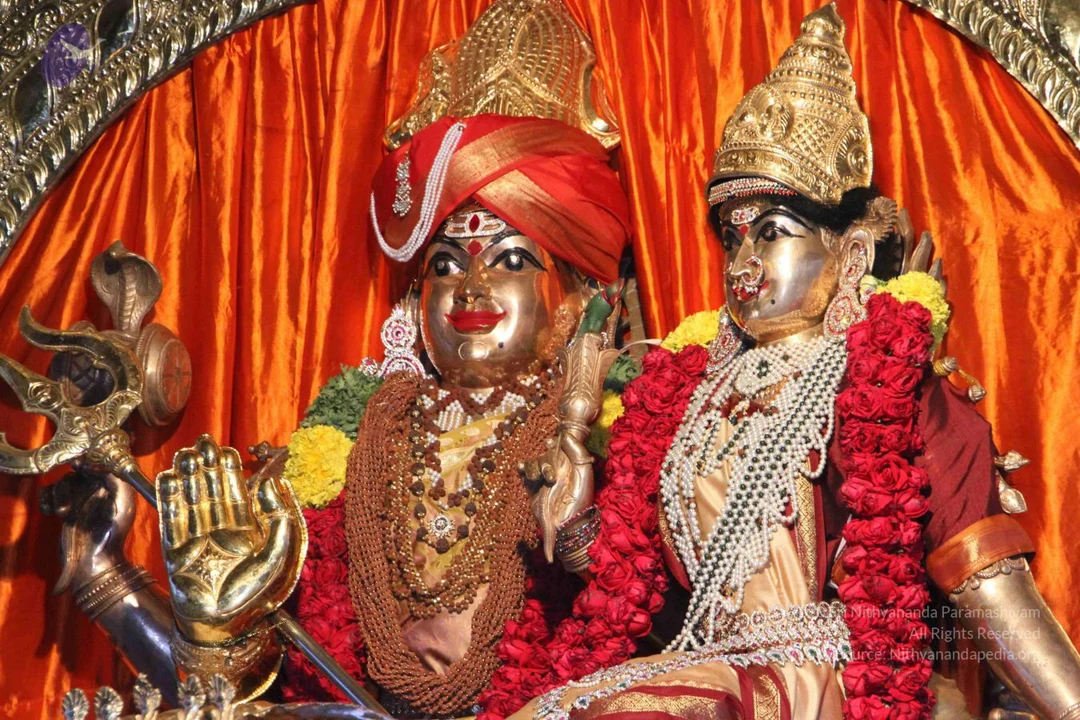
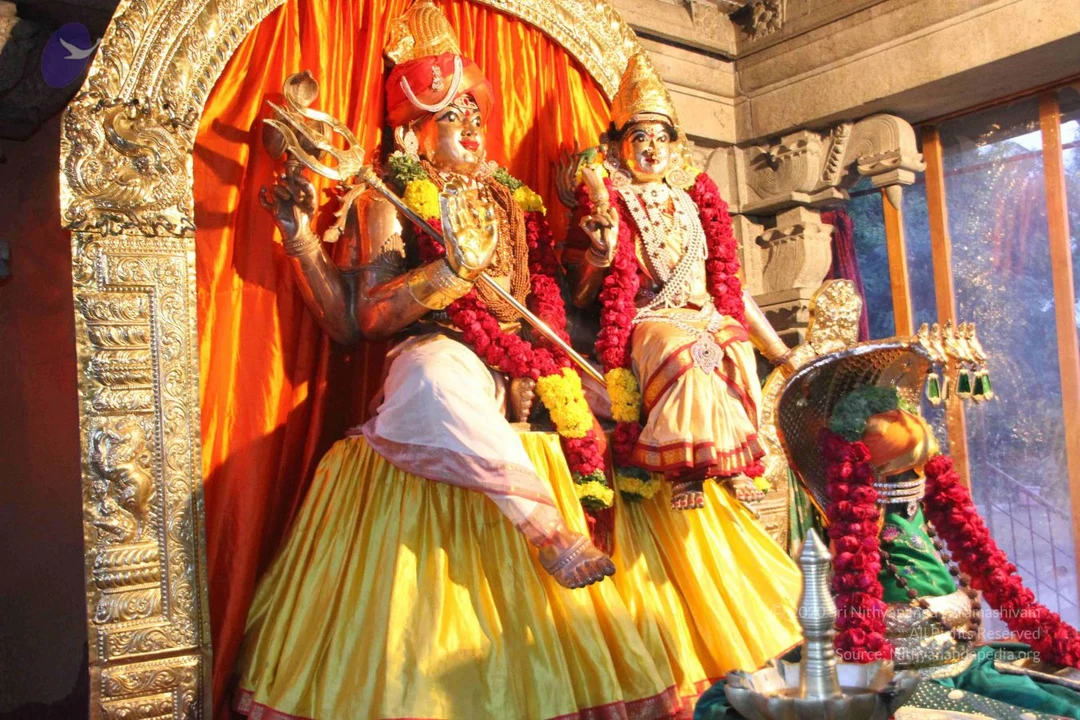
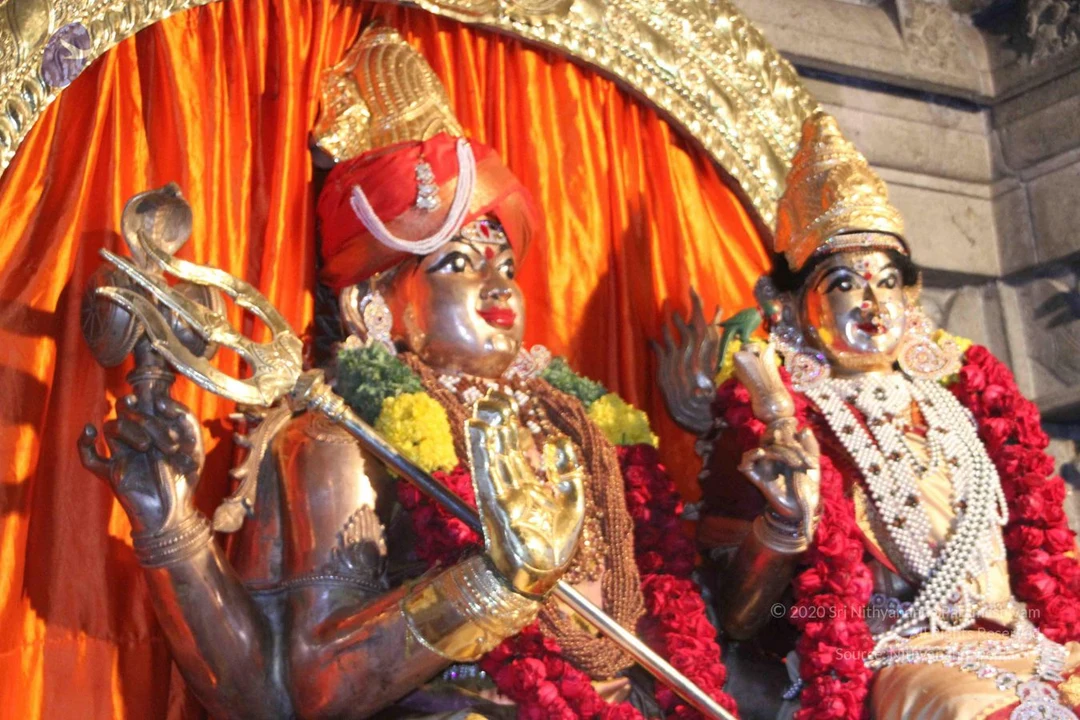
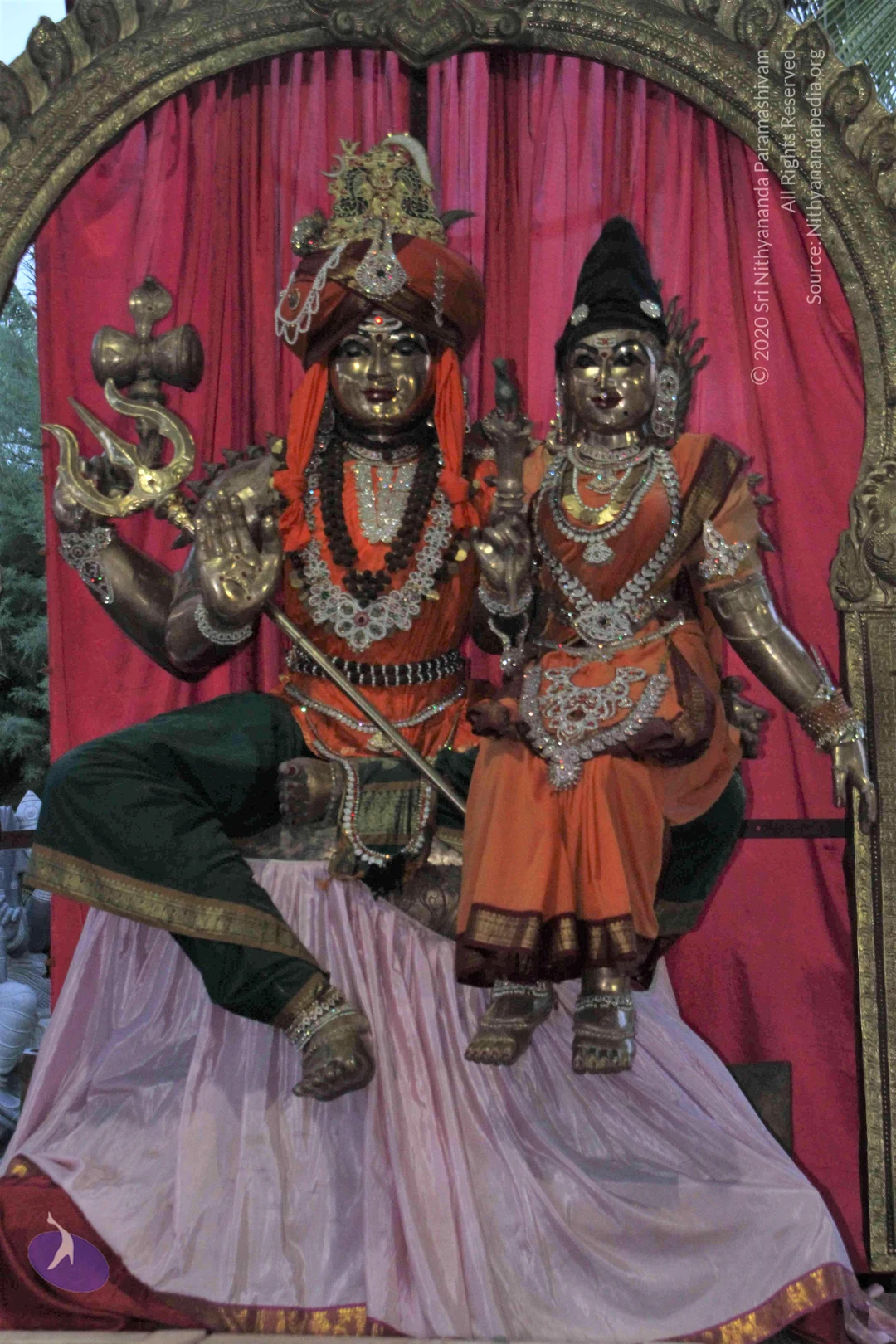
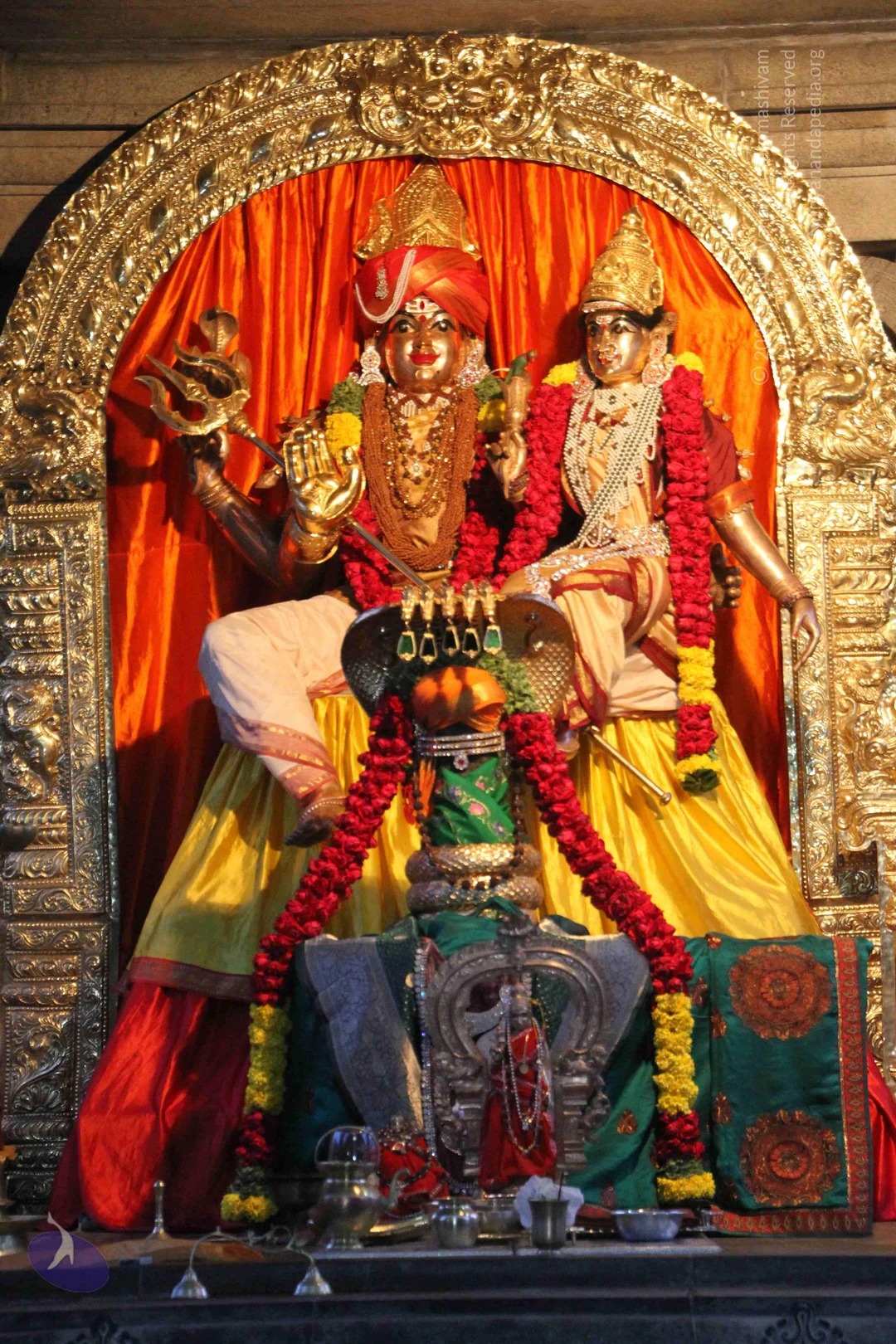
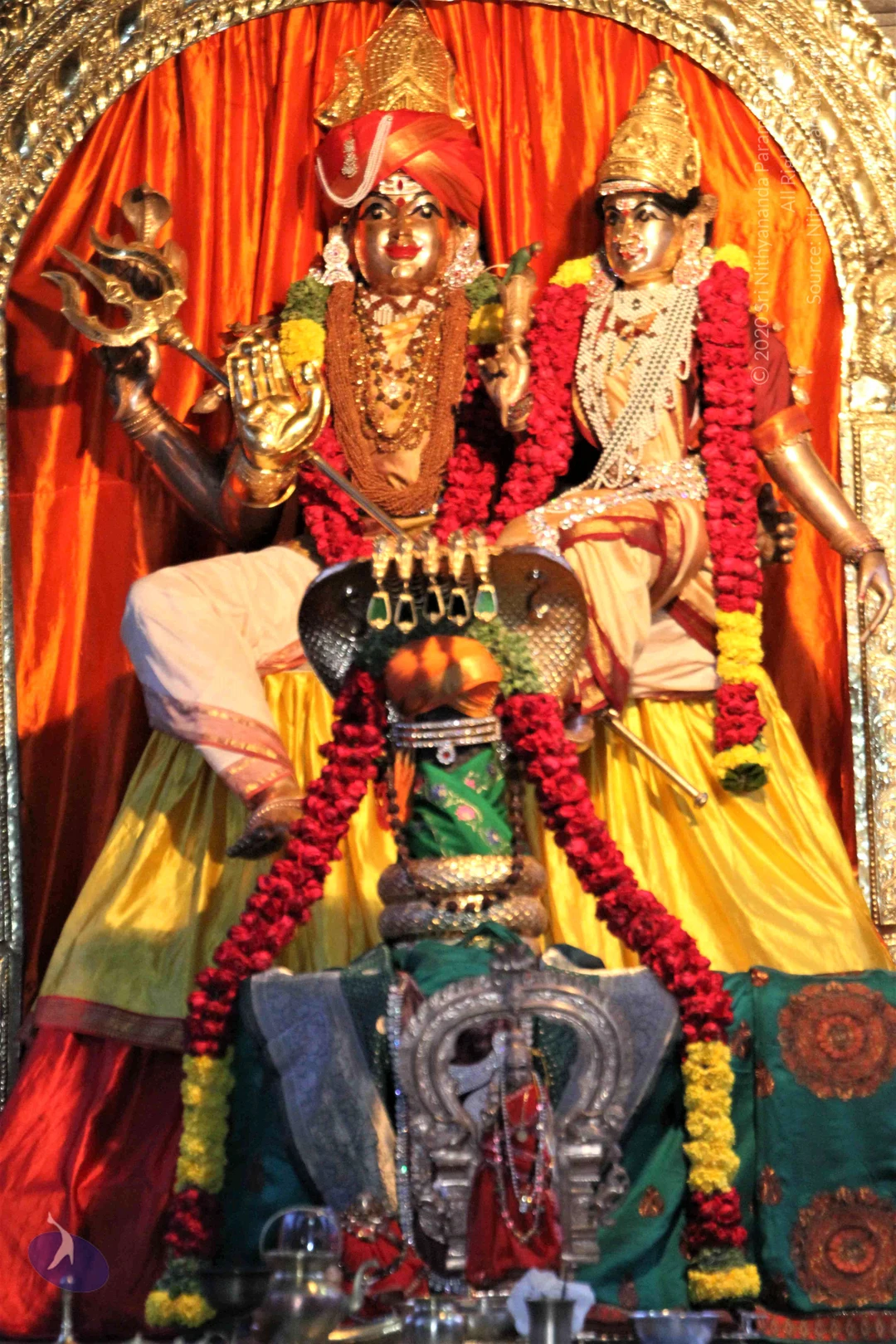
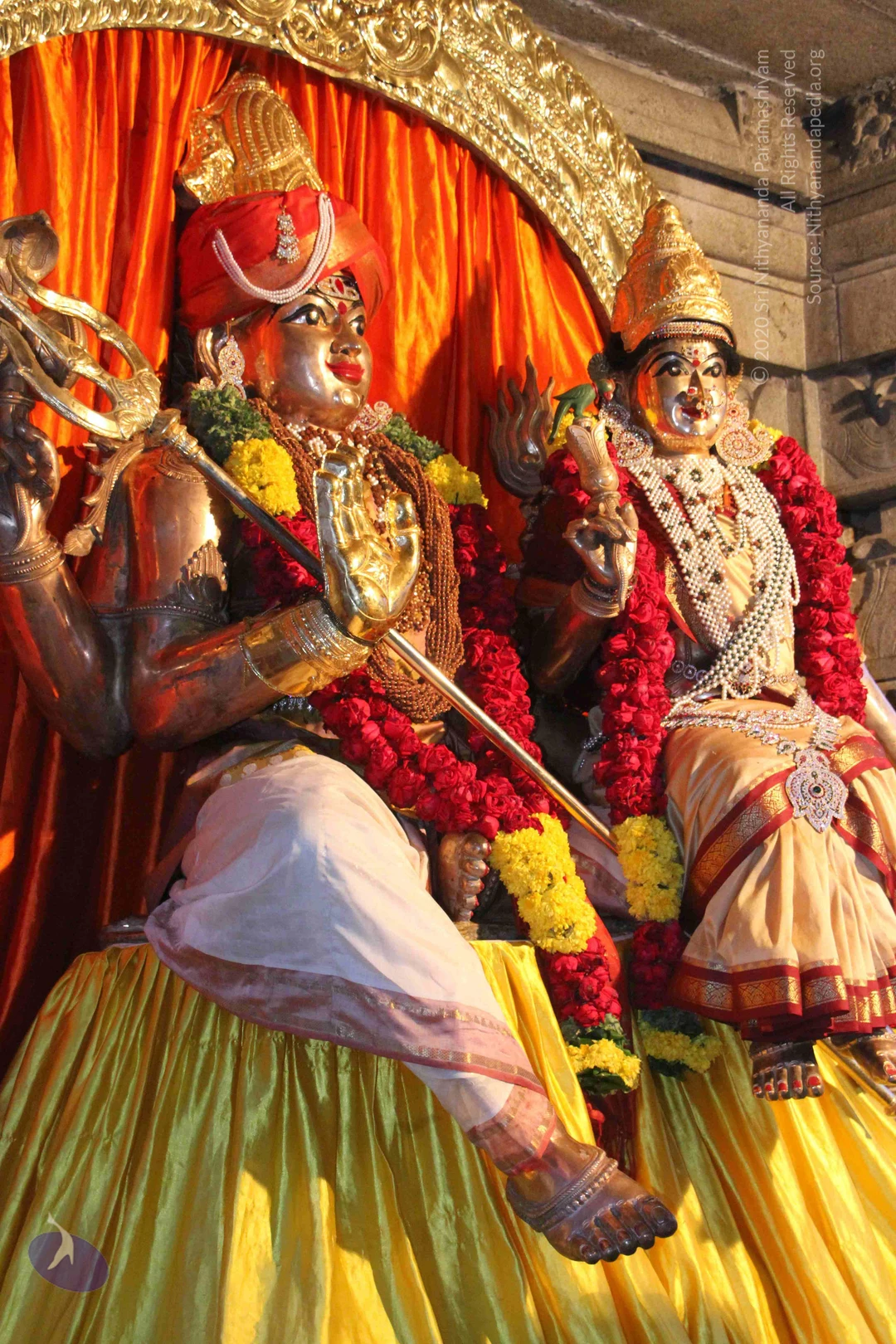
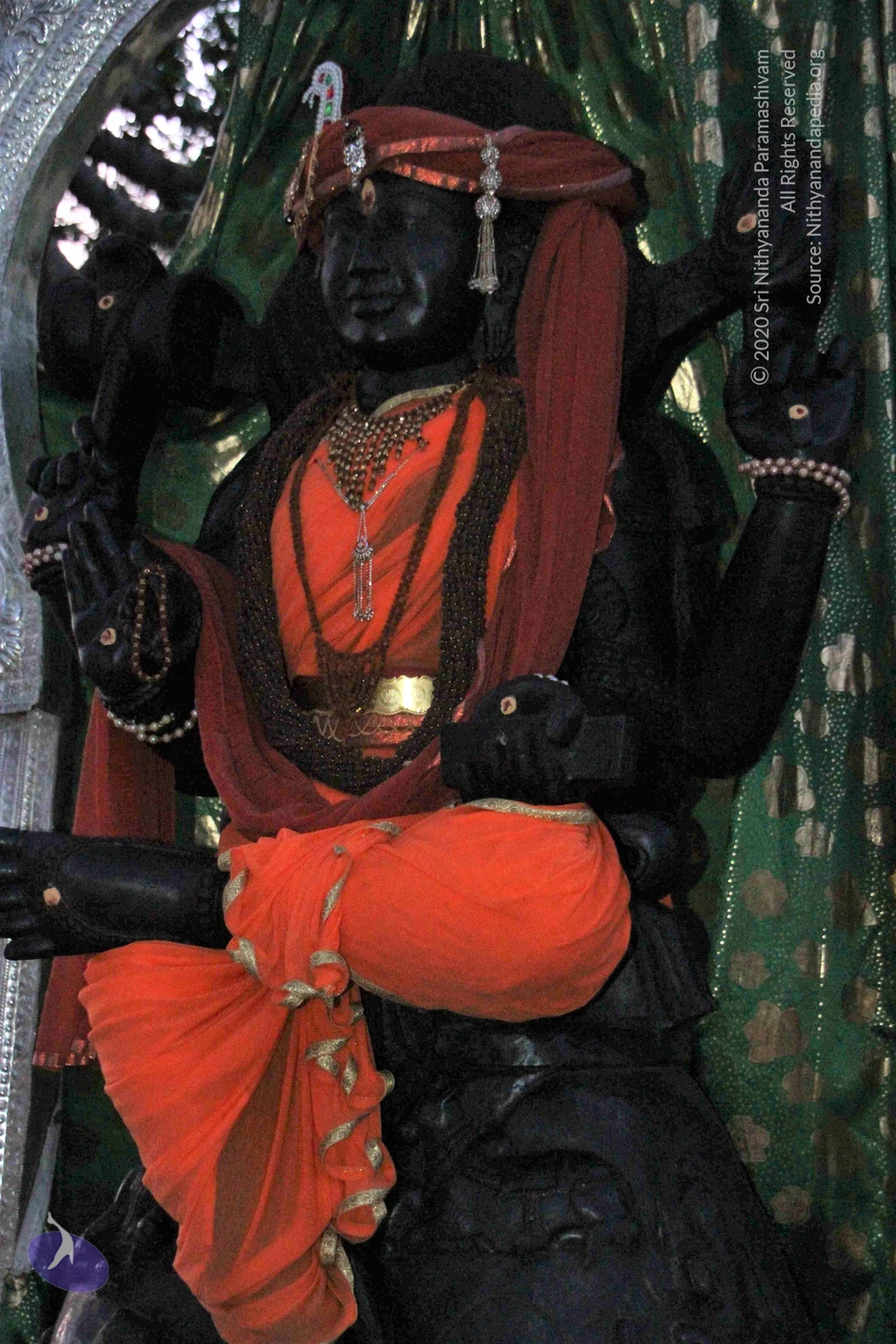
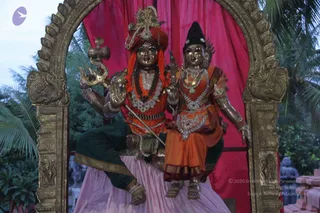
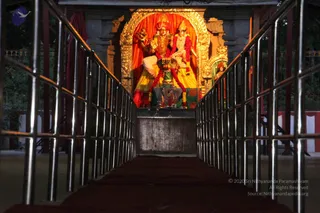
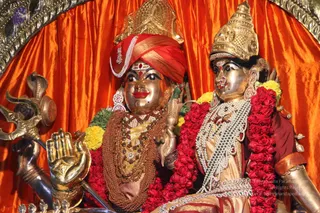
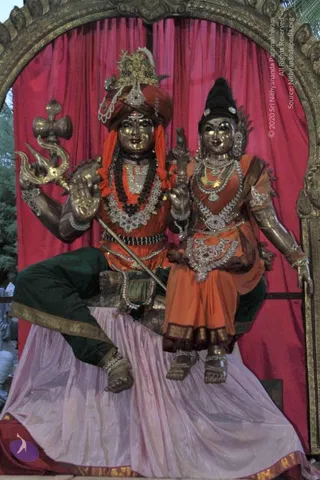
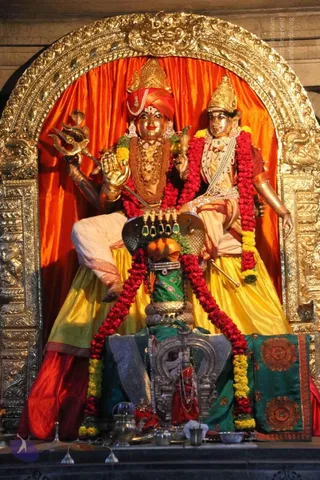
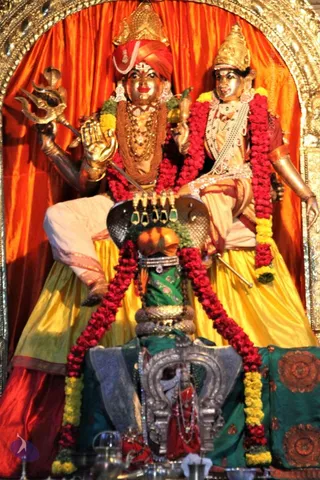
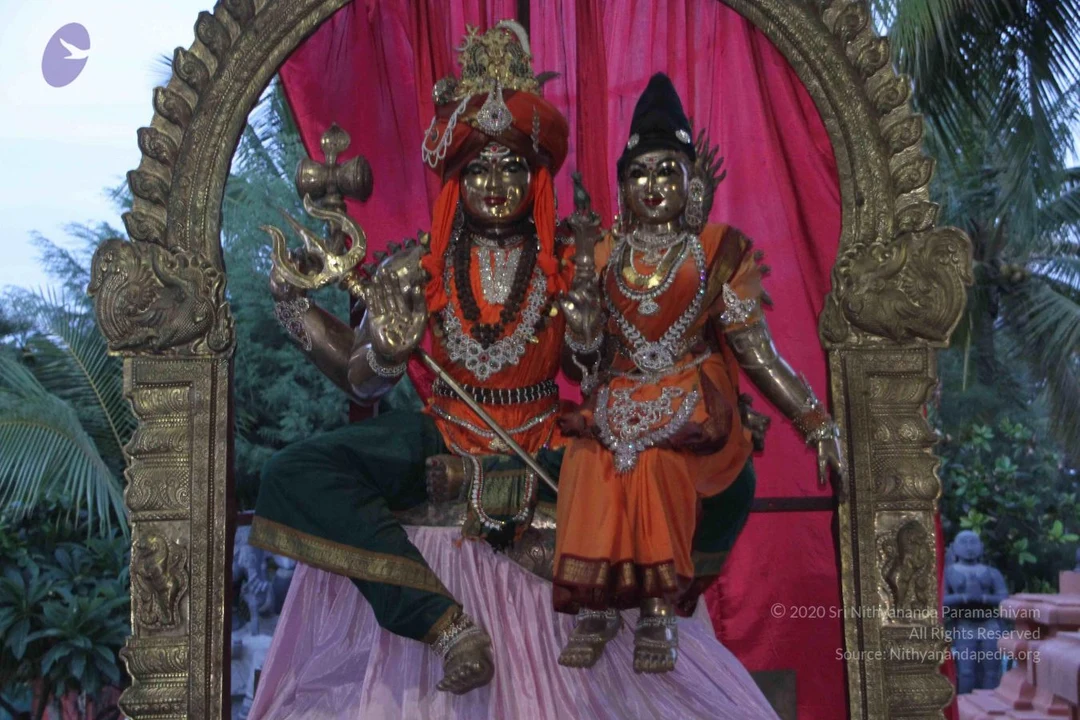
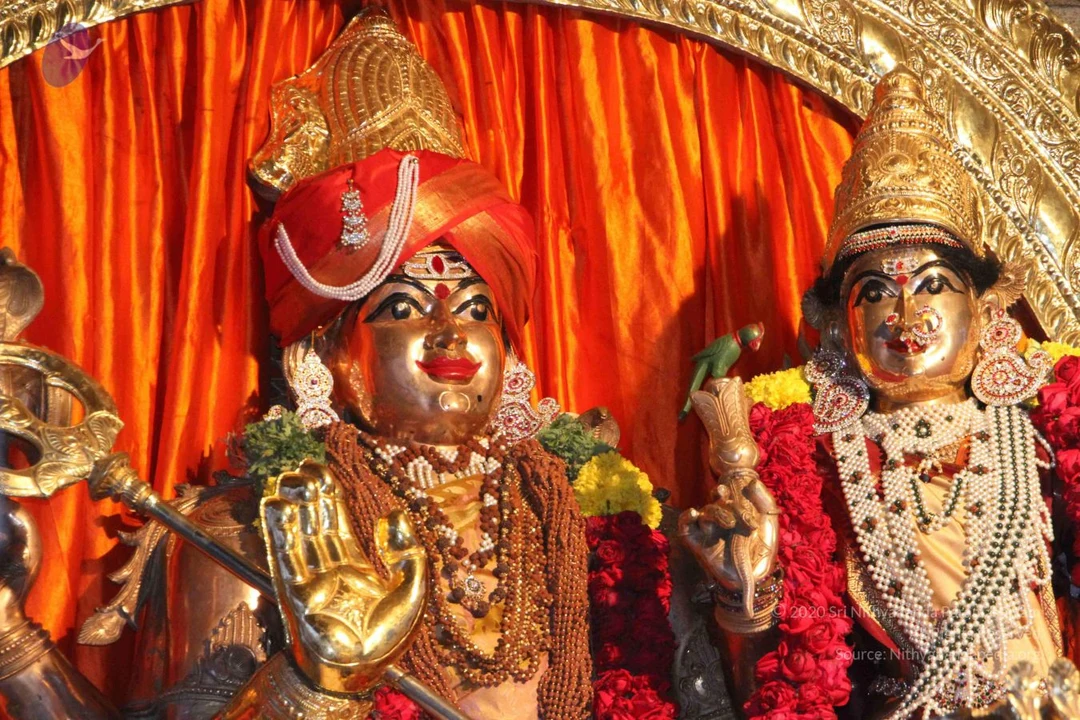
A golden-bronze murti pair of Shiva and Parvati seated together on a pink cloth-draped platform inside an ornate gold arch, with a red curtain behind and palm foliage around. The left figure wears a red-and-orange turban, a rudraksha mala, a bead necklace, a green lower garment and holds a trident (trishul); the right figure wears an orange sari with a silver-jewelled necklace and bangles. Both have gold-toned faces and bodies, and the scene reads as an outdoor deity display rather than living people.Photograph of an empty temple corridor leading toward a shrine. Two steel railings form a narrow walkway lined with a dark red carpet runner. At the far end, a golden arched niche framed by red drapery holds a deity murti with a crown and multiple arms, seated beside a consort figure in yellow and red garments. Red and white marigold garlands hang across the figures and a kalasha-like vessel sits on a dark stone altar base. No people are visible in the scene.A photograph of a temple shrine with a golden arched niche framing a central deity murti seated on a throne, draped in red and yellow cloth and garlanded with red and yellow flower strands. The figure holds a trident and other ritual objects. Brass oil lamps stand on either side, and a kalasha and offerings sit on a green cloth in front. To the right, a separate statue in an orange turban and saffron-orange robe with a rudraksha mala stands in a green-curtained alcove. No living people are visible.A photograph of a temple shrine with two gilded deity murti seated side by side on a raised throne within an ornate golden arch. The left figure holds a trident and wears a red and gold crown with a red-orange shawl and a rudraksha-style necklace; the right figure wears a gold crown and pale garment with a bracelet. Both are draped in red and white flower garlands. Before them sits a green and gold kalasha-like vessel and a small shivalinga-style base. Orange and red drapery hangs behind, and a smaller gilded figure in orange clothes holding a lamp stands in a side niche at right. Two tall brass oil lamps flank the shrine. No physical people are visible.A temple shrine photograph showing a pair of deity murtis seated on a raised platform under a golden arched niche with a red-orange curtain behind. The seated figure on the left holds a trident and a damaru-like object and wears a red crown; the figure on the right wears a golden crown and a red-and-gold sari-style garment. Both are draped in long garlands of orange and yellow marigolds. In front sits a green-cloth-covered yoni-lingam with a silver face and a kalasha-like vessel, and brass lamps and offering bowls stand on the floor. To the right, a smaller golden-arched niche holds a standing sannyasi figure in saffron robes with a rudraksha mala, holding a small lamp. Stone pillars frame the shrine.A photograph of two gilded metal deity murtis seated before a backdrop of orange satin draped beneath an ornate silver arch. The murti on the left wears a red turban with a golden crown-like top, a red tilak, rudraksha and brown beaded necklaces, and holds a trident. The murti on the right wears a golden crown, pearl and bead necklaces, a red garland of roses, and yellow marigold garlands adorn both figures. The statues are the only figures present; no living people are visible.

Pratyaksha-Pada-Puja
24 photosSource gallery
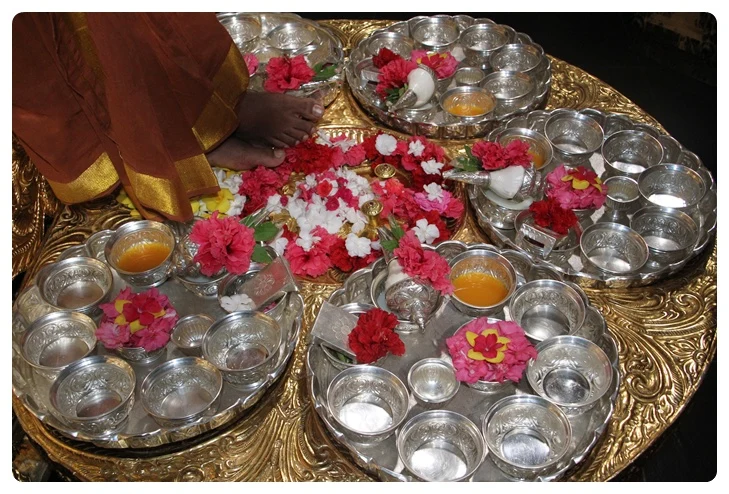
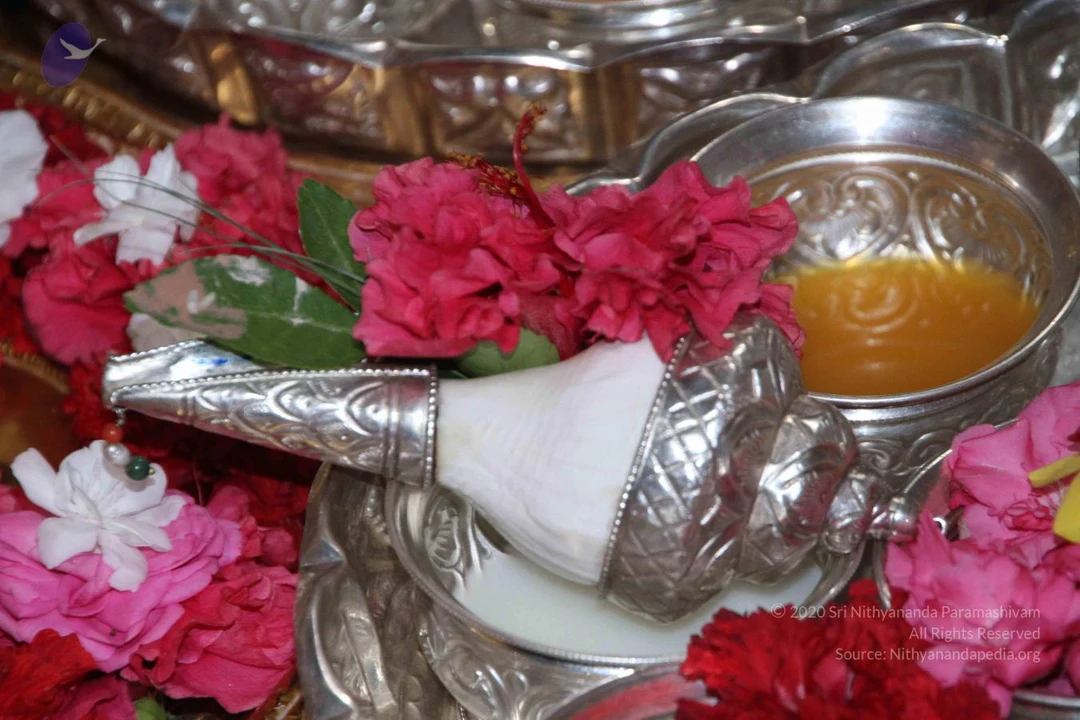
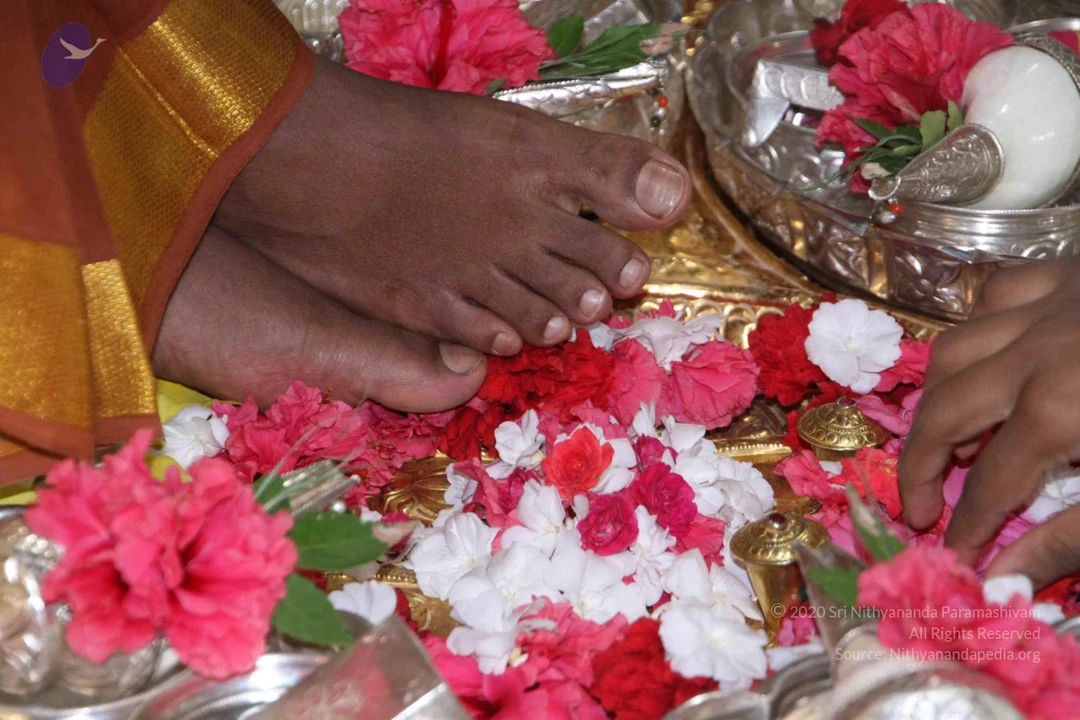
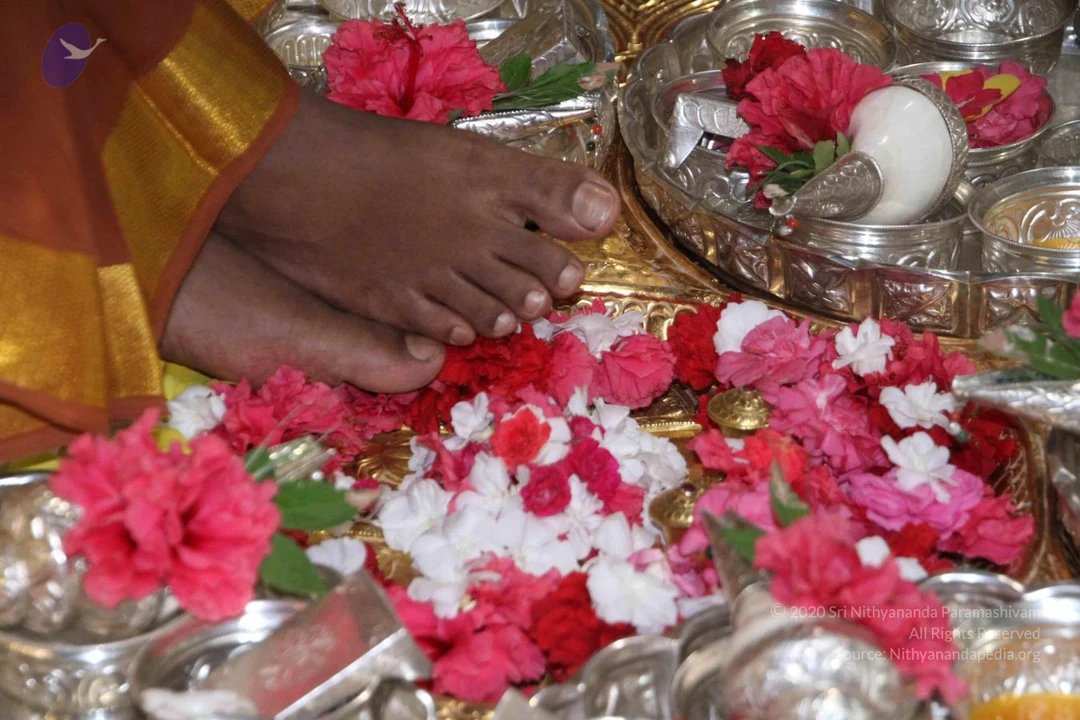
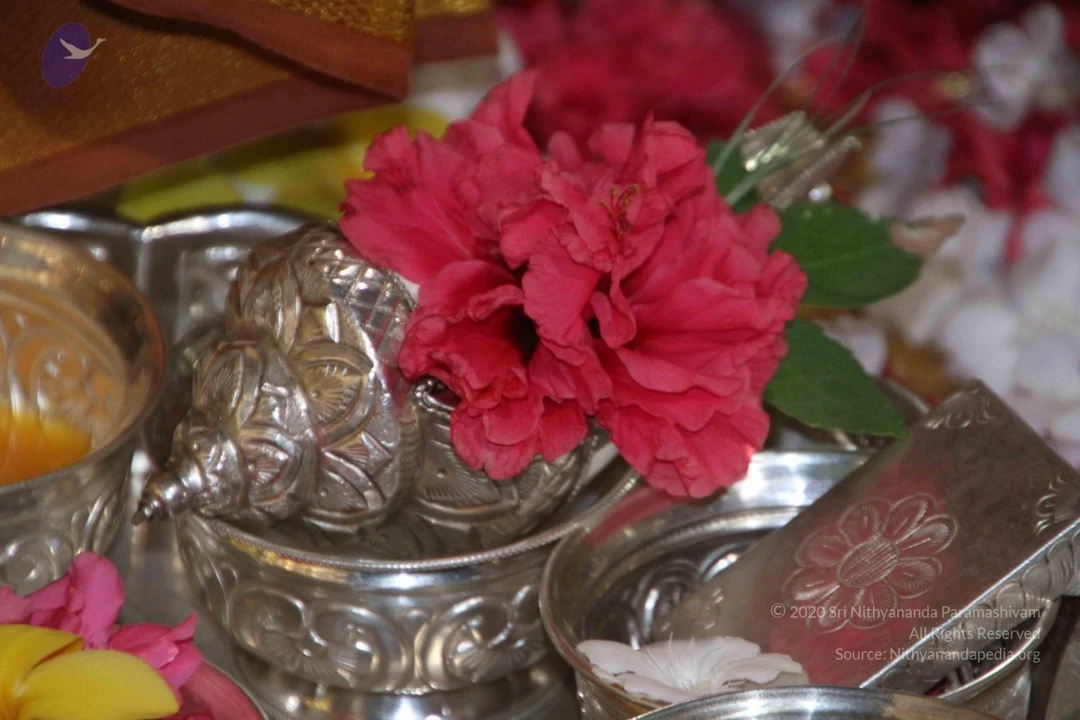
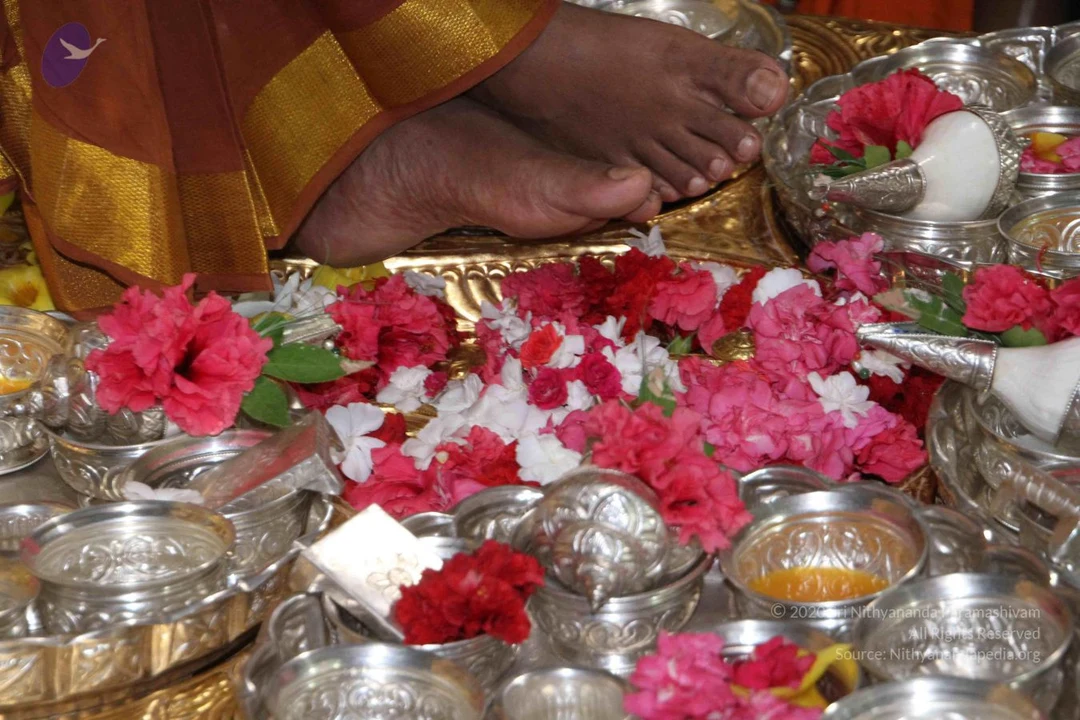
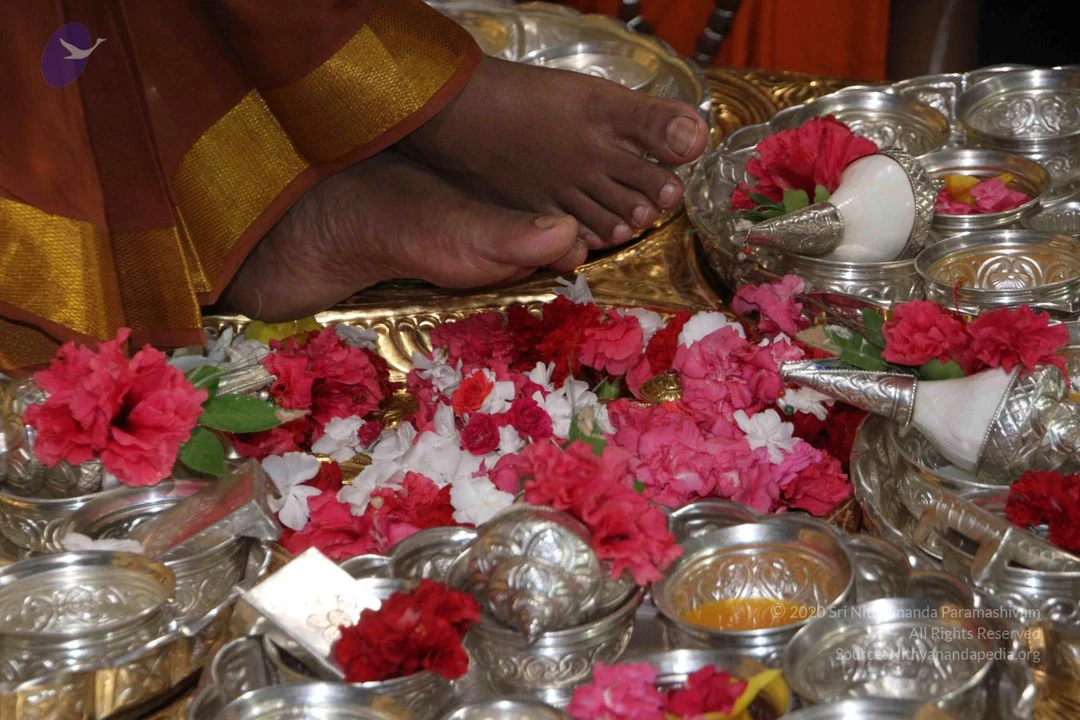
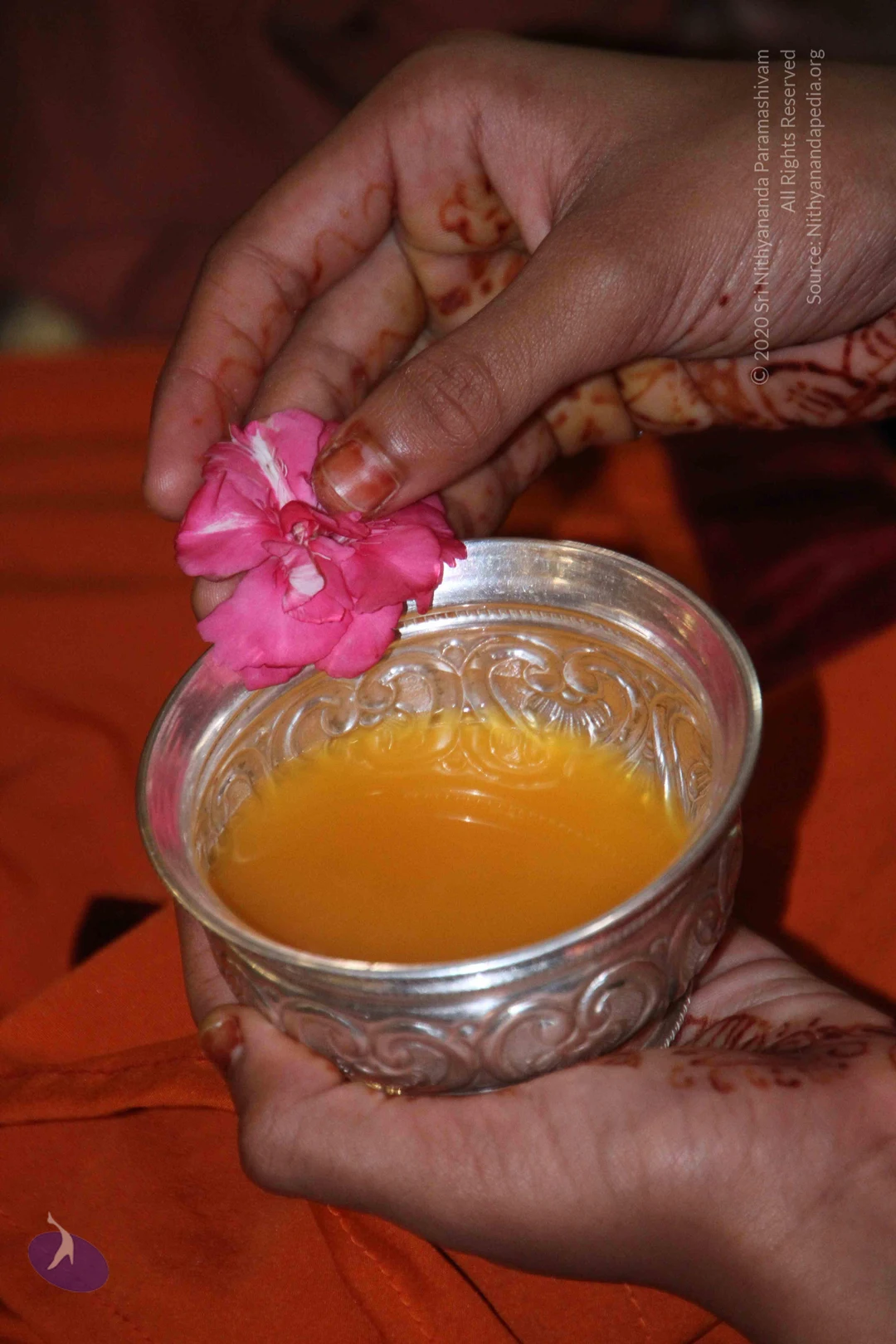
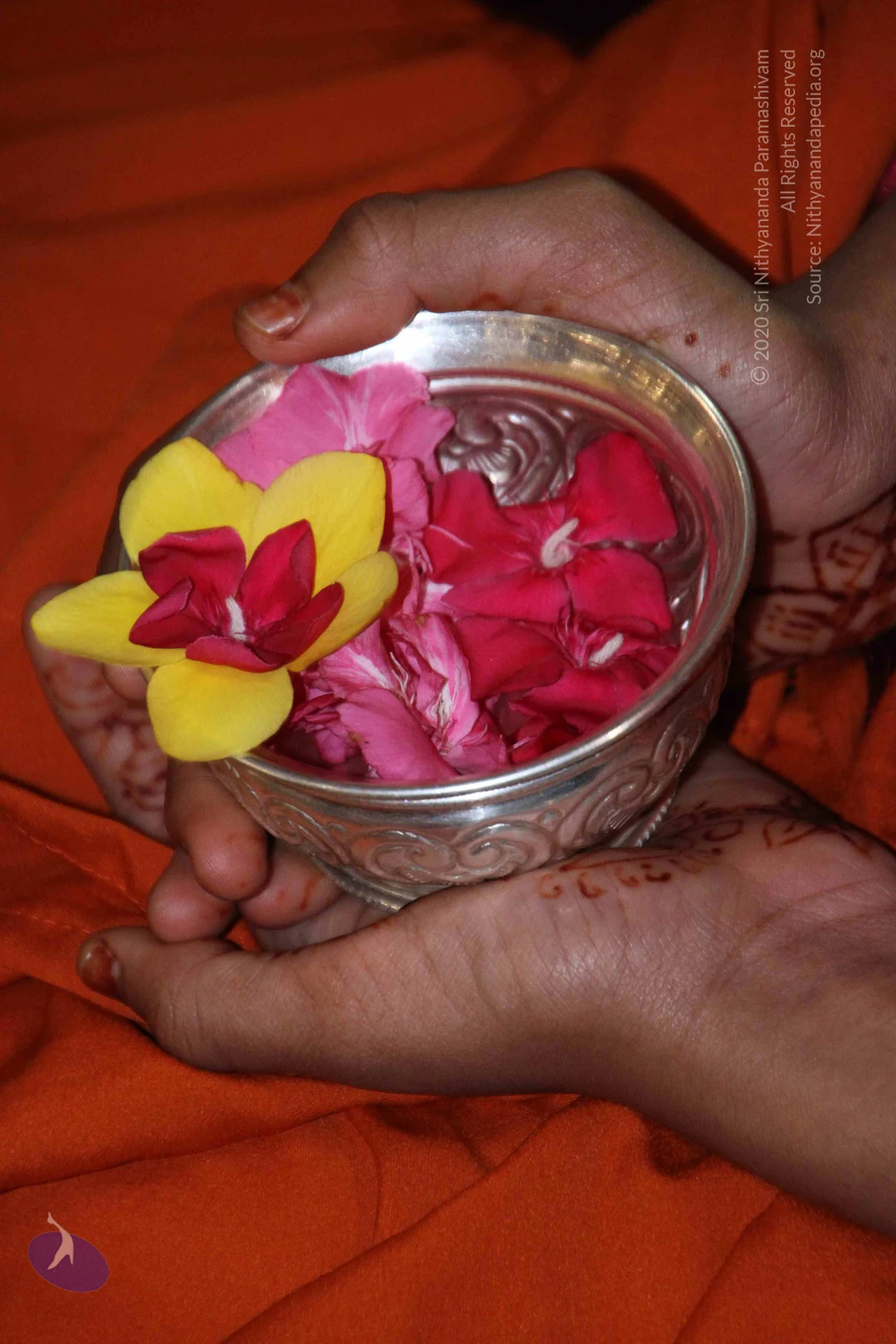
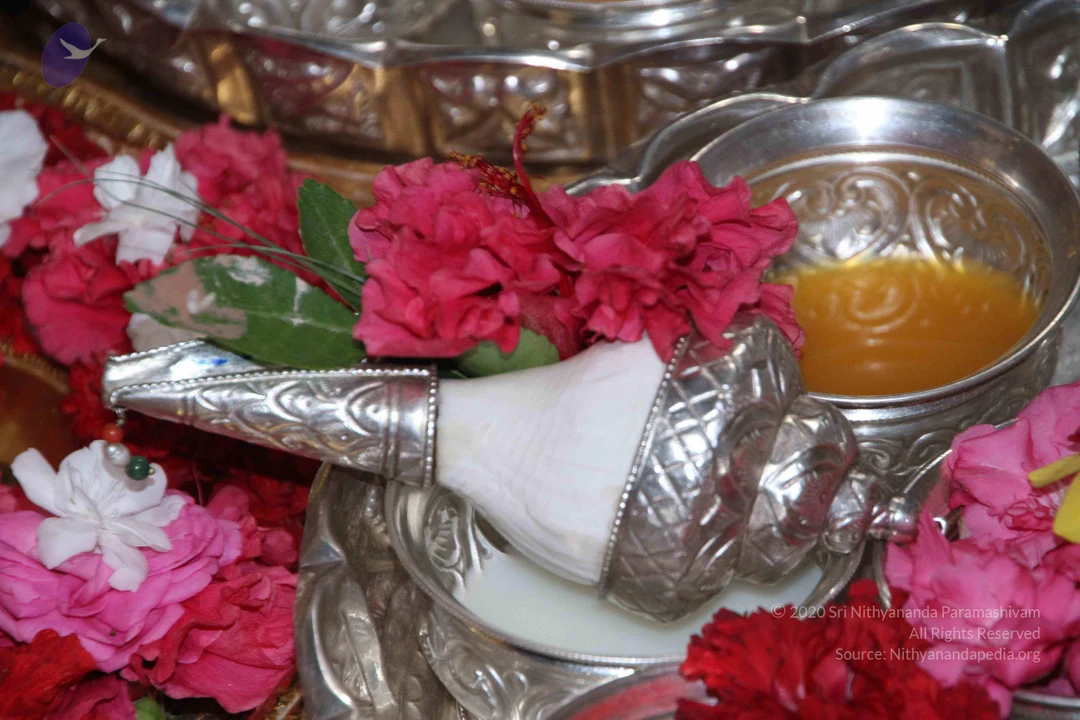
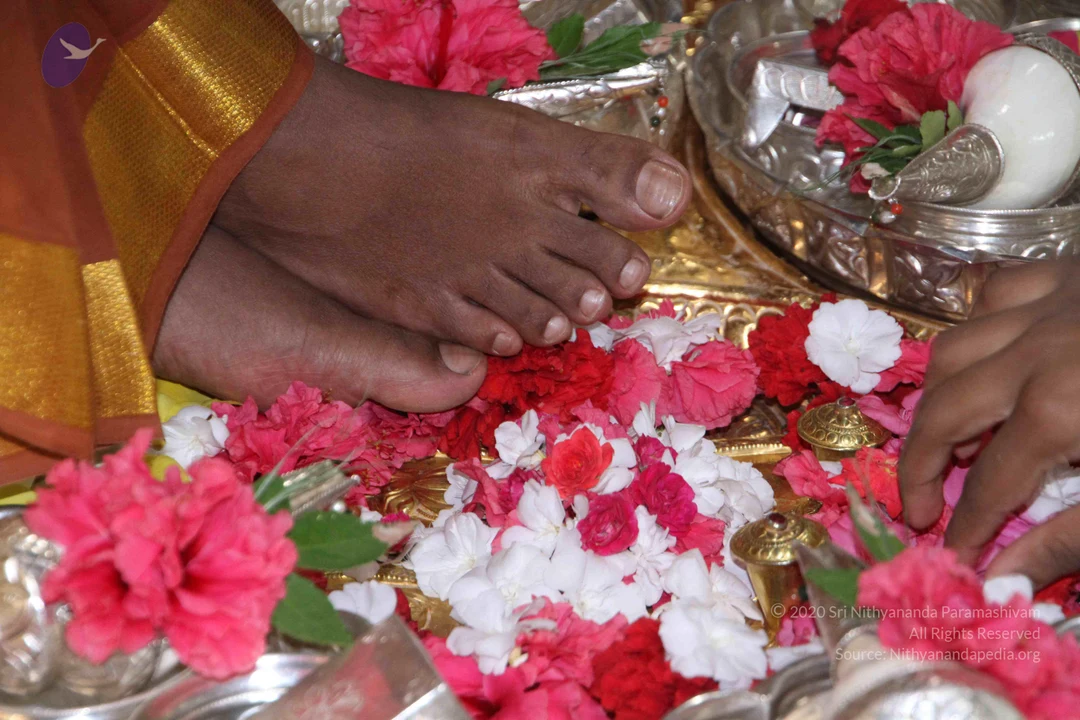
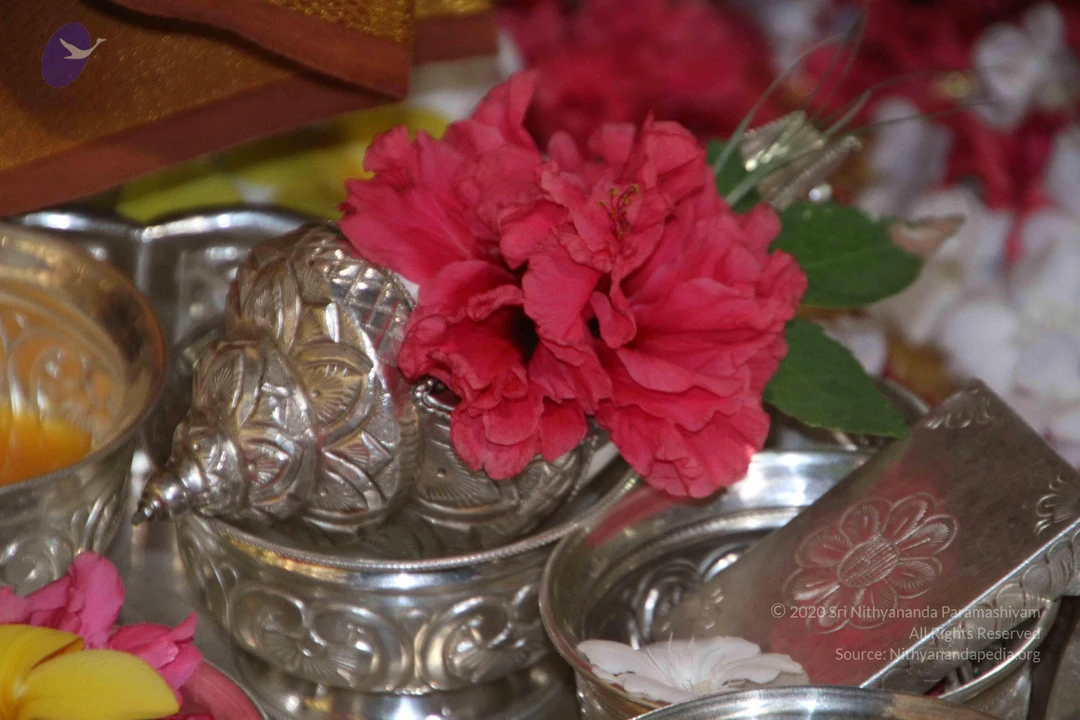
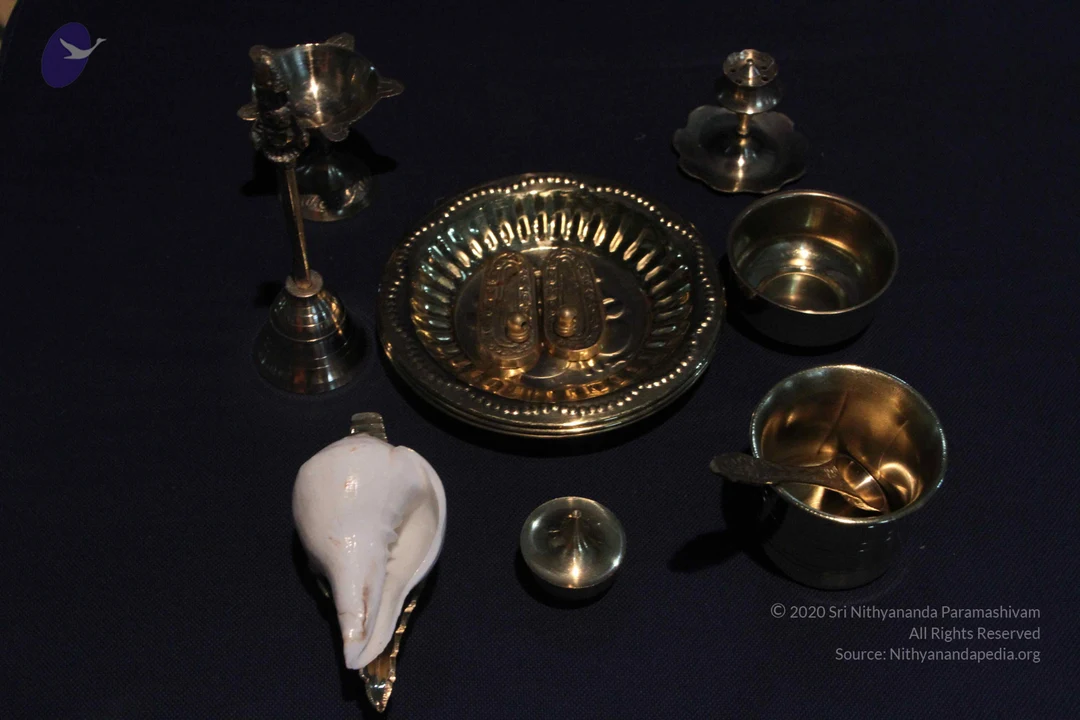
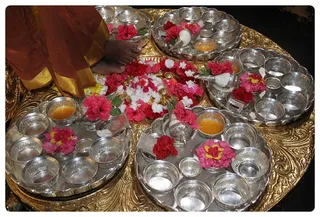
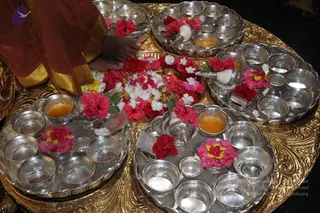
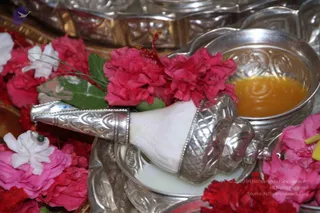
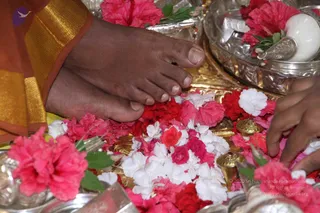
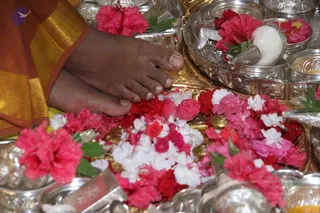
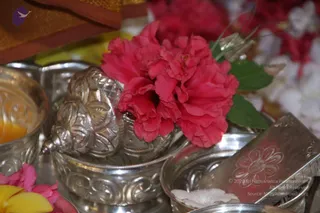
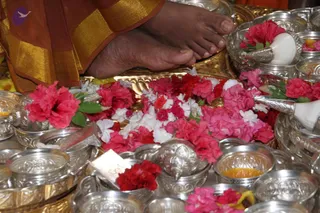
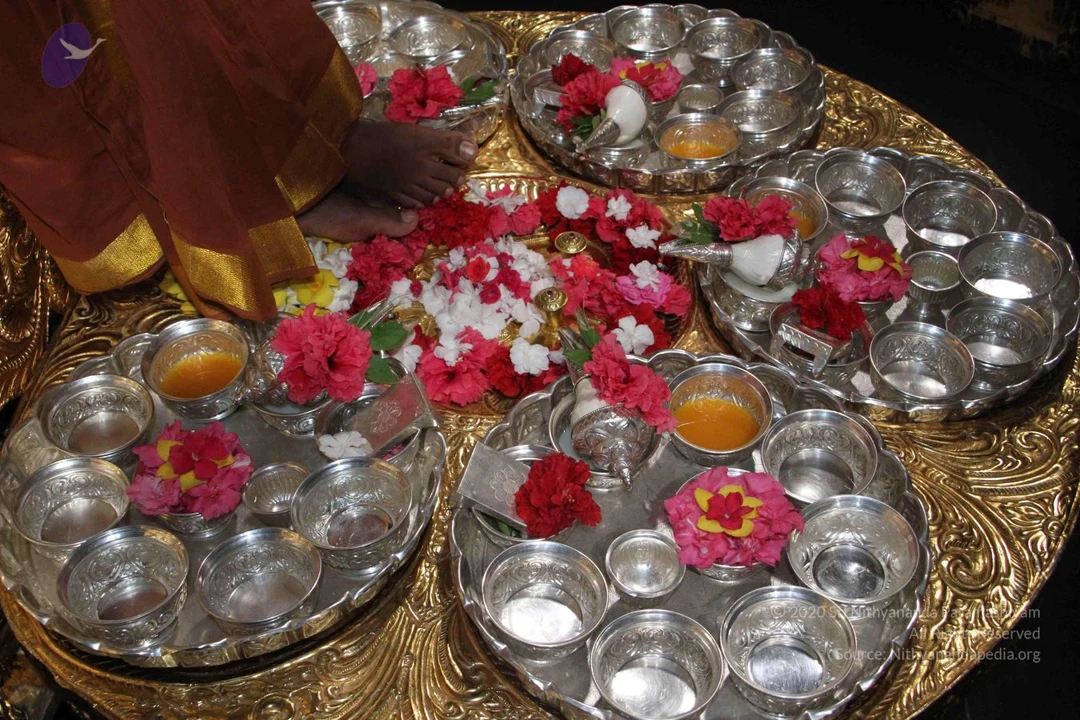
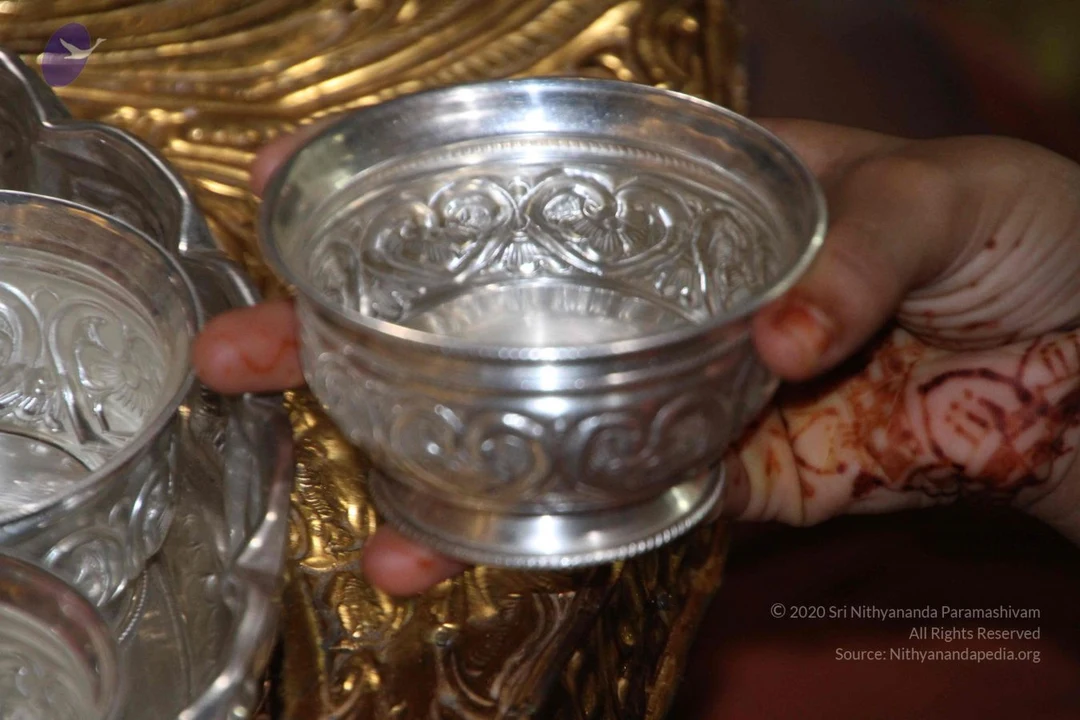
Close view of a ritual offering arrangement on a large brass tray. Bare feet in the upper left, with a red and gold-bordered garment, stand beside the offerings. Silver bowls and plates hold orange liquid and sprinkled petals, and red, pink and white flowers are scattered across the tray. Silver vessels and a small brass lamp sit among the flowers. No face is visible, so no person can be identified.Close-up photo of a white conch shell (shankha) with a silver-metal mouthpiece and engraved silver collar, resting on a silver plate among red and pink flowers, including hibiscus and roses, with white jasmine blossoms and green leaves. A silver bowl holds a golden-yellow liquid. Silver ritual vessels fill the background. No people are visible. Ritual puja items arranged for worship.Close-up photograph of bare feet resting on a bed of red and white flowers during a padapuja ritual. The feet, with a golden-orange garment edge at left, belong to a person seated before a gold-toned tray. Pink and red hibiscus-like blossoms, white jasmine-style flowers and green leaves surround them. Silver bowls and a small white conch-shaped object sit at upper right, and a small brass lamp stands among the flowers. A second person's hand is visible at right, touching the flowers. No face is shown. a person presence cannot be confirmed from appearance, so no candidate is identified.Close-up photograph of a pair of bare feet resting on a bed of red, pink and white flowers, including hibiscus and white blossoms, arranged on a gold-toned tray. The feet are placed on the flowers as in a padapuja offering. Above and beside them are polished silver bowls and a small white vessel holding petals and red blossoms, with a silver spoon. The person's orange and gold garment is visible at the upper left edge. The body and face are not shown, so the person cannot be seen.Close-up photograph of a silver ritual vessel with ornately embossed repoussé patterns, topped by a large bright red hibiscus bloom with green leaves. Nearby on a polished silver tray sit a small silver bowl holding yellow-orange liquid, a silver spoon-like implement with a floral engraving, and scattered white and yellow flower petals. Pink and white blossoms blur in the background. The setting suggests a puja offering arrangement with flowers and silverware.Close-up of bare feet resting on a gold-bordered tray heaped with pink, red and white flowers. The feet belong to a person in a maroon garment with gold zari border. Silver bowls and vessels surround the tray, holding turmeric-yellow liquid, red flowers, and silver spoons with white handles. Flower petals are scattered across the platter as offerings.

Nithya-Satsang

7 photosSource gallery
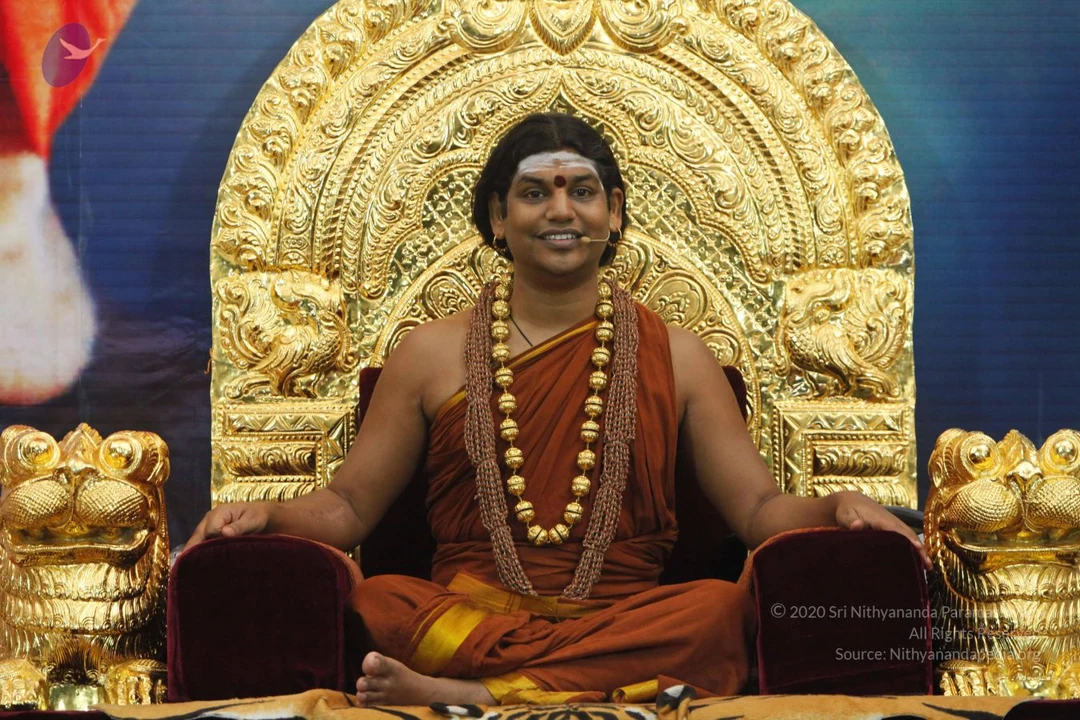
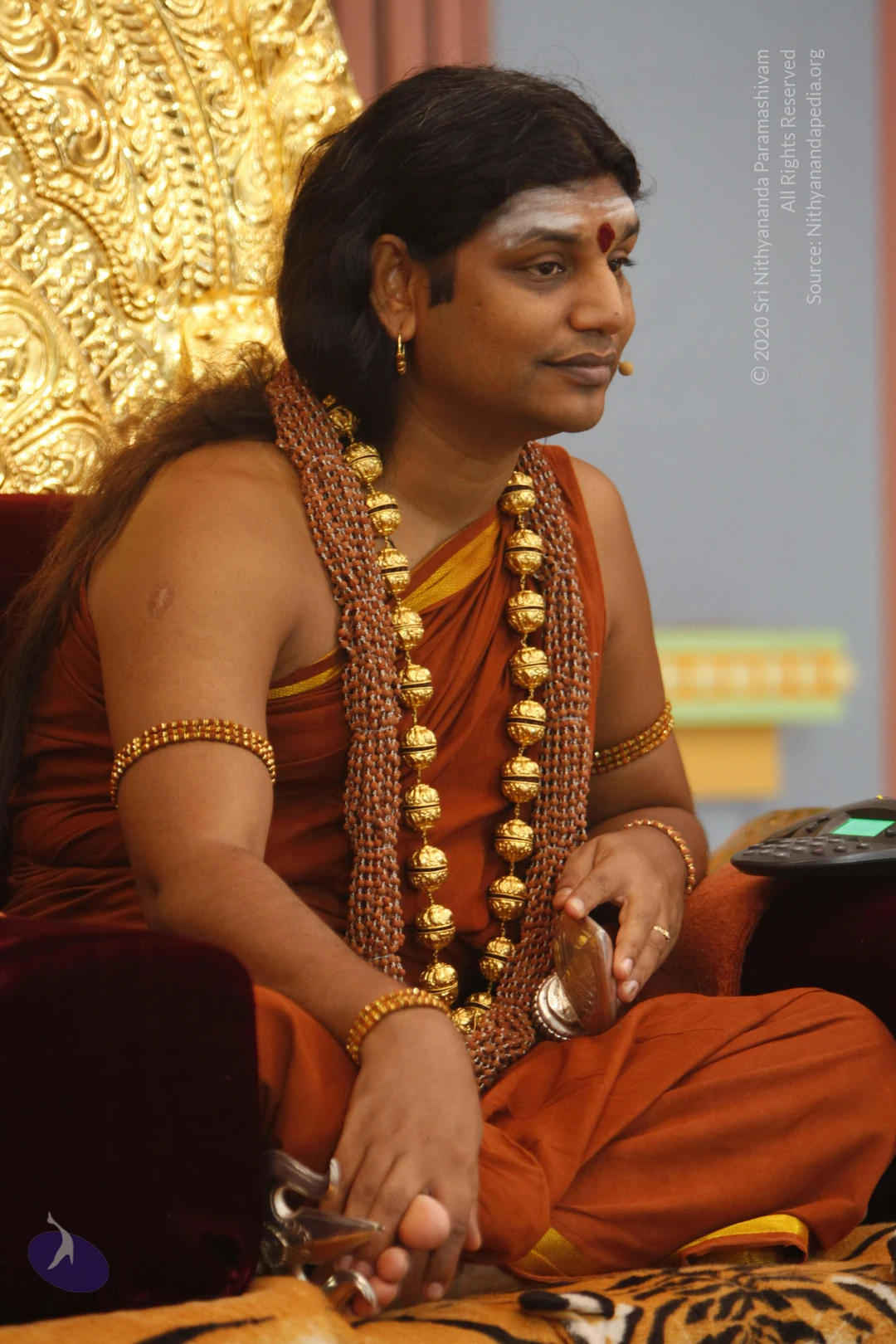
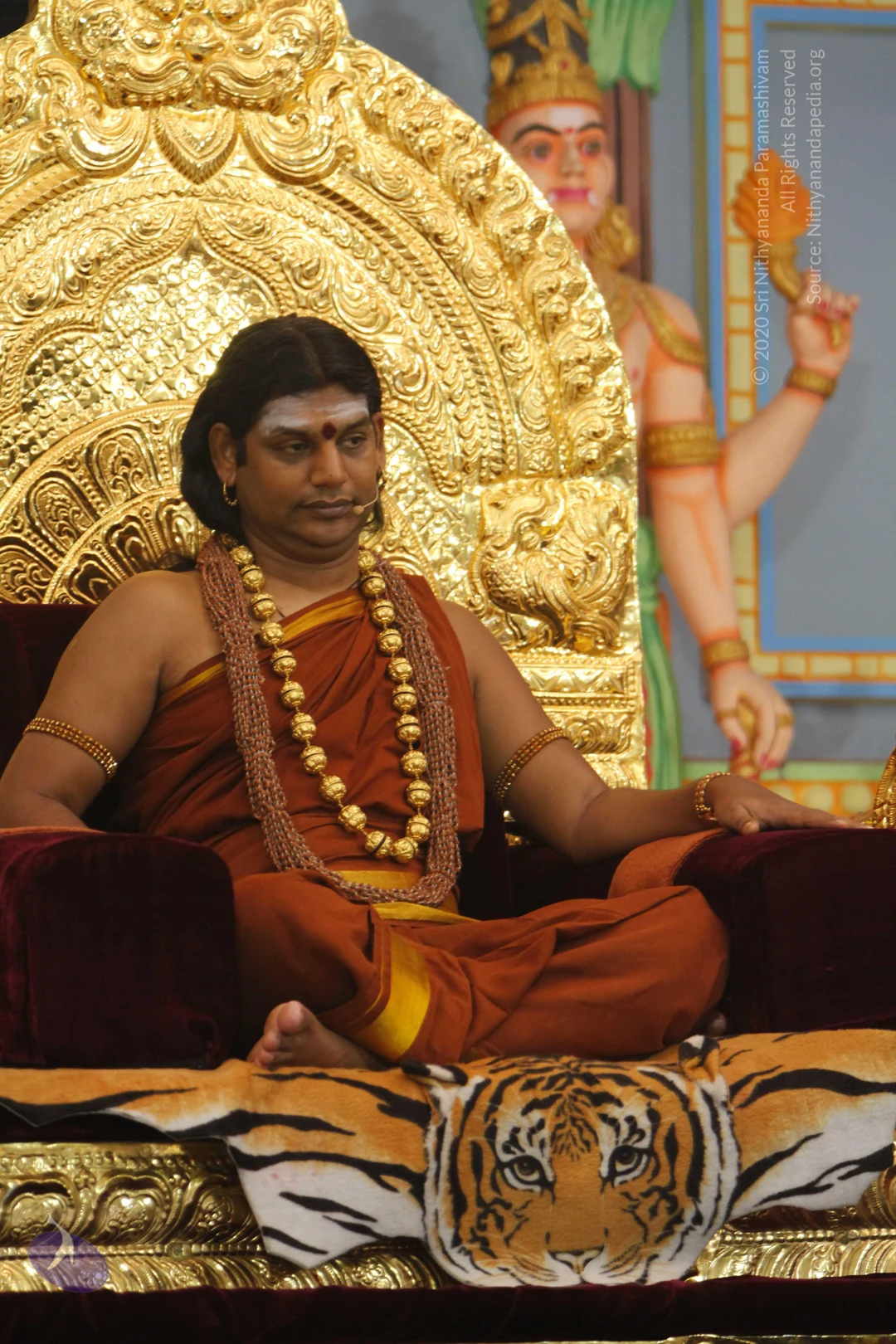
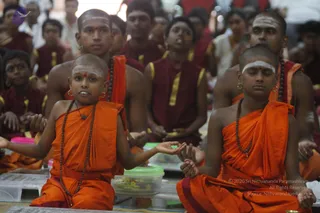
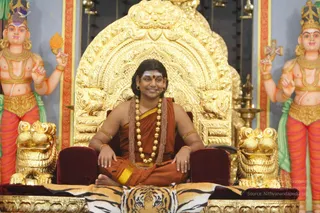
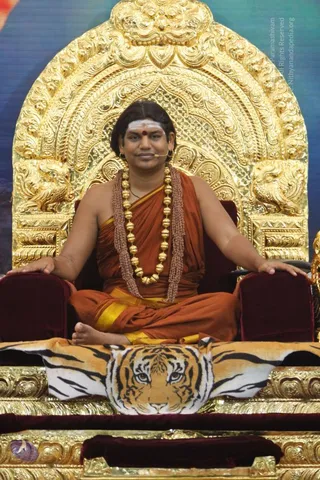
Photograph of a seated group of young boys and adolescents in saffron-orange dhoti-style wraps and maroon sleeveless tunics with yellow trim, many with shaved heads and white vibhuti bands across their foreheads, wearing rudraksha malas. In the foreground two boys sit cross-legged: the left one speaks with open hands raised, the right one sits with eyes closed and hands resting in his lap. Behind them rows of similarly dressed children and adults sit on the floor, with plastic containers of offerings and food on a low platform between them.A seated man sits on an ornate gold throne with carved lion-head armrests and a tiger-skin cloth draped over the dais. He wears an orange-saffron dhoti and shawl, a gold bead necklace, a rudraksha mala, gold bangles and a red bindi on a white forehead marking. Two painted deity statues flank the throne, each with a crown, gold jewelry and a raised hand, one holding a flame. A gold lamp stand sits to the right. The man smiles with his hands resting on the armrests.A smiling man with long dark hair sits cross-legged on an ornate gold throne with carved floral and animal motifs. He wears an orange-rust cloth draped over one shoulder with a yellow border, layered rudraksha malas and a heavy gold bead necklace, gold bangles on his arms, and a red bindi with white markings on his forehead. A small headset microphone is clipped near his face. A tiger-striped cloth lies across the platform in front of him, and a small purple bird logo appears at the top left.A seated man in an orange-saffron dhoti and shawl sits cross-legged on an ornate gold throne with a carved lion-head armrest and a gold-embossed back panel. He wears a rudraksha mala with gold bead necklaces, gold bangles, a gold earring and a red bindi. Green leaves blur the foreground, and a tiger-striped cloth covers the dais edge. Swamiji (probable): long dark swept-back hair, saffron shawl, rudraksha and gold beads, seated on a throne in a discourse setting.A seated man in a saffron-orange garment sits on a red velvet seat before an ornate gold throne carved with floral patterns. He has long swept-back dark hair, white ash markings on his forehead with a red dot, gold earring, and a long rudraksha mala with large gold beads draped across his chest, plus a gold armlet. He holds a silver cup with his right hand and wears a small headset microphone, appearing to address a satsang. A black electronic device and a gold lion-shaped object sit to the right. Visible cues include long swept-back hair, saffron clothing, rudraksha mala and ceremonial gold ornaments, consistent with Swamiji (probable) as the seated speaker.A seated man in an orange-saffron dhoti-style wrap and orange shawl smiles toward his right, sitting on a red velvet cushioned throne with an ornate gold-leaf backrest. He wears a long chain of gold beads with rope-like braided strands, gold armlets on both upper arms, gold bangles, a gold earring, white ash markings and a red bindi on his forehead, and a small headset microphone near his mouth. A black telephone sits on the right armrest beside a gold ornament. Probable Swamiji: long swept-back hair, saffron clothing and ornate gold ceremonial necklaces seated on a throne; the appearance cues are fairly distinctive, so this is a probable identification from appearance alone.

Nithya-Galleria

39 photosSource gallery
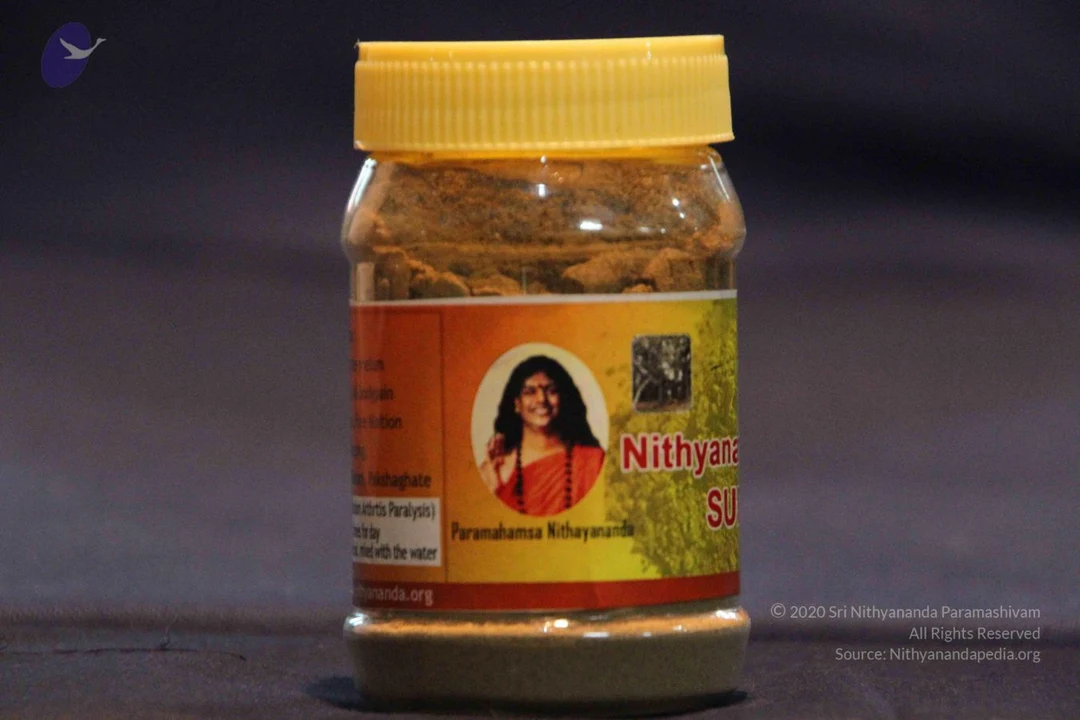
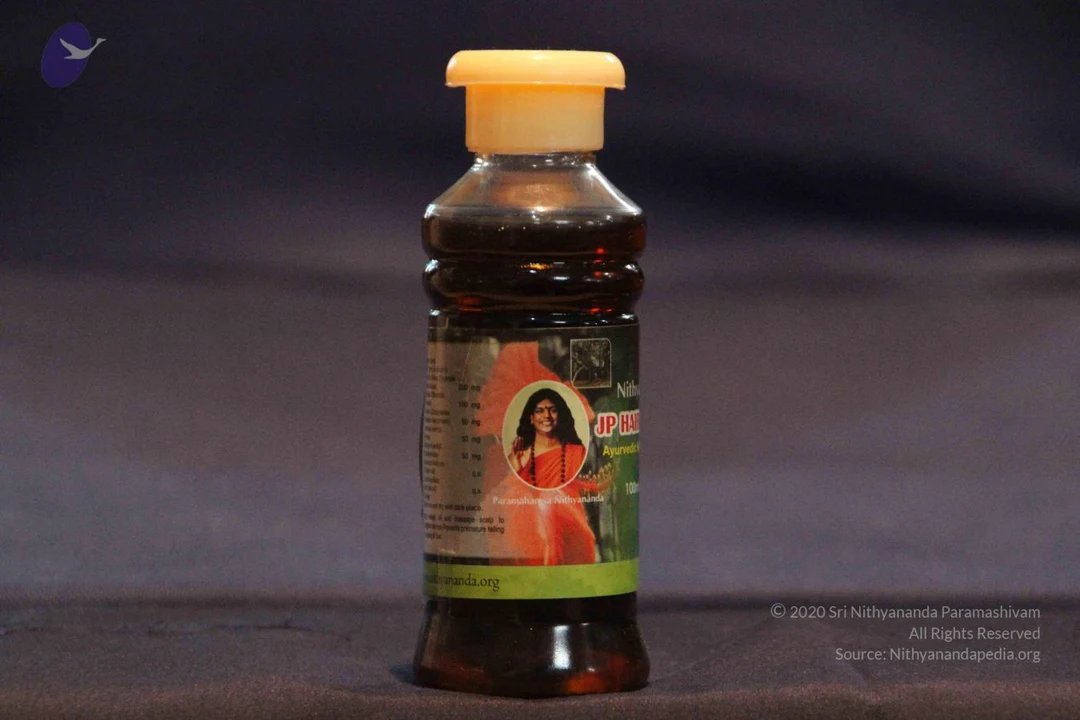
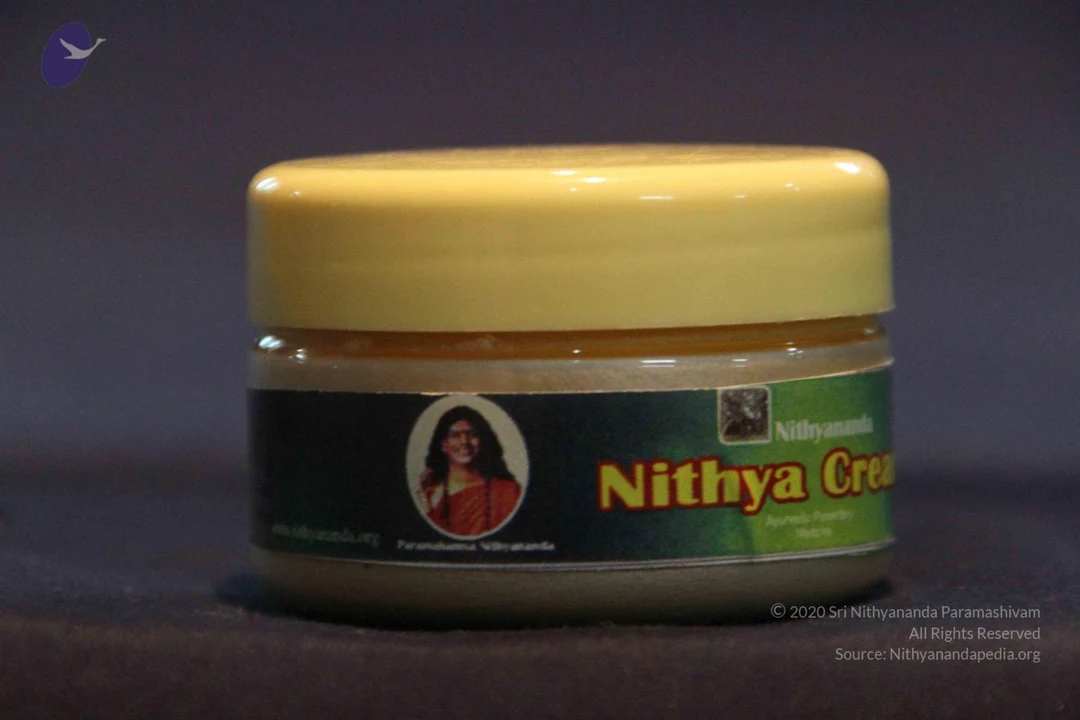
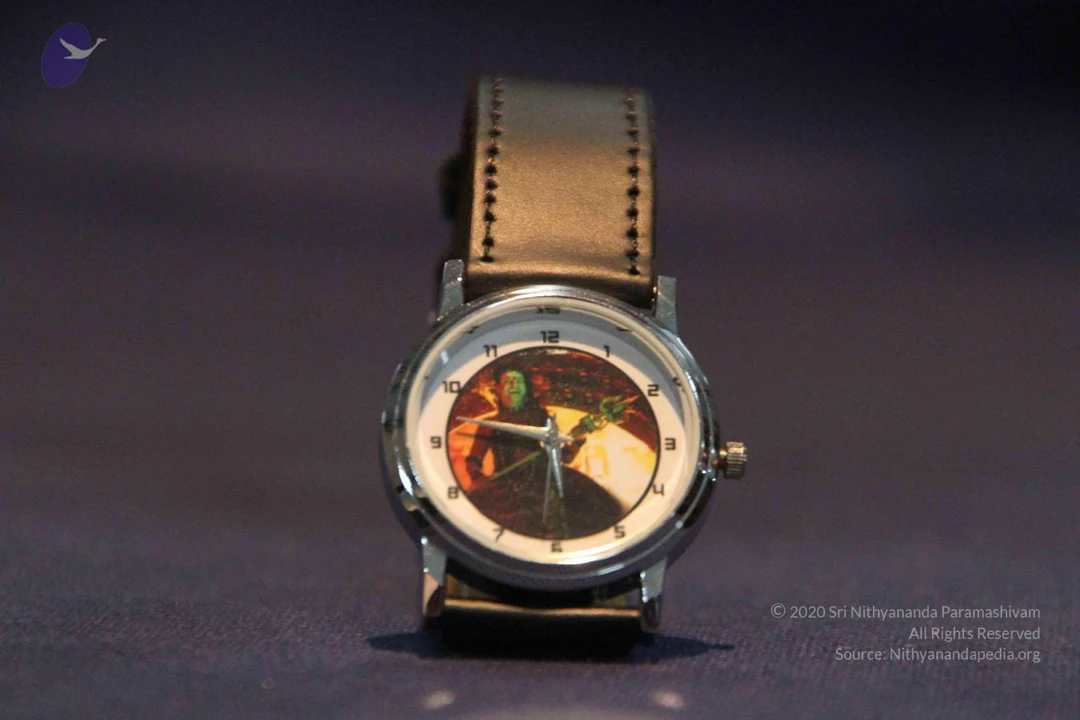
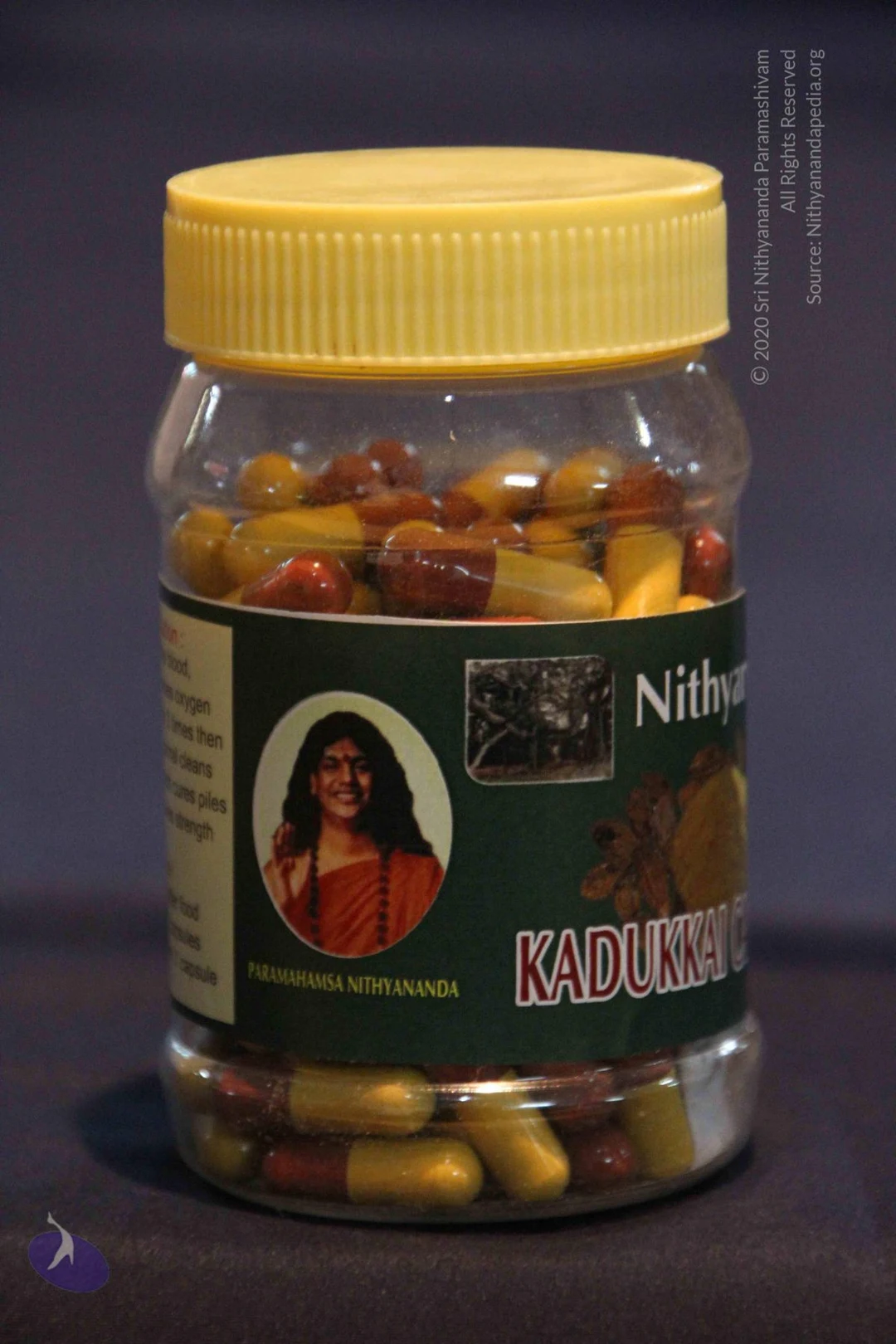
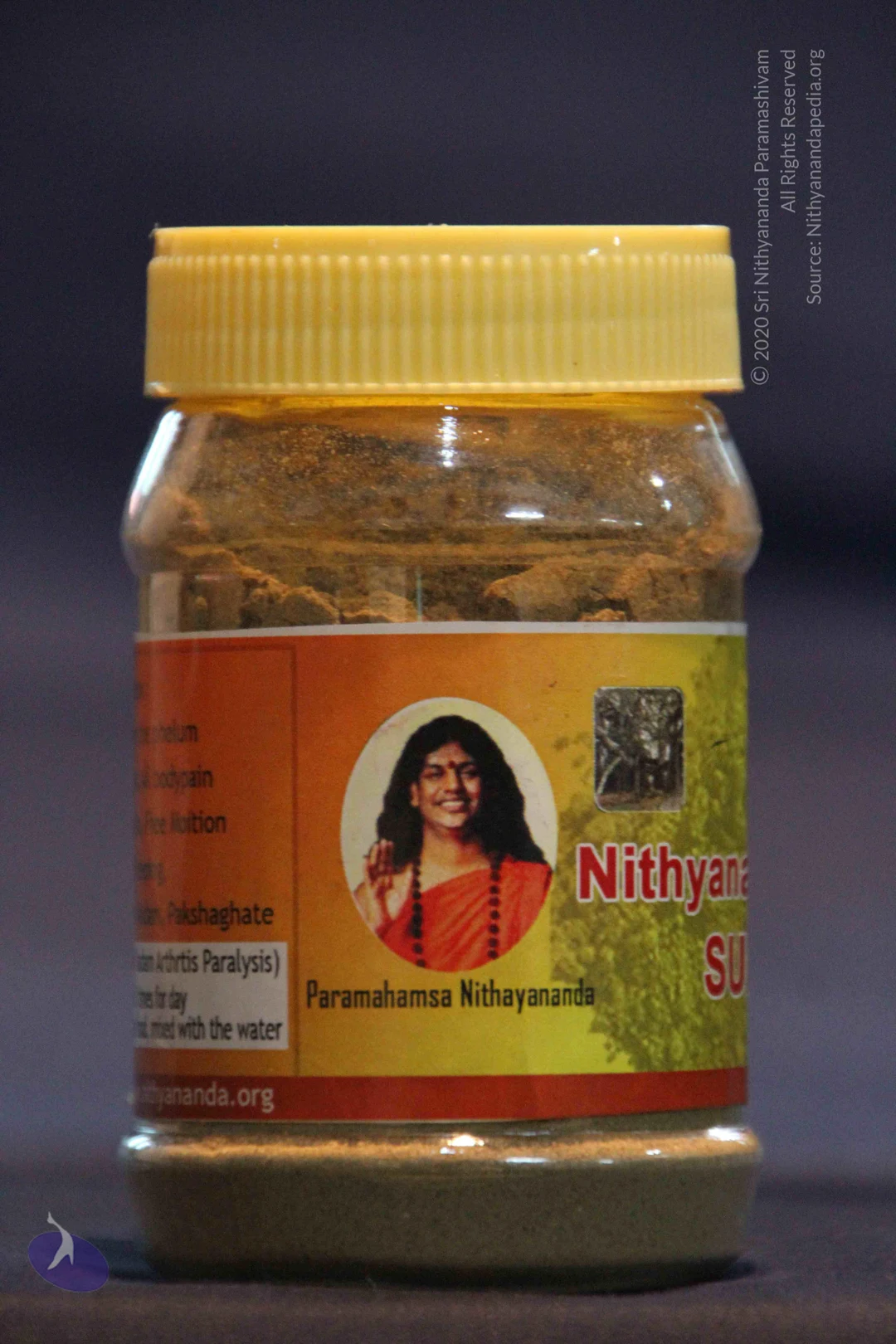
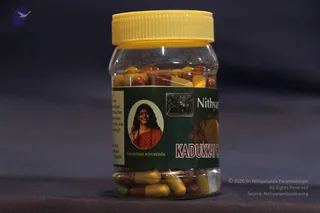
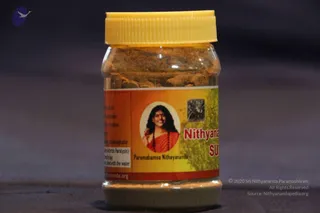
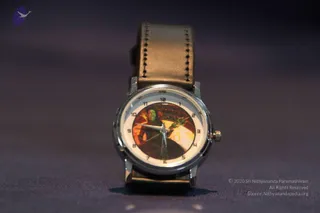
A clear plastic jar with a yellow screw-on lid stands on a dark fabric surface, filled with yellow and reddish-brown capsules. The green label shows a circular portrait labelled "Paramahamsa Nithyananda" of a smiling person with long braided hair wearing an orange-red garment, beside a small photo of a tree and a product name in red and white lettering. Dried leaves are printed on the label. The product is a herbal capsule supplement. No people are physically present.A clear plastic jar of powdered herbal product with a yellow screw cap sits on a dark grey surface against a plain backdrop. The orange and yellow paper label shows a small round portrait labelled "Paramahamsa Nithyananda", depicting a smiling figure with long dark hair, a saffron-orange garment and a dark bead mala. Large red lettering on the label reads "Nithyana..." and "SU...", partly cut off. No physical people are present.A small white-capped green plastic jar of Ayurvedic medicine stands on a grey surface against a dark background. The green label shows an oval portrait of a smiling woman with long dark hair wearing a red sari, with the printed caption "a person" beneath it. Partial label text reads "Neuro" and "Ayurvedic" with a list of herbal ingredients and milligram amounts. No people are physically present.A photograph of a small amber glass-brown bottle with a yellow screw cap standing on a dark grey draped cloth. The bottle's label is green and dark with a circular portrait of a woman with long dark hair wearing an orange sari and a rudraksha mala, captioned Paramahamsa Nithyananda. The bottle is labelled JP HAIR OIL, Ayurvedic, 100 ml. No people are physically present.Product photograph of a small round jar of Nithya Cream, an Ayurvedic cream, on a dark grey surface against a dark background. The jar has a glossy yellow lid and a green label with a small circular portrait of a smiling woman with long dark hair wearing a red top, captioned Paramahamsa Nithyananda on the label. The label also shows the a person logo and website text. The cream is visible through the clear glass band below the lid. No people are physically present.A wristwatch with a brown leather strap and a silver metal case rests upright on a dark purple fabric surface. The white dial has black Arabic numerals and silver hands, and at its centre is a small circular picture of a figure in dark clothing with green-tinted lighting against an orange-brown backdrop, seemingly holding up one hand. The watch is the sole subject; no people are visible.

Lotus-Tv

3 photosSource gallery
A photograph of a seated man in saffron-orange robes on an ornate golden throne with lion-like carved arms and a gold-filigreed backrest. He wears a long multi-strand rudraksha mala and a heavy gold bead necklace, a white vibhuti line with a red dot on his forehead, and a small headset microphone. Both hands rest on the velvet armrests, and he is seated in a cross-legged posture. Probable Swamiji, identified by the saffron clothing, long swept-back hair, rudraksha mala and gold necklace, seated on a throne during a satsang. Behind the throne a red and blue backdrop is visible.A man seated on an ornate gold throne with a large carved golden backrest, wearing a rust-orange saffron wrap over bare shoulders. He has a white vertical line and a red dot on his forehead, long dark hair, gold earrings, and a long necklace of large gold beads with rust-coloured chain links. A small clip microphone is attached near his face. Behind him, the gold carvings of the throne frame his figure, and his hands rest on the armrests of a dark red chair.A seated man in saffron-orange robes sits cross-legged on an ornate gold throne with a carved arched back and gold lion-head armrests. He wears a long multi-strand rudraksha mala, a large gold bead necklace, and a white vibhuti mark with a red kumkum dot on his forehead, and has his hands resting on the armrests. A small microphone is visible near his ear. A golden lion head is at the left and right edges. Faint red and orange fabric and a blue backdrop appear behind.

Deity-Darshan

23 photosSource gallery
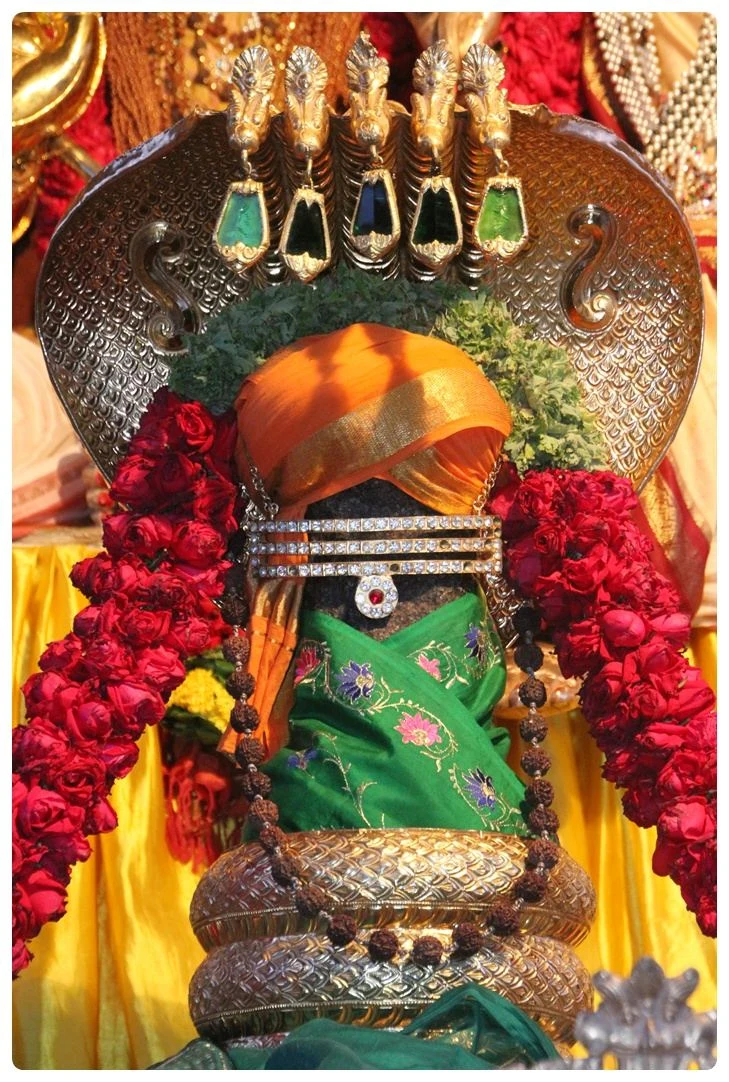
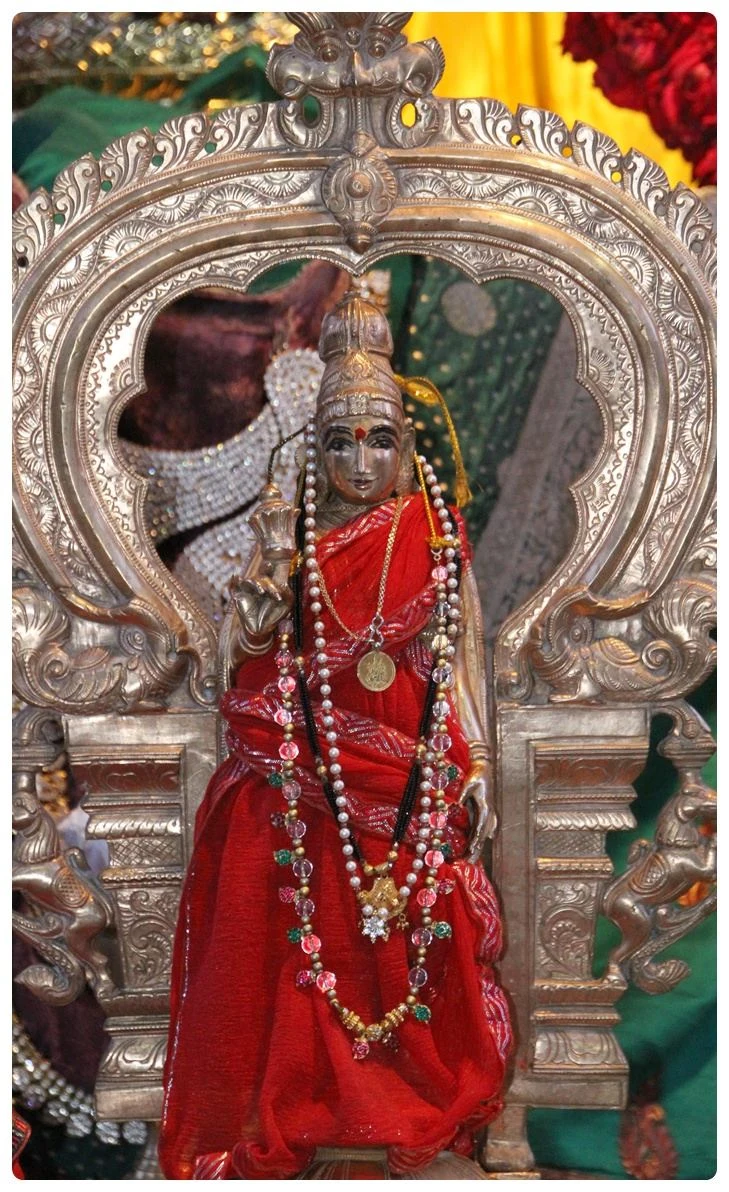
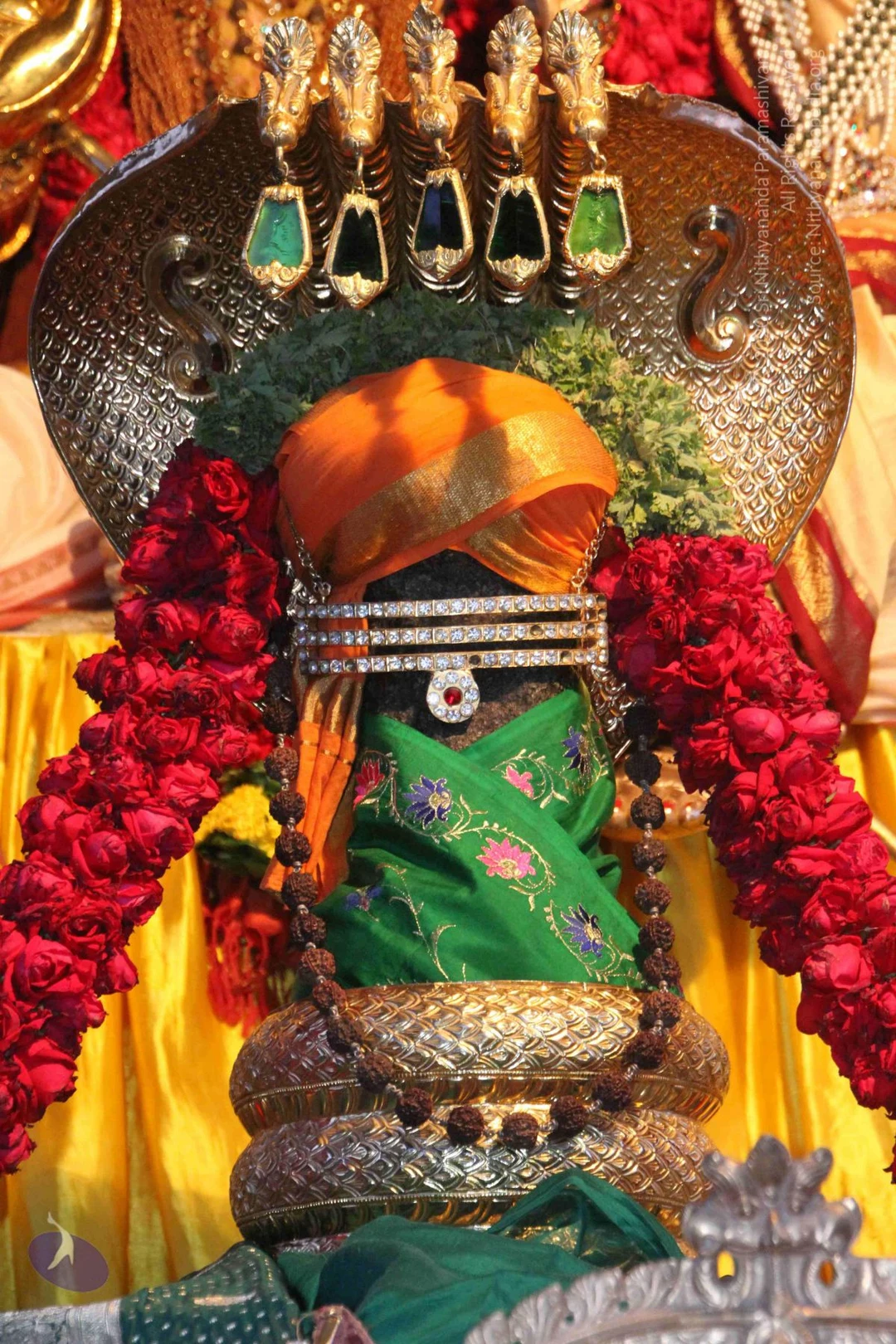
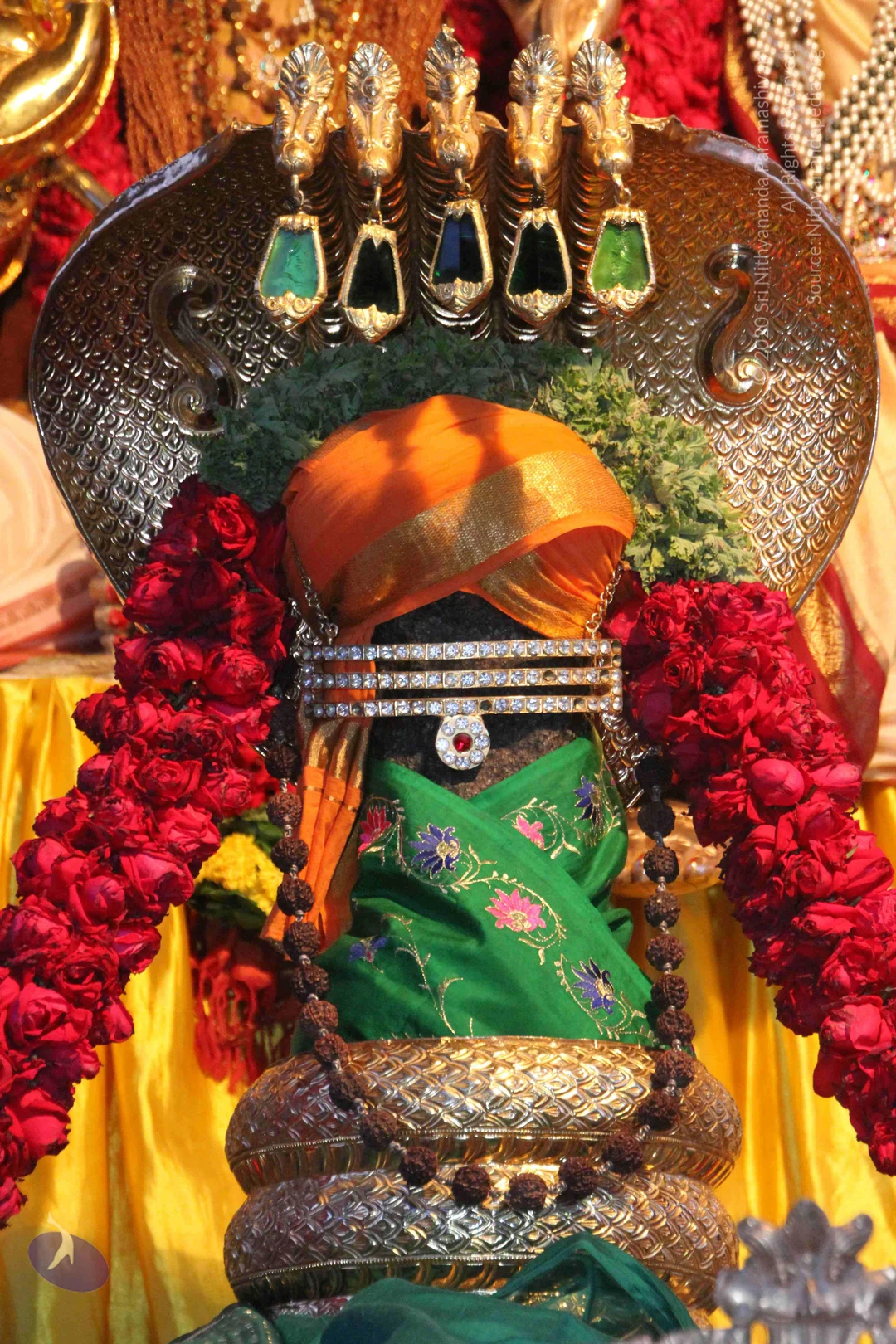
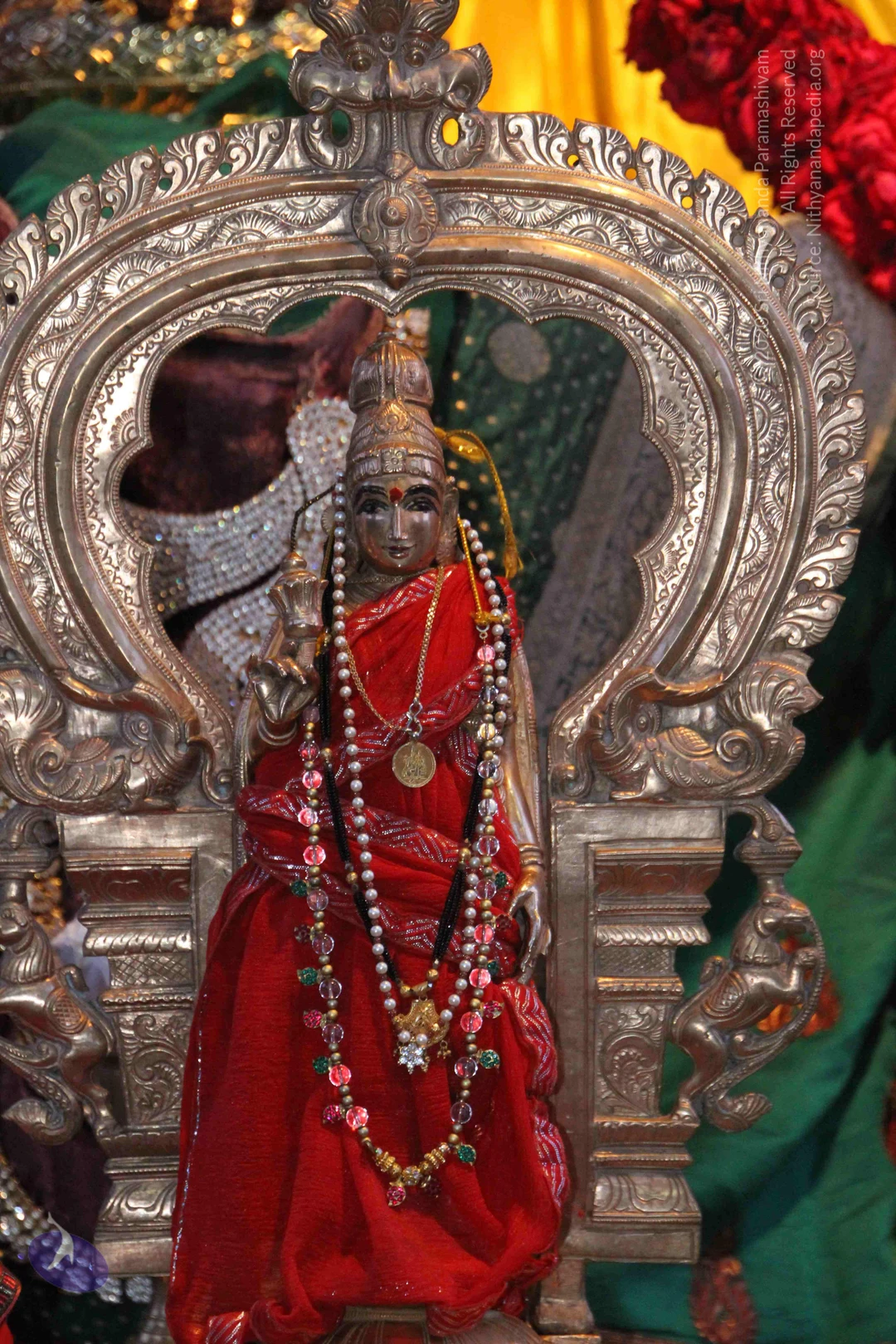
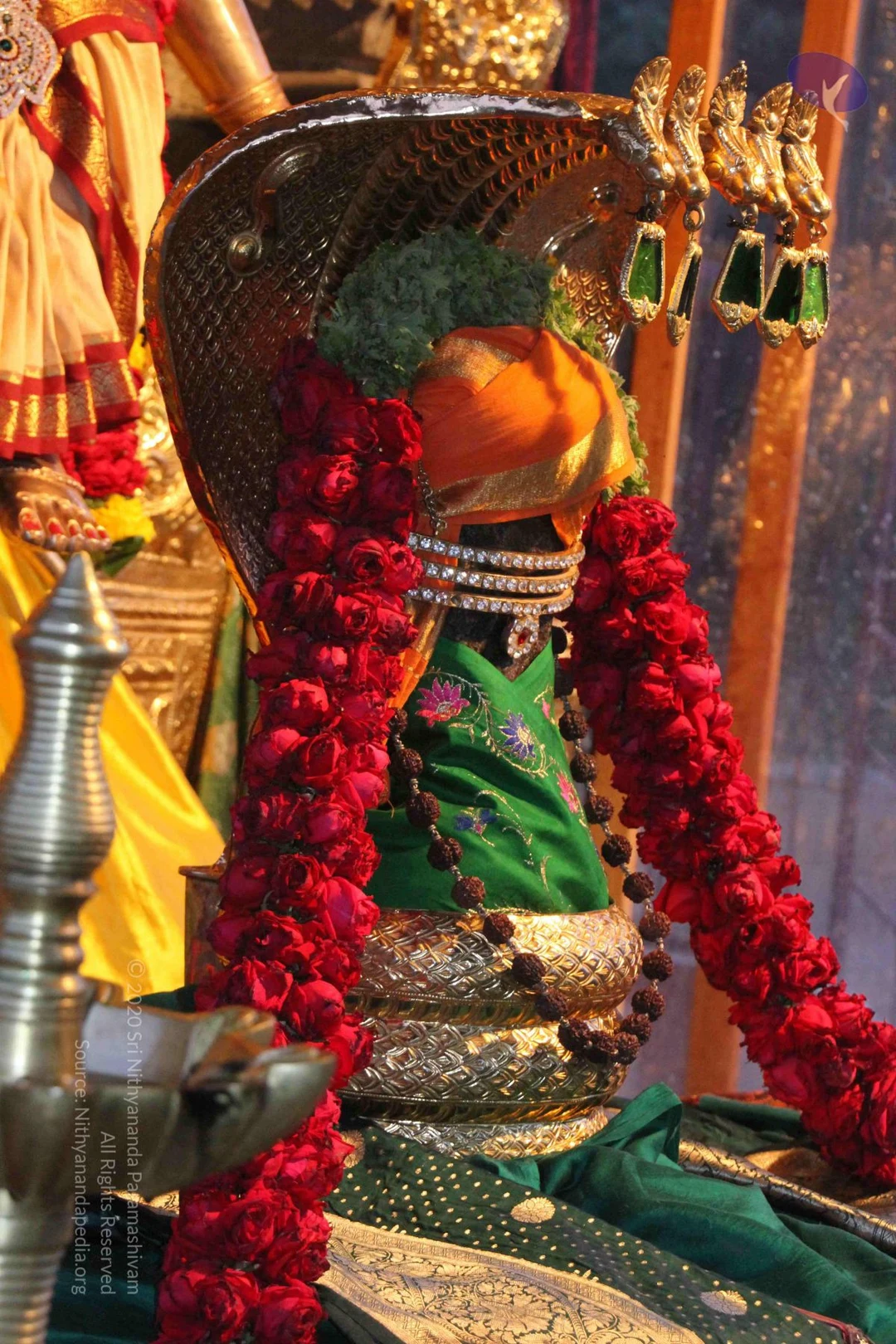
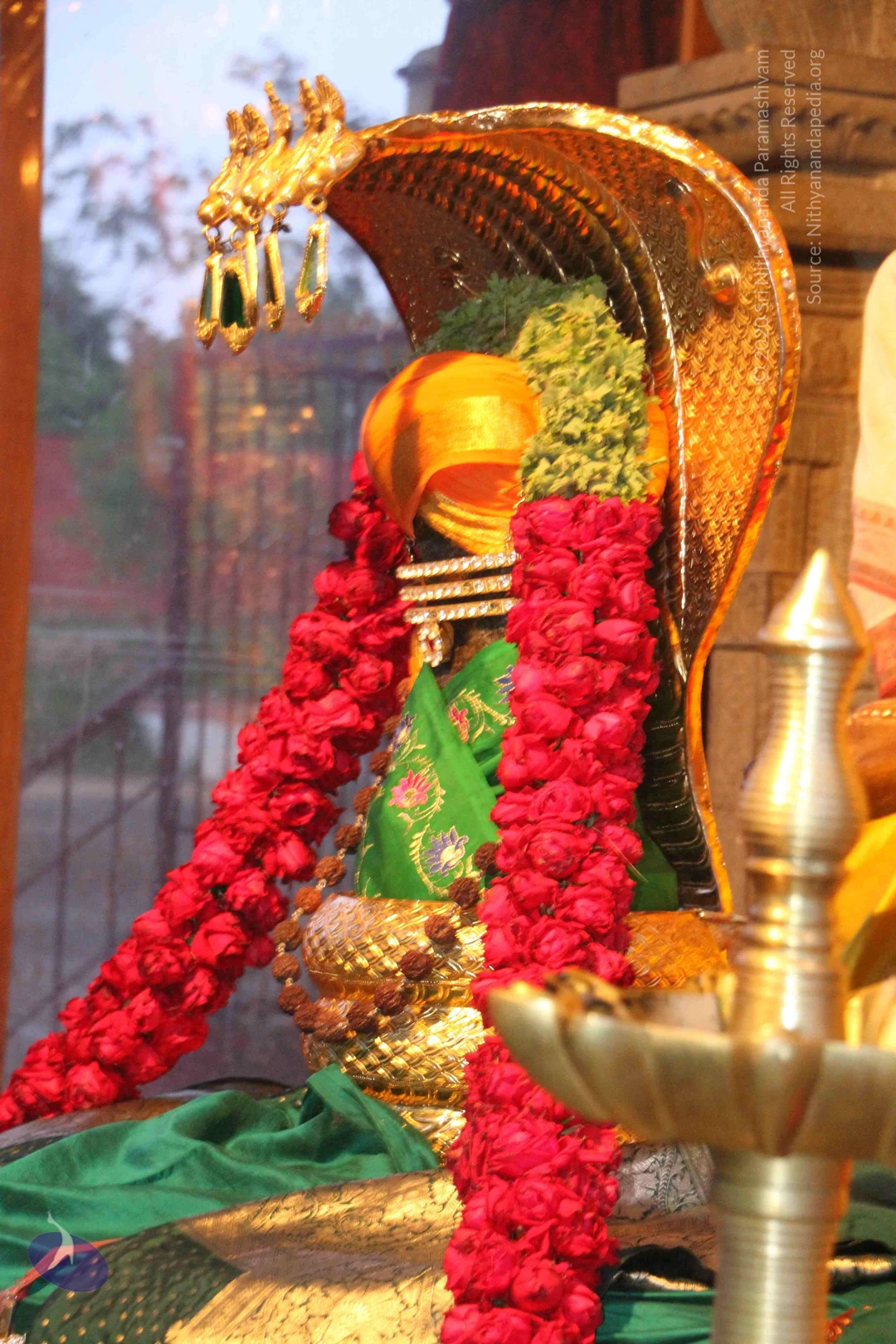
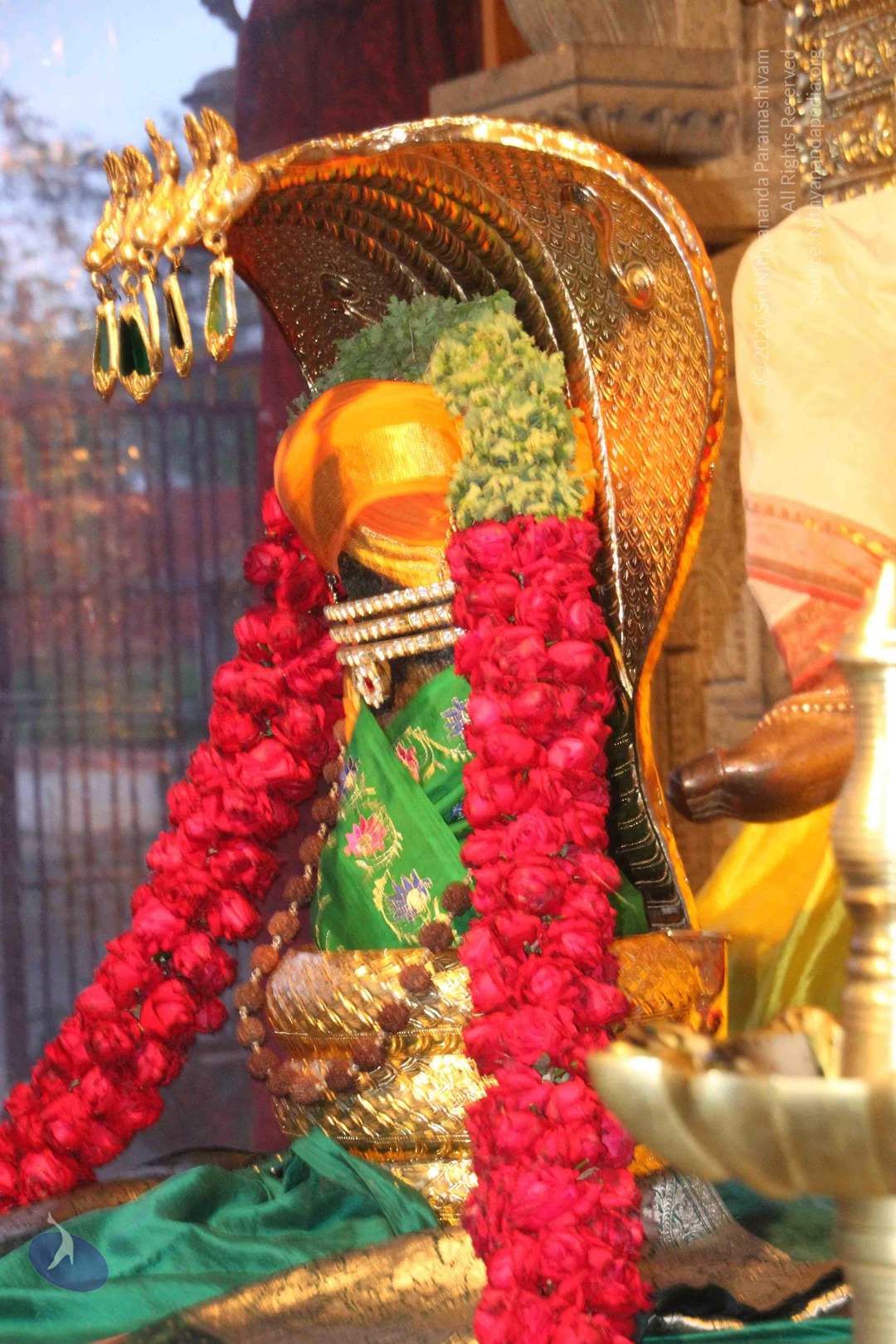
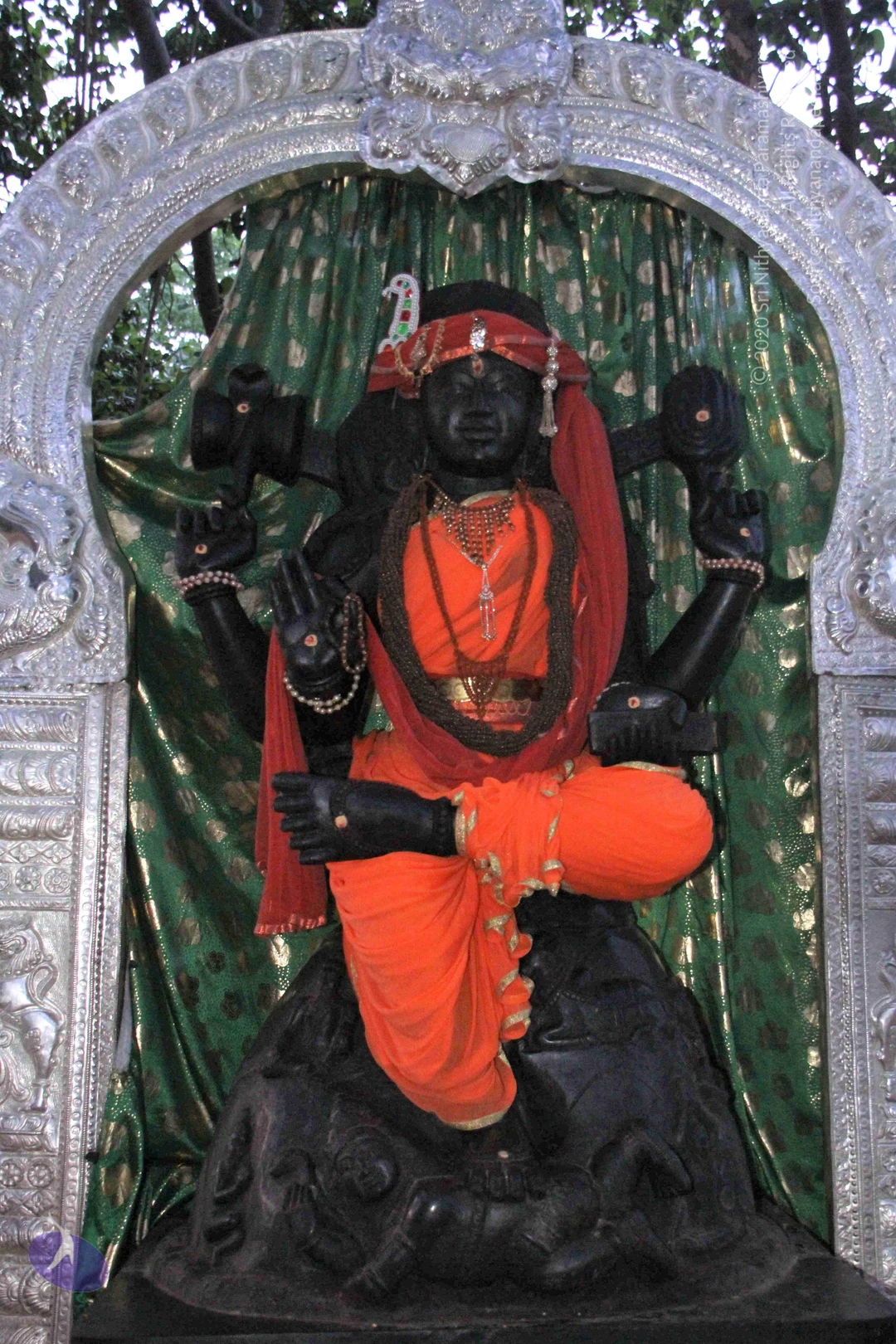
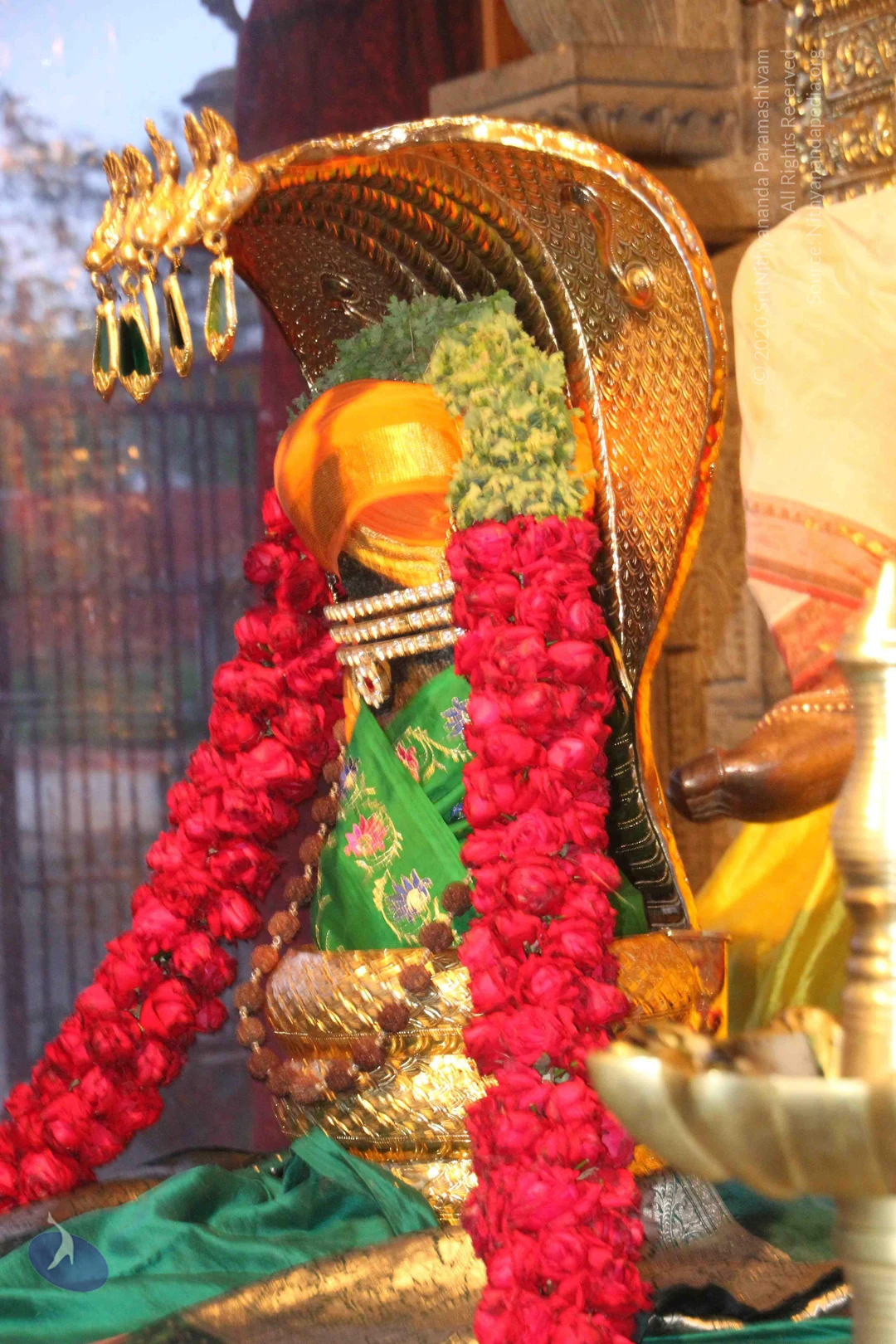
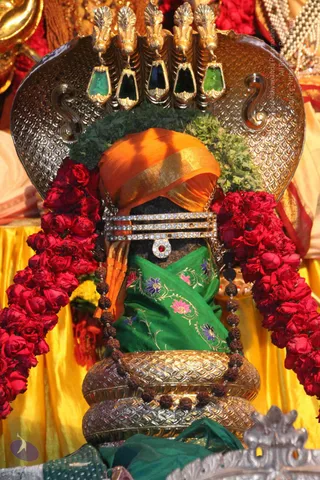
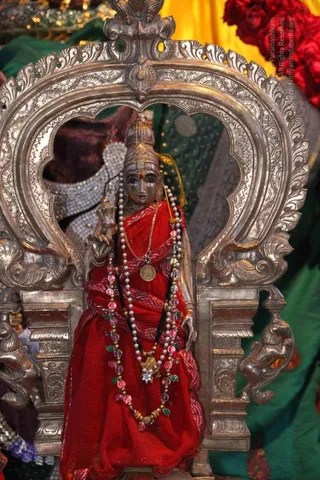
Photograph of two life-size metallic statues seated side by side on a pink draped platform inside an ornate gilded arch, against a deep red curtain. The figure on the left wears a red-orange turban with a jeweled crown ornament, orange garments, green trousers, rudraksha malas and silver necklaces, and holds a golden trident. The figure on the right wears an orange sari with gold border, a dark headdress, and layered silver and gold necklaces, with one hand raised. These are statues, not living people, and the image is a deity murti display rather than a person. No identifiable physical person is present, so the a person candidate is a depiction at most and no appearance-based identification is made.A photograph of a golden shrine arch framing two seated deity murtis on a raised platform before a red-orange curtain. The figure on the left holds a trident and has a red turban and golden crown with a rudraksha mala; the figure on the right wears a golden crown, pearl necklaces and a yellow skirt, holding a sceptre. Both are draped in red and orange garlands. In front stands a Shiva lingam wrapped in green cloth, garlanded with marigolds and roses, with a cobra hood above it, a silver yoni-style base, and brass vessels and a kalasha with oil lamps in the foreground. No people are visible.A photograph of a golden deity murti pair seated on a throne before orange silk drapery within an ornate gilded arch. The left figure wears a red turban, a trident in one raised hand, and layered gold and bead necklaces; the right figure wears a tall gold crown, a white pearl necklace and a yellow skirt. Red and yellow marigold garlands drape both figures and a dark serpent-hooded form at the centre. Below, a green cloth covers an altar with a silver arched frame, a small deity figure, and brass vessels with flowers.A decorated deity murti of a snake-hooded form stands on a gold cloth. Five golden serpent heads with green and blue gemstone pendants arch above a silver hood. Red rose garlands drape the figure, and rudraksha malas hang across a green embroidered shawl. An orange turban with gold border and a jewelled band with a red stone sit on the head. Behind the murti are gold and red ceremonial fabrics. No physical people are visible.Close photograph of a black stone Shiva lingam dressed for worship. An orange-gold turban wraps its upper part, a green silk cloth with embroidered pink and blue lotus motifs drapes its body, and a five-hooded silver naga canopy with green and blue gemstone pendants rises behind it. Red rose garlands hang on both sides, with rudraksha beads and a jeweled band across the front. The lingam sits on a gold-and-silver kalasha-style base over yellow satin, with yellow flowers and gold ornaments in the background. No people are visible.A photograph of a silver deity murti standing within an ornately repoussé silver arch and pedestal. The figure wears a red draped garment with a red and gold border, multiple strands of pearls and red, green and clear beads, a black beaded mala, and a gold pendant. A red bindi marks the forehead, and a gold tassel hangs from the crown. One hand holds a small silver object, and the background shows red flowers, green fabric and draped pearl ornaments. No living people are visible.

Pratyaksha-Pada-Puja
14 photosSource gallery
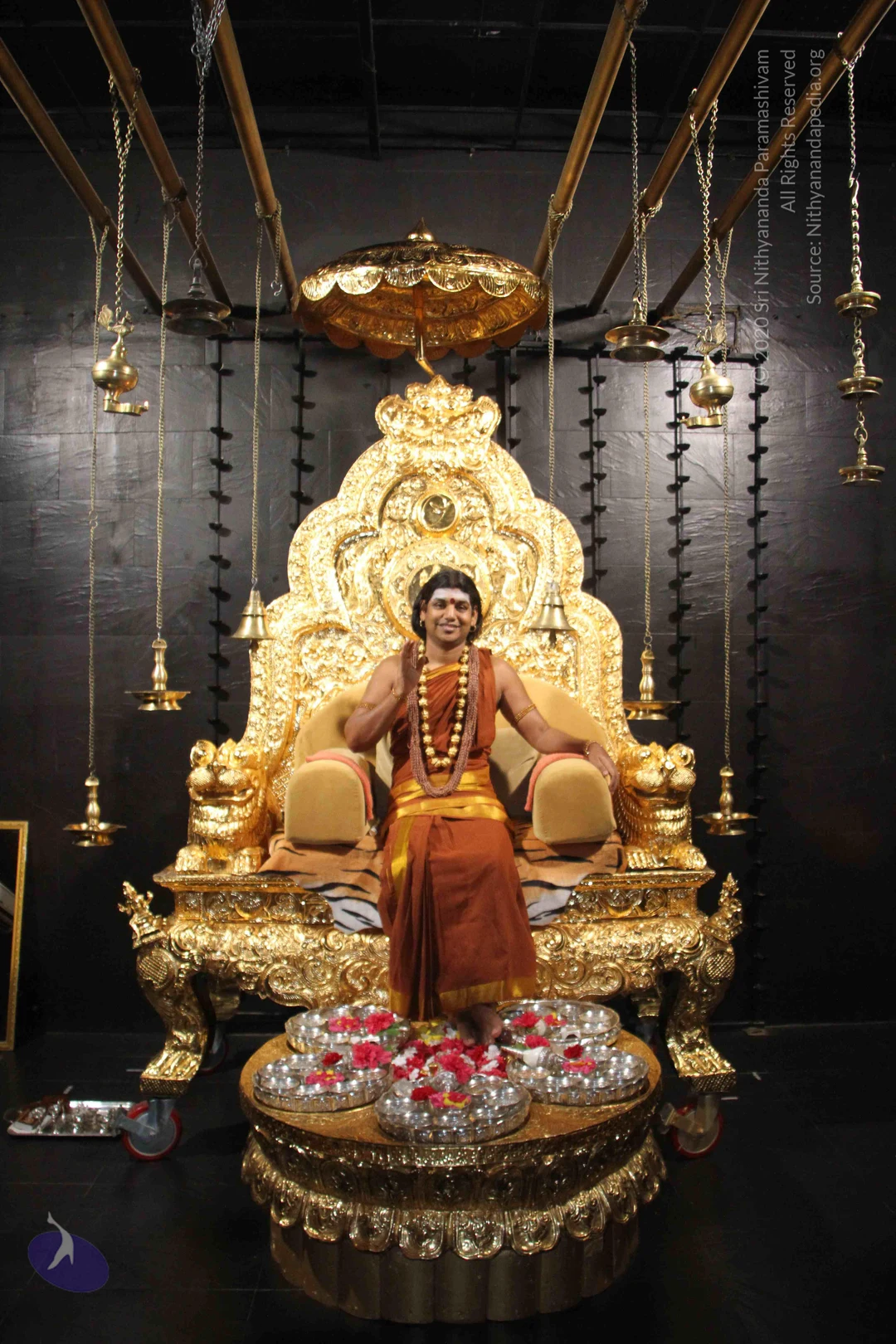
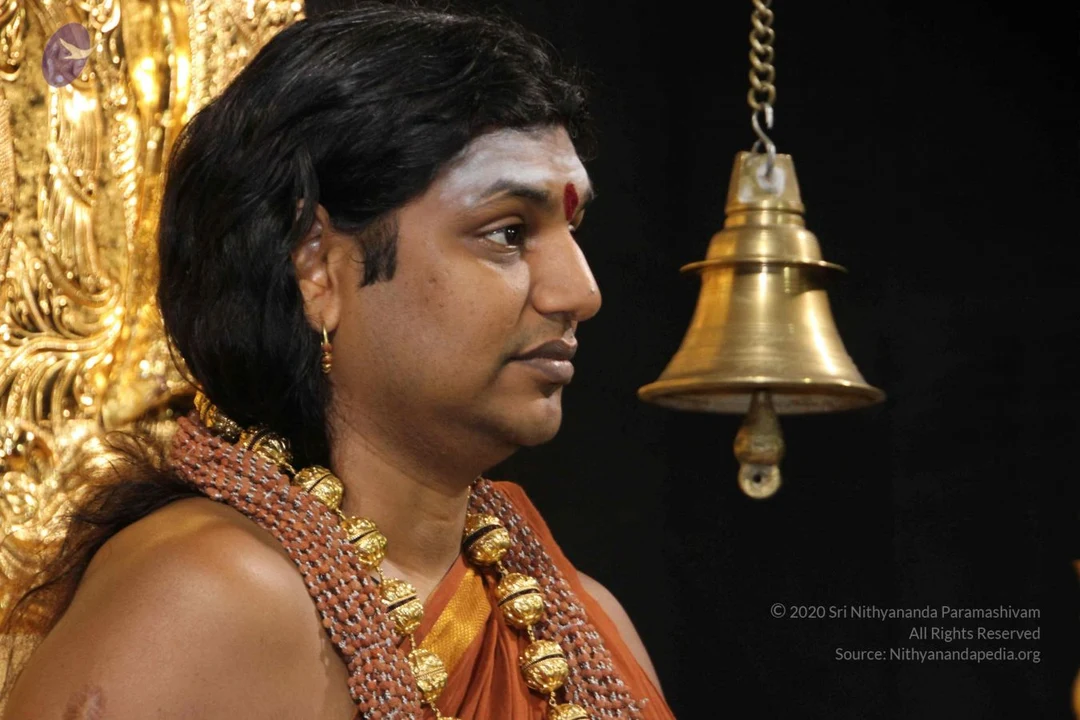
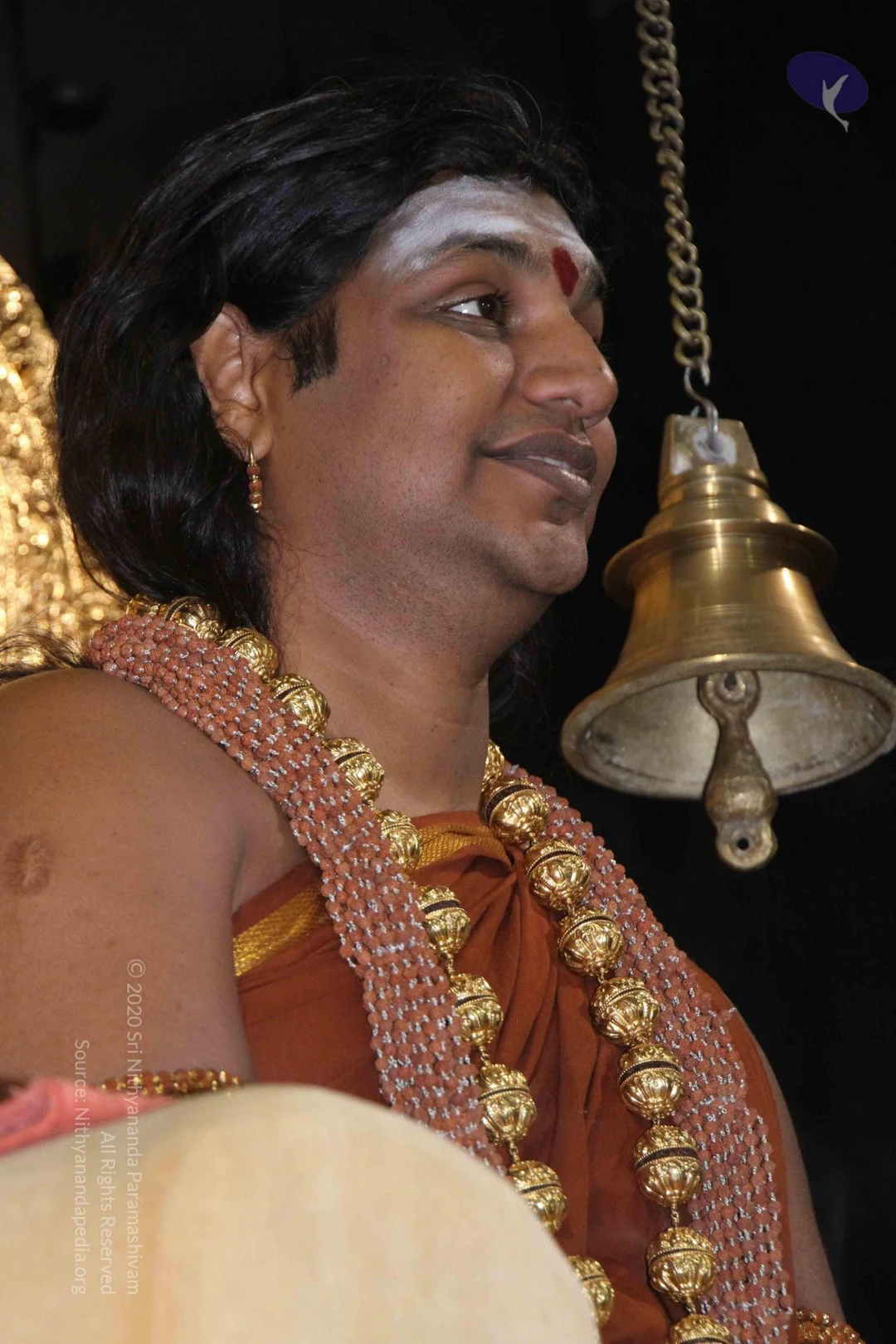
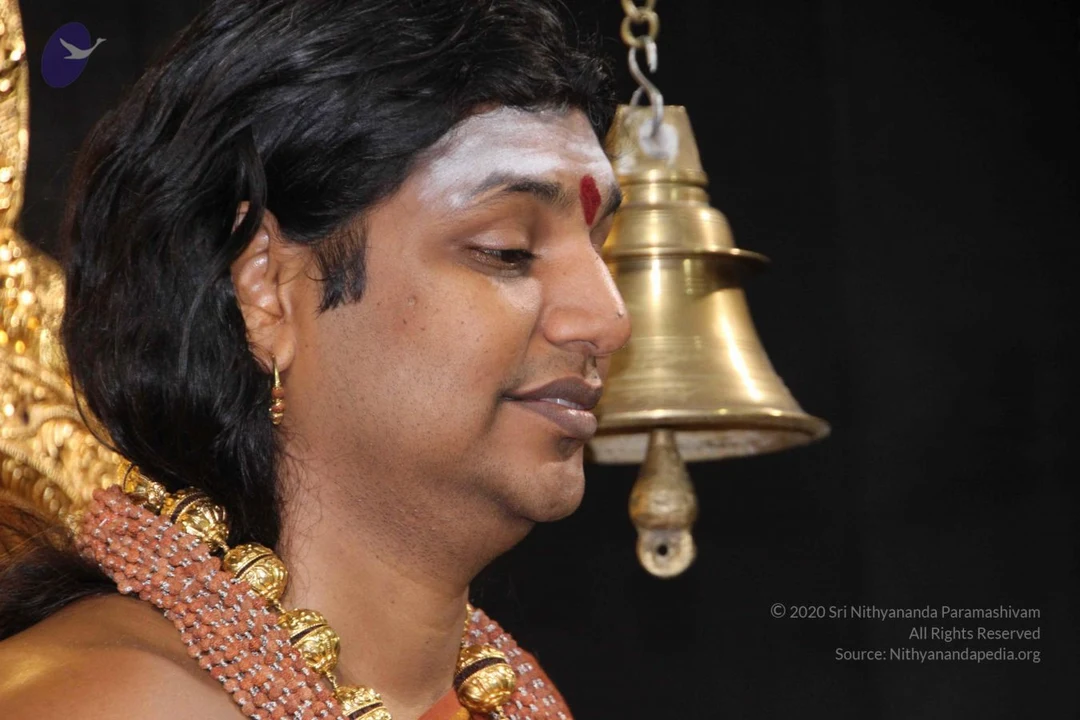
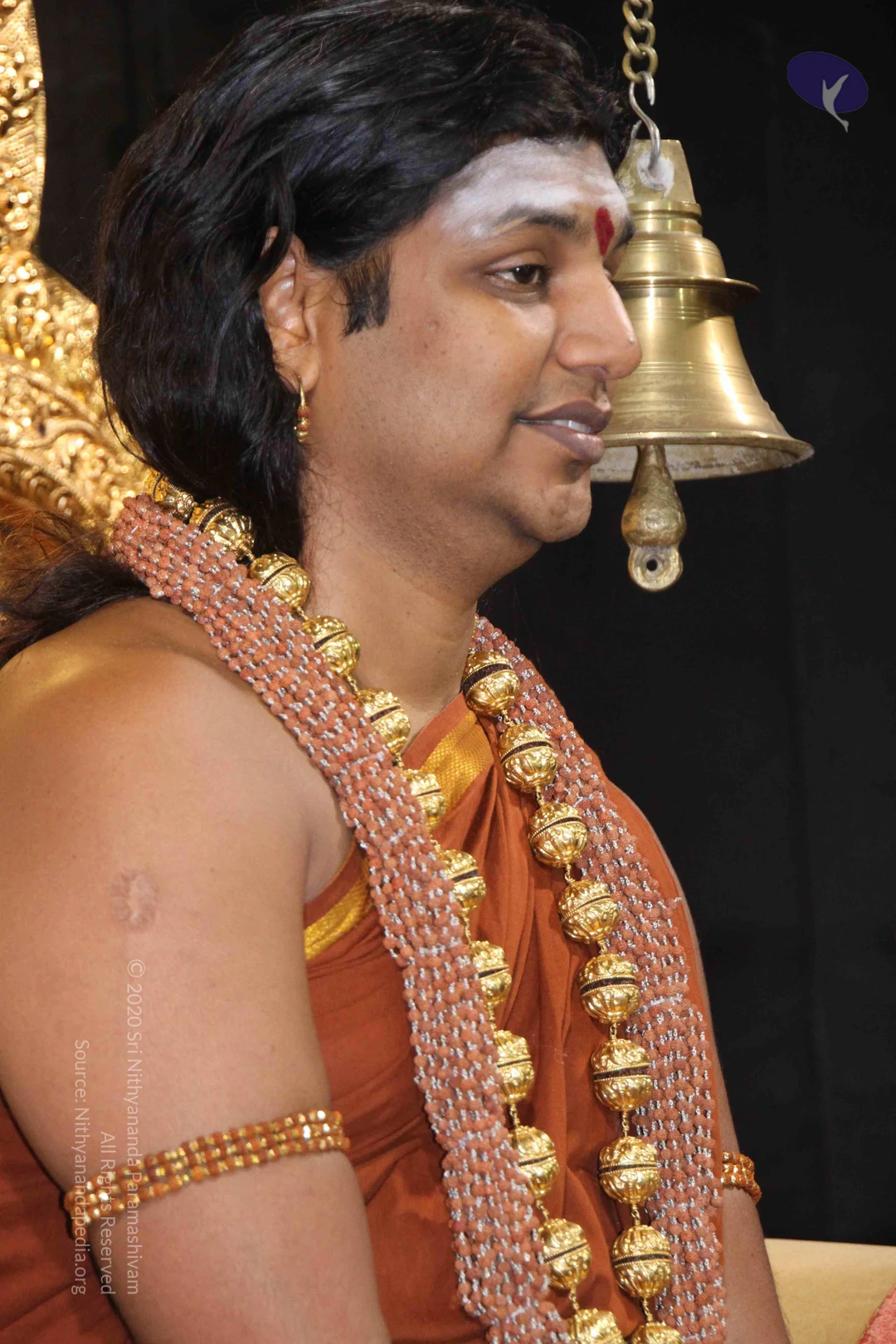
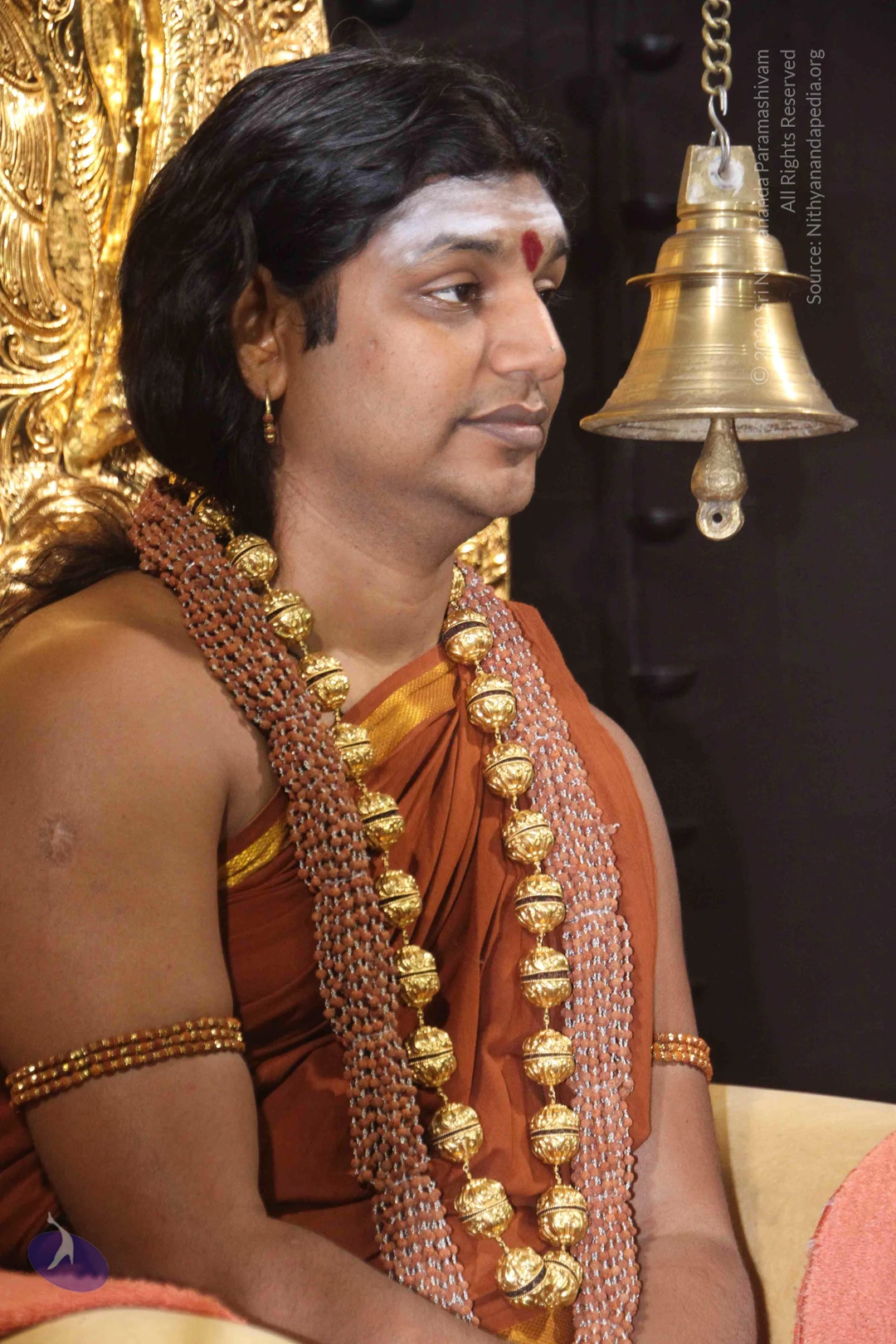
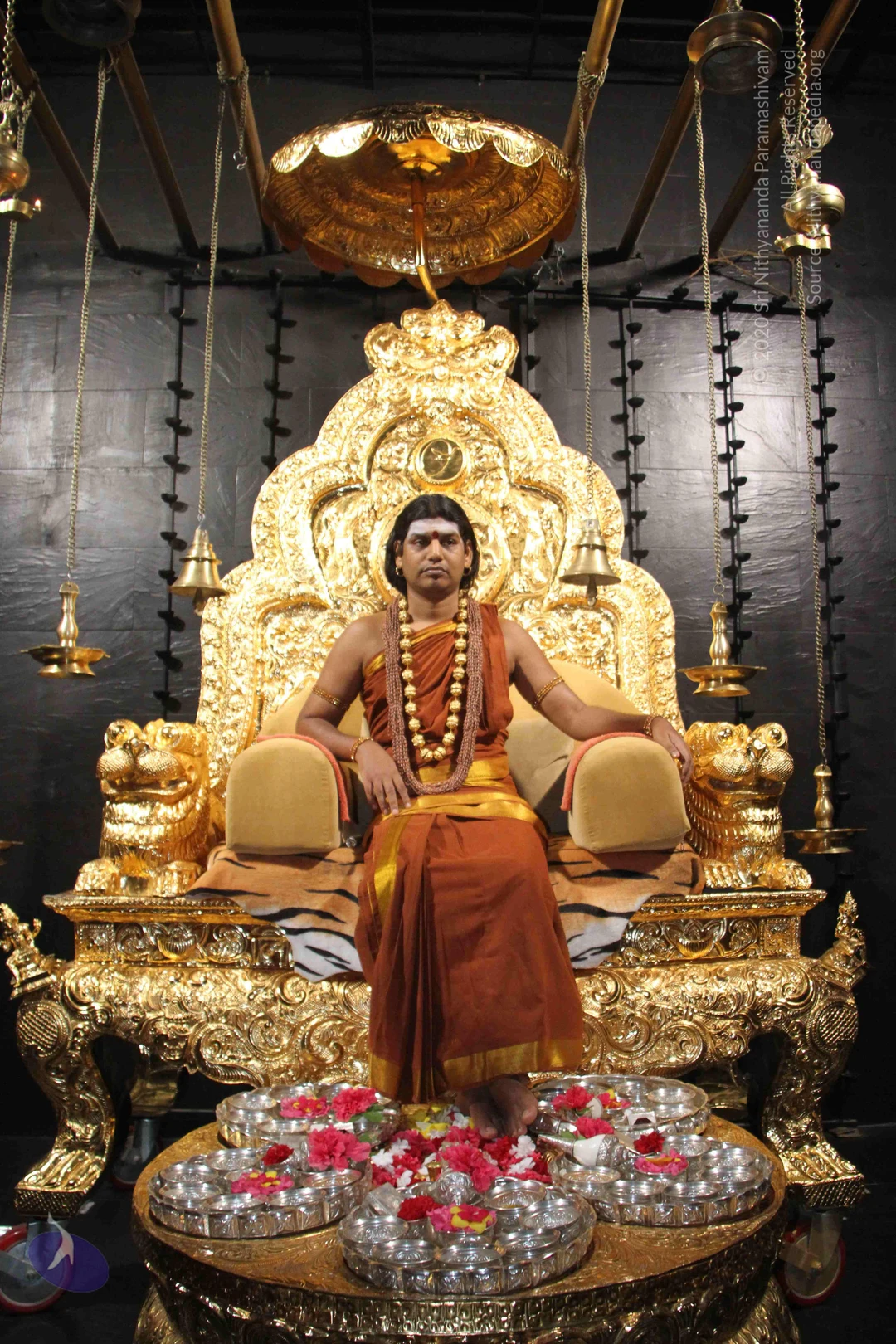
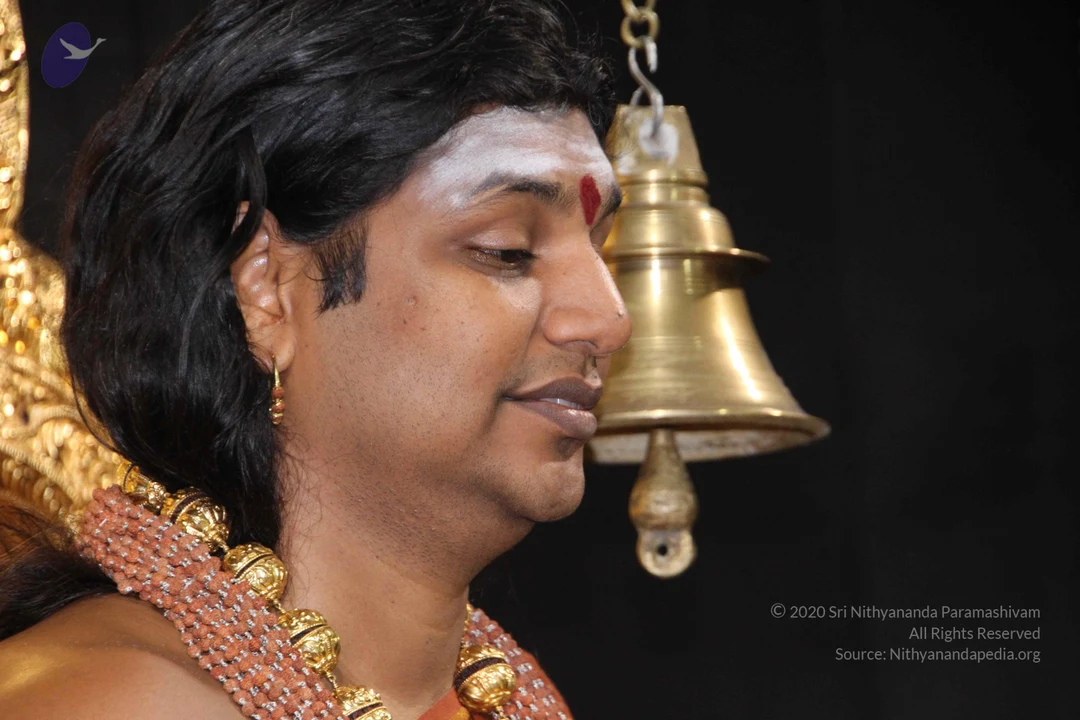
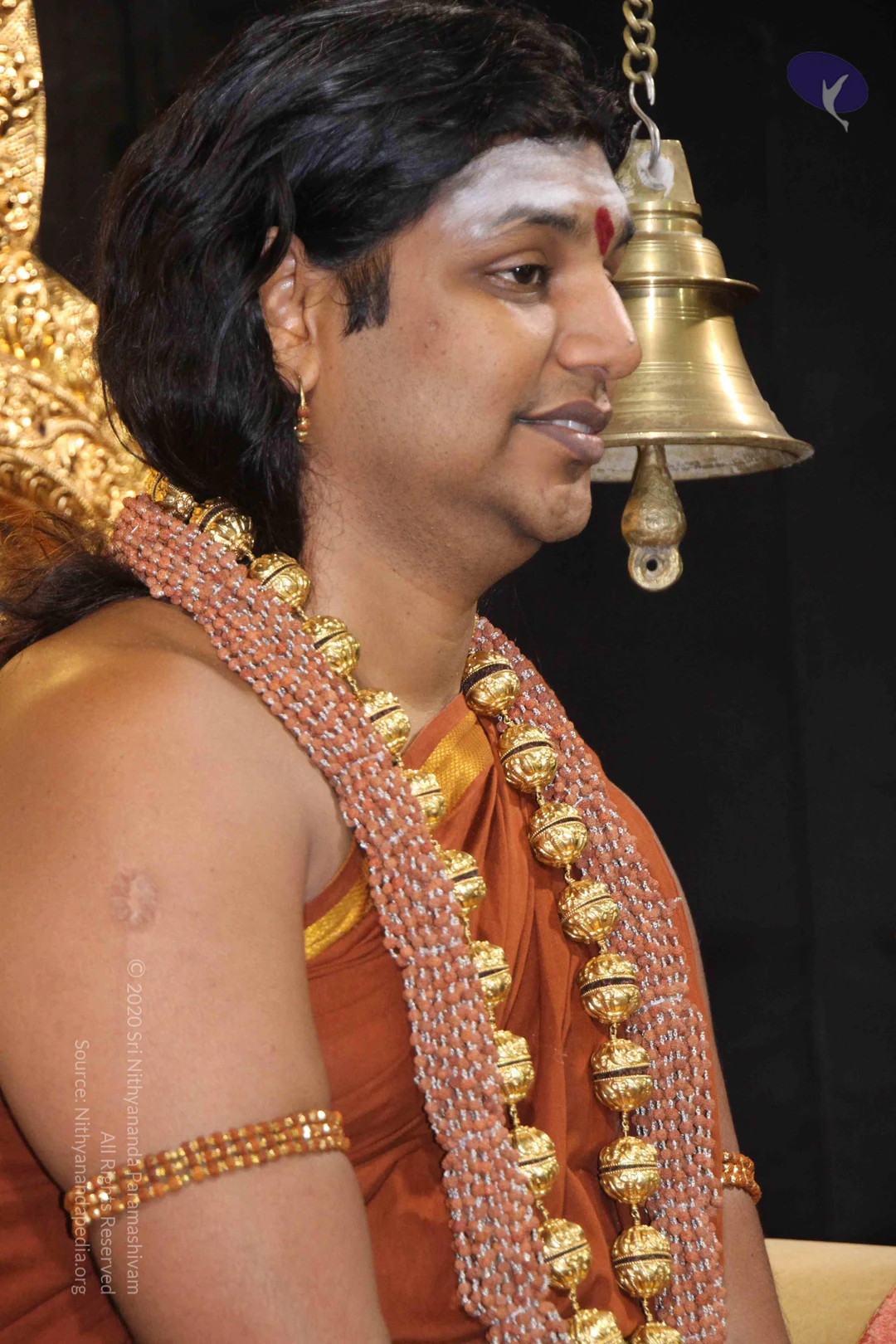
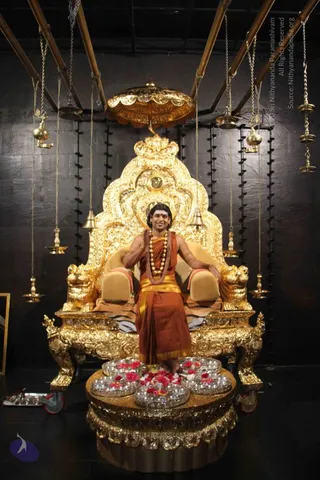
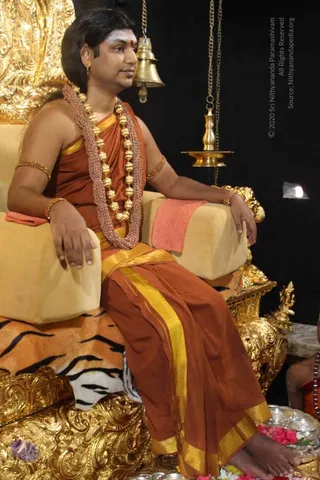
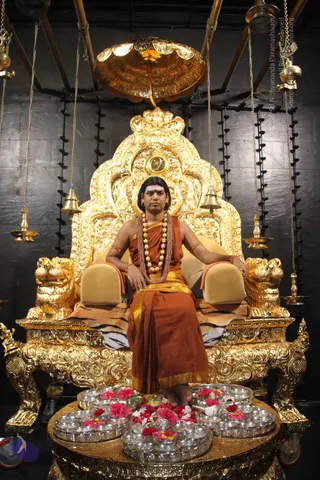
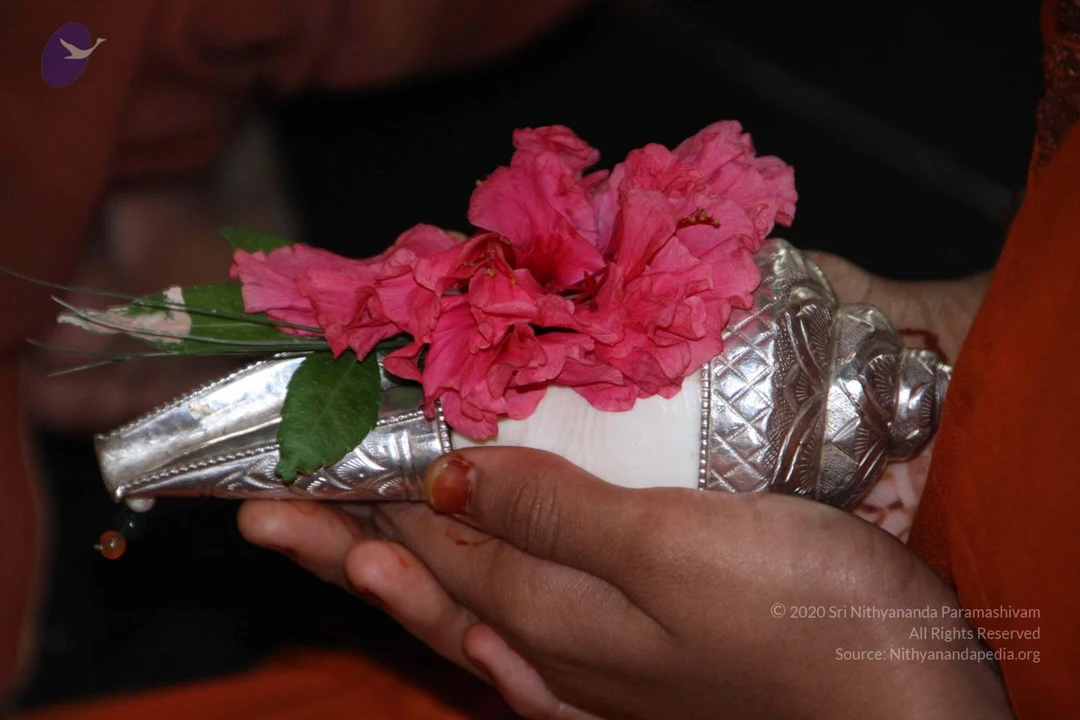
A man seated on an ornate gold throne with lion-head armrests and a golden canopy hung from the ceiling, set against a dark wall with hanging brass oil lamps. He wears a rust-orange dhoti and shawl with a gold border, a long rudraksha mala and a gold necklace, a red tilak on his forehead, and sits on a tiger-striped cushion. His right hand is raised in a blessing gesture. Silver trays of red and pink flowers sit on the raised gold platform at his feet. The figure is distinctively presented with long swept hair, ornate gold adornments and rudraksha, consistent with the page's reference to a person, seated in a throne setting.A man seated on an ornate gilded throne with lion-head armrests and a tiger-skin cloth draped over the seat. He wears a rust-orange dhoti and shawl with a gold border, a rudraksha mala and heavy gold bead necklace, gold bangles and a red bindi, and smiles while raising one hand in blessing. Silver trays with red flower petals and small oil lamps sit before his bare feet. Swamiji (probable) by appearance: long swept-back hair, ornate gold necklace, rudraksha and saffron-orange clothing, seated on a golden throne. Photograph of a single person; no other people visible.A man seated on an ornate gold throne with carved lion armrests and a tiger-striped cloth draped over the seat, raising one hand in a blessing gesture. He wears a rust-orange dhoti and shawl with gold borders, a dark rudraksha mala and a heavy ceremonial gold bead necklace, plus gold bangles and armlets, with a red bindi and white marks on his forehead. Brass bells hang at the left and an oil lamp stands at the right. In front are silver plates heaped with red and pink flowers and petals. Appearance-based label: a person, seated in person on the throne.A seated man on an ornate gold throne draped with a tiger-striped cloth, wearing a rust-orange robe with gold borders, a rust-orange wrap, a rudraksha-style mala of gold beads and pinkish-brown beads, gold armlets and bangles, and a red dot on his forehead. He rests his arms on cream cushions with pink cloths. Behind him hang a brass bell and a brass oil lamp on chains. Pink flowers and a silver plate appear at the bottom of the frame.Close profile photograph of a man with long, swept-back dark hair, white vertical tilak with a red dot on his forehead, and small gold earring. He wears an orange-saffron shawl and a heavy gold and rudraksha-style bead necklace (rudraksha mala). Beside him hangs a polished brass temple bell on a chain against a dark background, with an ornate gold carved throne or deity backdrop at left. Appearance-based label: a person, shown in person with ritual and ceremonial cues.Close-up photograph of a man with long, swept-back dark hair, white vertical tilak with a red dot on his forehead, a small earring, and a nose ring. He wears an orange-red shawl and a heavy necklace of rudraksha beads interspersed with gold beads. Beside him hangs a brass bell on a chain against a dark background, and a glimpse of gold ornament appears at the left edge. He looks off to the side with a slight smile. Appearance-based label: Swamiji (probable), based on long swept-back hair, saffron-orange shawl and rudraksha mala with gold beads.

Nithya-Satsang
8 photosSource gallery
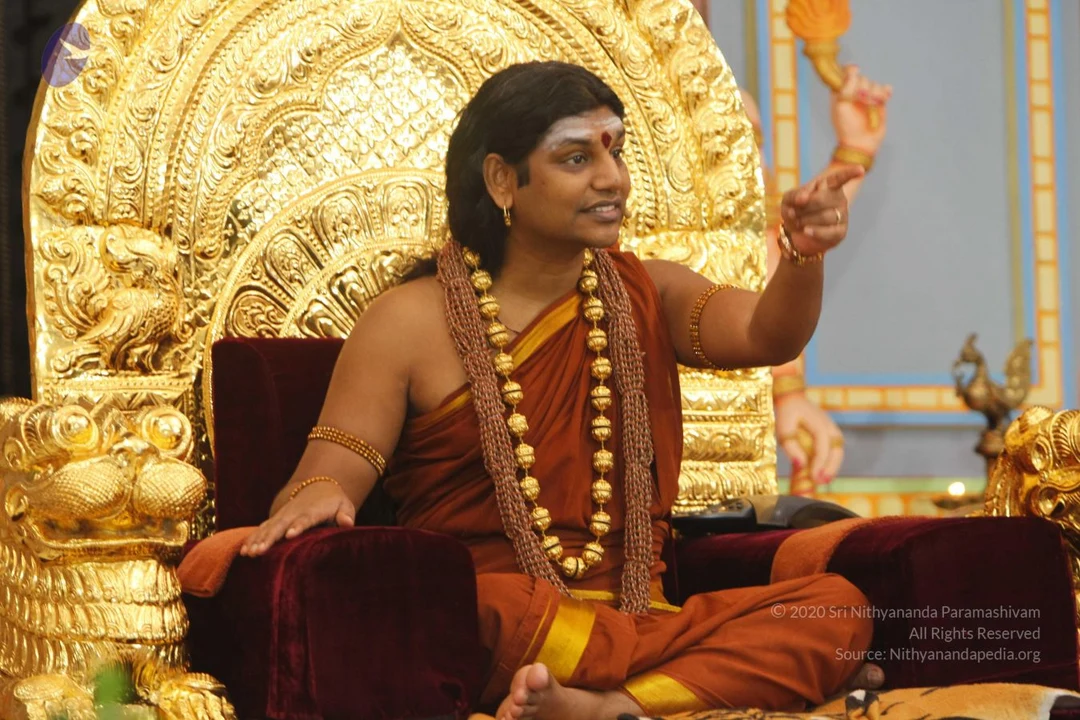
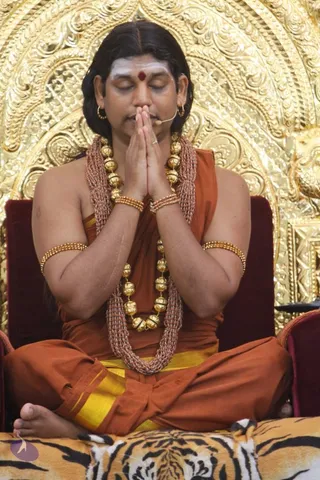
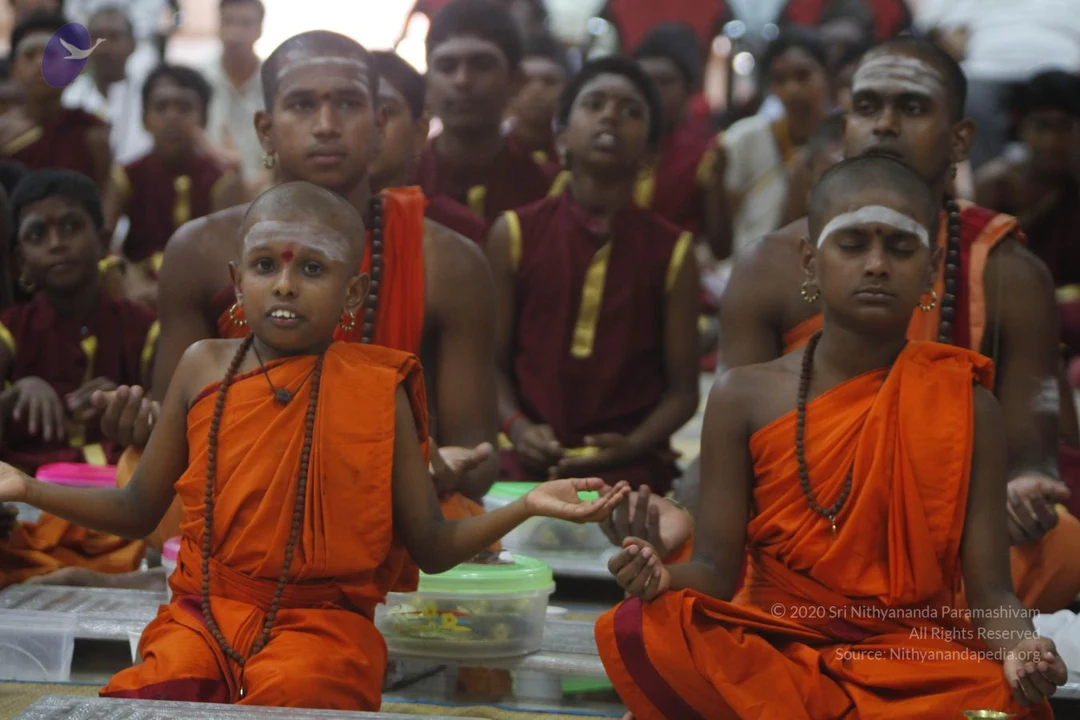
A seated man in saffron-orange draped clothing sits on an ornate gold-carved throne with deep red velvet upholstery. He wears a long dark swept-back hair, a rudraksha-style brown bead mala and a ceremonial gold bead necklace, gold armbands and a gold earring, with a red bindi and white forehead marks. Blurred green foliage fills the foreground and a gold lion-head armrest is visible at right. Swamiji (probable) appears to be the seated person, based on the saffron clothing, long hair, rudraksha mala, gold necklace and throne setting.A seated man in an orange-saffron dhoti and shawl with a gold-bordered yellow waistband sits cross-legged on a tiger-striped cushion in front of an ornate gold repoussé backdrop. He has his palms pressed together in anjali mudra with eyes closed, wears a white forehead mark with a red bindi, gold hoop earrings, a small headset microphone, multiple gold-bead and rudraksha-style malas, and gold armlets and bangles. A red velvet throne chair frames him. Appearance-based label: a person, seated in person at a satsang, offering a greeting.A seated man with long dark hair, closed eyes and palms pressed together in anjali mudra, sits cross-legged on a red-cushioned throne in front of an ornate gold repoussé backdrop. He wears an orange-saffron dhoti and shawl with gold borders, multiple gold bead necklaces with rudraksha-style strands, gold bangles and armlets, and a small red bindi with white tilak. A small headset microphone is visible at his cheek. A tiger-striped cloth covers the seat below him. The setting suggests a satsang or discourse.A seated man with long dark hair, eyes closed, palms pressed together in namaskar at his chest, sits in lotus-style crossed legs on a red velvet throne before an ornate gold repoussé backdrop. He wears an orange-saffron unstitched garment with a gold-bordered dhoti, multiple strands of gold and rudraksha-style beads, a gold necklace, gold bangles and armlets, and a red tilak with white urdhva pundra marks on the forehead. A small headset microphone is clipped near his ear. A tiger-striped cloth covers the seat beneath him. a person is shown with ceremonial saffron clothing, rudraksha malas and gold ornaments, seated on a throne during a satsang-style setting.A seated man with long dark hair, eyes closed, palms pressed together in namaskar at the chest. He wears an orange-brown dhoti and shawl with gold borders, a red bindi, white vibhuti marks on the forehead, gold earrings and a headset microphone. Multiple strands of rudraksha-style beads and heavy gold bead necklaces hang over his chest, with gold bangles on his wrists and upper arms. He sits on a red velvet throne in front of an ornate gold-embossed backdrop, with a tiger-striped cushion below. Probable Swamiji cues: long swept-back hair, rudraksha malas, ceremonial gold necklaces and saffron-orange clothing, seated in satsang.A man seated cross-legged on a plush maroon velvet throne with an ornate gold carved backrest, speaking and gesturing with his right hand raised, index finger pointed. He wears saffron-orange robes with a yellow border, a long rudraksha mala and a heavy gold bead necklace, gold bangles and an armlet, and has white vibhuti and a red kumkum dot on his forehead. Behind him stands a gilded decorative figure and a blue and gold framed wall. a person seated as the discourse speaker, identified by the throne-seated saffron robes, rudraksha mala and gold ornaments.

Nithya-Galleria
65 photosSource gallery
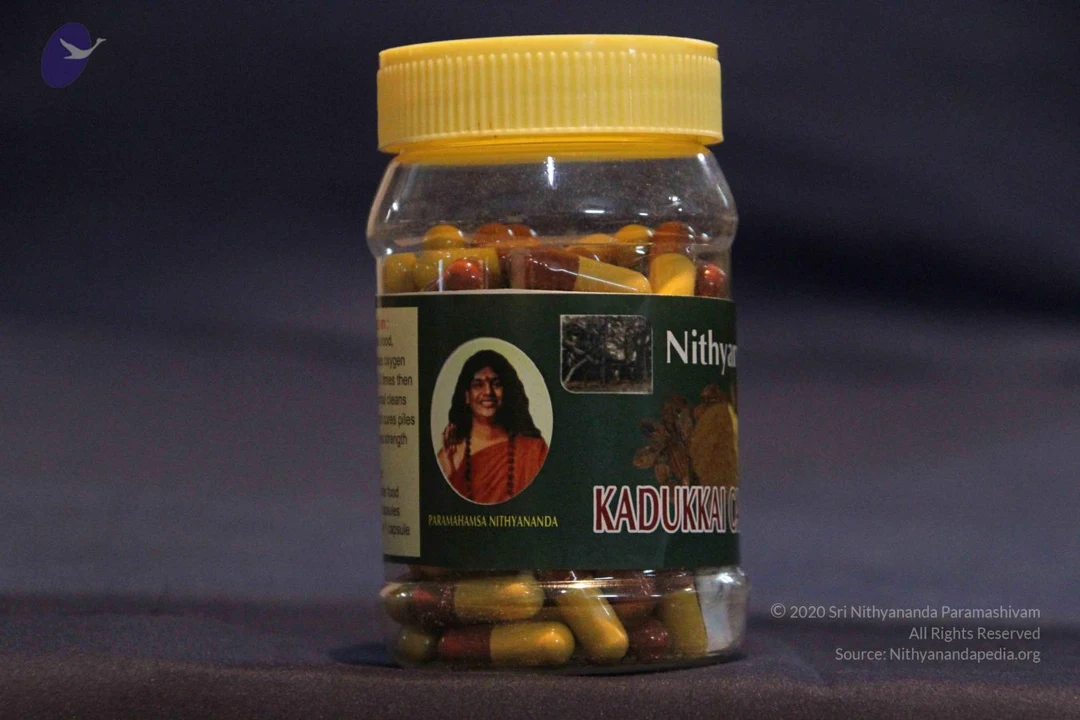
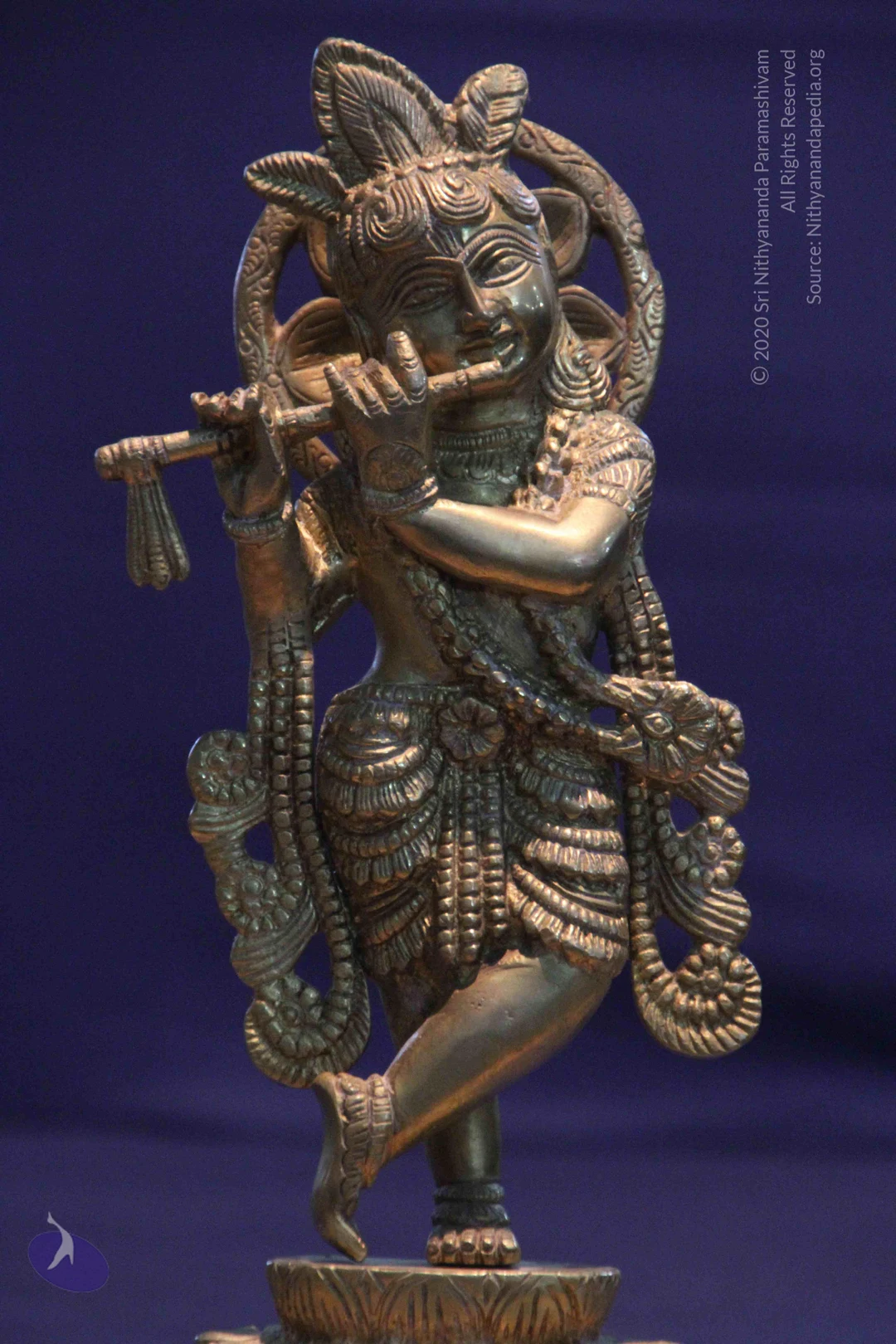
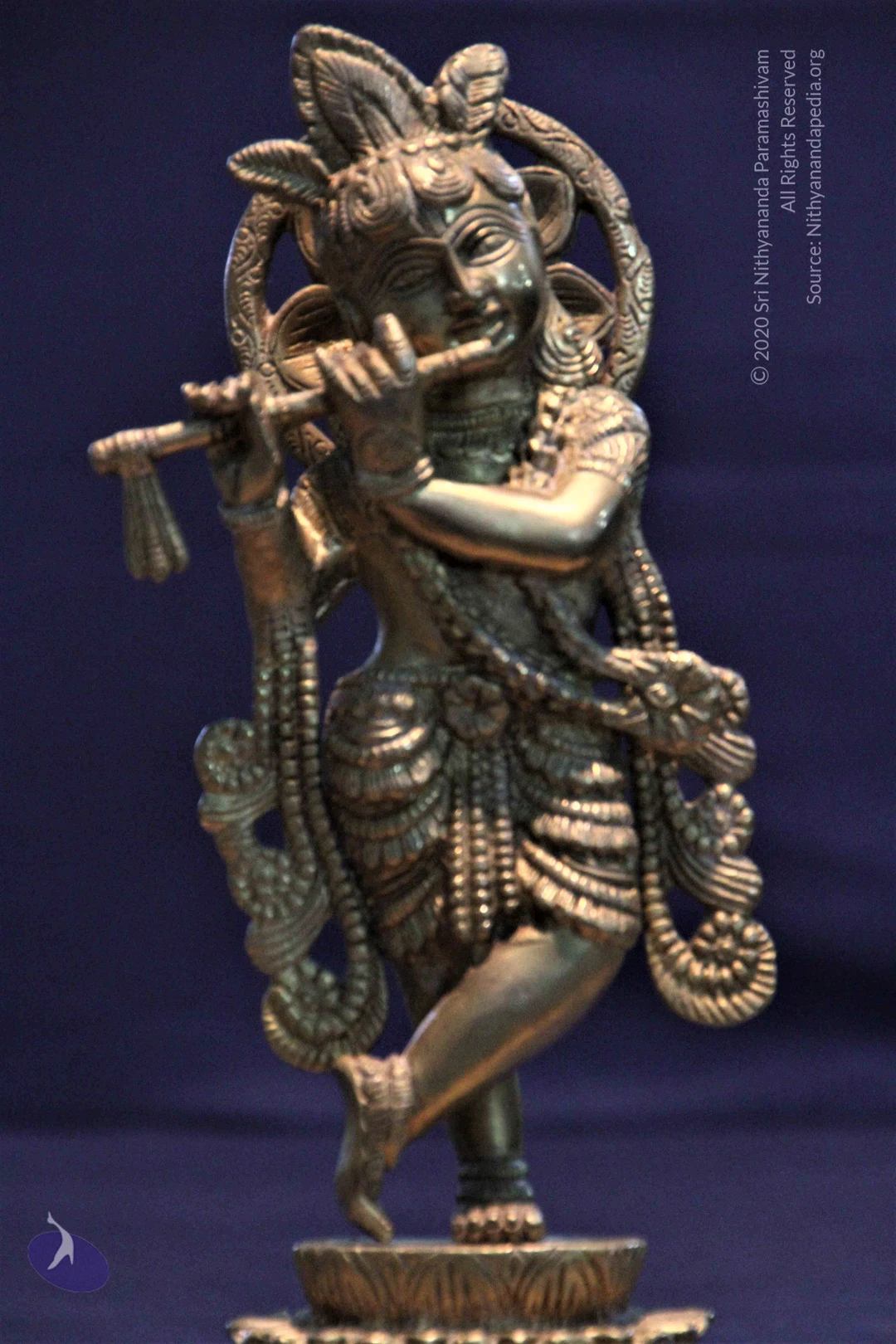
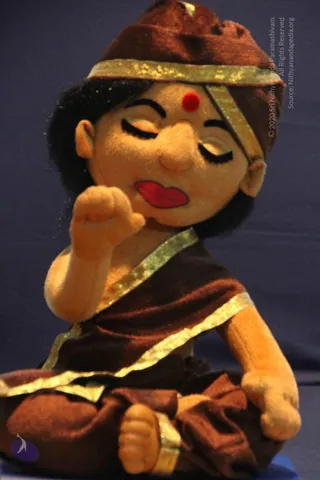
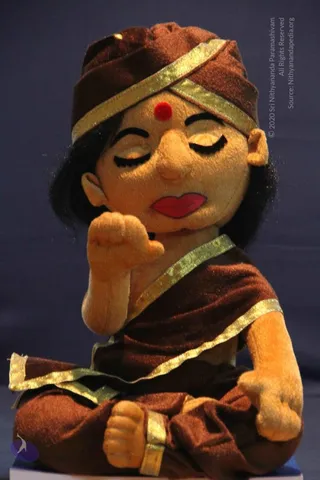
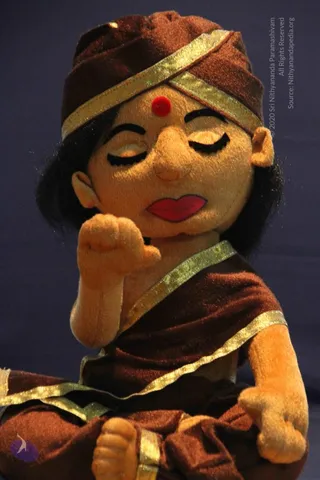
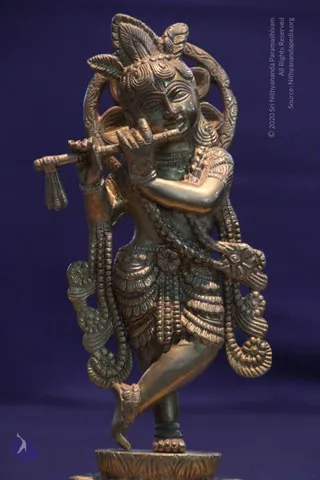
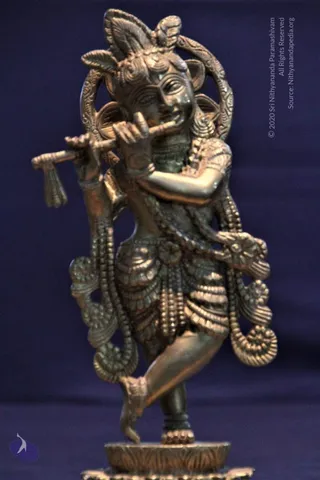
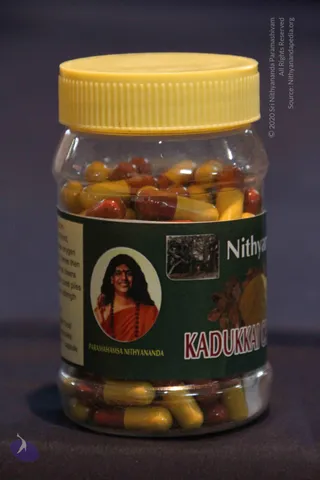
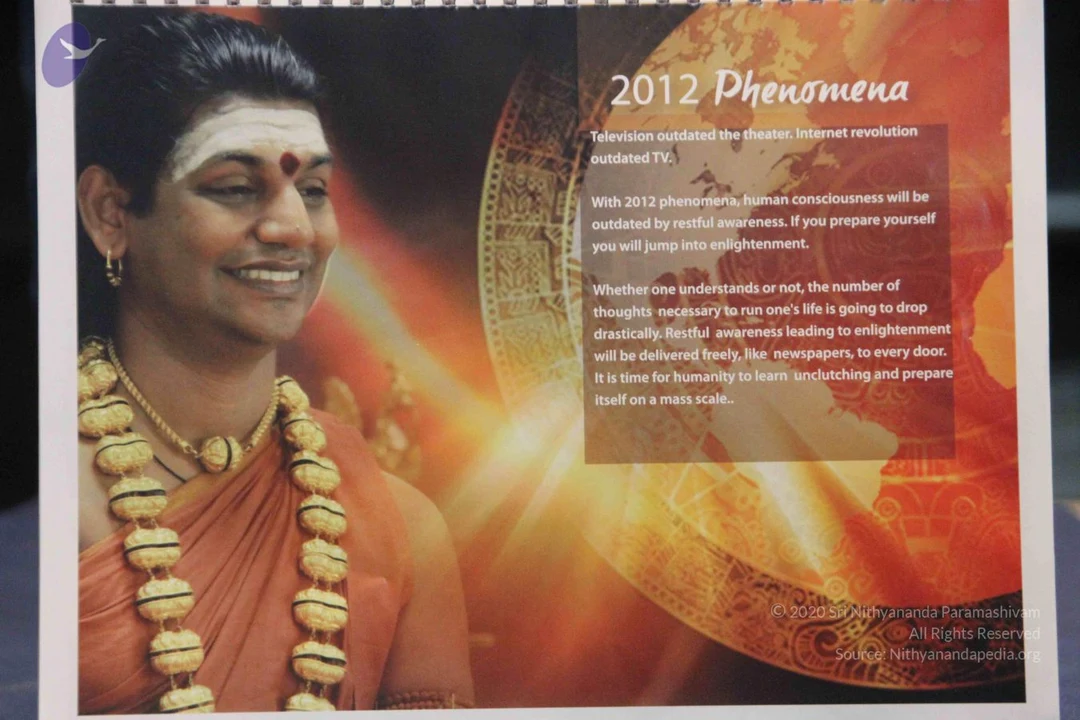
A close-up photograph of a plush stuffed doll seated in a cross-legged meditation pose against a dark blue backdrop. The doll has a brown cap and brown robe edged with gold glitter trim, a red bindi, closed eyes, red lips, and one hand raised near its chest with a fist. Its hands rest on its knees in a meditative posture. No physical people are visible; the figure is a toy, not a person.A seated plush doll in meditation pose with eyes closed, wearing a brown turban banded with gold ribbon and a red bindi, a brown robe trimmed with gold braid, and gold-banded fists resting on its knees. The doll is a toy figure, not a physical person, and shows no clearly identifiable a person cues beyond generic ascetic clothing.Close-up photo of a plush doll seated in meditation pose, with closed eyes, a red bindi, red lips and black hair. It wears a brown velvet turban and robe trimmed with gold metallic braid, and its right hand is raised near the chin in a mudra. The background is dark blue. Its face is a toy depiction, not a physical person.A bronze statue of Krishna playing a flute, standing on one leg in a graceful tribhanga pose against a deep blue backdrop. He wears a feathered headdress with a curled crest, ornate necklaces, armlets, bangles, and a pleated, beaded waist cloth, with an ankle band on the raised foot. A circular arch with floral motifs frames his head. The murti stands on a lotus-petal pedestal. No people are visible.A bronze-toned statue of Krishna in a tribhanga-style pose, standing on one leg with the other knee bent, playing a long flute held to his lips with both hands. He wears a crown of peacock-feather style ornament, a shaped arch halo behind his head, layered beaded necklaces and a draped waist cloth with tassels. The statue stands on a lotus-petal pedestal against a deep blue background.A clear plastic jar with a yellow screw-on lid holds yellow and red-brown capsules, shown against a dark grey backdrop. The green label reads KADUKKAI and includes an oval portrait of a smiling figure with long dark hair, wearing an orange robe, rudraksha mala and a red forehead mark, labelled PARAMAHAMSA NITHYANANDA. A small sepia photo of a tree sits above the label, beside a leaf motif. The portrait is printed on the product label, not a physical person.
Lotus-Tv
6 photosSource gallery
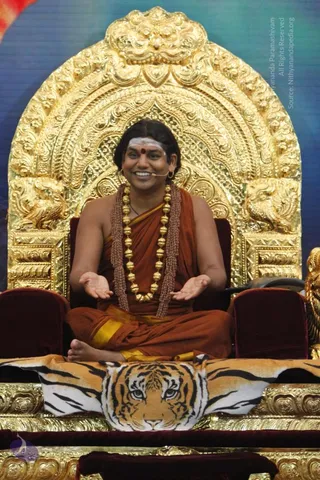
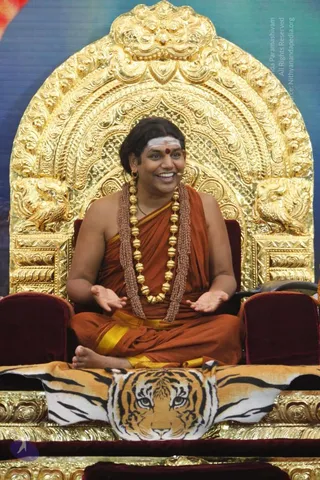
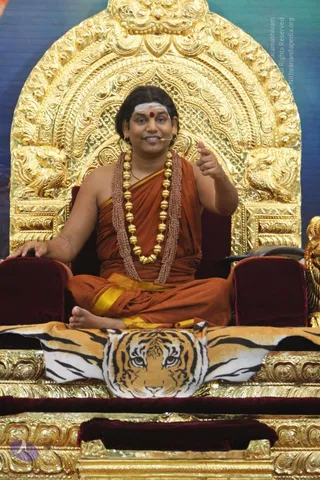
A man seated cross-legged on a red velvet throne-style chair in front of an ornate gold carved backdrop, speaking into a small headset microphone. He wears an orange-saffron cloth draped over his bare shoulder, a brown-and-gold rope mala with large gold beads across his chest, a white sandalwood mark and red bindi on his forehead, and gold earrings. His right hand rests on the armrest. A small part of another person is visible at the left edge. a person is shown in a satsang setting, with the robe, ornate gold throne and golden mala as the distinguishing cues.A seated man in saffron-orange robes with gold-bordered yellow lower wrap sits cross-legged before an ornate gilded backdrop with repoussé floral and scrollwork. He wears a long string of gold beads alternating with multi-strand rudraksha-style mala beads, gold hoop earrings, a white vertical tilak with a red bindi, and a small wireless headset microphone. He smiles and gestures with raised arms. Appearance-based candidate: Swamiji (probable), long swept-back hair, saffron clothing and ceremonial gold necklaces, seated in a satsang setting.A seated man in rust-orange robes sits cross-legged on an ornate gold throne with a large arched gilded backrest and carved lion-like finials. He wears a thick gold bead necklace with rudraksha-style mala strands, a white tilak with a red bindi on his forehead, and a small microphone at his cheek. He rests his hands on maroon velvet armrests, and a tiger-print cloth covers the throne's front. a person (long swept hair, ornate gold necklace, saffron robes, throne), seated in a formal satsang setting.A man seated cross-legged on an ornate gold throne with a tall arched gold back carved with floral and lion motifs. He wears a rust-orange robe with a gold-bordered dhoti, a red bindi, white forehead markings, gold hoop earrings, a gold bead necklace and a rudraksha mala, and a small headset microphone. His palms are open as he smiles and speaks. A tiger-skin cloth covers the dais in front of him. Visible at right are a small ornamental figure and a blue backdrop. a person: the orange robe, rudraksha mala, gold ceremonial necklaces and throne position match the cues for the page's subject, a satsang seating.A photograph of a smiling man seated cross-legged on an ornate gold-leaf throne with an arched, carved backrest, draped over a tiger-striped cloth. He wears an orange-saffron dhoti and shawl with a gold border, a multi-strand gold bead necklace with rudraksha-style beads, a dark red bindi and white forehead markings, and a small earpiece microphone. His palms are open as he speaks. Background is a teal and blue backdrop.A seated man in orange-saffron robes, wearing a gold bead necklace and a rudraksha mala, sits cross-legged on an ornate gold throne with an arched backrest and a tiger-skin cloth draped over the seat. He has a white vertical forehead mark and a red dot, and points his right index finger while speaking into a headset microphone. Probable Swamiji by appearance cues: long swept-back hair, saffron clothing, and rudraksha and gold ceremonial necklaces, shown as an in-person speaker giving a discourse on a golden peetha. The background is blue with a gold-framed backdrop.
02-PRATYAKSHA-PADA-PUJA
3 photosSource gallery
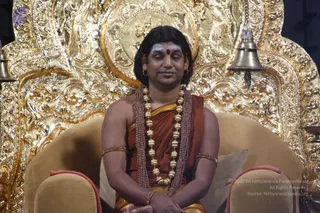
A seated man on an ornate gold throne with a gold canopy above, carved lion arms and a tiger-skin cloth draped over the seat. He wears a rust-orange dhoti and matching shawl with gold border, a double-strand rudraksha mala and a gold bead necklace, gold bangles and a red-and-white tilak on his forehead. Two bell-hung brass oil lamps and a silver tray of flowers and offerings sit before the throne. Dark wall backdrop.A seated man in an orange-brown dhoti and shawl with a gold border sits on an ornate gold throne with carved lion arms and a tiger-skin cushion beneath a gold canopy. He wears a long rudraksha mala and a heavy ceremonial gold bead necklace, with gold bangles on his wrists and a red tilak on his forehead. Silver plates of pink and red flowers are arranged on a round gold table in front of his feet, and brass hanging lamps and bells hang from the ceiling. The photo appears to be taken in a temple-style hall with a dark textured backdrop.A seated man in a saffron-orange draped garment sits on a cushioned gold-upholstered chair in front of an ornate gold repousse throne back carrying a deity relief. He wears long swept-back dark hair, a red bindi and tripundra marks, gold hoop earrings, a gold armband, a rudraksha mala and a thick ceremonial gold bead necklace, with hands folded in his lap and eyes lowered. Hanging brass bells appear at the upper right. The posture is calm and still. Appearance cues include long hair, saffron clothing and rudraksha and gold adornments, consistent with the Swamiji candidate.

03-NITHYA-SATSANG

4 photosSource gallery
A photograph of a man seated on a red velvet throne with an ornate gold carved backrest. He wears a saffron-orange draped garment over one shoulder, a long necklace of large gold beads with a braided rudraksha-style mala, gold bangles on the upper arms and wrists, and a gold earring. He has a white vertical forehead mark with a red bindi. Visible beside him is a gold ornamental finial. The background shows pink and blue walls with a green and yellow decorative panel.A man seated on an ornate gold throne with carved lion-like figures and filigree relief, wearing an orange-red saffron cloth draped over one shoulder with a yellow border. He wears a heavy gold bead necklace with a pinkish-brown rope, gold bangles on the upper arms and wrists, gold hoop earrings, a white tripundra forehead marking and a red bindi, and a small wired microphone at his cheek. His long dark hair is swept back, and he looks off to the side with a seated, attentive posture. Behind him, a partly visible painted figure in green and orange stands at the edge of the frame. The look and adornments suggest a person, seated in a teaching position on the throne.A seated man in an orange-rust robe sits cross-legged on a red velvet throne with an ornate gold backrest, his bare feet resting on a tiger-print cloth. He wears a thick gold bead necklace over a rust-coloured rope mala, gold armlets and a small earpiece microphone, with a white and red forehead mark. Behind him a painted deity murti with a gold crown holds a golden object. The figure matches the appearance cues for a person, seated in a ceremonial teaching posture.A photograph of a man seated on an ornate gold-leaf throne with carved dragon-like motifs and red velvet armrests. He wears saffron-orange robes with a yellow edging, a long multi-strand gold bead necklace, a rudraksha-style mala, gold bangles and small gold earrings. He has long swept-back hair, white vibhuti lines on the forehead and a red kumkum dot, and a small lapel microphone is visible near his ear. His hands rest on the armrests as he looks to the side. Swamiji (probable) seated in discourse posture, with distinctive long hair, saffron robes and ornate gold necklace visible.

05-TELEVISION-PROGRAMME
3 photosSource gallery
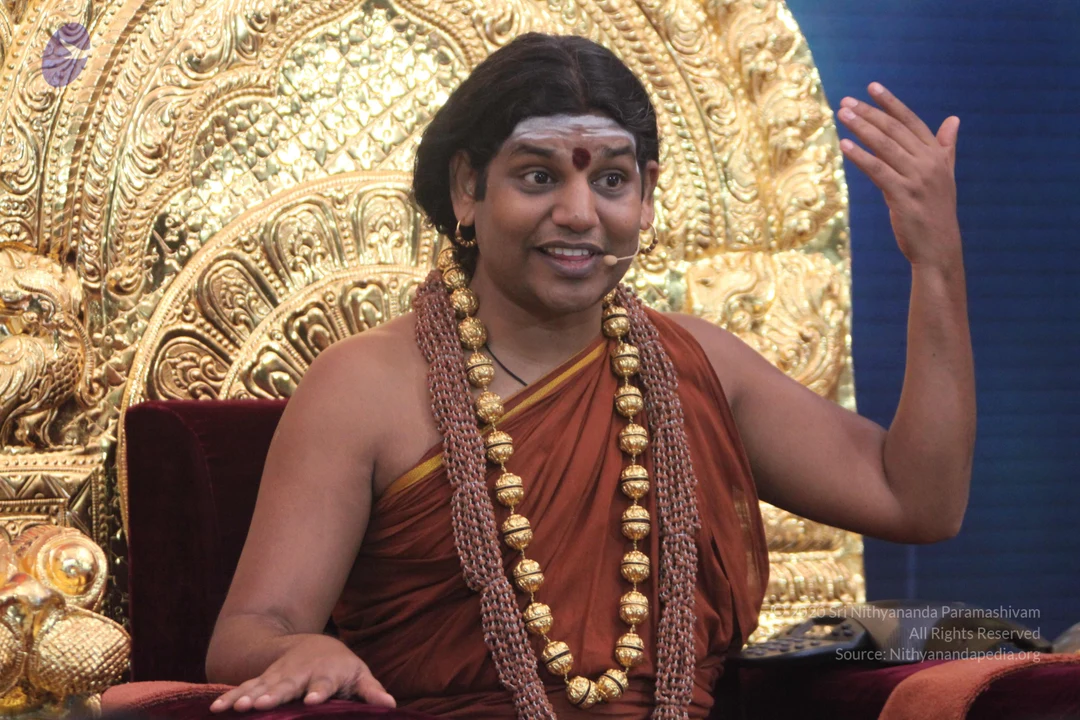
A man seated on a red velvet throne in front of an ornate gold carved backrest with lion and floral motifs. He wears an orange-red saffron-toned shawl, a thick necklace of gold beads with a metallic chain, a red bindi and white tripundra marks on his forehead, and a small microphone clipped near his face. His right arm is raised mid-gesture while he speaks, and his left hand rests on the armrest. A blue backdrop is visible at right. The person is shown in a discourse setting, with no other people visible.Swamiji (probable) seated cross-legged before an ornate gold repoussé backdrop, speaking into a small headset microphone during a satsang. He wears a saffron-orange draped robe with a gold-bordered cloth, multiple strands of rudraksha beads and heavy gold bead necklaces, and gold hoop earrings. He has a white tilak with a red dot on his forehead and long dark hair swept back. The photograph is a close, waist-up portrait with no other people visible.A man seated cross-legged on a red velvet throne with gilded lion-headed armrests and an ornate gold backrest, speaking as if addressing a satsang. He wears an orange-ochre sannyasi wrap, a gold-and-yellow cloth at the waist, a thick rudraksha mala with gold bead strands, and a small headset microphone. Horizontal white vibhuti marks the forehead with a red kumkum dot. A tiger-skin cover lies beneath him, and a blue backdrop fills the background. Only one person is visible.