Skip to content
Sunday

21 June 2015

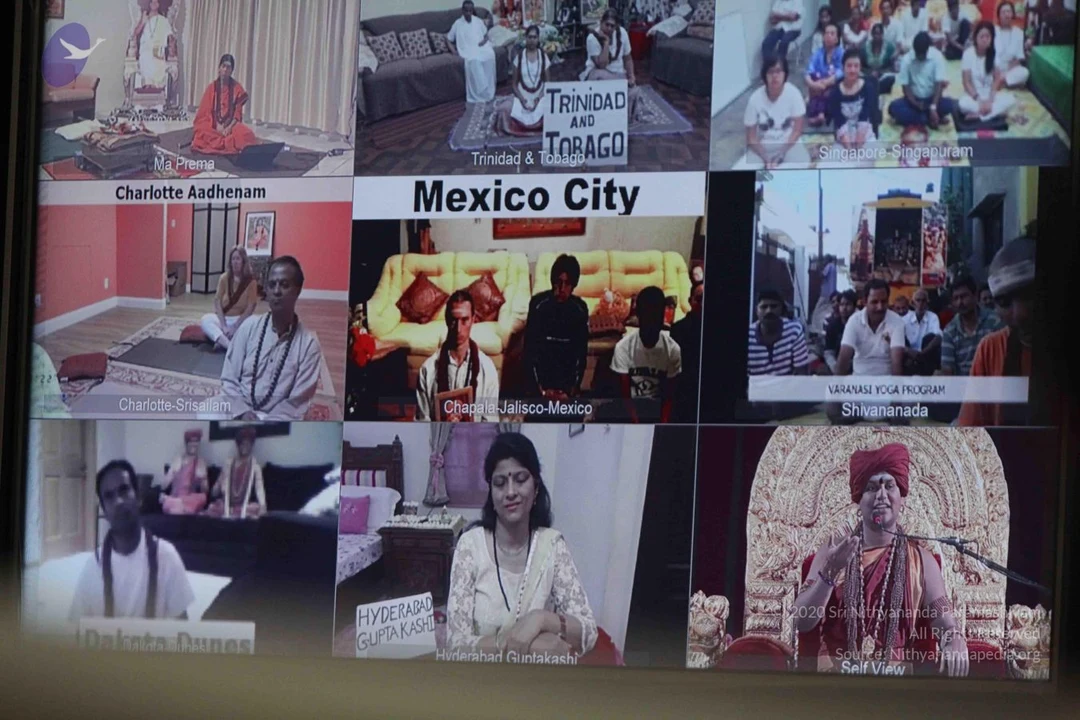
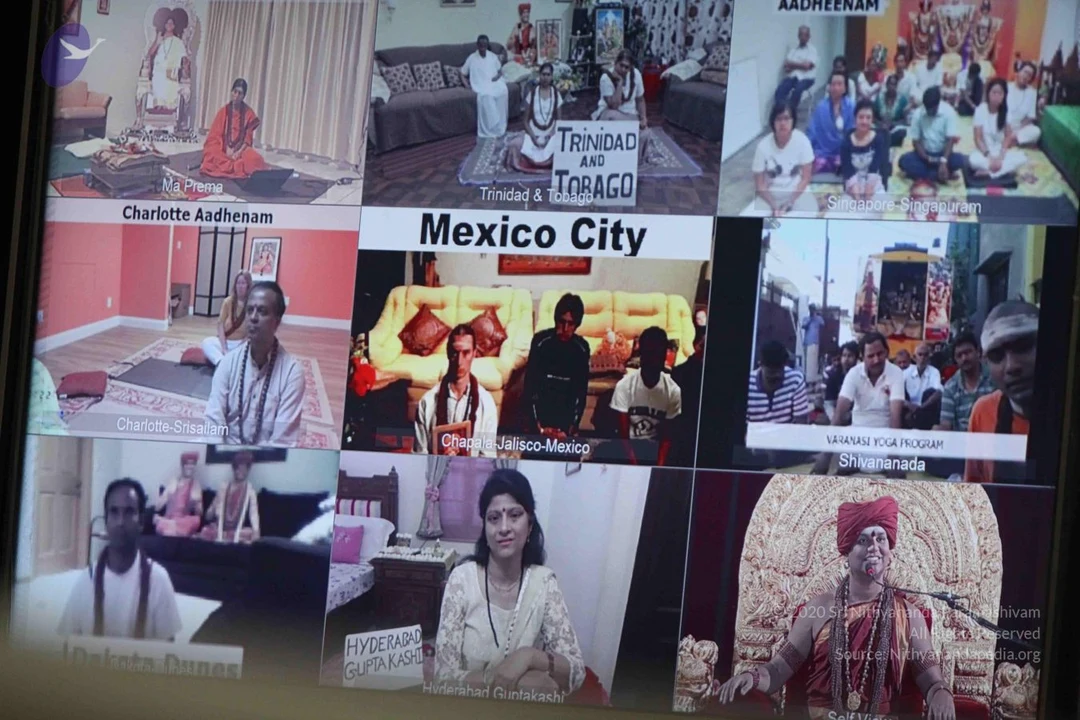
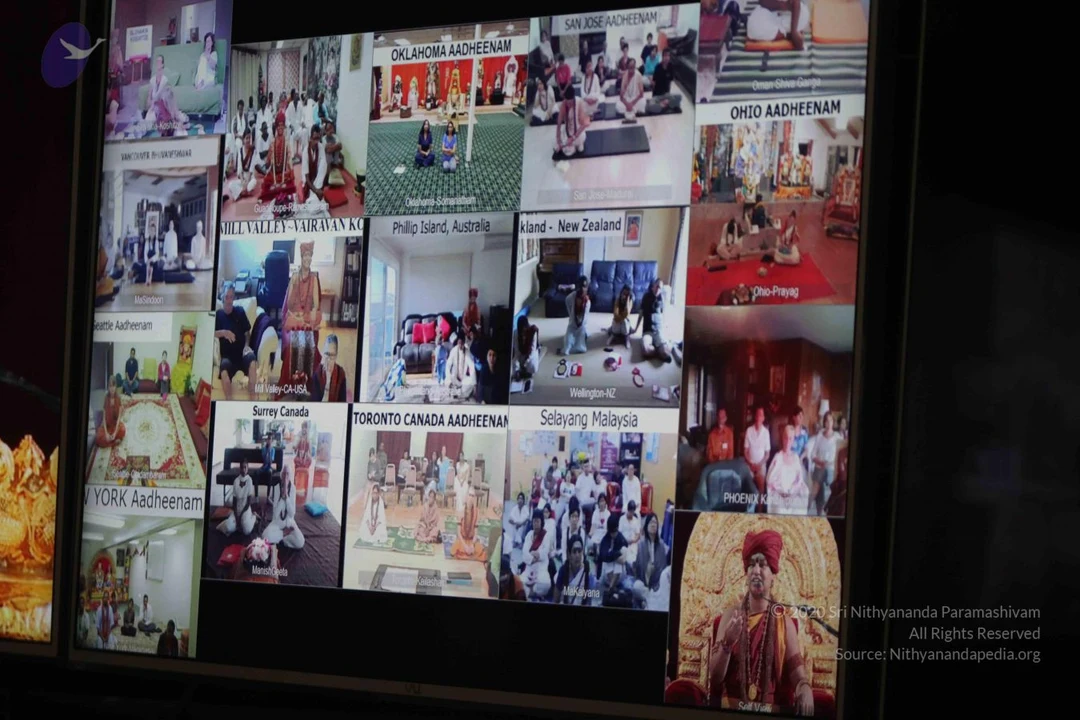
Yoga Webinar And Kriya For Inner Peace

Dated photos
441
Source pages
1
Media
6
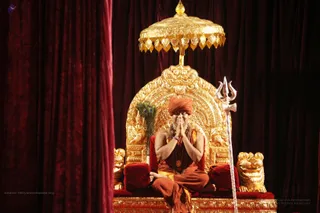
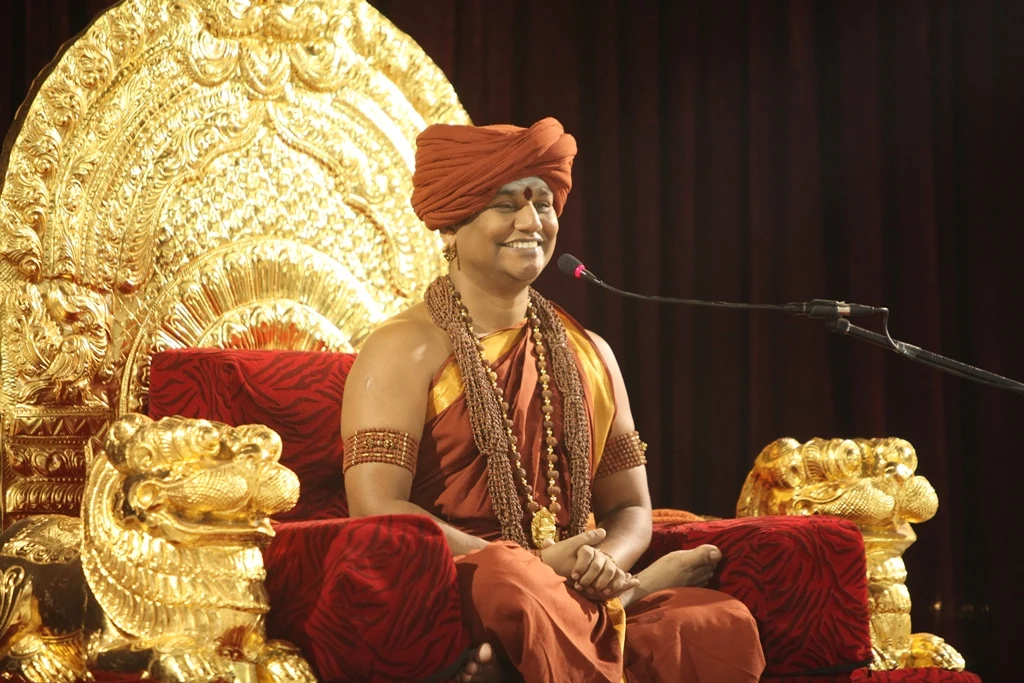
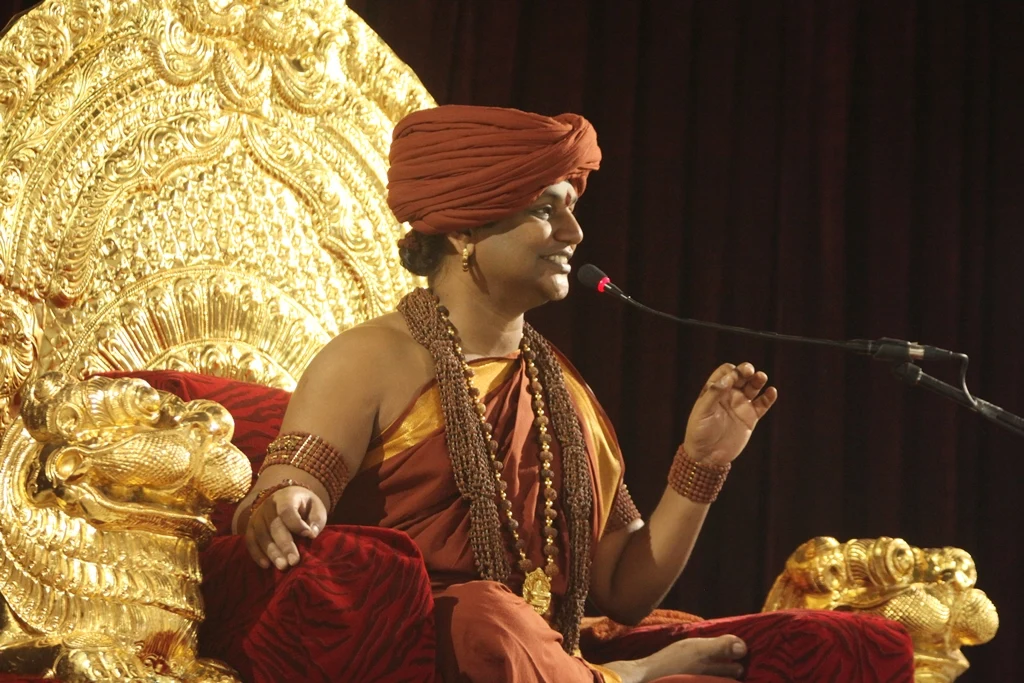
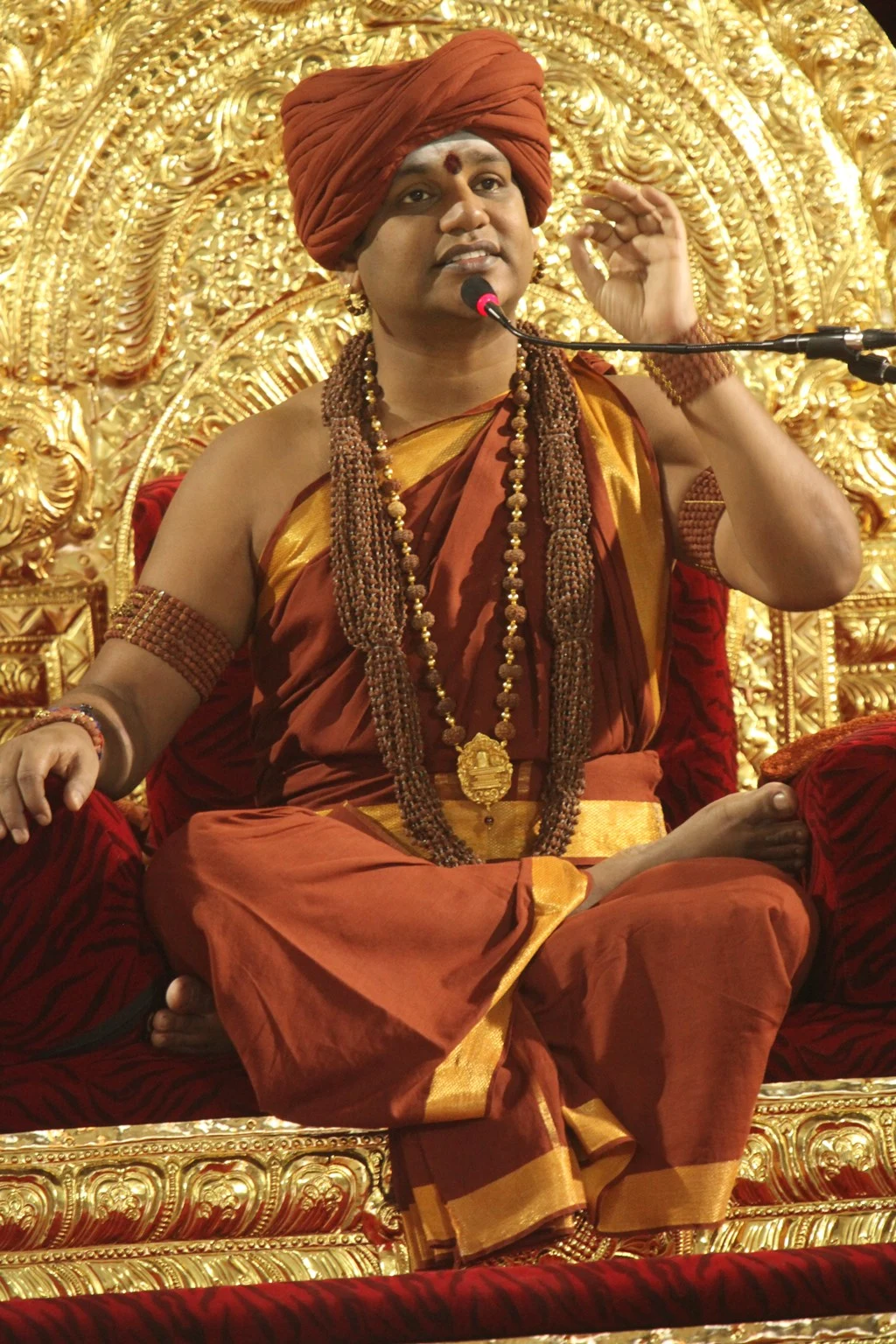
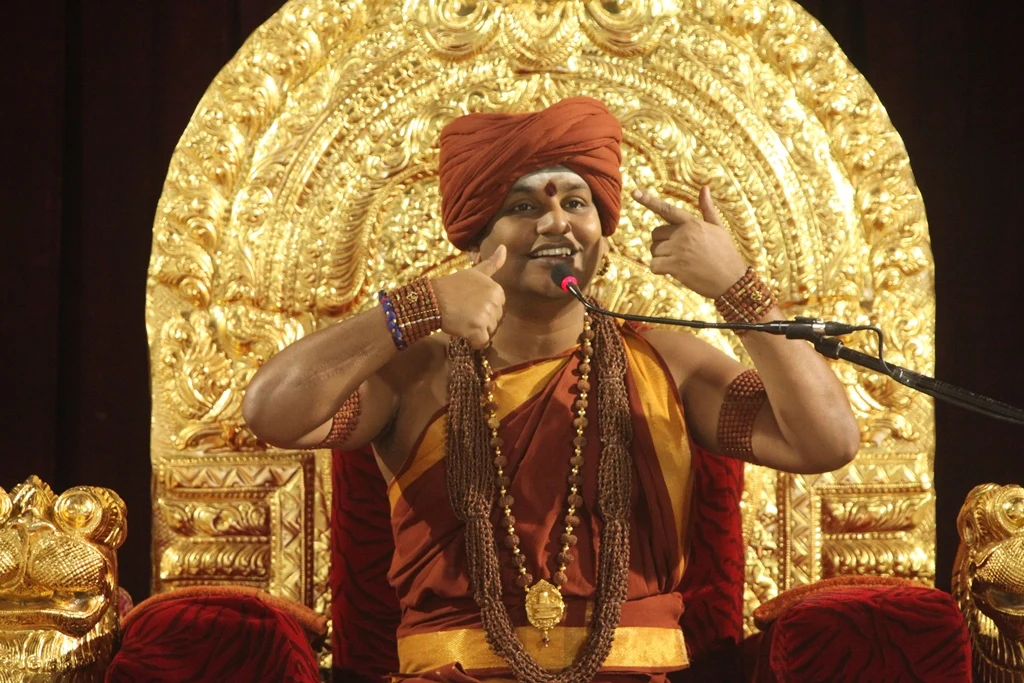
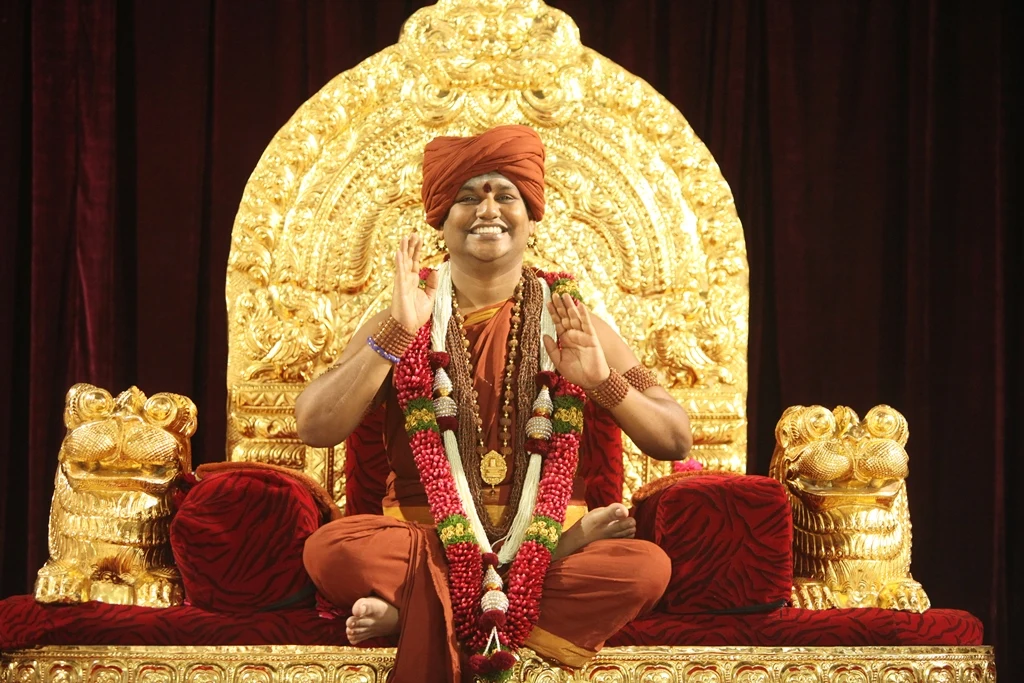
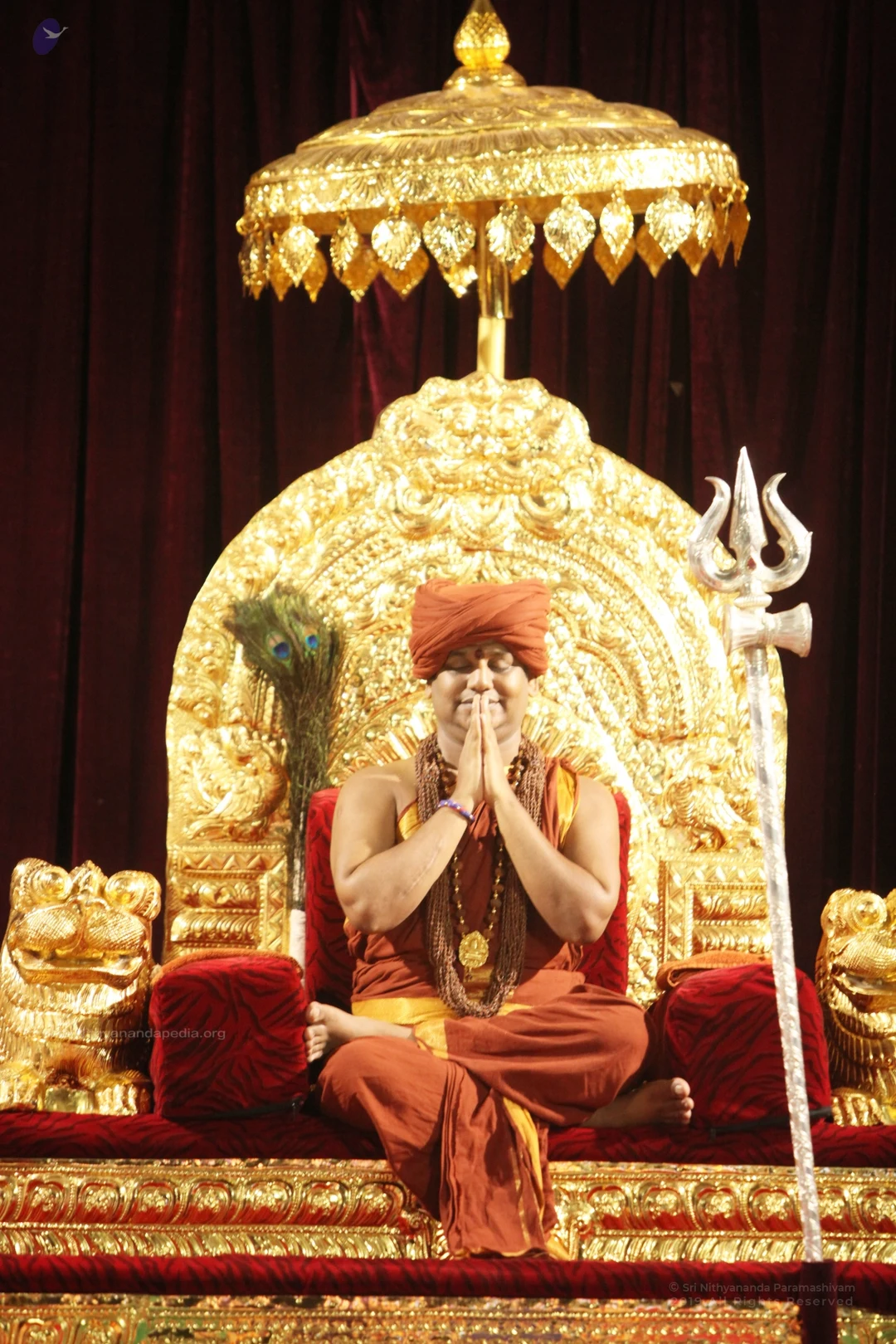
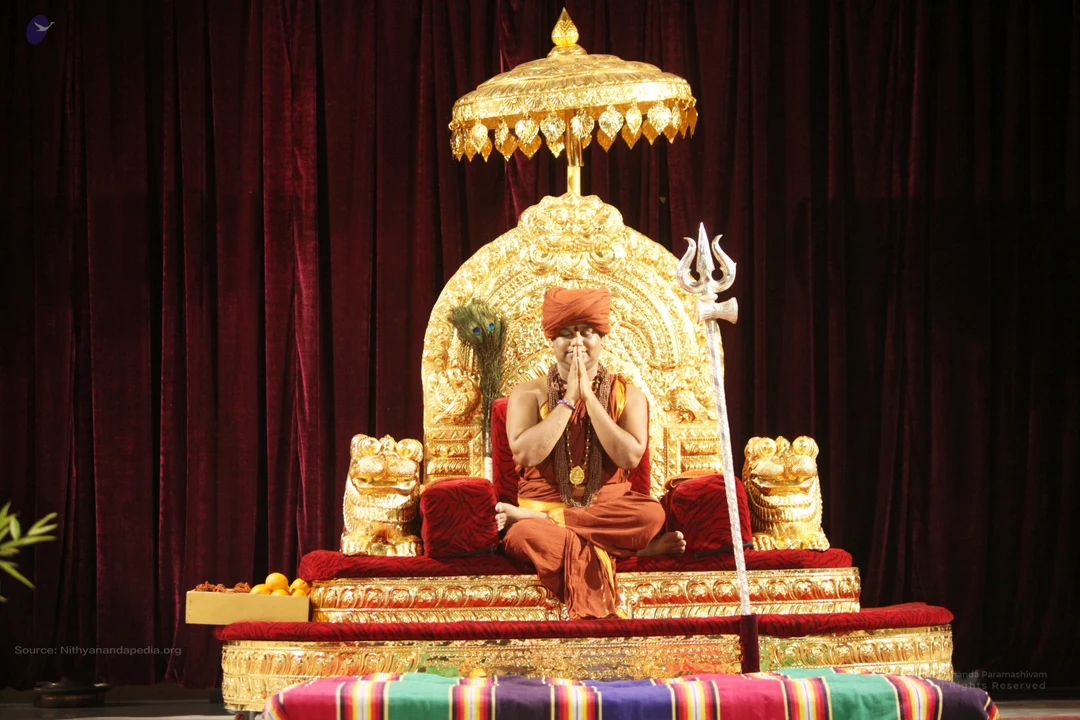
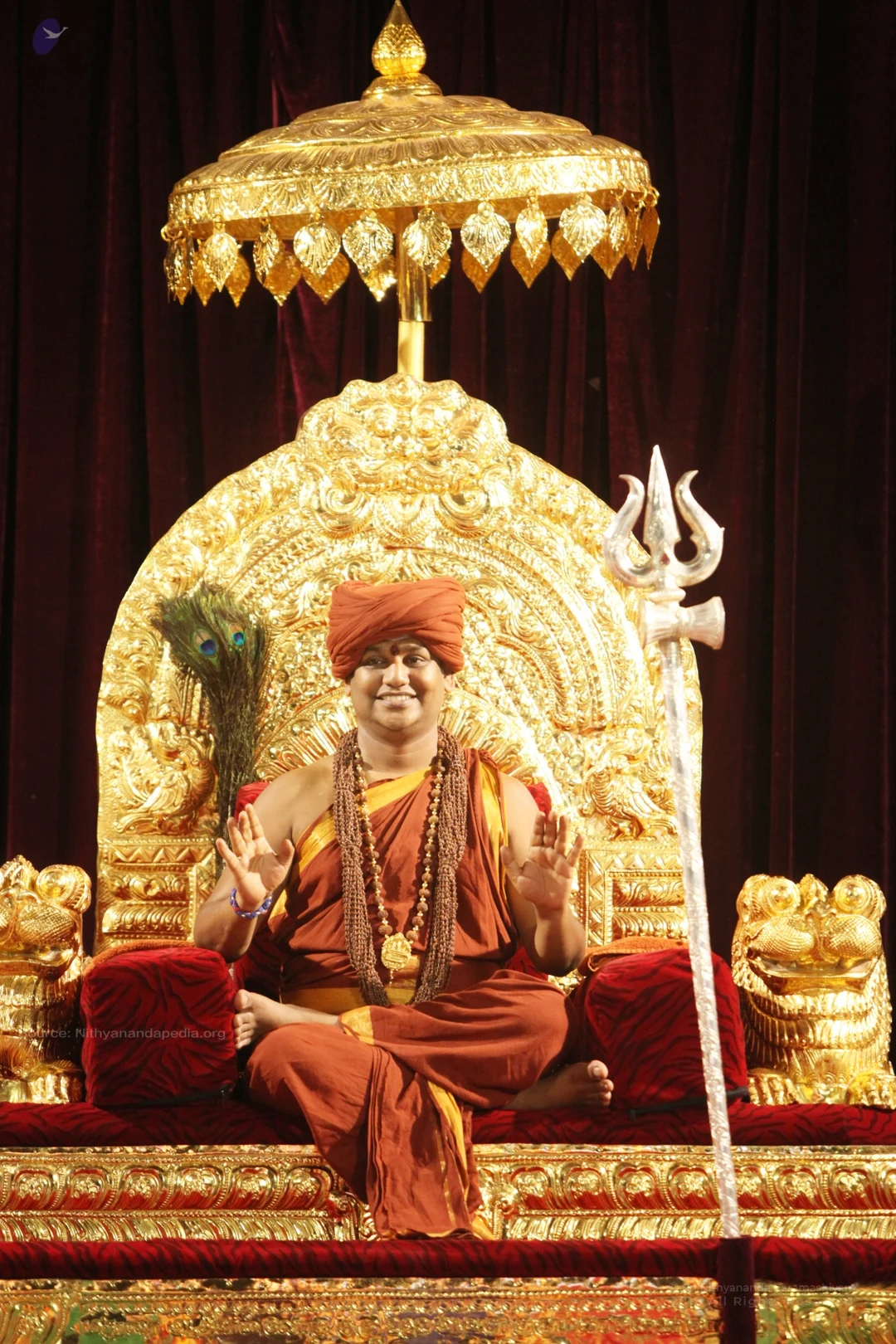
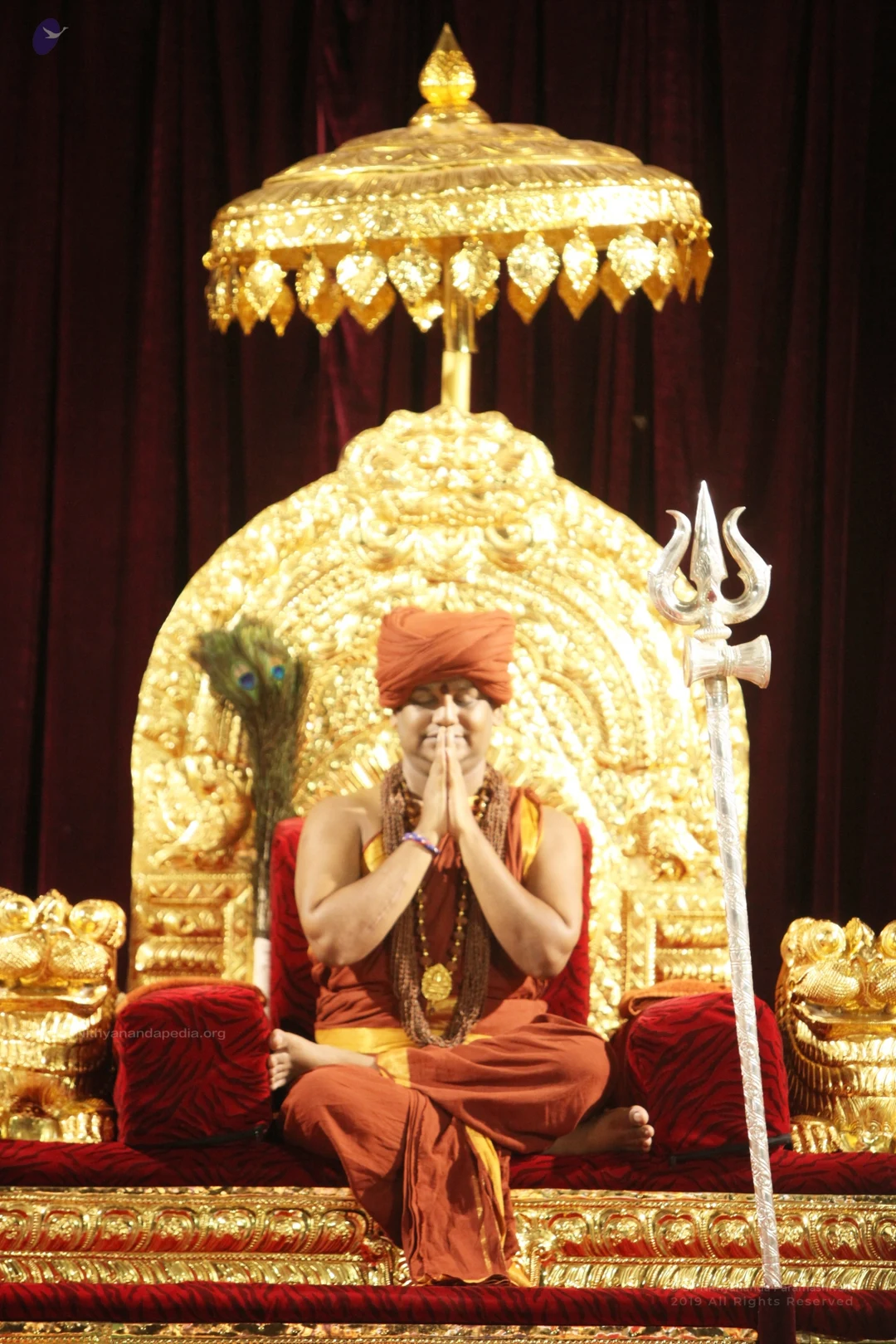
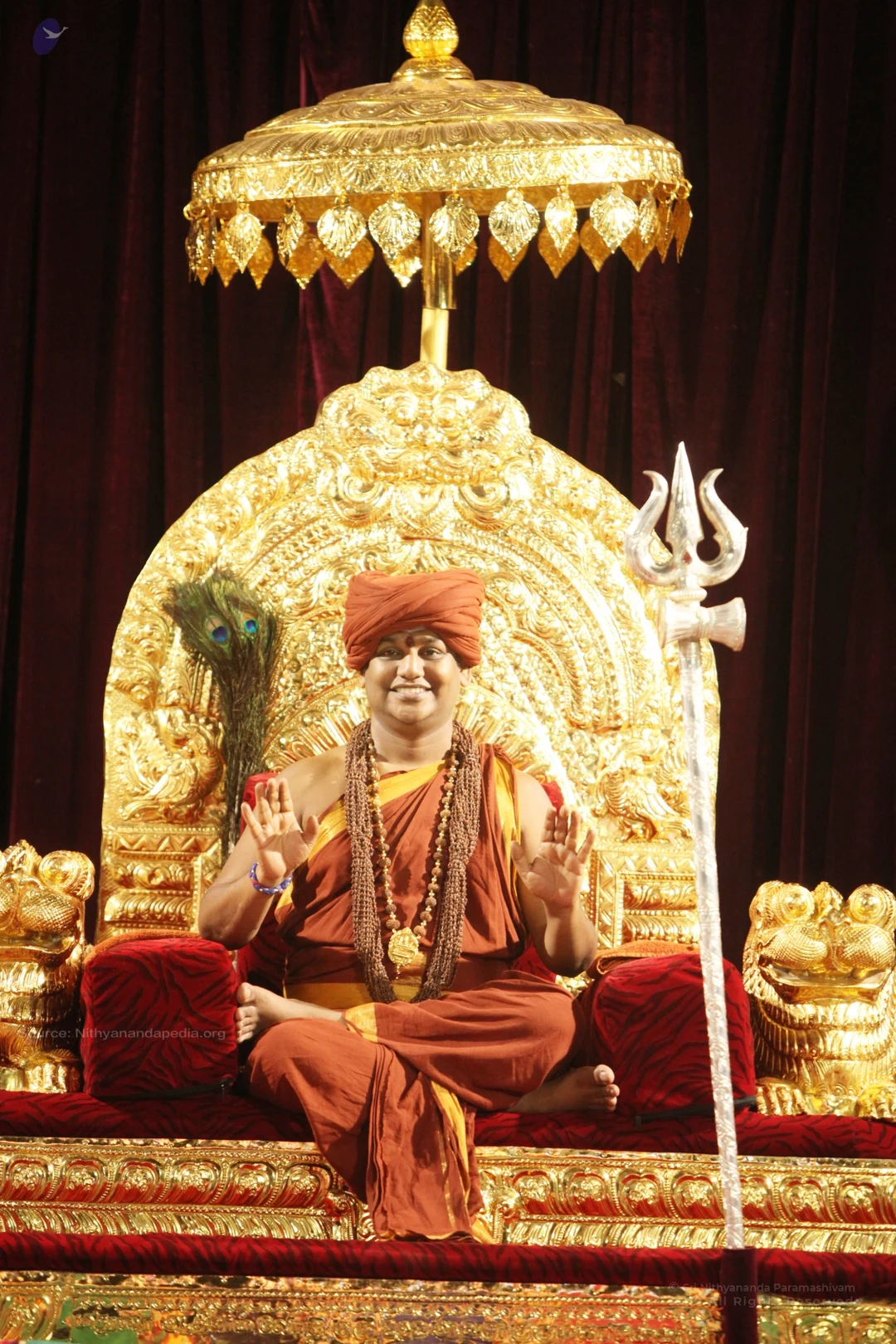
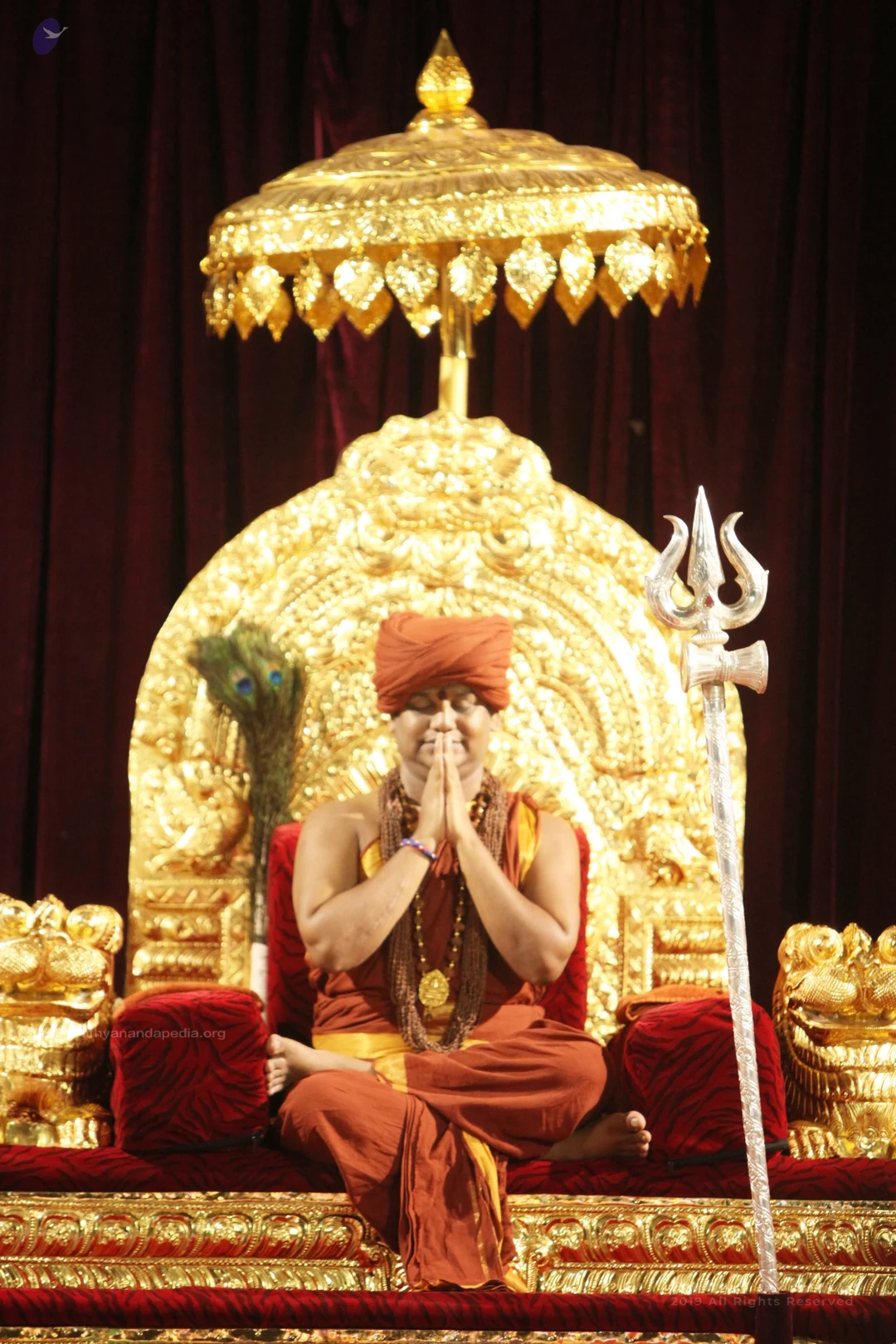
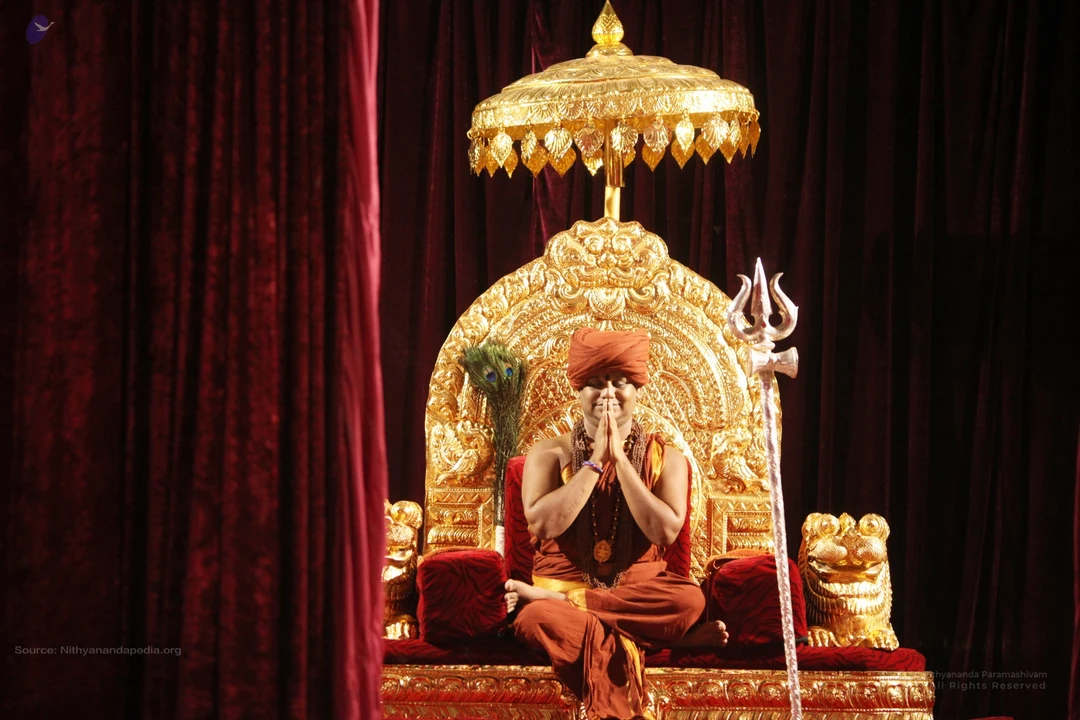
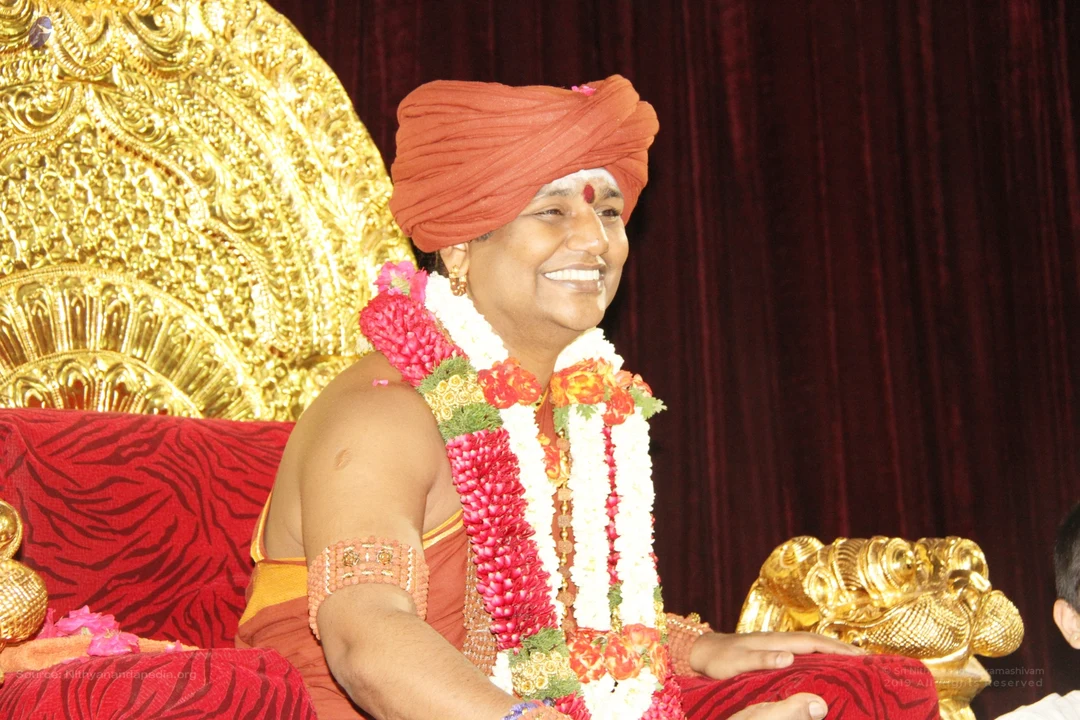
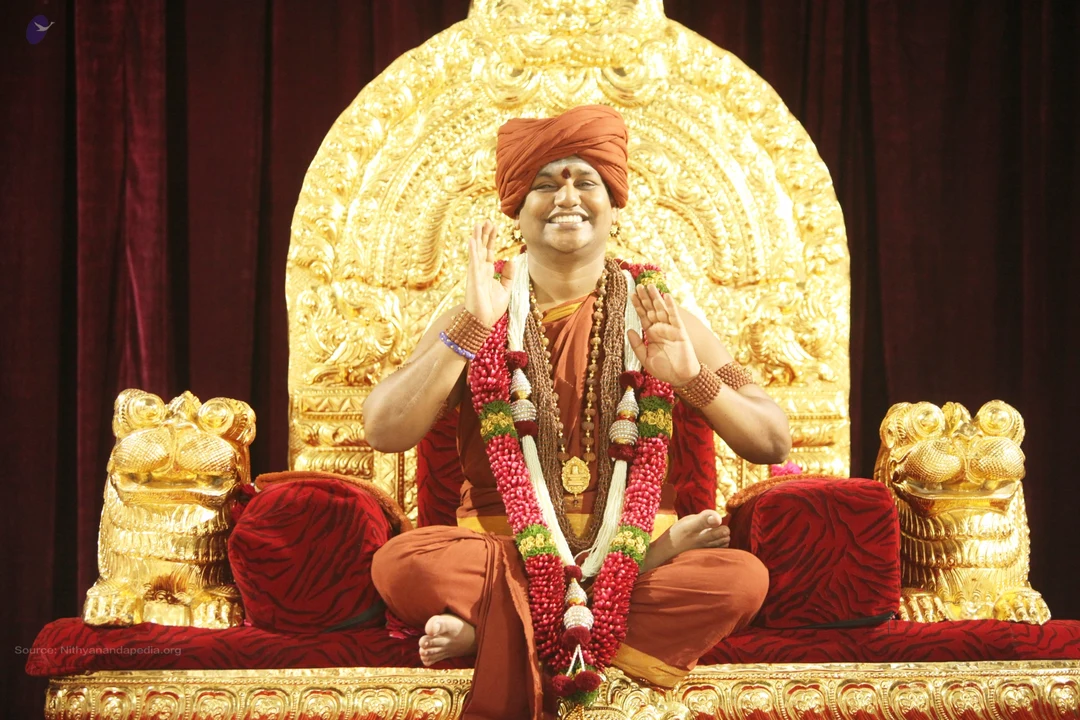
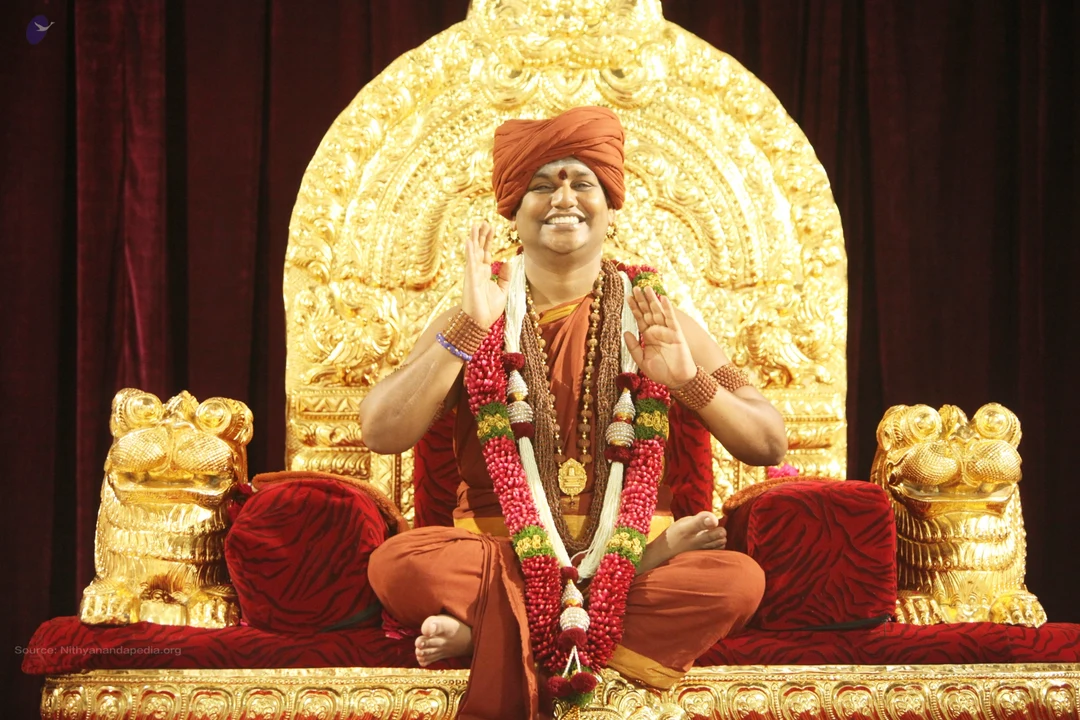
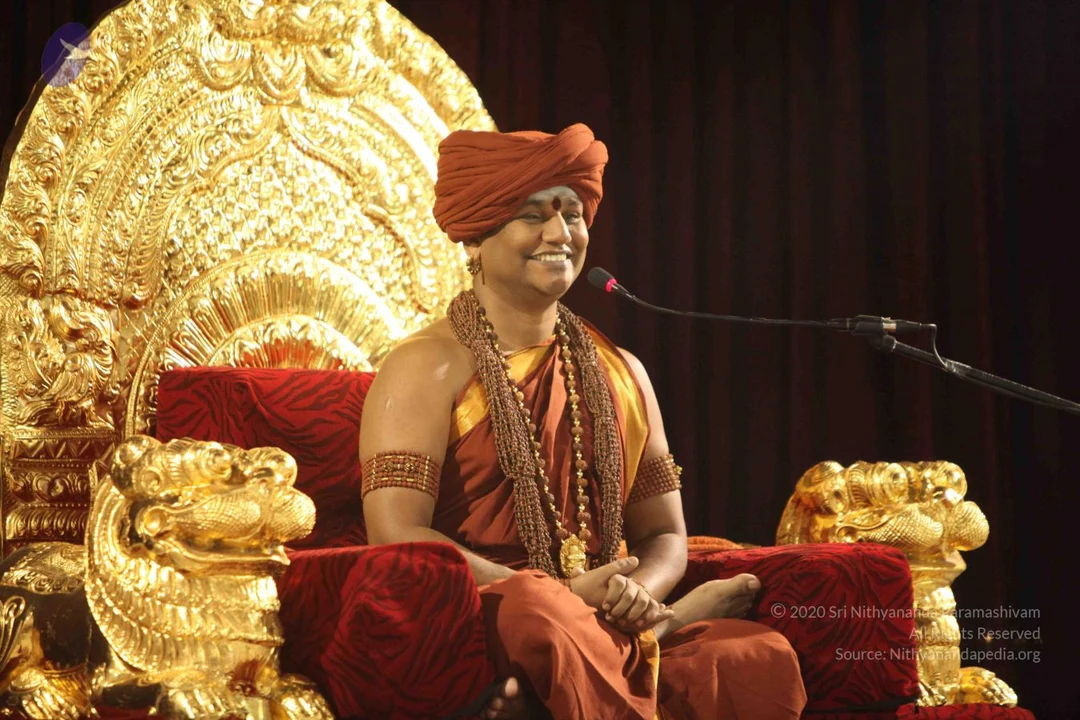
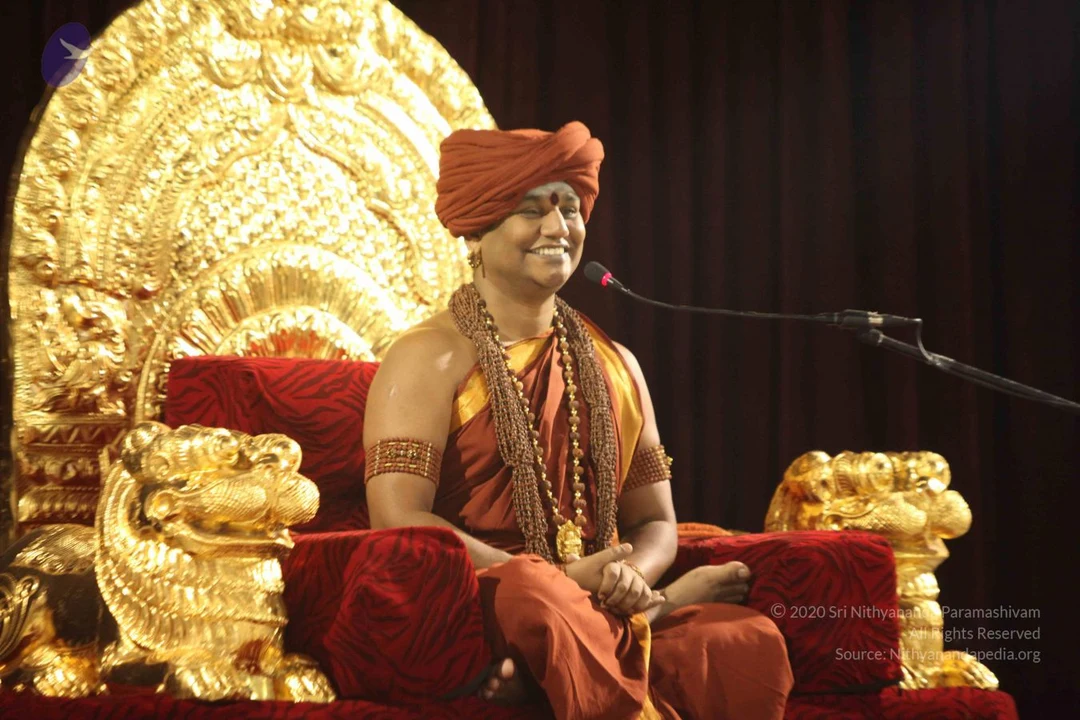
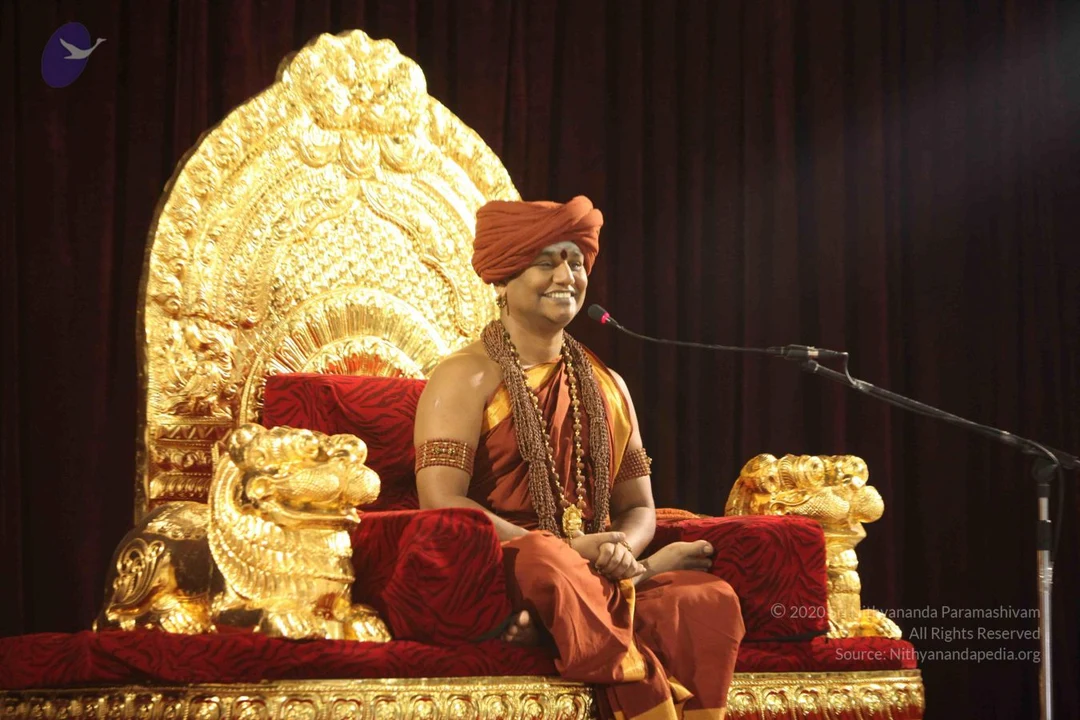
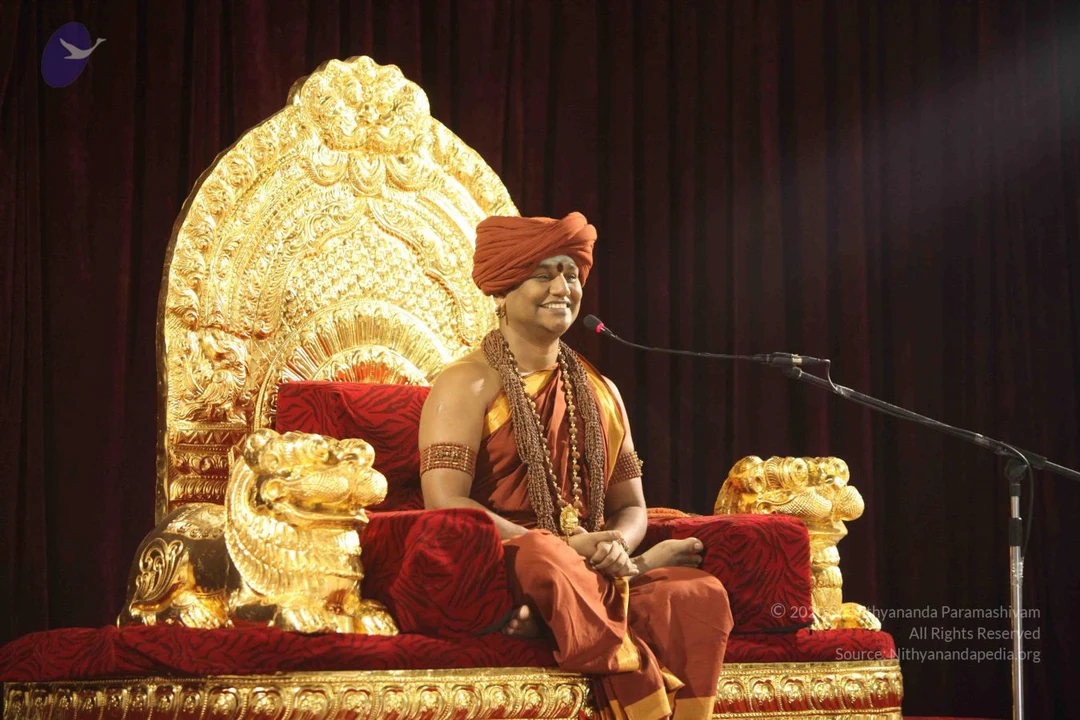
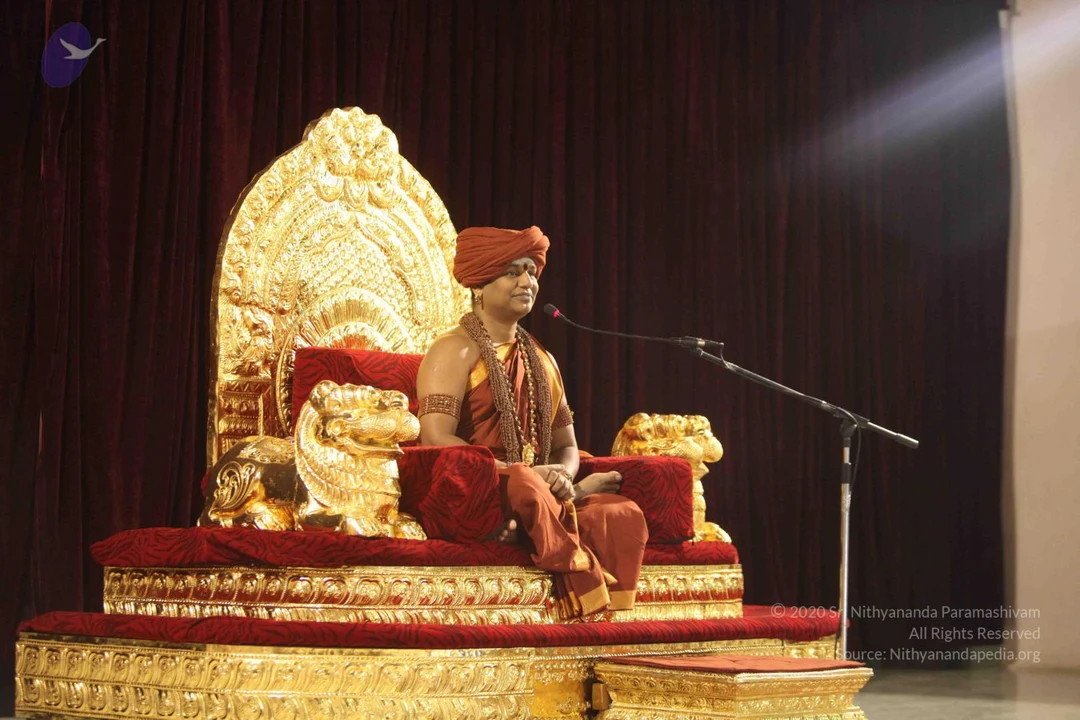
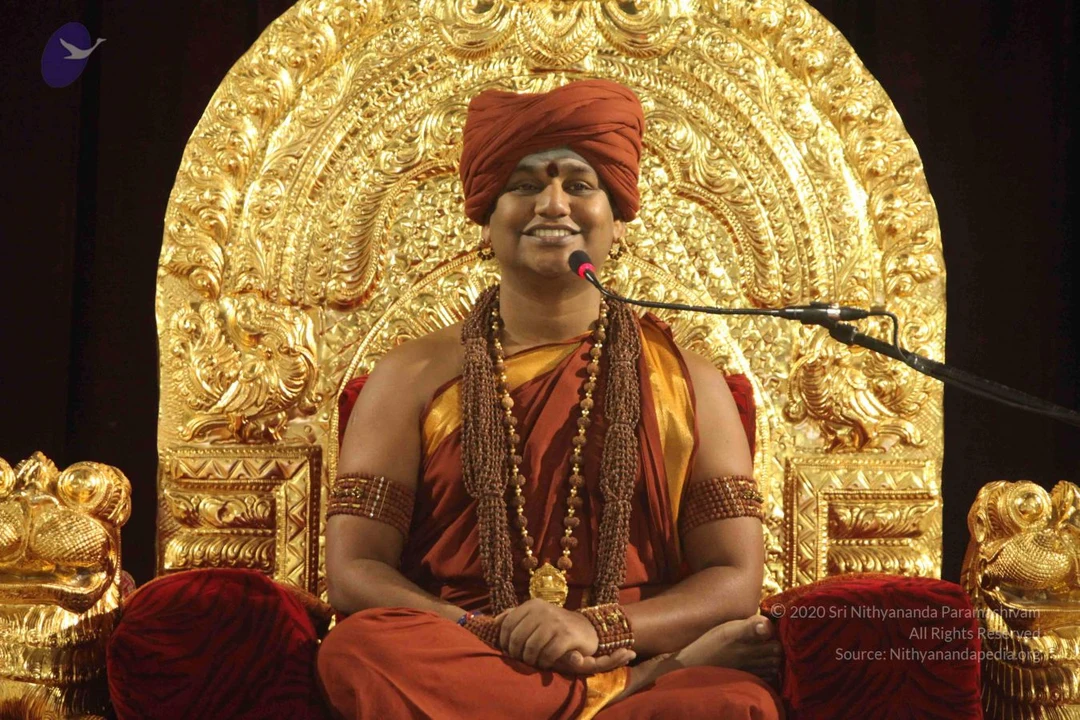
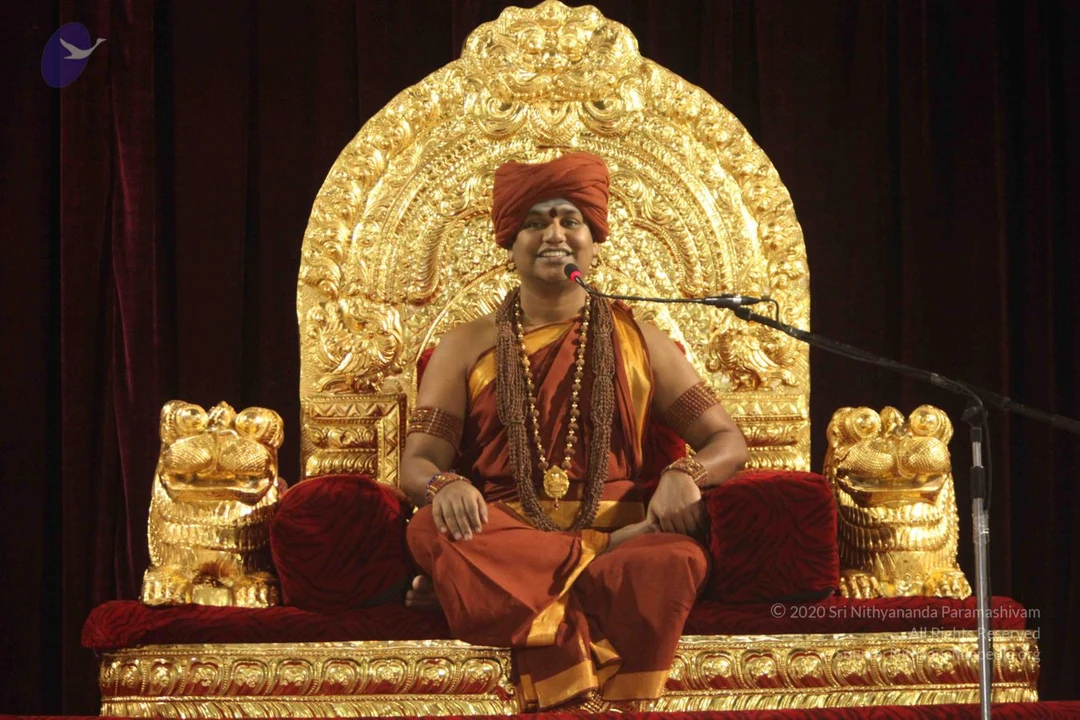
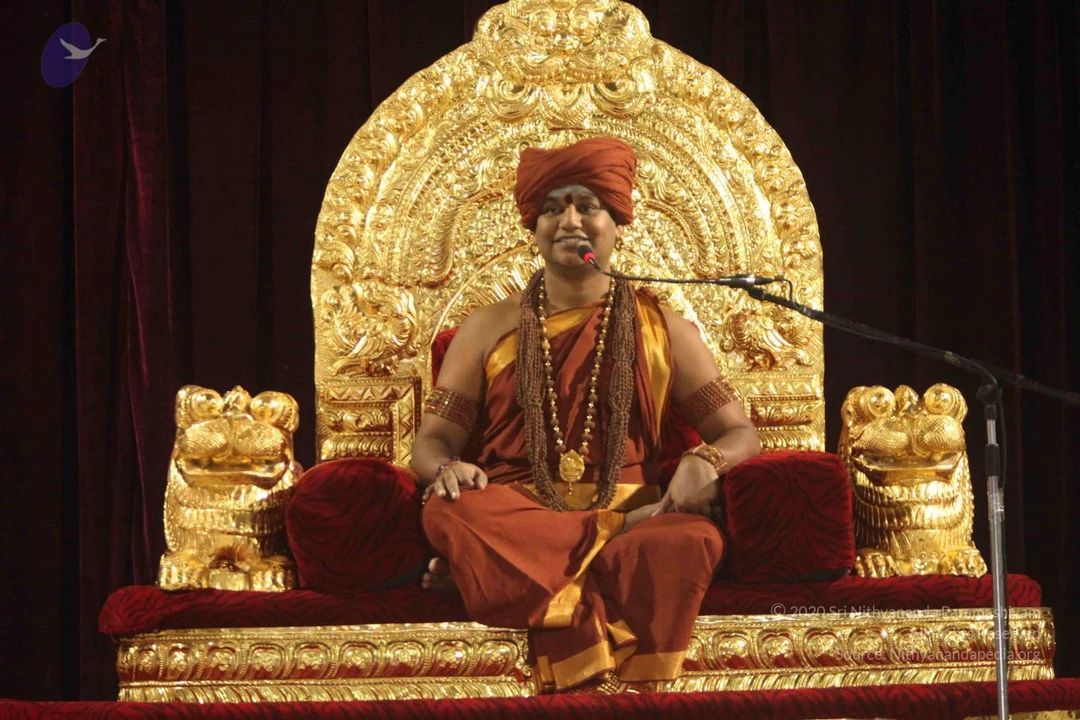
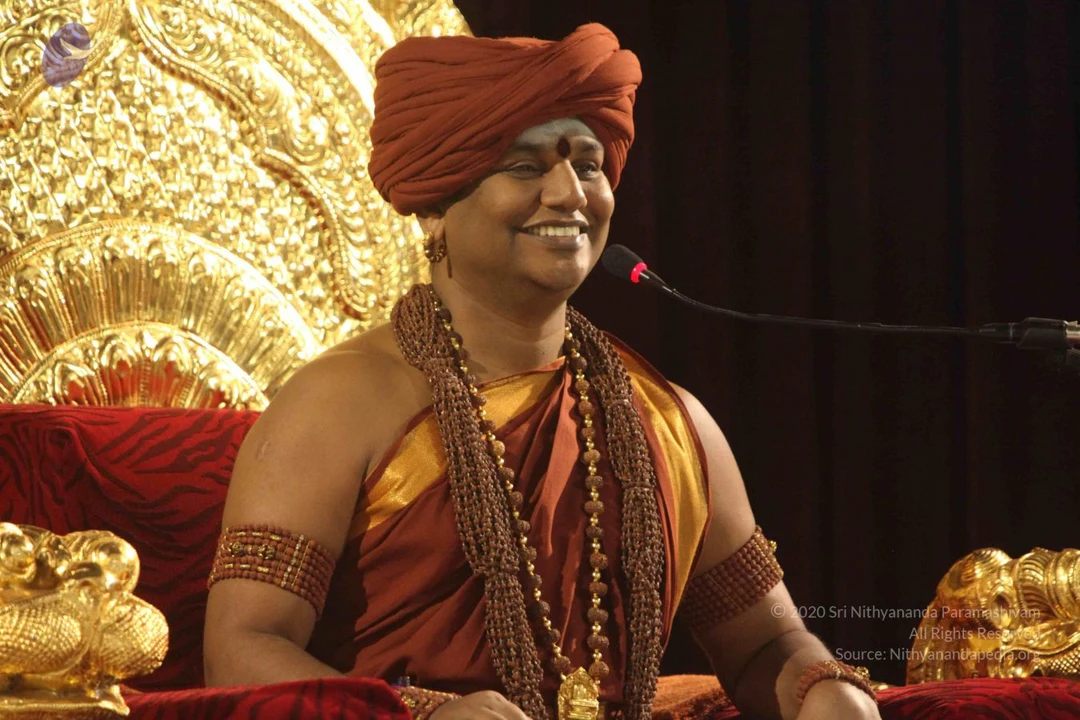
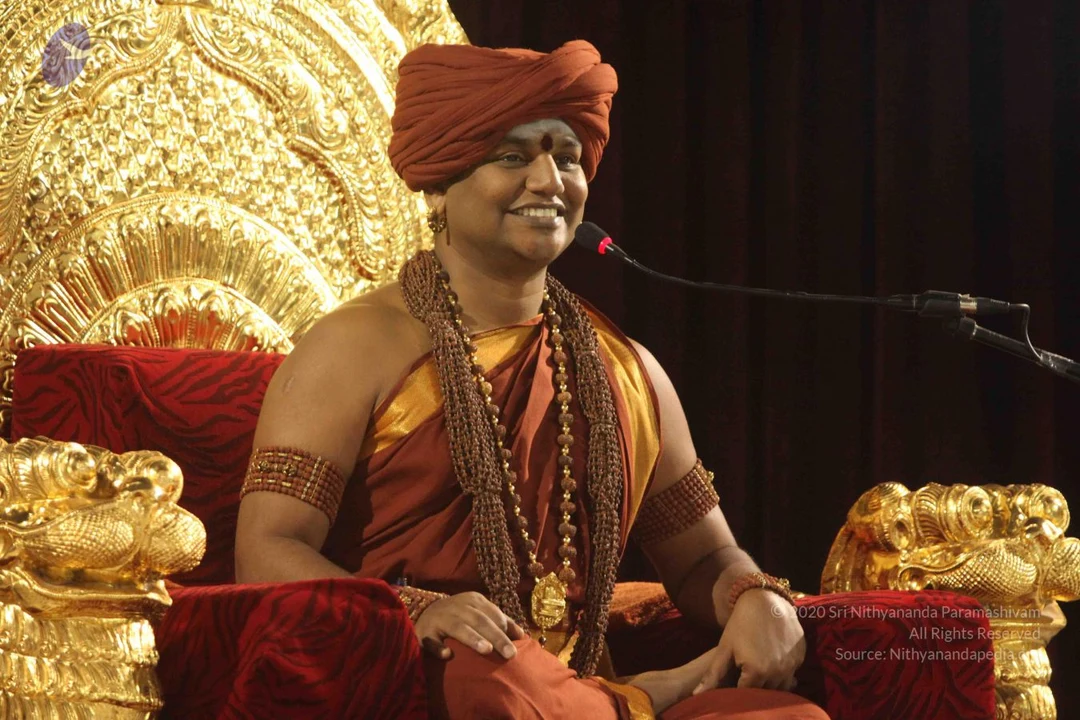
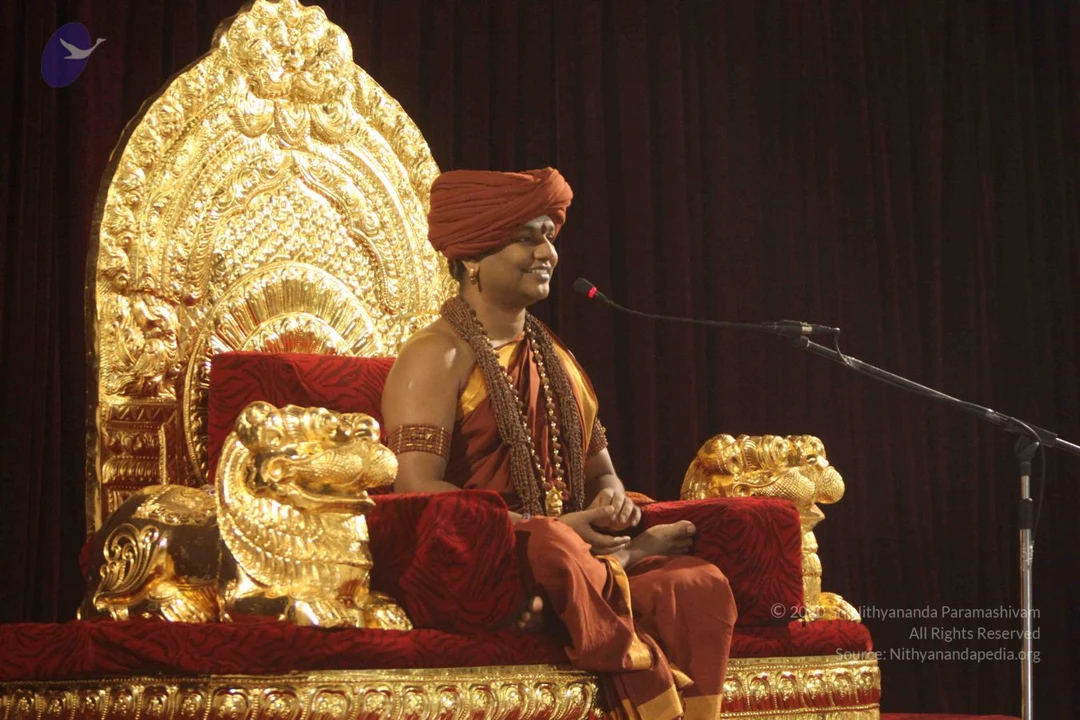
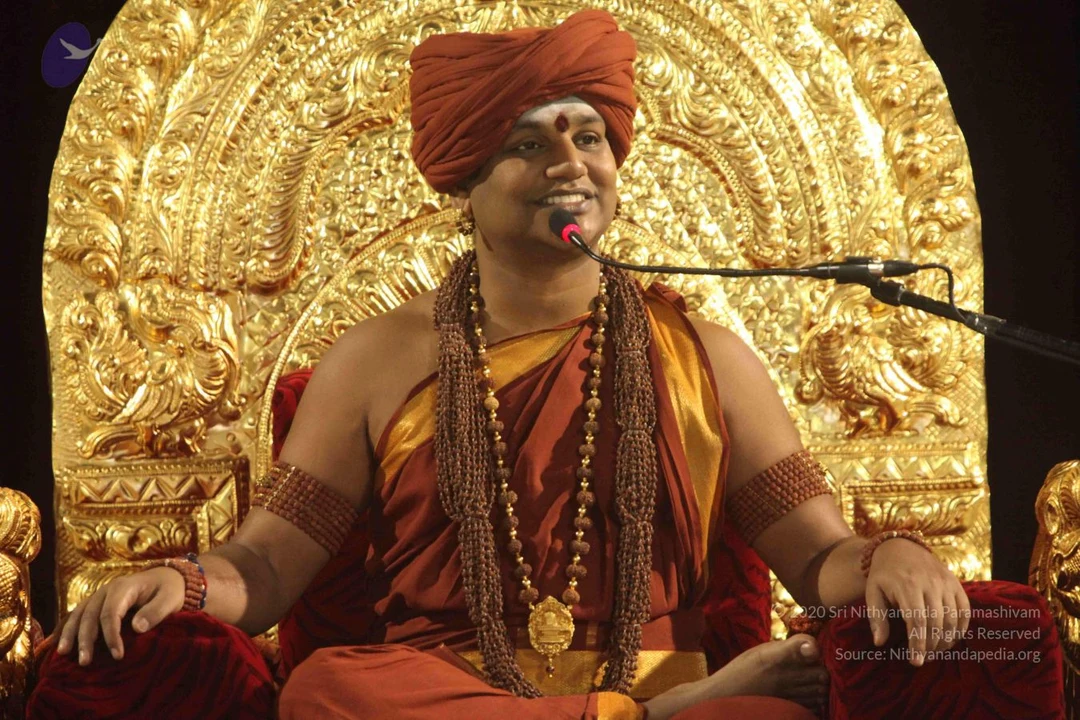
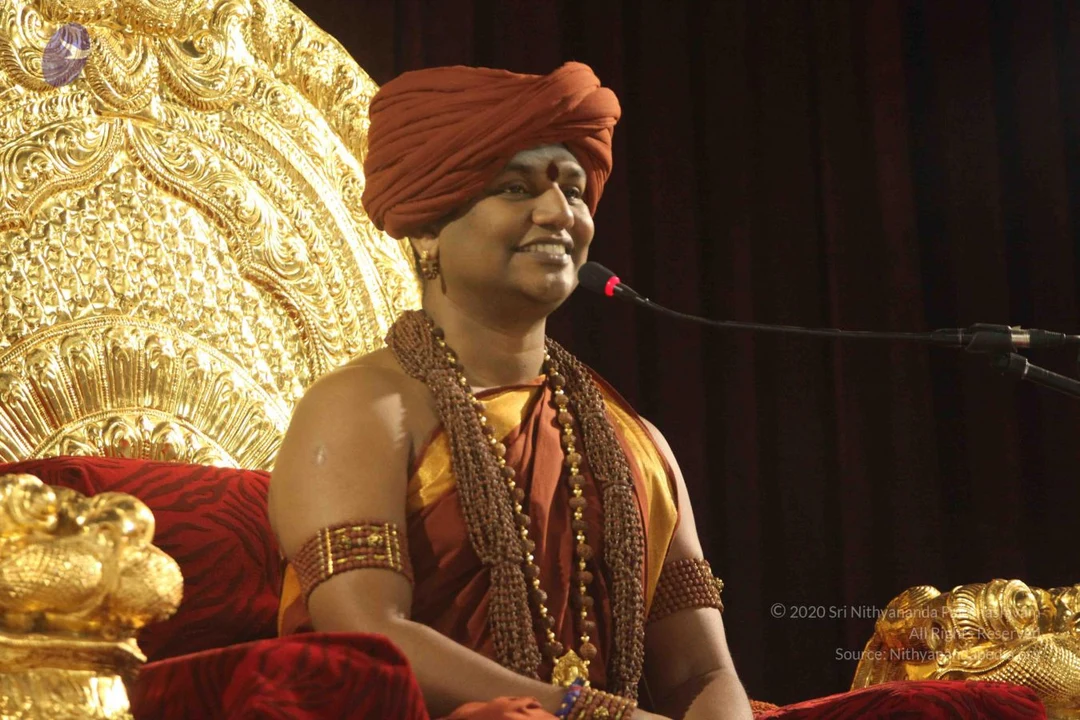
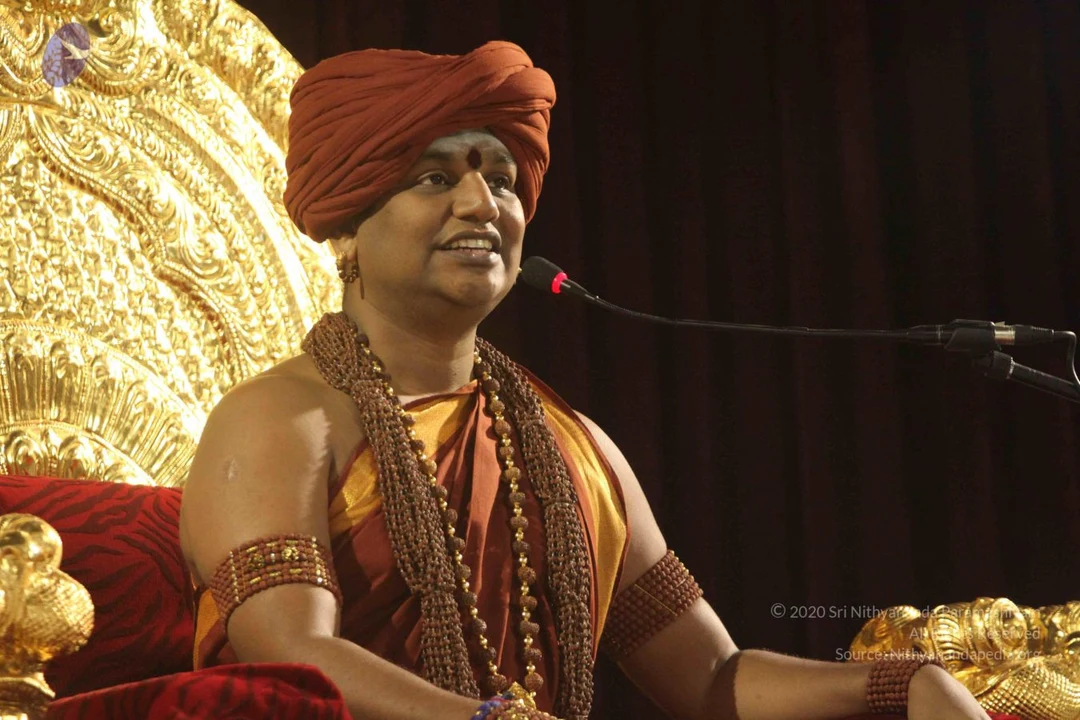
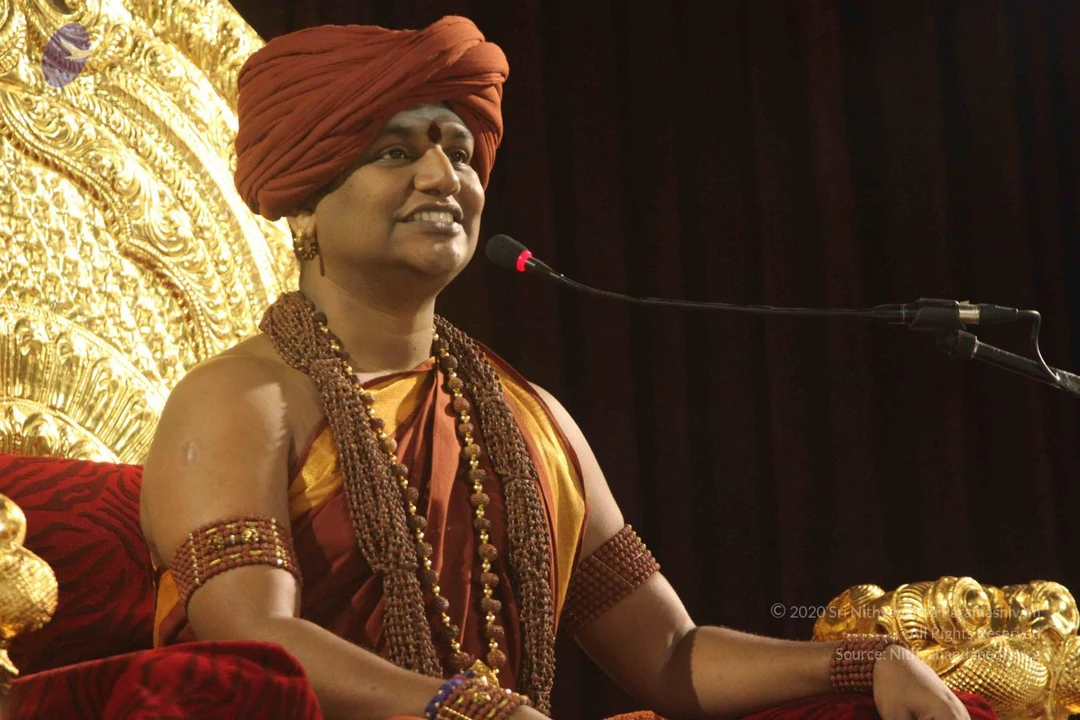
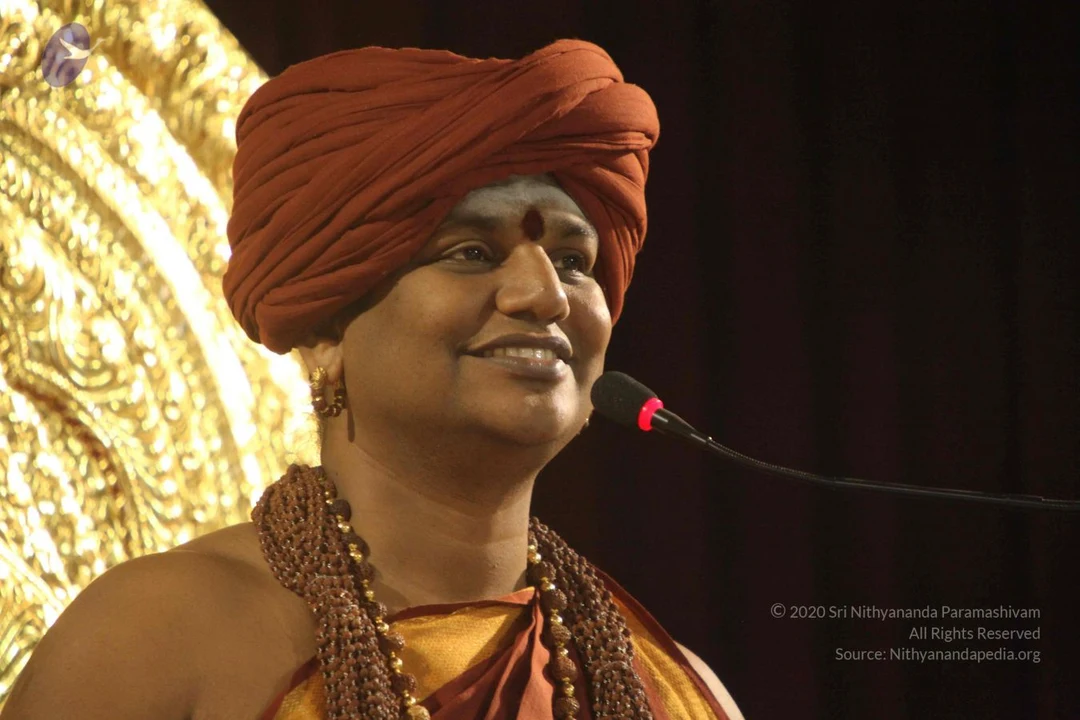
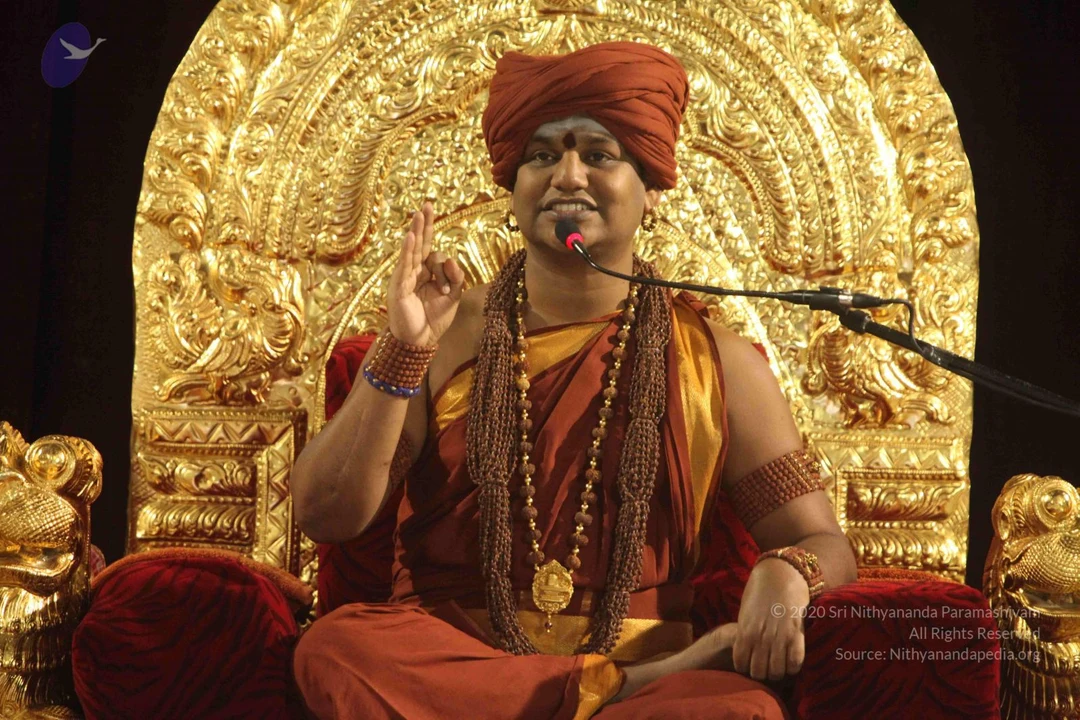
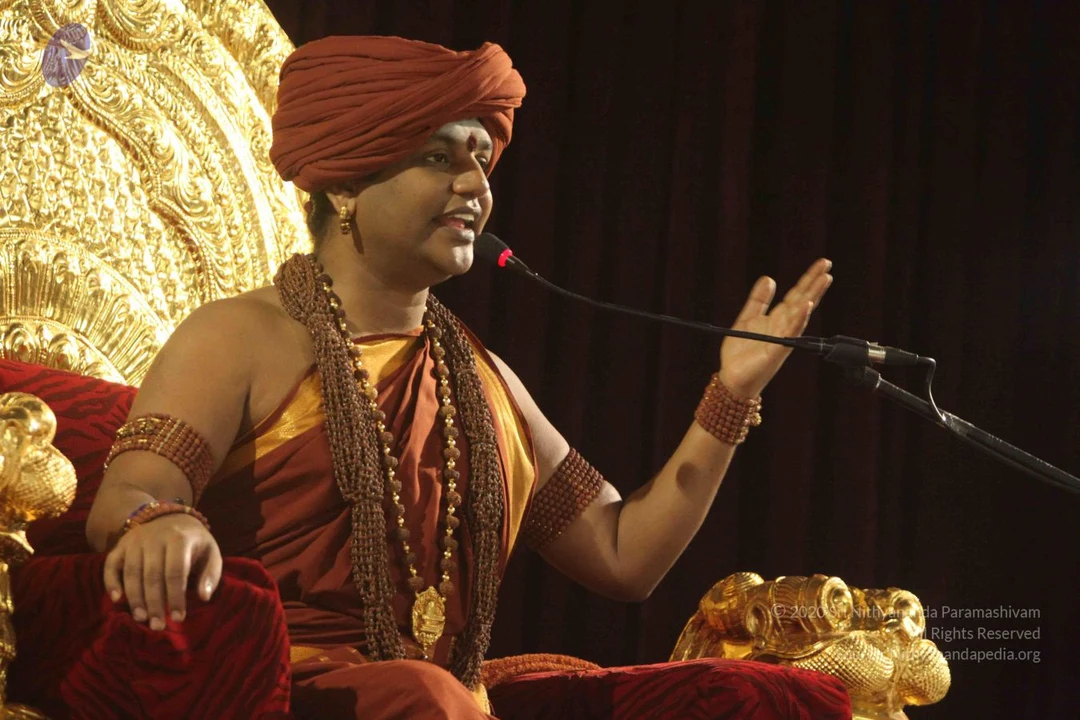
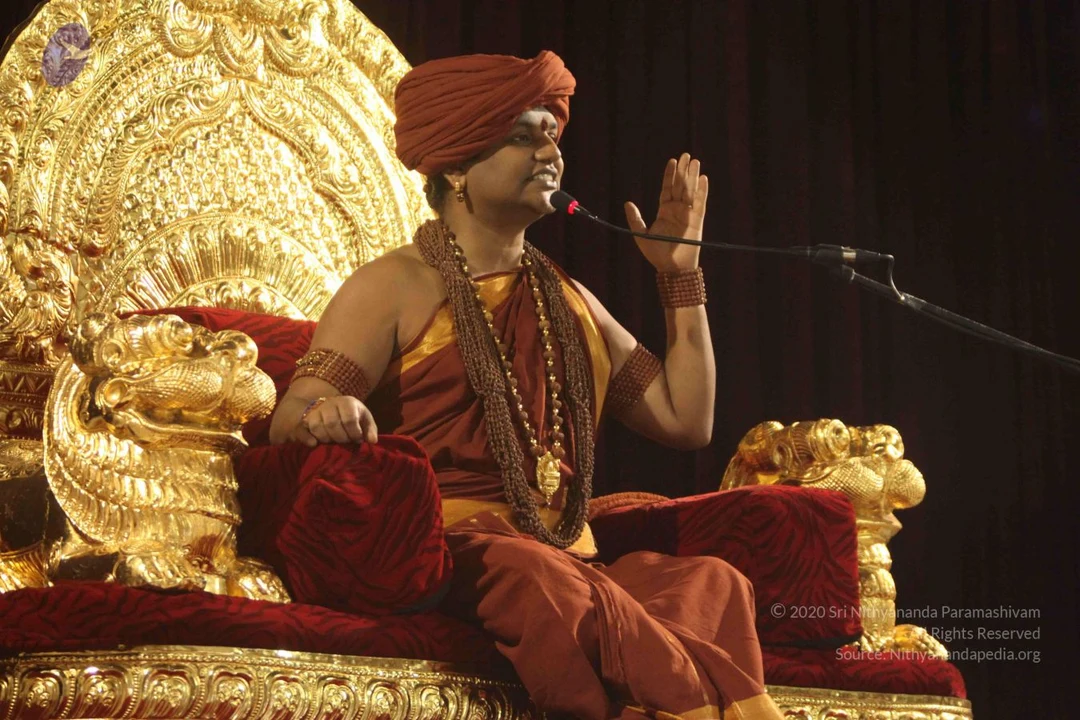
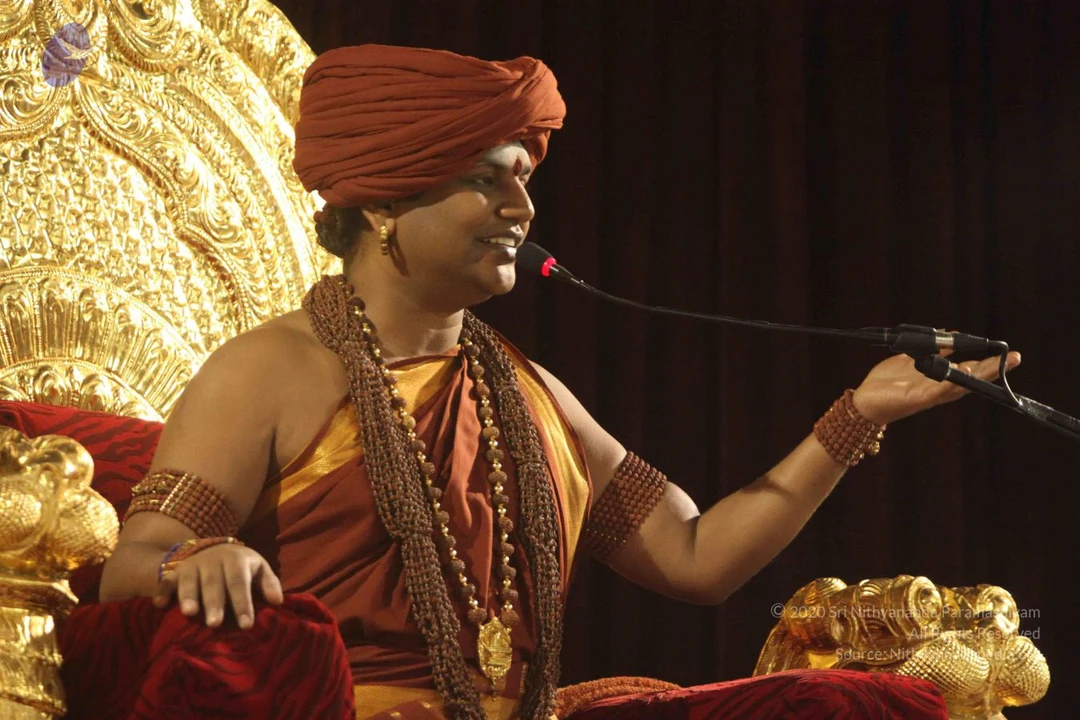
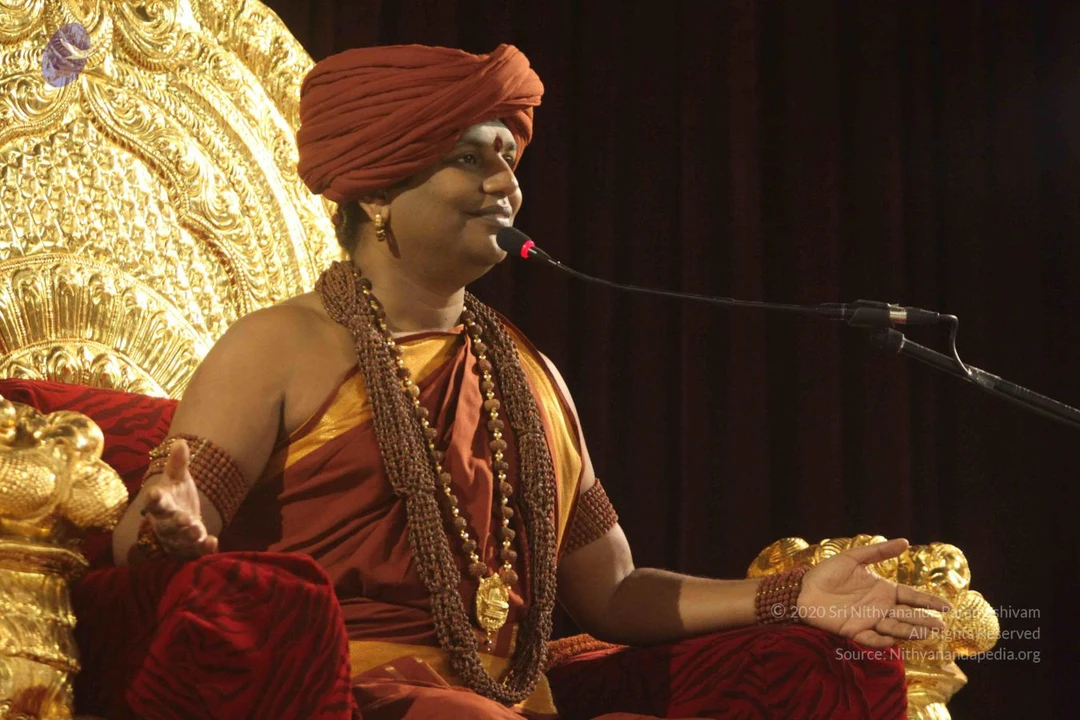
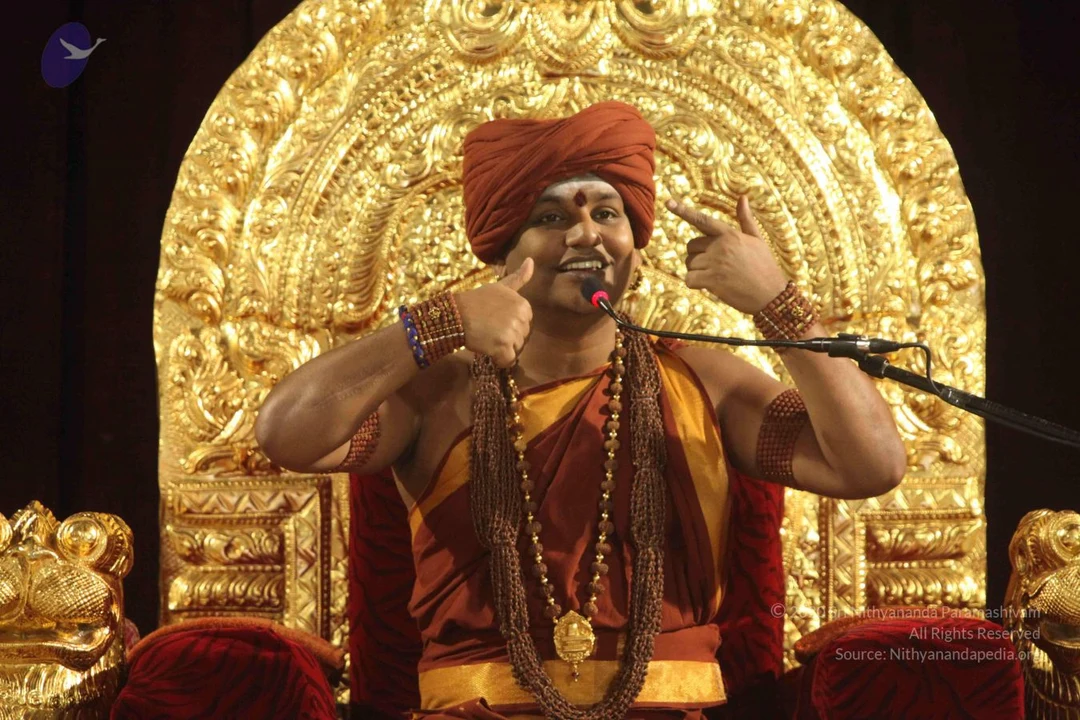
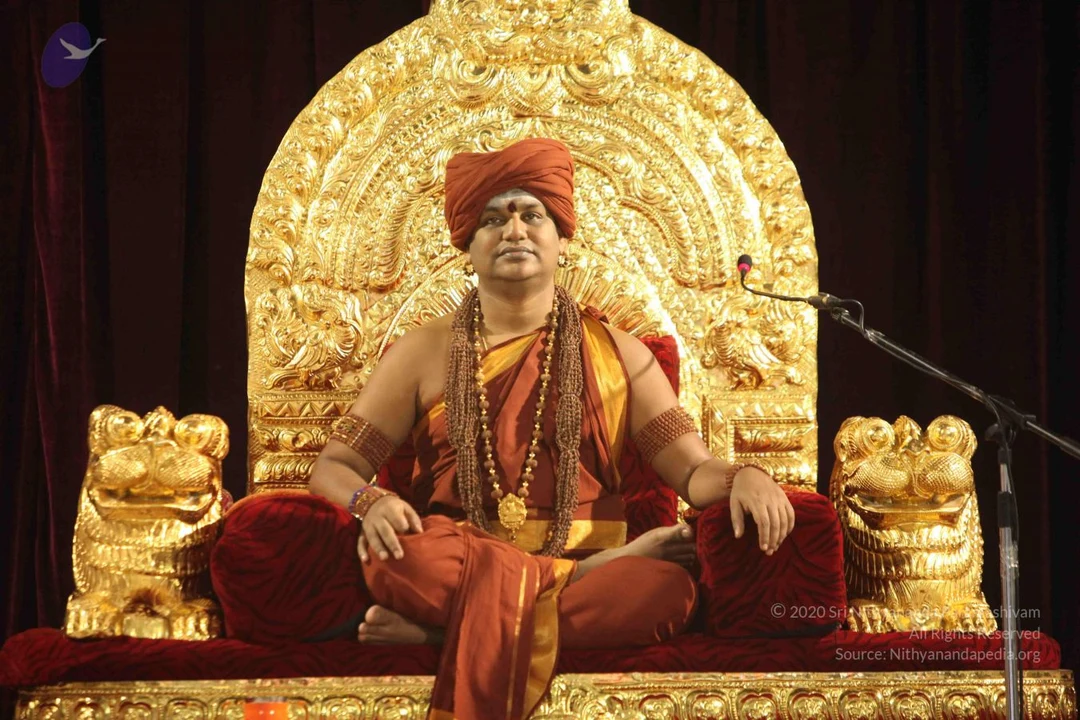
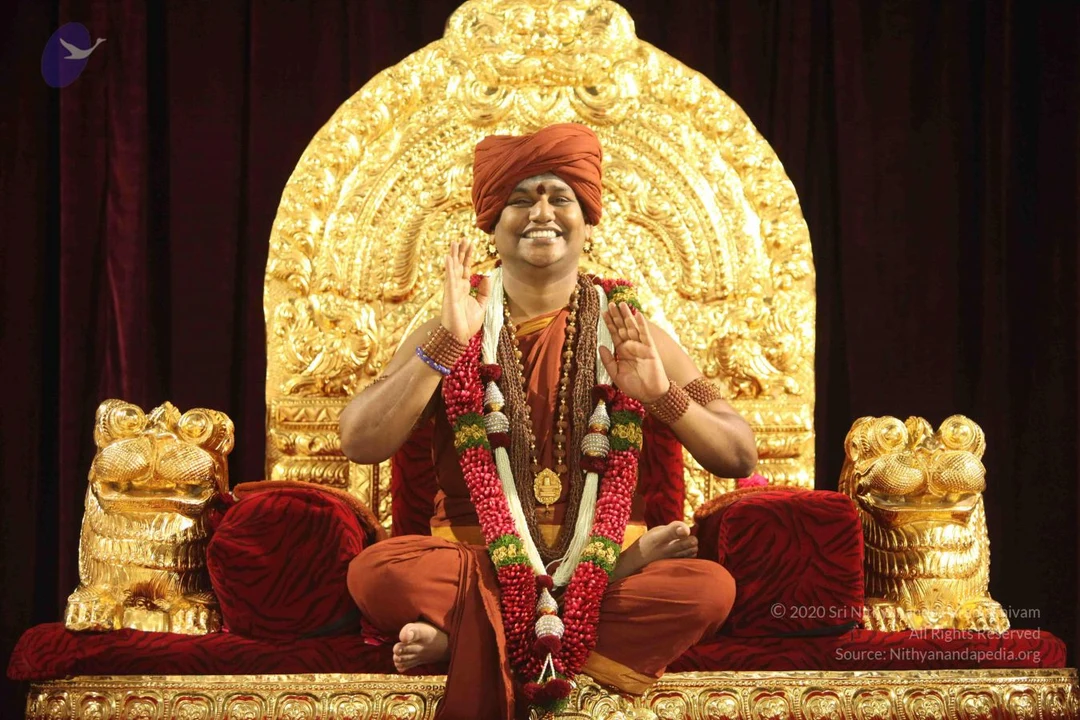
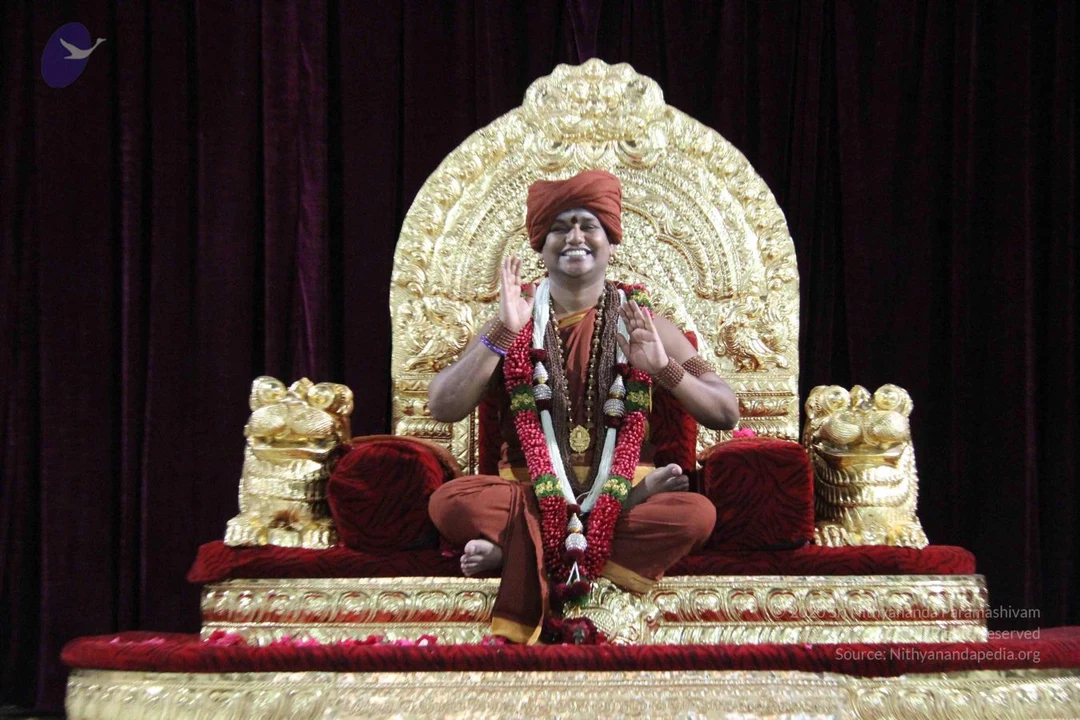
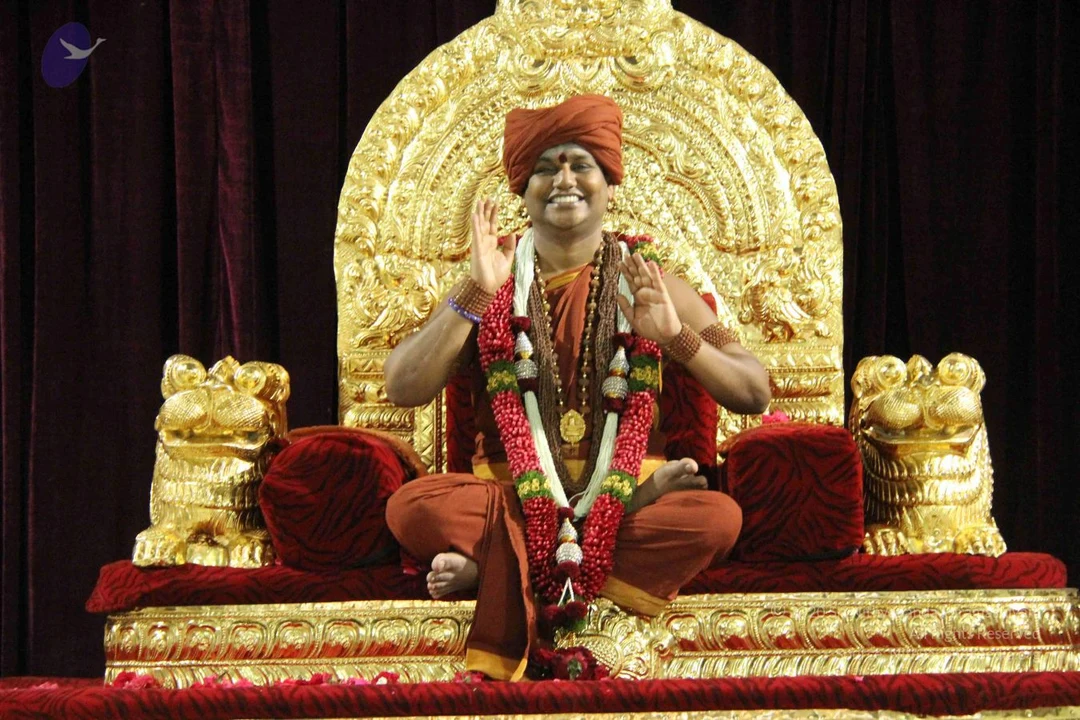
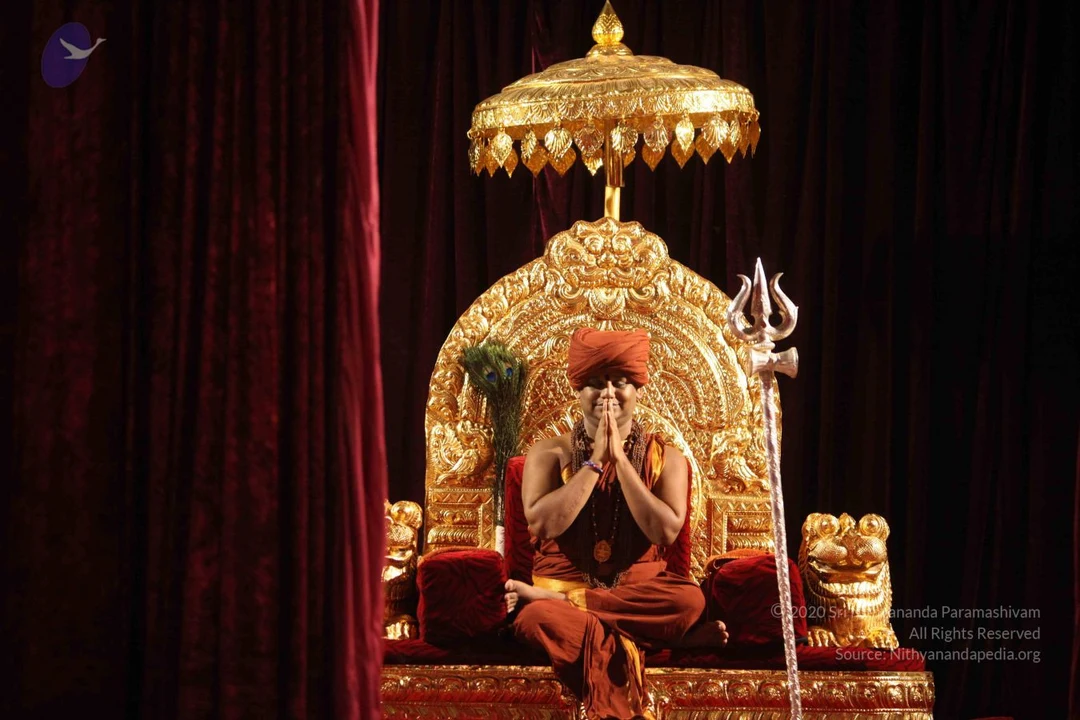
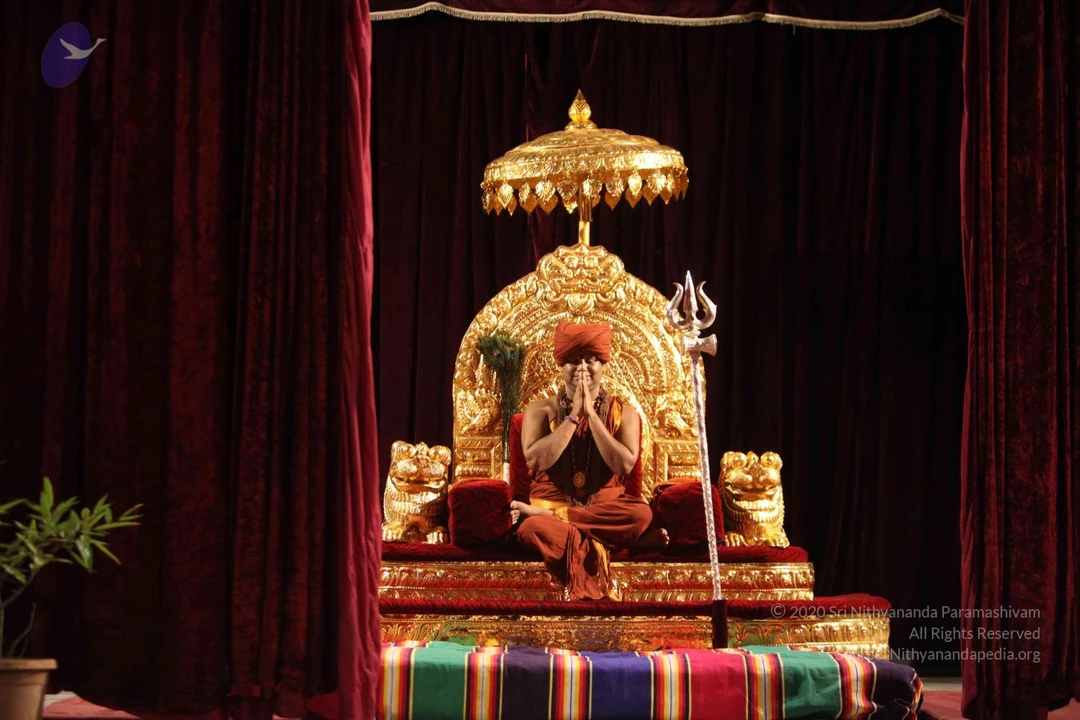
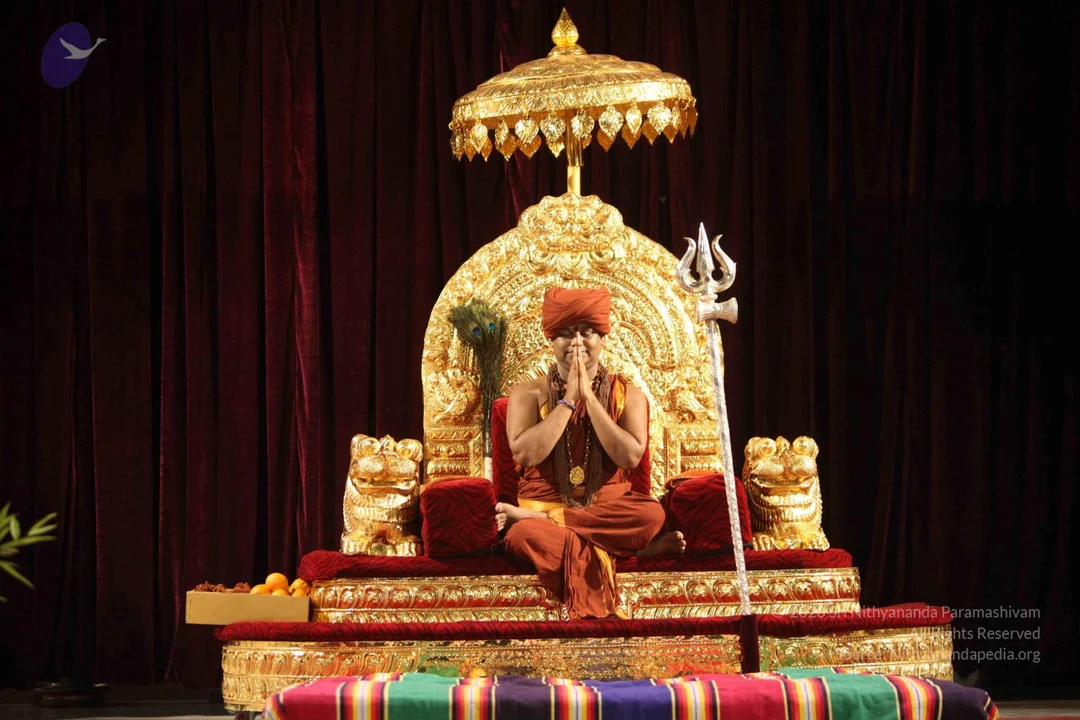
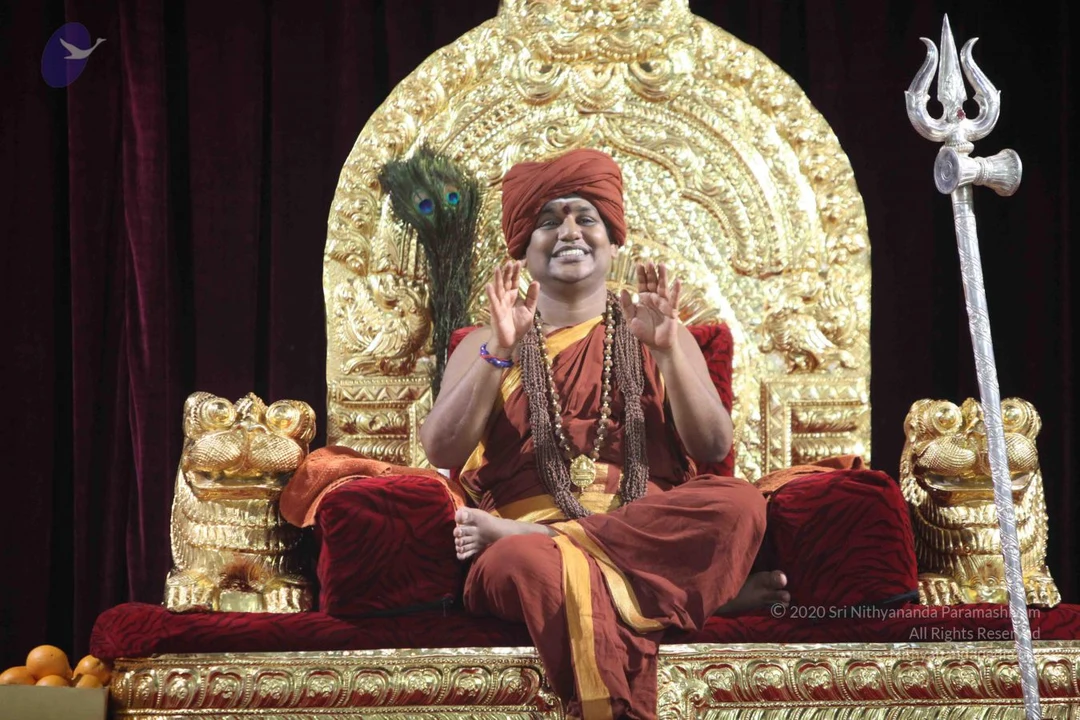
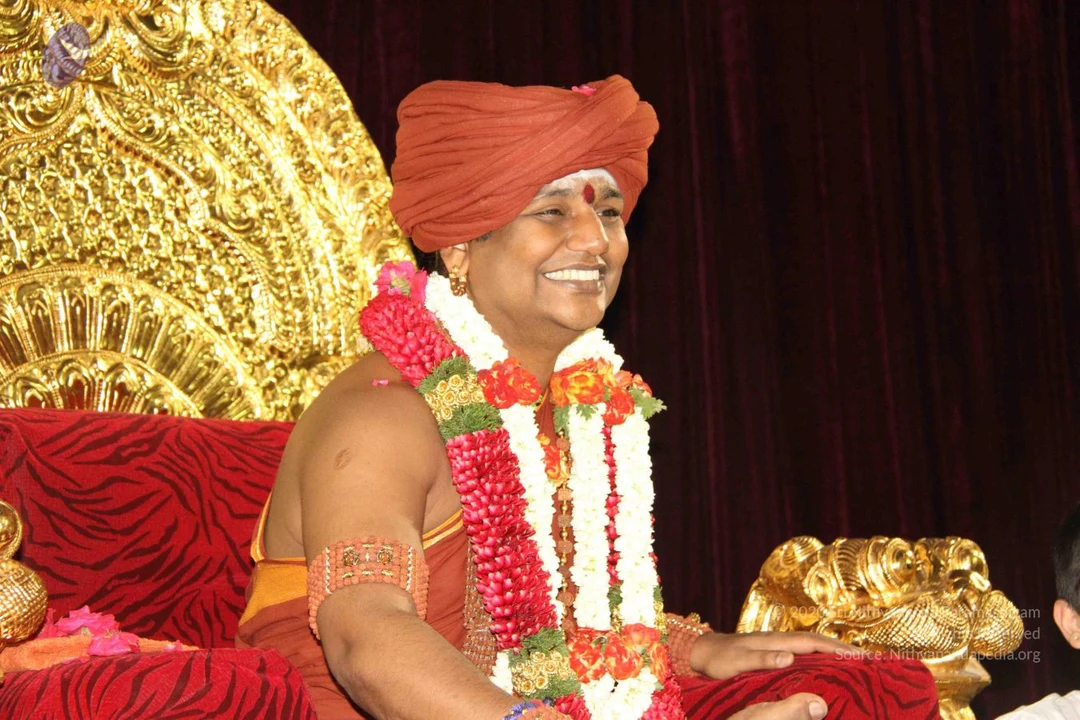
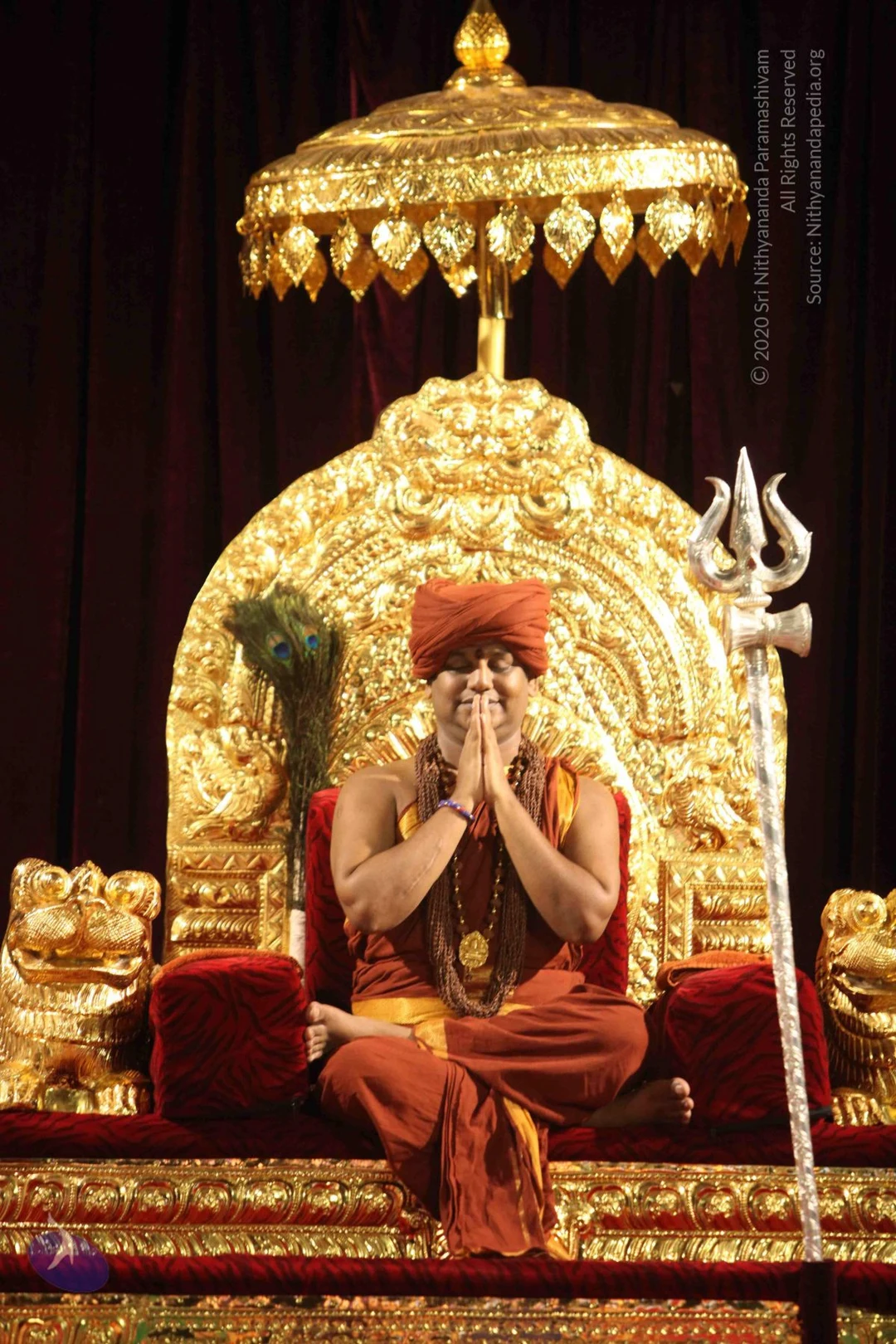
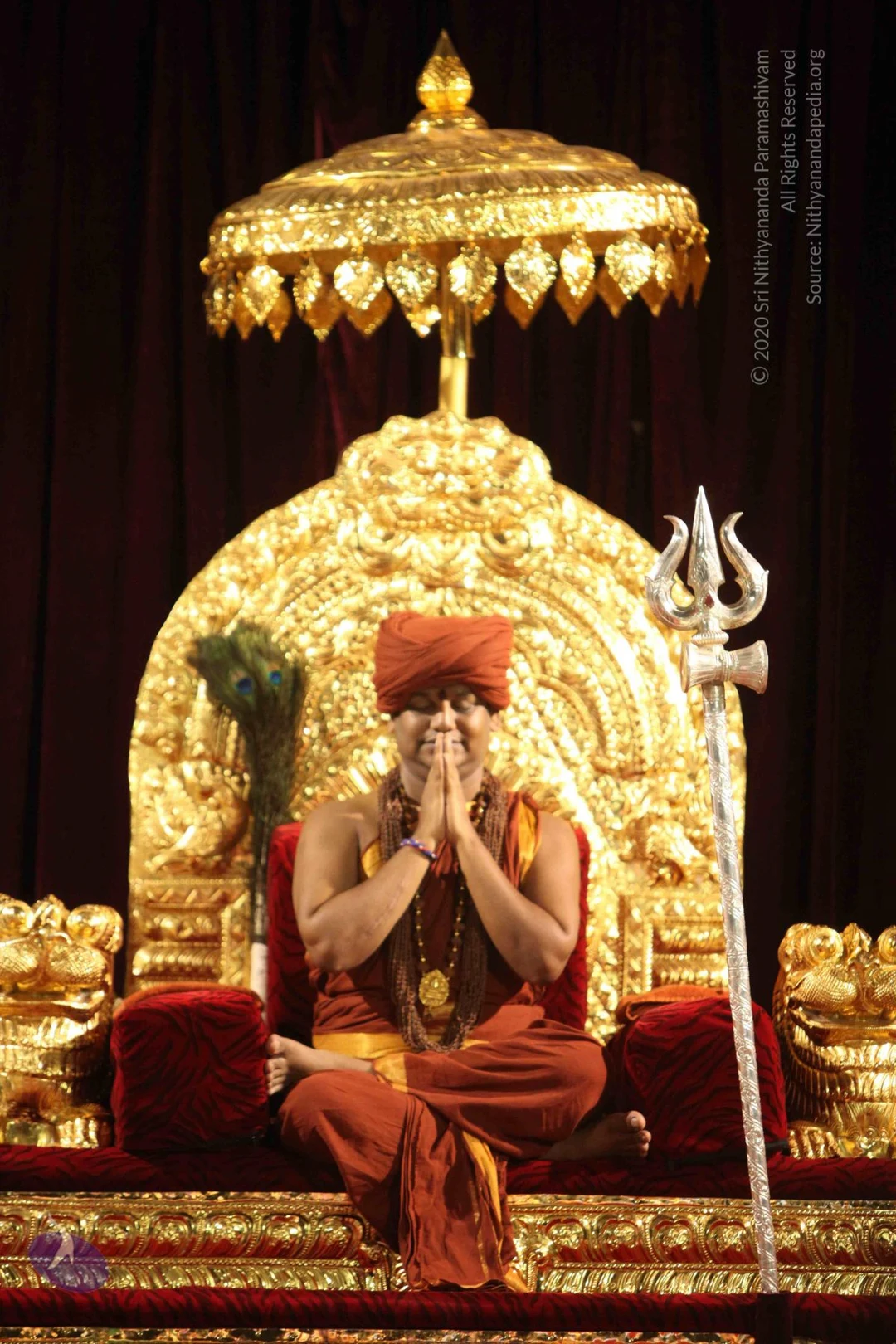
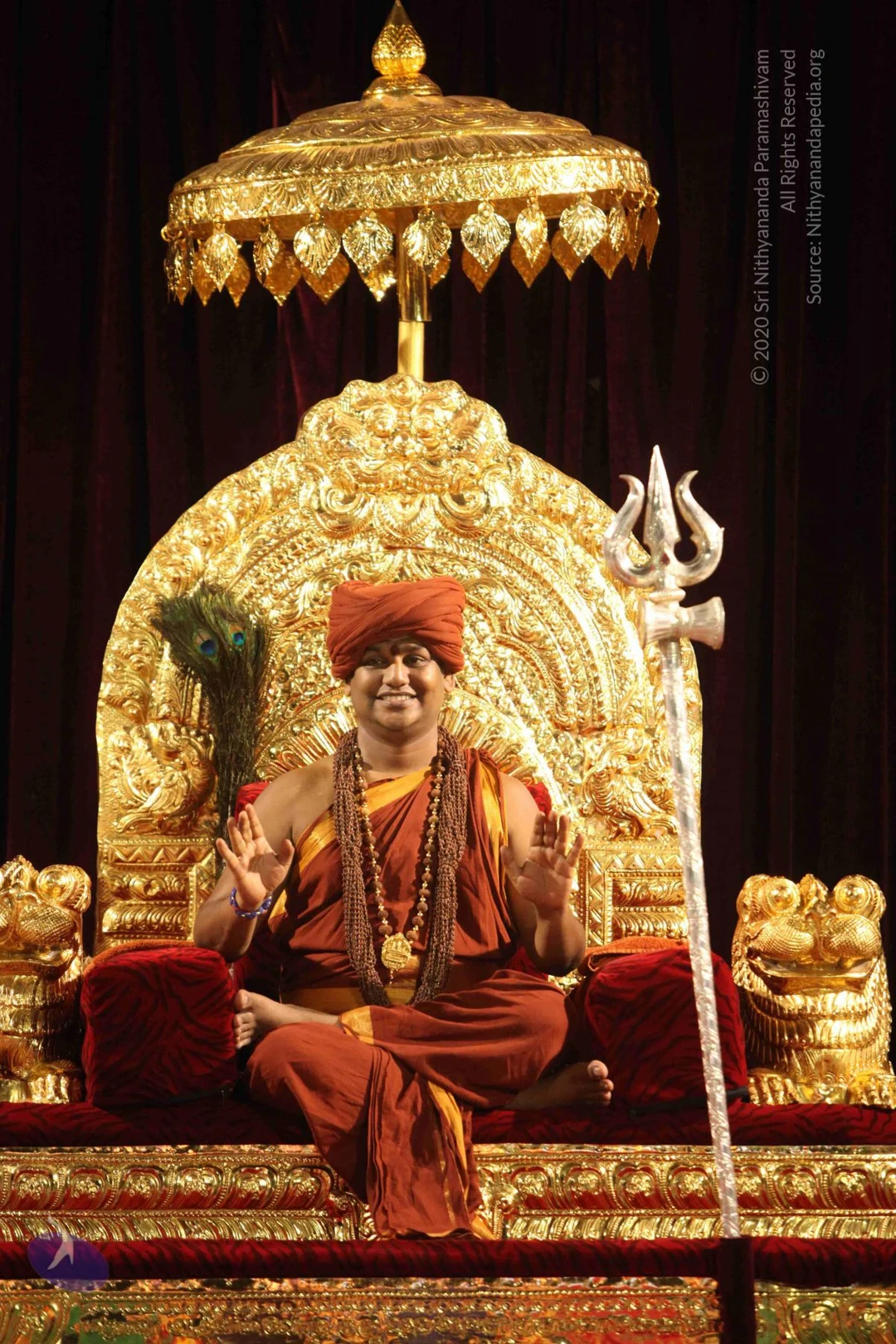
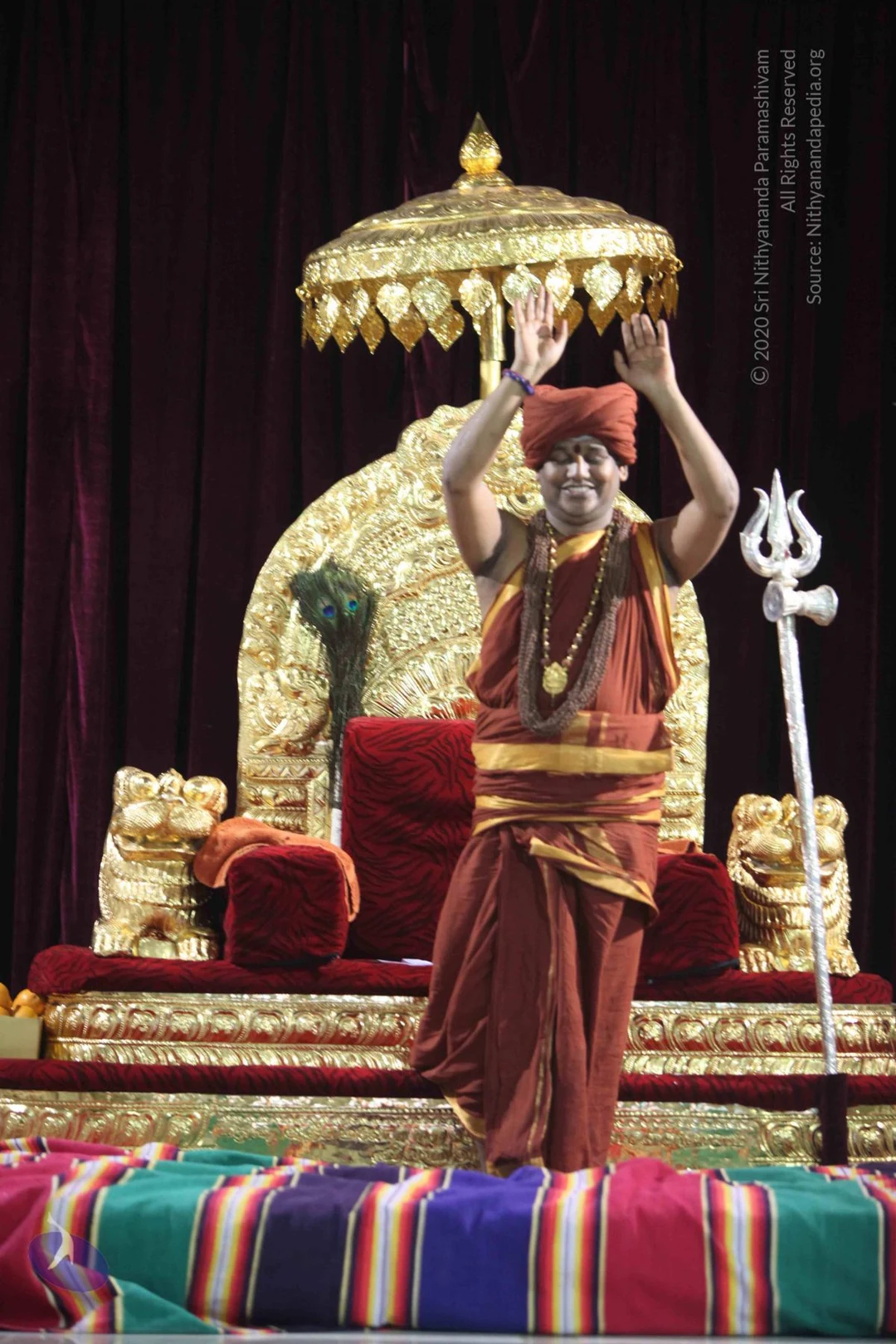
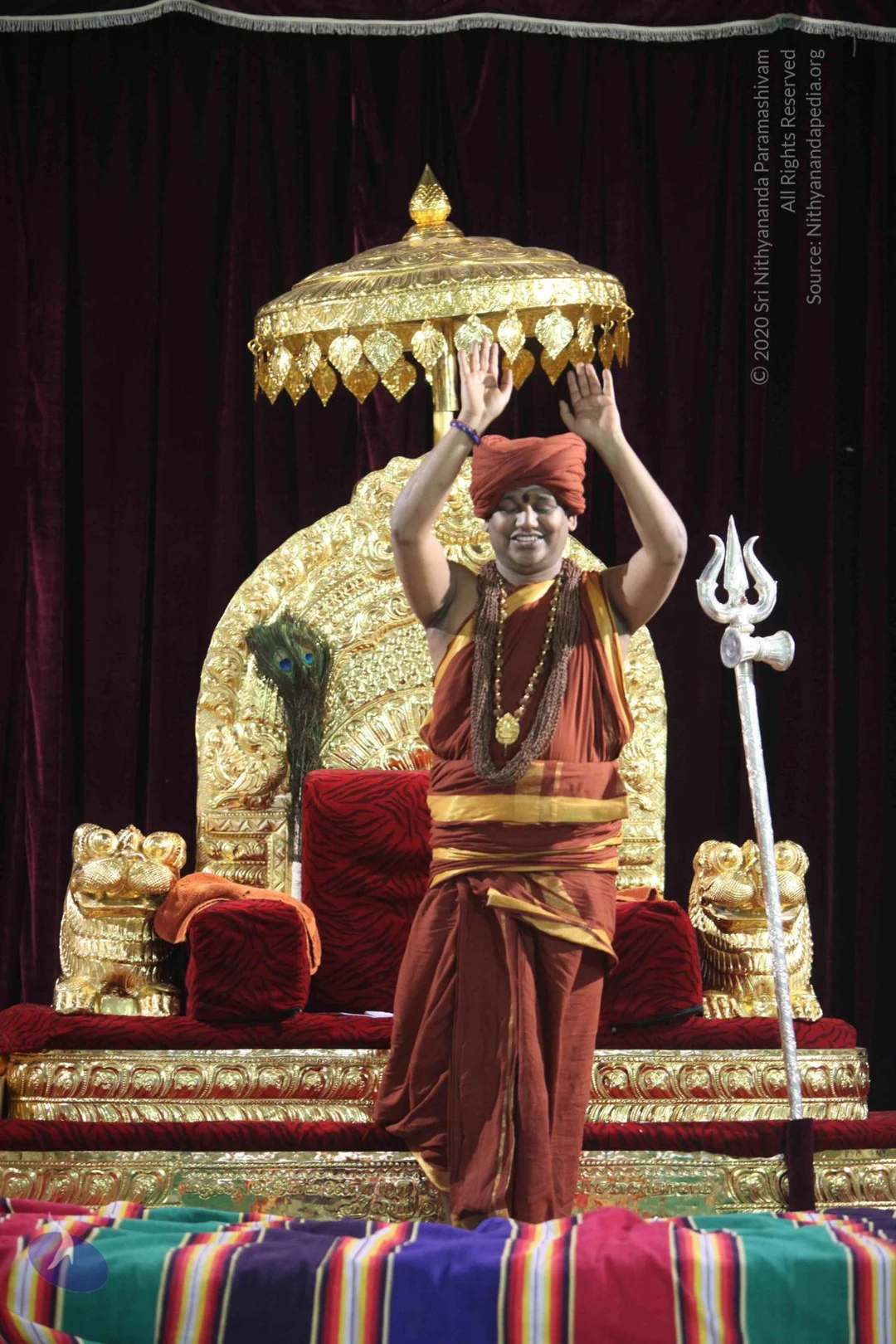
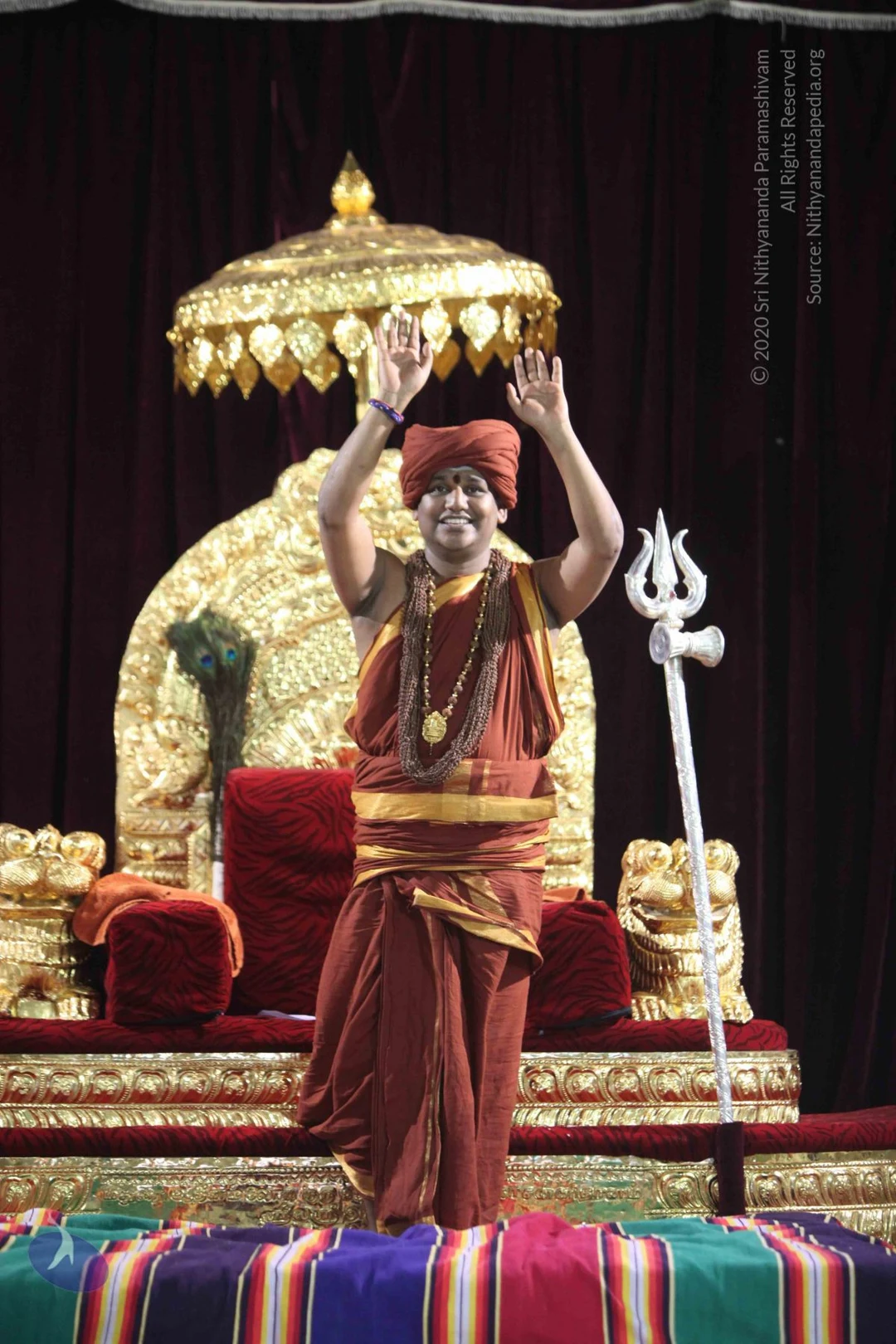
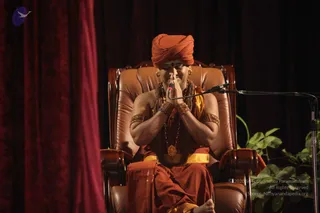
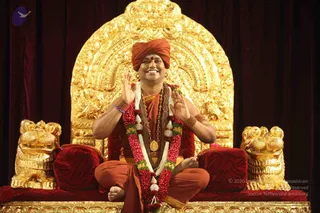
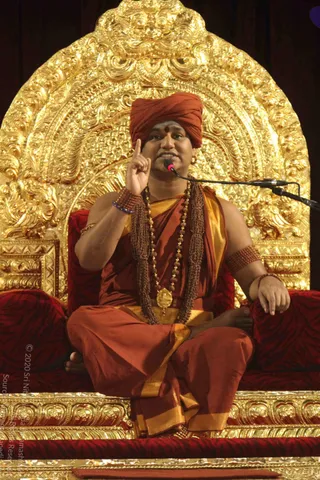
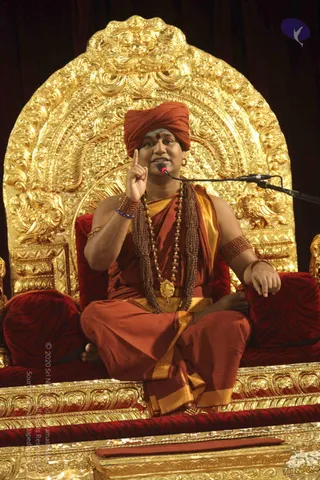
A seated man in saffron-orange robes and an orange turban sits cross-legged on an ornate gold throne with a golden canopy and carved lion-shaped armrests, hands pressed together in namaste. Rudraksha beads hang around his neck, and a silver trident leans beside the throne. A peacock-feather fan stands at his left, and deep red velvet drapes frame the stage behind him. a person: the throned figure wears saffron robes, an orange turban and rudraksha malas, consistent with the page's description of a discourse.

June 21 2015

Original wiki page
Contents

Title:

Yoga Webinar And Kriya For Inner Peace

Description:

A Special Webinar on the 1st International Yoga Day by Paramahamsa Nithyananda. Includes Kriya for Inner Peace.

Nithyananda addresses common misunderstandings about yoga - that yoga is only the physical postures, or that better health is the only purpose of yoga. What is yoga, and what is the purpose of yoga? And how do you know if the yoga you are practicing comes from an authentic source? Nithyananda gives this as a rule to follow for everyone practicing yoga: only accept yoga from a source where both the reference to the original scriptures and the personal experience of the teacher are present. If the reference to the origin is missing, the yoga you are practicing might harm you instead of benefit you. Nithyananda invites us all to go back to the source, to the original scriptures, and practice yoga authentically.

Link to Video:

VideoAudio

Title:

What to do if years of Yogic practice isn't leading to Enlightenment?

Link to Video:

In this video (21 June 2015), Paramahamsa Nithyananda answers the burning question of seekers who have been practicing Yoga for years, but haven't achieved fulfilment or enlightenment and yearn to experience the truth of life.

VideoAudio

Title:

What Is the Purpose of Yoga?

Link to Video:

VideoAudio

Transcript:

nithyānandeśvara samārambhām nithyānandeśvari madhyamām | asmat āchārya paryantām vande Guru paramparām ||

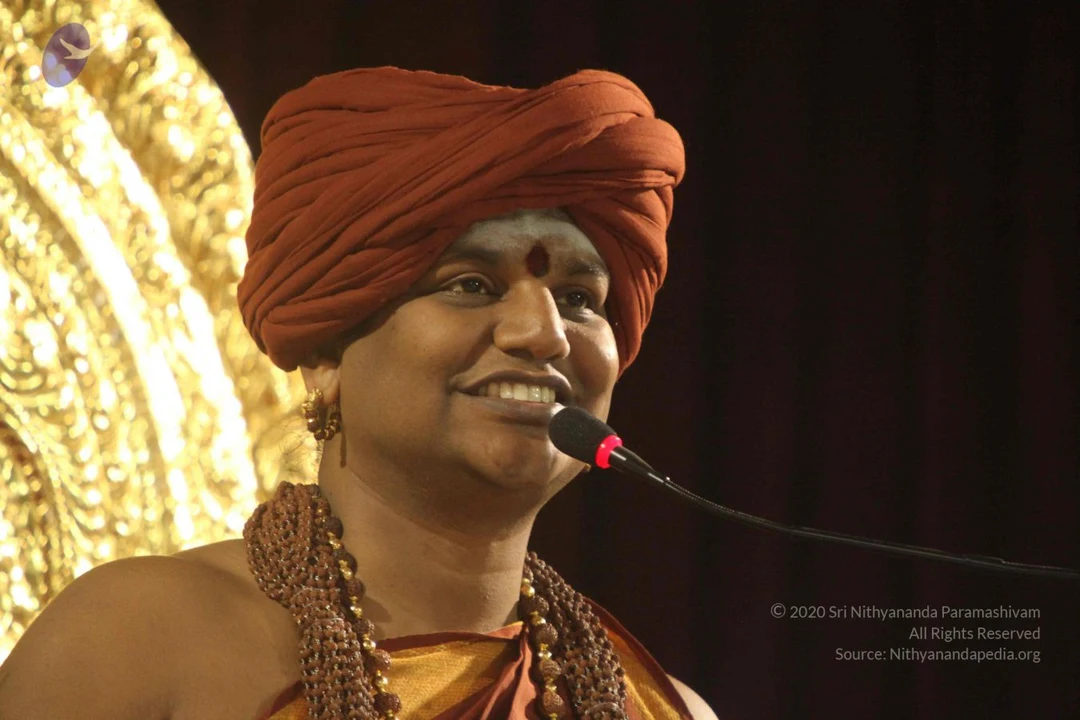
First, I wanted to congratulate this country for celebrating International Yoga Day. At last we have done it! It’s a victory, a victory of all the yogis, from Mahadeva, Adiyogi, to every yogi who dedicated his life to keep this science alive.

Let Me explain Yoga.

Understand, Adiyogi Mahadeva revealed this science in Shivagamas to the whole universe as a science to awaken your inner potential energy. I don’t want to day the physical postures are not yoga, and I don’t want to say physical health is not purpose of yoga, that is also included. Please understand, there is so much of confusion, as usual, anything practiced by billions will have variations, confusion, debates, it’s usual. Whether the physical postures are yoga, please understand, physical postures are also yoga; it is not that they are not part of yoga, and I also don’t want to say they are alone yoga, no. Physical postures are not excluded, but that does not mean only physical postures are yoga. It’s a great science where your body is trained to achieve it’s peak potential through asanas and mind is trained through liberated thinking, your breathing structure is trained through pranayama. The various steps are used in yoga ultimately to awaken your Kundalini Shakti. Yoga is not meant just for your well being or health, it is meant to awaken your mystical powers. It is meant to awaken your spiritual realization, realizing your spiritual identity is the ultimate goal of yoga.

I will just try to introduce basic about Yoga: what is yoga, what is not yoga? How it is done, how it is not done, why it is done, the basic questions about Yoga, I will try to explain.

Kundalini is the inner potential energy. Once it is awakened, you will experience extraordinary health, physically, mentally and extraordinary powers, abilities. Everything in yoga is finally aimed at, it can be as simple as washing your eyes or as difficult as Shivasasana, Kriyas, everything is aimed at awakening the Kundalini Shakti in you. To awaken the extraordinary possibilities and abilities in you, Yoga is one of the greatest gift given to the world by Mahadeva directly.

Please understand, Yoga is organized by Patanjali, but gifted by Mahadeva Himself. In the recent days, modern days, in India we utter the word recent, it is 10,000 years, so in recent days 10,000 years before, Patanjali organized it, but originally it originates from Mahadeva, the Adiyogi.

Many people ask Me, “no, today the asanas, postures, as it is taught, Patanjali is not speaking about it, no scripture is talking about it?” This is one of the biggest questions many so-called intellectuals pose, and they also use this point to attack yogic tradition. Please understand, every posture, every asana, is clearly described, including the way you need to breathe, very clearly by Mahadeva in Hatha Yoga literatures, like Kumbaka, Pradipika, 30 volumes Mahadeva has taught to Devi, and some of the Rishis. Very clearly, every posture, 997 asanas! I am sure Mahadeva has explained many more, but whatever original verses we are able to get, from that, nine hundred and ninety seven asanas we have retrieved. Please understand, every single act you are requested, recommended to do in Nithya Yoga system is backed with the time tested, fool proof yogic scriptures directly by Mahadeva. So this idea “the postures as it is taught in the modern day are not available in the original scripture” may be due to either people who put the question have not read the literatures, or some of the dilutions happened by the modern day yoga teachers... Yoga is originally taught by Maahdeva, the vast yogic literatures, we have retrieved at least 30 authentic, time tested, fool proof yogic literatures and fortunately, in the modern day, very authoritative translations in western languages like English, French, is available.

Basically Yoga is to awaken your Kundalini Shakti and manifest what you want as reality. Ultimately merge, become One with, realize your highest spiritual identity, Shivoham. The experience of “I am Shiva, I am the Divine.” Understand, it may start with bending the body, but it ends in uniting your consciousness with the Divine, becoming one with the Divine. However, even in the polluted, diluted, crudest form, Yoga spreading is okay, I am welcoming it, because once people start practicing Yoga is such a powerful science, it is independently intelligent to awaken the intelligence of a practitioner and guide them step by step to it’s purest form! Please understand, Yoga is not some dead postures; once you start practicing, it will lead you to it’s purest form. It’s an independent intelligence, it will lead you to it’s highest experience. That is why, even in a polluted or diluted form, if you start, that’s great. Somewhere, somehow, begin. Start!

Today, on International Yoga Day, I request the whole Nithyananda Sangha to decide, in this next one year, by next International Yoga Day, next June 21st, all over the world in all countries, we should have introduced Yoga at least in the initial health based postures level.

Please understand, there are many organizations, groups, individuals, working to teach and spread yoga. All I am trying to do is bring them all back to the original root, authentic scriptures, either the scriptures written by Mahadeva Adiyogi Himself, or Patanjali who organized, or Swatmarama, one of the greatest Hatha Yoga masters, any one of these few great yogis, please understand, these few have created enough of authentic literatures, we should introduce Yoga with authentic, original verses from the scripture, and teach Yoga. This will remove confusion among the students who are practicing yoga and teachers who are teaching yoga.

I request all the students of yoga, practitioners, ask this one question to your teacher: “Is this set of practice, postures, techniques, is it from the original scripture? Please give us the reference.” If all the students decide to demand the mark, approval of the scriptures, Yoga will completely purify, it will do it’s work as Mahadeva wants! Please understand, starting, if you have started, even in a polluted, crude, diluted form, it’s okay, you are welcome, nothing wrong. But now it is time you look into authentic scriptures, and original books. Fortunately, Svatmarama’s literatures, Mahadeva’s Agama literature, Patanjali’s Yoga Sutras, are all translated in all international languages. We can study them, we can refer the original source, please understand, this next one year, as Nithyananda Sangha, we should all decide and make a Satya Sankalpa (declaration, vow of truth) to spread the original scriptures, original yogic literatures, constantly create the awareness among the yoga students, practitioners, teachers, to align them back to the original scriptures. I think this will be My unique contribution to the world on this International Yoga Day.

Yoga is great. You are welcome, even if you have started in diluted, polluted form, in a raw, crude form, it’s okay, you are welcome. But now it is time we go back to the original scriptures, we go back to the original books written by the greatest yogis, Adiyogi Mahadeva, Svatmarama, the greatest Hatha Yogi, Patanjali, the Father of Yoga System, Matsyendranatha, Goraknatha, the great Natha yogis, they have all; written enough literatures, let us go back and align ourselves to that literatures. In the system I am teaching, Nithya Yoga system, every act you are expected to do, whether body postures or the breathing activities, or visualization, verbalization, creating certain thought trends, all these are part of yoga. Everything we recommend and request you to do, we have original scriptural reference, reference from the original yogic literatures. I recommend, request, all the yoga practitioners, go back! Go back to the original source, roots, then all the dilution, pollution, corruption, everything will be removed. You will really enjoy yoga, you will enjoy it for the true purpose for which the founding forefathers have revealed yoga to this planet earth.

I have many questions from yoga practitioners; I will try to answer some of them on this international day of Yoga.

“I have practiced Yoga for years, mastered many asanas. Everyone around me looks at me like I am enlightened, but I am not. I have a deep yearning to experience the truth of life, but don’t know where to turn; can You guide me where to turn?”

Through this question, you have turned where you need to turn. This is the usual state of people who practice yoga without going through the original scriptures.But it’s okay, you started in some form; now it is time, turn to the original scriptures. Svatmarama, Mahadeva’s Shiva Agama Yogapada, don’t be afraid, they are not vast voluminous books. Just in few hundred pages, they will be able to guide you, give you clarity, and raise you to the next level and help you to achieve your Enlightenment. All you need to do is just turn towards authentic scriptures, or the masters who are teaching based on authentic scriptures.

Please understand, fortunately, Yoga has become trillion dollar industry, but flip side, other side of it is dilution, pollution, because of the necessity to commercialize as per the taste of the customers, clients, who are practicing, so please understand, but you don’t have to worry about it. The solution is here: go back to the original scriptures written by Mahadeva, Svatmarama, Goraknatha, Matsyendranatha, Patanjali. I can comfortably stand by these five names. Adiyogi Mahadeva’s Shivagama, Patanjali’s Yoga Sutras, and Svatmarama’s Yoga Pratipika and Hatha Yoga Literatures, Yogic literatures, I can very comfortably, authentically stand by these 5 great masters and books. These five, time-tested, fool-proof, with no wrong or bad side effects, will help you to reach the real purpose of the yoga by the founding forefathers. So you just need to turn towards the original scriptures, or the masters who are teaching as per the original scriptures, understand. The real masters’ expertise or their experience should be accepted only as long as it is aligned with scriptures, as long as the atma pramana is in tune with the apta pramana, ancient, traditional masters’ experiences. If there is a difference between the two, always go back to the ancient masters’ experience, that should be the touch stone. So understand, it is time for you to turn towards the authentic scriptures, or the masters who teach from authentic scriptures.

“What are siddhis and what is their purpose? Are they real? How does yoga help develop siddhis?”

Please understand, in a modern day, deep hatred has been created against siddhis by yogis who don’t know siddhis. Siddhis are like milestones in your journey; milestones themself are not destination, but they encourage you, inspire you and tell you you are on the right direction. Siddhis are encouraging milestones. And I tell you, they are really, really real! They are neither delusion, hallucination, whims or fancies, they are really, really real, and any authentic yoga practiced as per the authentic yogic literatures will develop siddhis in you. Please understand, do not do, keep this is a law, rule, do not do any yoga or technique or pranayama practice unless it awakens some siddhi within 21 days in you! Please understand, within 21 days it should awaken some siddhi or spiritual experience, intense spiritual experience. Otherwise, please do not continue that, it is not for you. Either it is not cooked with the right ingredient, or it is not meant for you.

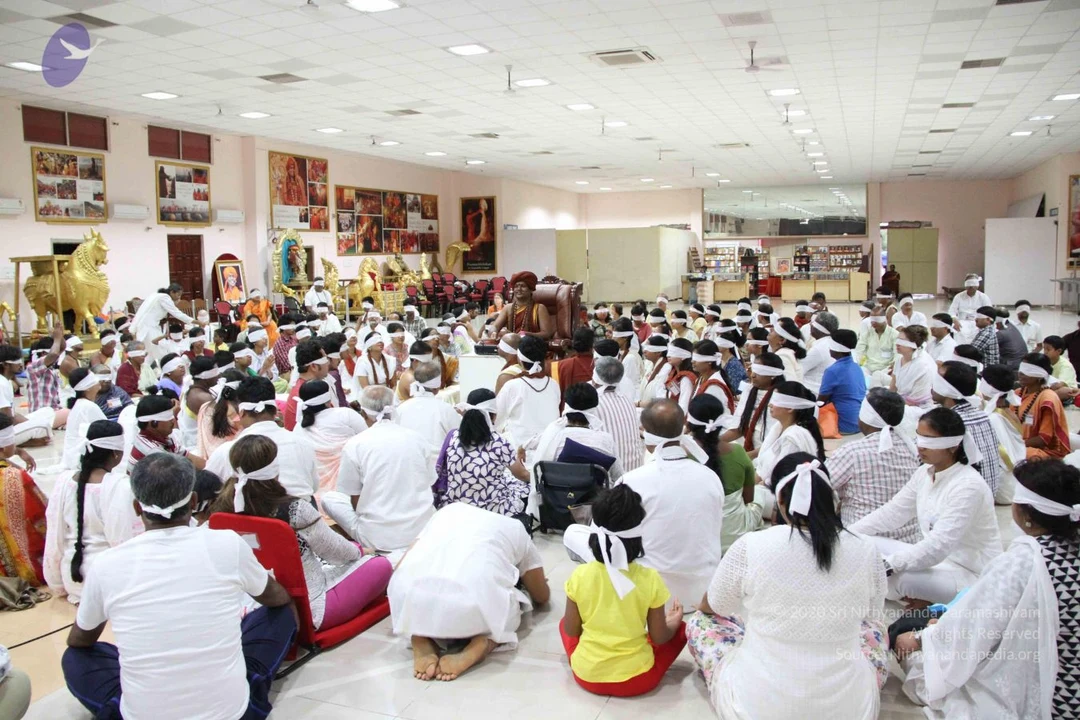
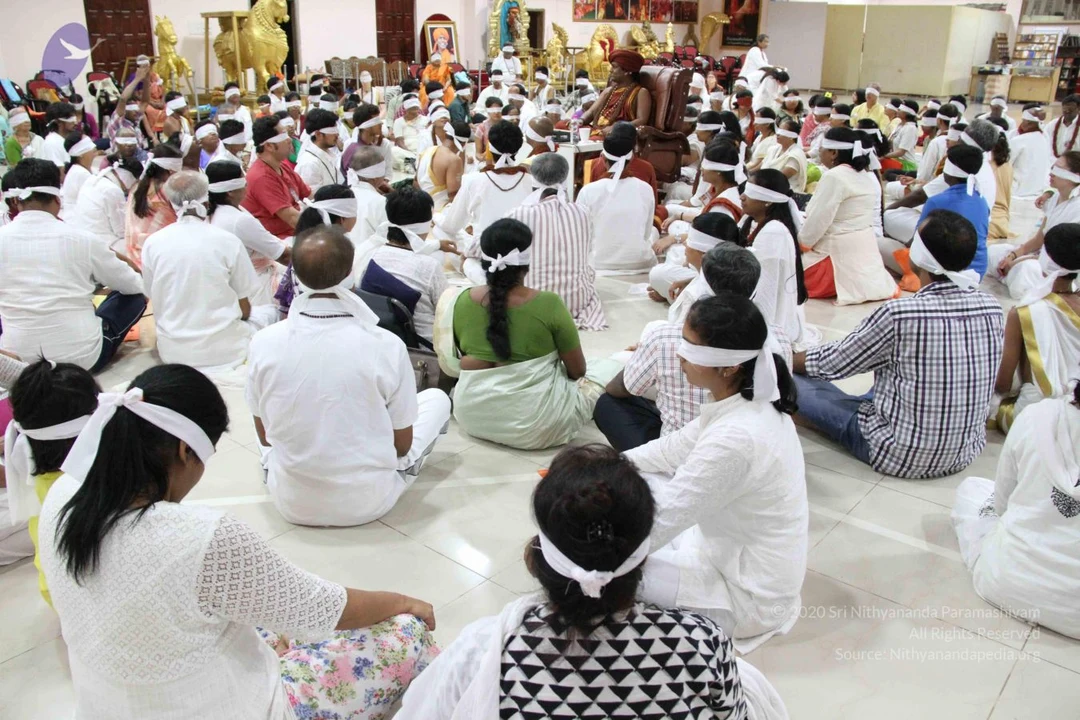
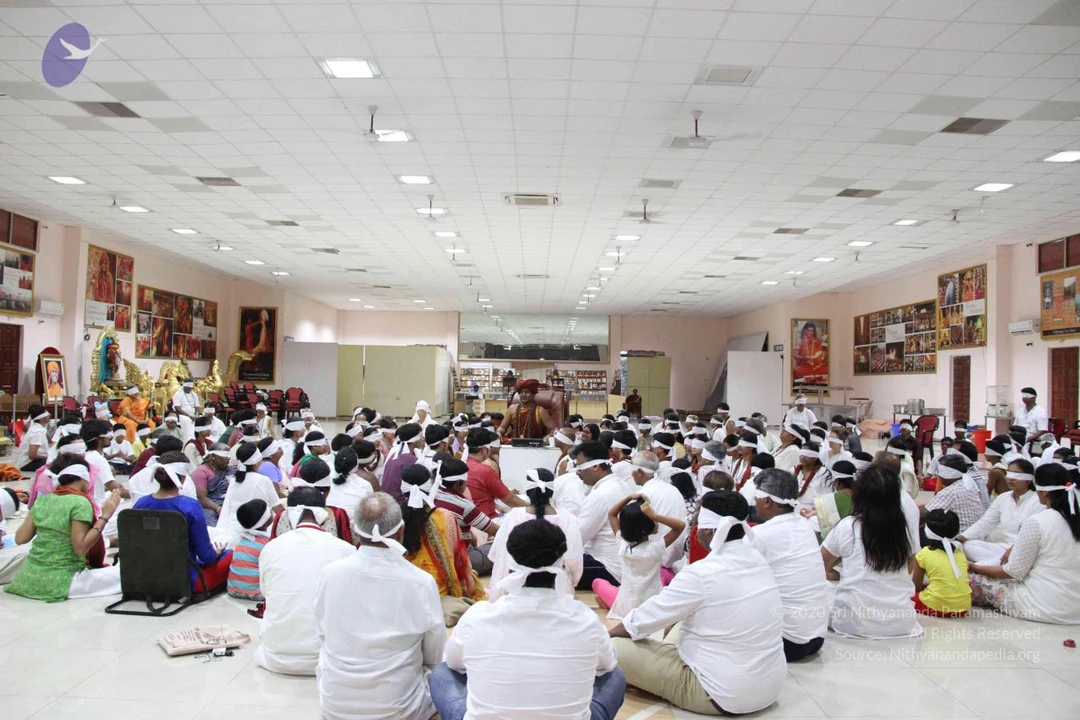
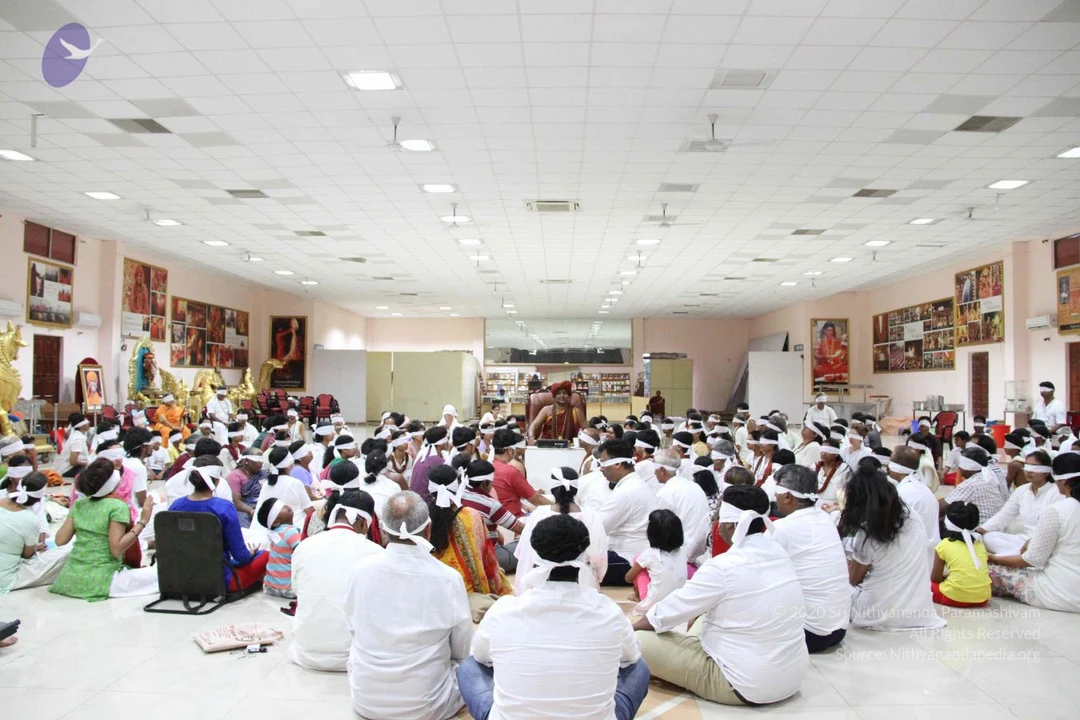
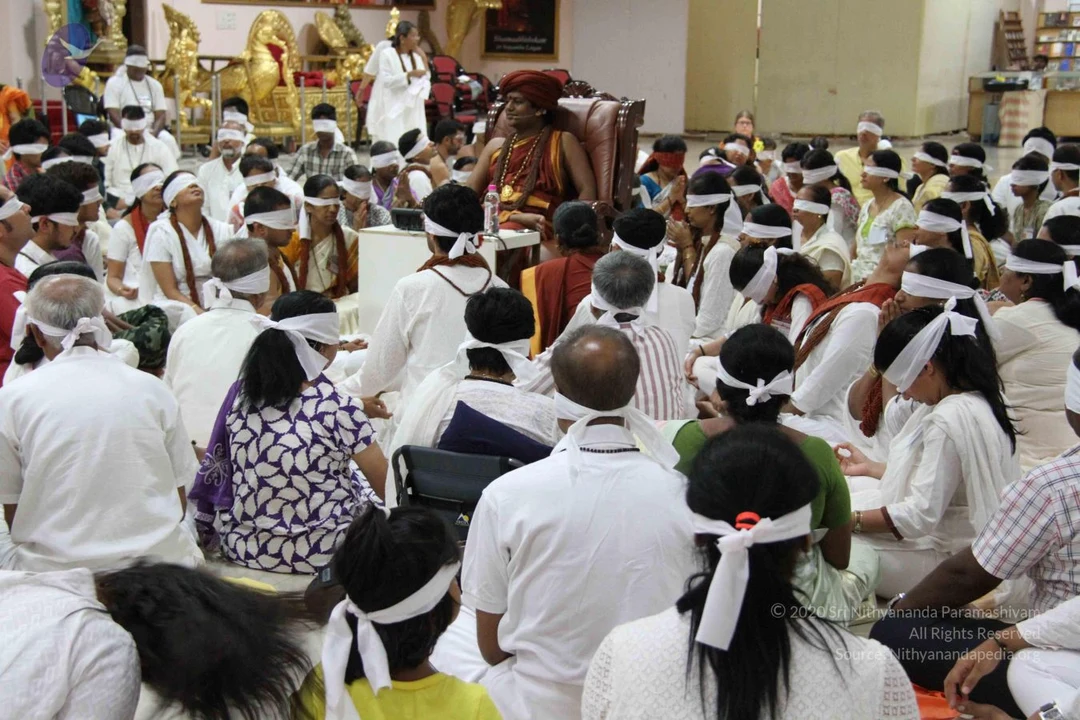
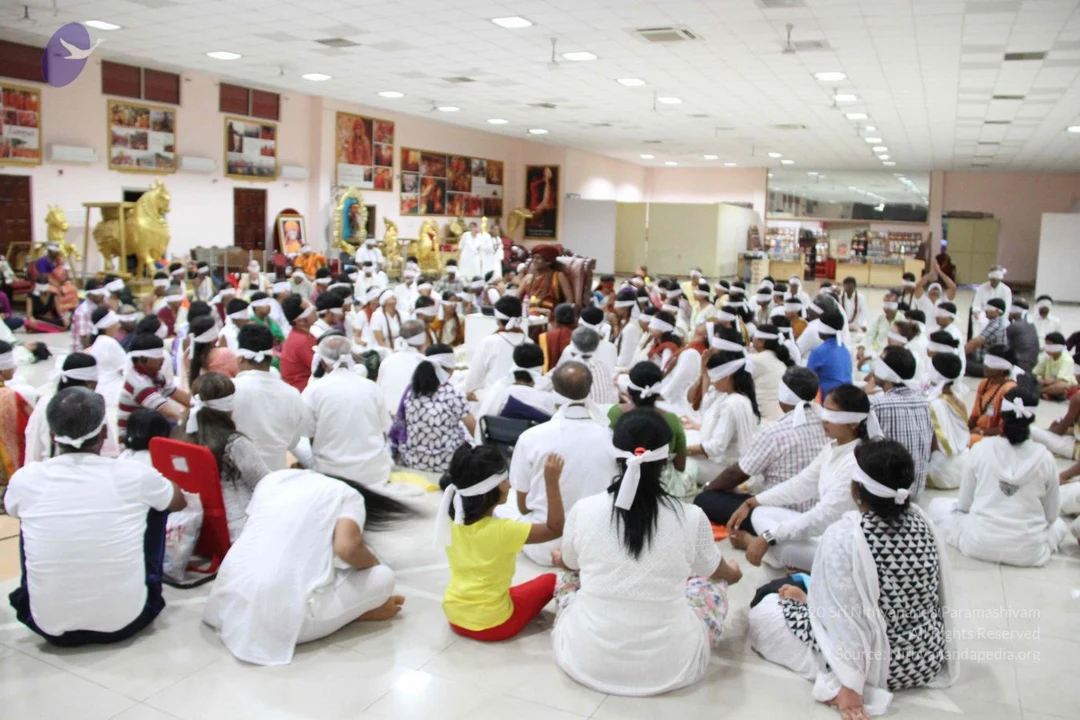
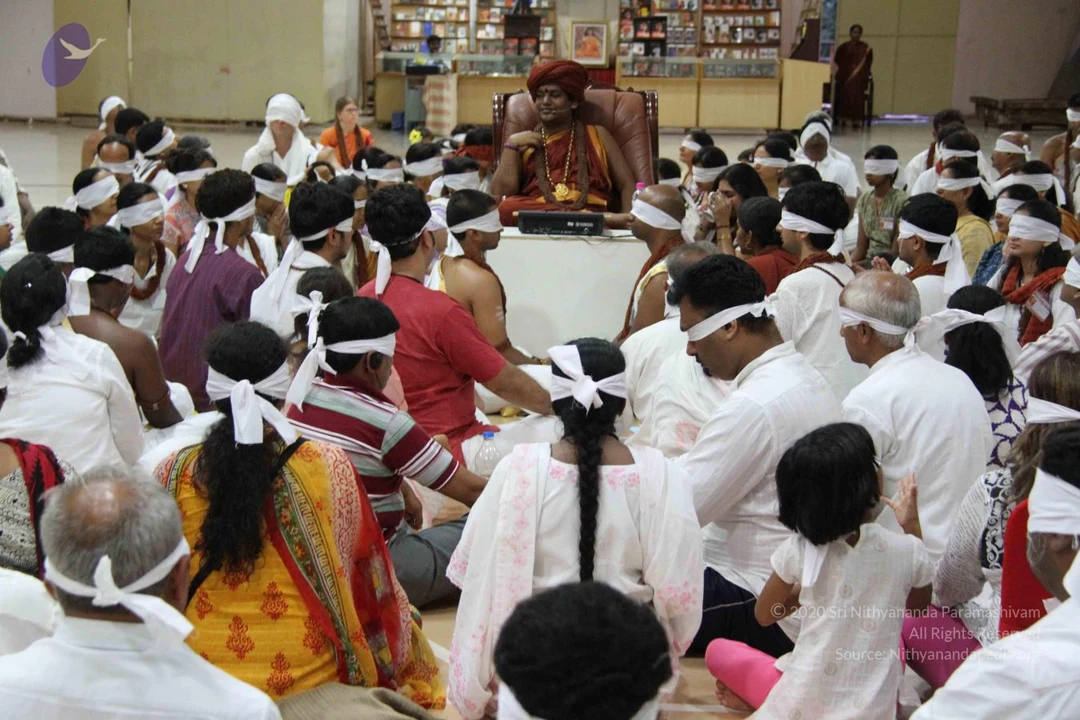
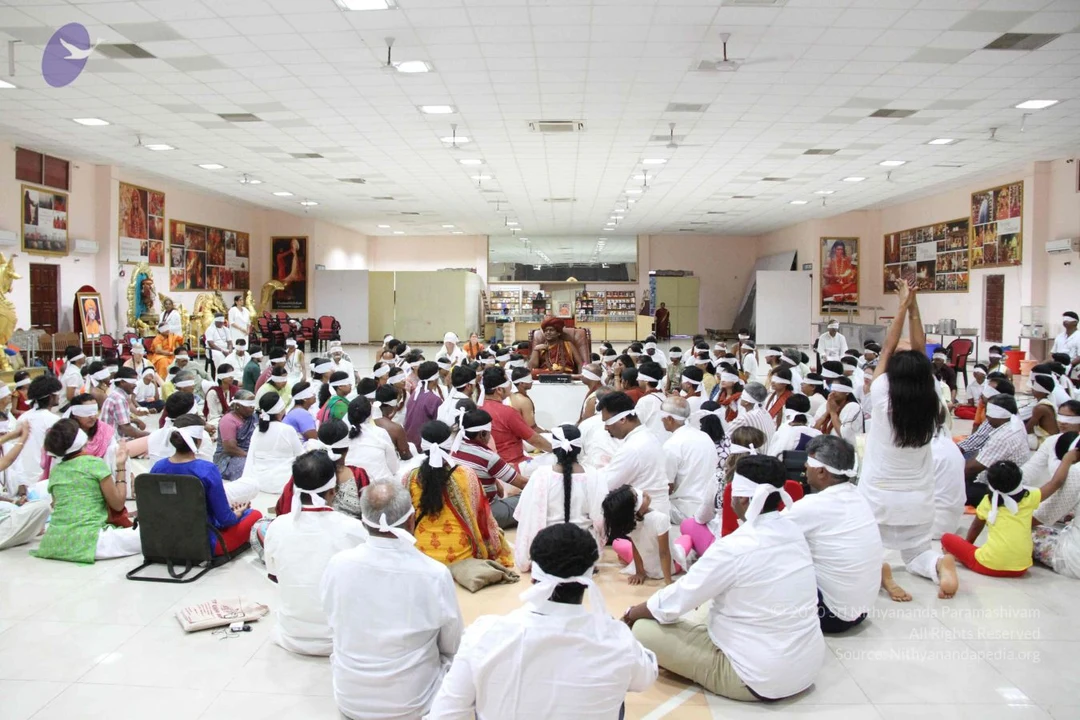
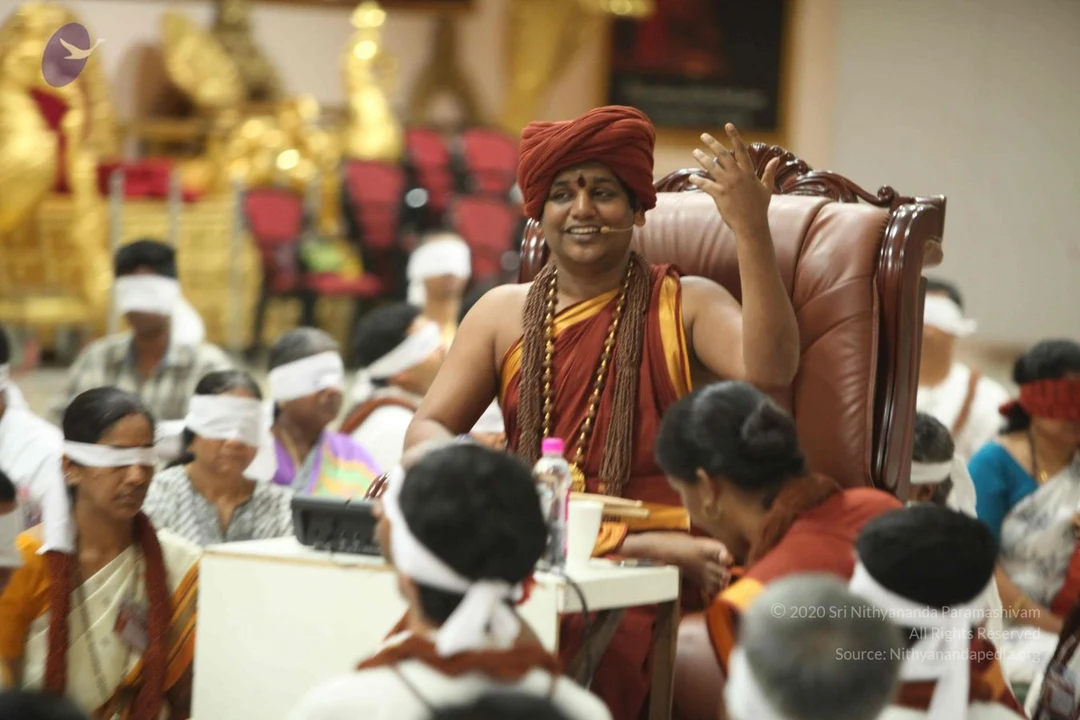
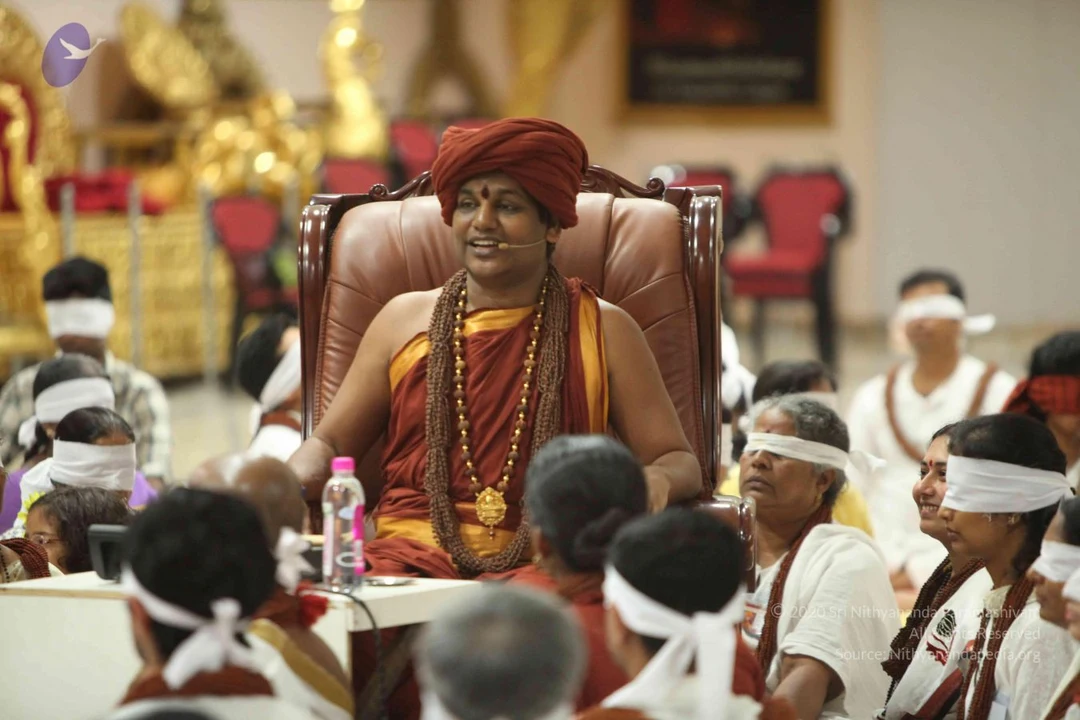
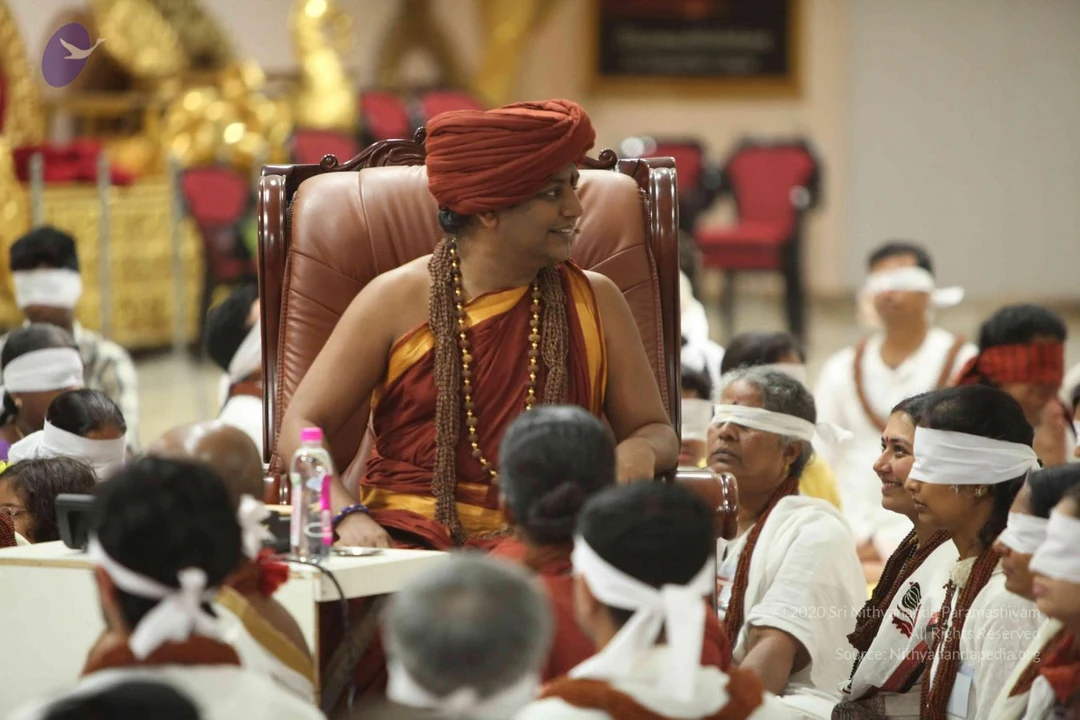
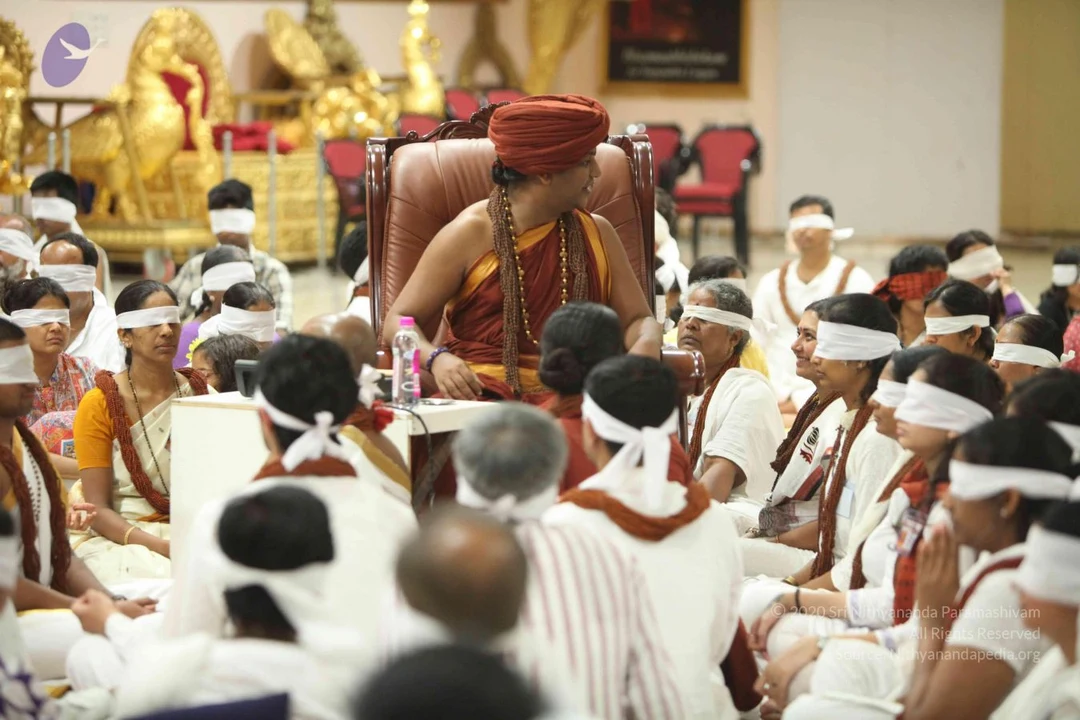
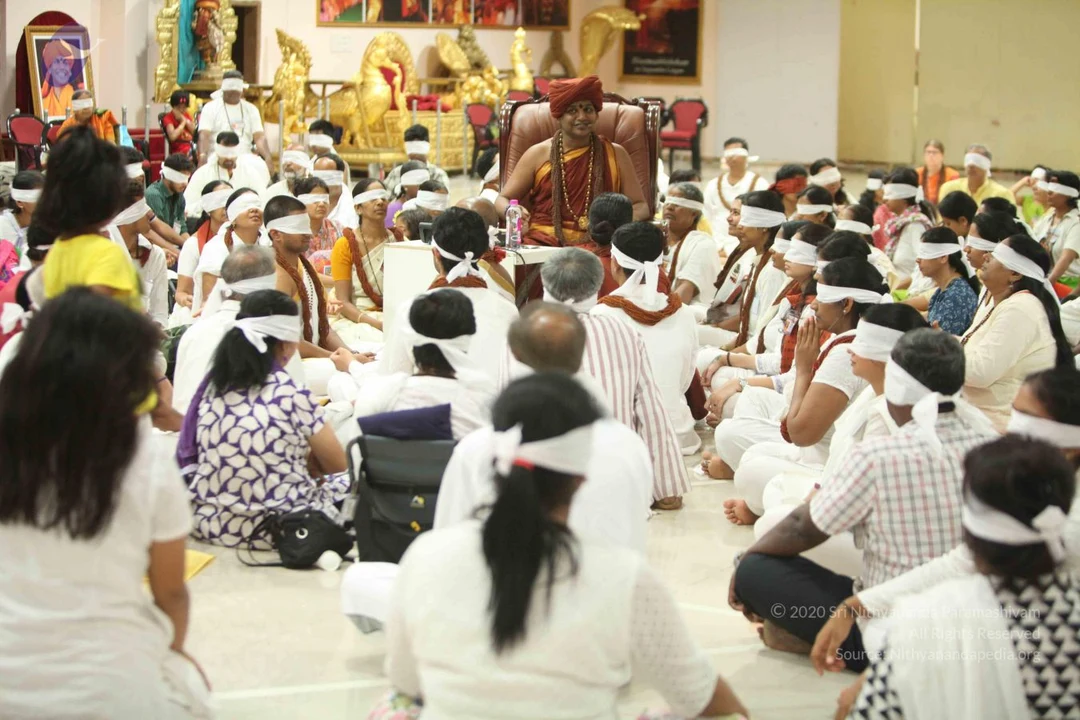
Go back to original, authentic, spiritual literatures, yogic scriptures. I have seen the so-called many yogis, Gurus, Gurujis, teachers, masters, go on claiming healing should not be done, siddhis should not be achieved, what is siddhi? When you are travelling on certain path towards enlightenment, automatically powers start manifesting, consciousness starts expressing, more light is radiated! I am not asking you to stop at milestones, at siddhis, but I am telling you, if siddhis don’t express, there is something seriously wrong in the path you are walking. If you don’t see the milestones, the road you are walking may not be leading to your goal. Yoga is not no man’s land, it is clearly leading, defined by Mahadeva, Patanjali, Svatmarama, Goraknath, Matsyendranath, the great yogis ave done enough of fool proof, time tested GPS which never gets expired, understand? Yoga is not no man’s land where you just have to walk blindfolded; of course, if you are initiated into the third eye, you will be able to walk blindfolded! But be informed, siddhis are neither wrong, nor the destination, unless the siddhis manifest, you may not be following the right practice and techniques. If the siddhis are not manifesting, go back to the original scripture, or the masters teaching based on original scriptures.

“Many modern day types of yoga may not be aligned to Vedic tradition; are there dangers to practicing?”

The question: somebody is asking, it seems many modern day types of yoga might not be aligned to Vedic tradition, but what is the harm, they make me feel good, are there dangers?”

Let Me be very honest, because I have not practiced anything not aligned to Vedic tradition, I have no opinion on it. I stand for the yoga which is aligned to original Vedic, Yogic, original scriptures. It helped Me, there is no harm in it, so I am sharing it to the world! Anything not aligned, I have no comment or opinion. I don’t want to give a guarantee about those practices, and I have nothing to say. People ask me, “Instead of chanting Om, can we chant something else?” I tell them, “I do not know, I have no idea, no comments; I stand by the original Vedic tradition based on the original Vedic literatures, Vedic scriptures, that is what I practiced. I had the fortune of having a Guru who is master of Vedic scripture, I know the benefits of that, and that is what I am sharing with you all.” I am not a politician; I don’t need secular votes, I am a Vedic Guru who stands completely with the Vedic, Yogic tradition! I have no comments about anything which is not aligned to the Yogic scriptures.

“I am already an experienced teacher with a practice which I developed myself. How can I align my practice to the Vedic tradition?”

Just pick up these few books, Asana Paddhati, Pranayama Paddhati, Pranayama Pradipika, time-tested, fool-proof Yoga scriptures, pick them up, start reading, and Yoga Upanishads, pick up those Yoga Upanishads, and Upanishads very clearly describe asanas, breathing techniques, Kumbhaka Paddhati, Hatha Yoga Pradipika, Patanjali’s Yoga Sutras, and read, you will simply know how to align yourself to the original, traditional yogic and Vedic scriptures.

“Many of my students and people around me like Yoga, but don’t want to associate it with Hinduism.”I think again I answered this question already; I stand with Yoga which is from the original roots, the Yogic literatures which is at least 10,000 years old. The Yogic scriptures which is deep rooted in Vedic tradition, from Hinduism, so I stand for that tradition. Anybody comes, I am ready to share the science of Yoga with them. I Myself do not force anybody to accept Hinduism or convert to Hindu religion, but I am also not encouraging people resisting Hinduism, who say, “I don’t want to associate with Hinduism.” I am neither forcing people to convert, nor encouraging people who don’t want to associate with Hinduism chant Sanskrit mantras, or do Surya Namaskar, I am neither encouraging that, so I am very clear, it is now up to the individuals who teach or learn, I don’t have any comments.

So, that’s all the questions.

I think My message today is loud and clear: Let’s go back to the Source! Let’s open the original books, the original scriptures, original literatures, follow only that, live only that, that’s all is My message on this International Yoga Day.

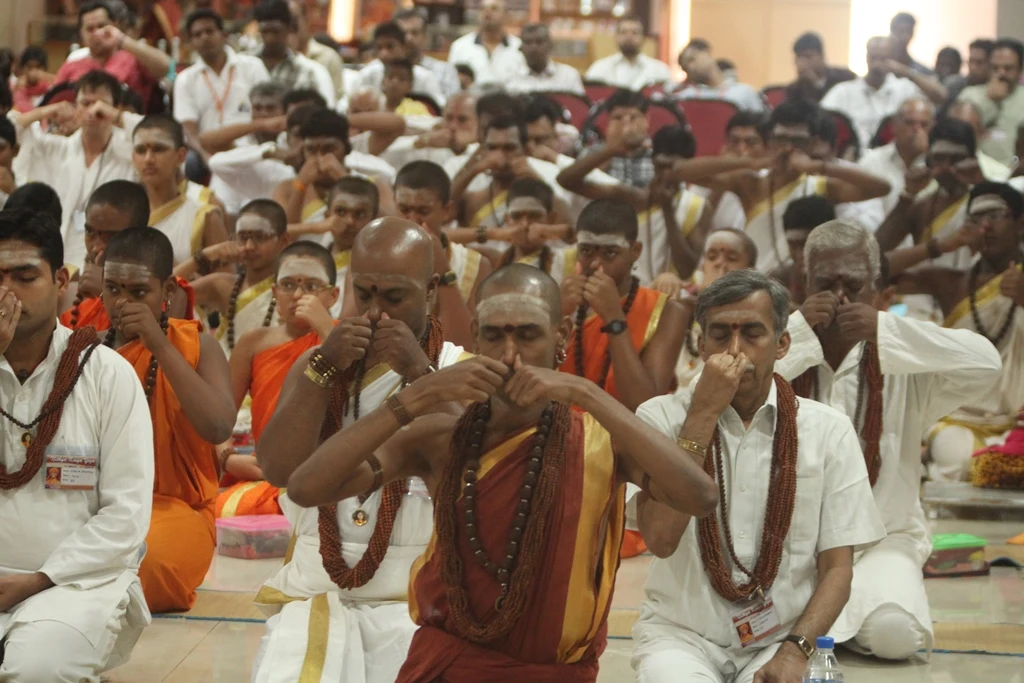
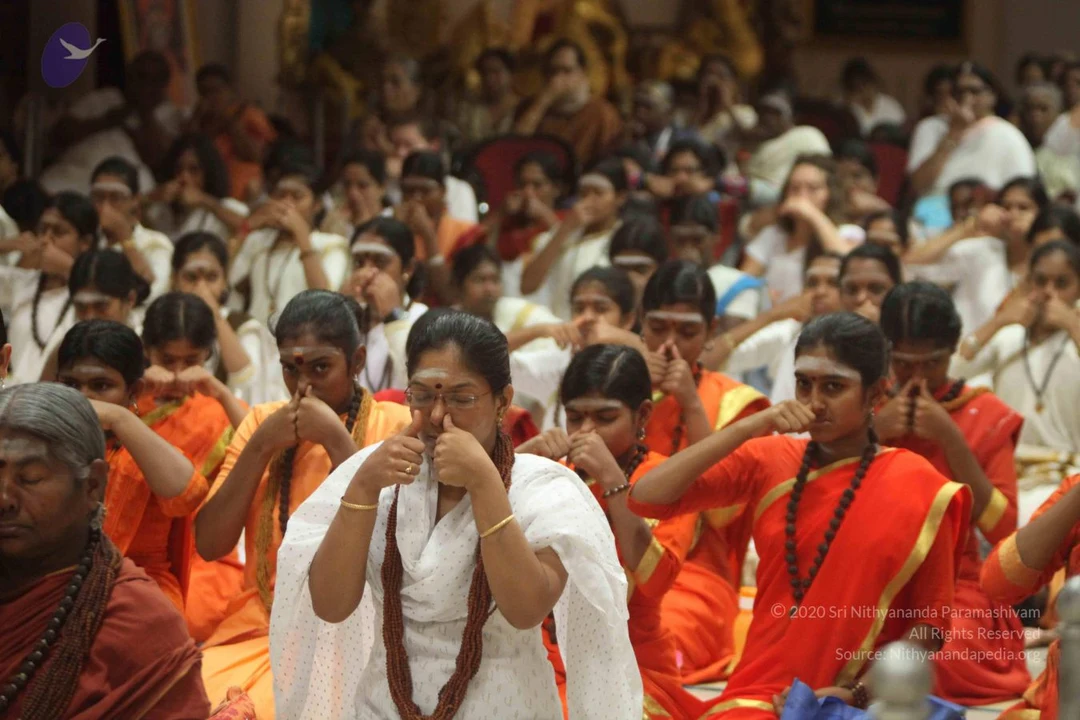
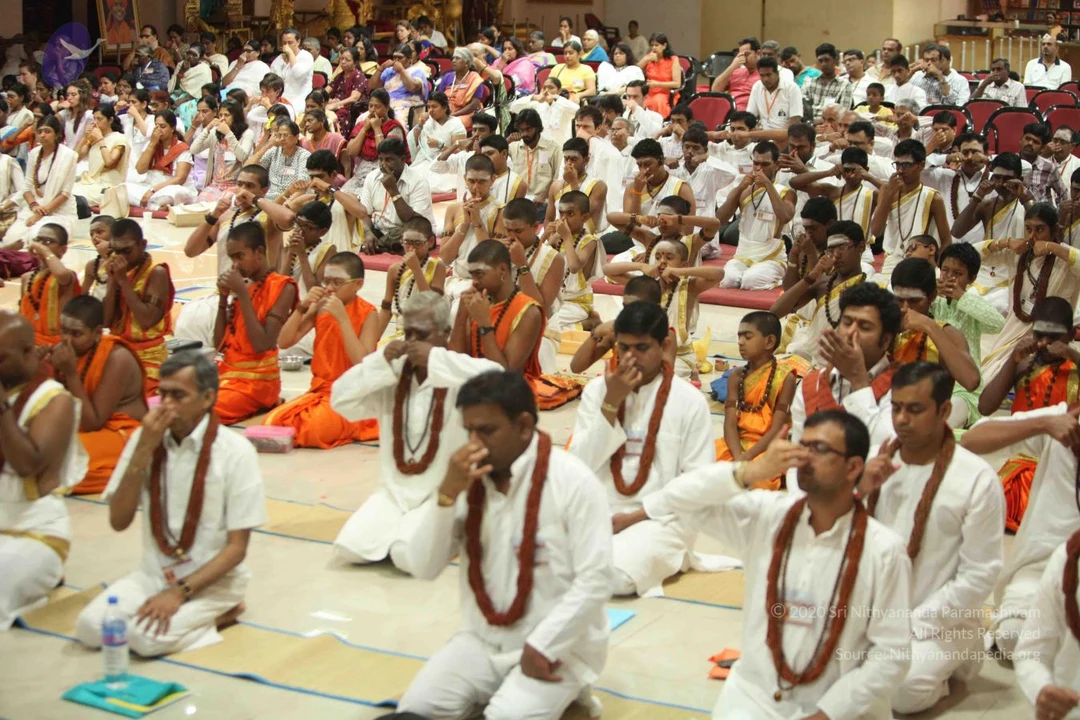
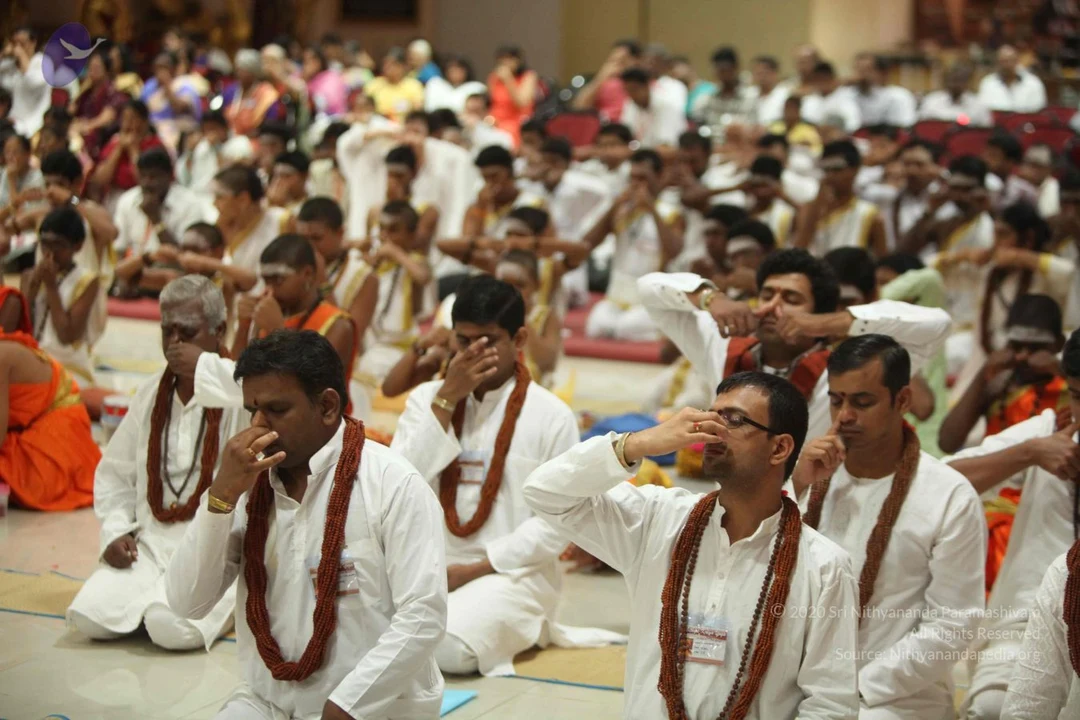
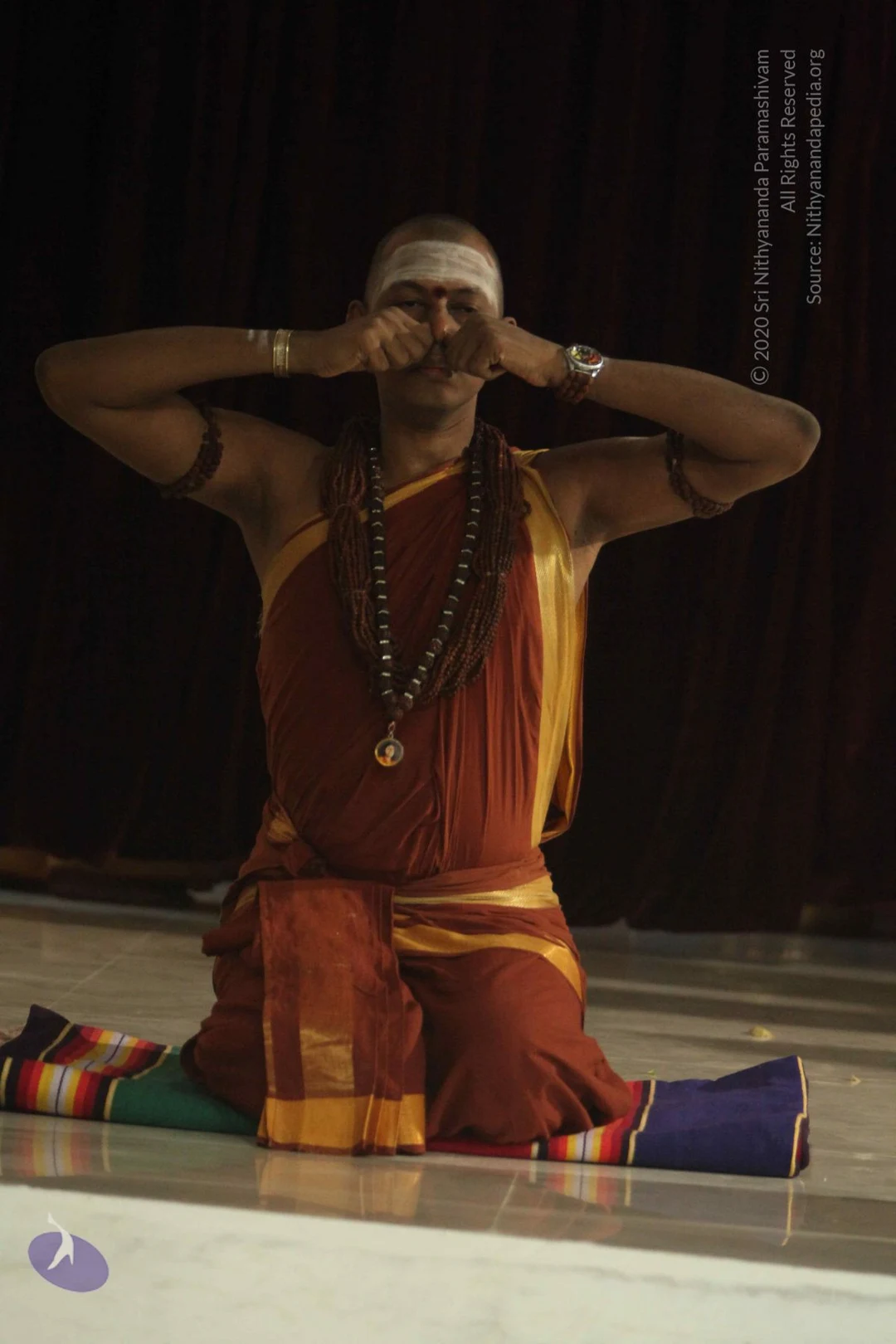
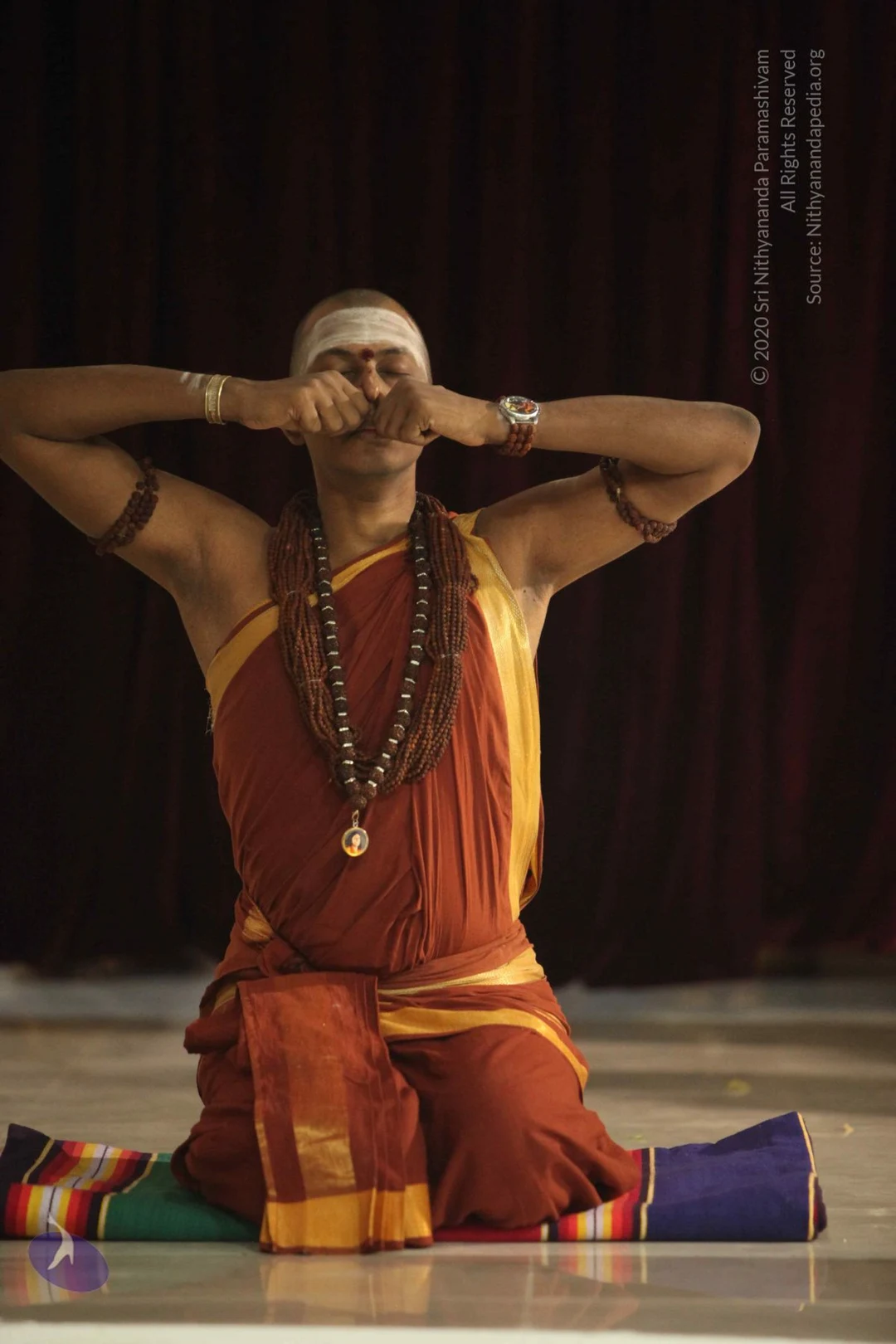
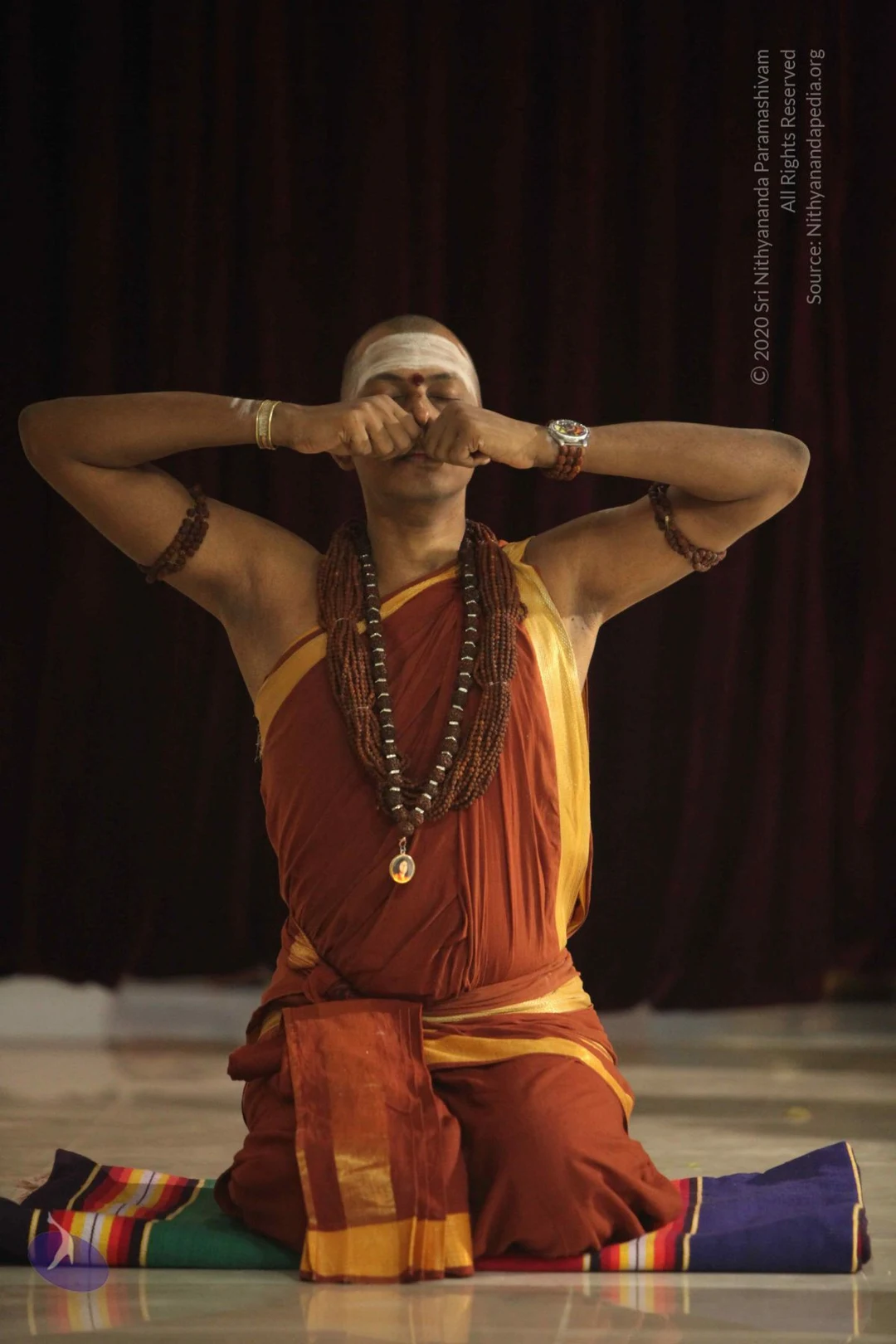
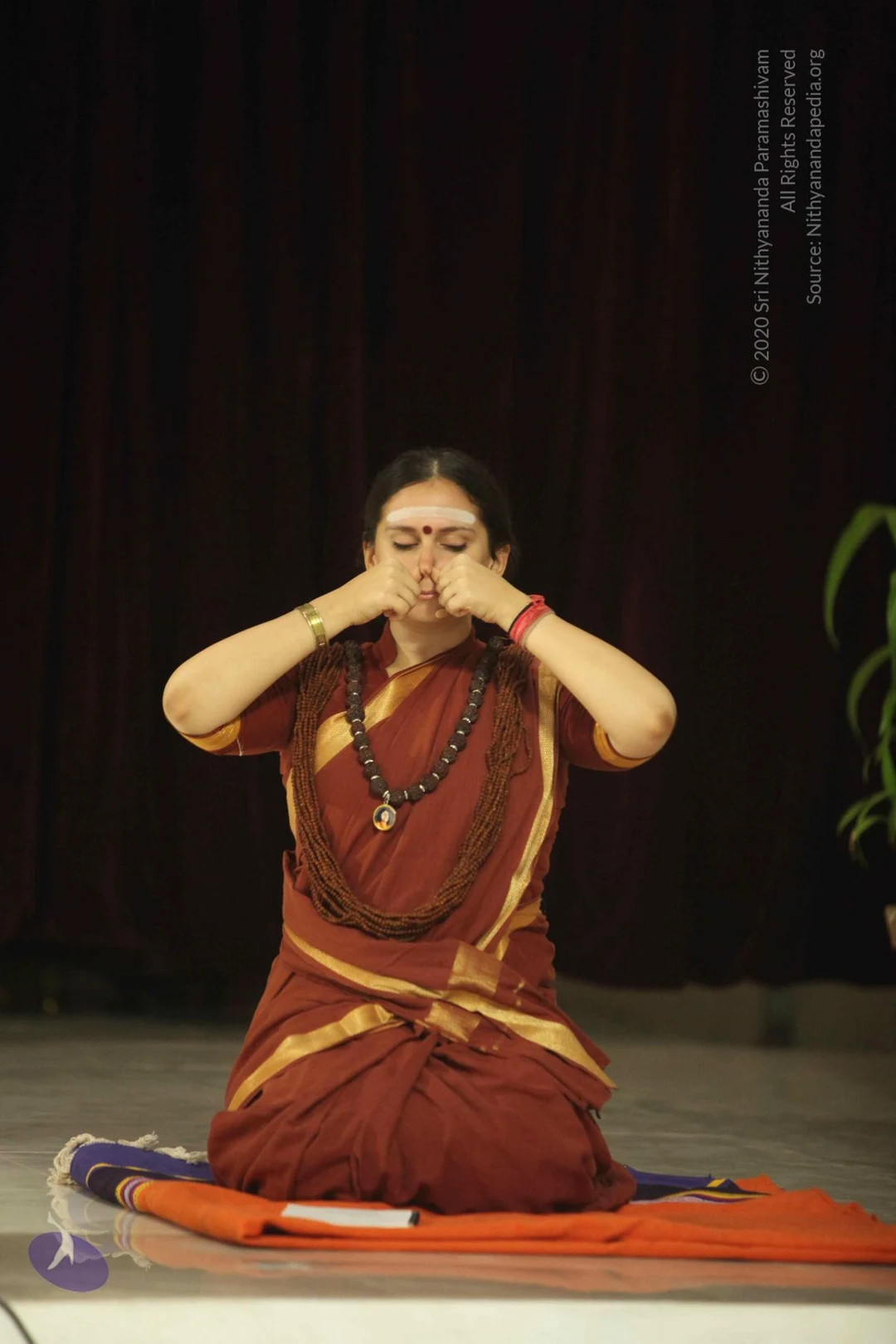
I request and recommend all My disciples and followers, go back to the original source, Yogic literatures, Vedic literatures, as I was telling, don’t bother about the controversies, let us not waste our time in trying to answer, pass opinions, it’s waste of time. Neither I am a politician who is supposed to convince anyone, nor you are practicing Yoga for the sake of some reason of convincing somebody or the way somebody is convinced. You are a seeker who wants the truth, I am a Master here to share the truth with you, that’s all. And the great masters spelled out everything, how to close your nose to how to inhale, every step is described by the great Masters Adiyogi Mahadeva and Svatmarama, Goraknatha, Matsyendranatha, Patanjali, when they have spelled it out clearly, what;s the need for going anywhere? So time tested, fool proof, no expiry date, Yogic literatures and Vedic scriptures are still available, why waste time, let’s be aligned to that and enjoy! Realize our full potential, even this third eye awakening, many powers associated like blindfold reading, all these are from the original Yogic scriptures. These siddhis (powers) manifest when you practice yoga from original scriptures; I request all teachers to use this as a touchstone, measuring scale, for any step, whether bending the body or blowing the nose, asana or pranayama, visualization or meditation, go back to the original source, original scriptures, original instructions and practice it, get benefitted by it.

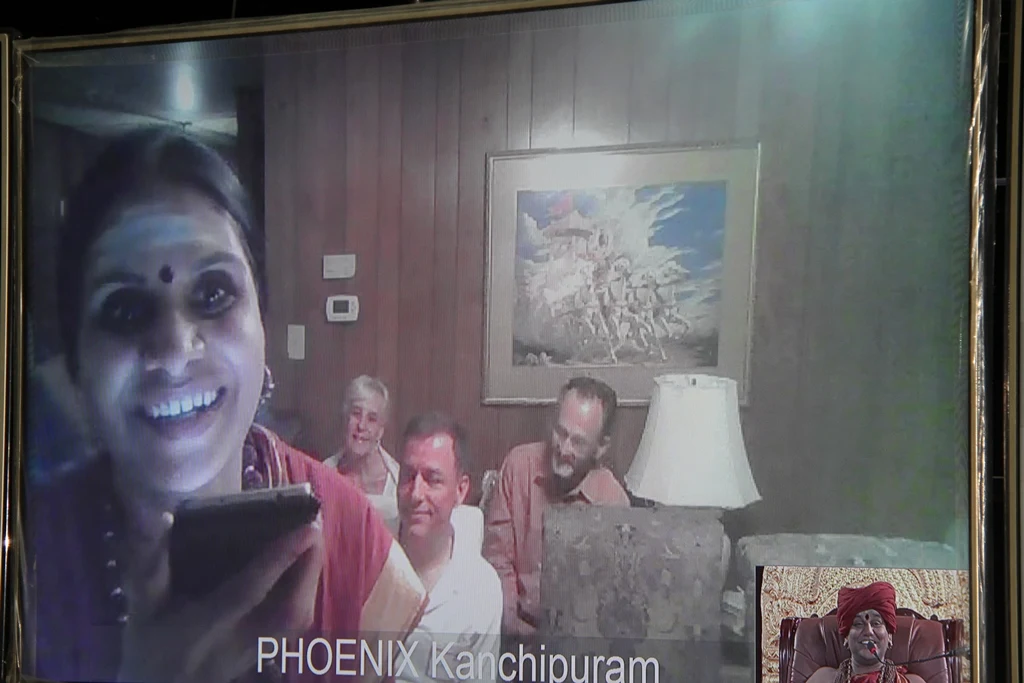
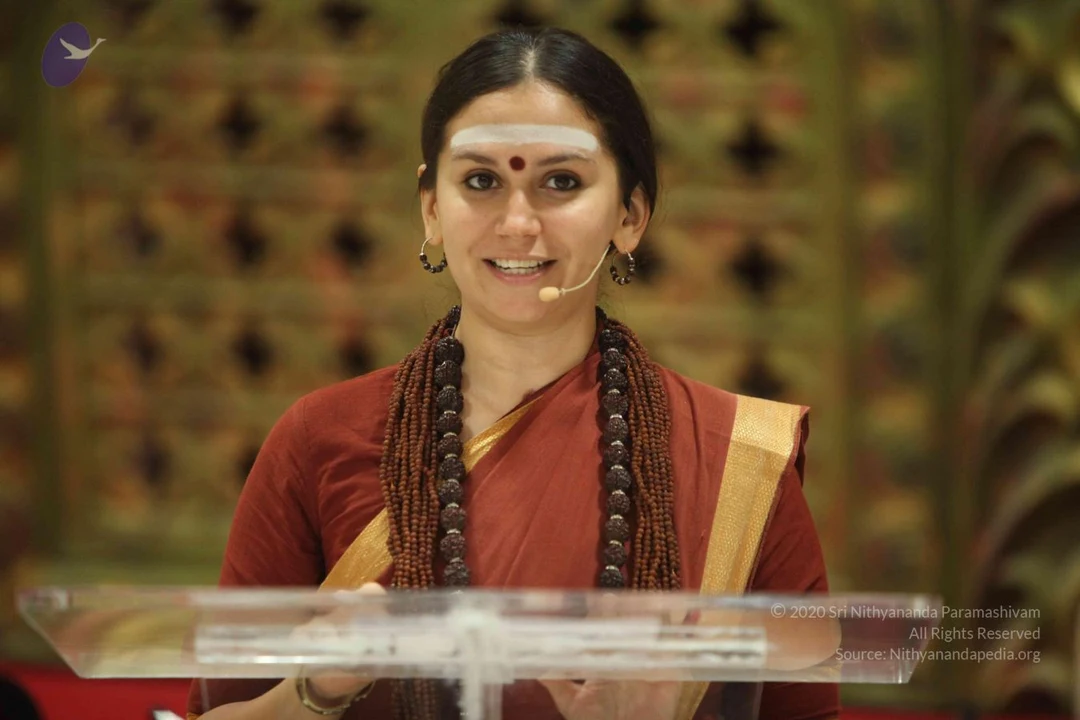
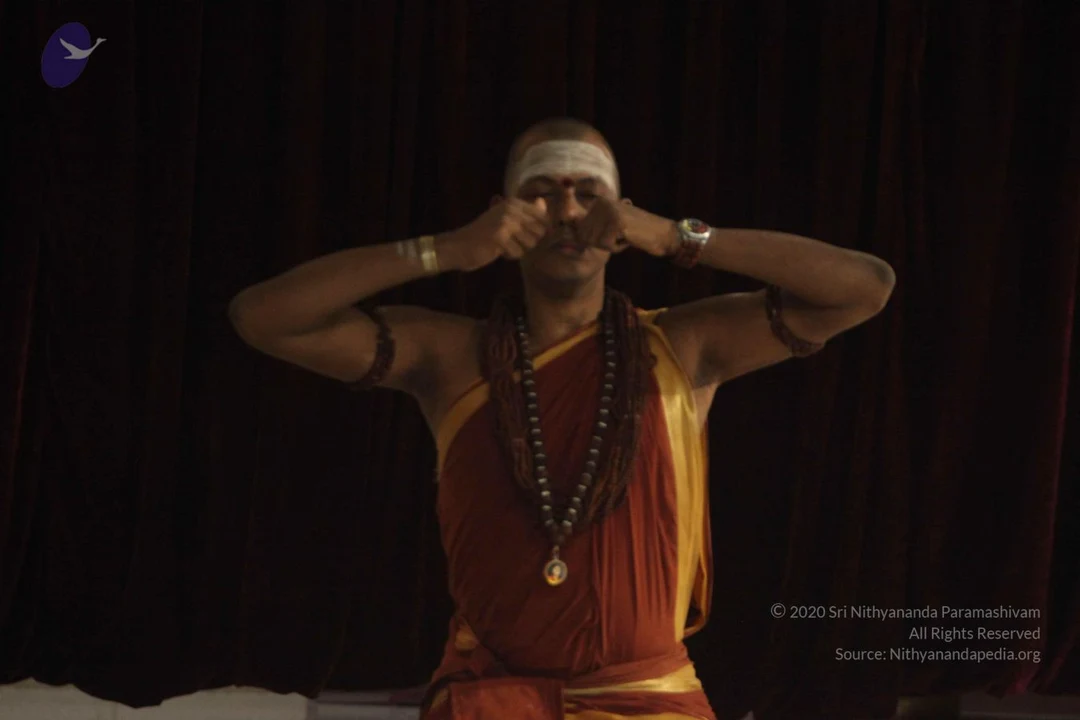
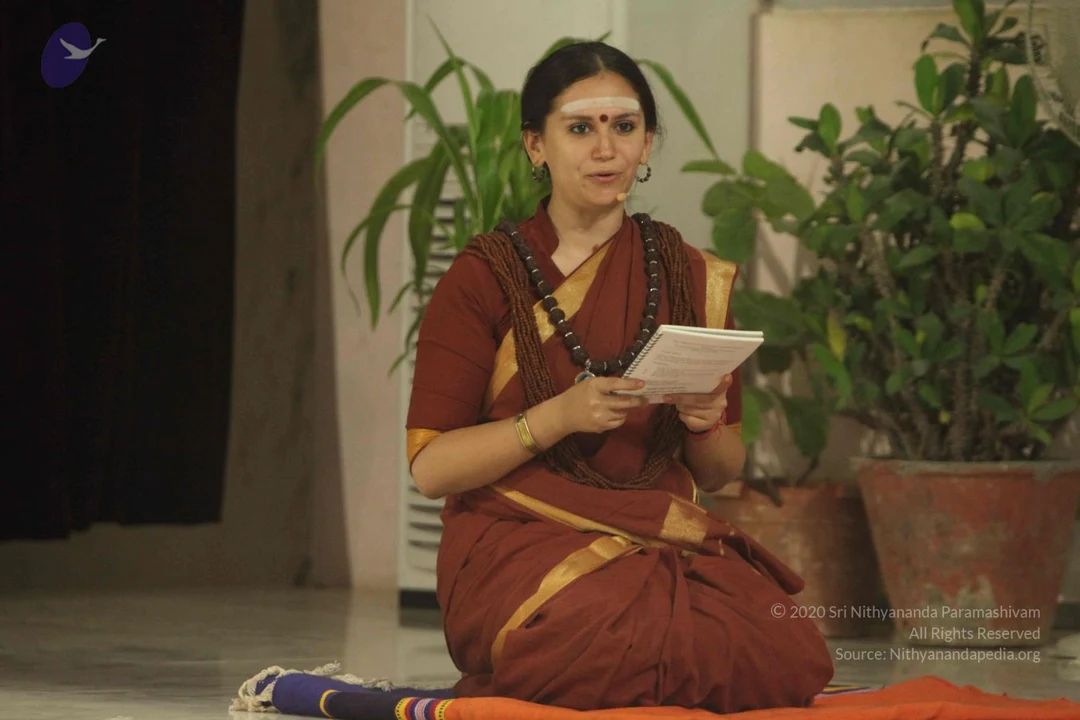
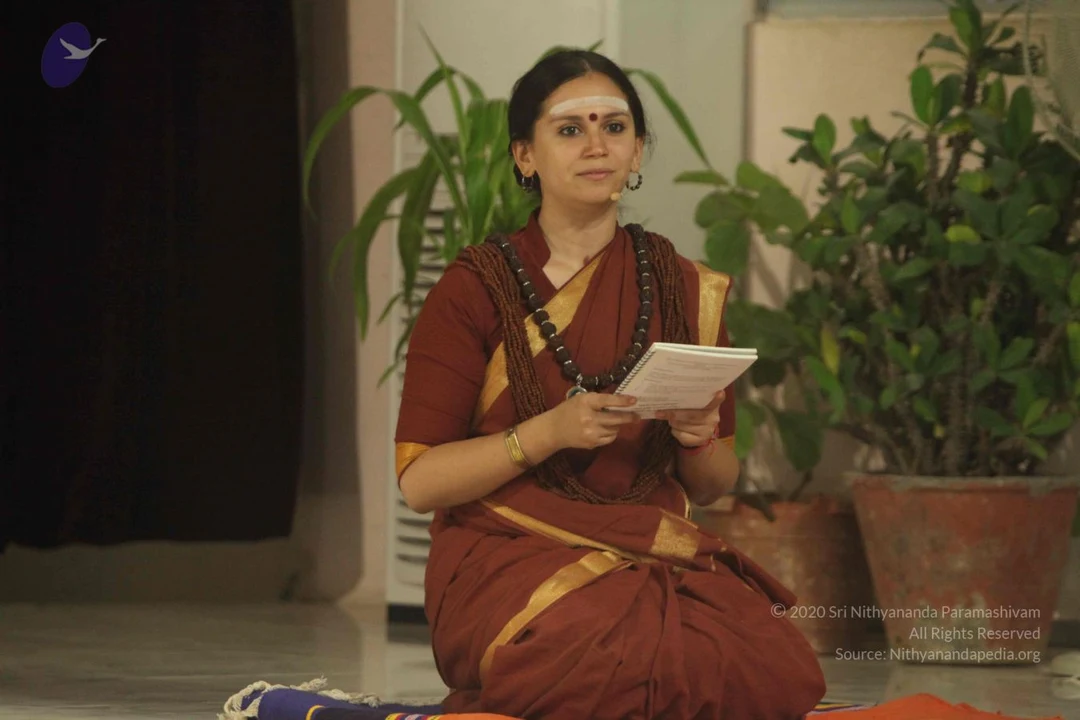
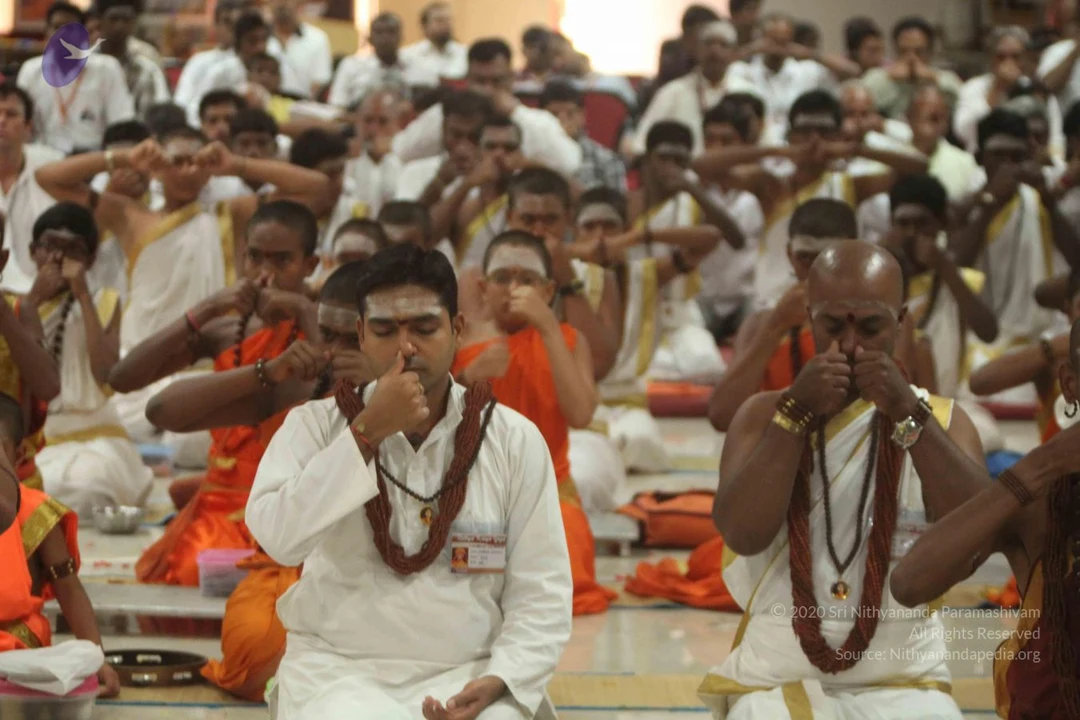
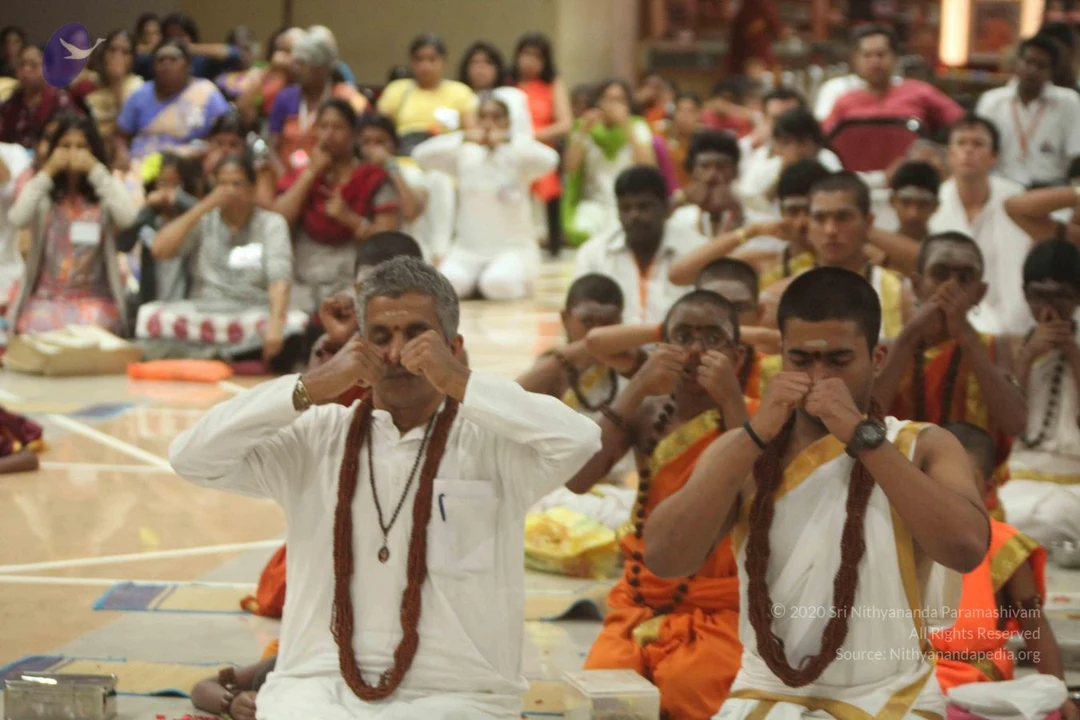
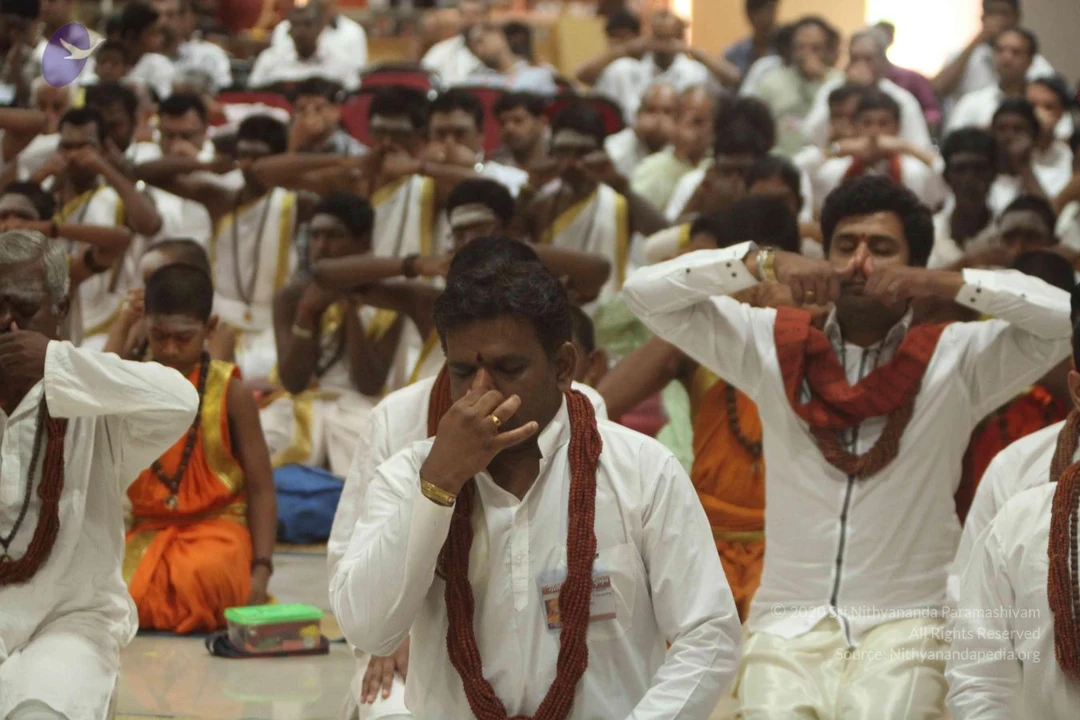
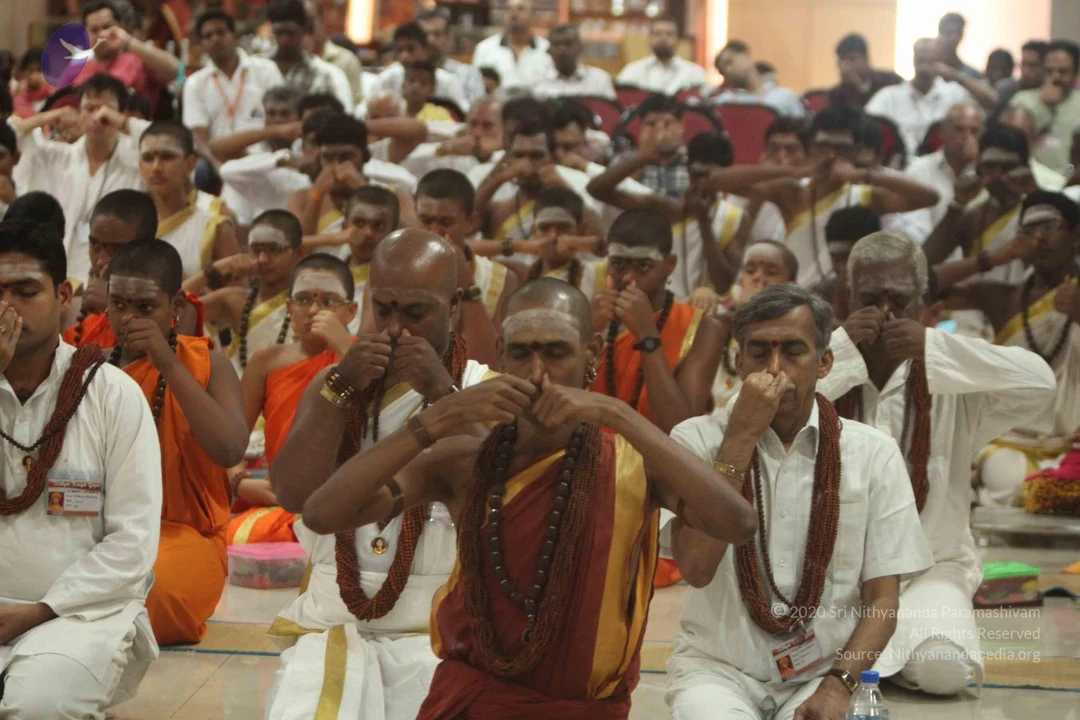
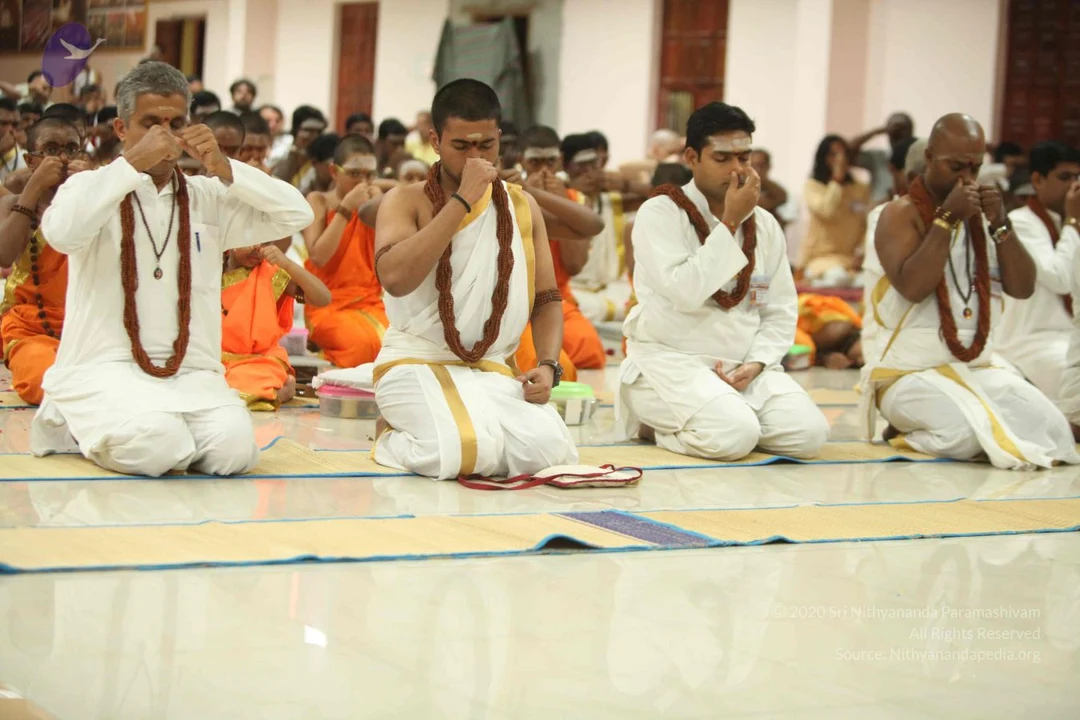
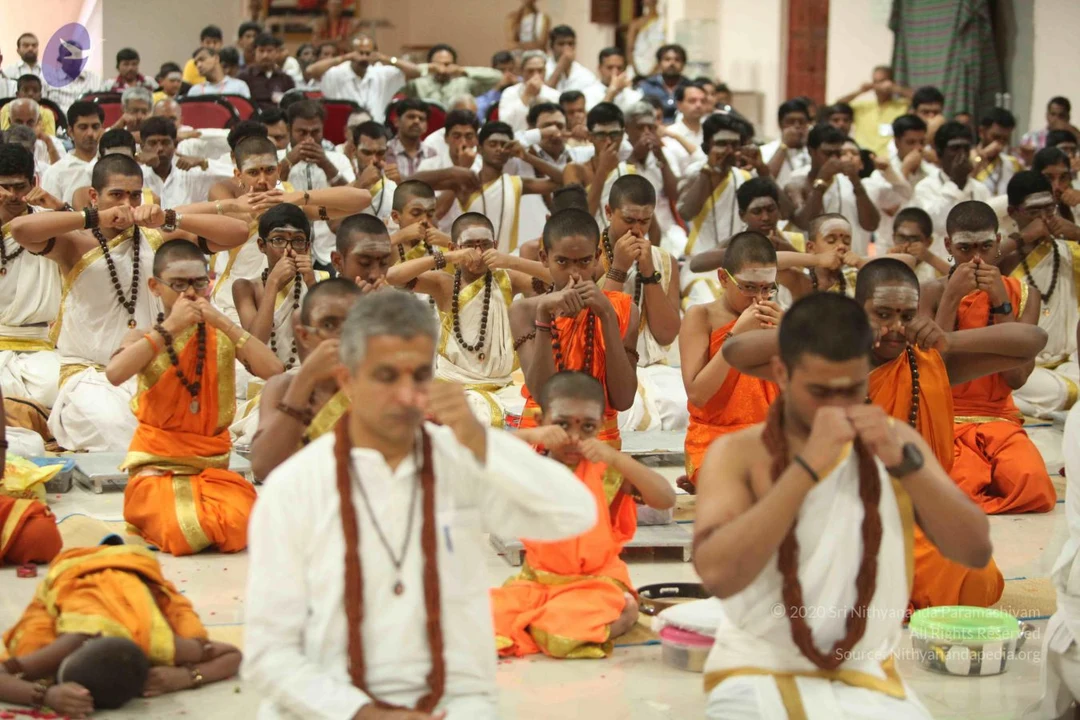
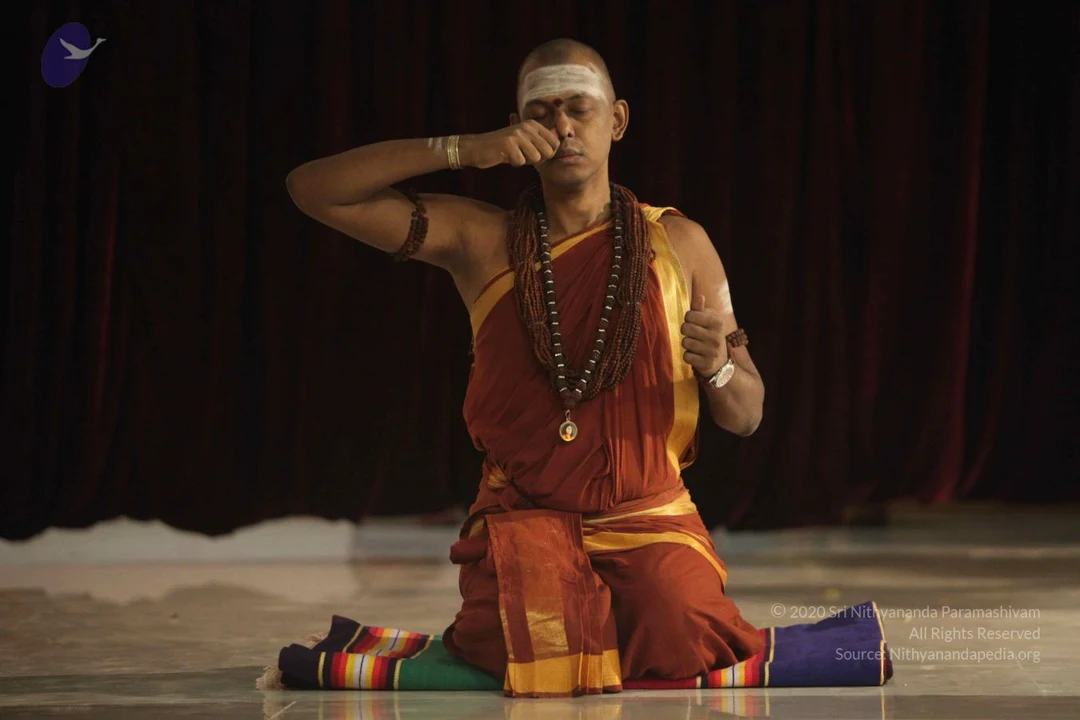
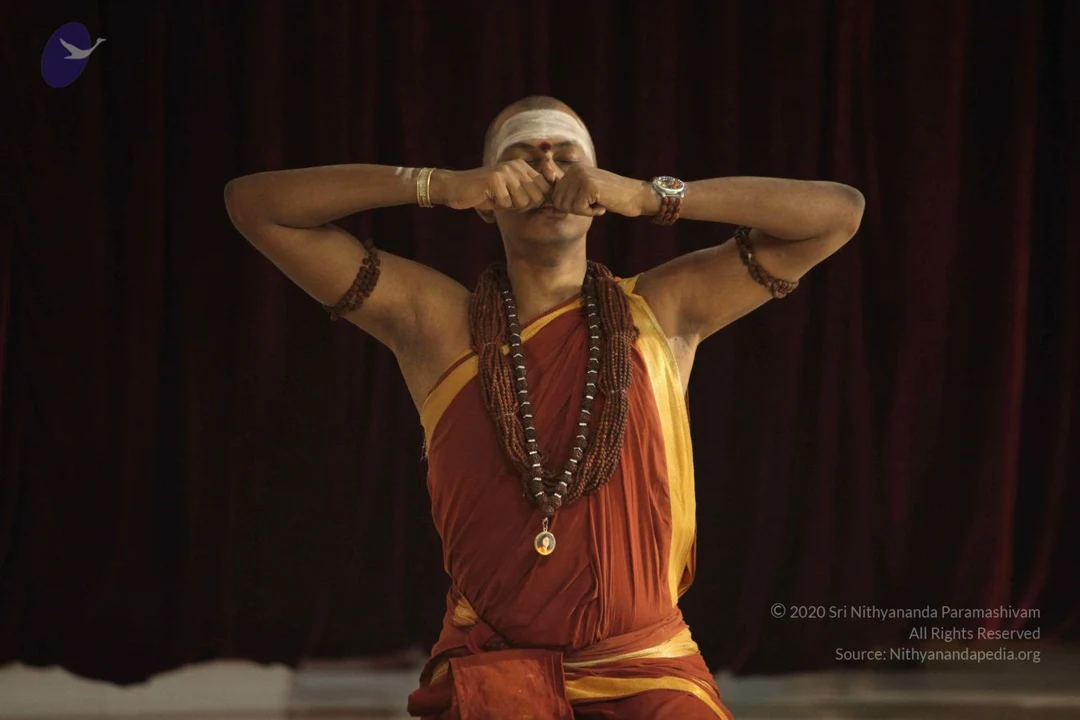
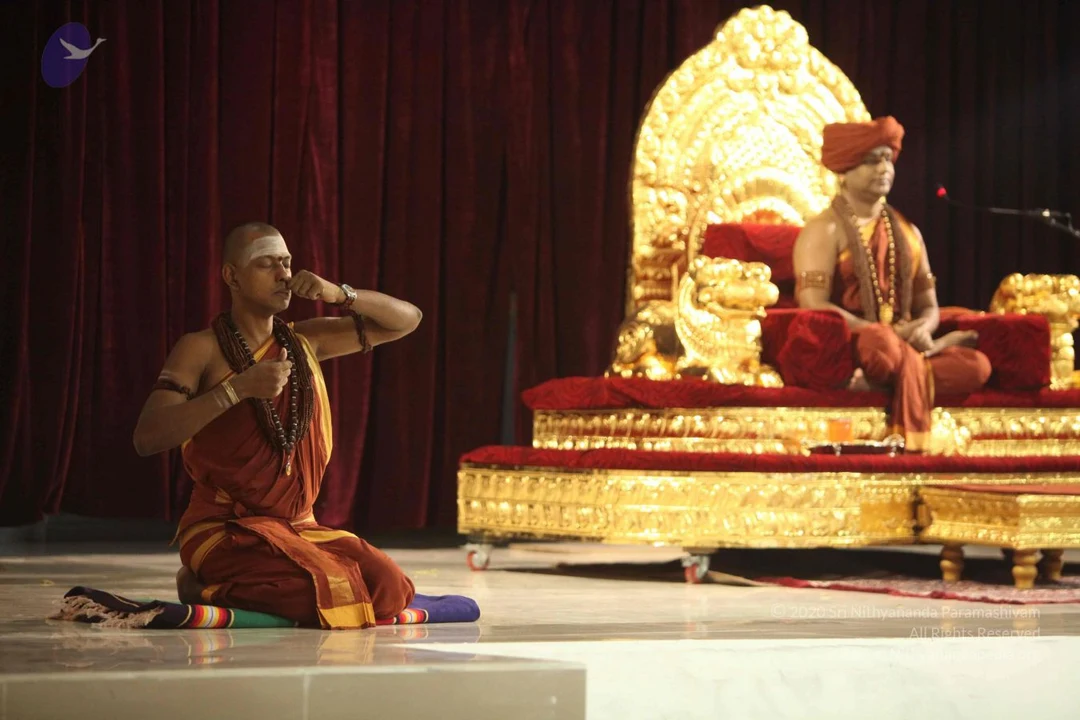
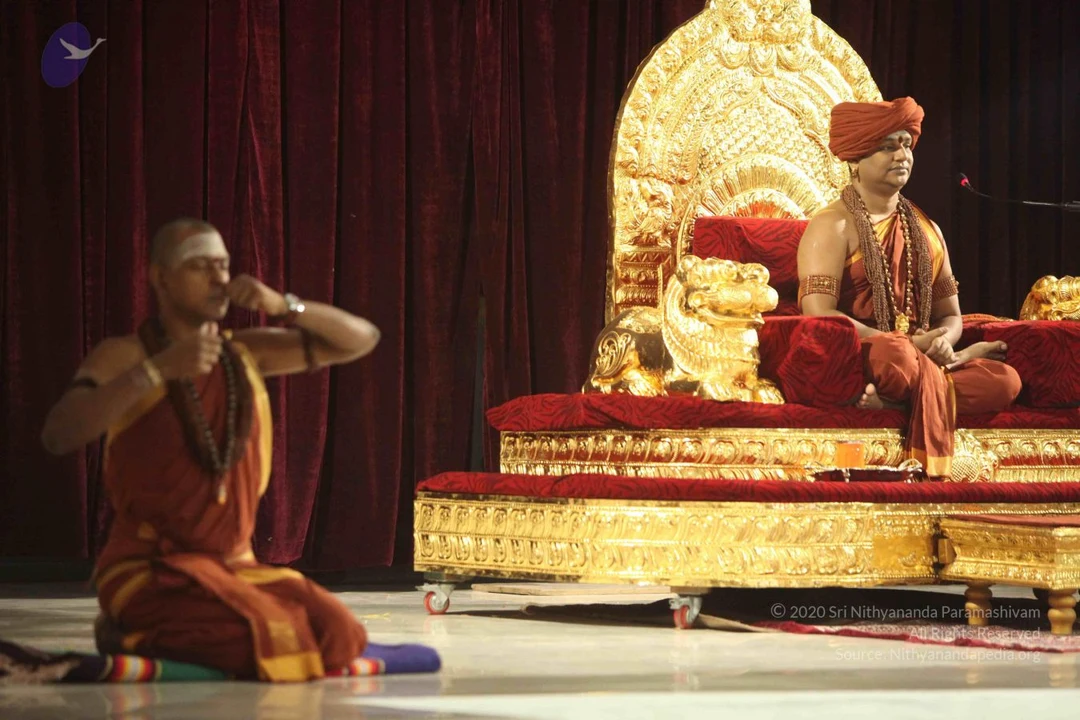
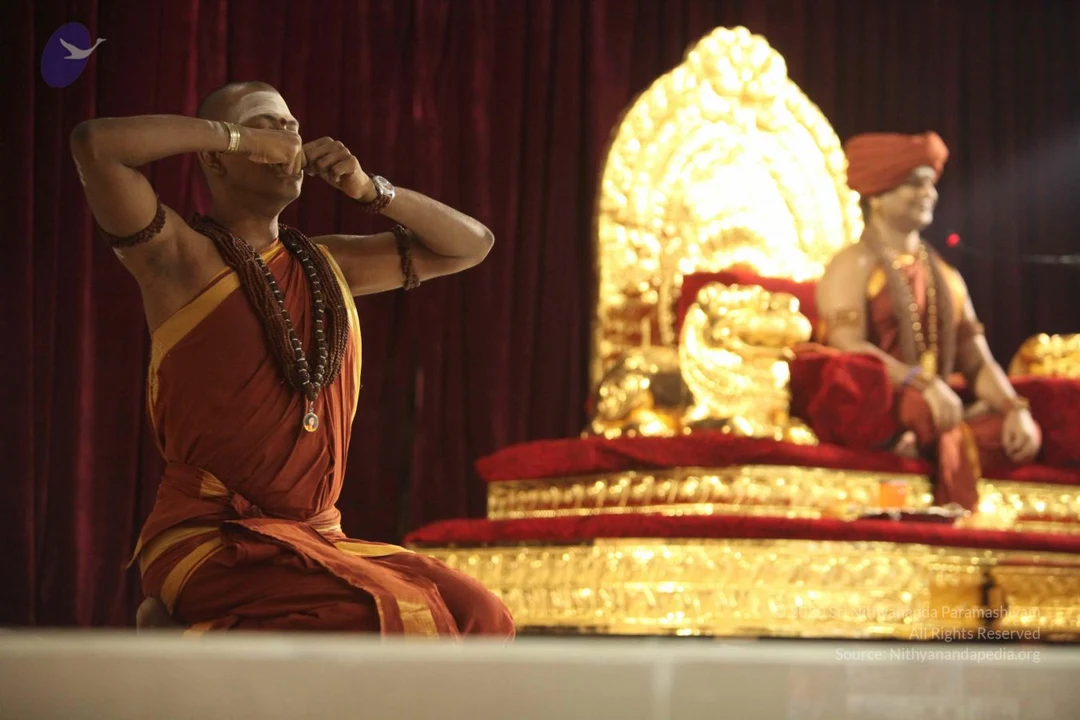
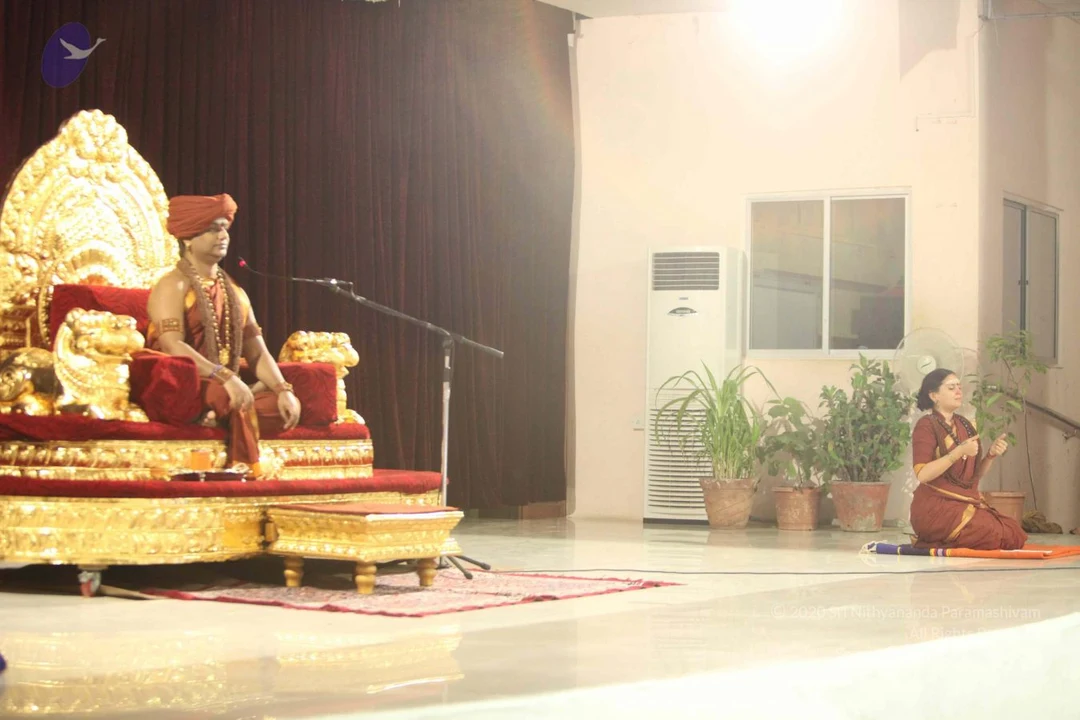
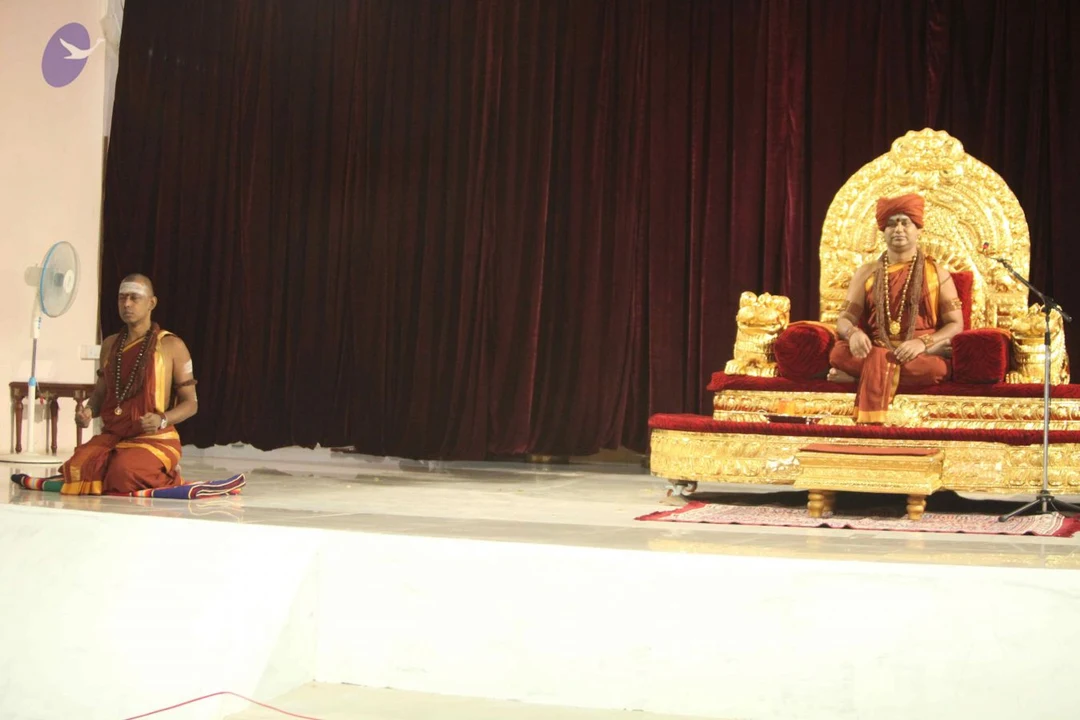
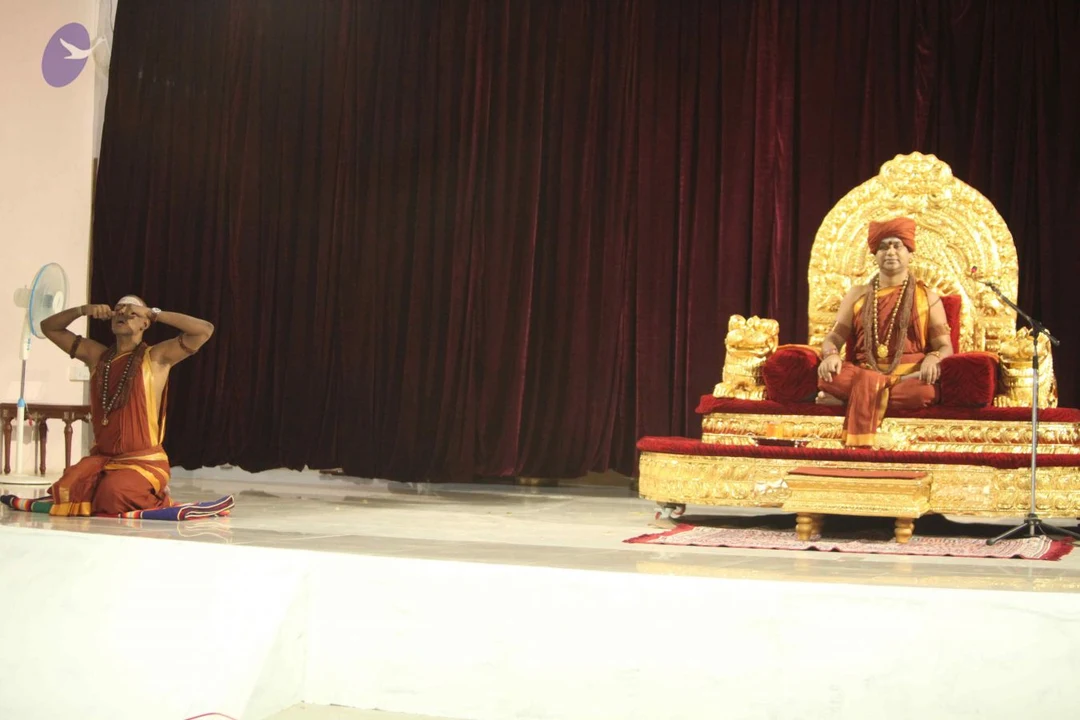
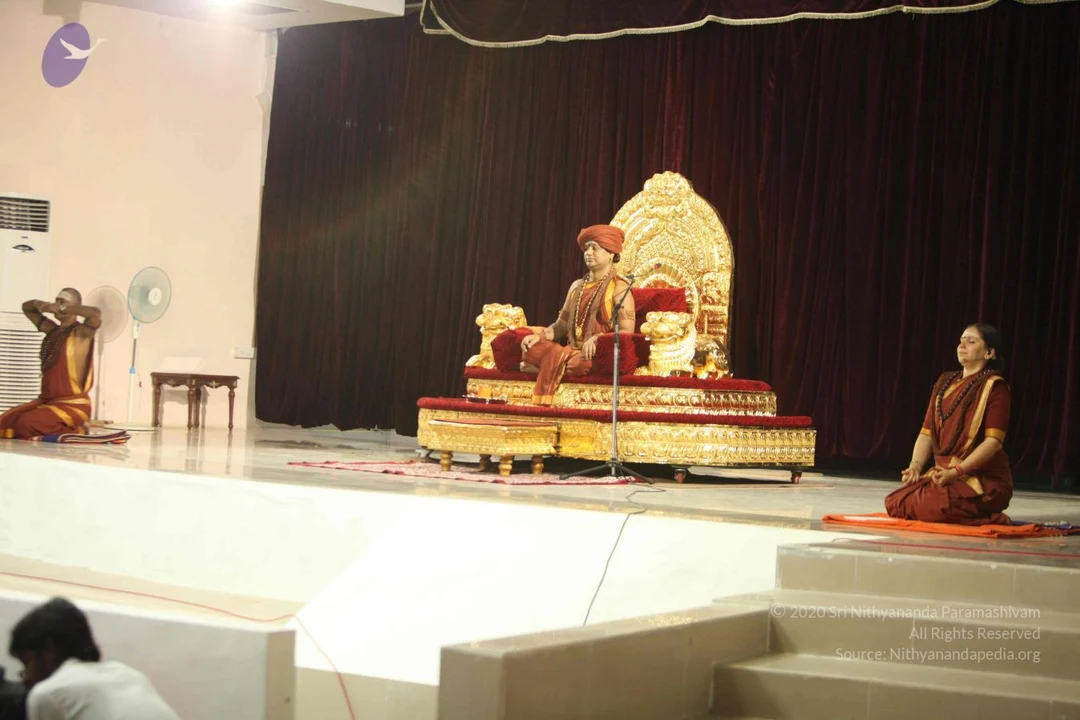
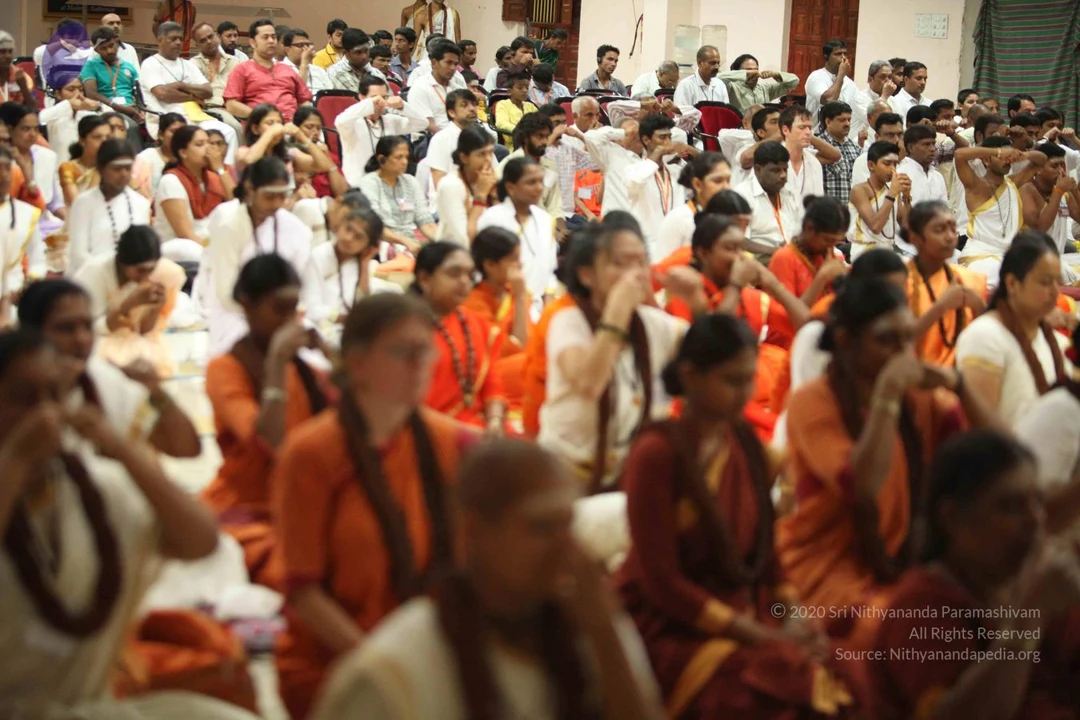
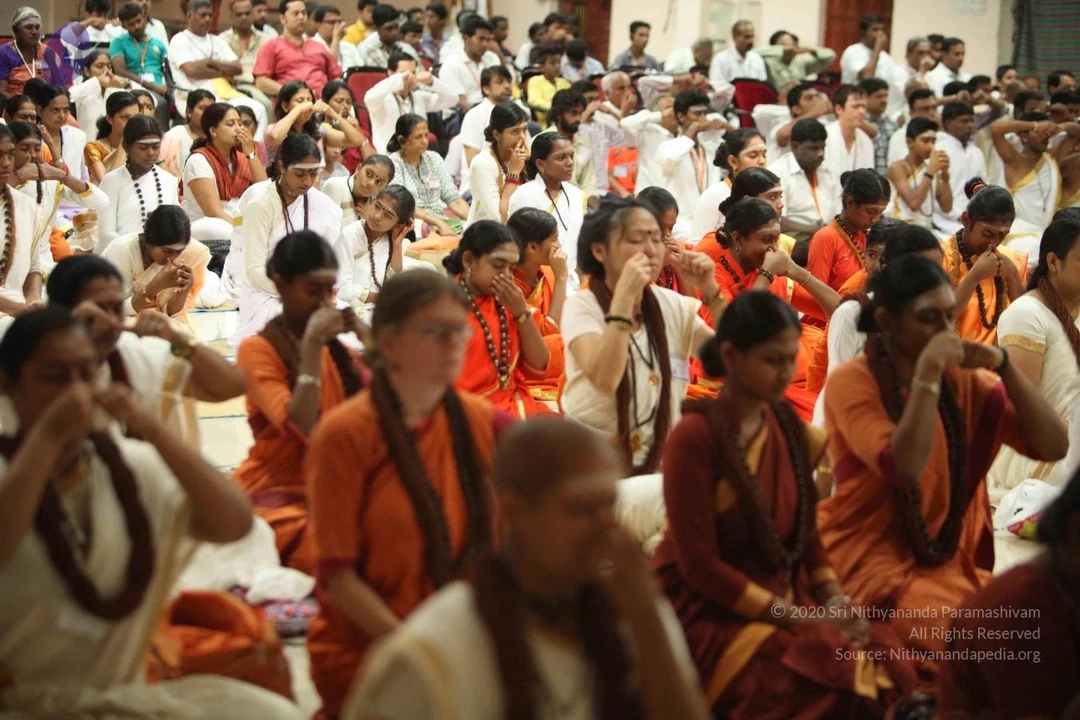
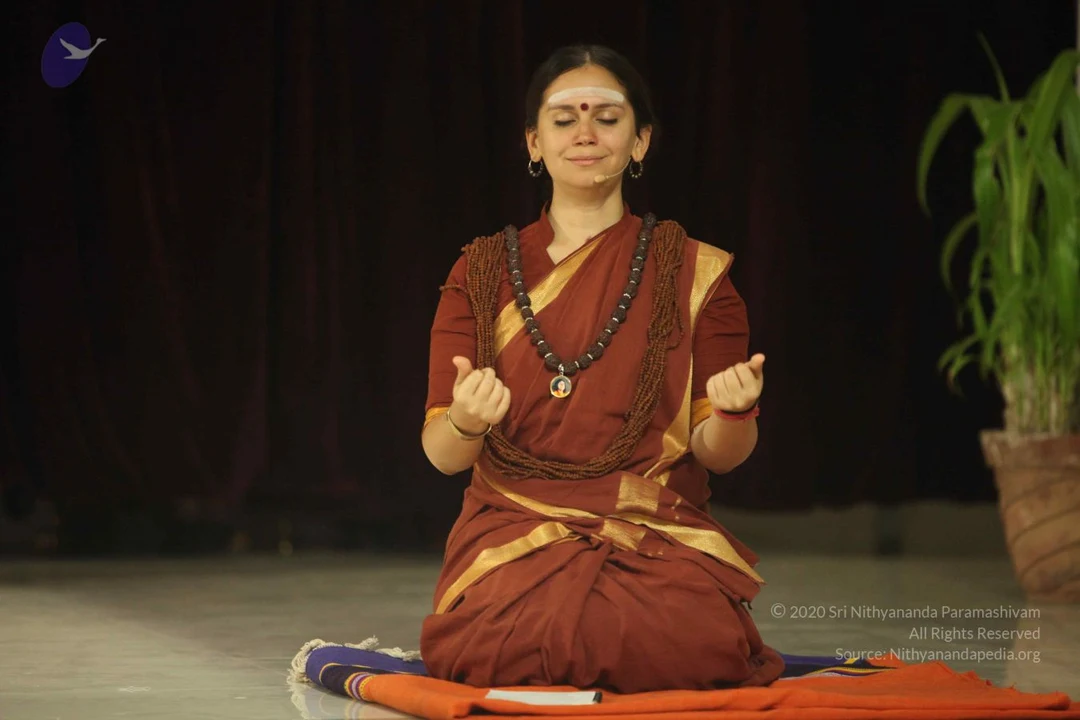
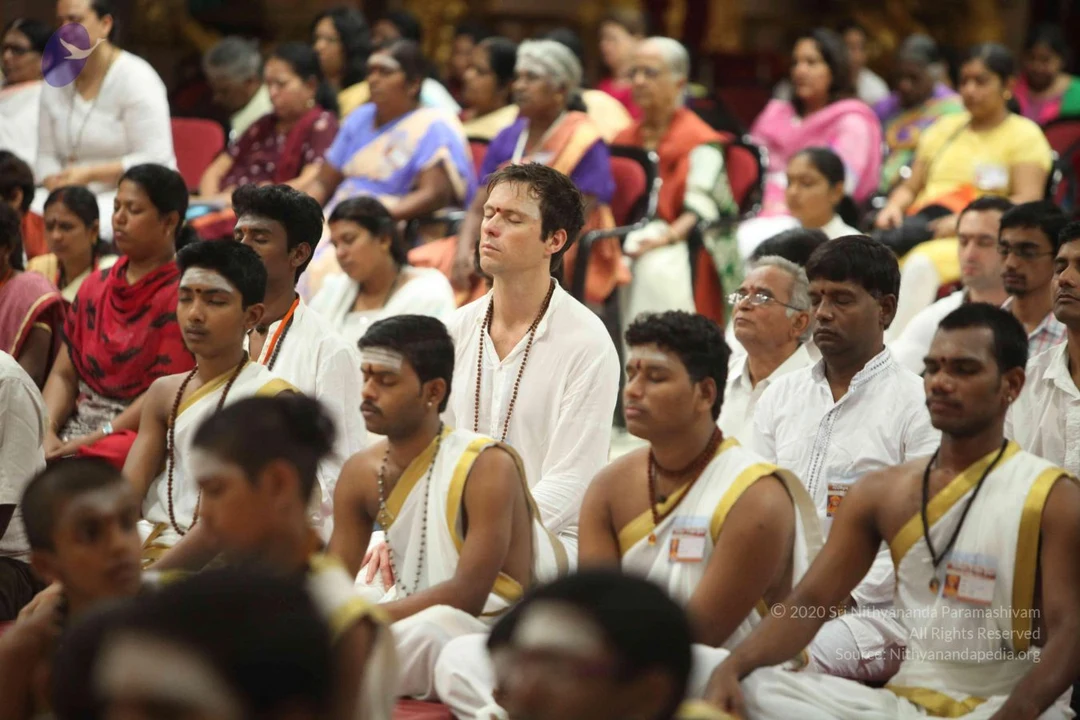
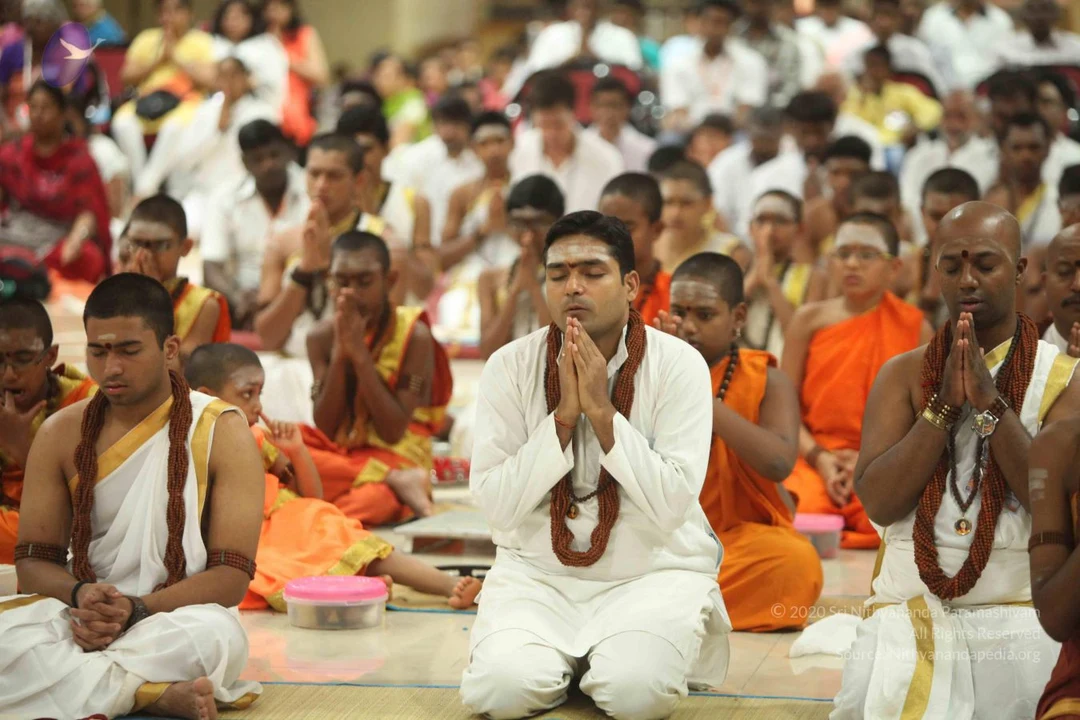
So with this, I invite Ma Yoga to take over and lead us into Nithya Kriya for Inner Peace.

Photos From The Day:
Photos Of The Day:

yogawebinar-yogaday

dharshan

Darshan

Darshan

Photos Of The Day:

EOS5D

DCIM

Photos Of The Day:

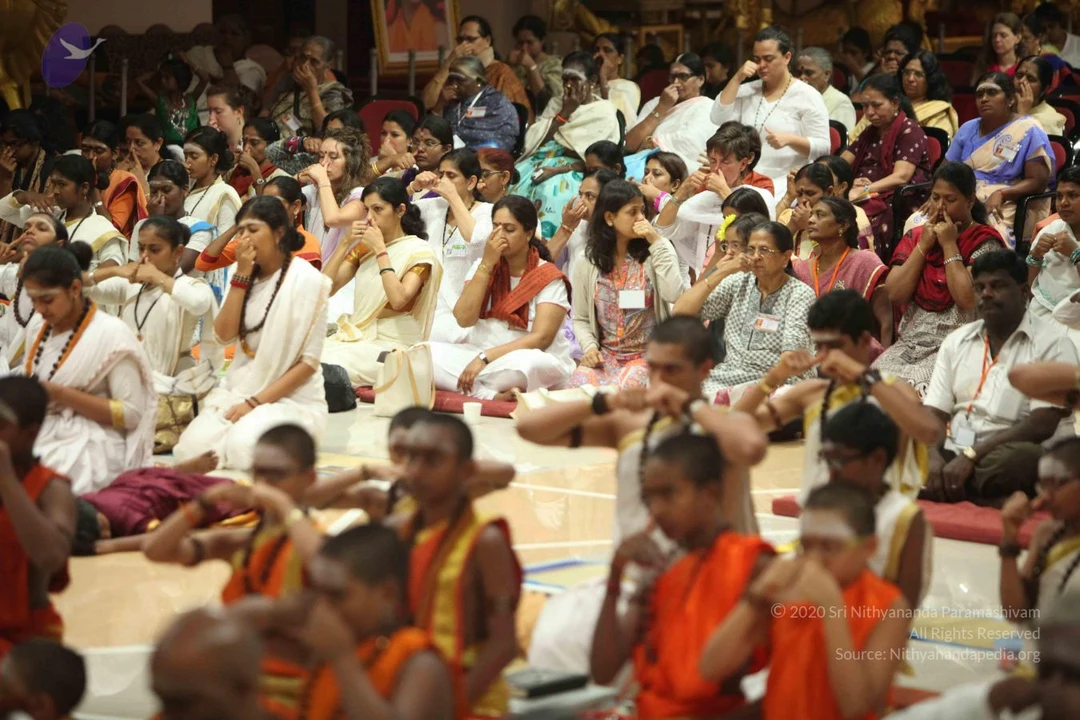
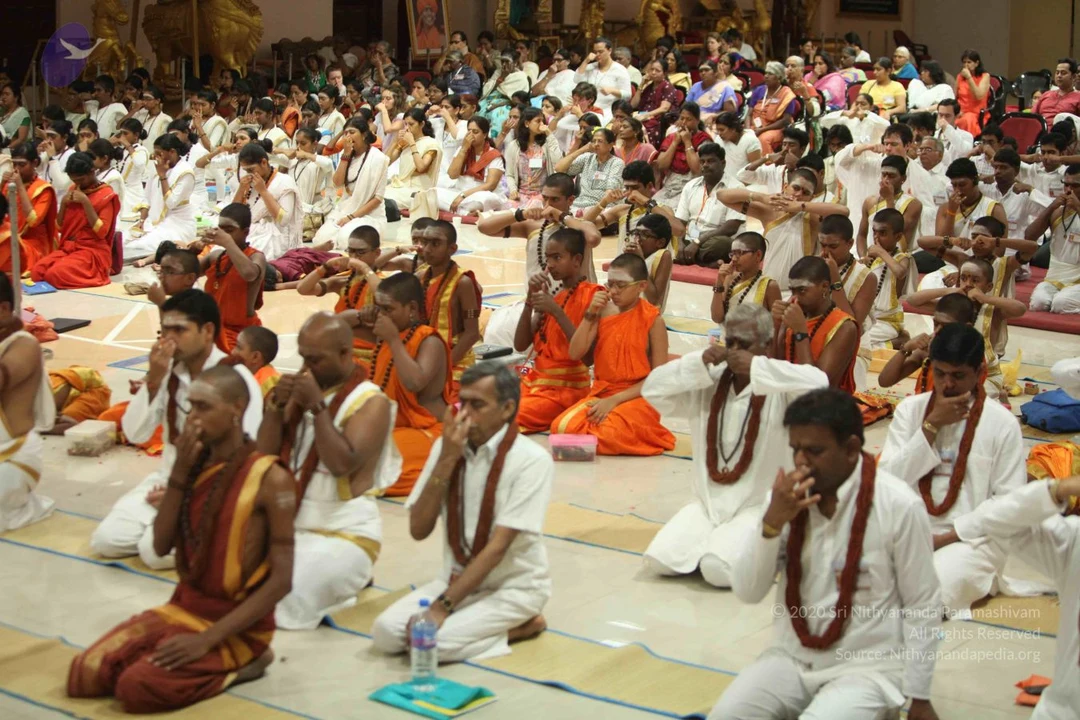
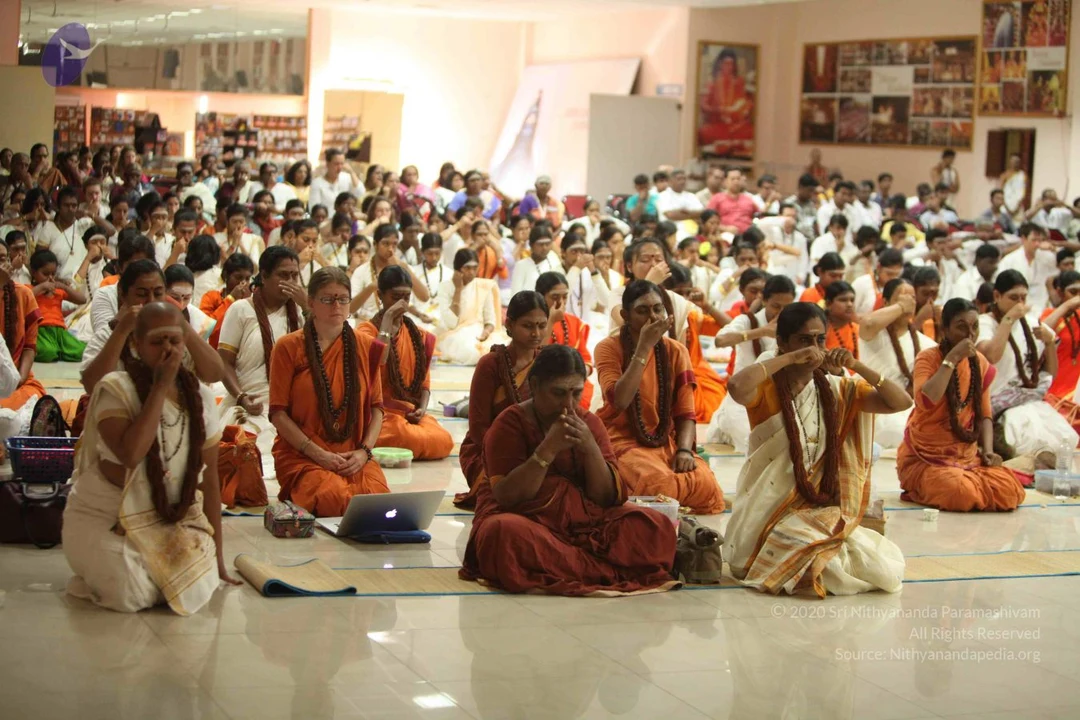
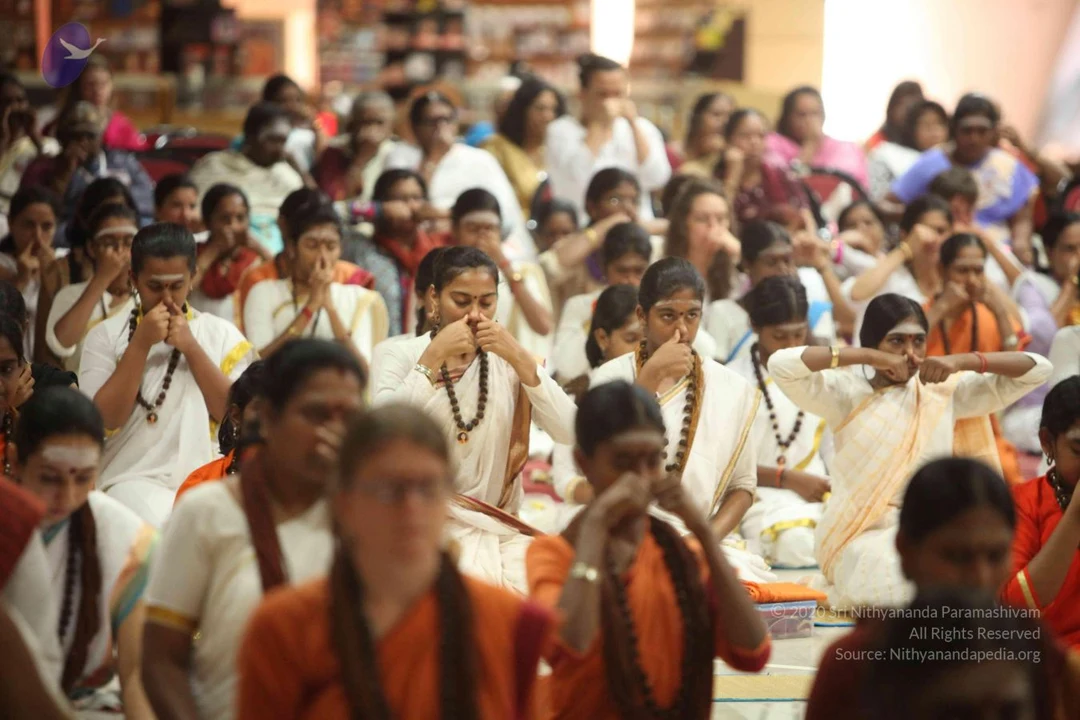
NKY

Photos Of The Day:

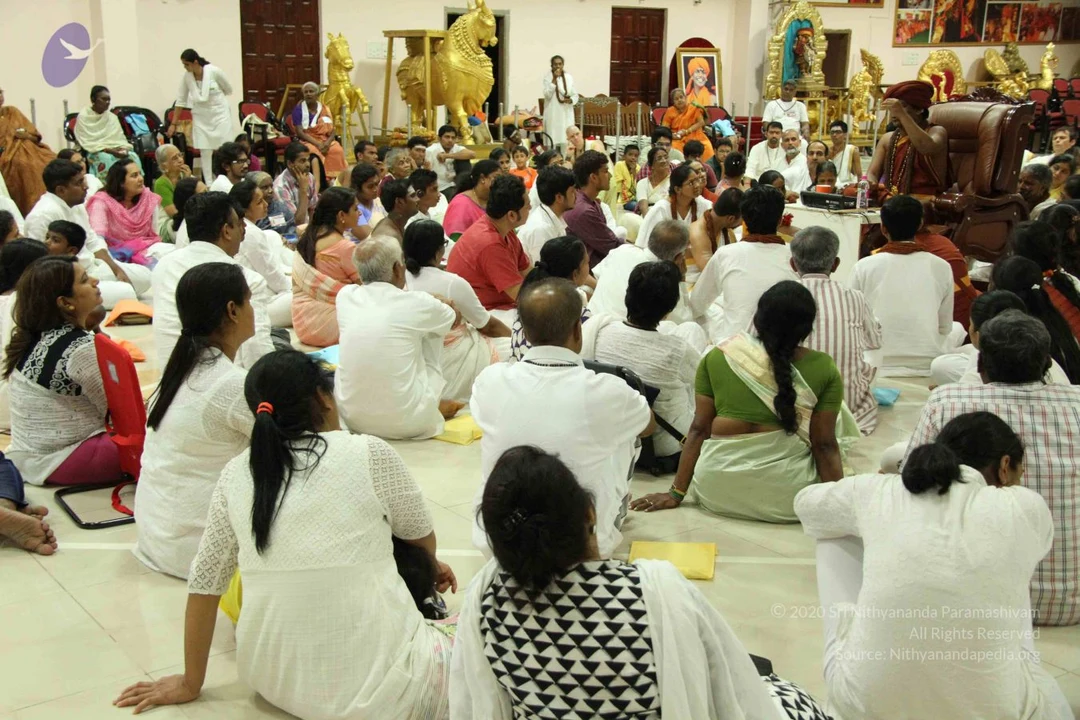
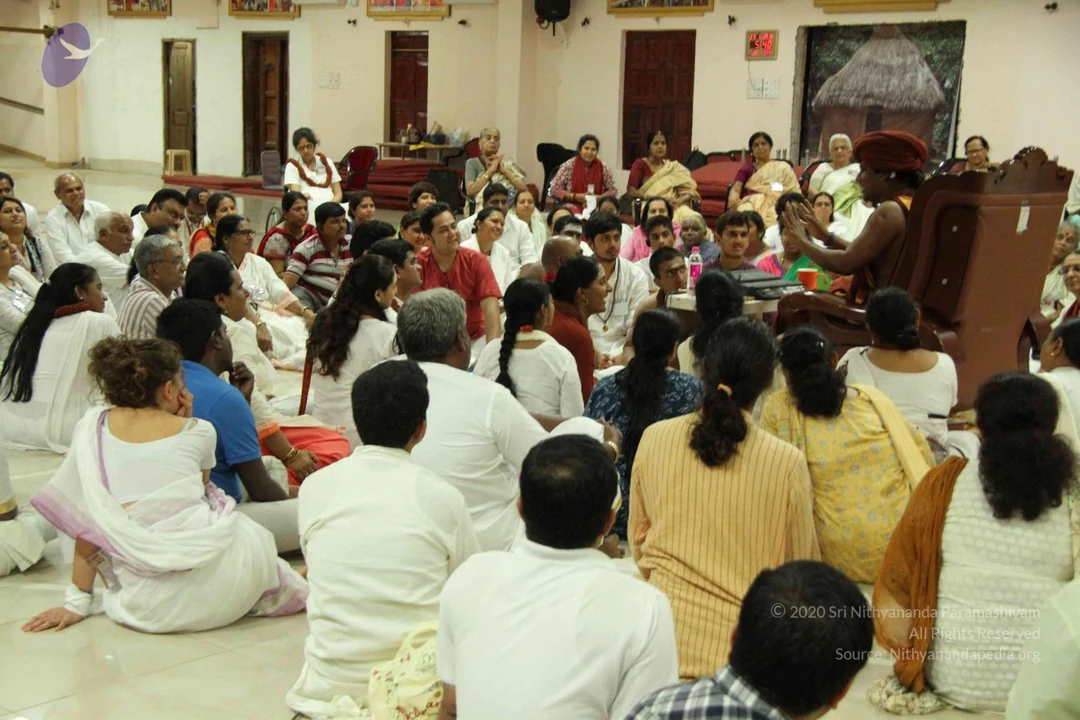
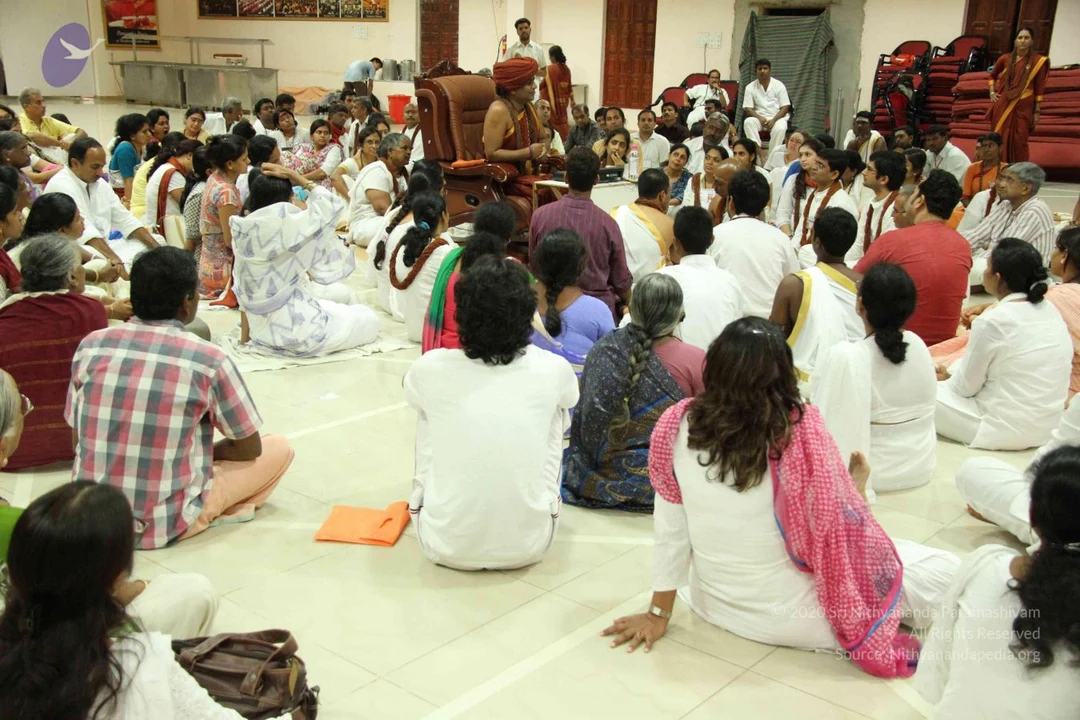
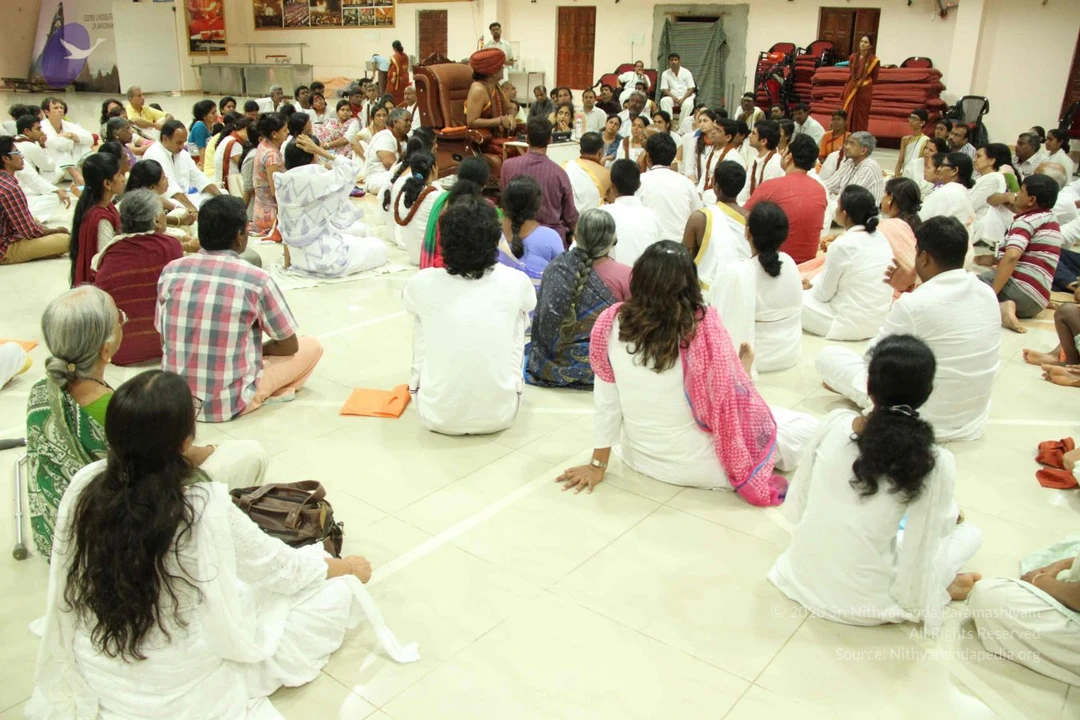
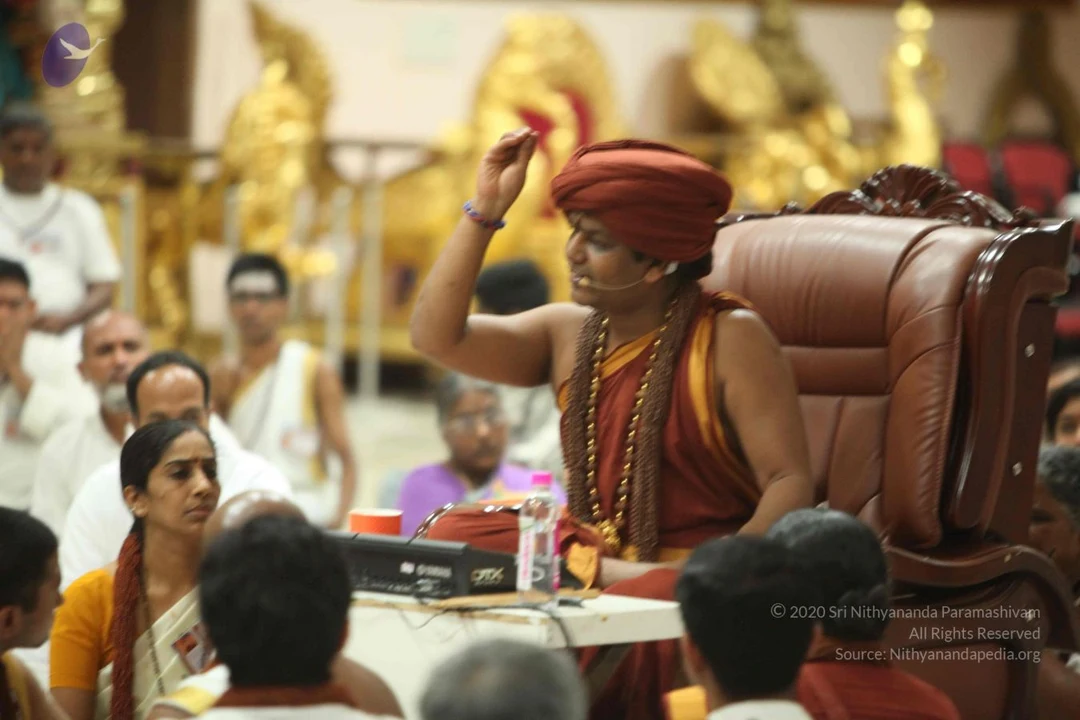
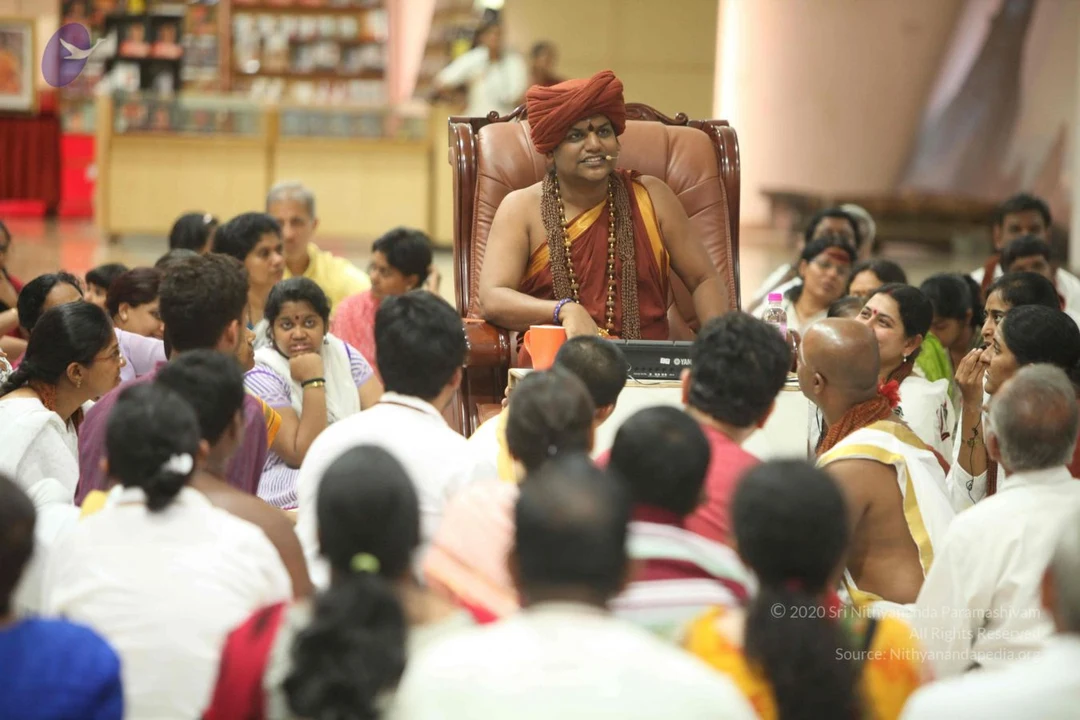
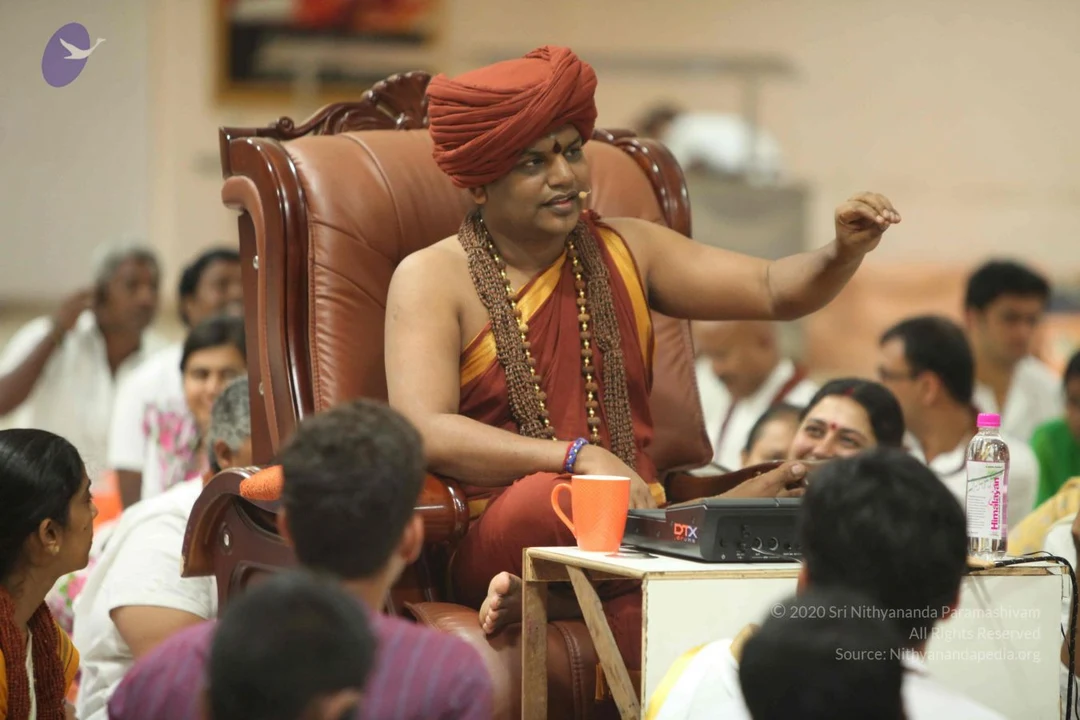
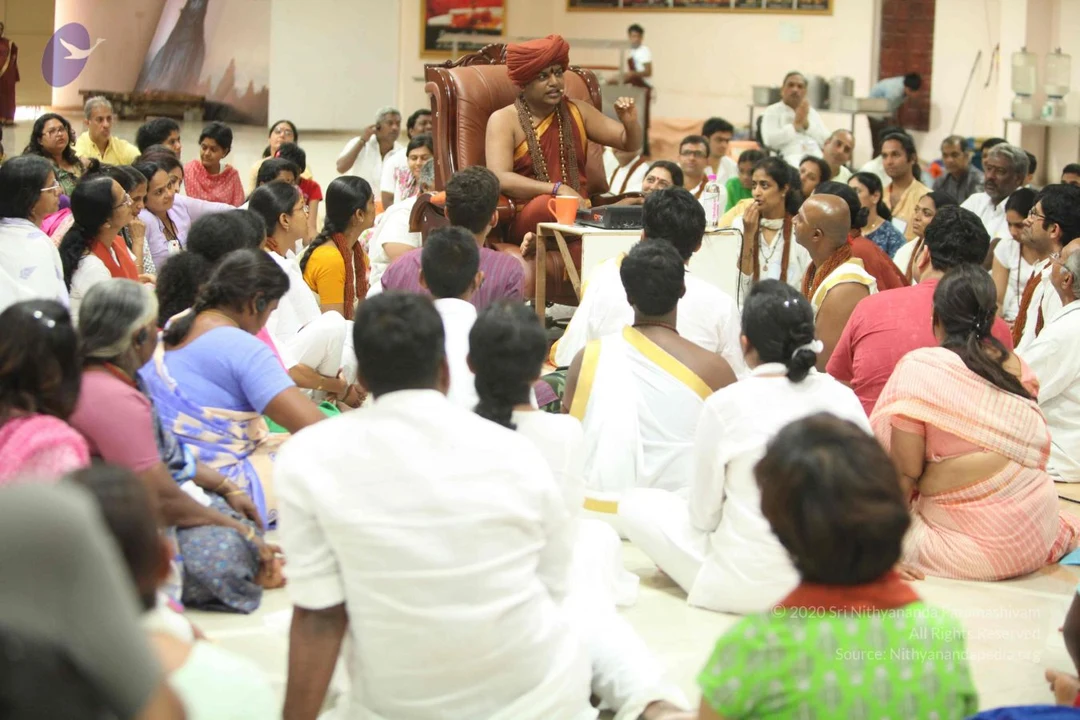
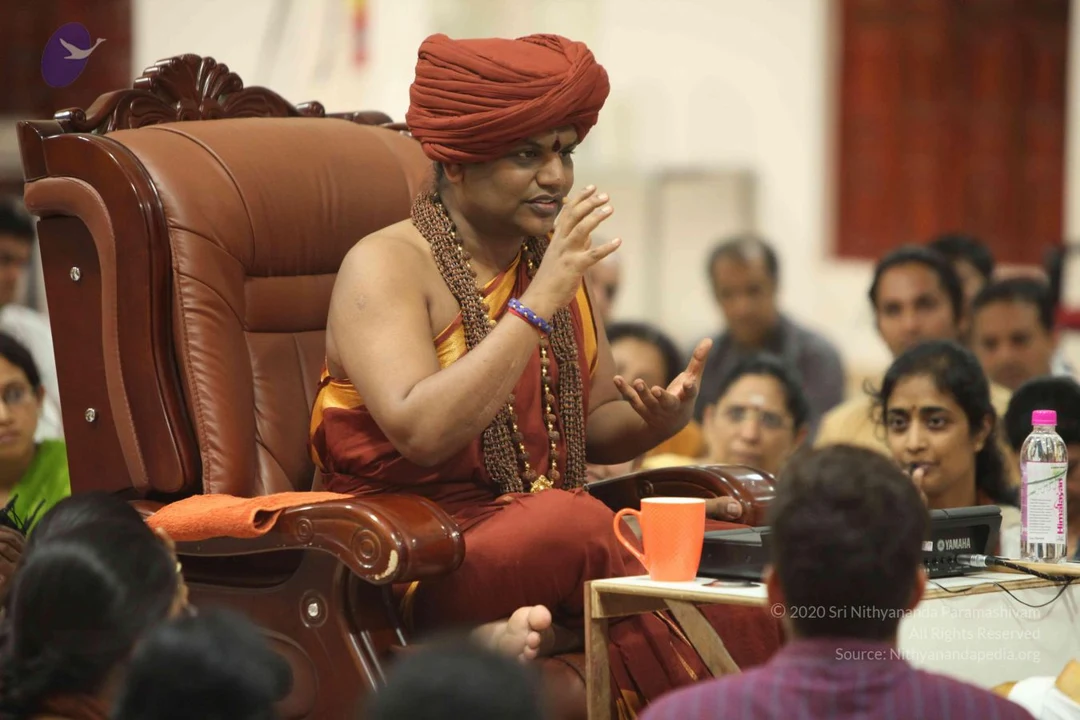
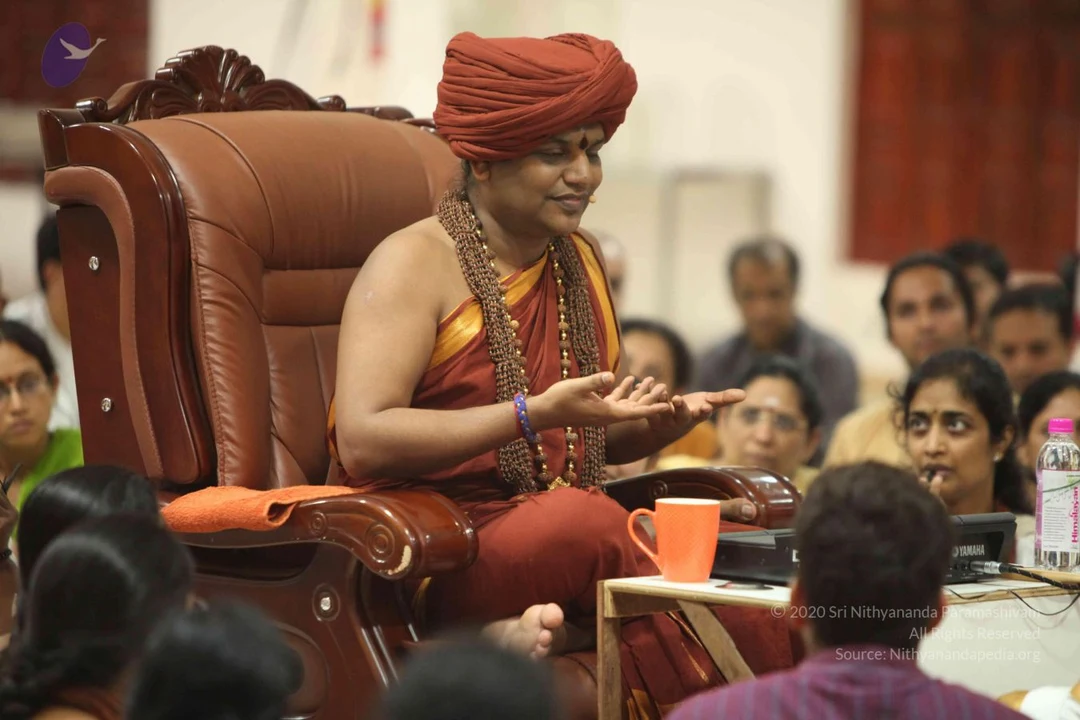
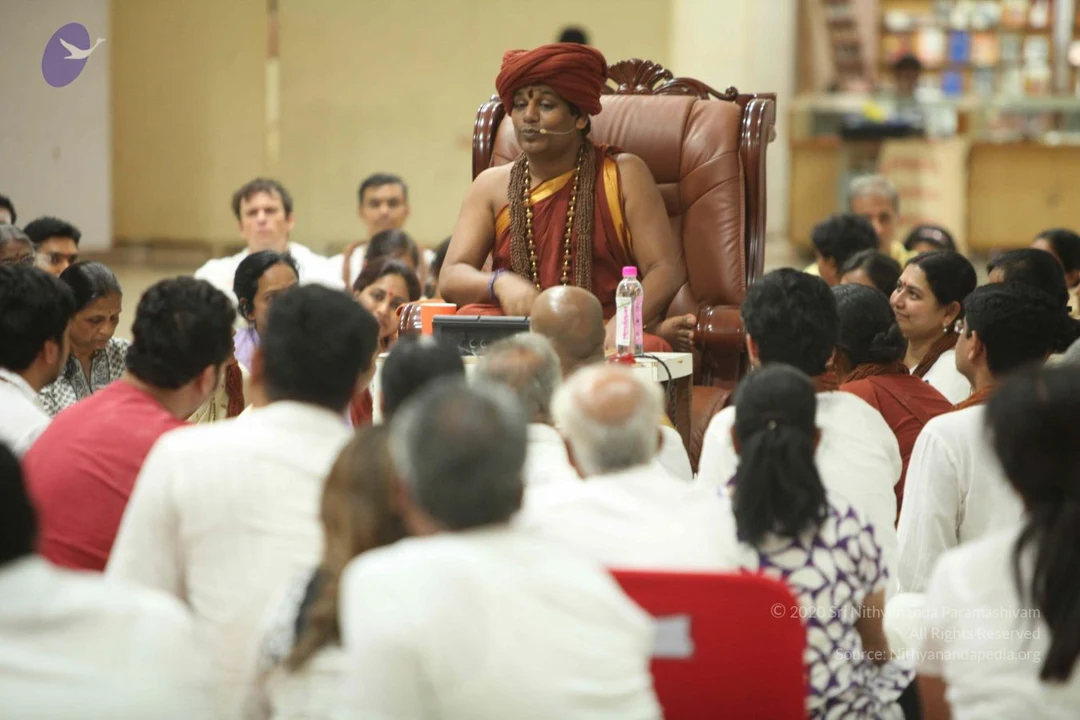
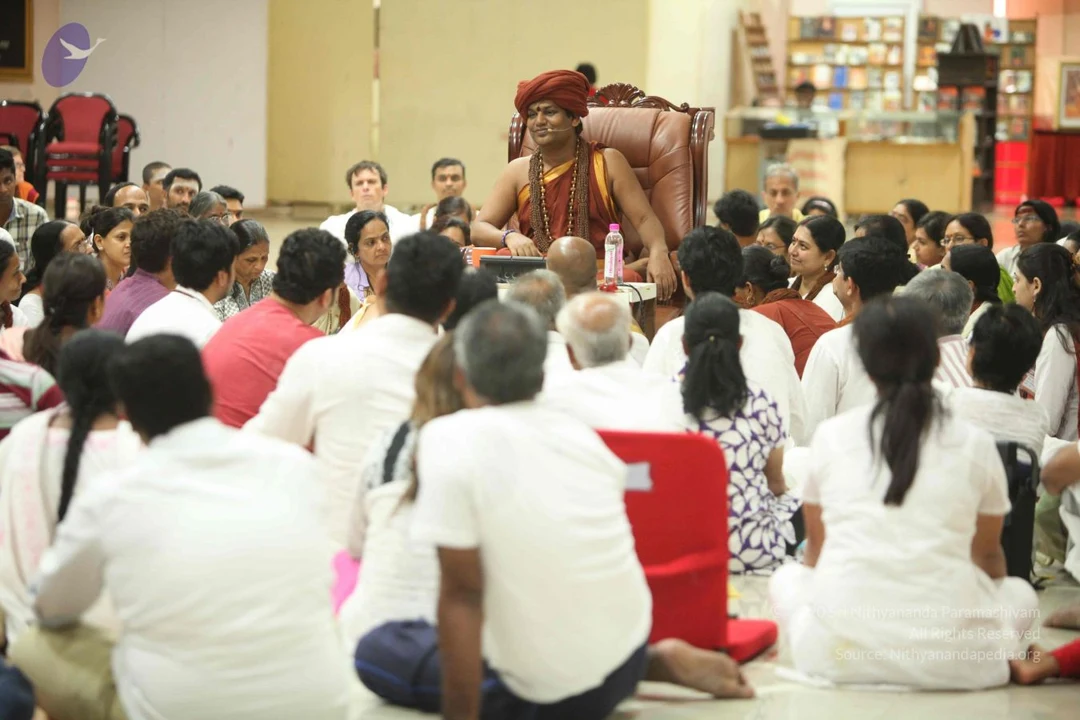
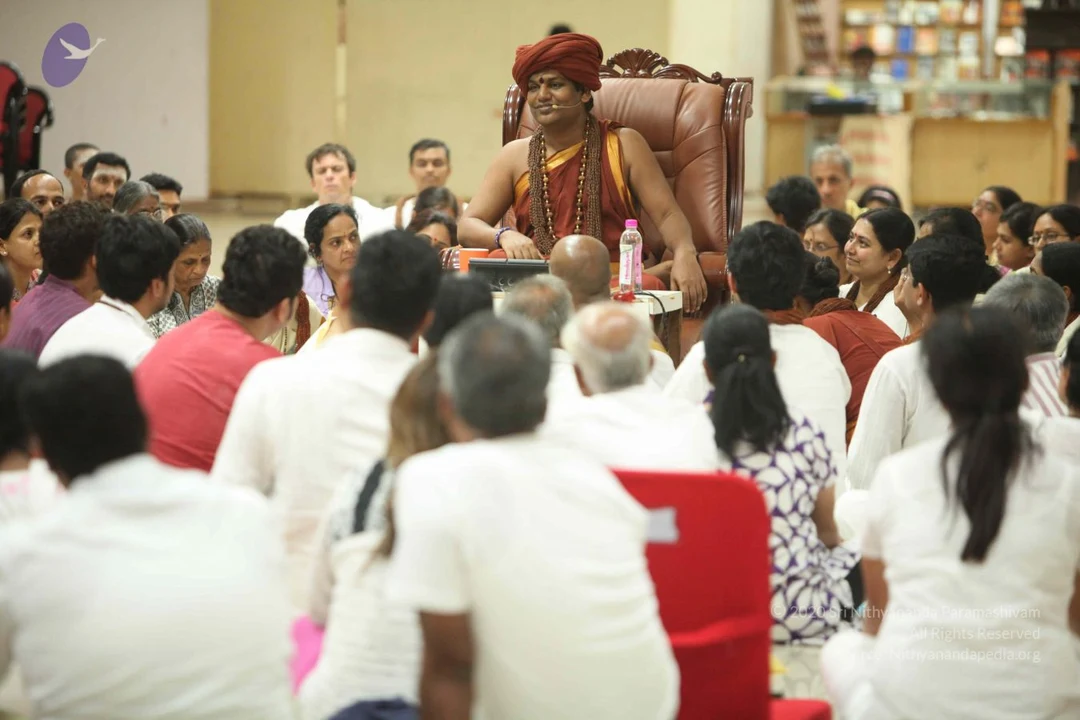
Satsang

Photos from this day

View all 441 photos

Photos From The Day:
40 photosSource gallery
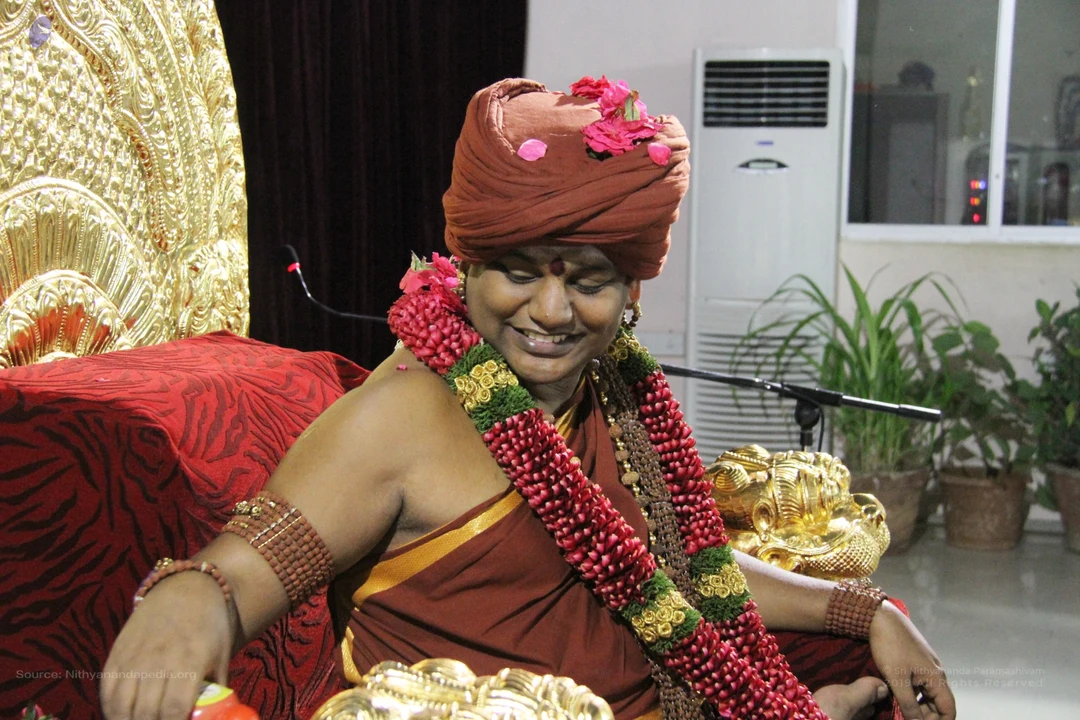
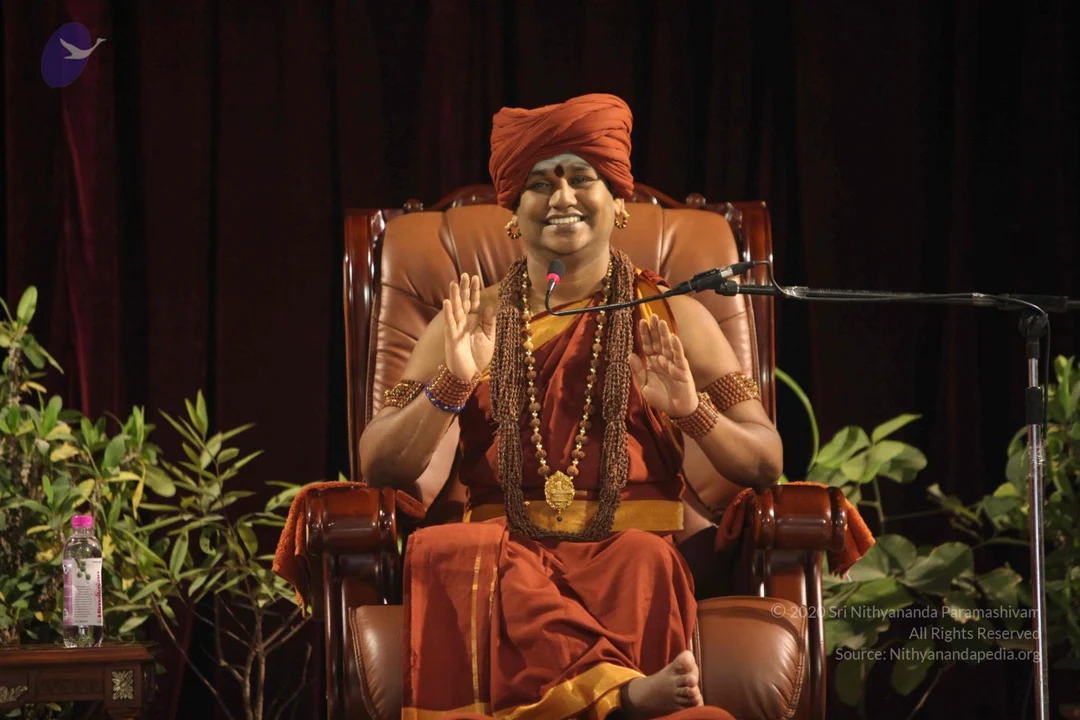
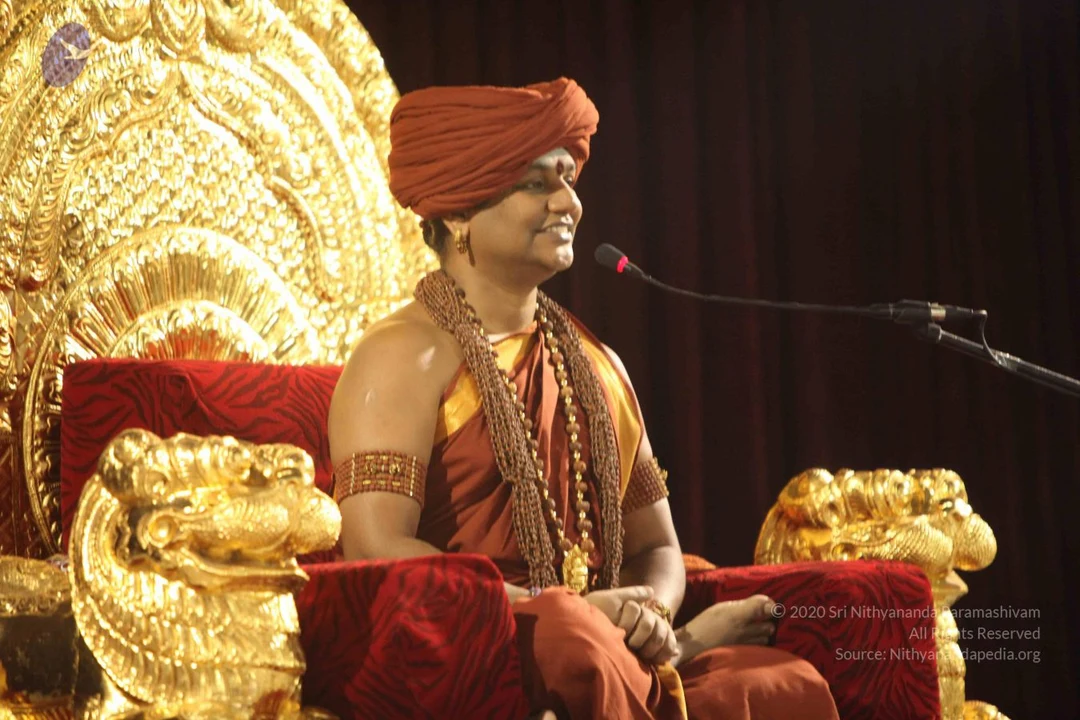
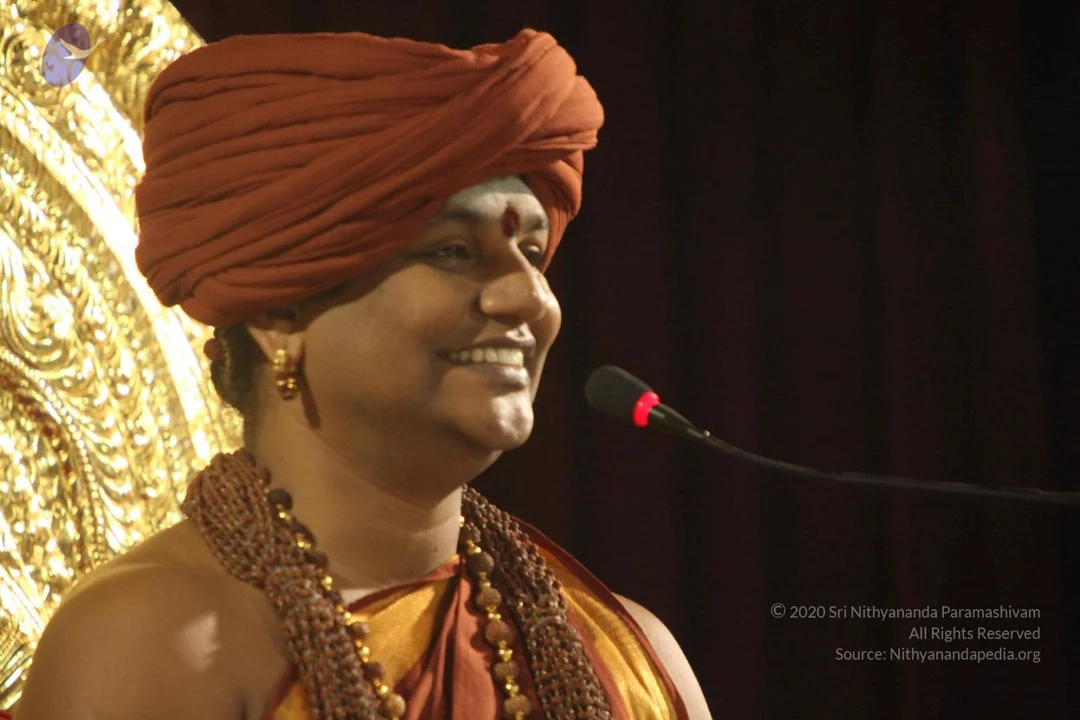
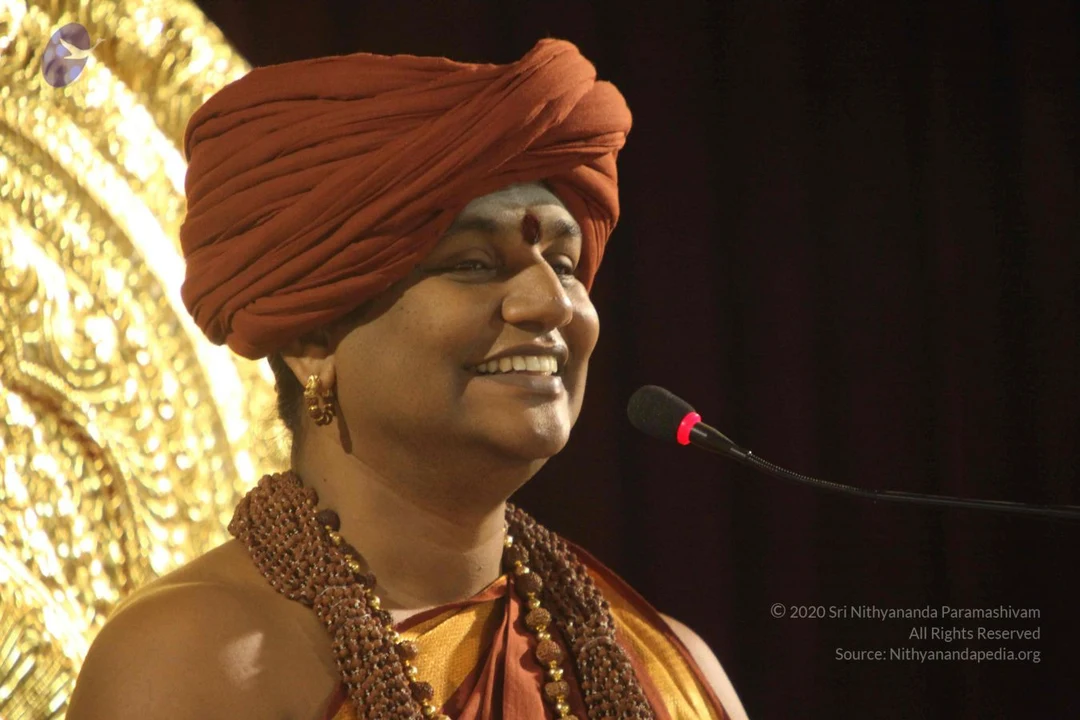
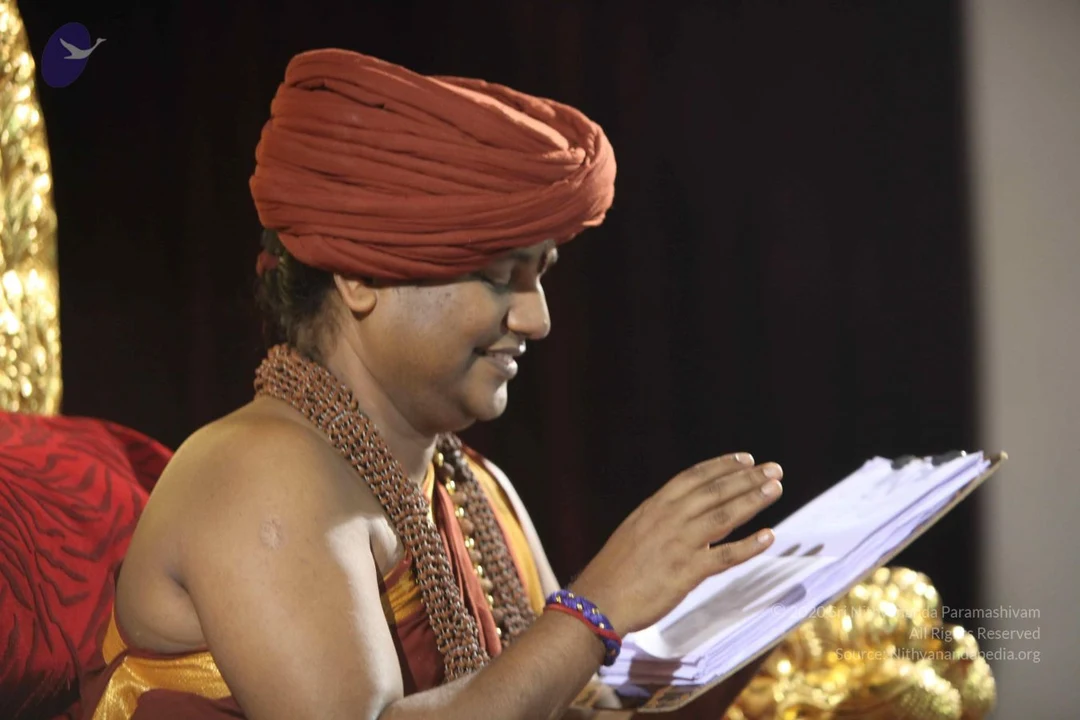
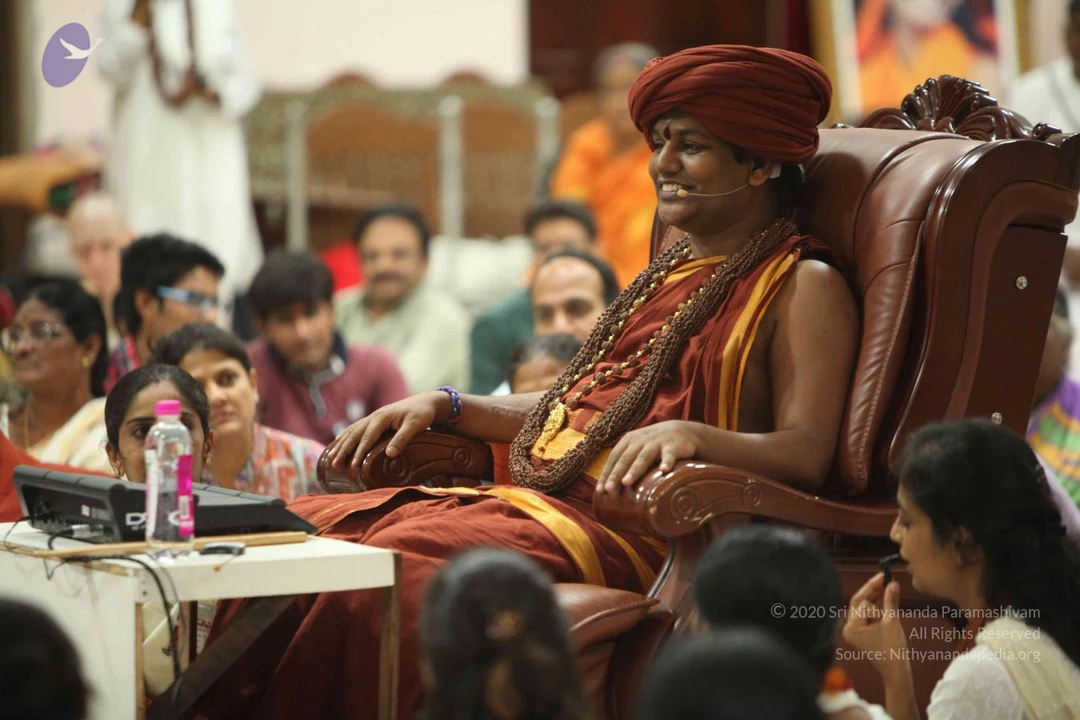
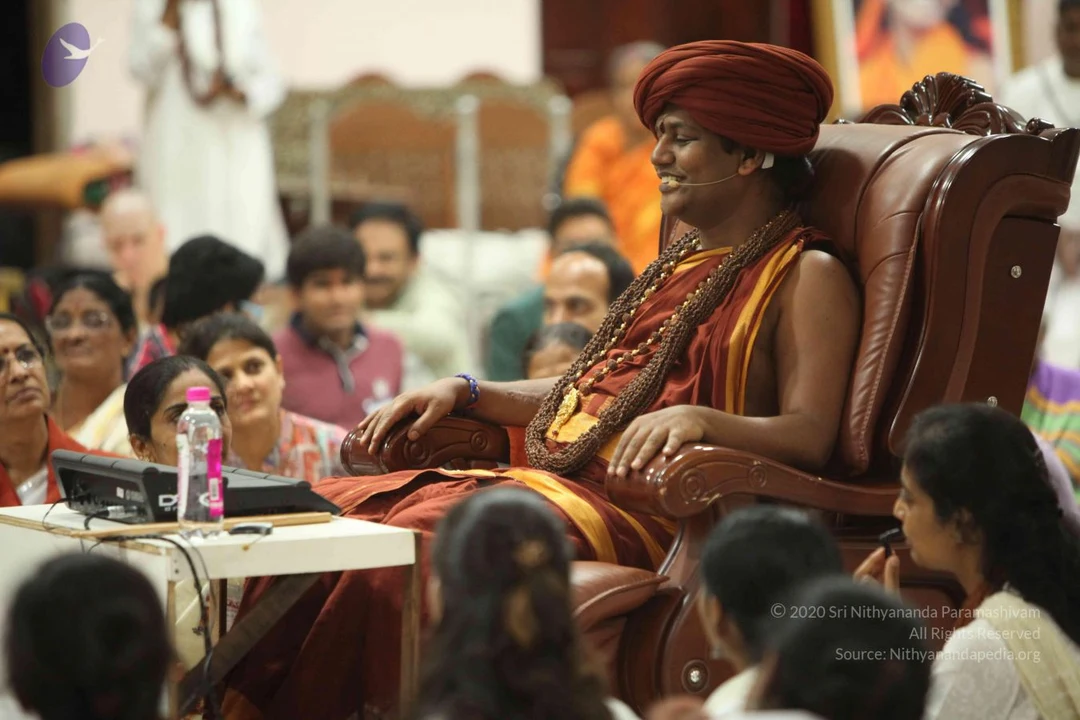
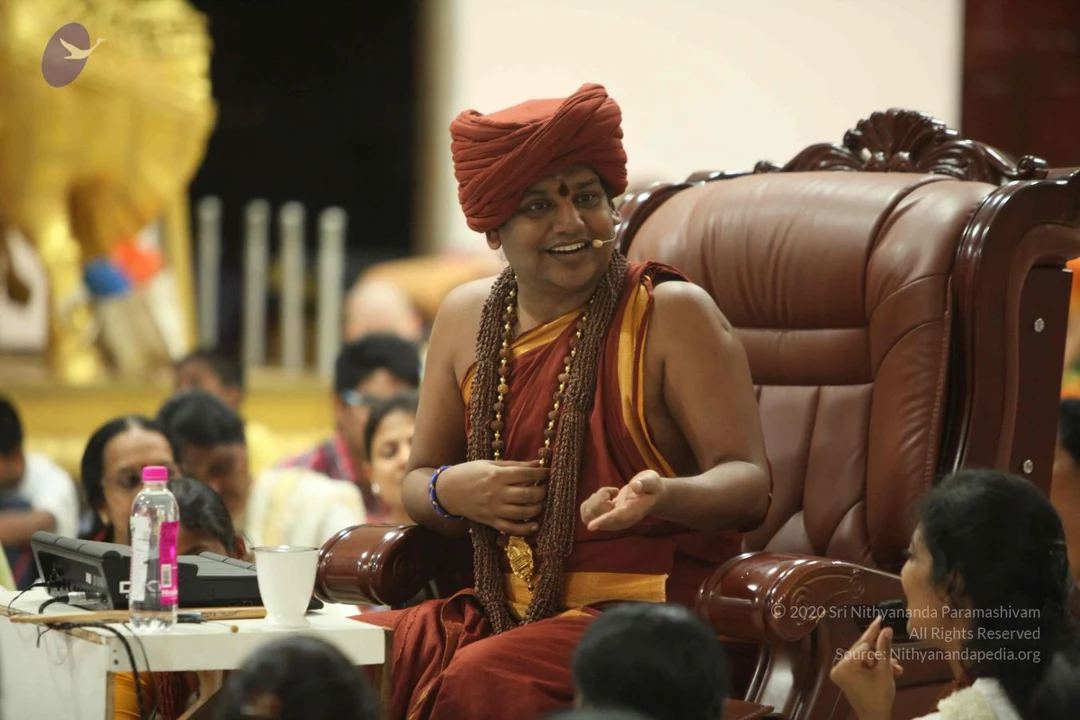
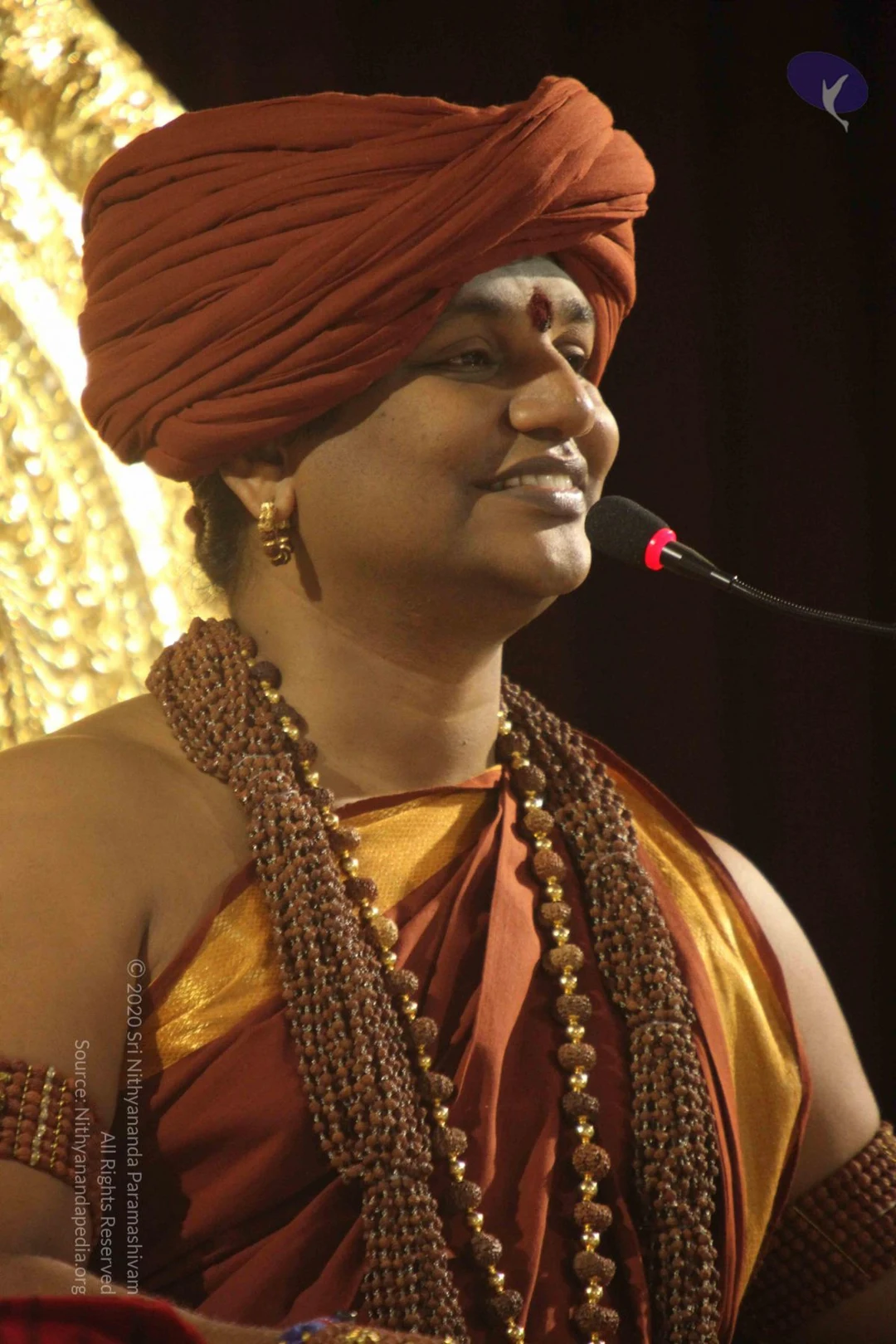
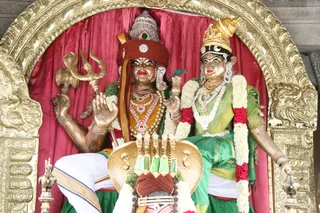
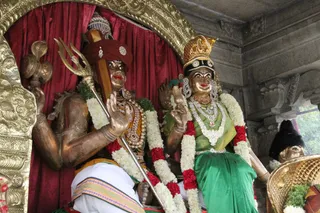
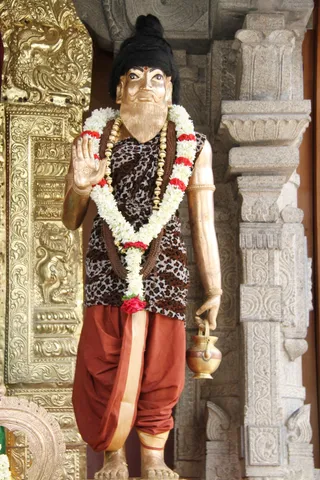
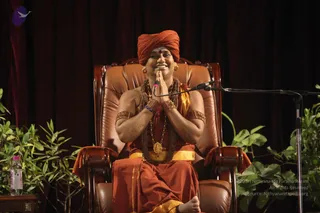
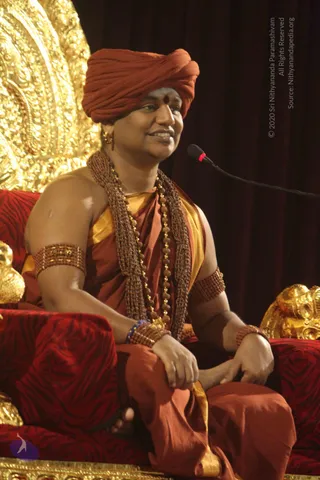
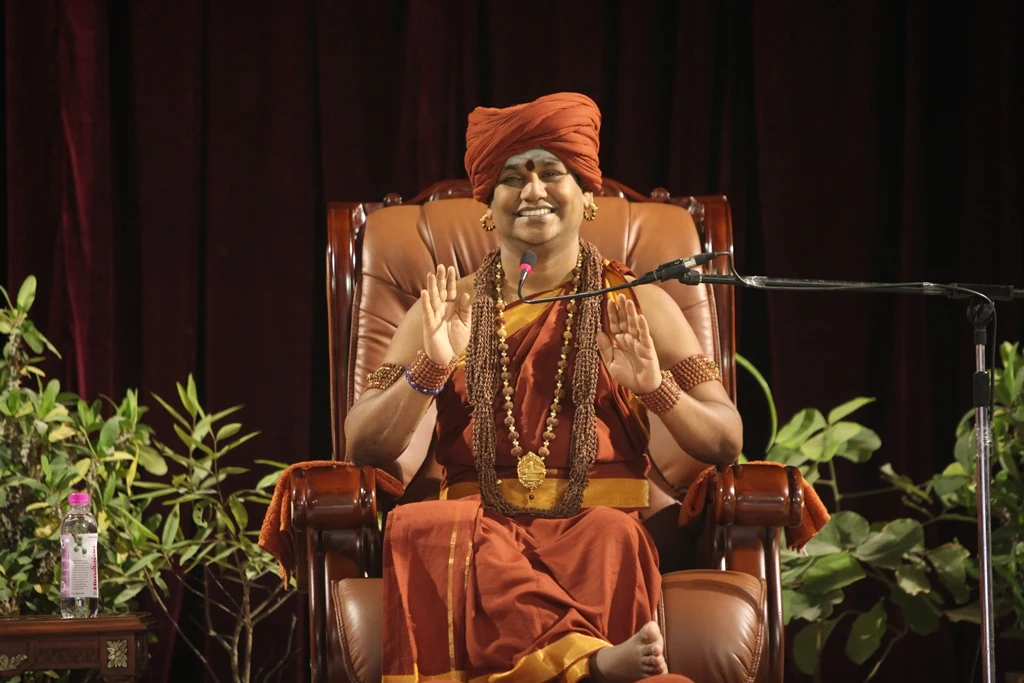
A photograph of a smiling person seated in a brown leather armchair on a stage before dark maroon drapes, with potted green plants on both sides and a water bottle on a small wooden side table at left. The person wears an orange-red turban with a red bindi, orange-red robes with gold trim, a long multi-strand brown rudraksha-style mala with a gold pendant, beaded bracelets and gold earrings, and is barefoot. Both hands are raised palms-out in a gesture of blessing or teaching, and a microphone on a boom stand is positioned in front of the face. Swamiji (probable) is the appearance-based candidate here: the saffron-orange ceremonial attire, turban and rudraksha mala are the qualifying cues, and the person is physically present as a speaker on stage.A seated man speaks into a microphone while gesturing with one raised hand, sitting cross-legged on an ornate gold-and-red throne. He wears a rust-orange turban, an orange and gold-bordered wrap over bare shoulders, and multiple strands of brown rudraksha beads with a gold pendant and bead necklace. Gold-bordered orange trousers and rudraksha bracelets complete the outfit, with a red bindi on the forehead. The background is a gilded, heavily carved golden arch and red velvet cushions.A photograph of a ceremonial blessing indoors. A seated figure with a red-orange turban, a garland of red and white flowers, and a bare upper body with gold-trimmed saffron cloth touches the forehead of a bearded man in a white shirt who kneels with palms joined in namaste. A rudraksha-style mala hangs around his neck and a wristwatch is visible. Behind them, several women in saris and traditional jewellery stand watching, one wearing a red sari and another in blue. A gold ornate object sits in the lower left corner, with white flowers nearby, and a wall-mounted air conditioner is in the background.A photograph of a gilded murti pair seated within a gold-framed arch before a red draped backdrop. The figure on the left, with four arms, holds a trident and a raised hand, wears a rust-red turban-like headcloth, a mustard shawl, and layered gold necklaces. The figure on the right wears a gold crown with crescent ornament, a green sari with red and white garlands, and pearl-like necklaces, seated on a golden throne-like base with a lotus-petal ornament and a green-and-red garland draped across. These are deity murti in a temple setting, not living people.Two golden metal deity murtis, a male figure holding a trident and a female figure in a green sari, stand side by side on a raised shrine before red velvet drapes and an ornate gold arch. Both wear garlands of white flowers and red roses, jewelled crowns and necklaces, and make blessing gestures. A smaller golden figure in a black headdress appears at the right edge. No living people are visible.A gilded statue of a bearded sage stands before ornate granite and gold-repoussé panels in a temple doorway. The figure wears a leopard-print brown and black wrap over a rust-red dhoti, with a red tilak on the forehead and a black topknot. A garland of white jasmine and red flowers hangs across the chest, with a gold bead mala beneath it. The raised right hand shows abhaya mudra while the left hand holds a brass kamandalu. No physical people are present.
yogawebinar-yogaday
105 photosSource gallery
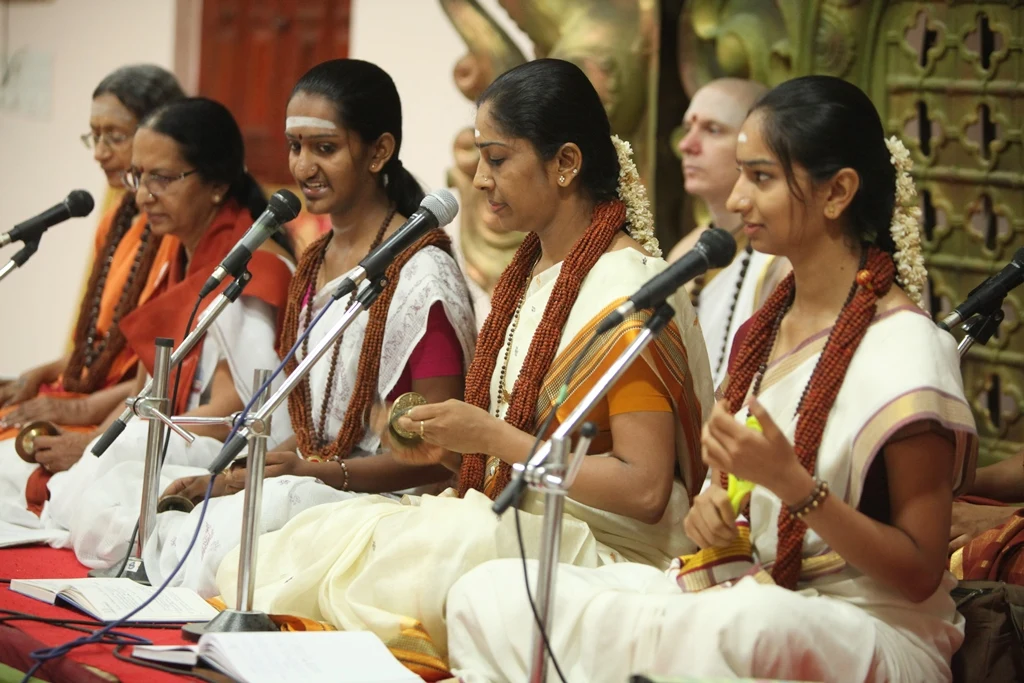
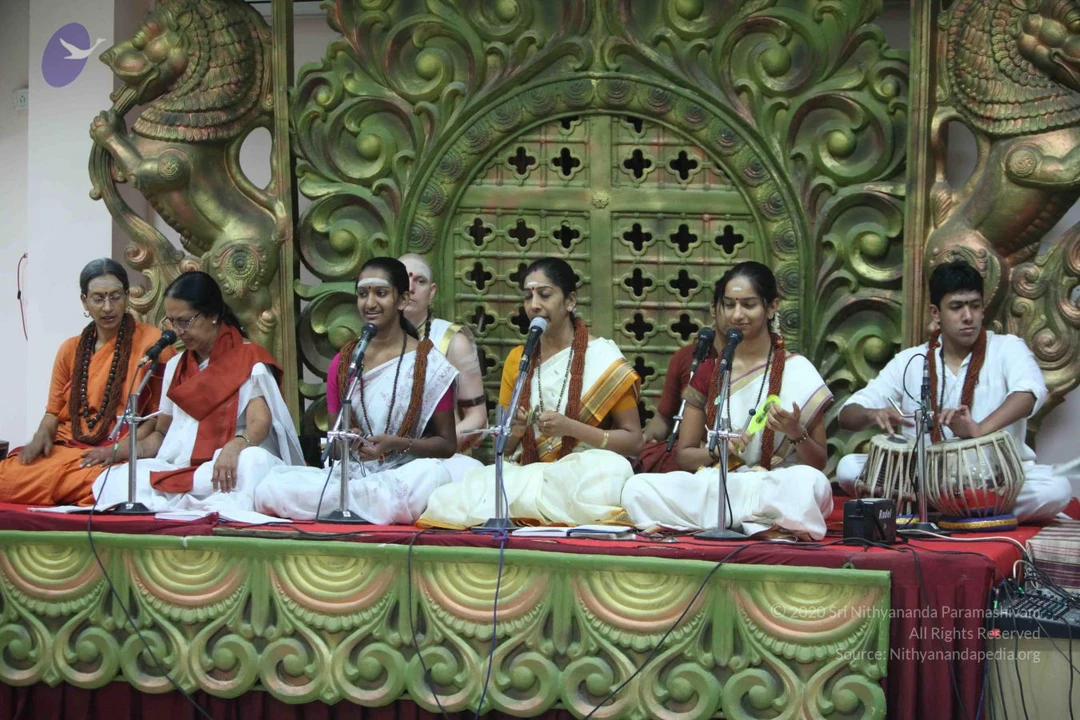
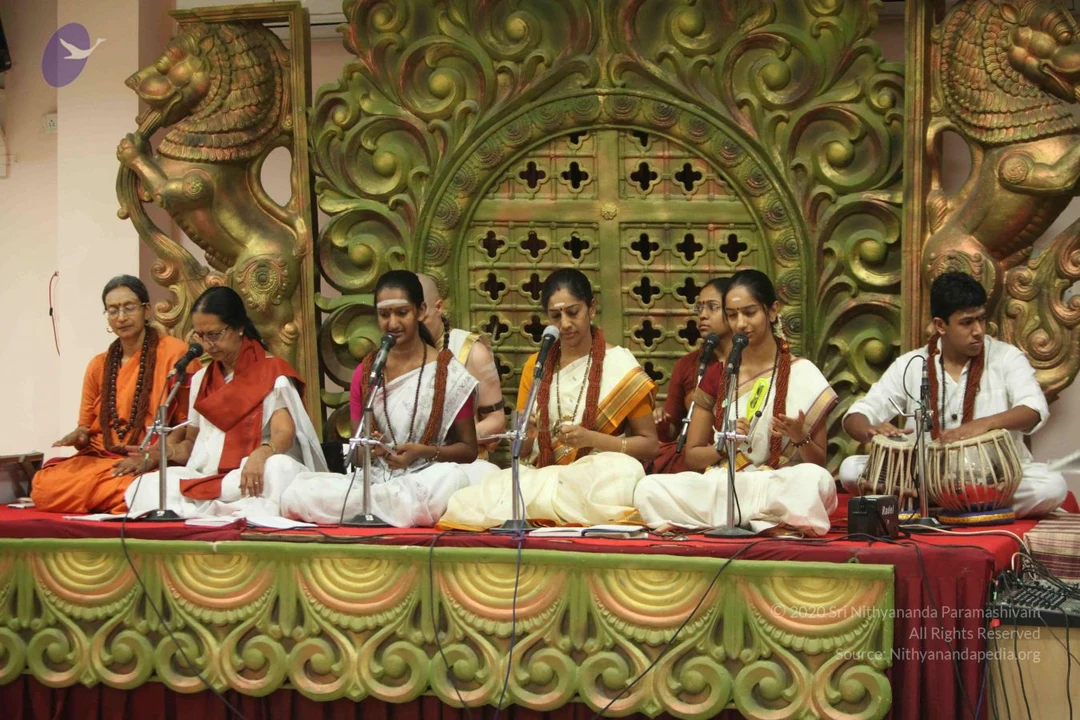
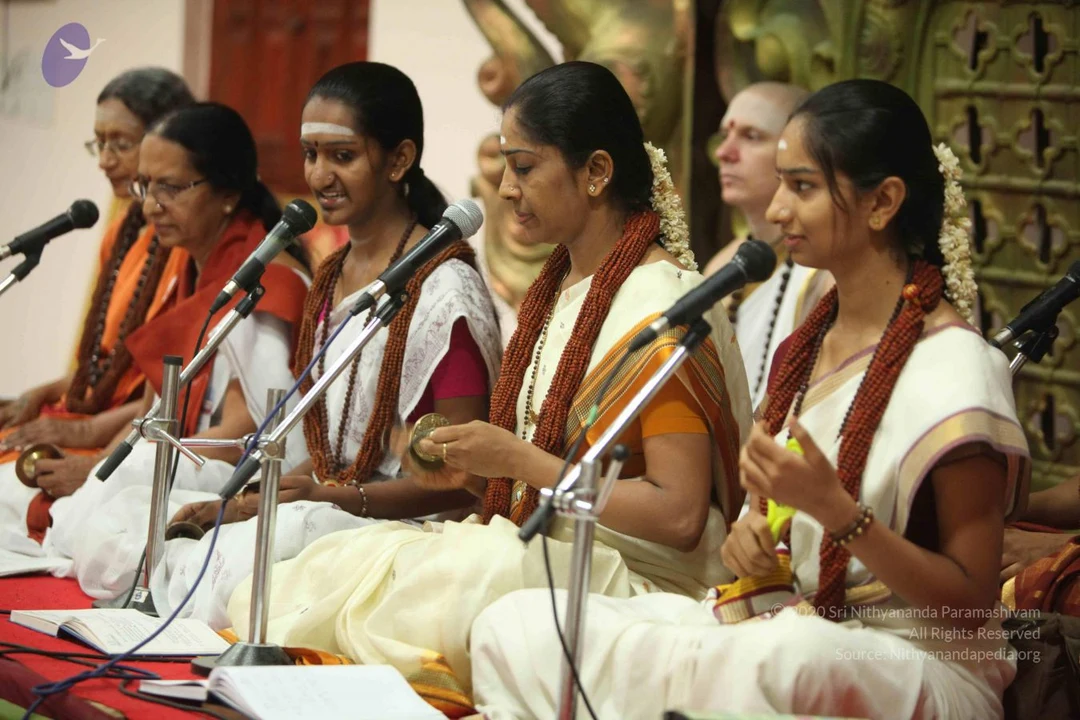
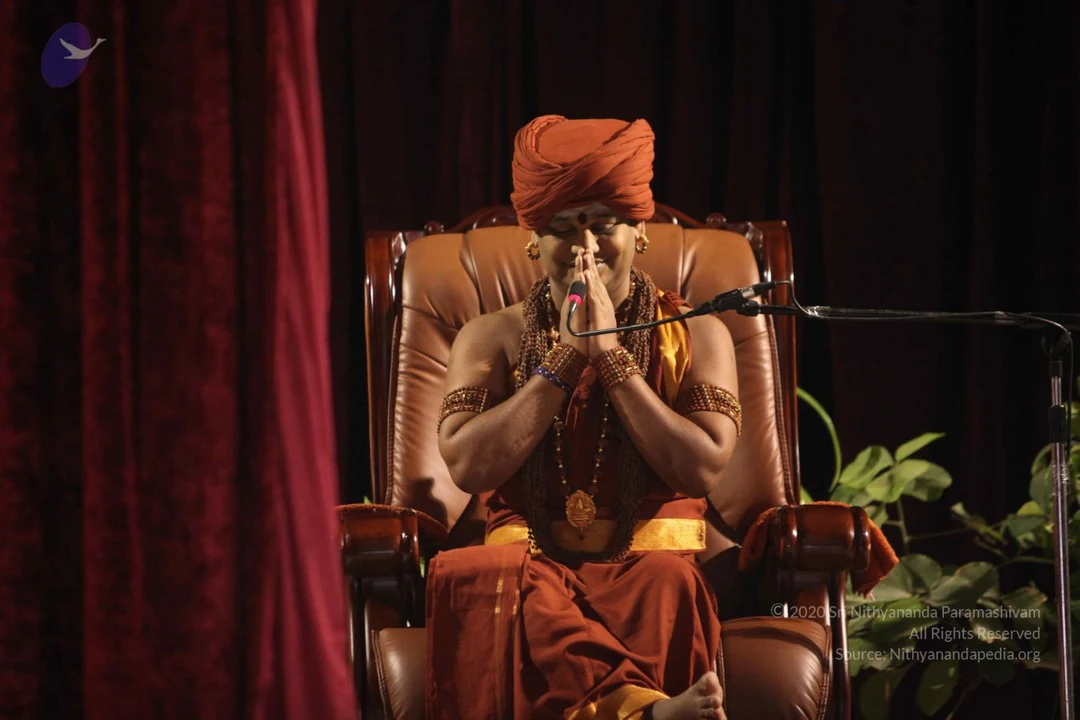
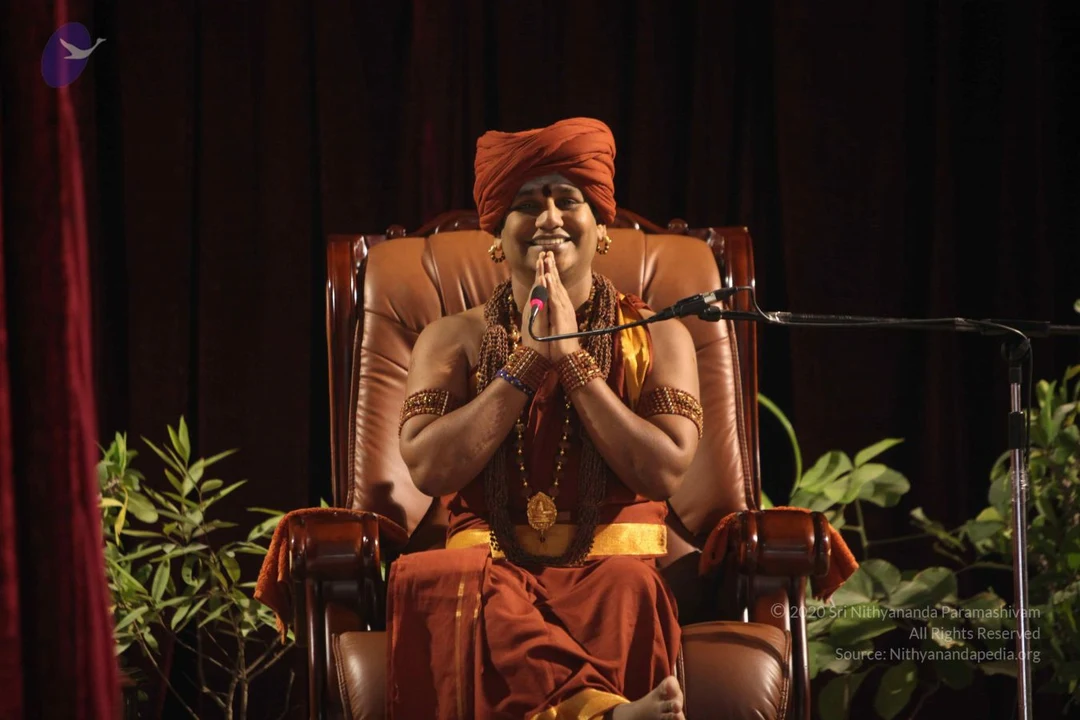
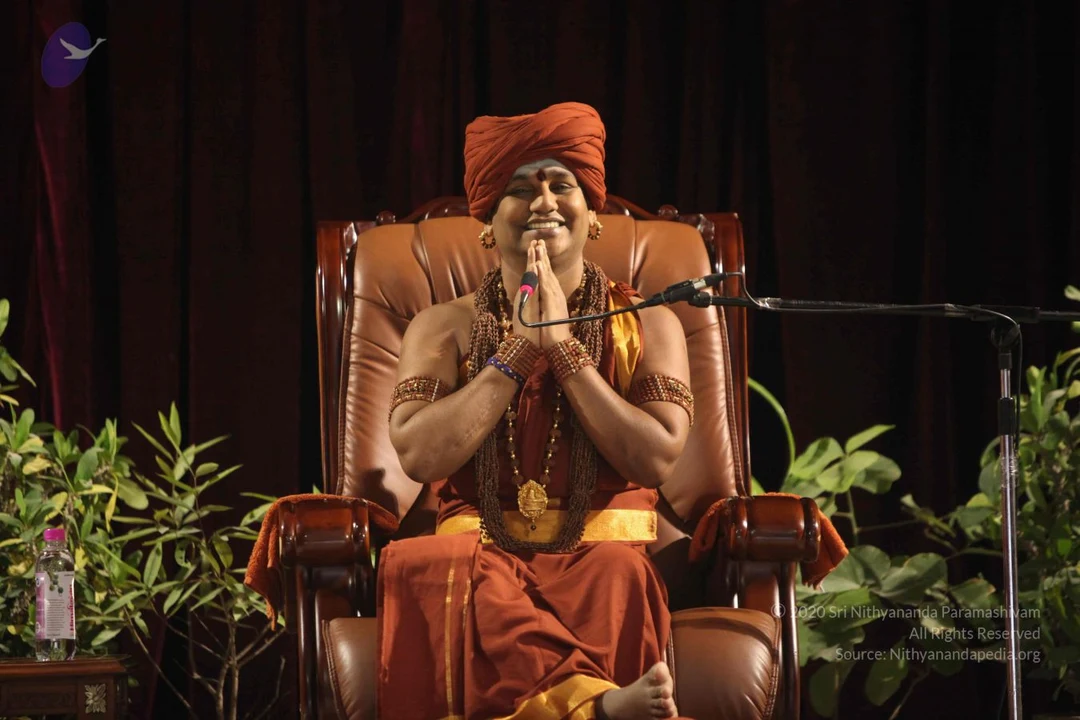
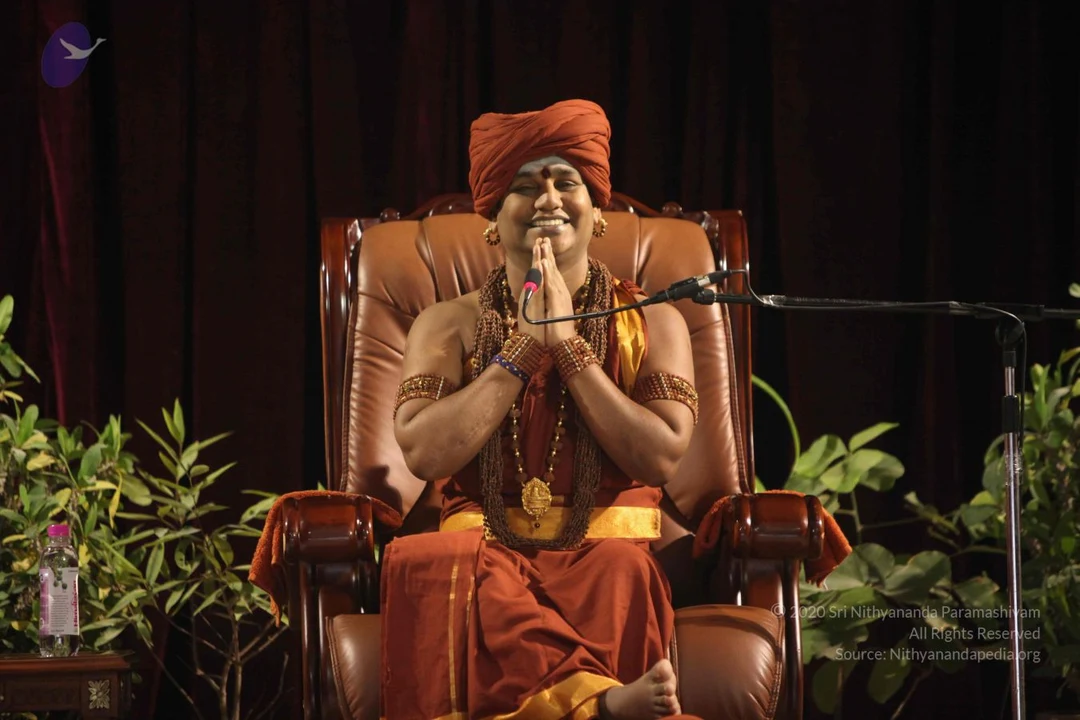
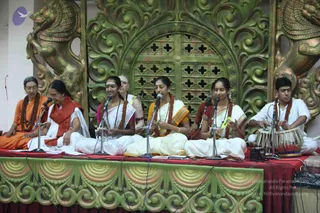
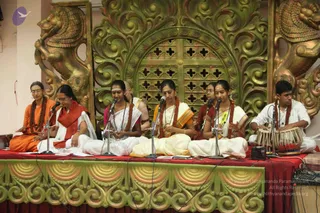
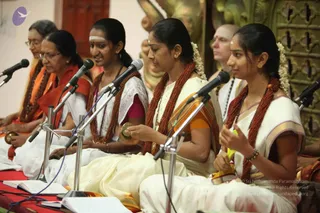
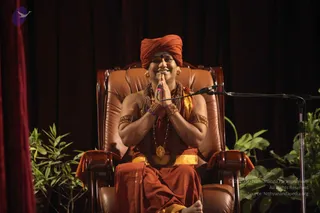
A group of women and a young man perform devotional music seated on a red-draped stage in front of an ornate green and gold carved wooden doorway with lattice panels and lion-like guardian figures. A woman in an orange saffron top and rudraksha mala at far left sits beside a woman in a white sari with a red shawl. Two young women in white saris with red-and-gold borders and rudraksha malas sing into microphones, and a woman in a yellow-bordered white sari sings at centre. A young man in white clothing with a rudraksha mala plays tabla at far right. A bald man in white sits behind the singers. Microphones stand on stands before them and a small music mixer sits at the stage edge.A group of seven performers sits on a red-draped stage in front of an ornate golden-green carved doorway with lion figures, a musical performance with microphones. On the left an older woman in an orange saffron garment wears a rudraksha mala and sits with hands folded; beside her a woman in a red shawl over white clothes holds sheet music. Several women in white saris with saffron and gold borders sing, with rudraksha malas and tilak markings, and a young man in white on the far right plays a tabla drum. A partially visible person in white and a figure in a pink top sit at the back. No one is identifiable as a person in this image.A photograph of a group of women seated on a red cloth-covered platform singing and playing hand cymbals in front of microphones. Several women wear white and cream sarees with coloured borders, and several wear long red rudraksha malas. One younger woman has a white vibhuti line on her forehead and flowers in her hair. Behind them is a carved wooden screen and a bald man in a white shirt and mala.A man seated in a brown leather armchair with his hands pressed together in anjali mudra at chest level, eyes closed. He wears an orange-red turban, rudraksha mala beads, a gold-toned pendant, gold bangles and earrings, and an orange-and-gold dhoti with a gold waistband. A microphone on a boom stand is near his face. Red curtains and green plants frame the stage. a person by visible cues: a rudraksha mala, ceremonial gold ornaments and saffron clothing while seated in a chair on stage.A smiling man sits in a brown leather armchair on a stage in front of dark red drapes, with potted green plants at the sides and a microphone on a stand beside him. He wears an orange-red turban, a rust-orange robe with a gold-yellow waist sash, heavy rudraksha-style beaded malas, a large gold pendant, gold armbands and bangles, and a small bindi on his forehead. He sits with palms pressed together in a namaste gesture. Swamiji (probable): the appearance cues are an orange turban, saffron-orange robes, rudraksha malas and ornate gold jewelry, so this is a probable depiction of Paramahamsa Nithyananda giving a talk, with one person present.A man seated in a brown leather armchair before dark maroon drapes, with potted green plants at either side and a microphone on a stand at right. He wears a saffron-orange turban, a red-orange shawl over saffron-orange robes with a gold-yellow waistband, a dense rudraksha mala, a large gold pendant necklace, beaded bracelets and armlets, and a red tilak on his forehead. He smiles with palms pressed together in namaskar. A small water bottle stands on a table at left.
dharshan

10 photosSource gallery
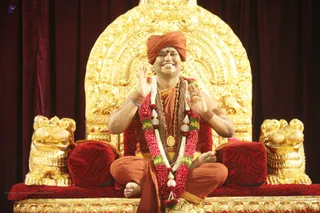
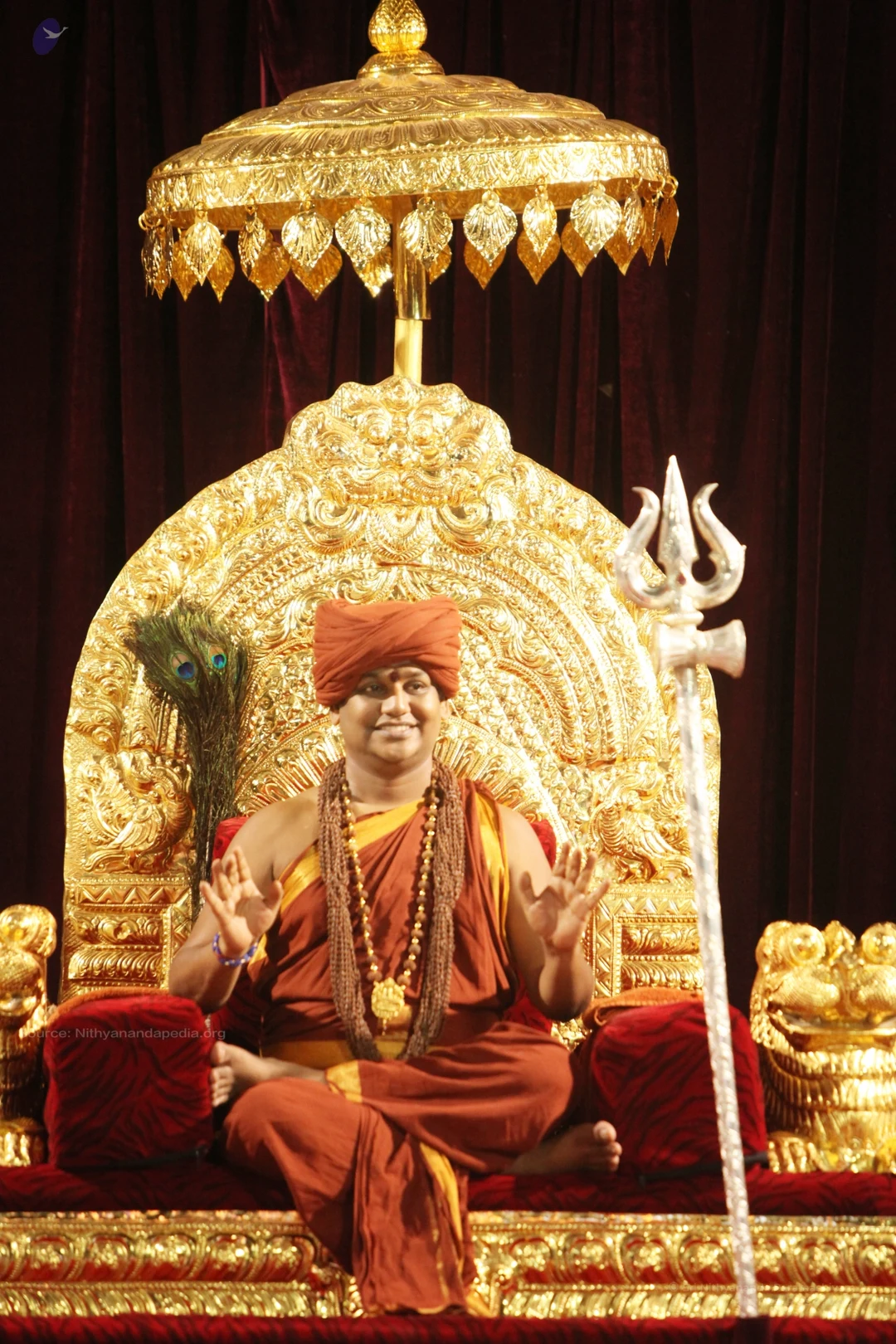
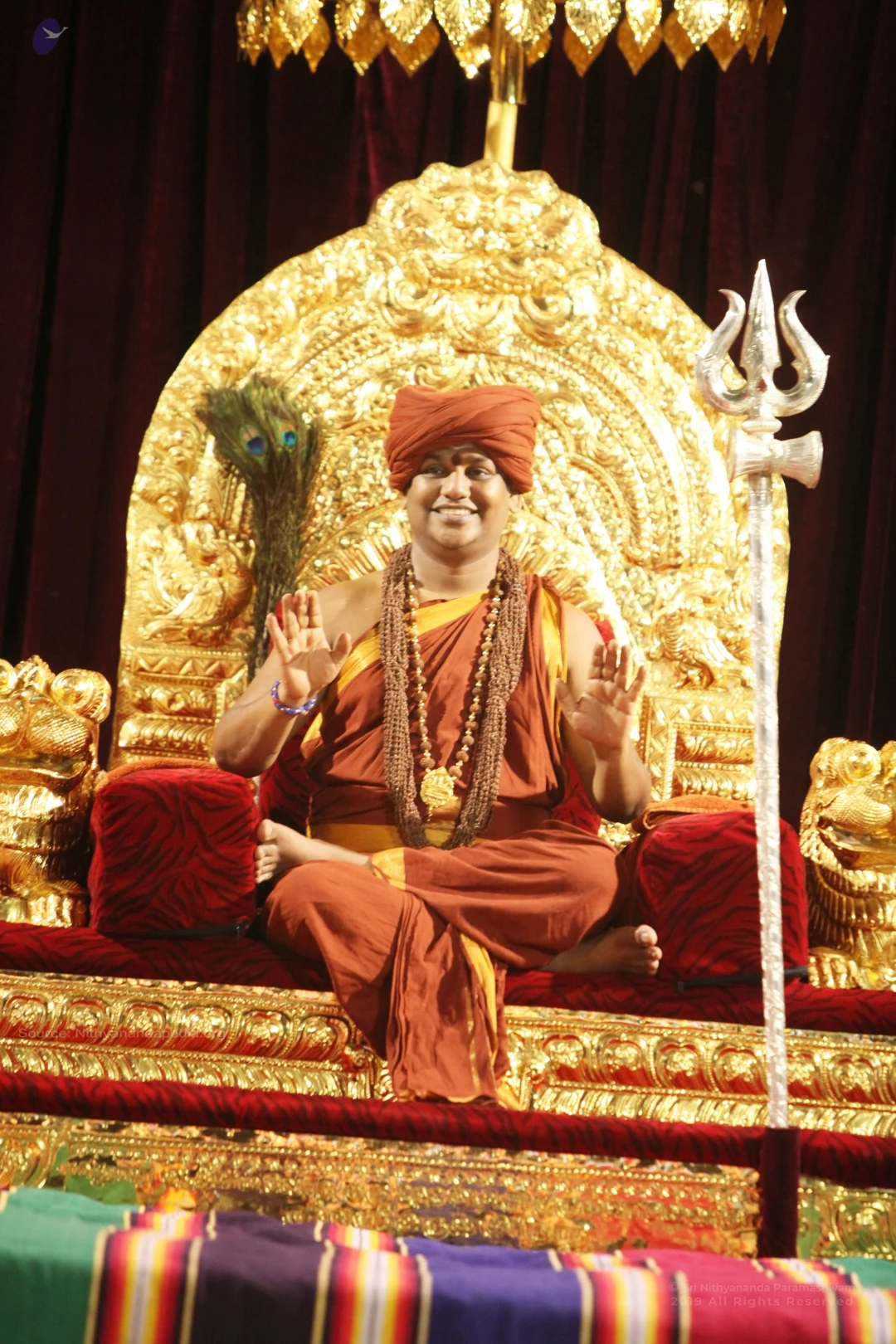
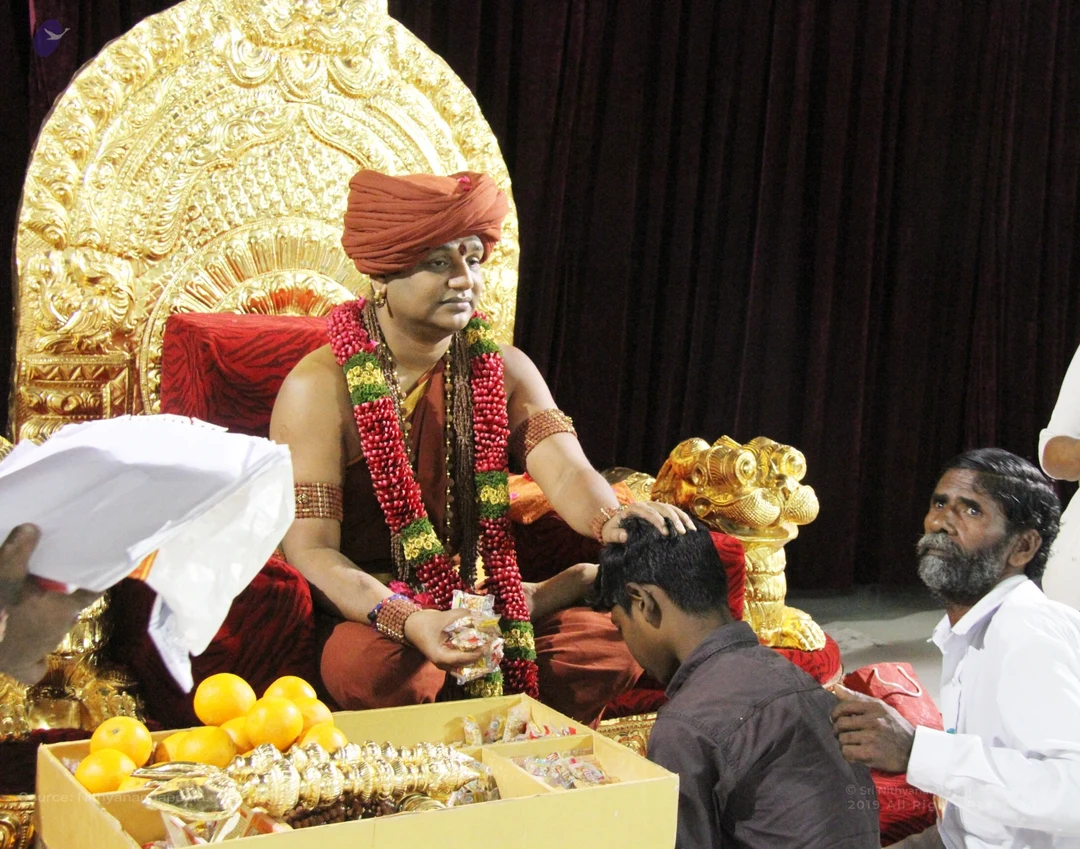
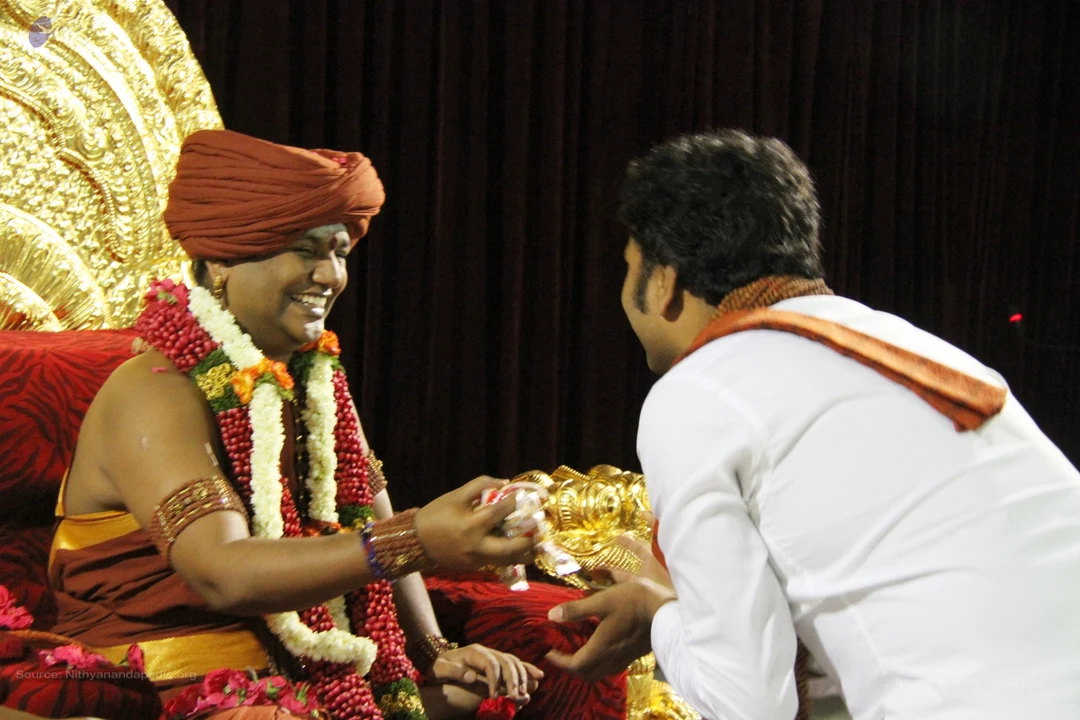
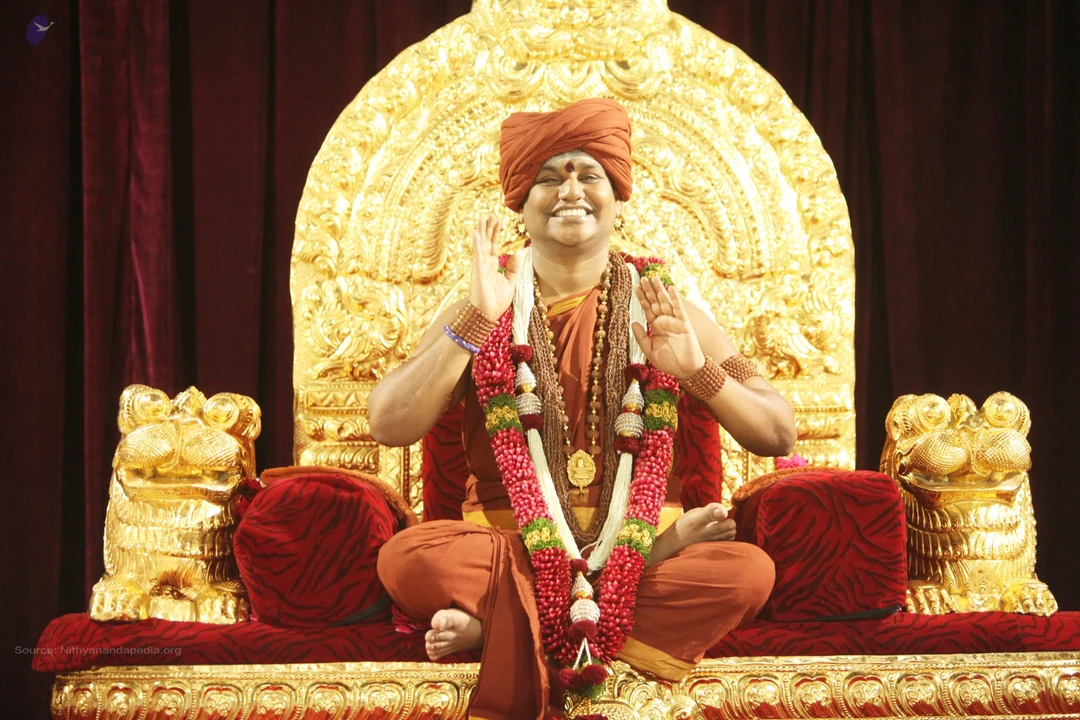
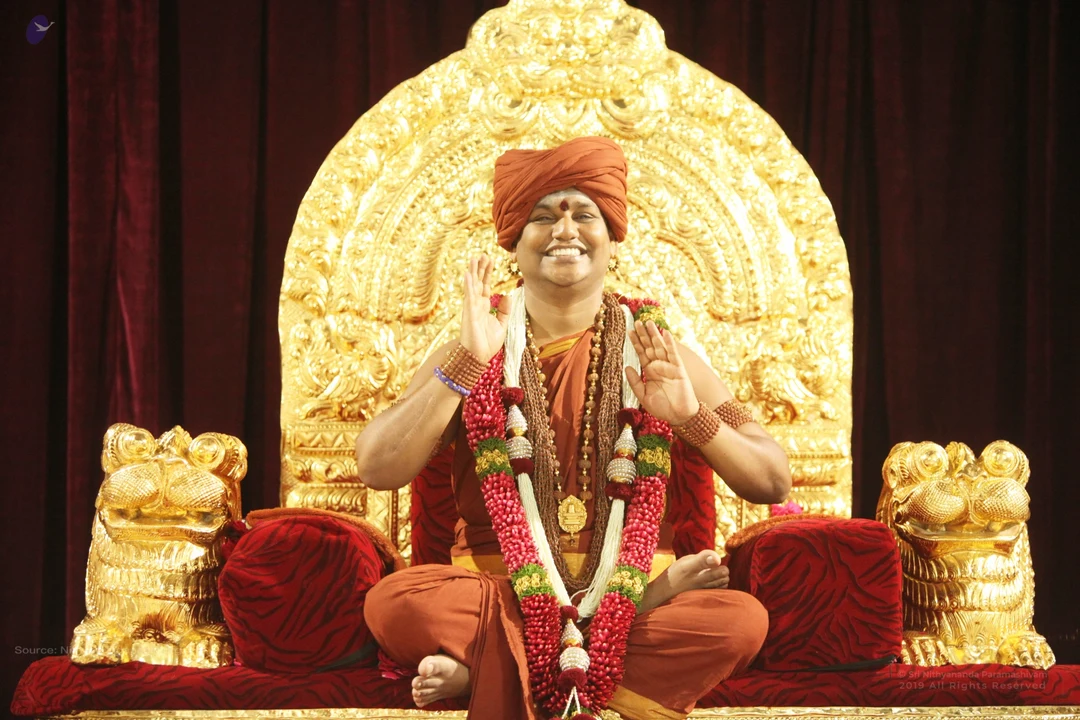
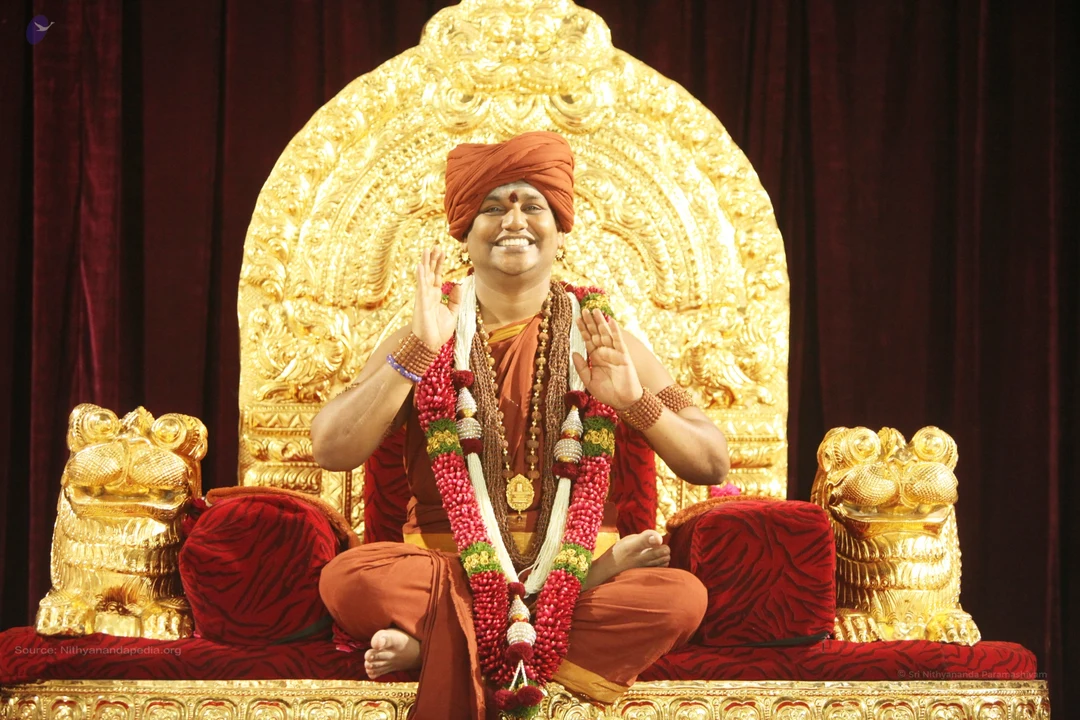
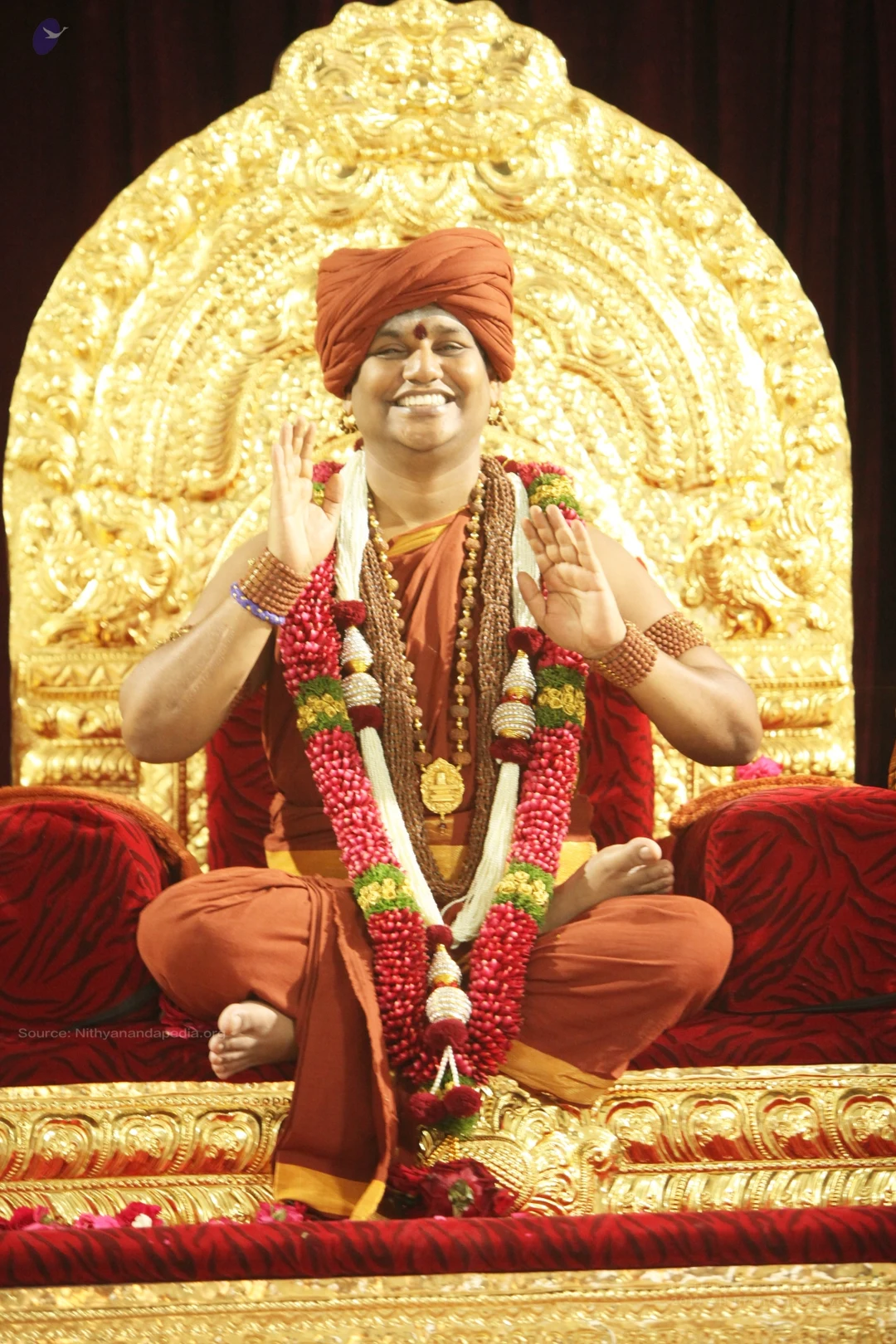
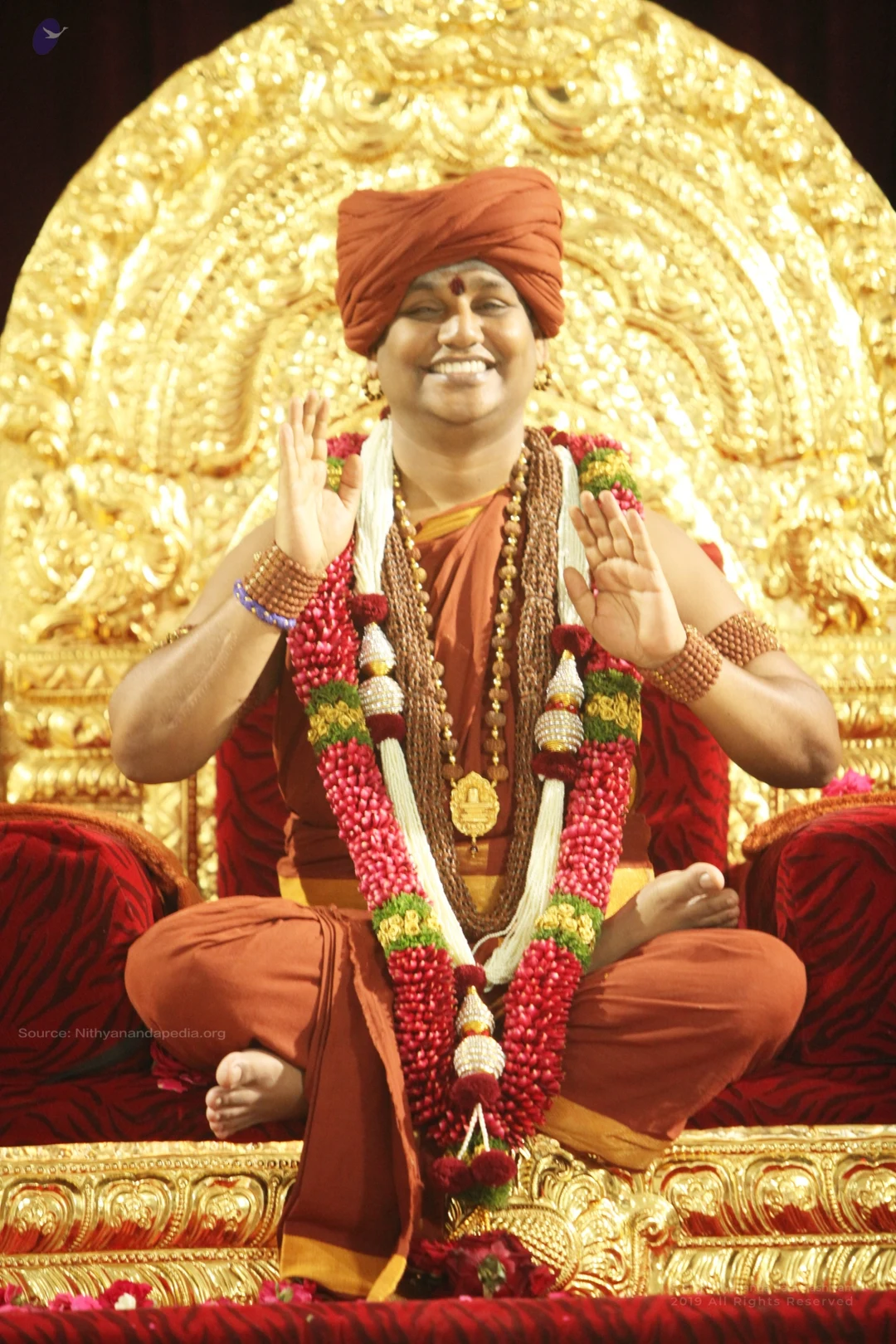
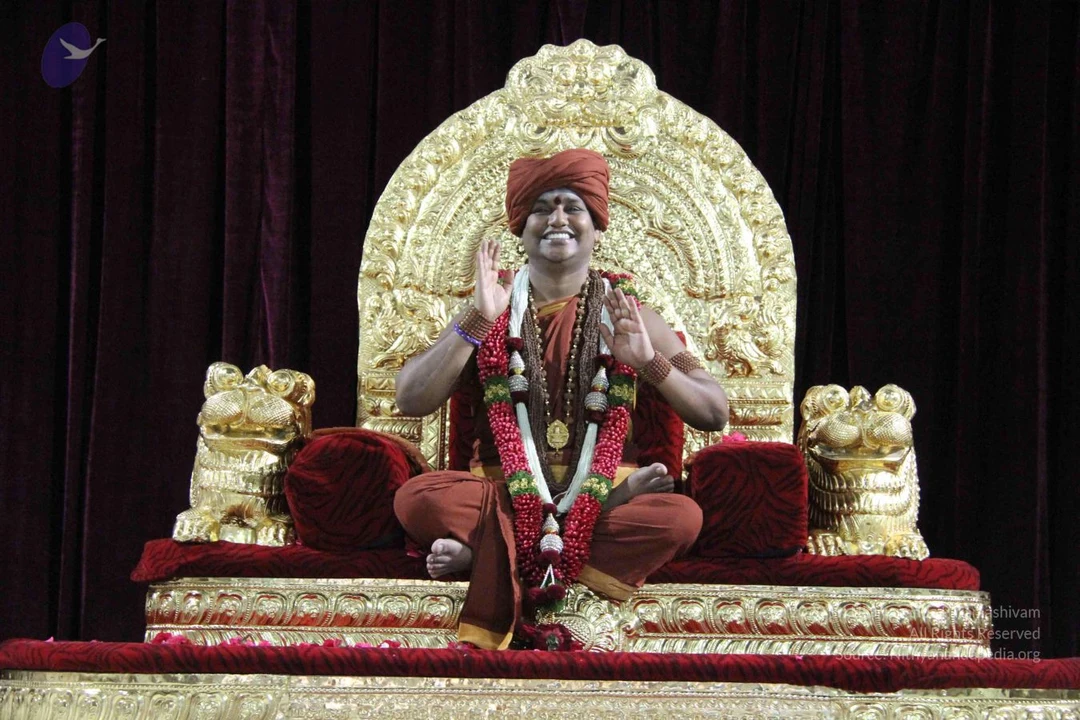
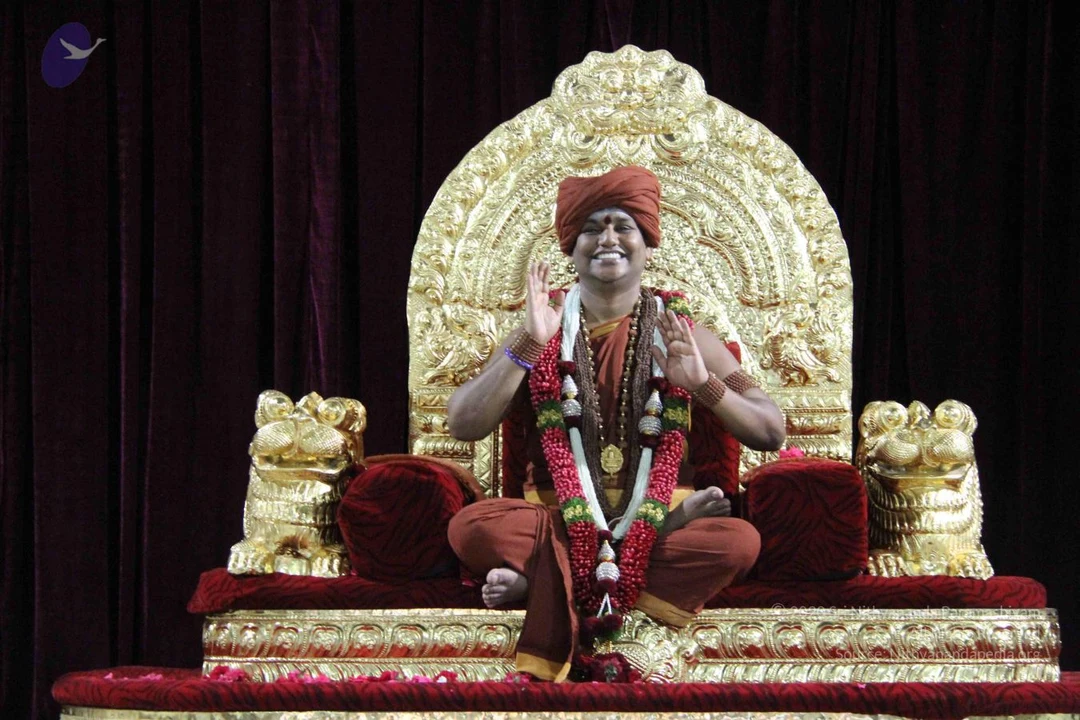
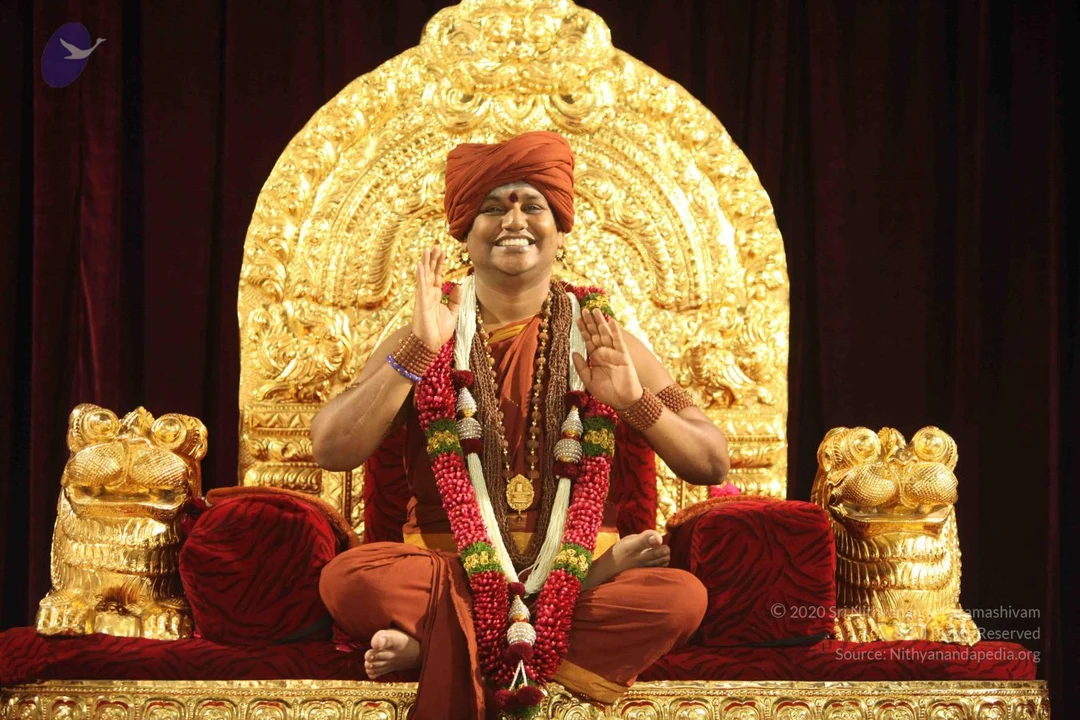
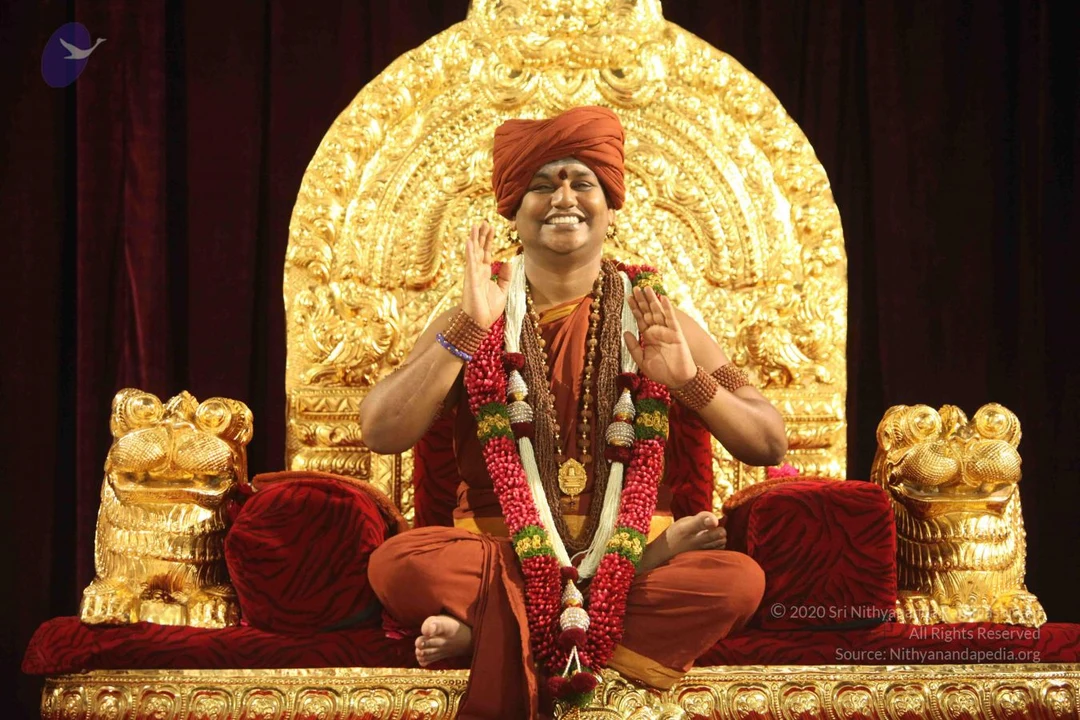
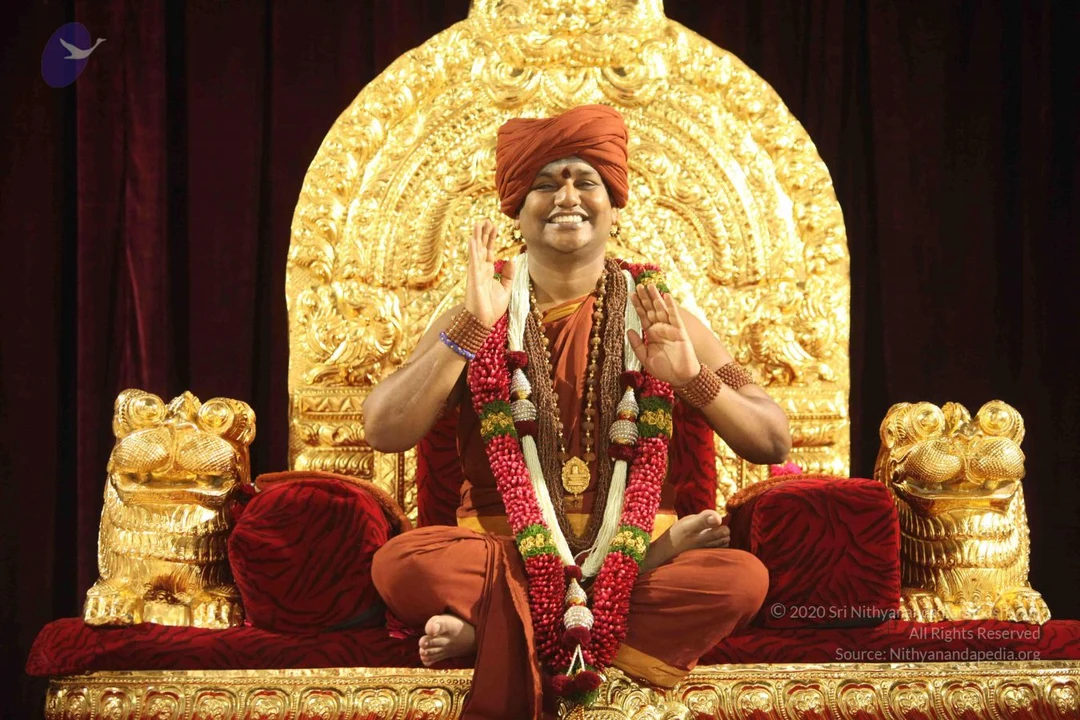
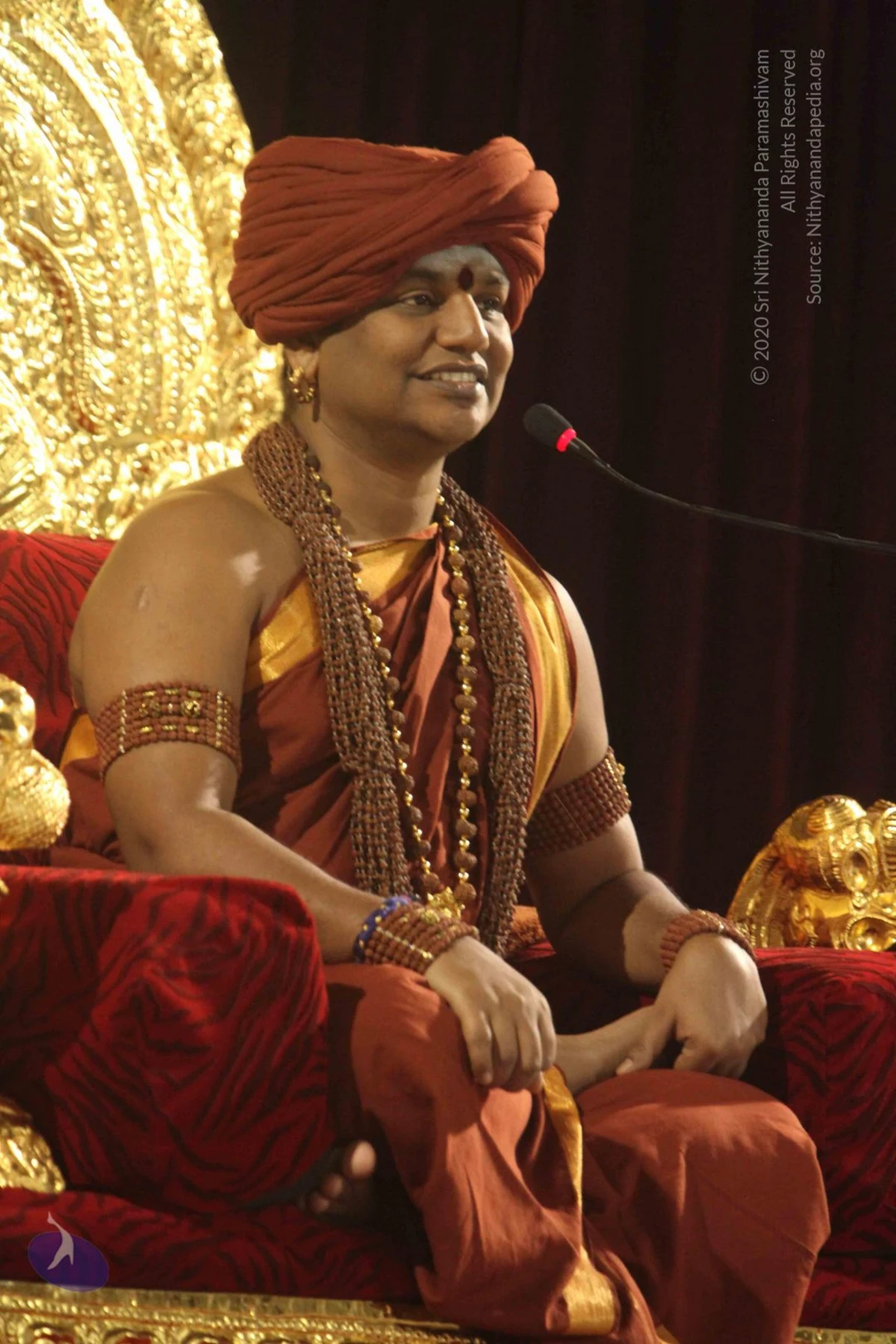
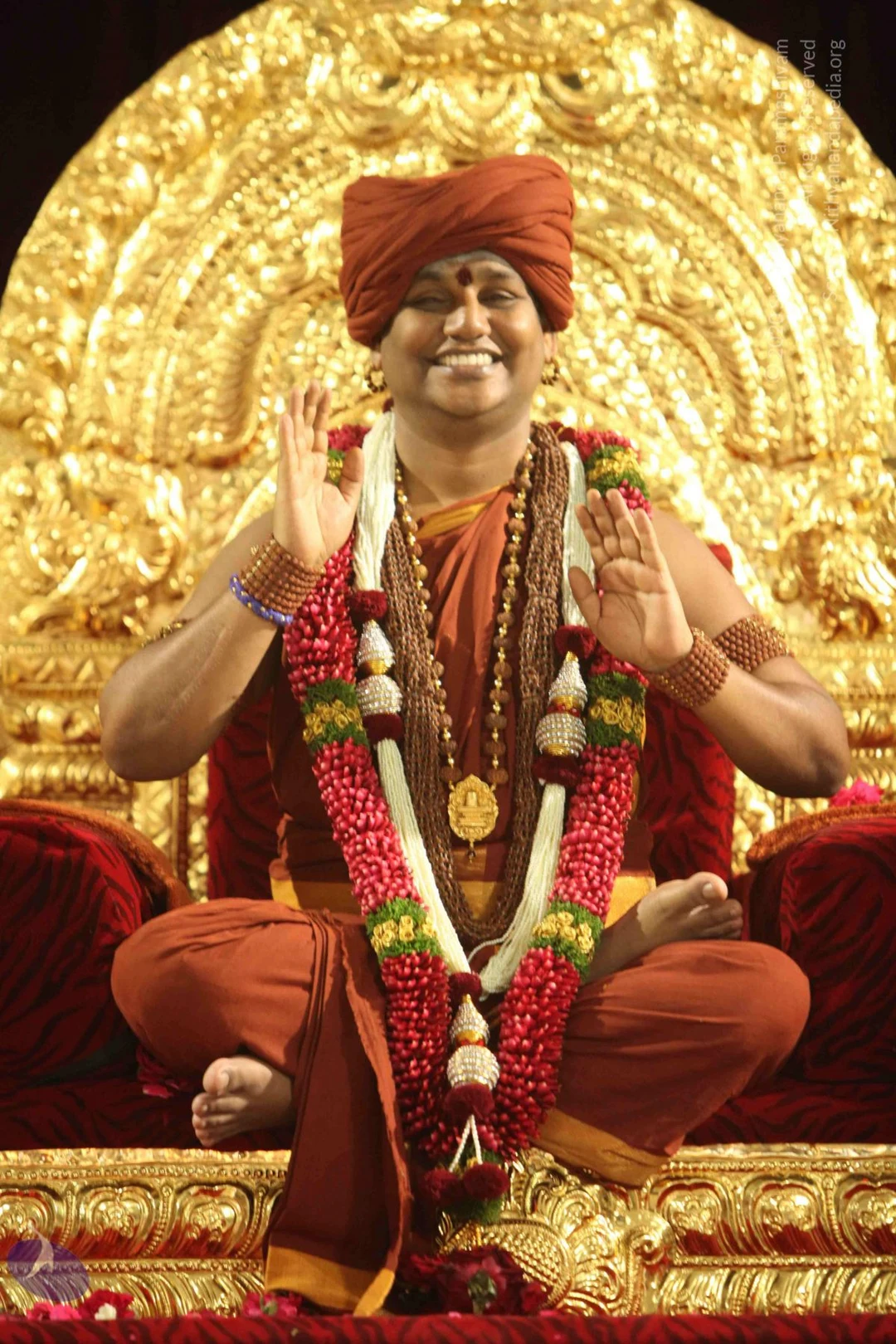
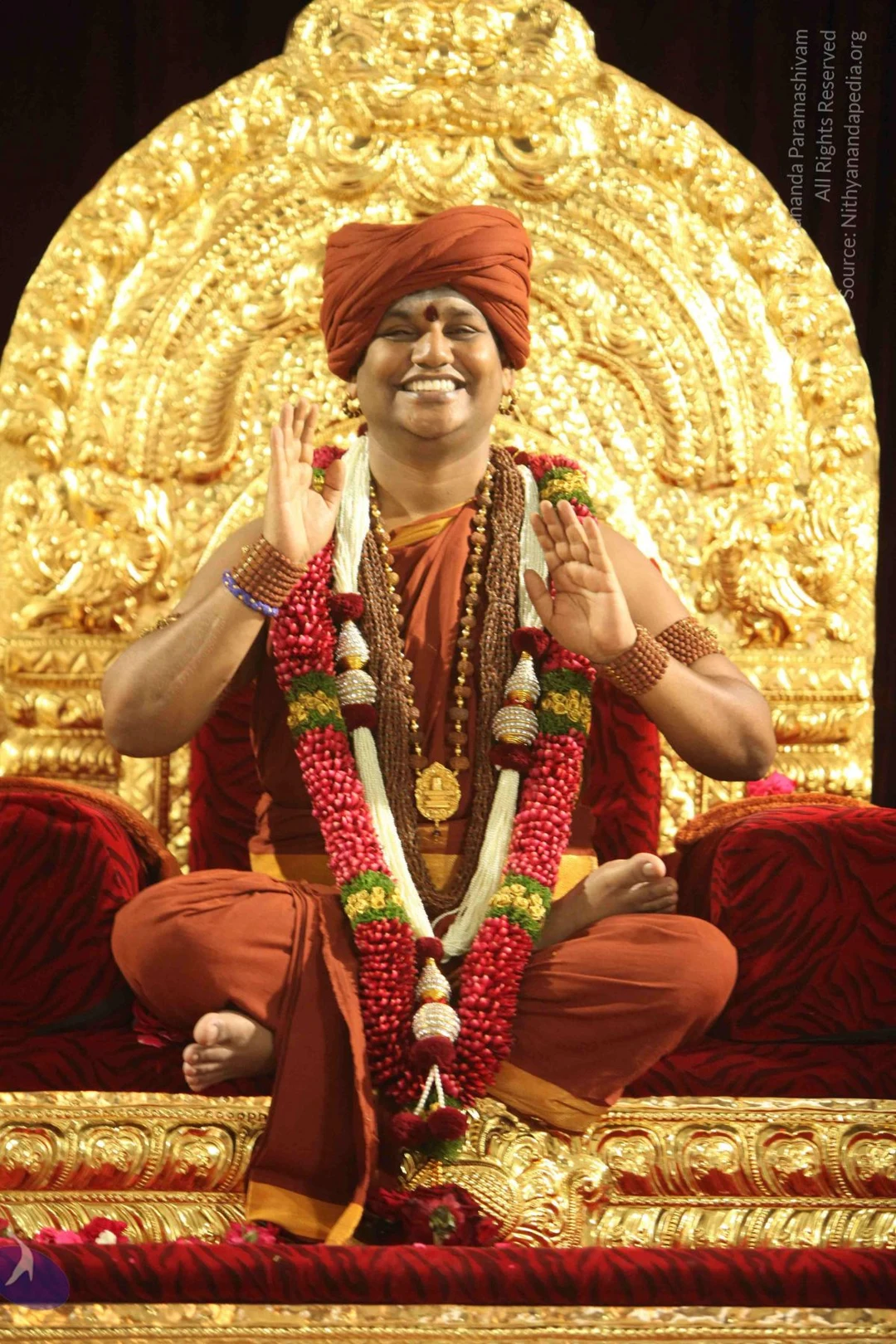
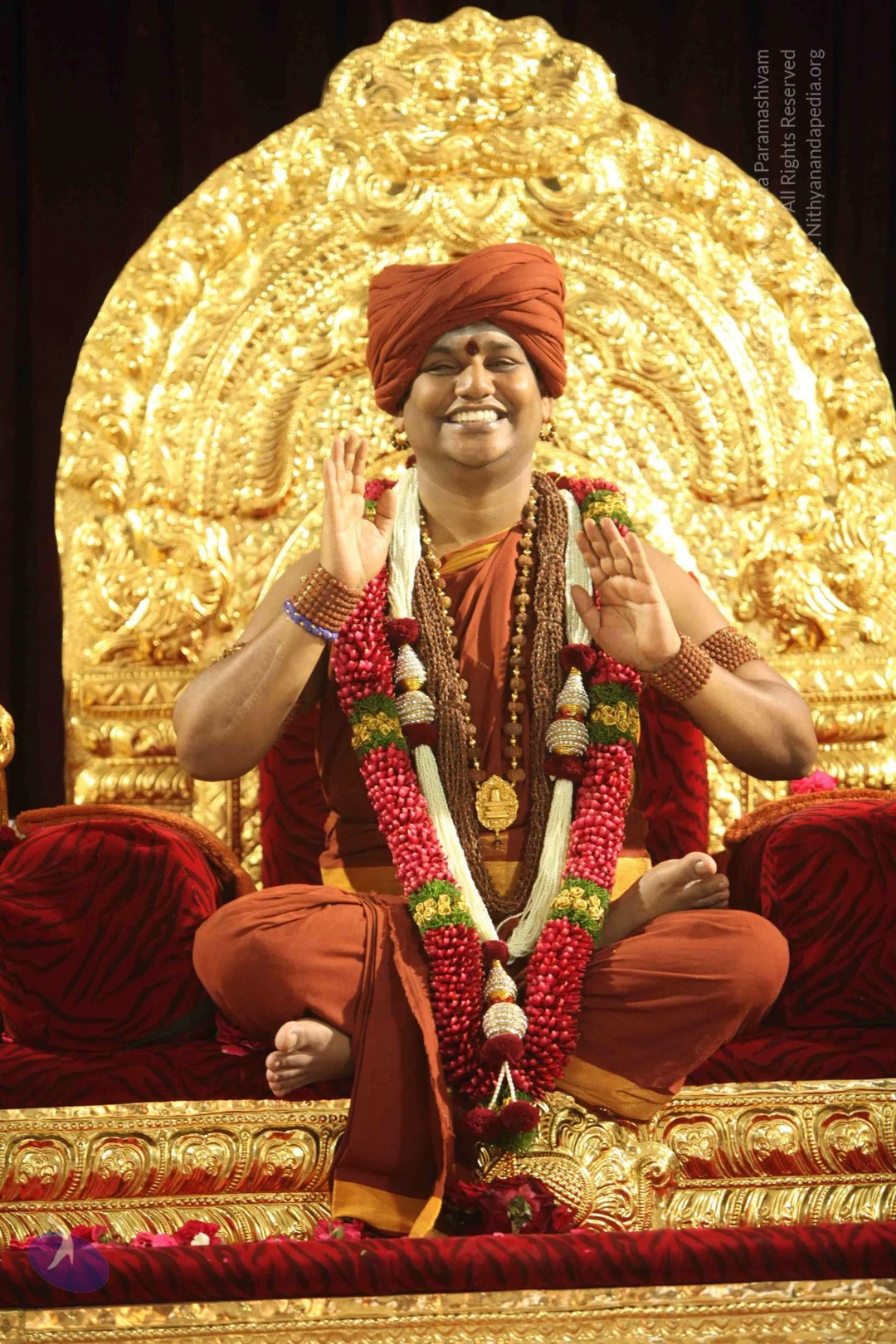
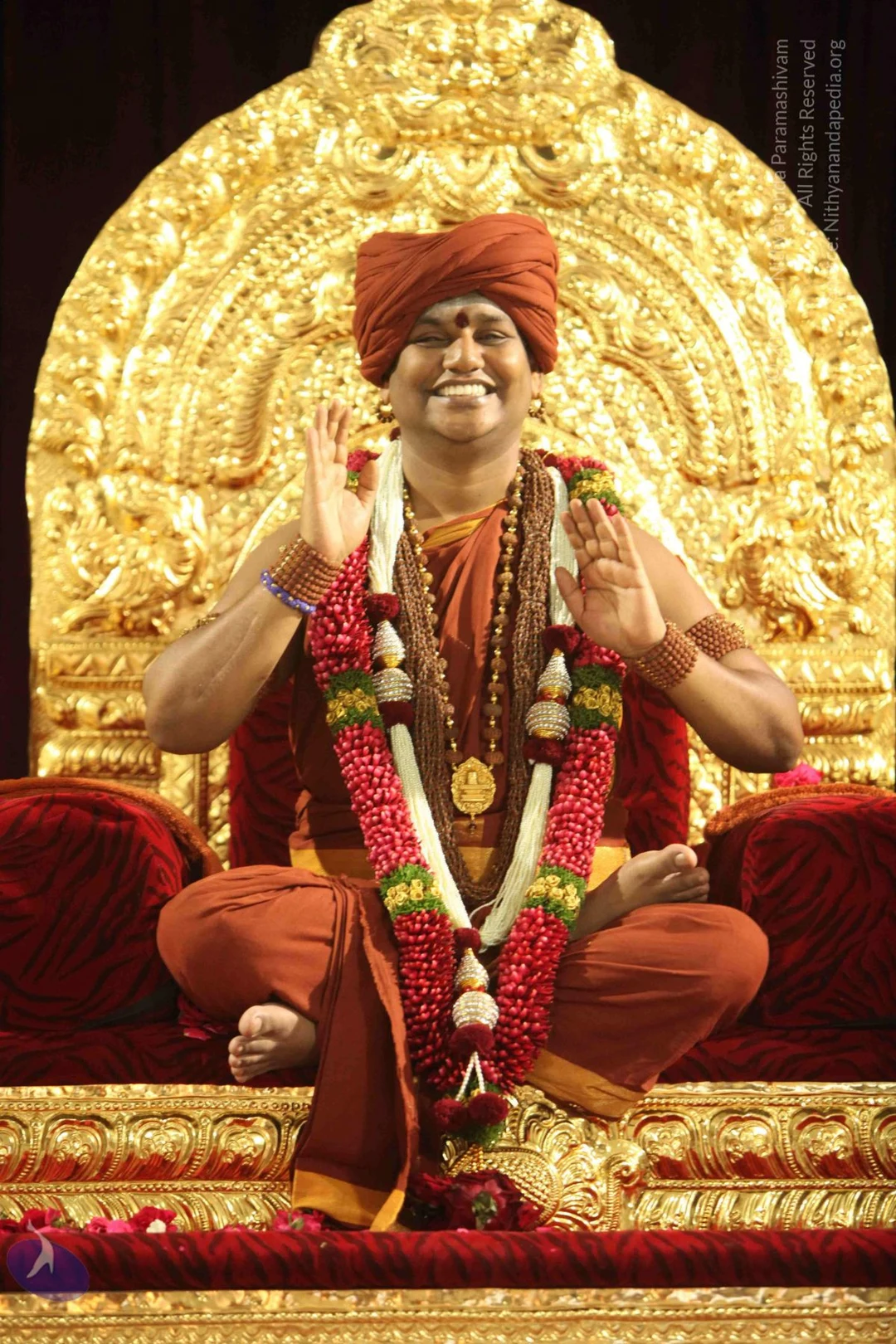
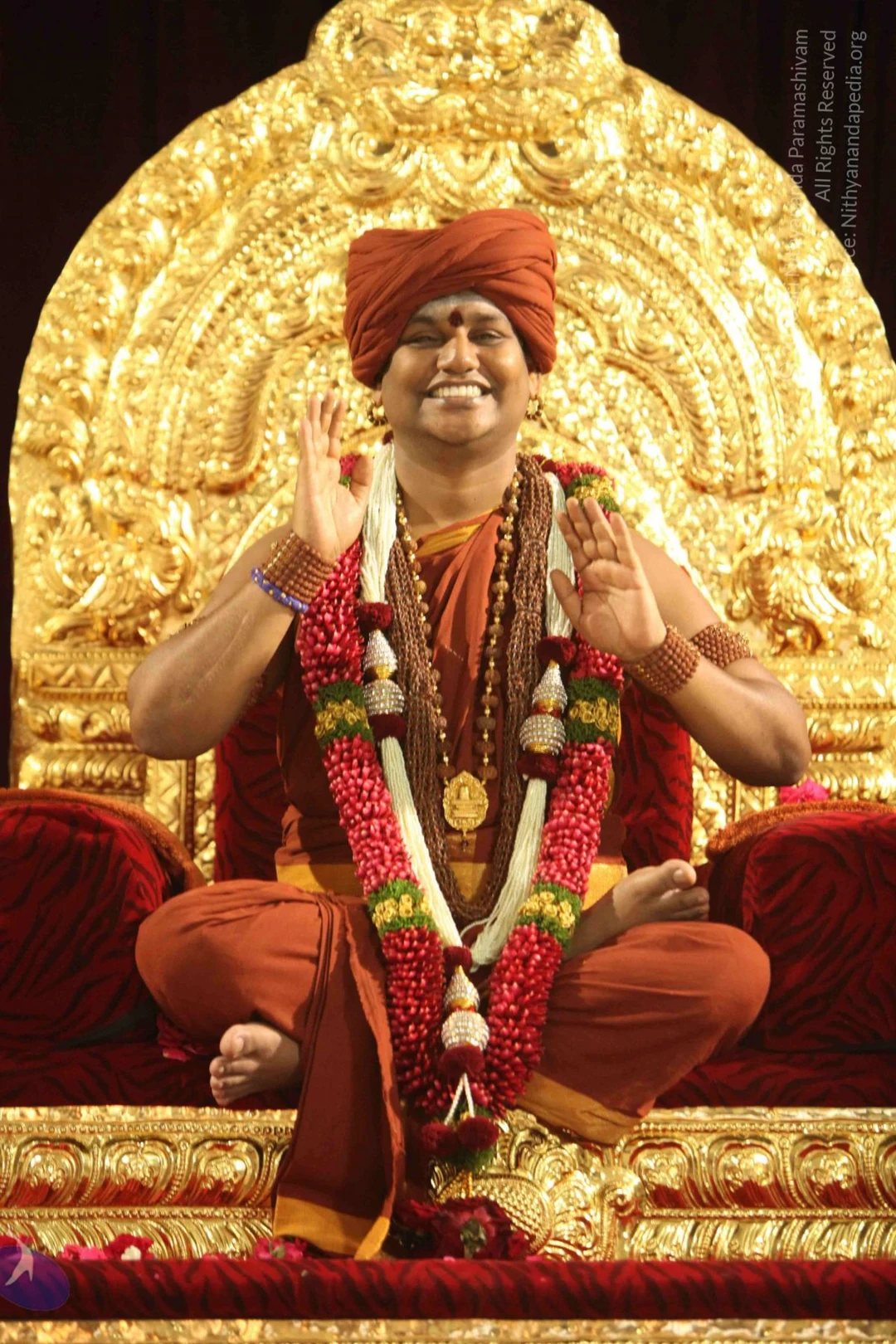
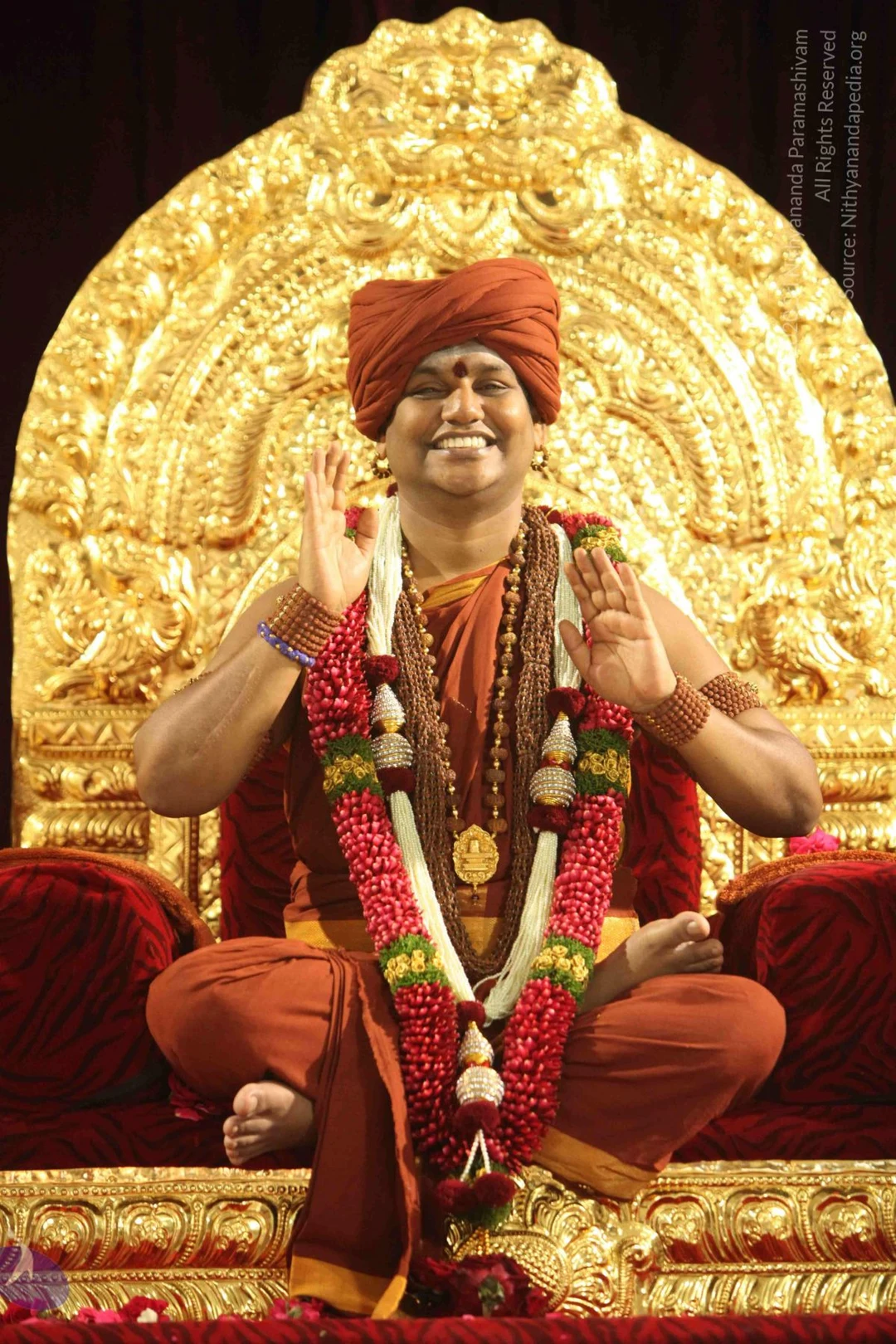
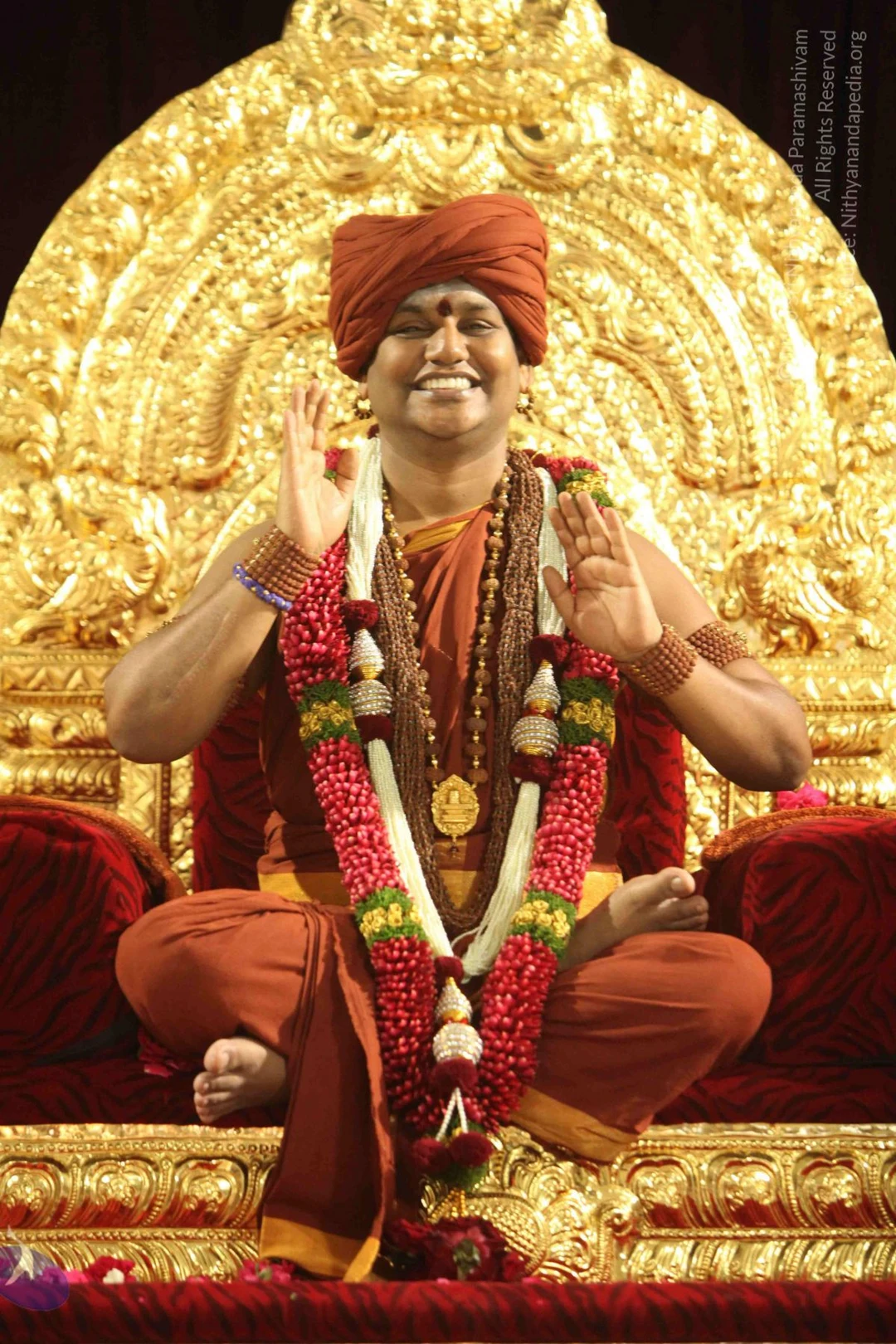
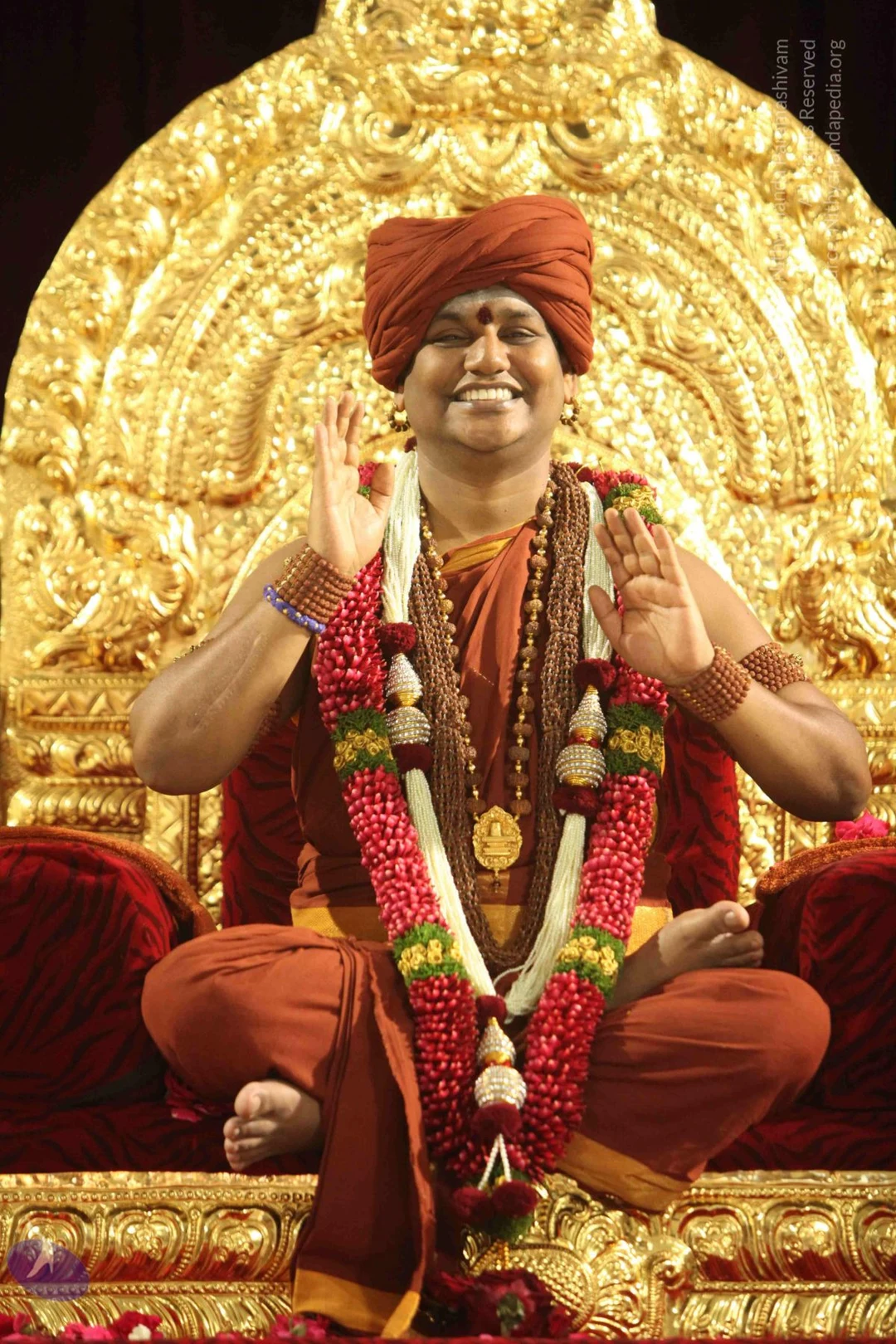
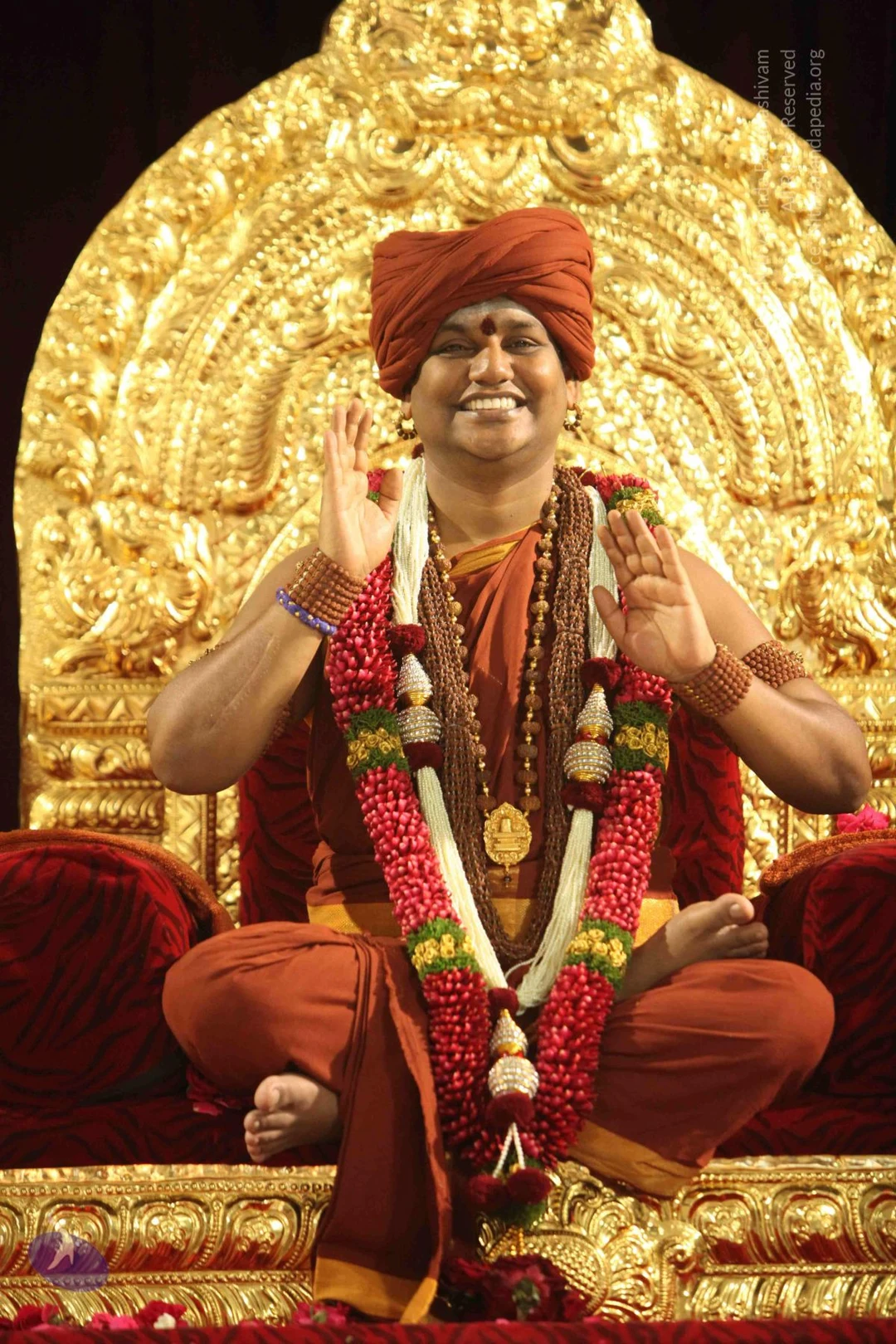
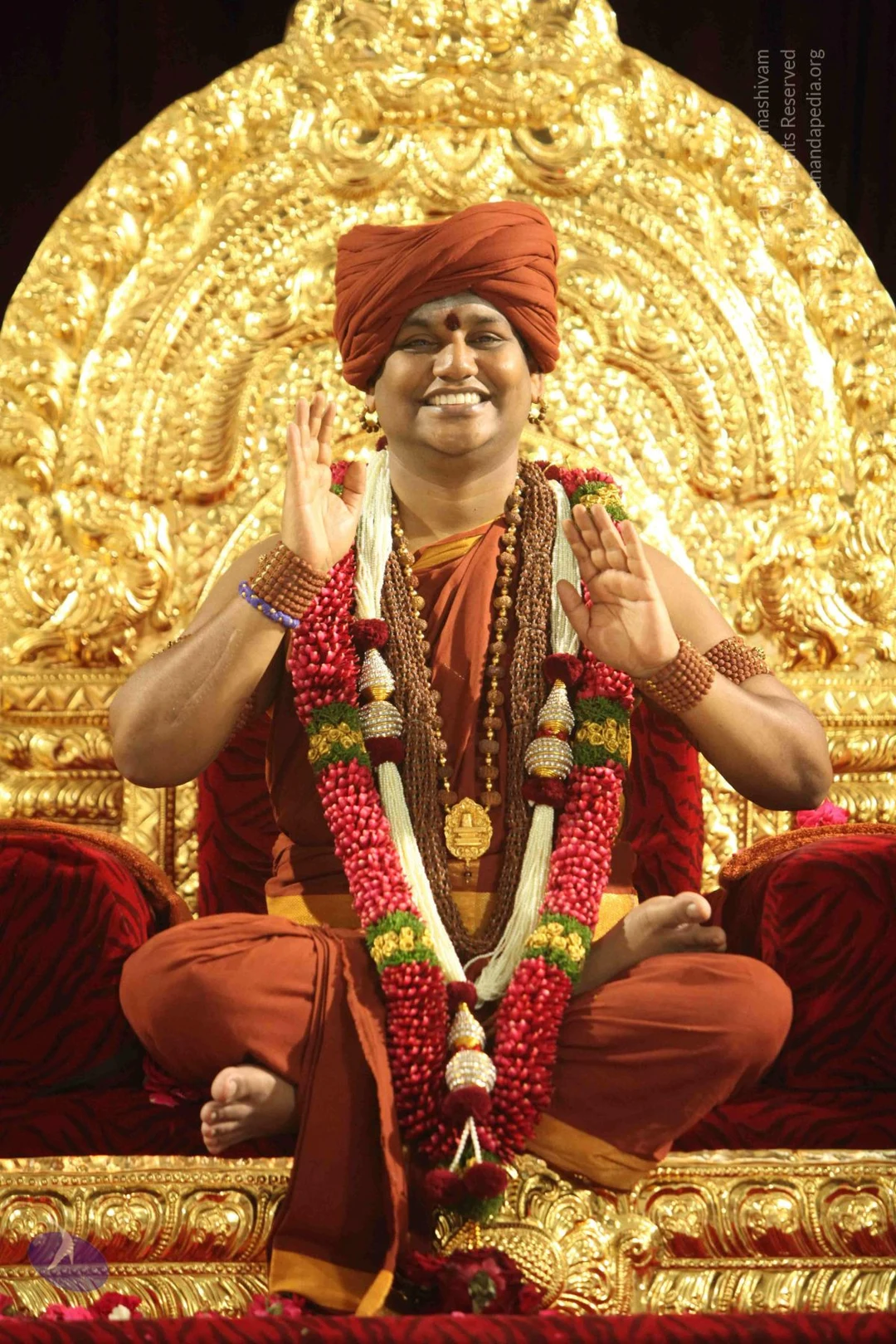
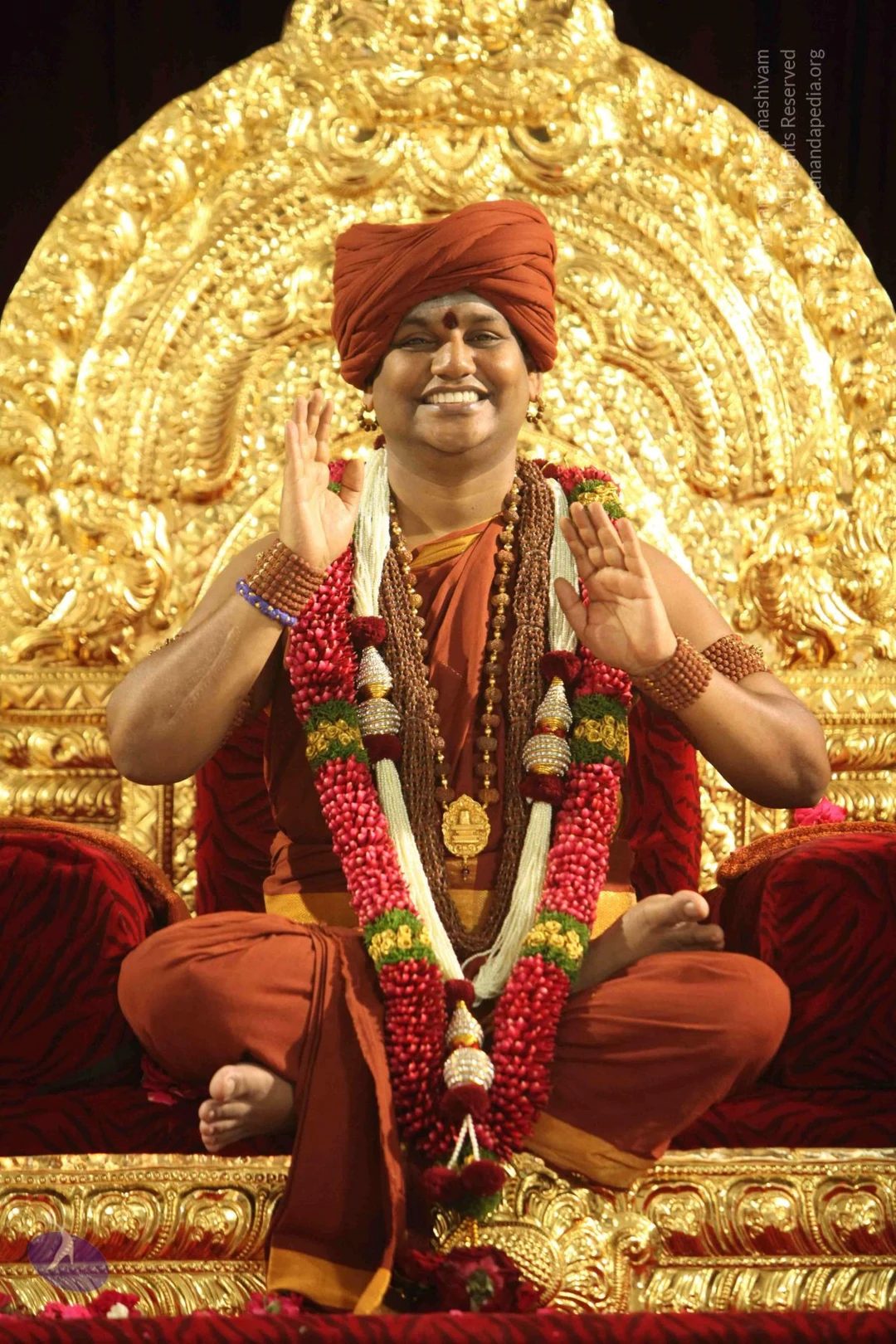
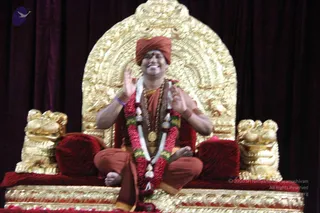
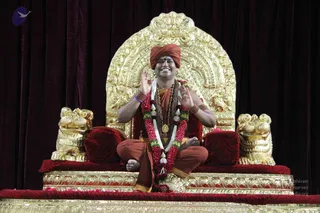
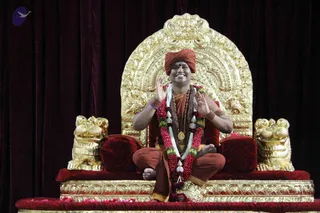
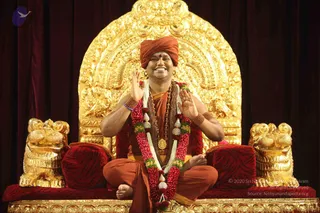
A man seated cross-legged on an ornate gold throne with a carved arched backrest and lion-like armrests, set against dark maroon drapes. He wears a rust-orange turban, orange robes, a rudraksha mala, a gold pendant, and a red and white flower garland. He smiles broadly and raises both hands in a blessing gesture. Red cushions line the throne, and red flower petals are scattered on the platform. The man matches the Swamiji (probable) appearance cues of an orange turban, orange robes, rudraksha beads and a garland while seated on a throne, though the face is not used for identification.A man seated cross-legged on an ornate gold throne with carved lion-head armrests and red cushions, against deep maroon drapery. He wears an orange-saffron turban, a saffron-orange wrap and dhoti, a rudraksha mala and a gold pendant, and red-and-white garlands. His hands are raised in front of him in an open, greeting gesture and he is smiling. Probable Swamiji by appearance: the orange turban, saffron clothing, rudraksha mala and gold ornaments are the qualifying cues, seated on the throne.A seated man in saffron-orange robes sits cross-legged on an ornate golden throne with lion-shaped armrests and red velvet cushions, in front of a gilded arched backrest and dark maroon curtains. He wears a saffron-orange turban, a rudraksha mala draped over his chest, a long garland of red and white flowers and beaded necklaces, and bangles on his wrists. He smiles broadly with both hands raised in front of him, palms open. Red flower petals are scattered on the throne platform.A smiling man in an orange-red turban and saffron robes sits cross-legged on an ornate gold throne with carved lion-head armrests, backed by a large gilded arch and dark red drapes. He wears a red and white flower garland, a rudraksha mala, a gold pendant and bangles, and raises both palms in greeting. Probable Swamiji (in-person appearance cues: red turban, saffron robes, rudraksha mala, ceremonial garland).A seated man in saffron-orange robes and a matching saffron turban sits cross-legged on a red and gold throne, smiling broadly with both palms raised toward the viewer in a blessing gesture. He wears a long red and white flower garland, a brown rudraksha mala, a large gold pendant, and bangles. Behind him rises an ornate gold carved arch against deep red draped curtains, and golden lion-shaped armrests flank the seat. Swamiji (probable): the saffron clothing, turban, rudraksha mala and ceremonial garland with a gold pendant are visible cues, seated on a throne as a teacher giving darshan.A man seated cross-legged on a large gold-carved throne with lion-head armrests and an arched gold backrest, set against deep maroon velvet drapes. He wears an orange-saffron turban, saffron robes, a rudraksha mala and a long garland of red flowers with white and gold tassels, and gestures with both palms raised in front of him while smiling. Red cushions and scattered petals cover the dais. a person: the long-robed figure in saffron and rudraksha malas on the ornate throne matches the presentation the page associates with a person, though the face is not used for identification.

Darshan

78 photosSource gallery
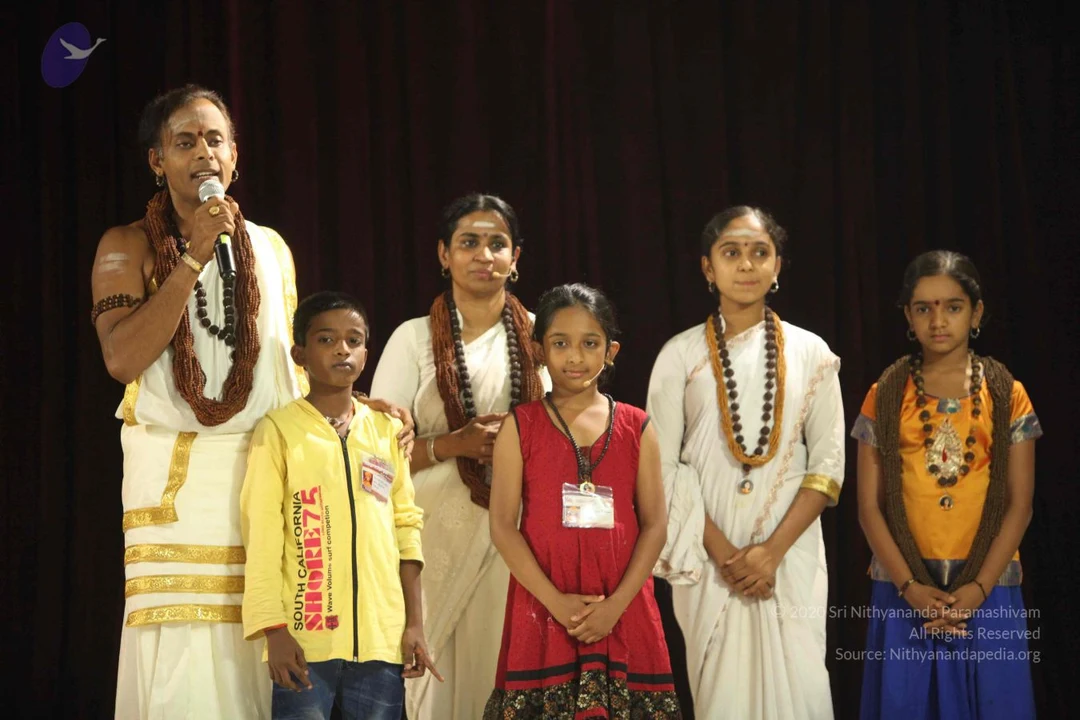
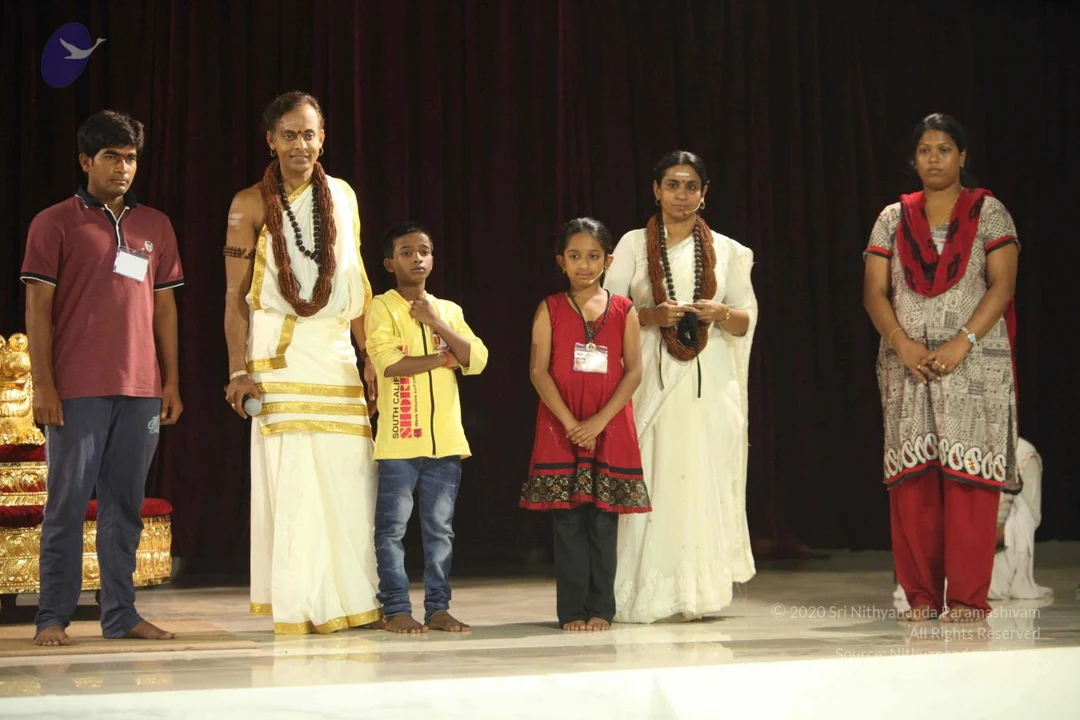
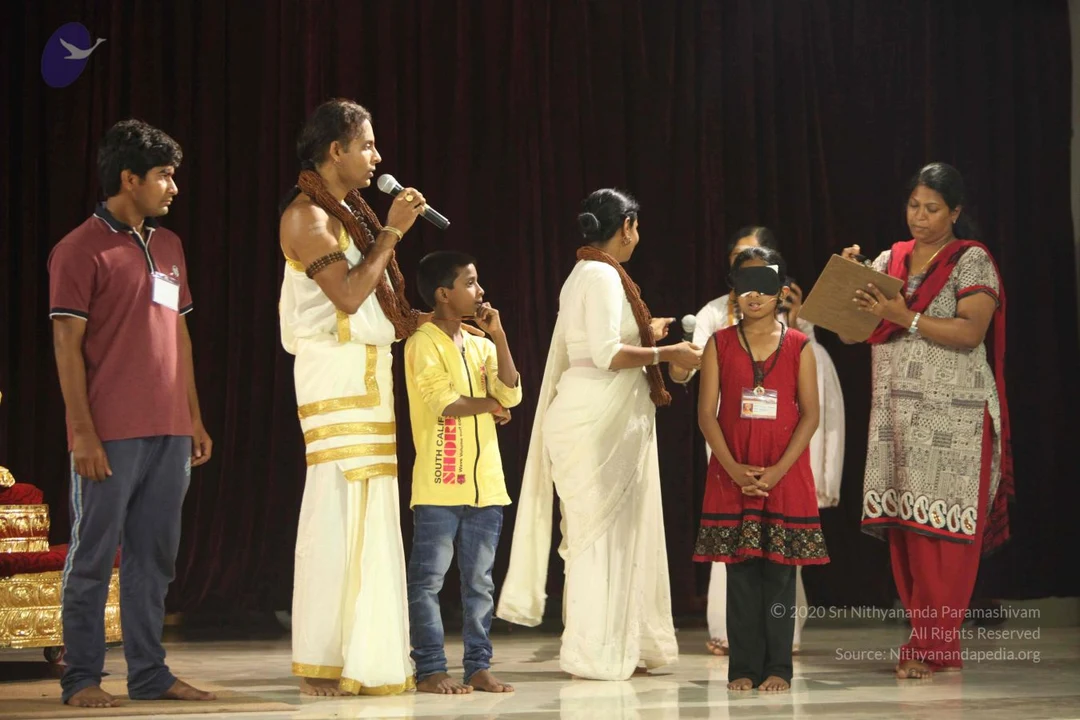
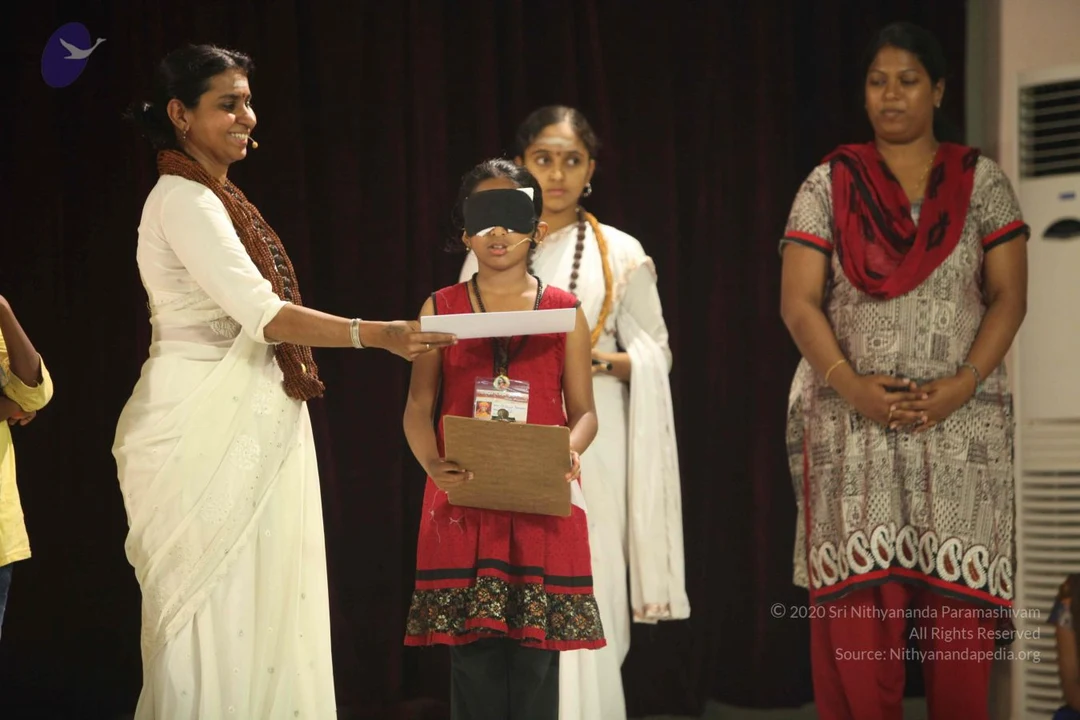
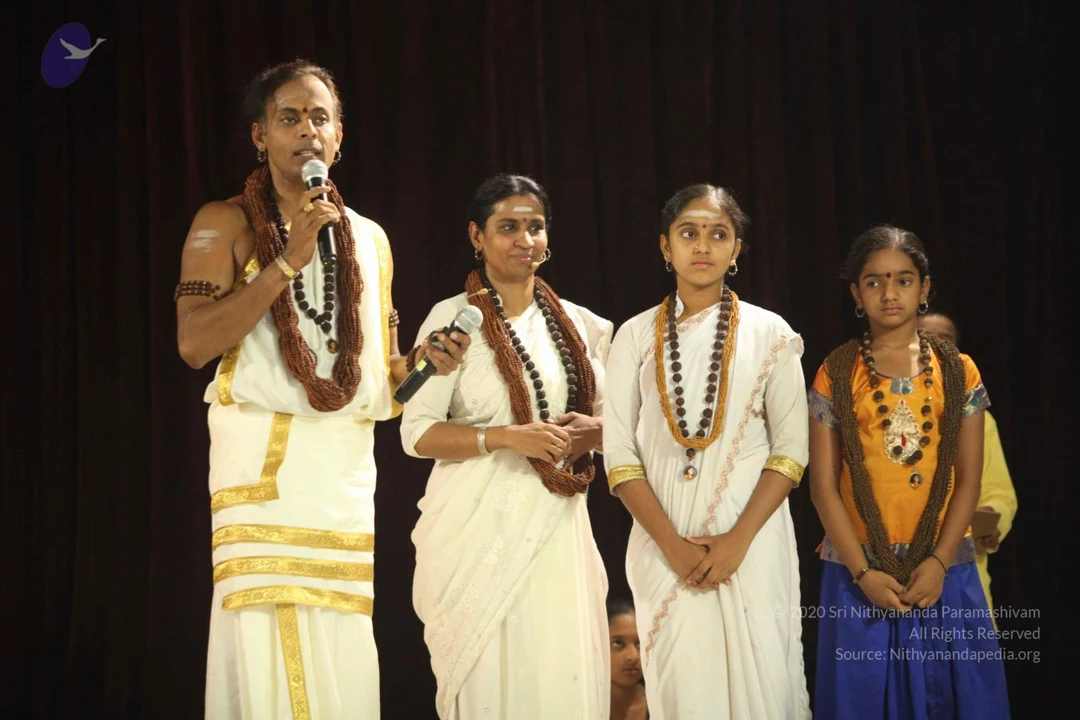
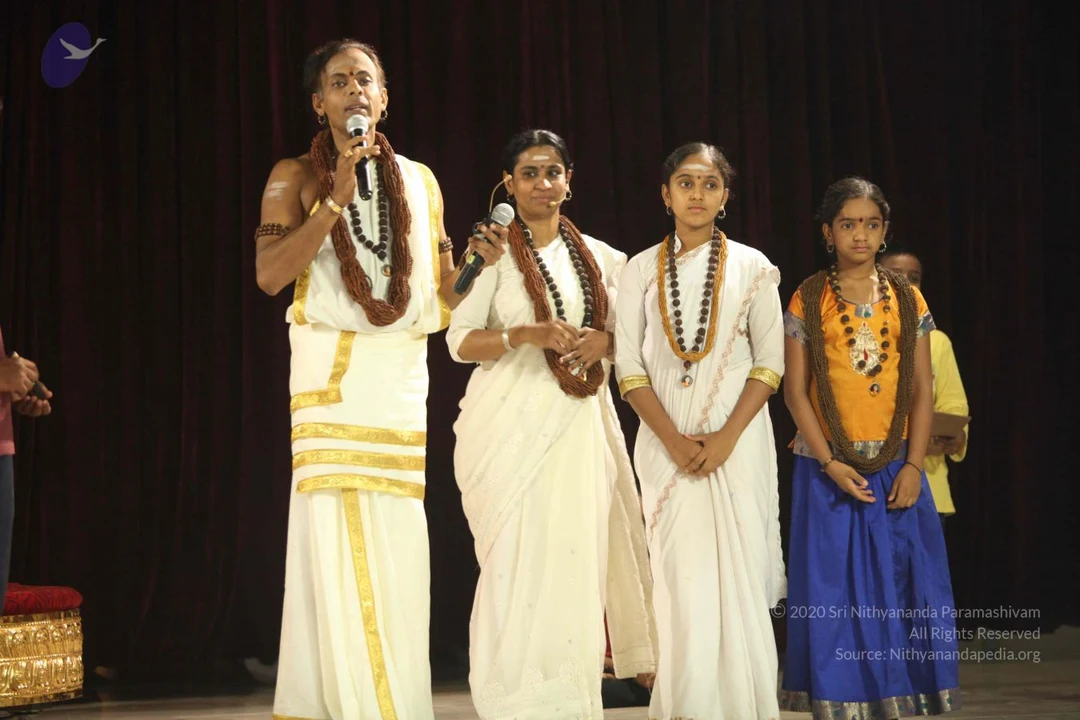
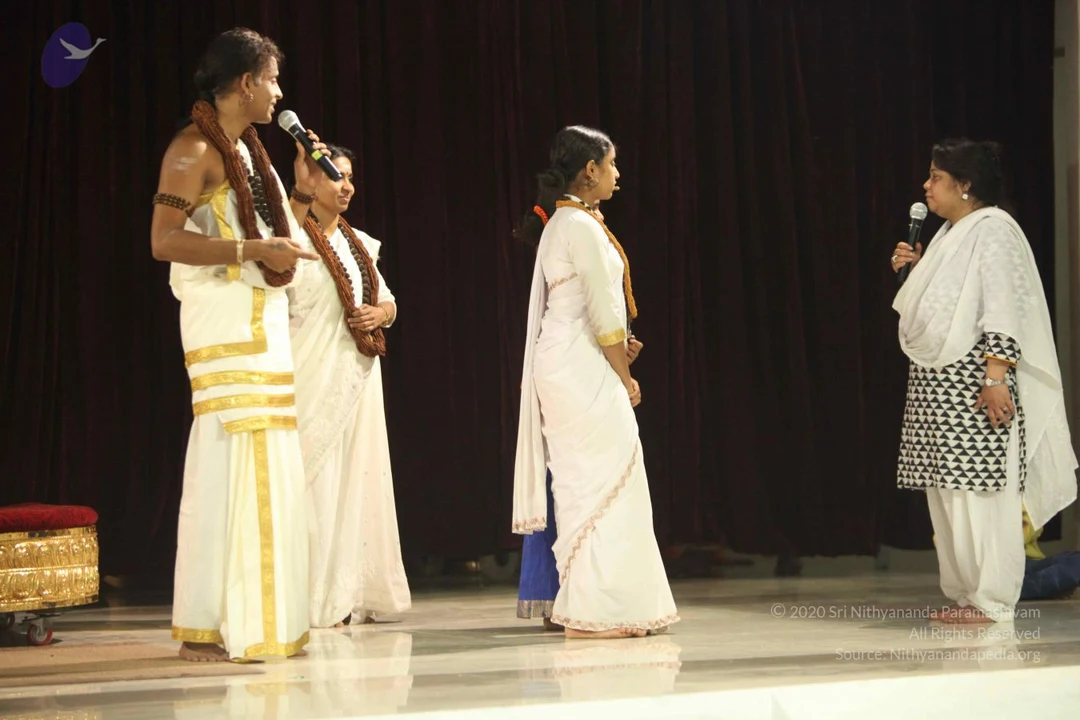
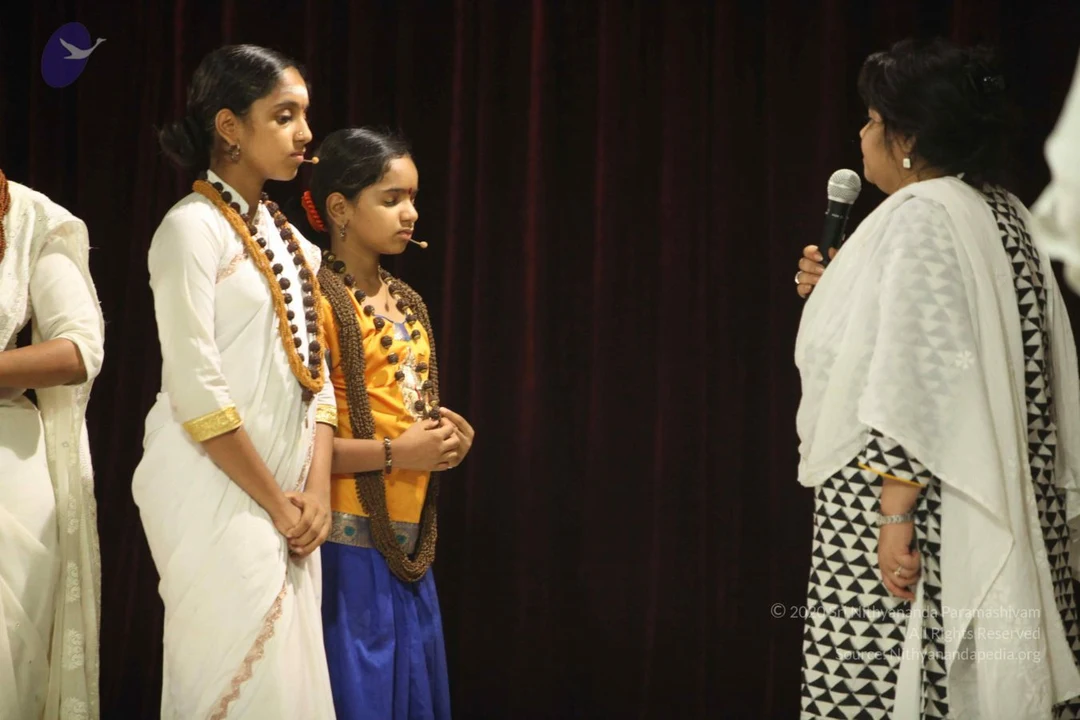
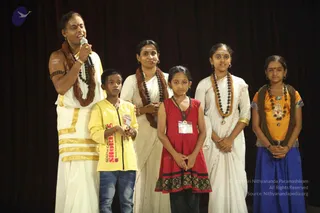
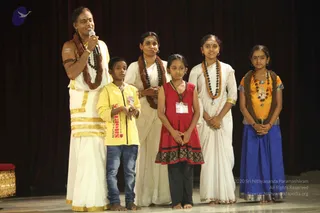
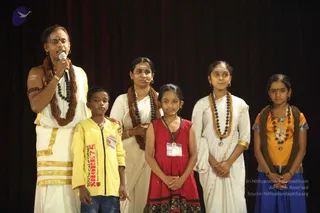
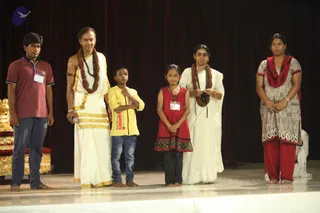
A group of five stands on a stage in front of dark maroon drapes. On the left, a man with a shaved head and white body markings wears white dhoti-style clothing with gold borders and a long rudraksha mala, holding a microphone and speaking. Beside him a boy in a yellow zip jacket with a name badge stands with hands clasped, next to a woman in a white sari with a rudraksha mala and a lapel microphone. A girl in a red sleeveless dress with a badge stands with hands clasped, followed by a teenage girl in a white sari with an orange-gold border and a rudraksha mala, and a girl in an orange top and blue skirt with a beaded necklace and a pendant.Five people stand together on a stage before a dark maroon velvet curtain. On the left, a man with long swept-back hair and bare arms holds a microphone and wears a white dhoti and shawl with gold borders, plus a rudraksha mala and gold ornaments; he is a person by appearance but the cues are only partial, so this is uncertain. Beside him, a woman in a cream sari with a rudraksha mala stands with hands clasped. Three girls and a boy stand in front: a boy in a yellow jacket and jeans, a girl in a red dress with a visitor badge, a girl in a white sari with a rudraksha mala, and a girl in an orange blouse with a blue skirt and beaded necklaces.Six people stand on a stage before a dark red curtain, with a microphone in use. The man at far left, in a white dhoti with a gold border, holds a microphone and wears a rudraksha mala with a red-brown bead necklace and white sacred ash markings on his arm and forehead. Beside him a boy in a yellow jacket with a South California Shorts logo and jeans stands with his hand on a woman in a white sari with a red-brown beaded garland and a mala. Three girls stand in a row: one in a red sleeveless top and dark trousers wearing a lanyard badge, one in a white sari with a black beaded mala and orange shawl, and one in an orange blouse with a blue skirt and a multi-strand bead necklace with a pendant. Their hands are folded in front of them.A photograph of five people standing in a row on a stage before a dark maroon curtain. At left, a person in white dhoti with gold borders and a rust-coloured rudraksha mala holds a microphone and speaks. Beside them, a woman in a white sari wears a rust-coloured mala and stands with hands clasped. A boy in a yellow jacket and jeans stands next to a girl in a red top and black pants with a lanyard badge. At right, a young woman in a white sari with a gold-edged border wears a dark mala and folds her hands, and a girl in an orange top and blue skirt with a rudraksha mala stands with hands clasped. A red-cushioned throne-like seat with gold trim is at the far left edge. The speaker's identity cannot be determined from appearance. Five people are visible.A photograph of five people standing on a stage in front of a dark red curtain. On the far left a man with a microphone in hand wears a white dhoti with gold borders, a rudraksha mala with a red-brown bead necklace, and white ash markings on his arm and forehead. Beside him a boy in a yellow zip jacket reading SOUTH CALIFORNIA SHORE 75 stands with an ID badge. A woman in a white sari with gold border and a rudraksha necklace stands behind them. A girl in a red dress with a badge is in the centre, and to the right a young woman in a white sari with a rudraksha mala and a girl in an orange and blue outfit with a beaded necklace stand with hands folded. Ash markings are visible on several foreheads. The man with the microphone appears to be speaking to the group.A photograph of six people standing in a row on a stage before a dark red curtain. On the far left a young man wears a maroon polo shirt, navy trousers and an ID badge. Next stands a man with long hair and a bare chest, wearing a white dhoti with gold borders, a rudraksha mala and a long red-brown bead garland, with a microphone in hand. A boy in a yellow shirt and jeans stands beside a girl in a red sleeveless dress with a badge. A woman in a white sari with gold trim and a rudraksha garland stands next to a woman in a grey patterned kurta with a red dupatta and red trousers on the far right. A gold throne with red cushions is visible at the left edge.

Darshan

40 photosSource gallery
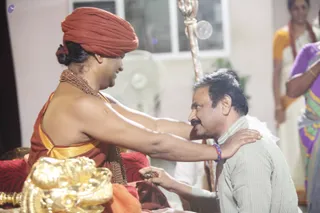
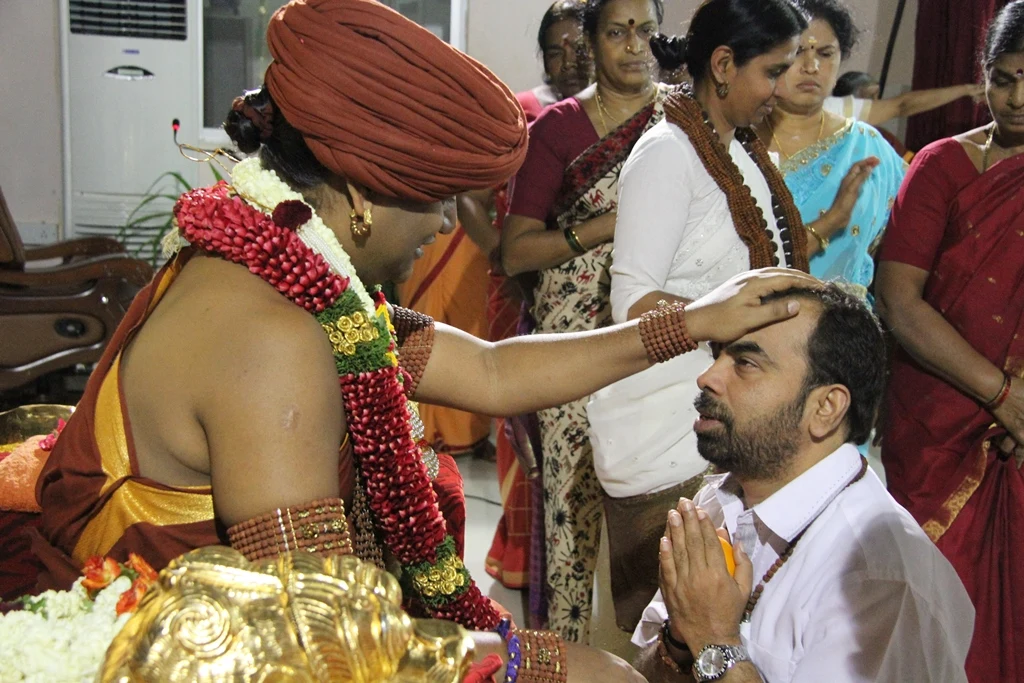
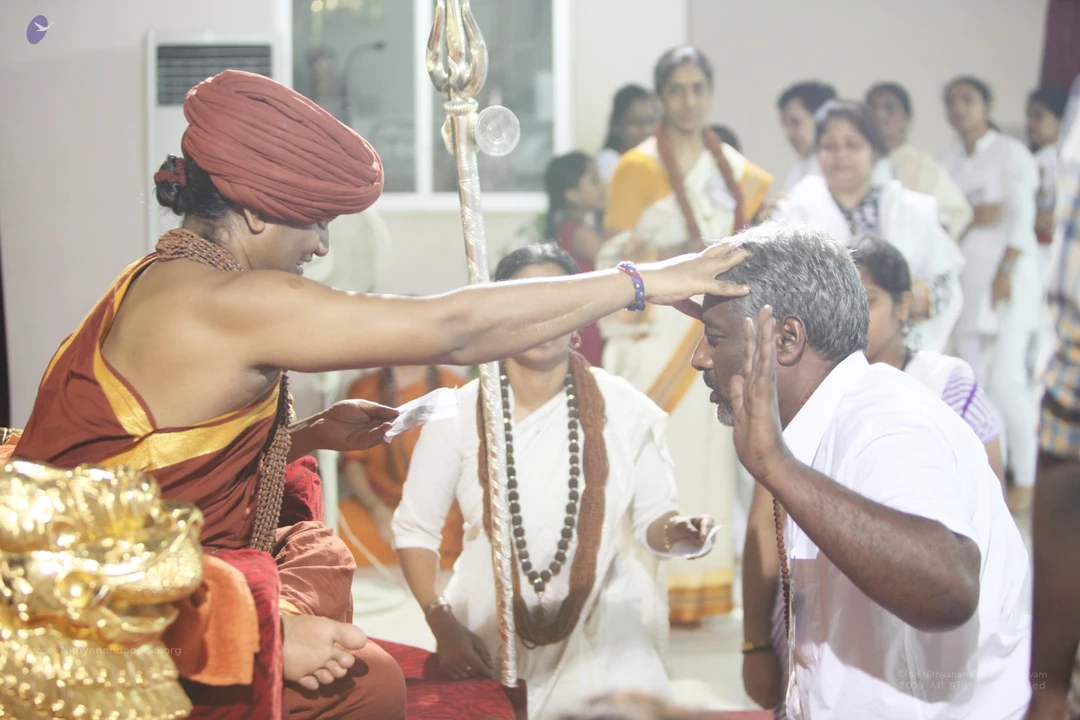
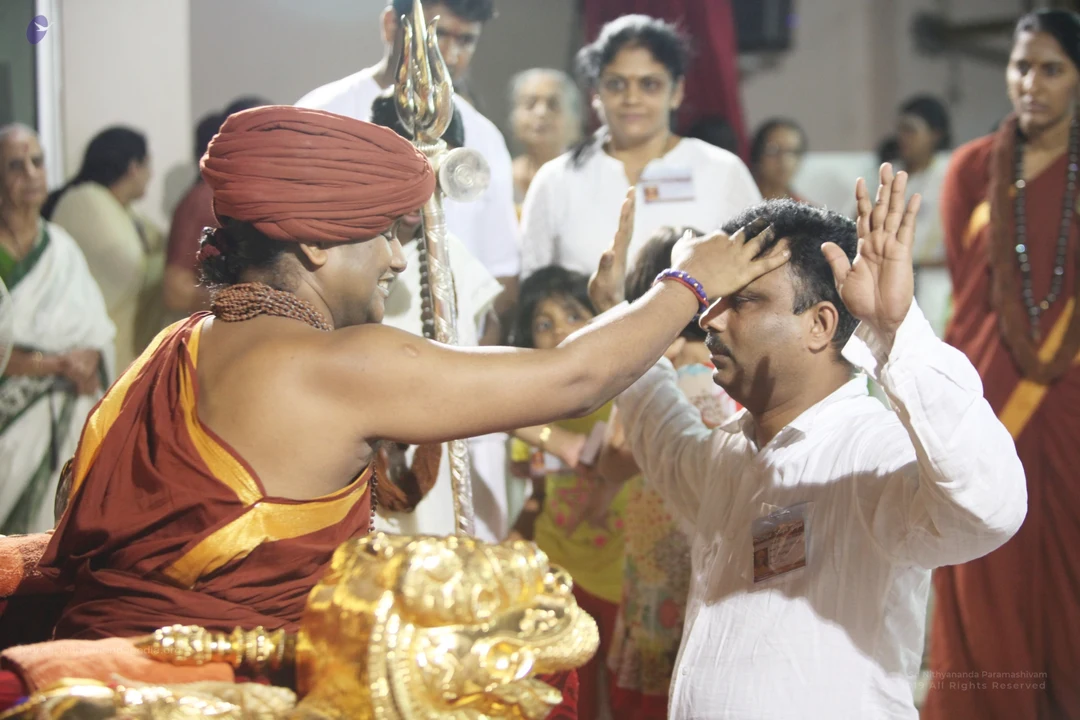
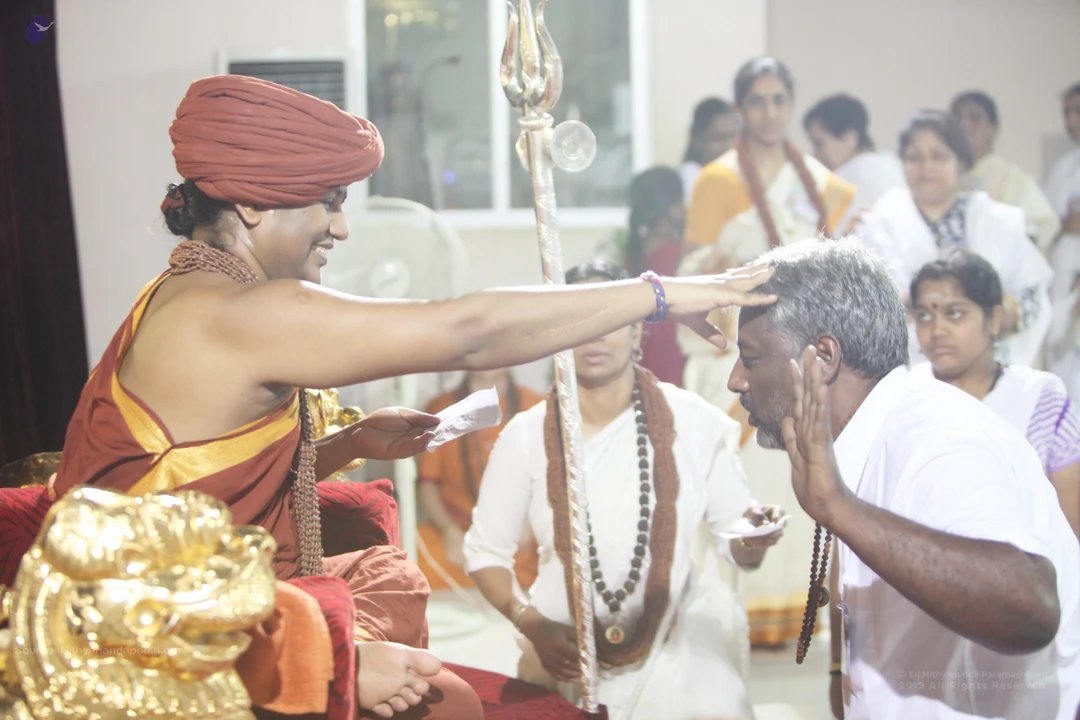
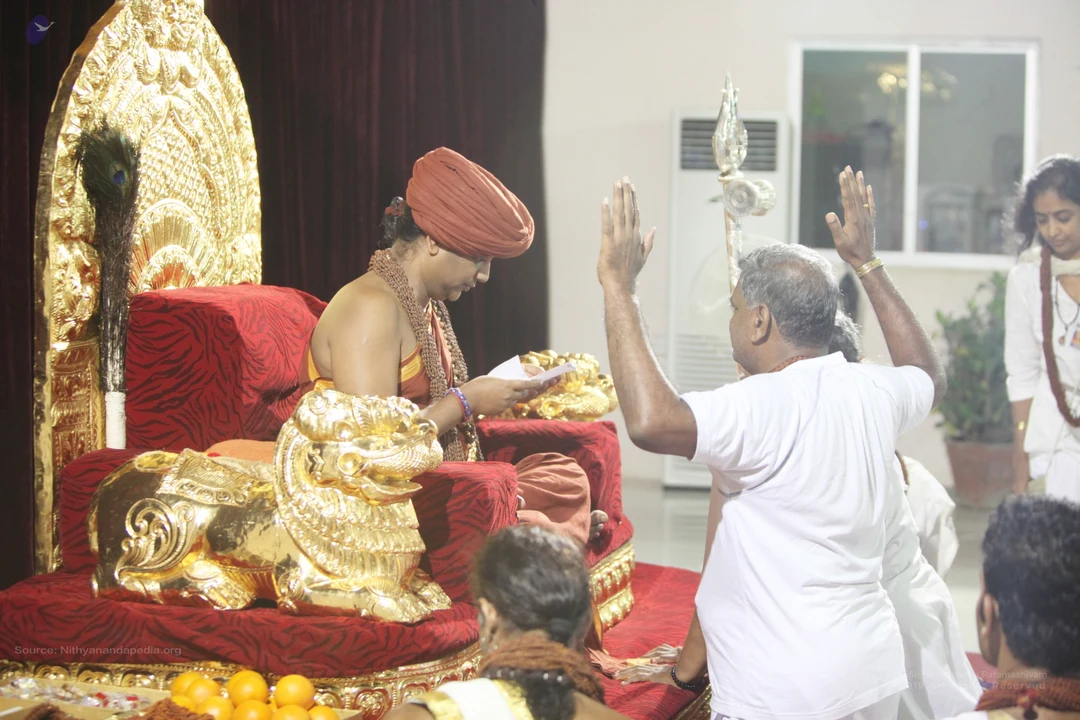
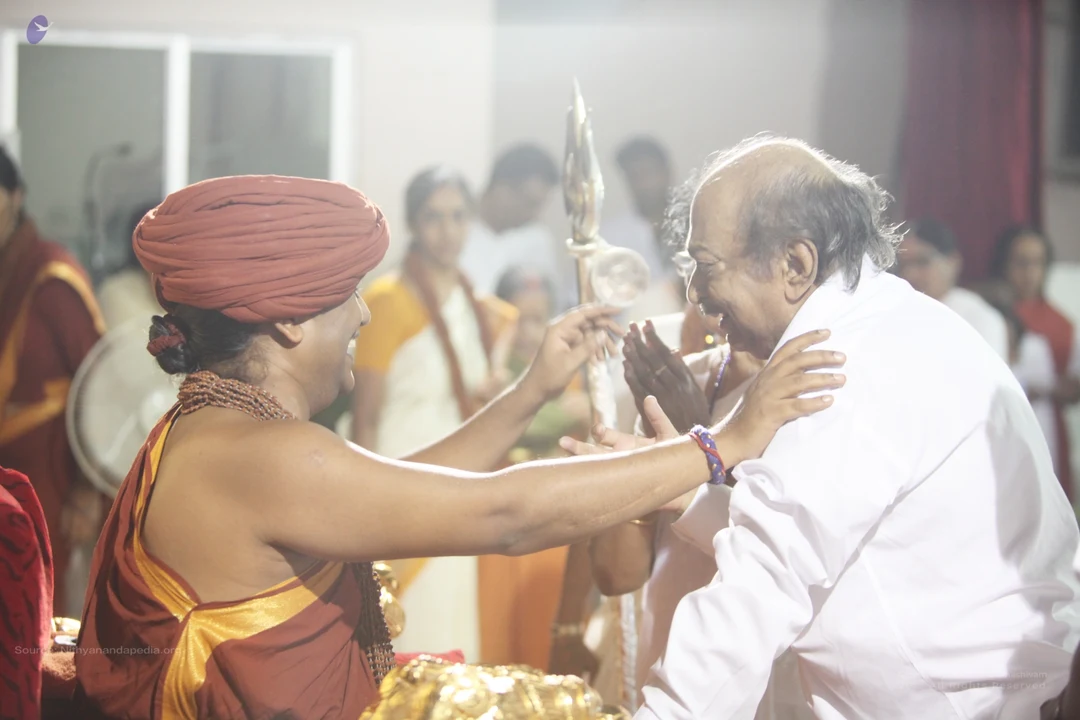
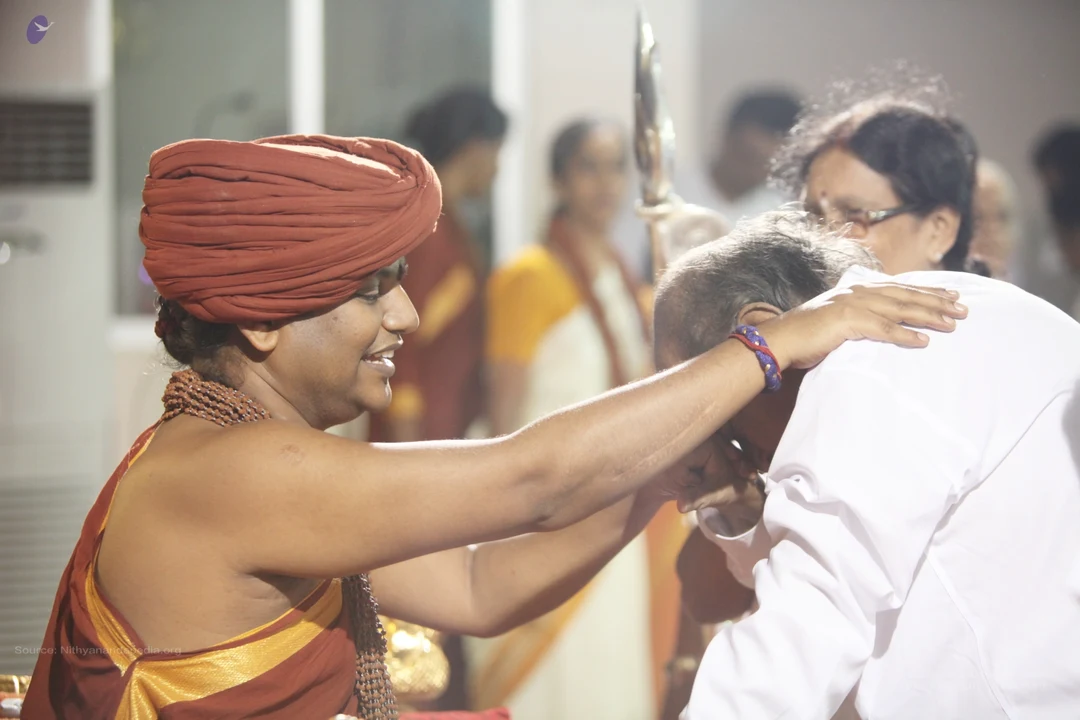
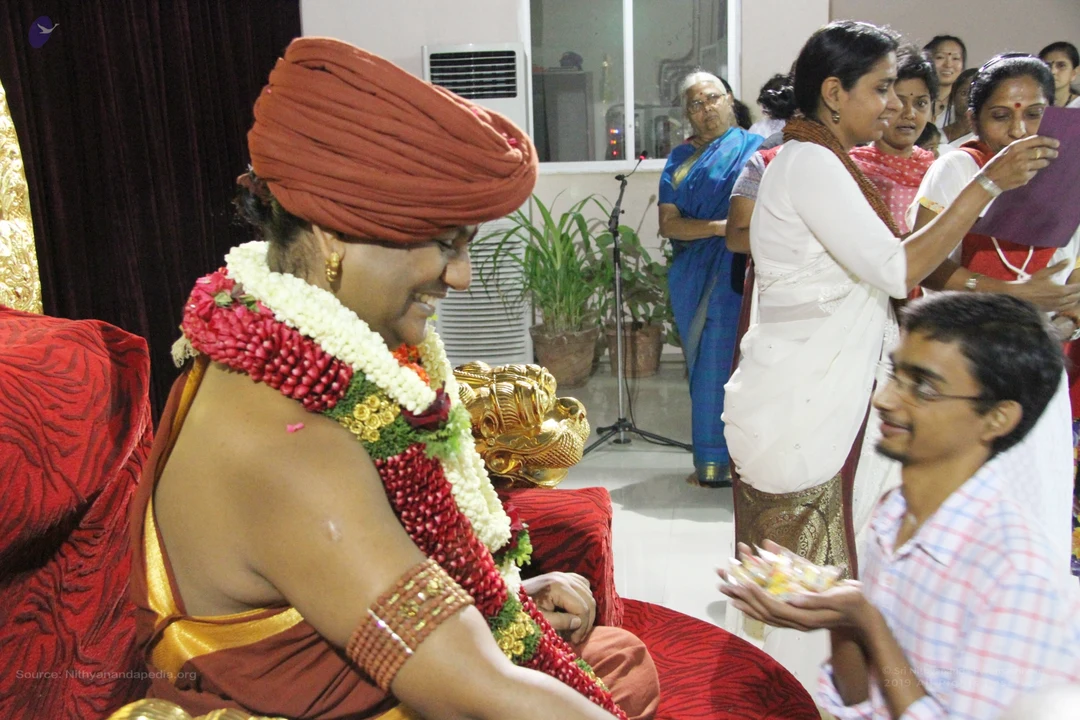
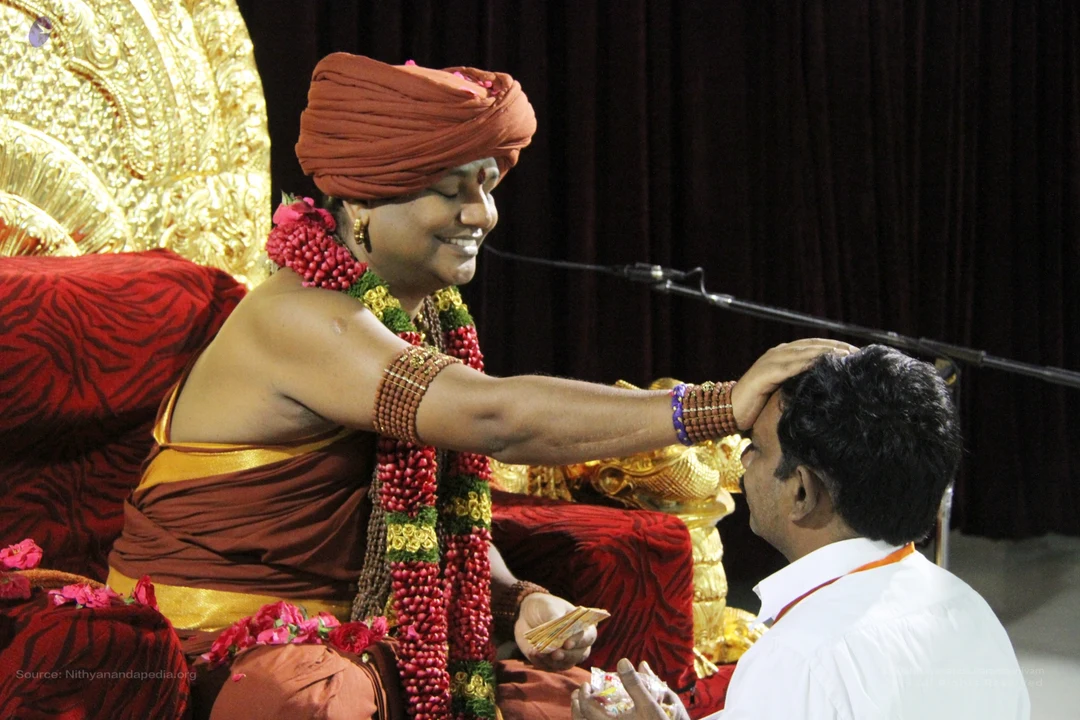
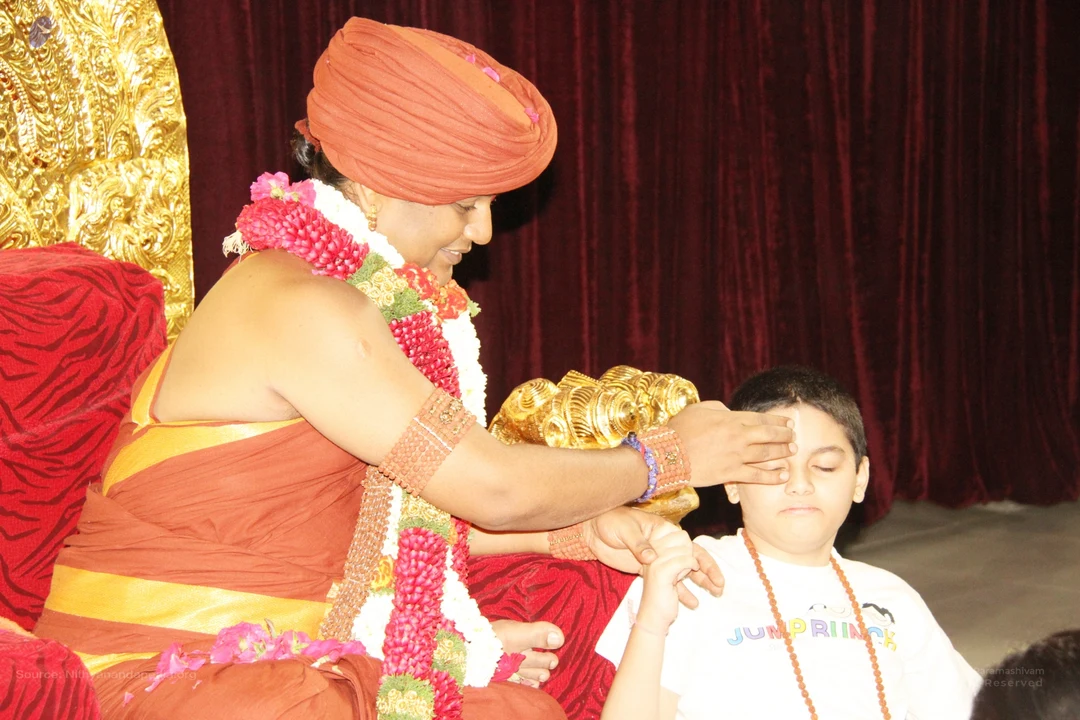
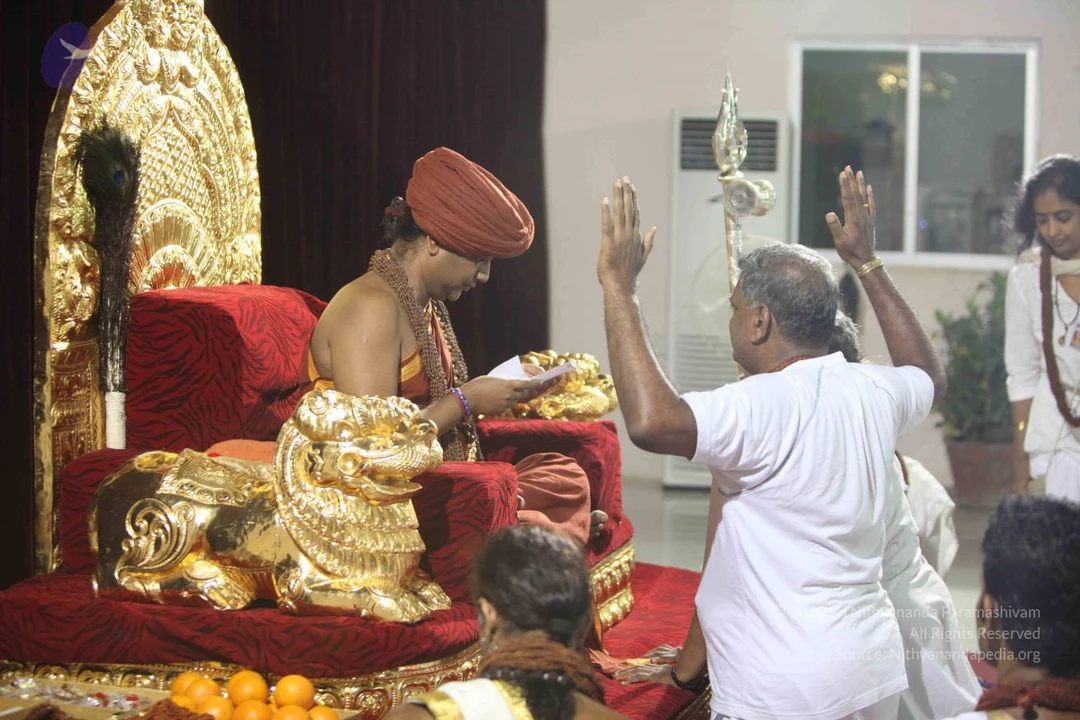
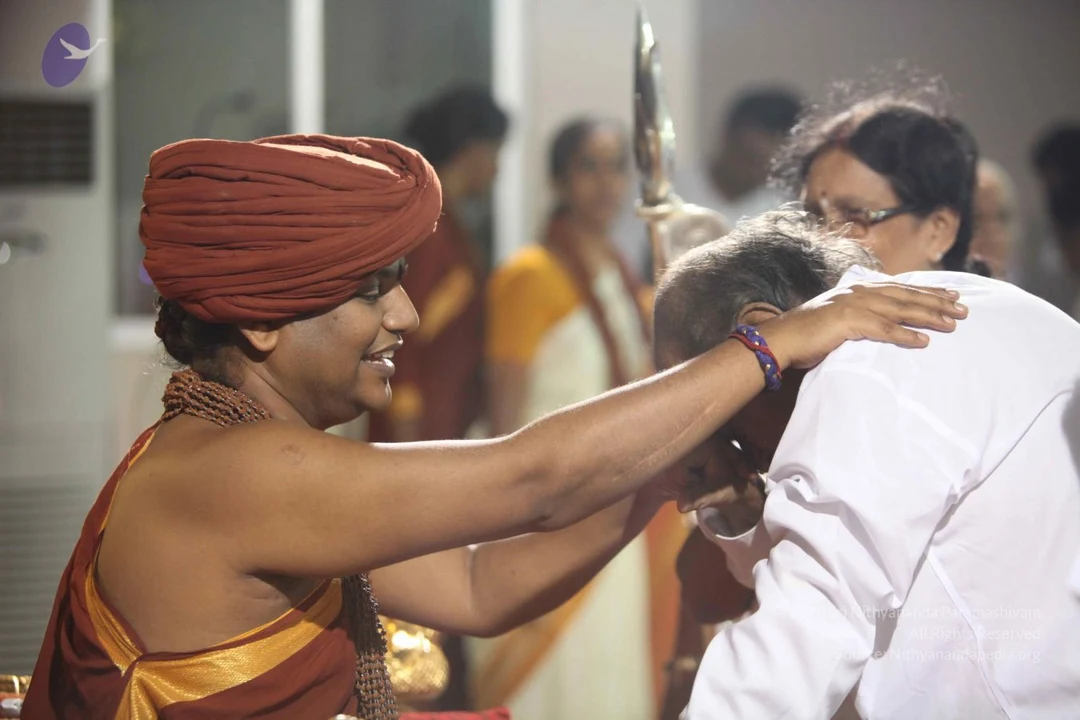
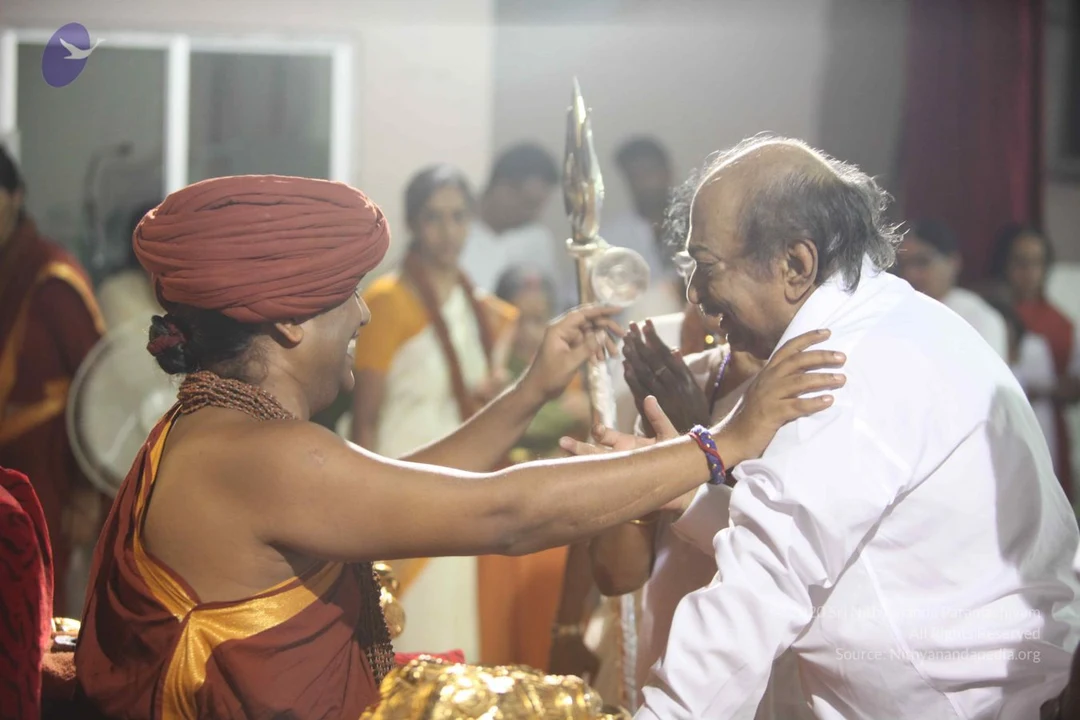
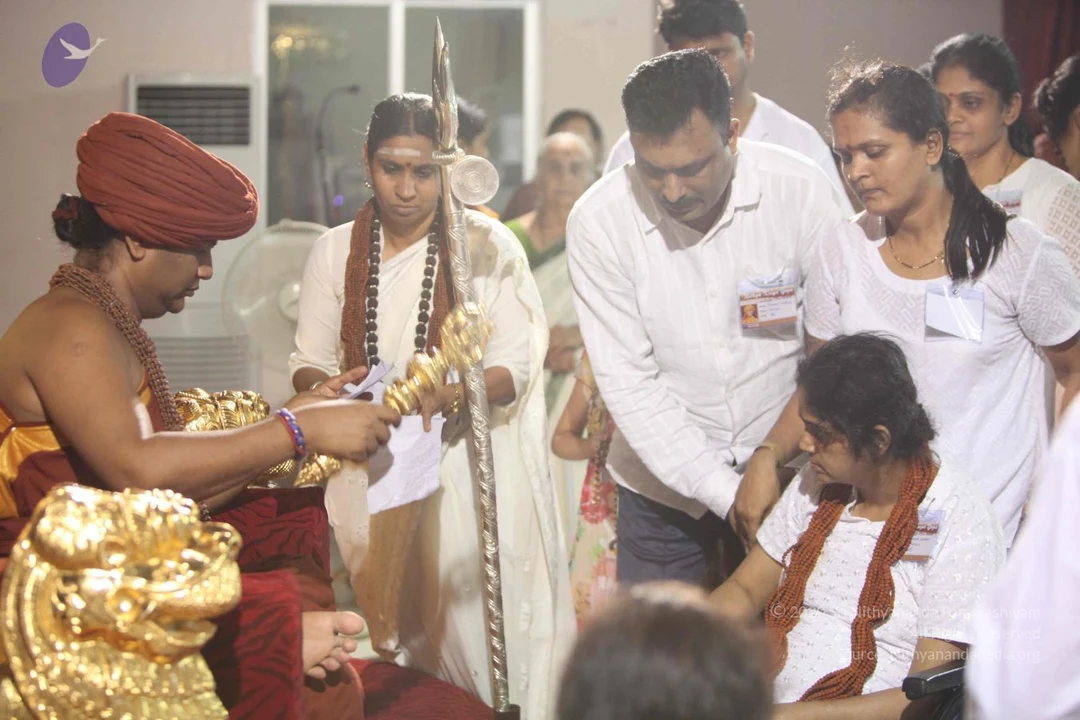
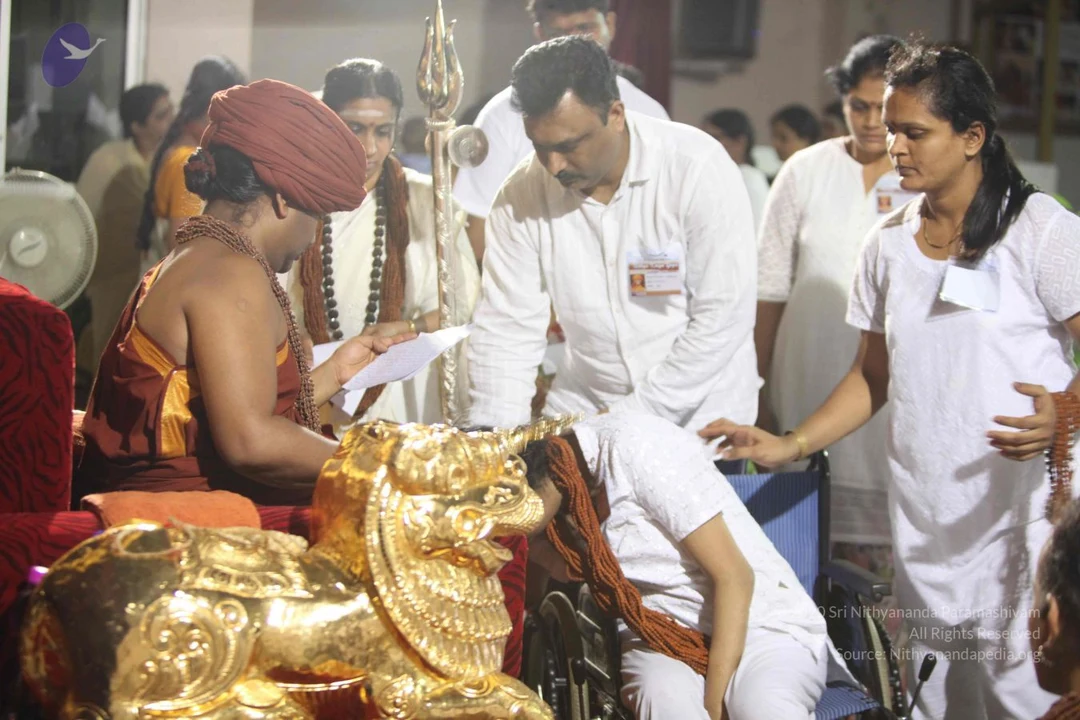
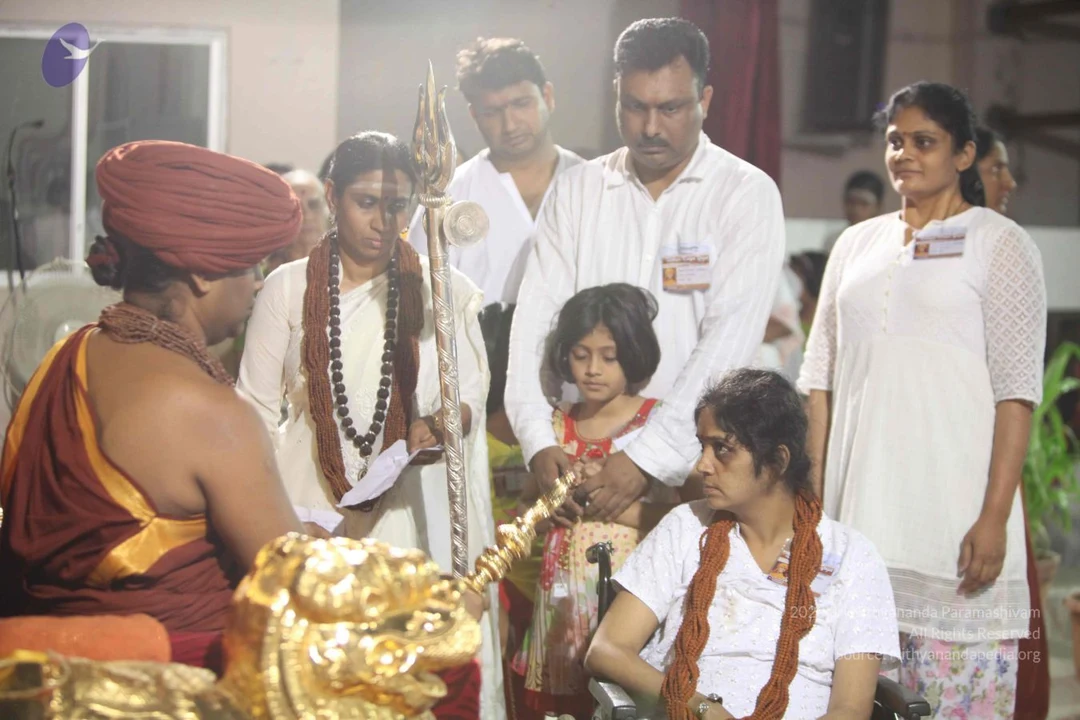
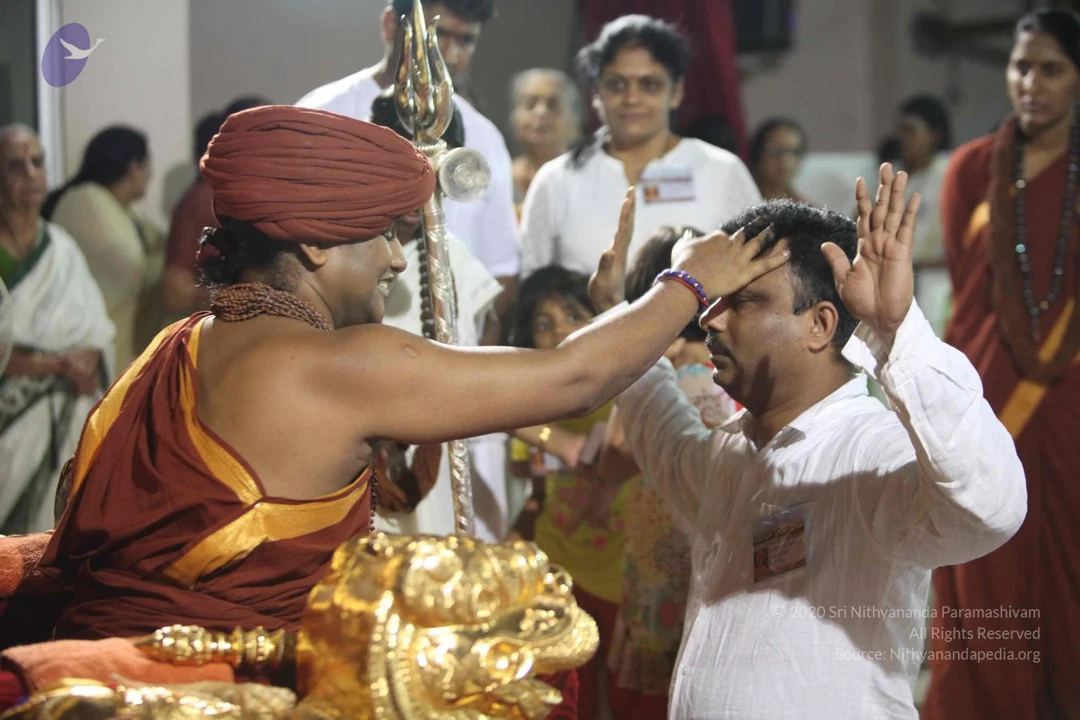
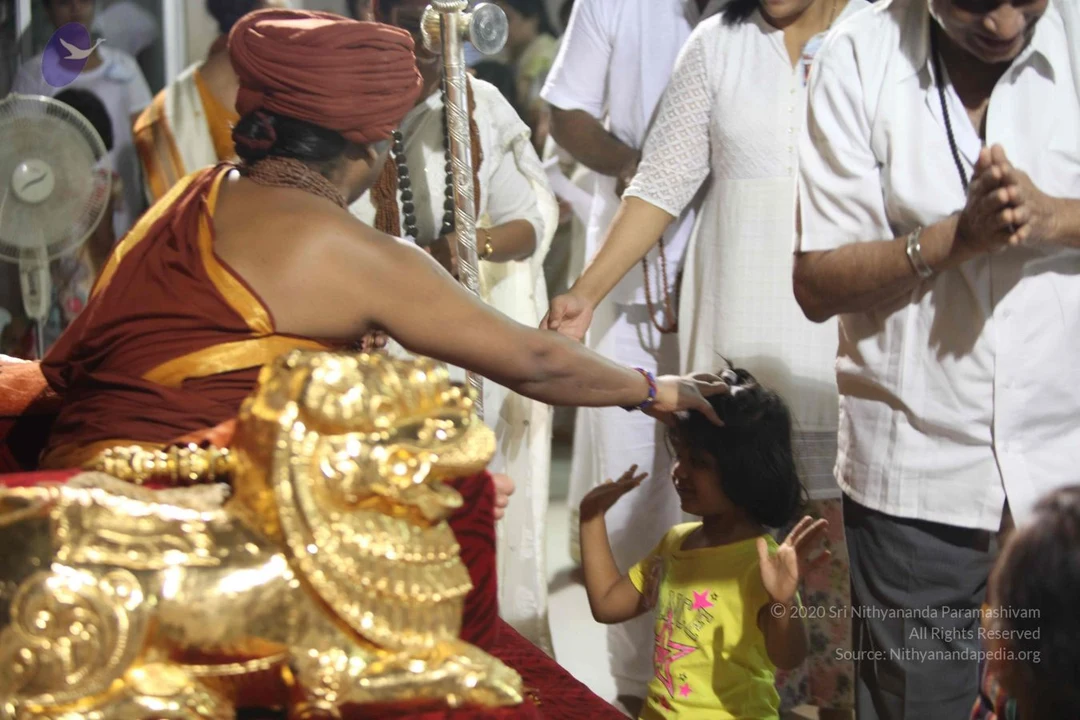
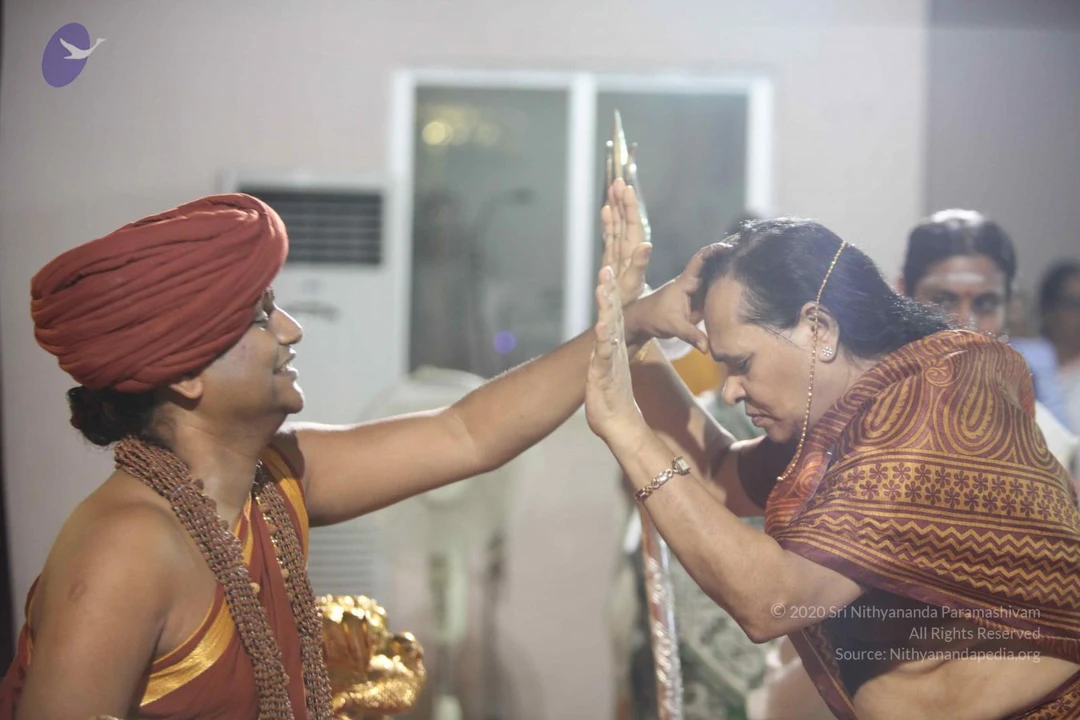
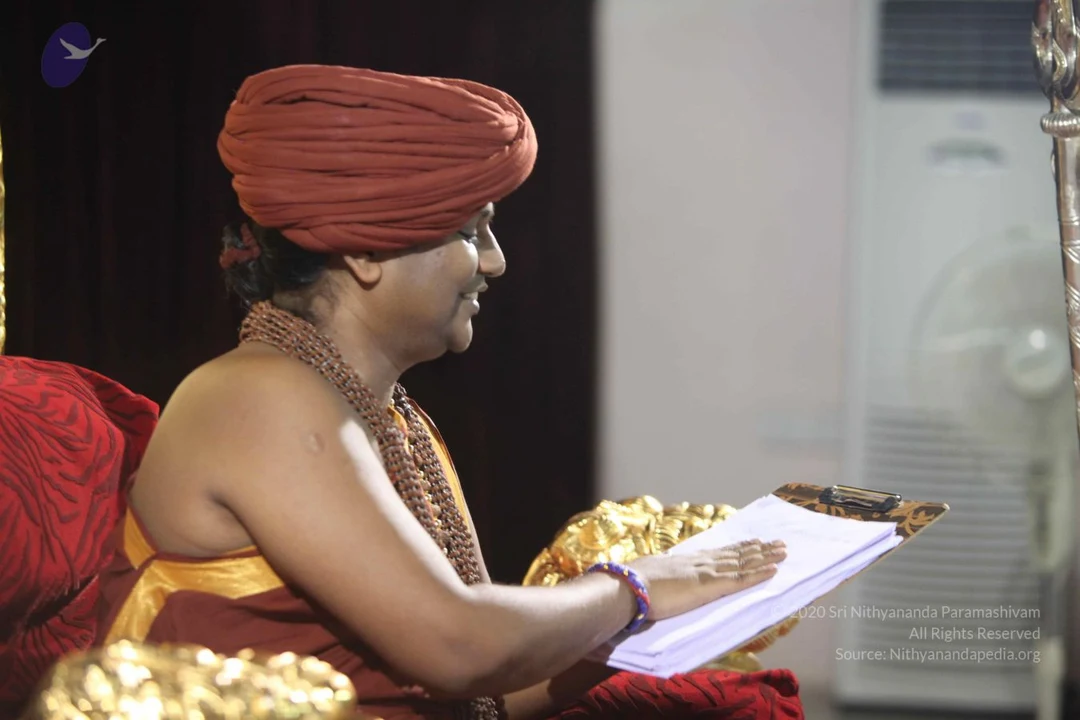
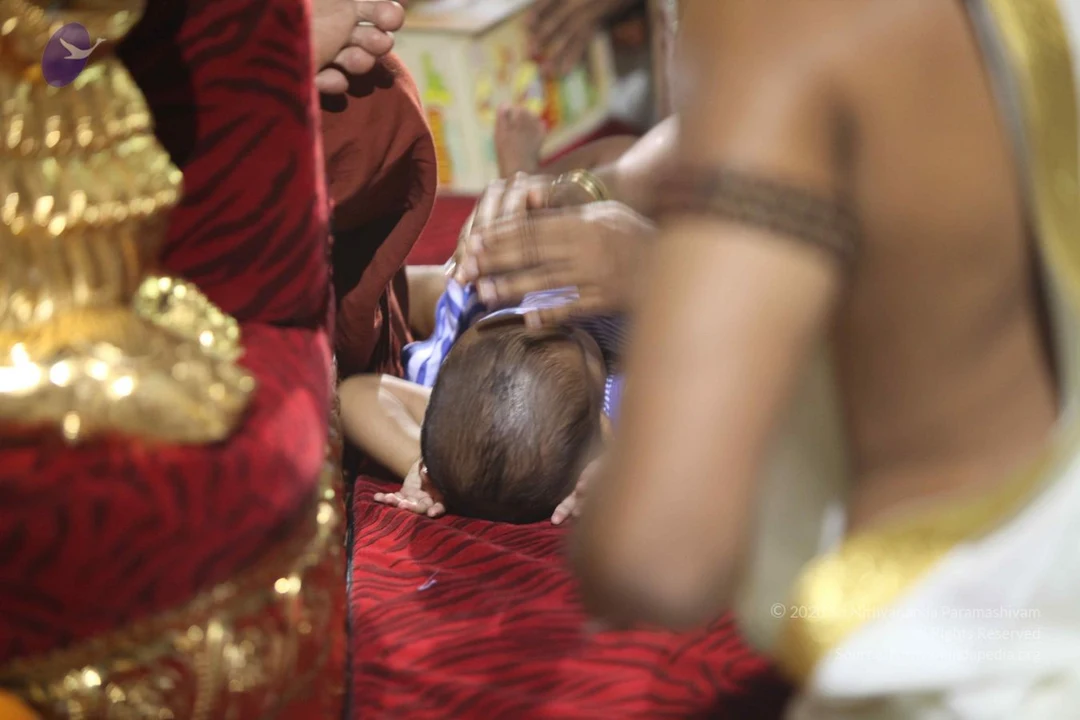
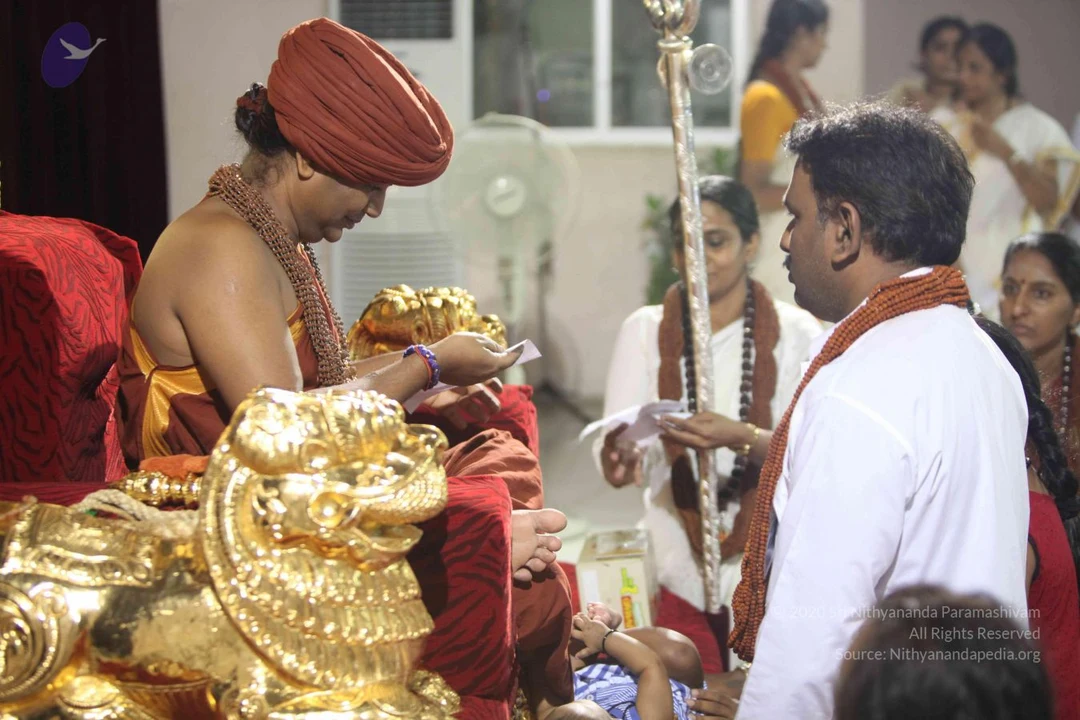
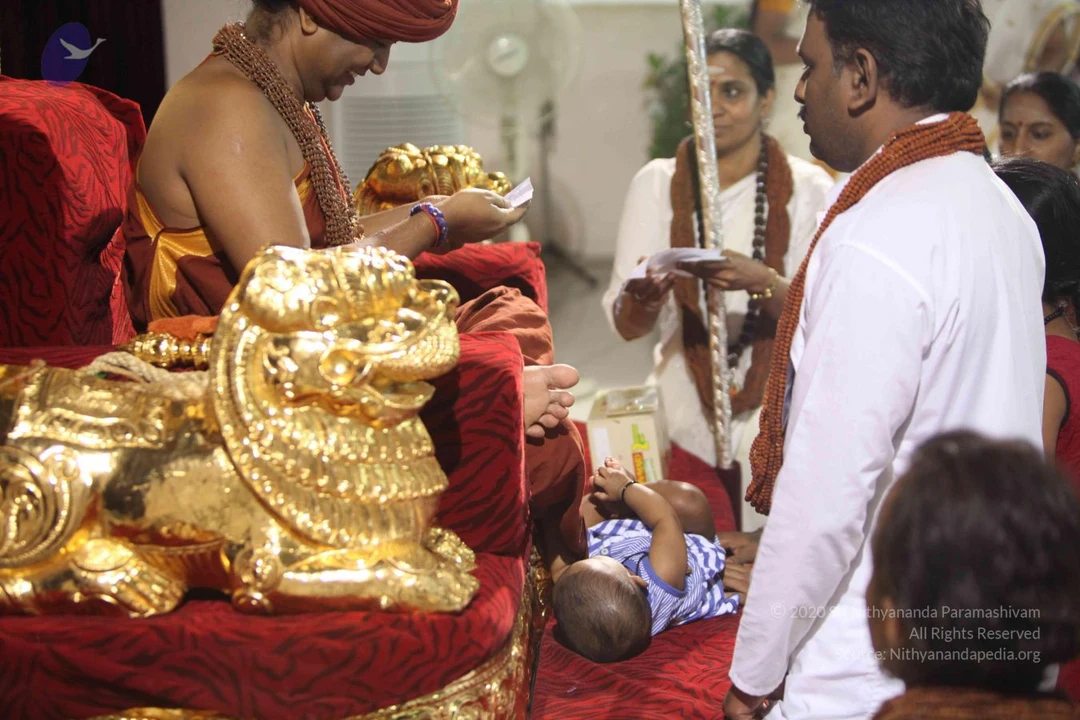
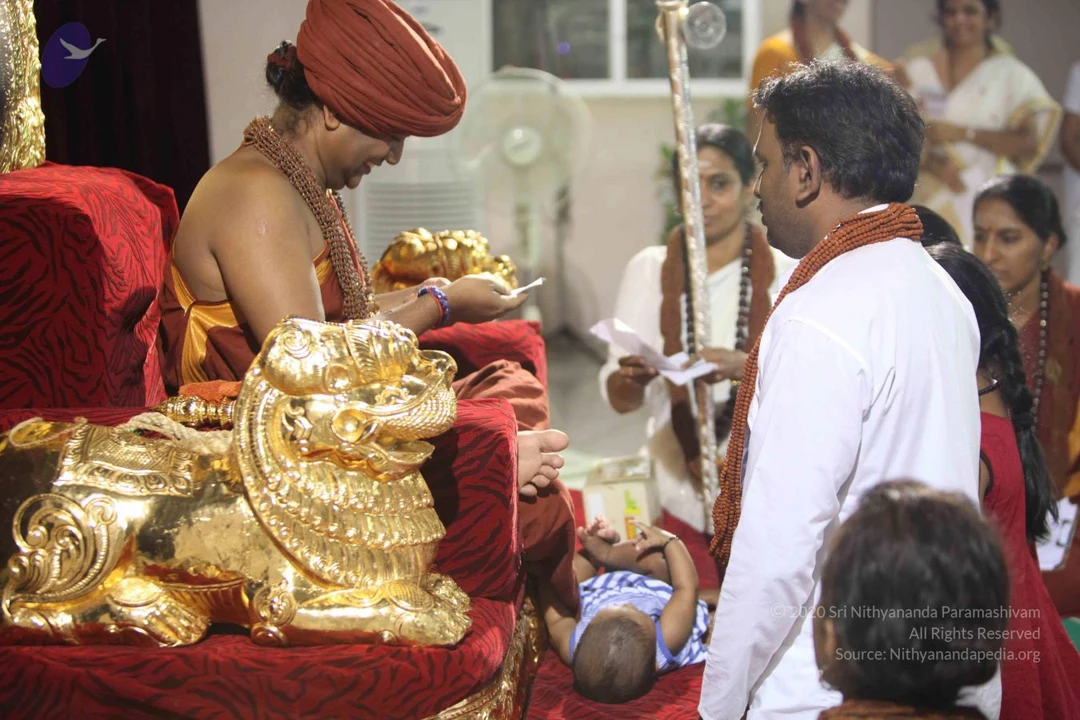
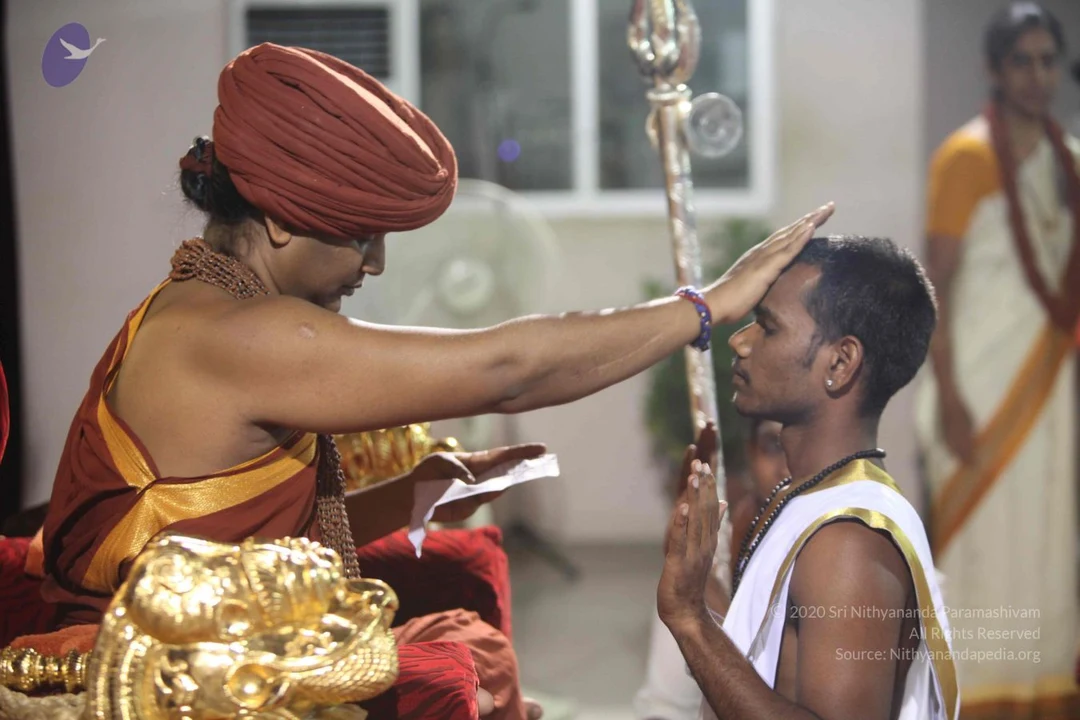
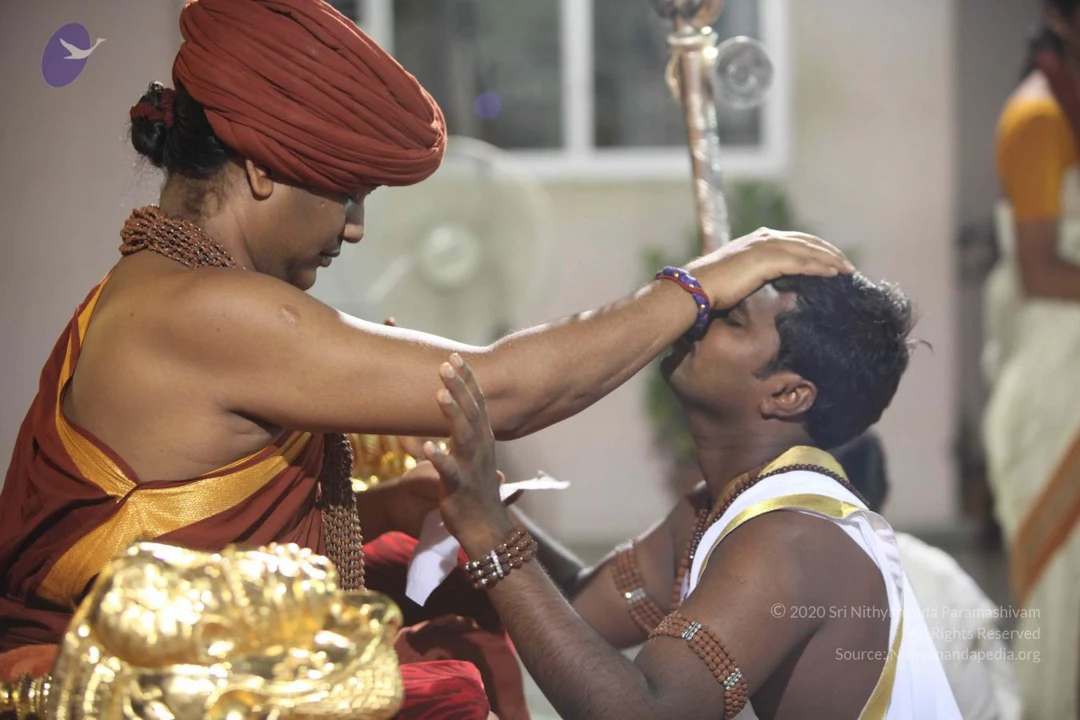
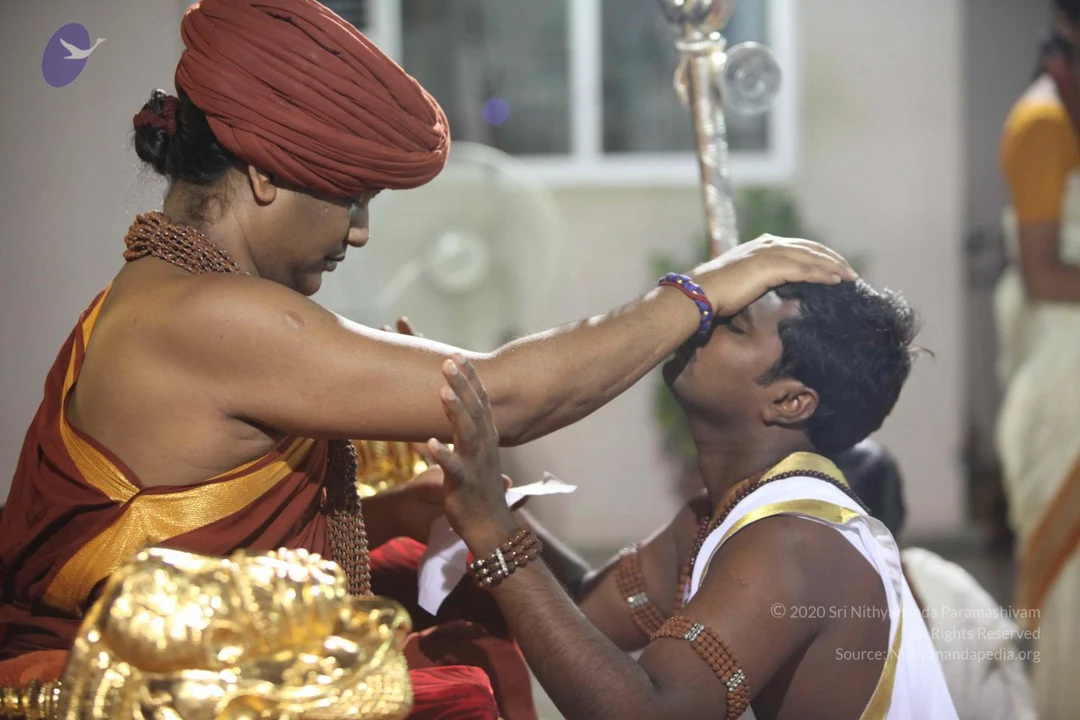
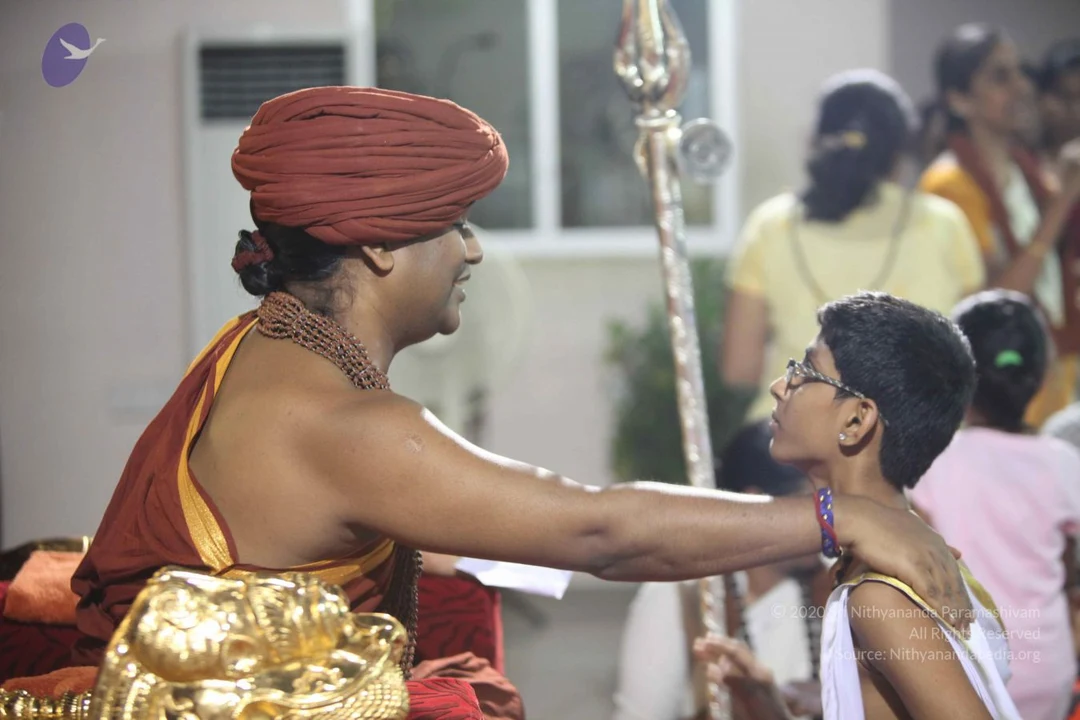
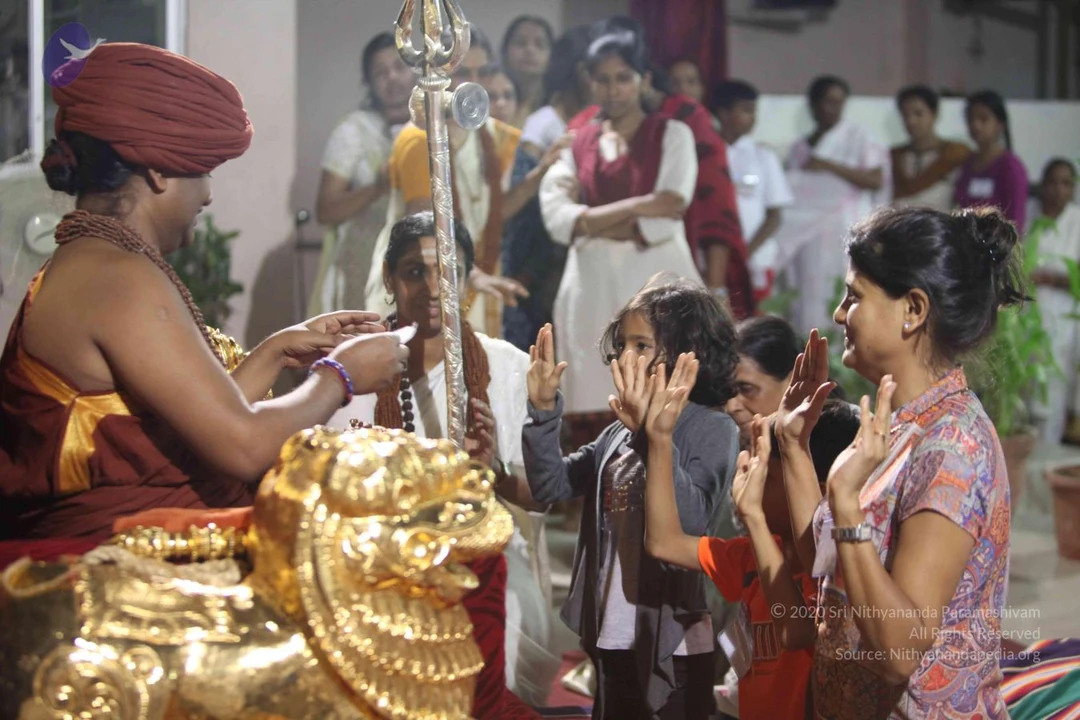
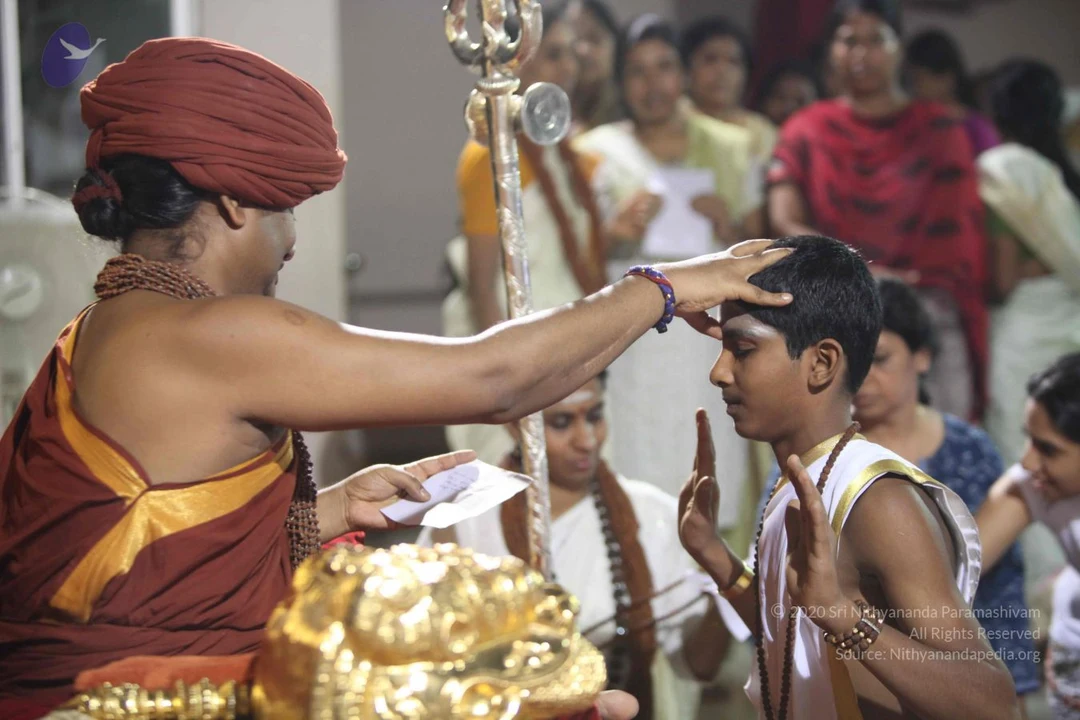
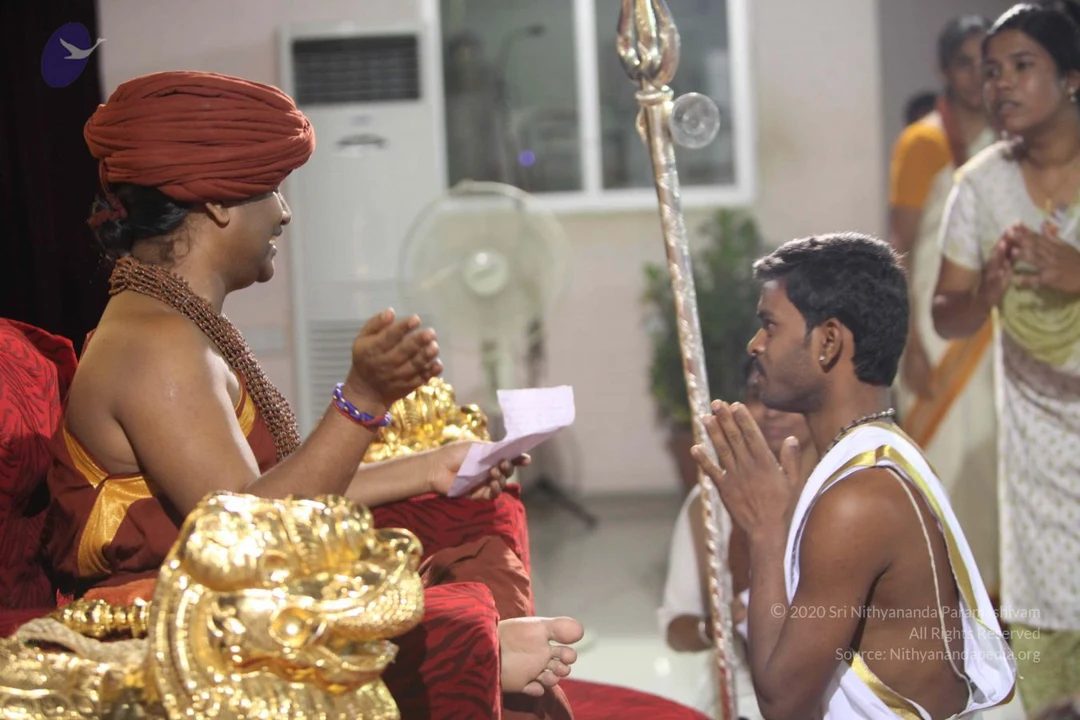
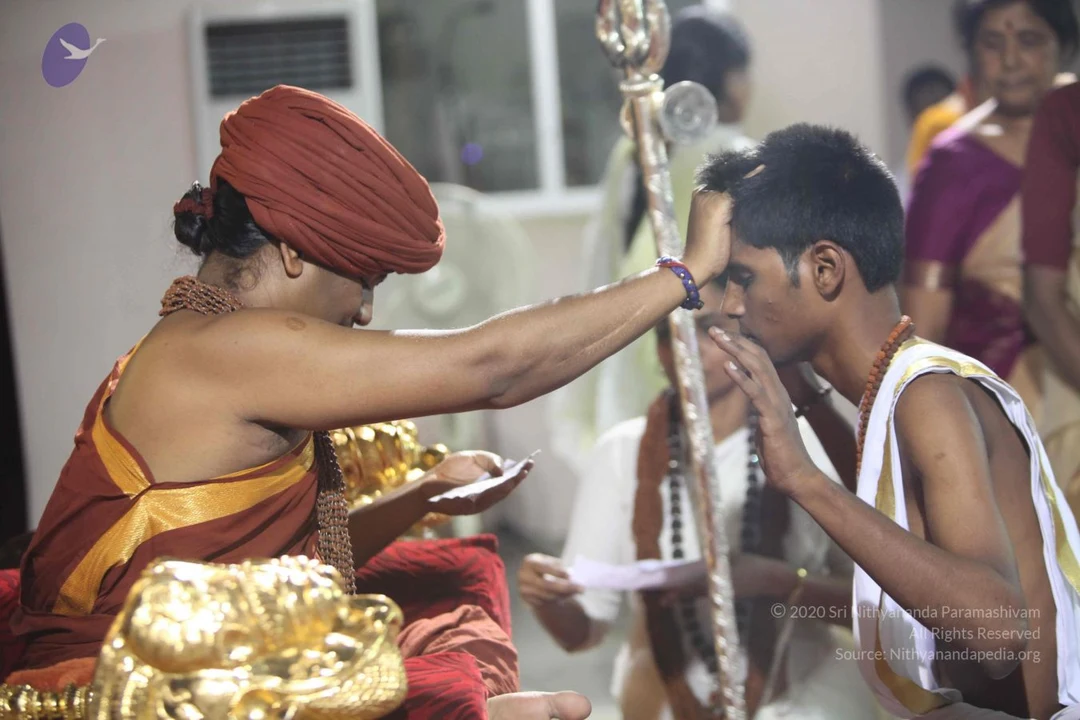
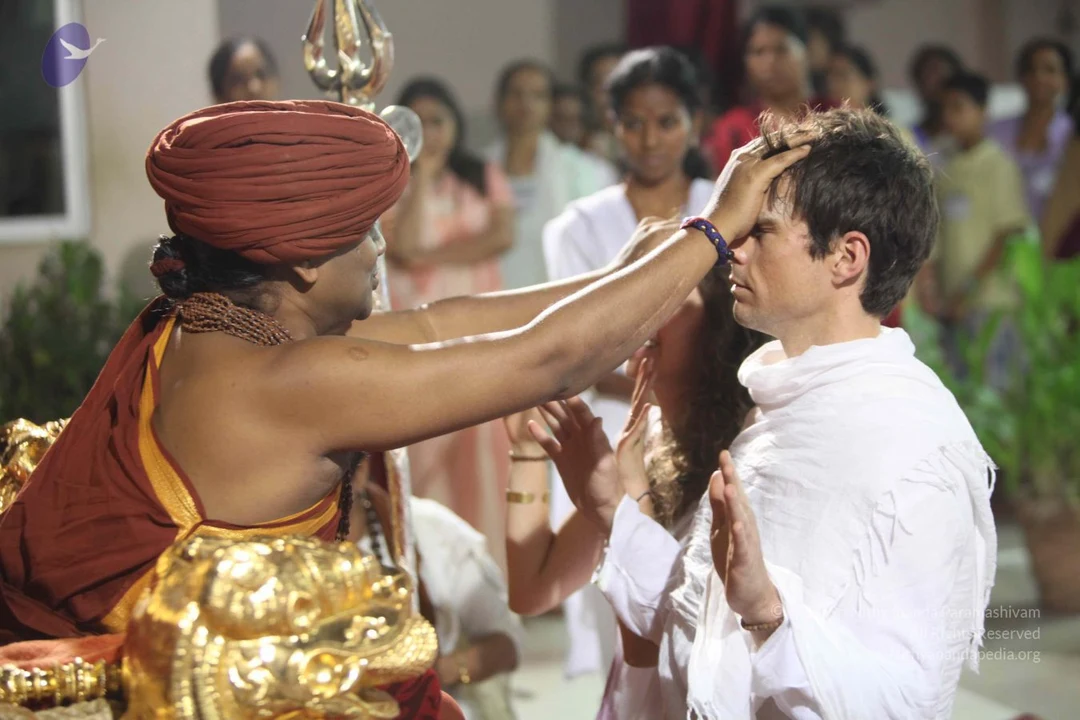
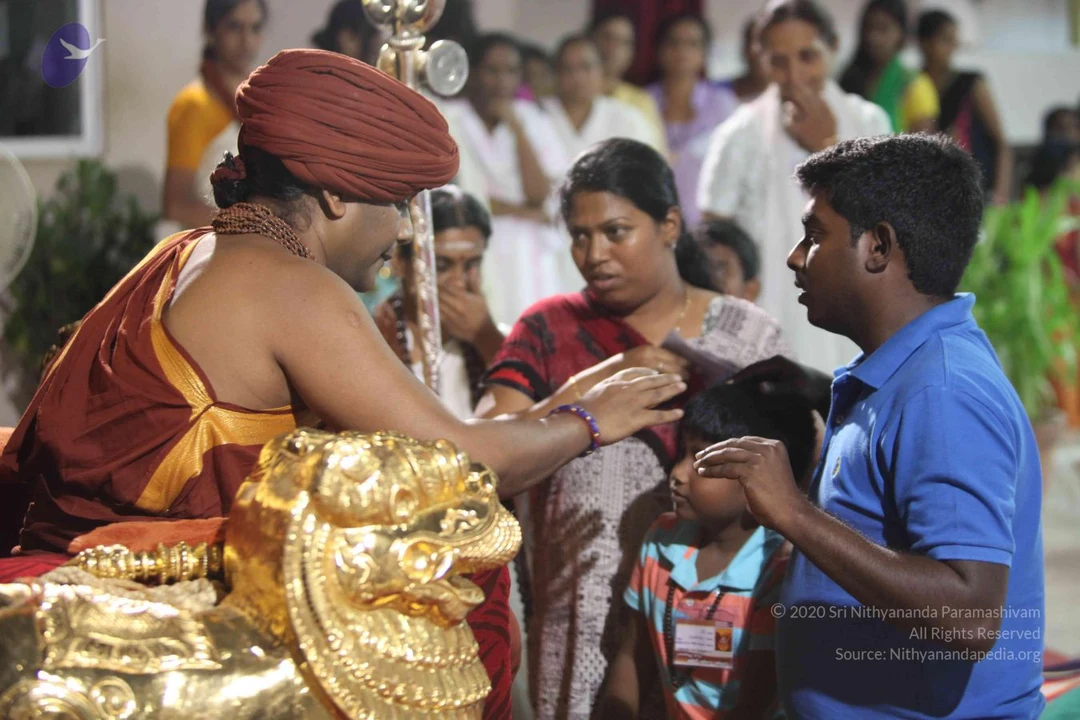
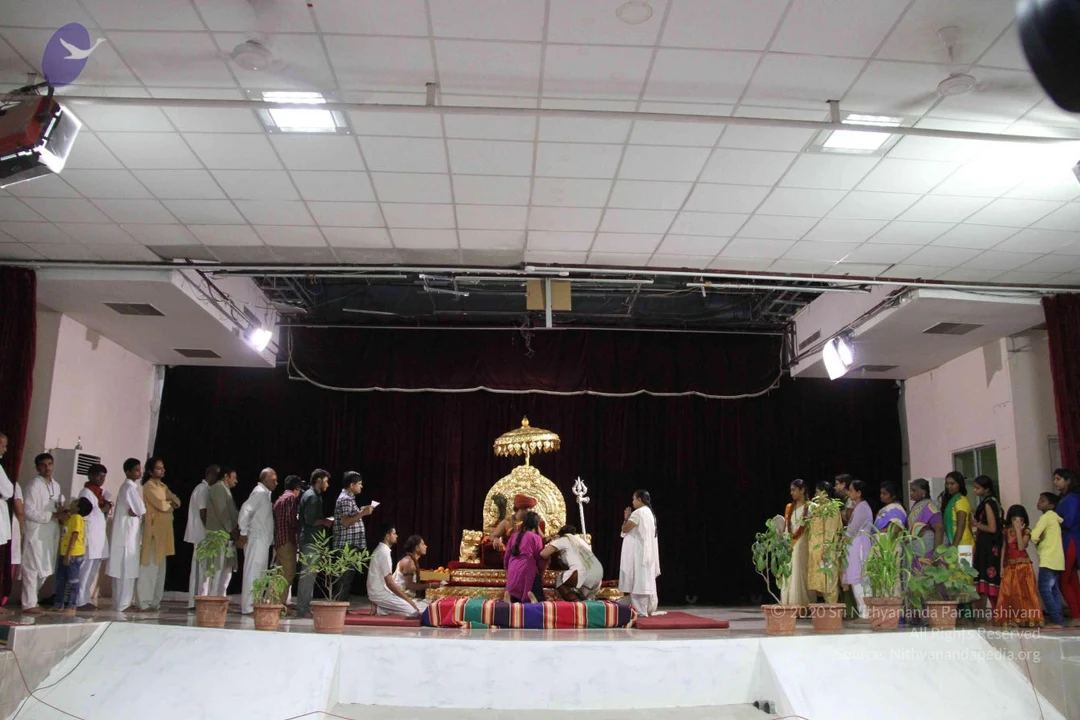
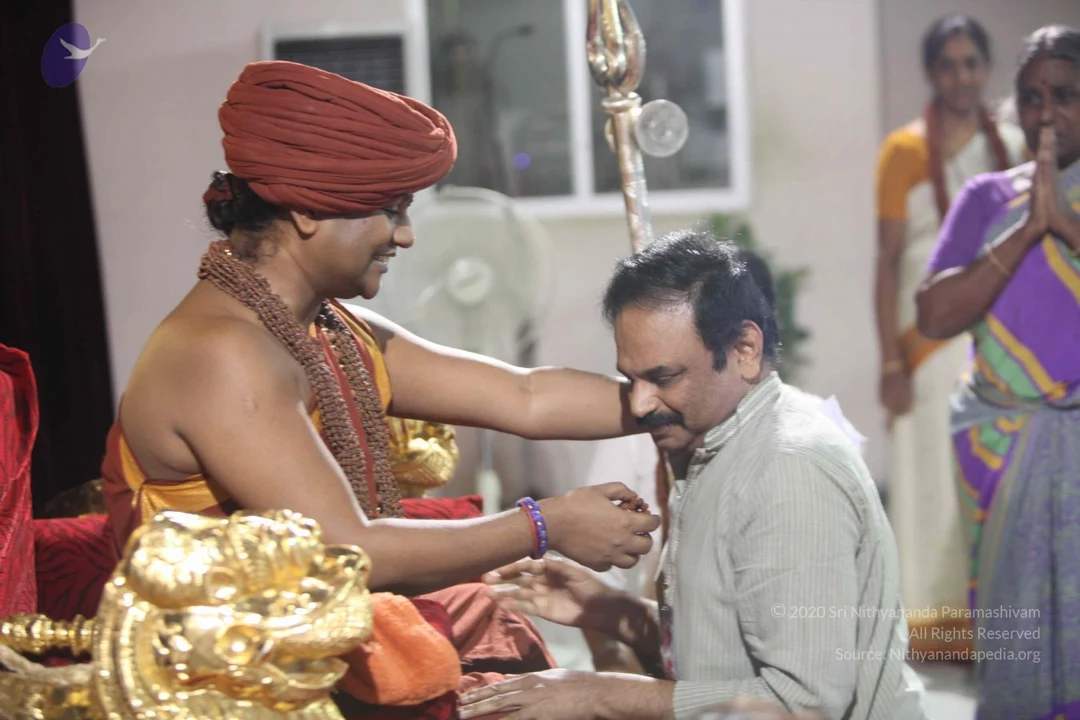
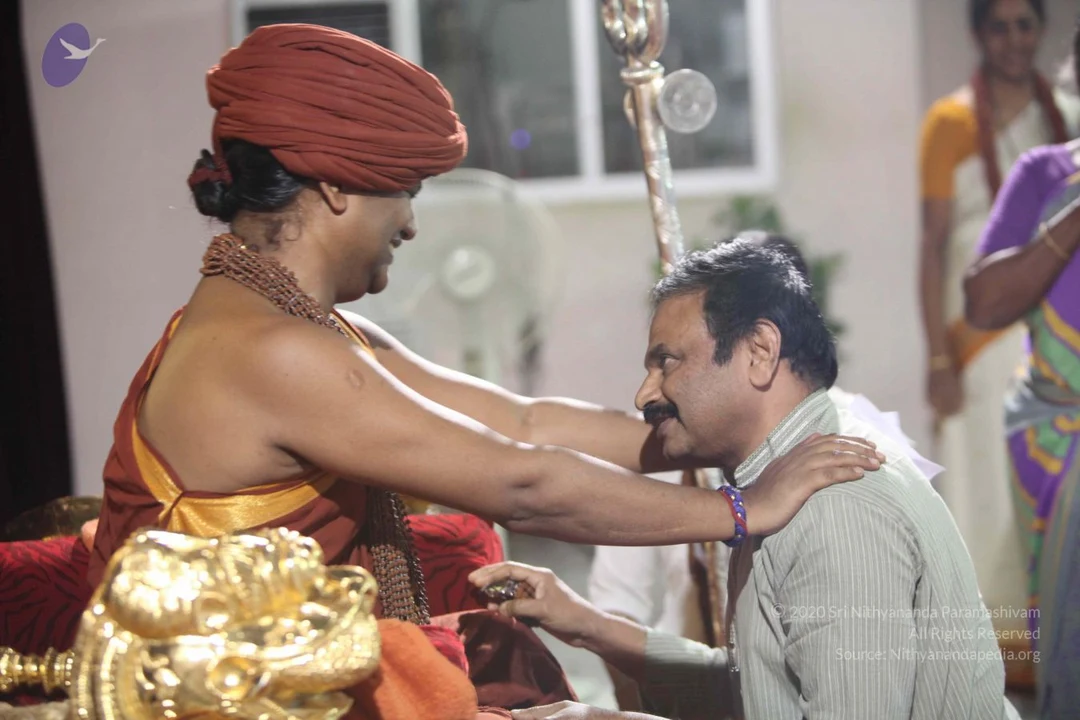
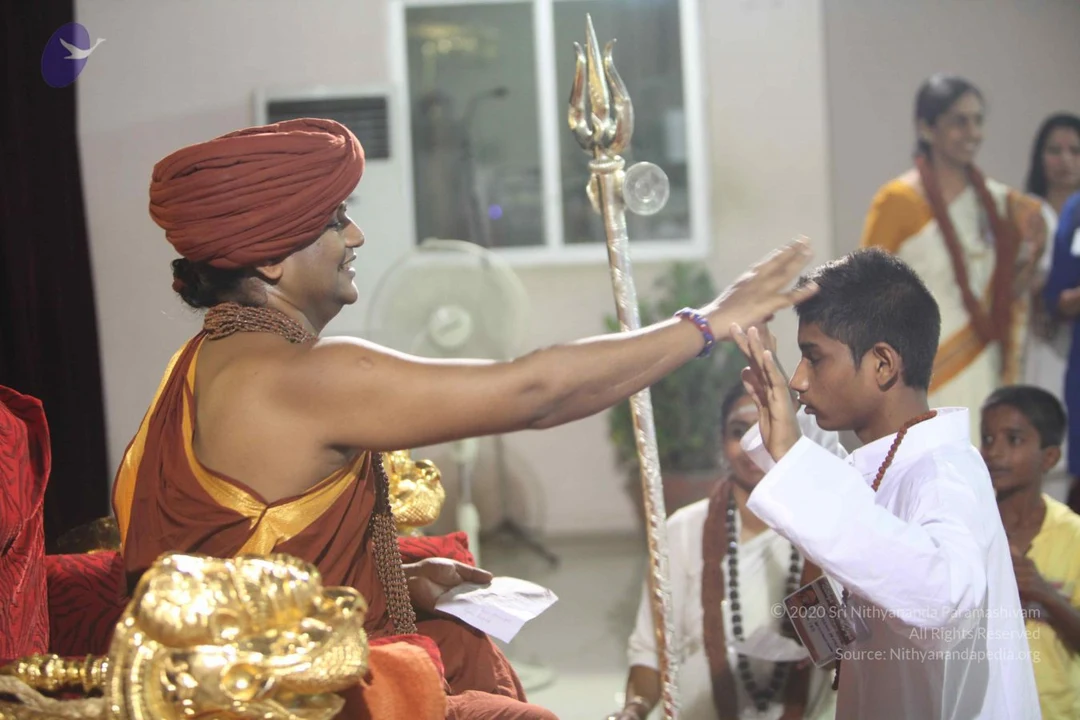
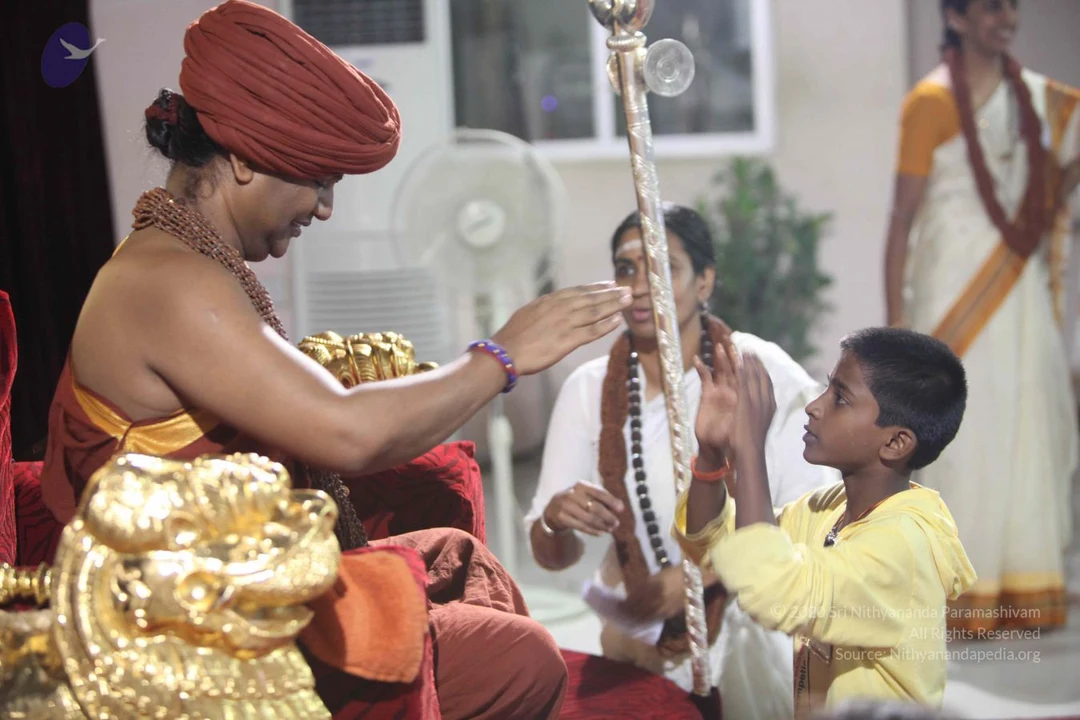
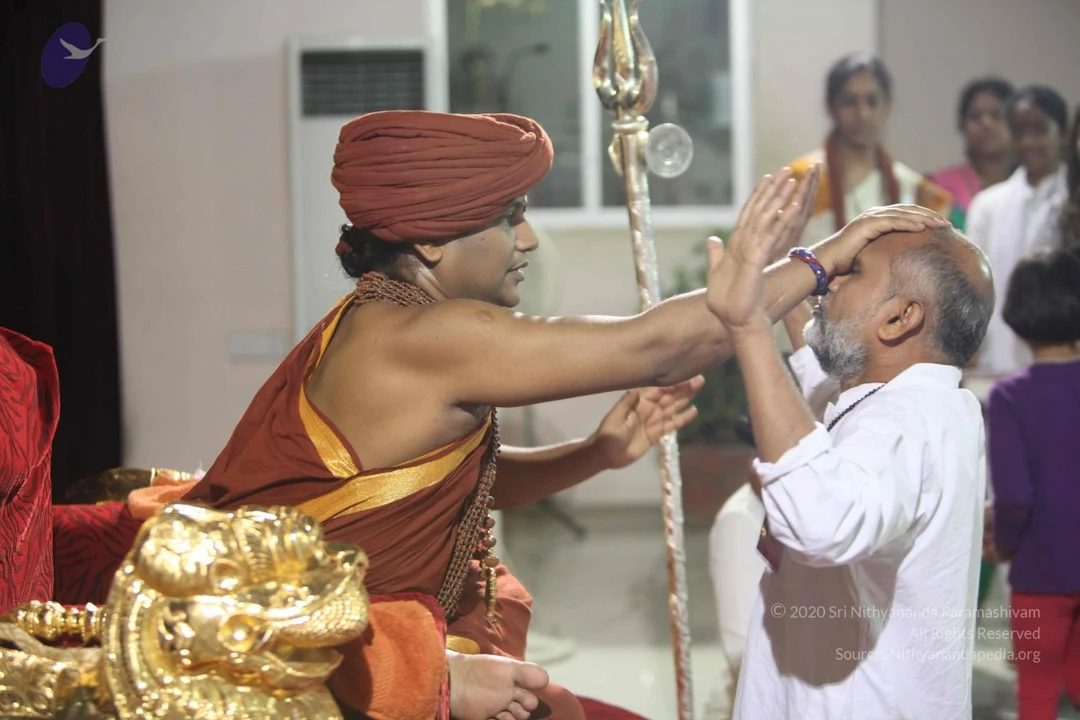
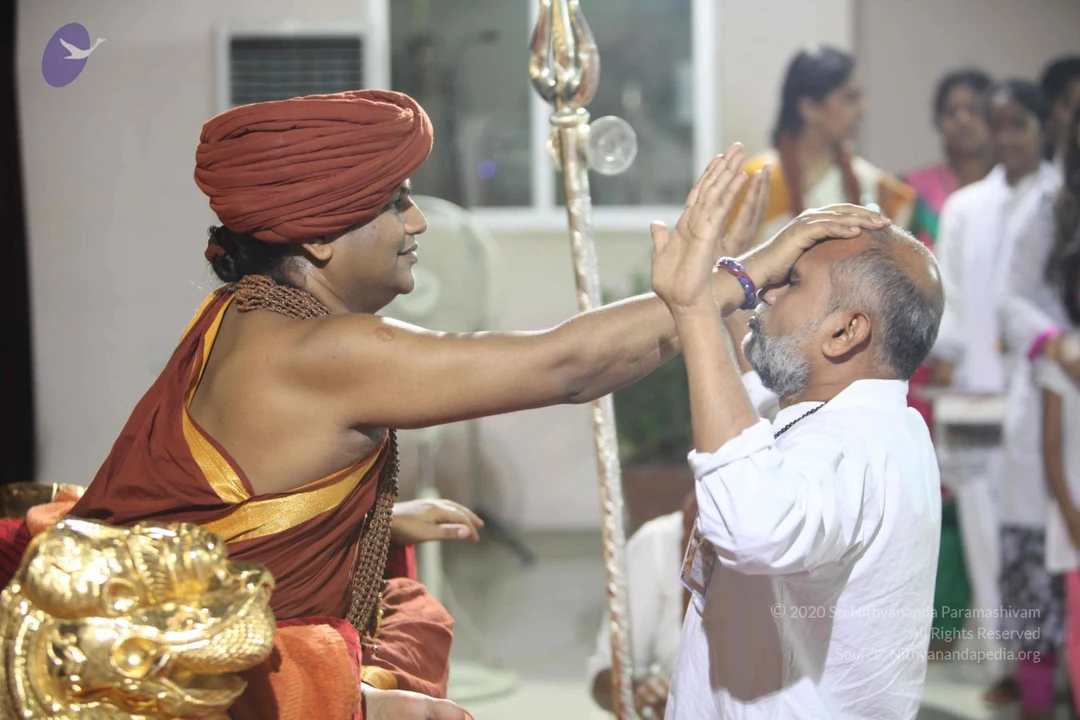
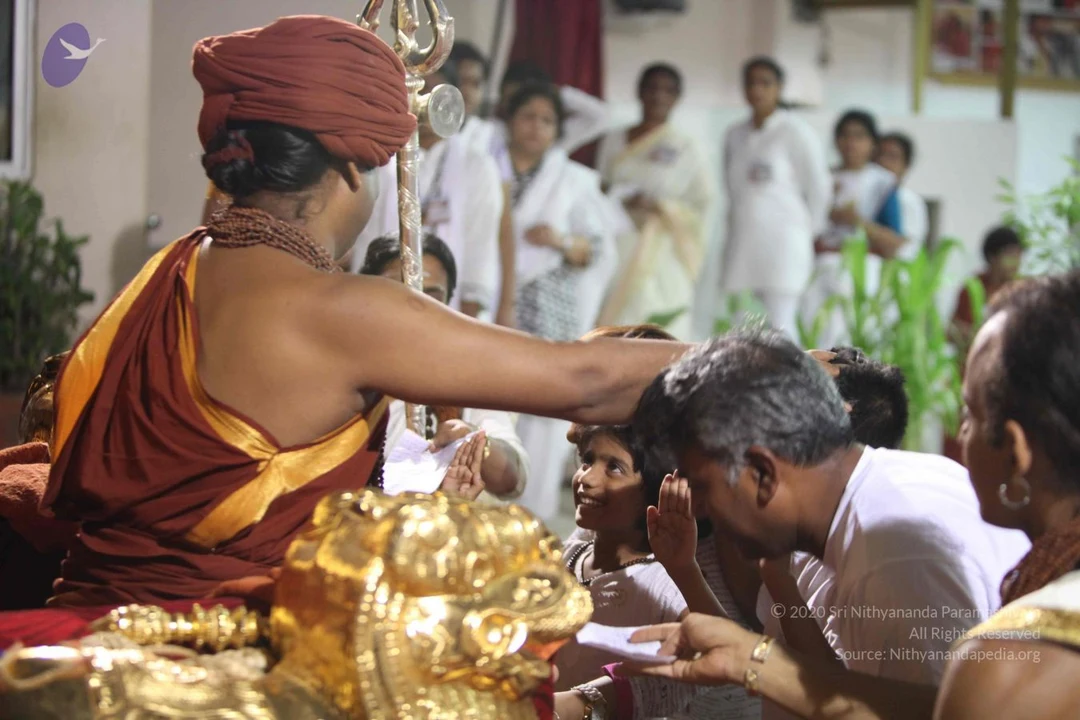
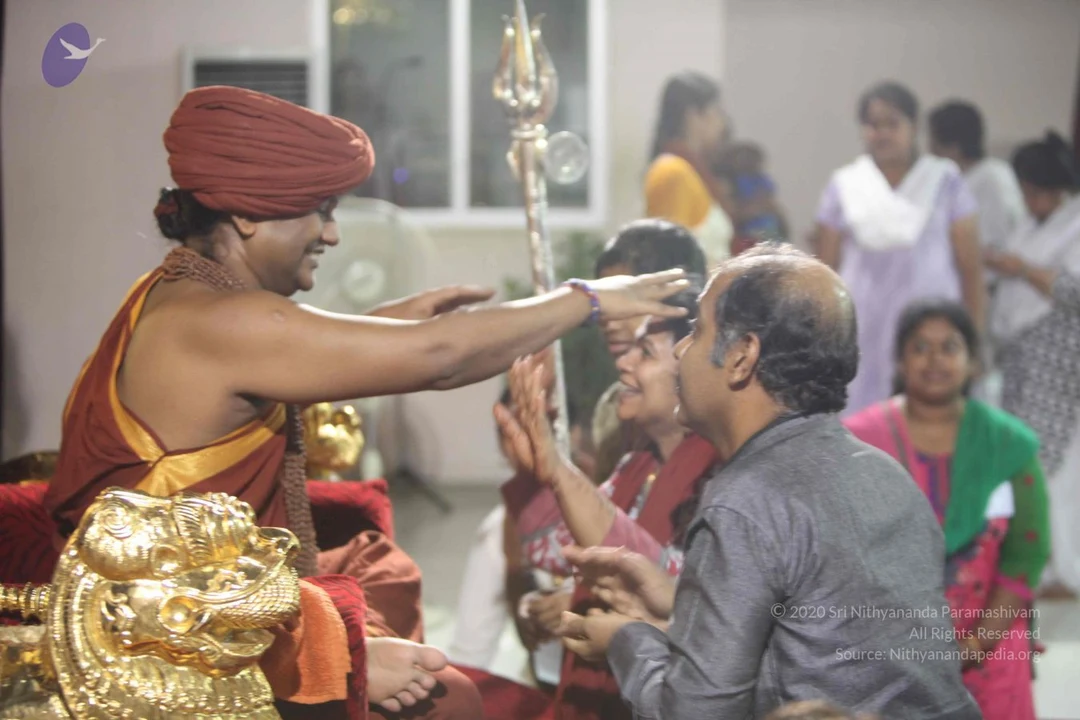
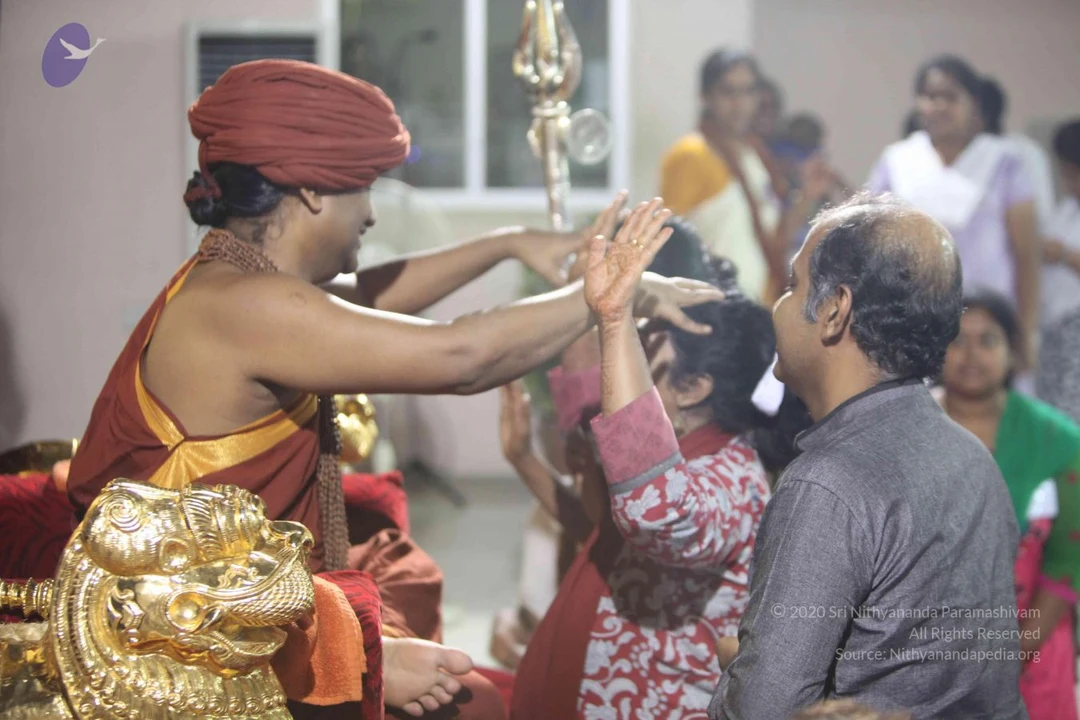
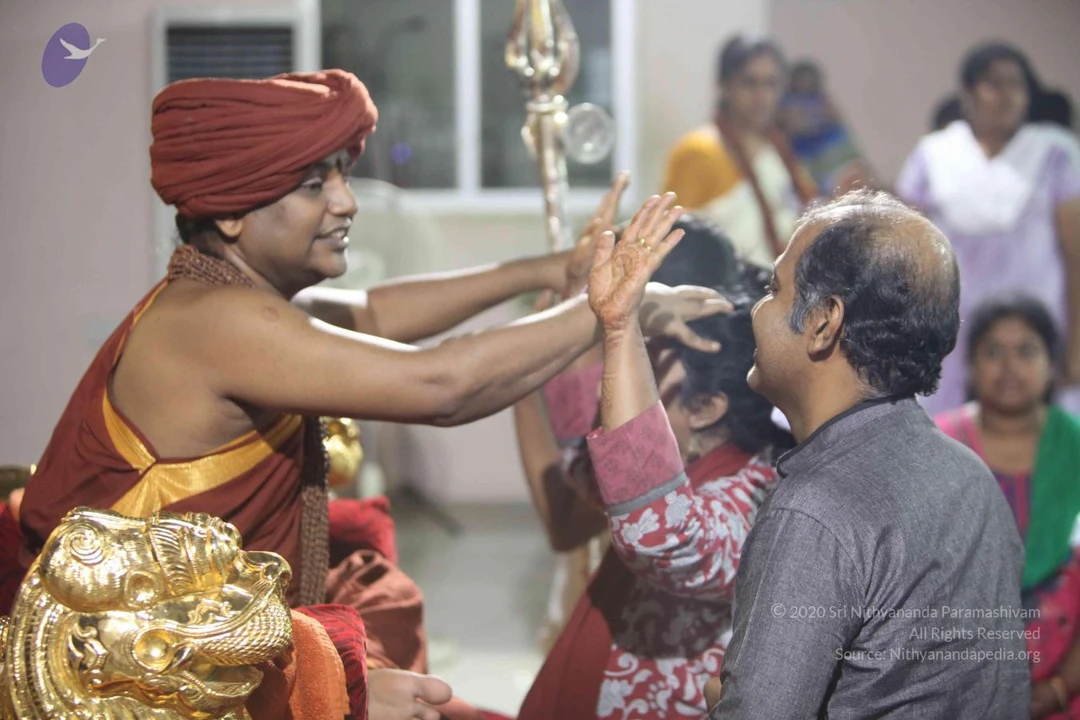
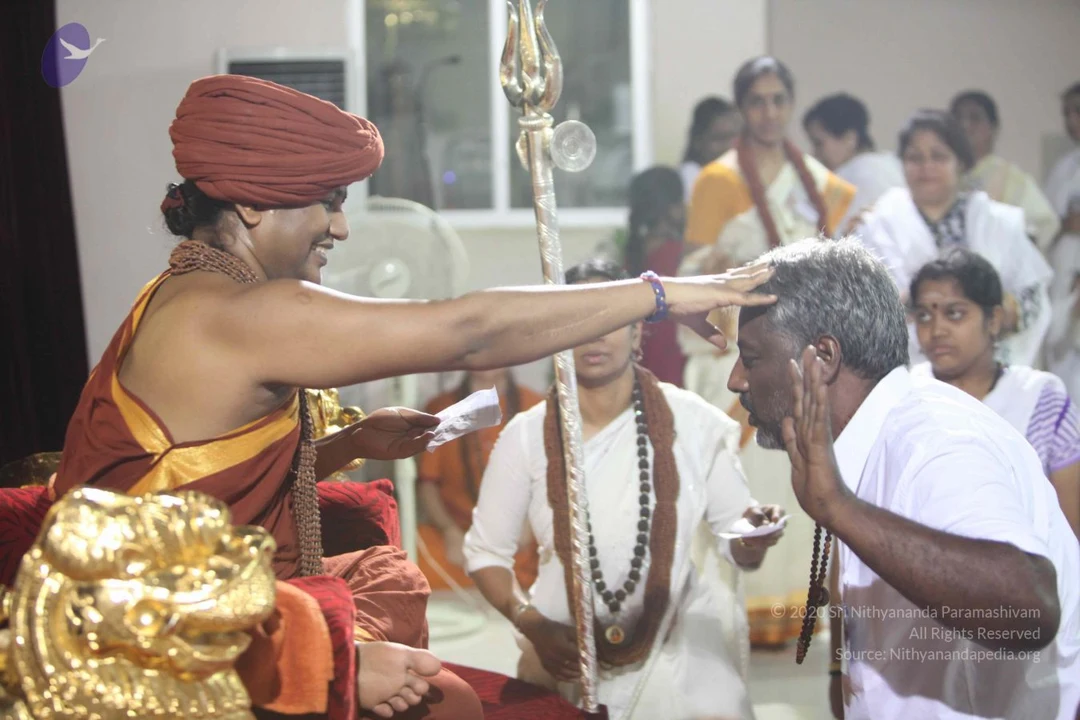
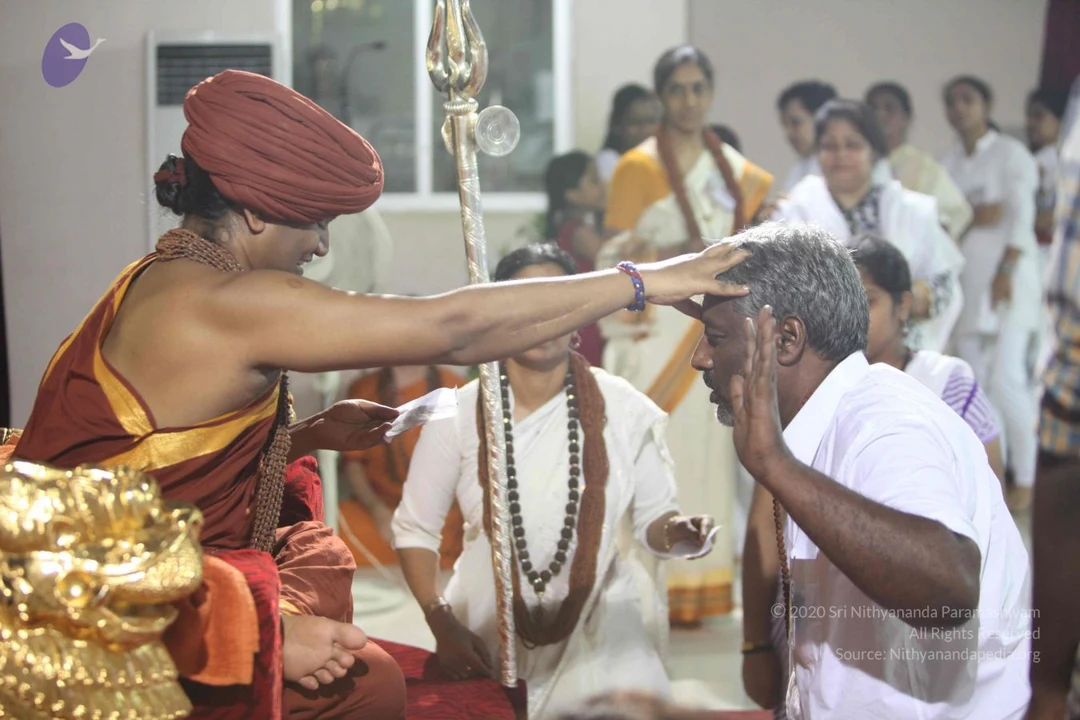
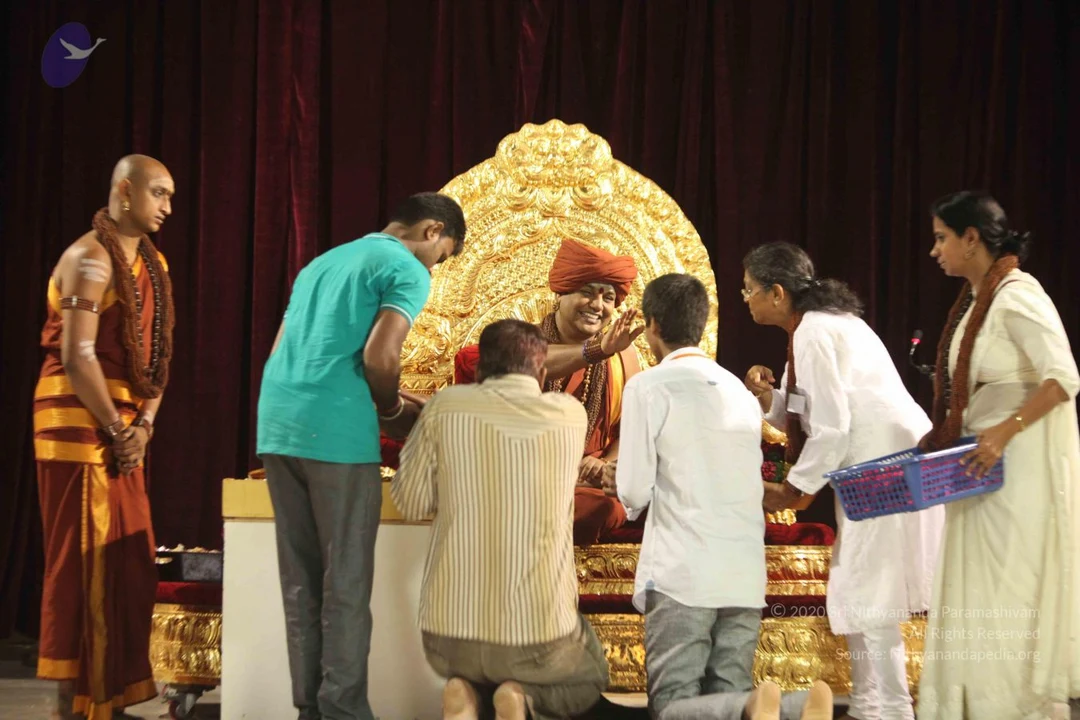
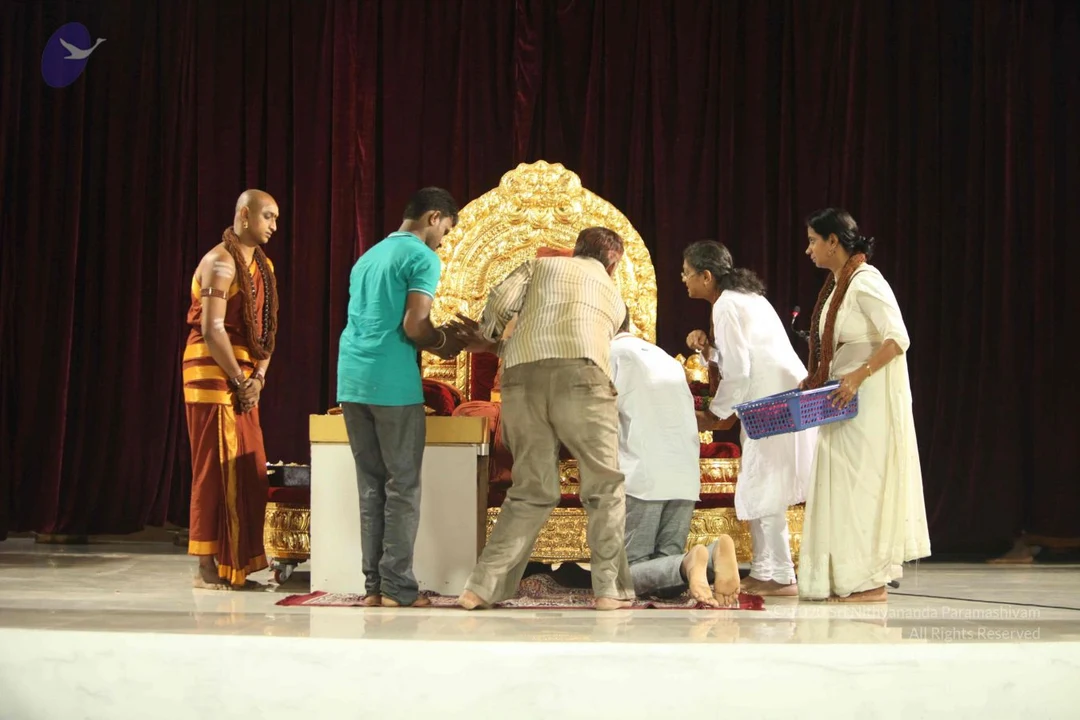
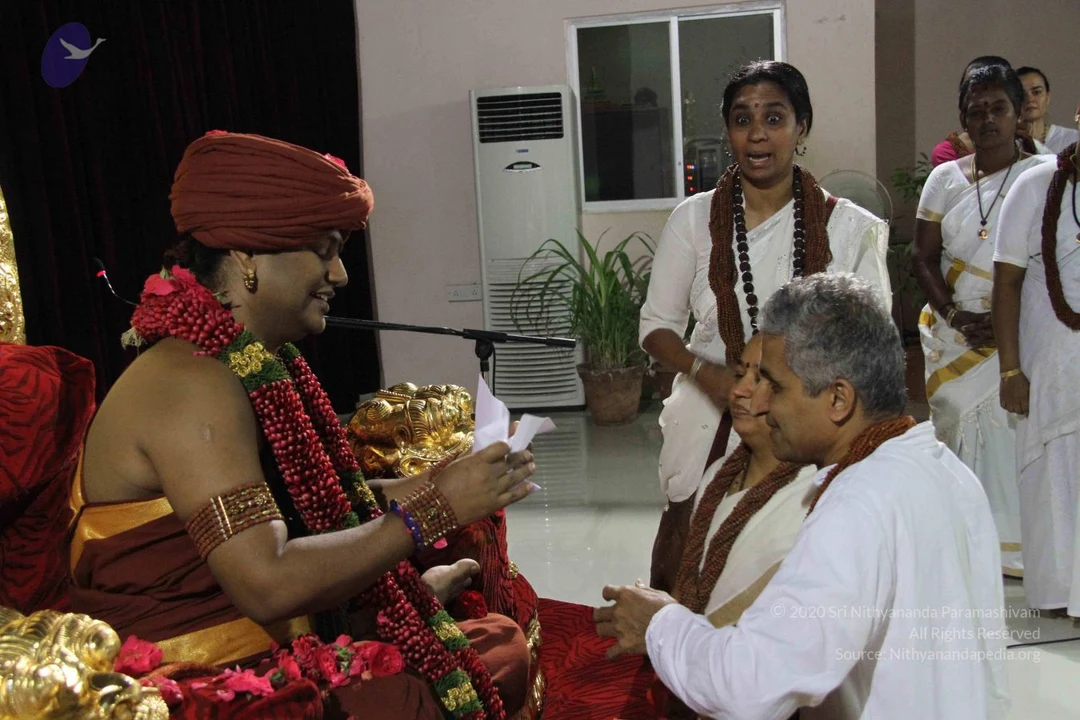
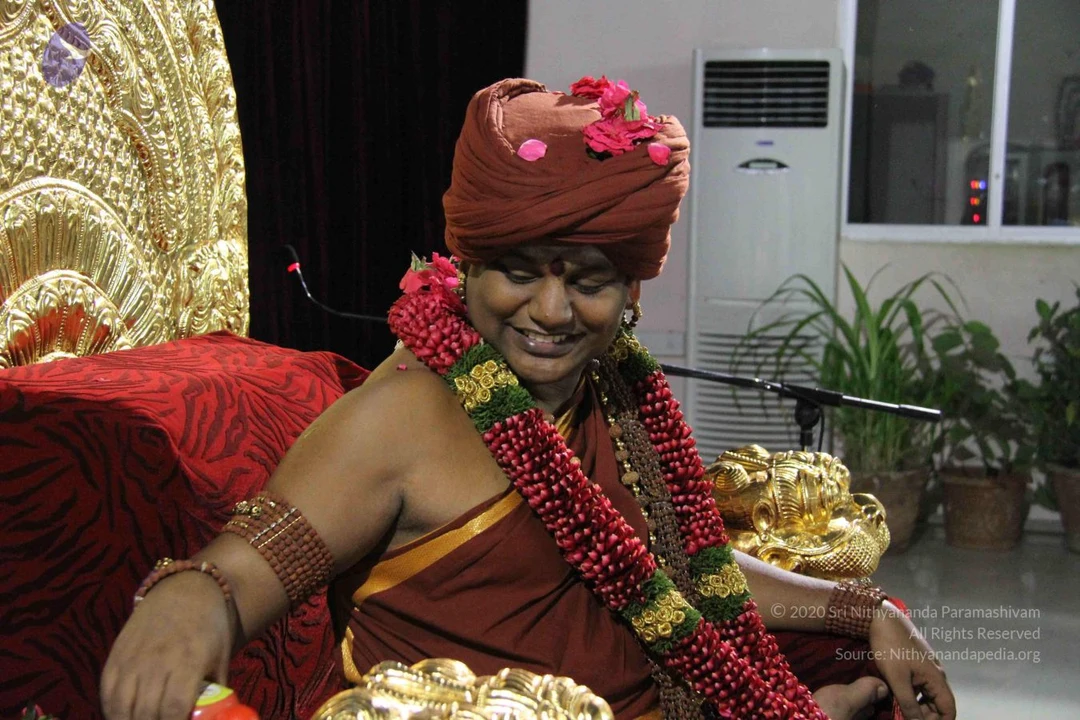
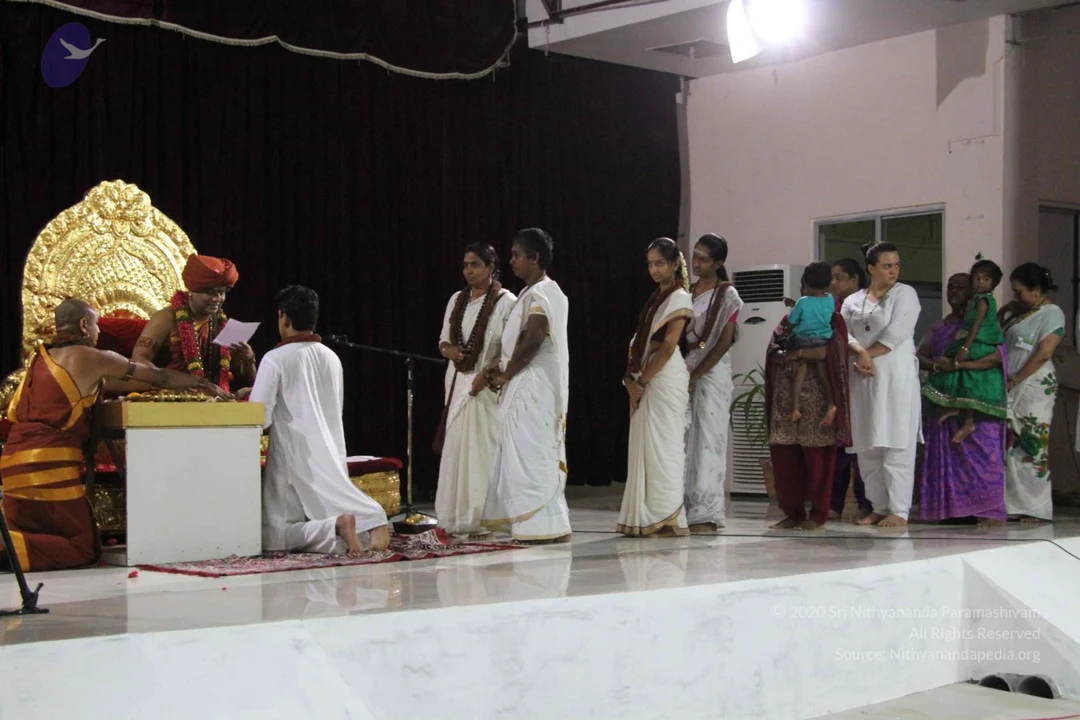
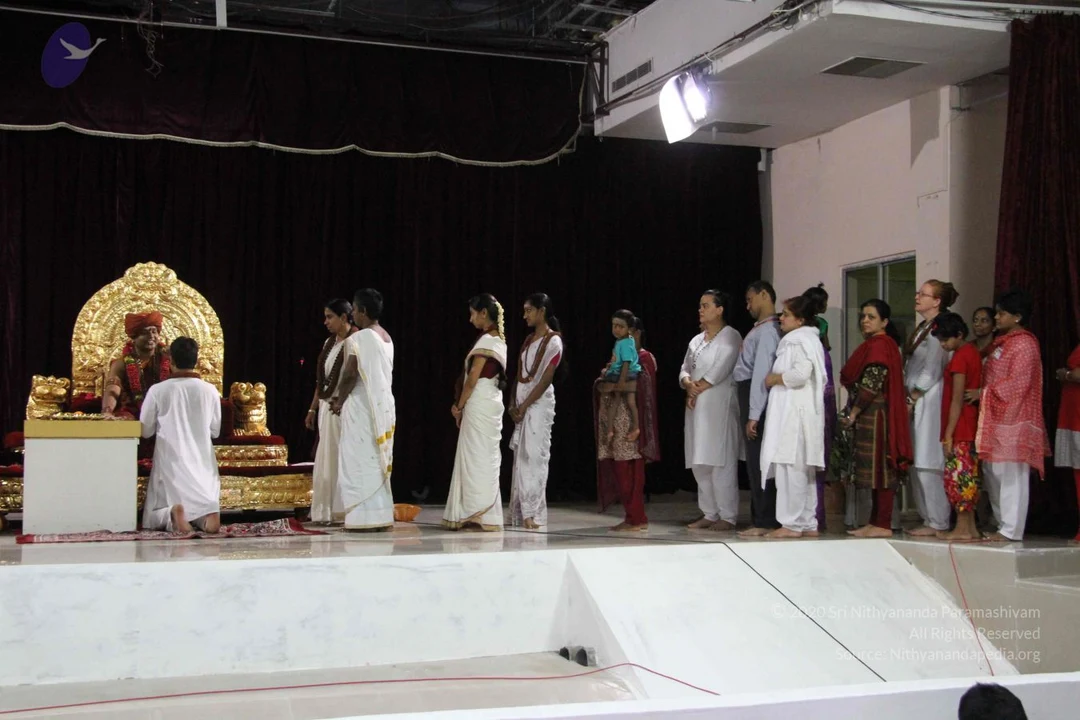
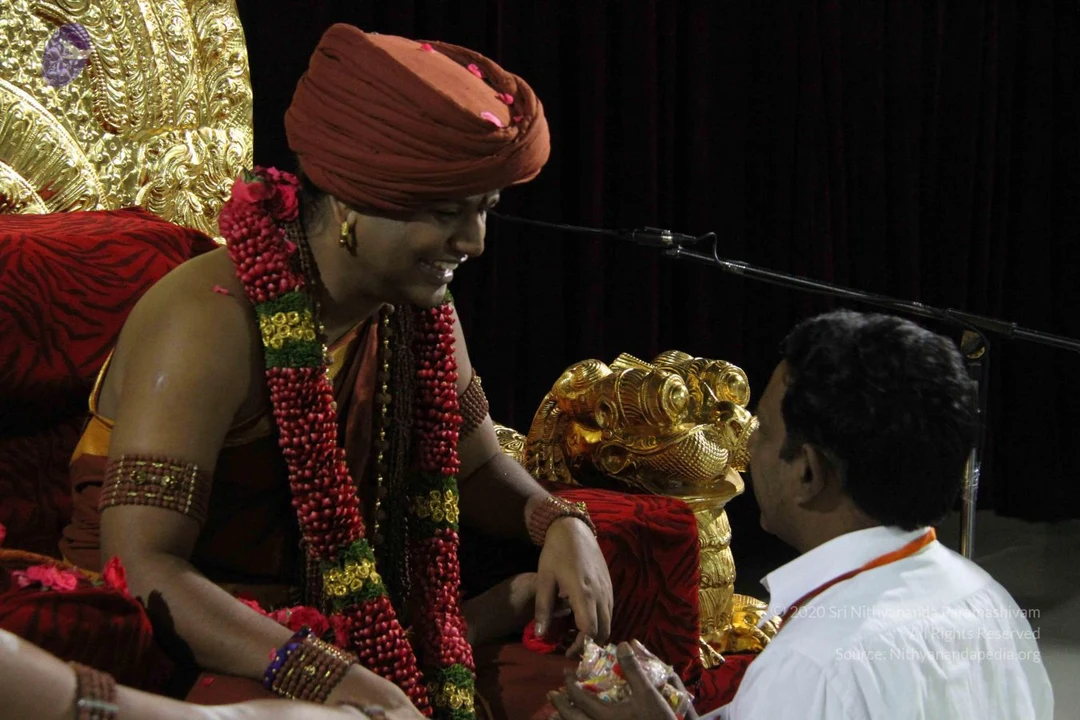
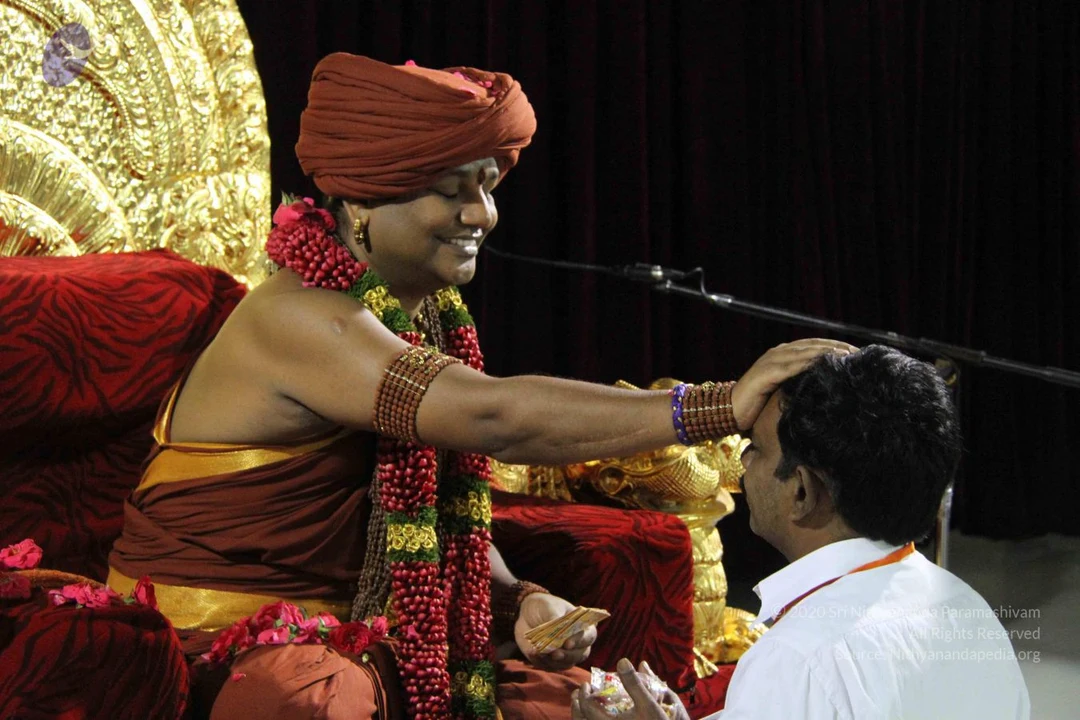
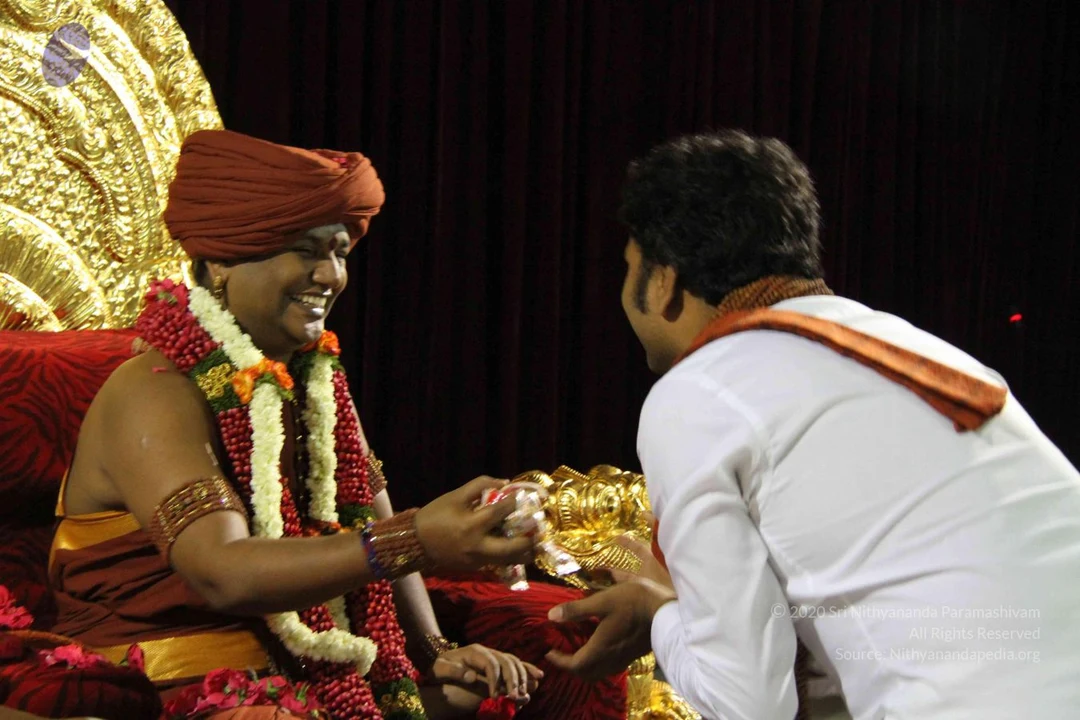
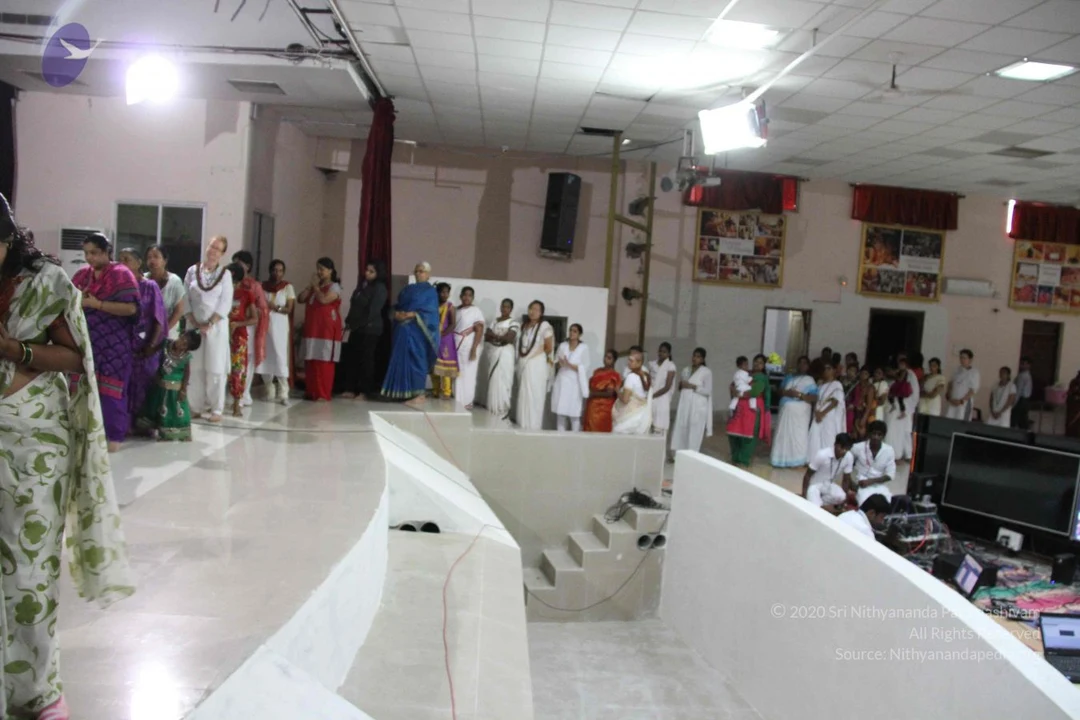
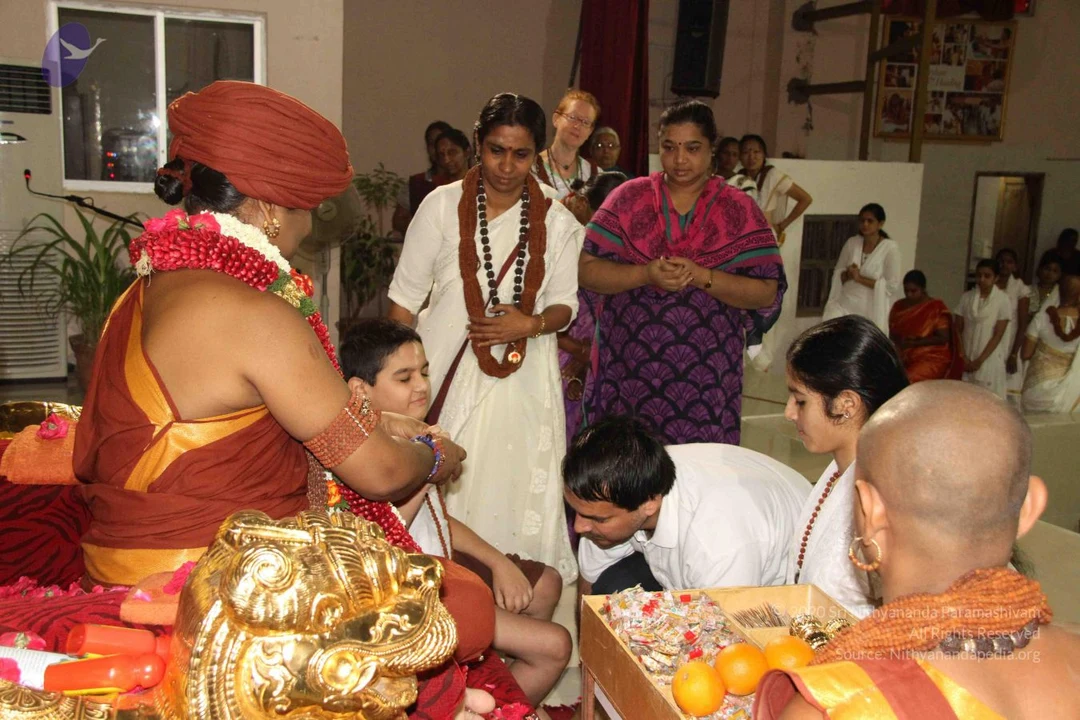
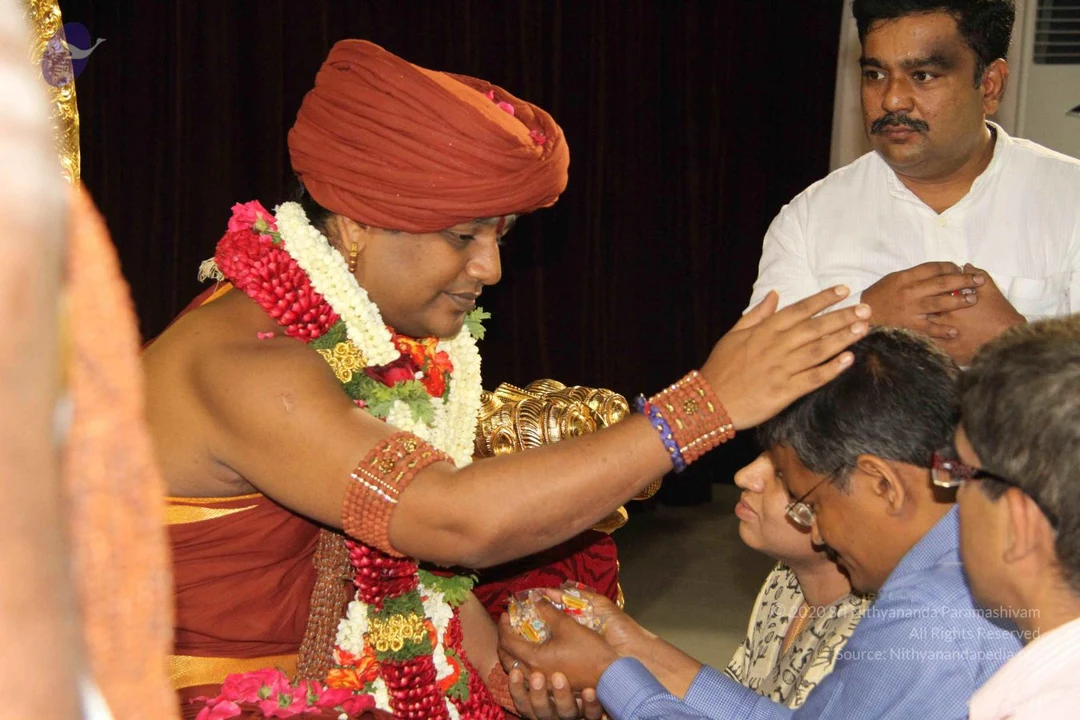
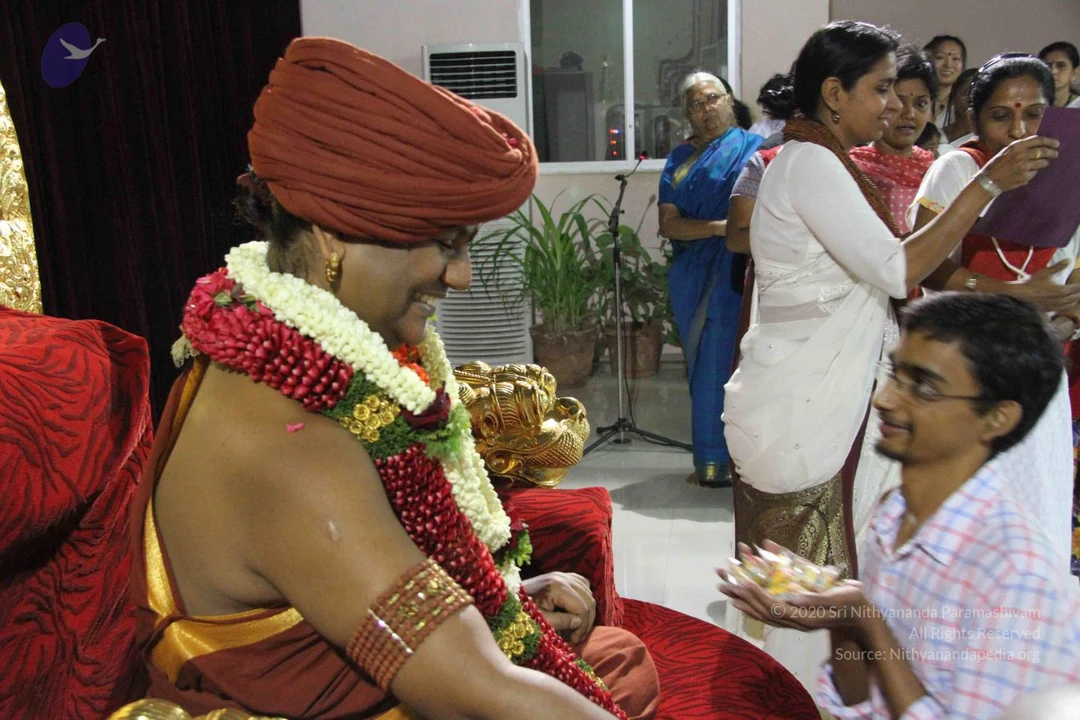
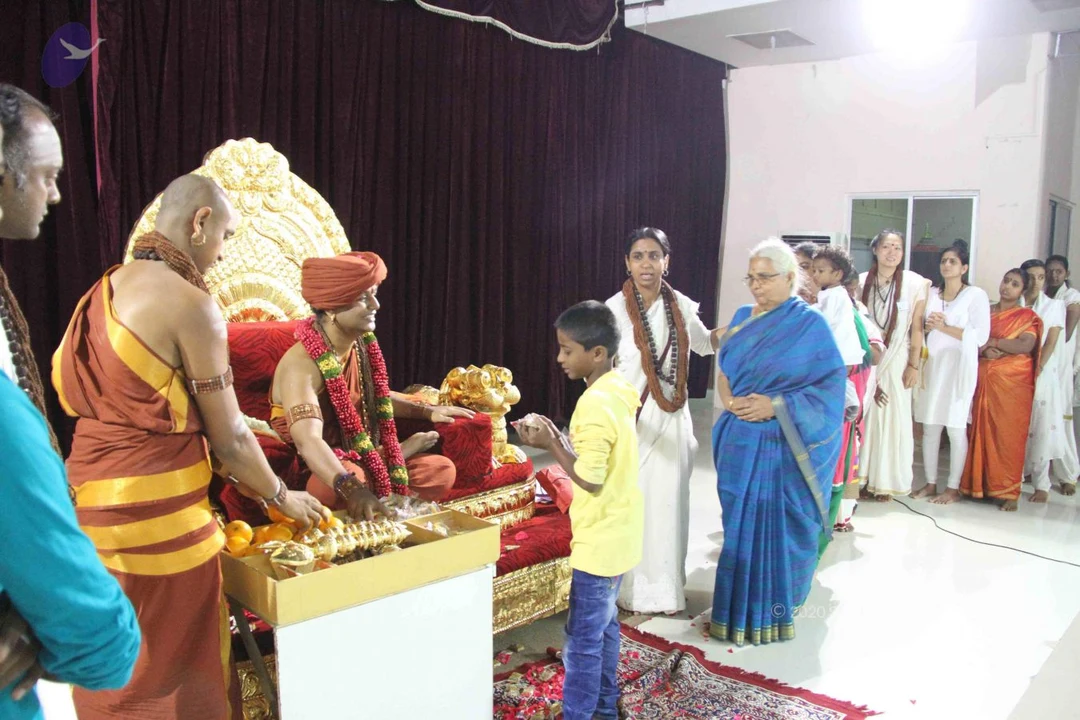
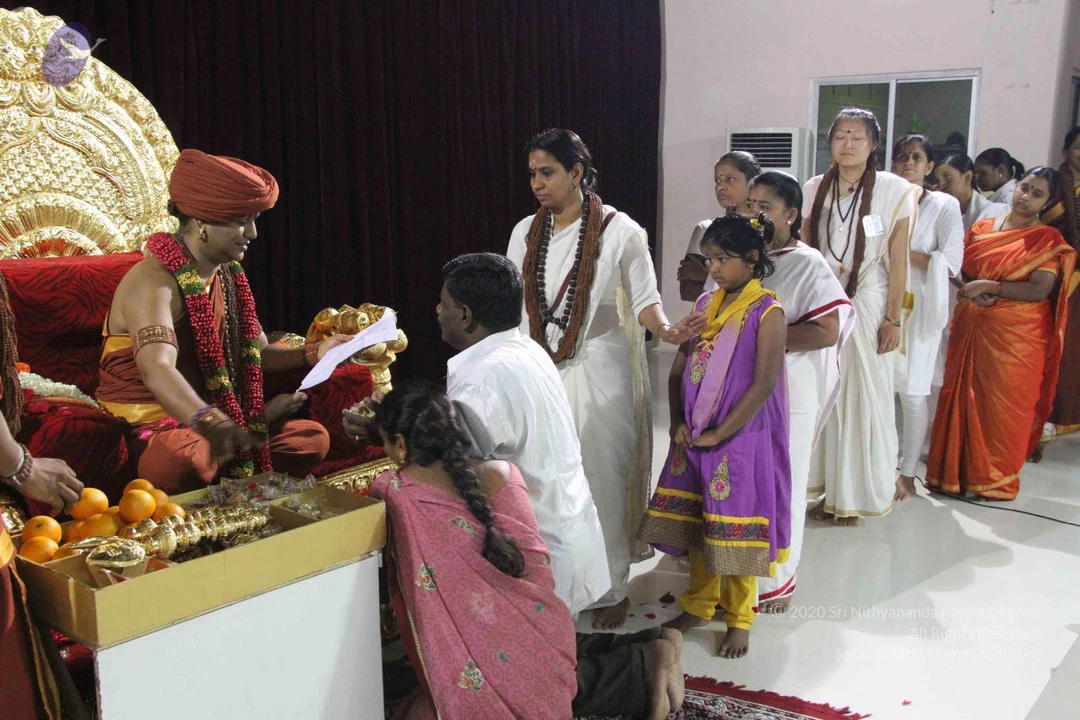
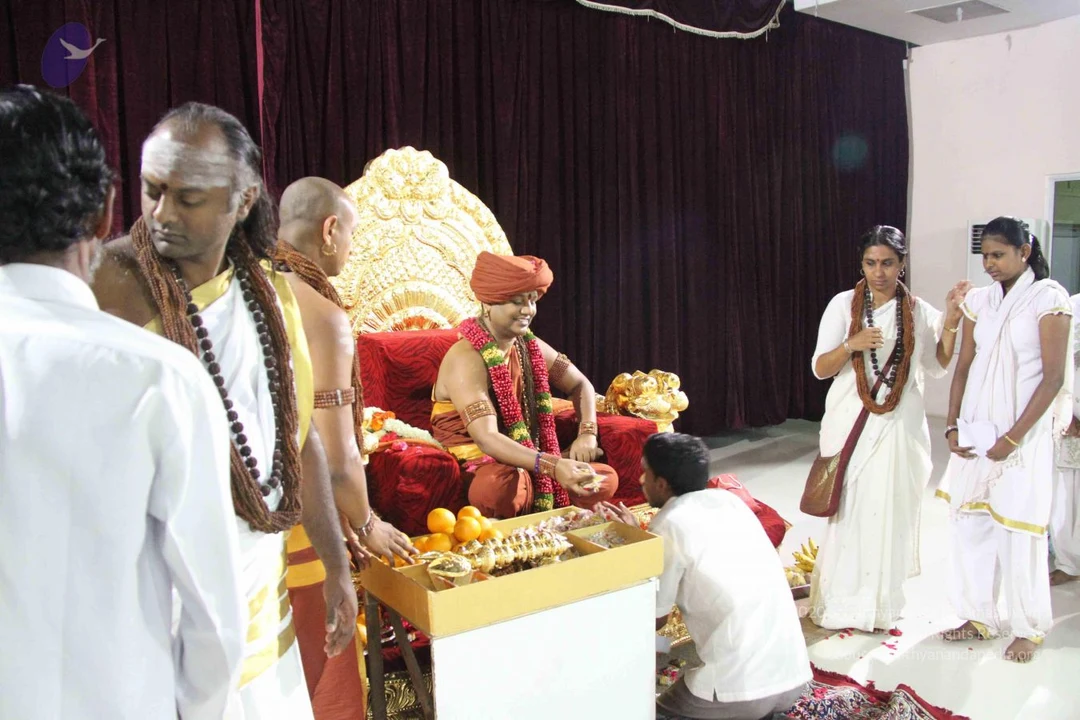
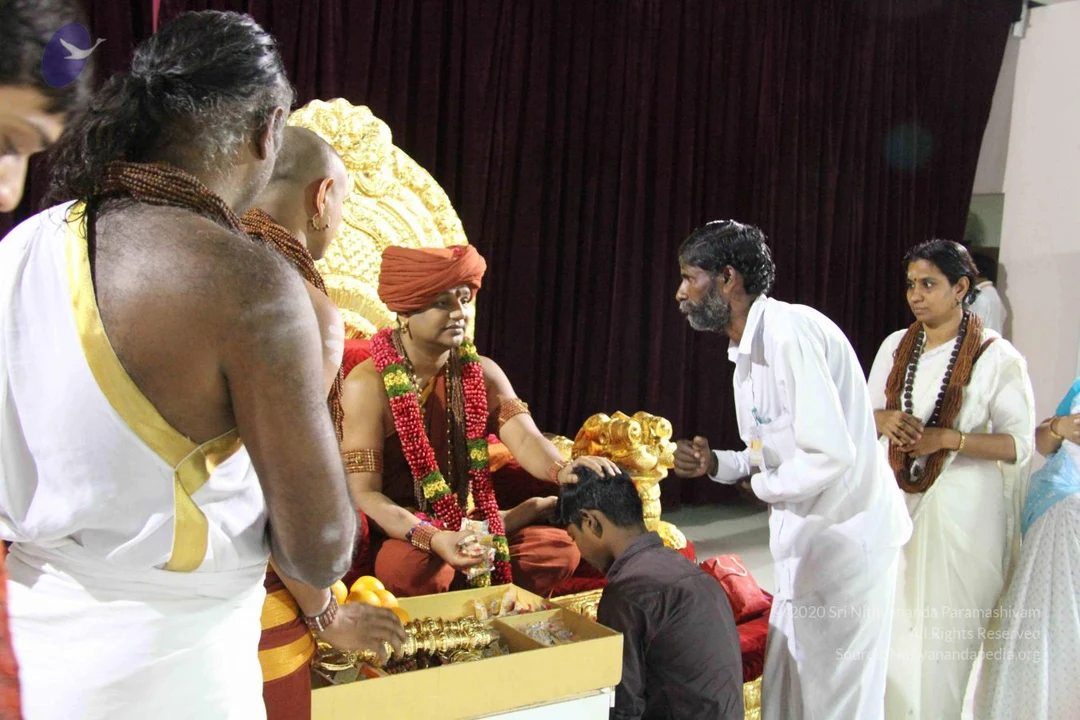
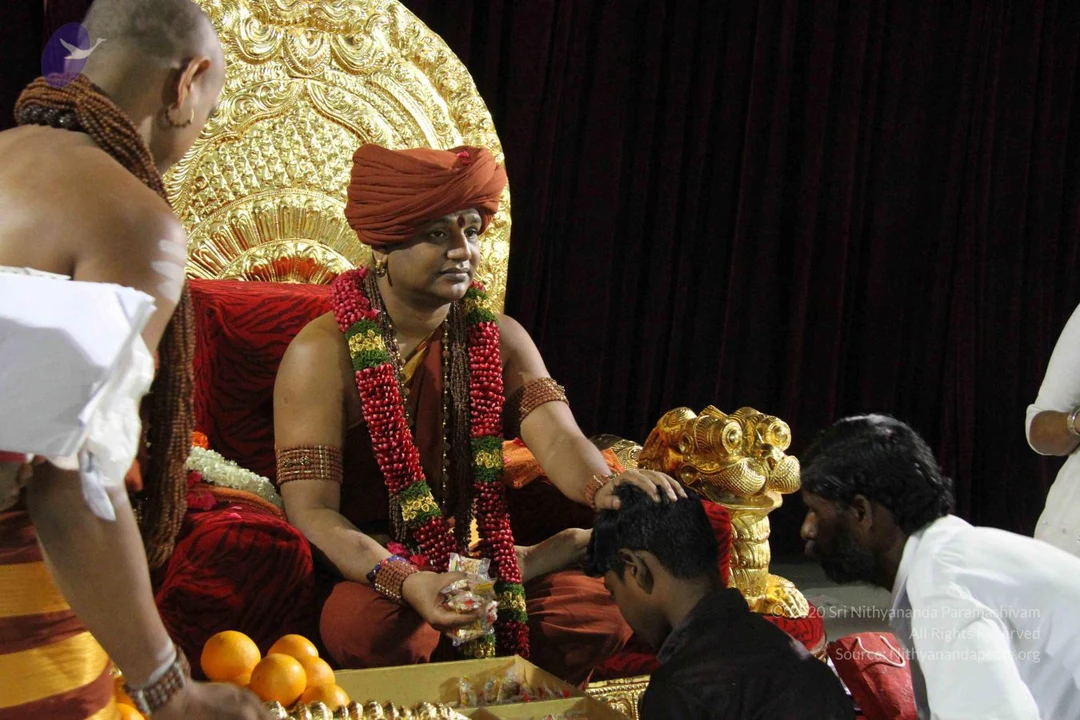
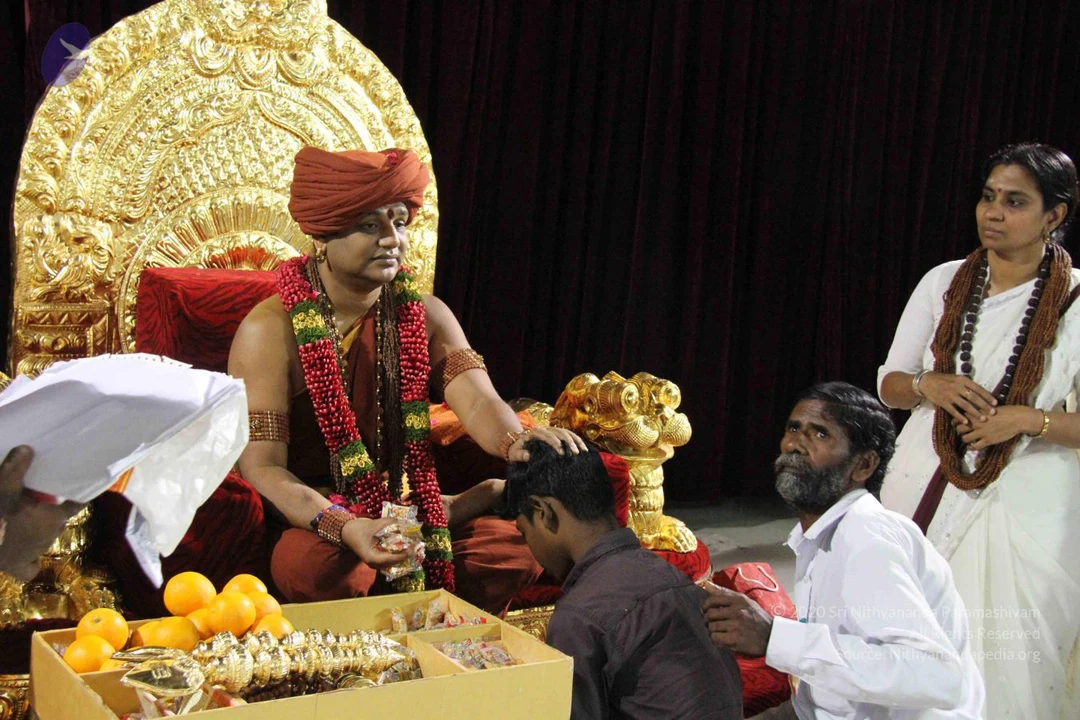
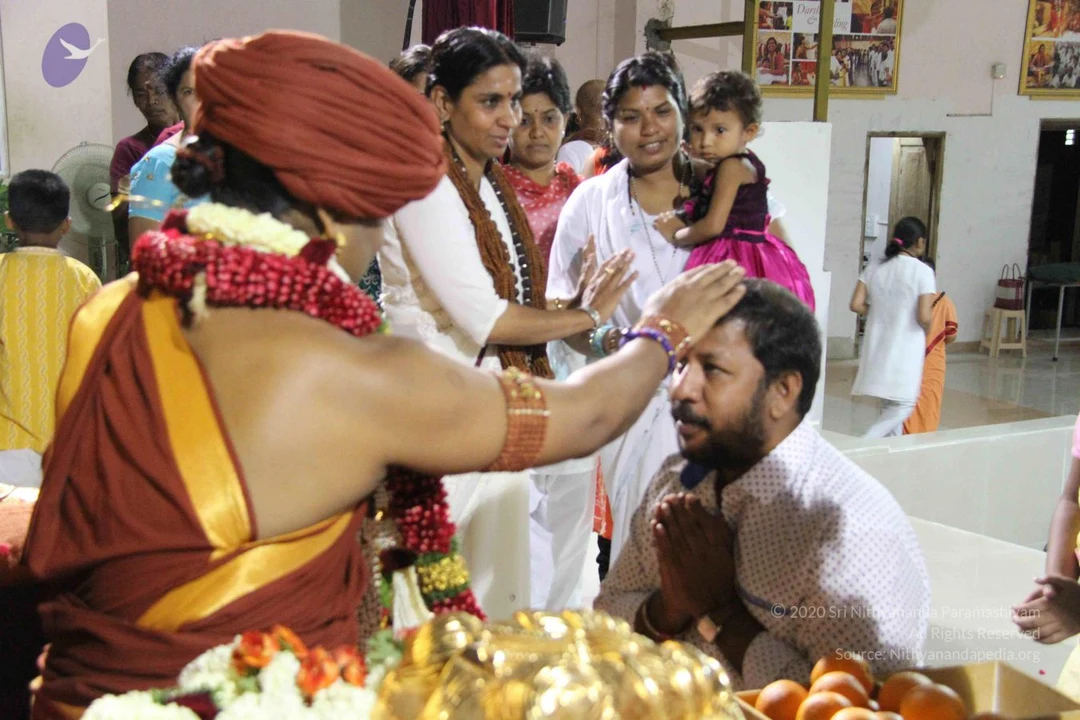
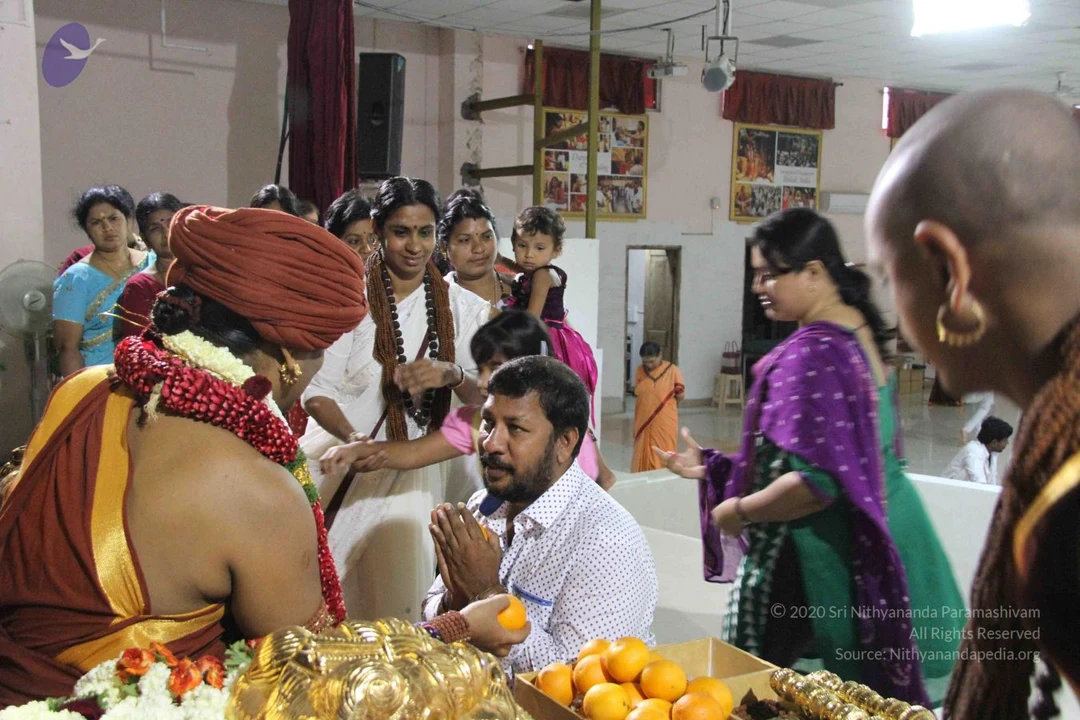
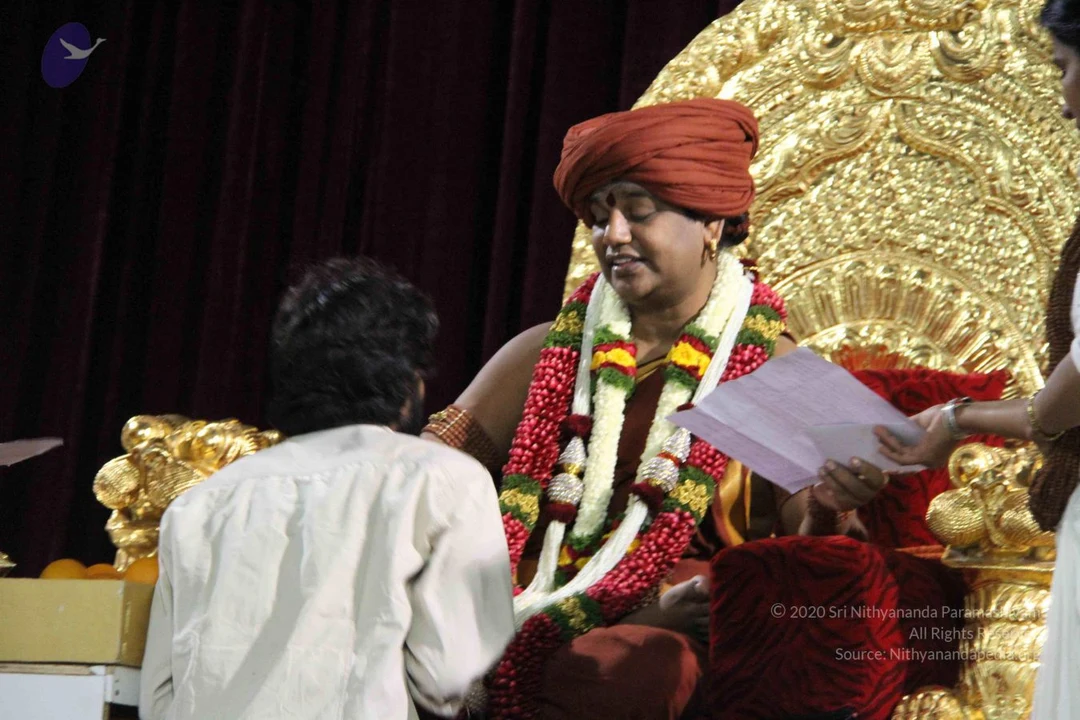
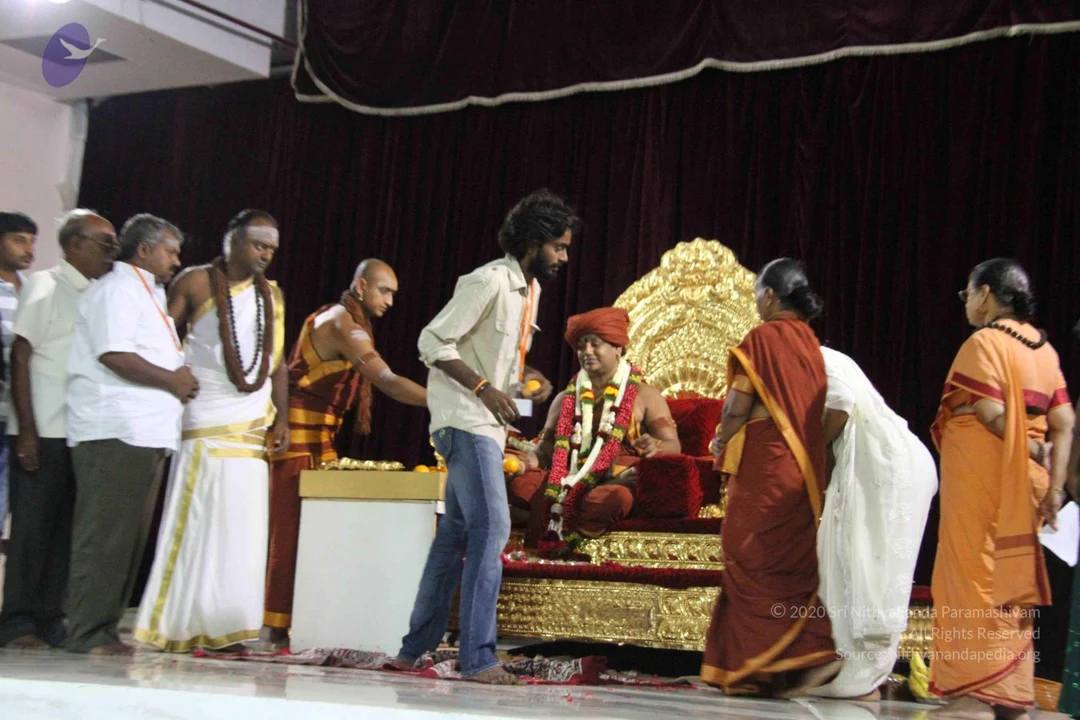
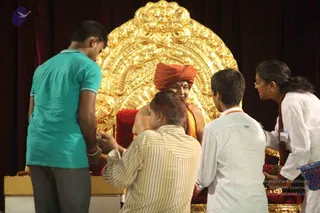
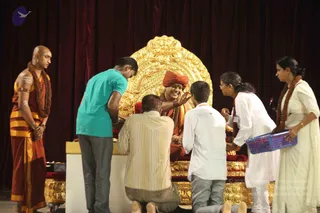
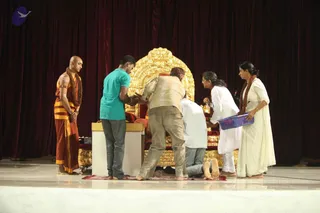
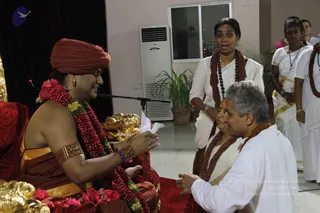
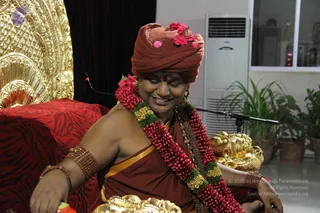
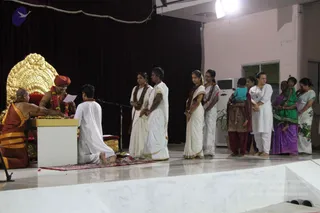
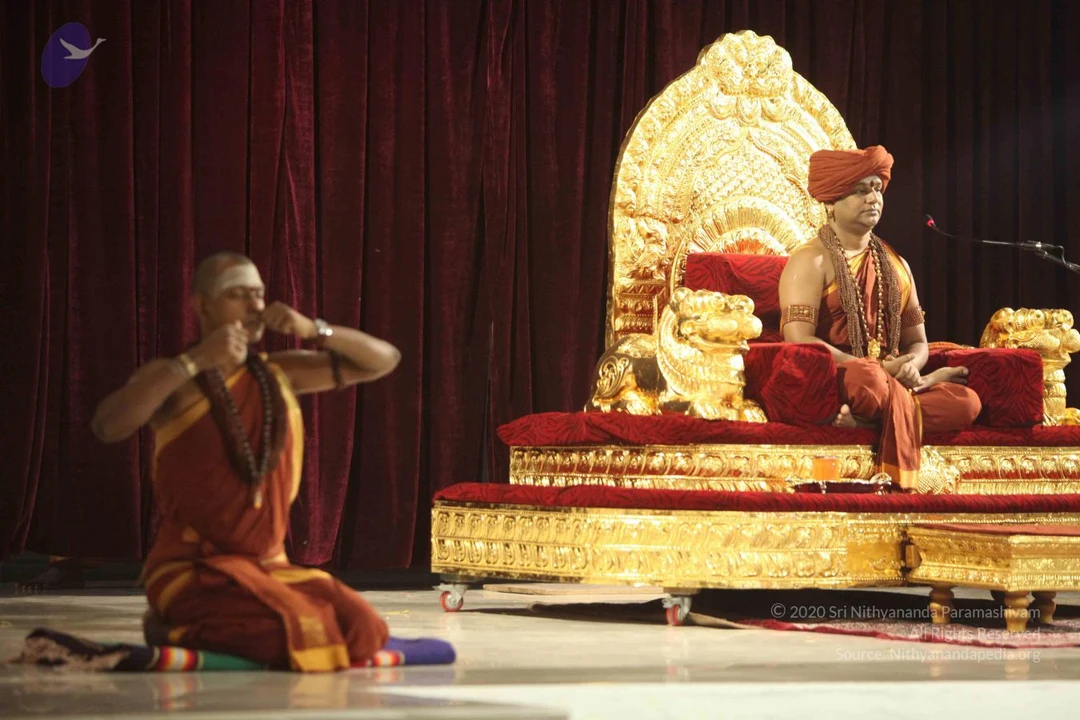
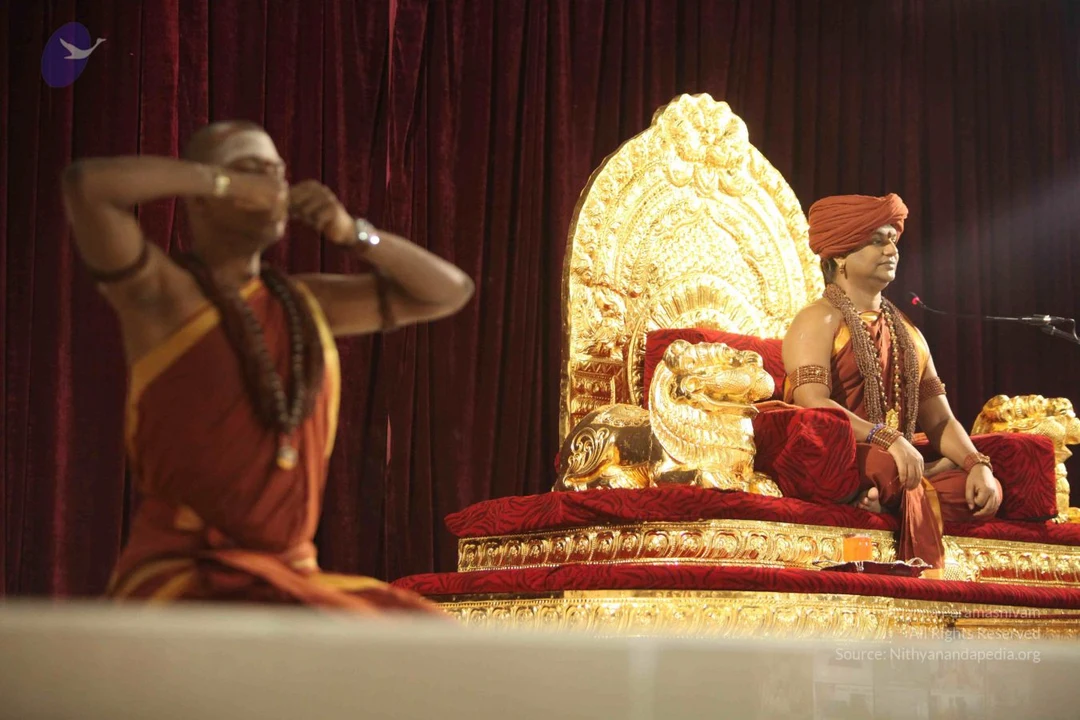
A photograph of devotees offering reverence to a seated figure in front of an ornate gold throne with a large arched backrest and deep maroon curtains behind. The central seated figure wears a bright orange-red turban, an orange-saffron garment and a red cloth draped over the throne, with a small red mark on the forehead; this is a probable Swamiji (probable) on a throne, with his face partly obscured by a devotee. On the left, a young man in a teal polo shirt stands with hands together, while a man in a striped shirt kneels with folded hands at the front. A young man in white with an orange cord stands in the centre-right, and a woman in a white kurta with glasses and a long rudraksha-like beaded mala leans in at right, holding a basket and a tray of red flowers beside the throne. The setting suggests darshan.A photograph of a seated figure on an ornate gold throne with a large gold backrest against a dark red velvet curtain. The seated figure wears an orange-red turban, an orange-red shawl over saffron robes, and a rudraksha mala, and smiles while raising a hand toward two kneeling devotees in front of the throne. A man in a teal t-shirt bends forward beside them, and on the left a shaved-headed priest in orange-and-gold dhoti stands with folded hands, wearing a rudraksha mala and white markings on his arms. On the right a woman in white with glasses holds a blue basket, and another woman in a white sari with a garland stands at the edge. The throne has gold-embossed panels and a red cushion.Stage scene before a deep red velvet curtain and a large gold-leaf ornate throne with red cushions. On the left, a shaved-headed man in a saffron-orange and gold-striped dhoti and shawl, with rudraksha beads and white markings on his arms and body, stands with hands folded; his appearance is consistent with the page's reference, so the candidate is probable but the cues are not decisive. Beside the throne, a man in a teal polo shirt holds an object, while a man in a beige striped shirt bows low at the throne's base, a seated figure in white kneels nearby, and two women in white saris, one holding a blue basket, attend.Indoor satsang scene in a hall with a white wall-mounted air conditioner and a potted plant. A seated figure on a red cushioned seat wears a rust-orange turban, orange-gold garments, and a thick red and green flower garland with rudraksha-style beads; a microphone stands before them and they hold up a folded white paper while smiling. A man in white kneels before them with a rudraksha mala and gray hair, and a woman in white with a rudraksha mala kneels beside him. Behind them, women in white saris with gold borders and rudraksha malas stand, one with a dark bead necklace raising her hand while speaking. The seated figure resembles the Swamiji candidate with several cues (turban, ornate clothing, garland, rudraksha) and is treated as a probable in-person candidate.A smiling person sits on an ornate gold-and-red throne with a red tiger-stripe cushion, wearing a maroon-red turban decorated with pink flowers, a maroon-red shawl over an orange-gold cloth, and layered garlands of red and pink flowers with green and gold beads. The wrists have beaded bangles and a golden kalasha-like ornament rests nearby, with potted plants and an air conditioner behind. Swamiji (probable): the person wears a red turban, garlands and a shawl, with a seated throne, consistent with the page's yes flag, but the face is not clearly identifiable so the identification is uncertain.A stage ceremony in a hall with dark maroon drapes and a pale marble platform. A seated figure on a golden throne with an ornate gold backrest wears an orange turban, orange robe and a red-and-white flower garland, holding a sheet of paper. In front of him a kneeling young man in white clothes bows with bare feet on a small red mat beside a white pedestal. To the right a line of women stands in white and cream saris and dresses, some with rudraksha-style beaded necklaces, while a woman in a white kurta holds a toddler and other women in green, purple and pink saris wait behind. A man in orange and gold garments stands at the left edge near the throne. A standing air conditioner and a microphone stand are visible. a person is seated on the throne wearing an orange turban and garland, and the depiction shows an in-person seated figure receiving the kneeling devotee.
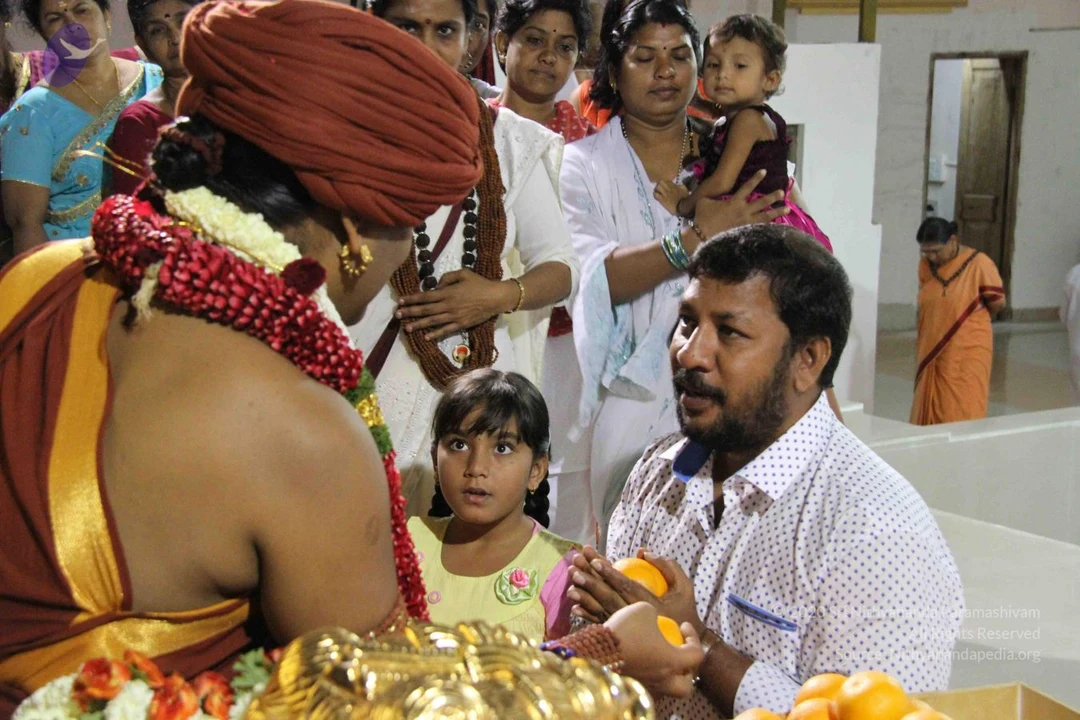
EOS5D
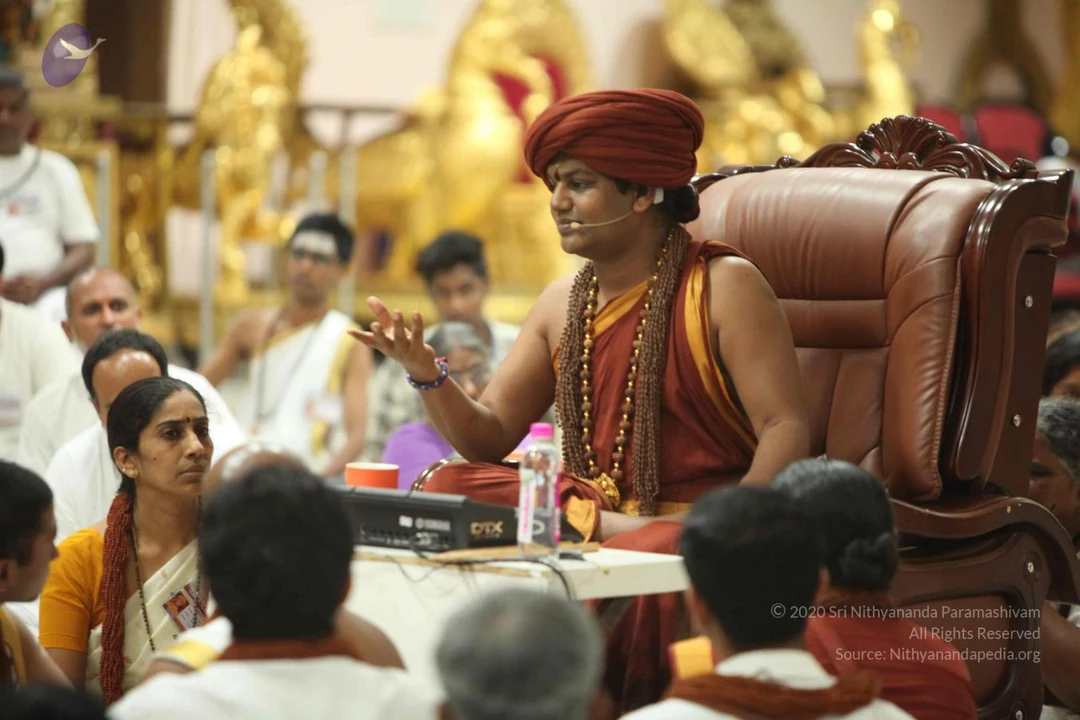
125 photosSource gallery
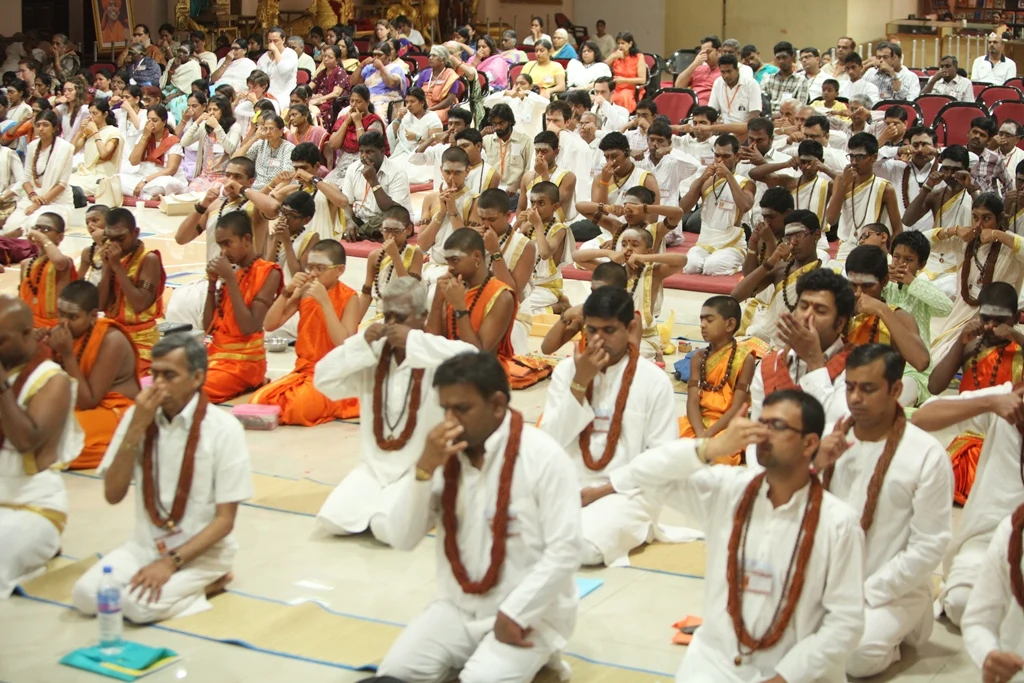
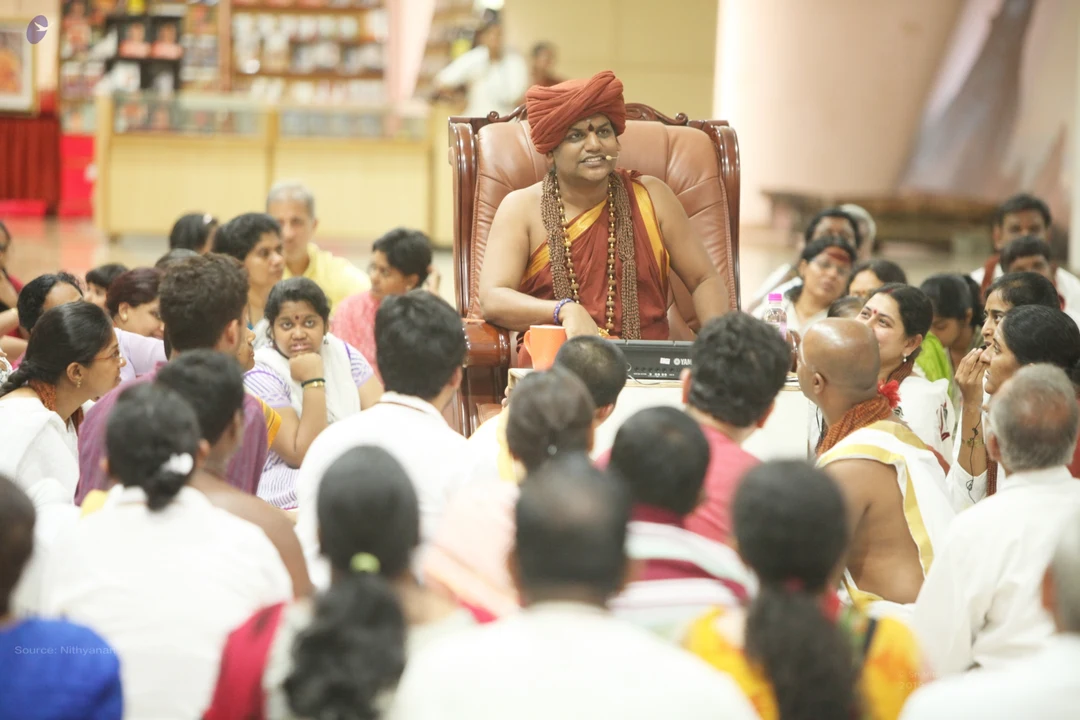
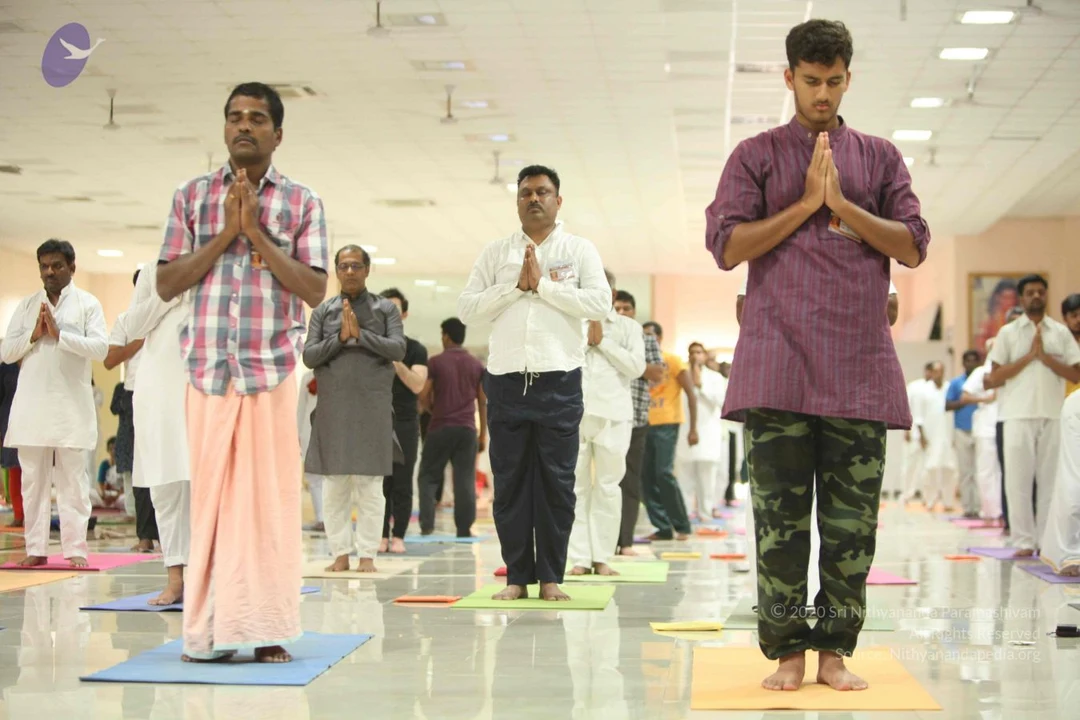
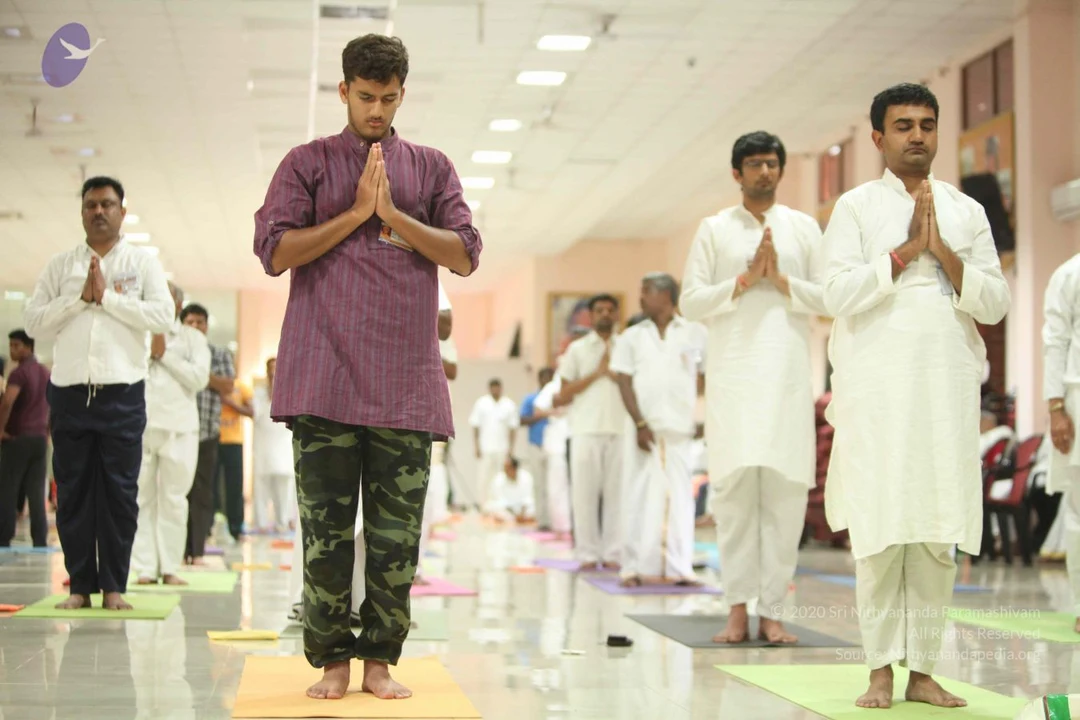
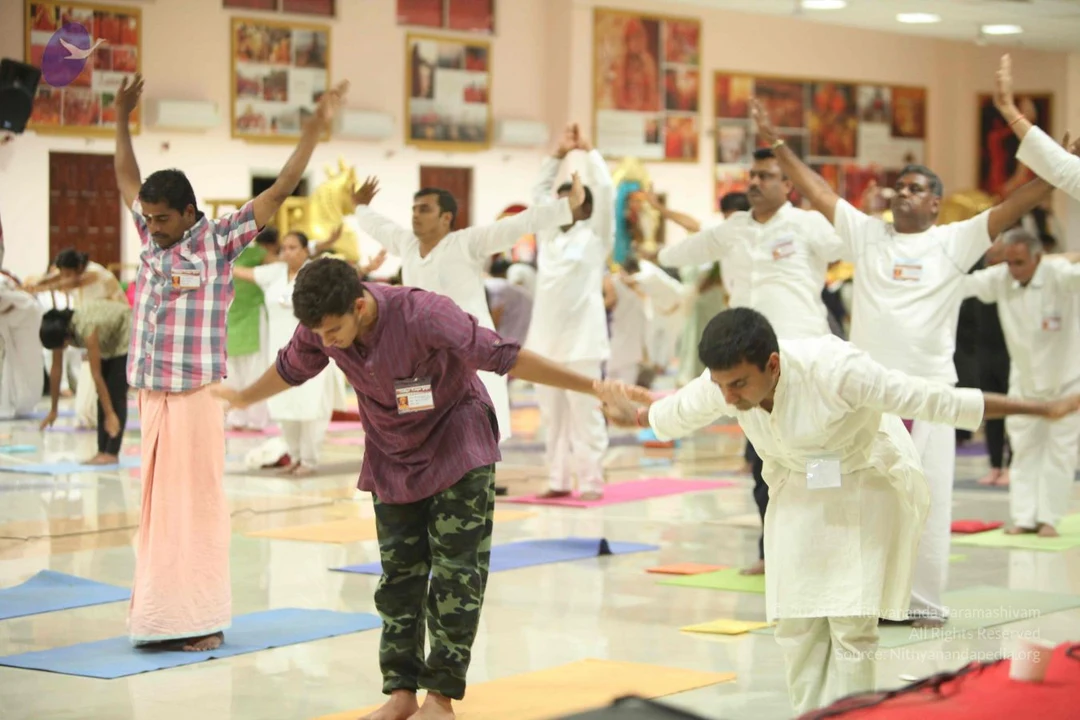
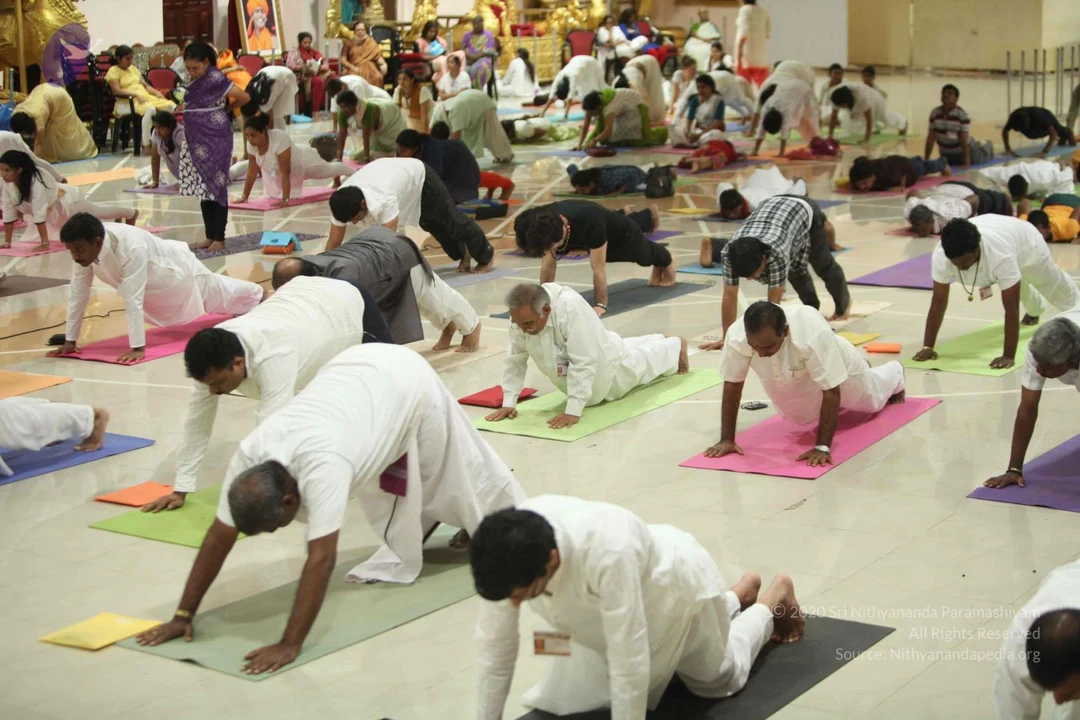
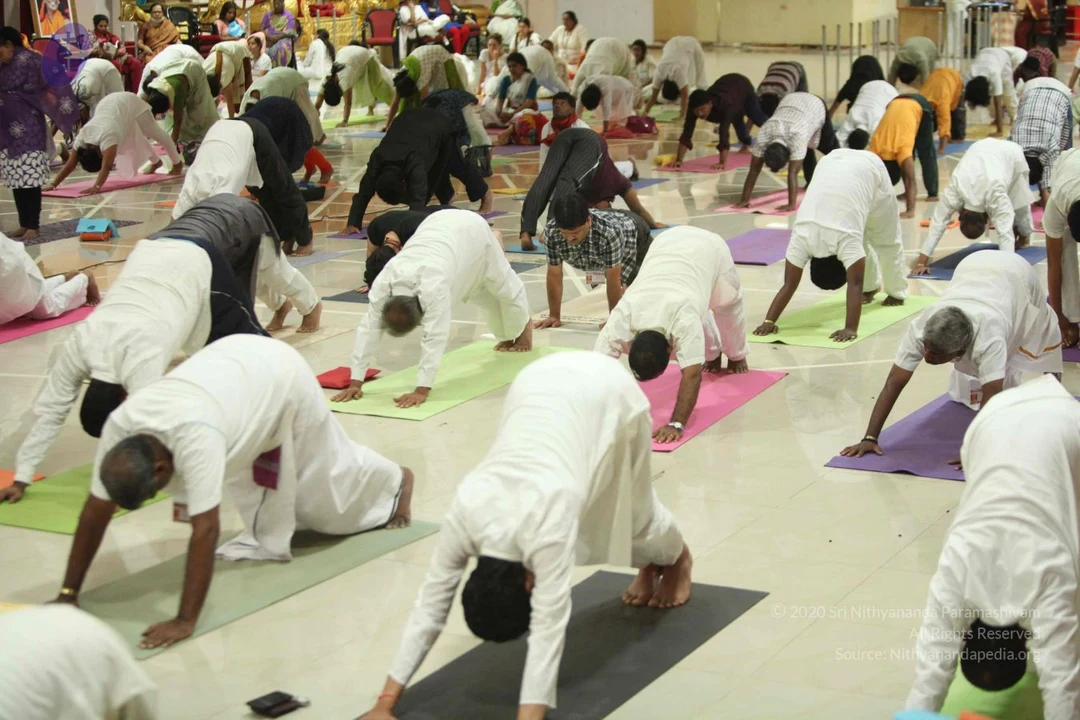
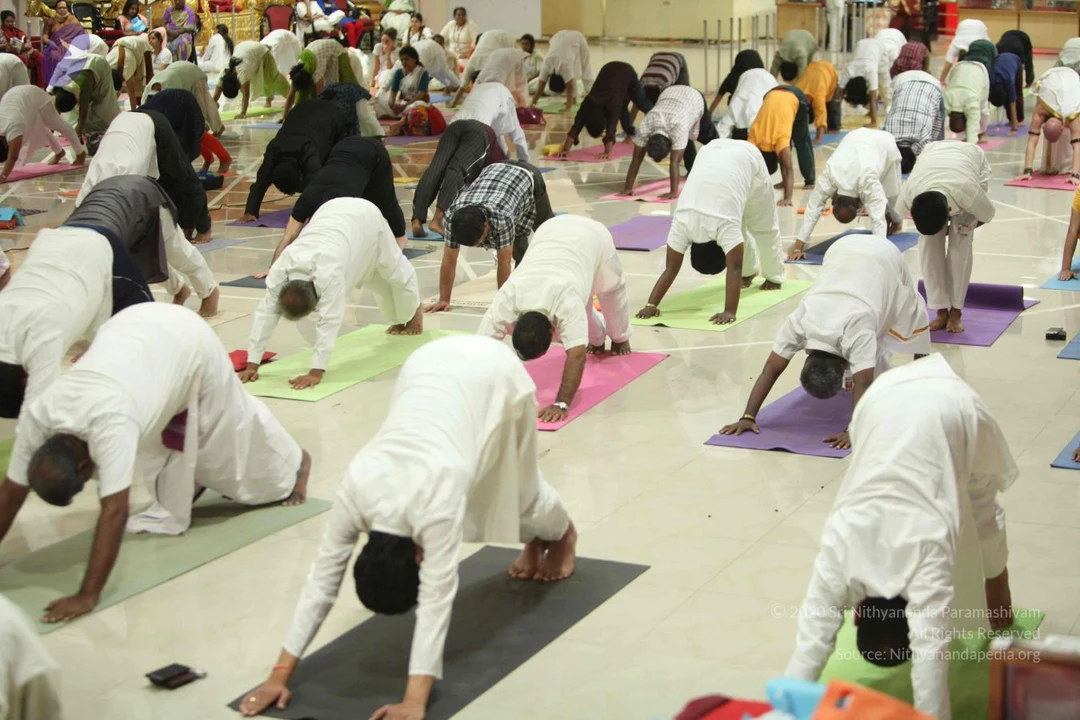
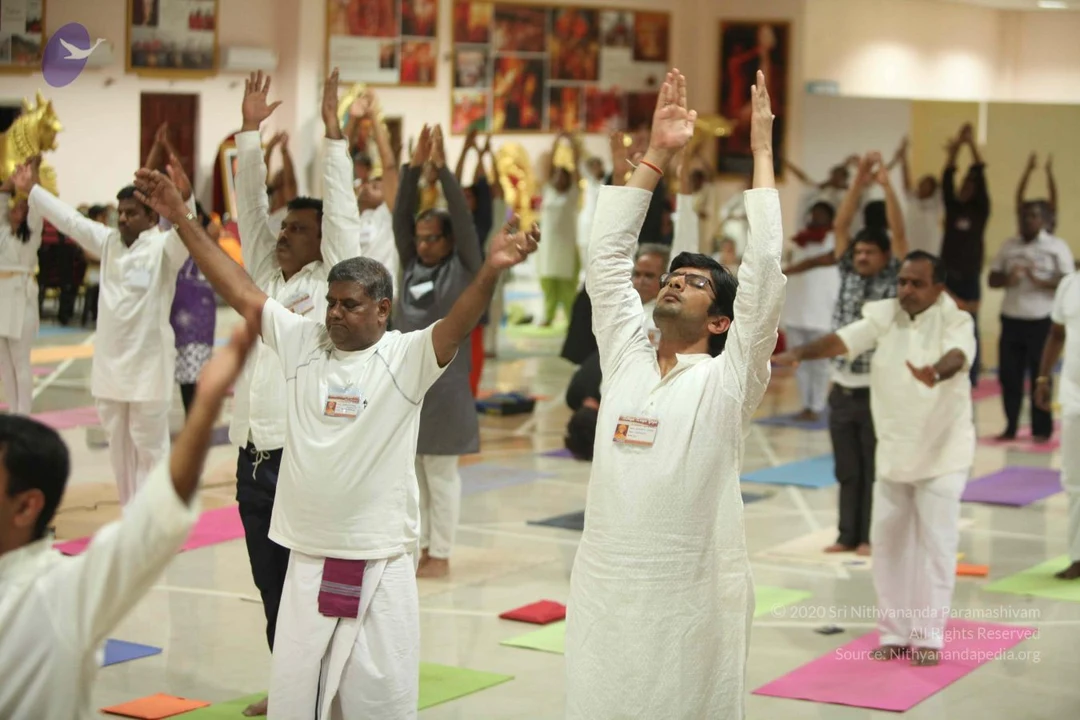
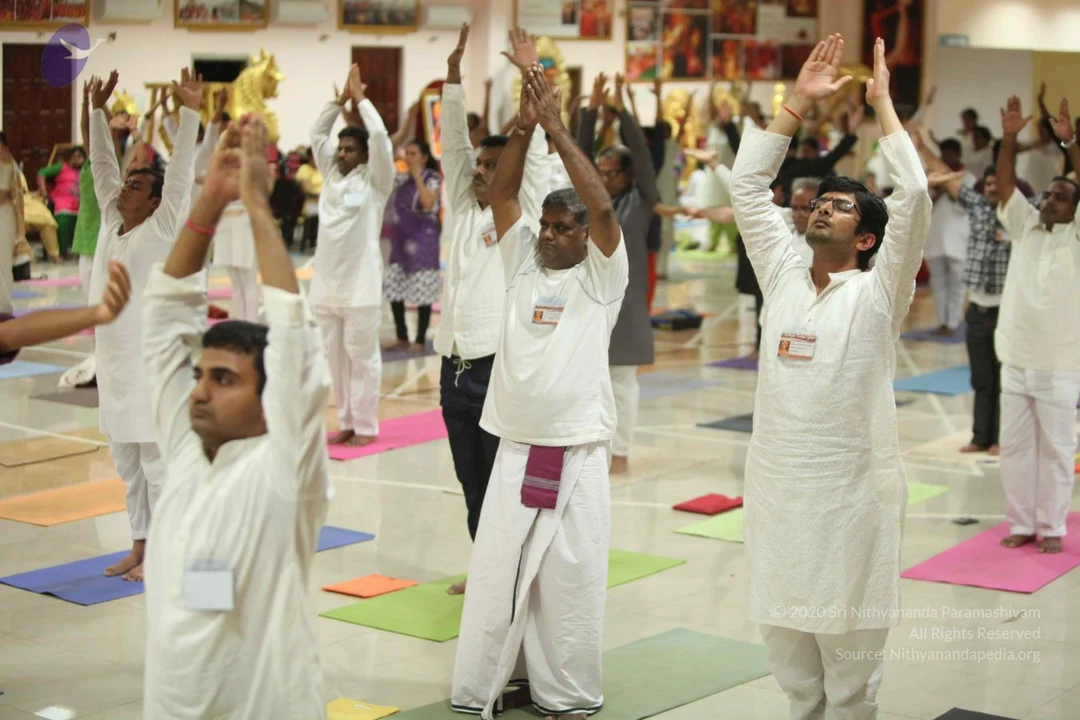
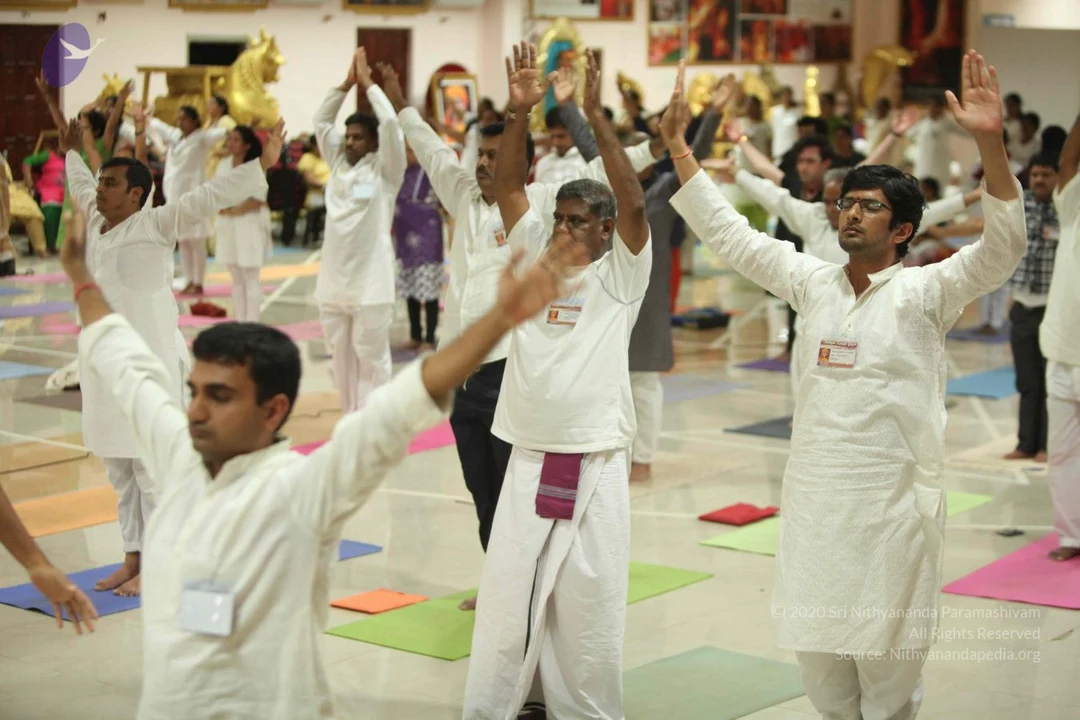
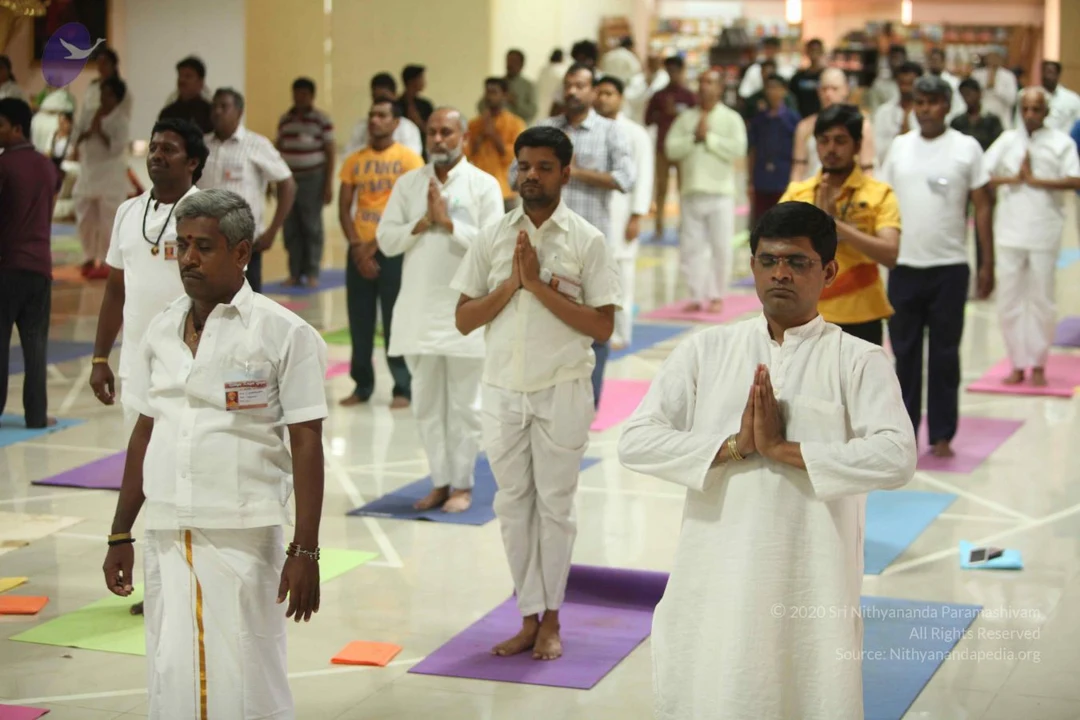
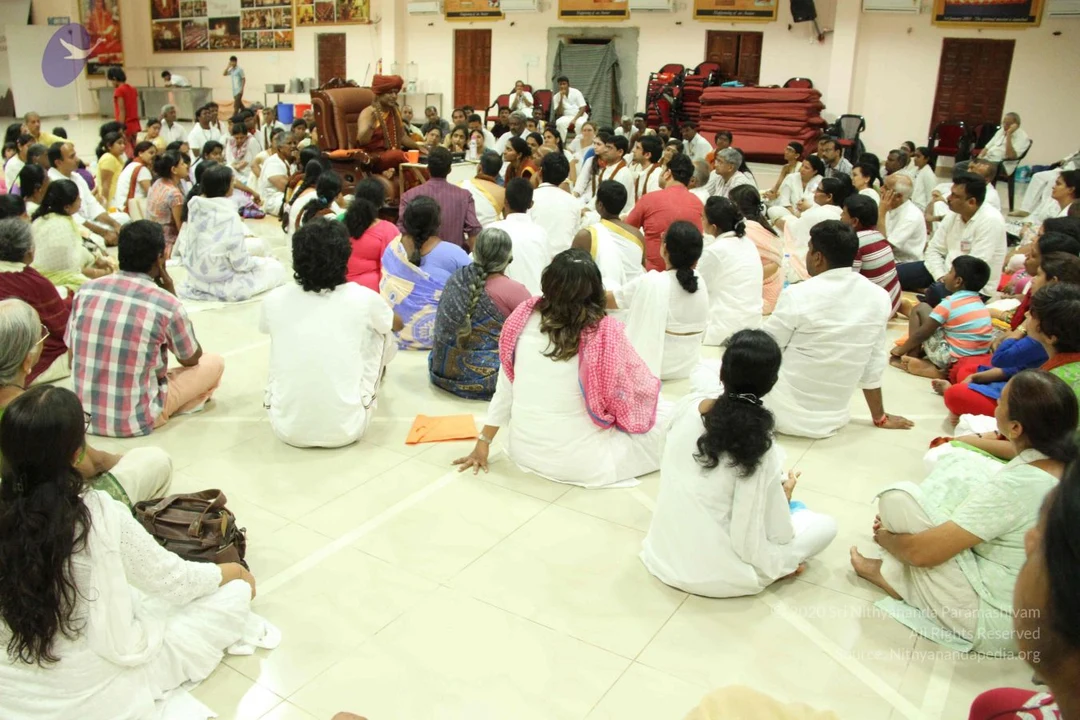
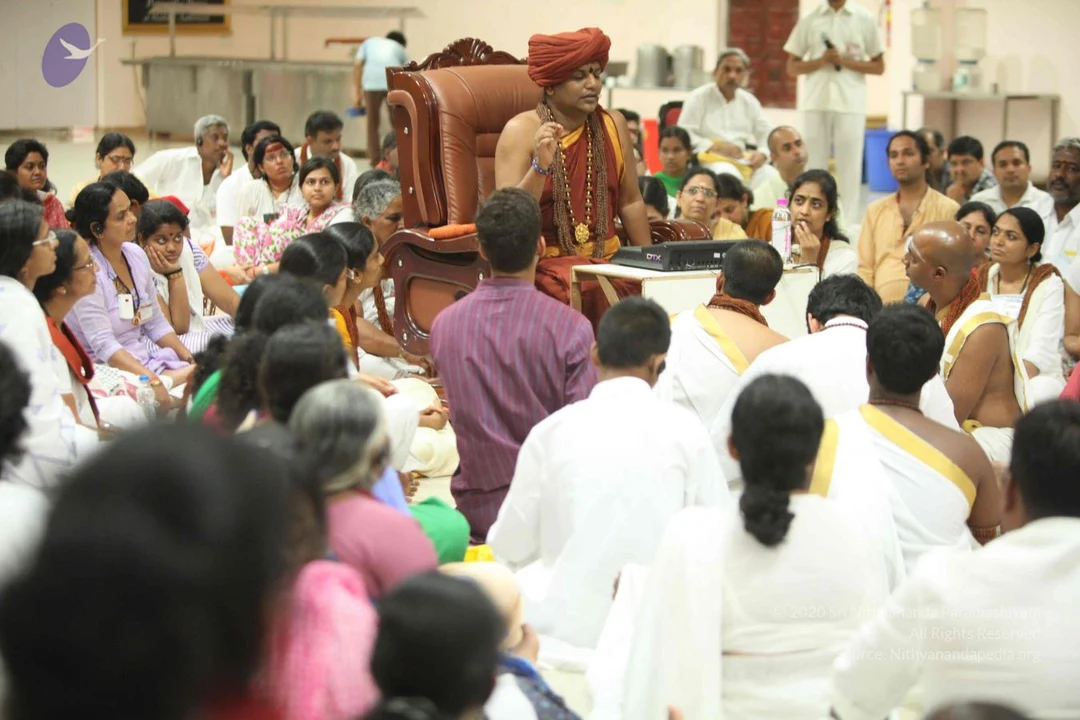
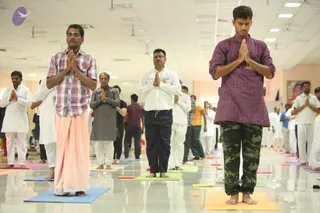
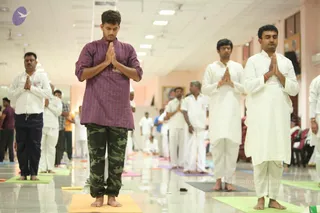
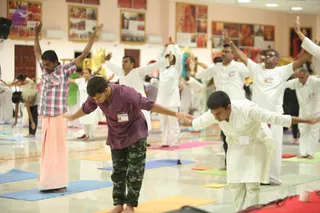
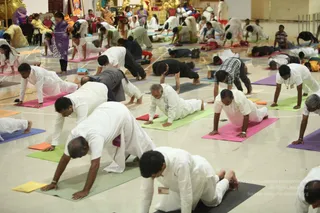
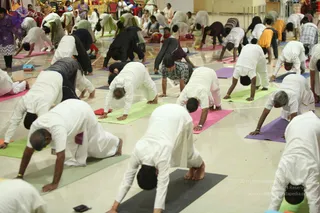
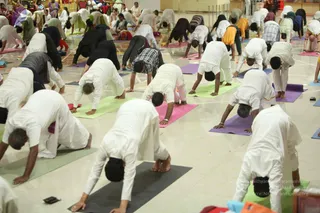
A photograph of a large indoor hall where many people stand on colourful yoga mats in a prayer pose called anjali mudra, palms pressed together at the chest with eyes closed. In the foreground a man in a pink and white checked shirt and pale peach dhoti stands on a blue mat, next to a man in a white shirt and dark navy trousers on a green mat, and a young man in a plum-coloured kurta and green camouflage trousers on an orange mat. Others in white kurtas and dhotis, and a man in a grey kurta, stand behind them. Ceiling fans, pale walls and a framed picture on the right complete the setting. No identifiable a person figure is visible.A indoor hall with pale walls and tiled floor where a large group stands barefoot on yoga mats in namaste pose, hands pressed together at the chest with eyes closed. In the foreground a young man in a maroon striped kurta and green camouflage trousers stands on an orange mat, and to his right a man in a white kurta and white dhoti stands on a green mat. Others in white kurtas and white trousers, and a man in a dark shirt on the left, stand on coloured mats across the room. Chairs and framed pictures line the back wall.A large group of participants practices yoga on colourful mats on a polished marble floor in a hall with pink walls and framed deity pictures. Many people stand with arms raised overhead, while a man in a purple shirt and camouflage trousers and a man in a white kurta bend forward with arms extended. A man in a checked shirt and pink dhoti stands at left with arms raised, and others wear white kurtas and white clothing with name badges. A golden deity murti is visible in the background.A large group of people practise yoga on coloured mats across a bright tiled hall, most in a kneeling cat-or-cobra style pose with hands planted and knees bent. Many men wear white kurta-style clothes and white dhotis, while others wear dark or checked shirts and women wear saris in purple, yellow and pink. Gold ornate decorations, red chairs and a framed portrait of a saffron-robed figure appear in the background. A tall deity murti stands near the upper left wall. Exact count of visible people is well above twenty.A large group of people, mostly men in white kurta-style clothing, performs a yoga sequence on coloured mats across a polished hall floor. Many are bent forward with hands planted on mats, in a downward or forward-bend posture. Some wear checked shirts and others saffron, purple and yellow garments. Women in saffron and purple saris sit along the back wall, and a gold-decorated stage with flowers stands in the background. Several participants wear red or orange cloth and a few wear sandals or leave them off on the floor.A large group of people in white and coloured clothing perform a forward-bend yoga posture on yoga mats across a bright tiled hall. Most are bent at the waist with palms on the floor, some wearing white kurtas and dhotis, others in saffron, maroon, black and checked shirts. Mats in green, purple, pink and grey fill the floor. In the background, seated women in saris and a few people on a raised golden platform watch the session. Ceremonial golden decor is visible at the back of the hall. A figure in white at the front-right is bent forward with hands on a green mat.

DCIM

32 photosSource gallery
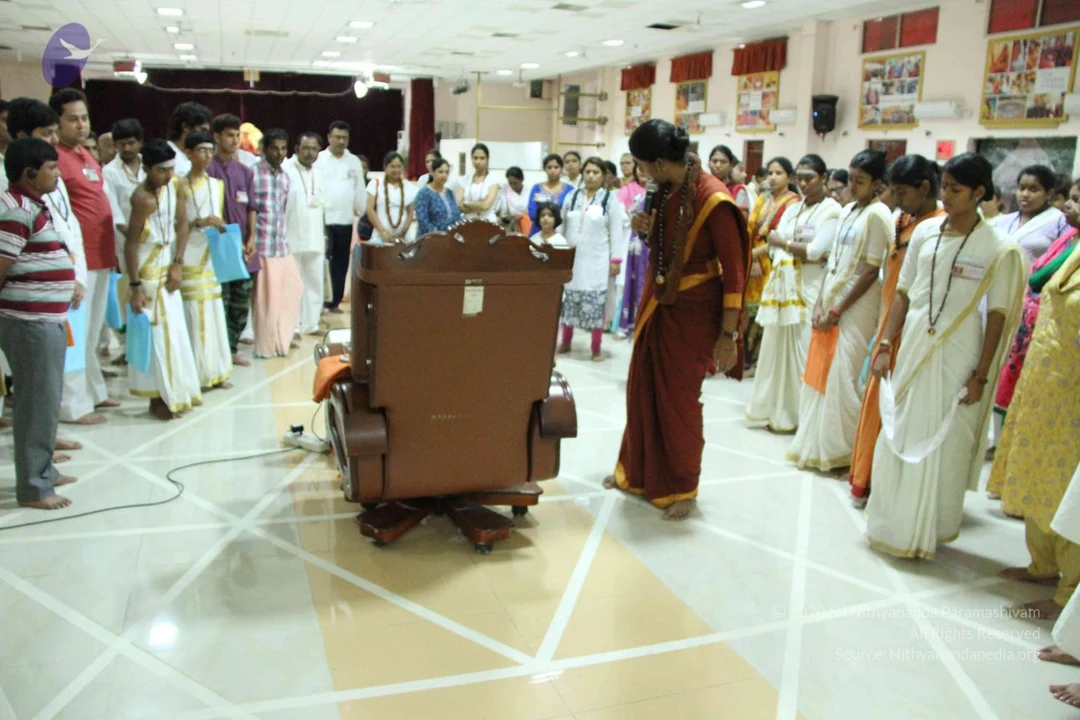
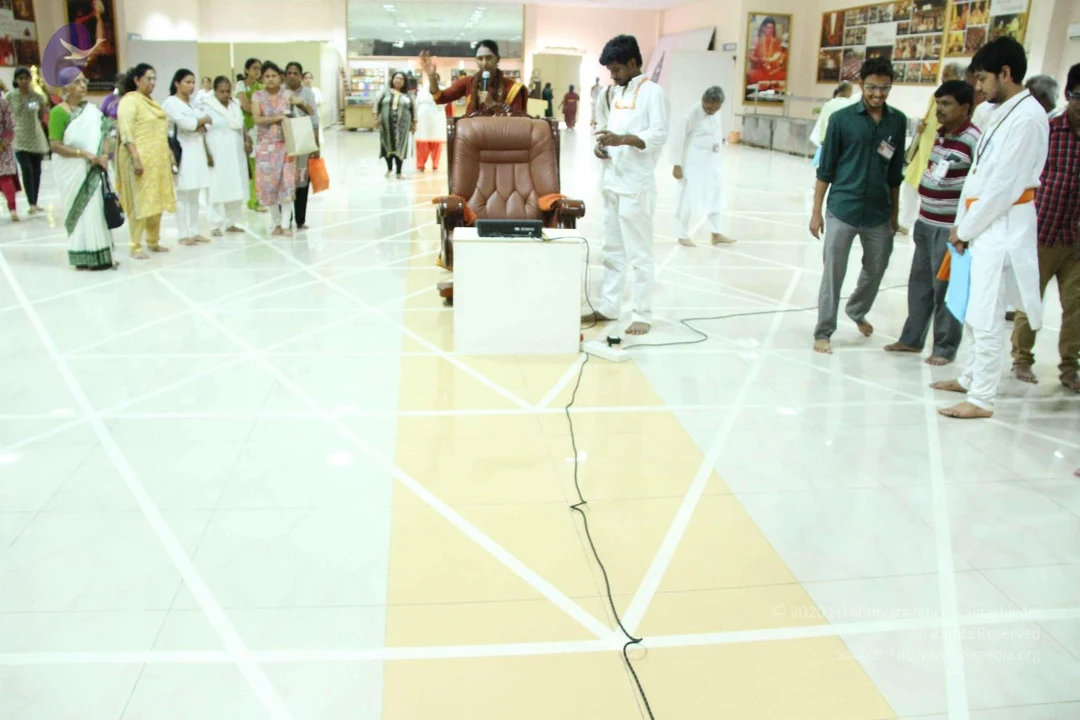
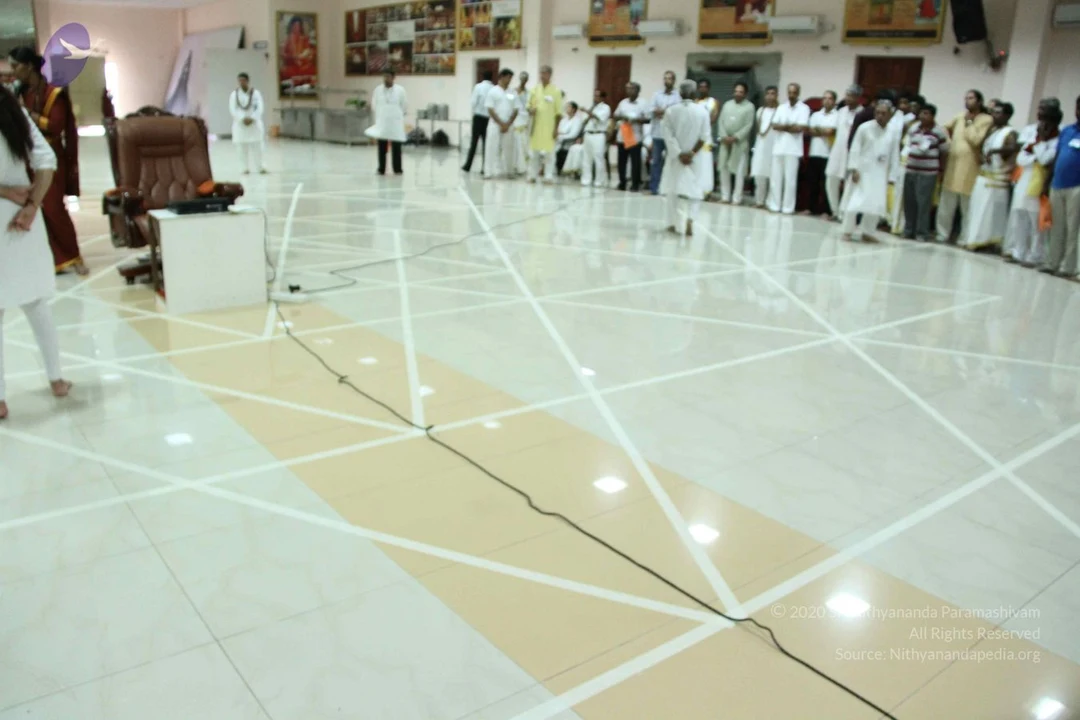
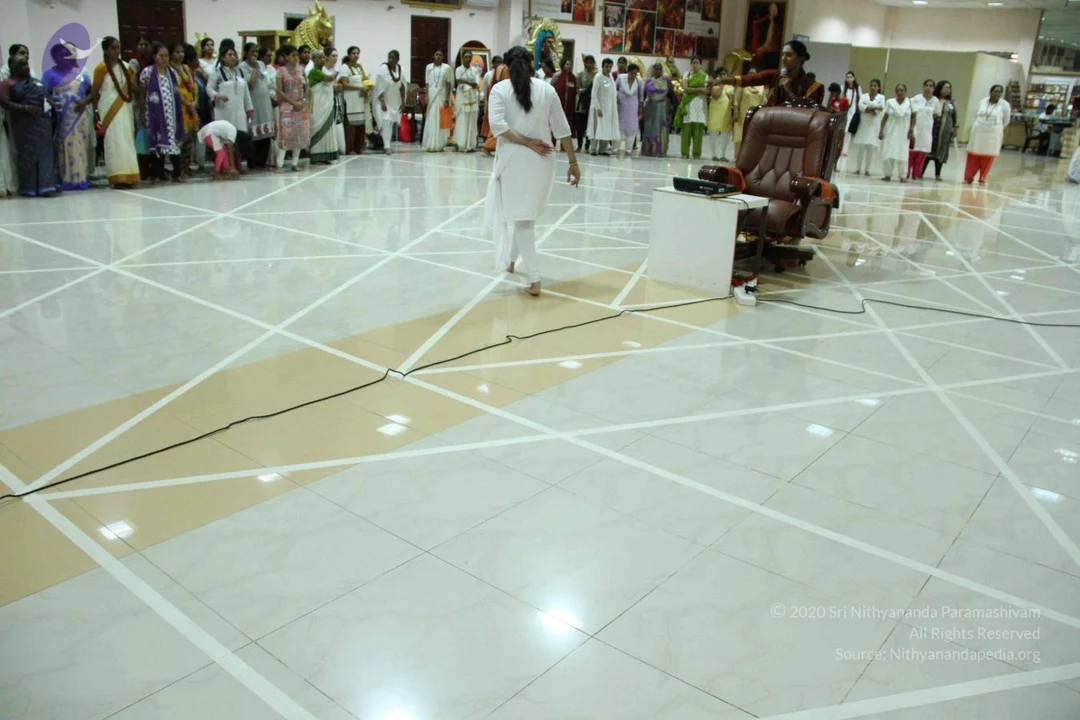
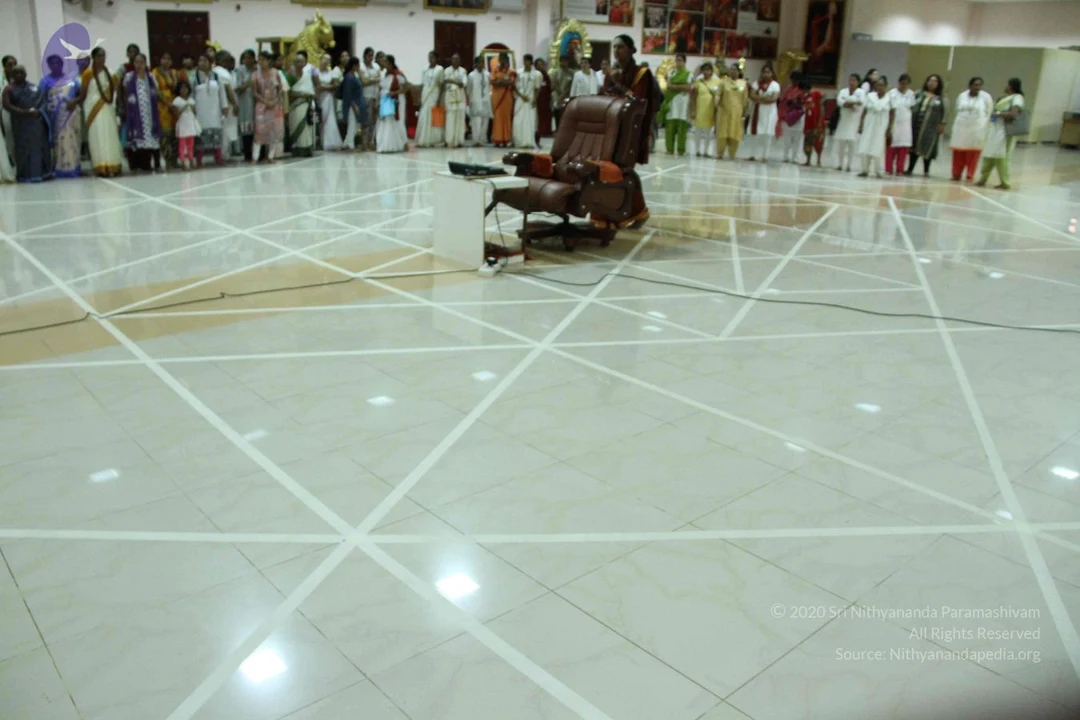
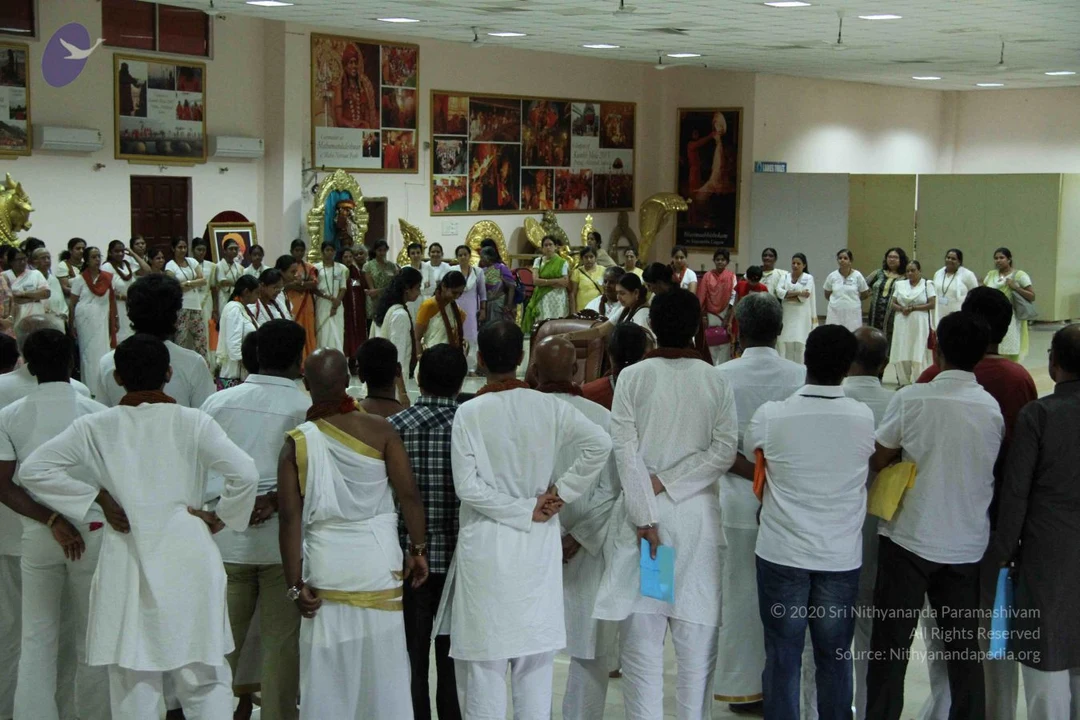
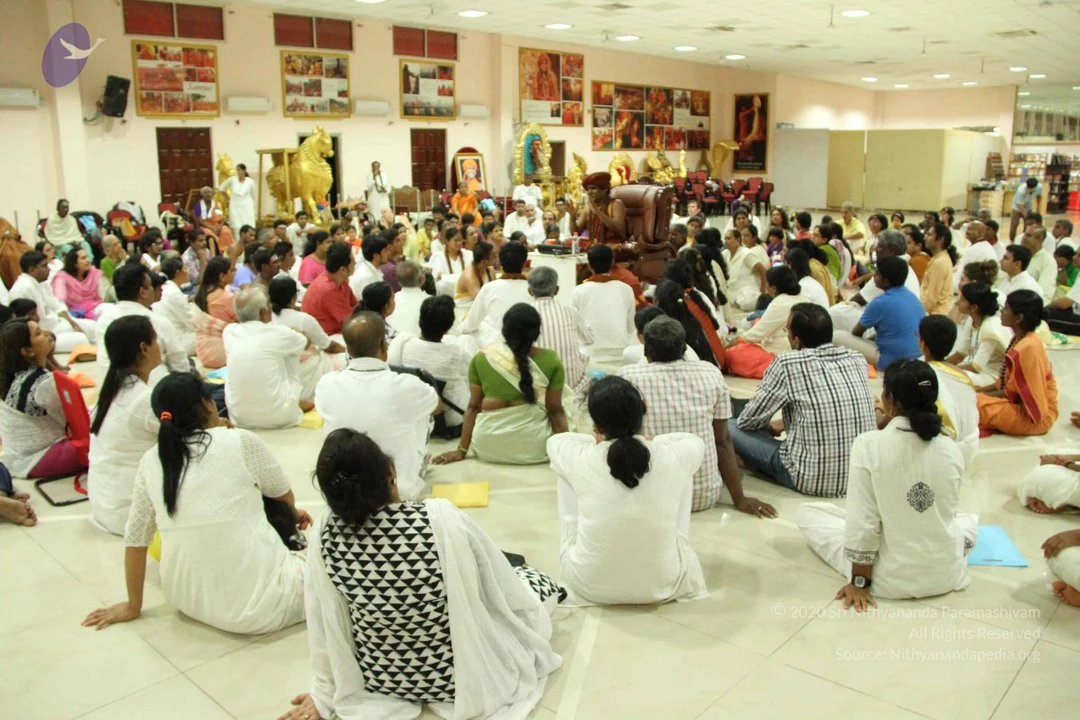
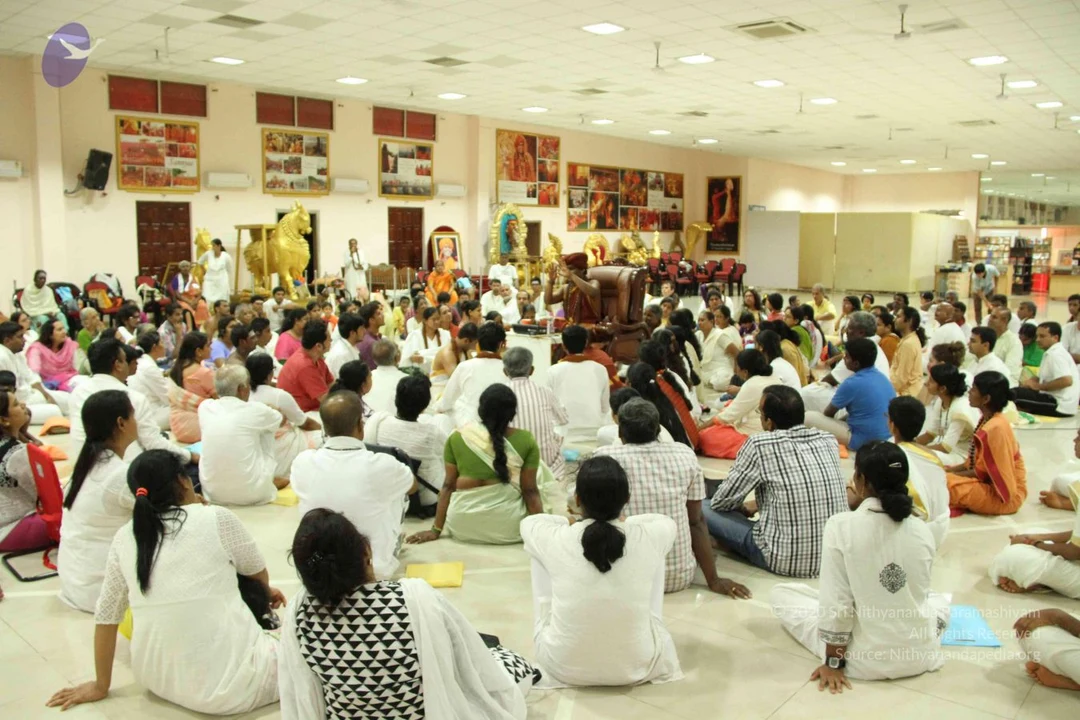
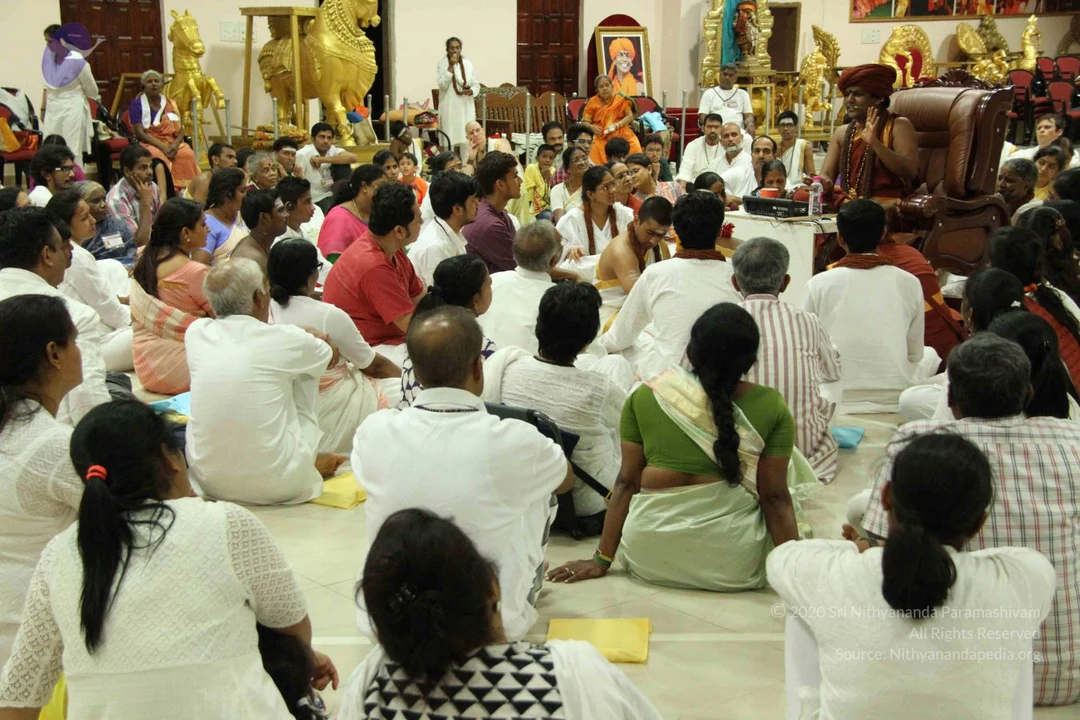
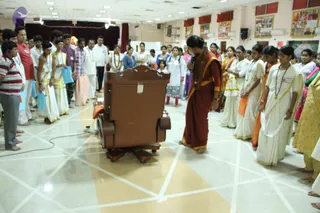
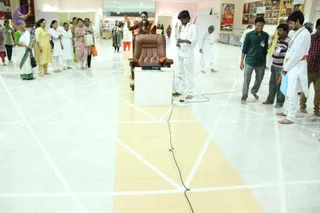
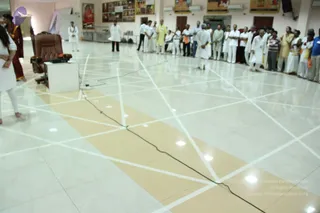
Indoor hall with a polished white tiled floor marked by thin diagonal lines and a central beige panel. In the foreground stands a large brown wooden throne-like seat on casters, empty. A woman in a rust-red sari with a gold border and a rudraksha mala stands near it, holding a microphone and facing the throne with hands together. Around her, a line of people in white traditional dhotis and saris with gold borders stand and watch; several people in the left group wear white dhotis and some hold light blue bags. Other onlookers wear kurtas, saris in yellow, pink and green, and a man in a red shirt stands at left. Framed photographs and posters hang on the back wall, and a black speaker is mounted on a stand at right.A photograph inside a bright, polished-floor hall with white diagonal lines and a wide tan central strip. A brown leather chair stands at the far end of the strip, behind a white table with a small device on it. A woman in a maroon-and-gold outfit sits in the chair, raising one hand and holding a microphone. Nearby, a man in white kurta-style clothing with an orange sash stands on the floor, and several men in casual shirts and trousers watch from the right, some with lanyards. On the left, a group of women in white, yellow and pink salwar-kameez and saris stand facing the front, some holding bags. Framed photographs hang on the walls behind them. A cable runs across the floor from the table.A photograph of a large, bright hall with a glossy cream tiled floor marked by white painted lines radiating from a central point, with a tan stripe crossing the floor. A brown leather armchair with a small white side table stands at left, with a black cable running across the floor. A row of people stands along the right side near the wall, mostly dressed in white kurtas and dhotis, with some in yellow, orange and striped clothing, facing the centre of the room. On the left, a woman in white trousers and a white top stands near the chair, and another figure in a red-brown outfit stands beyond it. Framed colourful pictures hang on the walls above.A large polished marble hall with white and tan floor lines forming geometric patterns. In the foreground a woman in a white kurta and white trousers walks barefoot away from the camera toward a brown leather armchair set on a white pedestal table with a small black device on it. A dark-haired person in a maroon and gold outfit sits in the chair, with a dark cable running across the floor. Behind them a standing crowd of about twenty women in white, pastel, green and purple salwar kameez and saris watches from the left and right sides, with a golden ornate figure and framed pictures visible on the back wall.A photograph of a large polished marble hall with a grid of white lines across the floor. A brown leather executive-style chair sits on a low white platform near the centre, with a small laptop or device on a stand beside it and a cable running across the floor. A figure in a dark robe with orange accents sits in the chair, partly obscured by the people standing behind. A line of standing participants along the back wall wears white, saffron, green, yellow and multicoloured salwar kameez and sarees, with some in white kurtas. Golden horse-head and temple-style decorations stand against the rear wall, and framed artworks hang behind them.A large indoor hall with cream walls and recessed ceiling lights holds a crowd of about 40 people, mostly women in white salwar-style outfits and white kurtas, with some in yellow, orange and pink saris. A group of men in white kurtas and dhotis, several with saffron or orange shawls draped over their shoulders, stand in the foreground with their backs to the camera, some holding blue folders or booklets. Behind them, a dark wooden throne-like chair stands on a raised area beside gold lion-head and elephant-trunk ornaments. Framed photographs and a large collage of ceremonial images hang on the walls, and a small framed portrait of a figure in red robes is at the upper right. Some people are visibly arranged in a standing semicircle around the central space.

NKY

2 photosSource gallery
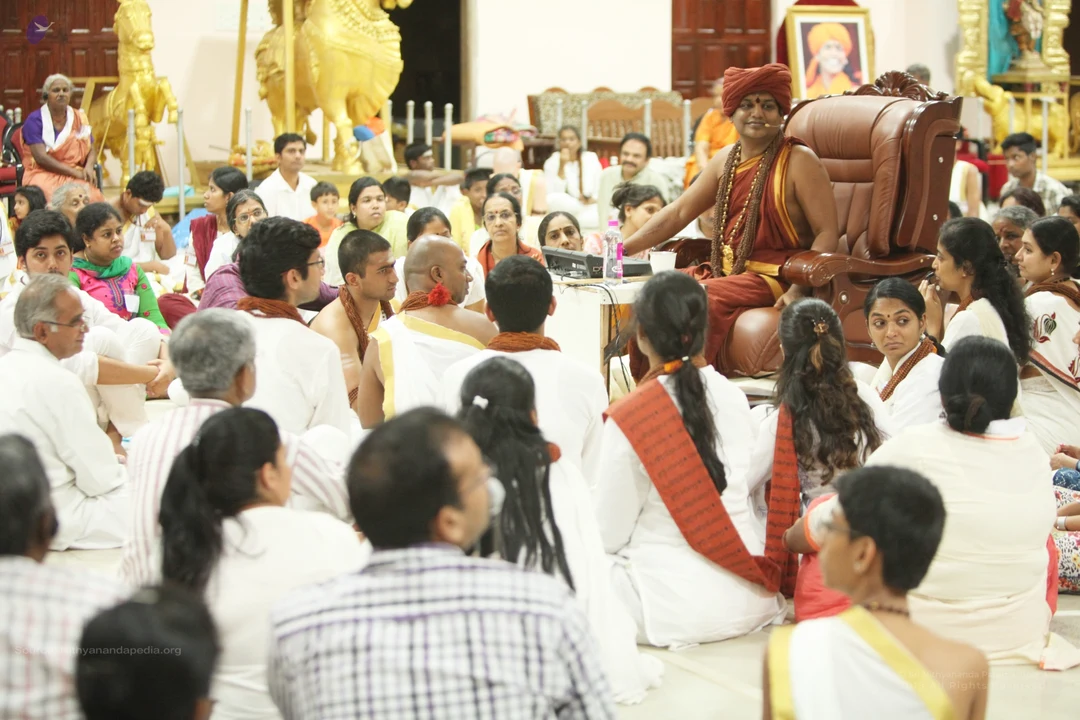
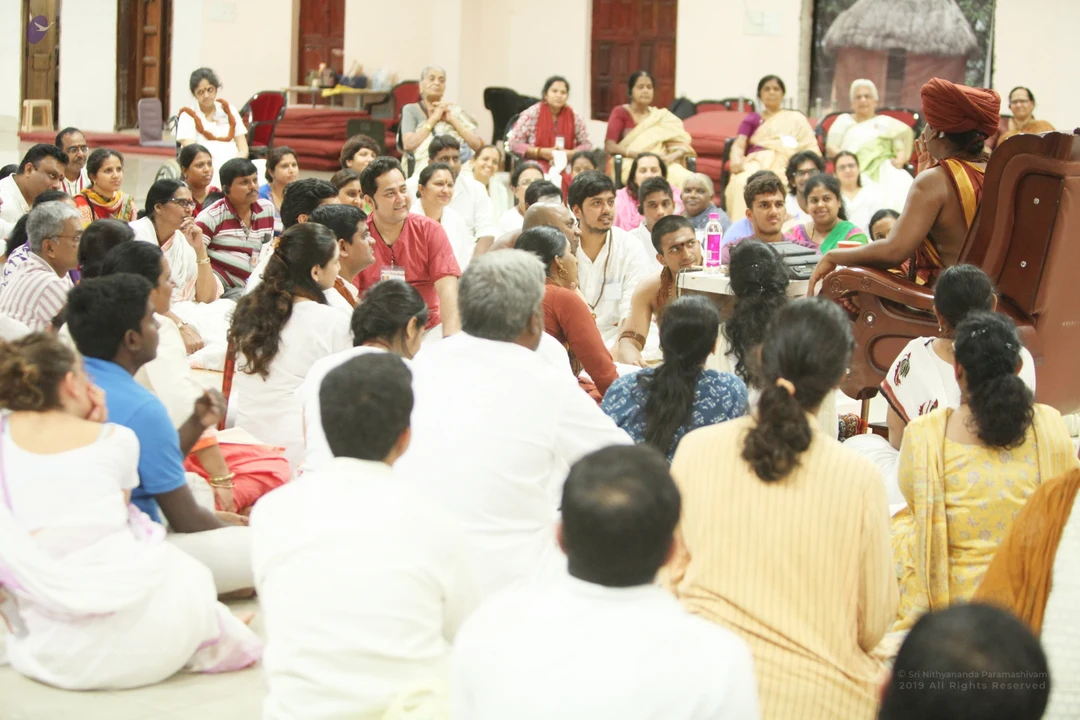
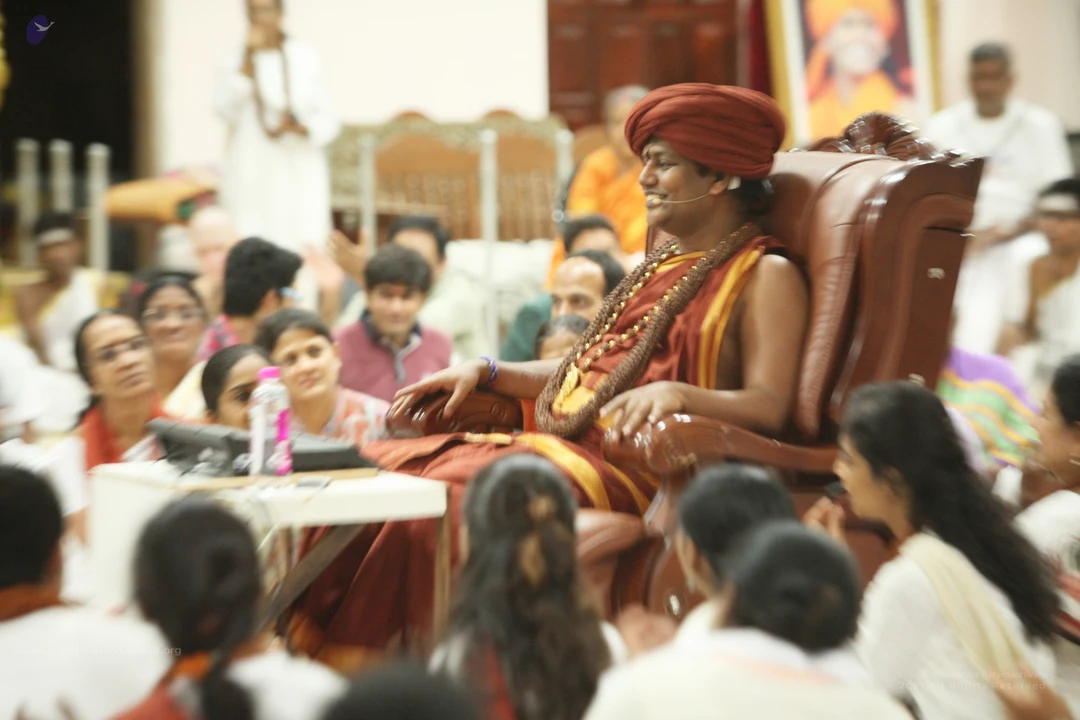
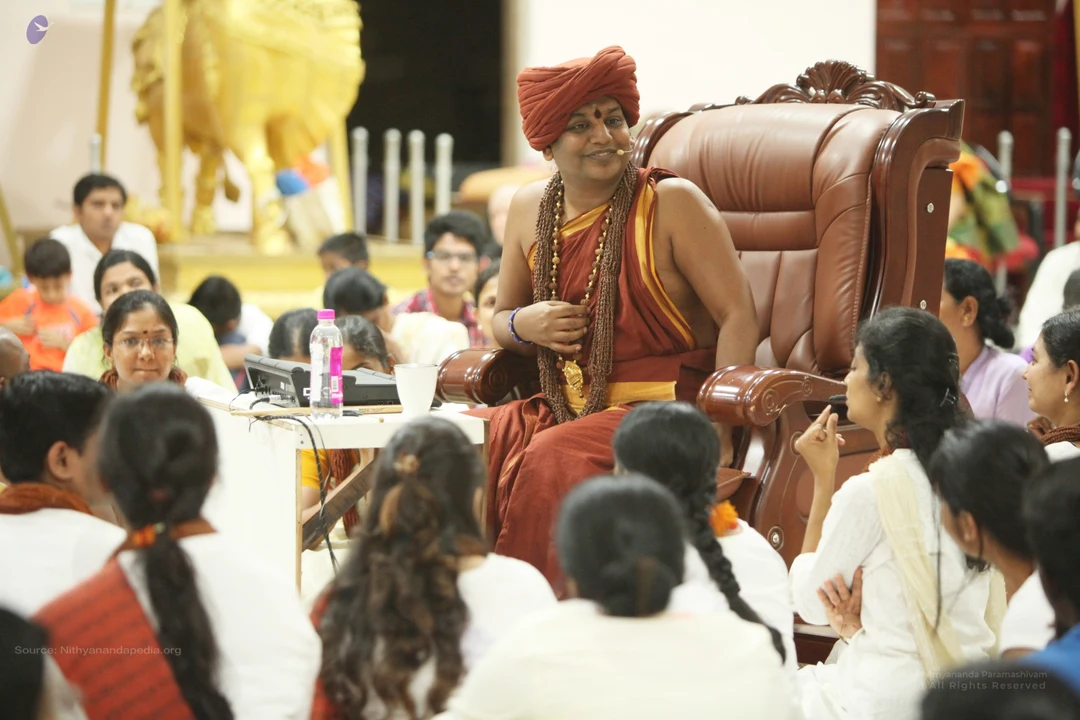
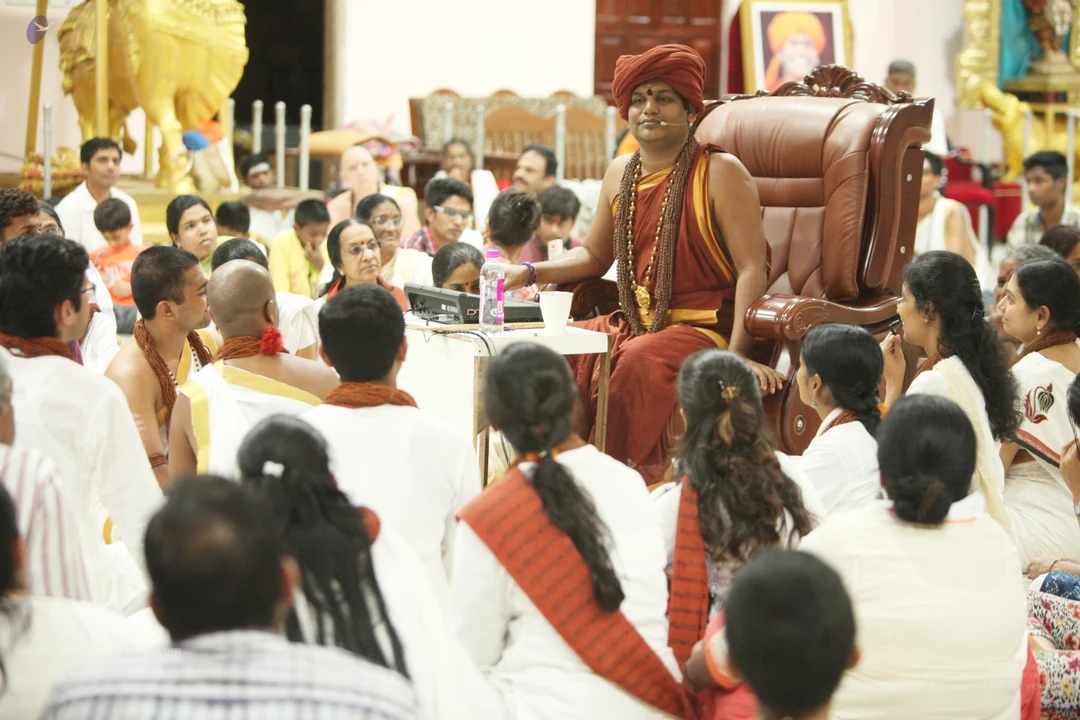
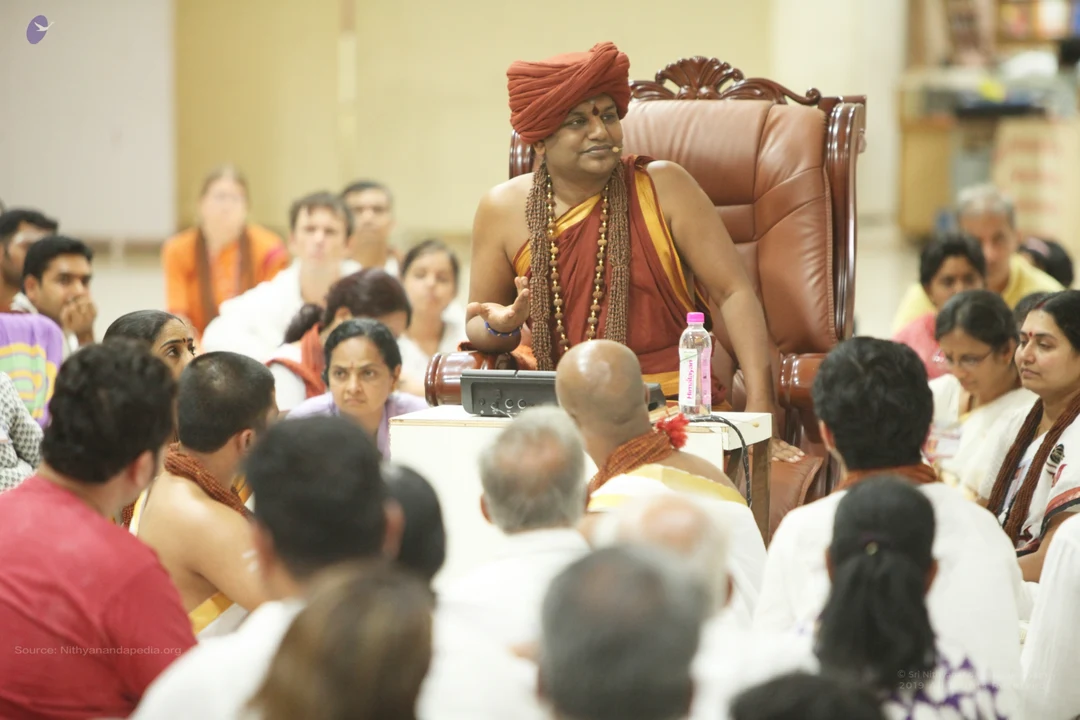
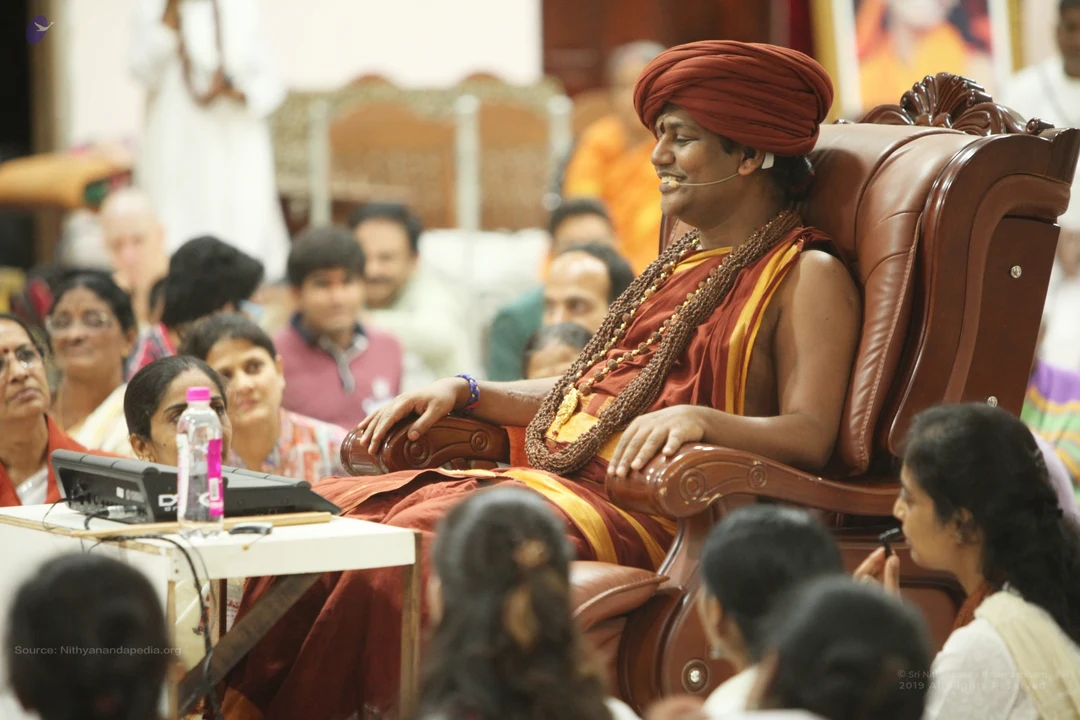
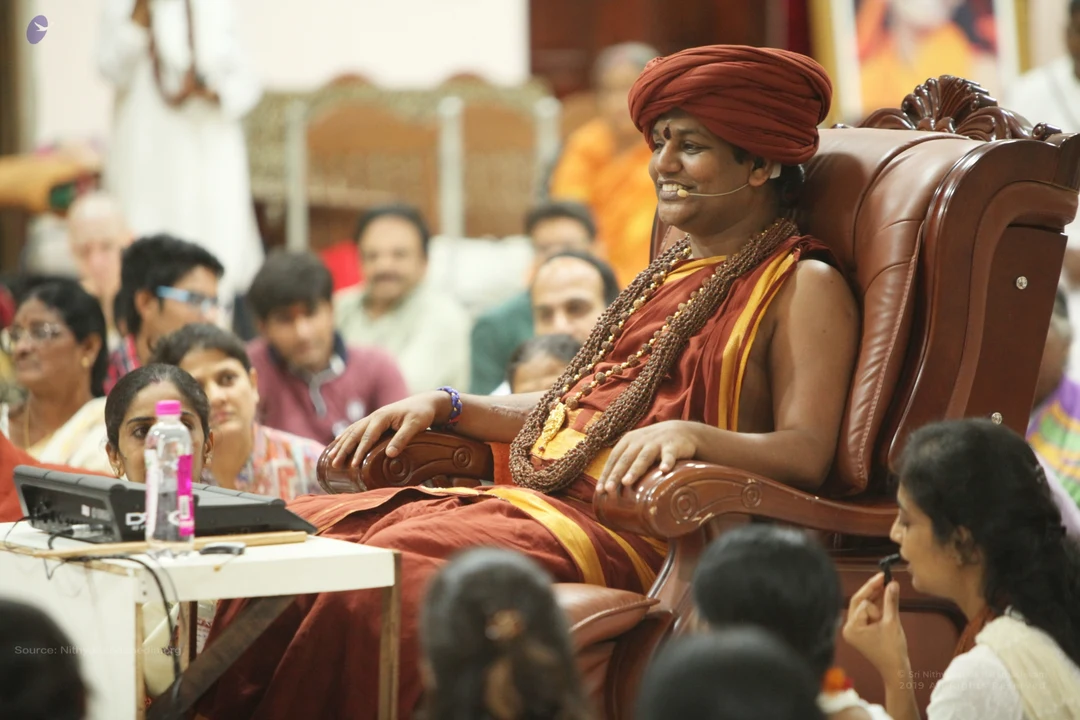
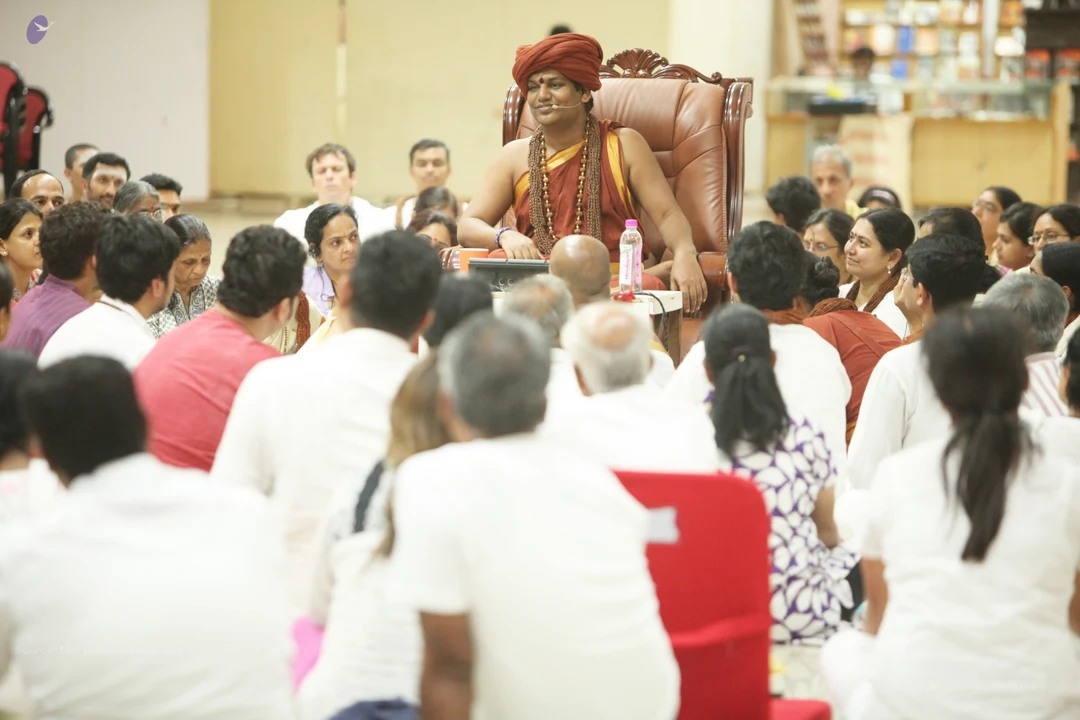
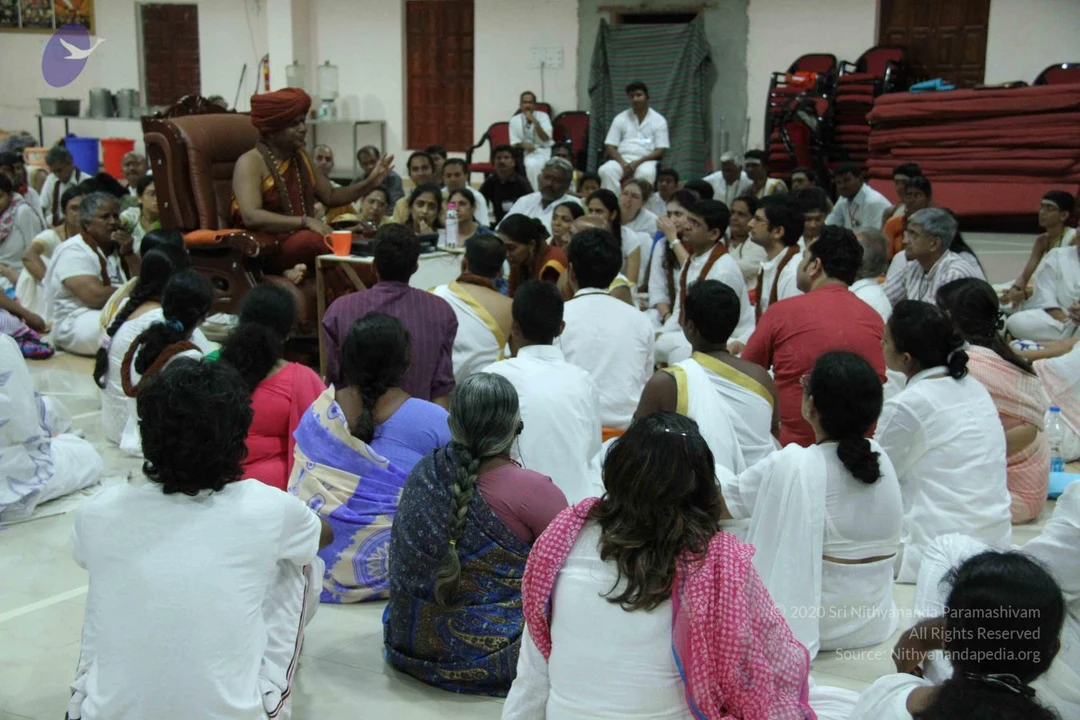
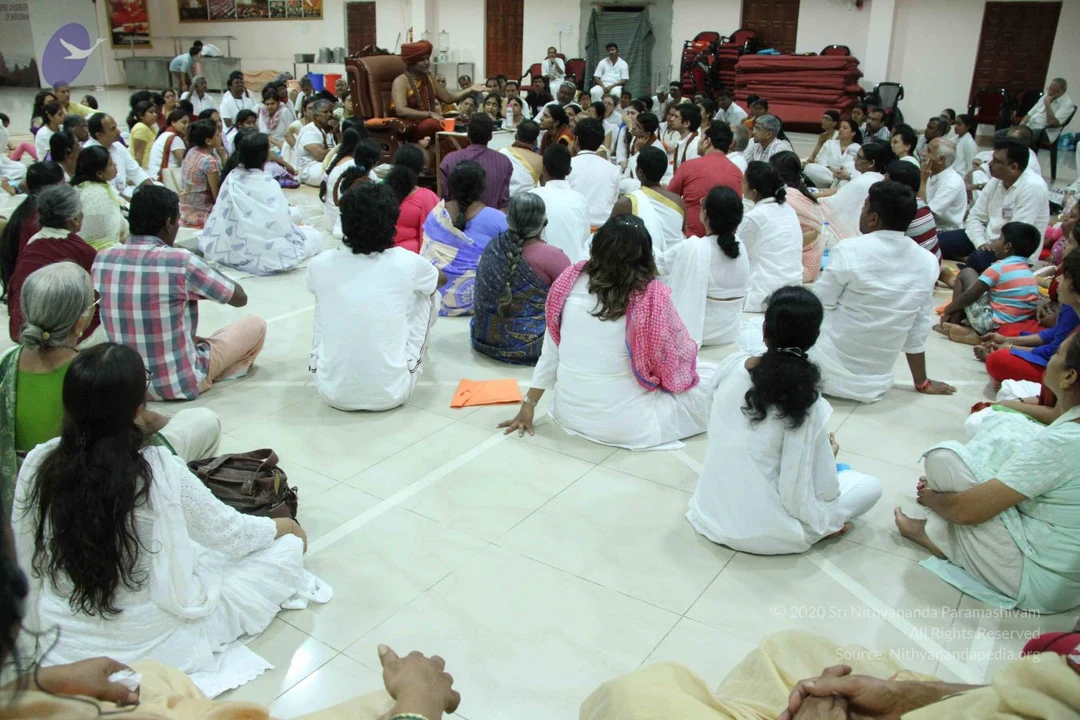
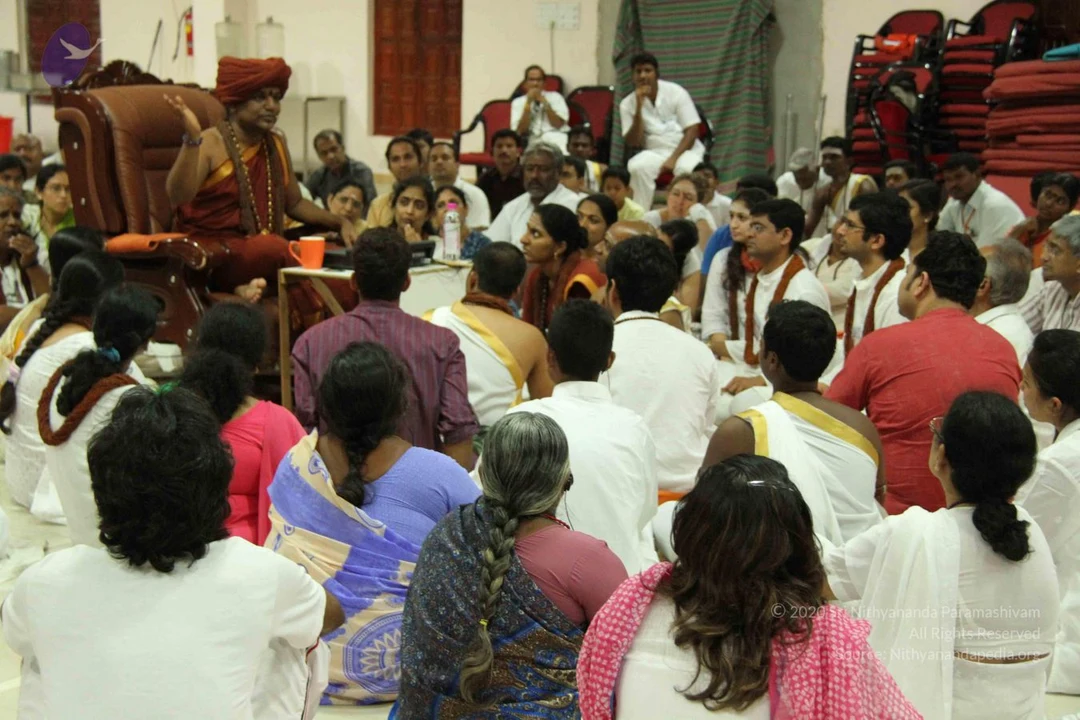
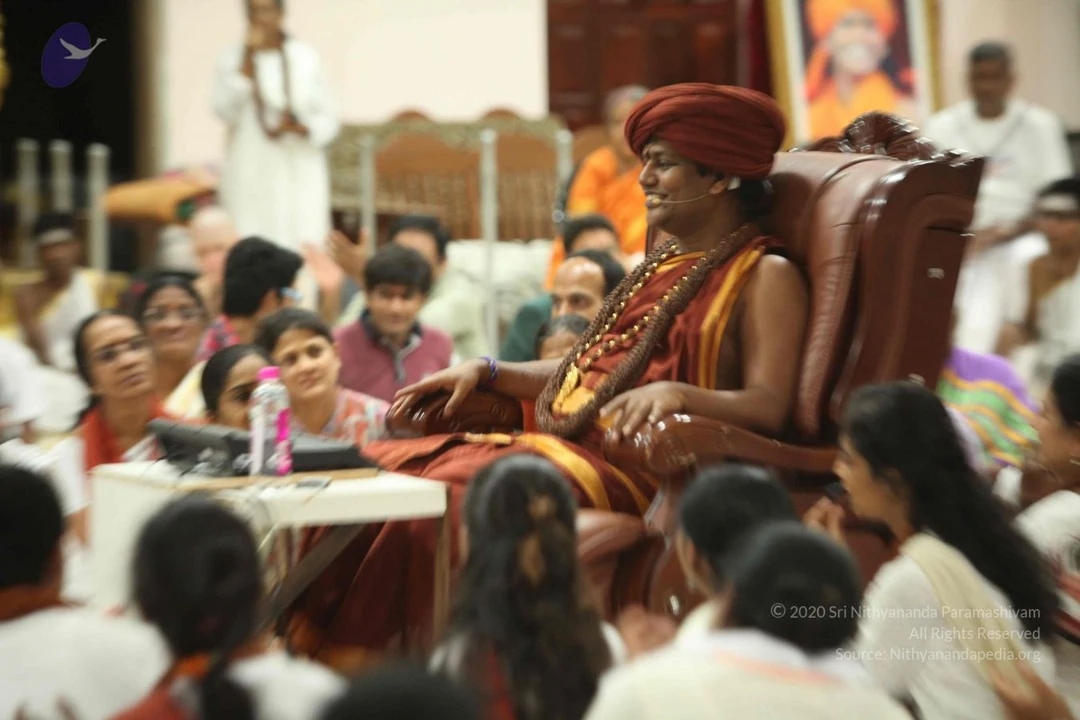
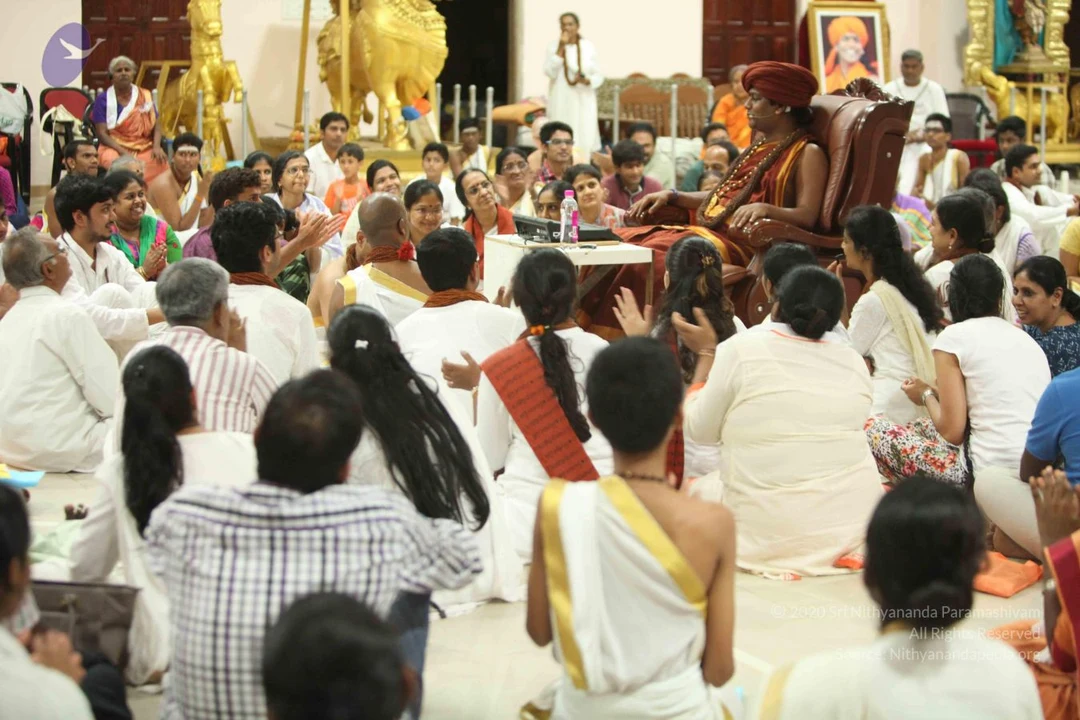
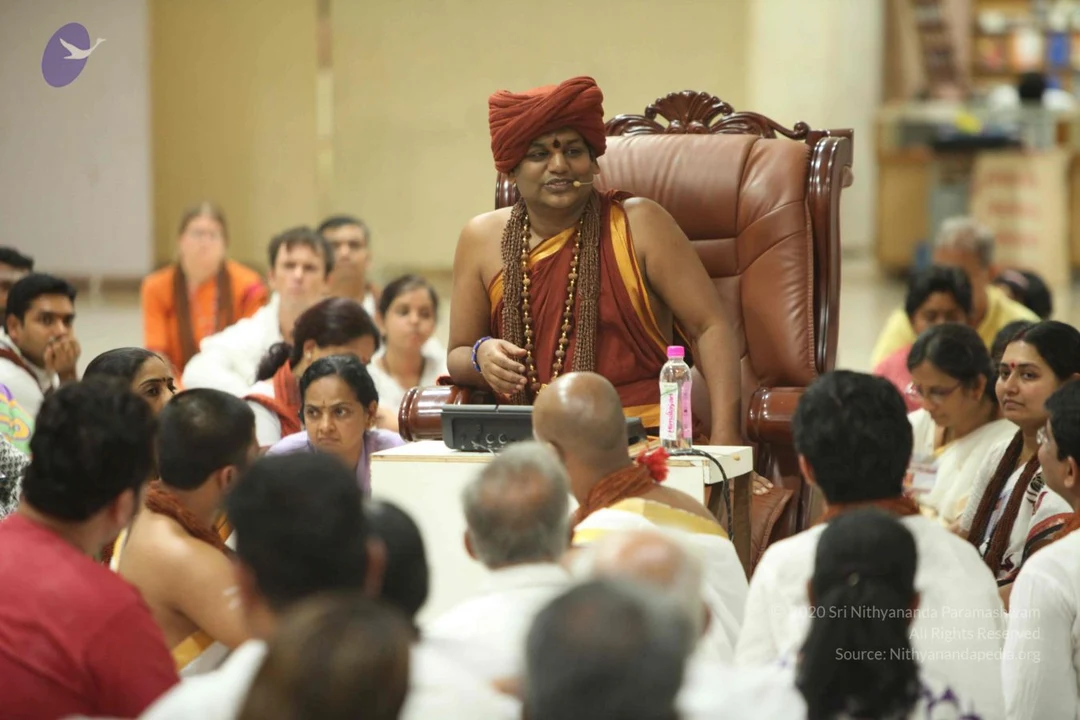
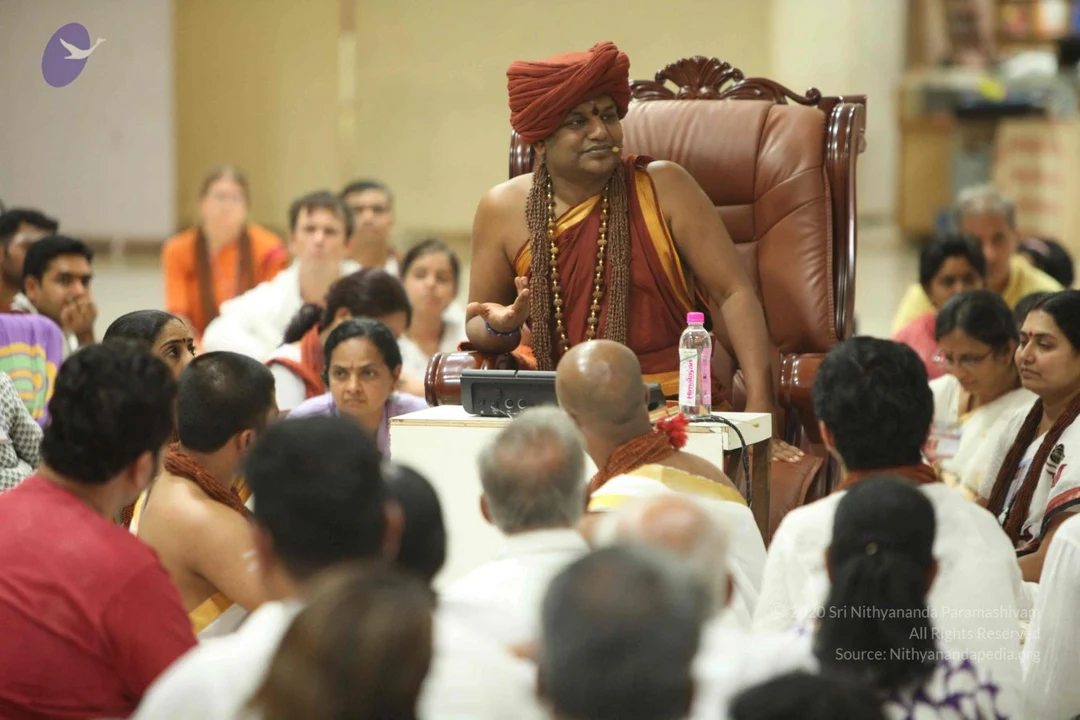
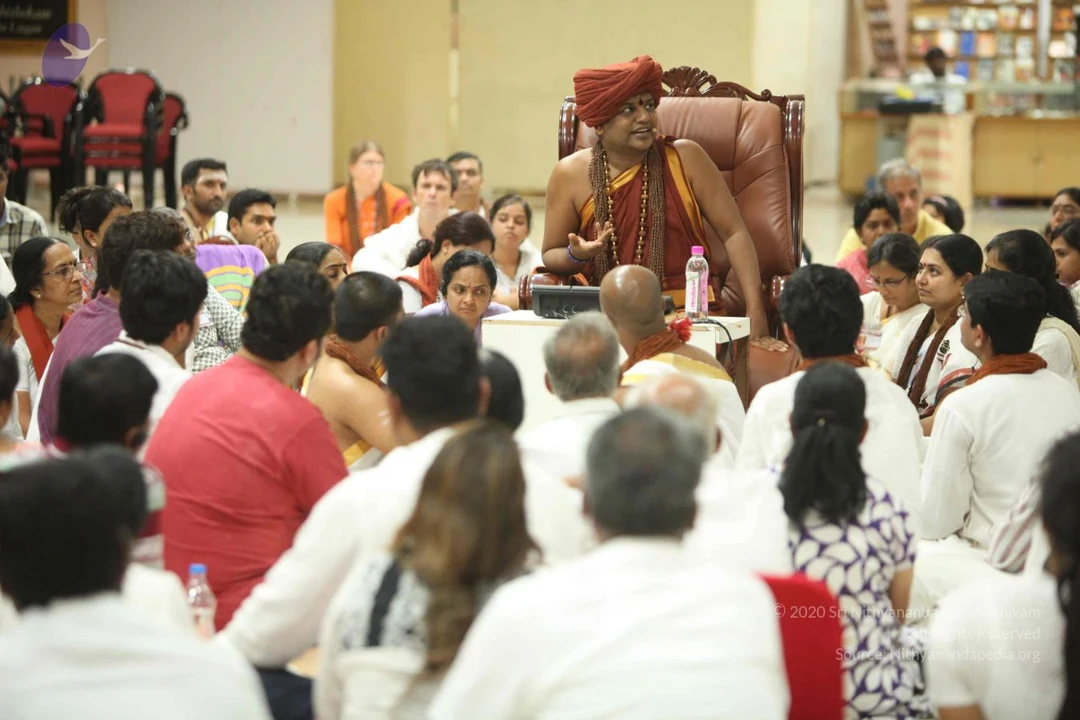
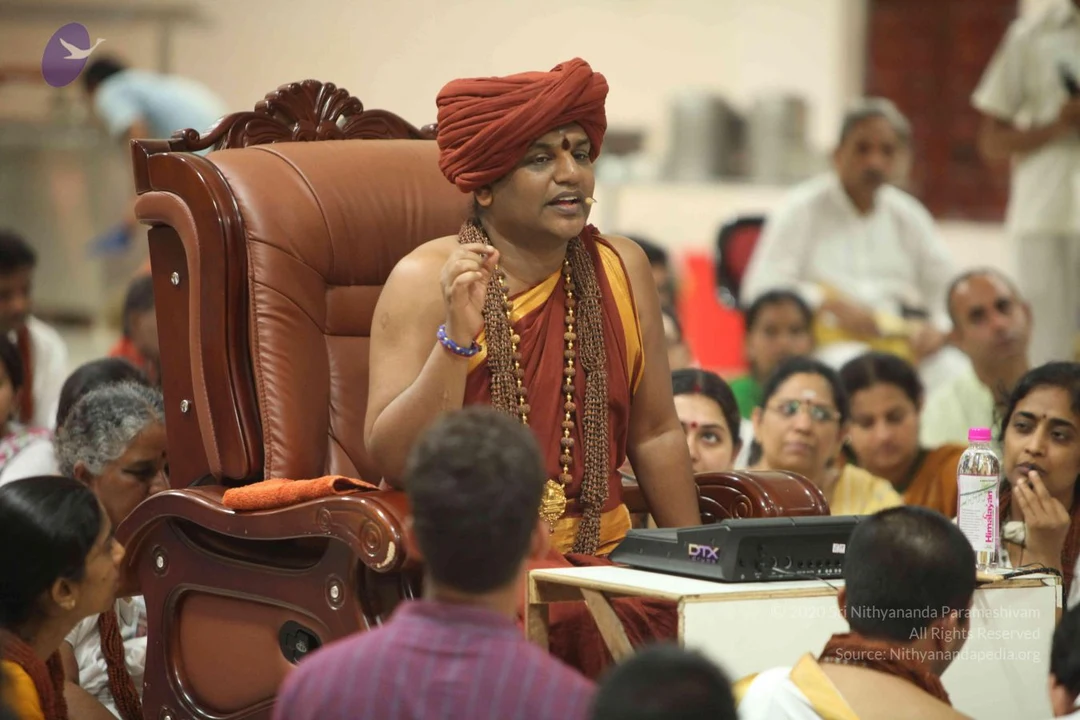
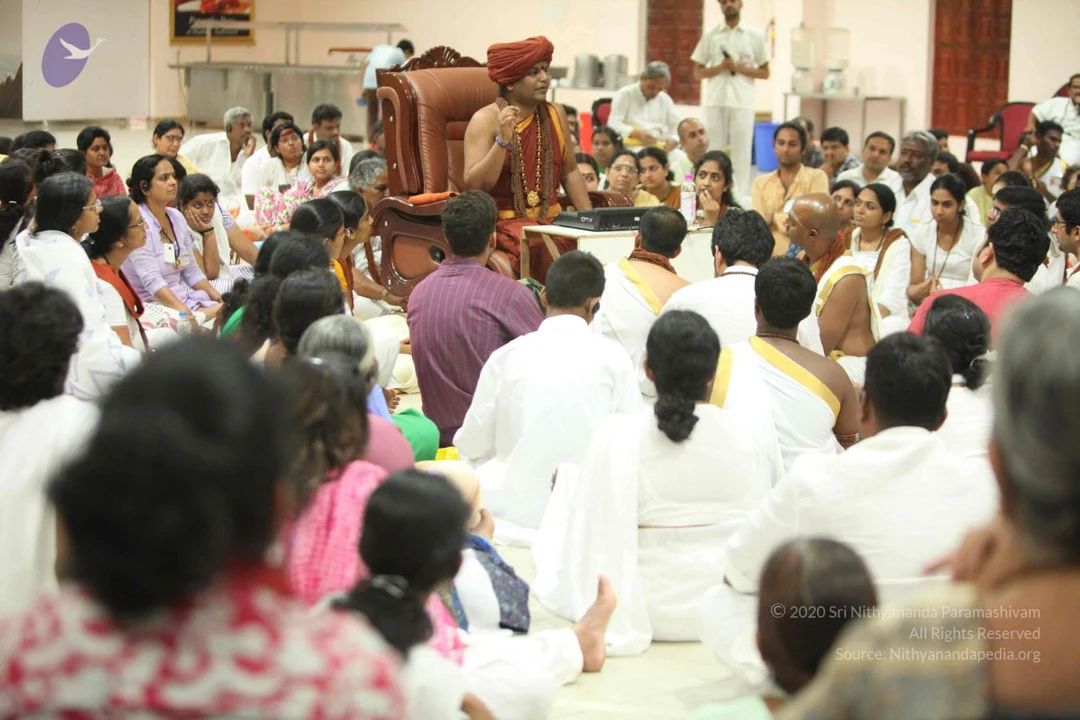
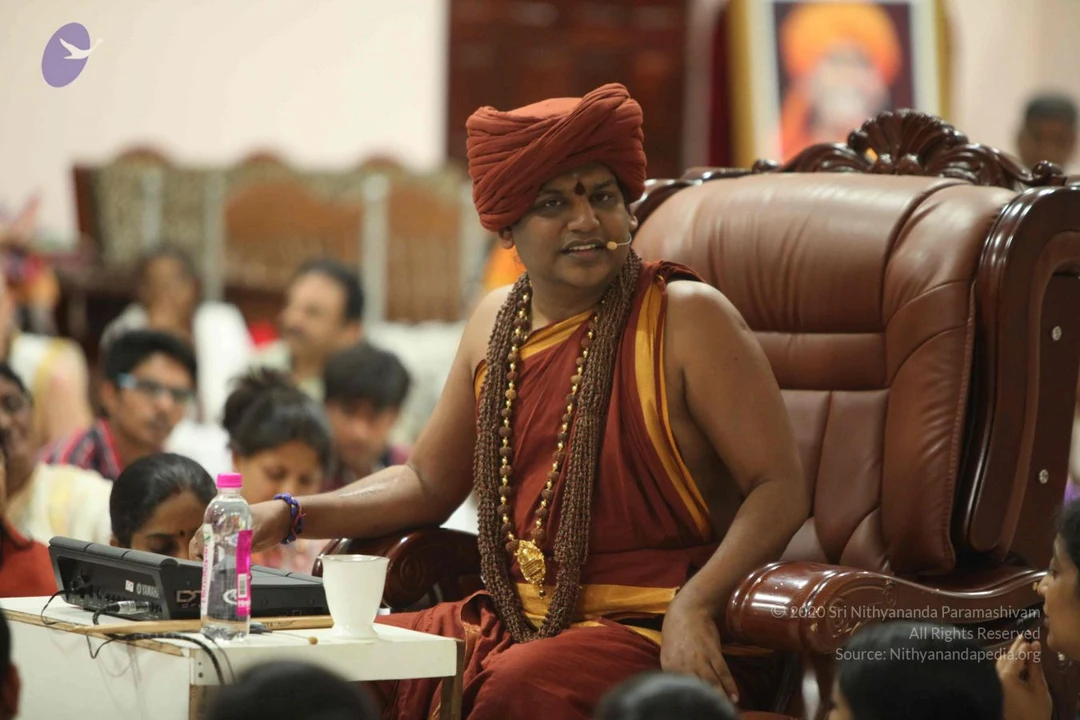
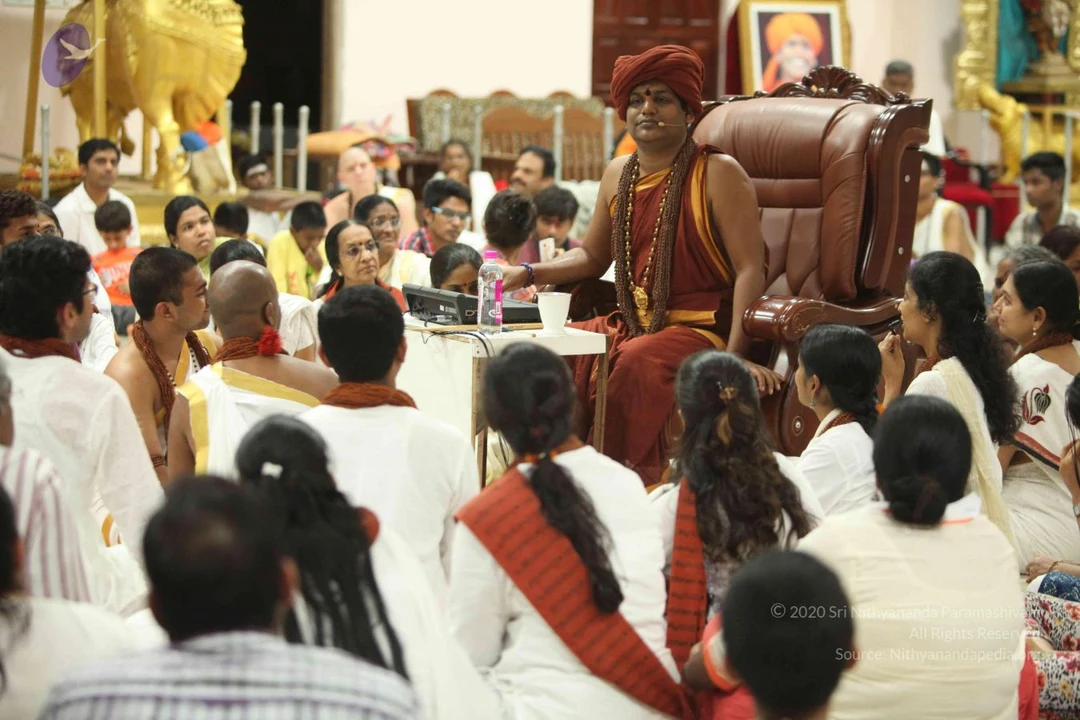
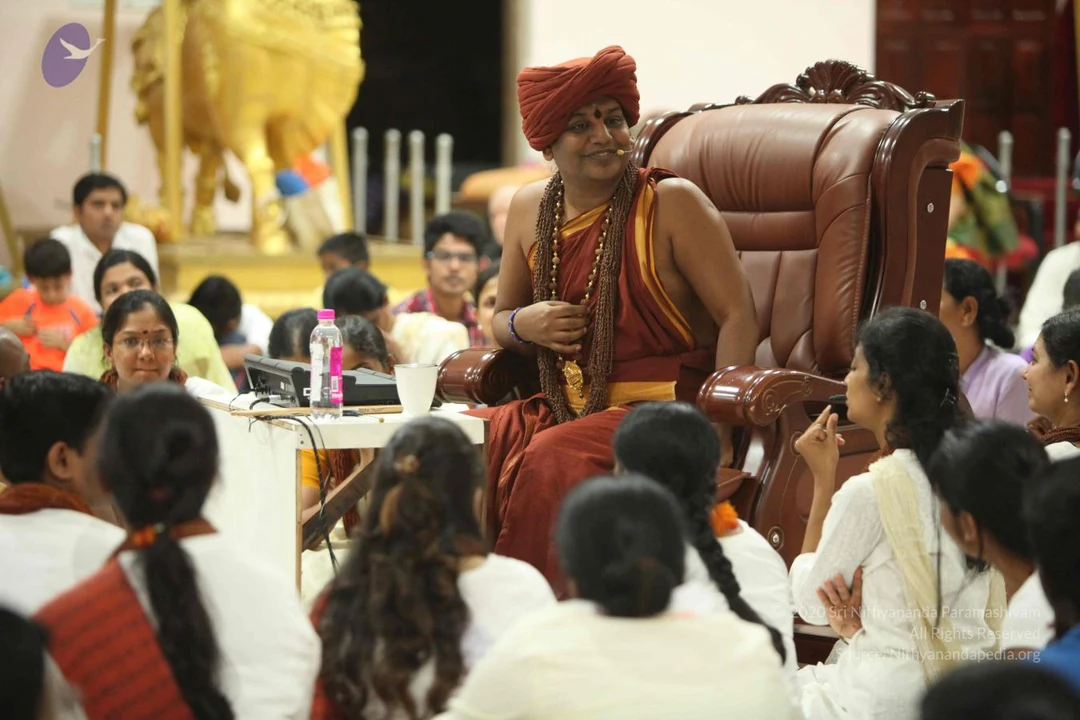
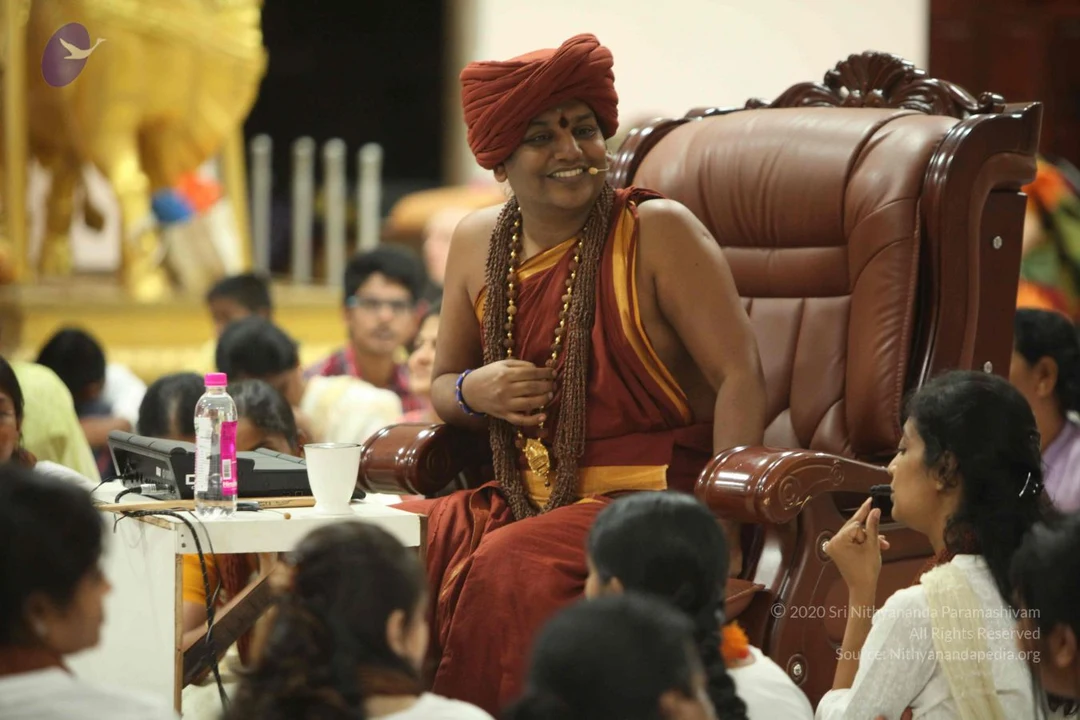
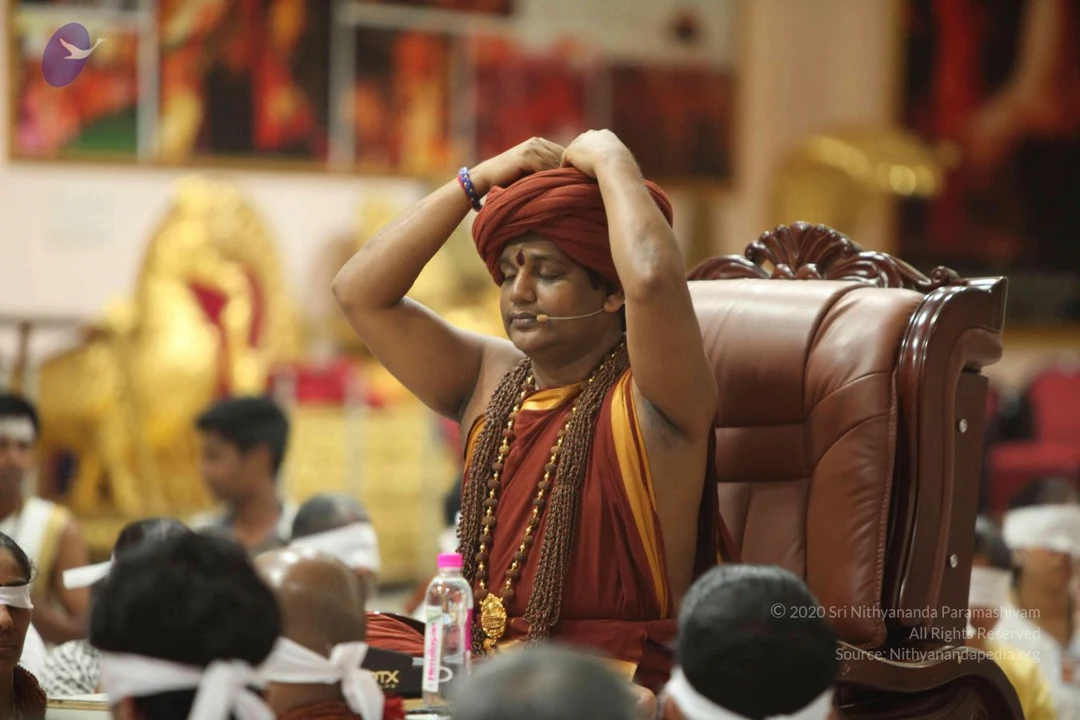
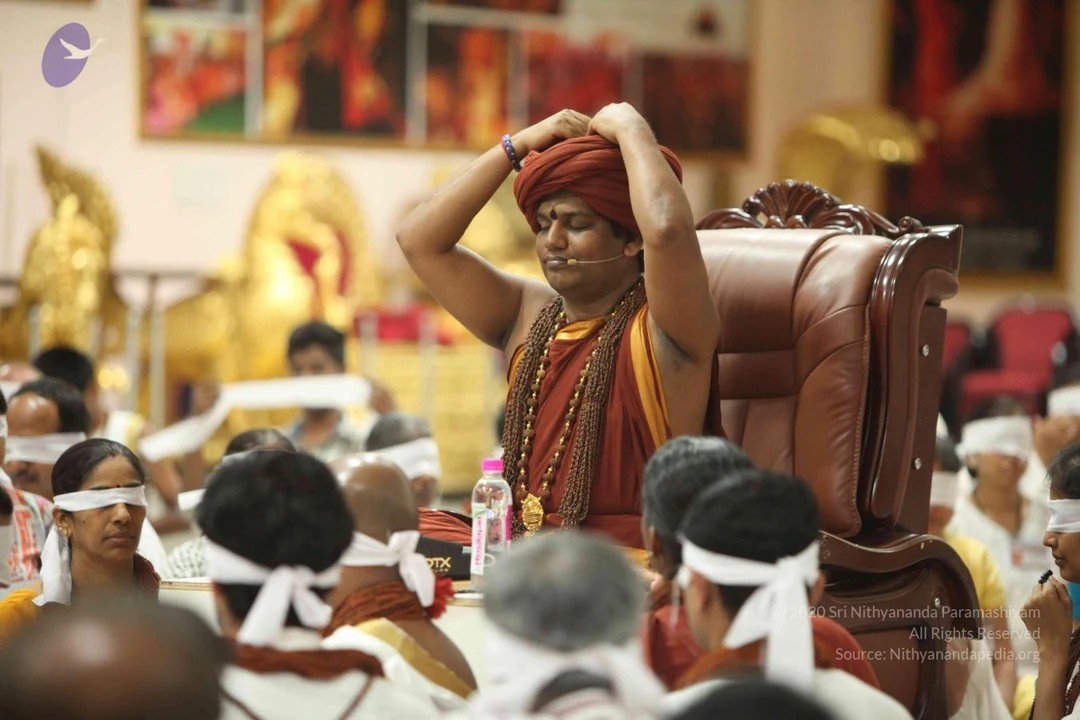
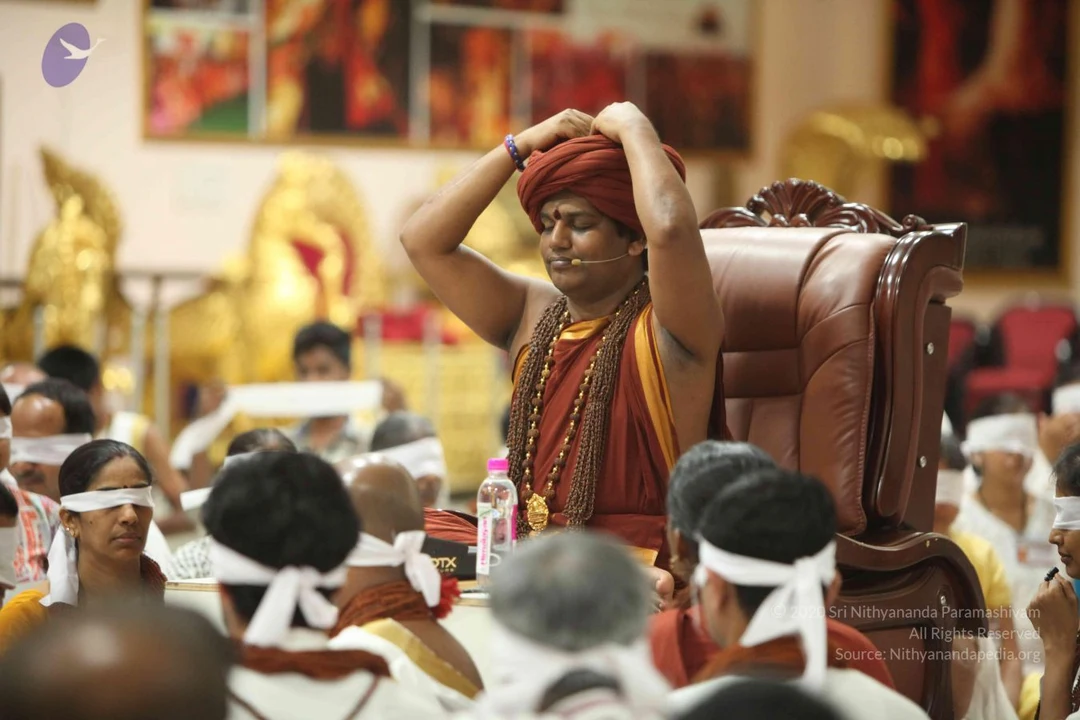
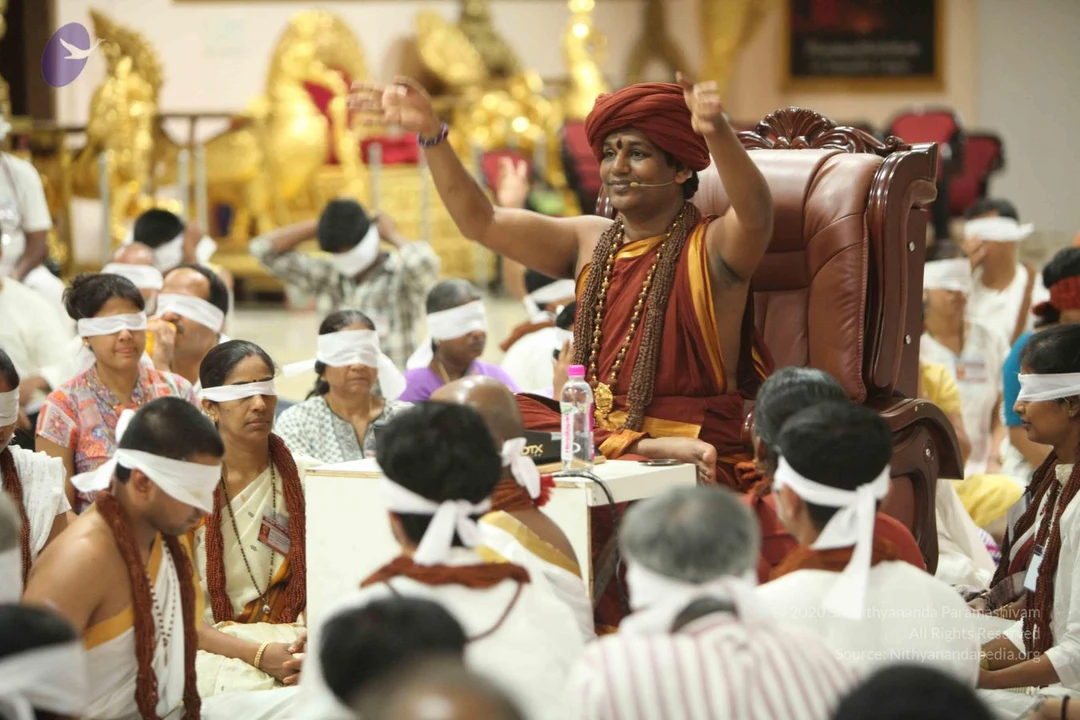
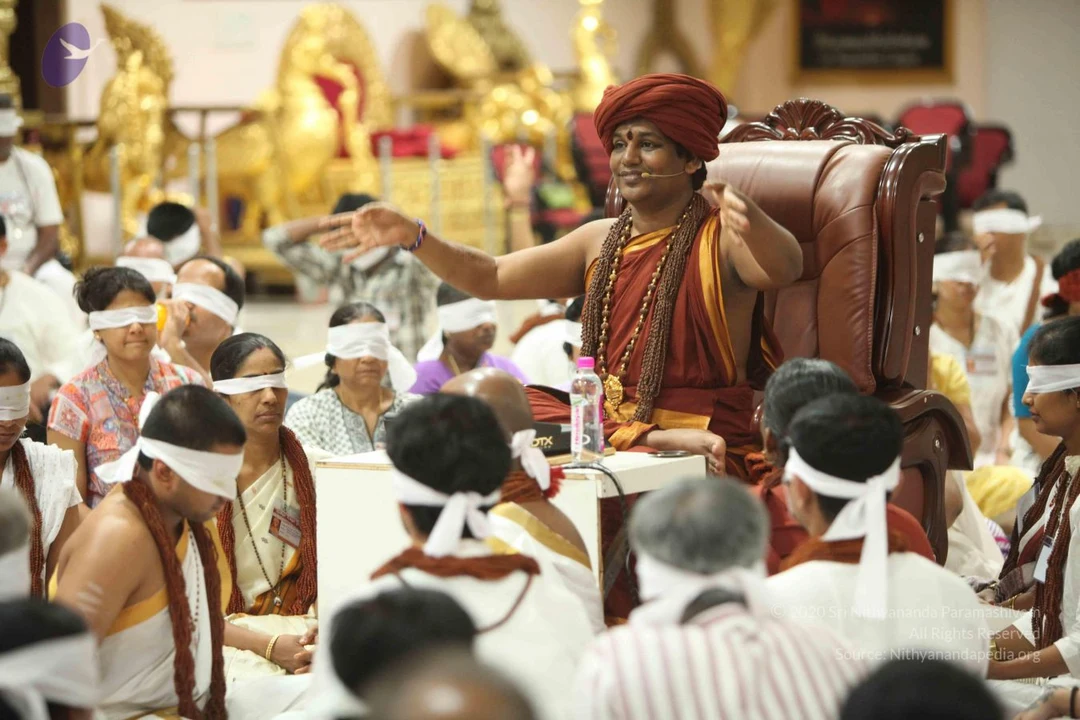
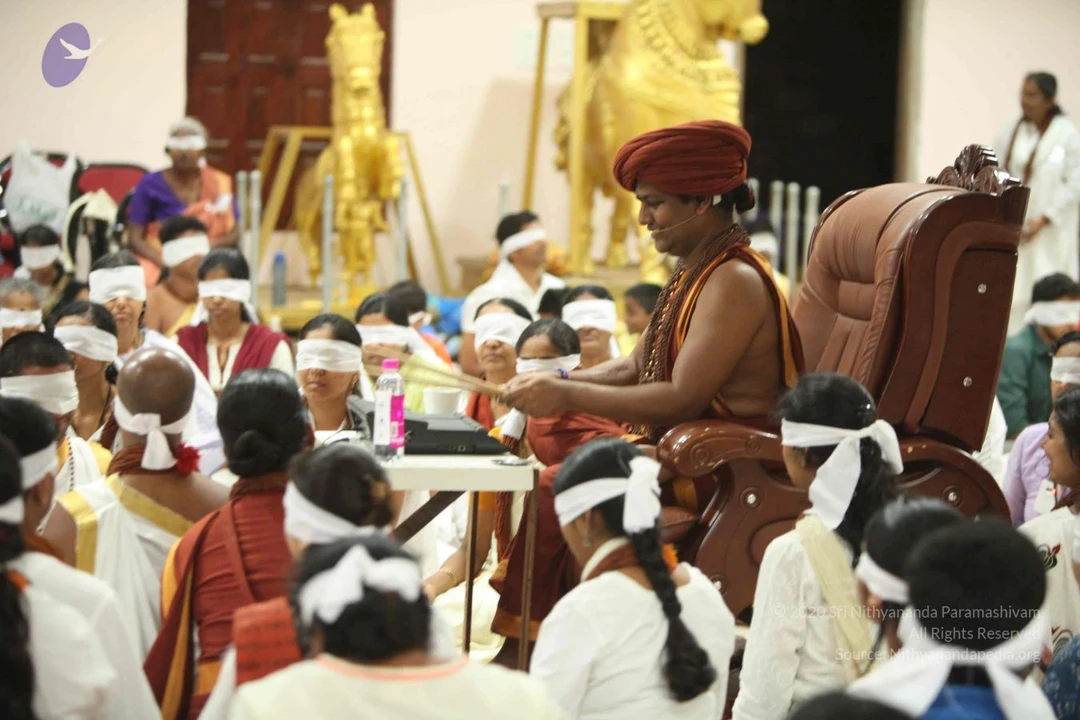
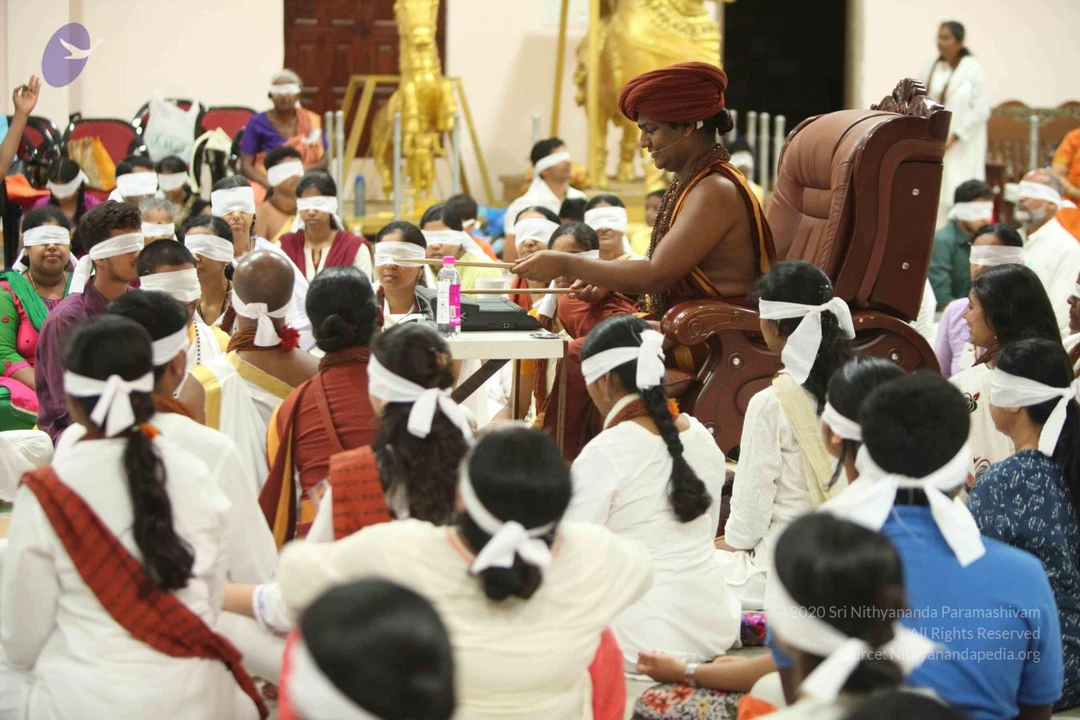
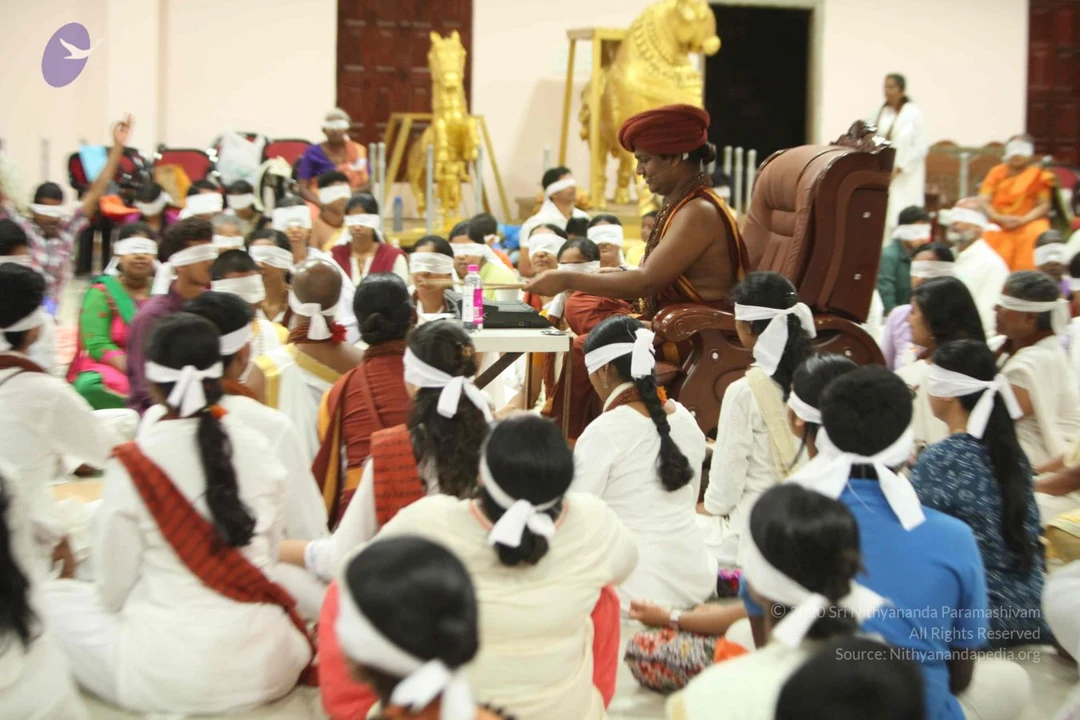
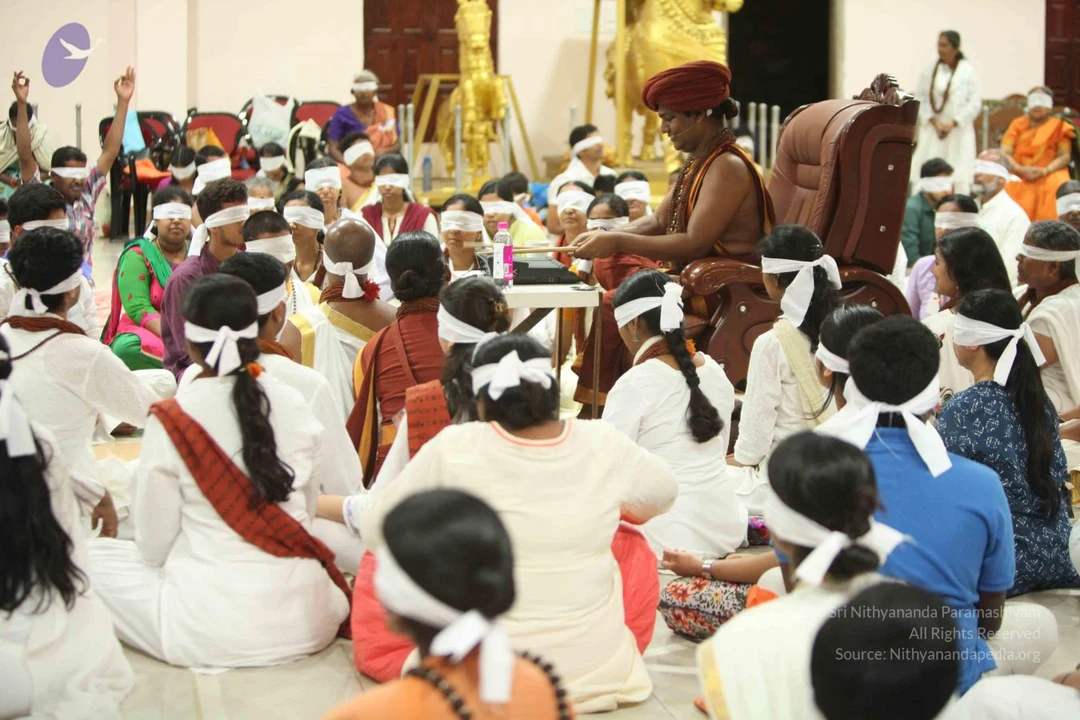
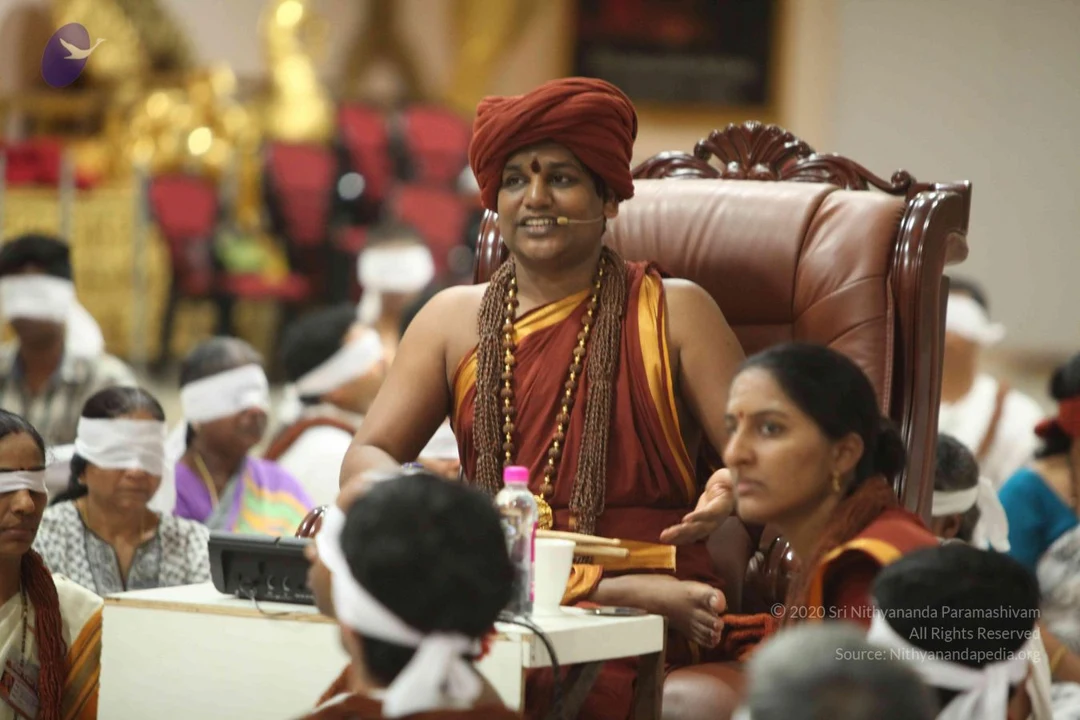
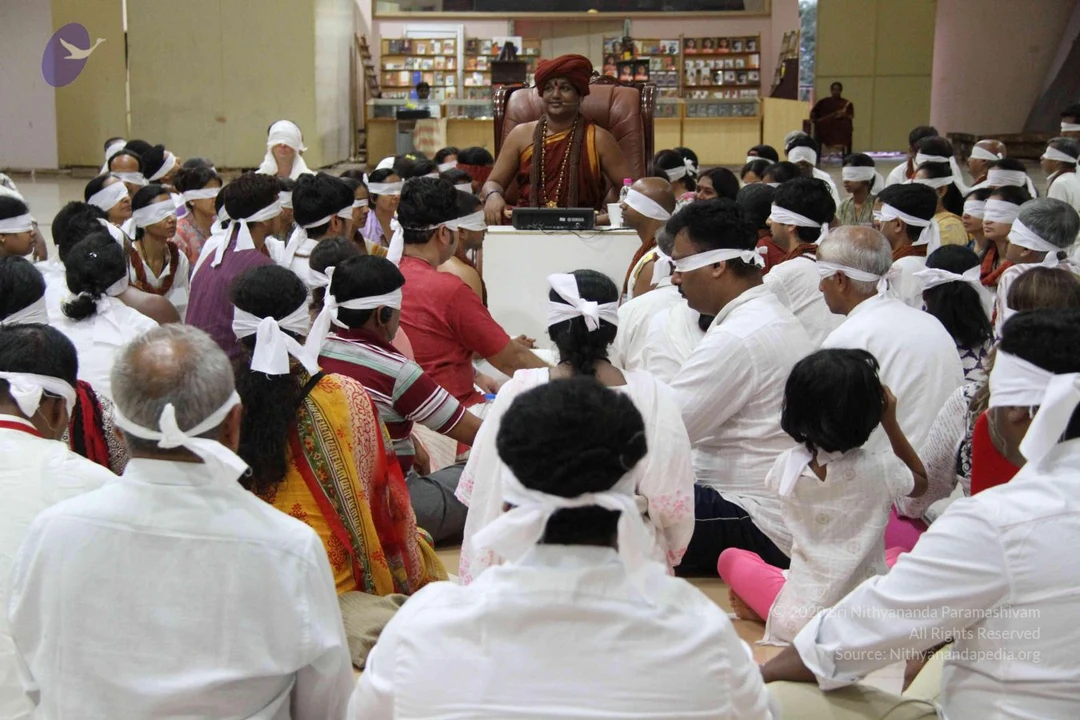
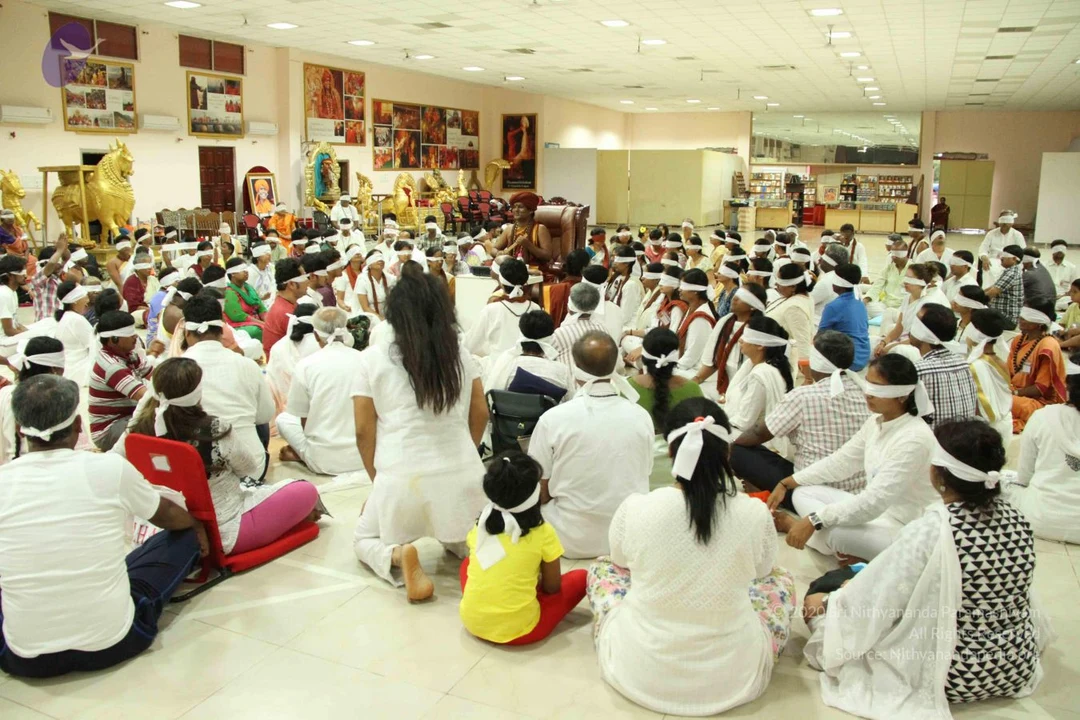
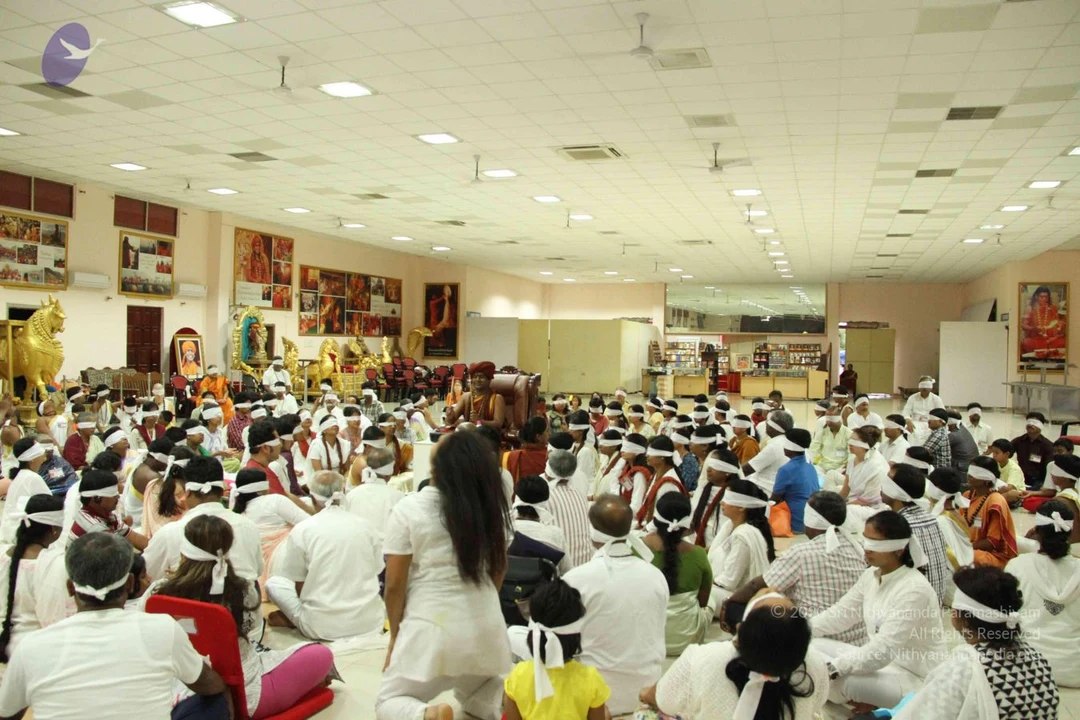
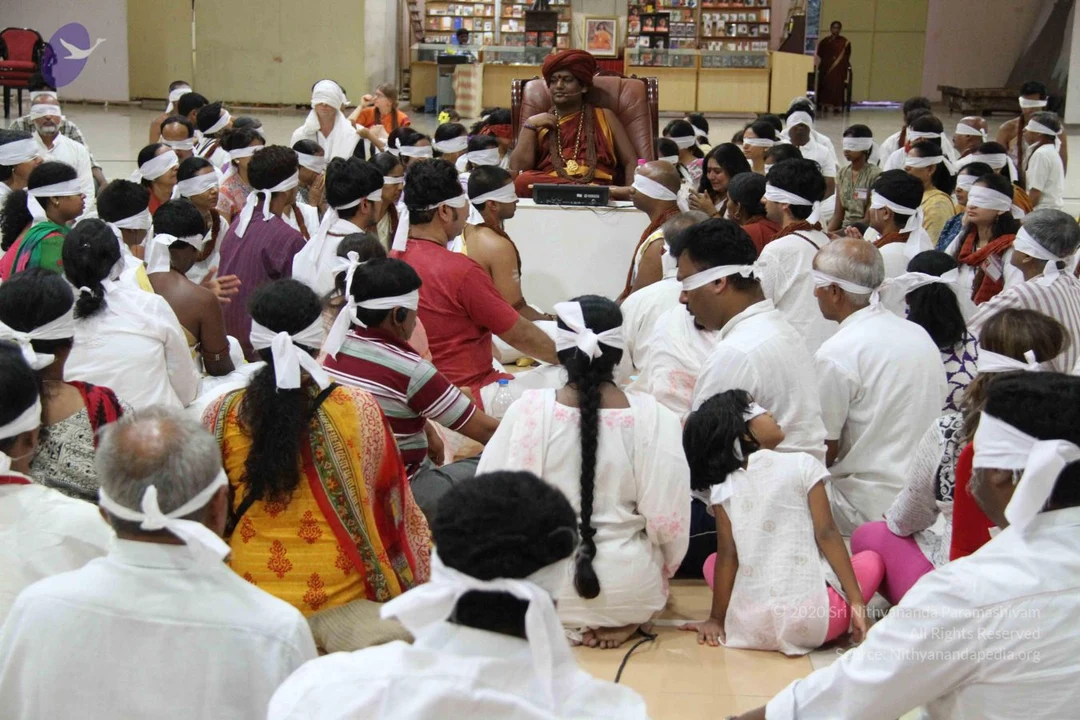
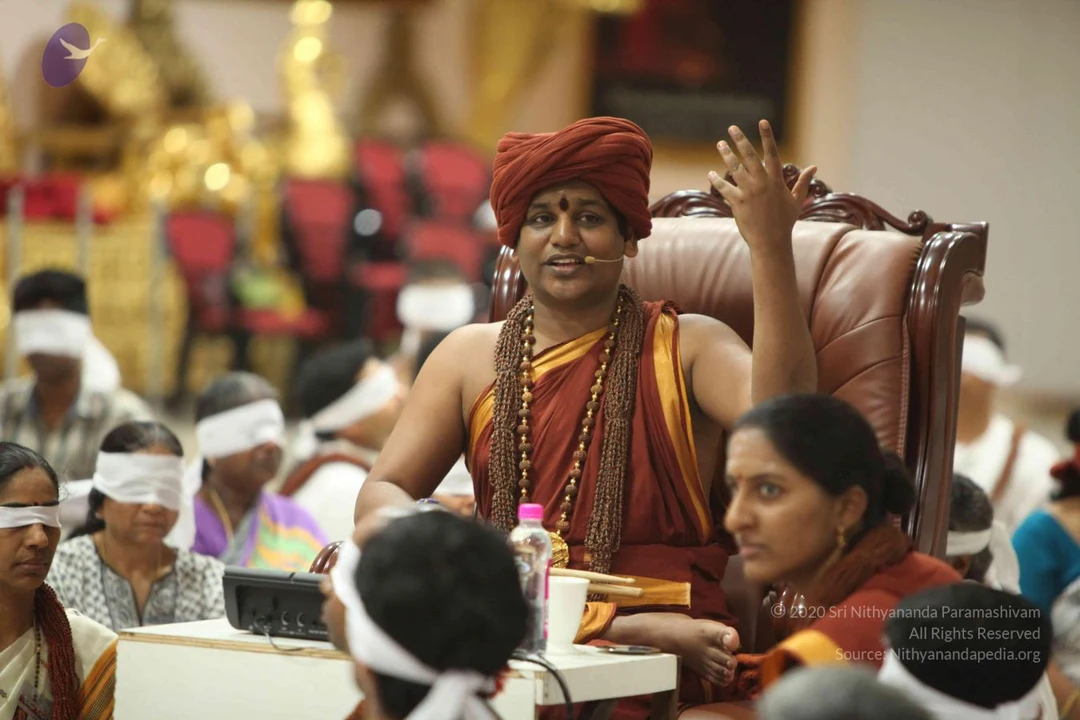
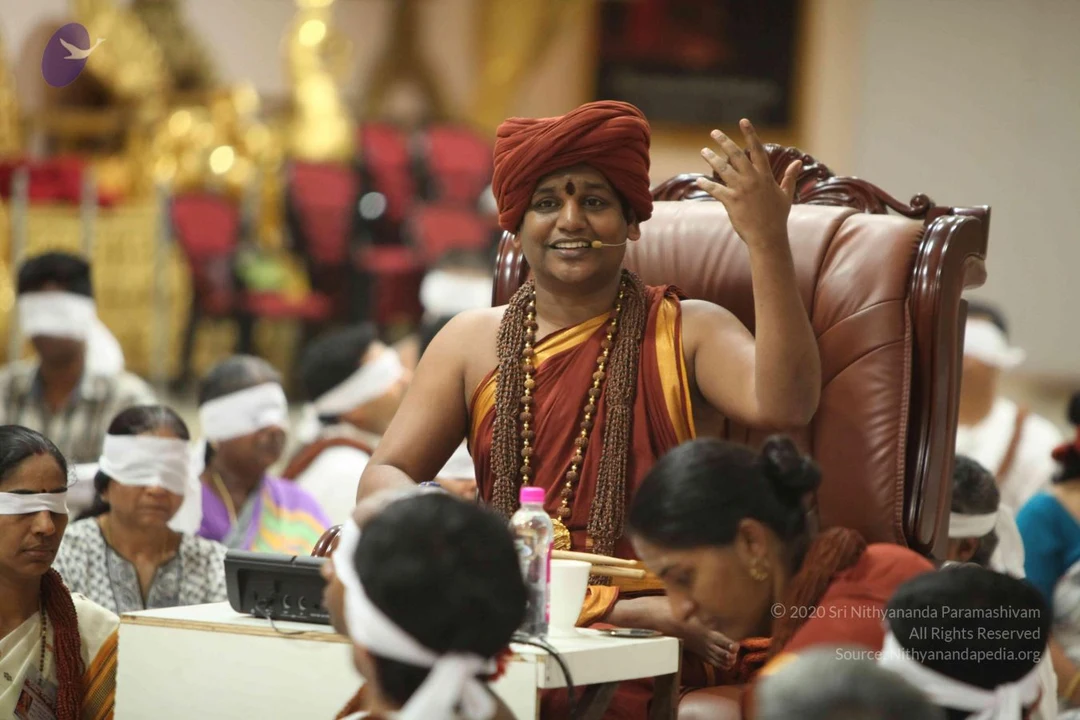
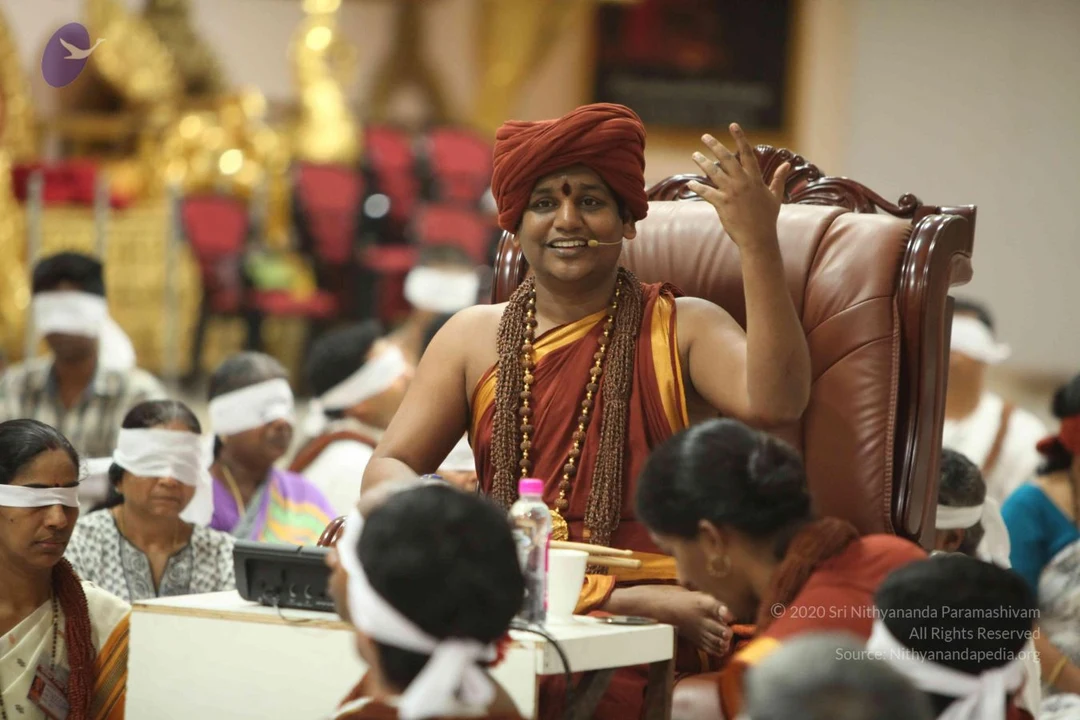
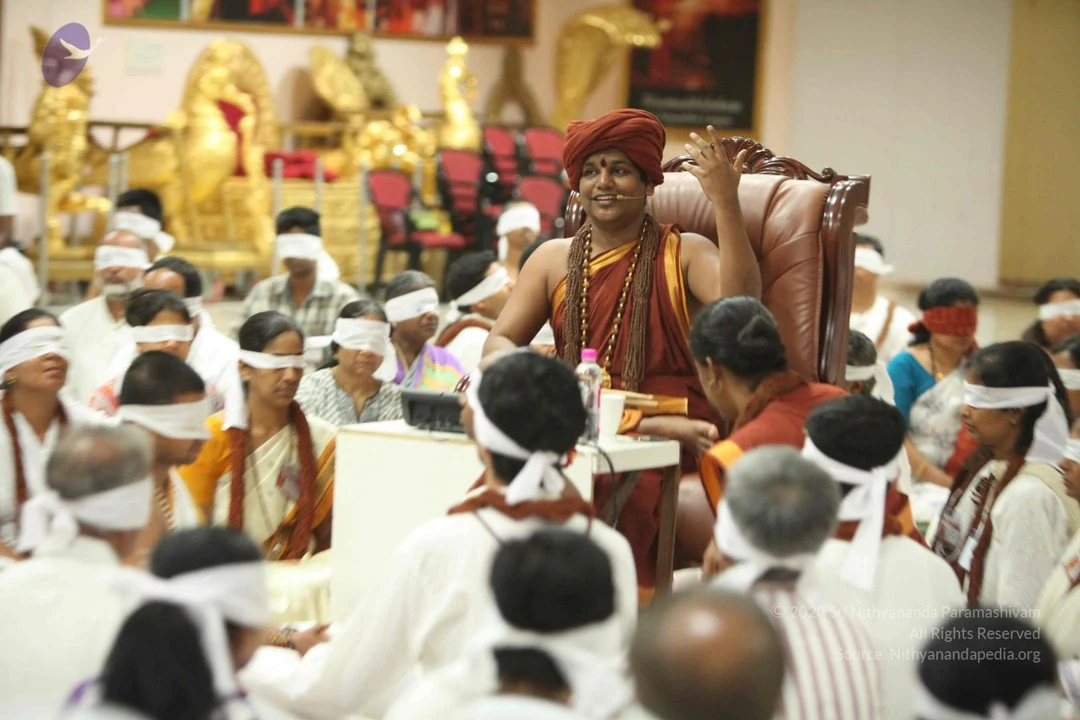
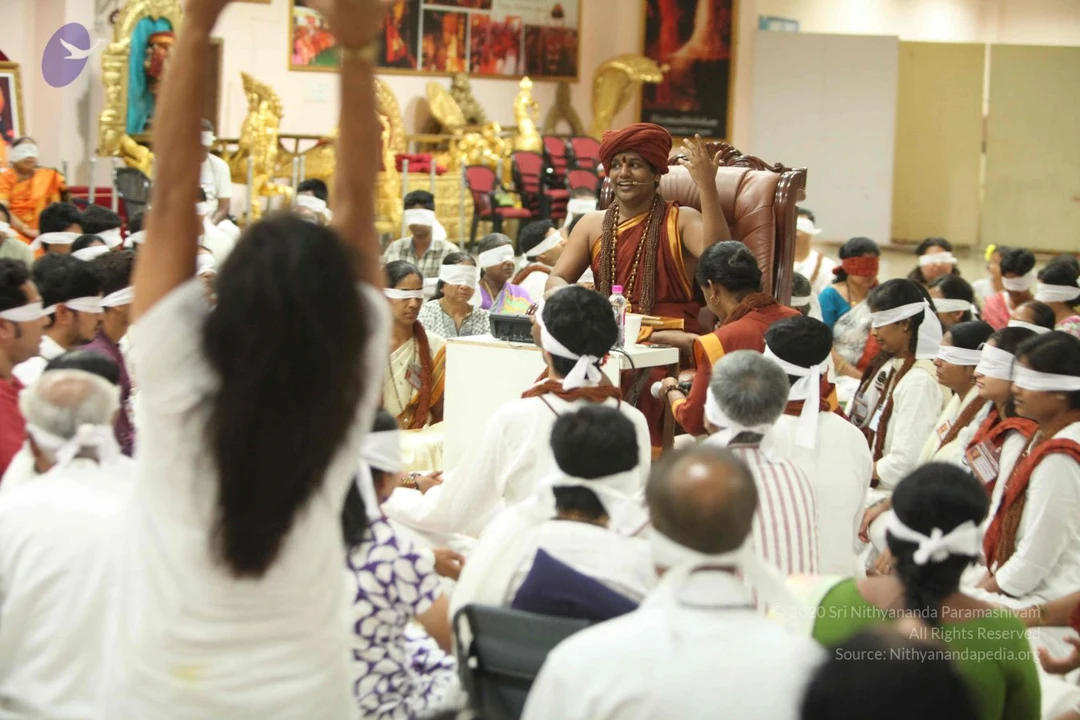
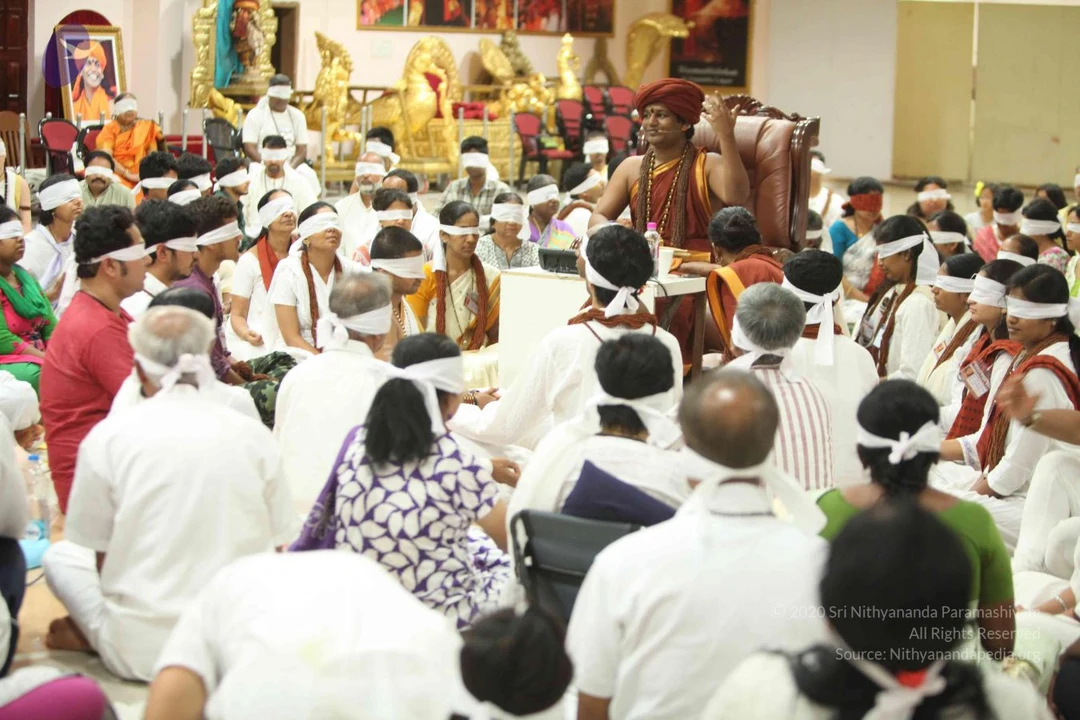
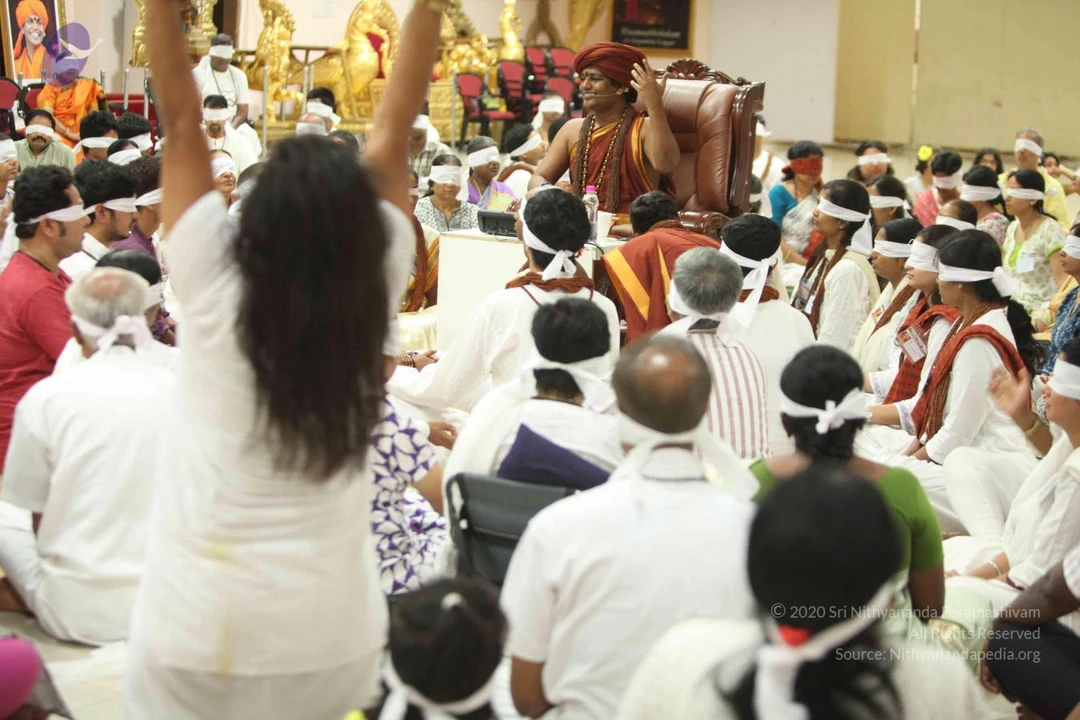
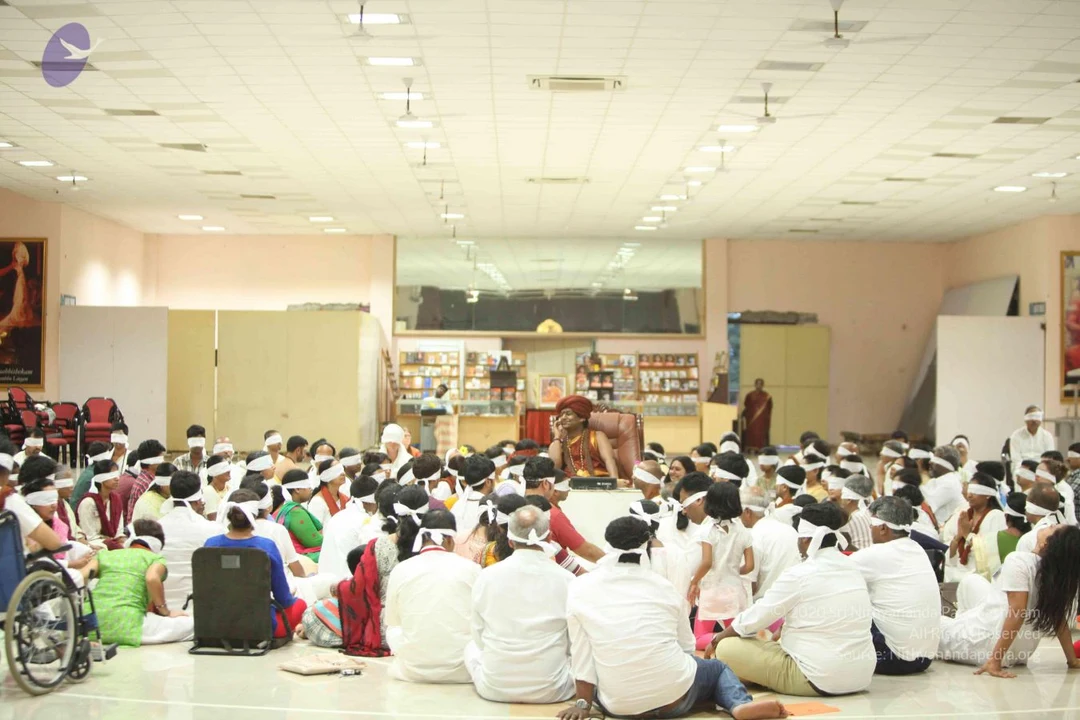
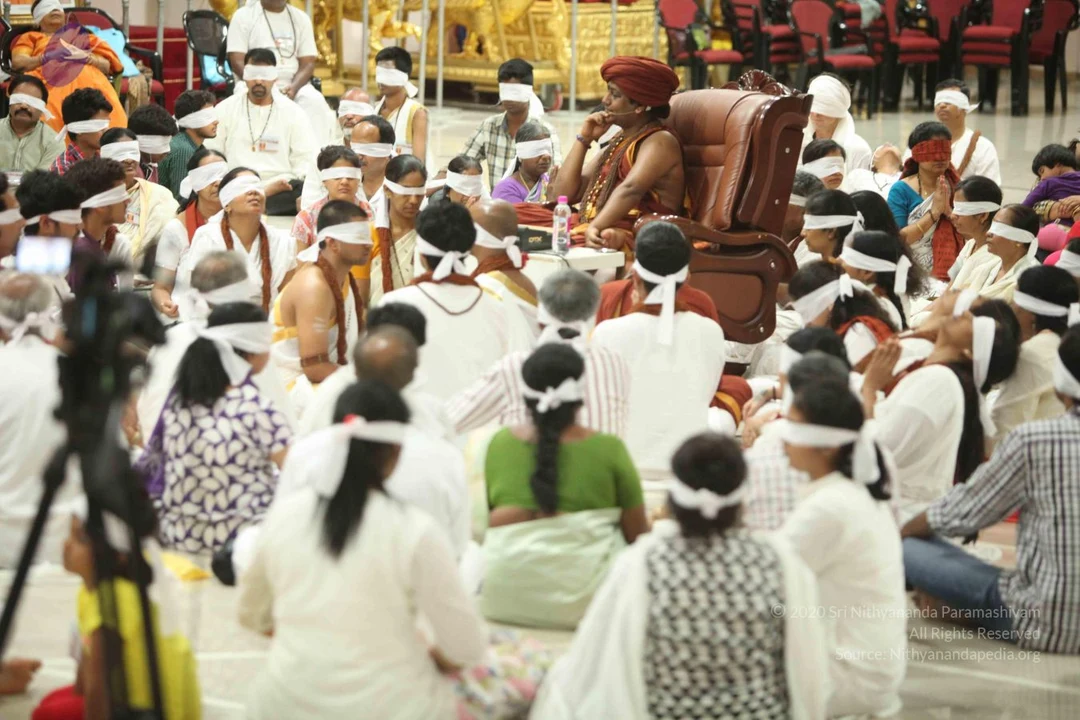
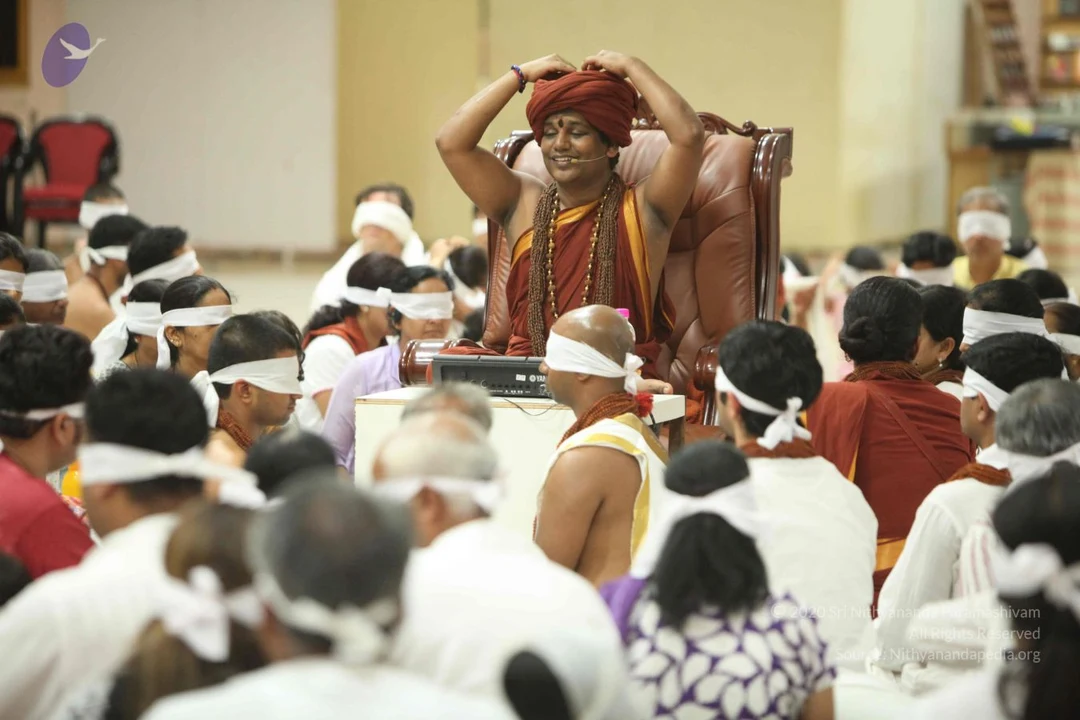
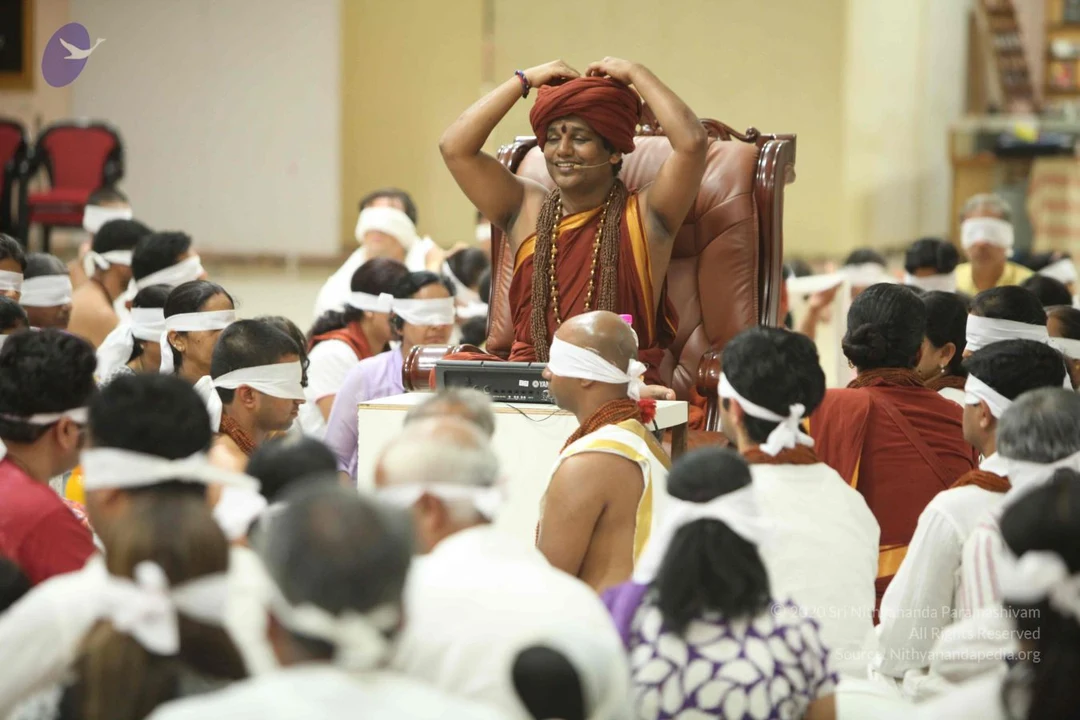
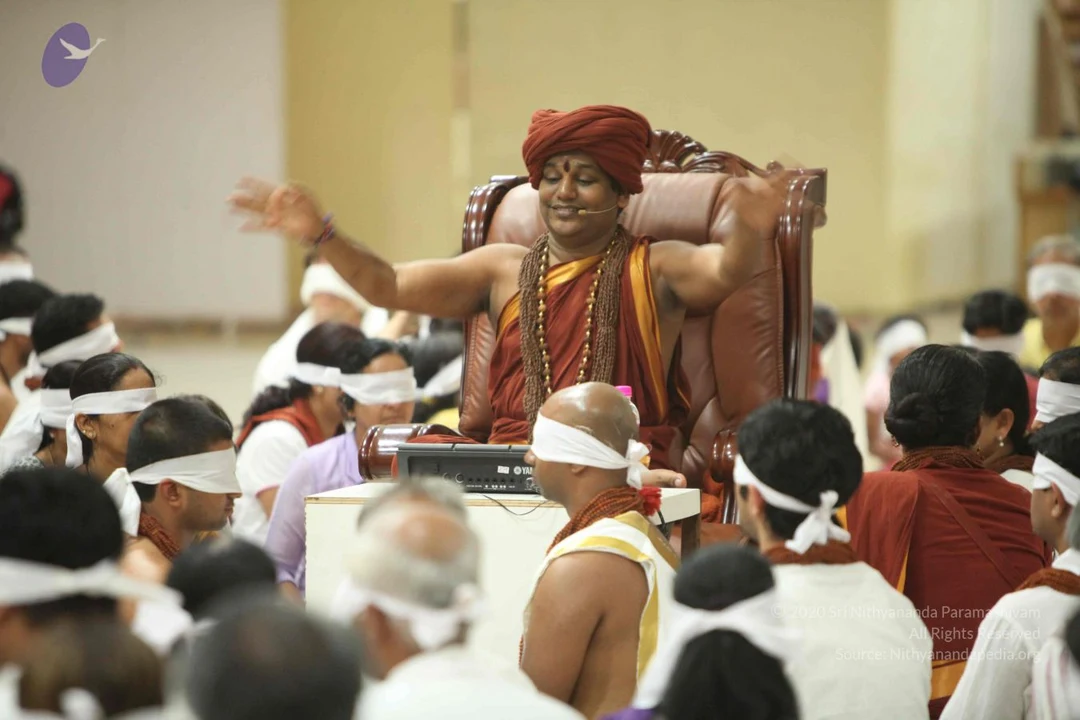
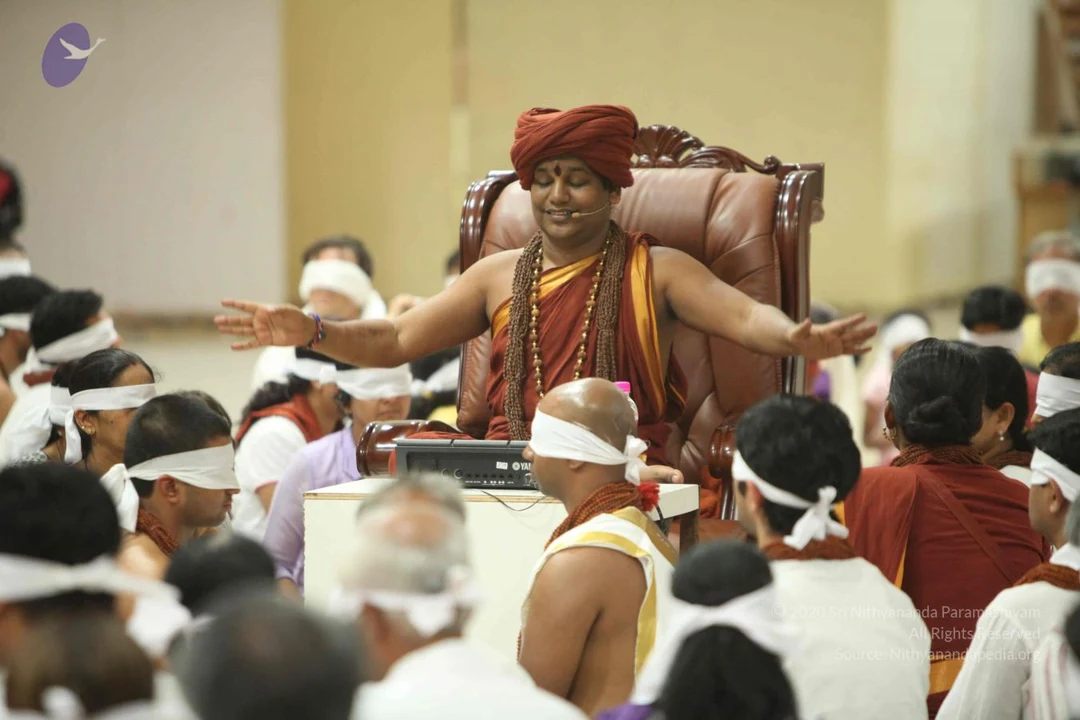
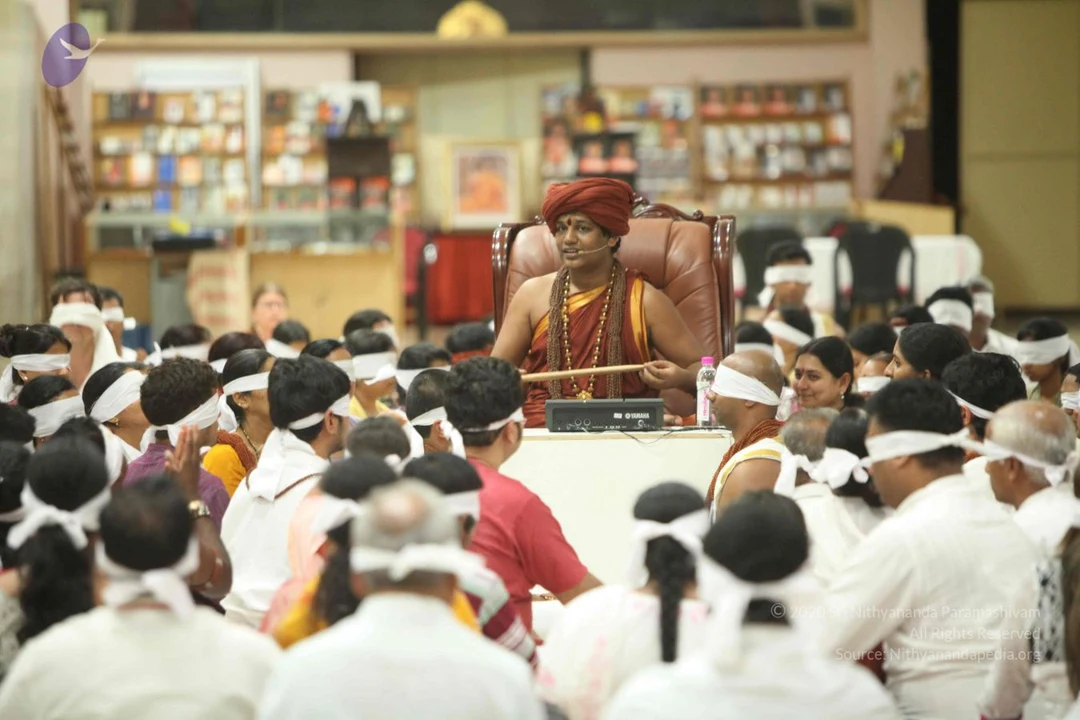
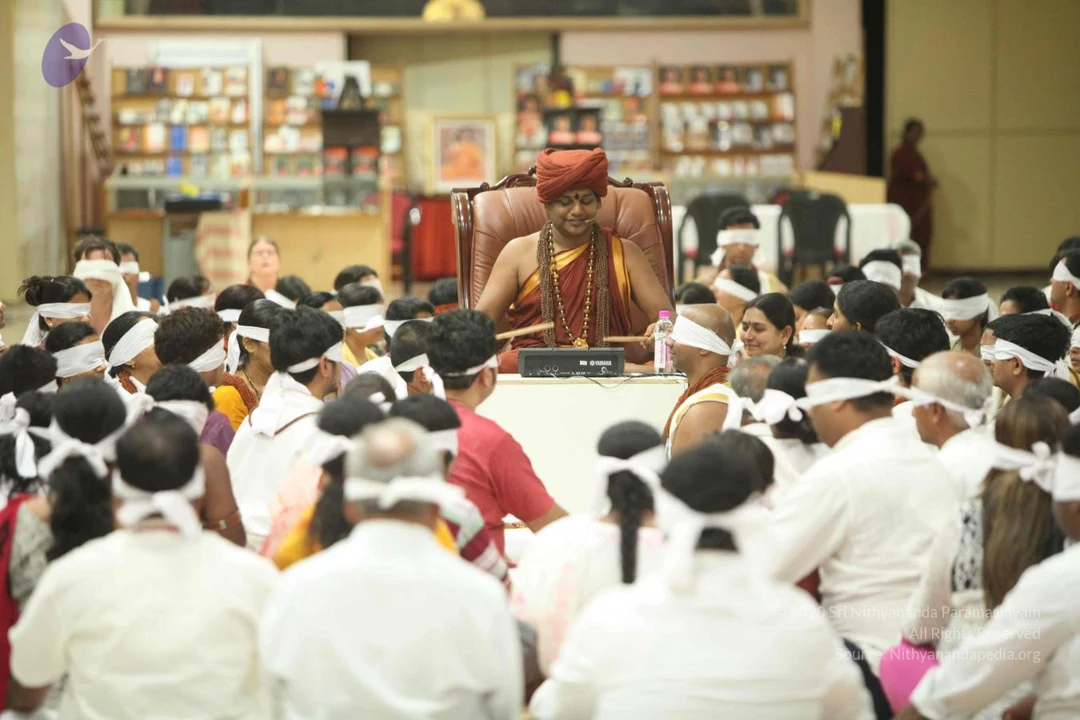
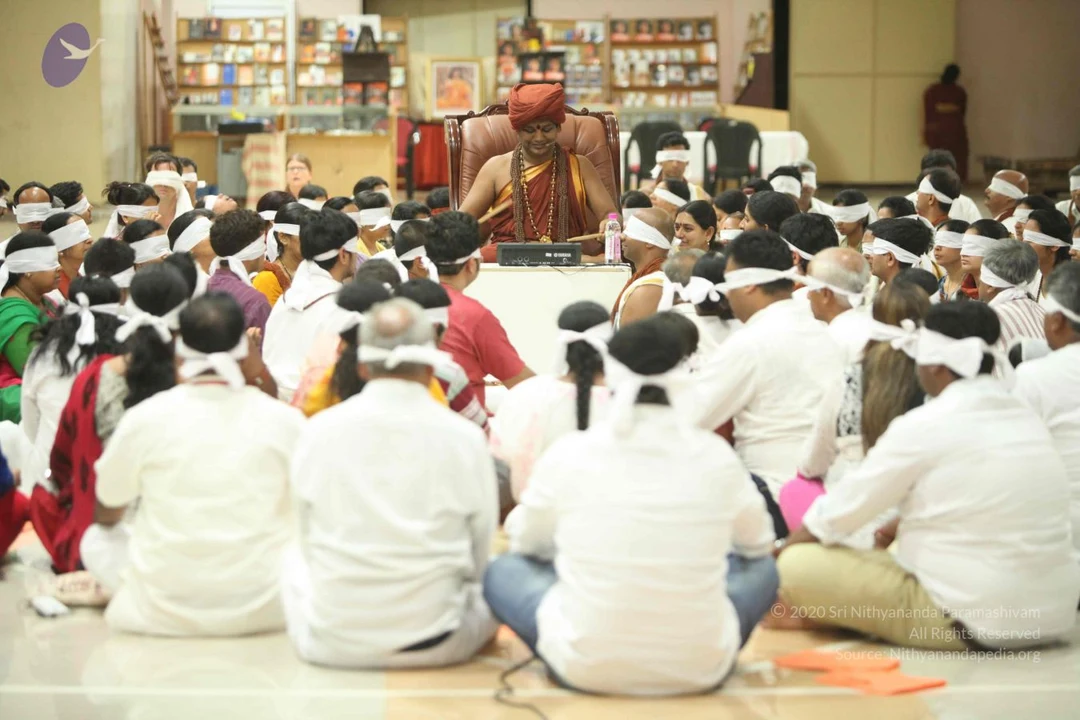
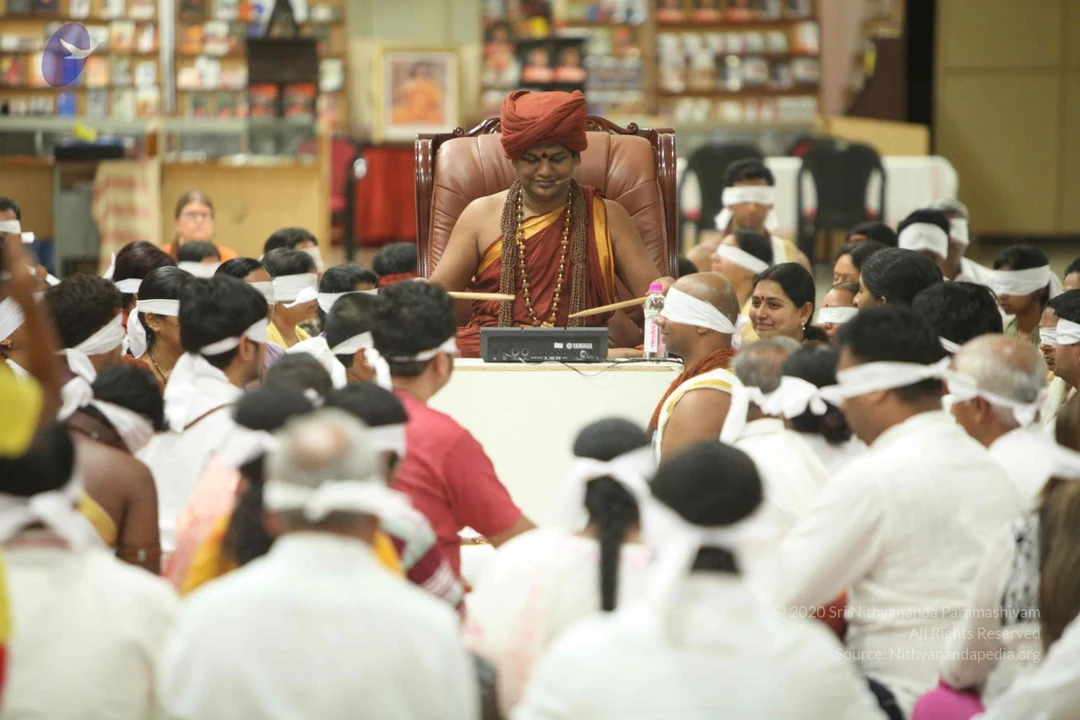
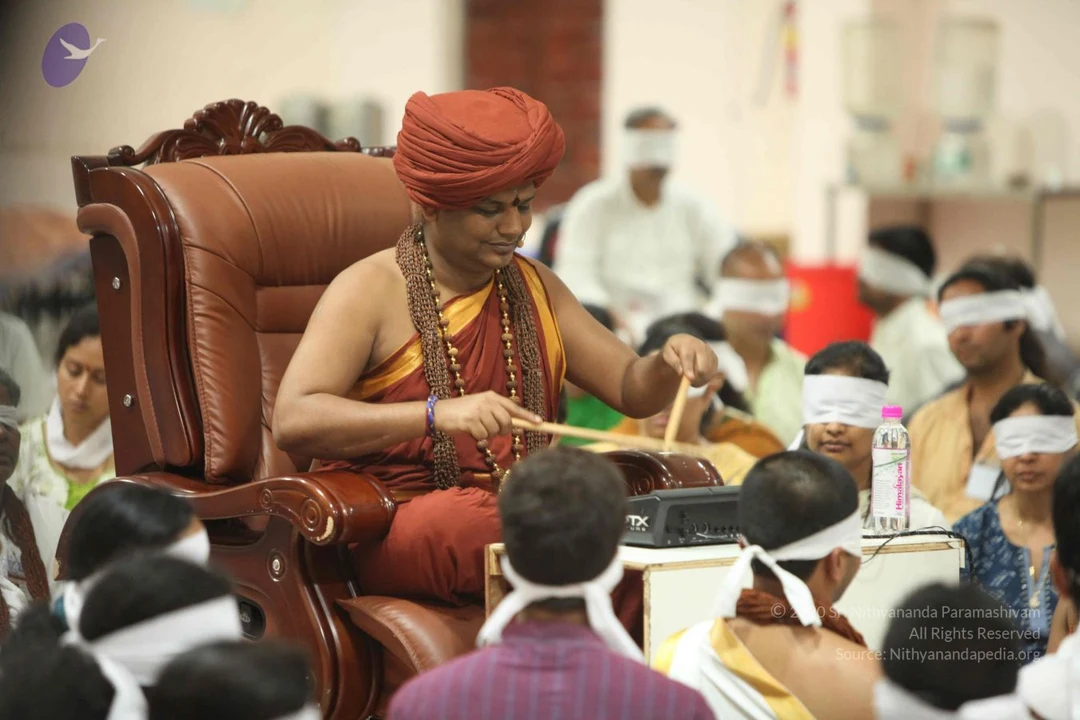
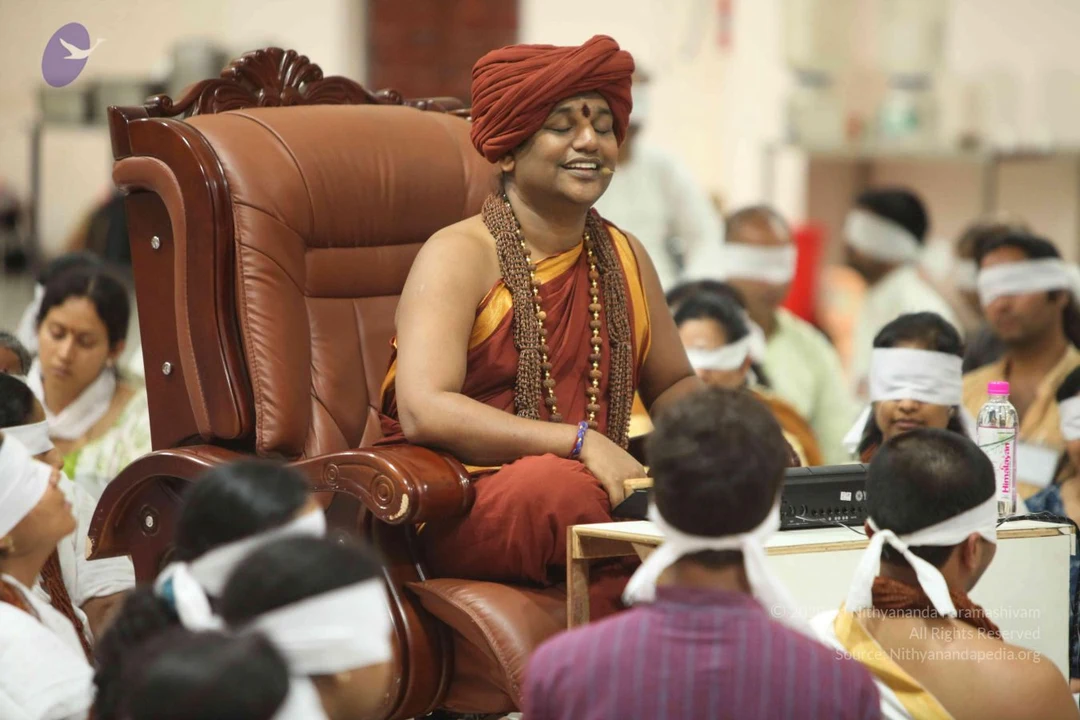
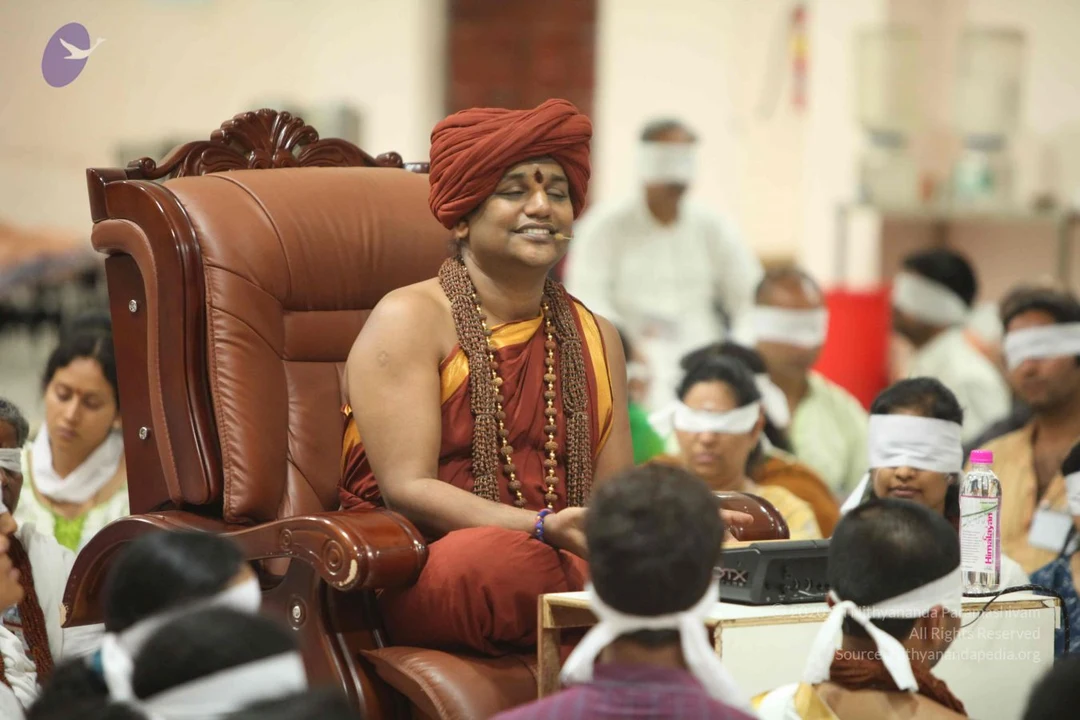
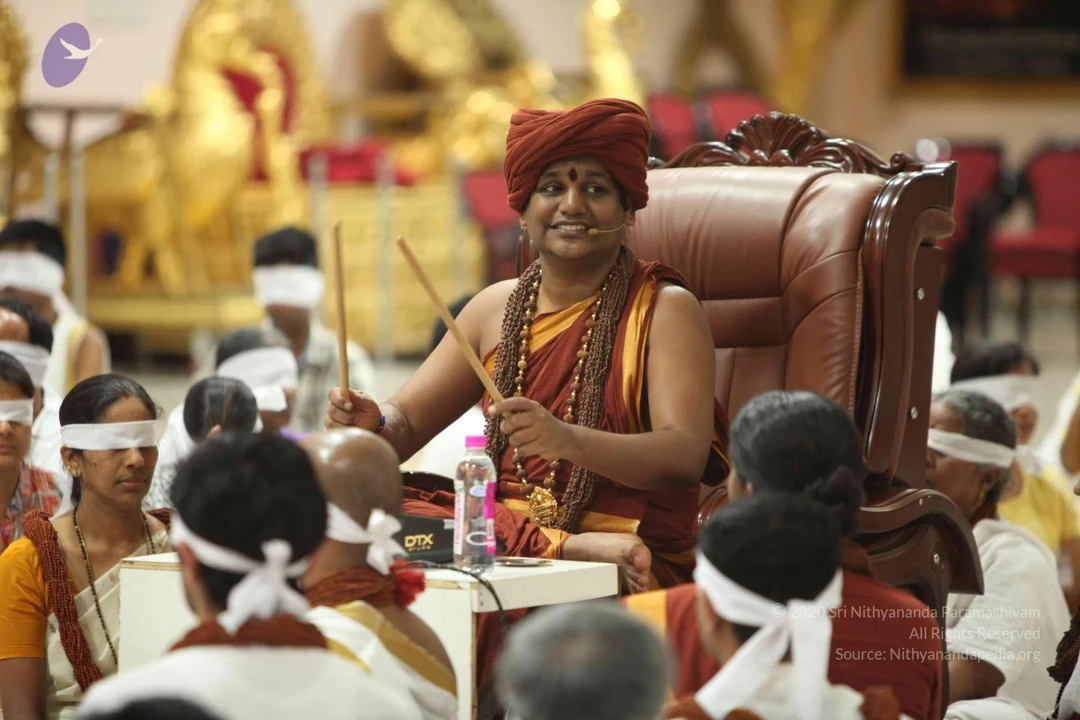
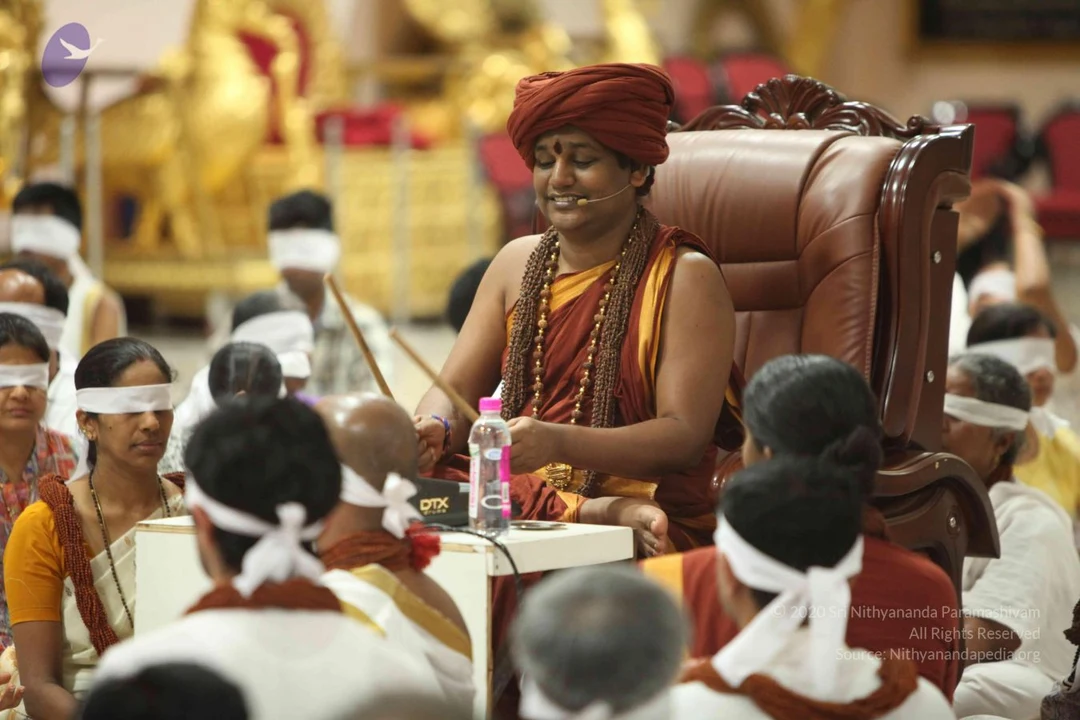
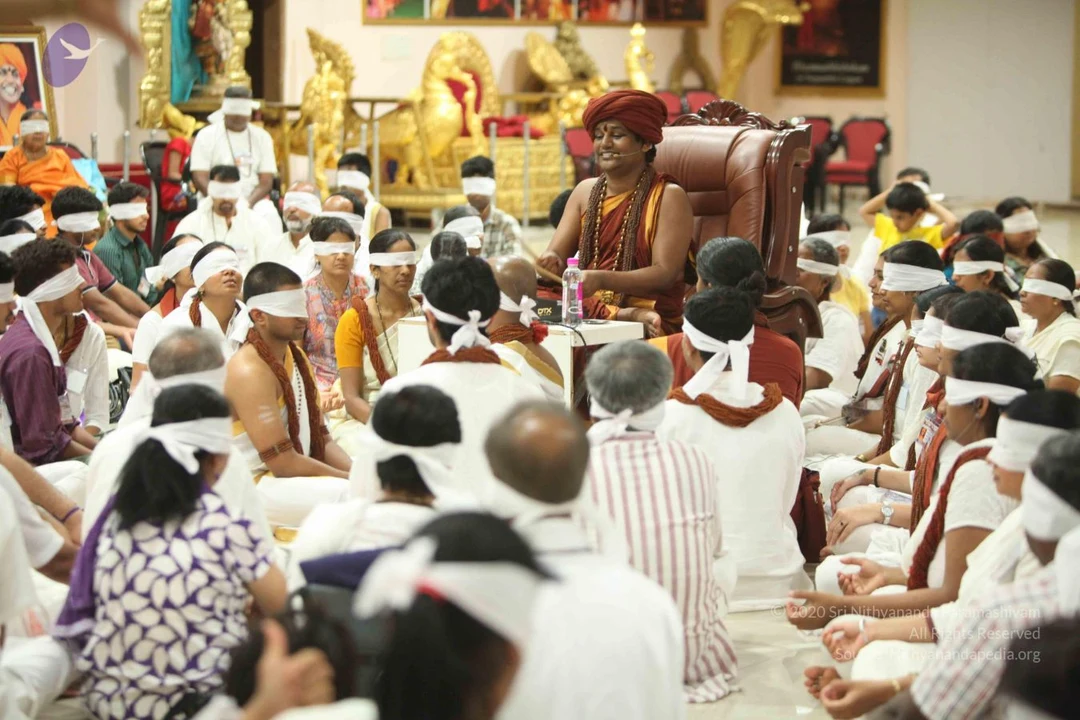
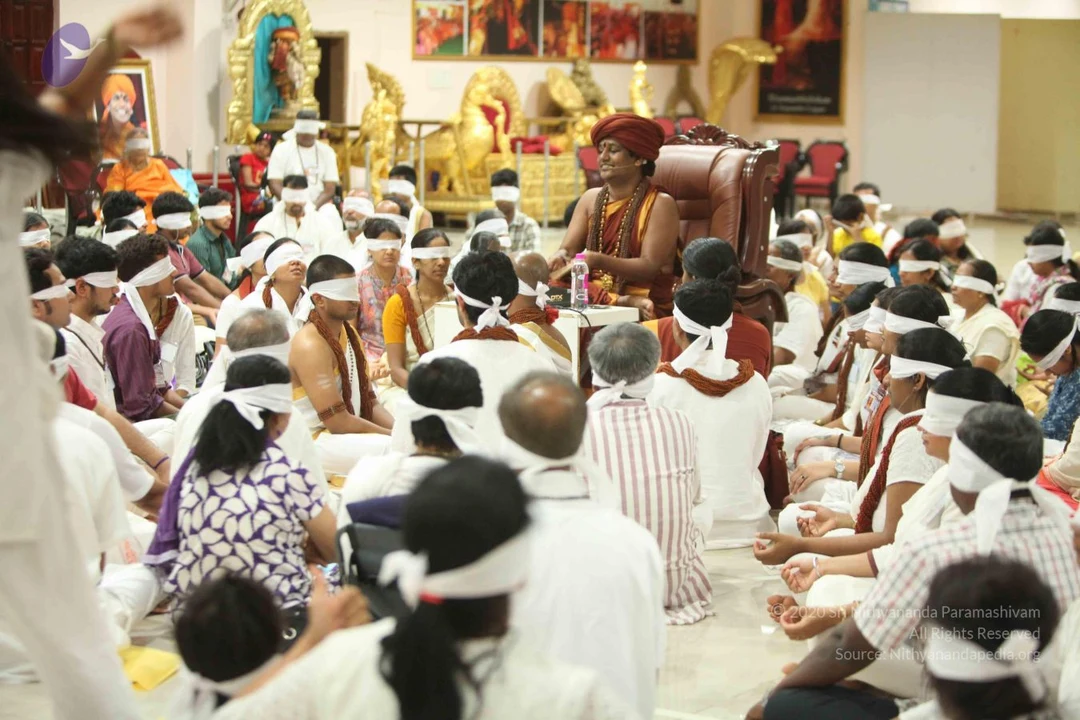
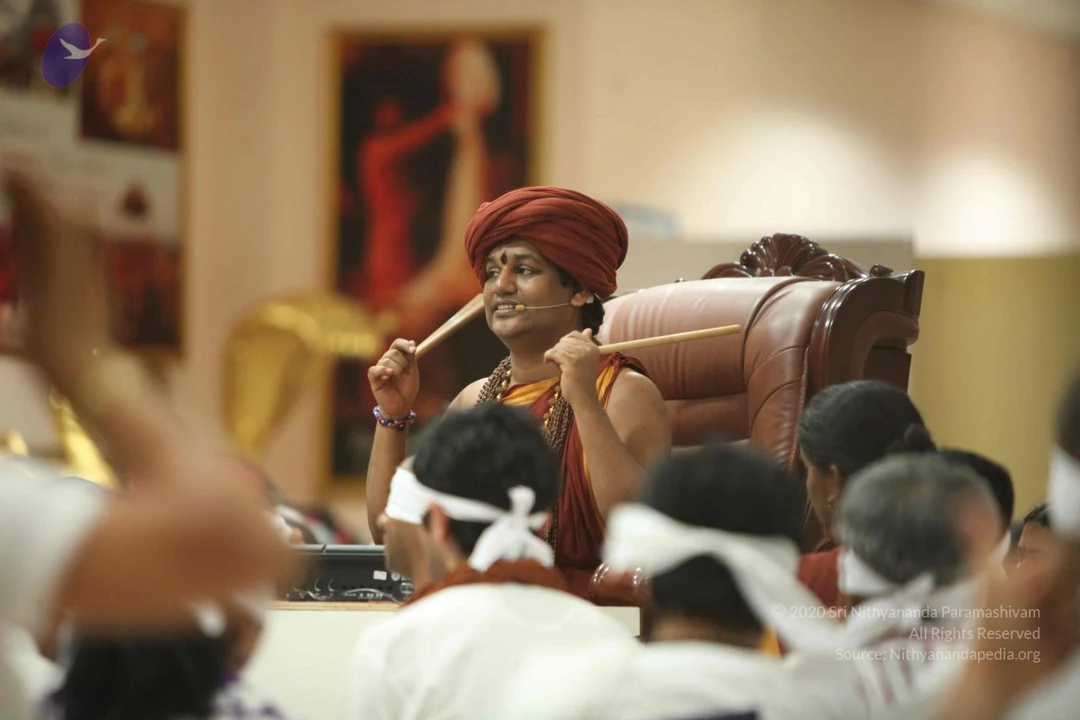
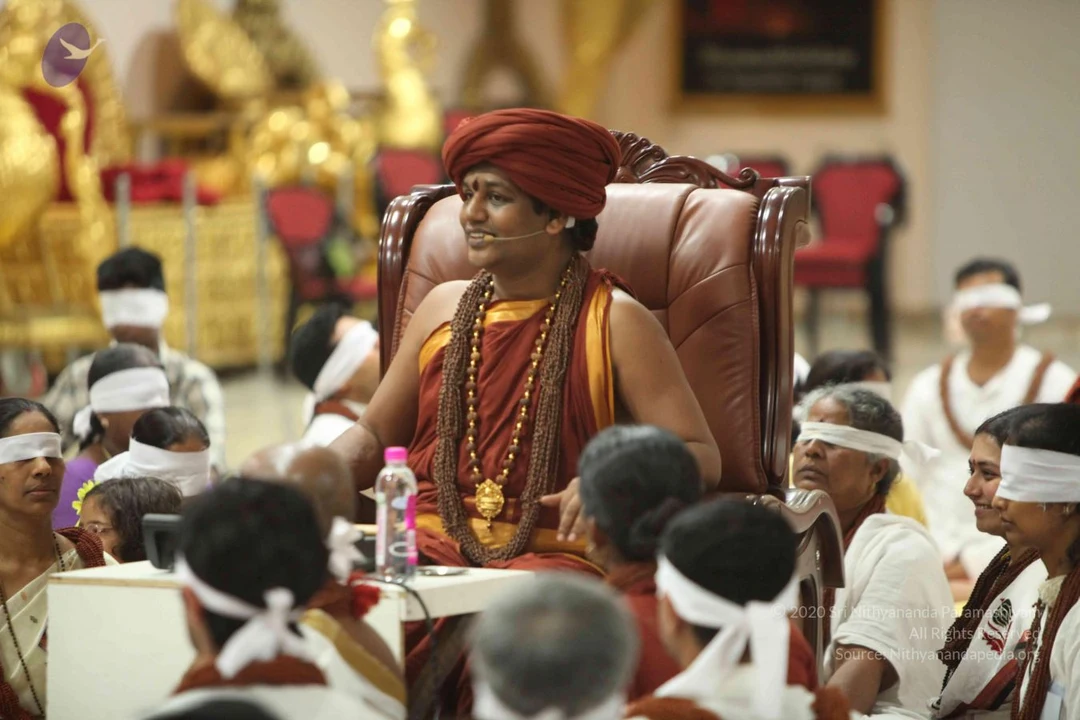
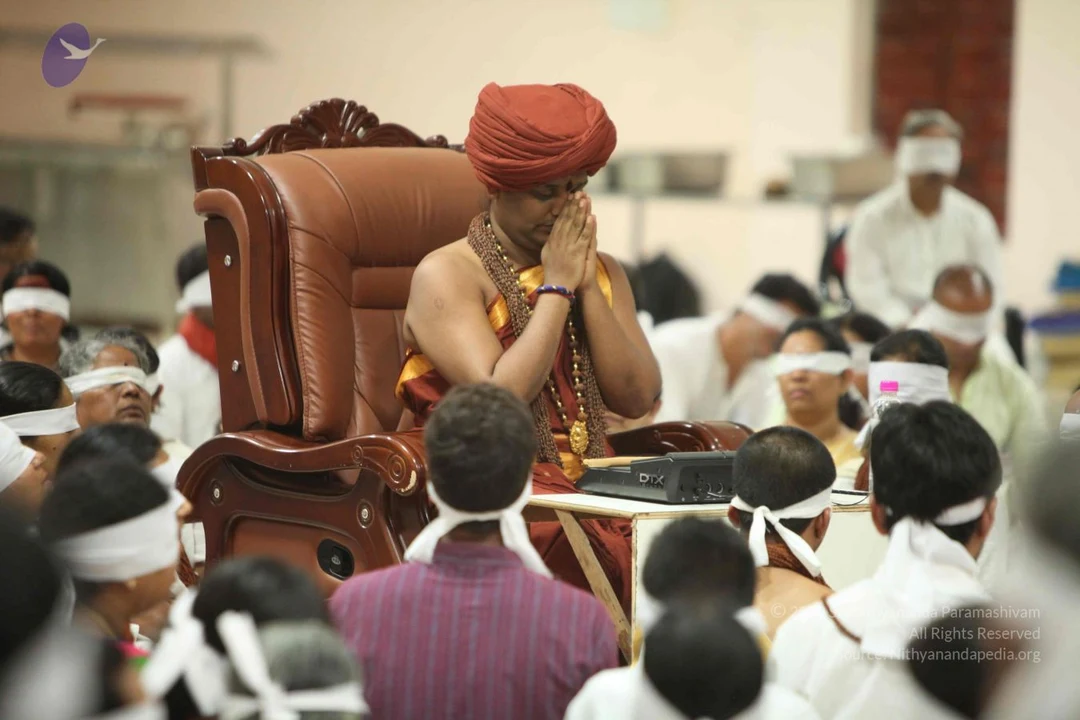
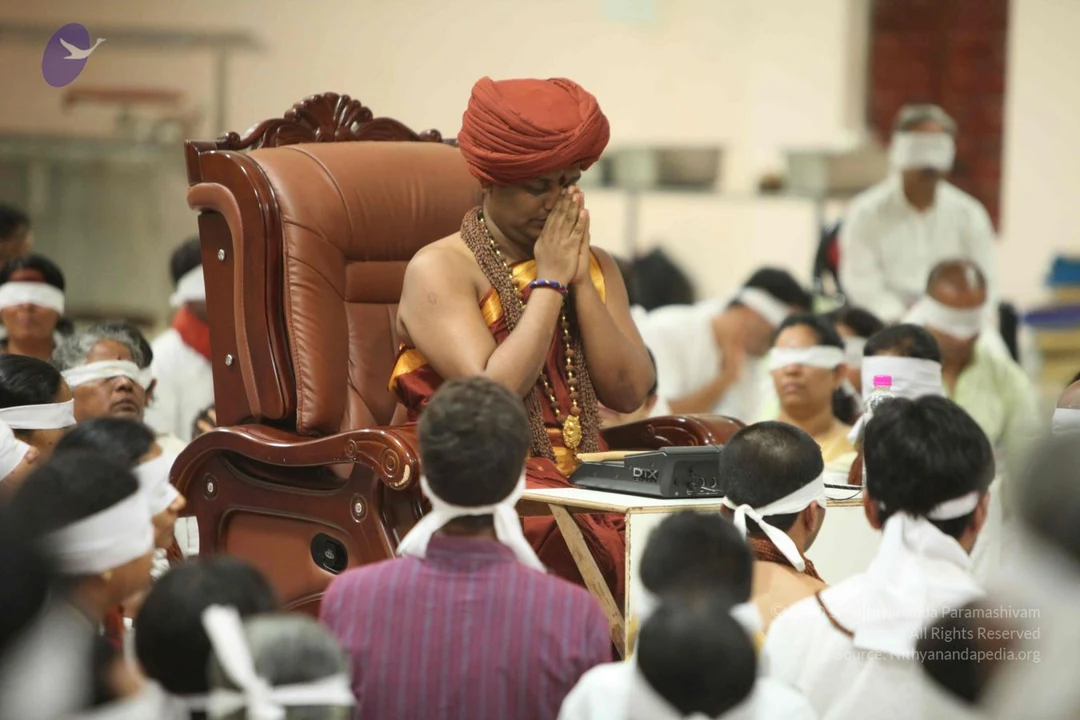
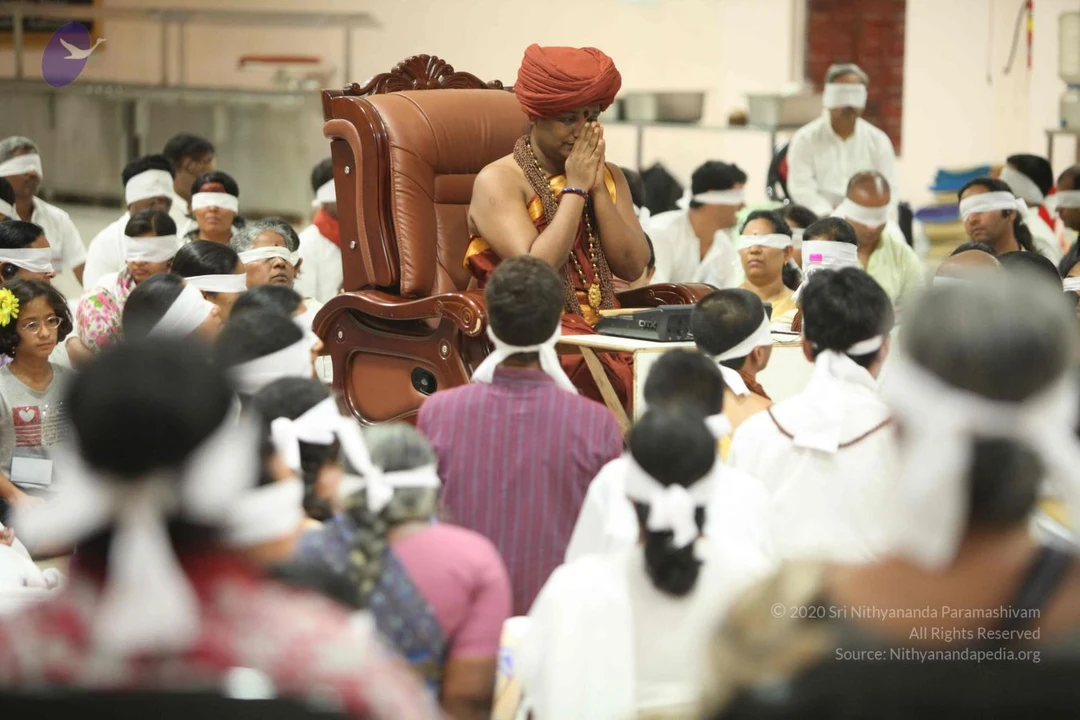
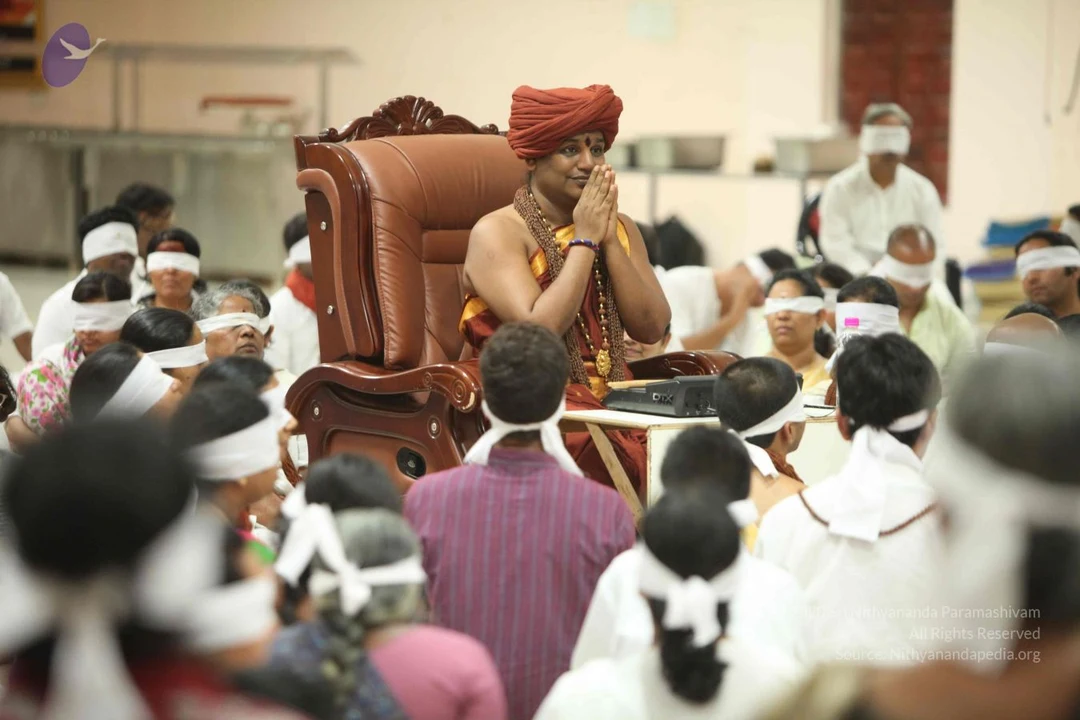
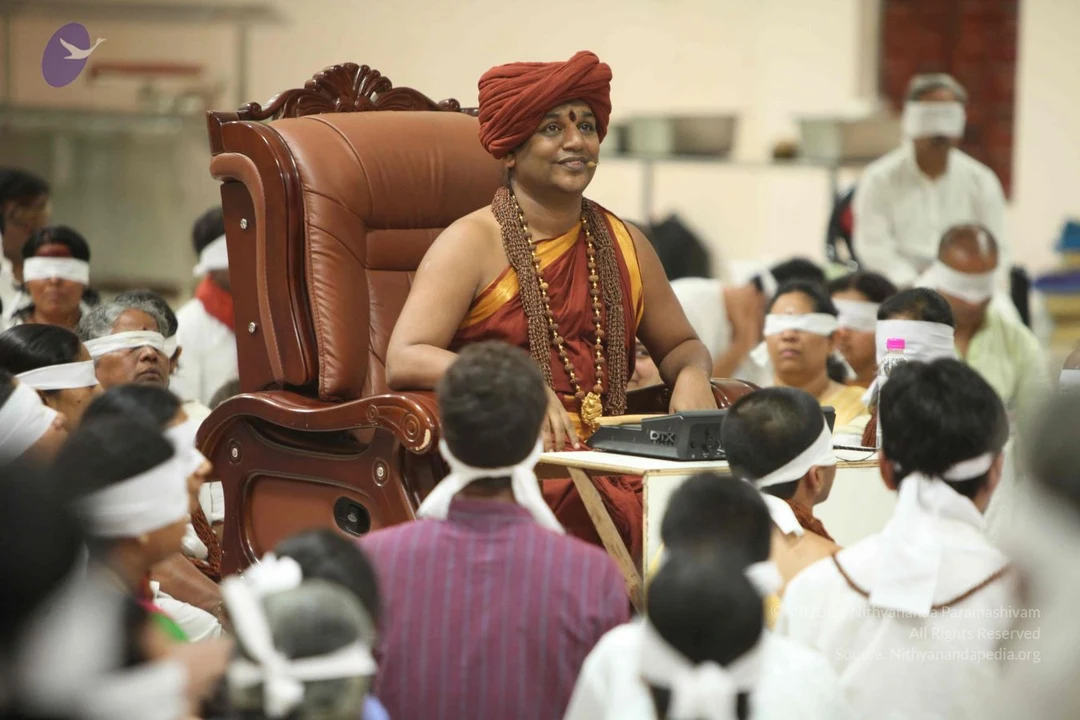
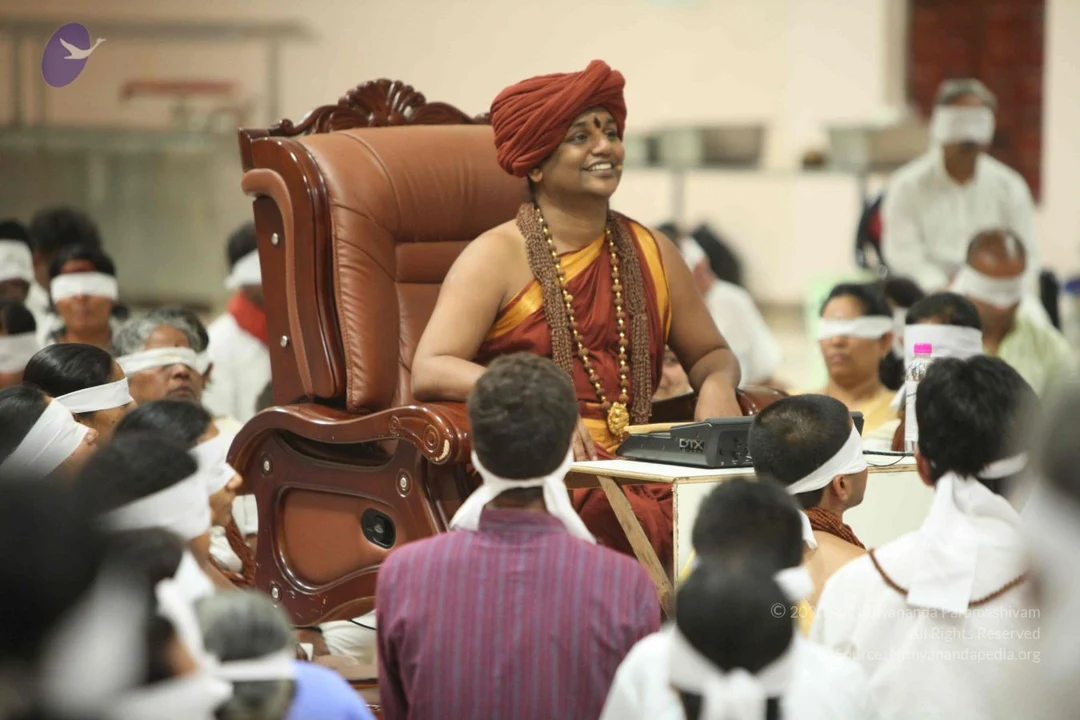
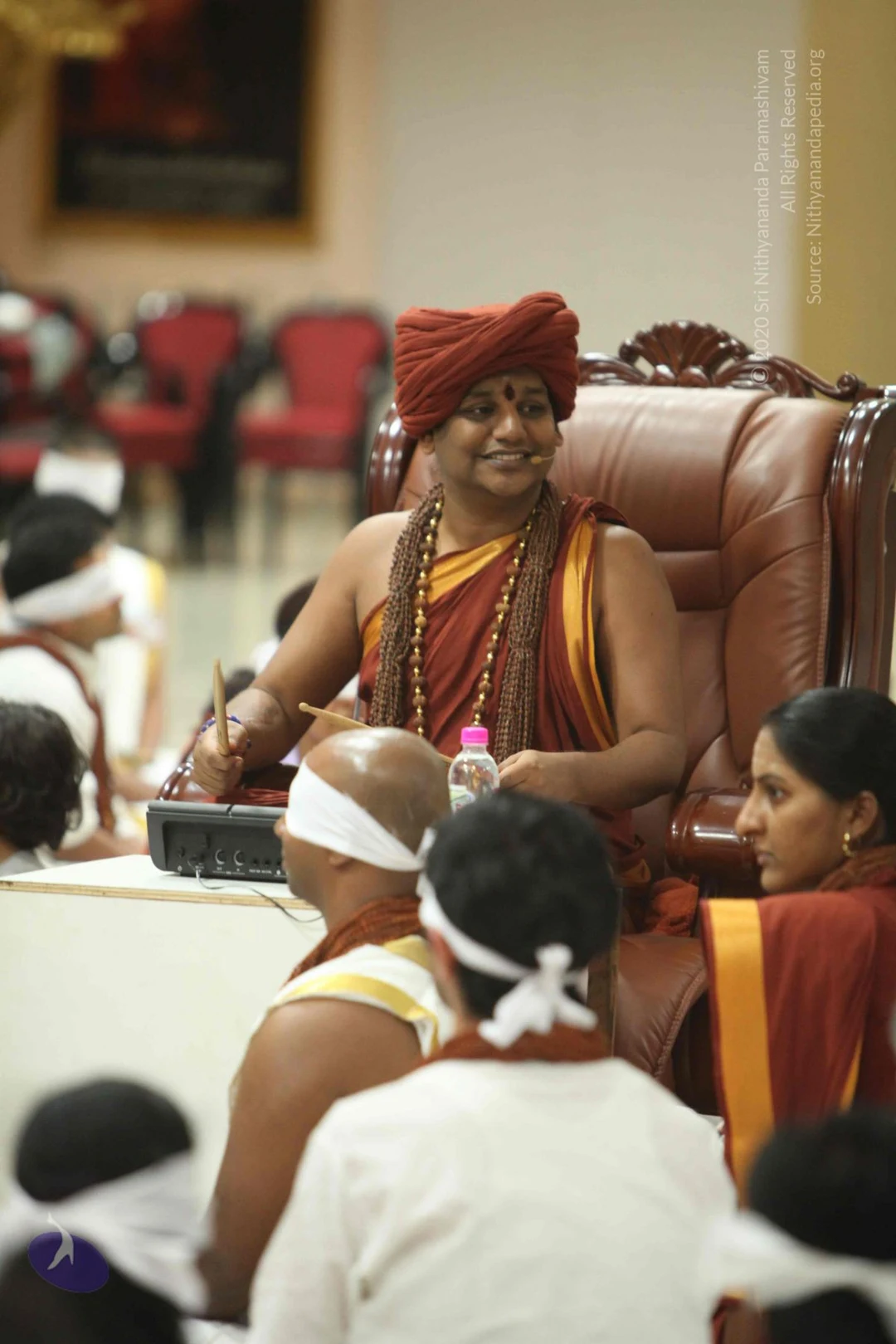
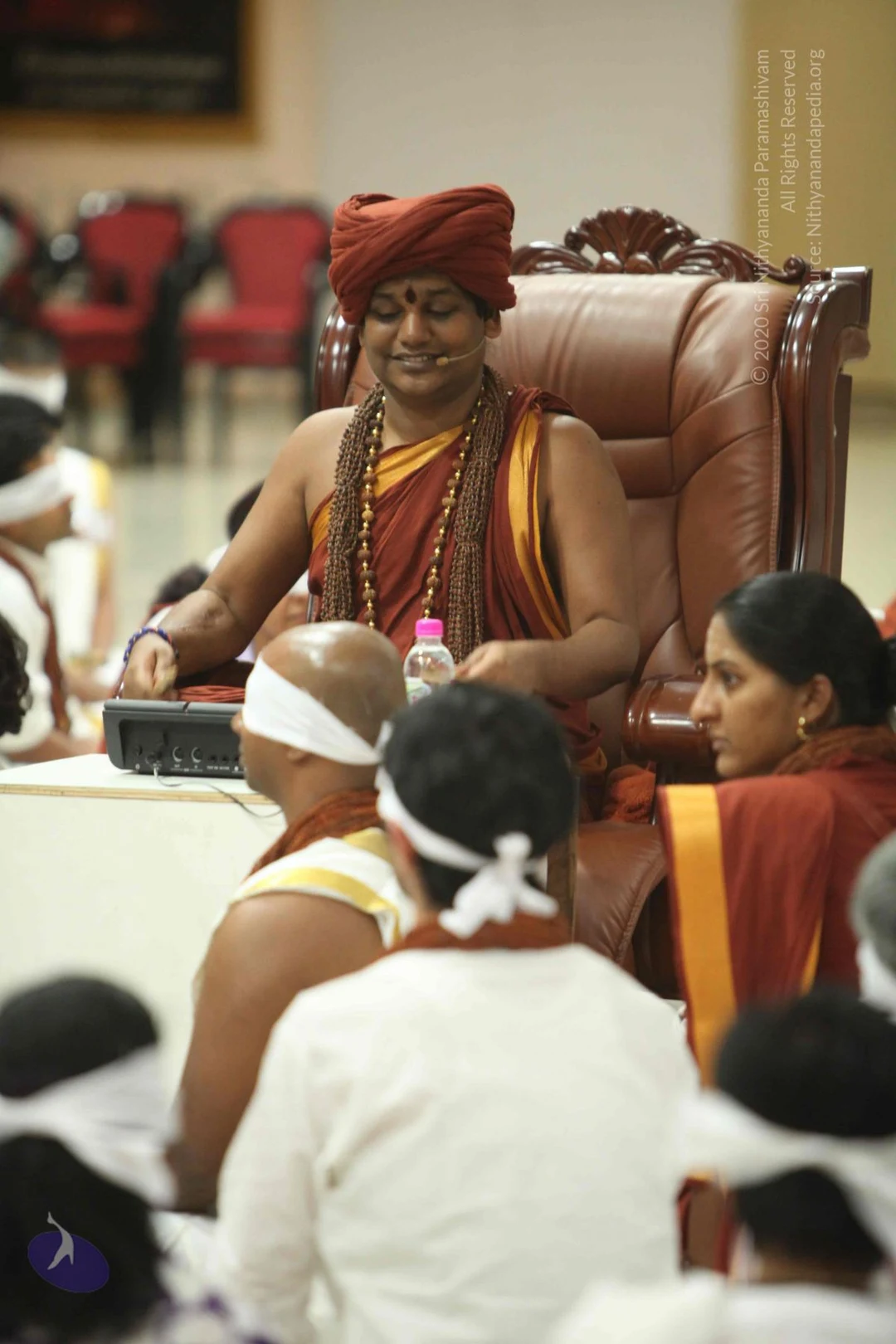
A seated figure in a red-orange turban and matching orange-and-saffron robe sits on an ornate brown leather throne-style armchair, smiling and holding a thin wooden stick in one hand. Long multi-strand beaded necklaces with rudraksha-style beads hang on his chest, and a red bindi marks his forehead. A small microphone is clipped near his face. In front, several seated participants with white cloths tied over their eyes and white-and-saffron clothing face him, one bald man in front of a black electronic device with a pink-capped water bottle on a table. A woman in a red-and-gold sari sits to the right beside the chair. Red-upholstered chairs fill the blurred hall behind them, with a framed dark painting on the wall.A seated teacher in an ornate brown leather throne chair wears a red-orange turban with a small red bindi, an orange-and-saffron shawl over a bare shoulder, and layered rudraksha malas with gold beads, with a small headset microphone on the cheek. He smiles and gestures toward a black device on a white table. Beside him a woman in a red-and-gold sari sits watching. In the foreground, several seated participants with white headbands and white clothes face the chair, one bald man in a white shawl prominent at left. A pink-capped water bottle sits on the table, and red chairs are blurred in the background.

Satsang
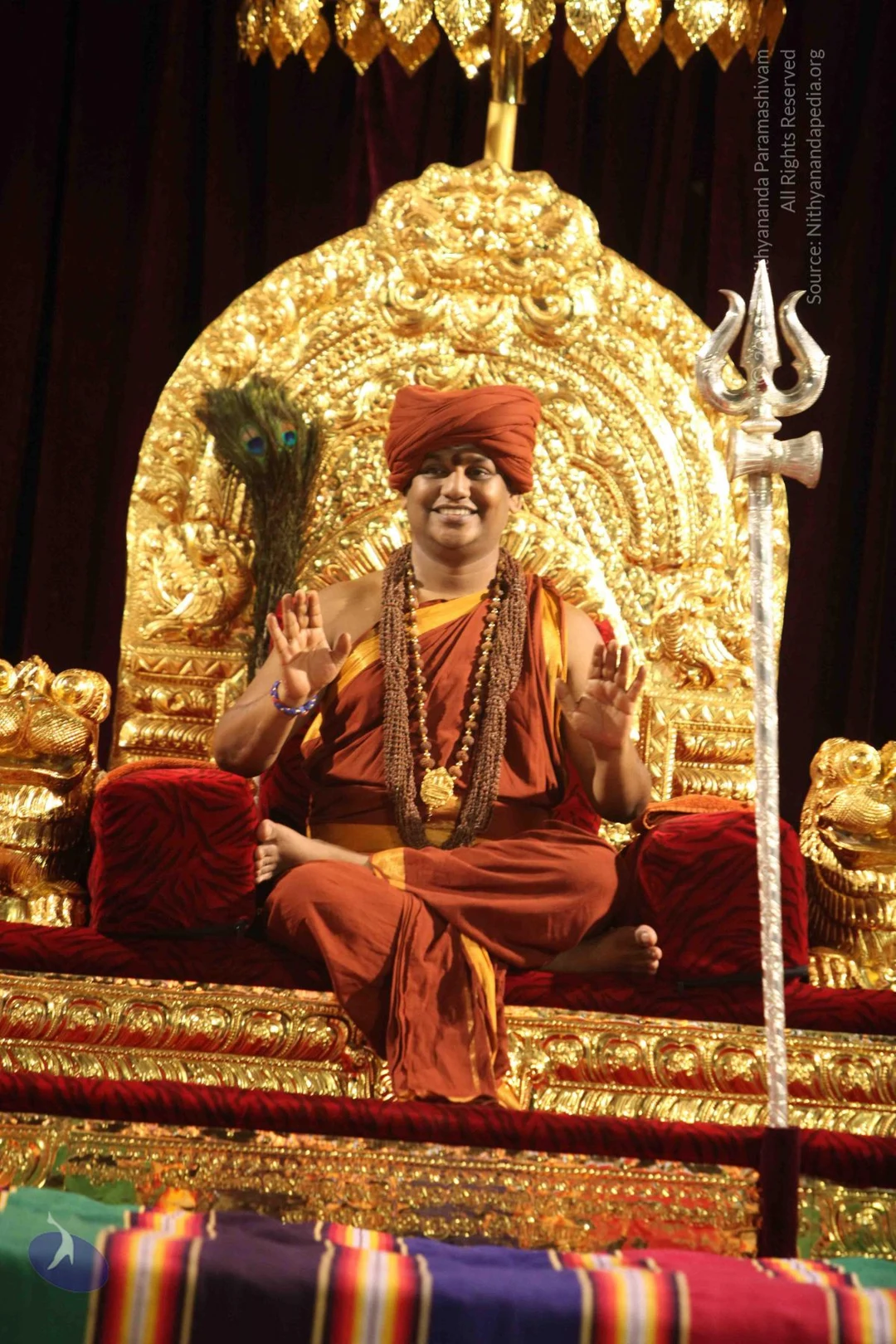
41 photosSource gallery
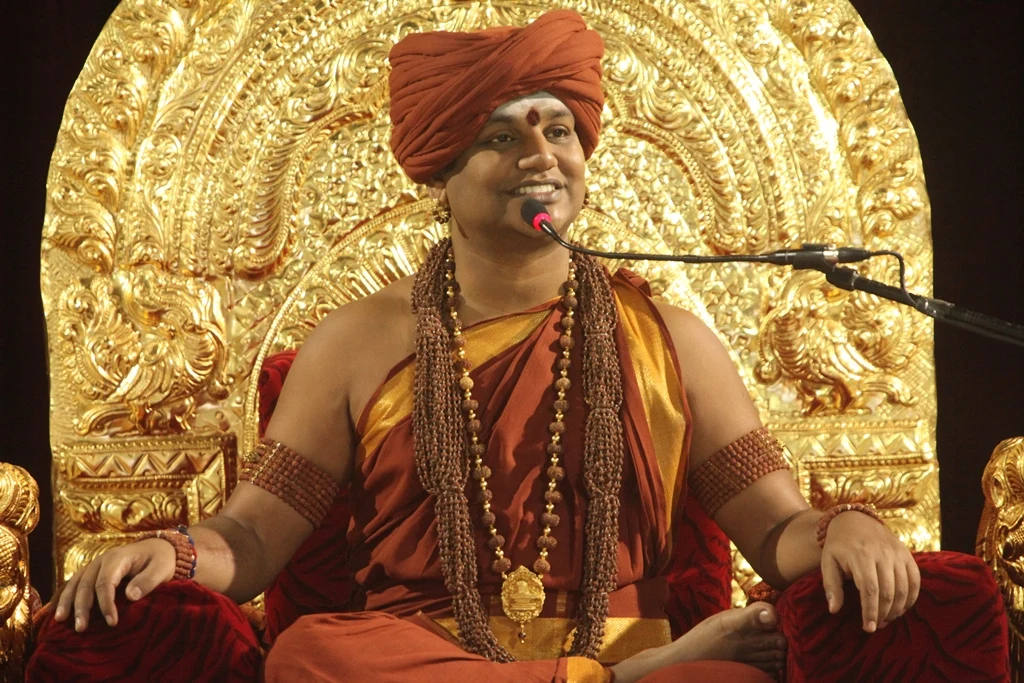
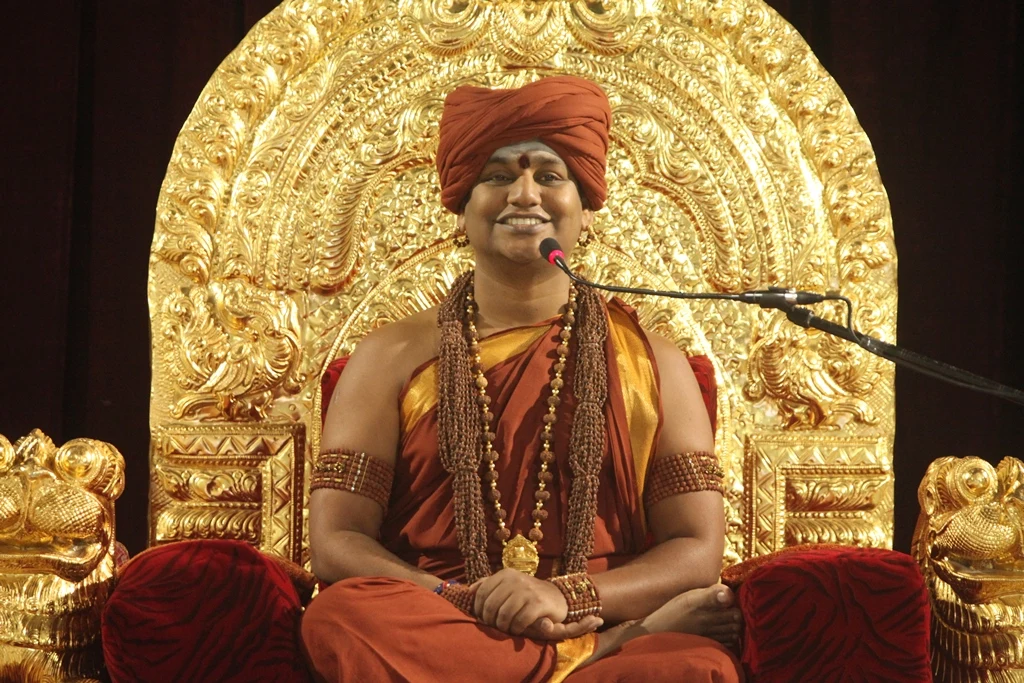
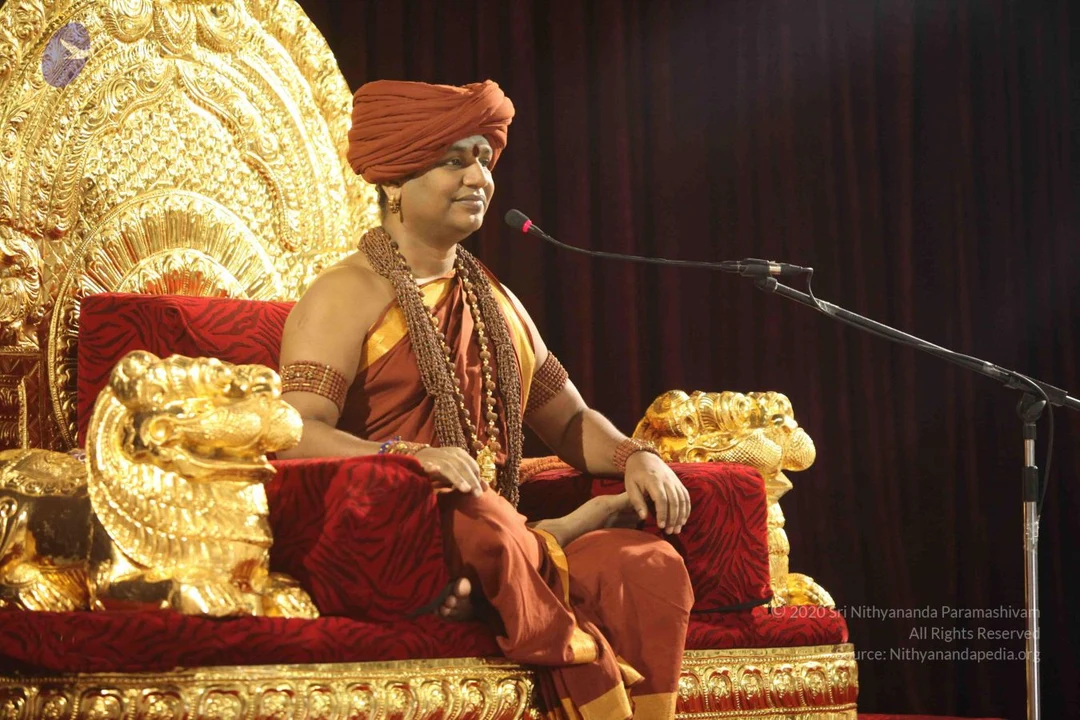
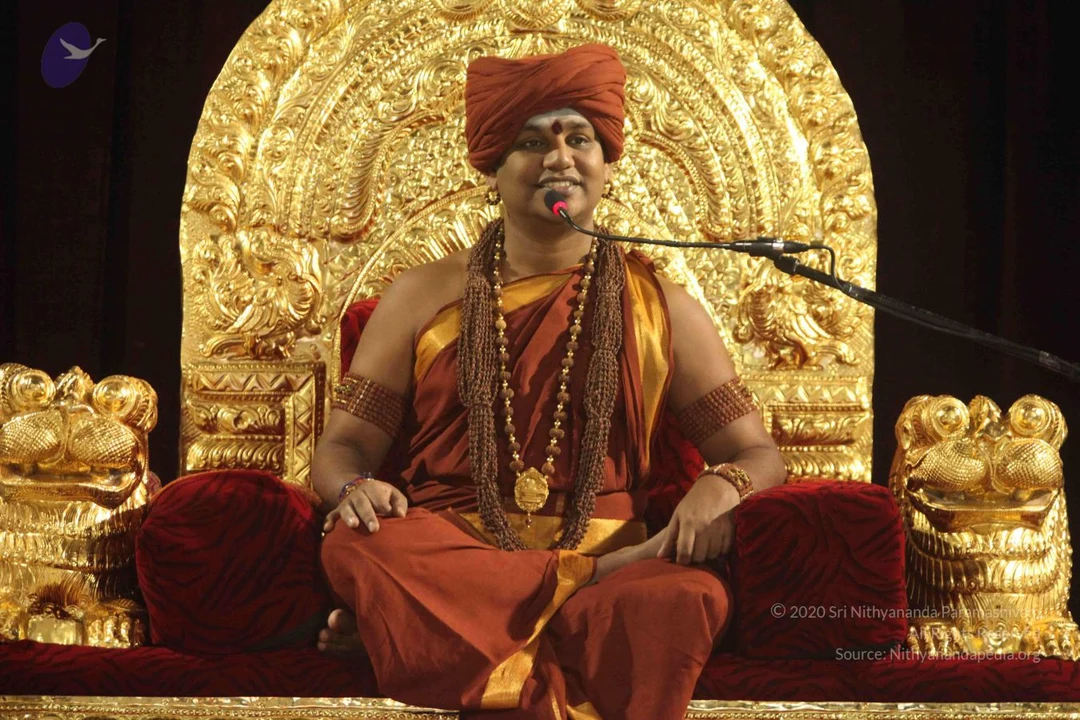
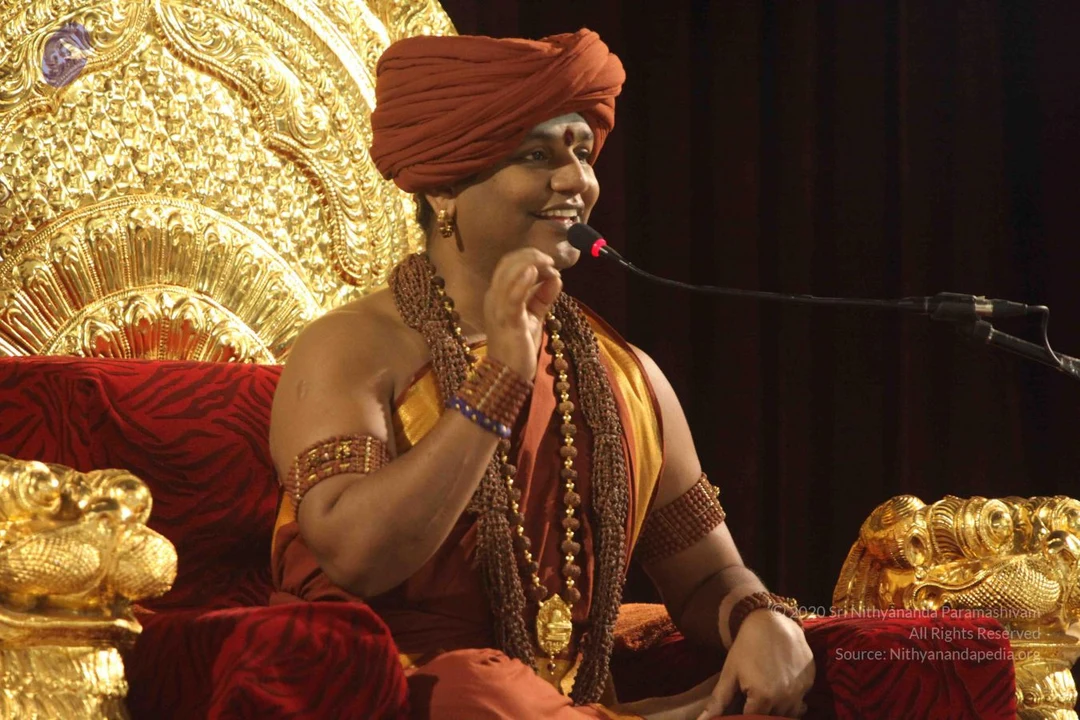
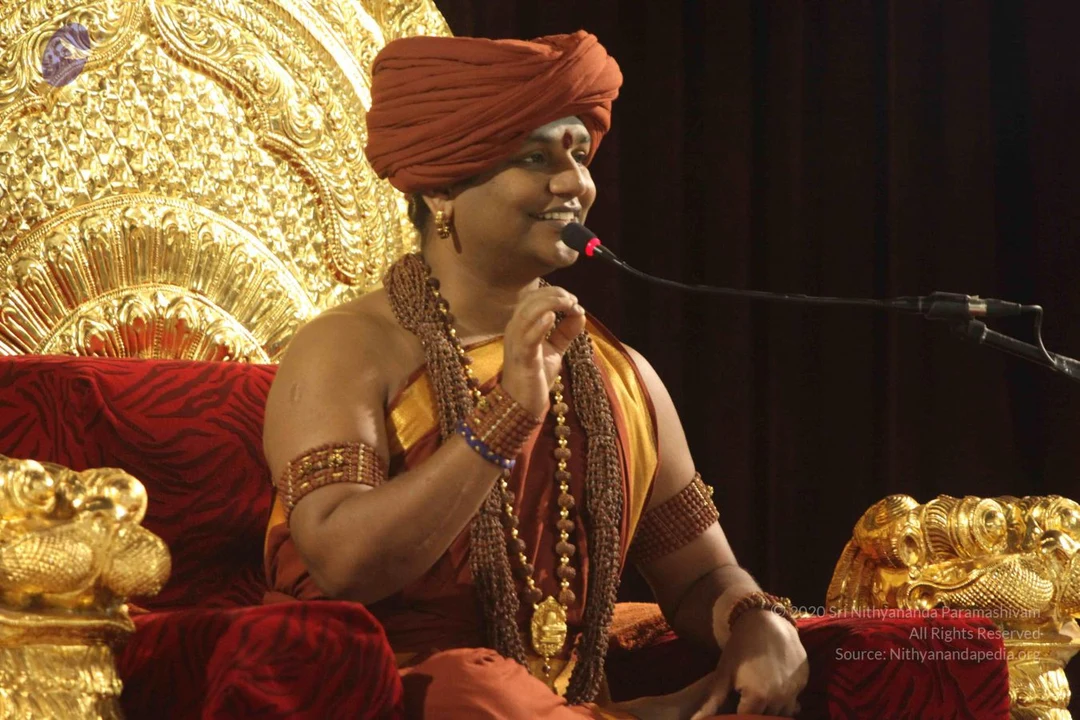
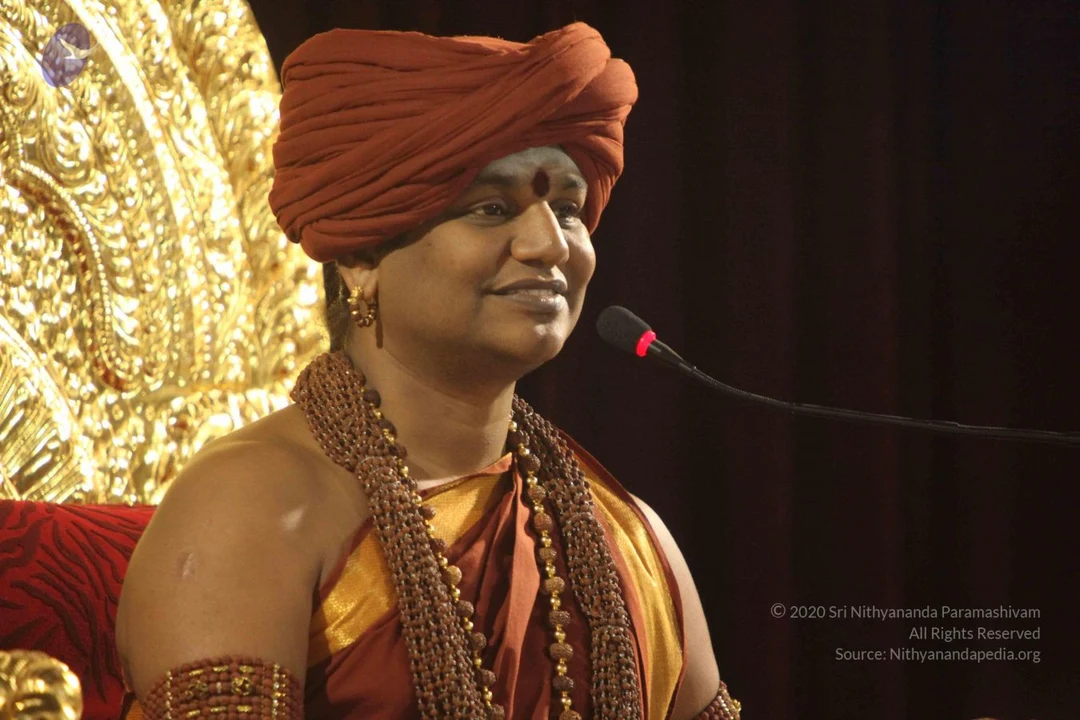
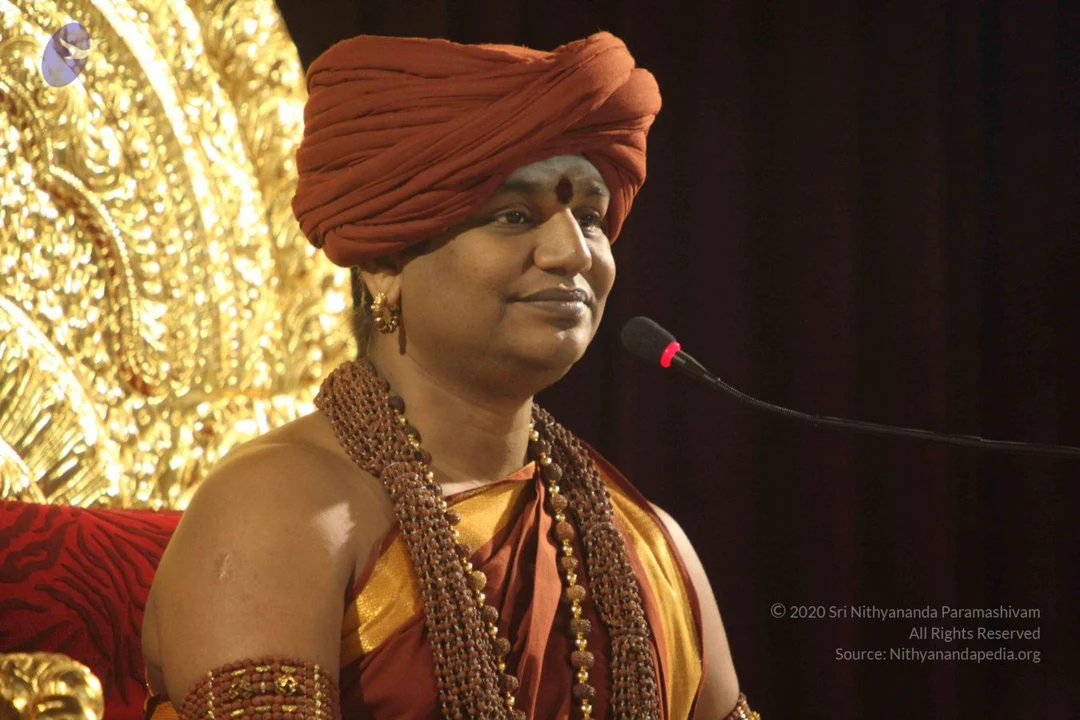
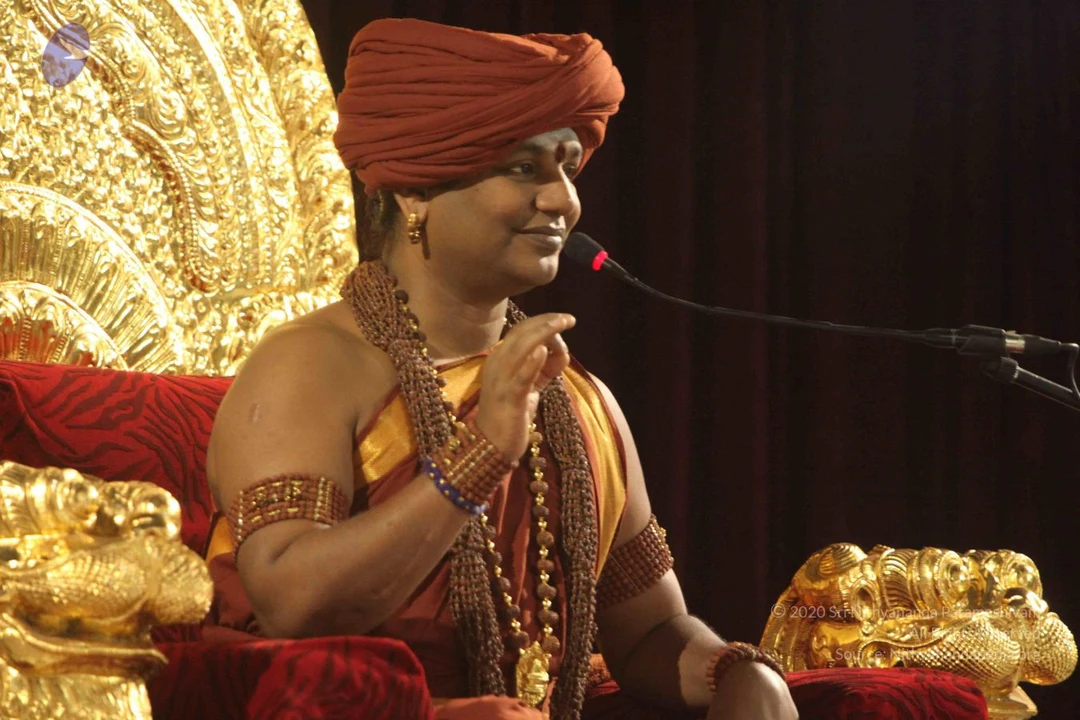
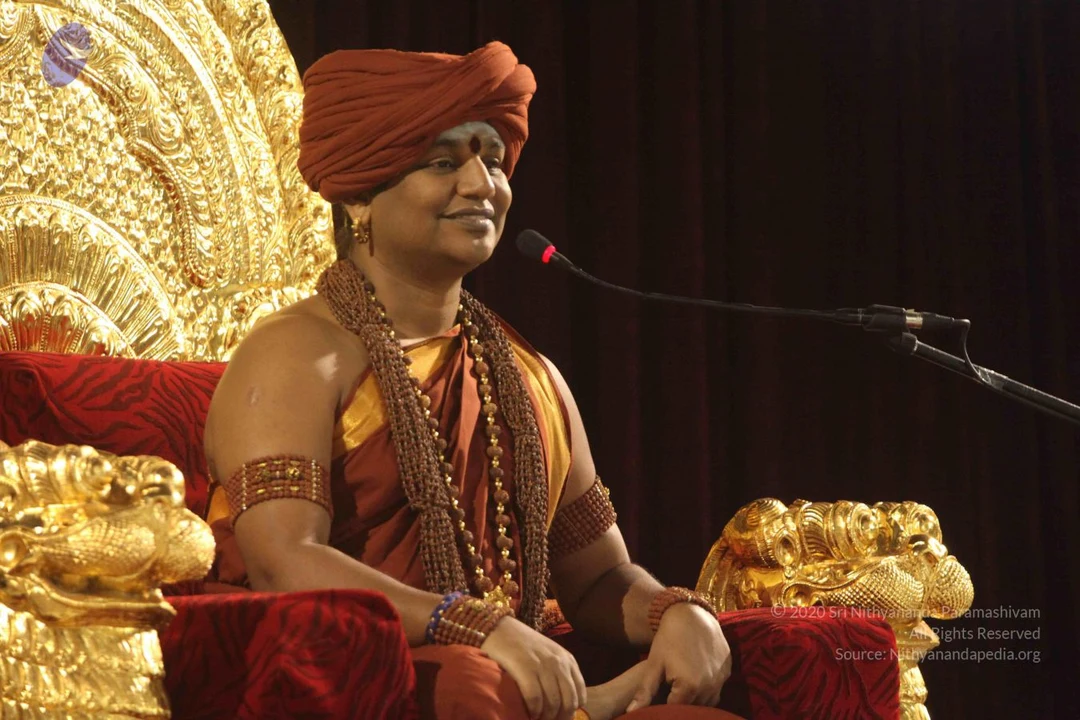
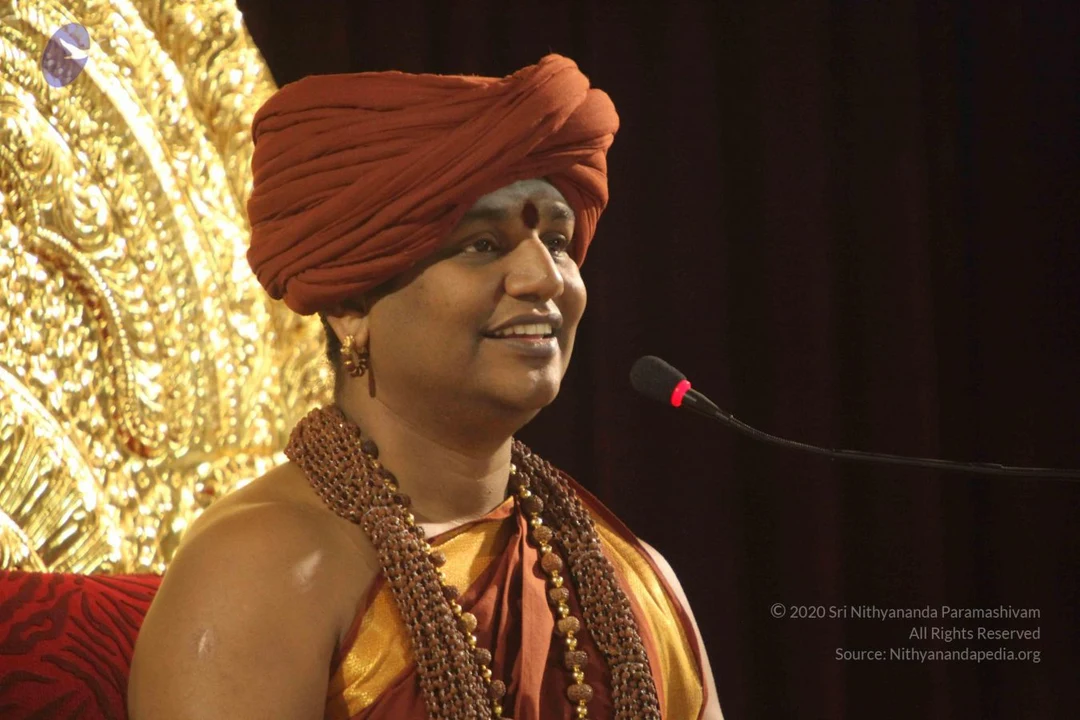
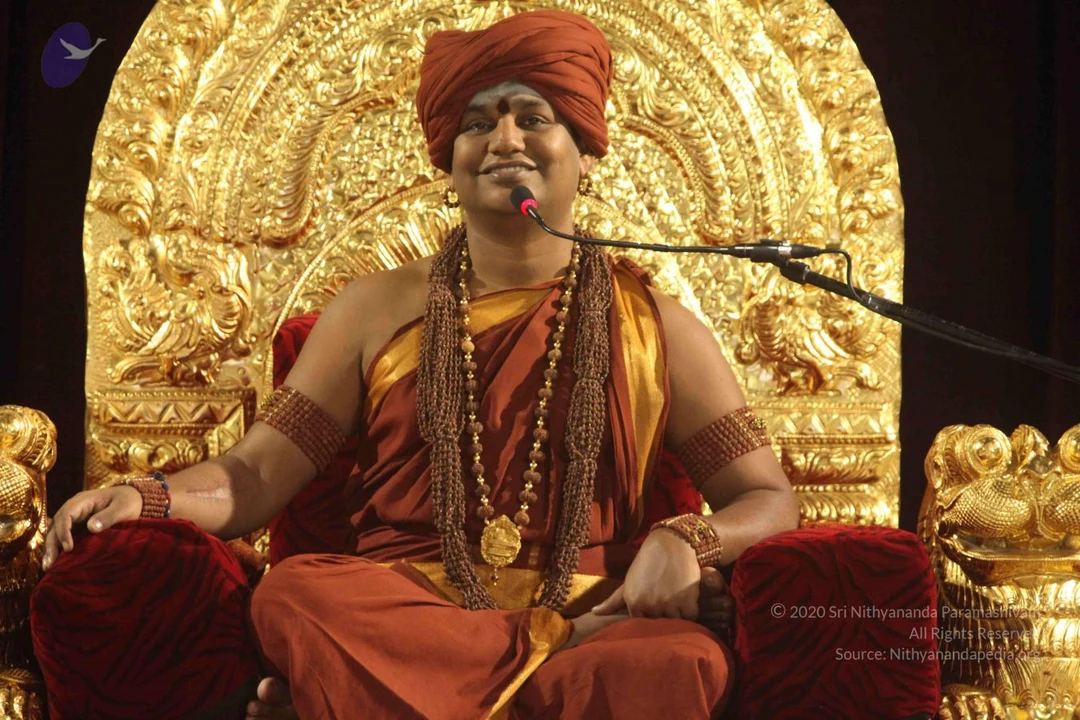
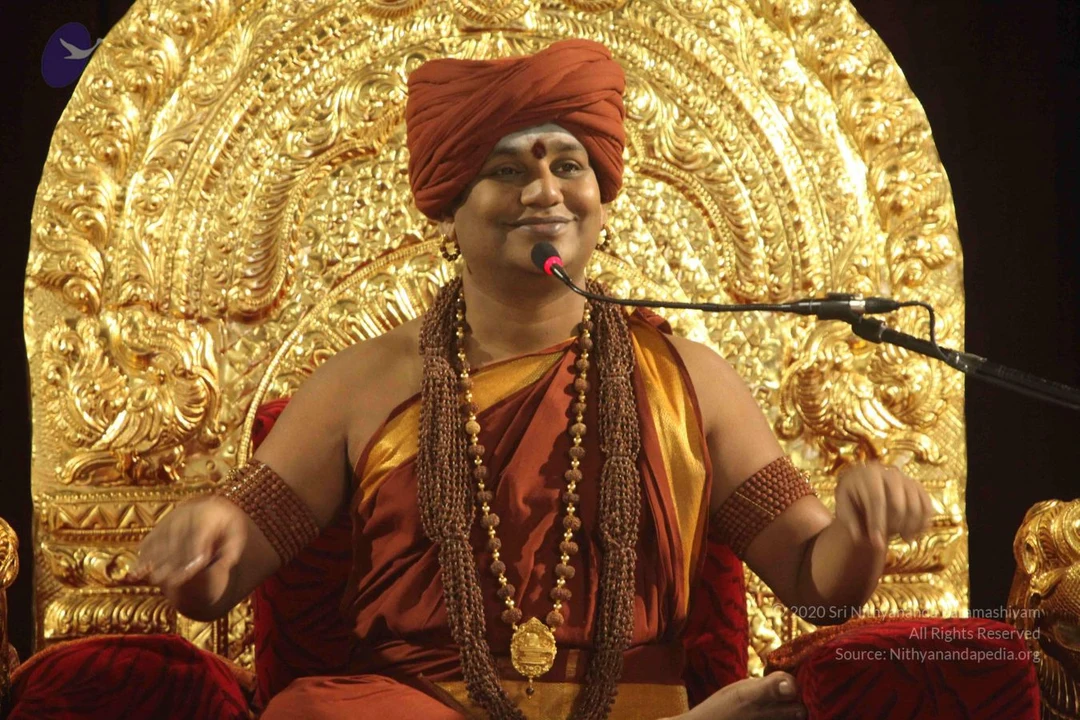
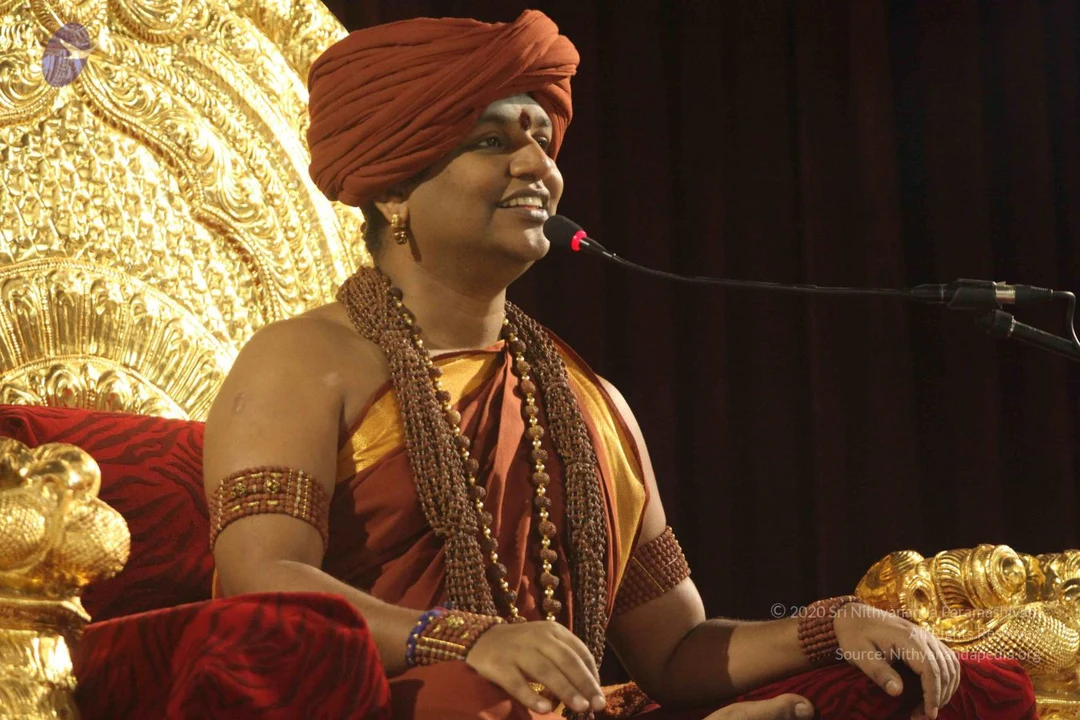
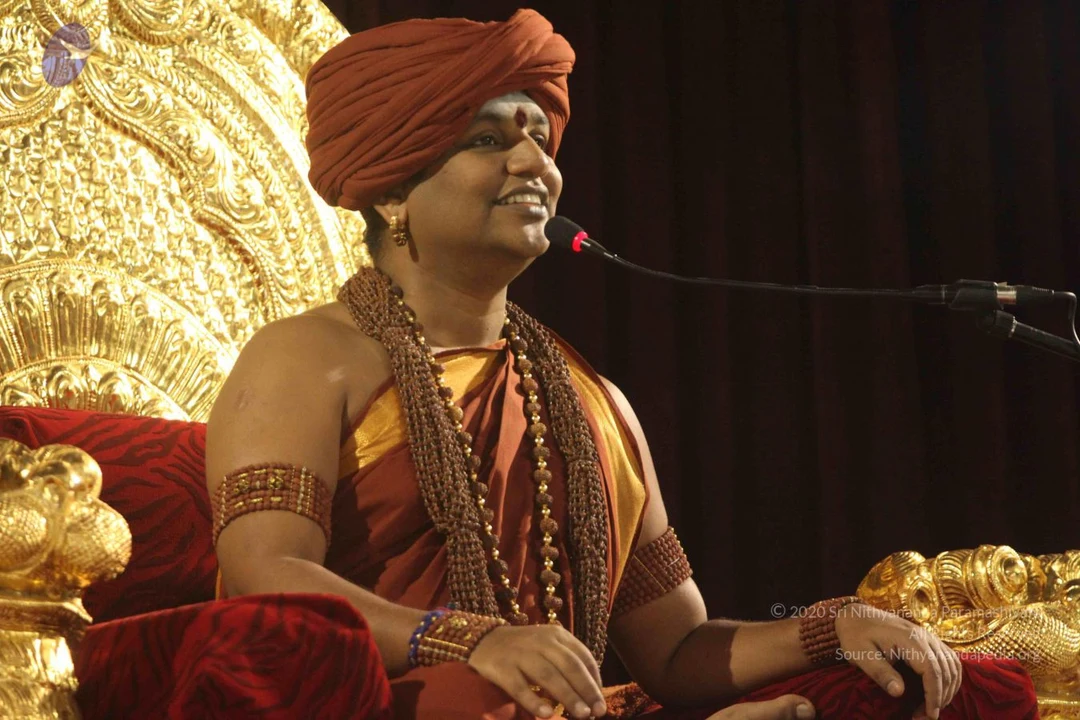
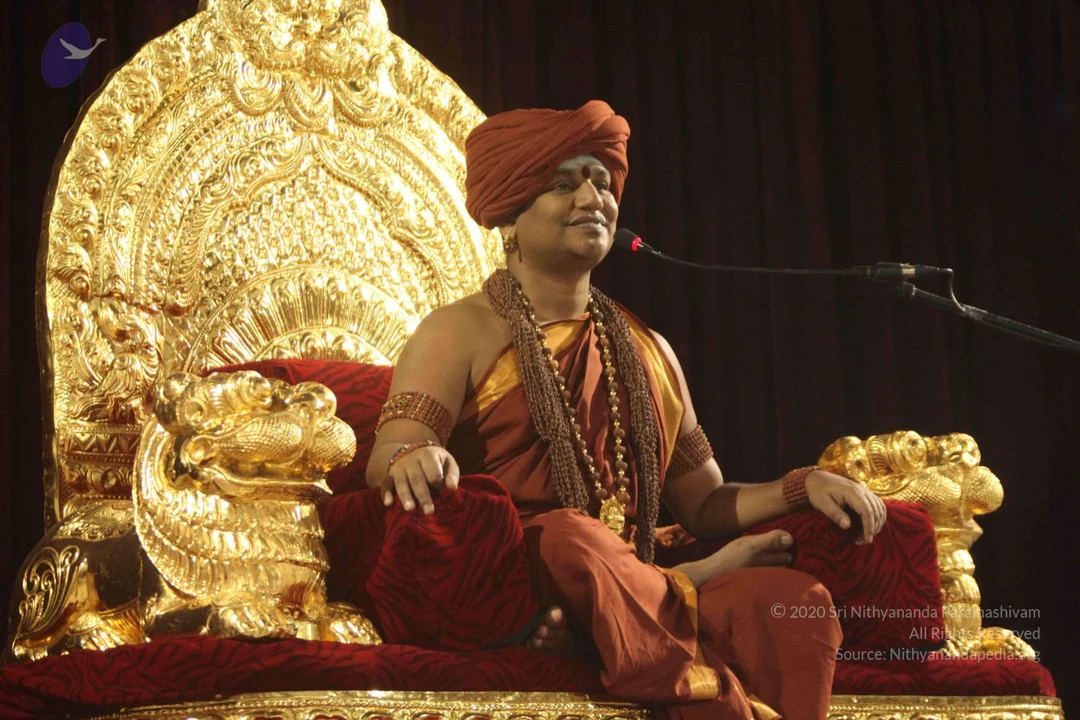
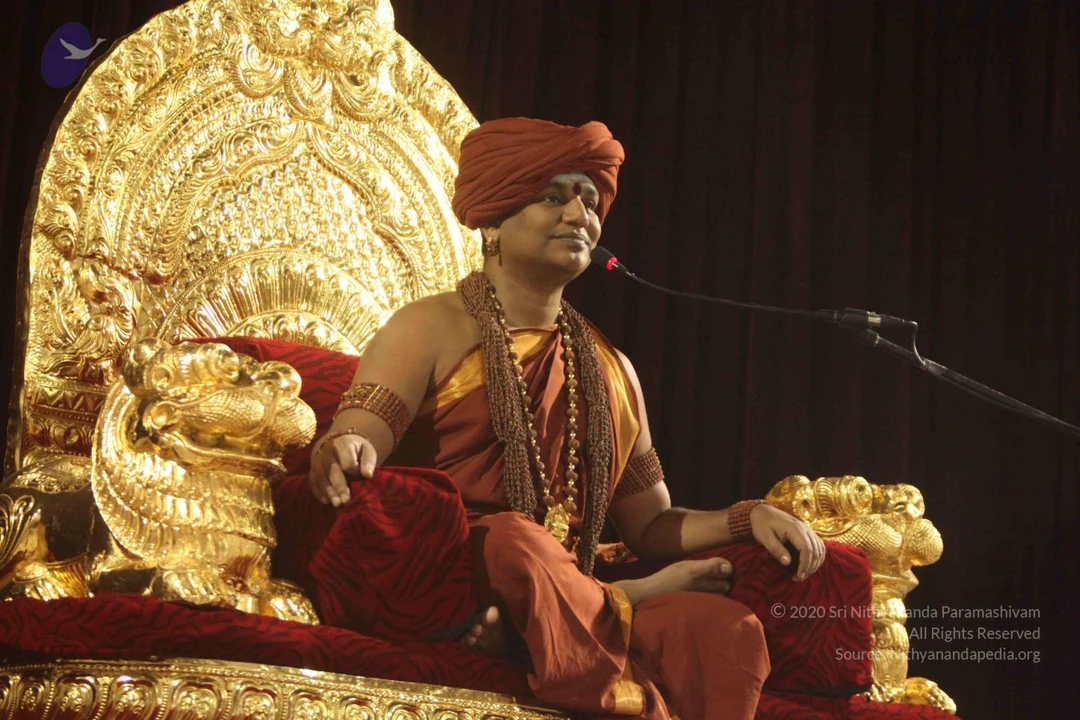
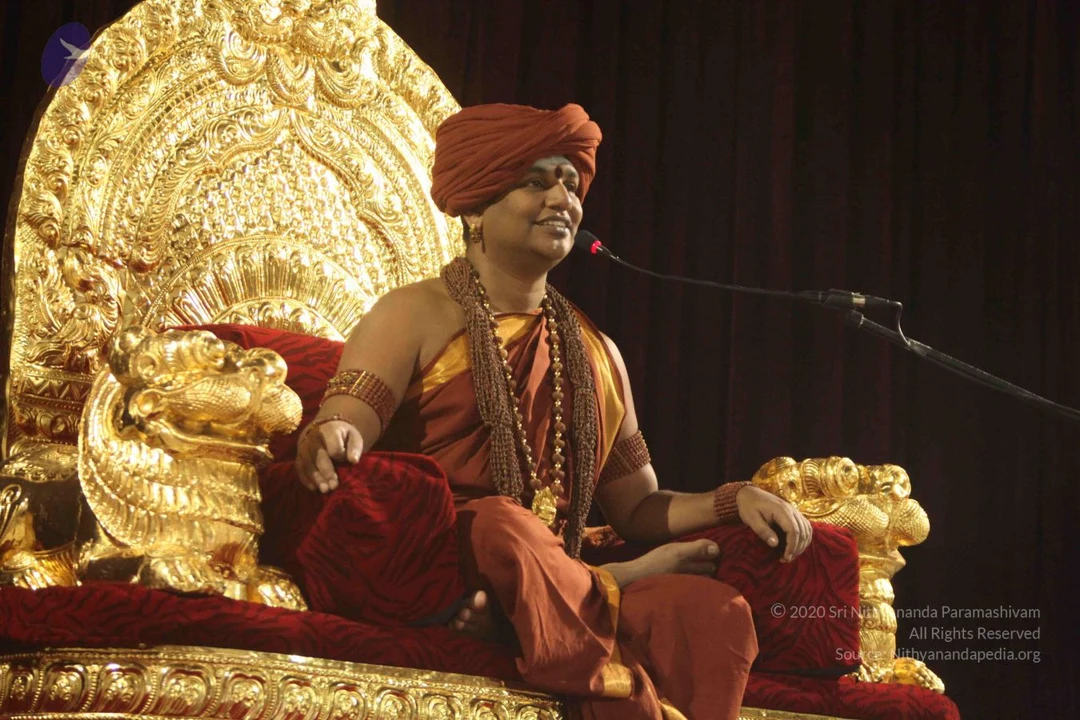
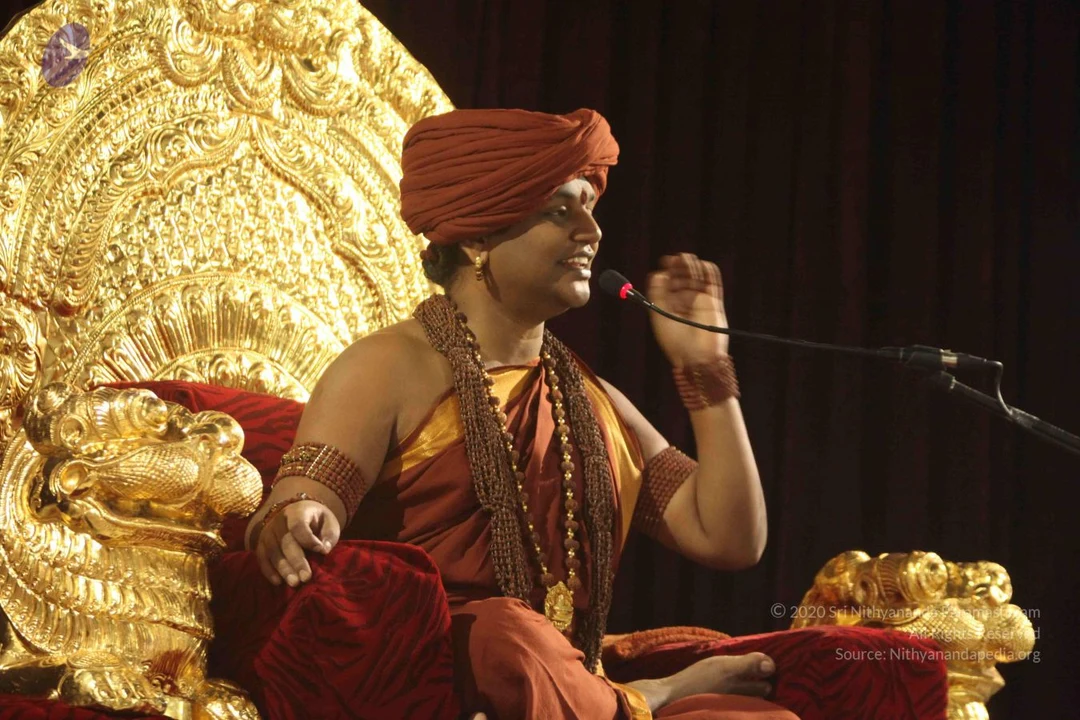
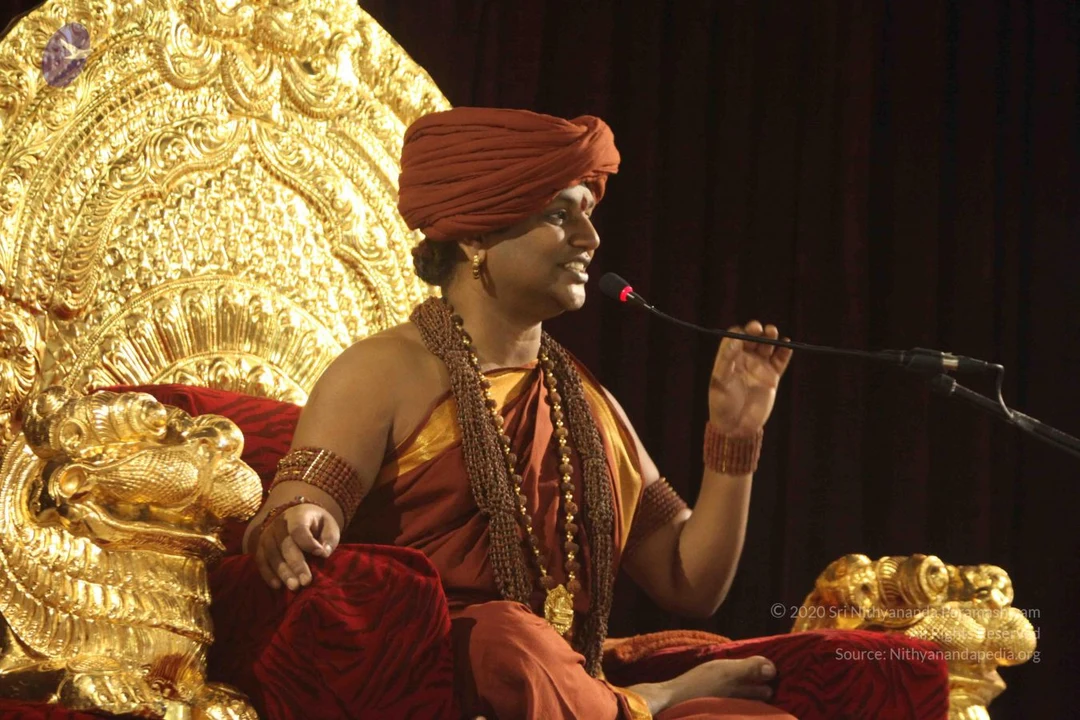
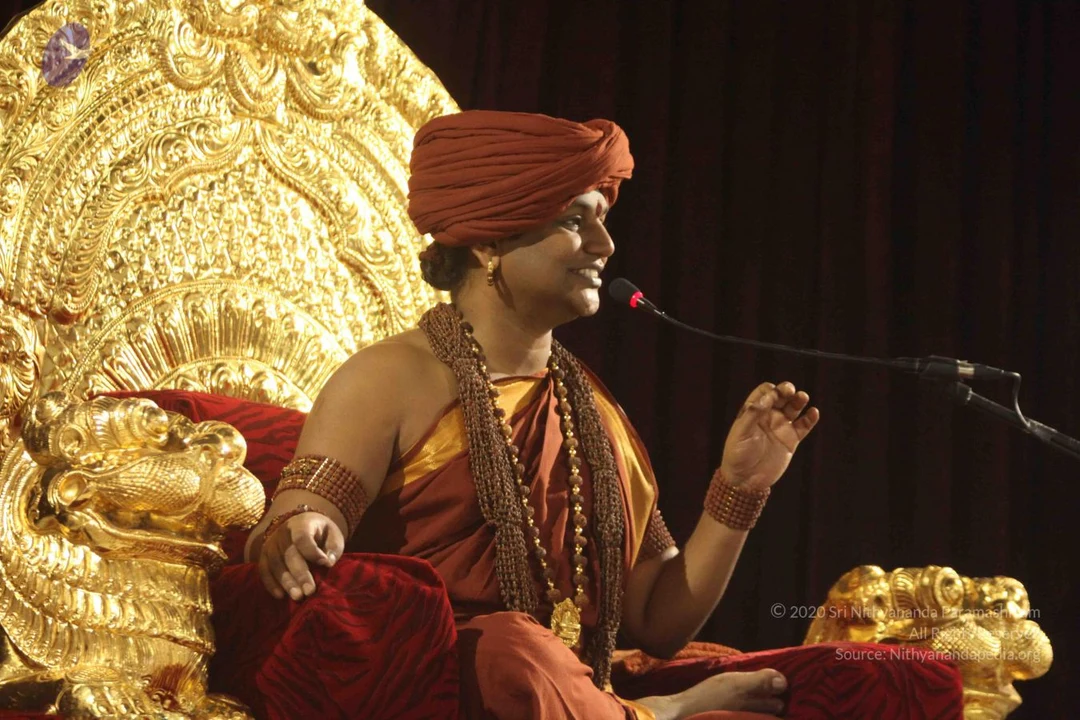
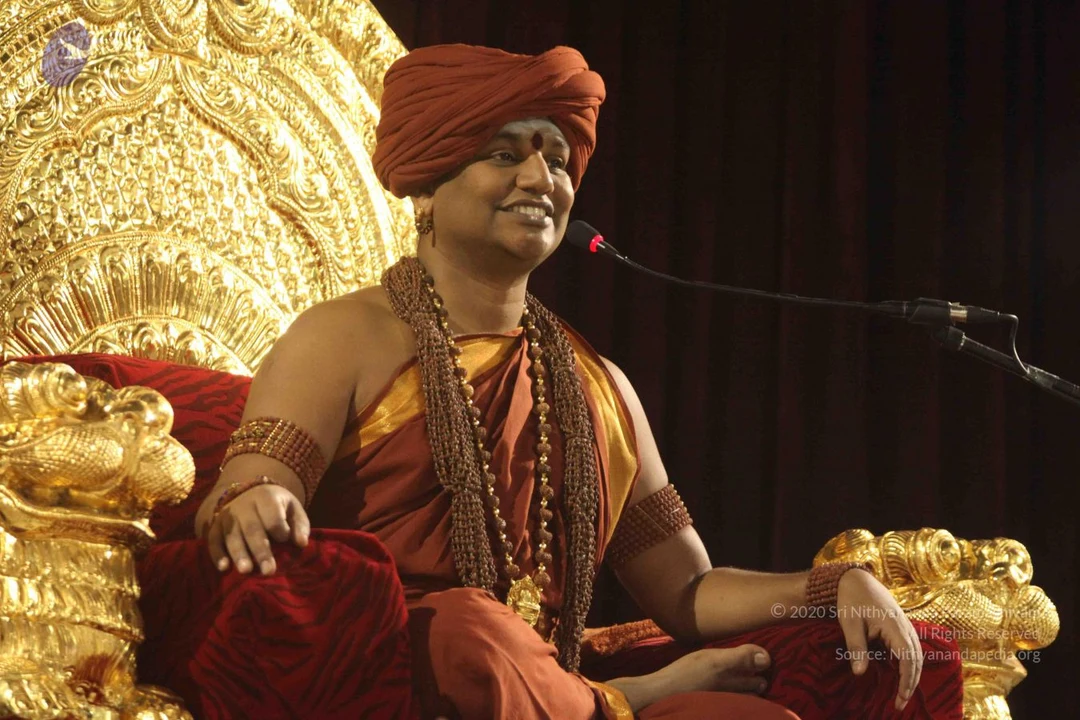
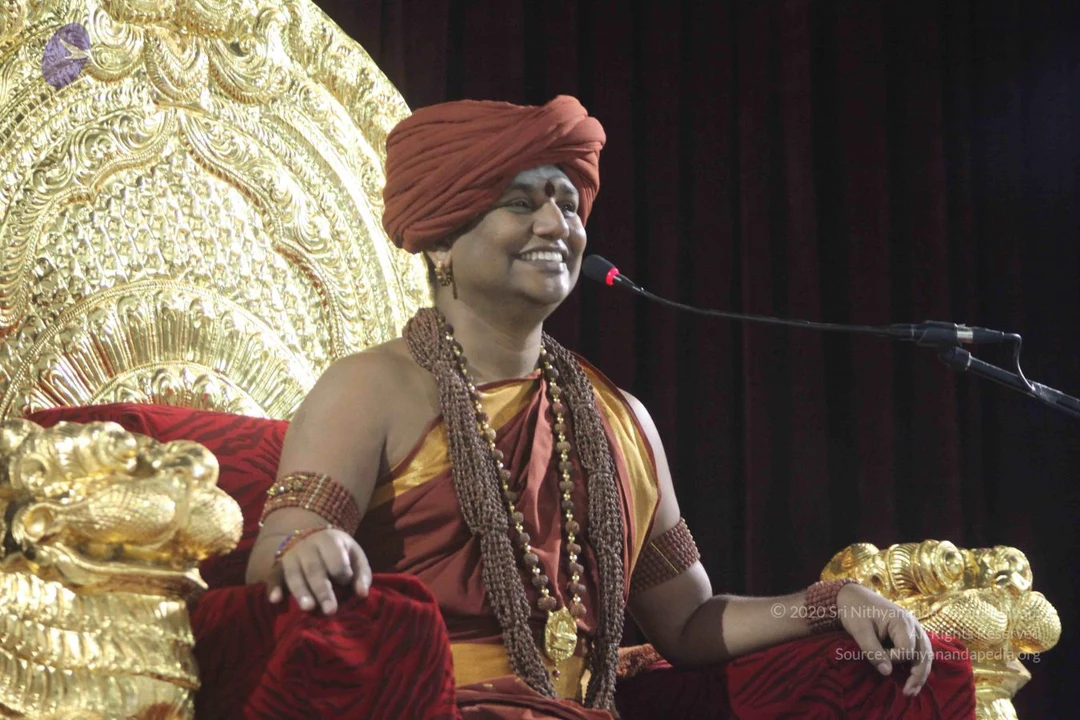
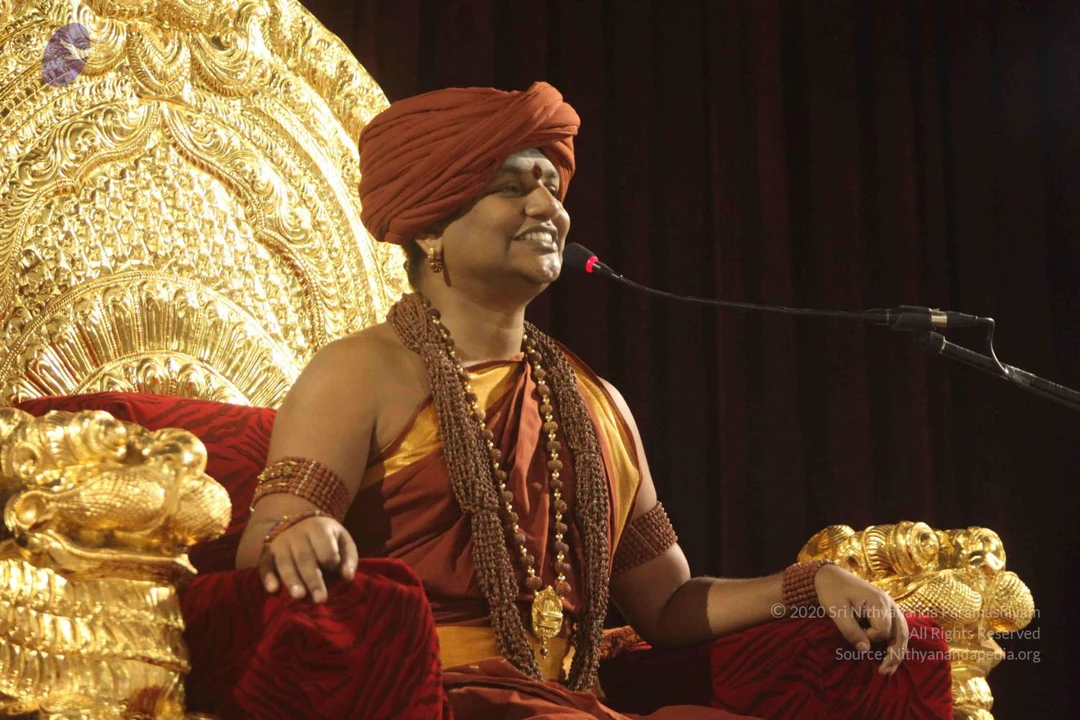
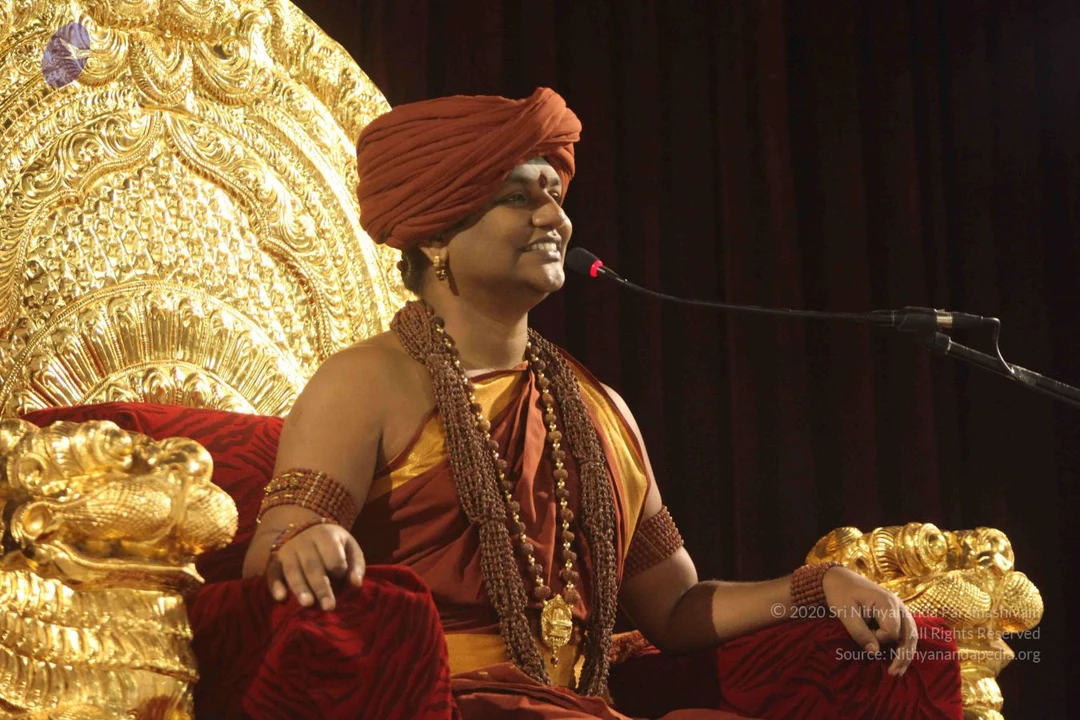
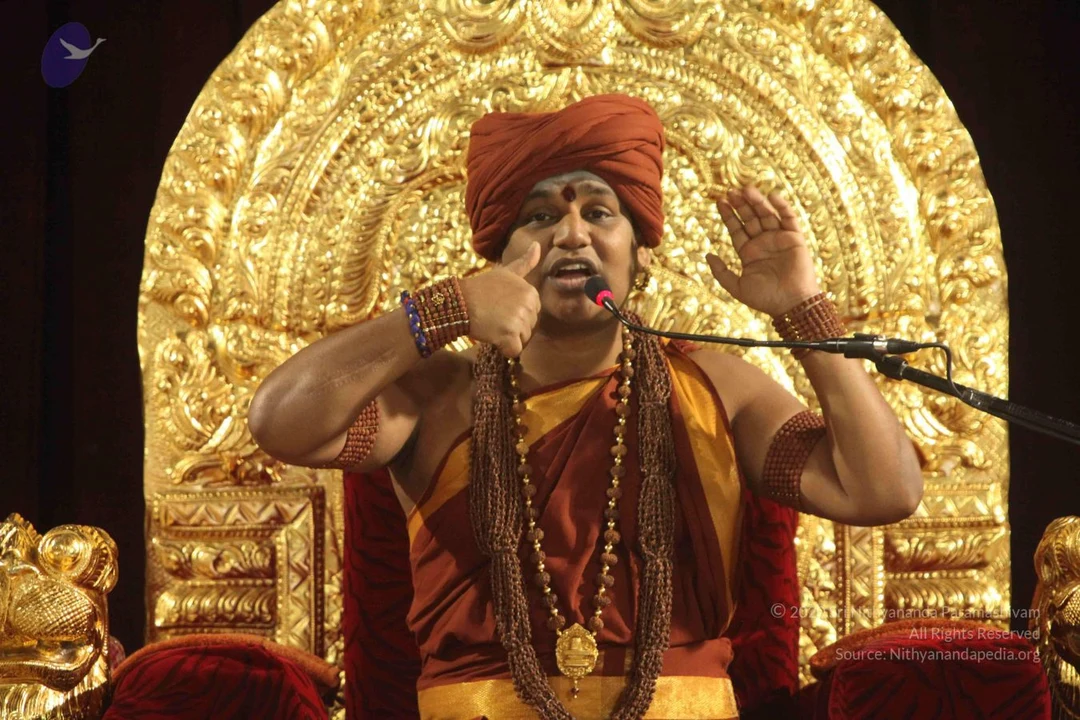
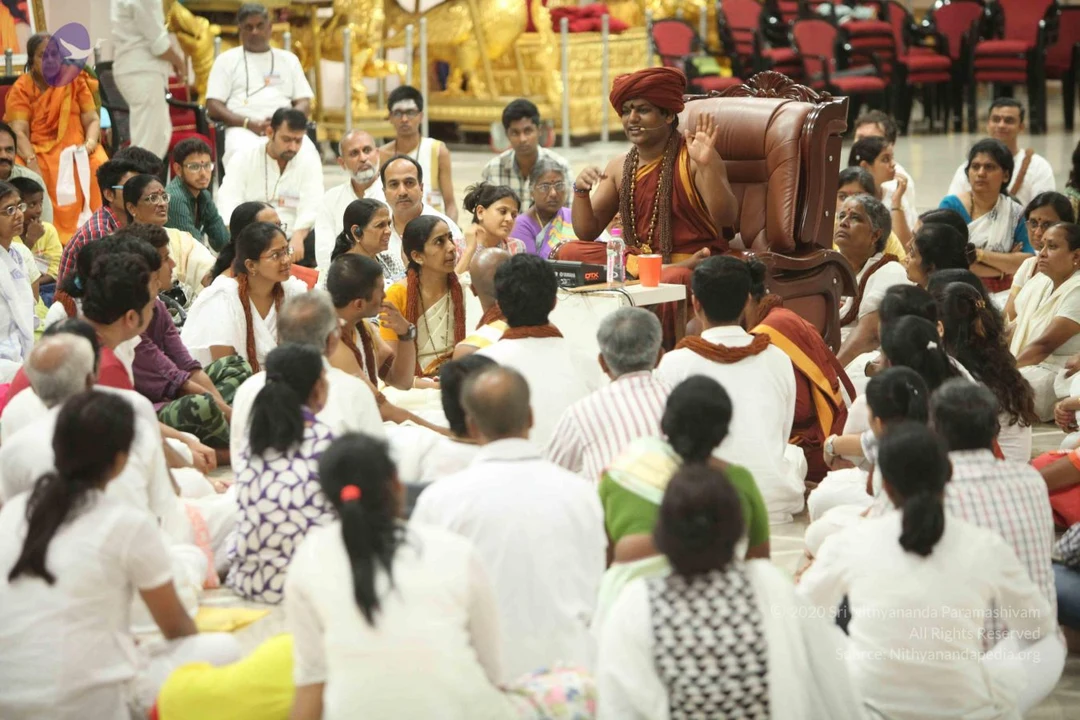
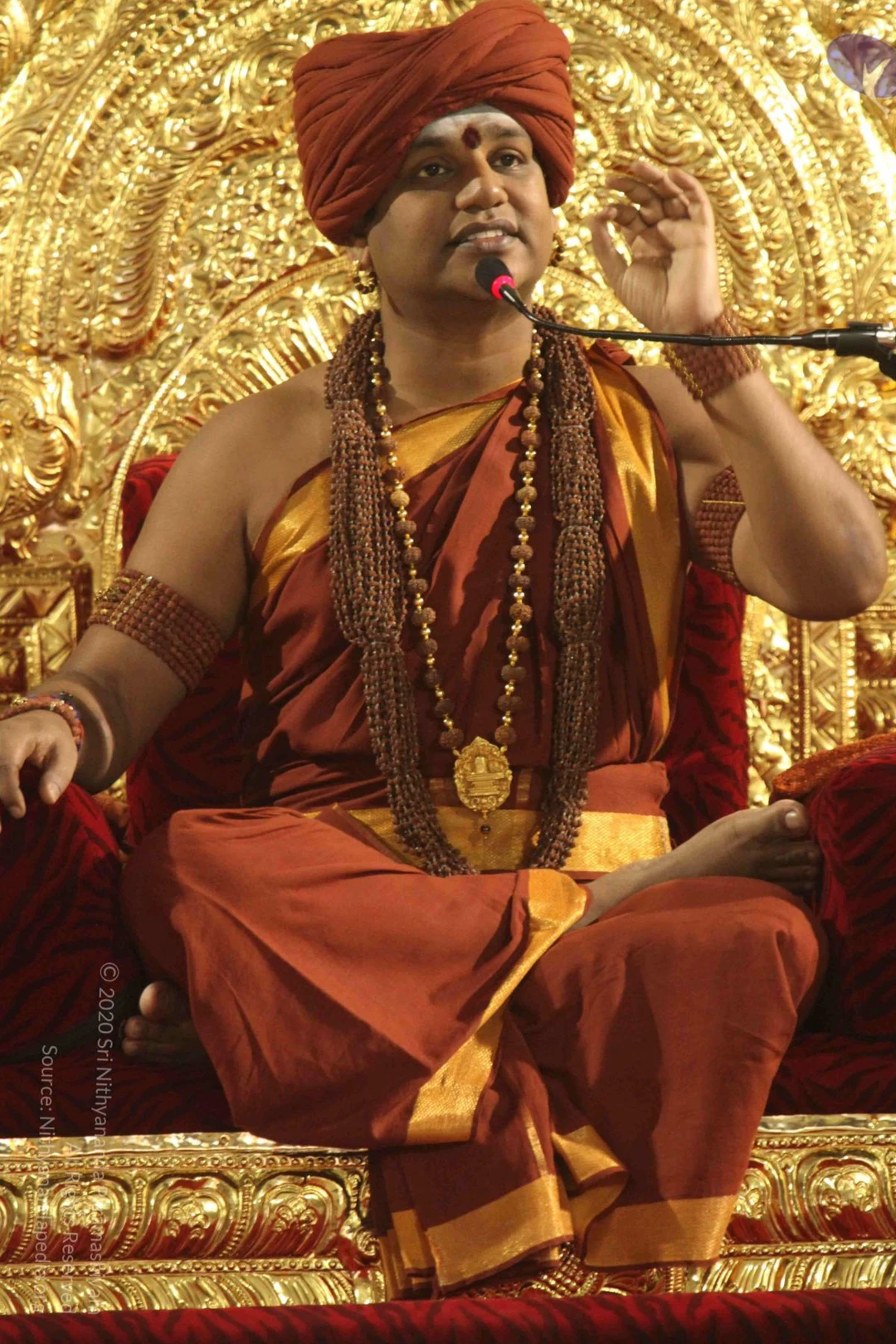
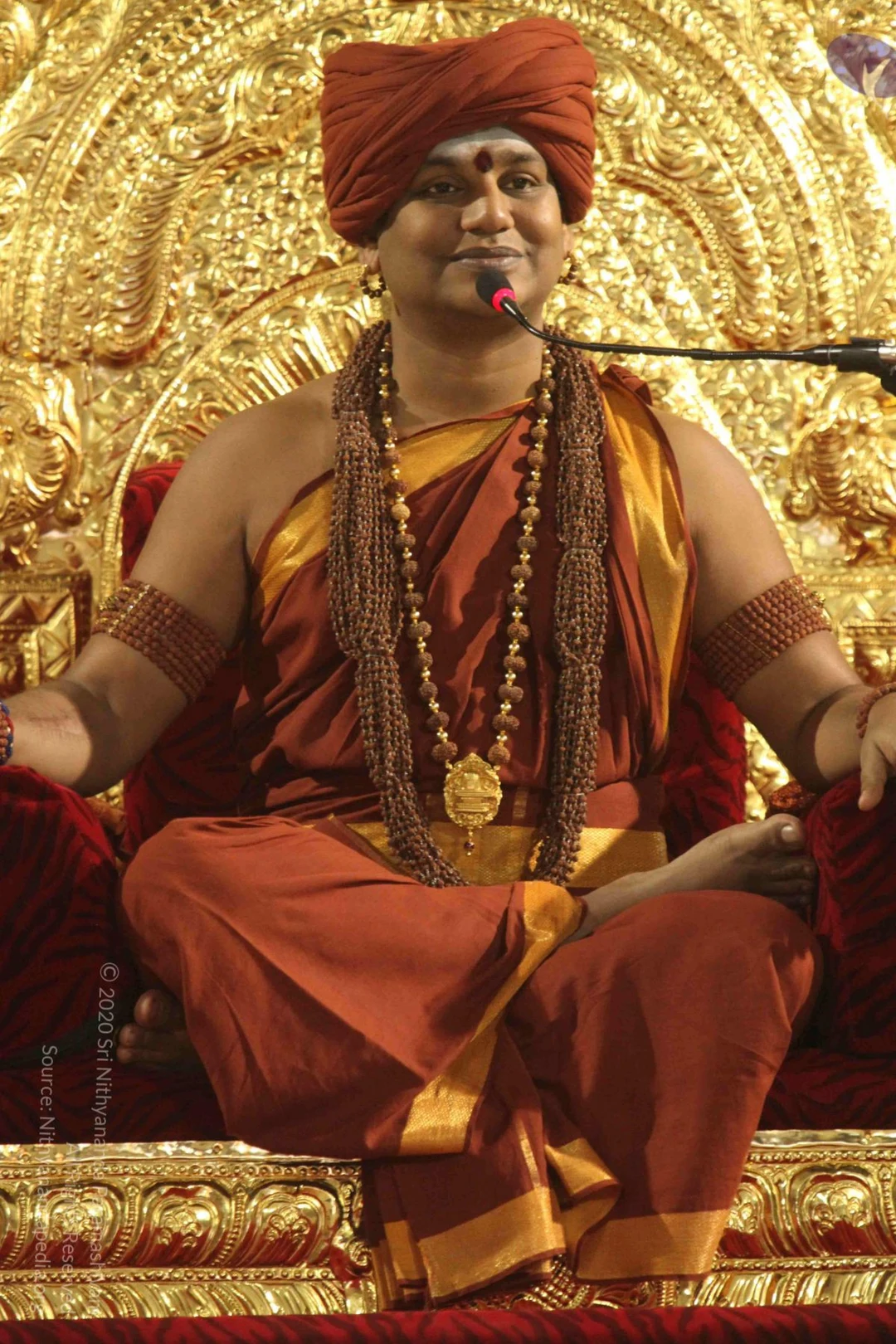
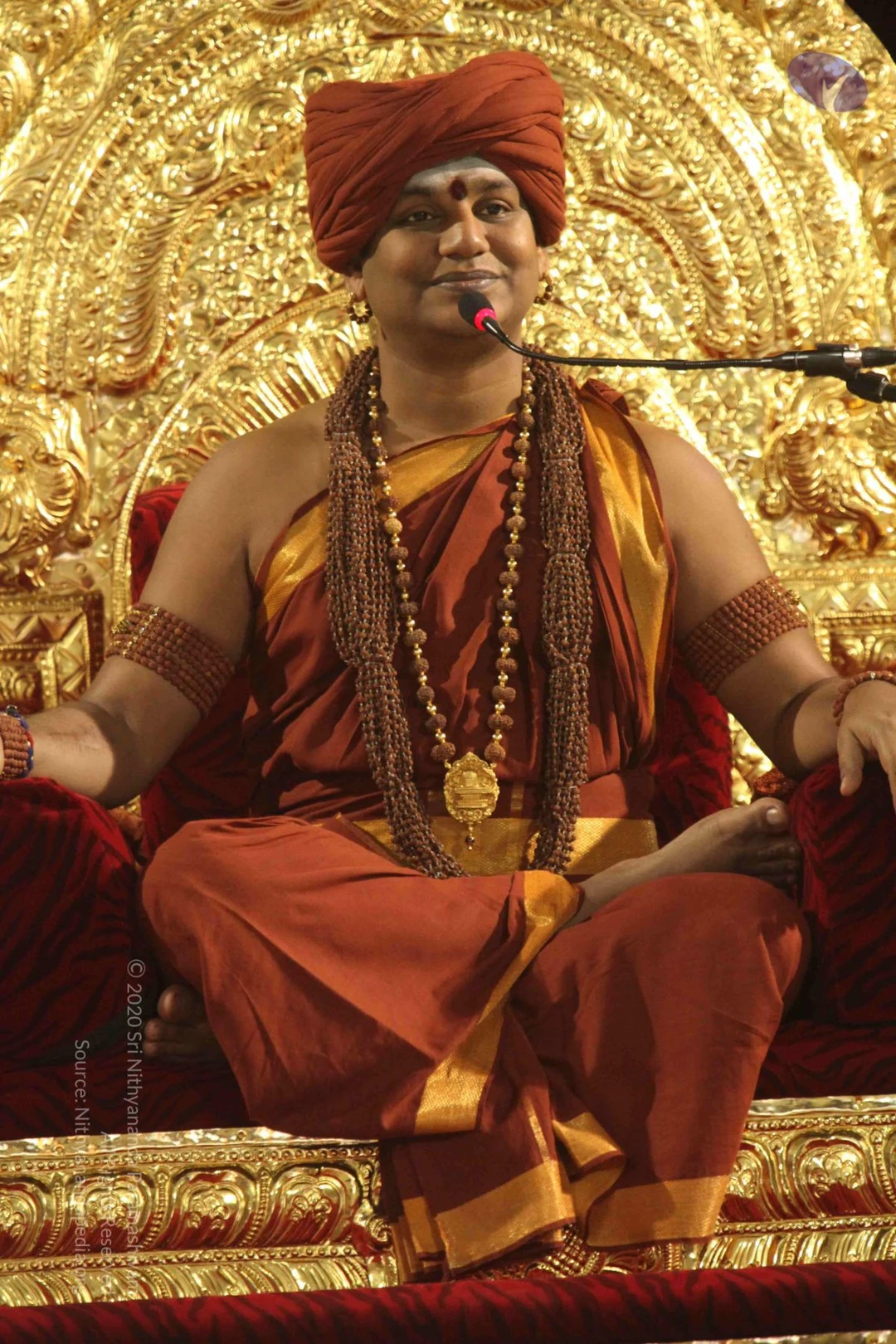
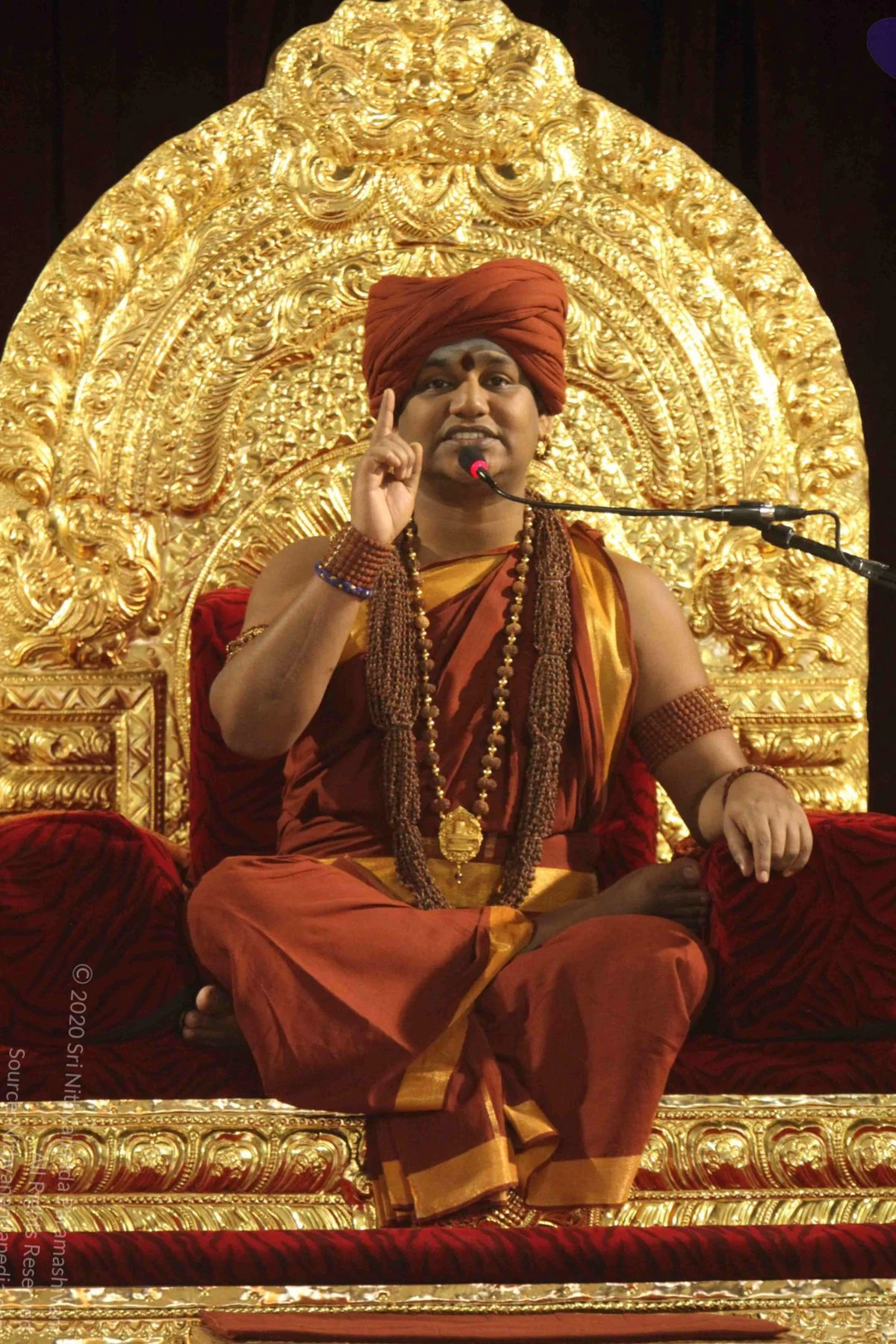
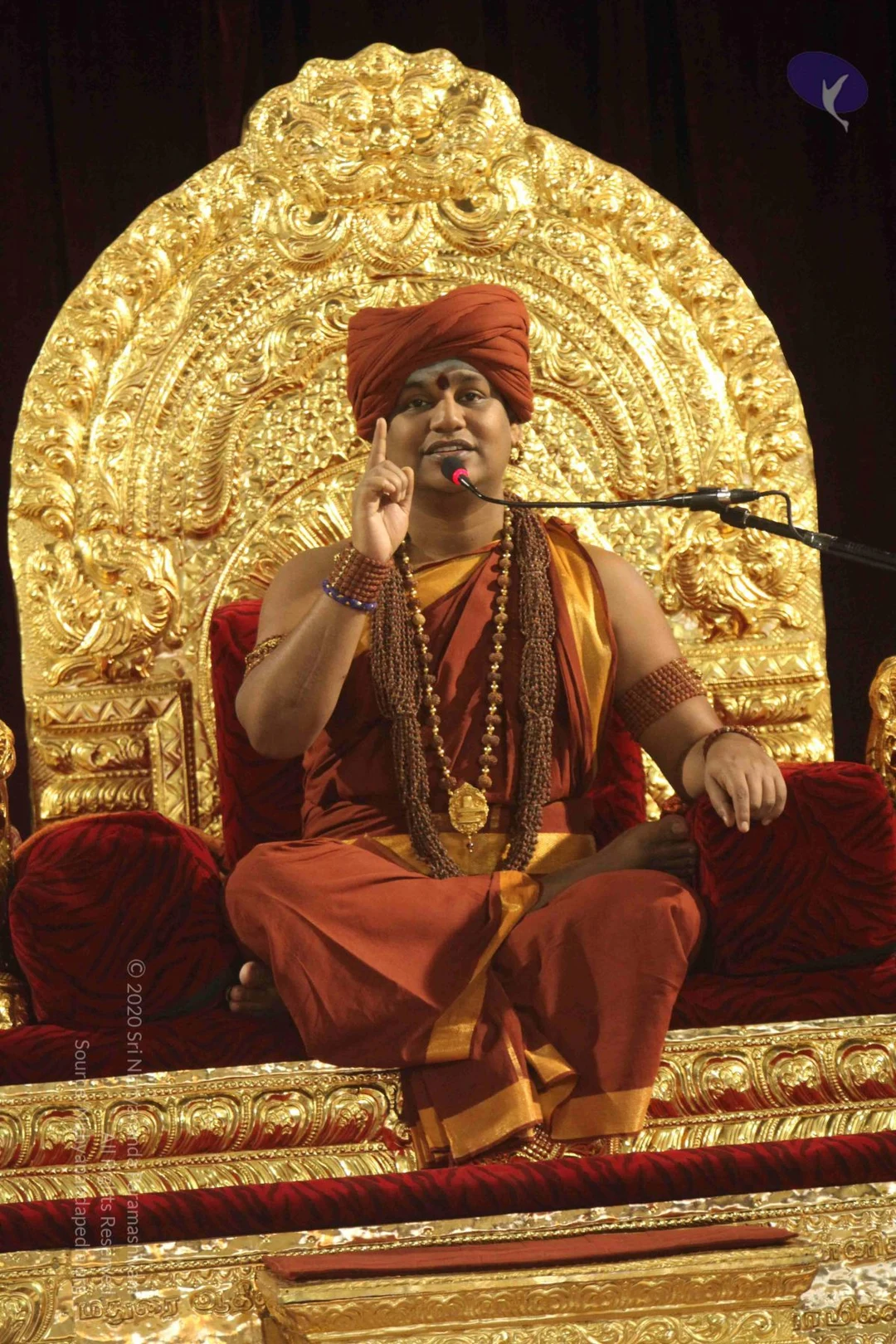
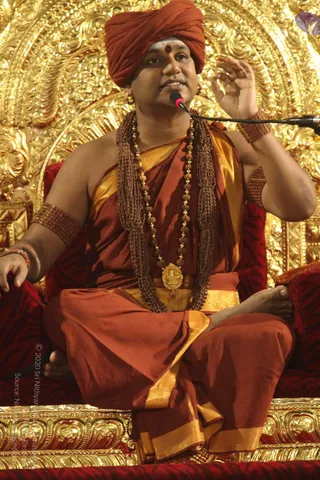
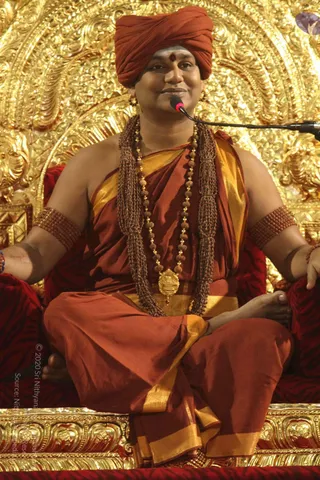
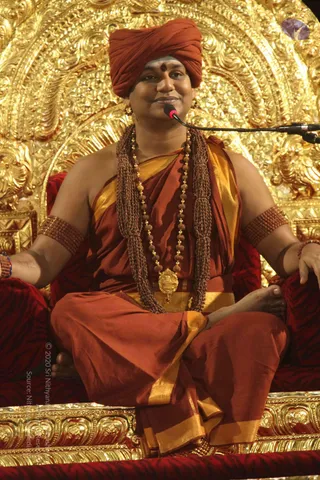
A seated man in an ornate golden throne with red zebra-patterned cushions speaks into a microphone on a dark red curtained stage. He wears a rust-orange turban, orange and gold robes, layered rudraksha mala necklaces, matching beaded bracelets on his upper arms and wrists, and a red tilak on his forehead. This is a photograph of a single person; the ornate gold backdrop and throne are prominent.A seated man in an orange-red turban and matching orange-red robes with gold borders sits on an ornate red and gold throne against a highly ornamented gold backdrop. He wears layered rudraksha malas, a gold pendant, gold bangles and a red bindi, and gestures with one raised hand while speaking into a microphone. Swamiji (probable): the orange turban, saffron robes, layered rudraksha malas and ceremonial gold ornaments match the candidate presentation, and he is teaching from the throne.A seated man in an orange-red turban and saffron-orange draped garments with gold border sits cross-legged on a red velvet seat before an ornate gold-leafed backdrop. He wears layered rudraksha mala necklaces, a gold pendant, rudraksha armbands and a red bindi, and a microphone stands at his side as he speaks to an audience. Appearance-based cues (turban, saffron/orange clothing, rudraksha malas, gold ornaments) are consistent with the page's Swamiji (probable) label, so the presenter is described as Swamiji (probable) delivering a discourse.Swamiji (probable) is seated cross-legged on an ornate gold throne with carved gold filigree behind him and red cushions beneath. He wears a red-orange turban, a red-orange and gold-bordered robe, layered rudraksha malas, a gold pendant, rudraksha bracelets and a red bindi. A microphone is at his mouth as he speaks with a slight smile.A seated man in an orange-red turban and matching saffron-red robe with gold borders speaks into a microphone while raising one index finger. He wears layered brown rudraksha malas, a gold pendant, beaded bracelets and an armband. He sits on a red velvet cushioned seat in front of an elaborately carved gold throne backdrop, with a gold-edged dais below. Only one physical person is visible.A man seated cross-legged on an ornate gold throne with a carved gilded arched backrest and red velvet cushions, speaking into a microphone on a stand. He wears an orange-red turban, an orange-red shawl with gold border, multiple strands of rudraksha beads, a gold pendant and beaded bracelets, with a red tilak on his forehead. He raises one index finger while gesturing with the other hand, as if making a point during a discourse.