Skip to content
Saturday

20 June 2015

Completion Process For Health, Wealth, Relationships and Enlightenment

Dated photos
536
Source pages
1
Media
8
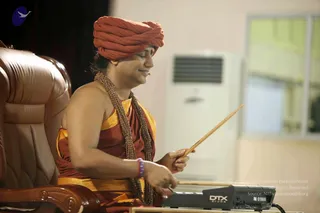
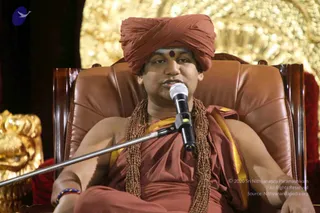
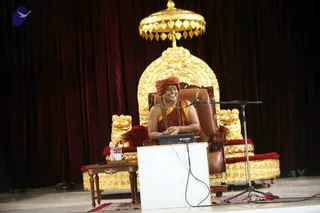
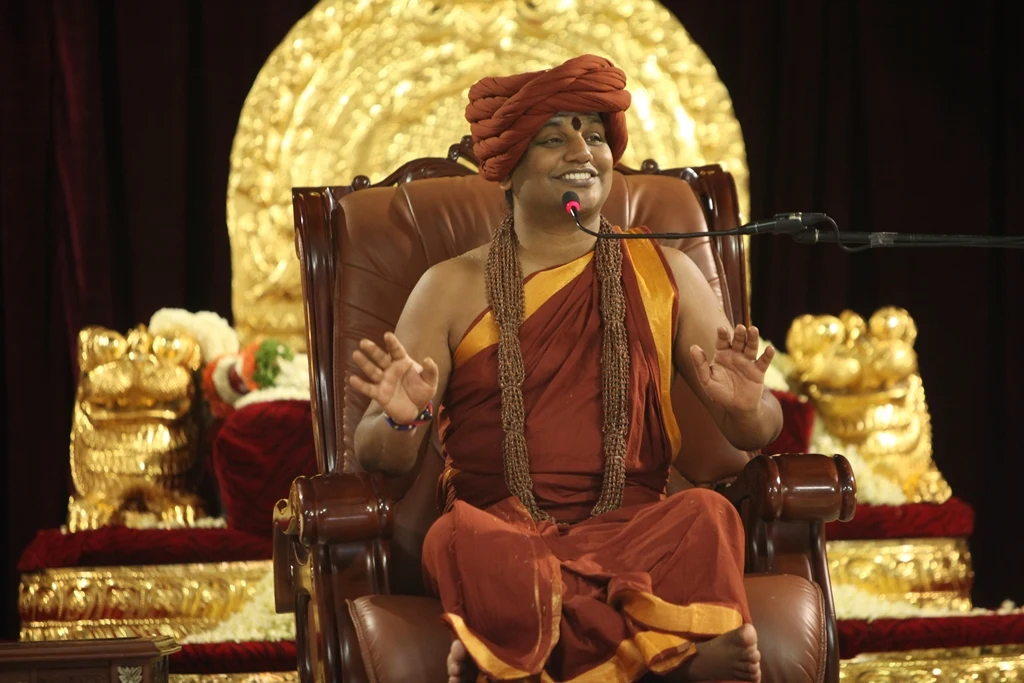
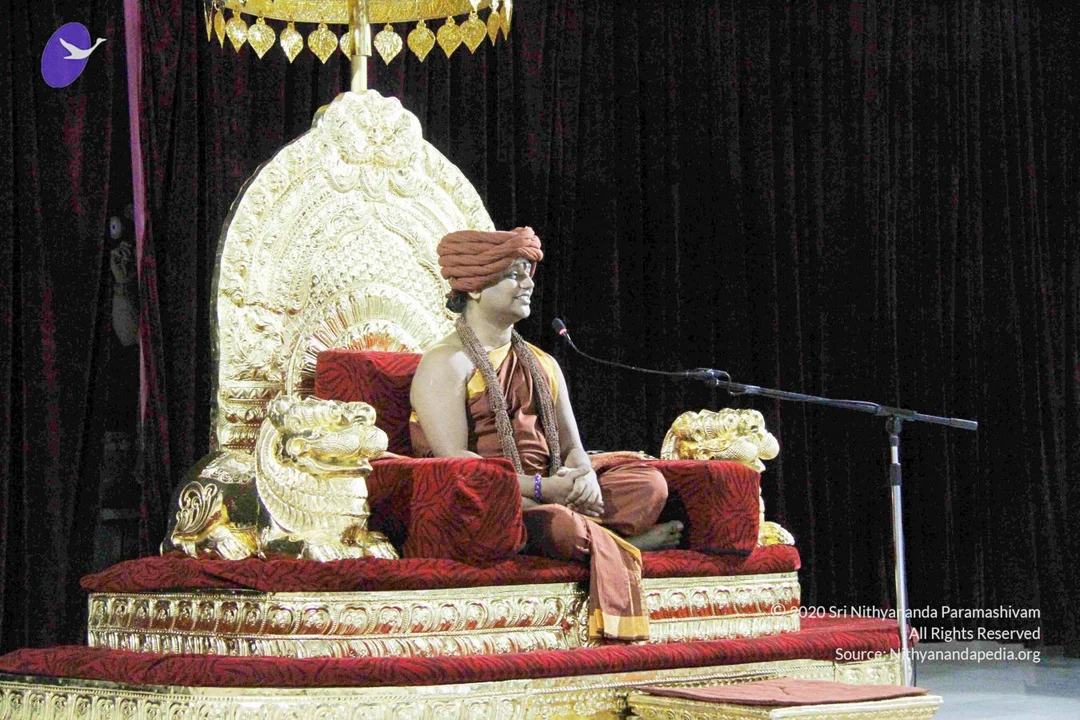
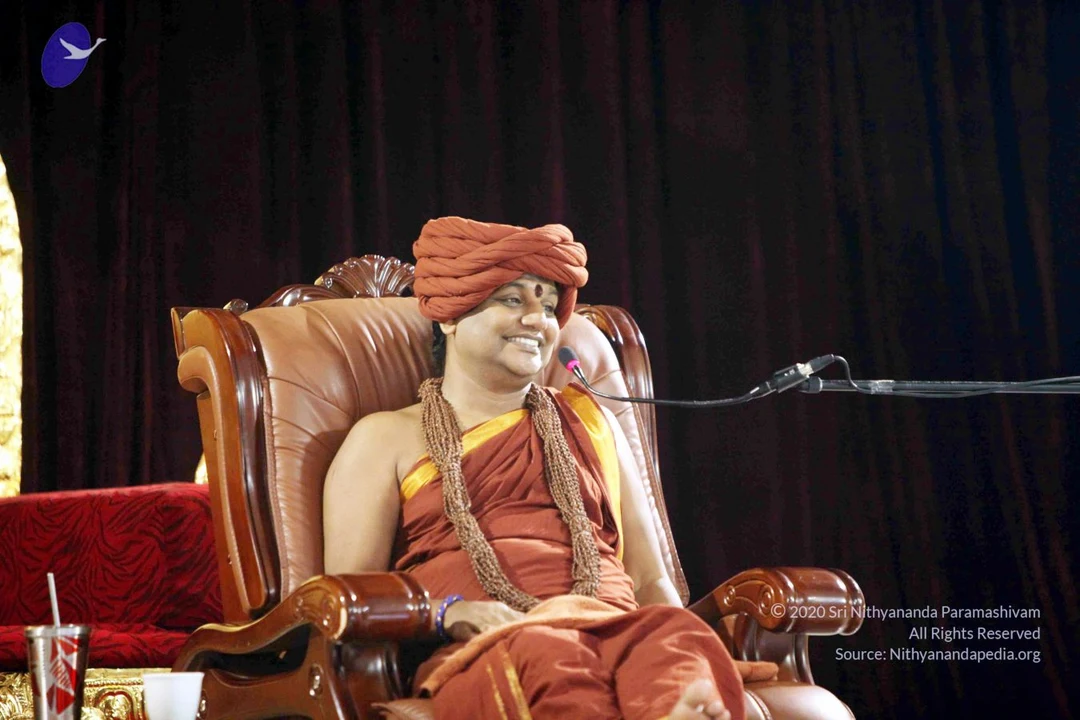
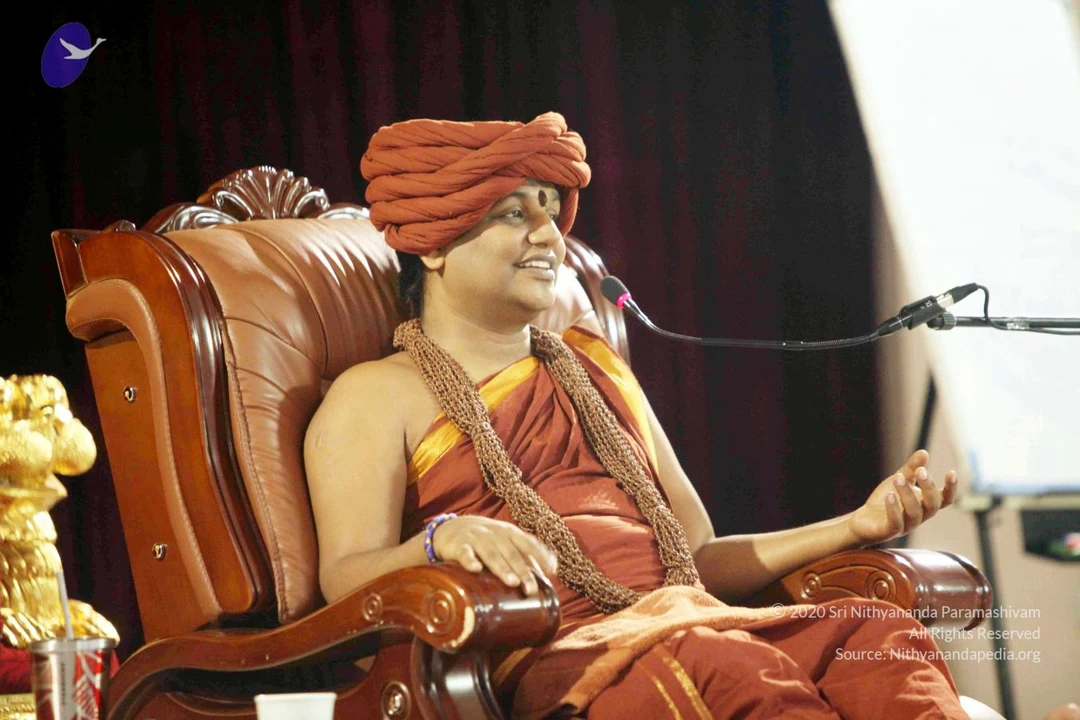
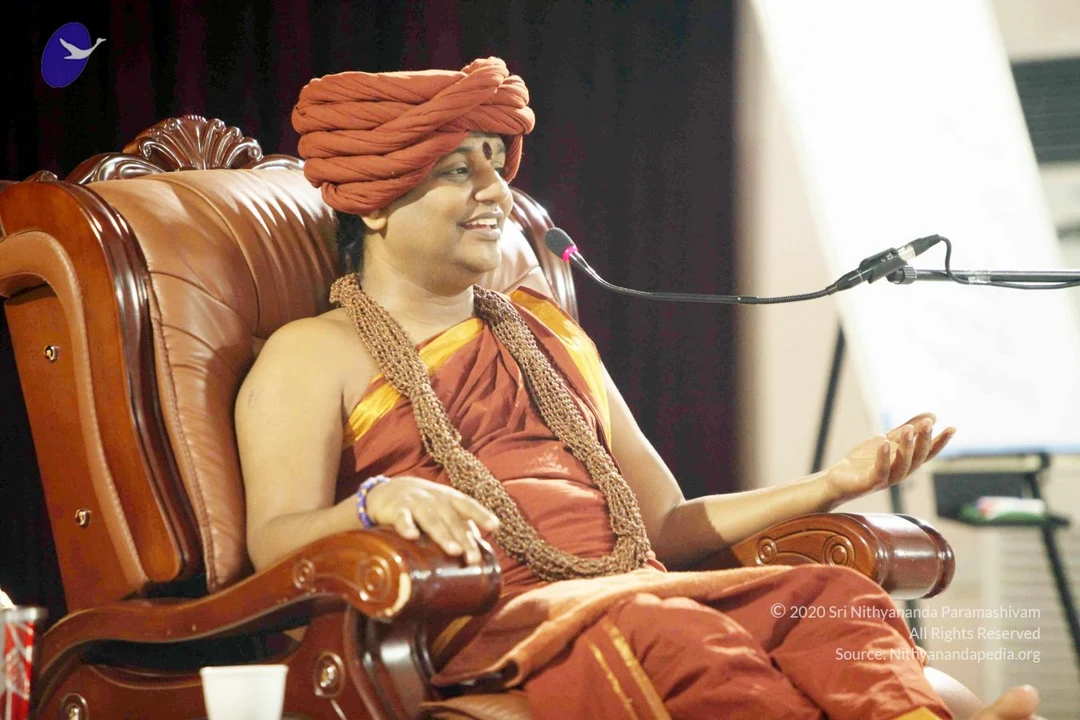
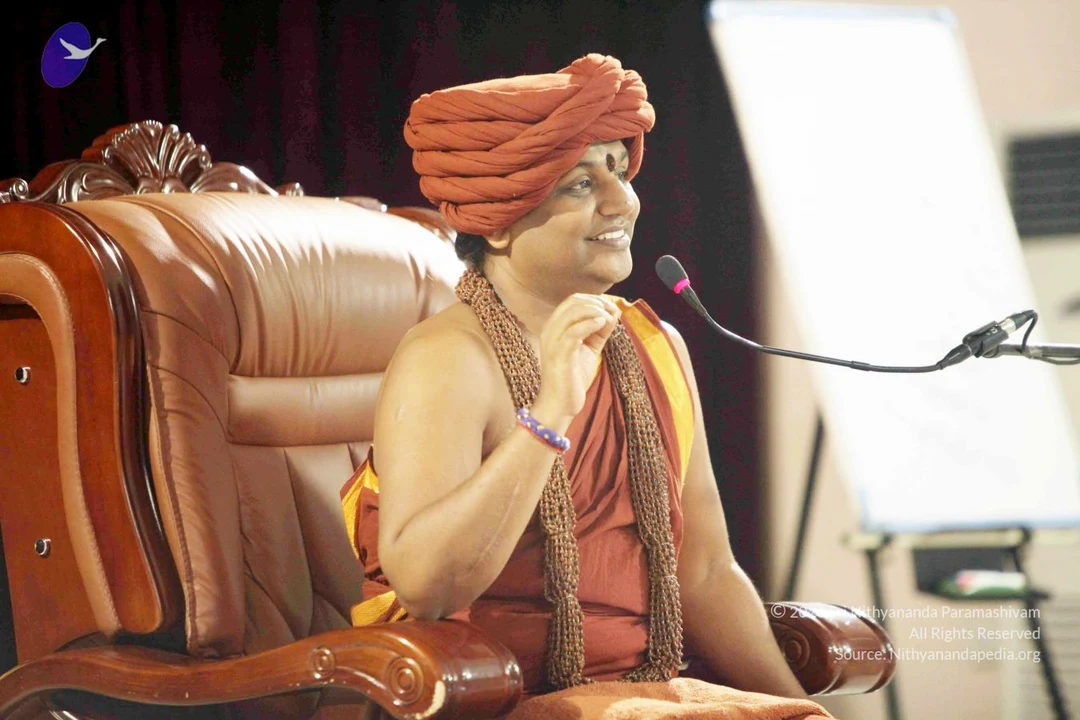
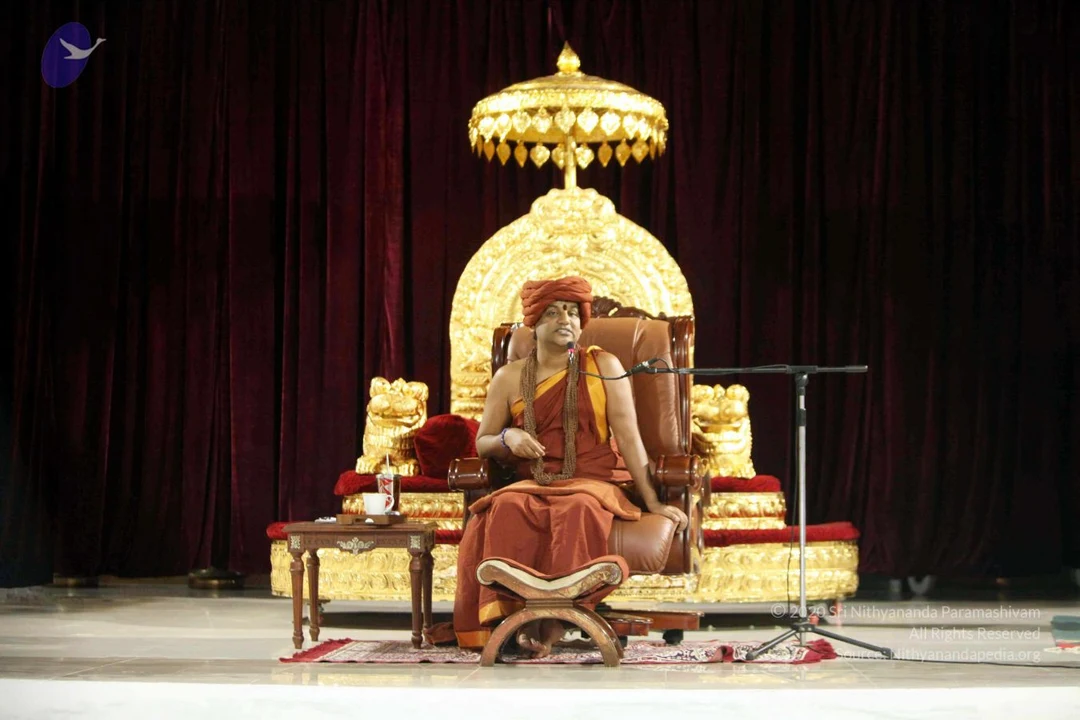
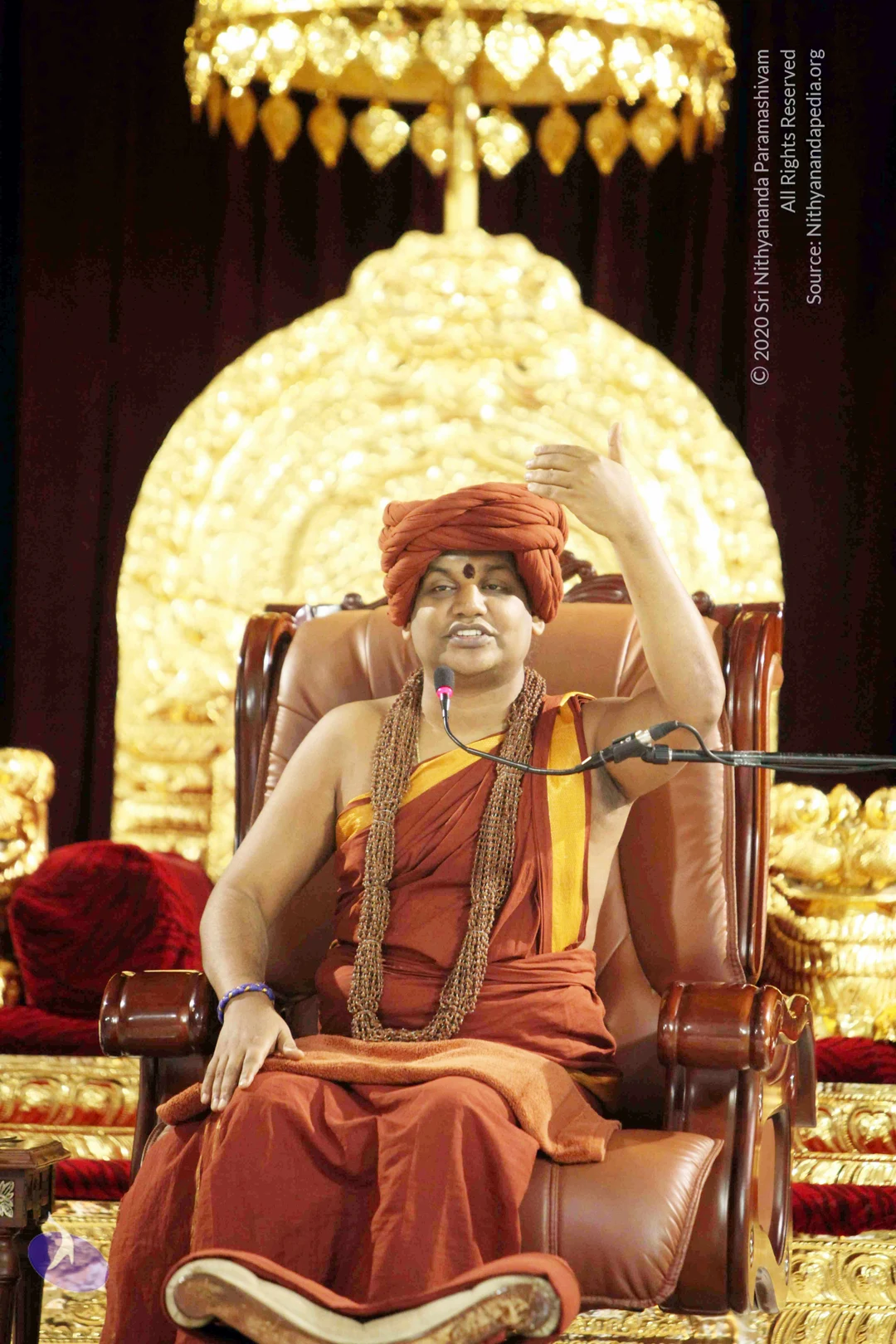
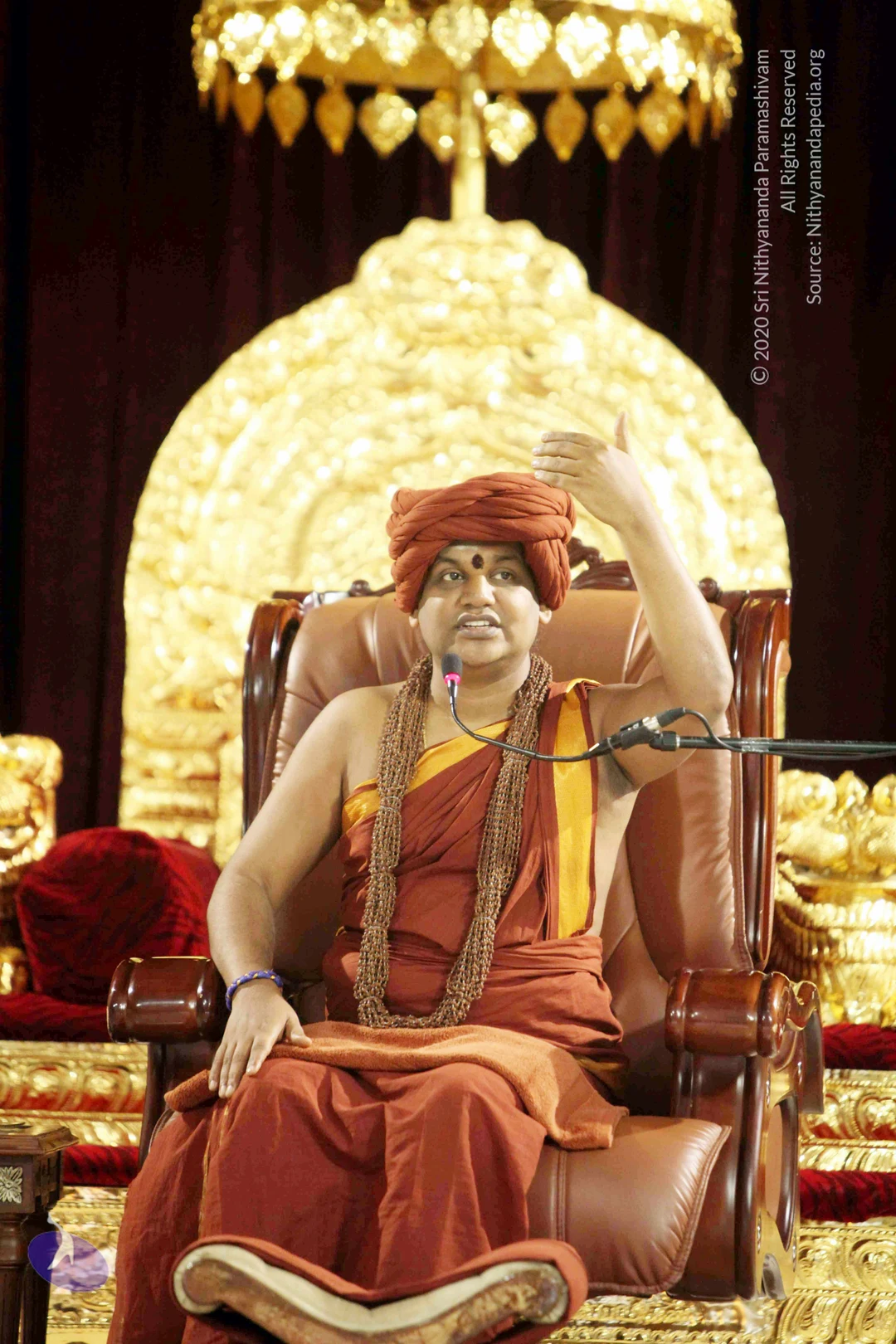
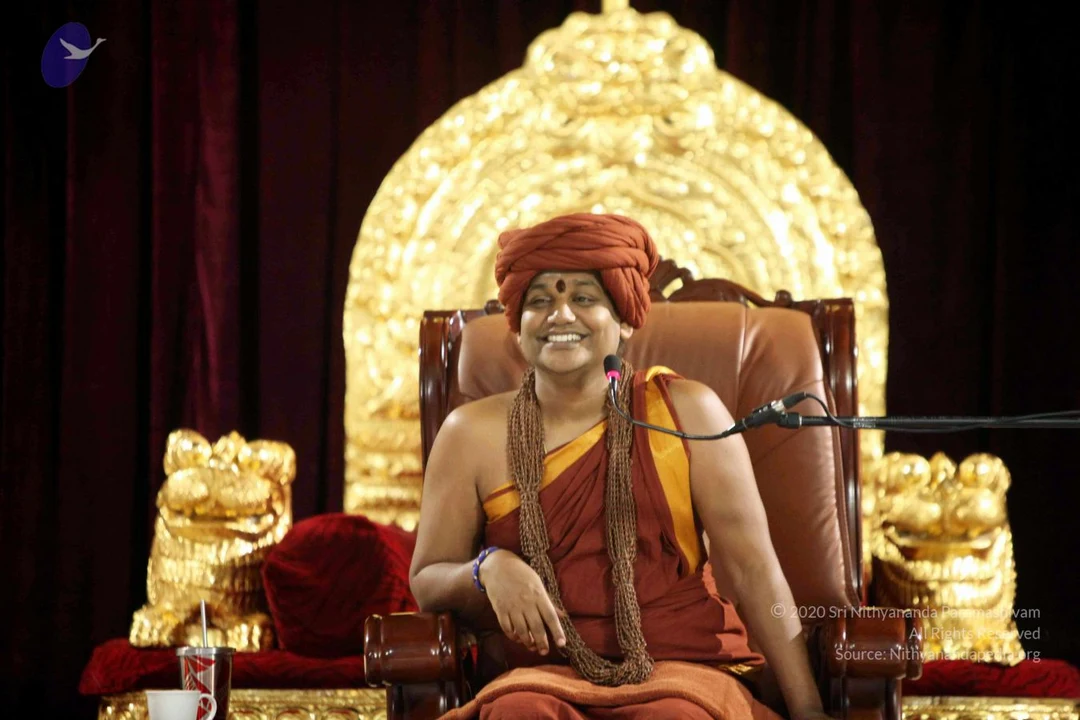
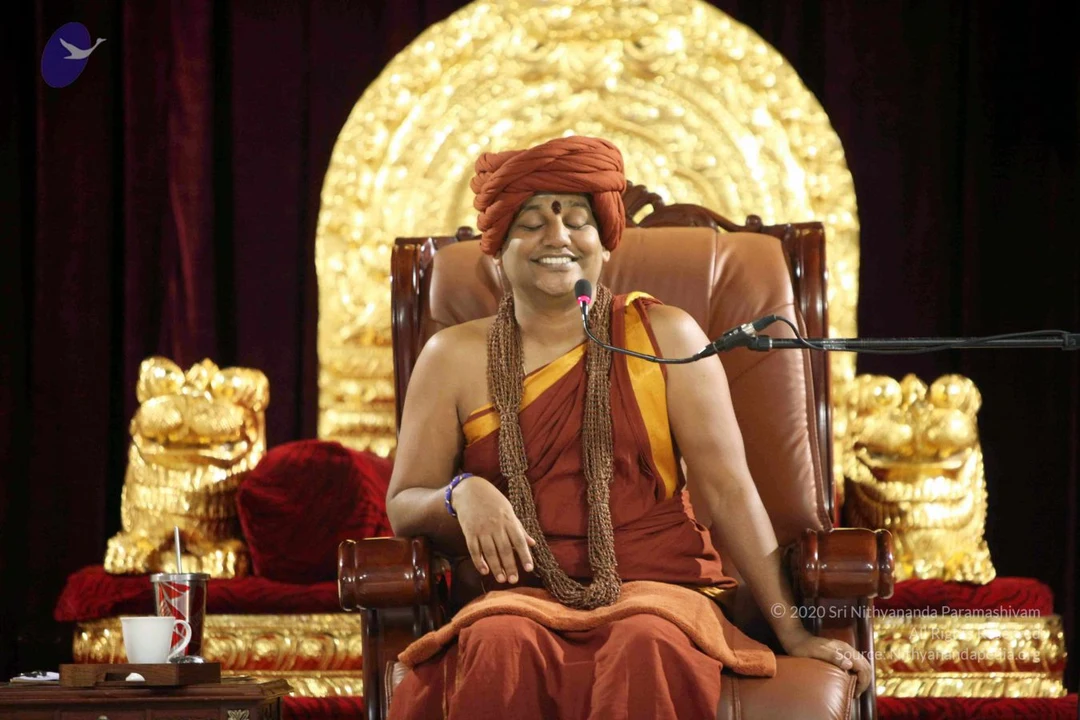
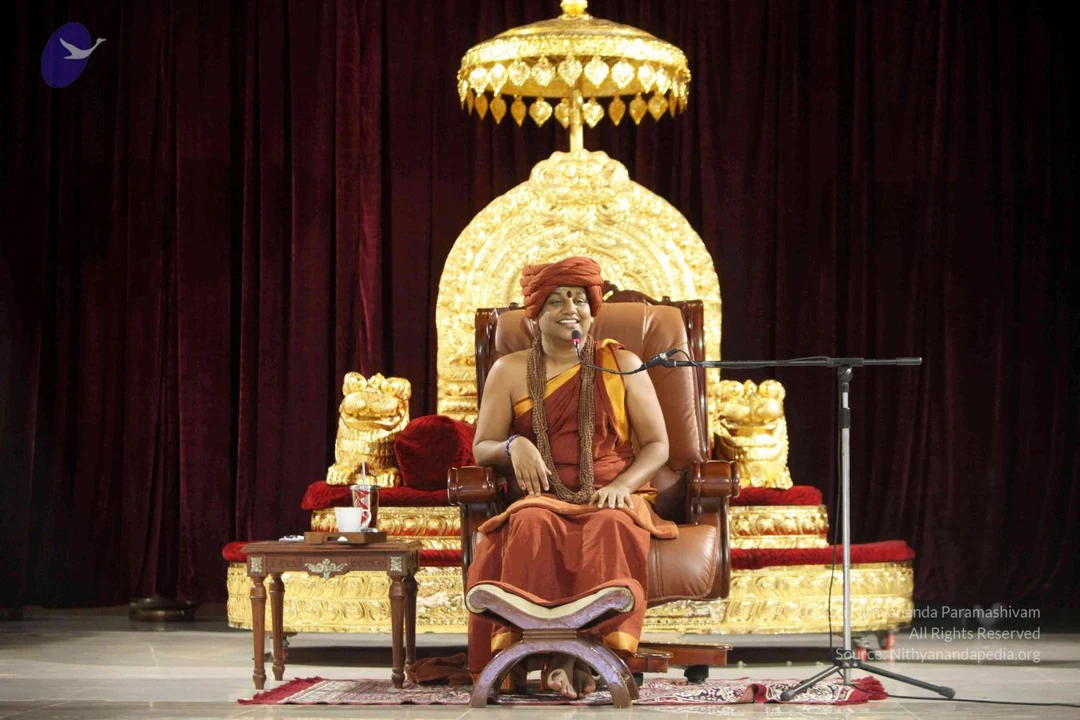
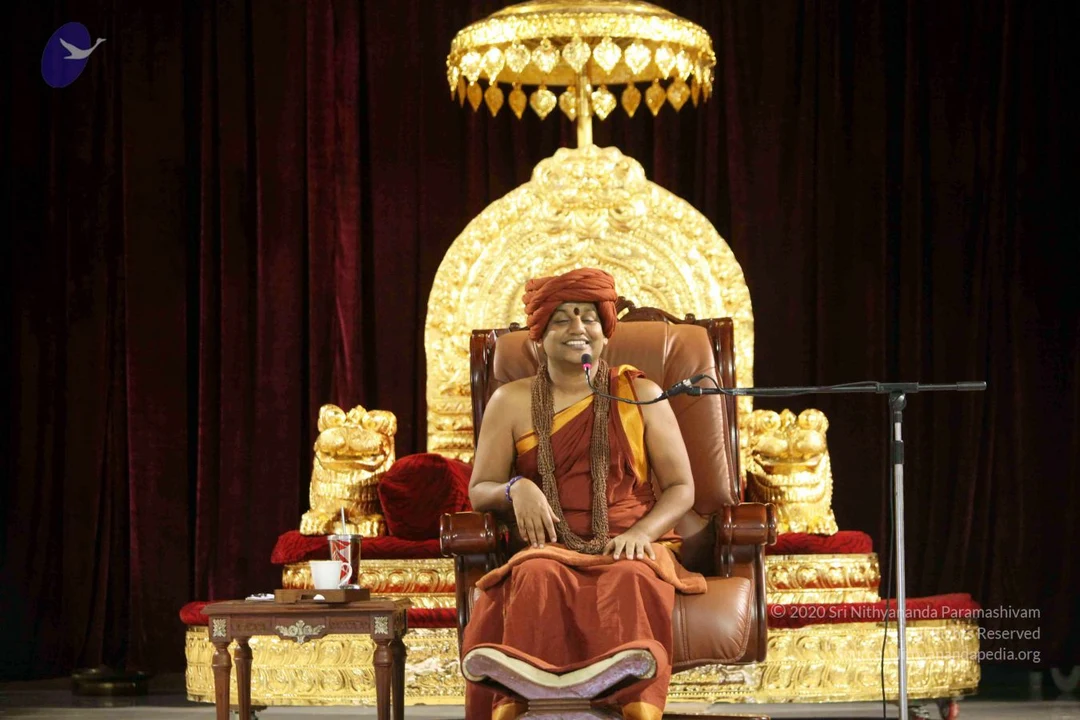
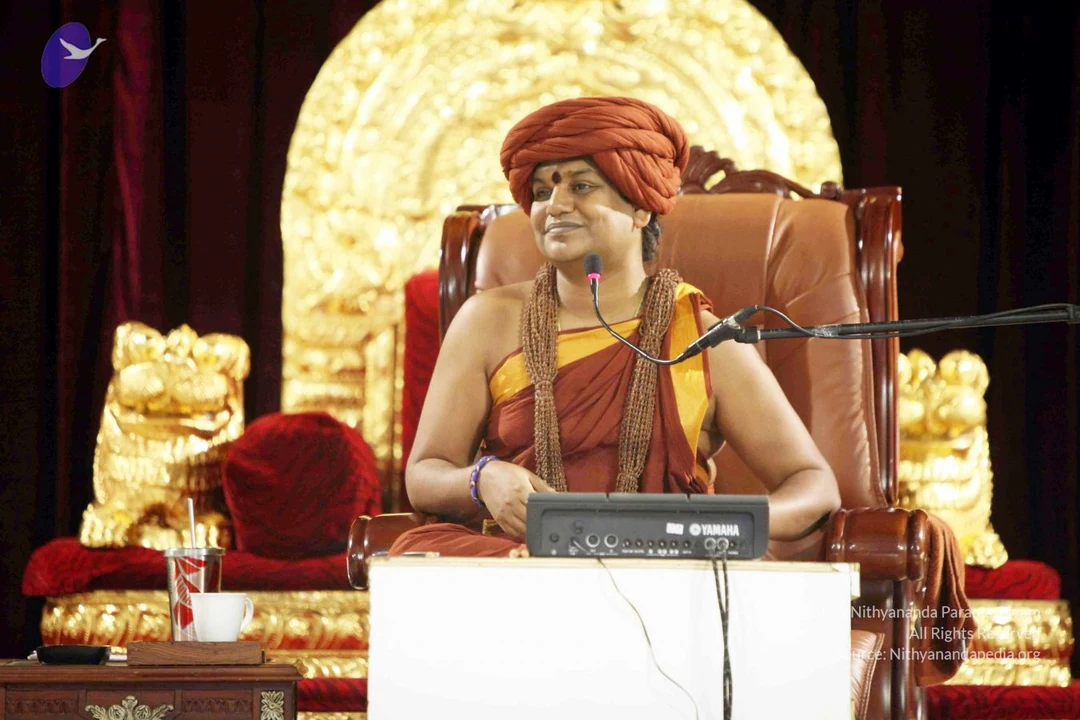
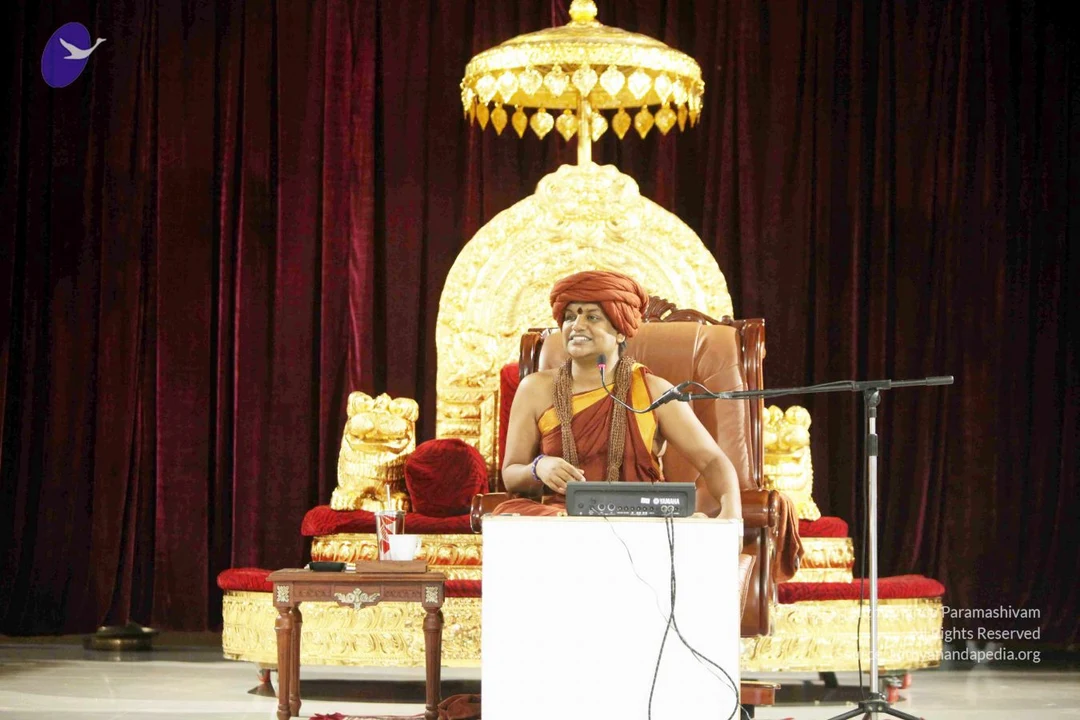
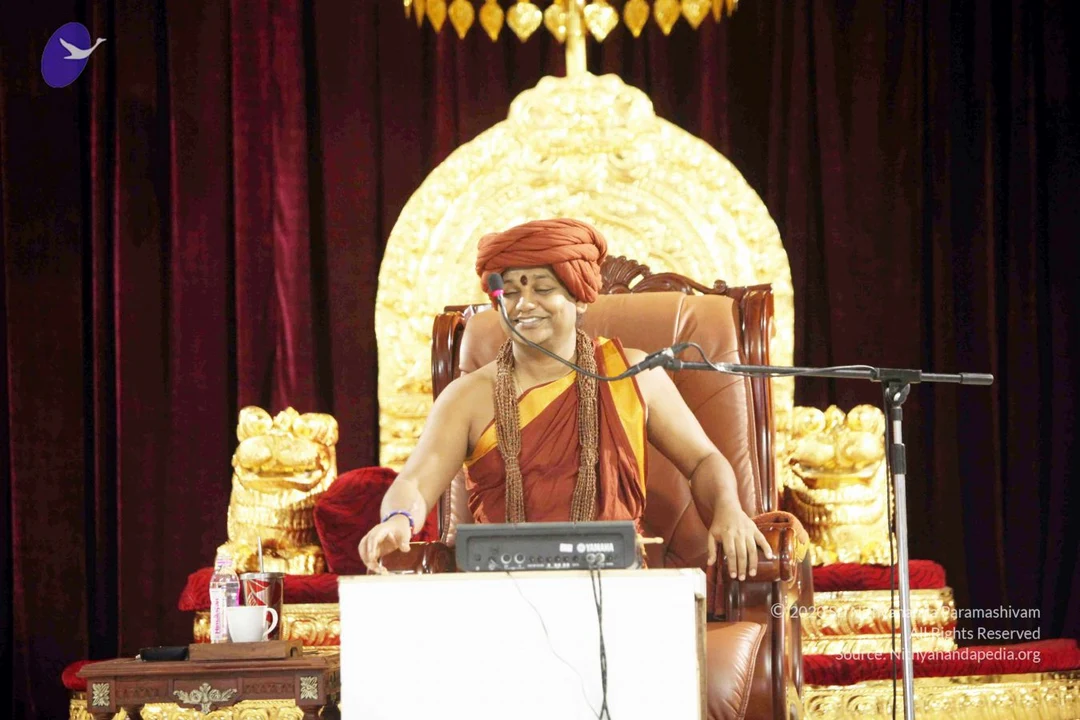
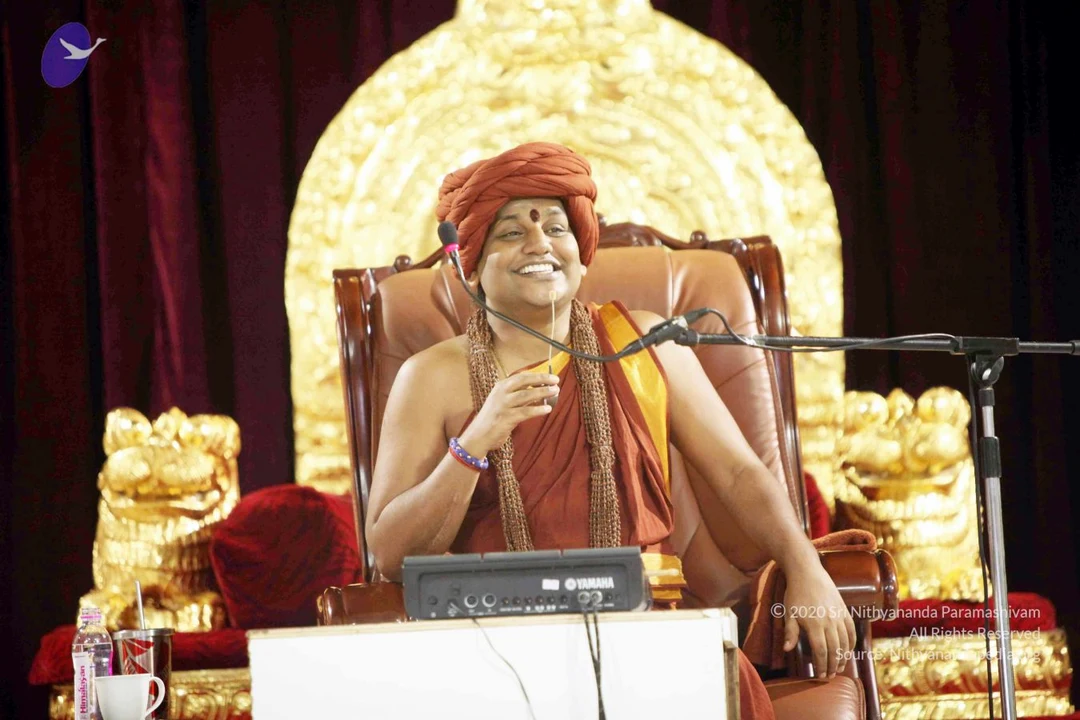
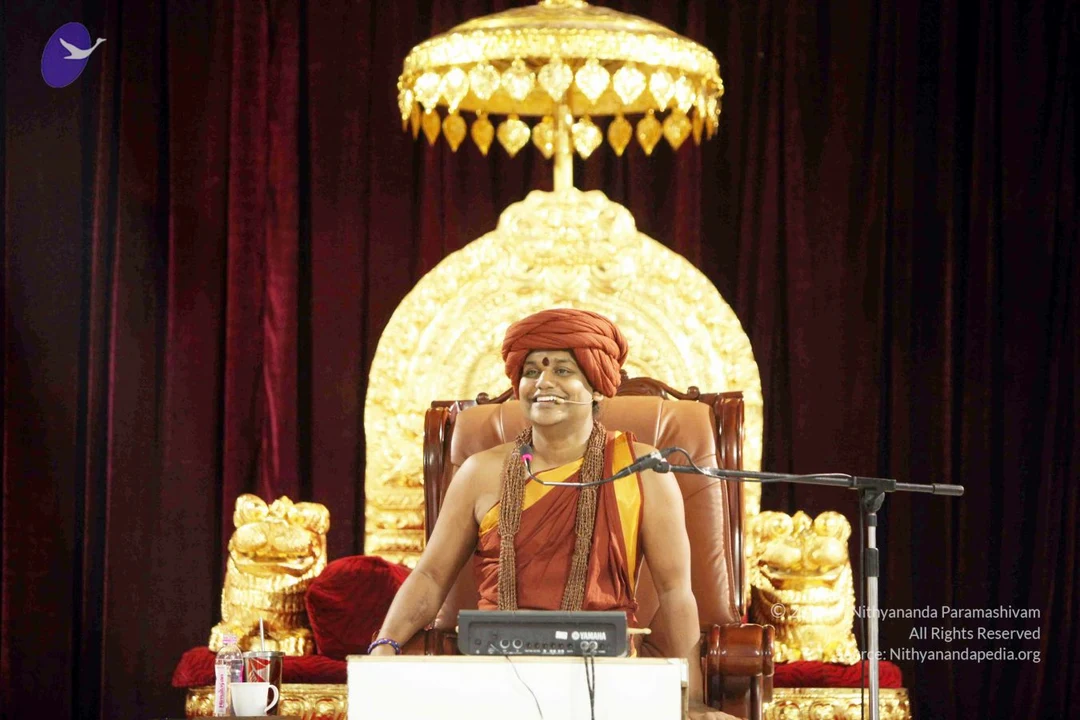
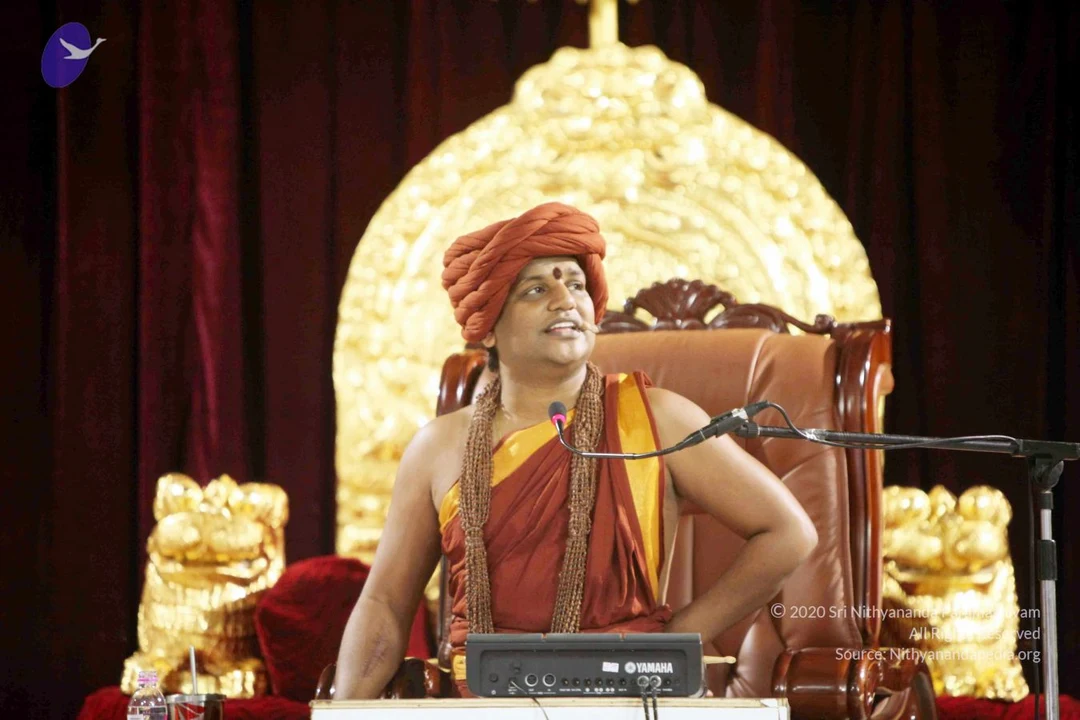
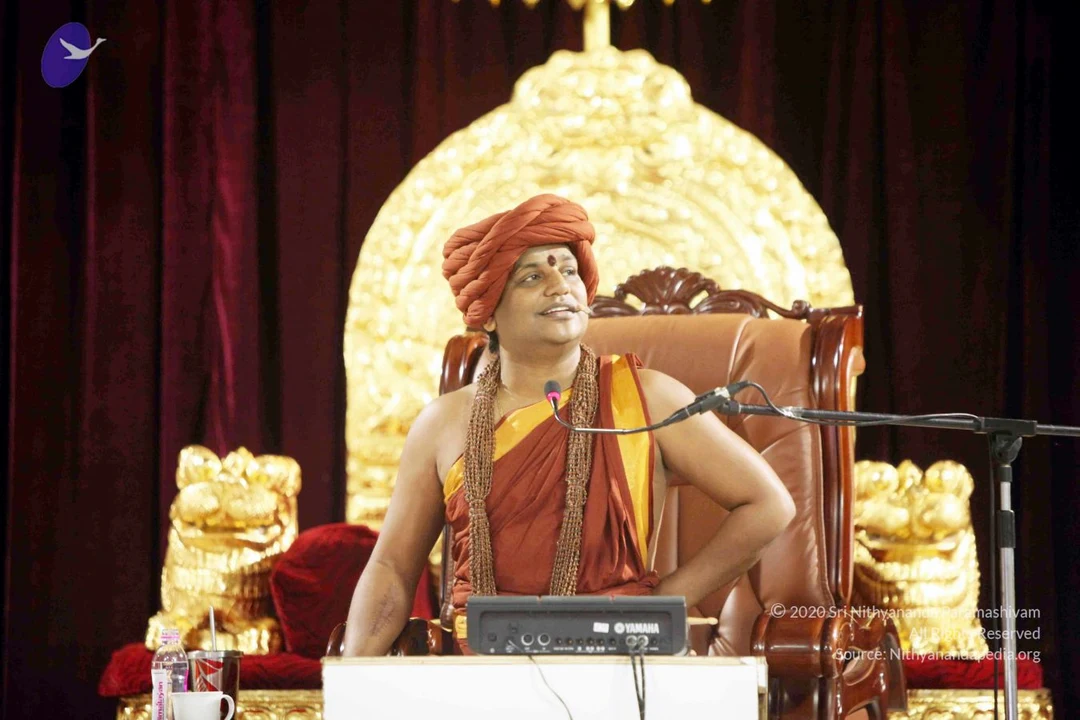
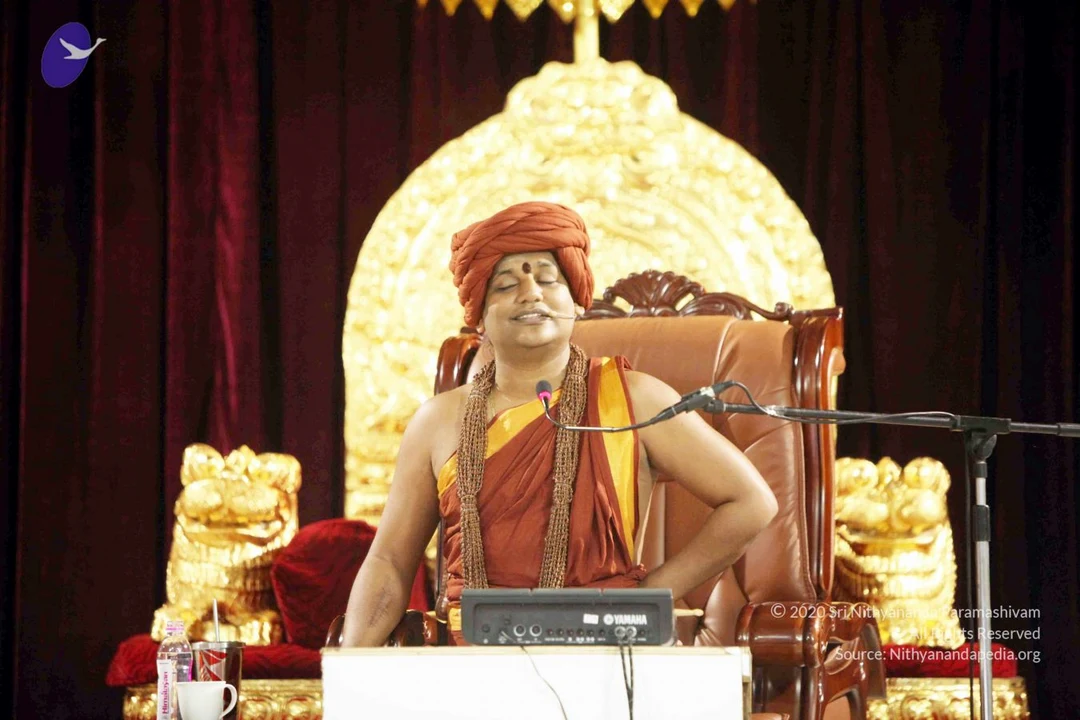
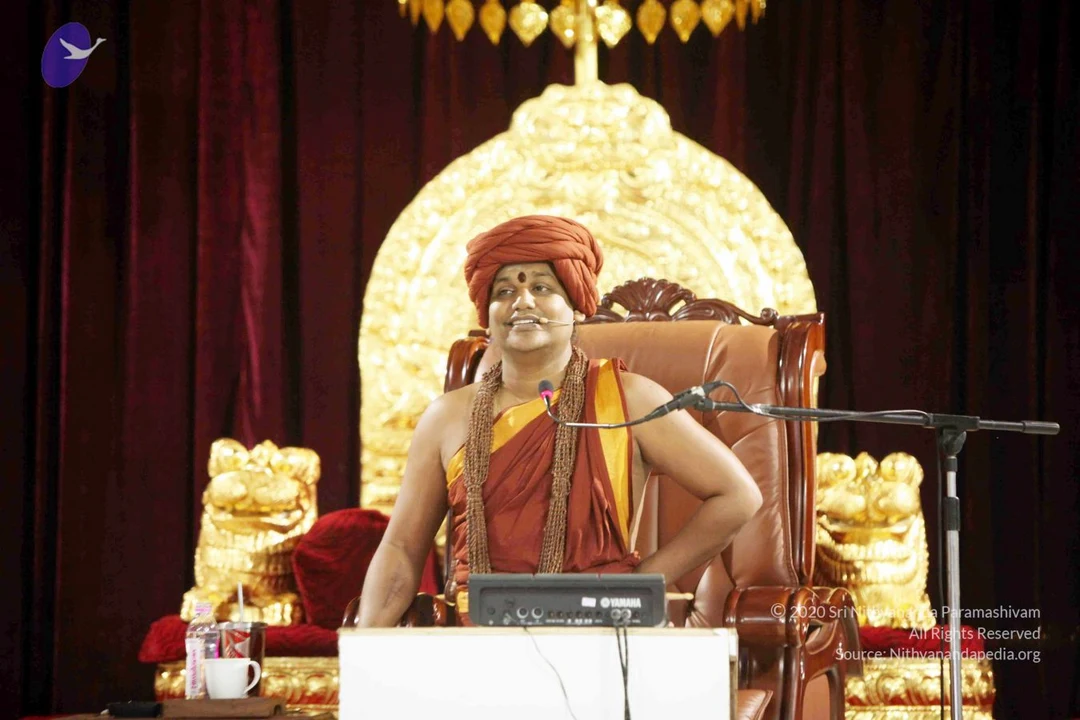
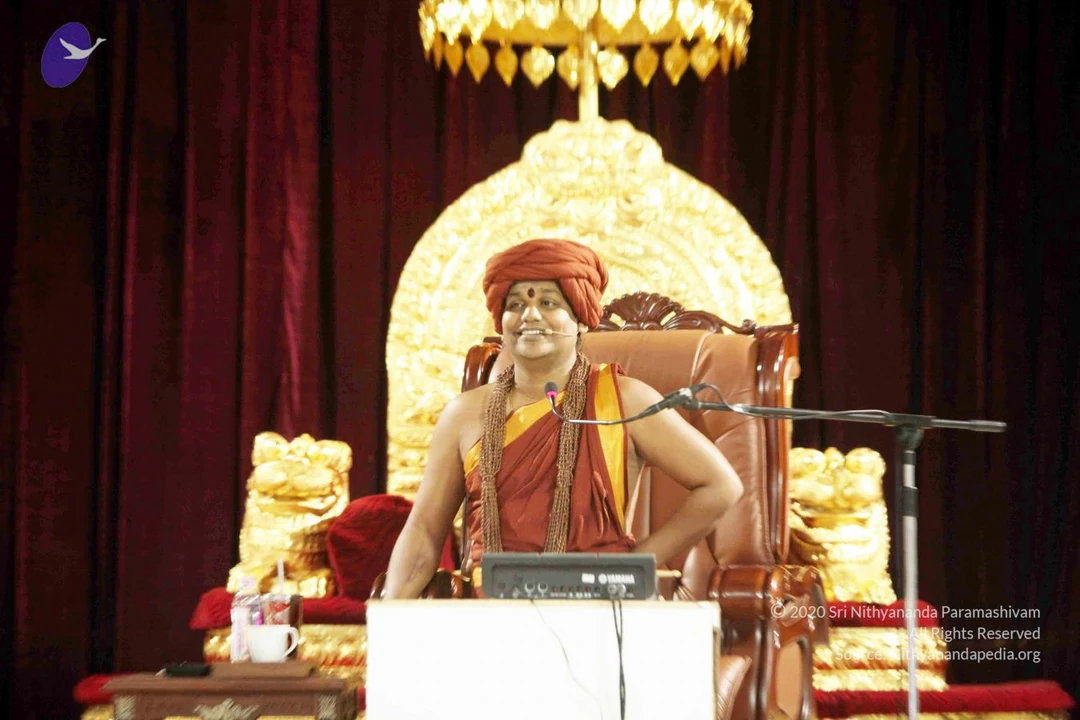
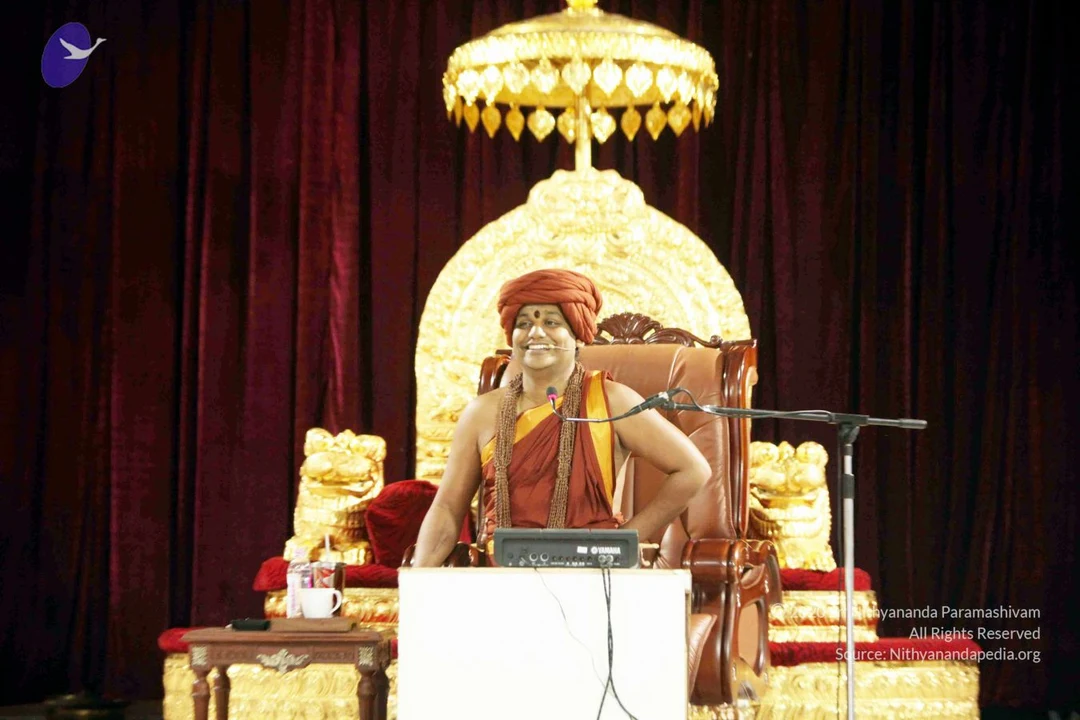
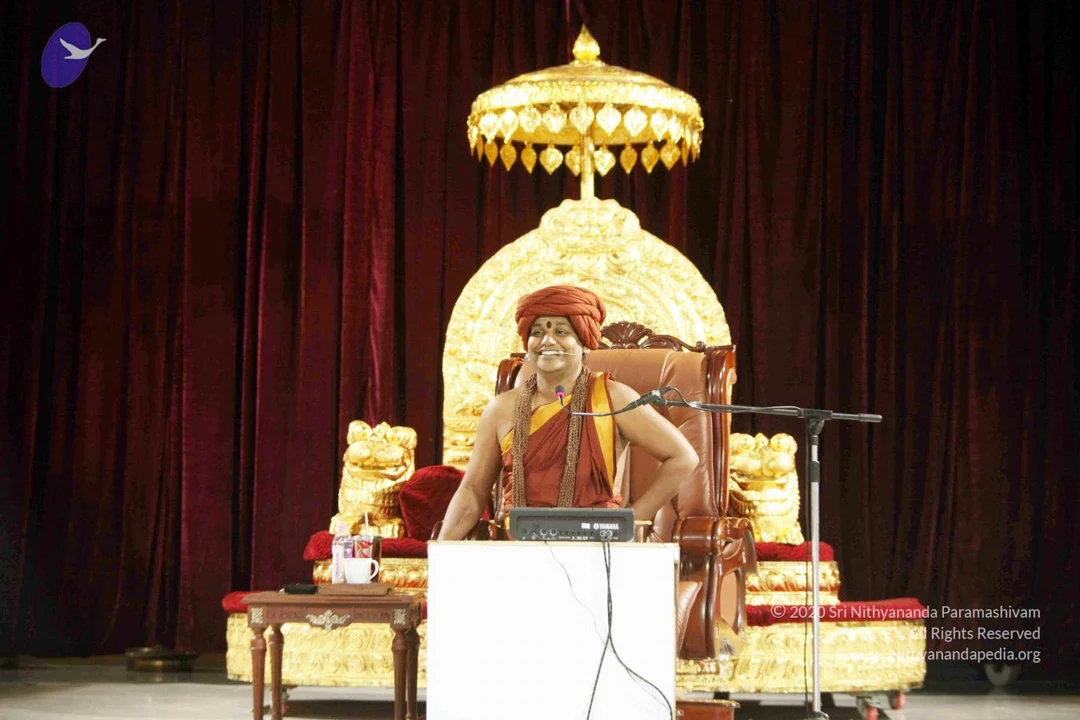
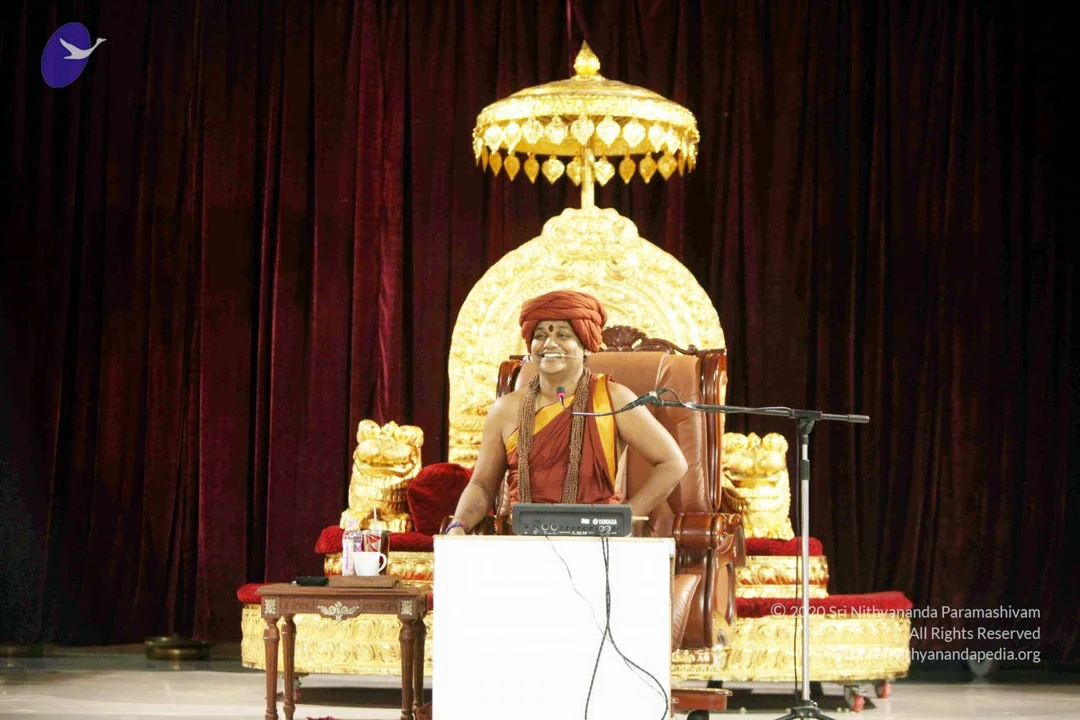
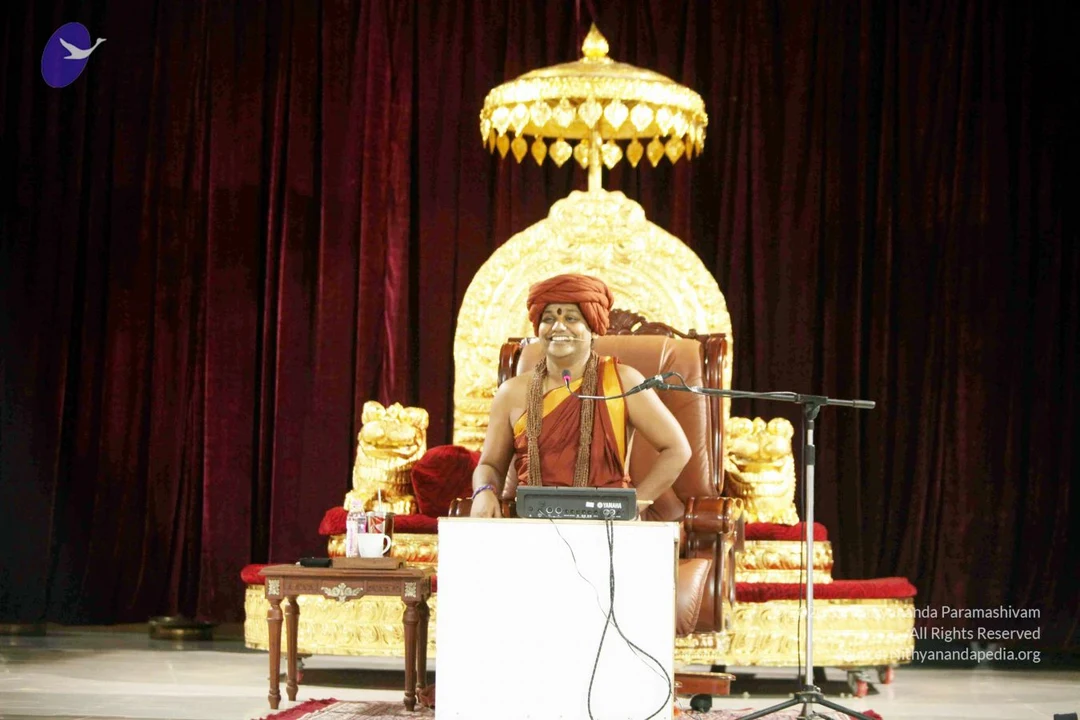
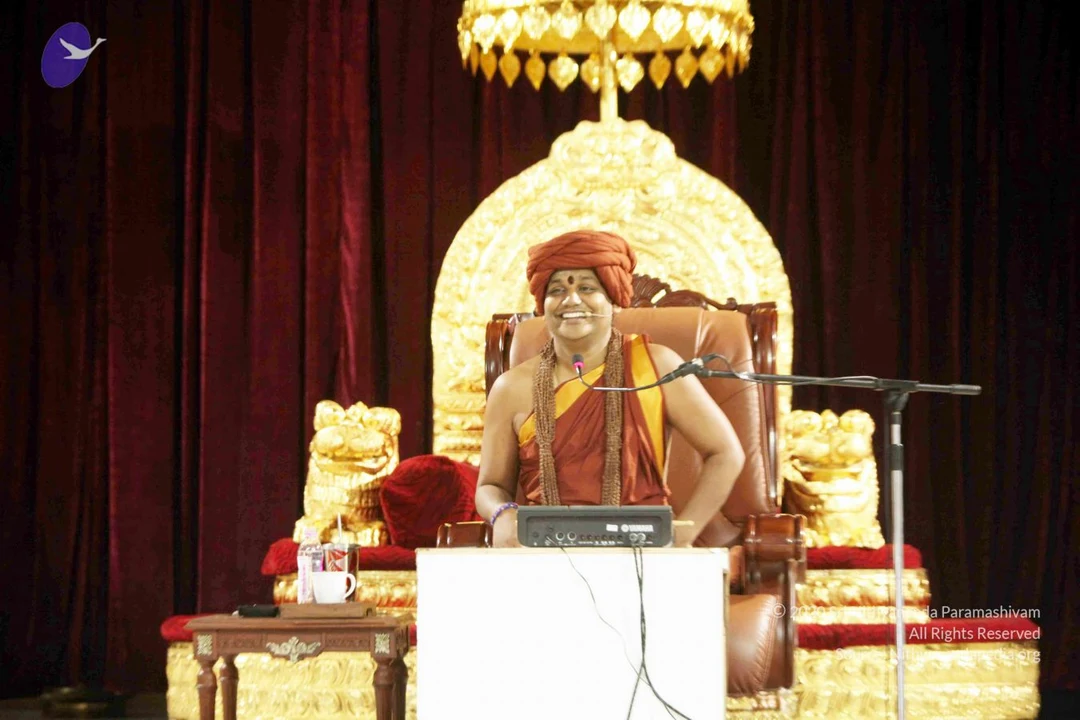
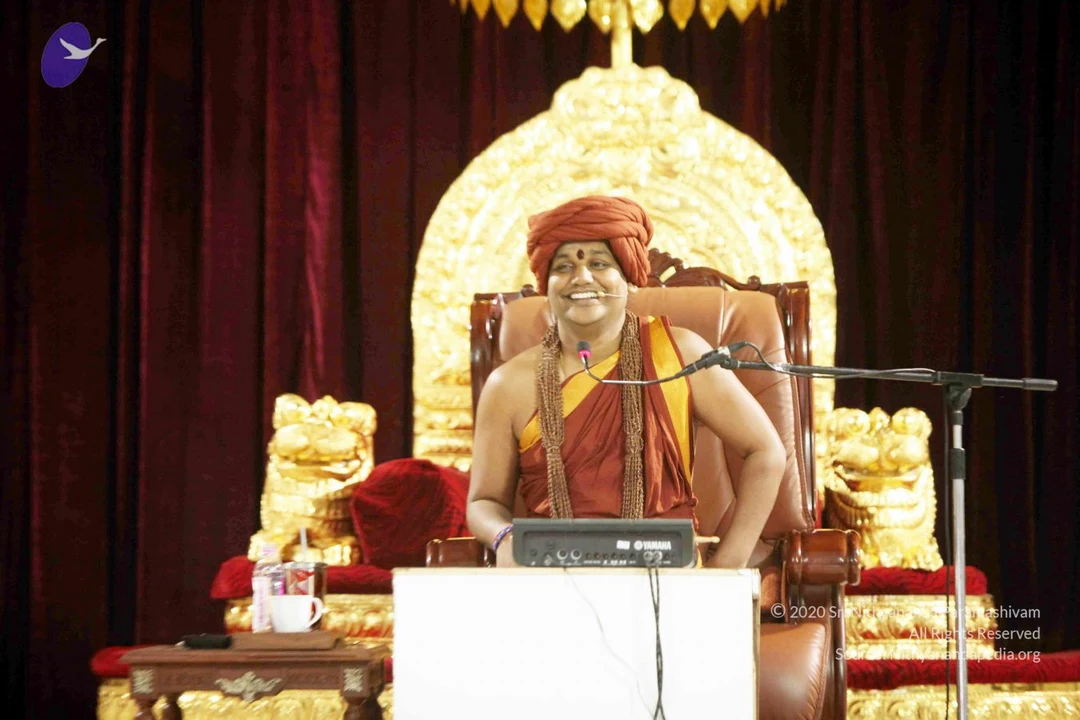
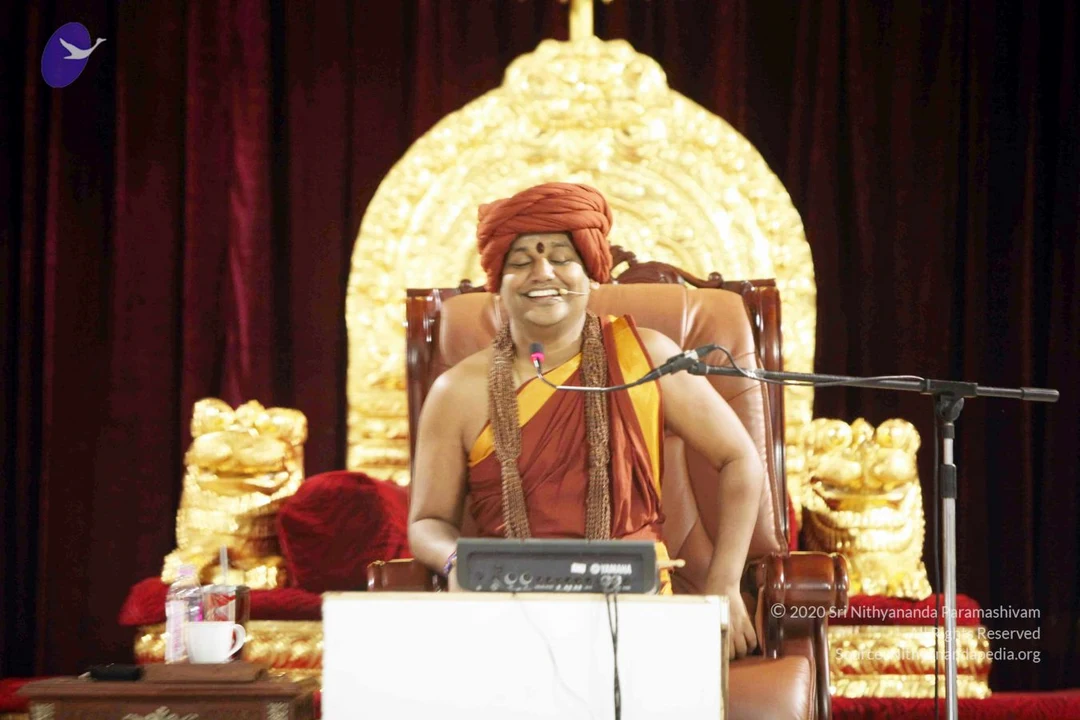
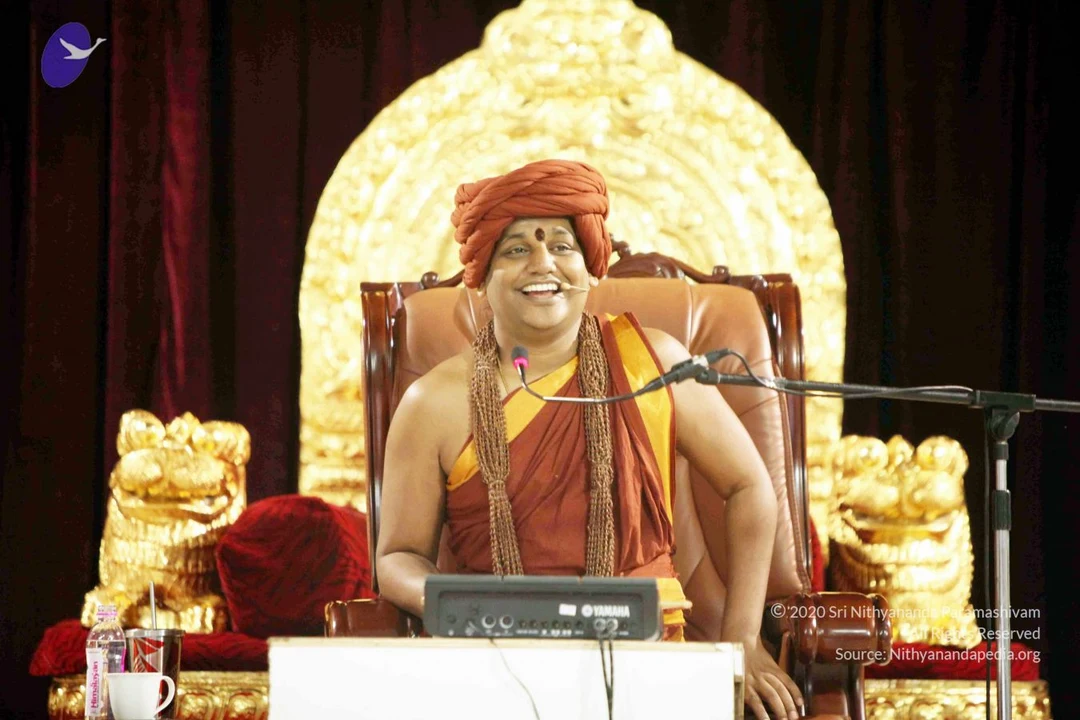
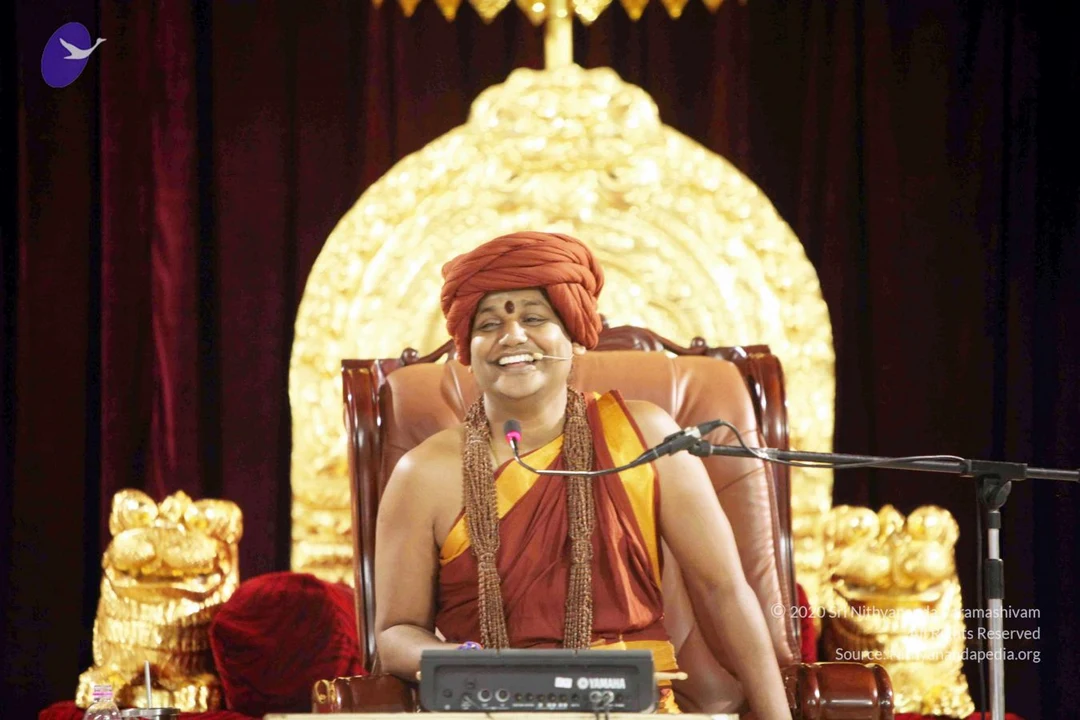
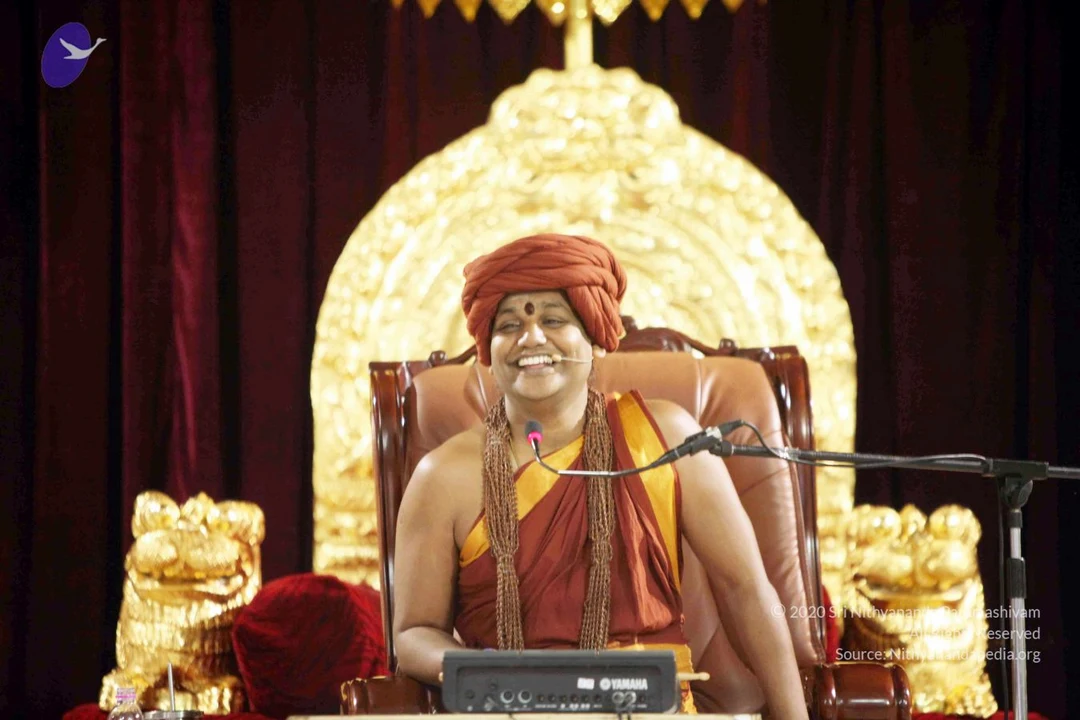
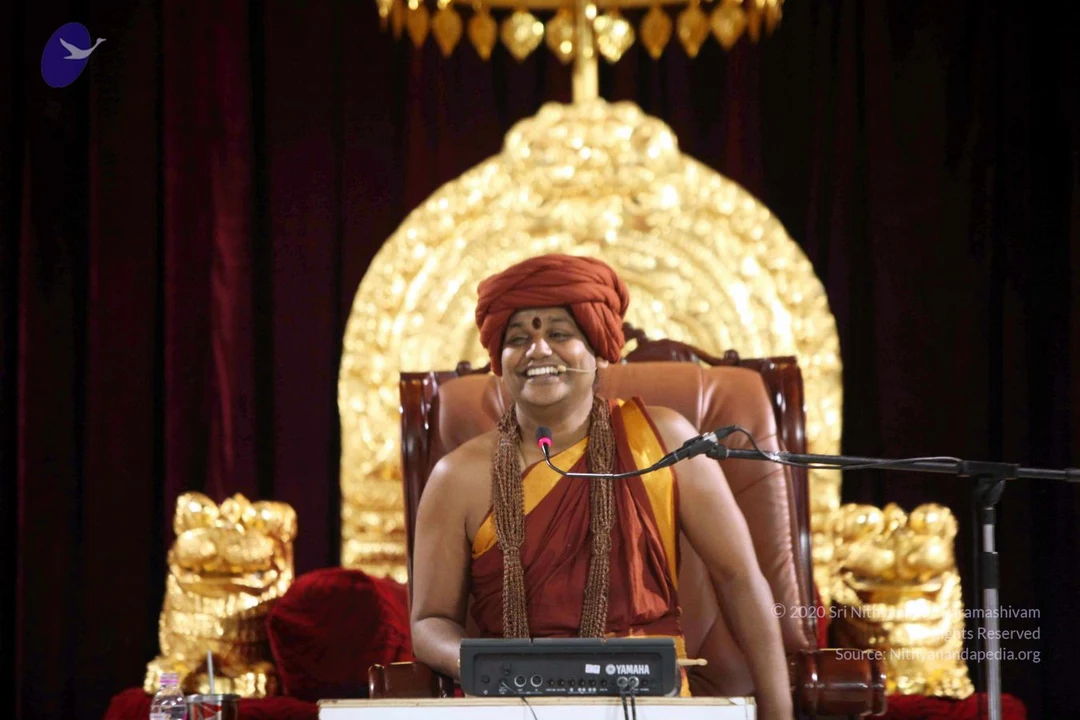
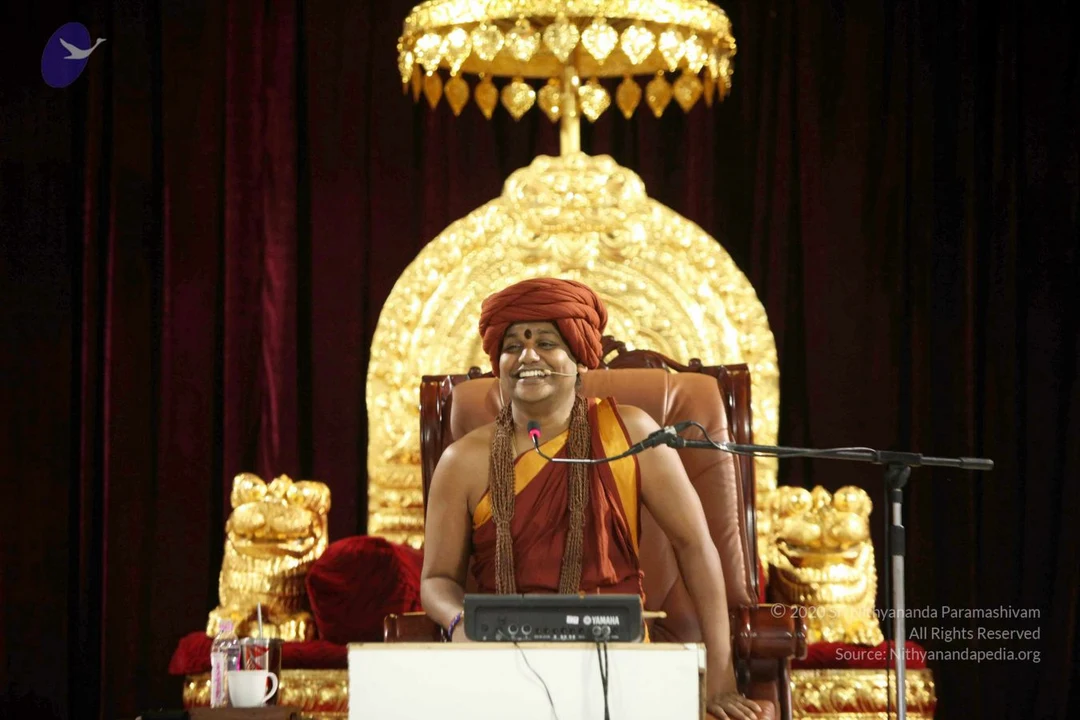
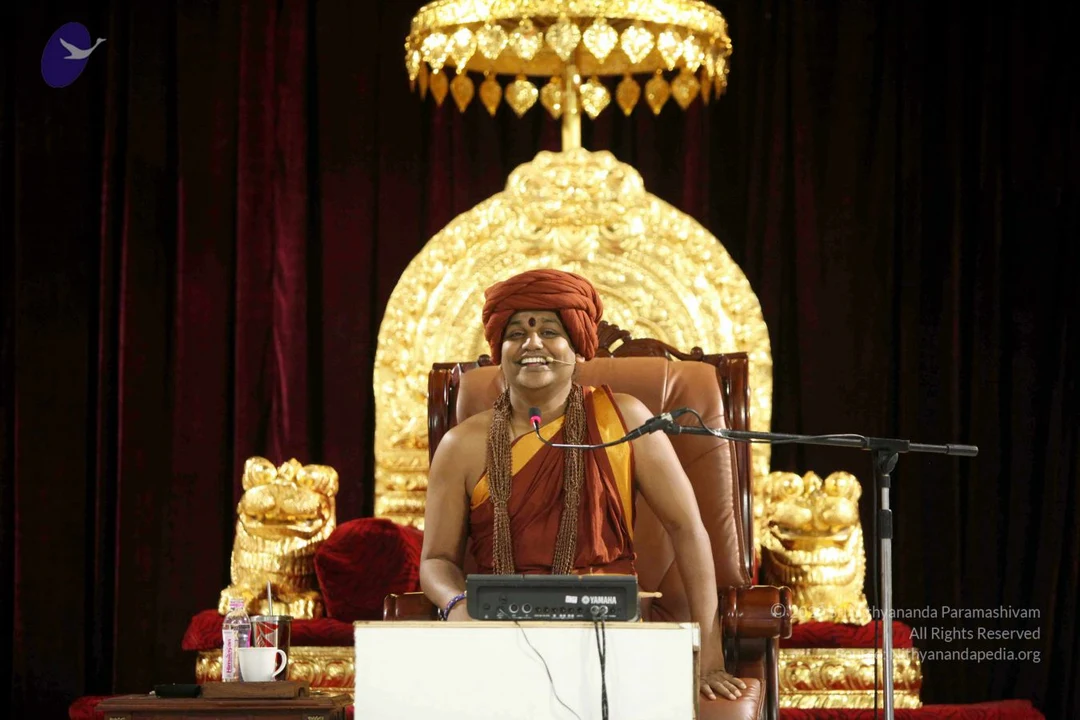
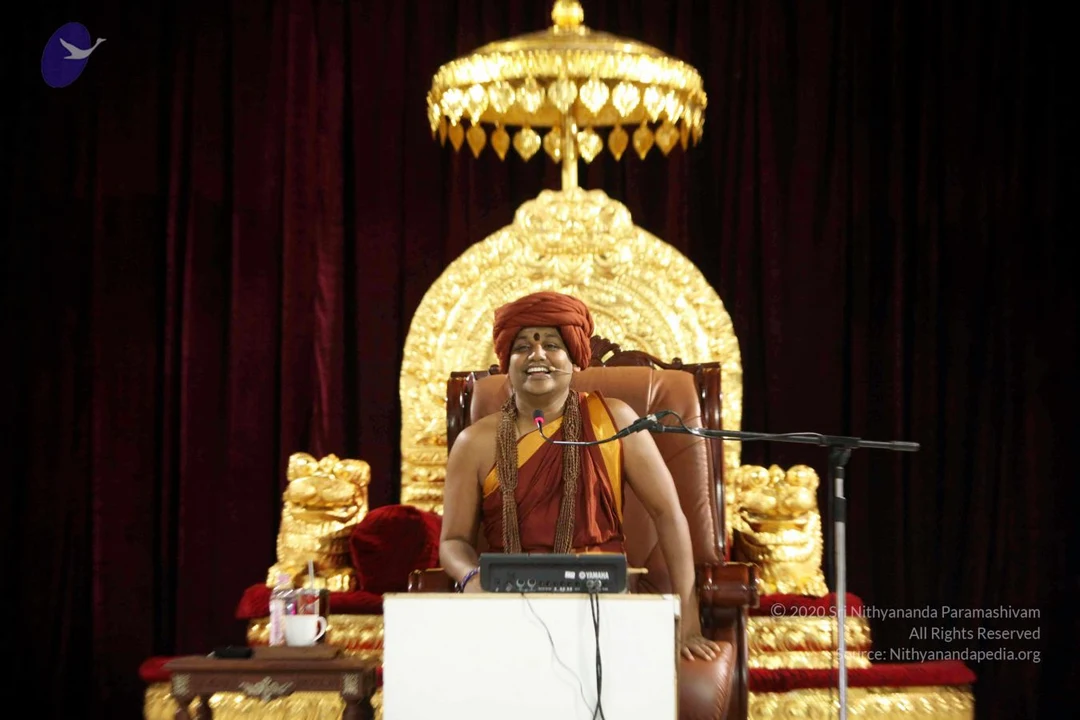
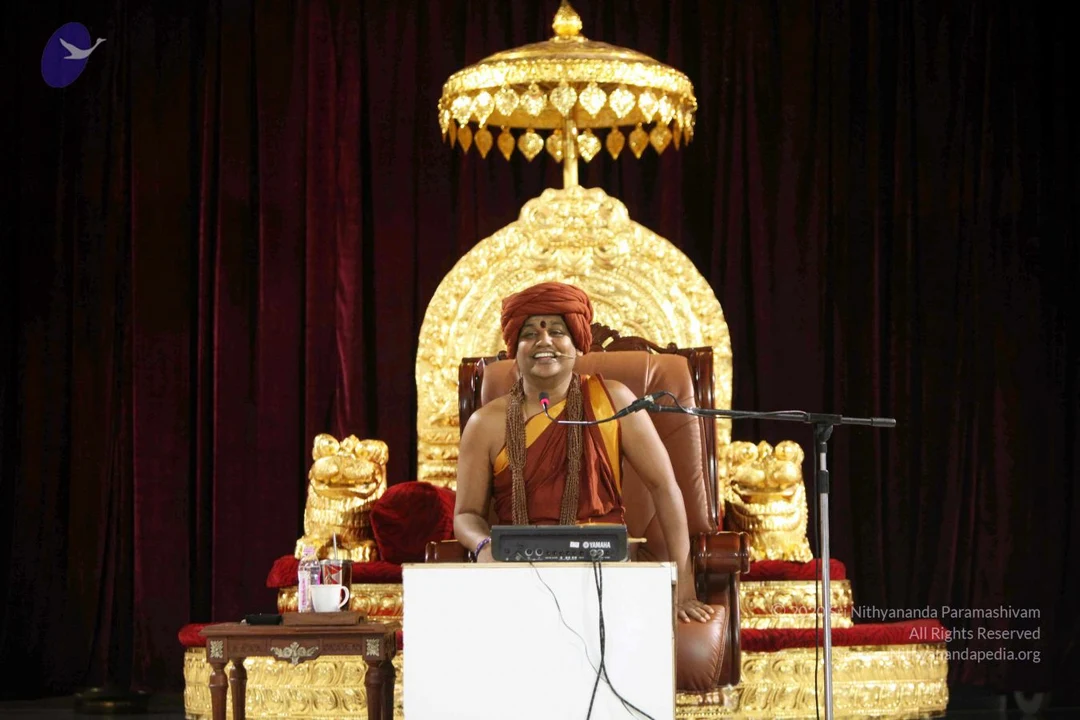
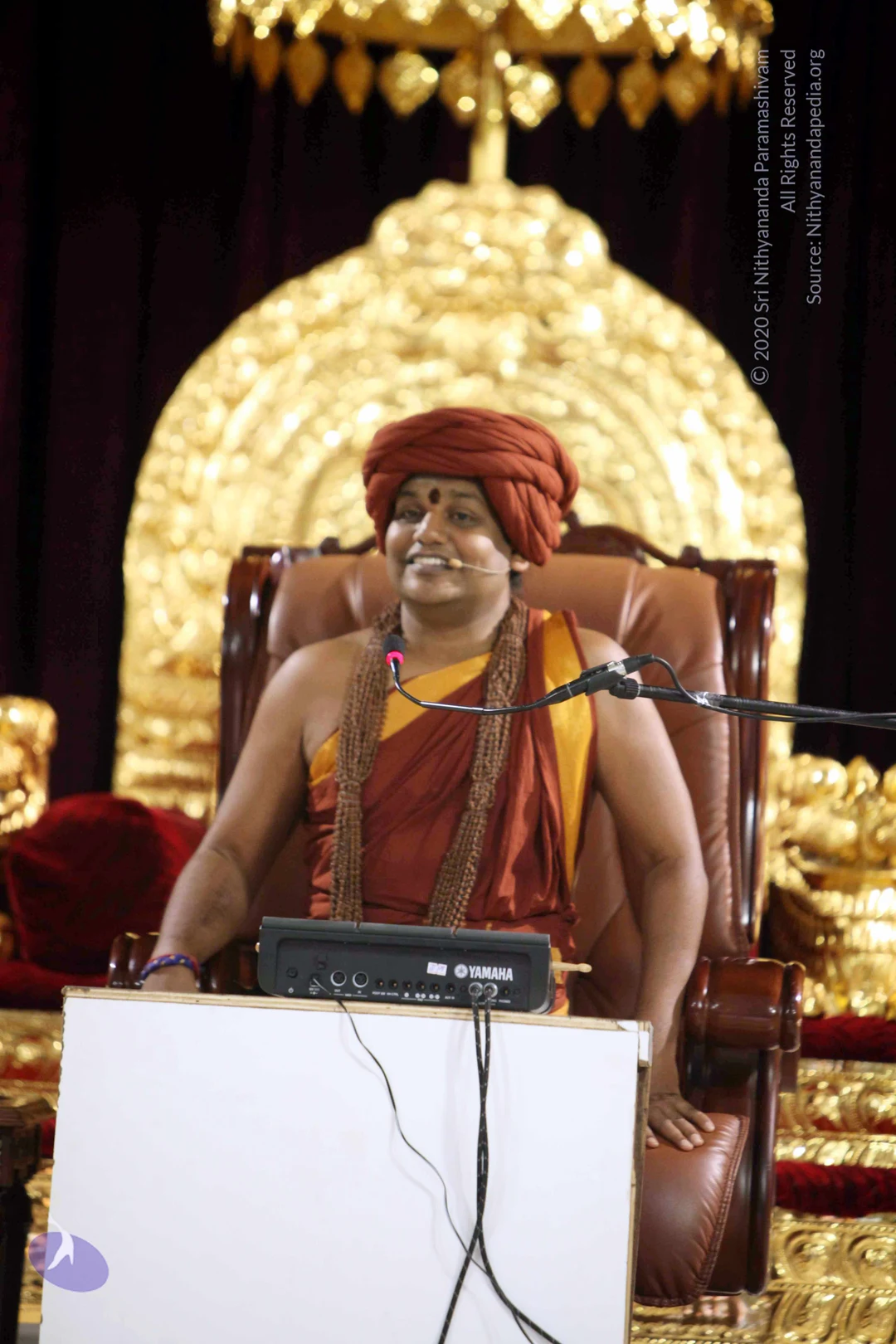
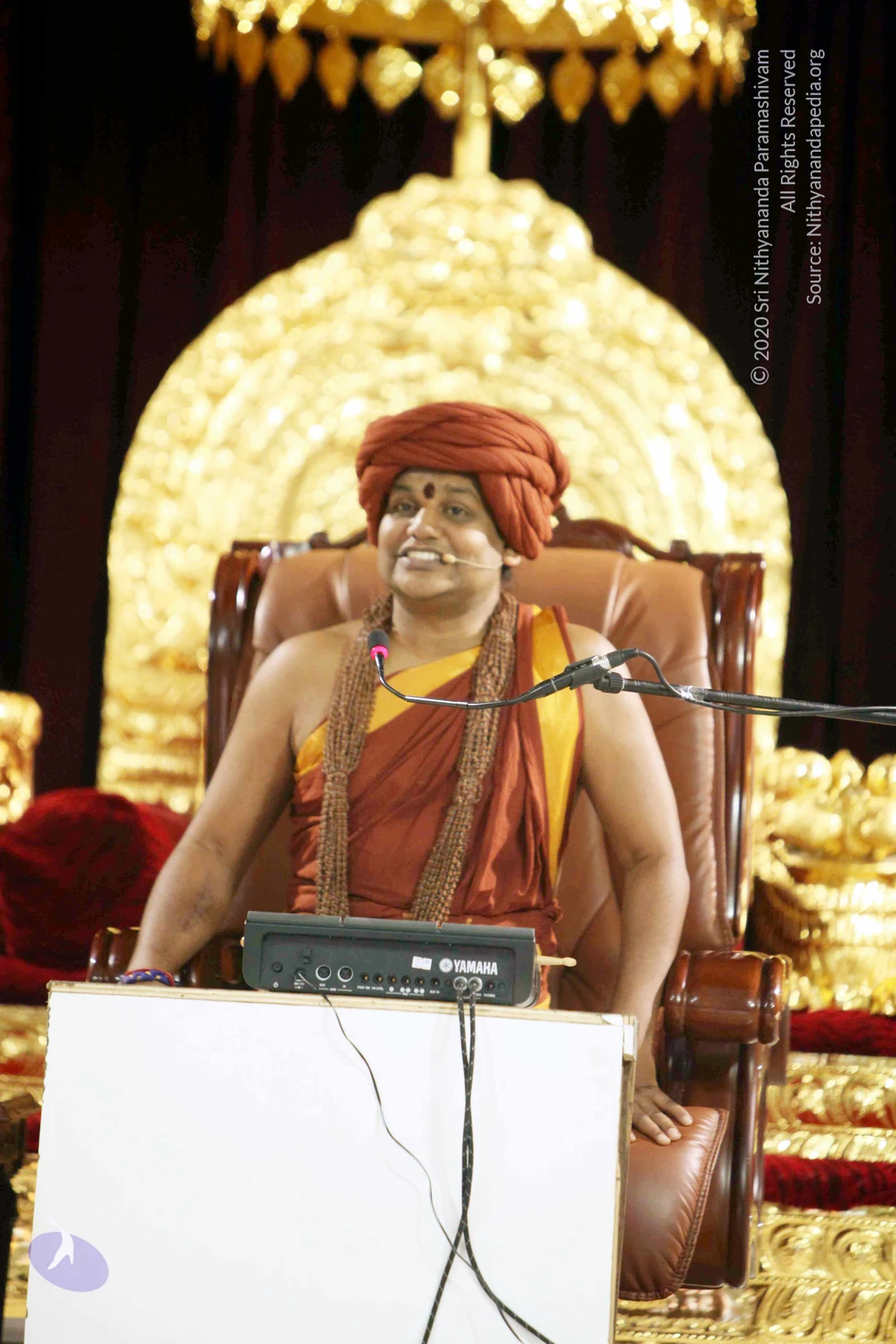
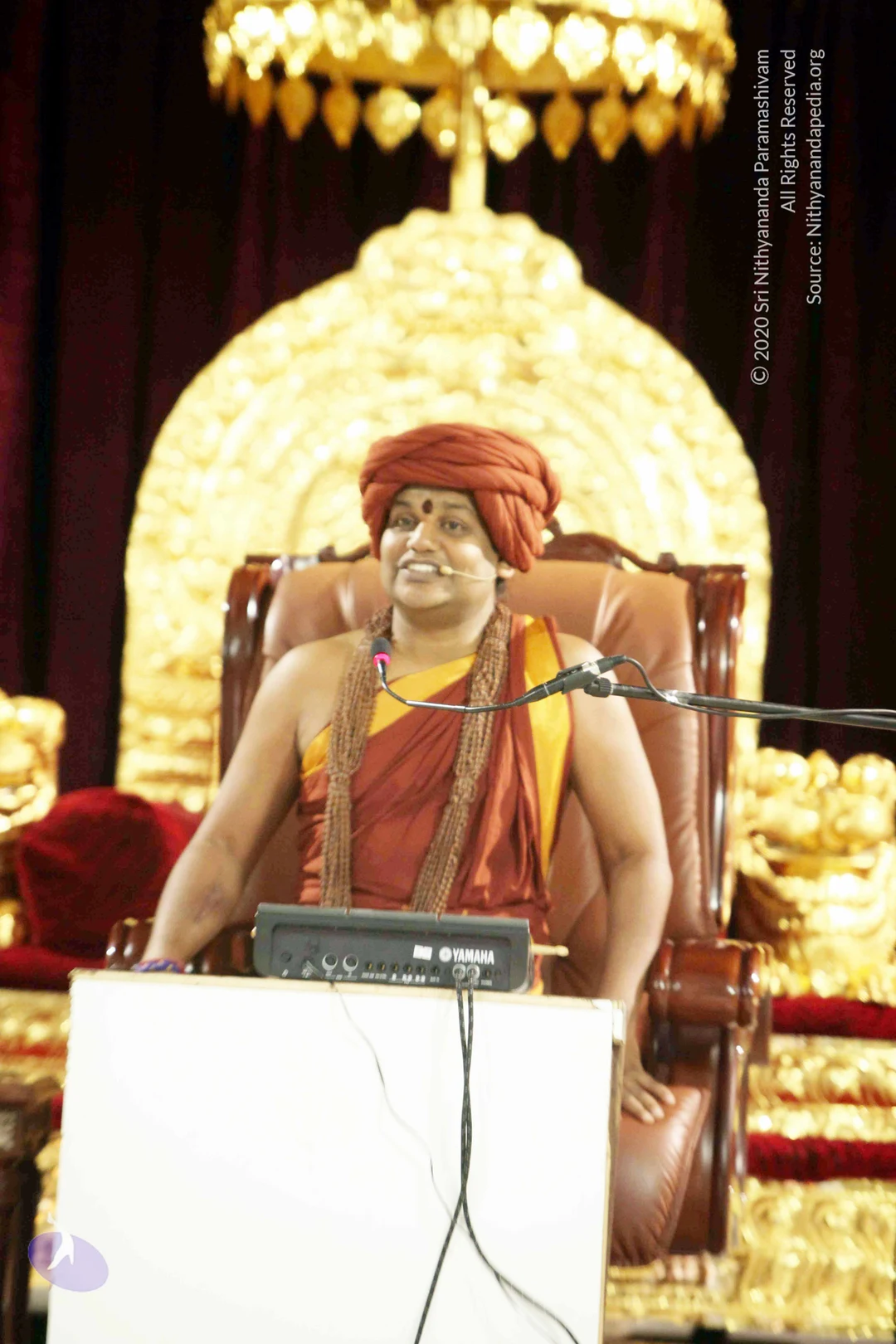
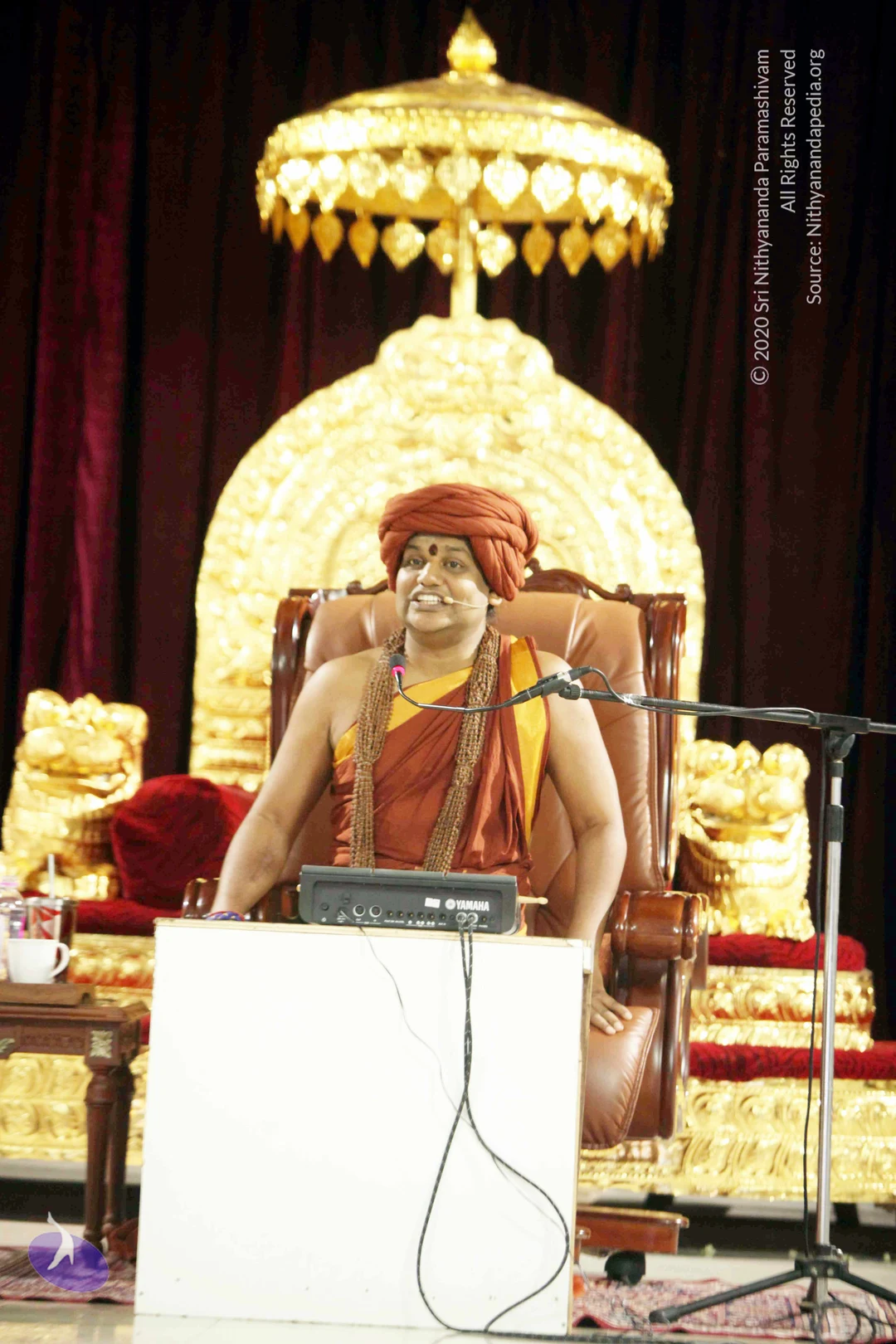
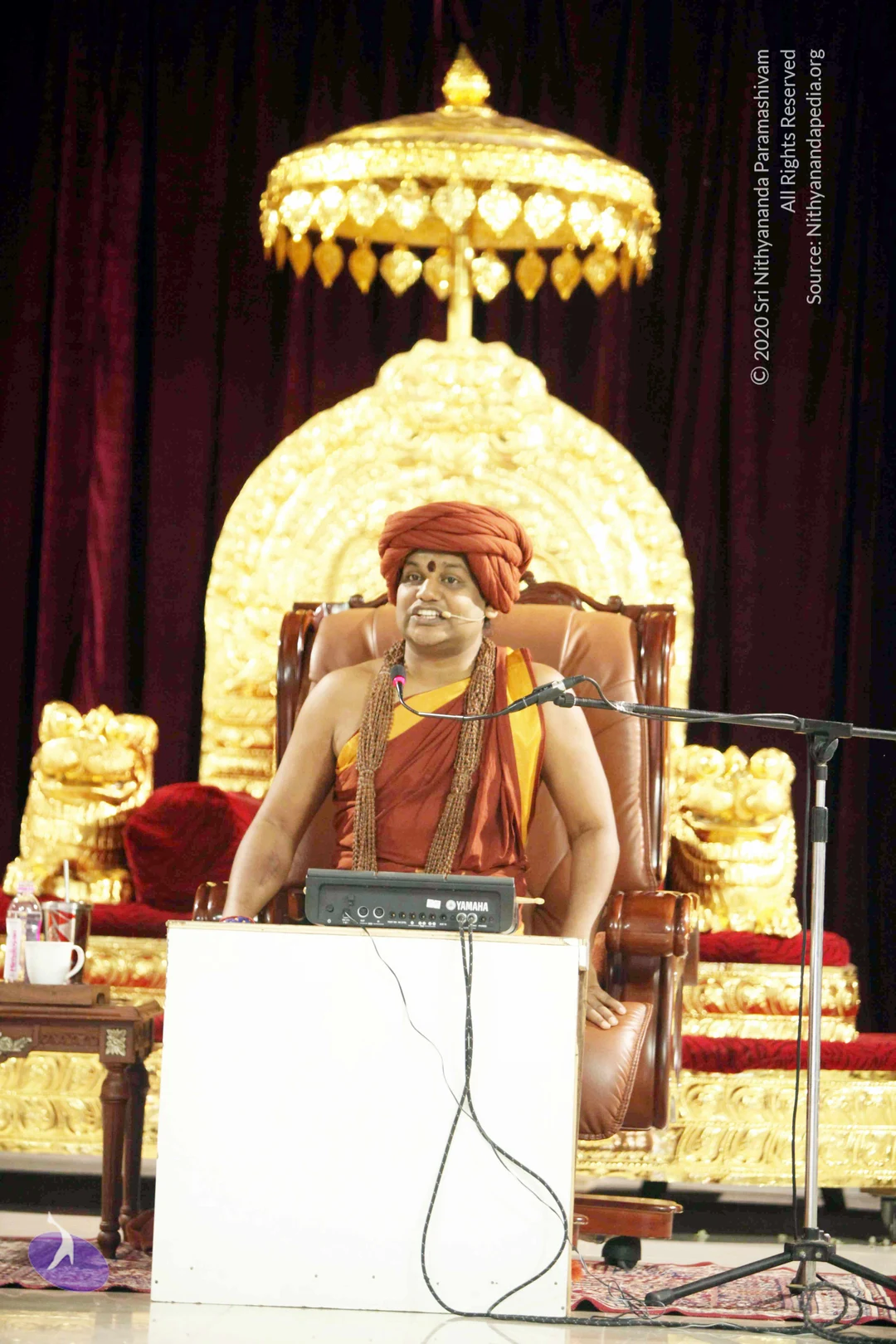
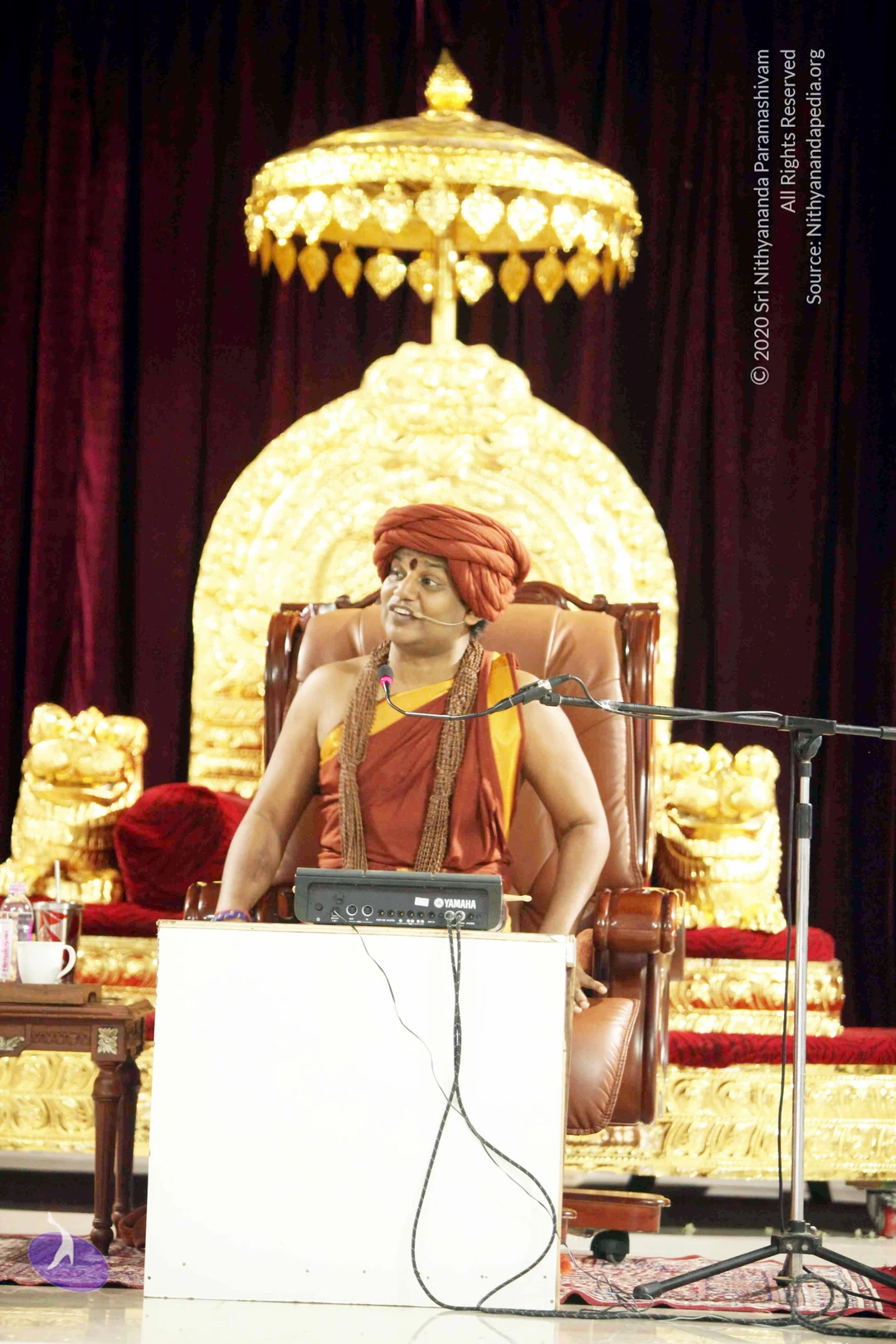
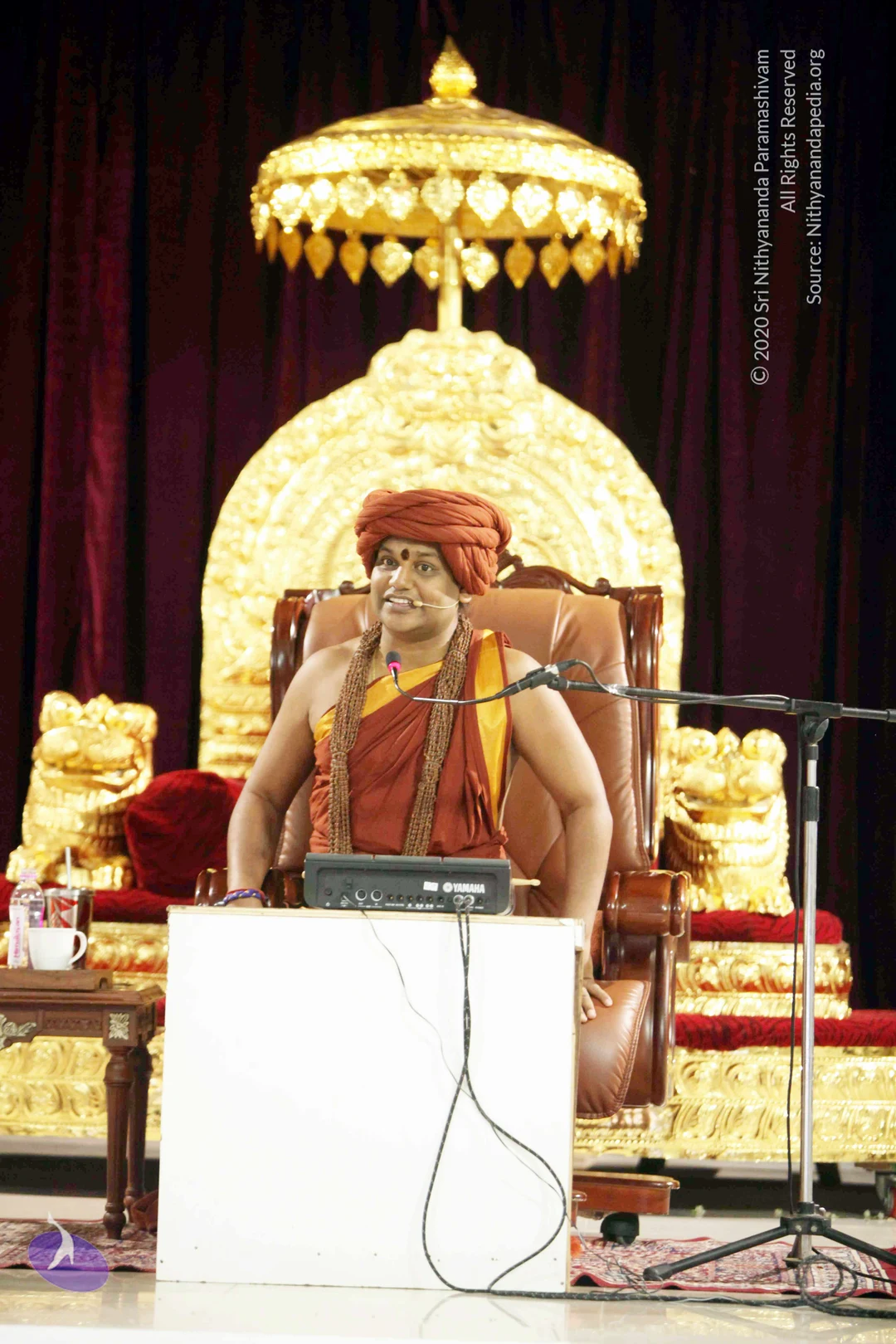
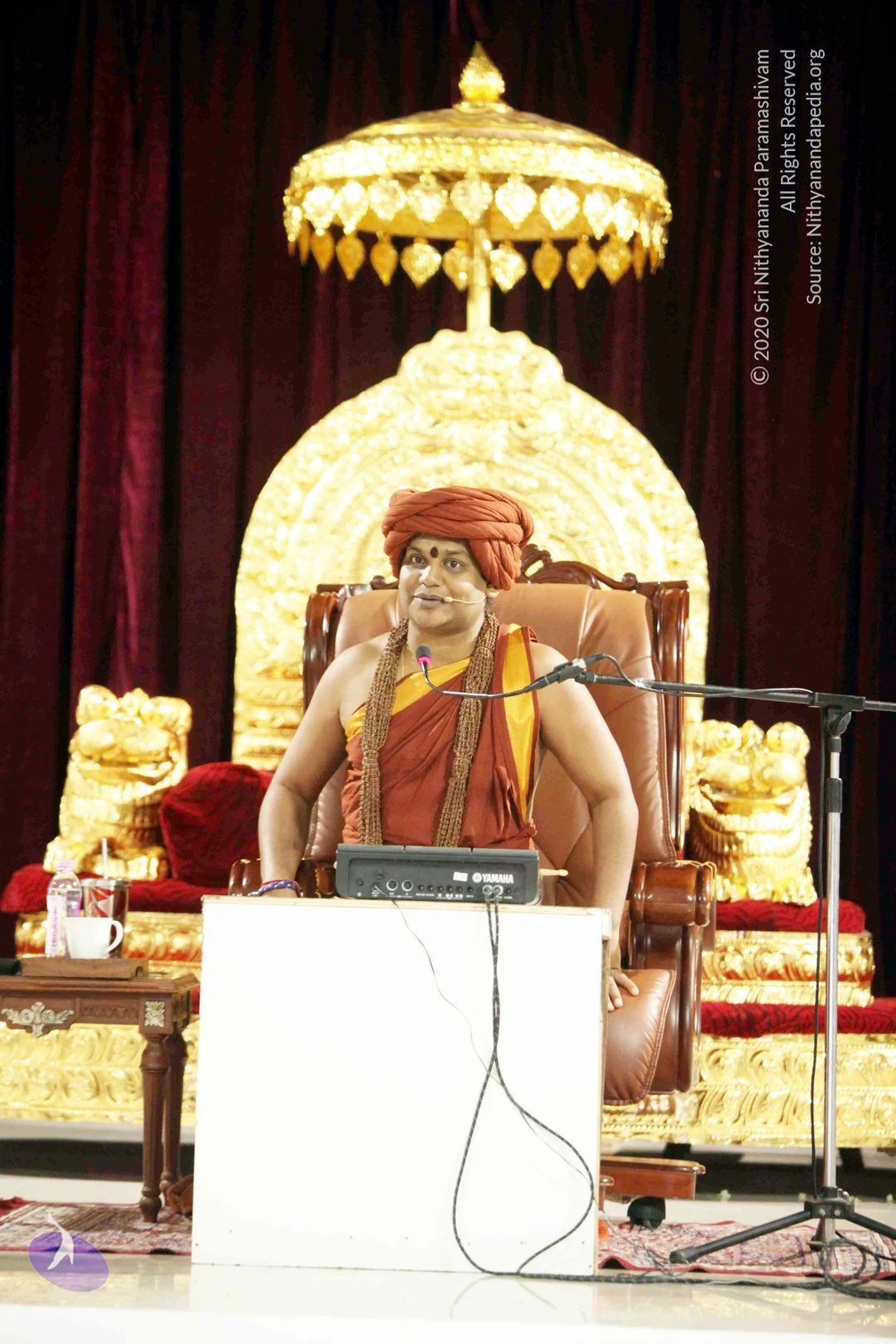
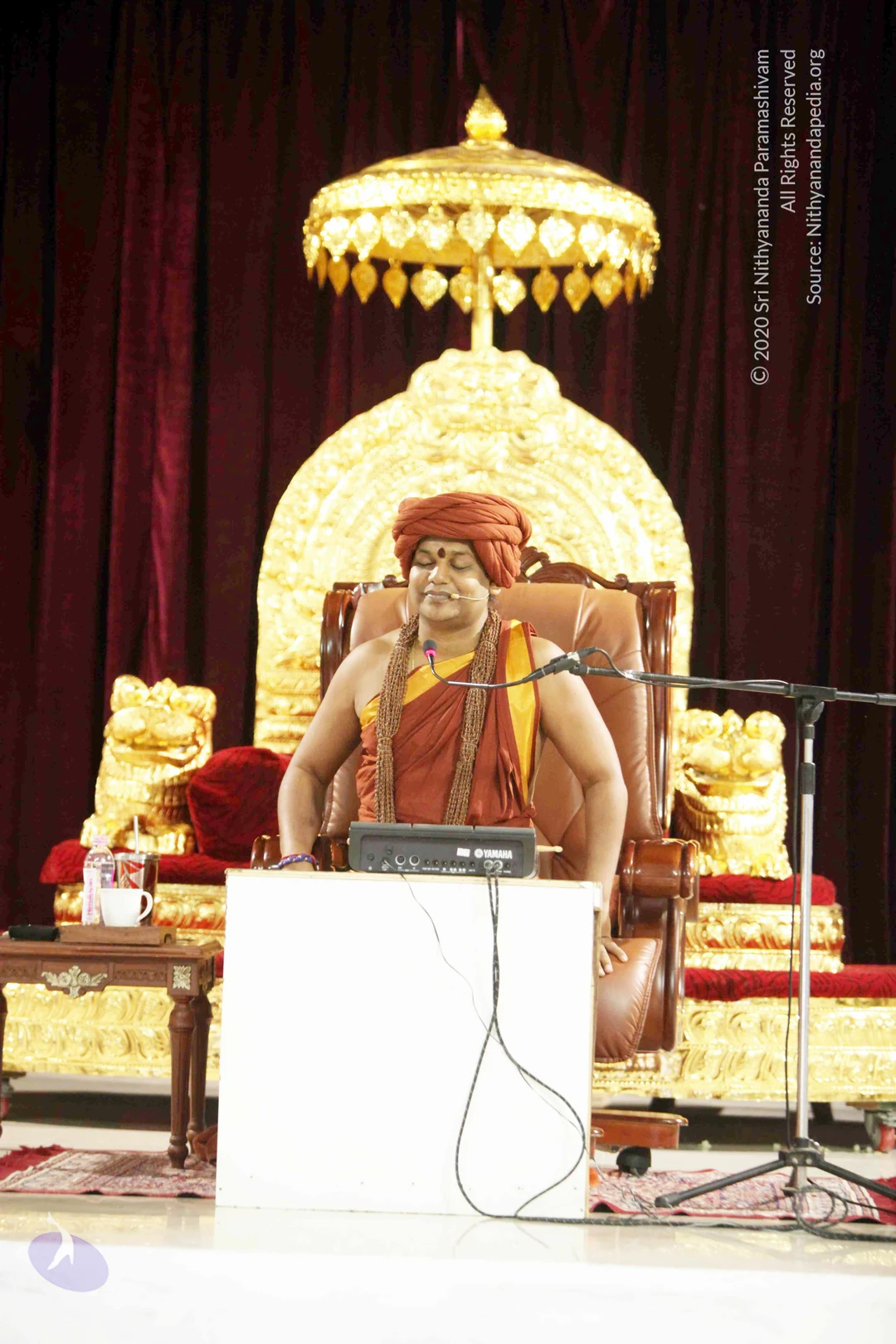
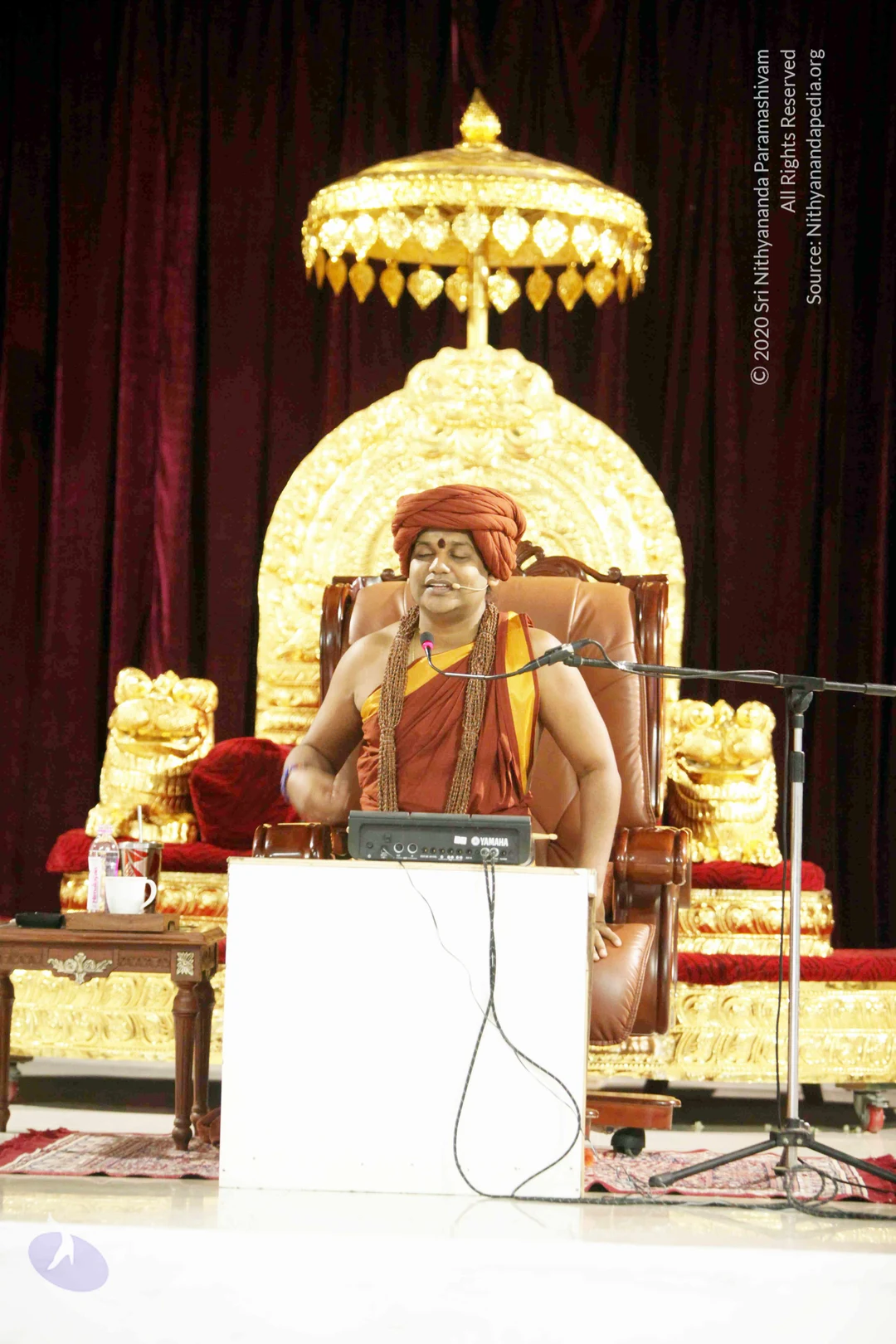
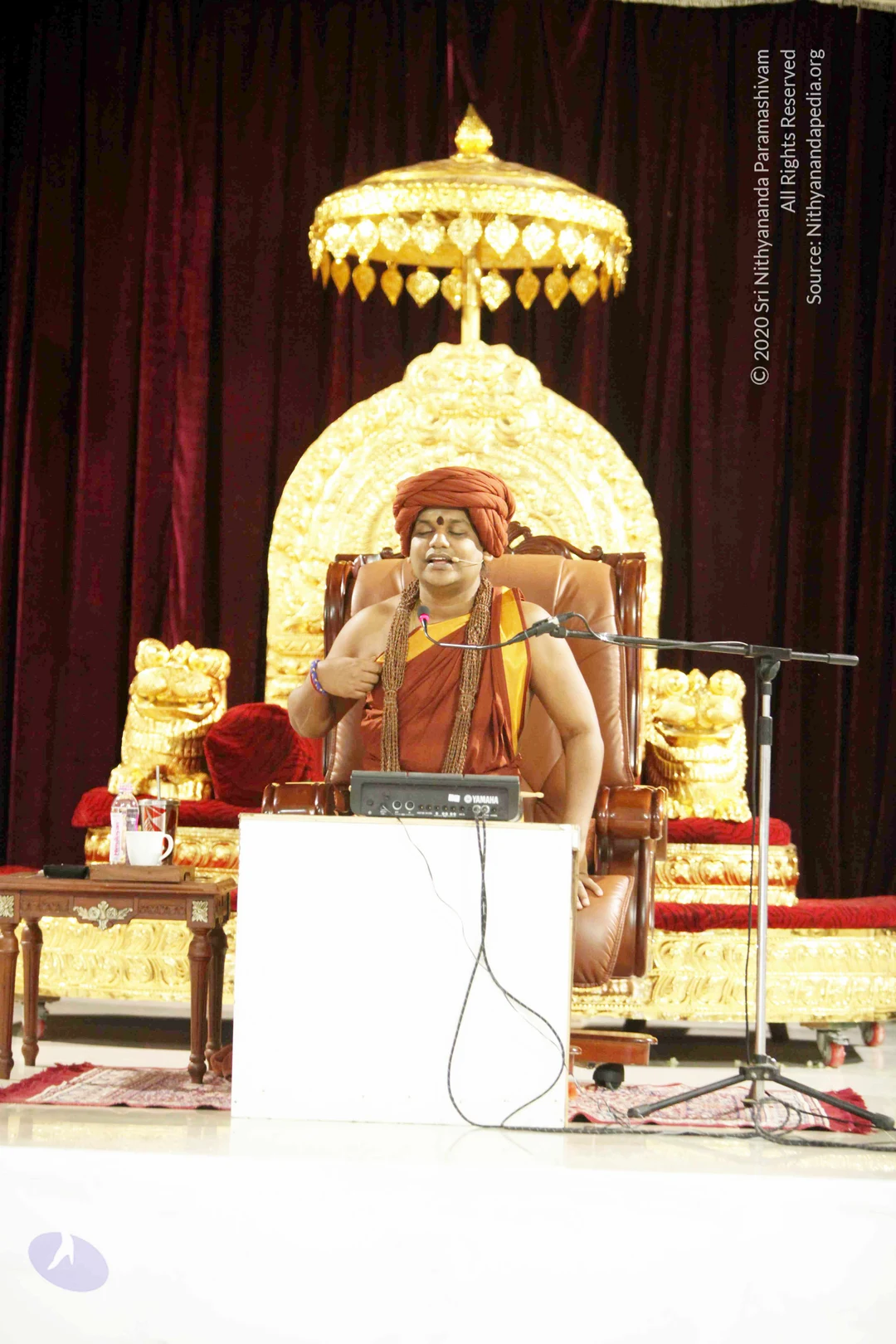
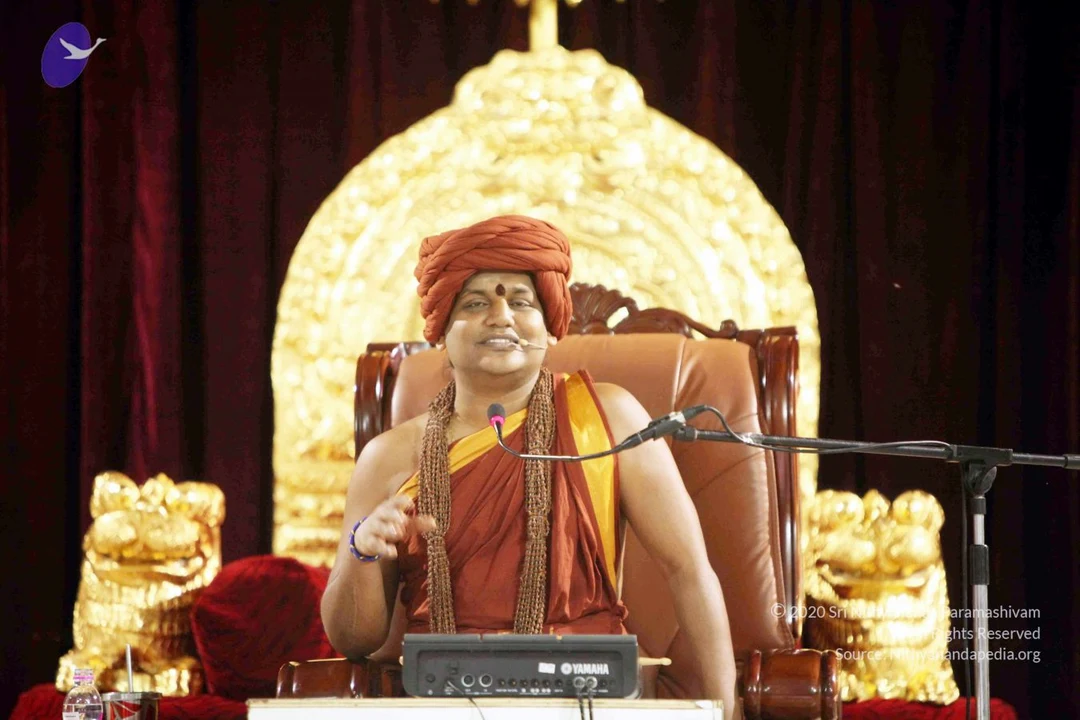
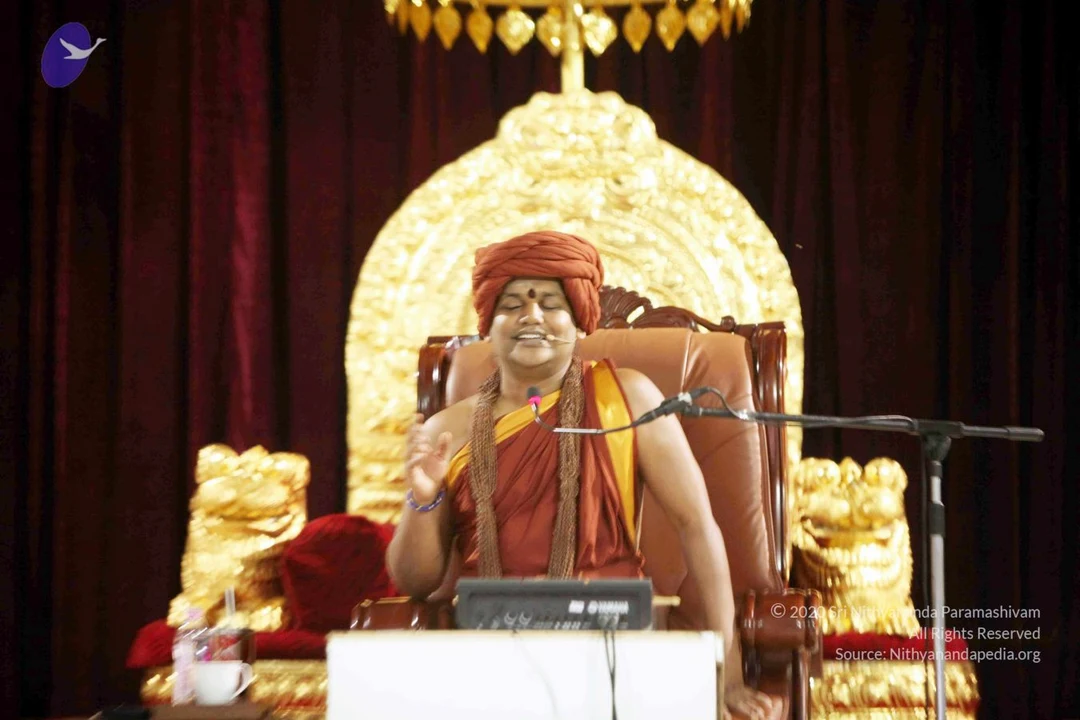
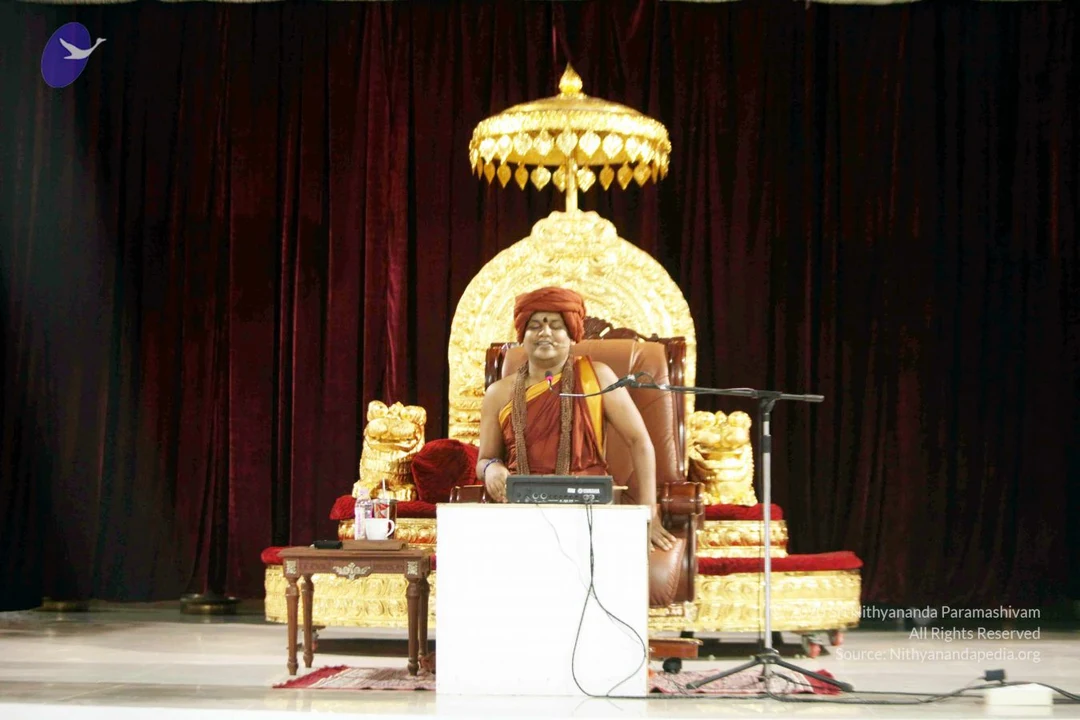
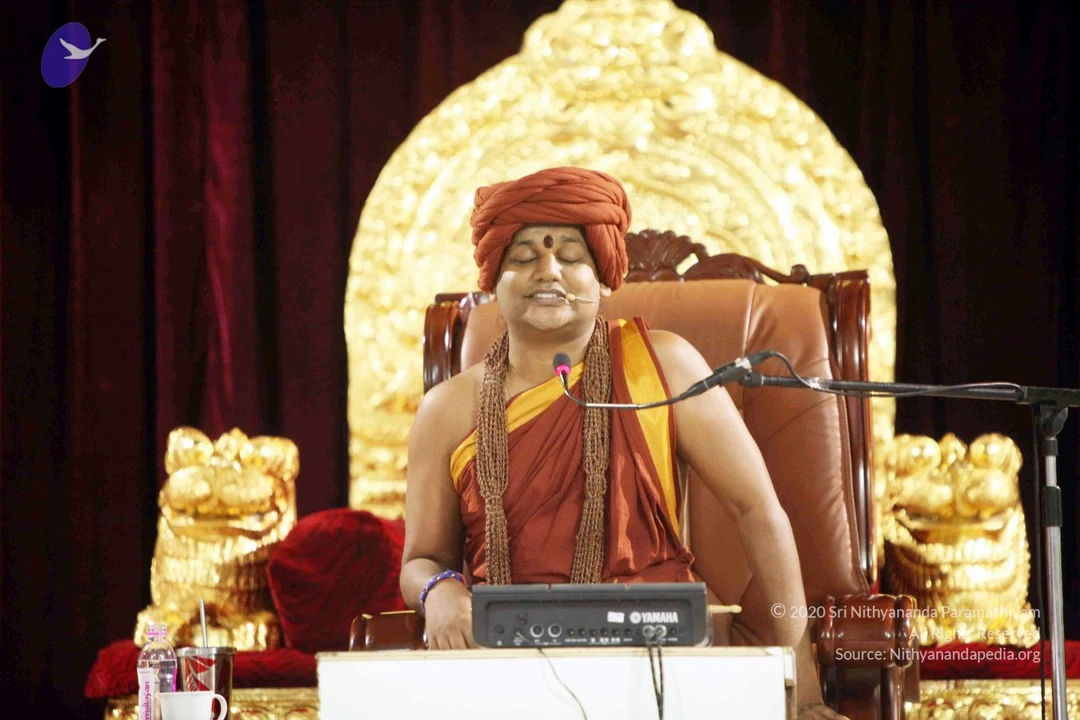
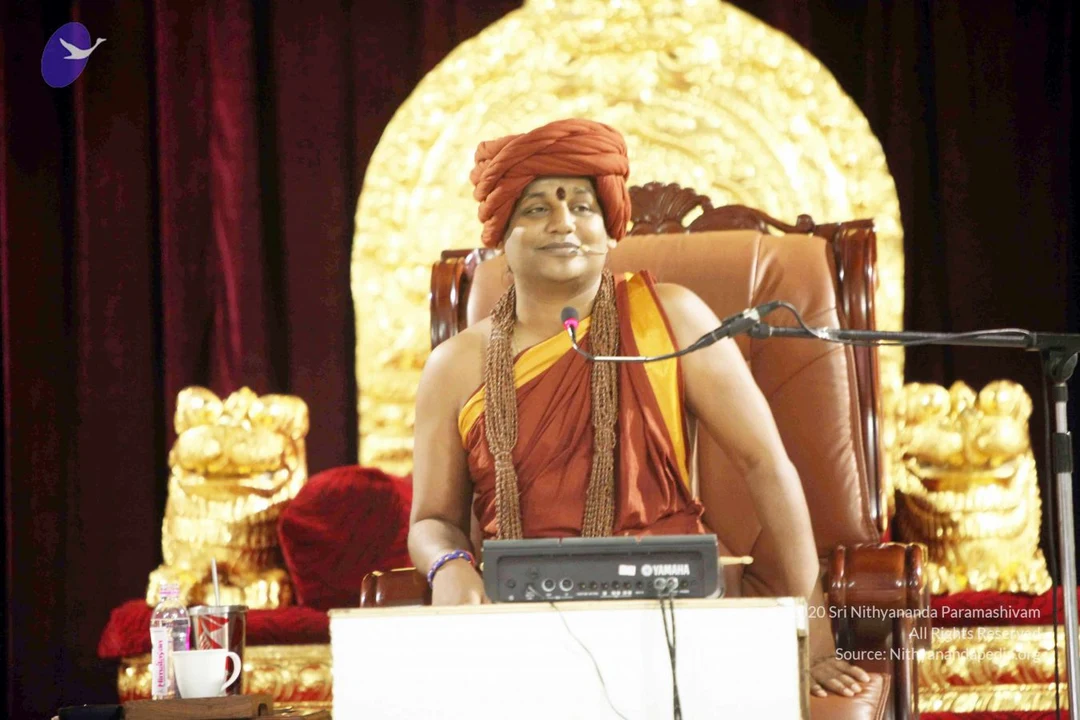
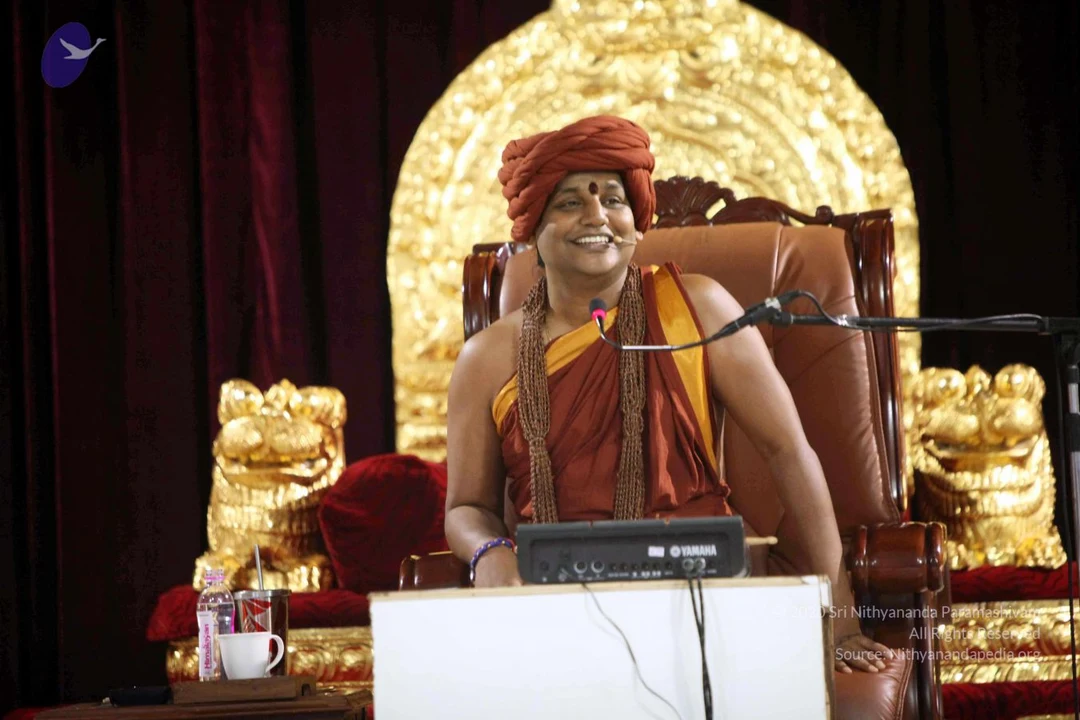
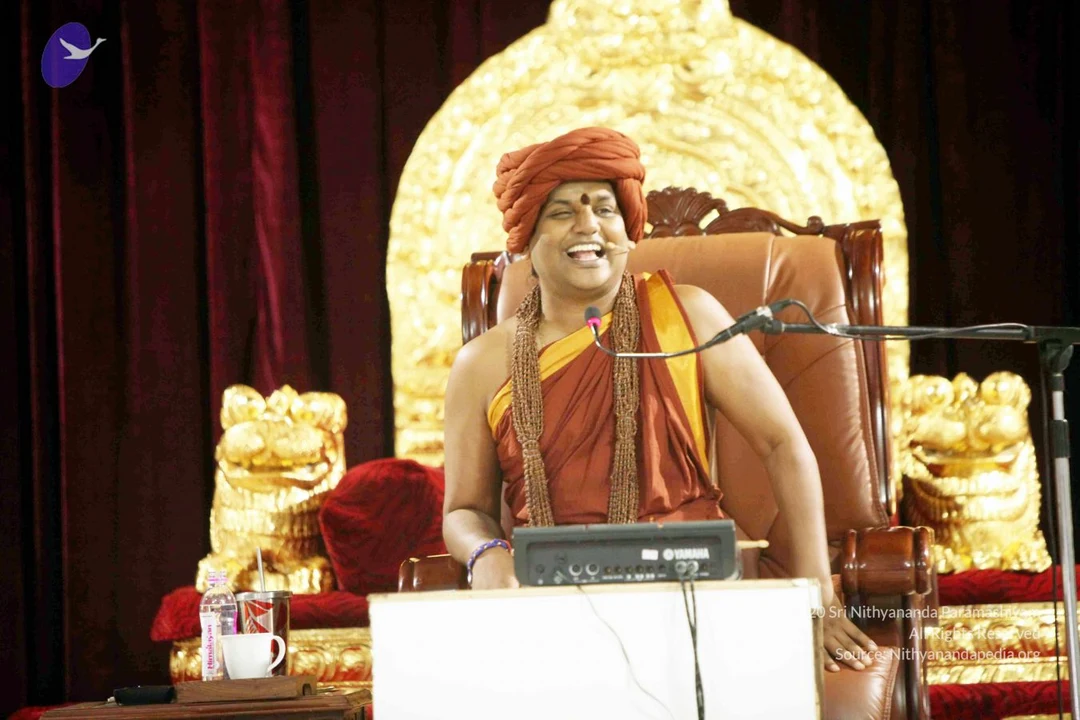
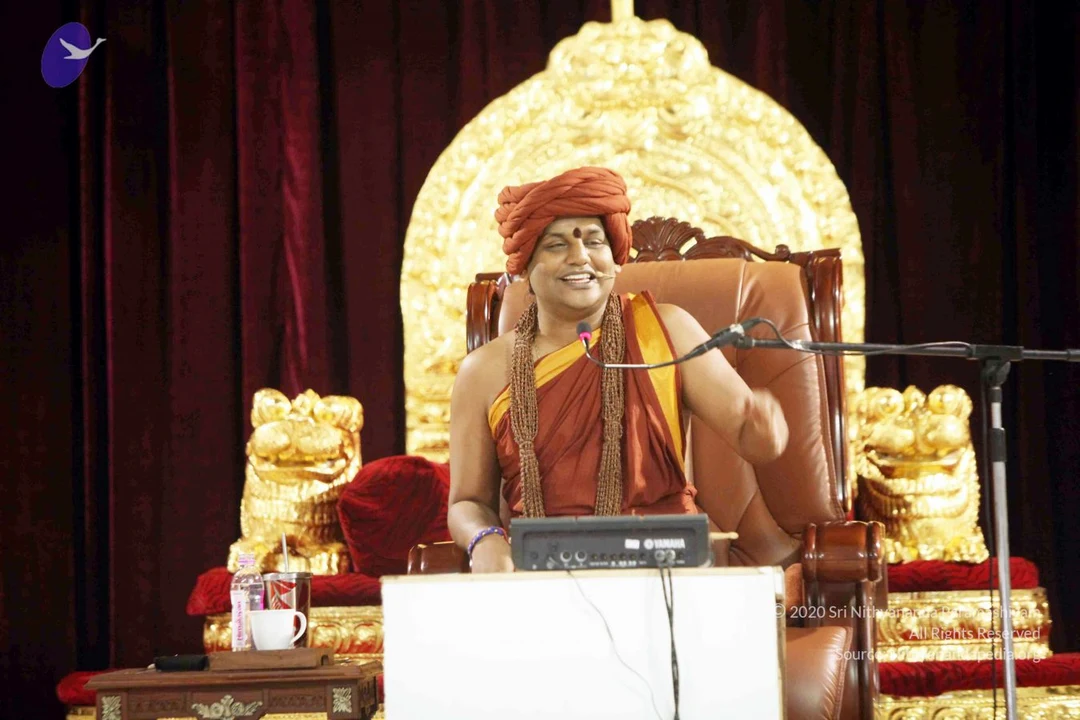
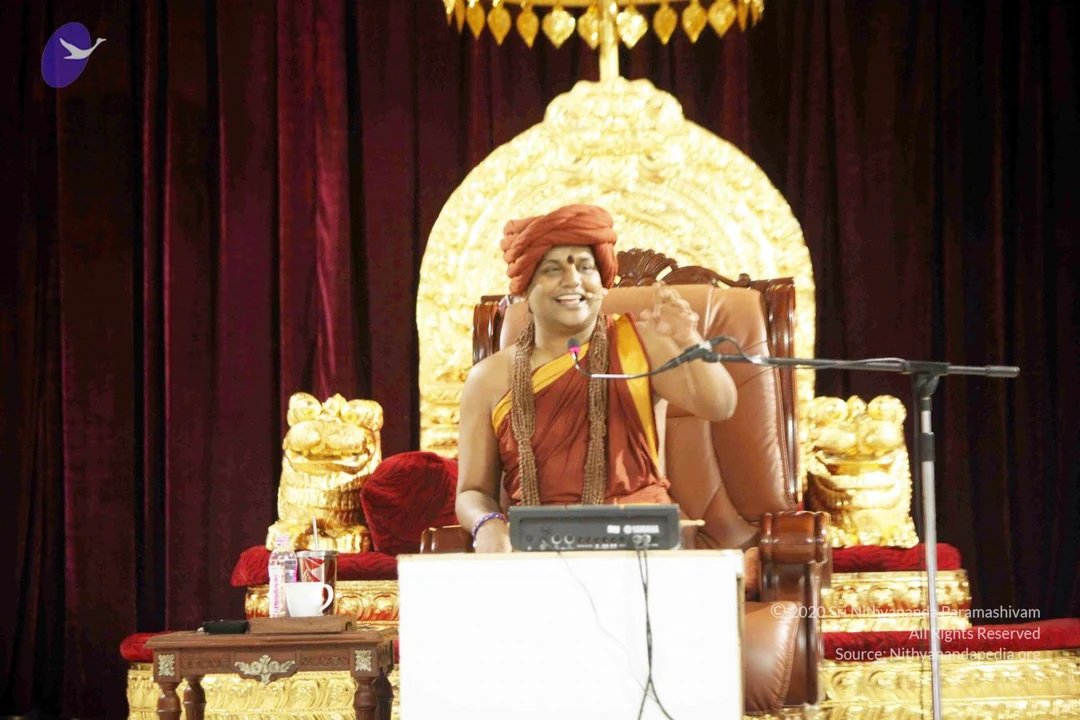
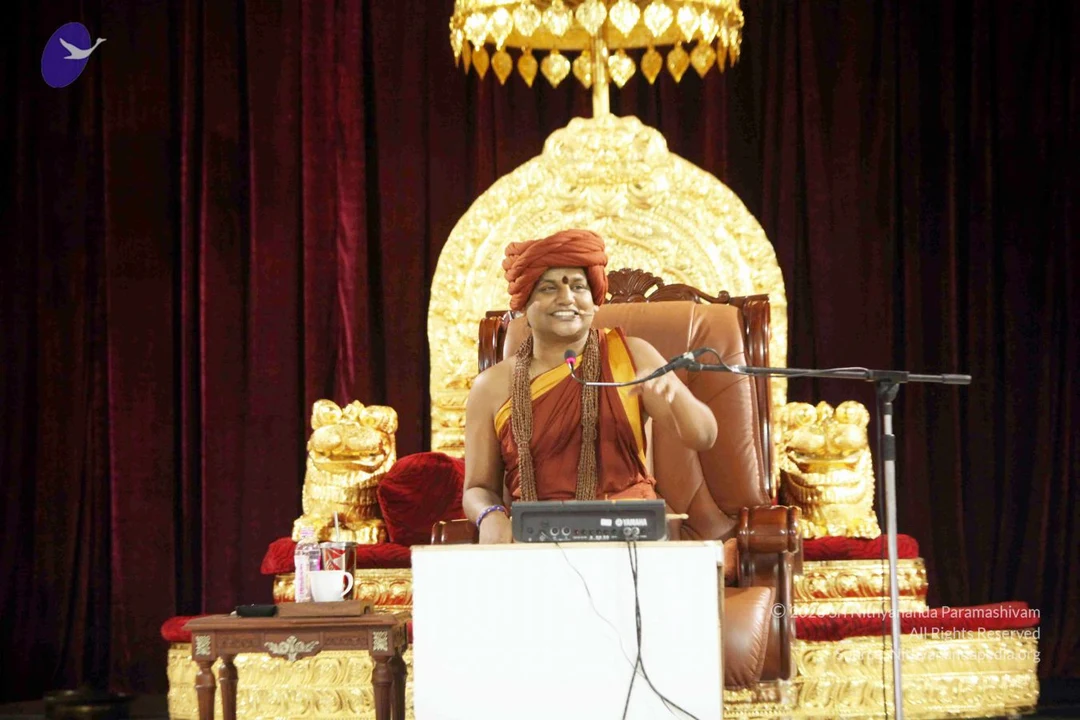
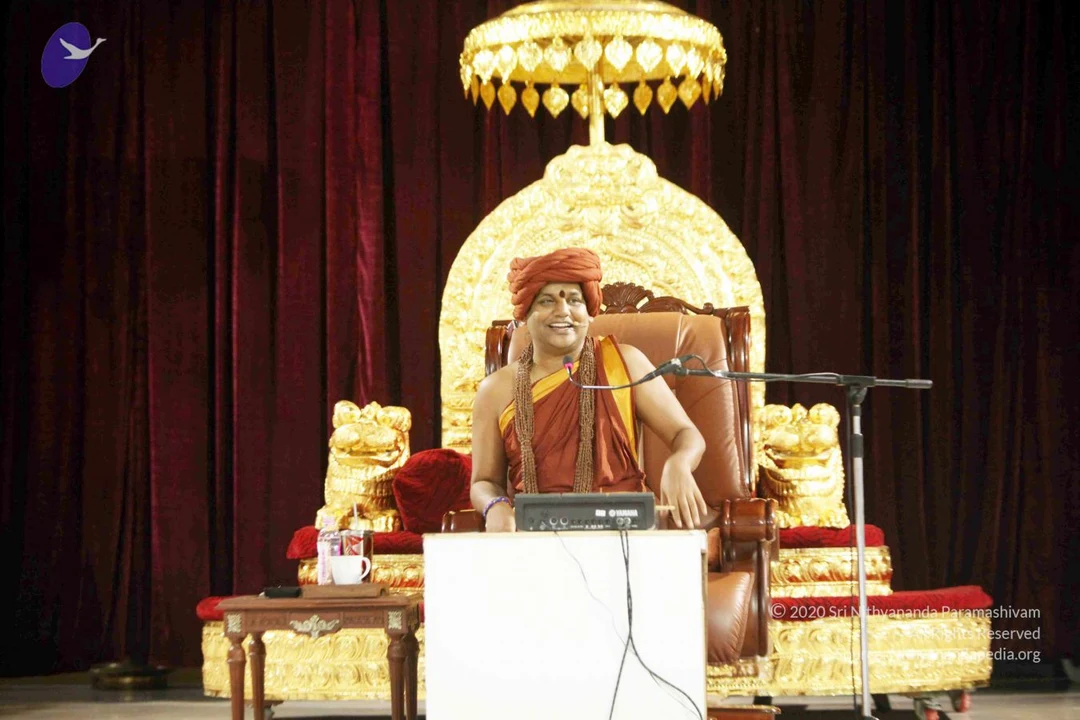
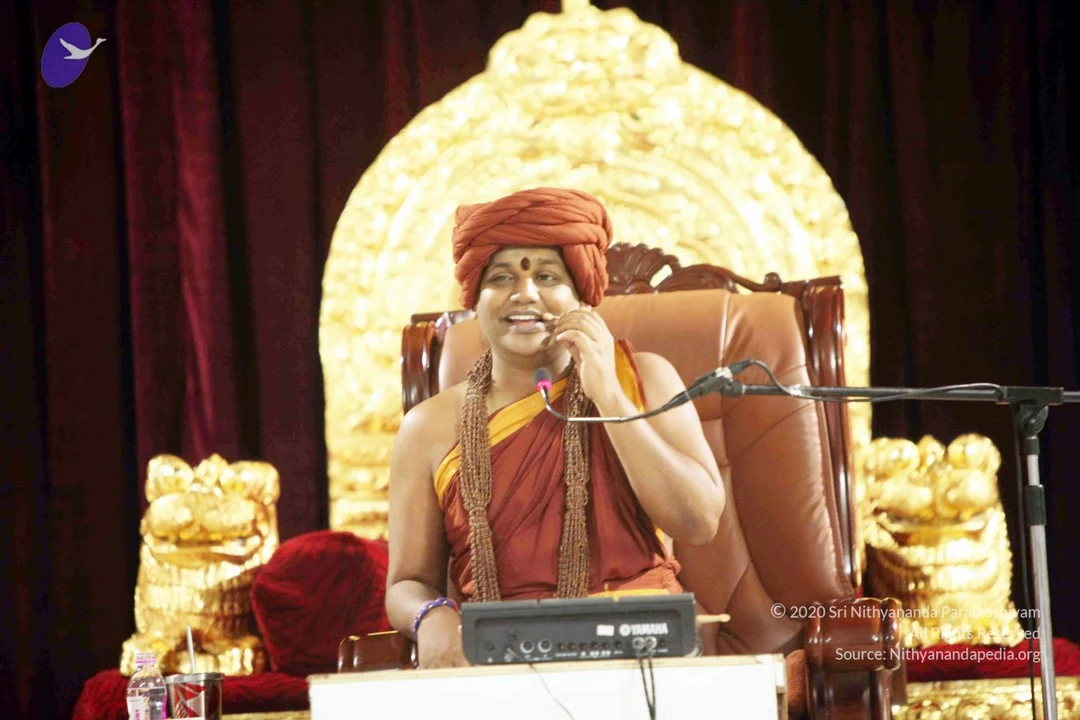
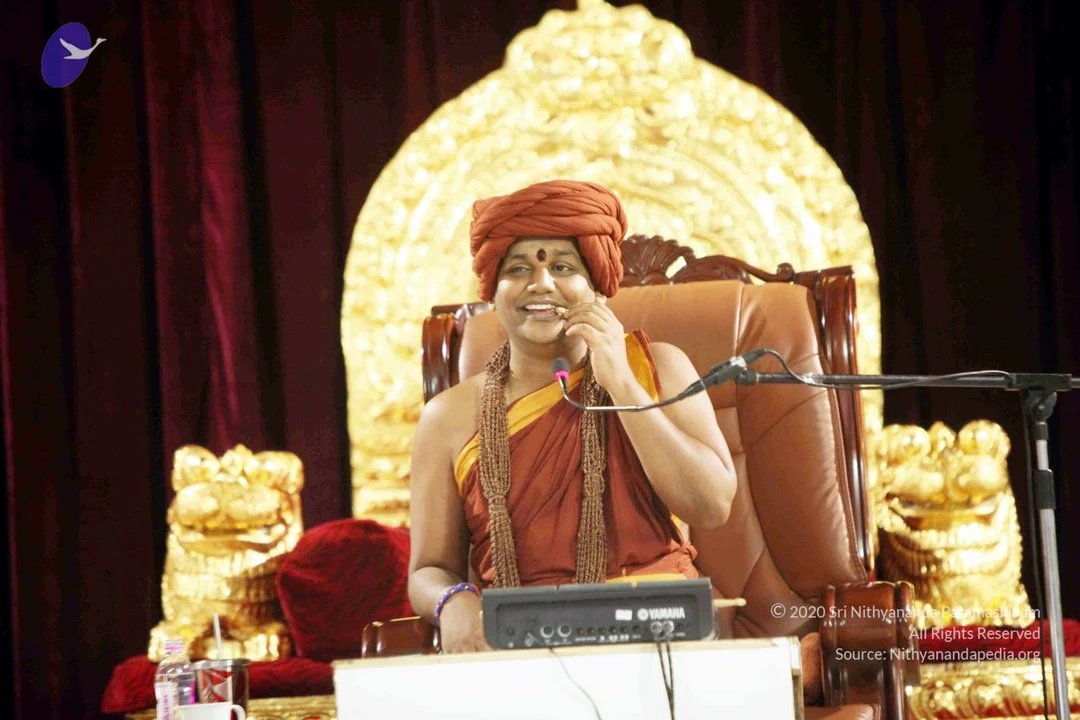
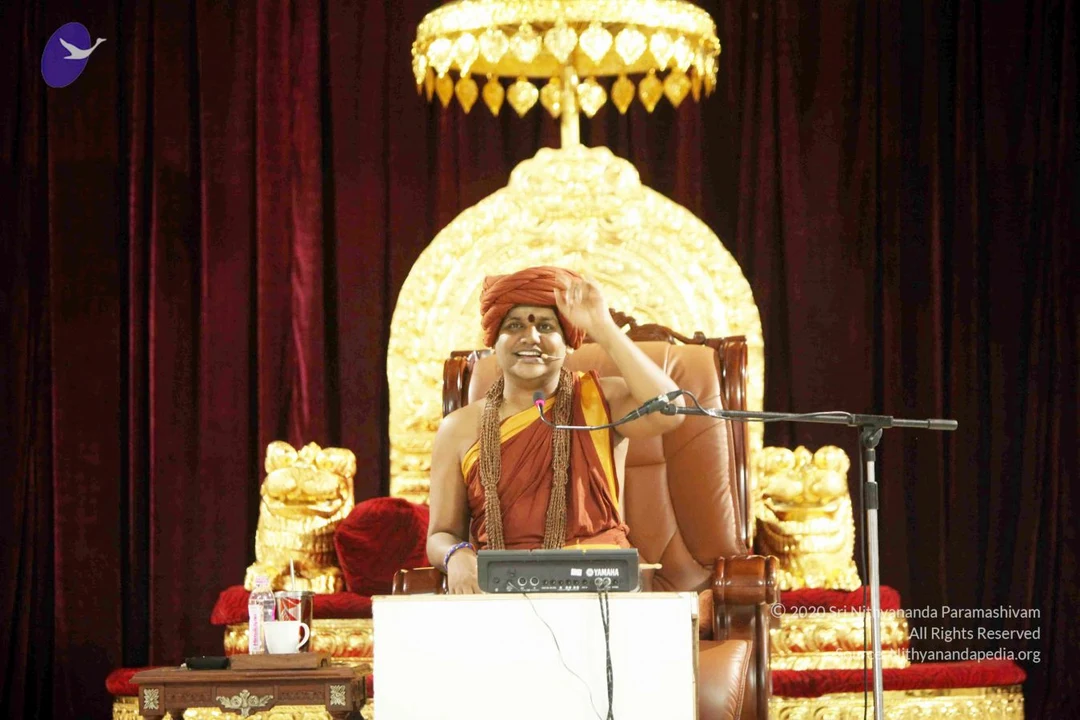
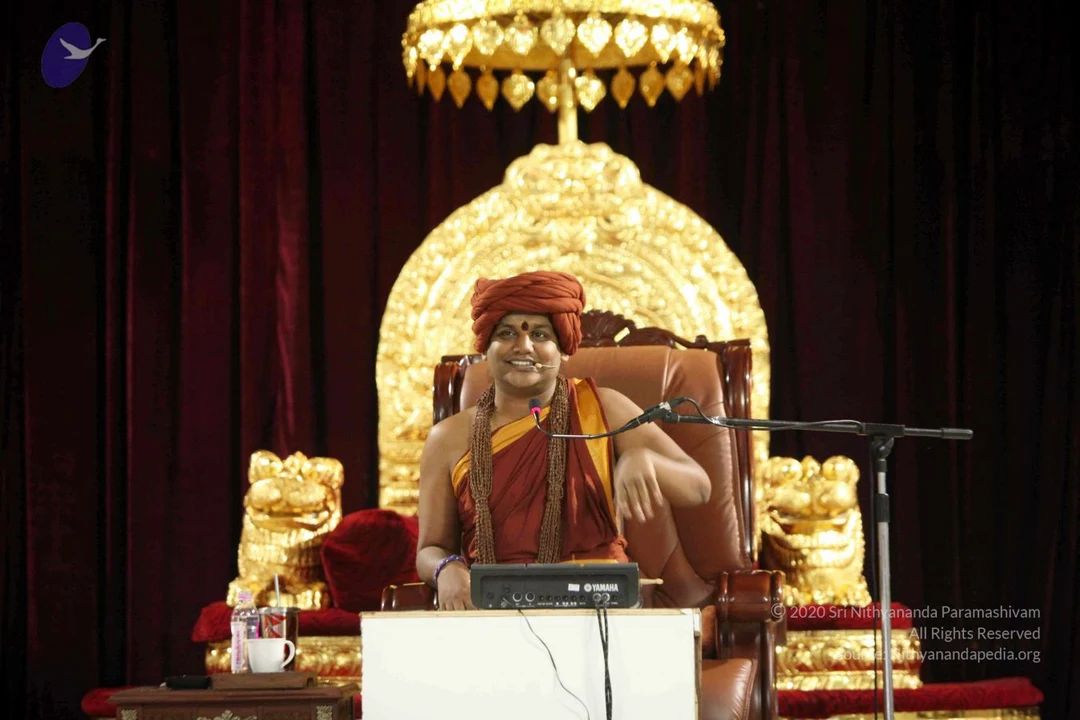
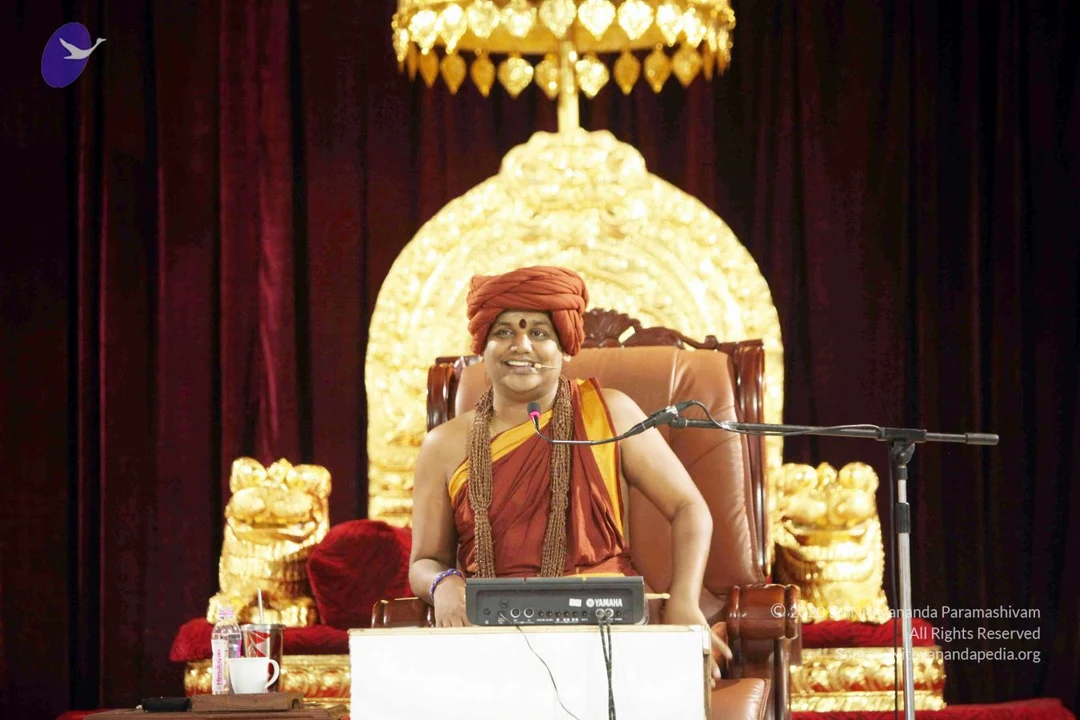
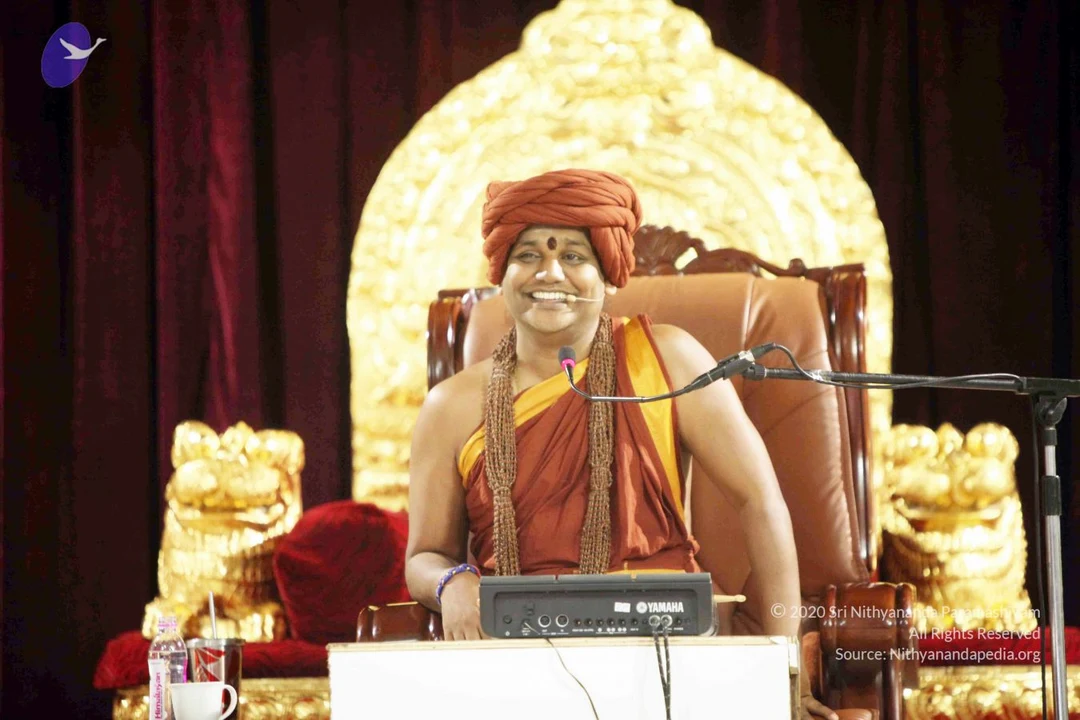
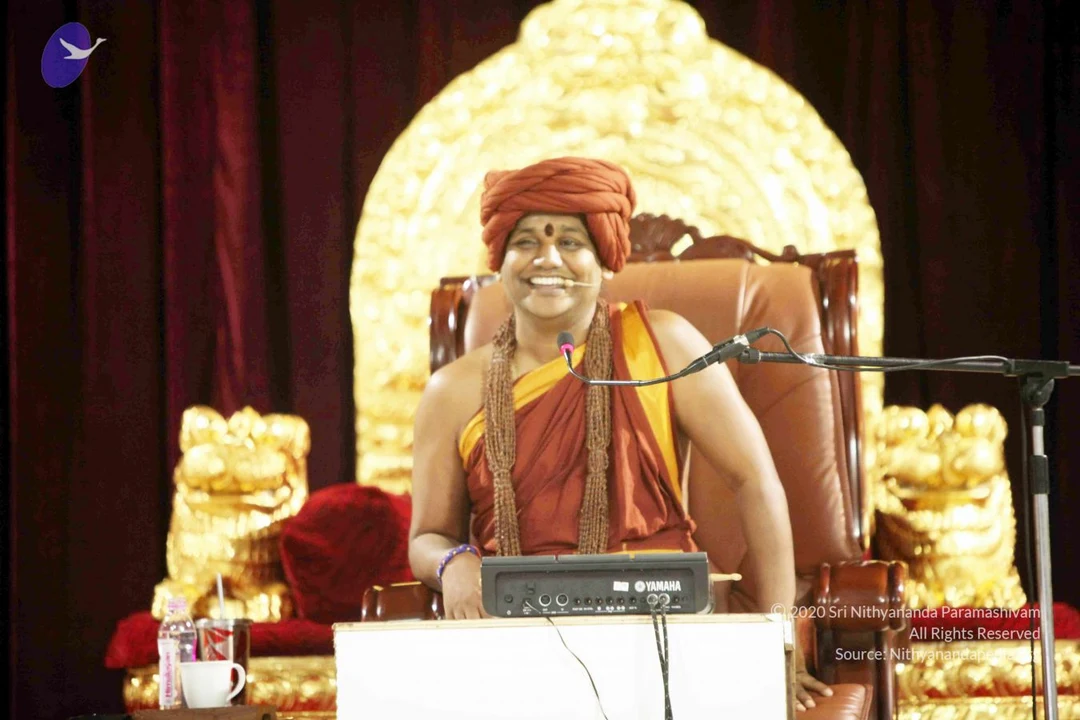
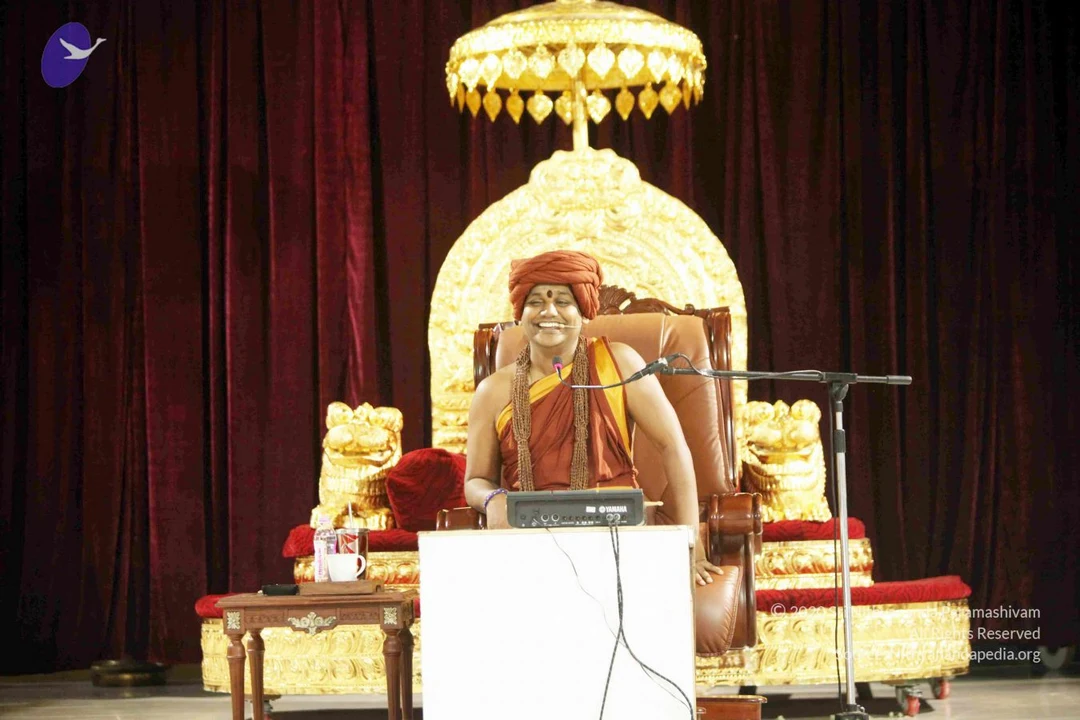
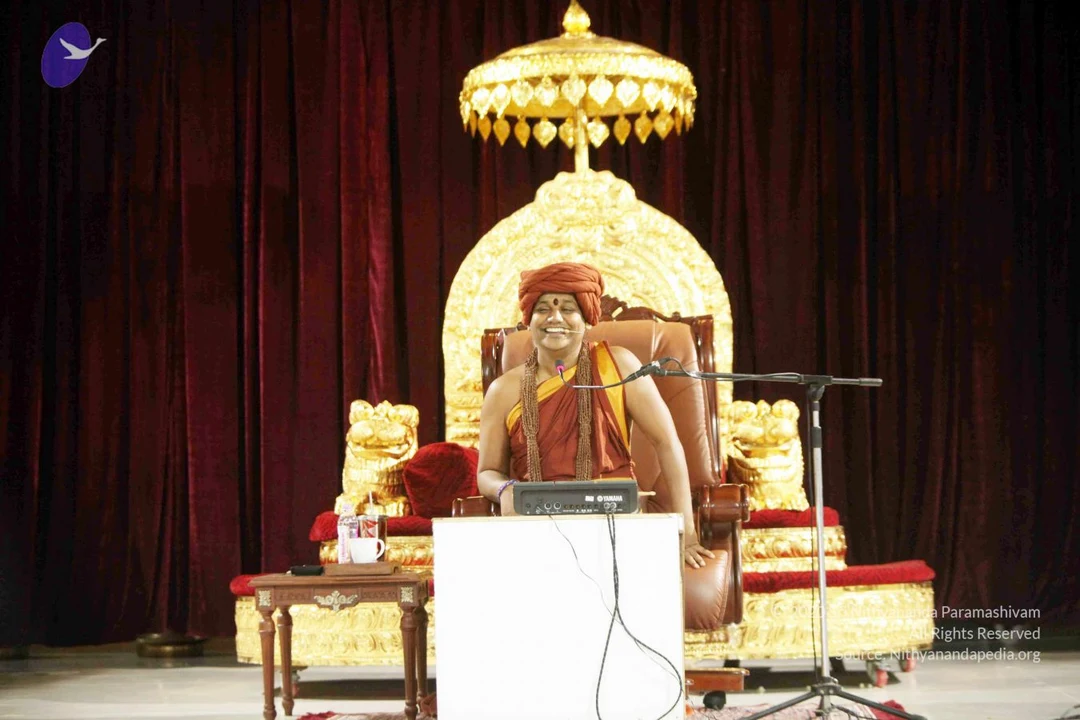
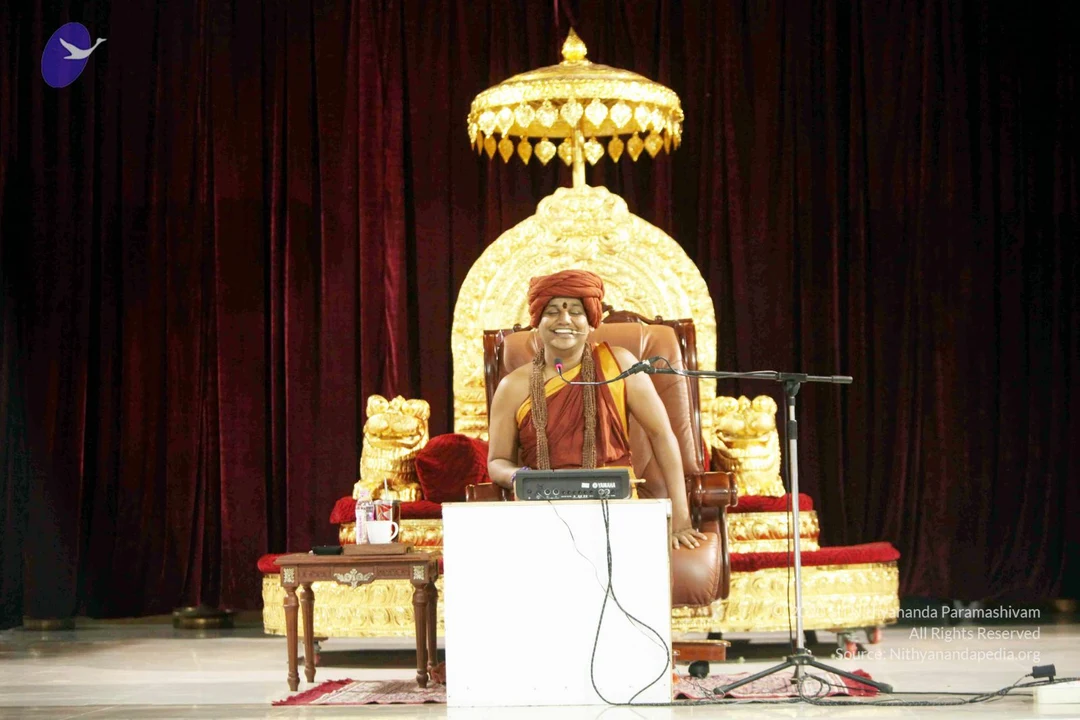
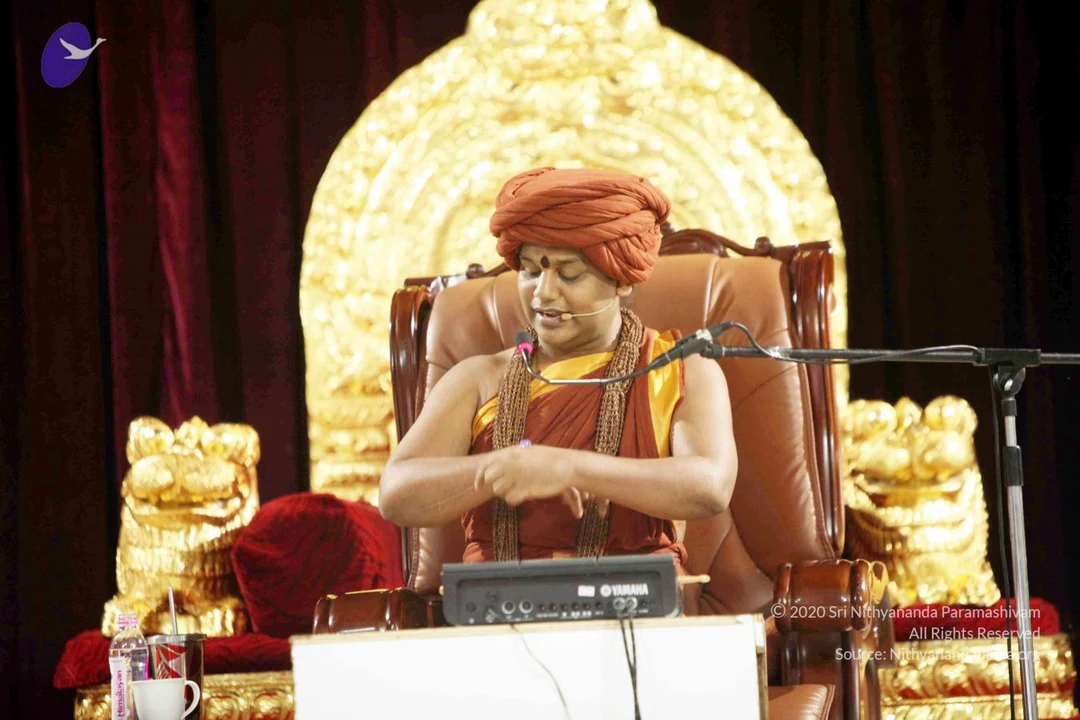
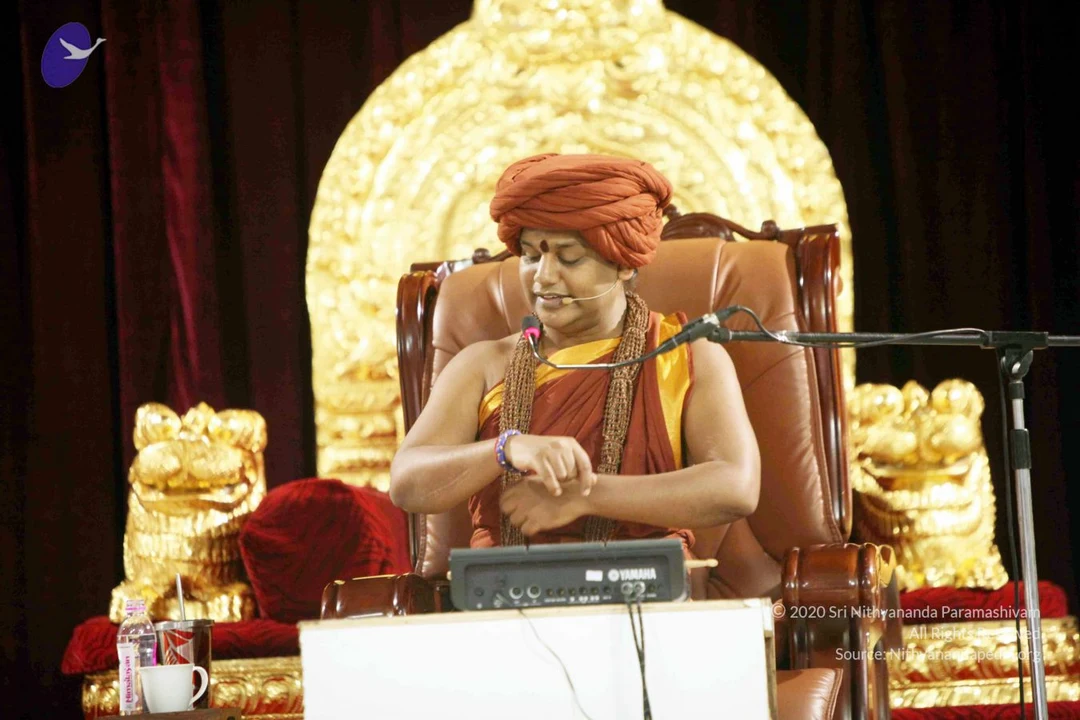
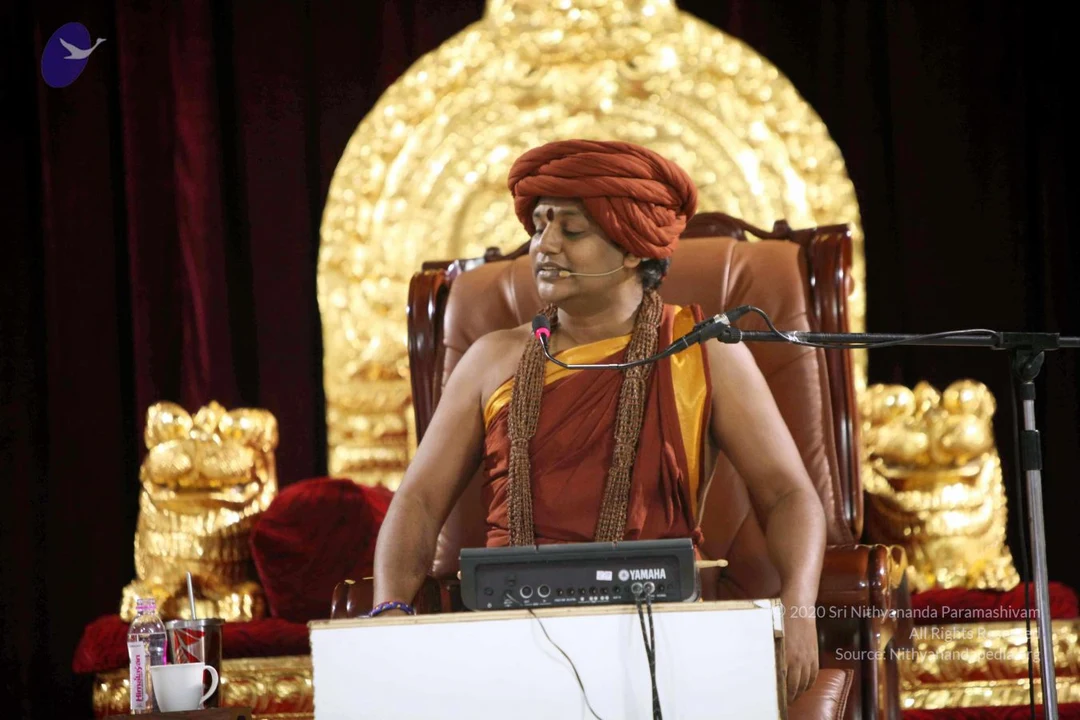
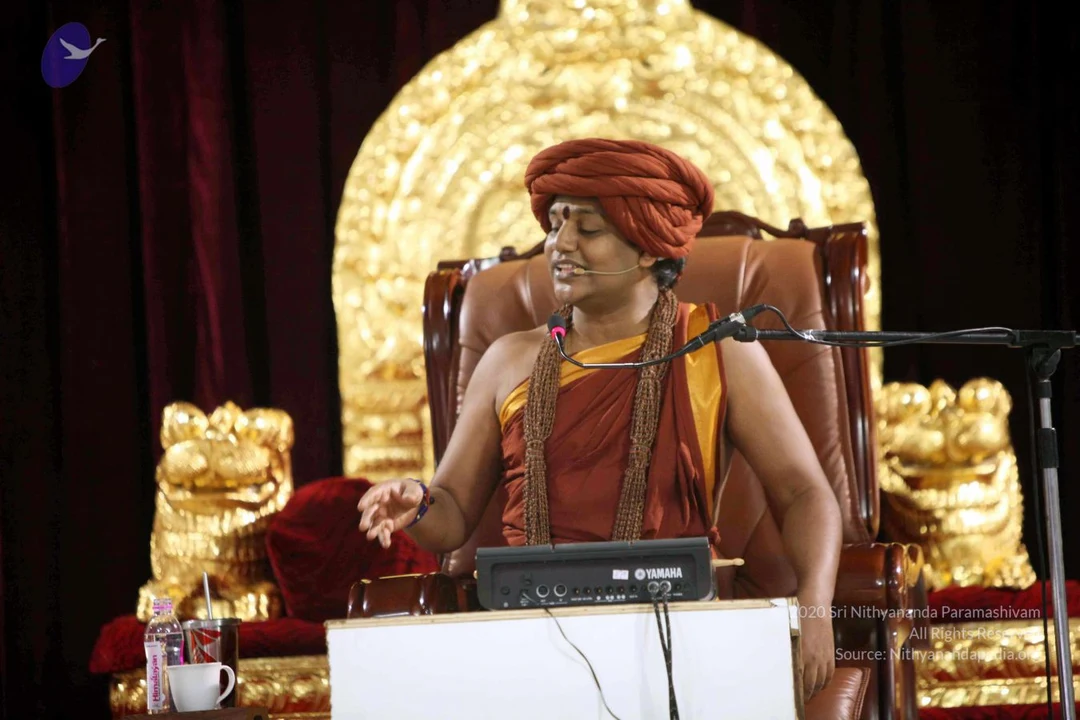
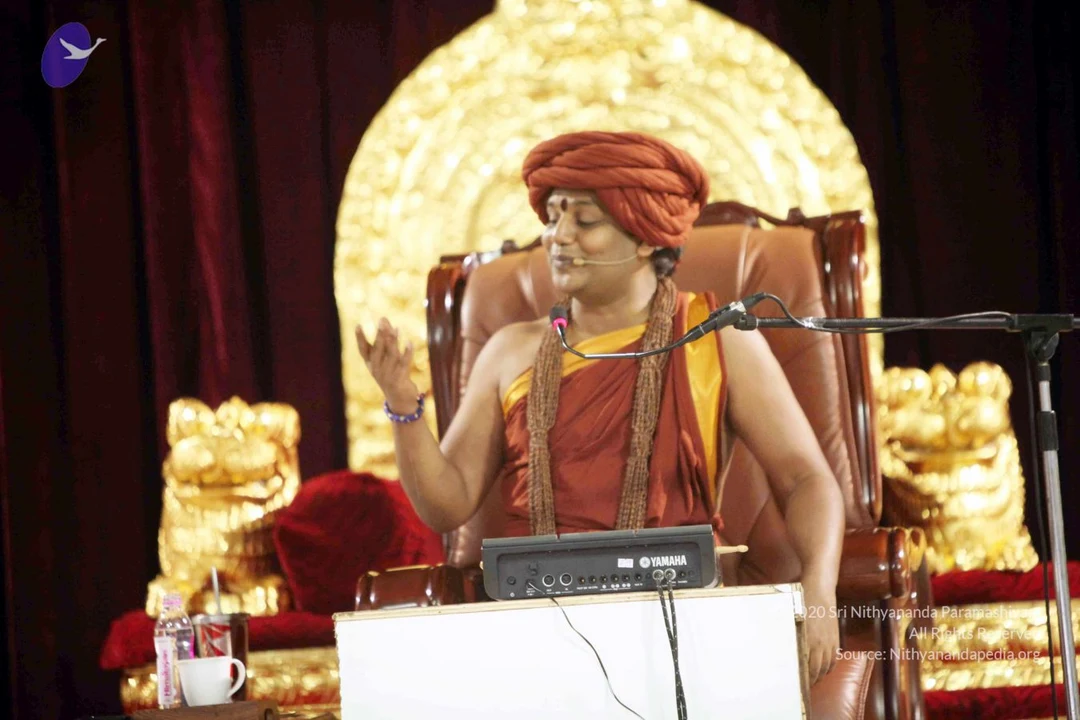
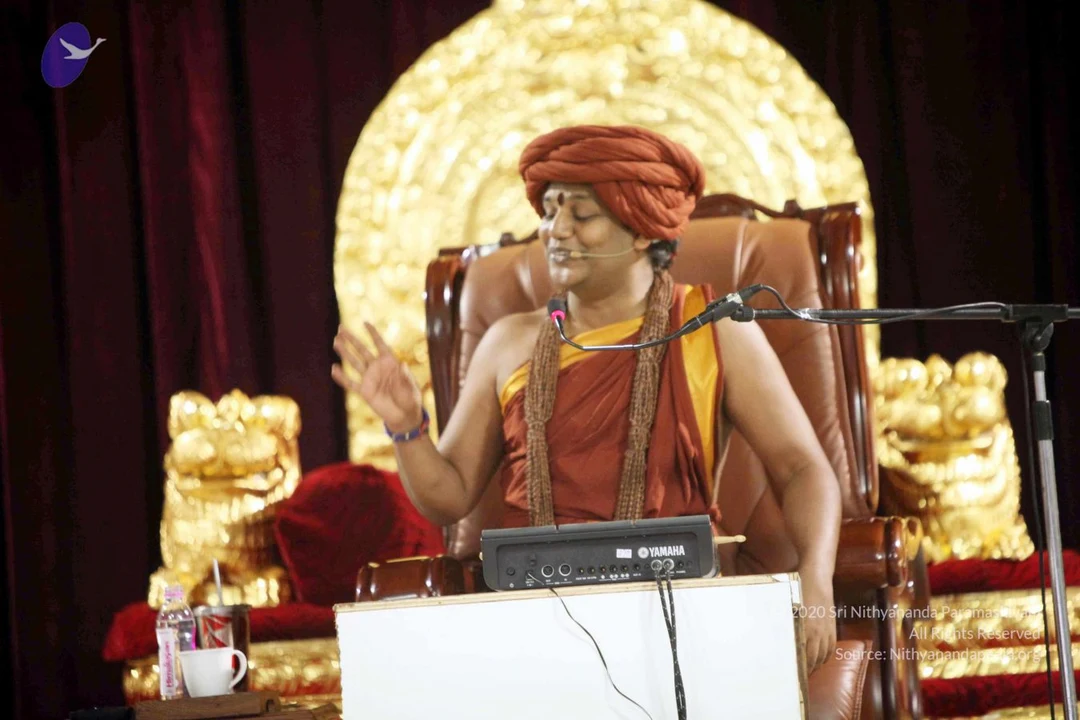
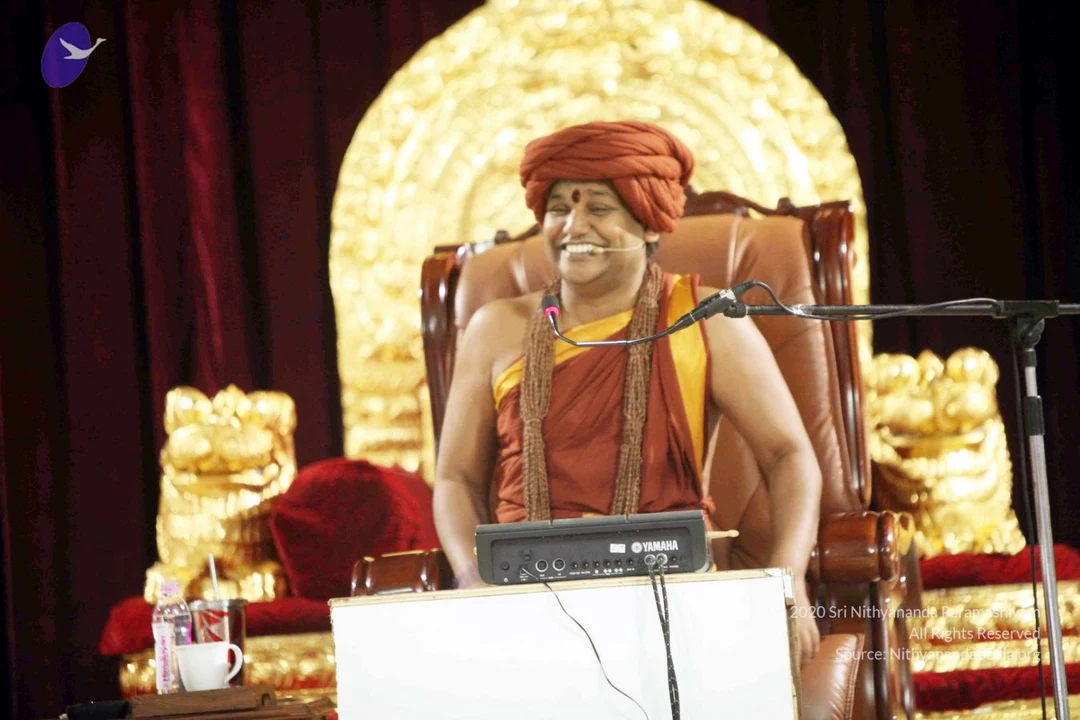
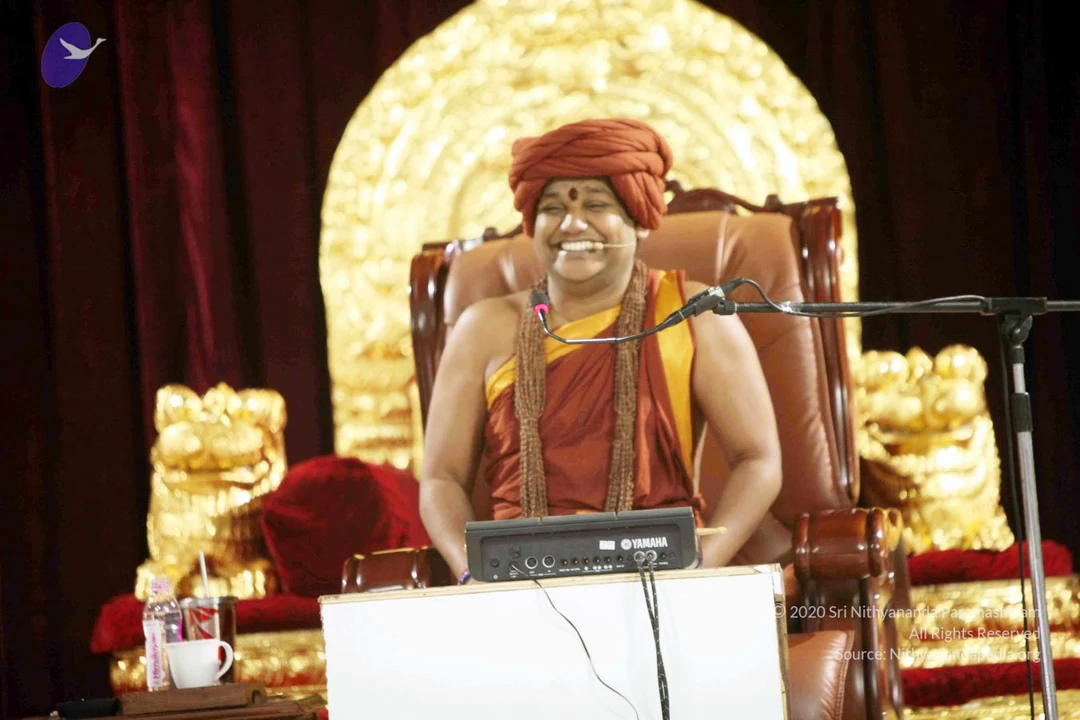
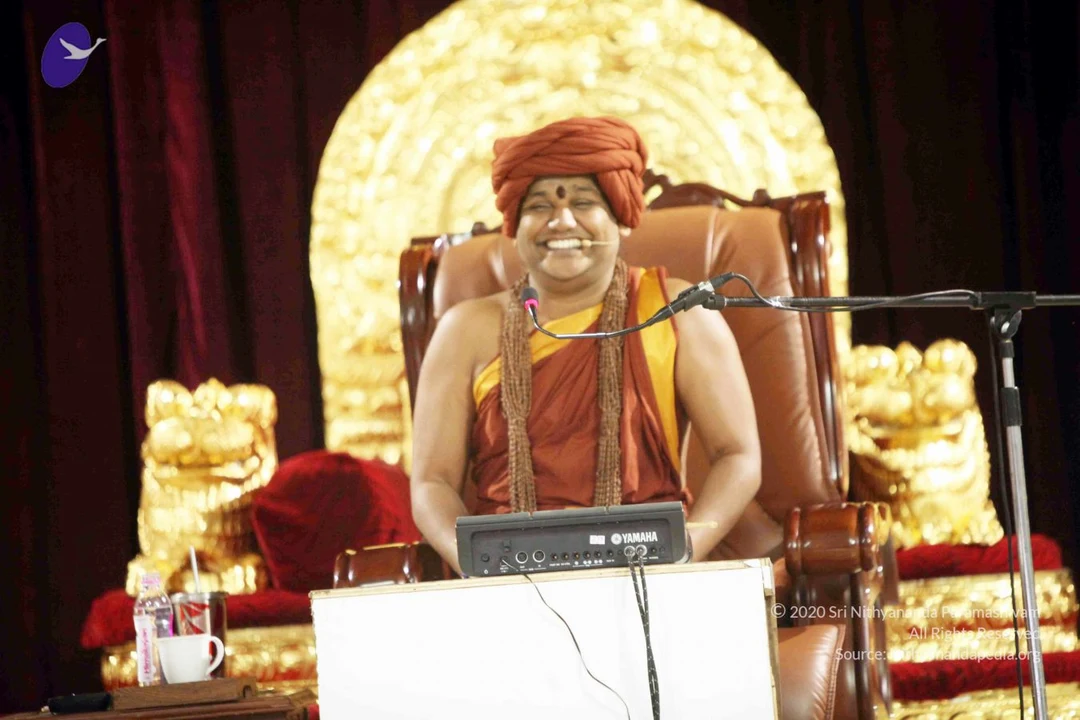
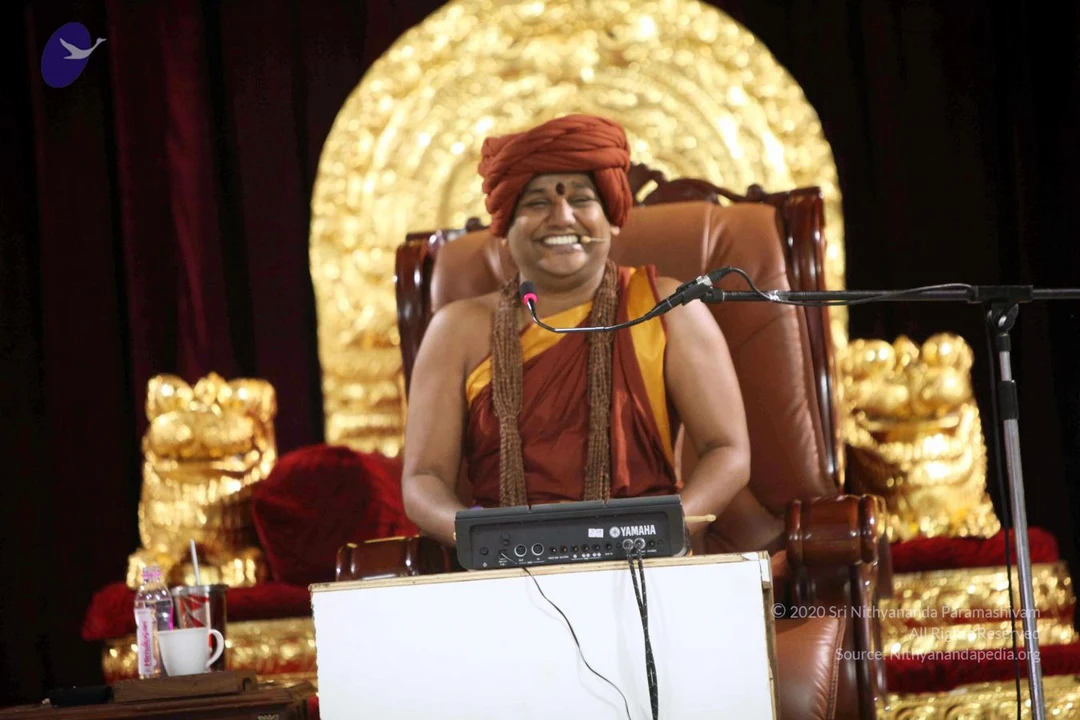
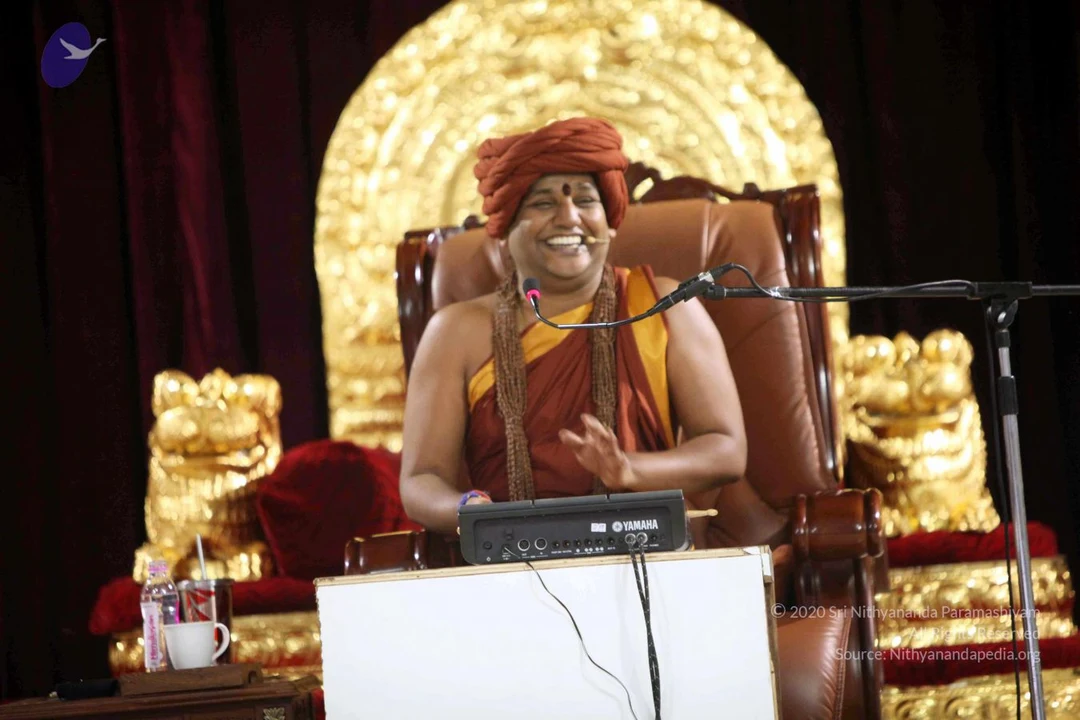
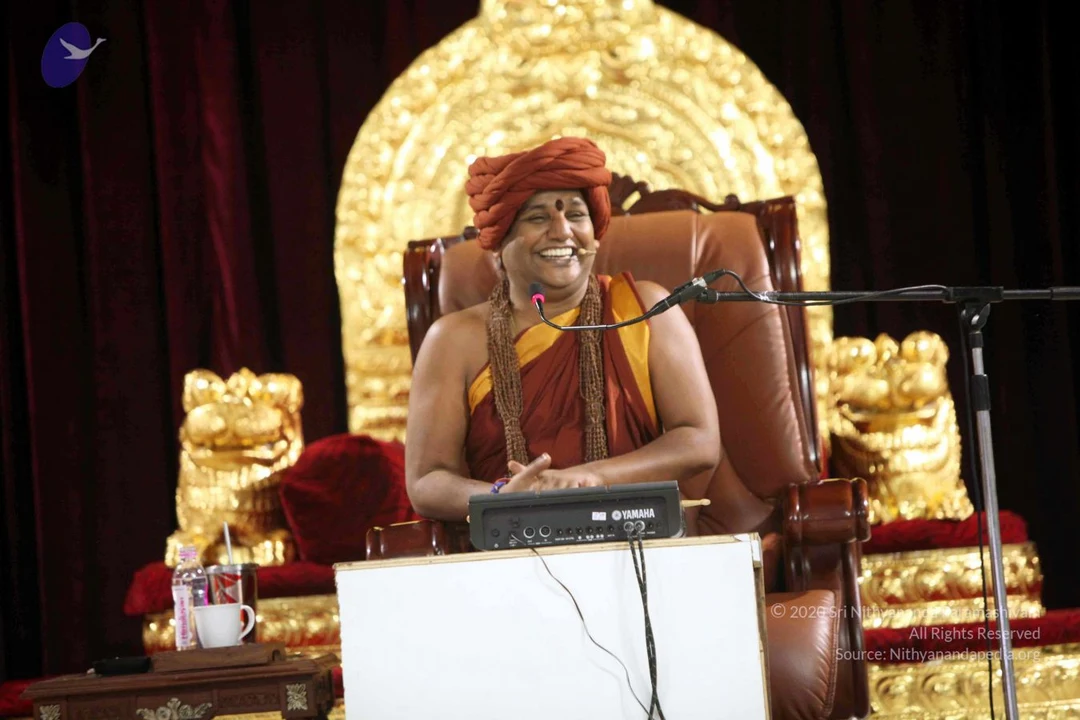
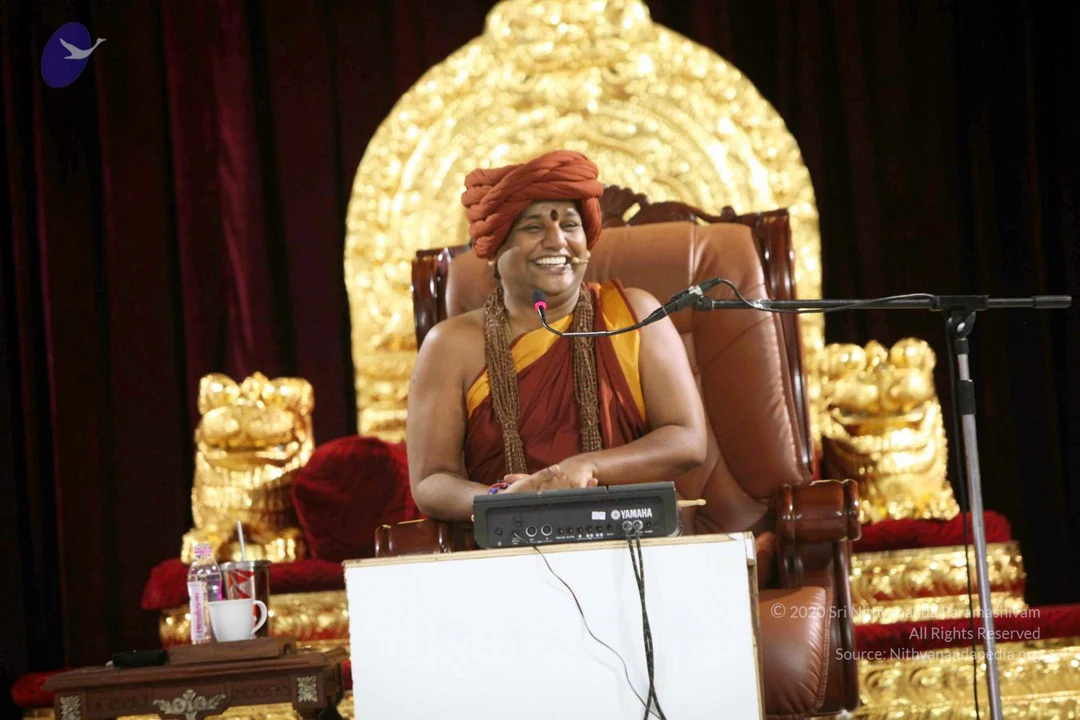
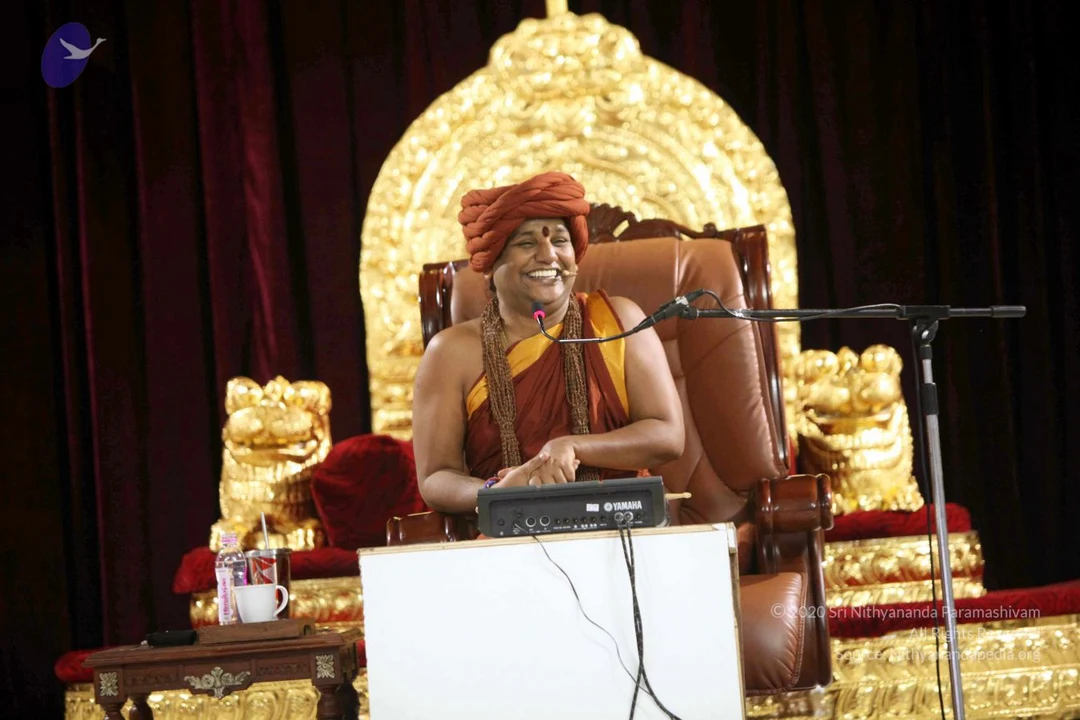
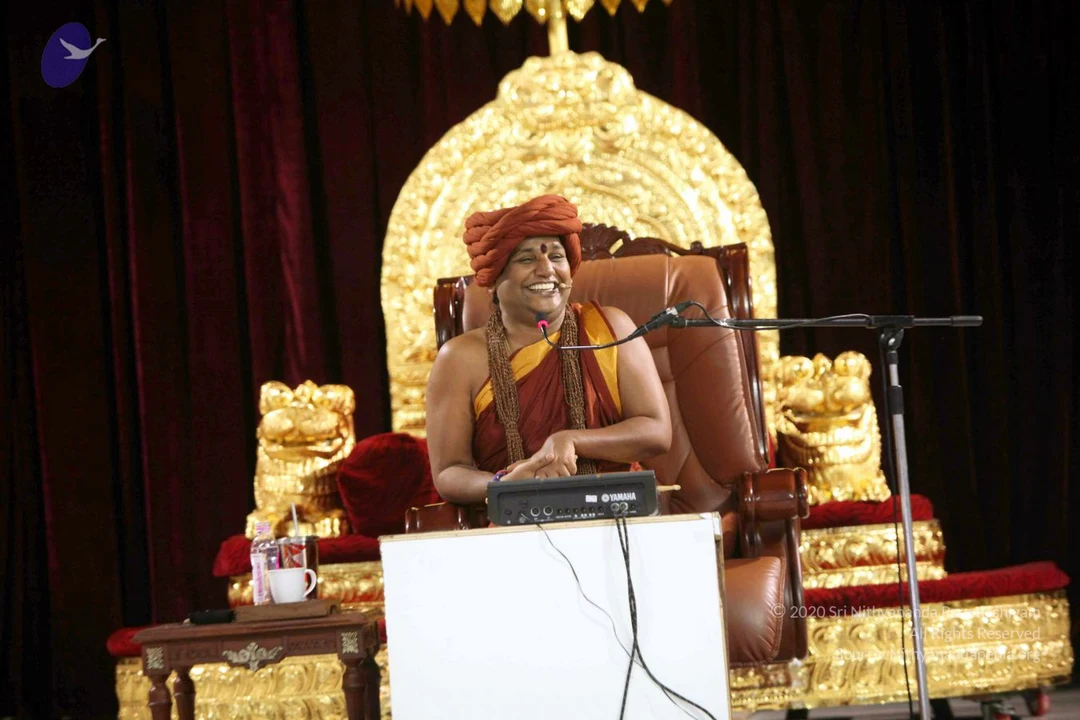
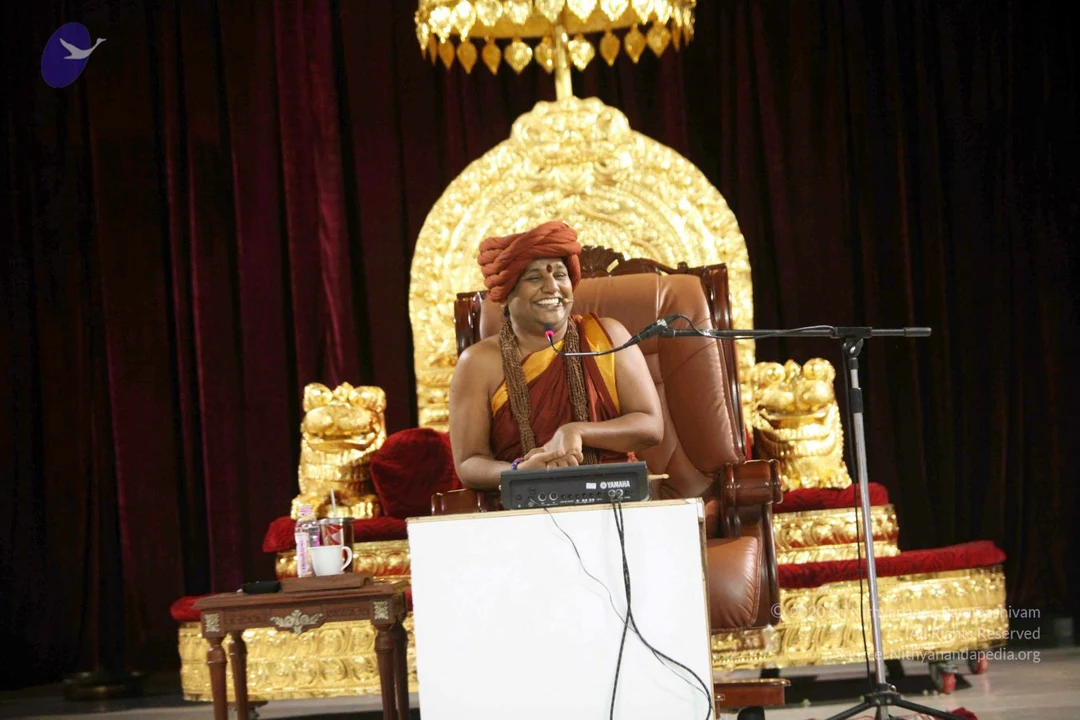
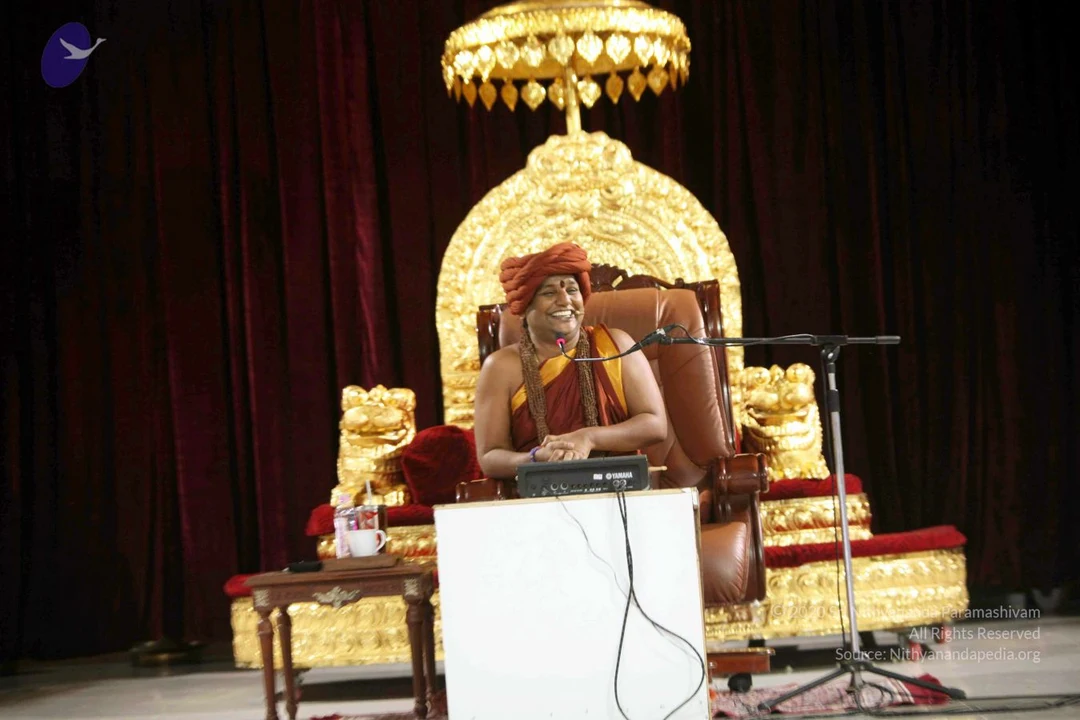
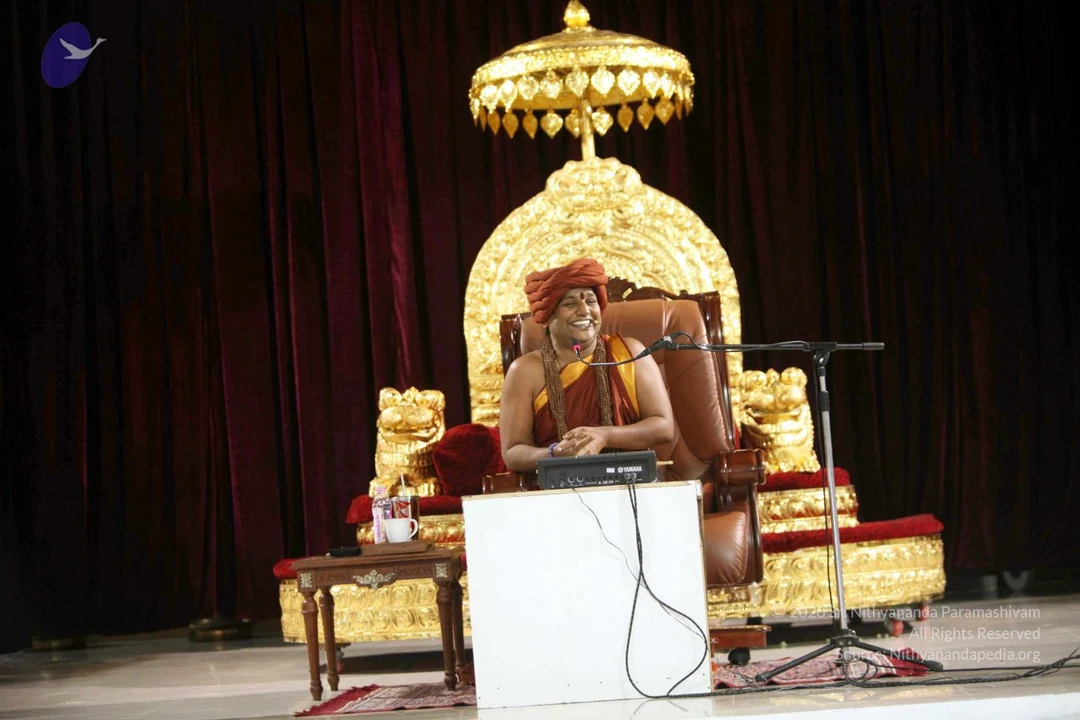
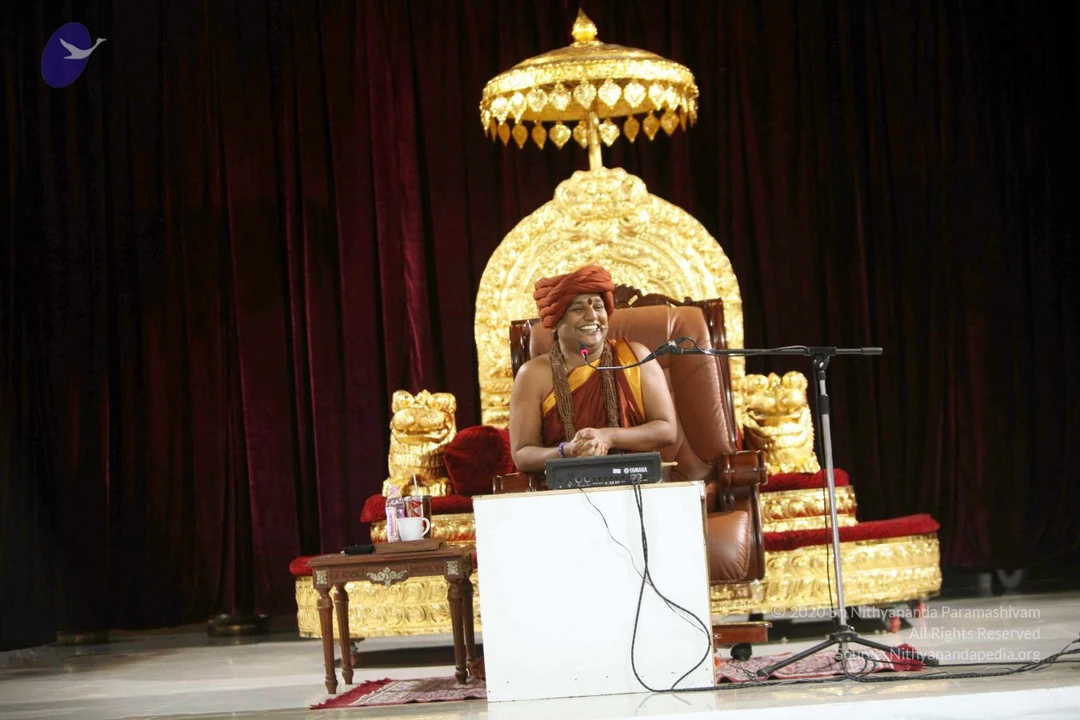
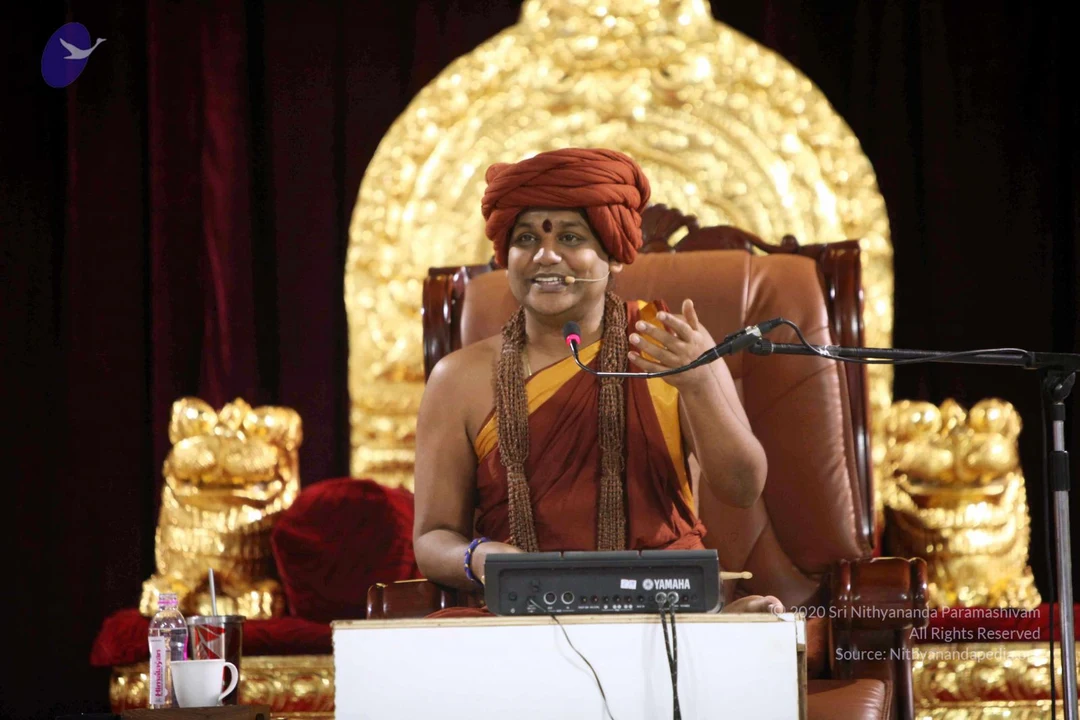
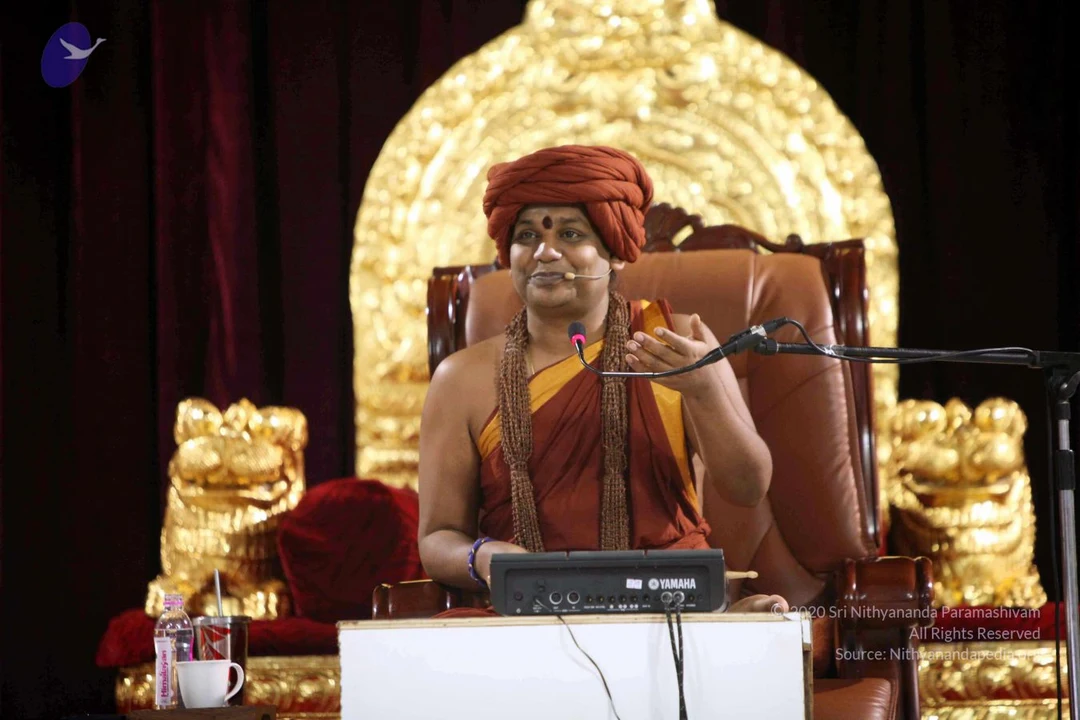
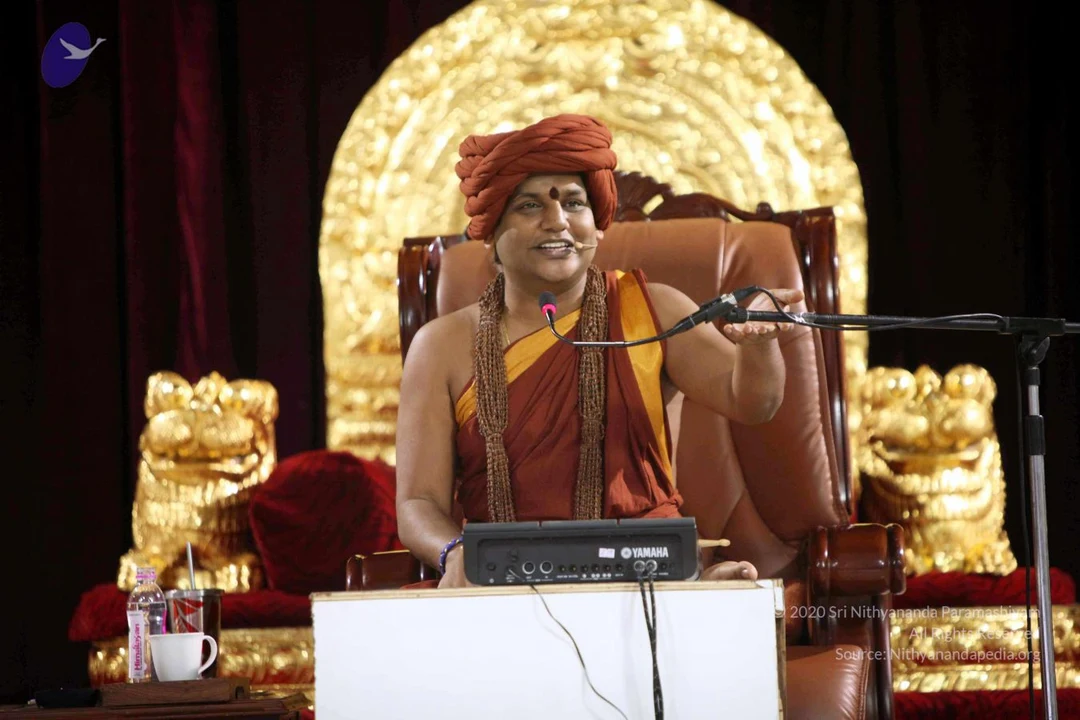
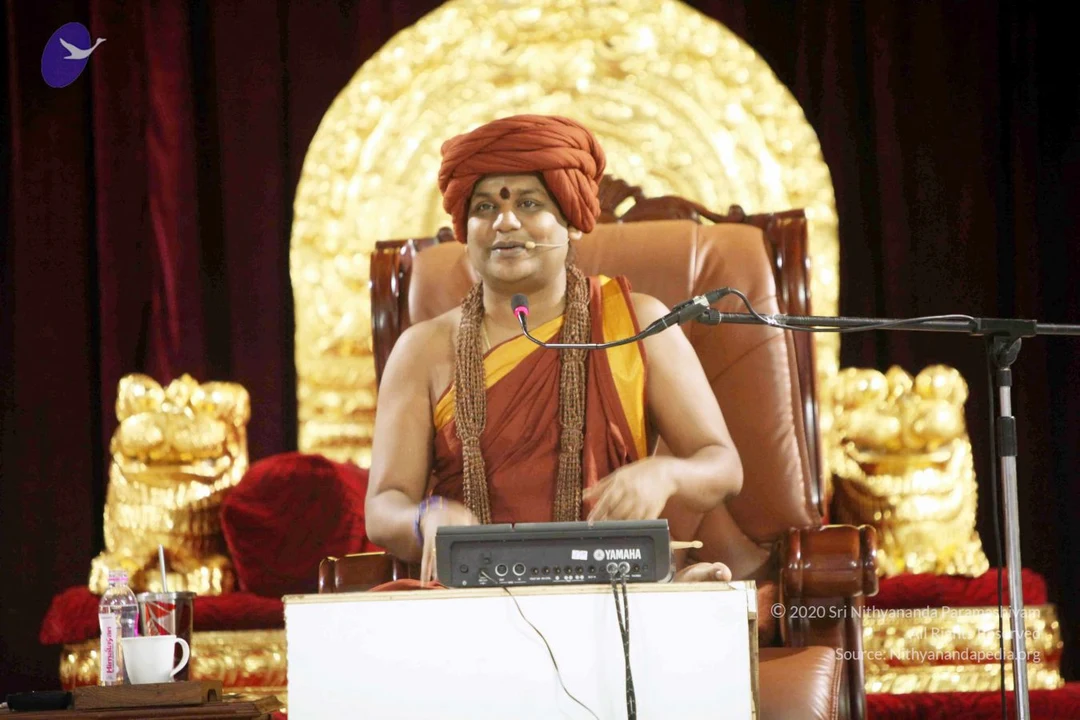
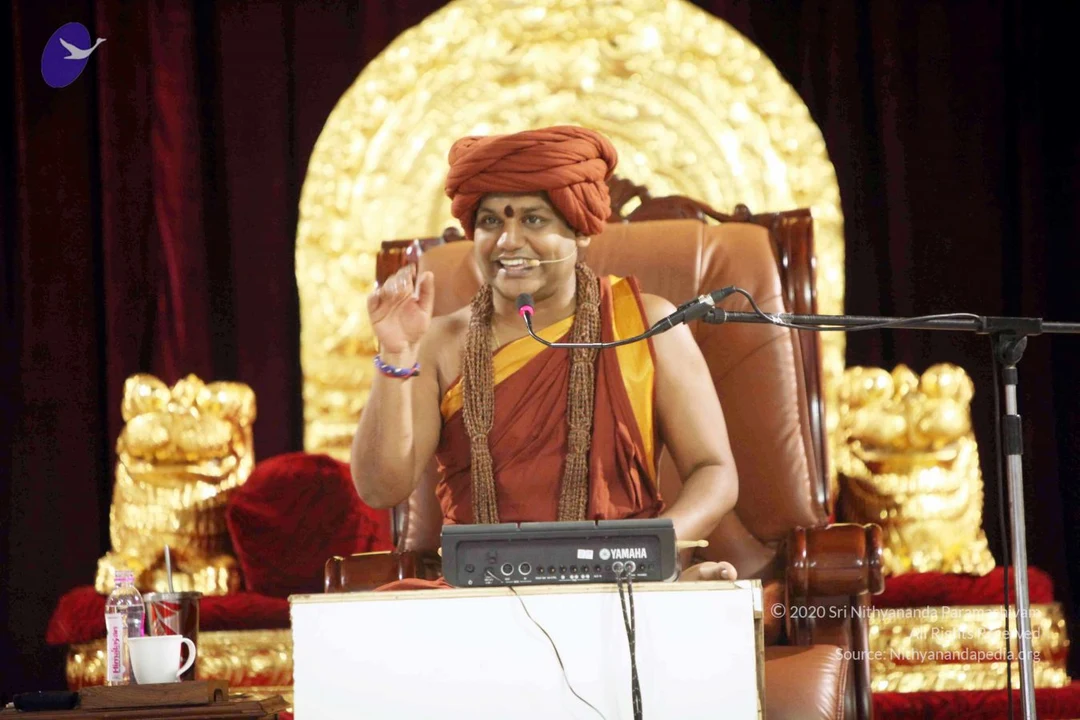
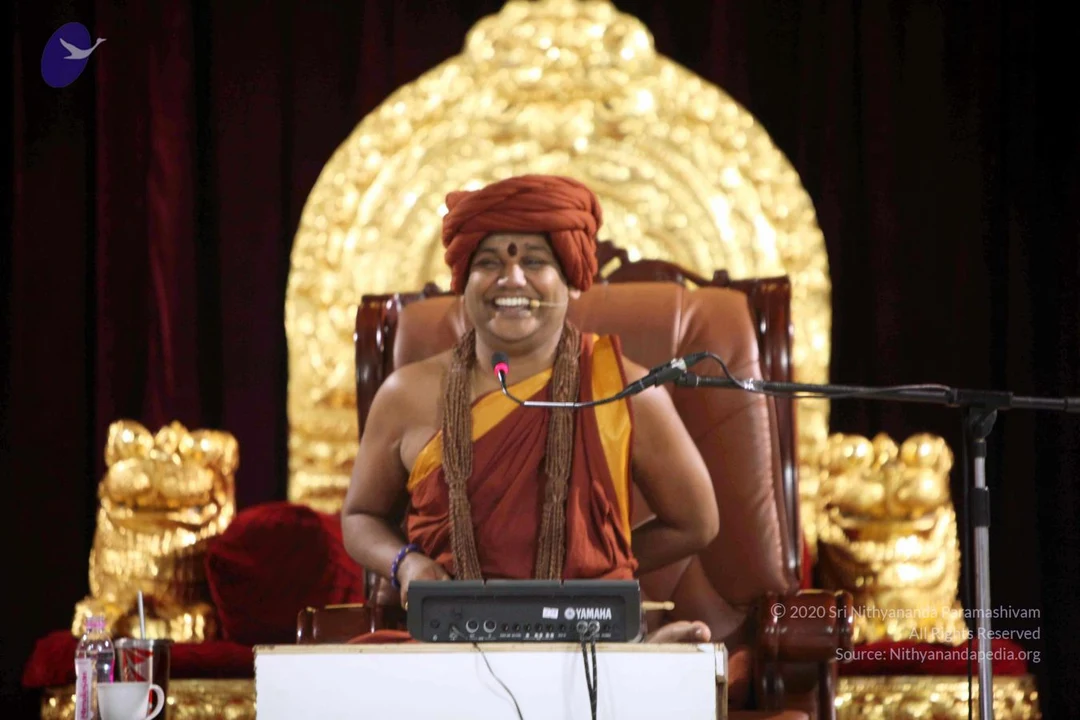
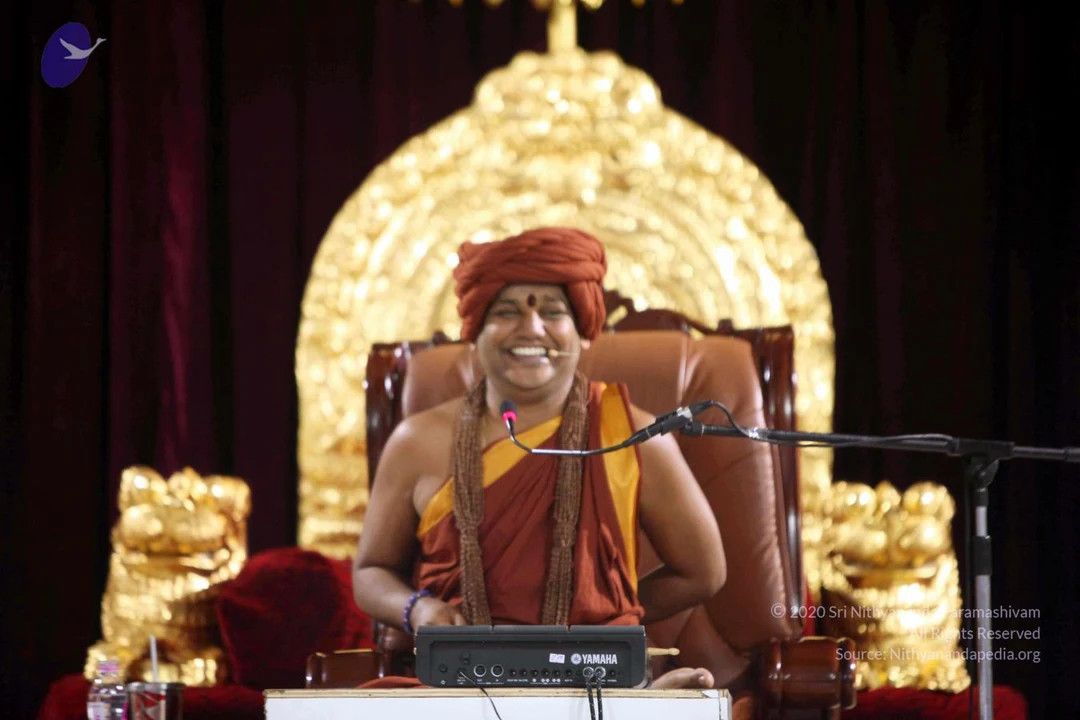
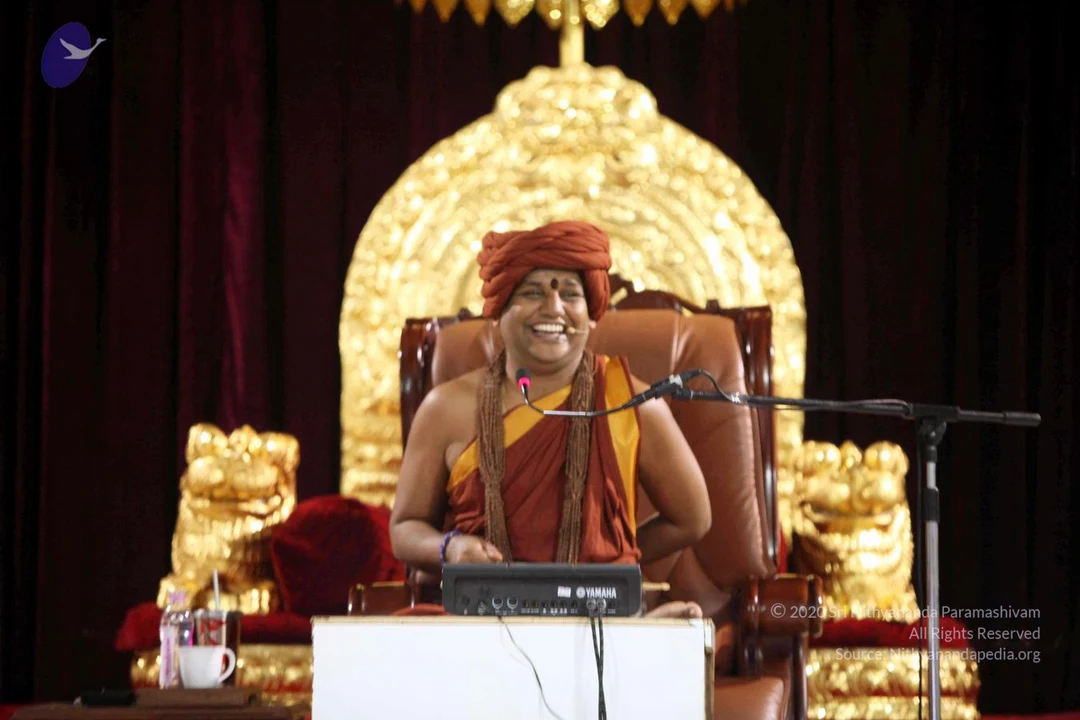
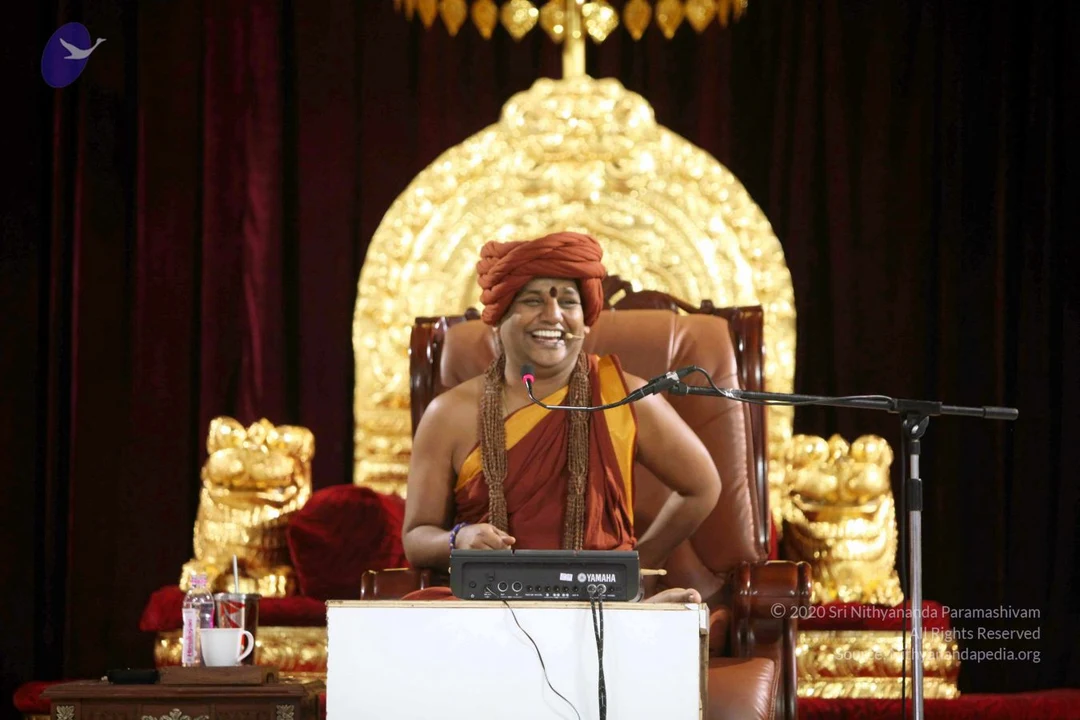
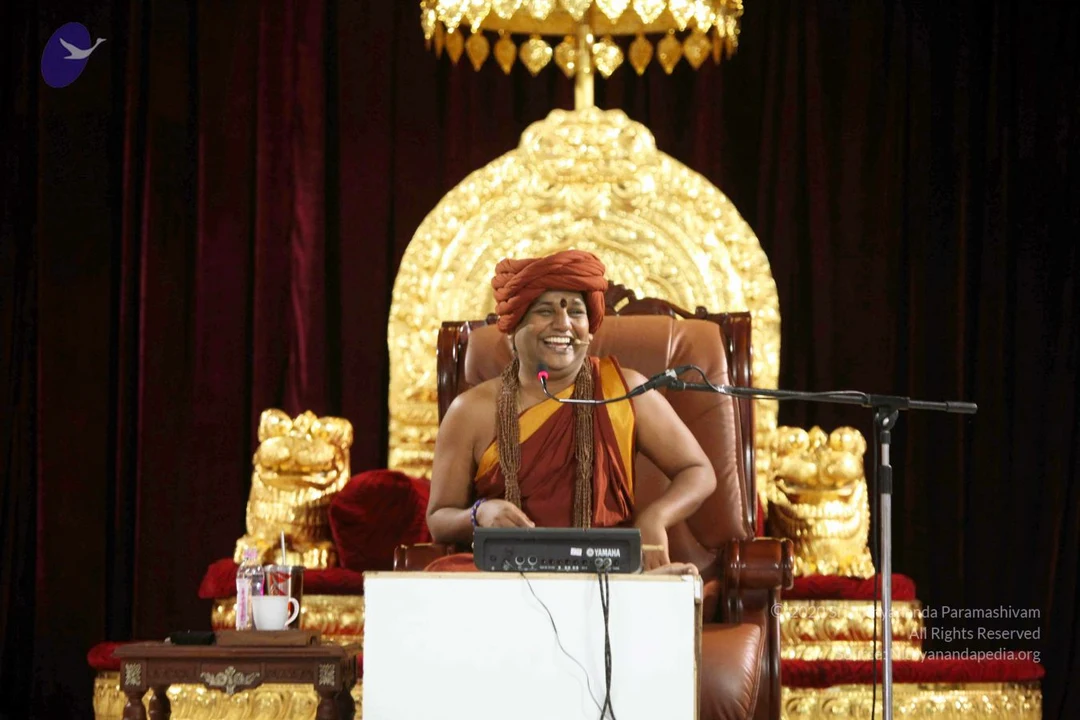
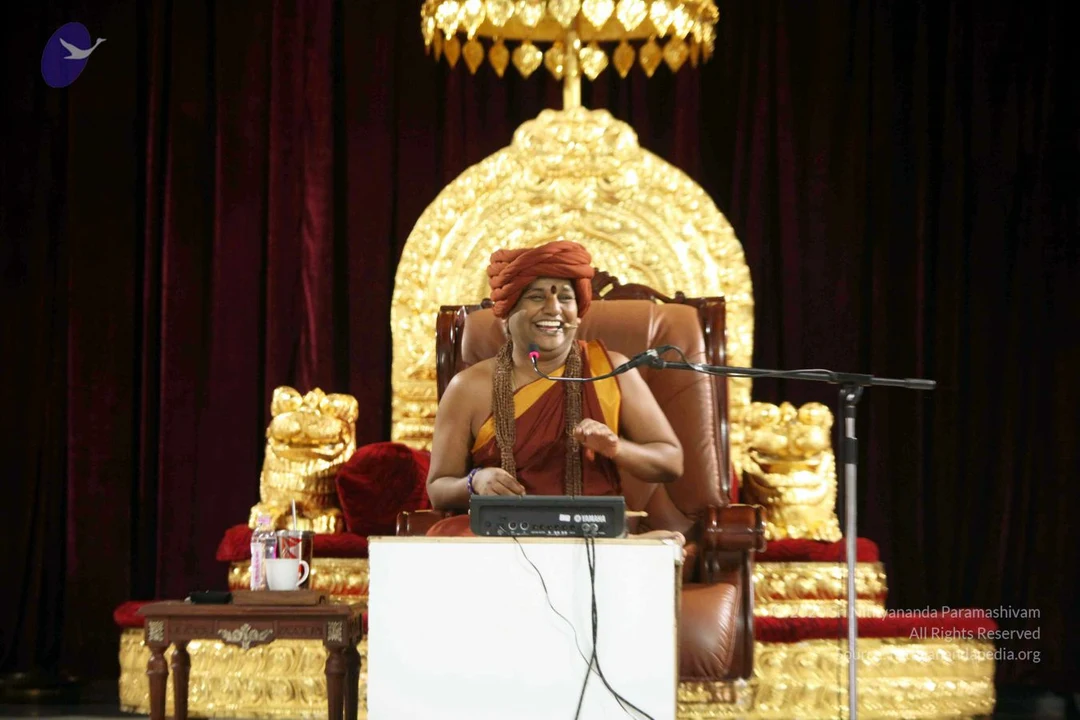
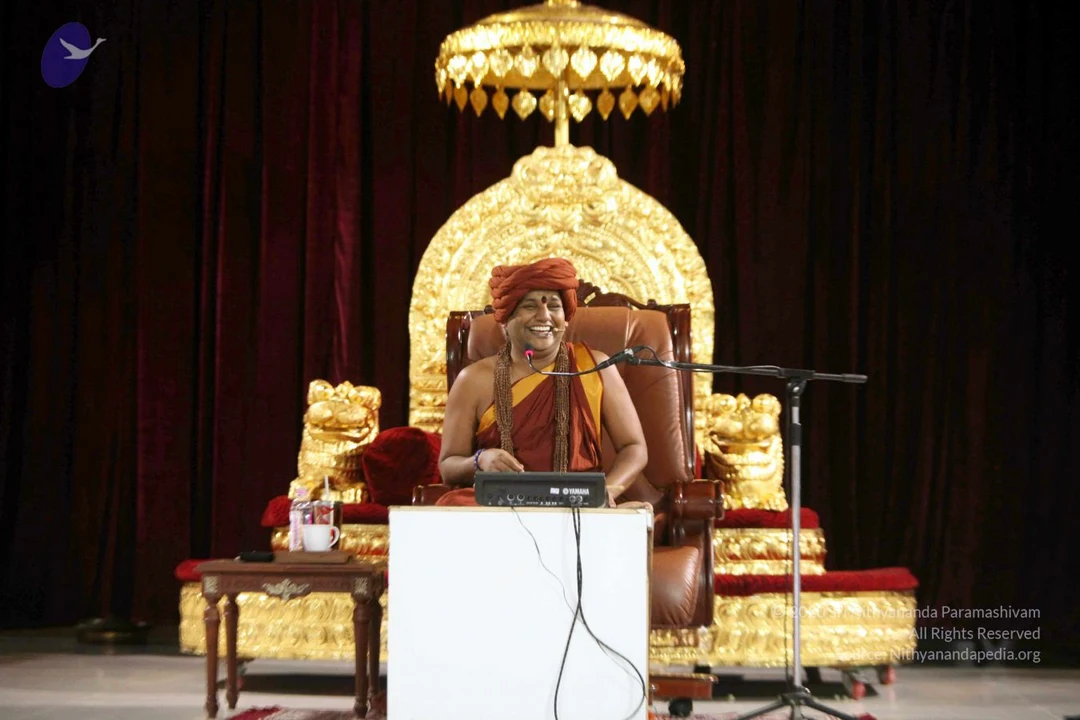
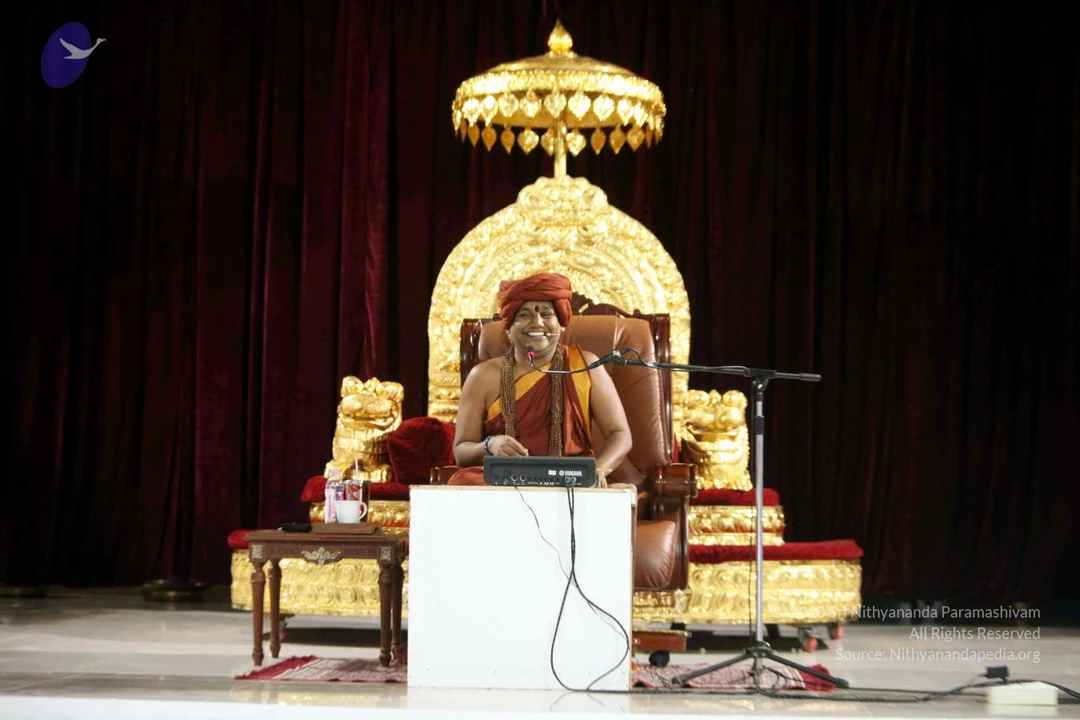
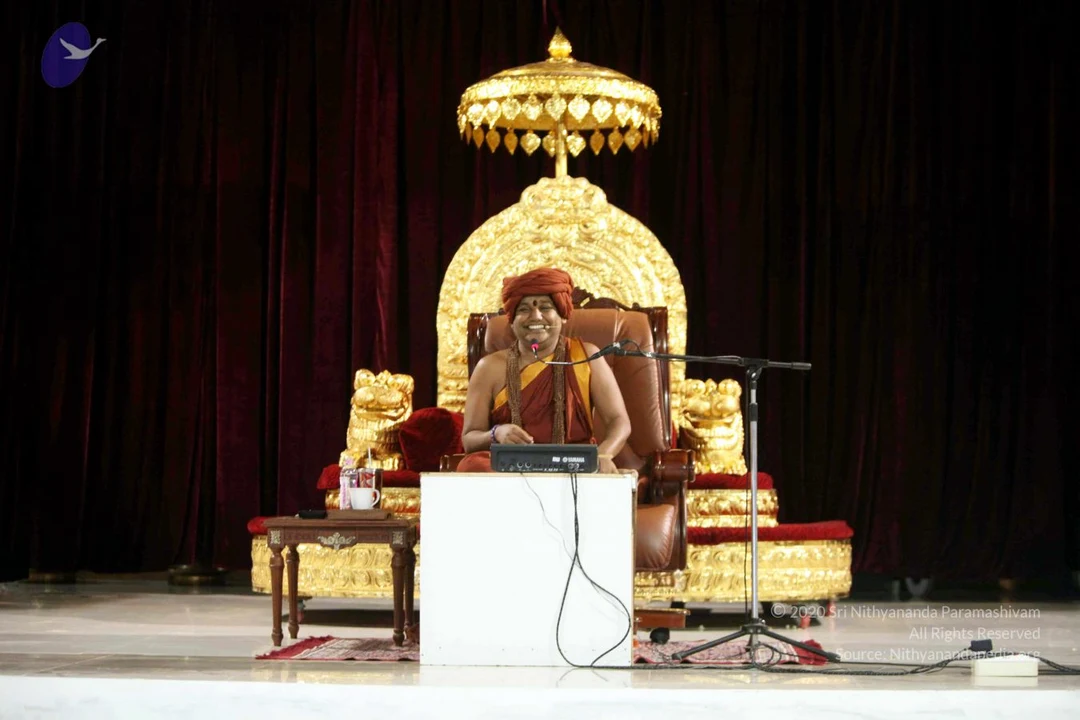
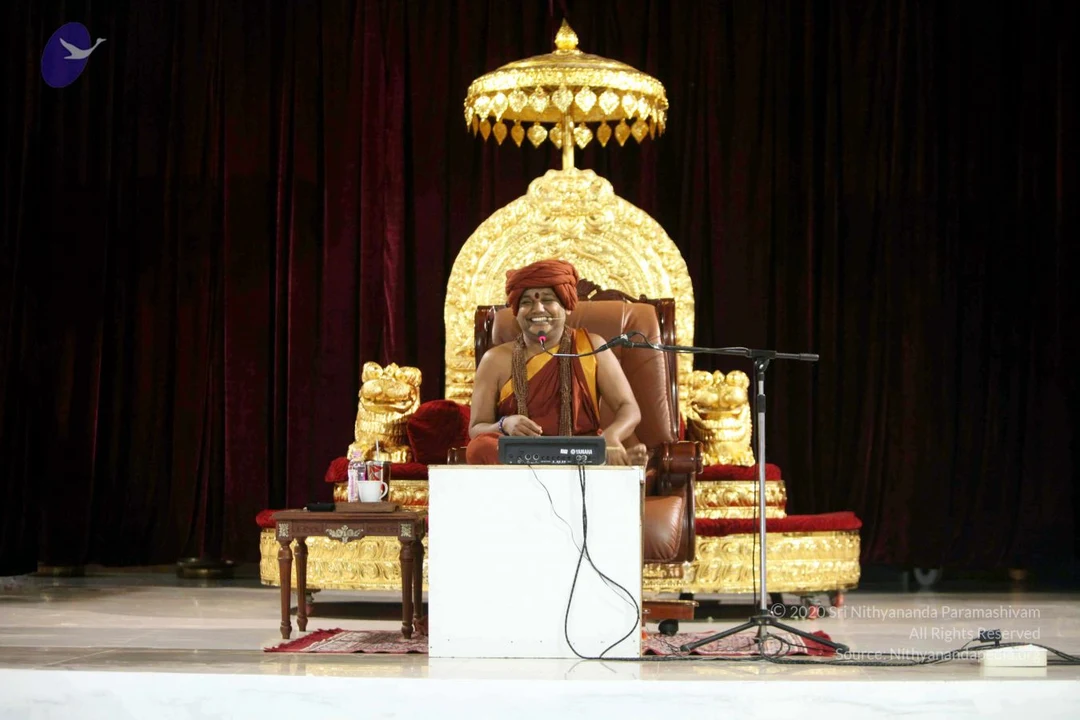
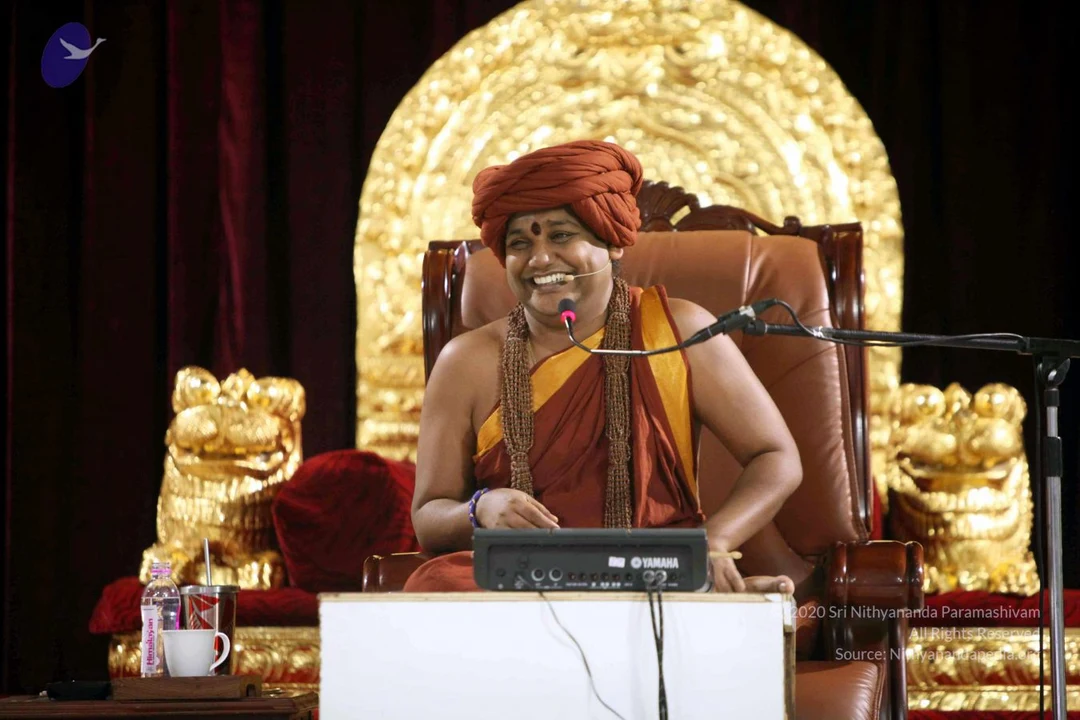
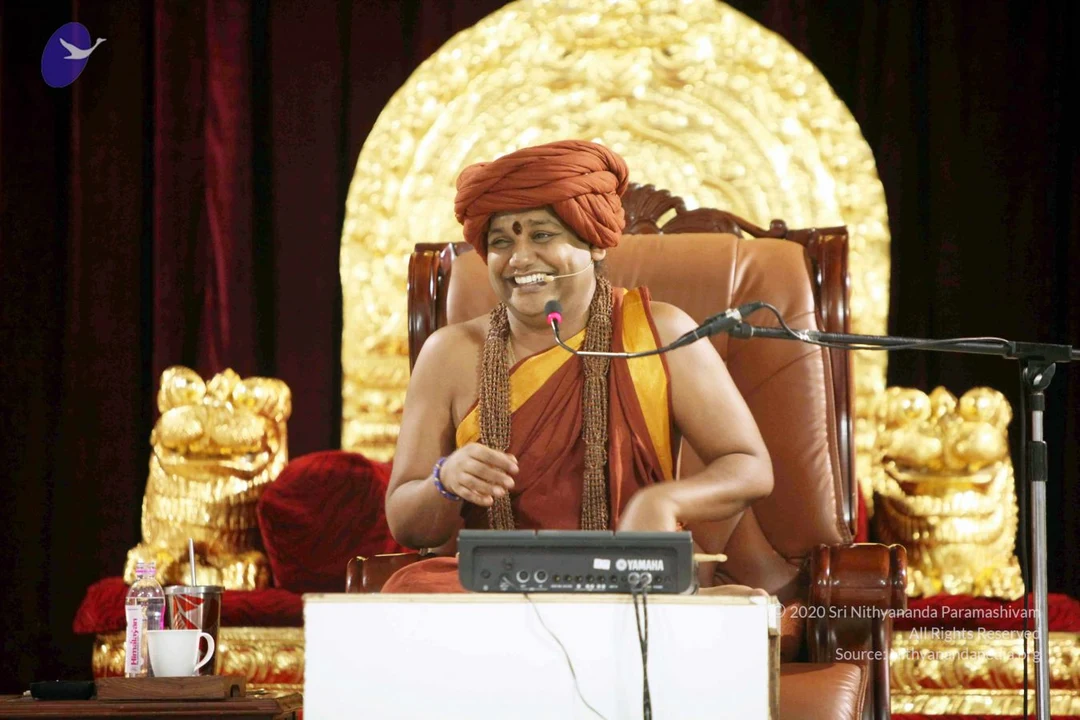
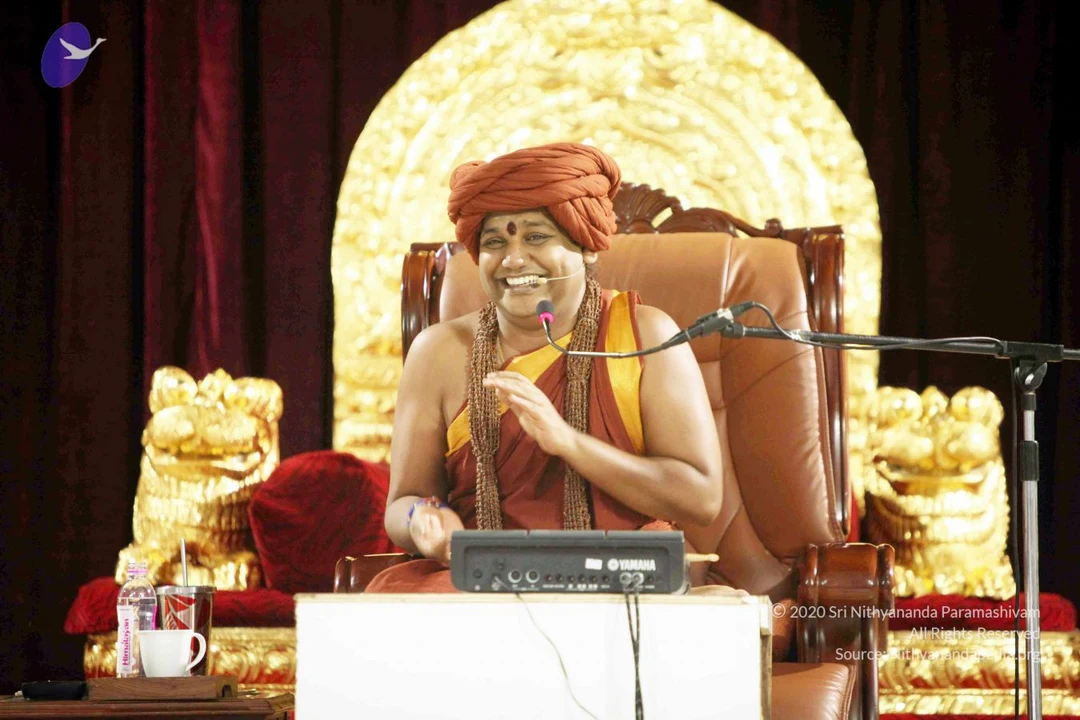
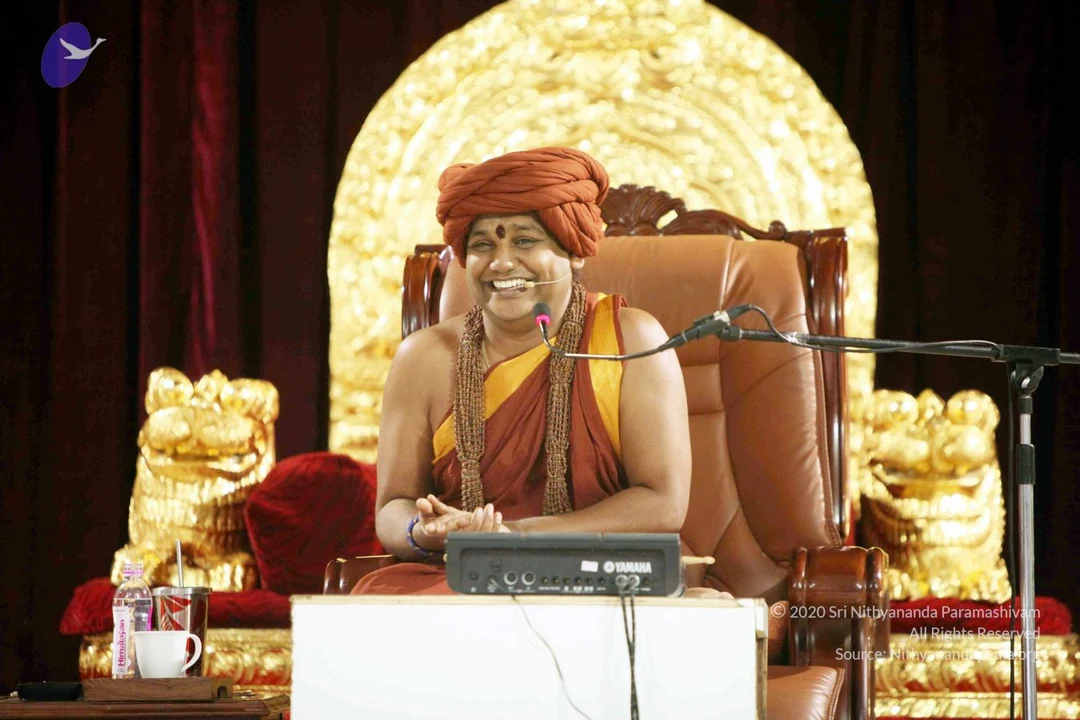
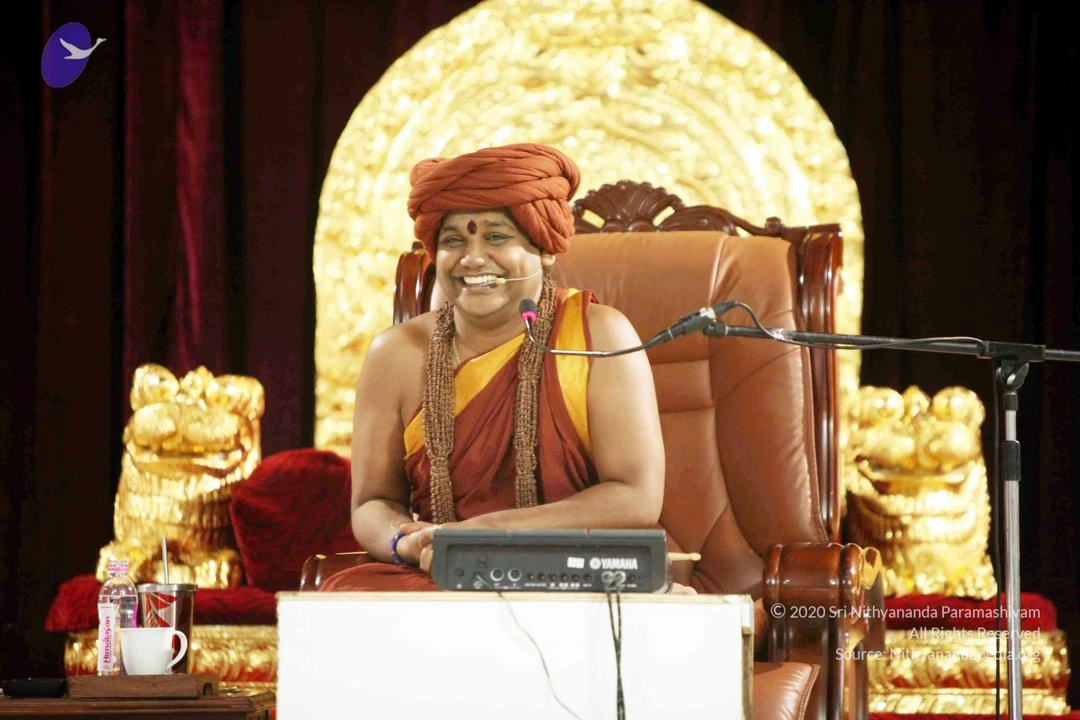
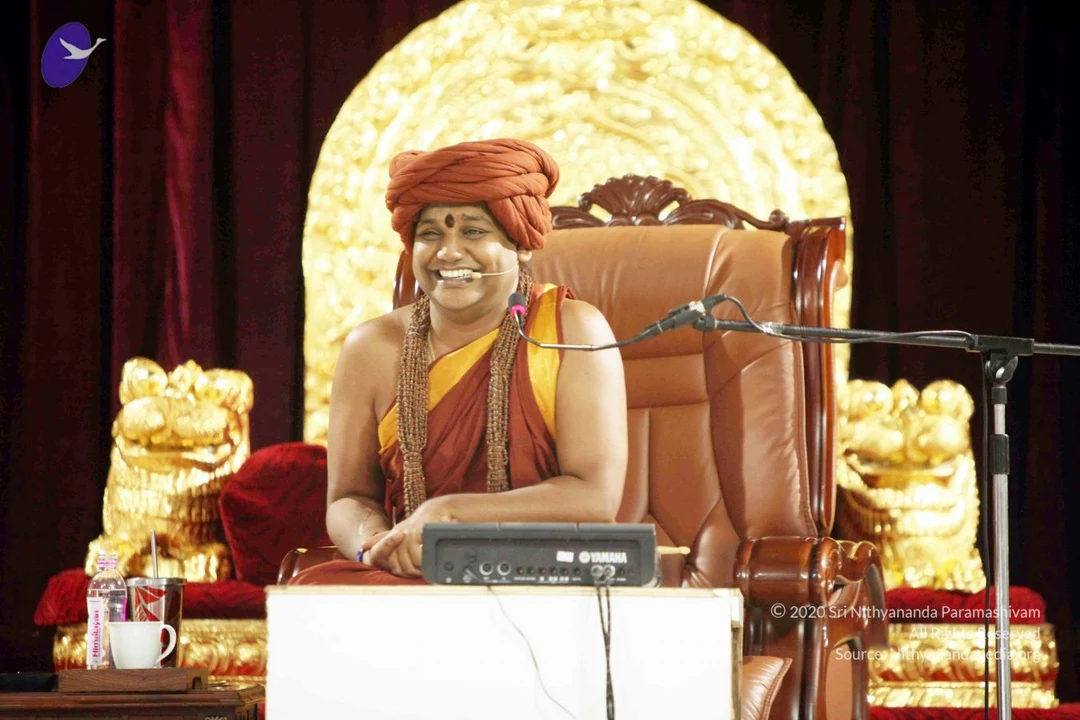
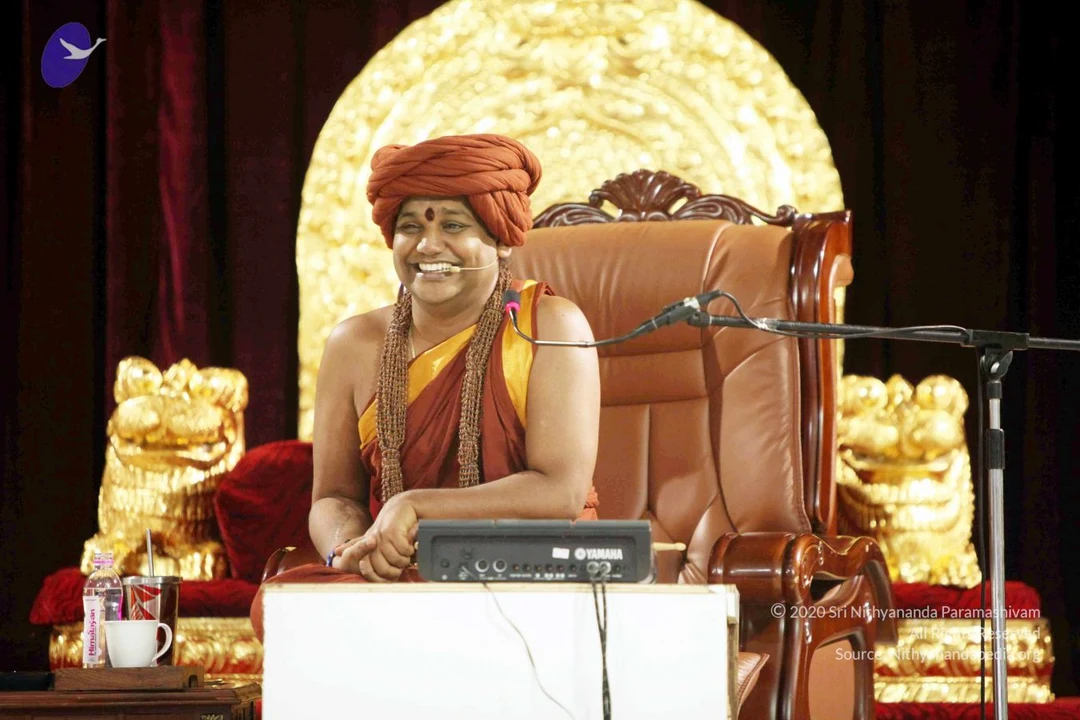
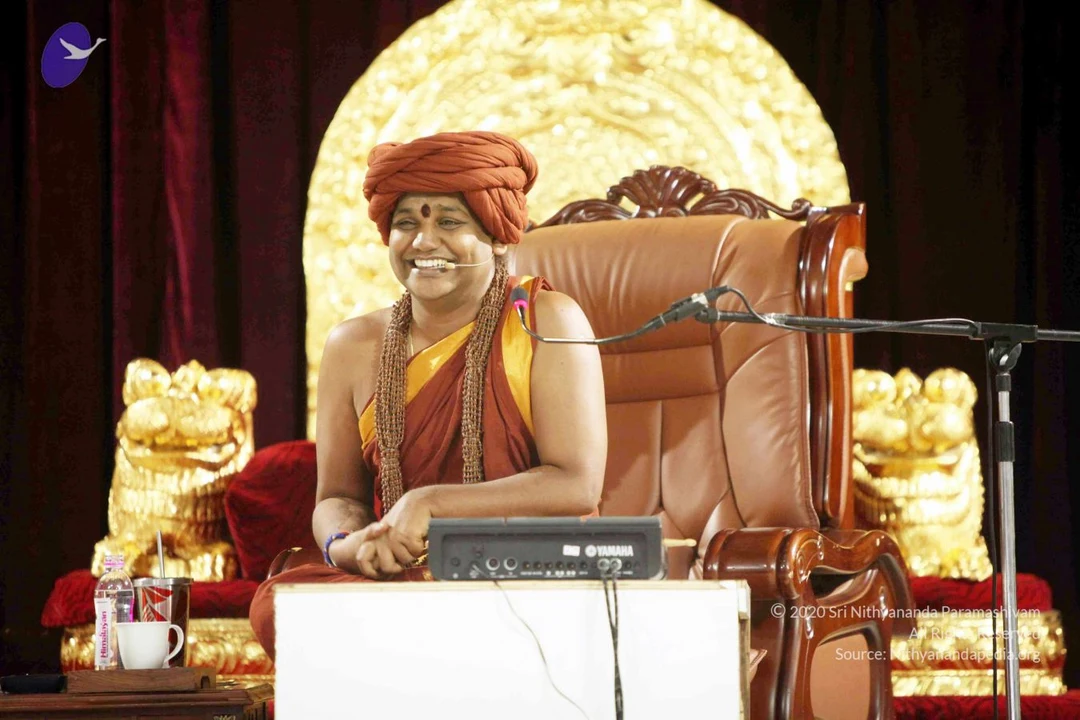
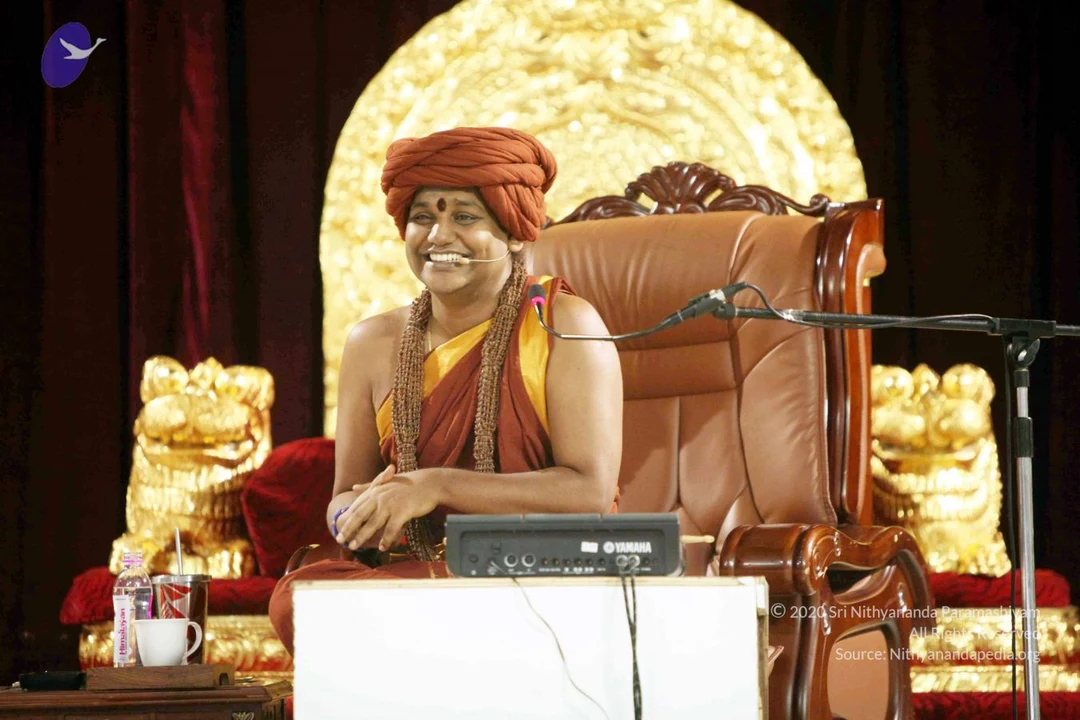
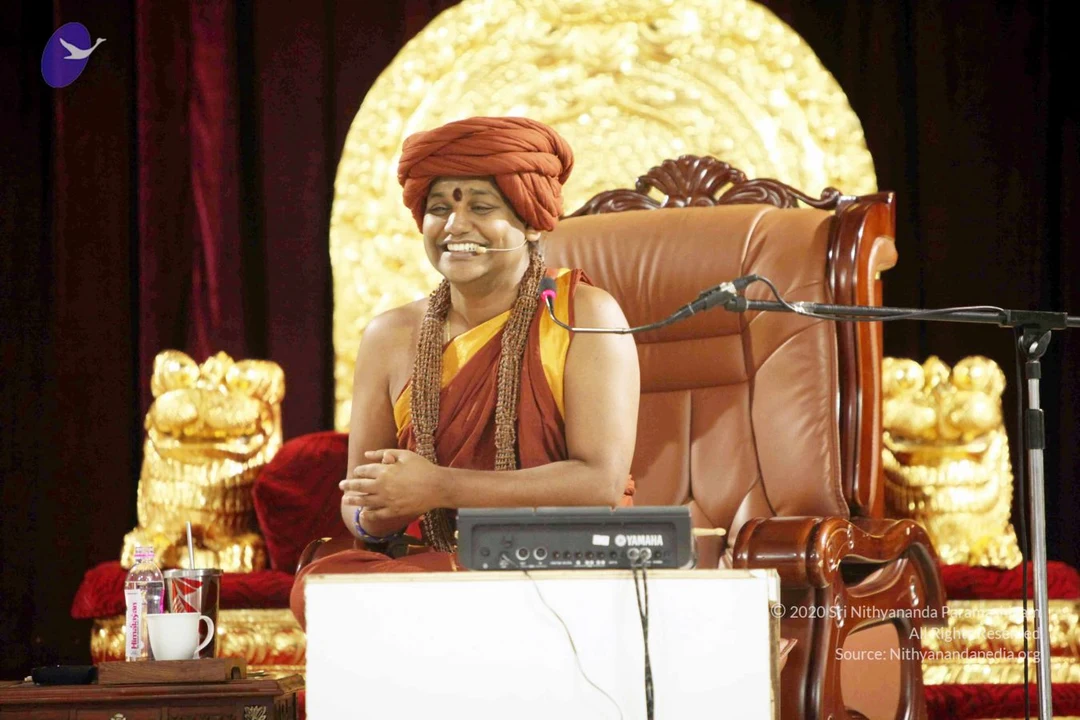
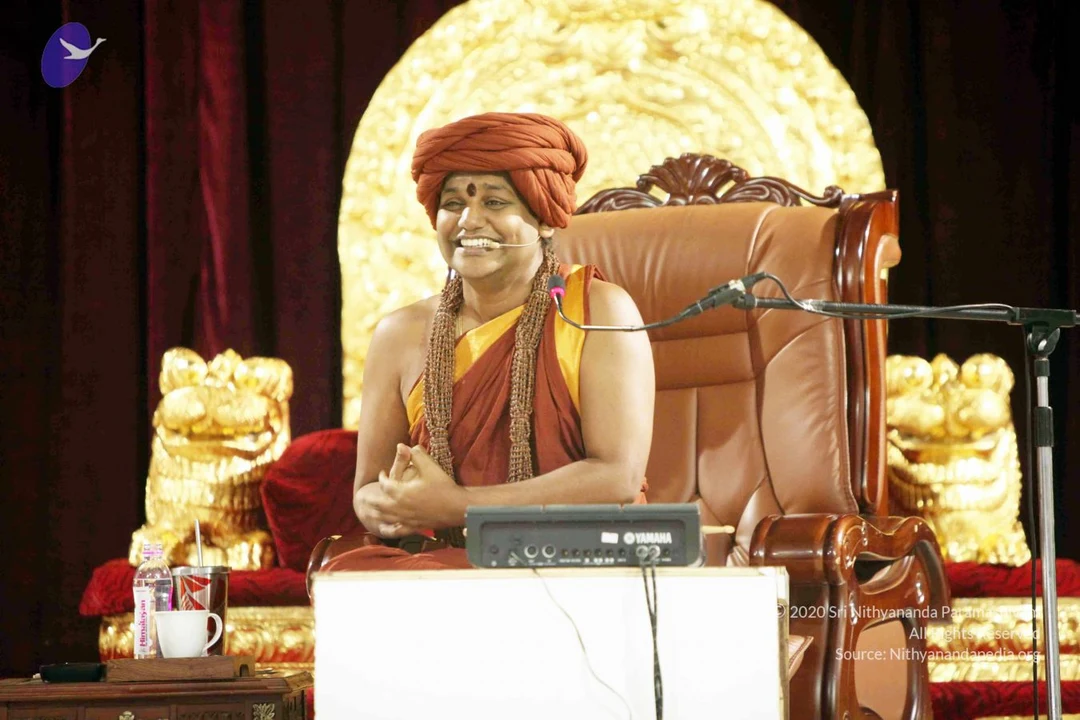
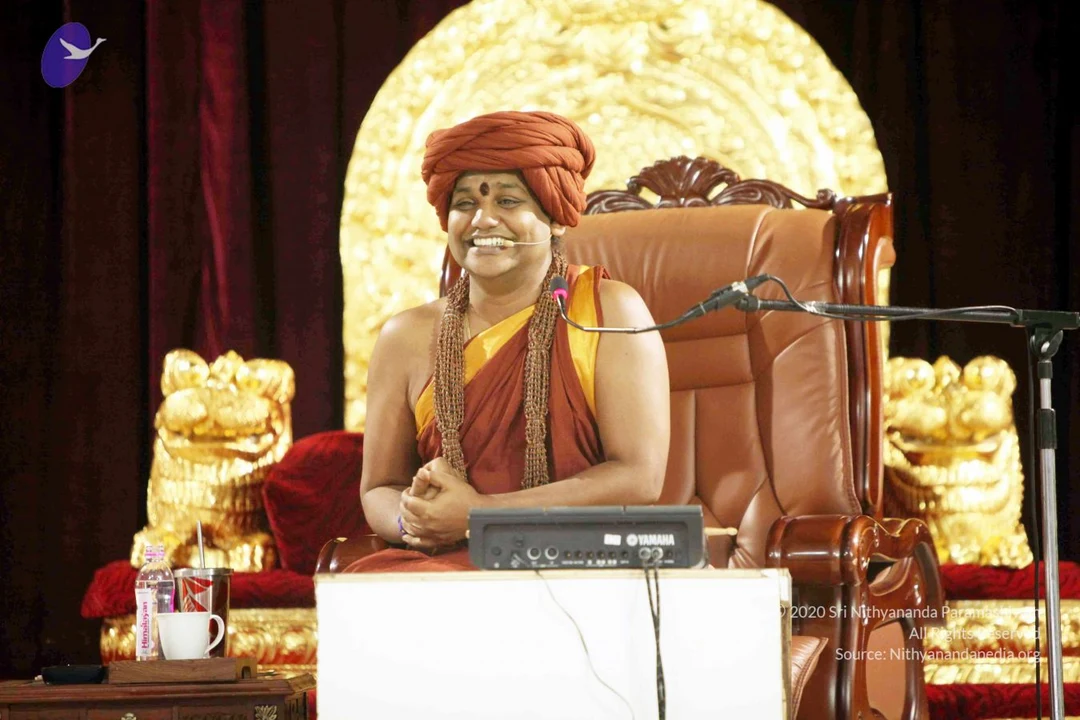
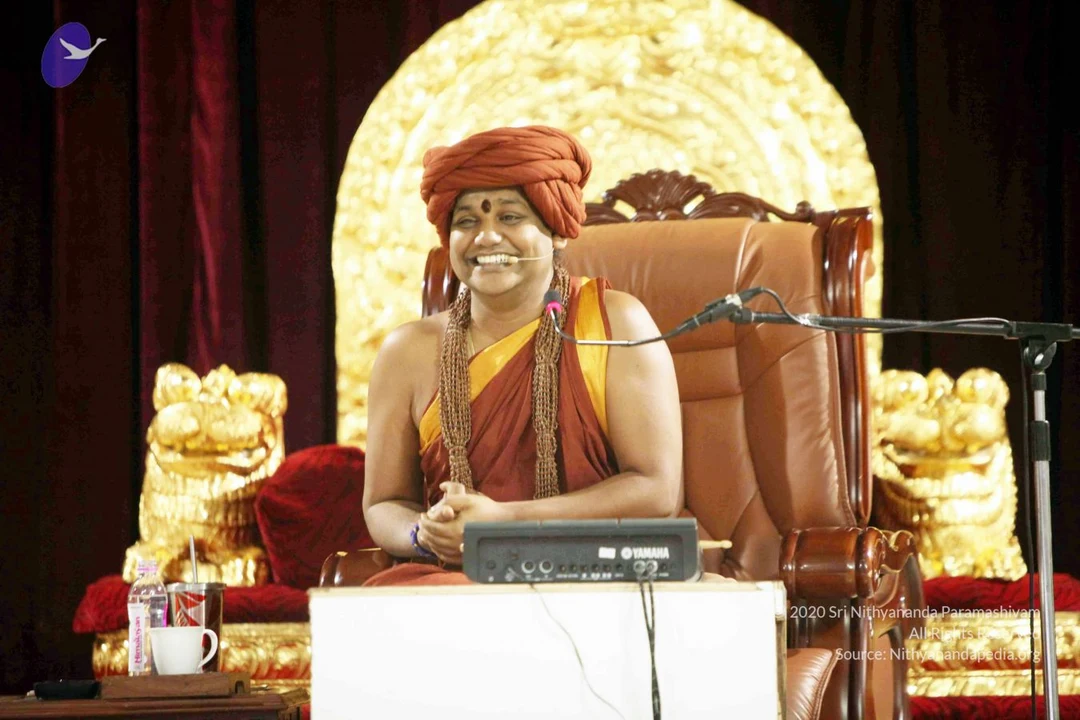
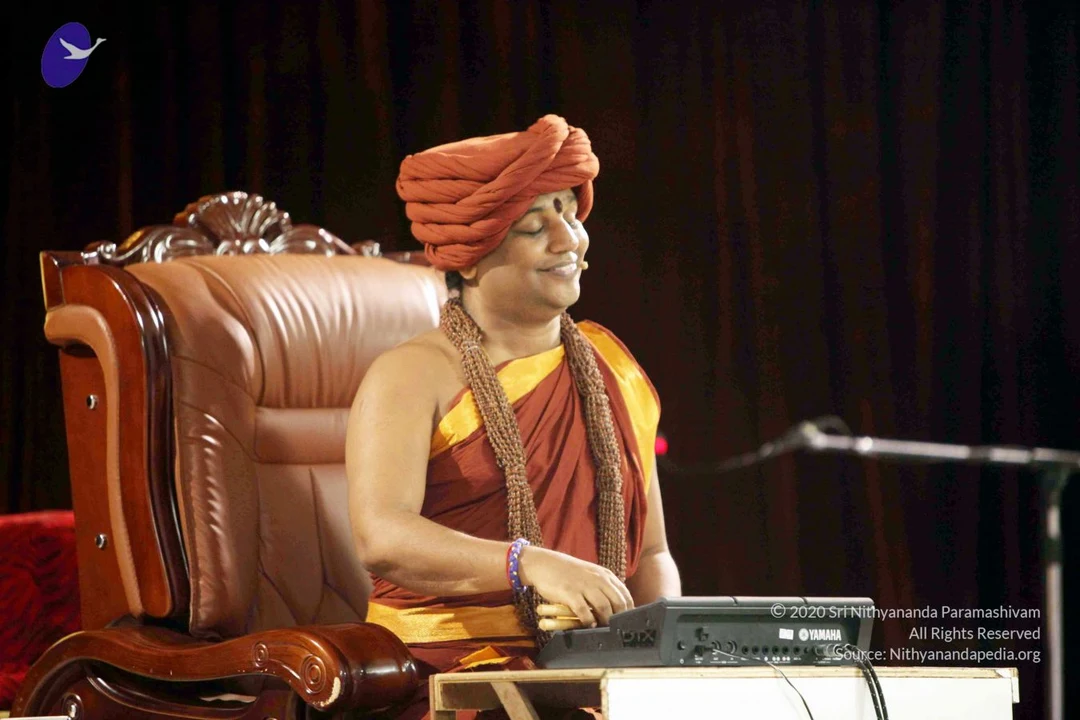
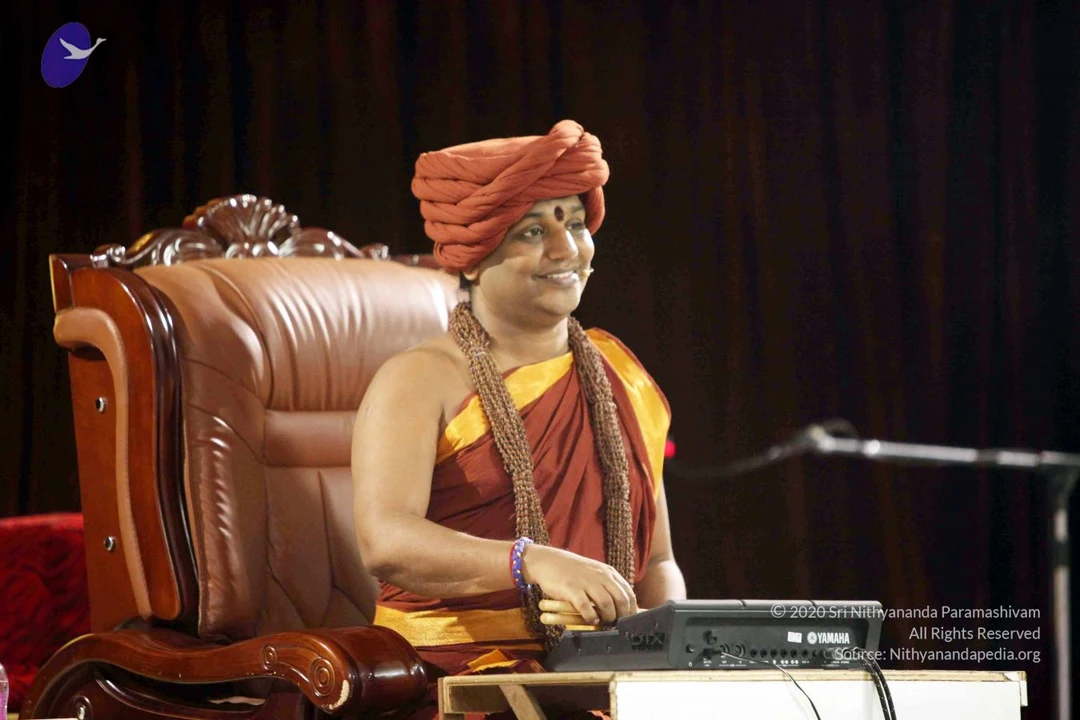
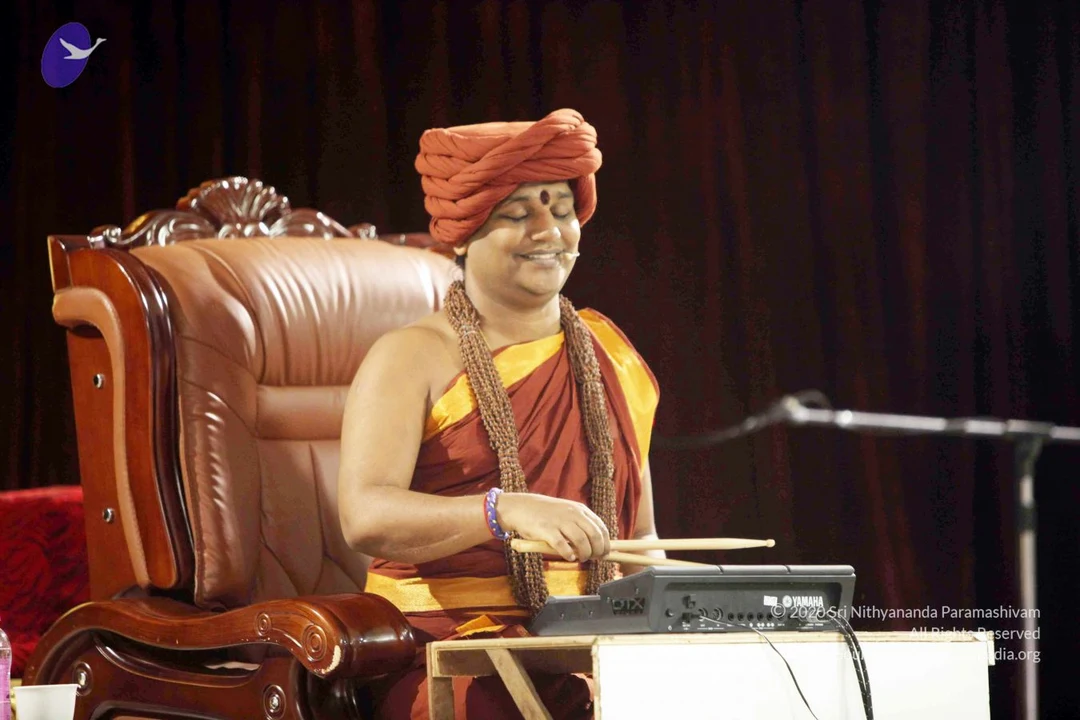
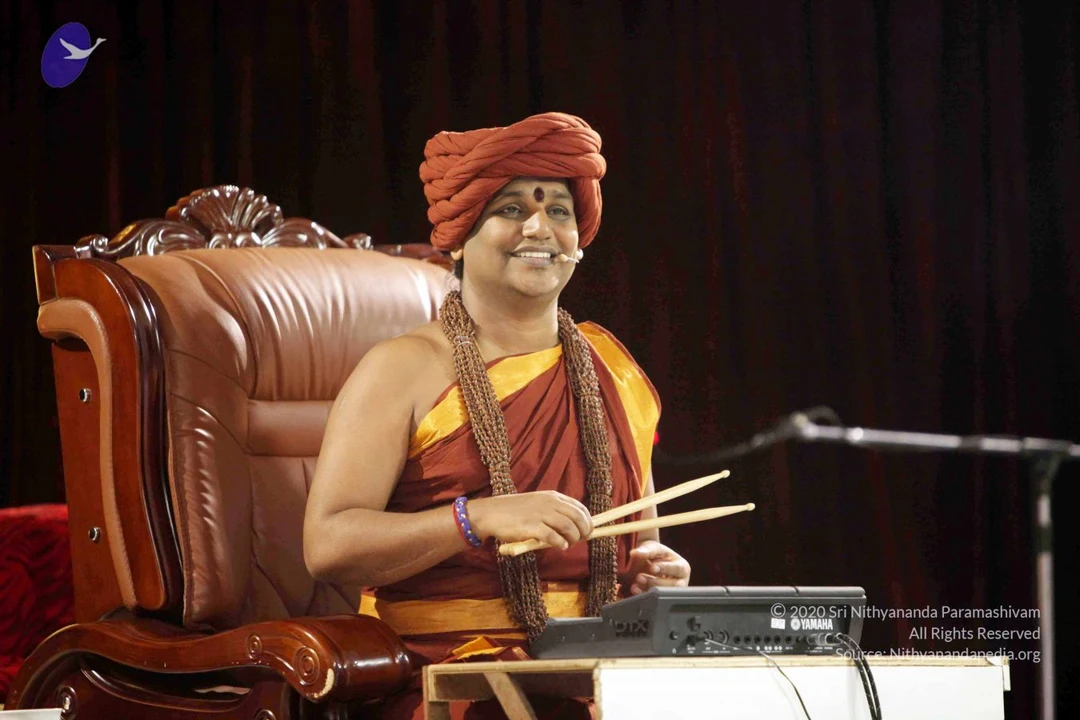
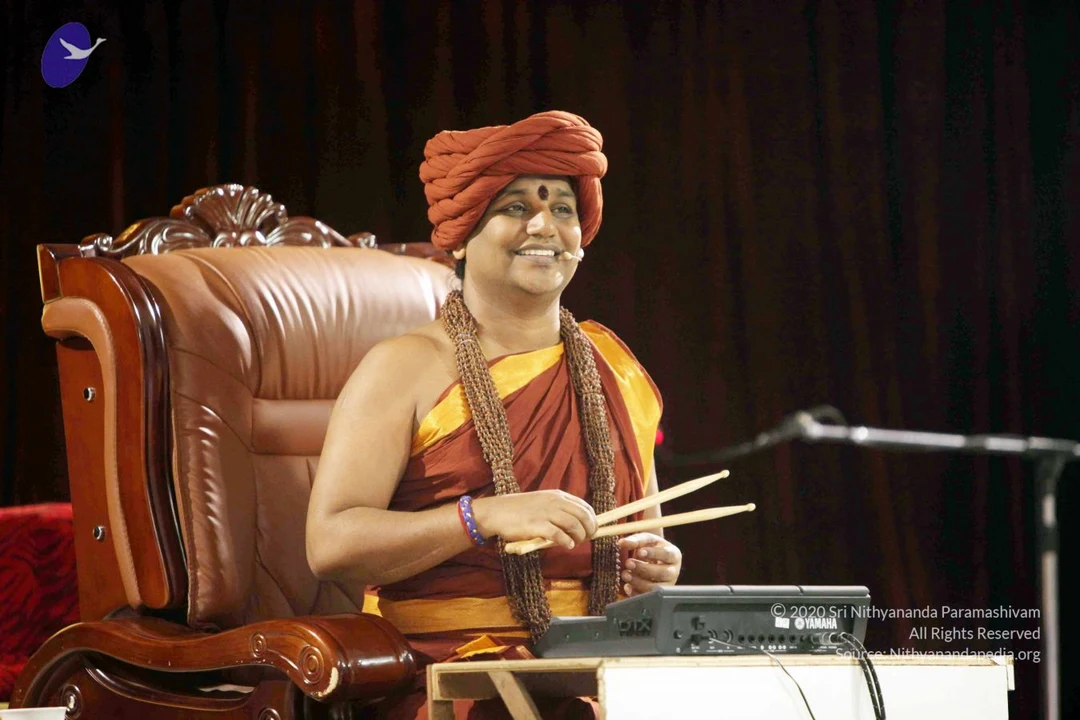
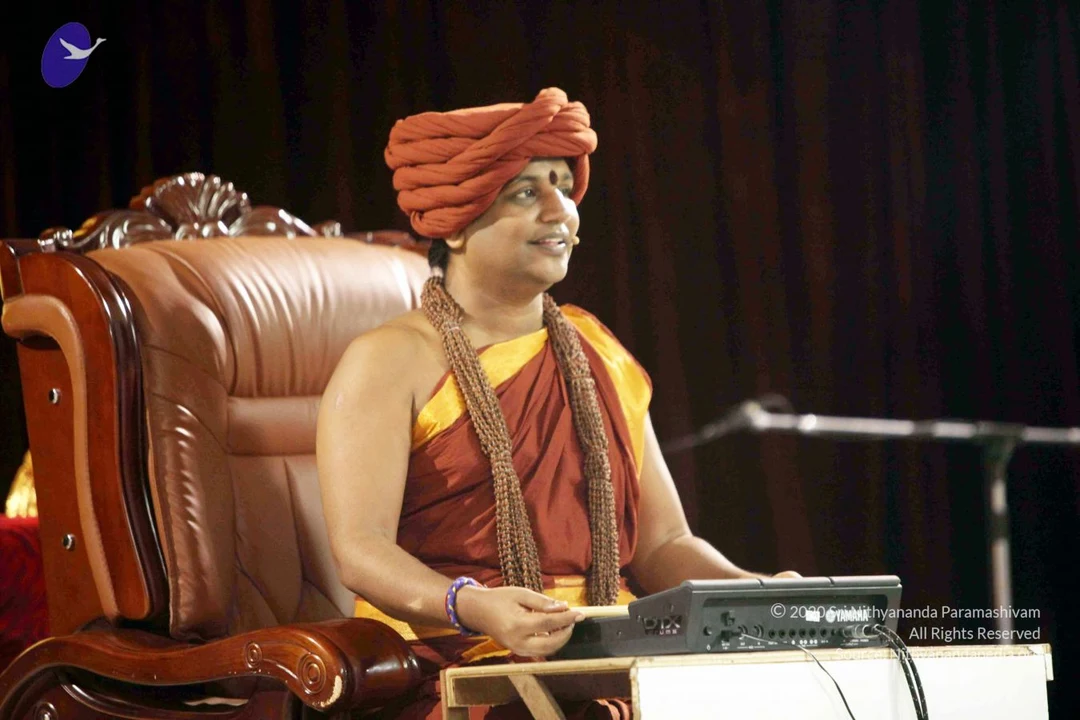
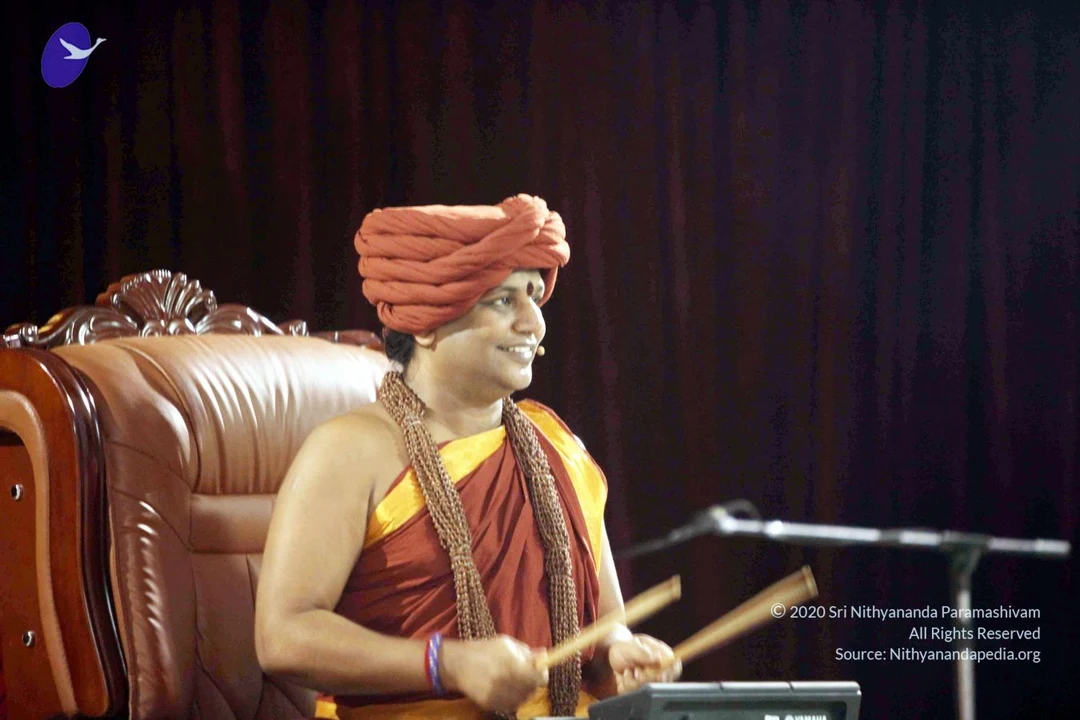
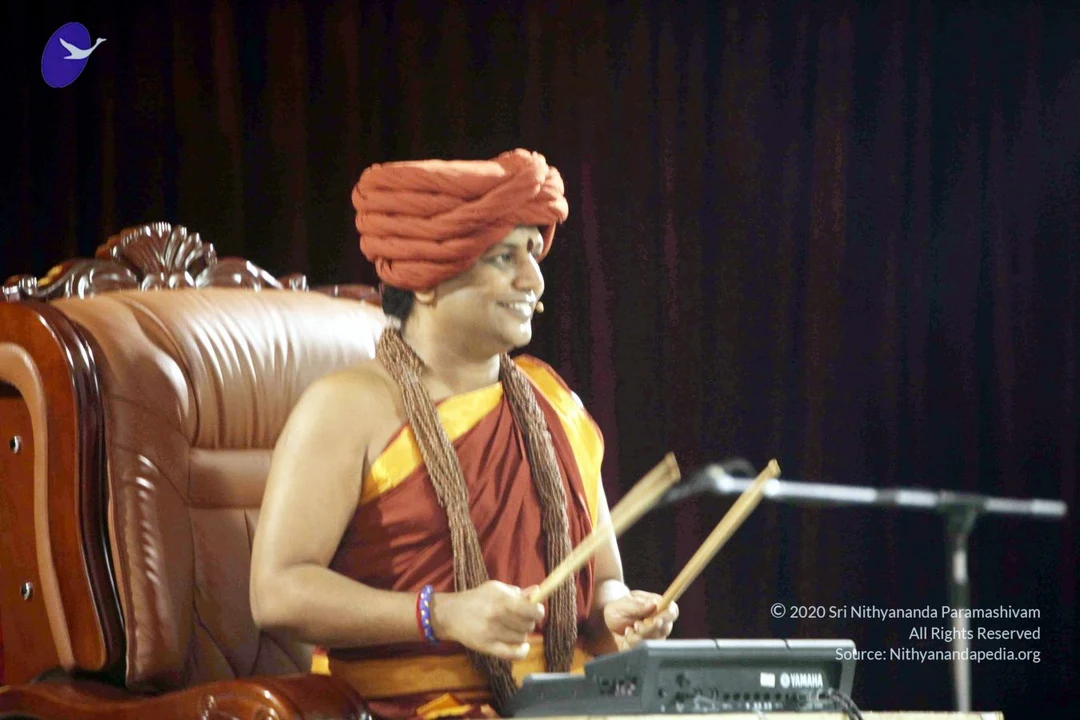
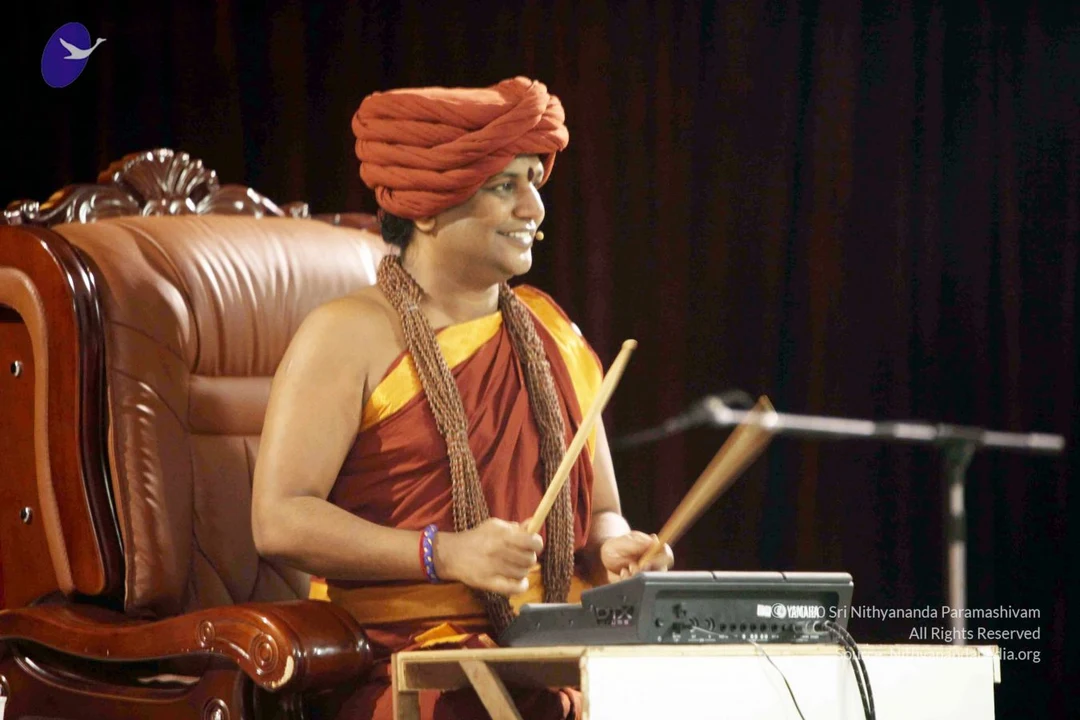
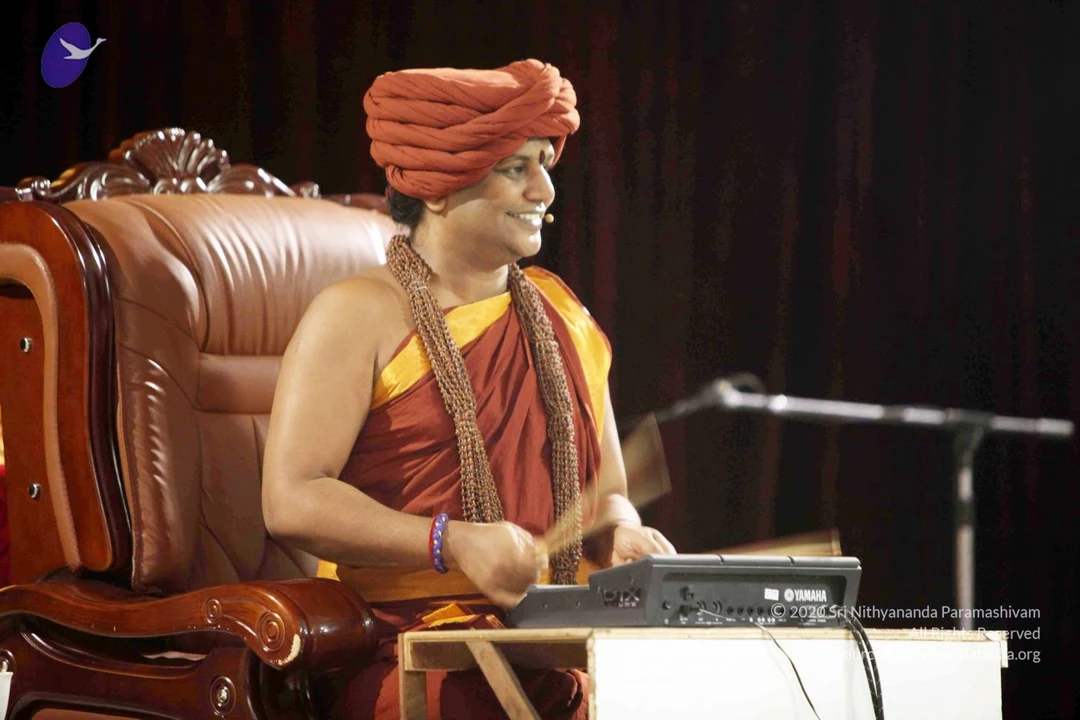
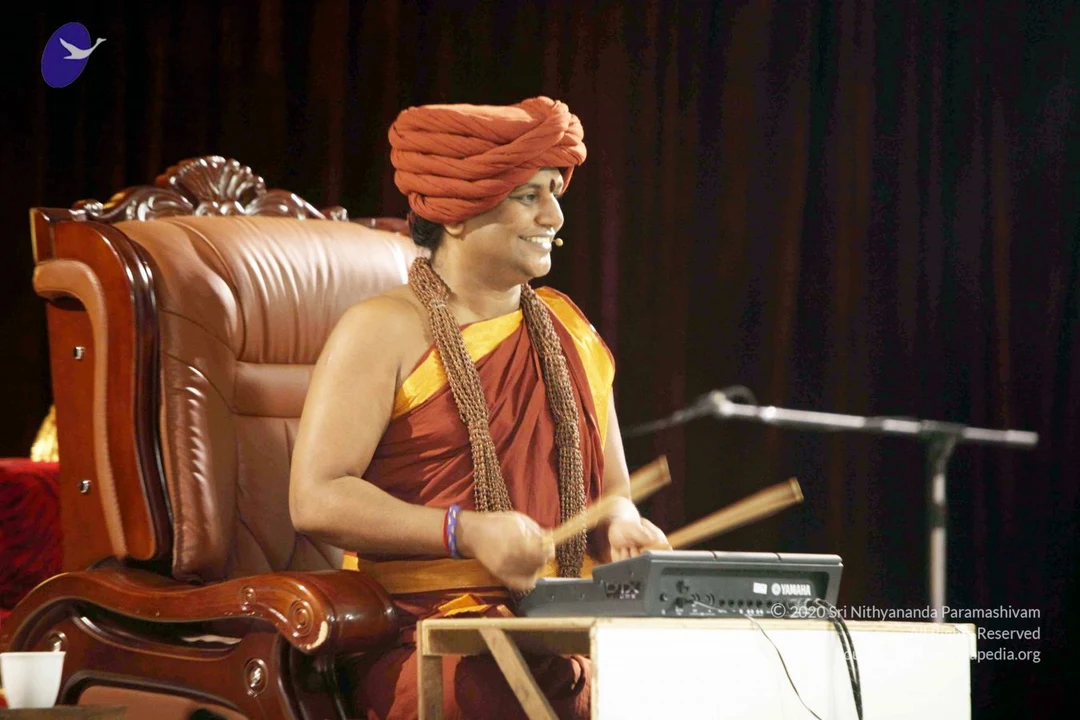
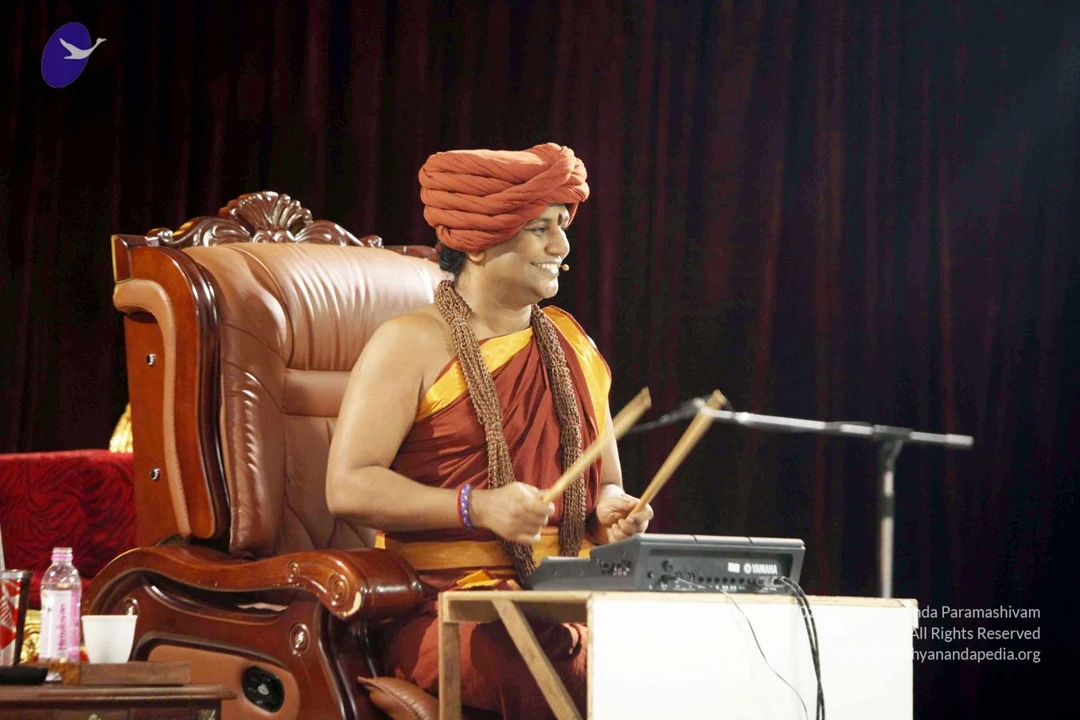
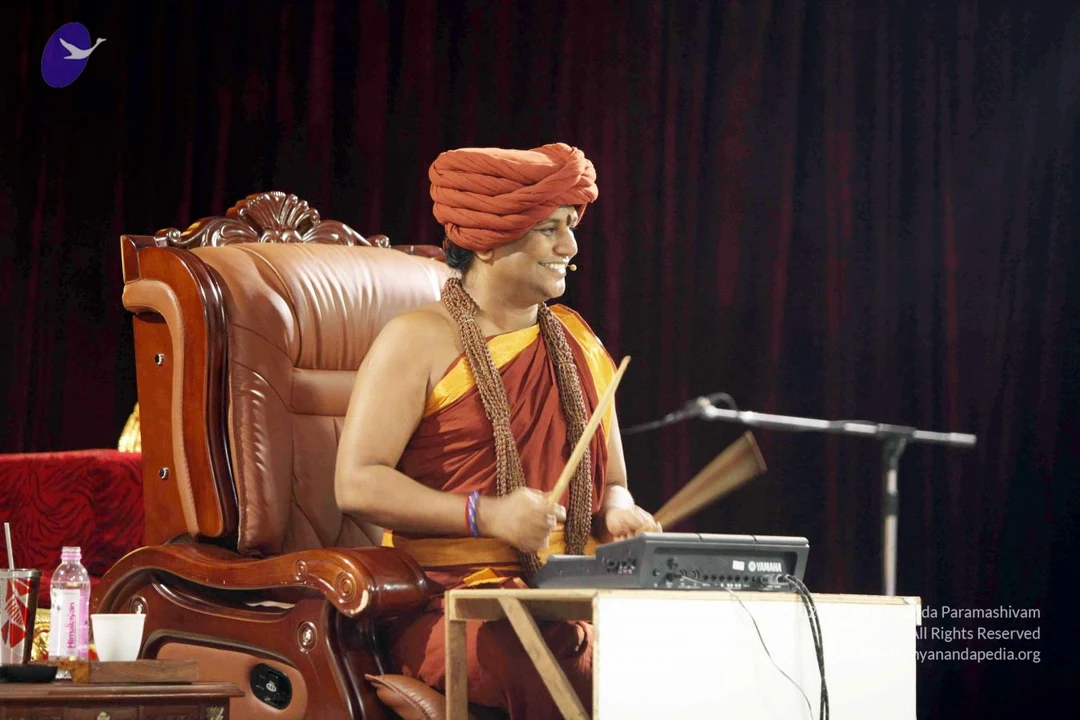
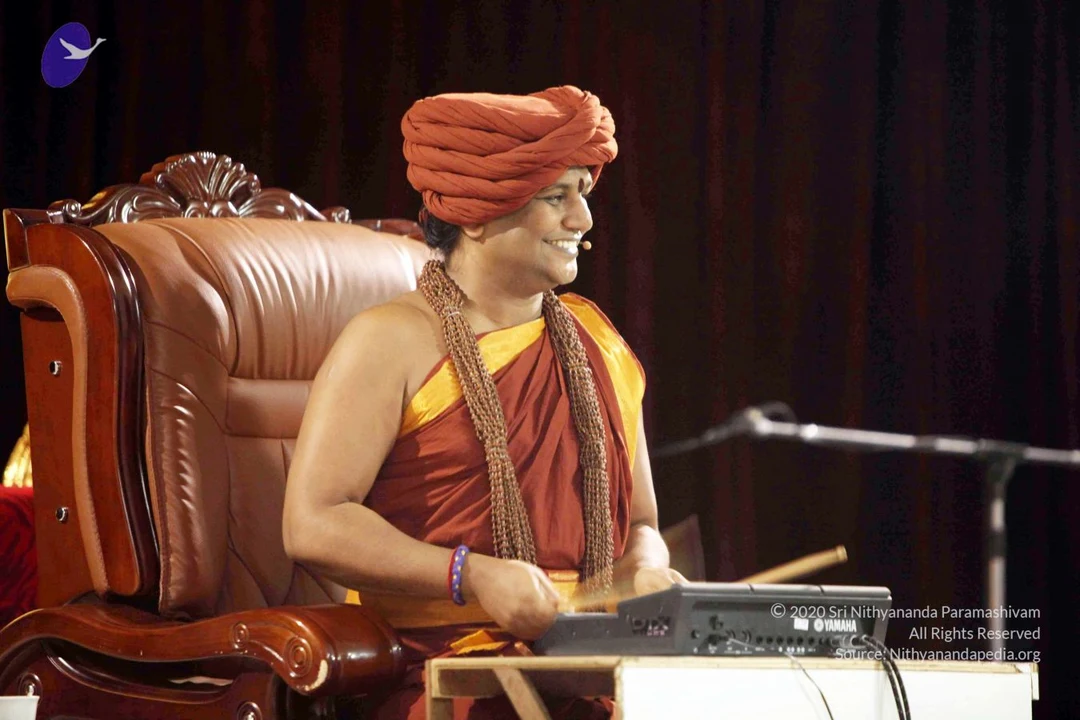
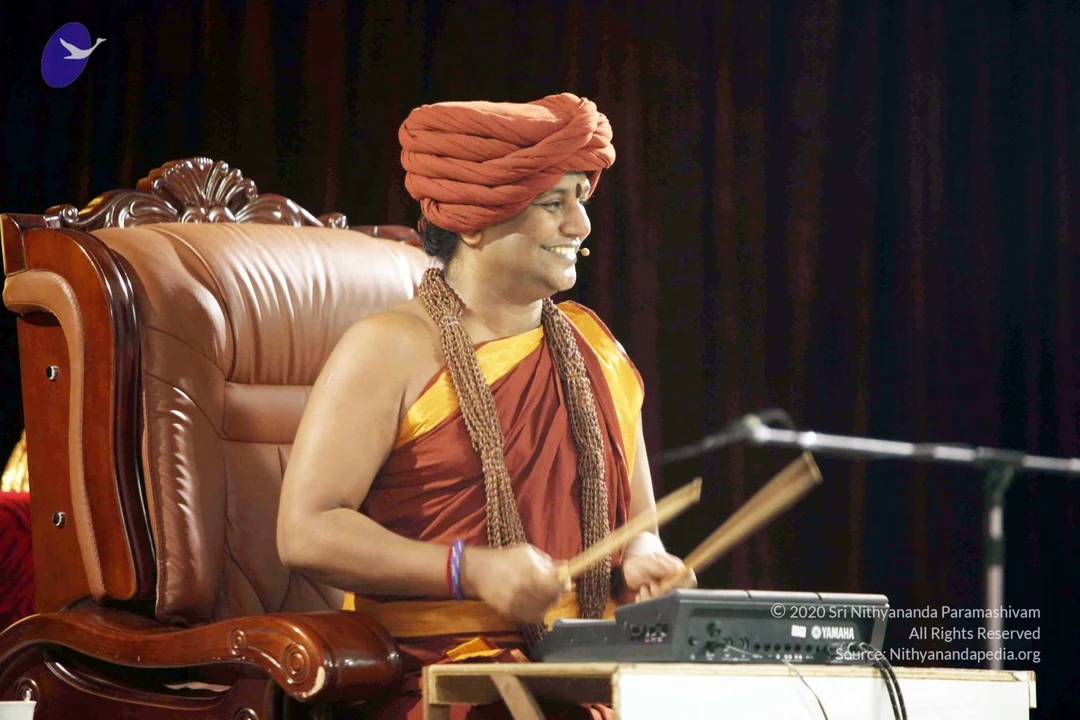
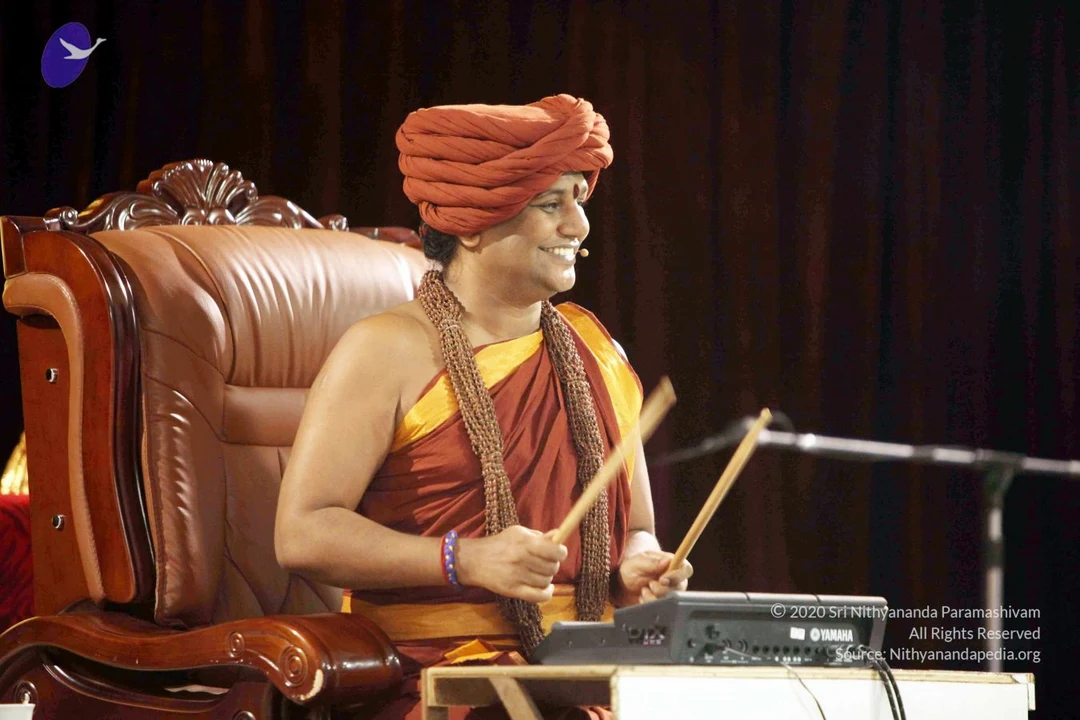
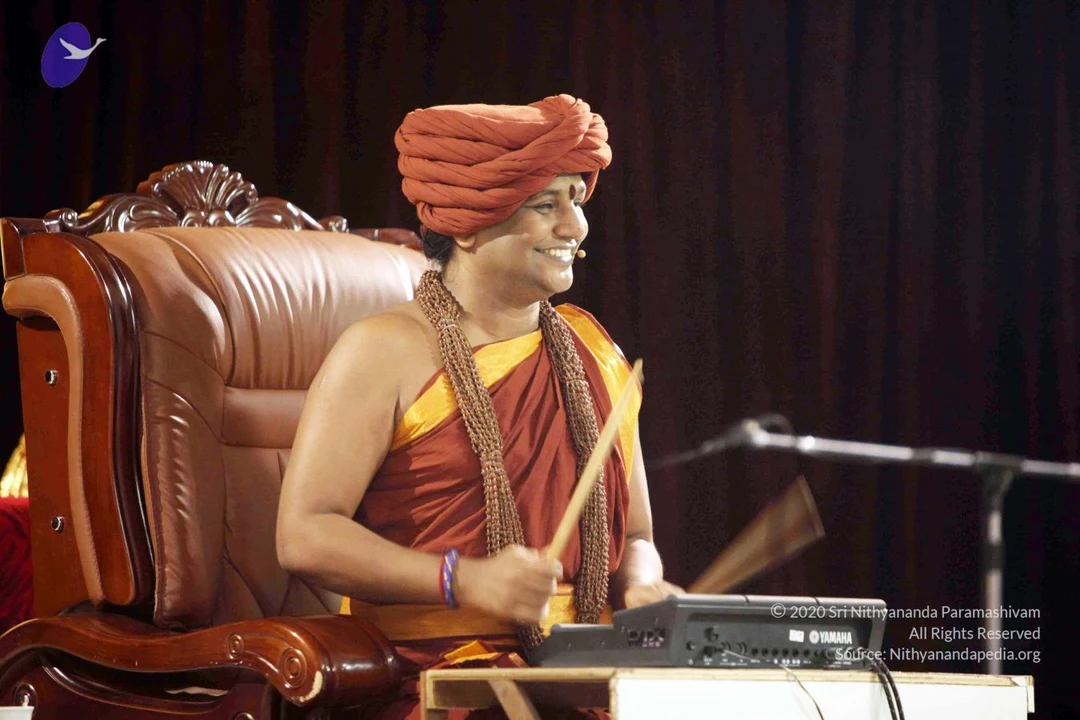
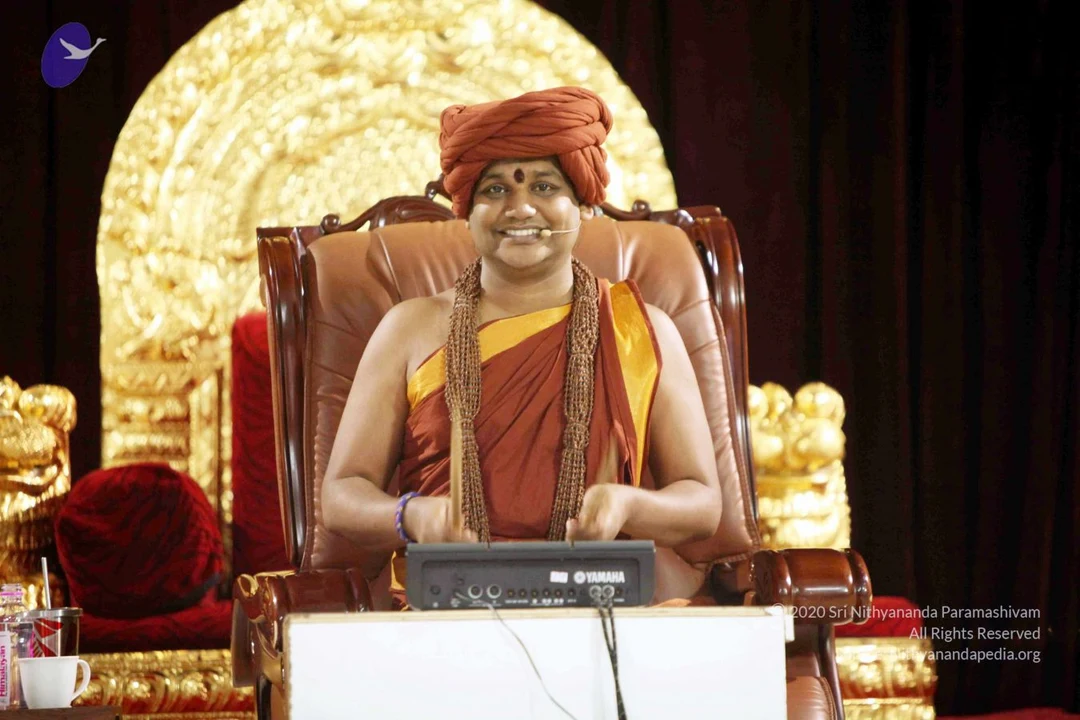
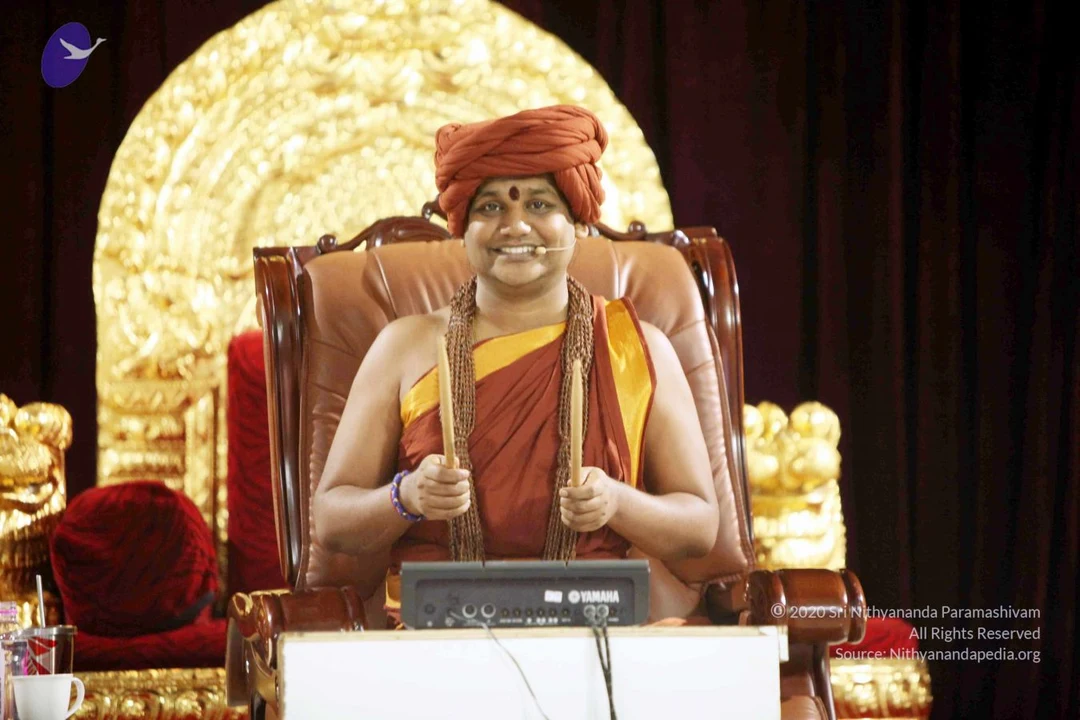
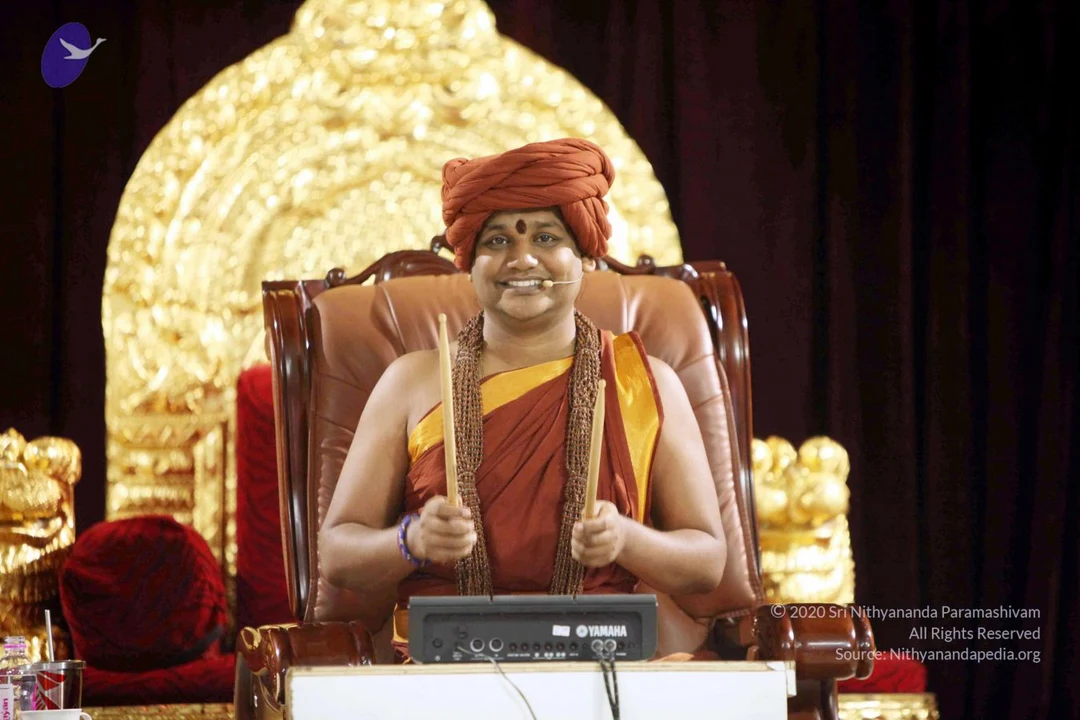
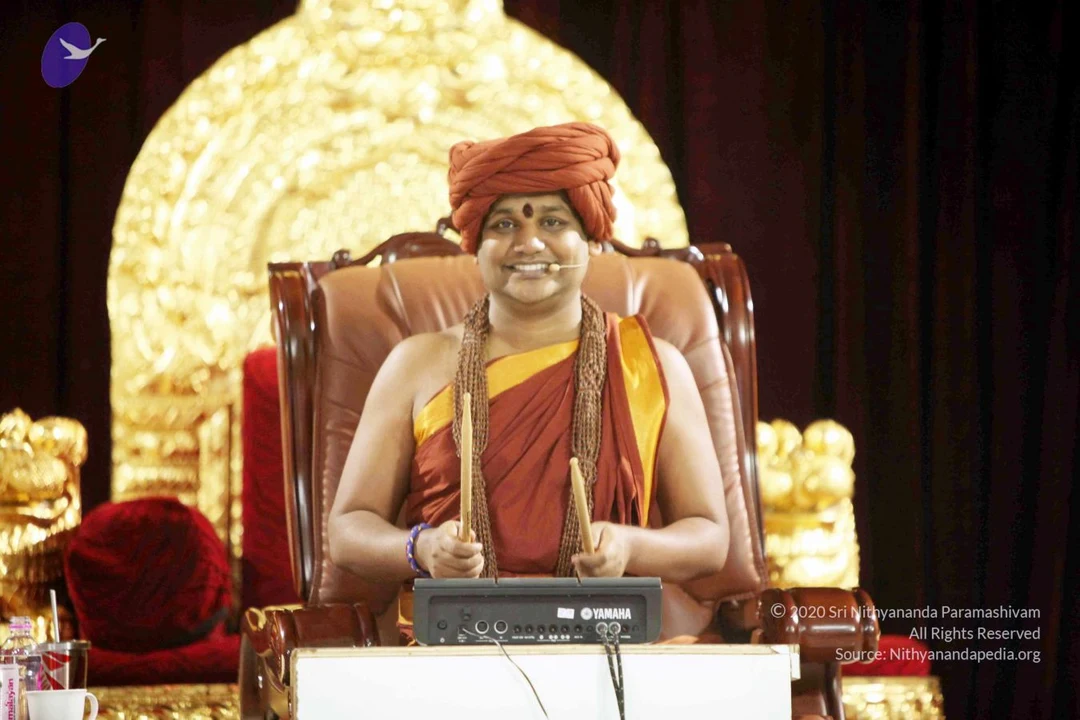
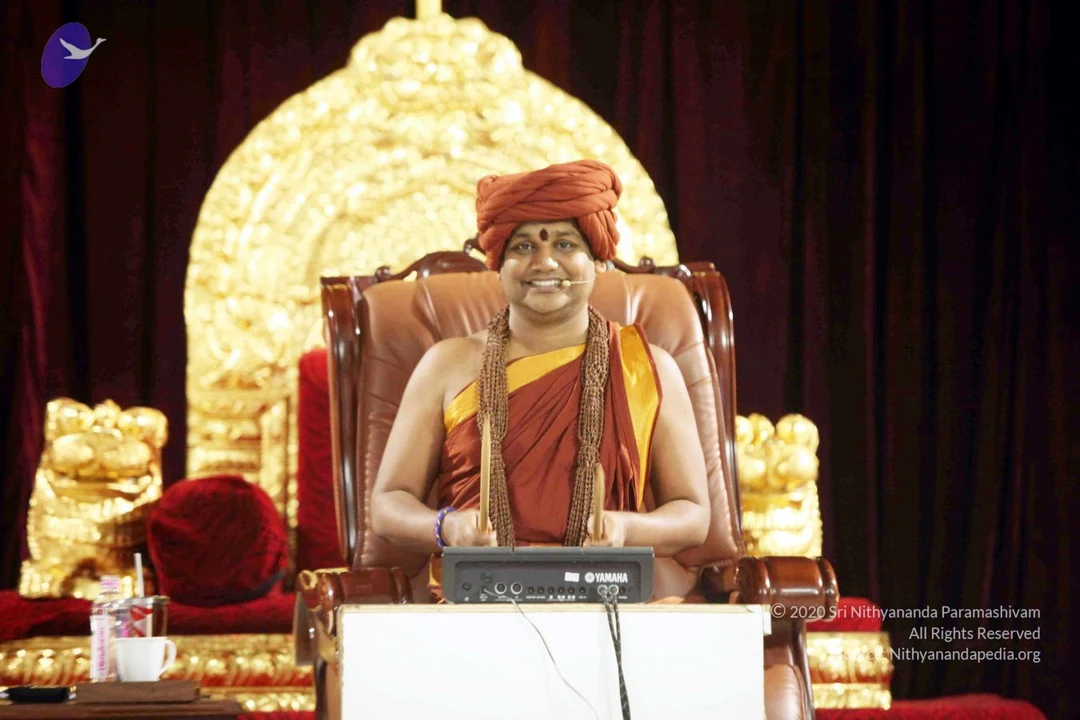
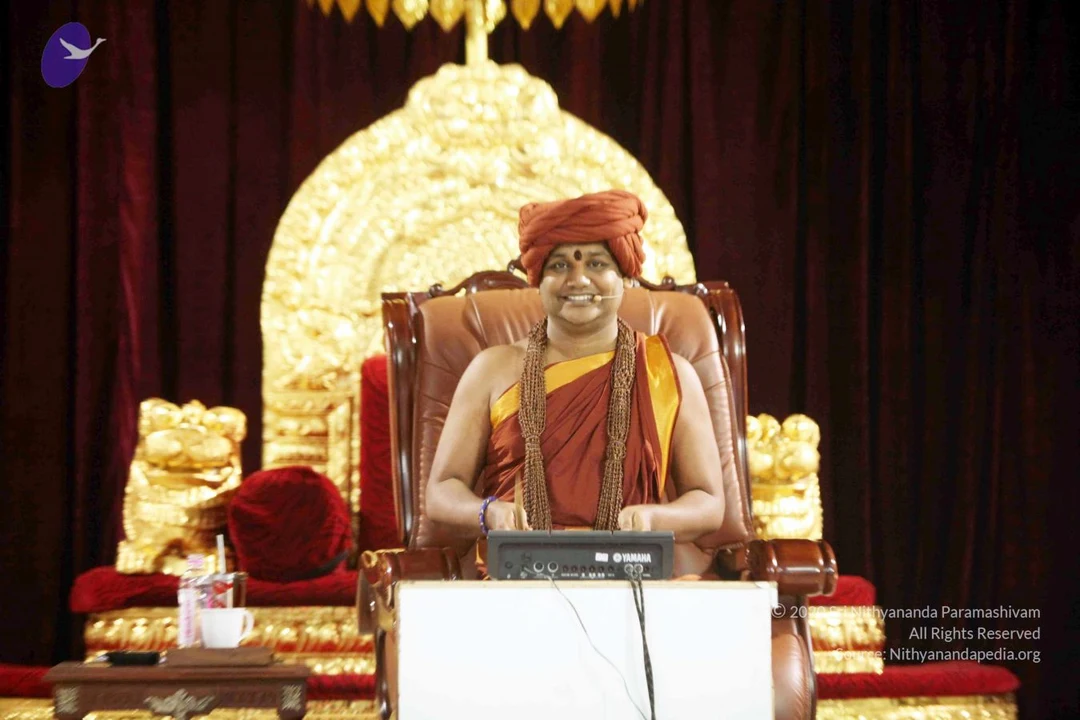
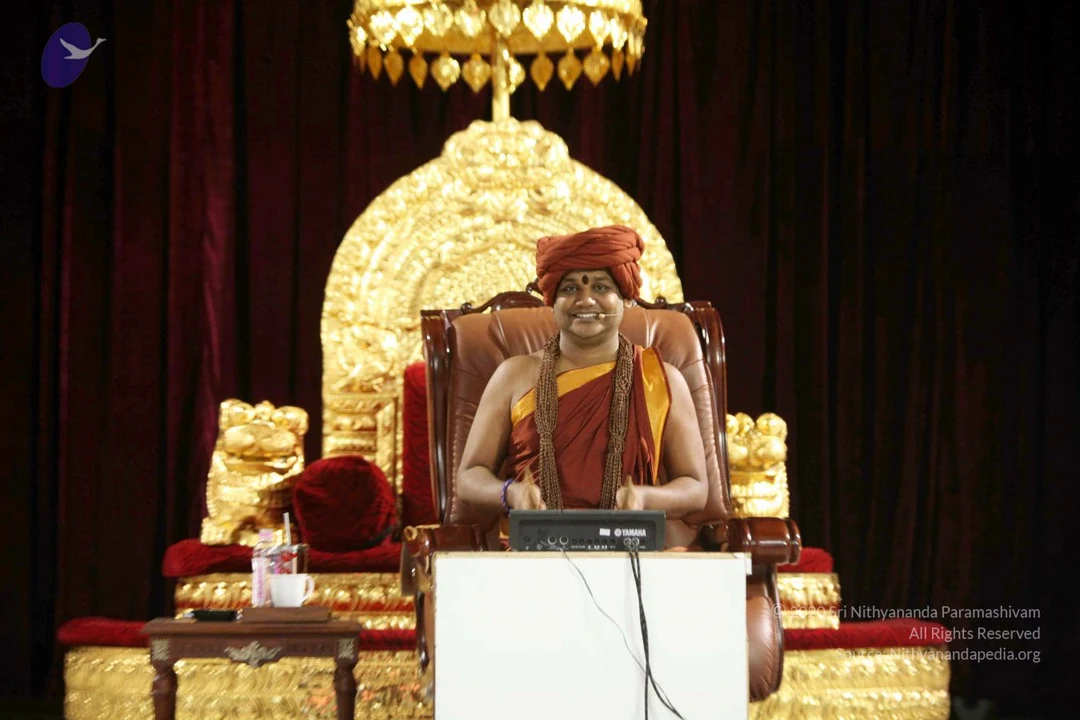
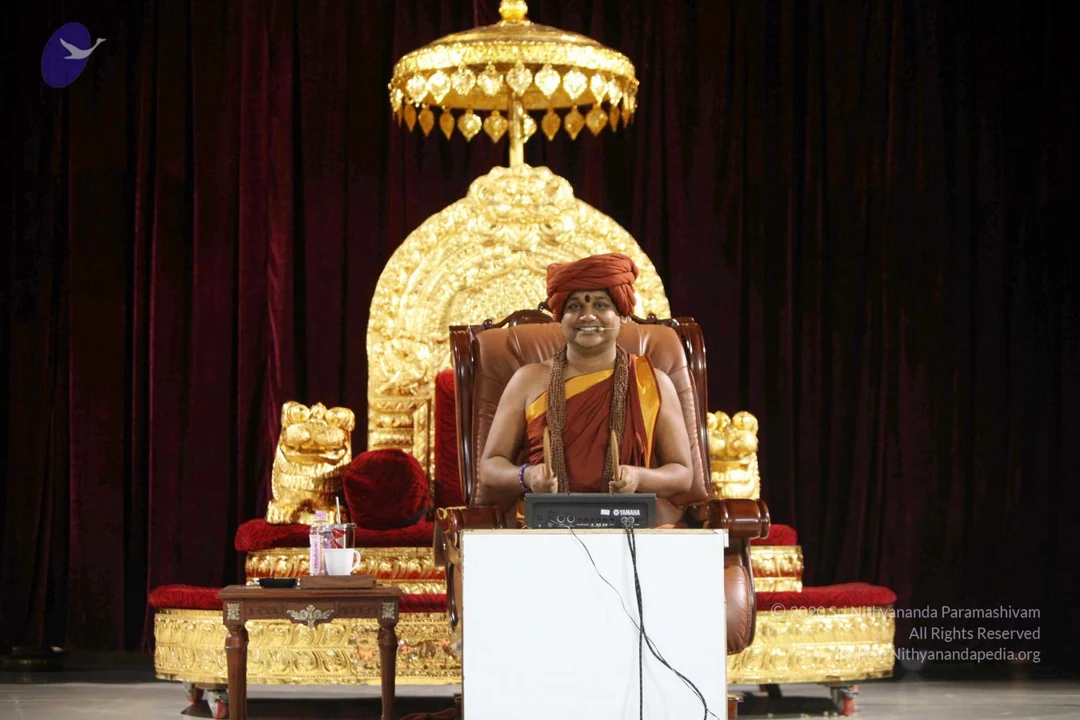
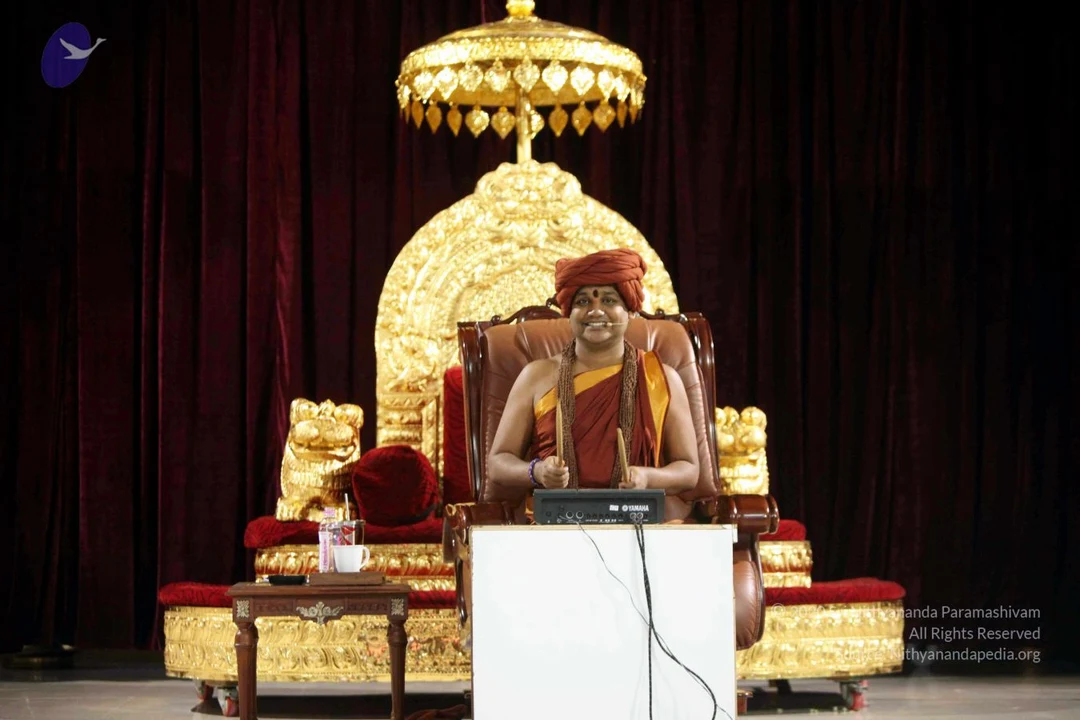
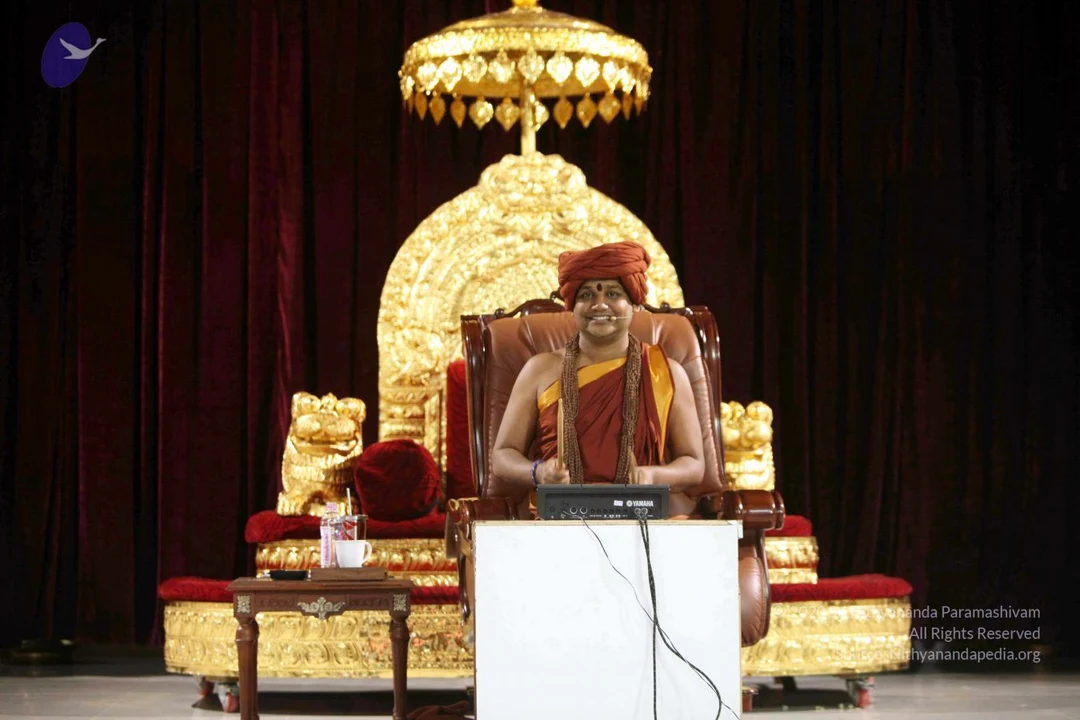
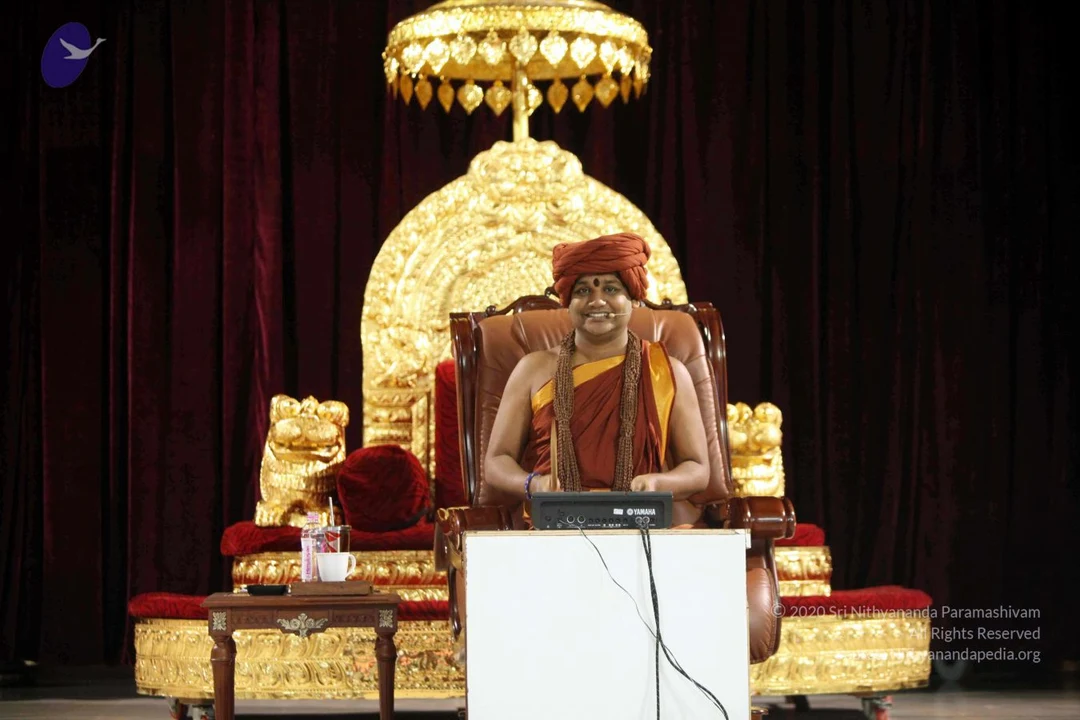
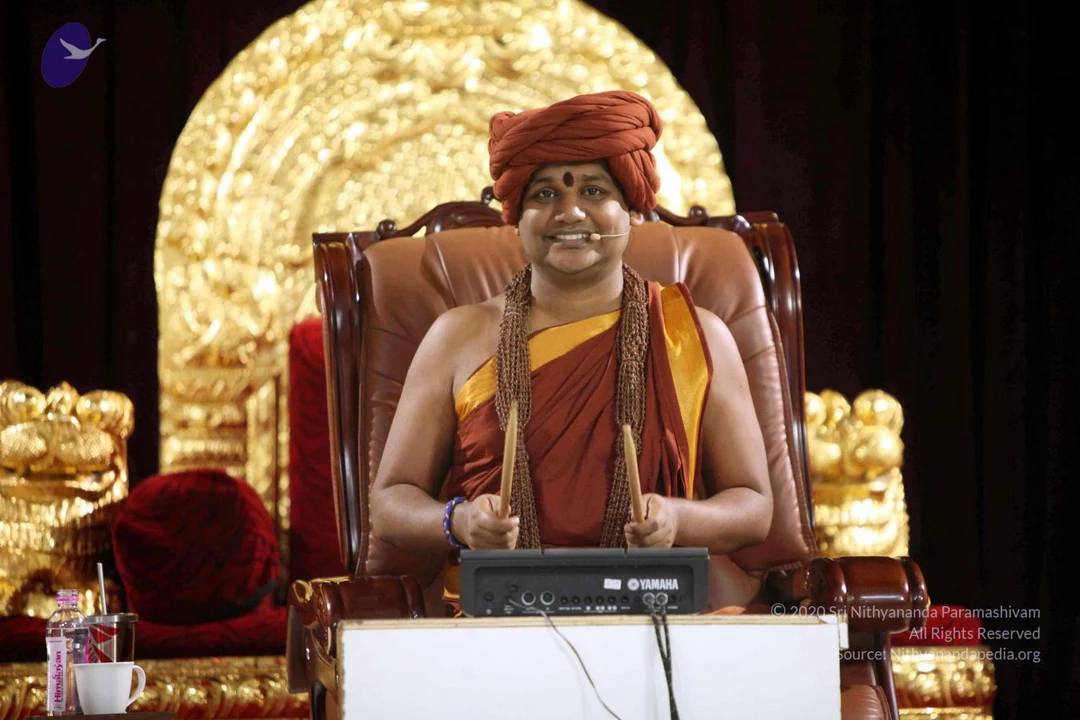
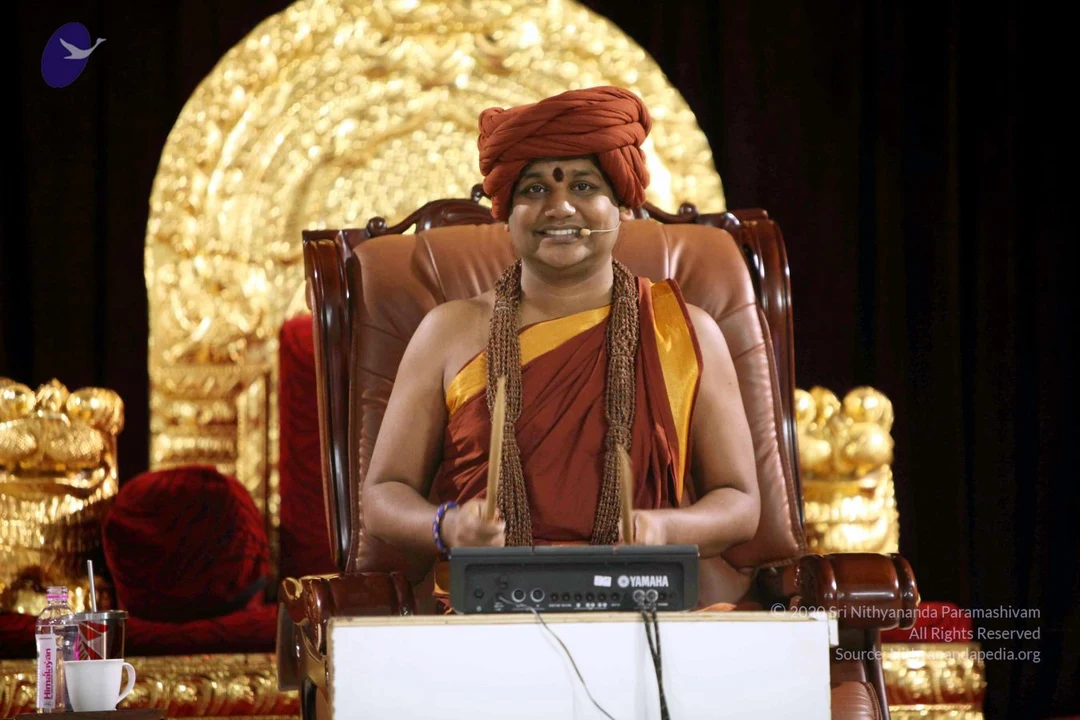
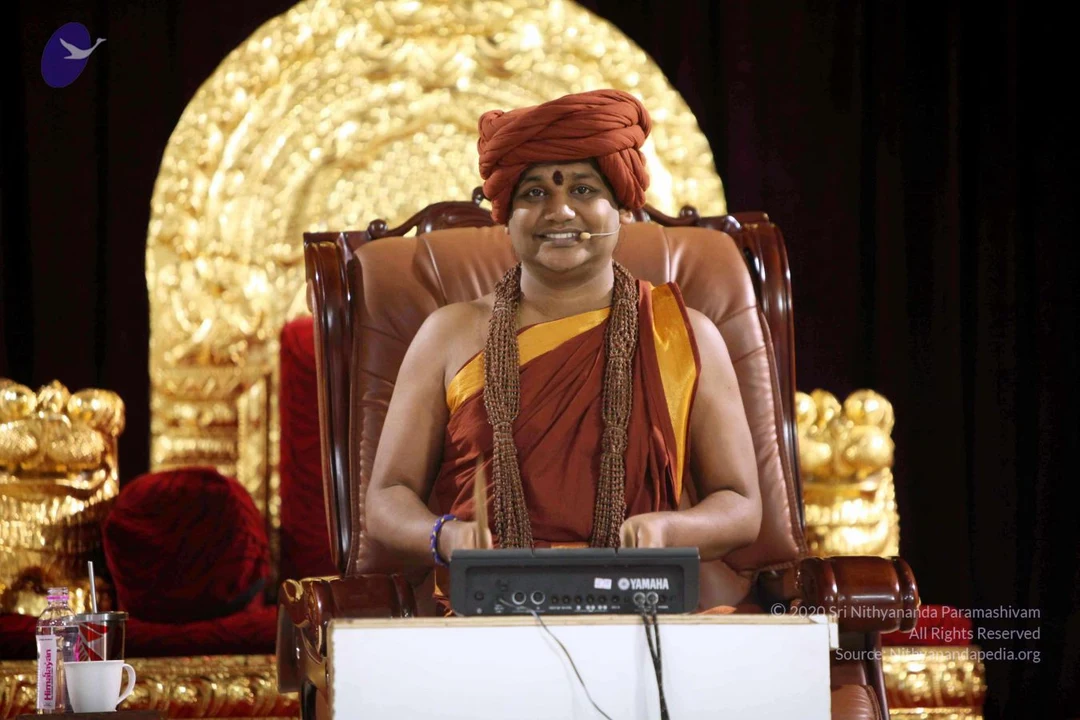
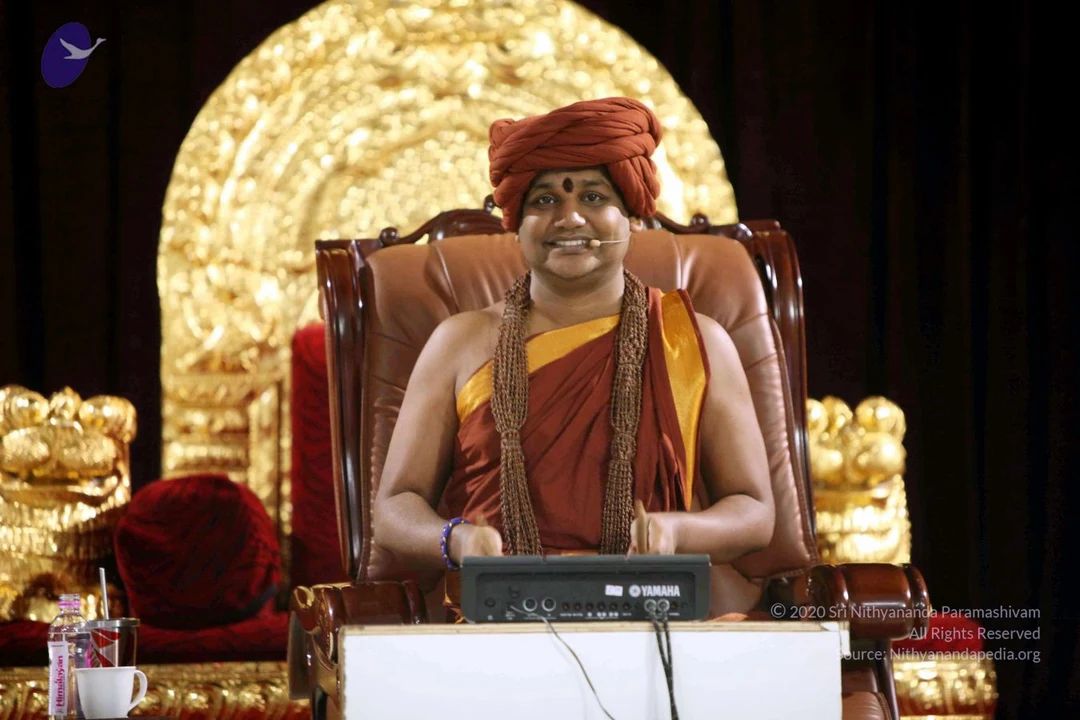
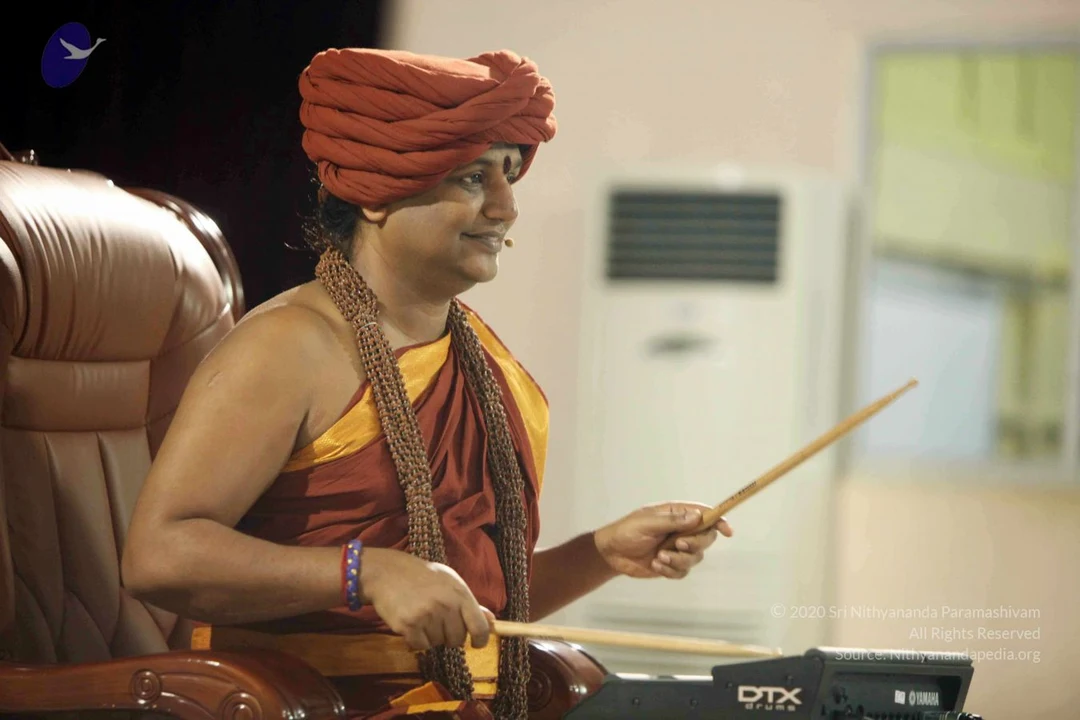
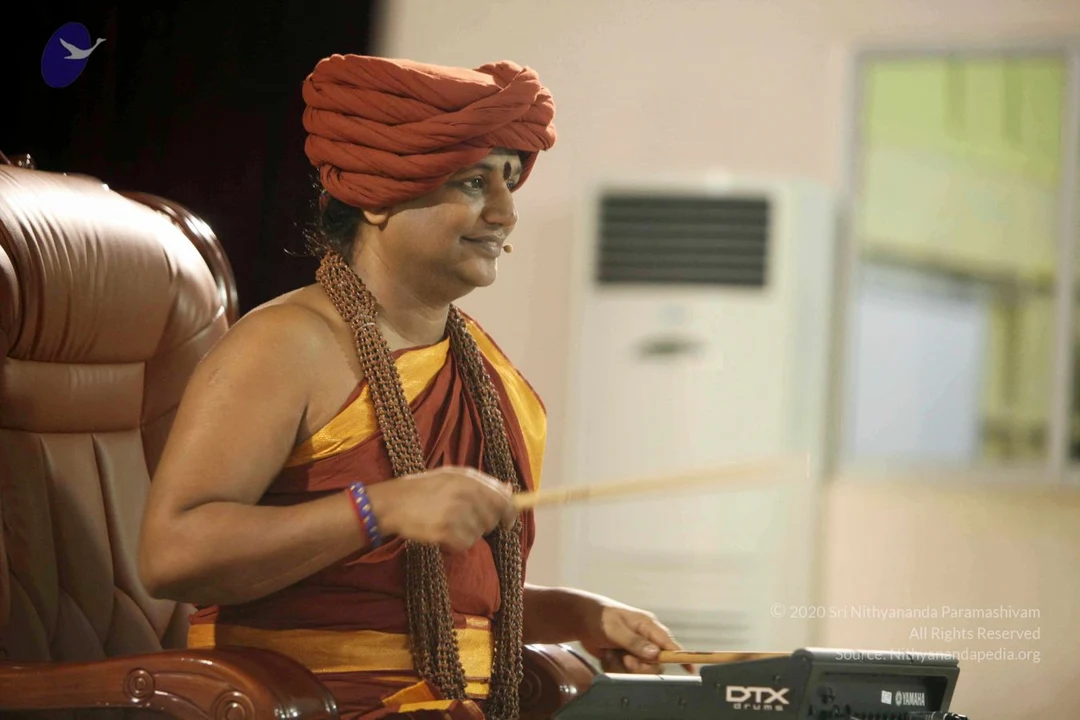
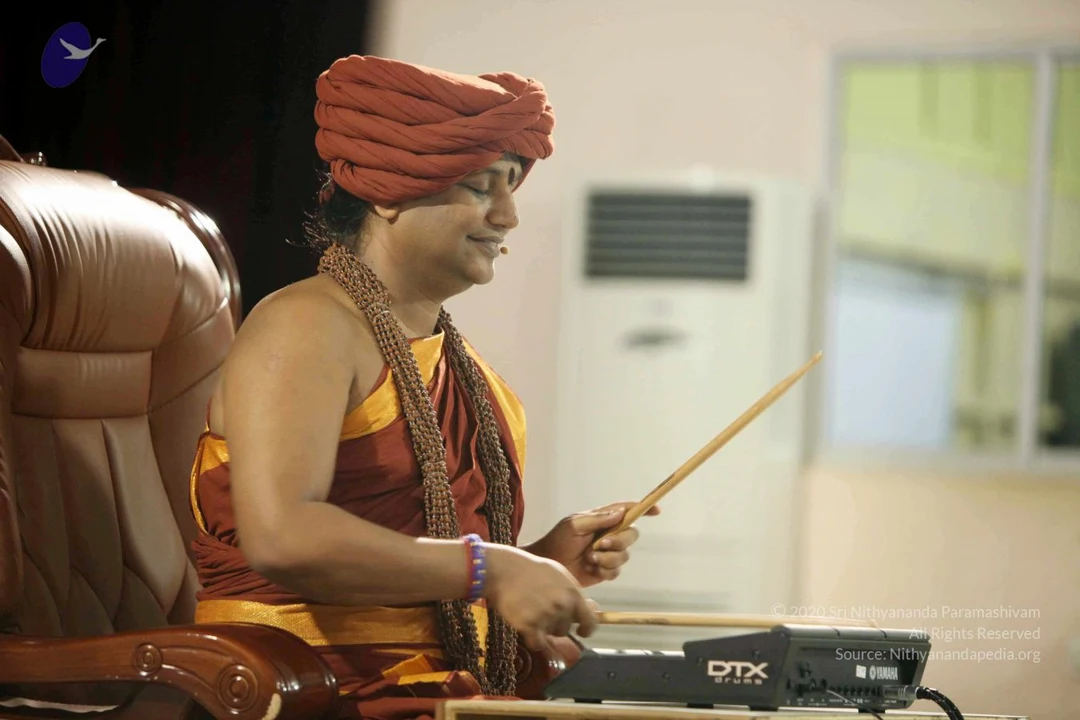
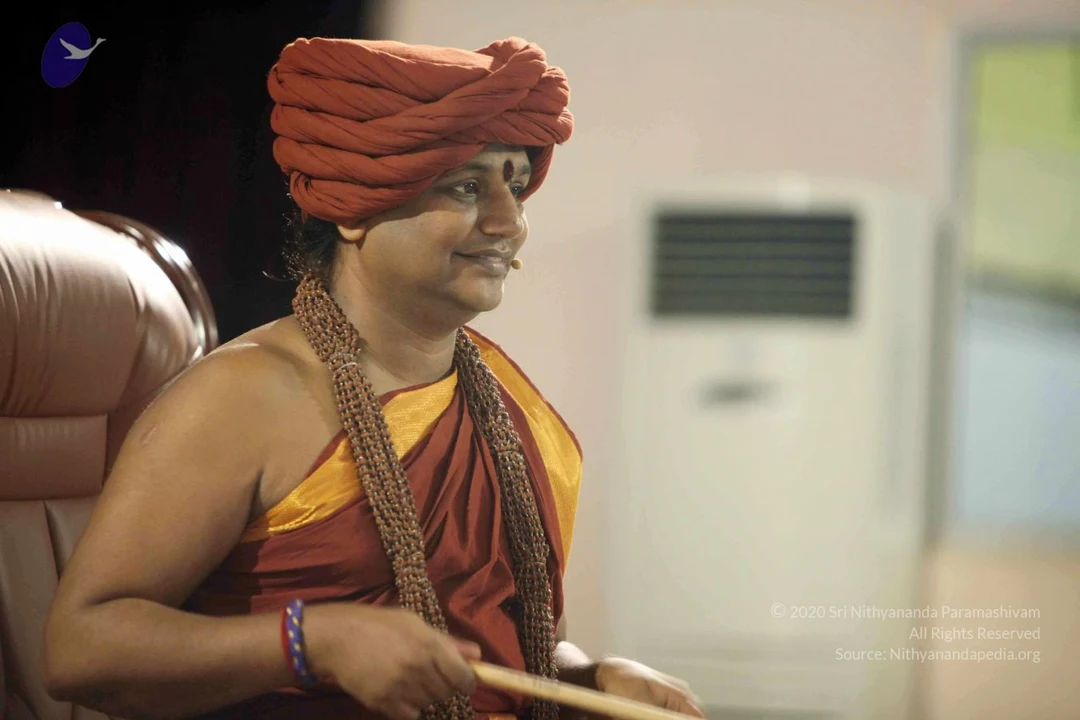
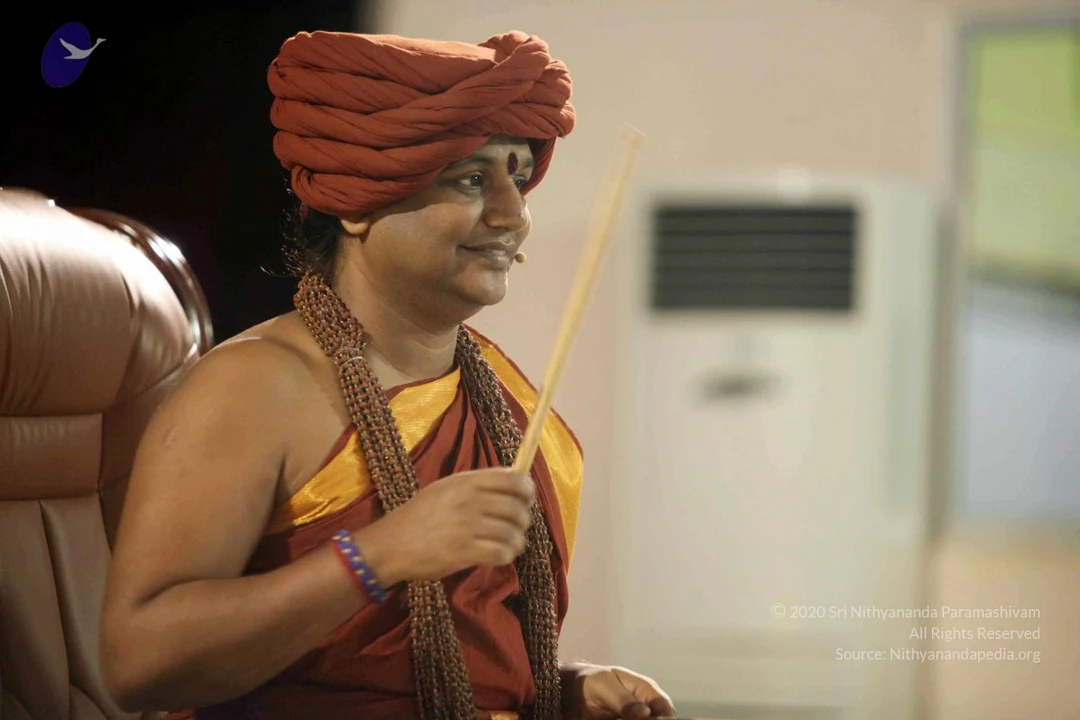
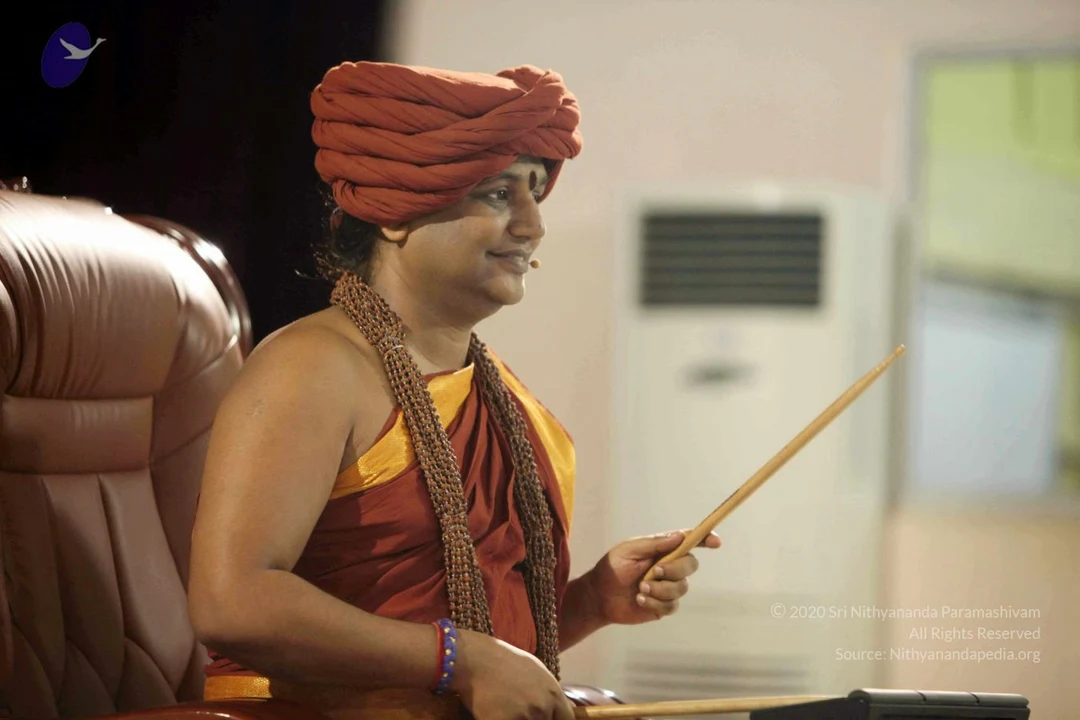
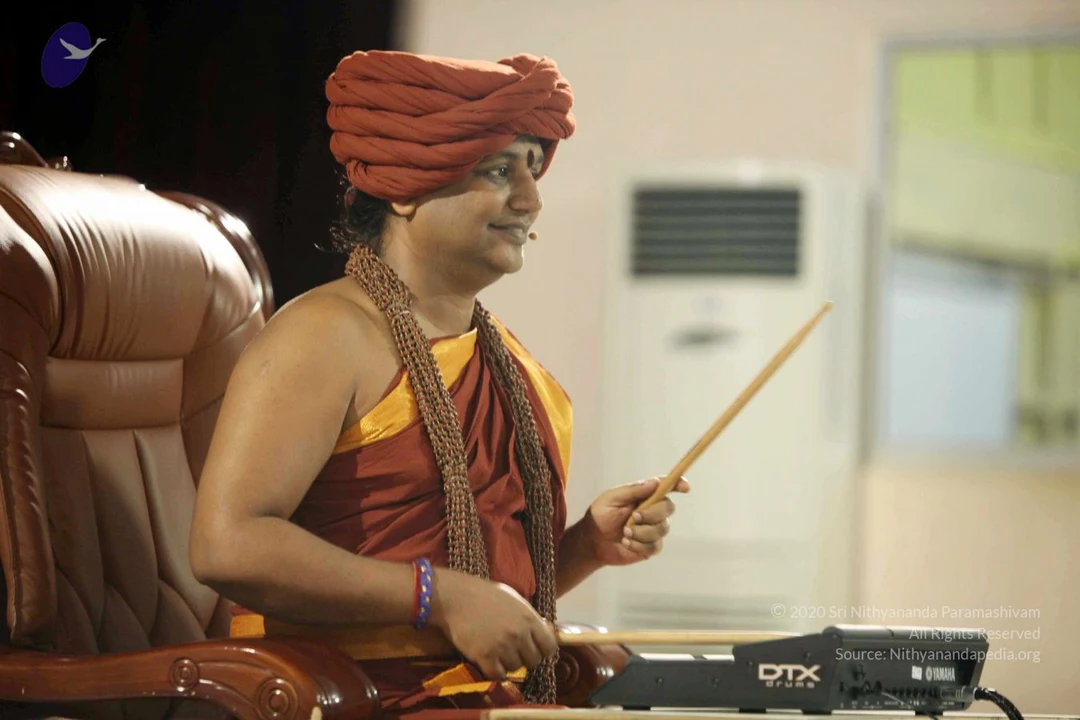
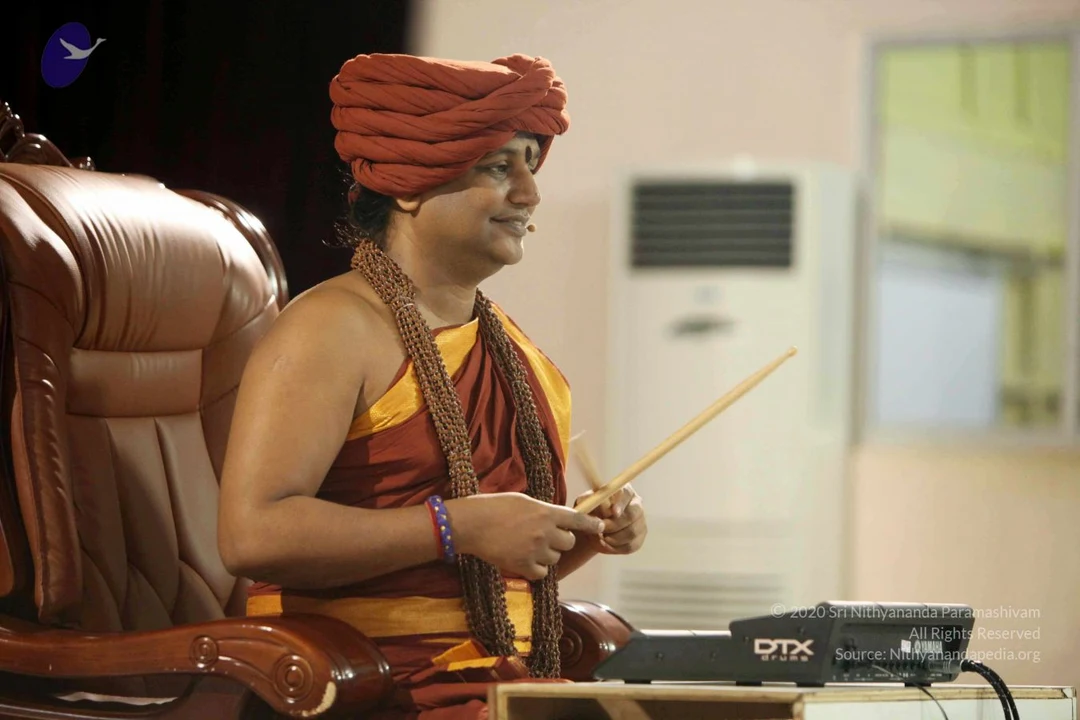
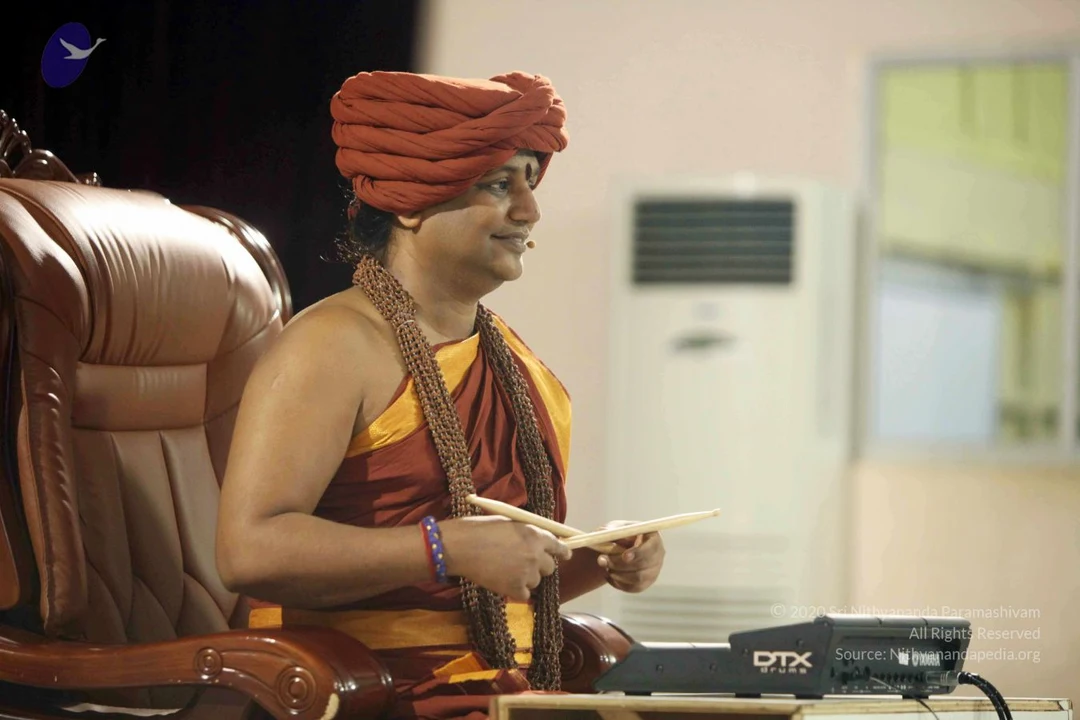
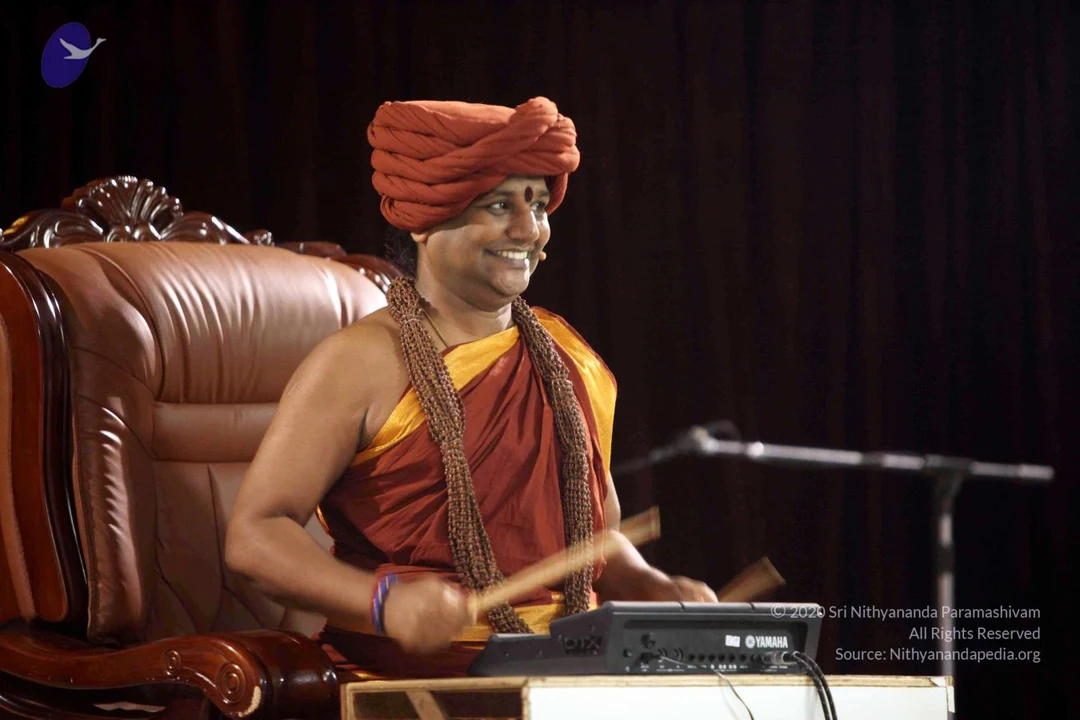
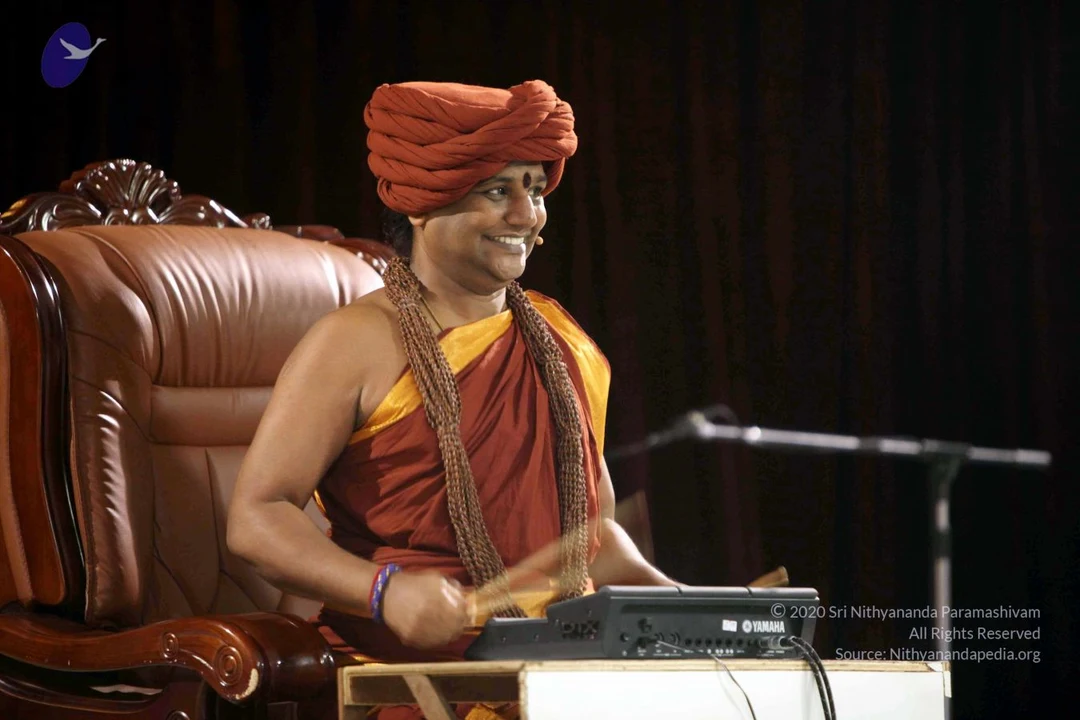
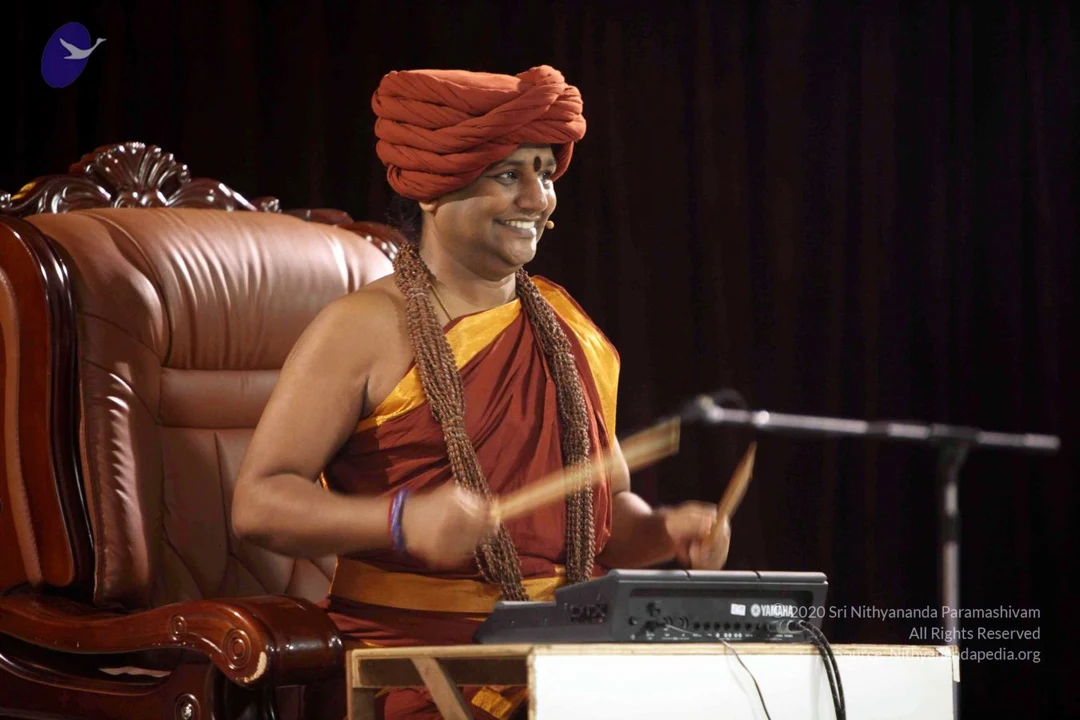
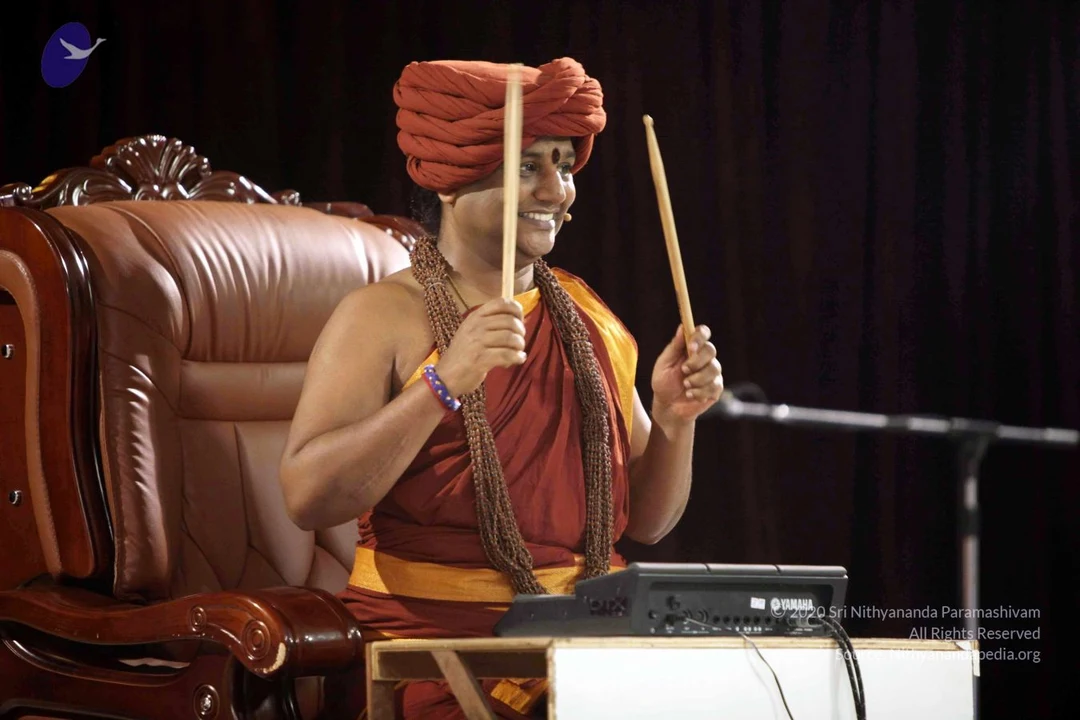
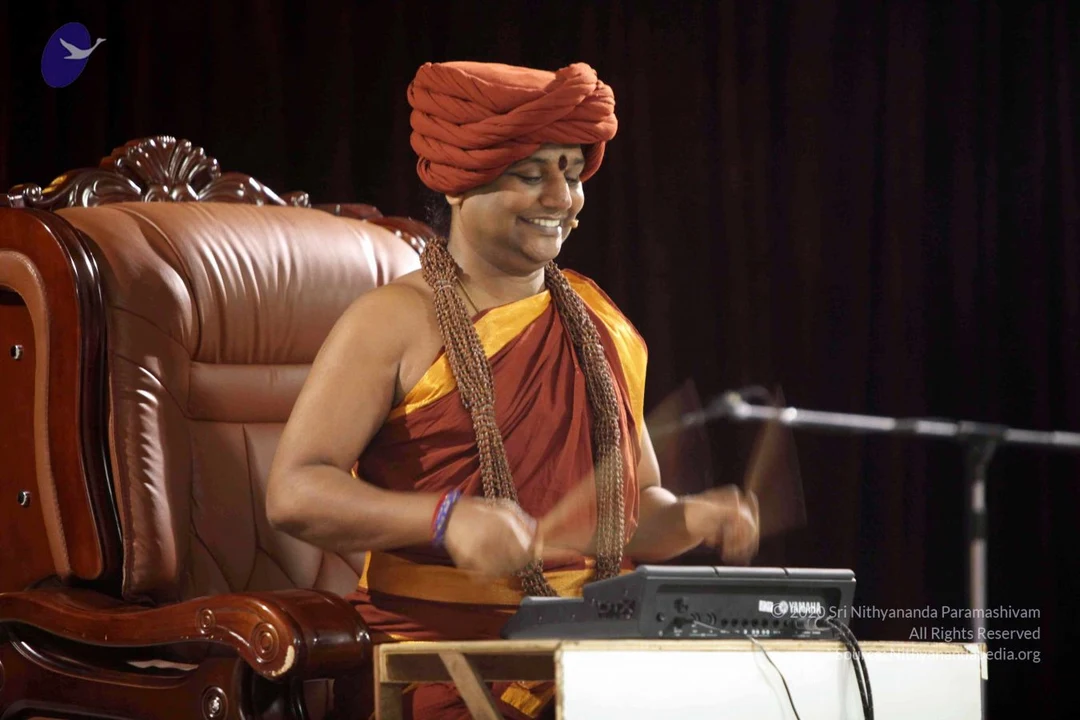
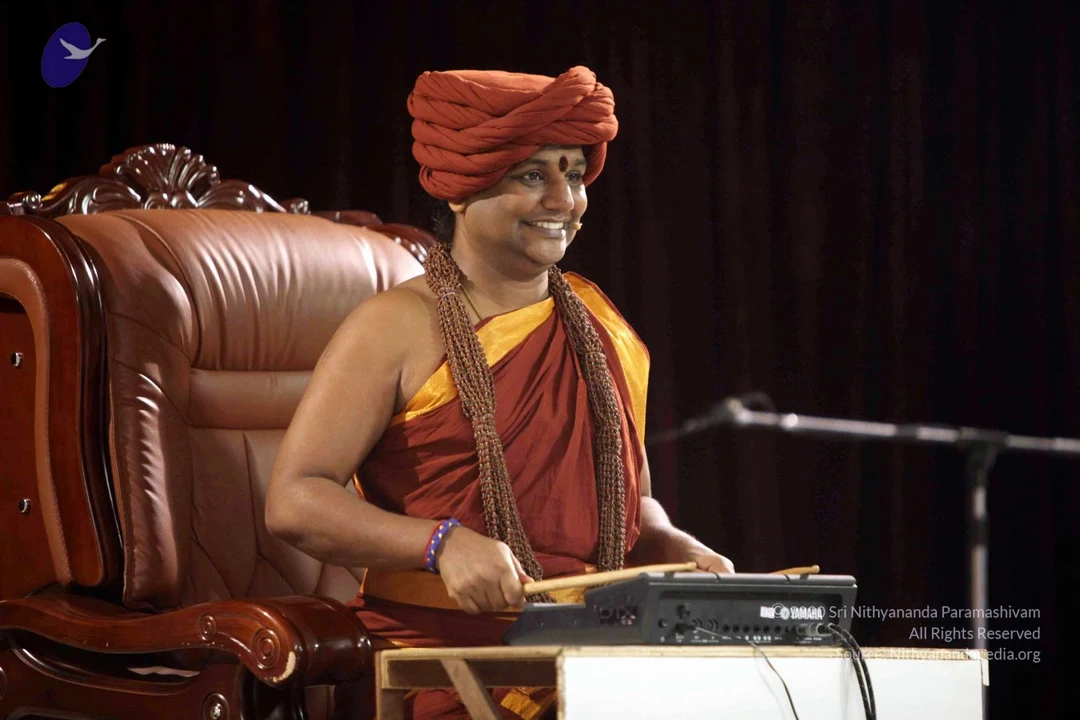
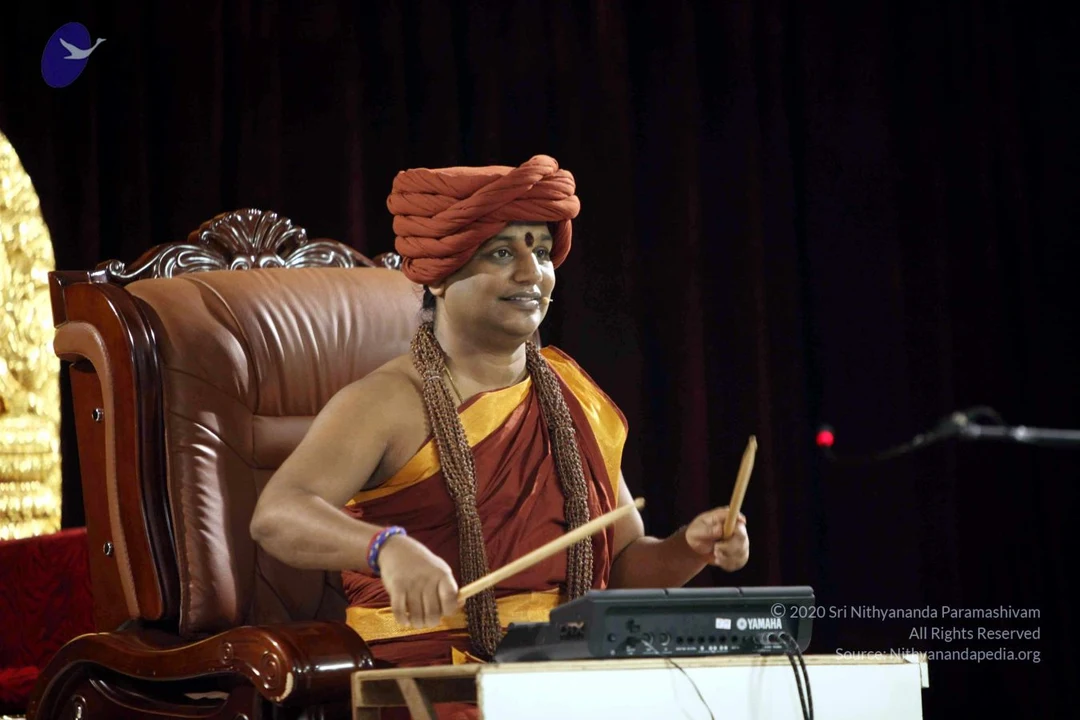
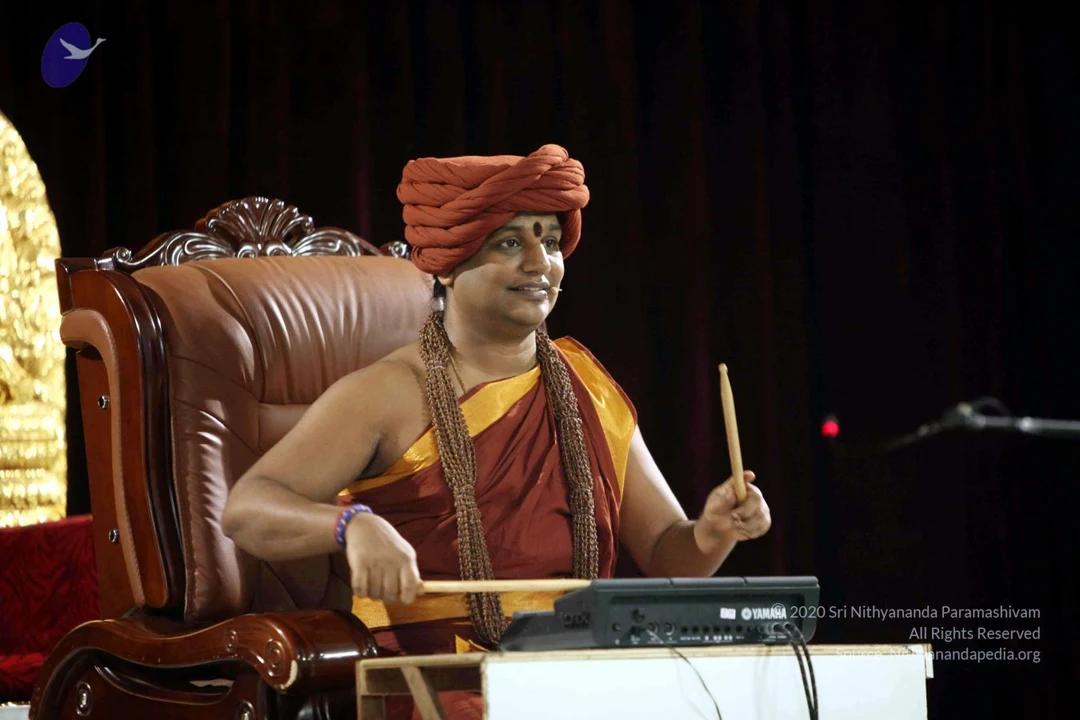
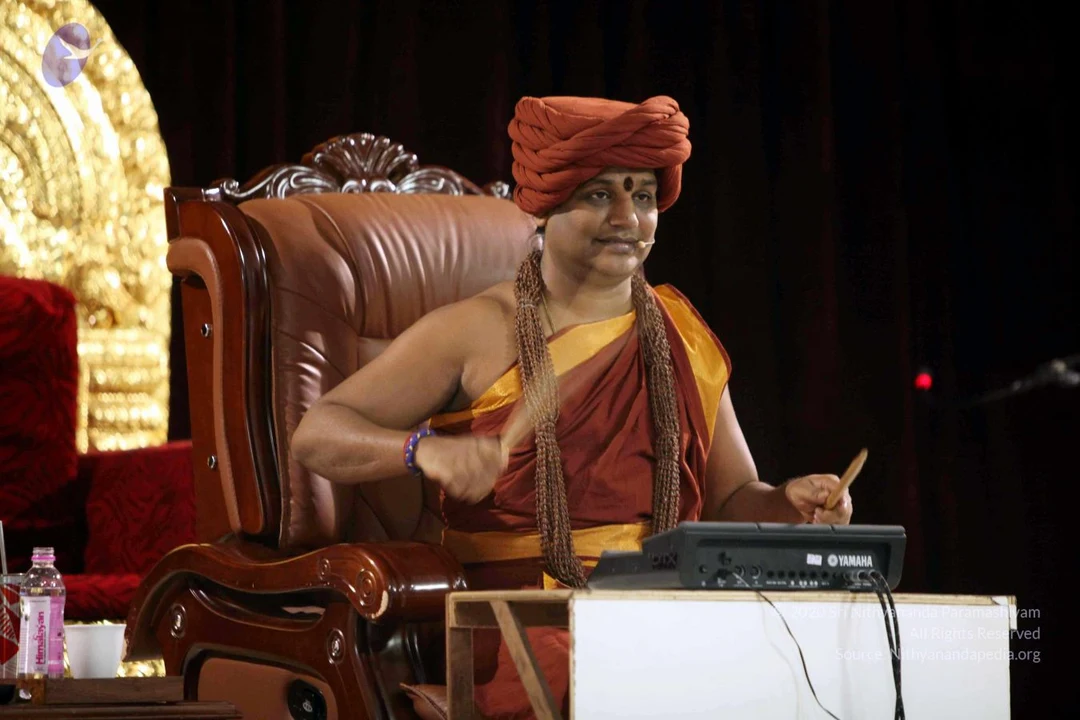
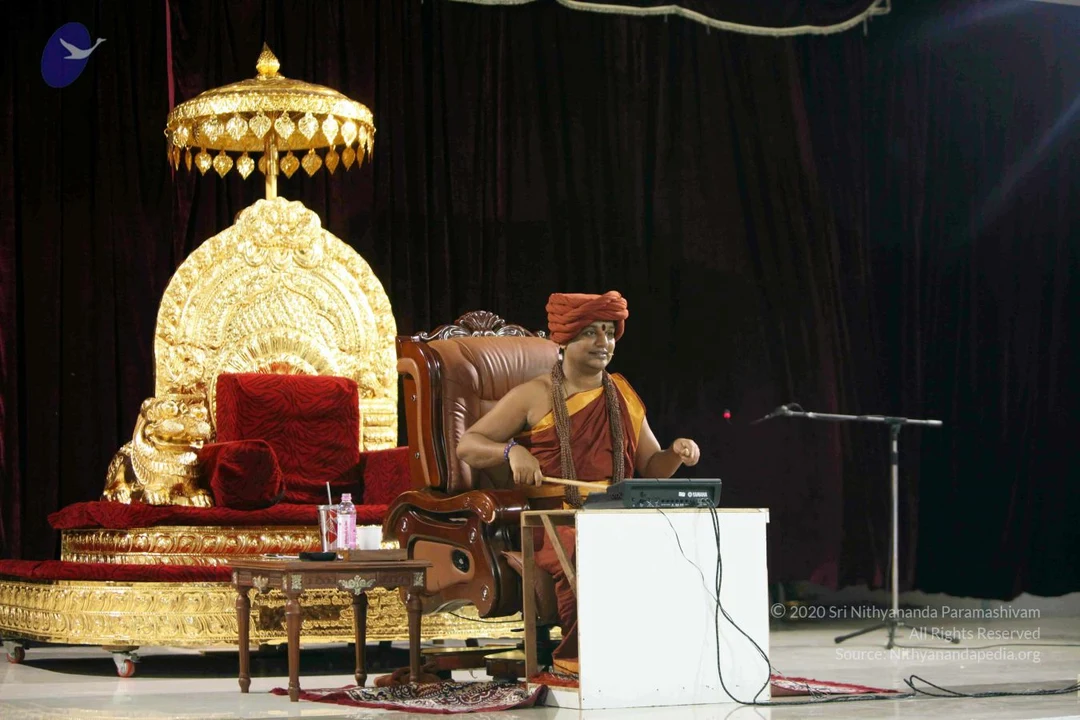
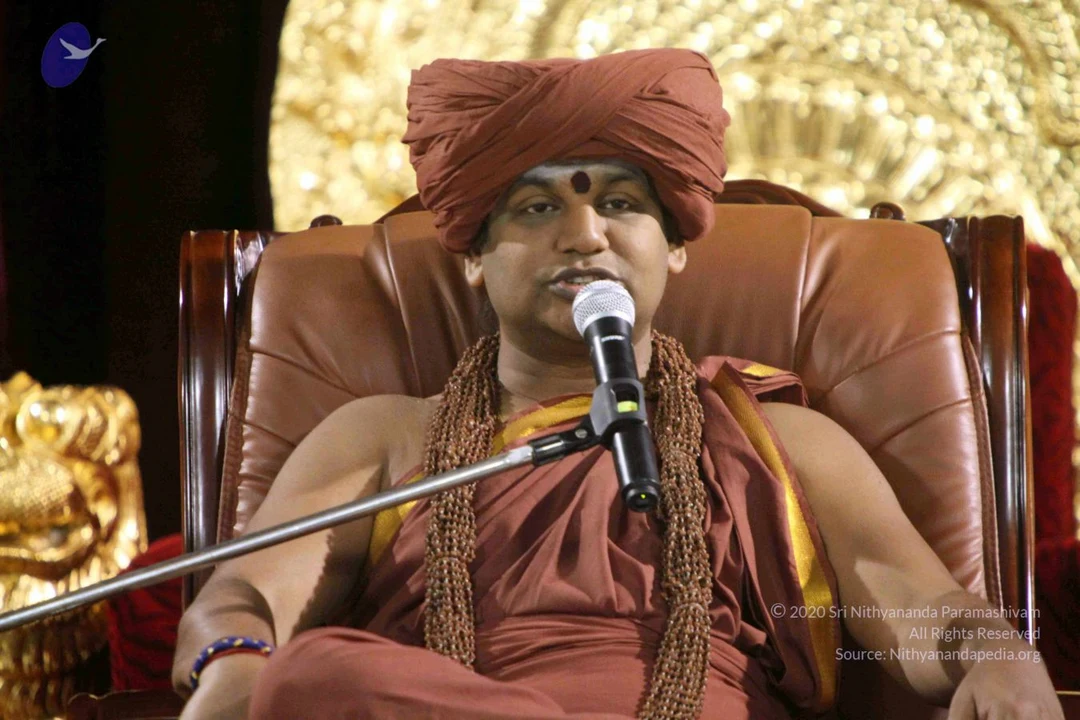
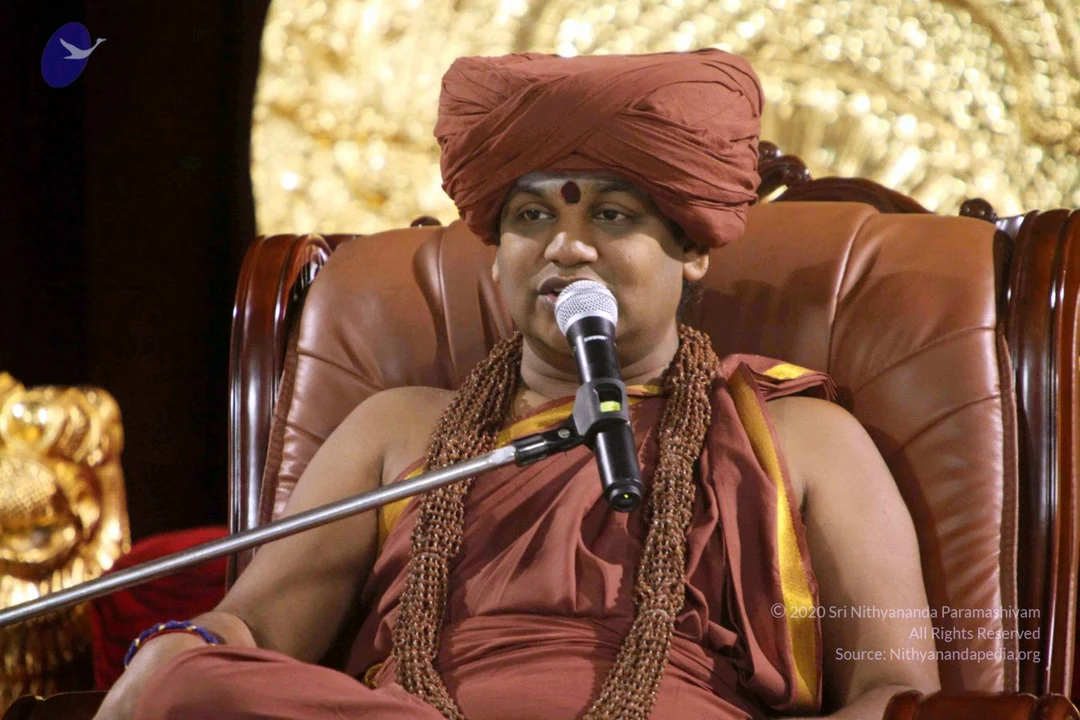
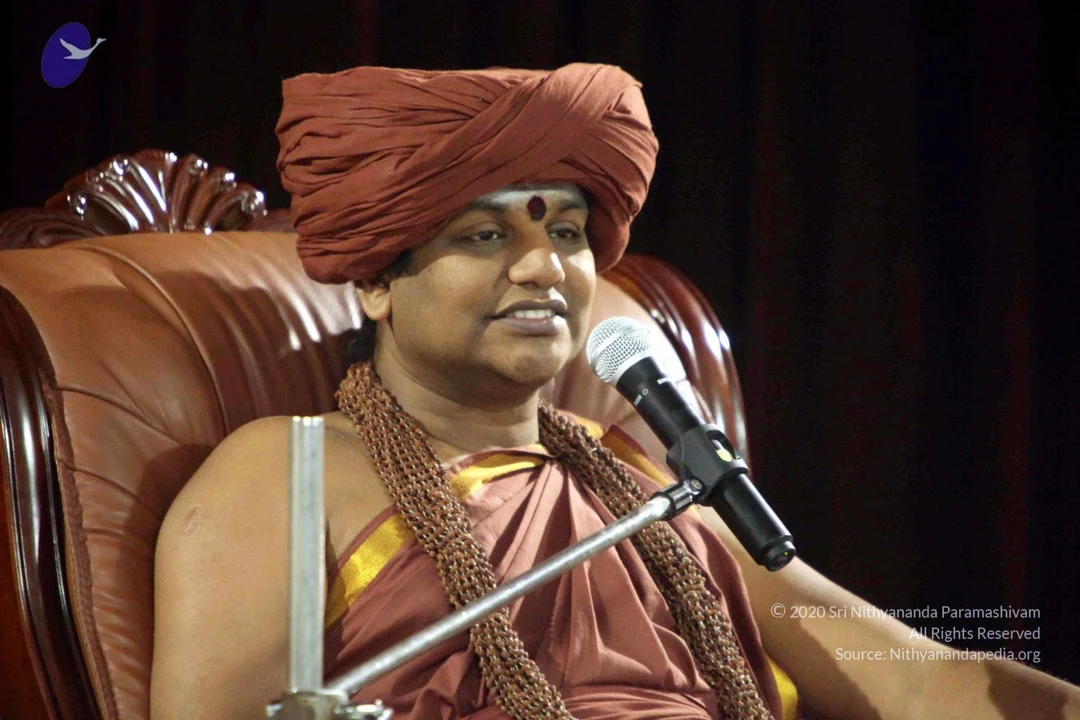
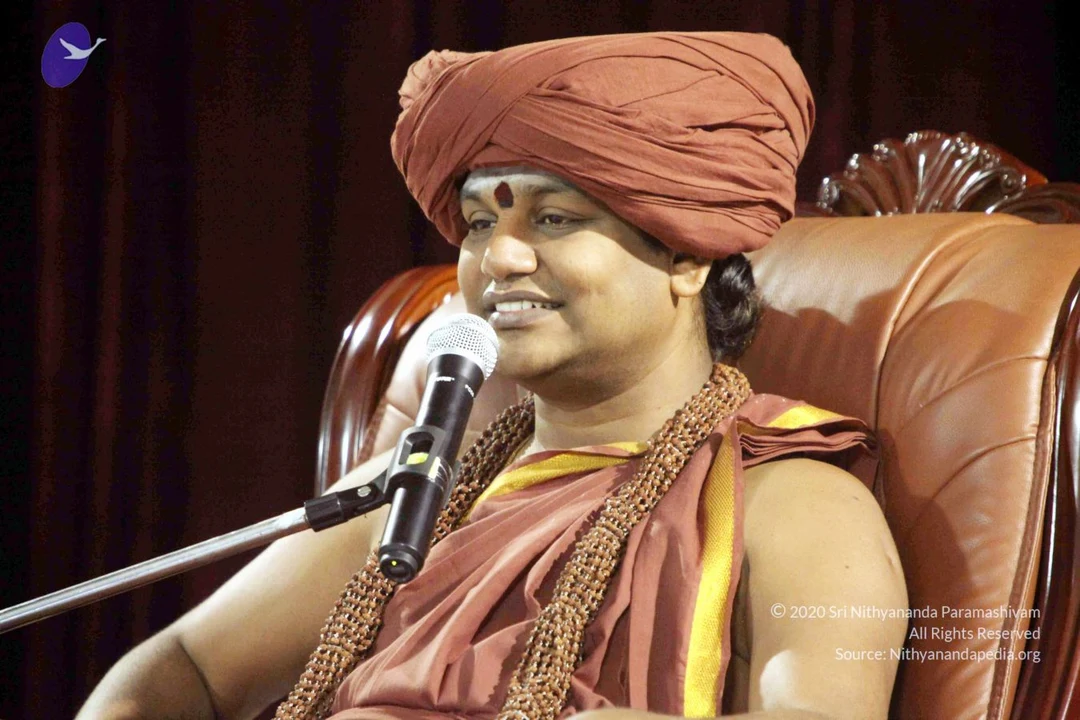
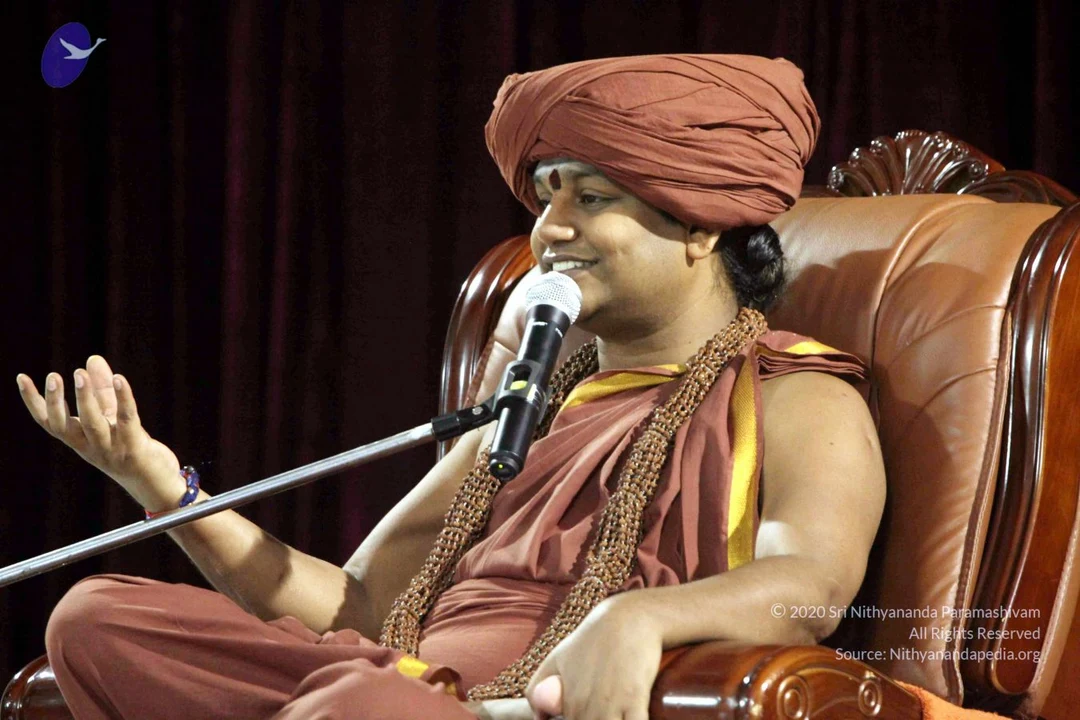
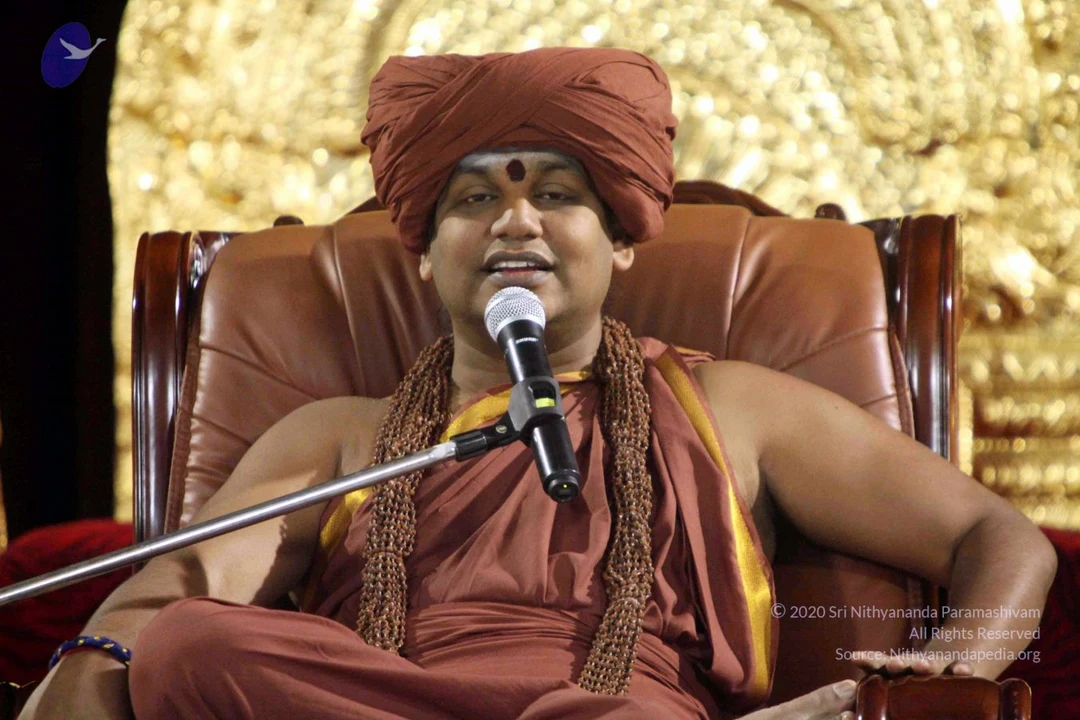
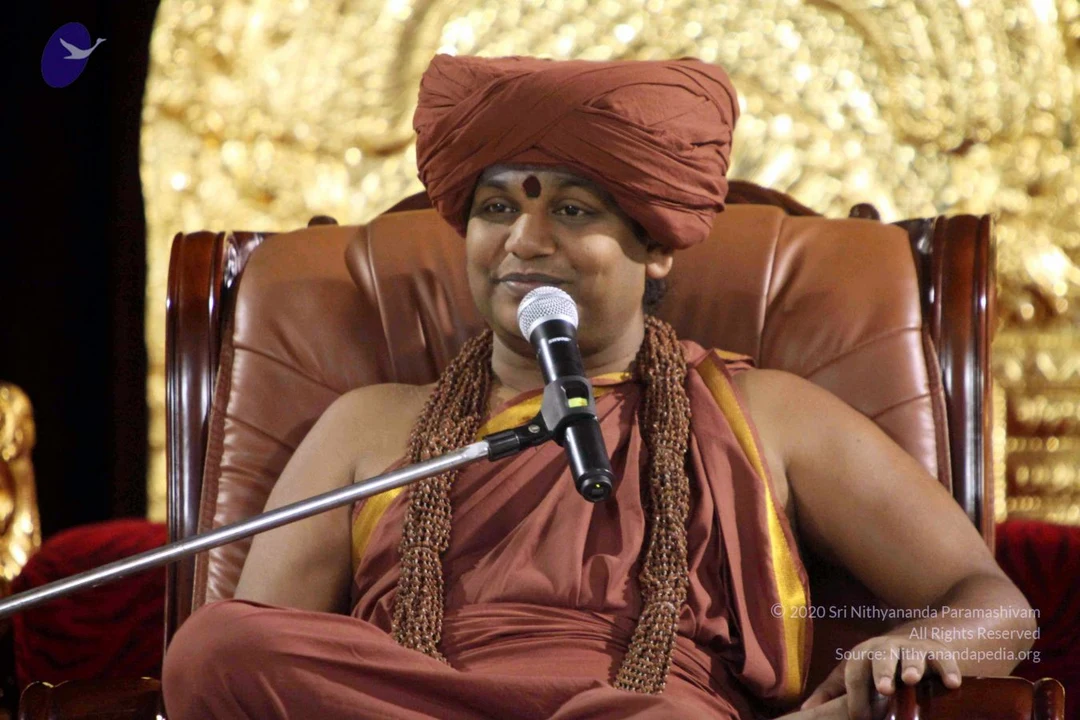
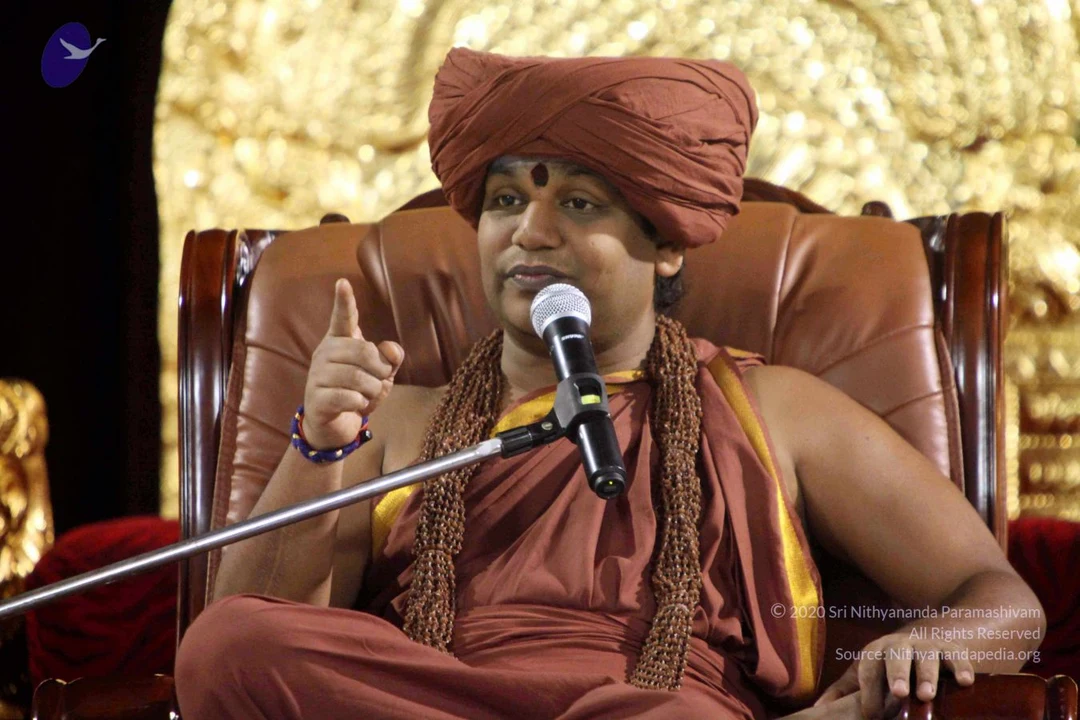
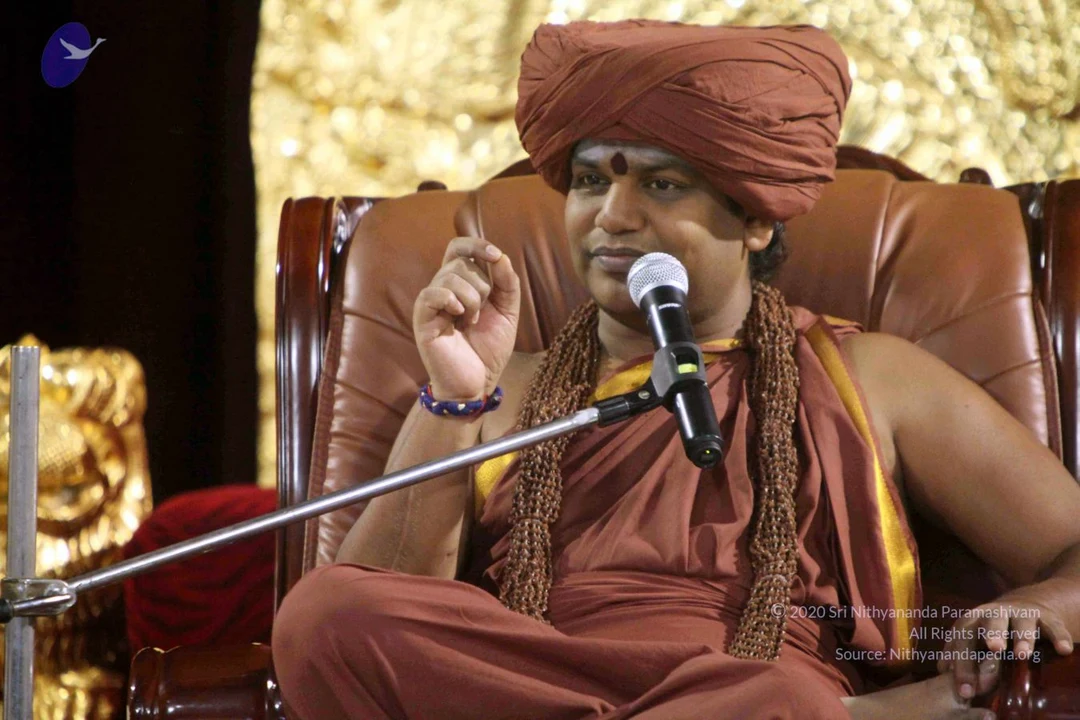
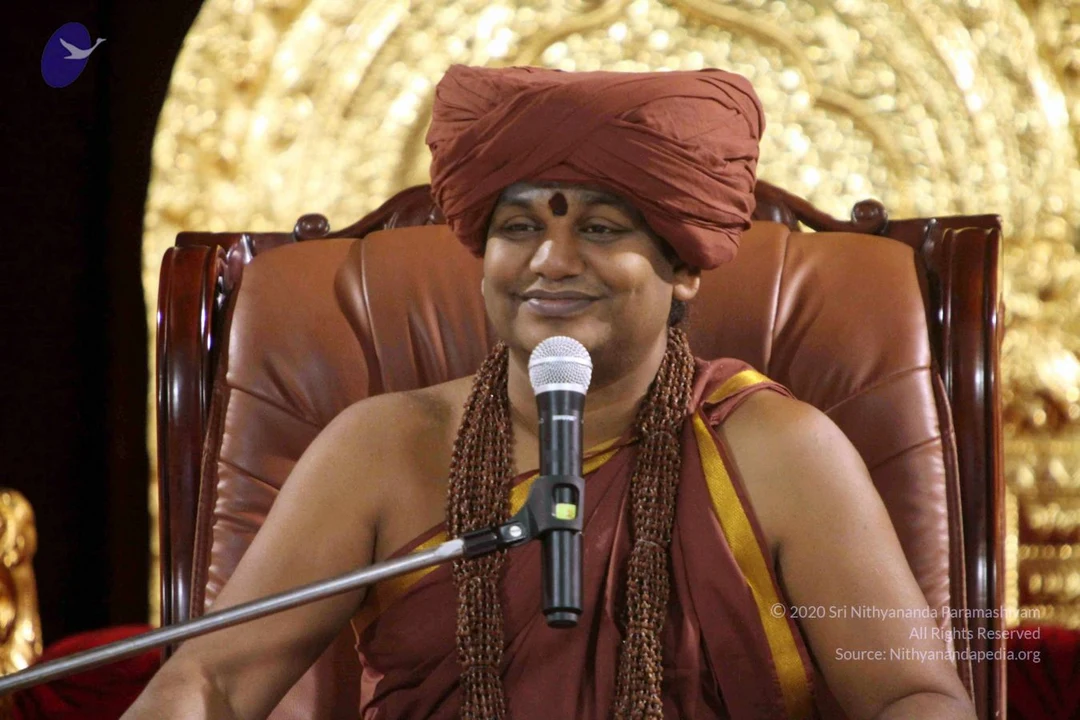
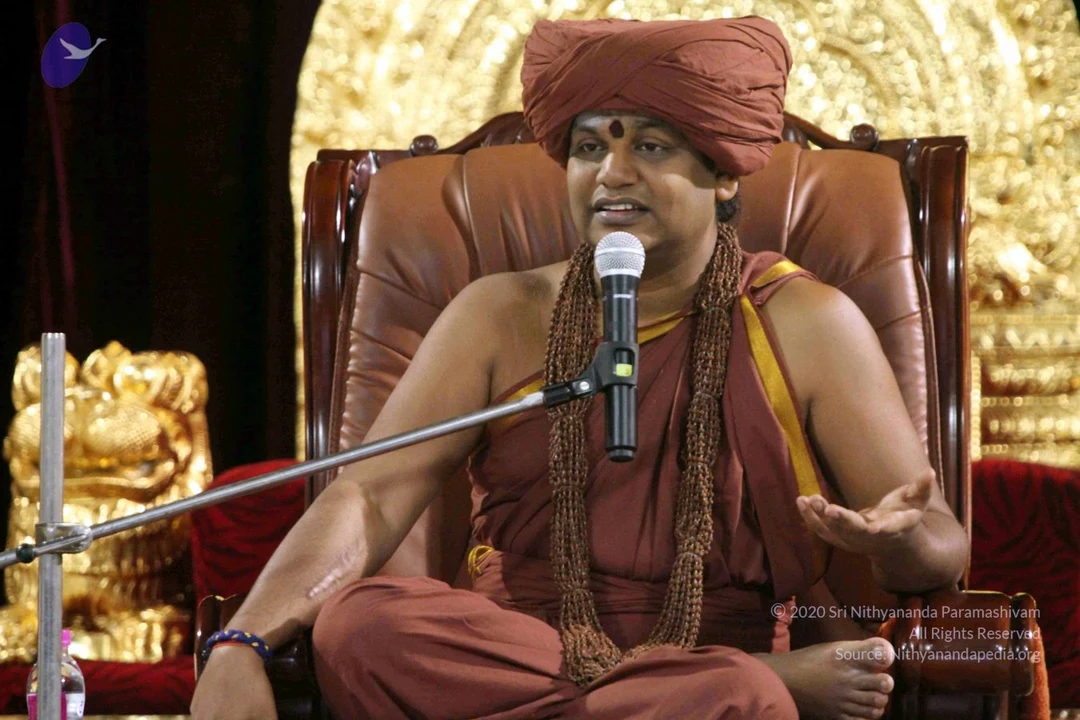
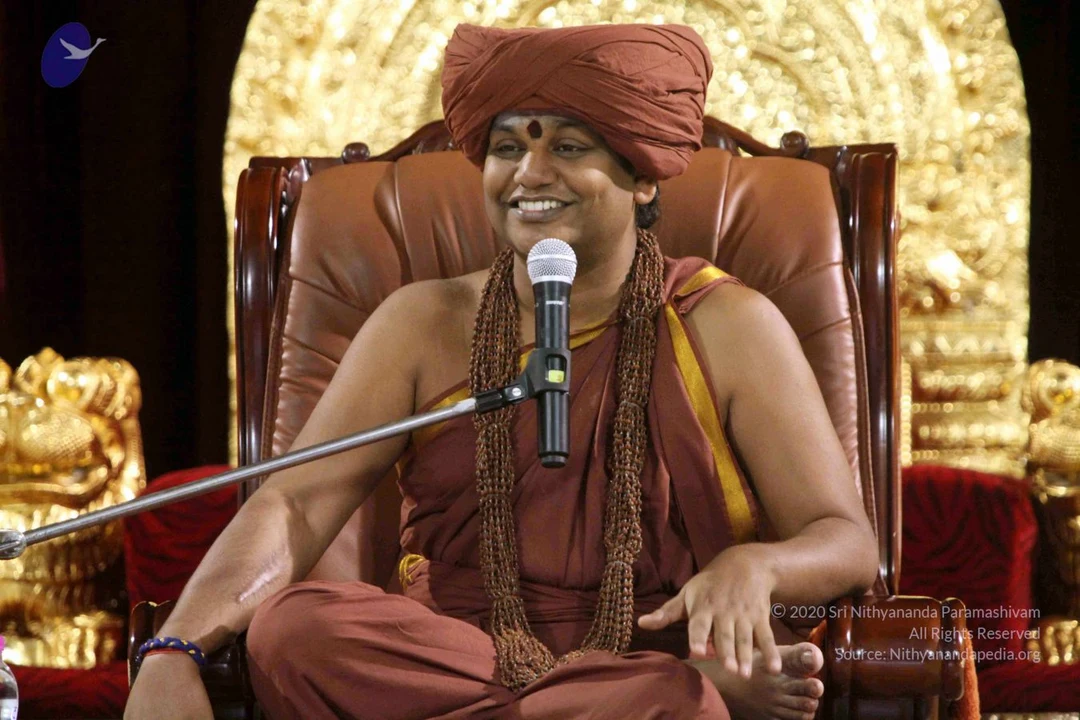
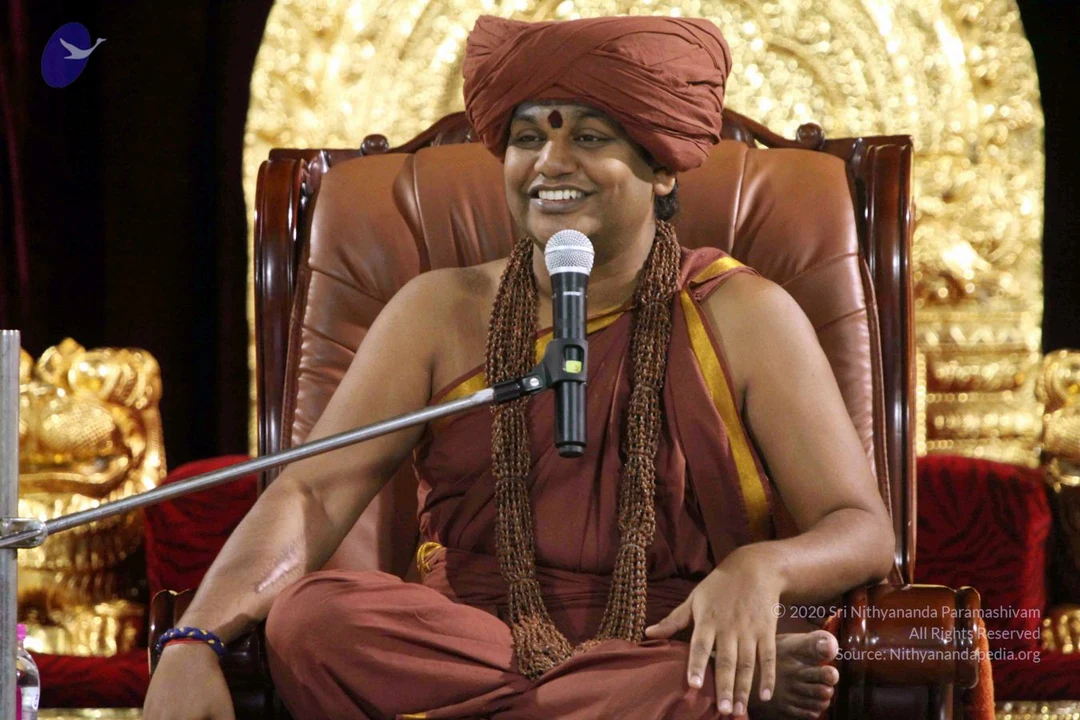
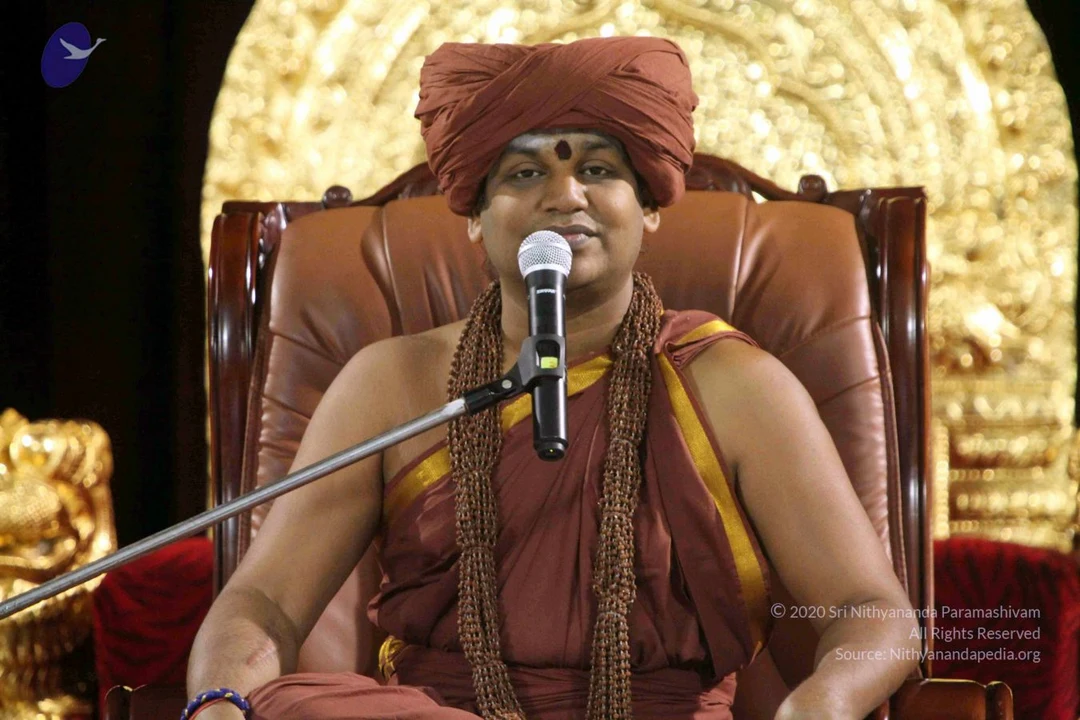
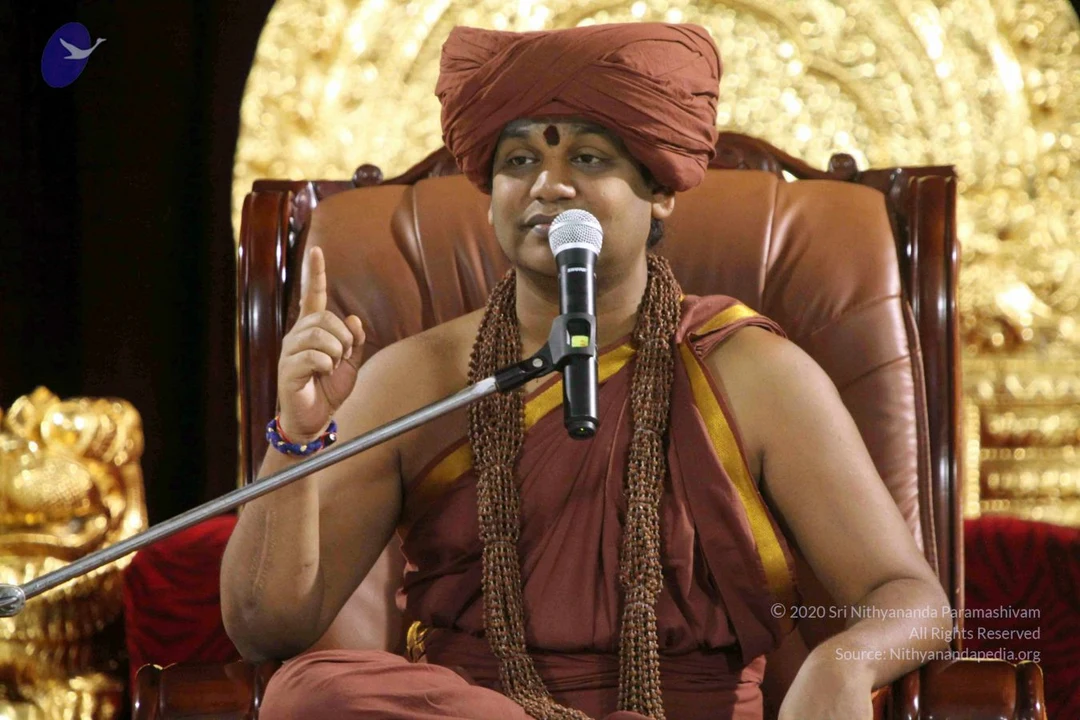
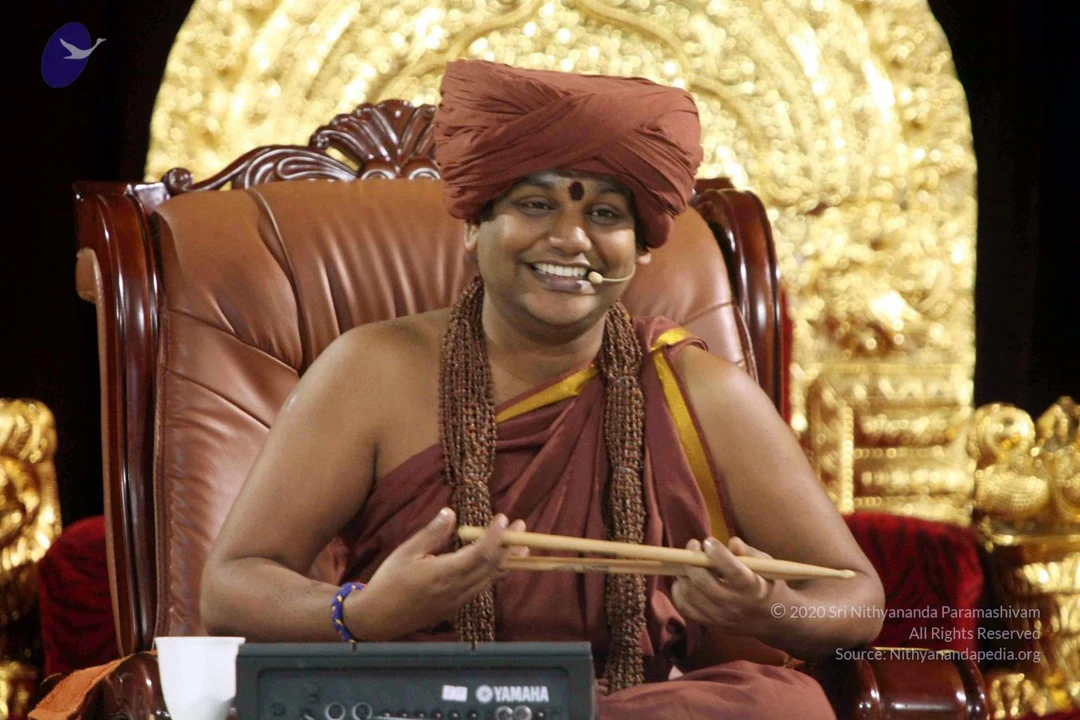
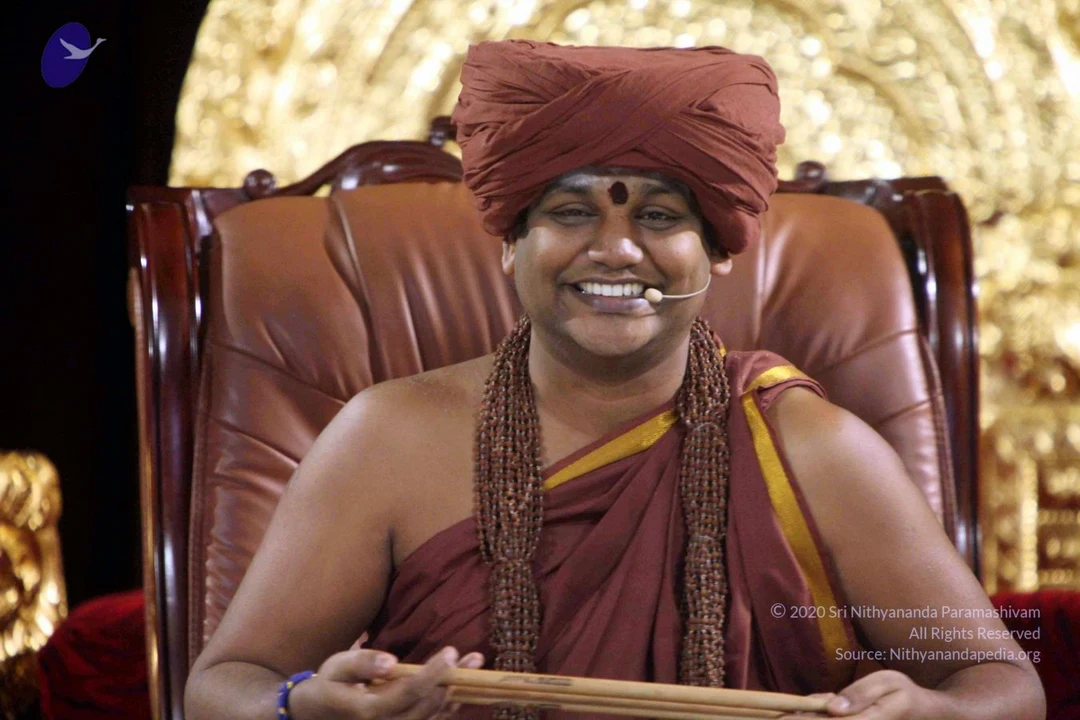
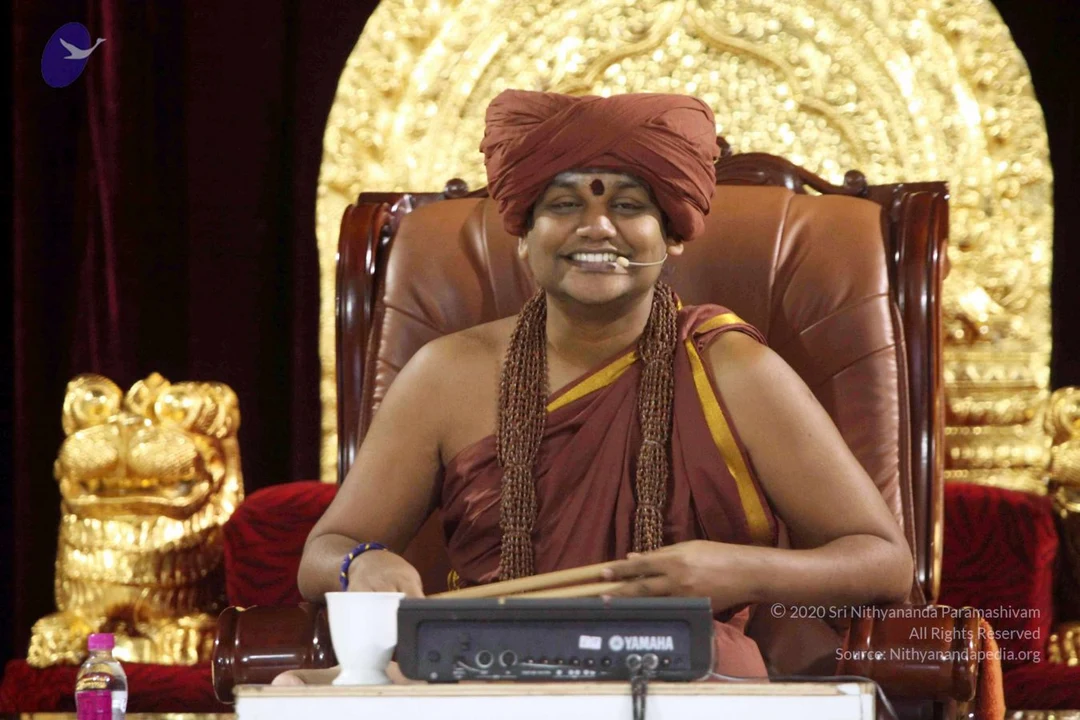
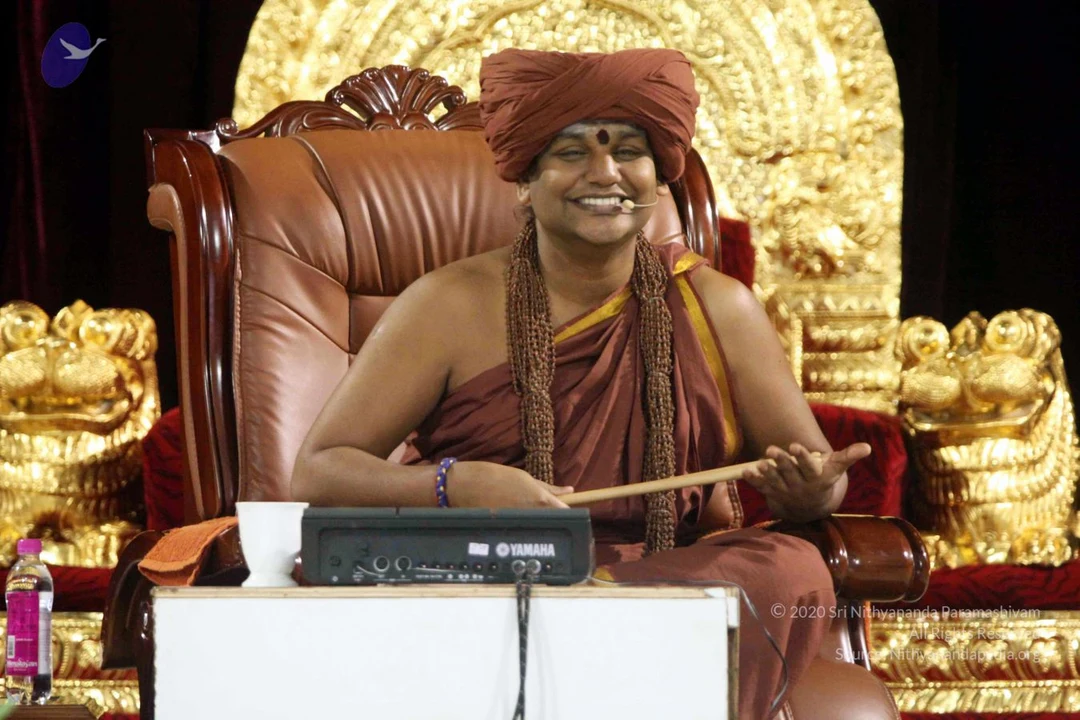
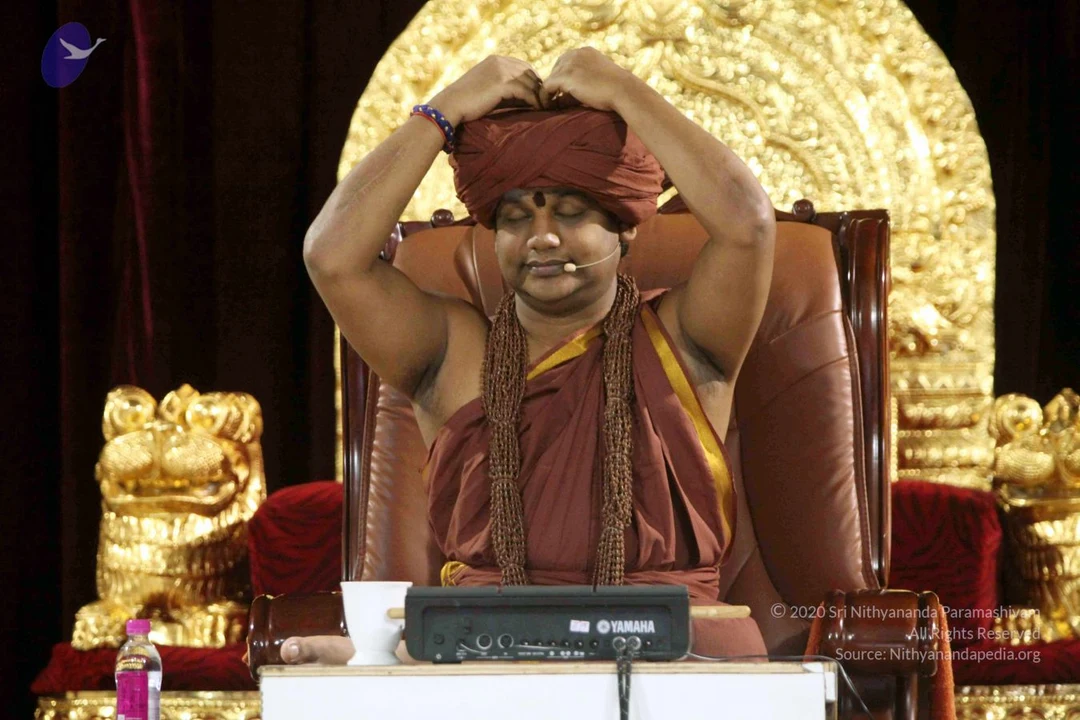
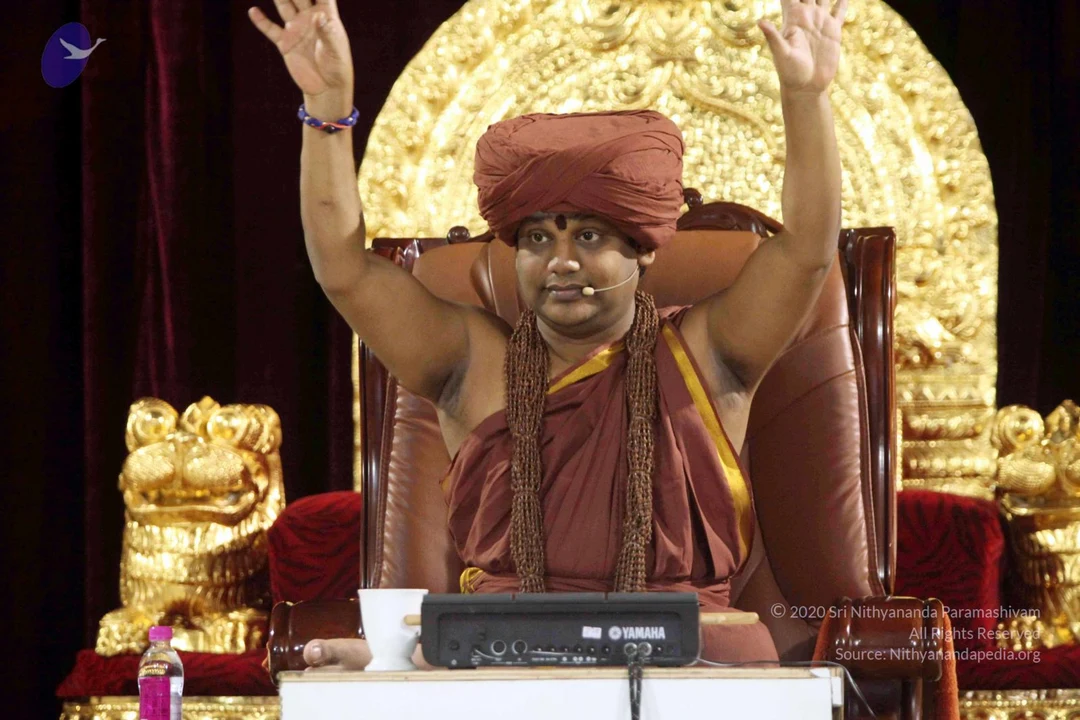
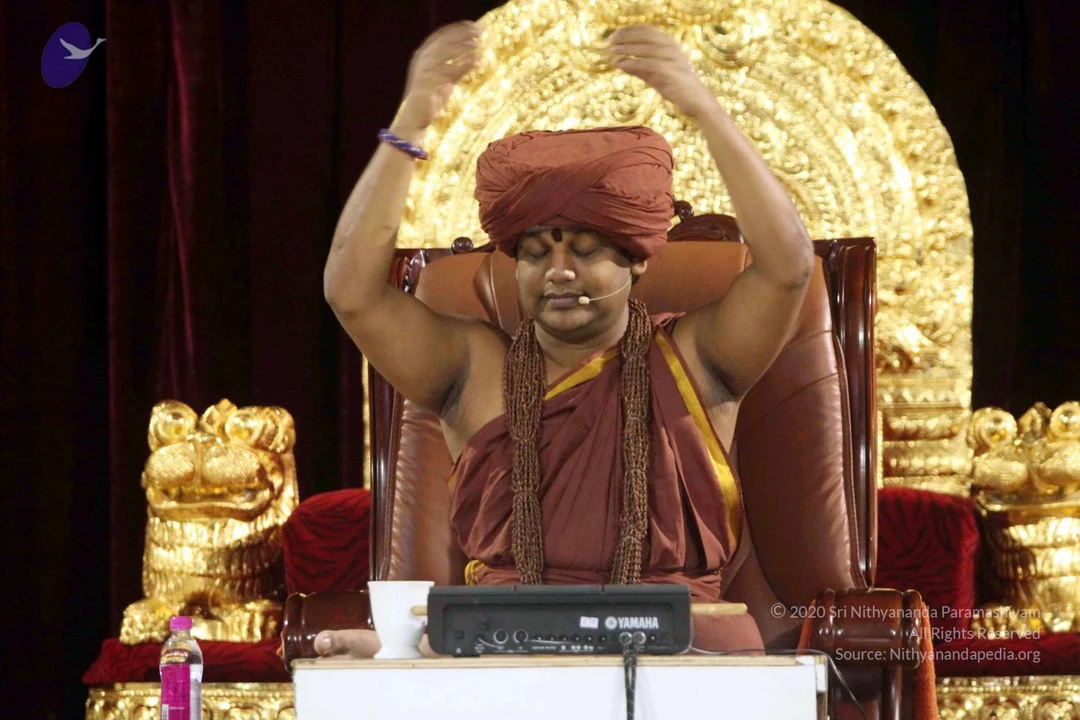
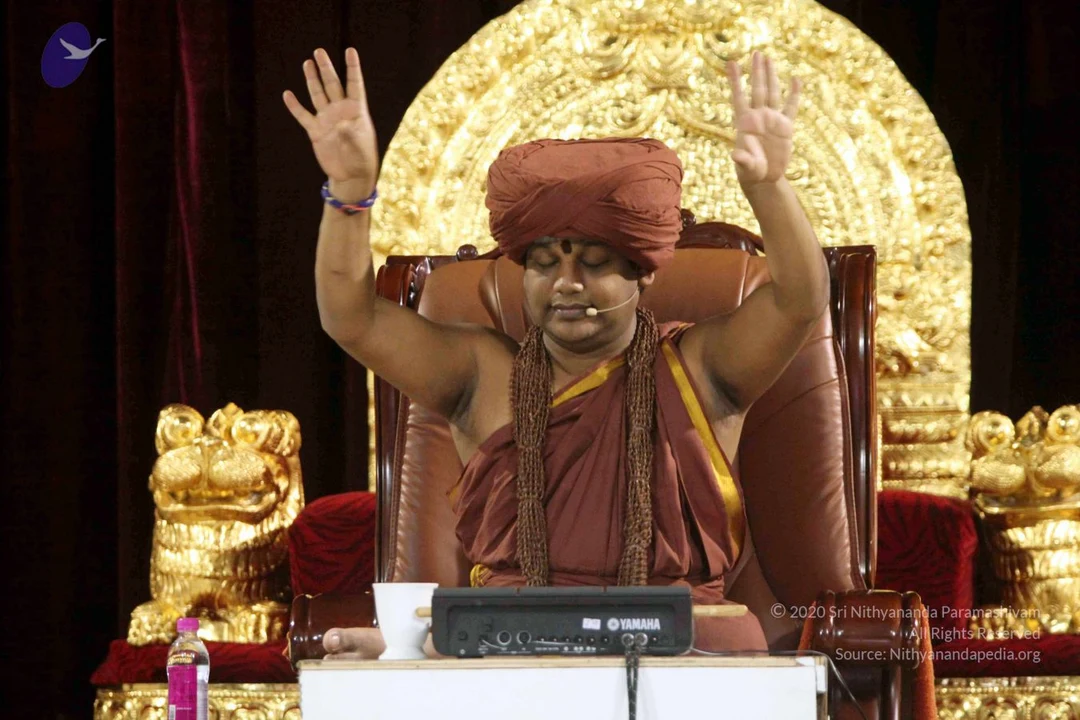
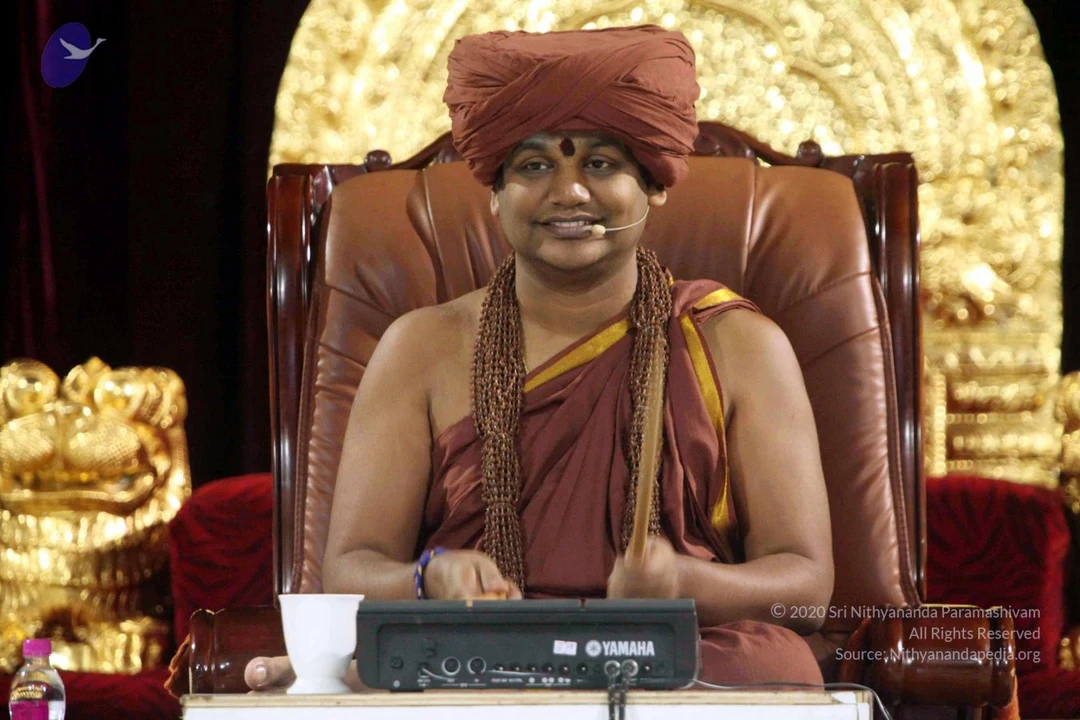
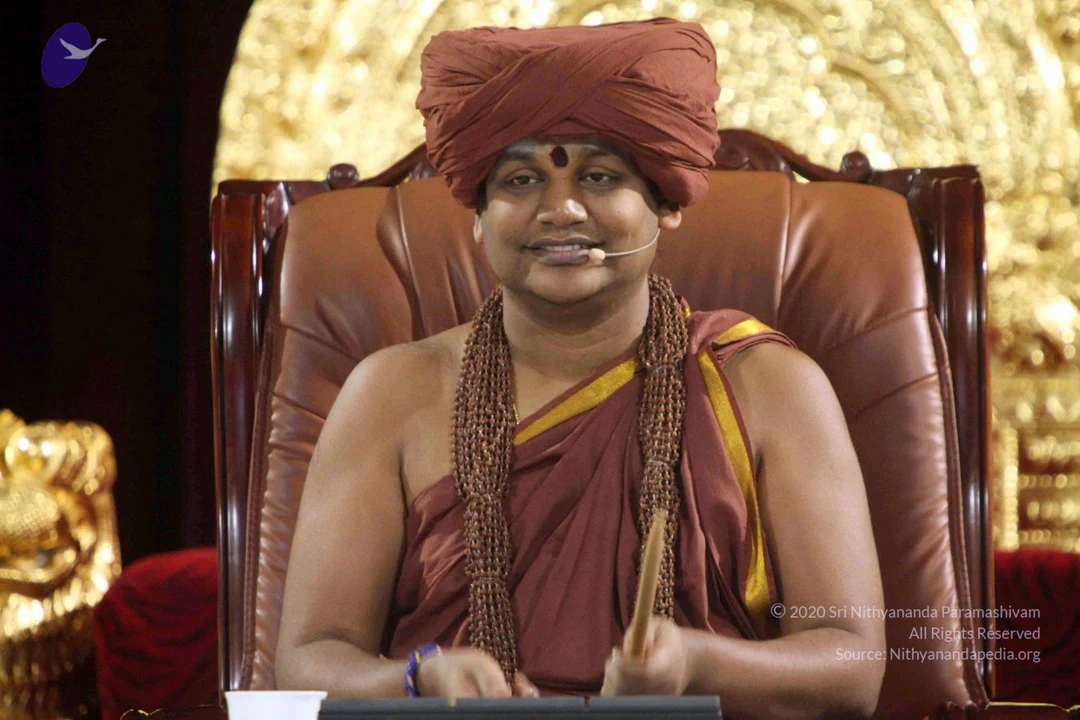
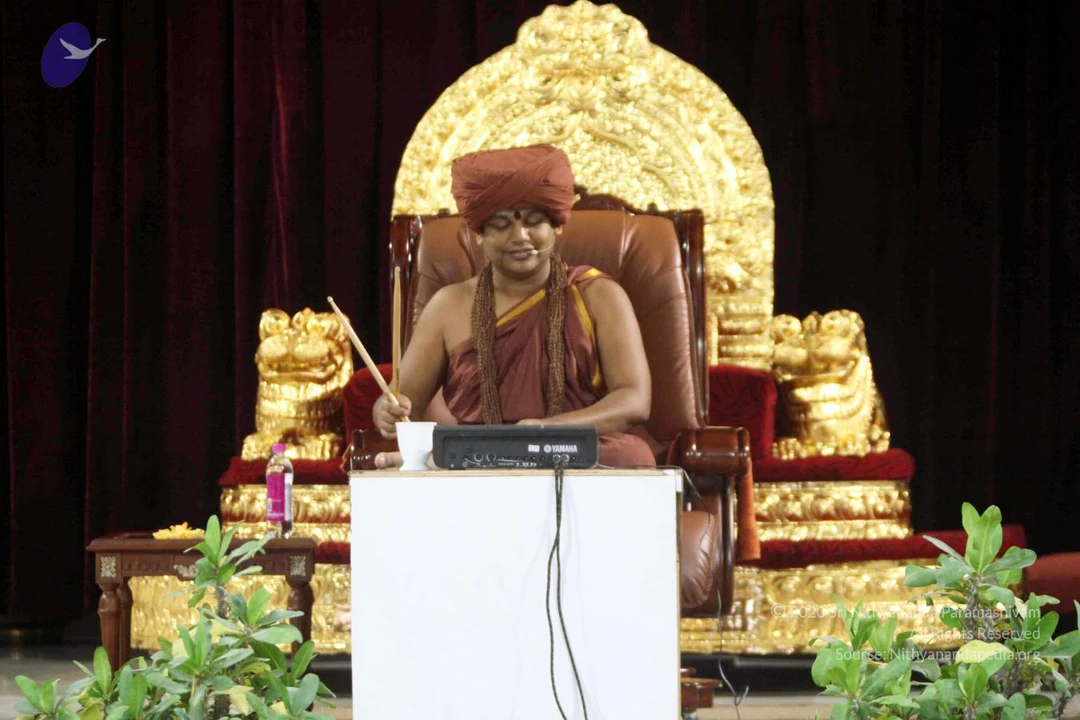
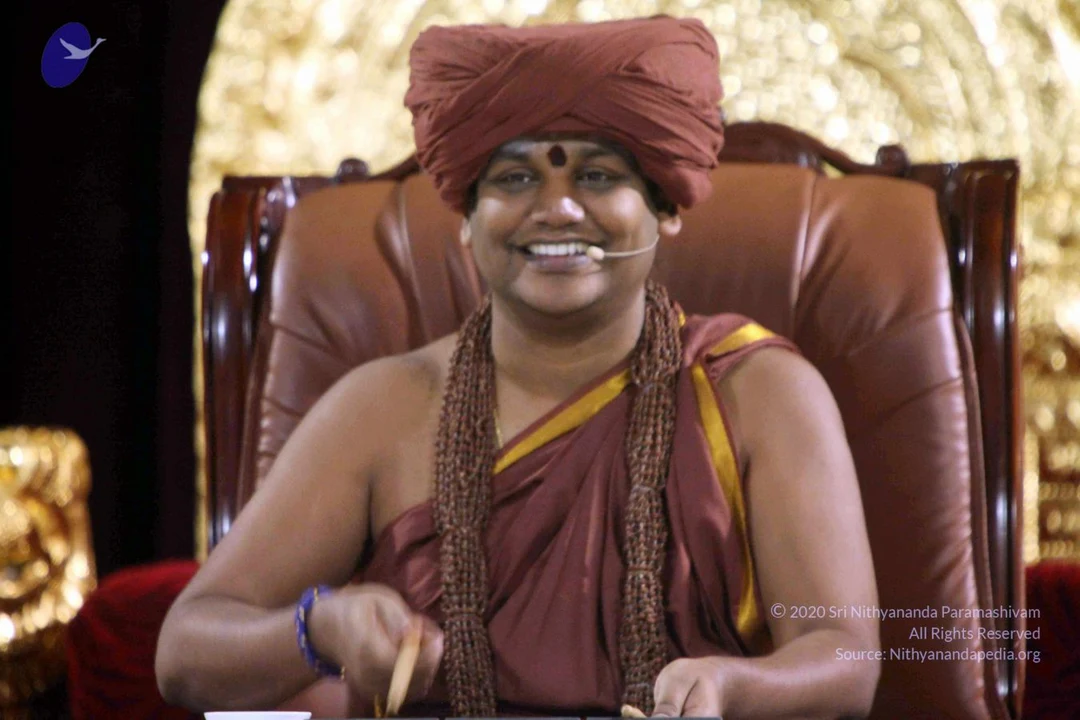
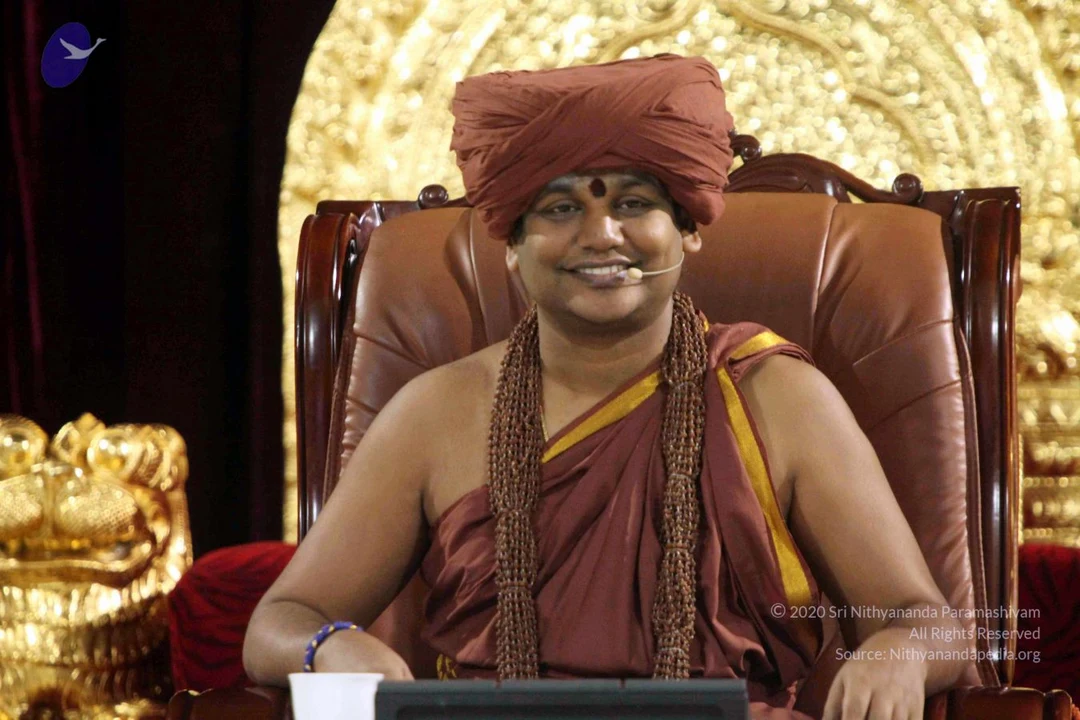
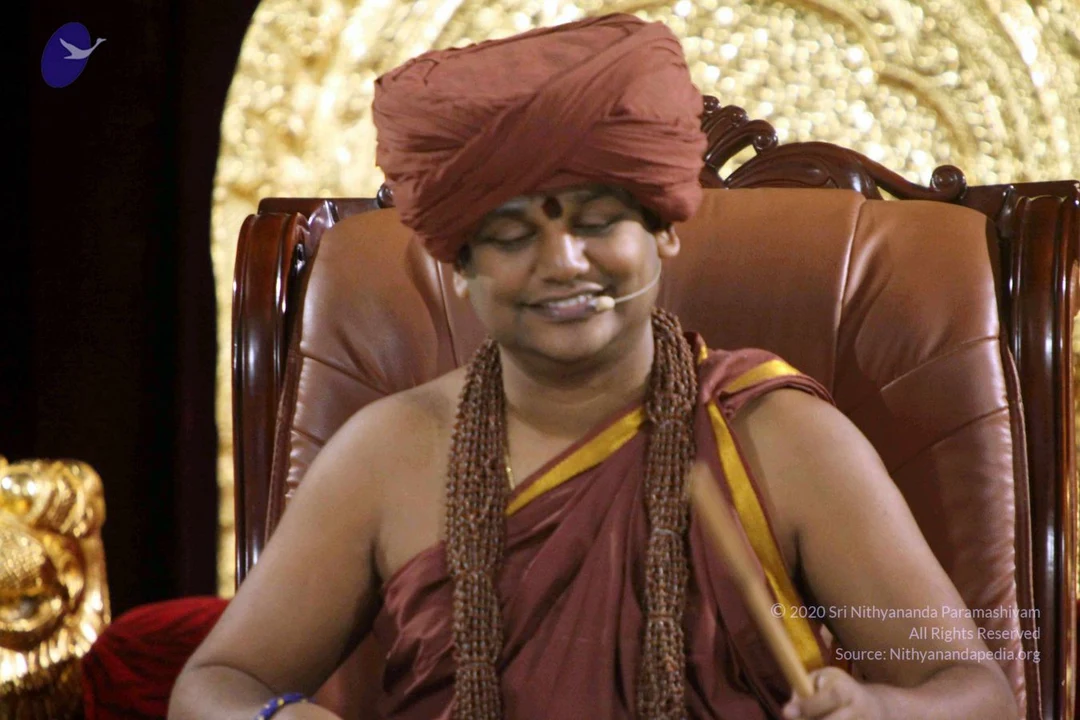
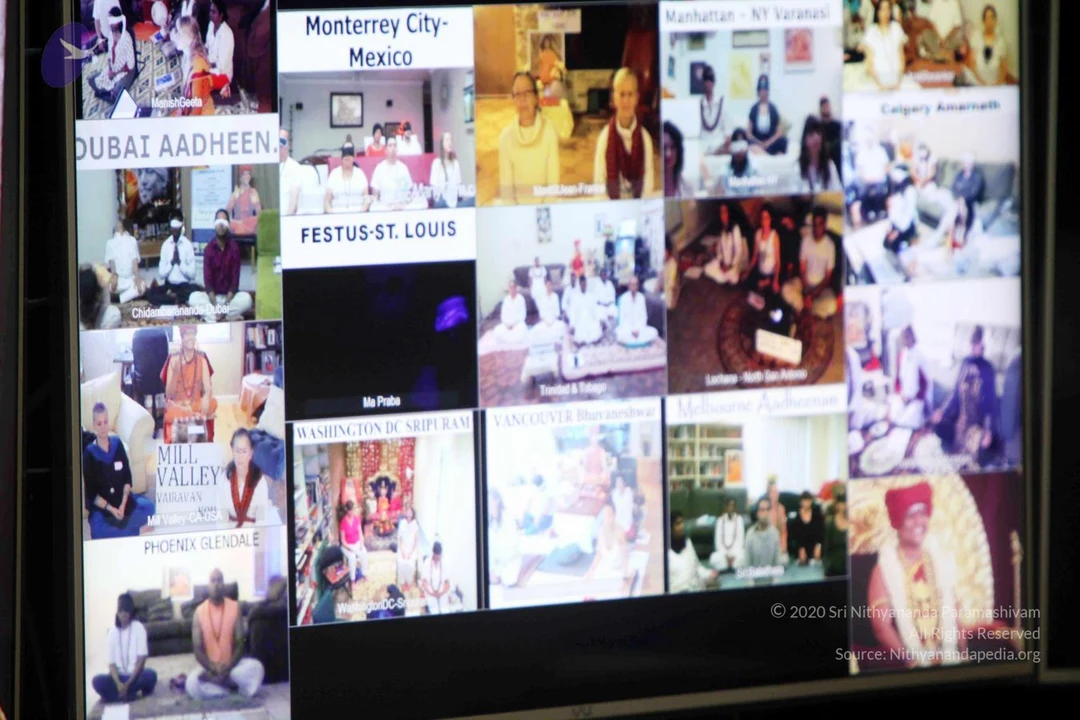
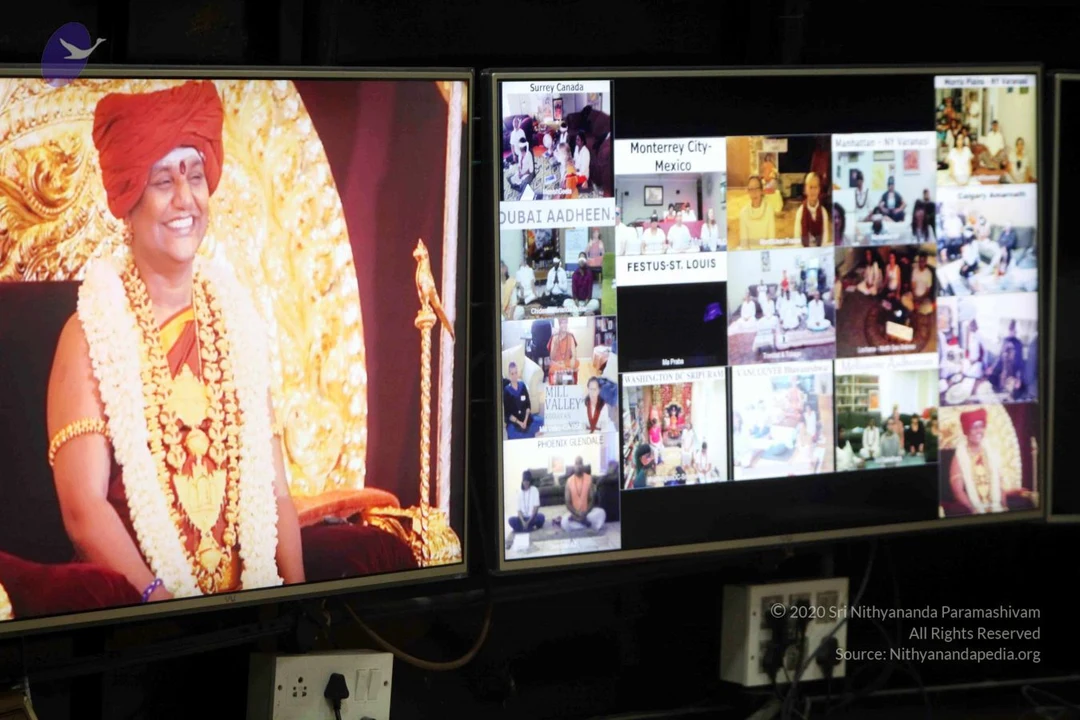
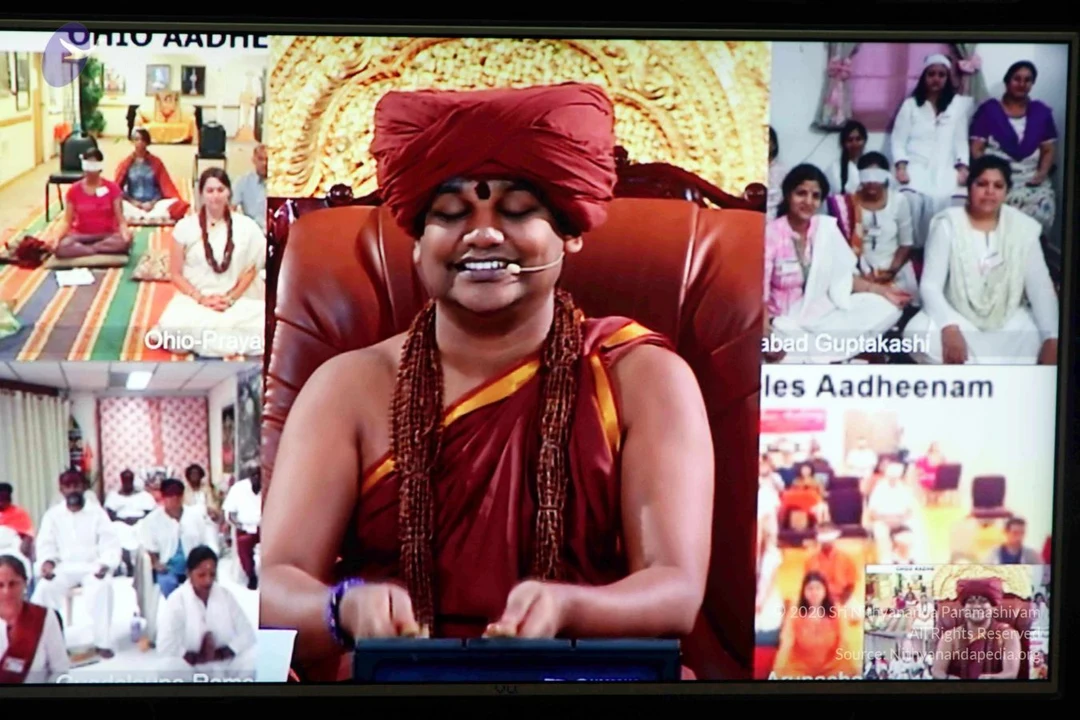
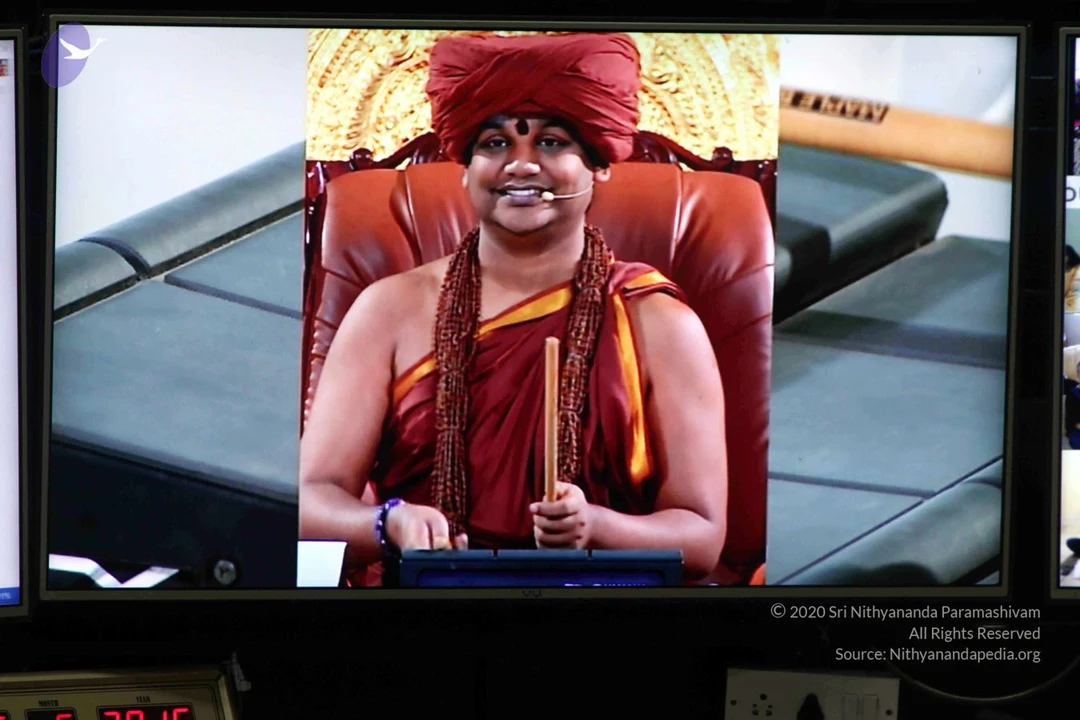
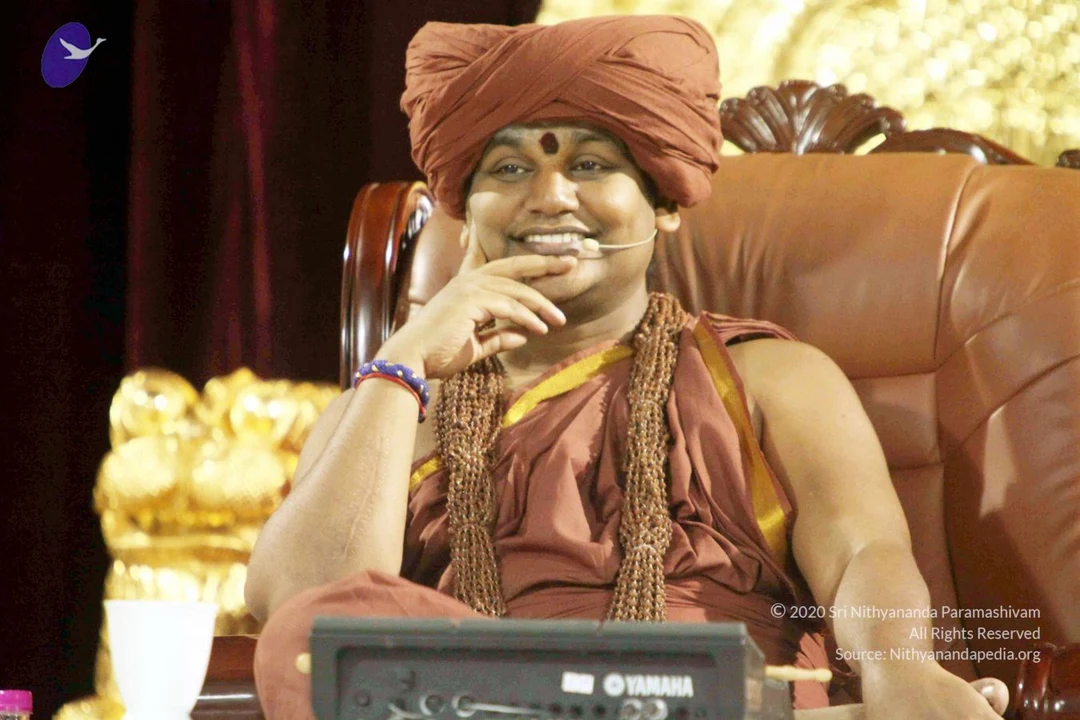
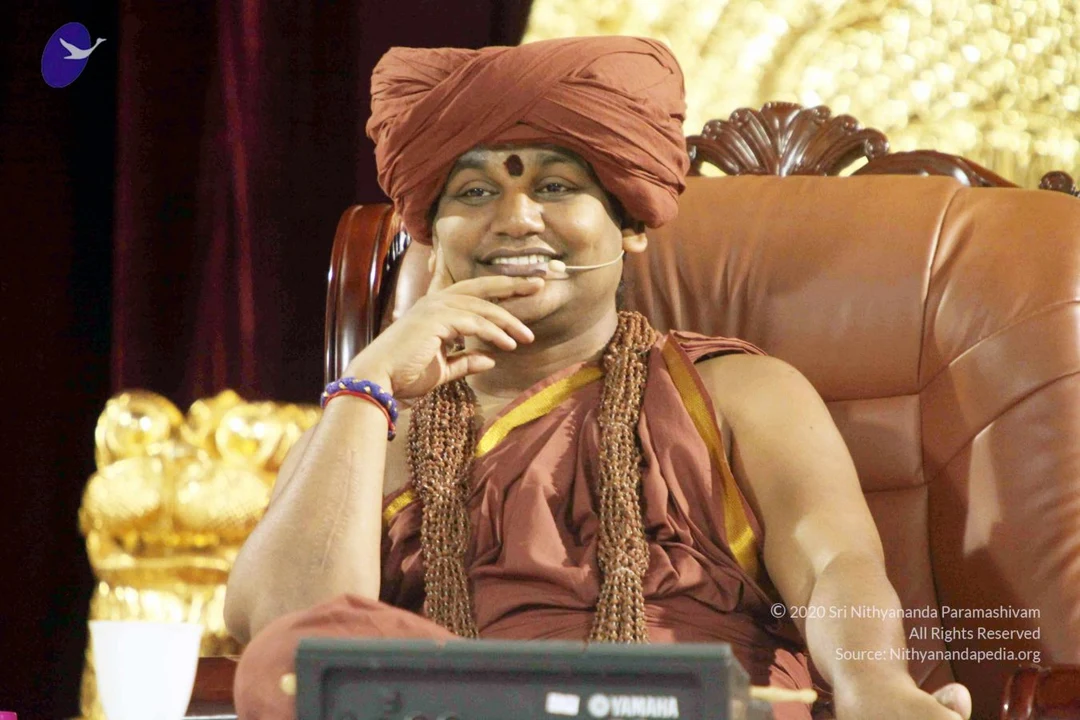
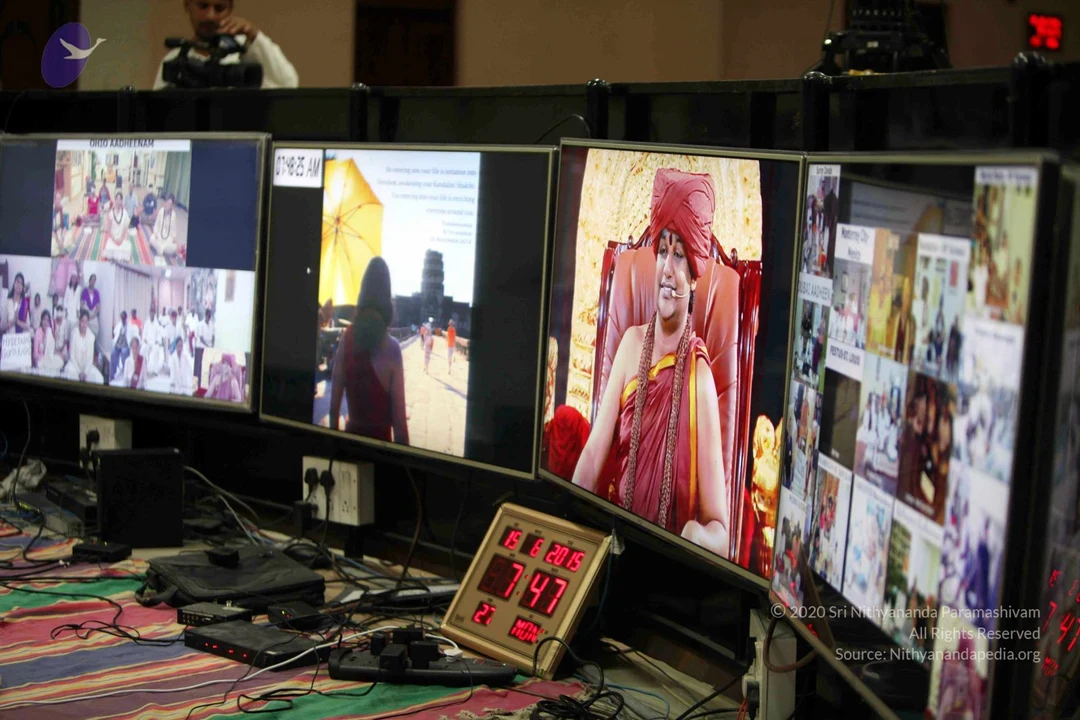
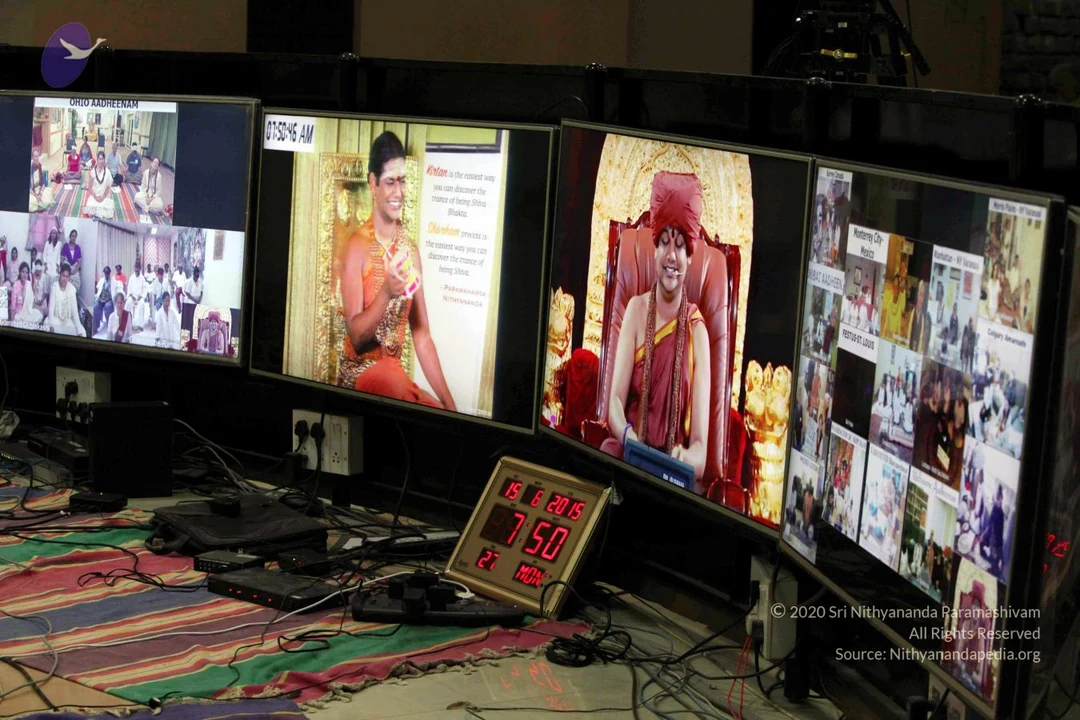
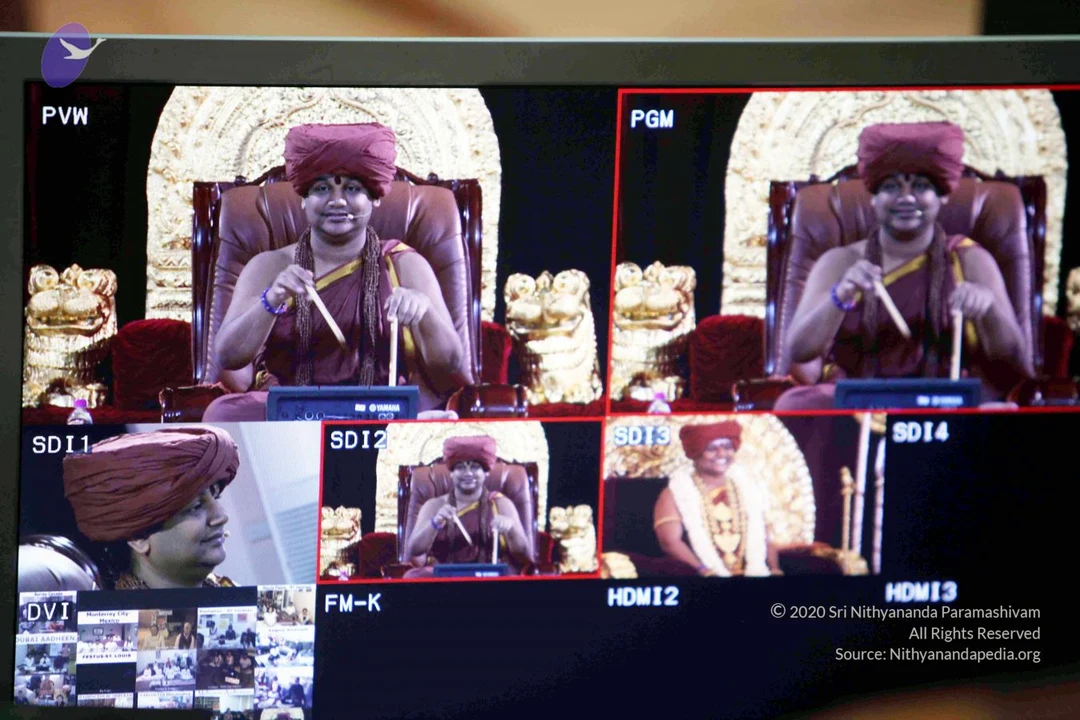
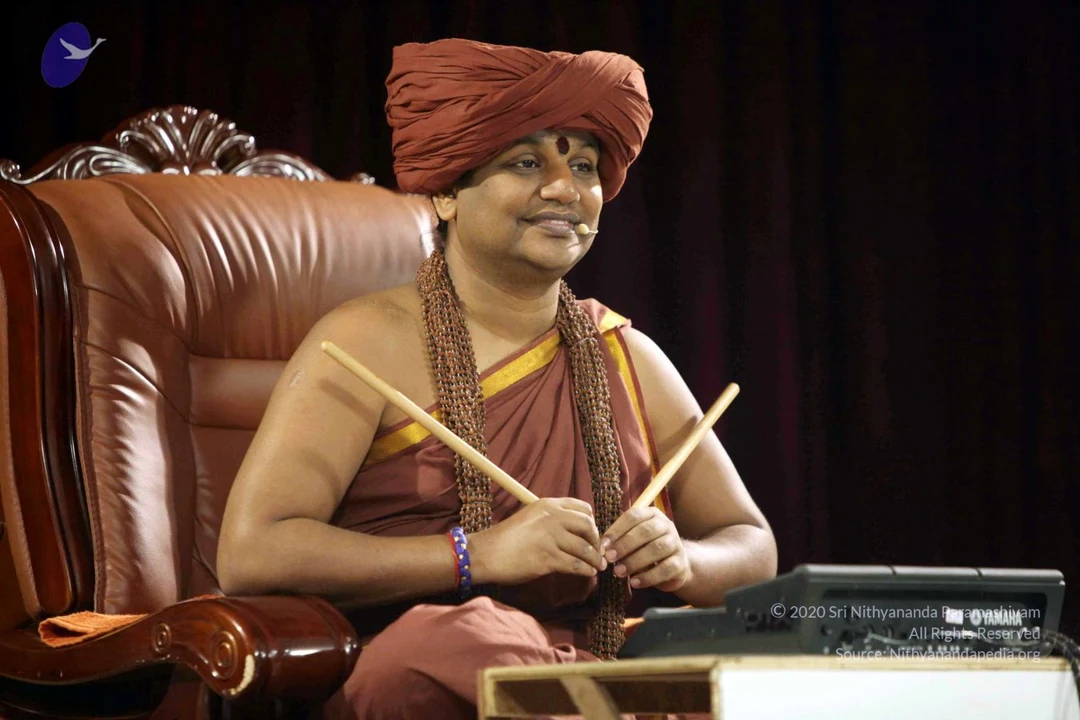
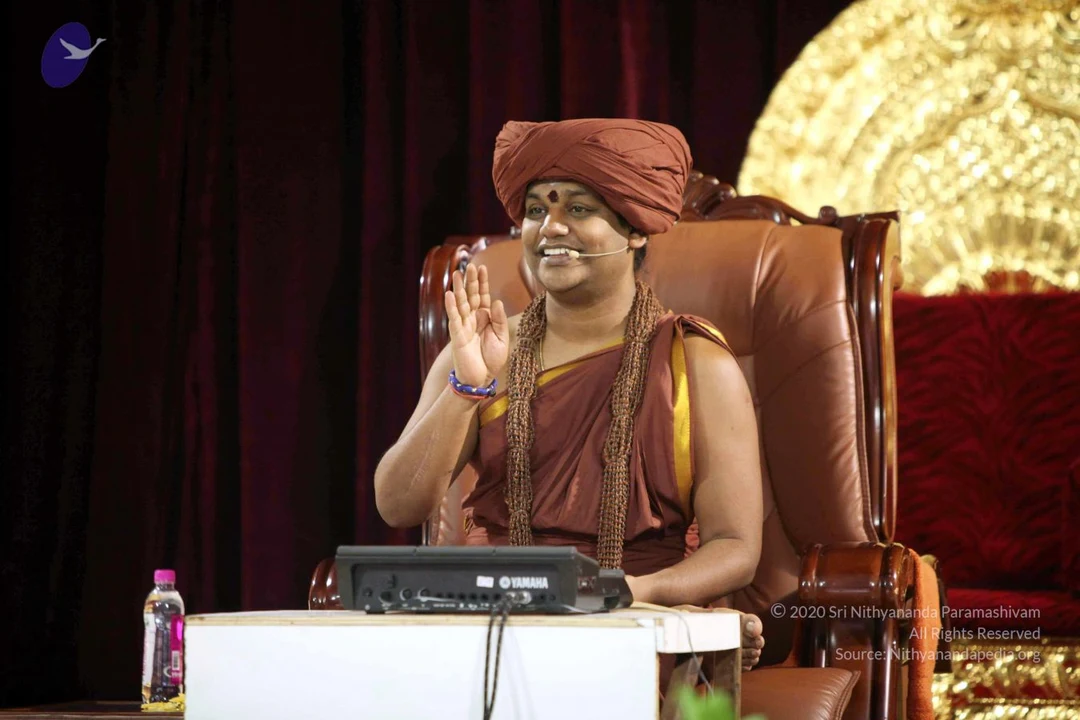
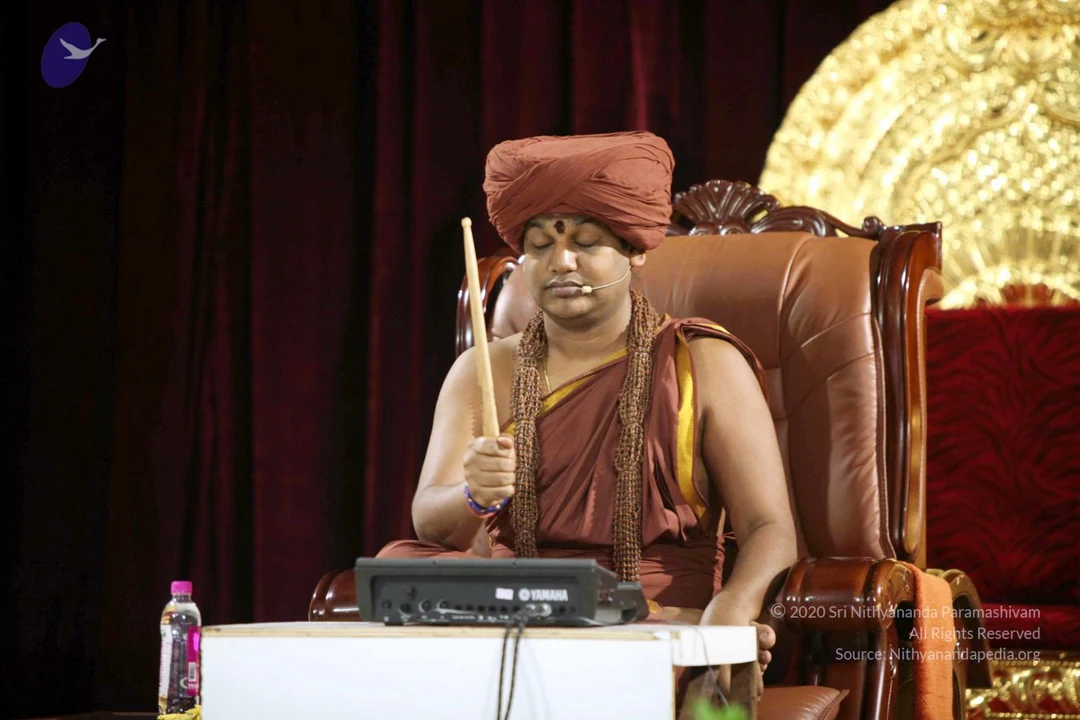
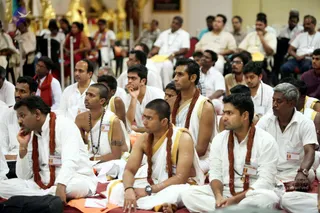
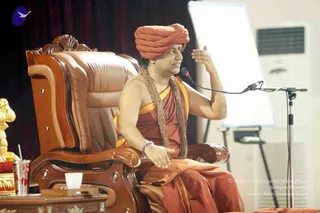
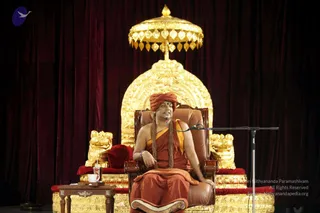
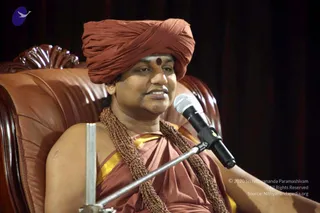
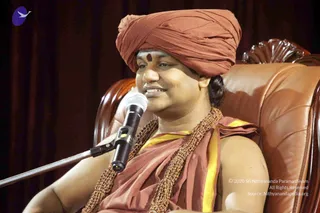
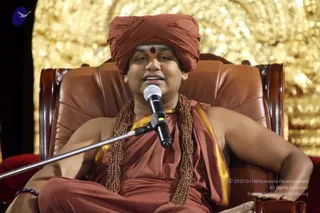
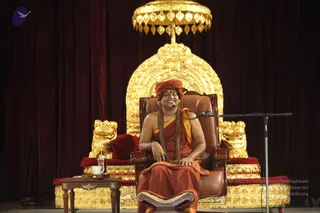
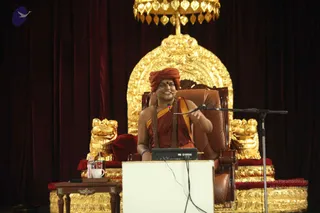
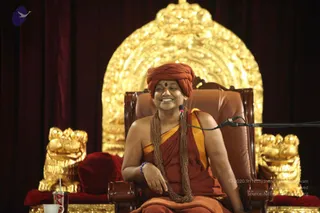
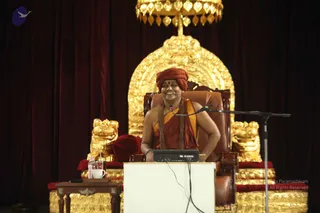
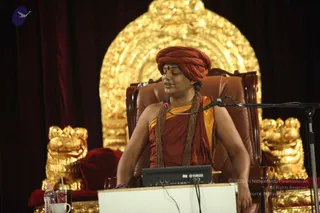
A man seated in a brown leather armchair plays an electronic DTX drum pad with two wooden drumsticks, one in each hand. He wears an orange-red turban, a red and gold saffron-toned garment draped over one shoulder, and a long rudraksha-style bead mala across his chest. A small dot marks his forehead. Behind him stand a white wall-mounted air conditioning unit and a window. The drum kit carries the Yamaha logo. Swamiji (probable) is shown with the turban, saffron-toned clothing and rudraksha mala as cues while playing the drums.A man seated in a brown leather armchair speaks into a microphone on a boom stand. He wears a rust-orange turban with a red bindi on his forehead, a rust-orange robe edged with gold, and a long brown rudraksha mala draped over his chest. A bracelet is visible on his wrist. Behind him is a large ornate golden backdrop. A figure on a brown throne with rust-orange robes and a rudraksha mala is consistent with the page's a person cue; the appearance is recognizable enough to label as probable, and the seated person is the speaker at a discourse.A seated figure in a saffron turban and saffron-orange robes with a gold-and-beaded necklace sits smiling in a brown leather armchair on a stage. Behind is an ornate gold throne with carved lion-like sides and a gold canopy with hanging tassels, set against dark red velvet drapes. A microphone stands at the front, a white box and a small wooden table with a cup and bottle sit on the stage, and a red rug lies on the floor. Printed copyright text appears at the lower right.

June 20 2015

Original wiki page
Contents

Title:

Completion Process For Health, Wealth, Relationships and Enlightenment

Description:

Completion process for health, wealth, relationships and enlightenment. This video is an excerpt from the Nithya Kriya Yoga Program conducted on 20 June 2015 by Paramahamsa Nithyananda, where he teaches the completion process. Nithyananda explains how we create incompletion, how we find them, and how we can complete them. Incompletions are basically suppressed emotions and repeating thought patterns. He talks about the crucial difference between remembering and reliving when applying the science of completion. It is not forgiving, but forgetting. Even the most painful emotional knots and incidents from your past will melt down with this technique. Nithyananda explains the completion process in the context of completing your fears, but the science of completion can be used to complete any negative emotion or blockage you face in your life, anxiety, anger, depression, boredom, laziness, relationships problems, and even poverty. Watch, share and like the video's and Subscribe to our channel to be notified of the next upload. click http://bit.ly/20j90wr to subscribe. Website and Social Media: http://www.nithyananda.org http://www.nithyananda.tv http://www.innerawakening.org https://twitter.com/SriNithyananda https://www.facebook.com/ParamahamsaNithyananda

Link to Video:

VideoAudio

Transcript:

Please listen.

This one technique can give you whatever you want AND lead you to the space of not wanting you anything – Enlightenment itself. Please listen.

Mahadev, Shiva directly initiates this technique to Parvati. This one technique ca give you health, wealth happy relationships, whatever miracles you want in your life and ultimately Enlightenment itself.

Please understand, I am not lying. I am not giving you false hope. I am not giving you too much of promises. I am stating the straight fact, straight truth to you.

Mahadeva Himself, Shiva Himself gives this technique to Parvati in Shiva Agama. Shiva Agama is a large literature, techniques Mahadeva Himself taught to Devi Parvati. It is Mahadeva’s words, but I also experienced it; so I also stand for this technique and the truth revealed in this technique. This is from Shiva Agama, the portion called ShivaJnana Upanishad, Vijnana Bhairava Tantra 94th verse, 22nd technique. Mahadeva is beautifully describing. I will explain this technique and give you exact procedure how to do it.

cittādyantaḥ kṛitir nāsti mamāntar-bhāvayediti |

vikalpānām abhāvena vikalpairujjhito bhavet || 94 ||

(3.02 mins)

Its direct Mahadeva’s words. I will read out the translation.

Just consciously feel within that the mind-stuff (citta) of past memories of incompletion, with its activities as mind, intellect, and ego are not existing in me.

By contemplating this way in your inner-space, dis-identify from the past impressions and the memories of incompletion. Put your active attention at the space of the past happening, relive these imagined impressions and memories of incompletion then the mind-stuff, having fully ceased from its present characteristics of forming thought-patterns and cognitions, is complete. Thus, you become complete and achieve the original space of complete completion.

Now I will give you exact method. I have read out the original verse and translation just to tell you it is not my discovery. The technique is from the original Vedic tradition. I am only contributing the permutation combination; means how to do it. Only that is my contribution, but the original knowledge is from Vedic tradition.

I will give you an example of incompletion.

For example, actually this is one of the main example I use because I directly saw one person suffering with this problem.

One person when he was a kid, seven or eight year old, was walking in the beach with the father. He saw few fishermen fighting with each other. The fight ended in murder; one fisherman got killed. One person was killed.

Naturally the kid ran away from the scene. When he met Me, he was at least 40.

He says, “even now I can’t go to beach. Even if I cross beach in the car, I will have that same palpitation, fear, same engrams coming up.”

Understand this situation, when I narrated this situation how many of you feel you also have like this some patterns raise your hand. That’s all, now listen.

The situation, the incident which happened; the child is walking and he is seeing three-four fishermen, few of them fighting with each other, one got murdered; that situation, that is the root incident. When he saw that, the powerlessness he experienced, that fear he experienced, the child was not able to handle that situation. So naturally he suppresses and runs away. Whatever was happening in him, the fear or powerlessness, even that feeling maybe this will be done to me also; all that feeling he just suppressed and ran away from the situation.

Understand whenever powerlessness is suppressed, along with that suppression all the emotions associated in that situation; powerlessness means pain, suffering, fear, so many things, guilt, connected to it, that I am not able to do anything in this situation, so many things associated with it. All that also gets suppressed and as long as that suppression exists this pattern will continue. Whenever he goes to beach he will go through the same moments, experience which he is suppressed first time.

(08:10)

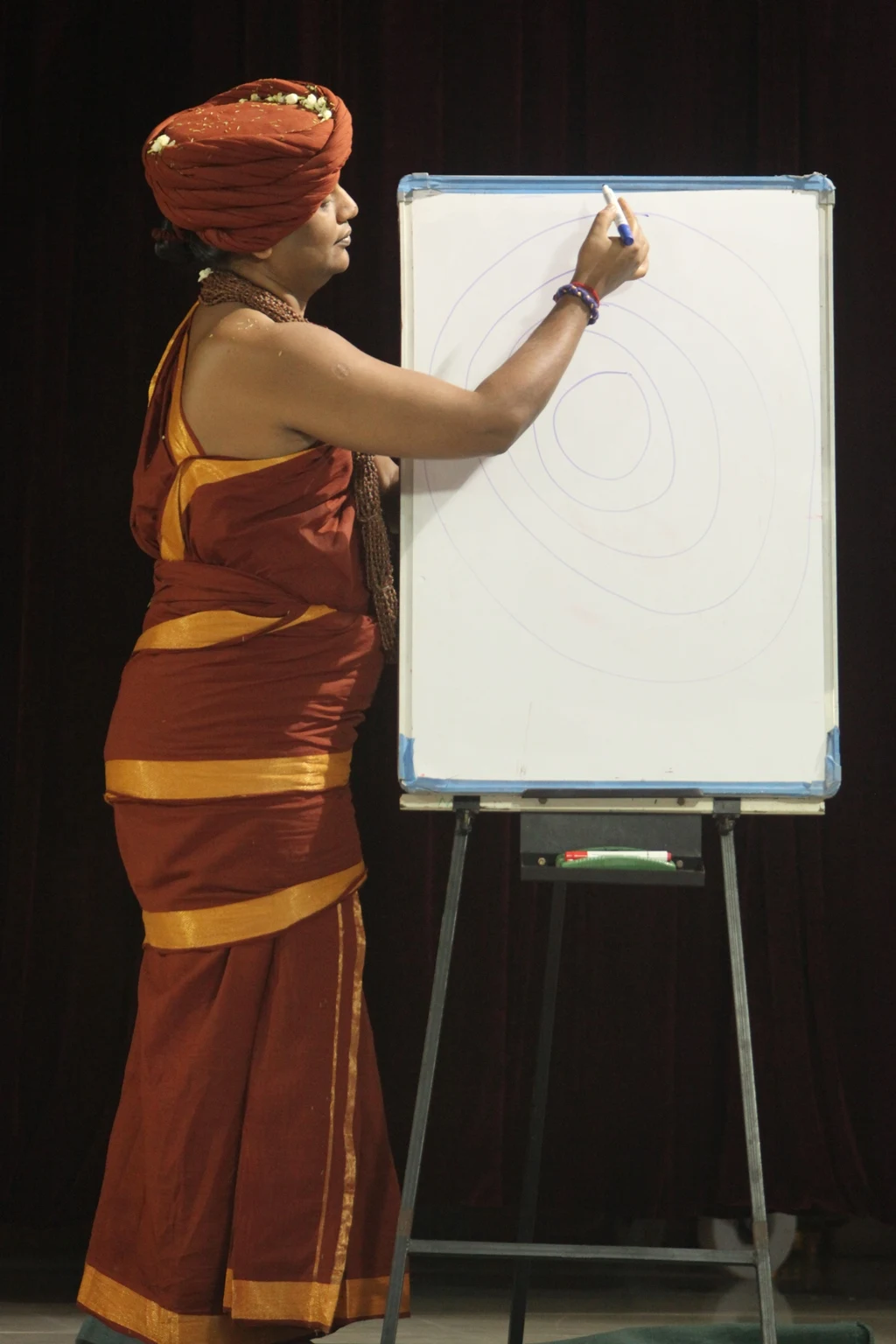
For example, the suppressed powerlessness acts like a ground and the pattern is a tree. I will try to draw tree. I don’t know whether it looks like a tree!! But imagine it is a tree!! The suppressed emotions - powerlessness, fear, anger, inability to help, guilt, resentment, whatever that child would have gone through at that situation at the age of seven when the incident happened; all that suppression forms like a solid ground for this incompletion pattern, tree to stand. See, this is the suppressed emotions, suppressed emotions and powerlessness. And this tree is the incompletion pattern; every time, it repeats itself. Whenever you go to the beach the experience repeating itself, the fear repeating itself, that attack panic attack happening, that is the incompletion patterns.

Listen, because of this ground, this tree is standing. If you re-live that incident; listen here later on you can pen down.

Please listen. If you re-live that incident, not remember; there’s a big difference between remembering and re-living.

Remembering means now that man when I met him he was 40; being a 40-year old person and thinking what happened at the age of seven is remembering. But, forgetting you are 40, becoming that seven year old - that same intelligence same space, same mood, same identity; even the idea about me, ‘I’ which you had at that same time; see that person to re-live has to become that seven year old identity and if he re-lives, if you re-live this suppressed emotions, powerlessness will break, it will open up, it will leave your system. Automatically this incompletion pattern tree will not have place for its roots, it will fall off.

(11.37)

Listen this is the Science of Completion.

All suppressed emotions, powerlessness, difficulties, guilt, resentment, during the root incident keeps the incompletion pattern alive. If you relive that root incident not remember. I am not asking you to remember. Remembering is superficial.

Re-living - means forgetting your present age, everything; dump it, go back to that age when that incident happened - same mind, same energy, same consciousness, same intelligence, same identity, become that; decide to become that, and start re-living the incident.

Suddenly you will see all that pain, suffocation, you go through everything once more, but this time completely you will allow that to leave your nervous system. You will allow that to melt down through your nervous system. You will allow that to cleanse your nervous system. With this cleansing, with this releasing, the panic attacks regularly you go through, incompletion pattern attack which you go through regularly, will not be there; it will just collapse. The incompletion tree, incompletion patterns tree will just collapse because the ground is gone. The tree is not able to have the right ground. When the ground is taken away, naturally the tree collapses. This is the science of reliving.

(13.45)

Please understand, whenever I ask you to re-live, don’t judge that incident with your present knowledge. No. I am not asking you to reconcile, no. Completion is not reconciliation, it is not remembering, it is re-living. How many ever time you try to reconcile you will never be able to forgive yourself, some people in your life for what has happened. So reconciling is not what I am asking you to do.

Re-live; not only you will forgive you will forget them. I don’t even ask you to forgive, don’t forgive. You will simply forget them. You will simply forget them. I tell you, when you are able to forget them they will have their karma back. Understand, when you are able to forget them they will have their karma back. I never forgave anybody, and I never cursed anybody. I just know how to forget. They are having their karma back.

Understand, so be very clear, incompletions create emotional knots. I tell you if you are holding onto that hatred, grudge, fear, unable to forgive yourself and others, you are only going to suffer; it’s like you drink poison you expect your enemy to die. No, that’s foolishness. I never get agitated; I just make them get agitated. I just agitate them and leave it. Forget; you will be living in your space they will only be getting agitated; whoever has attacked you or tortured you.

So listen, completion is not reconciliation. Completion is not remembering. Completion is re-living. All of you are clear?

Now you have written so many of your fears and the incidents when the fears started. Pick up one by one the incident. Re-live - means forget your present age, identity, personality; drop everything. Go back to that same age and that same identity, that same metal setup. As much as you can remember that become that. And try to re-live that incident how it happened step-by-step; slow motion flashback, flashback in slow motion. Re-live at least five times. Re-live at least five times. You will see so much of suffocation, pain, resentment guilt, anger, feeling tortured, everything will open up, everything will leave your system. The more and more this powerlessness leaves your system, more you will be blissful, more you will be complete.

Of course, I am here. I will also support you. I will do my job, my jadoo (magic) ; so don’t worry and I will see to it – you are complete. With Mahadeva’s grace, as a living representative of His energy, I bless you all, let you all achieve complete completion, complete Purnatva in your life.

(18.20)

Let’s start the process.

One by one pick up each incident, each incompletion, re-live five times and move to the next.Re-live, re-live and relieve.

Pain everything to melt down and complete.

Relax. Slowly very slowly you can open your eyes. How many of you already feel the completion is working for you? You are feeling relieved with many of the stress and fears; raise your hand.

Good. Even if doesn’t click, catch in the first session, don’t worry. In the next, next, deeper process you will catch it. It is one of the alpha to omega technique. From a beginner to the professional seeker, this is THE best technique. If you are new to spirituality or you are in spirituality for last 35 years, 50 years, this is THE technique.

So I will lead you into the next processes in next sessions. Let gather for the next session.

Thank you. Be Blissful.

Title

Nithya Kriya Yoga - An Introduction

Description:

In this excerpt from the Nithya Kriya Yoga (NKY) program conducted on 20 June 2015, Paramahamsa Nithyananda gives us an introduction to the program and tells us how the program will give everyone a strong experience of completion and a glimpse of the ultimate possibility in life.

Link to Video:

VideoAudio

Title

An Introduction To You - Nithya Kriya Yoga

Description:

In this excerpt from the Nithya Kriya Yoga (NKY) program conducted on 20 June 2015, Paramahamsa Nithyananda gives us an introduction to the program and tells us how the program will give everyone a strong experience of completion and a glimpse of the ultimate possibility in life.

Link to Video:

VideoAudio

Title

Is Fear Holding You Back?

Description:

This video is an excerpt from the Nithya Kriya Program conducted on 20 June 2015 where Paramahamsa Nithyananda enlightens us about who we really are. We are not the body, mind or what we cognise as us. Then what are we? Watch the video to know more.

Link to Video:

VideoAudio

Photos From The Day:

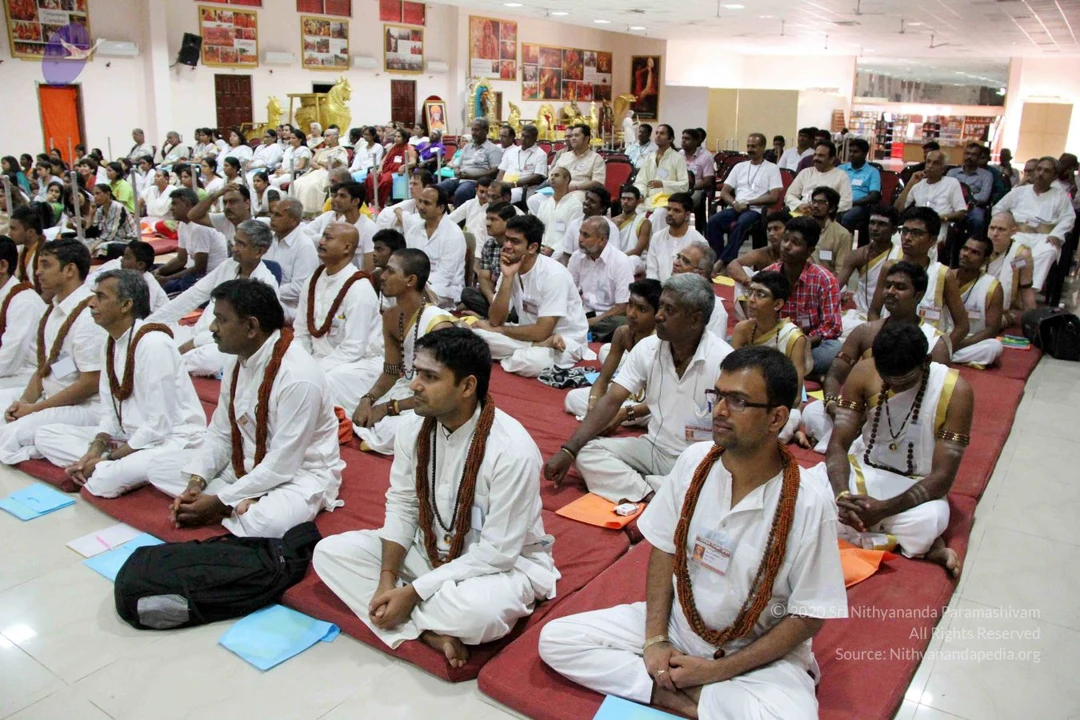
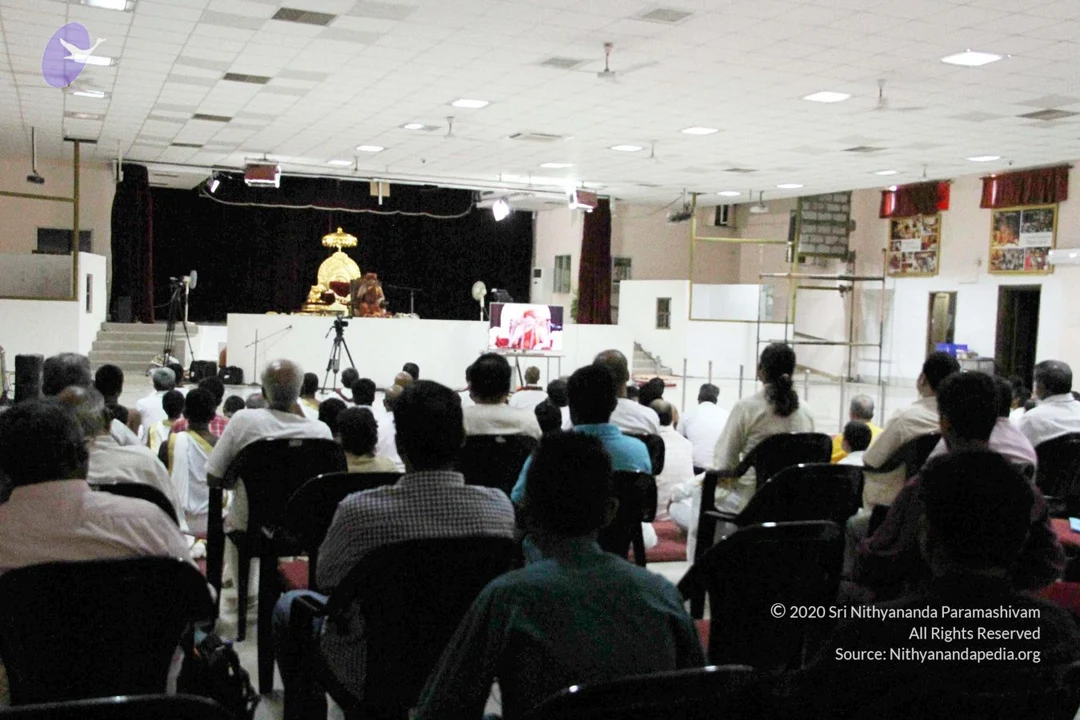
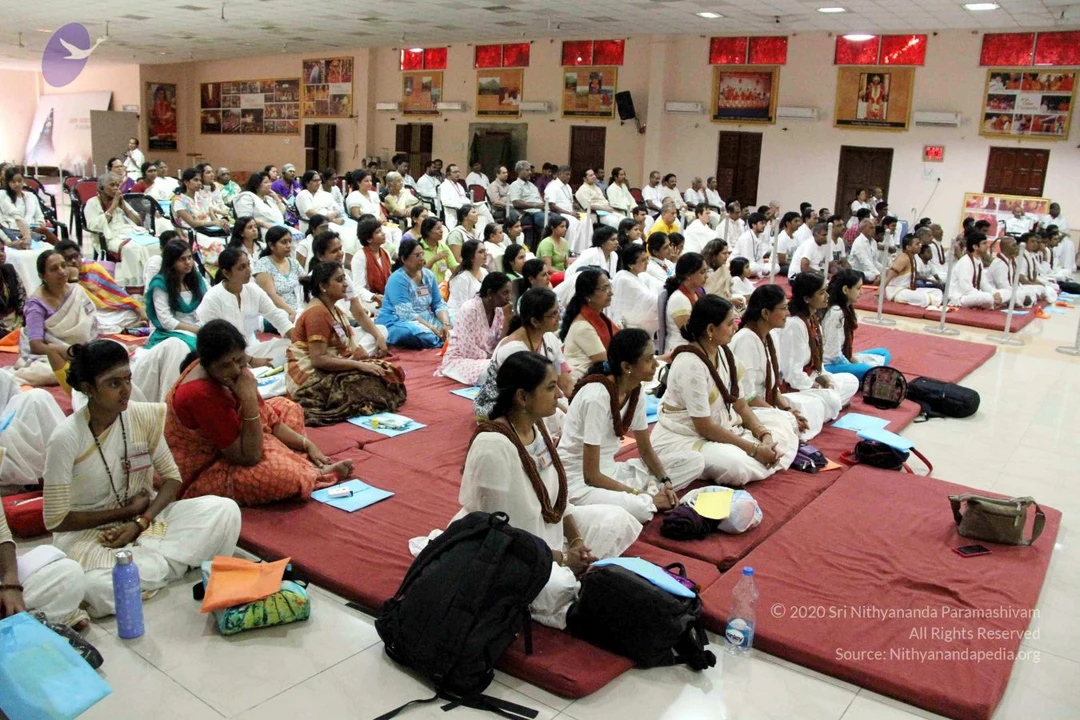
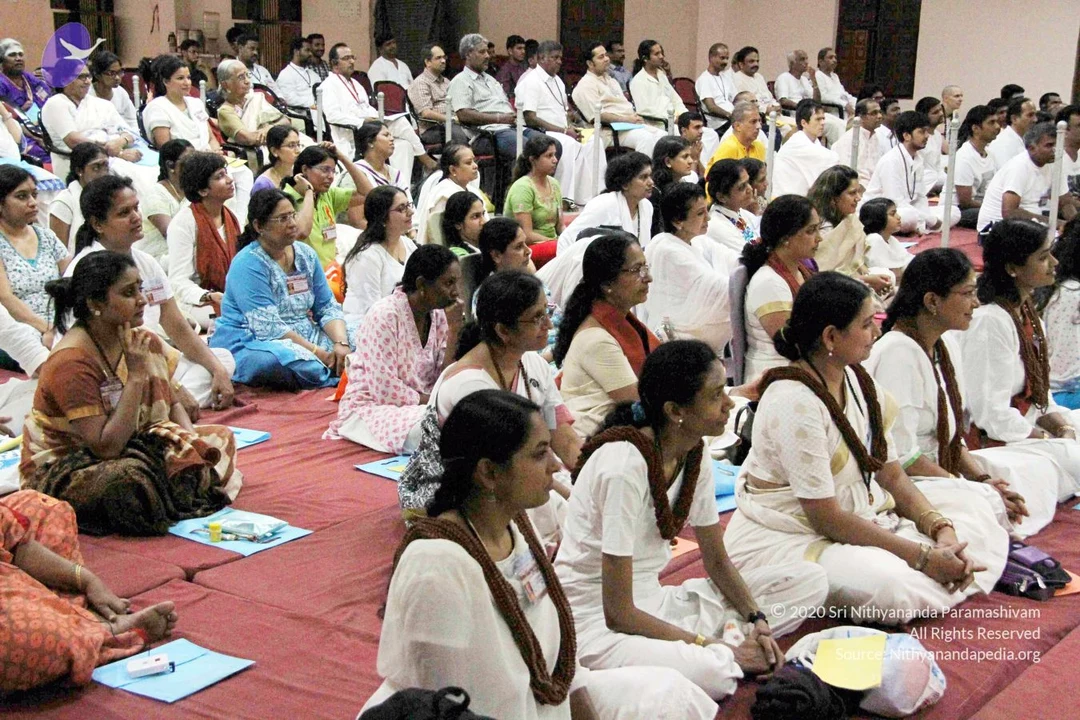
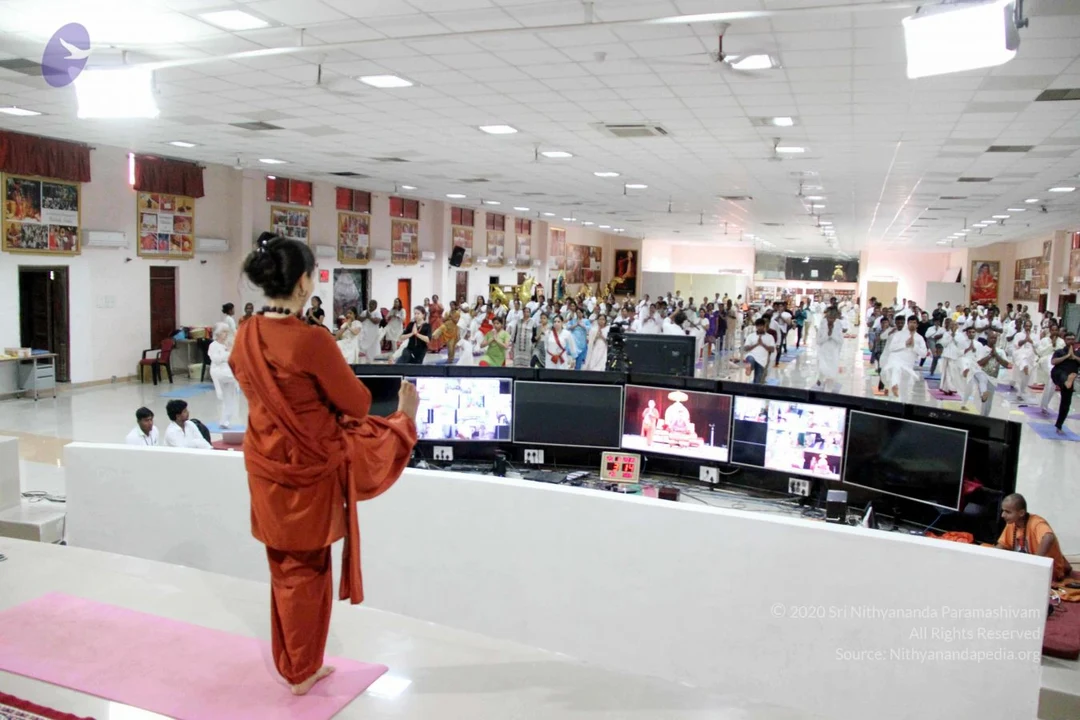
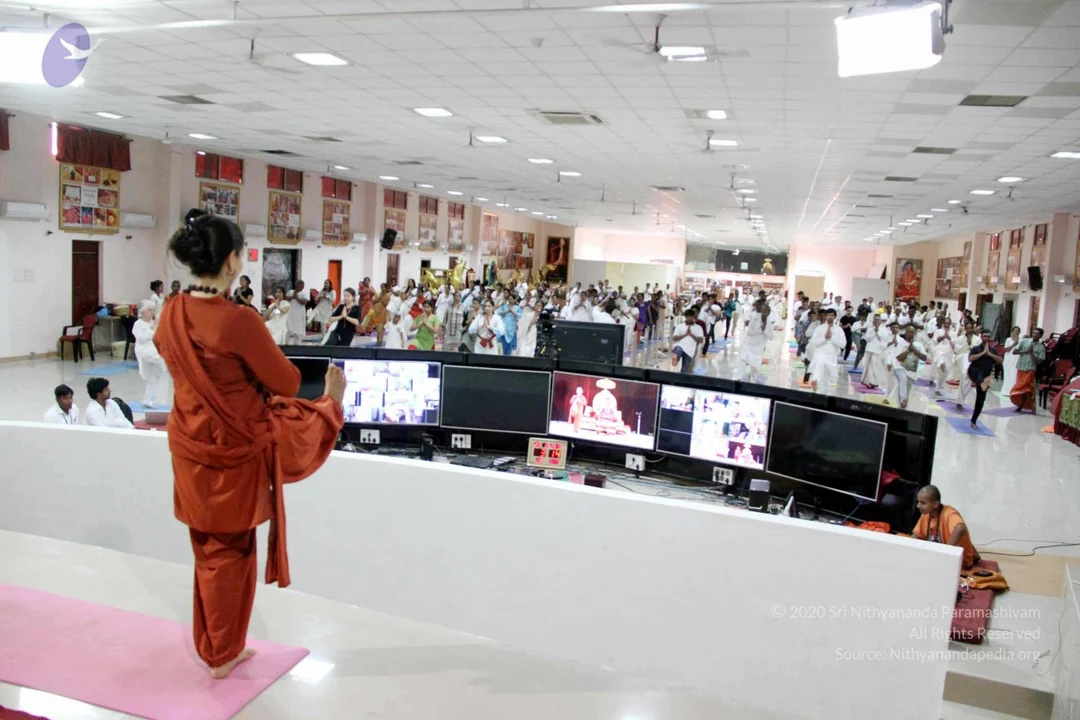
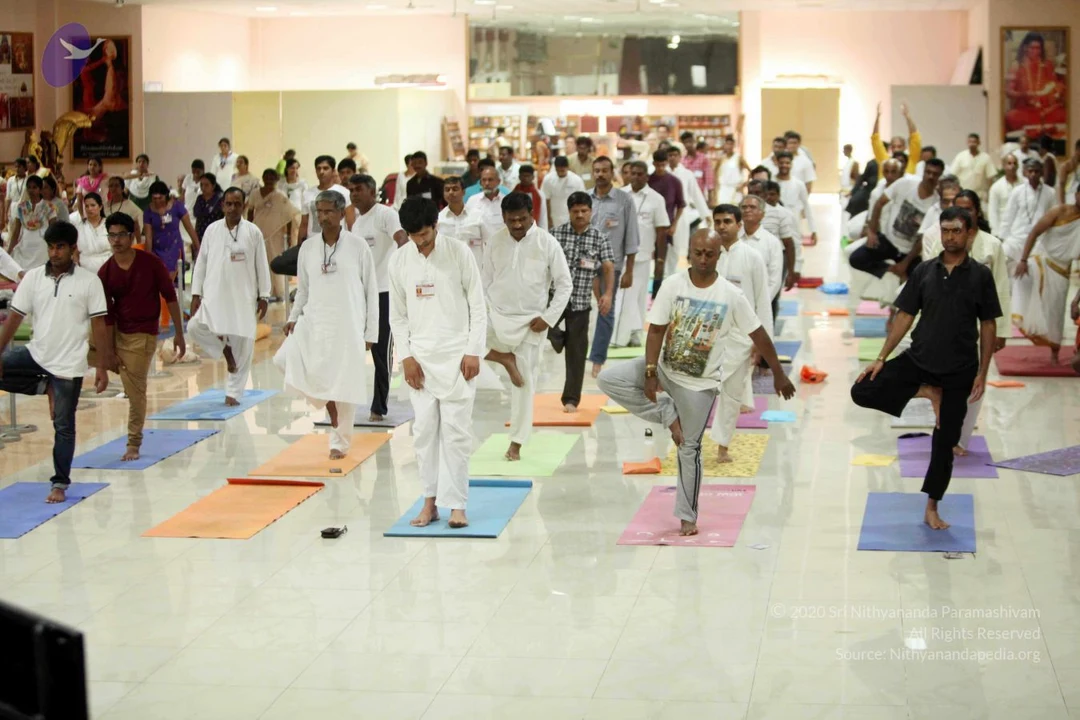
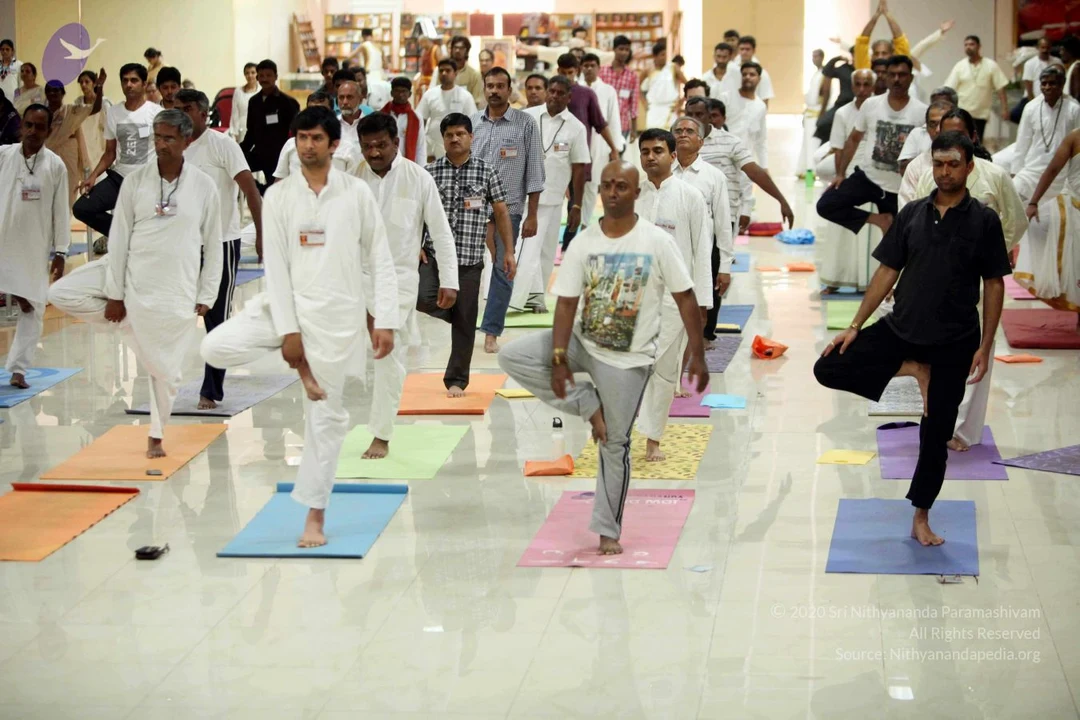
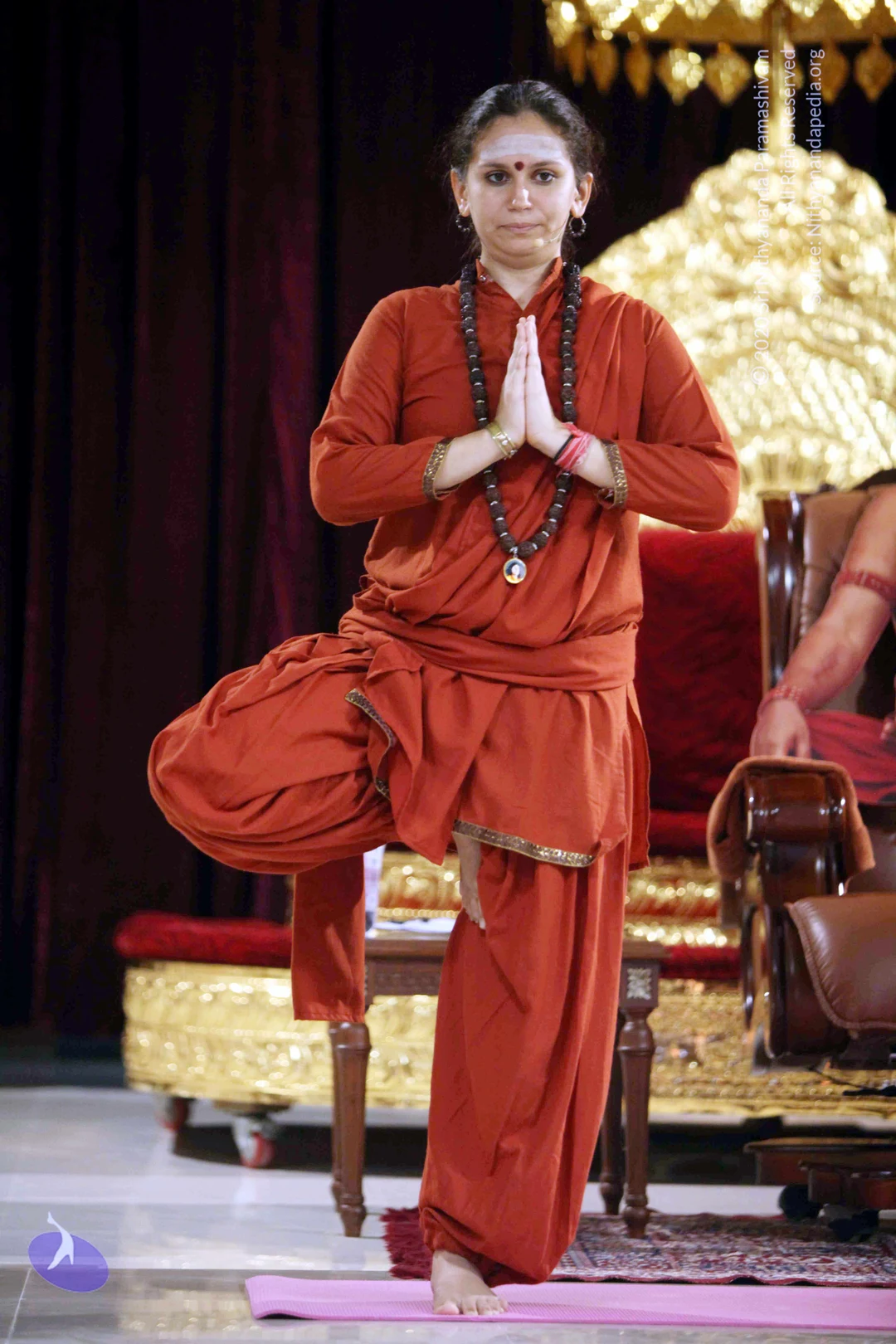
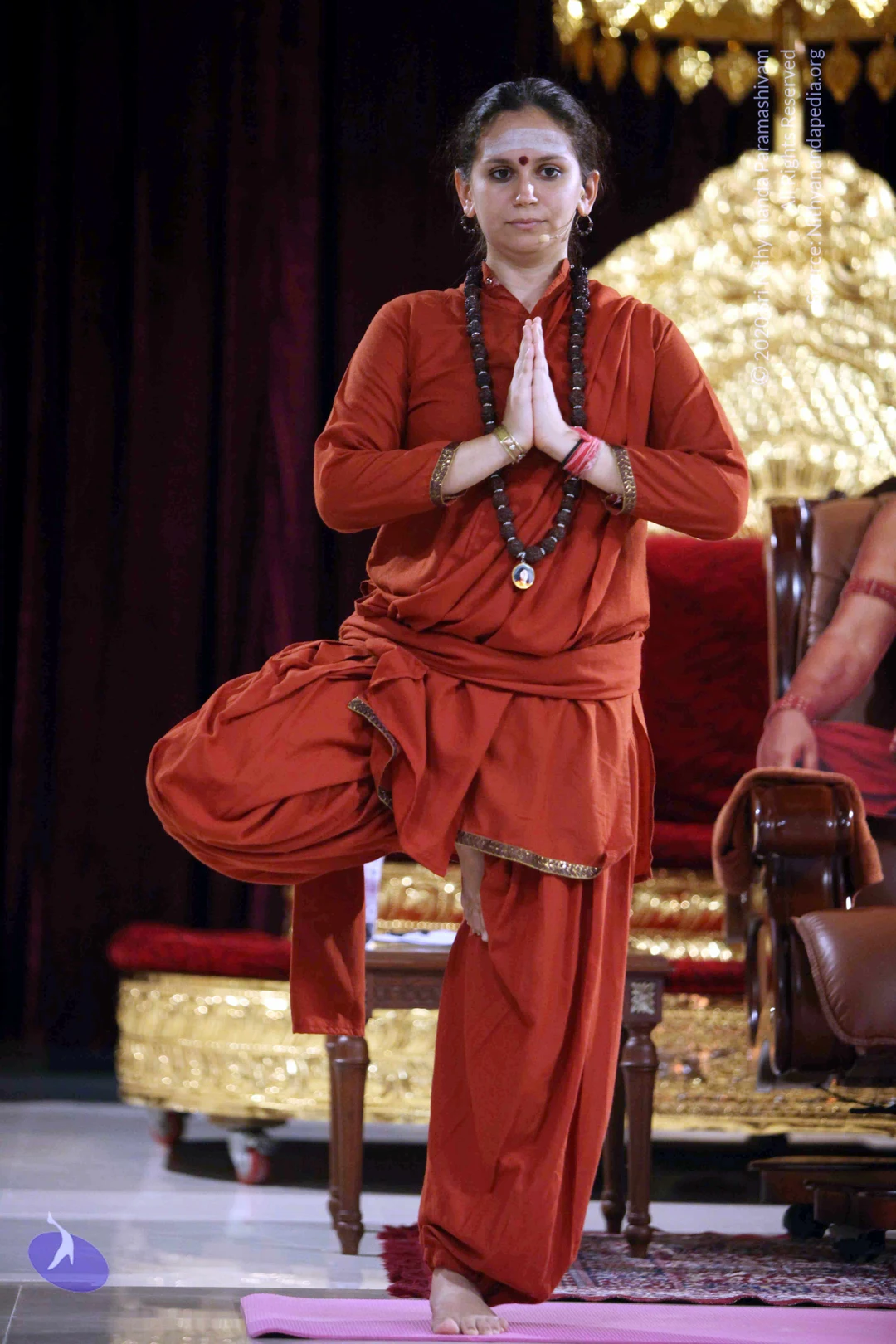
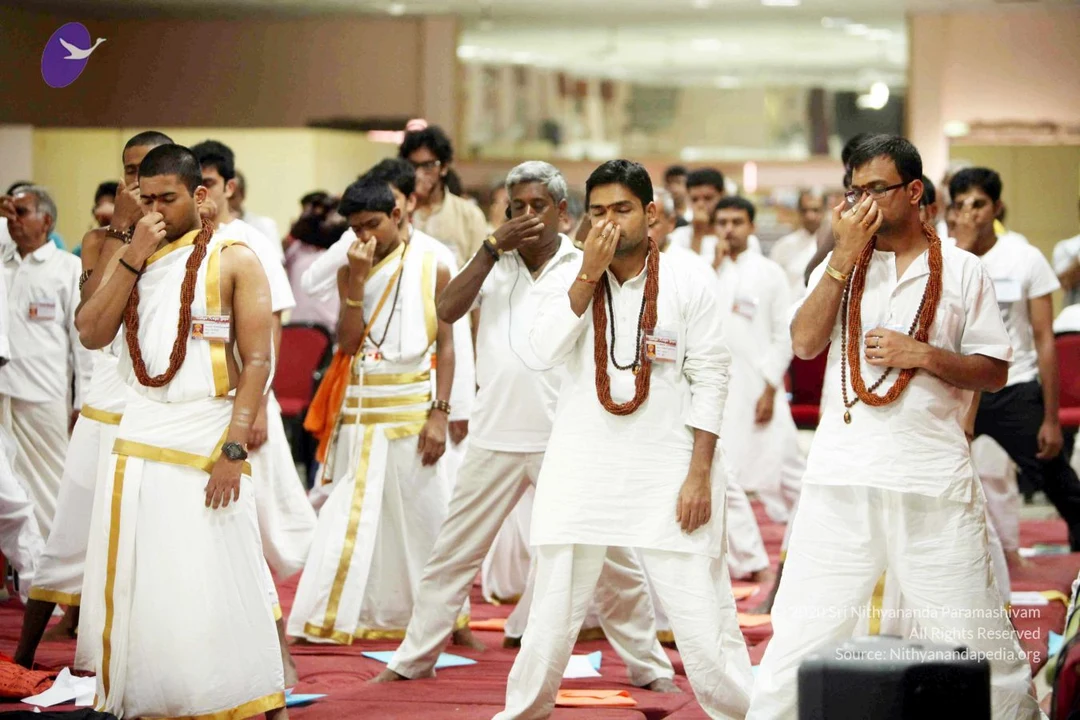
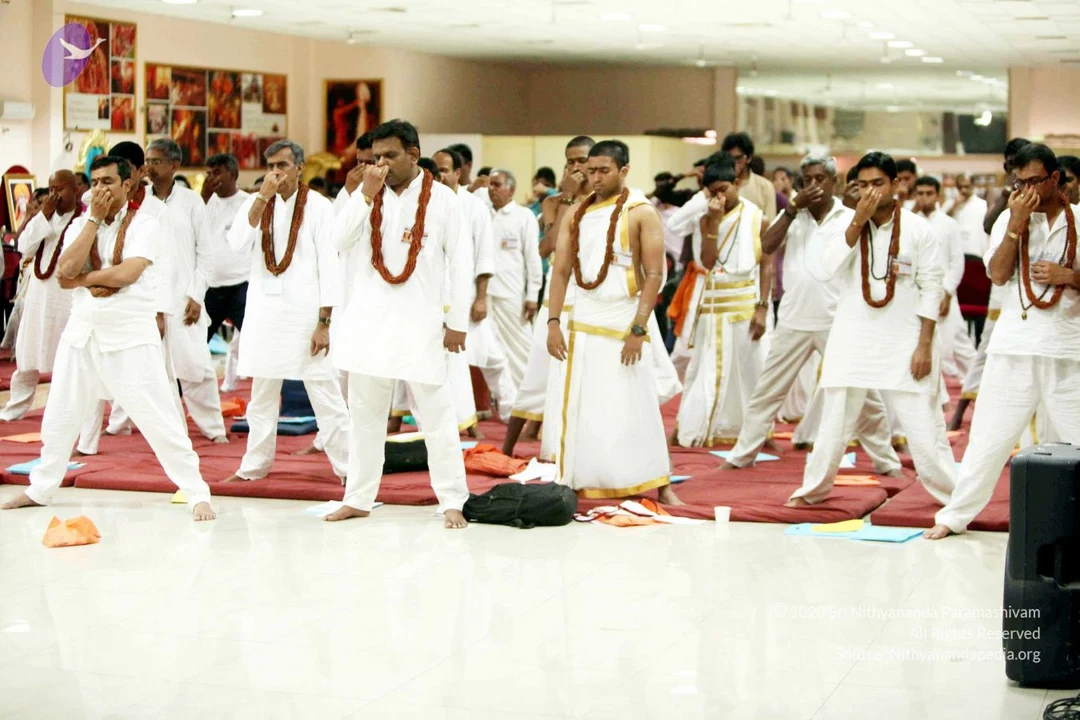
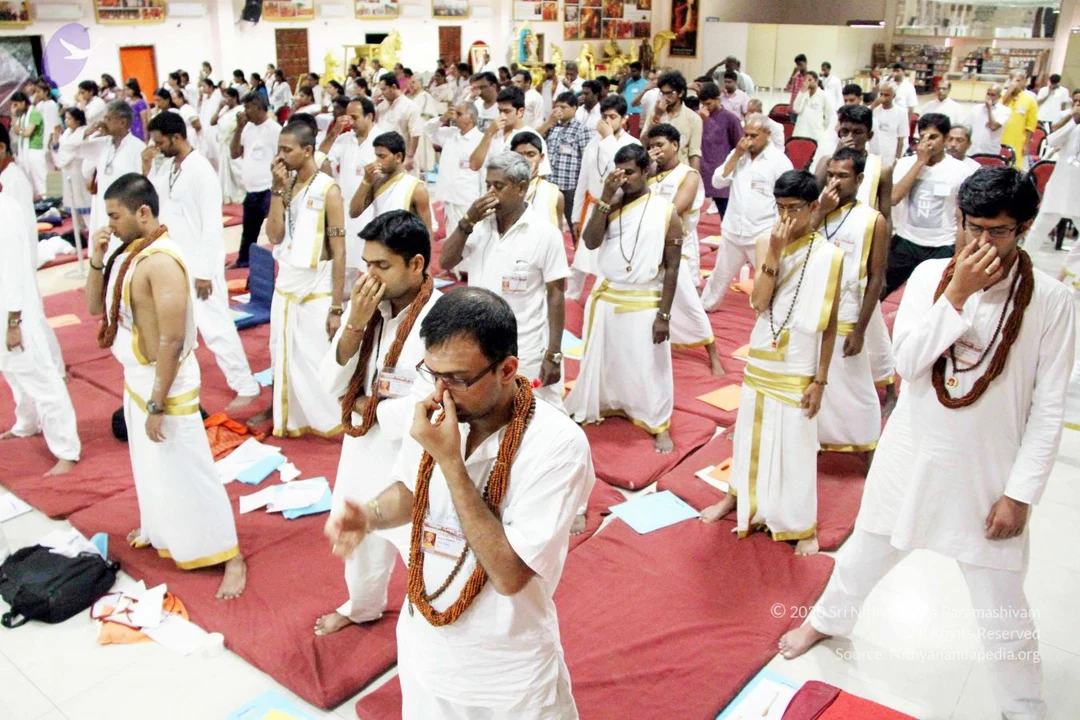
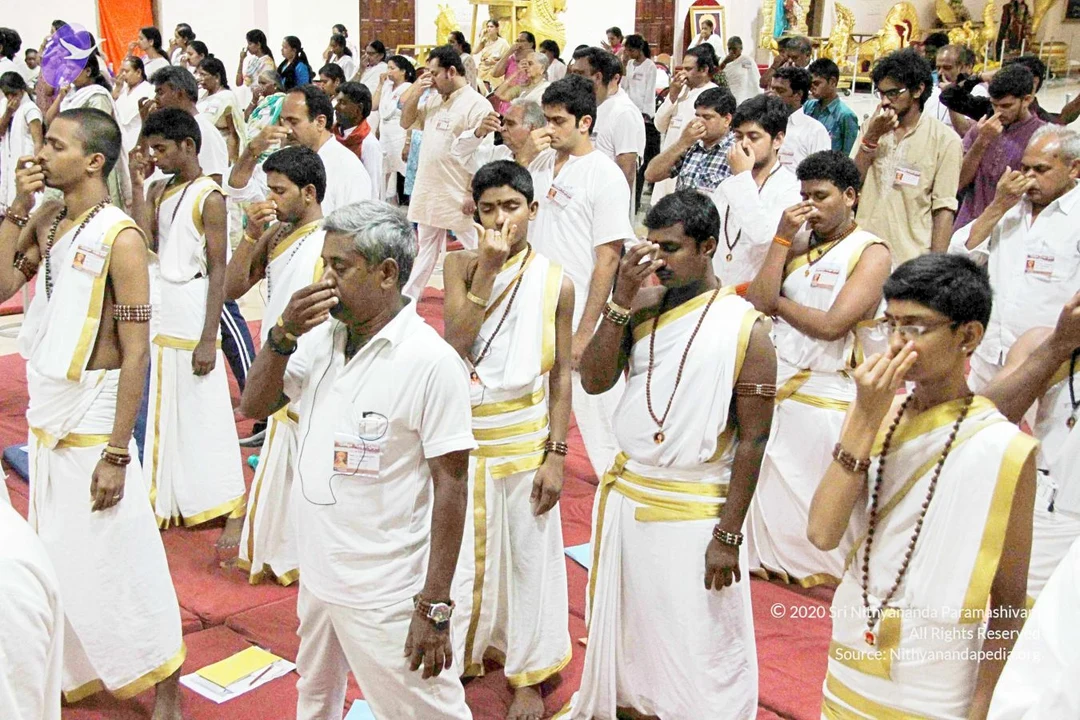
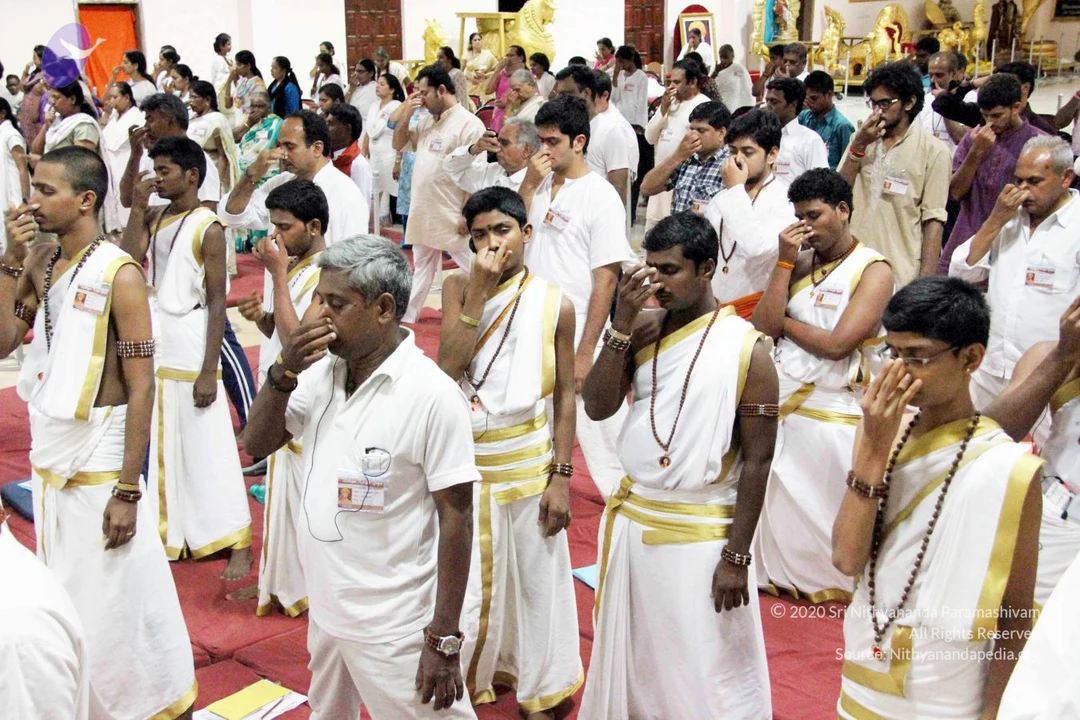
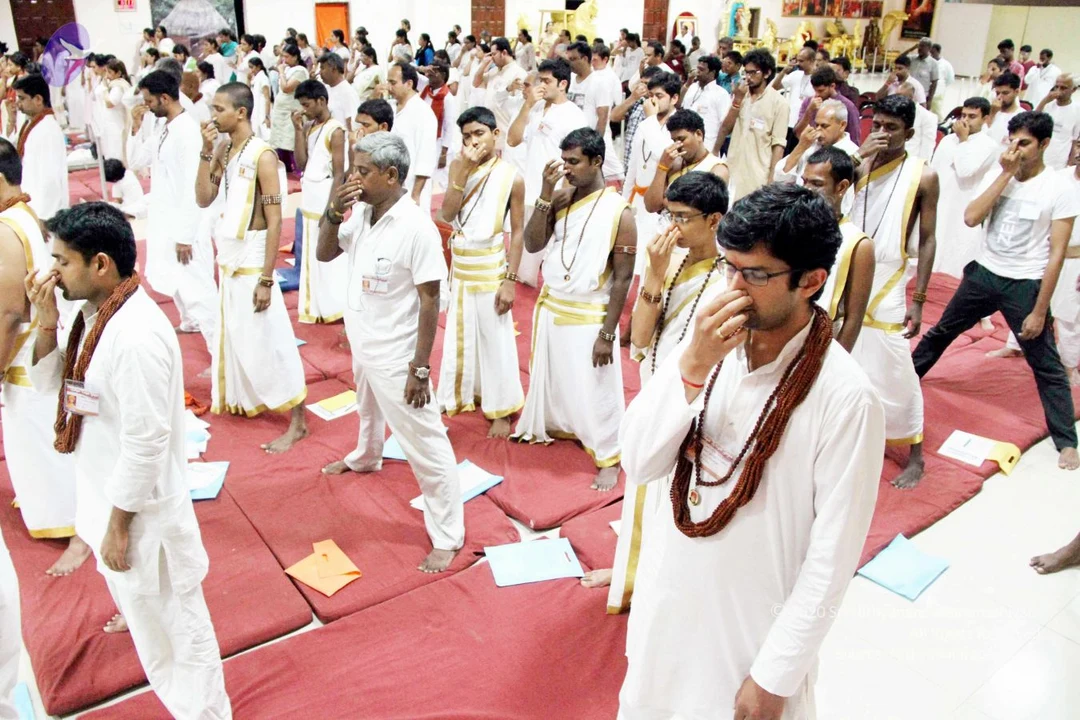
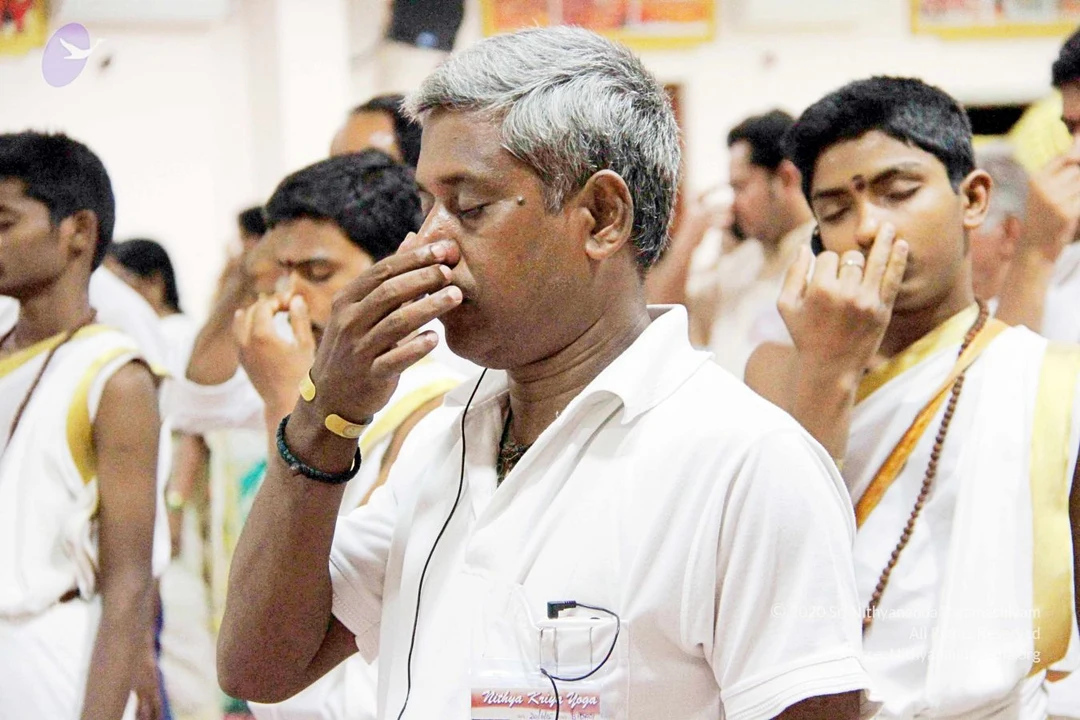
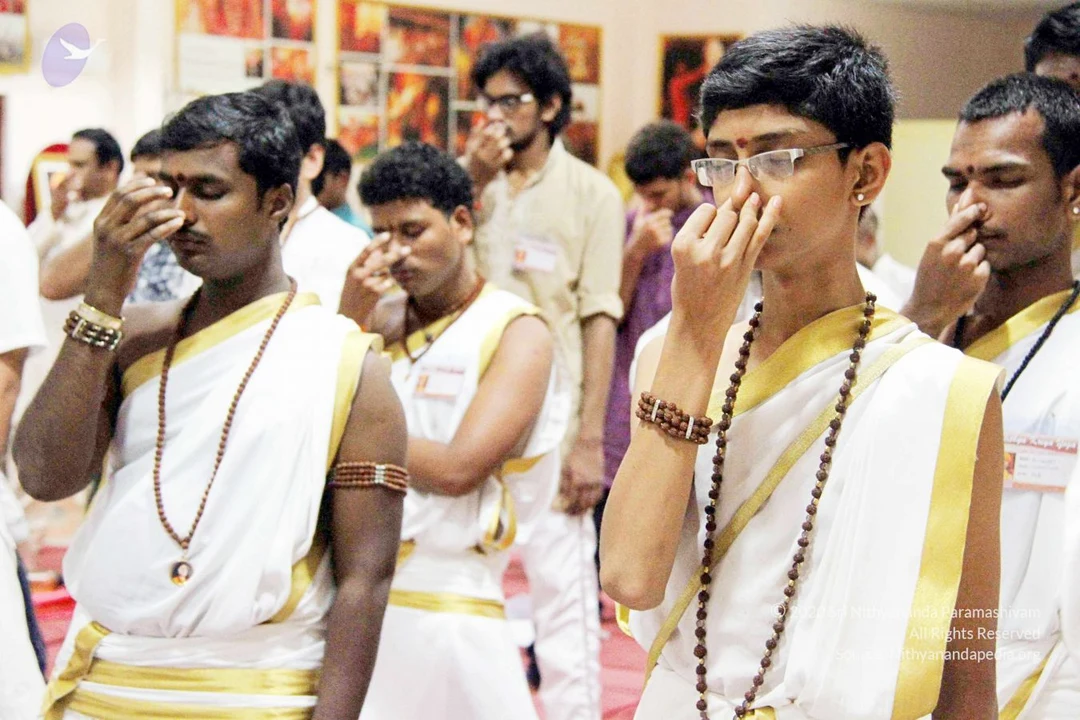
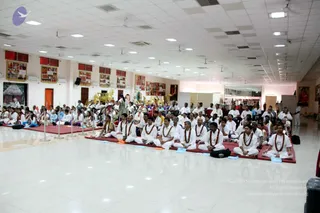
Nithya Kriya Yoga Session

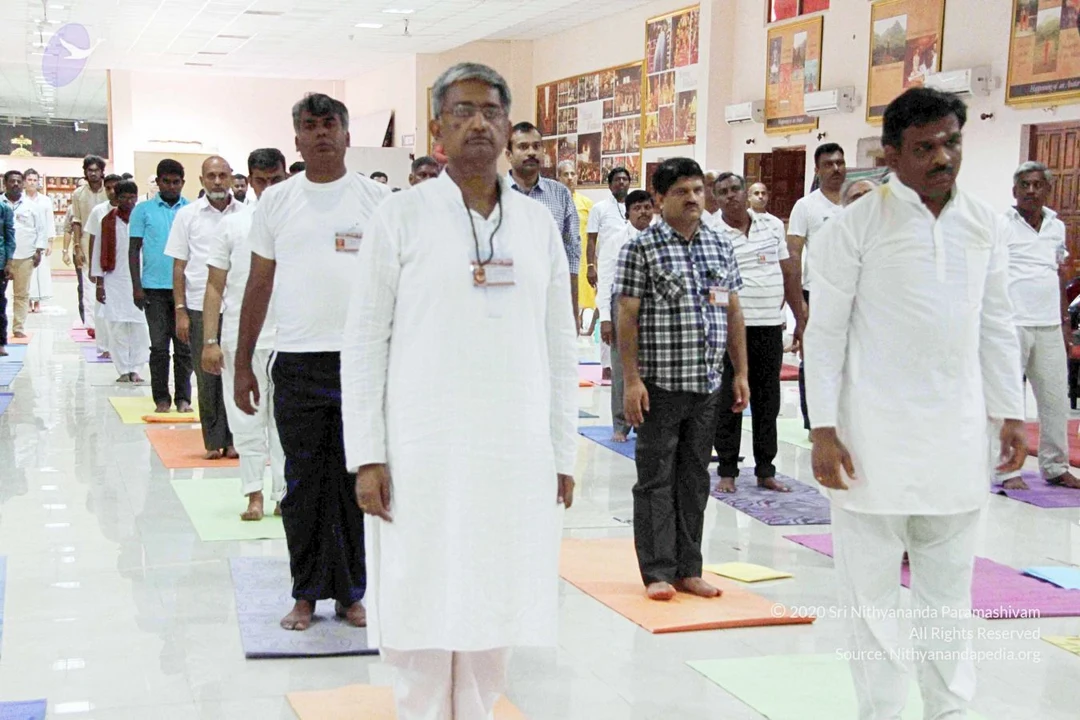
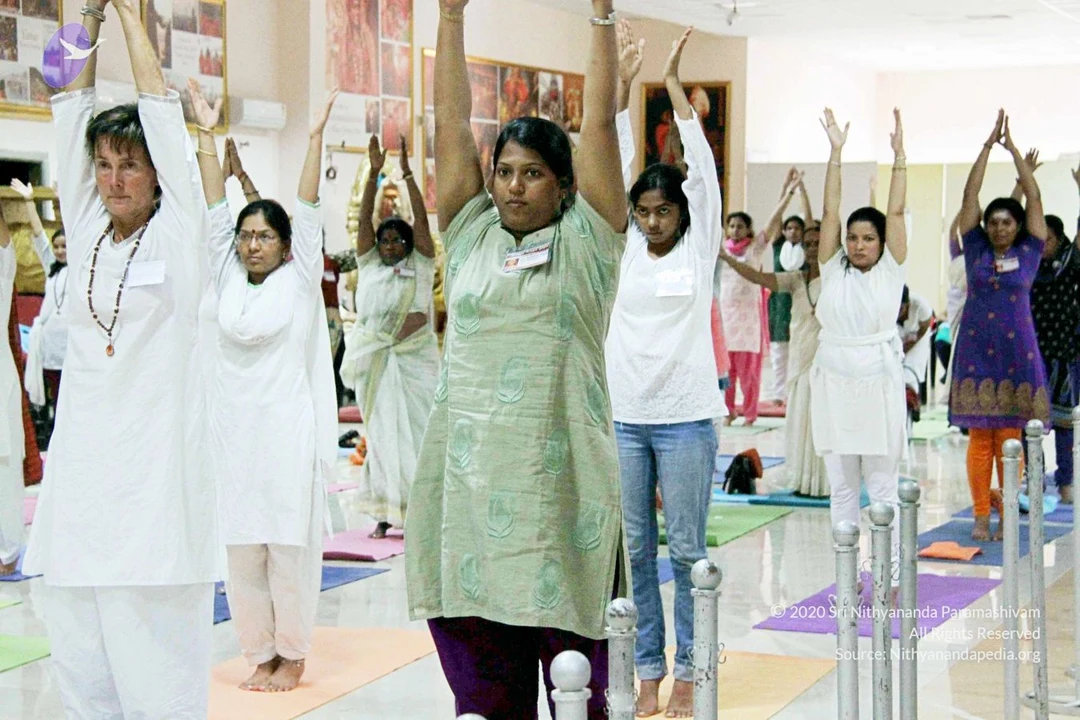
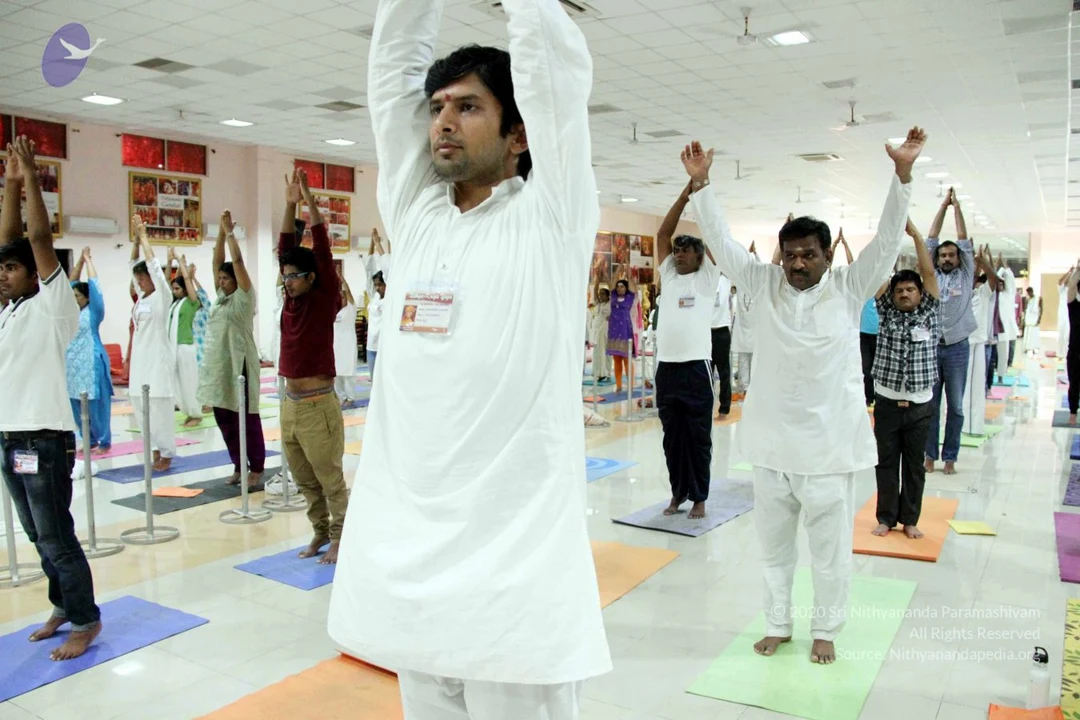
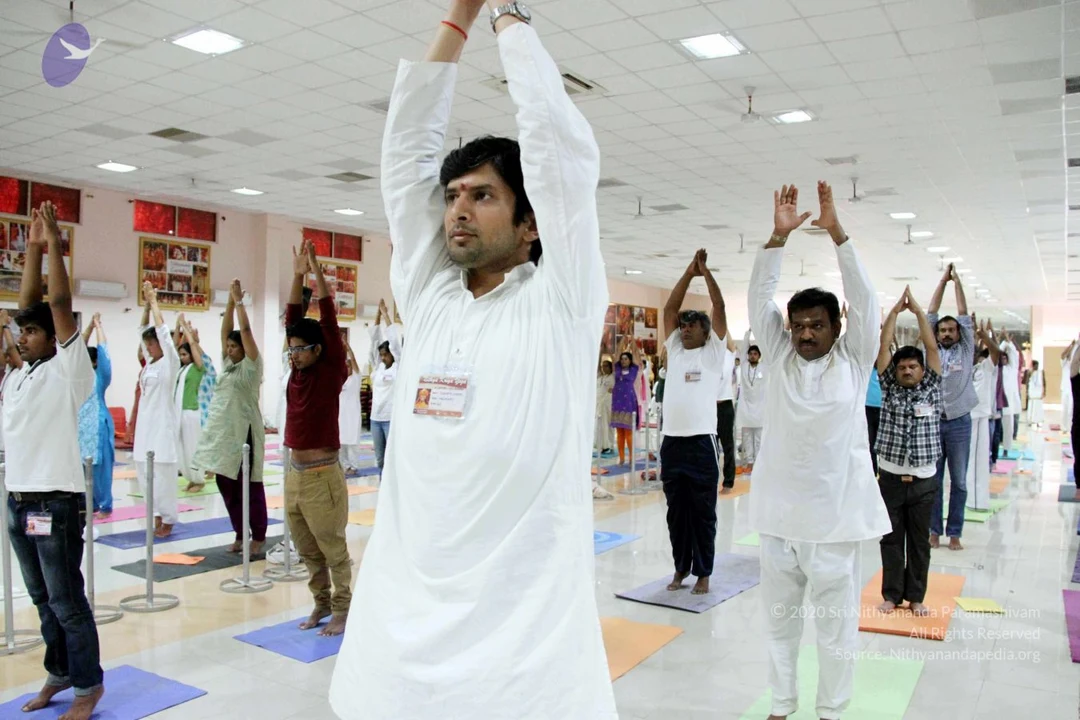
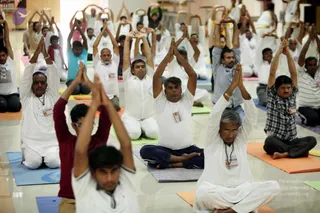
Yoga Session

Nithya Kriya Yoga Session -2

Photos from this day

View all 536 photos

Photos From The Day:
16 photosSource gallery
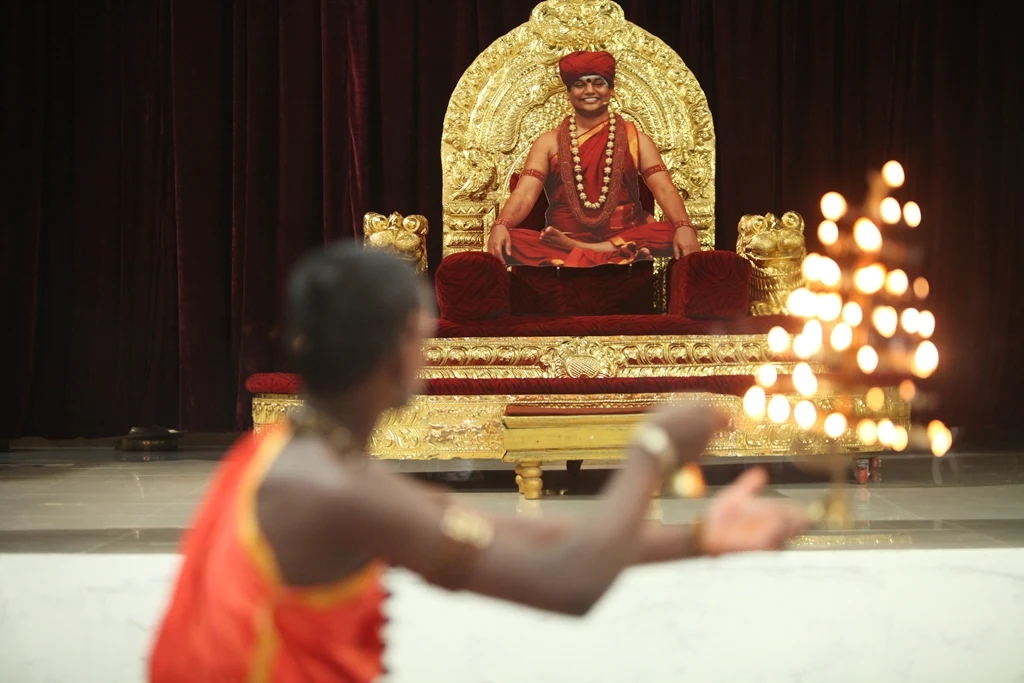
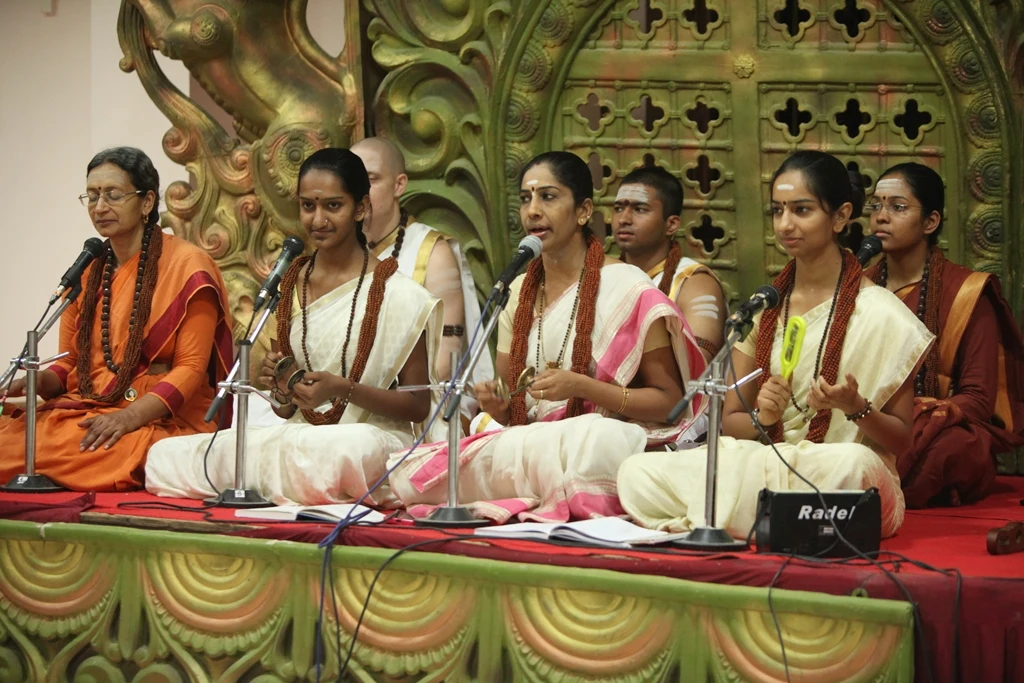
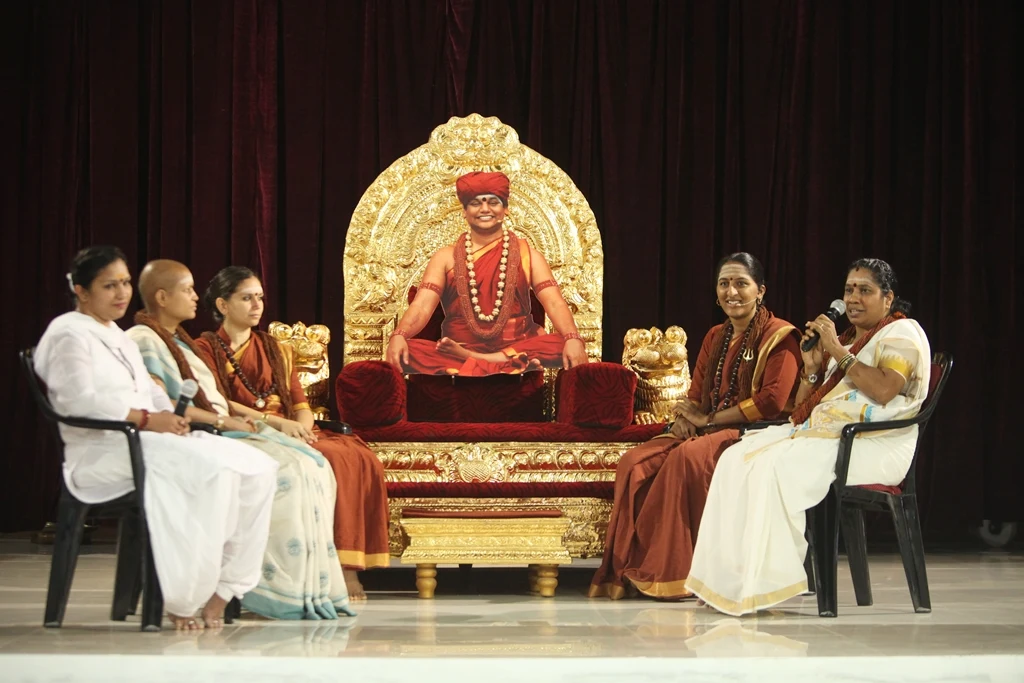
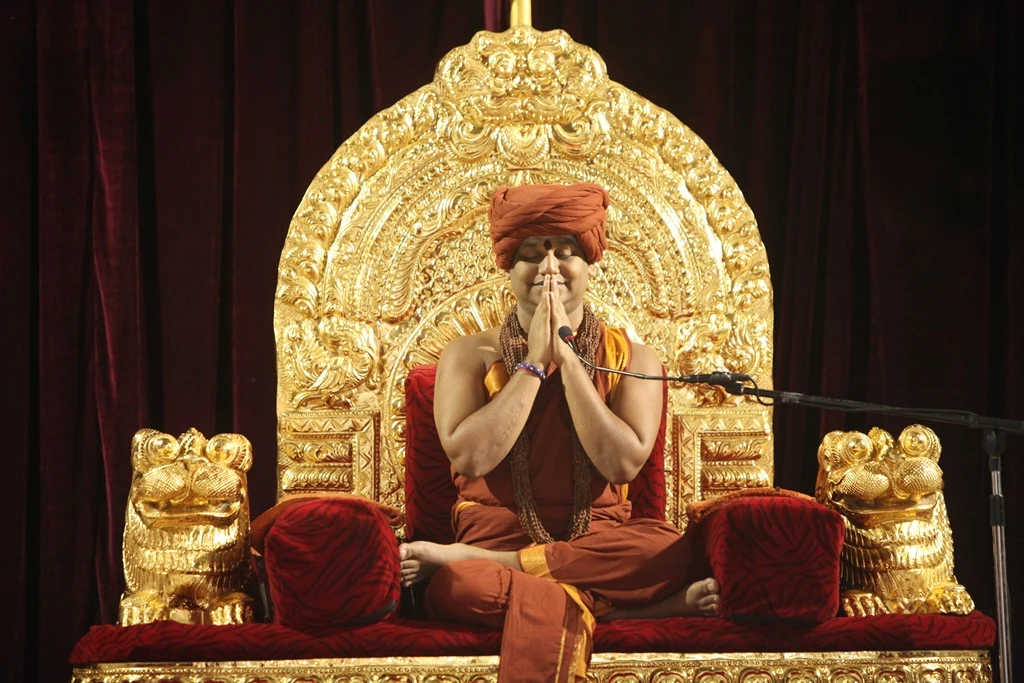
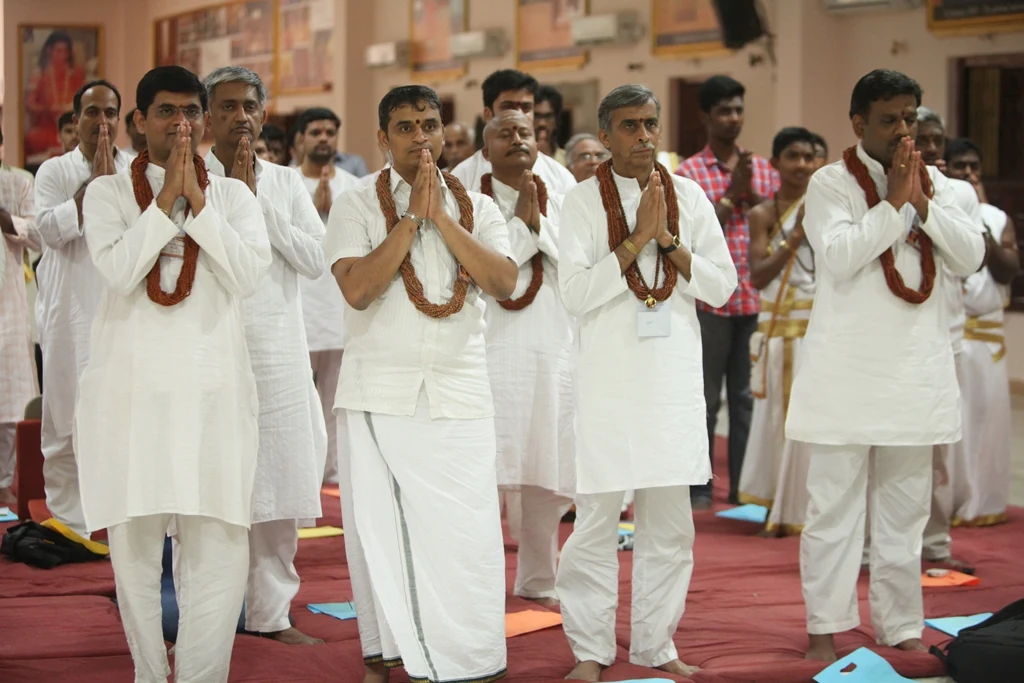
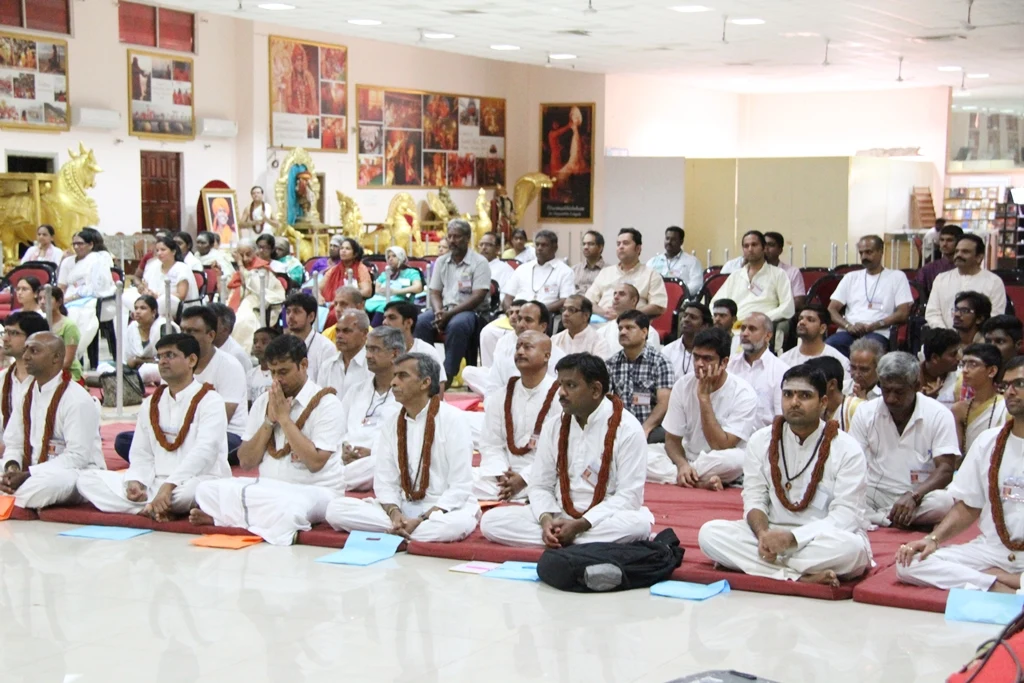
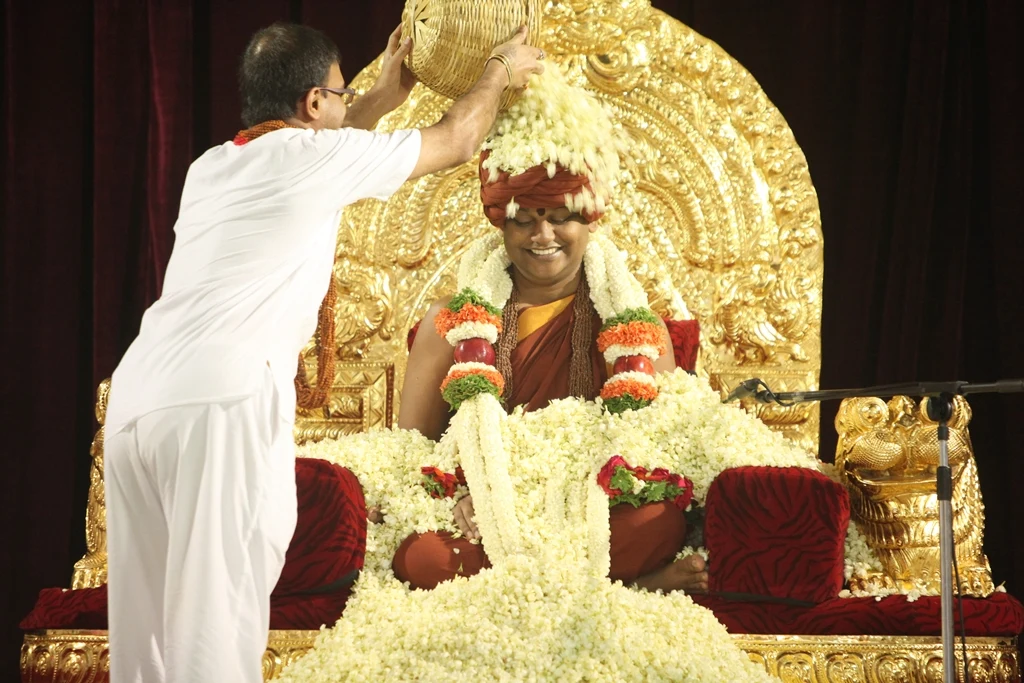
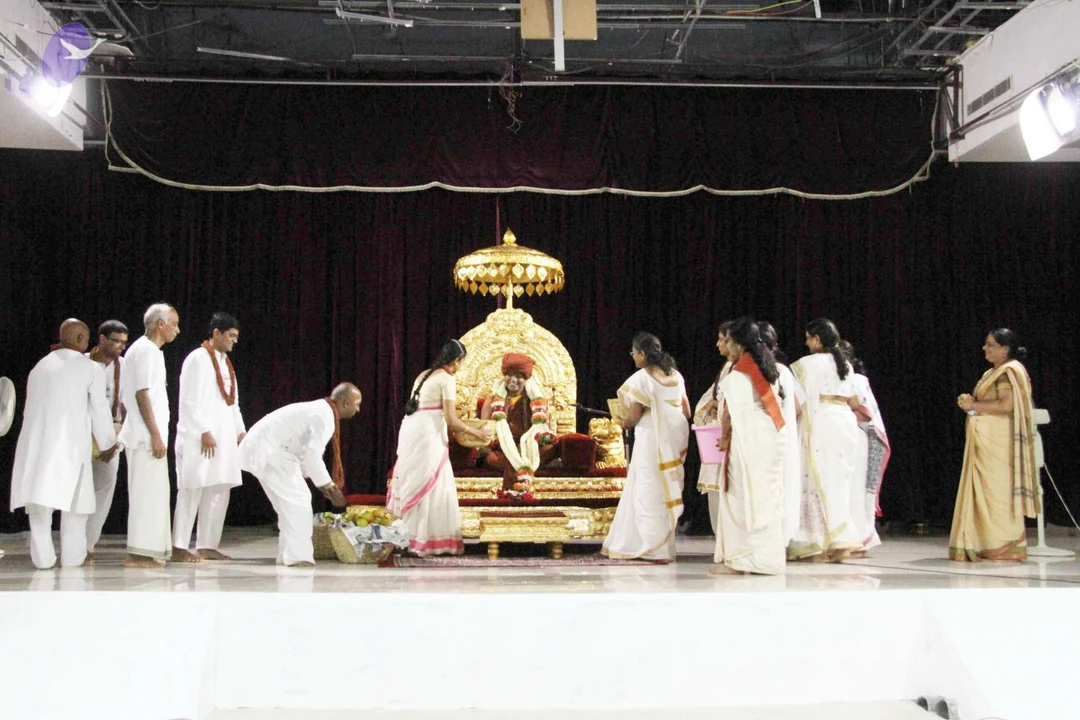
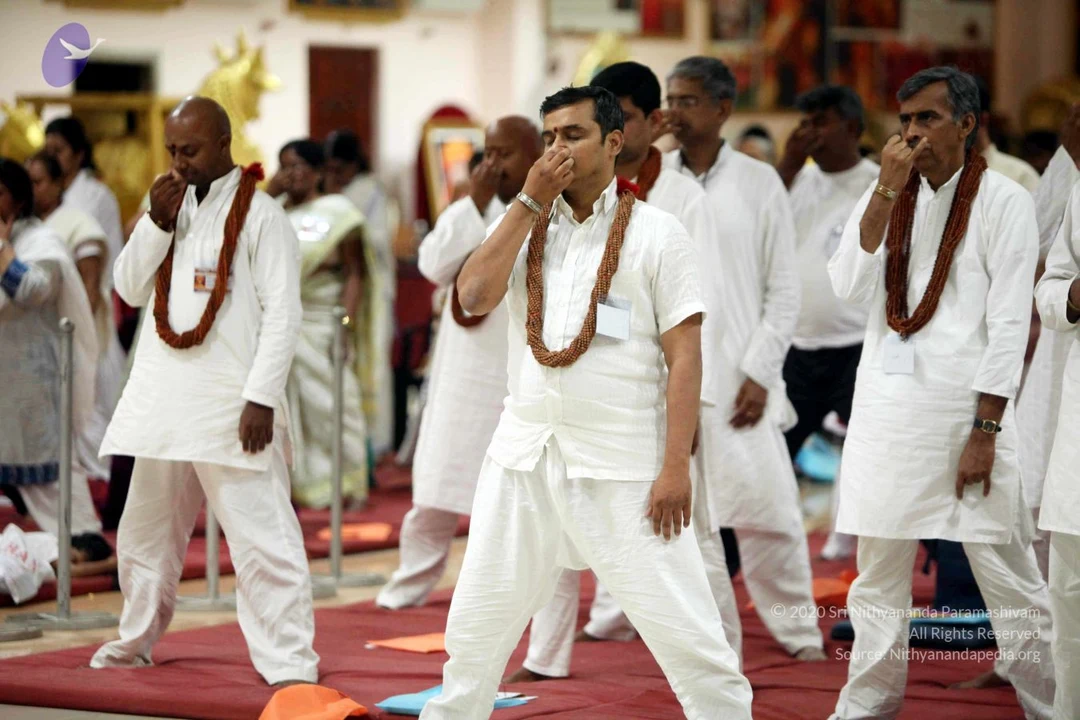
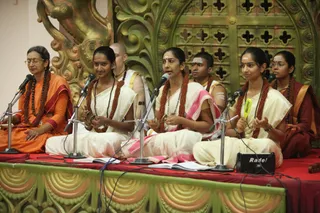
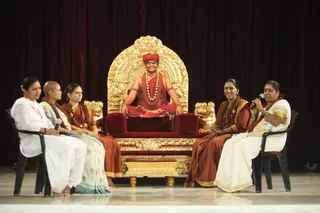
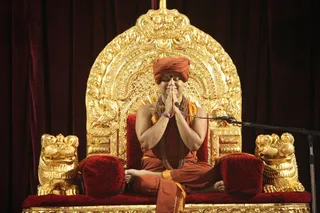
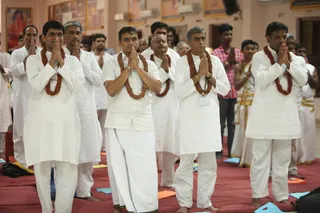
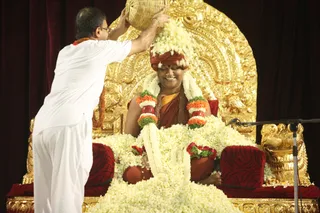
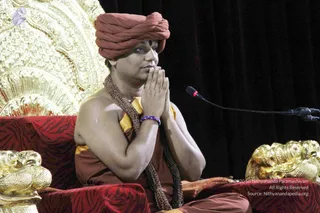
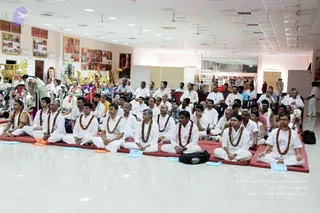
A blurred foreground devotee in an orange sari with gold bangles stands with arms extended toward a gilded throne on a stage. Seated on the throne is a smiling figure in red and saffron robes, a red turban, a rudraksha mala and red cords, sitting in a meditation pose with hands resting on the knees. Cushioned red armrests flank the golden chair against dark red velvet drapery, and a tall lit lamp stand with many oil lamps glows on the right. The scene is a satsang or darshan setting.A group of women and young men sit on a raised red-draped stage with a green and gold carved backdrop, singing or chanting into microphones on stands. The woman at far left wears an orange sari and a rudraksha mala and reads from a book. Three young women in white and cream saris with red-brown rudraksha garlands hold small hand cymbals and sing; the central one wears a pink-bordered sari. A young man with white vibhuti marks on his forehead sits behind them, and a woman in maroon and orange at far right wears glasses and a rudraksha mala. A bald man in white stands in the background. A Radel-branded amplifier sits on the stage edge.Photograph of a stage event with a dark maroon velvet curtain behind. A central figure sits cross-legged on an ornate gold-carved throne with red cushions, wearing a red turban, saffron-orange robe, multiple rudraksha mala necklaces and red armbands; the appearance is a person candidate seated in the central position. Four women sit on black chairs around the throne: at far left a woman in white ritual clothes; next a shaved-headed woman in white and light blue sari; next a woman in an orange-brown robe with a rudraksha mala; at far right a woman in a cream and gold sari with red shawl holds a microphone and speaks, while another woman in orange-brown robe beside the throne smiles. The stage floor is polished white.A photograph of a seated man on an ornate gilded throne with a deep red velvet cushion and two golden lion-shaped armrests. He wears an orange-red turban with a red bindi, a rudraksha mala necklace, and a saffron-orange robe with a gold-trimmed shawl. He sits cross-legged with palms pressed together in namaste, eyes closed, in front of dark maroon curtains and a microphone stand. Only one person is visible. Swamiji (probable) is shown in this seated namaste pose on the throne, identified by the turban, rudraksha mala and saffron robes.Indoor photo of a large group of men standing barefoot on red mats in a hall, palms pressed together in anjali mudra. Most wear white kurtas and white dhotis or trousers, and many have red-brown rudraksha-style beaded malas around their necks. Several have ID badges clipped to their shirts. Behind them, a few men in white dhotis and bare-chested figures stand in the background, and framed religious images and colourful wall pictures line the upper walls. Blue and orange yoga mats lie scattered on the floor. No figure in the foreground can be confidently identified as the presenter.A seated figure on an ornate gold throne with red velvet cushions is being showered with white jasmine flowers. A man in white dhoti and shirt, wearing glasses, pours flowers from a woven basket over the figure's head. The seated person wears a red and orange turban, saffron-orange cloth, a rudraksha mala and a garland of marigolds and white flowers, and smiles with eyes lowered. Flower petals cover the lap and the throne steps. A microphone stand stands at the right against dark red curtains. a person: the seated figure has a turban and saffron clothing with rudraksha beads, presented as the honoured guru on the throne, and is receiving a flower shower.

Nithya Kriya Yoga Session
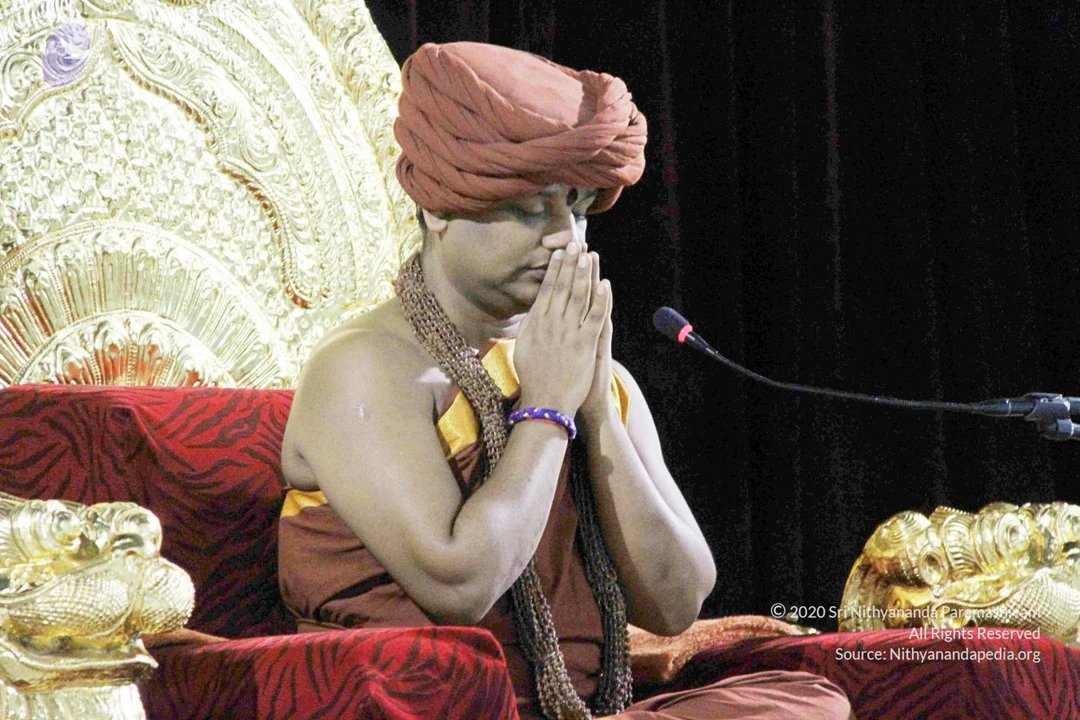
17 photosSource gallery
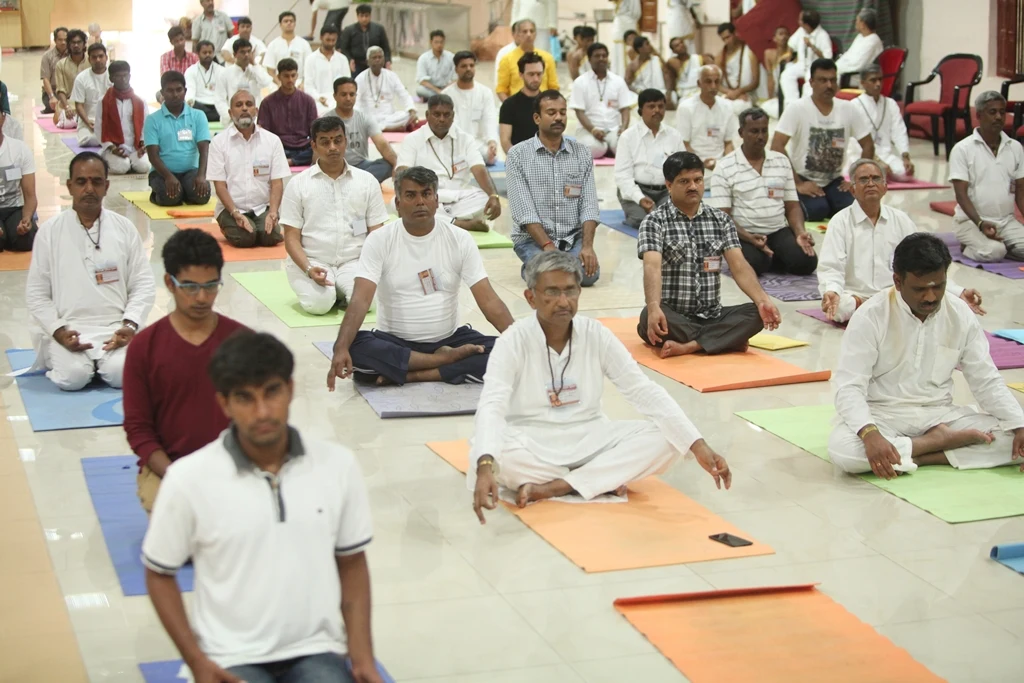
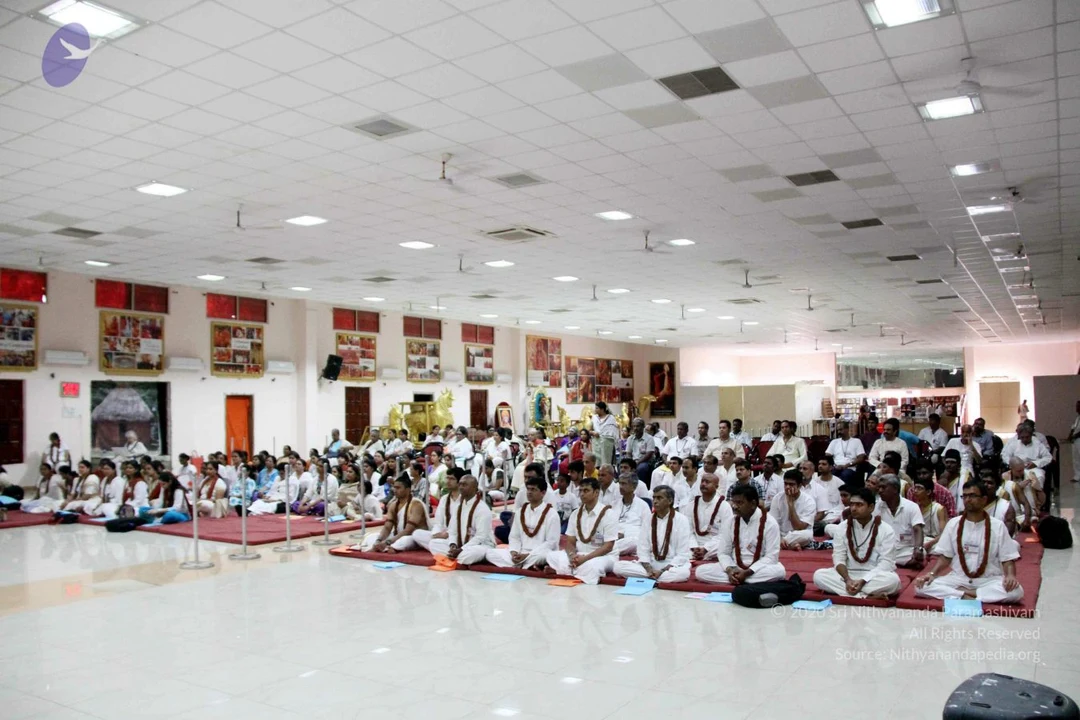
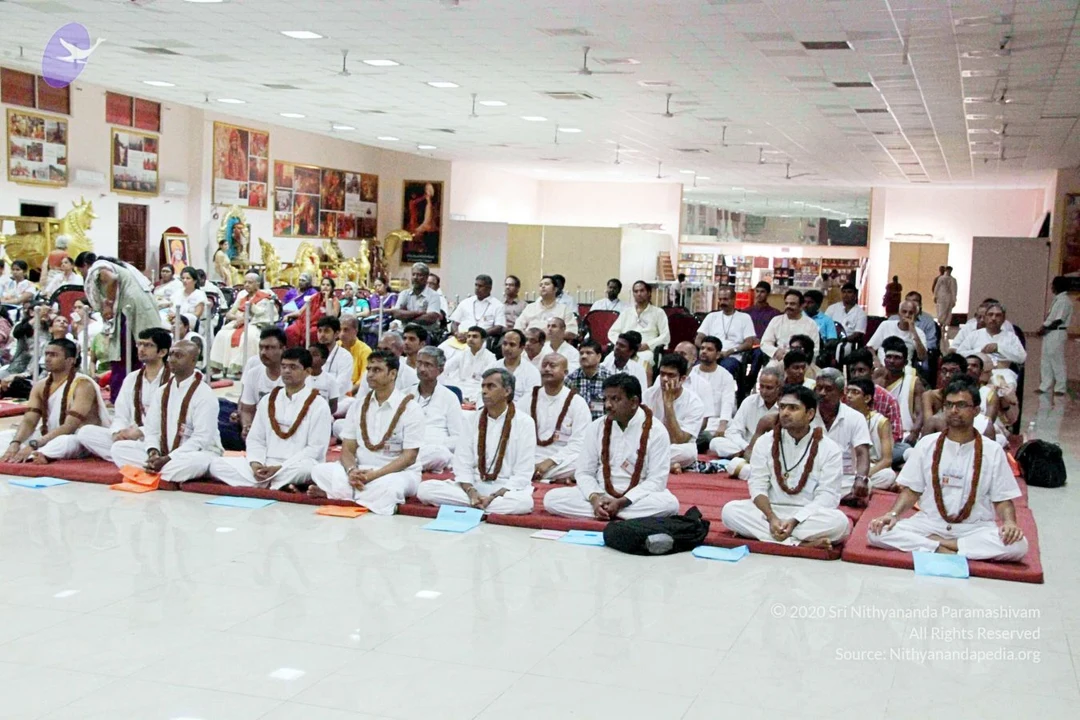
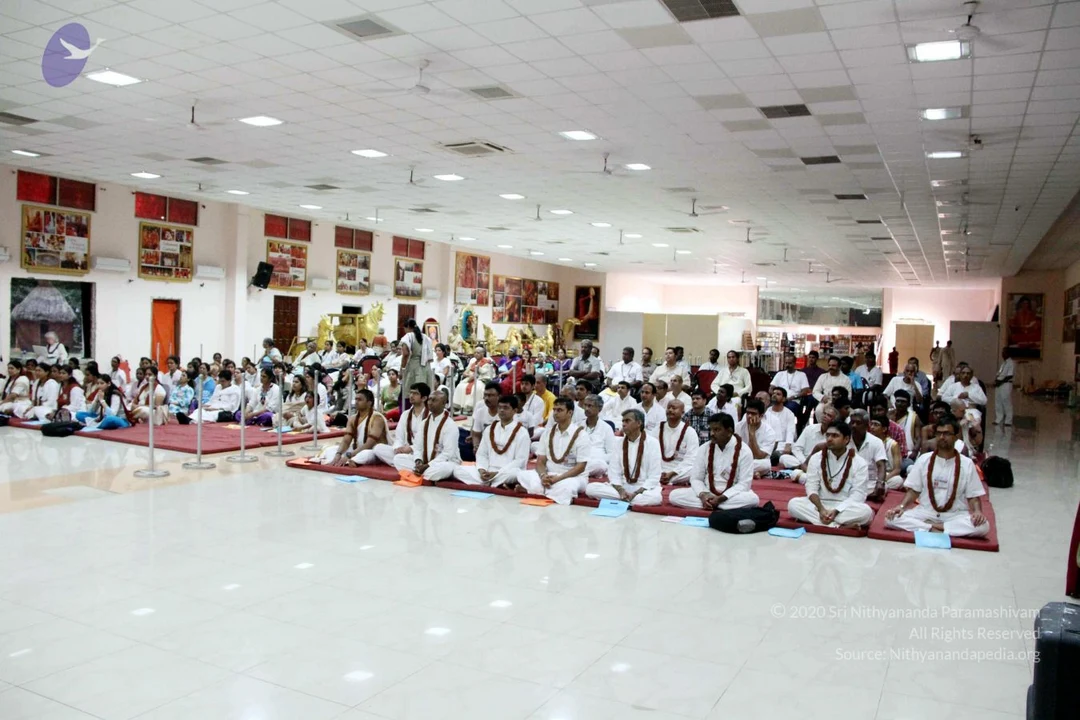
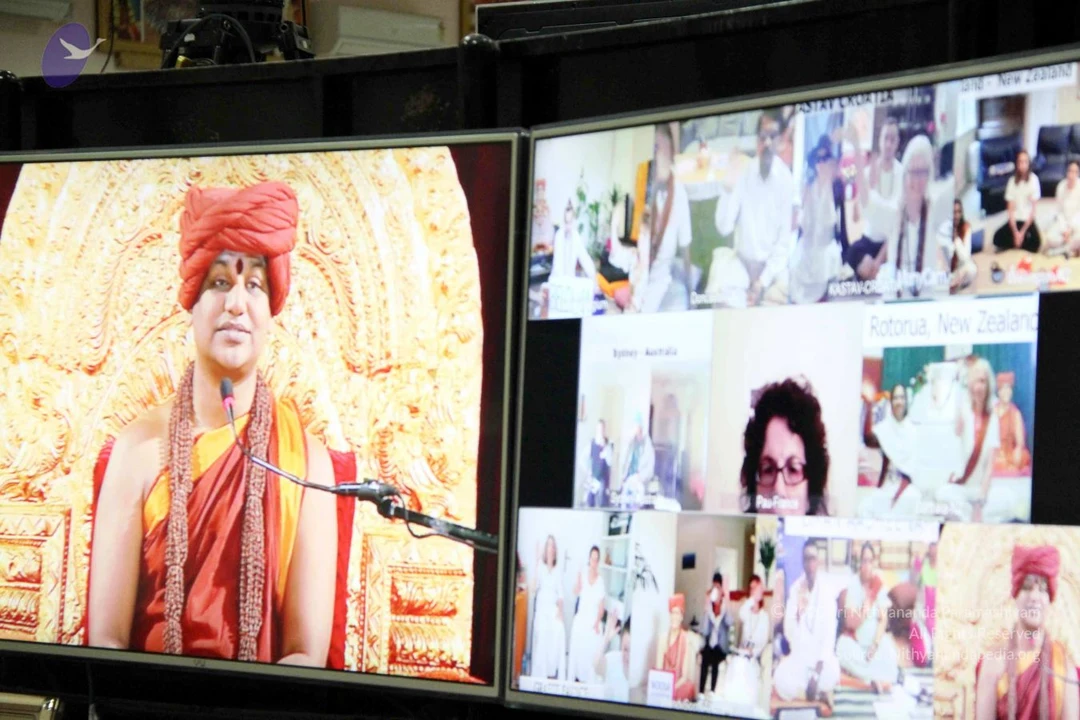
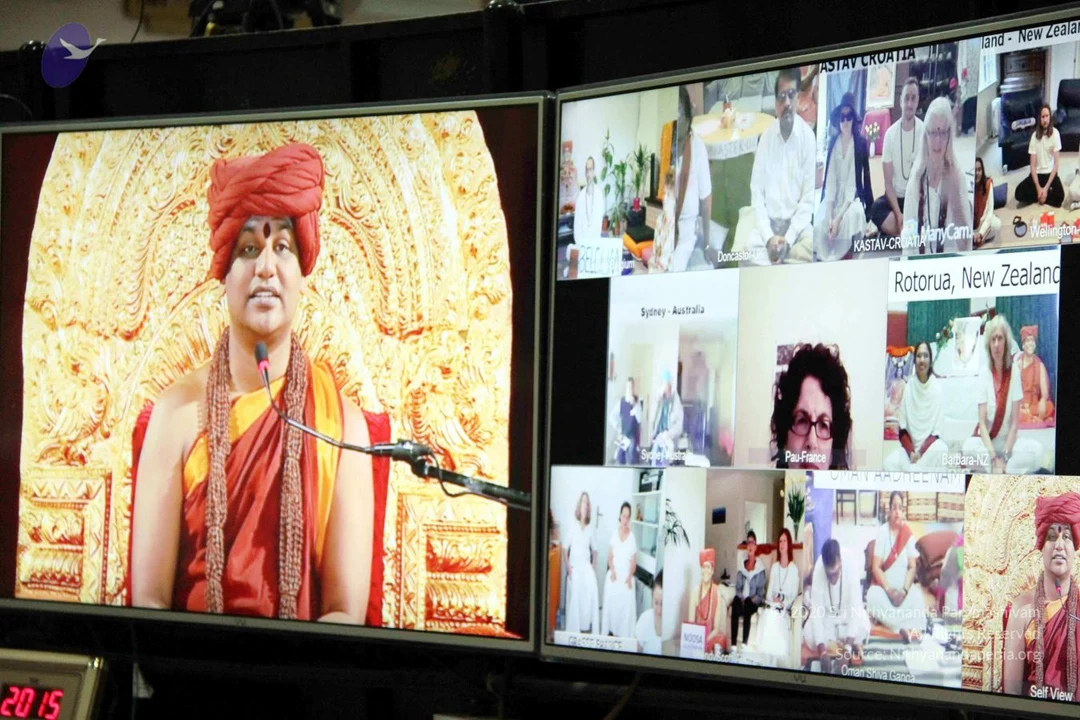
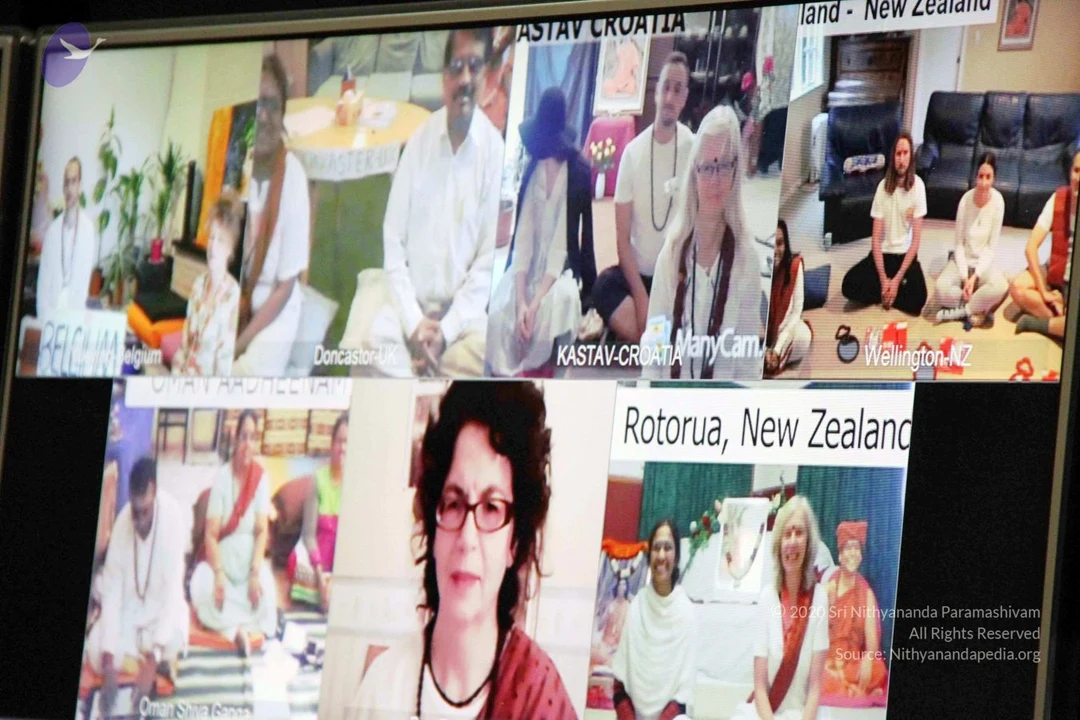
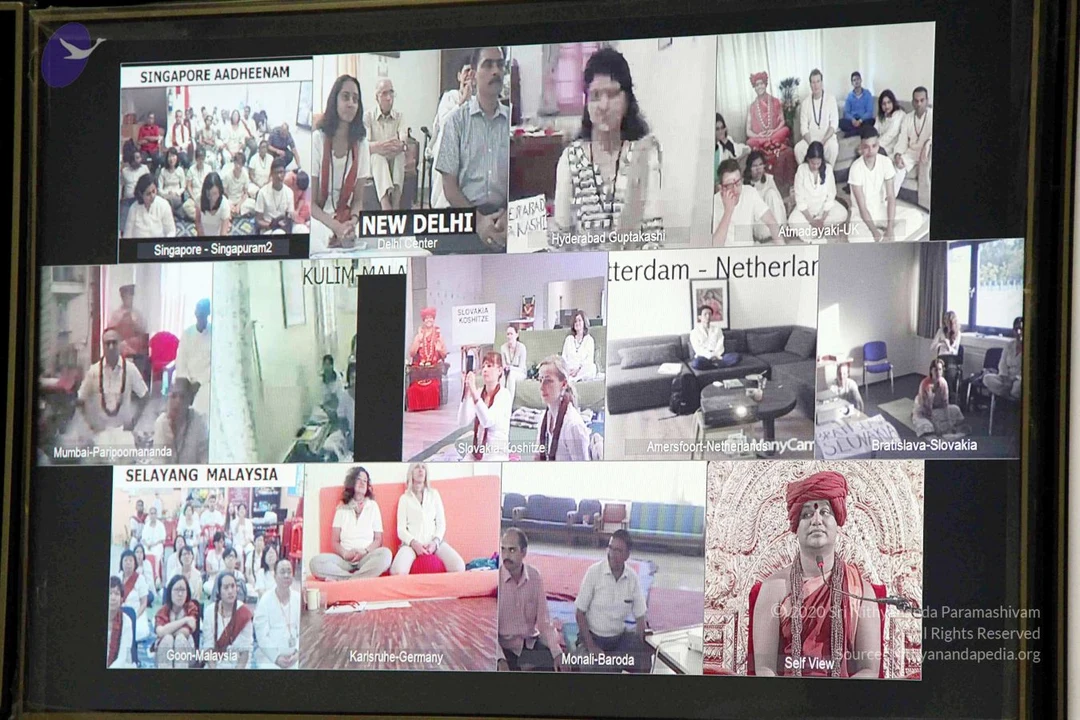
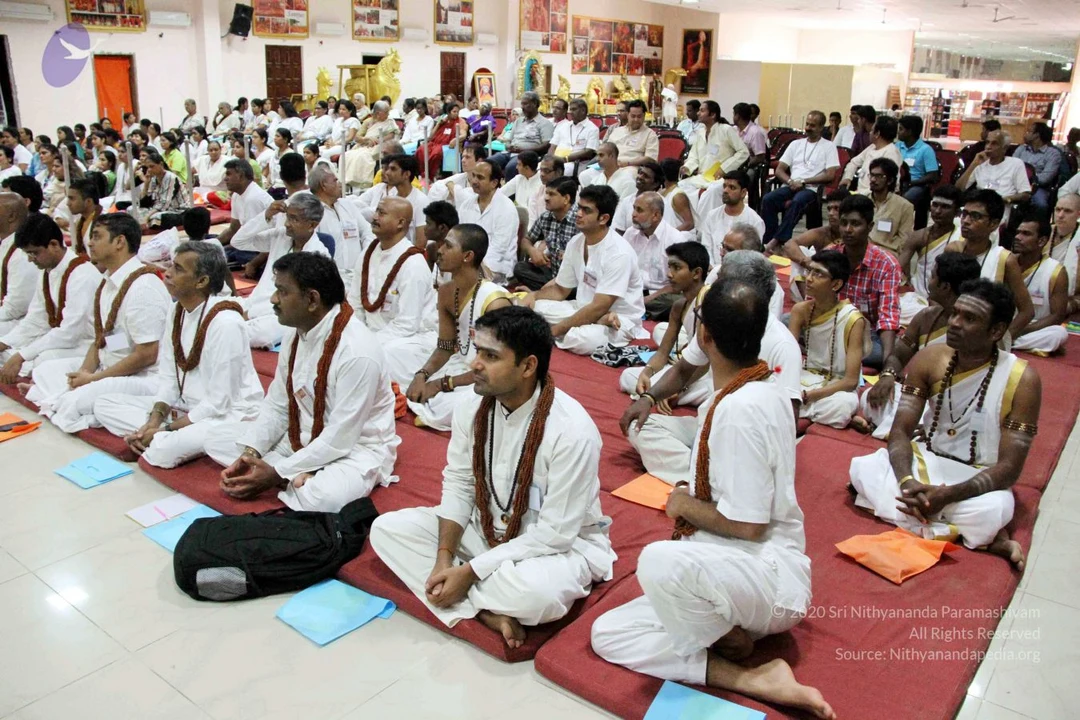
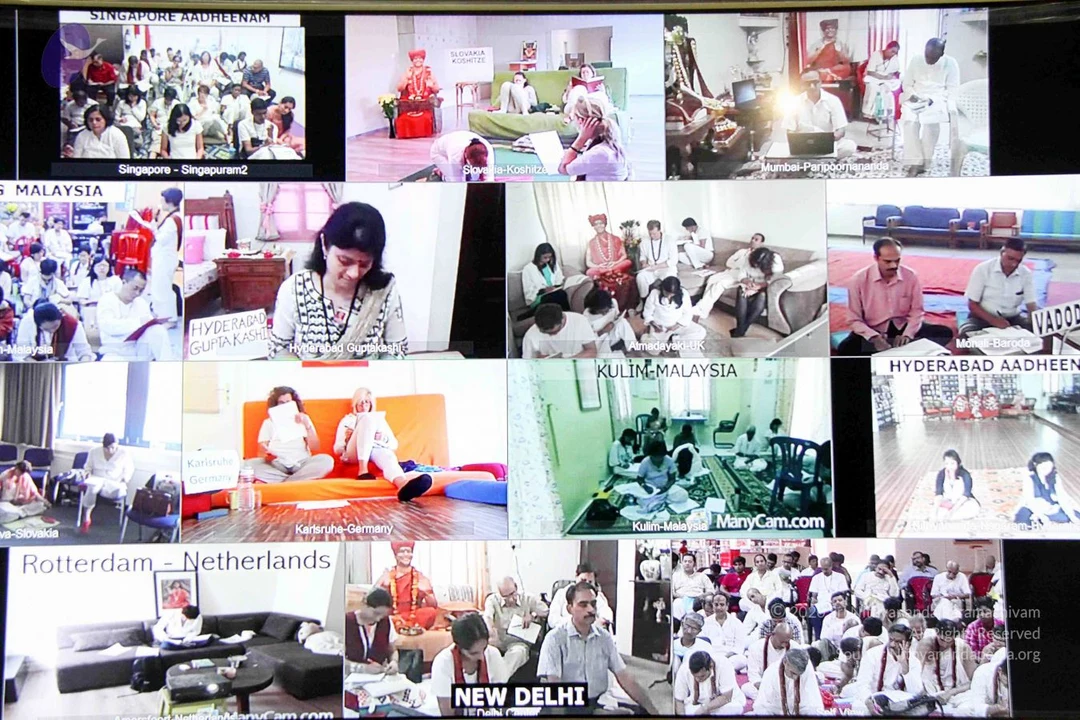
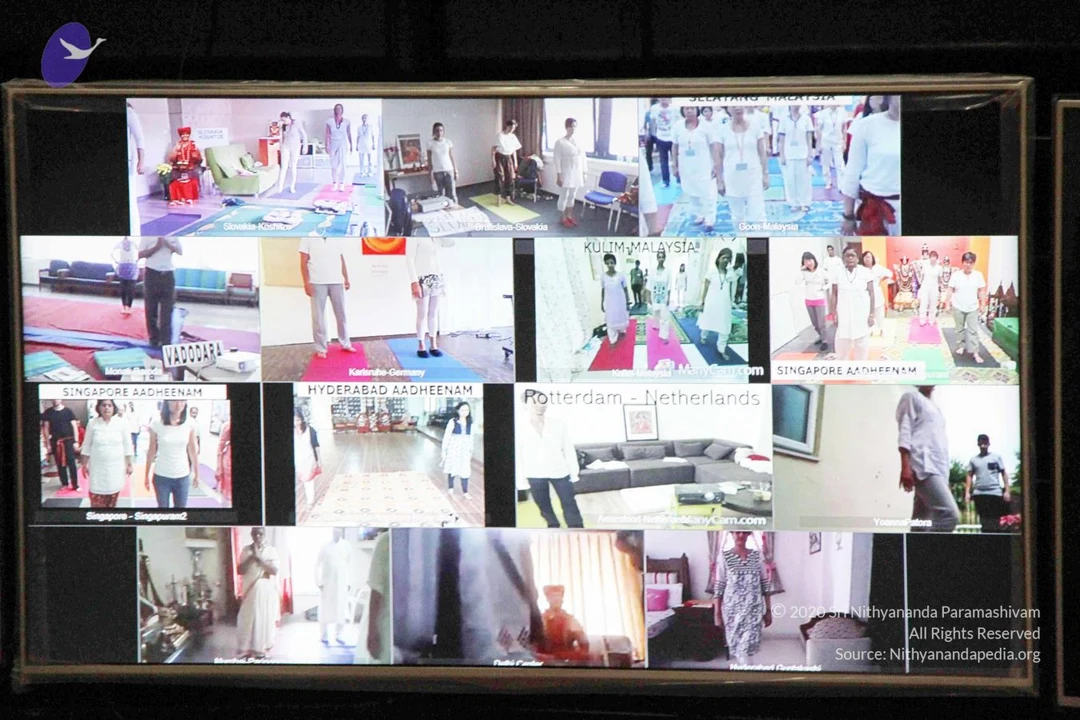
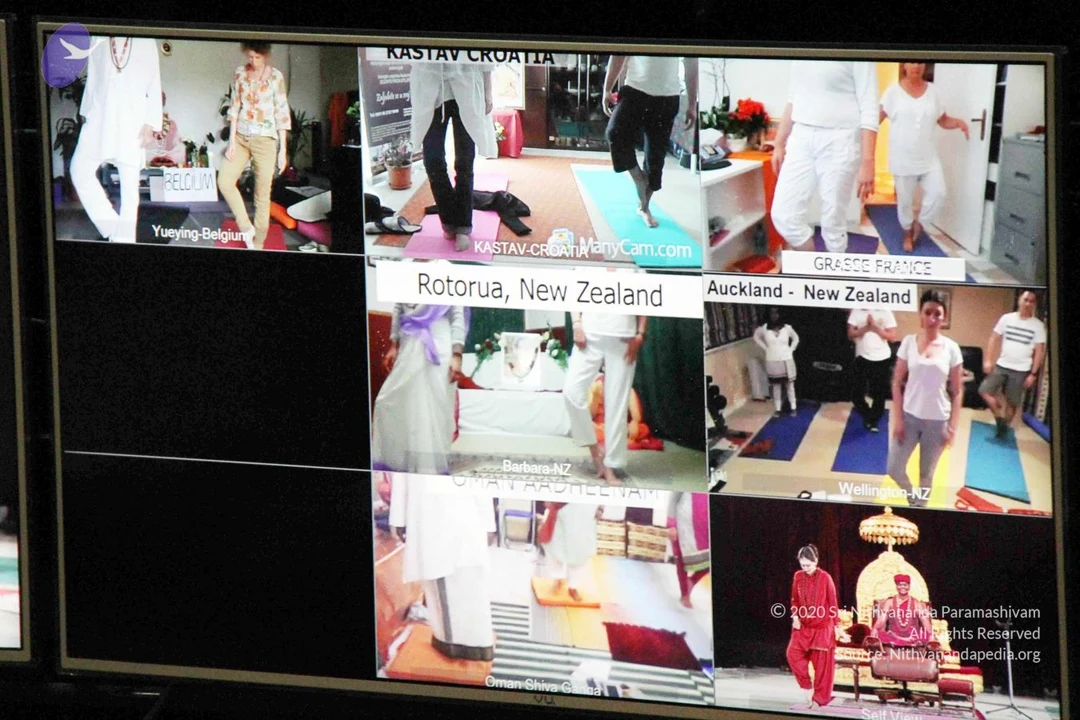
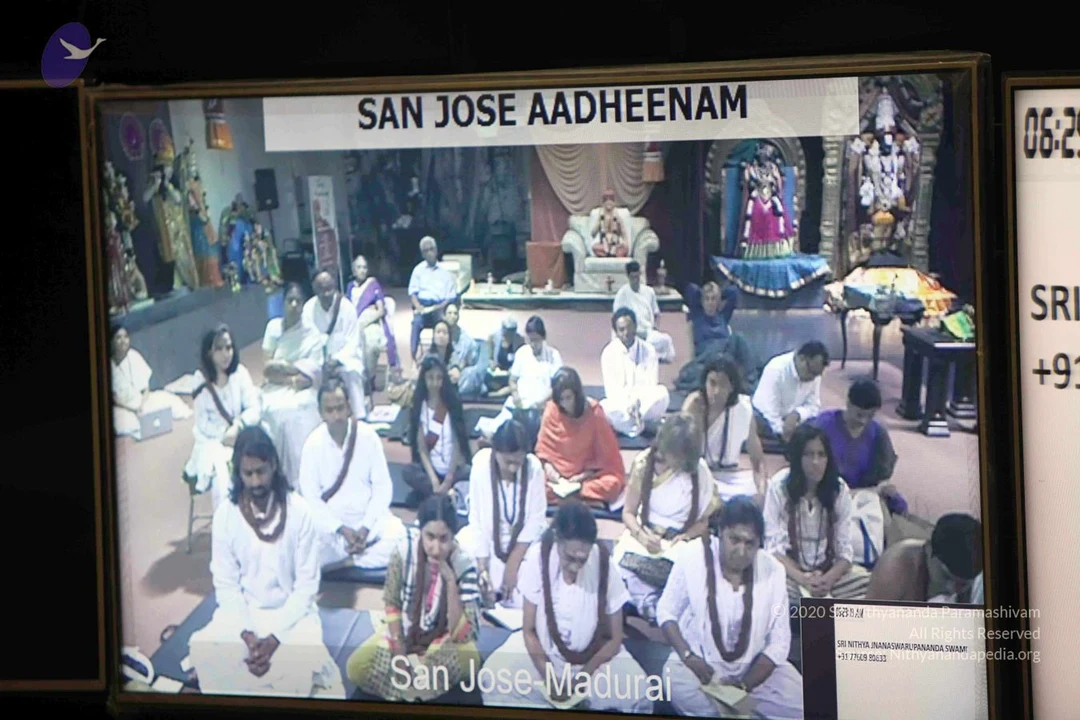
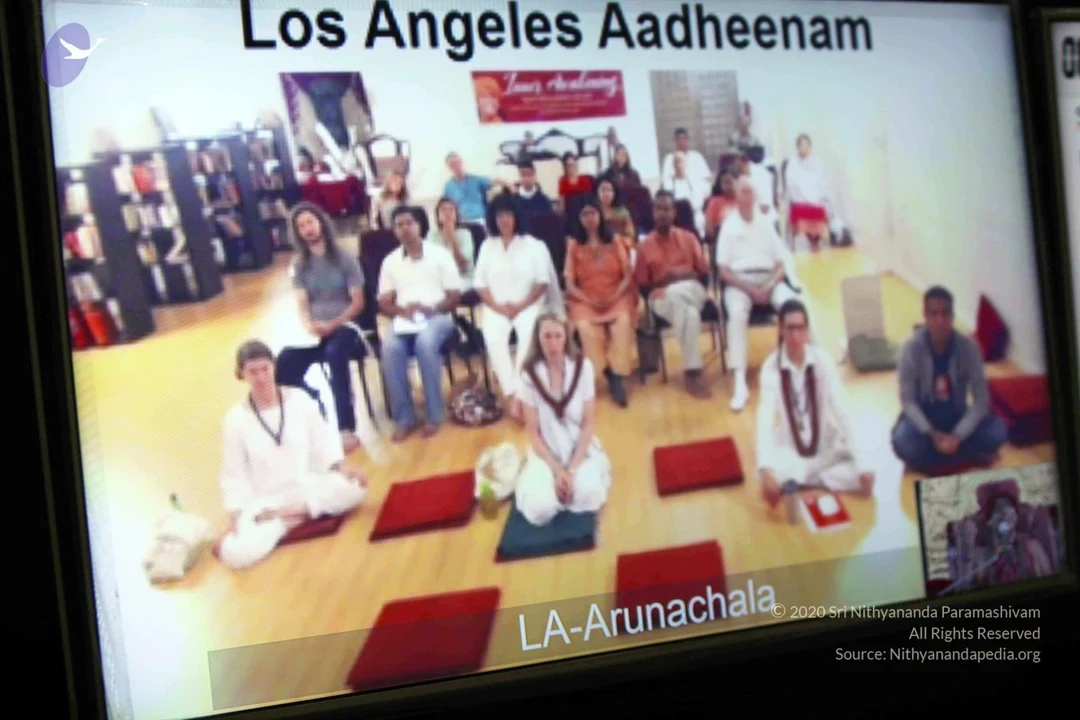
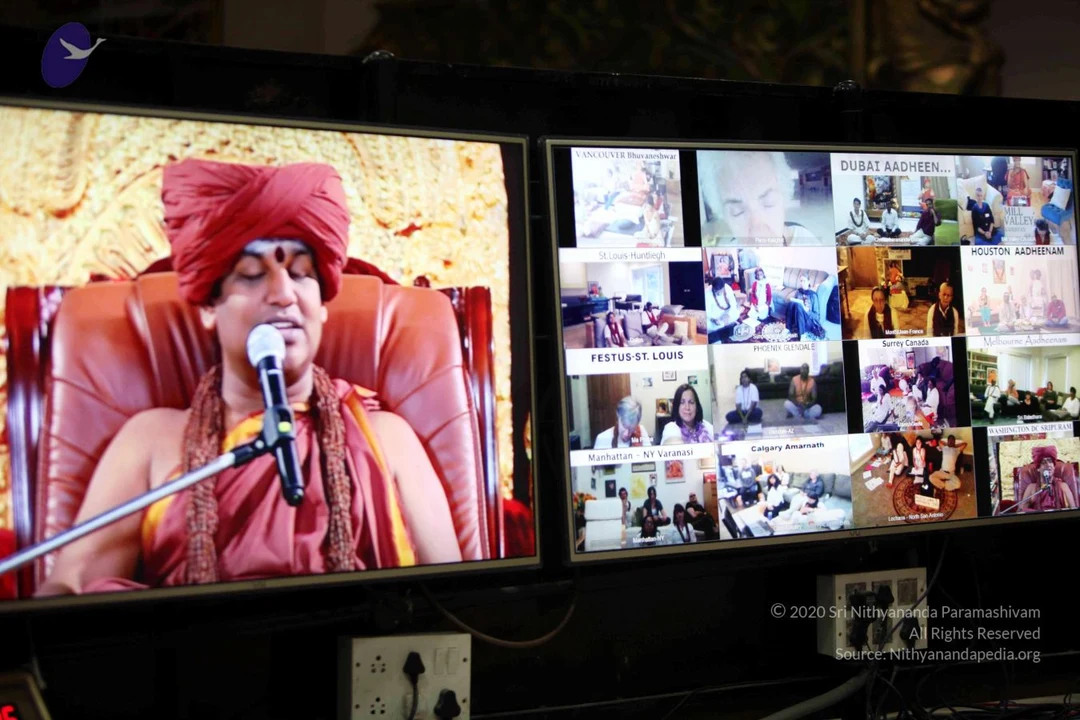
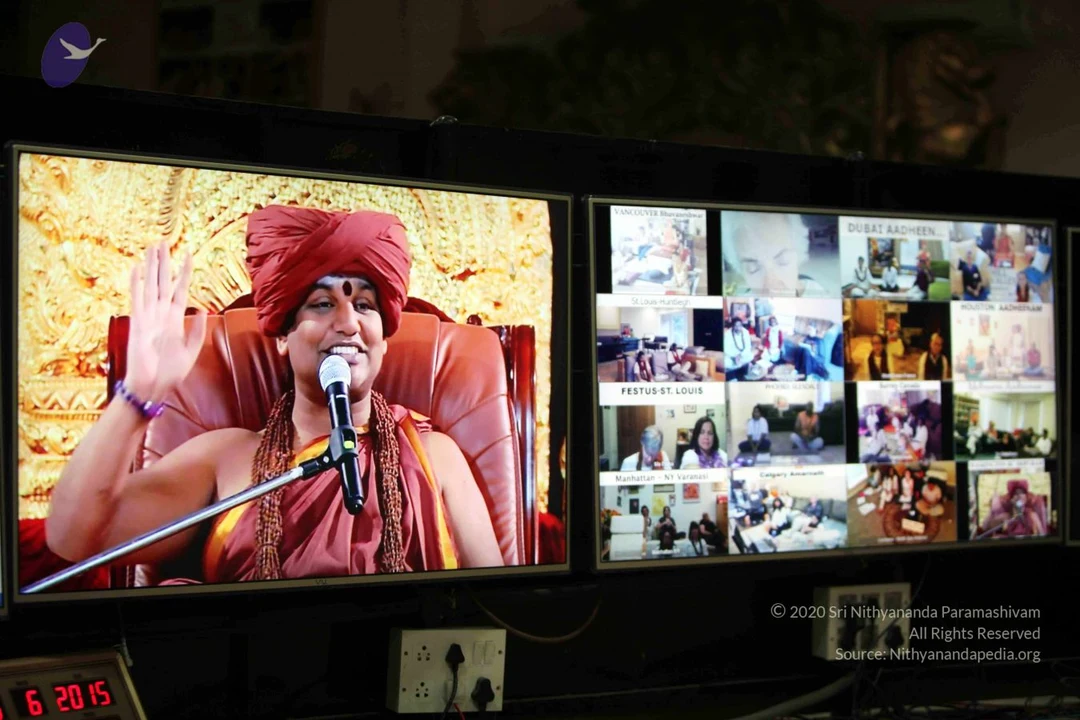
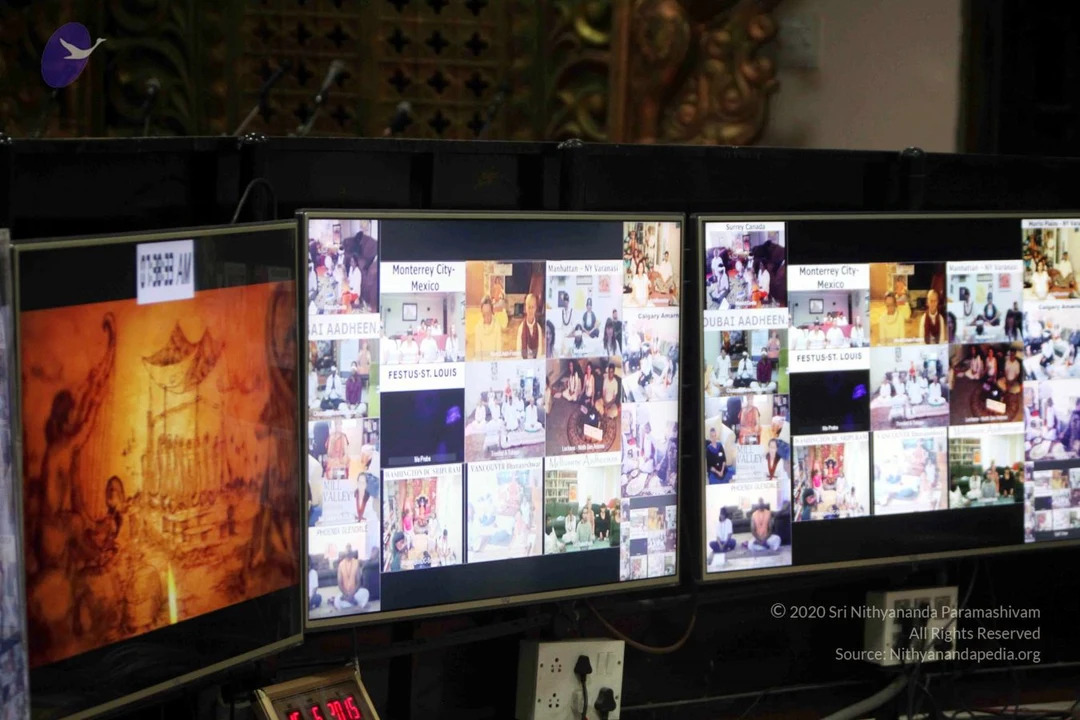
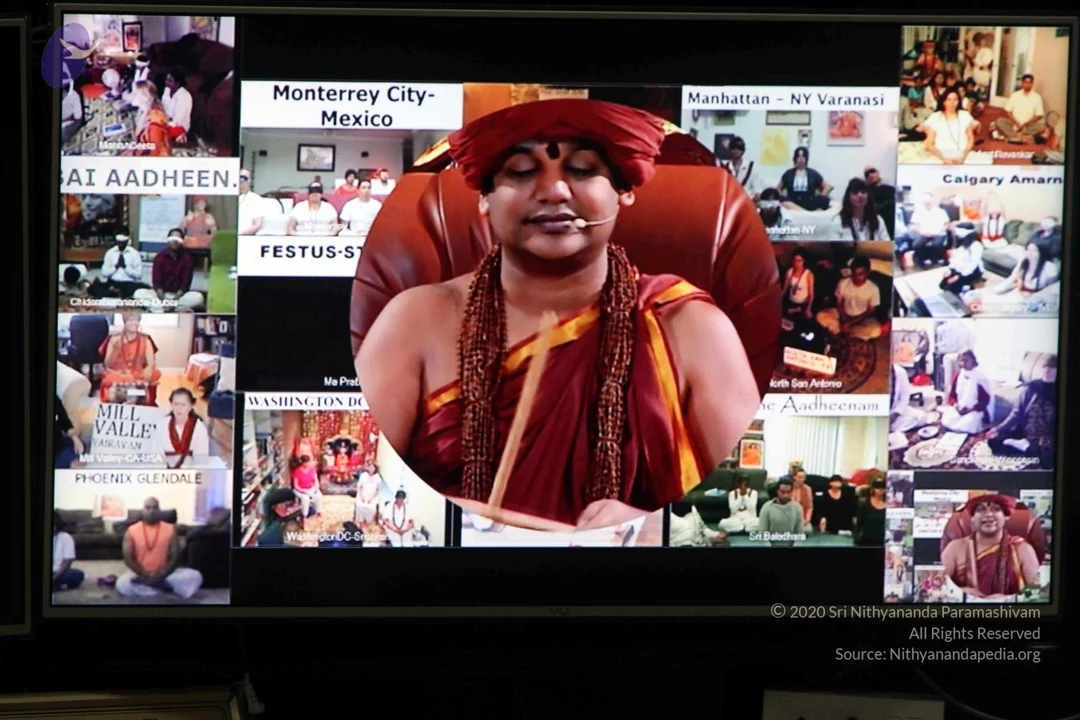
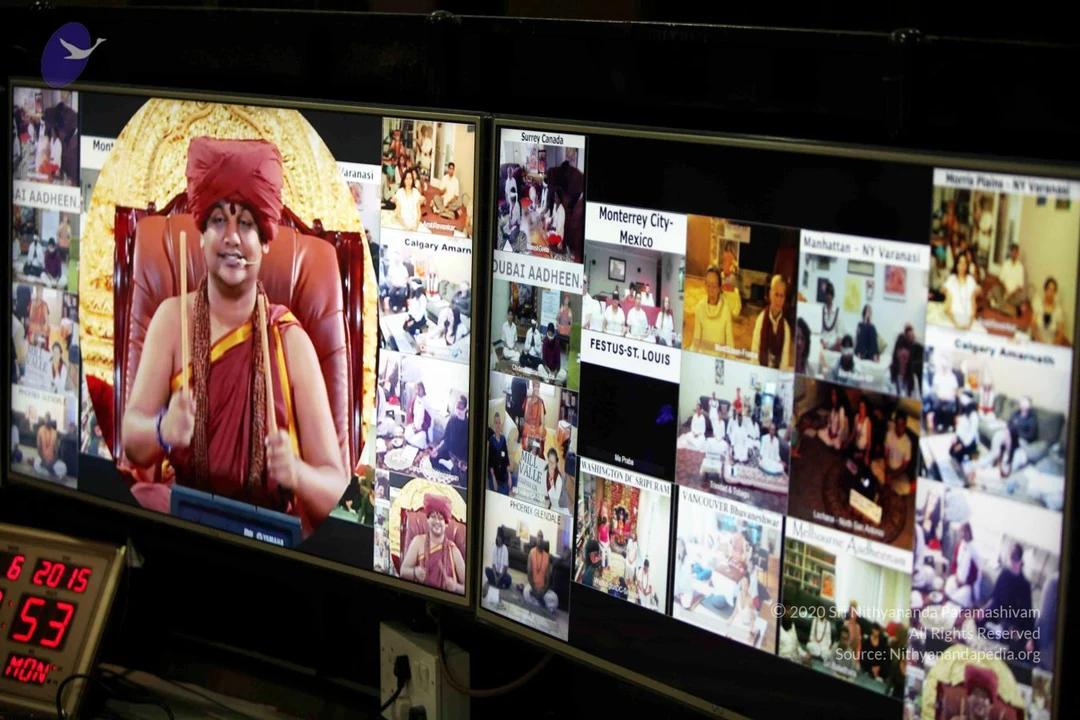
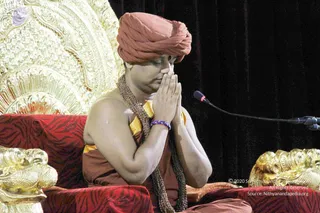
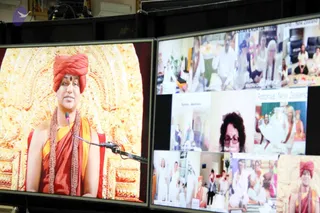
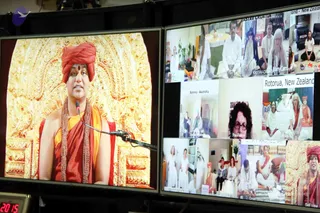
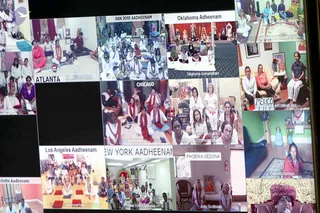
A seated figure in an orange-red turban and rust-brown robe sits with palms pressed together in namaste at chest height, eyes closed. He wears a long dark beaded necklace and a purple wrist bead, and sits on a red zebra-striped cushioned seat in front of an ornate gold throne with carved lion-head arms. A microphone on a stand is at right against a black drape. Probable Swamiji (appearance cues: orange-red turban, rudraksha-style beaded mala, ceremonial throne setting), shown in person, offering namaste while seated on a gilded peetha.A photograph of a man seated on an ornate gilded throne with a red zebra-striped cushion, his palms pressed together in anjali mudra at chest level. He wears a rust-orange turban, a bare-chested orange-red garment with gold trim, a long brown beaded rudraksha-style mala and a purple wrist bracelet. A small mark is on his forehead. A microphone on a boom stand is at right against black drapes, and a gilded lion-head armrest is visible at right. The appearance and attire are consistent with the page's a person reference, but this is an appearance-based candidate, not a confirmed identity. a person is seated in satsang-style teaching posture.A large indoor hall with a white tiled floor and a row of red meditation mats where many seated participants in white clothes and brown-red beaded garlands sit cross-legged facing forward. Blue and orange cushions or notebooks lie on the floor in front. In the left background, a small golden figure of a horse and other golden ornaments flank a deity image, and framed devotional pictures hang on the walls. A figure in grey stands bending near the left edge, and a few people stand near the back of the hall beside a bookshelf and a glass partition. No clearly identifiable a person is shown in this view.A wide photograph of a large hall with white tiled floor and a row of ceiling fans, where a seated audience in white clothing sits on red mats in rows. Men in the front row wear white kurta-style clothes and white lanyard garlands, seated cross-legged facing forward. Behind them many more devotees sit, some in white and others in colourful salwar kameez. At the far end, golden deity murti and ornate ceremonial decorations are arranged near the back wall, with framed pictures lining the walls. Stanchions with red rope separate seating areas. A camera and a small speaker are visible at the sides. The setting appears to be a satsang or meditation session.Photograph of two large screens in a room showing a live video session. On the left screen, a person in an orange-red turban, orange and saffron robes and a long beaded mala sits before an ornate gold throne with a microphone in front of them. The right screen is a grid of video-call tiles showing participants in white and light clothing in homes and settings labelled with places such as Sydney, Australia and Rotorua, New Zealand, with a few people seated on floors and cushions. A purple logo sits at the top left and a faint copyright overlay is visible across the lower right.Photo of two large monitors showing a video teaching session. The left screen shows a man in a red turban, orange-red robe and long rudraksha malas seated before an ornate golden throne, speaking into a microphone. The right screen is a grid of video-conference participants from many locations, mostly seated in white clothing in home settings, including a participant labelled Rotorua, New Zealand, one labelled Sydney, Australia, and a self-view tile showing the same turbaned teacher. Overlay text includes location captions and a 2015 date counter in the corner.

Yoga Session

77 photosSource gallery
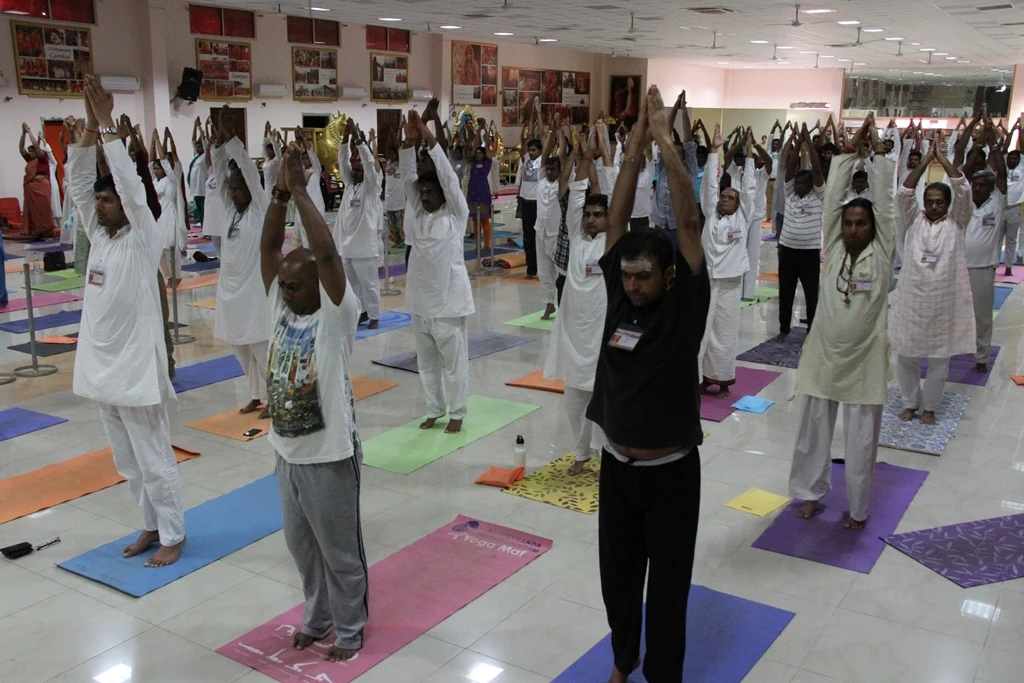
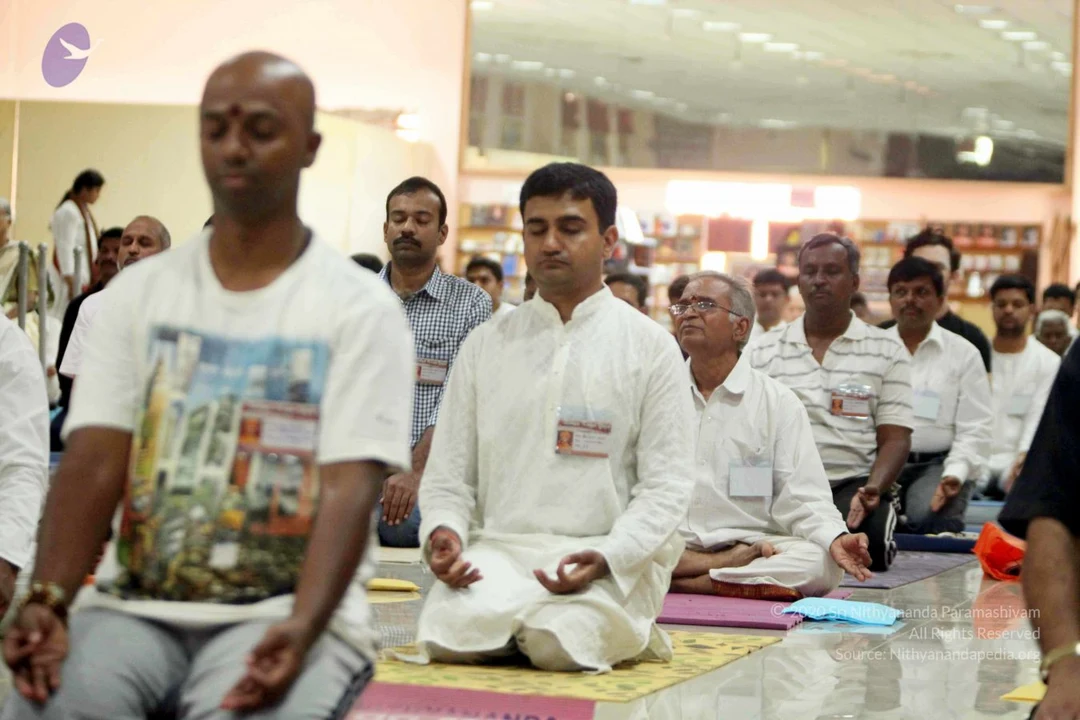
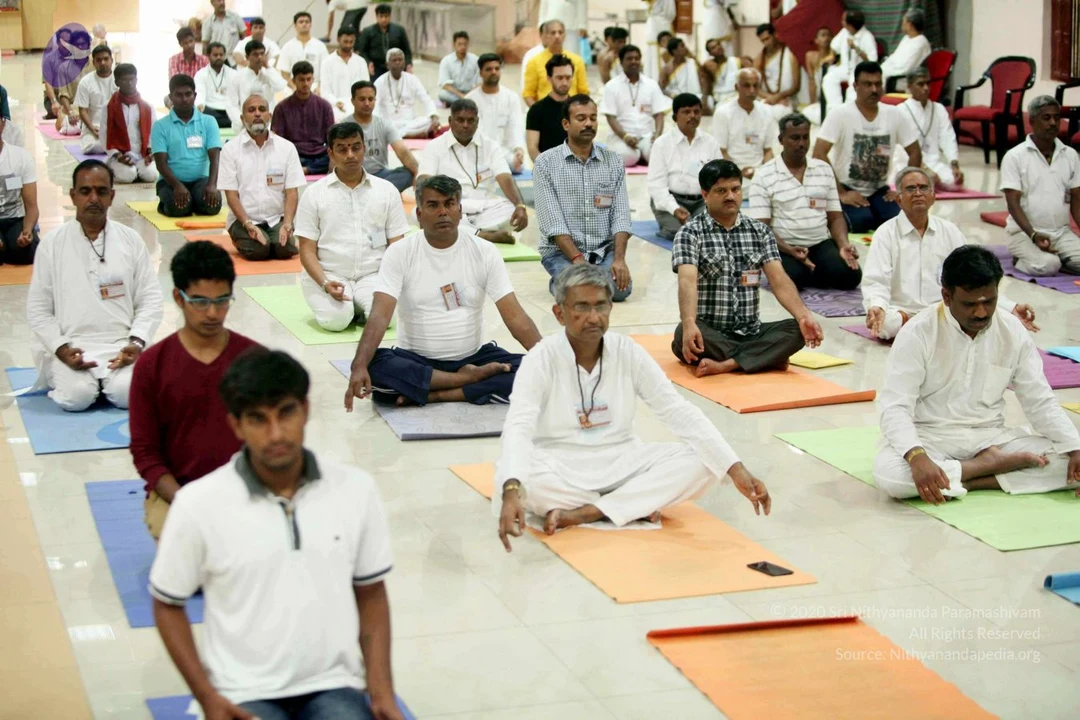
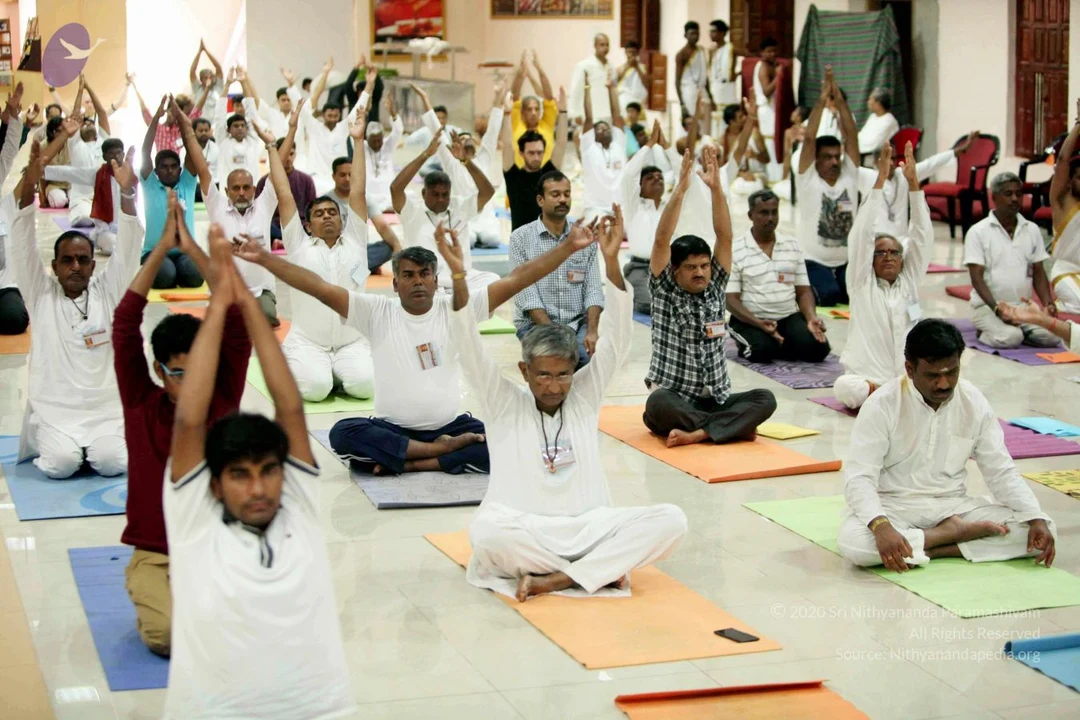
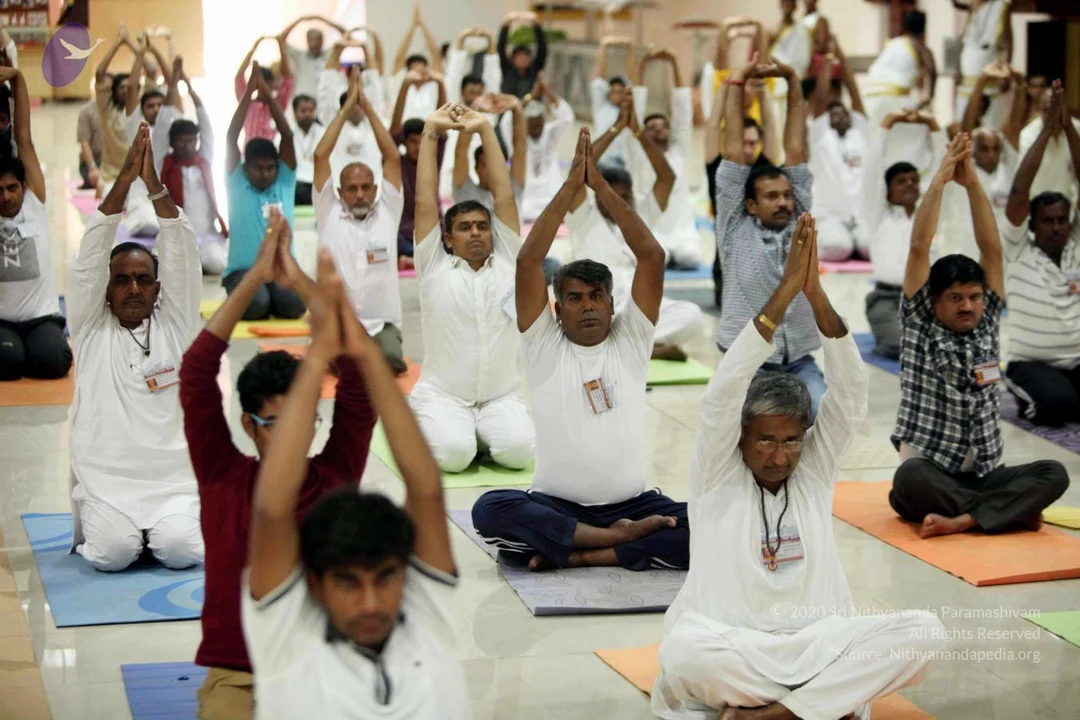
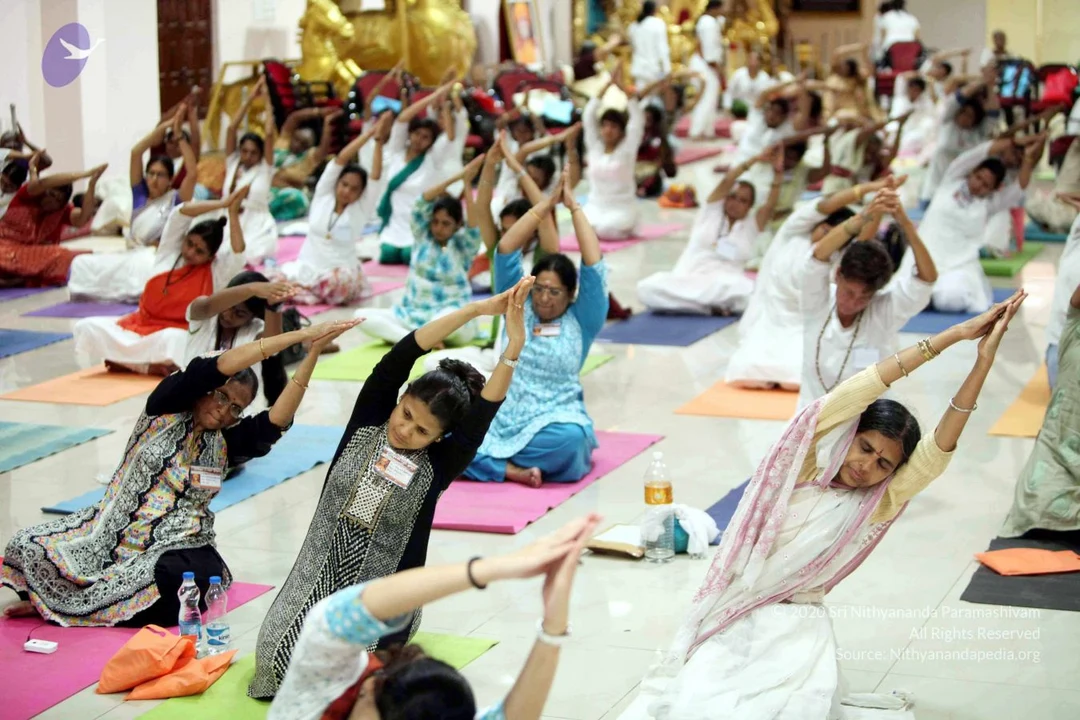
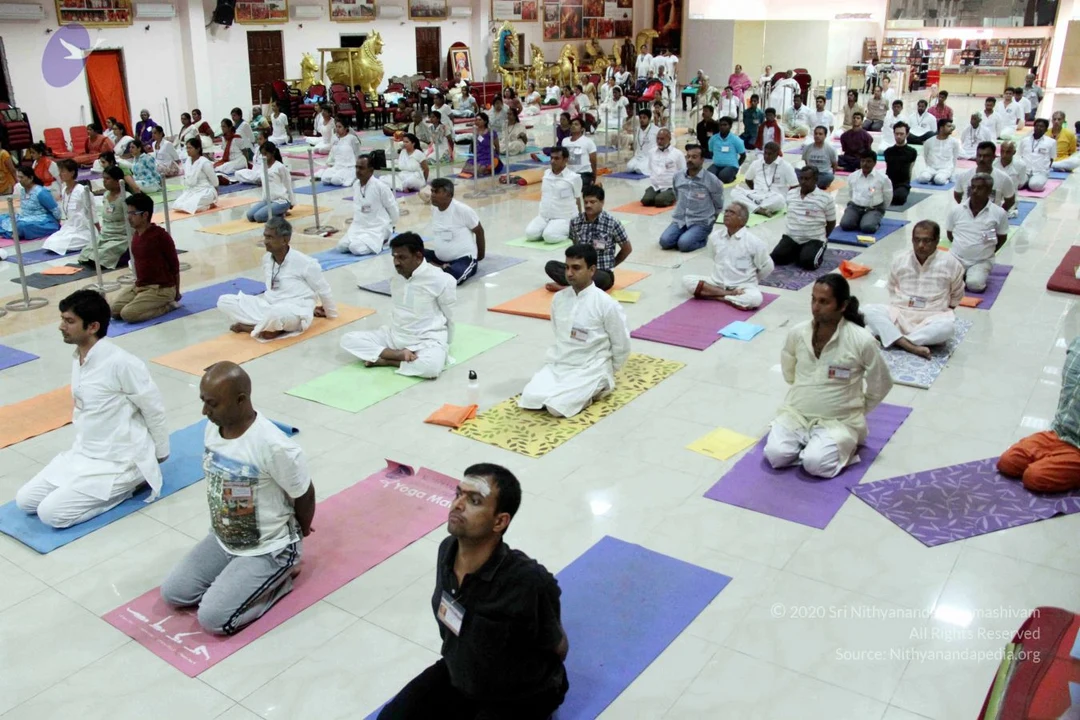
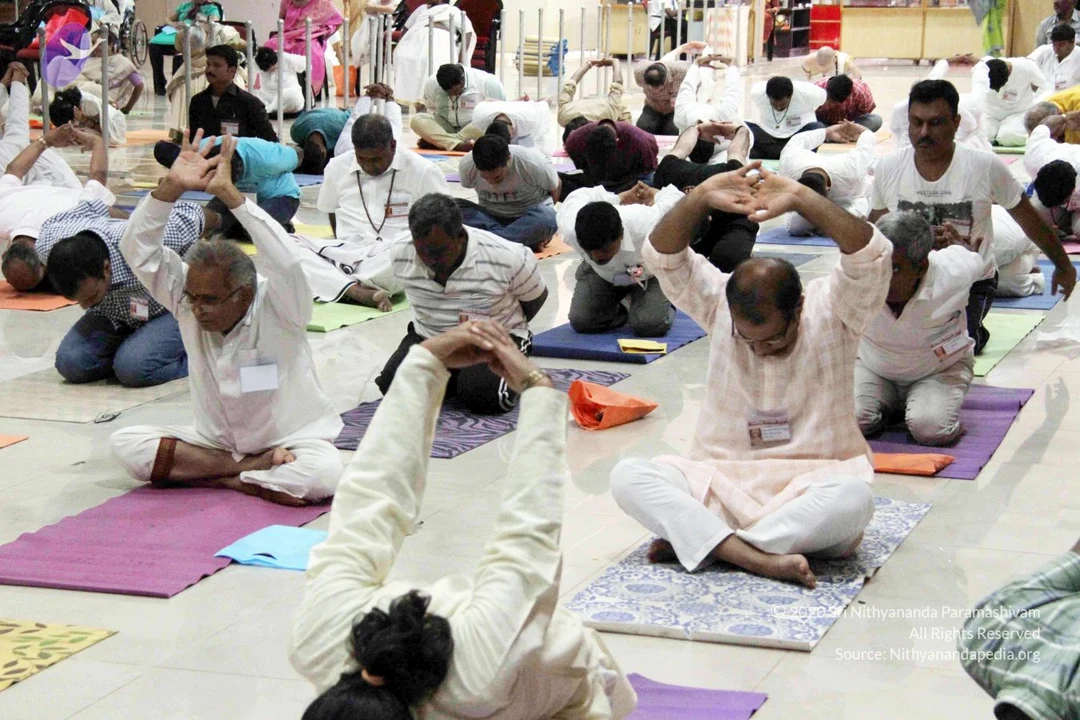
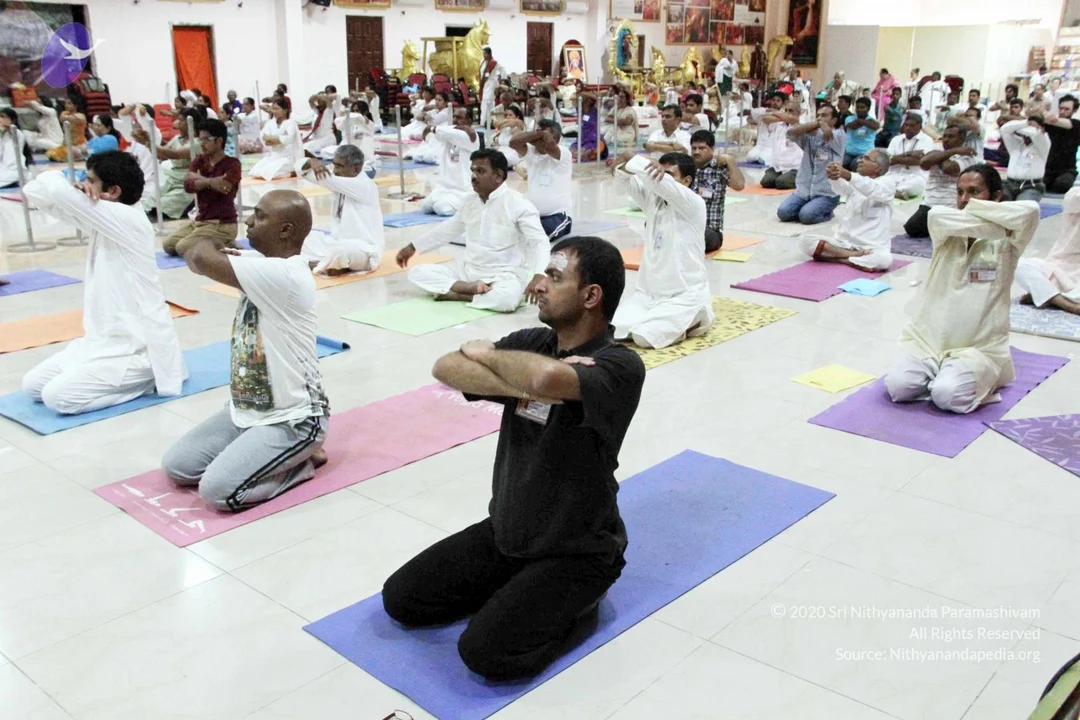
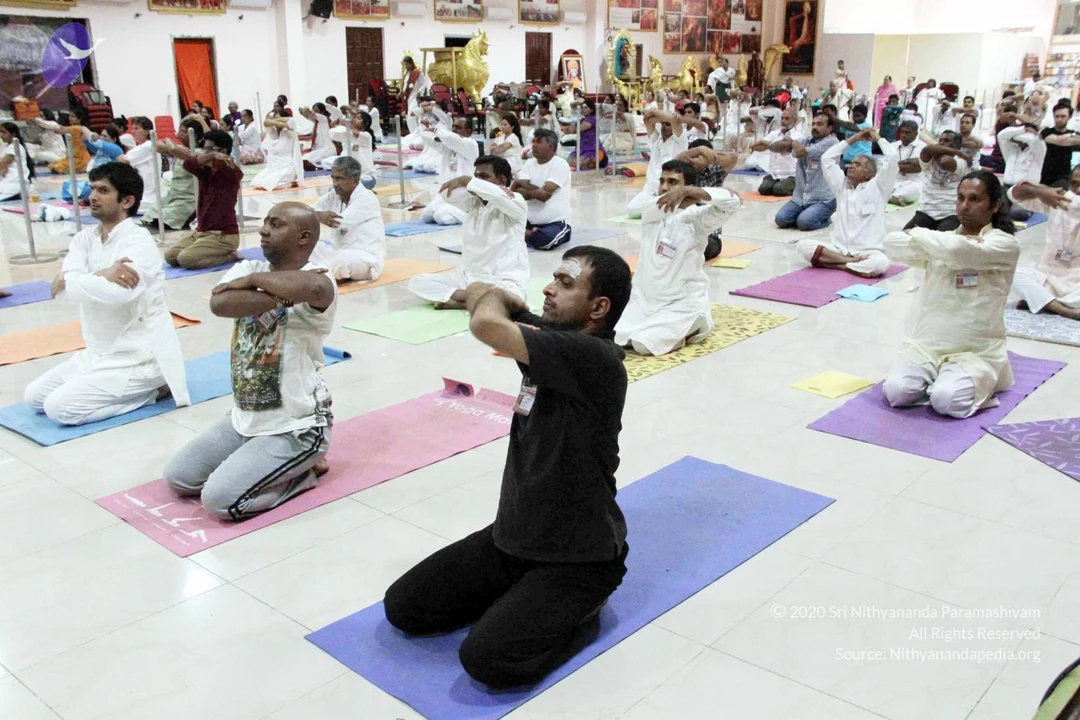
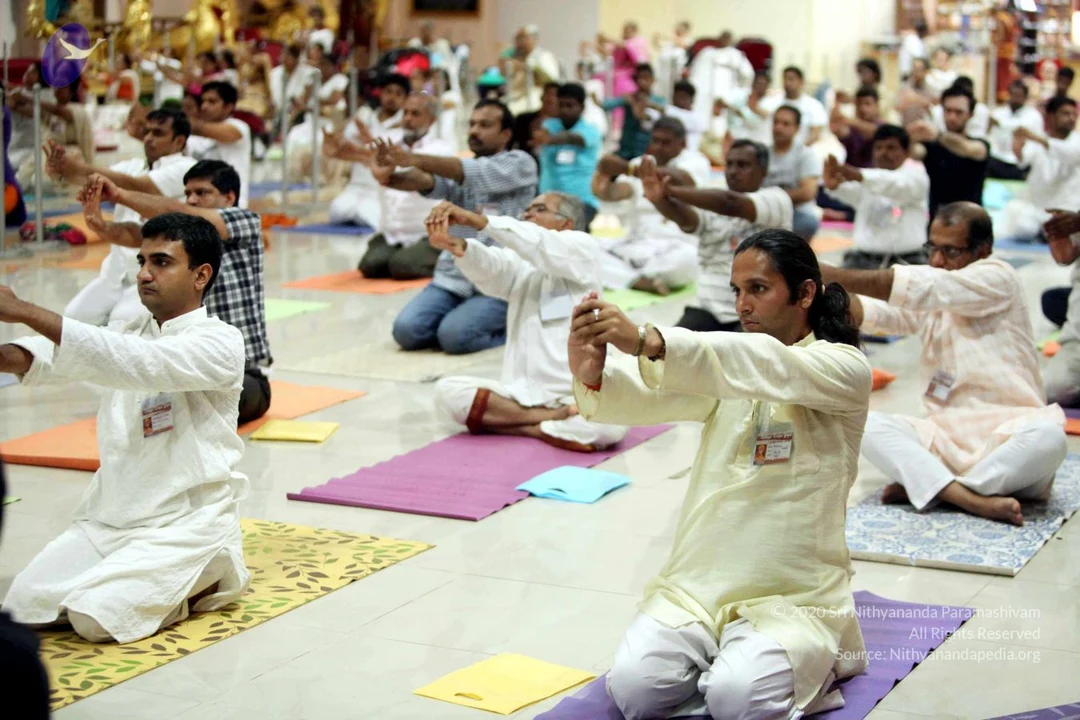
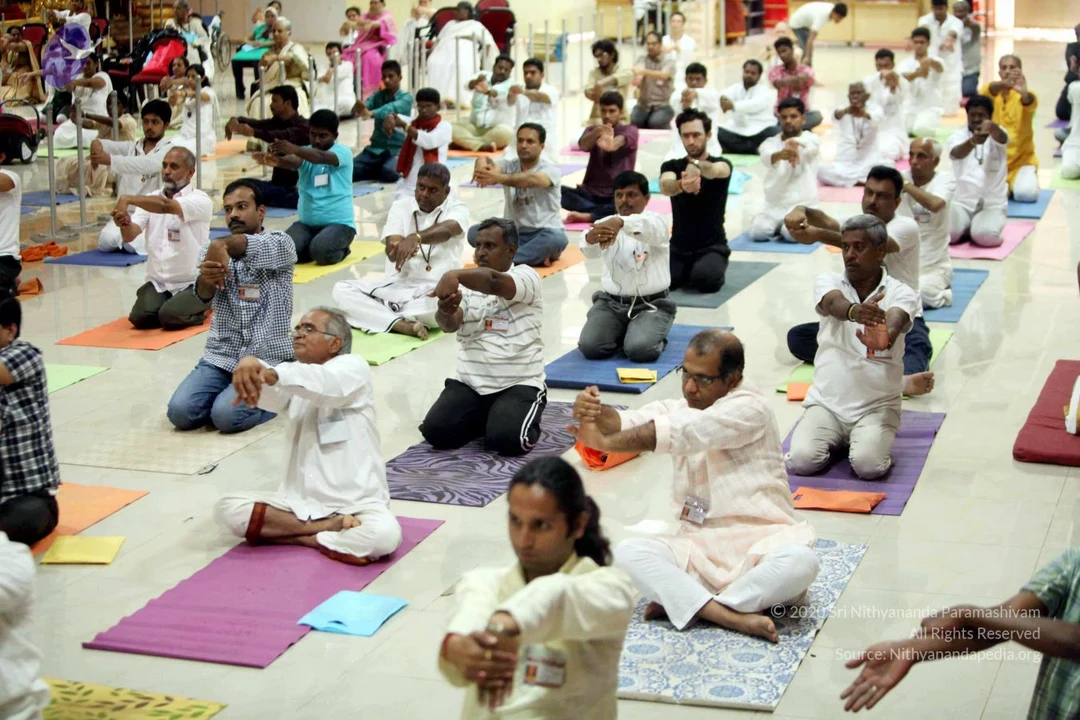
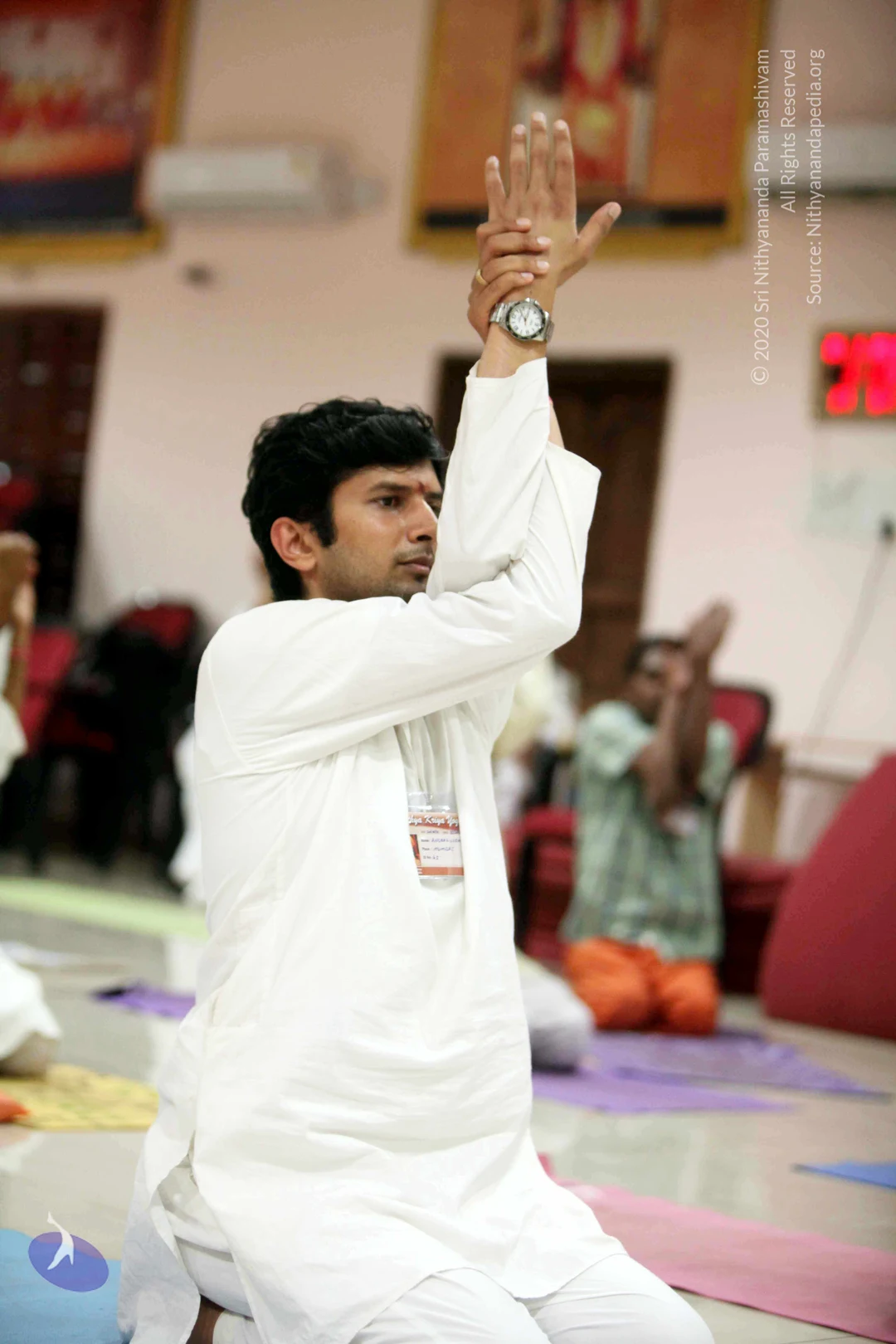
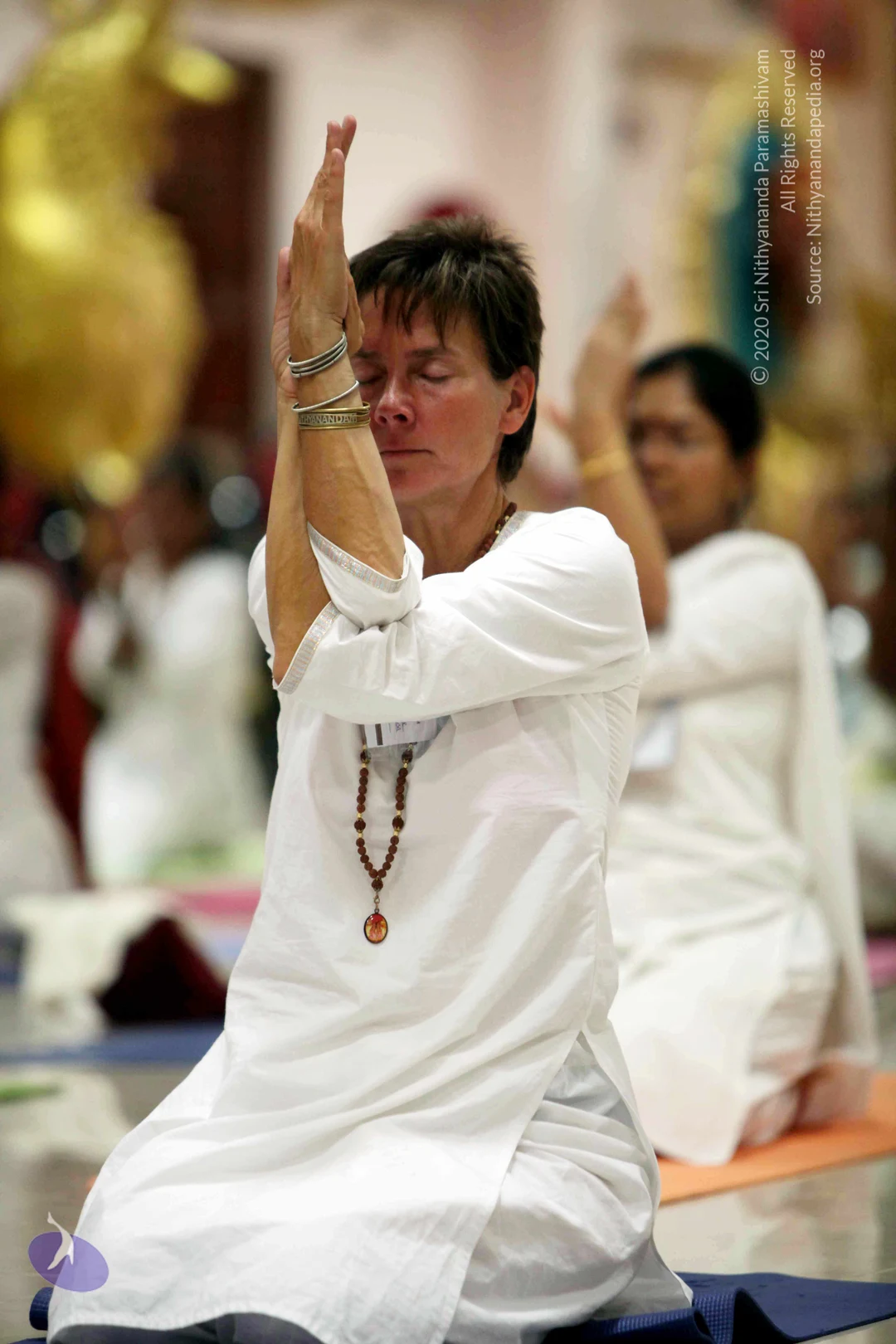
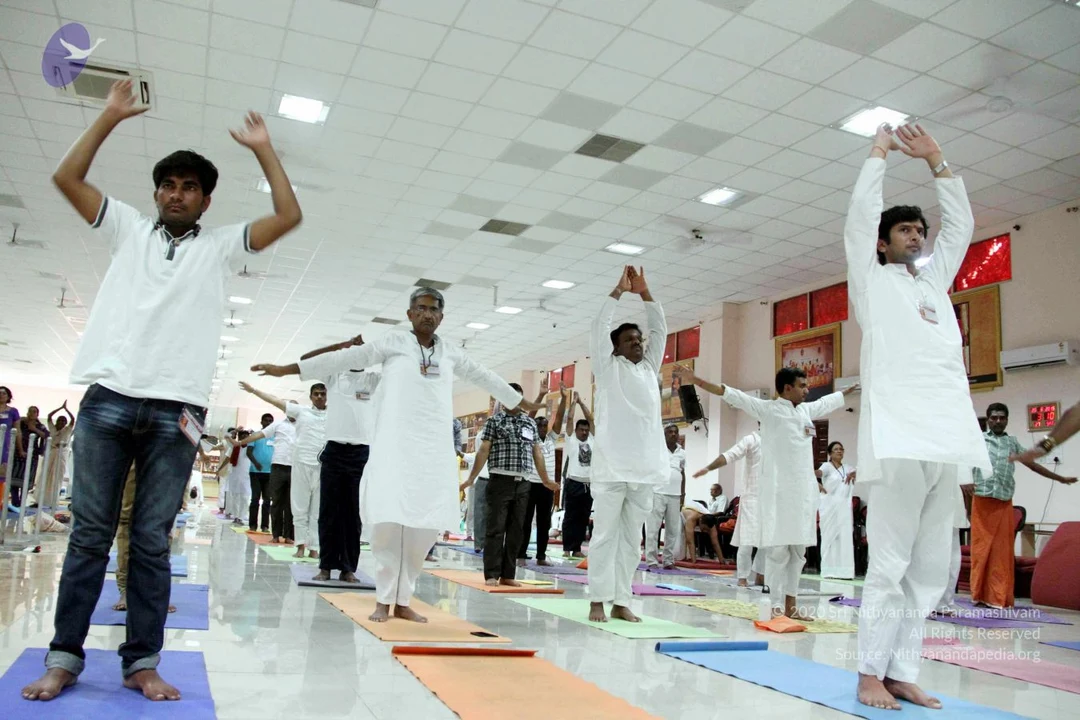
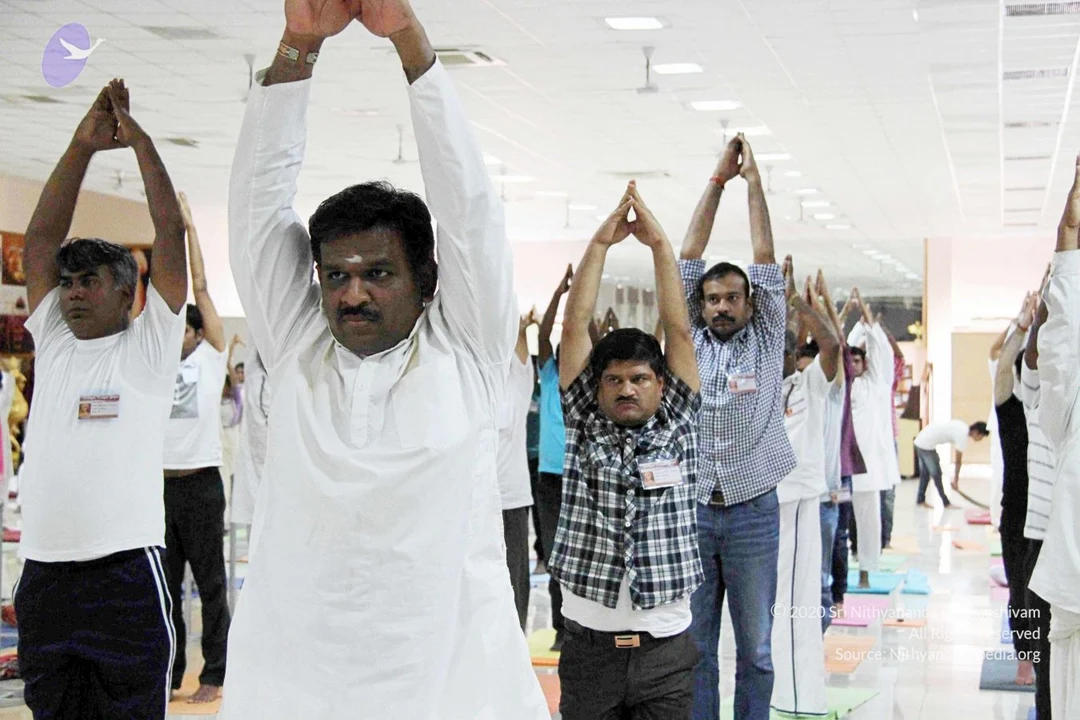
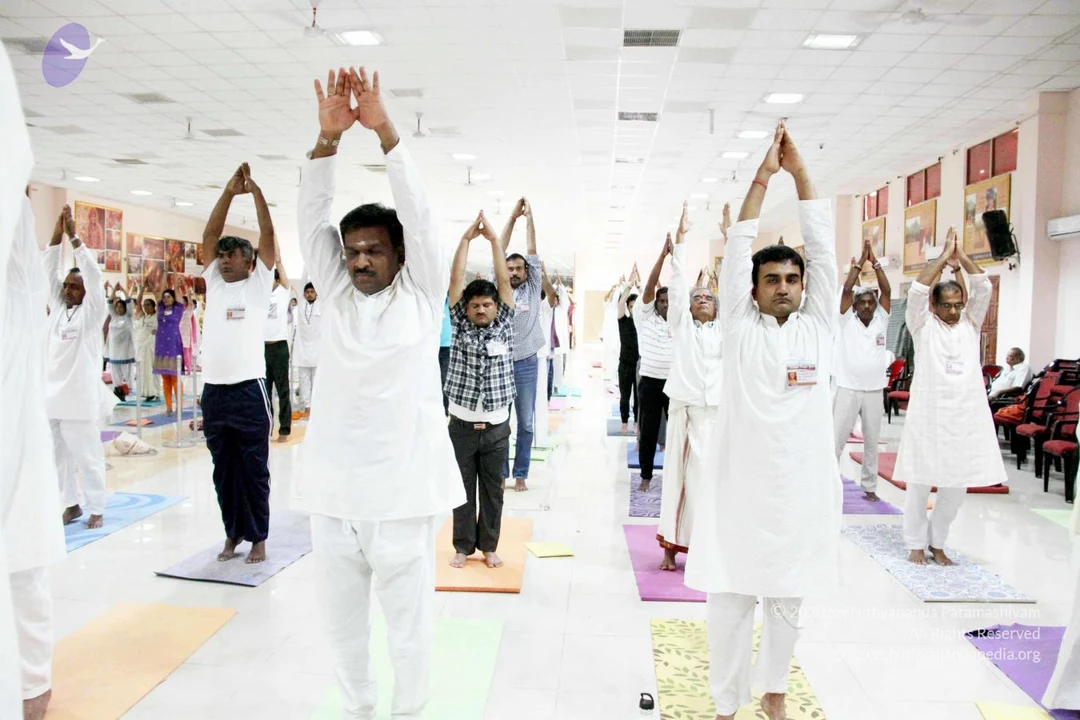
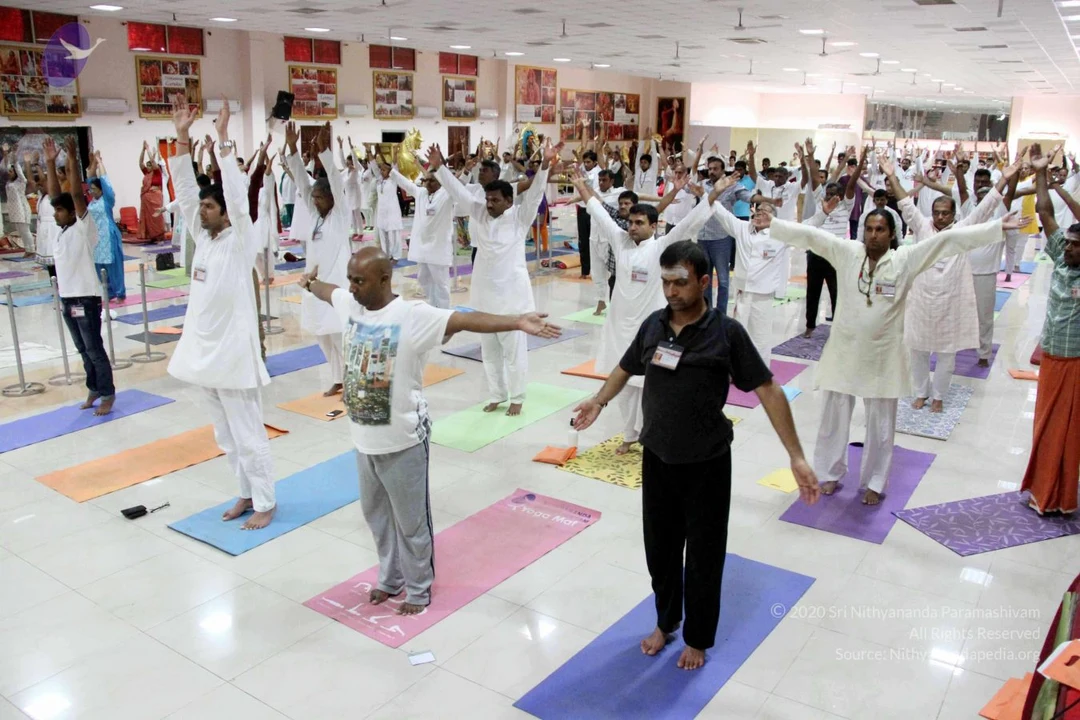
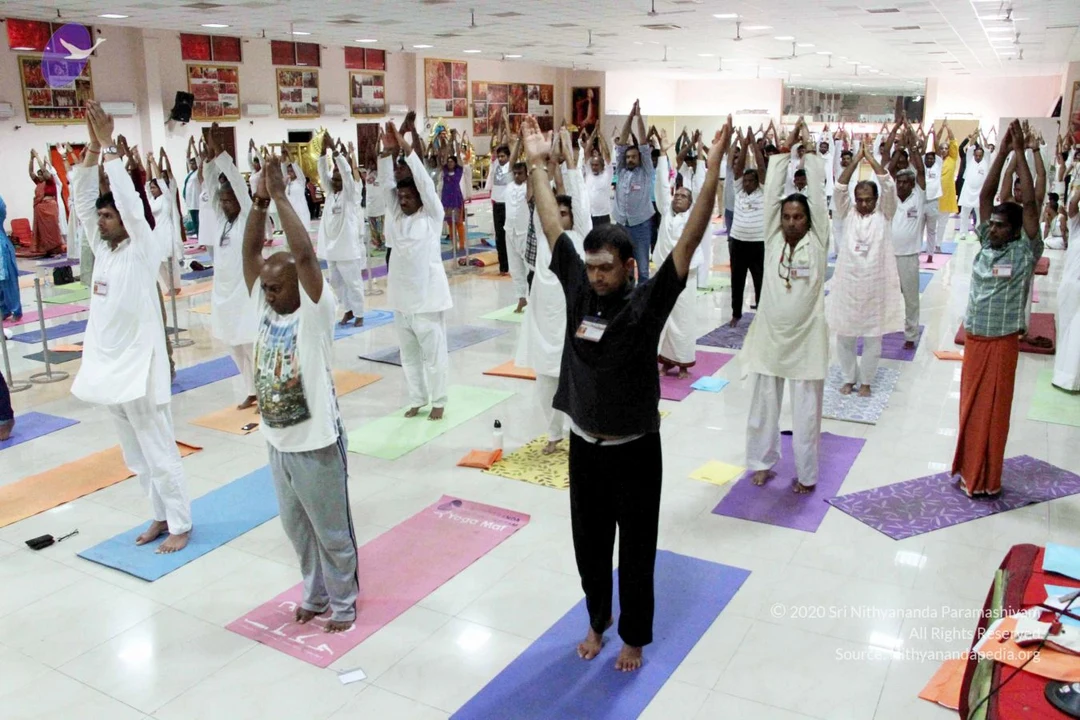
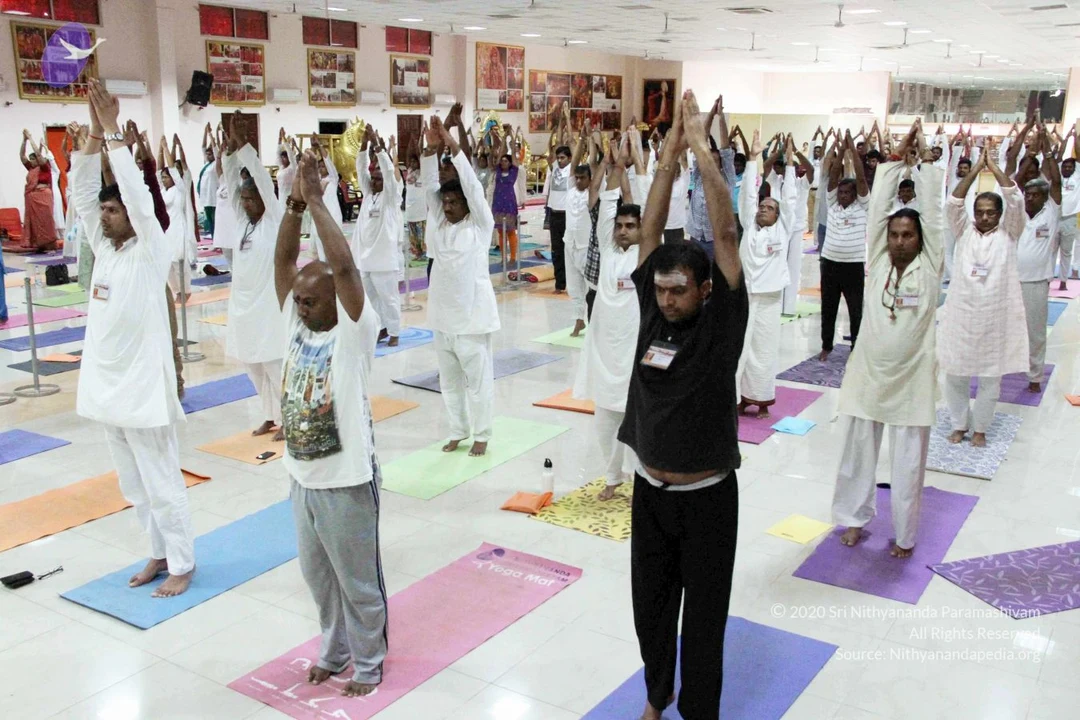
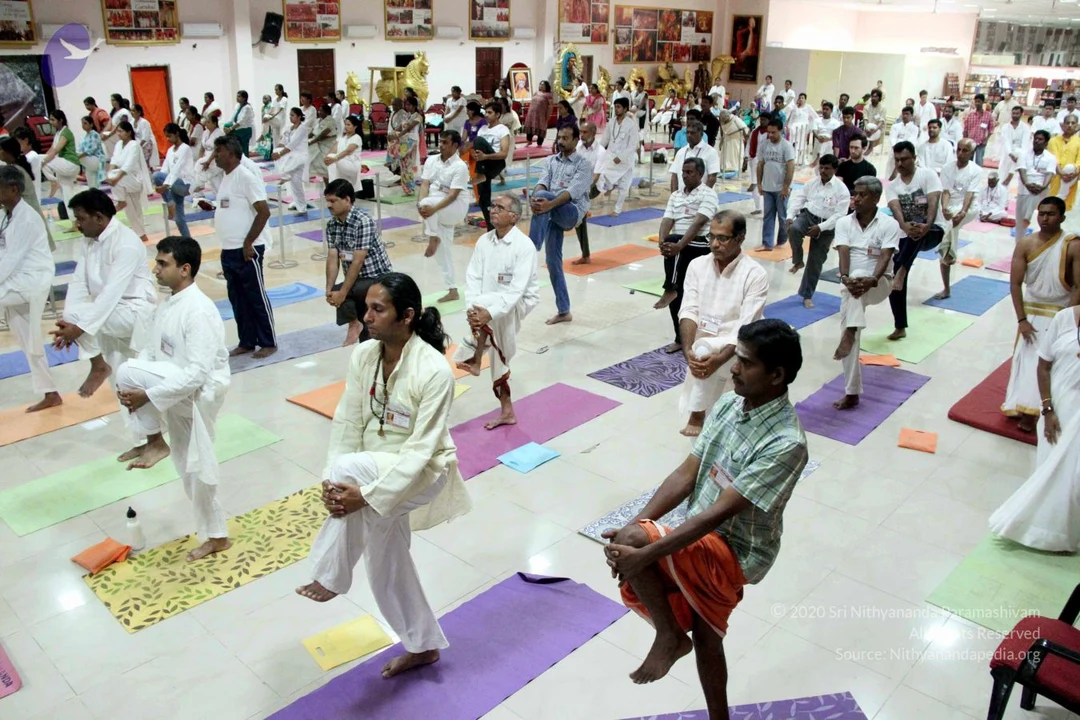
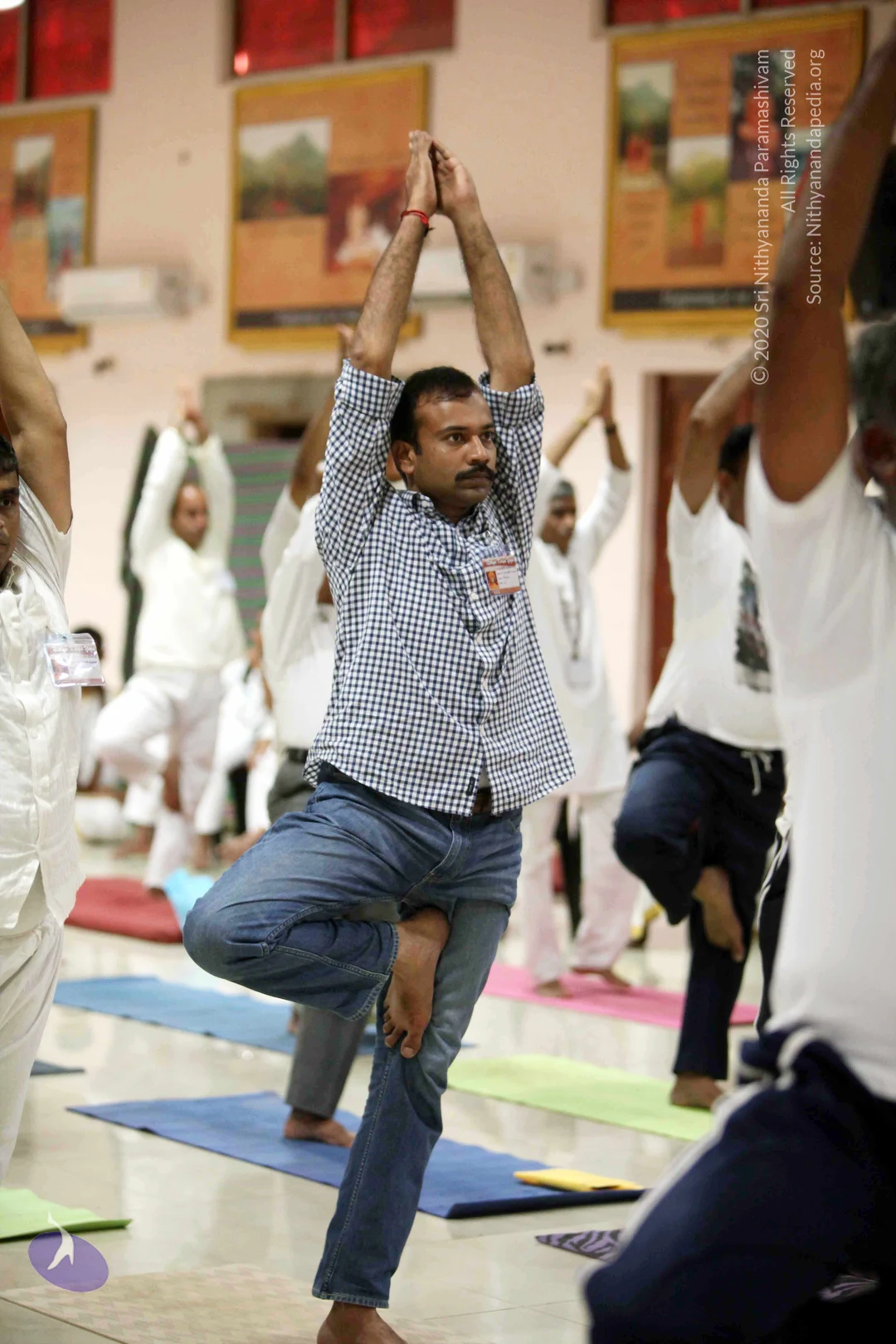
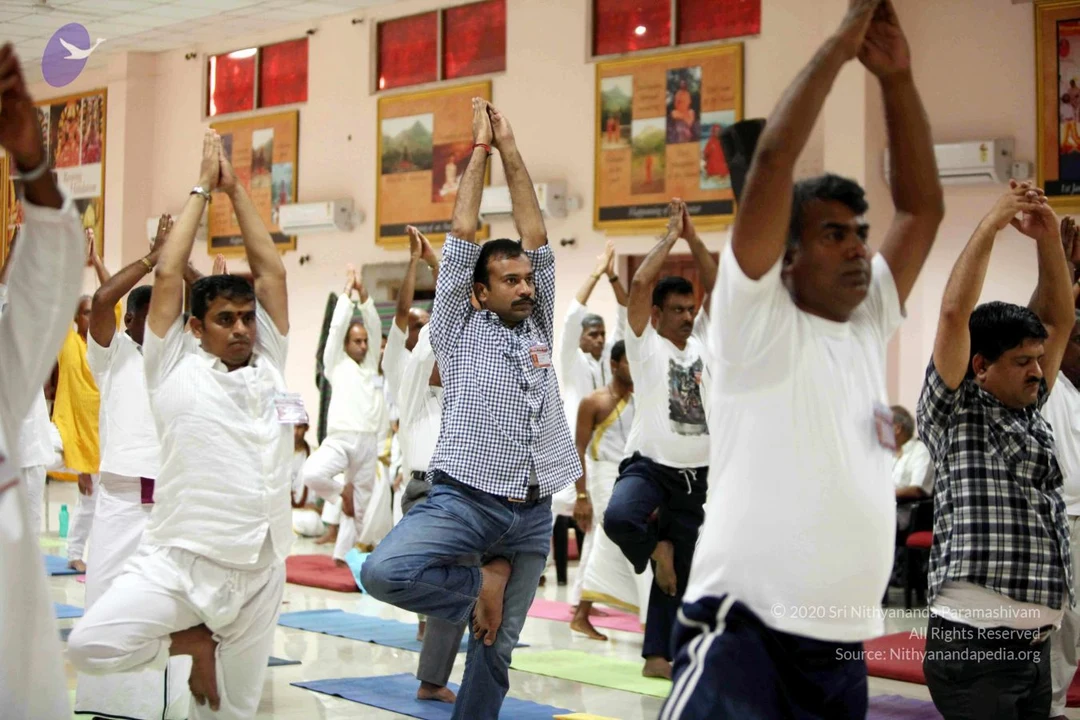
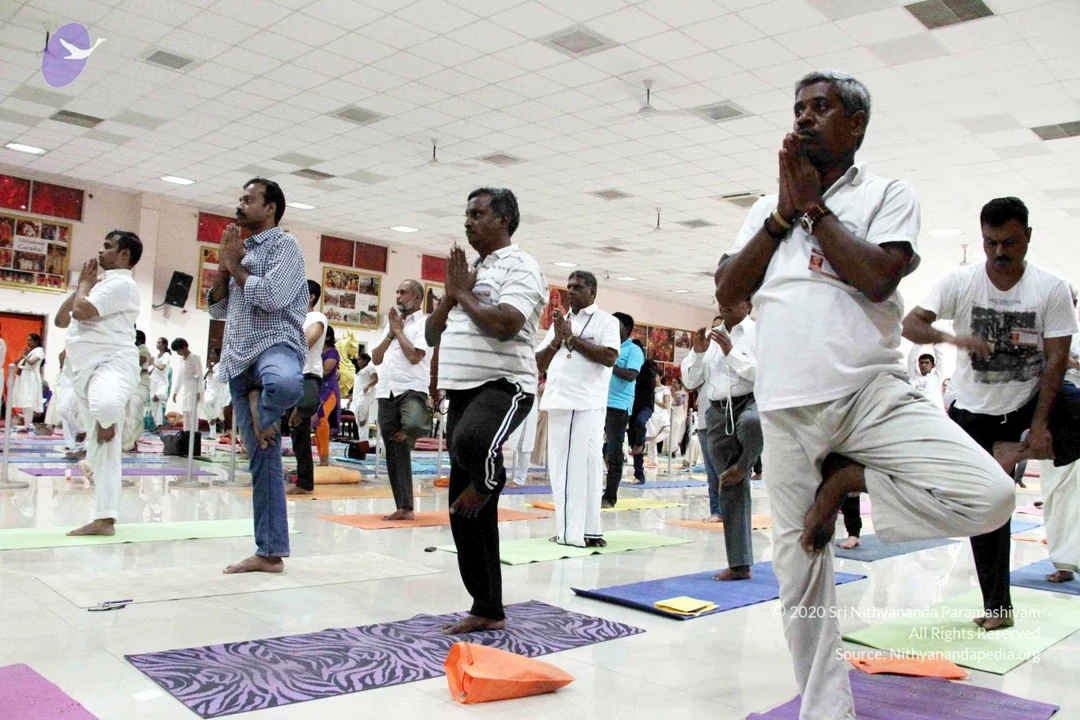
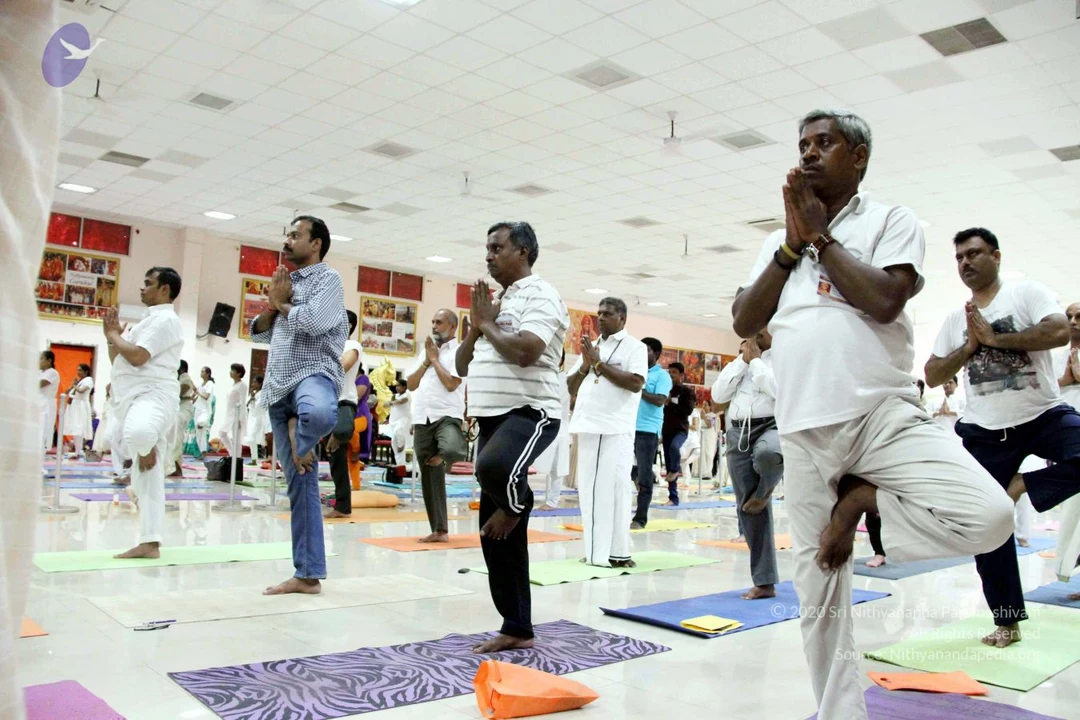
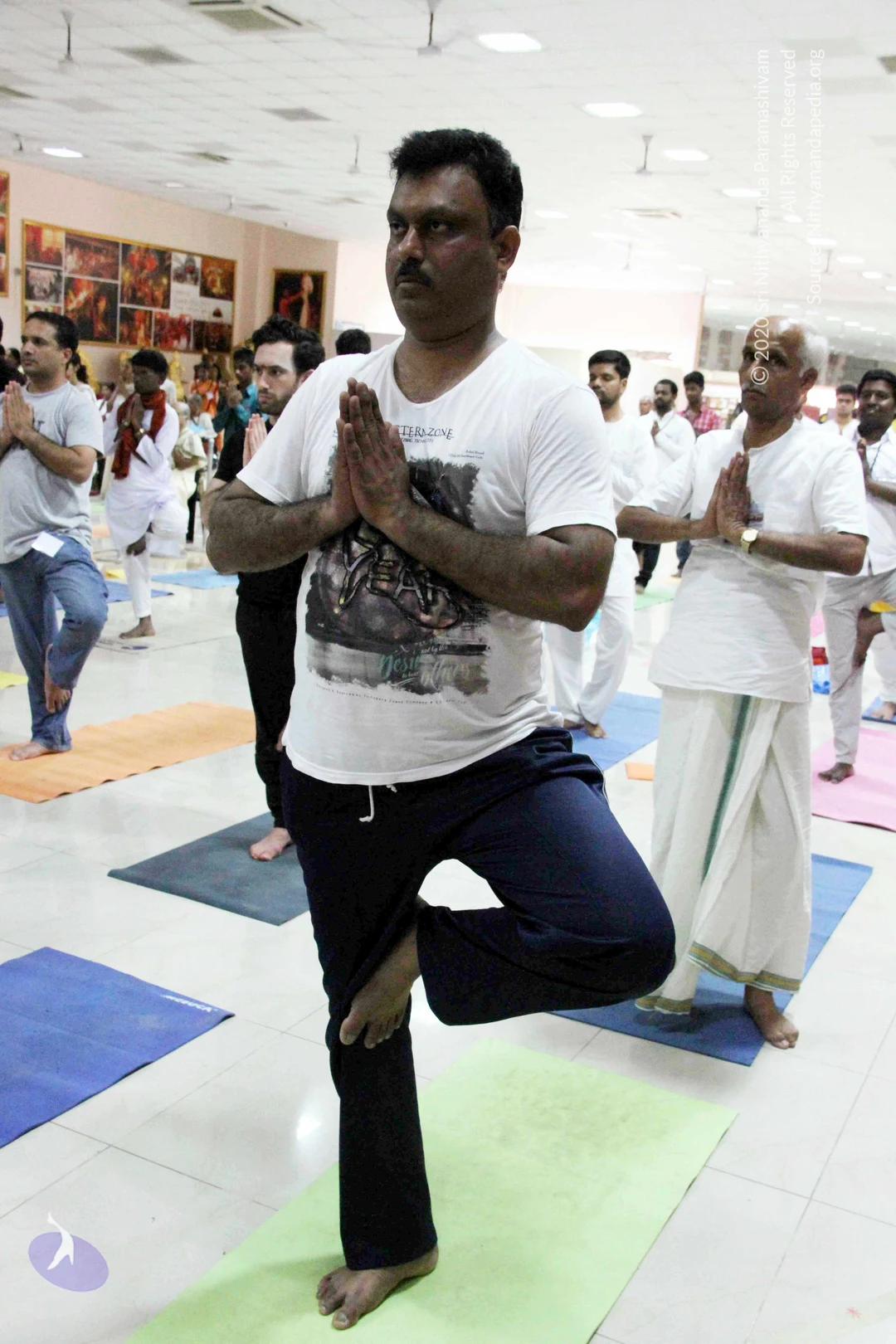
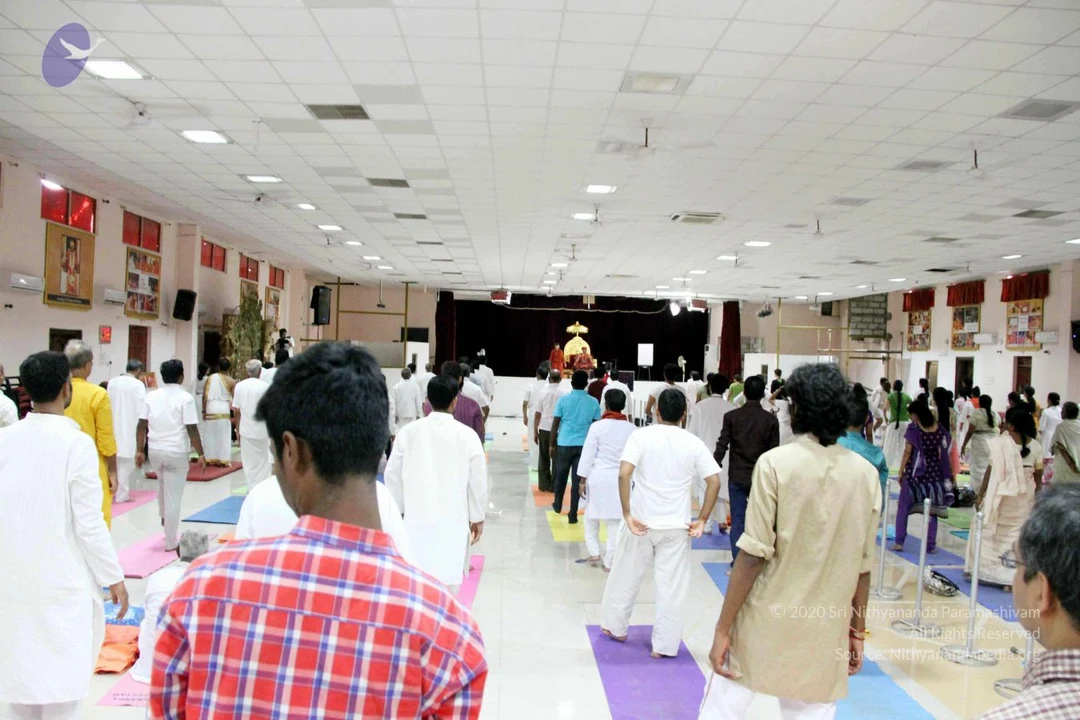
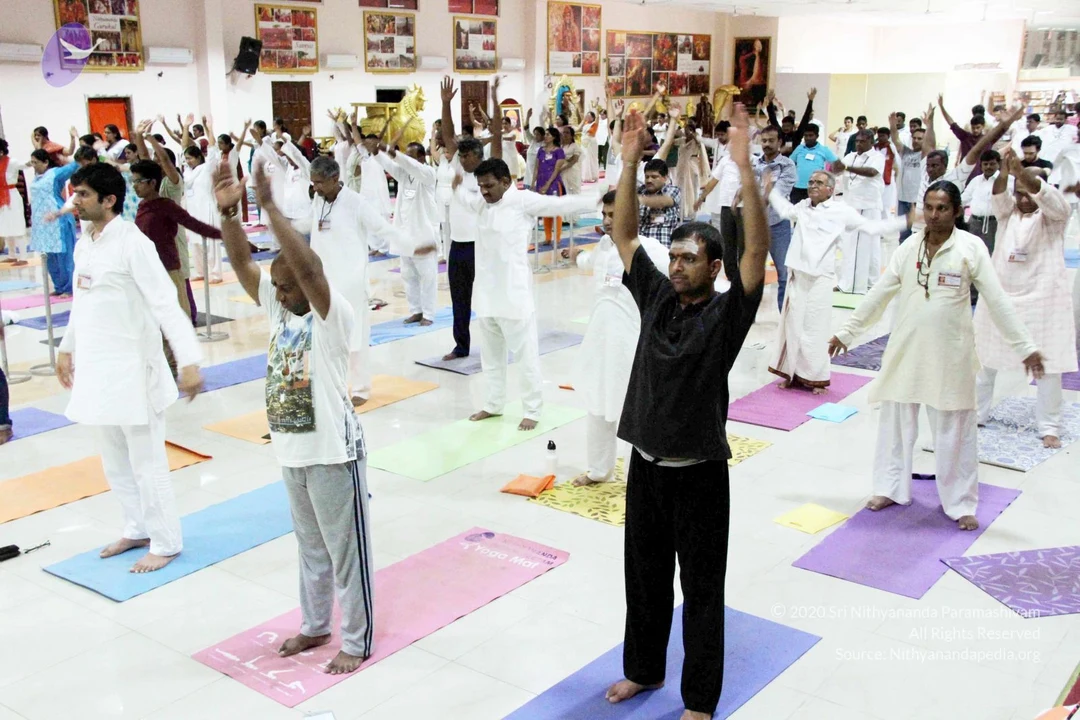
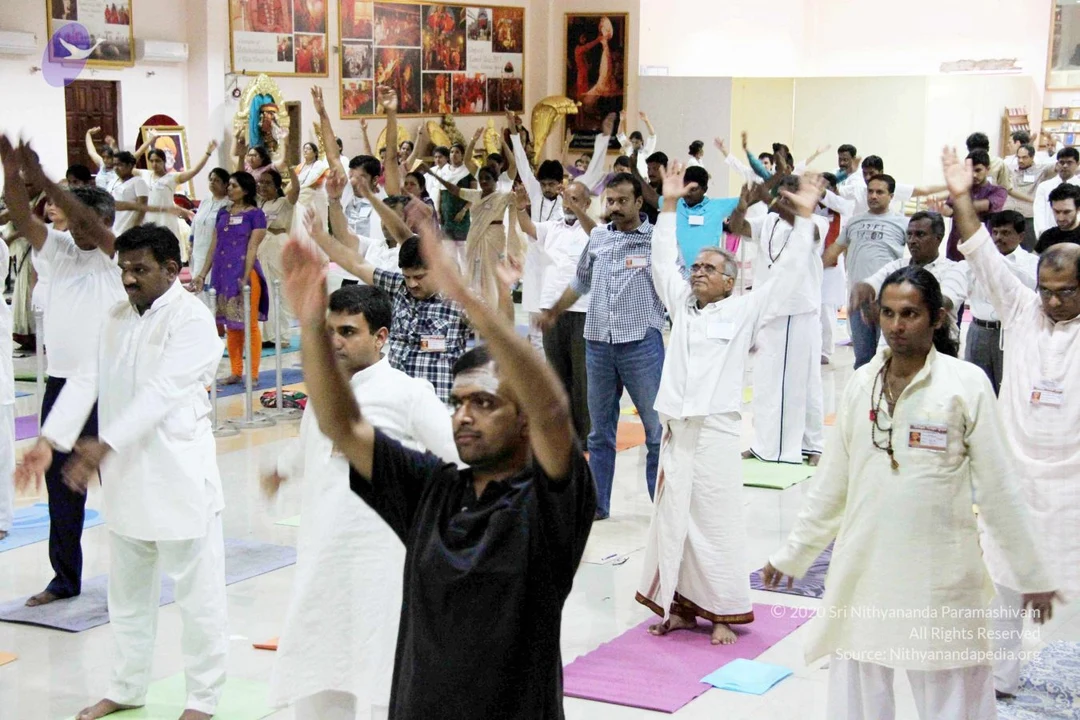
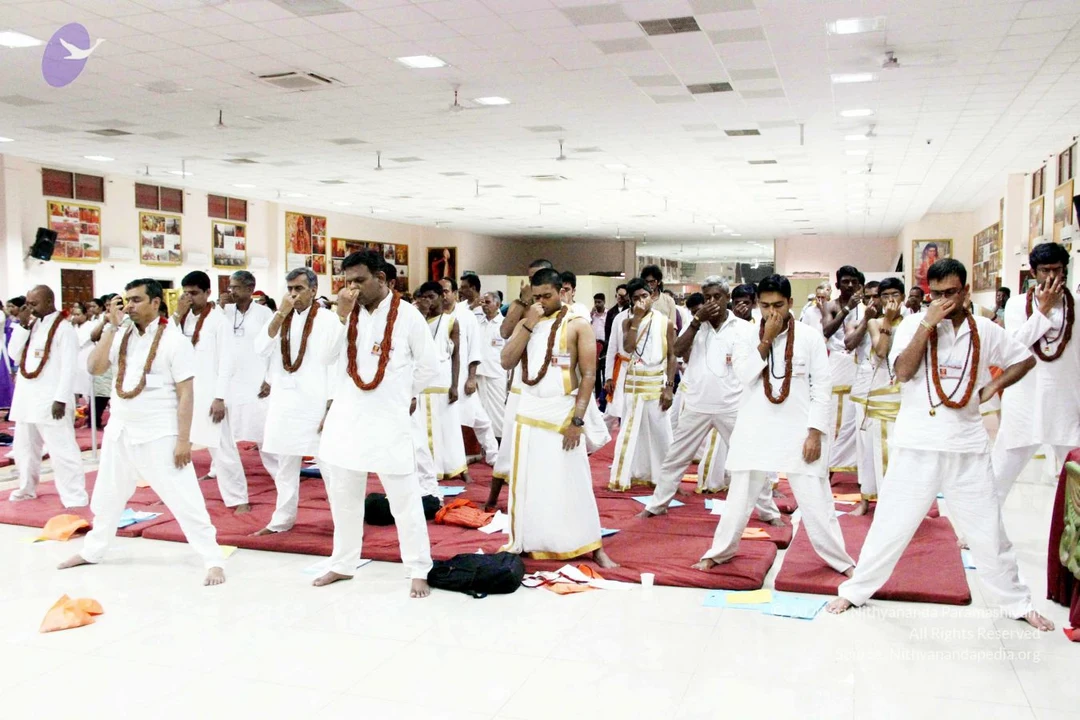
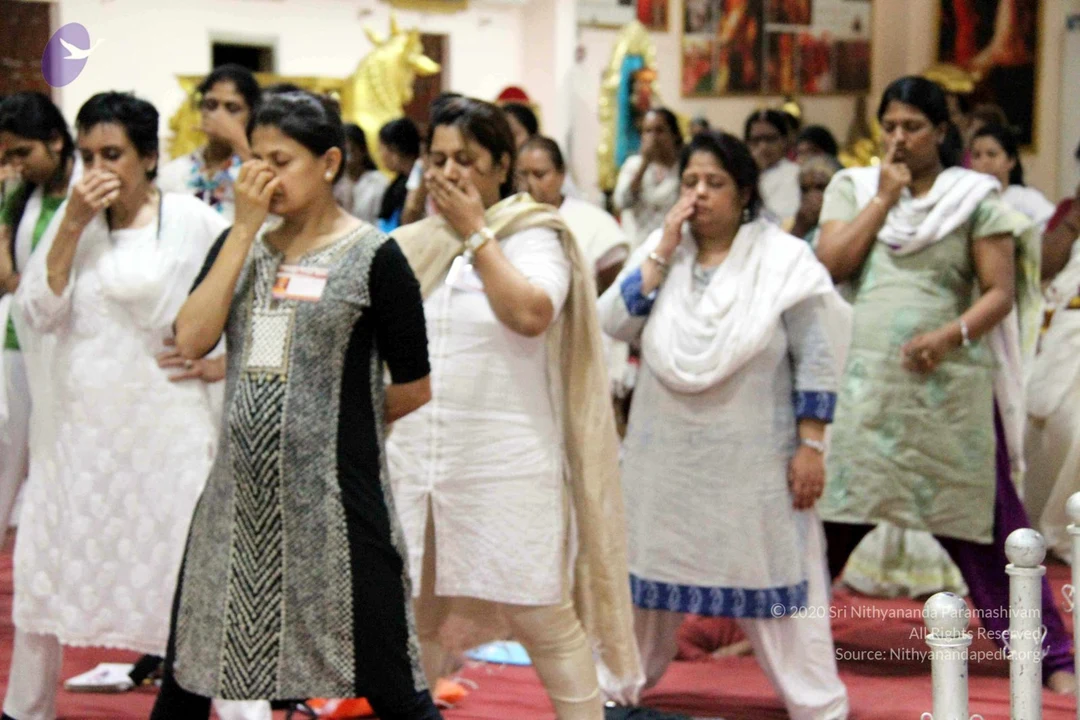
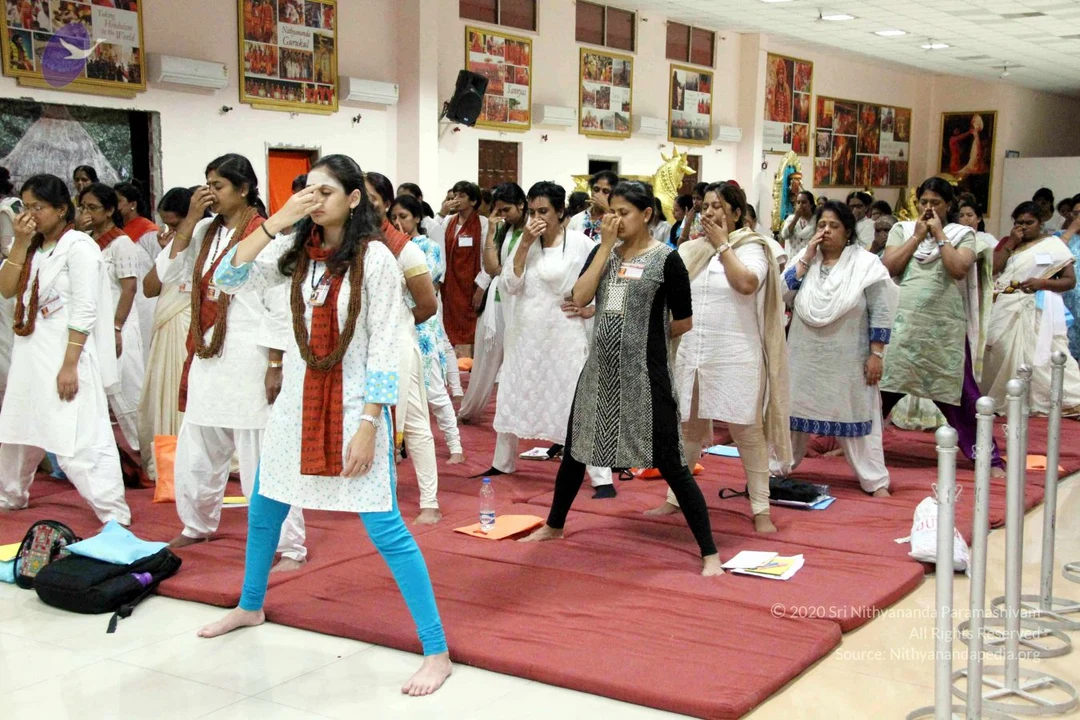
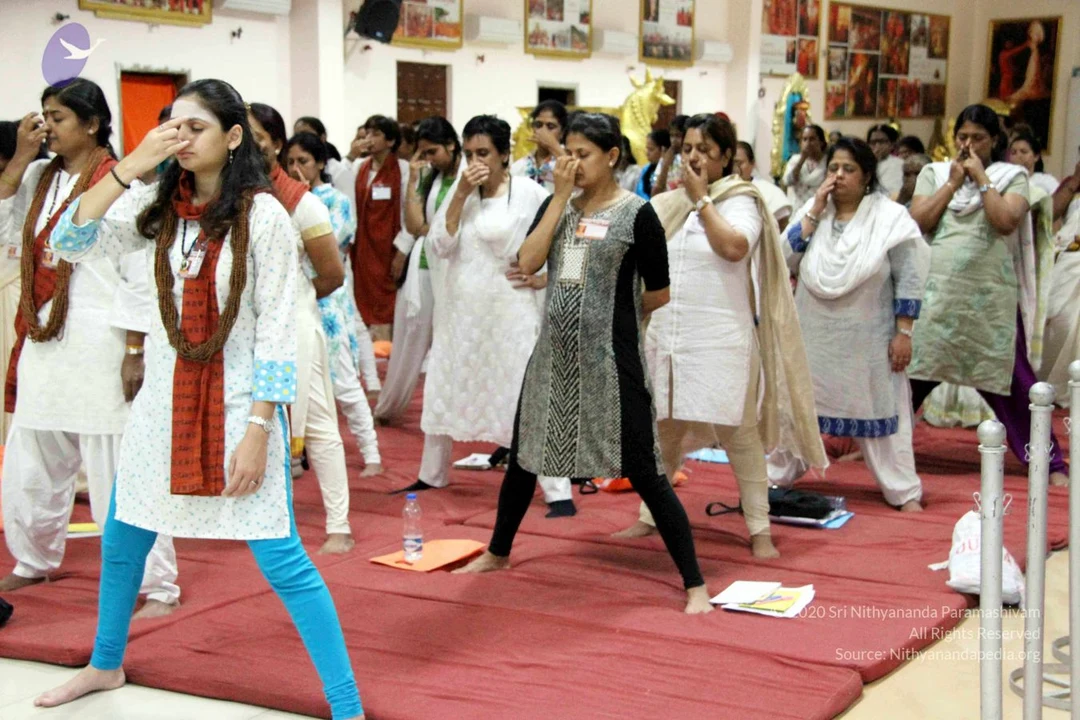
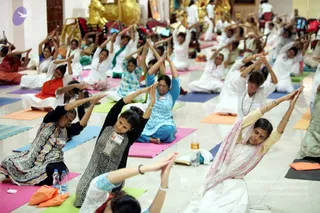
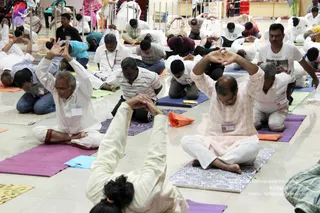
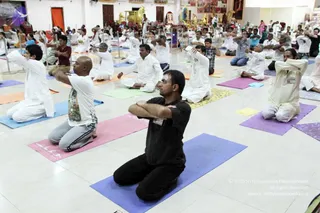
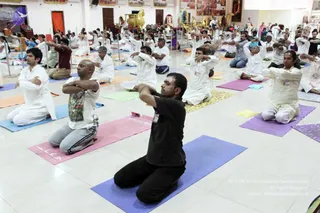
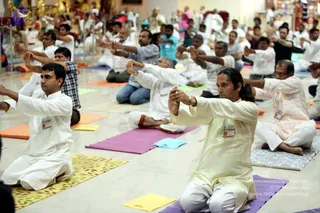
A large group of men in white kurtas and white dhotis perform a yoga session on coloured mats in a bright hall, many with arms raised overhead and palms pressed together in prayer, some kneeling and others seated cross-legged. Several wear white identification lanyards with name badges, and a man in a grey-striped shirt and a man in a checked shirt sit at the front right. The scene resembles a Nithya Kriya Yoga style group practice with a clean, tiled floor and overhead arms in a folded-hands posture.A large group of women sit on colourful yoga mats in a bright hall, arms raised overhead in a stretching posture. Many wear white or pastel salwar kameez and saris, with lanyards and name badges visible on several. Some wear orange or blue garments; a woman in the foreground right wears a cream sari with a pink shawl and bangles. Water bottles sit on the floor and a golden deity murti stands in the background, indicating a yoga program setting. The scene is a group yoga session.A photograph of a large group of participants at a yoga session on a light tiled floor, many seated on colourful yoga mats with arms raised overhead or hands pressed together in prayer position. Most wear white or light kurtas and pants, while others wear striped shirts, a pink checked shirt, or blue and grey tops. Some have name badges clipped to their clothing. Orange cushions and folded mats lie on the floor, with a metal railing and a seated woman with hair in a bun in the foreground.Photograph of a large yoga session in a bright hall with white tiled floor, where dozens of participants kneel on colourful yoga mats, many in white kurtas and white dhotis, others in casual shirts and trousers. Several have their arms folded across their chests or raised behind their heads in a stretch. In the foreground a man in a black t-shirt and black trousers kneels on a blue mat with a light mark on his forehead. Behind them gold horse statues, gold deity murti and framed religious pictures line the back wall, with a saffron cloth hanging at left. No single person can be confidently identified as the teacher from appearance, so the a person candidate is not established.A large hall full of participants kneeling on coloured yoga mats, many in white kurtas and white dhotis, others in dark or casual clothes, with arms raised and crossed over the chest in a stretching exercise. A man in the foreground wears a black top and black trousers with a white forehead mark, and a man at left wears white with grey trousers. Behind them, gilded horse figures and a golden deity murti stand near framed devotional paintings on the cream walls, and a small ID badge is visible on several participants. The setting resembles a yoga program hall.A photograph of a large hall where many people sit on colourful yoga mats, arms raised forward at shoulder height in a seated practice. In the foreground a man with long hair tied back wears a cream kurta and white trousers, with a name badge on his chest, and a man on the left wears a white kurta. Behind them rows of participants in white and pastel clothes fill the room, and gold ornate decorations are visible at the top.

Nithya Kriya Yoga Session -2
161 photosSource gallery
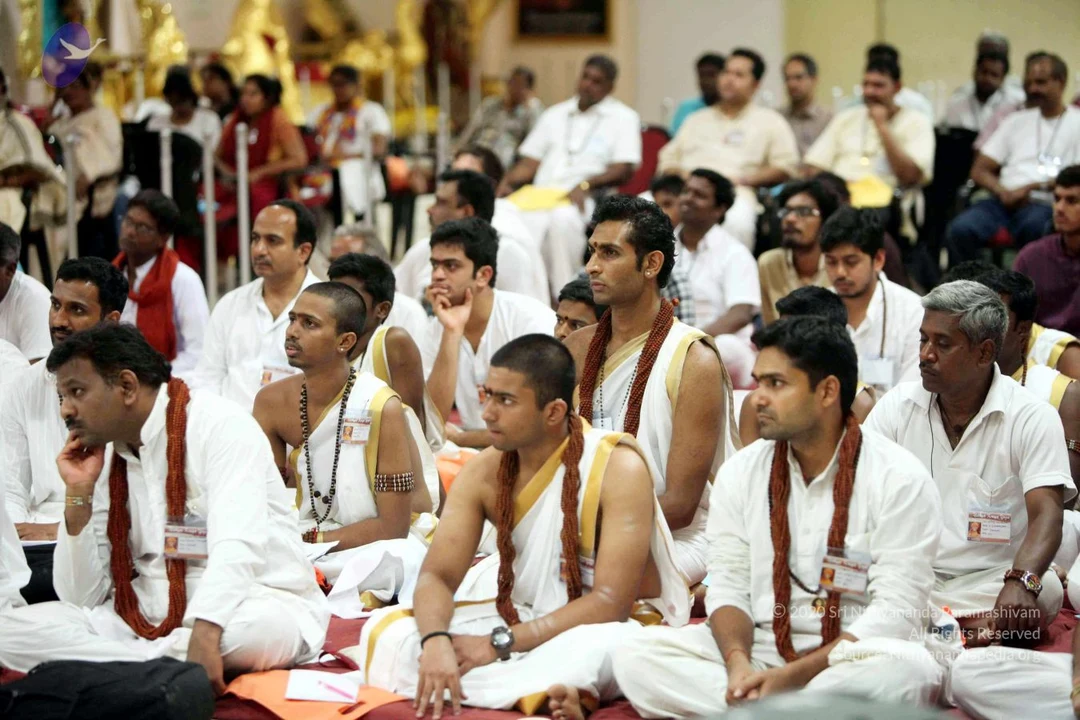
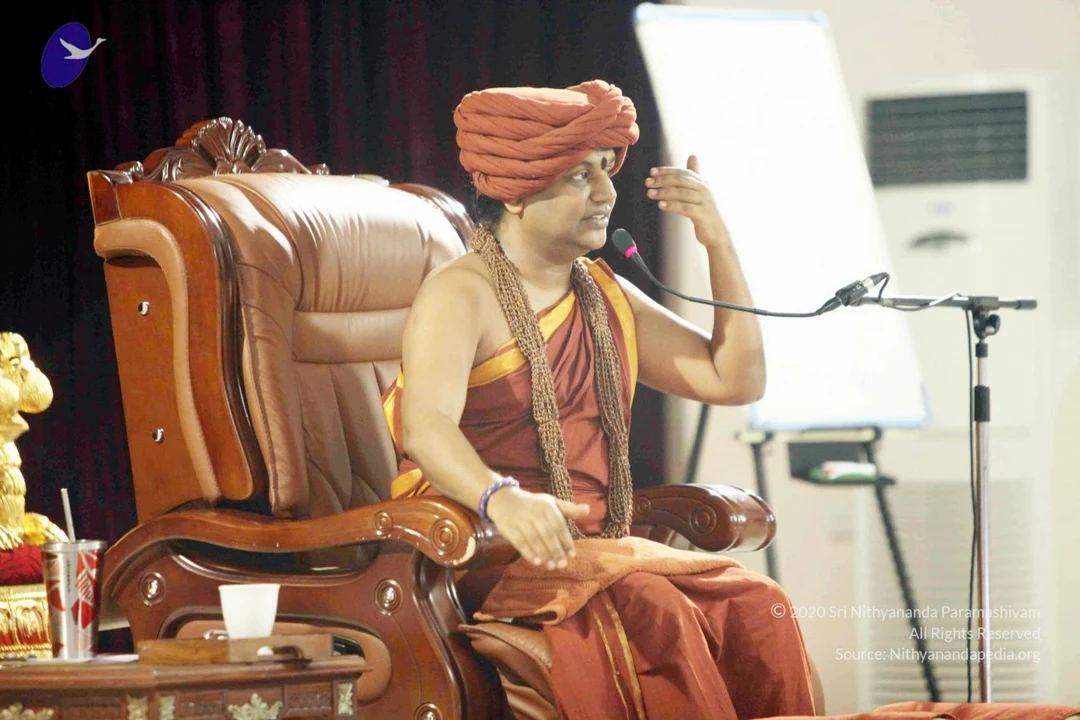
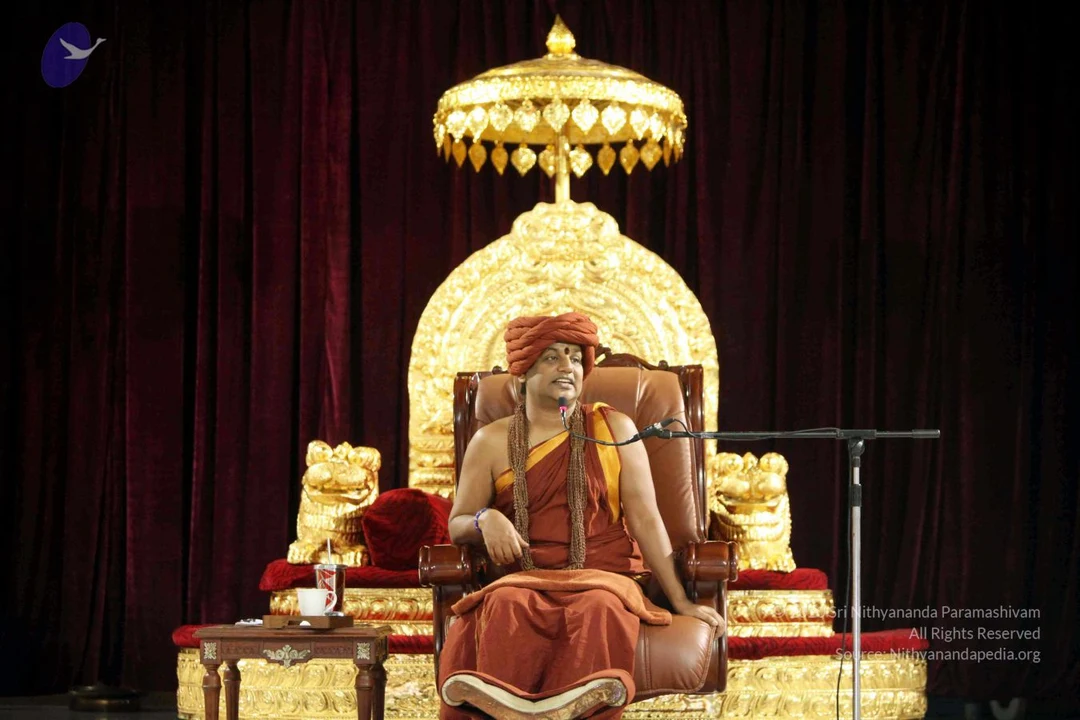
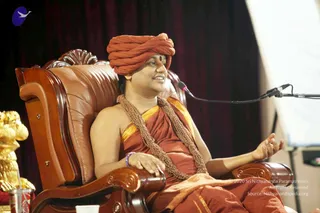
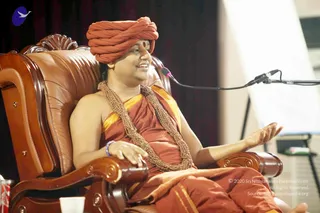
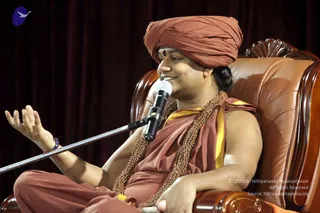
A man seated in a brown leather throne-style armchair with carved wooden armrests speaks during a teaching. He wears a rust-orange turban, an orange-red robe with gold-yellow edging, and a long brown rudraksha mala draped across his chest, with a red tilak on his forehead and a blue beaded wrist band. He gestures with one open hand. A microphone on a stand is at right, a golden lion figure is at left, and dark red drapes hang behind. Appearance-based cues: probable Swamiji (probable) in a teaching seat, with a turban, orange robes and rudraksha mala.A man seated in an ornate brown leather armchair with carved wooden arms speaks during a talk, one hand raised in an open gesture. He wears an orange-red turban, a red dot on his forehead, an orange-red robe with gold trim, and a long brown beaded rudraksha-style mala, with a blue bracelet on his wrist. A microphone on a stand sits beside him against a dark curtain backdrop. The image is a photograph, with a copyright line and source credit at lower right, and no visible crowd.A seated man in an orange-red turban and saffron-and-red robes, wearing a long brown rudraksha mala, sits in a carved wooden leather armchair before a microphone on a stand. He smiles and gestures with one hand, with a purple bracelet on his wrist. A small red dot marks his forehead. Behind him are dark red drapes and a white board on an easel.A photograph of a seated audience at an indoor program, with many men in white dhotis and white shirts, several wearing rudraksha malas and wrapped in yellow-bordered white shawls. A young man in the centre front has a shaved head, a bare upper body with a yellow-bordered cloth and a rudraksha mala, and a dark bracelet; another seated man on the left wears a white shirt and a rust-coloured mala. Name badges hang from their necks. Behind them, gold ornamental decorations and a golden deity murti are visible in the background, along with red-clothed attendees.A man seated in a large carved wooden throne with brown leather cushions speaks into a microphone on a stand during a discourse. He wears an orange-red turban, a rust-orange robe with a gold-edged yellow border, and a long rudraksha mala draped over his shoulders. His raised right hand gestures mid-explanation while his left hand rests on the armrest. A carved golden lion figure appears at the left edge, and a glass with a straw sits on a wooden side table. Behind him are a dark red curtain, a white flip chart and a wall-mounted air conditioner. The setting appears to be a satsang hall.A man in an orange-red turban and saffron-red robes with a brown rudraksha mala sits in a brown leather armchair on a red-cushioned gold throne platform, speaking into a microphone on a stand. Behind him rises an ornate gold throne back topped by a gold umbrella, flanked by gold lion figures. A red velvet curtain forms the backdrop, with a small wooden table holding a cup and saucer at left. The appearance is consistent with the page's a person label (probable), seated and speaking in a satsang-style setting, with a golden throne and umbrella.

Nithya Kriya Yoga Session -2
78 photosSource gallery
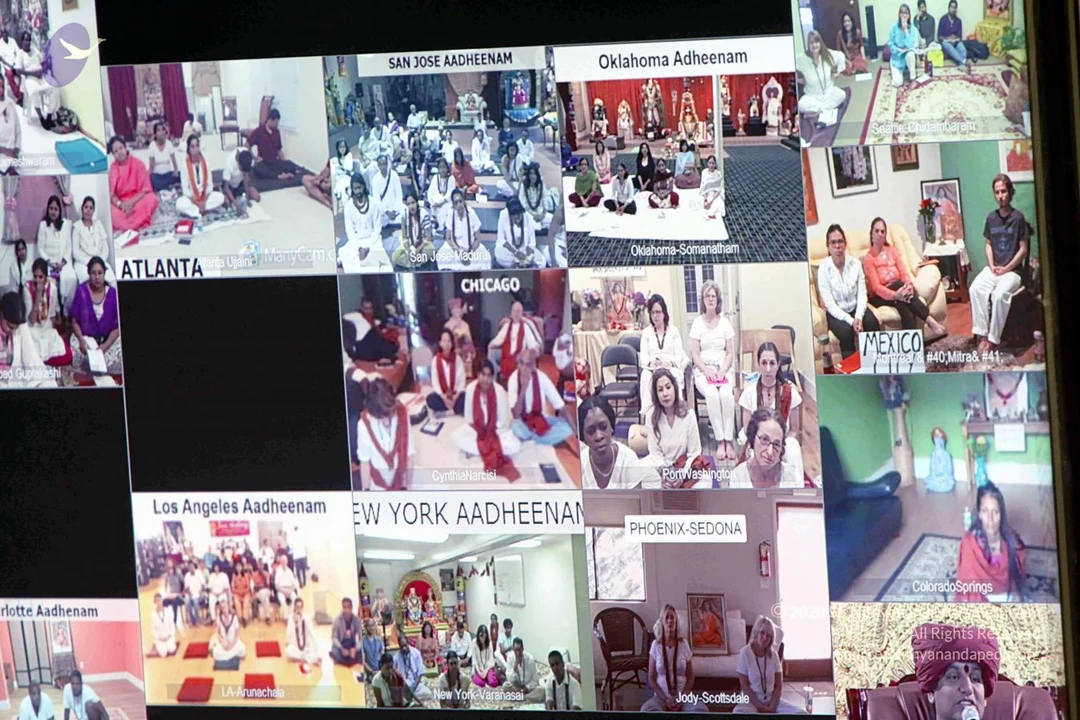
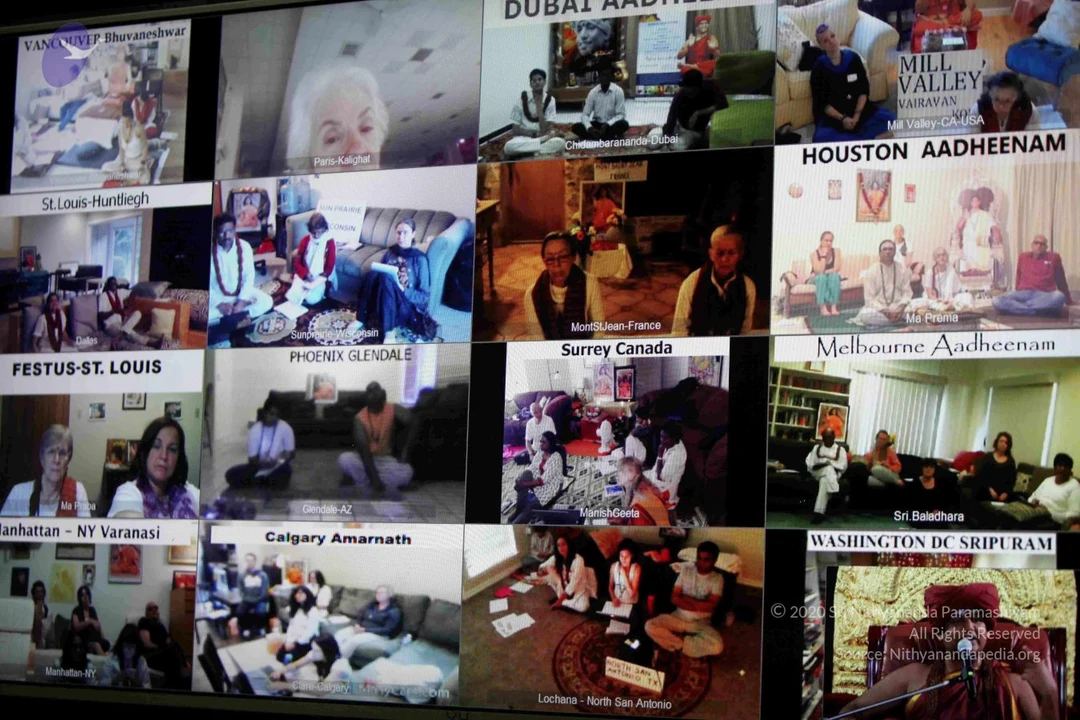
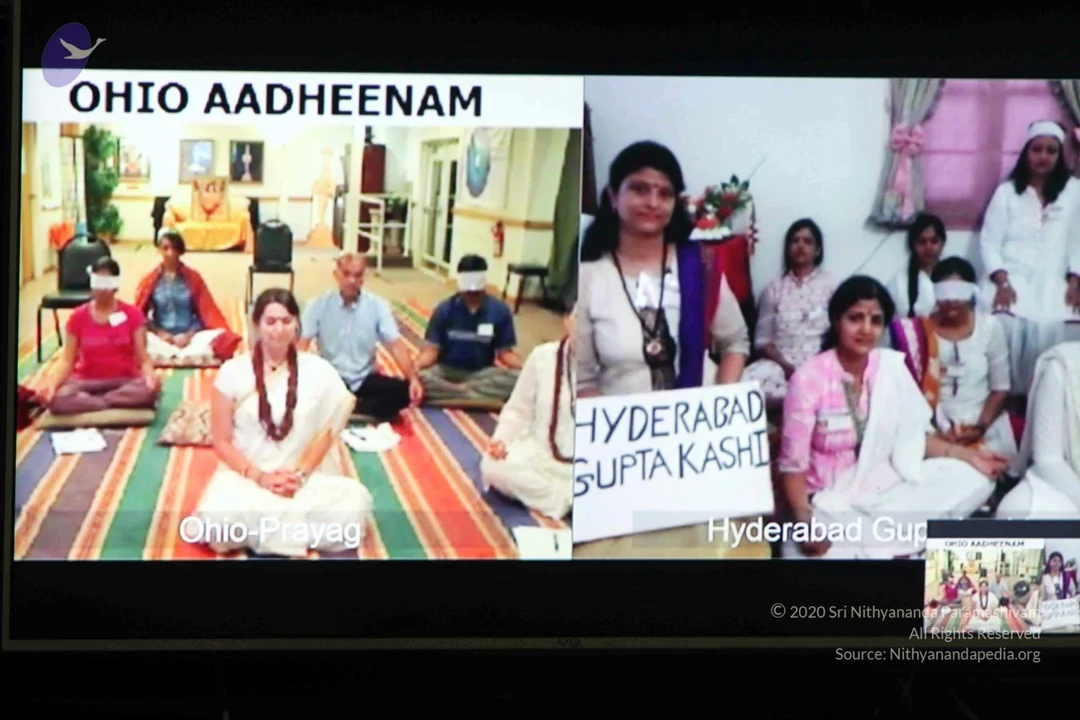
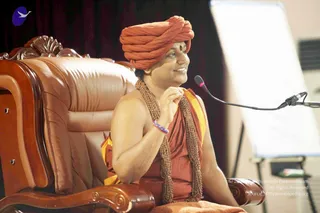
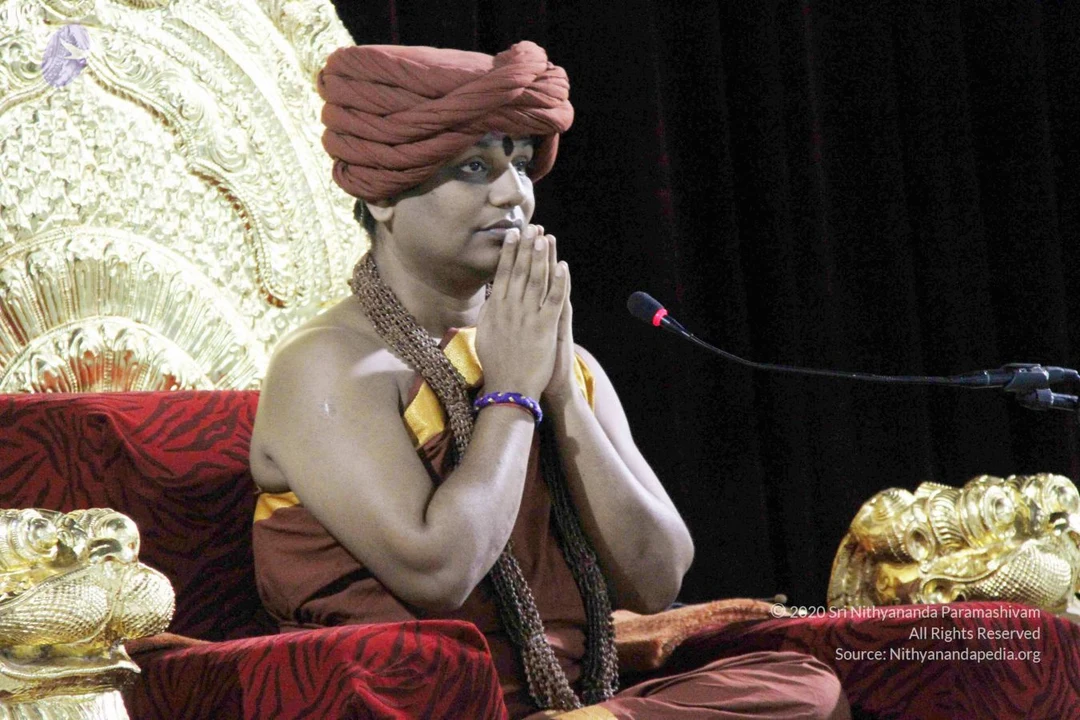
A man seated in a brown leather armchair speaks into a microphone on a boom stand. He wears a rust-orange turban with a red bindi on his forehead, a rust-orange robe edged with gold, and a long brown rudraksha mala draped over his chest. A bracelet is visible on his wrist. Behind him is a large ornate golden backdrop. A figure on a brown throne with rust-orange robes and a rudraksha mala is consistent with the page's a person cue; the appearance is recognizable enough to label as probable, and the seated person is the speaker at a discourse.A large screen displays a video-conference grid of many participant windows from Aadheenam centres, labelled with place names including Atlanta, San Jose Aadheenam, Oklahoma Adheenam, Chicago, Los Angeles Aadheenam, New York Aadheenam, Phoenix-Sedona, Mexico, Colorado Springs and Port Washington. Many participants in white and saffron or red clothing sit cross-legged on mats or chairs, some wearing rudraksha malas, while others sit on sofas in ordinary clothes. A deity altar with colourful murtis and framed images appears in several windows. A speaker wearing a dark turban is partly visible at the bottom right, speaking into a microphone.A man seated in a brown leather armchair with carved wooden armrests speaks into a microphone on a boom stand, smiling. He wears a rust-orange turban, a red-brown sleeveless cloth with yellow edging, and a beaded brown necklace, with a small red mark on his forehead. A dark red curtain is behind him. A logo appears in the upper left corner. The pictured figure matches the appearance of a person in a seated teaching posture; this is a person giving a discourse at a satsang.A seated man in a rust-brown turban and rust-brown robe with a yellow-gold trim sits cross-legged in a carved wooden armchair with brown leather upholstery. He wears a beaded rudraksha-style mala necklace, a red tilak on his forehead, and a wrist bracelet. He speaks into a clip-on microphone on a boom stand while smiling and gesturing with his open left hand against a dark maroon curtain. a person cues are the rust-brown turban, the rudraksha mala and the saffron-toned robe, but the face and appearance are not clearly established, so this is a probable candidate only.A photograph of a man seated in a brown leather armchair with carved wooden arms, speaking into a black microphone on a silver boom stand. He wears a rust-red turban, a red dot on his forehead, a rust-red robe with a gold border, and a long rudraksha mala. Behind him a large gold-toned backdrop shimmers. A blue bird logo appears in the top-left corner.

June 20th 2015

187 photosView all
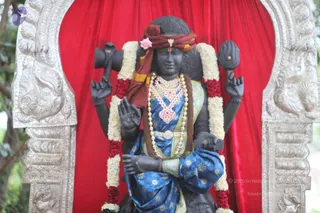
A dark stone murti of a four-armed deity stands in a silver-coloured ornate arch against a red velvet backdrop, with greenery behind. The figure wears a maroon and gold turban with a pink flower, a pink and red jewelled necklace, a gold beaded chain, and a blue silk garment with gold motifs and a green sash. White and red flower garlands drape over both shoulders. The hands hold a conch and a lotus-like object, with one hand raised in blessing. No people are visible.A smiling person in saffron-orange robes and an orange turban sits in a brown leather chair on a raised stage before dark red velvet drapes and an ornate gold throne with carved lion figures. A wooden side table holds a white cup and saucer and a glass. A long rudraksha-style mala hangs around the neck over a saffron shawl, and a microphone stand is positioned at the right. A gilded umbrella-like canopy hangs above the throne.A photograph of a person seated in an ornate brown leather chair on a raised stage before dark red velvet drapes. The seated person wears an orange-red turban, a saffron-and-orange shawl over reddish-orange robes, and long beaded rudraksha-style necklaces; one hand is raised in a gesture while speaking. A microphone on a stand is in front, and a white podium with a Yamaha keyboard or equipment sits in front of the chair. Flanking the chair are large gilded golden lion sculptures and a gold-framed arched backdrop with an elaborate gold chandelier hanging above. A small wooden side table holds a cup, a tea or water cup and a bottle. The seated person is shown in a discourse setting.A smiling person in a rust-orange turban and orange-saffron robes sits on a brown leather throne-style chair in front of an ornate gold carved backdrop with golden lion-like figures on either side. A red-brown rudraksha mala hangs across the chest, a small red bindi is on the forehead, and a microphone on a stand is near the face. A blue beaded bracelet is on the wrist, and a white cup with a red straw sits on a gold table at the lower left. The backdrop is deep maroon drapery.A figure in an orange-red turban and orange-red robe with a brown-beaded mala necklace sits smiling in a brown leather chair before an ornate gold throne backdrop with a gold canopy above, flanked by gold lion-shaped carvings and red cushions. A wireless microphone is clipped near the mouth, with a boom mic stand beside a white podium holding a Yamaha audio unit, a teacup and a small bottle on a wooden side table. Deep red velvet drapes fill the background.A man seated on a brown leather throne-style chair before a large gilded arched backdrop with ornate golden carvings and dark red drapes. He wears a rust-orange turban with a small red bindi on his forehead, an orange and gold robe draped over his shoulders, and long beaded rudraksha-style malas hanging to his chest. A microphone on a stand is near his face, a Yamaha audio unit sits on a wooden lectern in front of him, and a water bottle and a cup with a straw are on the left. Golden lion-like carved figures flank the throne.