Skip to content
Thursday

20 June 2013

Empower yourself with completion.

Dated photos
154
Source pages
1
Media
2
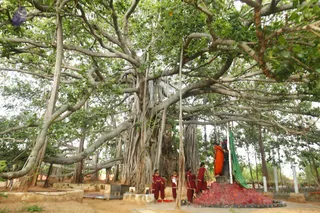
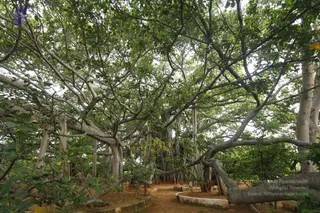
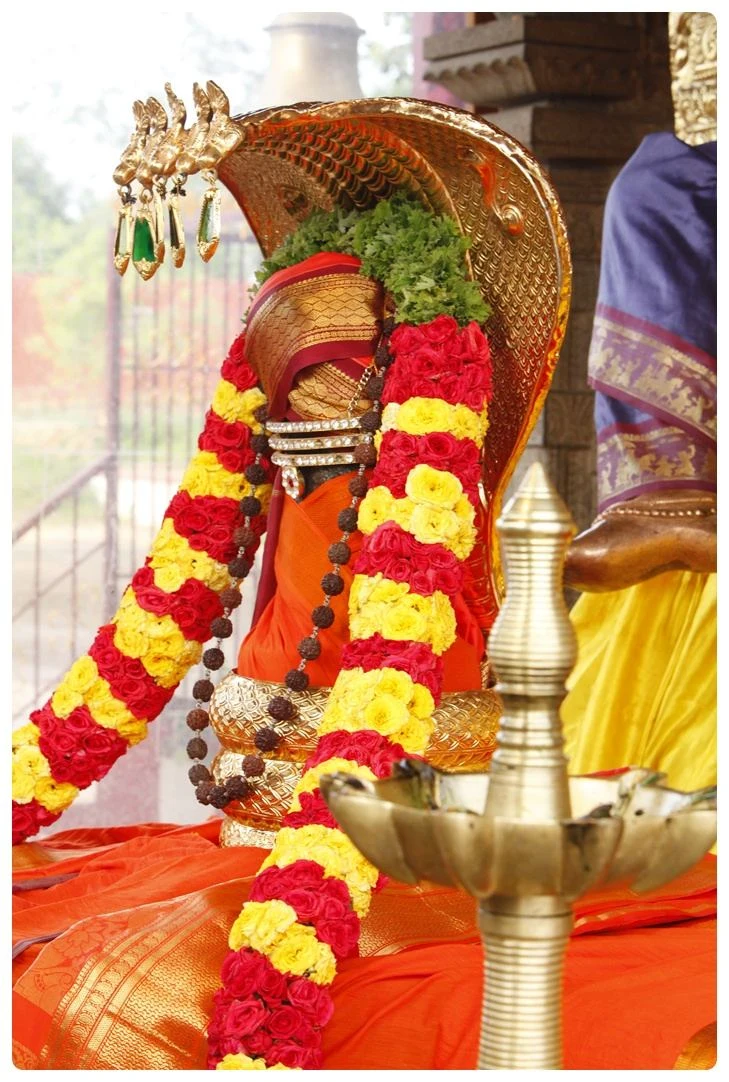
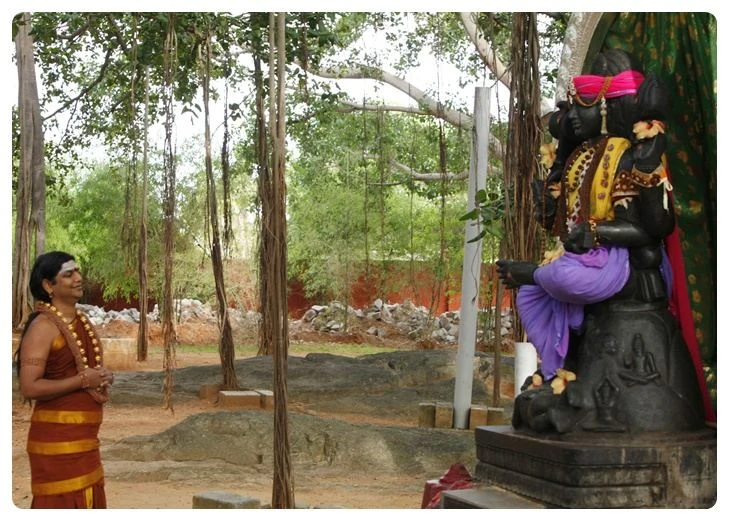
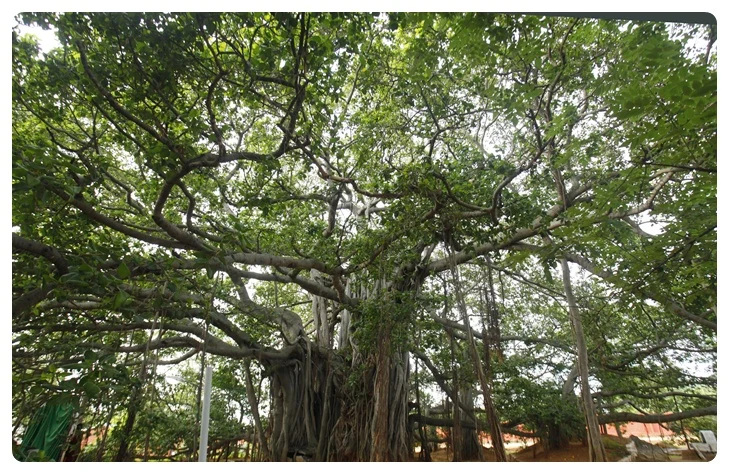
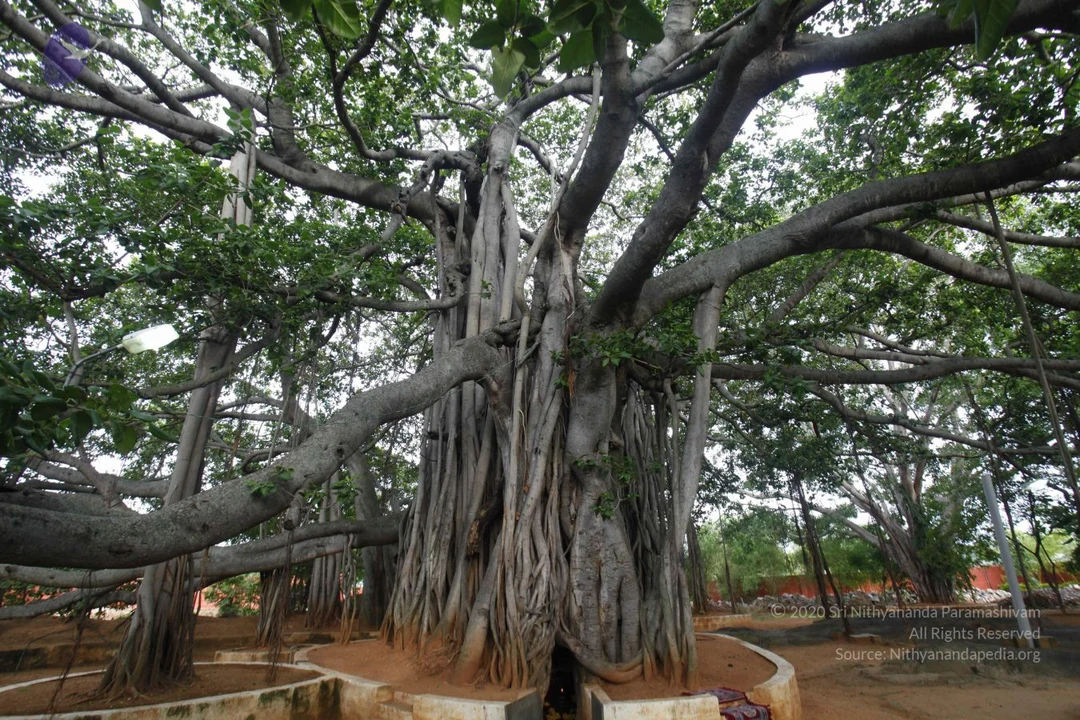
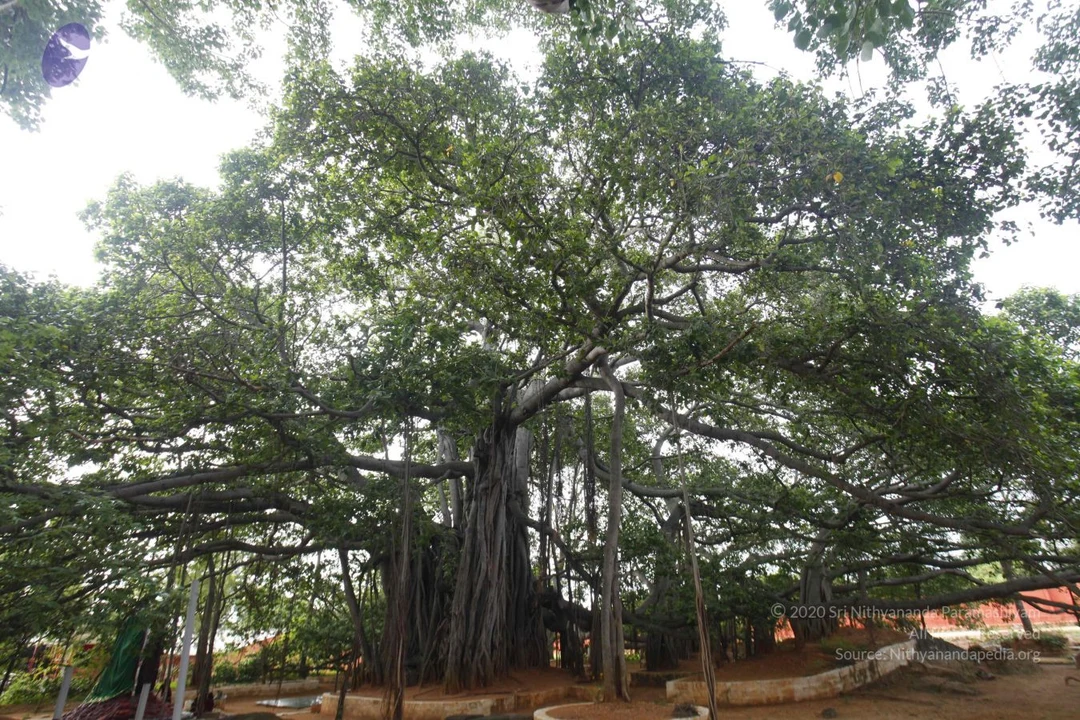
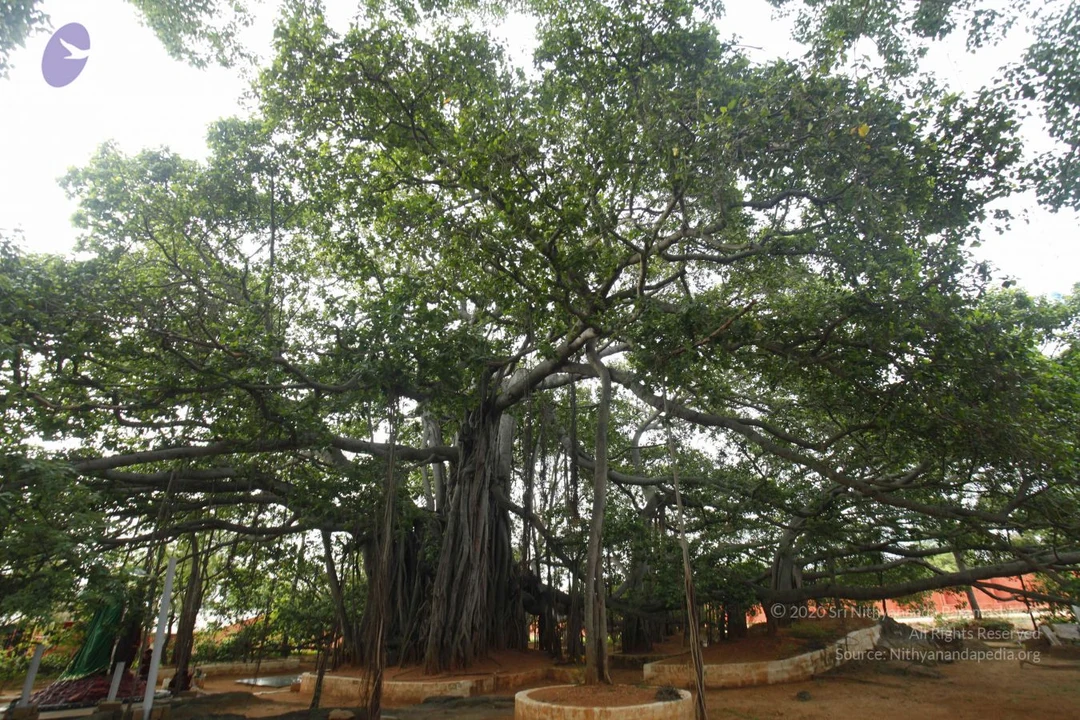
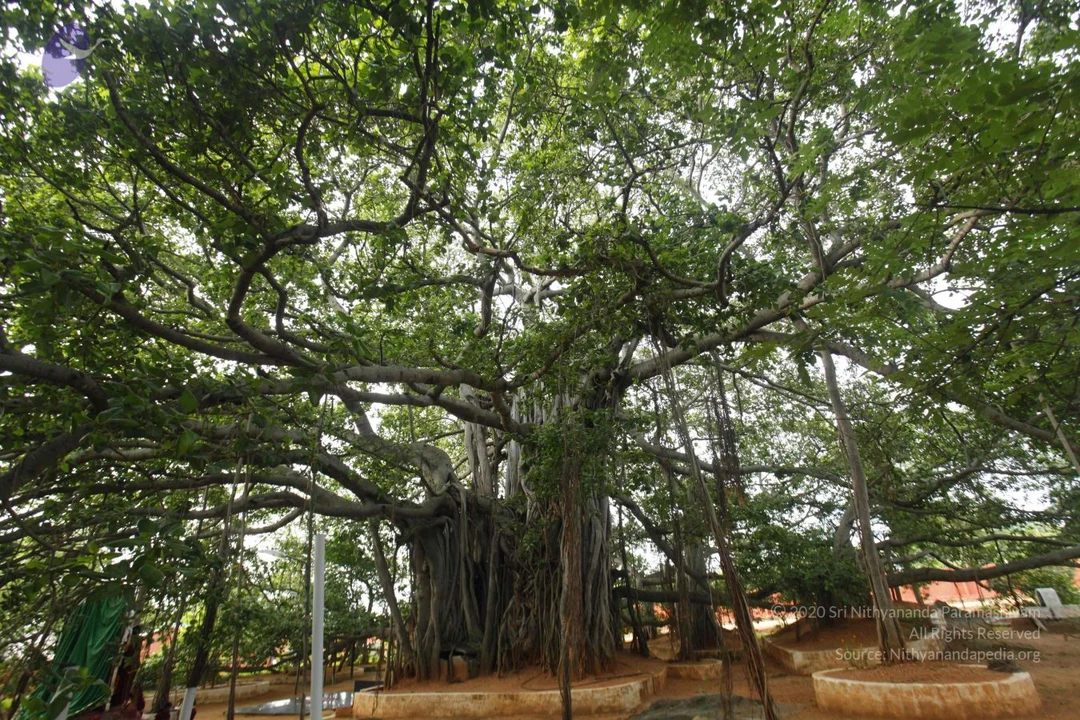
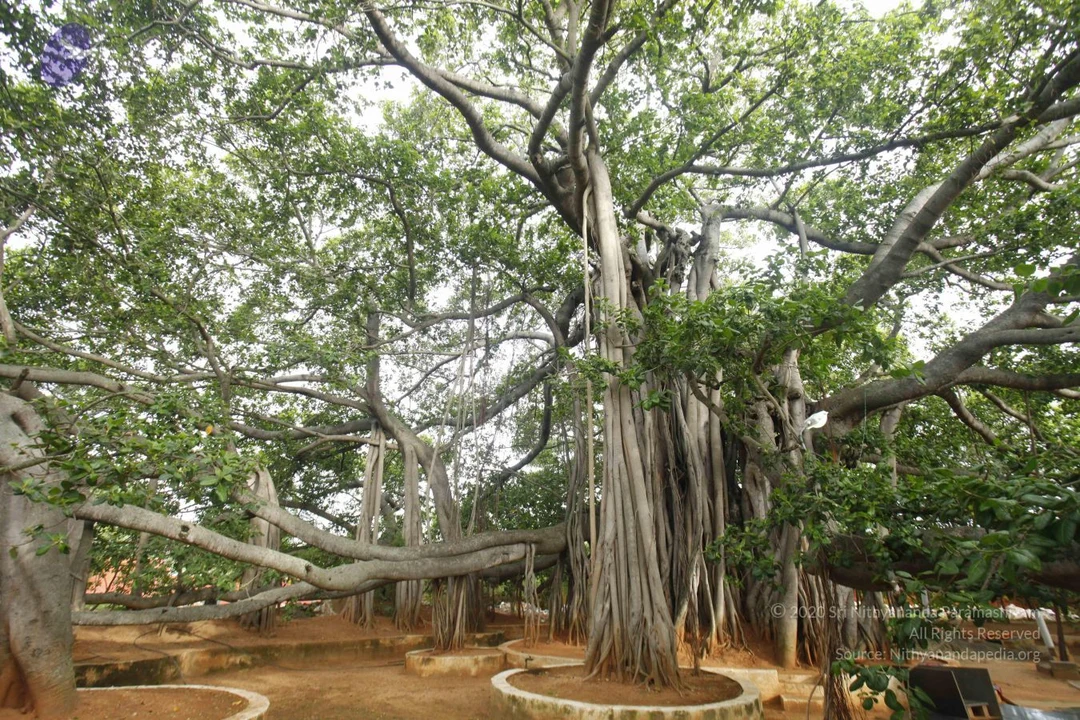
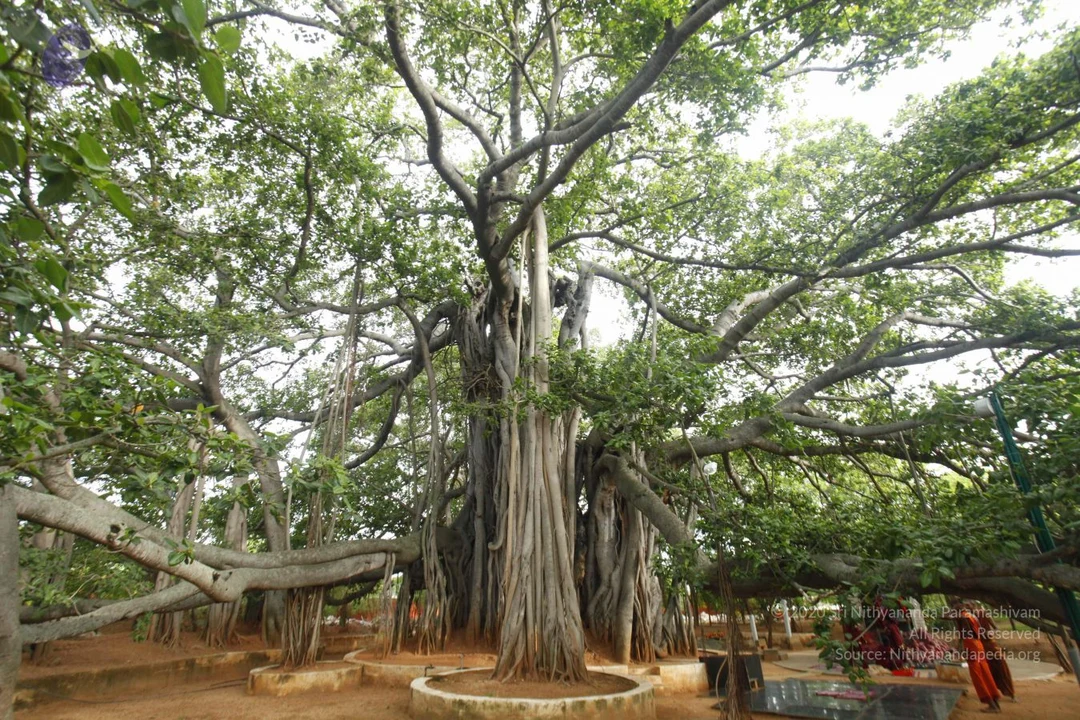
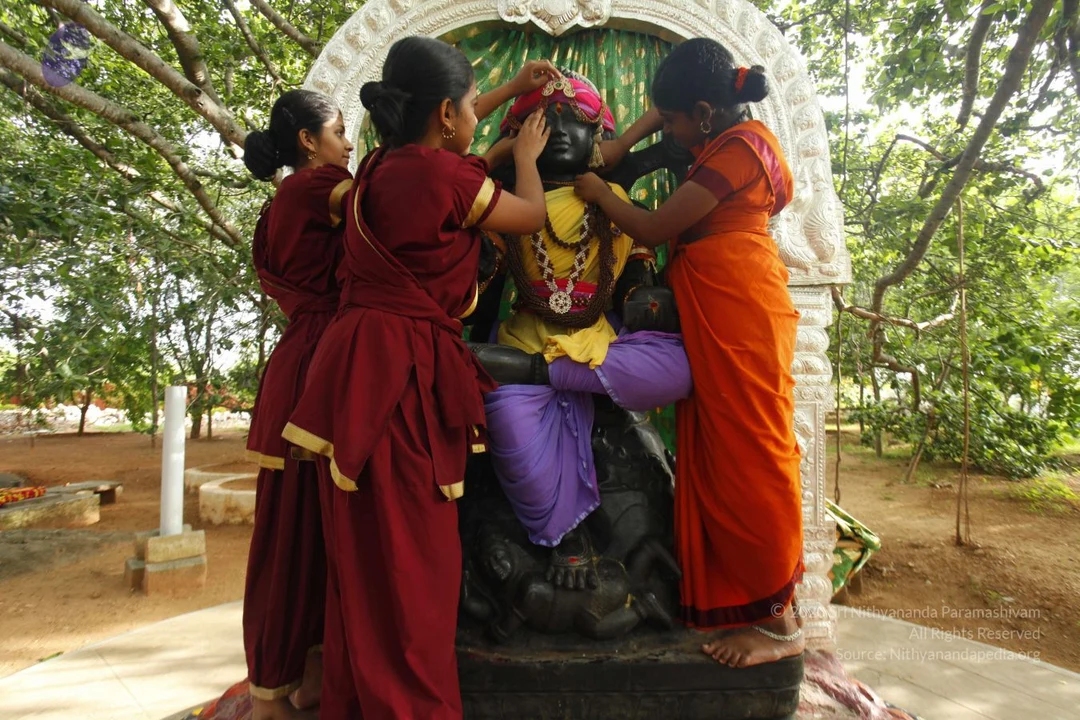
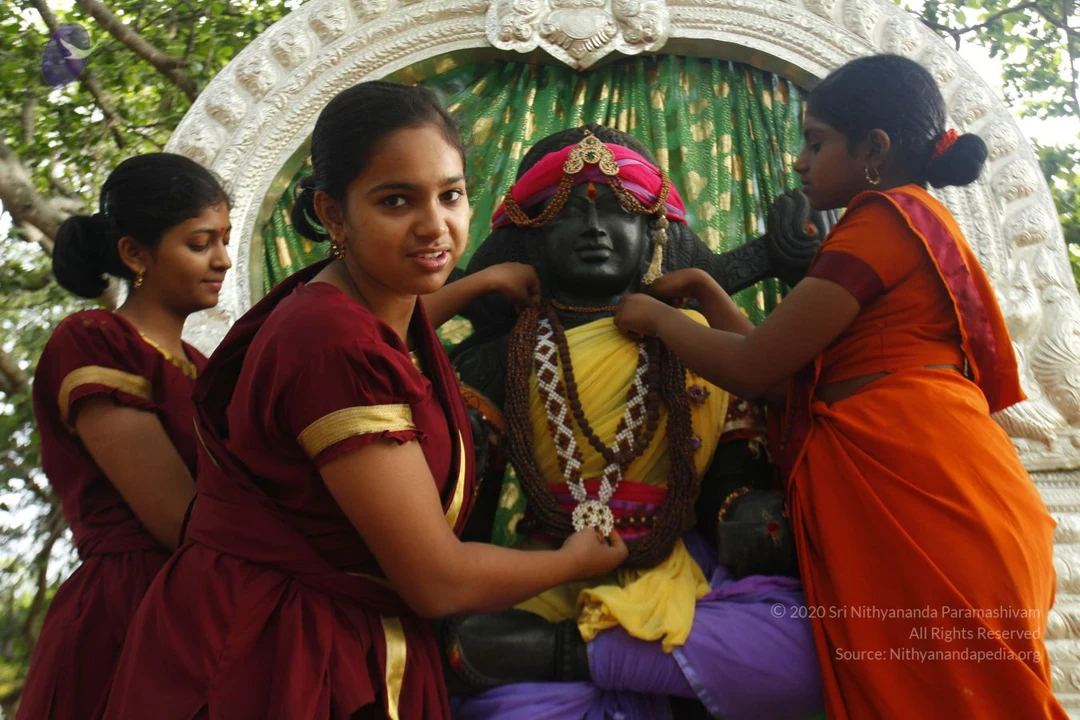
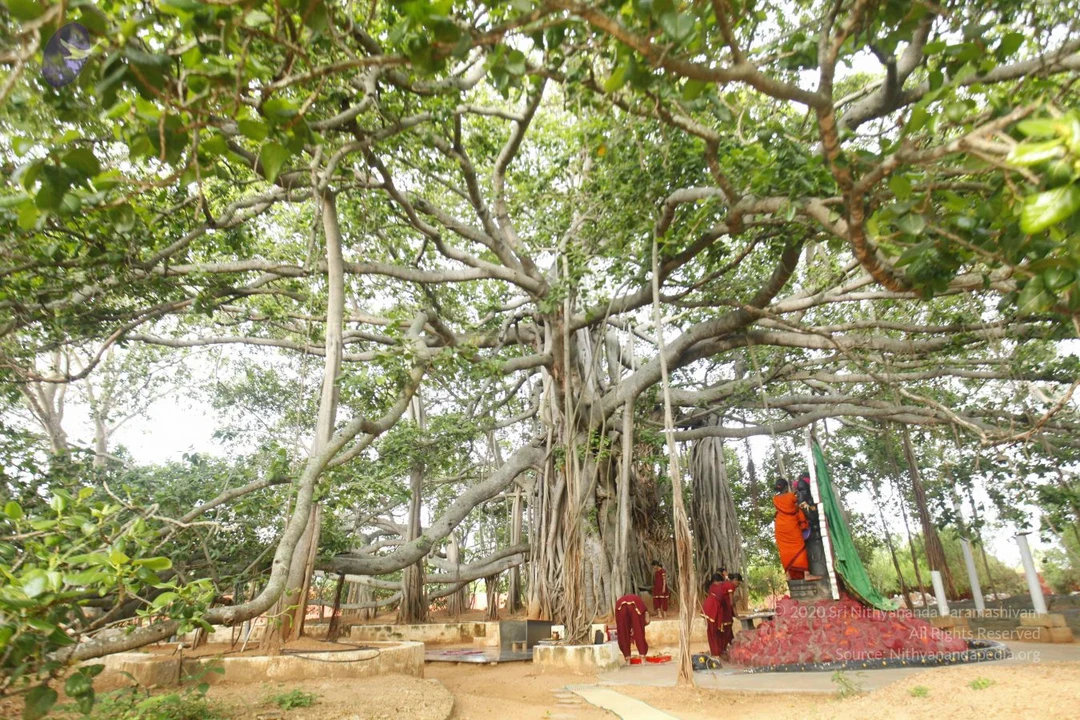
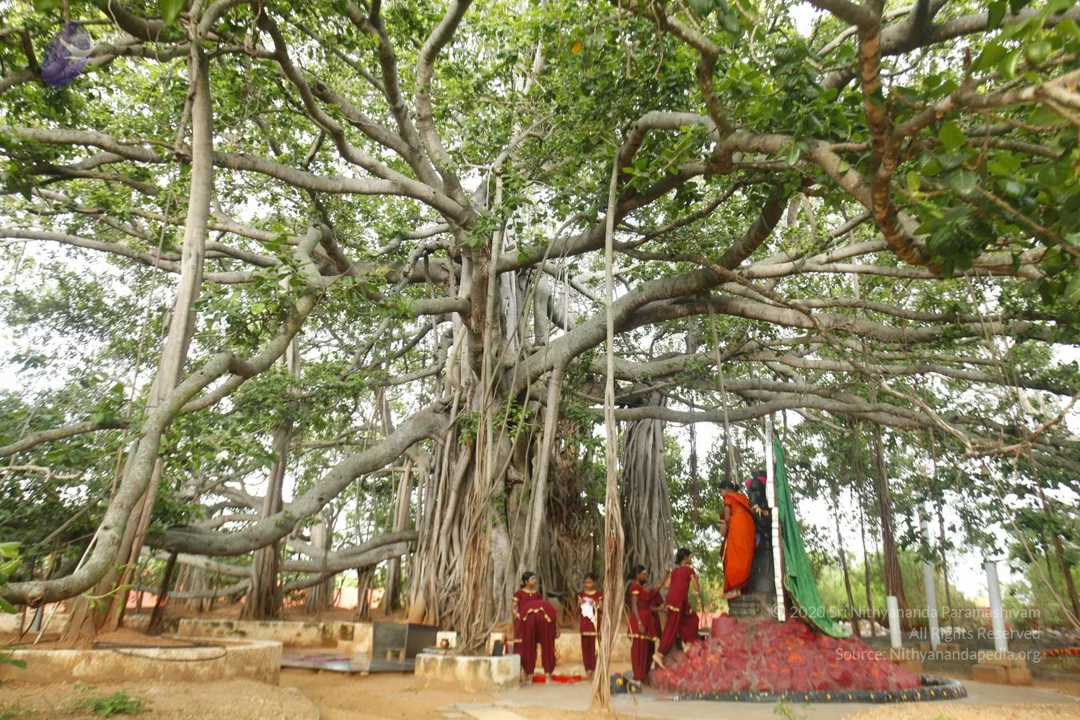
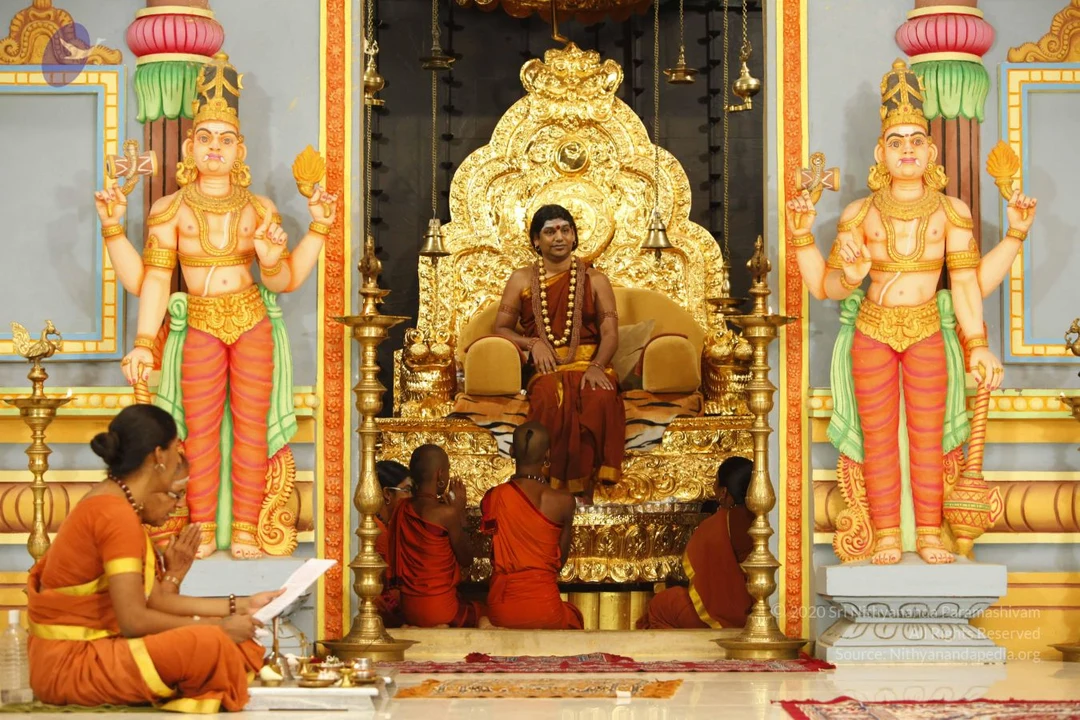
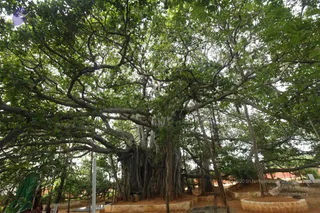
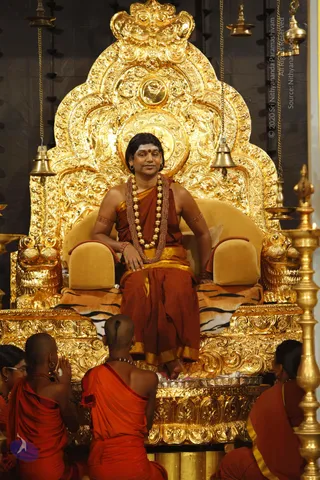
A large, spreading banyan tree with dense green foliage and many aerial prop roots dominates the scene. Beneath its canopy stands a raised stone platform with a dark statue and red flower offerings piled at its base. A woman in an orange sari stands near the platform, and a green cloth hangs down beside it. Five people in deep red garments stand around the base of the tree and platform, some with hands joined. Sandy ground and low stone walls surround the area under the open sky.A figure seated on an ornate golden throne (peetha) at the centre of a richly painted hall, flanked by two tall painted dvarapala-style guardian figures with multiple arms, crowns and gold ornaments. The seated figure wears an orange-saffron dhoti and shawl, a rudraksha mala around the neck, and sits beneath a gold canopy hung with bells. In front, a woman in an orange sari with gold border sits on the floor with folded hands and a book, while several saffron-robed attendants sit near the throne steps. Brass oil lamps (deepas) stand along the sides, and red and patterned carpets cover the floor. a person: the seated figure has a rudraksha mala and saffron clothing on a throne, consistent with the page's claim, but the face and build are too small to confirm reliably.A large, sprawling banyan tree with many spreading horizontal branches and dense green leaves fills the frame, its aerial prop roots hanging down around a reddish-brown earthen ground. Circular low white-painted stone borders surround the tree bases. No people are clearly visible; a small figure may be partly hidden in the shade at the centre-right, but it is not distinct. Pale grey trunks rise at the right edge. Bright sky shows through gaps in the canopy.

June 20 2013

Original wiki page
Contents

Title:

Empower yourself with completion.

Description:

In today’s morning Satsang, Paramahamsa Nithyananda declares that our first priority in life should be to complete all incompletions. Decisions should not be made nor should we start anything new without being in completion. All planning should come from a space of completion. Otherwise, the decisions we make will come from our patterns not us. We can achieve everything with the power of completion as it eliminates all powerless moments in our lives. Completion is God! Complete! Complete! Complete! Only when we are complete can we experience, live, and teach the power of the 4 Tattvas.

Link to Video:

VideoAudio

Transcript

Nithyanandeshwara Samaarambhaam Nithyanandeshwari Madhyamaam | Asmath Aachaarya Paryanthaam Vandhey Guru Paramparaam ||

I welcome you all with my love and respects.

00:00:56 Hindi - 00:01:07

I welcome all the devotees, television viewers, samajis, satsangis for the Nithya Satsang.

Before entering into the satsang, I have to express my strong condolences and the heartfelt prayers to all the devotees, Hindu pilgrims who have passed away in Kedarnath in the flood situation. Something like a 65,000 people are stranded and only 10,000 are rescued so far. Around 5,000 are missing so death toll may go up in thousands. Two hundred Government and private lodges are covered in almost few hours by the flash flood and the cloud burst. Kedarnath Temple other than the Garbha Mandir, nothing is left. Even the Garbha Mandir is submerged in the slush and the nature’s fury has completely washed away Adi Shankaracharya’s Samadhi. Adi Shankaracharya Samadhi is not even there now and I express my deep prayers and strong condolences to all the people who passed away. I pray to Mahadeva Kedarnath to liberate all the souls who left the body in your vicinity and we have also sent immediately our sannyasis. Turiyananda has already started working with other Hindu organizations which are working on giving relief works but still we are not able to reach the place because there is no access all the access is completely damaged and all the temple staff and Shri Mahants, Naga Sadhus who were protecting the temple, taking care of all the jewels, gold, silver, all of them are missing.Not single one, of course there is very less chance anyone of them can be alive because the whole thing is submerged at least 20 feet height the slush has covered and the temple actually belongs to our Peetha, Mahanirvani Peetha, and Shankaracharya’s Samadhi belongs to Mahanirvani Peetha. It’s unfortunate - just like last time when Amarnath devotees faced difficulties Dhyanapeetam did relief work surely we will be doing relief work this time also we’ll be sending a group of volunteers and lot of money, food, medicines, clothes, everything. Already I sent two of our sannyasis to study and immediately inform us so that whatever is required is sent. If you are experienced in working in these terrains and interested in volunteering there, you can send an email to our en sharing, Dhyanapeetam will take the responsibility and send you as our team but one thing if you are not experienced don’t try to go out of enthusiasm then somebody has to do relief work for you , somebody has to attend to you. So only if you are trained to live in those terrains and help people work I request send an email to [email protected]. It’s the worst tragedy Kedarnath Temple faces it is one of the Jyotirlinga not only the temple belonged to our sampradaya one of the Jyotirlingas, and from the time of Mahabharata this temple is well-known it’s re-established by Adi Shankara and Adi Shankara left the body there, Adi Shankara’s Samadhi is there. I sincerely pray to Kedareshwar to liberate all the souls who left the body.

<00:08:09 Hindi - 00:08:59>

I’ll enter into today’s program, Nithya Satsang I will speak on karma and completions. I’ll continue on karma and completions. Danse suniya listen as I defined yesterday the incompletions you continue to carry is karma, incompletions you continue to carry is karma. Listen every disease I tell you if you continuously complete, complete, complete, many psychosomatic diseases will not even start in your system, can be completely avoided like diabetes, blood-pressure. Many of these psychosomatic disorders won’t even start.The incompletions, incompletions you carry in your system is powerful enough not only to create disorders in the body it can create disorders, permanent disorders in the mind.

<00:12:44 Hindi - 00:13:09>

Understand karma, karma is not just effect of incompletion, karma can be cause for more and more incompletions. Listen, karma cannot be just the effect of earlier incompletions karma can be the source for new incompletions. Once the incompletions start either you have to be moving towards completion or more and more incompletion you cannot just keep quiet as I said life is a verb, not a noun. Life is a happening either you move towards more completion or go on be creating more and more incompletions.

Understand 00:14:01 Hindi -00:16:58

It is unfortunate human beings do not understand what karma can cause in you. Don’t allow debt, enmity, fire, incompletions even little bit left out even if a little bit of fire is left out it can grow and engulf. Even if a little bit of debt is left, it can grow and swallow all your wealth. Even a little bit of enmity is left, it can grow and destroy your life. Even if a little bit of incompletions are left, it can grow and completely destroy you mentally. Understand incompletions left in any form leads to more and more incompletions and difficulty. I request all the disciples, devotees, to complete incompletions should become the first priority in the life. Completing the incompletions should be the first priority in your life. Completing the incompletions should be the first priority in your life. That should be the first thing in your life.

20:00 min

Sometimes it is so unfortunate we don’t do first things first. We think we will find our job, we will find our spouse, we will find our house, then we will start incompletion. No! Then we think we will start incompletions. No! When you are in incompletion, you will attract a wife who is in incompletion. When you are in incompletion, you will attract a house which is in incompletion. When you are in incompletion, you will attract a job in which you will not be stable. First thing you need to do is clear your inner space. Space corruption is the worst thing! Space corruption is the worst thing that can happen in your life. With corrupt space, nothing can be done. Whether you want to start building your new house, you want to start your new career, you want to start your new job, you want to start your new life, you want to start a new business, new career, anything you want to start new, I tell you, first do completion. Do not rush in making decisions. Before completion, any decision you make will be of patterns, not of yours! It will be of your patterns, not of yours!

“Hindi Translation”

Understand, anything, anything with which you plan your life should be in completion. Are you using your cognition for your life, complete the cognition? Cognition should be in completion. Are you using your mind? It should be in completion. Are you using your words? It should be in completion. Everything you use, everything you use to plan for your life should be in completion. When you are not in completion, even listening to these fiery spiritual truths you sleep!

Sometimes people ask, ‘How do I know whether my cognition, mind and whatever I use to plan my life is in completion or not?’

Yes, you will see very clearly, if powerless moments are, again and again, repeated in your life, you are in incompletion. If there is no powerless moment in your life throughout the day, you are in completion. That is all!

“Hindi Translation”

Only one person living in completion can be an inspiration for millions of People, whoever sees him, will at least know this is possible! One man started swimming in the water is the reason for millions of ships now floating in the ocean! When one man demonstrated swimming is possible, all other human-beings had the courage. When they had the courage they can float, then the field of floating, means today millions of ships floating has happened, because one man decided to swim on the water! I tell you, today all the spiritual knowledge is available just because one man has decided to define the power of root-patterns on human mind. Because one man has decided to live in completion, today all the science of completion, science of enlightenment exists! Go on, go on, go on completing. Don’t leave any being with whom you have incompletion. Reach out to everyone and complete with everyone. Because, even a little incompletion left can twist and pervert the way you think about you and others, the way you think about you and the world. So, first thing needs to be done is completion in your life before anything you start. Anything you start, you need completion. Before beginning a career, complete with everything. Before building a house, complete with everything. Before beginning learning, complete with everything. Before beginning a new lifestyle, complete with everything. Before beginning a spiritual practice, complete with everything. Before beginning a religious ritual, complete with everything. Before beginning anything, complete with everything.

“Hindi Translation”

Knowledge, knowledge about completion is the basic survival need for every human-being. If you are cornered, complete. If you are confronted, complete. If you are in conflict, complete. If you are feeling powerless, complete. Every situation, first do completion. Completion is Ganesha Pooja! In Hindu tradition, what we call “Ganesha Pooja” is nothing but completion! Start everything after completion. Before beginning anything, do completion. That is why, even before beginning sannyas I tell people, take a little time for completion. During completion don’t take any decision of going out of sannyas and living in sannyas. First do completion, and then decide. Completion, completion, completion is life. When you complete, you will be in the right space to do pooja, meditation, tapas, yajna, dhaana. Everything, everything is possible when you do completion. Everything is possible when you do completion. Understand, you don’t know the power of completion. The power of completion is nothing but the power of God! Whatever the power of God can do, everything can be achieved just by completion.

“Hindi Translation”

Before you begin the life, all Gurukul kids listen, at least one year you should spend your life aiming, concentrating on completion, because you guys will have less incompletions now. Spend next one year, along with your education, every day spend a little time on completing with people. Whoever you met in your life with whom you carry incompletions, complete, complete, complete. Completion eliminates all the powerless moments of life. Every powerless moment in your life is eliminated by completion. When you are in completion, even Lord of Death cannot kill you, because Shiva will be there to protect you like how Markandeya is protected! When you are in completion, everything supports you in the life, everything supports you, everything in Nature supports you, Law of Life supports you! Everything fulfills your inner space!

“Hindi Translation”

The essence of today’s satsangh: Completion, completion, completion! Only when you complete you will be able to practice the four principles of Integrity, Authenticity, Responsibility and Enriching. Only when you are complete, you will be able to see the result of these four principles in your life. Only when you are complete, you will be fulfilled, you will be experiencing the power of these four tattwas. Only when you are complete, you will have everything auspicious in your life.

Let you all achieve, experience, live, express, radiate, share and explore in eternal bliss, Nithyananda!

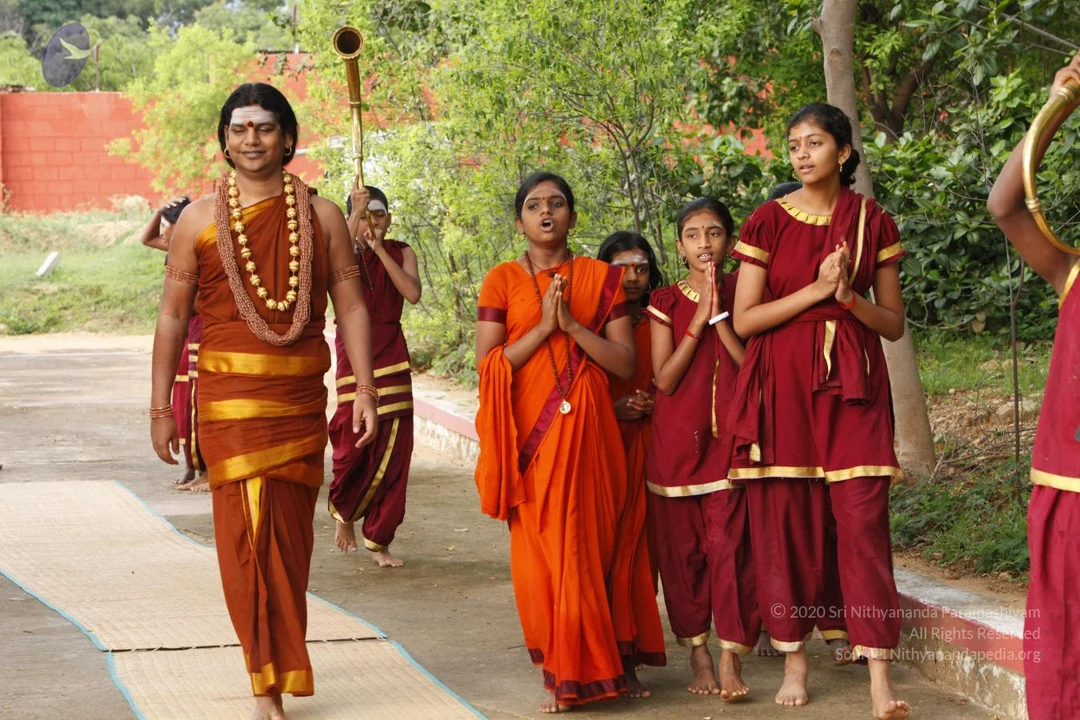
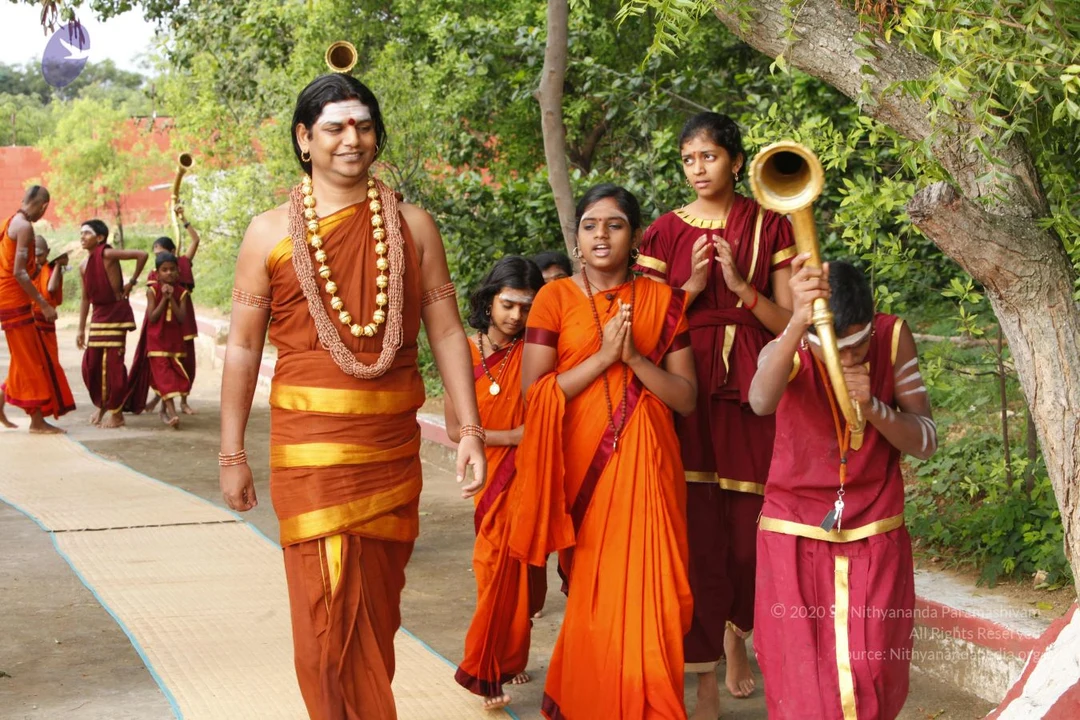
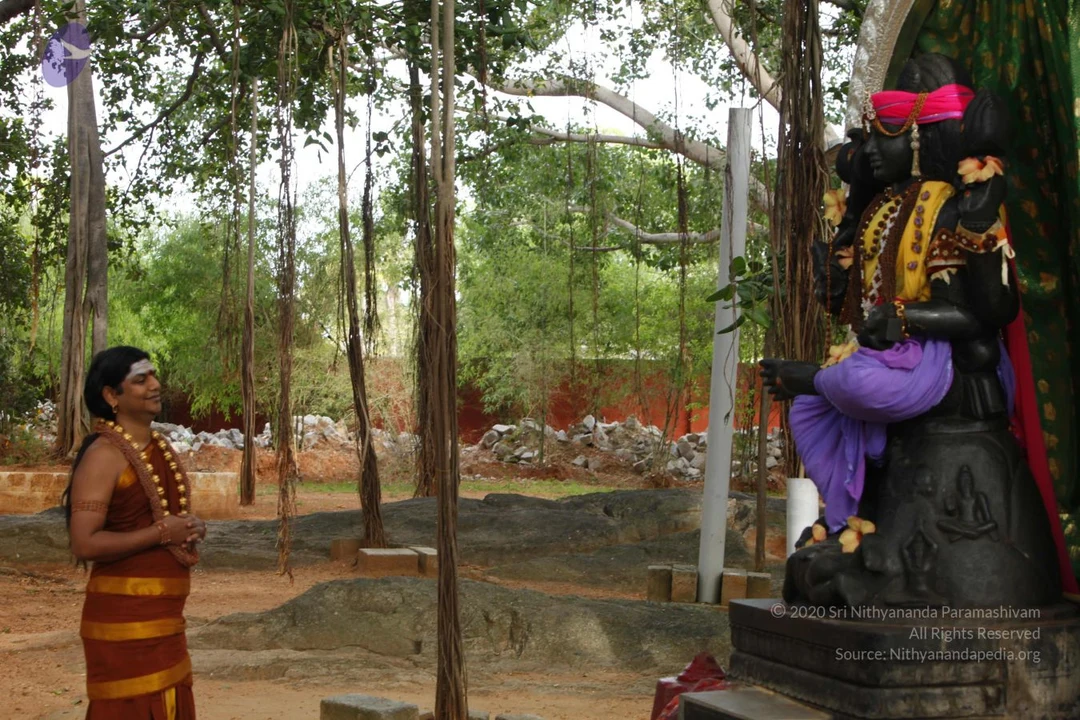
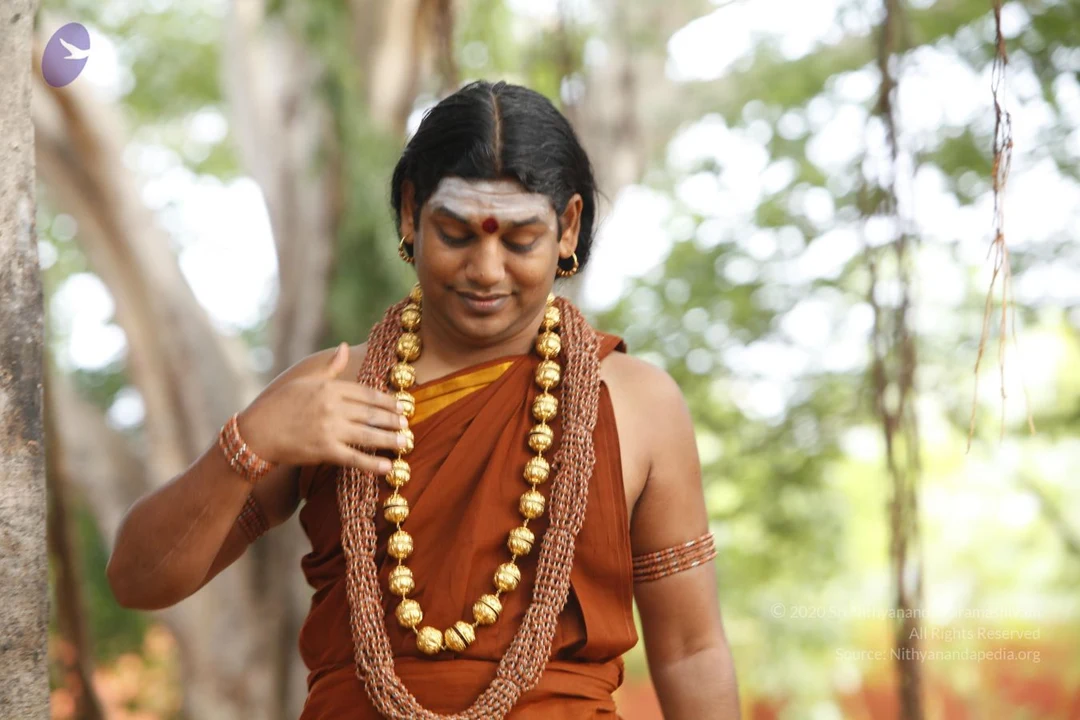
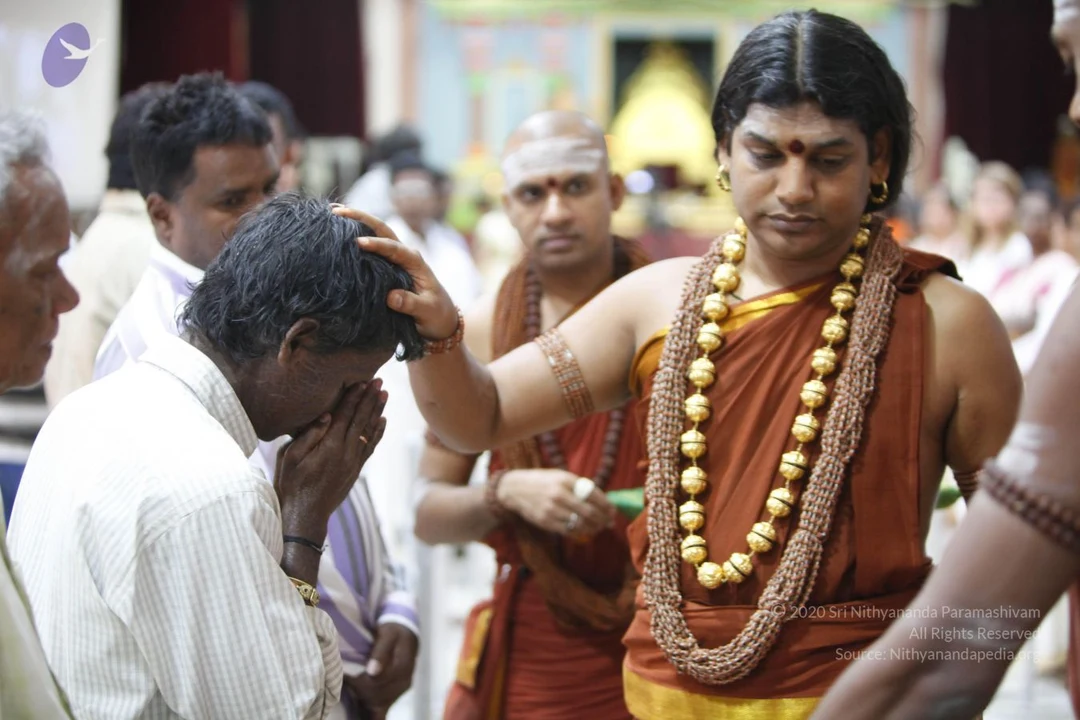
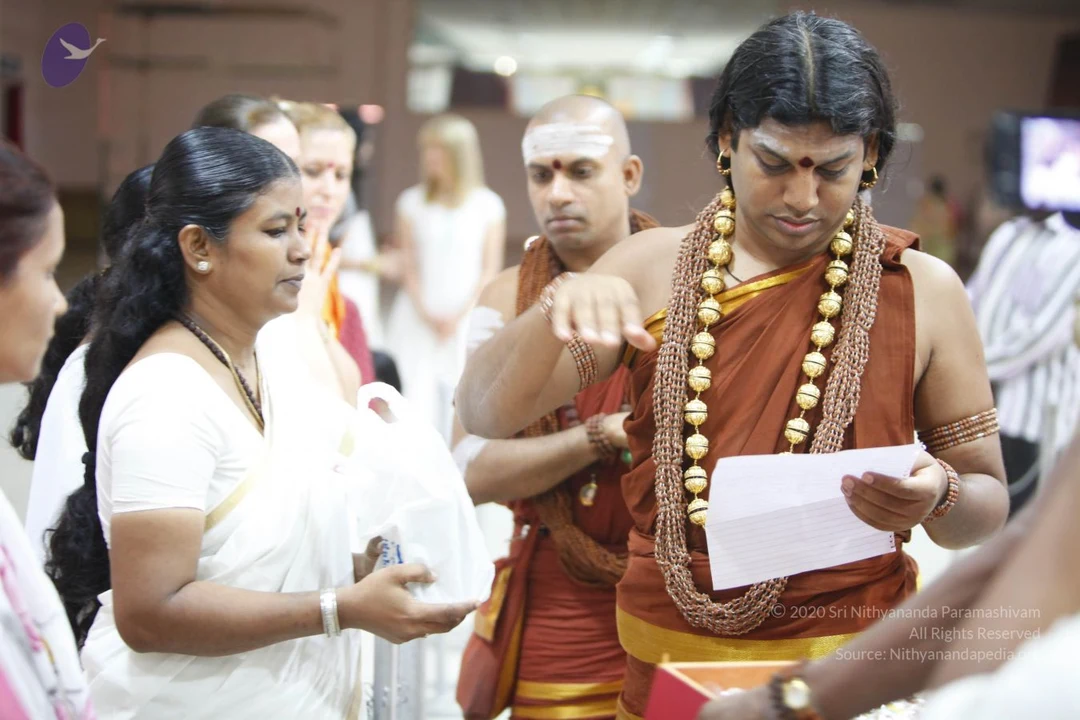
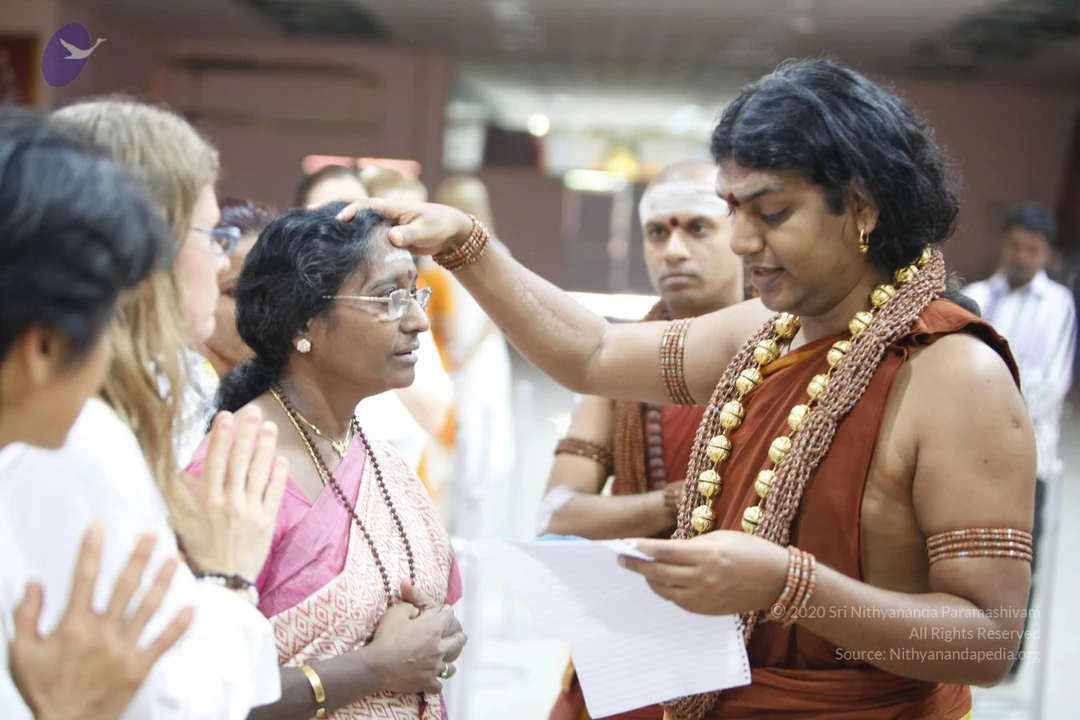
Photos From The Day:
Tags:

Paramahamsa Nithyananda, priority, life, incompletions, completion, planning, space, patterns, eliminates, powerless, God, experience, power, Tattvas.

Photos Of The Day:

Photos Of The Day:

Temple-Swamiji
Pratyaksha-Pada-Puja

Swasthi-Mantra

Satsang-Swamiji

Sarva-Darshan

Photos Of The Day:

Temple-Swamiji
Pratyaksha-Pada-Puja

Swasthi-Mantra

Blessing-Final

01-ADIKAILASA-TEMPLE

02-PADA-PUJA

03-SATSANG

01-TEMPLE

02-PADA-PUJA

03-NITHYA-SATSANG

04-SARVA-DARSHAN

Photos from this day

View all 154 photos

Photos From The Day:

15 photosSource gallery
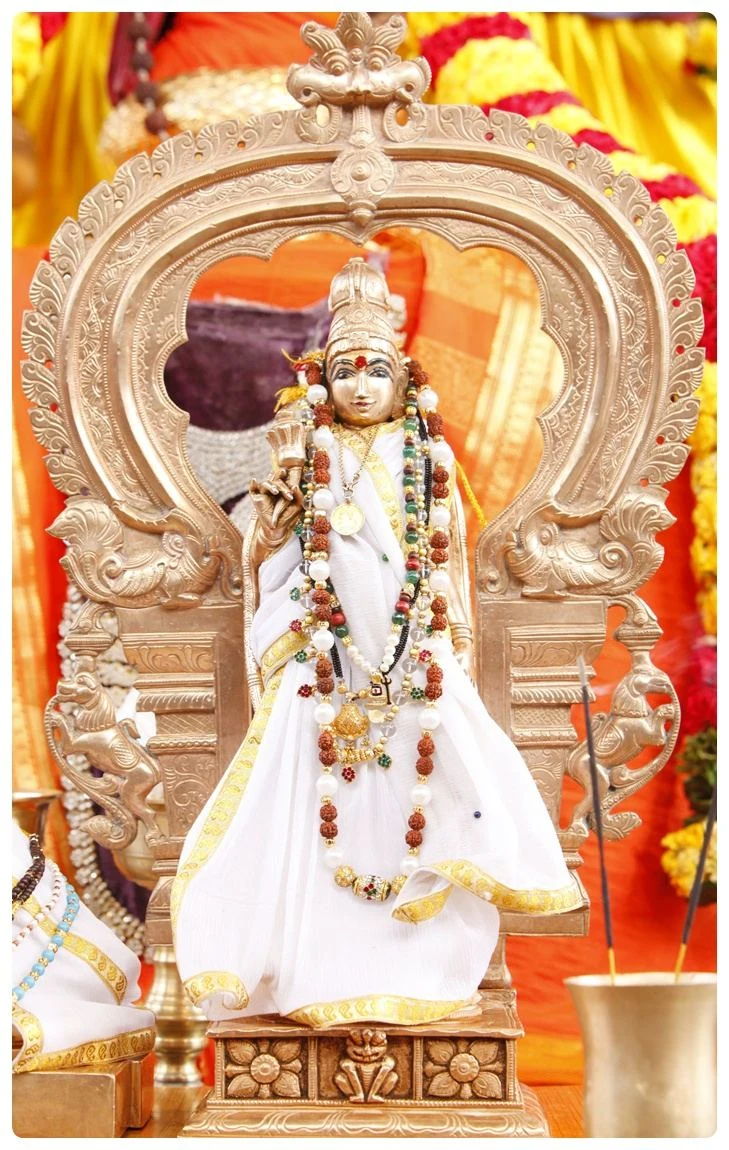
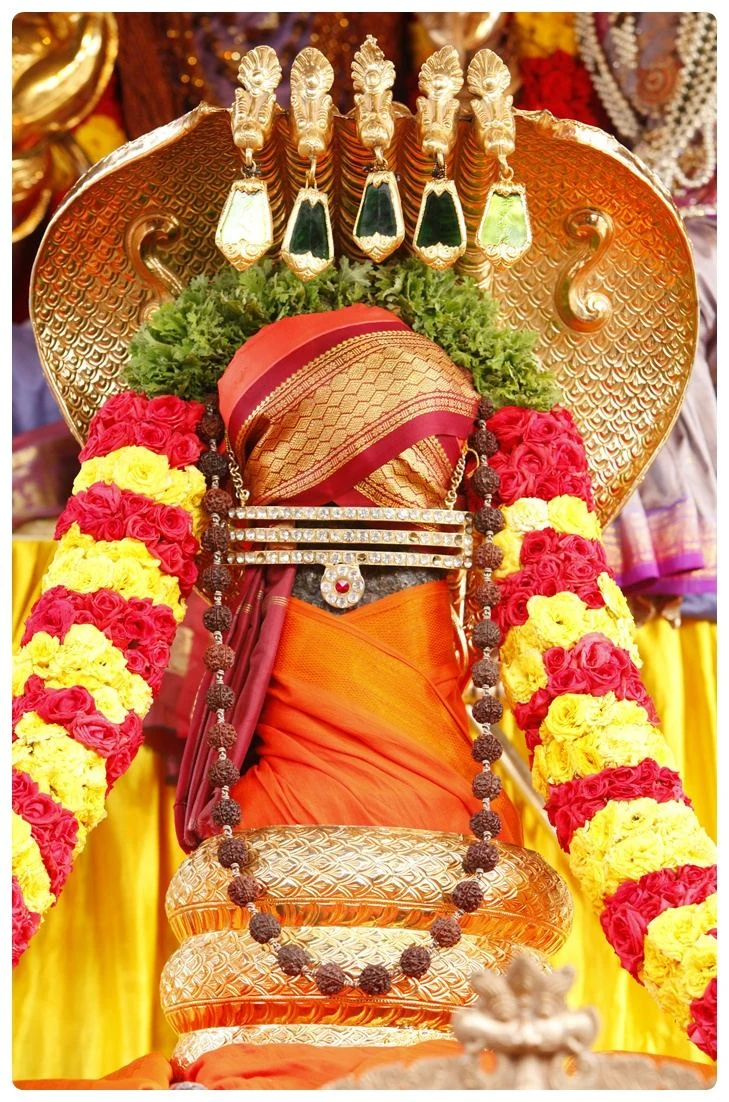
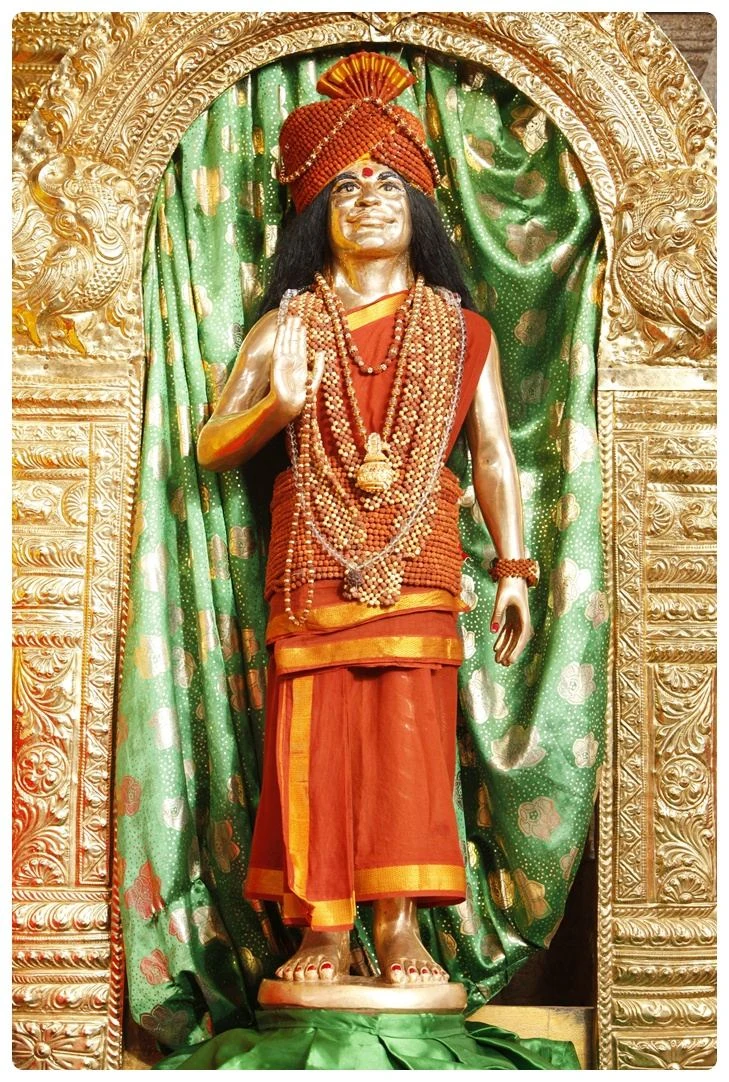
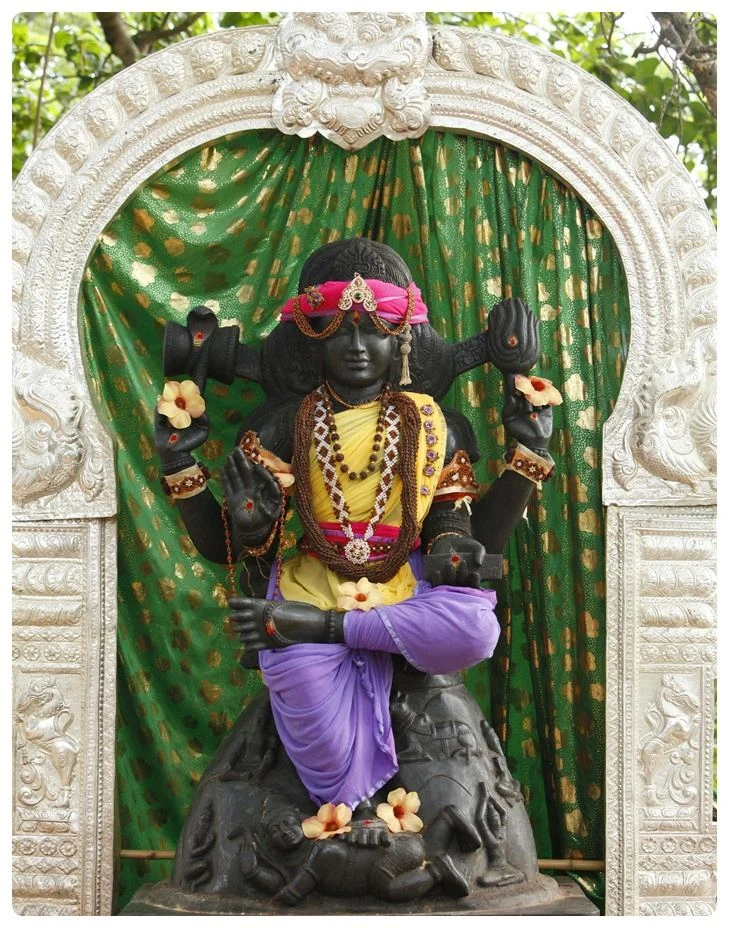
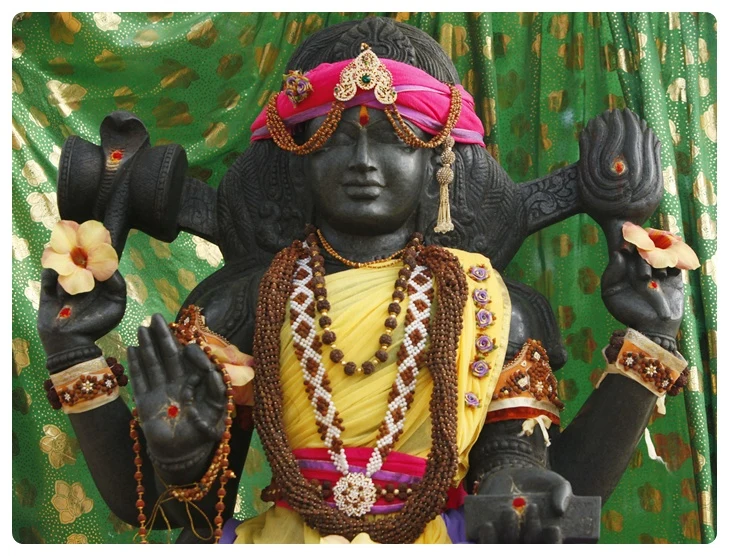
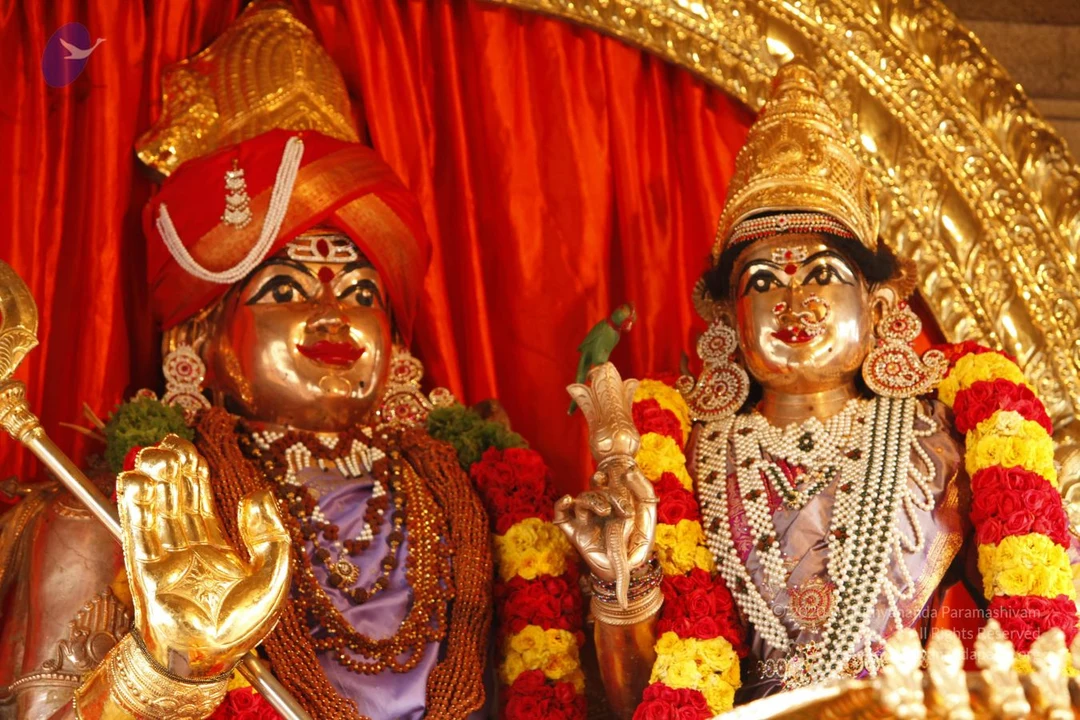
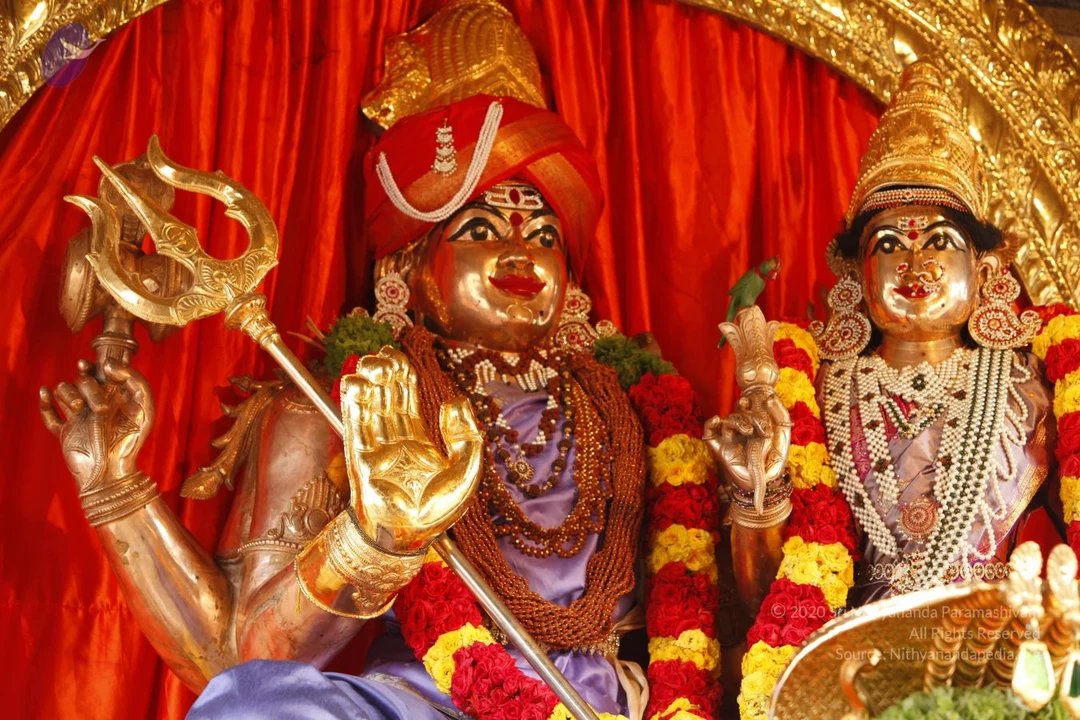
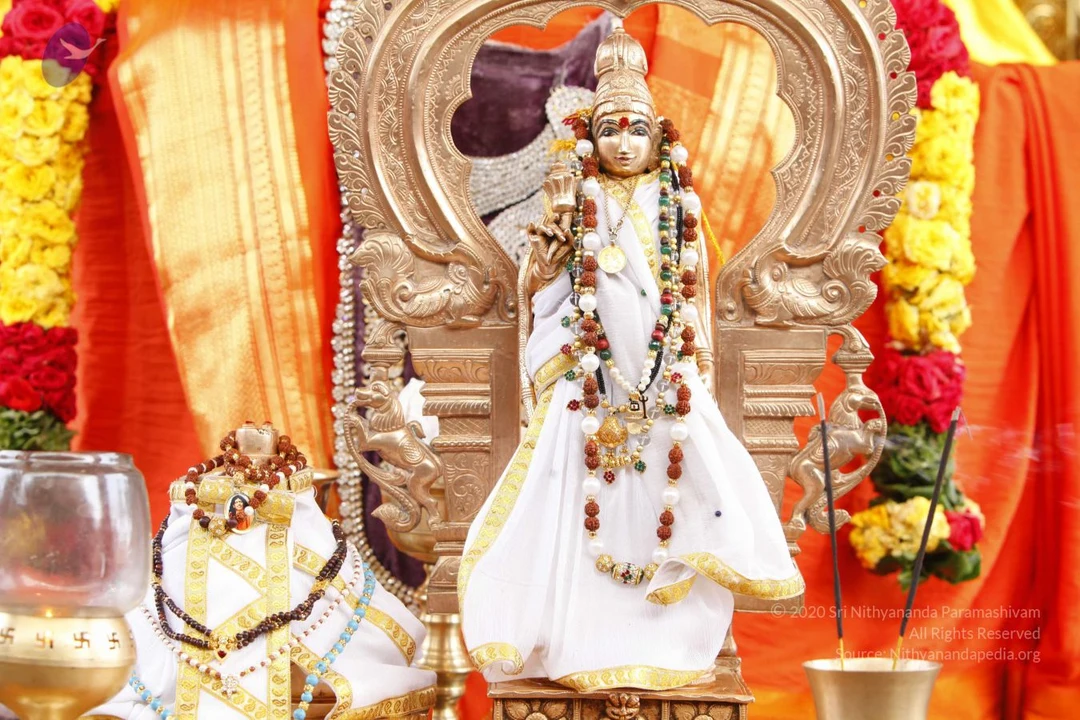
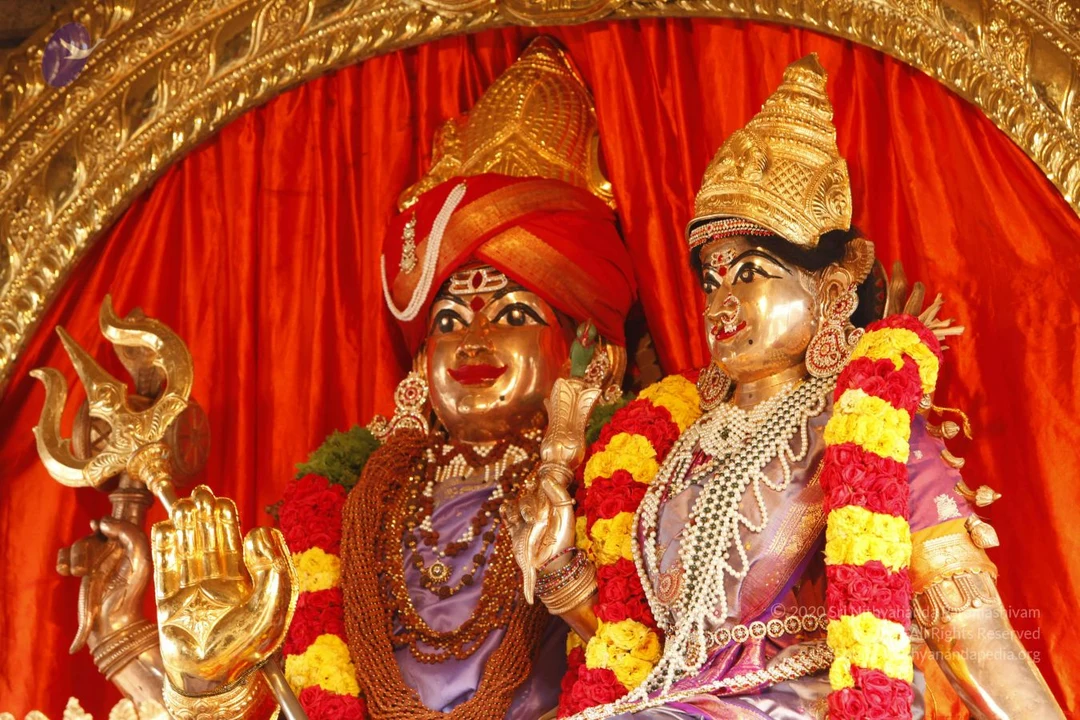
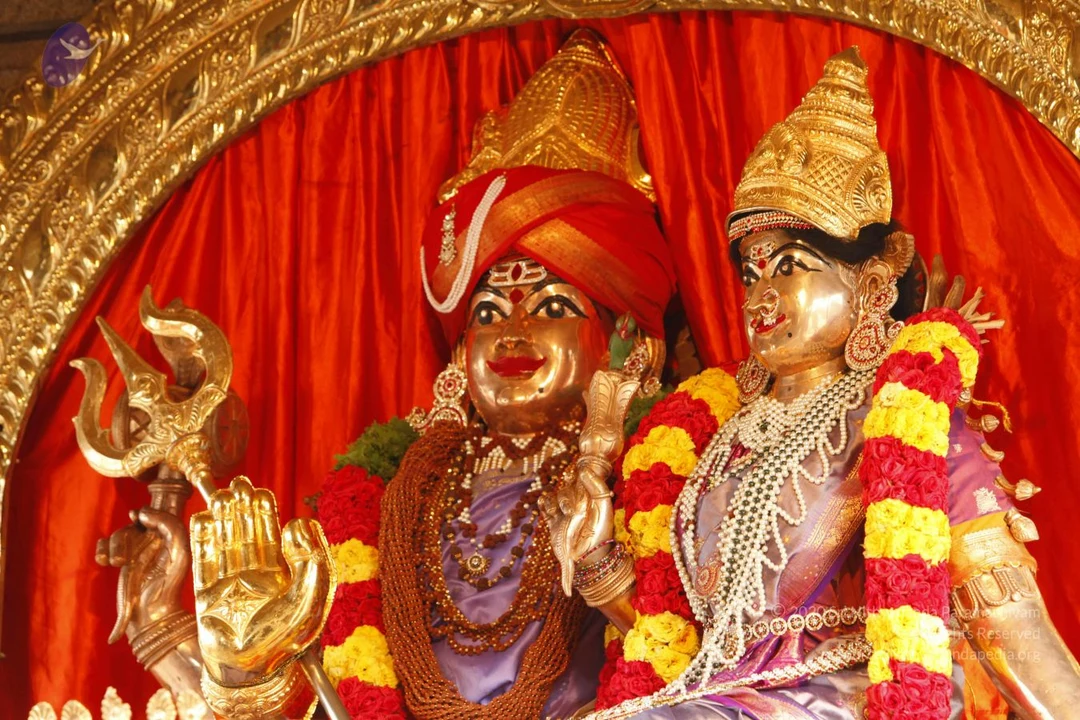
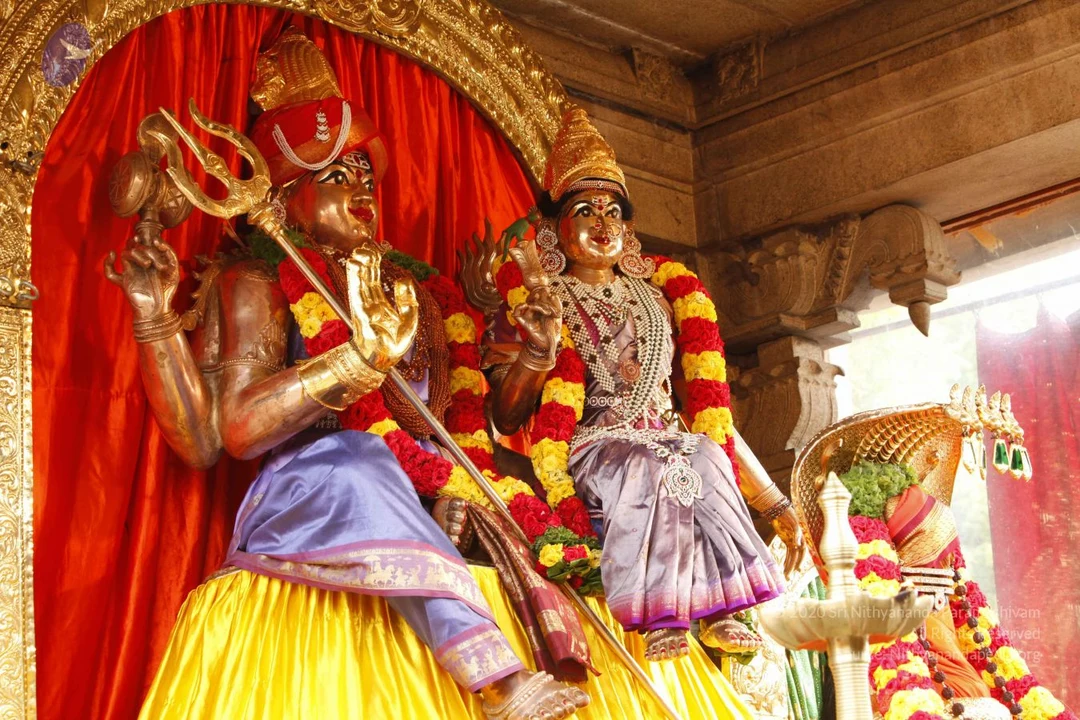
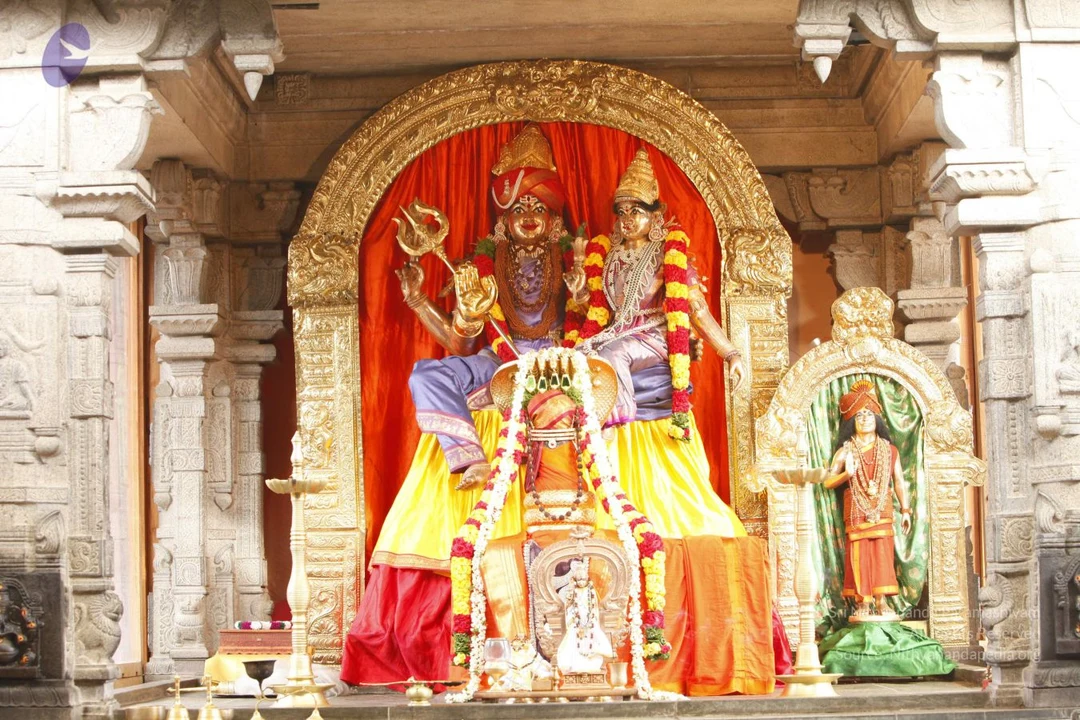
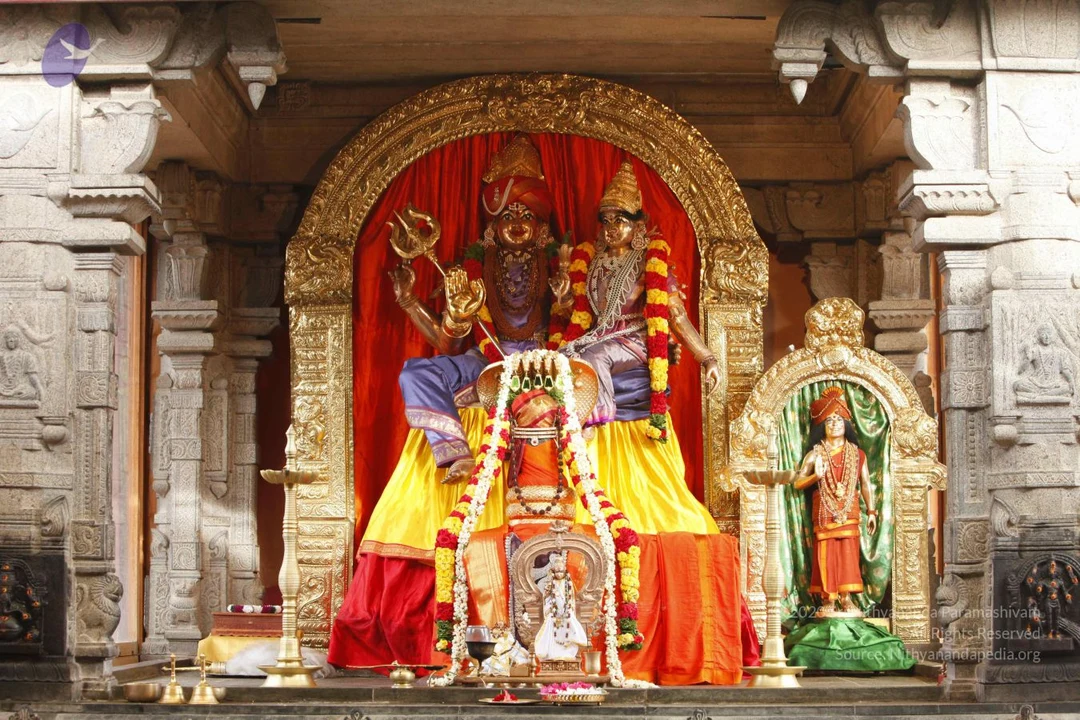
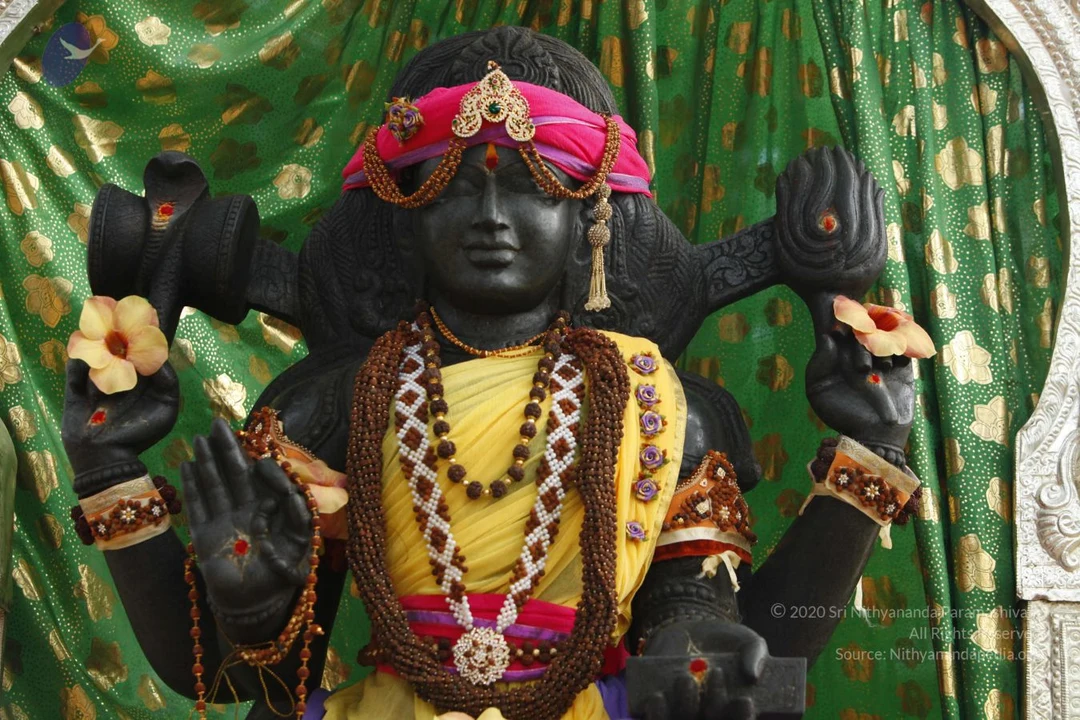
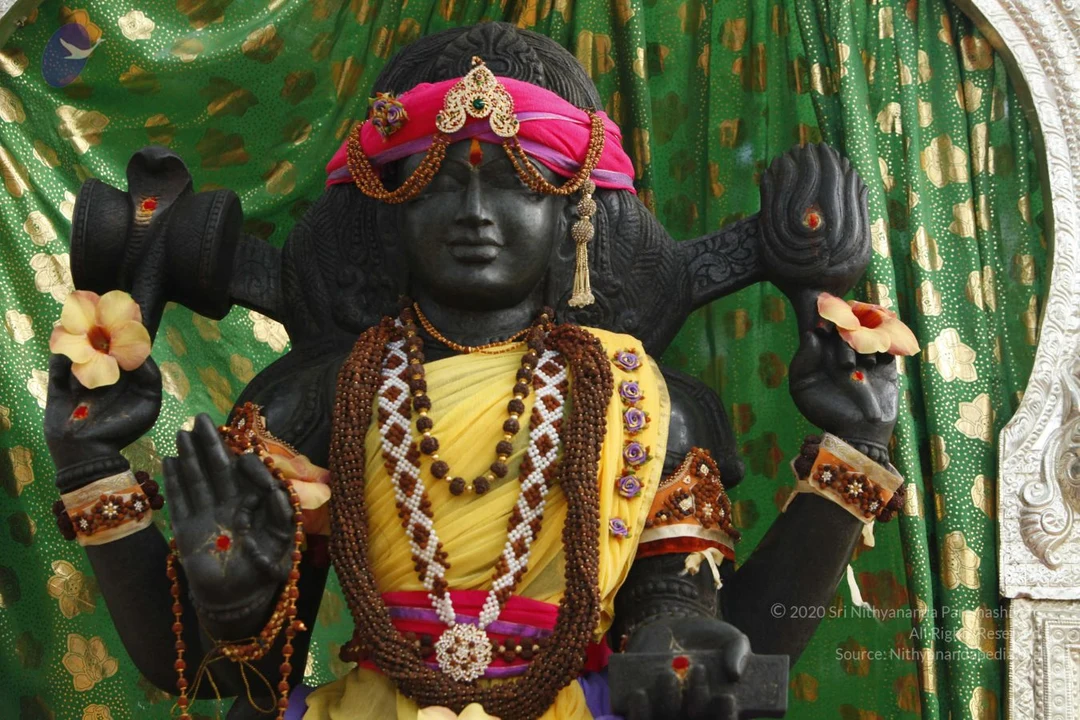
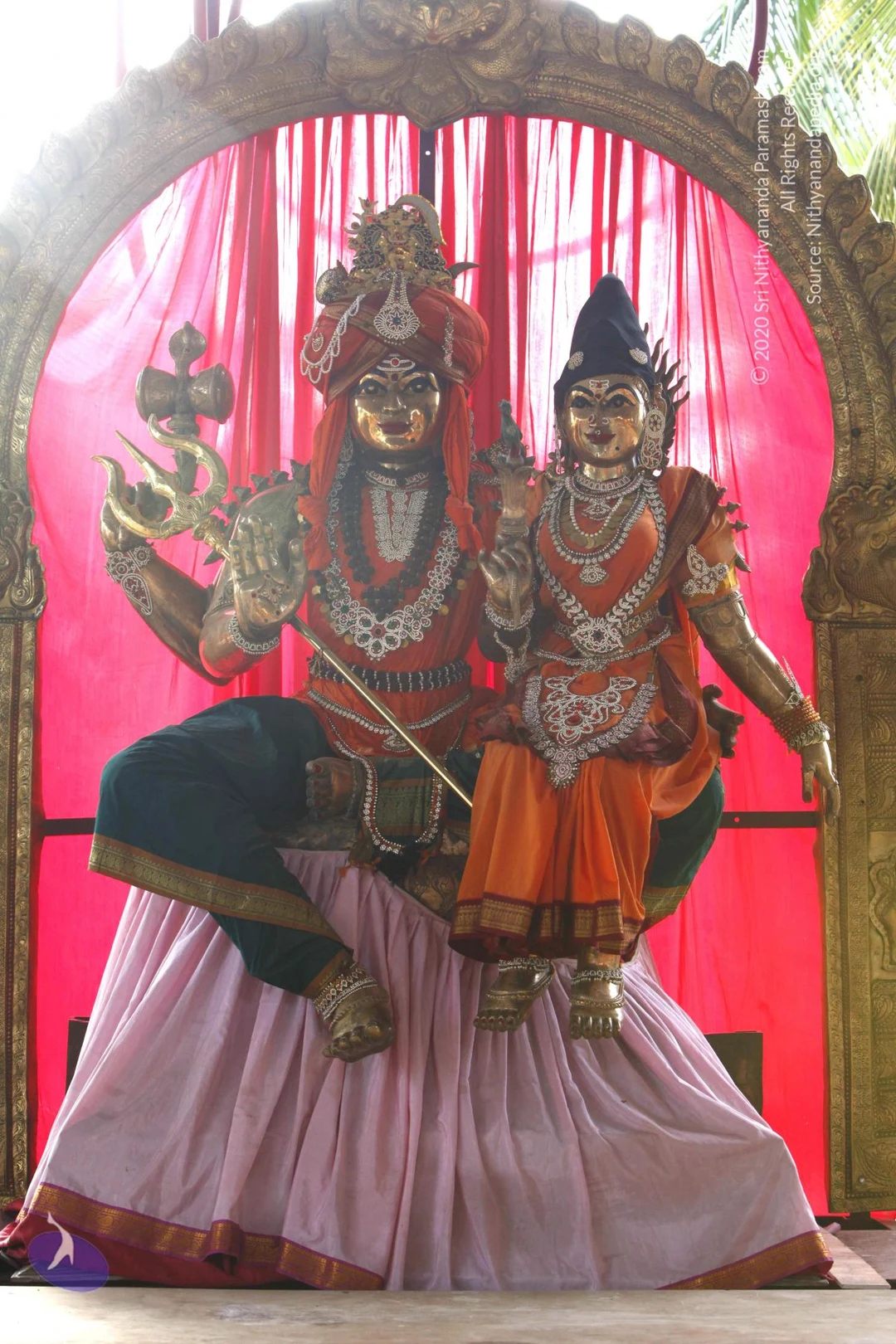
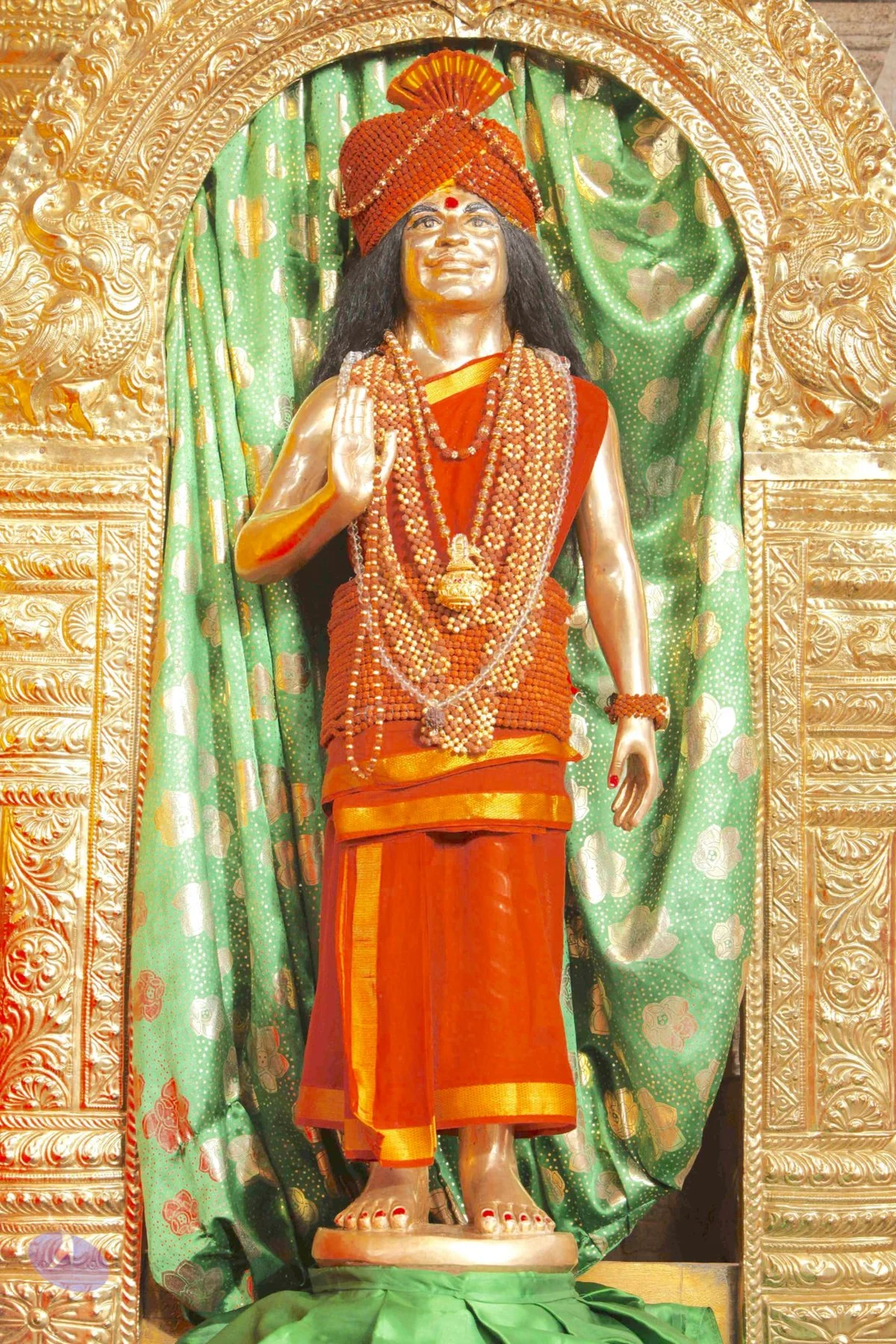
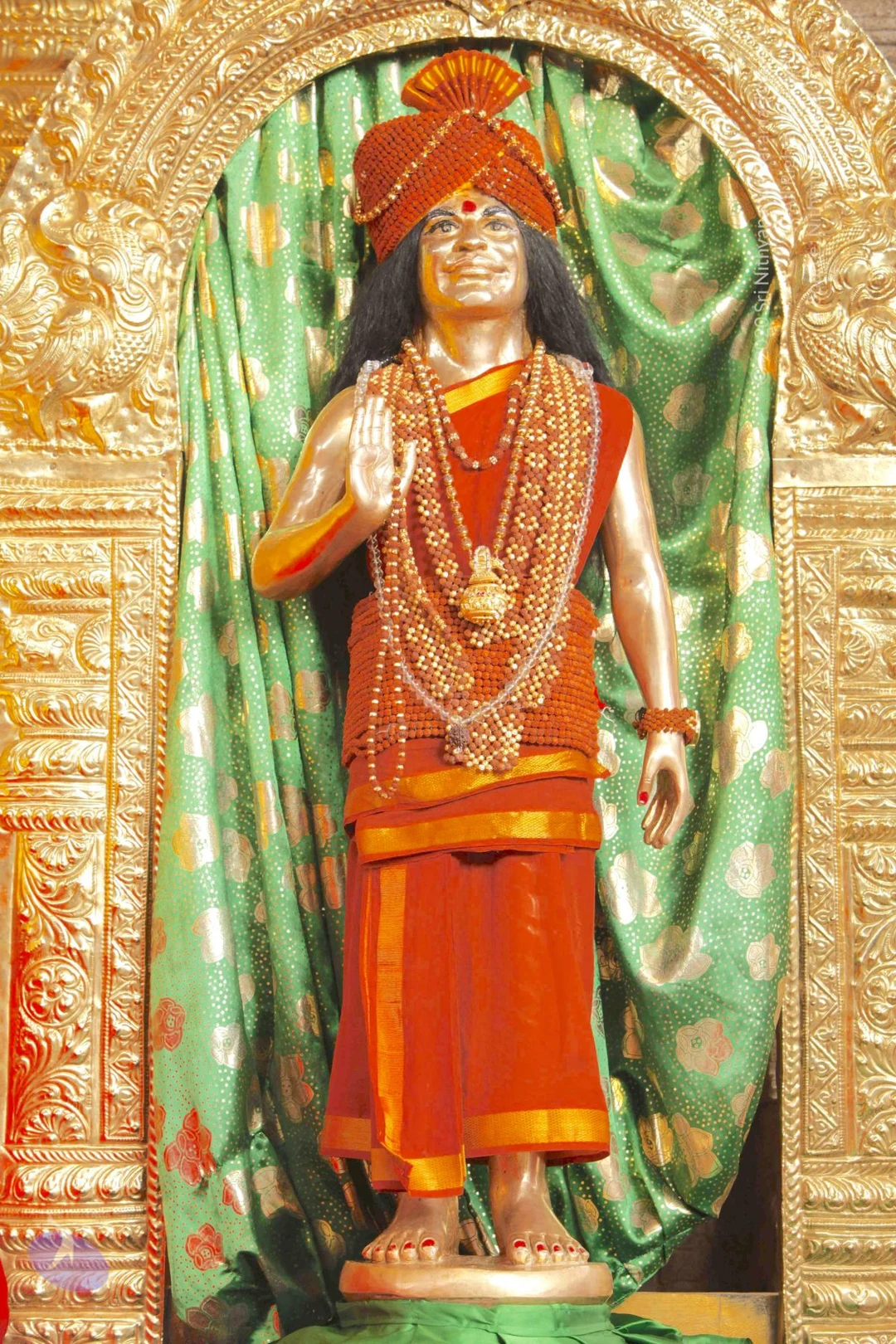
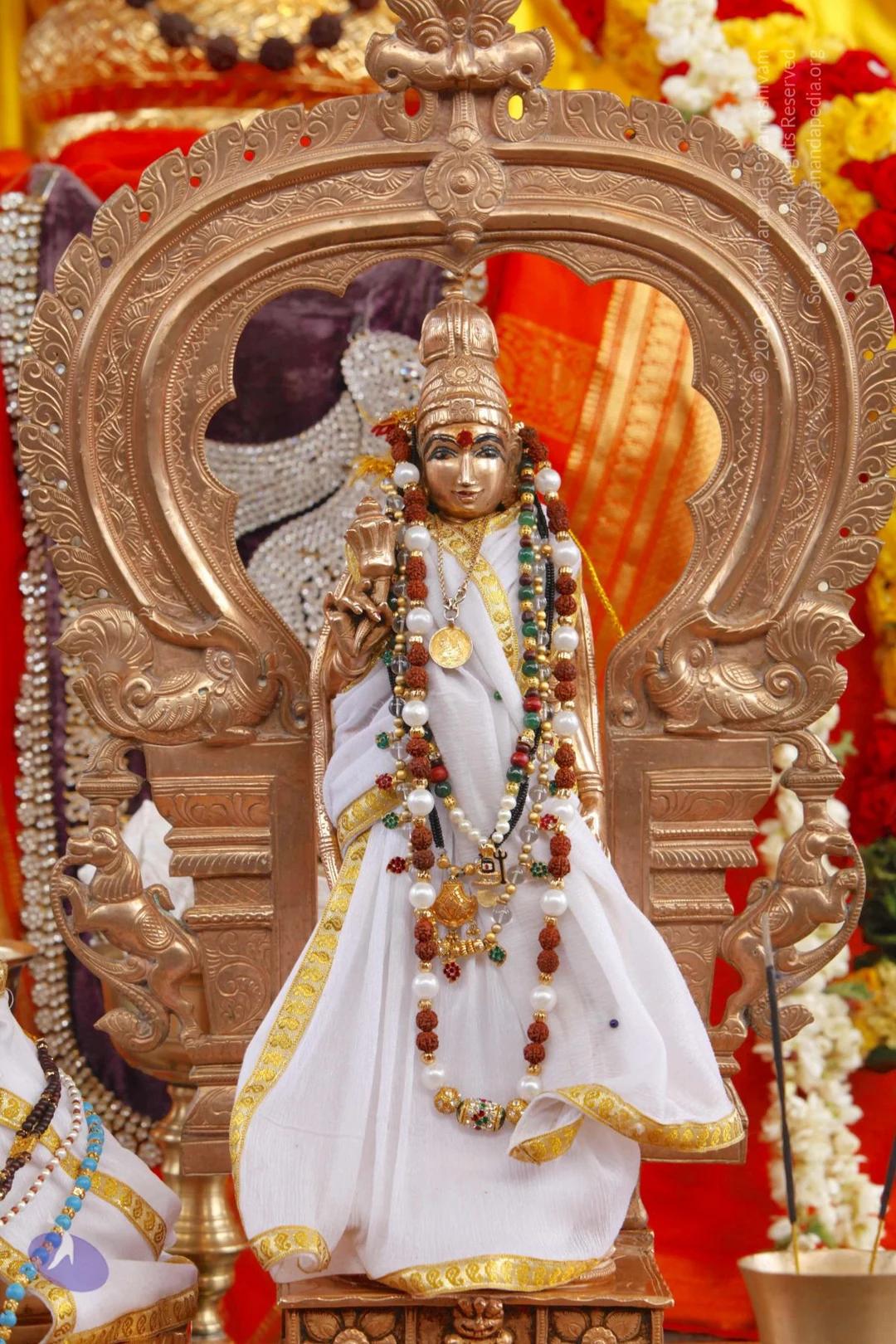
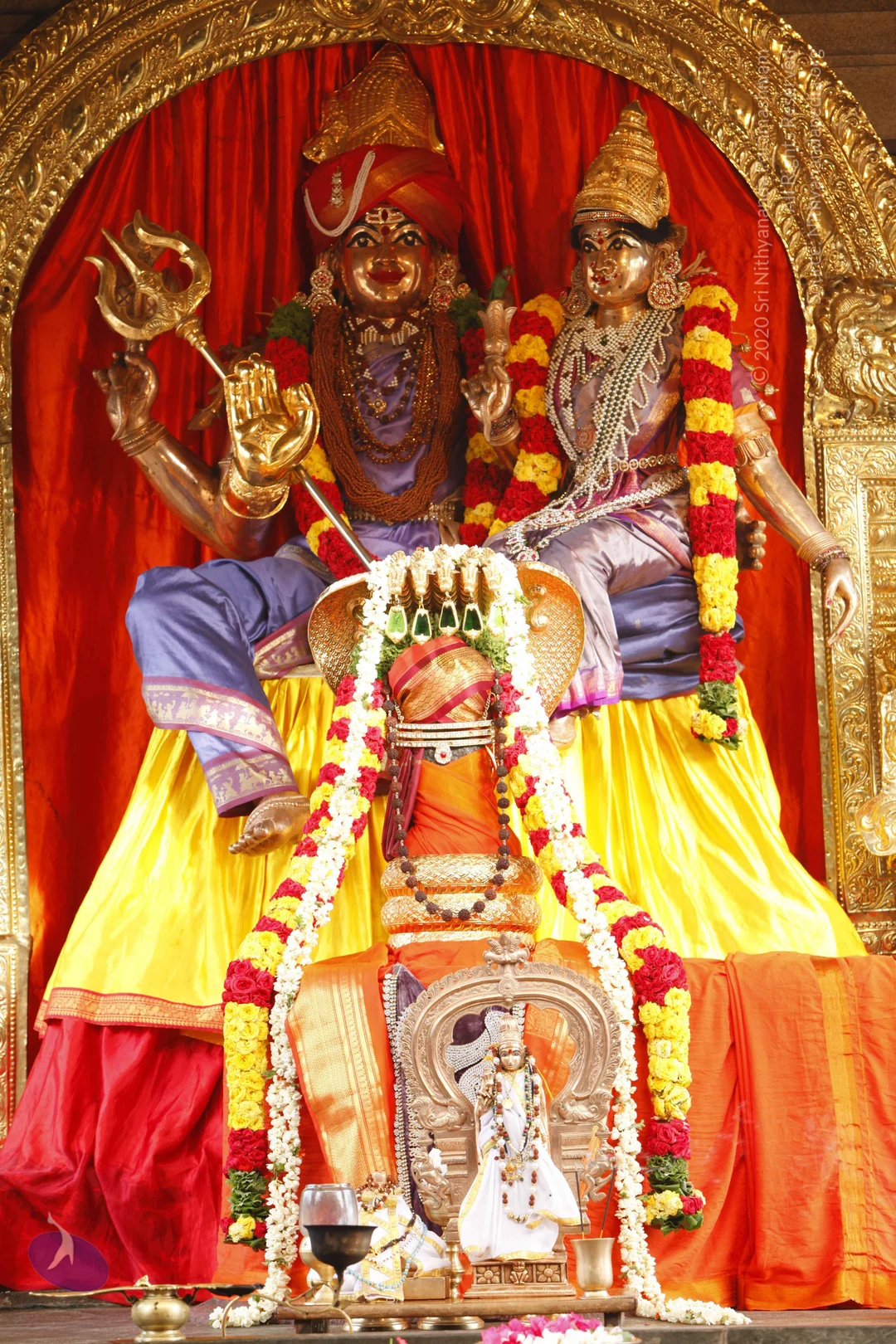
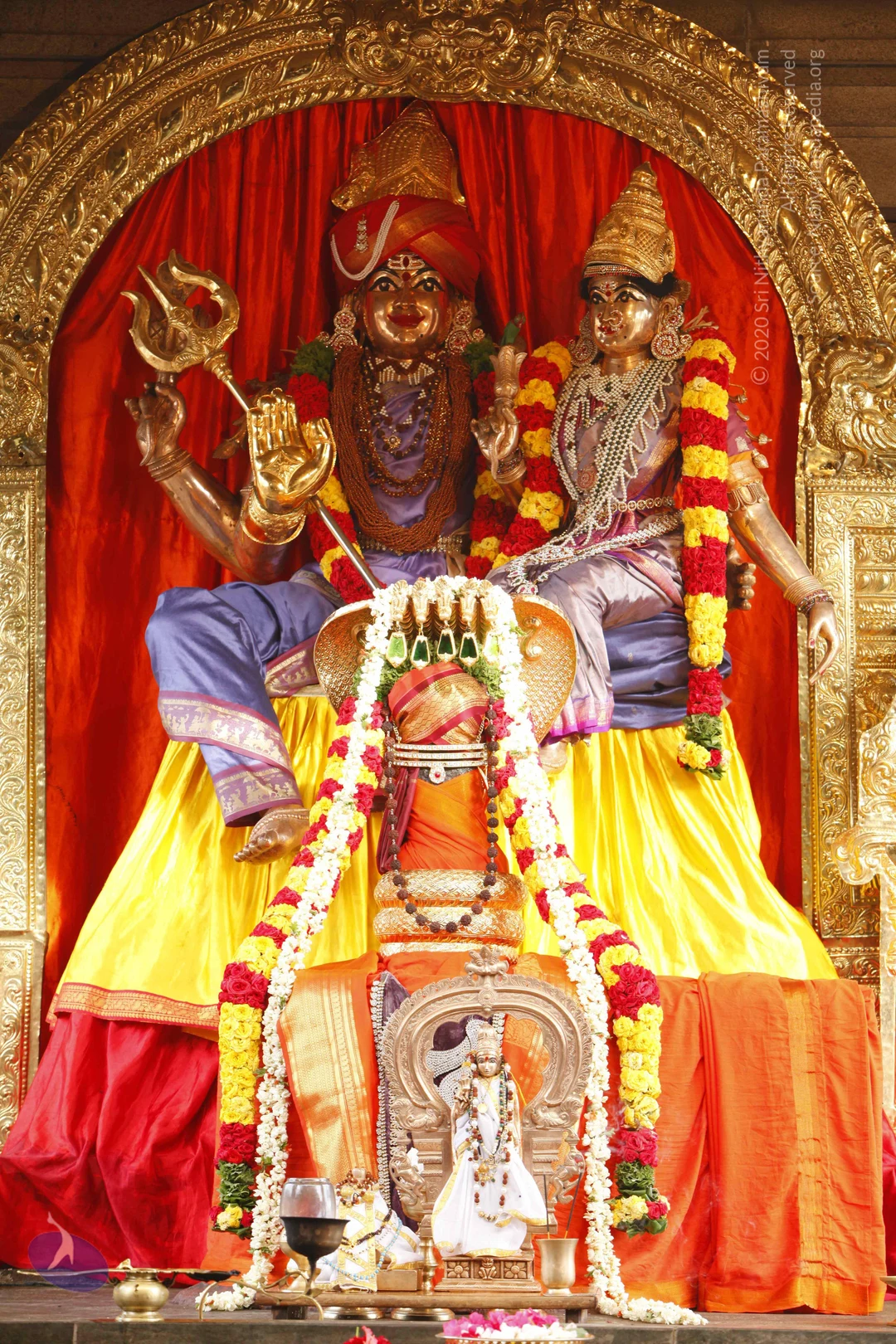
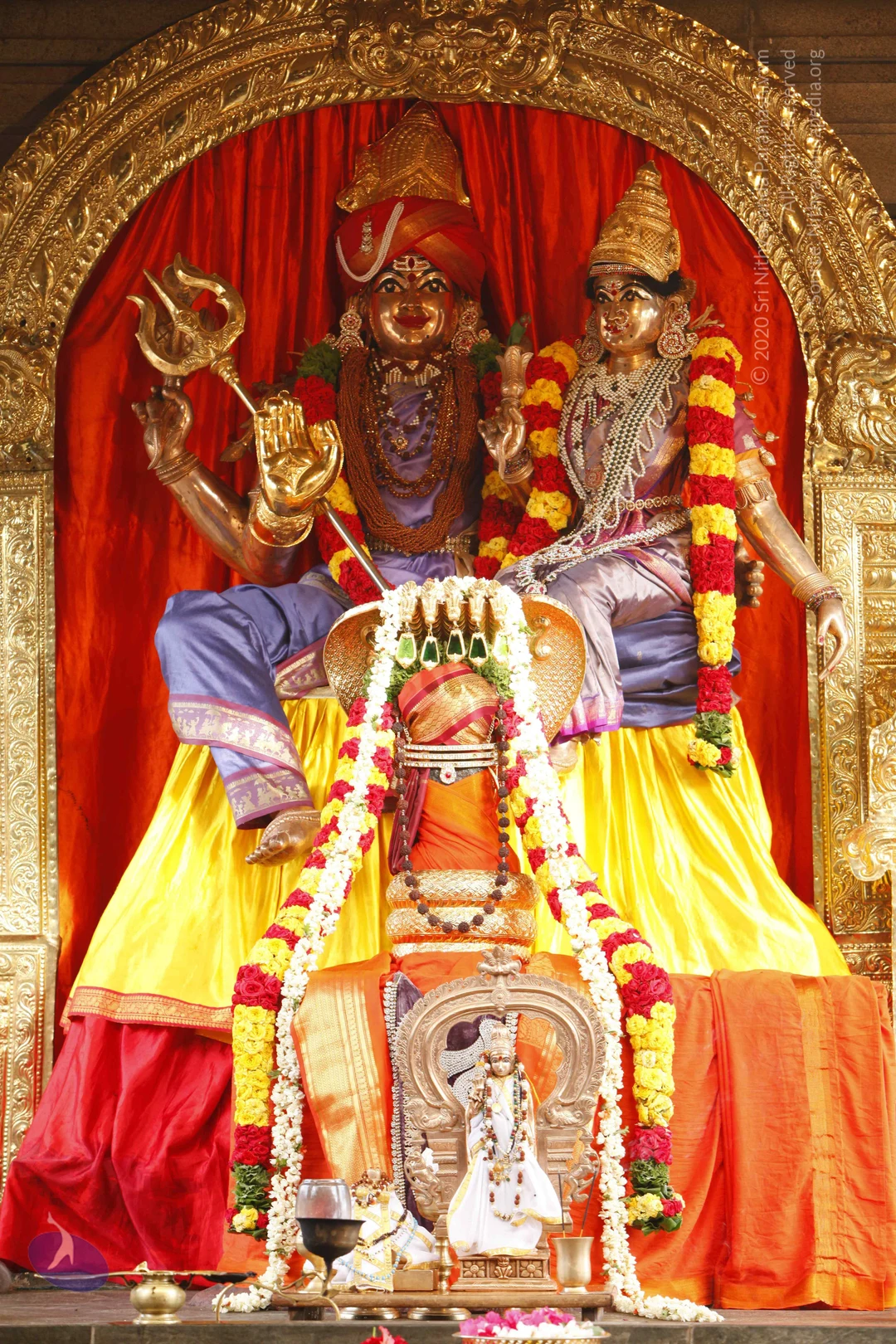
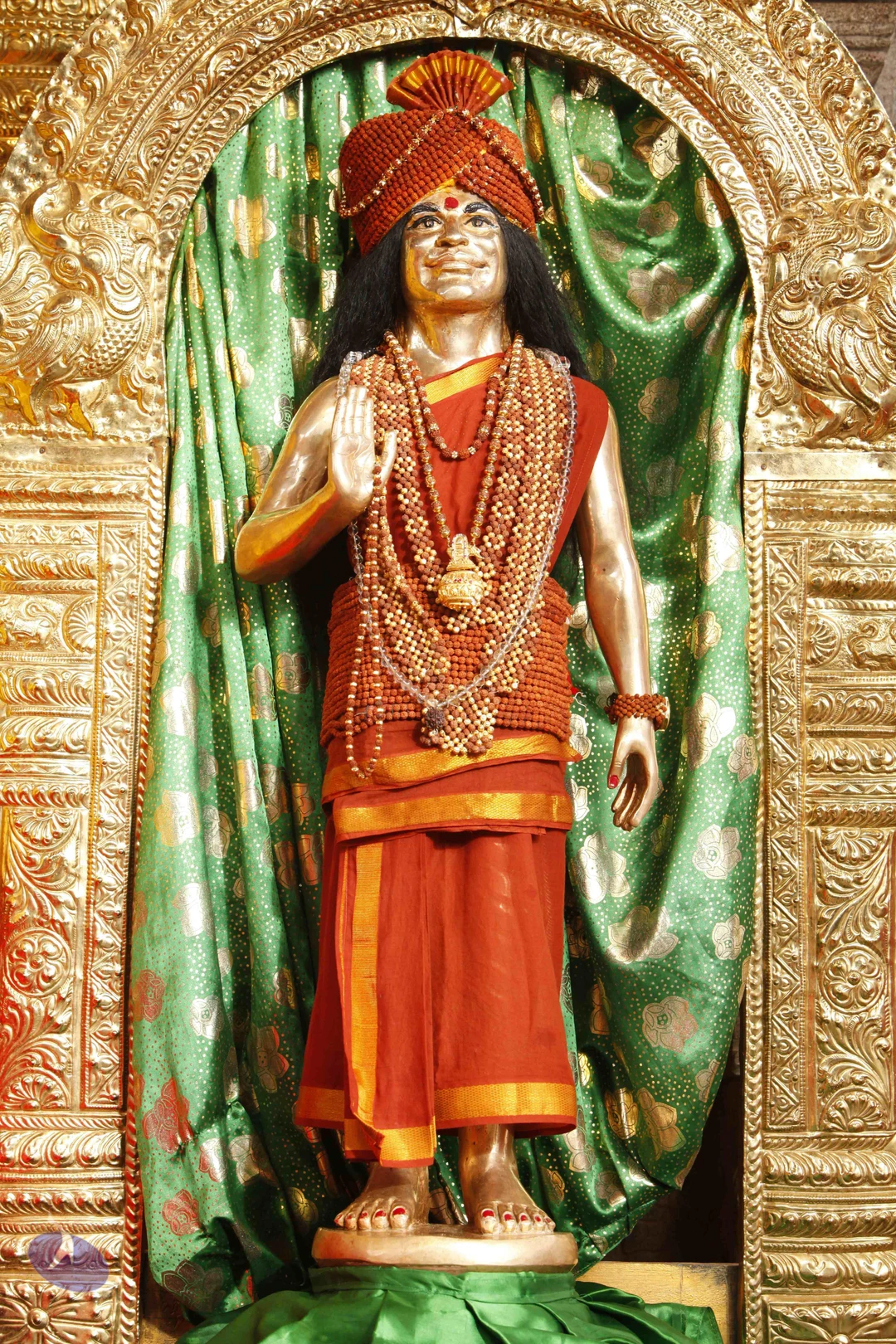
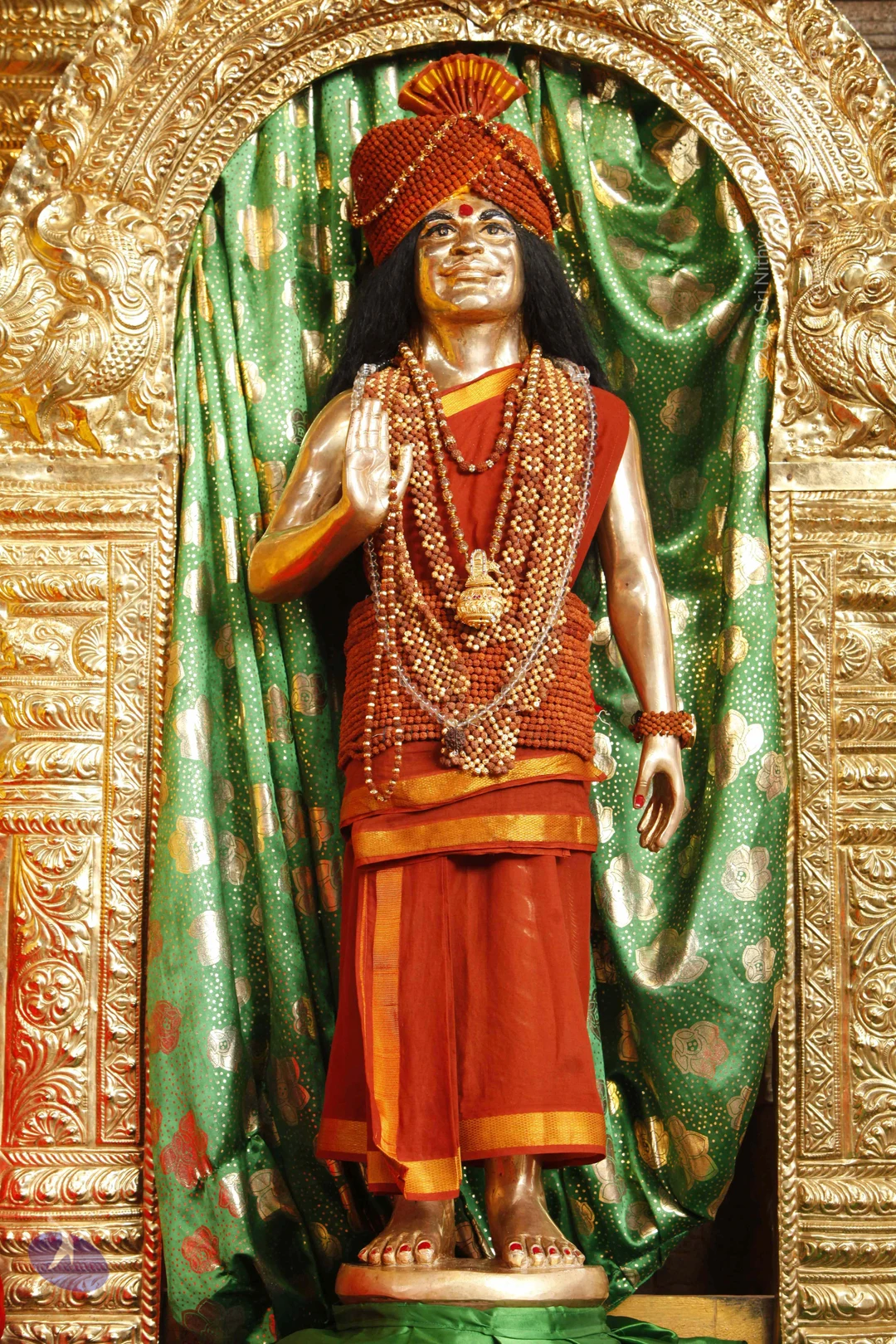
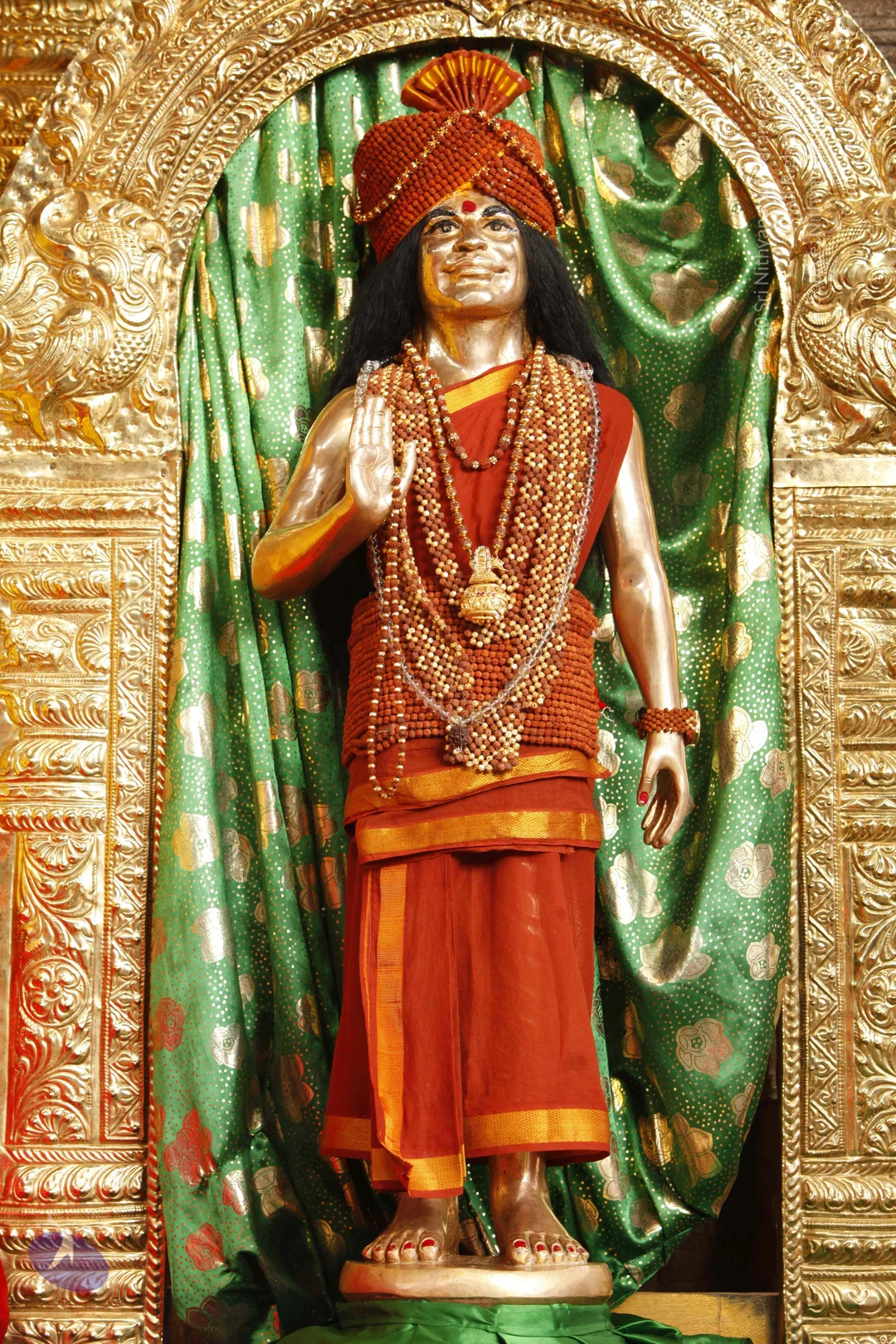
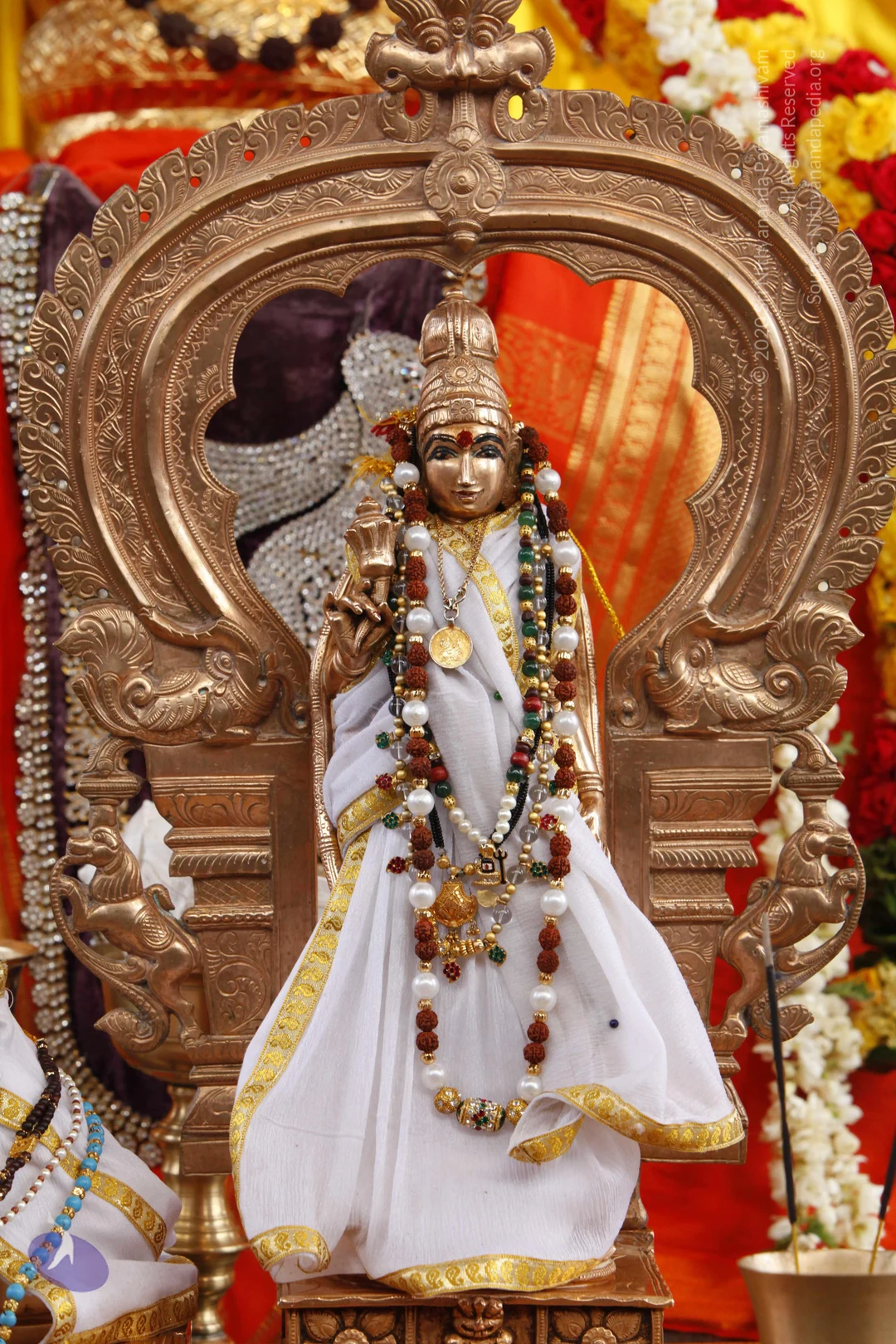
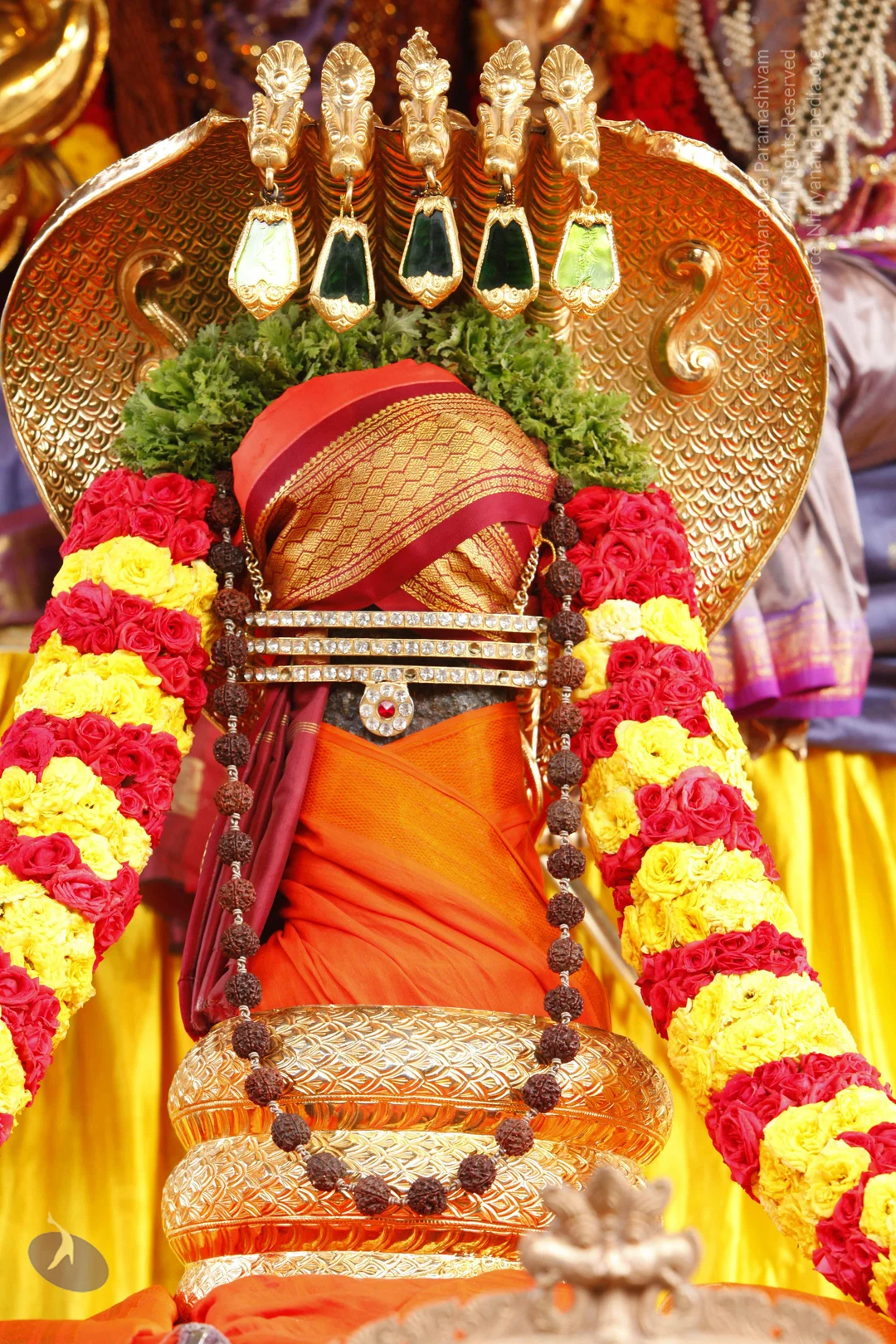
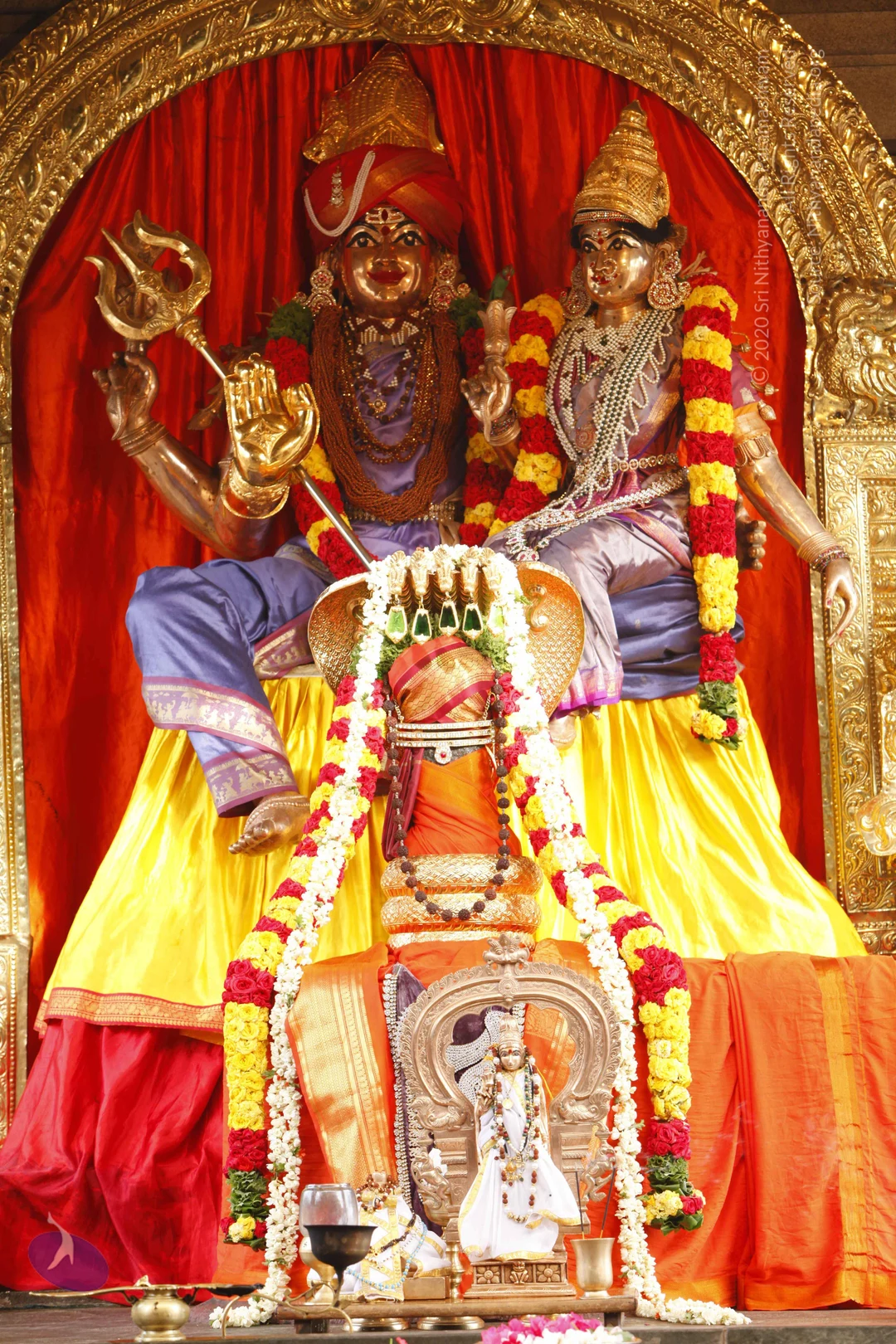
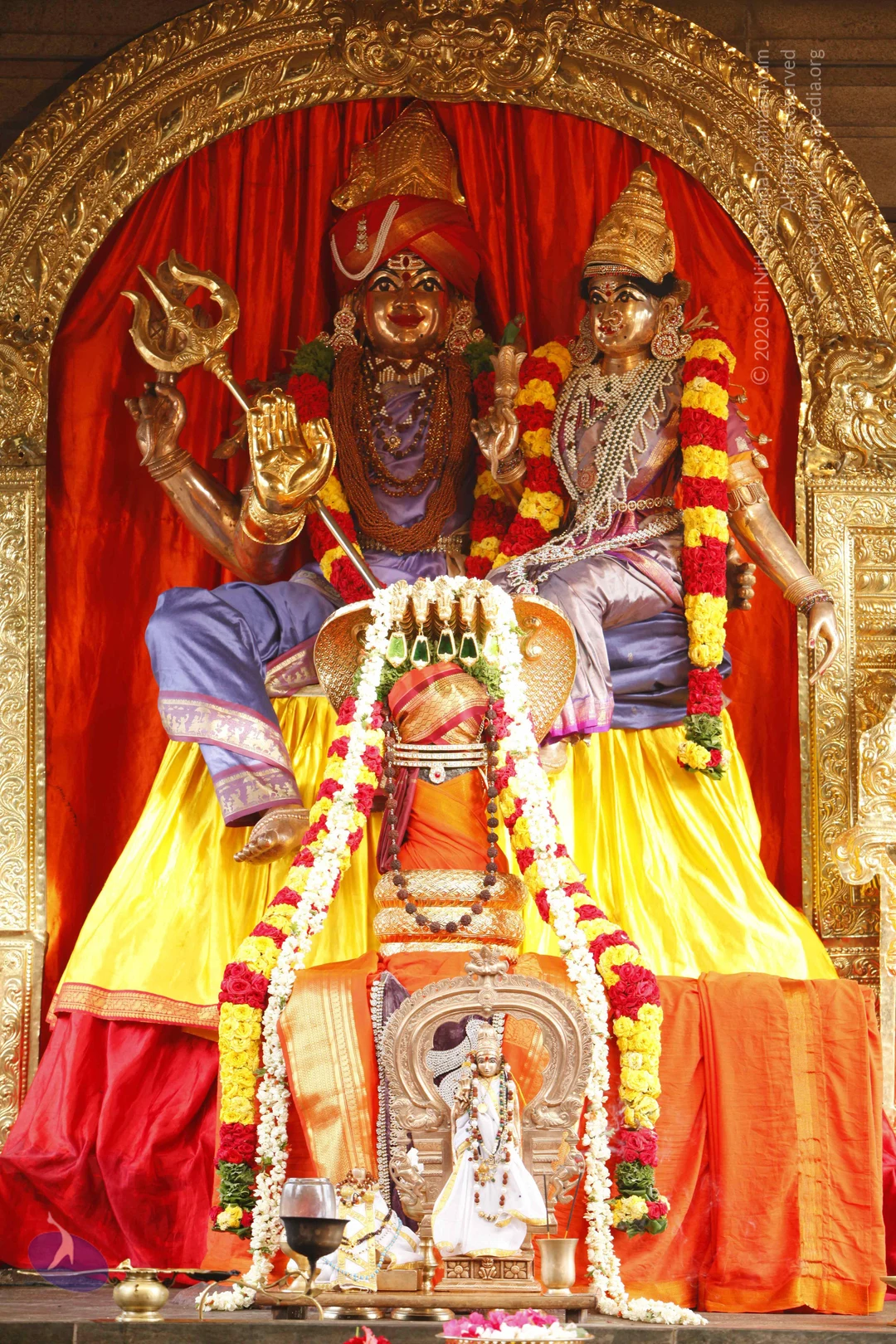
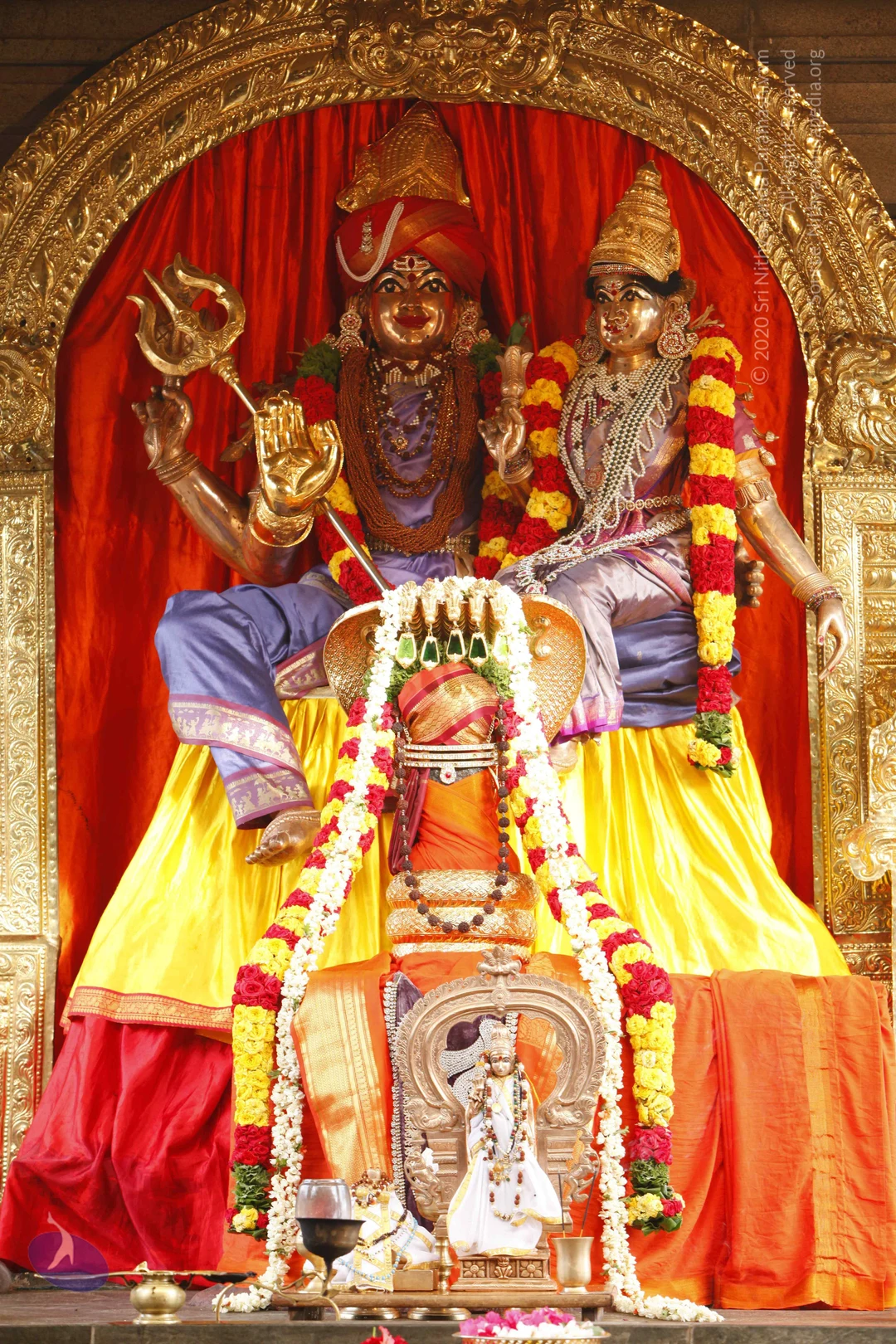
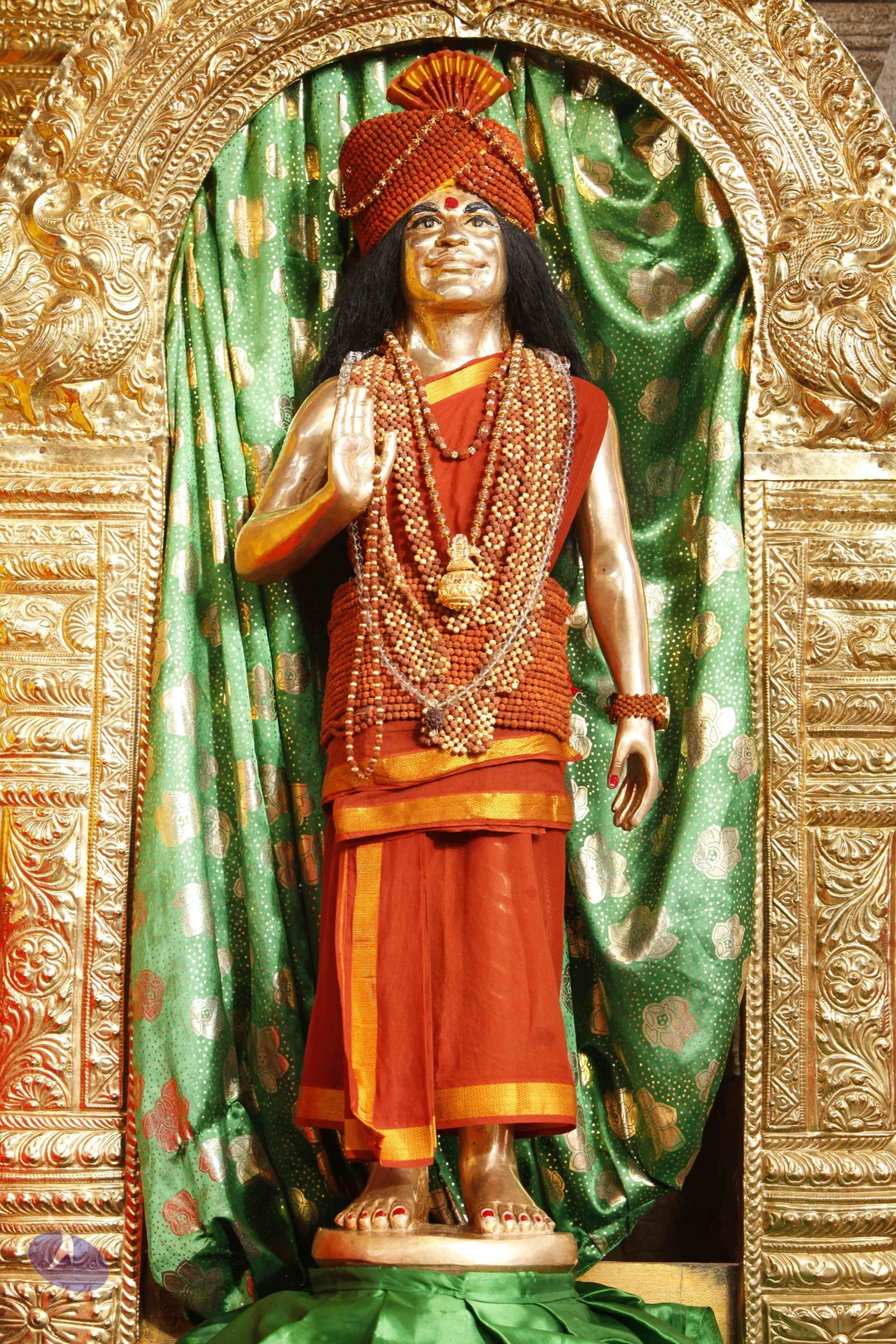
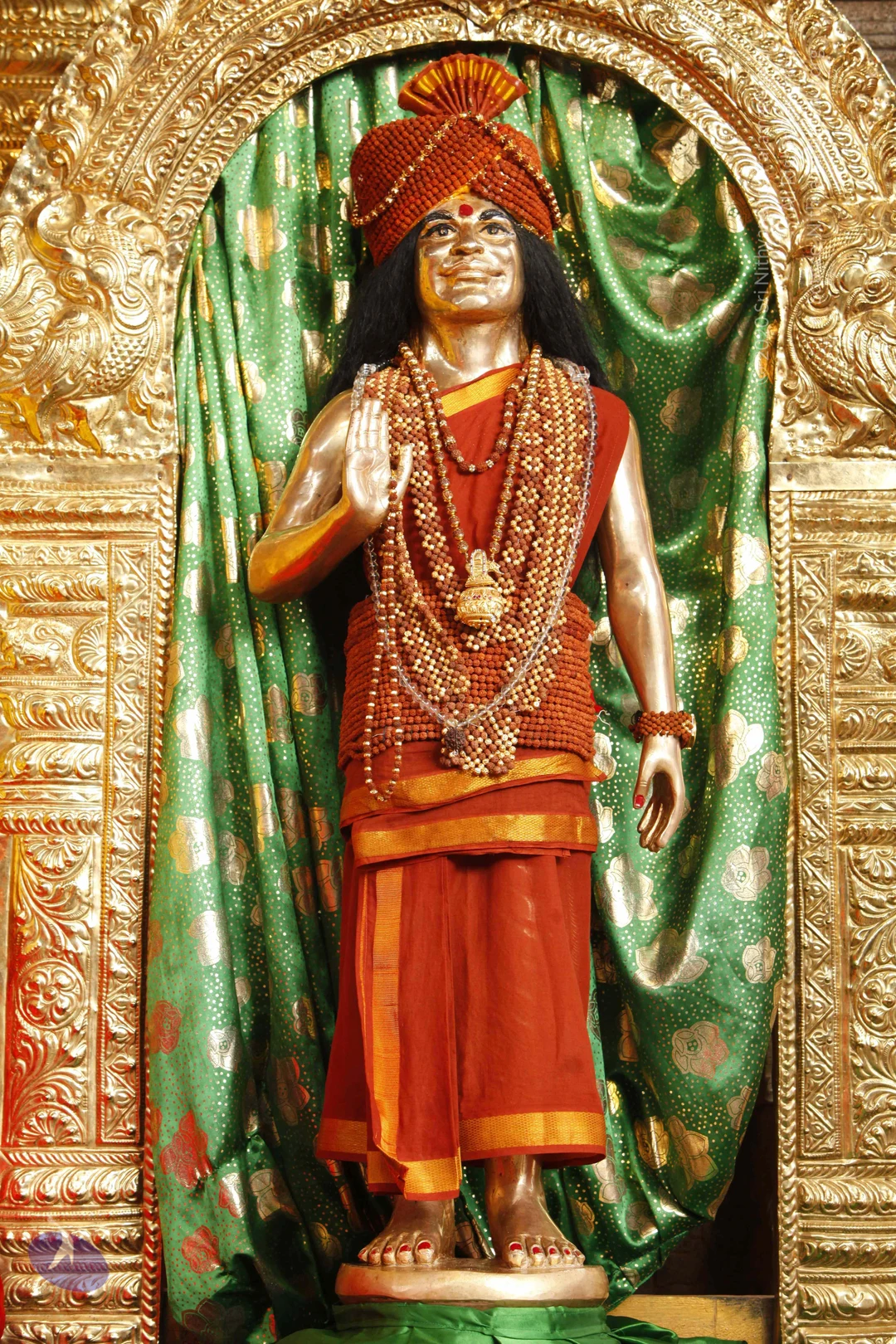
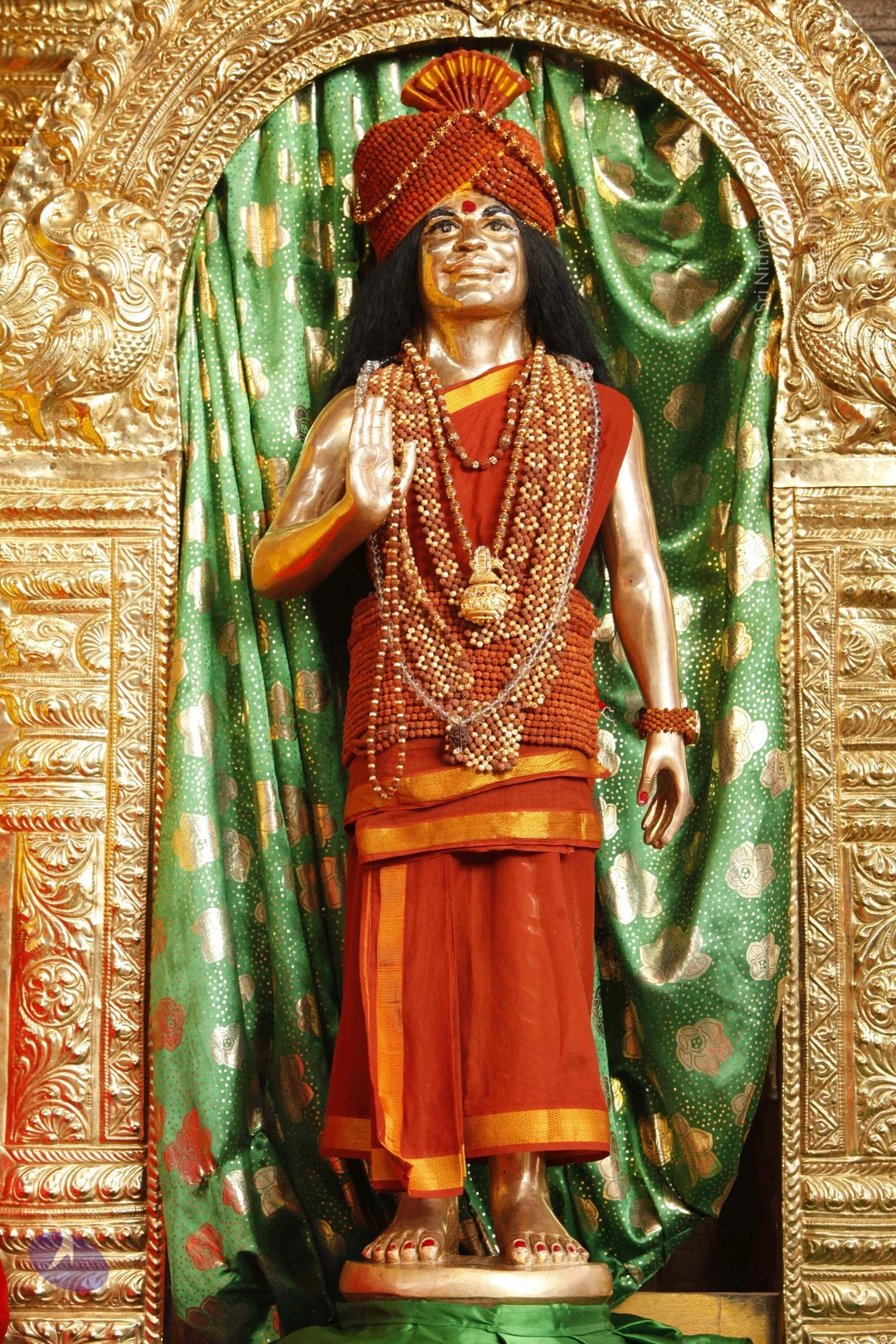
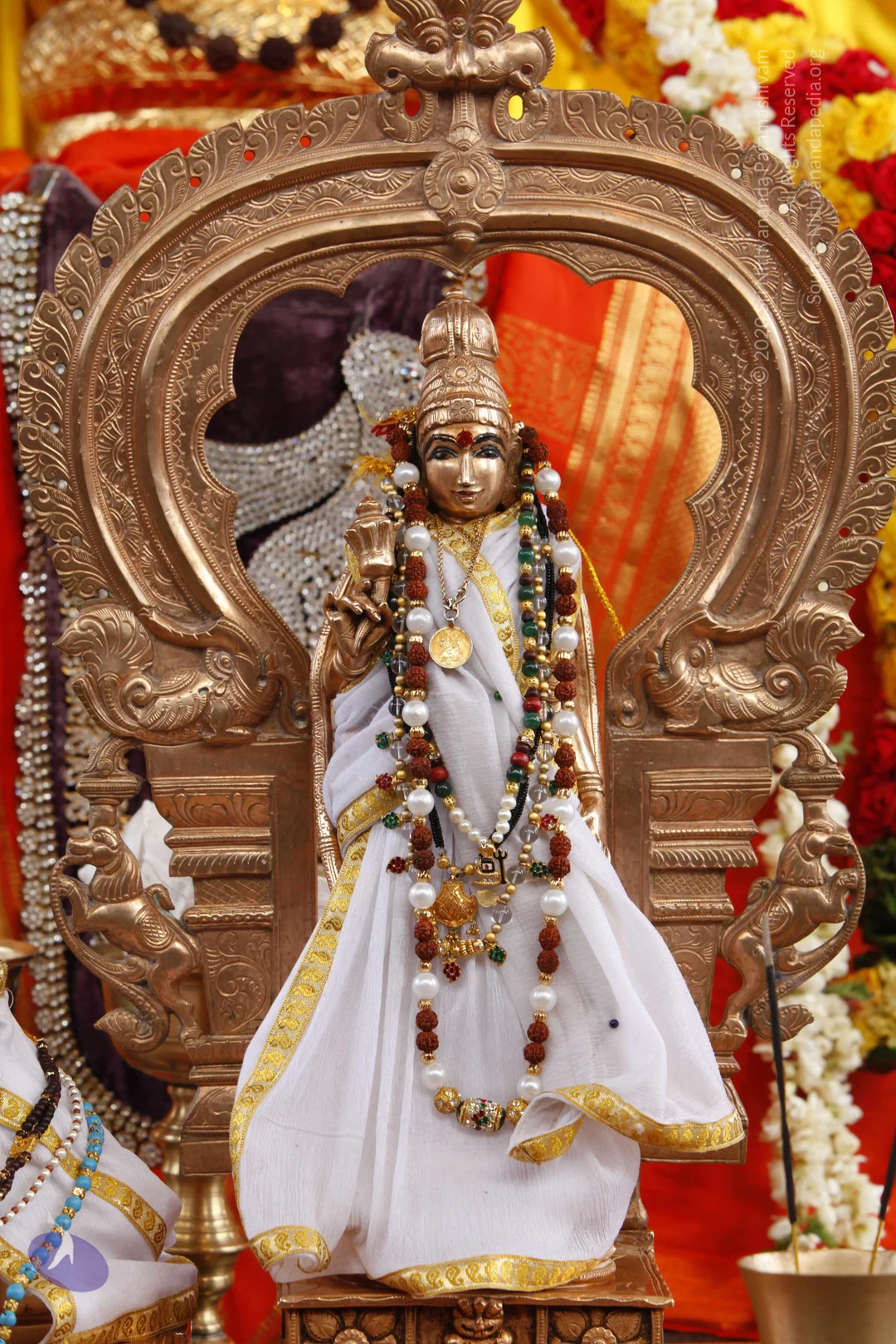
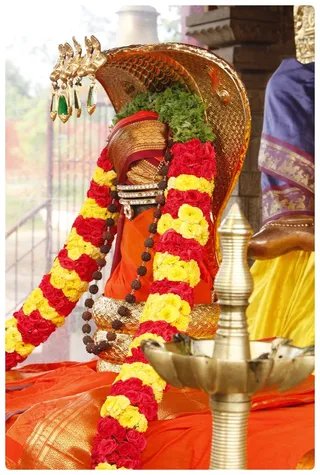
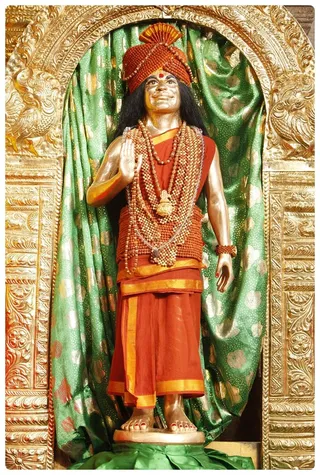
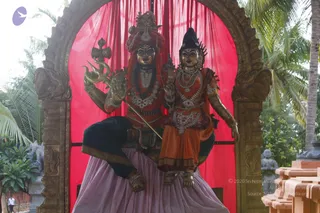
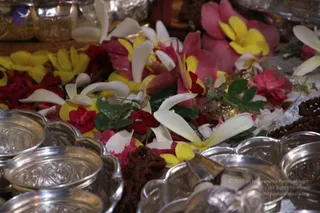
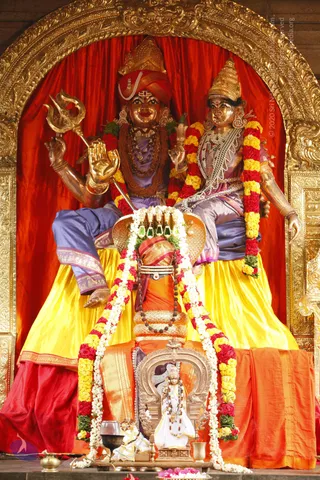
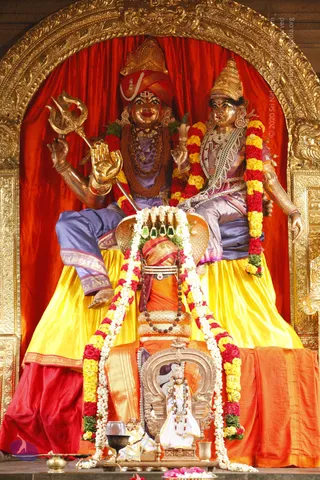
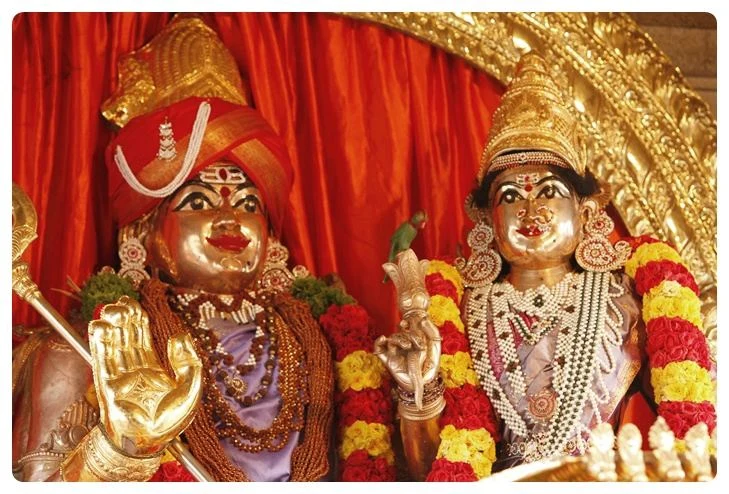
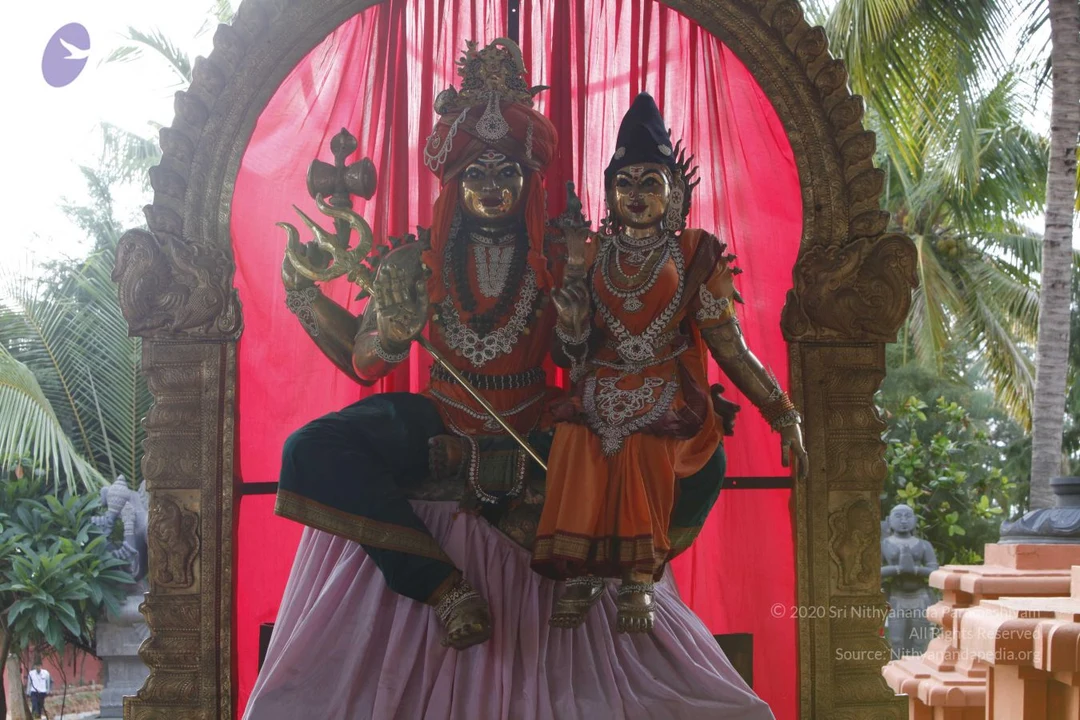
Two gilded metal murti figures stand against a glowing red silk backdrop with an ornate gold arch behind them. The figure on the left wears a red turban, a rudraksha mala and brown beaded necklaces over lavender clothing, holding a golden trident-like staff and raising a hand in blessing. The figure on the right wears a gold crown, layered pearl and bead necklaces and large earrings, with a green parrot perched on a gold ornament between them. Both are garlanded with red roses and yellow flowers. These are statues, not living people, and no in-person a person is depicted. Forehead tilaks are visible on both murtis.A photograph of a metal deity murti standing on a carved pedestal before an ornate golden arched backdrop with a tall finial. The figure wears a white dhoti-style garment with gold-bordered edges, multiple rudraksha and bead malas in red, green and white, and a gold pendant. A crown-like headdress and red tilak mark the face. Behind it, orange and yellow draped cloth and marigold-style garlands fill the background, with incense sticks standing in a brass vessel at right.A deity murti of a seated figure adorned for worship, wearing an orange cloth over the body and a red and gold patterned headcloth, crowned by a golden five-hooded serpent hood with jewelled green pendants. A rudraksha mala hangs across the chest, with a jewelled band across the forehead and a red gem at centre. Garlands of red and yellow roses drape both sides, and green leaves rest on the head. Gold ornaments and a gold-patterned platform surround the figure against a yellow cloth backdrop.A close photograph of a deity murti seated on a throne-like seat, its face covered by a green leafy garland and red-and-yellow rose garlands draped across its arms and body. The murti wears an ornate gold snake-hood crown with green jeweled drop earrings, a rudraksha mala, an orange garment with gold border and a gold waist belt. A brass oil lamp with a tall stem stands in the foreground beside a yellow-and-gold cloth, and a blue-and-gold cloth is visible at the right edge. No people are visible.A gilded statue of a standing male figure in a golden ornate arched niche with a green and gold patterned silk backdrop. The statue wears a red turban with beaded trim and a red tilak mark, long dark hair, layered red and cream rudraksha-style beaded malas, an orange-red shawl and a red dhoti with gold border. The right hand is raised in abhaya mudra and the feet rest on a gold pedestal. Ornate gold carved frame surrounds the figure.A dark stone deity murti seated in a silver arched niche against a green fabric backdrop with gold dots. The four-armed figure wears a pink headband with a jewelled ornament, a brown and white beaded necklace, a rudraksha-style mala, and a yellow garment with a purple lower cloth. Several hands hold objects and the figure rests atop a rocky base decorated with small carved figures. Orange and yellow flowers are placed on the arms, base and the figure's lap.

Temple-Swamiji
35 photosSource gallery
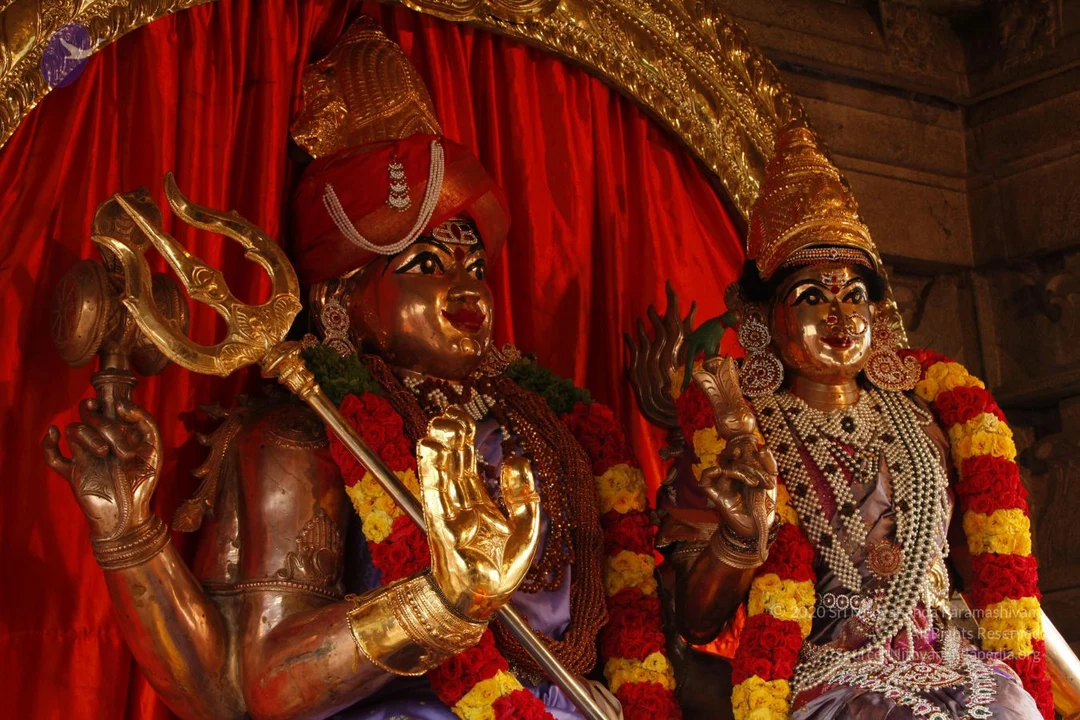
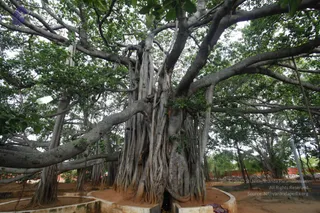
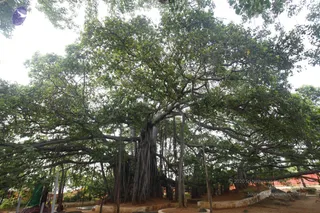
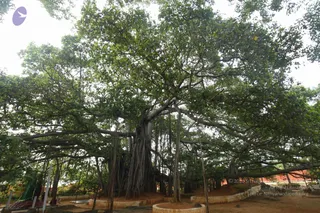
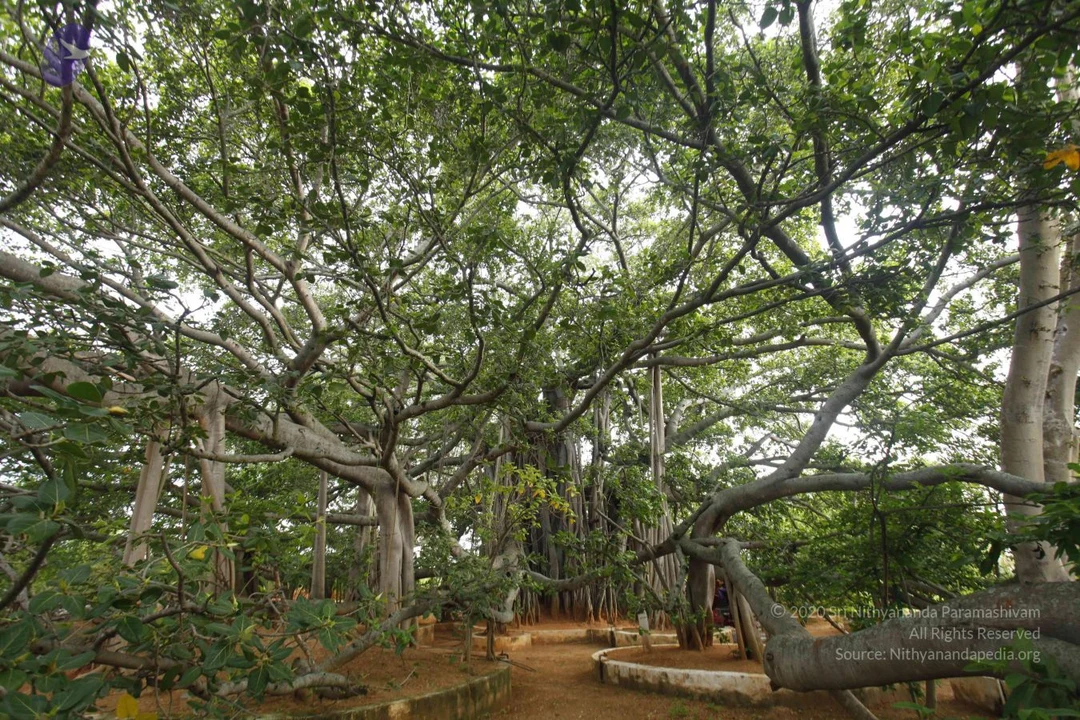
Outdoor photograph of a large golden-painted statue pair seated on a pale lilac draped pedestal inside an ornate golden arch against a red cloth backdrop with palm trees behind. The male figure wears a red and orange turban, a rudraksha mala, a white bead necklace and dark green lower garments, holding a trident and a long staff. The female figure wears an orange sari with a black crown-like headdress and layered white necklaces. Both have gilded faces and ornaments. No live people are clearly visible apart from a small figure at far left edge.A large ancient banyan tree dominates the frame, its wide spreading limbs and countless hanging aerial roots forming a dense canopy of green leaves. The thick trunk cluster sits on a raised circular stone platform with a sandy earthen ground. Small white plastic or glass fixtures hang among the branches on the left. No people are visible in the scene.A large, sprawling banyan tree dominates the frame, its wide canopy of dense green leaves spreading across the sky. Multiple thick aerial roots hang down and merge into a massive trunk base at the center. Low circular stone planters with white-painted edges surround the tree's base on red-brown earth. A red wall appears at the right edge, and a green cloth hangs at the lower left. The scene is empty of people.A large, ancient banyan tree dominates the frame, its wide canopy of dense green leaves spreading across the image with many thick, sprawling aerial roots hanging down and propping up the horizontal limbs. Circular raised stone platforms or planters encircle the base of the trunk on sandy ground. A red boundary wall and a few small structures are visible at the edges under a pale sky. No people are present in the scene.A large, ancient banyan tree dominates the frame, its broad canopy of dense green leaves spreading wide over sprawling, twisting branches. Many aerial prop roots hang from the limbs and descend around a thick, gnarled trunk. Circular raised earthen platforms with low stone edging surround the base on reddish-brown soil. Behind the tree, a red-roofed building and a green tarpaulin are partially visible. No people are present.A large, sprawling banyan tree with many spreading horizontal branches and dense green leaves fills the frame, its aerial prop roots hanging down around a reddish-brown earthen ground. Circular low white-painted stone borders surround the tree bases. No people are clearly visible; a small figure may be partly hidden in the shade at the centre-right, but it is not distinct. Pale grey trunks rise at the right edge. Bright sky shows through gaps in the canopy.

Pratyaksha-Pada-Puja

9 photosSource gallery
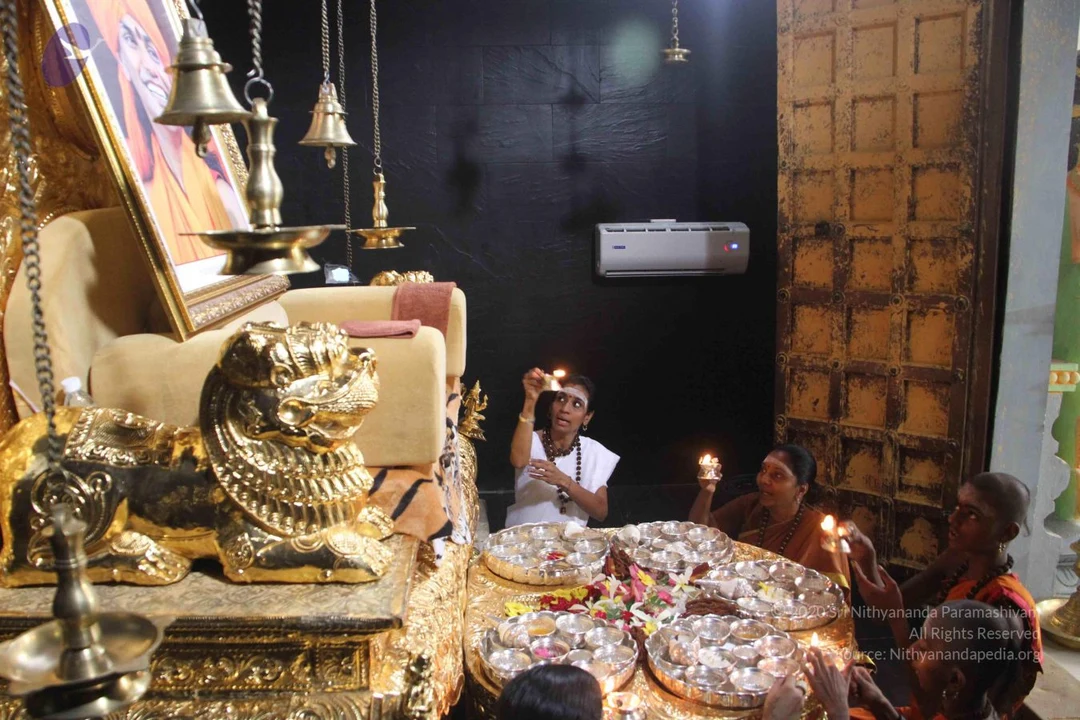
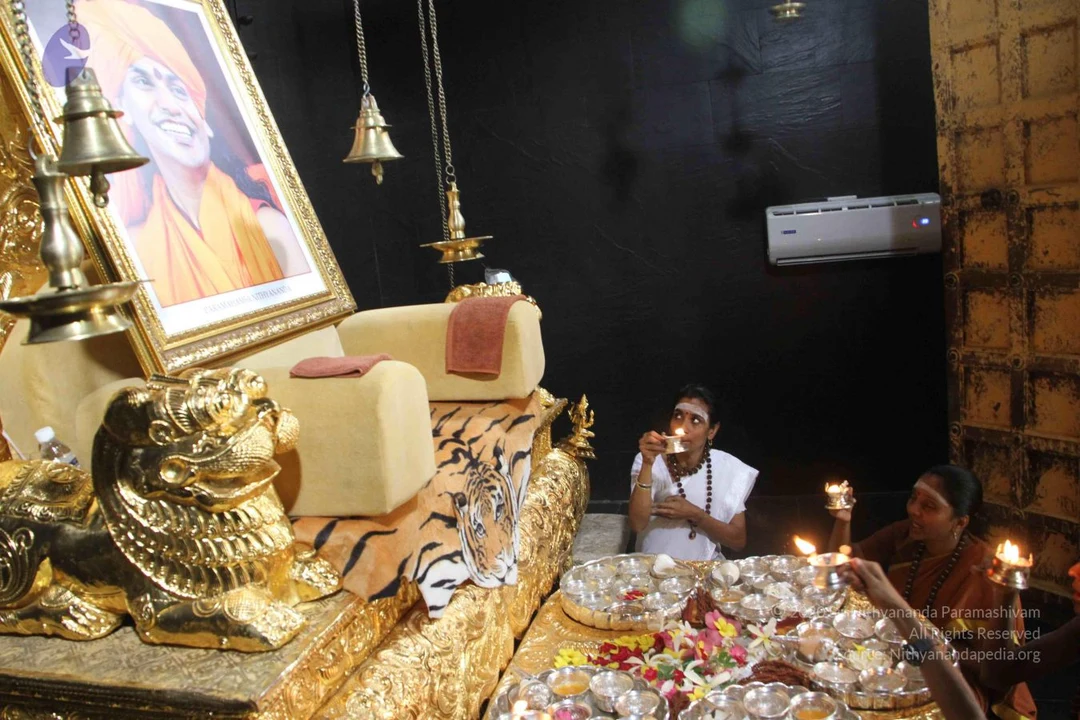
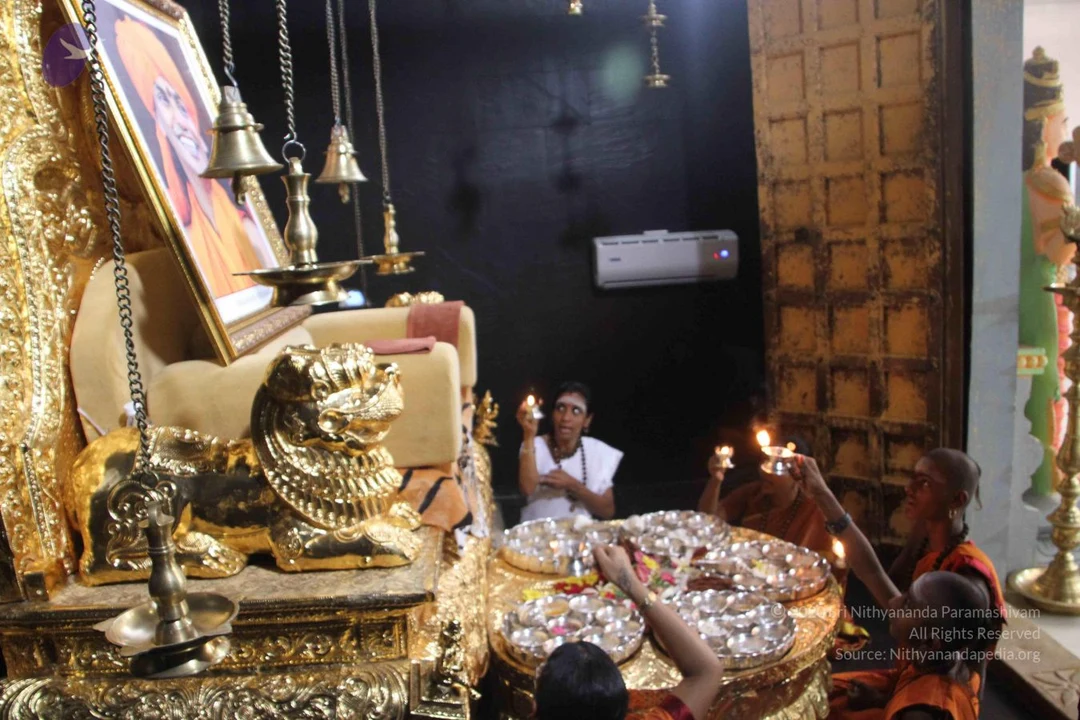
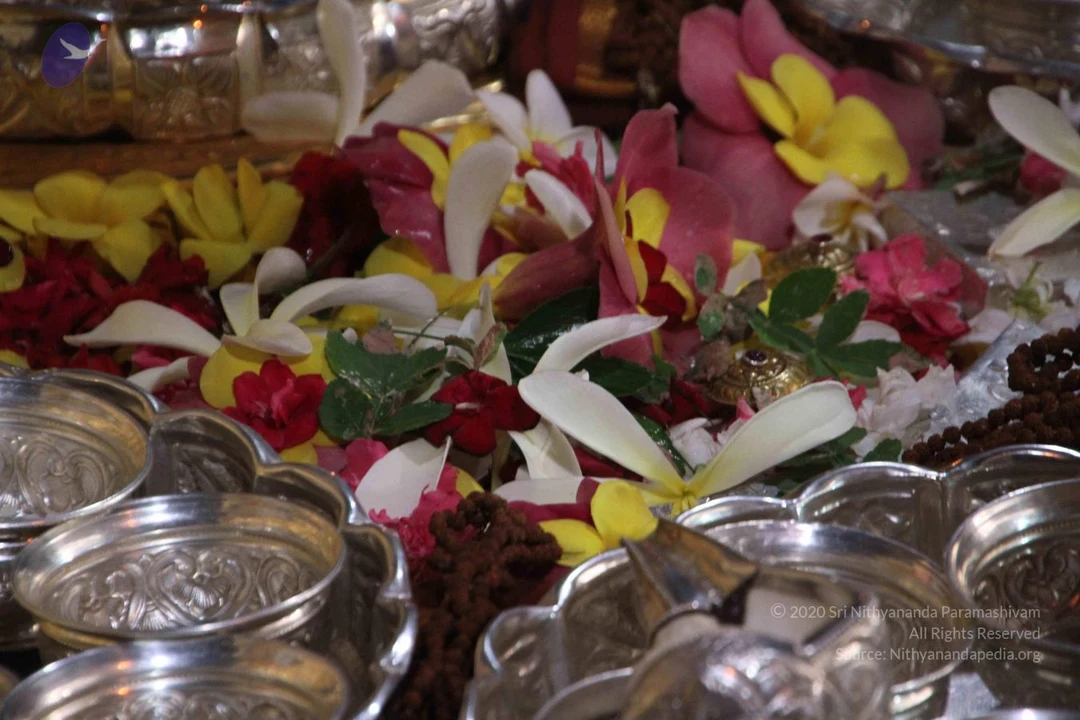
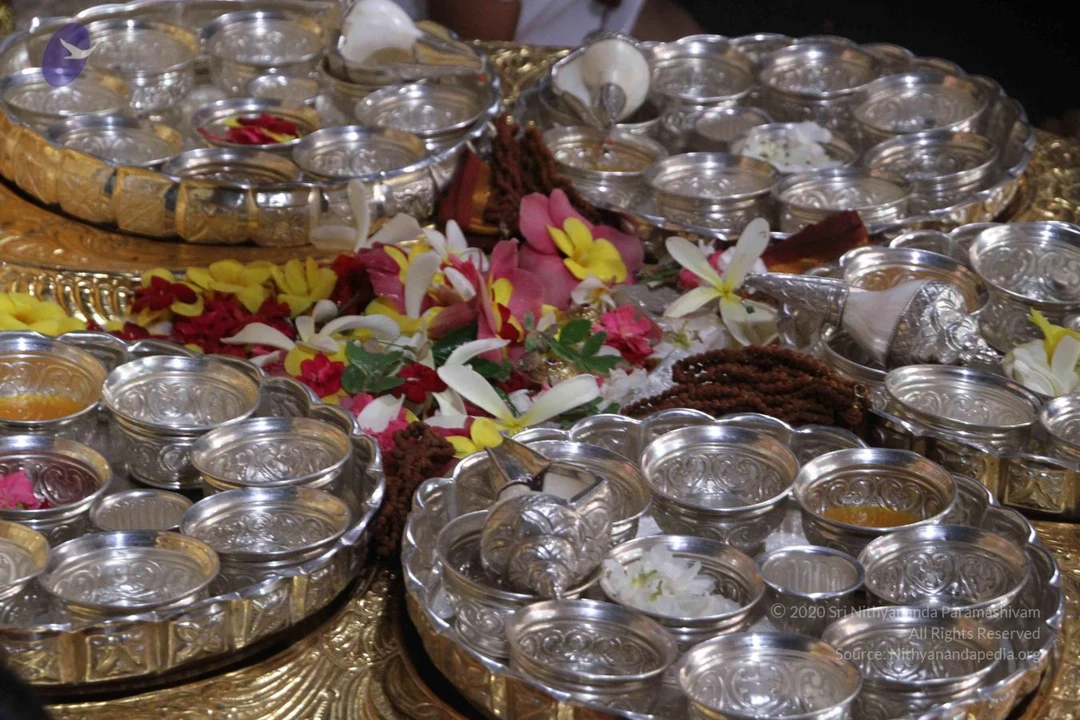
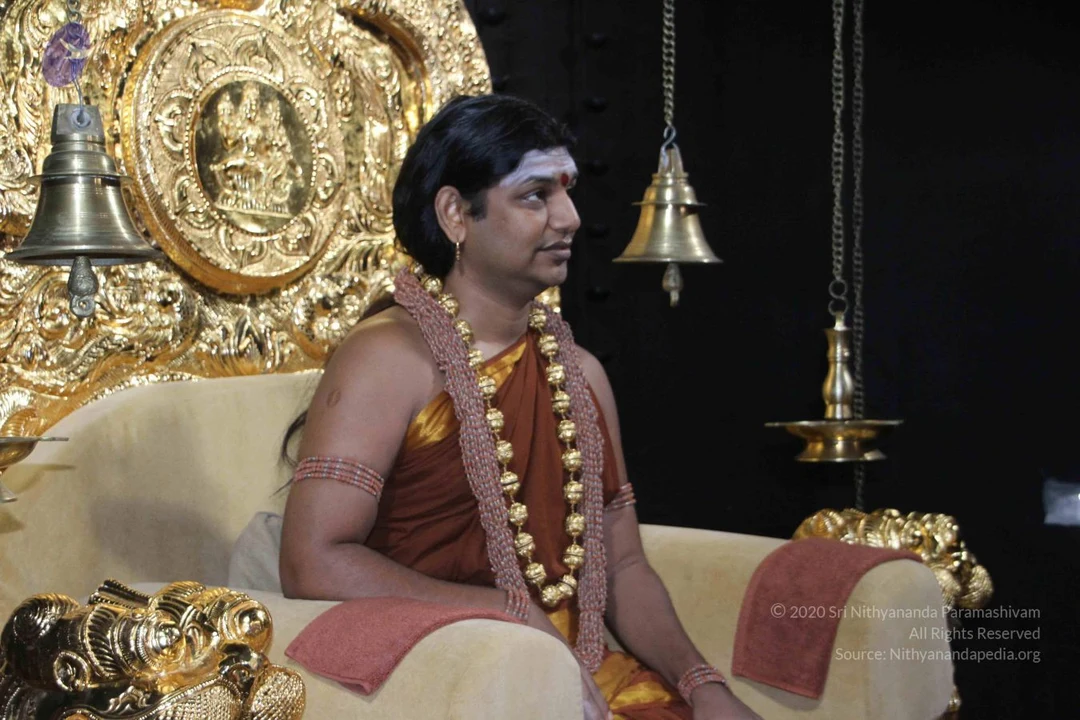
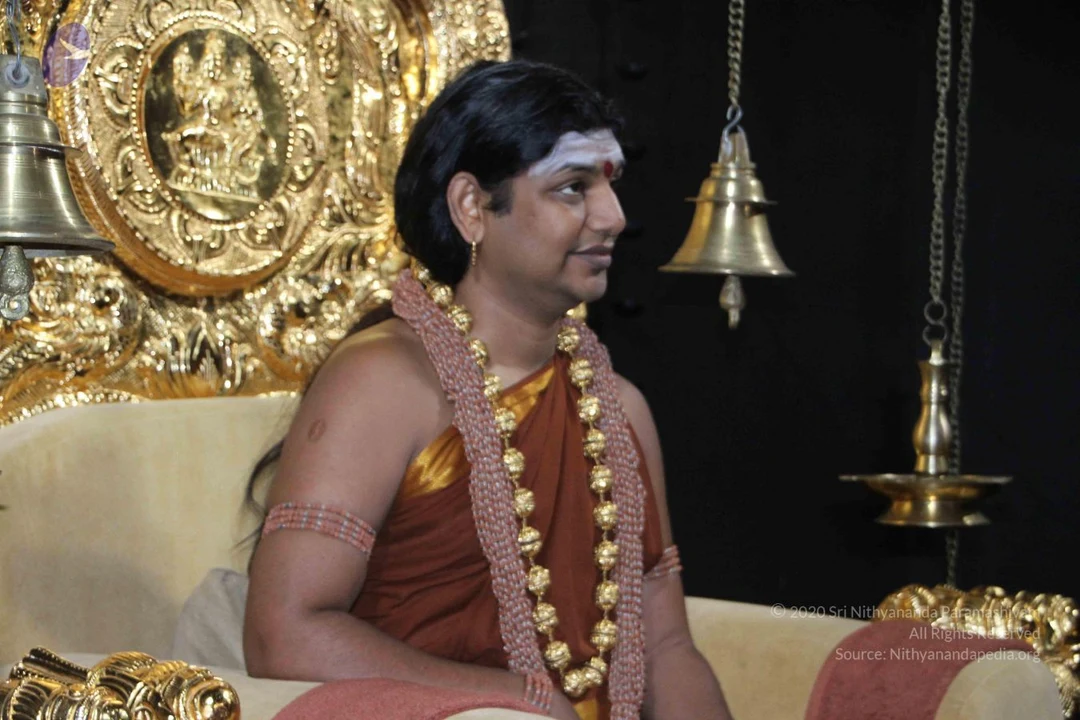
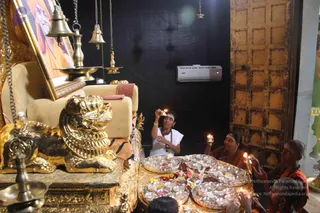
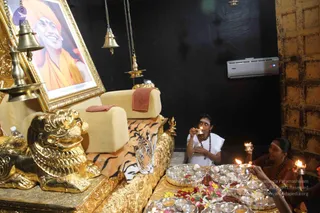
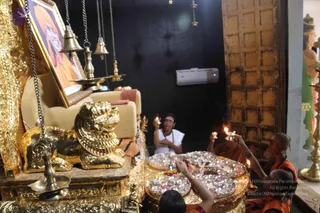
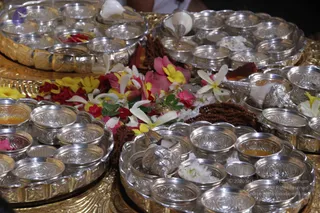
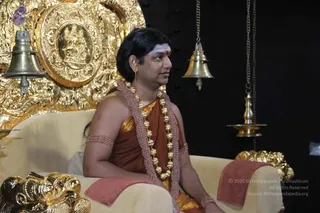
A photograph of a temple-style sanctuary with a gold ornate lion-shaped seat and a throne draped in cloth. On the left, a framed portrait labelled Paramahamsa Nithyananda is not counted as a person. Brass hanging bells and oil lamps hang from chains above the seat. A woman in a white garment and rudraksha mala lights a small flame, while two women in orange-brown saris sit before a gold tray of brass plates holding lit oil lamps and flower petals. A split-screen wall-mounted air conditioner and a large carved wooden door with brass studs complete the scene.Inside a shrine room with black walls, a golden ornate throne with a carved lion-head base and a tiger-skin cloth stands beside a framed portrait labelled "Paramahamsa Nithyananda" of a smiling saffron-robed man. Brass bells and a brass oil lamp hang at left. A woman in a white sari with rudraksha mala and a tilak sips from a small cup while two women in maroon-brown saris hold lit oil lamps (deepa) near a tray of brass plates holding flowers, cups and offerings. Lamps glow in the foreground.Inside a gilded shrine room, a lamp-lit aarti is performed before a framed portrait labelled "Paramahamsa Nithyananda" showing a saffron-robed figure on a golden throne-like seat with a lion-form golden base. A woman in white garments with a beaded mala waves a lit oil lamp, while two devotees in orange-saffron robes hold lamps and stand near a round golden table with silver plates of flowers and offerings. Brass hanging bells and oil lamps hang overhead, and a gilded deity murti stands at the right edge.Close-up photograph of an offering spread of fresh flowers and leaves on polished silver ritual vessels. Yellow and white plumeria blossoms, red and pink hibiscus-type flowers, green leaves and loose rudraksha beads are heaped among ornate silver bowls with embossed floral patterns. A small brass dish sits among the blooms. No people are visible; the scene shows puja offerings arranged for a devotional ceremony.Close-up photo of an elaborate puja arrangement on gold-coloured trays. Numerous ornate silver bowls with engraved floral patterns hold small amounts of liquid, oil and kumkum-coloured offerings. Scattered among them are fresh flowers in white, yellow, pink and red, including frangipani-like blooms, green leaves, rudraksha beads on strings, and white conch-shaped vessels with silver spoons. No people are visible in the frame. The arrangement appears set up for ritual offerings such as abhishekam or puja.A man with long dark hair and a red-orange vibhuti/kumkum mark on his forehead sits on an ornate golden throne with a cream upholstered seat. He wears an orange-red shawl over a bare upper body, a beaded rudraksha-style mala and a ceremonial gold necklace, and bangles on his wrists. Pink-red cloth covers the armrests. Hanging brass bells and an oil lamp are nearby, and a black backdrop surrounds the scene. a person is seated in the centre, identifiable by the long swept hair, saffron shawl, rudraksha mala and gold necklace; the person is shown in an in-person setting.

Swasthi-Mantra

8 photosSource gallery
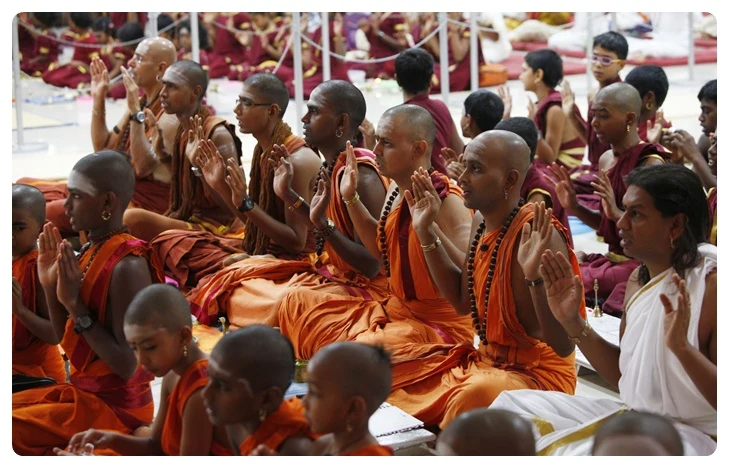
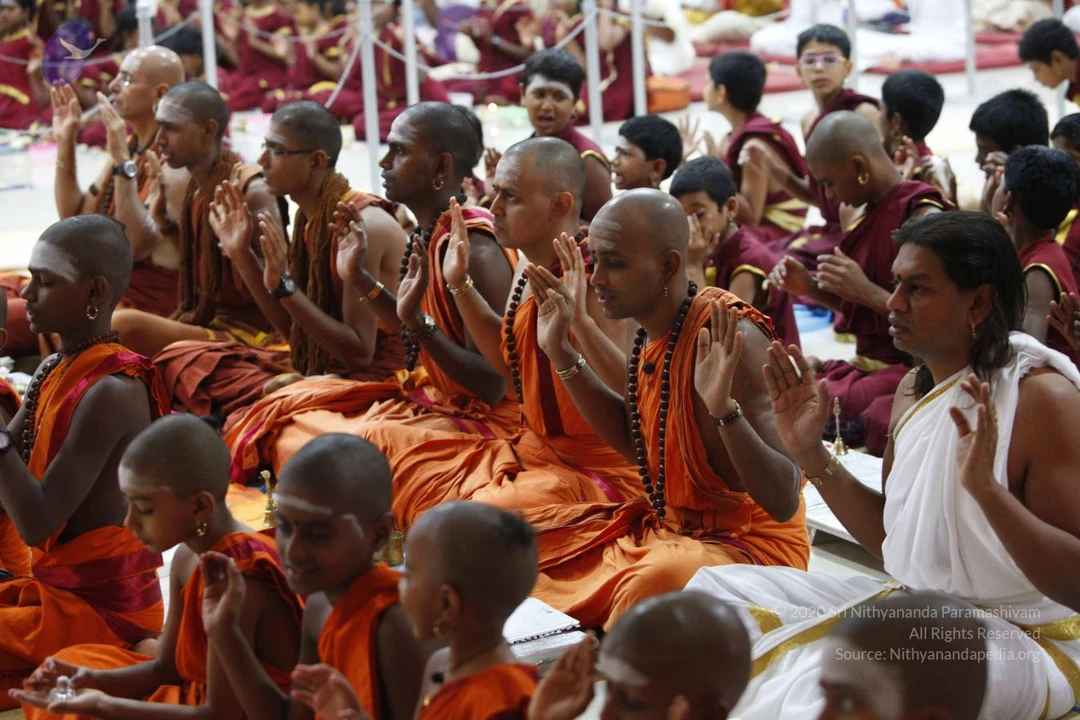
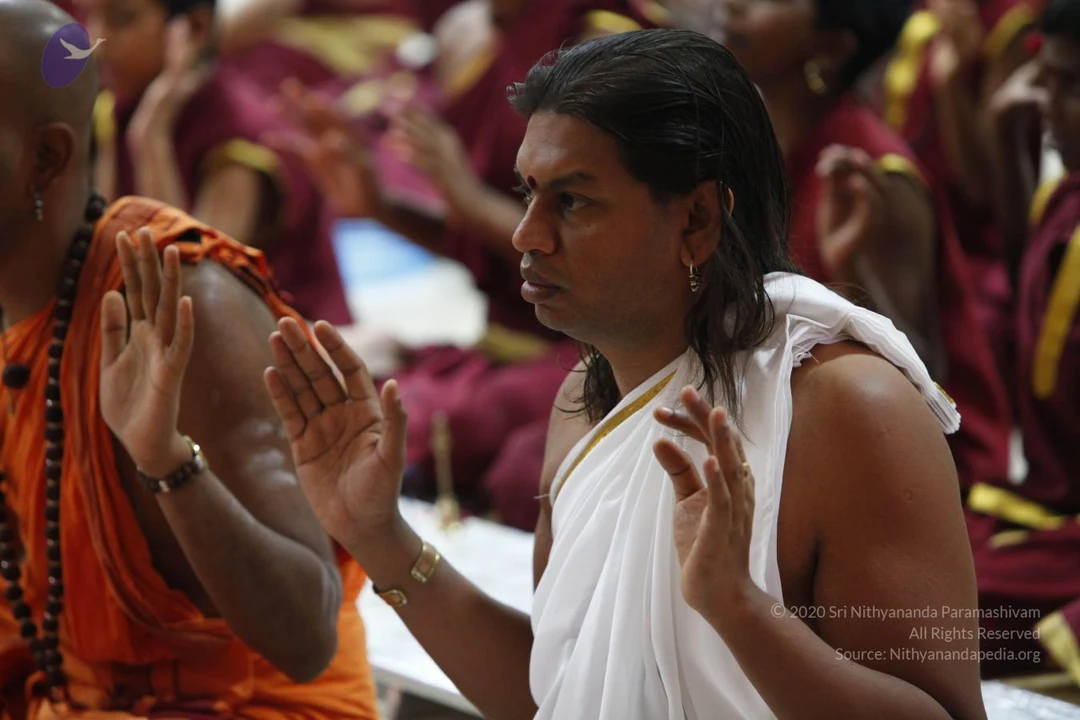
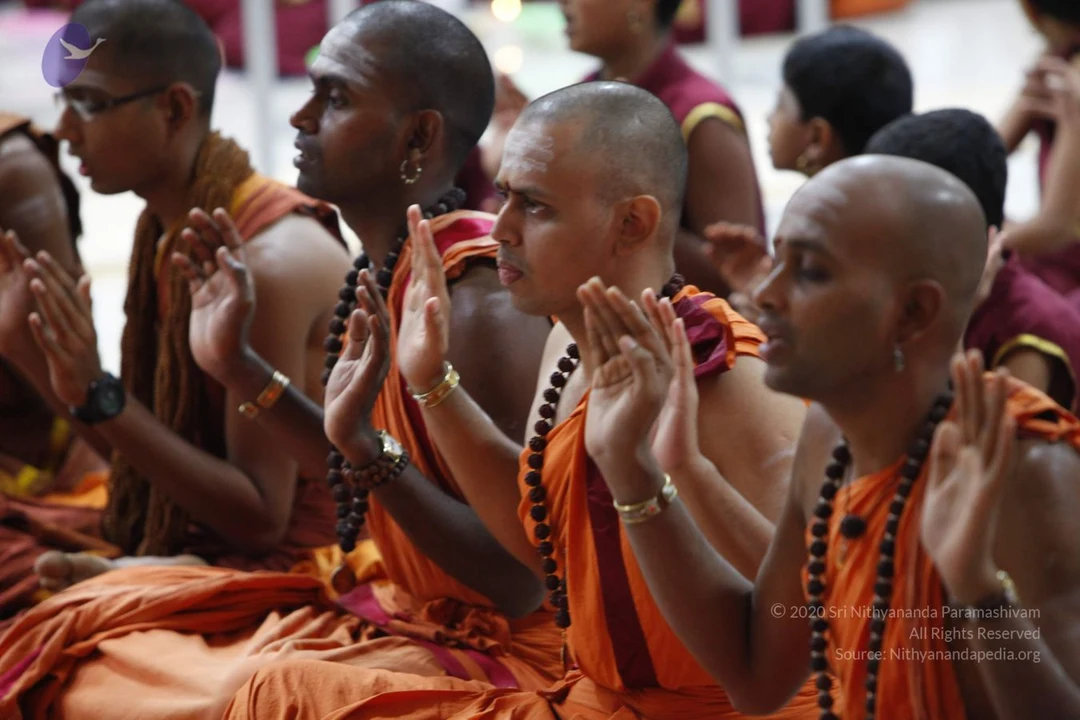
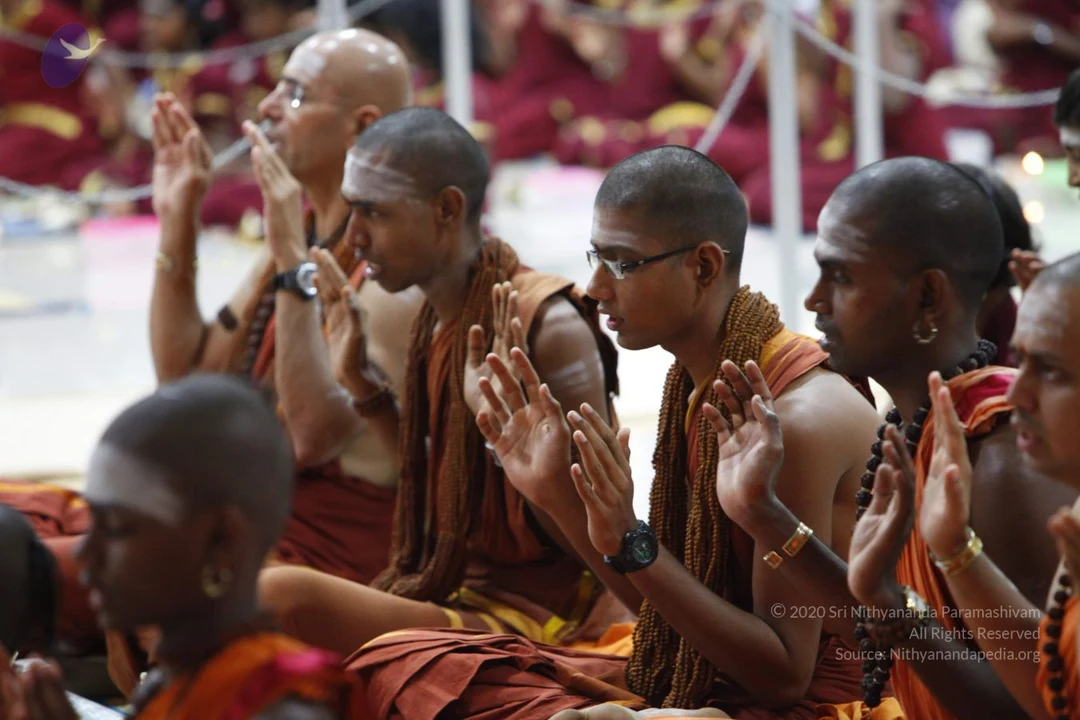
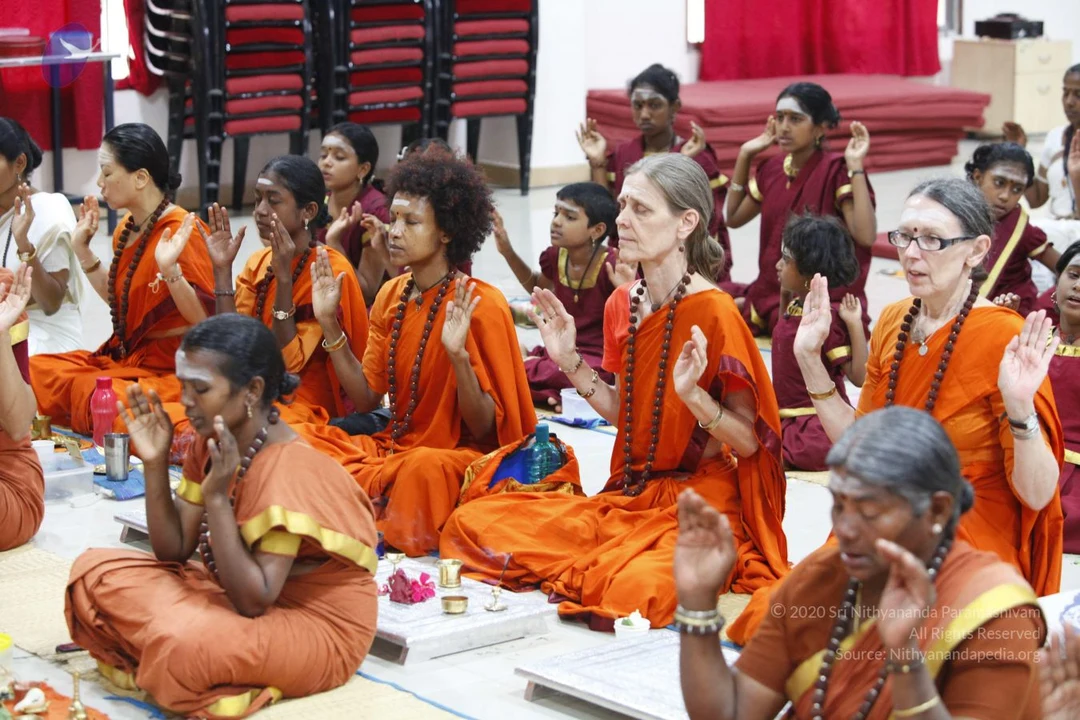
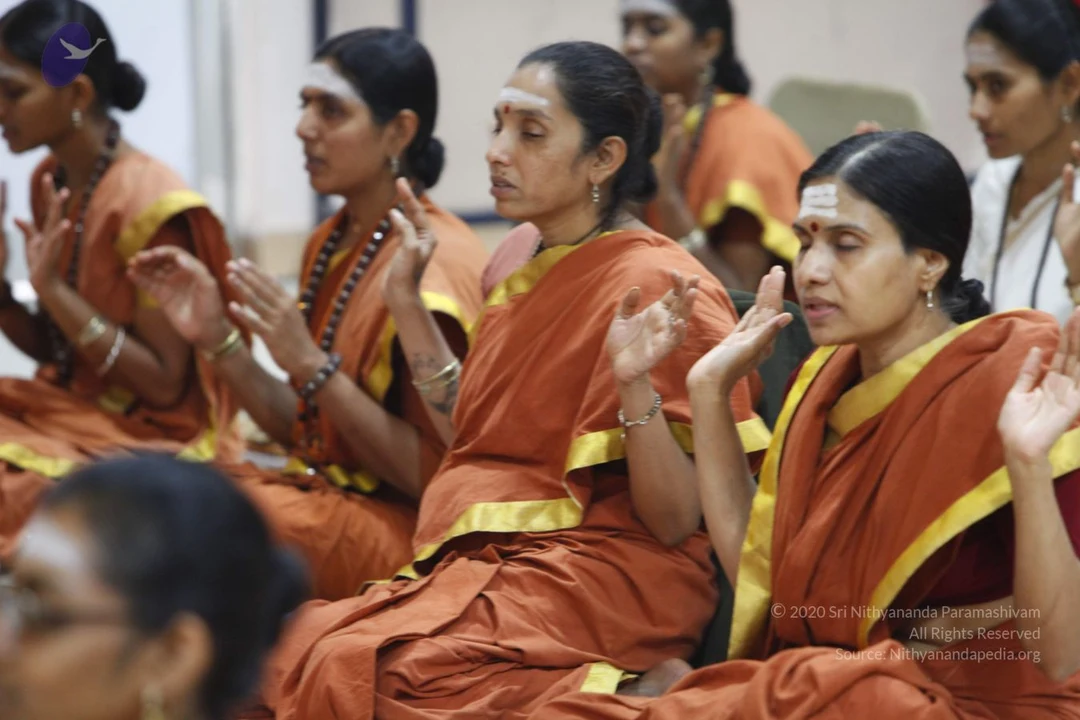
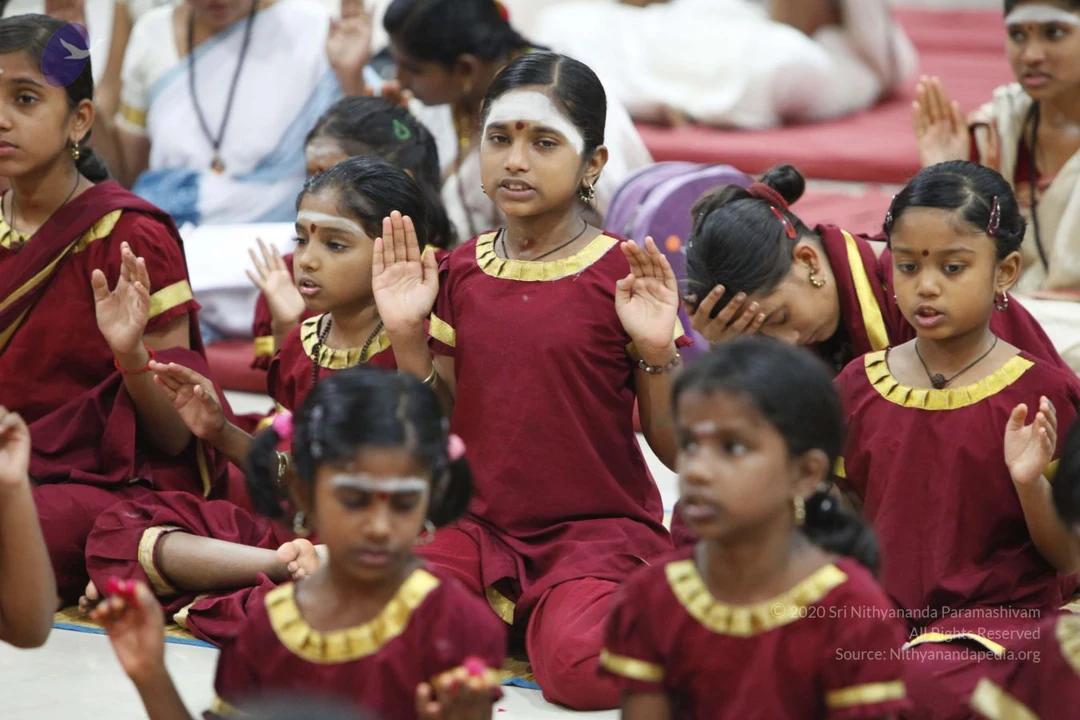
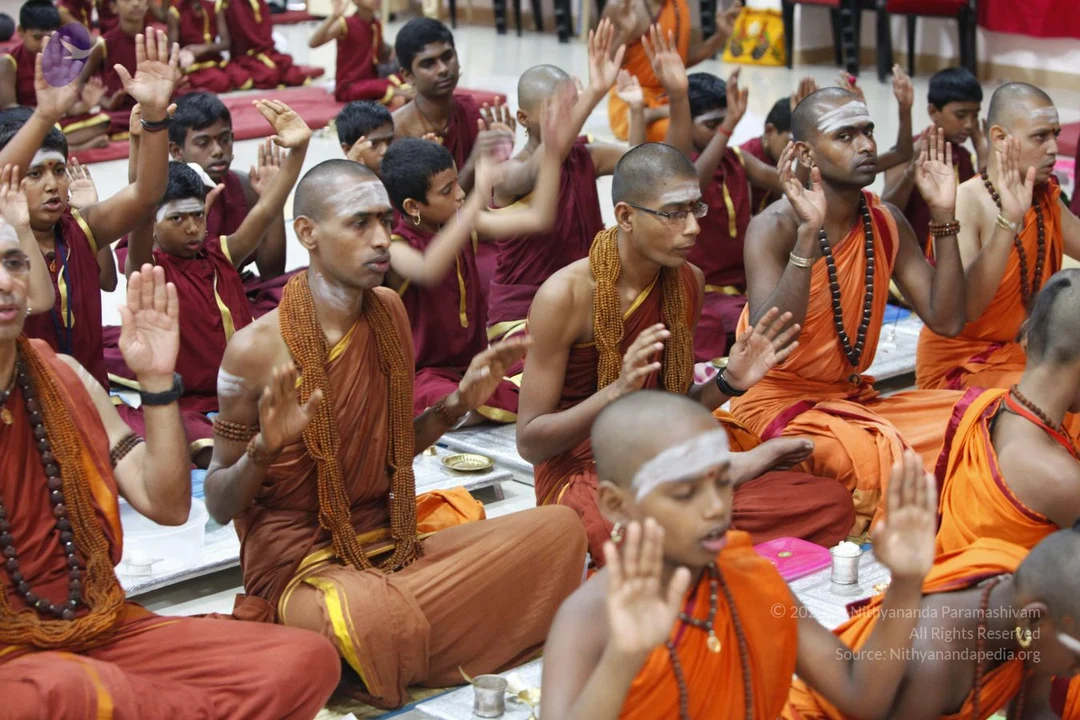
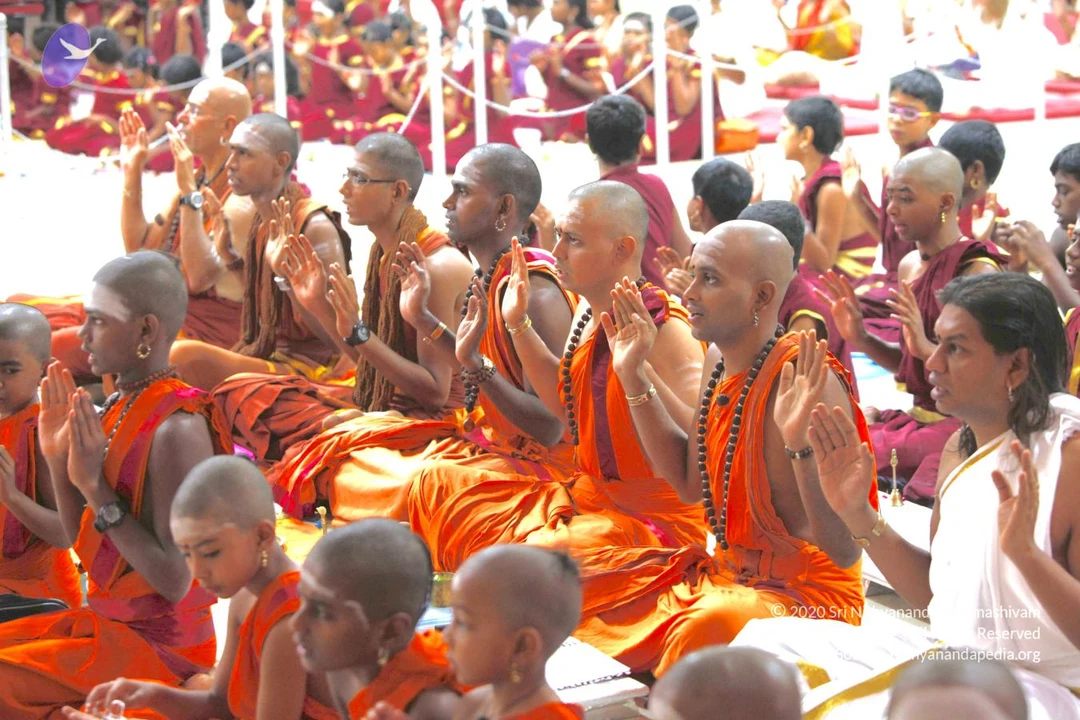
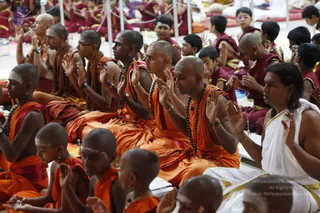
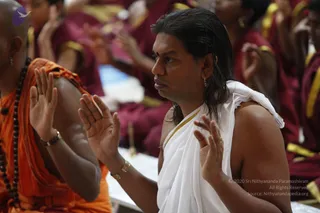
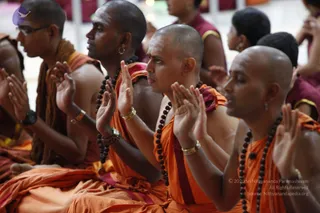
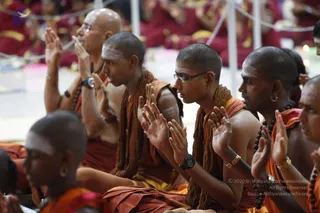
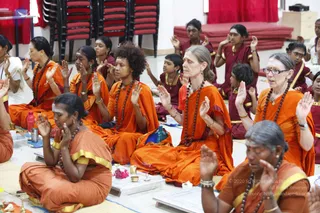
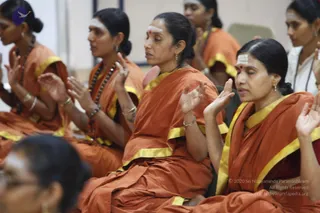
A large seated group of devotees with palms pressed together in a prayer gesture at a satsang gathering. In the foreground, several shaved-headed young monks wear saffron-orange robes and rudraksha malas, some with white forehead markings. Behind and beside them, many boys in maroon and gold-trimmed robes sit cross-legged on red and white floor mats. At the right edge, a man with long swept-back hair wears a white dhoti-style garment with gold borders and a gold necklace, his hands raised in anjali. The scene suggests a devotional sitting, with the people arranged in rows across the hall.A seated man in a white dhoti-style cloth draped over one shoulder, with a gold-coloured sash across his chest, sits with both palms raised toward the camera in a gesture of blessing or greeting. His long dark hair is swept back, and he wears a small red mark on his forehead and a gold earring. Beside him on the left, a man in saffron-orange robes and a dark rudraksha mala raises his hand similarly. Behind them, rows of people in maroon robes with gold trim sit with hands folded or raised.Several sannyasis seated in a row in orange saffron robes with rudraksha malas, hands raised in anjali mudra in prayer during a satsang gathering. The foreground men are shaved-headed, one with gold bangles and a wristwatch, another with a wooden mala and gold armband. Behind them, devotees in maroon and gold-trimmed clothing sit with hands folded. The setting appears to be an indoor hall with white pillars and soft light.A row of seated monks in saffron and orange robes sit in a hall with hands pressed together in anjali mudra, appearing to chant or pray. Several have shaved heads with white vertical tilak marks on their foreheads; one wears thick rudraksha-style beaded necklaces and another wears dark-rimmed glasses and a wristwatch. Behind them, rows of people in maroon and red clothing sit in the background beside white railings, with gold-accented fabric and small lights visible. The scene suggests a satsang or group ritual session.A photograph of a seated group of women and girls in saffron-orange and maroon robes during a devotional practice, most with palms raised in front of them. Several wear rudraksha malas, bangles and gold-bordered orange garments. Small brass cups, a kalasha-like vessel and a few flowers sit on a white altar cloth in front. Red-draped chairs and red cushions are stacked in the background, and a white sign lies at the top left. The scene appears to be a satsang or puja setting.A photograph of several women seated closely together during a group chant or satsang. They wear orange-saffron saris with yellow borders and white vertical forehead marks (tilaka/vibhuti). Several have hands raised in mudra-like gestures with eyes closed, and one wears a rudraksha mala. A blurred figure in the lower left foreground and a woman in white in the upper right are partially visible.

Satsang-Swamiji

4 photosSource gallery
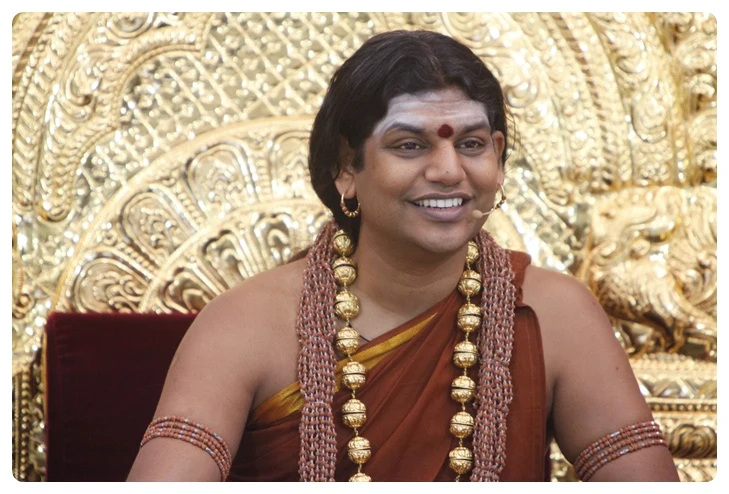
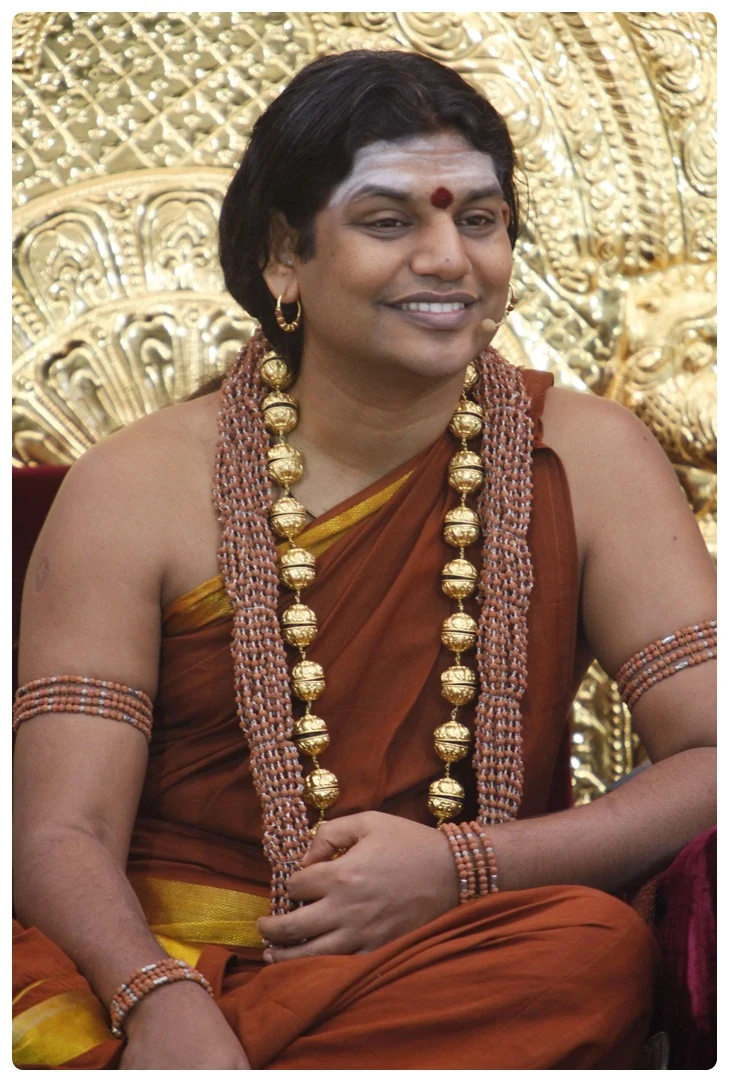
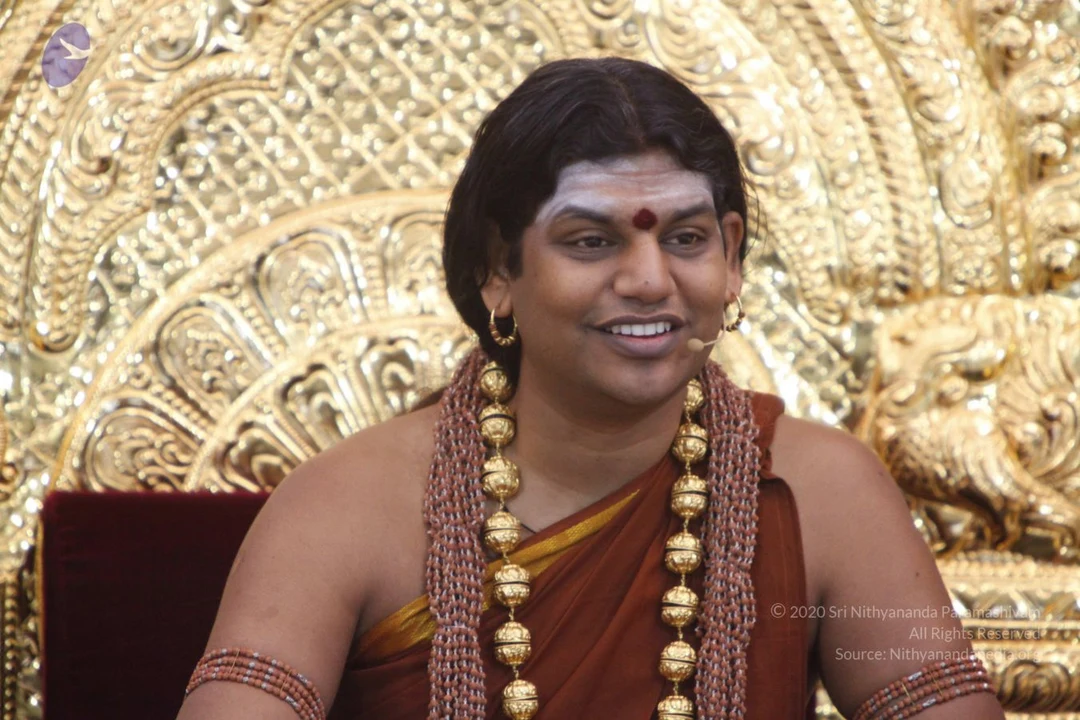
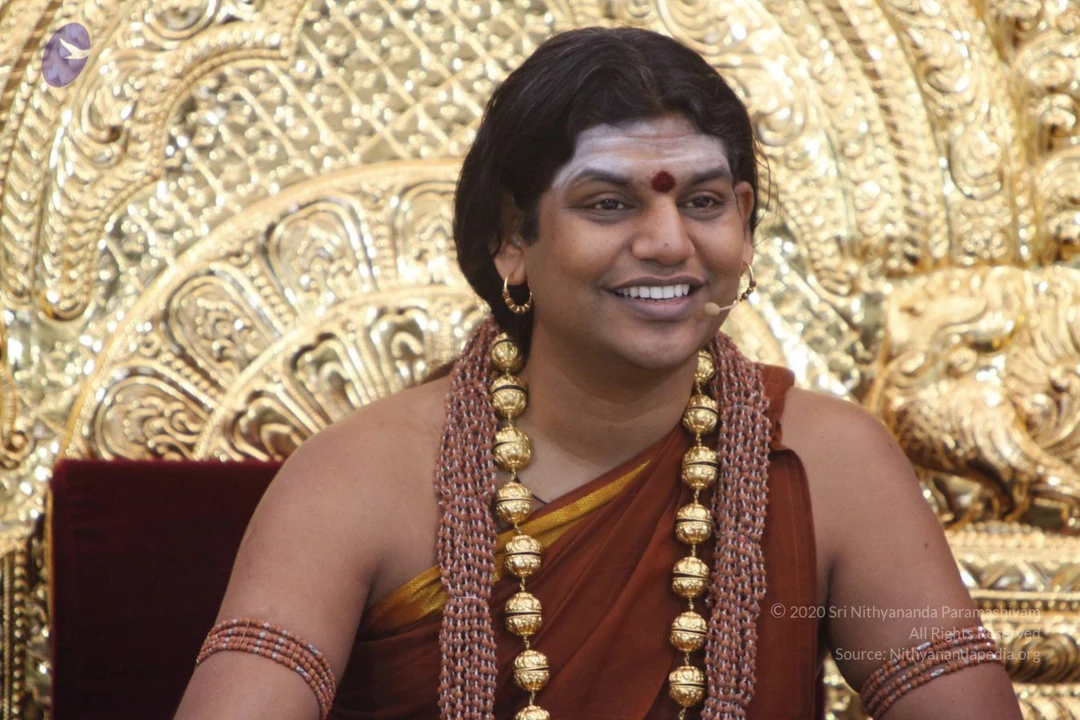
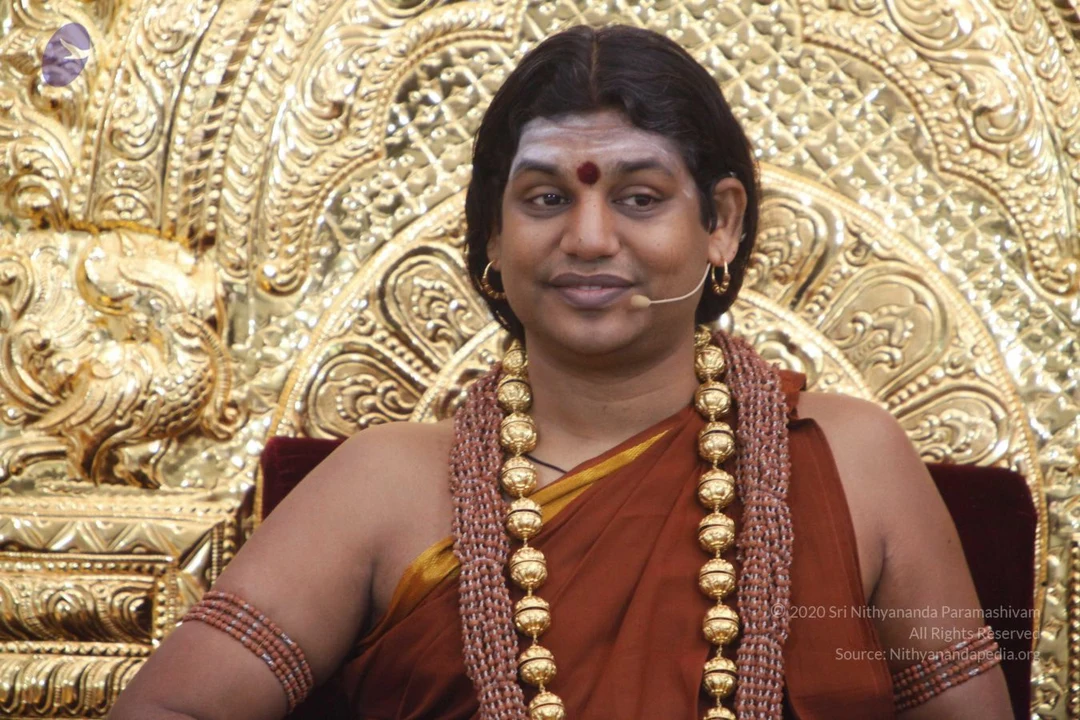
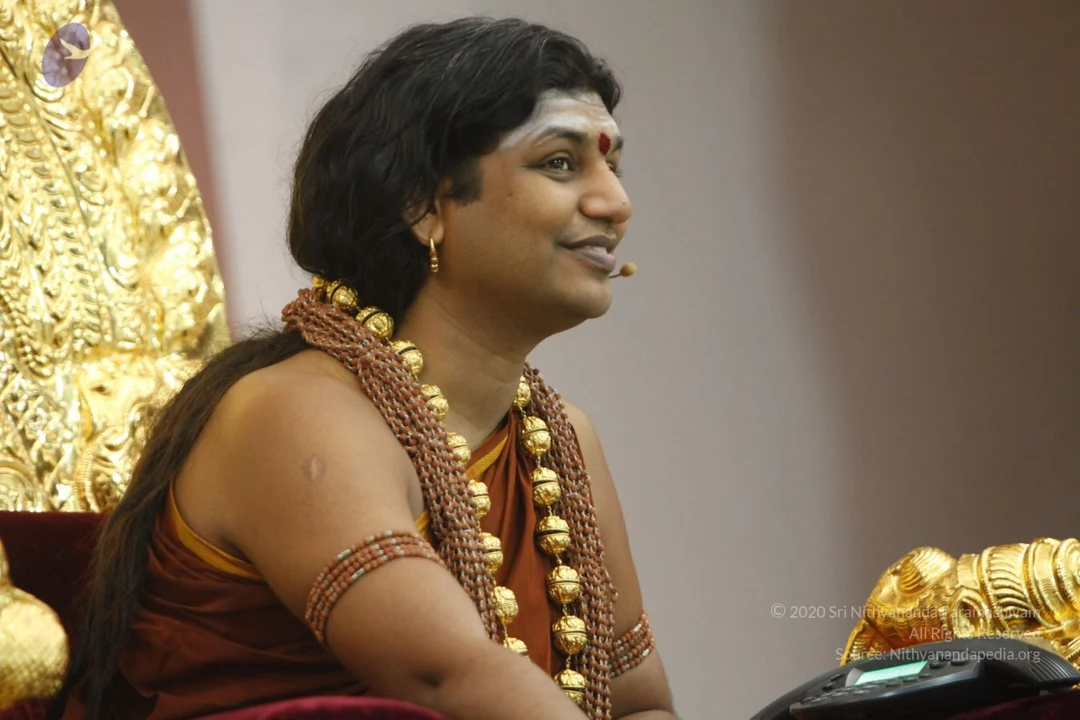
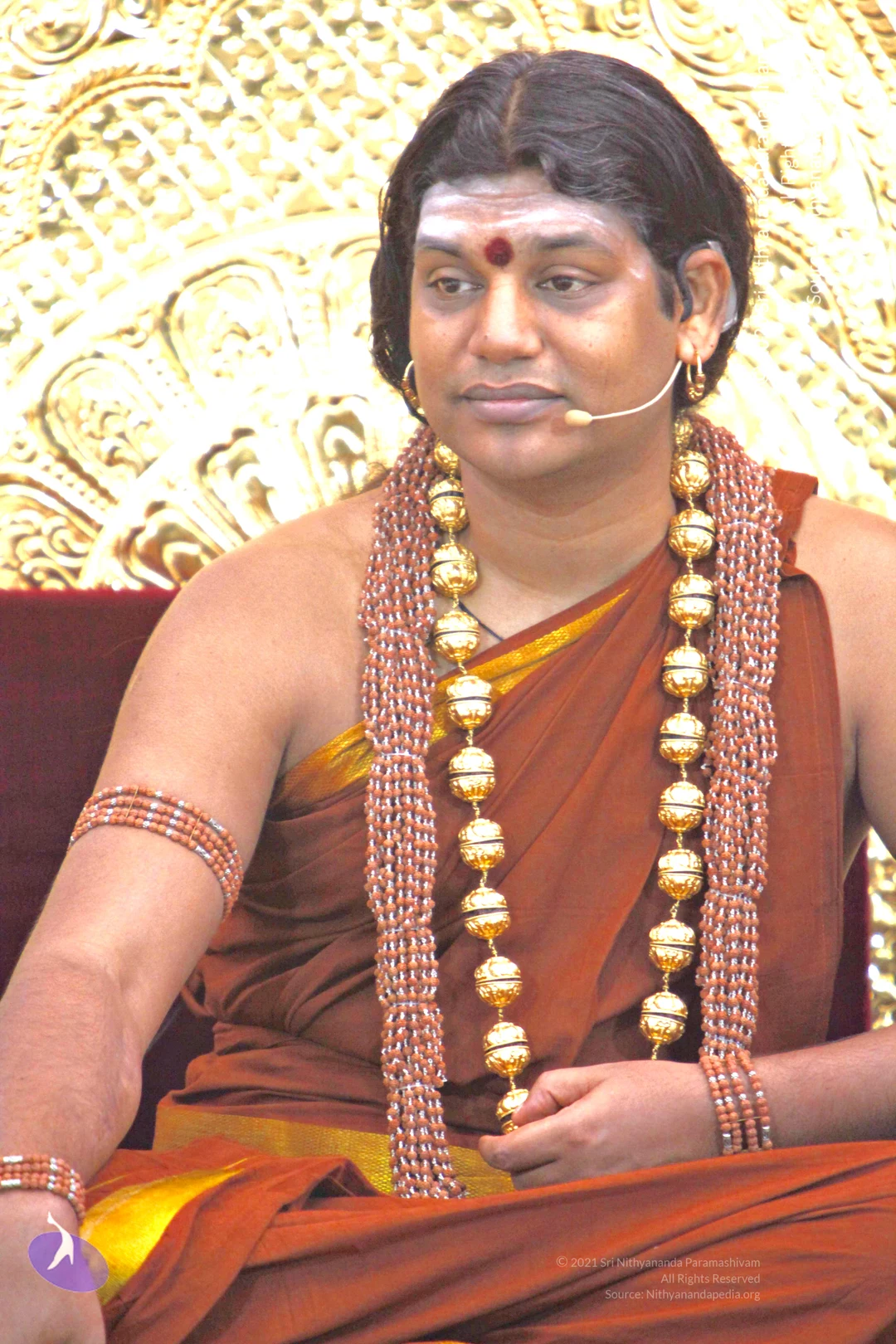
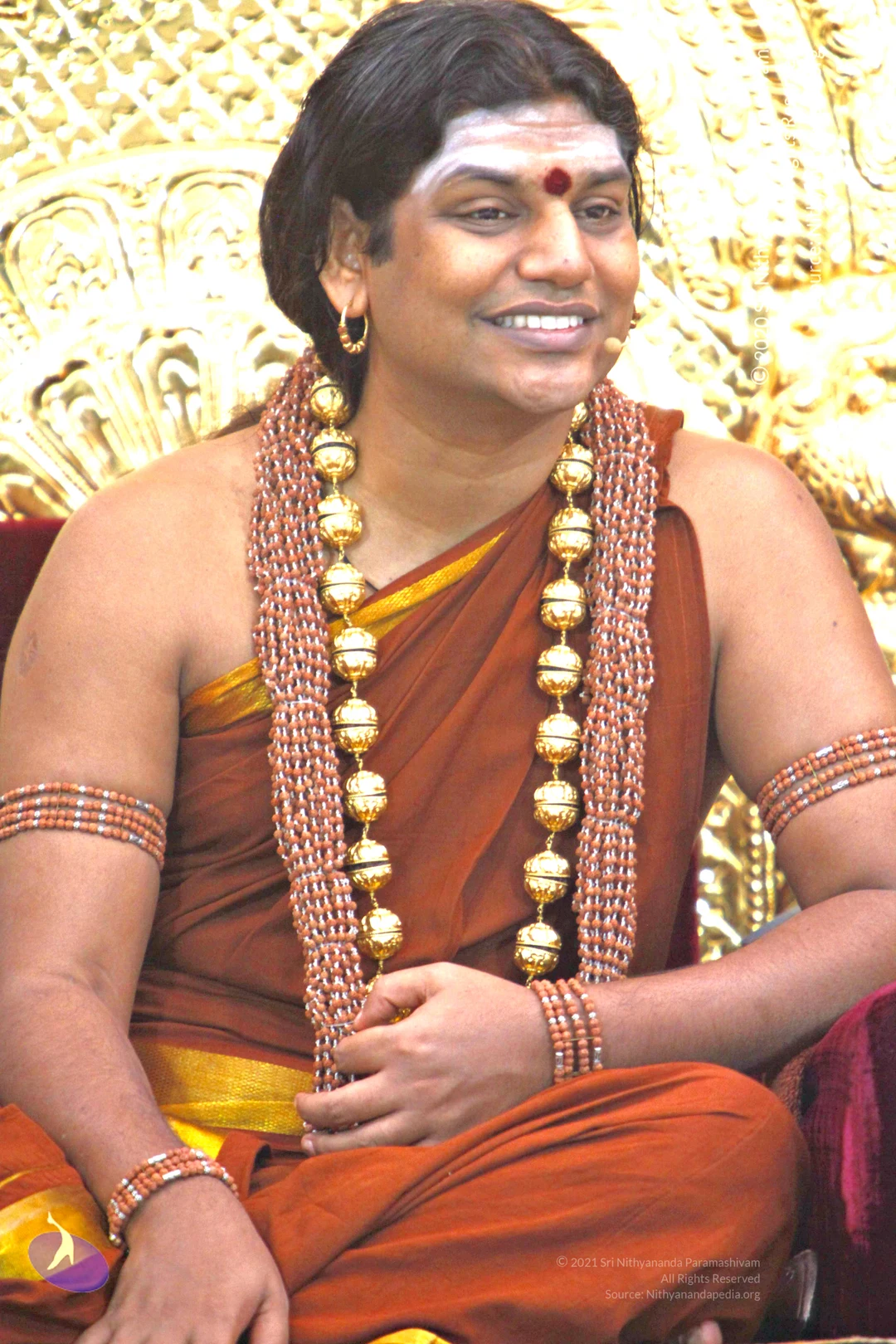
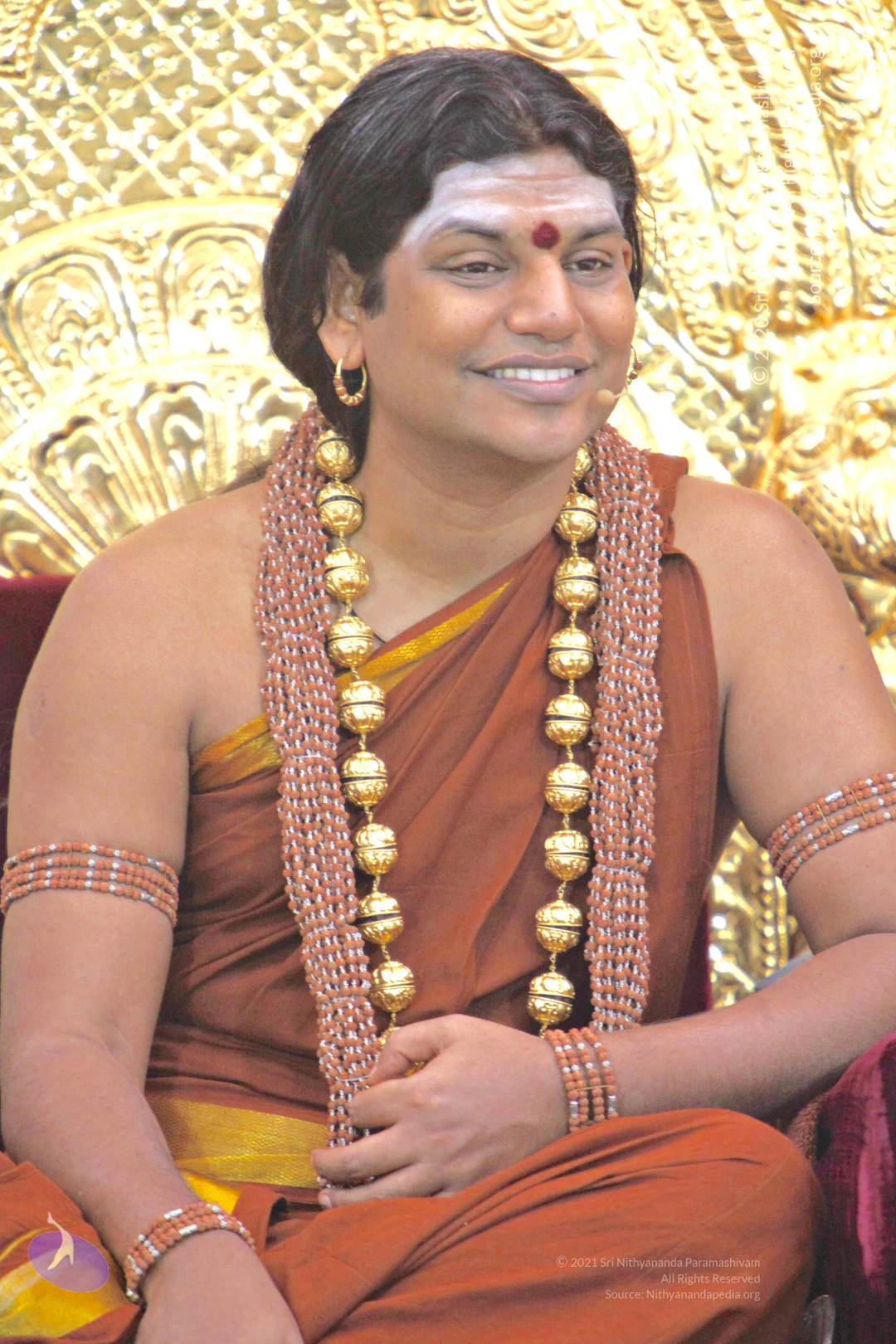
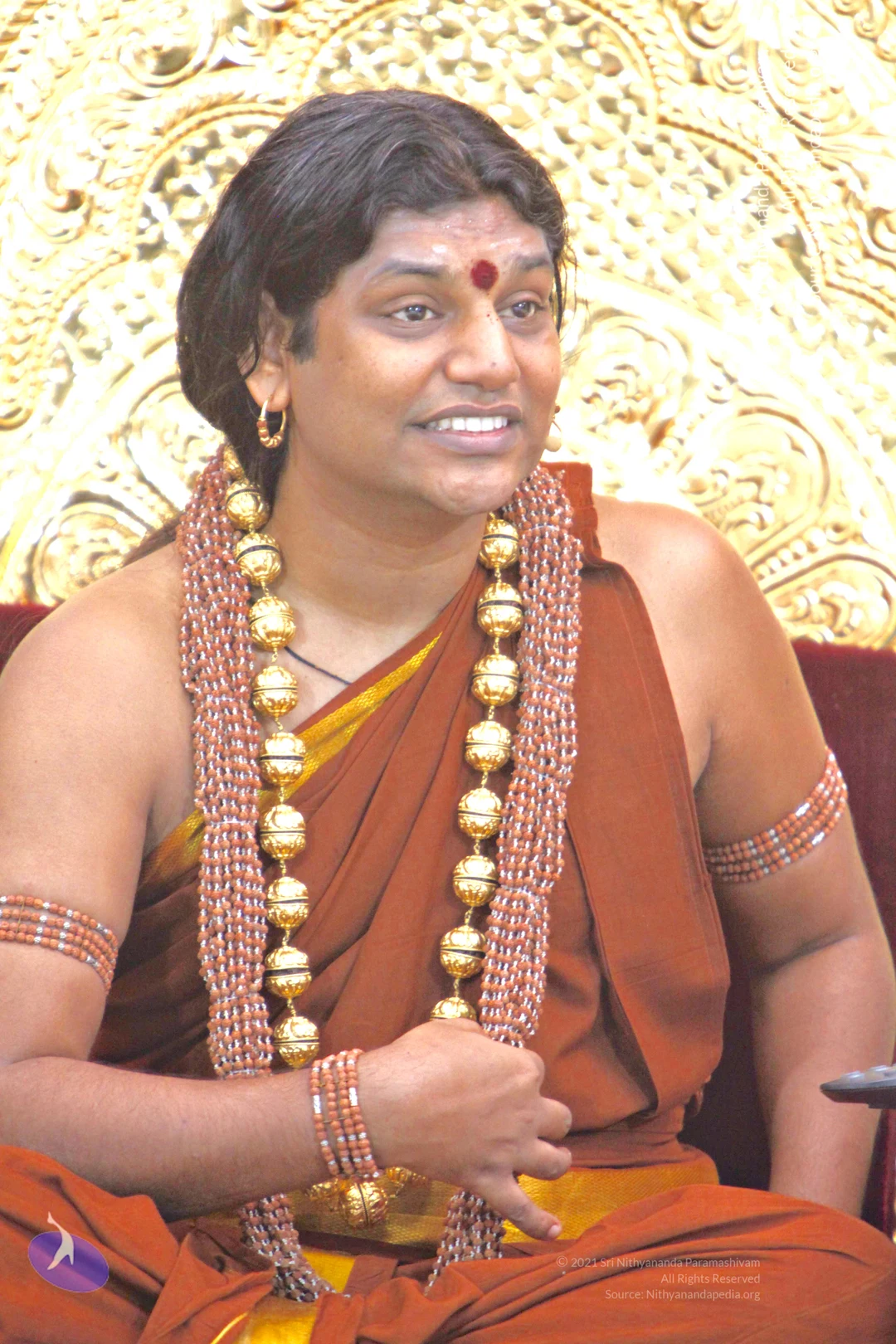
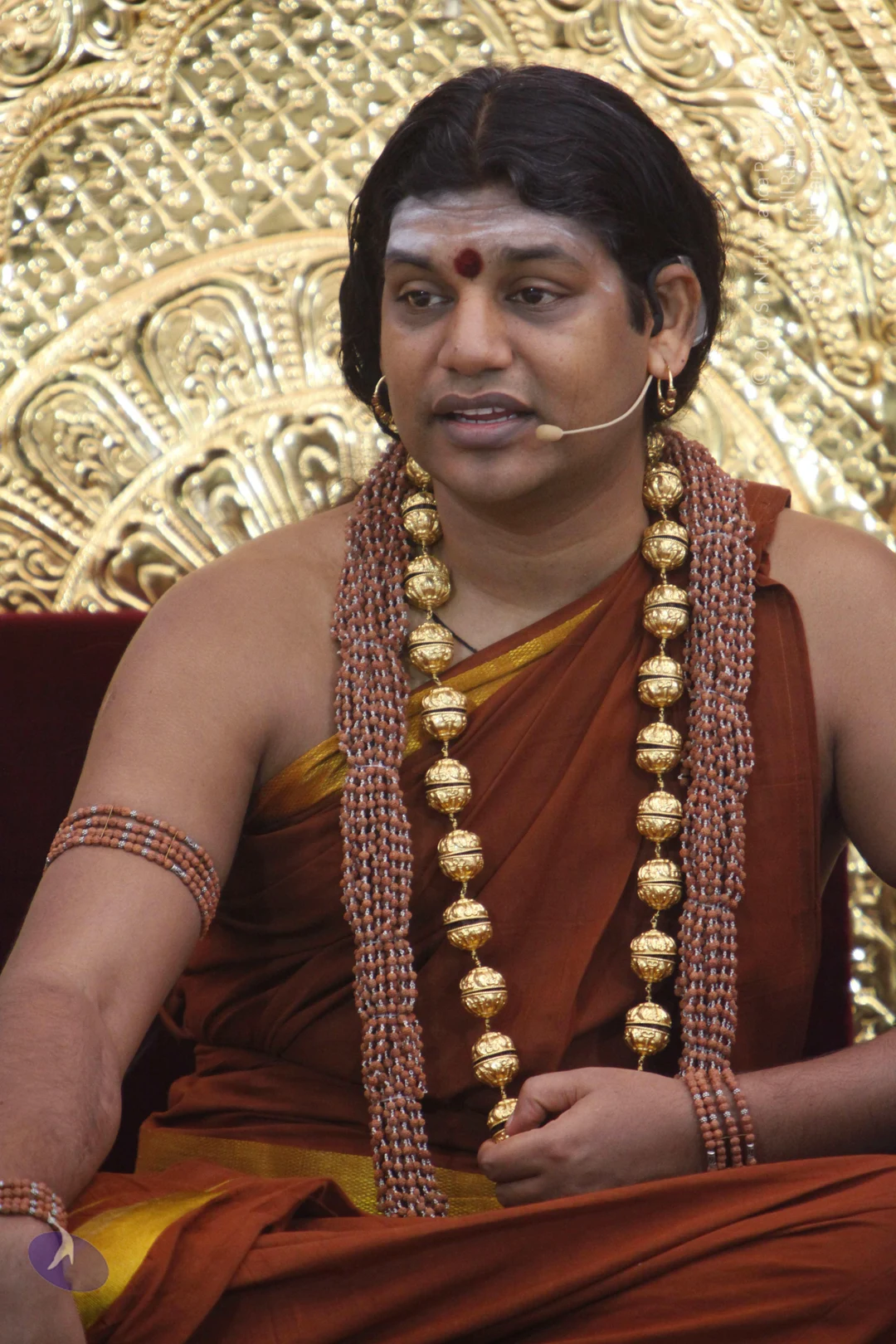
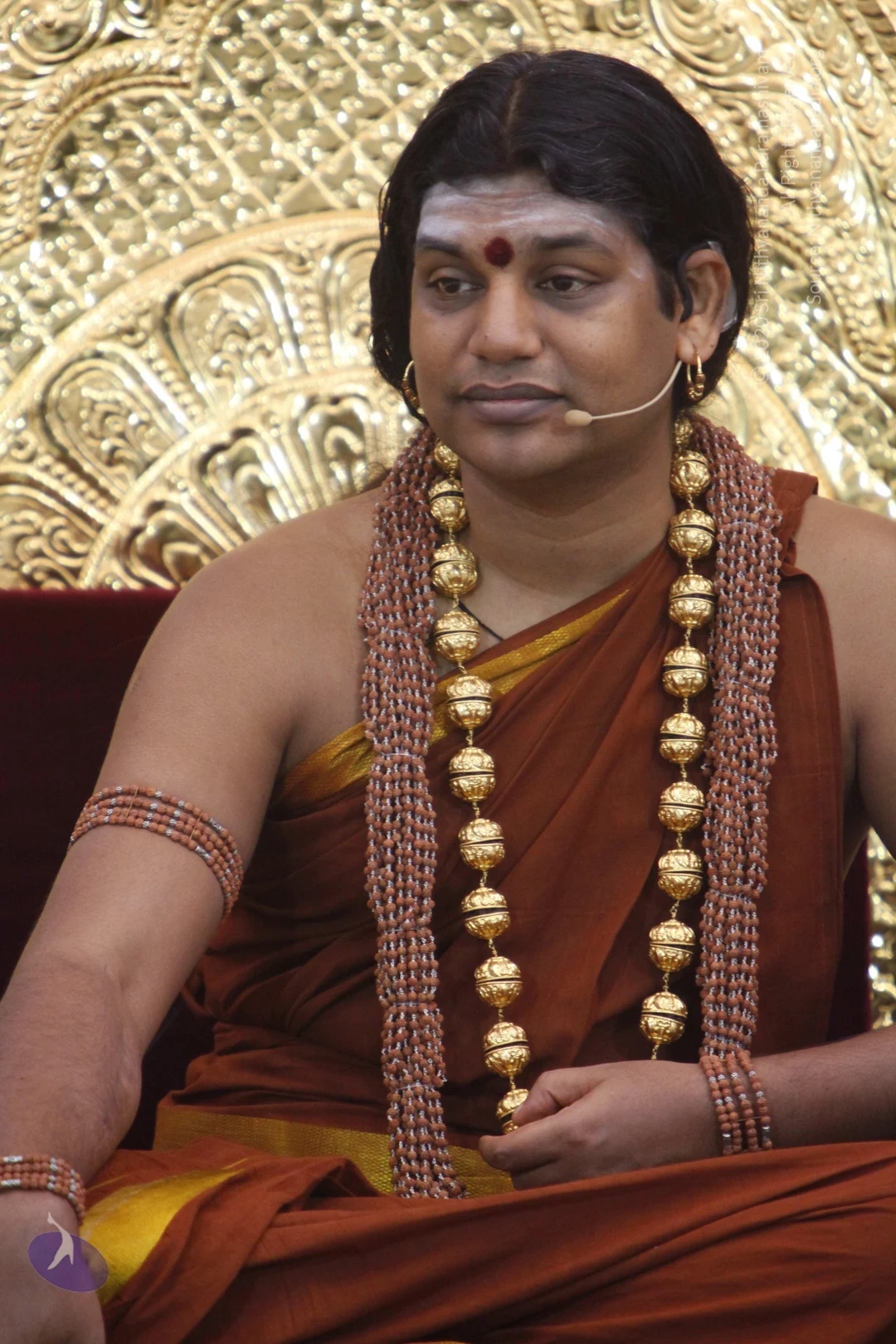
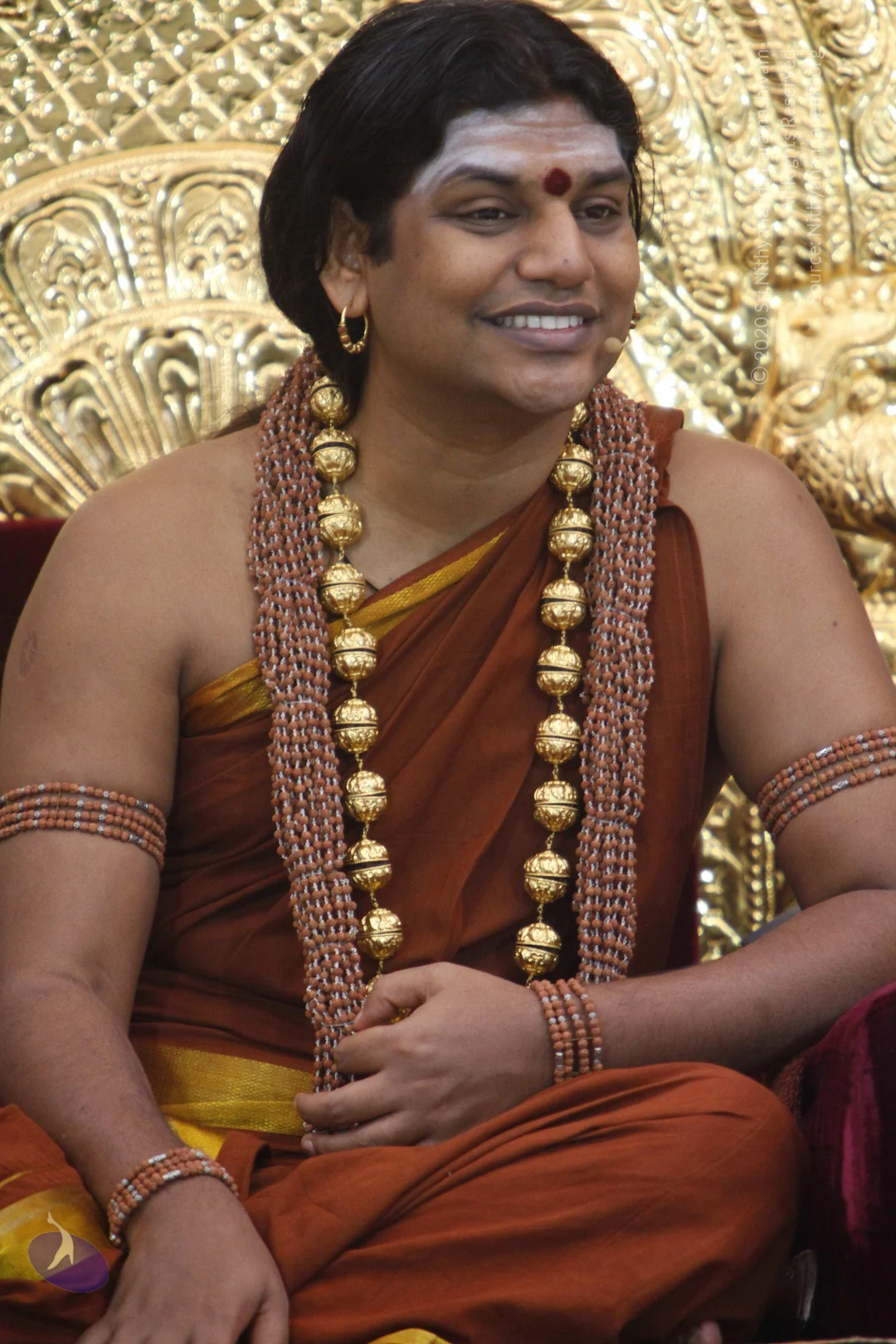
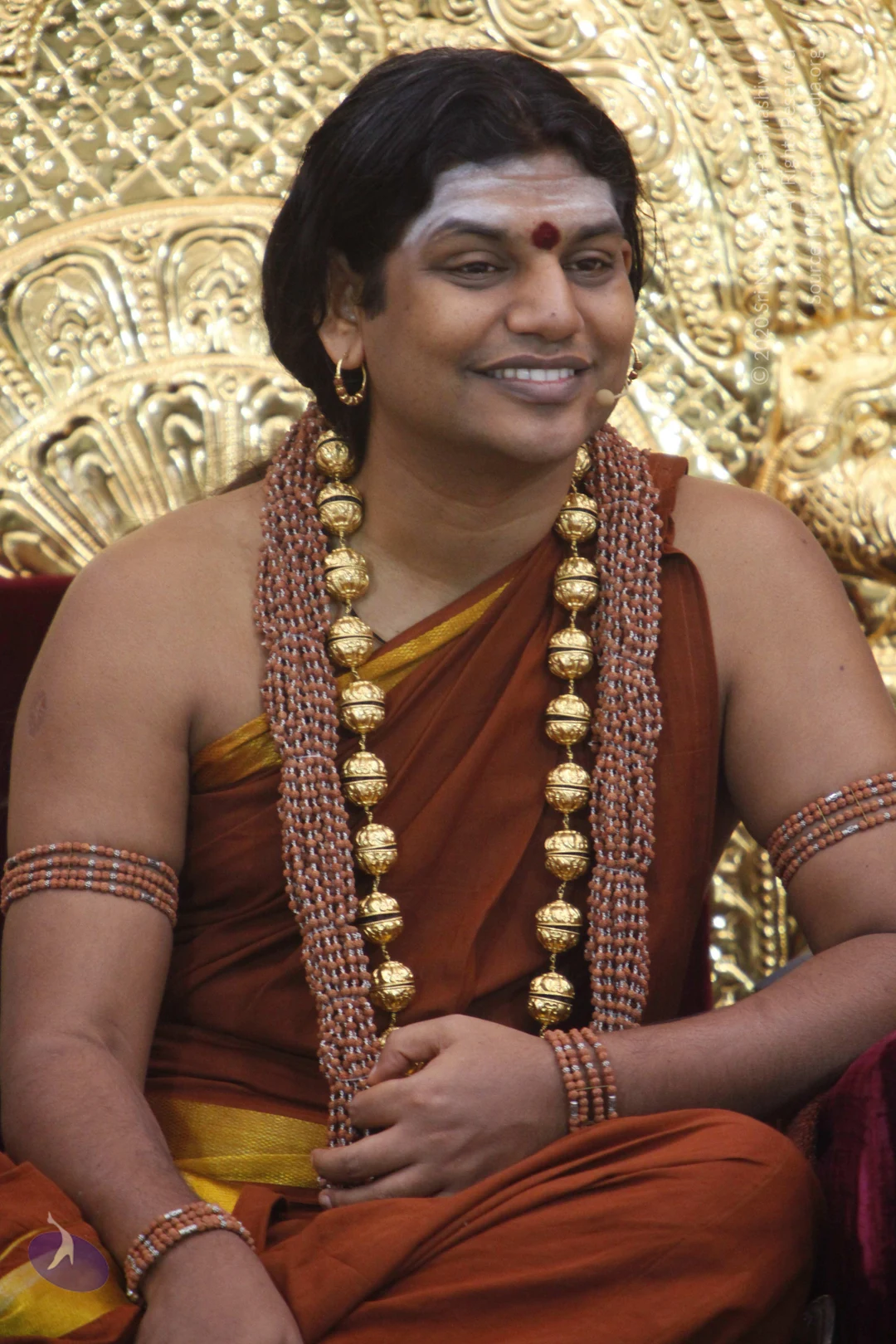
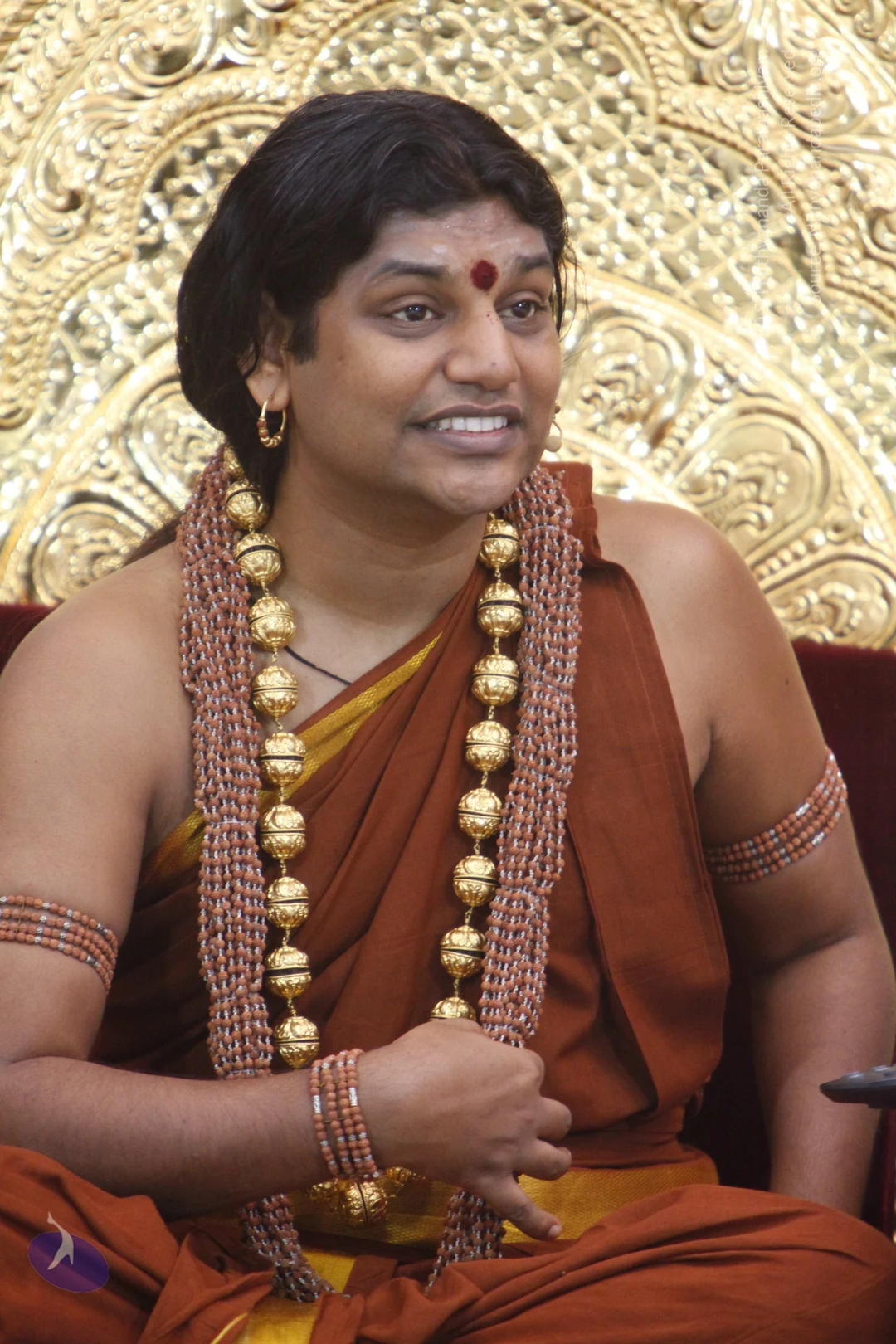
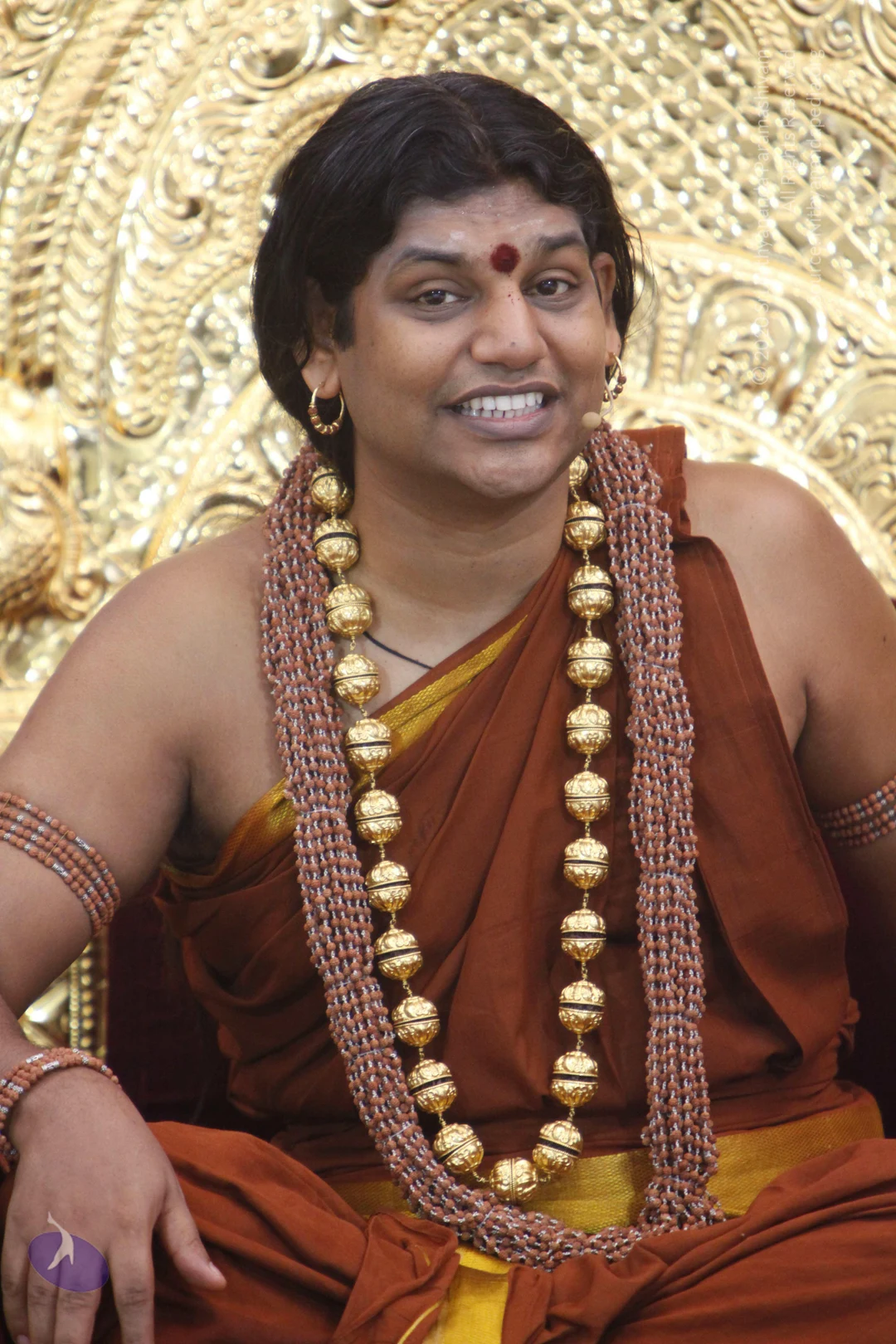
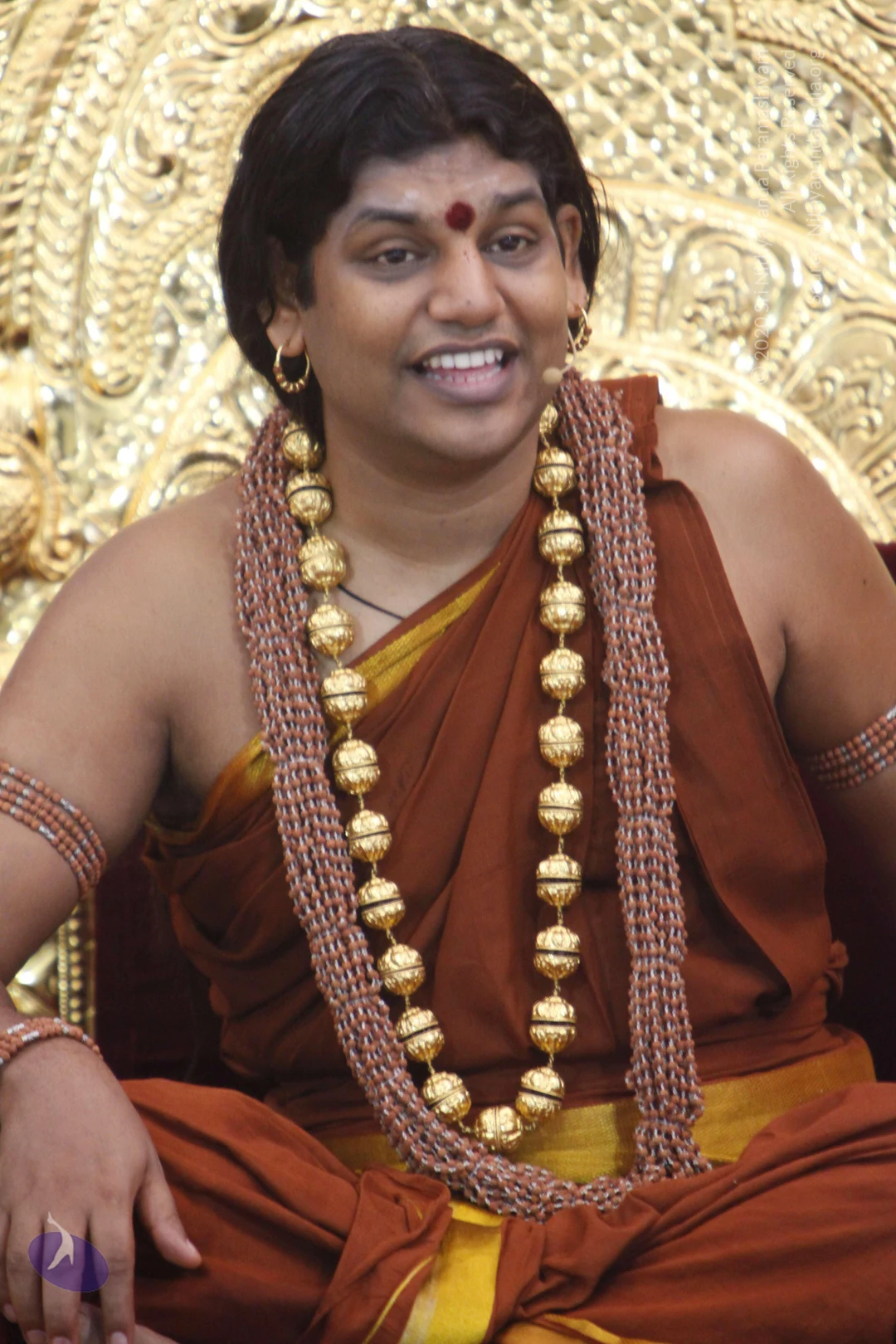
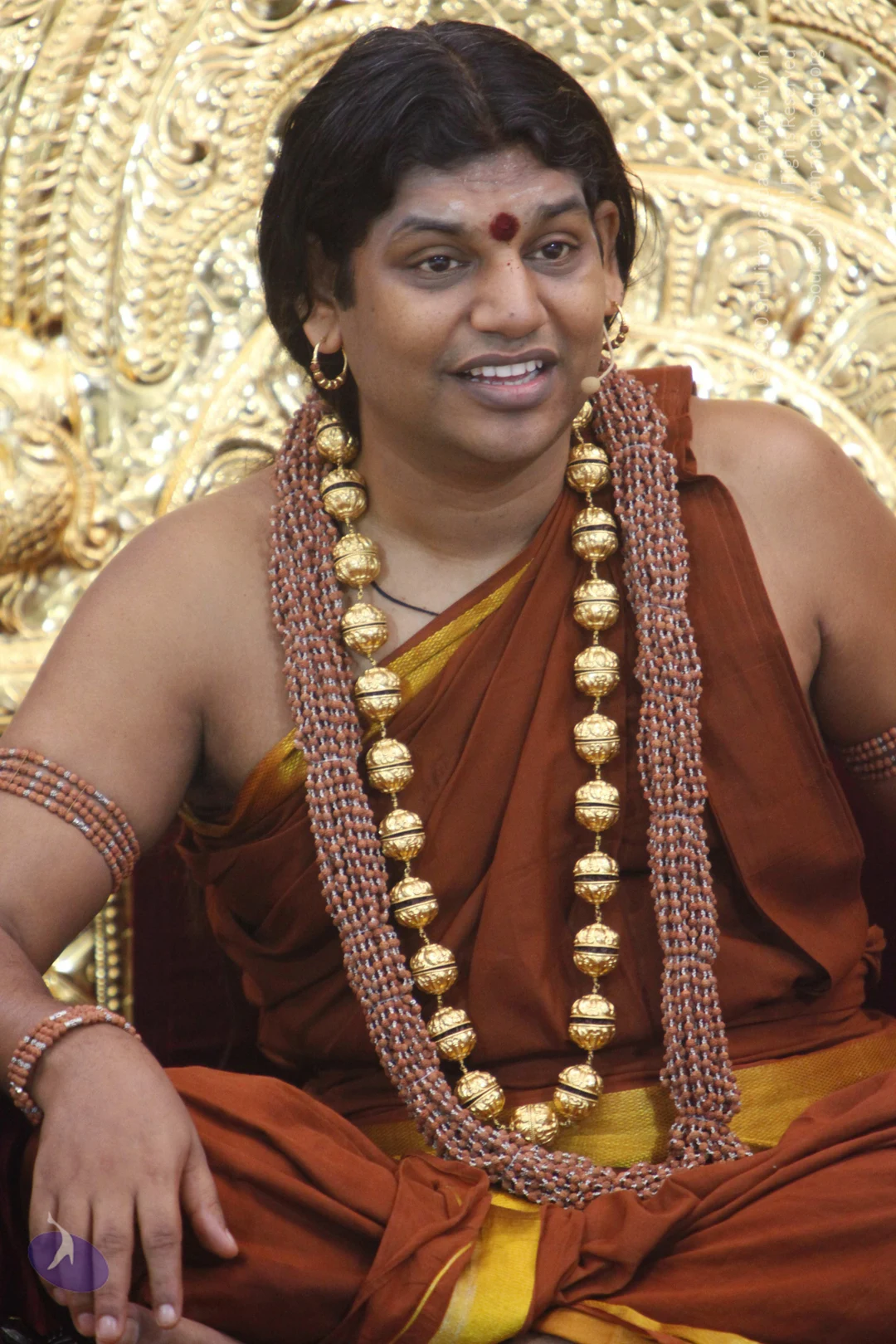
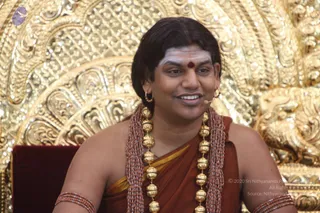
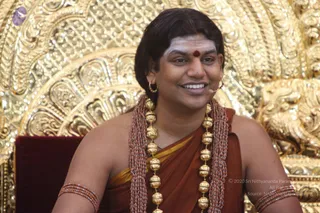
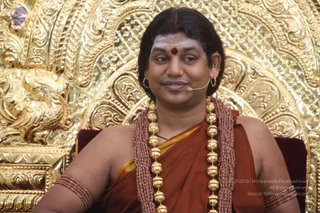
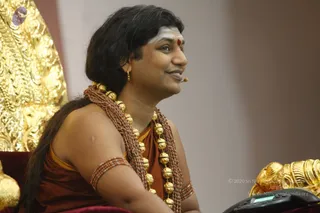
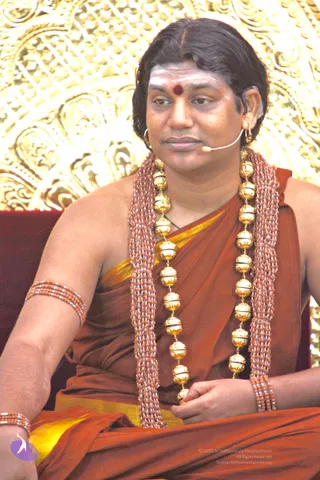
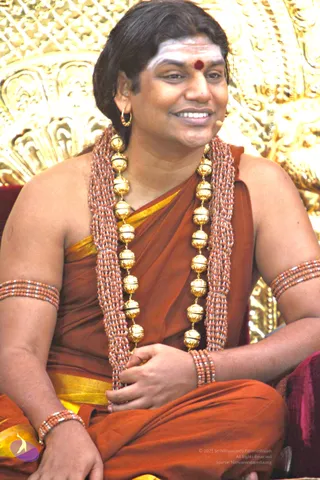
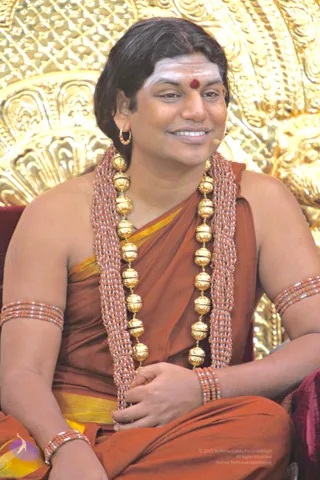
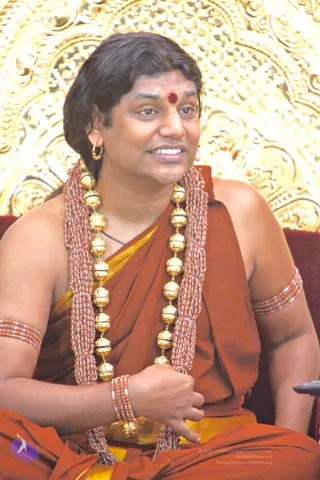
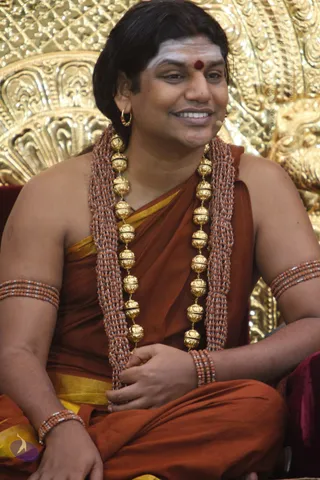
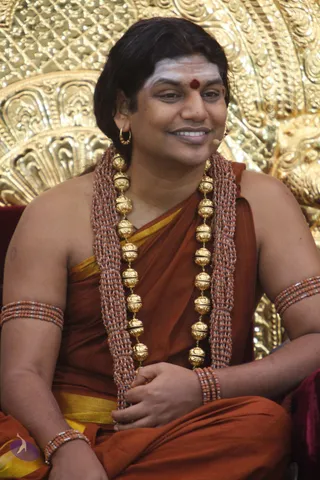
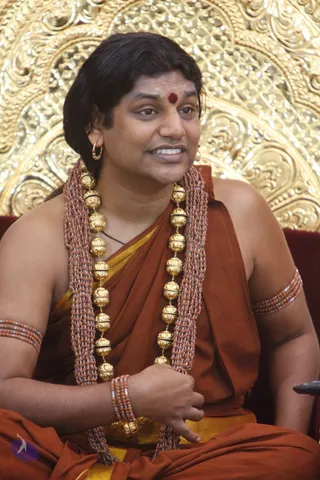
A photograph of a smiling man seated before an ornate gold-embossed backdrop carved with scrolling floral and lion-like motifs. He wears a rust-red saffron-toned cloth draped over one shoulder with a gold-yellow border, a red bindi on his forehead, gold hoop earrings, a dark hair swept back, and a wired microphone near his mouth. Layered gold bead necklaces and rudraksha-style brown beaded malas hang on his chest, with beaded bracelets on his upper arms. The setting suggests a satsang seat.A smiling man with long dark swept-back hair sits in front of an ornate gold-embossed throne with a carved lion motif. He wears an orange-brown saffron wrap with a gold border, a heavy gold bead necklace over rudraksha-style beaded mala strands, a red bindi, white forehead markings, gold hoop earrings, beaded wrist bands and a small clip-on microphone. The image is consistent with a probable Swamiji appearance in a satsang setting, based on long hair, saffron clothing, rudraksha malas and gold ornamentation, though this is an appearance-based label only.A man seated on a red cushioned chair in front of an ornate gold-embossed throne backdrop, smiling gently. He wears a rust-orange saffron cloth draped over the shoulder, a wide gold-bead necklace with a rudraksha-style mala, and beaded bangles on the upper arm. He has a red bindi and a lapel microphone, with gold hoop earrings and shoulder-length dark hair. a person cues: long swept hair, saffron clothing, ceremonial gold necklaces and a rudraksha mala, seated on a golden throne during a satsang setting.A man with long swept-back dark hair sits on a red-cushioned seat beside an ornate gold throne carving, smiling toward the left. He wears a rust-orange wrap over a bare shoulder, a thick rudraksha mala with gold bead spacers across his chest, rudraksha armbands, a gold earring, white forehead markings and a red bindi, and a small clip-on microphone. A gold object and a telephone-like device appear at the lower right. Appearance-based candidate: a person, seated in a satsang setting with rudraksha mala and ceremonial gold beads, though the cues are not fully conclusive.

Sarva-Darshan

11 photosSource gallery
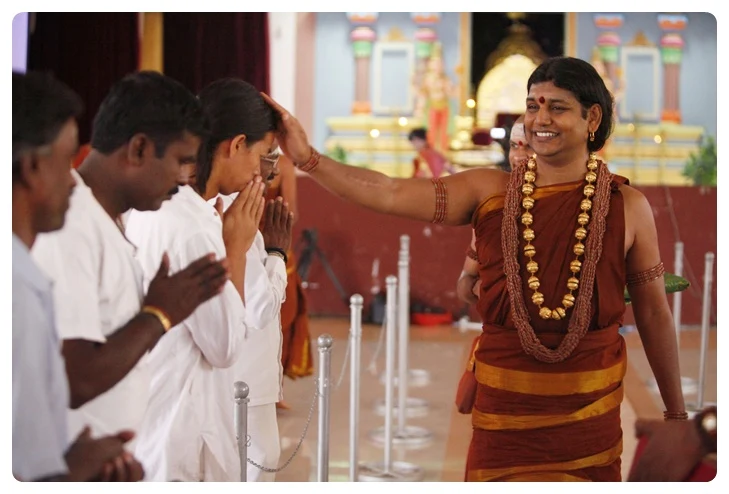
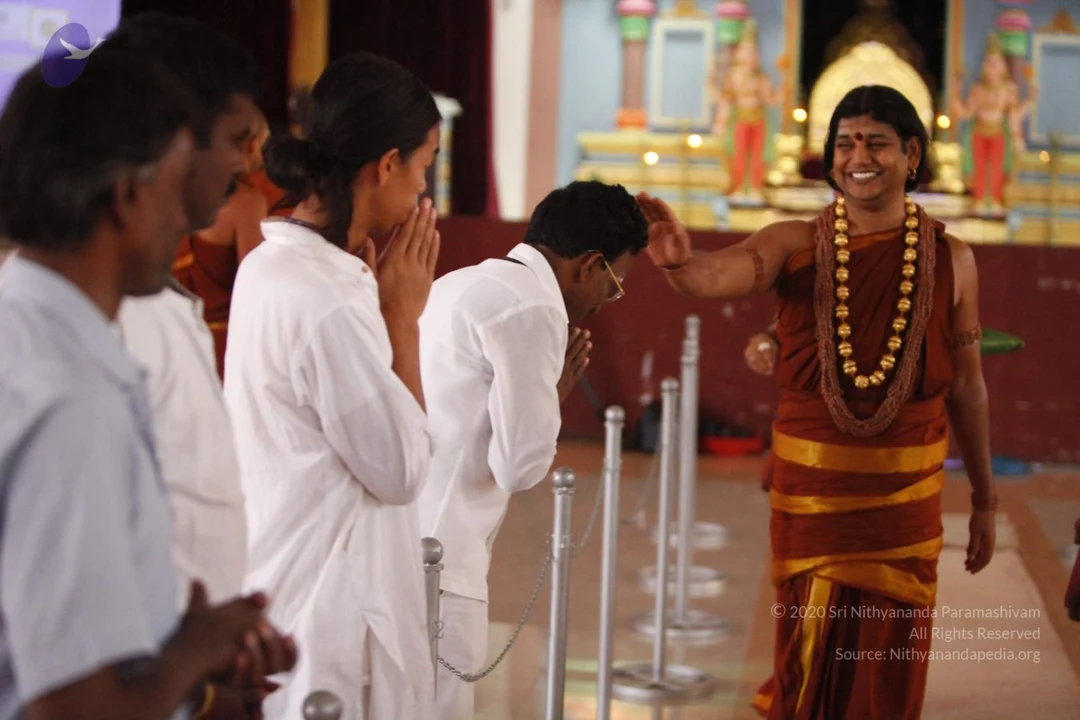
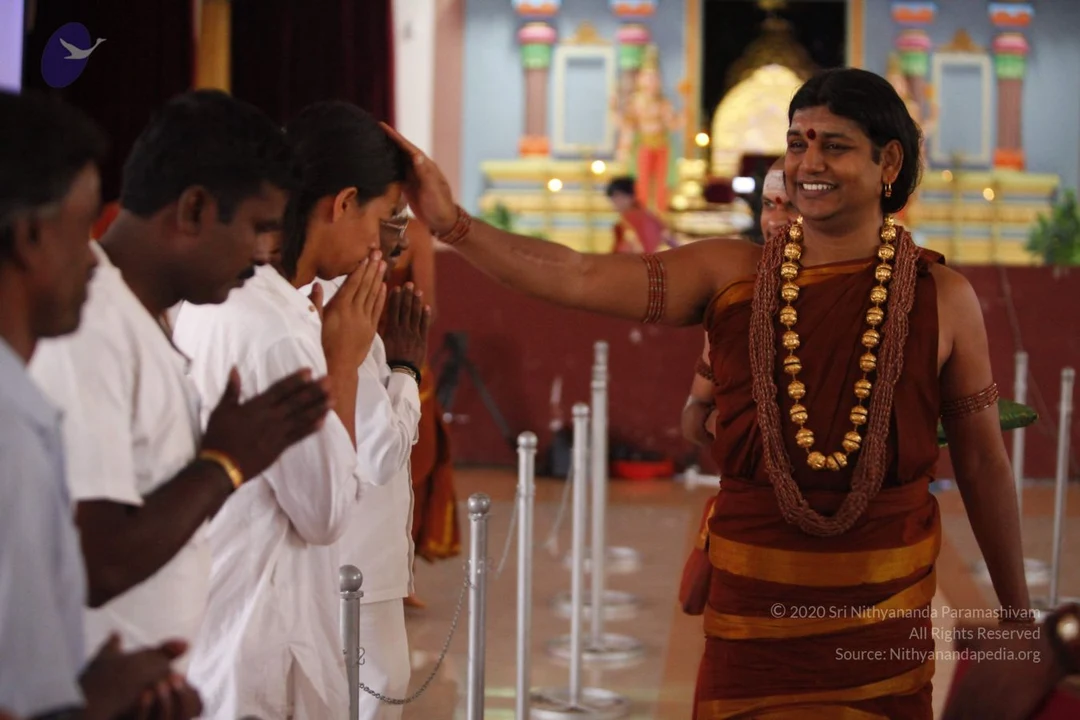
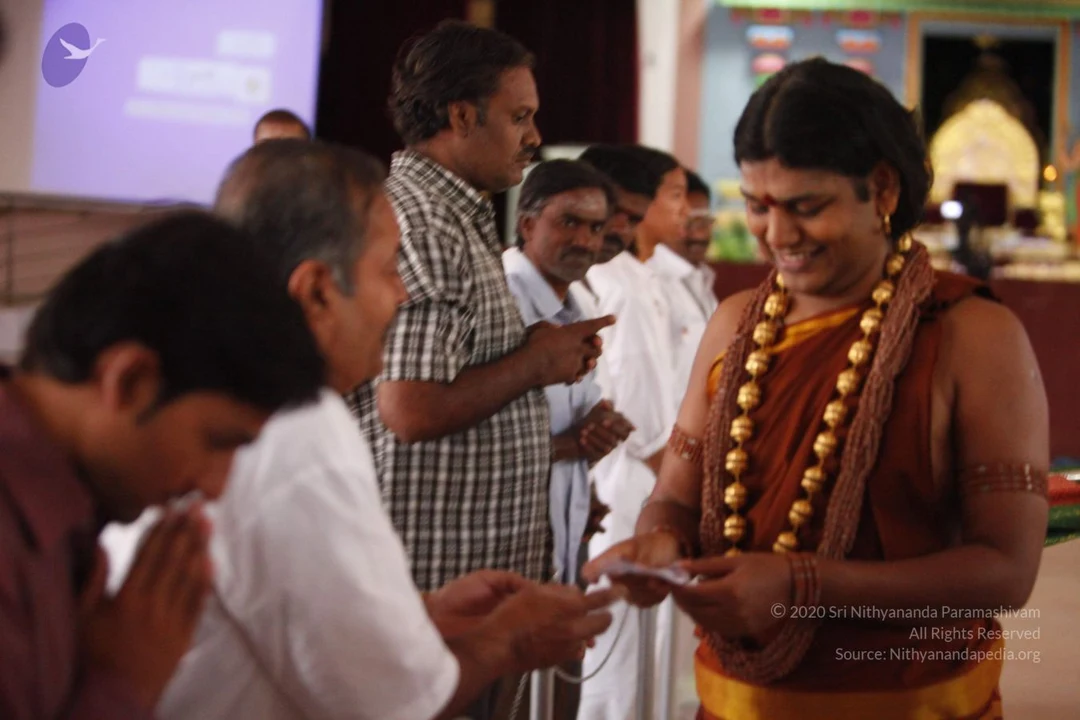
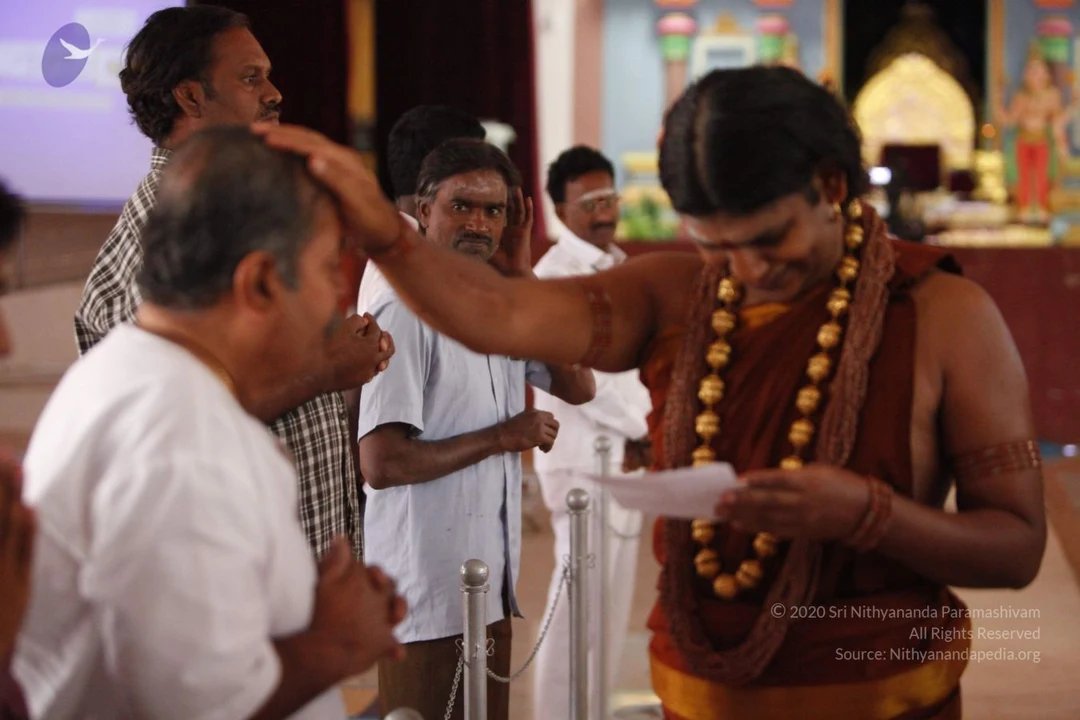
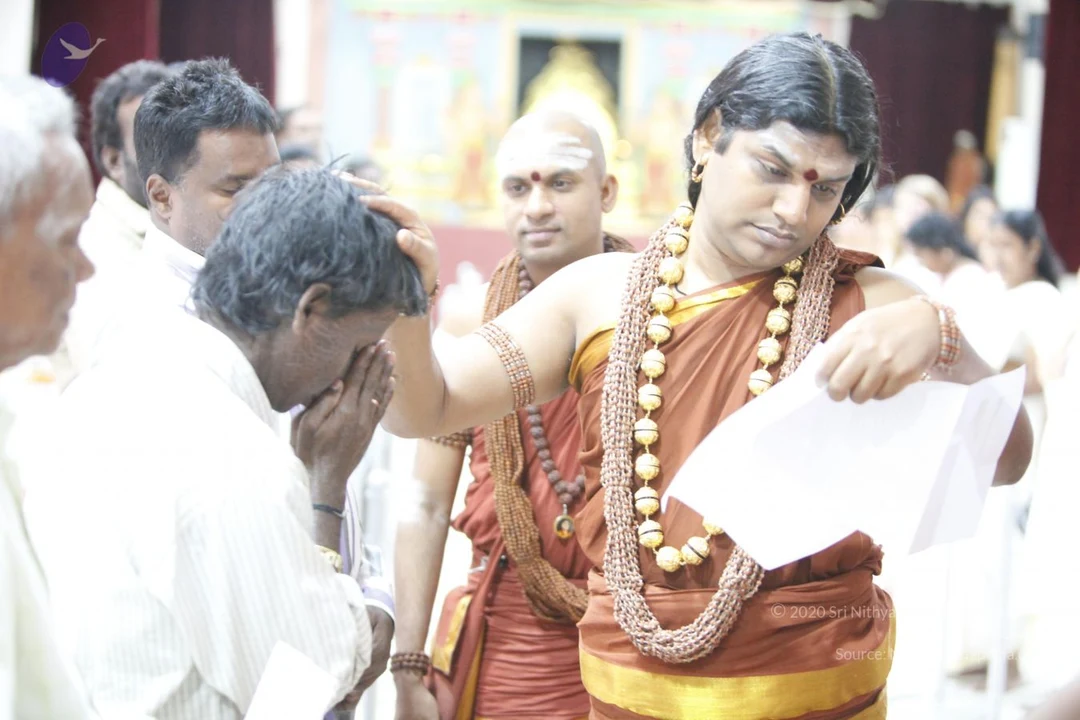
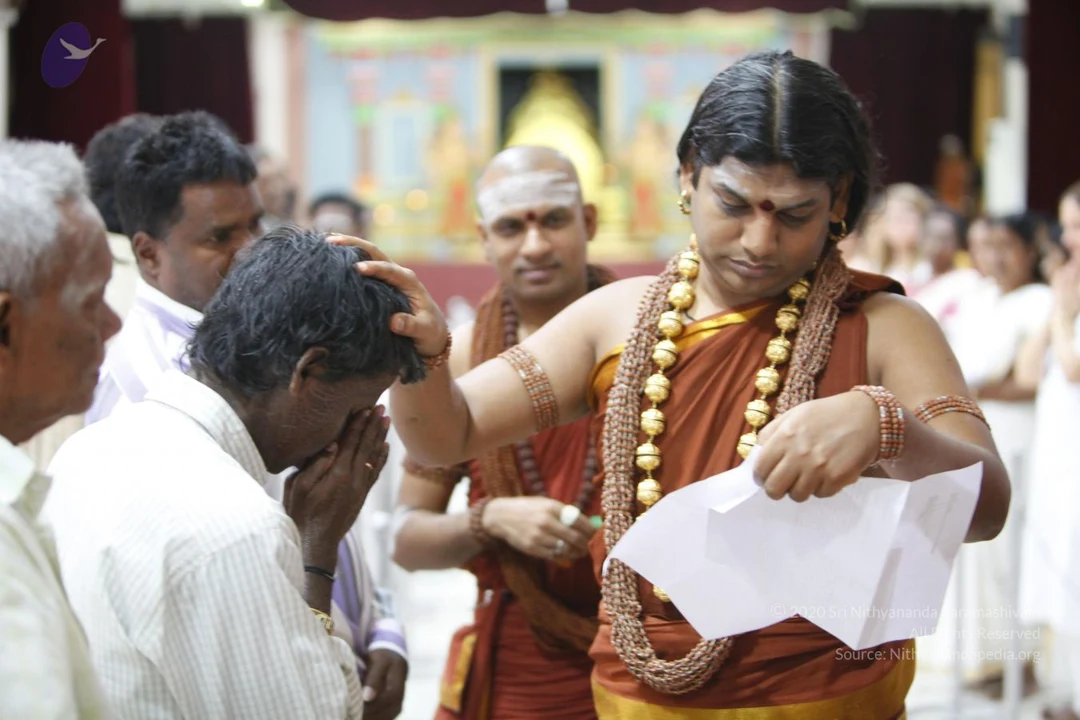
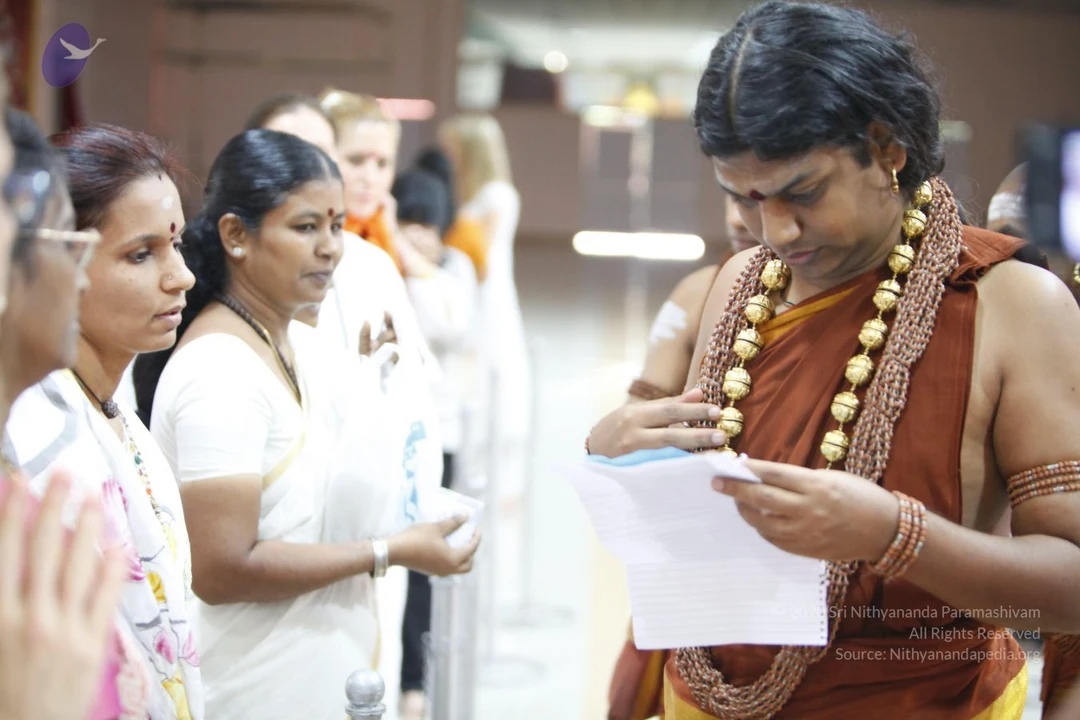
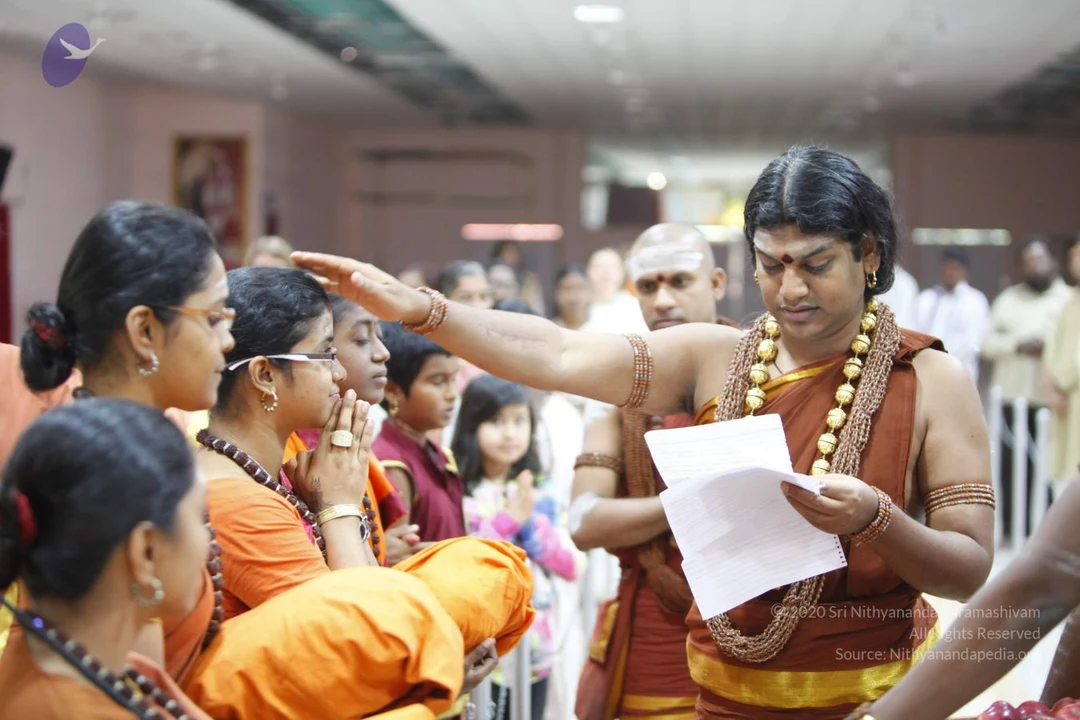
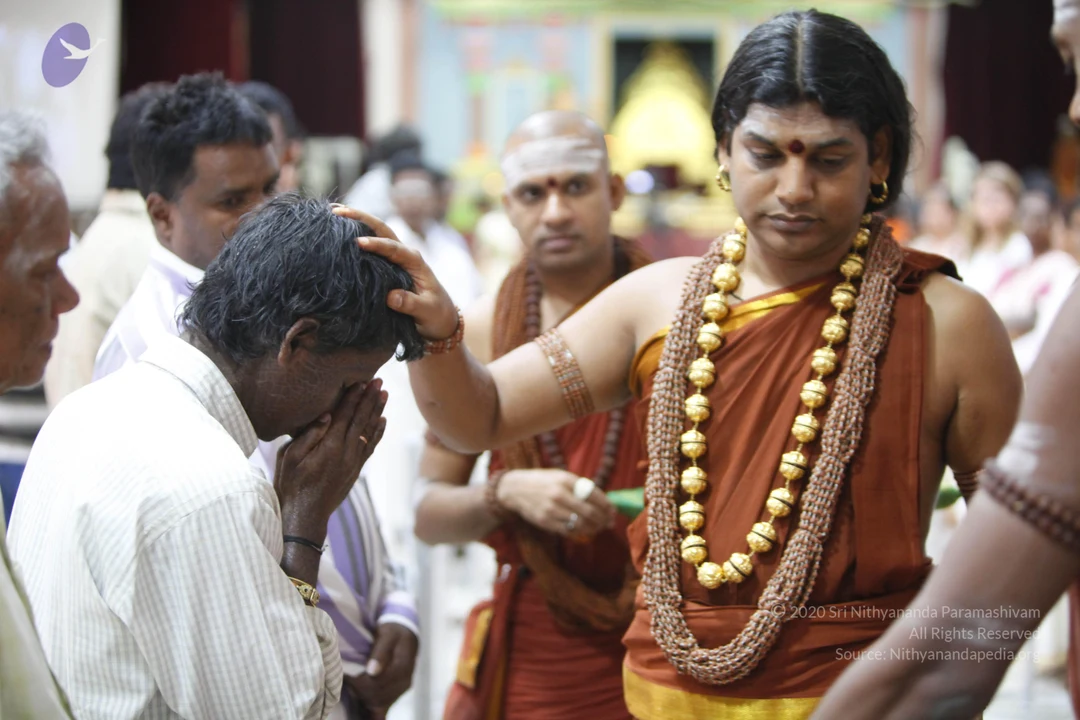
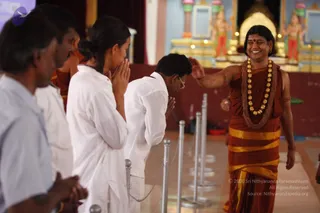
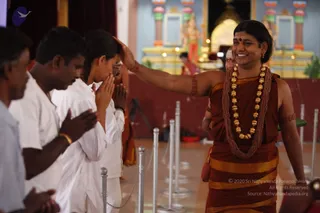
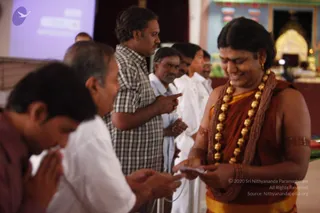
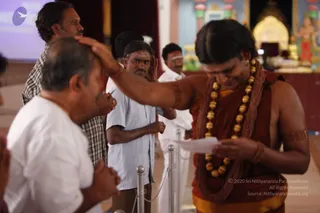
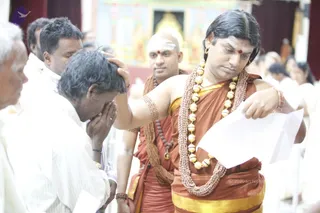
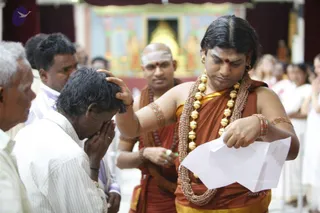
A photograph of devotees greeting a smiling figure in a temple hall. On the right, a person with long dark hair wears a rust-orange and gold dhoti-style wrap, a large brown and gold beaded mala, and a red tilak, and raises one hand in blessing. Several people in white clothes stand on the left with palms pressed together, a man bowing deeply and a woman with hands folded in namaste. Behind them are gilded deity murtis in red and yellow, and a golden peetha-style shrine with lamps. Probable Swamiji cues are the long hair, ornate gold necklaces and saffron-orange clothing of the figure receiving the greeting.A photograph inside a temple hall with pillars painted in blue, yellow and red and a gilded shrine behind. A smiling figure in a rust-brown dhoti and wrap with a gold-and-brown stripe, wearing a thick rudraksha mala with gold beads and gold earrings, a red bindi and bangles, places a hand on the head of a kneeling devotee. Several men and boys in white clothes stand with palms pressed together in namaskar at left. The figure is an appearance-based probable Swamiji candidate with long swept-back hair, rudraksha mala and ceremonial gold necklace, giving blessings to devotees during darshan. Silver stanchions and a chain line the floor.A photograph of a satsang setting where a figure in an orange-saffron robe with a gold-bead necklace and a long brown rudraksha-style mala, with a red tilak on the forehead, smiles while handing a folded slip or card to a devotee. The devotee on the left in a maroon shirt bends forward with palms pressed together in namaskar, and another man in white dhoti-style clothing reaches forward with a hand. Men in white and a checked shirt stand behind, and a lit purple projection screen and a gilded shrine with a deity murti appear in the background.A photograph of a ceremonial blessing line in an ashram hall. A figure in a rust-orange saffron cloth with a heavy gold-bead necklace and a rudraksha-style mala places a hand on the head of a kneeling devotee in white clothes, while holding a folded paper in the other hand. Other devotees in white shirts and checked shirts wait behind a silver stanchion rail. A deity image in gold and red stands on the right, and a purple screen is visible at the top left. The figure's face is not clearly visible, so the identity claim is unverified and the appearance is uncertain; the figure is described by role as a blessing giver in saffron. Several people are visible.A man in an orange-brown silk garment with a gold-bordered yellow edge and layered gold and beaded necklaces stands at right, long swept-back hair, a red bindi on his forehead, holding a sheet of paper while placing his right hand on the head of a bowed older man in a white shirt whose hands are pressed together in prayer. Behind them a bald priest in orange-brown robes with white tilak stands near a colourful temple-style backdrop and other devotees in white. Probable Swamiji's appearance cues: long swept-back hair, ornate gold beaded necklaces and saffron-orange clothing; he is blessing a devotee in a ritual giving-blessing moment.A photograph of a satsang blessing. A figure with long swept-back dark hair, a red bindi, ornate gold bangles and a long gold-bead necklace with rudraksha-style mala strands, wearing an orange-saffron garment with a gold border, places his right hand on the head of a kneeling man in a white striped shirt, while holding a folded white paper in his other hand. Behind them a shaved-headed priest in orange robes with a white forehead band and a red tilak stands, and a man in a white shirt on the left has his hands clasped. Background devotees in white and a golden shrine with painted deity panels.

Temple-Swamiji
26 photosSource gallery
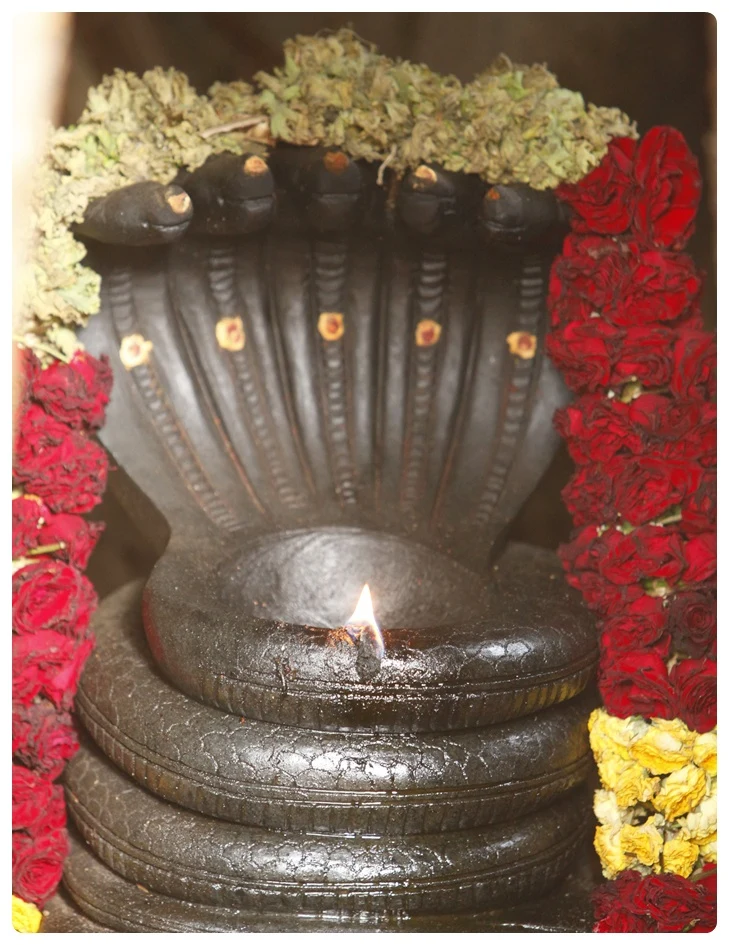
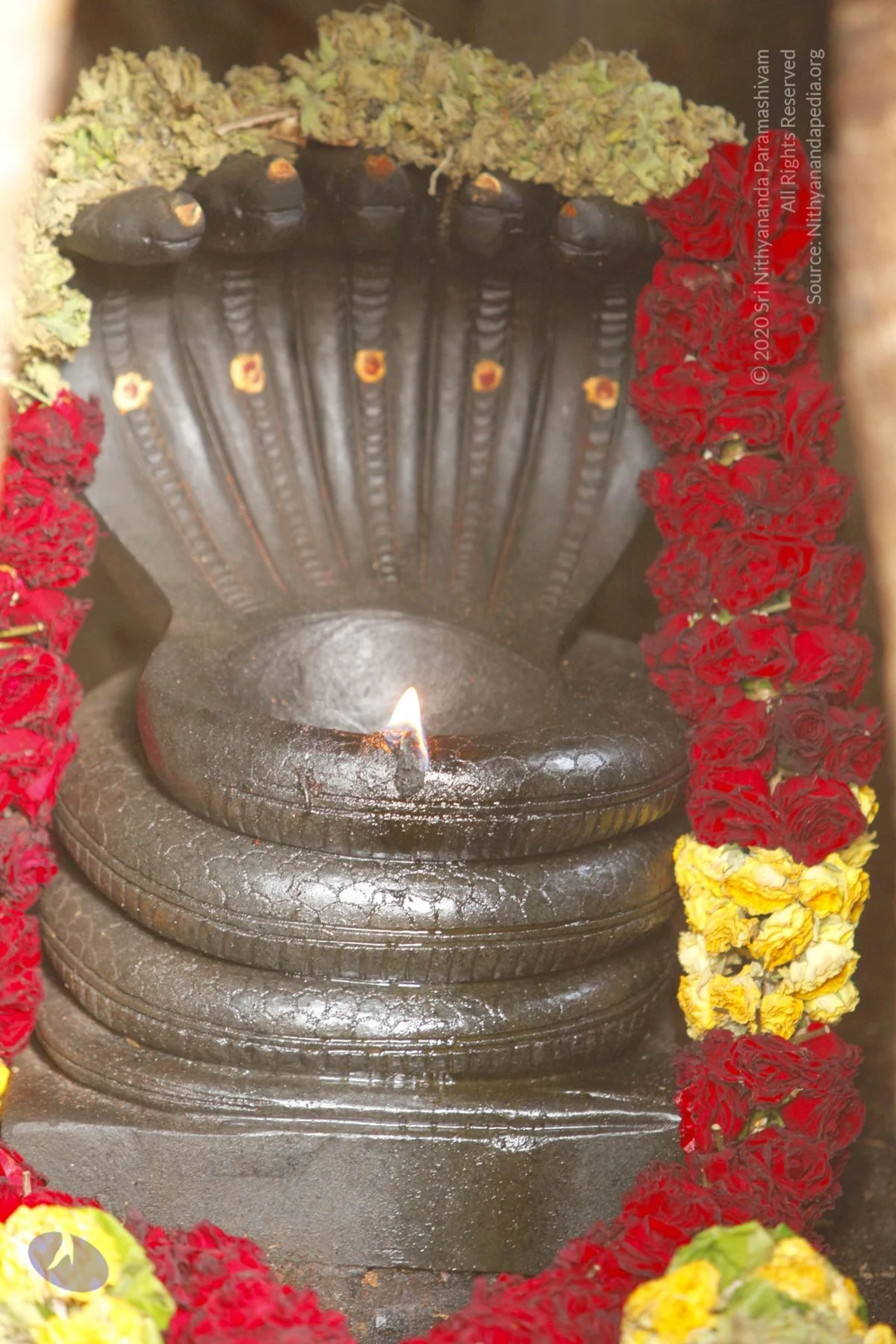
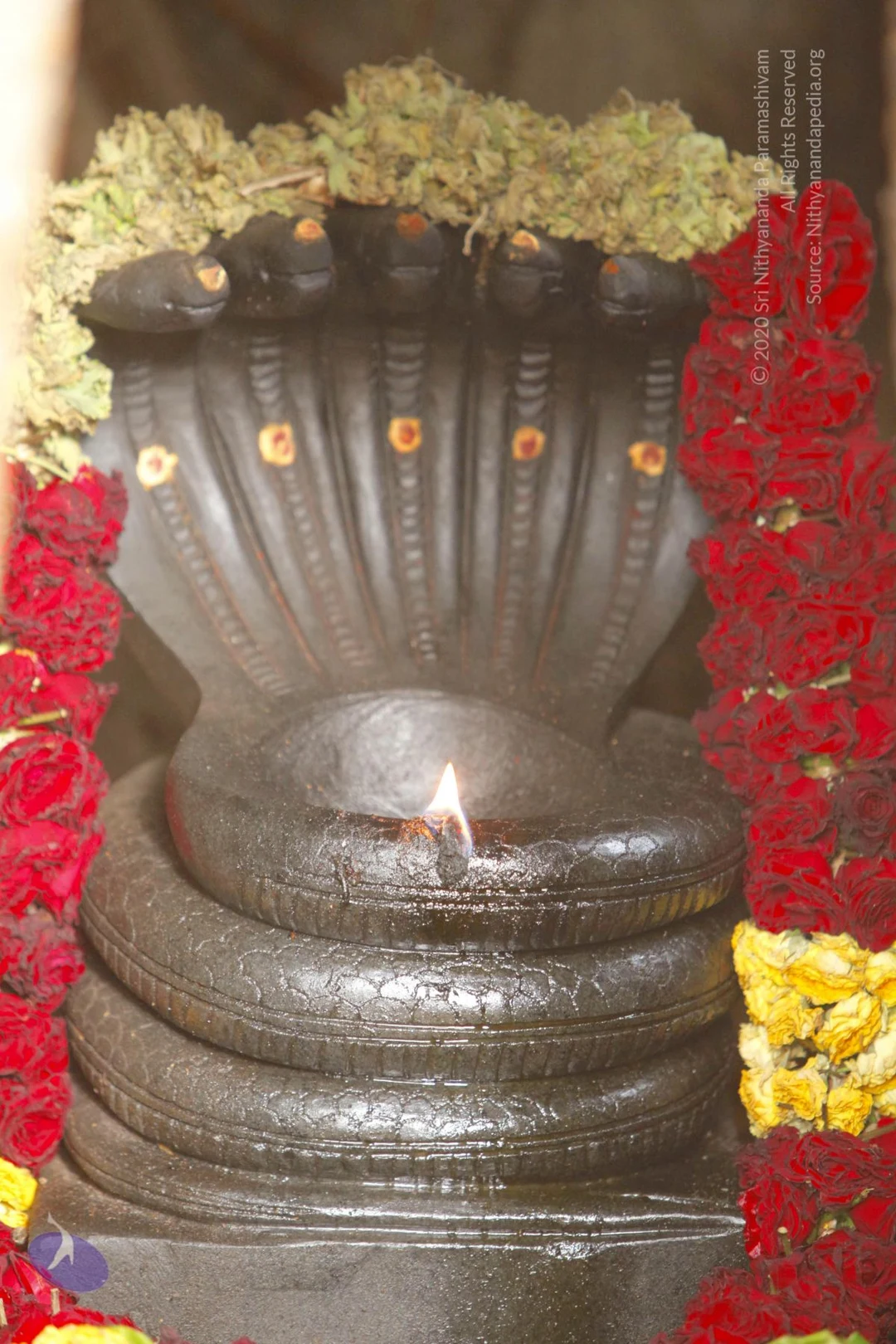
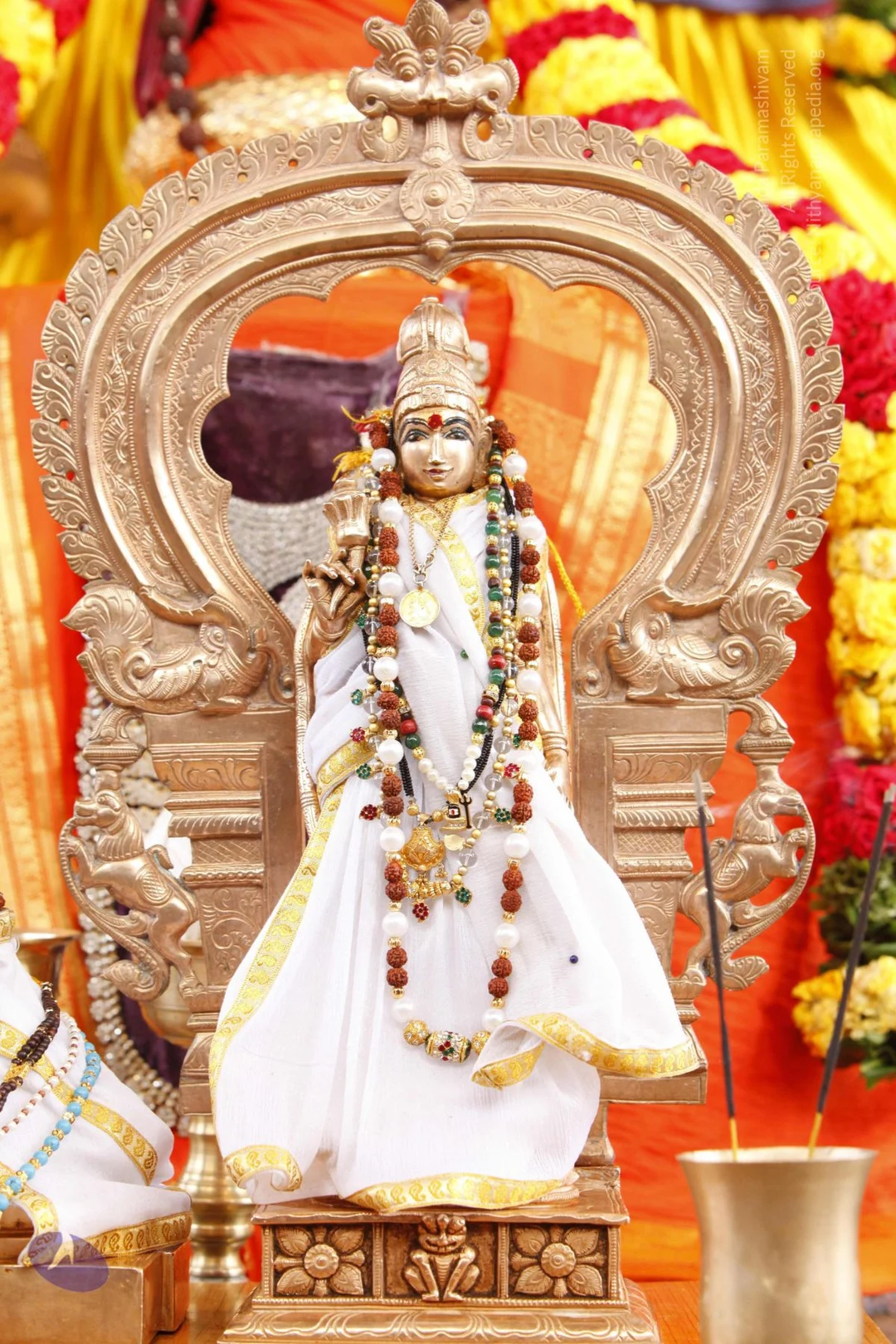
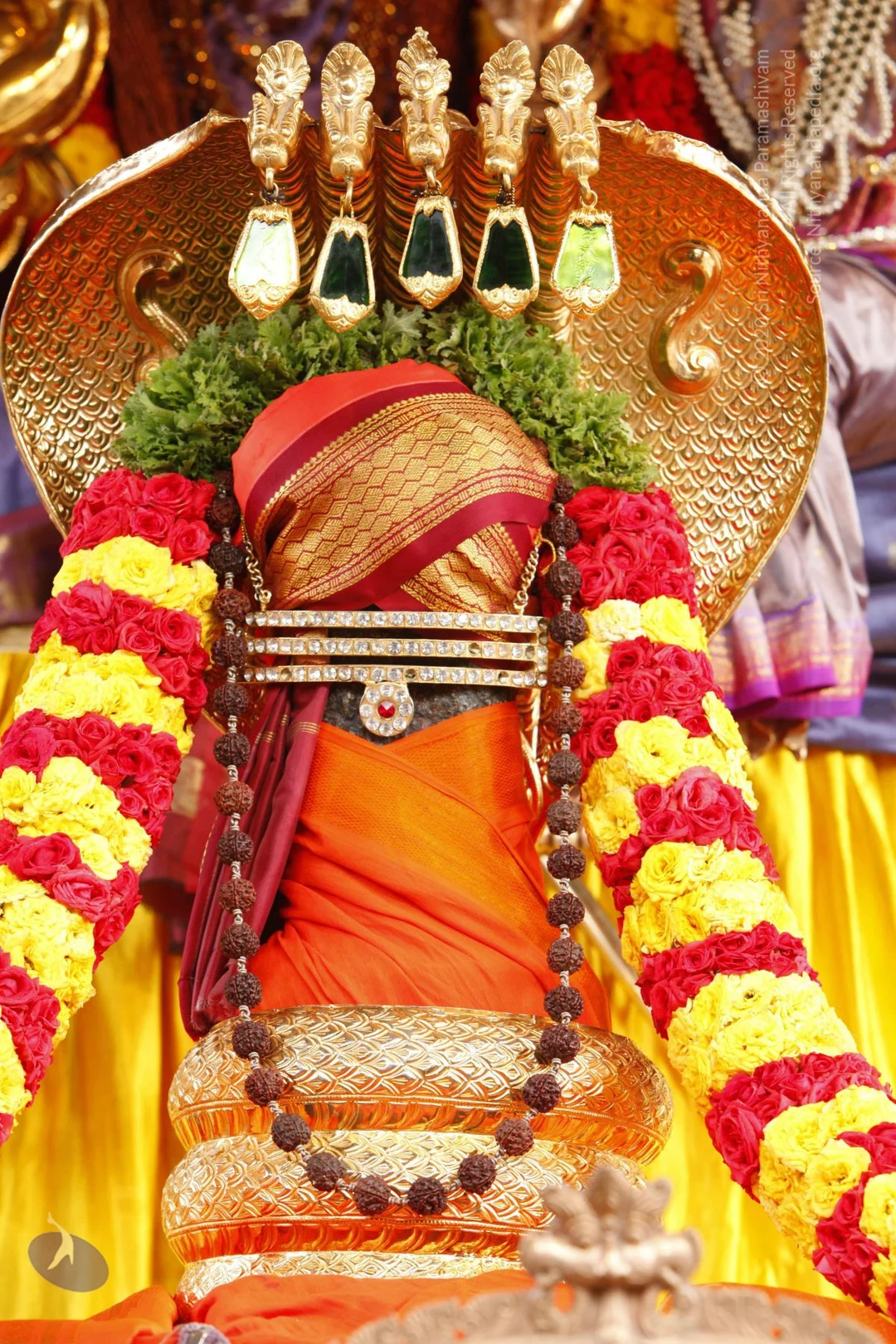
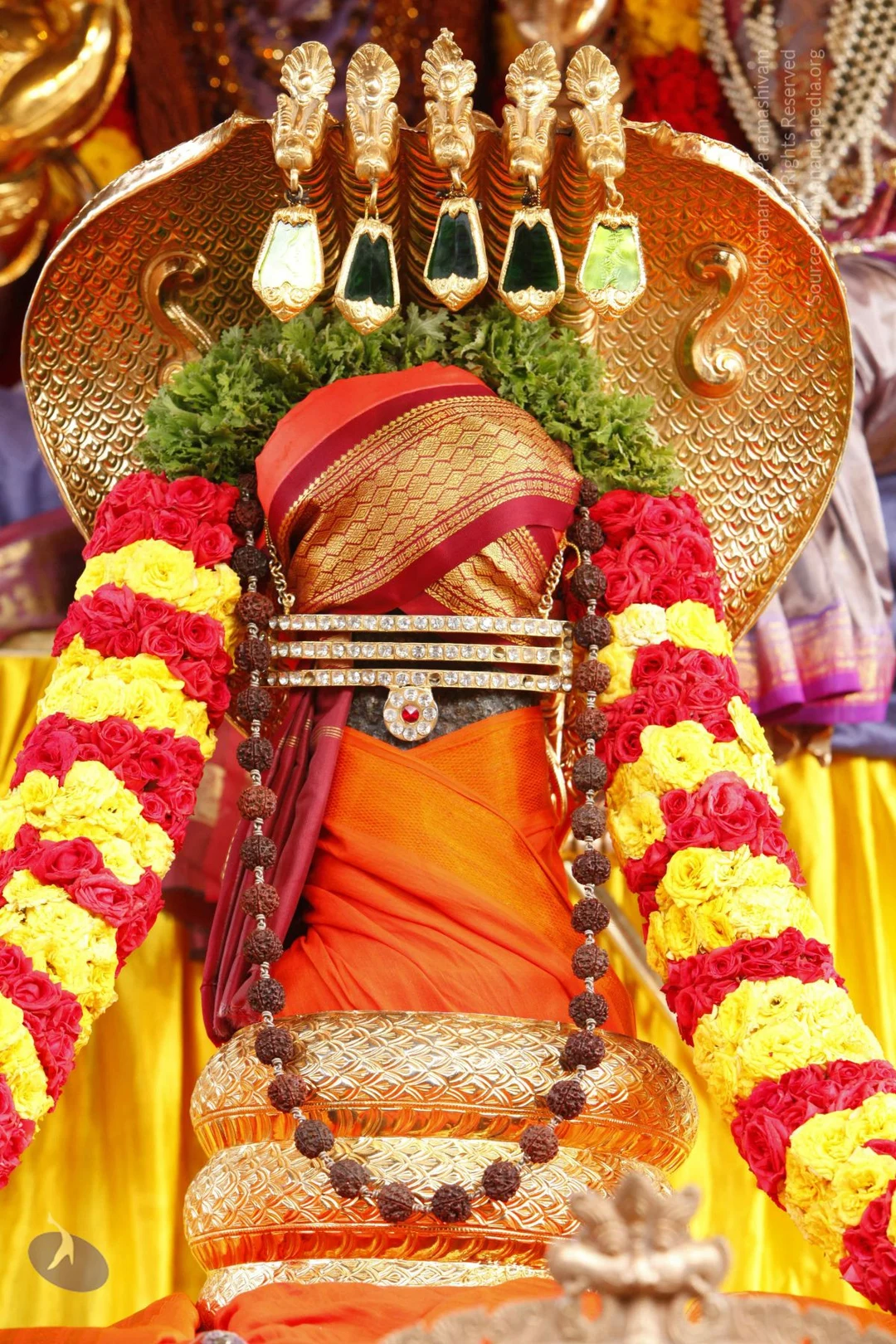
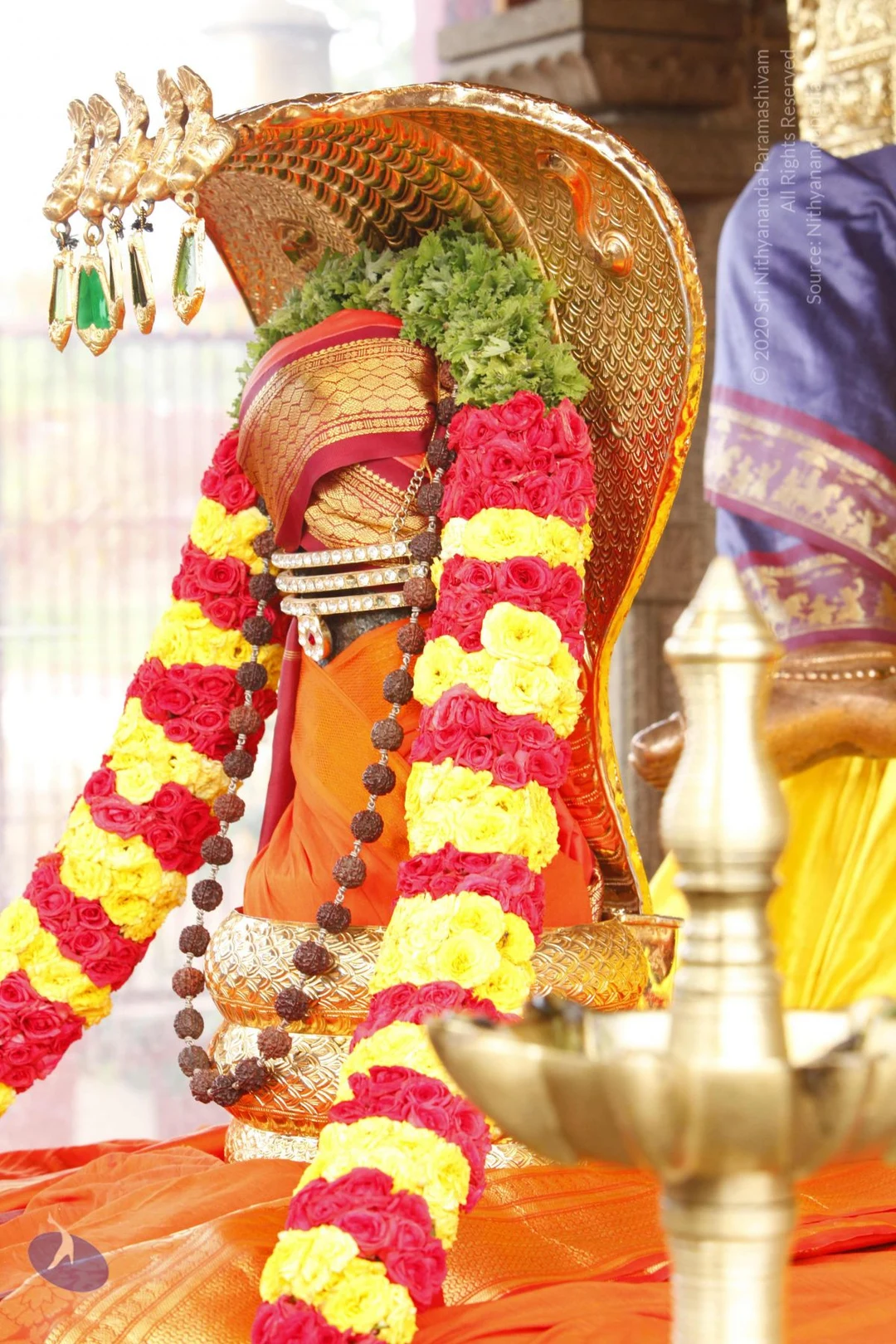
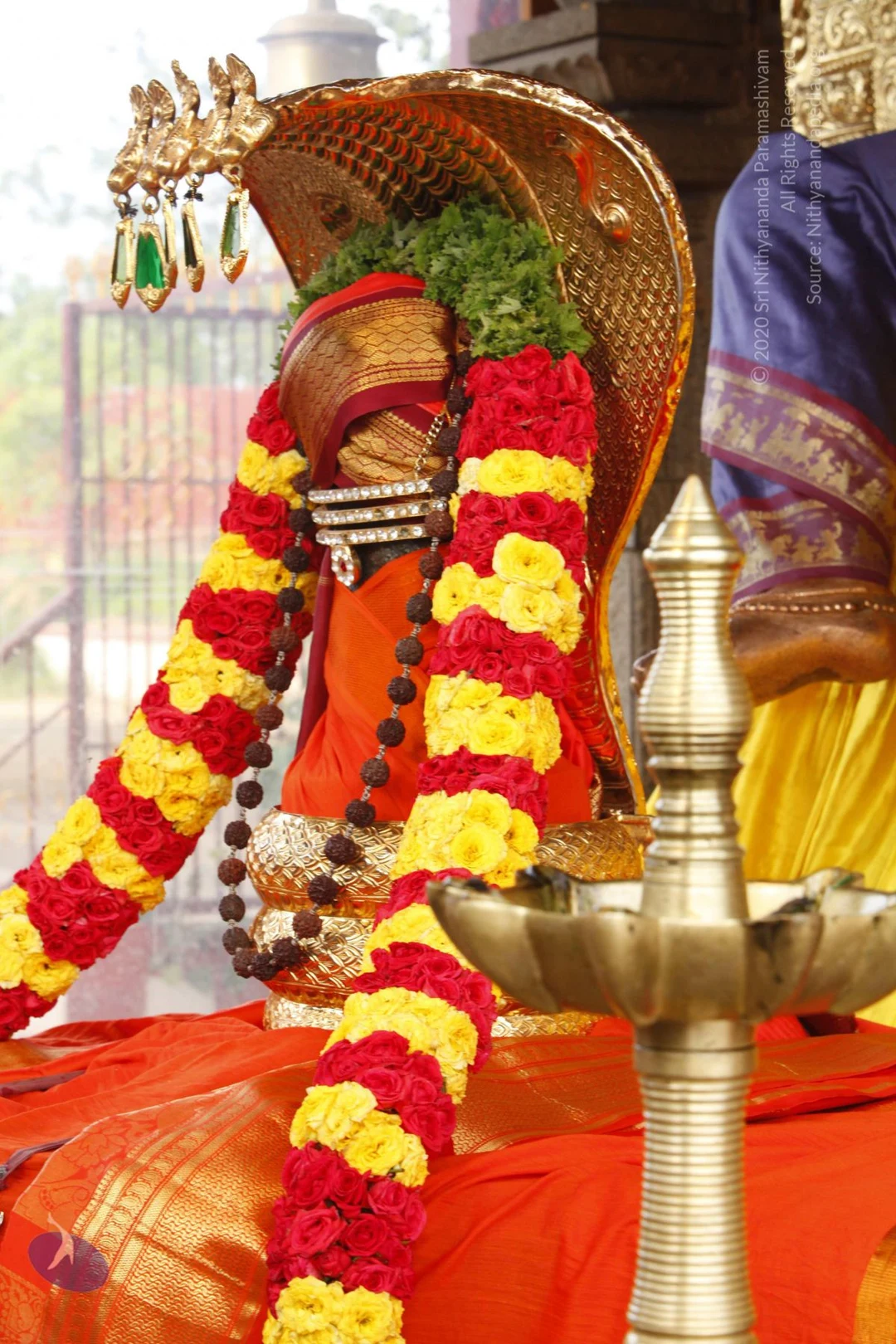
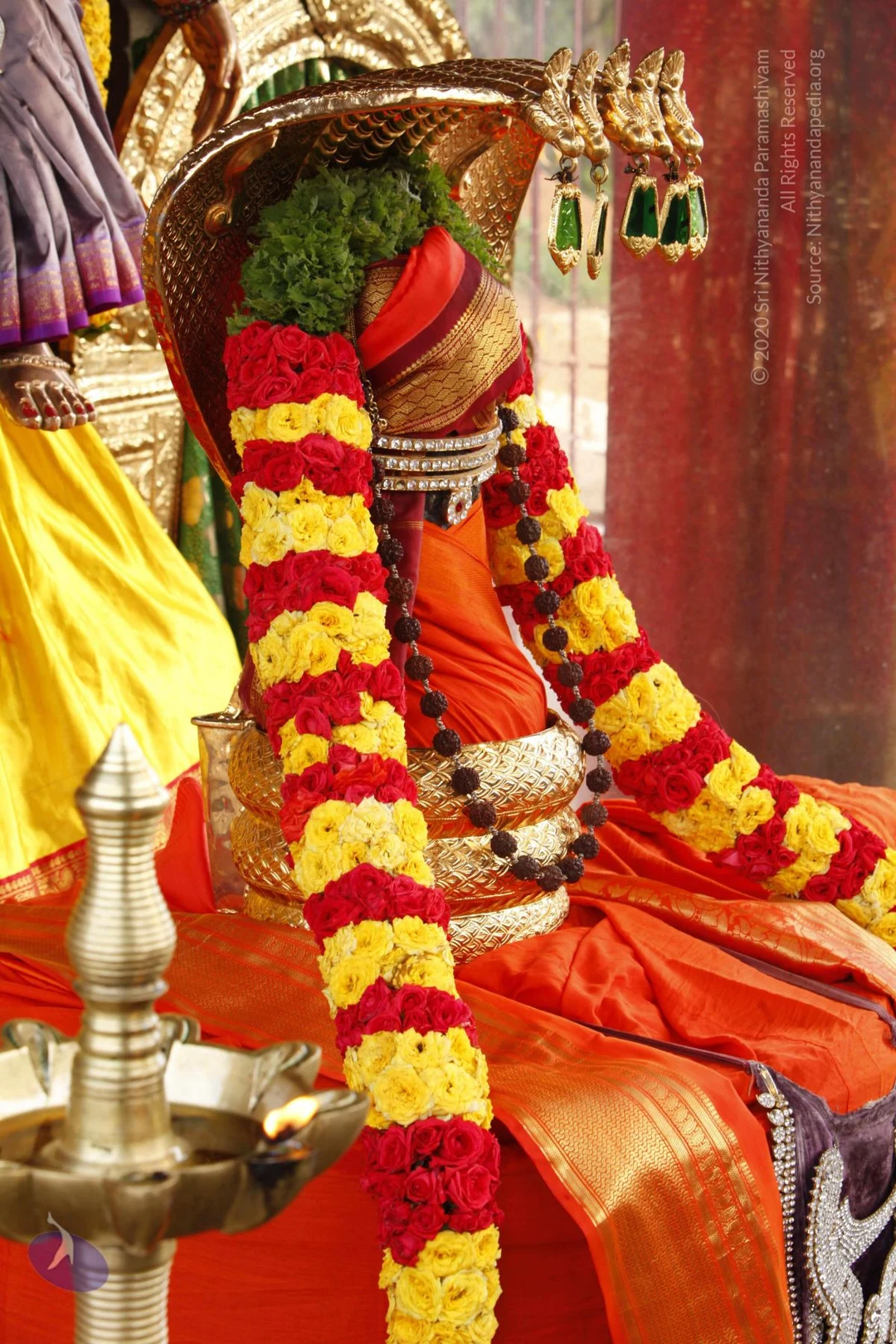
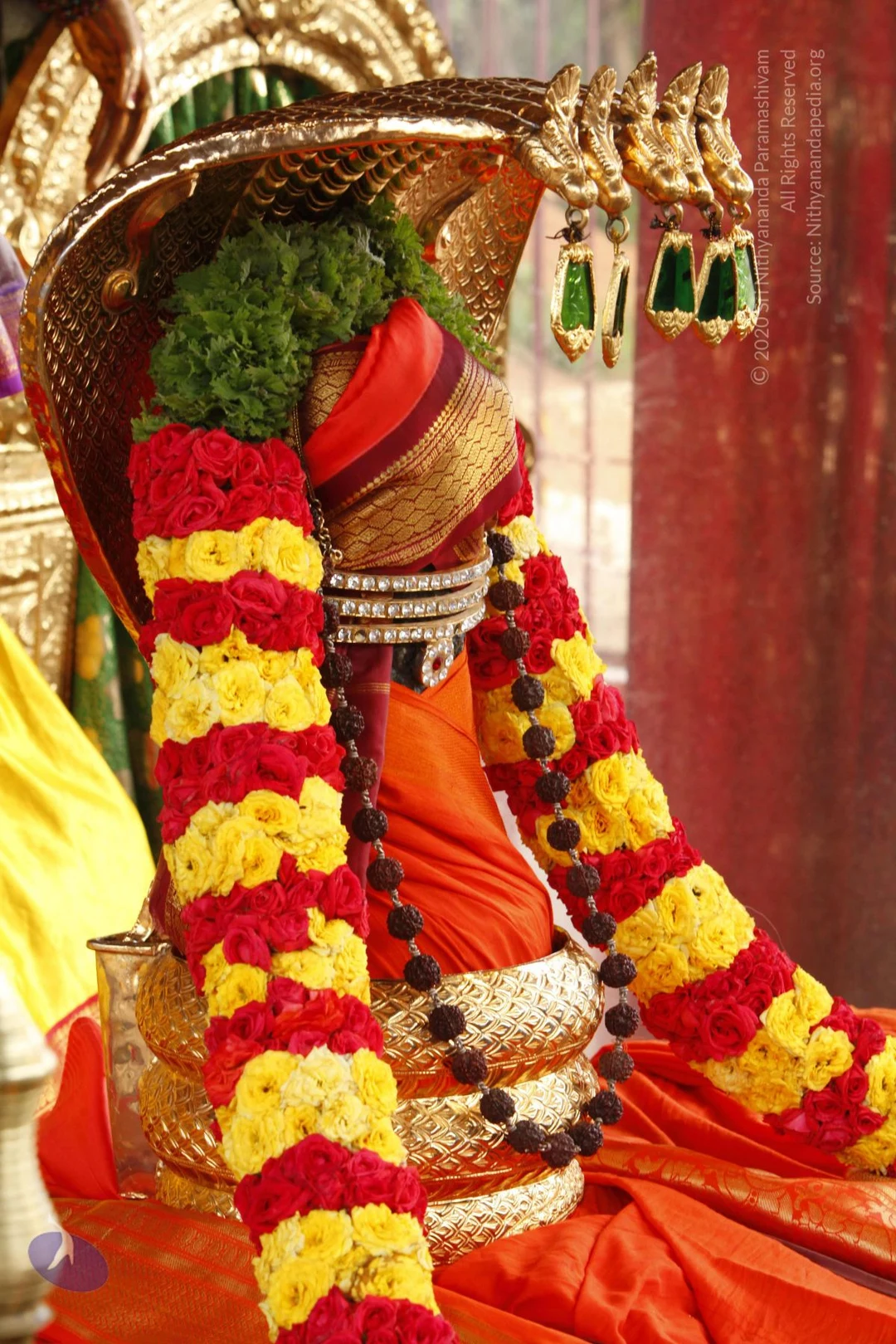
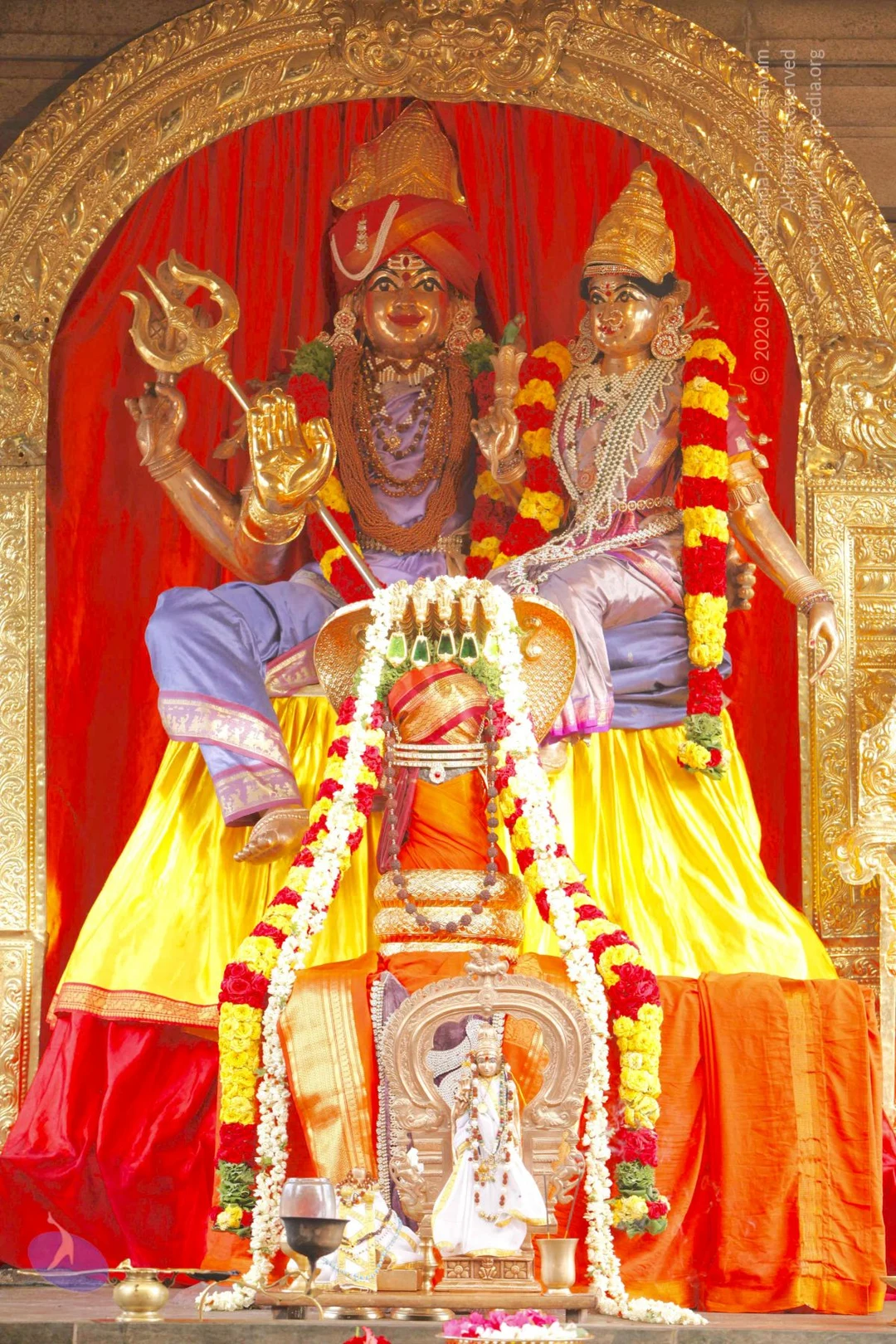
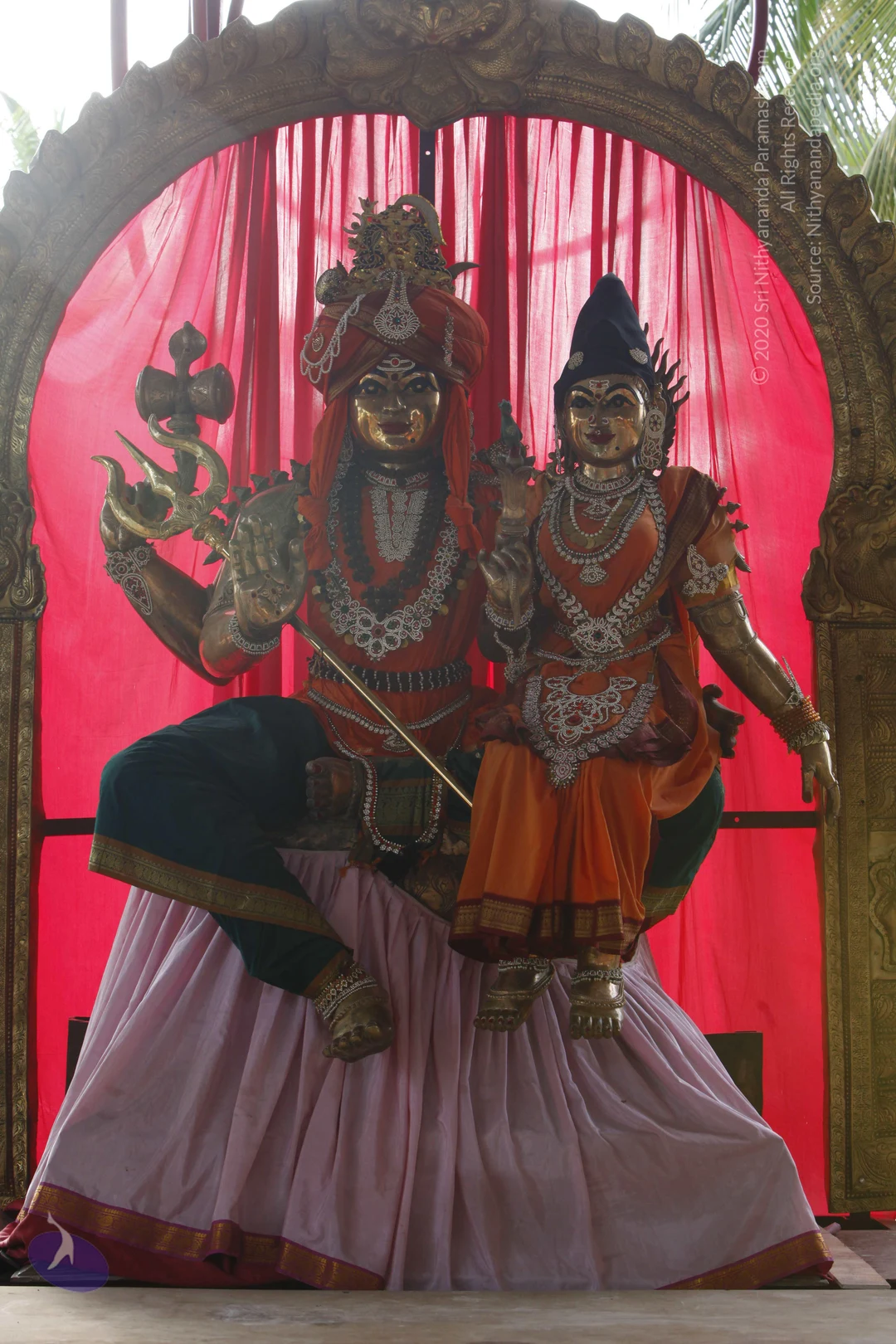
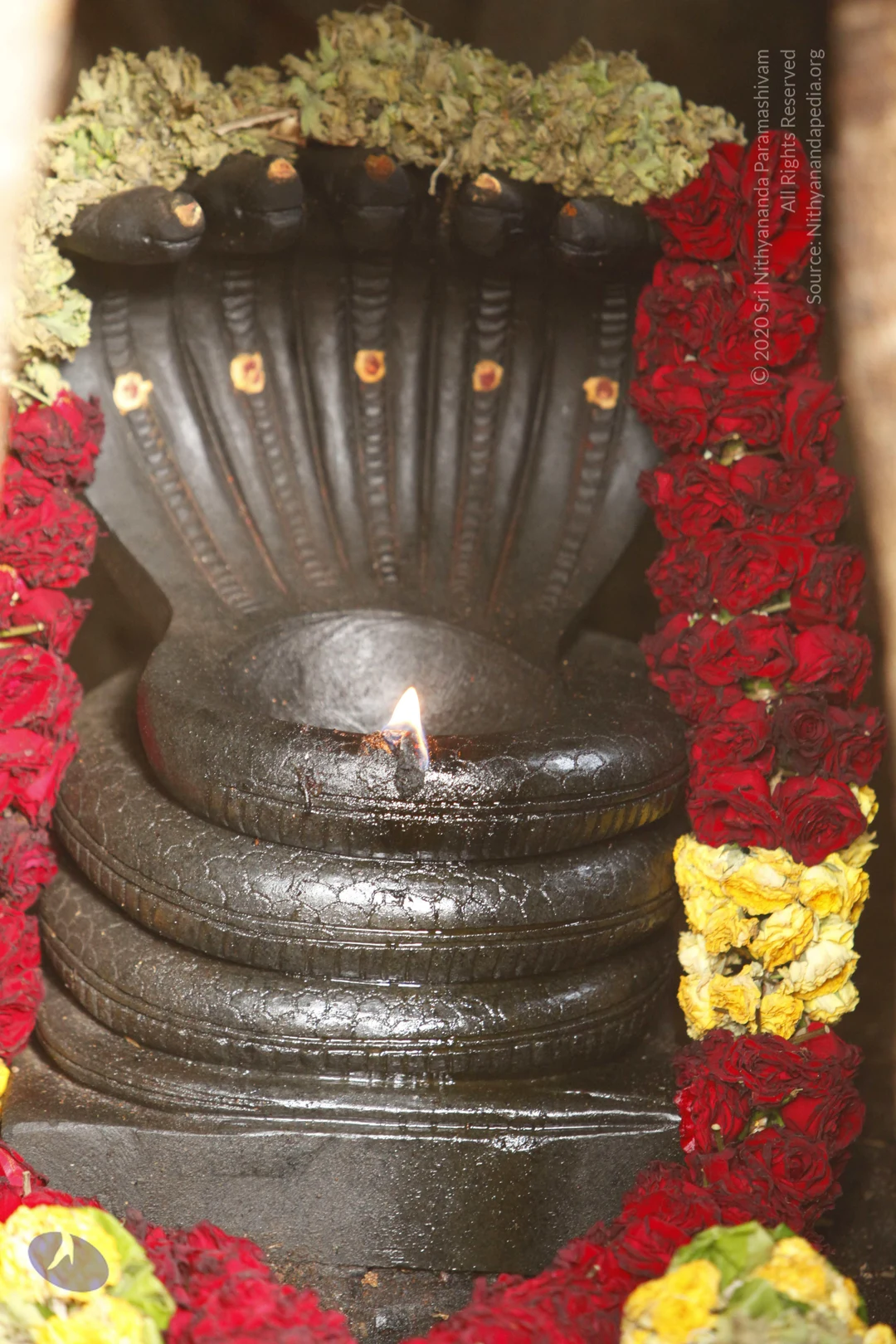
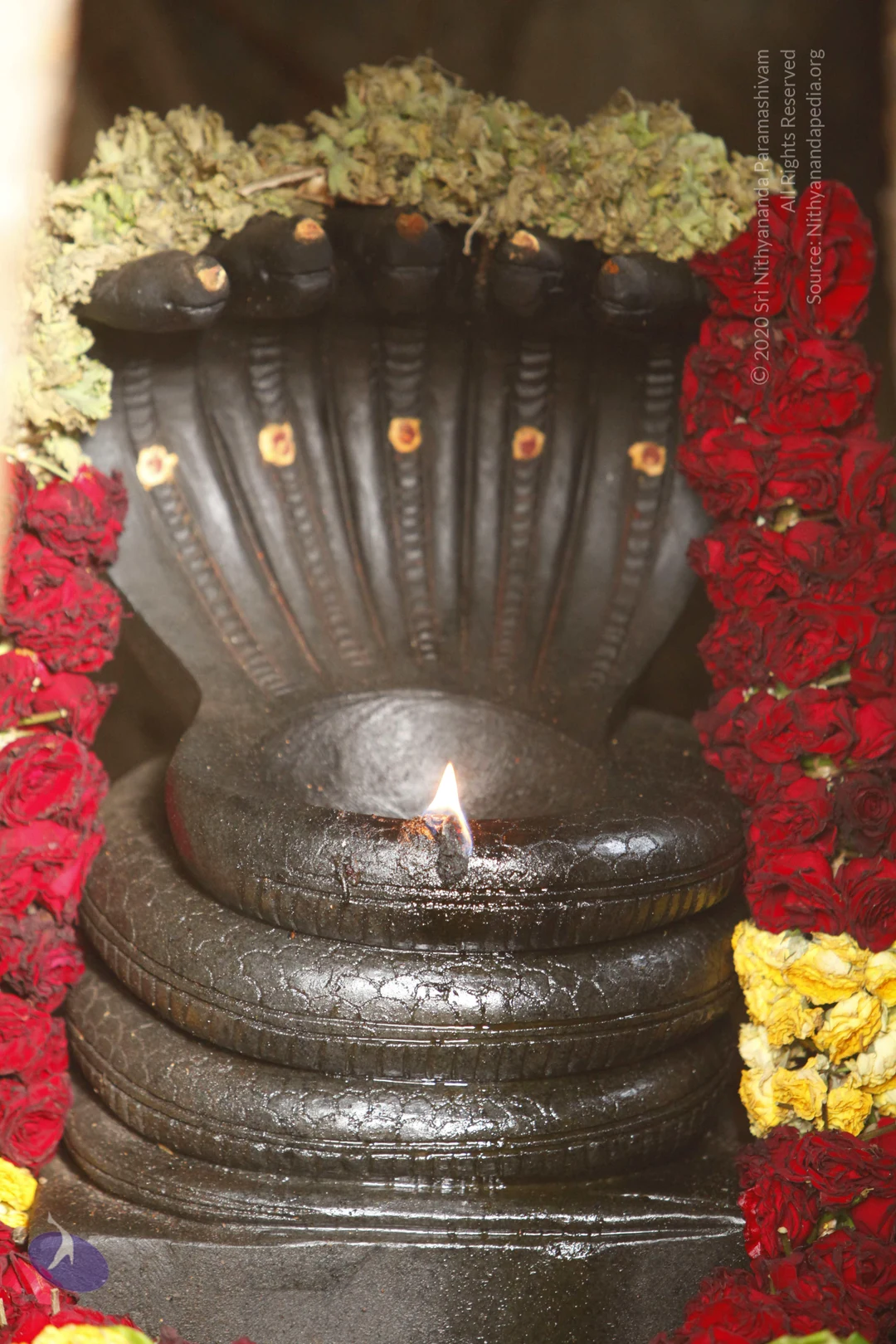
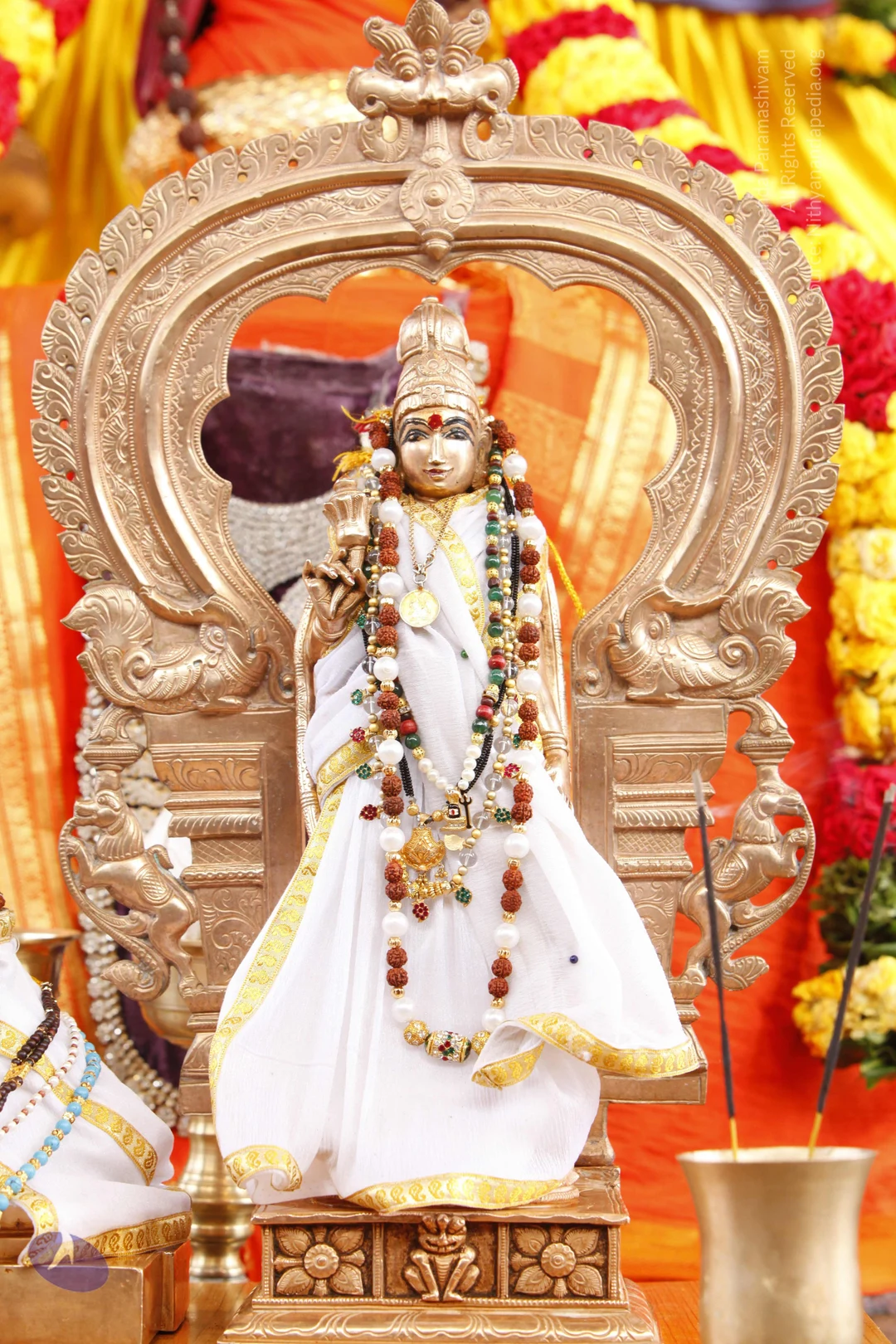
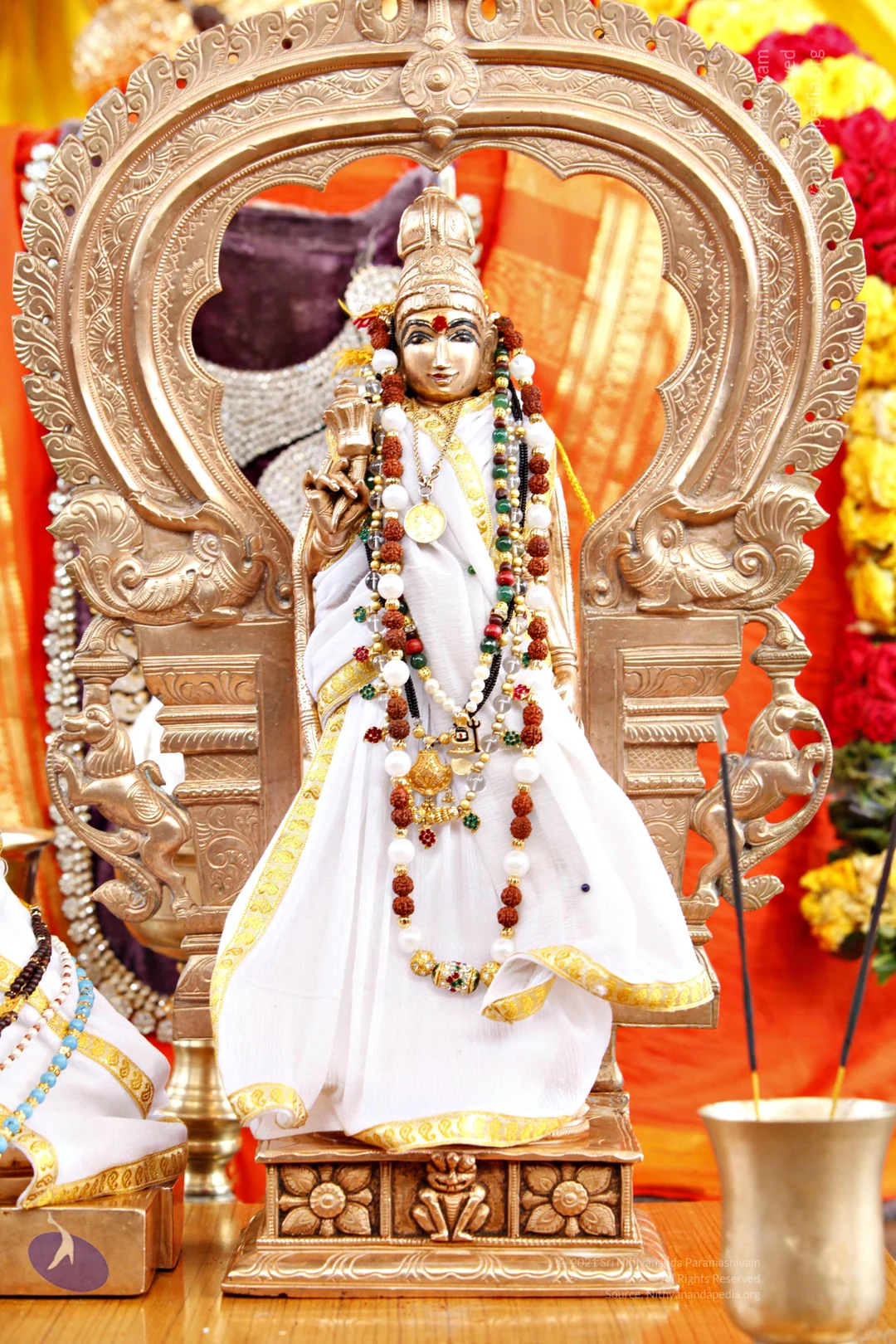
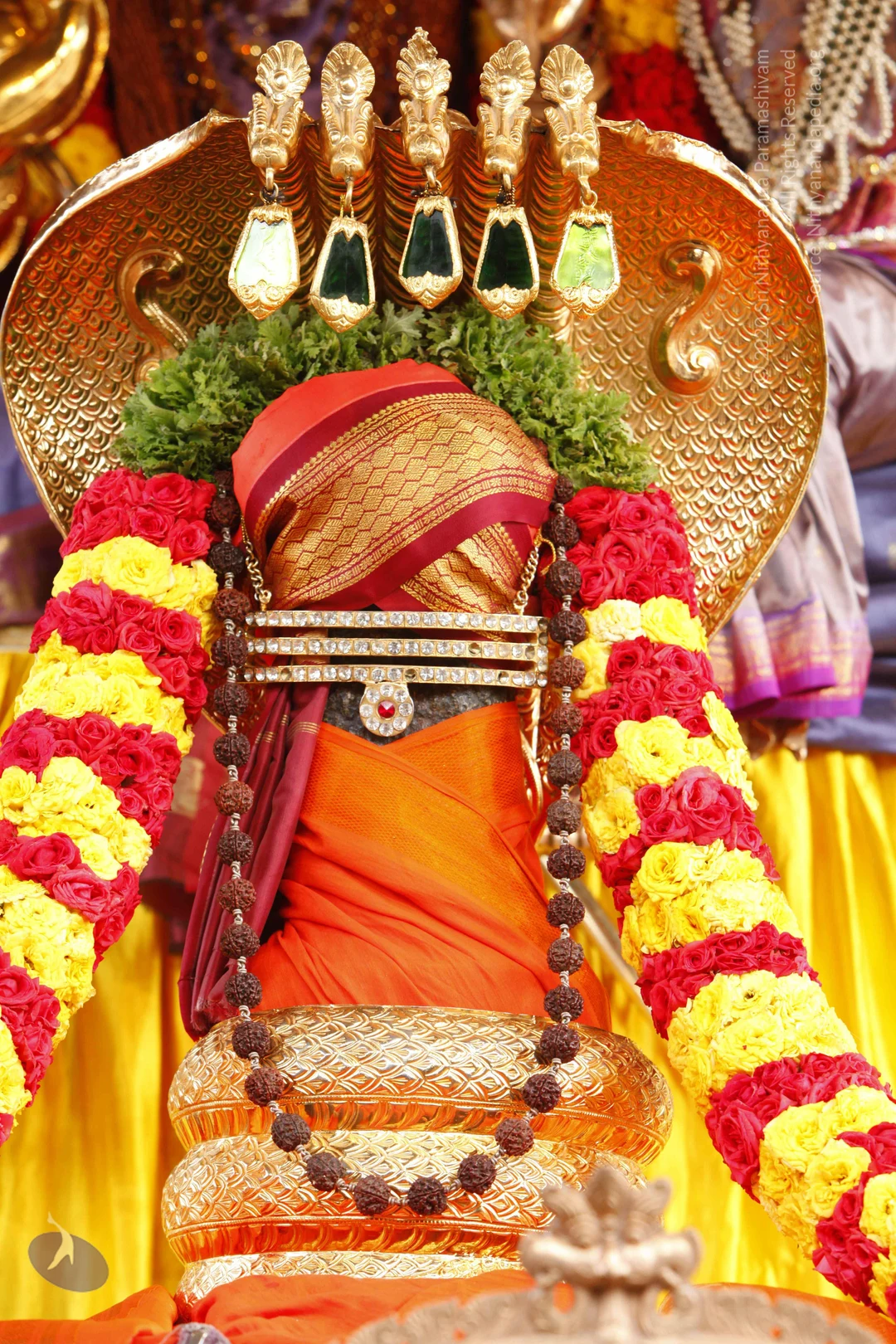
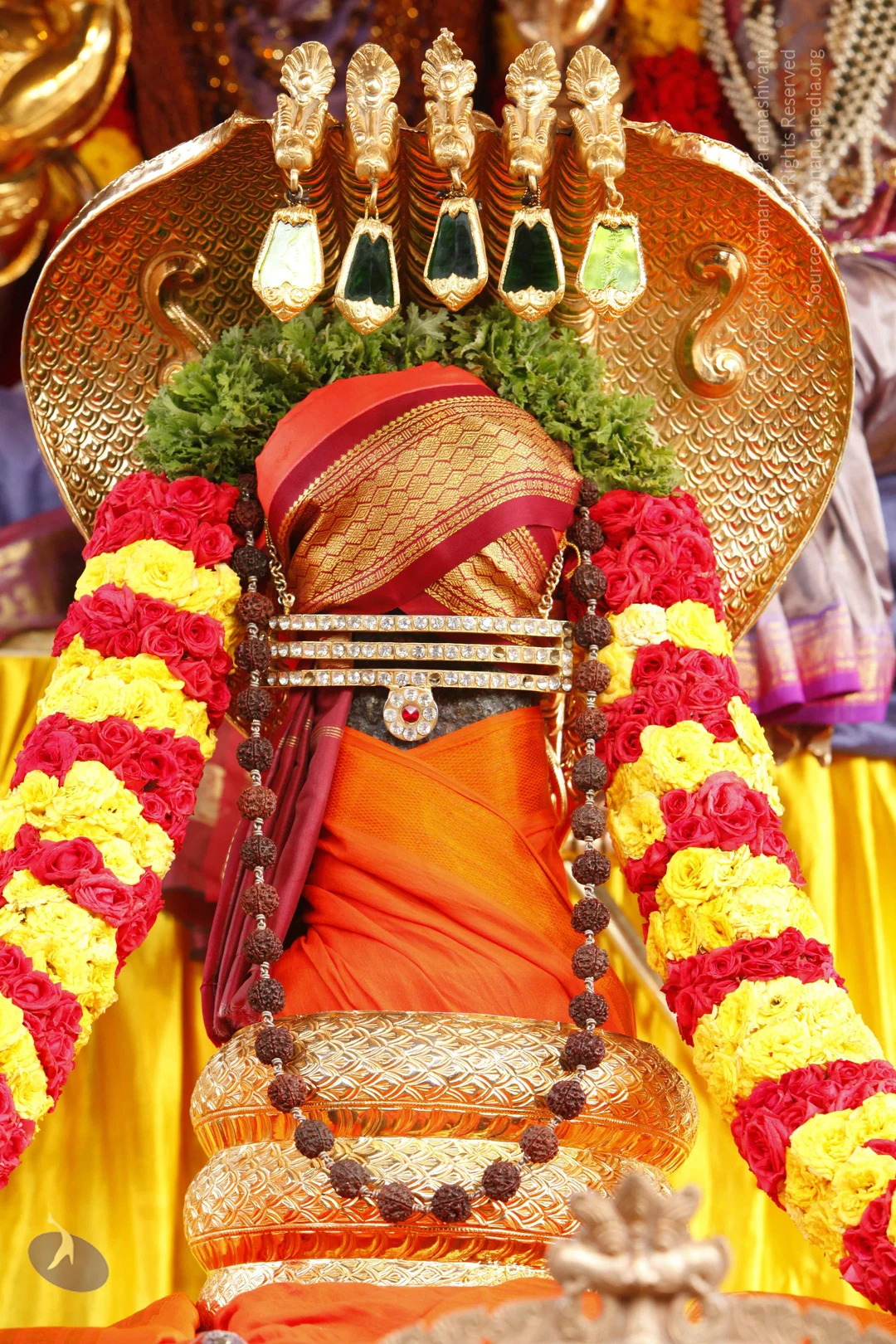
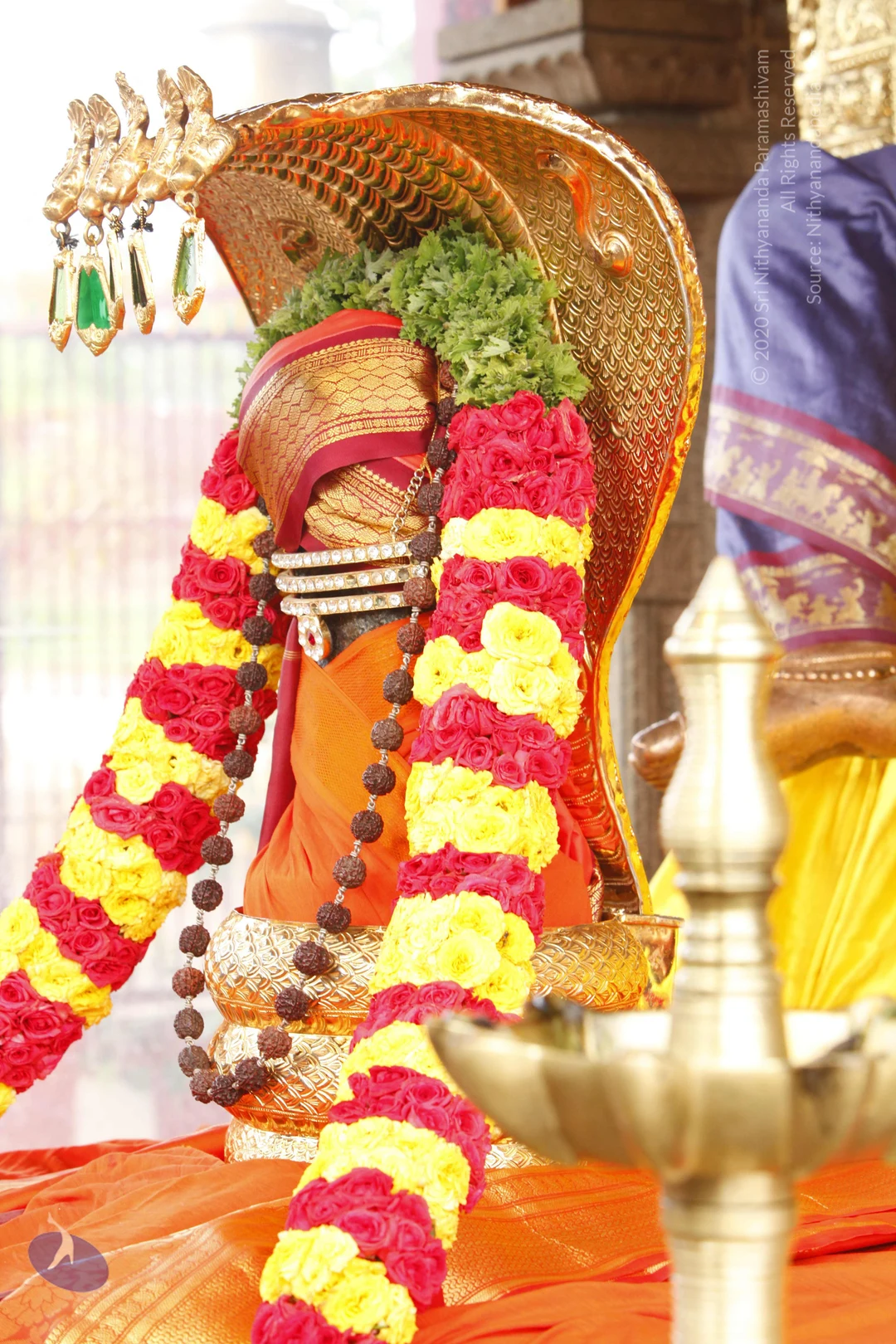
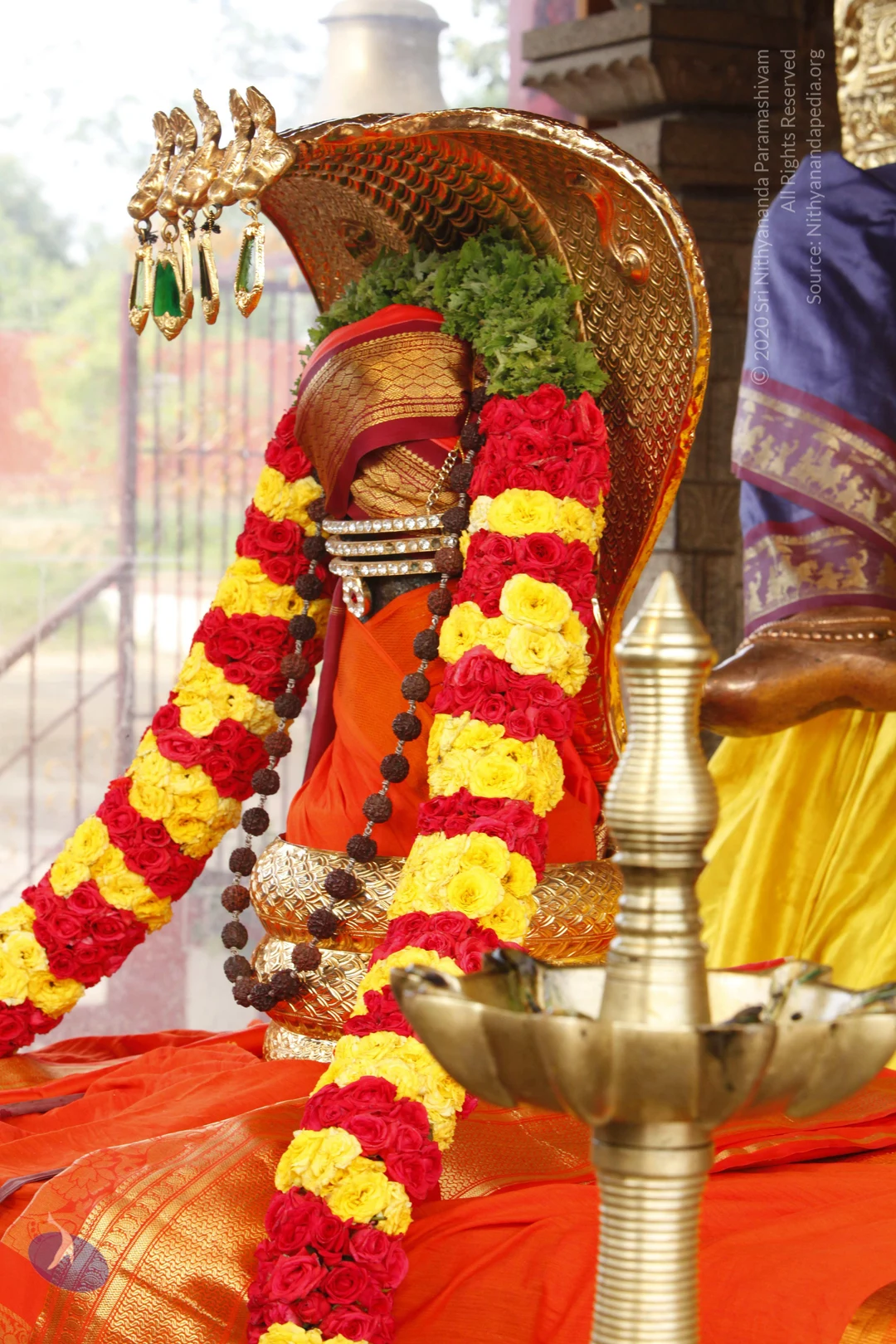
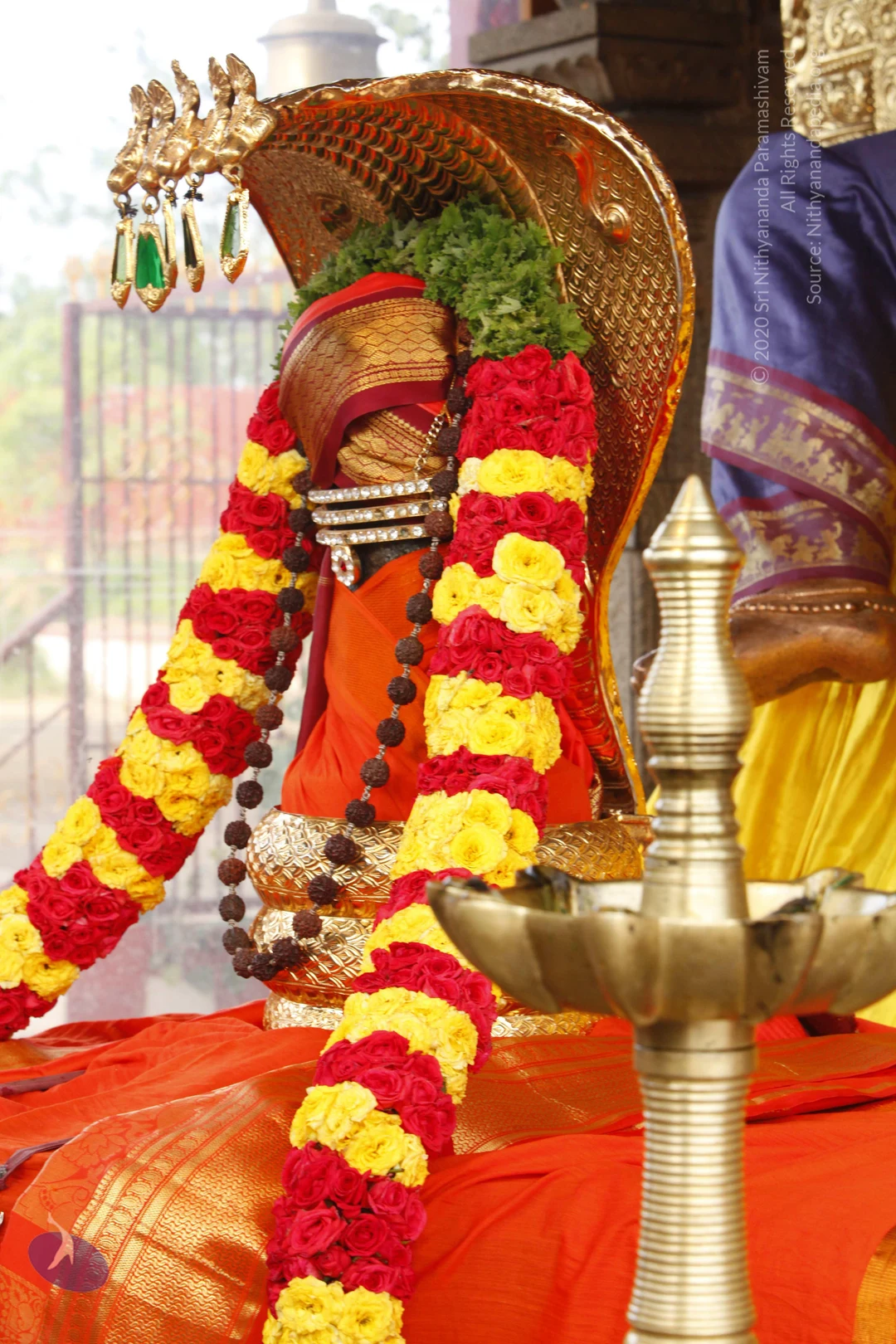
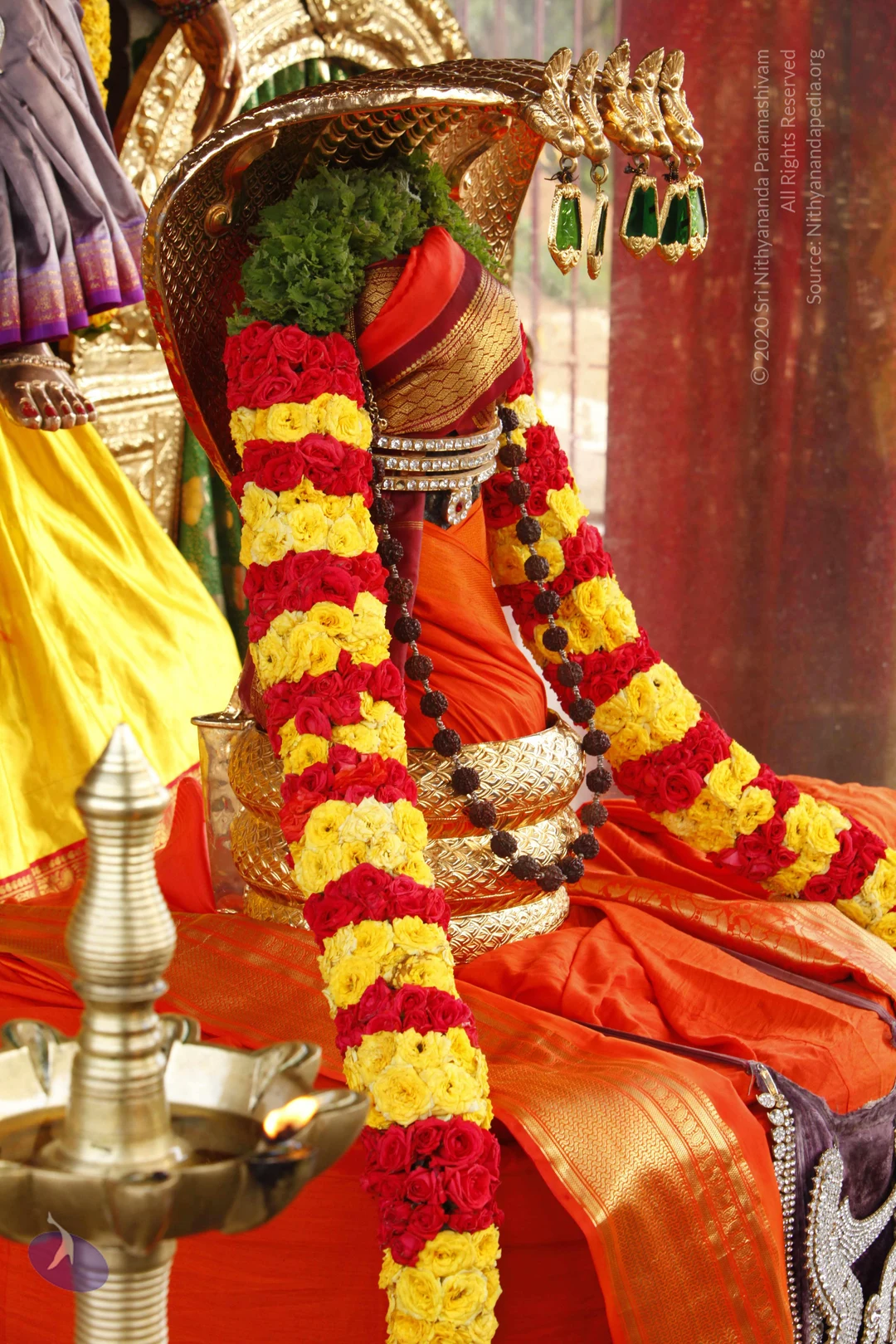
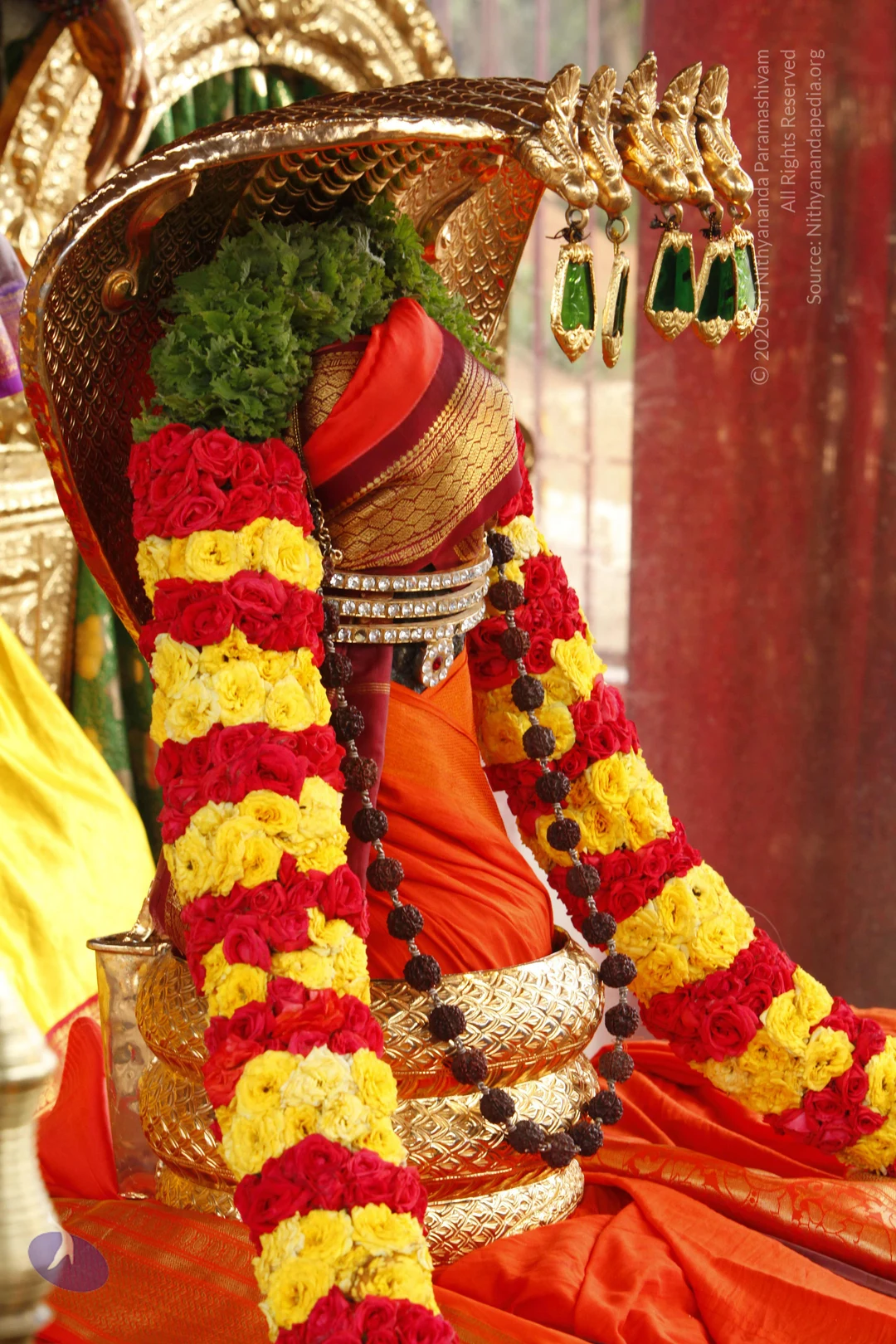
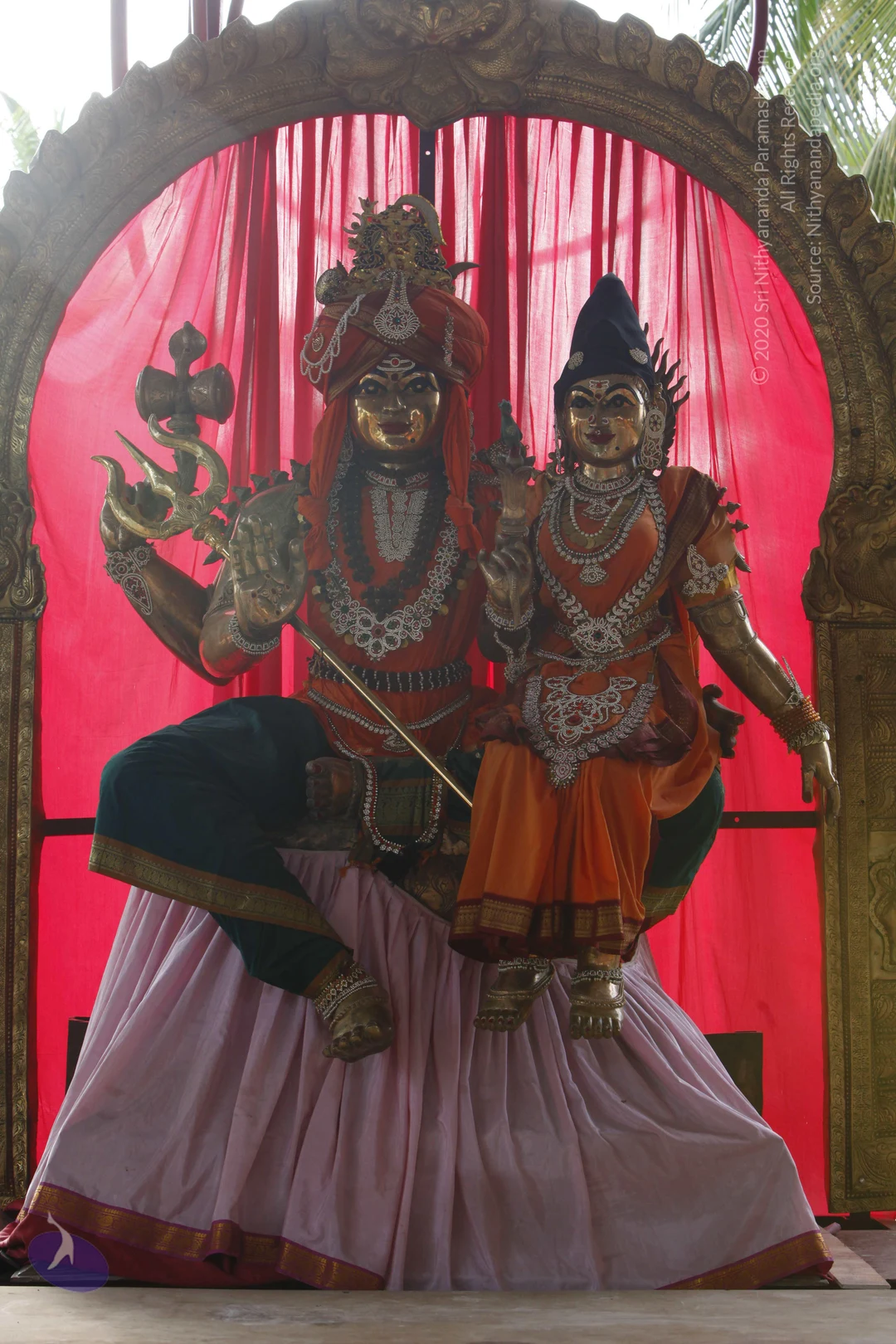
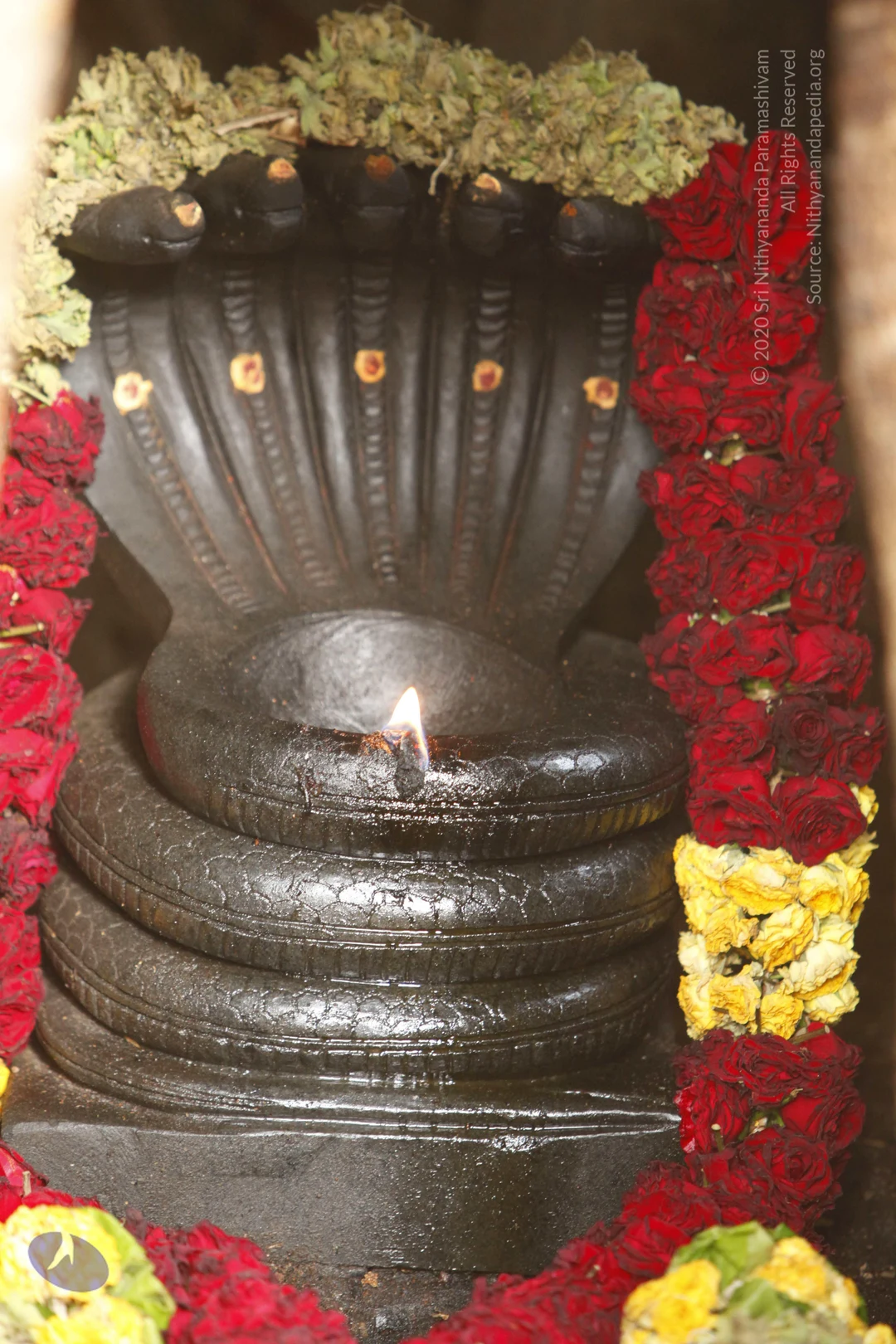
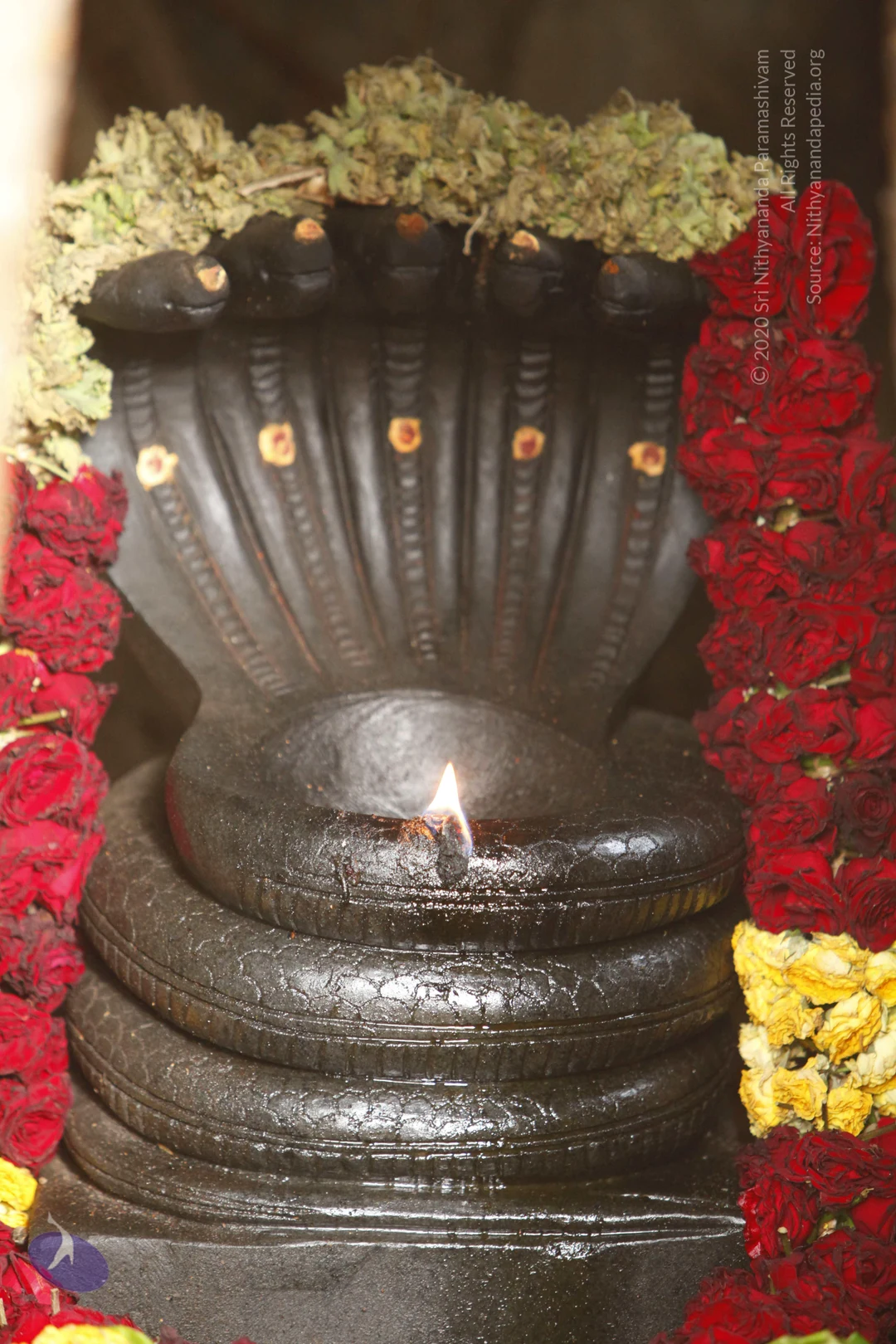
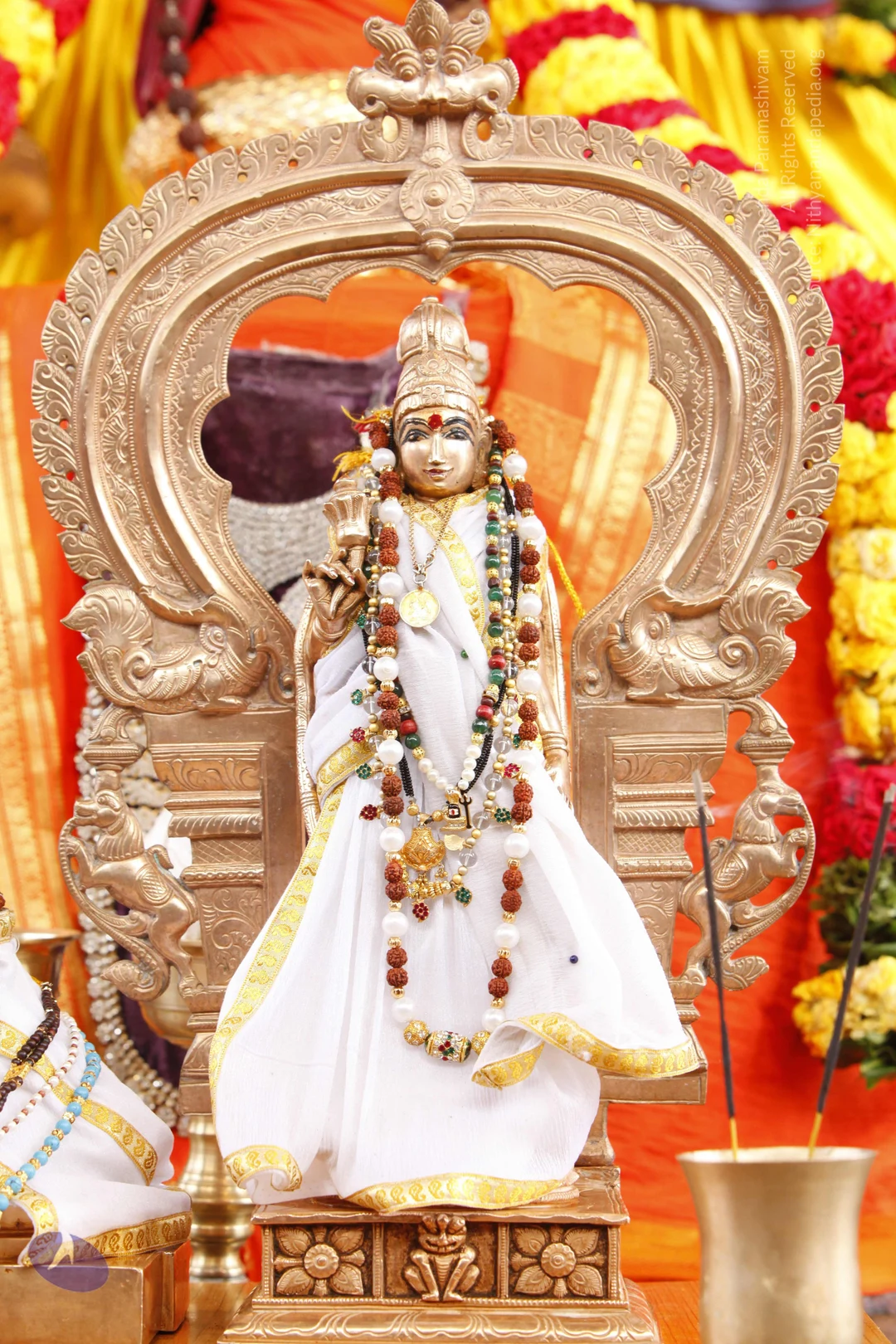
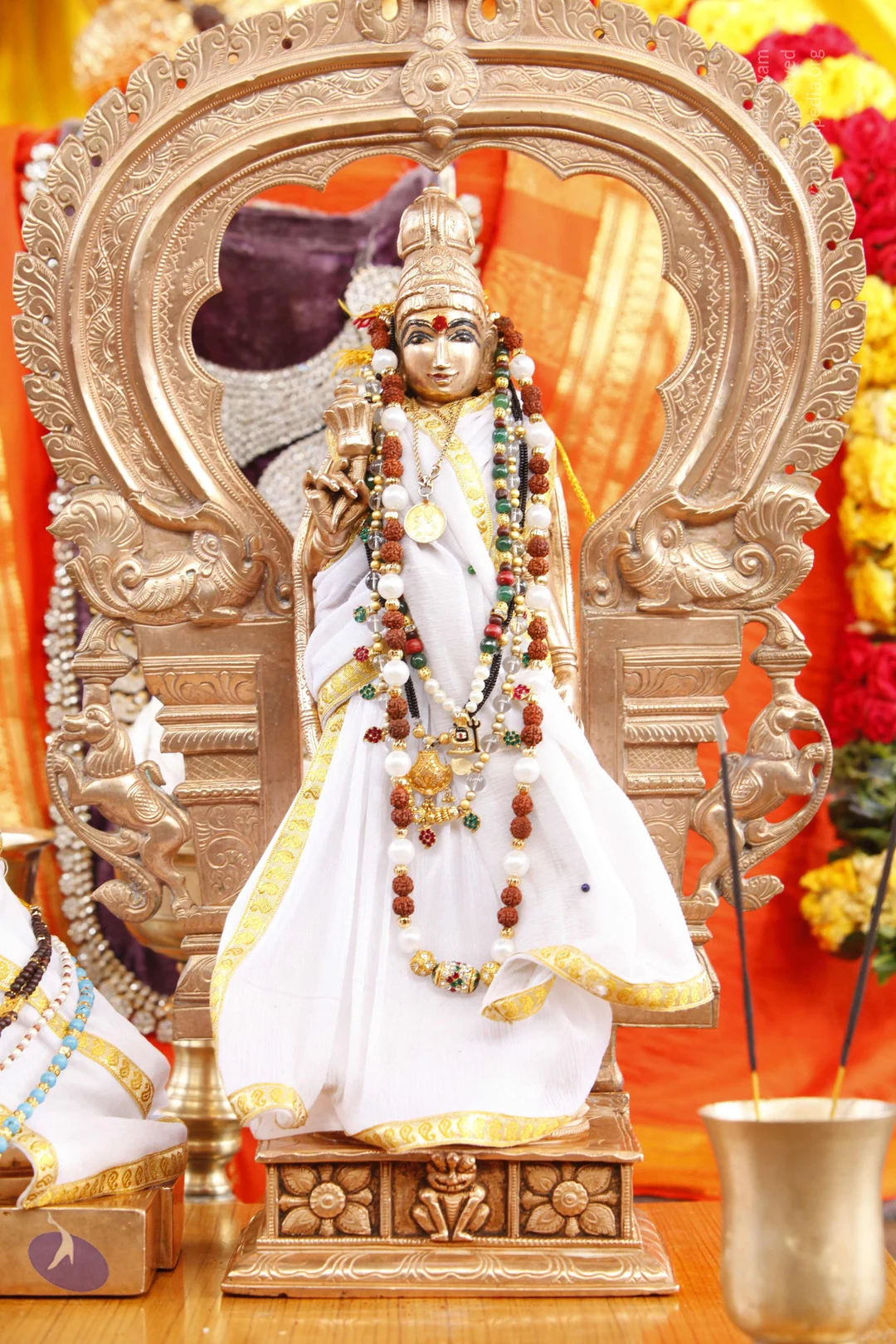
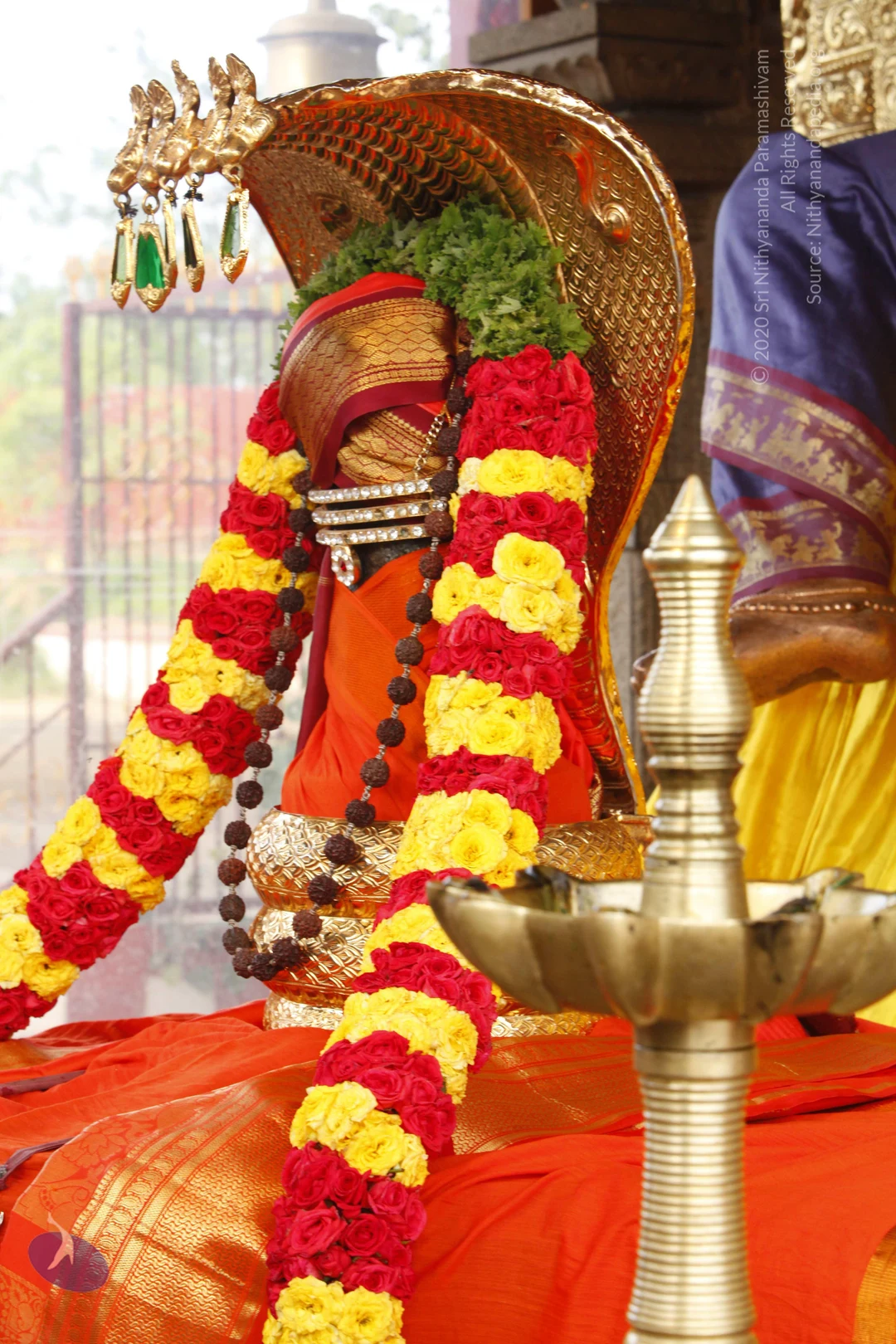
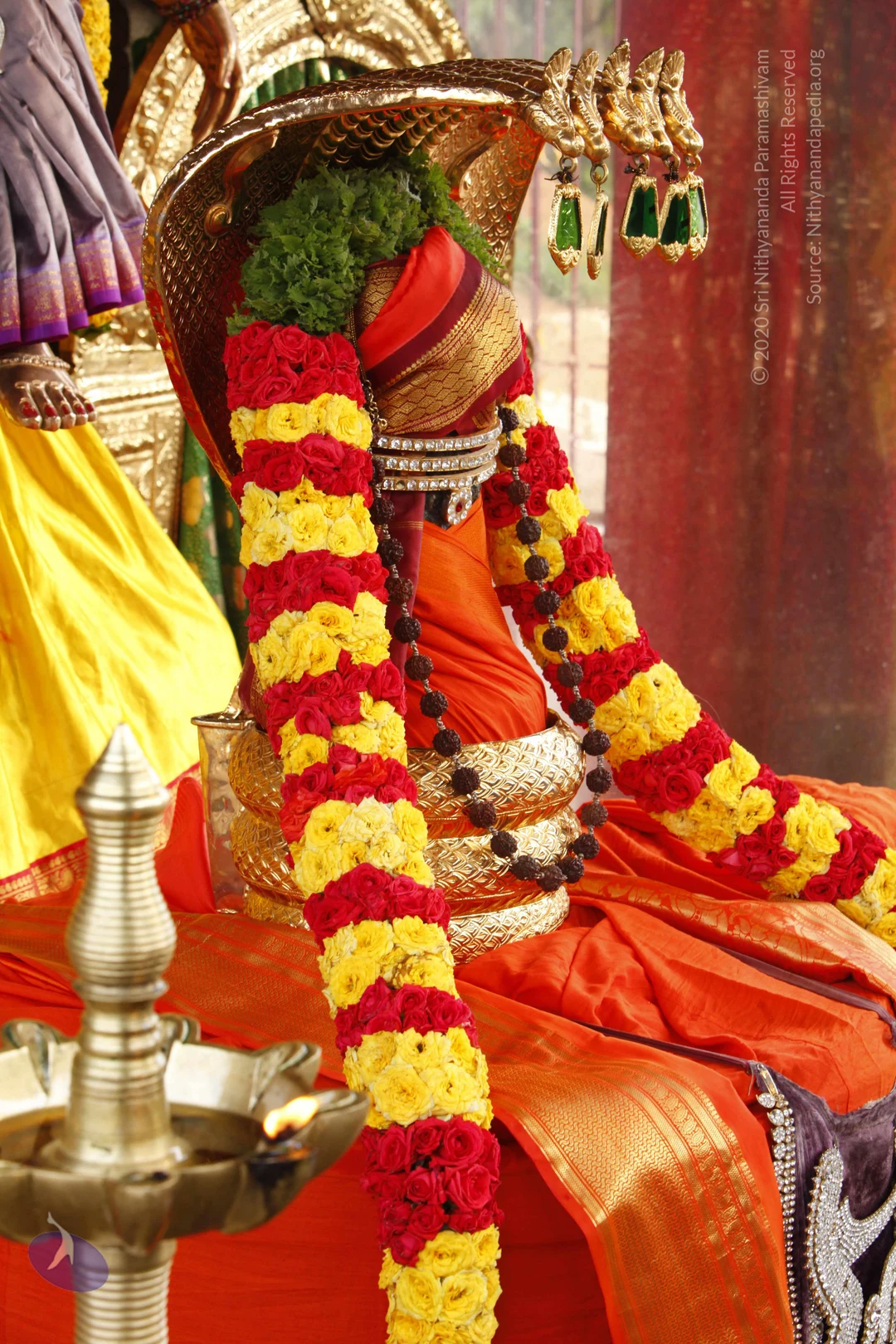
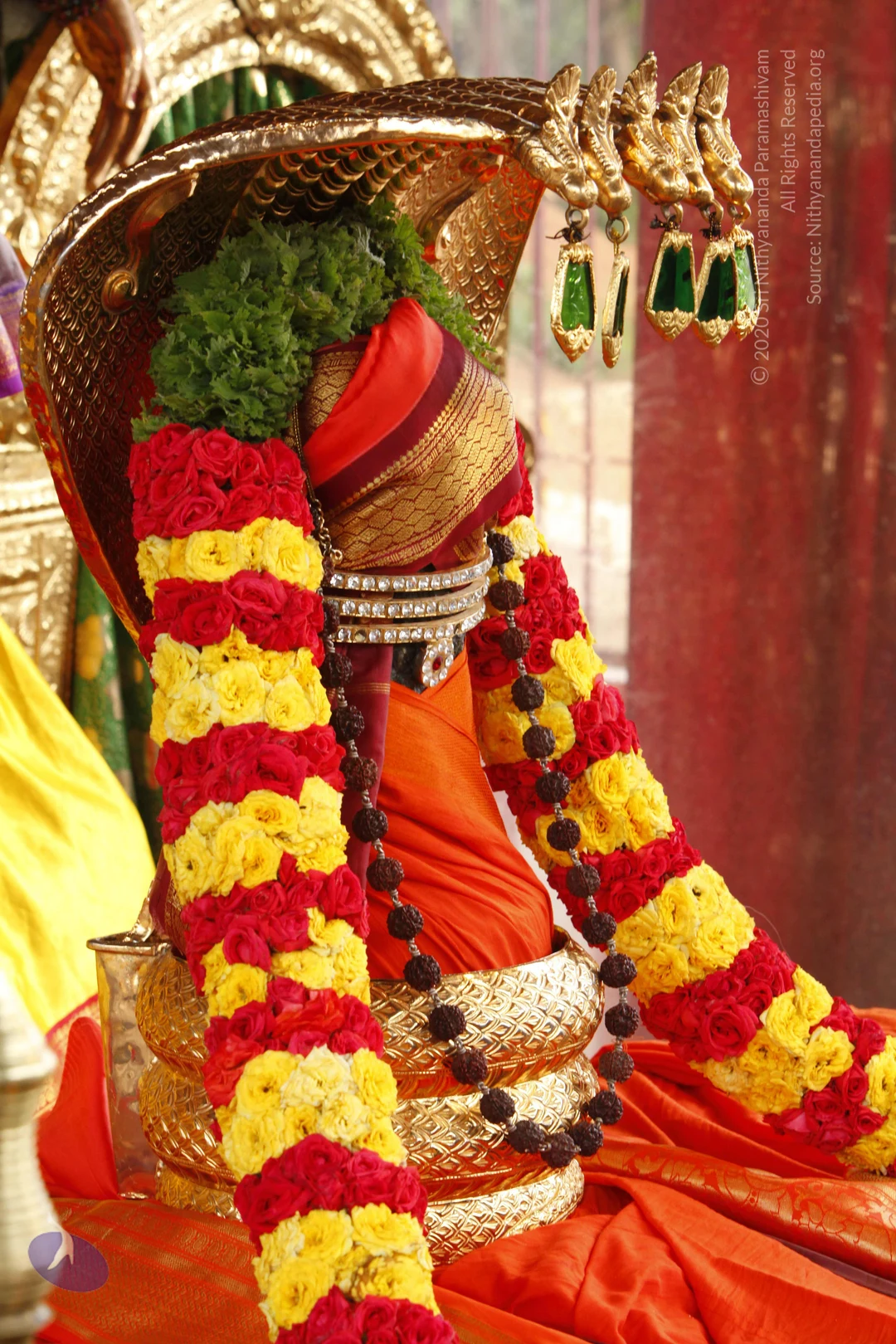
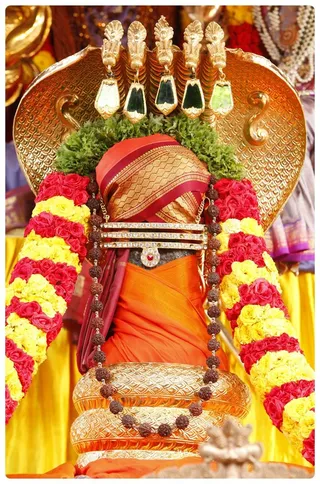
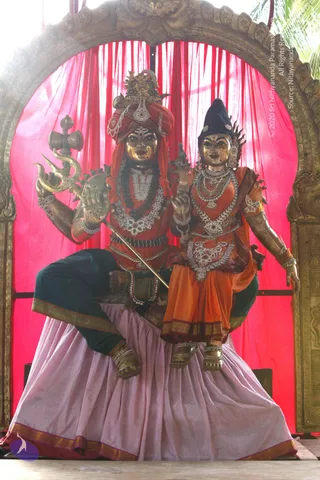
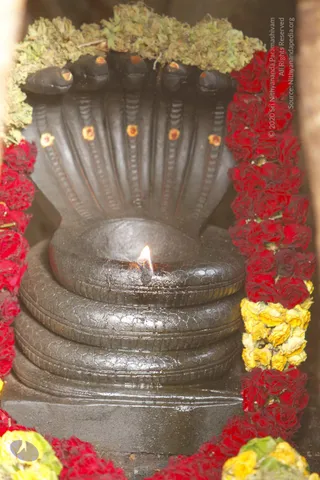
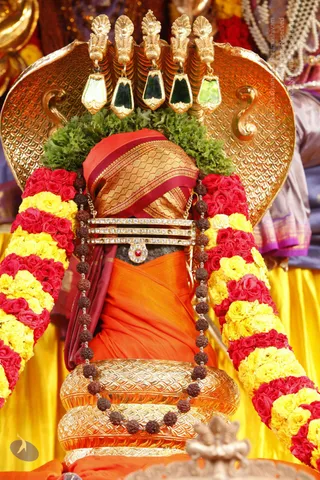
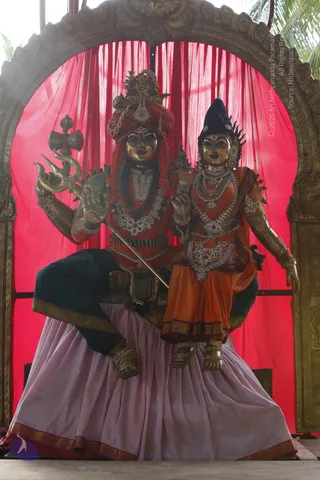
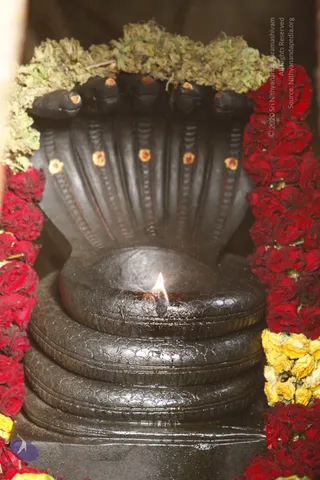
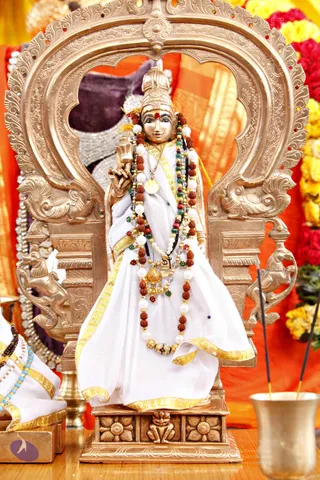
A photograph of a pair of large gilded statues seated together on a pale pink draped pedestal before a deep red curtain and an ornate golden arch. The male figure wears a red-orange turban and orange garment with a dark green lower wrap, black beaded rudraksha-style mala necklaces, silver jewellery, and holds a trident. The female figure wears an orange sari with a dark crown-like headdress, layered silver necklaces and bangles. Both have gold-painted faces and bodies. This depicts a deity murti, not living people.Close photo of a dark stone naga (cobra) murti with a multi-hooded canopy and a coiled base, set in a small shrine niche. A single oil lamp with a lit wick sits in a shallow dish on the coiled stone. Red roses and yellow marigold-style flowers hang in garlands on both sides, and dried herb sprigs are tied across the top. No people are visible in the frame.Close view of a dark stone Nagaraja-style lingam shrine with a five-hooded cobra hood carved above a coiled base. A single small oil lamp flame burns in the central bowl of the stone. Red rose garlands frame the left and right sides, with yellow flowers at the lower right and dried green leaves draped over the hood. No people are visible.A gilded metal statue of a seated deity murti wrapped in white cloth with gold border, wearing layered rudraksha, pearl, black bead and multicolored bead malas plus a gold pendant. Its raised right hand holds a small object and the figure sits under an ornate bronze arch with carved mythical animals. Orange and yellow marigold garlands fill the background, and incense sticks rise from a brass vessel at right. A partial second statue in white with turquoise beads appears at the left edge. No physical people are present.A decorated deity murti of a cobra-hooded form, covered in an orange-red cloth wrap and a red and gold patterned headcloth, adorned with rudraksha malas, a jeweled waist band, and a gold cobra hood with five hanging green stone ornaments. Garlands of red and yellow roses drape on both sides, with green leaves over the head, set against a yellow silk backdrop. No person is visible; the figure is a statue.A decorated deity murti of a Shiva lingam-like form draped in an orange cloth, wearing a red and gold brocade head covering and a row of diamond-studded bands. Five golden cobra hoods with green gemstone pendants rise above it, backed by a gold scale-patterned halo. Red, yellow and white garlands of roses hang on both sides, with rudraksha malas and a green leaf crown adorning the figure. A yellow silk cloth covers the base. No physical persons are visible; the figure is a statue, so a person is none.

Pratyaksha-Pada-Puja

2 photosSource gallery
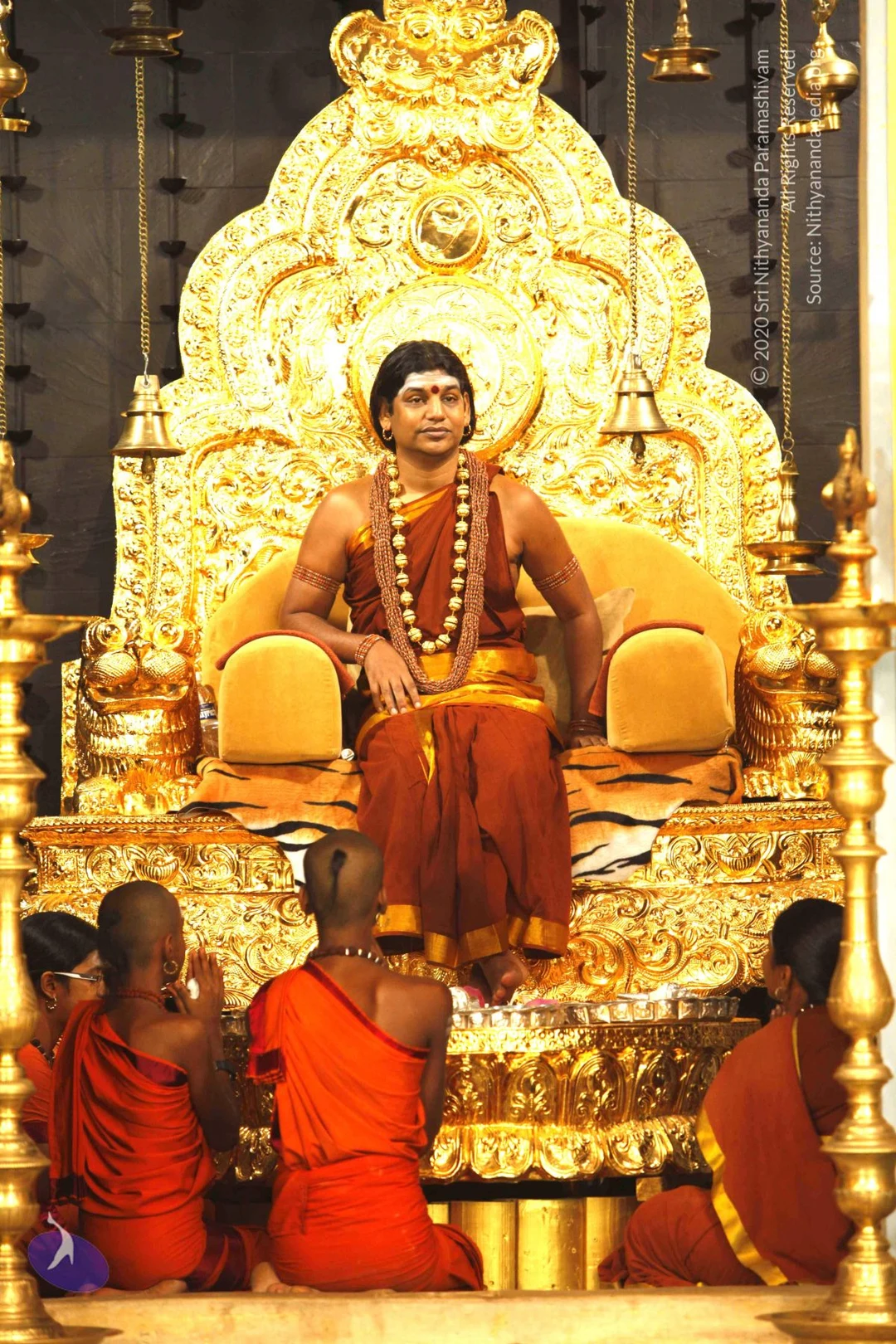
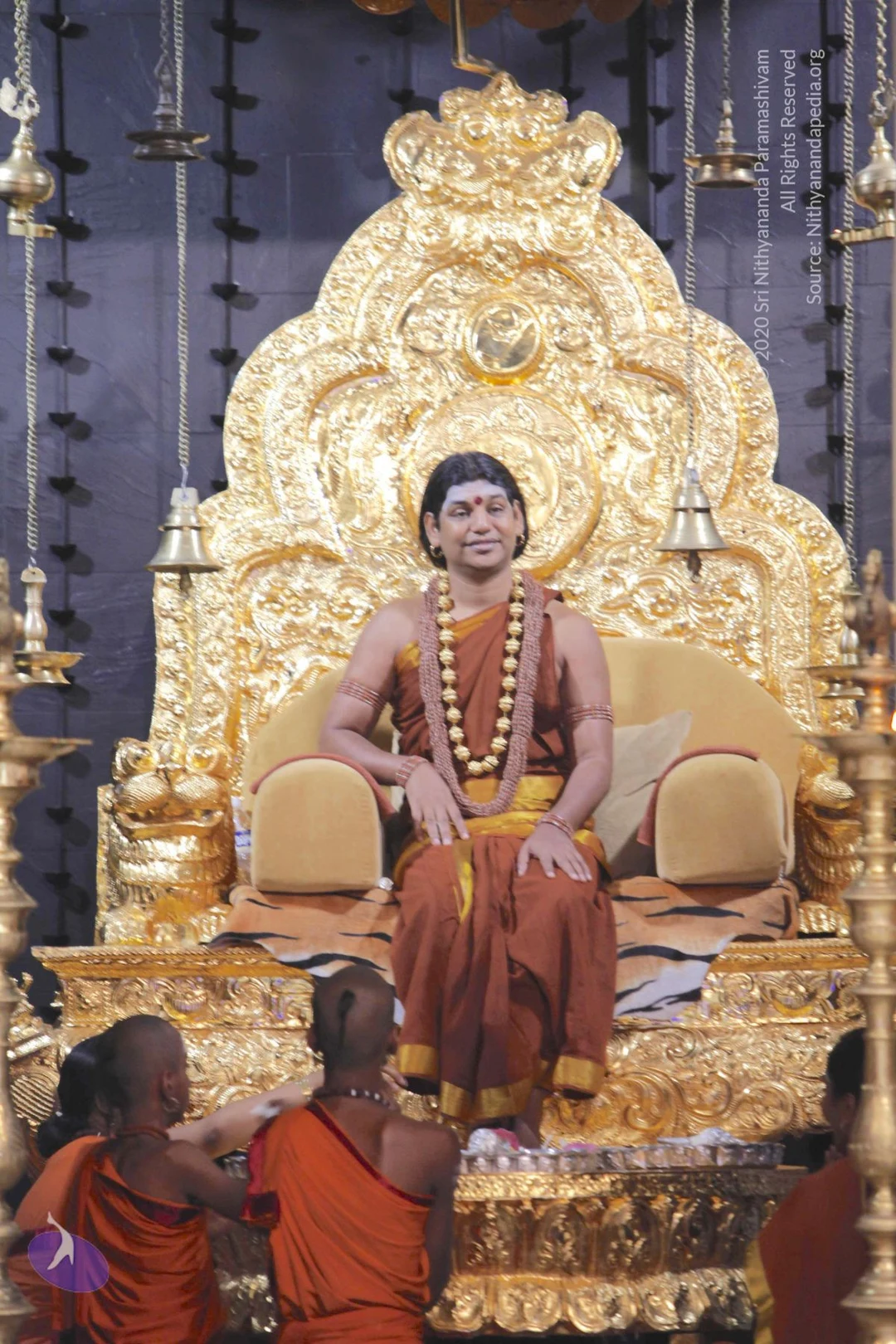
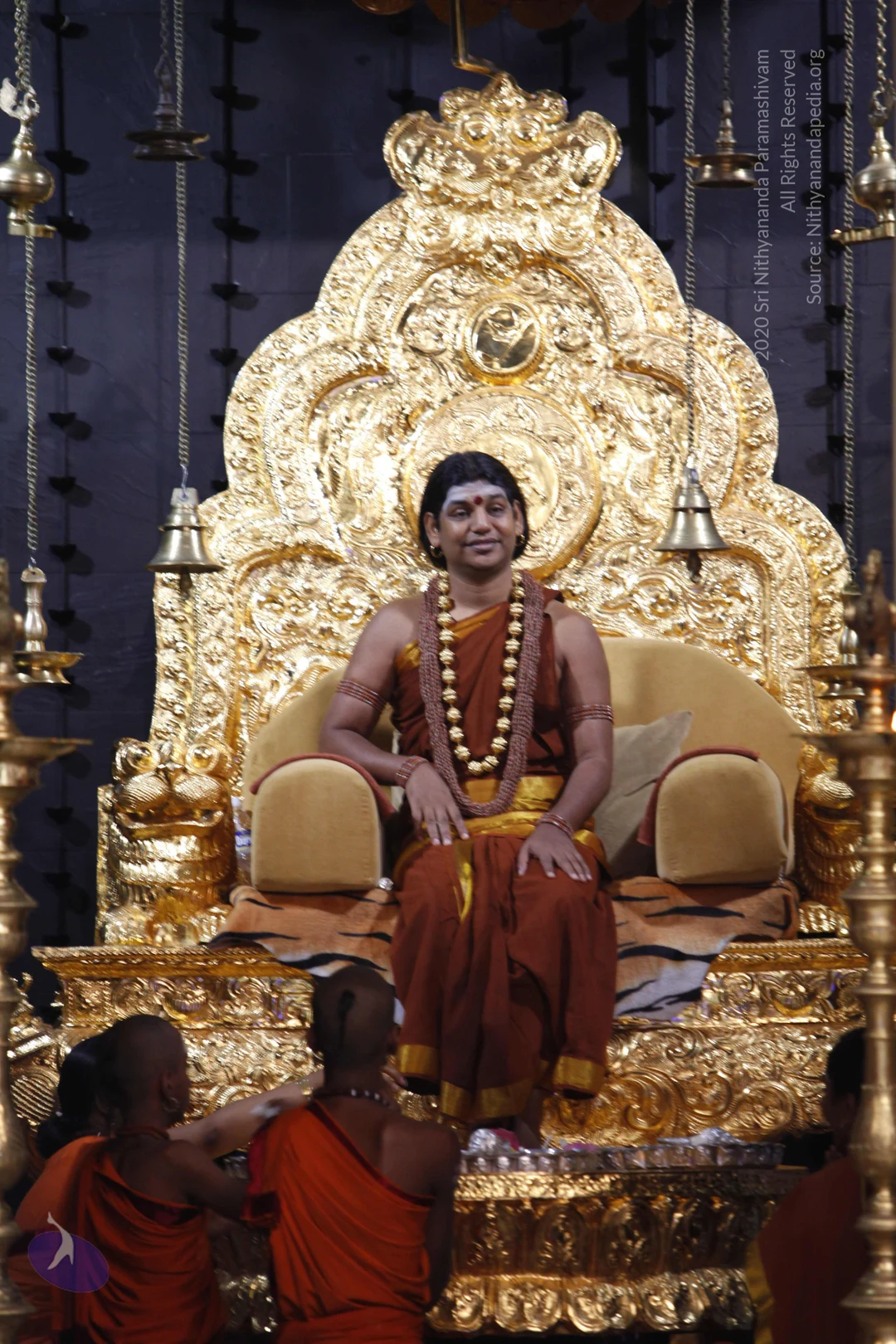
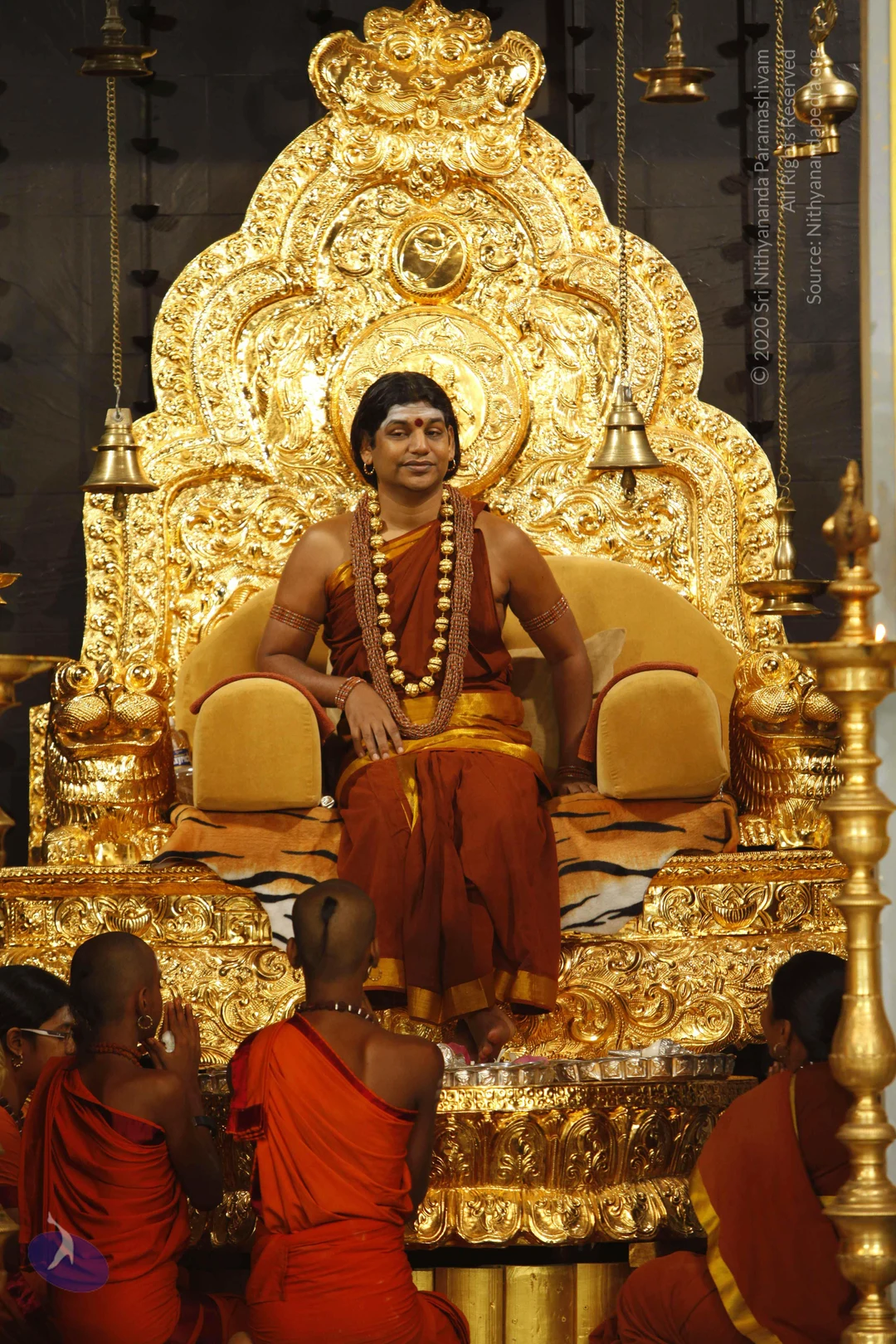
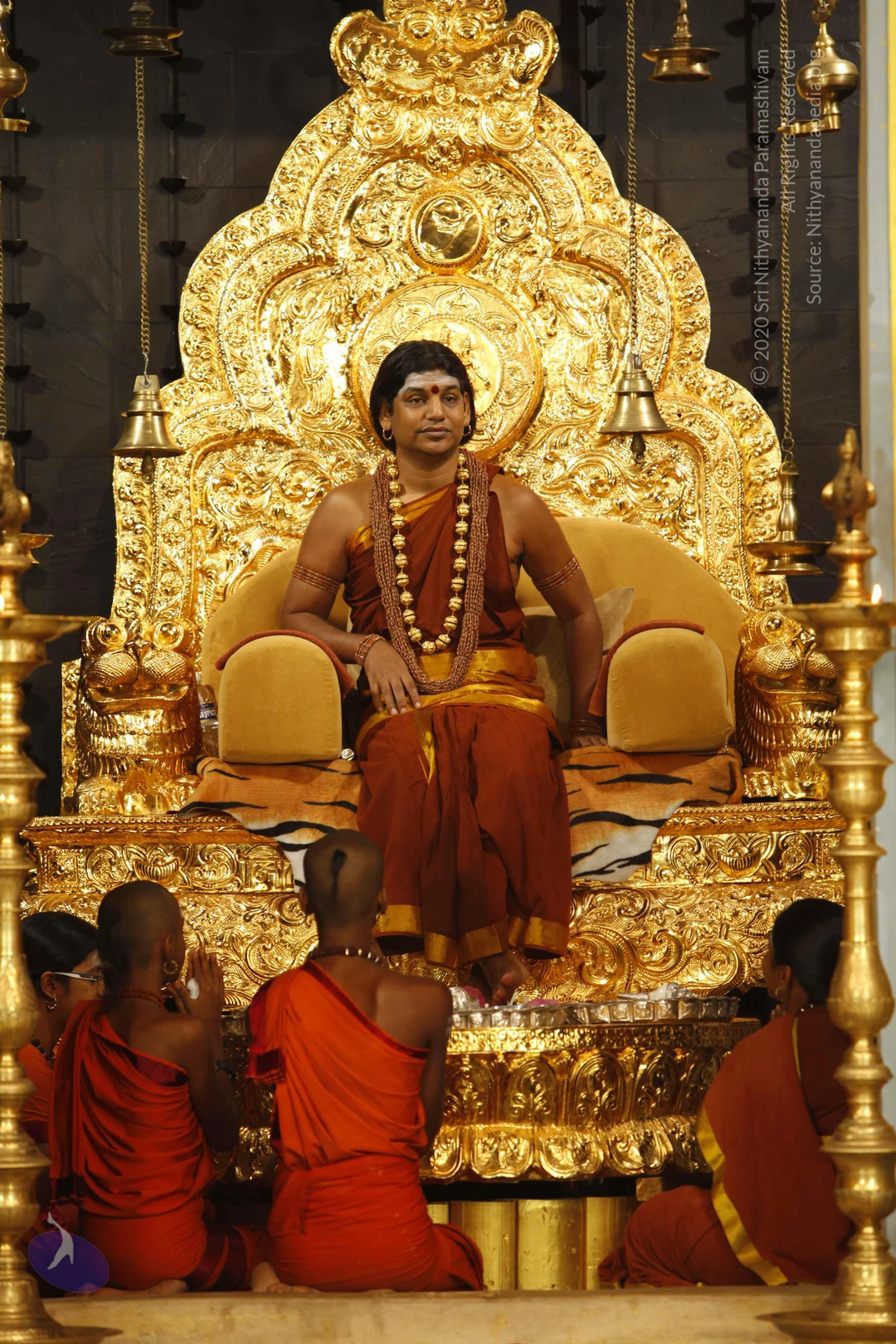
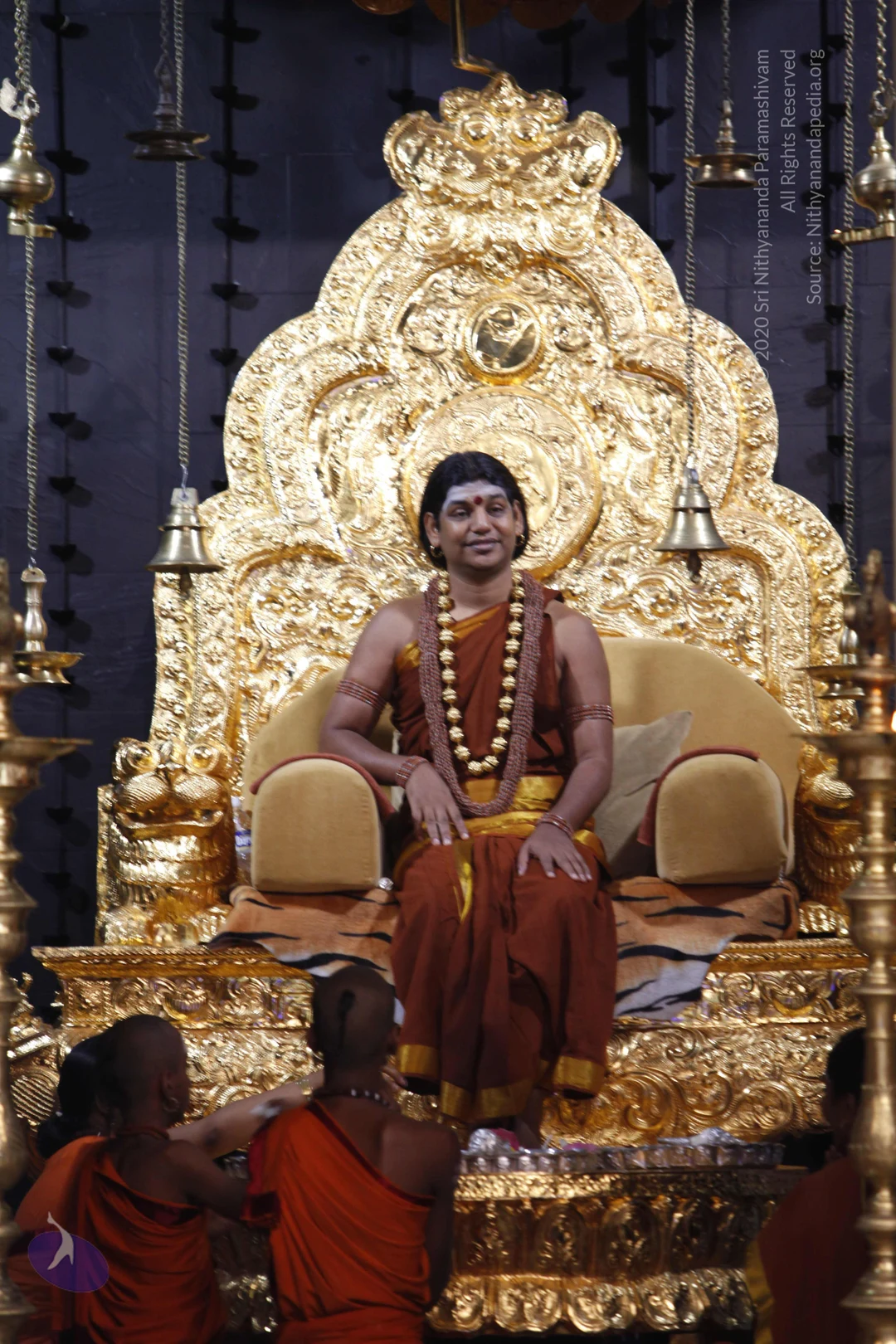
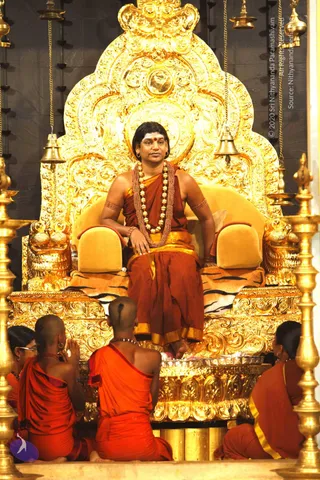
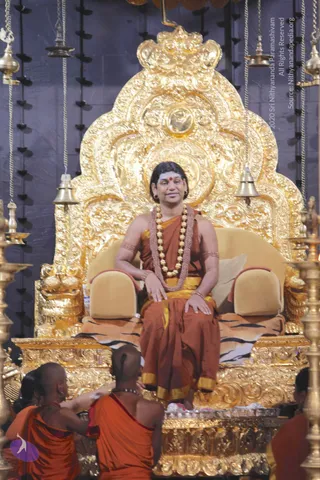
A man seated on an ornate gold throne with a tiger-skin cloth draped over the seat and gilded lion-head armrests. He wears a rust-red and saffron wrap, a multi-strand rudraksha mala with gold beads, gold bangles, and a red bindi with white markings on his forehead. Seated before the throne at the lower left and right are devotees in orange and saffron robes, one with shaved head and palms pressed together in namaskar. Brass oil lamps stand at the sides, and brass bells hang from chains above. The gold throne backdrop has elaborate repoussé floral and mythical carving. The setting looks like a satsang or darshan hall.A seated man in a rust-red sannyasi-style wrap with a gold-and-rudraksha necklace and matching bangles sits on an ornate gilded throne with lion-shaped armrests and a tiger-striped cloth draped over the seat. Lamps and bells hang on chains behind him. Two shaved-headed men in orange robes sit on the floor at the lower left, one touching the other's shoulder, while a further figure in orange is partly visible at the lower right. The scene looks like a ceremonial satsang hall.

Swasthi-Mantra

1 photoSource gallery
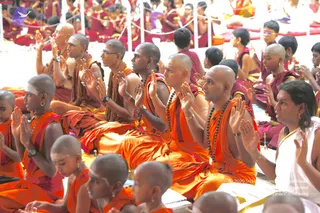
Photograph of a large seated assembly during a satsang. Foreground rows of shaved-headed monastics in saffron-orange robes with rudraksha malas sit with palms pressed together in anjali. On the right, a man with long dark hair wears a white shawl and gold ornaments and also holds his hands in anjali. Behind them, many children and young people in maroon and red-trimmed clothing sit in rows, several with hands raised in prayer, separated by white railings. A few people in the rear wear white. The setting is an open hall with red and white decor. No single person is clearly identifiable as a person from appearance alone.

Blessing-Final

1 photoSource gallery
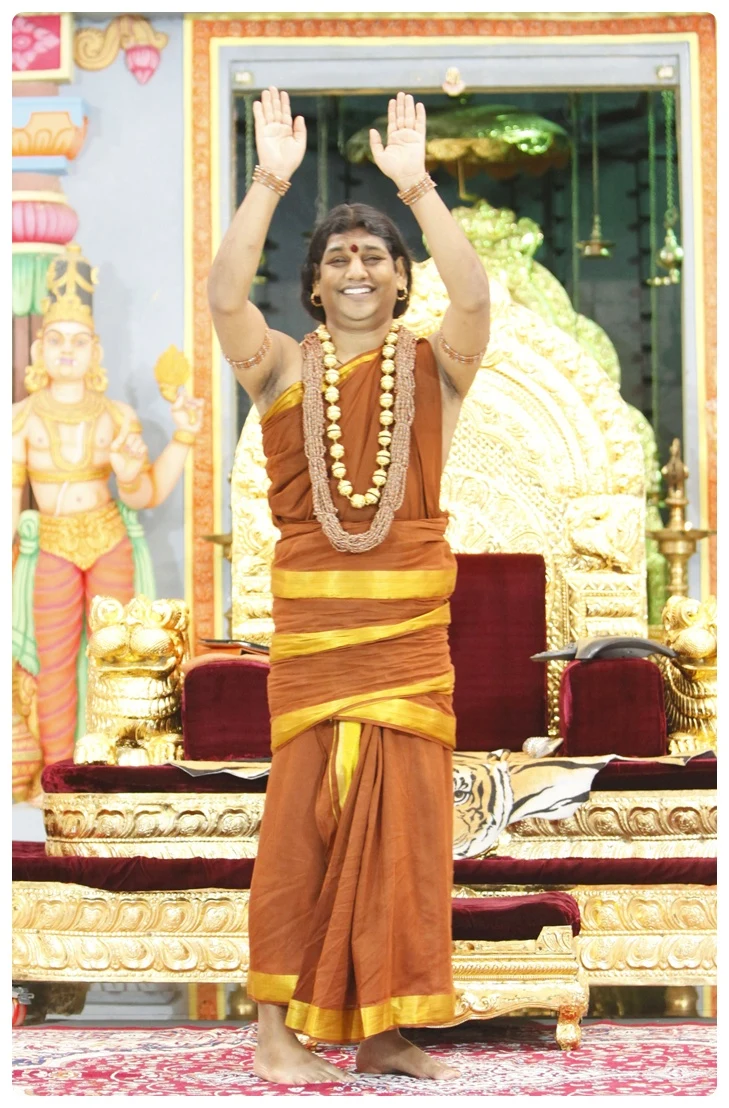
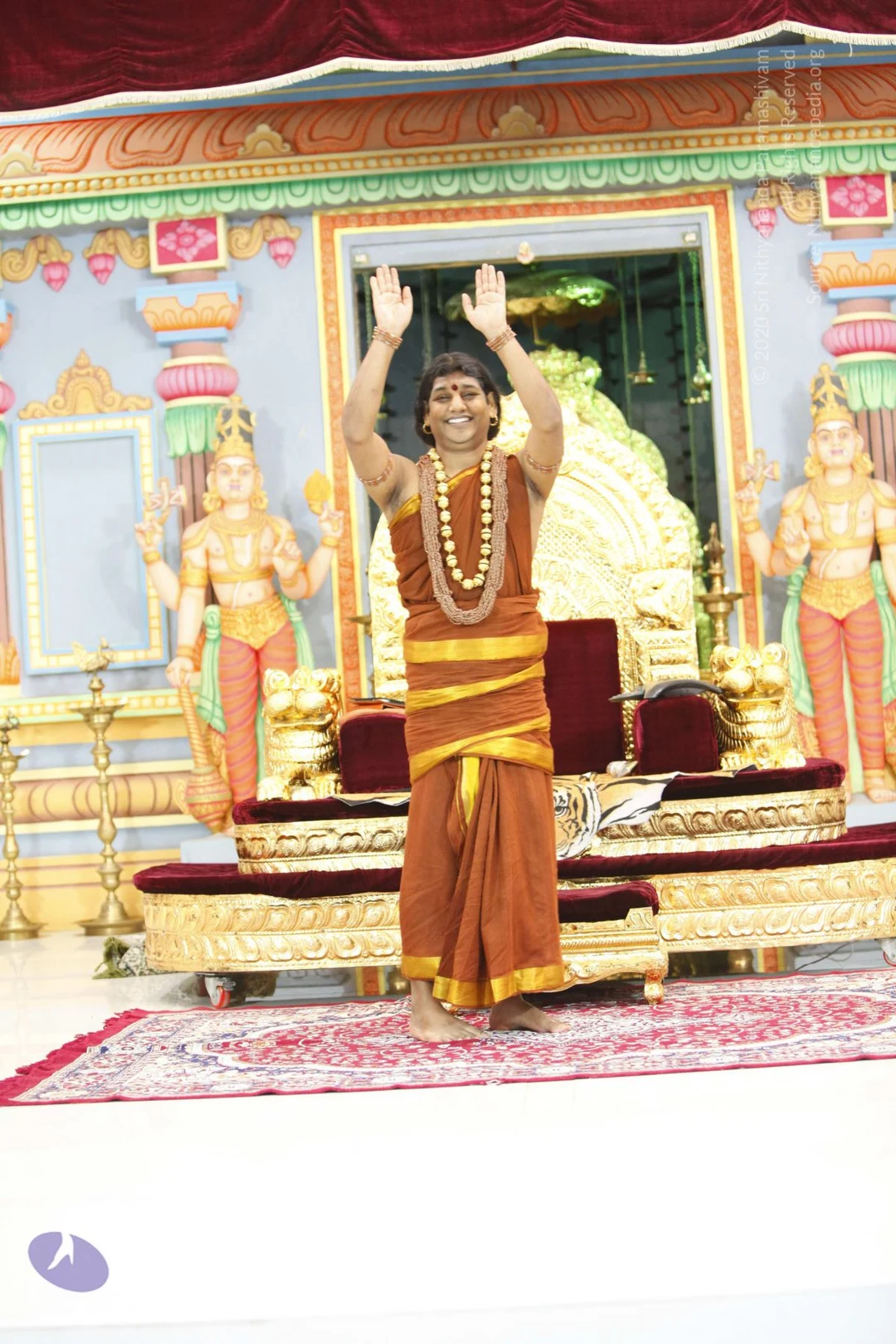
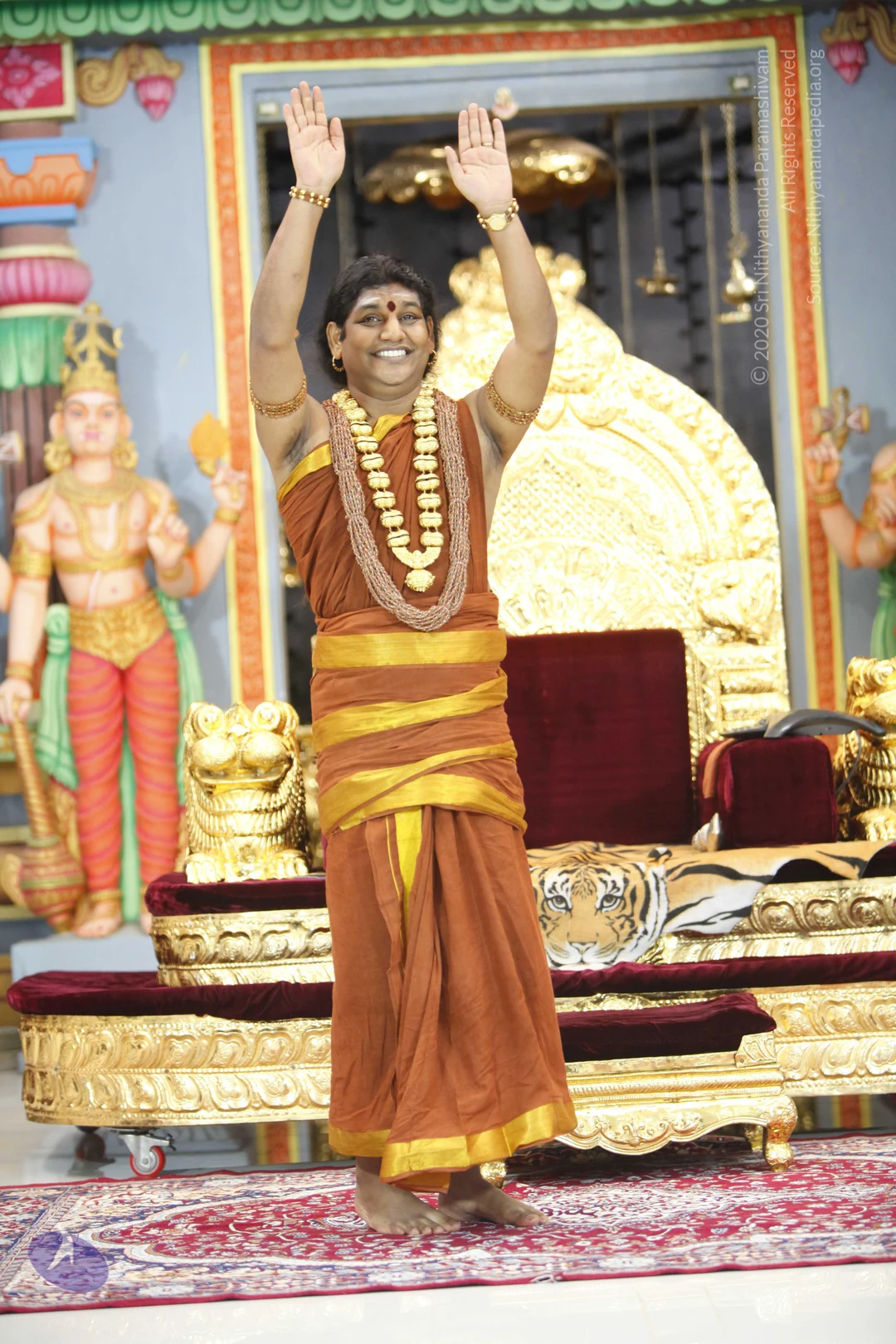
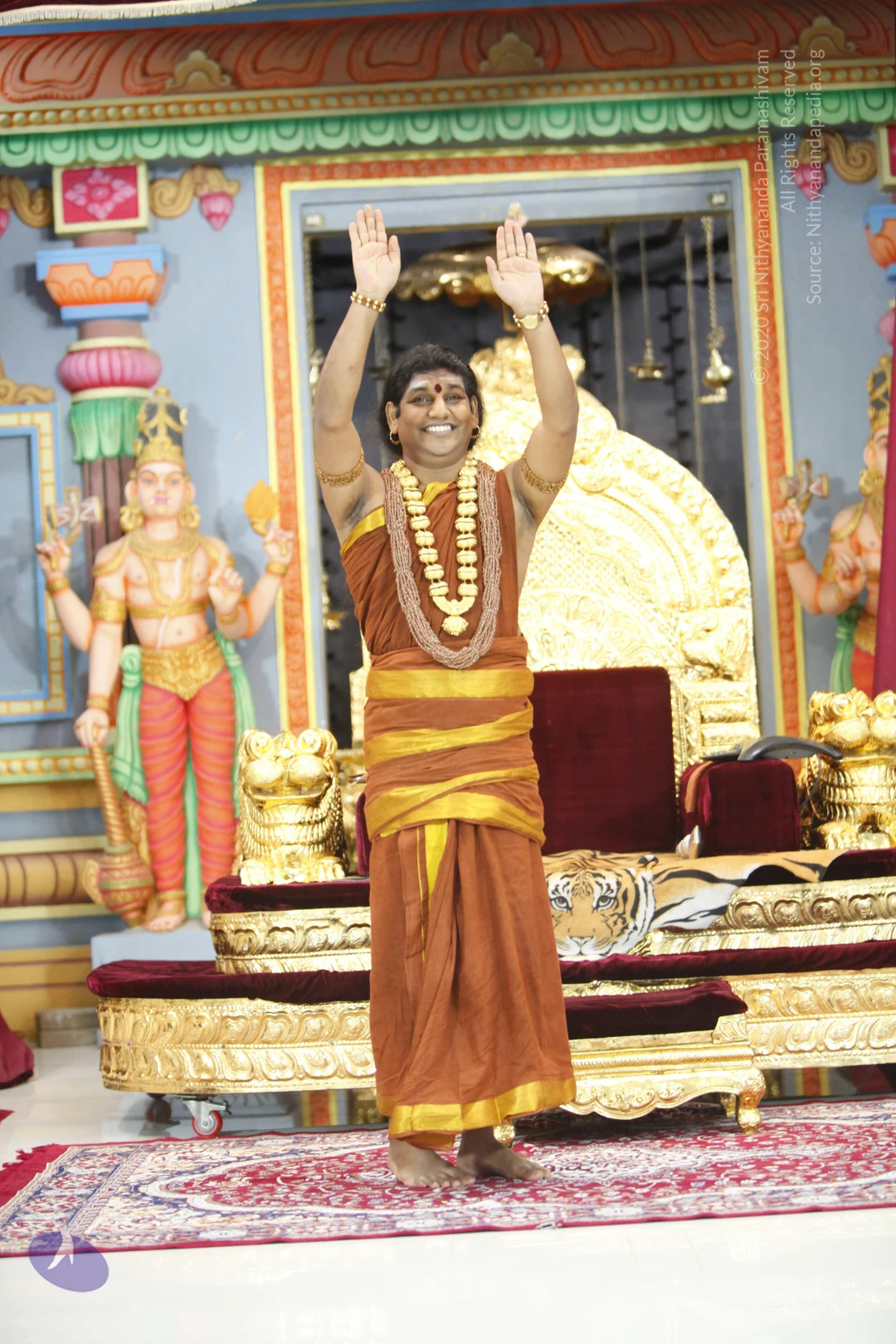
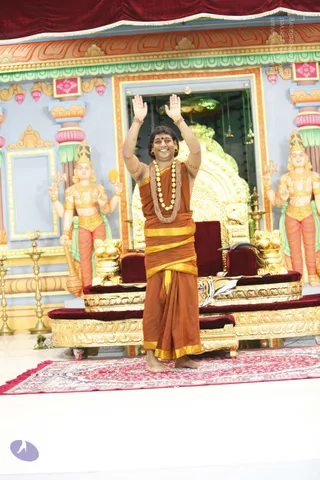
A man stands barefoot on a red patterned carpet in front of an ornate golden throne with red velvet cushions and a tiger-skin draped over its seat. He wears a saffron-orange dhoti and shawl with gold borders, a rudraksha mala and a long gold bead necklace, with bangles on his wrists, and raises both hands in greeting while smiling. Behind him are painted pillars and two painted deity figures with multiple arms and crowns, brass oil lamps stand at the sides, and a red velvet canopy hangs above. a person: the figure has distinctive saffron clothing, rudraksha and gold necklaces, consistent with the satsang photo. Oil lamps and a stage setup indicate a temple-style satsang stage.

01-ADIKAILASA-TEMPLE

19 photosSource gallery
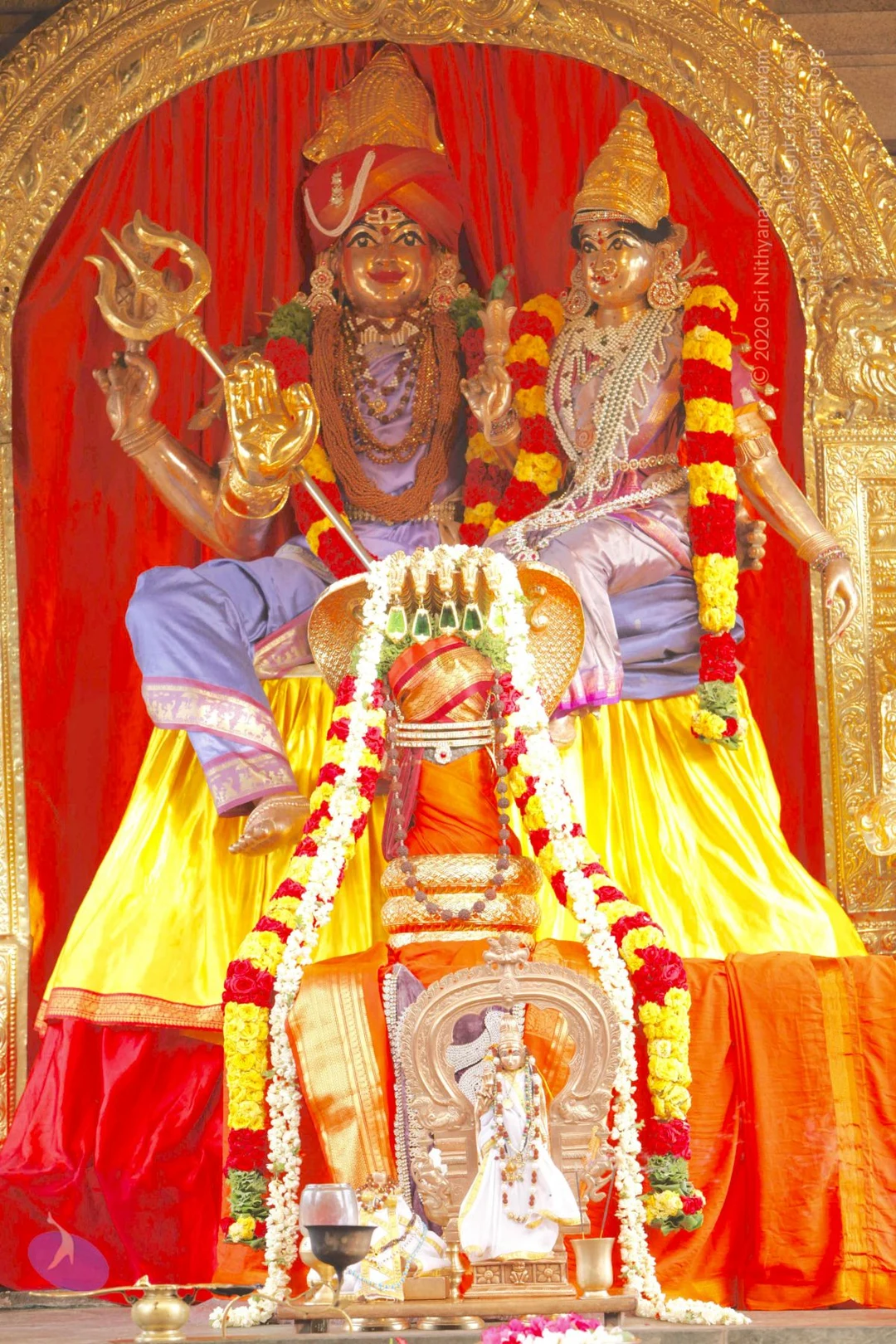
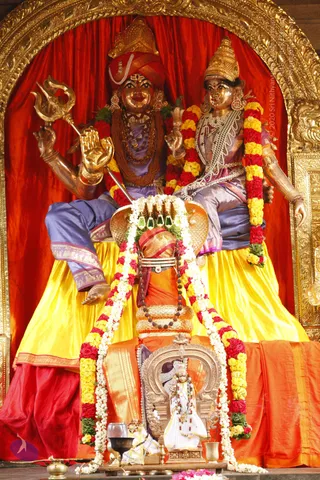
Photograph of a pair of large golden metallic statues of a deity couple seated on a lilac draped pedestal beneath an ornate gold arched frame with a bright red curtain behind. The male figure wears an orange-red turban, rudraksha and silver necklaces, a dark green lower garment, and holds a trident; the female figure wears an orange sari, silver jewellery and a dark tall headdress, with one hand raised in blessing. Palm fronds appear at the top corners. These are statues, not living people, and no person is physically present; the statues are identified only as a deity murti pair.A dark stone Nagaraja-style lingam base with a five-hooded naga canopy carved above it, sitting on a coiled stone pedestal. A single flame burns in a small oil lamp set in the central basin. Red rose garlands drape the left and right sides, and dried green leaves or herbs are arranged across the top of the hood. No people are visible.A gilded metal murti of a standing deity, dressed in a white cloth with a gold border and draped in layered rudraksha and multicolored bead malas with a gold pendant. It stands before an ornate golden arched backdrop with peacock-style carvings, flanked by orange fabric and garlands of red and yellow flowers. In the foreground on the right, a brass cup holds burning incense sticks, and a second white-clothed statue is partly visible at the left edge. No living people are visible.Golden statues of a deity couple seated on a raised yellow-draped dais before a red curtain and gilded arch. The male murti, dressed in purple and blue with a red turban and gold crown, holds a trident and a hand in abhaya mudra; the female murti wears a gold crown, pearl necklaces and a purple sari. Both are garlanded with red, yellow and white flower malas. A small white-clad figure with rudraksha malas sits in a gilded niche below, with a brass oil lamp, a flower-decorated kalasha, and fresh flowers in front. The scene is a temple altar display of deity murtis.Golden murti of a seated deity couple under a gilded arch against red drapery. The male figure has four arms, holds a trident, wears a red and gold turban, rudraksha malas and purple garments. The female figure wears a golden crown, pearl necklaces and purple sari. Both are garlanded with red, yellow and white flower malas. Below, a small white-clad seated figure with rudraksha beads sits on a gilded throne before a kalasha-like offering and oil lamp, with a copper vessel and flowers at the base. Yellow and orange silks drape the platform. This is a statue, not a living person, and no candidate for a person is visible.Photograph of a golden deity murti pair seated on a yellow and orange silk-draped throne within a gilded arch with red drapery. The four-armed male deity holds a trident and wears a red turban, rudraksha mala and purple dhoti; the female figure wears a pearl necklace and purple sari with a golden crown. Both are garlanded with red, yellow and white flower malas. Before them stands a small white-clad figure with a rudraksha mala on a golden throne, flanked by a kalasha-like brass vessel, oil lamp and flower offerings.

02-PADA-PUJA

2 photosSource gallery
A seated man in a rust-red and saffron-bordered dhoti and wrap sits on an ornate gold throne with carved lion heads and a tiger-striped cloth draped over the seat. He wears a long gold bead necklace over a rudraksha mala, gold armlets and bangles, and a red tilak on his forehead; his long hair is swept back. Three shaven-headed devotees in orange robes sit cross-legged before the dais, one with palms joined in anjali. Behind the throne, a large gilded arch rises, with hanging brass bells and brass oil lamps on the sides. A partially visible woman in a dark sari sits at the right edge. The appearance-based label is a person, seated on the throne and receiving devotees in a temple-style hall.A seated man on an ornate gold throne with a large carved gold backrest, dressed in rust-orange robes with a gold-bordered sash and a long rudraksha mala with gold beads around his neck, wrists adorned with bangles, forehead marked with white and a red bindi, holding his hands on his lap. Swamiji (probable): a central figure of long swept-back hair, rudraksha mala and ceremonial gold necklace, seated on a throne draped with a tiger-striped cloth. Two monks in saffron robes sit at the lower left beside the throne, one shaved-headed, and gold oil lamps stand on either side with hanging bells above.
03-SATSANG

4 photosSource gallery
Swamiji (probable) sits on a red cushioned seat before an ornate gold-embossed backdrop, wearing a rust-orange robe with gold border and a headset microphone. He has long swept-back dark hair, a red bindi and white forehead markings, and wears multiple strands of rudraksha beads with large gold bead necklaces. Rudraksha bracelets are on his wrists, and his hands rest in his lap.A smiling man sits cross-legged on a gold-embossed throne against an ornate golden backdrop. He wears an orange-saffron robe with a gold border, layered rudraksha malas, large gold bead necklaces, matching rudraksha bracelets and armlets, and a small red bindi with white forehead markings. A microphone is attached near his face. Swamiji (probable): long swept-back hair, saffron robes, rudraksha malas and ceremonial gold necklaces indicate the speaker presented as Swamiji at this satsang.A seated man in a saffron-orange draped robe with gold border sits in front of an ornate gold repoussé backdrop, smiling. He wears long gold beaded necklaces interlaced with rudraksha malas, rudraksha armlets, a small red bindi, a white forehead marking, and a small gold earring with a headset microphone. His hands rest in his lap. Overlay copyright text runs along the image edges.A person seated against an ornate gold repoussé backdrop, wearing a rust-orange draped garment with a gold border, multiple strands of rudraksha-style beads with gold bead garlands across the chest, beaded armlets and bracelets, and a red kumkum dot on the forehead. Hands are gestured mid-speech.
01-TEMPLE

5 photosSource gallery
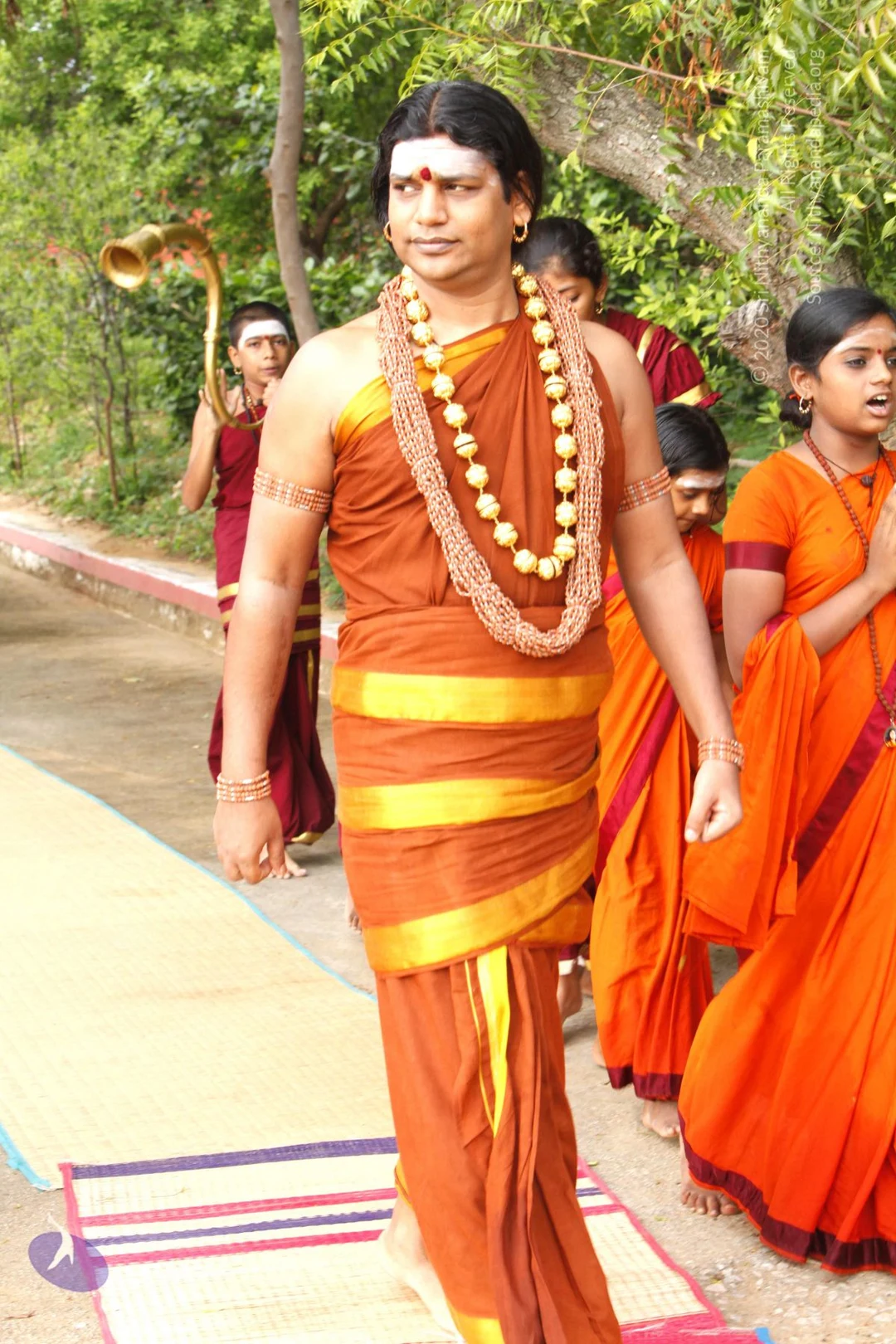
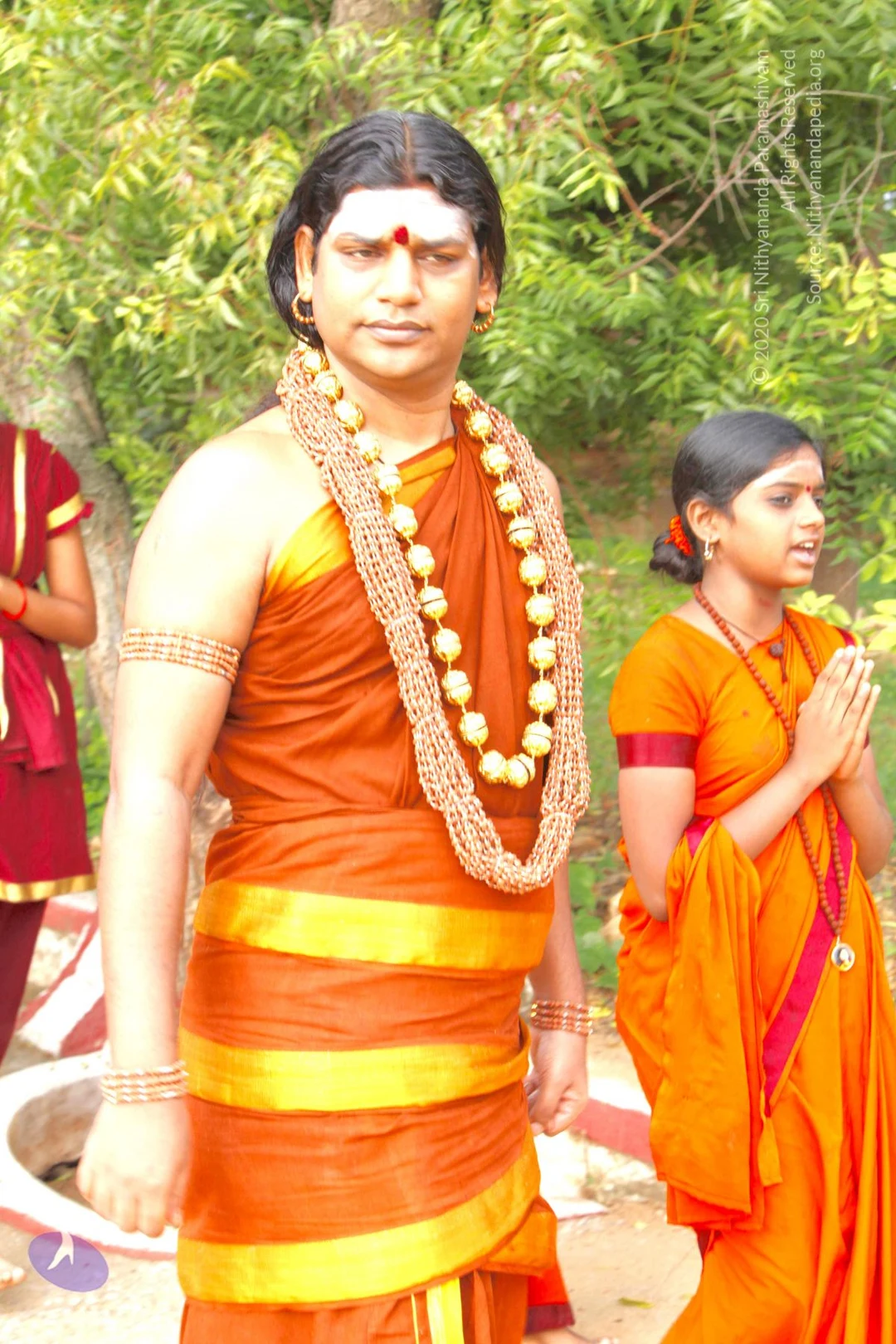
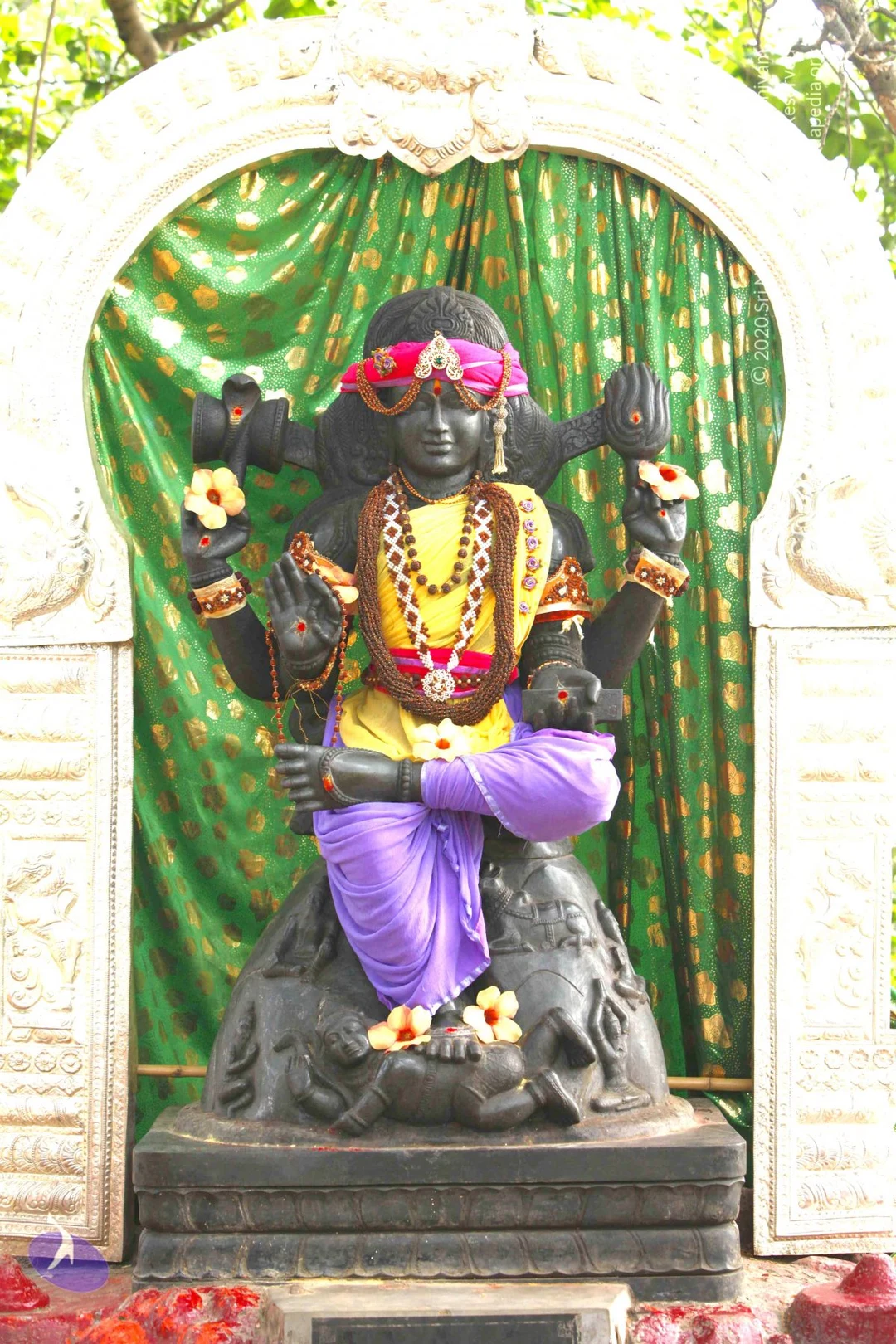
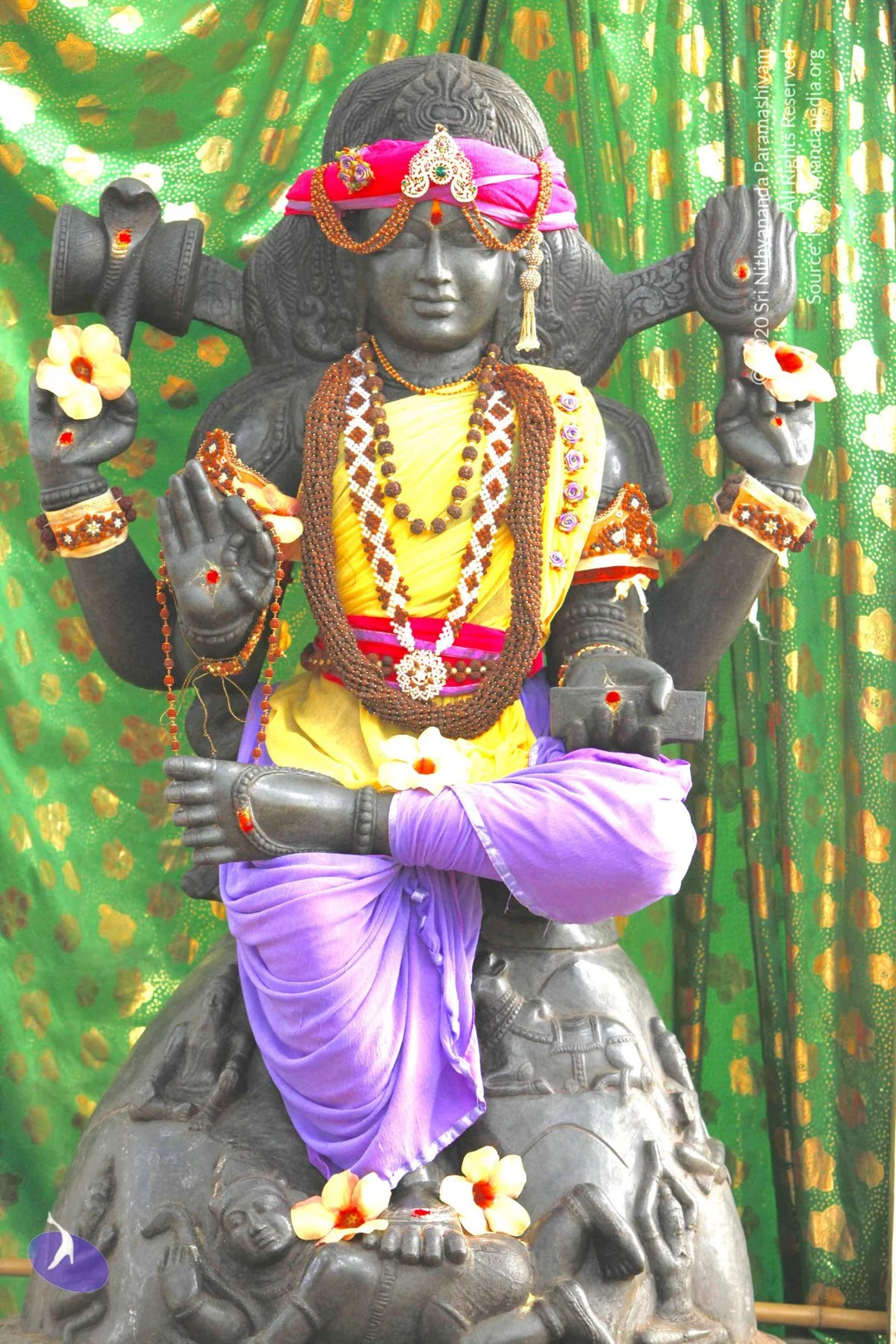
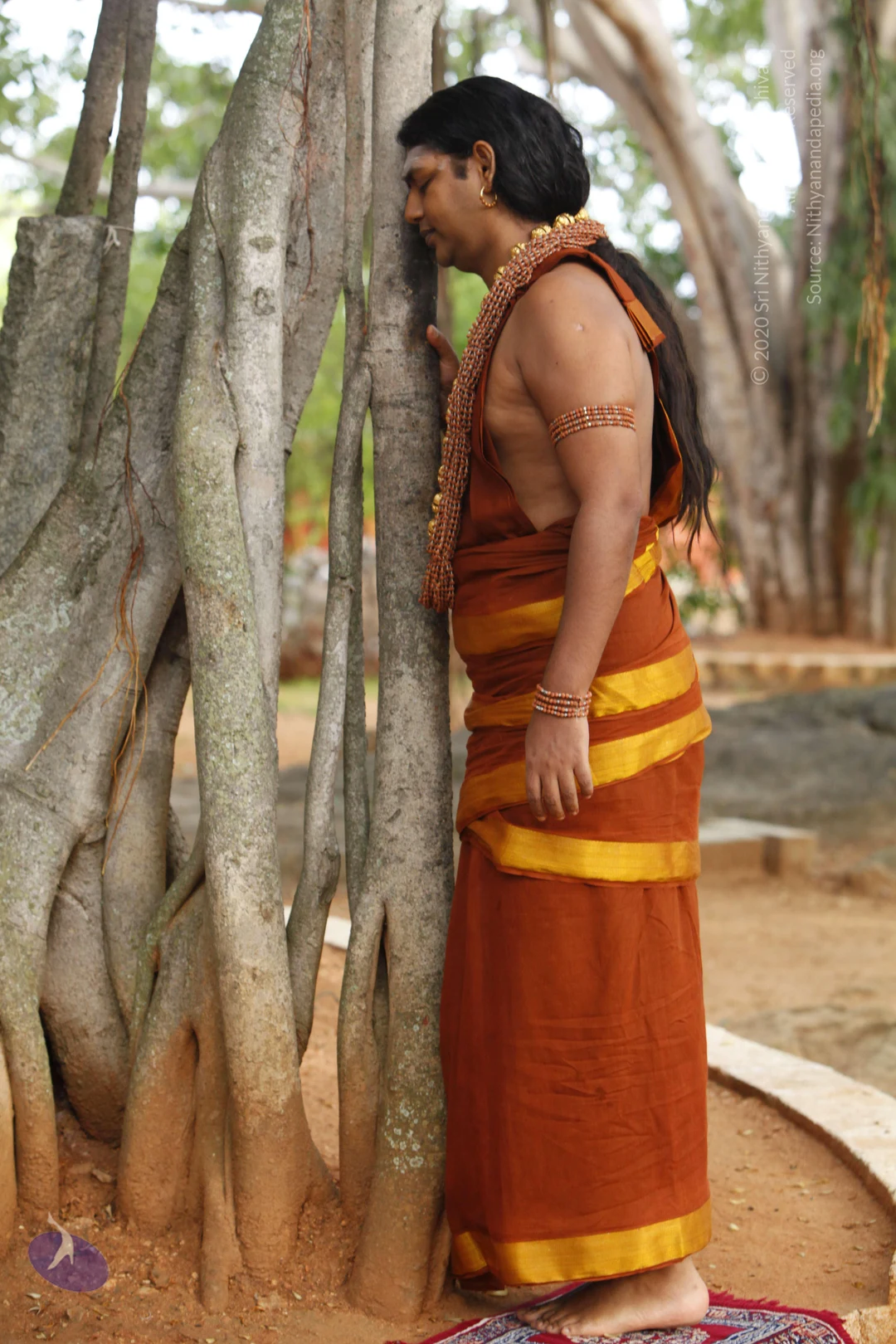
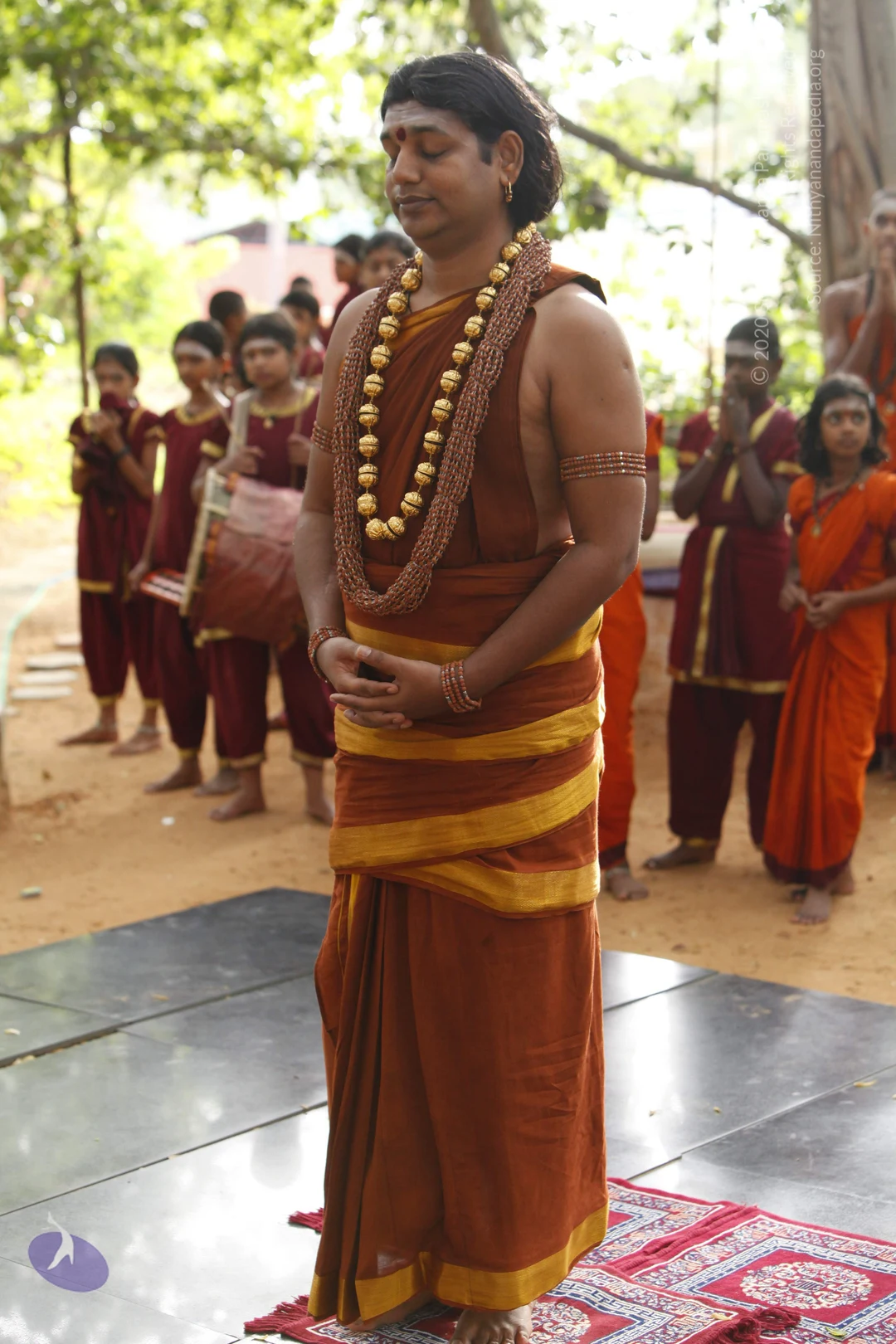
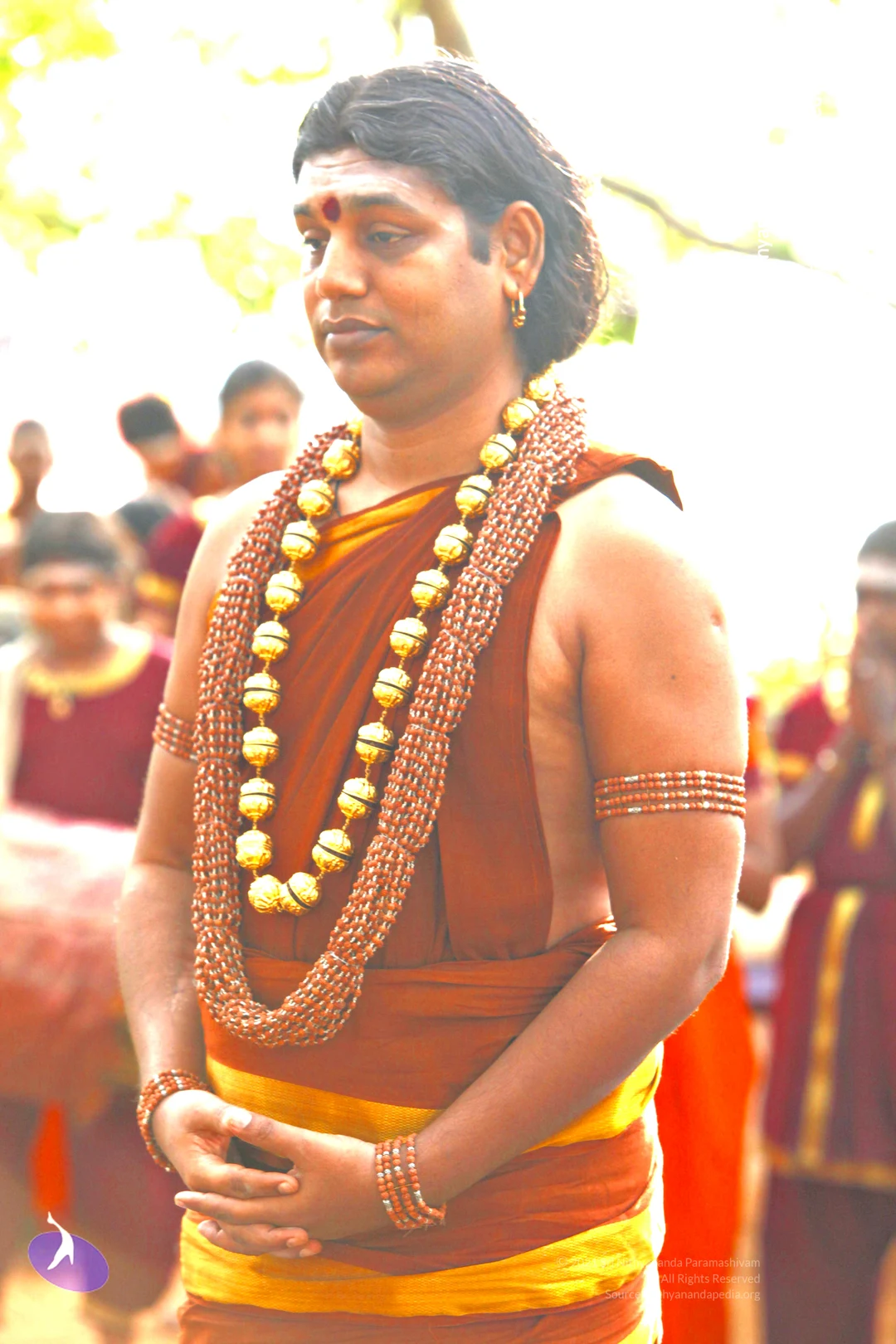
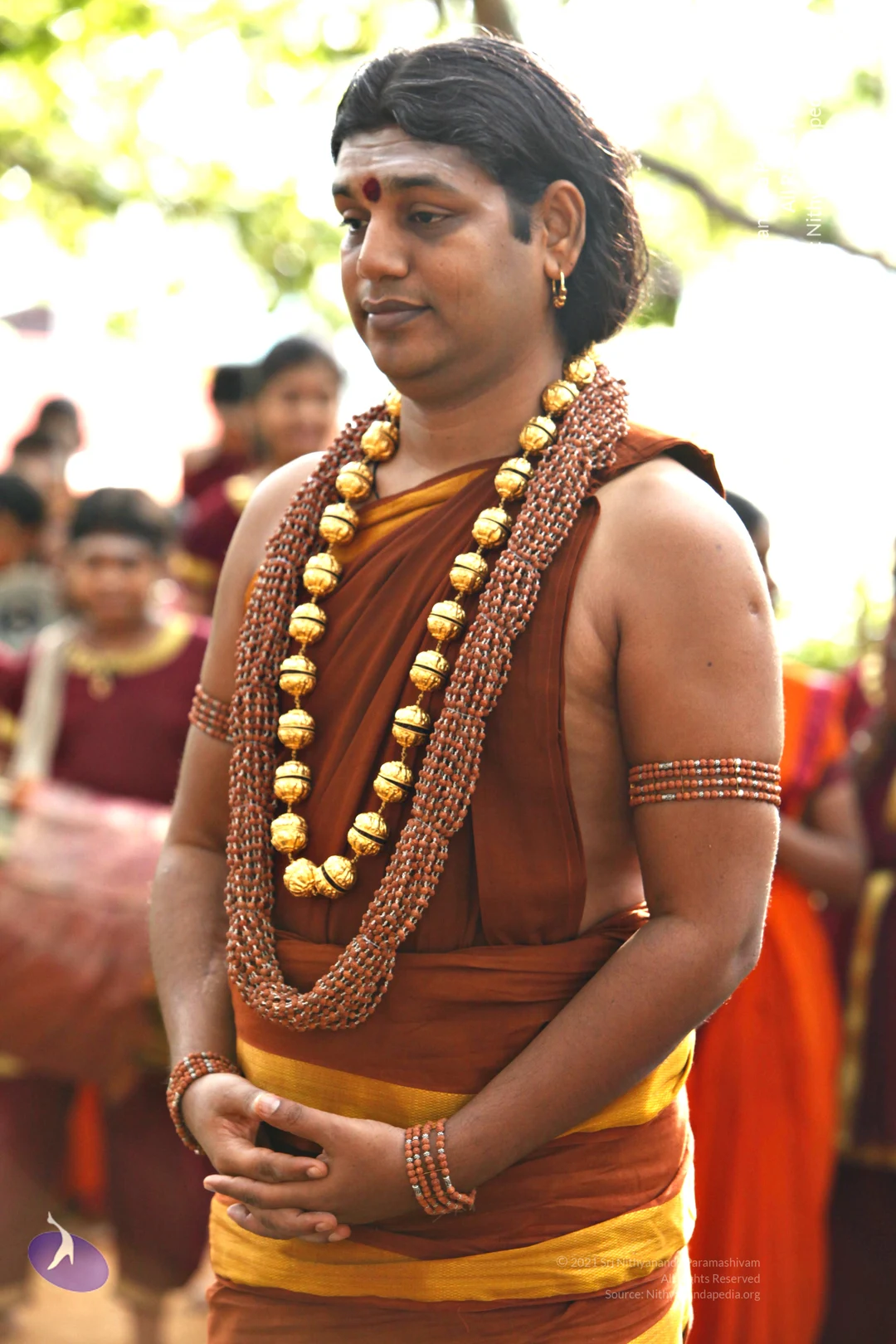
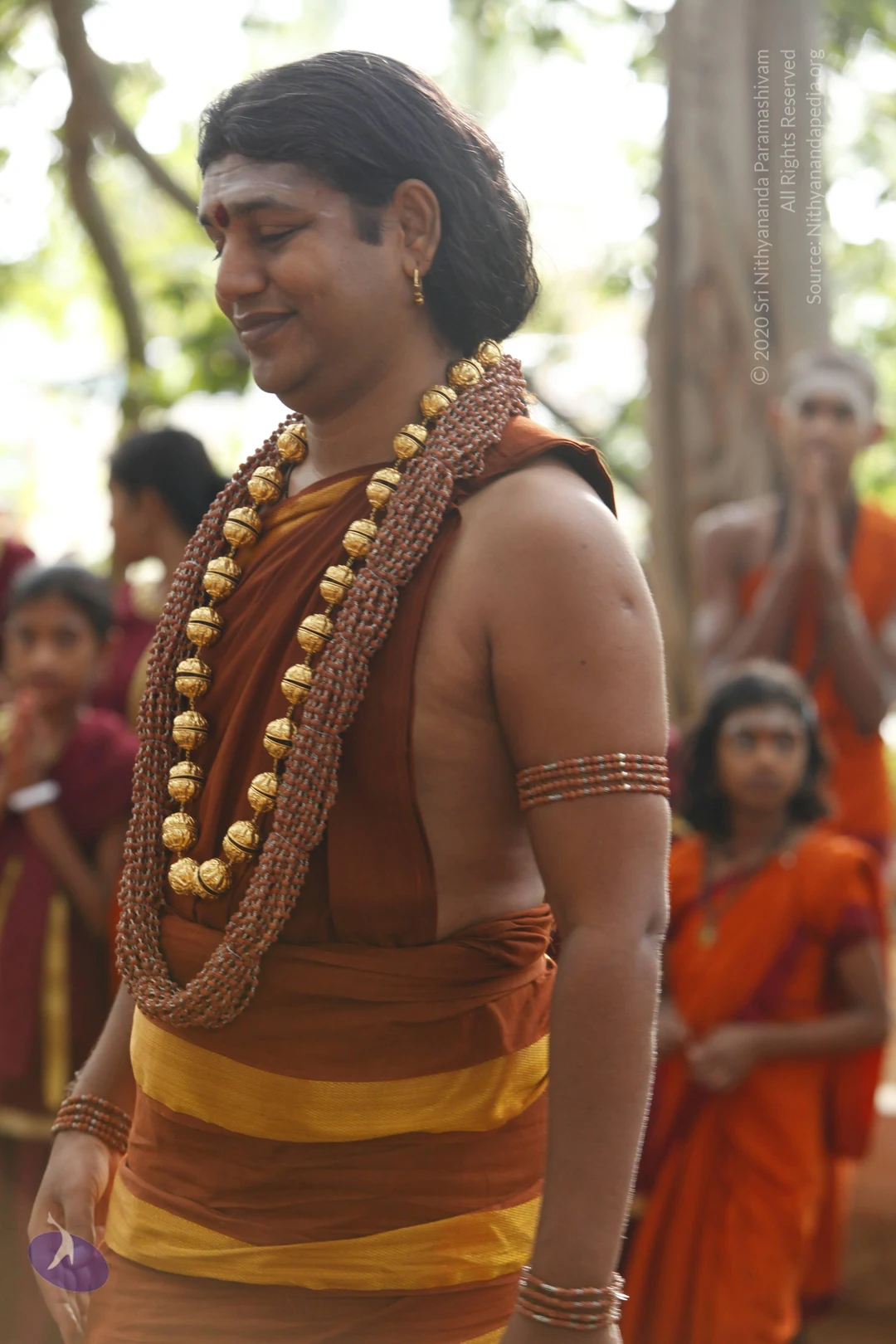
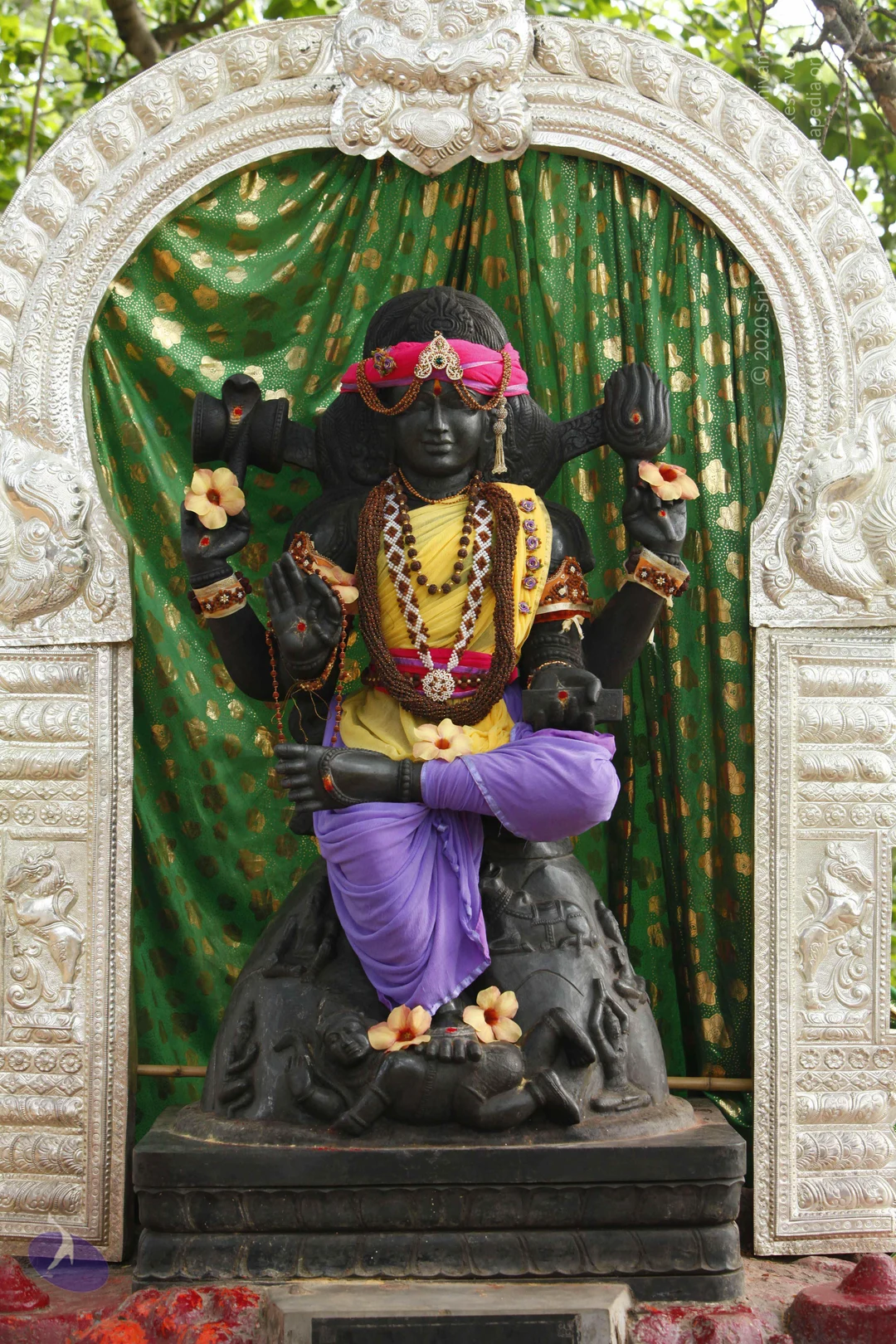
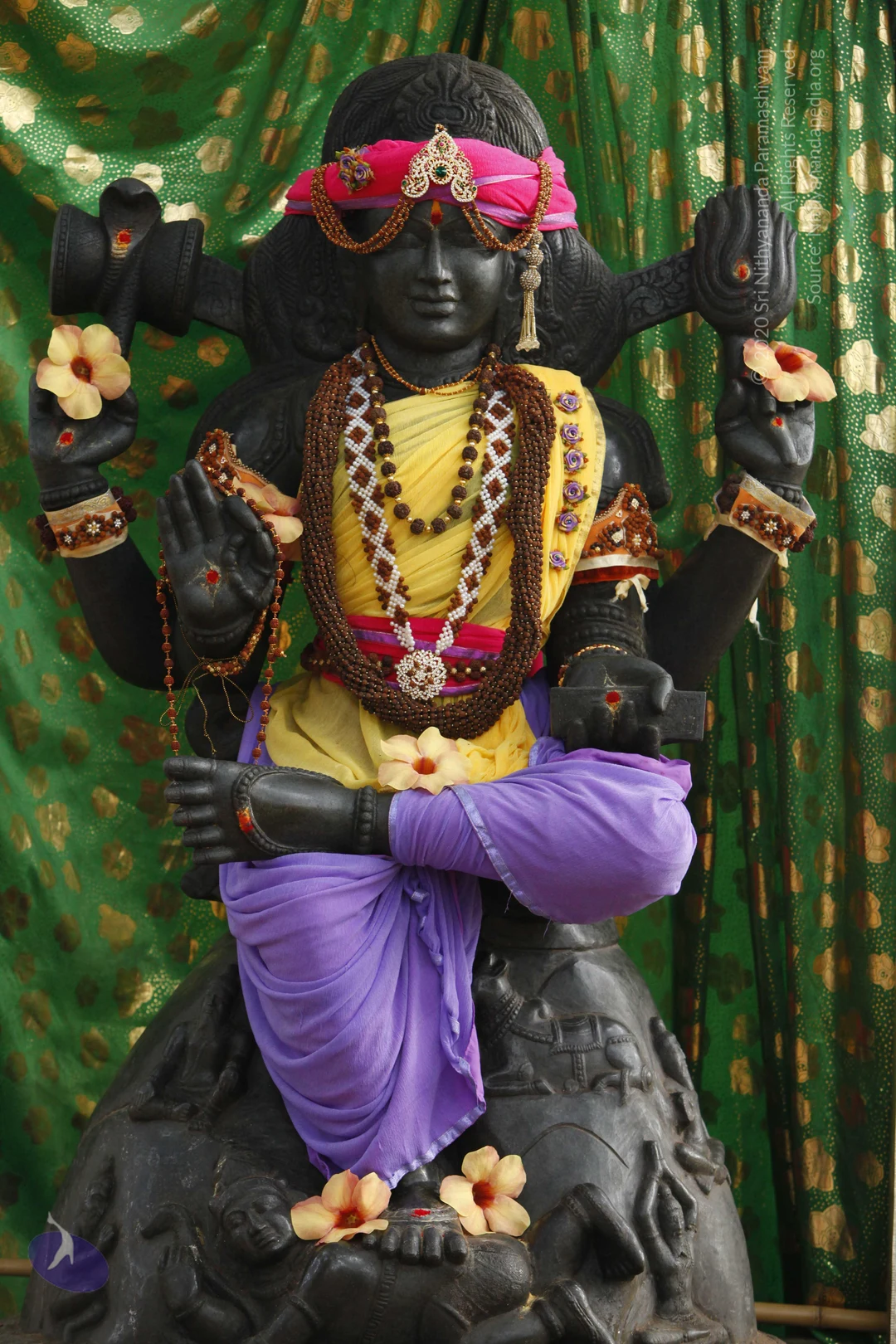
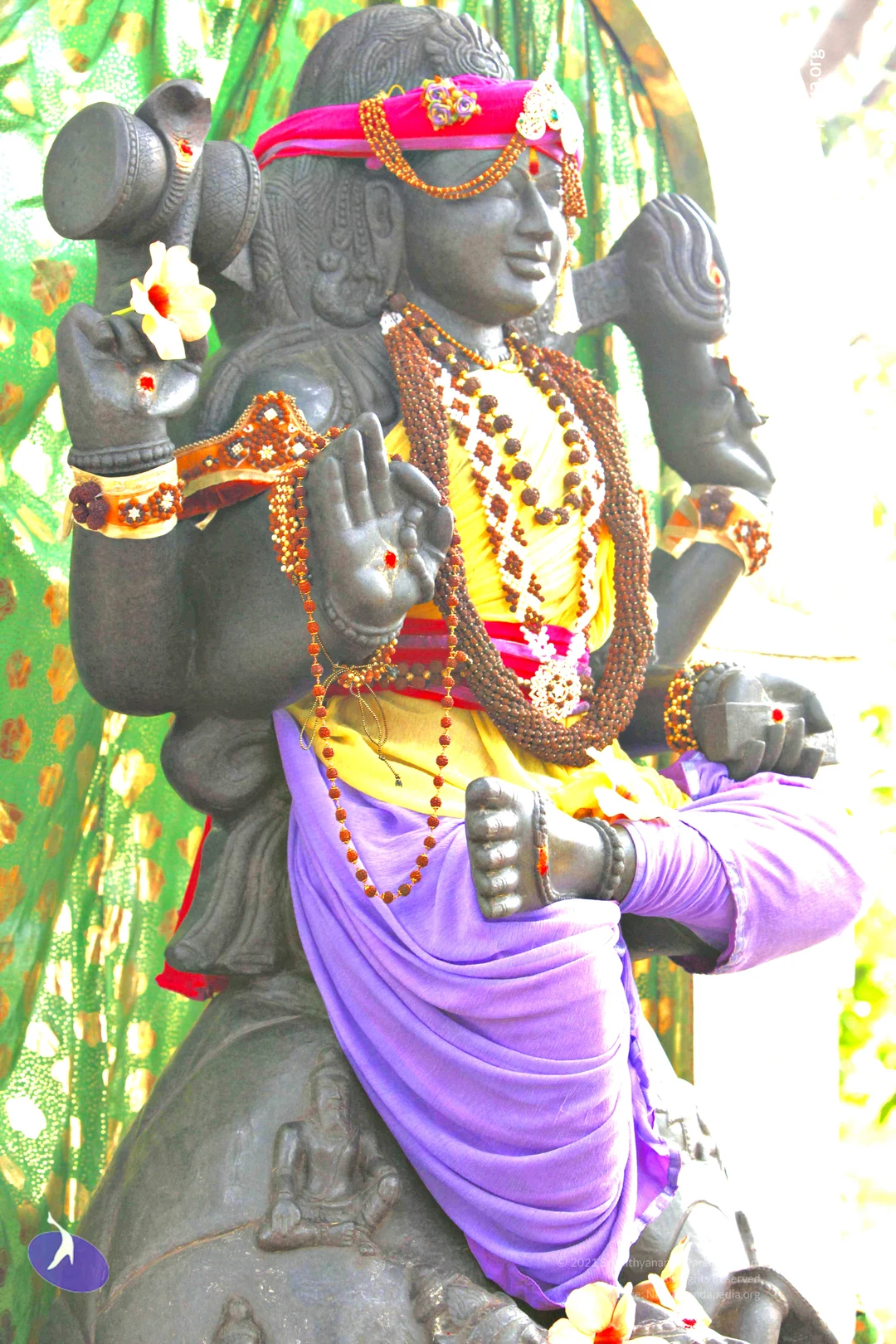
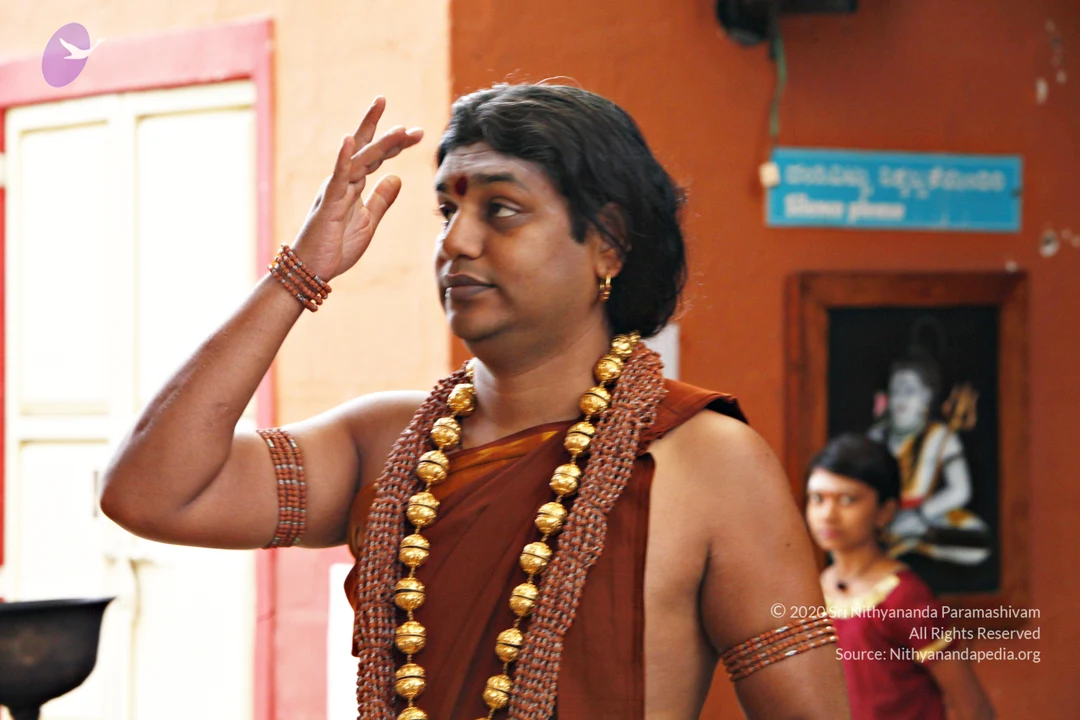
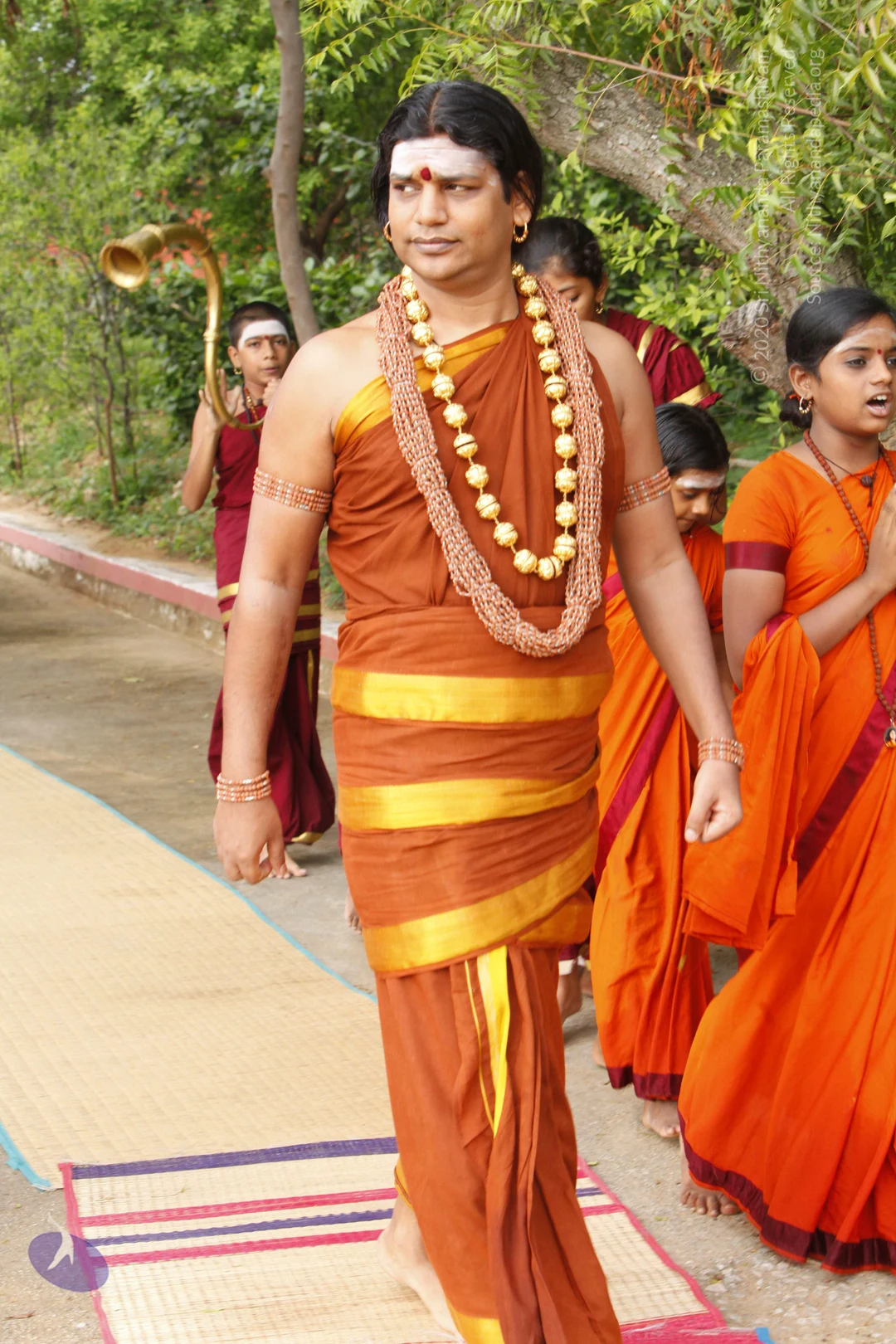
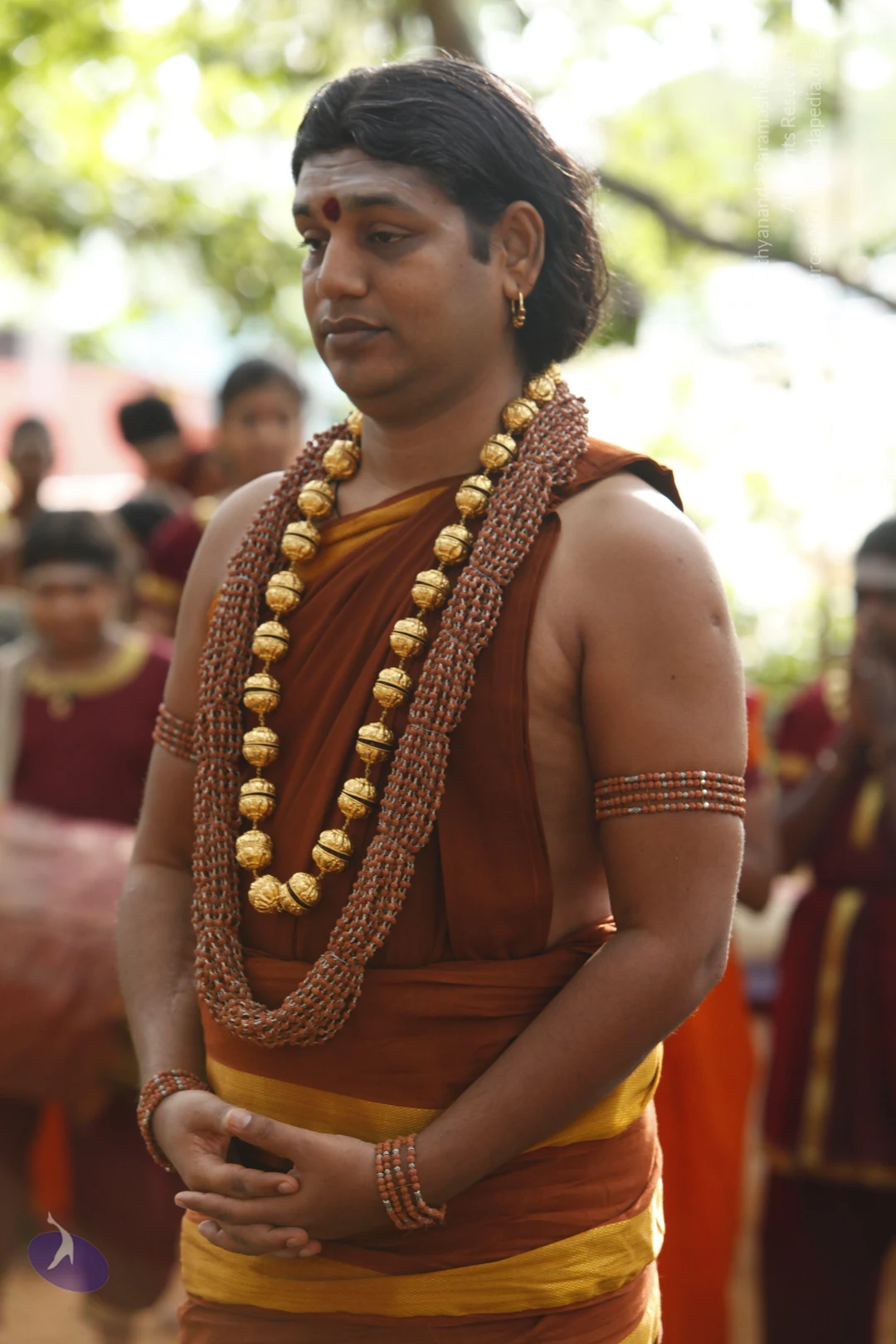
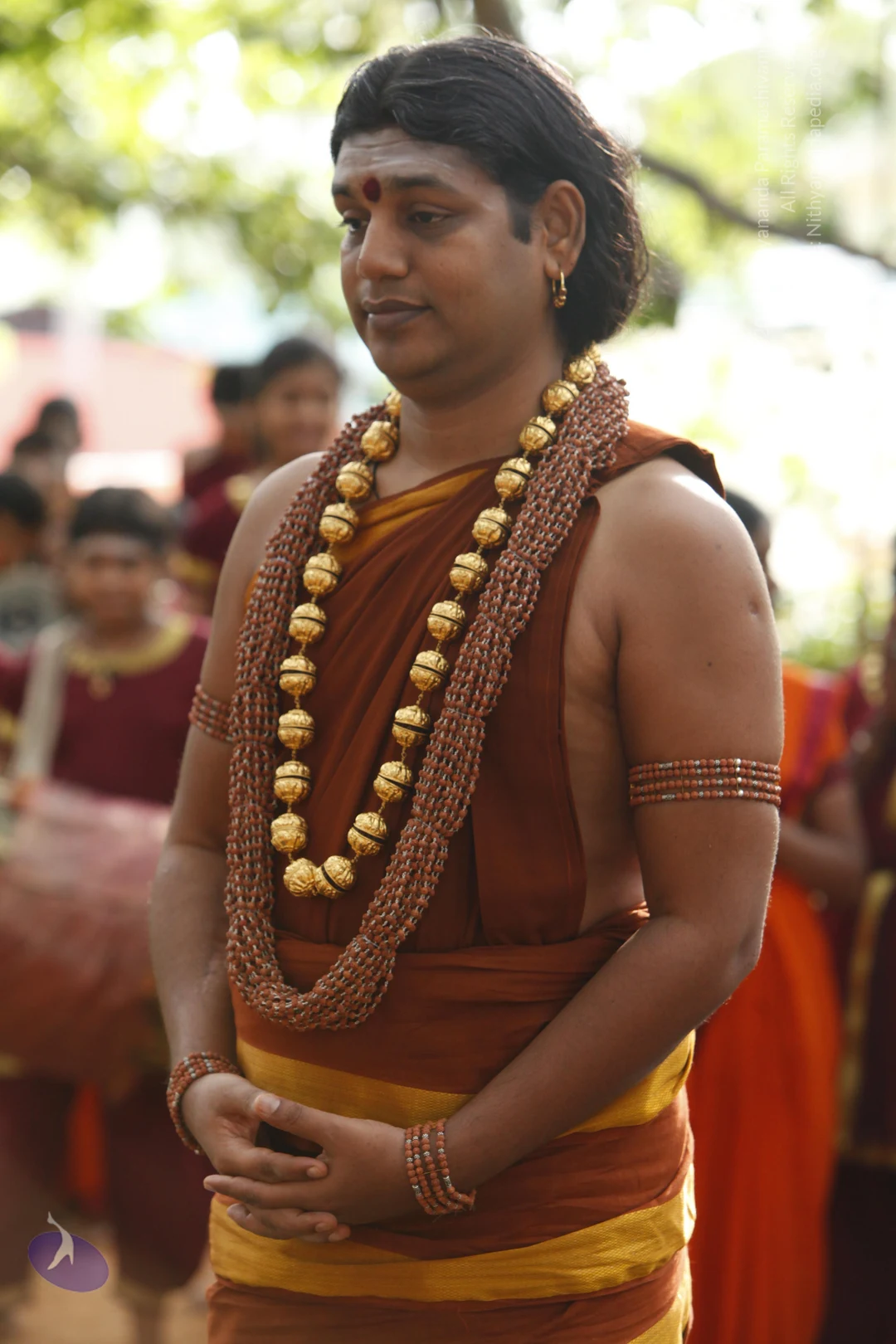
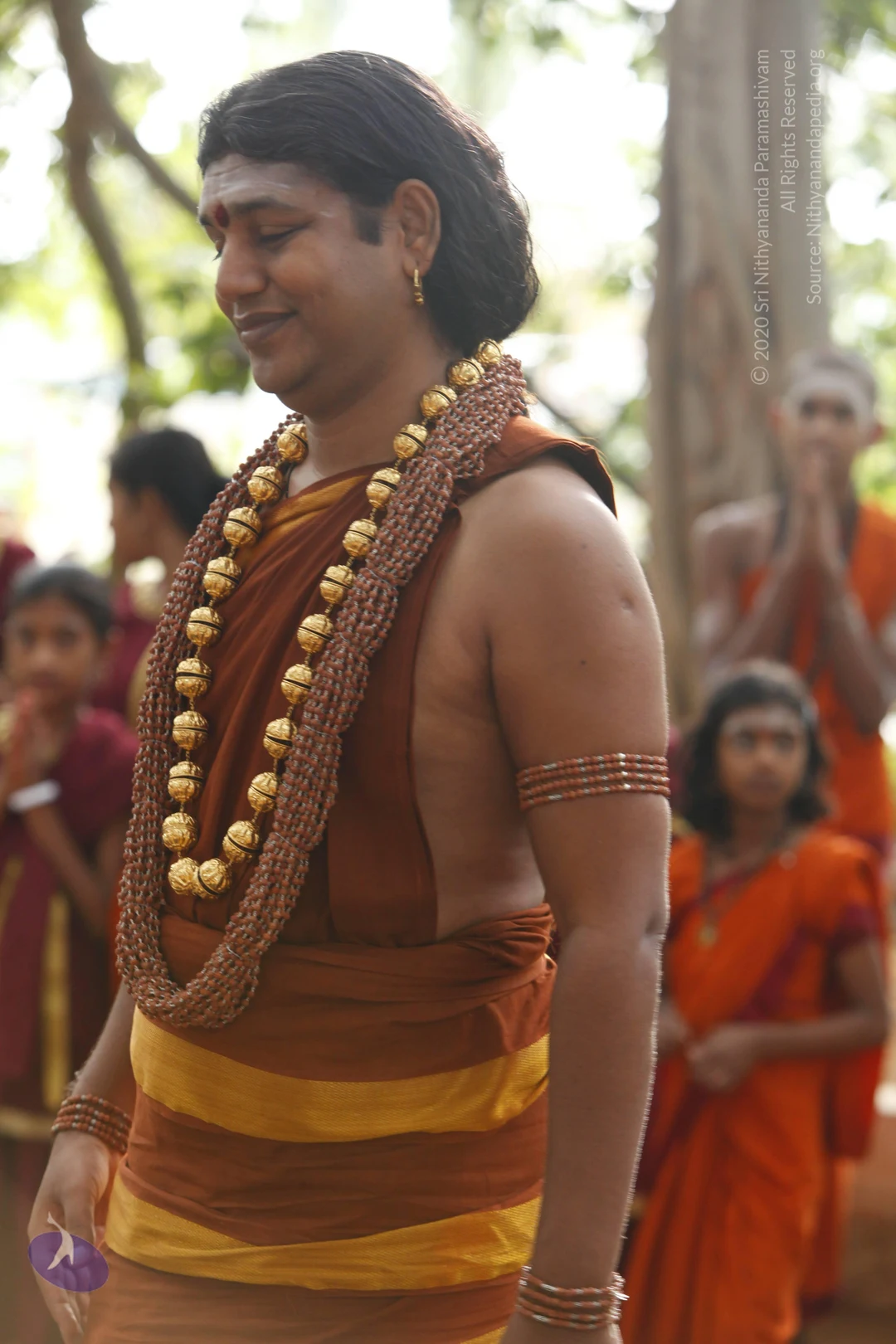
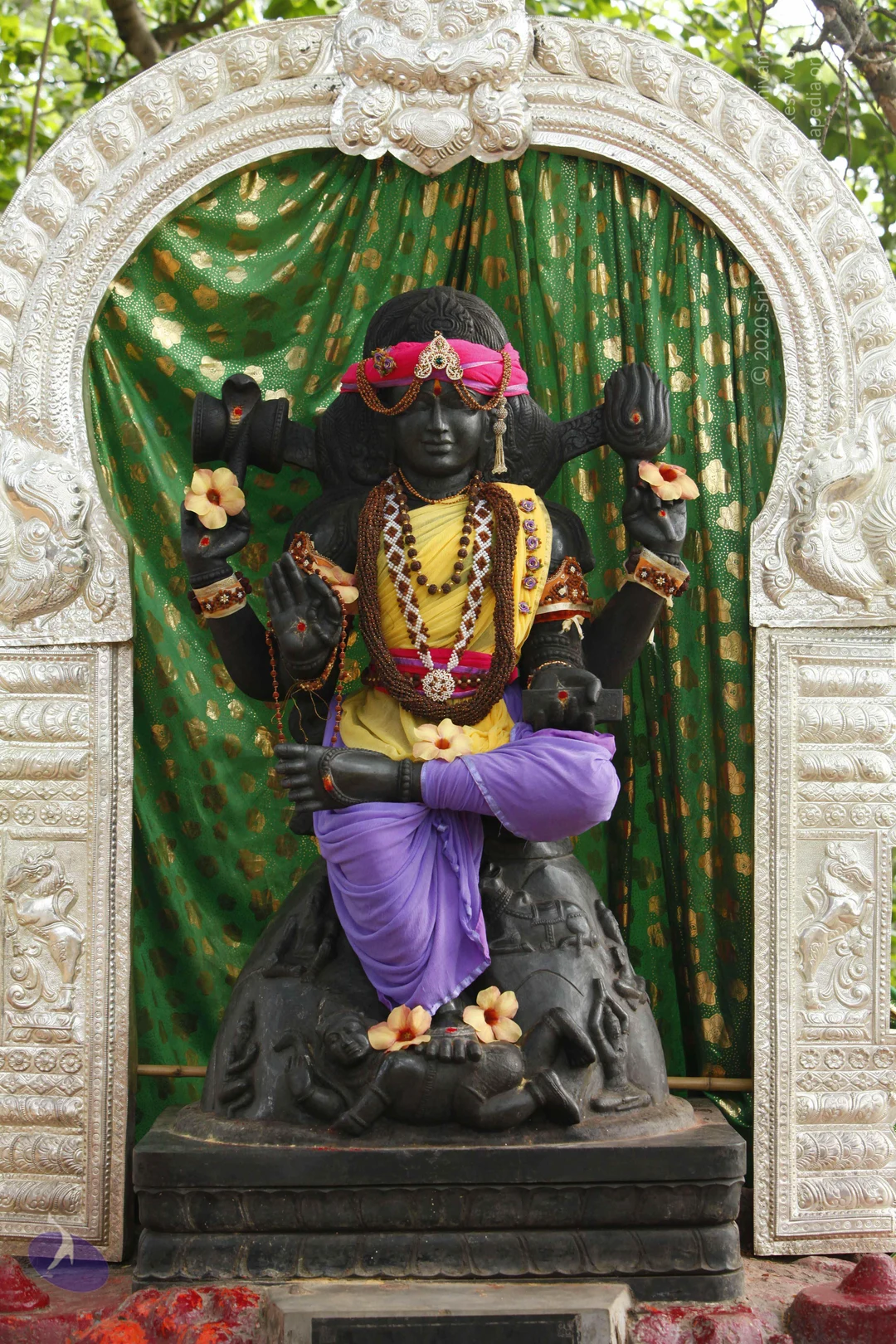
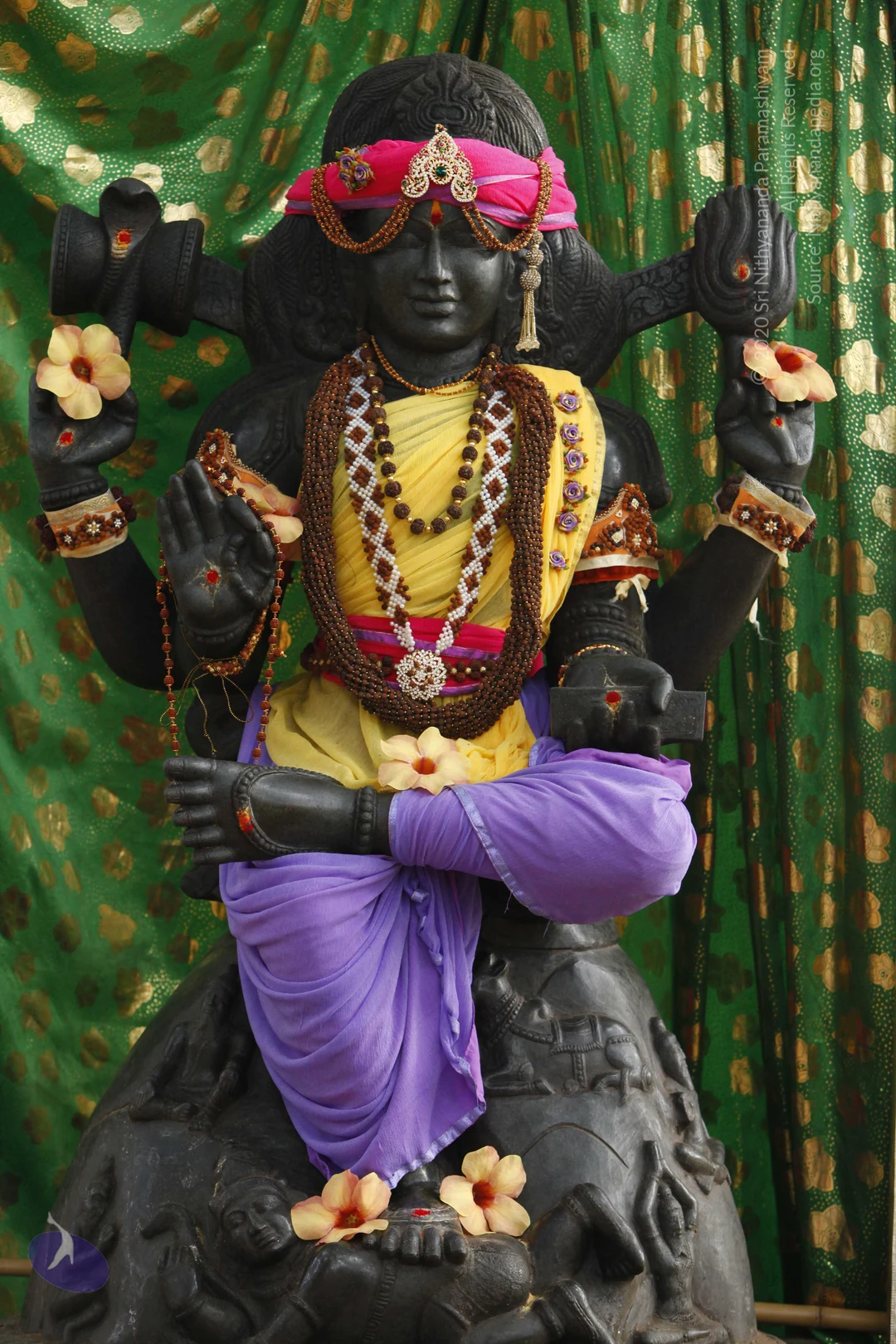
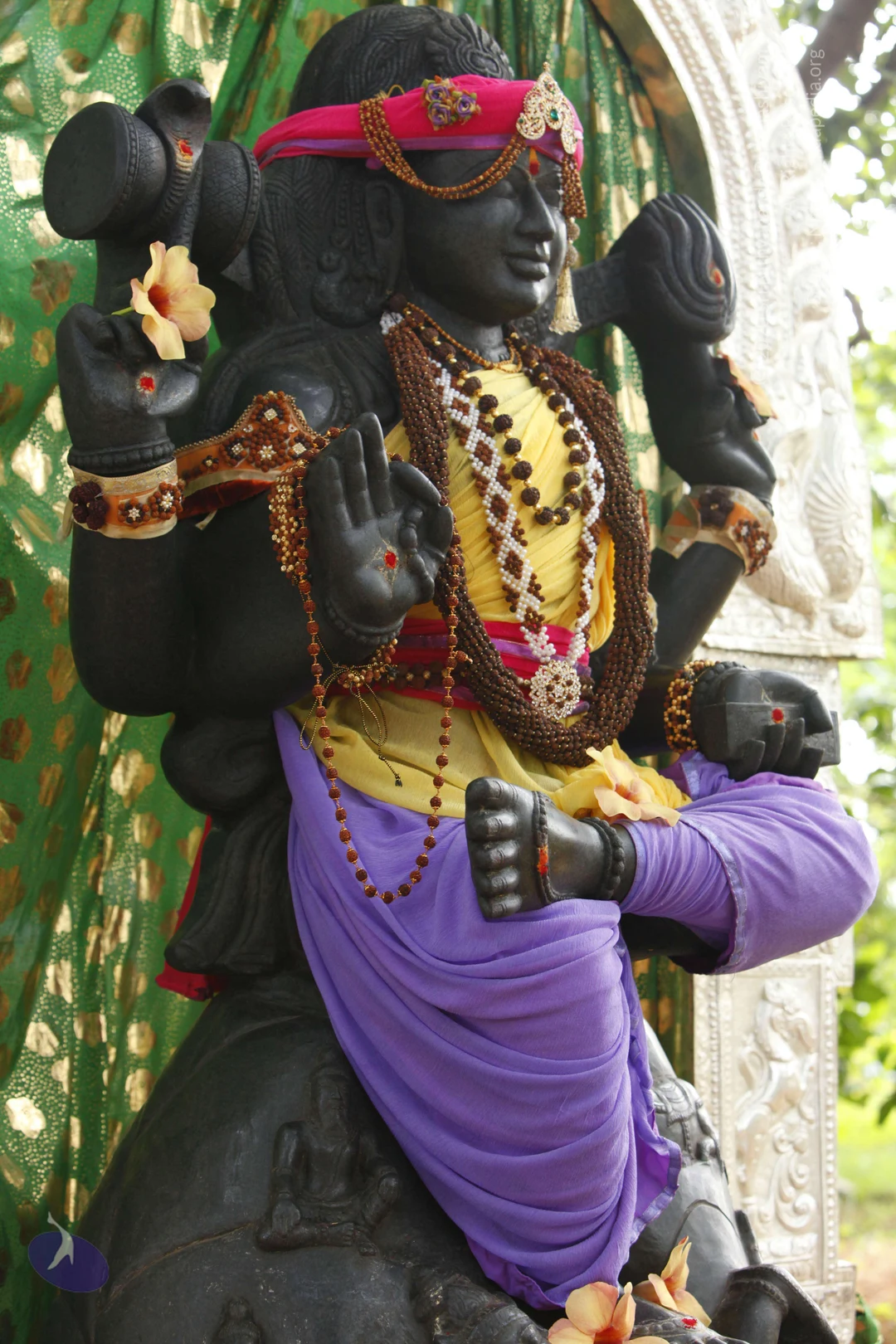
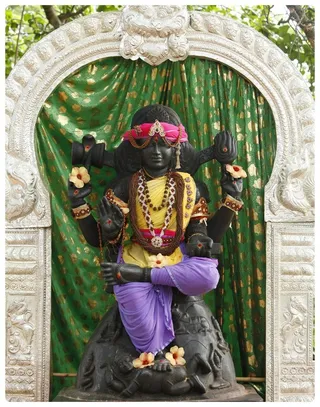
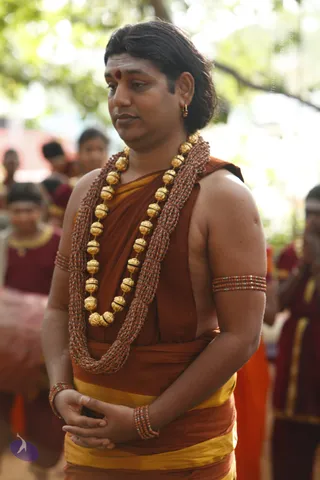
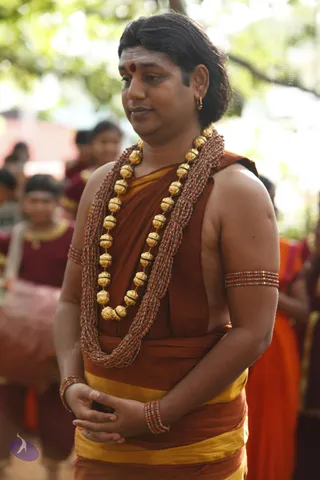
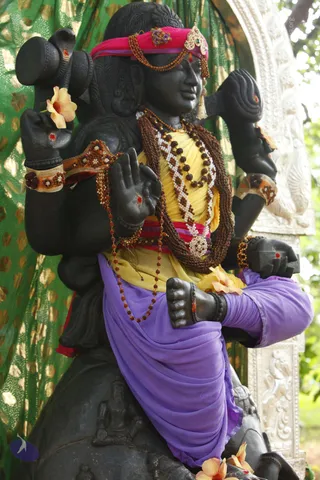
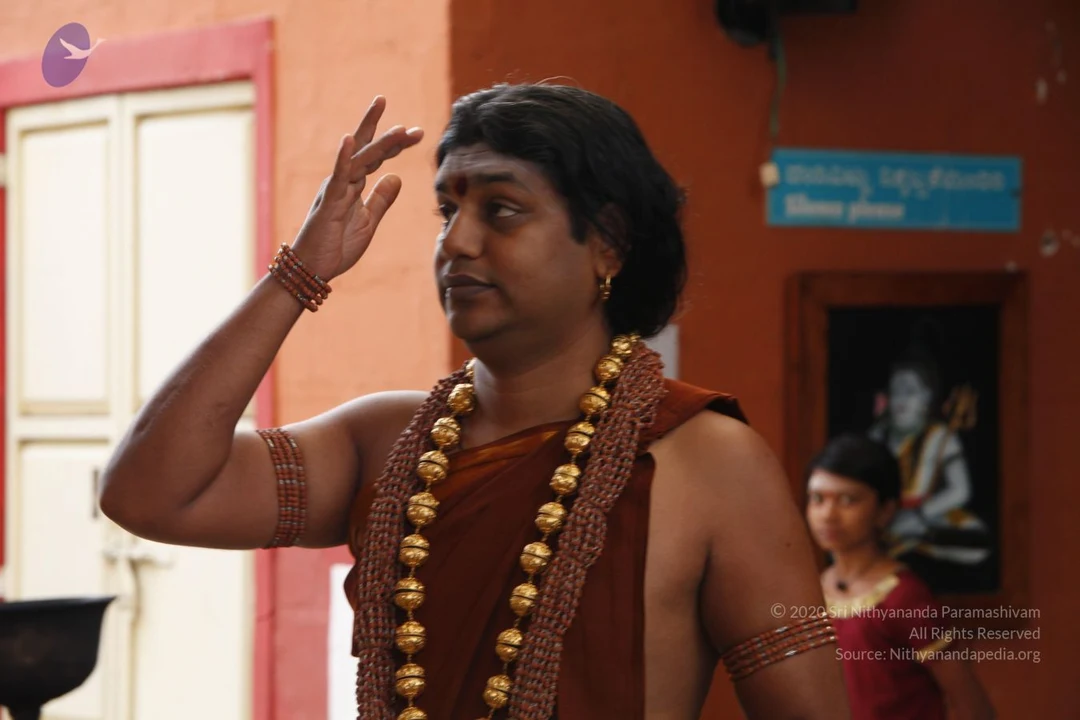
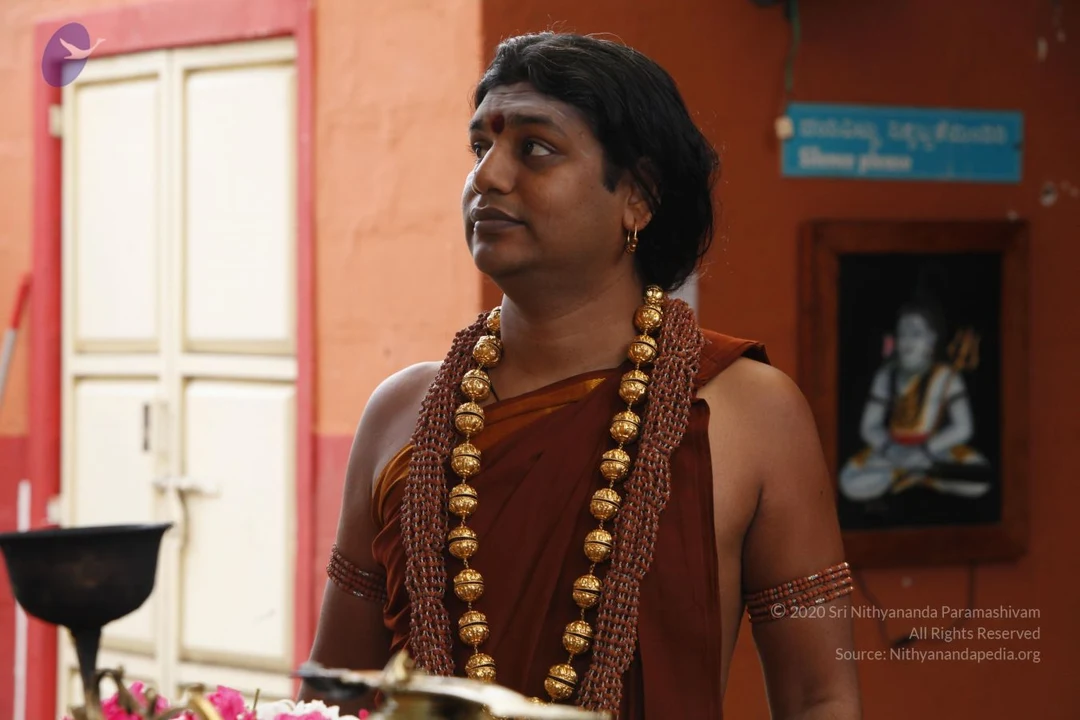
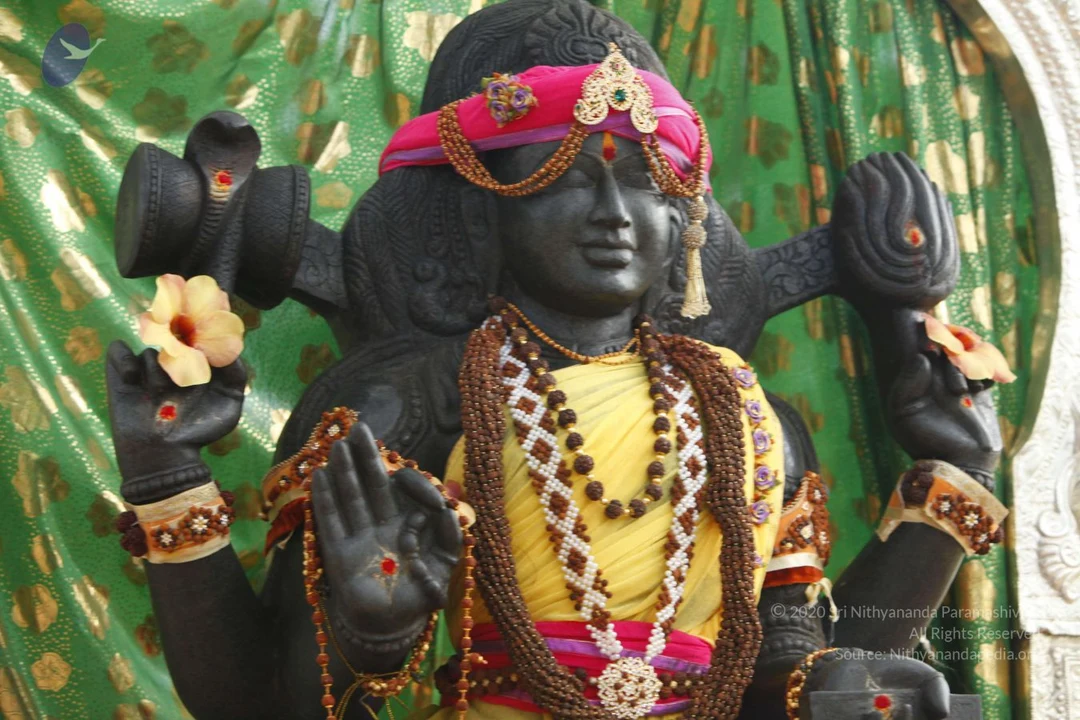
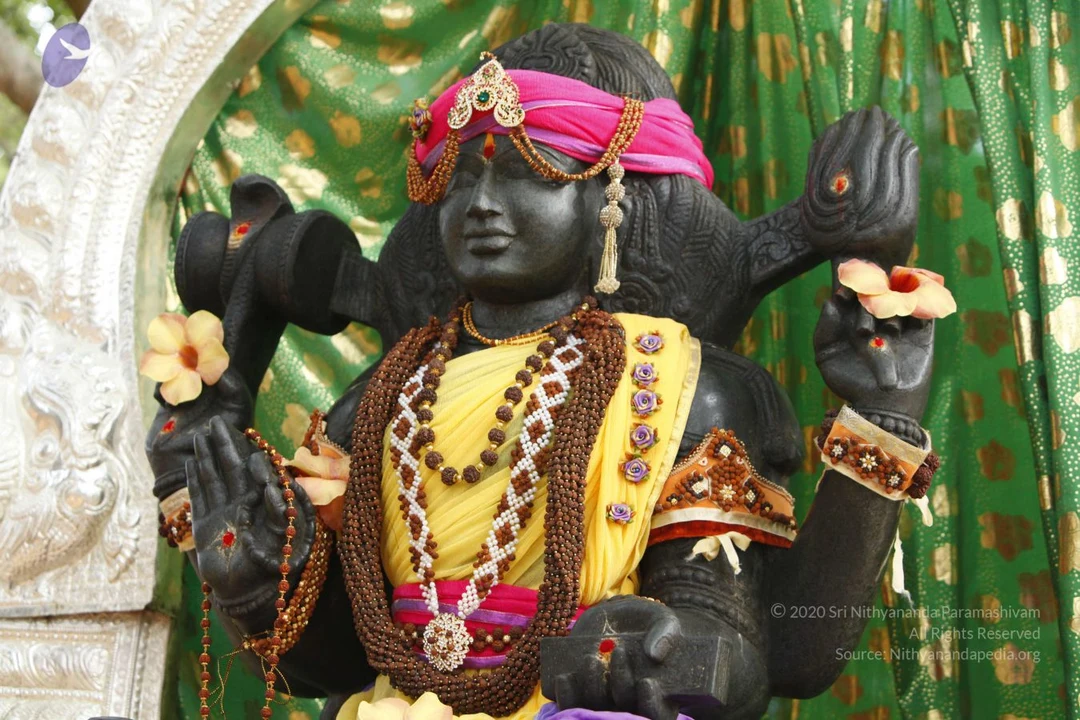
A man with shoulder-length dark hair and a small red bindi stands in an orange-walled room, raising his right hand toward his brow in a gesture of teaching. He wears a rust-orange sleeveless wrap, a long necklace of gold beads alternating with rudraksha-style brown beads, matching beaded bands on his upper arms and wrists, and gold earrings. Behind him a young girl in a red top watches, and a framed painting of a deity with a trident hangs on the wall beside a blue sign and a metal bowl at left. Appearance-based label: a person, a speaker giving satsang.Outdoor photo of a man with long swept-back dark hair, white vertical tilak and red bindi, wearing an orange-brown dhoti-style garment with broad gold borders, a thick chain of gold beads and copper-coloured chain links draped across his chest, copper bangles on his arms and wrists, and gold hoop earrings. Beside him a young girl in an orange sari with a maroon border holds her hands in anjali namaskar, wearing a rudraksha mala and a white tilak. Behind them is dense green foliage and a red-and-white painted edge of a small structure. a person: the man has long swept-back hair, gold beaded ornaments and orange-gold ceremonial clothing, but the appearance is only partially distinctive.A man with shoulder-length dark hair and a red bindi stands outdoors among blurred green trees, hands clasped in front of his waist. He wears a rust-orange sleeveless wrap with a golden-yellow border and a long necklace of gold beads alternating with rudraksha-style beads, plus beaded armlets and a beaded bracelet. Behind him, several people in maroon and red garments are partially visible. a person: the long swept hair, saffron-orange wrap, rudraksha malas and ceremonial gold necklace match the page's a person claim, so this is an appearance-based label for the central figure.A man in a rust-orange sleeveless wrap with a gold-yellow border stands outdoors under trees, hands clasped at his waist. He wears a heavy double strand of gold ornamental beads over rudraksha malas, rudraksha armbands and wrist bands, a red bindi, and a small gold earring. Behind him, blurred people in maroon and orange clothing stand near a red drum.A dark stone statue of a multi-armed deity murti stands in front of a green cloth with gold motifs. The figure wears a pink headband with a jeweled ornament, layered rudraksha and white bead malas, a yellow garment and a lavender dhoti. Several hands hold a damaru-like drum, a mudra pose and bangles, and orange flowers are placed on the statue and the base. A carved white stone arch frames the scene. No physical people are visible.

02-PADA-PUJA
2 photosSource gallery
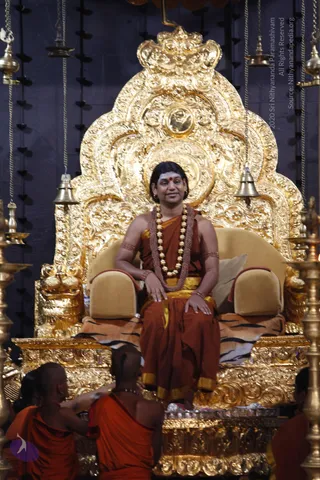
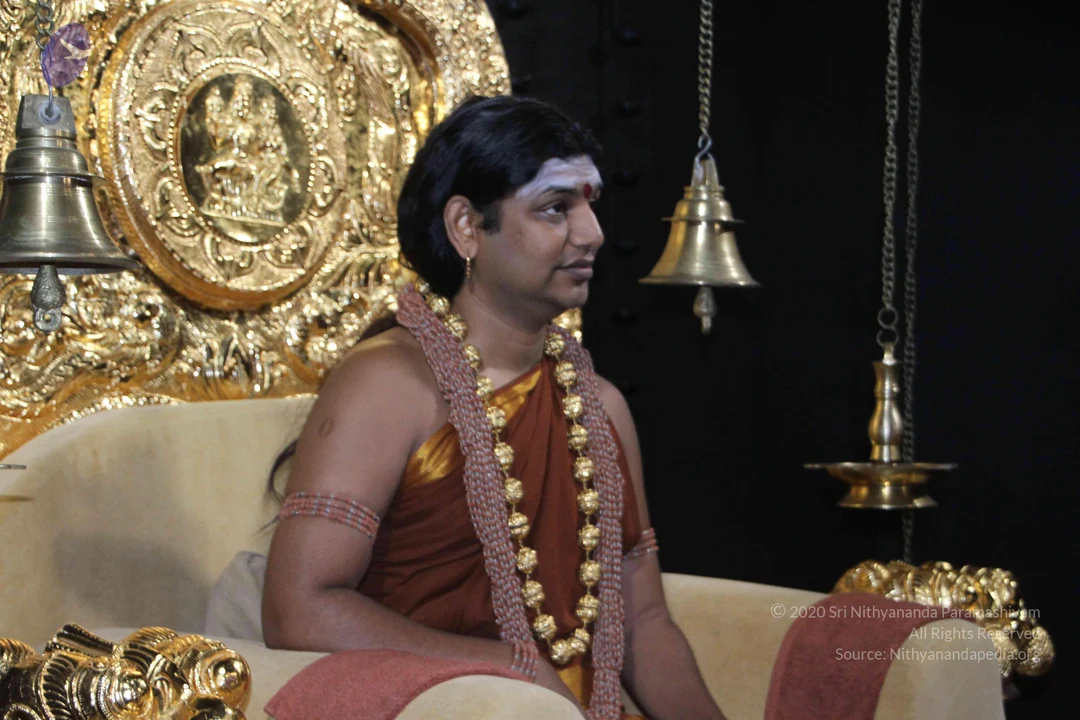
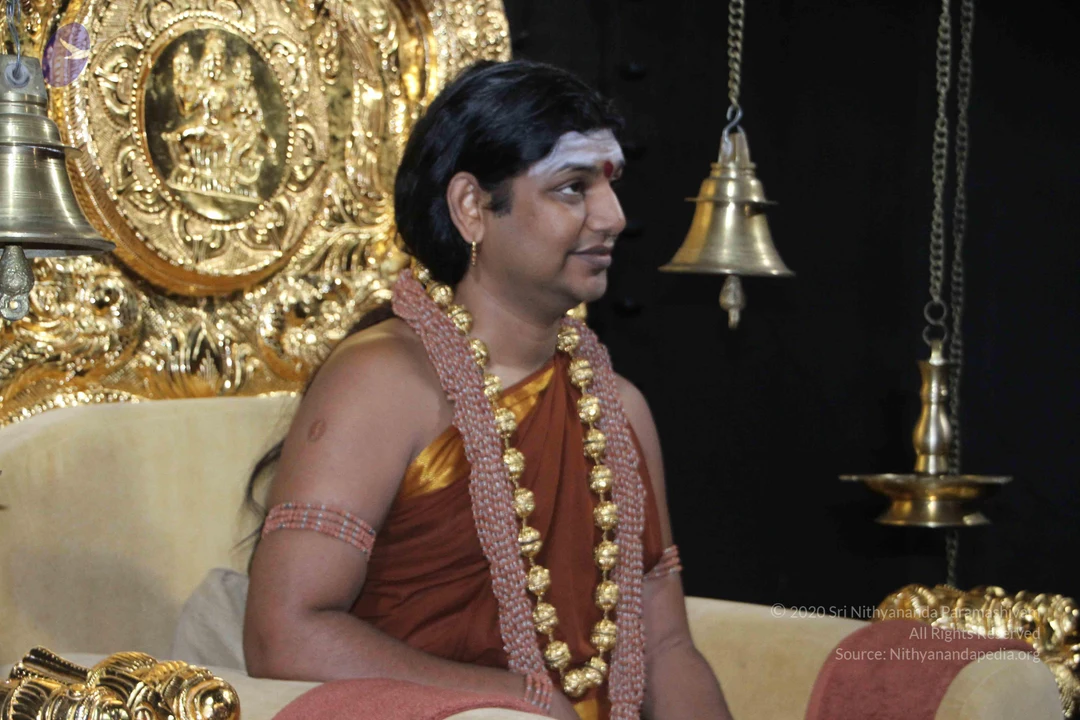
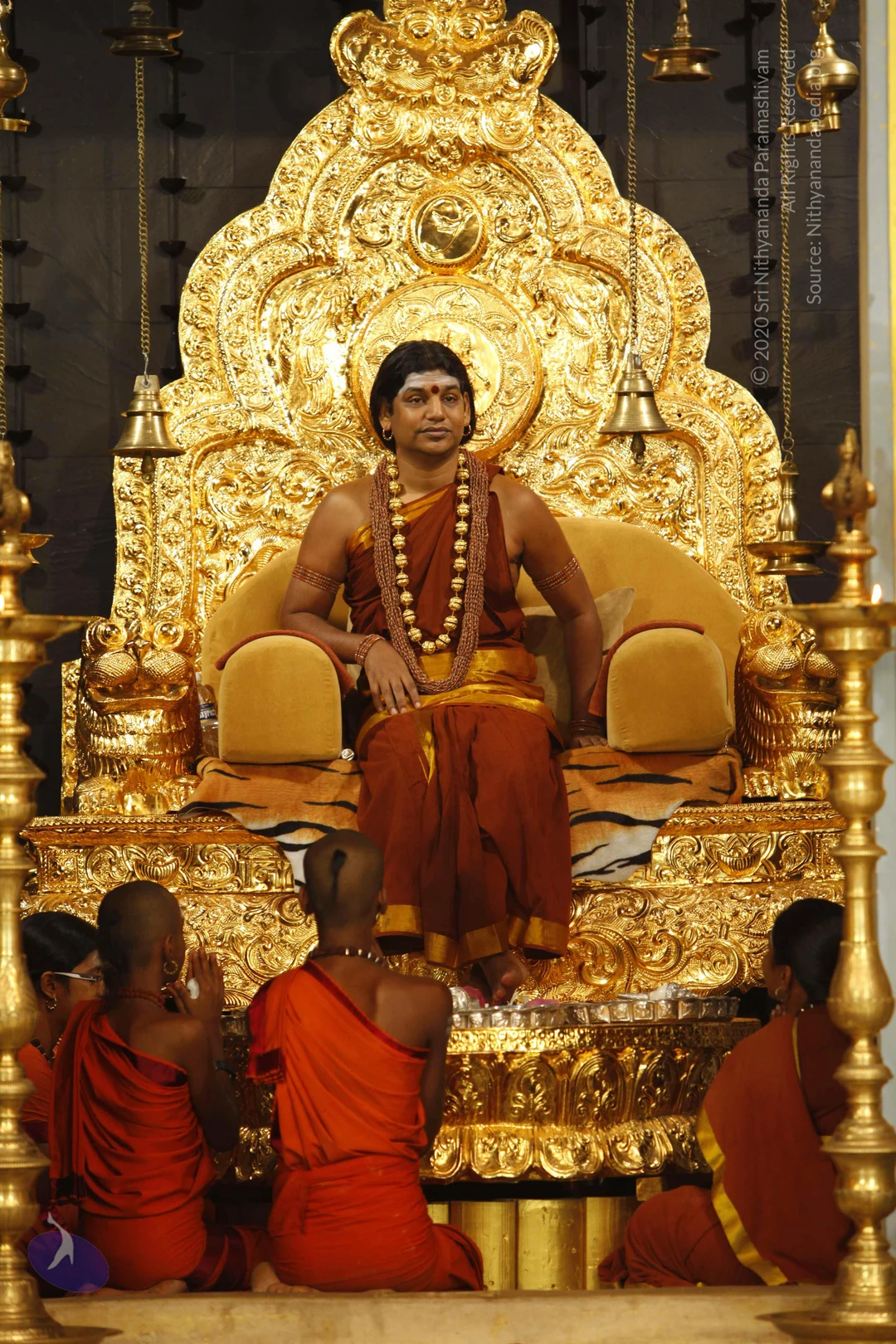
A man with swept-back dark hair and a red bindi and white forehead marks sits on a cream-upholstered throne before an ornate gold repoussé backdrop showing a central deity panel. He wears an ochre-orange wrap over bare shoulders, a rust-red and beaded rudraksha-style mala with gold ornaments across his chest, and a beaded red-and-gold armlet. Brass hanging bells and a brass oil lamp hang on chains at right against a black background. Gold ornamental pieces rest on the seat at lower left. The man appears to be a probable Swamiji (Nithyananda Paramashivam) by appearance cues: swept-back hair, ornate ceremonial clothing and gold-and-rudraksha adornment, seated in a satsang setting.A seated man in an ornate golden throne with lion-head armrests and a striped tiger-skin cover sits at the centre, wearing a rust-orange dhoti and shawl, a multi-strand rudraksha mala and a long gold bead necklace, with bangles on his arms and a red bindi on his forehead. Swamiji (probable): long swept-back dark hair, a crown-like gold backdrop and rudraksha mala cues point to a probable candidate in the central seat. Below, two shaved-headed devotees in orange robes sit with folded hands before a gold pedestal holding small offerings, and a woman in orange sits at the right edge.

03-NITHYA-SATSANG

8 photosSource gallery
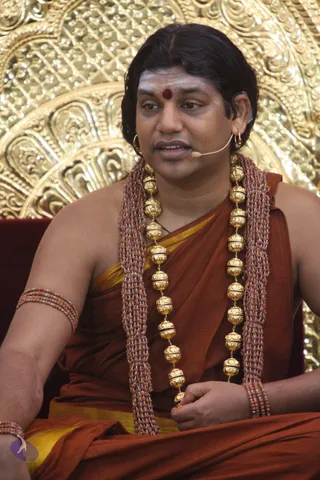
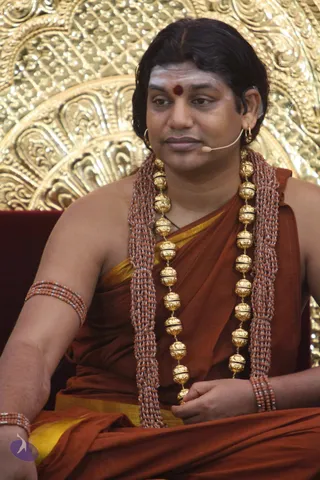
Photo of a man seated in front of an ornate gold repoussé backdrop, wearing a rust-orange sleeveless shawl with gold border, a rudraksha mala with ornate gold beads draped across the chest, rudraksha bracelets on the arm, a red bindi and white forehead markings, and a headset microphone. He appears to be speaking. Swamiji (probable): long swept-back dark hair, saffron-orange clothing and ornate gold necklace with rudraksha malas, seated as a speaker at a satsang.A seated man in saffron-orange robes with a gold-embroidered border sits before an ornate gold backdrop. He wears long gold beaded necklaces interlaced with rudraksha malas, rudraksha bracelets on his arm and wrist, and a red bindi with white marks on his forehead. A small headset microphone is attached near his ear, and his hands rest in his lap. a person appears as an in-person speaker in this satsang setting, based on the saffron clothing, rudraksha malas and ceremonial gold necklaces. He sits on a red-cushioned seat in front of the golden panel.A seated man in rust-orange saffron-style robes with a gold-bordered wrap draped over one shoulder, wearing long rudraksha mala necklaces interspersed with large ornate gold beads, matching beaded armlets and wristbands, and a red kumkum dot with white vibhuti on his forehead. He sits cross-legged before an elaborately carved gold throne backdrop, smiling and gazing to one side, with a small headset microphone at his ear. Given the page's a person flag and the saffron robes, rudraksha malas and gold necklaces, this is a person seated in satsang as a speaker.A seated man in an orange-brown saffron-toned cloth with gold-bordered edges smiles toward the side while sitting in front of an ornate gold repoussé backdrop with floral and scroll patterns. He wears long strands of rudraksha-style beads interspersed with large gold ball beads around his neck, matching beaded armlets and bracelets, gold hoop earrings, a red bindi and white markings on his forehead. A small headset microphone is visible near his ear. The cues of long swept-back hair, saffron clothing, rudraksha malas and ceremonial gold necklace are present, so this is a probable Swamiji in person seated on a throne-like setting during a satsang.A seated man in saffron-orange robes sits before an ornate gold repoussé backdrop. He wears a red bindi, a long rudraksha mala with ceremonial gold bead necklaces, matching rudraksha bracelets and a gold earring. His hands rest together in his lap as he speaks, and his long dark hair is swept back. The photo appears to be a candid still from a seated satsang or discourse setting.A smiling man with swept-back dark hair and a red kumkum mark on his forehead sits before an ornate gold-leaf carved backdrop. He wears a rust-orange shawl over the shoulder with a gold-bordered cloth, multiple rudraksha mala strands, a heavy ceremonial necklace of large gold beads, rudraksha bracelets on the arms, and small gold hoop earrings. A small purple logo is visible at the lower left. The man appears to be Swamiji (probable), based on the swept-back hair, orange clothing, rudraksha malas and ceremonial gold necklace, seated in a satsang setting.

04-SARVA-DARSHAN

2 photosSource gallery