Skip to content
Friday

22 June 2018

completion - technique to alter the past || Four tattvas work only incompletion || Uttamotama Seva At Nithyanandandeshwara Sadashiva Devasthanam || Power Manifestation ||

Dated photos
25
Source pages
1
Media
1
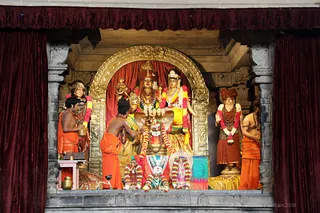
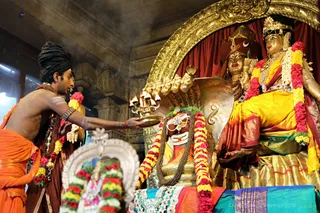
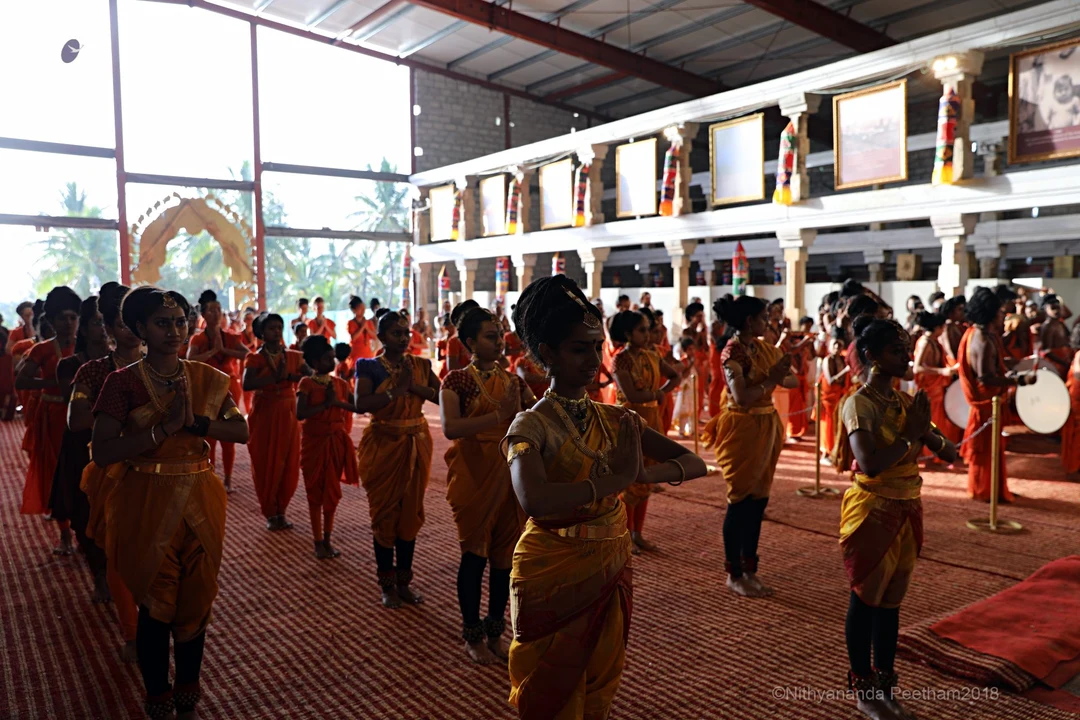
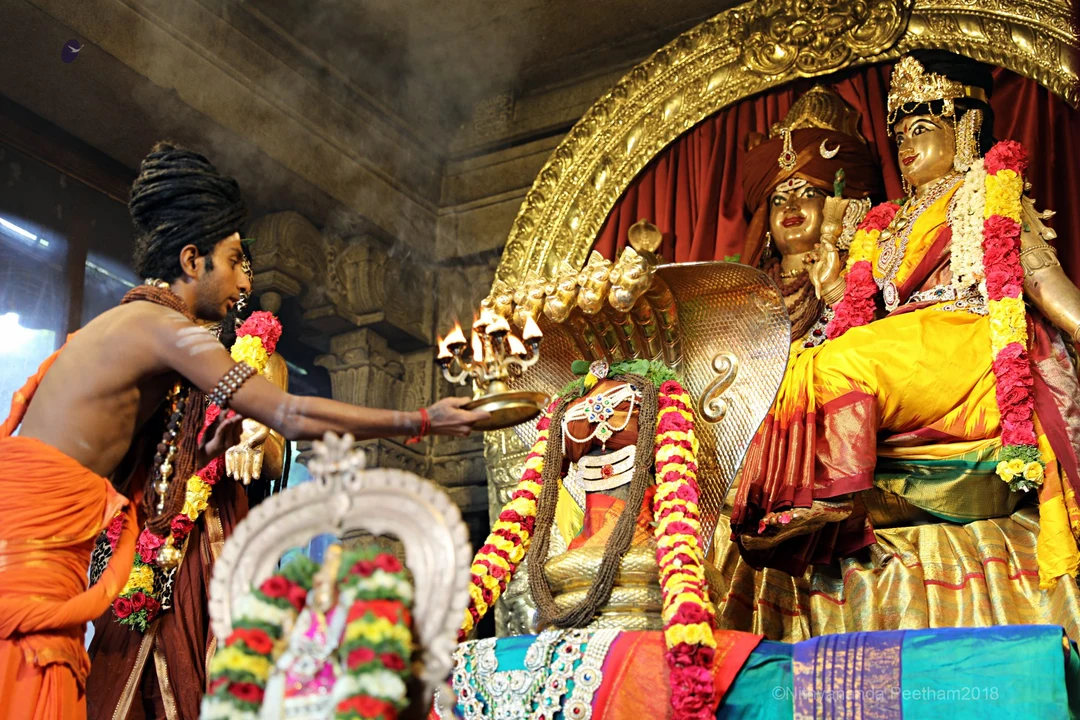
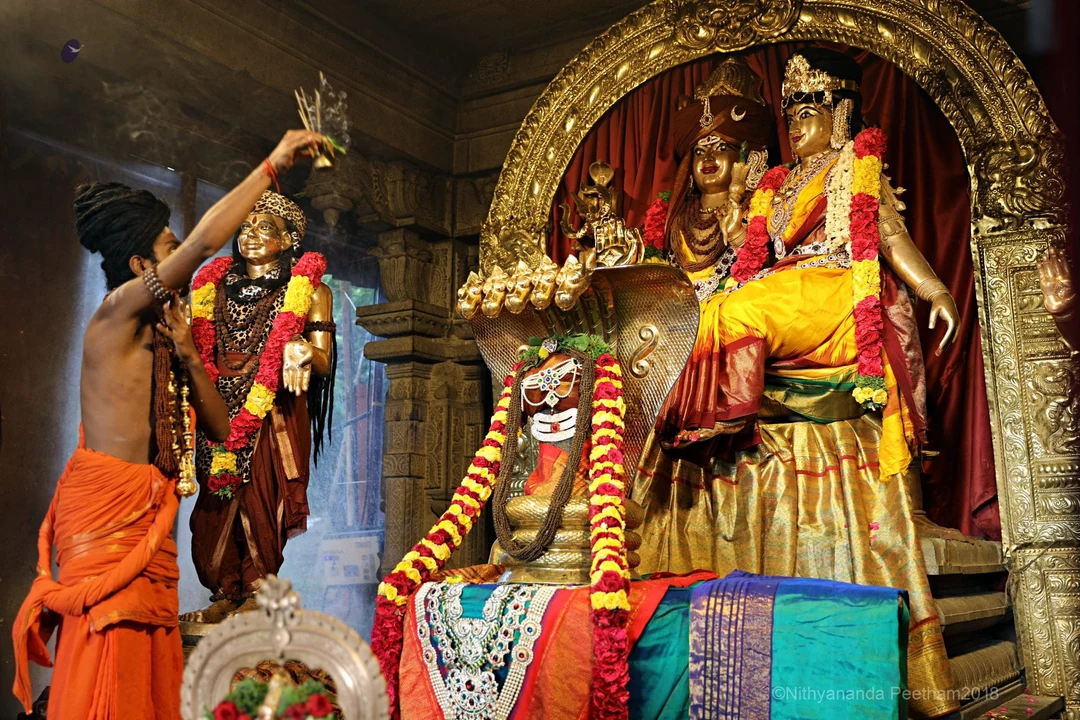
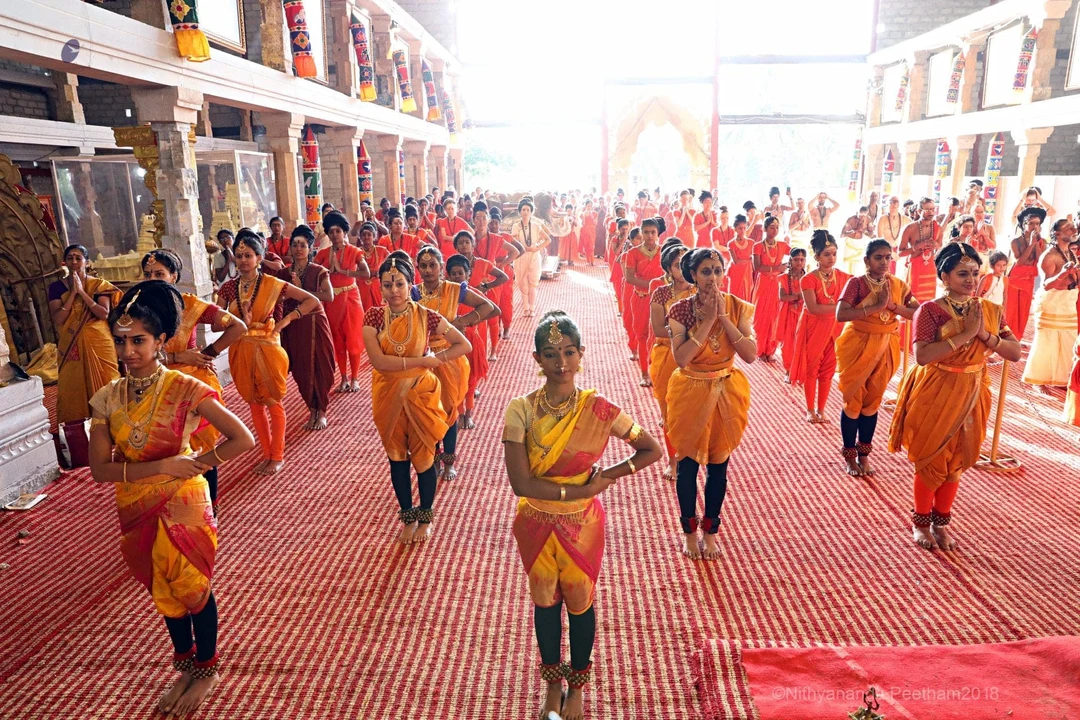
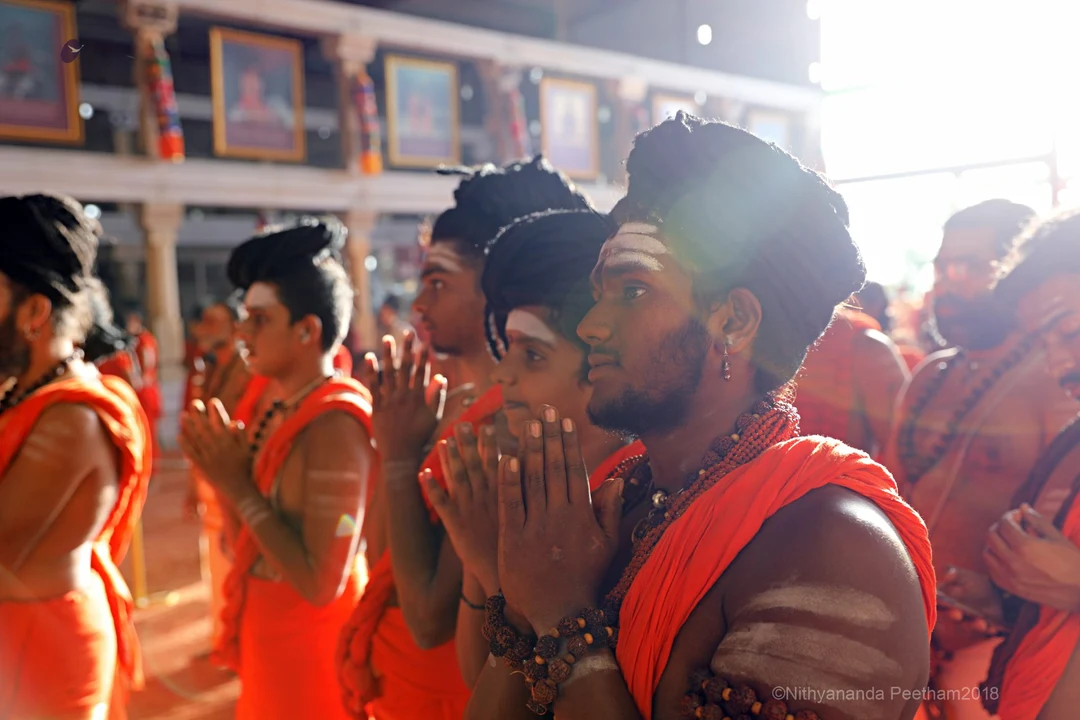
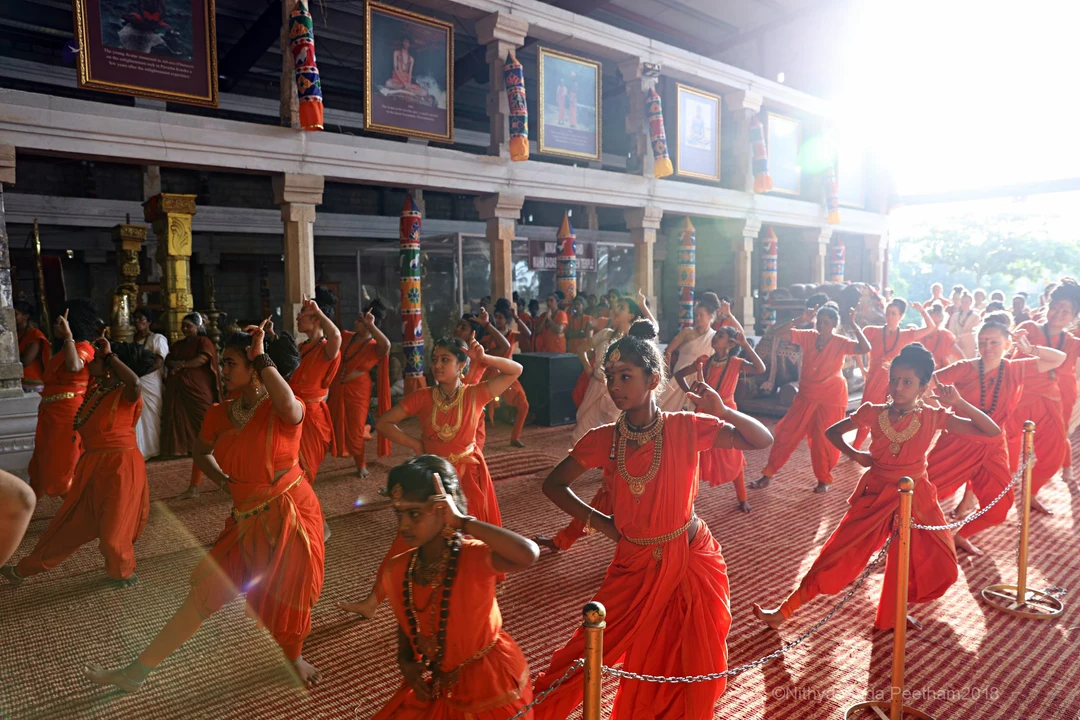
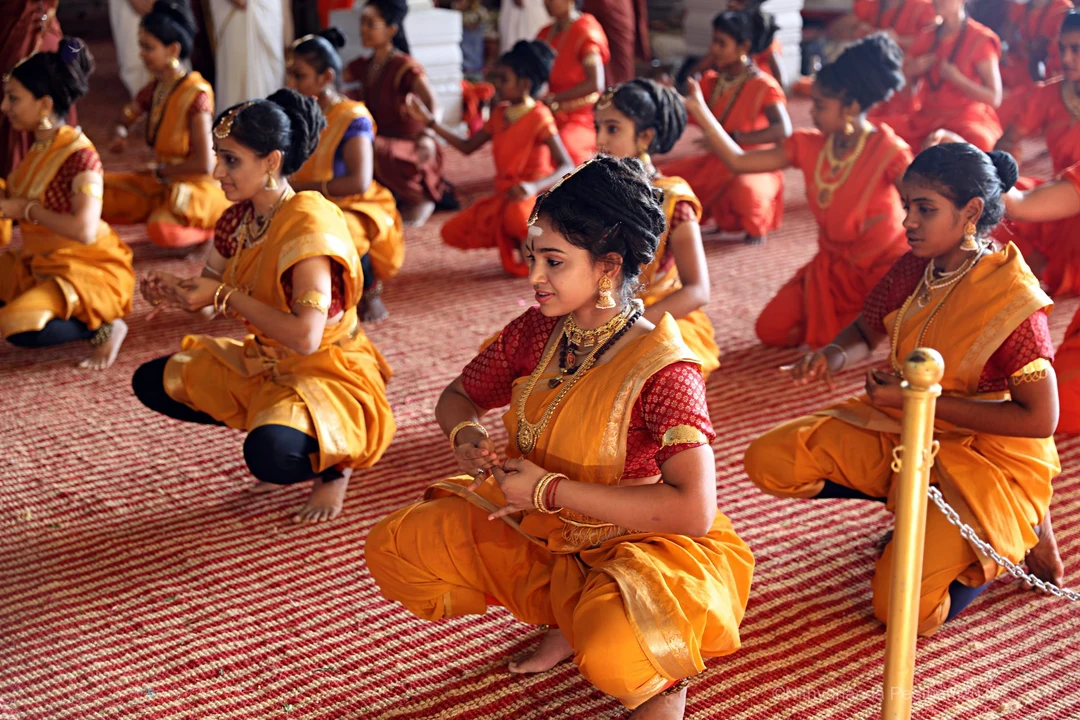
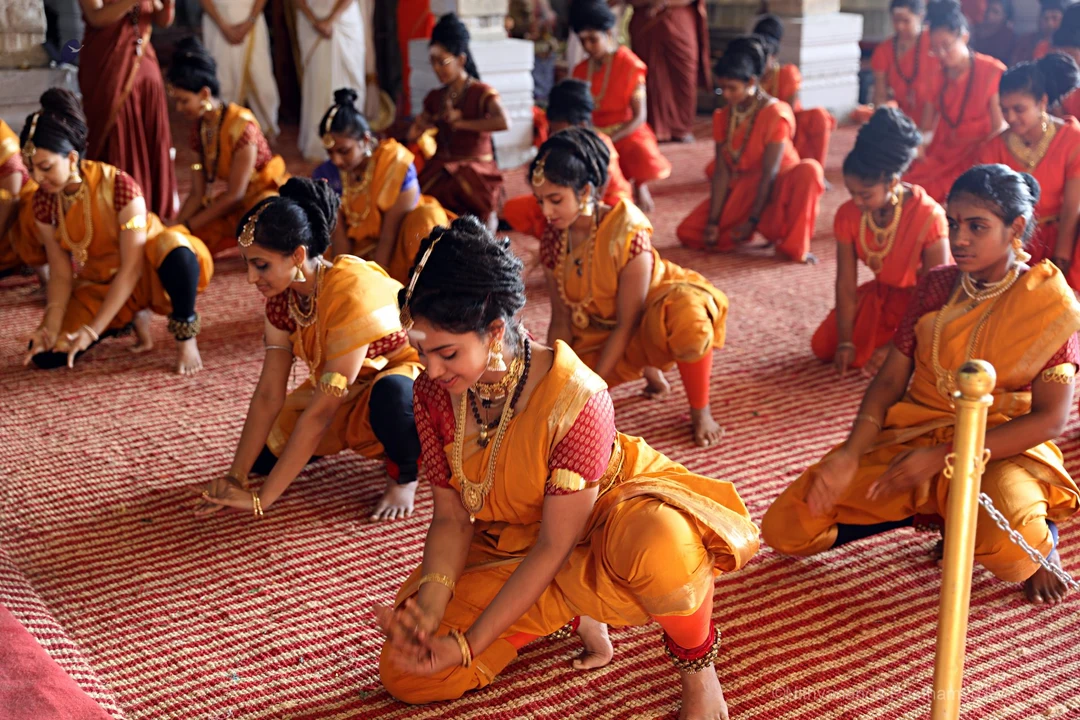
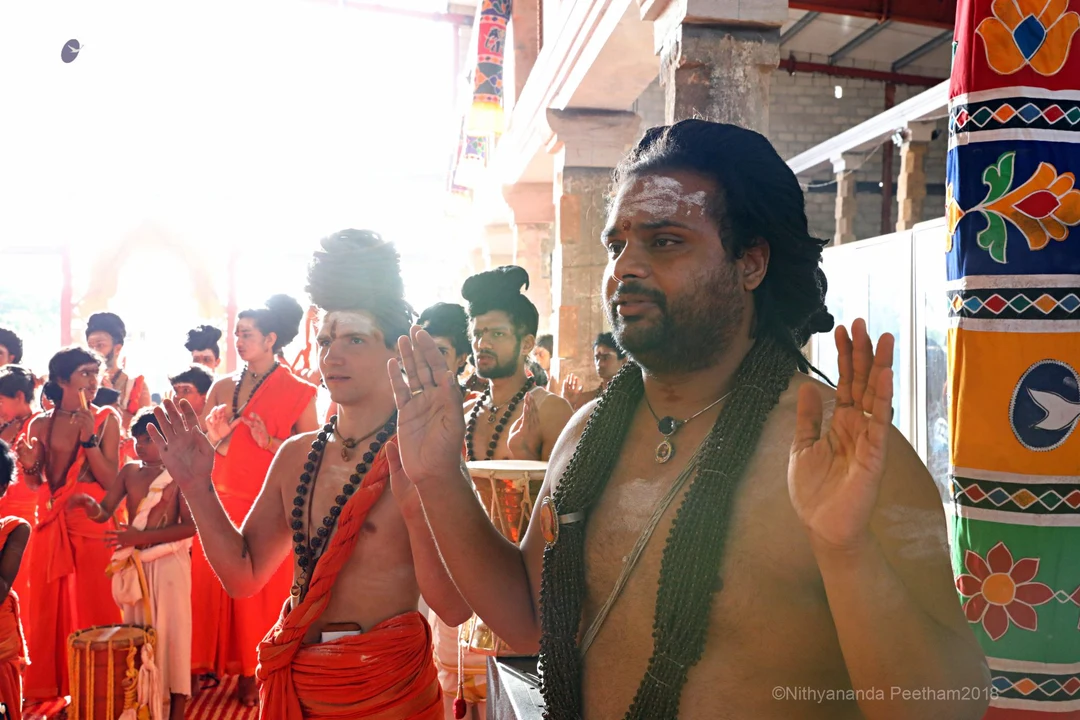
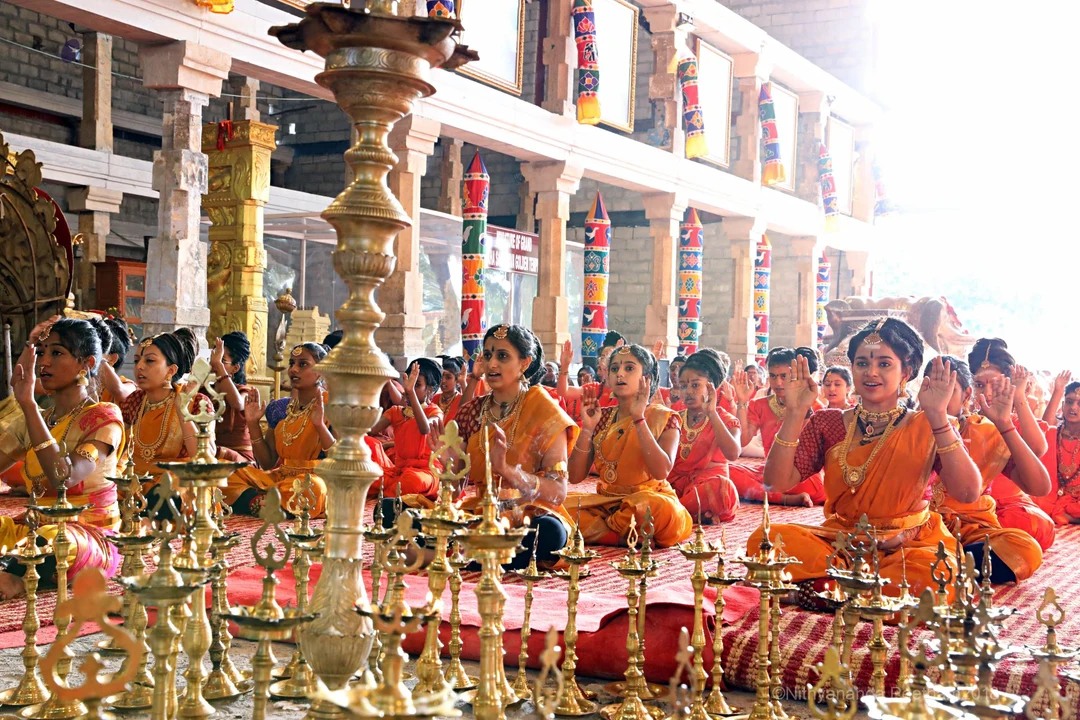
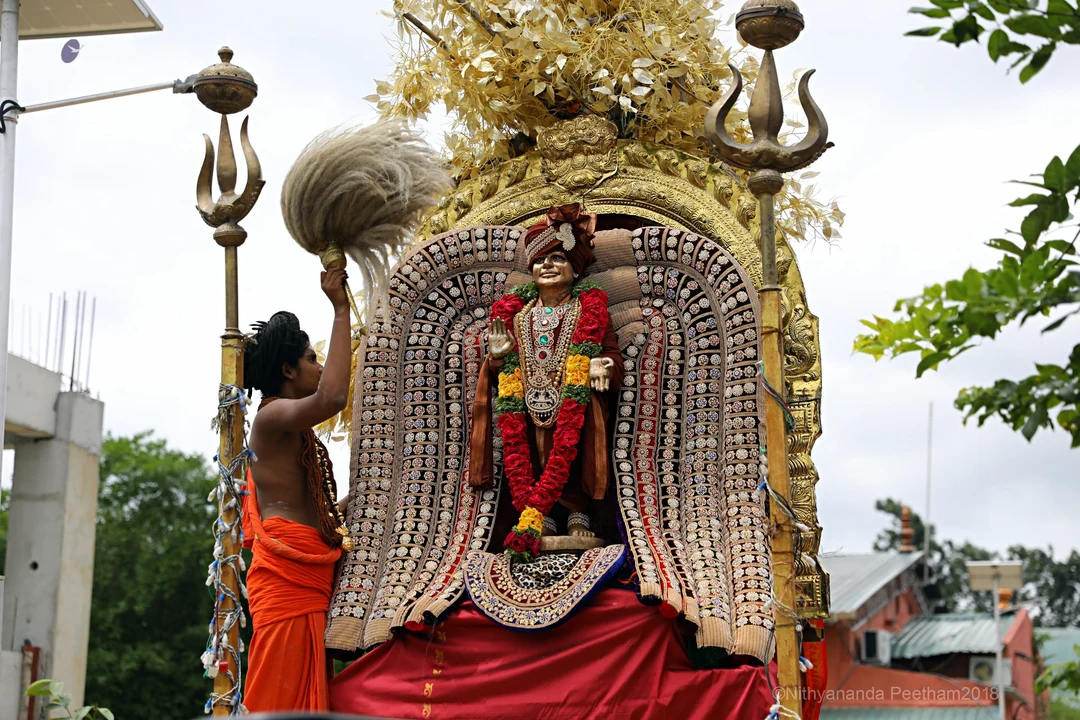
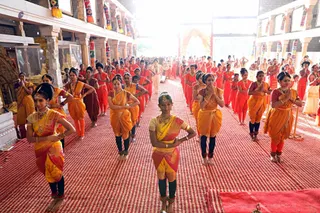
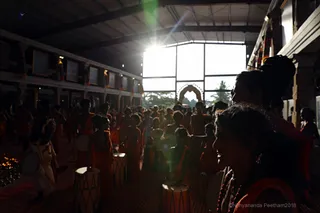
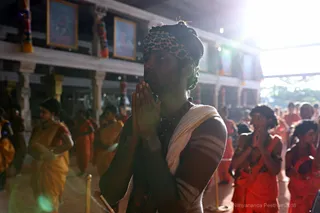
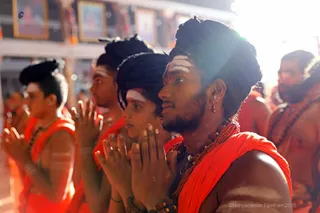
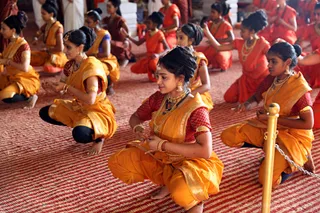
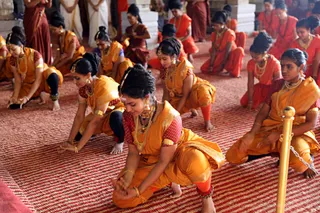
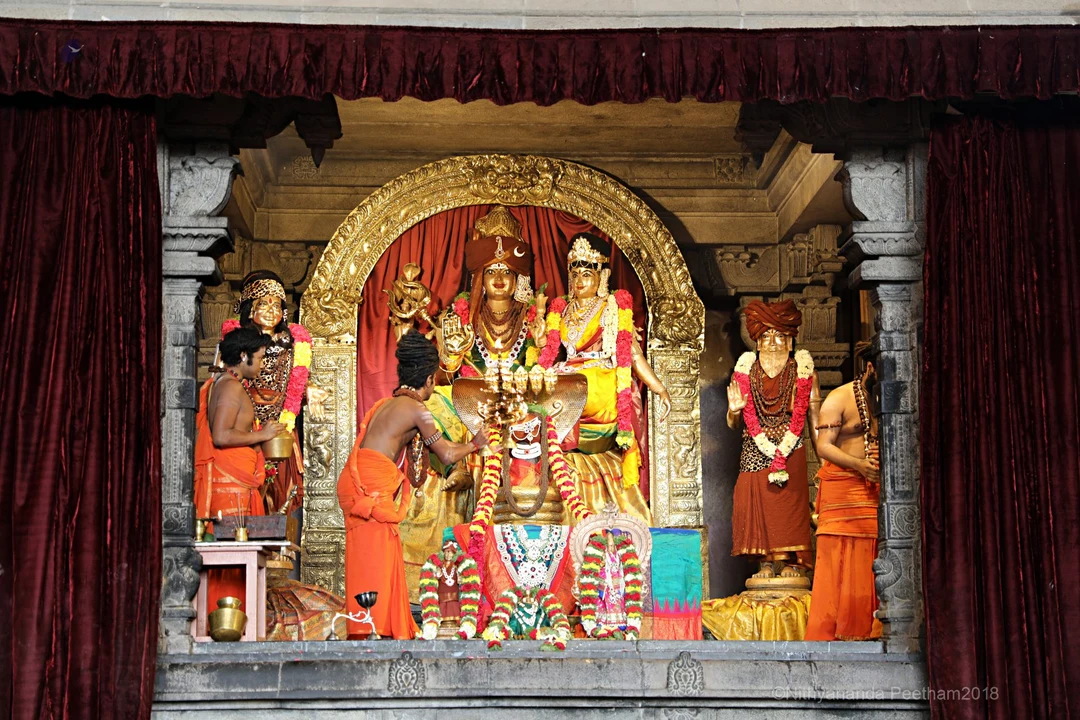
A temple shrine with a gilded arch framing a seated Shiva and Parvati murti, both adorned with marigold and jasmine garlands, Shiva wearing a crown and Parvati in yellow and gold. Two shaved-headed priests in saffron-orange dhotis, one with a rudraksha-adorned chest, stand at the left with a brass lamp and kalasha, performing a puja. On the right, a statue of a sannyasi in an orange turban and maroon shawl stands beside another figure in saffron, all within maroon velvet curtains. Brass vessels and a lamp sit on a pink stand at the lower left. Statues only; no living person is clearly identifiable as a person.A photograph of a large hall with a red-and-white striped mat floor where many young women and girls in orange and gold traditional dress stand in rows with hands in anjali mudra (palms pressed together). Several dancers in front wear orange-gold saris, gold waist belts, bangles, necklaces and jhumka earrings, with hair in buns and forehead ornaments. Behind them, drummers in orange clothing play drums on the right. Framed portraits hang on the white arched balcony walls, and a decorated archway is visible at the left by tall windows. The scene reflects an uttamotama seva style ritual procession.A young priest in saffron-orange dhoti and shawl, with a dark matted topknot and sandalwood marks on his bare chest and arms, holds a lit multi-wick oil lamp toward a shrine. Inside a gold-framed alcove, a golden deity murti seated on a silver throne-like seat wears a yellow-and-red sari, a crown and rows of pink and yellow marigold garlands; a second golden figure in a red turban sits beside it, with a brass kalasha-like offering and silver tray in the foreground. Smoke or incense drifts through the warm, dimly lit temple hall. The priest's rudraksha-style beaded mala and bracelets are visible, and the scene reads as a puja with aarti at a temple shrine.

June 22 2018

Original wiki page
Contents

Title

completion - technique to alter the past || Four tattvas work only incompletion || Uttamotama Seva At Nithyanandandeshwara Sadashiva Devasthanam || Power Manifestation ||

Narration

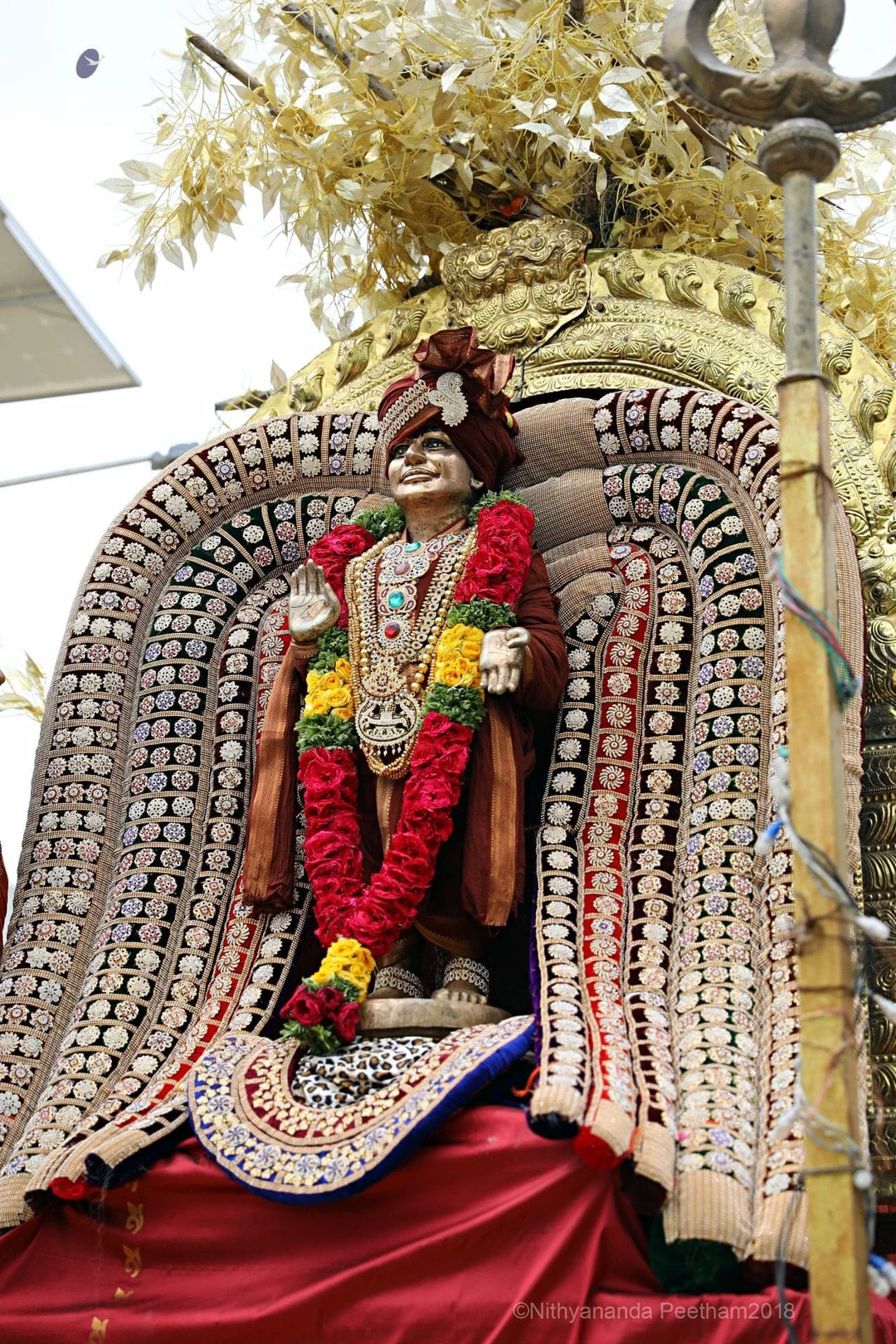
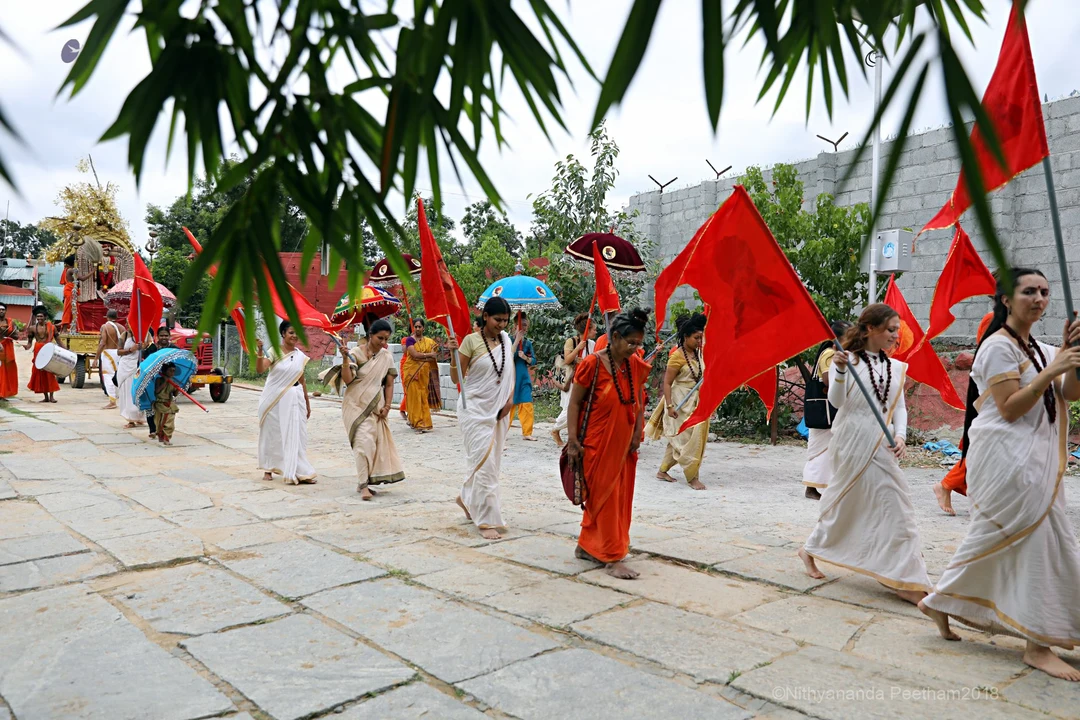
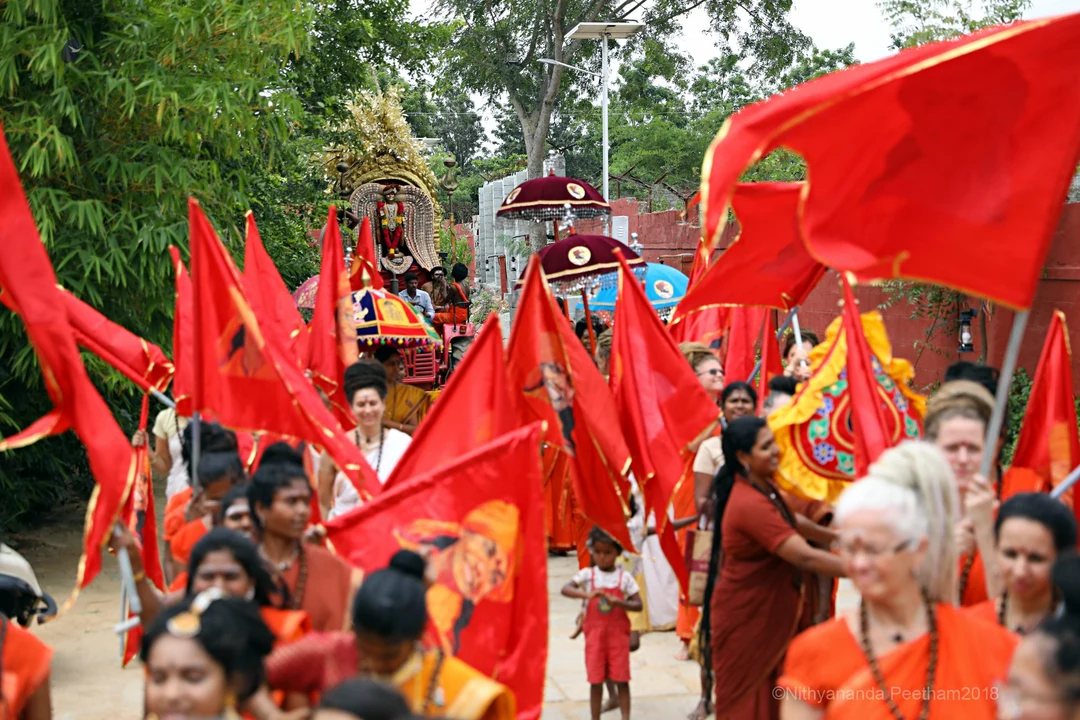
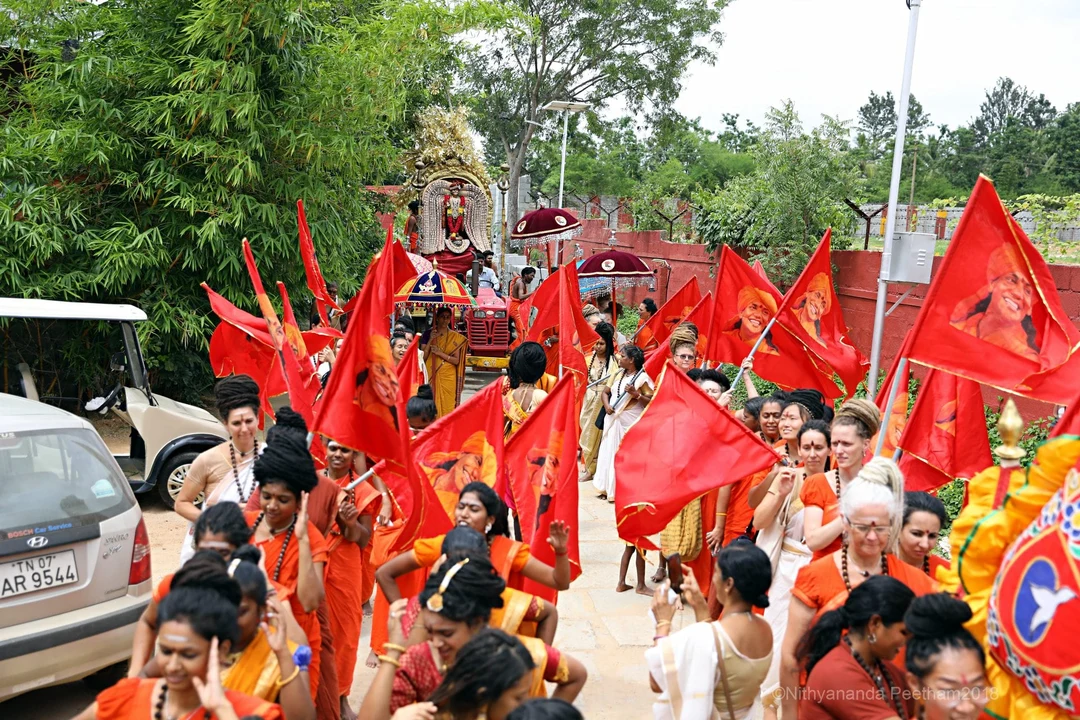
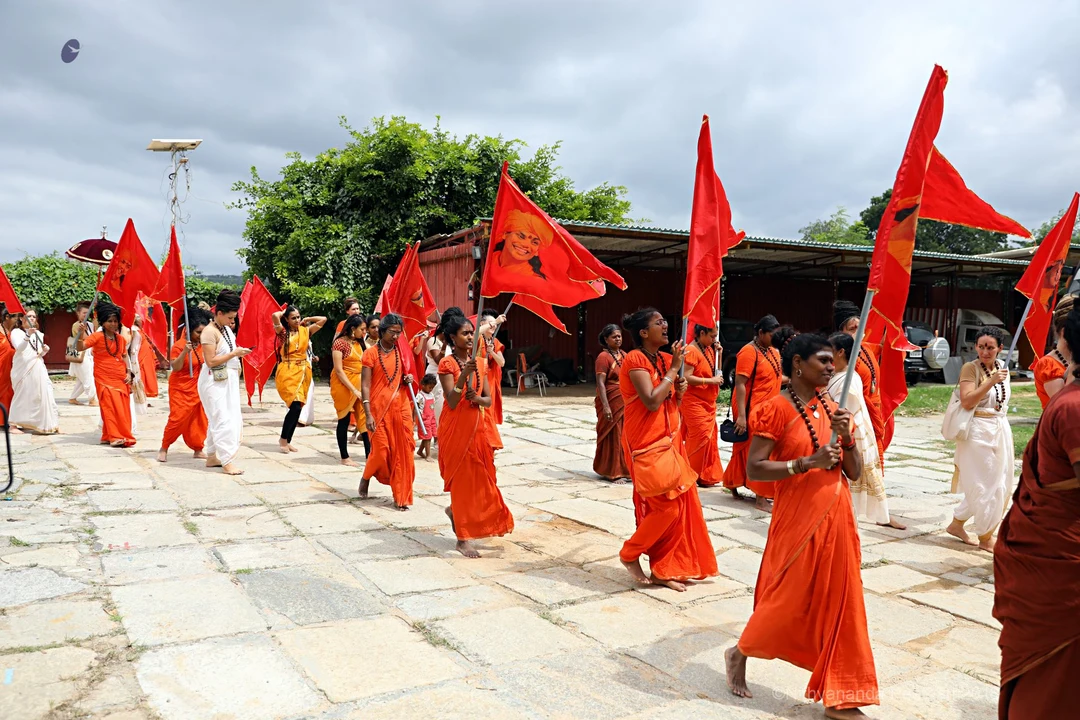
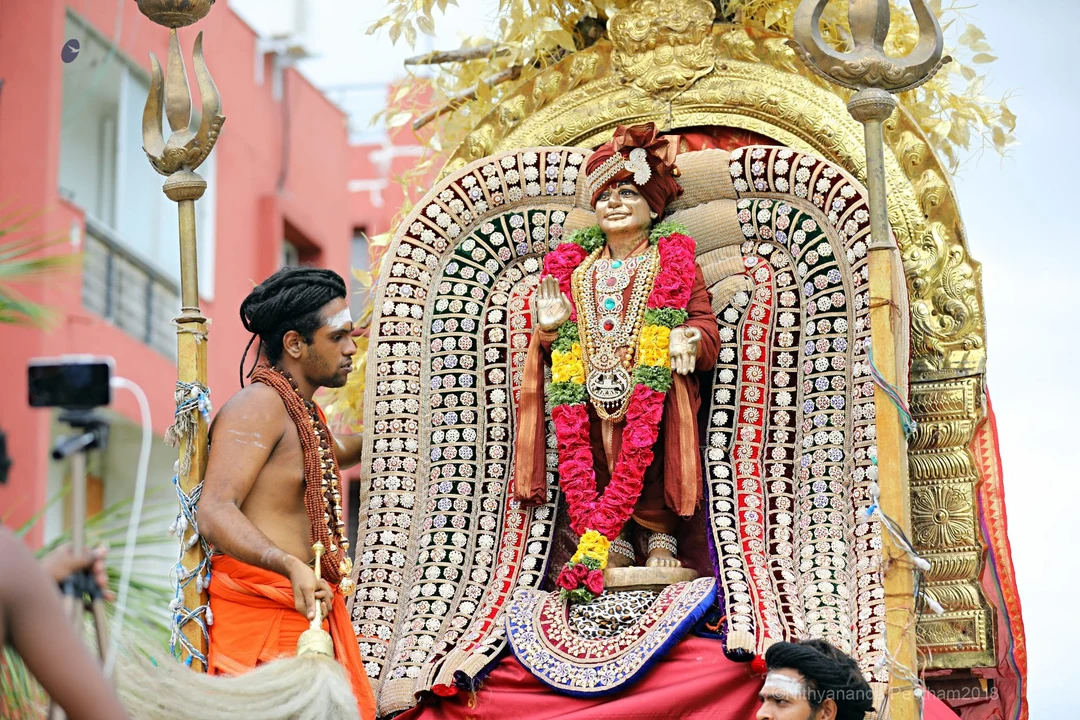
KAILASA's Department of Information Broadcasting, in collaboration with SHRIKAILASA Uniting Nations for Peacekeeping, aimed at eradicating violence and promoting peace, telecasted the Nithyananda Satsang on The Intention for Completion revealed by The Supreme Pontiff of Hinduism, Jagatguru Mahasannidhanam, His Divine Holiness Bhagavan Nithyananda Paramashivam. His Divine Holiness explained the Cosmic Principles of Completion explaining that it is a technique to alter one’s past. He strongly emphasized that the Four Tattvas only work in Completion. Uttamotama Seva took place at Nithyanandeshwara Sadashiva Devasthanam, and many beautiful photos and video clips were shared. Various rituals, Sevas, activities and Power Manifestation took place around the world, and upcoming programs were announced, inspiring millions towards the Science of Hinduism.

Link to Video:

Photos From The Day:

Uttamotama Seva
,

Photos from this day

View all 25 photos
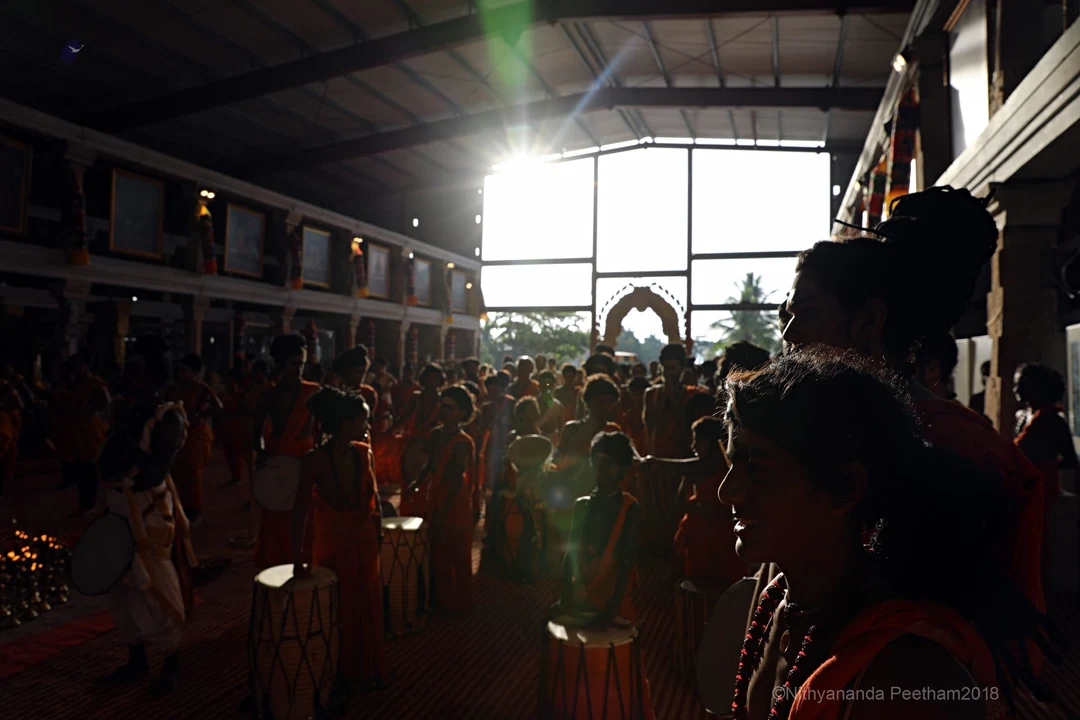
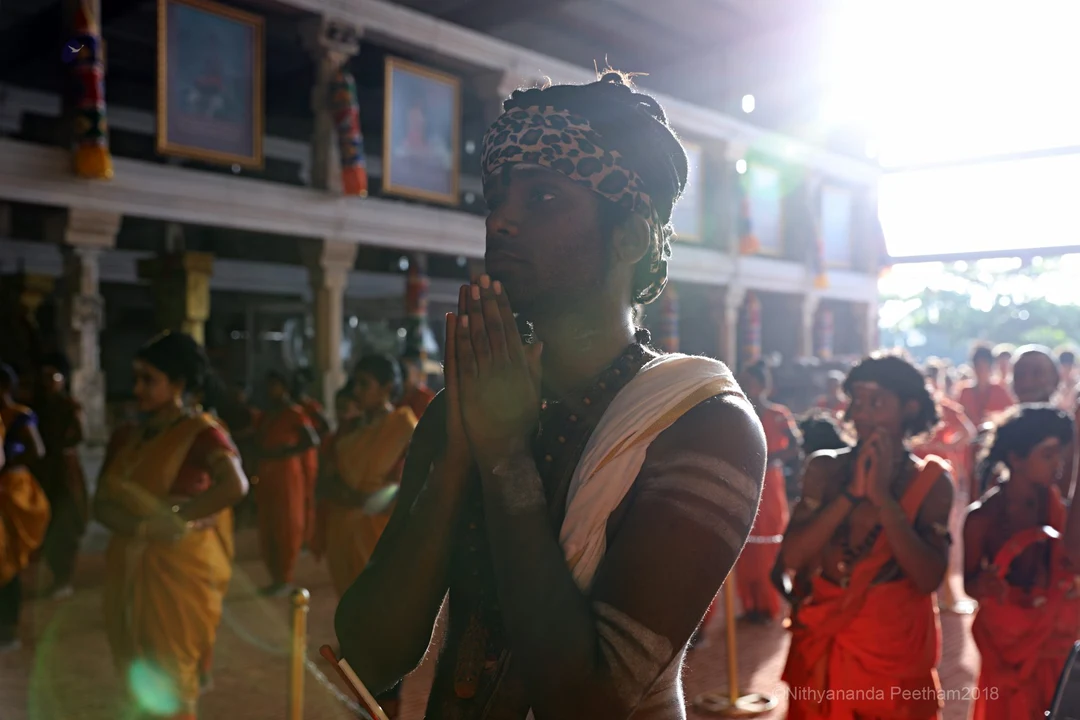
A temple shrine with a gilded arch framing a seated Shiva and Parvati murti, both adorned with marigold and jasmine garlands, Shiva wearing a crown and Parvati in yellow and gold. Two shaved-headed priests in saffron-orange dhotis, one with a rudraksha-adorned chest, stand at the left with a brass lamp and kalasha, performing a puja. On the right, a statue of a sannyasi in an orange turban and maroon shawl stands beside another figure in saffron, all within maroon velvet curtains. Brass vessels and a lamp sit on a pink stand at the lower left. Statues only; no living person is clearly identifiable as a person.A photograph of a large hall with a red-and-white striped mat floor where many young women and girls in orange and gold traditional dress stand in rows with hands in anjali mudra (palms pressed together). Several dancers in front wear orange-gold saris, gold waist belts, bangles, necklaces and jhumka earrings, with hair in buns and forehead ornaments. Behind them, drummers in orange clothing play drums on the right. Framed portraits hang on the white arched balcony walls, and a decorated archway is visible at the left by tall windows. The scene reflects an uttamotama seva style ritual procession.A young priest in saffron-orange dhoti and shawl, with a dark matted topknot and sandalwood marks on his bare chest and arms, holds a lit multi-wick oil lamp toward a shrine. Inside a gold-framed alcove, a golden deity murti seated on a silver throne-like seat wears a yellow-and-red sari, a crown and rows of pink and yellow marigold garlands; a second golden figure in a red turban sits beside it, with a brass kalasha-like offering and silver tray in the foreground. Smoke or incense drifts through the warm, dimly lit temple hall. The priest's rudraksha-style beaded mala and bracelets are visible, and the scene reads as a puja with aarti at a temple shrine.A photograph inside a temple shrine of a golden-framed alcove with red drapes. A bare-chested man in orange cloth with long matted locks stands at left, raising a bundle of incense sticks or lit offerings with one hand while the other hand is near a ceremonial gold necklace. Before him stand golden murtis of a seated goddess in yellow and gold sari with garlands of red and yellow flowers, and a standing deity figure with a crown and garland. In front, a Shiva lingam wrapped in a red-and-green cloth and adorned with a jeweled face and garland of marigolds is set on a peetha. Smoke or incense haze fills the air, and a silver tray with flowers sits in the foreground. This appears to be a puja or abhishekam scene with deity murtis.A photograph inside a temple hall with a red woven floor runner, where a long line of women and girls in orange, yellow and red saris and dance costumes stand in rows with hands in namaste or hips in dance poses. Many wear gold jewellery, bangles and ankle bells, with hair in buns decorated with flowers. Red and orange cloth hangings decorate the pillars and an arched doorway behind them, and a glass display case with a deity murti is visible on the left. Figures in the far background wear white and red.A backlit photograph inside a temple hall with an open arched doorway and a bright sun flare at the back. Many people in orange and saffron clothing stand in dense rows, with several playing hand drums, including a drum held upright and a larger drum on the floor. In the right foreground, a young person in orange with long dark hair tied up and red beaded necklaces looks off to the side, while another person's dark hair is visible behind. Framed pictures hang on the left wall, decorated with red and orange garlands. Small oil lamps glow at the lower left. The scene appears to be a ritual gathering with drumming.A photograph inside a temple hall during a Uttamotama Seva event. In the foreground a young man with a leopard-print headband and rudraksha beads stands with palms pressed together in prayer, his eyes closed, backlit by bright sunlight. Behind him, several devotees in saffron and orange and yellow sarees and dhotis stand in rows, some with hands folded. Framed devotional pictures hang on the pillared hall wall, with colourful hanging tassels beside them. The scene is warm, glowing and crowded with many standing devotees.Several shaved-headed or topknotted young men in saffron-orange cloth stand in a row with palms pressed together in anjali mudra, bodies bare from the waist up with white sacred ash markings on their torsos and foreheads. Their necks are adorned with red and brown rudraksha malas, and sunlight streams in from the right creating a lens flare. Behind them, framed portraits hang on a white pillared hall in a temple setting, and additional devotees in orange stand at the edge of the frame.A photograph of a line of young men in saffron-orange cloth draped over their shoulders, standing with palms pressed together in namaskar, as in prayer or devotion. Several wear rudraksha beads and white horizontal forehead markings; some have long hair coiled up on their heads, and a bare-chested man with beaded necklaces stands at the right edge. Bright sunlight streams in from the right, and framed pictures hang on a wall in the background.A large group of young women in matching saffron-orange sarees and rudraksha malas performs a synchronized dance routine inside a temple hall. Several dancers raise a hand to their temple or forehead, others extend arms and bend knees in a stance. Gold necklaces and jhumka earrings are visible. Behind them, framed portraits hang on a cream wall, and colourful tassels decorate pillars. Bright sunlight streams through an open doorway on the right, and a brass chain with posts separates the dancers from the viewing area. Several white-clad onlookers stand at the back. Dozens of people are visible.A group of young women in orange and gold saris with red blouses sit on a red and cream woven mat, performing a coordinated seated ritual. The front woman wears a gold necklace, long earrings, bangles and a tikka on her forehead, her hands held together near her chest. Behind her, rows of women in matching orange saris raise their hands and sit barefoot. A gold stanchion with a chain marks the edge of the area. Several people in the background wear white and maroon clothing.A photograph of a group of young women in a temple hall performing a coordinated kneeling bow on a red-and-cream woven mat. Most wear orange and gold silk saris with red blouses, gold necklaces, bangles, and jhumka earrings, with hair in buns decorated with jewelled ornaments. Several are bending forward with palms on the mat, and a brass railing with a chain runs along the right edge. Behind them, other women in red and orange saris stand or kneel near white-robed figures and white pillars.