Skip to content
Monday

24 June 2013

Dated photos
489
Source pages
1
Media
4
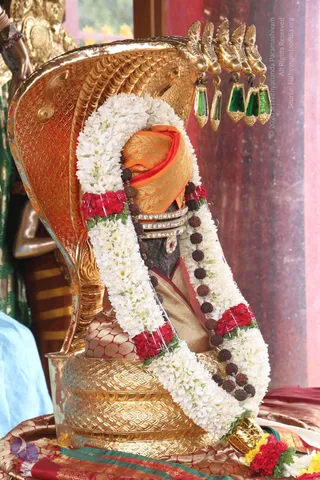
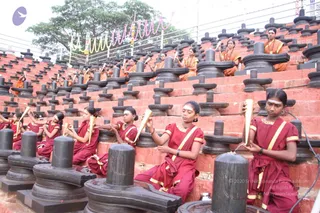
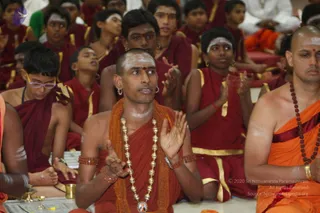
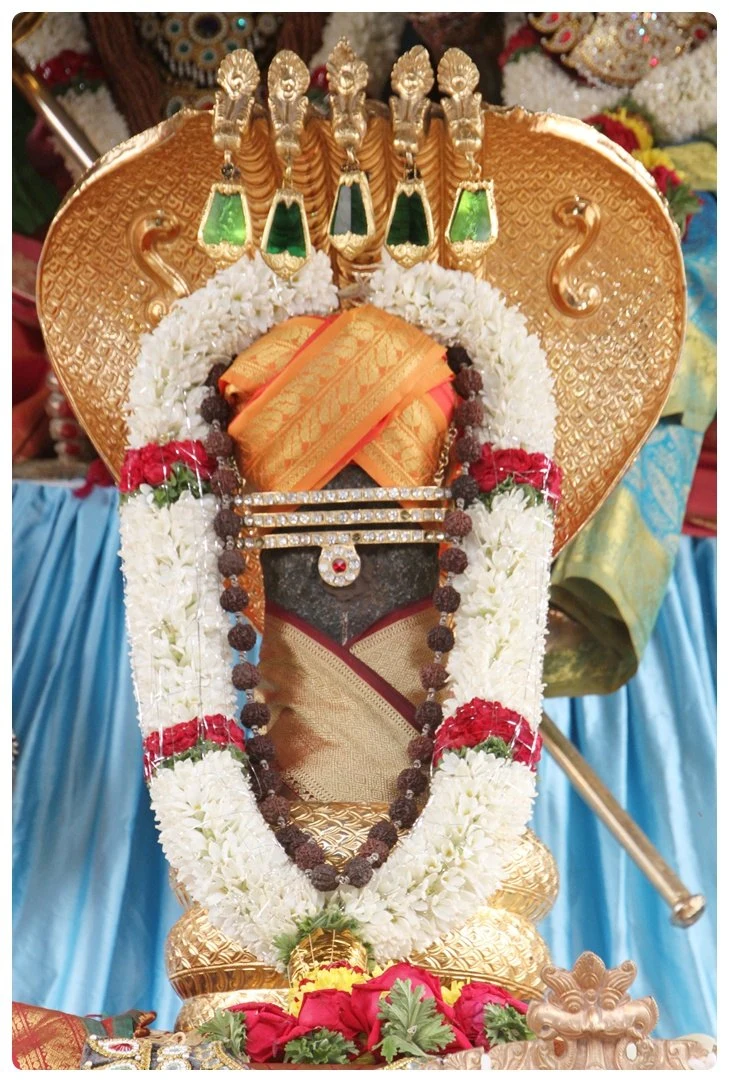
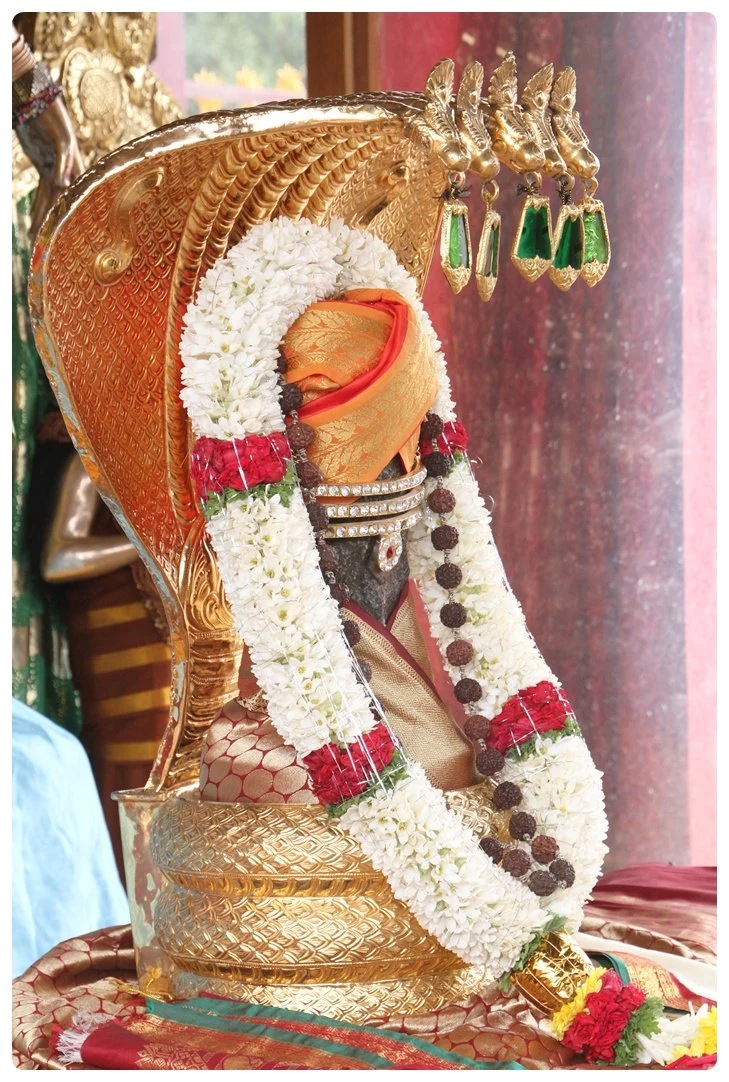
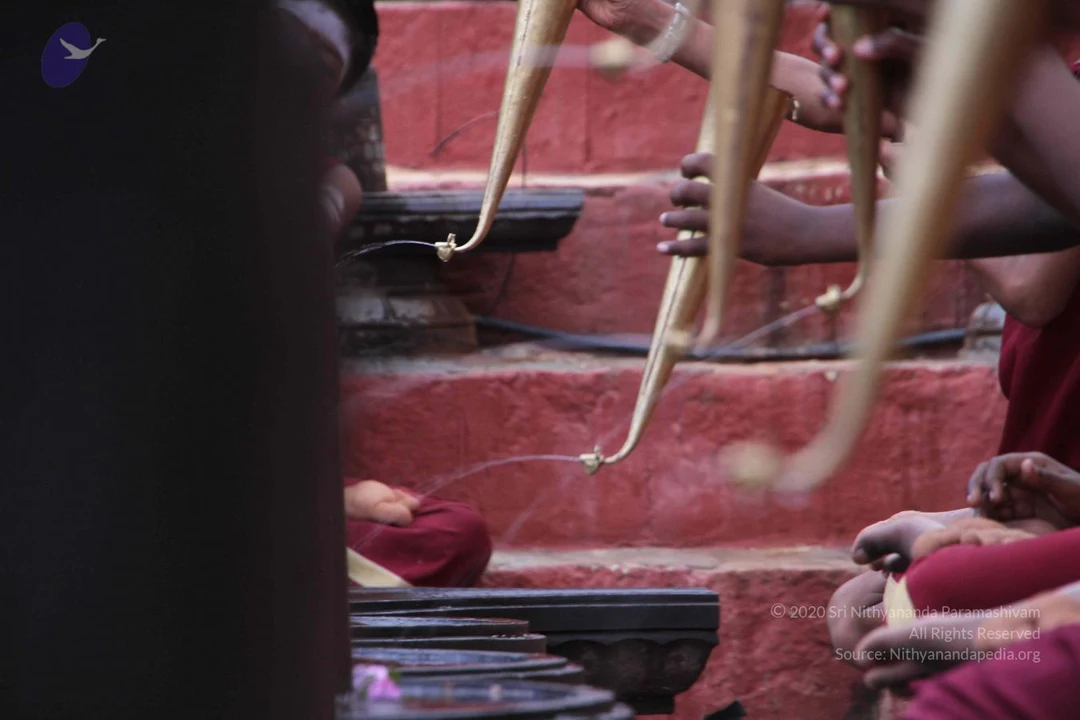
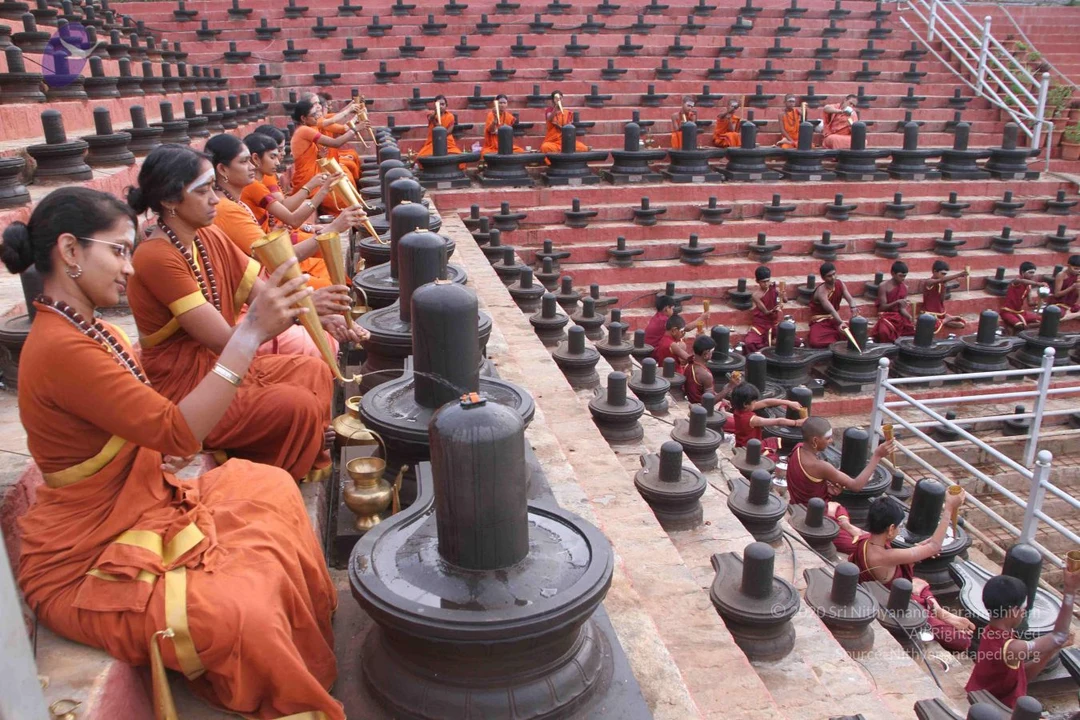
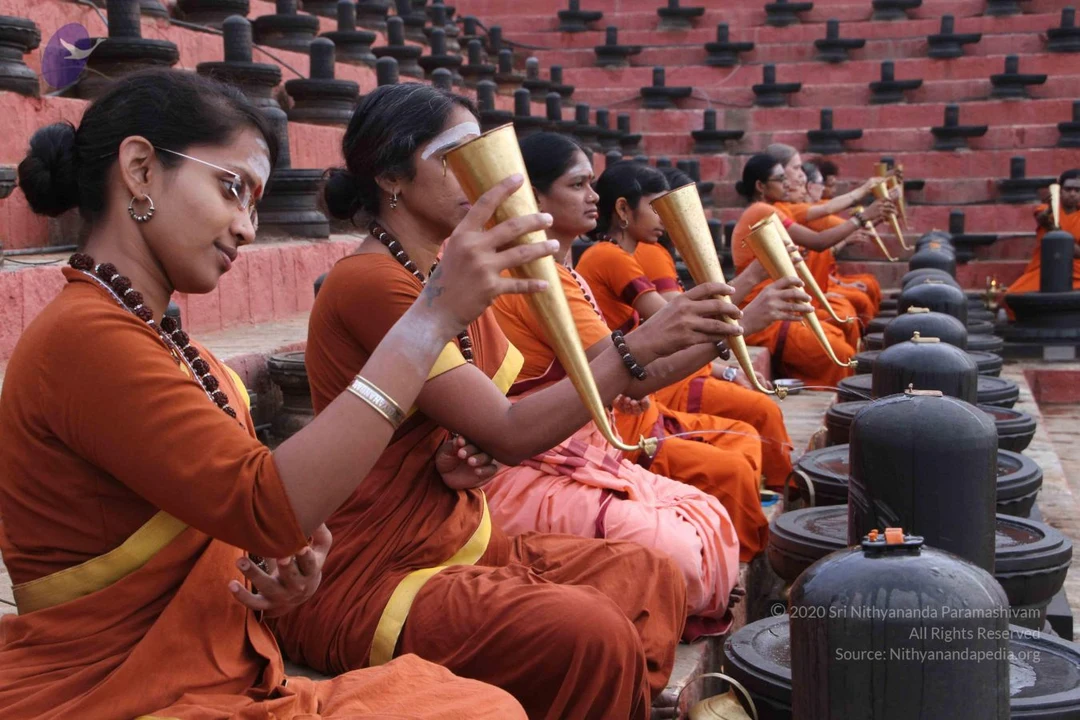
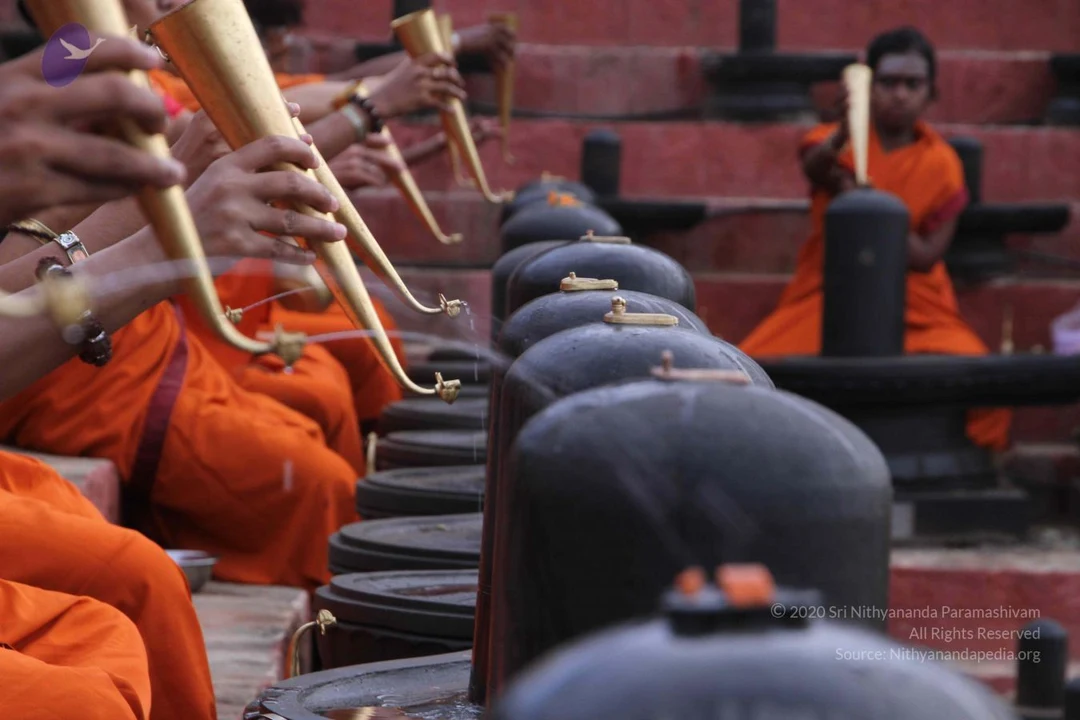
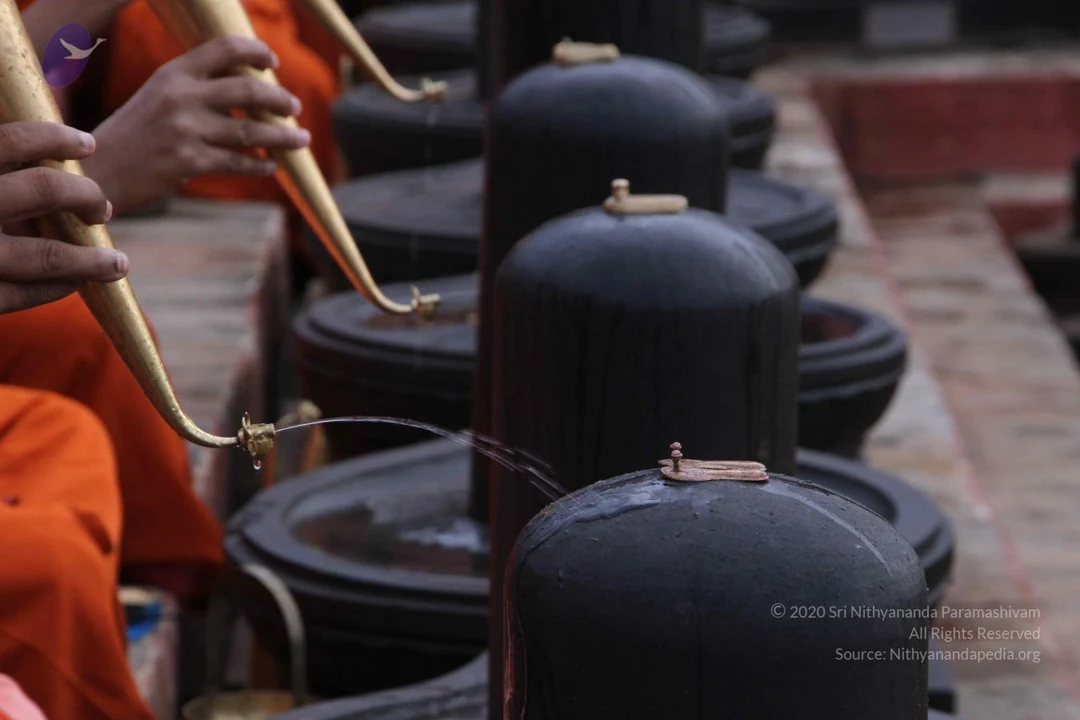
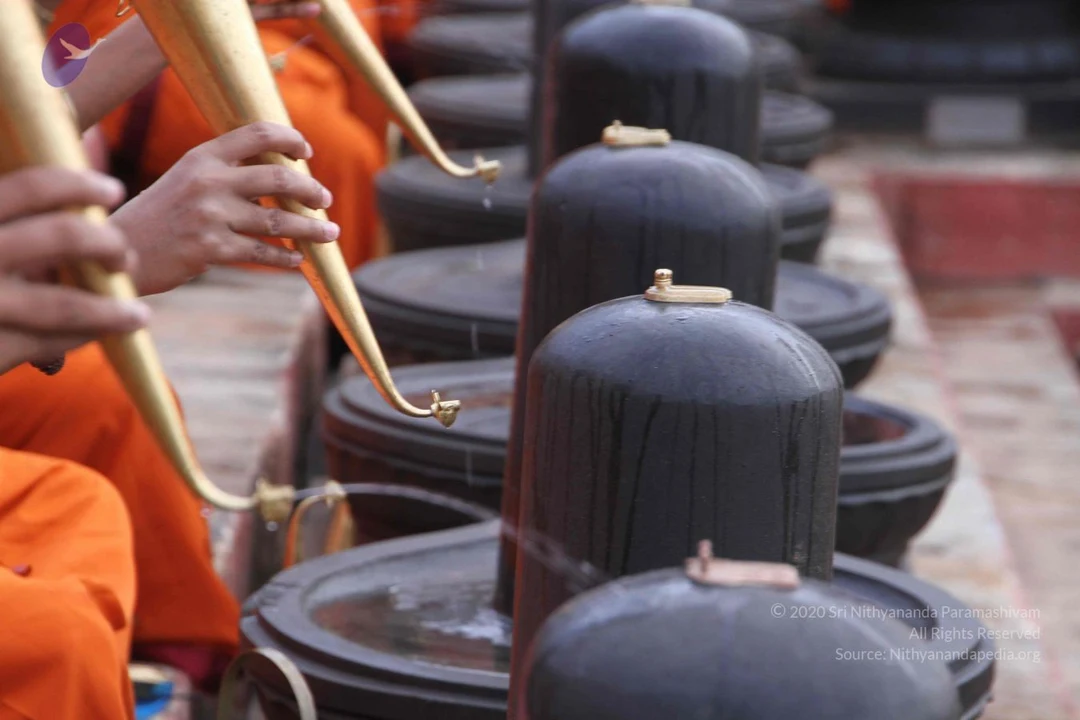
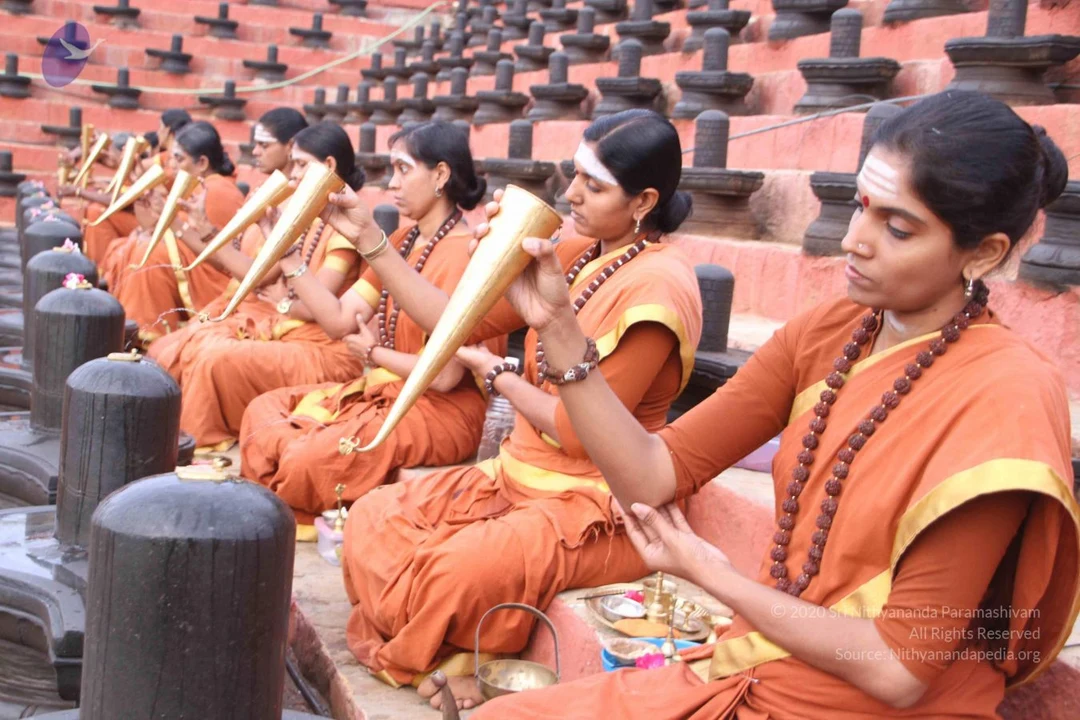
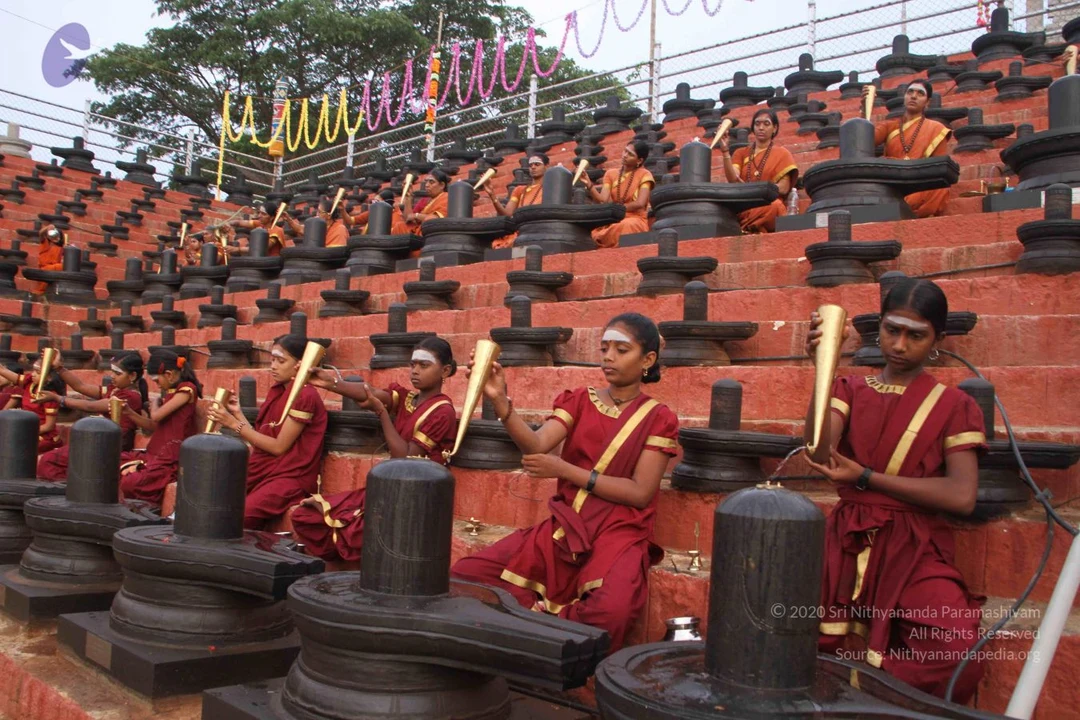
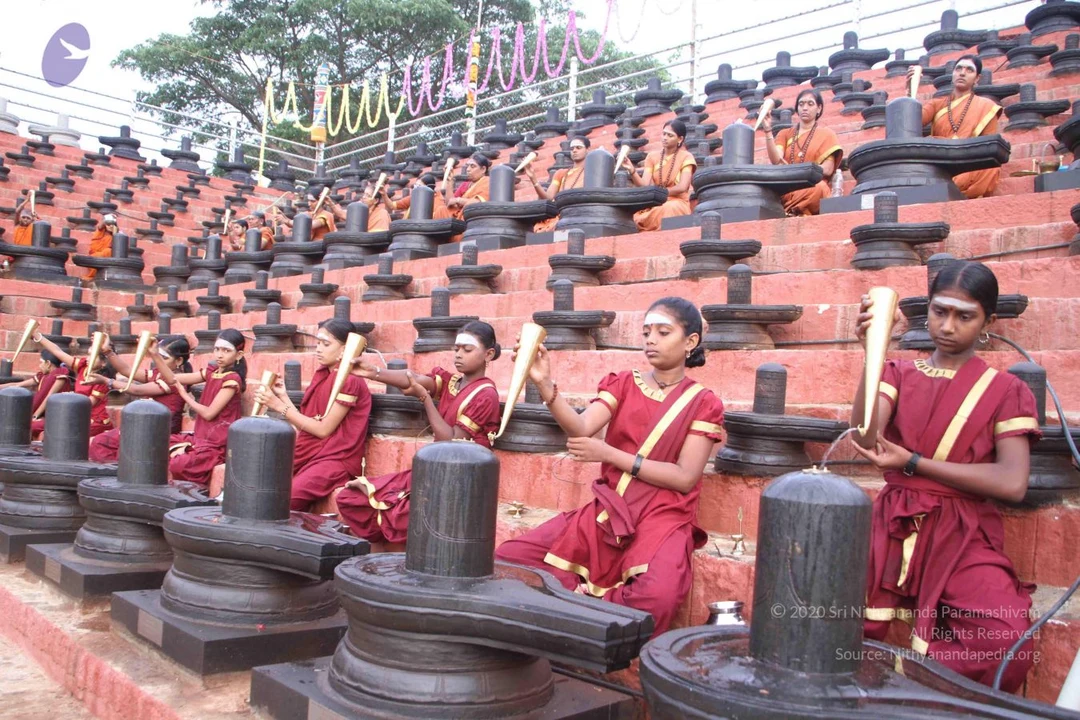
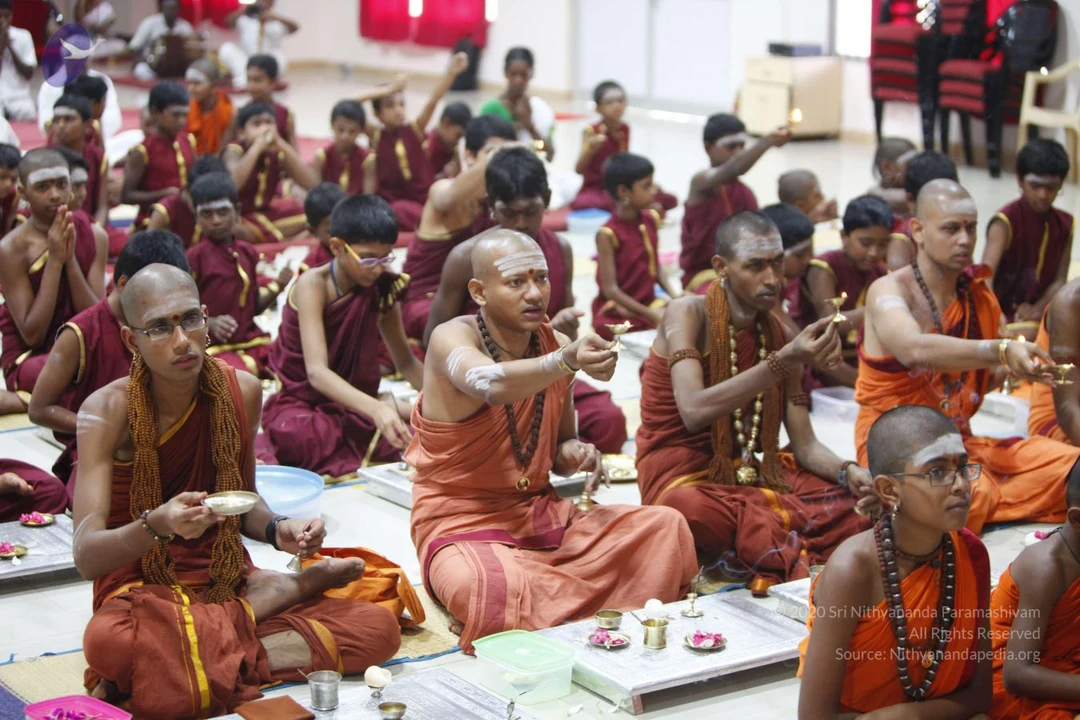
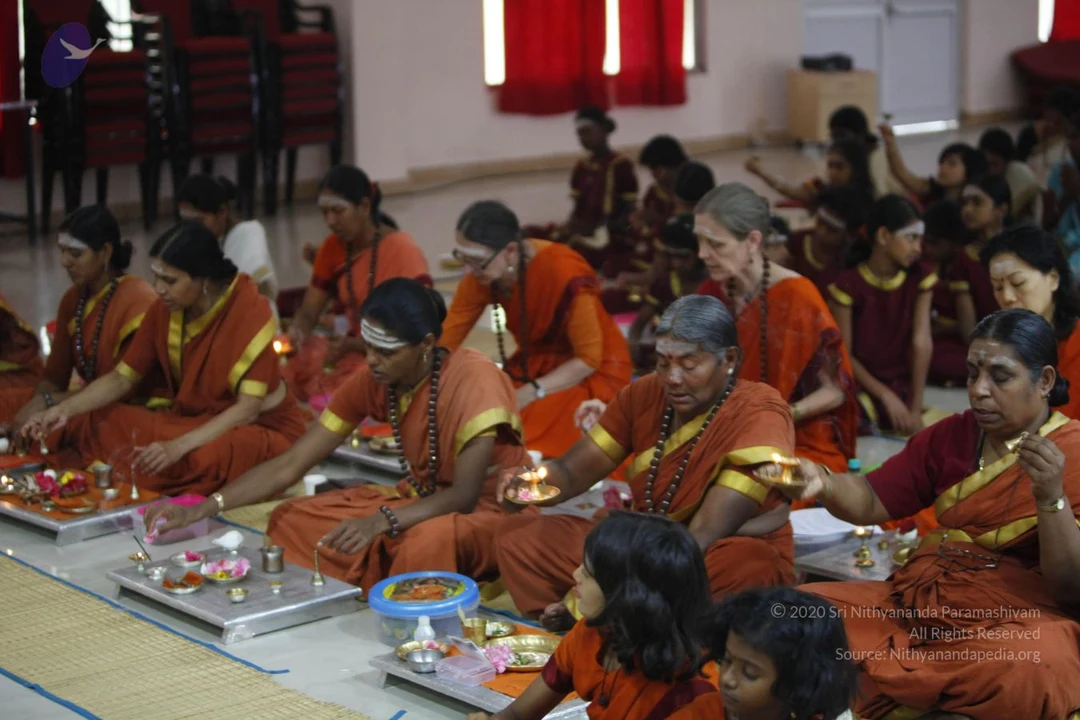
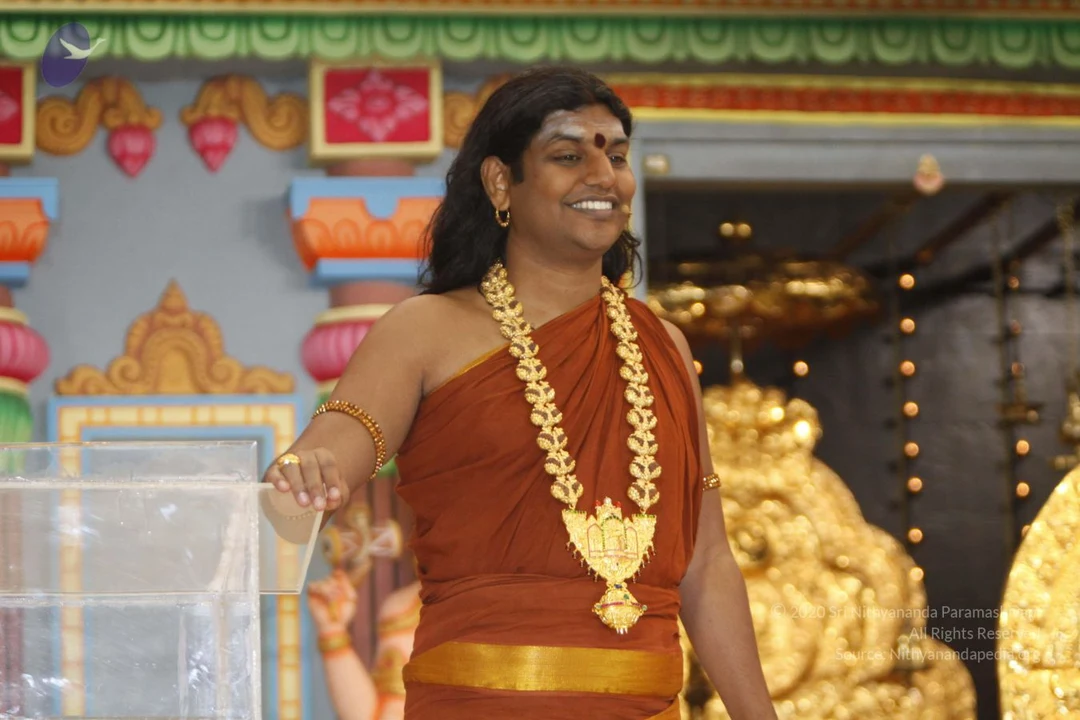
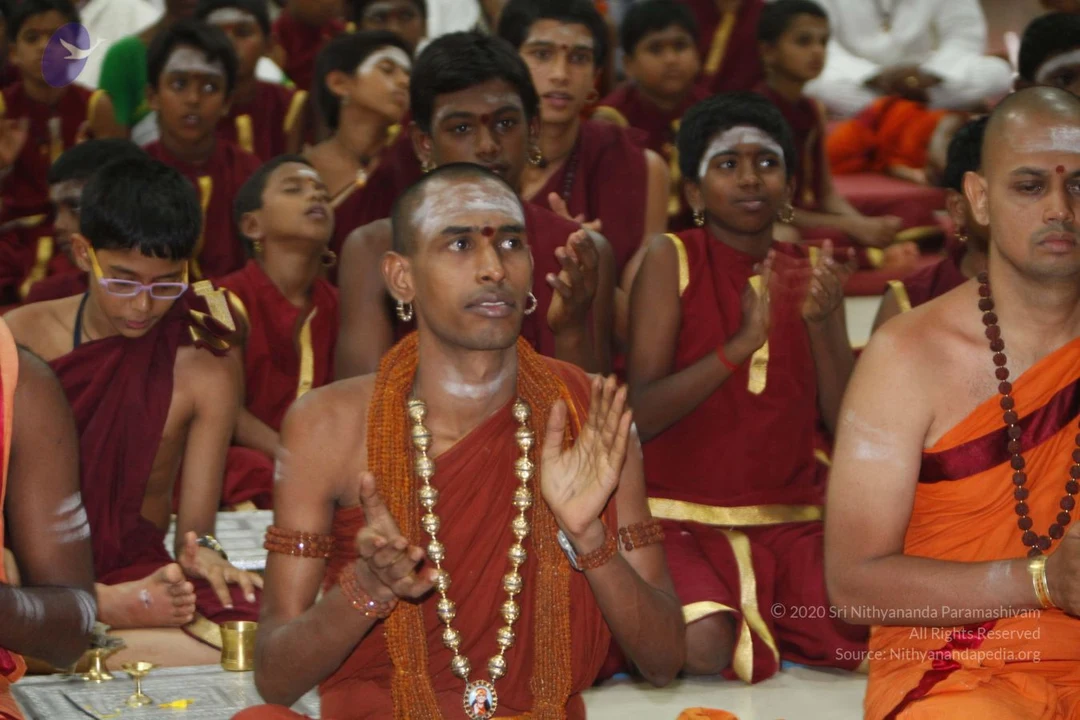
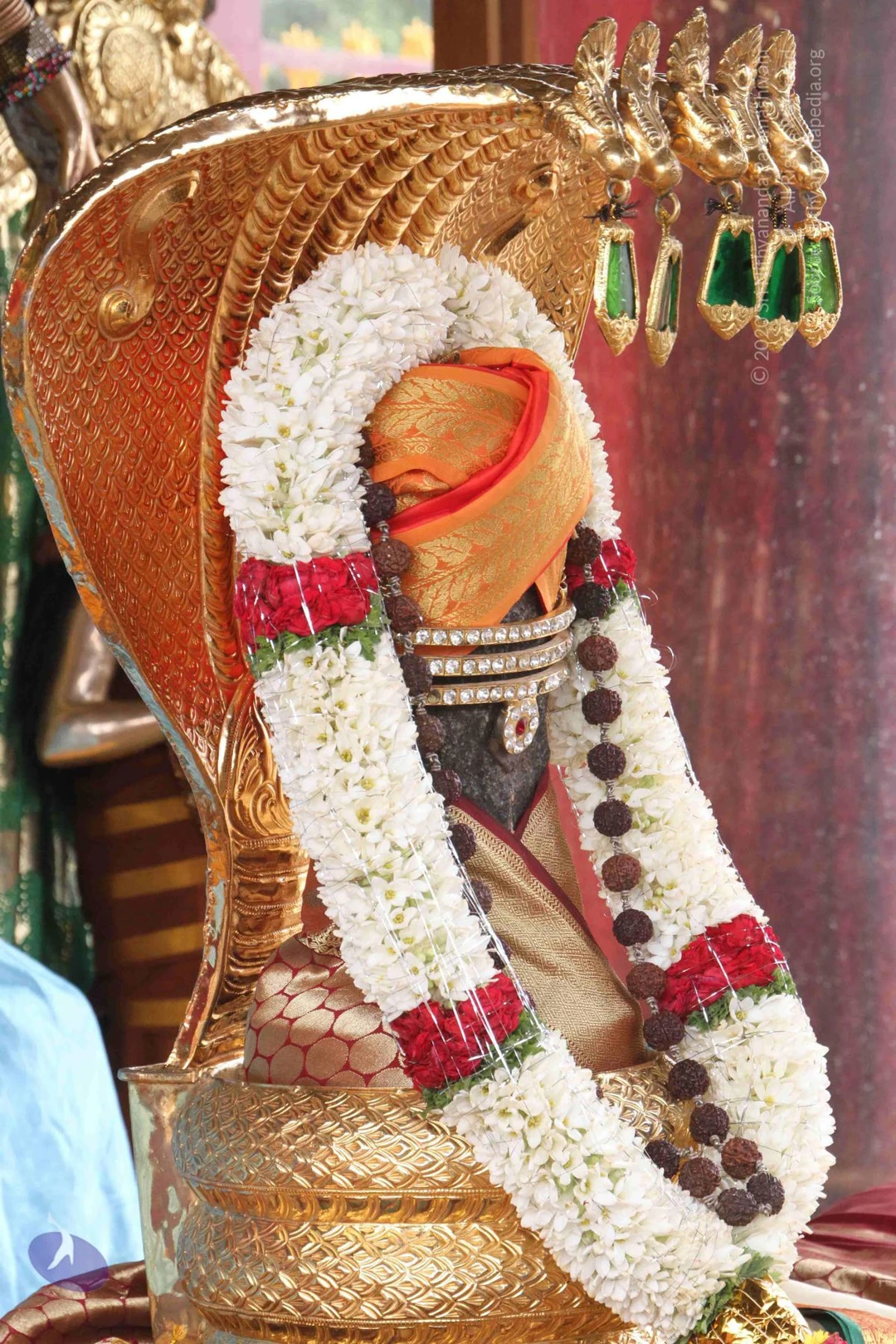
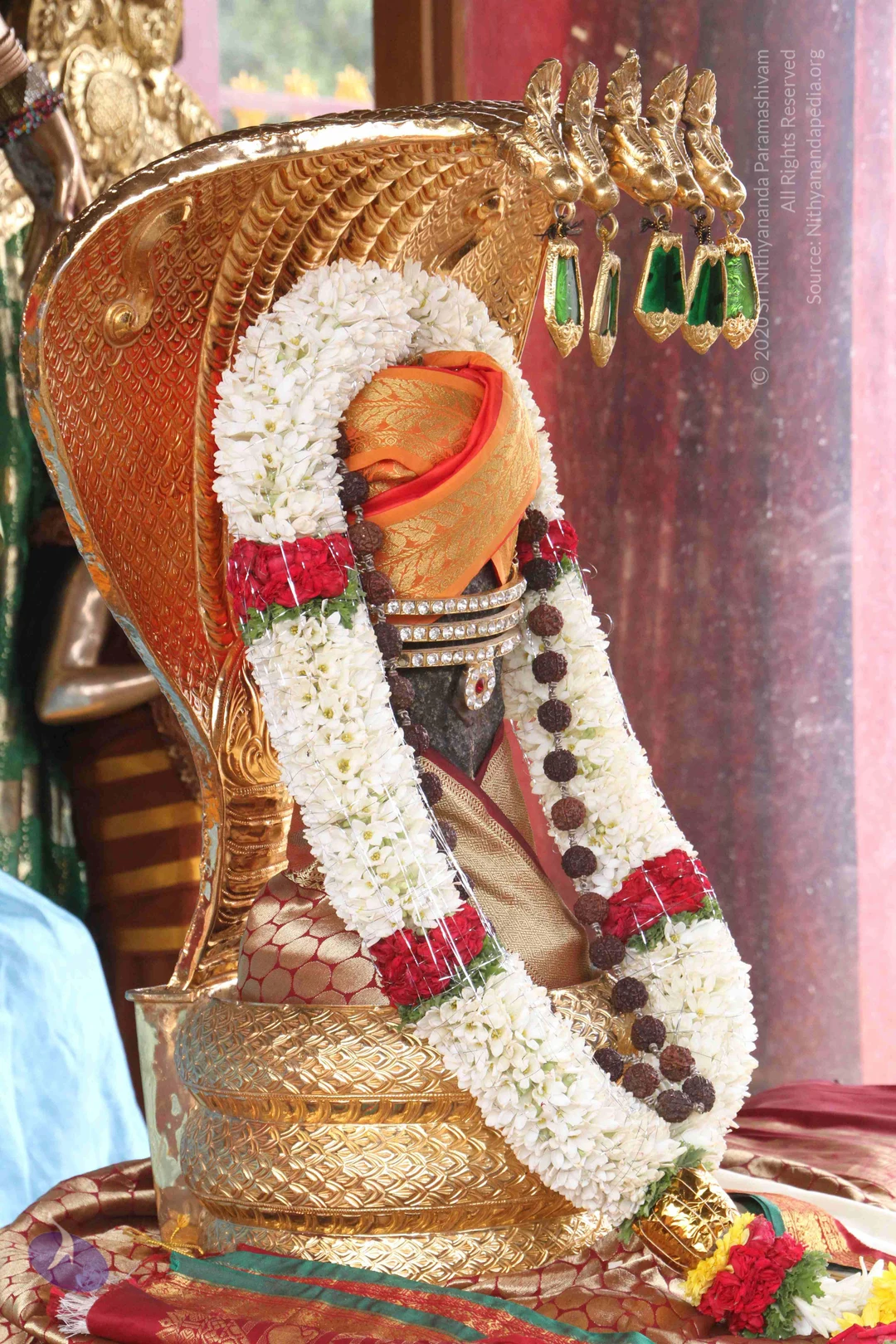
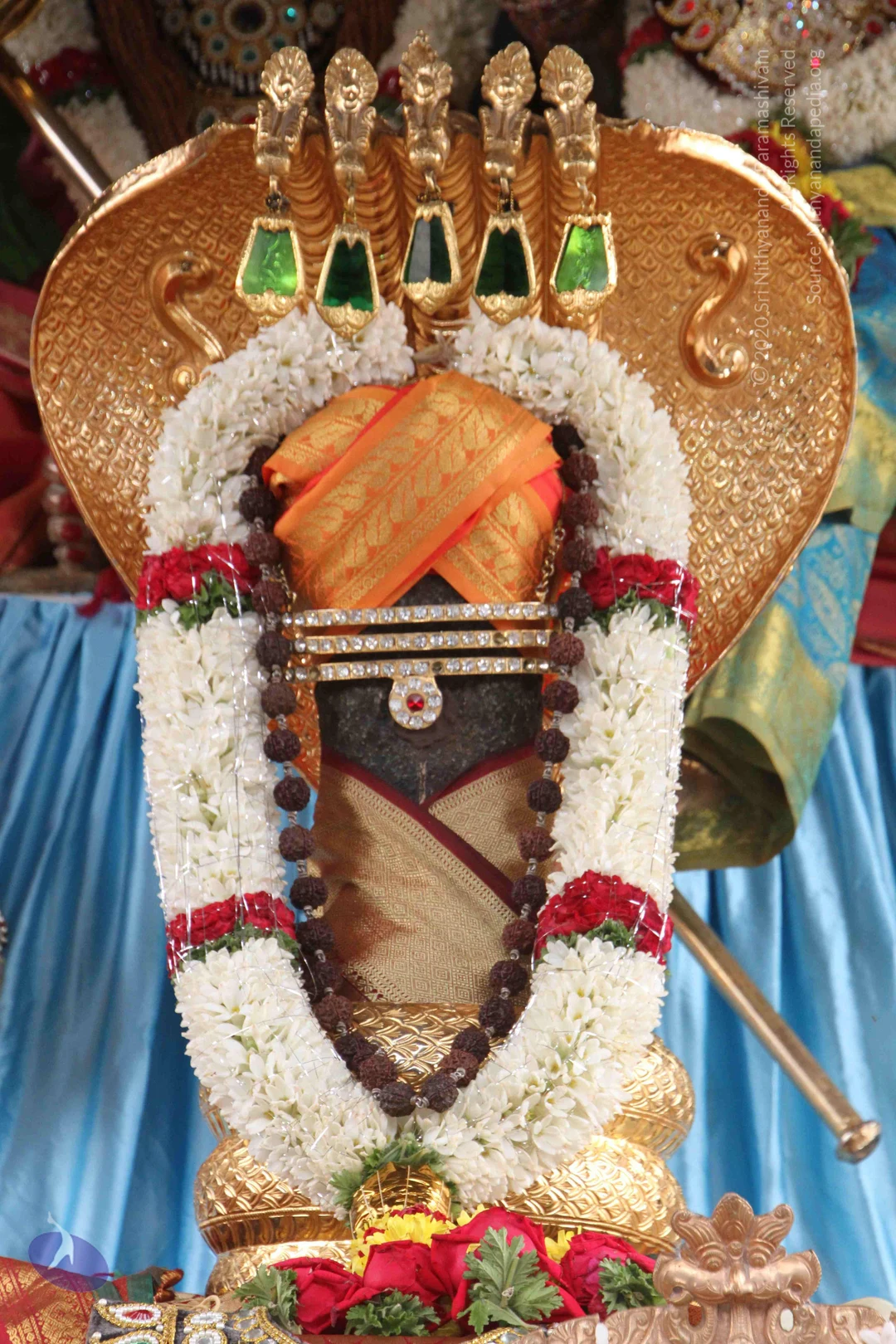
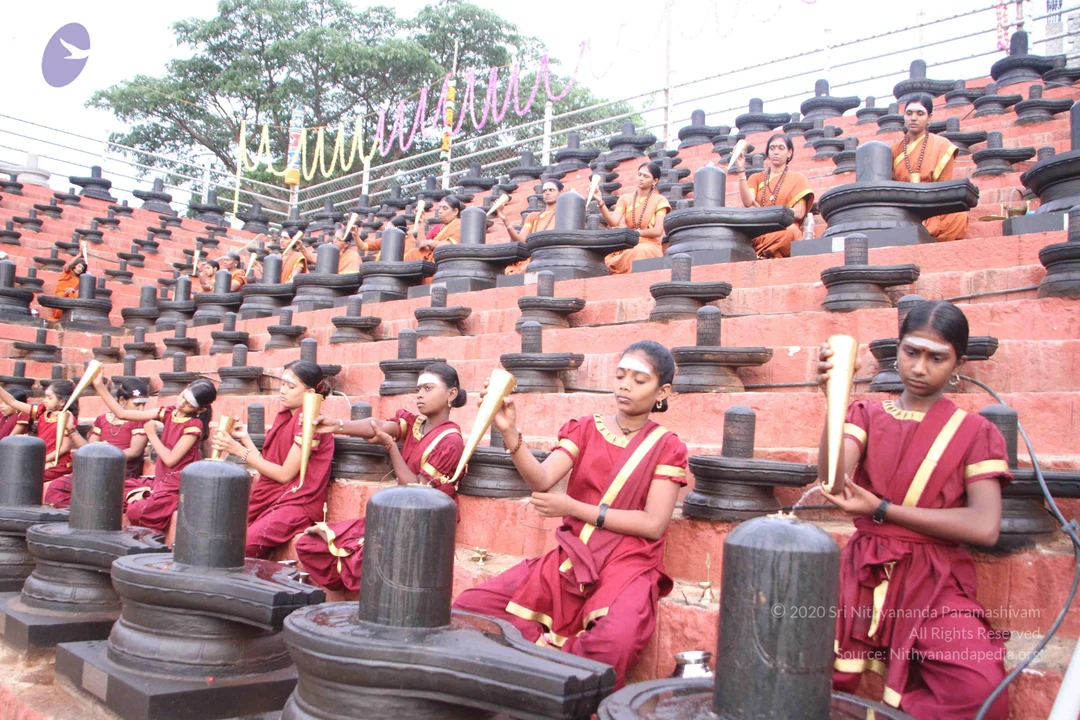
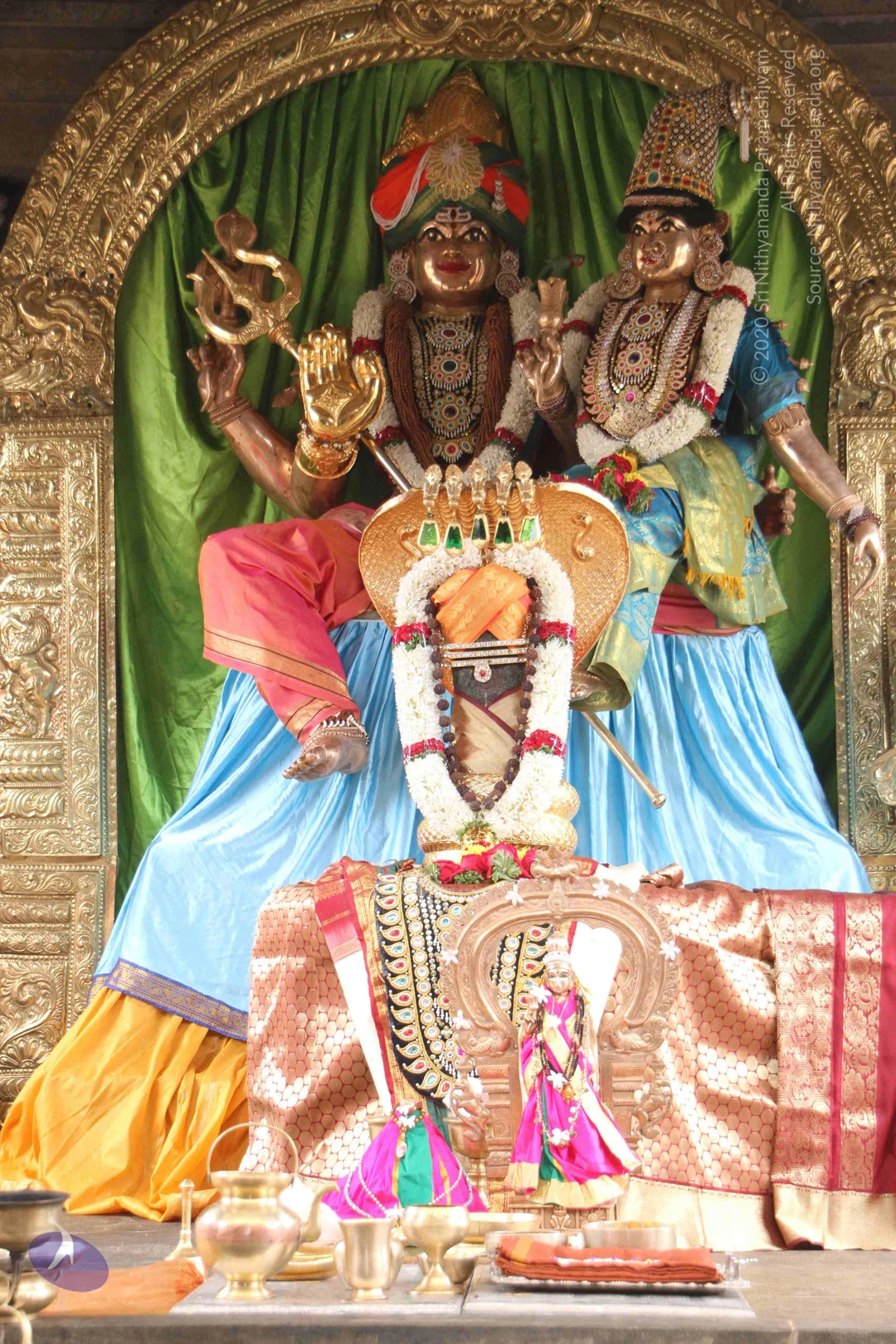
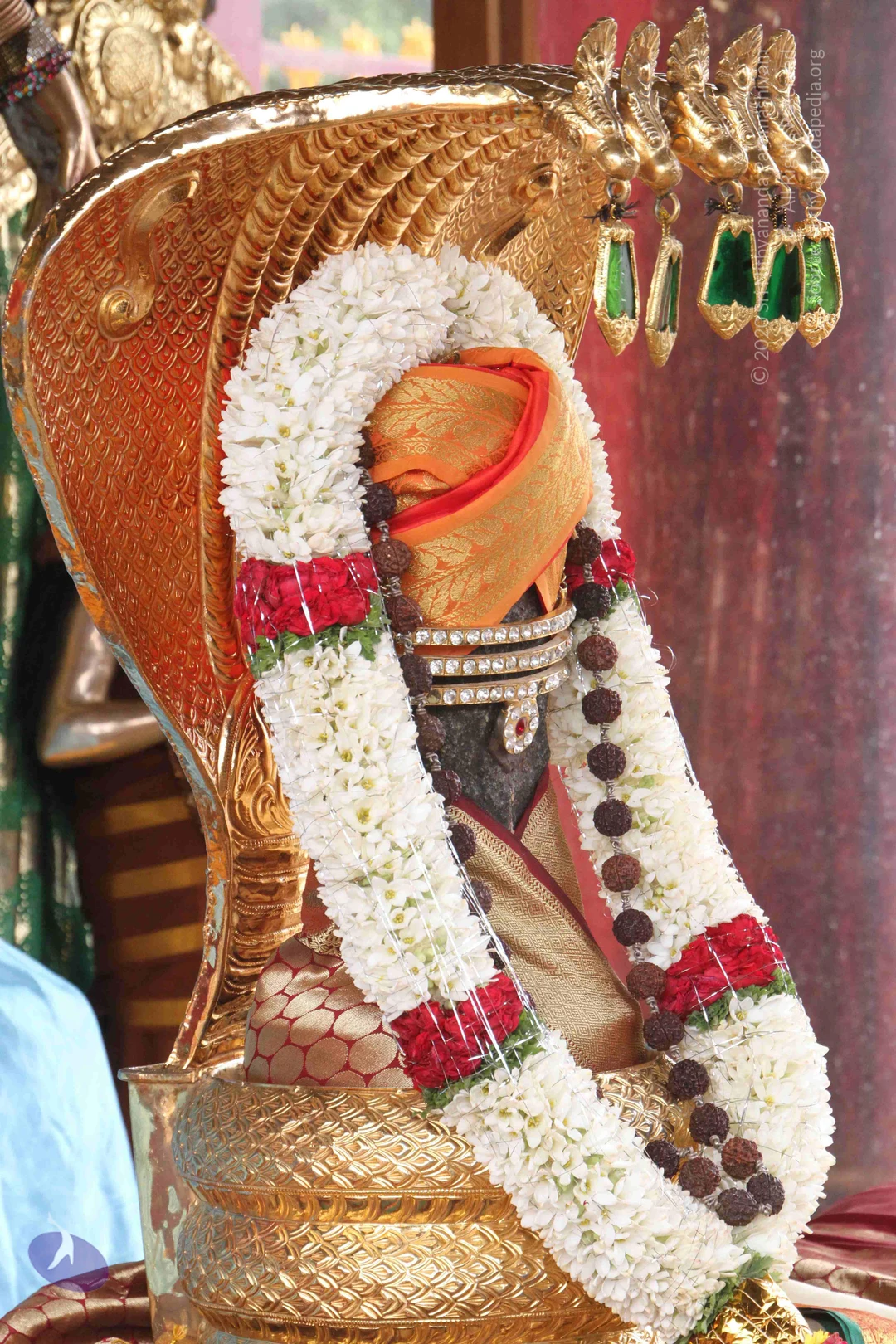
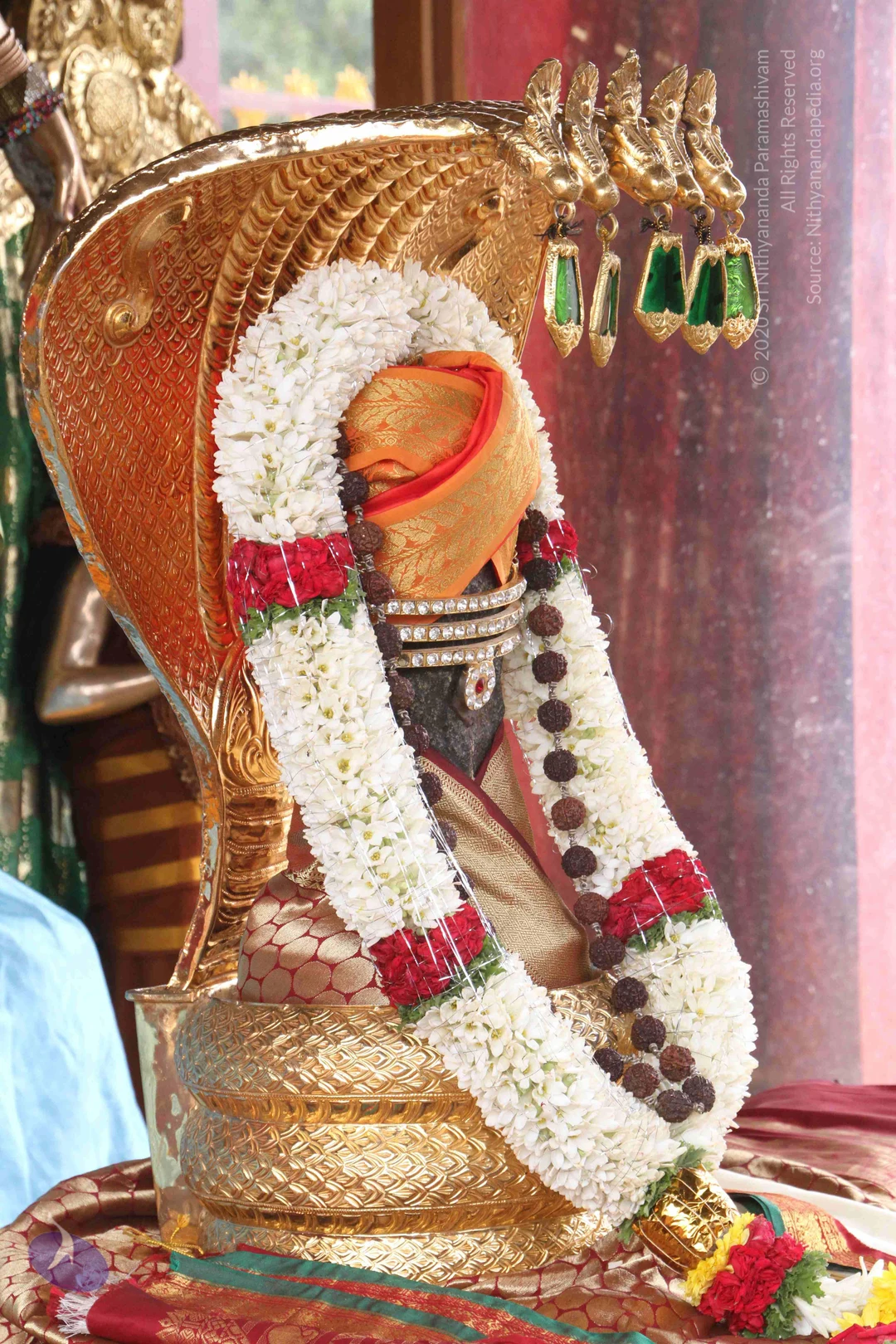
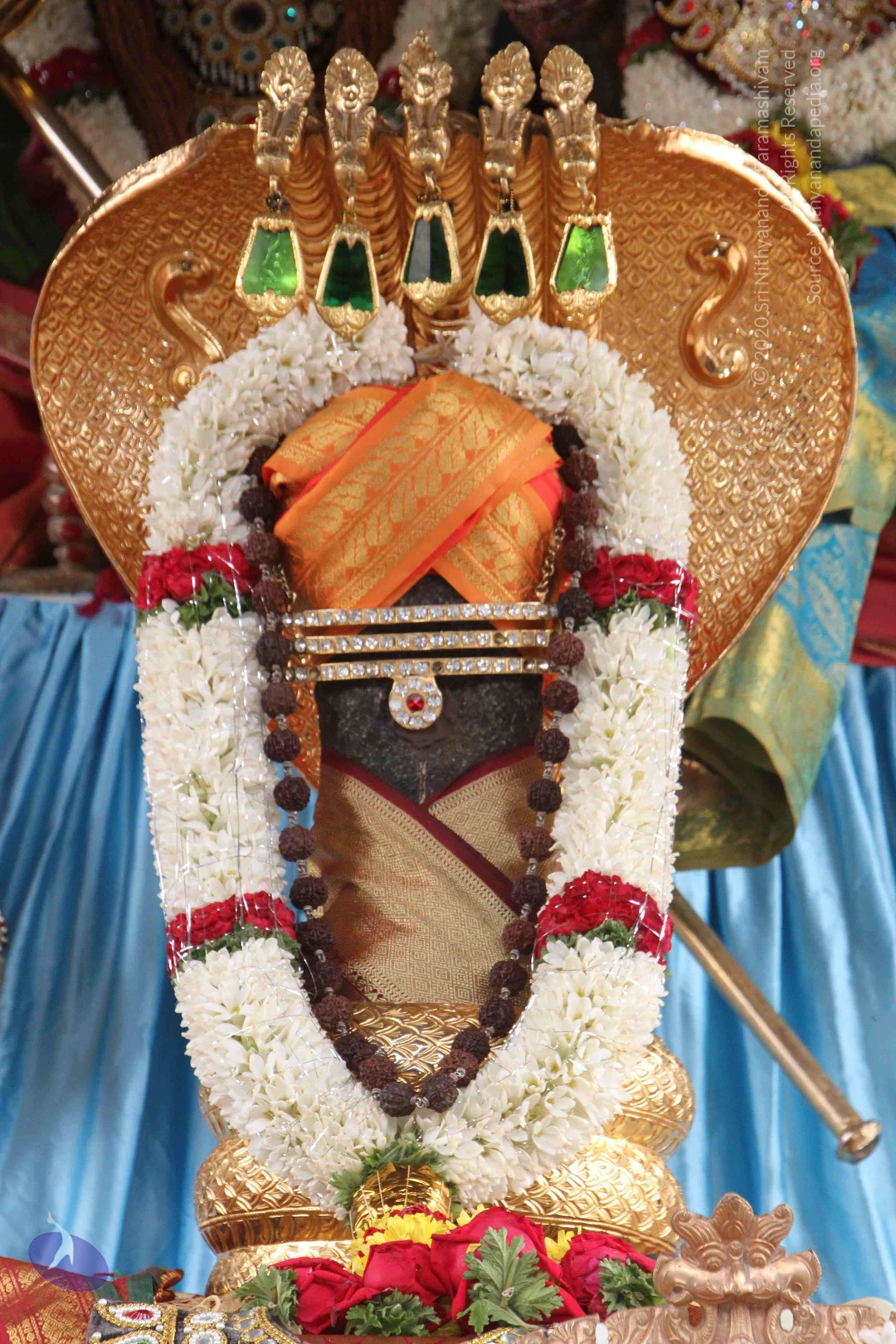
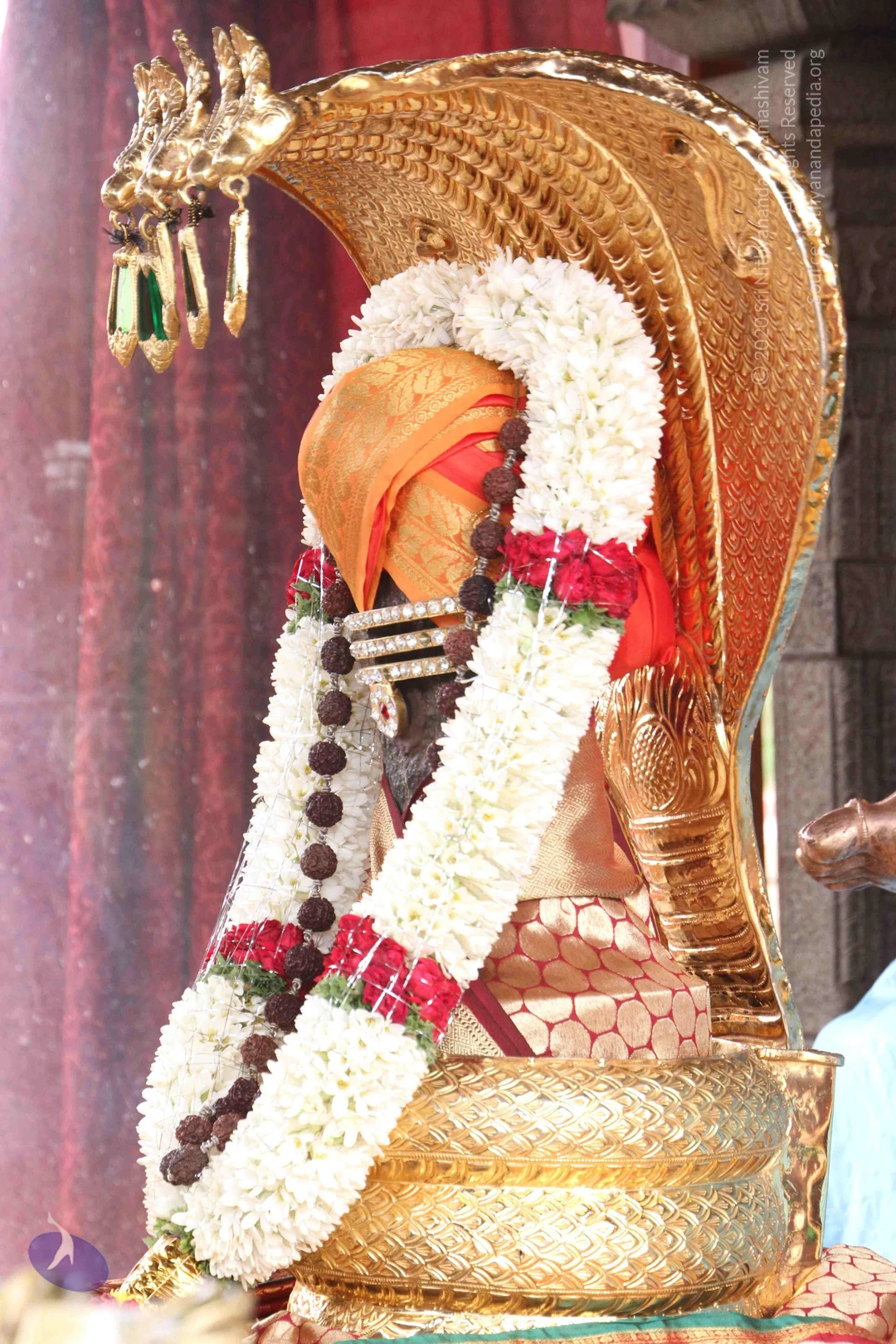
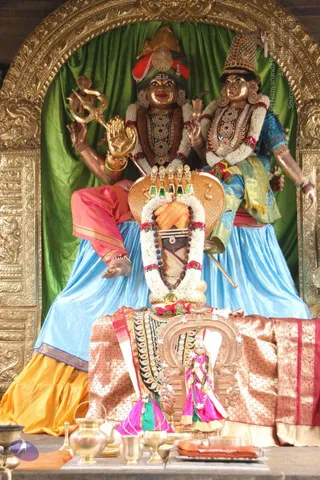
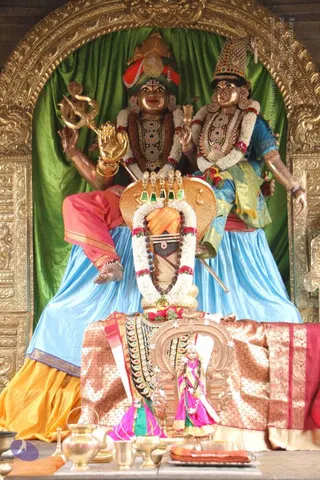
A photograph of a sculpted deity murti seated before a golden cobra hood with five raised serpent heads and green gemstone drops. The murti is draped in an orange and gold brocade cloth, wrapped with a jewelled band, and adorned with long white jasmine garlands interspersed with red flower strands and a rudraksha mala hanging down the chest. A gold-and-red cloth and marigold-type flowers rest on the base in front. No physical people are visible, and the image is a photo of a statue, so no living person is depicted.Women and girls in matching maroon saris with gold borders perform a ritual abhishekam on a tiered red stepped platform lined with black Shiva lingams. Many hold golden conical vessels pouring liquid over the lingams. Several wear white tilak marks on their foreheads and some have rudraksha malas. Behind them, saffron-robed participants sit on higher steps. Pink and yellow decorative lettering stands on the upper left.Photograph of a seated group in an ashram hall during a ritual or satsang. In the foreground a shaved-headed young man in a rust-red robe with an orange shawl and a gold-coloured chain with a pendant wears white vertical tilak on his forehead and presses his palms together in devotion. Behind him, rows of boys and young men in red and gold-bordered robes sit with white sacred ash on their foreheads, some with palms joined. On the right, a shaved-headed man in orange robes wears a long rudraksha mala. Brass cups and a small lamp sit on the floor before them. Individual identity uncertain from appearance; no candidate is clearly the page's subject.

June 24 2013

Original wiki page
Contents

Description:

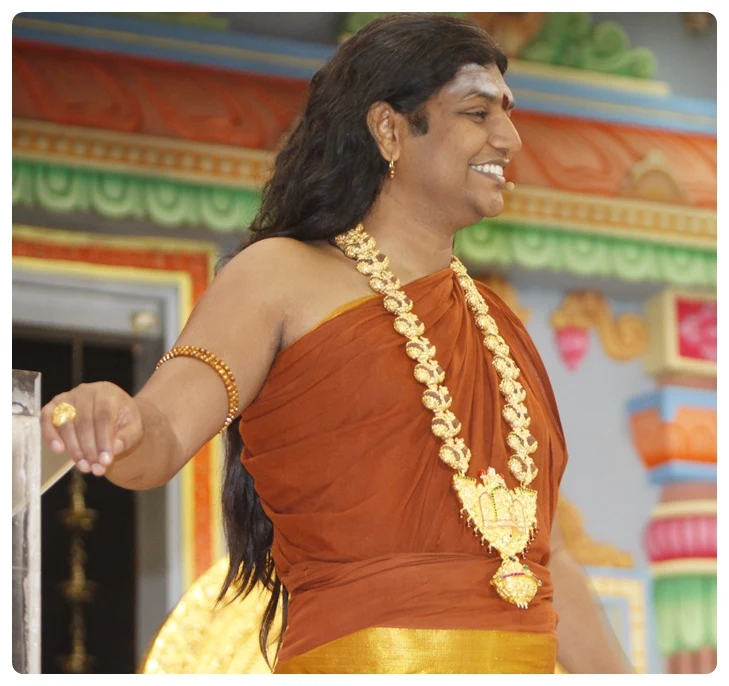
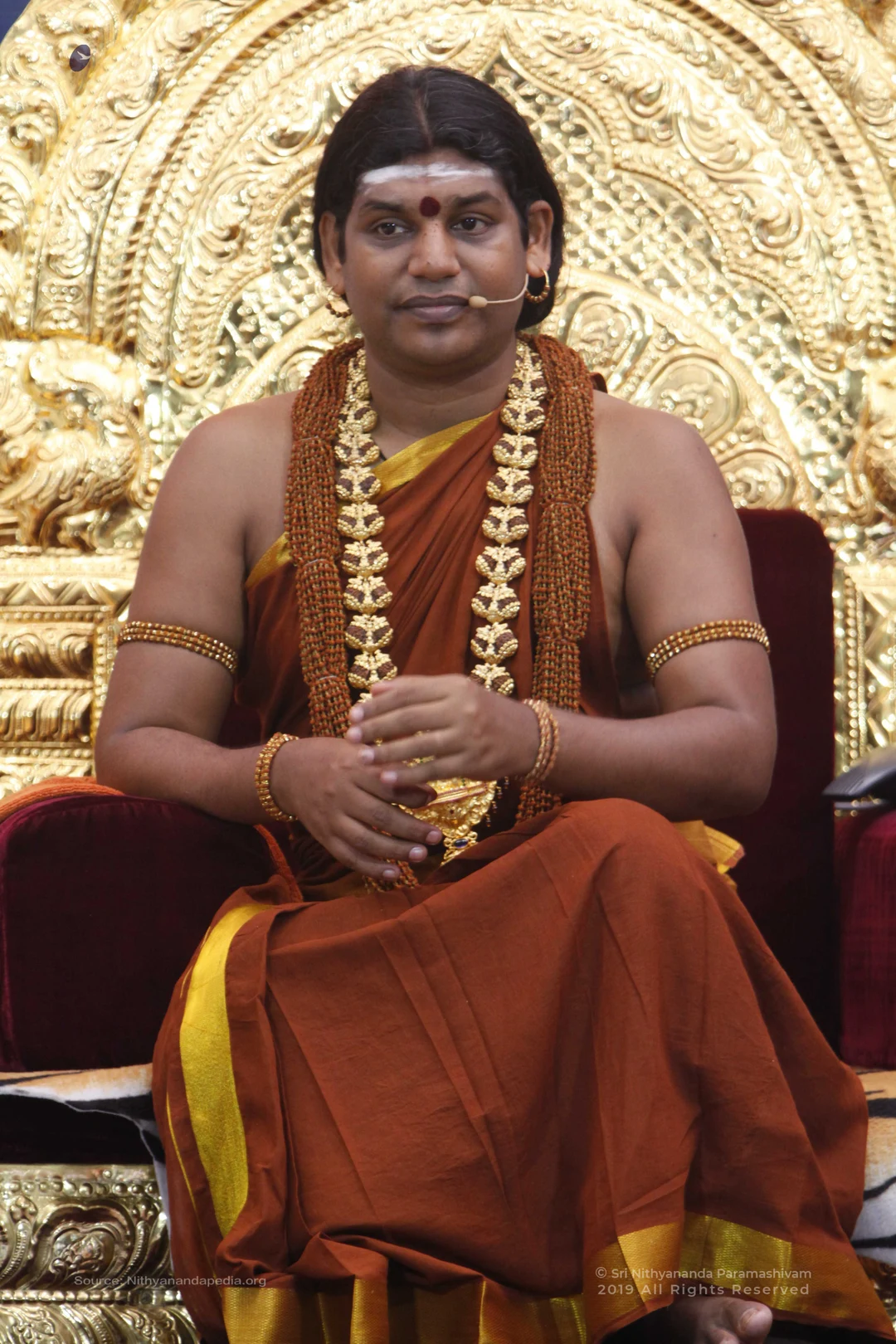
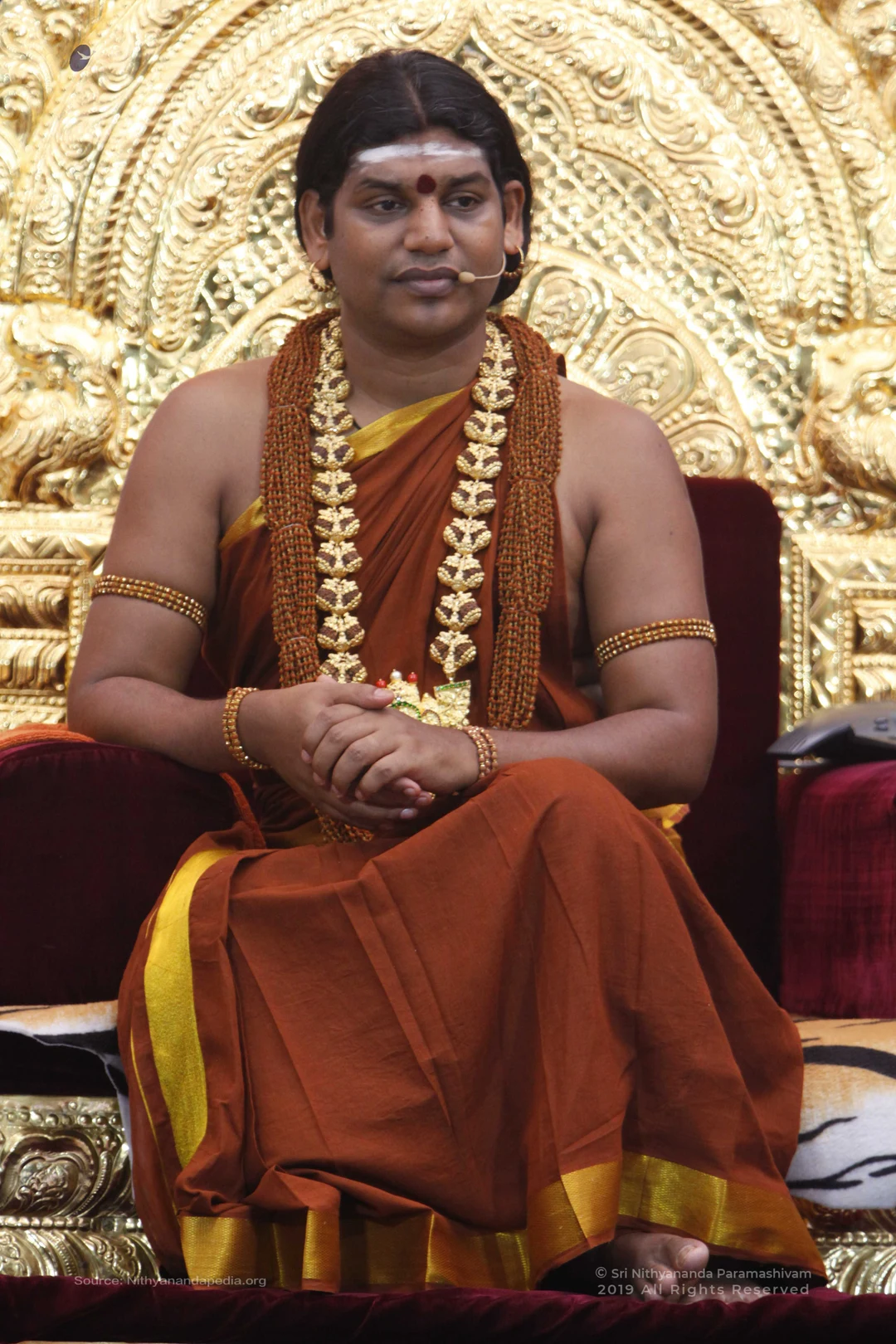
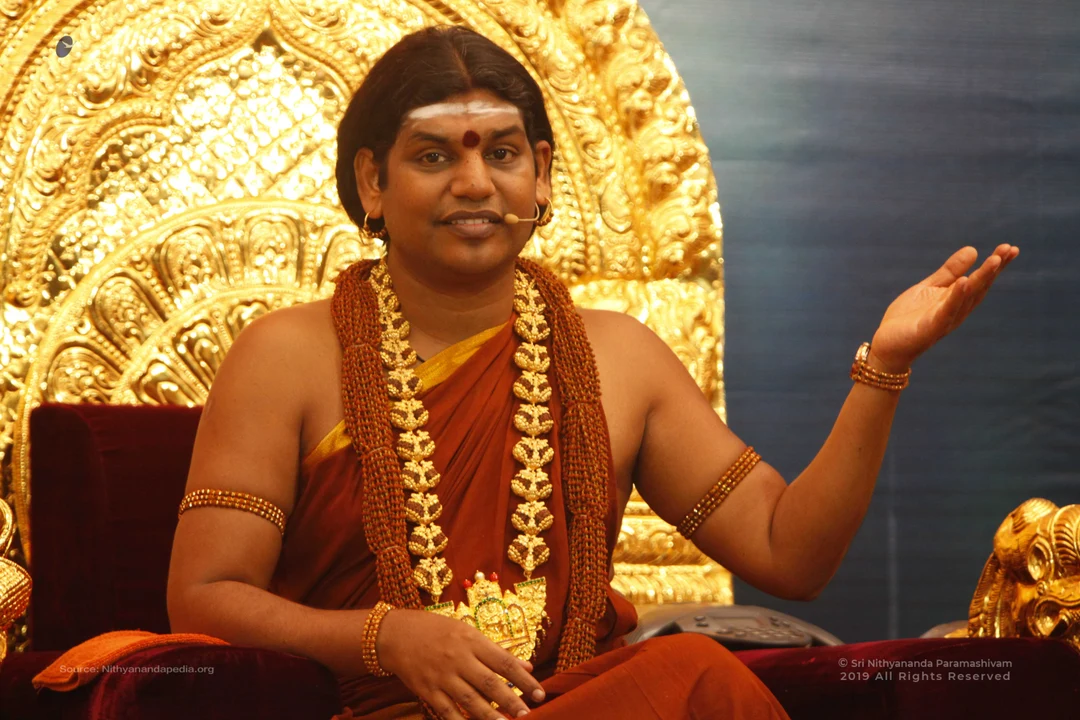
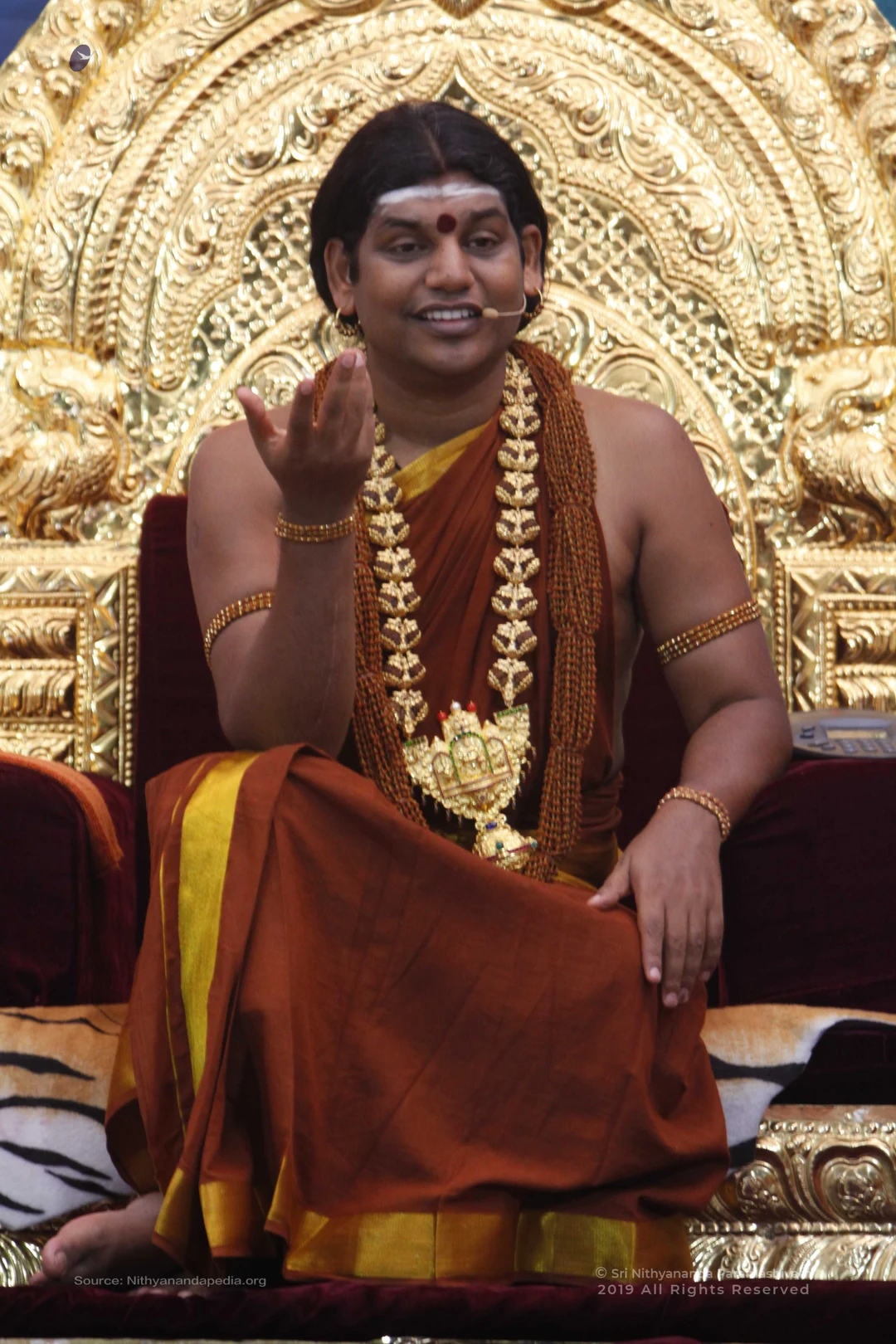
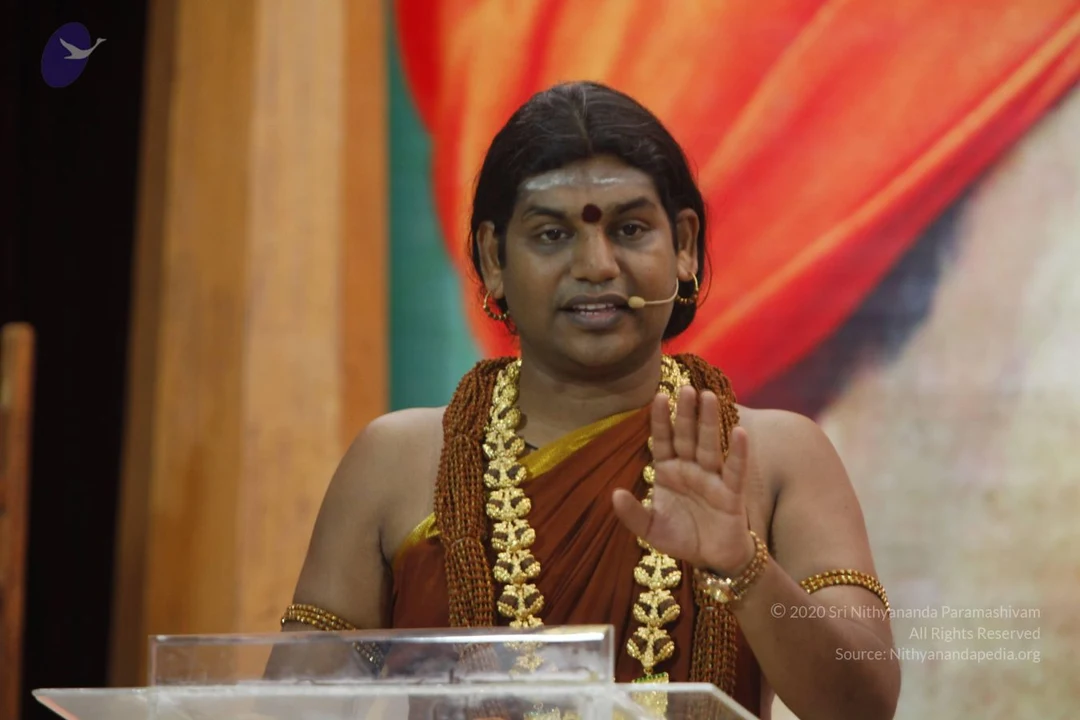
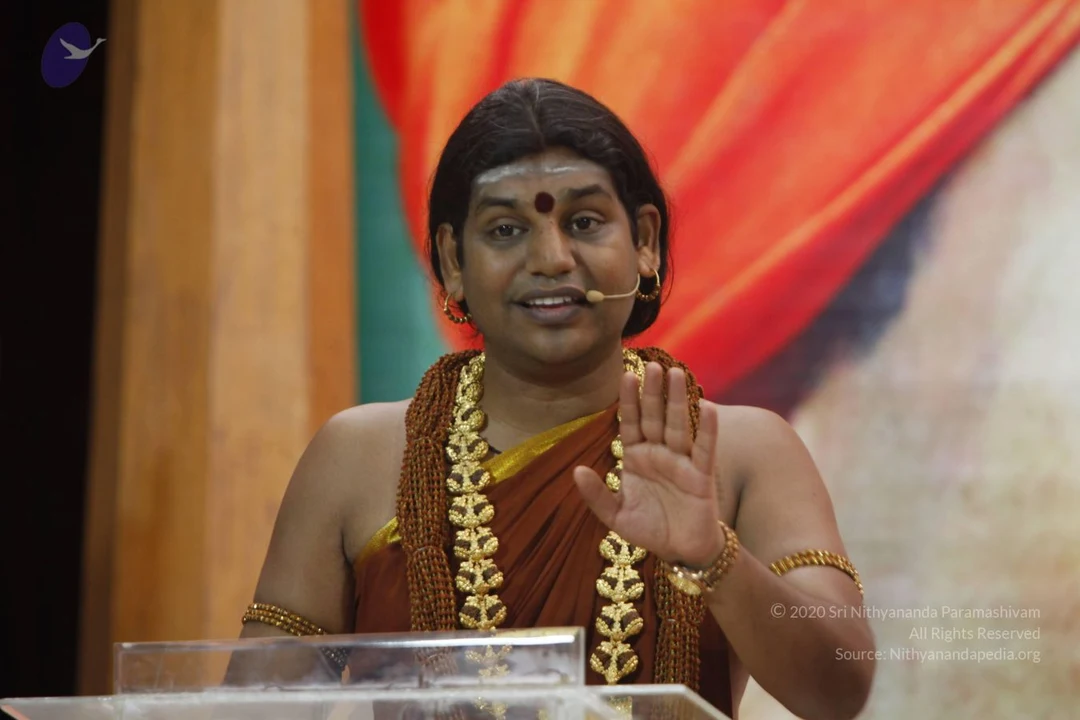
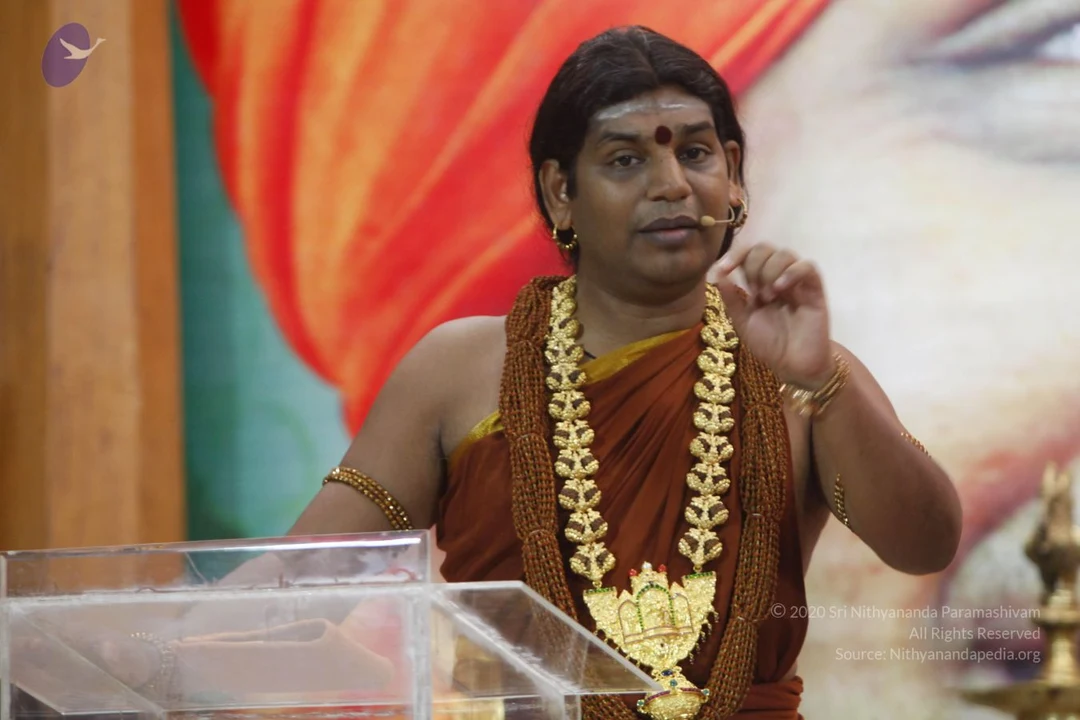
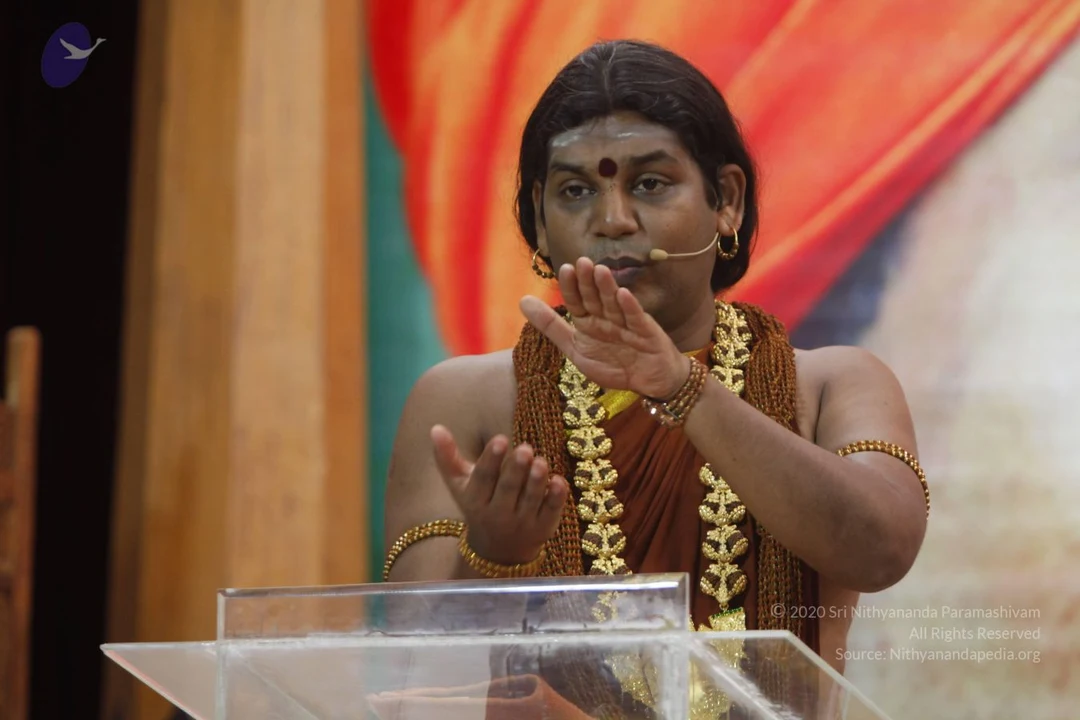
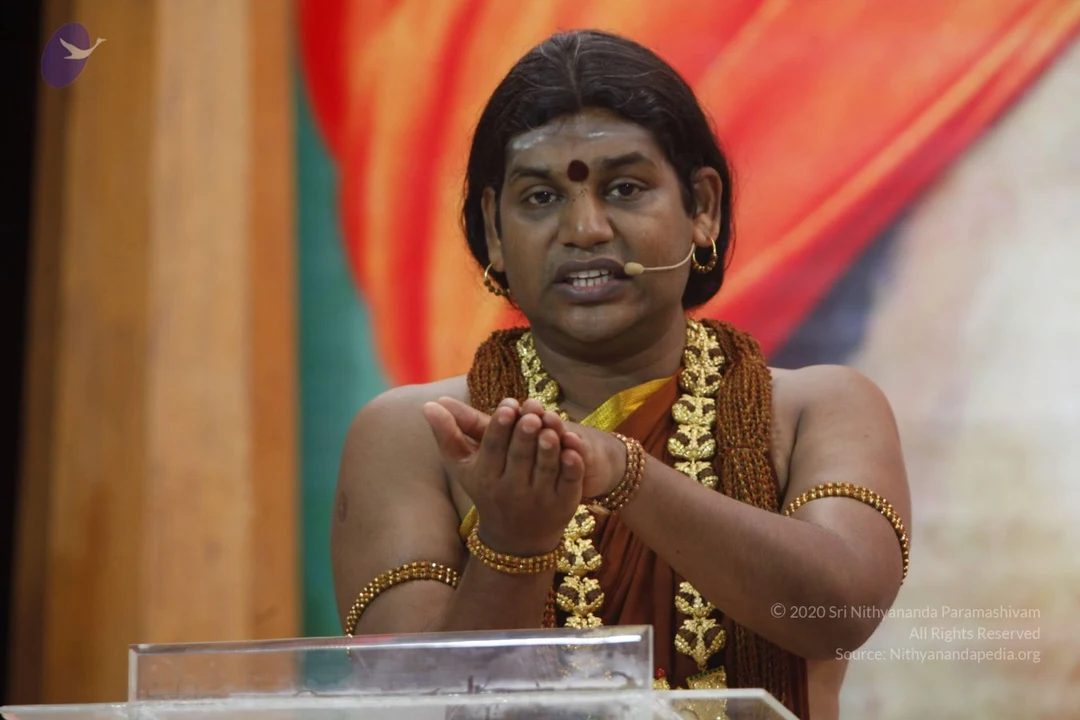
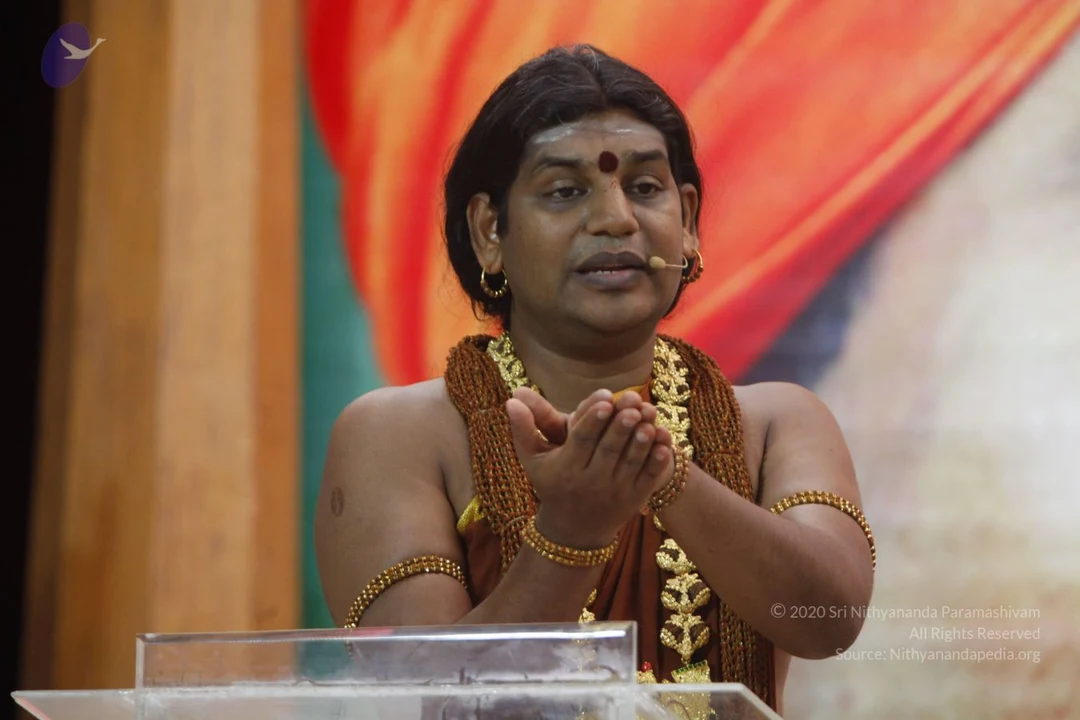
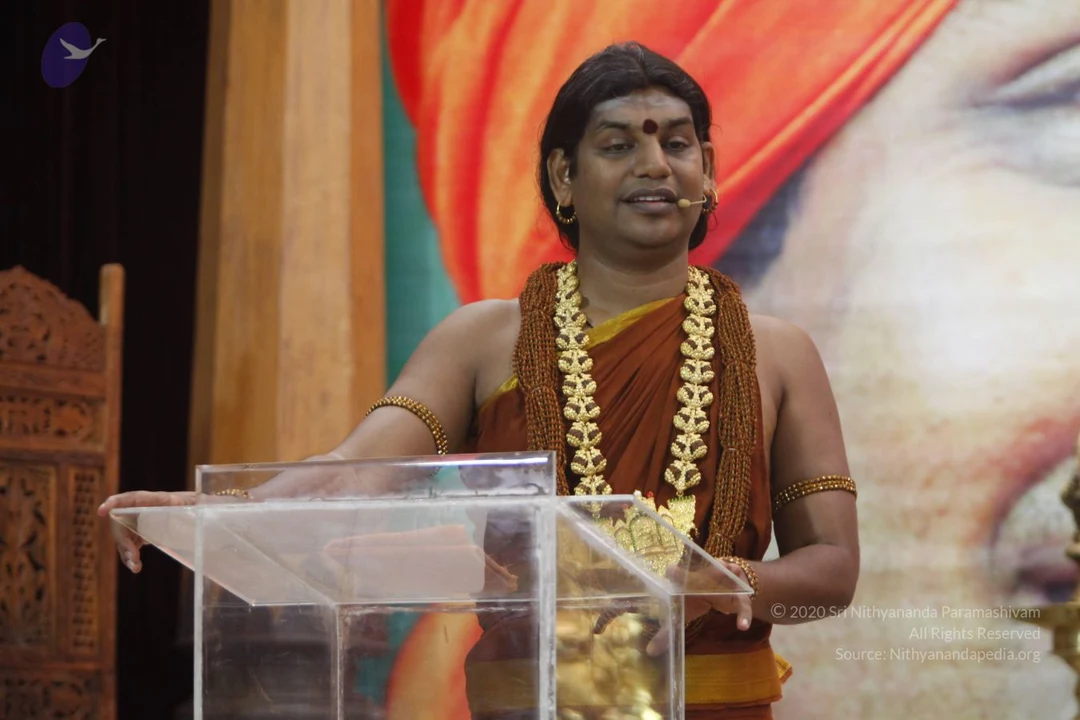
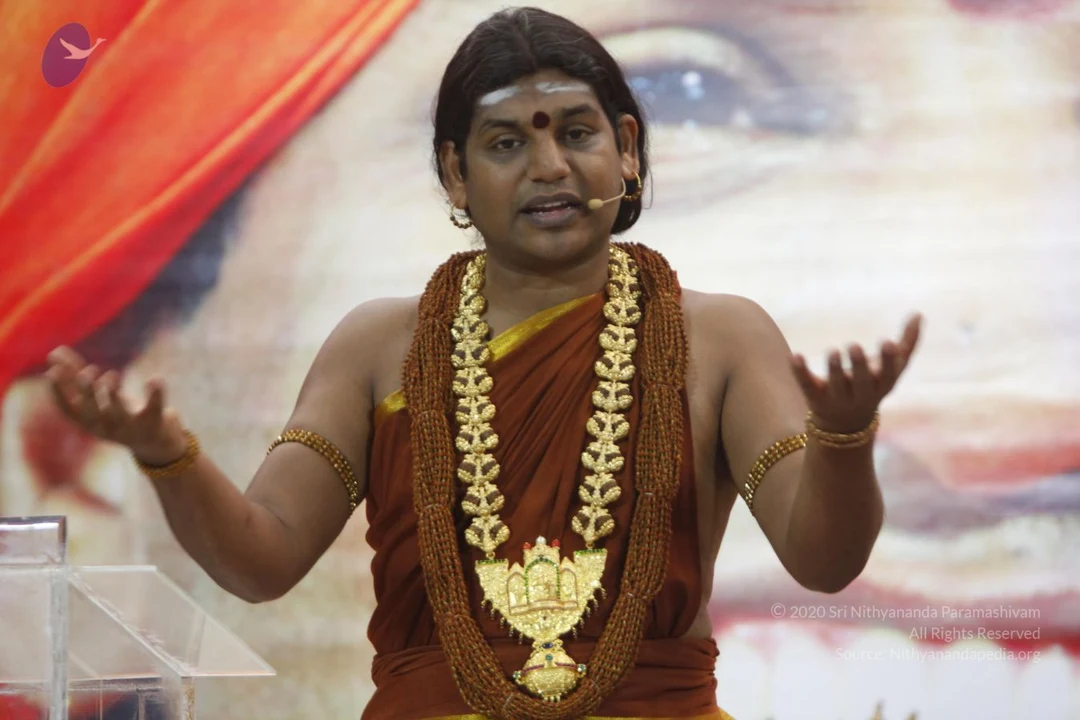
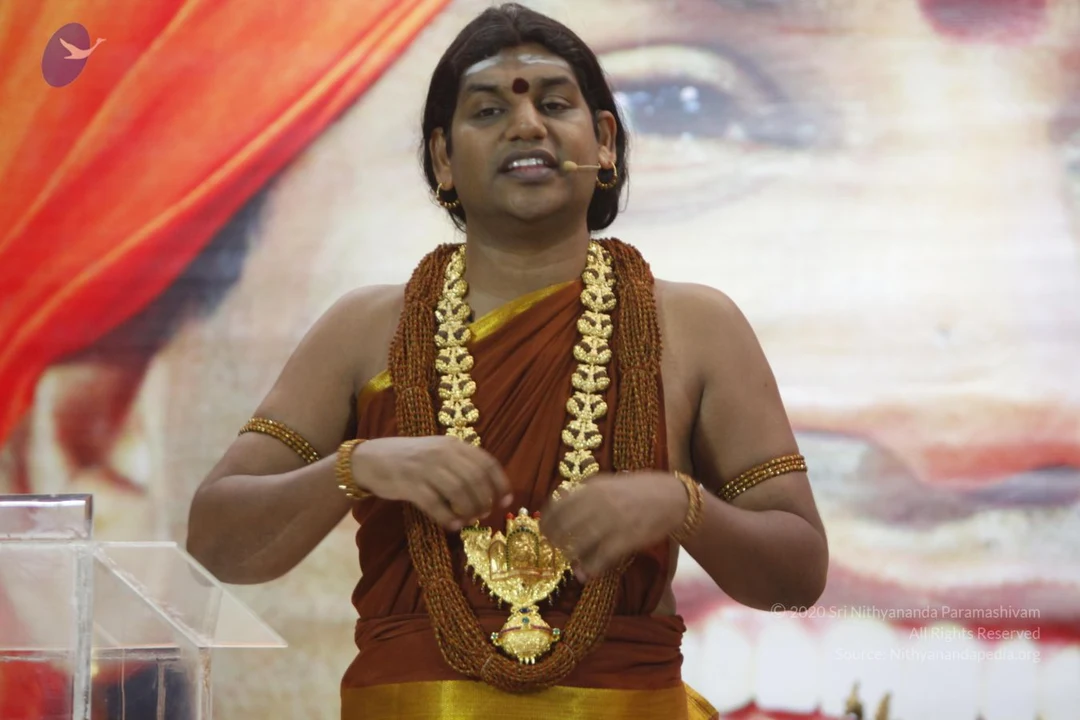
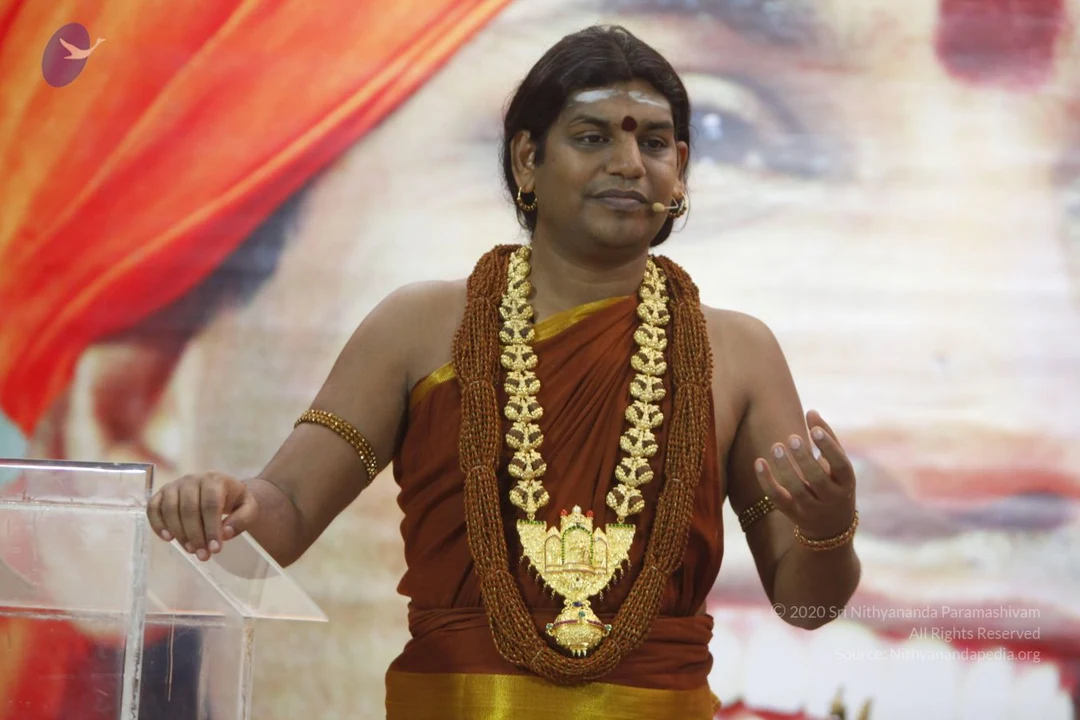
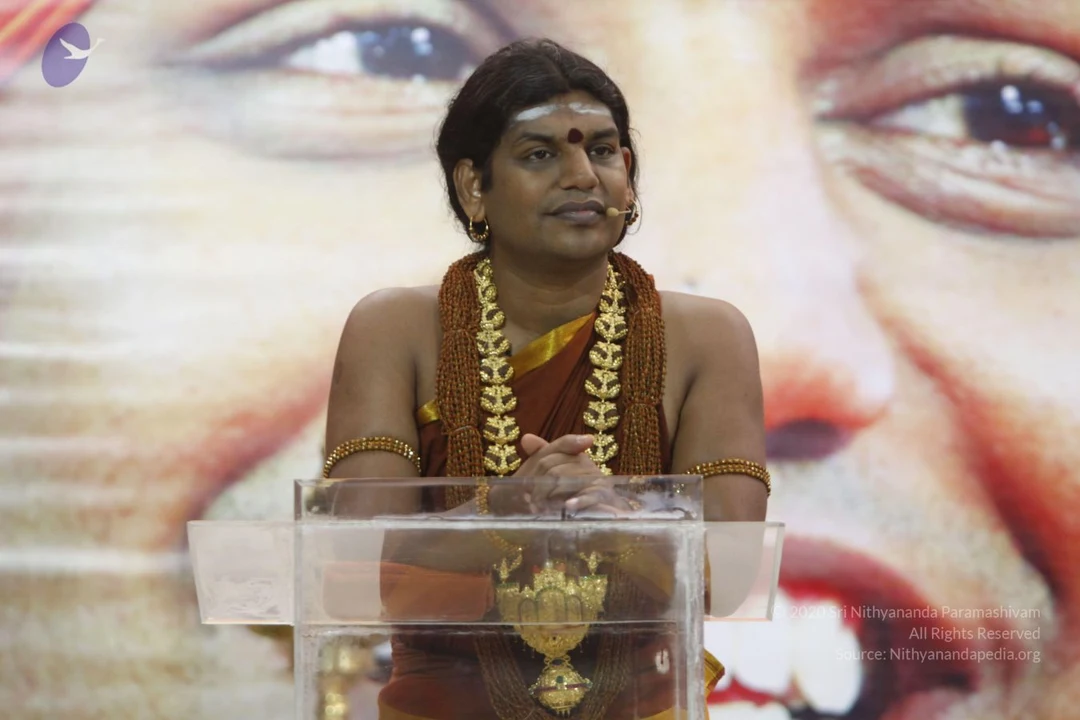
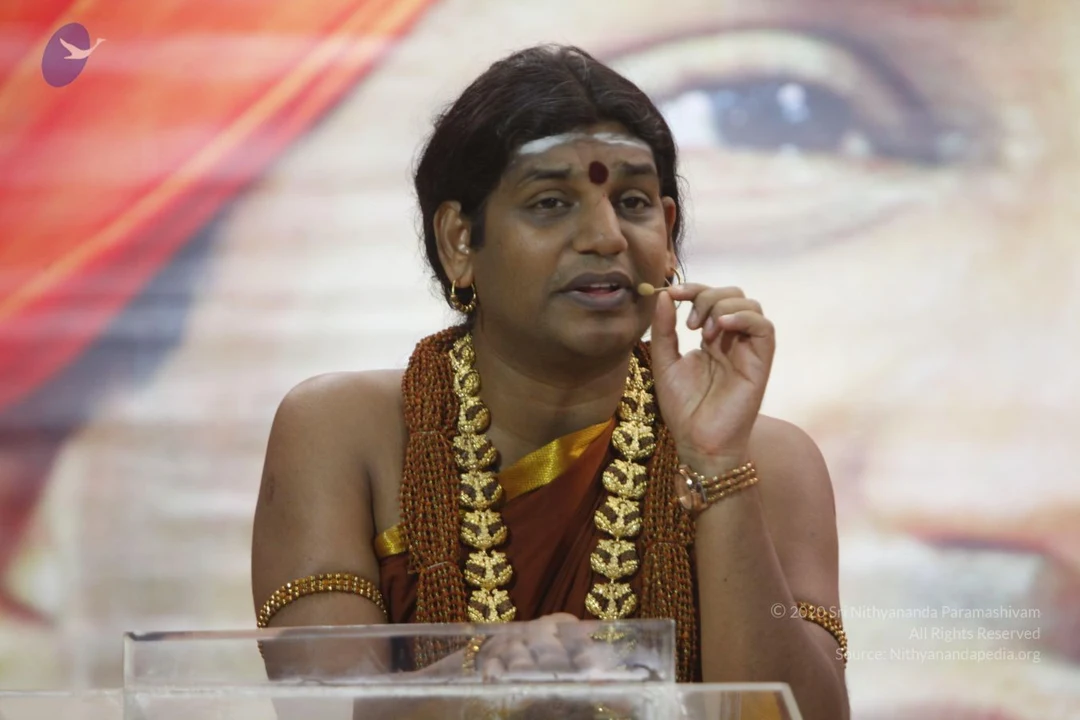
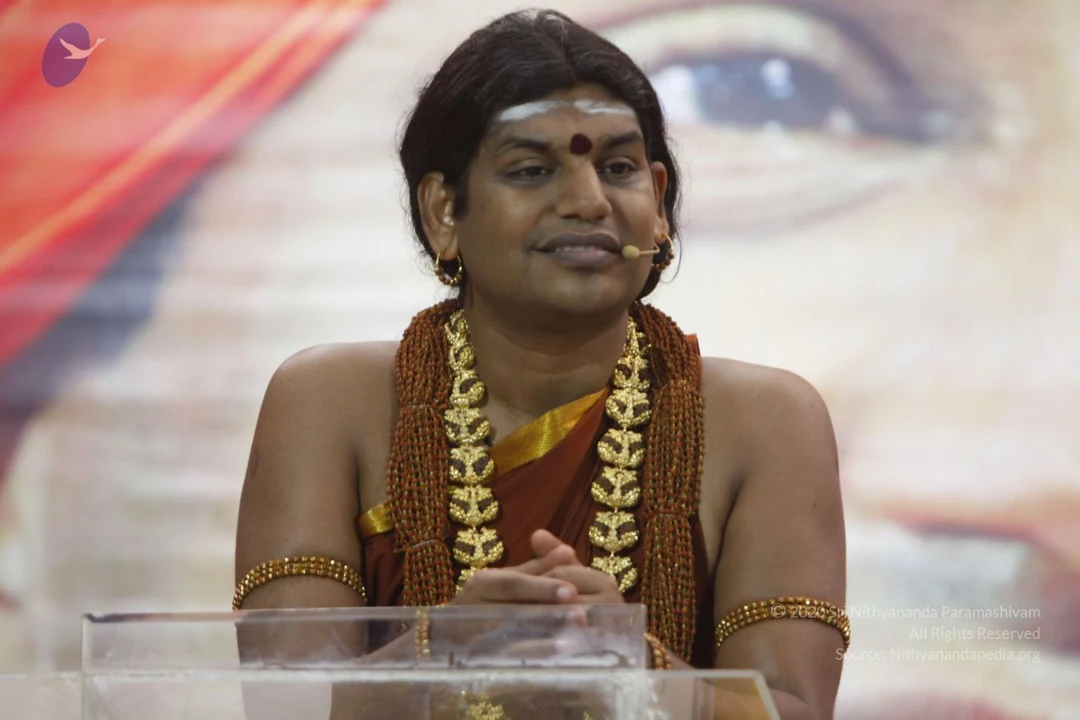
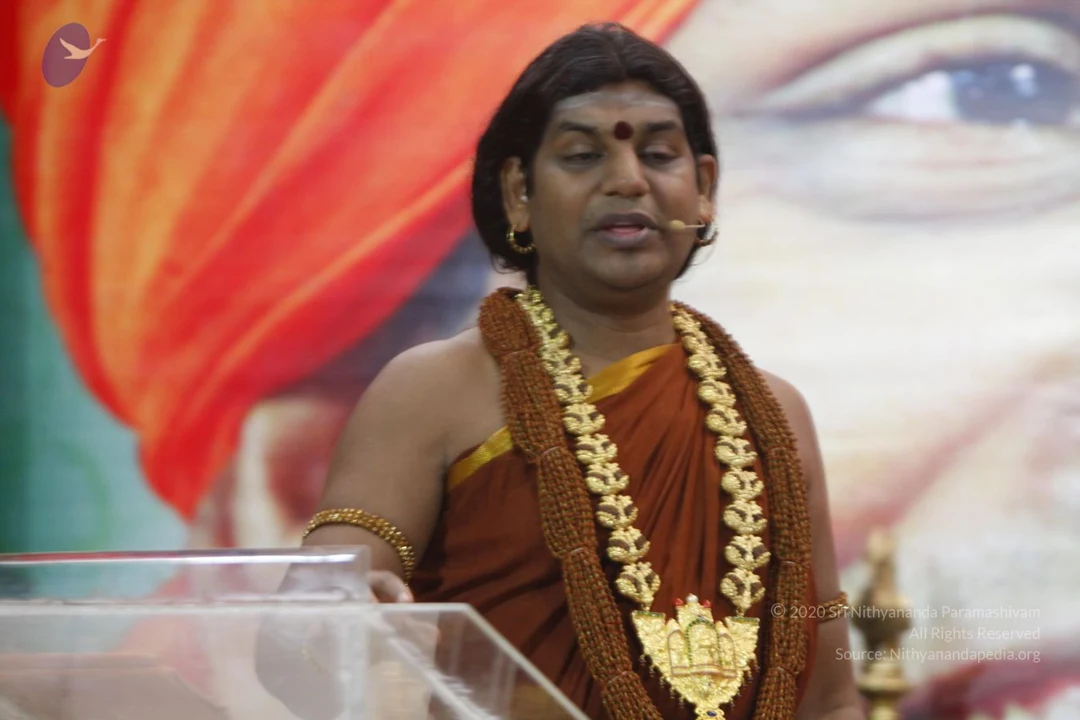
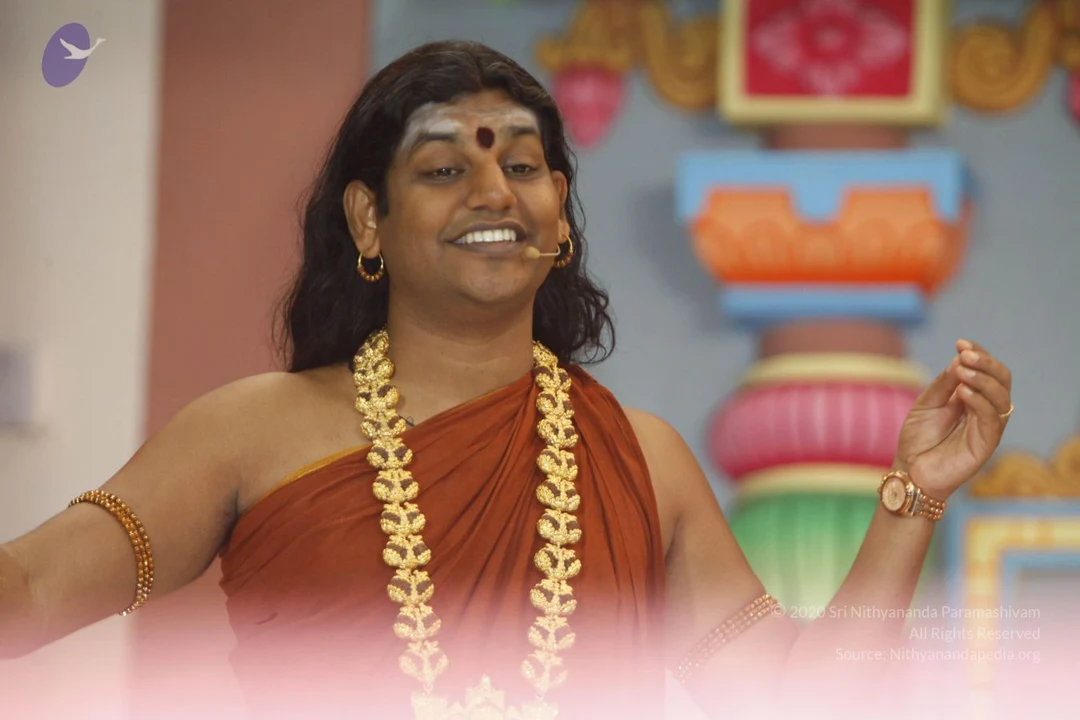
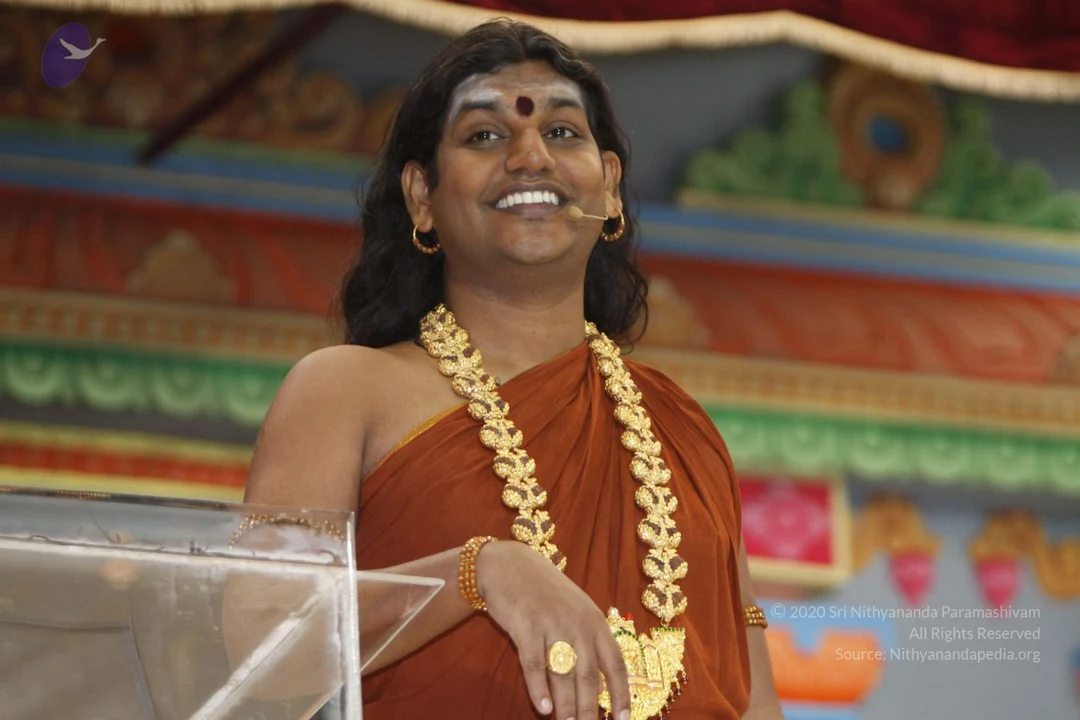
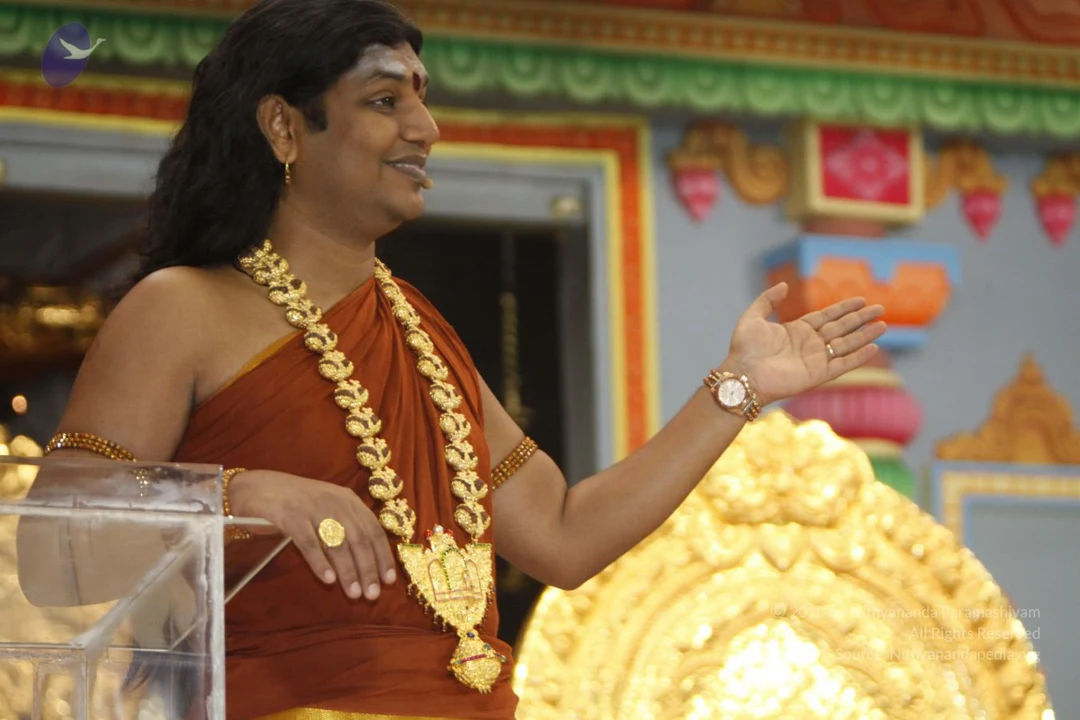
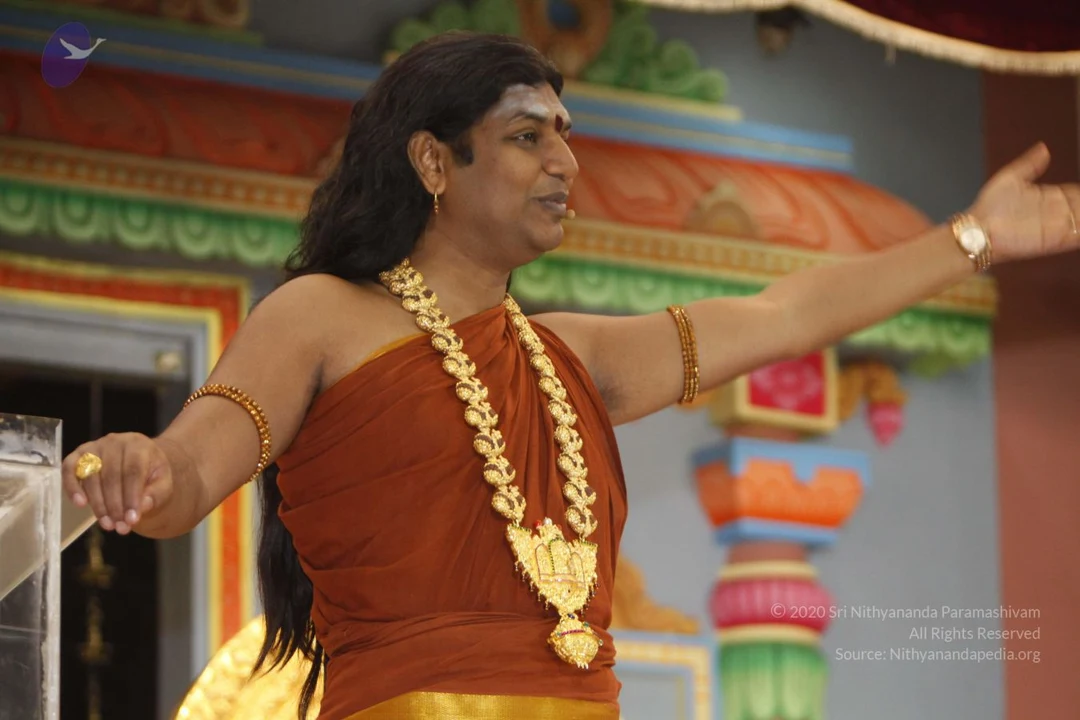
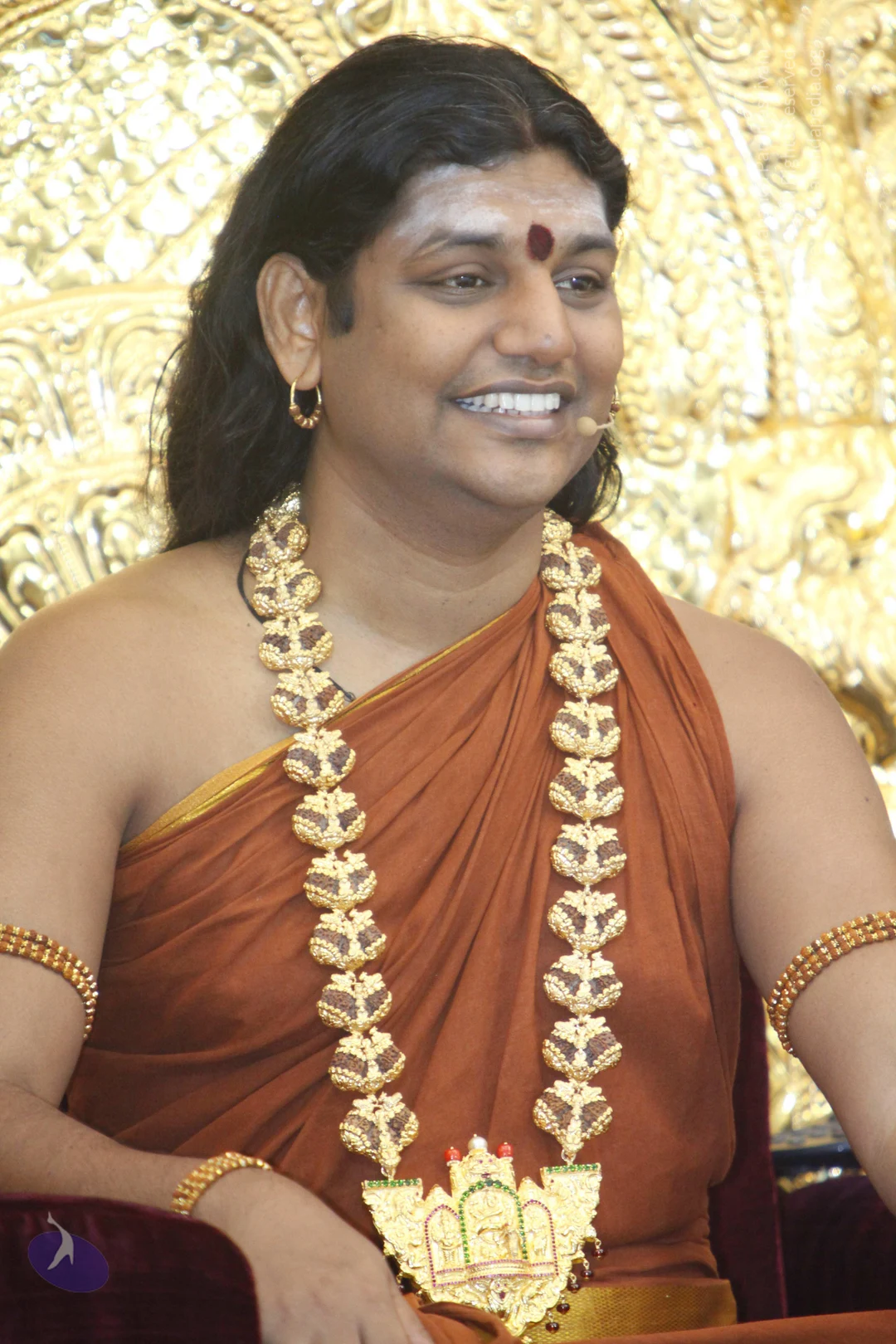
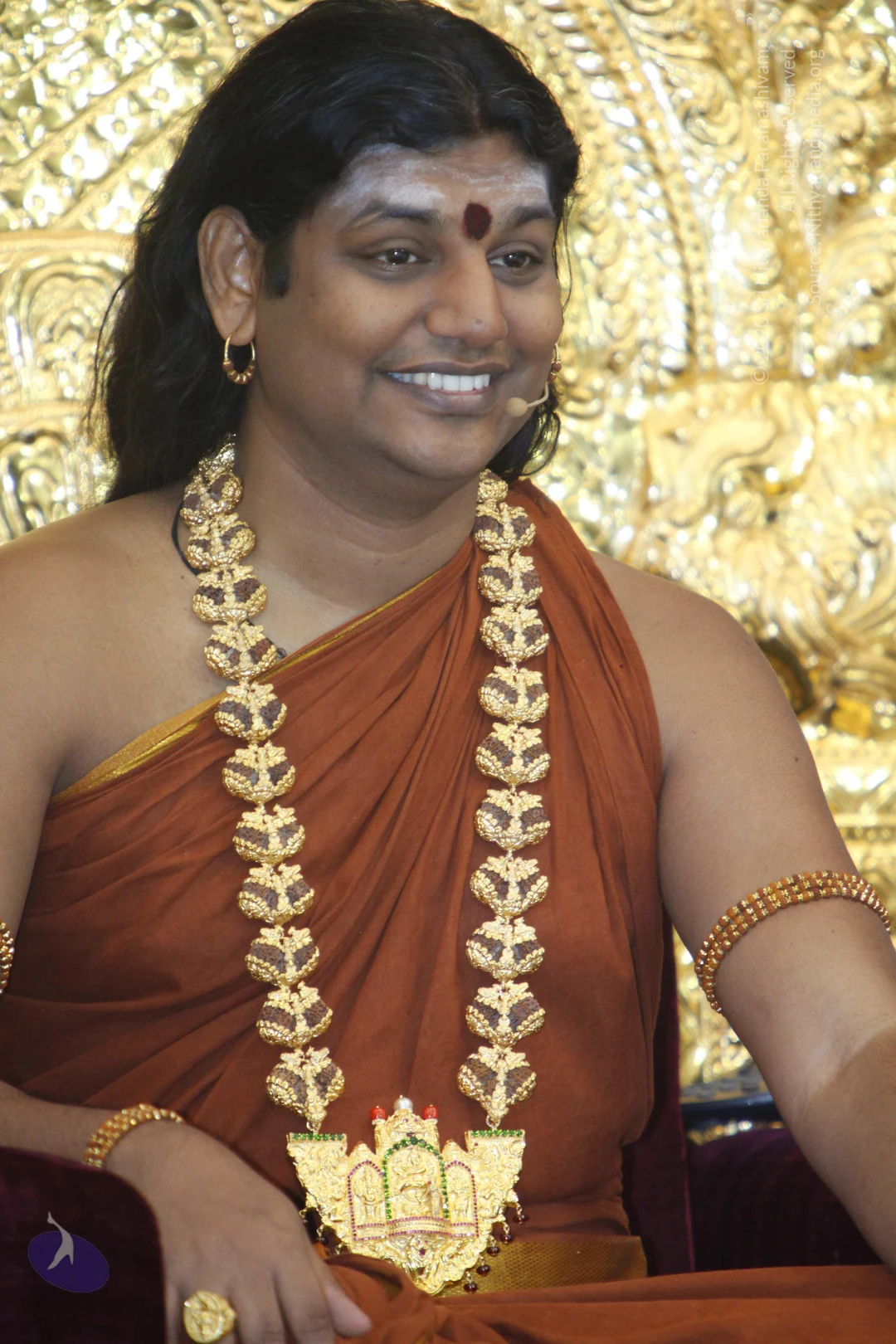
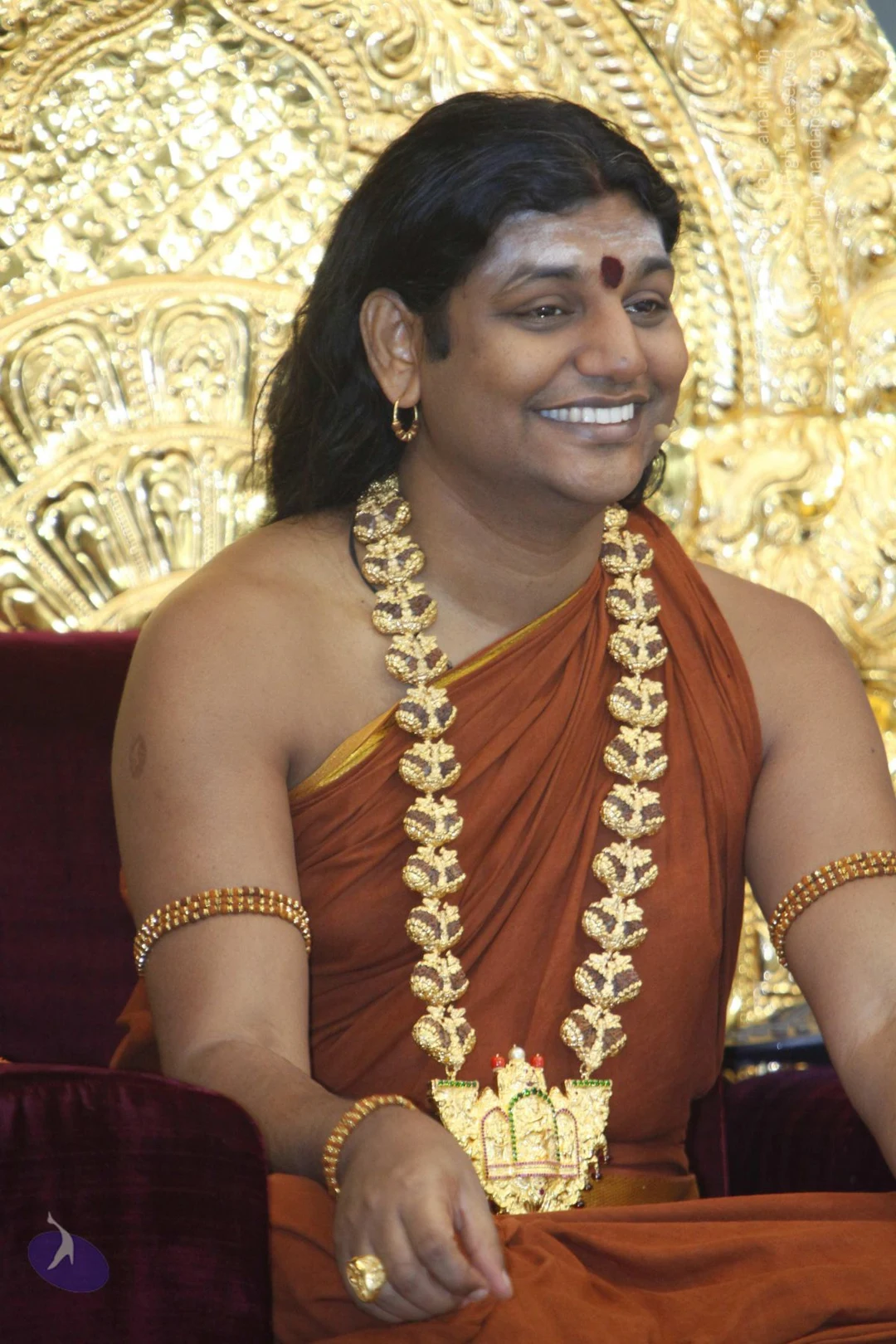
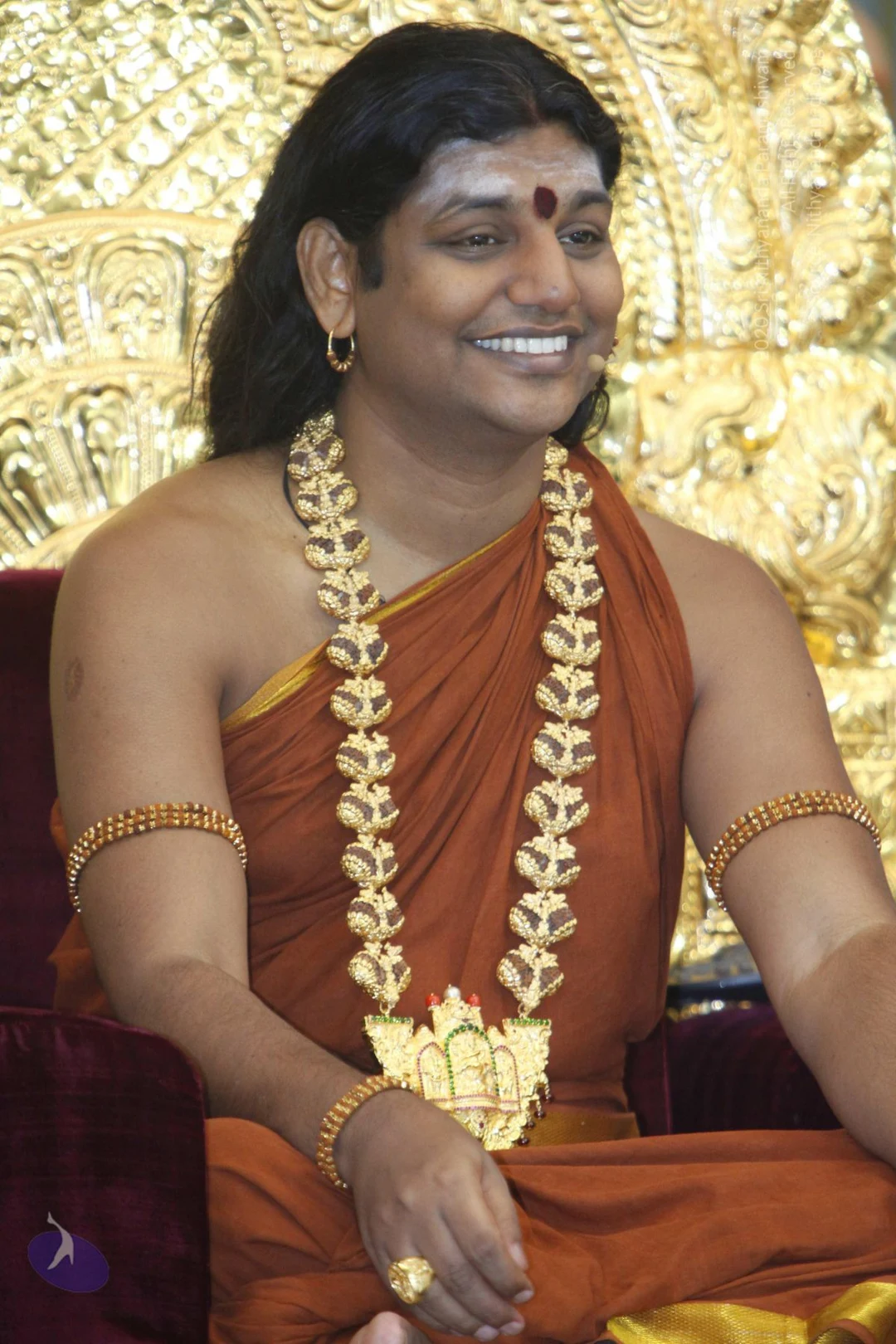
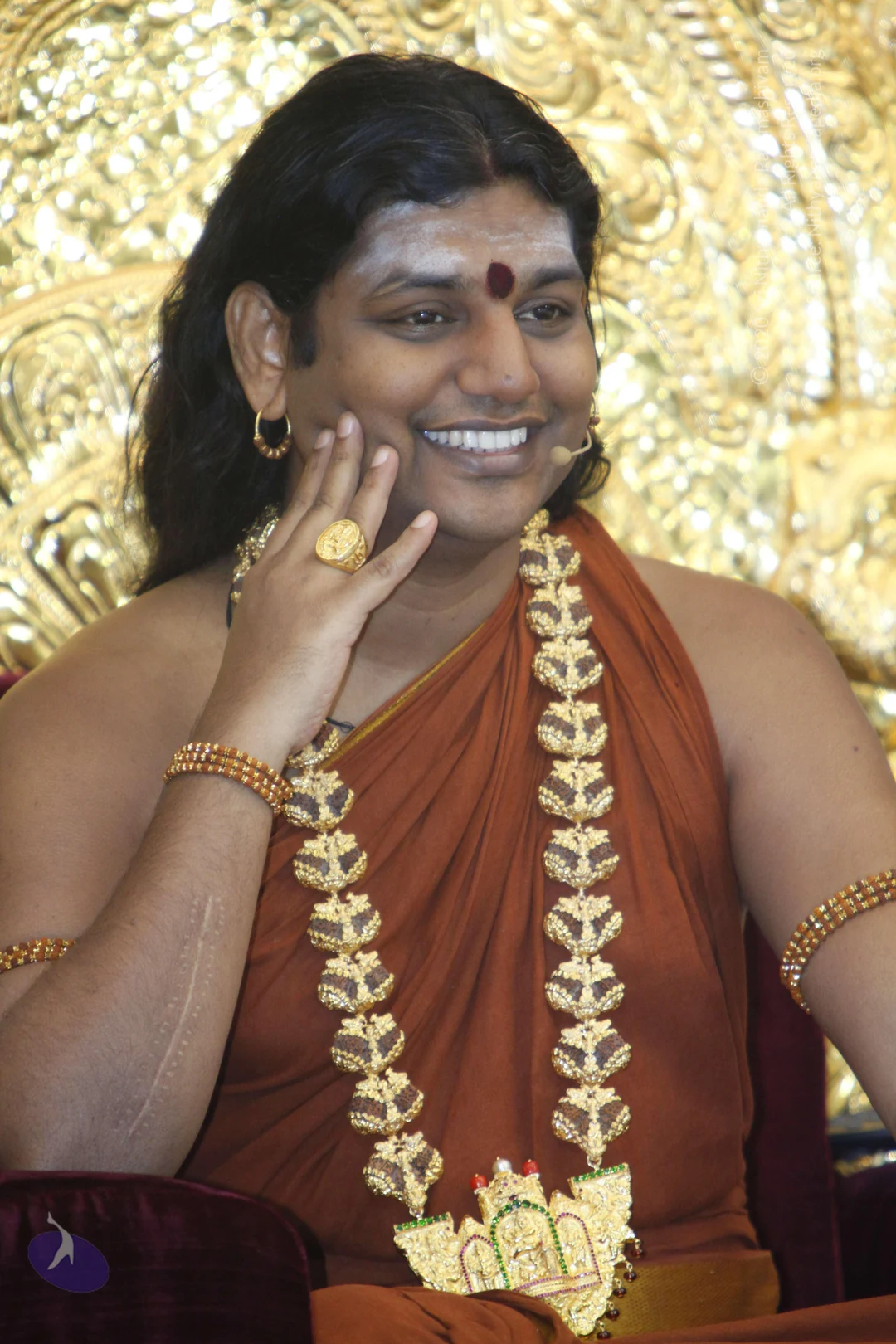
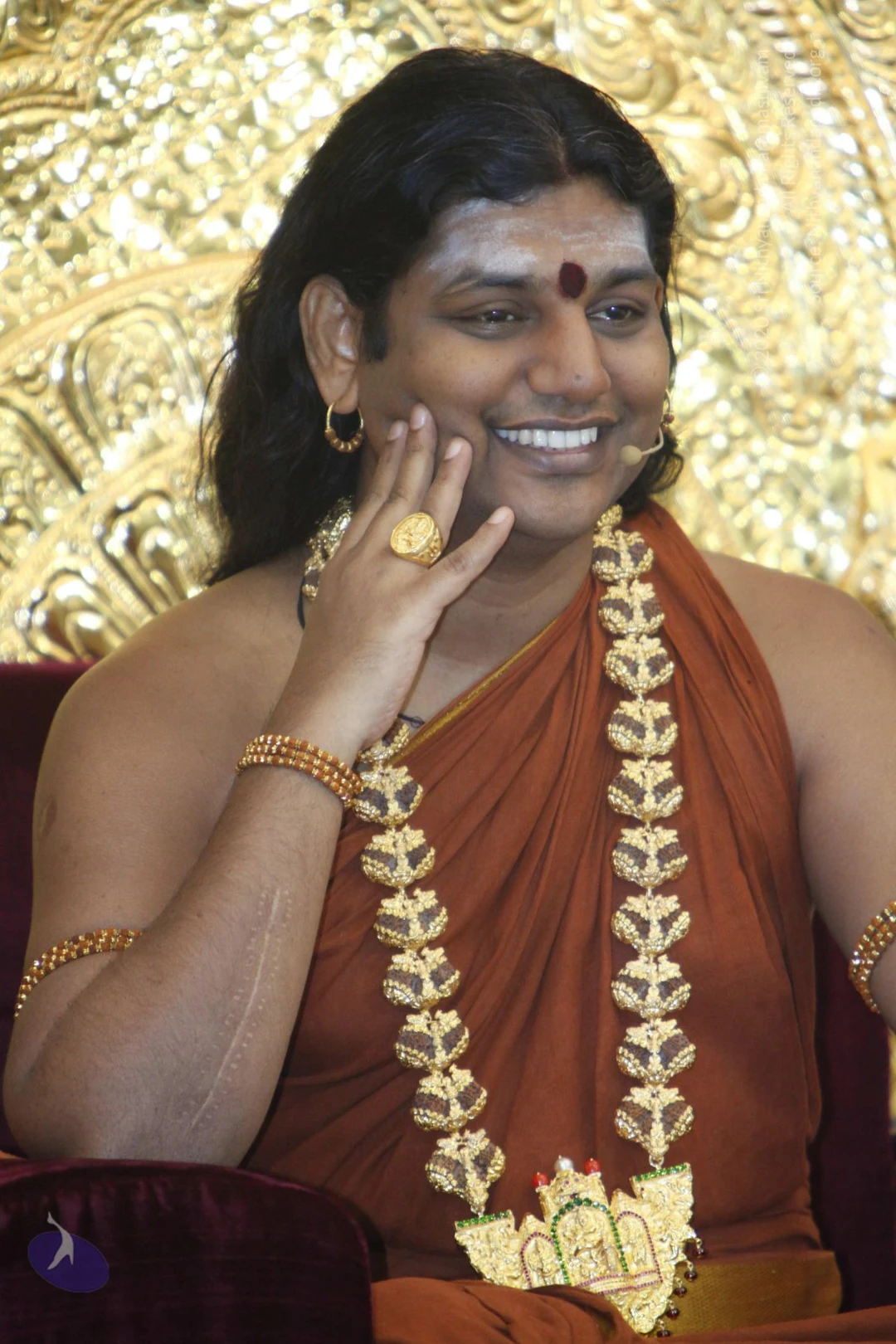
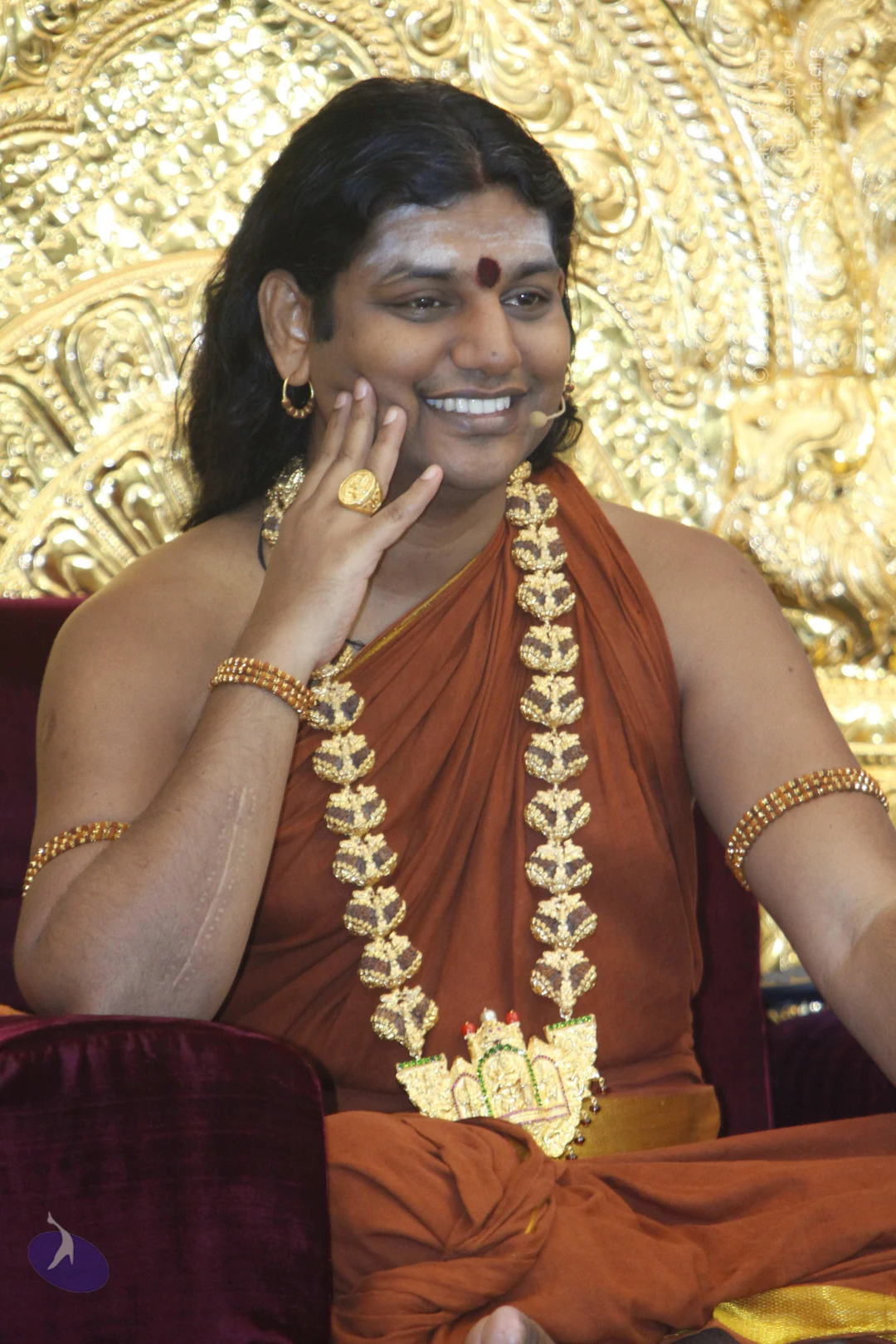
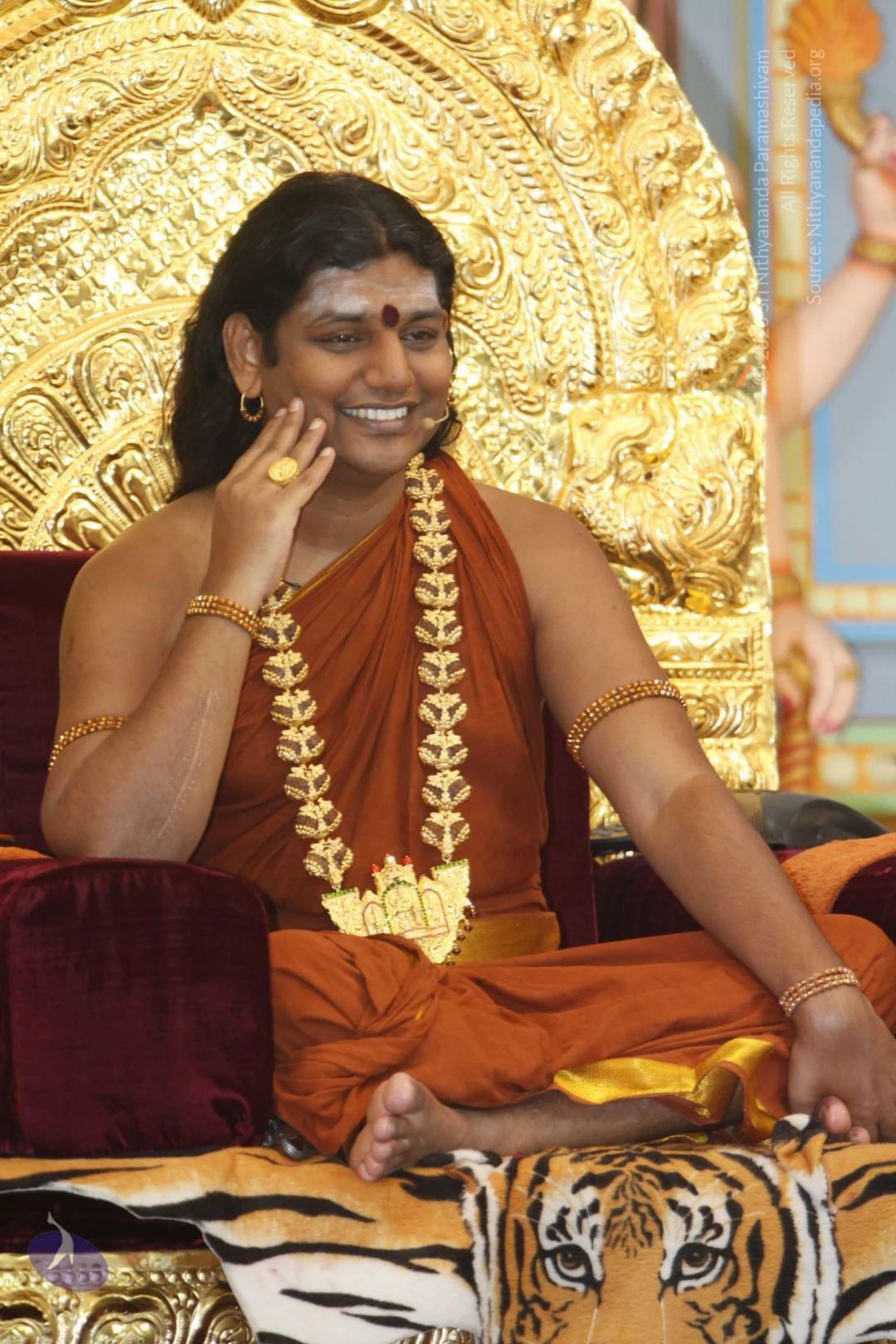
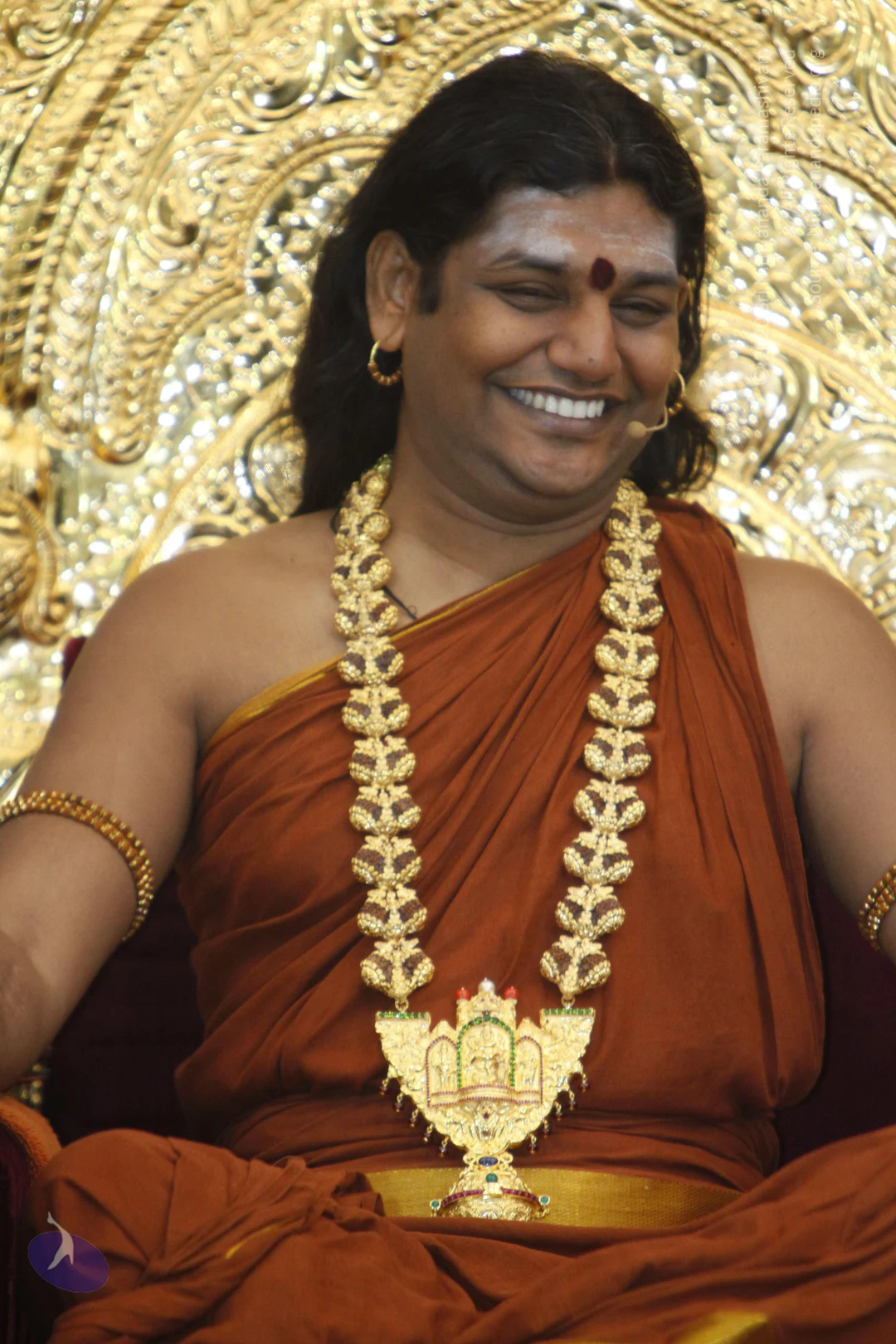
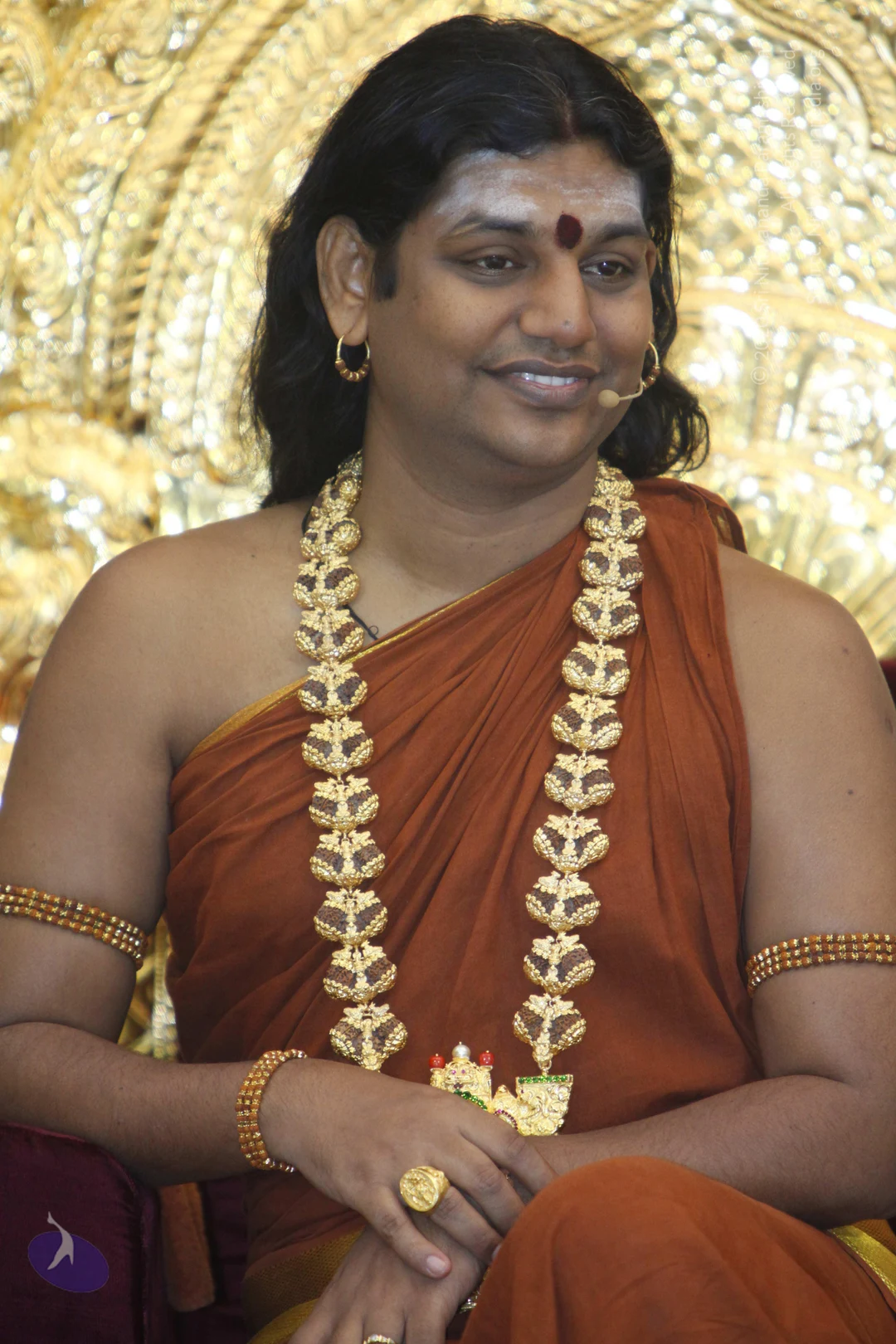
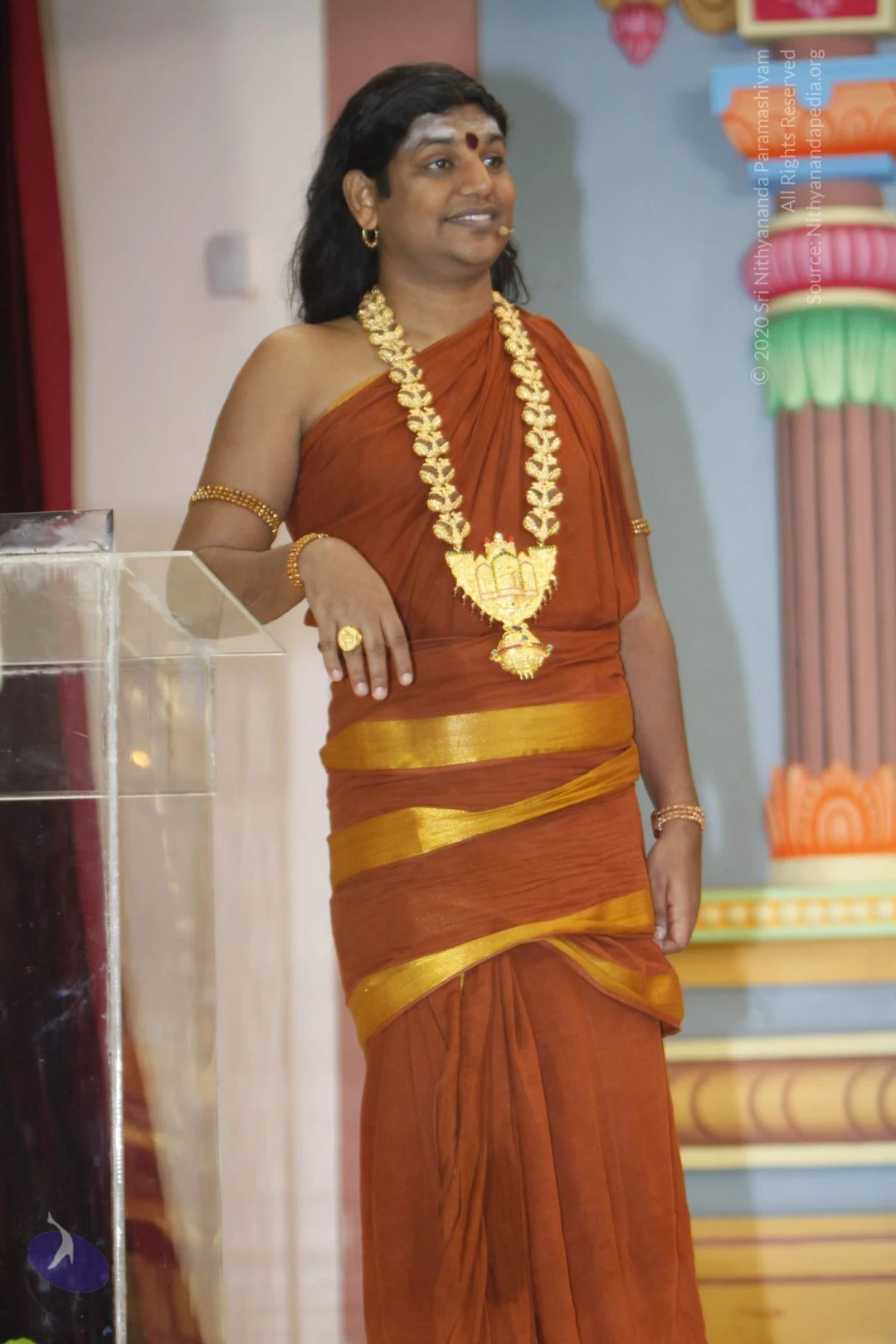
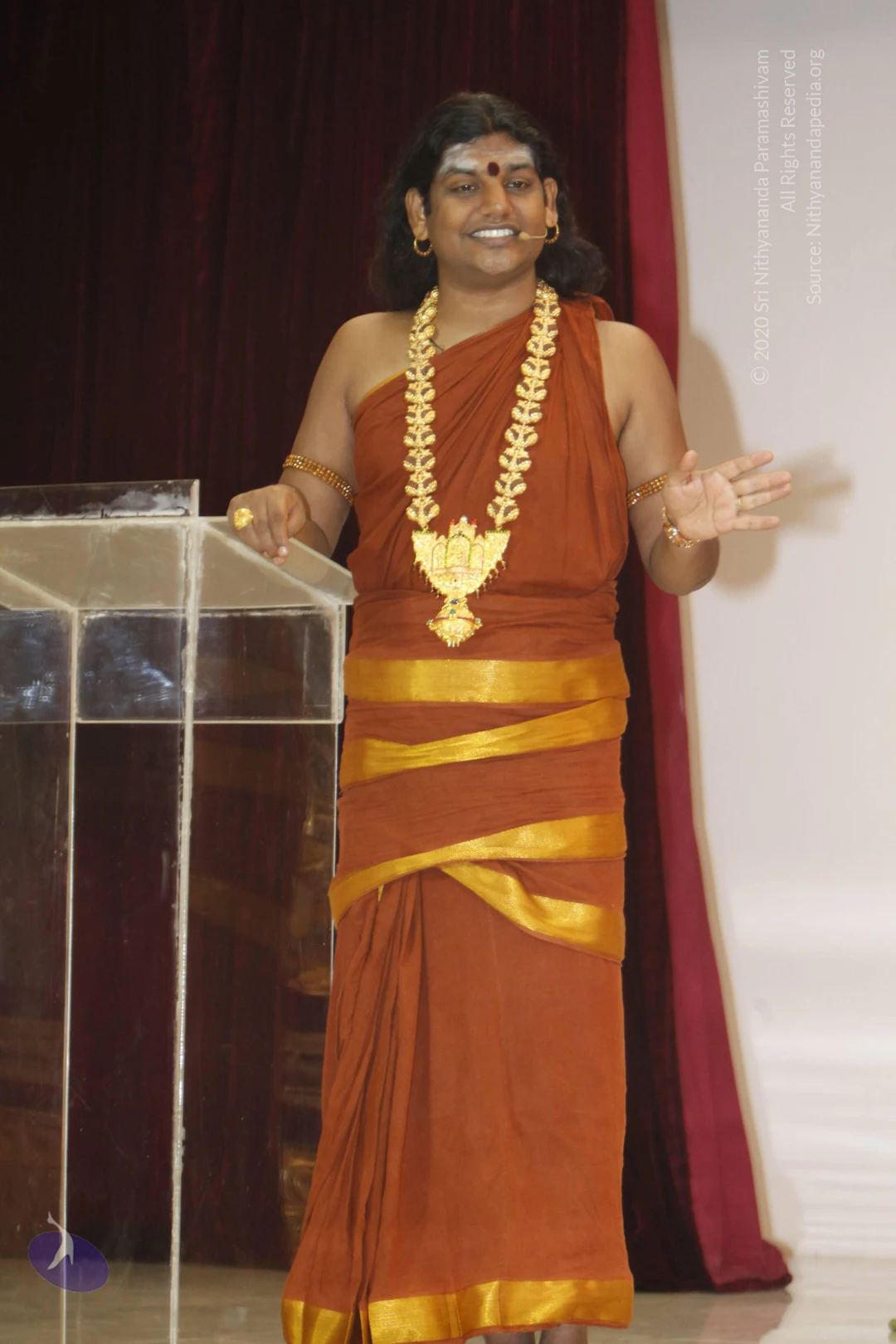
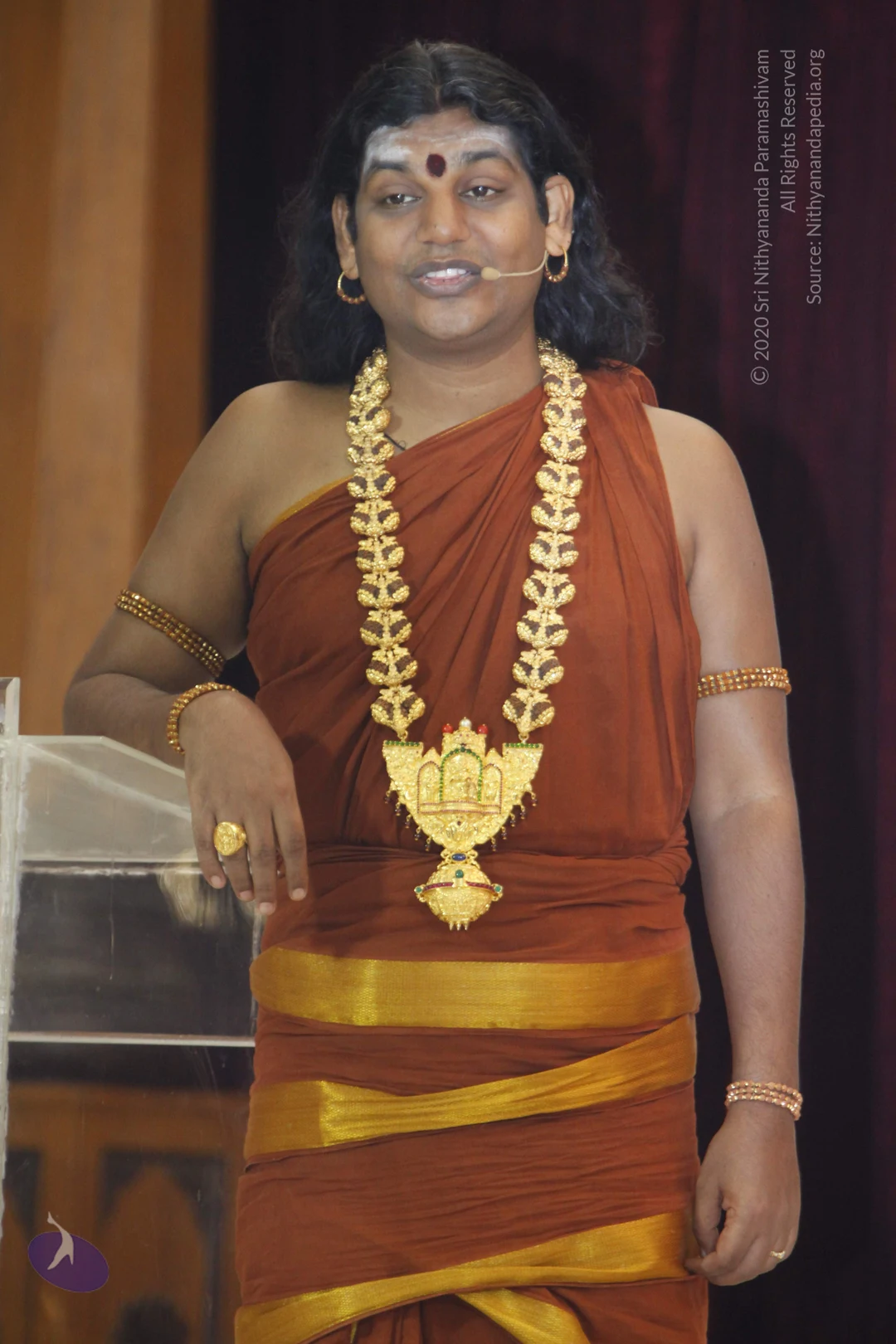
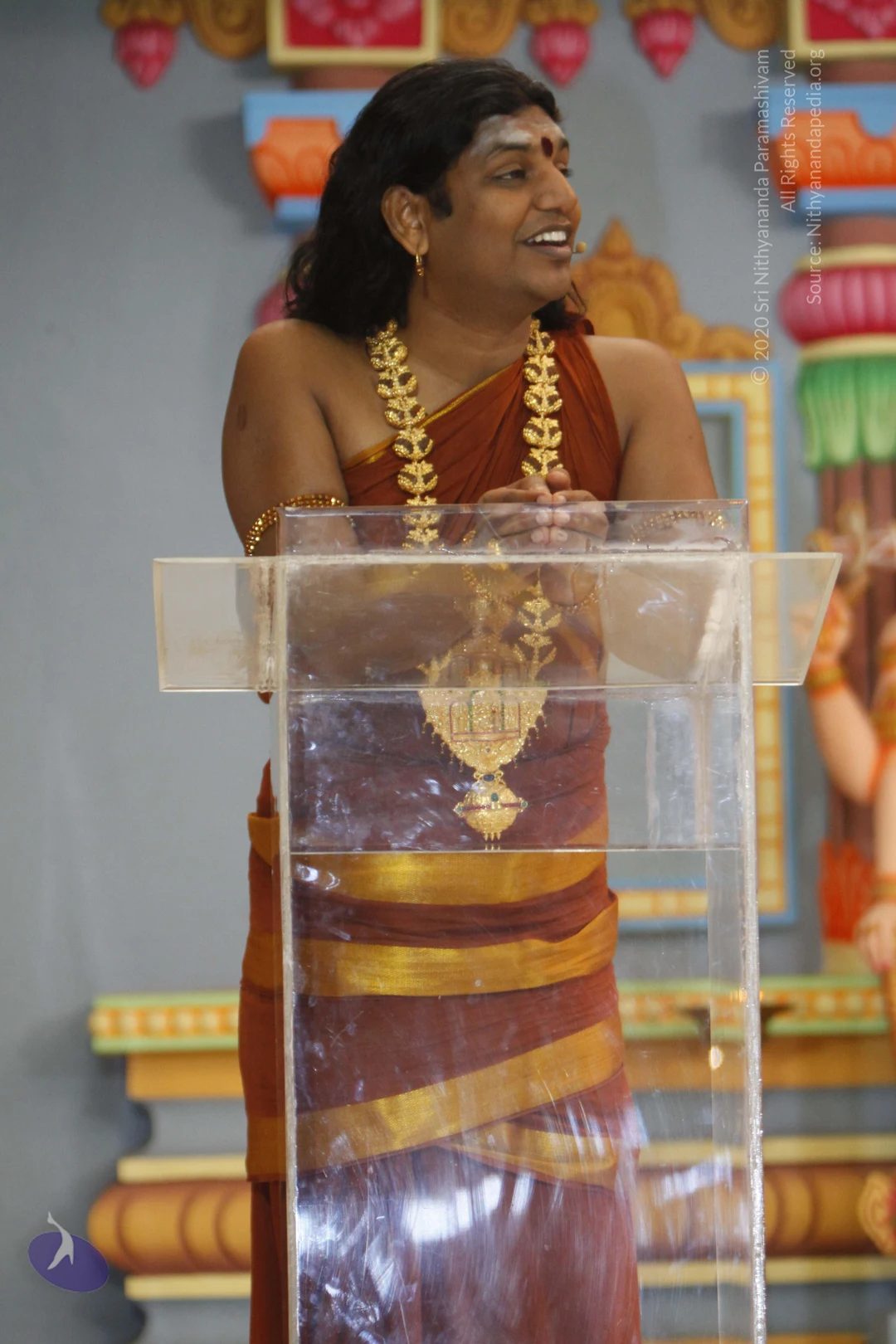
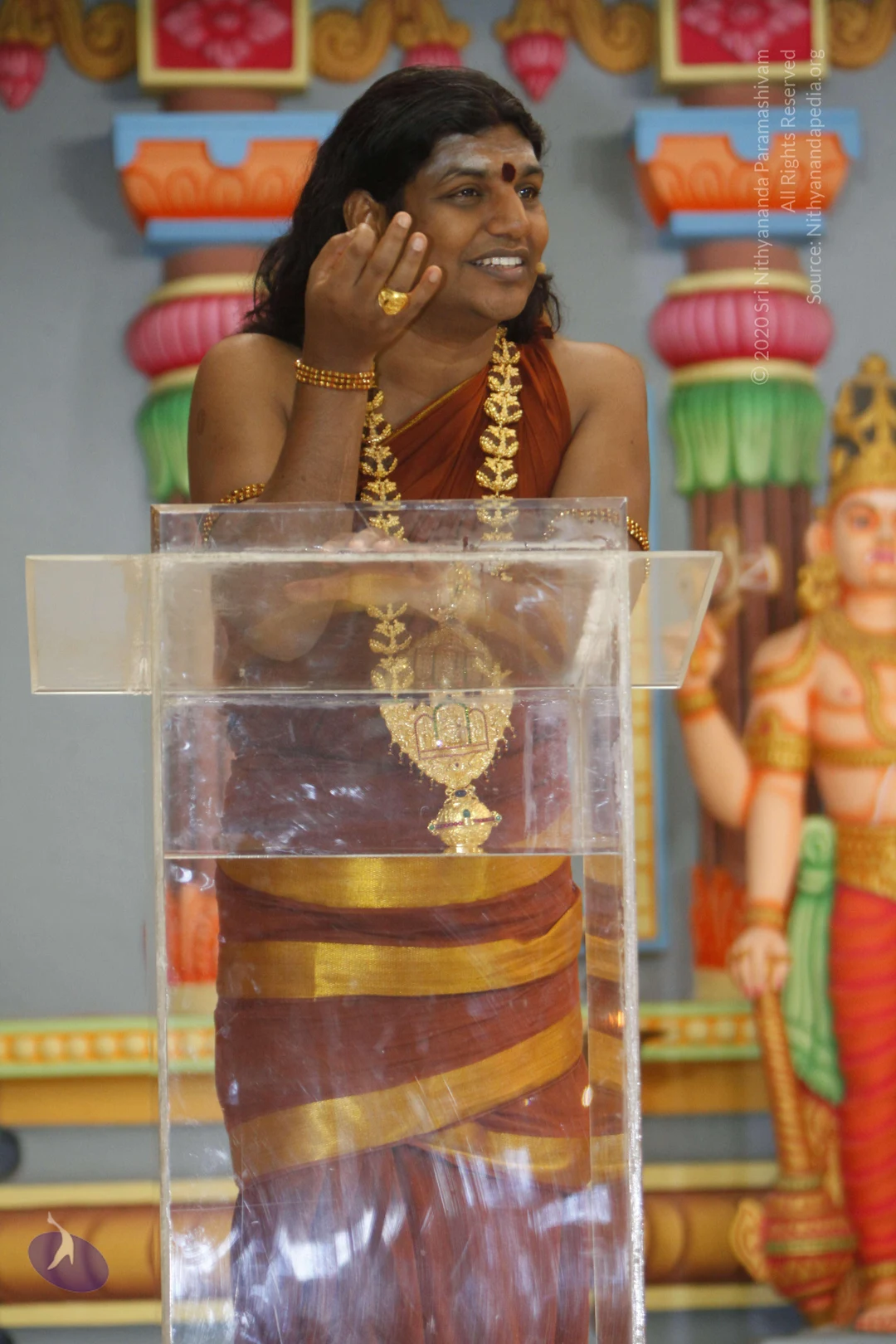
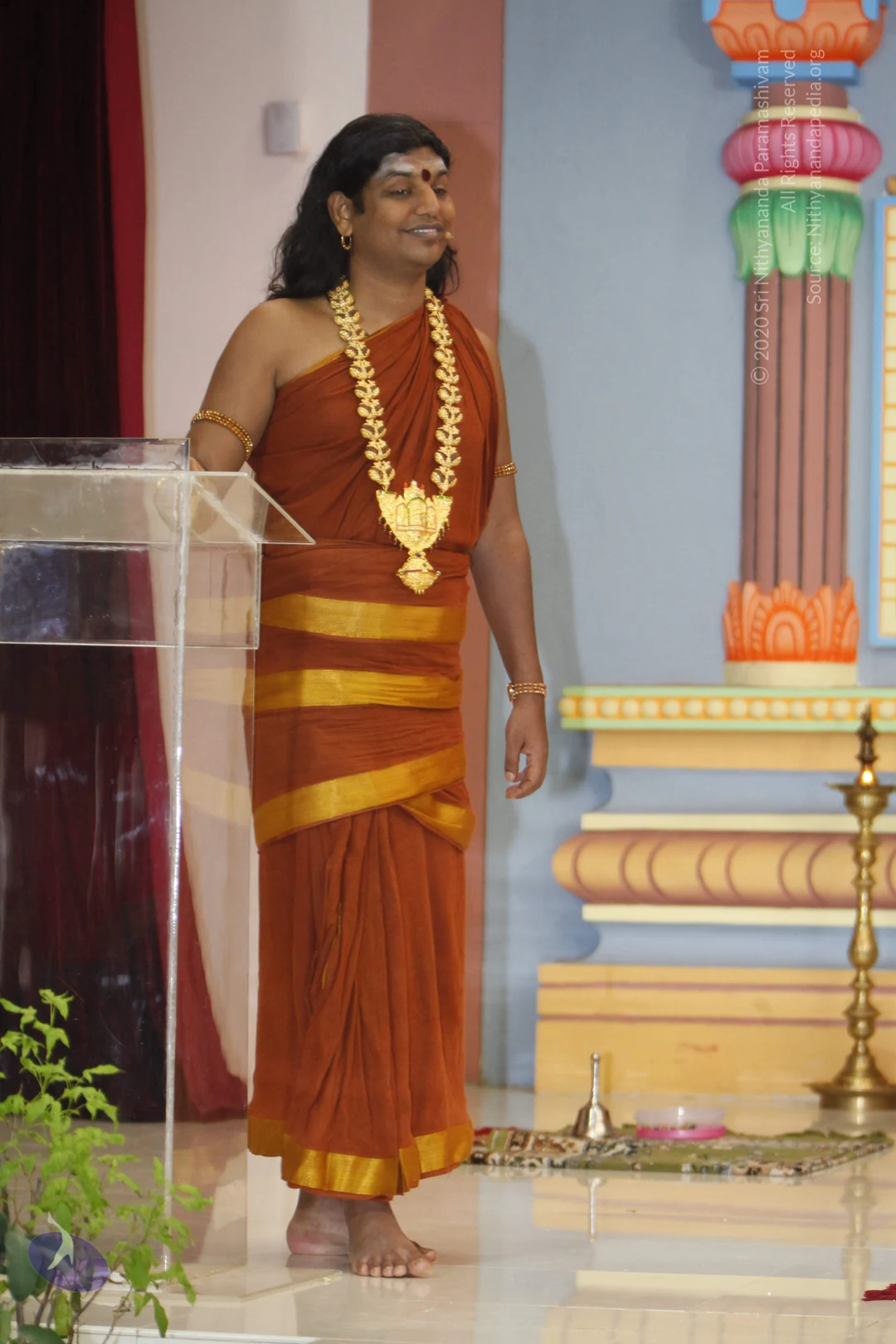
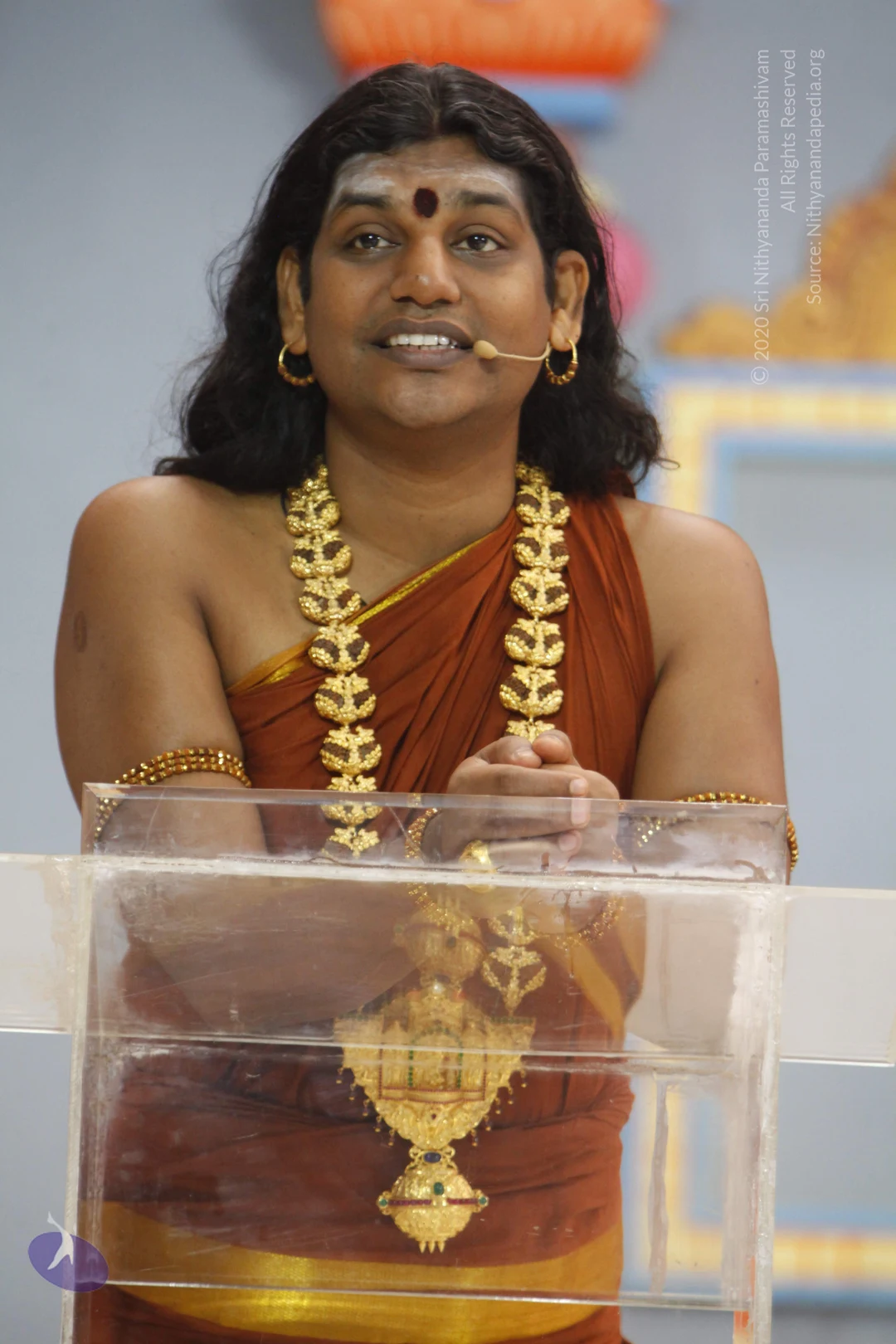
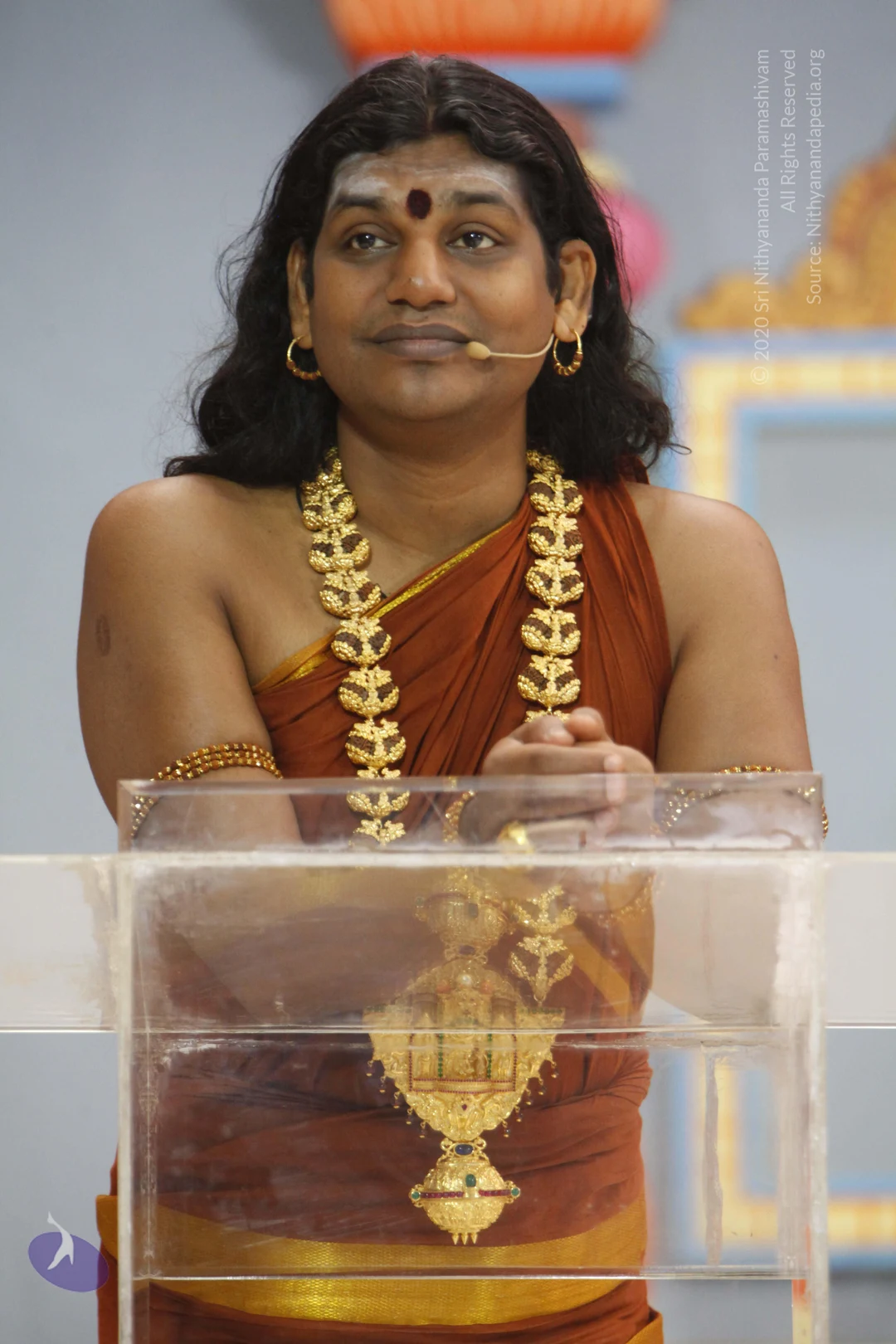
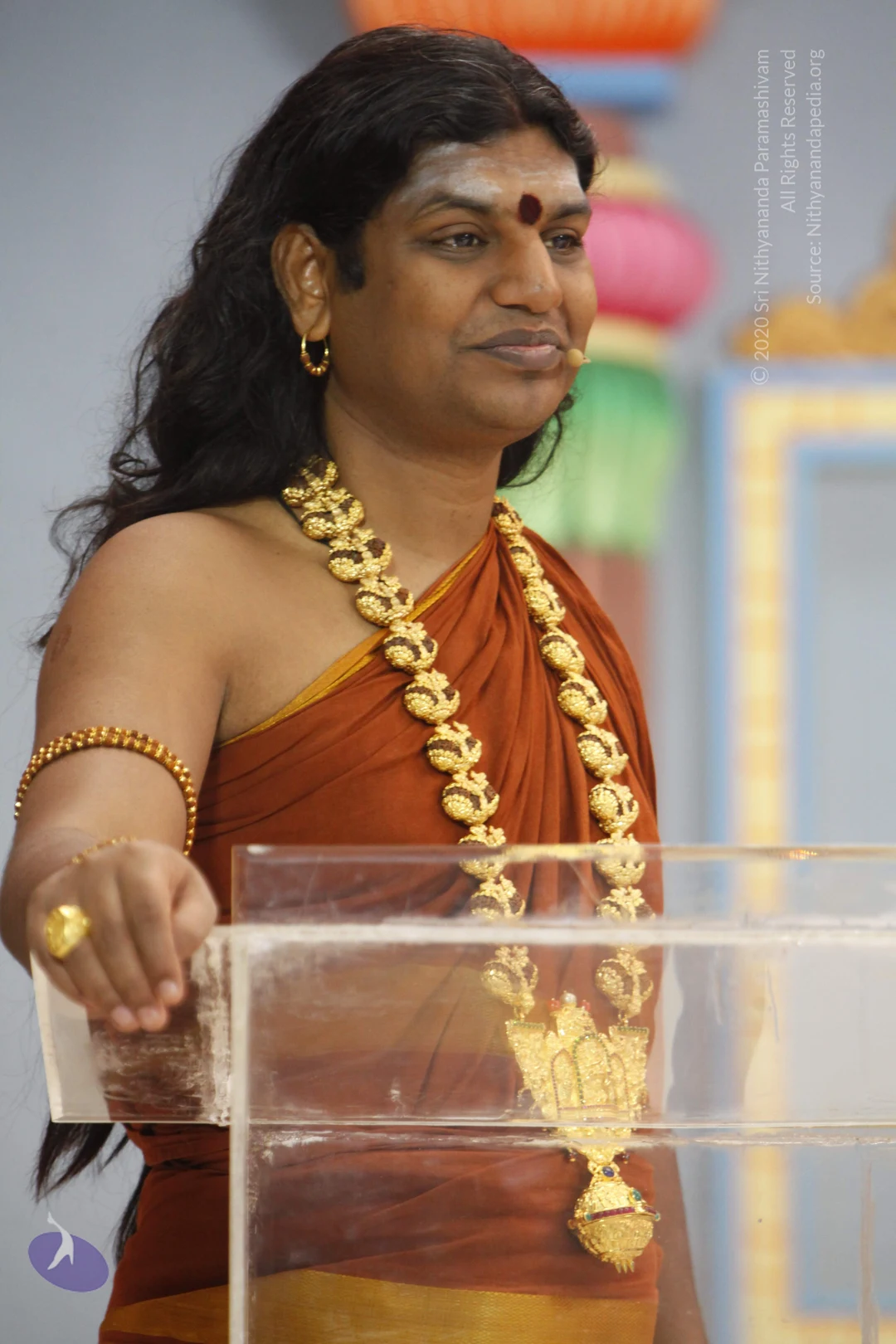
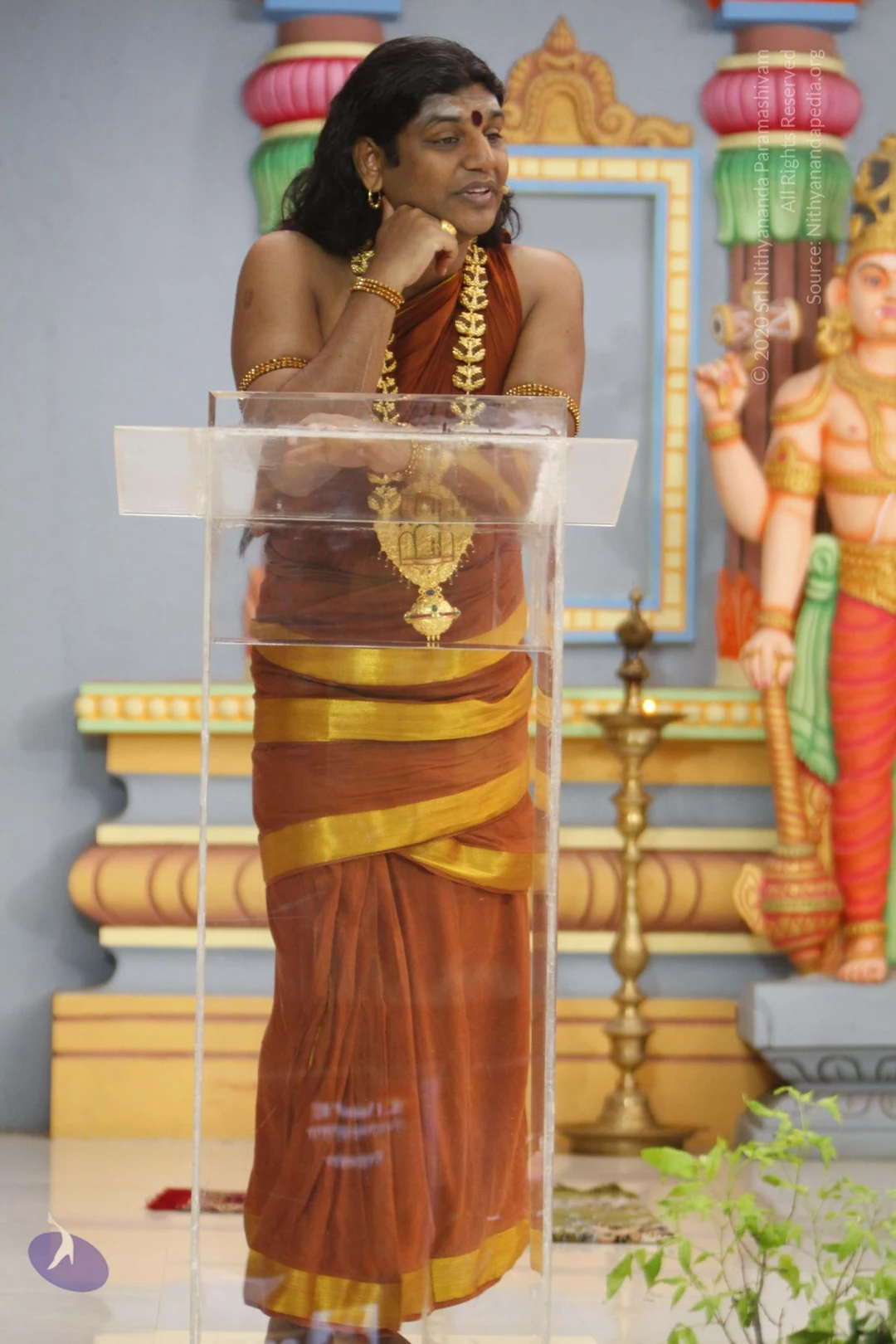
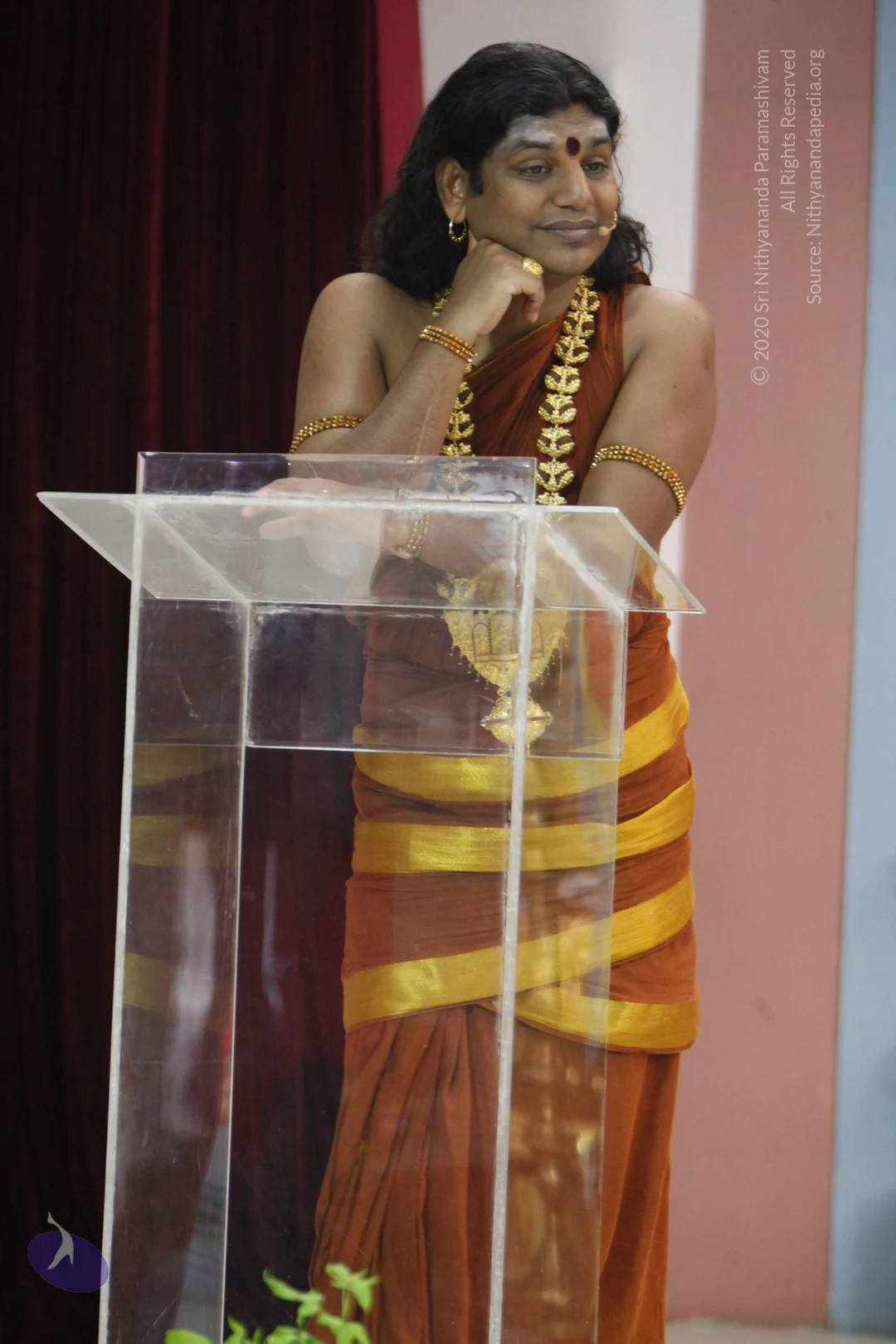
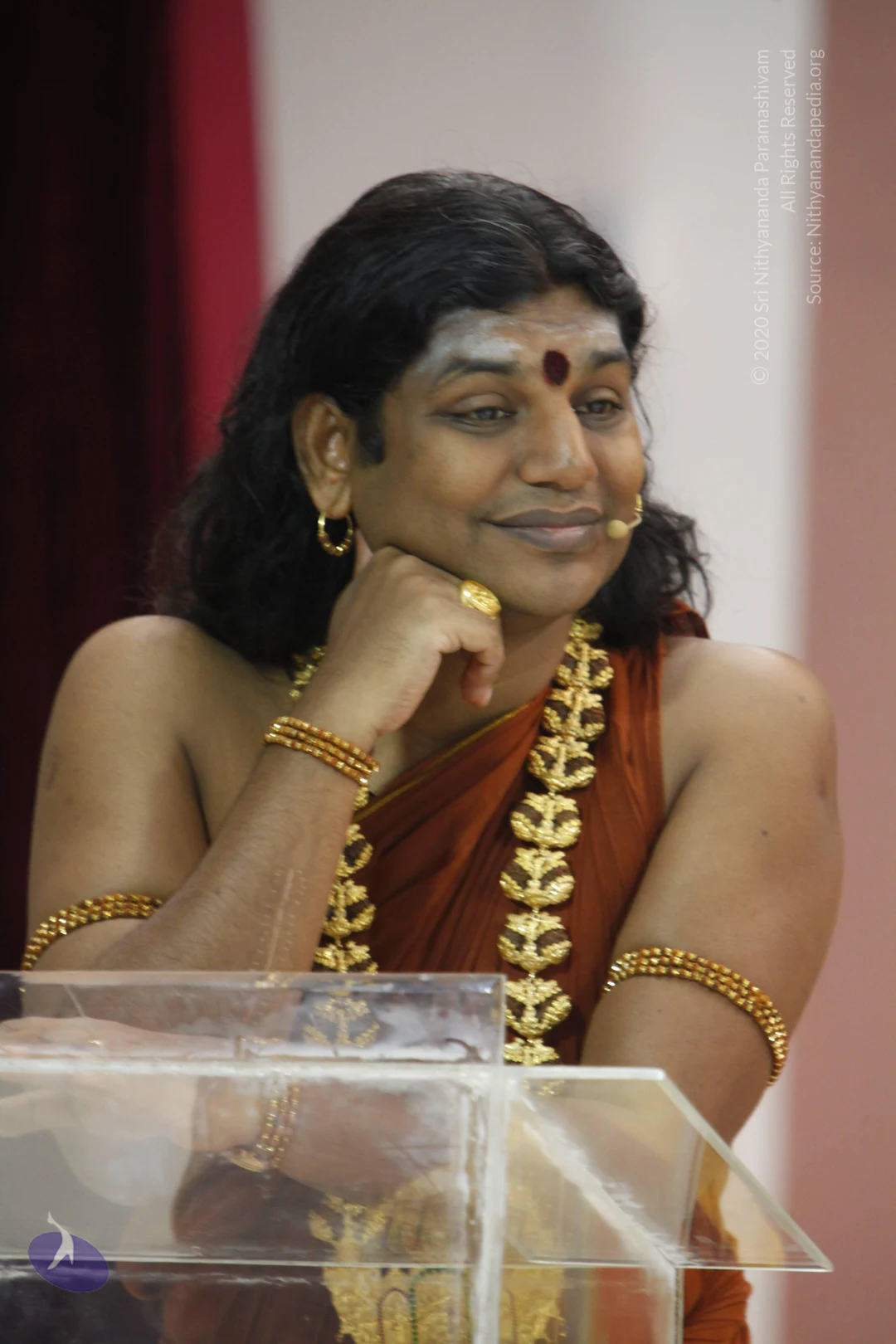
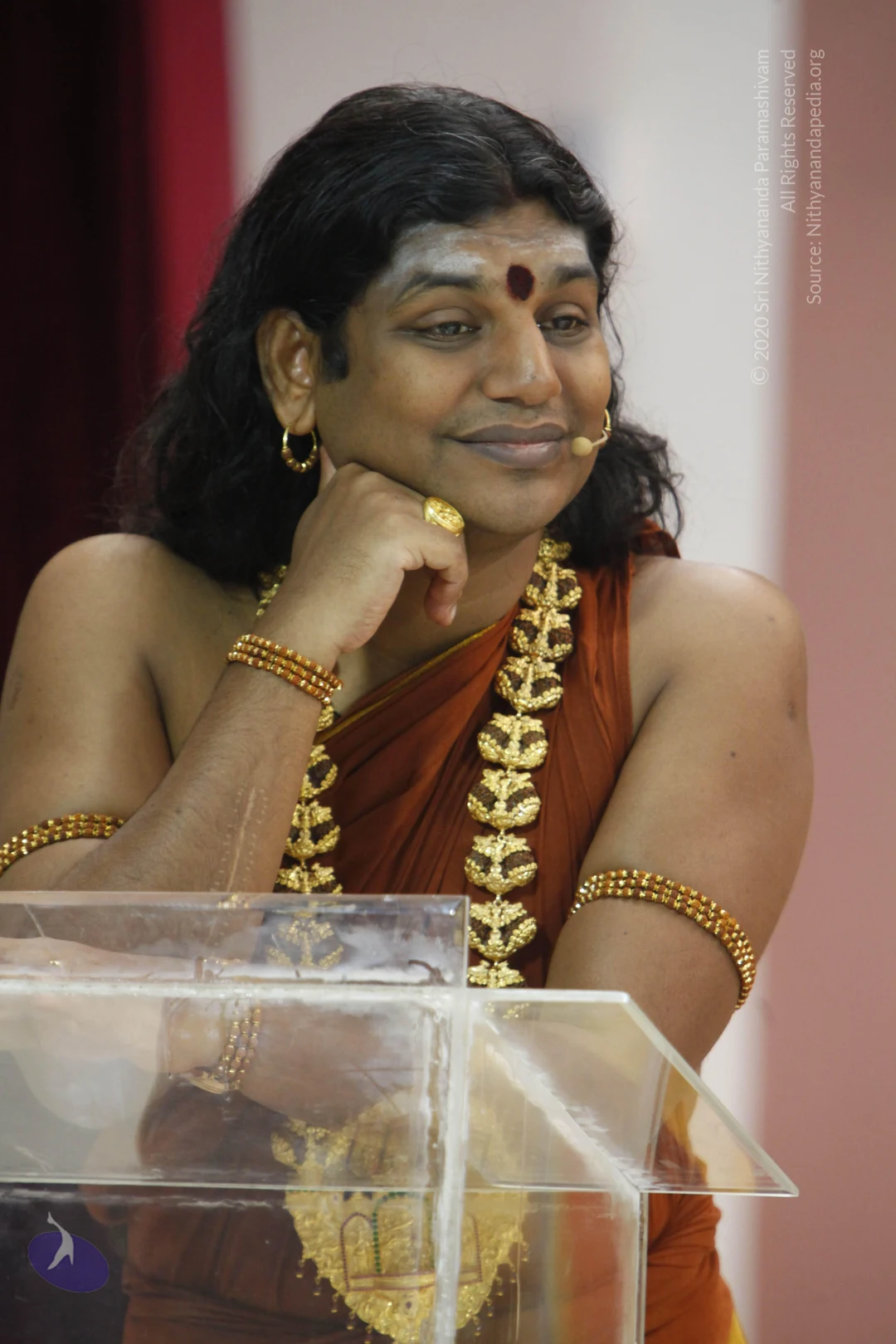
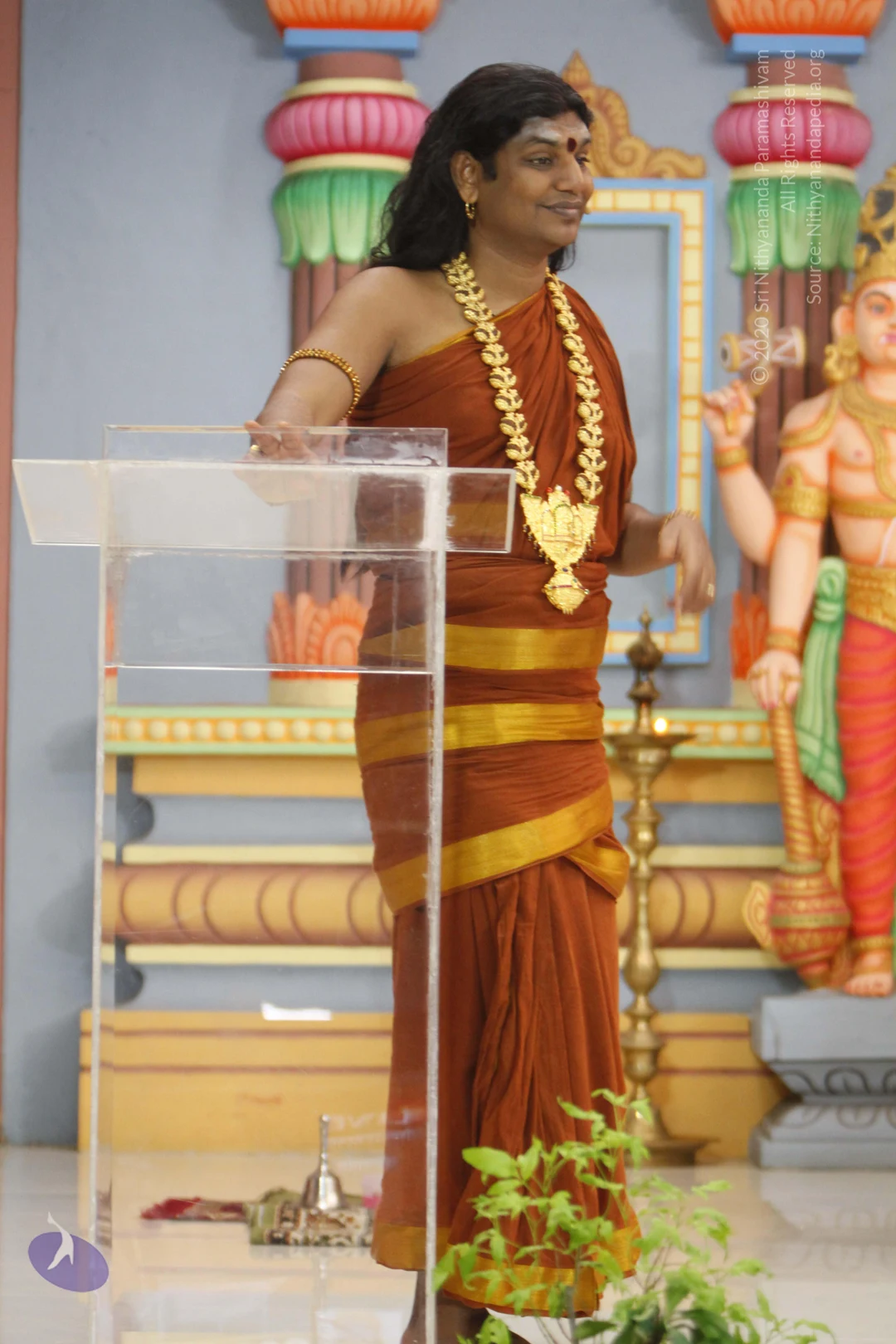
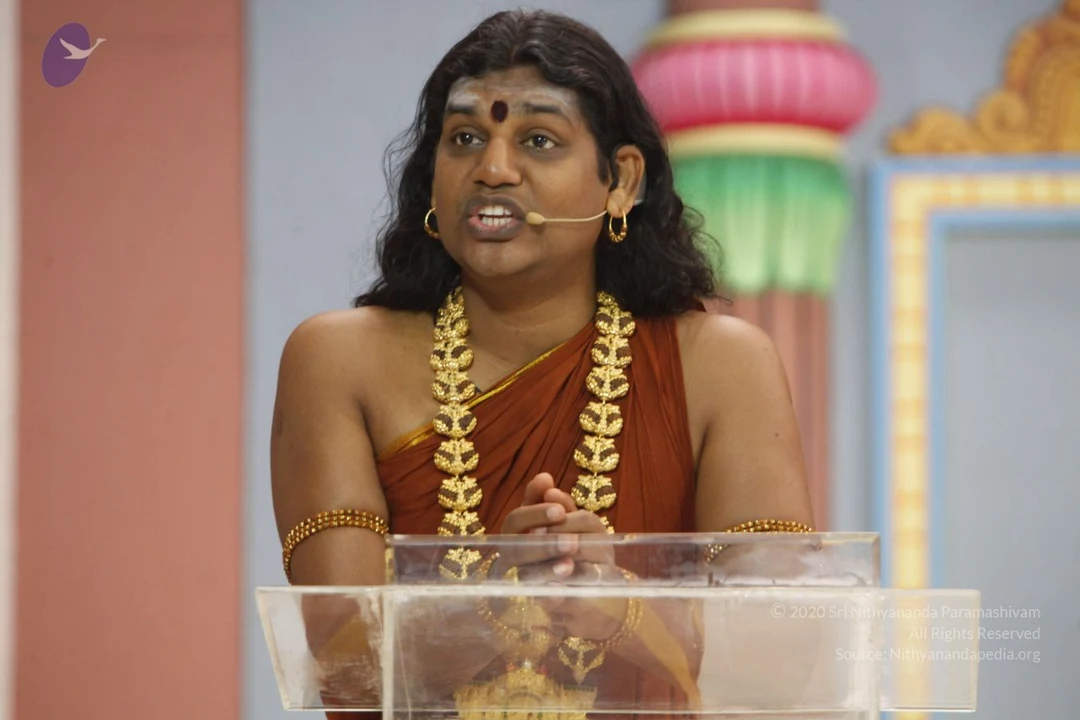
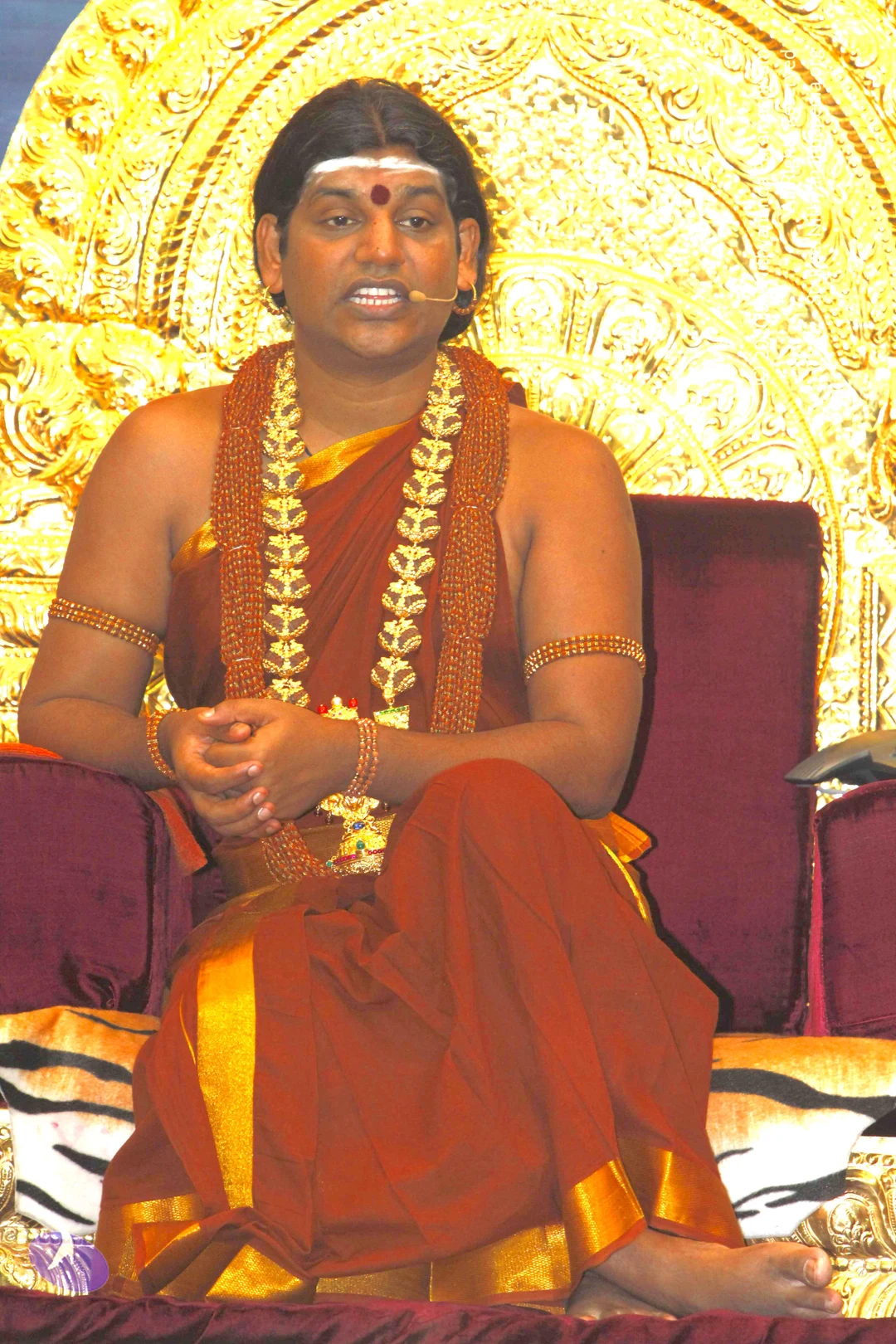
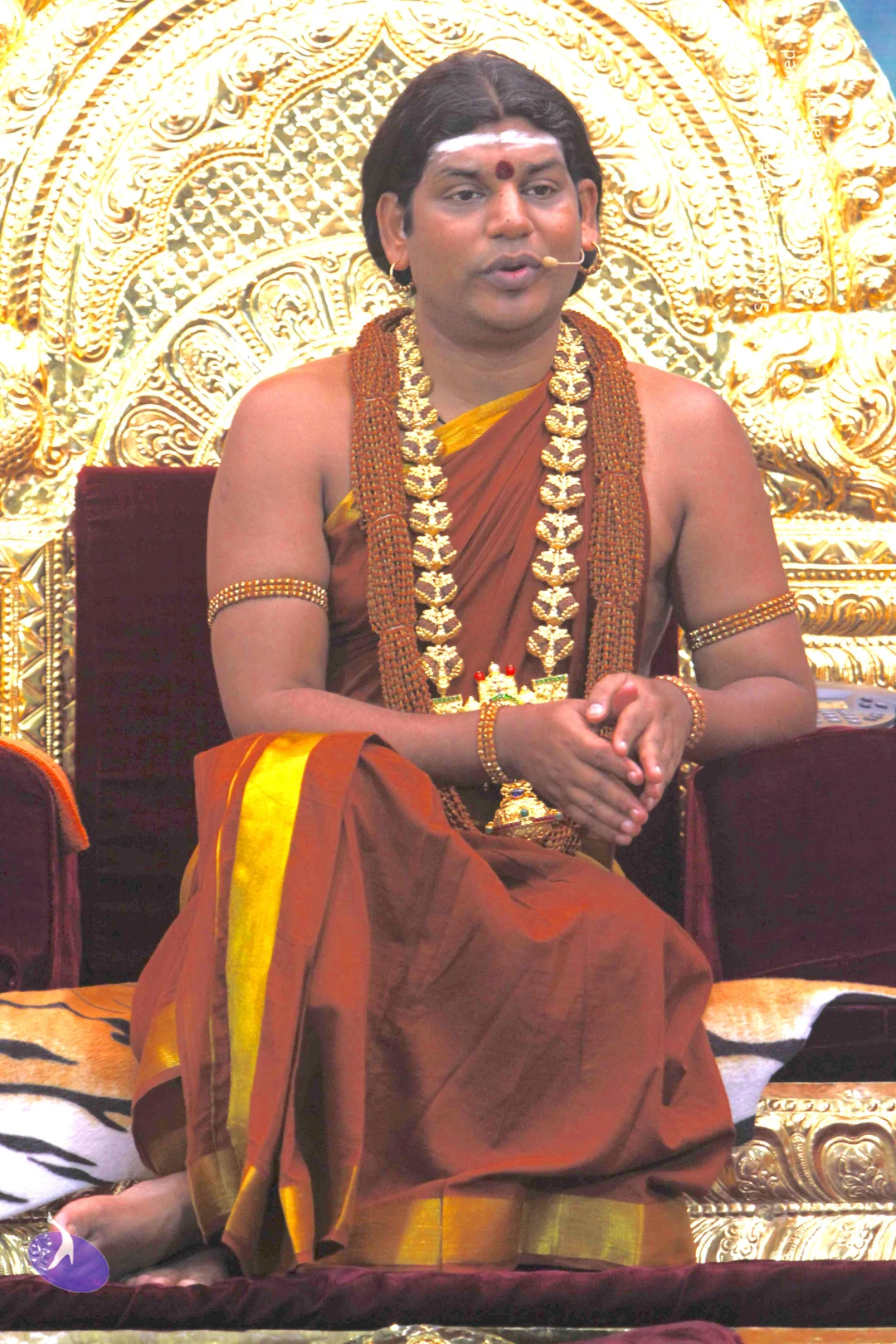
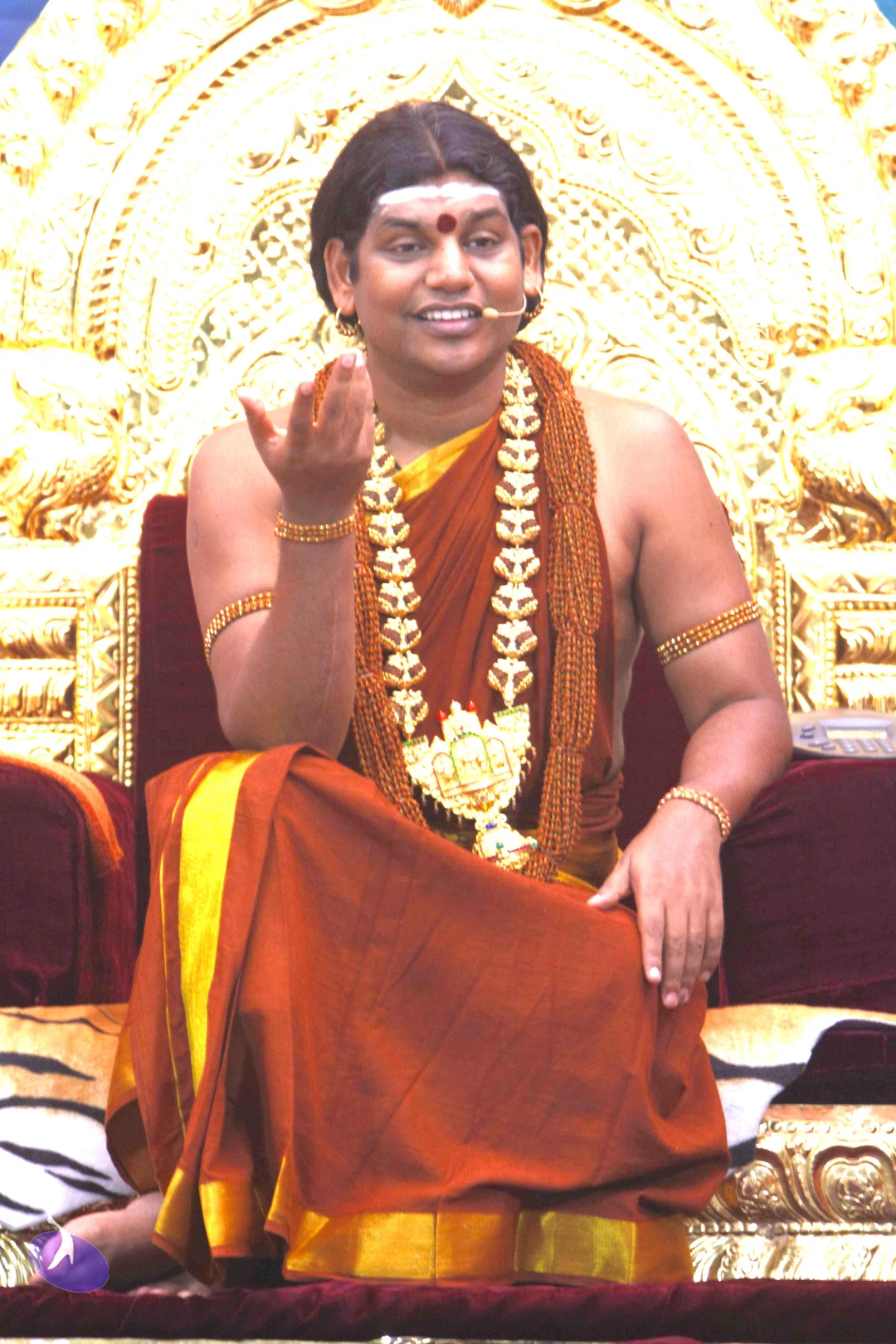
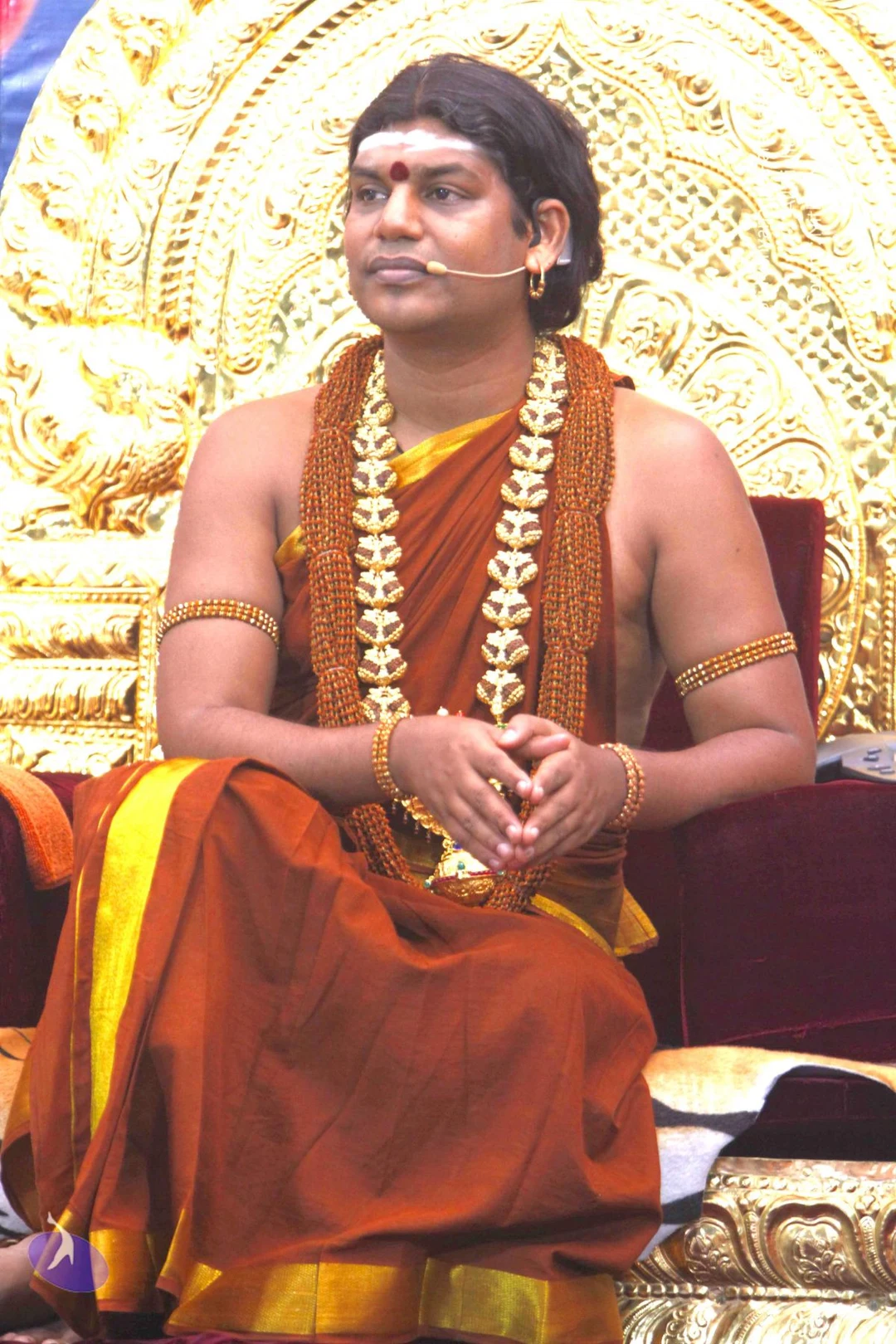
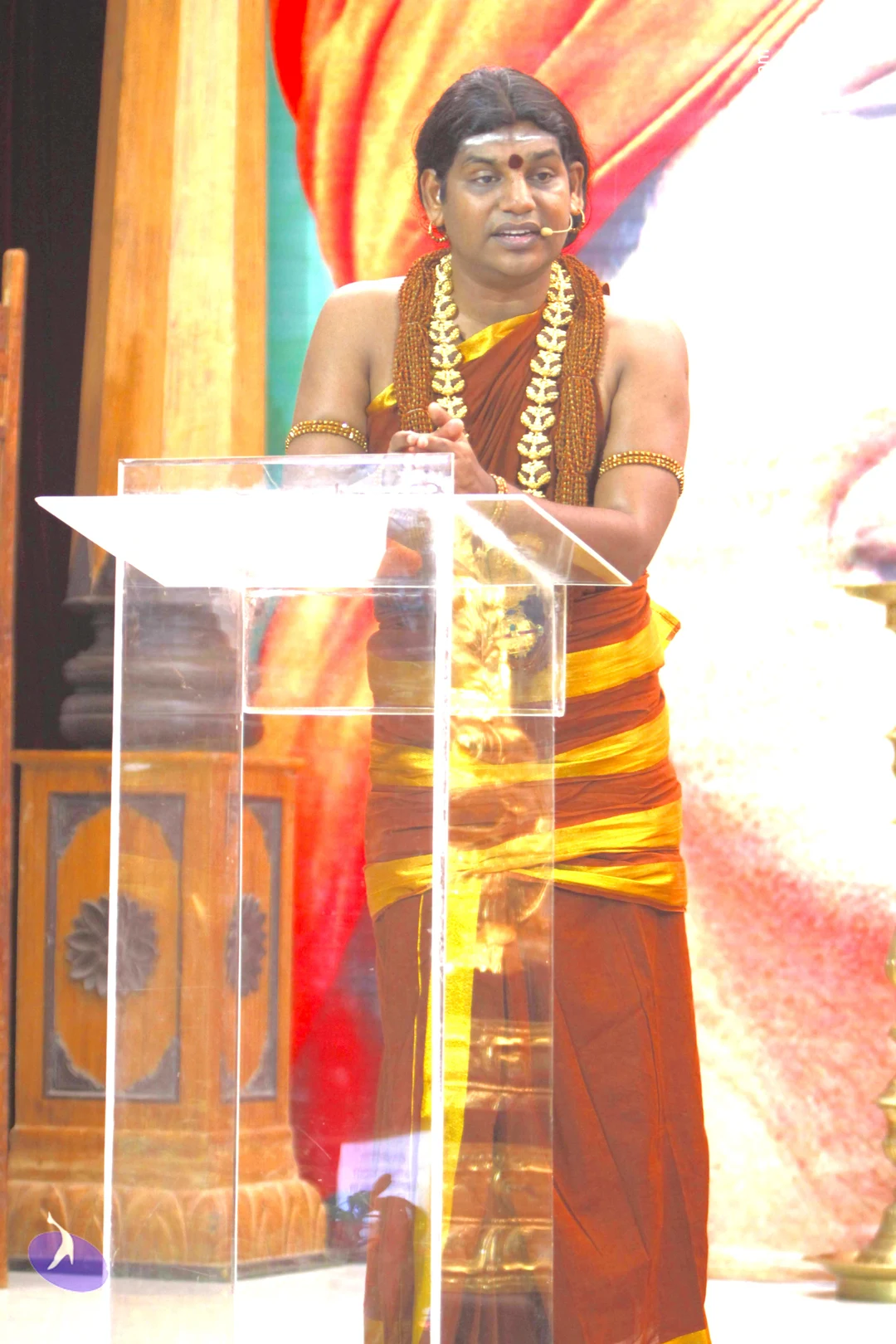
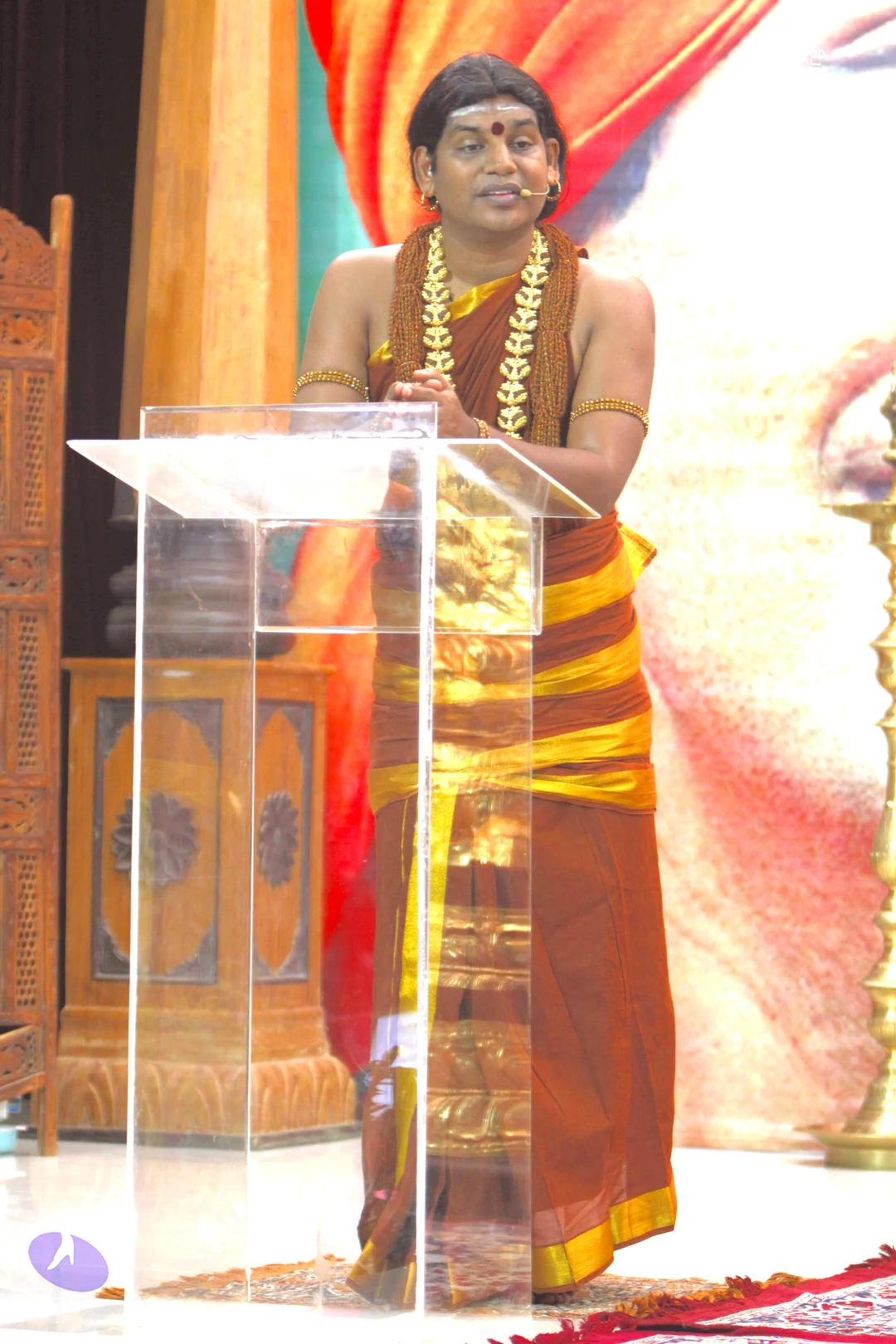
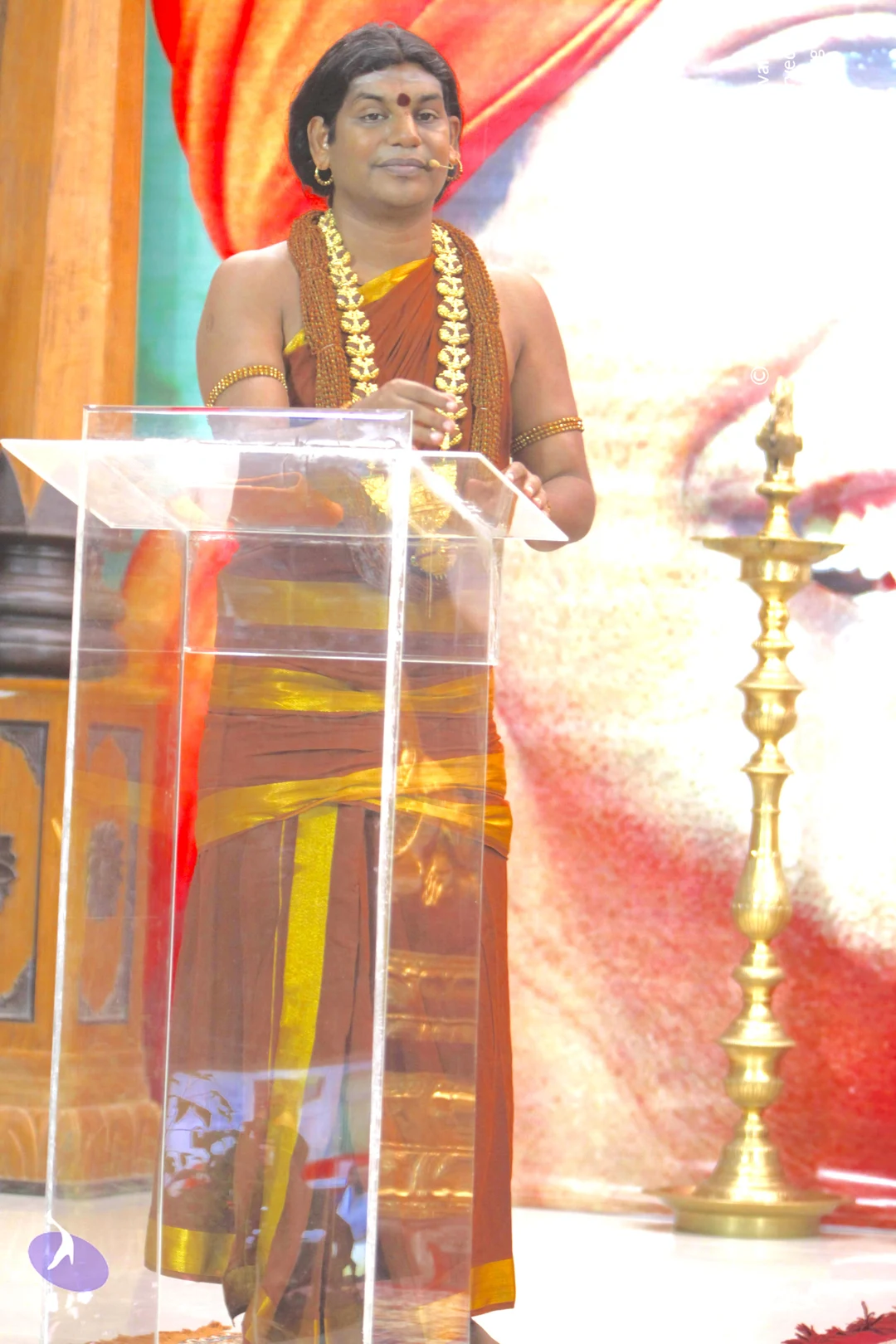
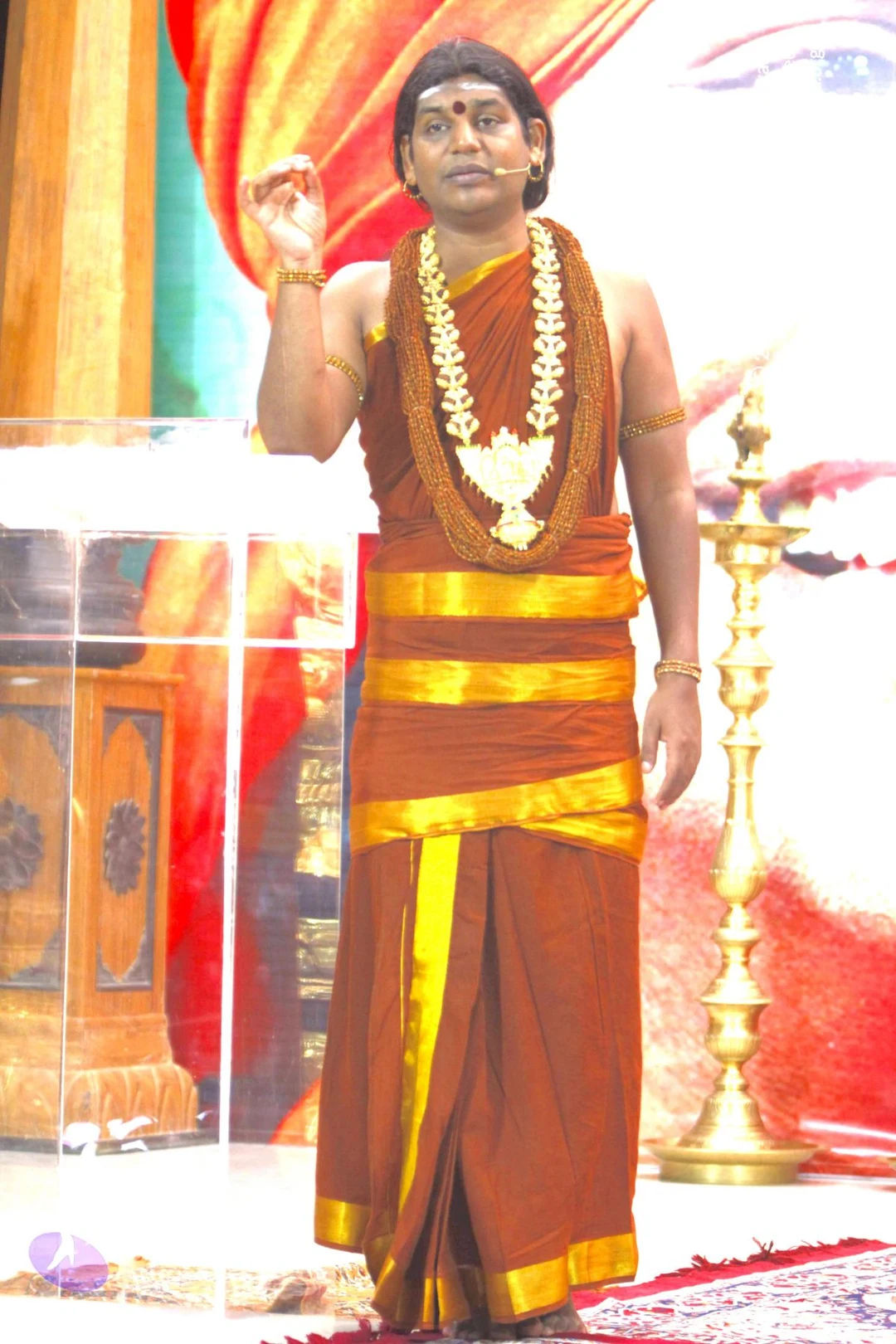
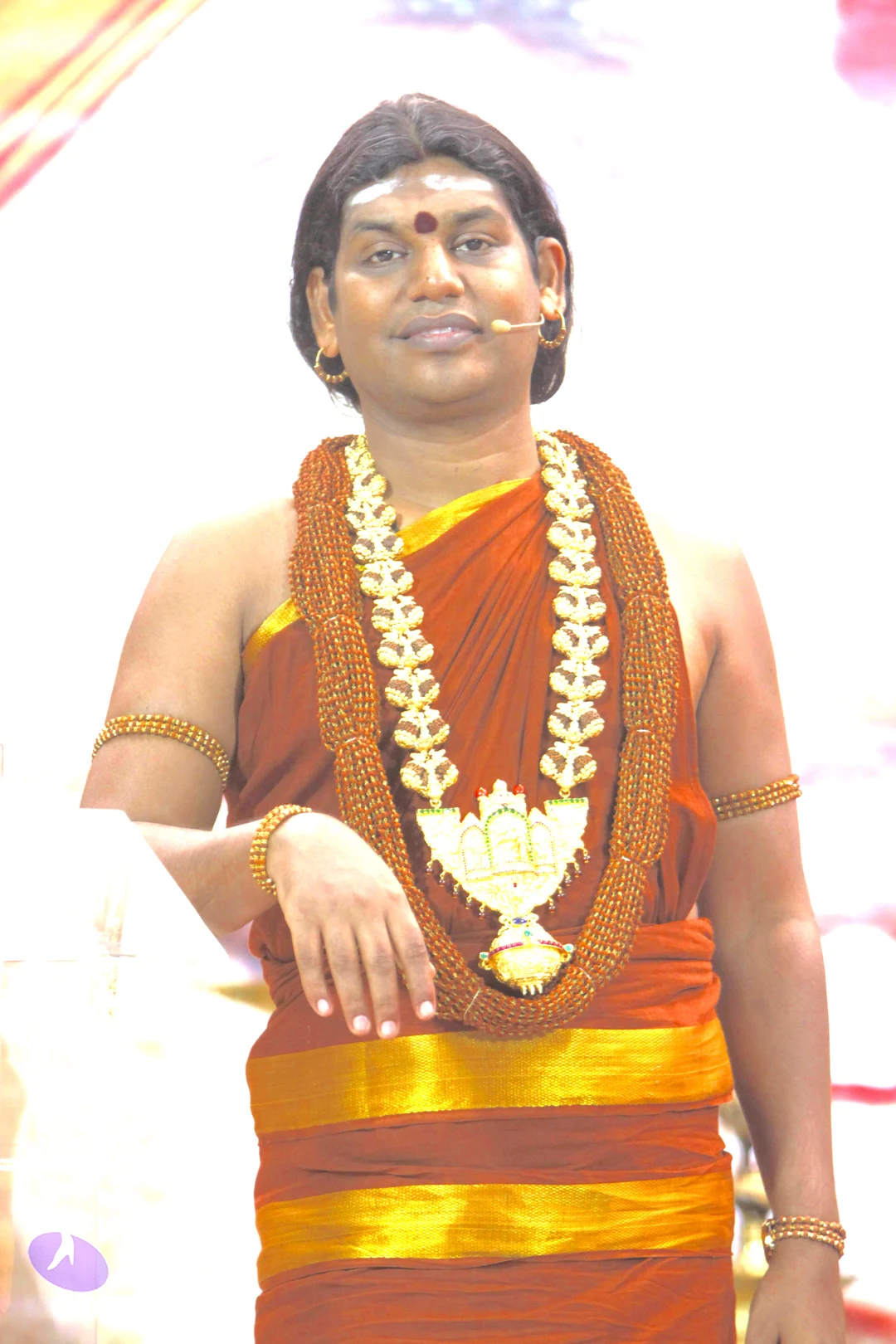
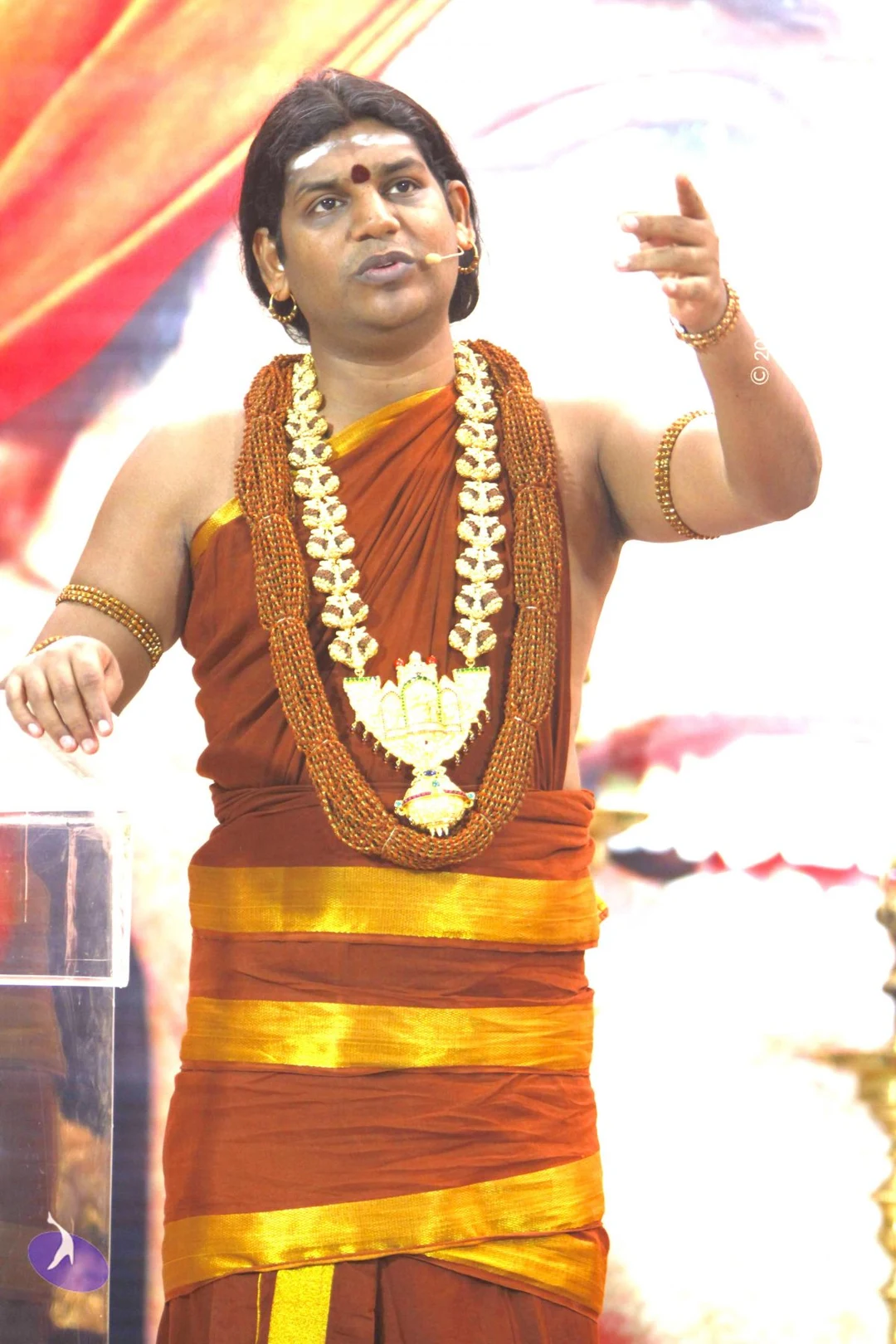
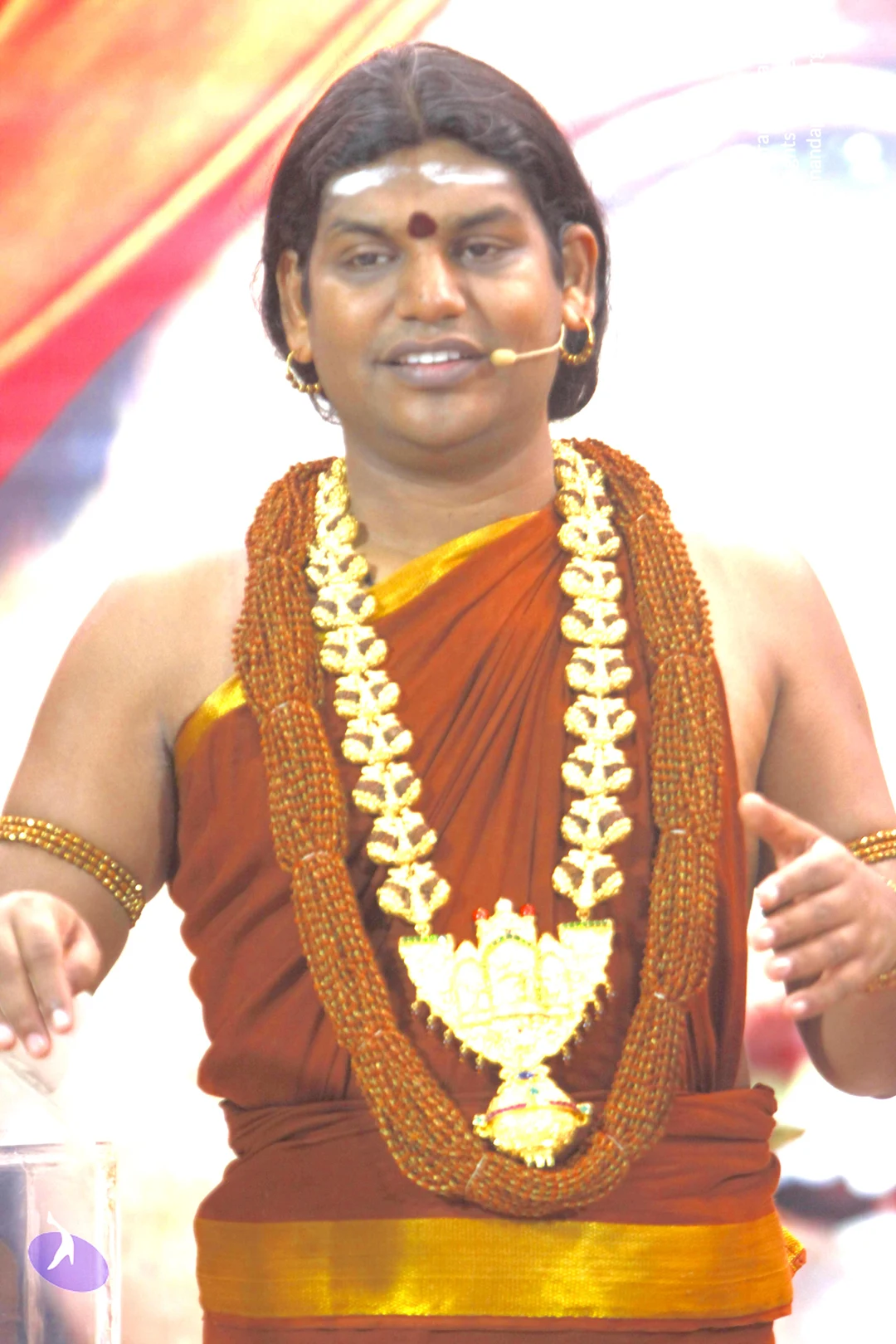
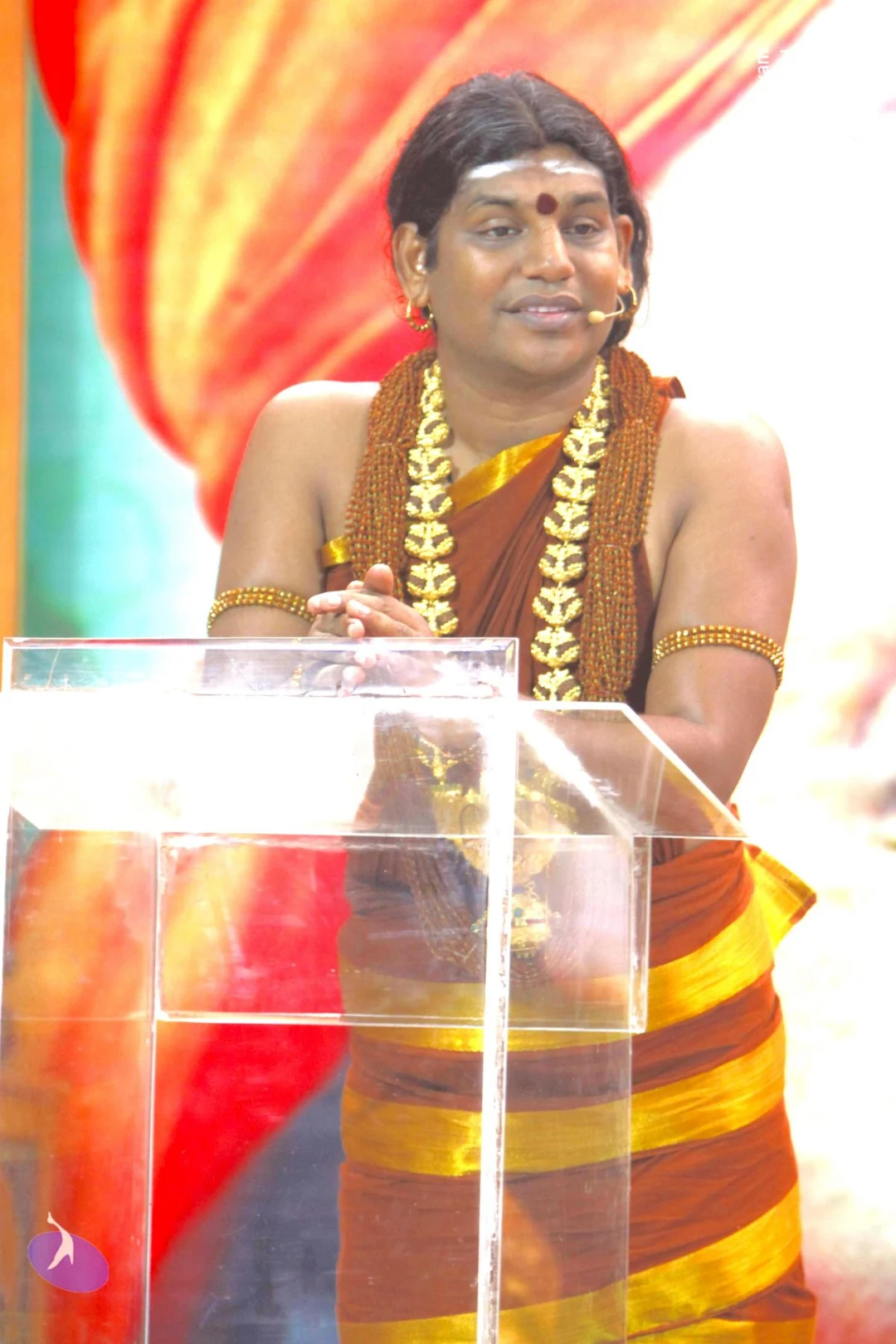
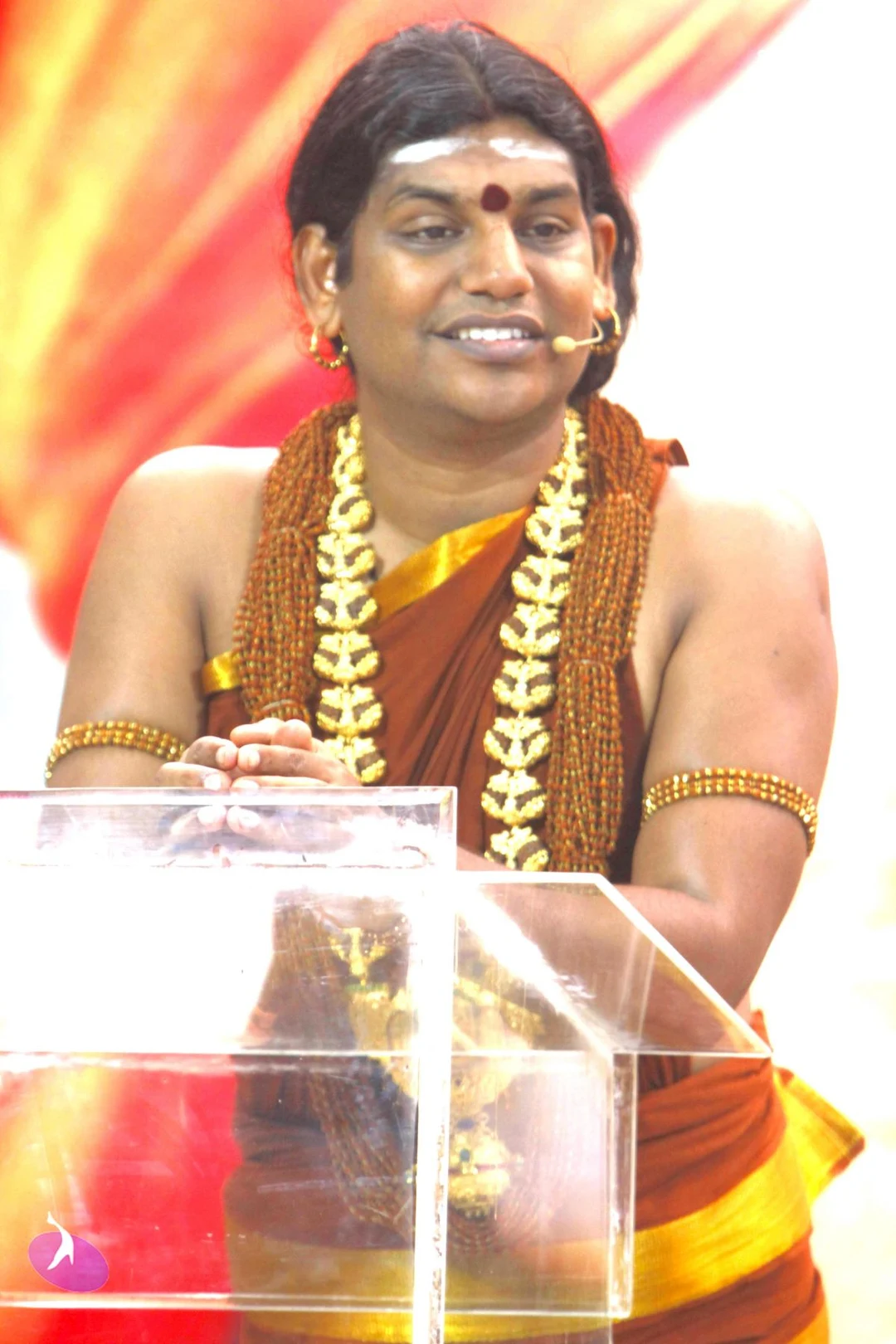
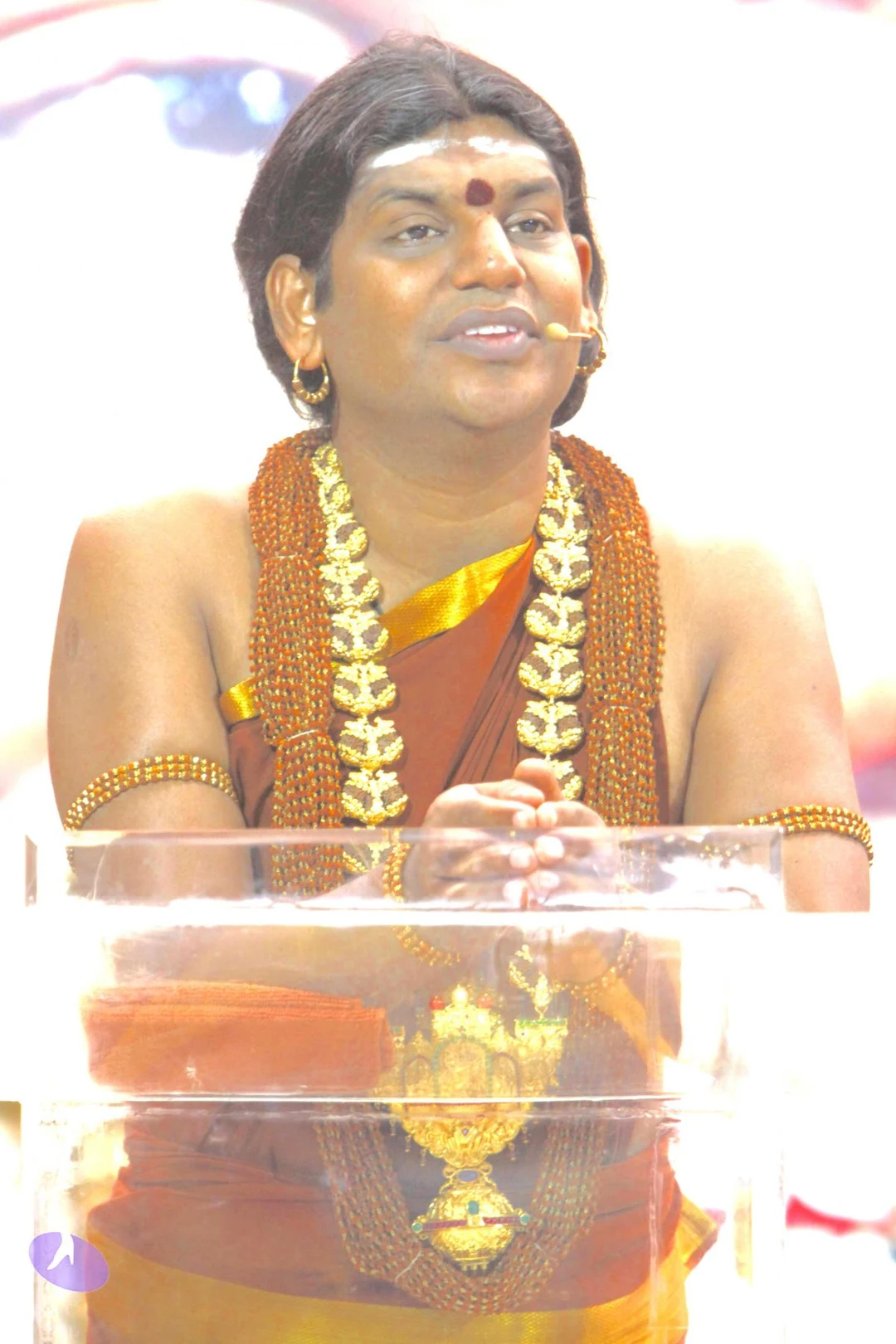
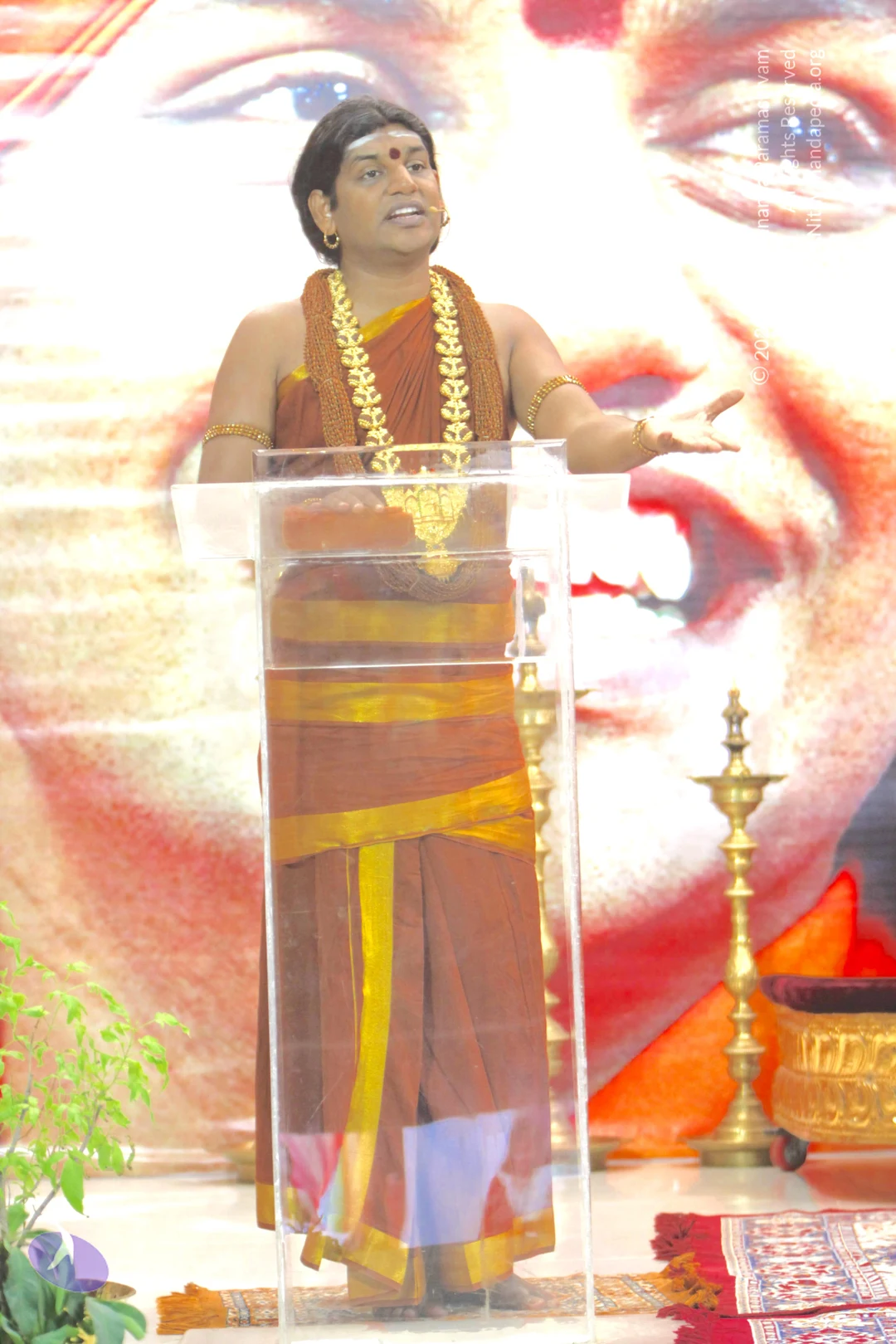
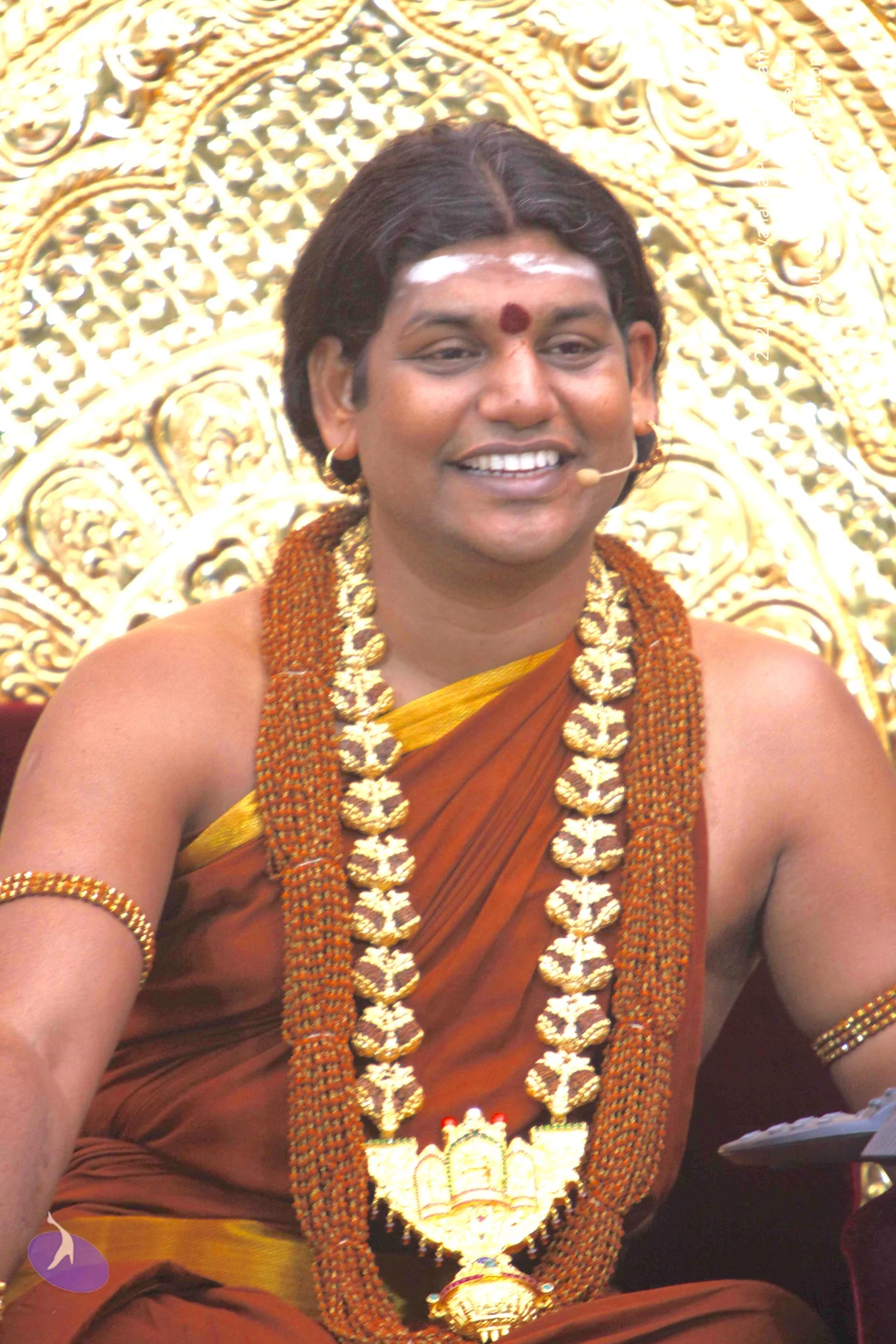
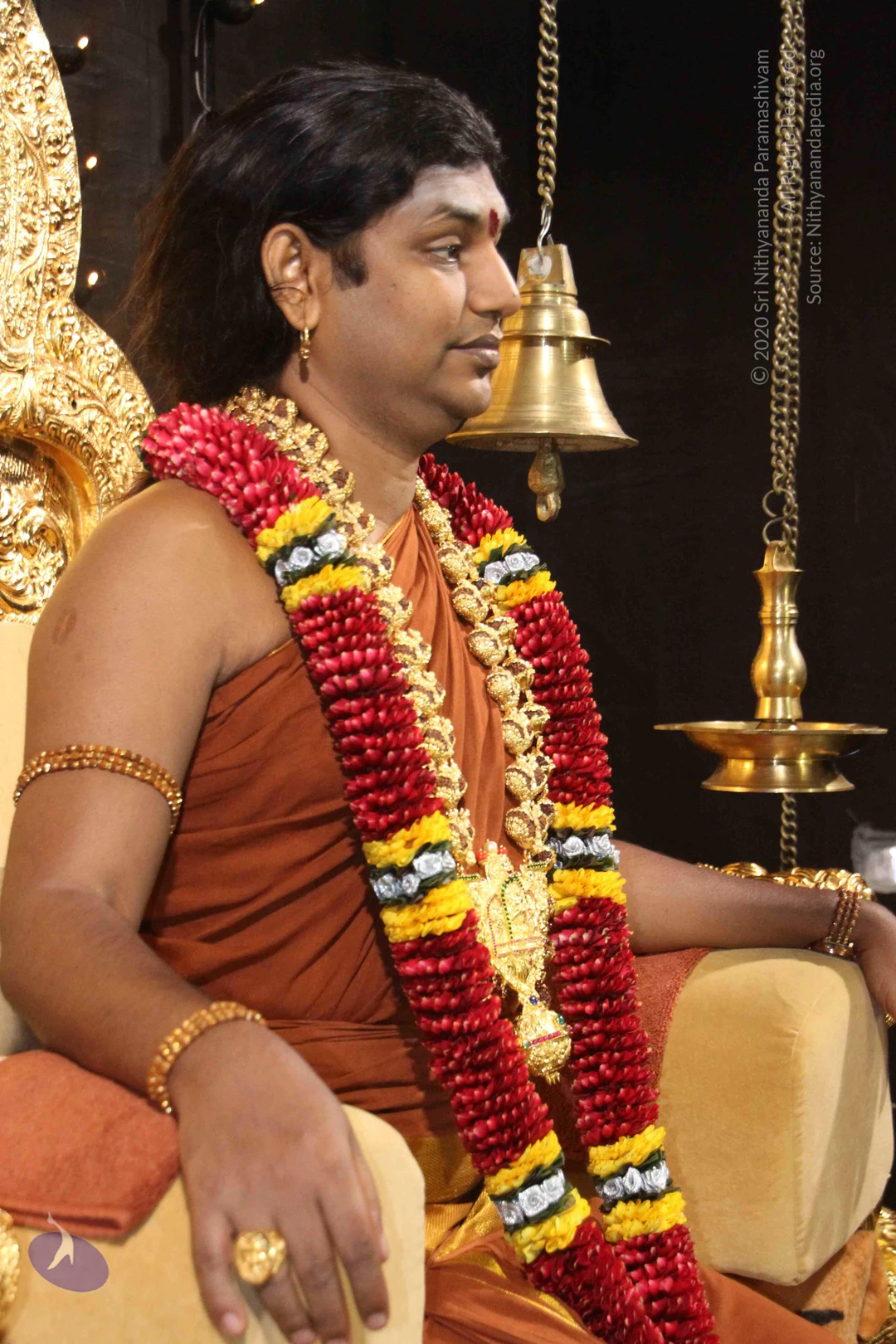
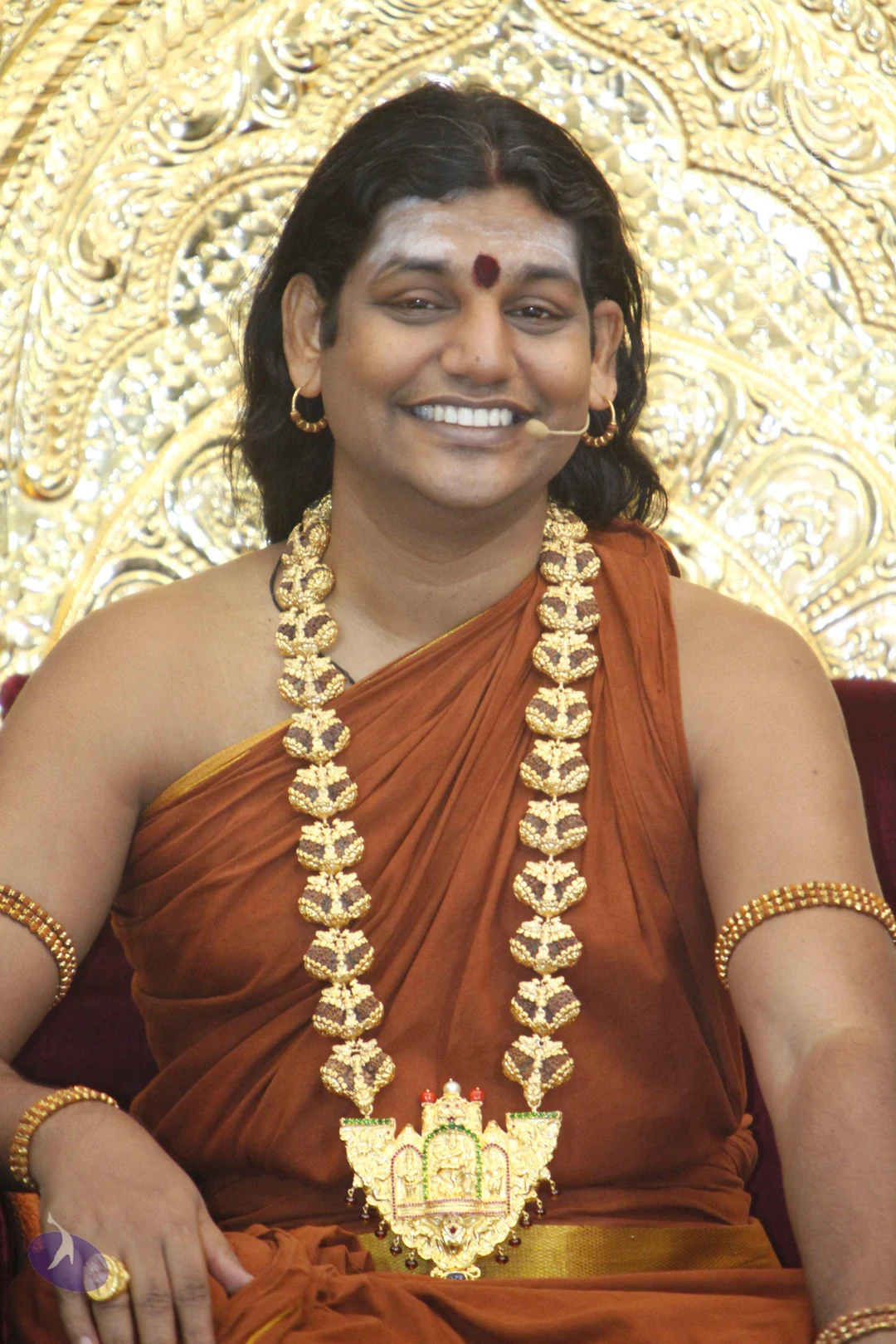
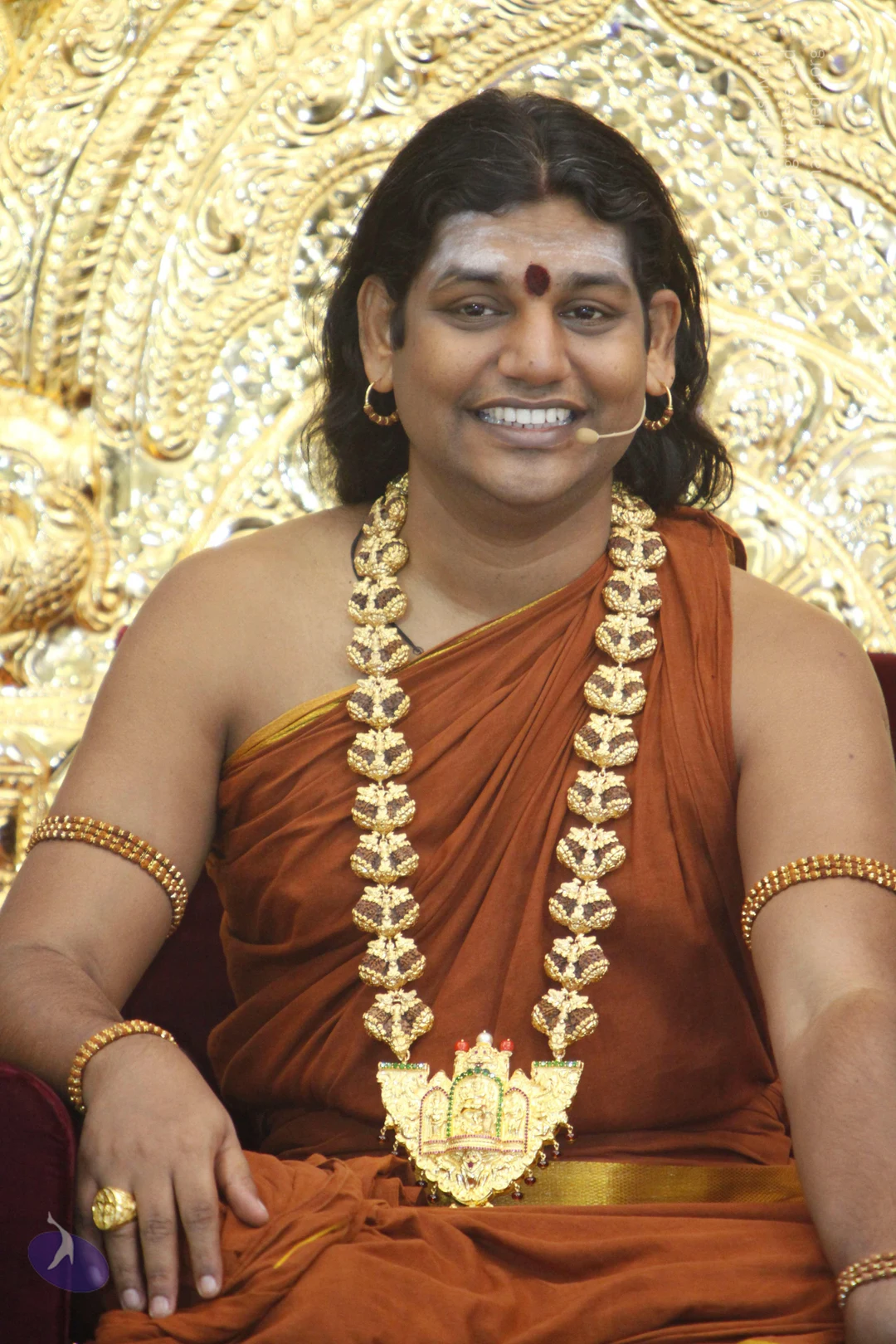
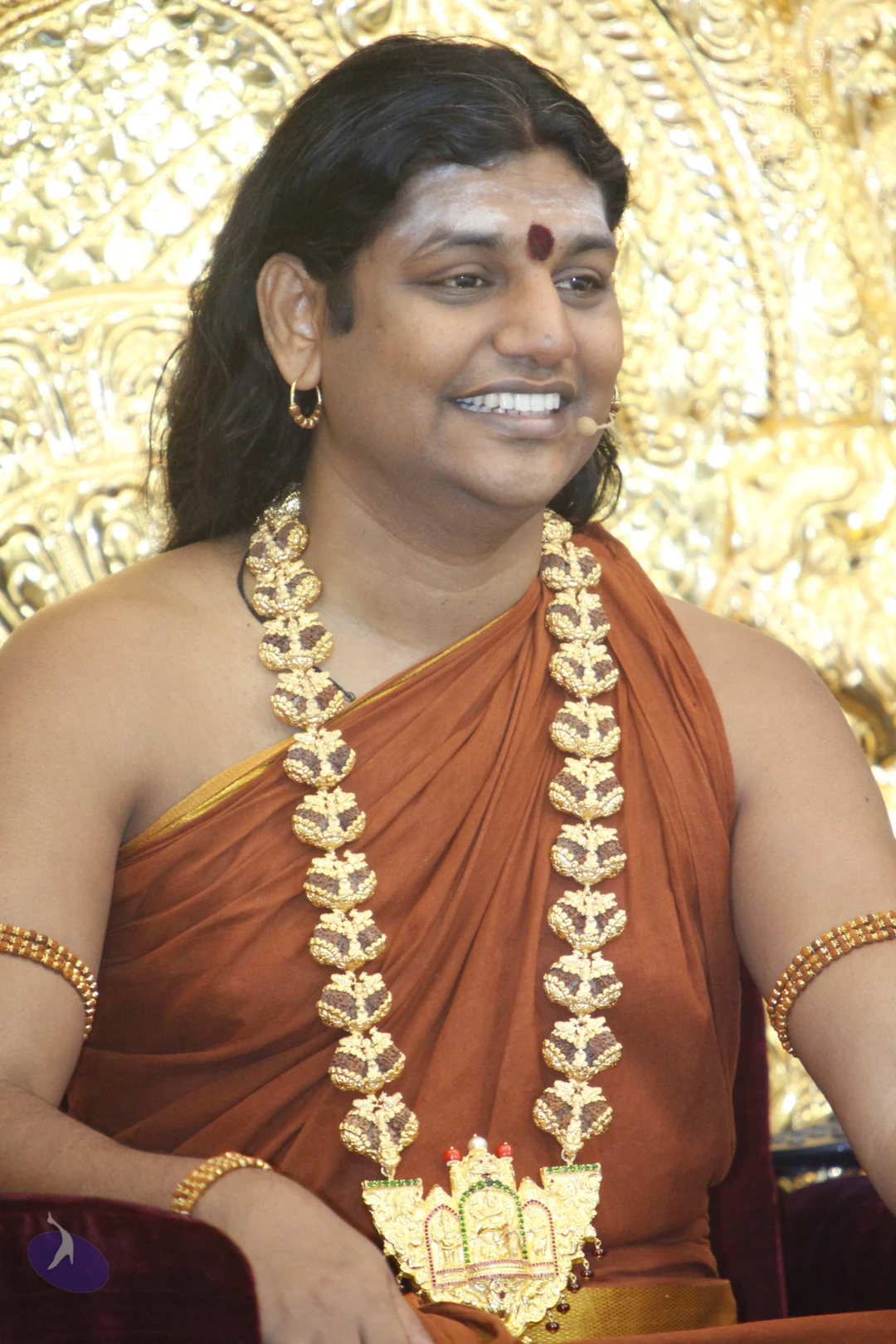
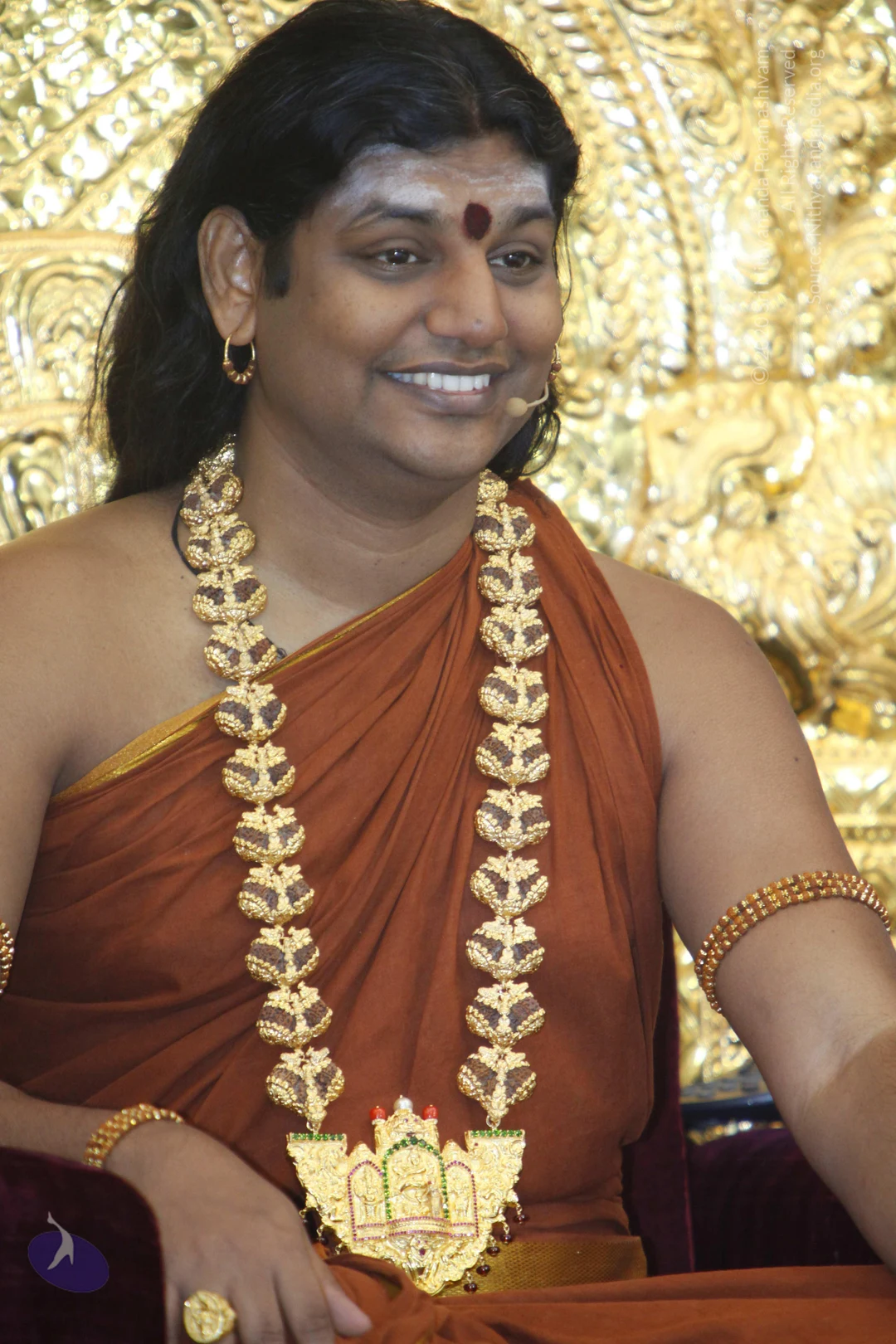
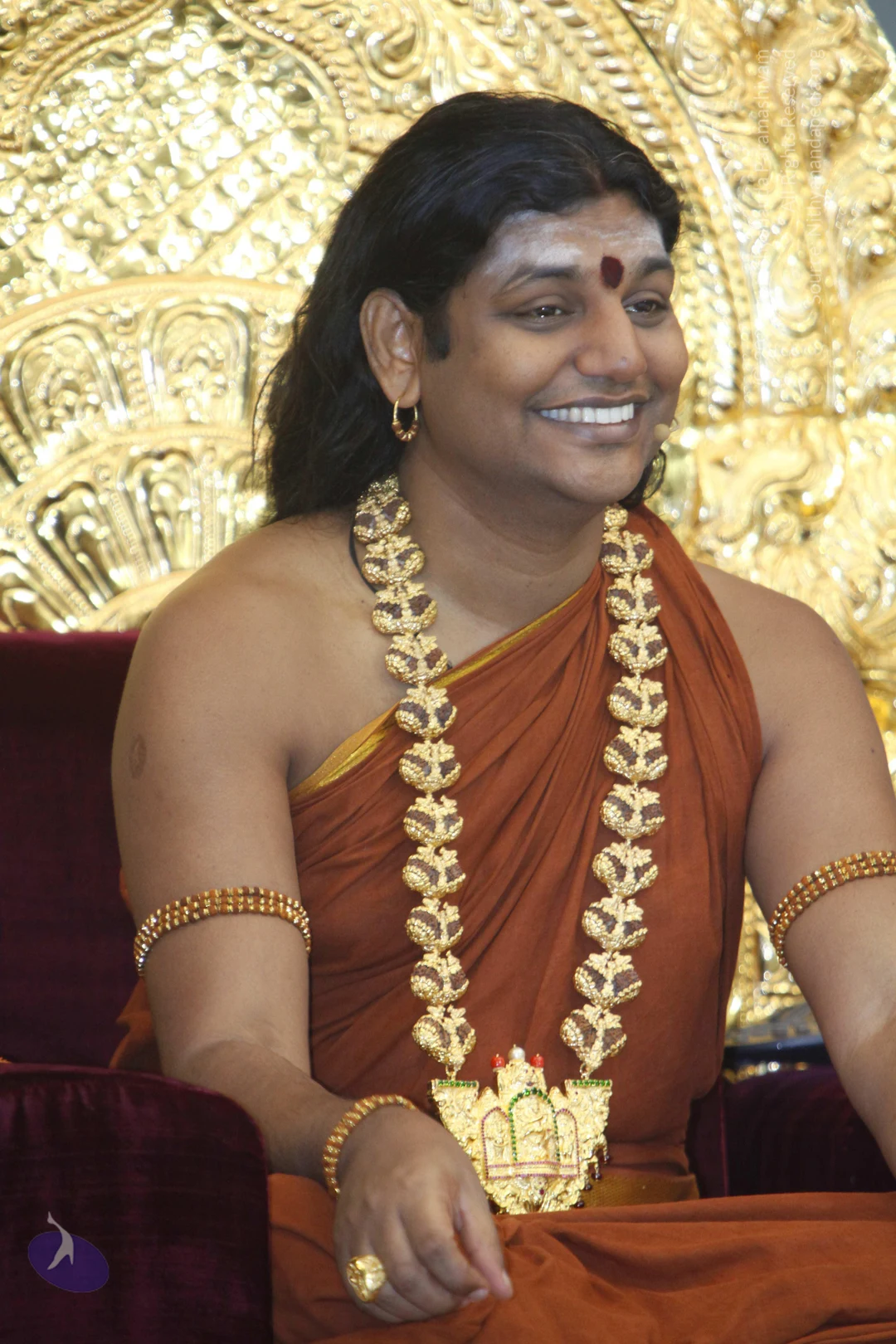
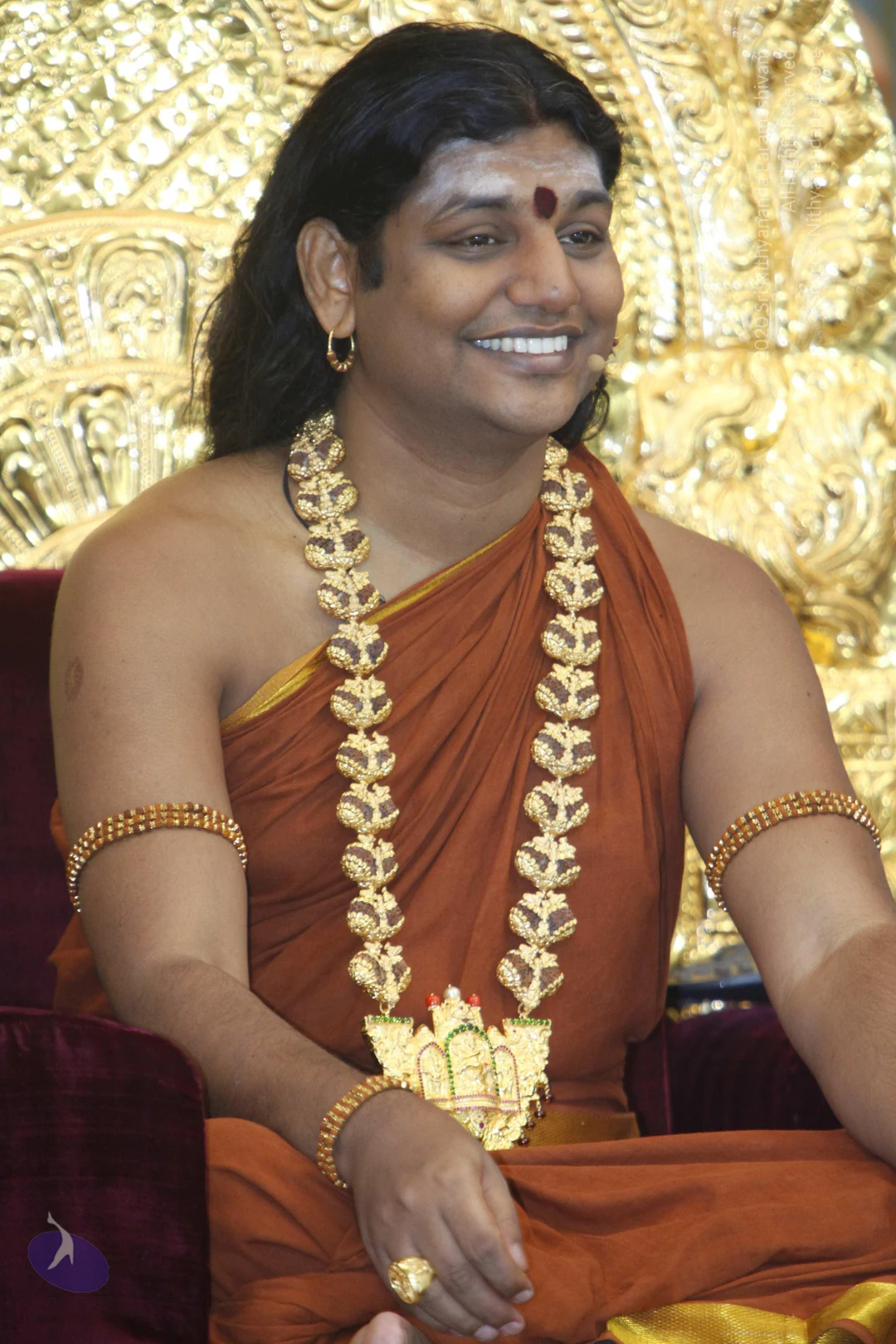
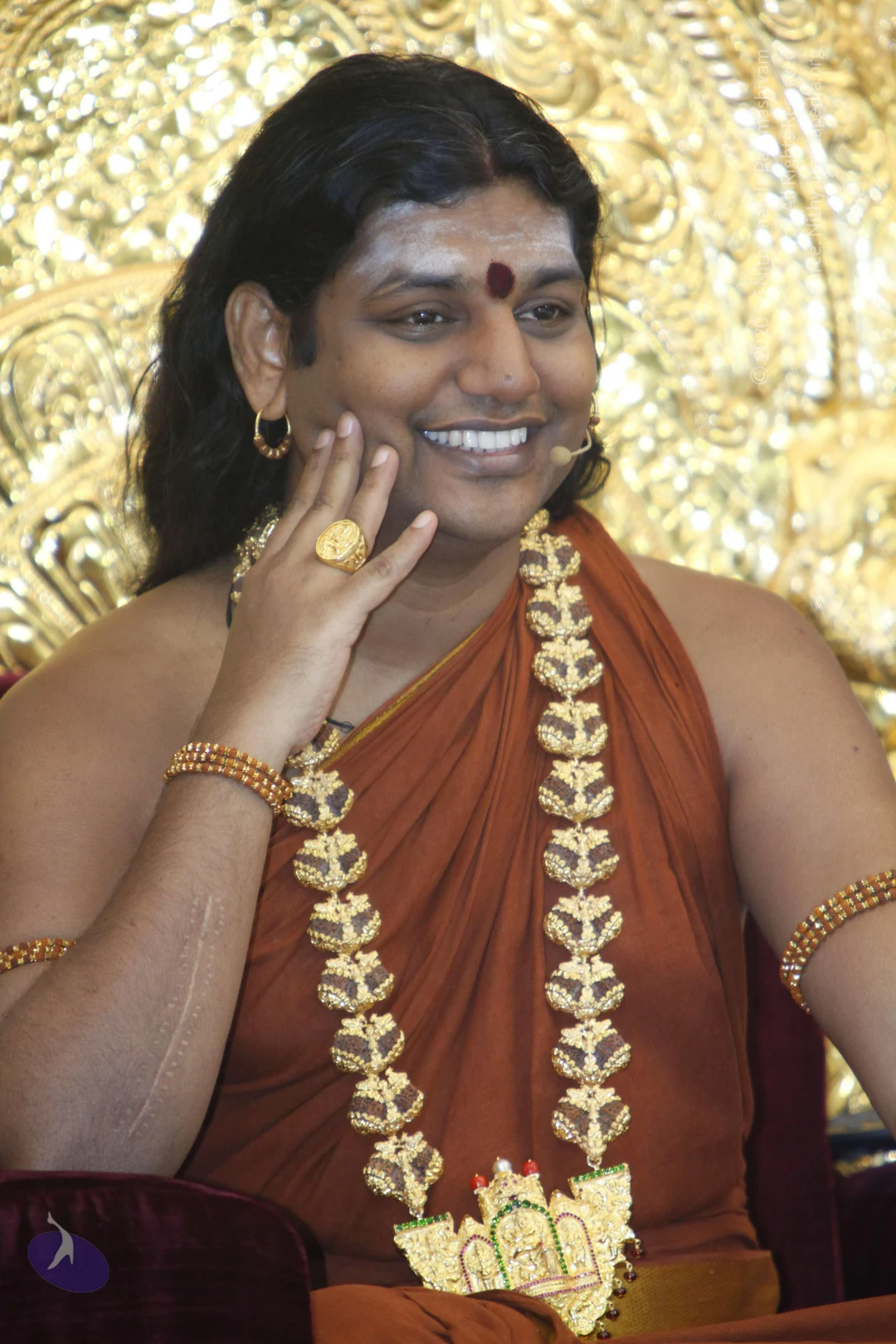
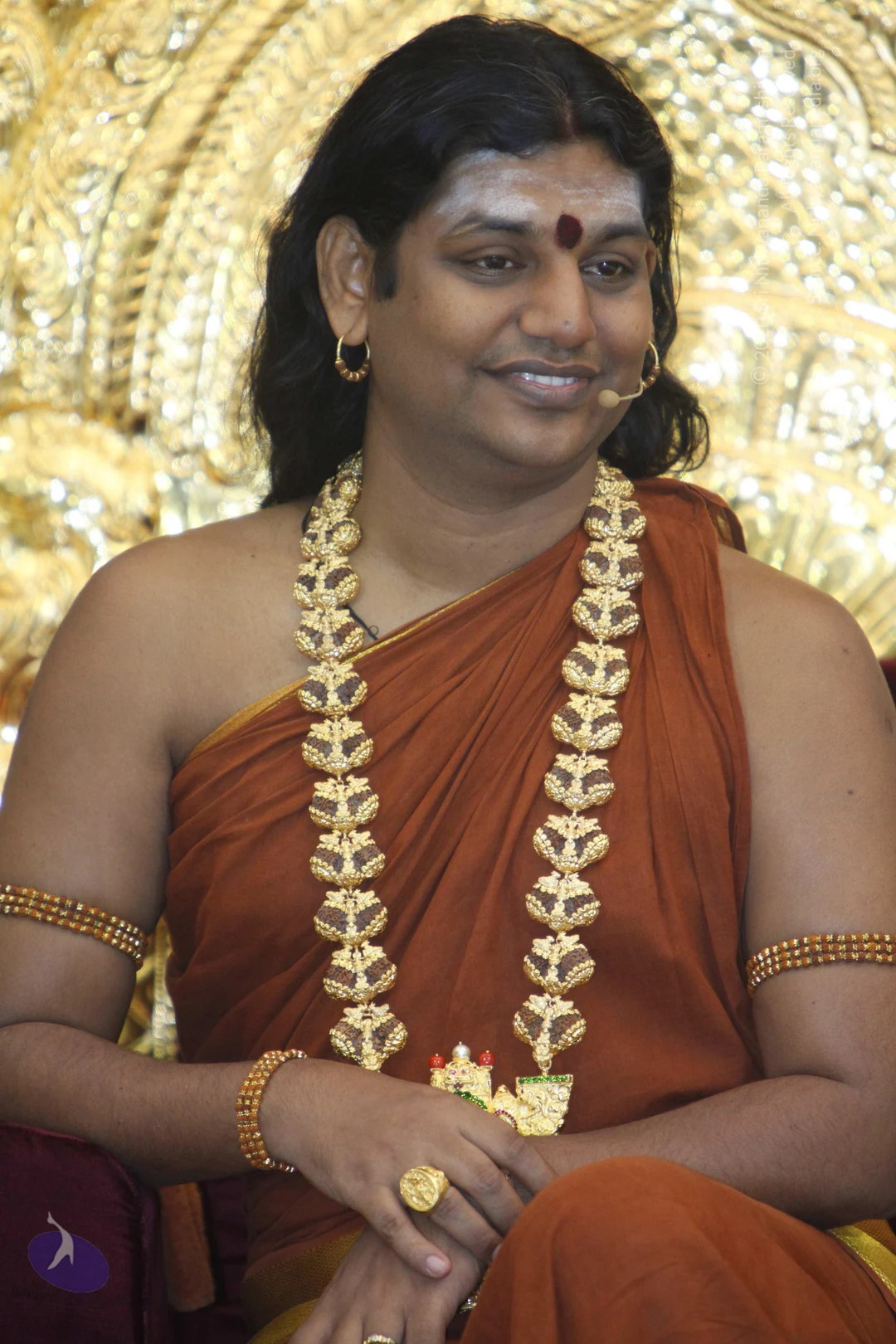
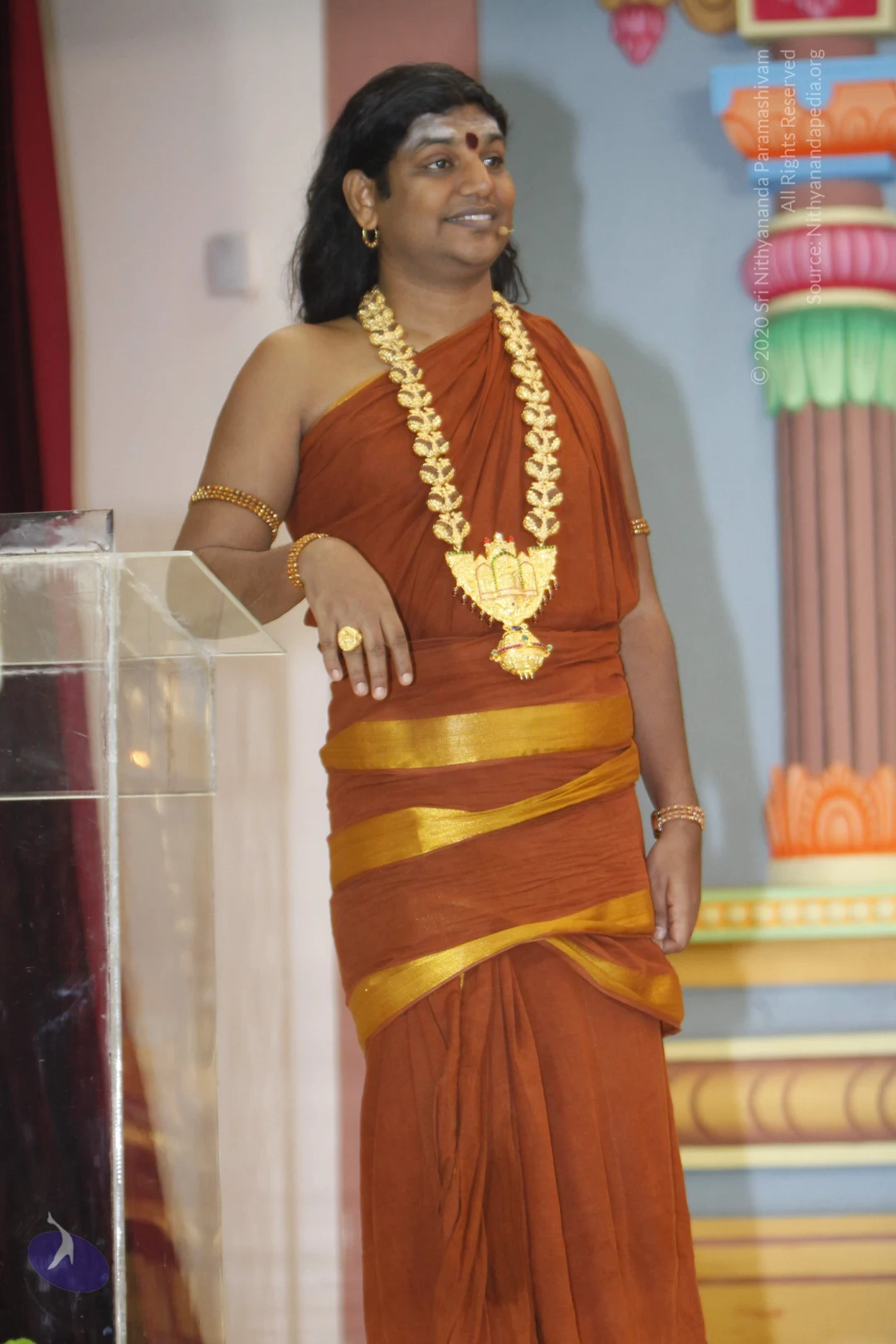
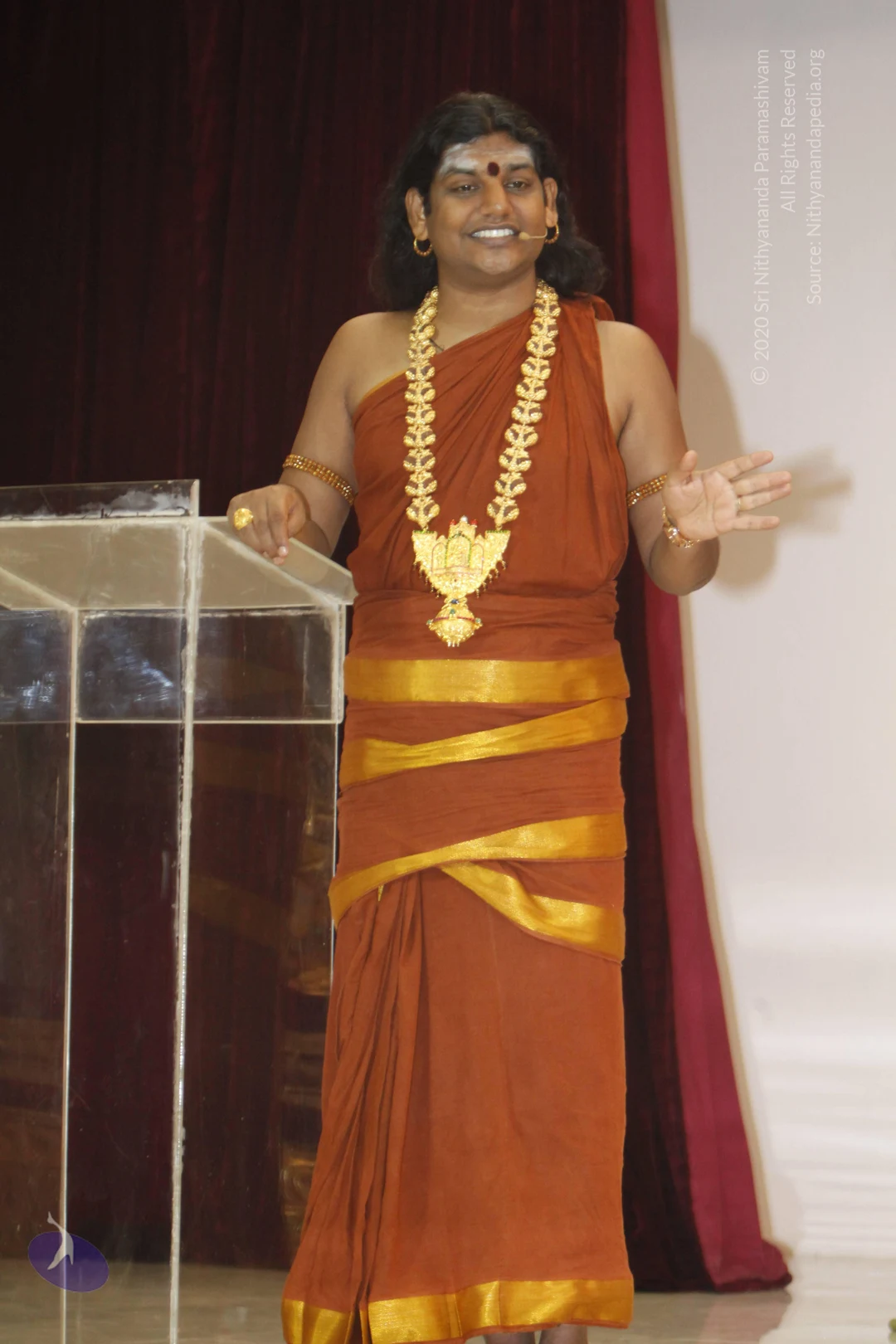
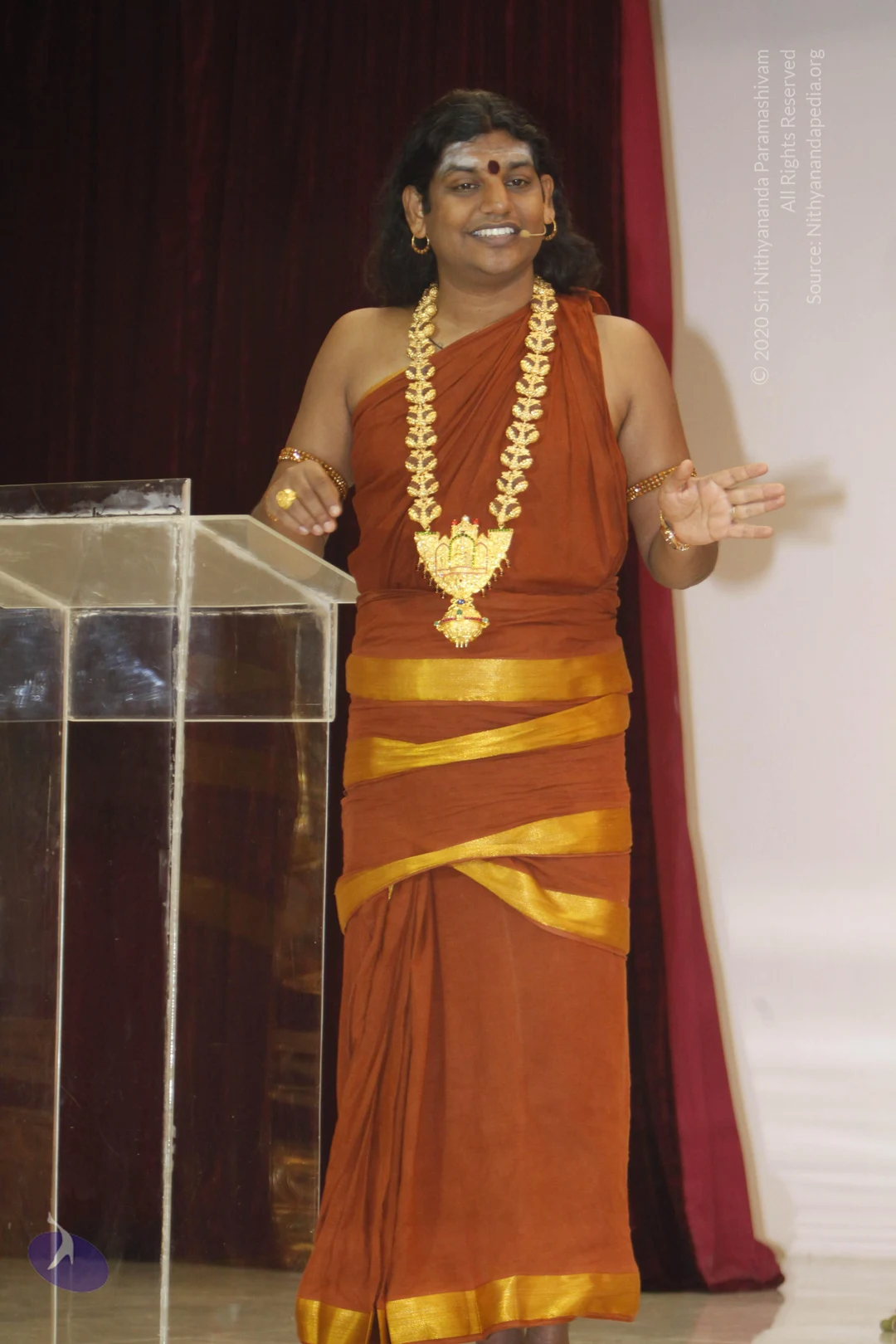
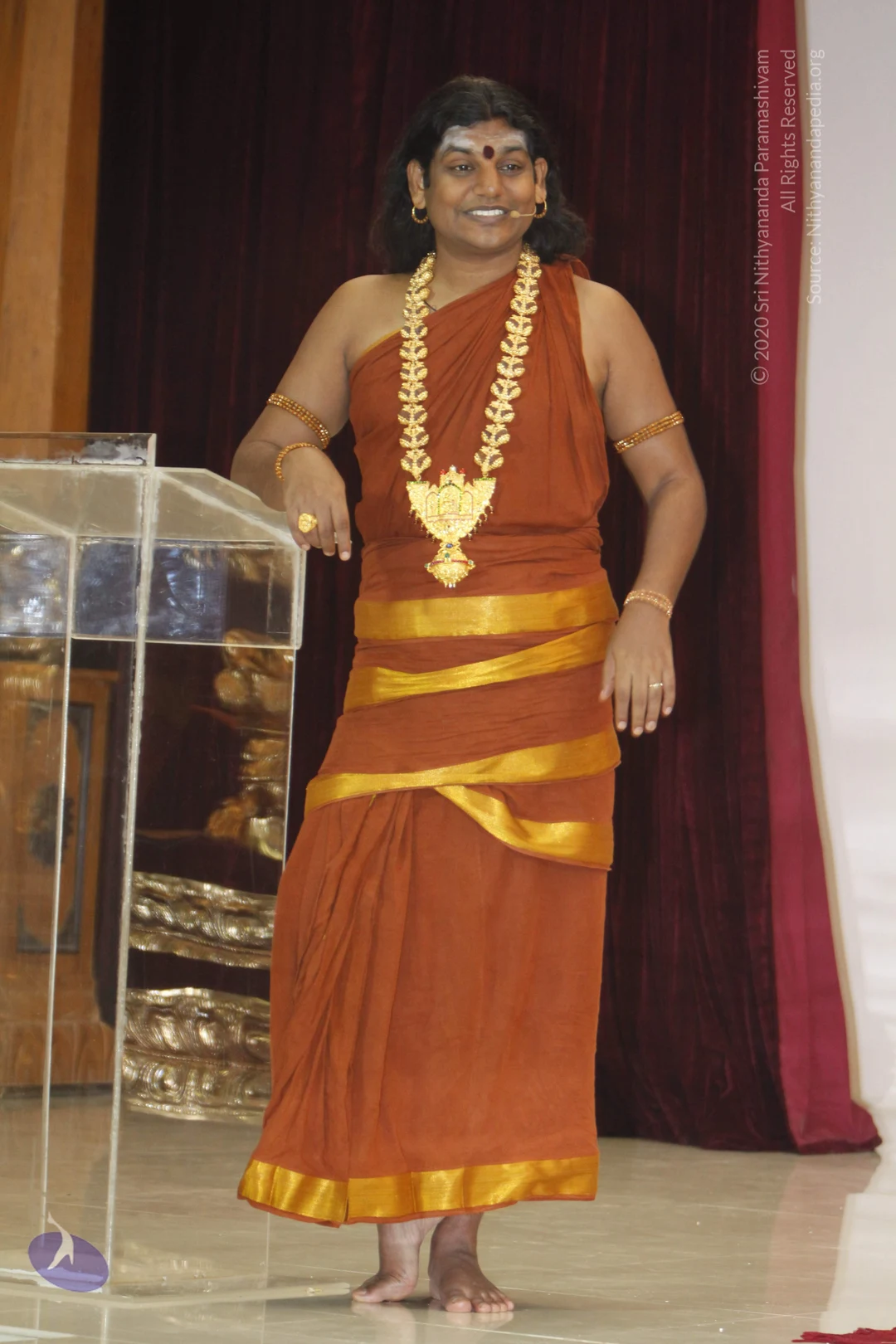
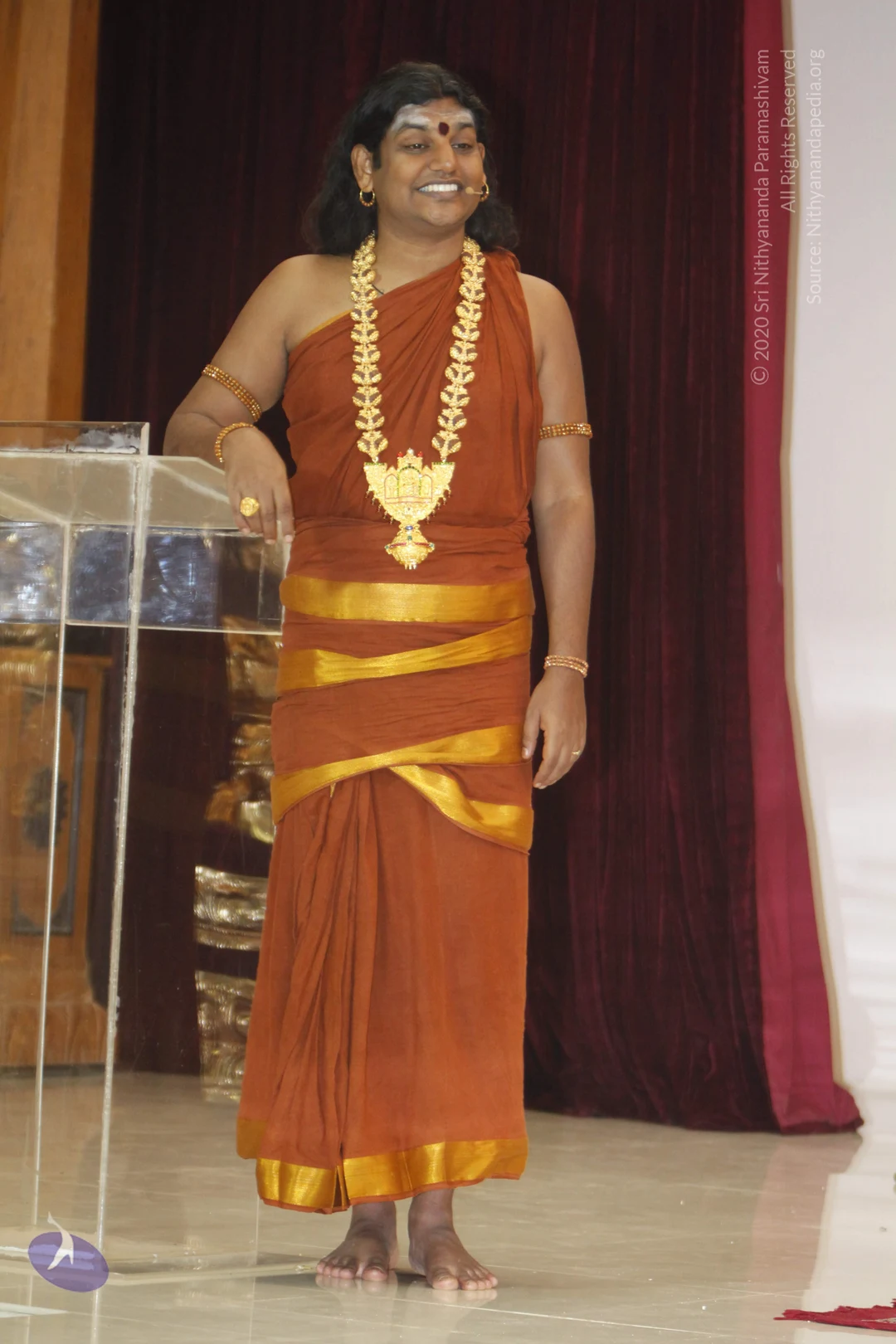
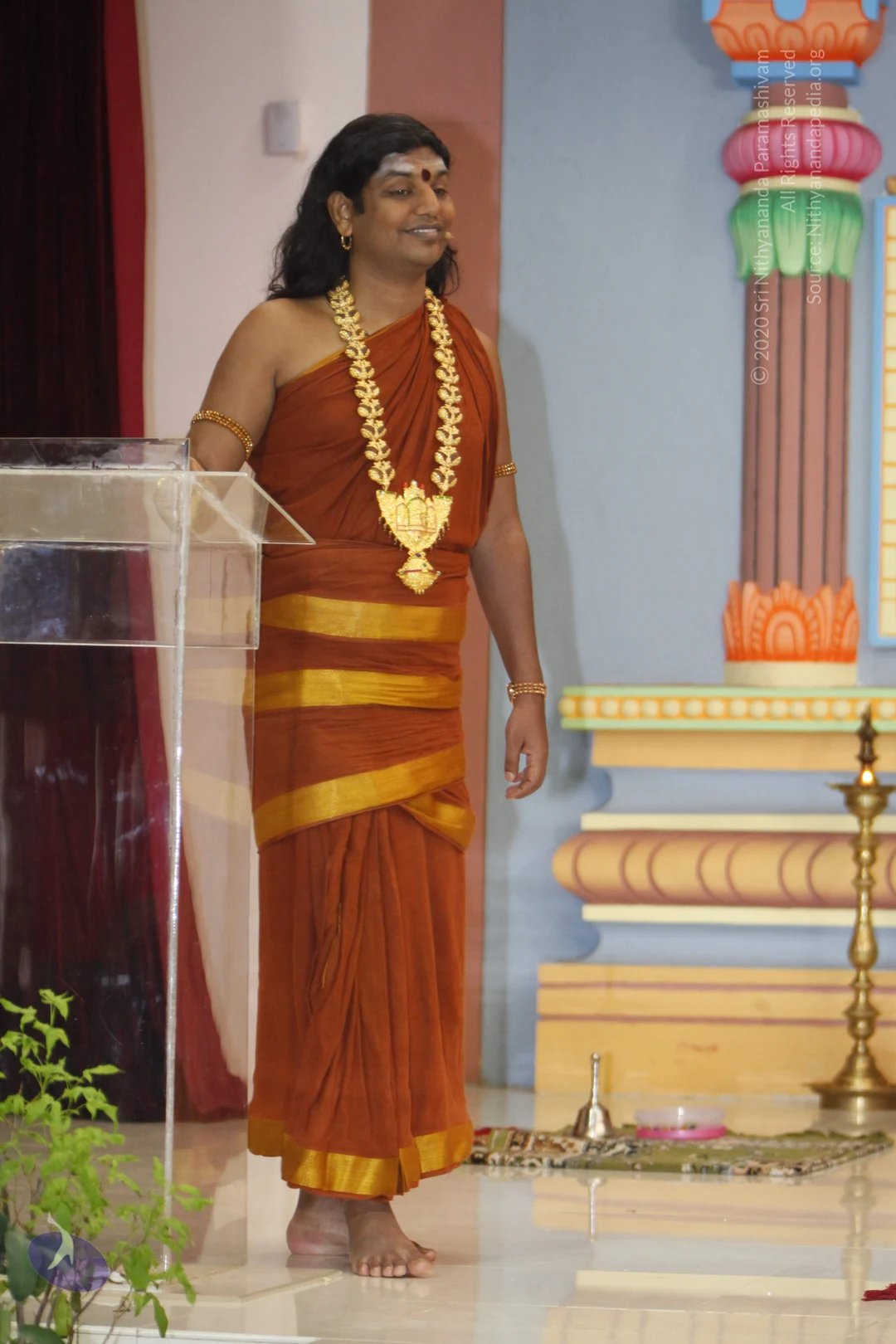
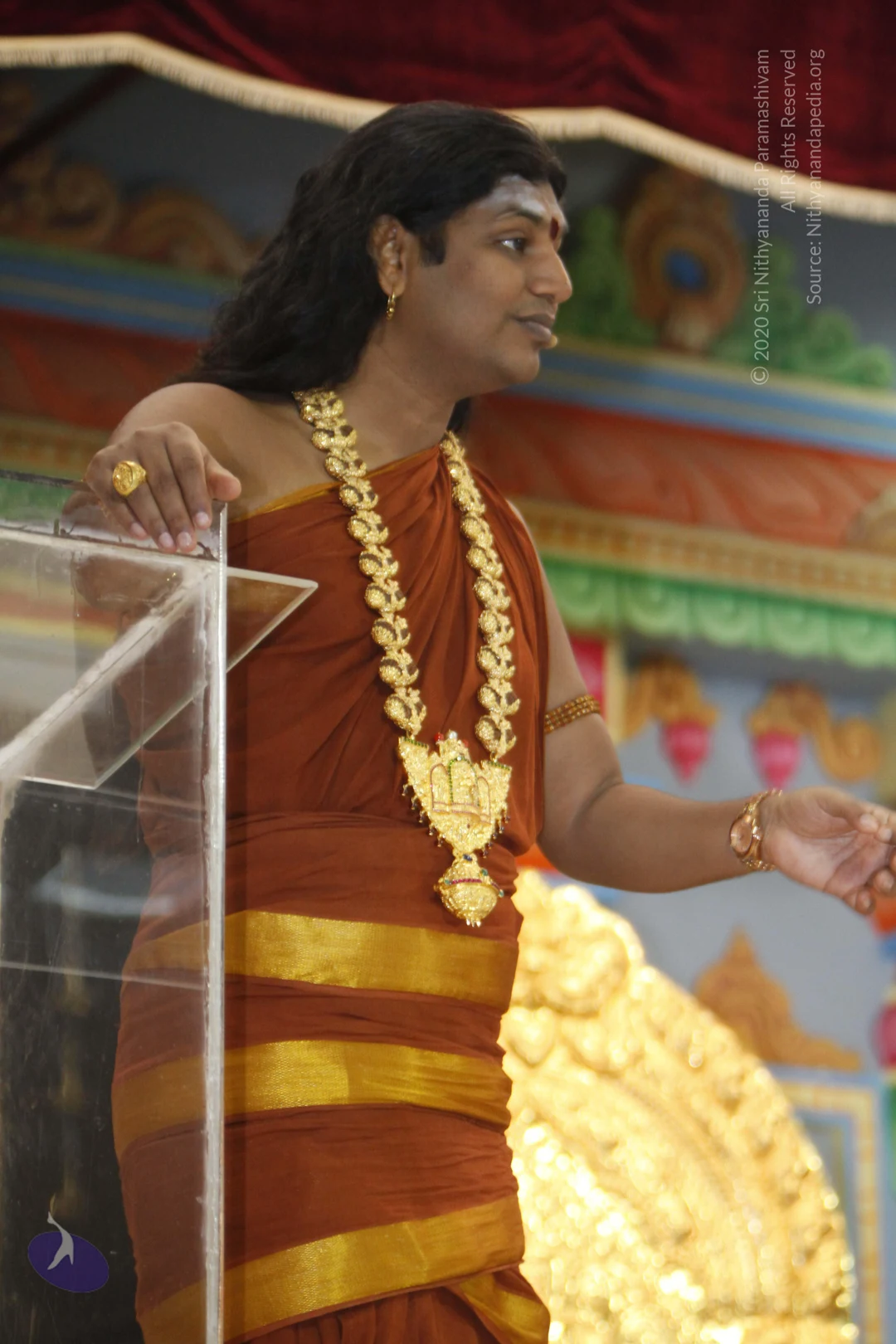
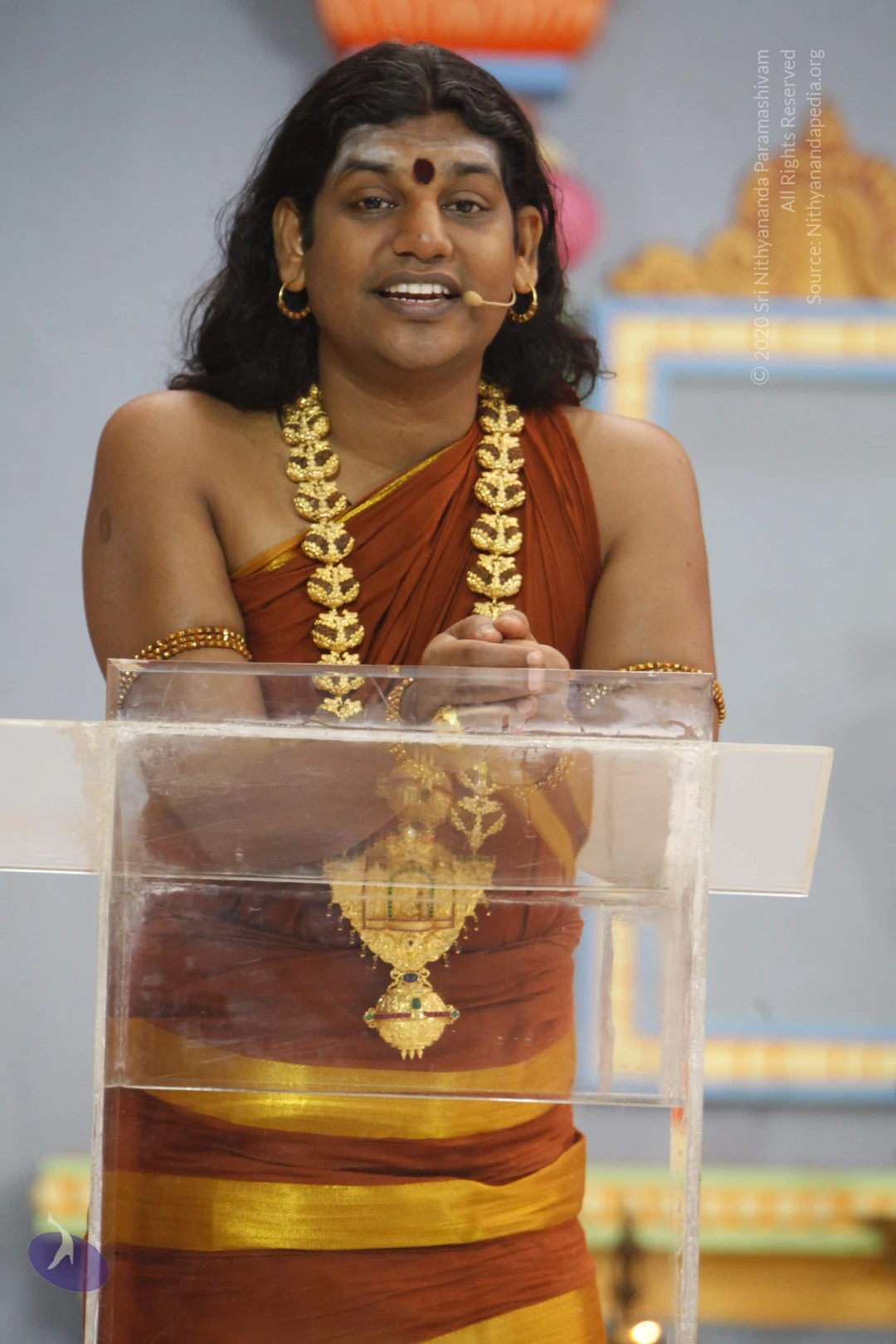
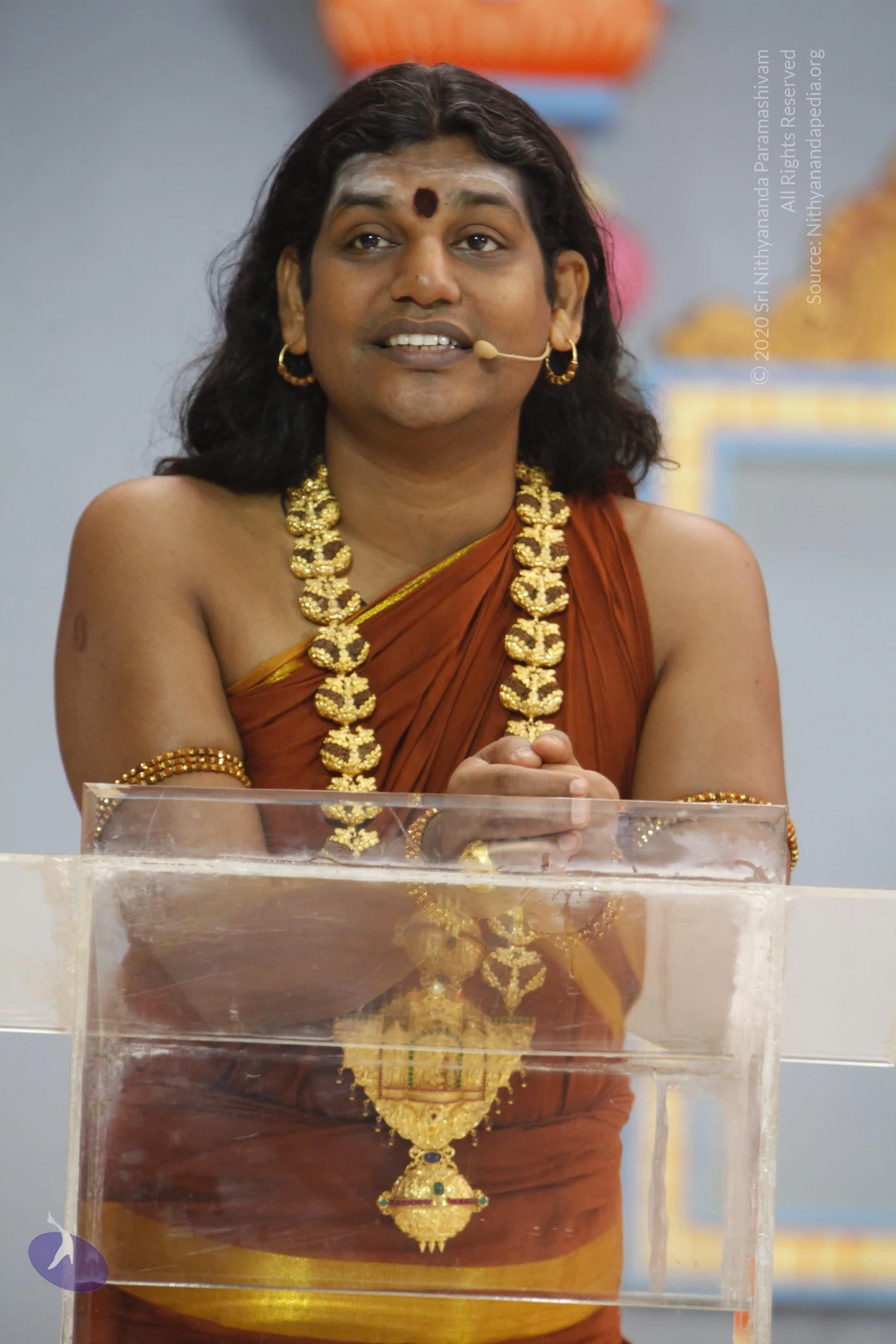
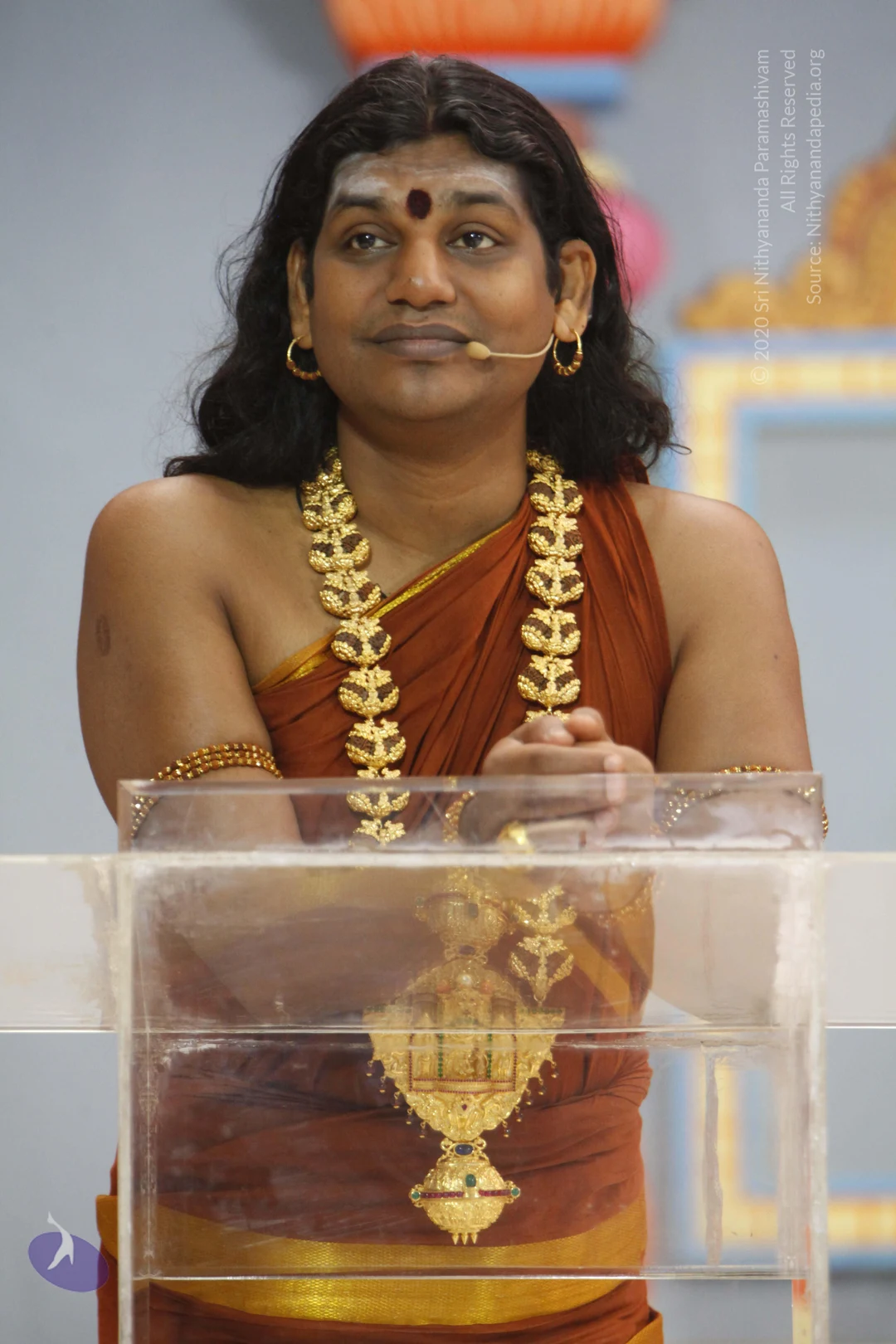
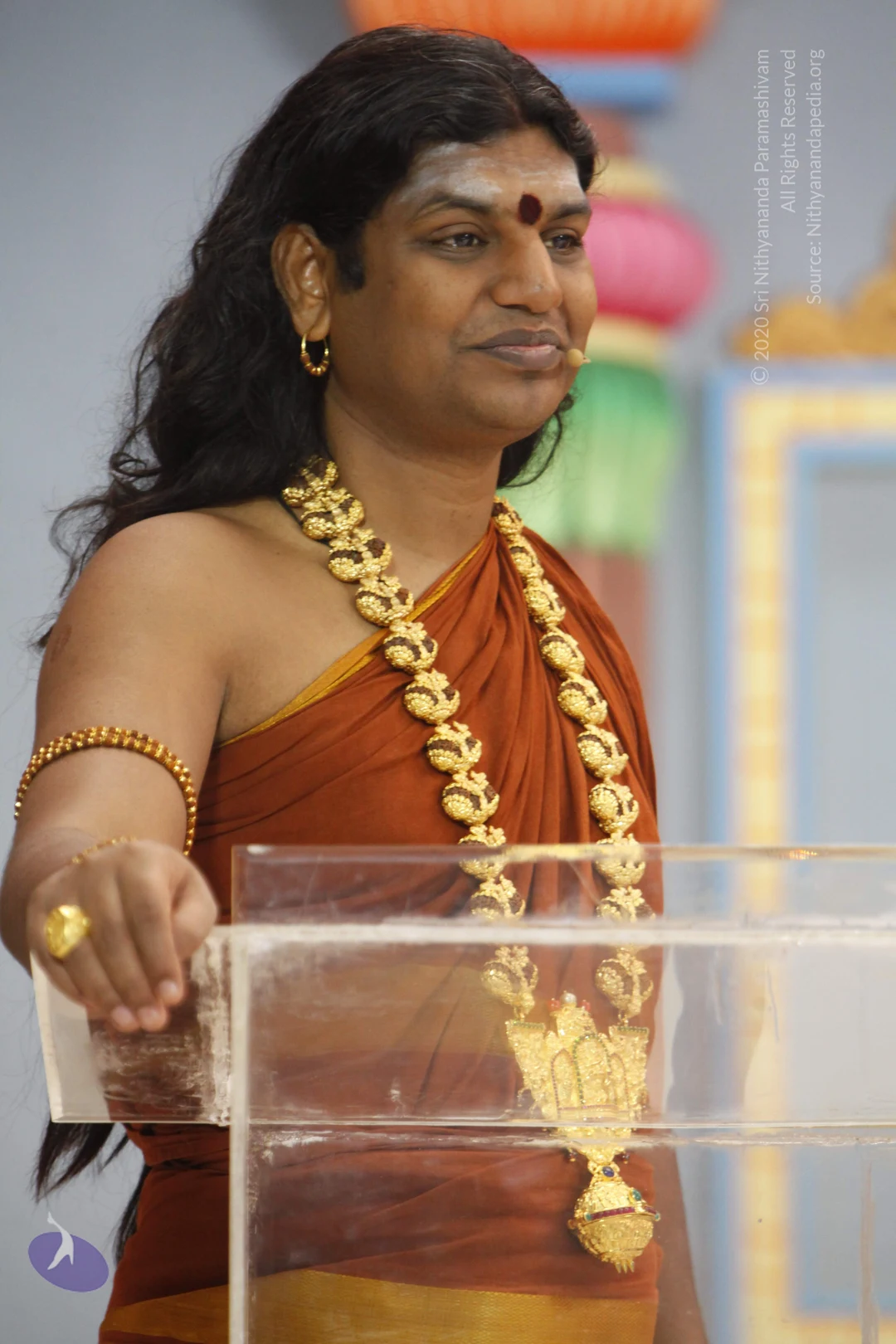
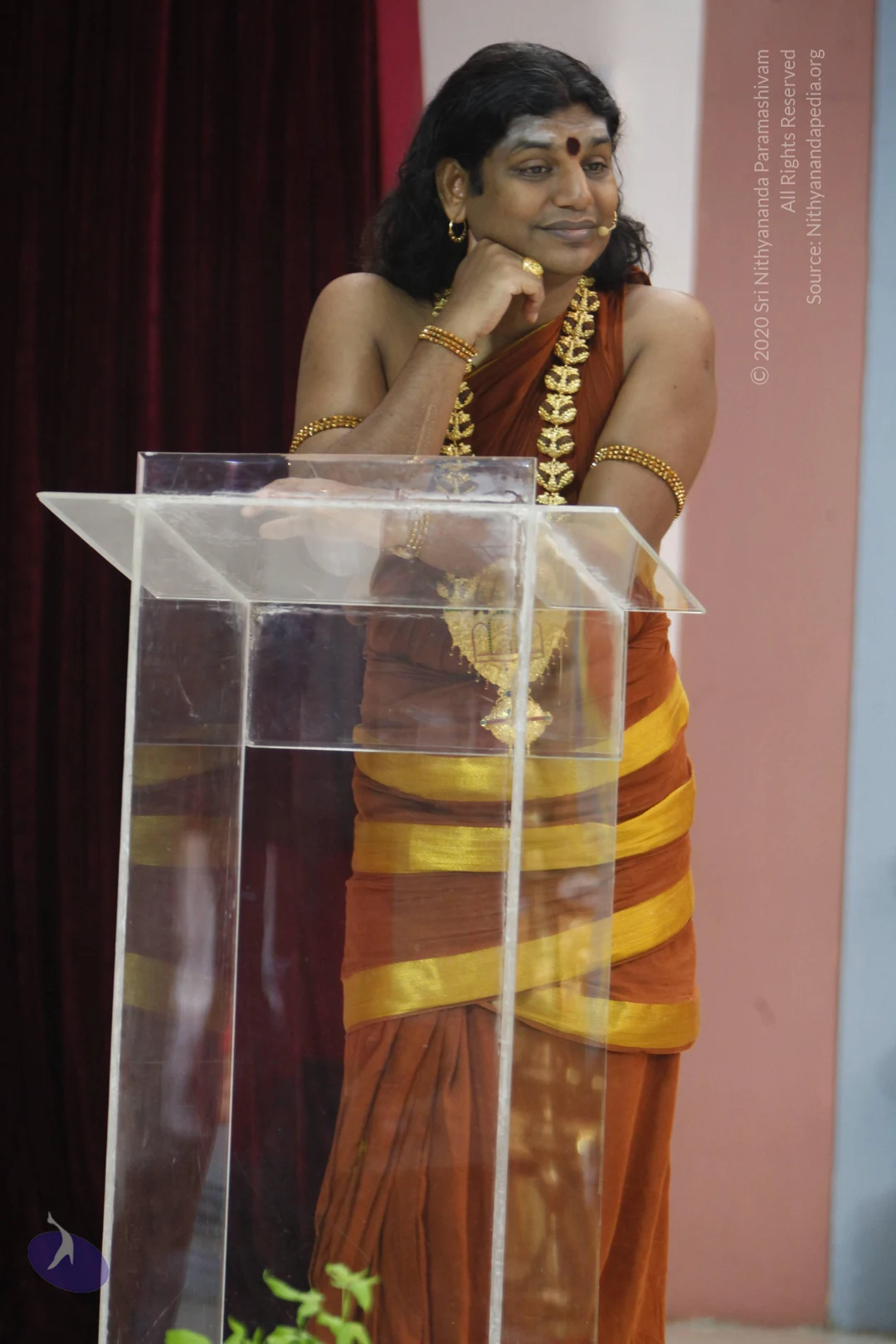
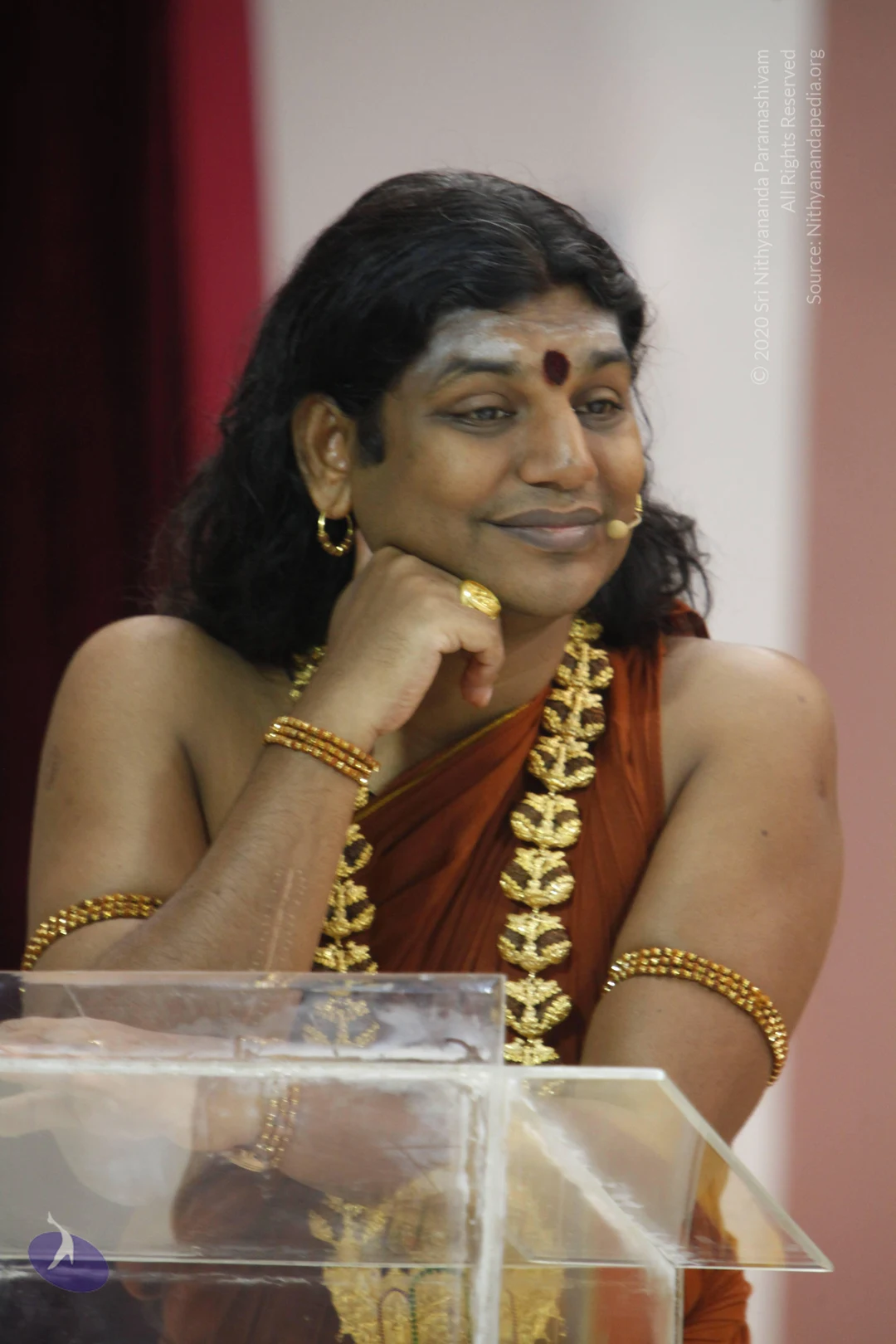
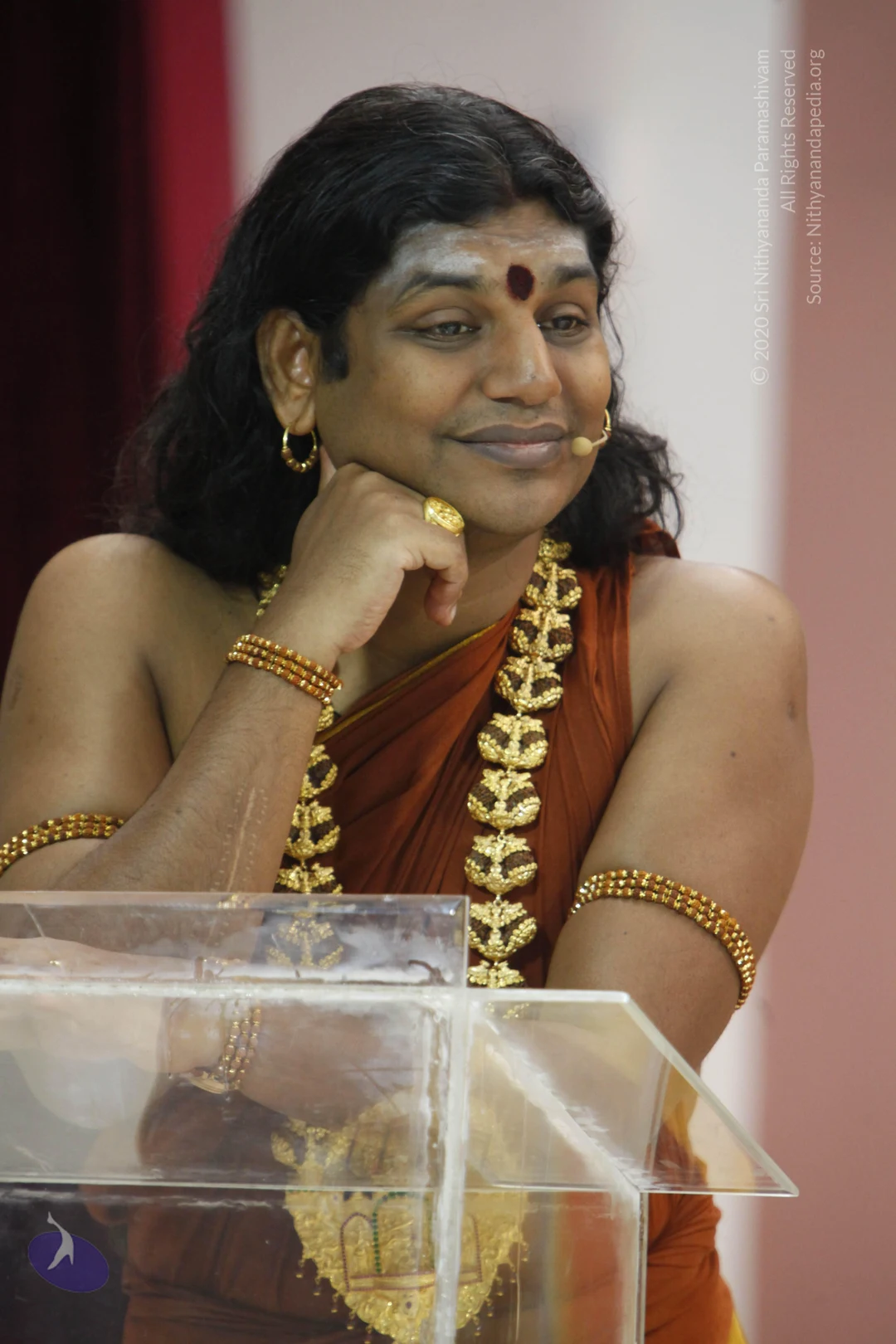
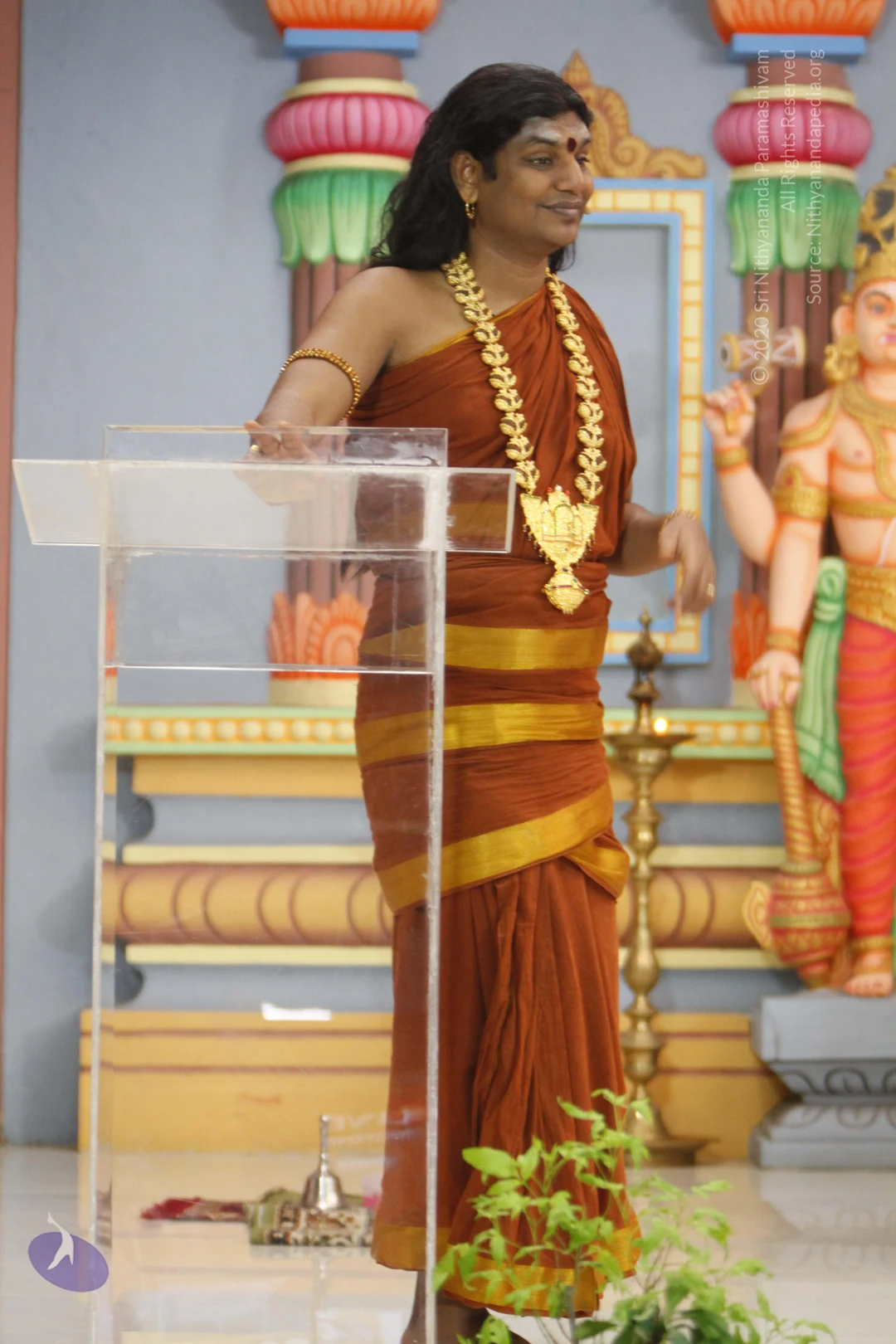
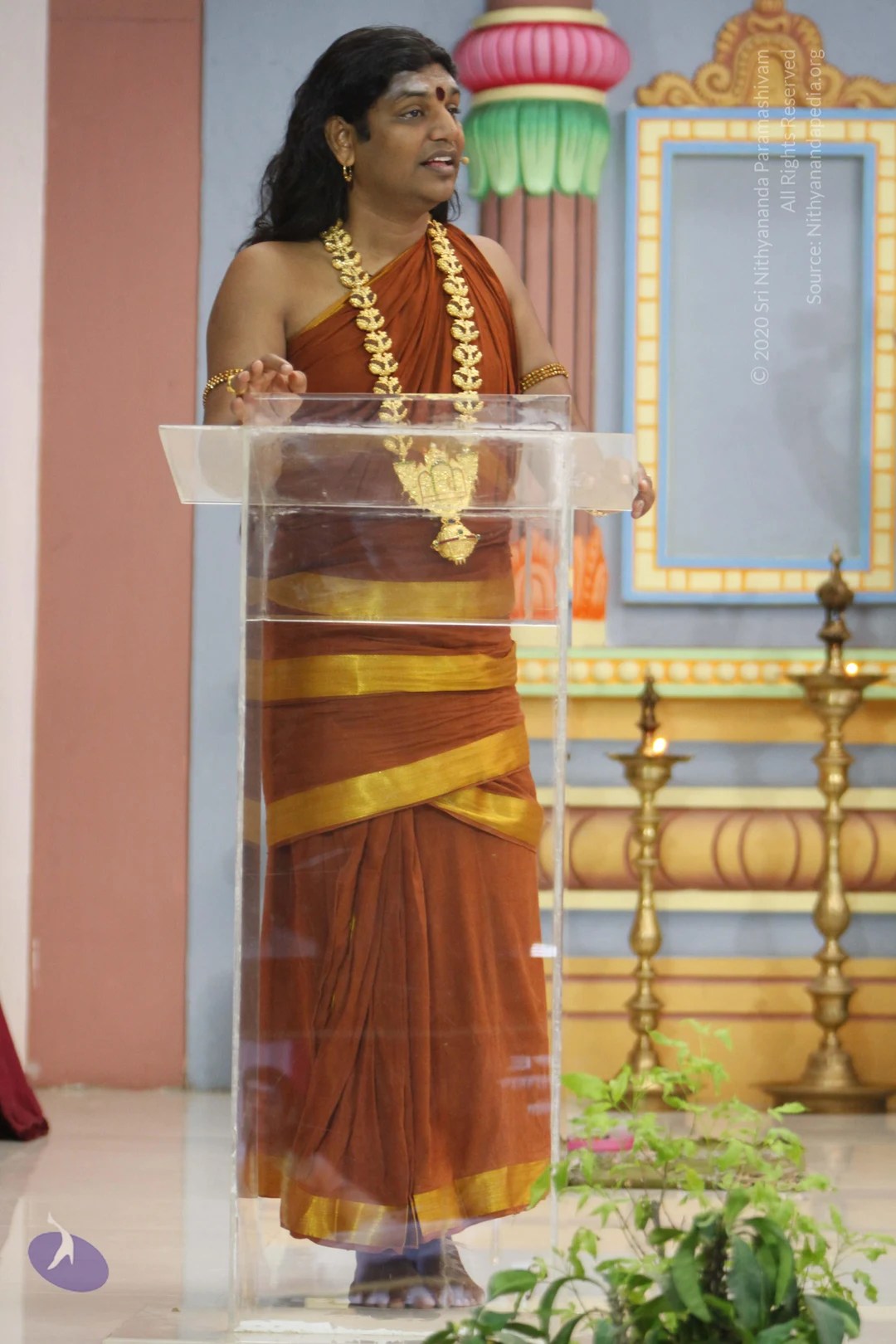
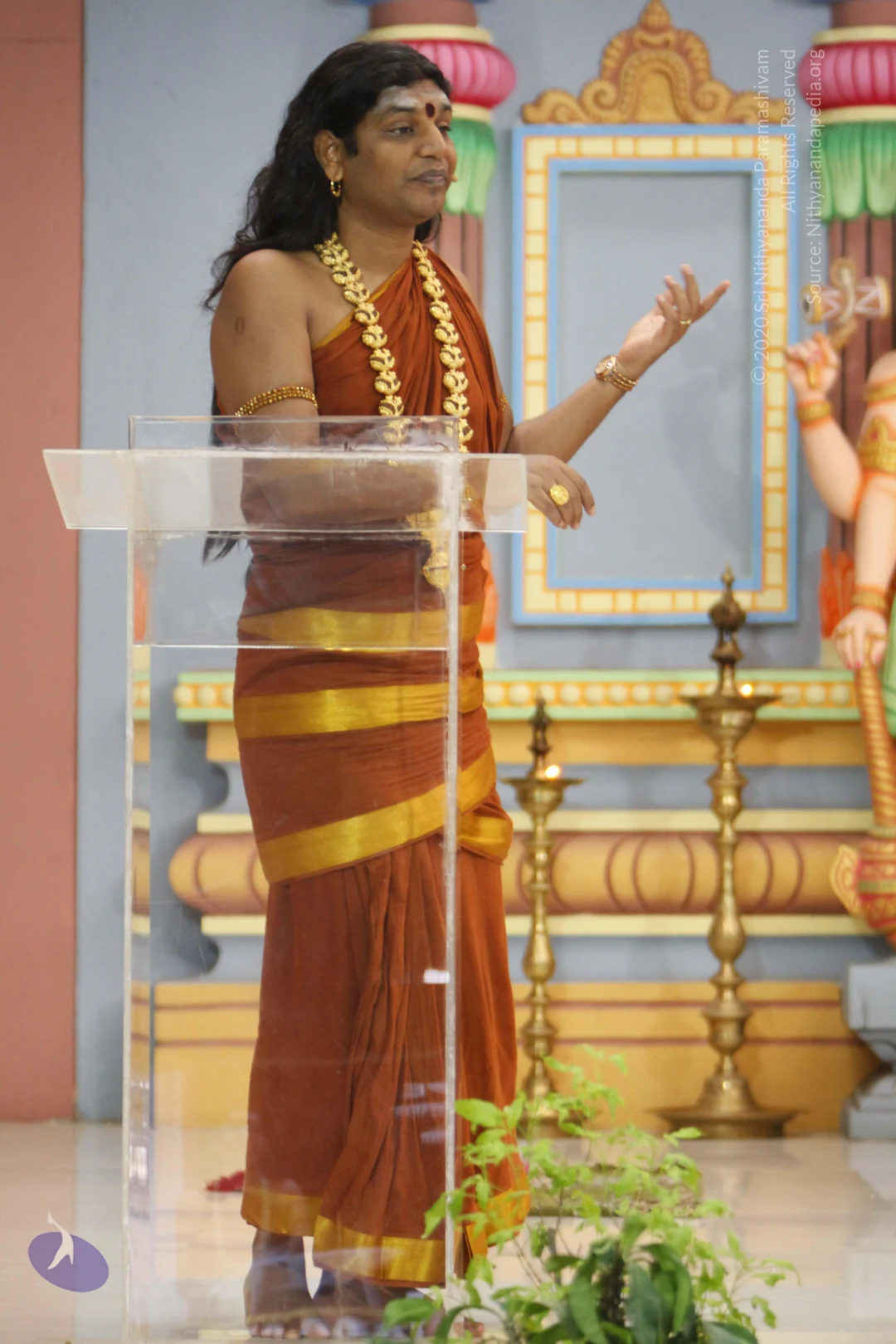
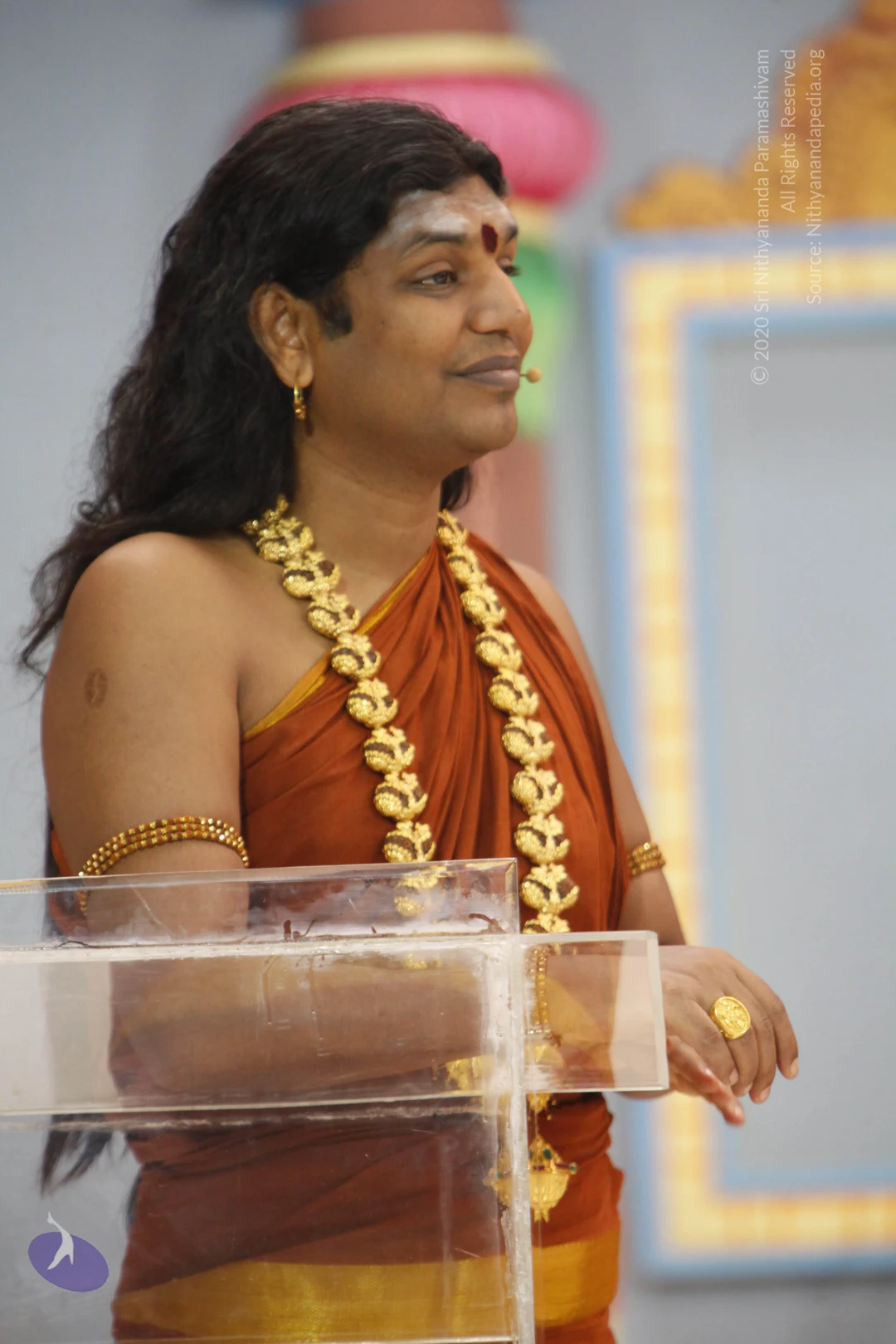
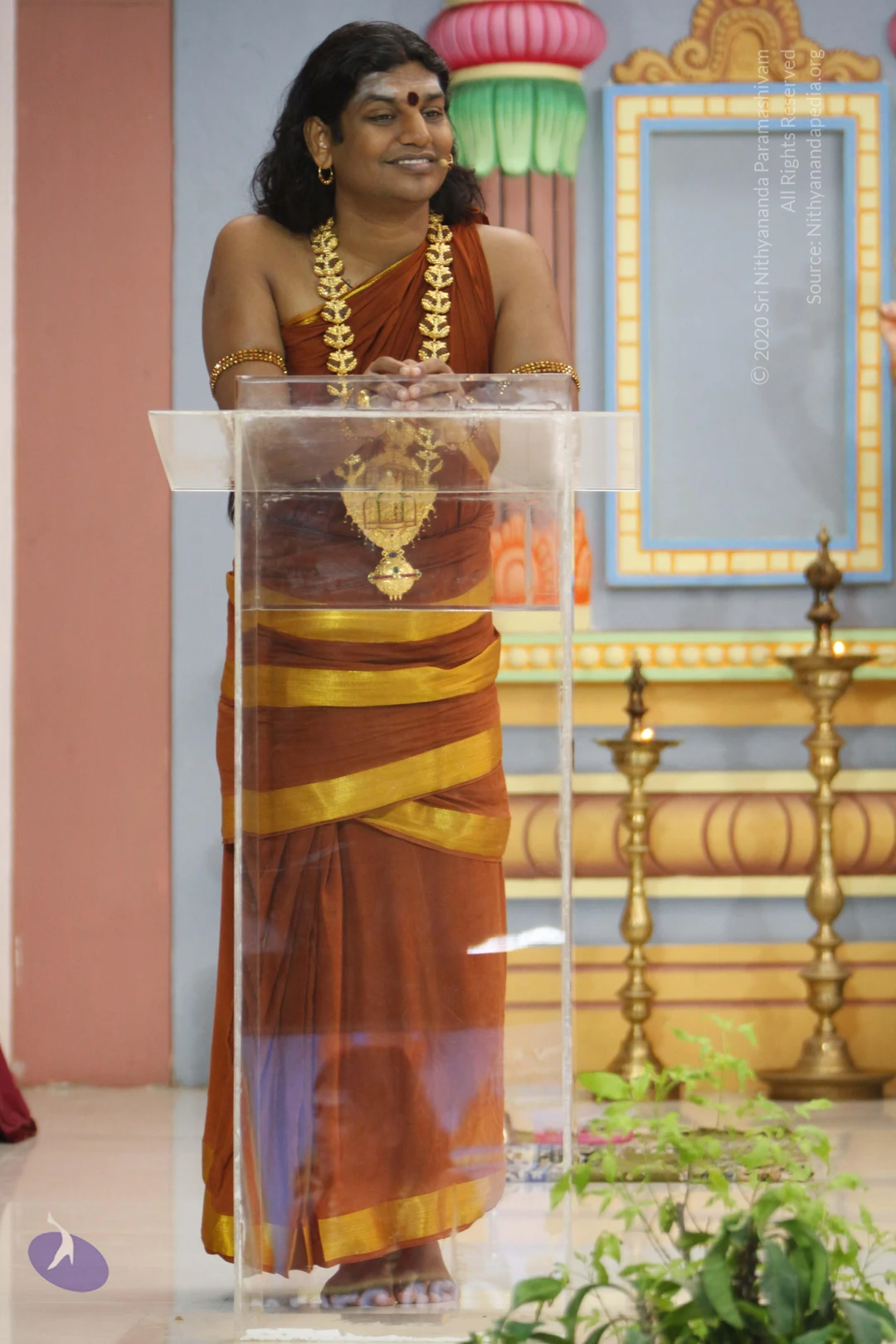
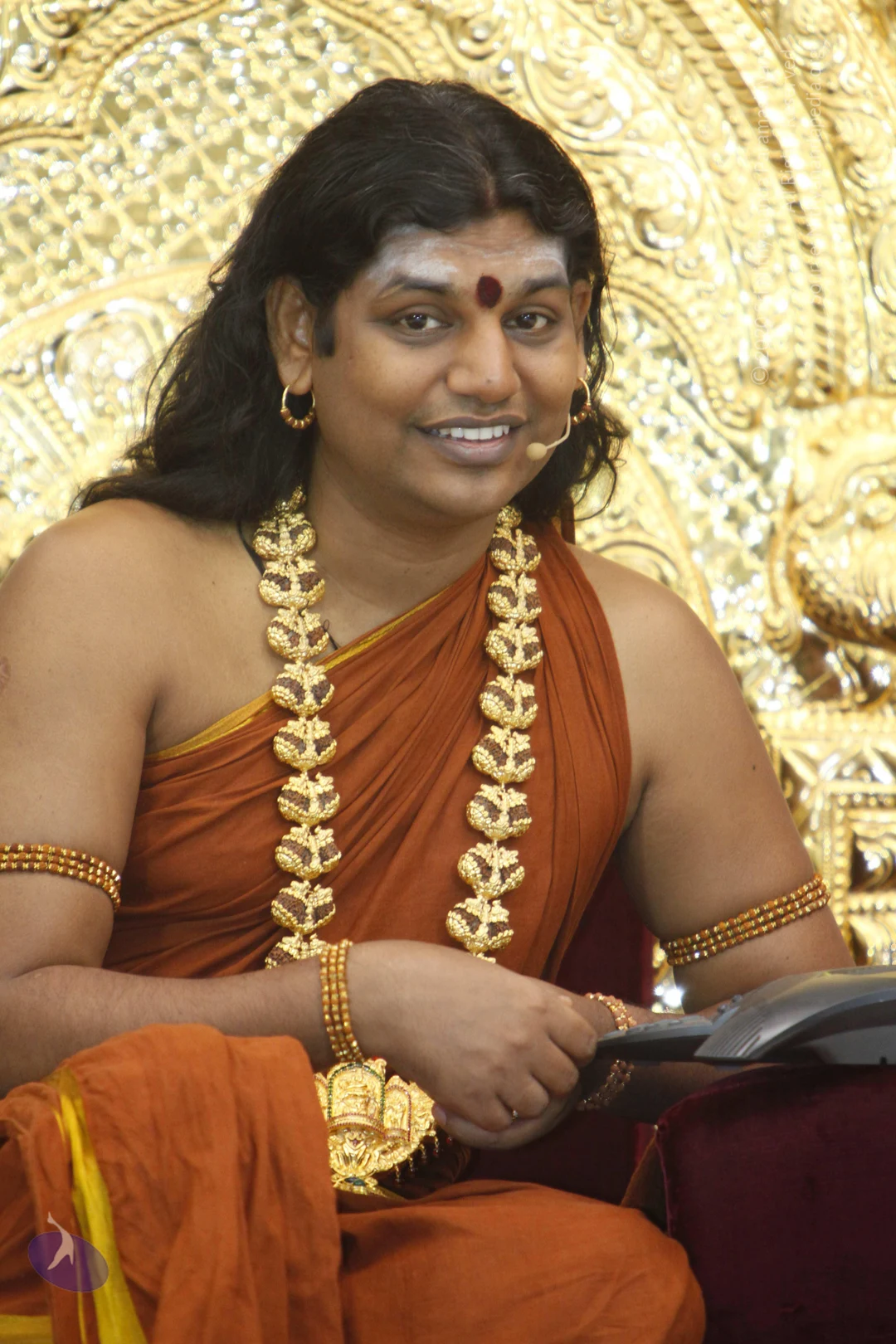
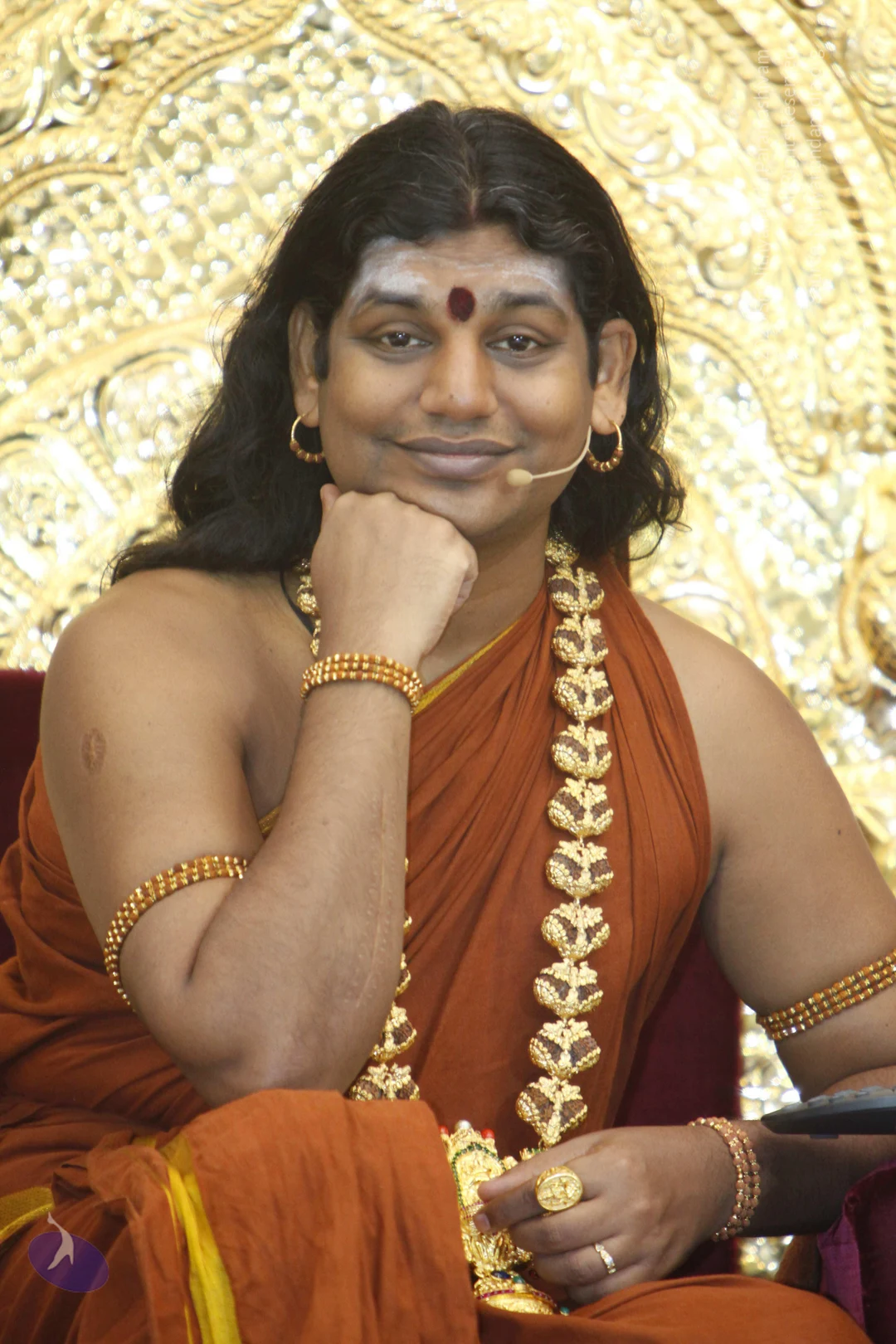
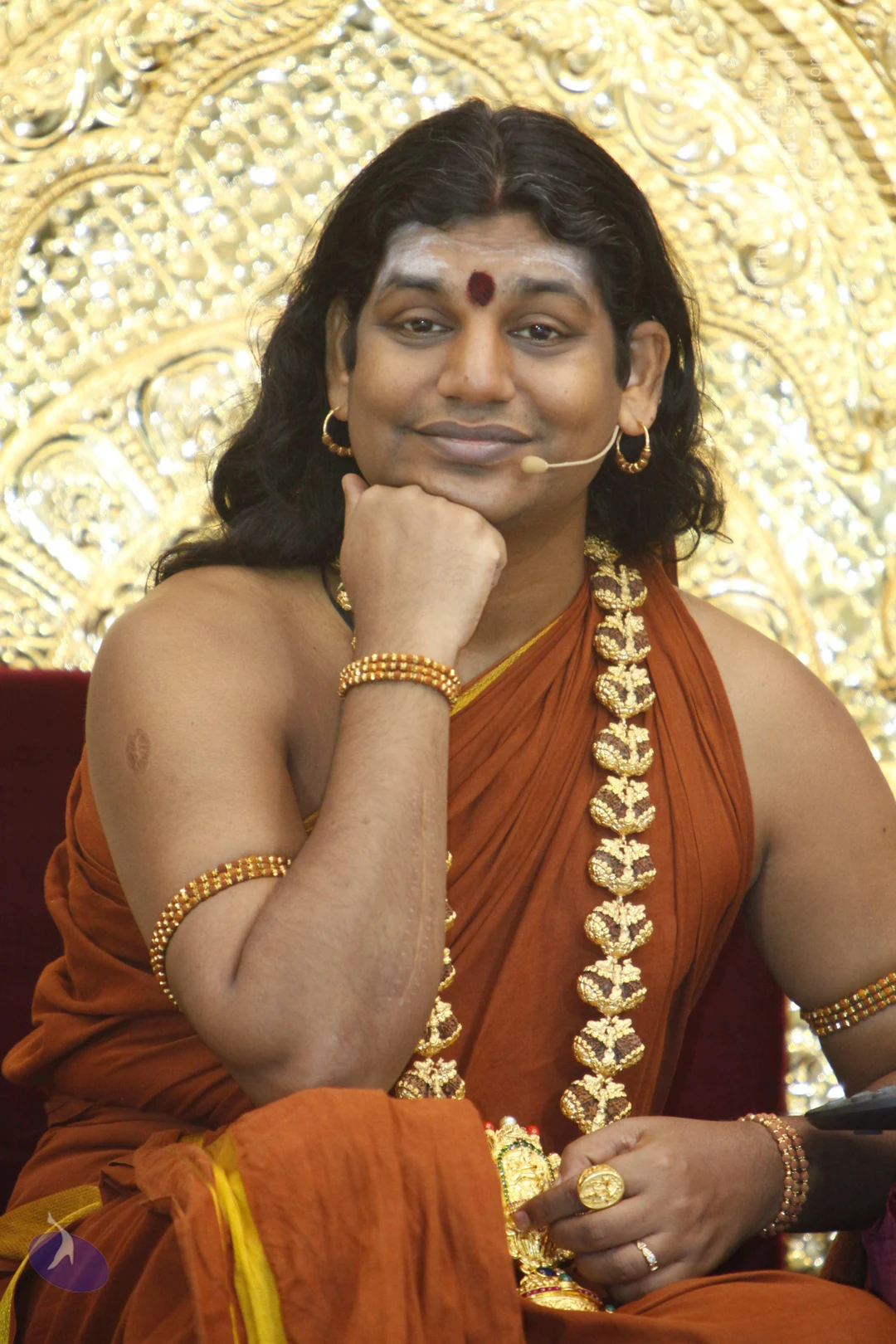
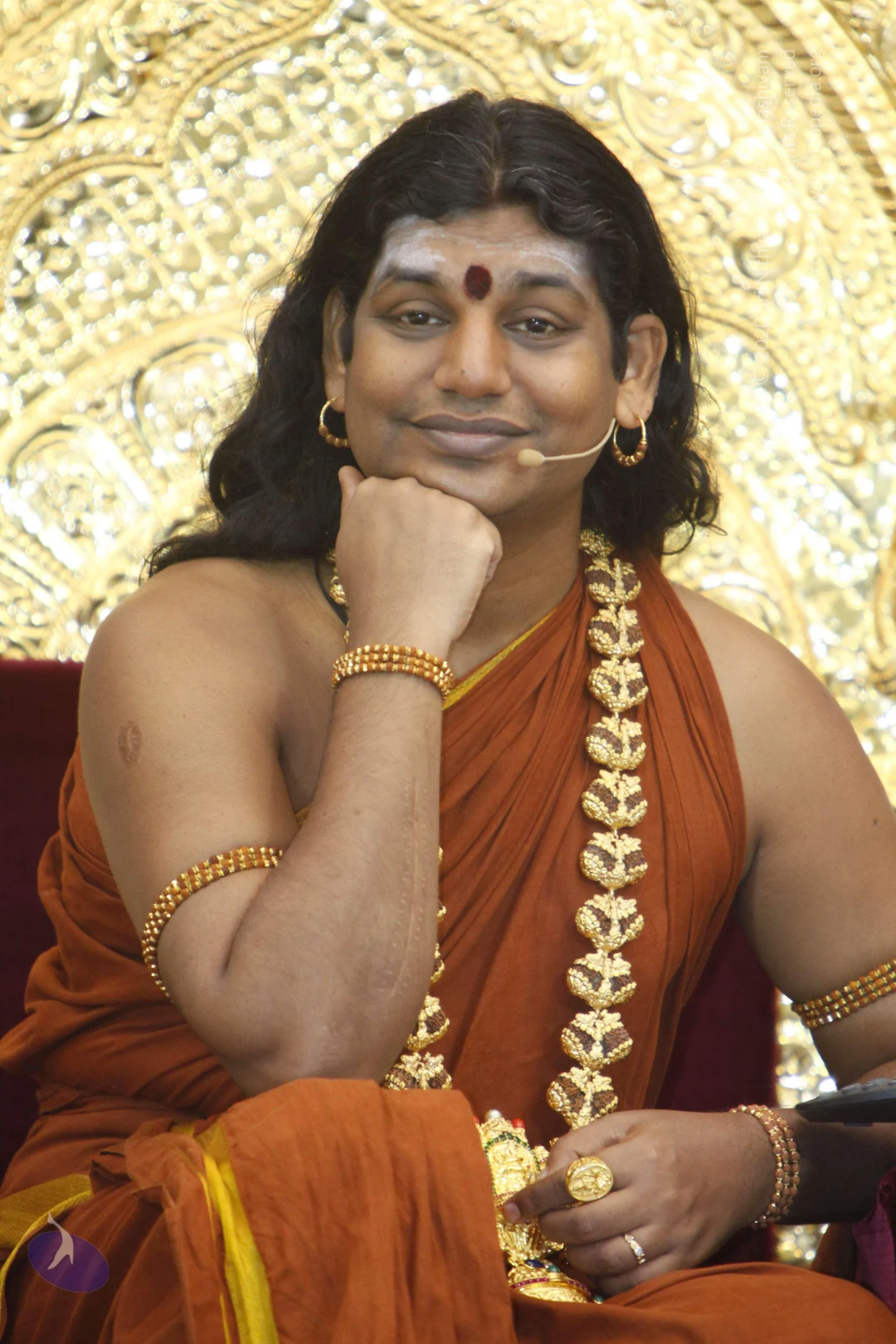
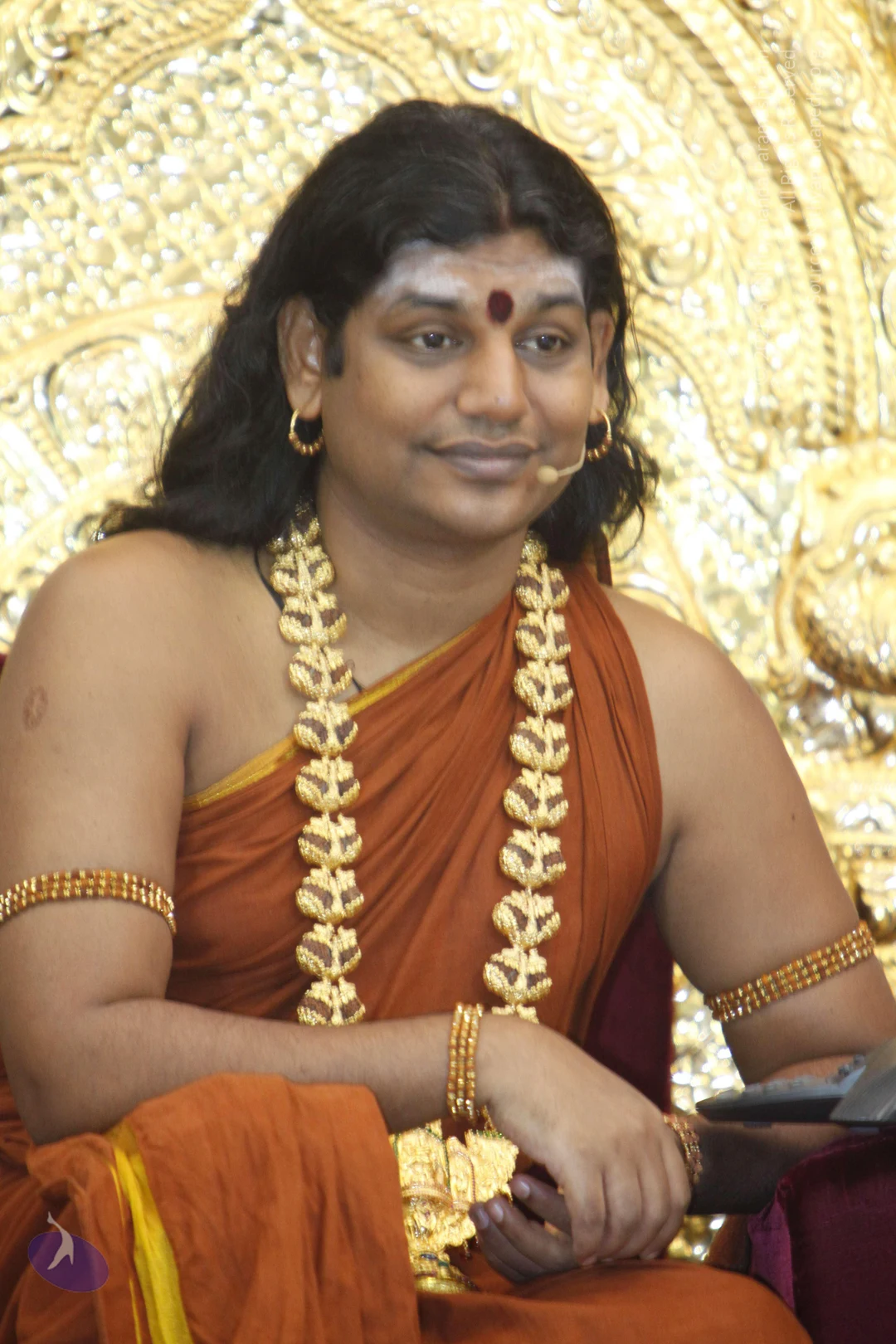
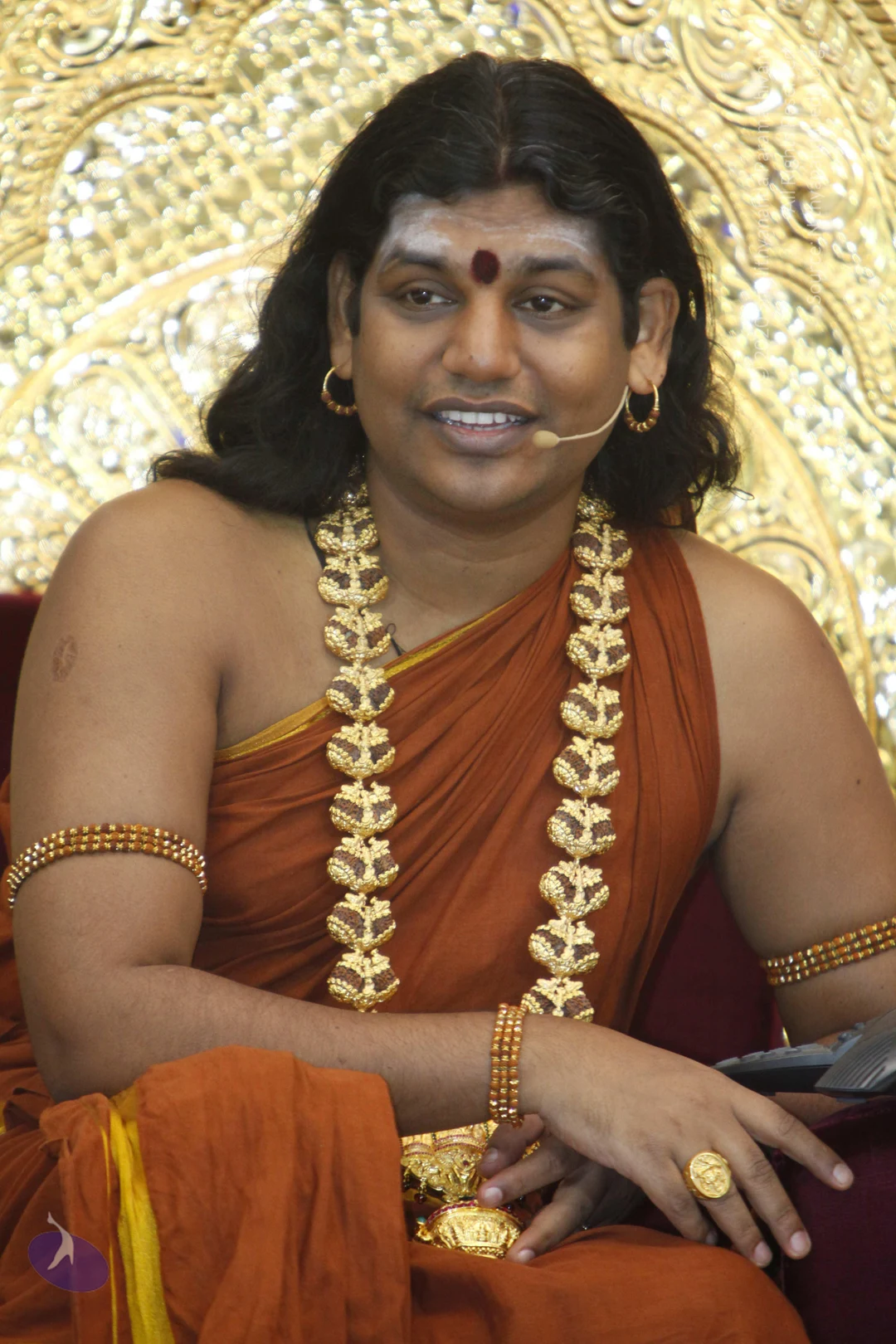
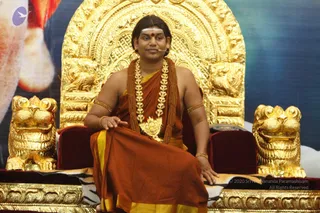
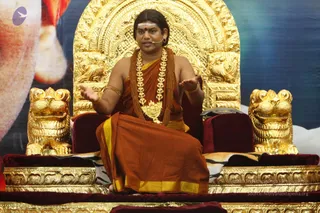
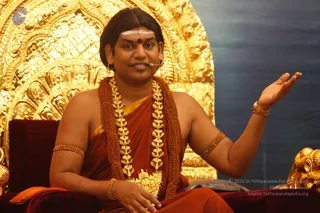
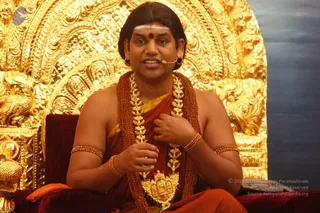
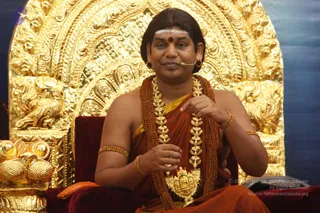
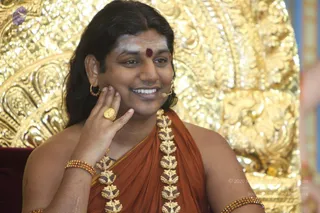
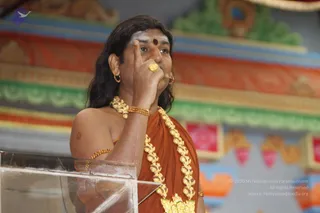
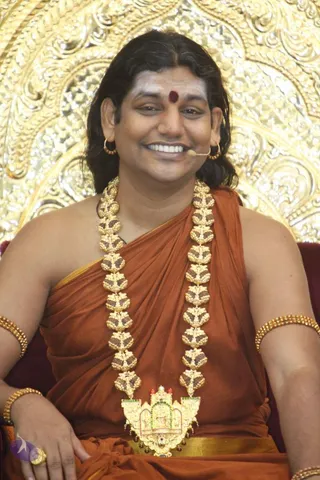
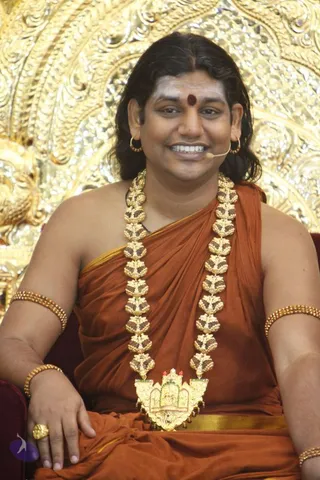
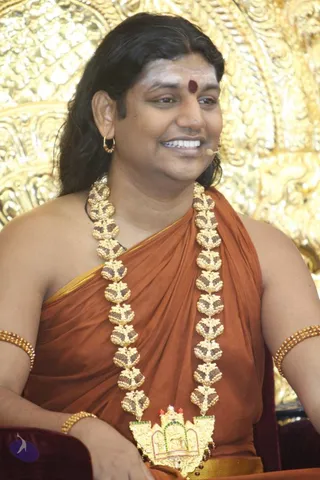
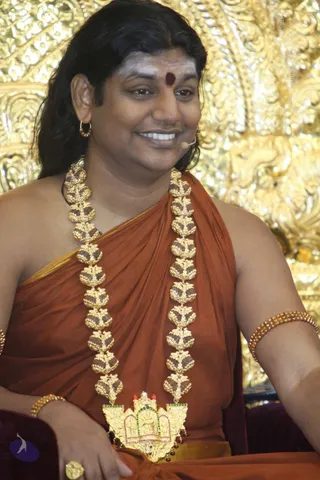
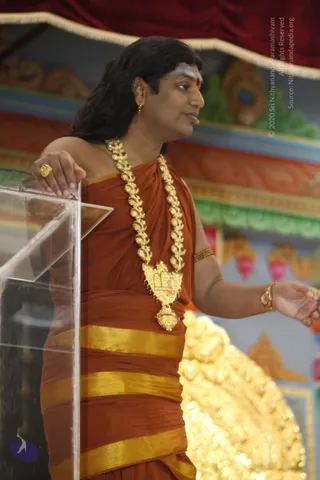
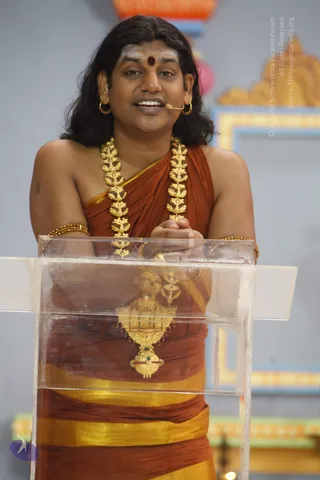
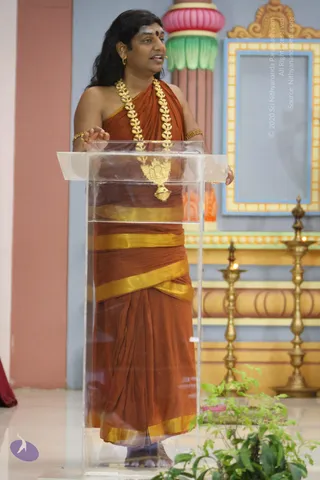
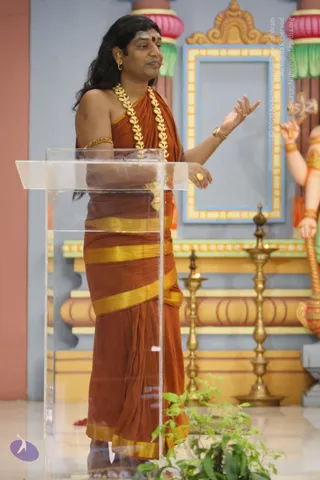
In today’s morning Satsang, Paramahamsa Nithyananda beautifully reveals the right reasons for practicing completion and the Four Tattvas. When we are looking to gain acceptance, respect, or act out of fear, we are not practicing integrity. The right reason to practice integrity is to be complete with time and heal. Authenticity is the individual soul’s struggle to get back to the source and live in continuous expansion. Like a child who lost his mother, his only motive is to find his mother. Same way, we have an innate tendency to reach Mother; the Cosmic Soul. Responsibility is not working to become powerful but knowing we already ARE powerful and the source of everything happening around us. Enriching happens once you realize everyone is part of you. So each being you enrich, is enriching a part of you also; when they feel complete, part of you will be complete.

Supreme Pontiff of Hinduism HDH Bhagavan Nithyananda Paramashivam also gave a Satsang on Lotus TV with the Title வாழ்க்கை வாழ்வதற்கே

Link to Video:

VideoAudio
VideoAudio

Transcript:

0:20

I welcome you all with my love and blessings.

(HINDI)

Today I will expand on ‘RIGHT REASONS FOR COMPLETION AND PRACTICING THE FOUR PRINCIPLES – INTEGRITY, AUTHENTICITY, RESPONSIBILITY AND ENRICHING’.

Listen. Right reasons for practicing completion, doing completion and practicing Integrity, Authenticity, Responsibility and Enriching; right reasons for living enlightenment.

Understand, we all practice Integrity at some part of our life; but why? May be afraid of our boss, wife, people around us. If you practice Integrity because you are afraid of your boss, wife, people around you or you wanted their acceptance; I have seen some people boast, especially the teachers and people in the ex-army, they say, ‘last thirty years we were very integrated in the time.’

Yes, but for wrong reason, but for wrong reason. They have been integrated may be for a smaller reason, not with the right reasons, not with the right context. Listen, if you are practicing Integrity just to have acceptance and respect from others, fear of boss, fear of your society, people around you; if you practice Integrity just to have the acceptance from the people around you, yes, you will have acceptance, no doubt, you will have acceptance; but that’s all. You will just have acceptance.

The right reason, why, why I should practice Integrity: ‘to have completion with Time, Kaala’. Listen, to have completion with Kaala.

I tell you, practice Integrity just for ten days with only reason - completion with Kalabhairava. He will heal all your past incompletions; because Kaala is a independent energy. He can just roll back. He is like a Time Machine. He can roll the time. He can bring the past and heal the whole past by his hand, the eternal healing hand. Listen, eternal healing hand in the world is Kaala, Time. Time can heal anything which can’t be healed. Time can heal everything. All memorials are against the Time. They do not want something to be forgotten; that is why they try to create memorial. Time is such a powerful healer, he can heal everything. I tell you, even your guilt is nothing but a memorials you established for your mistakes and not allowing Kaala to heal.

5:51

Listen. If a war has happened, the society which was affected by that war tries to establish a memorial or the country who lost lot of soldiers, whether they win or lose in the war, whoever lost the soldiers, they establish memorials, so that Time do not heal. Please understand, many of the memorials, war memorials are created for the purpose that Time should not heal us. Only if you are not healed, you will carry that vengeance, anger continuously. But Time is such a powerful healer, he even destroys the memorials. He even destroys the memorials. I know for sure, I can tell you from my own authority, after the Mahabharata War, Pandavas have built a memorial. Now neither memory is there nor memorial is there.

Anyhow, understand, guilt is a memorial you build not to forget some of the happenings, not to allow healing of some of the happenings in your life. But, I tell you, Kaala, Time is such a powerful healer, he can heal anything. He can just heal anything in life. He is such a powerful healer, healer, one of the greatest healer.

So, practice Integrity to complete with Kalabhairava. Practice Integrity to complete with Kalabhairava. Try. Try this. Respect your watch as God, embodiment of Kaala, means, Kaalabhairava’s vigraha and decide, next ten days you will declare and maintain the Integrity with Time, so that you are complete with Kaala. Then request him to heal your past incompletions. I tell you, he can just roll the past and put his healing hand and the whole thing will be healed. I tell you, any wound it may be, just Kalabhairava’s one touch you will be healed. That is why we always say ‘Time heals’. Kaala can heal anything. Kaala really can heal.

Please understand, practice Integrity to be complete with Time, not for the petty reasons of just acceptance from society or small things. If you practice Integrity for petty reasons like acceptance from society or fear of society, it is like you meet king and ask him, ‘Give me 3 kg of brinjal and 2 kg potato’ Ask something big to the king. Ask something of his stature, not of your stature.

10:54

I tell you, complete with Kalabhairava. Complete with Kalabhairava. That is one of the best things you can do. If you complete with Kalabhairava even for few days, like a miracle, miracle, he will heal all your past incompletions, because he is a living intelligence; he is not dead matter. Understand, time may be matter, but Lord of Time is not matter. Time may be a matter but Lord of Time, Kalabhairava, is not matter.

(HINDI)

I tell you, if you complete with Kalabhairava, he will do anything you want. He may carry weapons in the hand, but his hand itself is a healer hand. He is such a powerful healer. He is such an amazing healer.

(HINDI)

14:41

Understand, Authenticity, next principle, Authenticity.

Practice Authenticity for the sake of achieving the space of possibility.

Listen. Come to the space of listening.

Many of us practice Authenticity in our life. We go on expanding. We try to get from two-wheeler to four-wheeler, from four-wheeler to bigger car and more bank balance, more property. We do practice Authenticity, but, unfortunately, with the wrong reason in wrong space.

Listen. I will give you exactly why Authenticity should be practiced. Whether you know it or not, you are the reflection of the Cosmic Soul. Individual Soul is the reflection of Cosmic Soul. Jeevatma is reflection of the Paramatma. So, the Paramatma is, listen, Paramatma is reflecting in the Jeevatma. Paramatma reflecting in your body is Jeevatma. Means, the Cosmic Soul reflecting in your body is Individual Soul. Listen, so the Individual Soul is actually inbuilt with the quality of expanding so that it can become Cosmic Soul. It is like if you leave a child away from mother, it will cry and try its best to reach the mother. Even if you leave the calf, it will try its best to reach the mother. So, the Individual Soul’s struggle, innate tendency to reach the Cosmic Soul is Authenticity. Understand, the Individual Soul’s innate tendency to expand and reach its original source, mother, Cosmic Soul, is Authenticity.

But, unfortunately, we practice Authenticity in many other directions. We think, see, that deep incompletion which expresses as Authenticity, you think by more money you will feel completion, more houses you will feel completion, with more relationships you will feel the completion. No. When you become authentic, all this also happens as side-effect.

Listen. When you become authentic and express the space of possibility, yes, you will have more wealth no doubt, more better relationships, more property; whatever you want in the outer world also you will have all that. But don’t practice Authenticity with that context. Practice Authenticity with the right reason and right context.

19:49

Understand, naturally you are programmed to be authentic. What is Authenticity? Expansion, continuous expansion. Naturally you are programmed for Authenticity, because Jeevatma, Individual Soul has a deep yearning to expand and become Paramatma. That deep yearning only expresses as Authenticity. Everyone will be authentic. Anyone who is alive will practice Authenticity, but, unfortunately, in wrong plane, in wrong space, with the wrong reason. Now catch the right reason and practice from right plane.

(HINDI)

Listen. All of us are programmed with Authenticity. All our brains are hardwired for Authenticity. Listen, listen. All of us are hardwired for Authenticity. All of us are naturally hardwired for Authenticity. Only thing, we start putting our energy in wrong direction.

23:46

Next, next very important thing you need to know, Responsibility. That is the third principle.

All of us behave responsibly where it matters for us or where we think it matters for us. Whenever, wherever, listen, whenever, wherever we think it matters for us, we start practicing Authenticity. Don’t practice Authenticity because you want to become powerful in some places; like you want to become powerful in the field of money, you become responsible for that. You want to become powerful in the field of family, so you become responsible in that zone. You want to become powerful in the family, you become responsible for that. You want to become powerful in your career, you take responsibility for that.

Don’t take Responsibility because you want to be powerful. Take Responsibility because you ARE powerful. Listen. Take Responsibility because you ARE the Source. Then Responsibility will make you Jeevan Muktha, living enlightened. Don’t try to take Responsibility to become powerful. Take Responsibility because you ARE powerful. Because you ARE the Source, you are responsible. Because you are responsible, decide, decide, listen, because you are responsible, because you are the Source, decide to become responsible. Take Responsibility because you are powerful.

(HINDI)

Listen. We all take Responsibility in the life, but with the smaller reasons and smaller context. You can do Yoga with a smaller reasons and smaller context like just to have flexibility or get out of back pain. You can do Yoga, same Yoga, with the context of becoming in tune with Cosmos, Brahmanda. In what context you do, that result you reap. Don’t take Responsibility because you want to be powerful. Take Responsibility because you ARE powerful. If you take Responsibility because you want to be powerful, it will always be a load. You will only plan cunning methods: ‘How I can achieve becoming powerful with less Responsibility.’ Understand, see, if you want to take Responsibility to be powerful, you will always plan, ‘How can I become more powerful with very less Responsibility?’

But I tell you, take Responsibility not to become powerful, but because you ARE powerful. You are the Source. You are the Source. Once you start taking Responsibility because you are powerful, once you start trusting, feeling connected with this truth, you will feel connected with this truth when you do completion, when you are complete you will know simply you ARE the Source of the Cosmos. When you start cognizing you ARE the Source, then Responsibility will look like a strength for you, power for you; not as a load for you. Whoever feels Responsibility is a load, he is going to come back, again and again, in the human body. Whoever feels Responsibility is a power, he will be Jeevan Muktha even if he has a body. Even while living, he will be Jeevan Muktha. This is a simple, most simple method to be a Jeevan Muktha; Just a cognitive shift. Instead of taking more and more Responsibility to be powerful, just take Responsibility because you ARE powerful.

31:36

(HINDI)

Whether you believe or not, understand or not, realize or not, you ARE, you ARE Source of the Cosmos. You ARE the Source. You ARE the Source for your life and the Comos life. You ARE the Source for your existence and the existence of the Cosmos.

(HINDI)

Understand, if you remember you ARE the Source and start taking Responsibility, every time you take Responsibility, you will feel powerful; you won’t feel it as a load.

(HINDI)

34:50

Fourth principle, ENRICHING.

Many time, even your Enriching others as selfish motive. You think, ‘If I enrich, I may get this, this, this back.’ Listen. Do not enrich with the small purpose. Even in our Sangha, most of the devotees and disciples are stuck without having the right reason for Enriching. Listen. Listen. Now I am giving the right and complete reason for Enriching. Because, everyone is part of you, Enriching every being is nothing but enriching some part of you.

Enrich others. Listen. Anything you see is extension of you. Anything you experience is extension of you. Anybody who you experience in your life is extension of you. Your wife is the extension of your unbending logic. Your husband is the extension of your confusion. Understand, everyone whom you see in your life, everyone you experience in your life is extension of yourself. So, when you enrich them, part of you are enriched. When they feel completion, part of you will become complete.

Somehow, continuously, even in Enriching you have your own small understandings and small goals and small purposes. Listen. Same work if you do it with a small reason, you will have small result. If you do it with higher reason, you will have higher result. Same work if you do it with a small reason, you will have a small result. If you do it with a higher reason, you will have higher result. That is why in Zen tradition they say, ‘You serving and an enlightened being serving, brings totally different result, even if both of you do the same action.’

(HINDI)

39:51

Understand, I tell you, everyone, everyone, everyone, whether you accept or not, realize or not, everyone is part of you.

If you ask me, ‘Then why my wife is torturing me? Why my daughter is torturing me? Why my mother is torturing me?’, they are nothing but the expression of your own incomplete patterns.

I tell you, when people come and ask me, ‘Swamiji, my mother is torturing me. Please somehow stop it.’, I want to tell them, ‘Actually you torturing you is ten times more than your mother torturing you. Please stop you torturing you first.’

Most of the people whom you, not most, all the people who you experience as important part of your life are all extensions of you. Even terrorists are nothing but extensions of your flash fears.

All of us have this flash fear pattern. ‘Suddenly if this building collapses in the rain, what will happen?’ ‘Suddenly if there is a flood in Cauvery and Cauvery comes and washes away the ashram, what will happen?’ All of us have this flash fear pattern.

Terrorists are nothing but the representatives of that, embodiments of our flash fear pattern. Even they are part of us.

Listen, Integrity, Authenticity, Responsibility and Enriching – all the four tattwas should be lived with right reason, for right purpose, with a complete reason and complete purpose.

INTEGRITY should be practiced to be in completion with Time.

AUTHENTICITY should be practiced, listen, Authenticity should be practiced to experience our Source, Cosmic Soul, Paramatma.

RESPONSIBILITY should be practiced because we ARE powerful, not to become powerful.

ENRICHING should be practiced because everyone is part of us. Nobody is away from us. Nobody is separate from us.

When you practice the right reason, right results come. When you practice even the same values with the smaller reasons, only the smaller results come. Only with the smaller context, only the smaller results come.

(HINDI)

45:24

It is more than what actions you do that matters, the space from which the actions and the context and reason from which the actions are done, that matters. If you do not have a right context, even when you worship a deity or God, it is useless, because, listen, even while you pray if you strengthen the space that you are poor, you are weak, if that gets strengthened more and more, even your prayer can weaken you.

Sometime people come and tell me, ‘Why should people suffer?’

You may be good to others out of your weakness. Being good to others out of your weakness and constantly strengthening the identity of weakness, you are attracting suffering, you are asking the world to give you suffering. Death is the punishment Kalabhairava gives for those who create the space of weakness in you, weakness in them. Eternal life is the Kalabhairava’s reward for the people who create powerful space in them.

Atheist. Listen. Death is the punishment for the deep powerlessness you carry in you continuously. Jeevan Mukthi, eternal life, is the reward for the powerful space you create in you. So, finish this work. Complete this job. You have to do this any day. Any one day you have to do it. Better do it now or you may have to come back again and again, to do this. With the right context, even you worship a stone, it will become God for you. With the wrong context, even if you worship a living God, an incarnation, you will only be strengthening the space of your weakness.

I have seen people, in the name of prayer, ‘Oh, I am weak….I am useless….this is the way I am, please save me….’ Again and again, when you remember and strengthen idea you are weak, powerless, what is going to happen? You are doing some serious damage to you.

(HINDI)

49:41

It is the space and context and reason matters more than the actions you do.

So, the essence of today’s satsang:

Be integrated to be complete with Maha Kaala, Lord of Time.

Practice Authenticity to experience your original state, Cosmic Soul.

Practice Responsibility because you ARE powerful, not to become powerful.

Practice Enriching because everyone is part of you.

Transcript in Tamil

உங்கள் அனைவரையும் வணங்கி வரவேற்கின்றேன். வாழ்க்கை வாழ்வதற்கே நிகழ்ச்சியில் உங்களை சந்திப்பதில் பெரும் மகிழ்ச்சி அடைகின்றேன். வாழ்க்கையை முழுமையாக வாழ்வதற்கான இந்த நான்கு சத்தியங்கள் வைெநபசவைலஇ யரவாநவெைஉவைலஇ சநளிழளெடைிடைவைலஇ யனெ நசெைஉாபைெ சம்புர்த்தி, சிரத்தை, ஒருங்குவித்தல். நல்லா ஆழமா புரிஞ்சிக்கோங்க. சம்புர்த்தி என்றால் வைெநபசவைலஇ ஒருங்குவித்தல், சிரத்தை யரவாநவெைஉவைலஇ பொறுப்பெடுத்தல் சநளிழளெடைிடைவைலஇ நசெைஉாபைெ வளப்படுத்துதல். இந்த வளப்படுத்துதல் அப்படீன்னா என்ன னநகைெவைழைெ அதனுடைய தௌிவான விளக்கத்தை பார்ப்போம். சிரத்தையோடு, பொறுப்போடு, நம்மையும், மற்றவர்களையும் கைவிடாமல் இந்த சத்தியங்களை நாமும் வாழ்ந்து, மற்றவர்களையும் வாழ வைப்பது. பதஞ்சலி ரொம்ப அழகா சொல்றார். மனித உடல் எடுத்த எல்லோருக்குமே ஏதாவது ஒரு நேரத்தில், ஆன்மீகத் தேடுதல் உருவாகியே தீரும். வைராக்கியம் வந்தே தீரும். நம்மை தாண்டின ஒரு சக்தி, தேடுதல் வந்தே தீரும். ஆனா மனித இனத்தினுடைய மக்கள் தொகையை கணக்கு பண்ணும் பொழுது, .0001மூ கூட அதுல முழுமை அடைவது இல்லை. 700 கோடி பேருல குறைந்த பட்சம் 650 கோடி பேருக்கு ஒரு முறையாவது தேடுதல் வந்தே தீருகிறது வாழ்க்கையில். ஆனால் அதில் ஒரு சிலர் மட்டுமே முழுமை அடைகின்றார்கள். பதஞ்சலி சொல்றார் மிகப்பொிய தடை என்ன? ஒரு பாதையை கடப்பதற்கு ஒரு கோடி போ் துவங்குகின்றார்கள். ஆனால் ஓர் இருவர் மட்டுமே குறிக்கோளை அடைகின்றார்கள். அப்படீன்னும் பொழுது ஒரு மிகப் பொியதடை இருக்குதுன்னு அர்த்தம். என்ன தடை?. உண்மையான தடை என்னன்னா, நம்மை நாமே கைவிட்டு விடுதல். நம்ம எல்லாருடைய வாழ்க்கையிலயும் இருக்கிற பொிய பிரச்சனை பணம் சார்ந்த, தொழில் சார்ந்த, வேலை சார்ந்த முடிவுகளாக இருக்கட்டும், டீரளநைௌள னநஉளைழைளெ ஆ இருக்கட்டும், இல்ல உறவுகள் சார்ந்த முடிவுகளா இருக்கட்டும், இல்ல உடல் நலம் சார்ந்த முடிவுகளா இருக்கட்டும், ஒரு மனிதனுடைய பல்வேறு பரிமாணங்கள்ல, உடல்நலம் ஒரு பரிமாணம், மனநலம் ஒரு பரிமாணம், இனிமையான உறவுகள் ஒரு பரிமாணம், பொருளாதார வளம் ஒரு பரிமாணம், ஆன்ம திருப்தி ஒரு பரிமாணம், இந்த எல்லா பரிமானங்களிலும் பார்த்தீங்கன்னா, எங்க நீங்க உங்களையே கைவிடறீங்களோ, அந்த பரிமாணத்தில் உங்களுக்கு அழிவு மாத்திரமே நடக்கும். அந்த பரிமாணத்தில் நீங்கள் மேம்படுவதில்லை. அந்த பரிமானத்தில் நீங்கள் முழுமை அடைவது இல்லை. நம்மை கைவிடுதல், நம்மை சுற்றி இருப்பவர்களை கைவிடுதல். இதுதான், ஒரு மனிதனை அழிக்கின்ற மிகப் பொிய குணம். ஆழ்ந்து கேட்கின்ற உணர்வோடு, உபநிஷத தன்மையோடு அமர்ந்து கேளுங்கள். ஆனால் கேட்கும் பொழுது, கேட்டல் என்கின்ற உணர்வோடு கேட்பீர்கள் ஆனால், அந்த ஒவ்வொரு வார்த்தையையும், உங்க வாழ்க்கையோடு ஒப்பிட்டு பார்த்து, பார்த்து எங்கெல்லாம் இதை, இதற்குப் பிறகு கடைபிடிக்கலாம் என்கின்ற தௌிவோடு இந்த வார்த்தைகள் உங்களோட டிசயைெ -ல யுசஉரைஎந ஆயிடும். நல்லா ஆழமா புரிஞ்சிக்கோங்க. எதாவது ஒரு ைெஉழஅிடநவழைளெஇ உநடட ிாழநெ அடிக்கிது, காலிங் பெல் அடிக்கிது. இல்ல வீட்ல மற்றவங்க வேற எதோ ஆரளைஉ கேட்கறாங்க. எதாவது ஒரு ைெஉழஅிடநவழைெ -வோட உட்கார்ந்து கேட்டுட்டு இருந்தீங்கன்னா, இந்த தத்துவங்கள் உங்கள் வாழ்க்கையில், அனுபவ ரீதியான சத்தியமாக மாறாது. அப்படி இல்லாம, ஆழமான இந்த டளைவநெபைெ ளியஉந -க்குள்ள வந்து ஆழ்ந்து கேளுங்கள். கேட்கும் பொழுதே எந்தெந்த இடத்தில் எல்லாம், உங்கள் வாழ்க்கையில் இந்த சத்தியங்களை, அனுபவமாக மாற்றிக் கொள்ள முடியும்னு, அந்த சிந்தனையோடு கலந்து, இந்த கருத்துக்கள் உங்களுடைய மூளையில ஆர்க்கைவ் ஆயிடும். உங்க மூளையில பதிவு செய்யப்பட்டு விடும். அதற்கு பிறகு நீங்கள் இந்த தத்துவத்தை வாழ வேண்டியது இல்லை. இந்த தத்துவங்கள் உங்களை வாழும். ஆழந்து உள்வாங்குங்கள். மேம்போக்காக, சிந்தனை இல்லாது, முடிவு எடுத்தல். உண்மையில பார்த்தீங்கனா இந்த சிந்தனை இல்லாது முடிவு எடுத்தல்ங்கிறது வேற ஒன்னும் இல்லை. உங்க உழவெசழட -ல இல்லாம னநஉளைழைெ எடுக்கிறது. ஏதோ ஒரு பயம். ஏதோ ஒரு கவலை. ஏதோ ஒரு குழப்பம். இந்த மூன்று பேரும் உட்கார்ந்து டீழயசன அநநவபைெ நடத்தி எடுக்கிற னநஉளைழைெ -ன நீங்க வாழ்ந்துட்டு போவீங்க. எப்பொழுது உங்களுக்கு என்று எந்த தௌிவும் இல்லாது, உங்களுடைய ிசநகநசநெஉநள இல்லாம முடிவுகள் நடப்பதற்கு அனுமதிக்கின்றீர்களோ, ஆழமா புரிஞ்சிக்கோங்க. உங்களுடைய ிசநகநசநெஉநள இல்லாம நீங்கள் முடிவுகளை எடுக்க அனுமதிக்கும்பொழுது, யாரோ எடுக்கின்ற முடிவுகளை நீங்கள் வாழுகின்றீர்கள். இந்த ஐந்து பரிணாமம் உங்க வாழ்க்கையினுடைய மிகப் பொிய ஐந்து பரிமானங்கள். உடல் நலம், மன நலம், பொருளாதார வளம், உறவுகள், ஆன்ம திருப்தி. இந்த எந்தத் துறையிலும், நீங்கள் உங்களுடைய உணர்வை செலவிட்டு முடிவெடுக்காமல், சூழல் முடிவெடுக்க அனுமதிக்கின்றீர்களோ, அங்கெல்லாம் நீங்கள் உங்களை கைவிட்டு விடுகின்றீர்கள். எங்கெல்லாம் நீங்கள் உங்களை கைவிடுகின்றீர்களோ, உங்களை சுற்றி இருப்பவர்களை கைவிடுகின்றீர்களோ, அங்கெல்லாம் வாழ்க்கை உங்களிடம் இருந்து விடைபெற்று விடுகின்றது. பிறந்ததில் இருந்து, இறப்பது வரை நீங்கள் வாழ்வதில்லை. சுவாசிக்கிறீர்கள். சுவாசிக்கும் நேரம் எல்லாம் வாழ்க்கைக்காக செலவிடப்படுவதில்லை. சுவாசம் வேறு, வாழ்வது வேறு. உங்களுடைய வாழ்க்கை ஓட்டமும், உணர்வு ஓட்டமும், பொருந்தி இருக்கின்ற வினாடிகள், நேரங்களில் மட்டும் தான் நீங்கள் வாழுகிறீர்கள். வாழ்க்கை ஓட்டமும், உணர்வு ஓட்டமும், பொருந்தாத பொழுது, வாழ்க்கையை நீங்கள் வாழ்வது இல்லை. எப்ப எல்லாம் ிழறநசடநளள -ஆ உங்களை கநநட பண்றீங்களோ, அப்ப எல்லாம் நீங்கள் வாழ்க்கையை வாழ்வதில்லை. வாழ்க்கையில எந்த வினாடிகள் எல்லாம் ிழறநசடநளள -ஆ கநநட பண்றீங்களோ, அப்ப எல்லாம் நீங்கள் வாழ்க்கையை வாழறது இல்லை. ிழறநசடநளள ஆன அழஎநஅநவௌ- அ குறைக்கிறதும், ிழறநசகரட -ஆன அழஎநஅநவௌ -அ அதிகமாக்கிறதும்தான் வாழ்க்கை. இந்த ிழறநசகரடட அழஎநஅநவௌ பல நேரத்துலயும், ிழறநசடநளள ஆன அழஎநஅநவௌ- அ நஒிநசநைெஉந பன்றது. என்ன நடக்கின்றது. உங்களை சுற்றிலும், உங்களுக்கும், என்ன நடக்கின்றது, என்பதைப் பற்றி தொிந்து கொள்ளாமலே, ிழறநசடநளள ஆன அழஎநஅநவௌ- அ சார்ந்து வாழறது. ஆழமா புரிஞ்சிக்கோங்க. வாழ்க்கையில ிழறநசடநளள அழஎநஅநவௌ இல்லாம வாழறதுதான், உங்களை கைவிடாமல், மற்றவர்களை கைவிடாமல் வாழ்வது. ிழறநசடநளள அழஎநஅநவௌ -ன்னா என்னன்னு னநகநைெ பன்றேன் என்னன்னு கேளுங்க. எப்ப உங்களுடைய வாழ்க்கையை நீங்கள் வாழமுடியும் அப்படீன்ற உணர்வு, உங்களுக்குள் மறைந்து உங்கள் வாழ்க்கையை பளுவாக உணர துவங்குகிறீர்களோ, அந்த அழஎநஅநவௌ தான் ிழறநசடநளள அழஎஅநவௌ. உங்கள் வாழ்க்கையில எத்தனை ிழறநசடநளள அழஎஅநவௌ -ஐ தினம் தோறும், பார்க்கறீங்க, அனுபவிக்கறீங்க. ஒரு இரண்டு நிமிடங்கள் சிந்தியுங்கள். வாழ்க்கையில ிழறநசடநளள அழஎநஅநவௌ -ஐ எத்தனை முறை அனுபவிக்கறீங்க. சின்ன விஷயம். ஆபிஸ்க்கு லேட்டா போன பாஸ் கூப்பிட்டு திட்டறார்னா, அந்ந அழஎநஅநவௌ -ஐ ிழறநசடநளள ஆ கநநட பண்ணுவீங்க, வீட்டுக்கு டயவந-ஆ வந்தால், மனைவி திட்டினால், அந்த அழஅநவௌ -ஐ ிழறநசடநளளஆ கநநட பண்ணுவீங்க. உங்க வாழ்க்கையில அந்த ிழறநசடநளள -ஆன அழஅநவௌ எத்தனை நிமிடங்கள், எத்தனை சூழல்கள், உங்கள் வாழ்க்கைய ிழறநசடநளள ஆ கநநட பண்றீங்க அப்படீங்கிறதை ஆழ்ந்து பாருங்க. உங்க வாழ்க்கைய ிழறநசடநளள ஆ நீங்க கநநட பண்ற அழஎநஅநவௌ எல்லாம் தான் வாழ்க்கையை நீங்கள் நரகம் ஆக்கி கொள்கின்ற வினாடிகள். உங்களை நீங்களே கைவிடுகின்ற வினாடிகள். ீழறநசகரட- ஆ நீங்க கநநட பண்ற உங்களை பலசாலியாக வாழ்க்கை உங்க உழவெசழட ல இருக்கிற மாதிரி நீங்க கநநட பண்ற நேரங்களைவிட ிழறநசடநளள ஆ கநநட பண்ற நேரம் அதிகம் ஆகும் பொழுது, இயற்கையிலேயே தற்கொலை எண்ணம் வர துவங்கும். இந்தியாவிலேயே அதிக அளவு மக்கள் தற்கொலை செய்து கொள்கின்ற மாநிலம் தமிழ்நாடு. போன வருஷம் 2012-ல இந்தியாவிலேயே அதிக அளவு தற்கொலை, நிகழ்ந்த மாநிலம் தமிழ்நாடு. யேவழையெட ஊசைஅந சுநஉழசனள டீரசநயர வோட சநஉழசன படி போன வருஷம் 2012 மட்டும் 16,927 தற்கொலைகள் நடந்து இருக்கு. காரணம், நம்மளை ிழறநசடநளள ஆ கநநட பண்ண வைக்கிறது, ரொம்பவுமே ஈசி, மக்களை ிழறநசடநளள ஆ கநநட பண்ண வைக்கிறது, அதுக்கு நிறைய அநஉாயெளைஅ றழசம பண்ணுது. ஆனா உங்களை ிழறநசகரட- ஆ கநநட பண்ண வைக்கும் போது மட்டும்தான், வாழ்க்கையின் மிக உயர்ந்த விஷயங்கள் வௌிப்படுது. ஊசநயவைஎநஇ ீசழனரஉவைஎவைல இது எல்லாமே மக்கள் ிழறநசகரடட- ஆ கநநட பண்ணும்போது மட்டும் தான் நடைபெறுது. ீழறநசடநளள - ஆ கநநட பண்ணும்போது வௌிப்படாது. உங்களை நீங்களே கைவிடாமல் இருத்தல். ஒவ்வொரு சூழலிலும், ஒவ்வொரு துறையிலும், உங்களை நீங்கள் கைவிடாமல், மற்றவர்களையும் கைவிடாமல், வாழ்க்கைய நடத்துறதுதான் வளப்படுத்துதல். உங்களுடைய வாழ்க்கையில எல்லா பொிய, பொிய தவறான முடிவுகளுமே, நீங்க உங்களையே கைவிடும் பொழுதும், மத்தவங்களை கைவிடும் பொழுதும்தான் எடுப்பீங்க. அதனால தான் திரும்ப, திரும்ப நான் சநஙரநளவ பண்றதுன்டு. நீங்க ிழறநசடநளள - ஆ கநநட பண்ணும்போது தயவு செஞ்சி எந்த முடிவும் எடுக்காதீர்கள். உங்க மனைவியோடு எதாவது ஒரு சண்டை, அந்த யசபரஅநவெ -ல உங்களால, அவங்களை உழெஎைெஉந பண்ண முடியலைன்னா, ீழறநசடநளள - ஆ கநநட பண்றீங்கன்னா, தயவு செய்து அந்த நேரத்துல எந்த முடிவும் எடுக்காமல் அமைதியோடு இருங்கள். ஒதுங்கி இருங்கள். இல்லன்னா என்ன தோணும்னா, உங்க மனம் என்ன பண்ணும் ஒரு சூழ்நிலையில ீழறநசடநளள - ஆ கநநட பண்ற அந்த சூழ்நிலையில கல்யாணம் ஆனதுல இருந்து இப்ப வரைக்கும், இருபது வருஷமாகவே உங்களை ீழறநசடநளள - ஆவே வாழறதாக வே உங்களை நம்ப வைக்கும், கல்யாணம் ஆனதுல இருந்து 20 வருஷமா ீழறநசடநளள - ஆவே இருக்கீங்க, பொிய நரகம்னு நீங்க நம்புனீங்கன்னா, உடனே என்ன பண்ணுவீங்க. இல்லப்பா, இது ாபைா அயவைெநயெெஉந வேண்டாம் அப்படீன்னு தூக்கி போட்டுடுவீங்க. அதே மாதிரி உங்க ழககைஉந-ல ஏதோ ஒரு தப்பு நடந்து டிழளள உங்களை கசைந பண்றார். அவரை வந்து உங்களால டழபைஉயட -ஆ உழெஎைெஉந பண்ண முடியலைன்னு கநநட பன்றீங்க. அப்படீன்னும் பொழுது தயவு செய்து அந்த சூழ்நிலையில் எந்த முடிவும் எடுக்காதீர்கள். அந்த சூழ்நிலையில், நீங்க எந்த முடிவை எடுத்தாலும் அது தவறாகத்தான் இருக்கும். நீங்க நினைக்கலாம். இல்ல, இல்ல எனக்கு டிநவவநச ளயடயசல குடுக்கறதுக்கு துழடிக்கு ஆள் இருக்காங்க. இல்ல நானே டிரளநைௌள ஆரம்பிச்சி நடத்தறேன். நல்லா புரிஞ்சிக்கோங்க. நீங்களே டிரளநைௌள ஆரம்பிக்கிற முடிவா இருந்தாலும், டிநவவநச ளயடயசல தழடி -க்கு போற முடிவா இருந்தாலும், நீங்க ஒரு ிழறநசகரட-ஆ கநநட பண்ற ஒரு உழஅிடநவழைெ ளியஉந-ல இருக்கும் பொழுது முடிவு எடுத்தீங்கன்னா, அந்த முடிவு உங்களை மேலும், மேலும் வளர்ச்சிக்கு கொண்டு செல்லும். வளர்வைத் தரும். ஆனால் அந்த ிழறநசடநளள ஆன அழஎநஅநவெ -ல ஒரு தழடி ஐ விட்டுட்டு ஒரு உழஅியலெ -ஐ தூக்கி போட்டுவிட்டு இன்னொரு வேலைக்கு போறது, இல்ல இன்னொரு வியாபாரத்துக்கு போறது அப்படீன்னு ஆரம்பிச்சீங்கன்னா, உங்க வாழ்க்கையில எப்ப எல்லாம் ிழறநசடநளள ஆக கநநட பண்றீங்களோ, அப்ப எல்லாம் இந்த மாதிரி இருக்கிறதை உதறி தள்ளுற ீயவவநசெ உருவாகிடும். பார்த்து இருக்கேன் சில பேரை, மூன்று மாசத்துக்கு ஒரு தரம் துழடி -ஐ மாத்திகிட்டே இருப்பாங்க. ஆறு மாசத்துக்கு ஒரு தரம் வீட்டை மாத்திகிட்டே இருப்பாங்க. ஒரு வருஷத்துக்கு ஒரு தரம் ரளந பண்ற எநரைஉடந ஐ மாத்திகிட்டே இருப்பாங்க. மூணு வருஷத்துக்கு ஒரு தரம் வீட்டுக்காரியை மாத்திகிட்டே இருப்பாங்க. இந்த மாற்றிக் கொண்டே செல்லுதல், அது பார்த்தீங்கன்னா, உங்களை நீங்களே கைவிடுதல், மற்றவர்களையும் கைவிடுதல்ங்கிற அந்த ியவவநசெ னநஎநடழிந ஆகும் போதுதான், மாத்திகிட்டே போவீங்க. இன்னொரு முக்கியமான விஷயம். இந்த உங்களை நீங்களே கைவிடுதல் ியவவநசெ உருவாயிடுச்சின்னா அது ஒரு அயபநெவைஉ கடைநன மாதிரி. அந்த ைெஉழஅிடநவழைெ அயபநெவைஉ கநைடன ஐ உயசசல பண்ணிட்டு போனீங்கன்னா, எங்க போனாலும், உங்களை தாக்குற நபர்களே, உங்கள் வாழ்க்கையில சுற்றி வருவாங்க. உங்களை யடிரளந பண்றவங்களையே உங்க வாழ்க்கையில யவவசயஉவ பண்ணுவீங்க. நீங்க என்ன ளியஉந ஐ உயசசல பண்றீங்களோ, ைெஉழஅிநவழைெ அயபநெவைஉ கநைடன ஐ உயசசல பண்ணீங்கன்னா, அந்த ைெஉழஅிடநவழைெ யே தான் யவவசயஉவ பண்ணுவீங்க. உழஅிடநவழைெ அயபநெவைஉ கநைடன ஐ உயசசல பண்ணீங்கன்னா, அதே மாதிரி அந்த உழஅிடநவந டிநபைௌ யவவசயஉவ பண்ணுவீங்க. உங்கள் வாழ்க்கையை ஆனந்தம் ஆக்குகின்ற, வளம் ஆக்குகின்ற, உங்களுக்கு பலமா நிக்கிற, மனிதர்களையும், சூழல்களையுமே உங்கள் வாழ்க்கையில் யவவசயஉவ பண்ணுவீங்க. நீங்க உழஅிடநவந ஆ இருந்தீங்கன்னா, உங்களை சுத்தி சூழ்நிலை நபர்கள், எல்லாமே அந்த உழஅிடநவந ளியஉந ல இருக்கிறவங்களை தான் யவவசயஉவ பண்ணுவீங்க. நாம ைெஉழஅிடநவழைெ ல இருந்தோம்னா யாரை பார்த்தாலுமே, நாமளும் யடிரளந பண்ணுவோம். நம்மலை யடிரளந பண்றவங்களாகவே யவவசயஉவ பண்ணுவாங்க. என்னுடைய வாழ்க்கையில நான் பல தரம் பார்த்து இருக்கிறேன். காரணமே இல்லாமல், என்னை யடிரளந பண்ண முயற்சி பண்றவங்க, அவங்களுடைய சைக்காலஜி எல்லாம் ளவரனல பண்ணி பார்த்துவிட்டேன். தௌிவா எனக்கு தொியும். அவங்களுக்குள்ள ஒரு ஆழமான ைெஉழஅிடநவழைெ ஐ உயசசல பண்றதுனால, மத்தவங்க எல்லோரையும் யடிரளந பண்ணி யடிரளந பண்ணி, அவங்களை யடிரளந பண்ற நபர்களாகவே அவங்களை யவவசயஉவ பண்ணி, இதே வாழ்க்கைய வாழ்ந்து, வாழ்ந்து பழகினதால, யார் கண்ணுல பட்டாலும், அவங்களை யடிரளந பண்ண ஆரம்பிச்சிடறாங்க. நல்லா ஆழமா புரிஞ்சிக்கோங்க. நம்ம என்ன அயபநெவைஉ கடைநன ஐ உயசசல பண்றோமோ, அதையேதான் யவவசயஉவ பண்றோம். அதையேதான் மத்தவங்களுக்கும் குடுக்கறோம். இந்த வளப்படுத்துதல், உண்மையில பார்த்தீங்கன்னா, நம்ம வாழ்க்கையில் எல்லாருமே பார்த்தீங்கன்னா, வளப்படுத்திட்டு இருக்கோம் வாழ்க்கையில். ஆனா நம்மகிட்ட என்ன இருக்கோ, அத வெச்சி வளப்படுத்திகிட்டு இருக்கோம். னைிசநளளழைெ இருந்தா னைிசநளளழைெ குடுக்கிறது. தலைவலி இருந்தால், தலைவலி குடுக்கிறது. துக்கம் இருந்தால், துக்கத்தை கொடுக்கிறது. உழகெரளழைெ இருந்தால் உழகெரளழைெ கொடுக்கிறது. நபழ இருந்தால், நபழ வை குடுக்கிறது. நம்மகிட்ட எது இருக்கோ, அத மத்தவங்ககிட்ட கொடுத்து வளப்படுத்தறோம். அது பல நேரத்துல வளப்படுத்தலா மாற்றது இல்லை. பயப்படுத்தலா, மாறிடறது. வளப்படுத்தல், நல்லா ஆழமா புரிஞ்சிக்கோங்க. ரெஉழளெஉழைரள ஆ உங்களுடைய ரெஉழளெஉழைரள அயபநெவைஉ கநைடன ஐ மத்தவங்களுக்கு குடுக்கிறதை விட உழளெஉழைரள ஆ உங்களை டிரடைன பண்ணி, உங்க உழளெஉழைரள ஆன அயபநெவைஉ கநைடன ஐ மத்தவங்களுக்கு குடுக்கிறது தான் வாழ்க்கை. அதுதான் வளப்படுத்துதல். எப்படியா இருந்தாலும் உங்களுடைய அயபநெவைஉ கநைடன ஐ மத்தவங்ககிட்ட பகிர்ந்துகிட்டேதான் போவீங்க. ரெஉழளெஉழைரள ஆ இருந்தீங்கன்னா, துக்கத்தையும், துயரத்தையும், னநிசநளளழைெ யும் பகிர்ந்துகிட்டே போவீங்க. உழளெஉழைரள ஆ இருந்தீங்கன்னா, ஆனந்தத்தையும், இனிமையையும், முழுமை தன்மையையும் பகிர்ந்துகிட்டே போவீங்க. நல்லா புரிஞ்சிக்கோங்க. நீங்க எந்த உணர்வில் இருக்கிறீங்களோ, அதே சார்ந்த விஷயங்களைதான் யவவசயஉவ பண்ணுவீங்க. நீங்க எந்த உணர்வை மத்தவங்களுக்கு கொடுக்கறீங்களோ, அந்த உணர்வுதான் உங்களுக்குள்ள இருக்கும். உங்களுக்குள்ள இருக்கிற அயபநெவைஉ கடைநன தான், மத்தவங்களுக்கும் குடுப்பீங்க. நீங்க எந்த அயபநெவைஉ கடைநன ல இருக்கறீங்களோ, அதுதான் மத்தவங்ககிட்ட இருந்தும், உள்வாங்குவீங்க. தொடர்ந்து இந்த கொலை, கொள்ளை, கிரைம் இது சார்ந்த விஷயங்களையே படிச்சிட்டே இருக்கிற நபர்களை பார்த்தீங்கன்னா, வாழ்க்கையில அதீதமான பயத்தோடயே வாழ்ந்து, அந்த மாதிரி, சூழ்நிலைகளையே வாழ்க்கையில யவவசயஉவ பண்ணுவாங்க. அதனாலதான் சொல்றேன். தயவு செய்து, தொடர்ந்து இந்த மஞ்சள் பத்திரிக்கைகளையே படிப்பதை நிறுத்திவிடுங்கள். பொழுதுபோக்கு என்கிற பெயரால, அந்த மஞ்சள் பத்திரிக்கைகள்ல டேஸ்ட் பார்க்க ஆரம்பிச்சிட்டீங்கன்னா, உங்களை அறியாமலேயே உங்கள் உழளெஉழைரளநௌளஅ ரொம்ப னயஅயபந பண்ணிடுவீங்க. அதாவது ஒவ்வொரு மனிதனுக்குமே, அடிப்படை உணர்ச்சிகள் மேல ஒரு ஸ்பைசியான வைெநசநளவ இருக்கும். காமம், வன்முறை அந்த உணர்ச்சிகளை புர்த்தி பன்ற மாதிரி எழுத்துக்களை எழுதறது. பேனா விபச்சாரம்னு சொல்வோம். இந்த மாதிரியான செய்திகளை உள்வாங்கி அதை அசை போட்டுக் கொண்டு இருந்தீர்களானால், உங்கள் கனவும், நனவும் அந்த அயபநெவைஉ கநைடன ஐ சார்ந்தே இயங்க துவங்கும். அந்த அயபநெவைஉ கநைடன ஐ சார்ந்து, உங்கள் கனவும், நனவும் இயங்க துவங்குமேயானால், உங்கள் வாழ்க்கையை நீங்களே நரகம் ஆக்கிக் கொள்கிறீர்கள். ஒரு நியுஸ் தொிஞ்சிக்கிறது தப்பு இல்லை. ஆனா இந்த பேனா விபச்சாரம் செய்பவர்களுடைய எழுத்துக்களை படிப்பது விஷம் குடிப்பதை விட மோசமானது. எந்த வார்த்தைகளும், எந்த அயபநெவைஉ கநைடன ஐ நாம உயசசல பண்ணிட்டு போறோமே, அததான் மற்றவர்களோடும் பகிர்ந்து கொள்வோம். எத நீங்க உயசசல பண்ணிட்டு போறீங்களோ, அது சார்ந்து தான் கைெழசஅயவழைெ உங்க வாழ்க்கையில யவவசயஉவ பண்ணுவீங்க.

பலபேரு என்கிட்ட வந்து சொல்துண்டு. சாமி ஆறு மாசமா உங்களுடைய சத்தங்கம் எல்லாம் கேட்கிறேன். ஒரு வருஷமா உங்கள் புத்தகங்கள் எல்லாம் படிக்கிறேன். என்னமோ தோனுது. மொத்த உலகமே ஆன்மீக மயமா மாறுதுன்னு ஏன்னா உங்கள் புத்தகம் படிக்க ஆரம்பிச்ச பிறகு நிறைய ஆன்மீக புத்தகங்கள், ஆன்மீக றநடிளவைநள, ஆன்மீக பத்திரிக்கைகள் எல்லாம் நிறைய என் கைக்கு வருது. நிறைய ஆன்மீக சத்சங்கங்கள் கேட்கிறேன். உலகமே ஆன்மீக மயம் ஆயிட்டு இருக்கு. நான் சொல்றது இல்லீங்க ஐயா, நீங்க ஆன்மீக மயமா மாறினதுனால, உலகமே ஆன்மீக மயமா இருக்கிற மாதிரி தொியும். அது சார்ந்த தொடர்புடைய விஷயங்களே உங்க வாழ்க்கையில தொடர்ந்து திரும்ப திரும்ப யவவசயஉவ ஆகும். உங்க கசநைனெ வந்து ஆன்மீக புத்தகம் வந்து பகைவ பண்ணுவாரு. திடீன்னு உங்க நு.அயடை பக்கத்துல, ளுிசைவைரயட றநடி ளவைந கடயி ரி ஆகும். இல்ல திடீர்னு ஒரு ளுிசைவைரயட சத்சங்கம் நடக்கும் பொழுது தான் நீங்க உாயெநெட பாத்துவீங்க. அந்த உாயெநெட திடீன்னு ழிநெ ஆகும். நீங்க ஆன்மீகத் தன்மையோடு மாறும் பொழுது உலகமே ஆன்மீகத்தில் வளர்வதைபோல தோன்றும். நீங்க வன்முறை உணர்வோடு மாறும் பொழுது, உலகம் முழுவதுமே வன்முறையாளர்கள் இருப்பதை போல தோன்றும். ஆழமா புரிஞ்சிக்கோங்க. எப்படியா இருந்தாலும், நீங்கள் விரும்பினாலும், விரும்பாவிட்டாலும், தொடர்ந்து நீங்கள் மற்றவர்களுடைய வாழ்க்கையை வளப்படுத்தி கொண்டேதான் இருப்பீர்கள். ரெஉழளெஉழைரள ஆ வளப்படுத்தினீங்கன்னா, நீங்க உயசசல பன்ற உழகெரளழைெ, கவலை, இத வெச்சி மற்றவர்கள் வாழ்க்கையை வளப்படுத்துவீங்க. ஆனா உழளெஉழைரள ஆ வளப்படுத்த துவங்கும் பொழுதுதான், வாழ்க்கை மலருகின்றது. வாழ்க்கை முழுமை அடைகின்றது. உழளெஉழைரள ஆ உங்களுடைய டிநபைெ அ ிநசகநஉவழைெ க்கு எடுத்துட்டு வாங்க. வைெநபசவைலஇ யரவாநவெைஉவைல யோட நீங்க வாழும் பொழுது இயற்கையிலேயே வைெநபசவைலஇ யரவாநவெைஉவைலஇ சநளிழளெடைிடைவைல இந்த மூன்றுமே மற்றவர்களையும் வளப்படுத்தும். முதல்ல நீங்க செய்ய வேண்டியது உங்க வாழ்க்கையில, இந்த சத்தியங்களை, ஆழ்ந்து உள்வாங்கி உங்களையும், மற்றவர்களையும் கைவிடுவது இல்லை என்கின்ற தௌிந்த உறுதிக்கு வருவது. மக்களை கைவிடுவது இல்லை. நீங்க எக்காரணம் கொண்டும், உங்களையும், உங்களை சுற்றி இருப்பவர்களையும் கைவிடுவது இல்லை என்கின்ற தௌிவை எடுத்து வந்தால் மட்டும் தான் வாழ்க்கையின் முழுமைத் தன்மையை பார்ப்பீர்கள். வாழ்க்கை வாழ்வதற்கே என்கின்ற உண்மையை புரிந்து கொள்வீர்கள். இன்றைய வாழ்க்கை வாழ்வதற்கே வாழ்க்கையின் சாரம் உங்களையும் கைவிடாது, உங்களை சுற்றி இருப்பவர்களையும் கைவிடாது, பலவீனமாக நீங்கள் உங்களை உணரும் பொழுது எல்லாம், எந்த முடிவும் எடுக்காமல், வைெநபசவைலஇ யரவாநவெைஉவைலஇ சநளிழளெடைிடைவைல ஒருங்குவித்தல், சிரத்தை, பொறுப்பெடுத்தல் என்ற மூன்று தத்துவங்களையும், நீங்களும் வாழ்ந்து, சுற்றி இருப்பவர்களையும் வாழ வையுங்கள்.

Photos
Tags:

Paramahamsa Nithyananda, completion, Tattvas, acceptance, respect, integrity, practice, authenticity, source, live, Cosmic Soul, responsibility, powerful, enriching, complete.

Photos Of The Day:
VAIDYA SAROVAR

Photos Of The Day:
Lotus-TV-Pictures

Photos Of The Day:
Photos Of The Day:
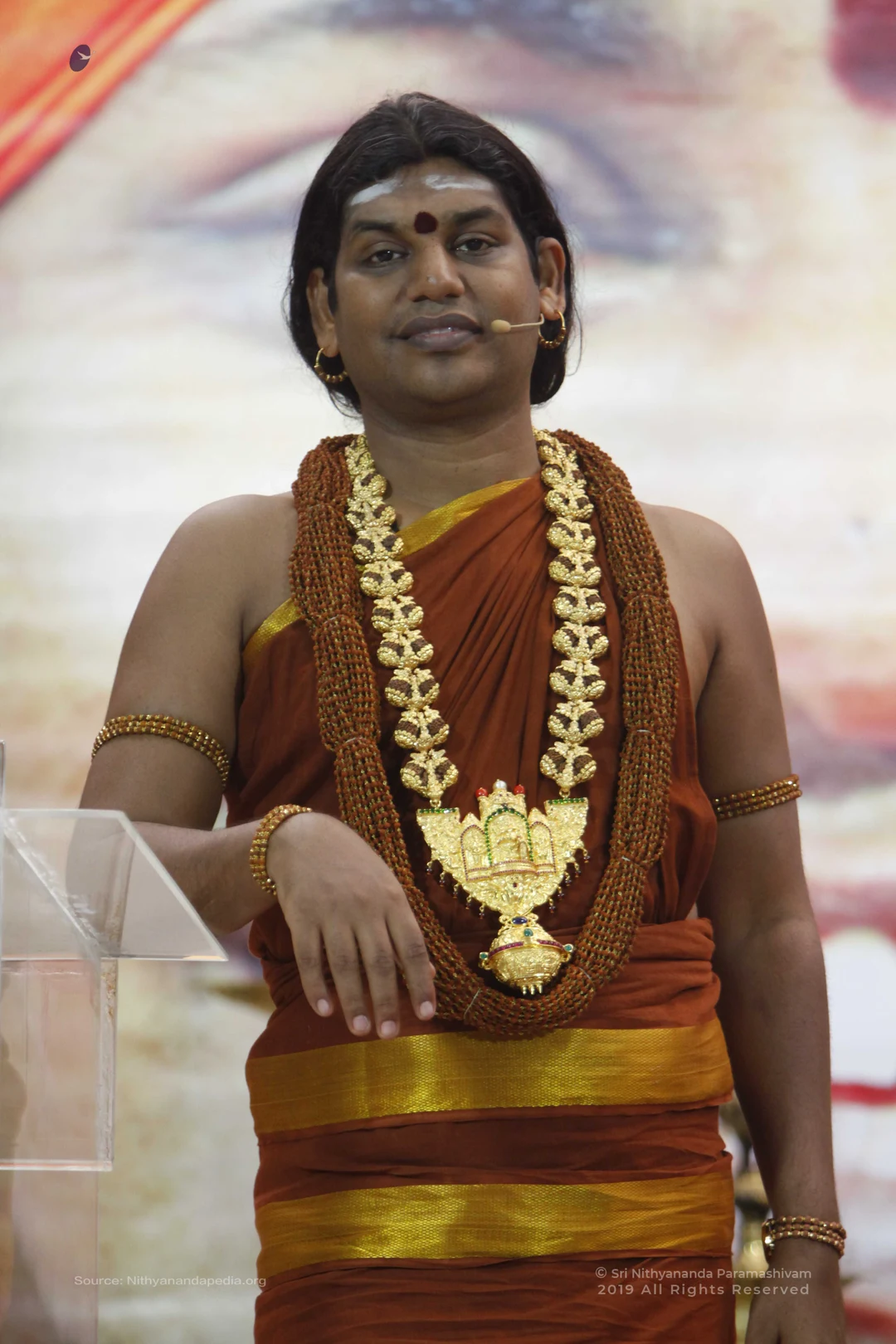
Rudra-Abhishekam

Garbha-Mandir-Pratyaksha-Pada-Puja

Pada-Puja

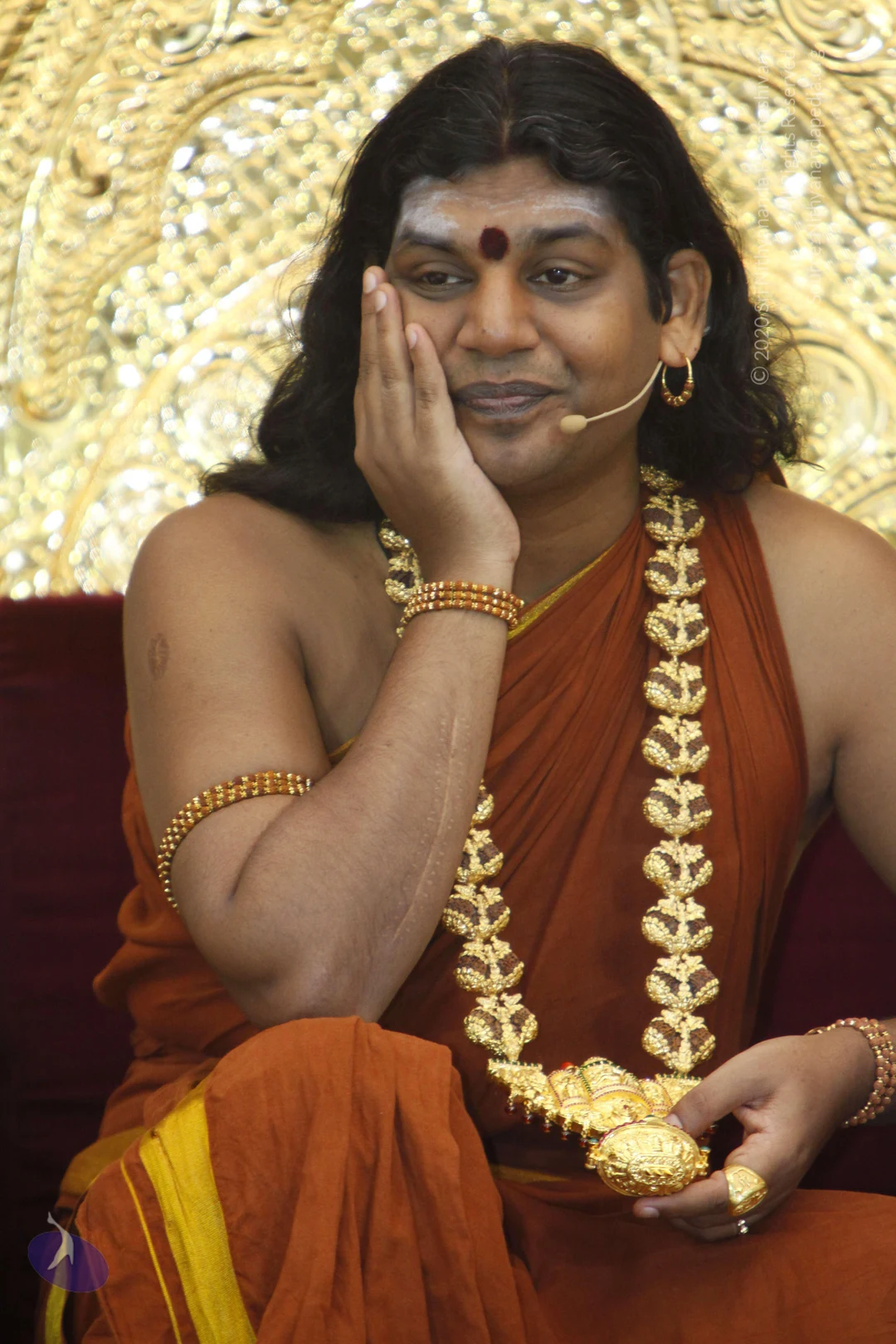
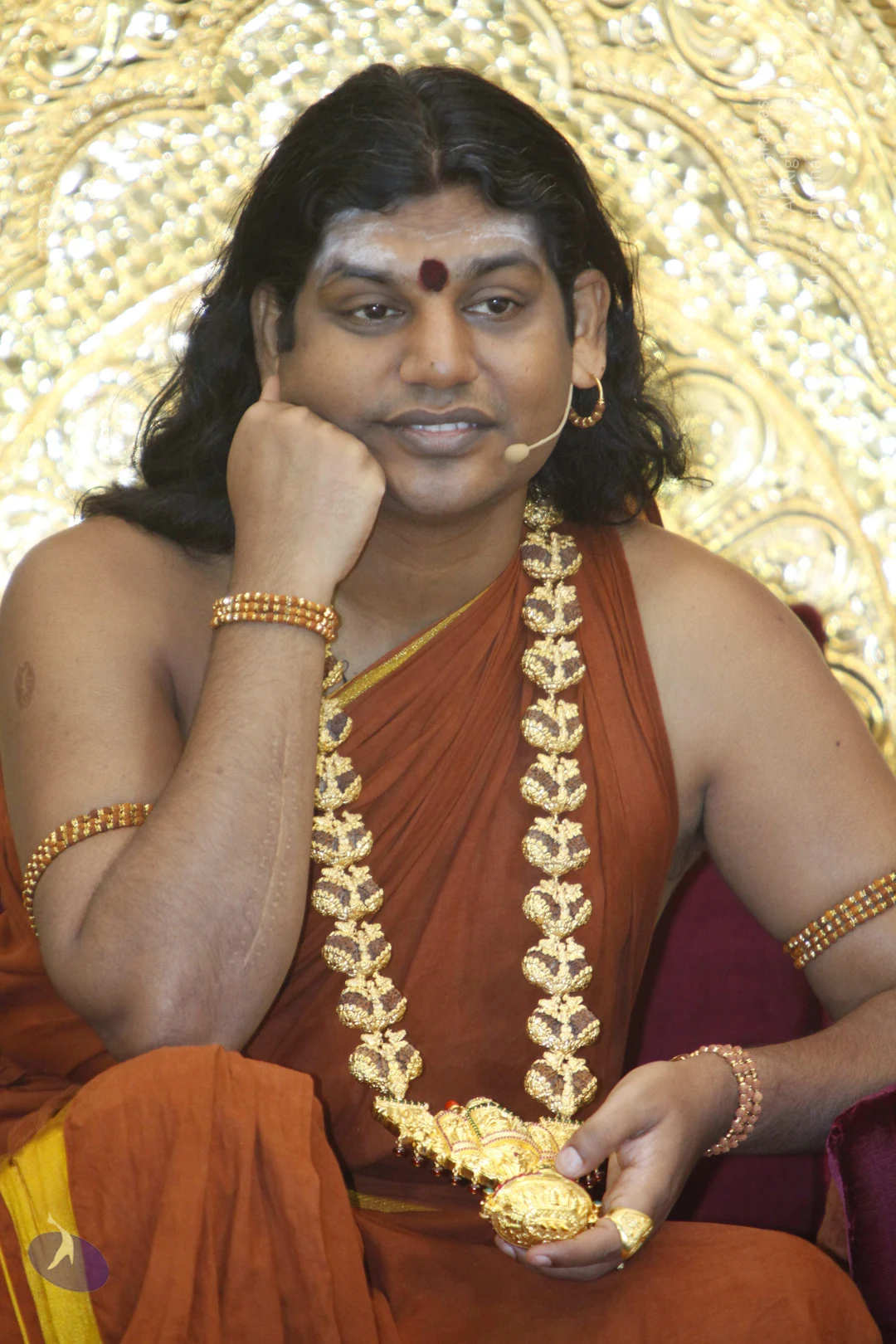
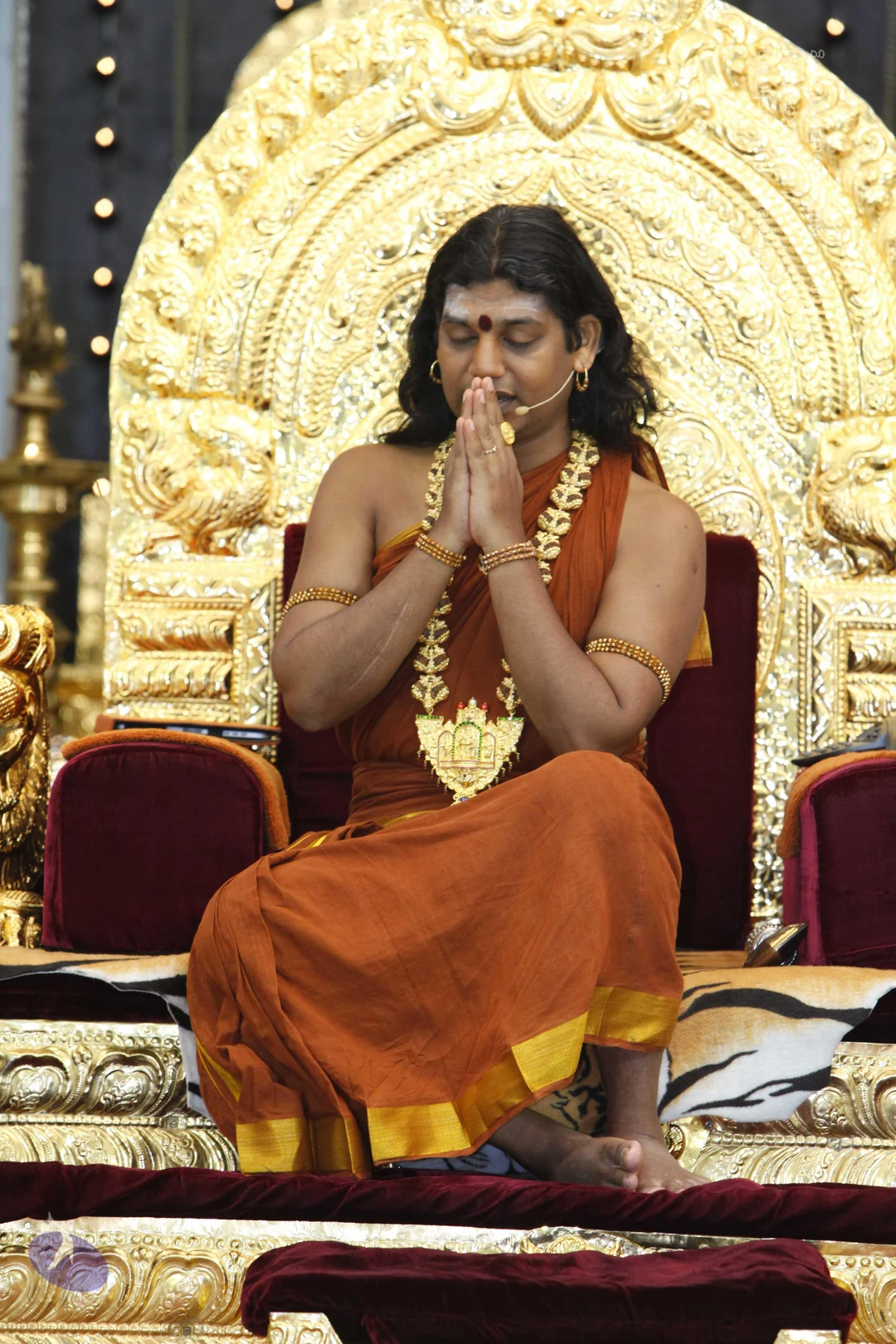
Morning-Satsang

Sarva-Darshan

Sacred-Arts-and-Construction

Temple

Photos Of The Day:
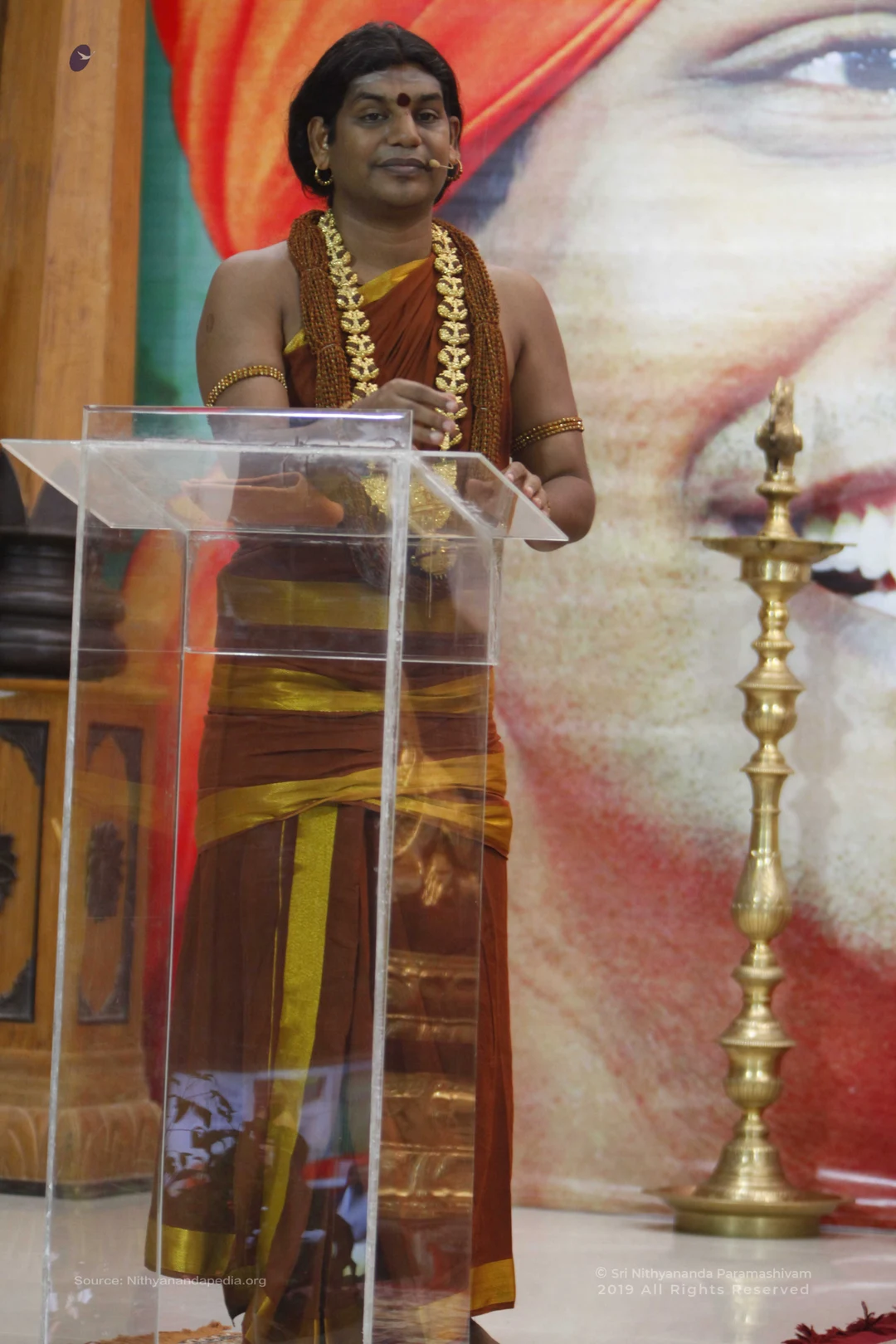
Rudra-Abhishekam

Garbha-Mandir-Pratyaksha-Pada-Puja

Morning-Satsang

Sarva-Darshan

Photos Of The Day:

Lotus-TV-Pictures
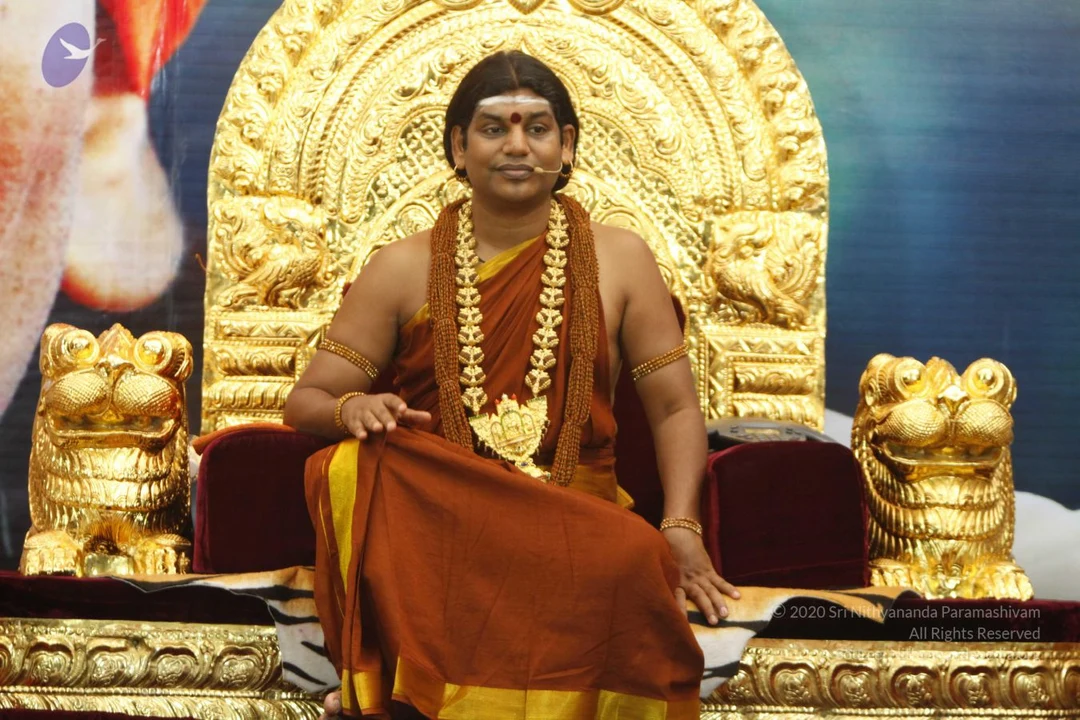
1-Rudrabhishekam

2-Pada-Puja

3-Satsang

4-Temple

Photos from this day

View all 489 photos

Photos

33 photosSource gallery
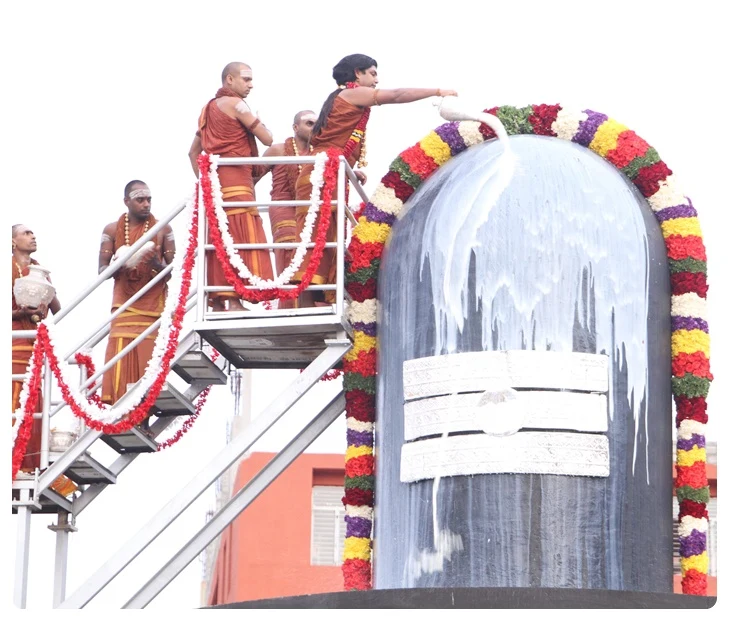
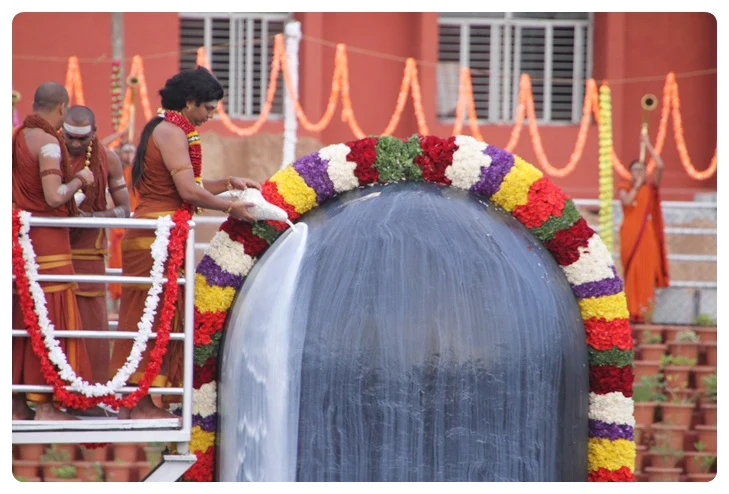
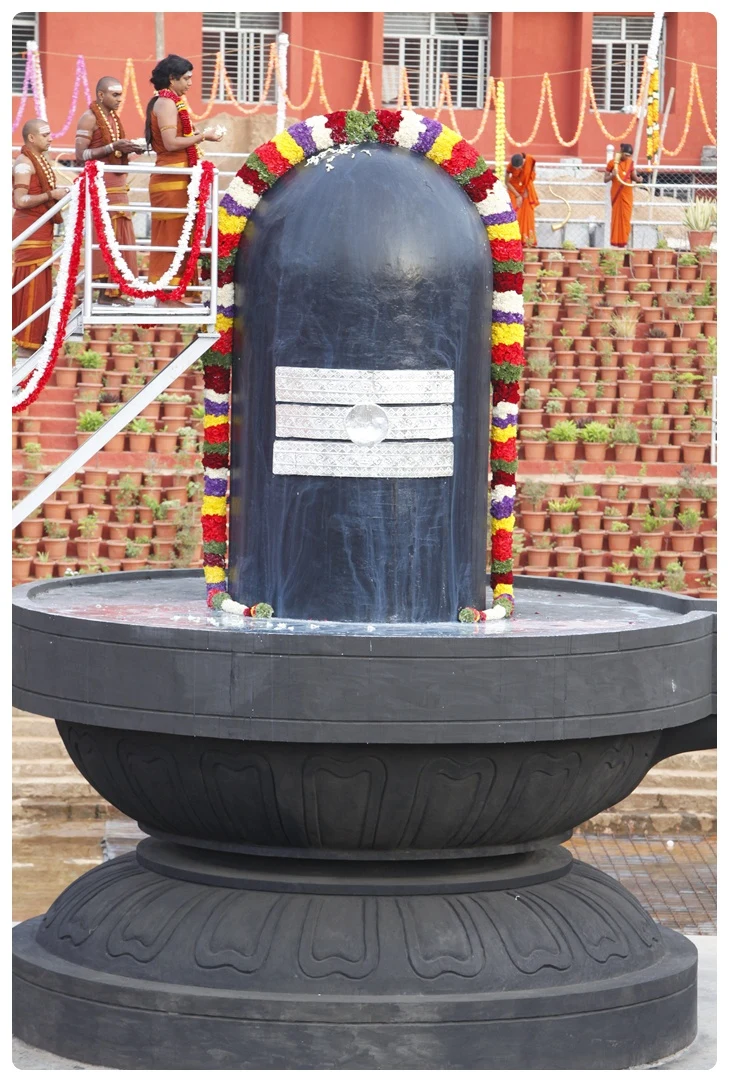
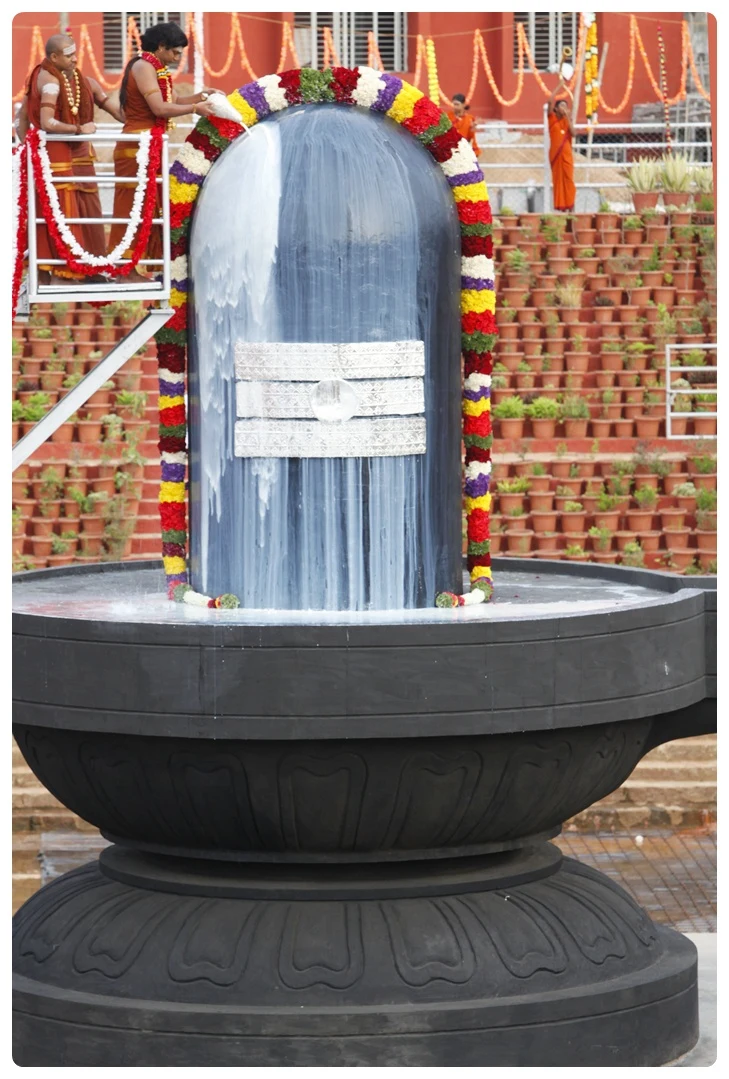
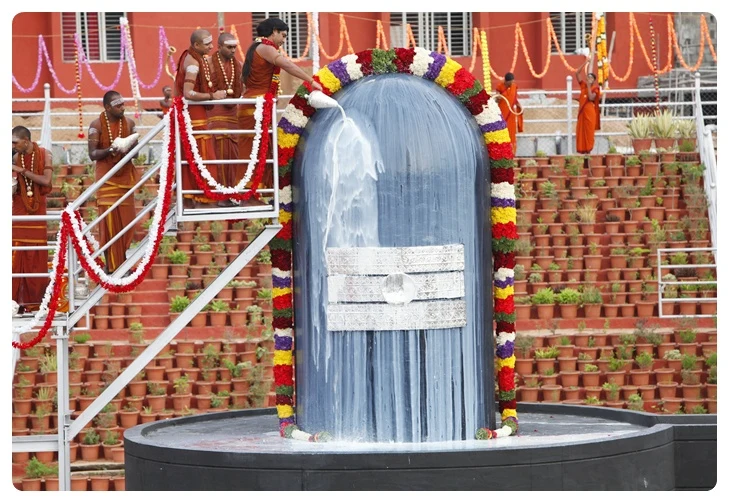
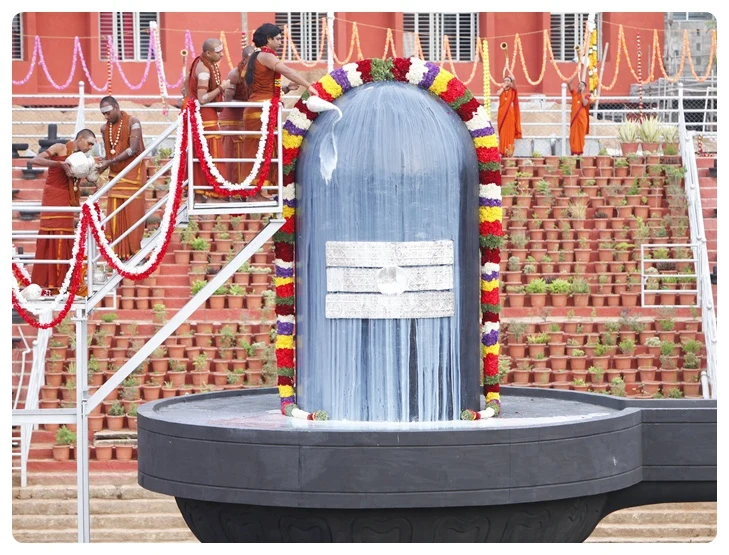
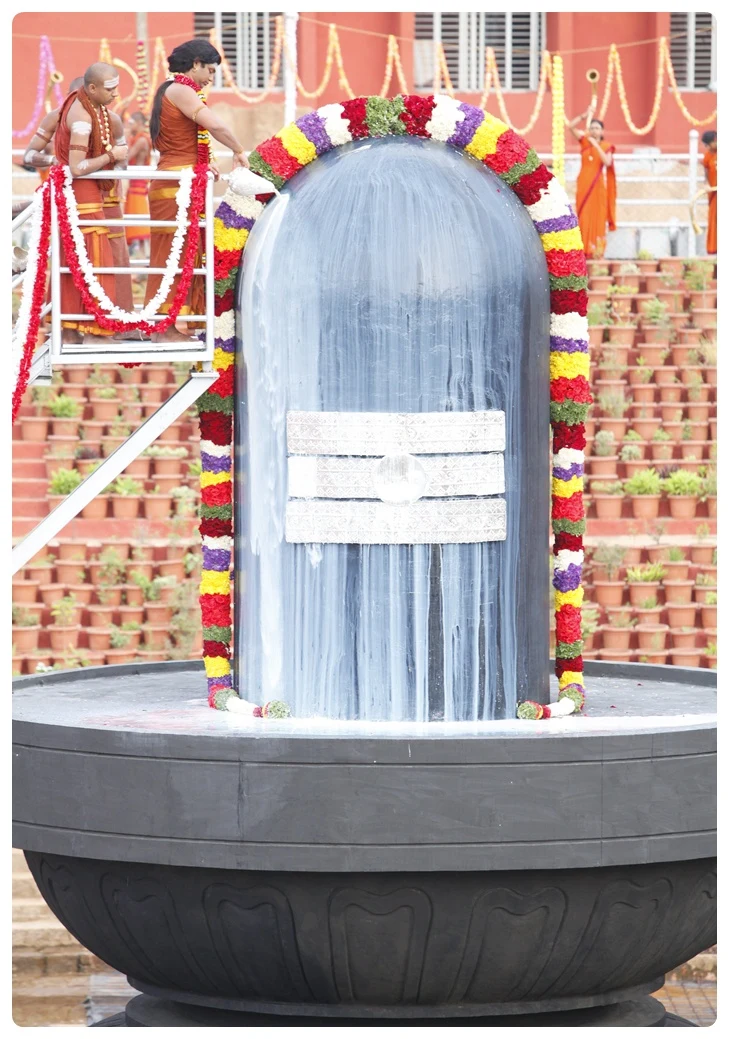
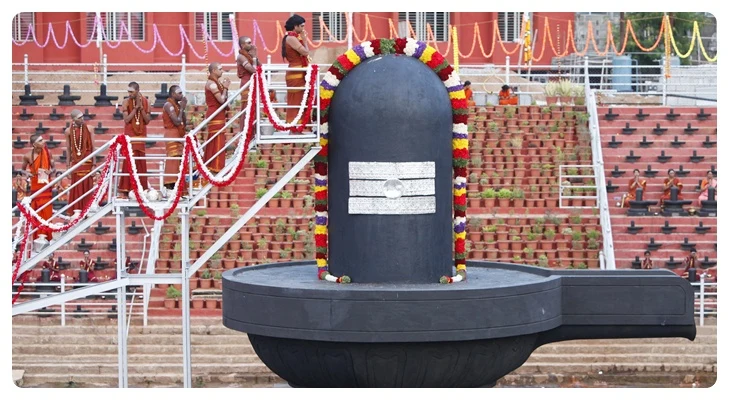
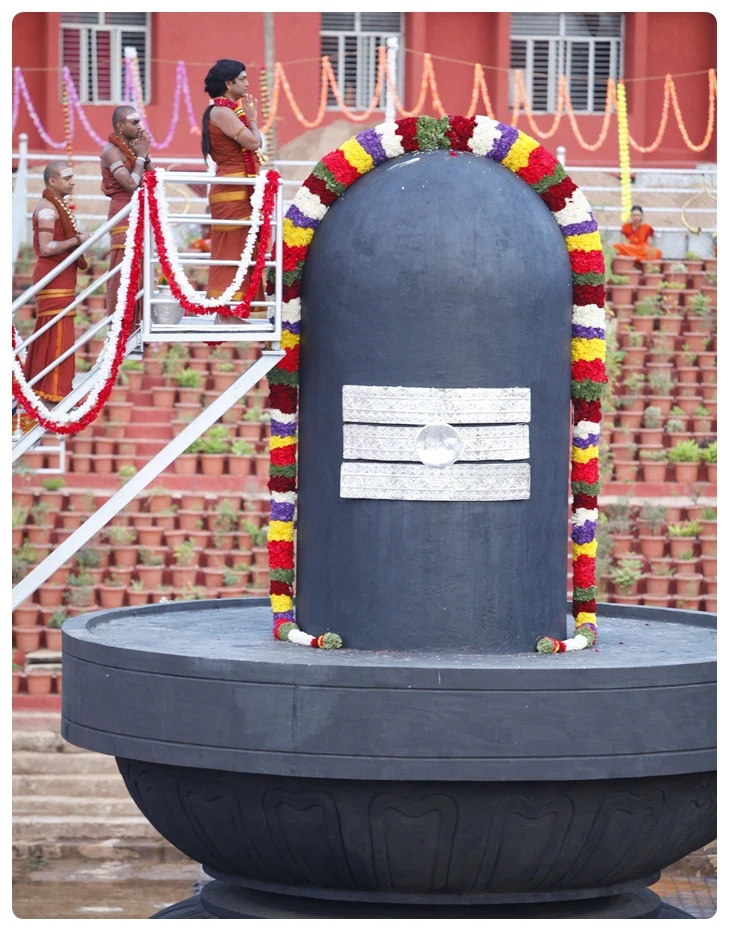
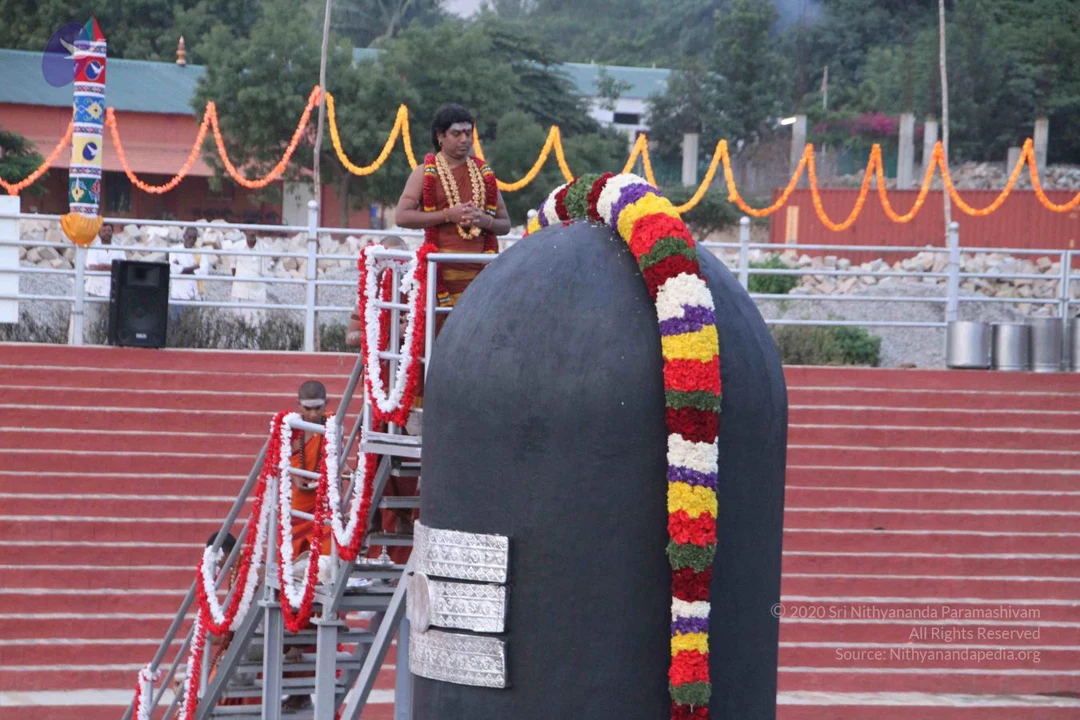
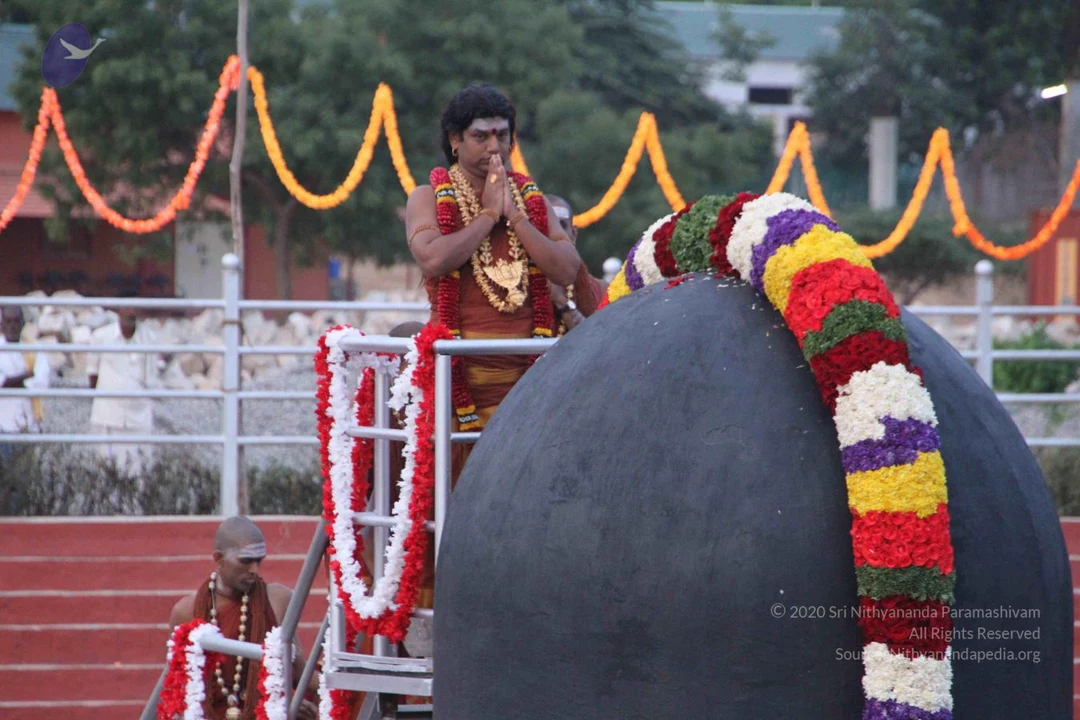
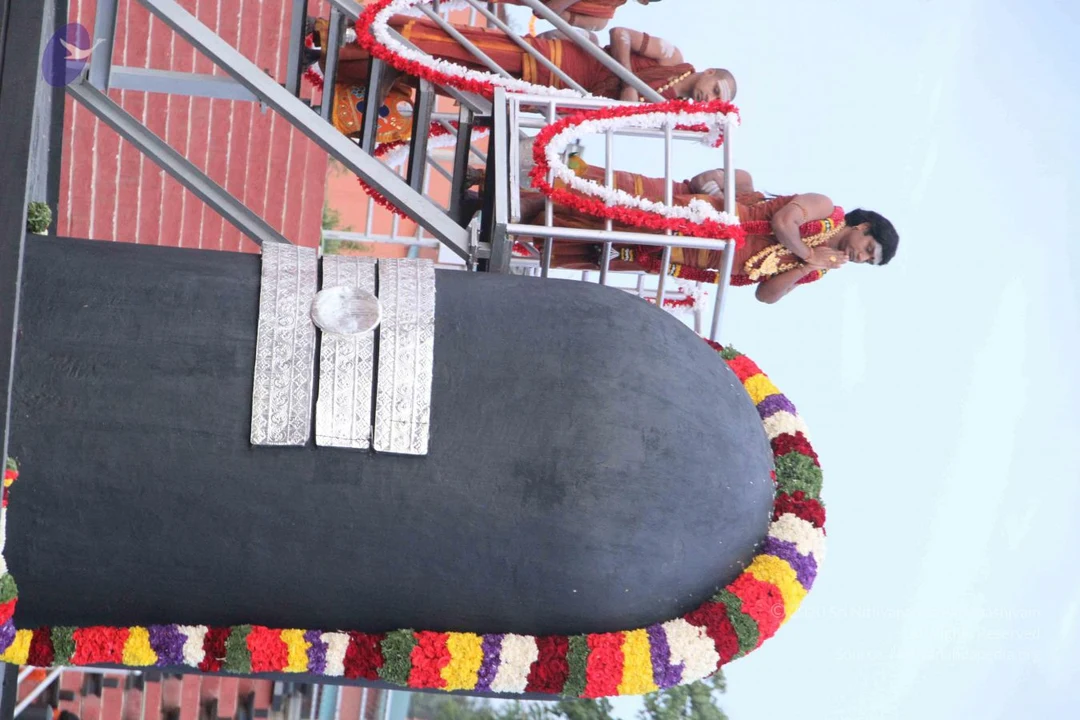
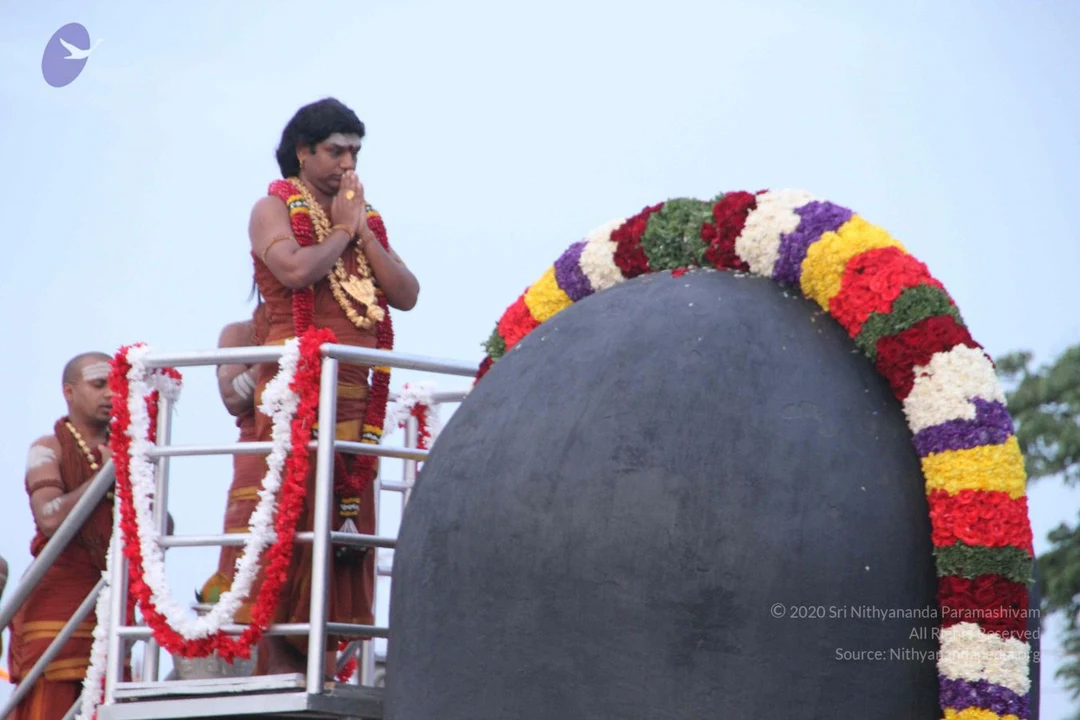
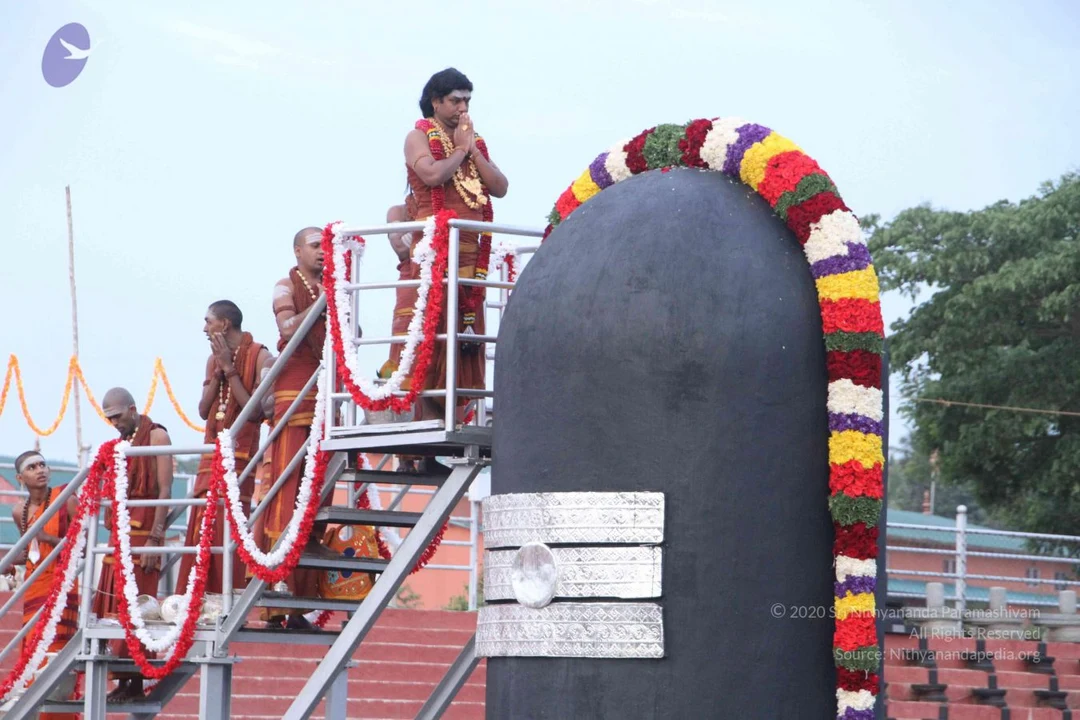
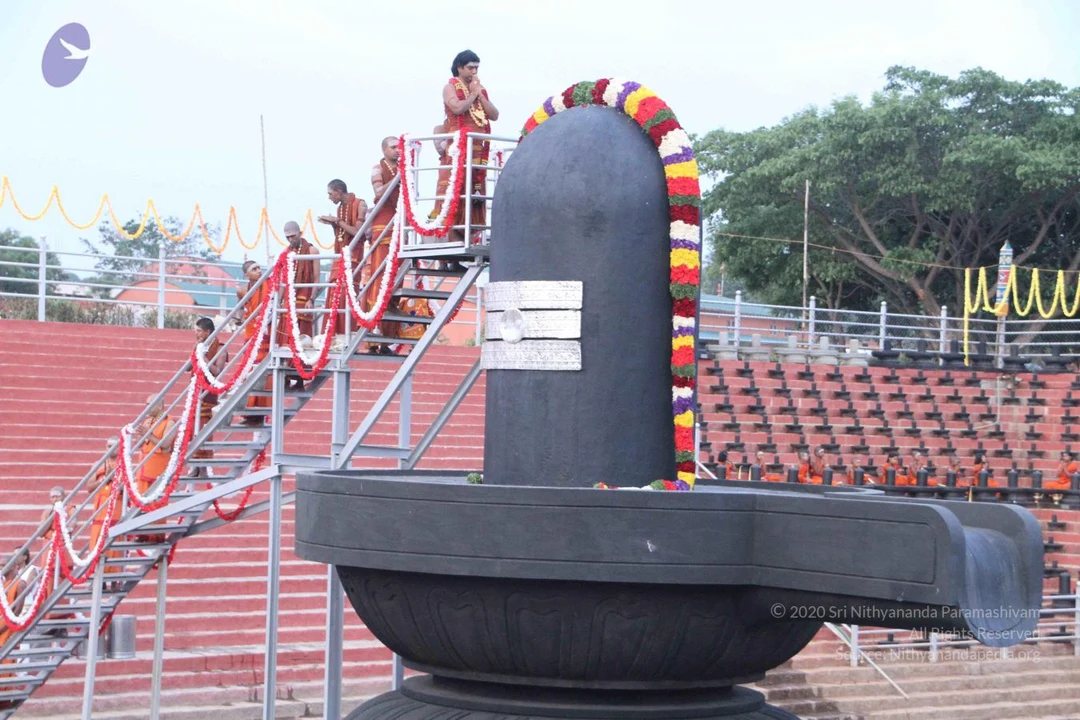
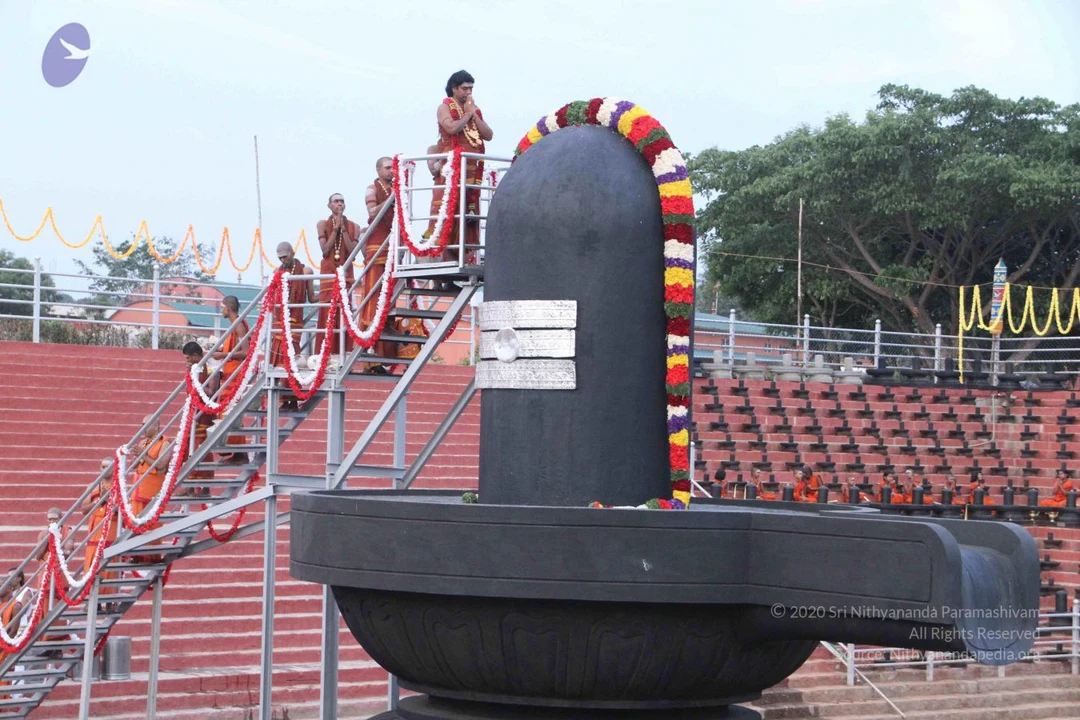
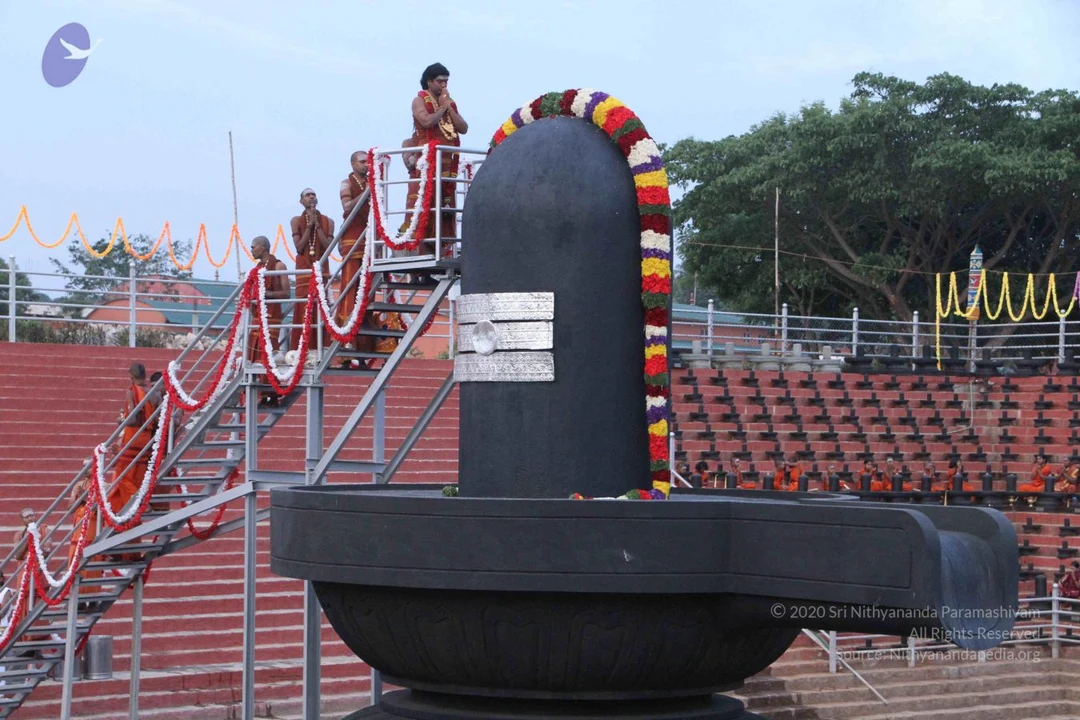
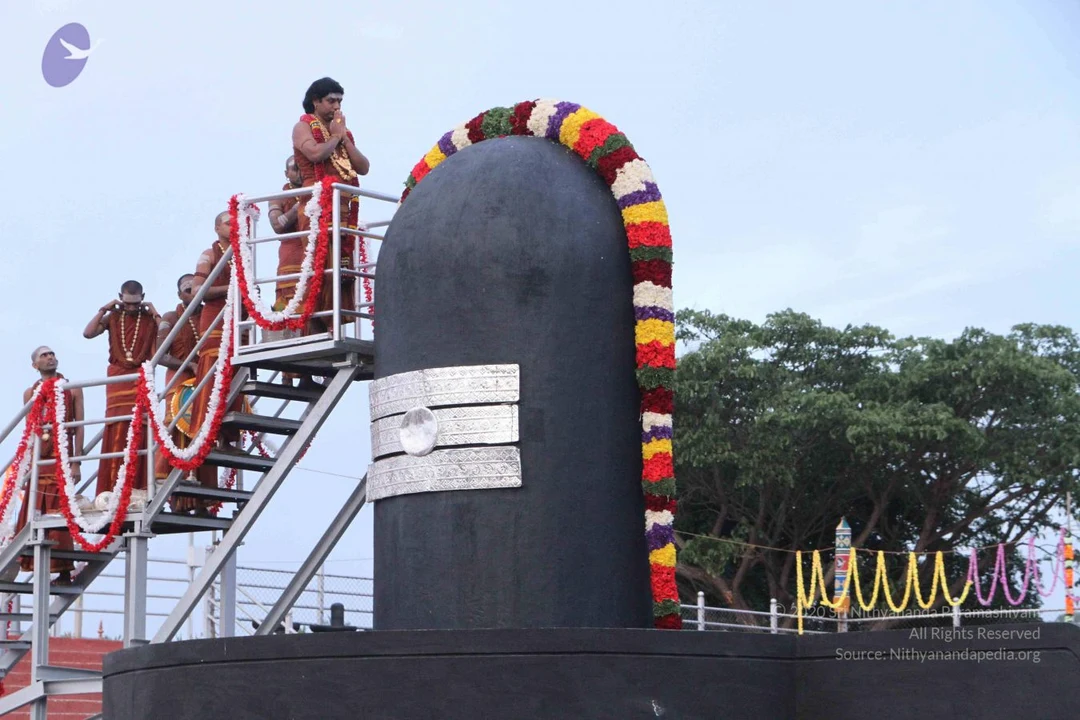
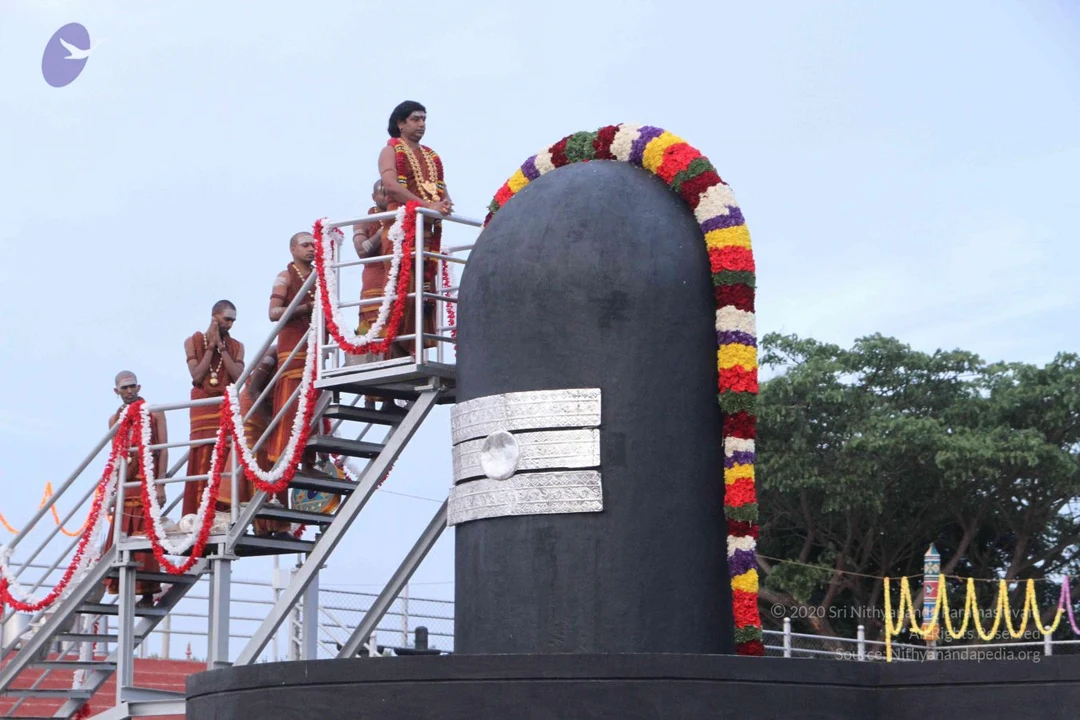
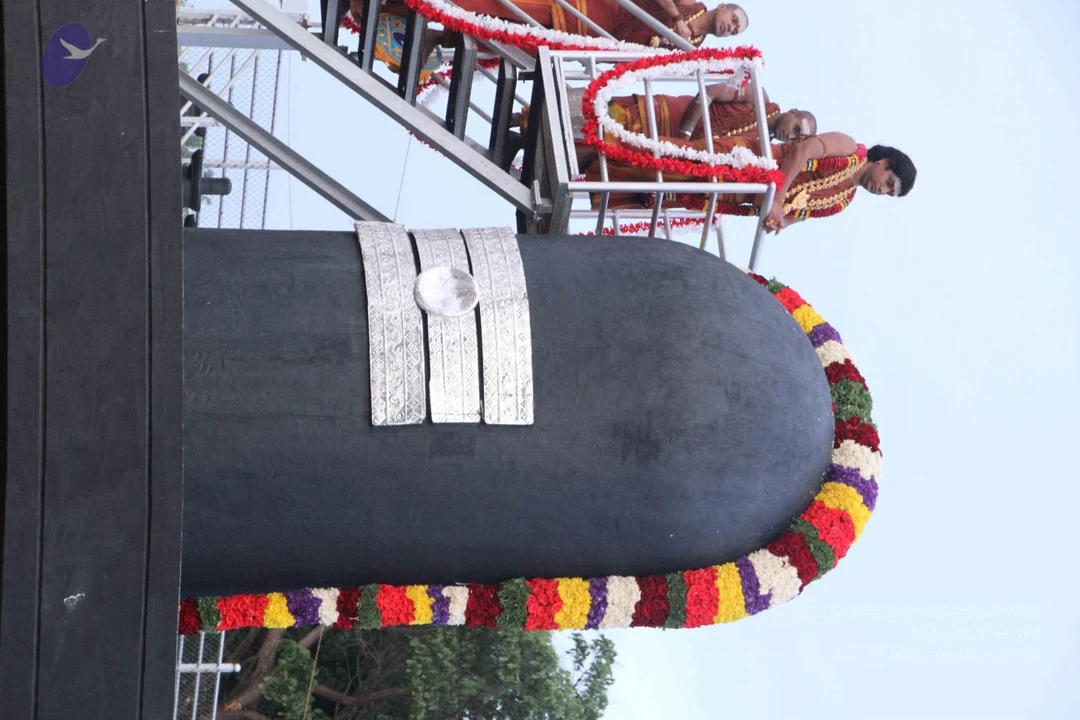
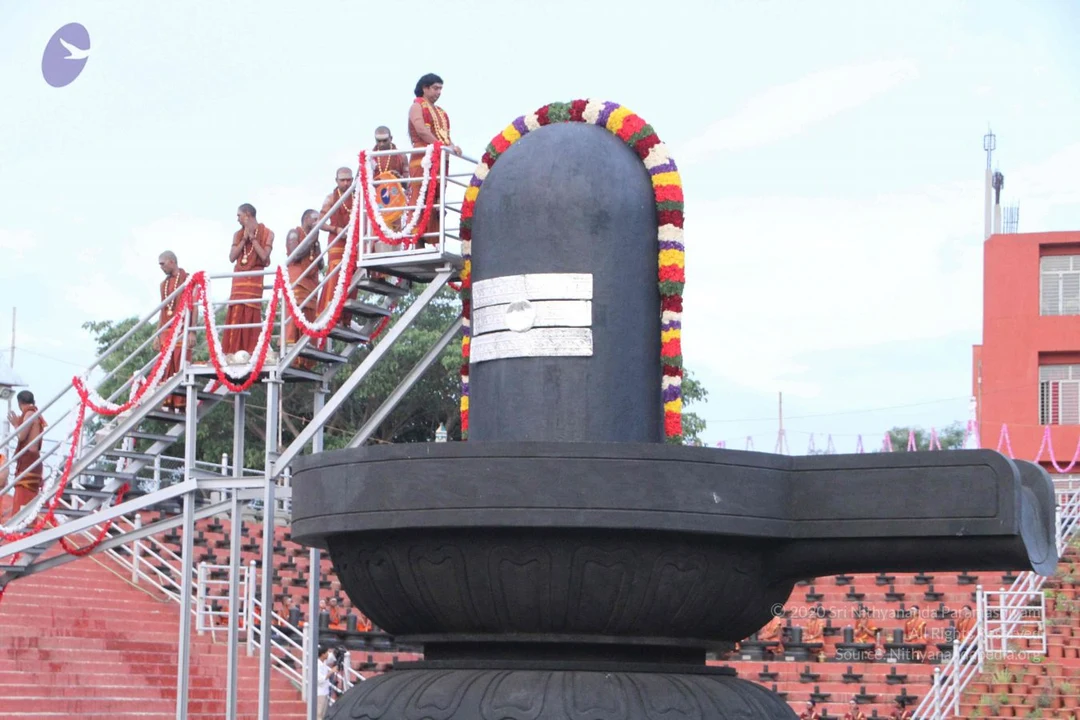
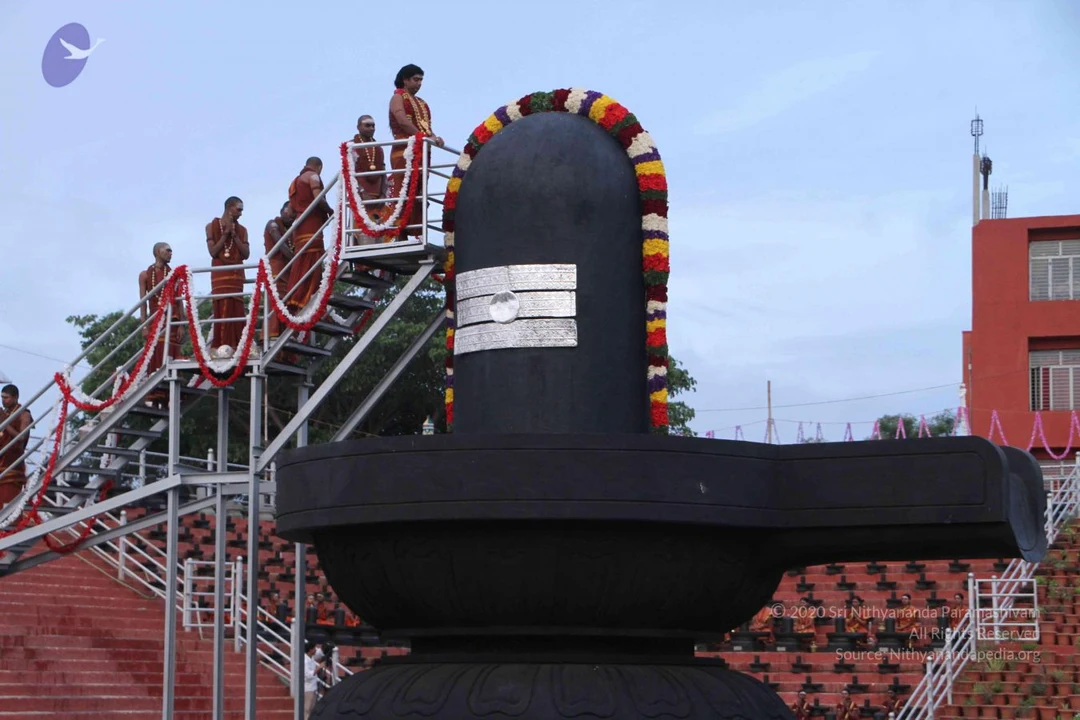
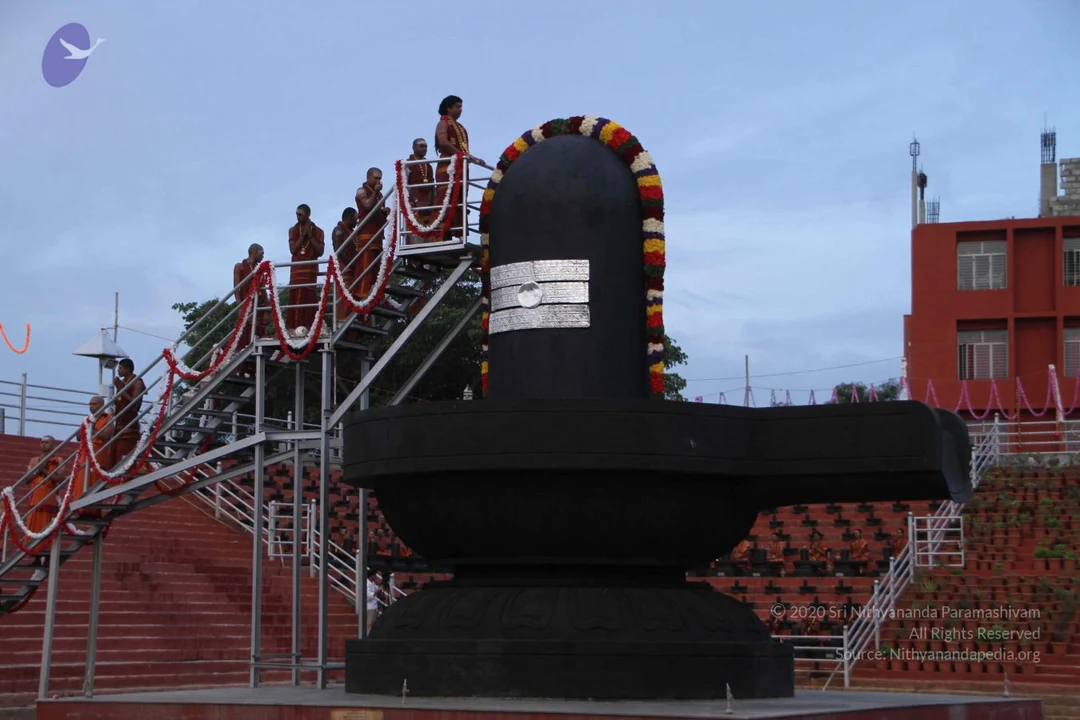
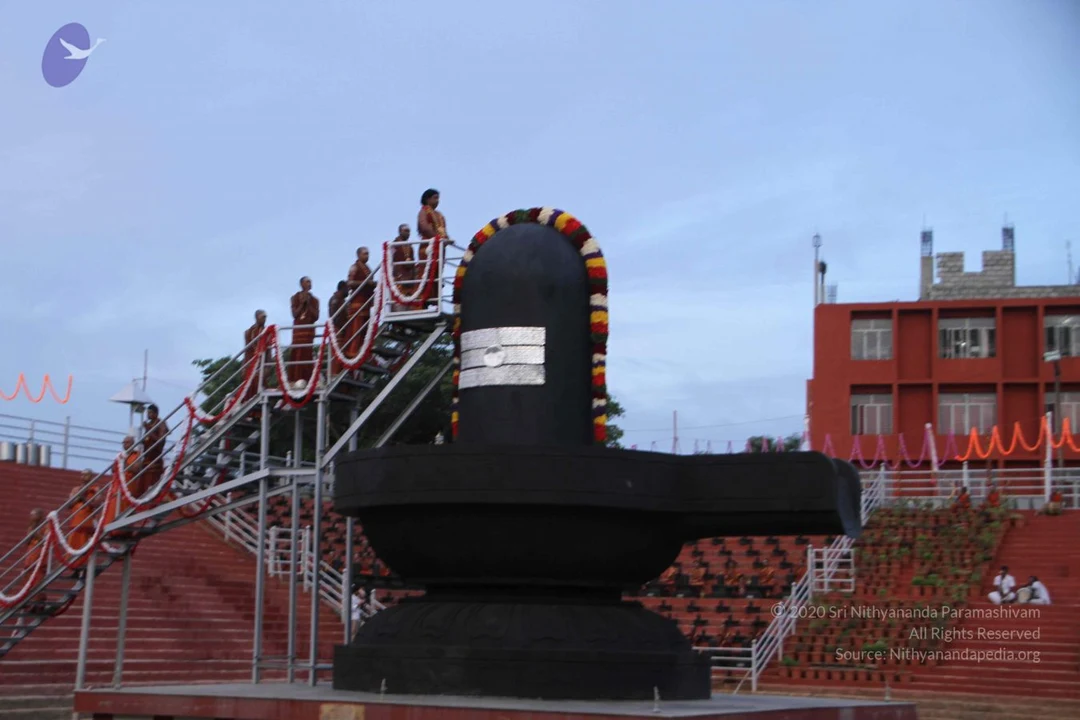
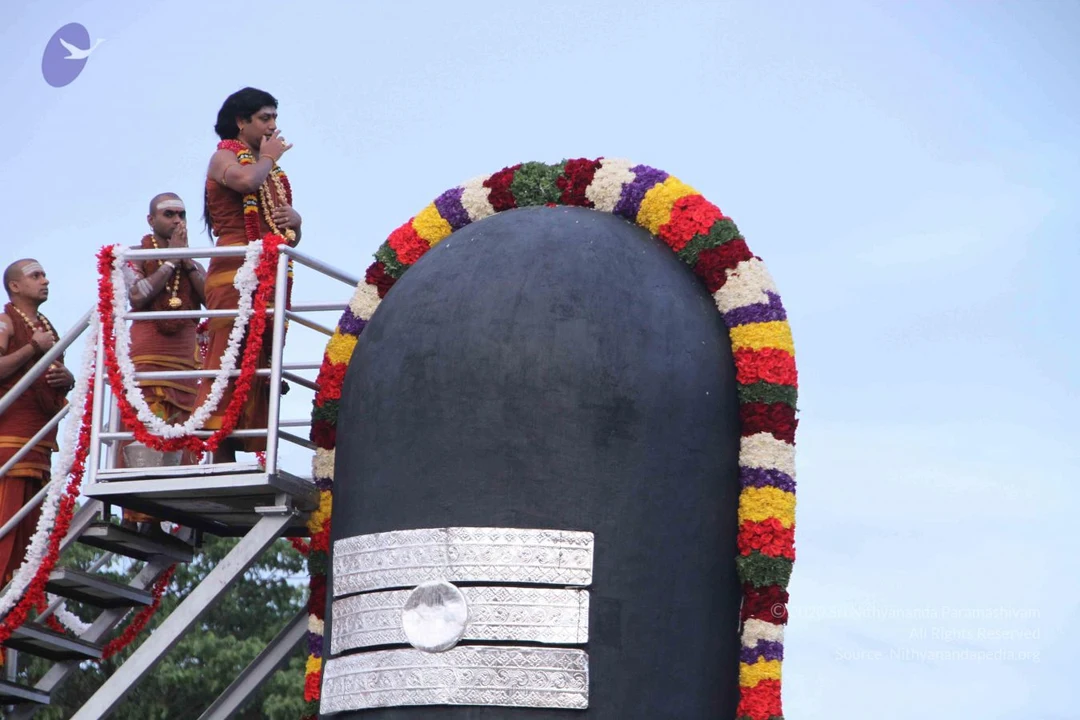
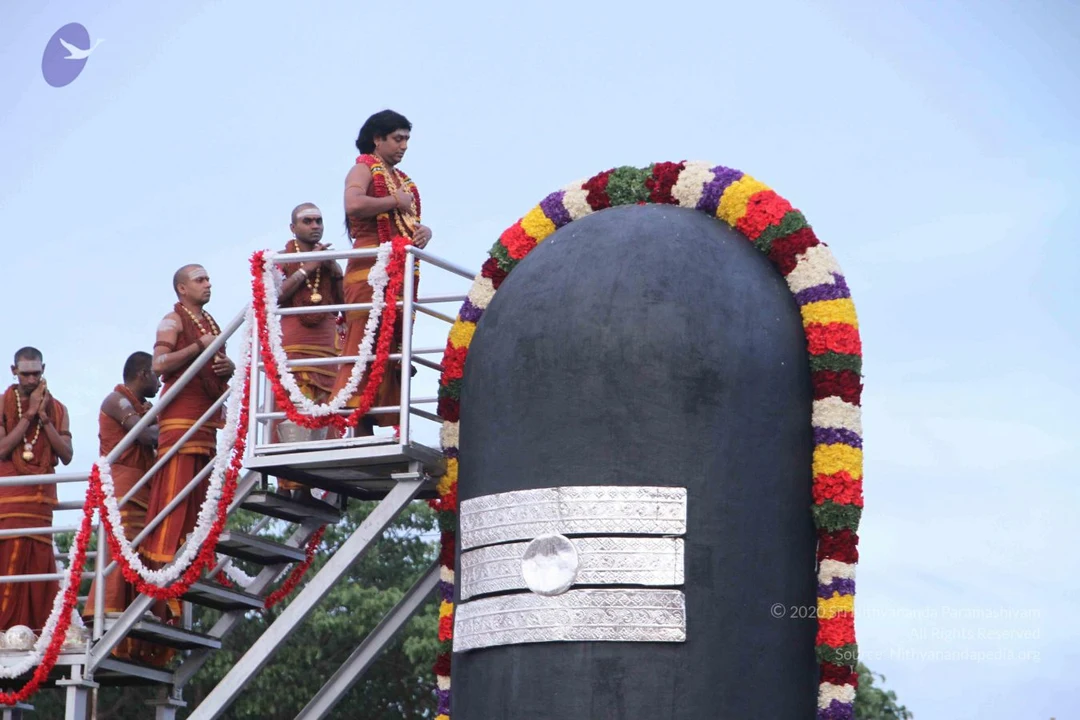
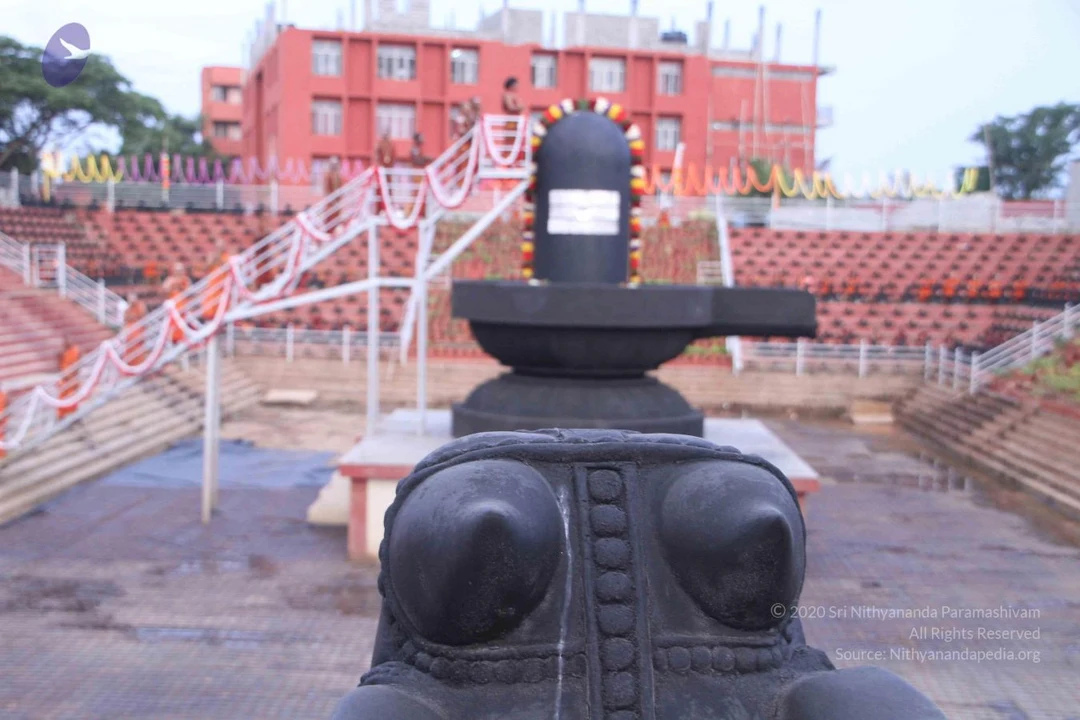
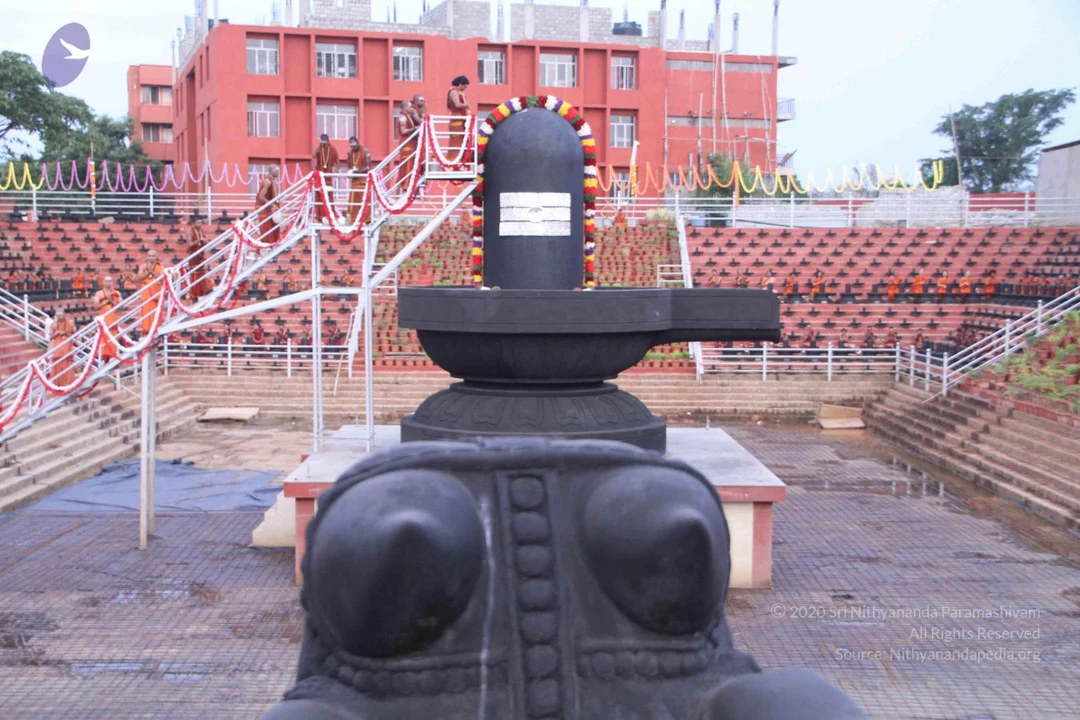
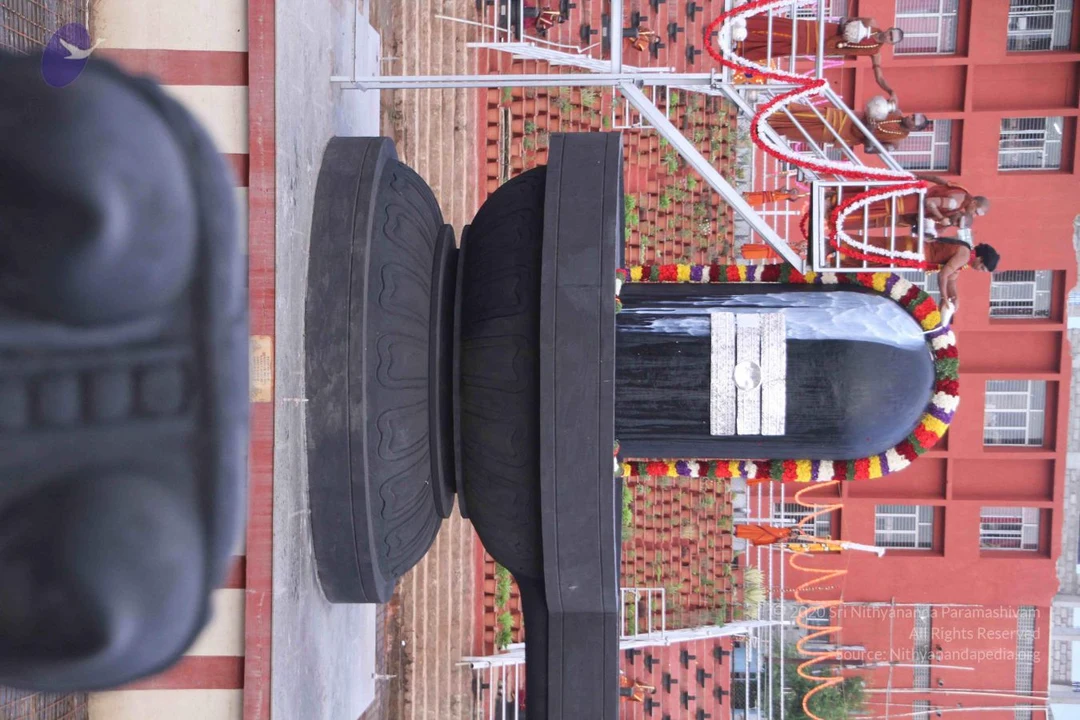
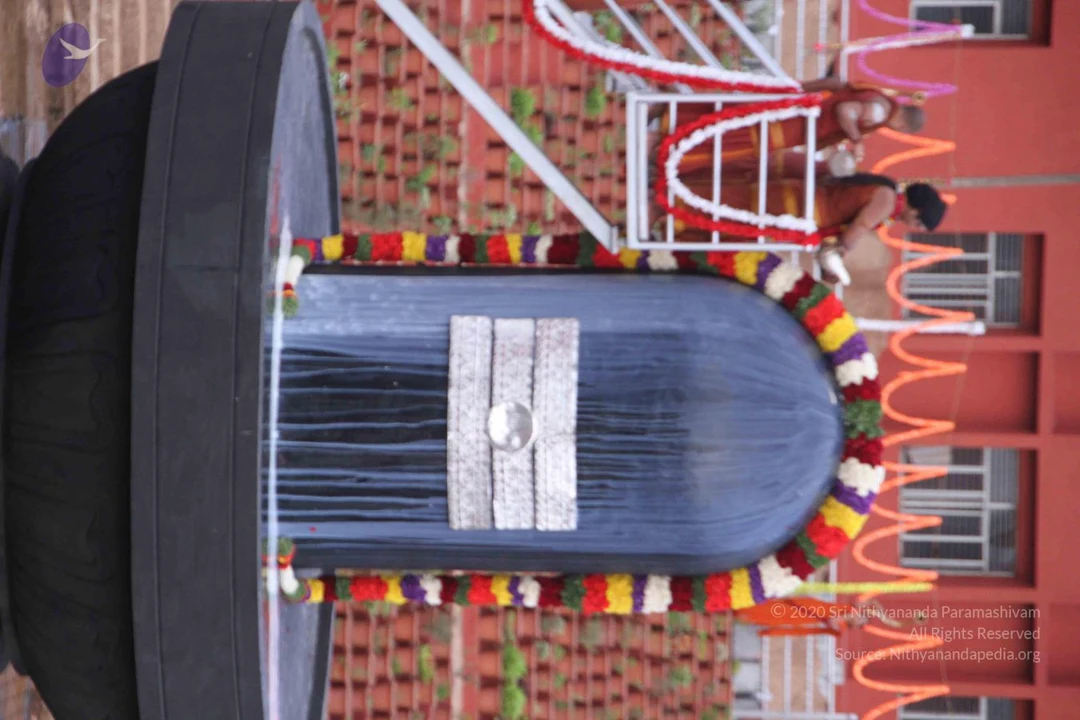
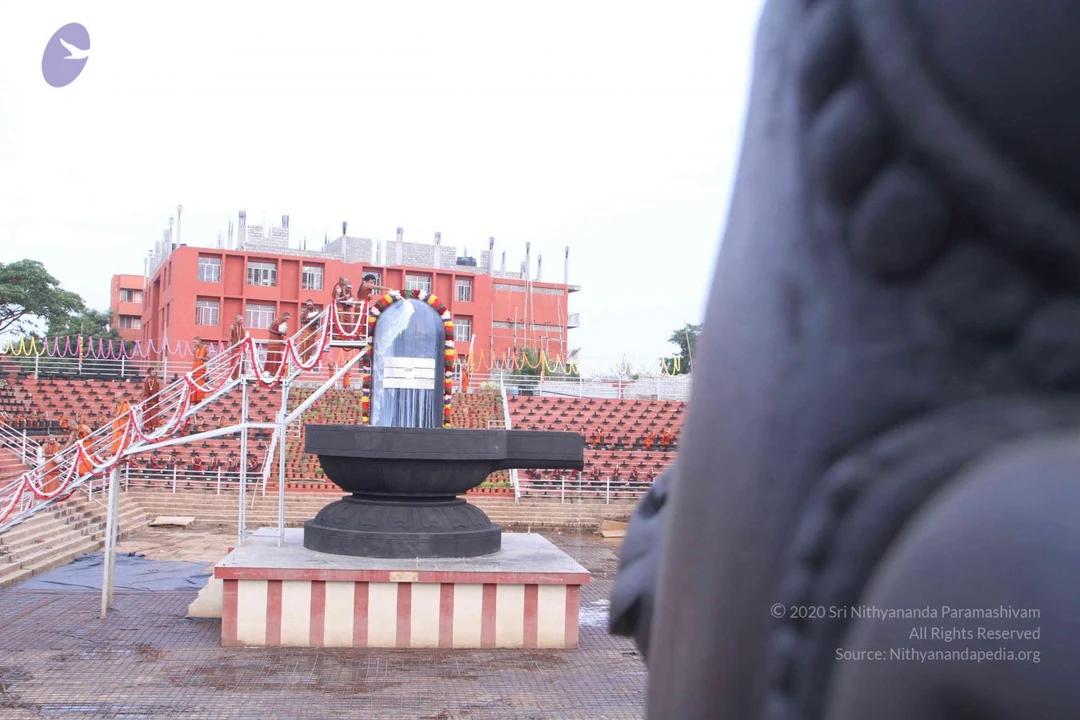
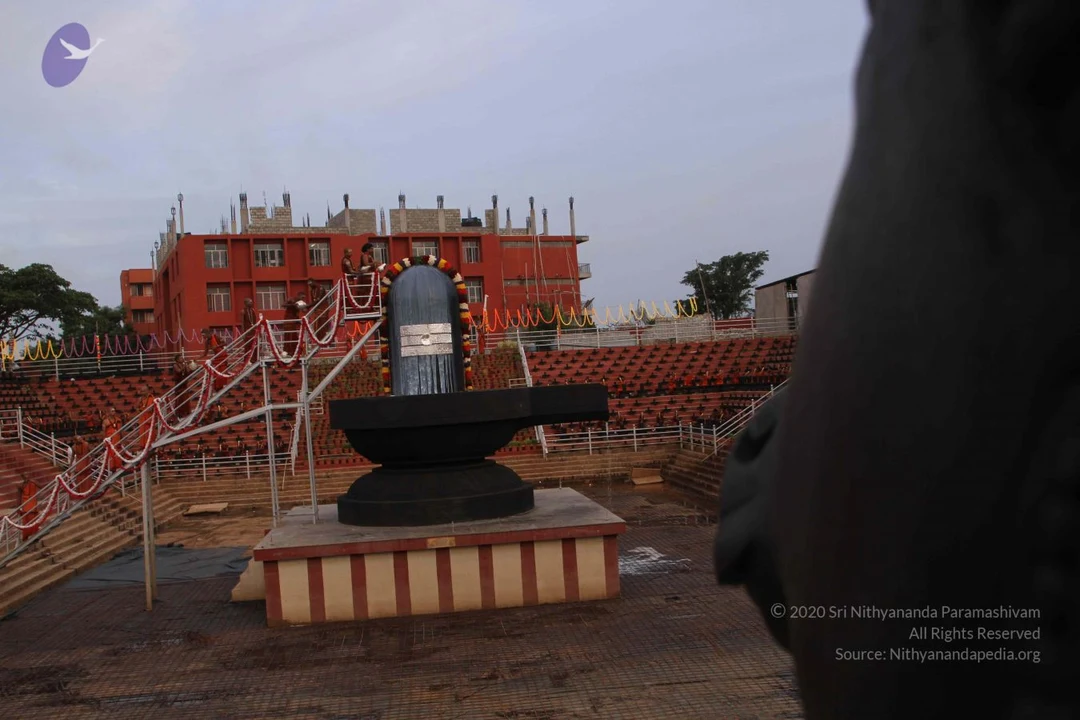
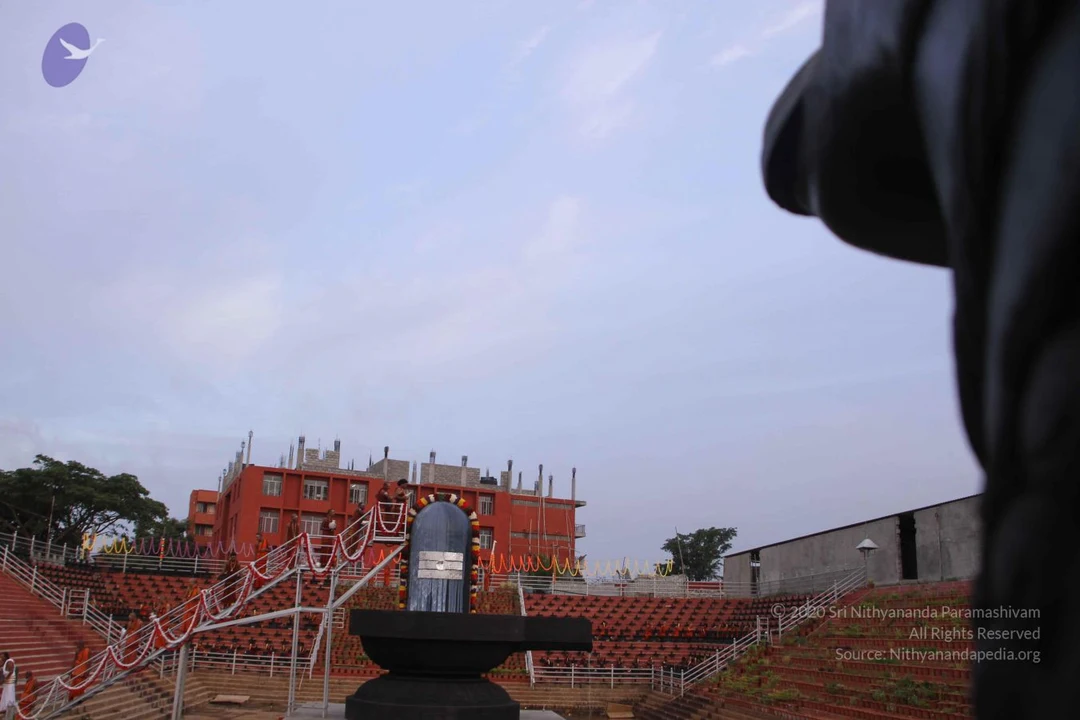
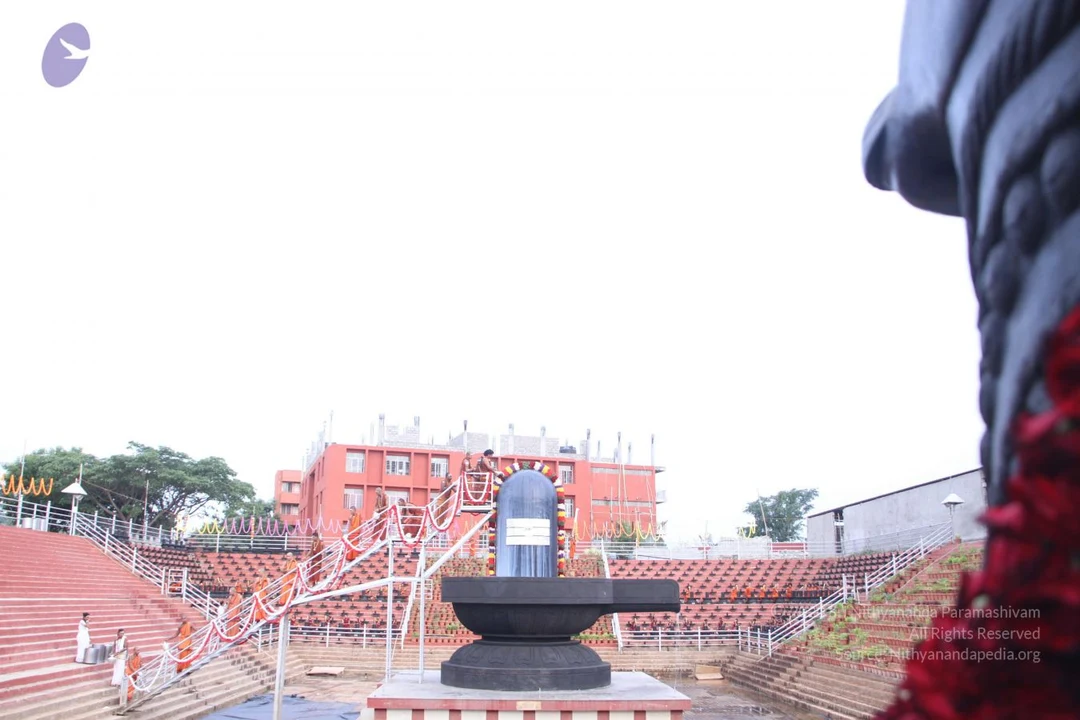
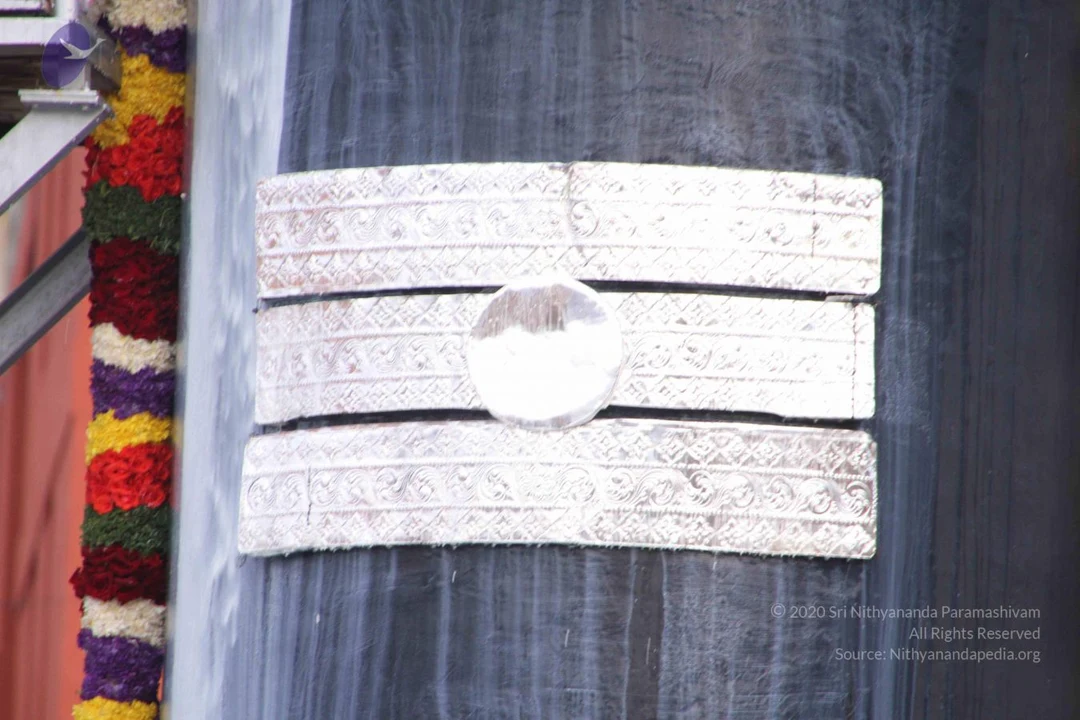
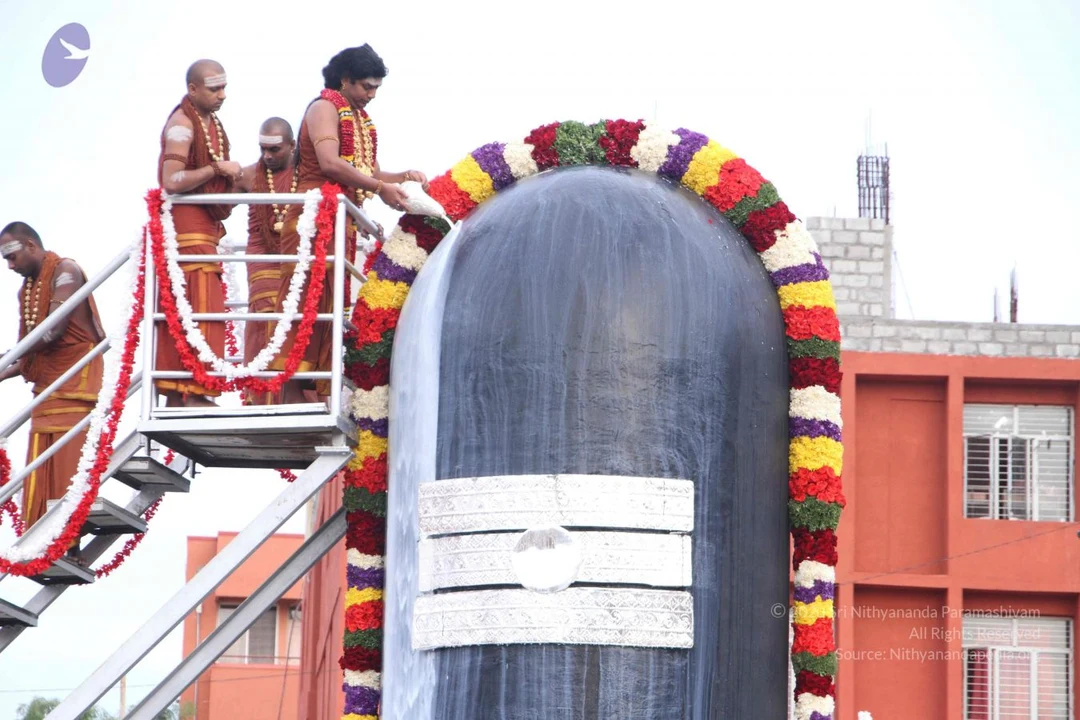
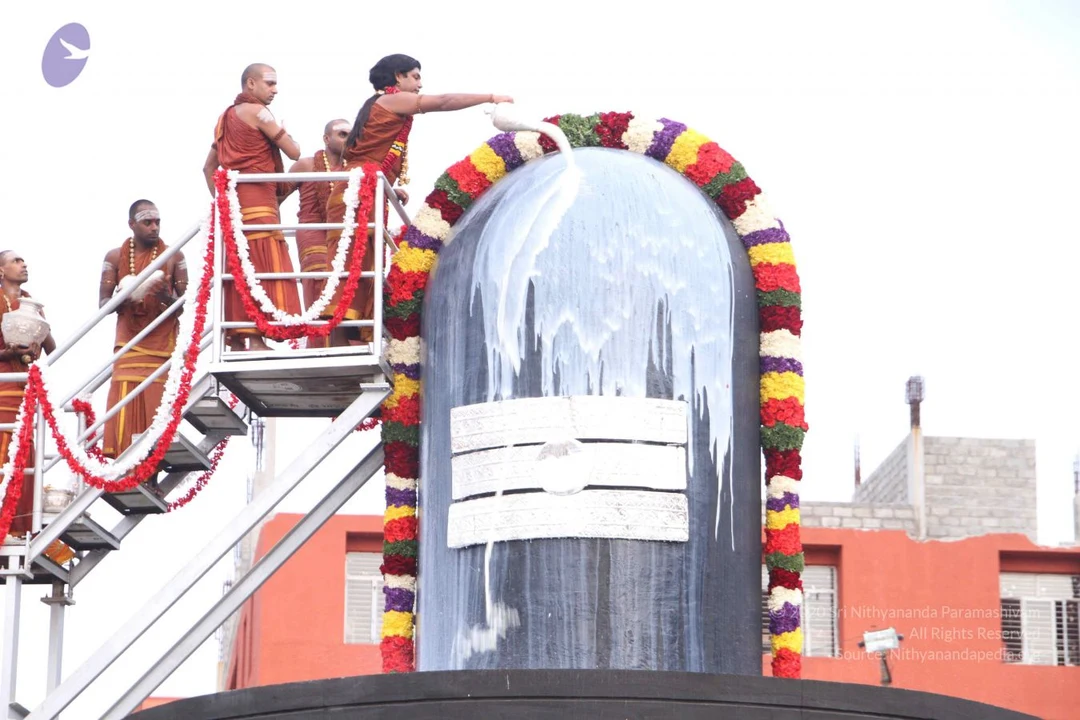
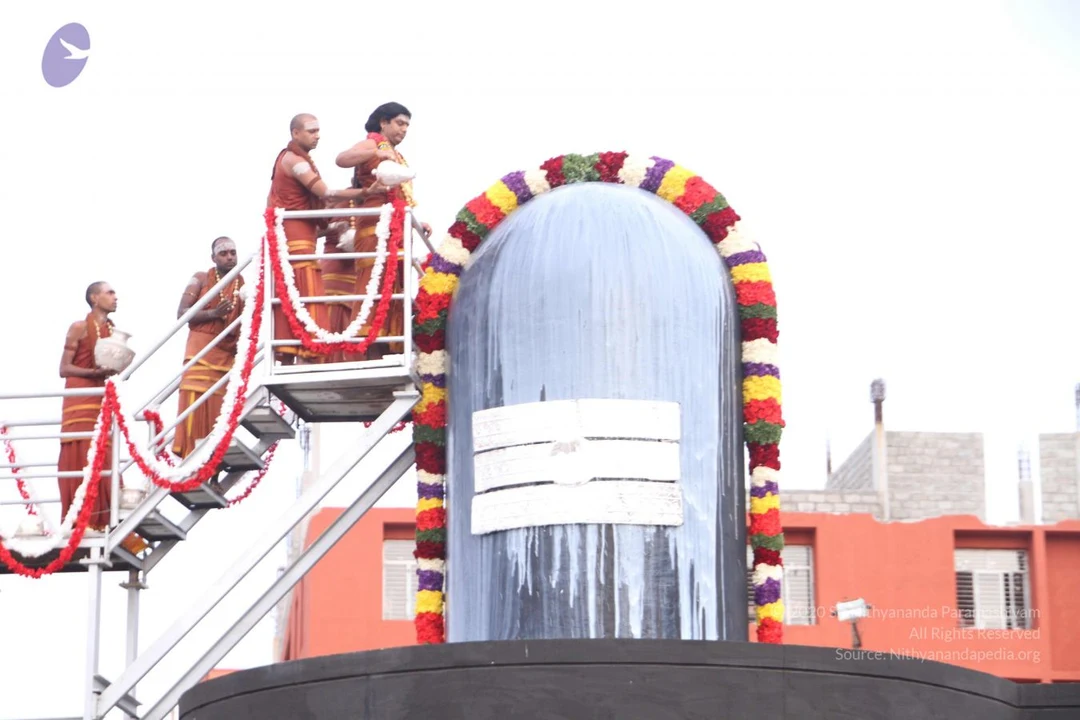
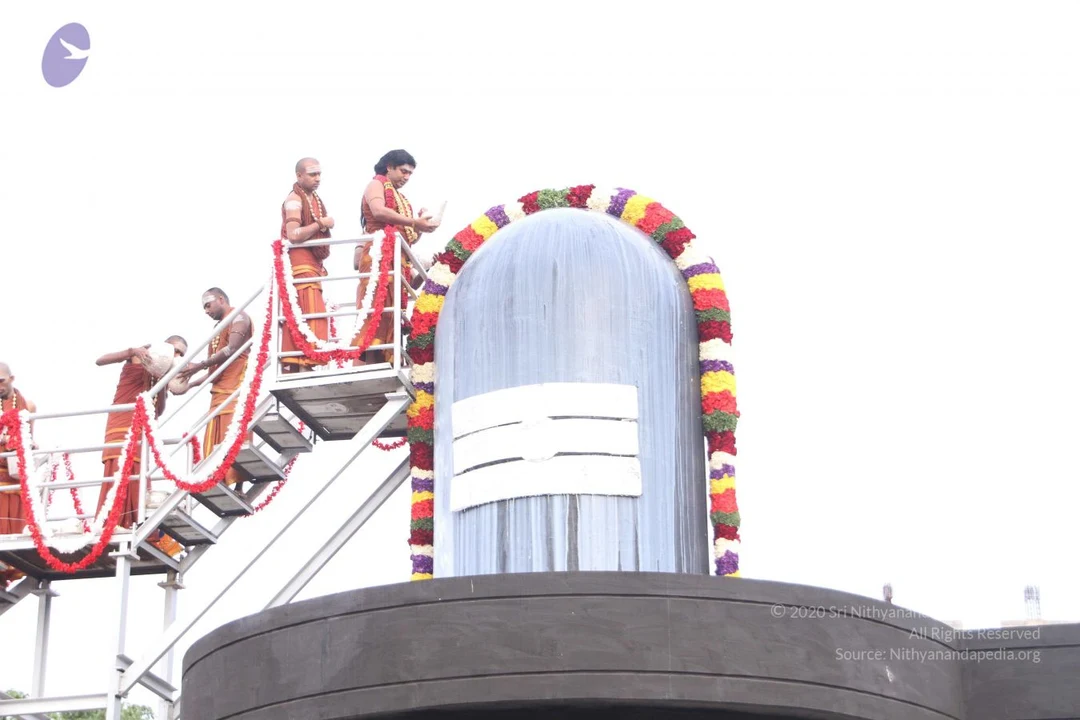
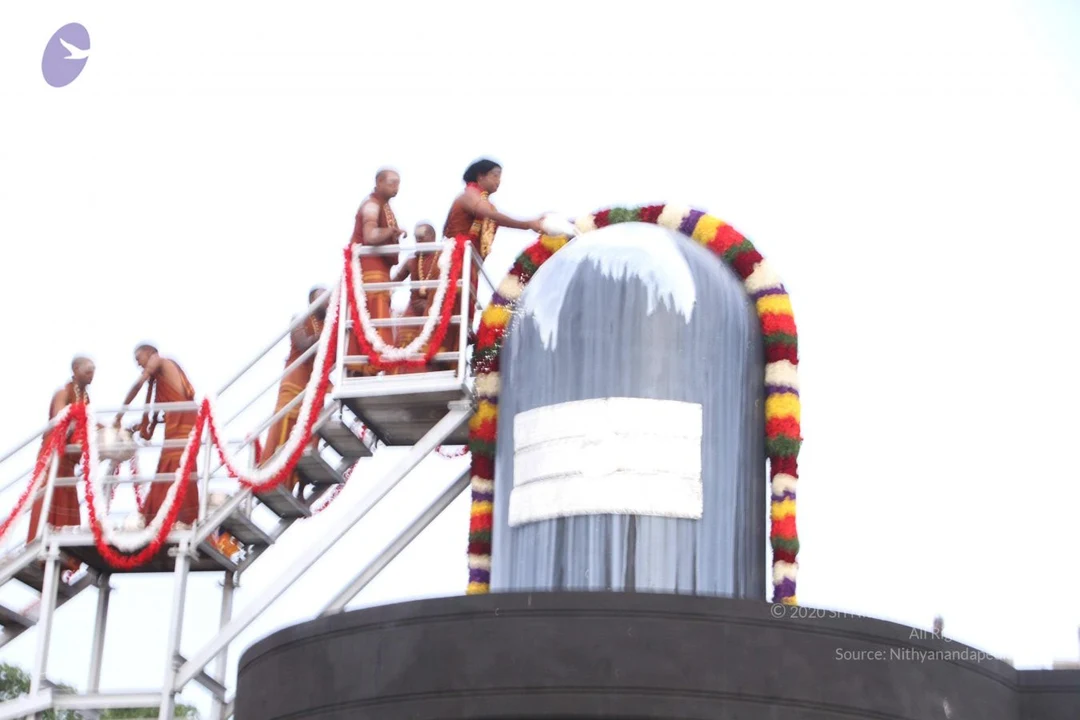
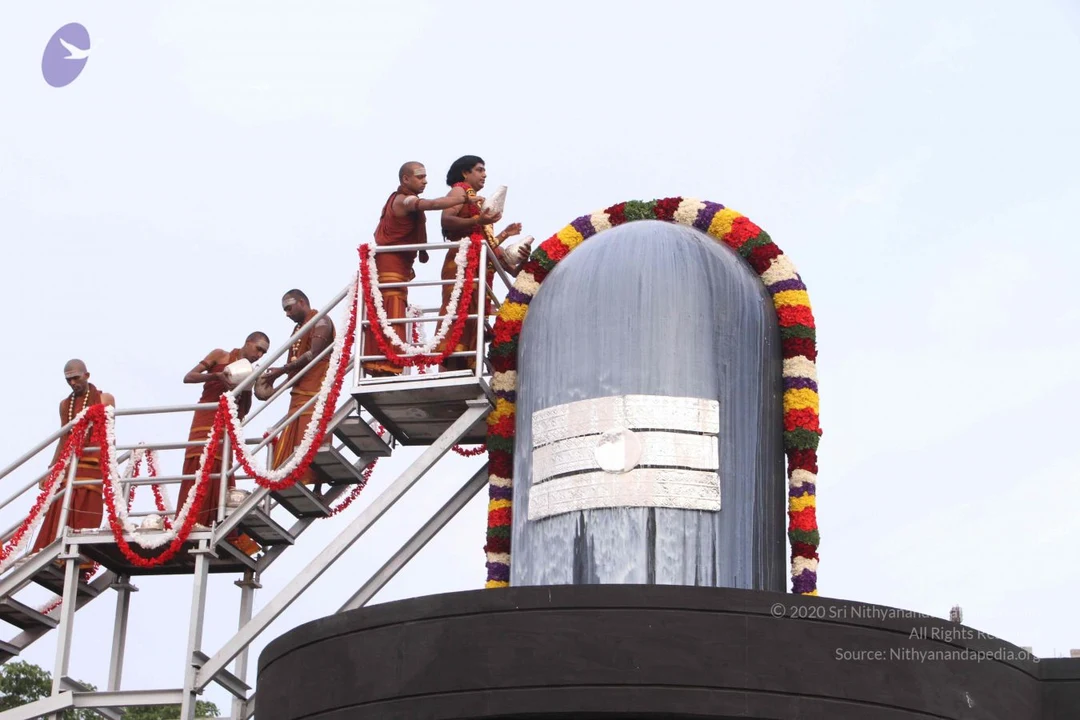
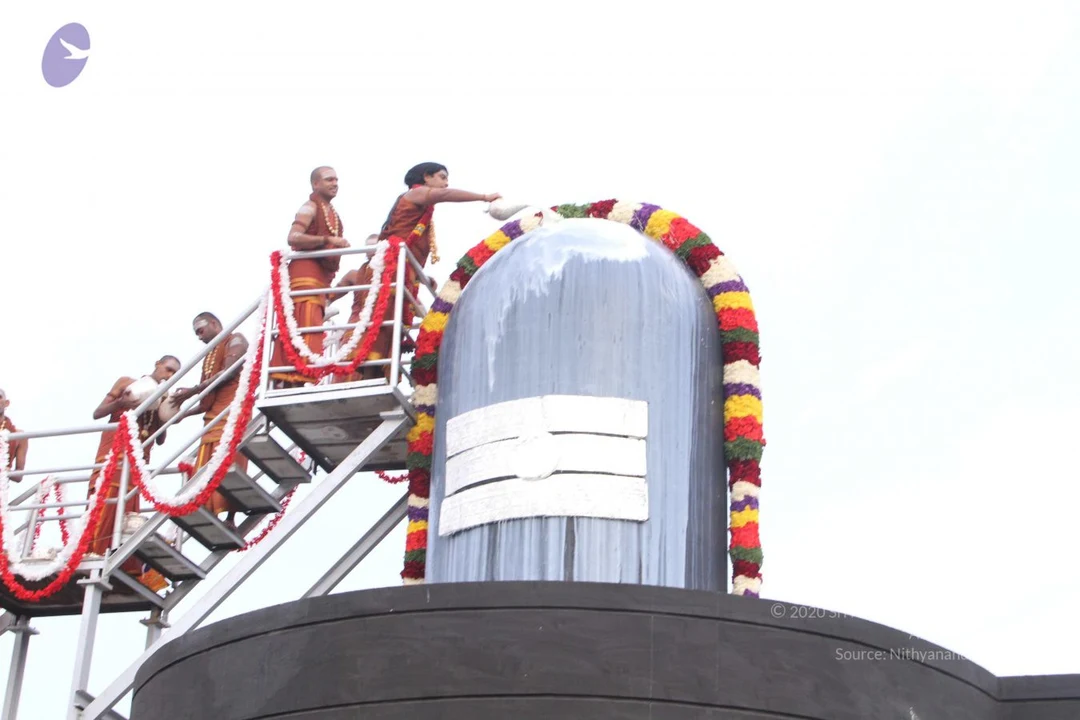
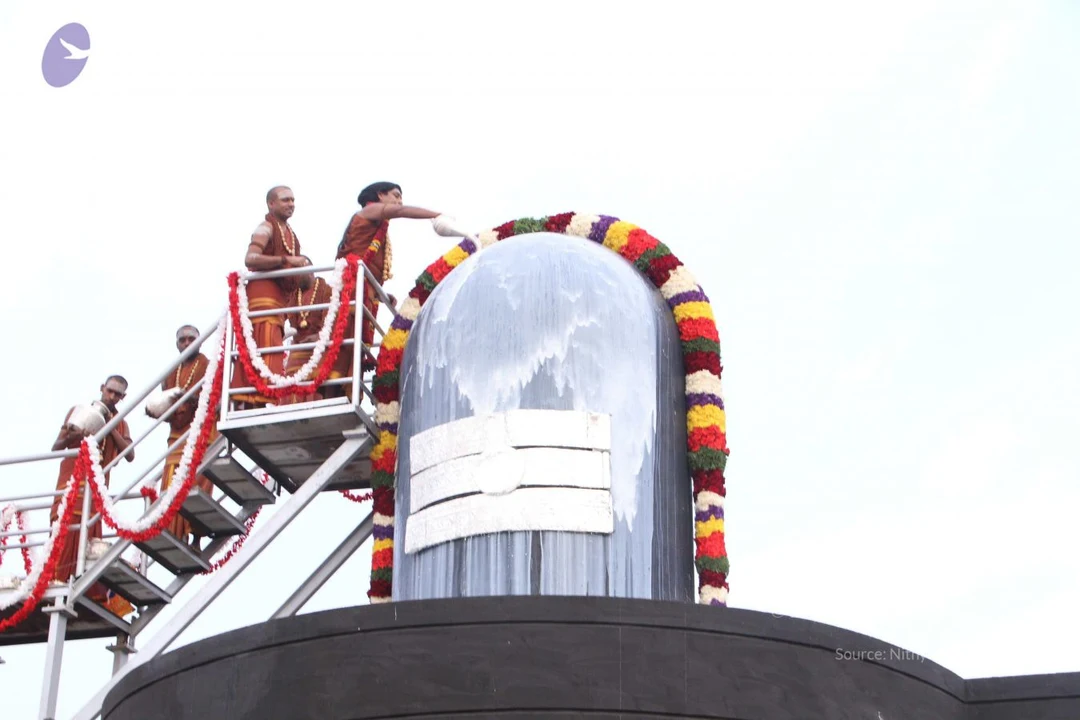
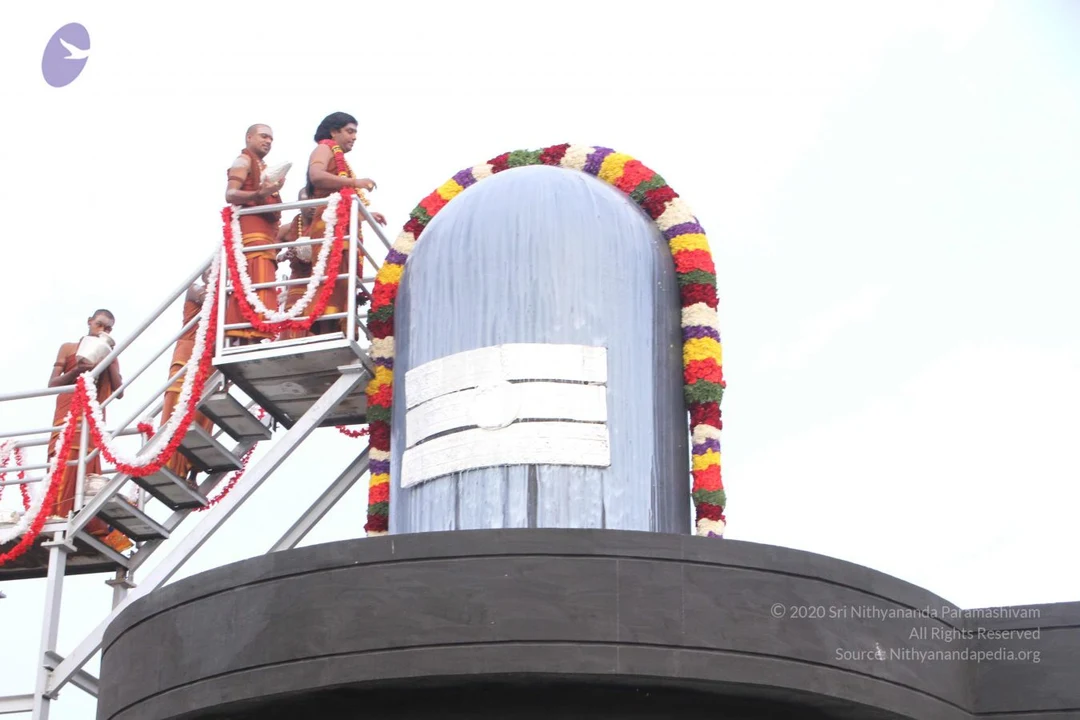
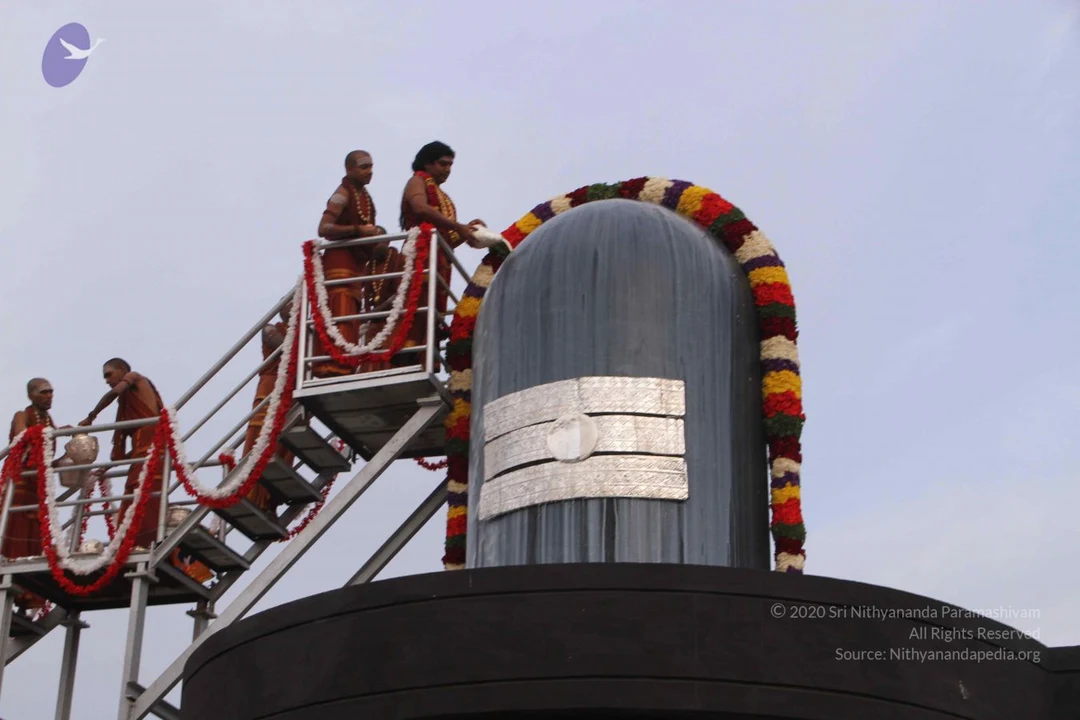
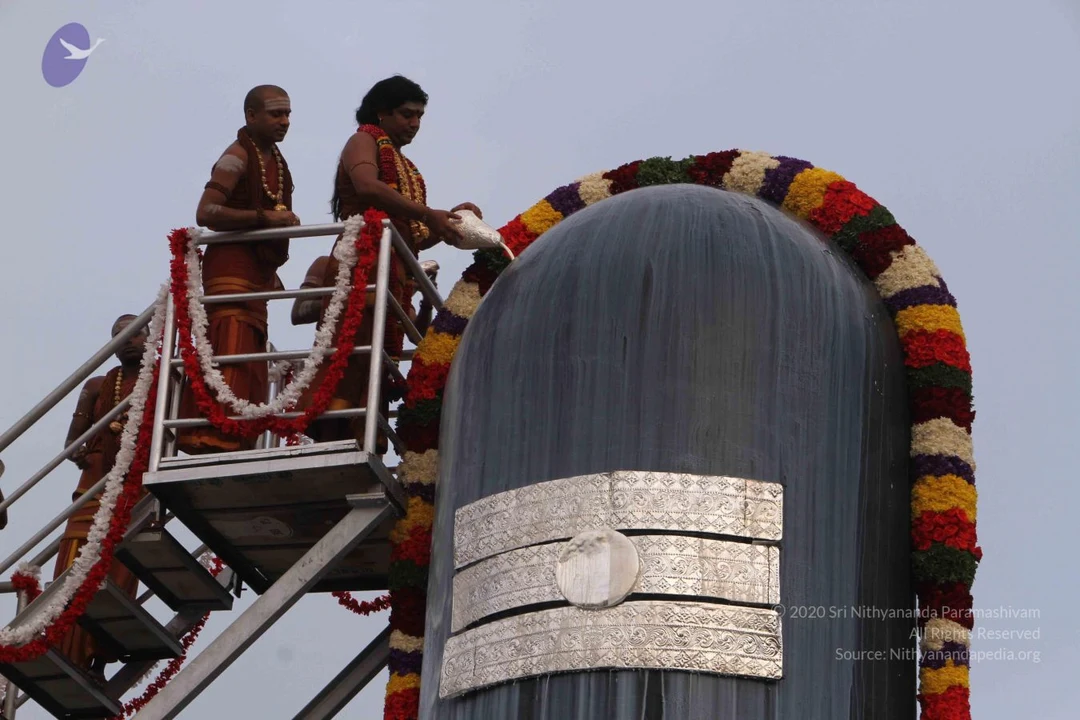
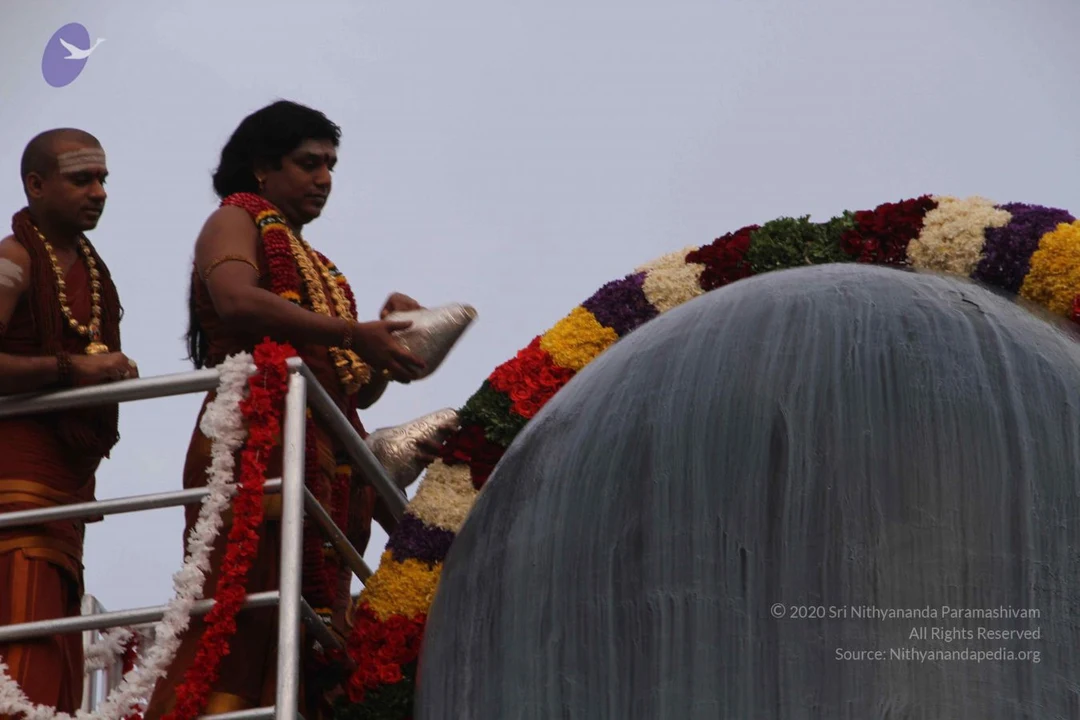
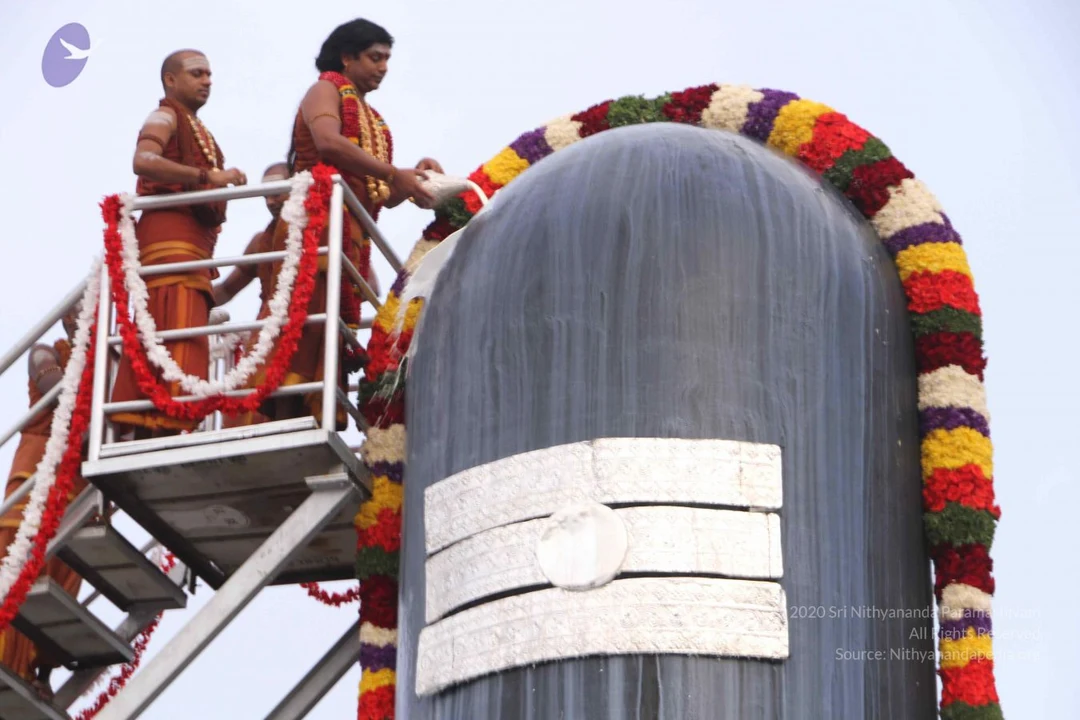
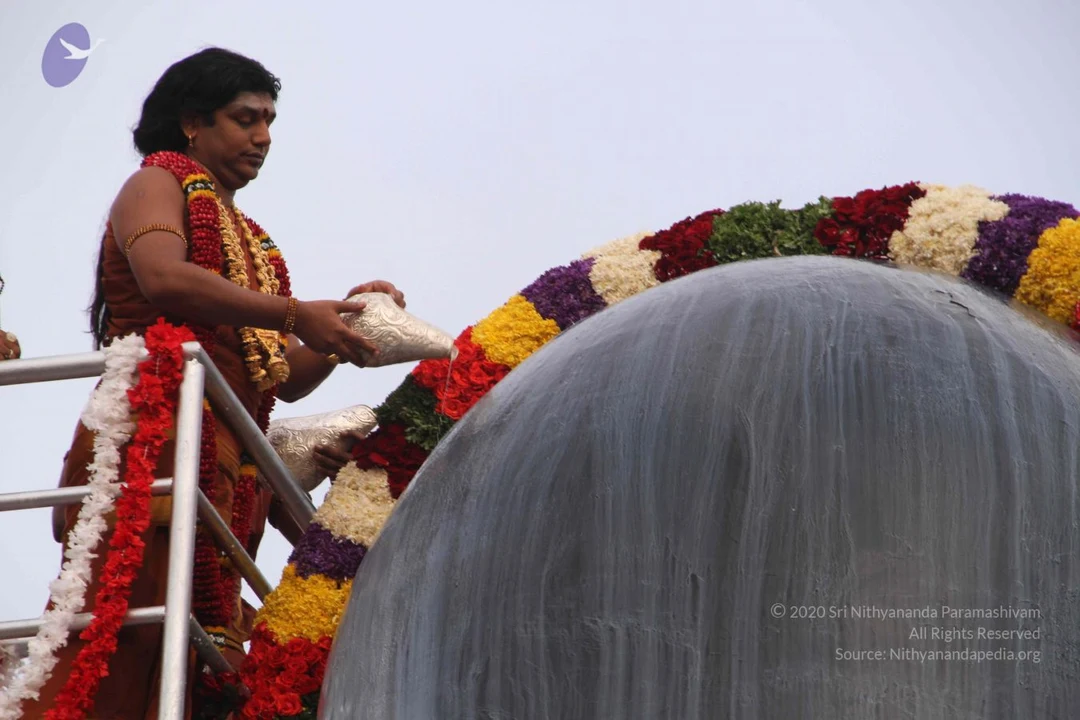
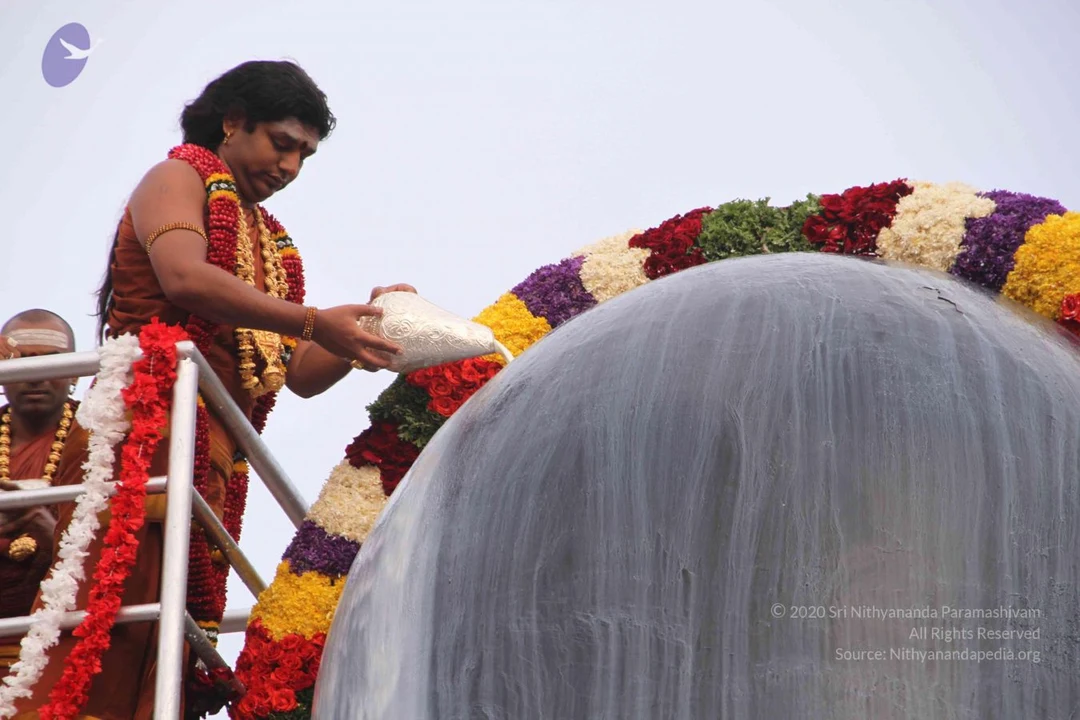
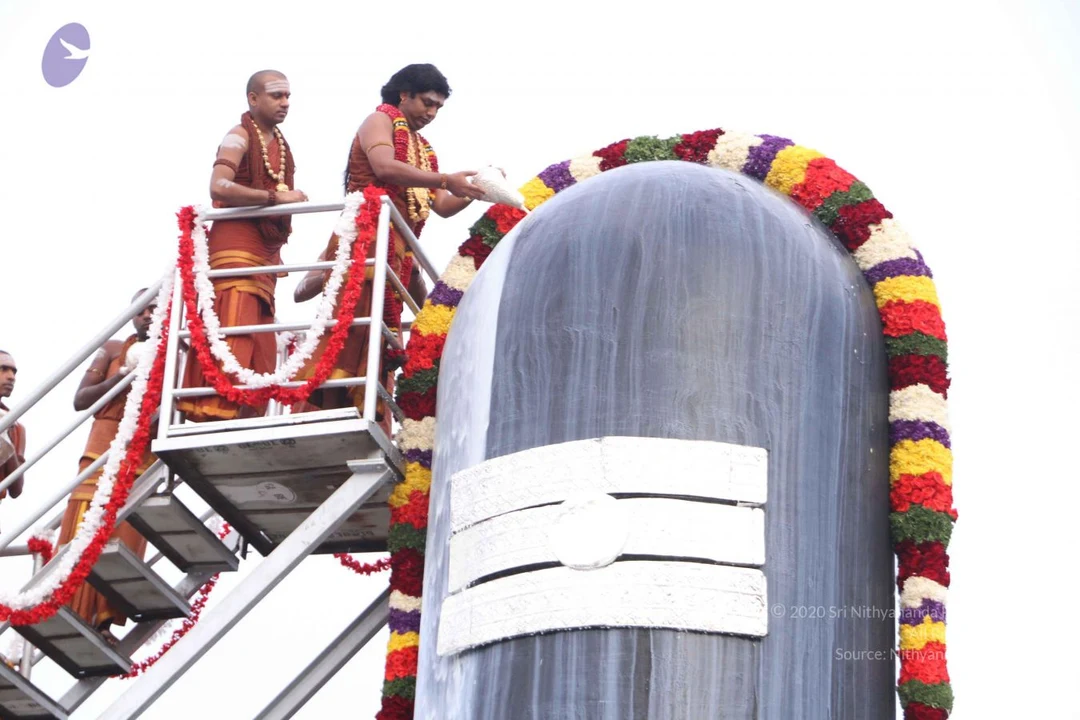
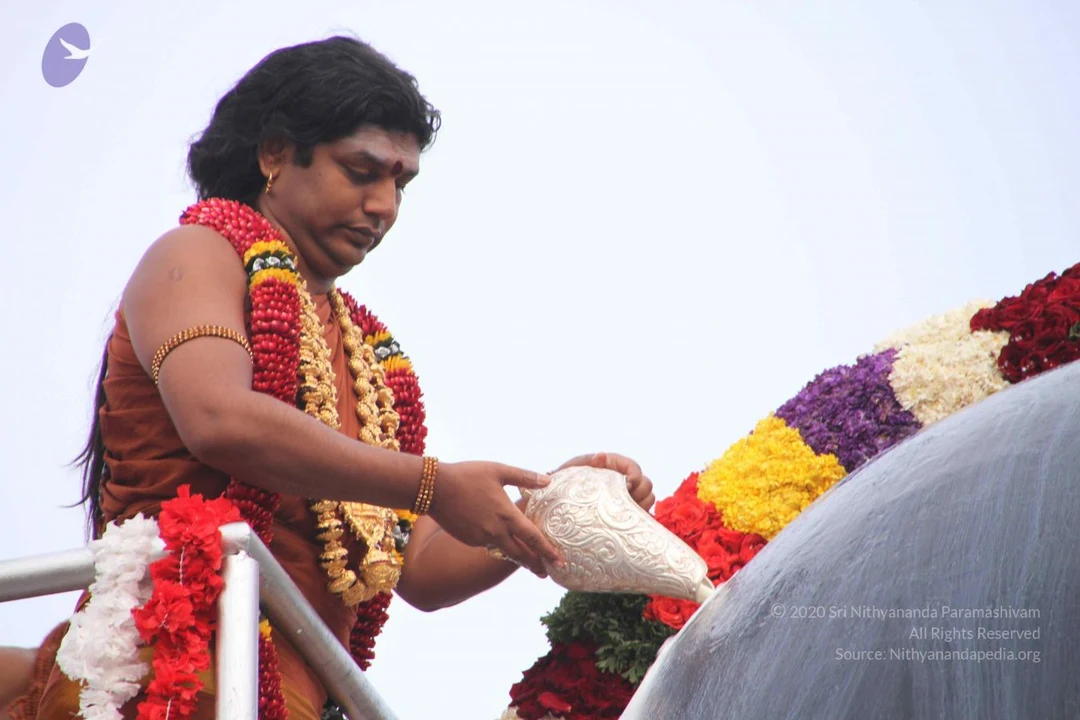
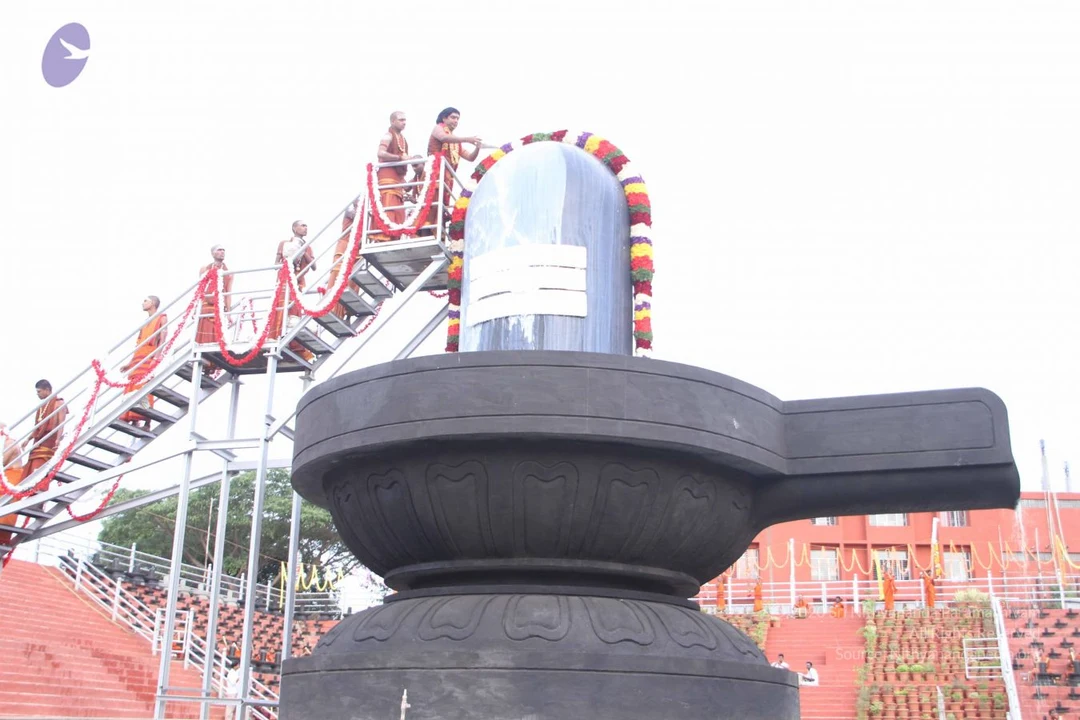
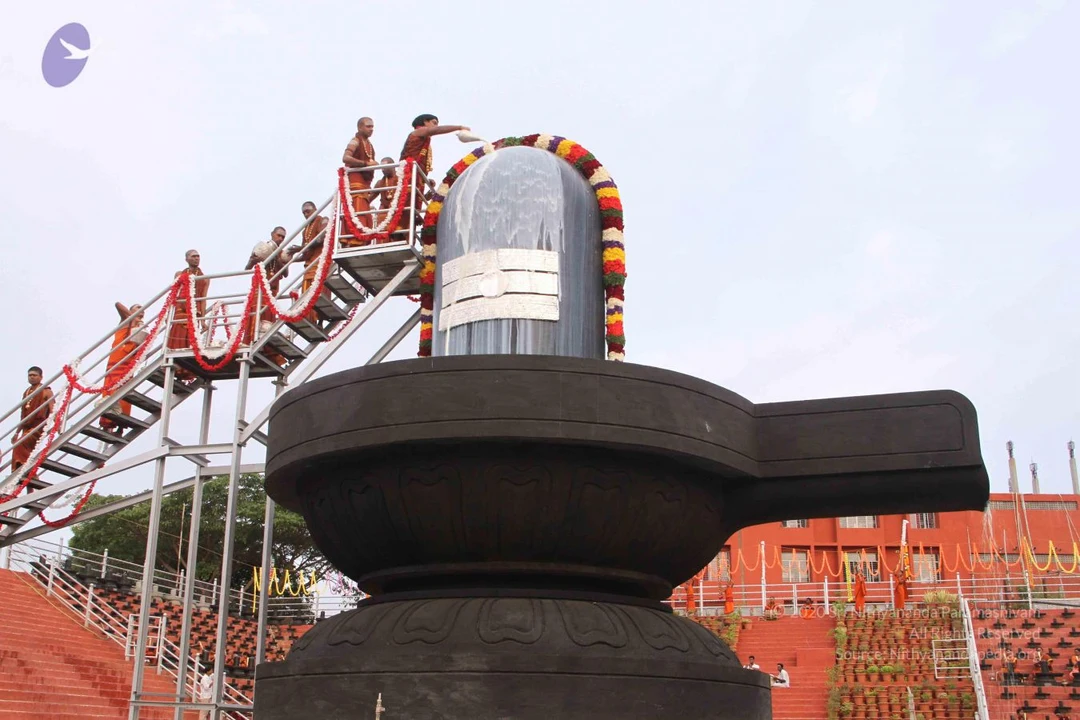
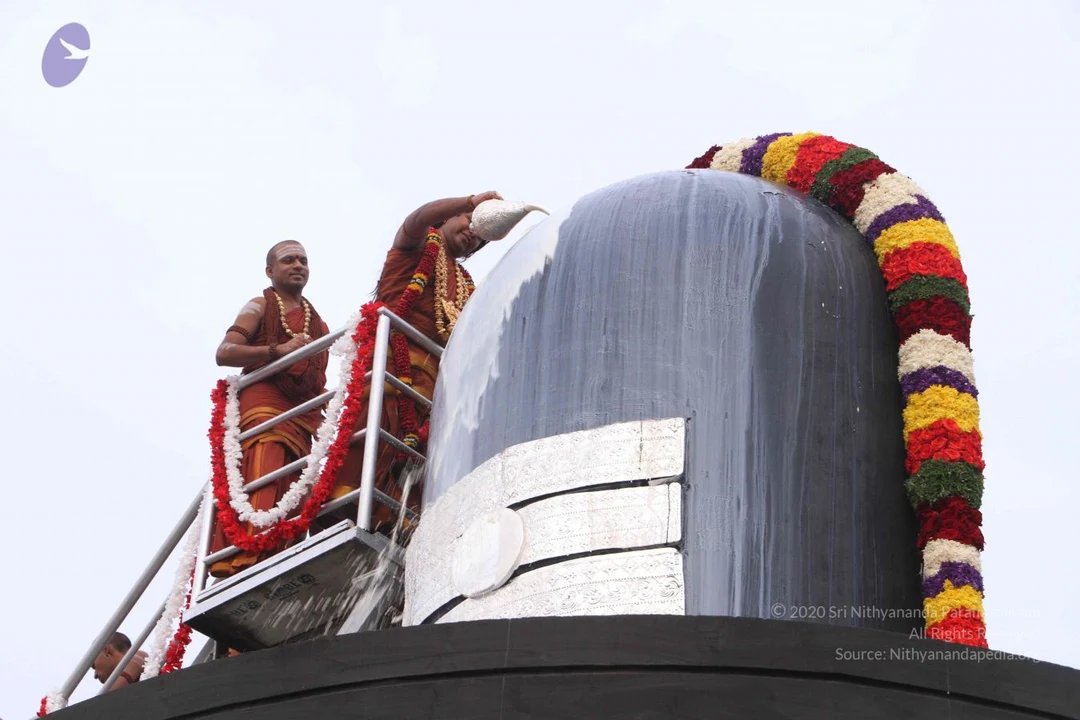
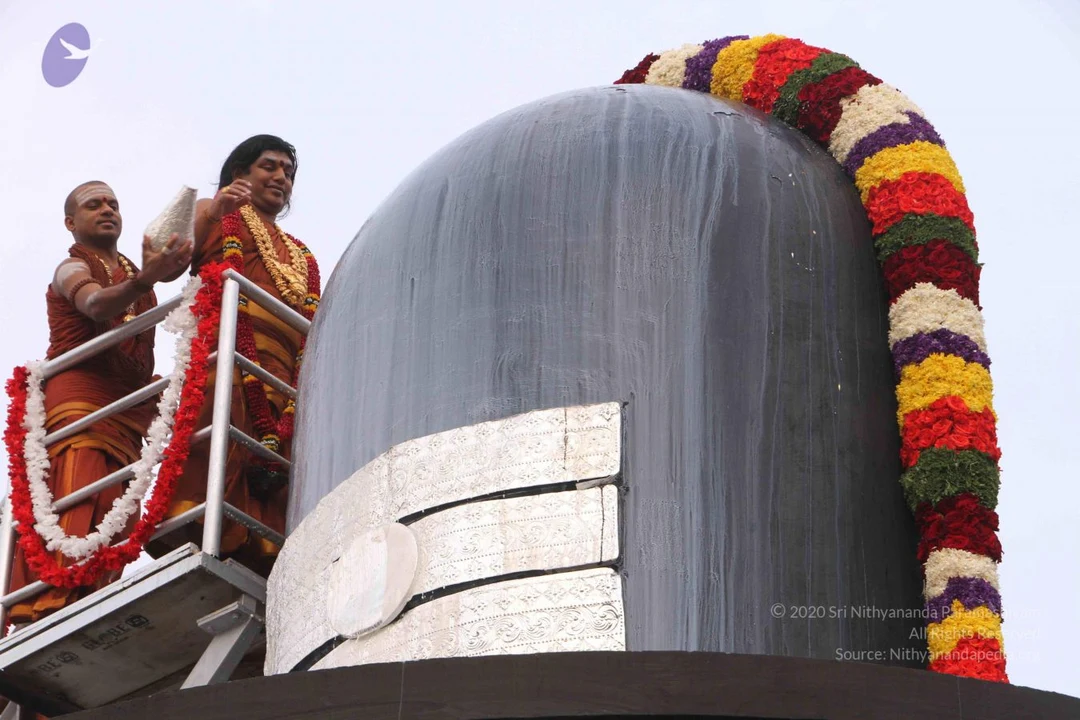
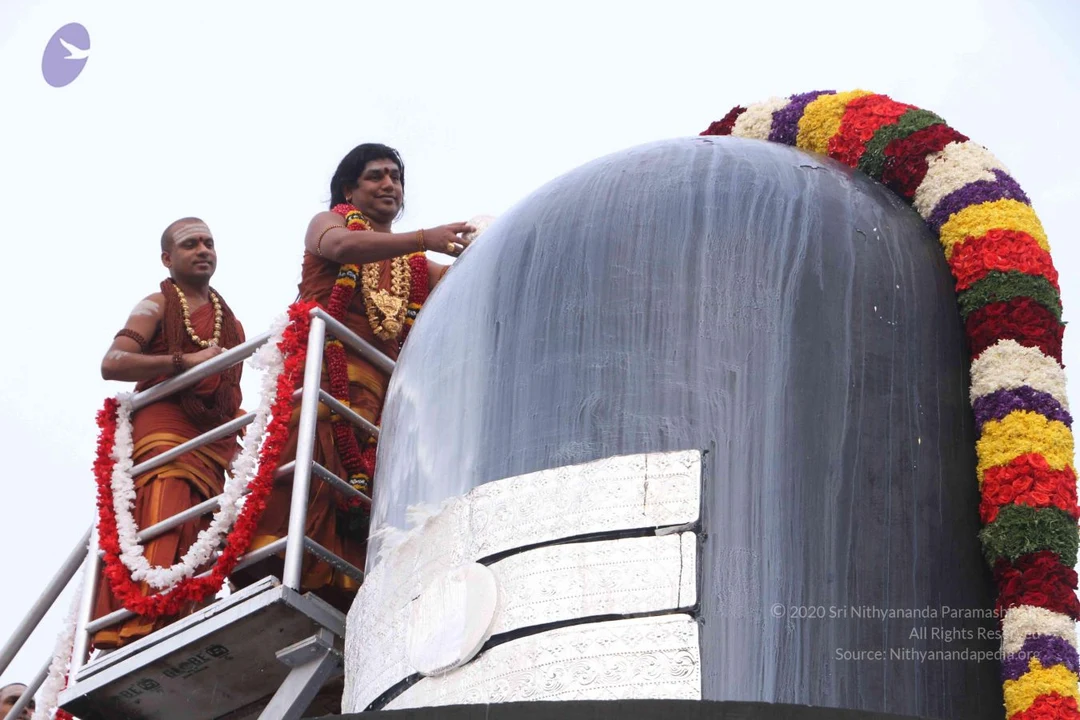
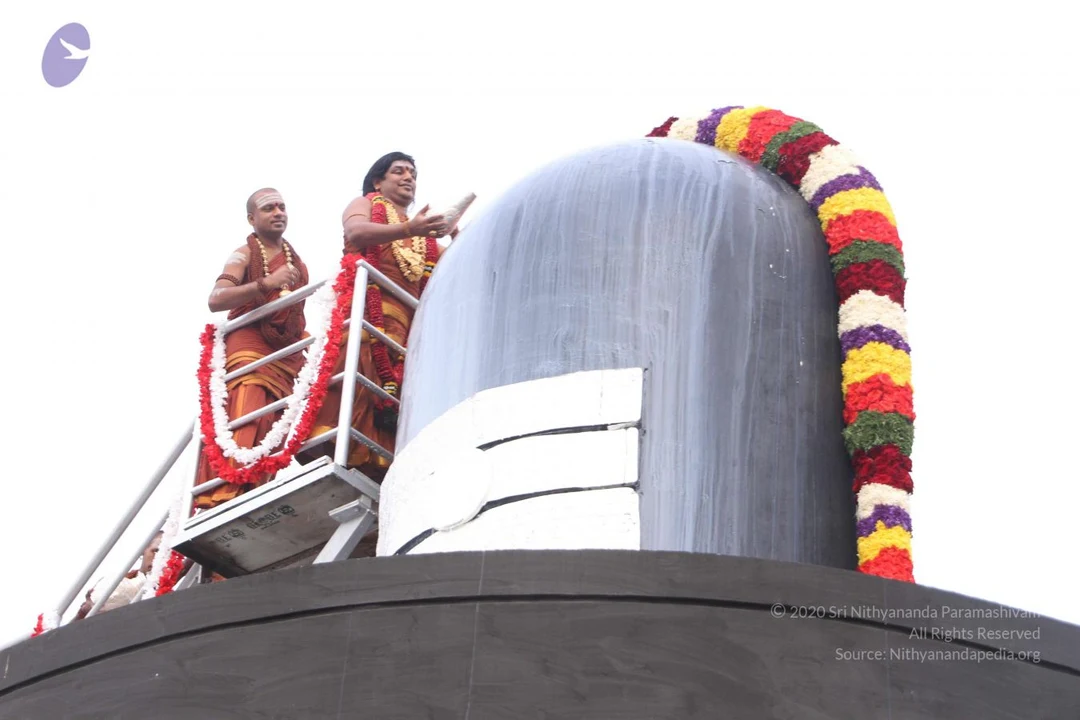
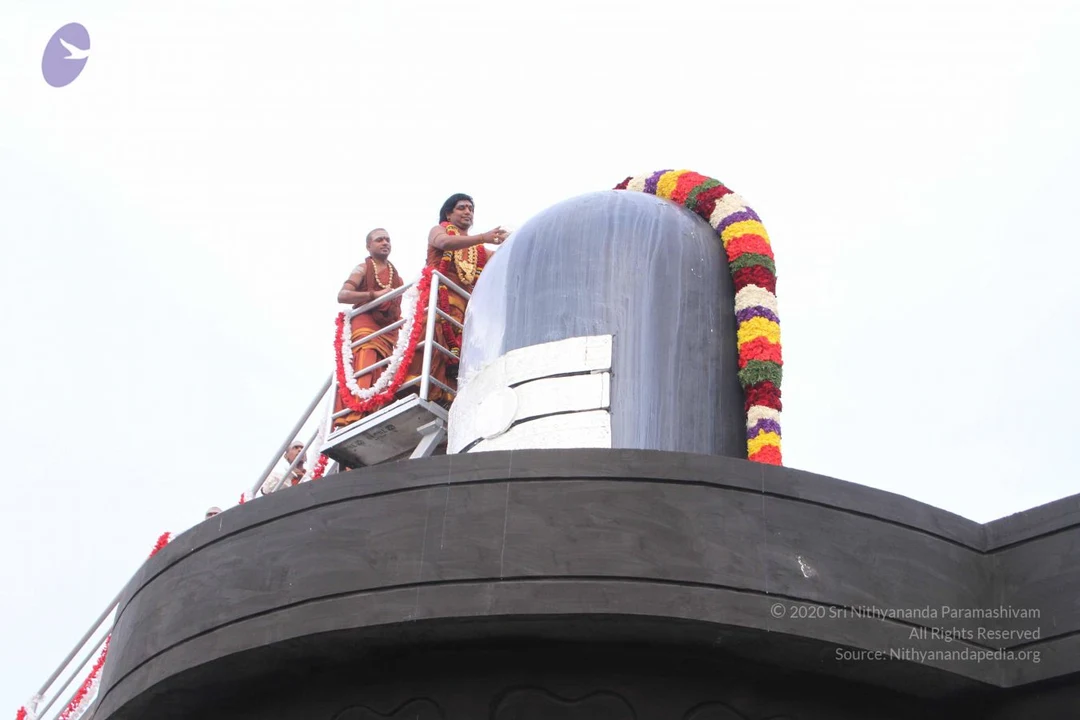
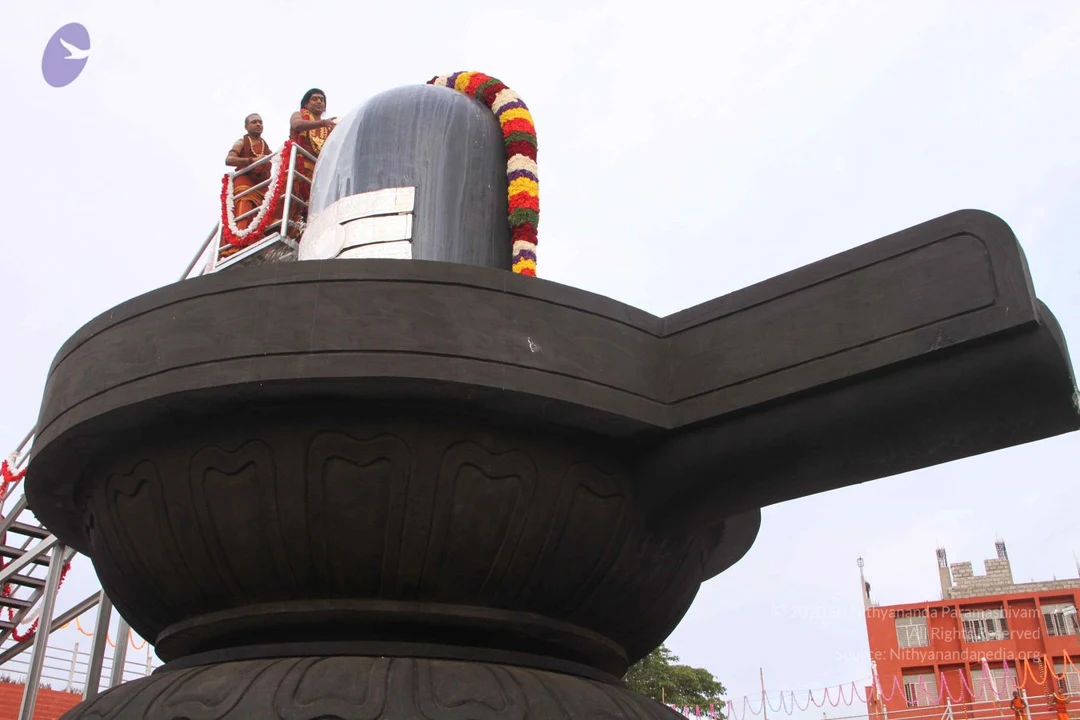
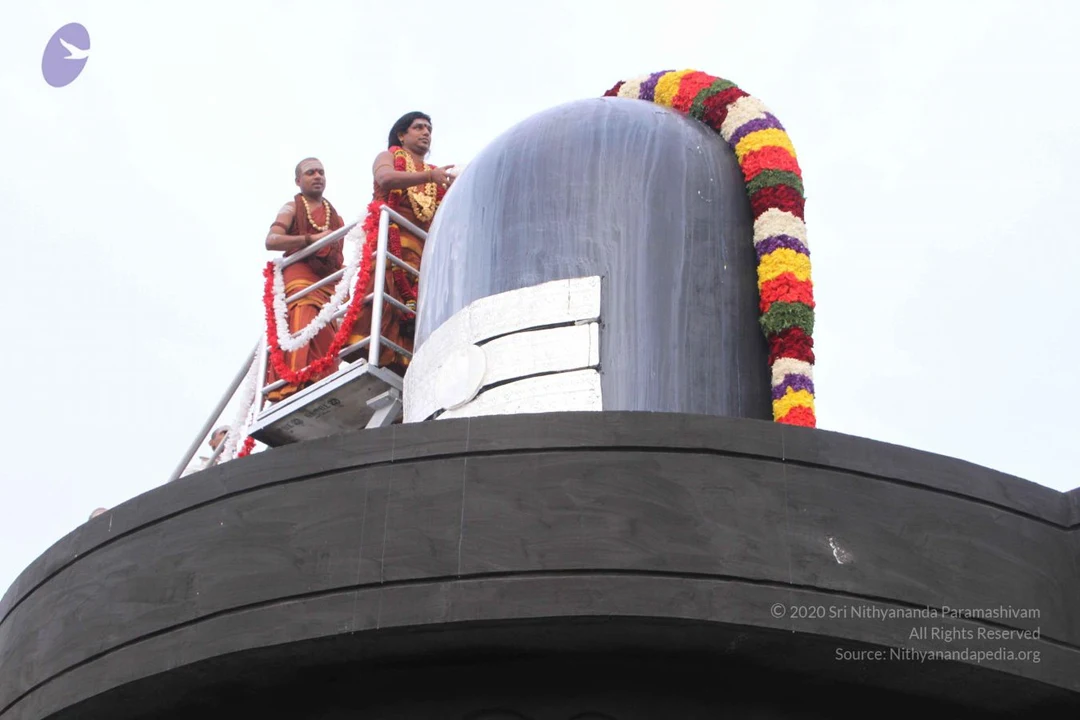
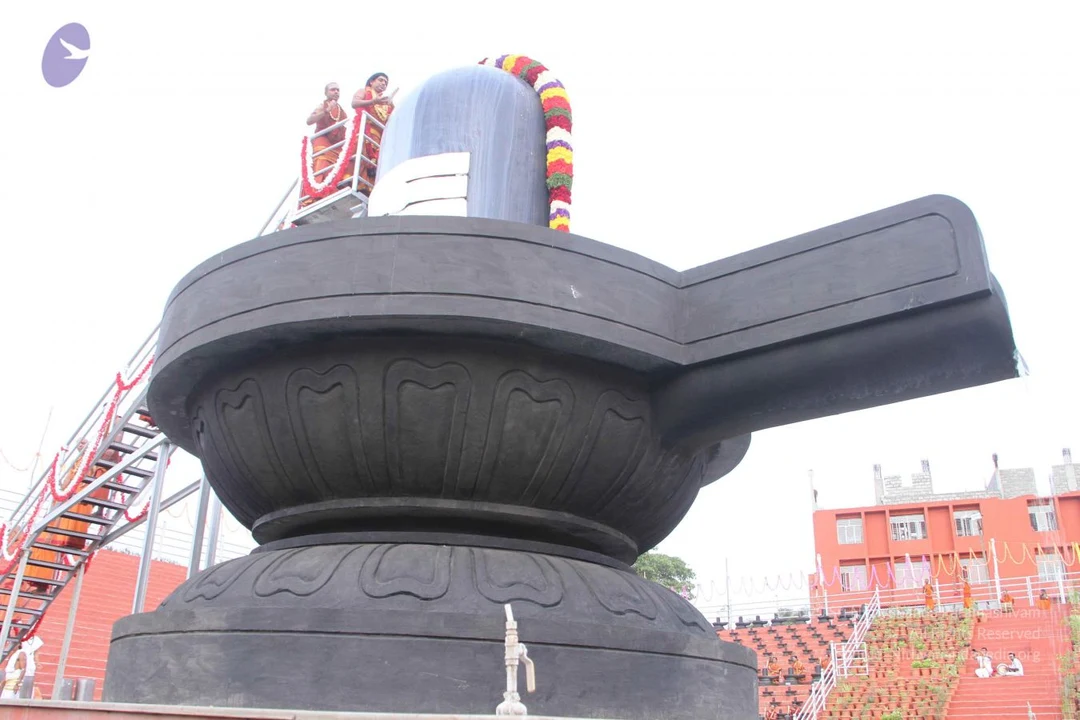
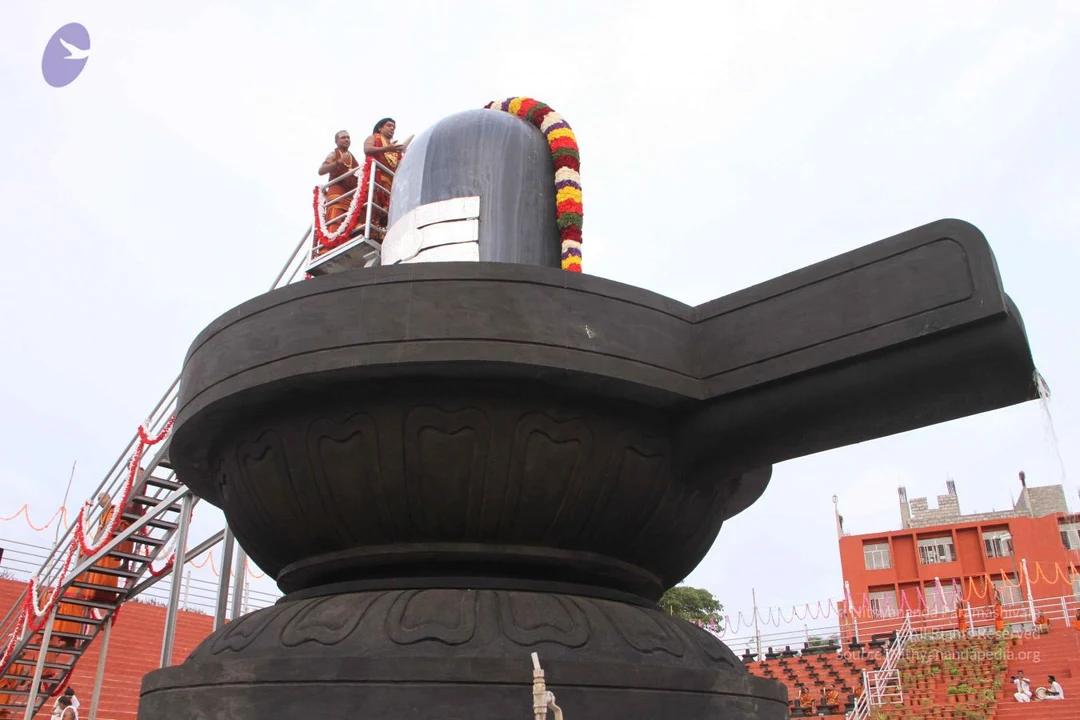
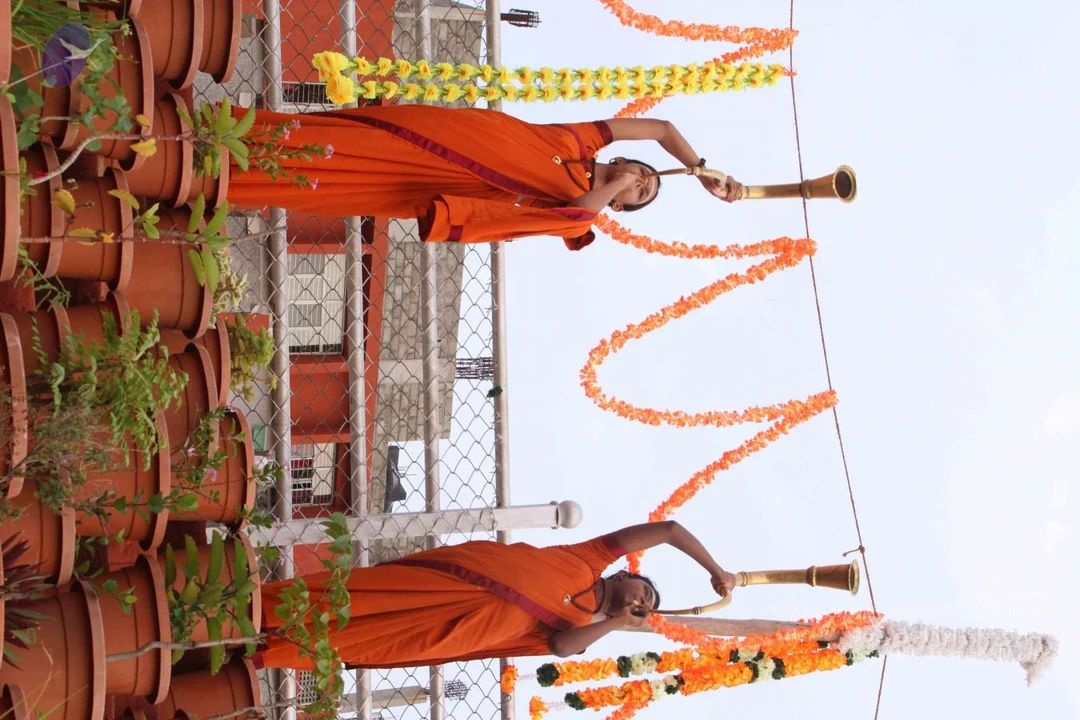
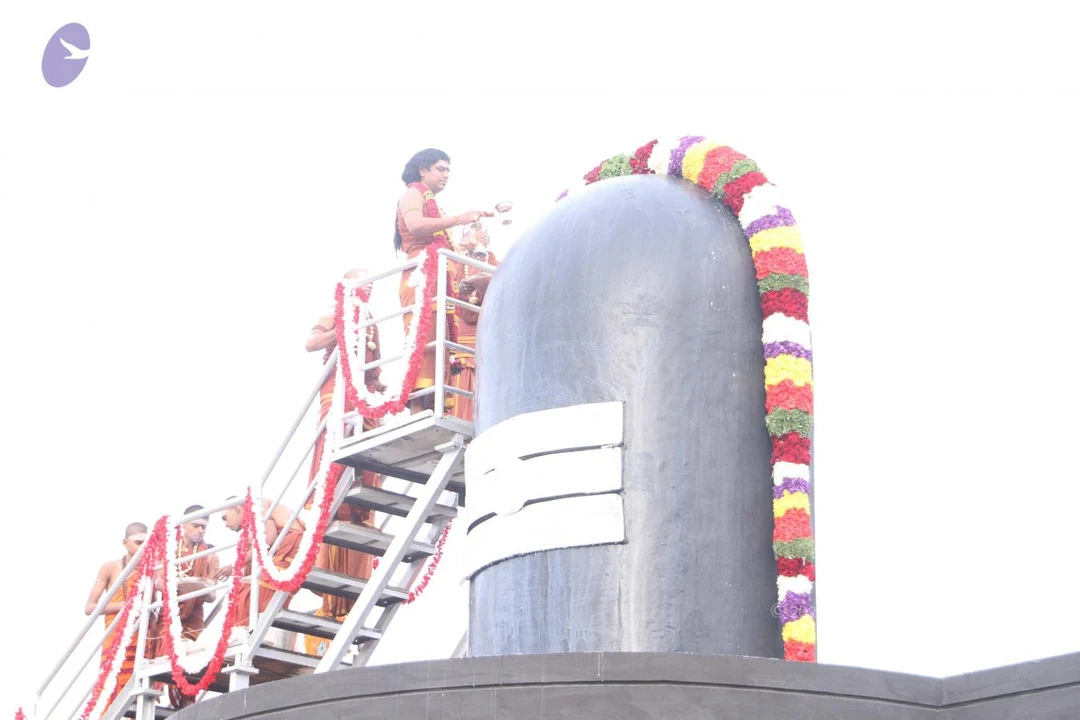
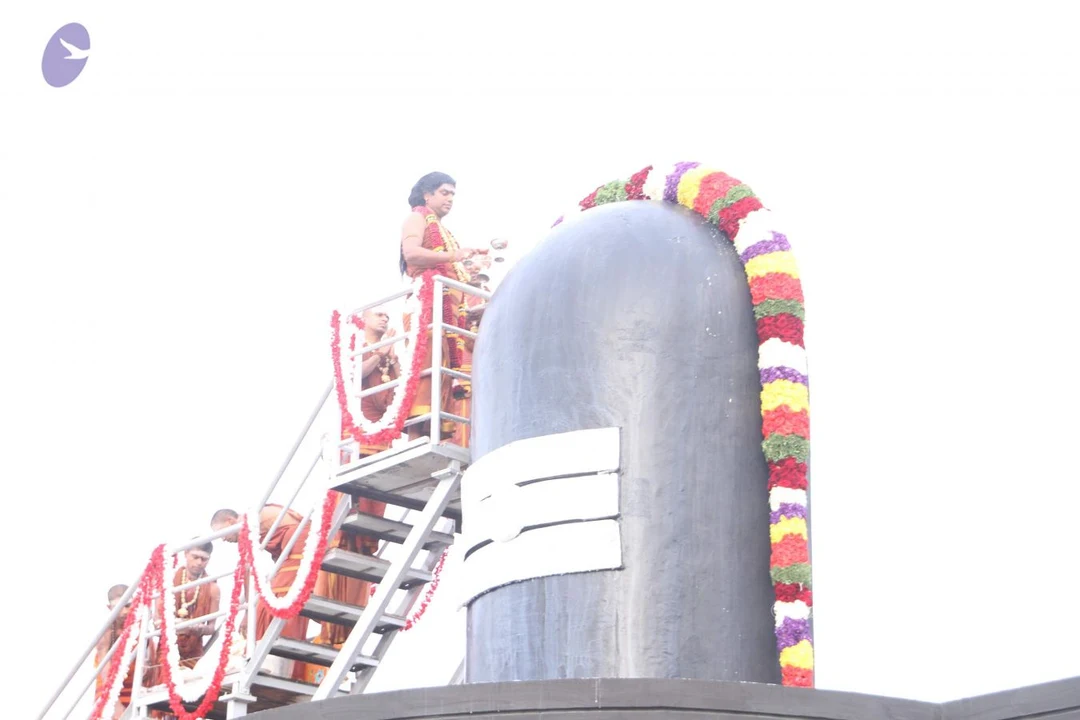
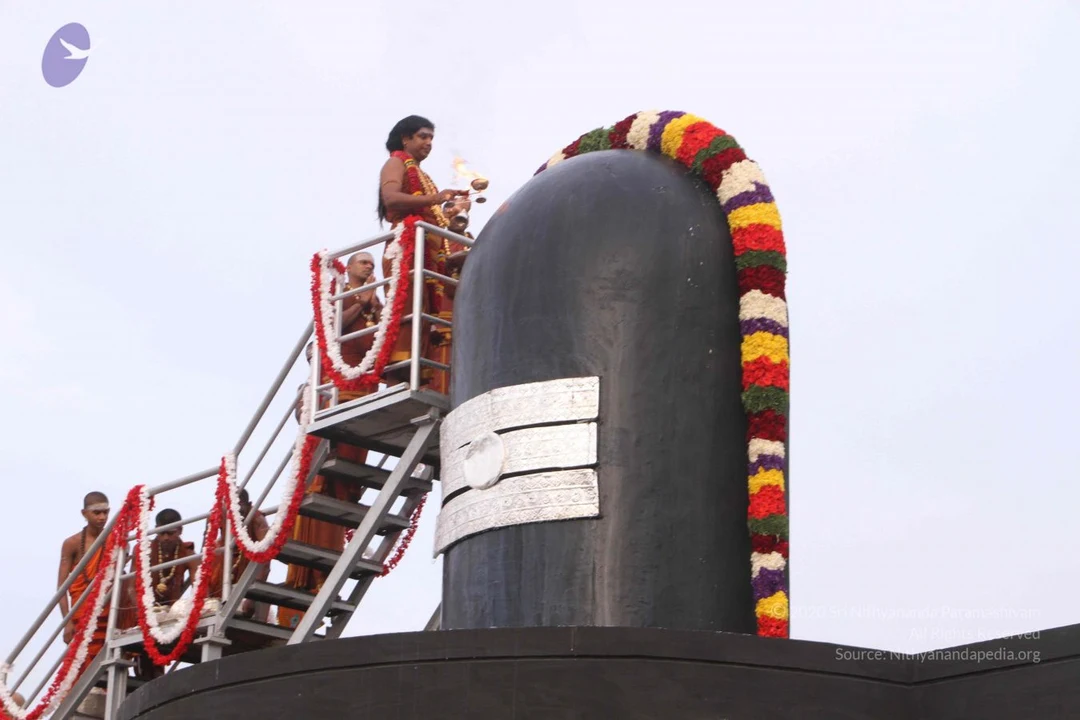
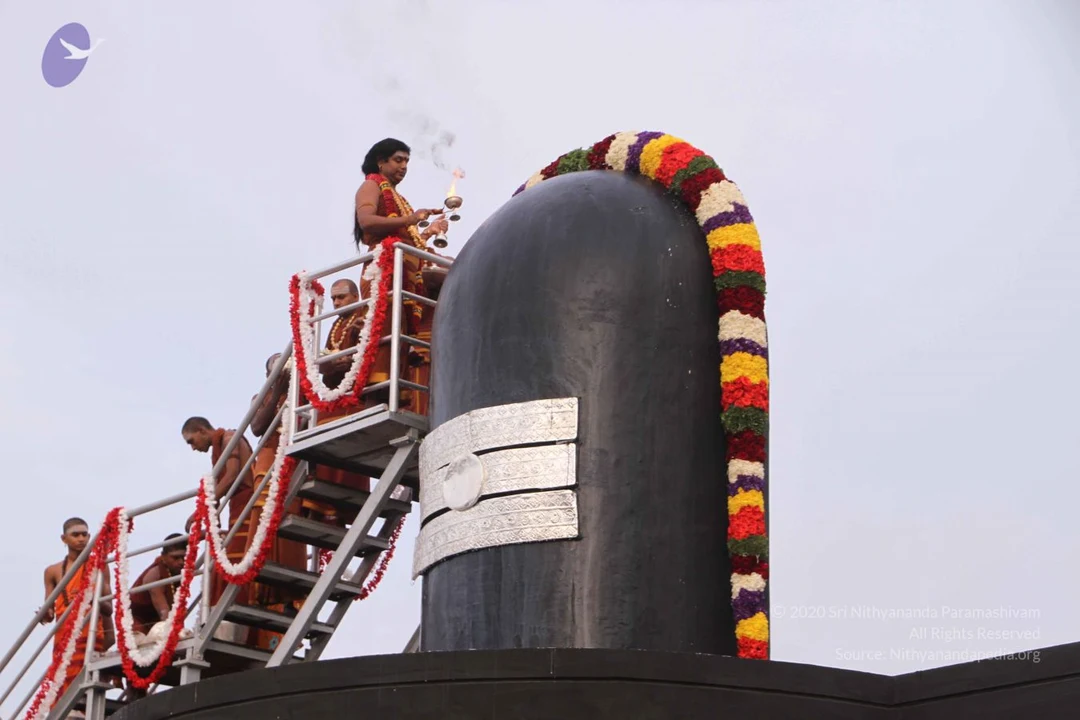
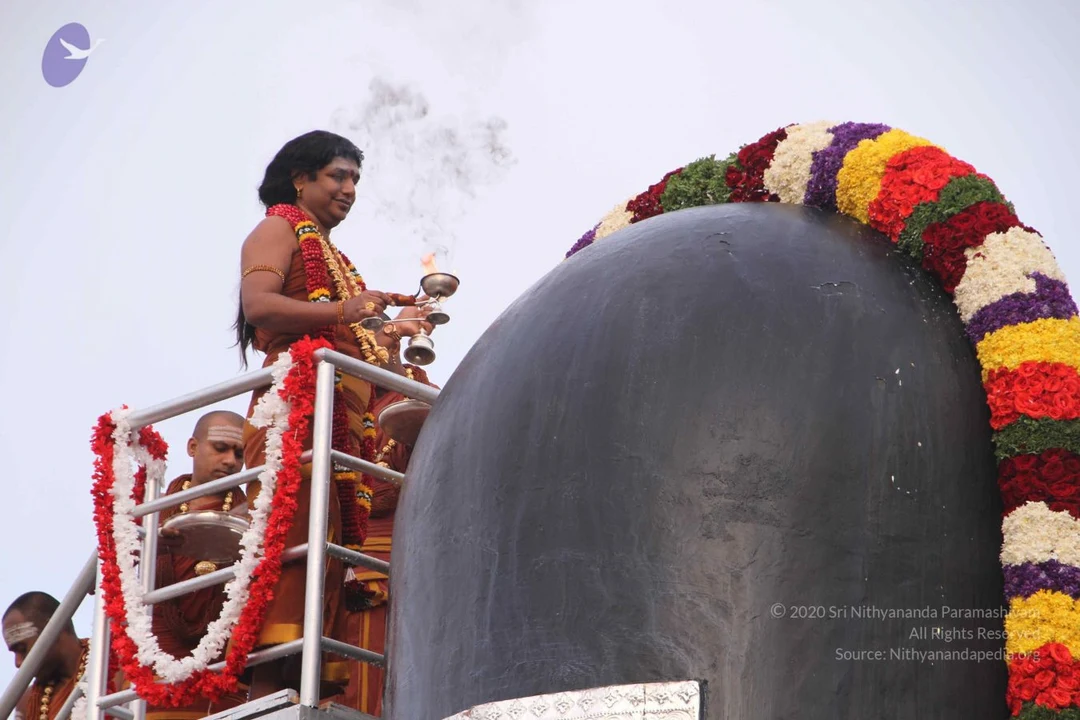
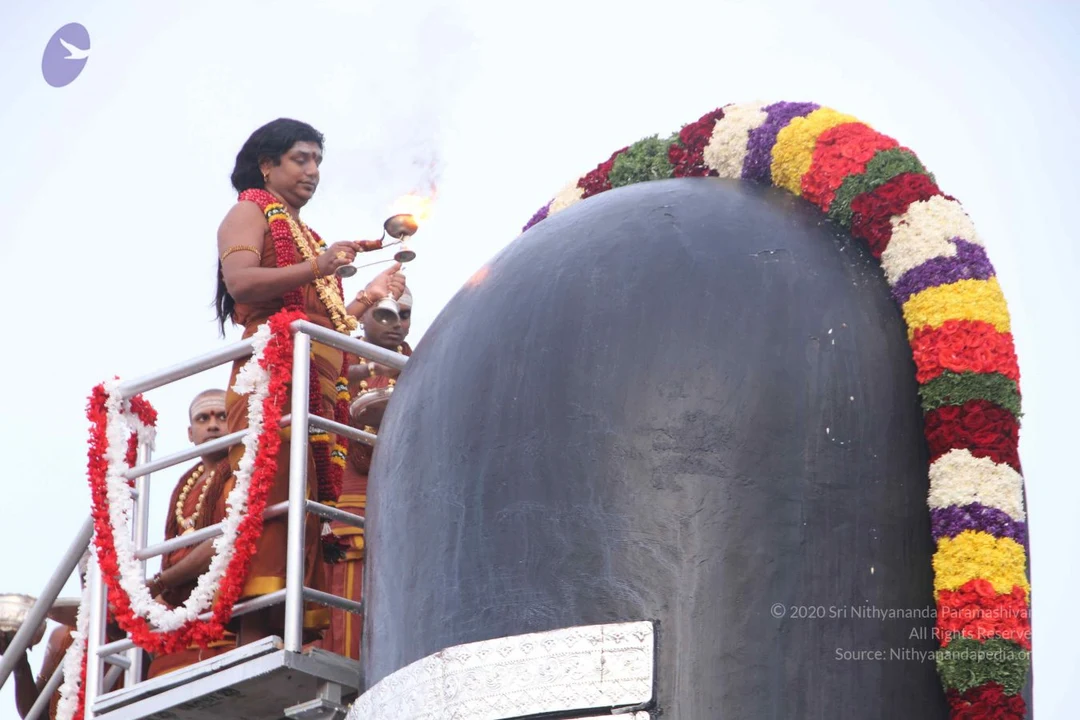
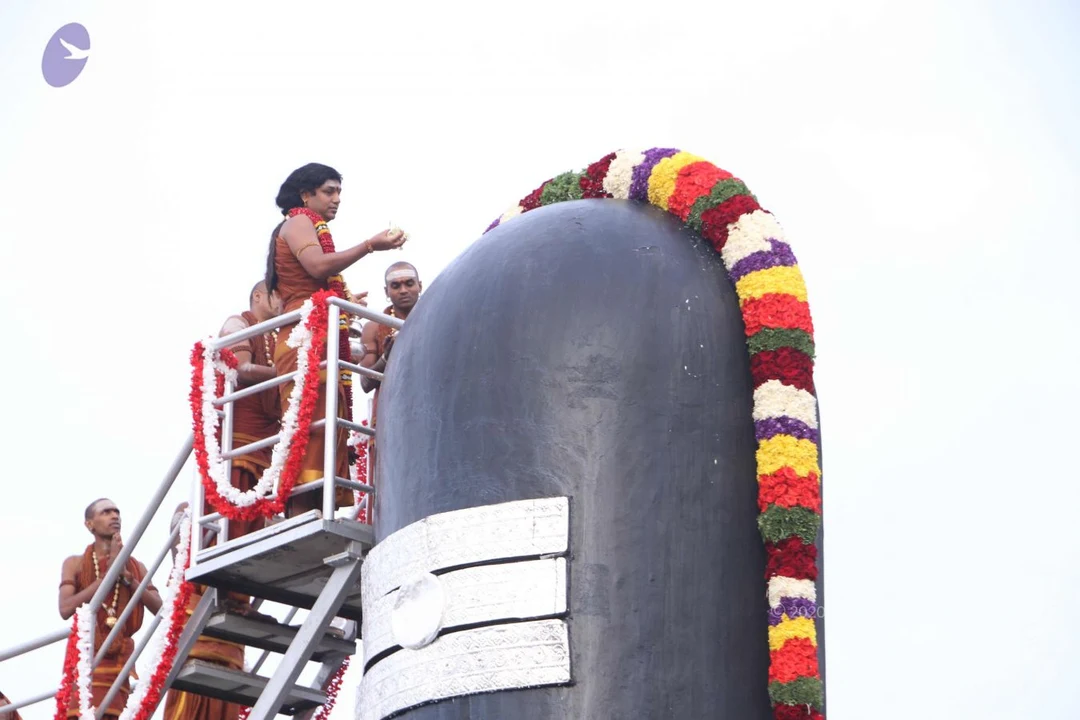
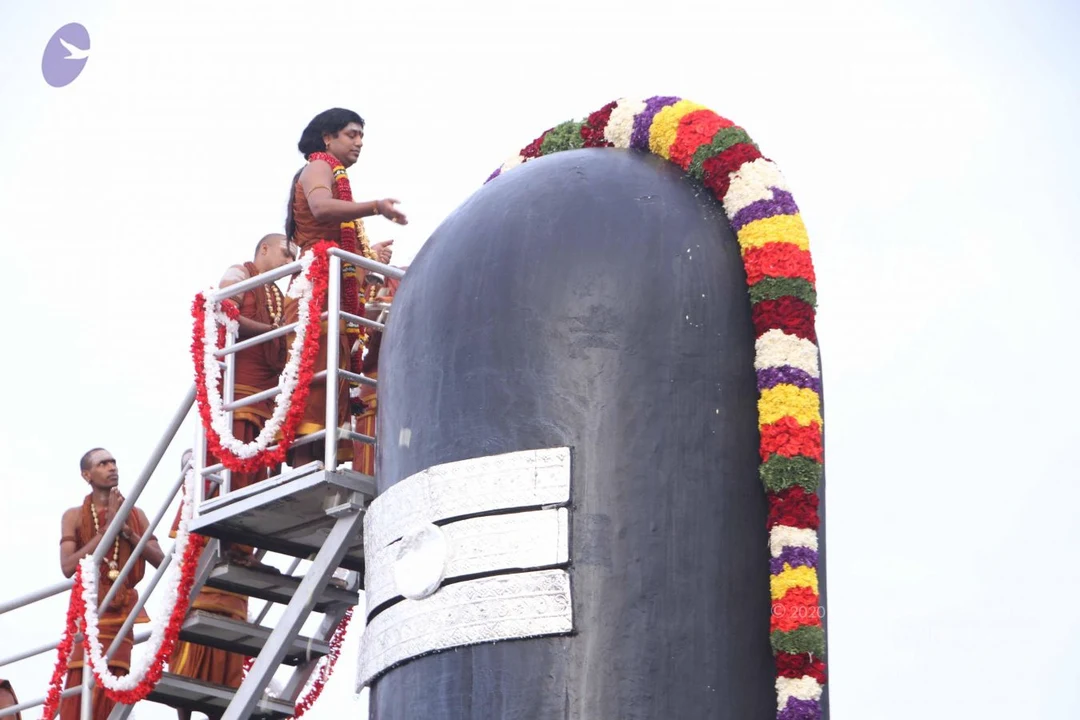
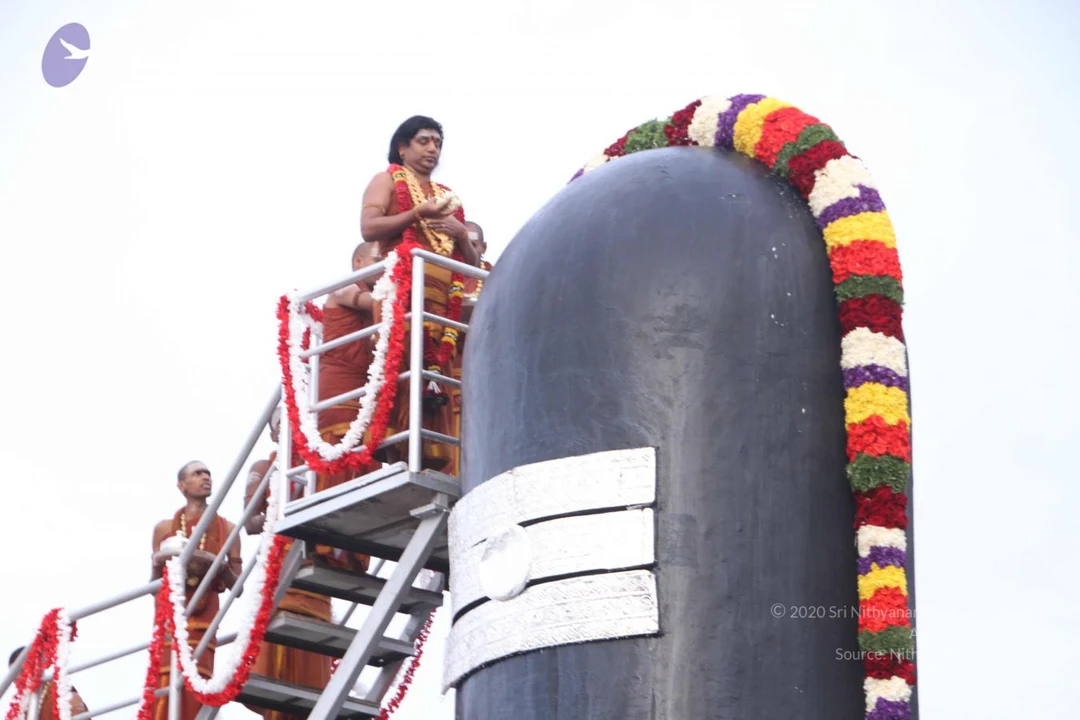
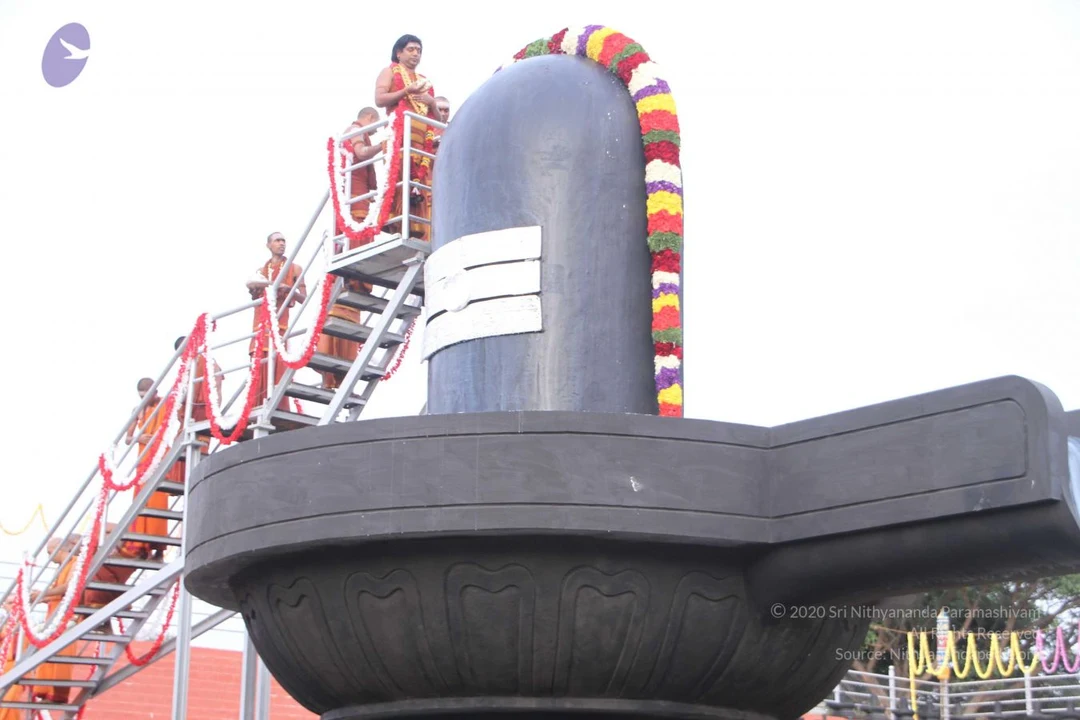
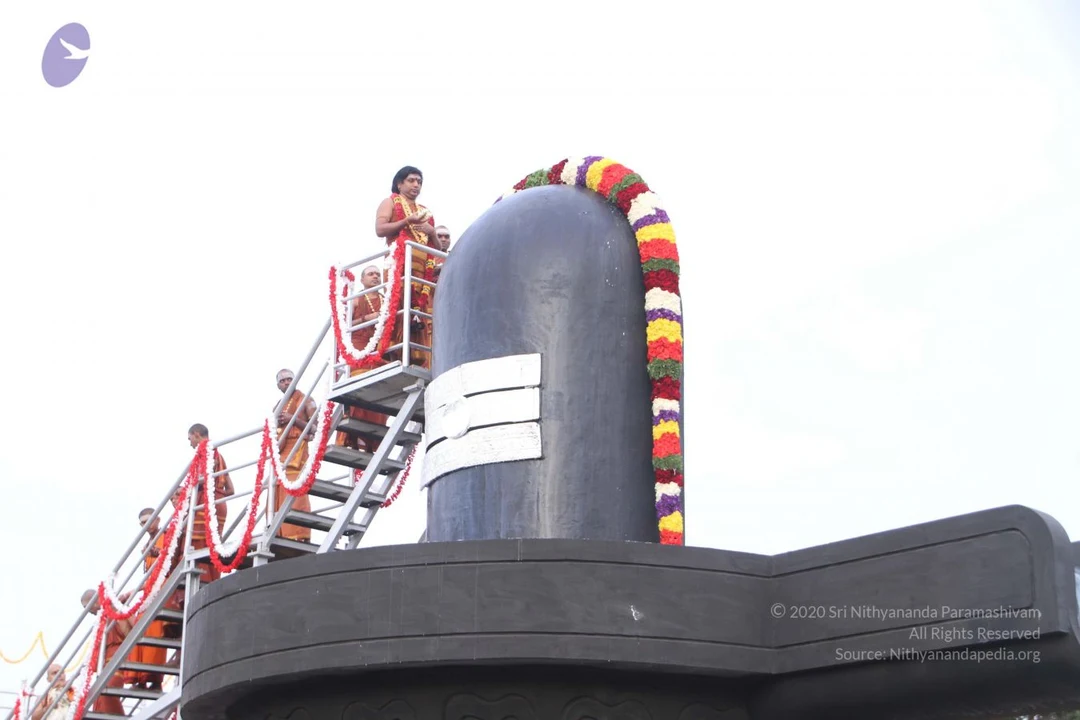
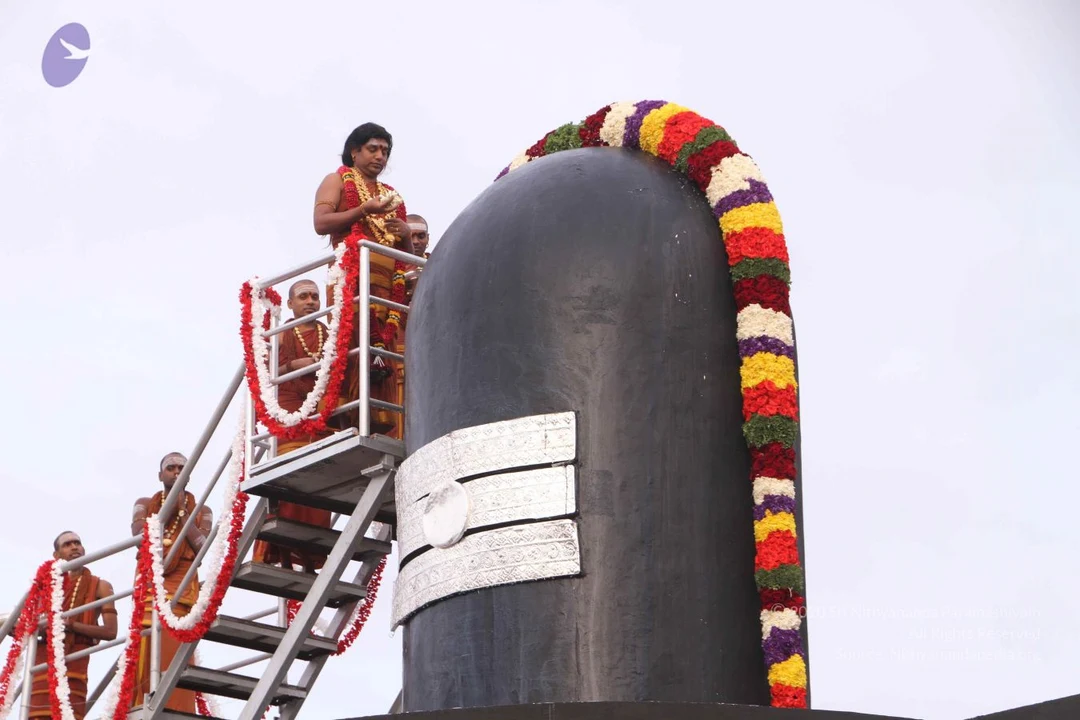
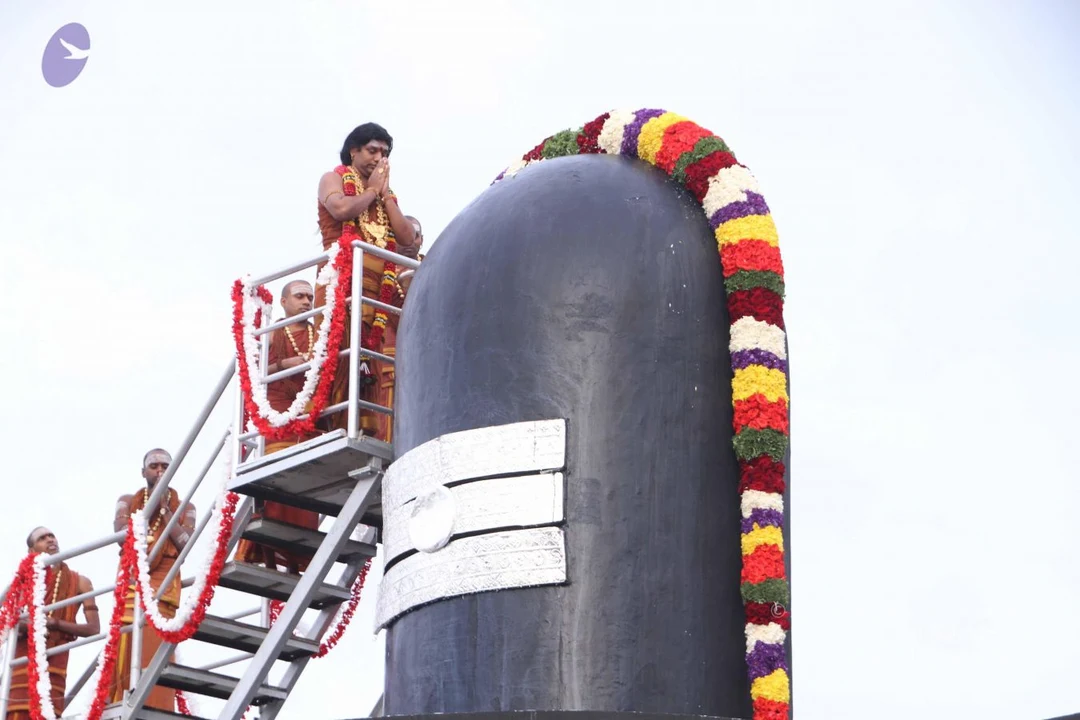
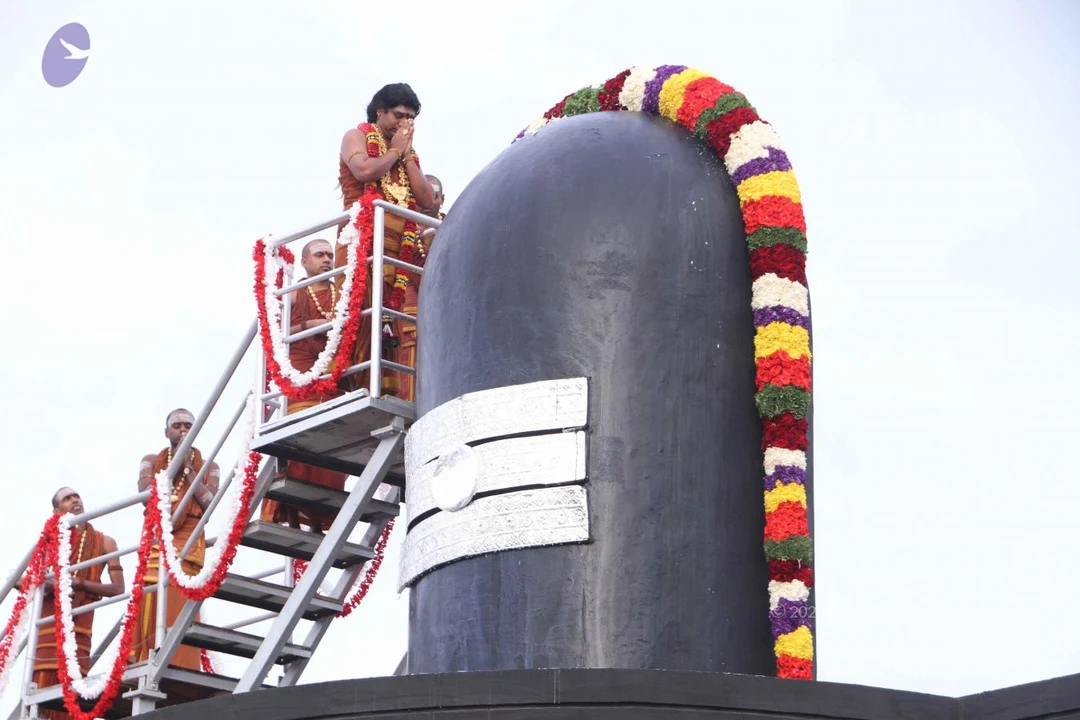
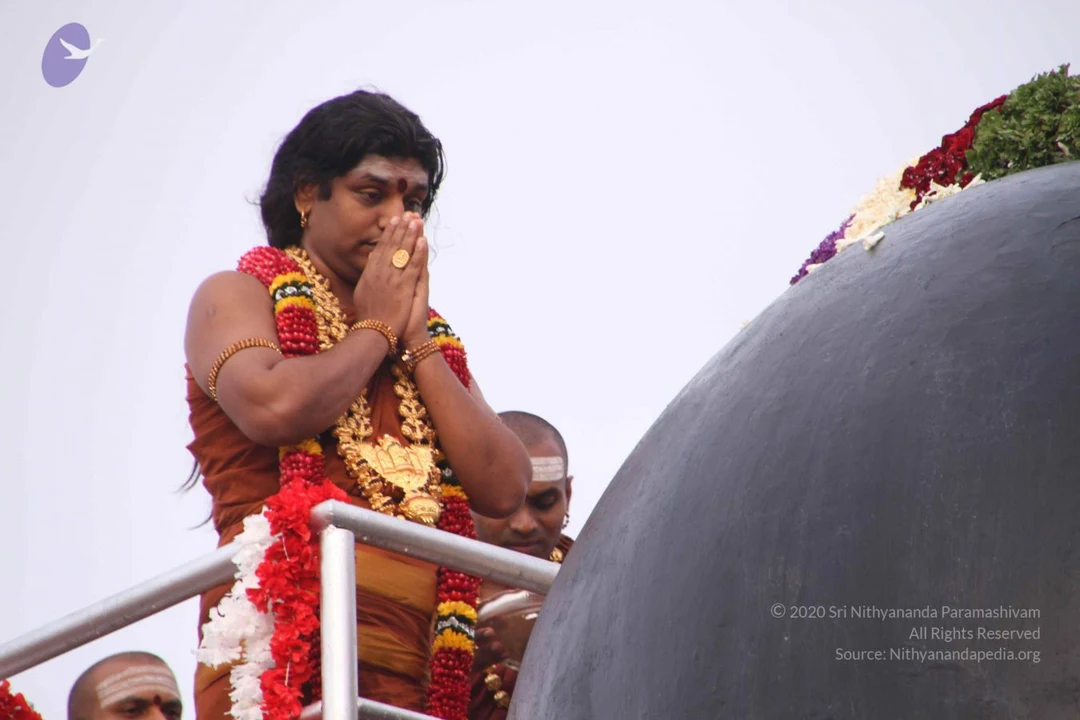
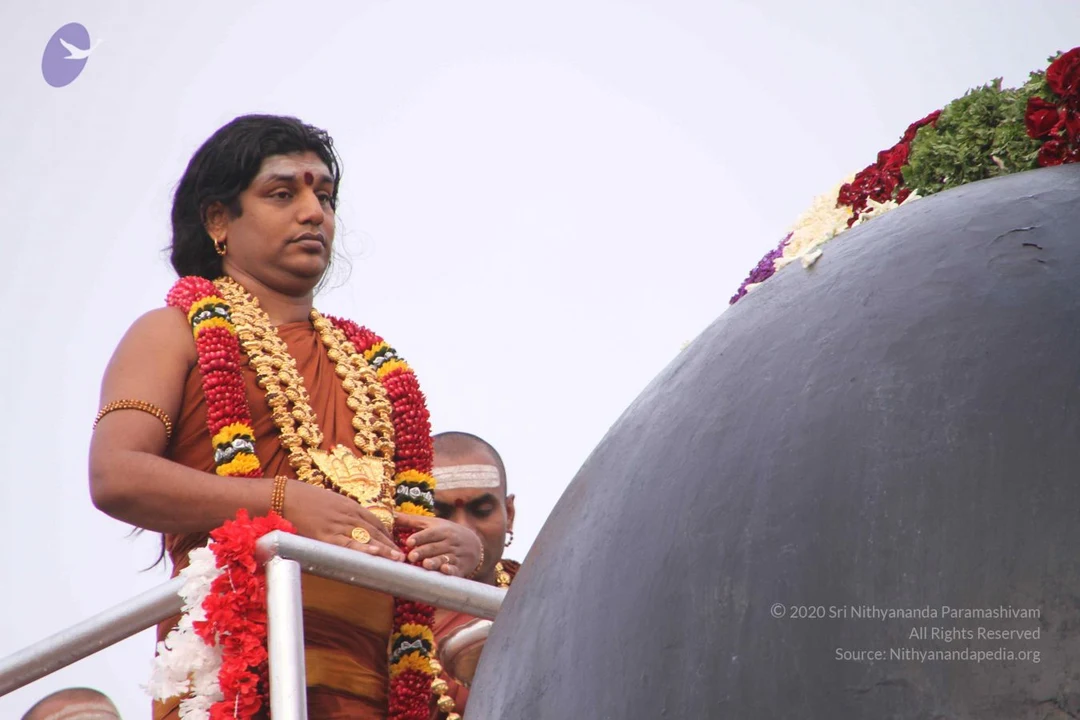
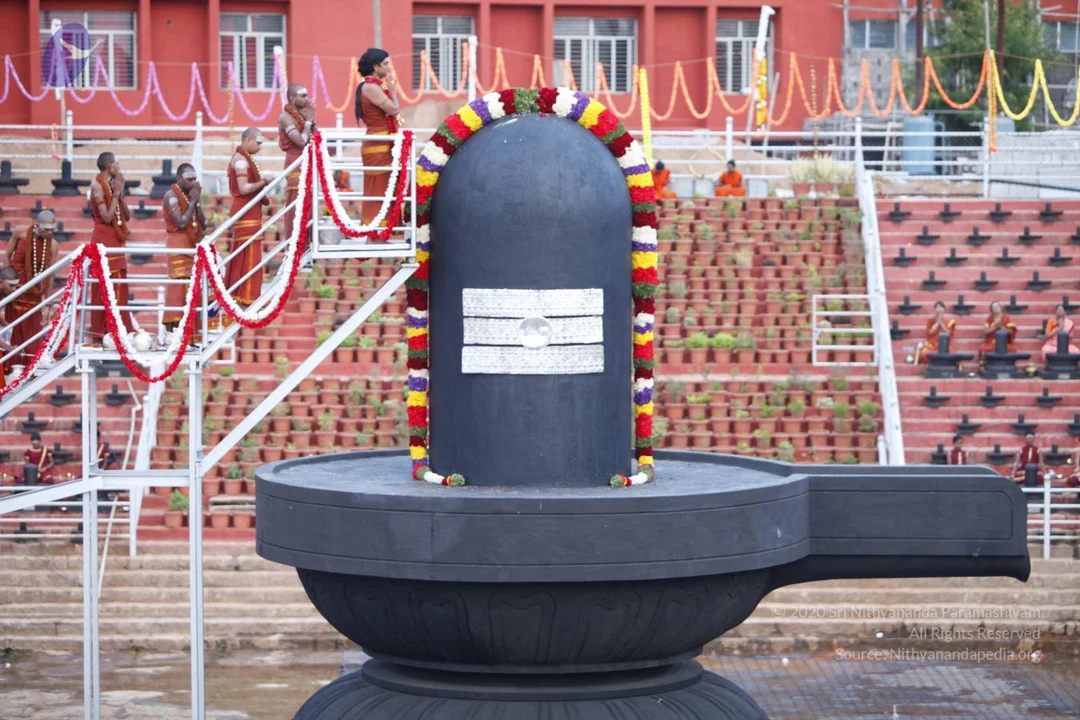
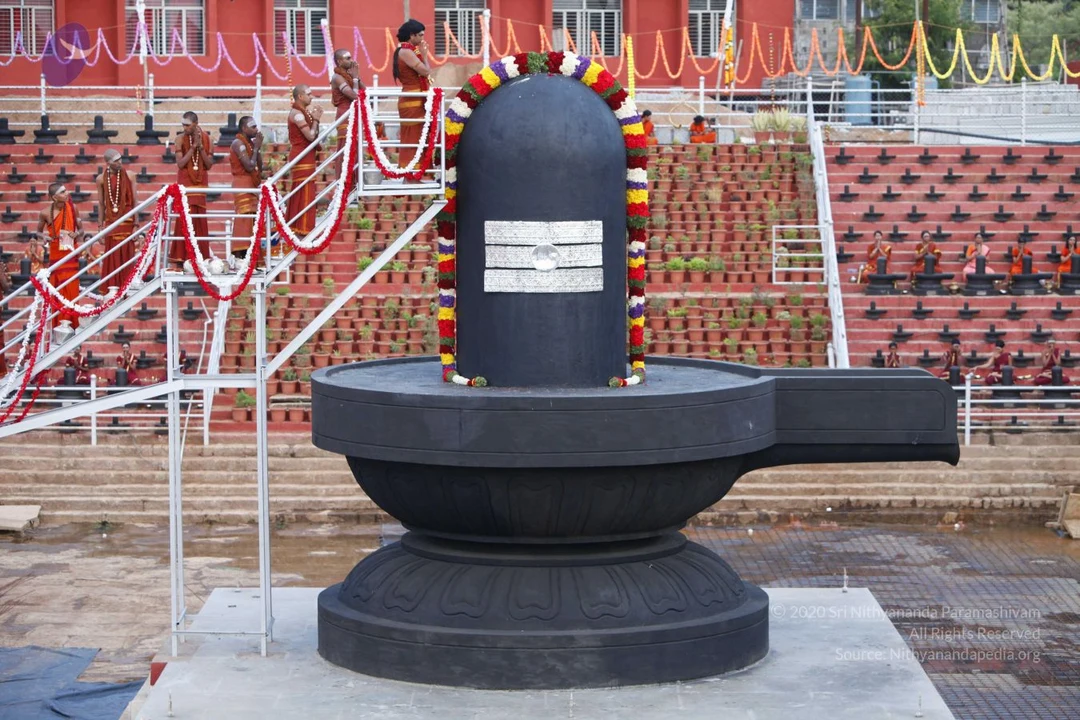
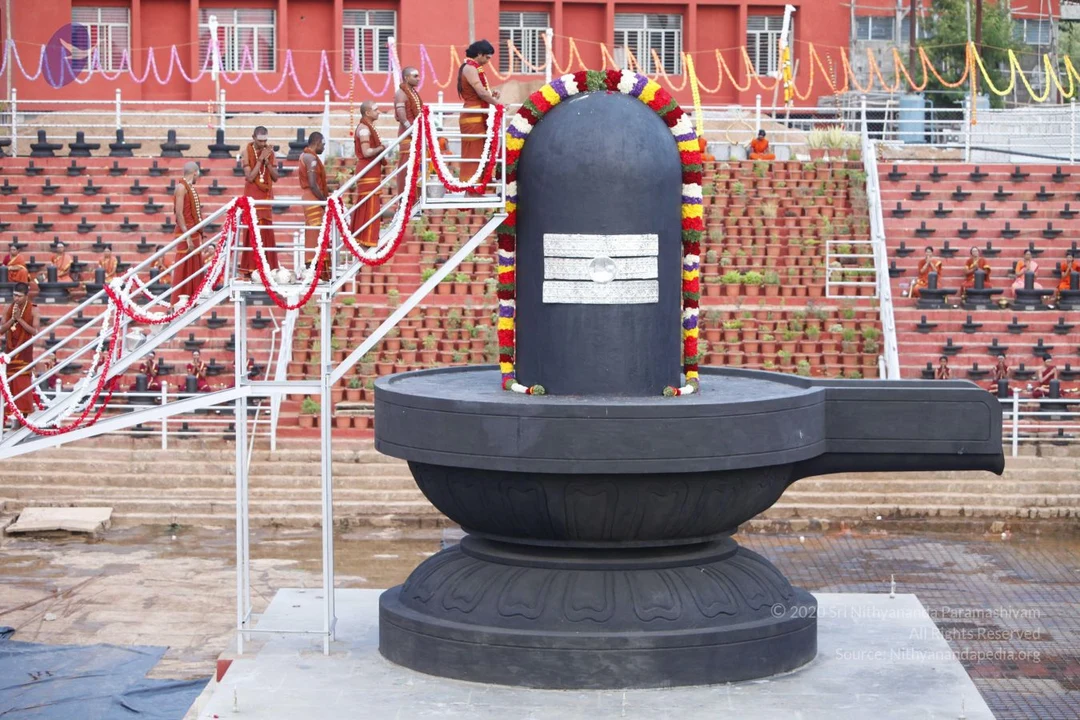
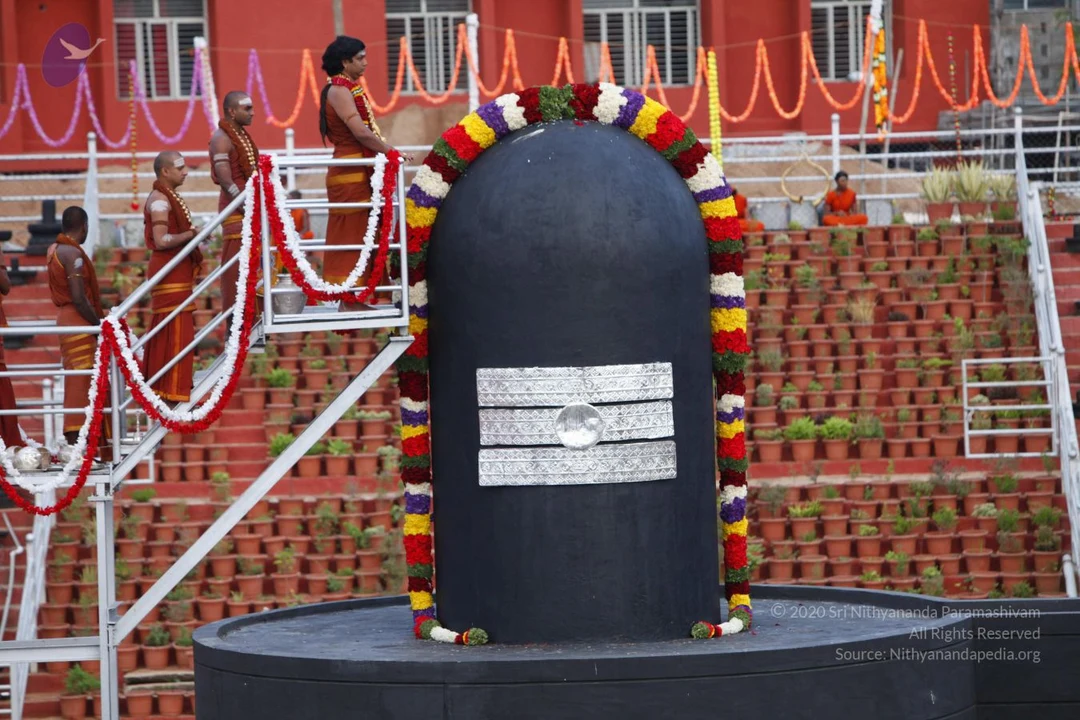
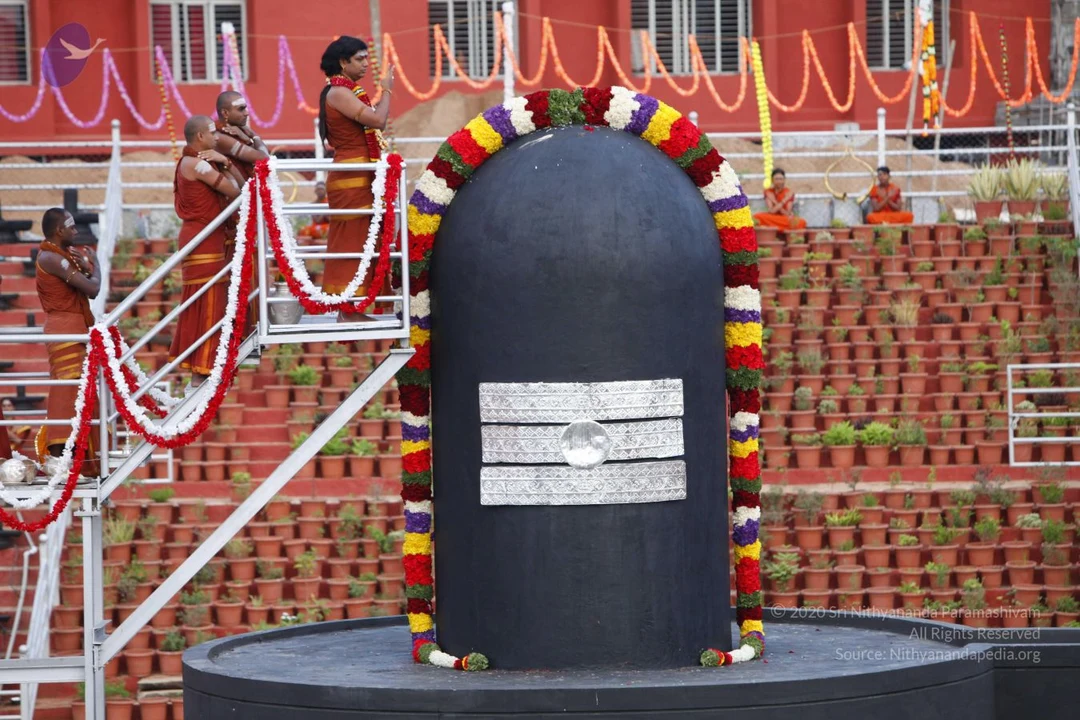
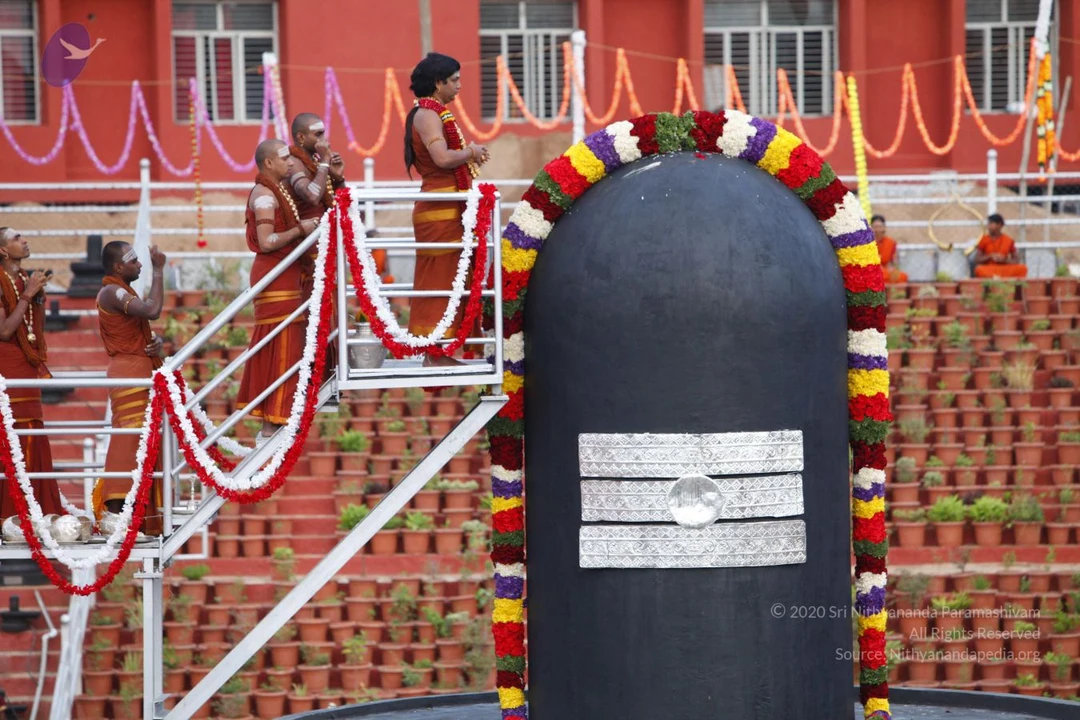
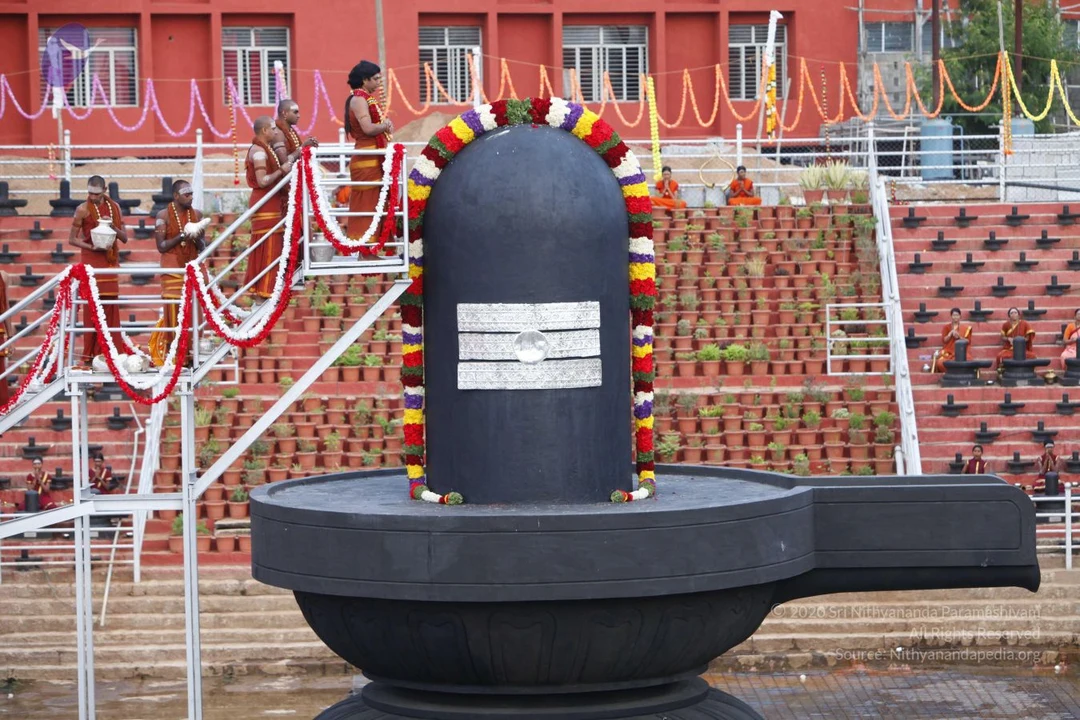
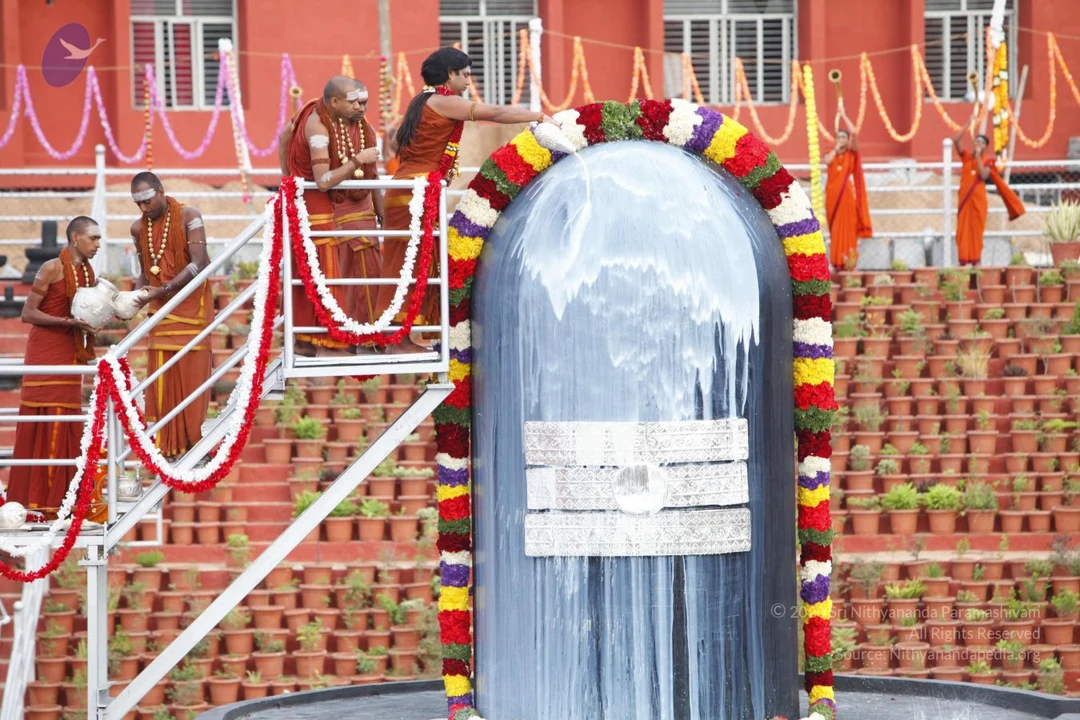
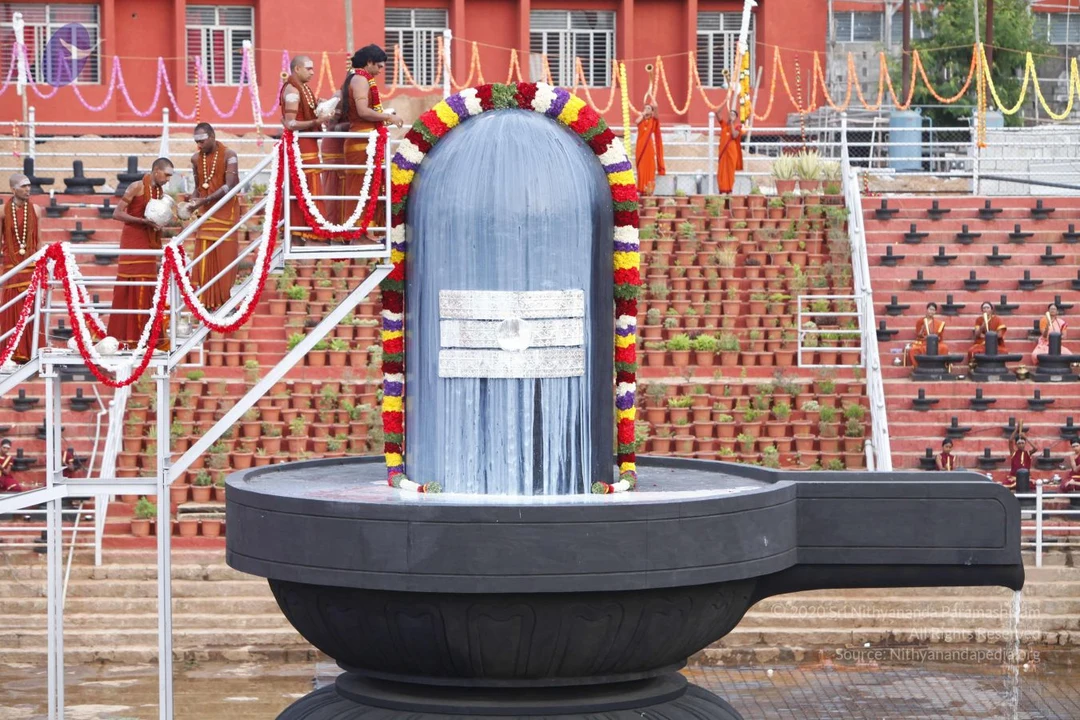
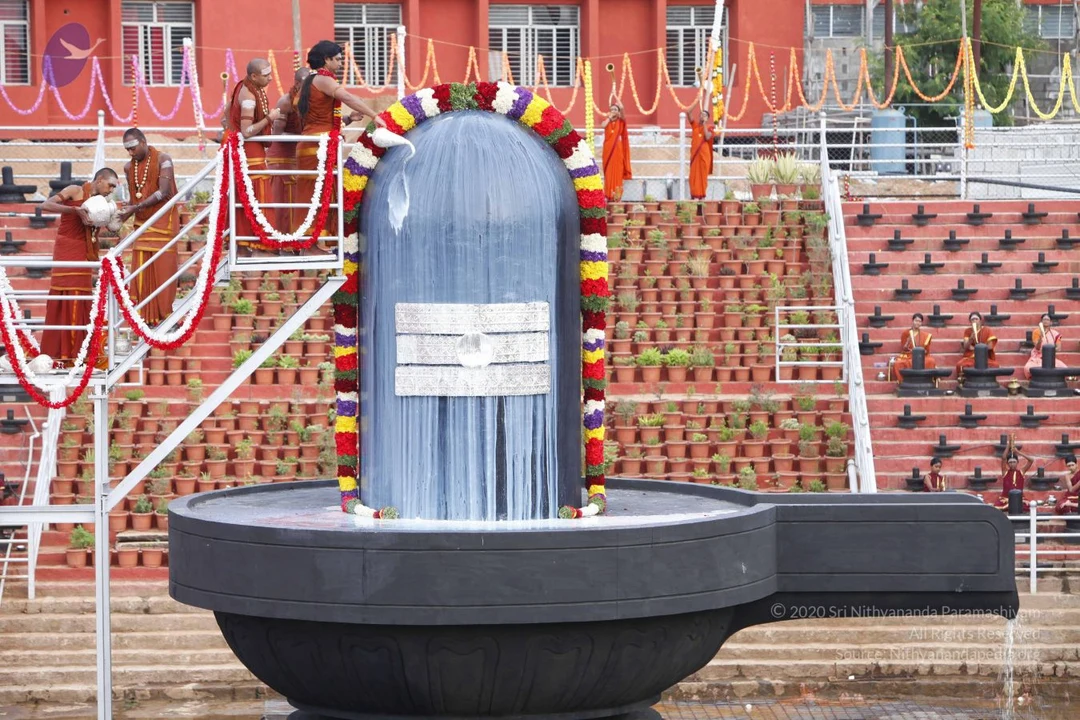
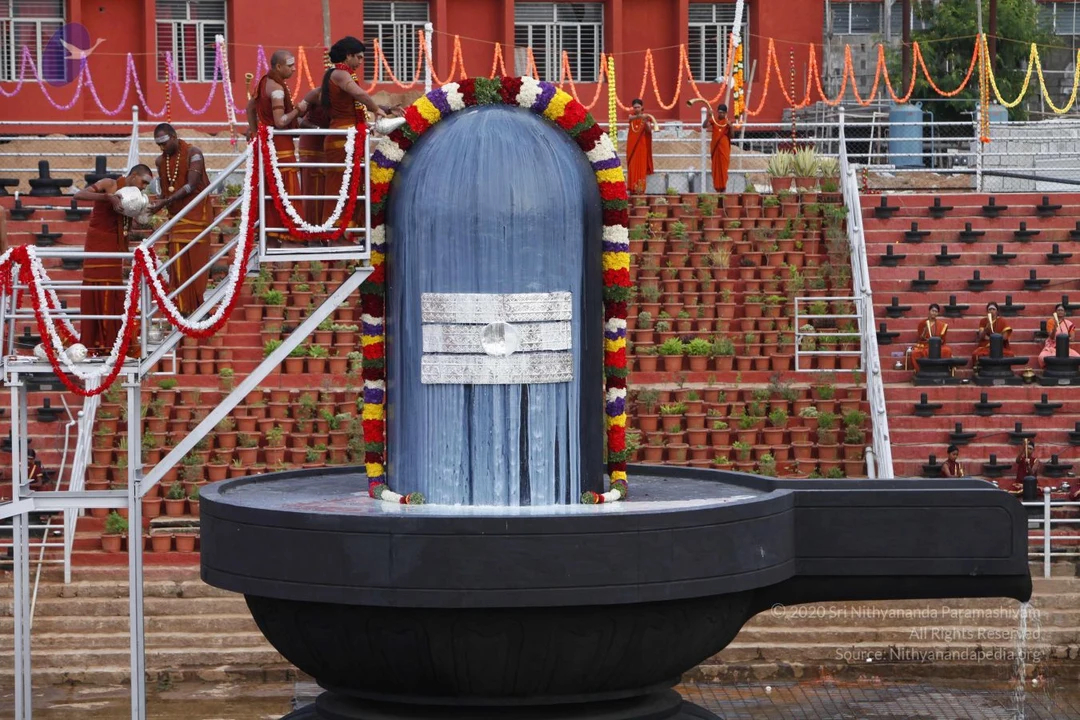
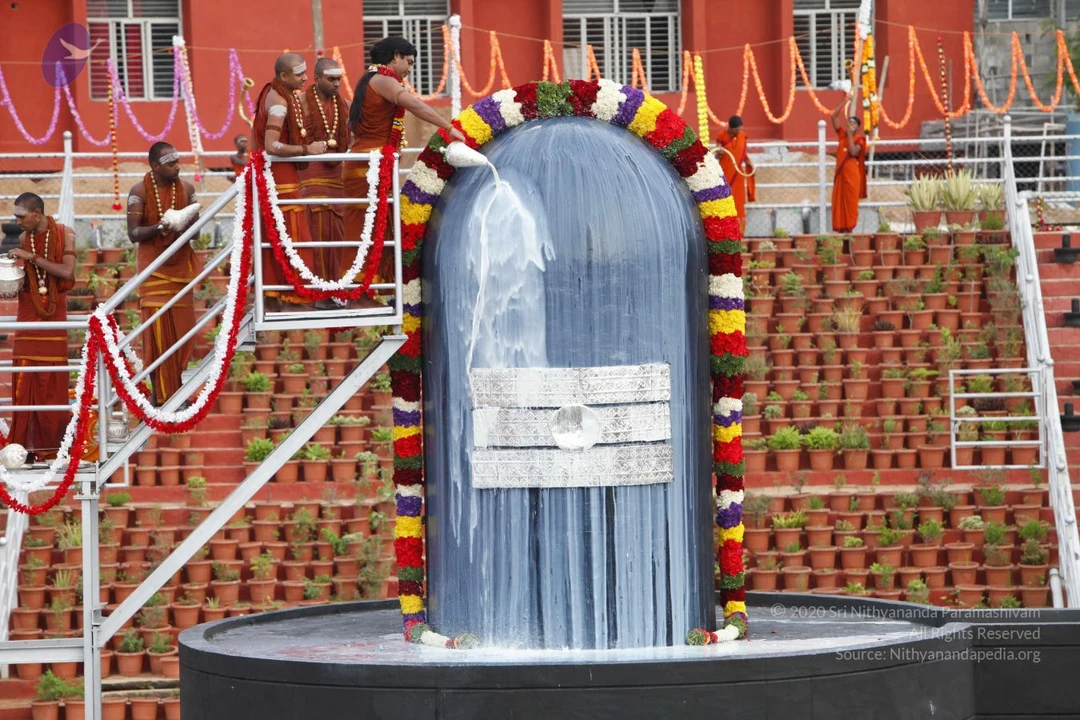
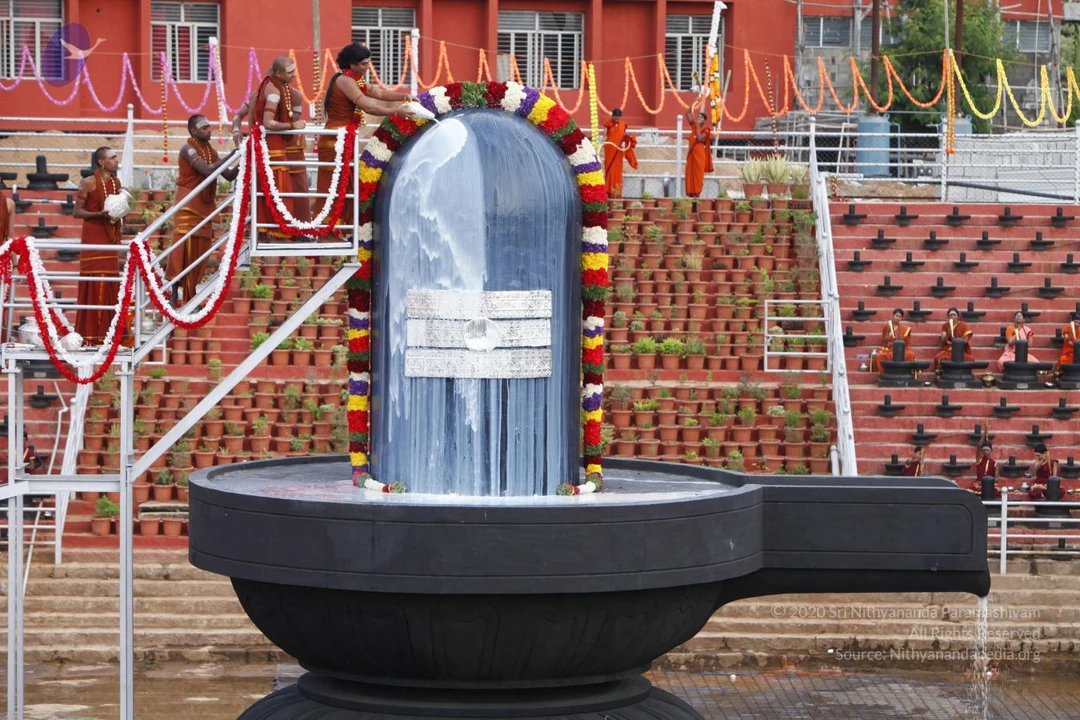
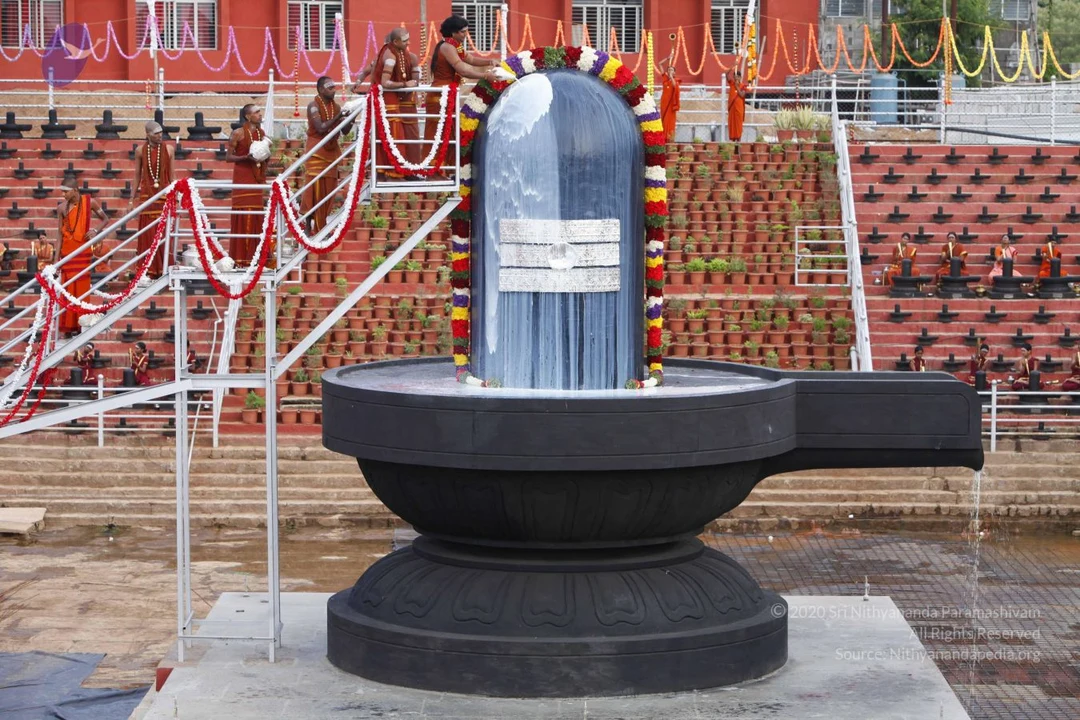
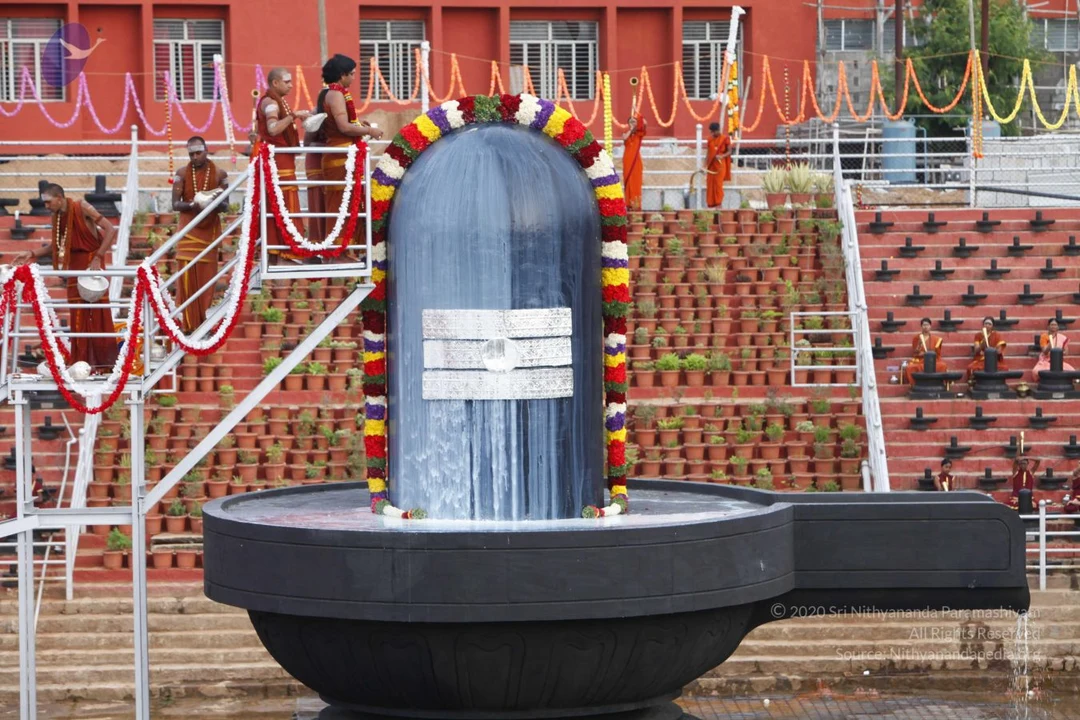
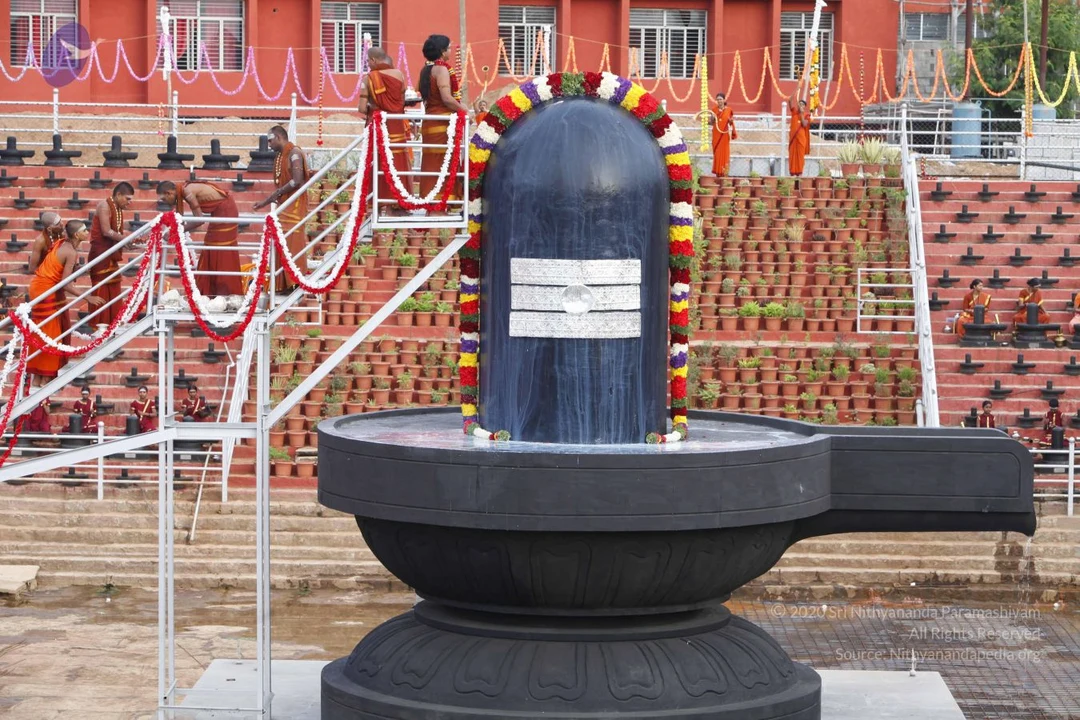
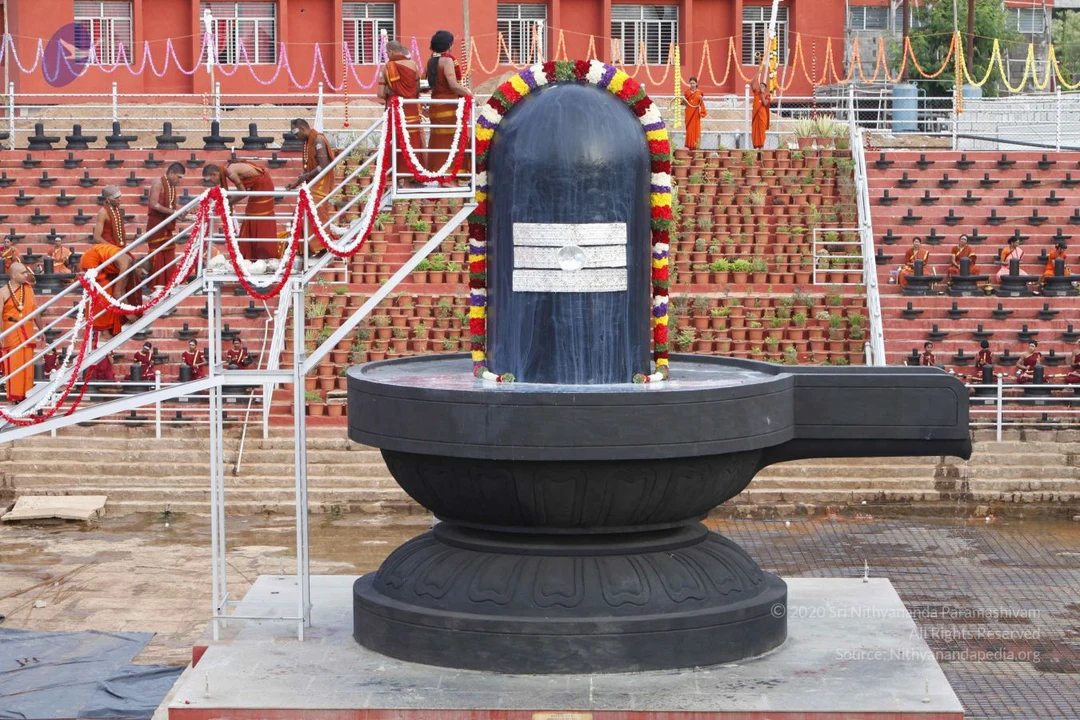
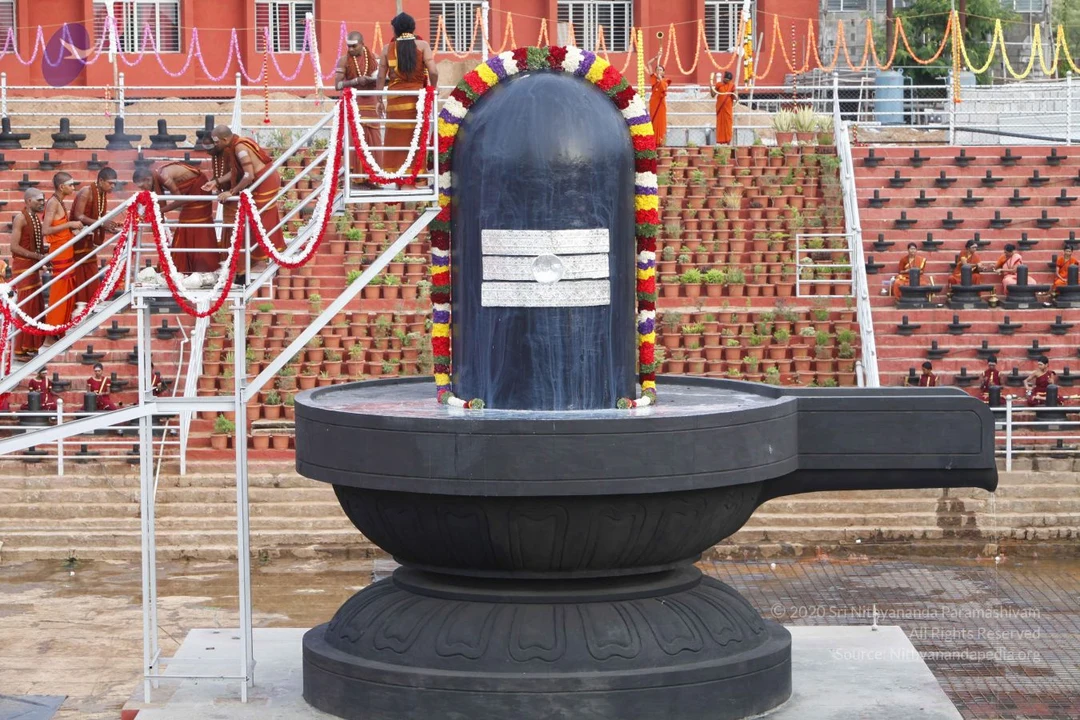
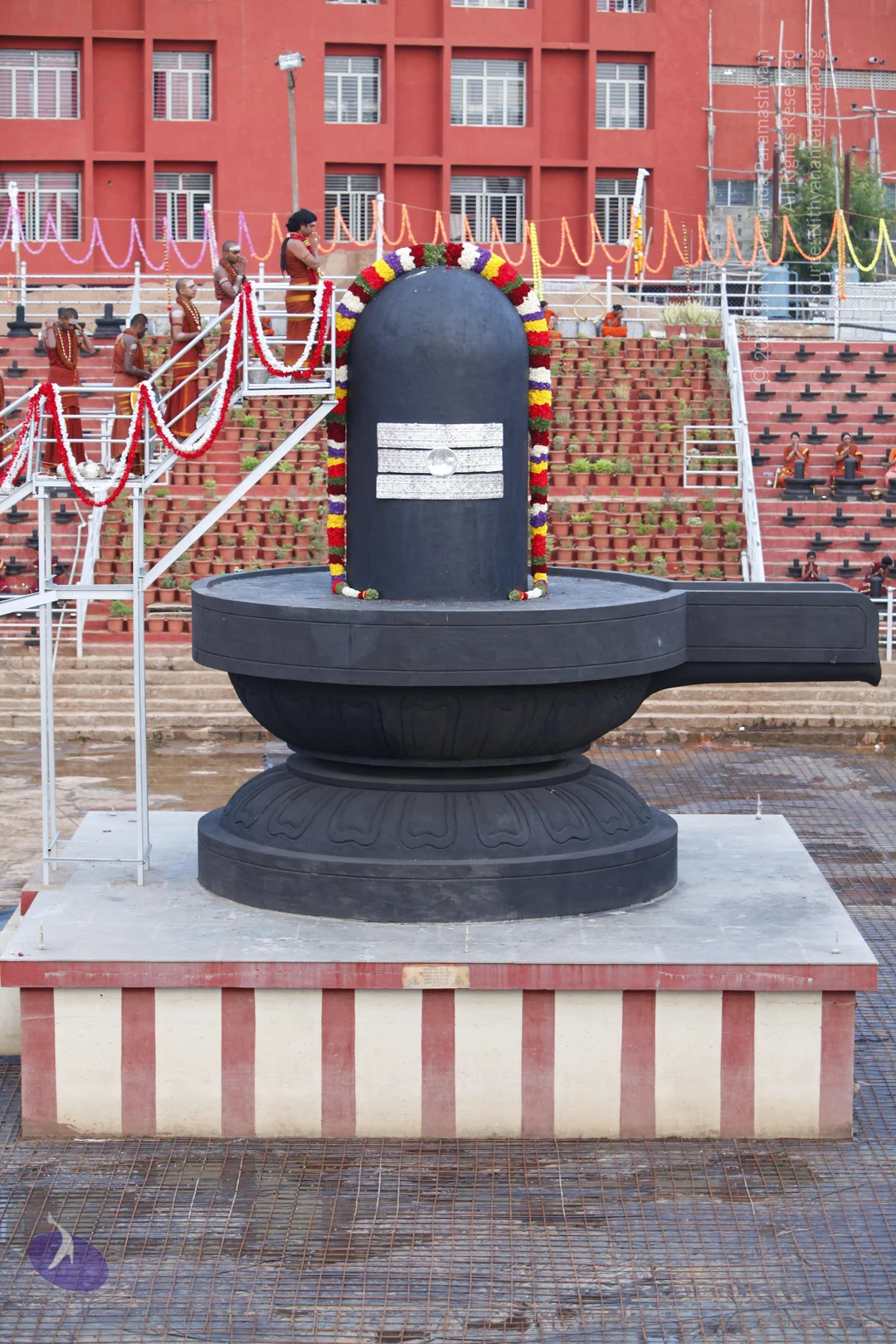
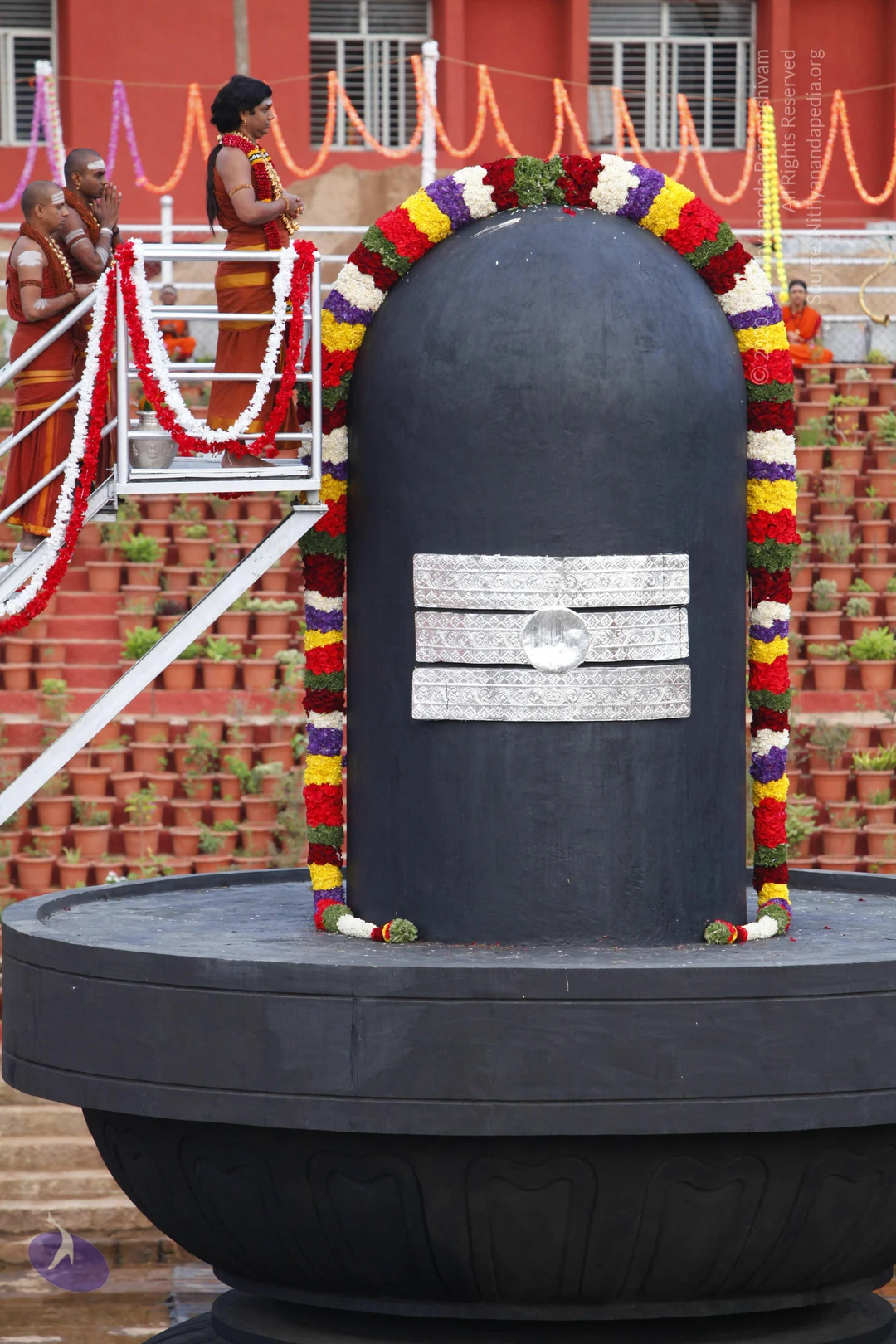
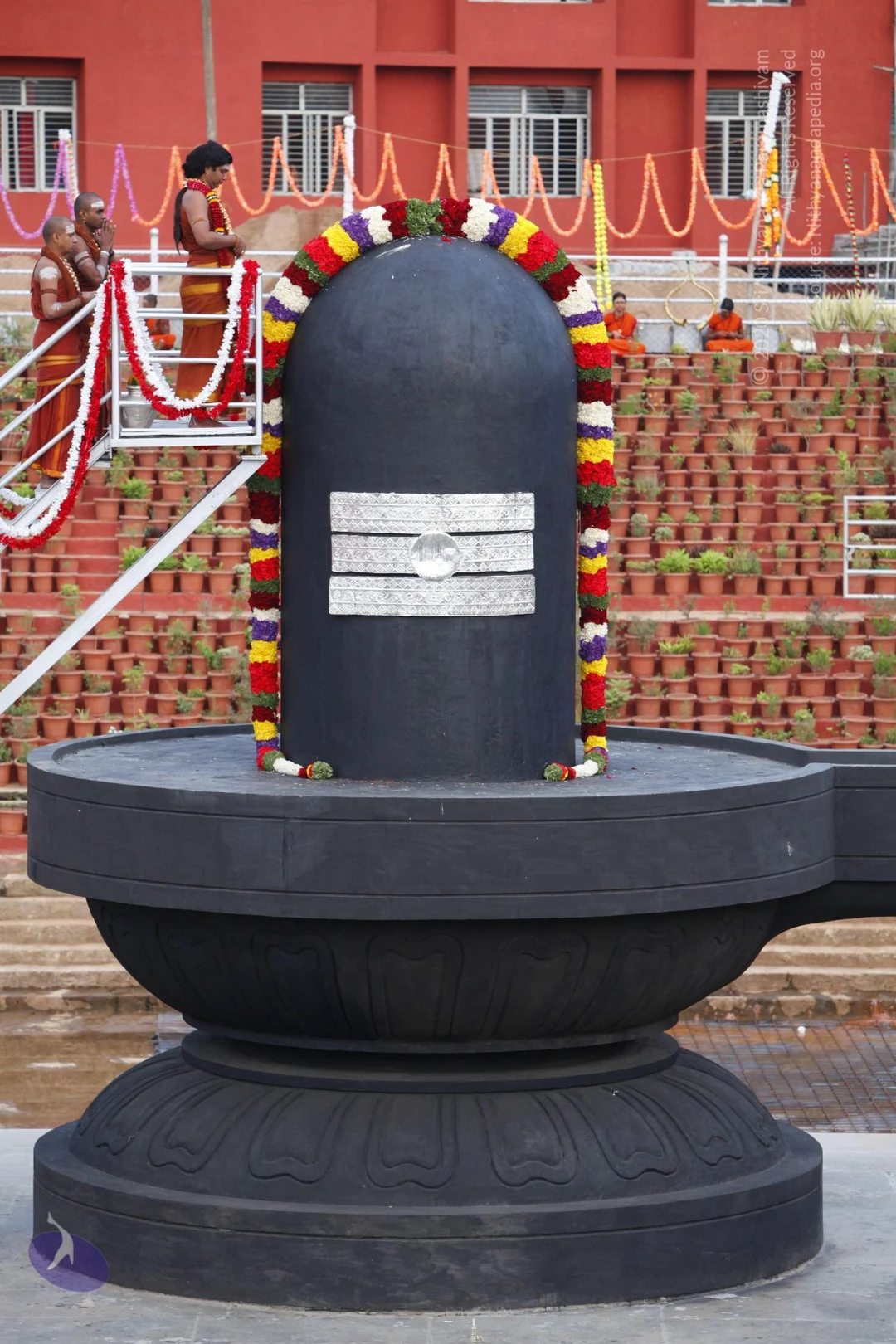
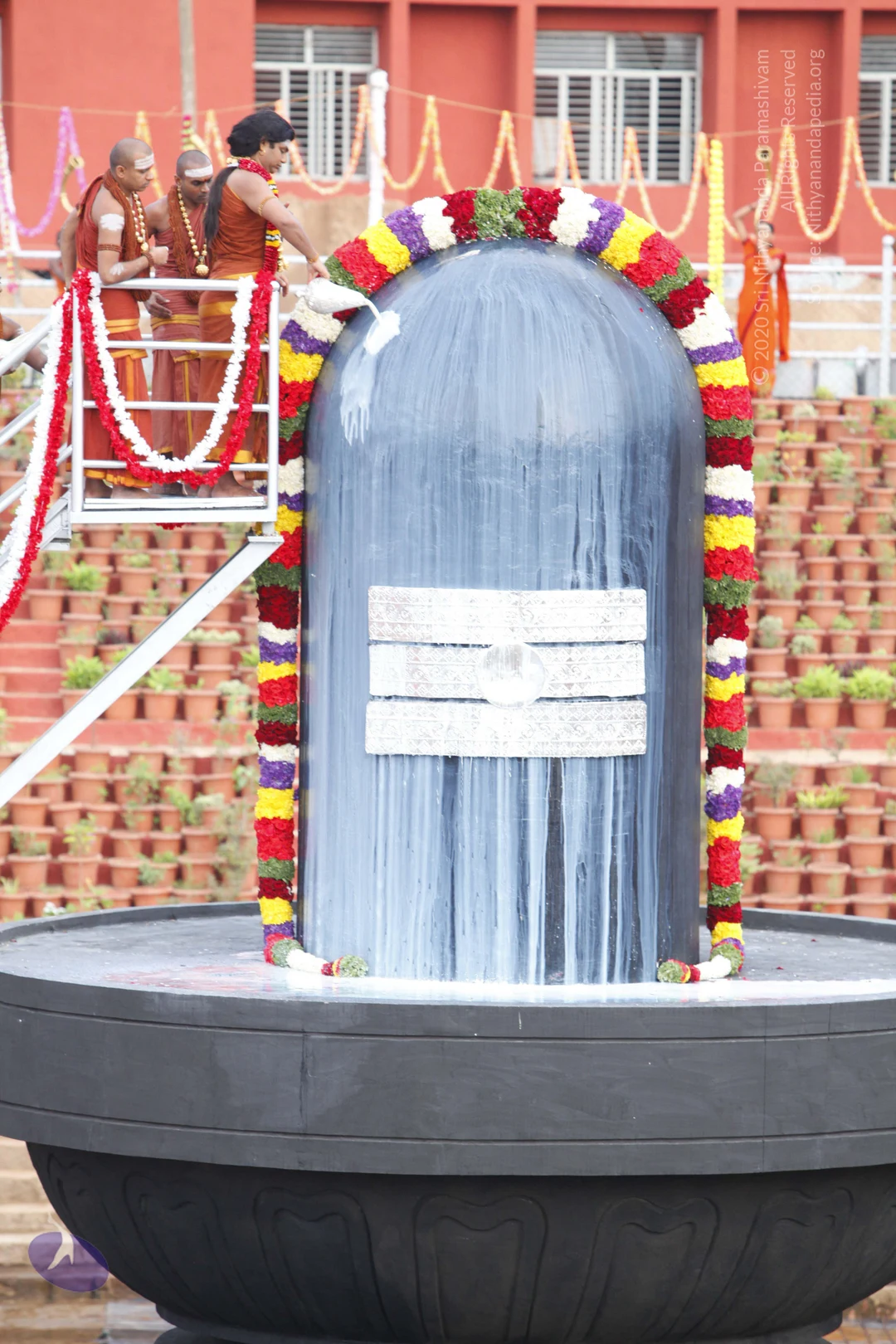
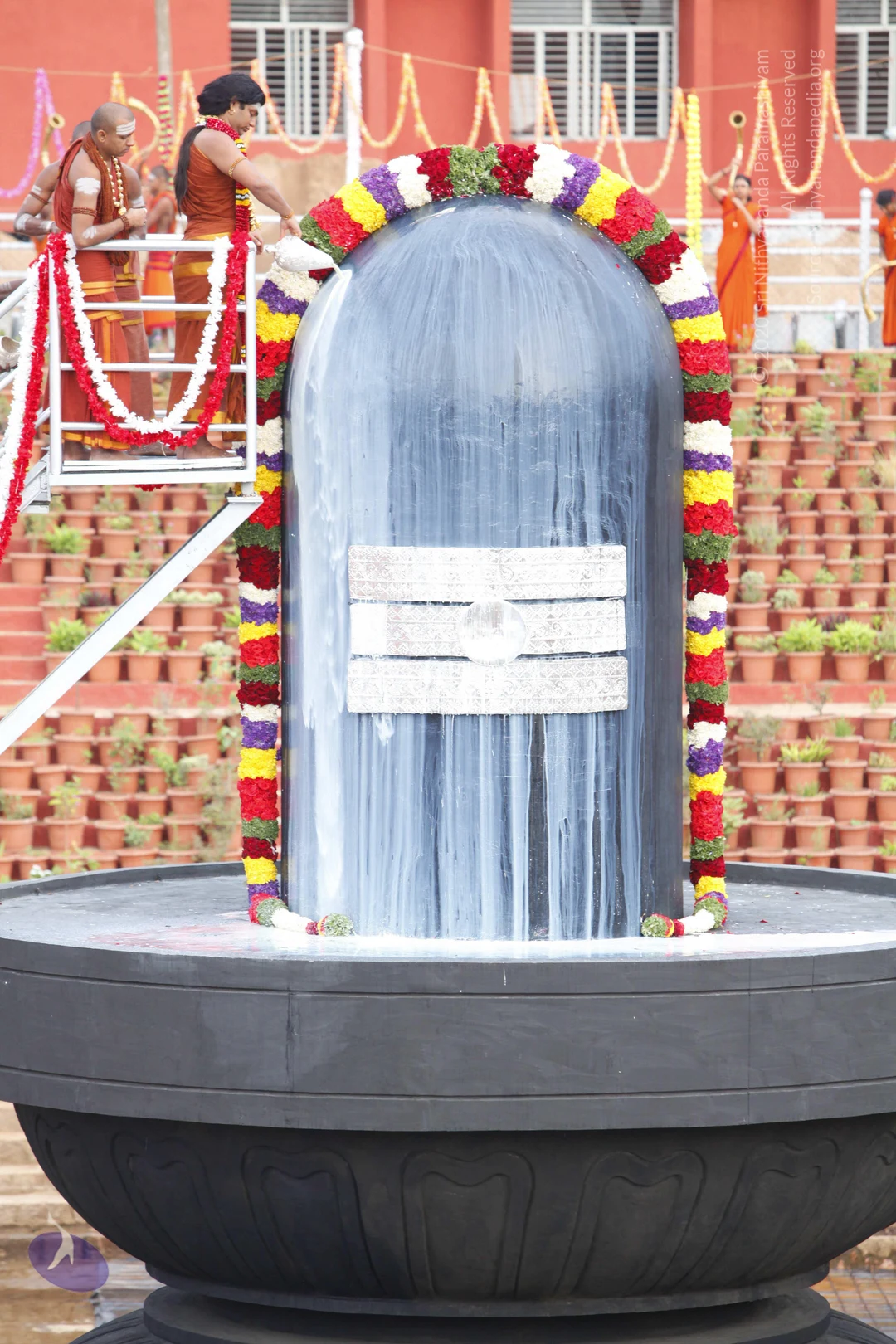
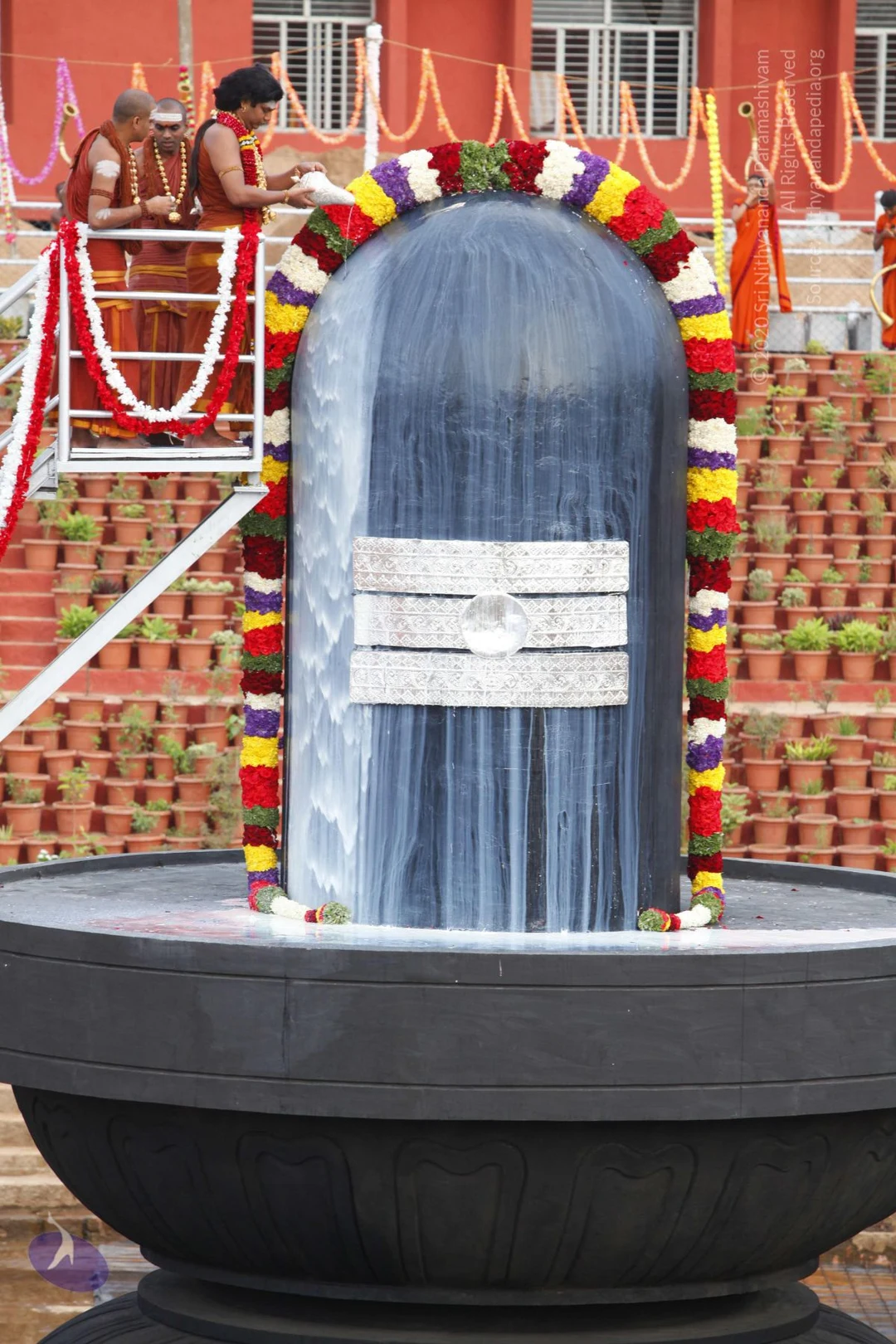
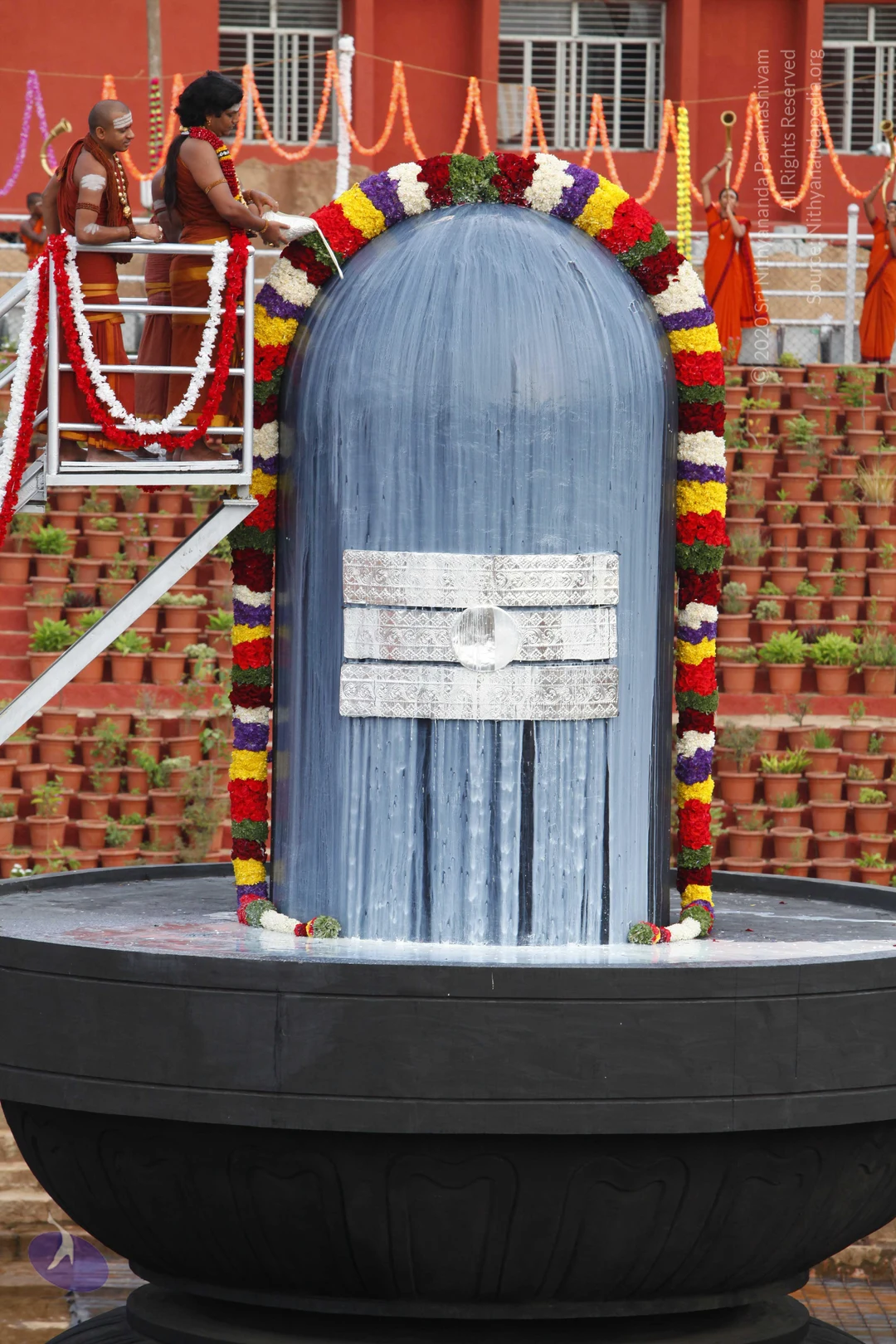
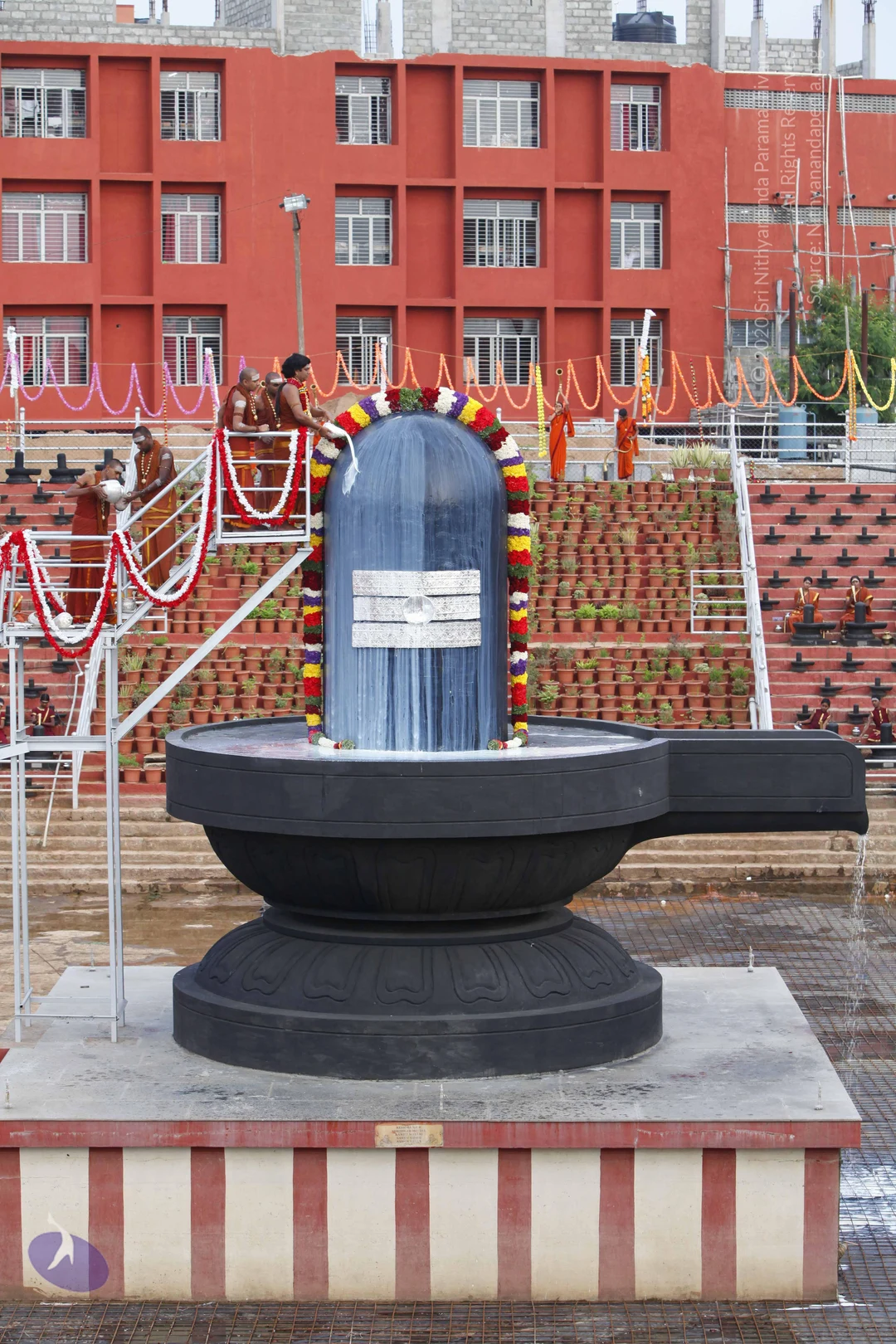
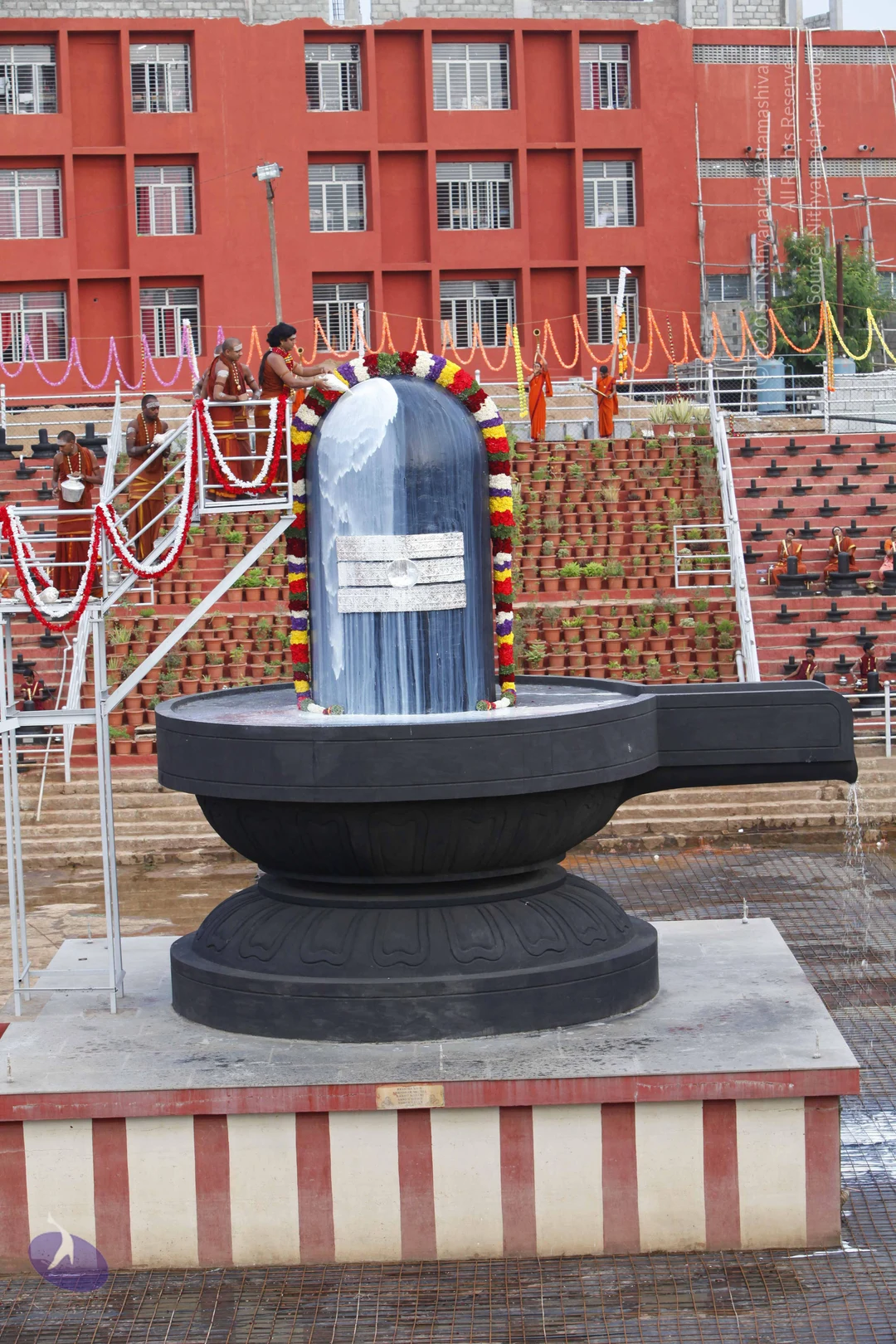
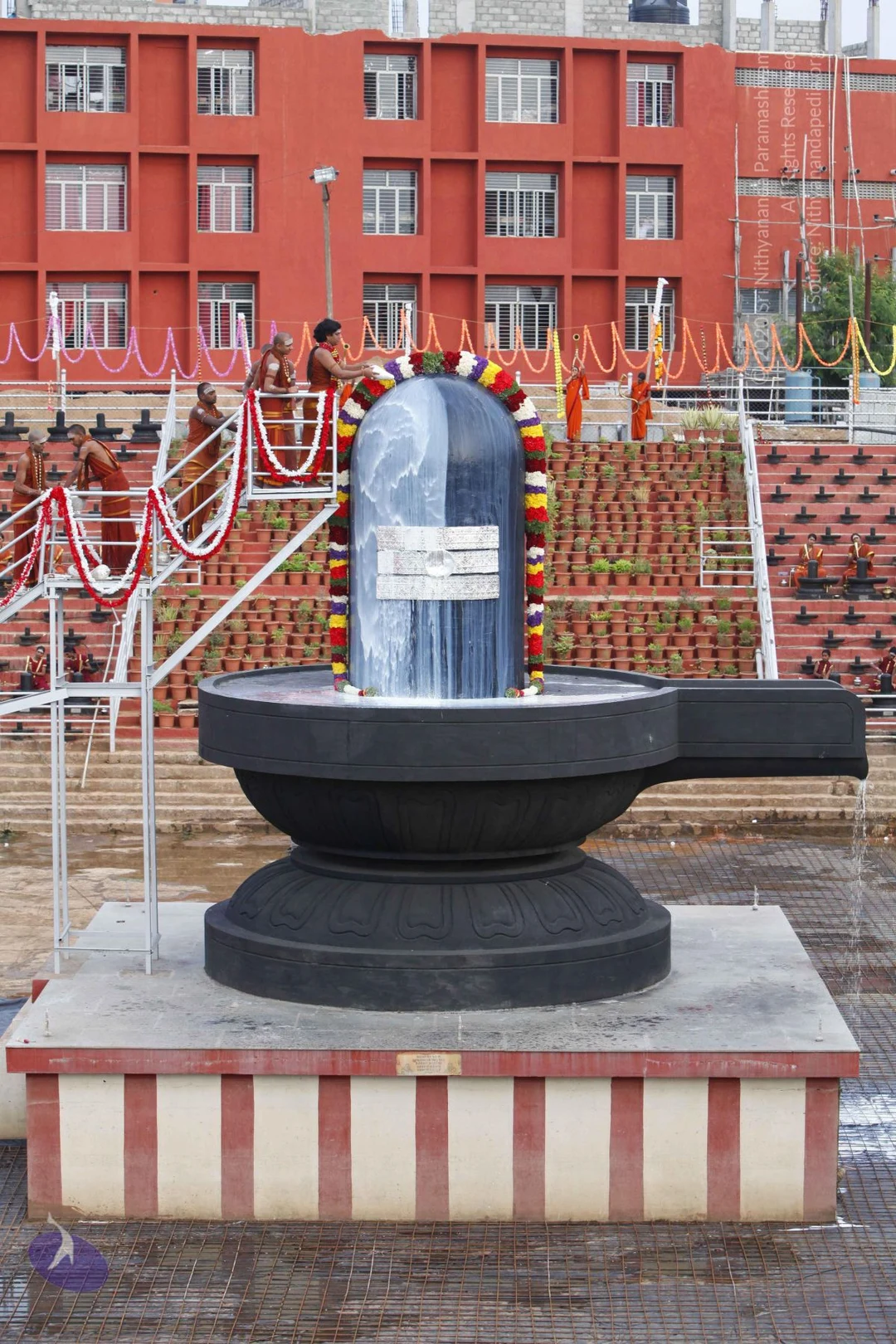
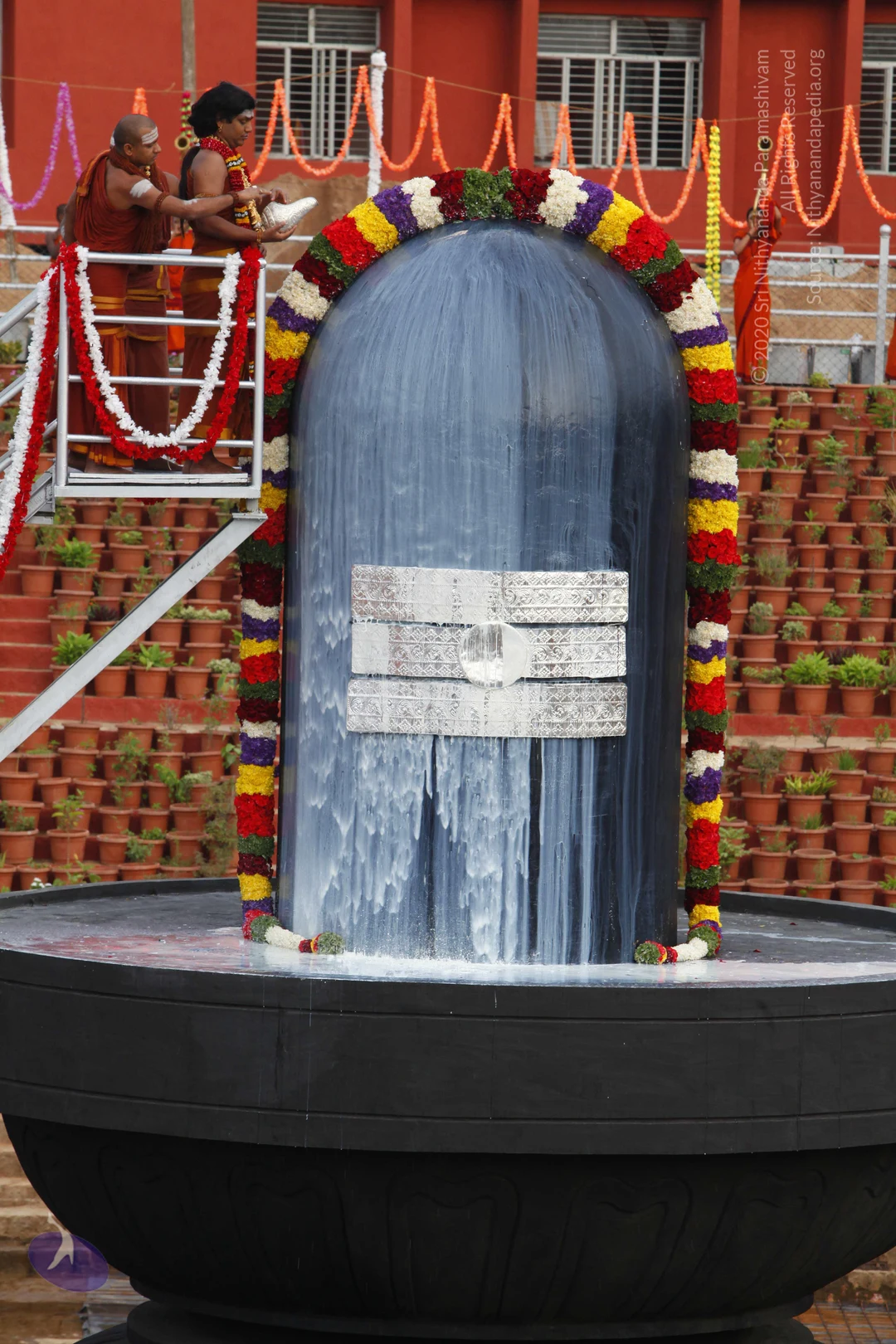
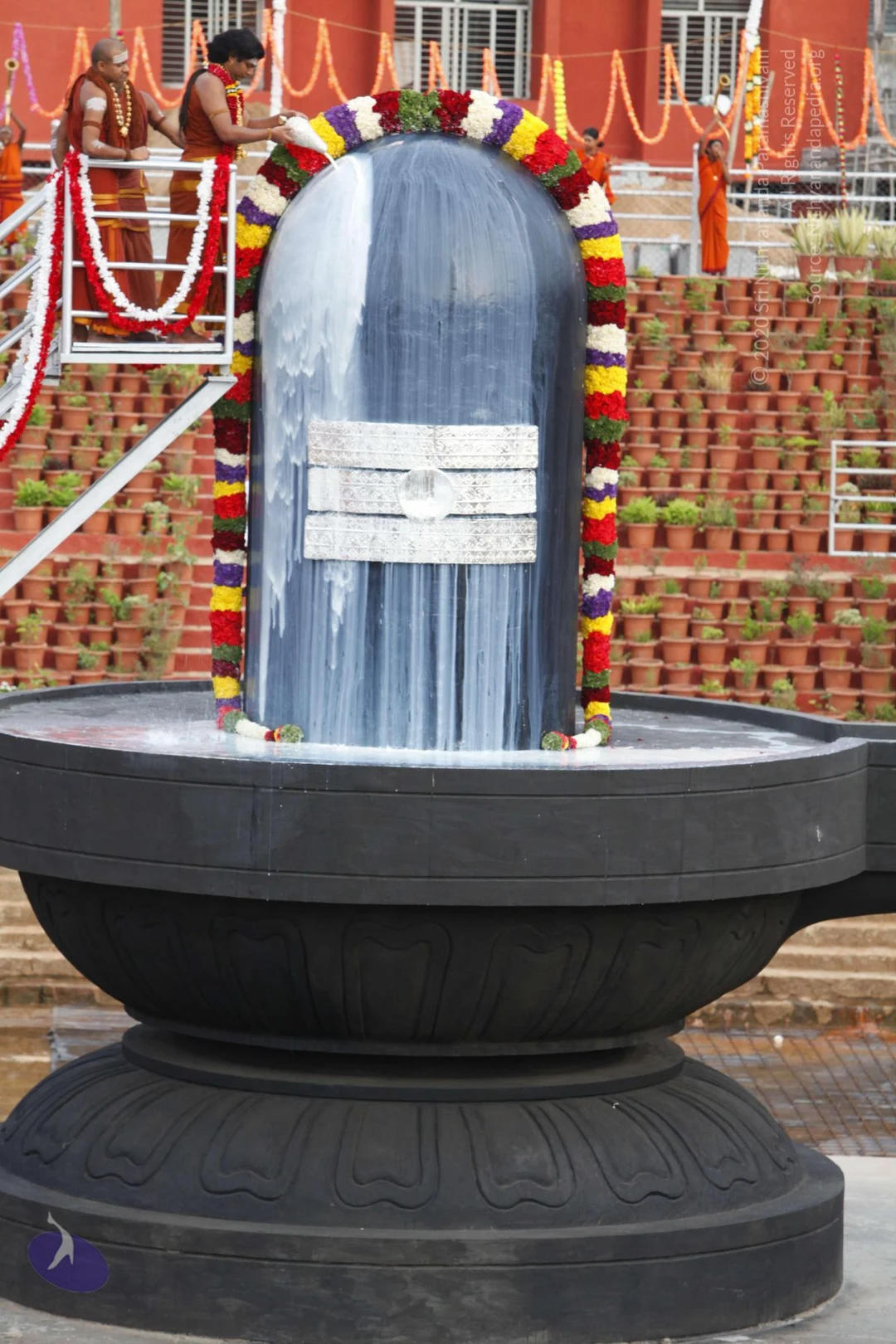
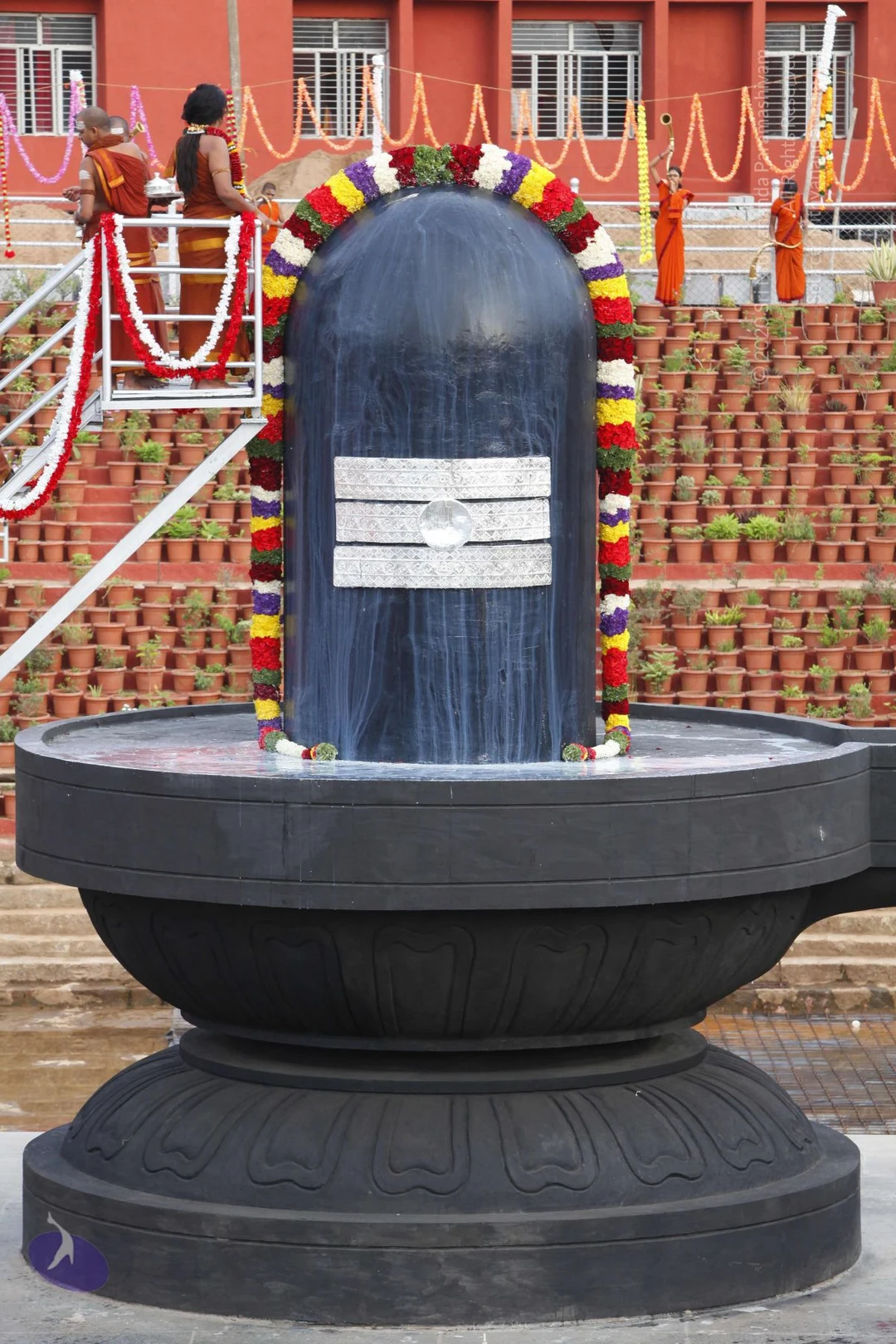
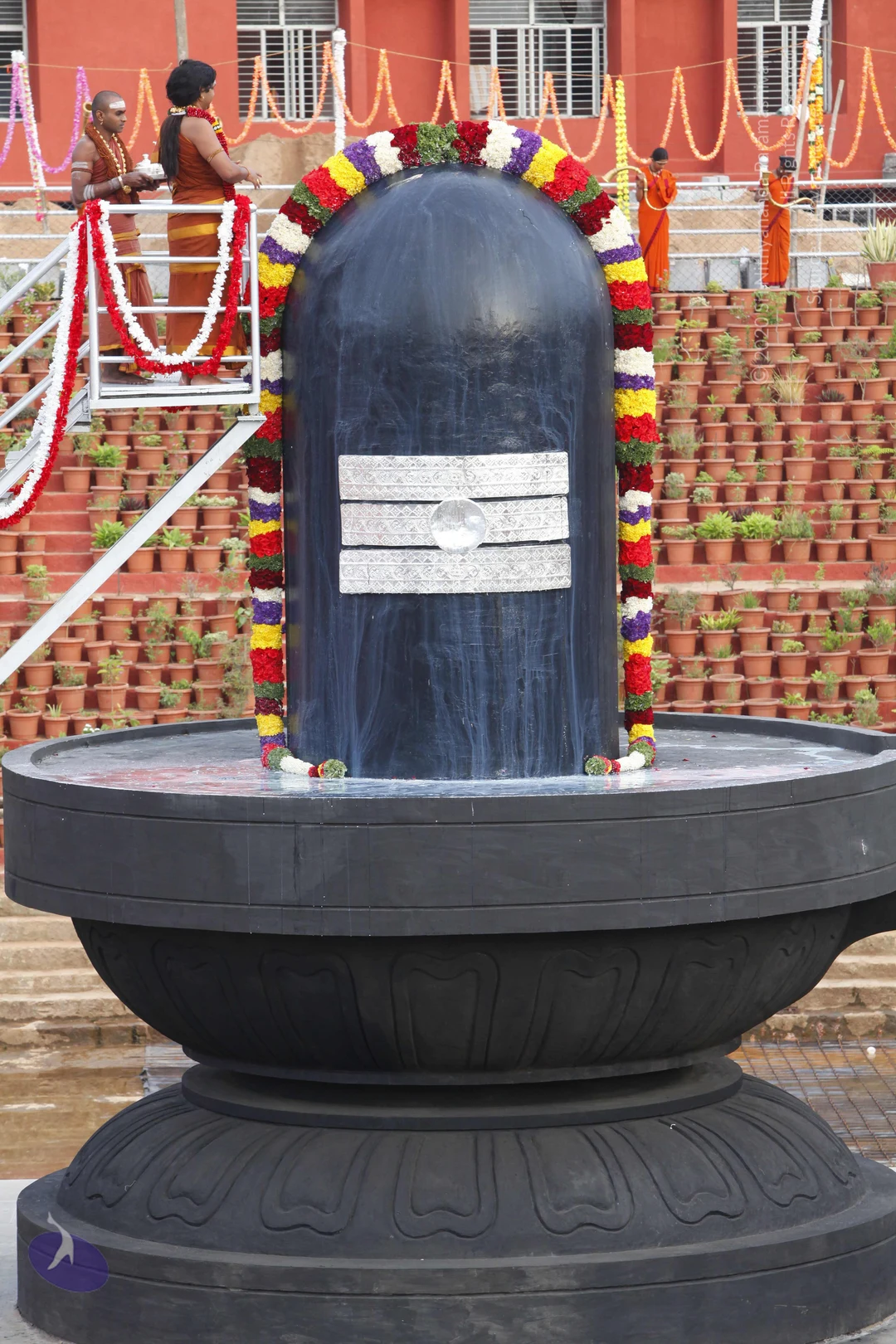
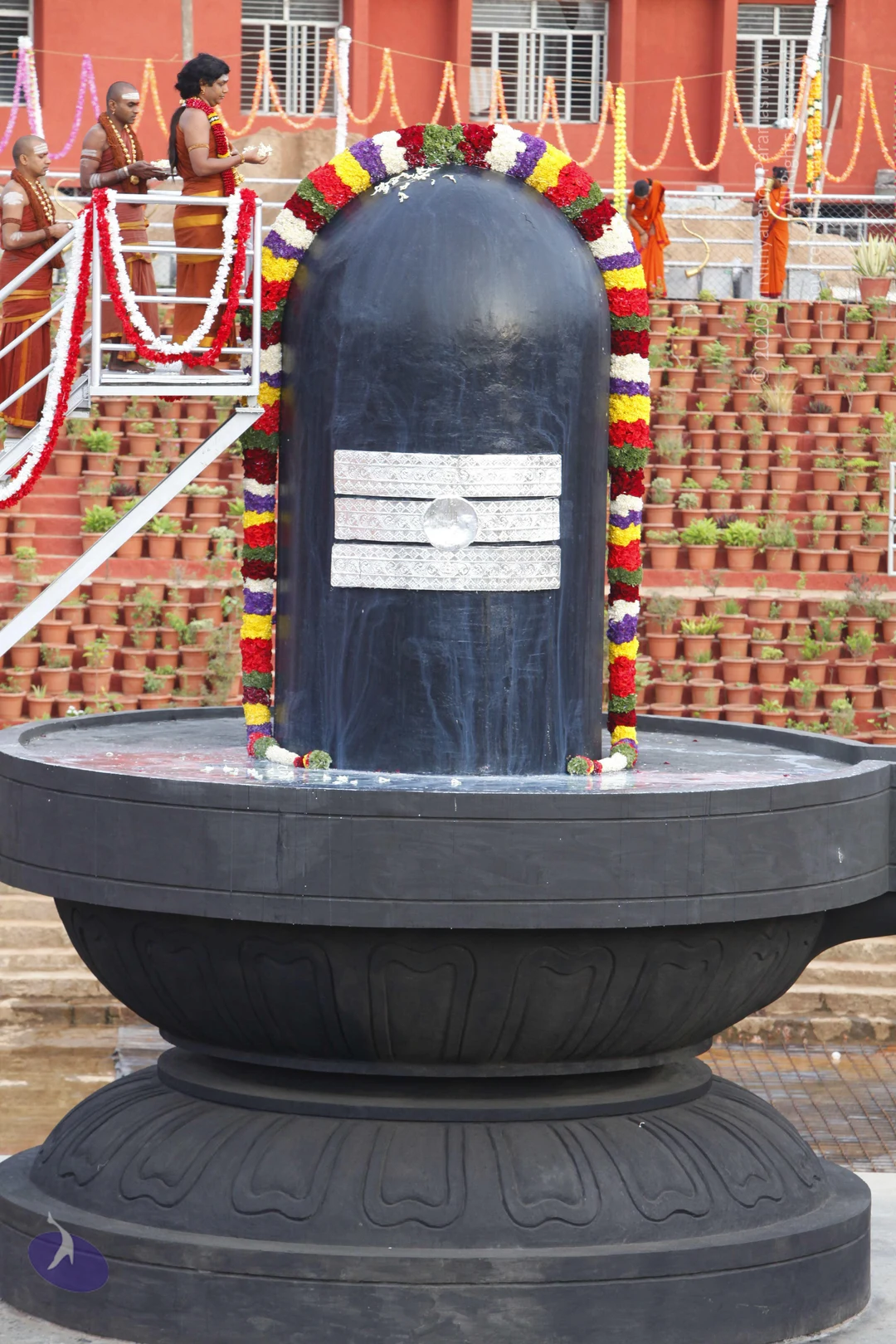
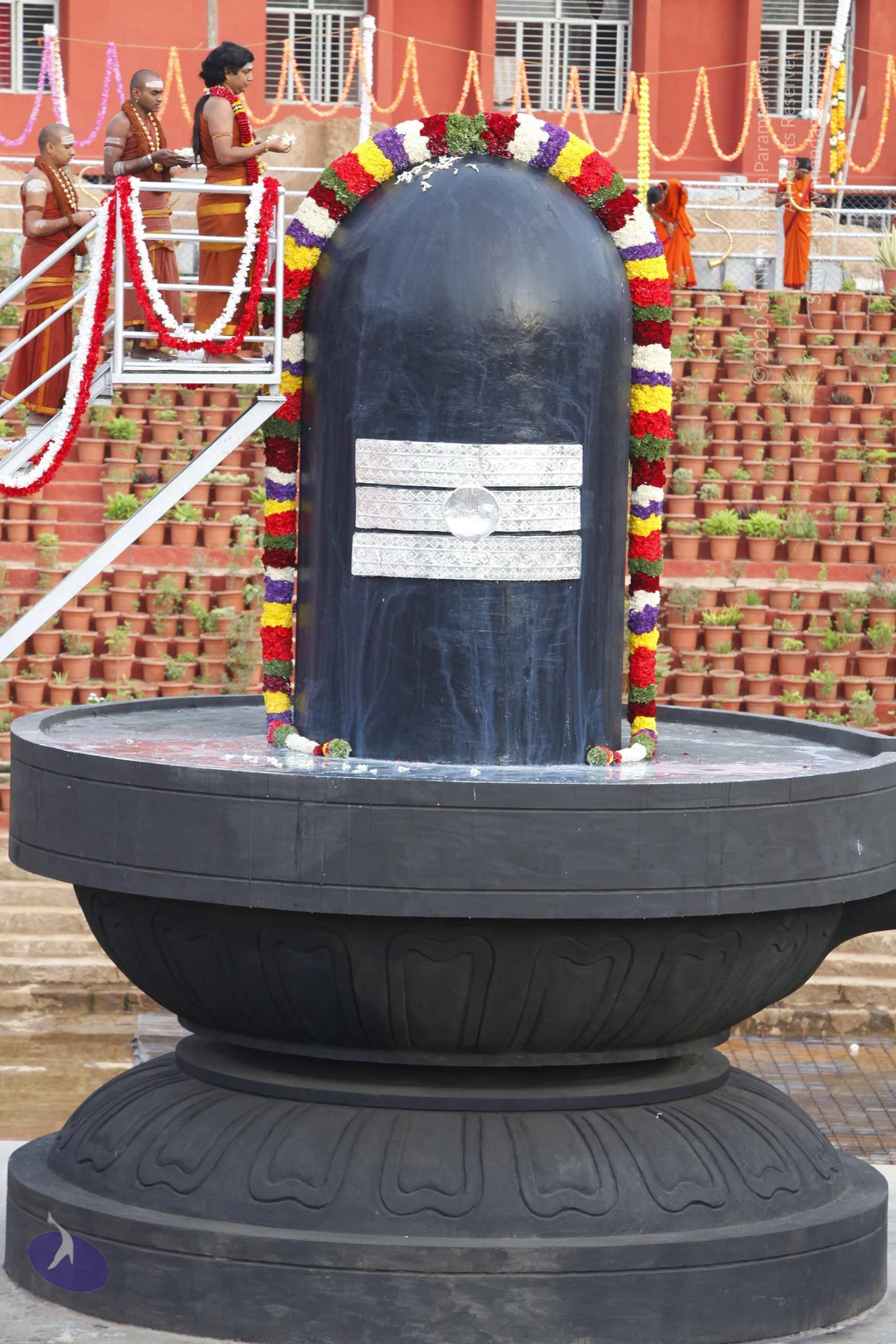
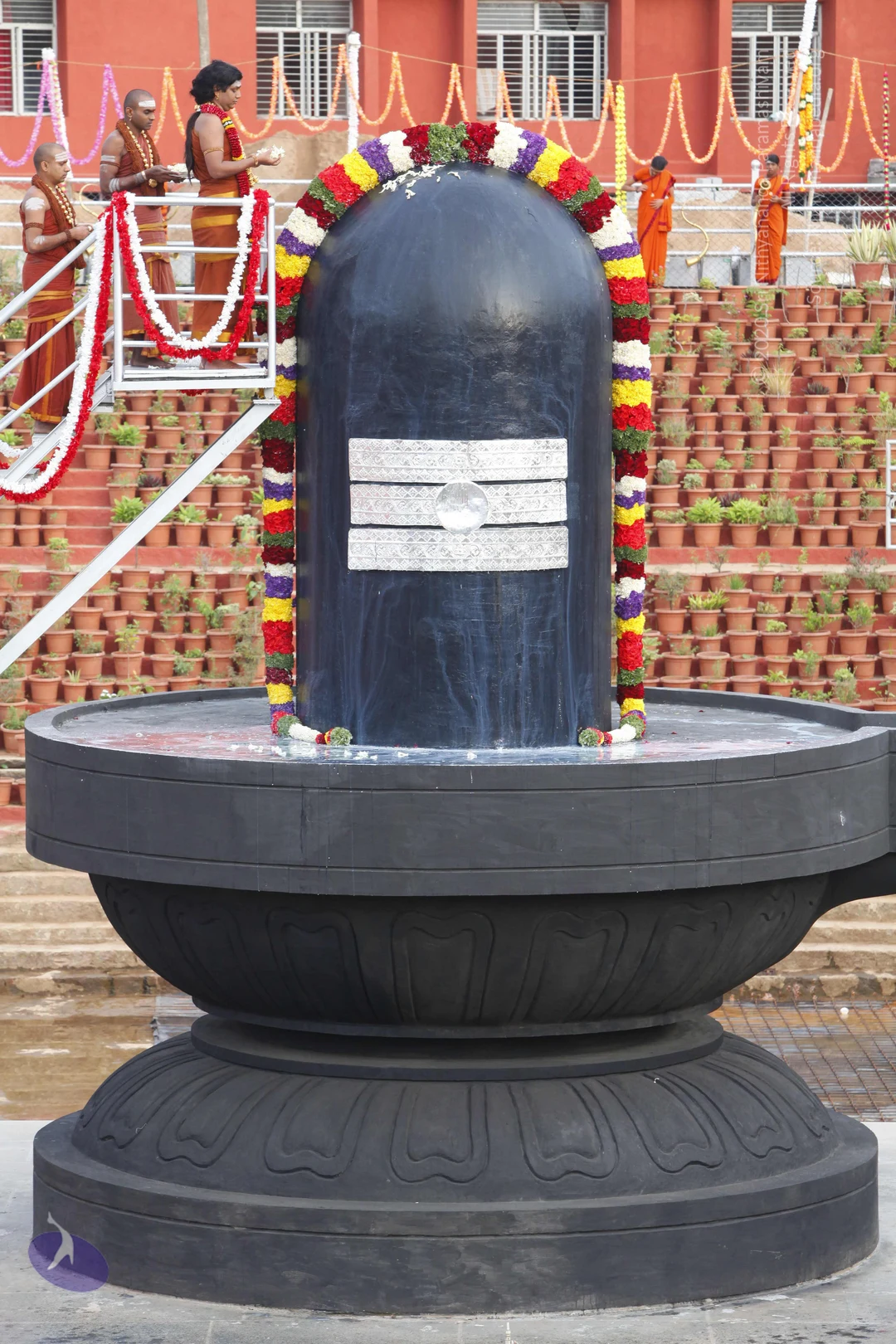
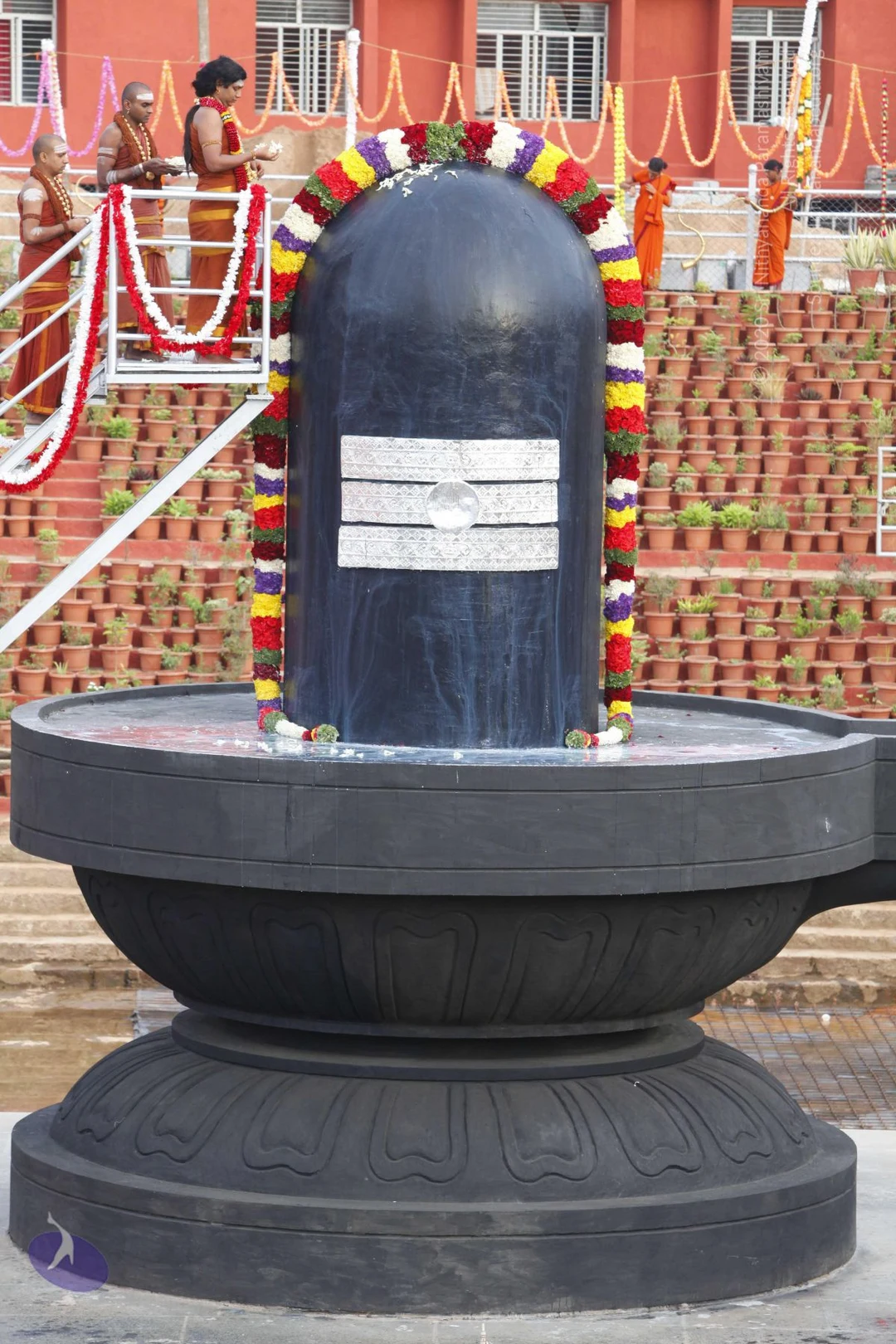
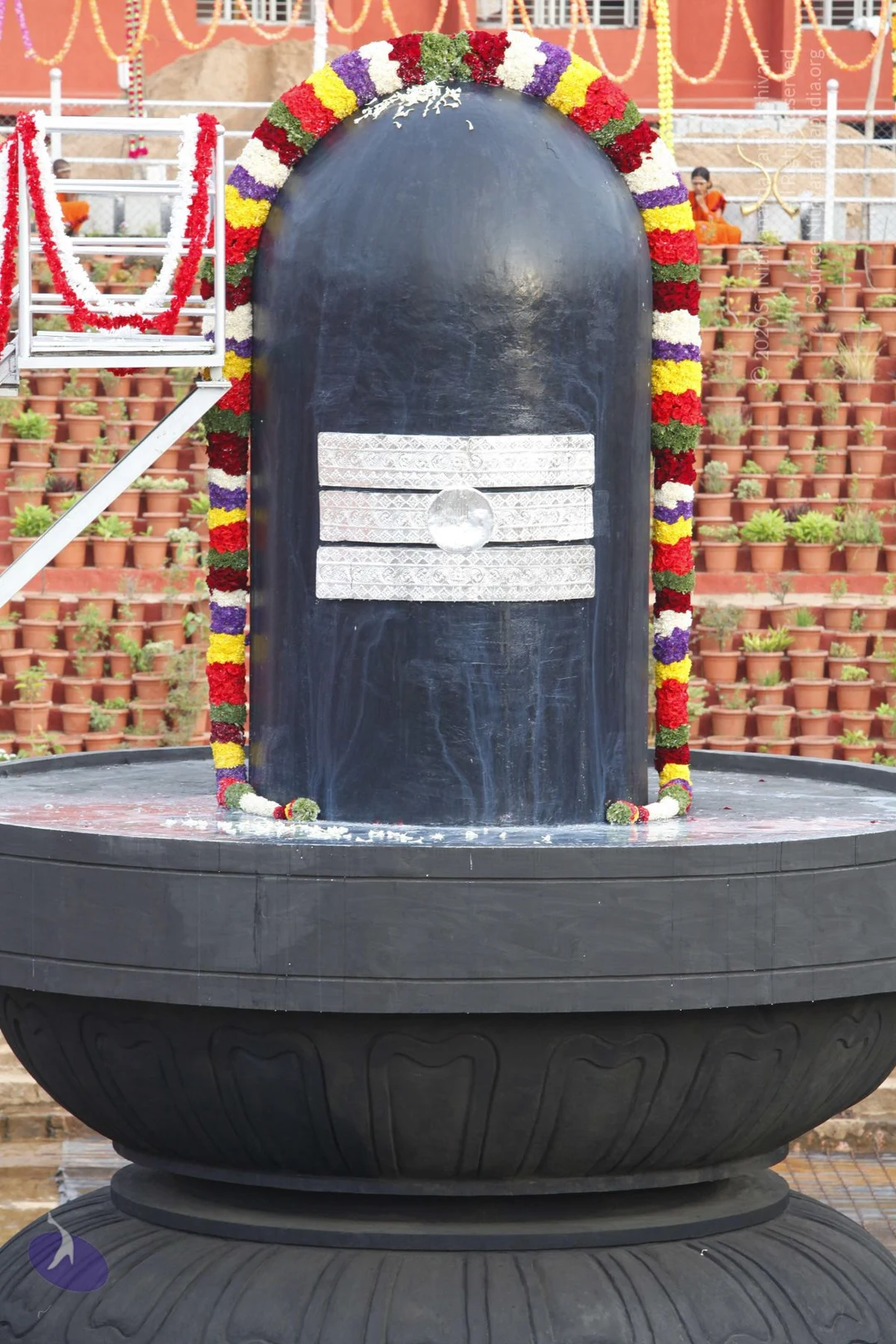
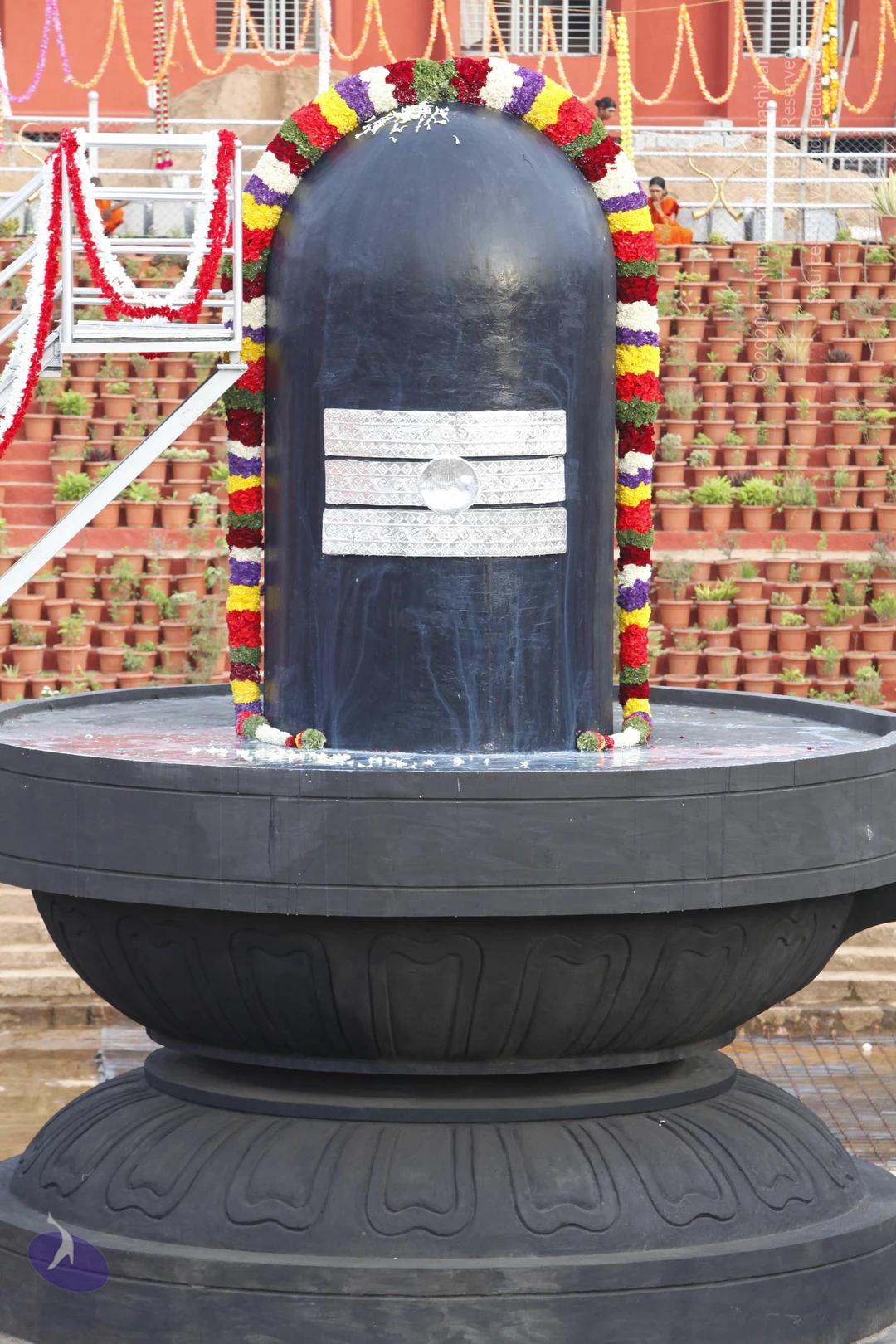
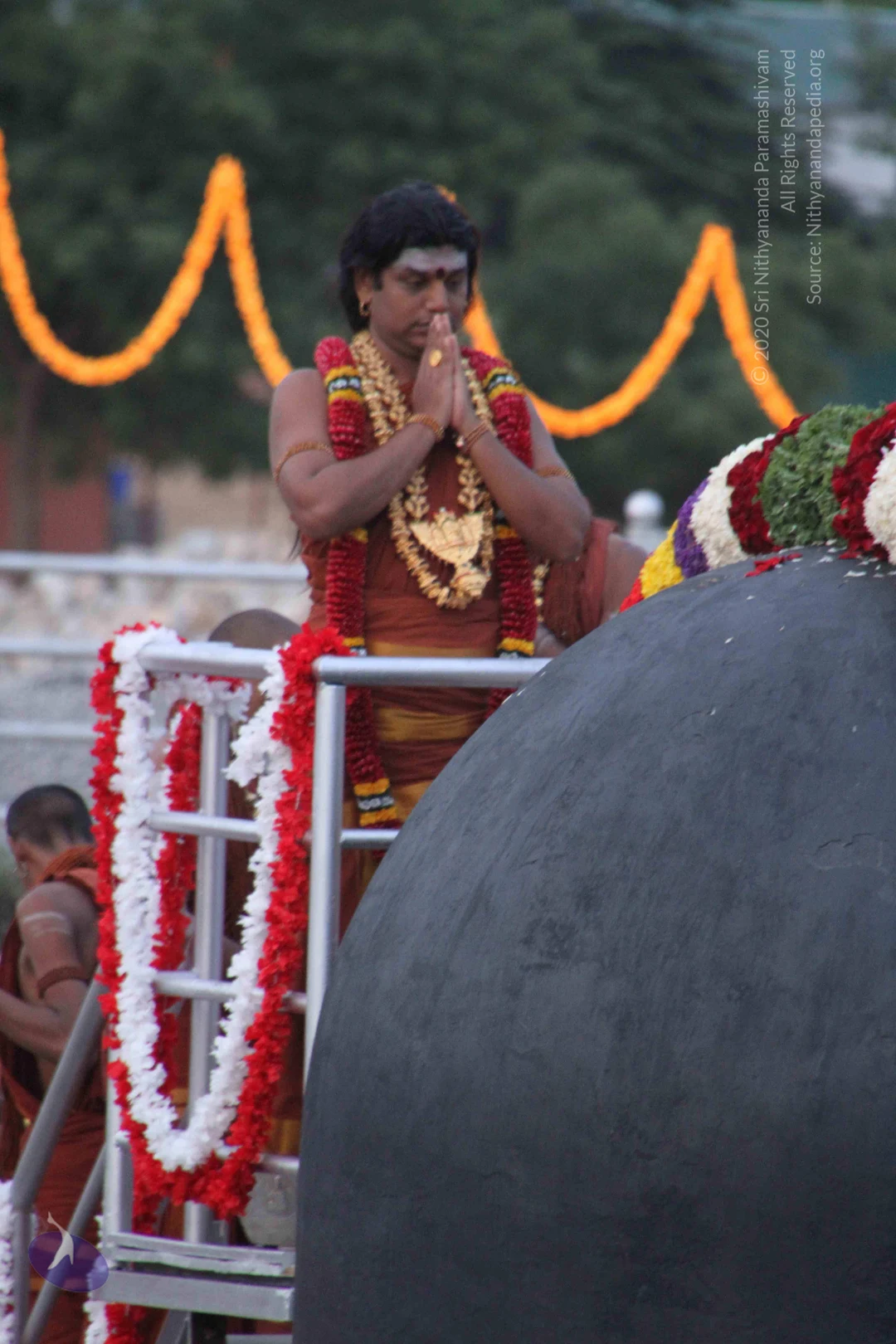
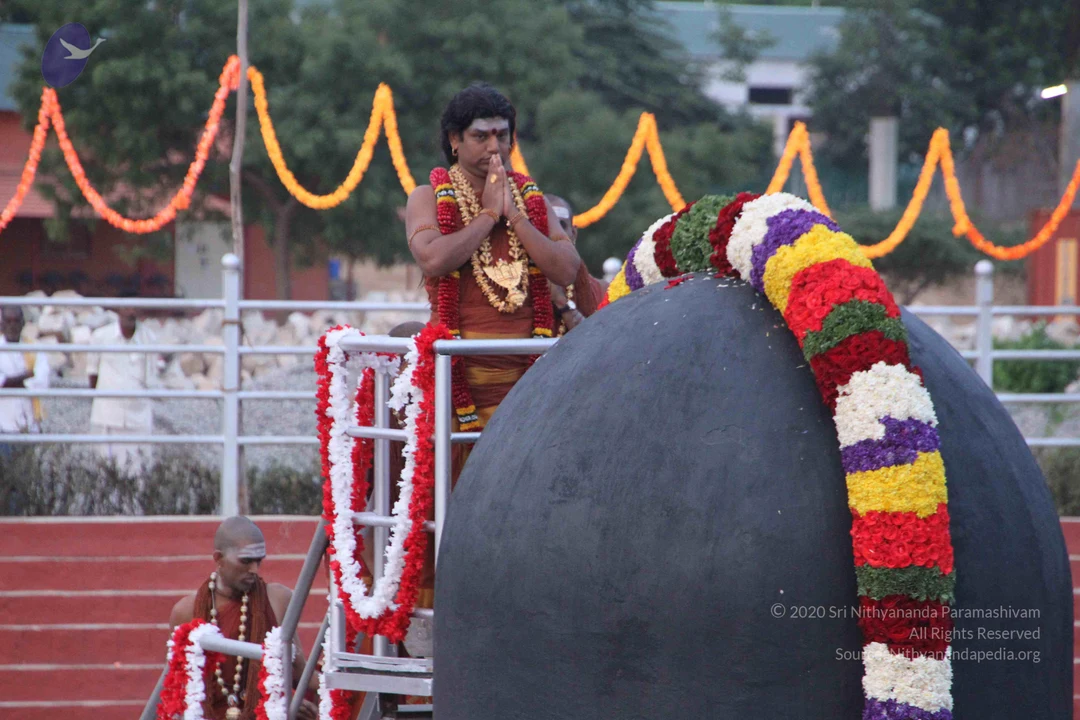
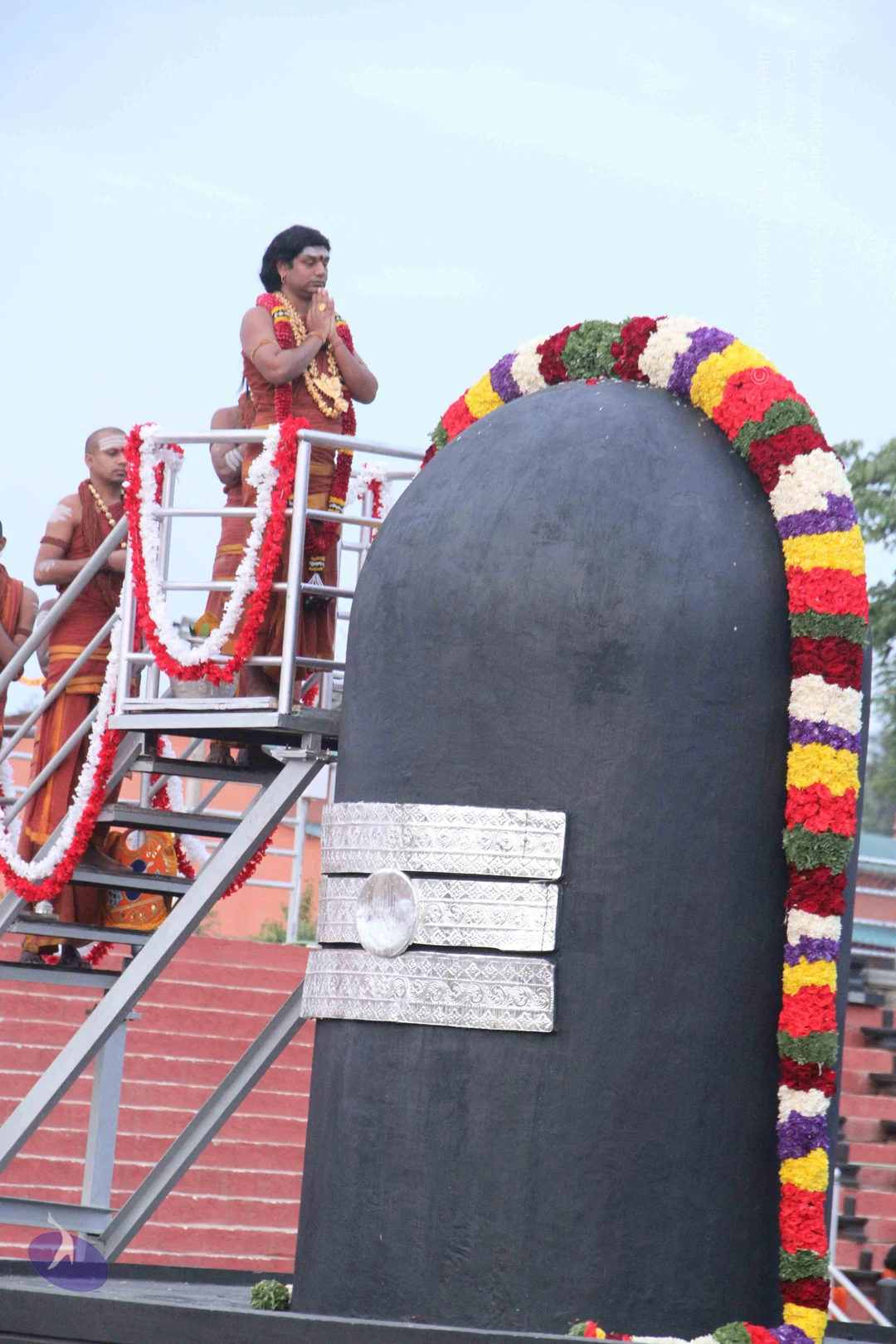
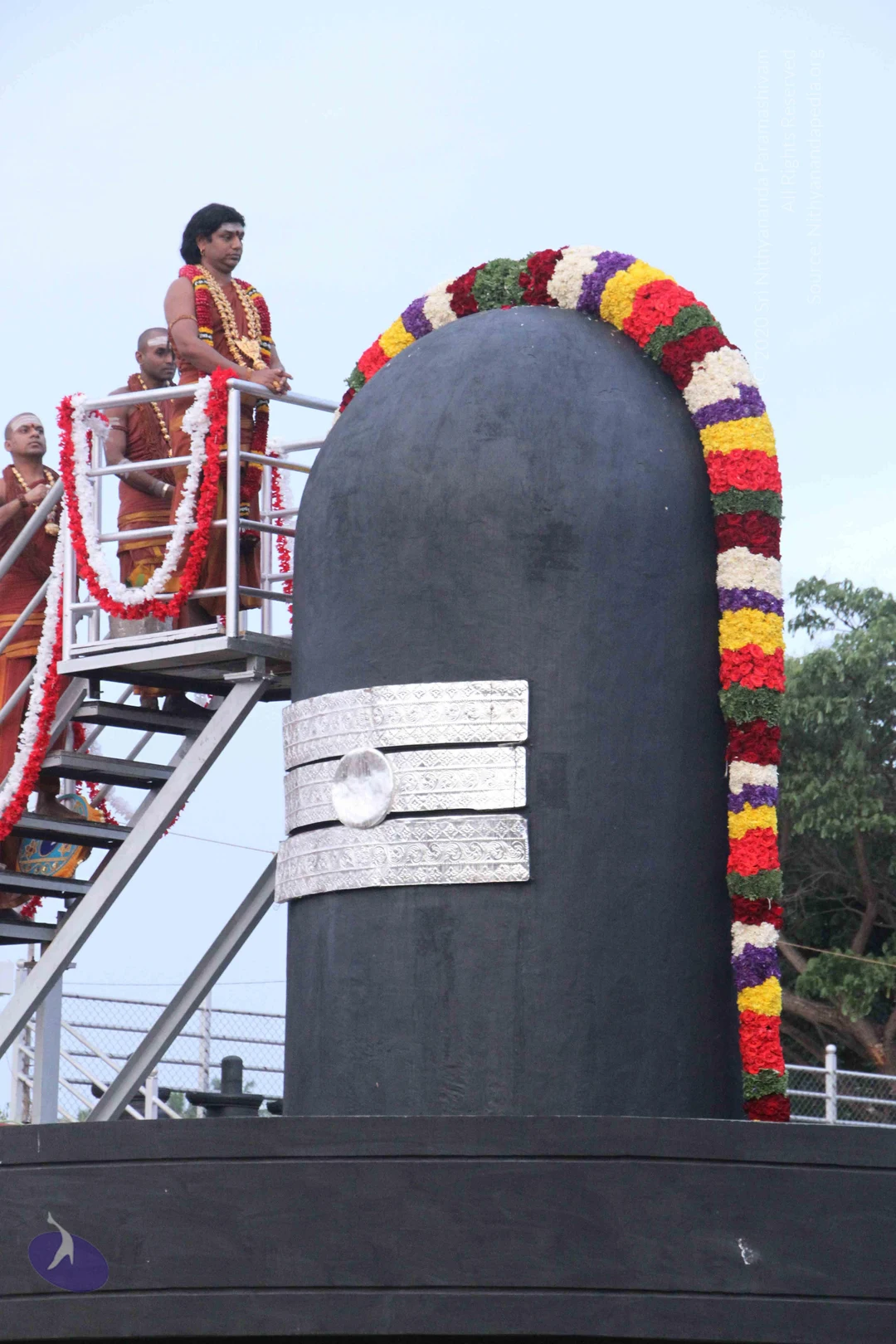
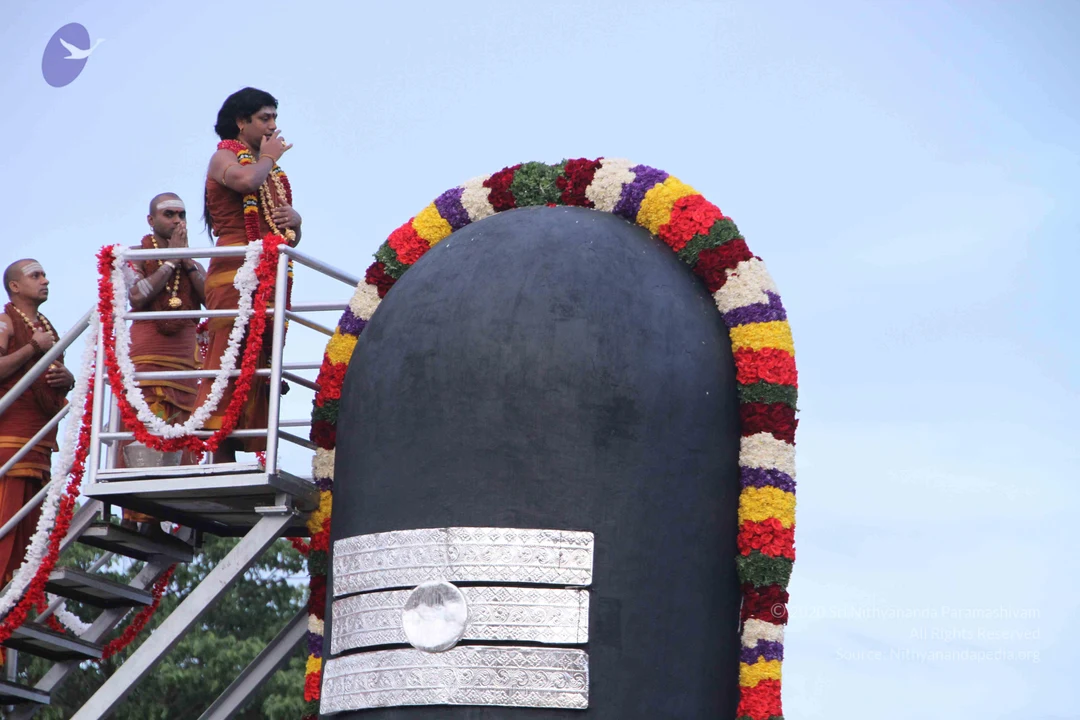
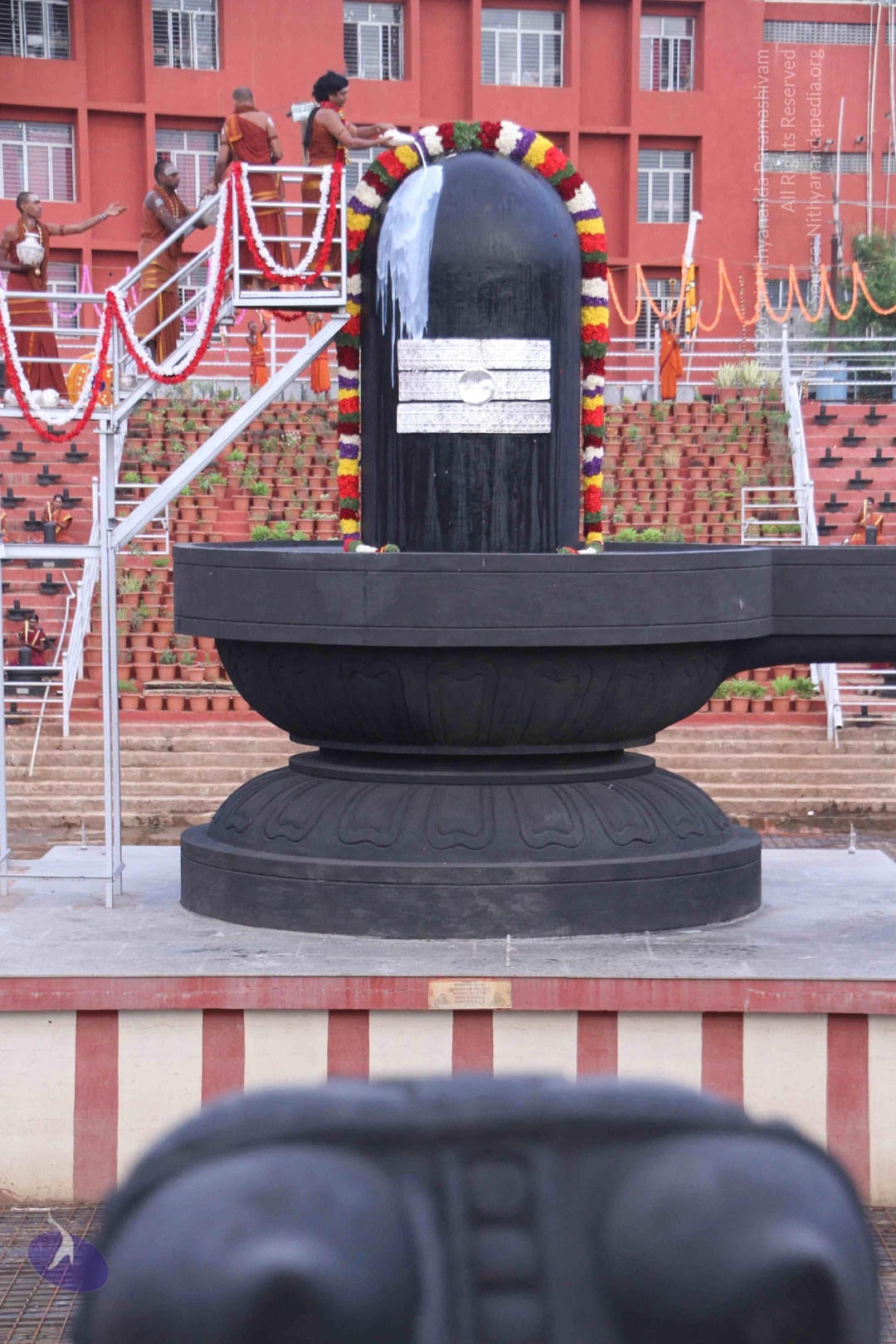
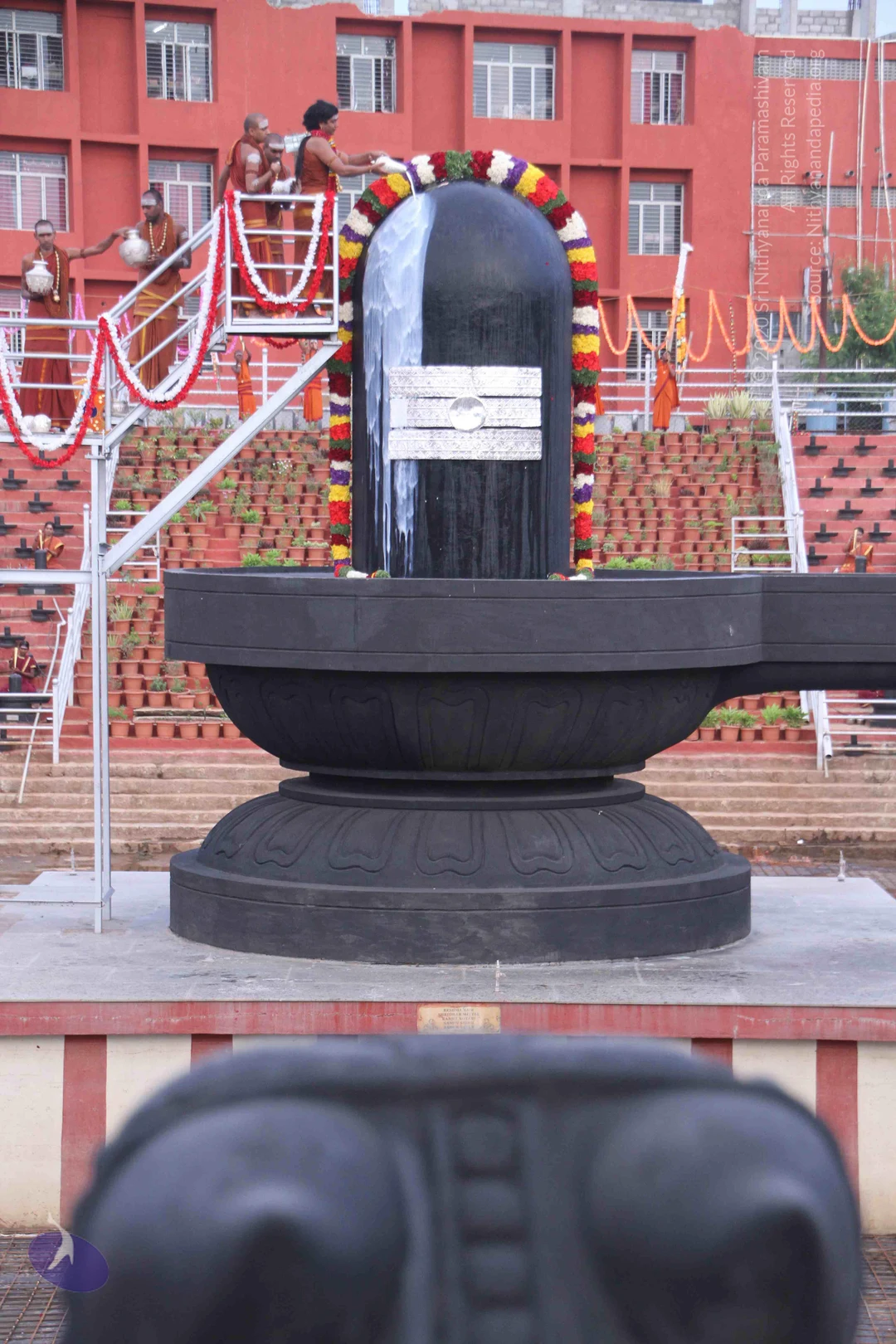
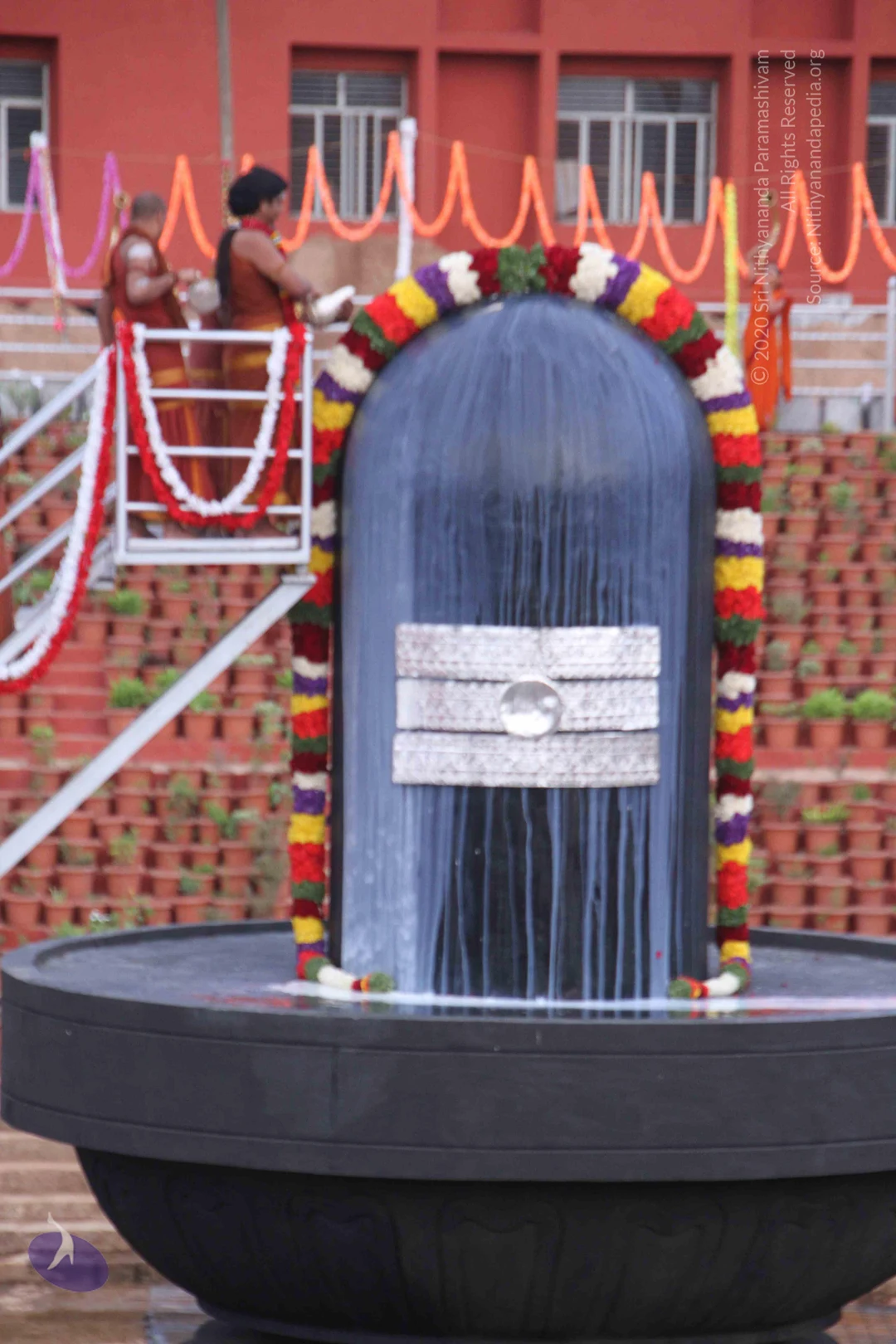
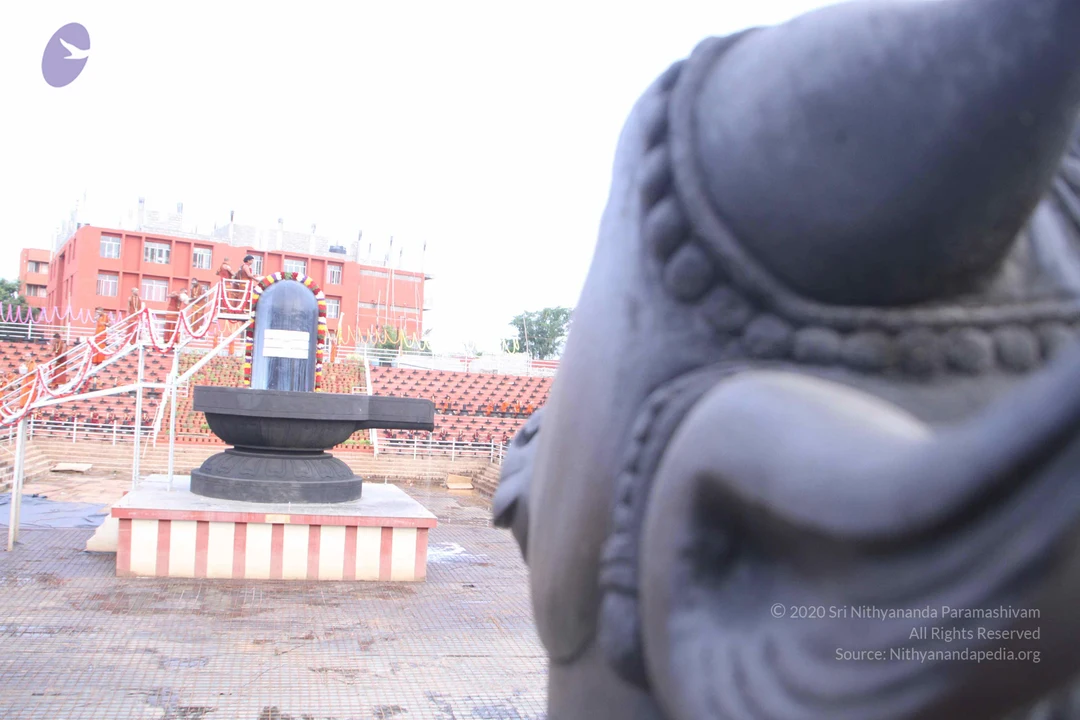
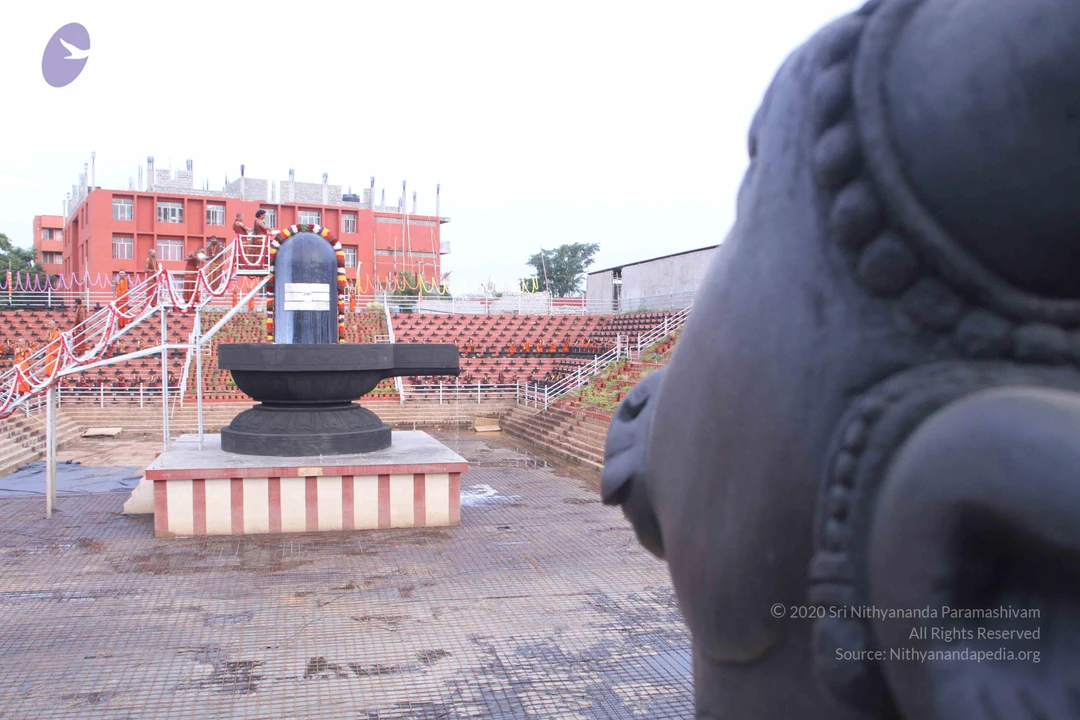
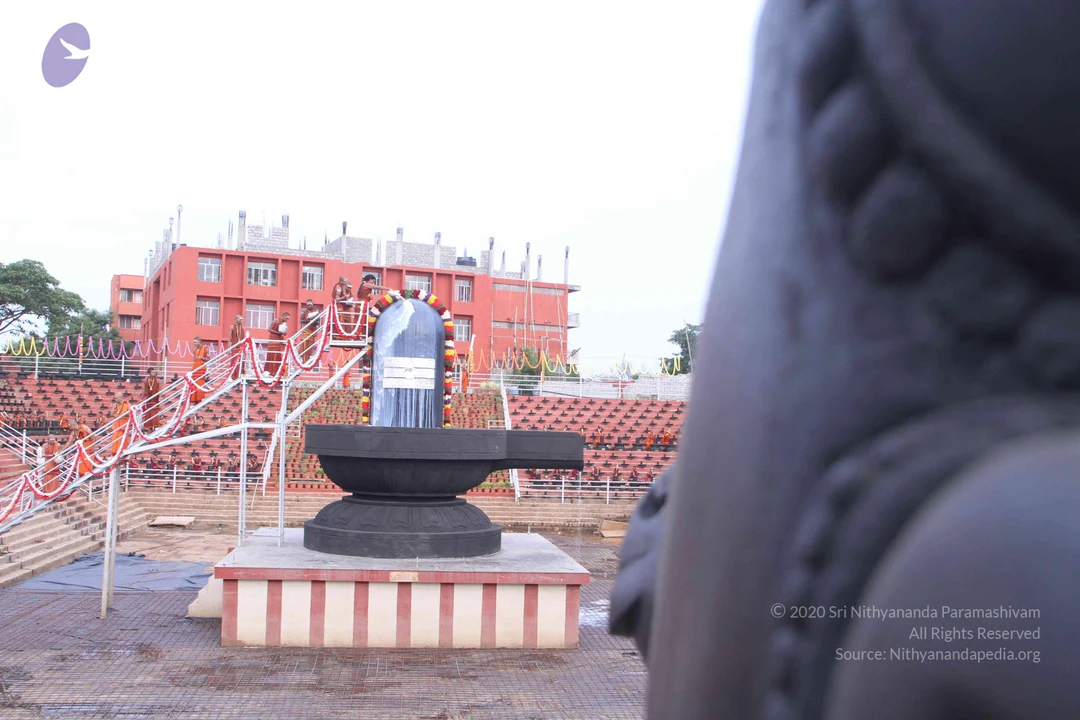
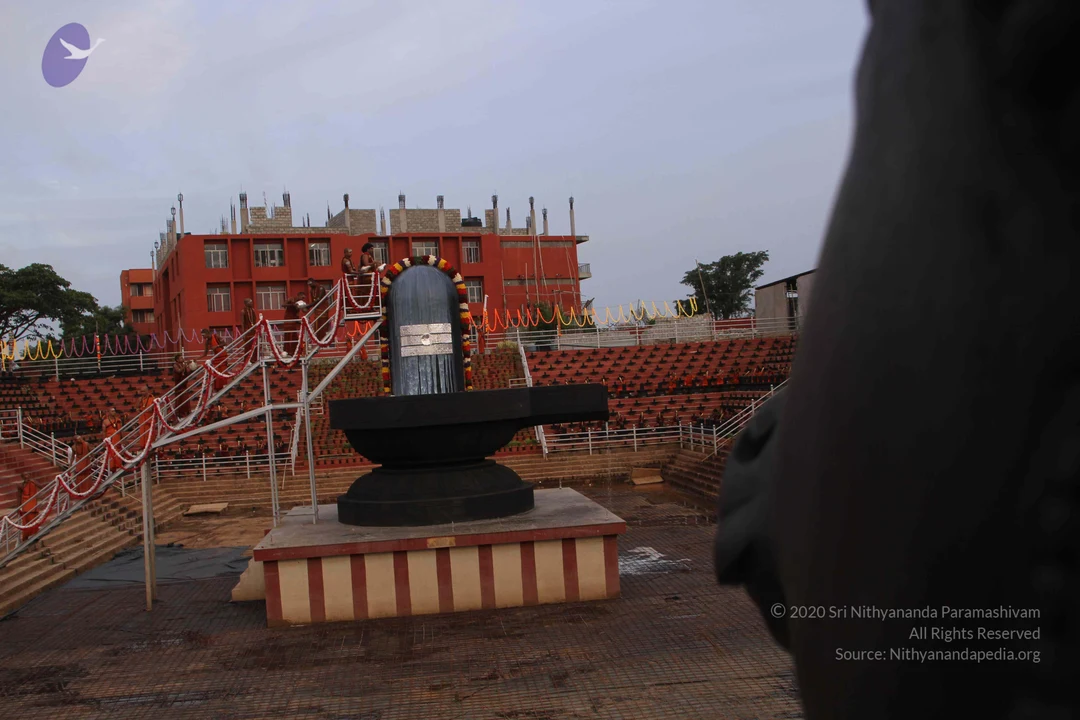
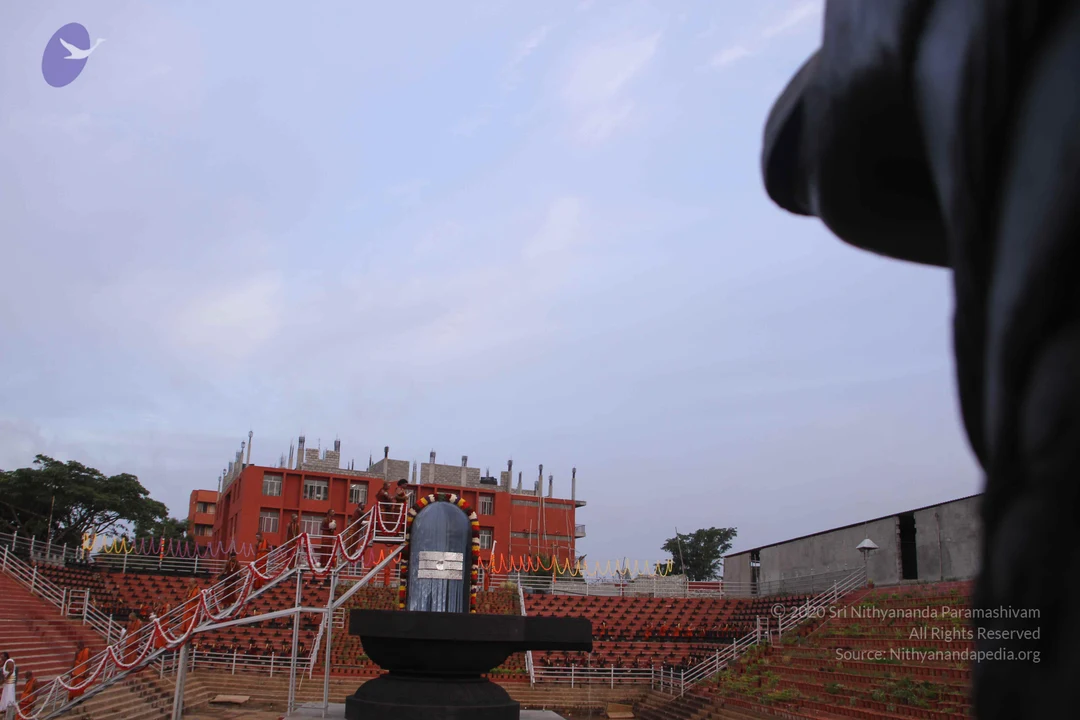
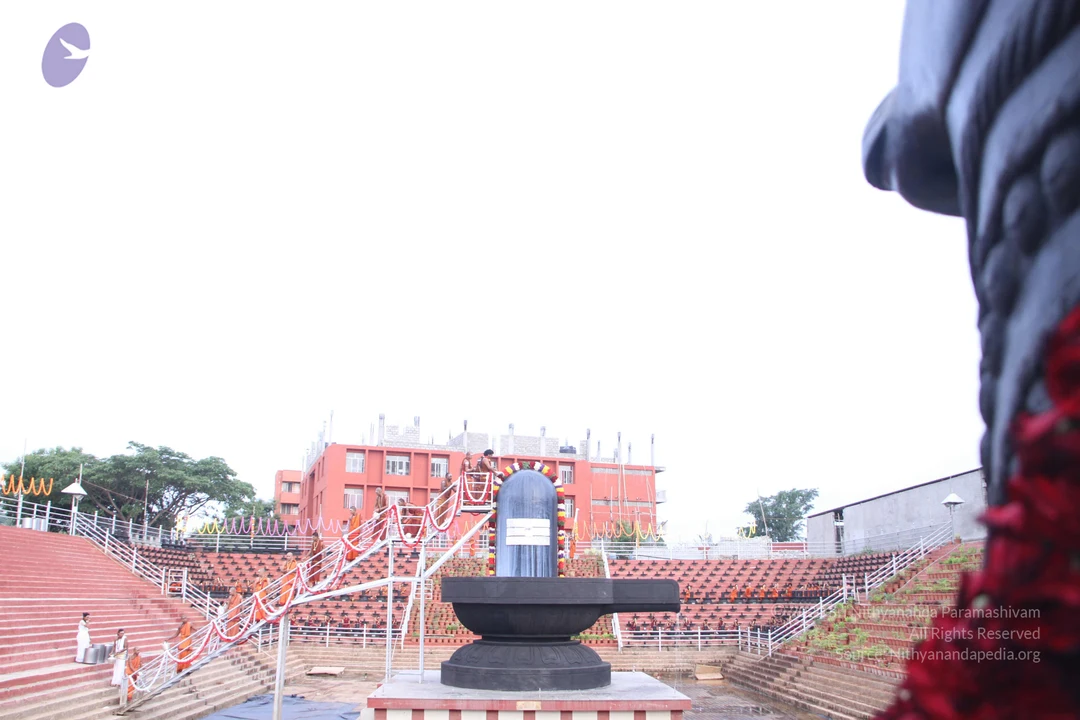
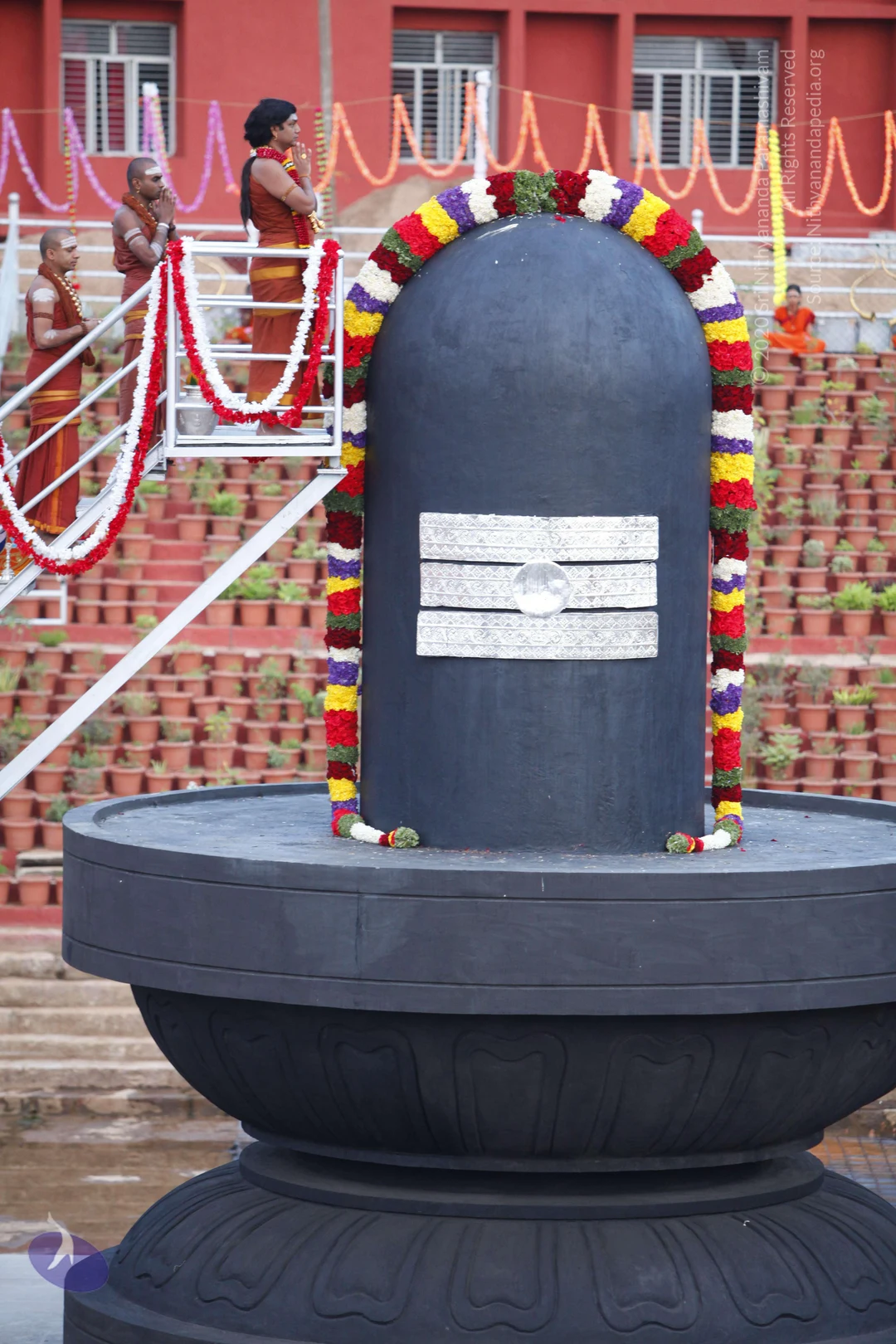
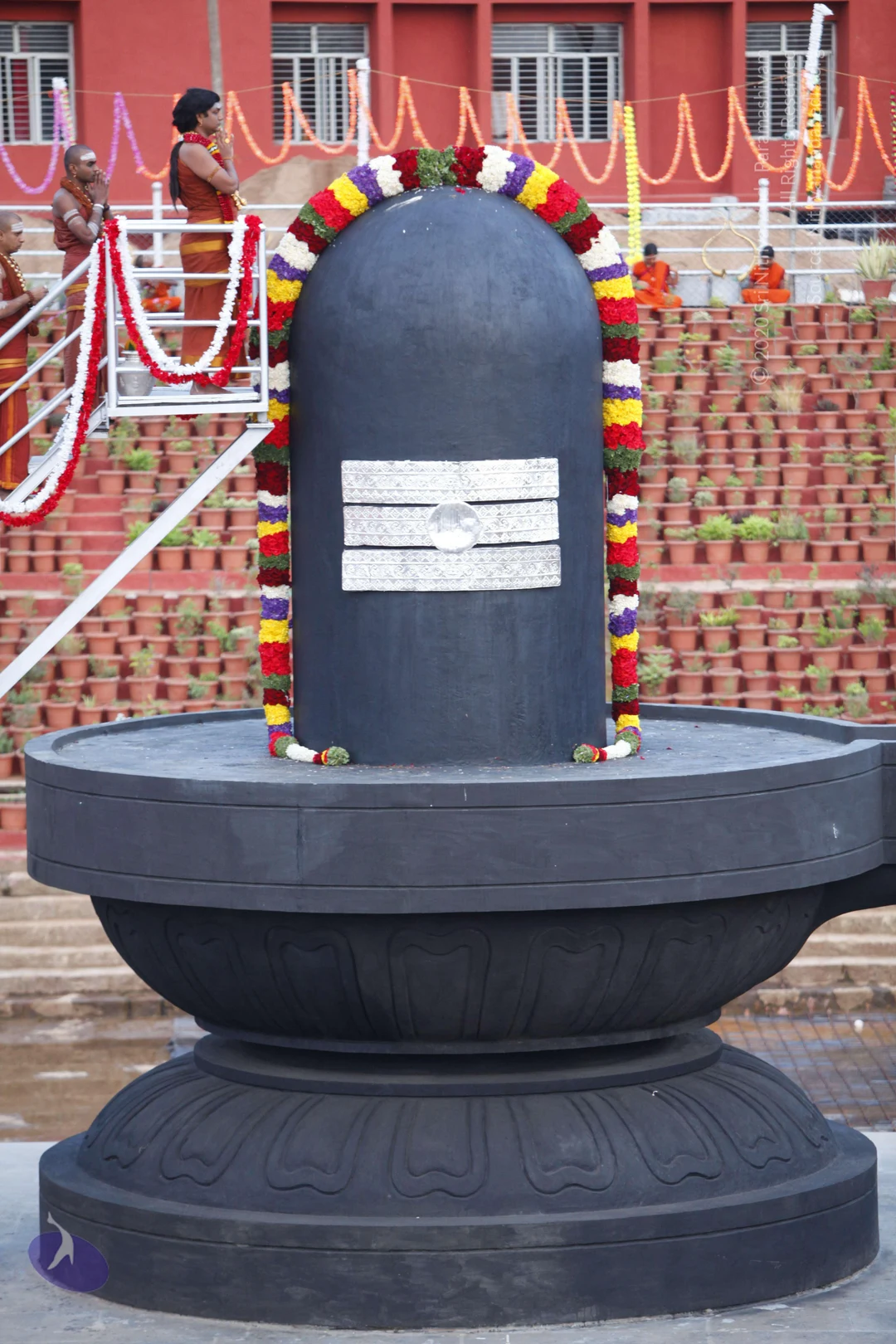
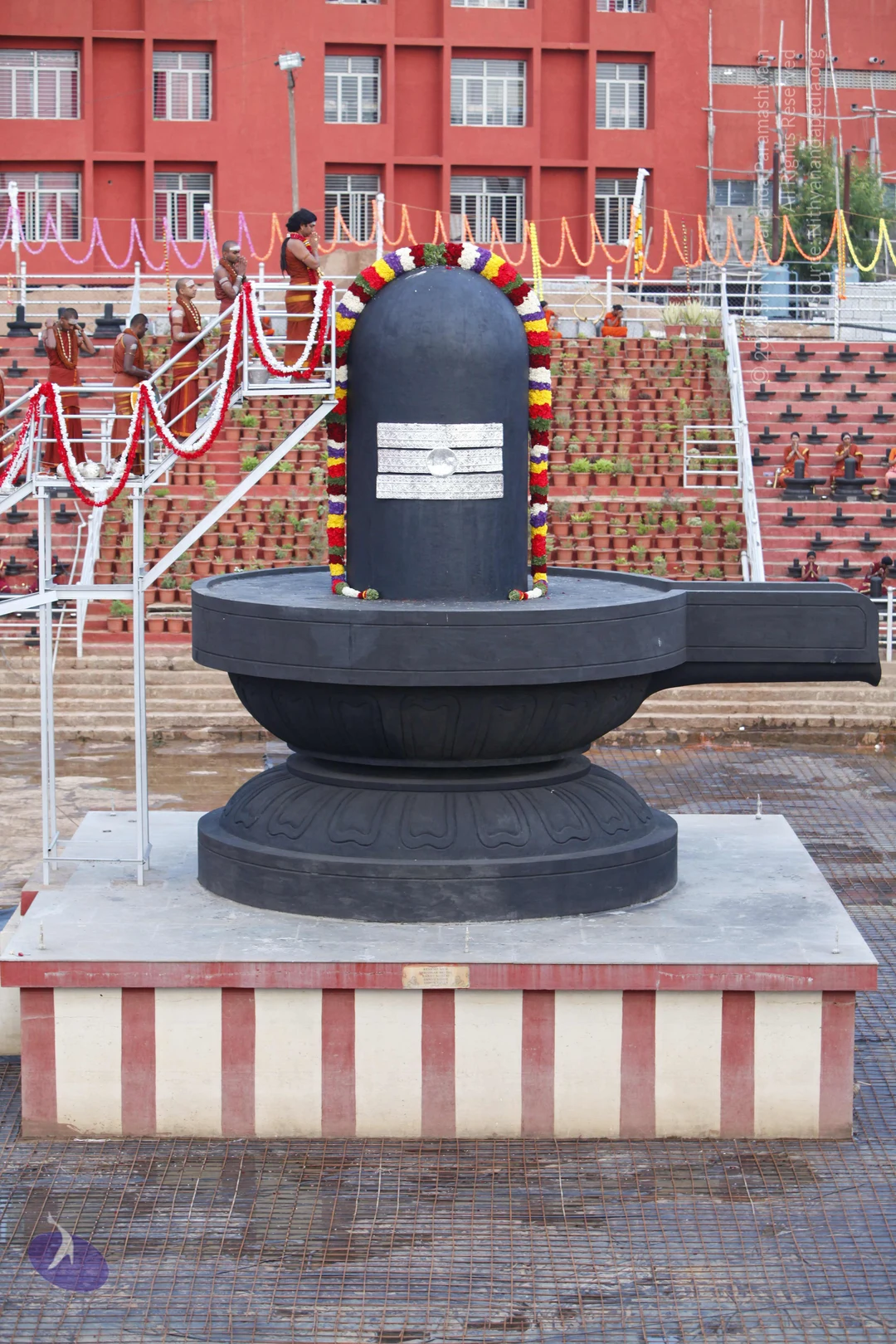
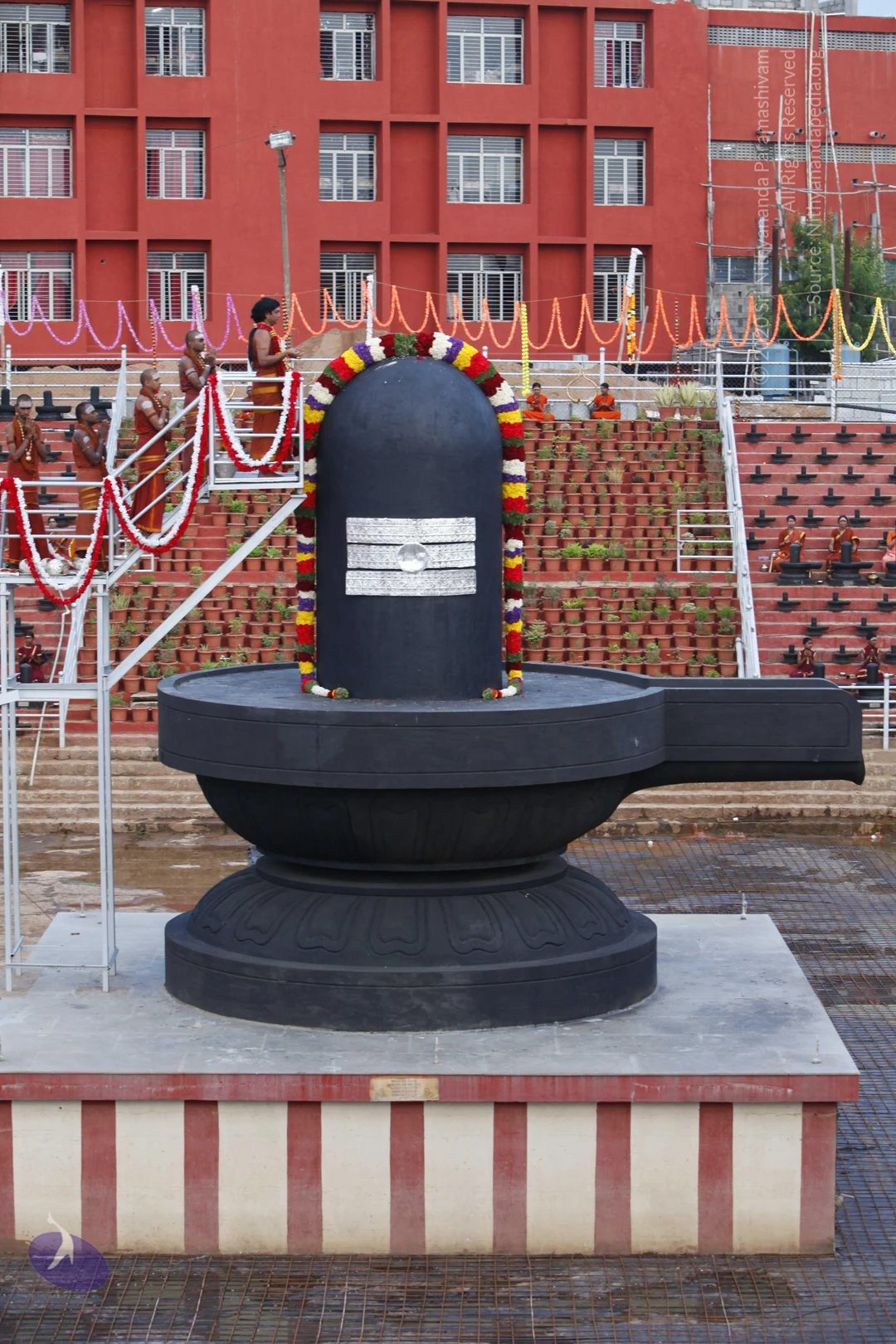
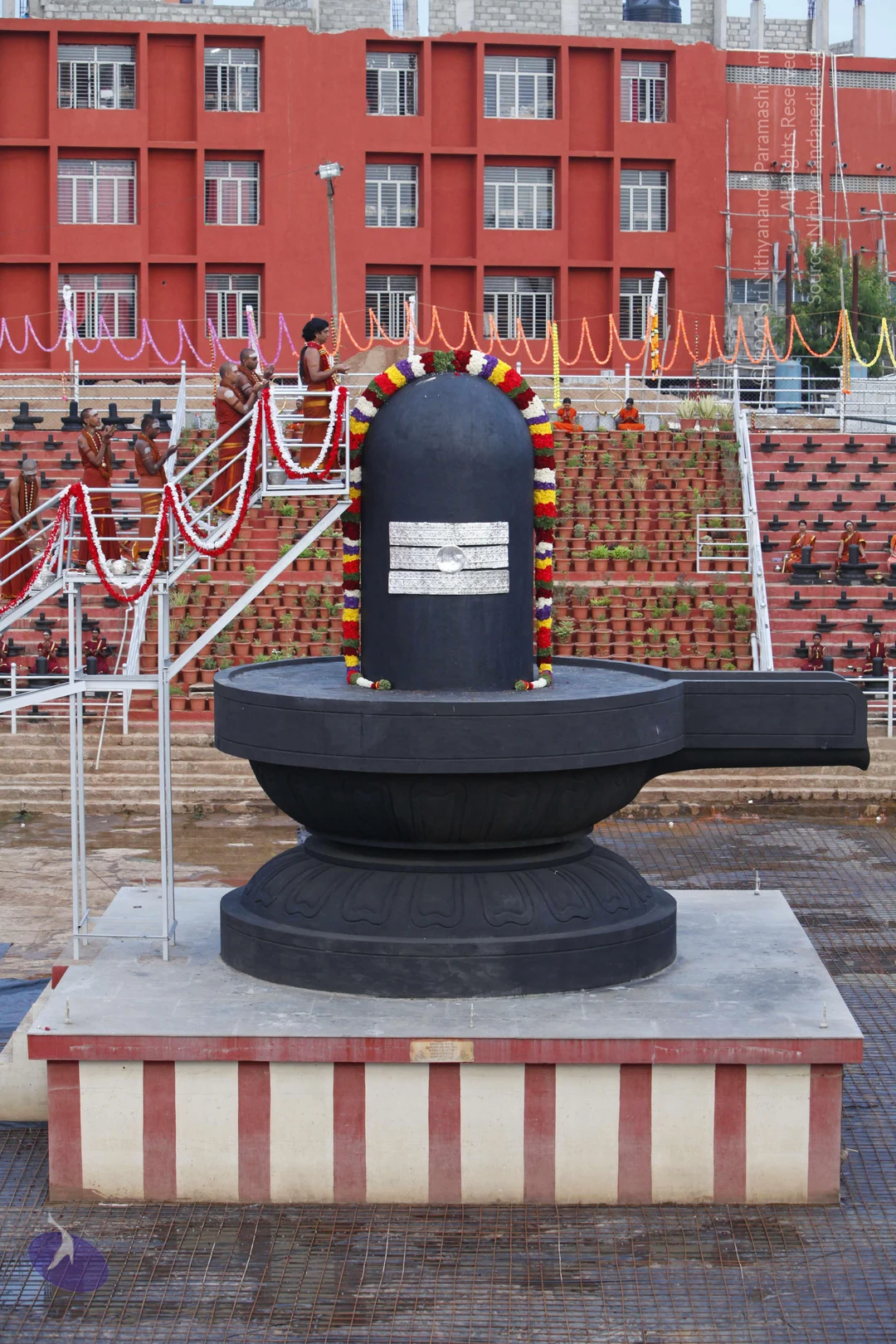
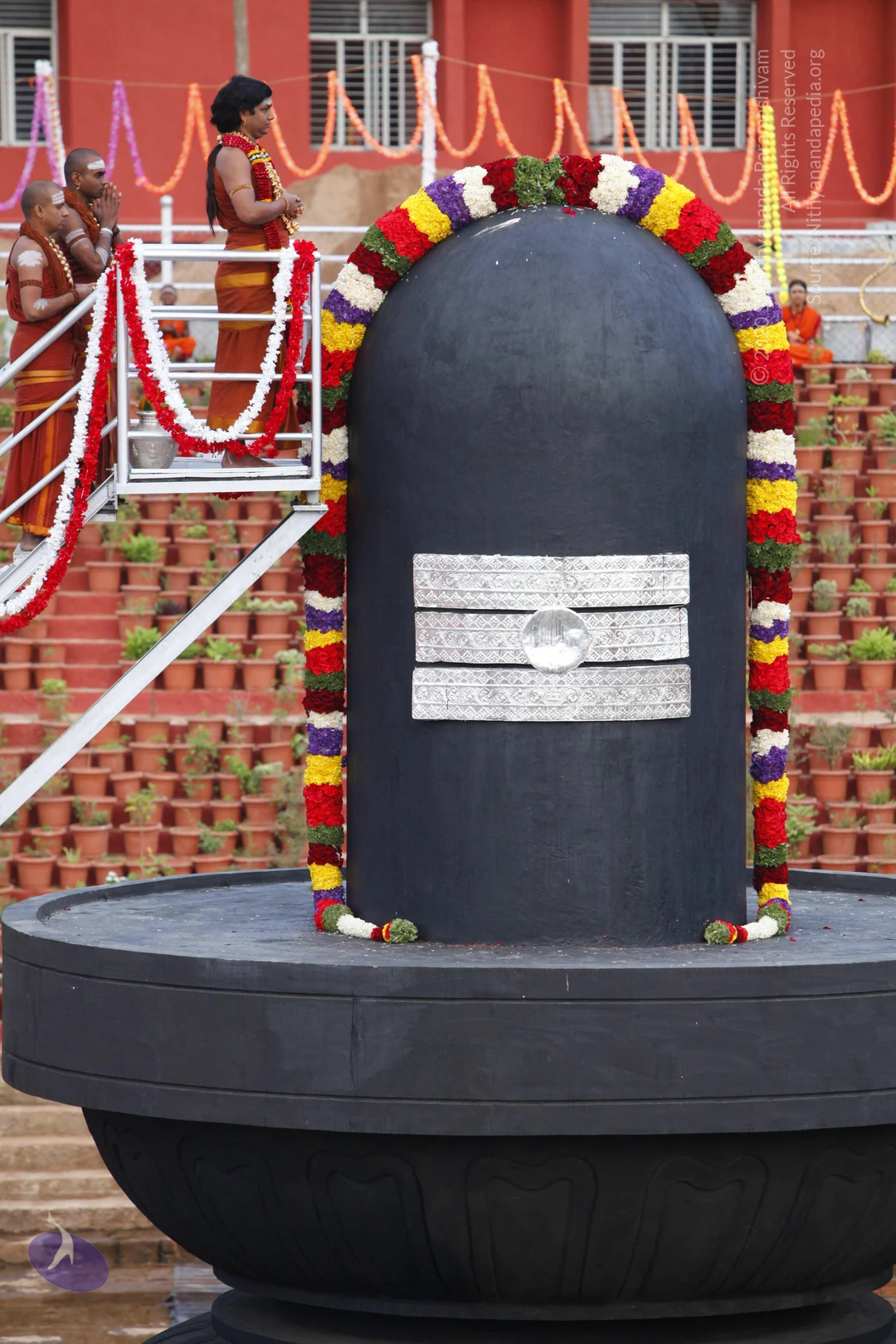
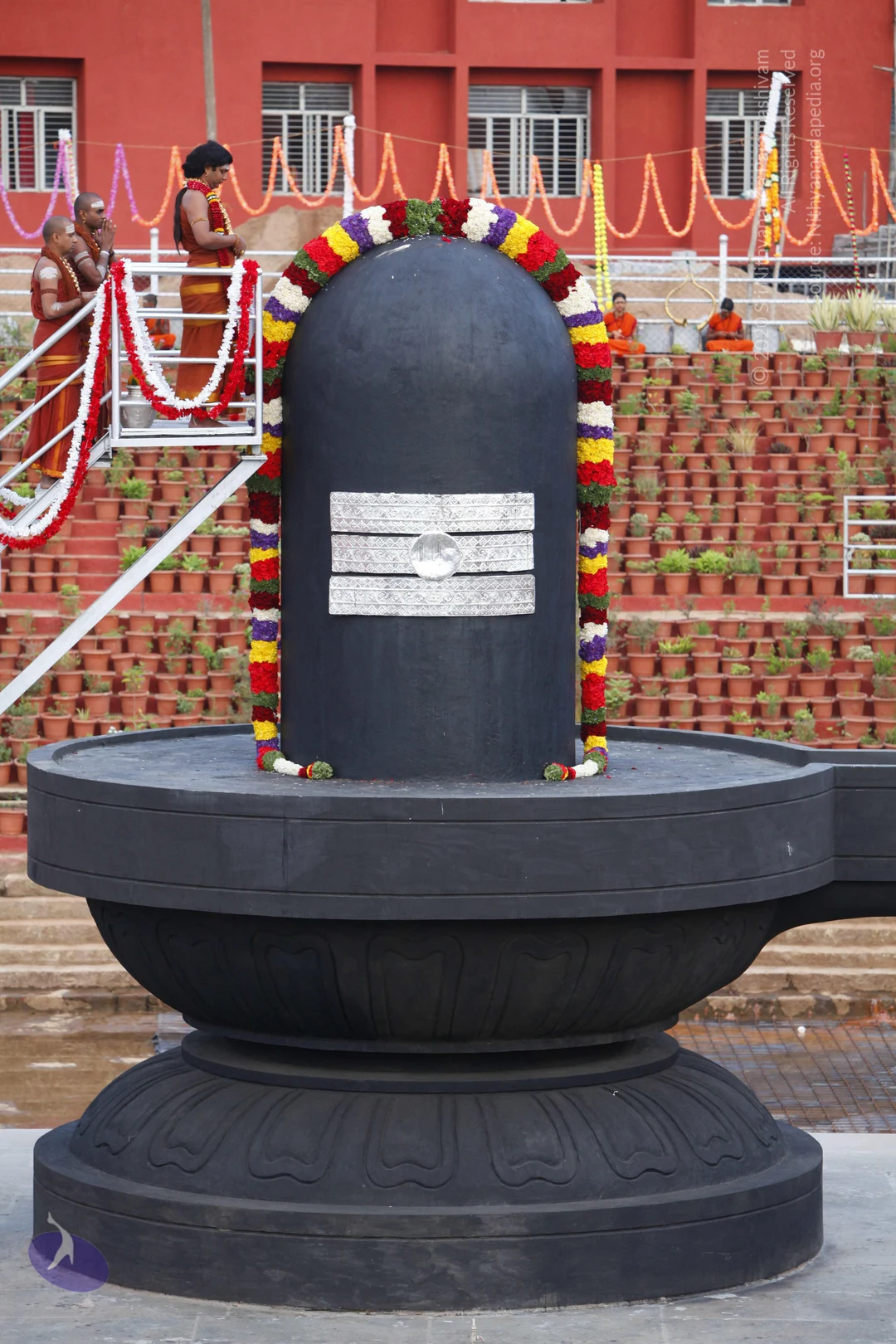
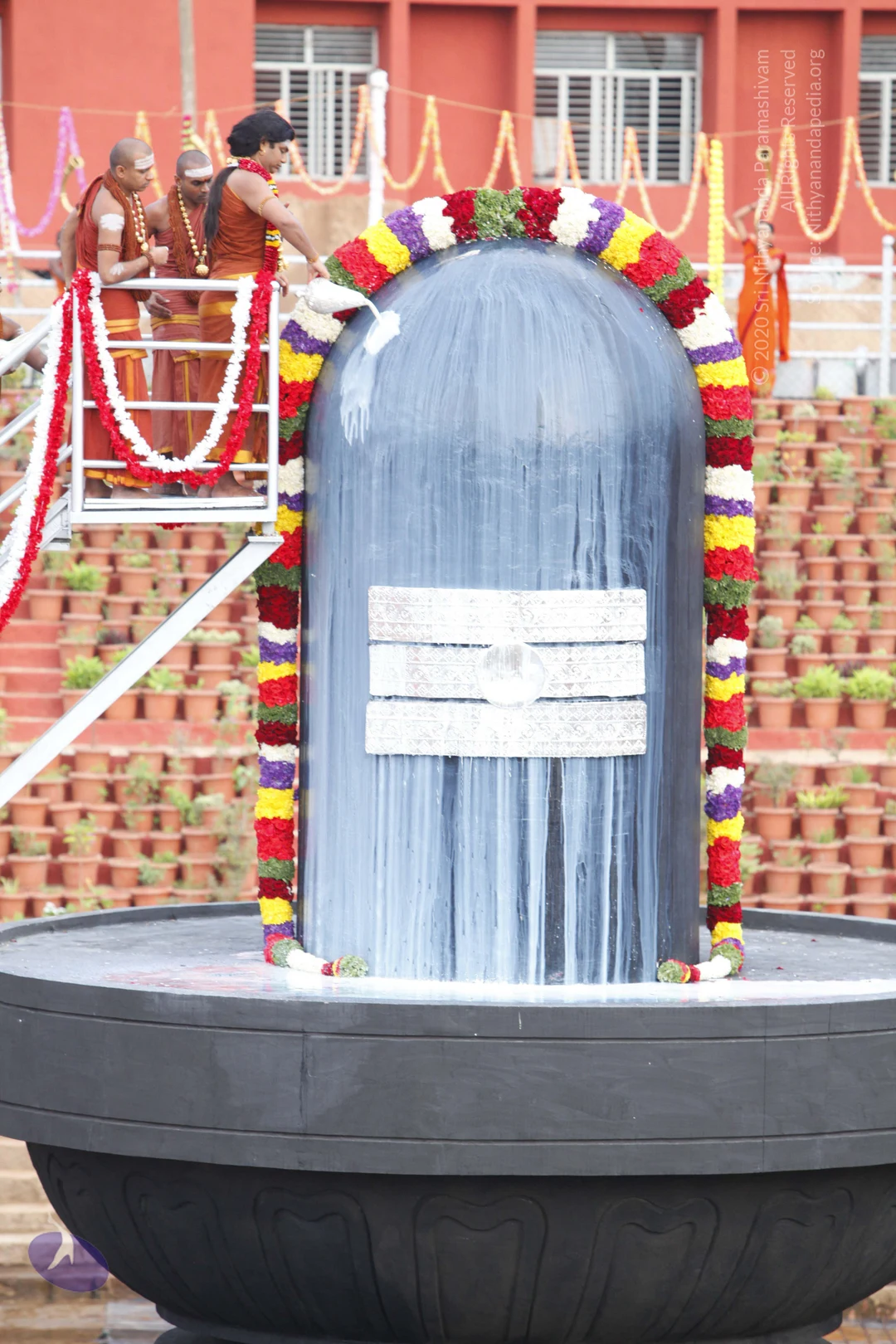
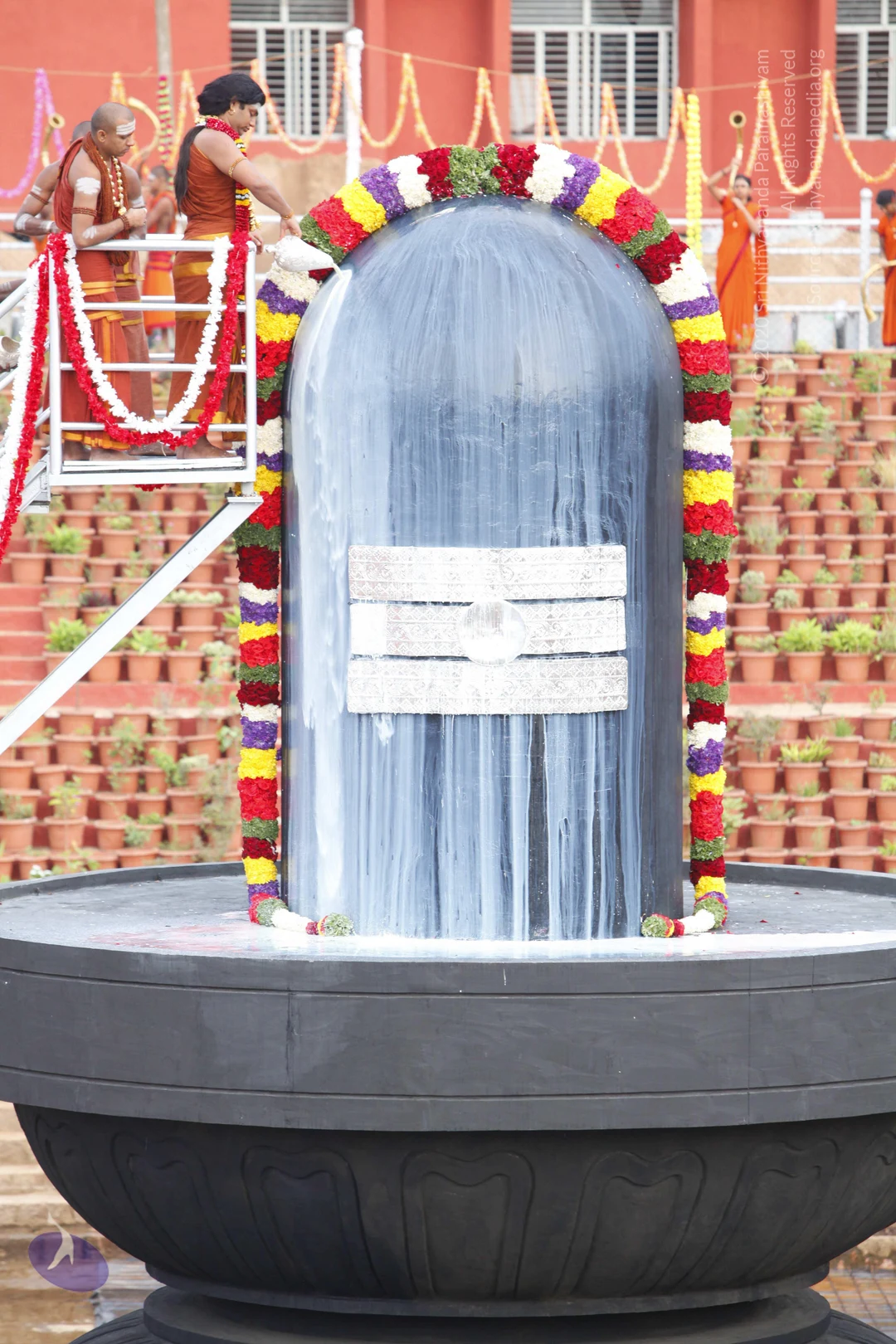
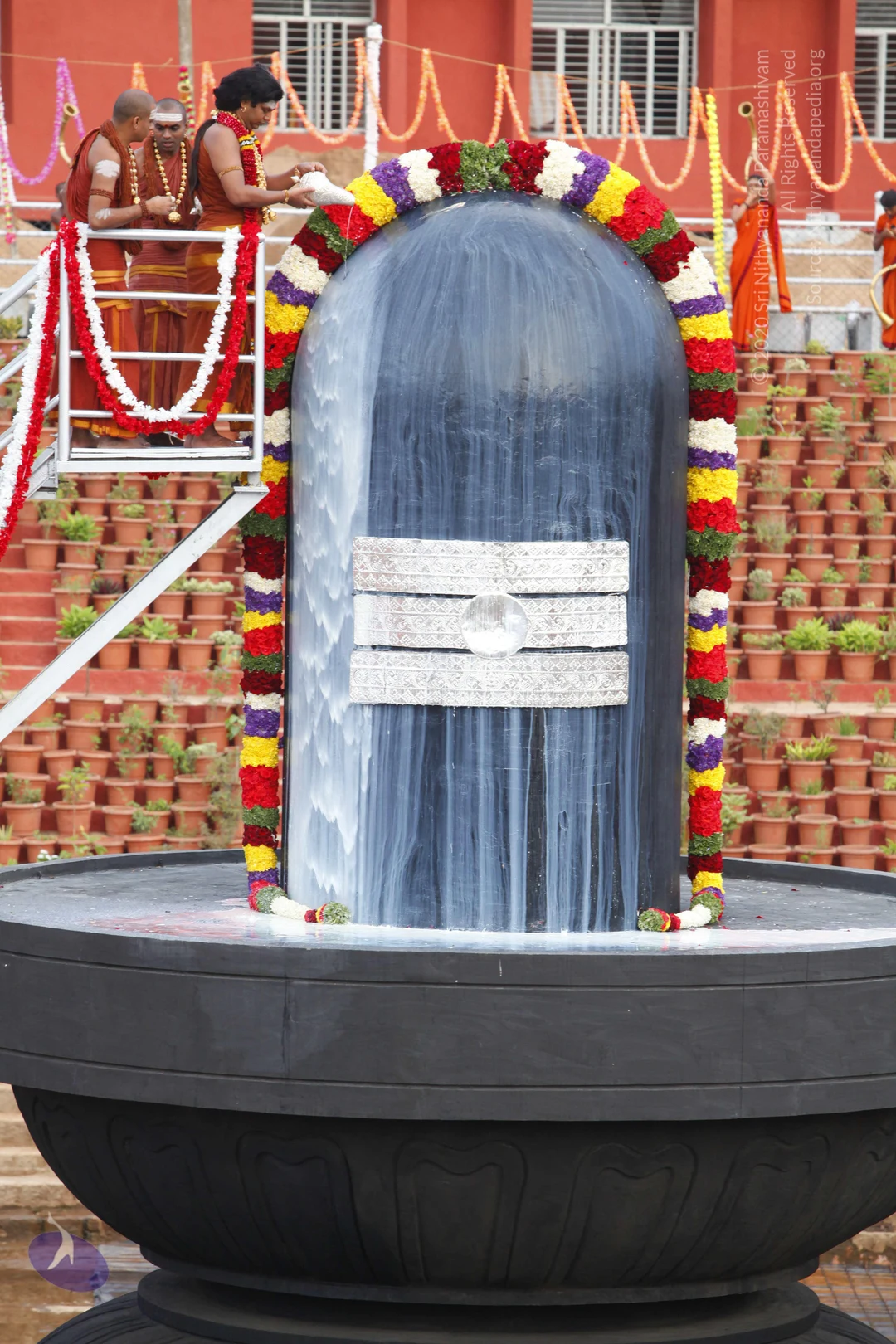
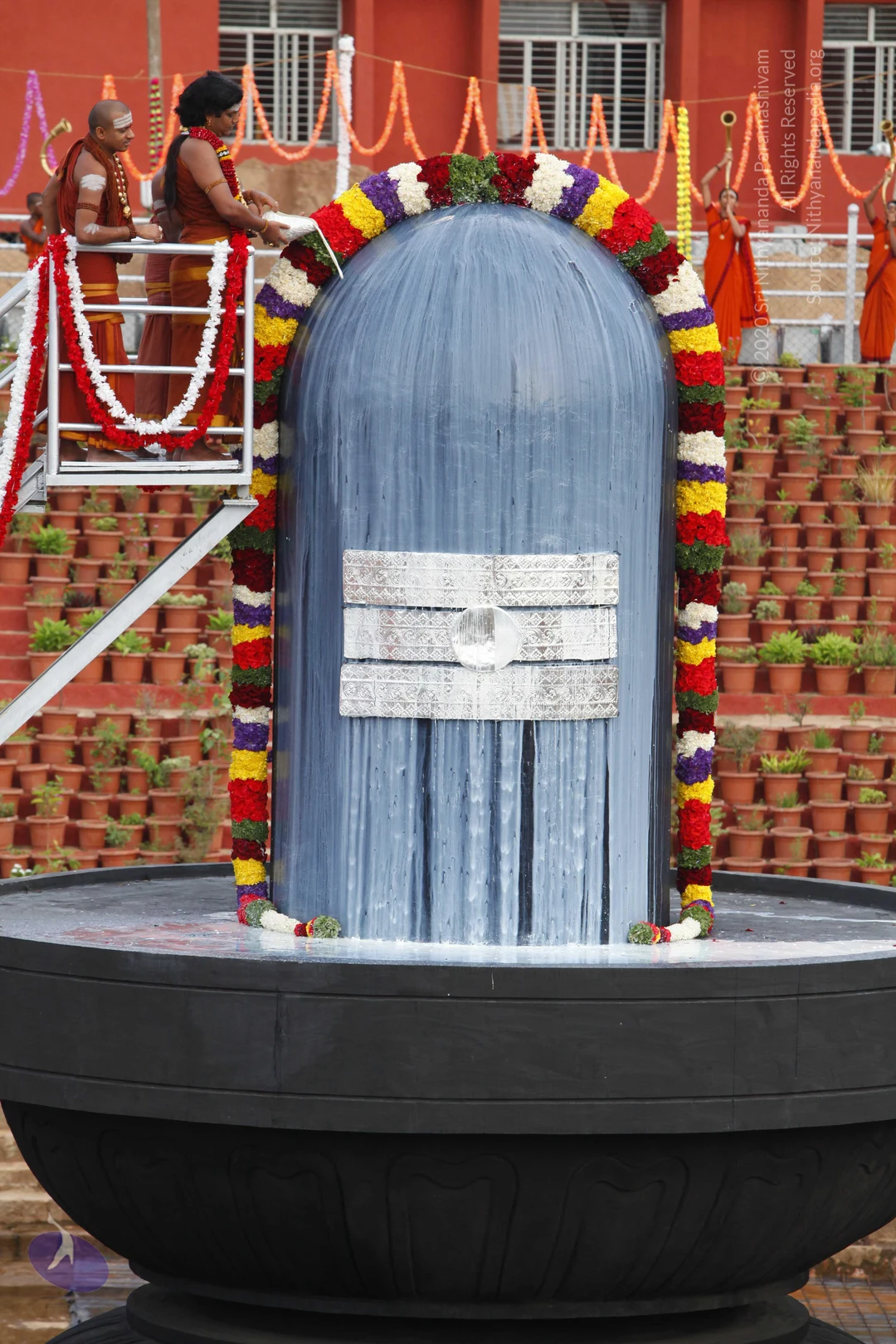
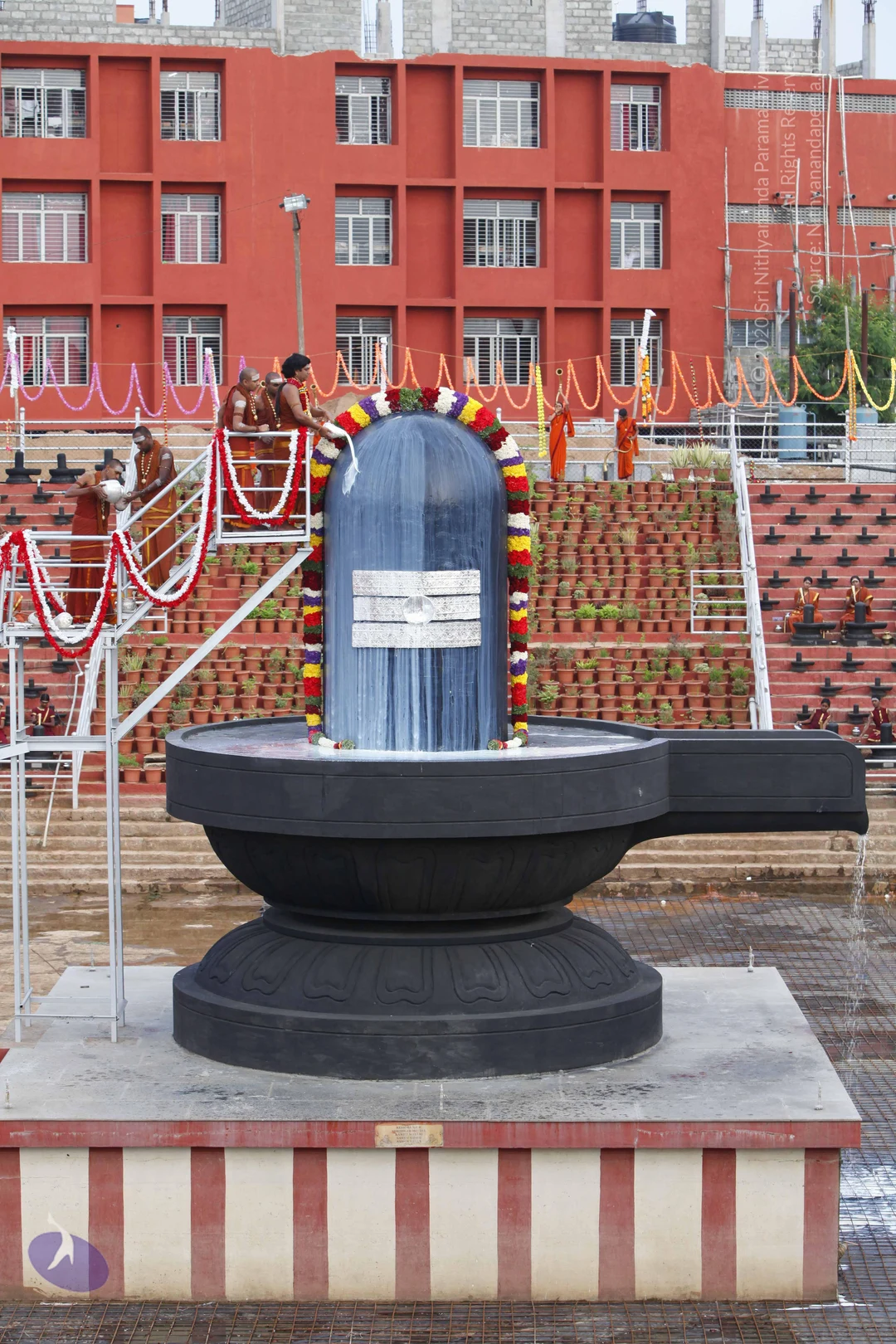
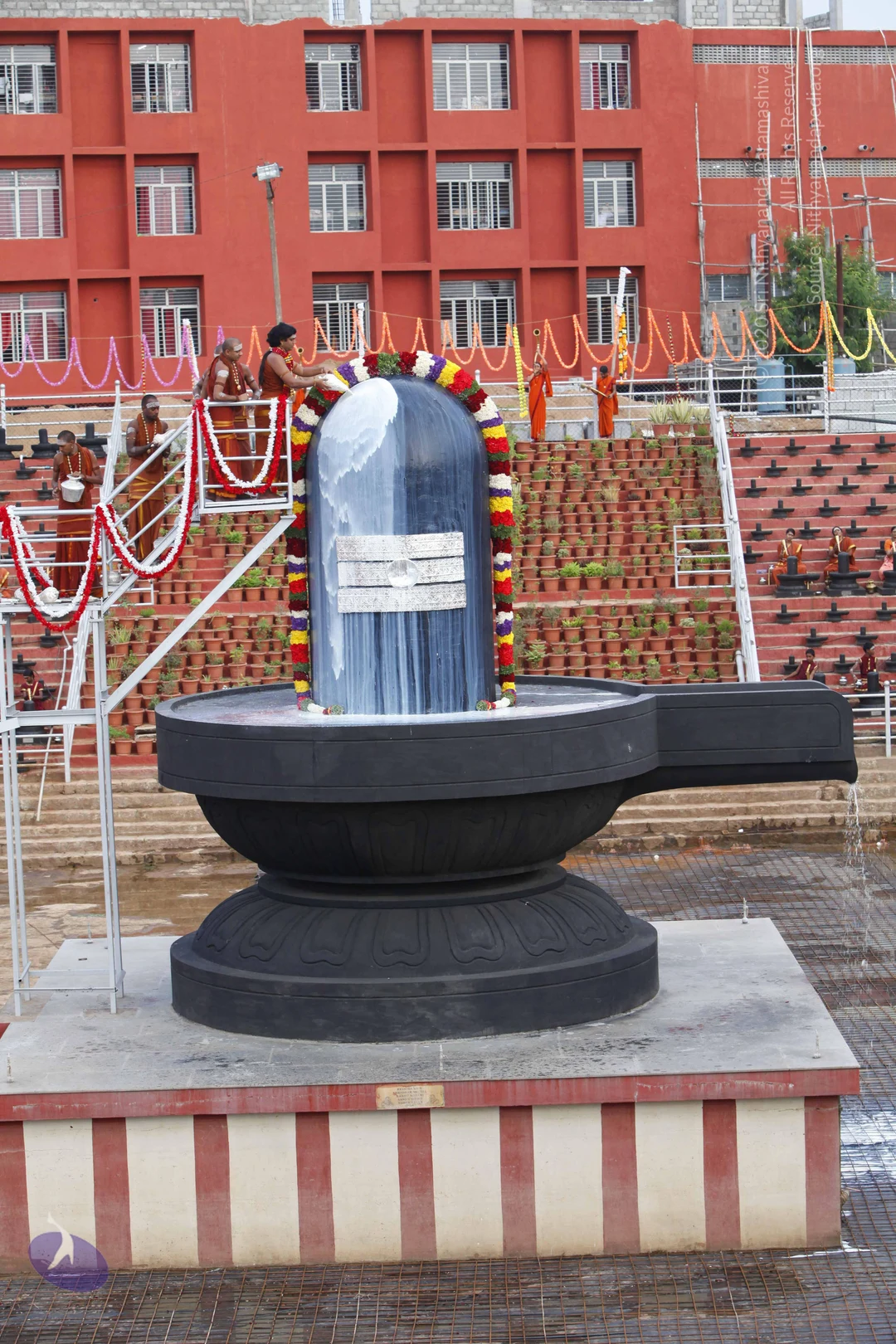
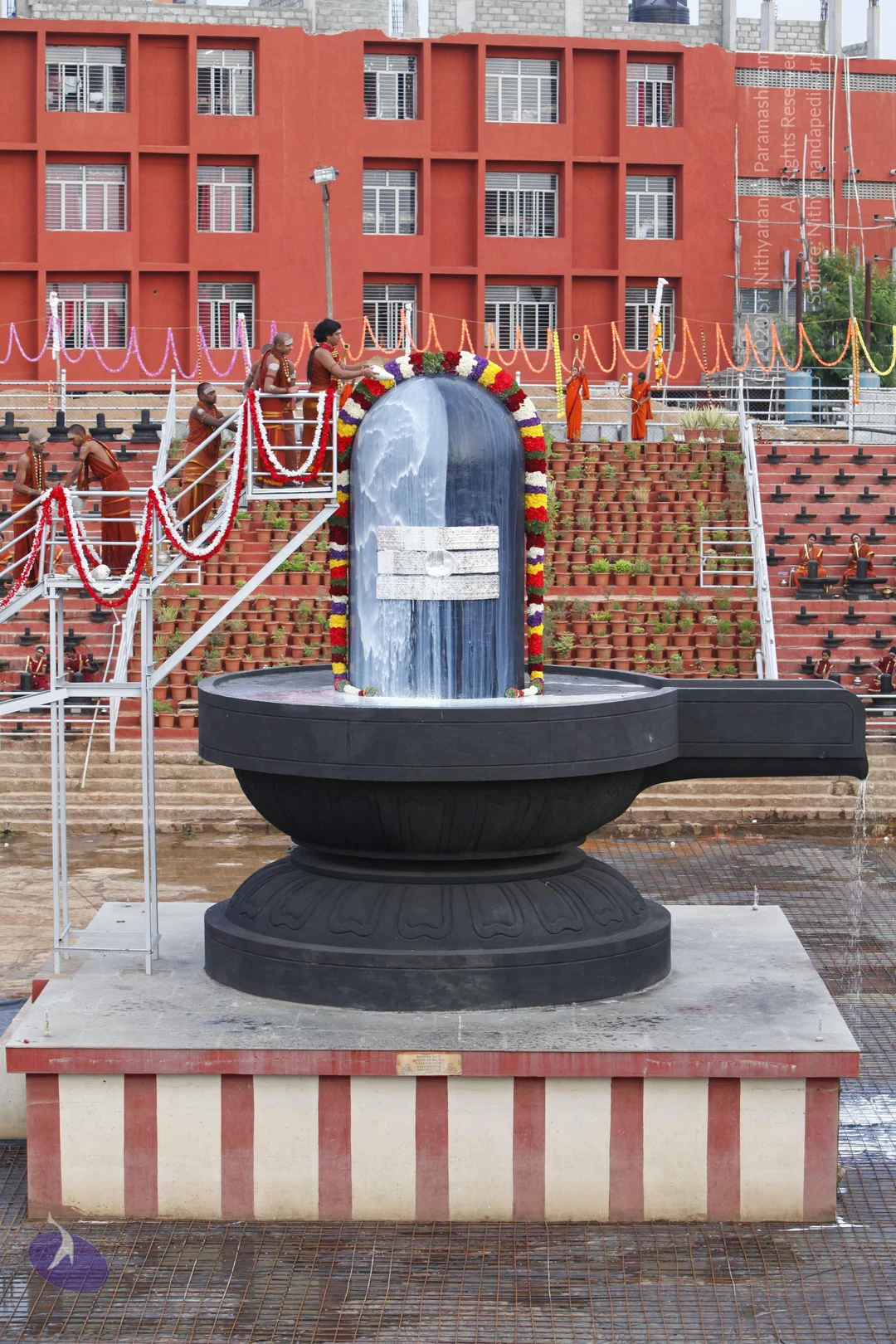
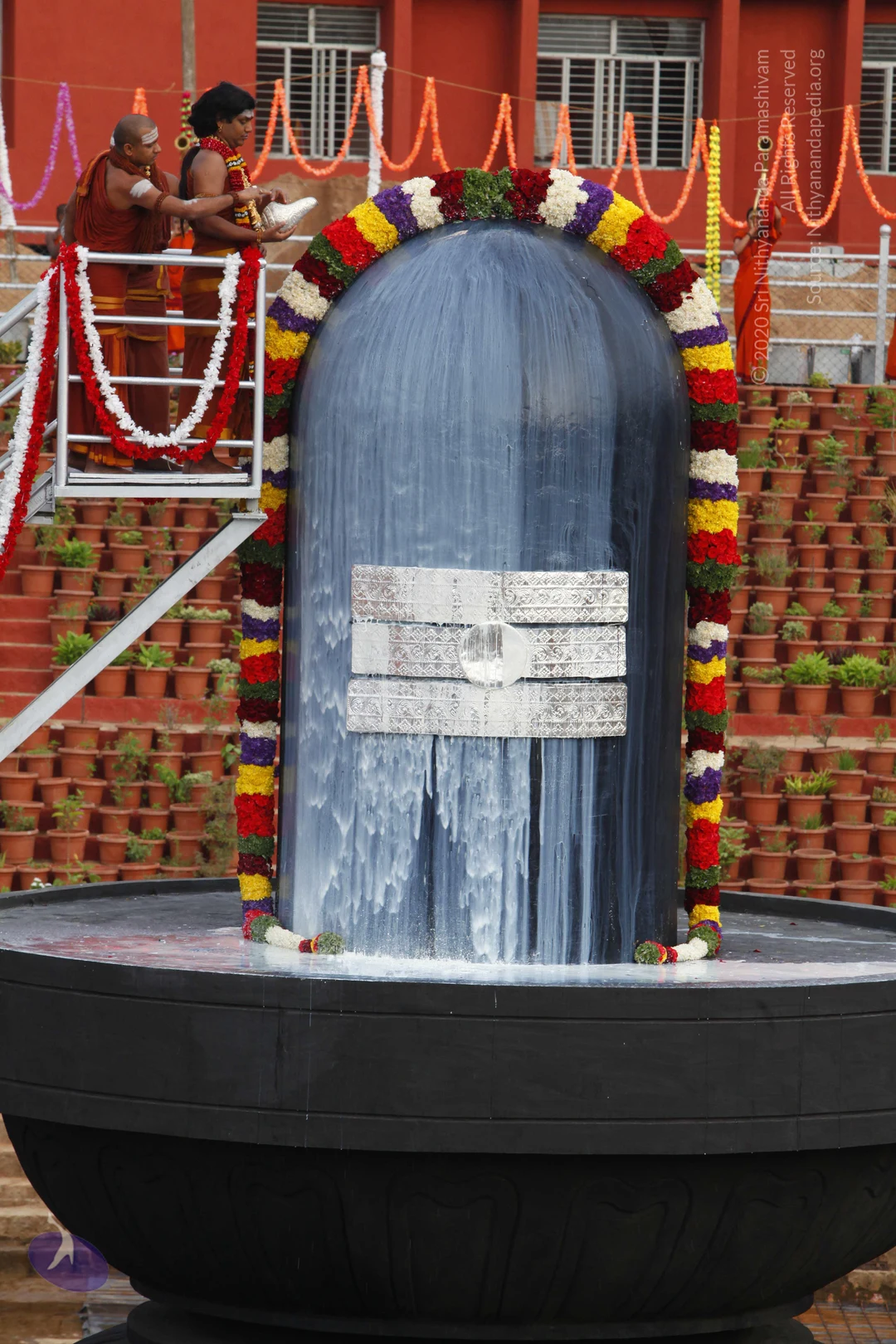
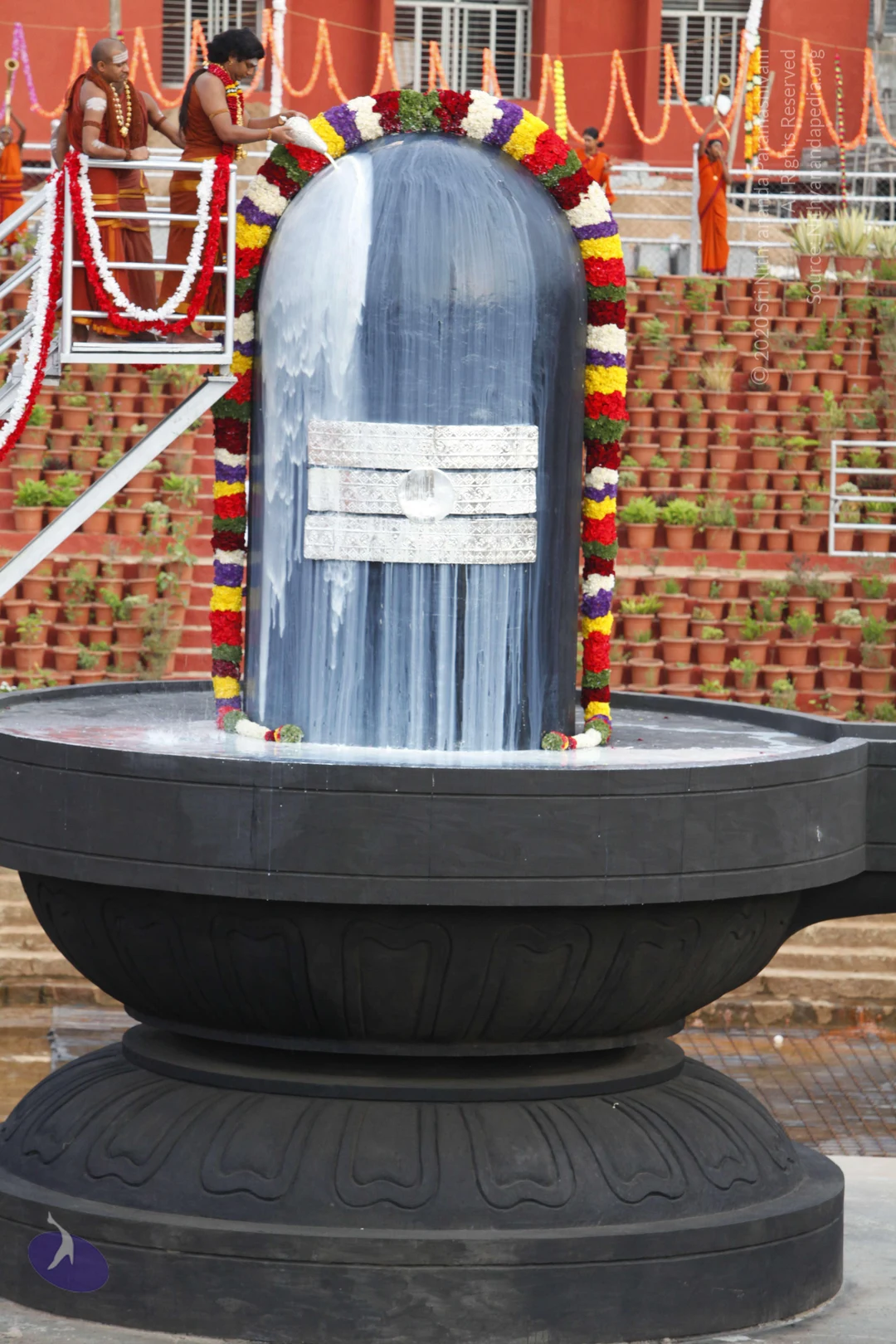
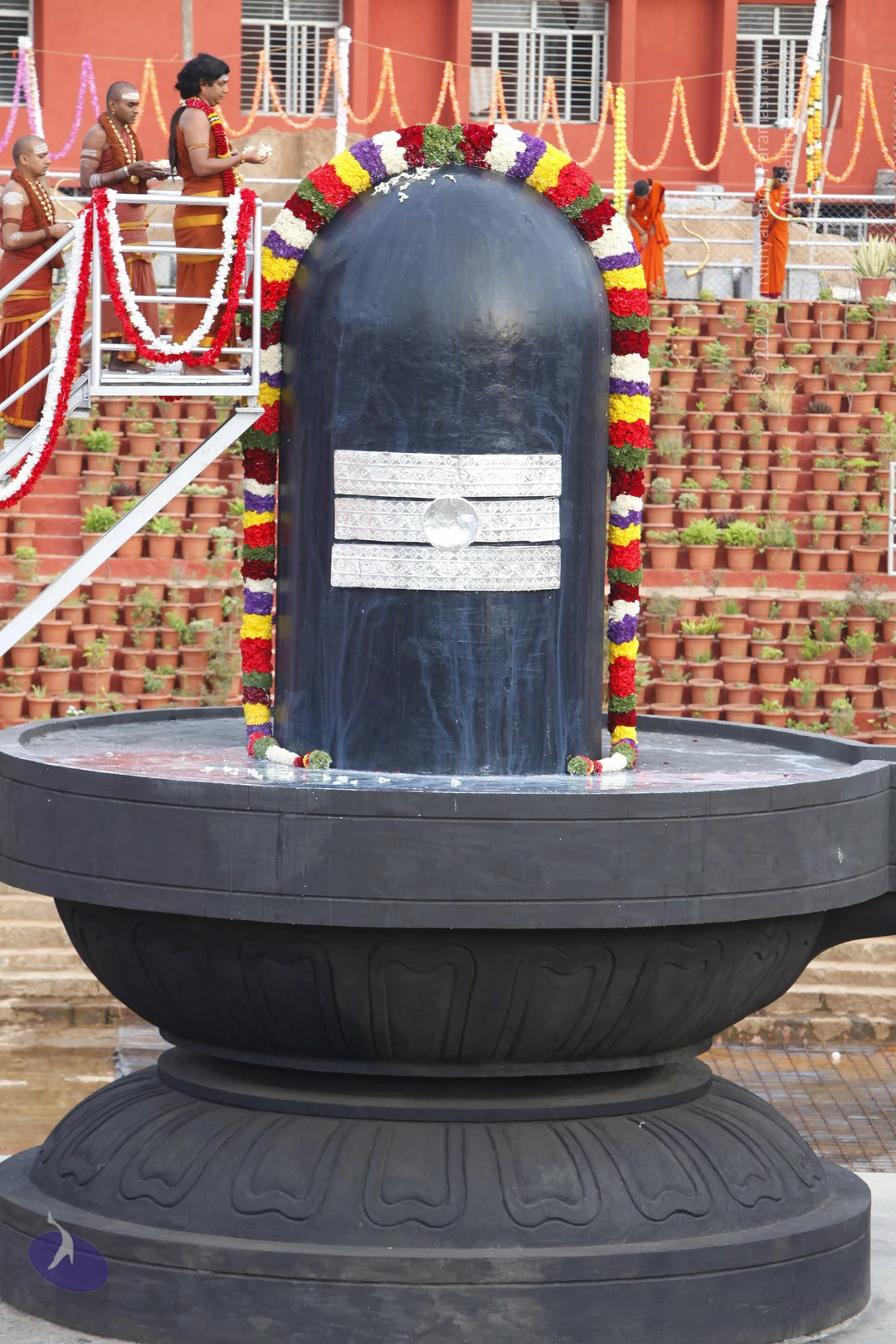
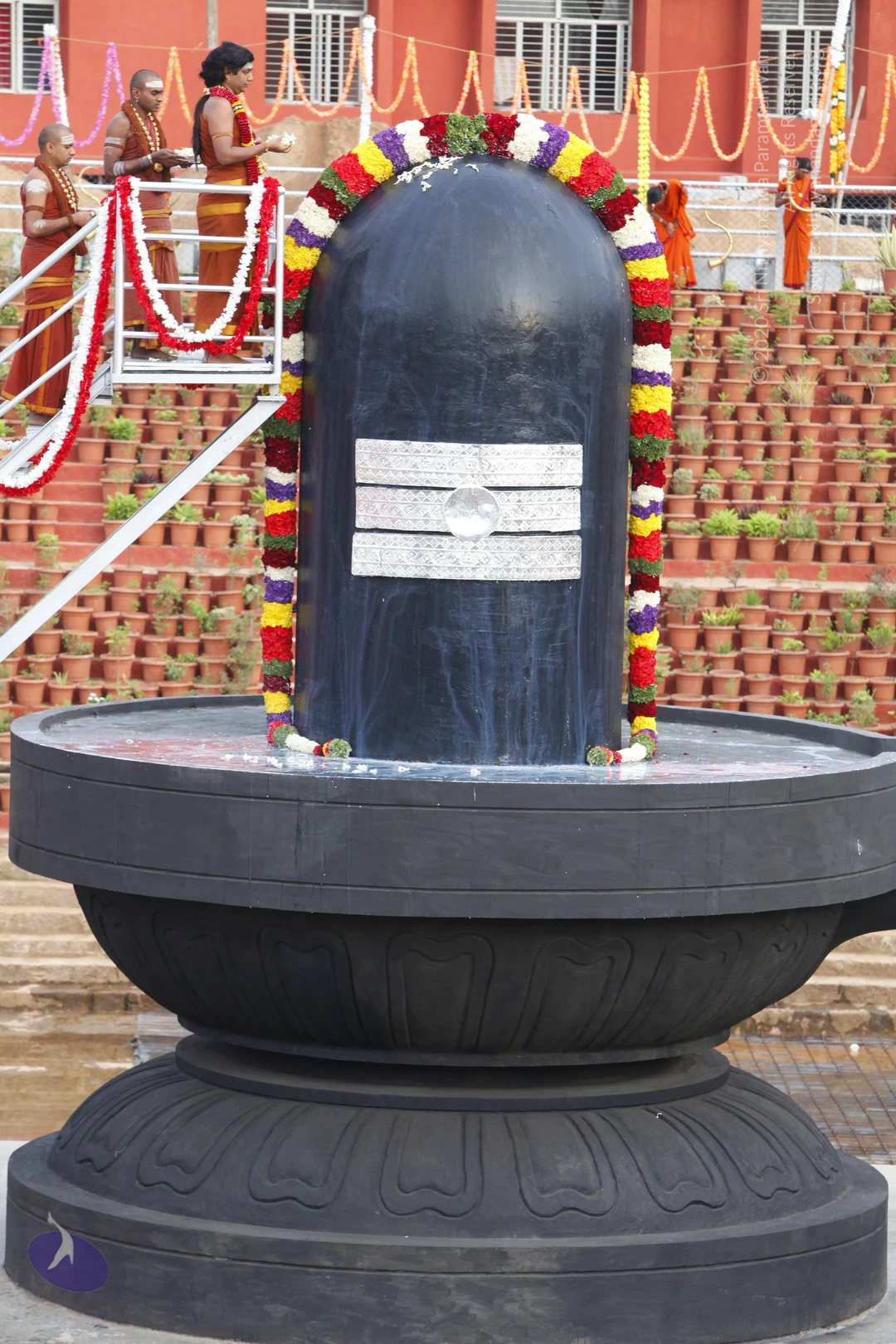
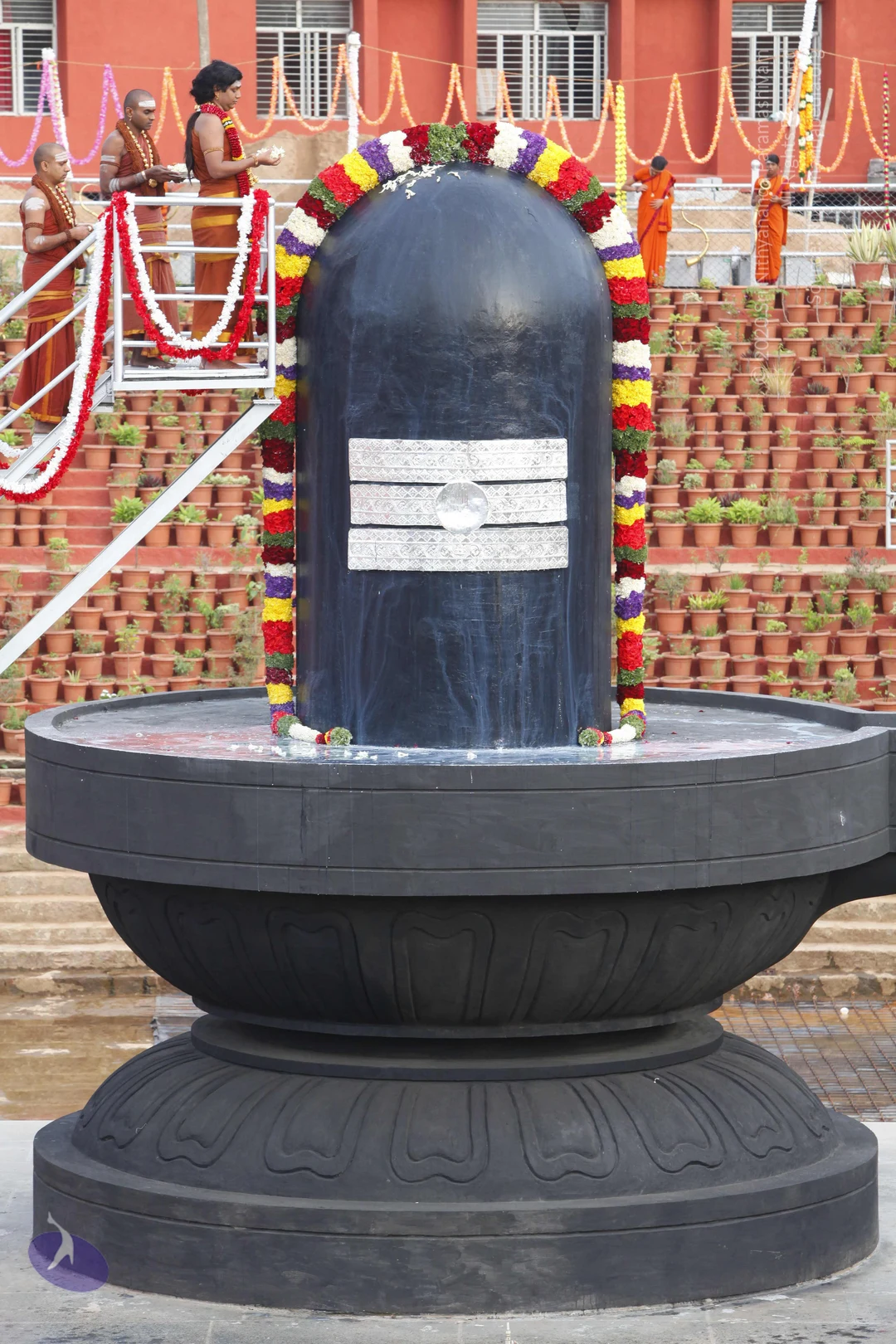
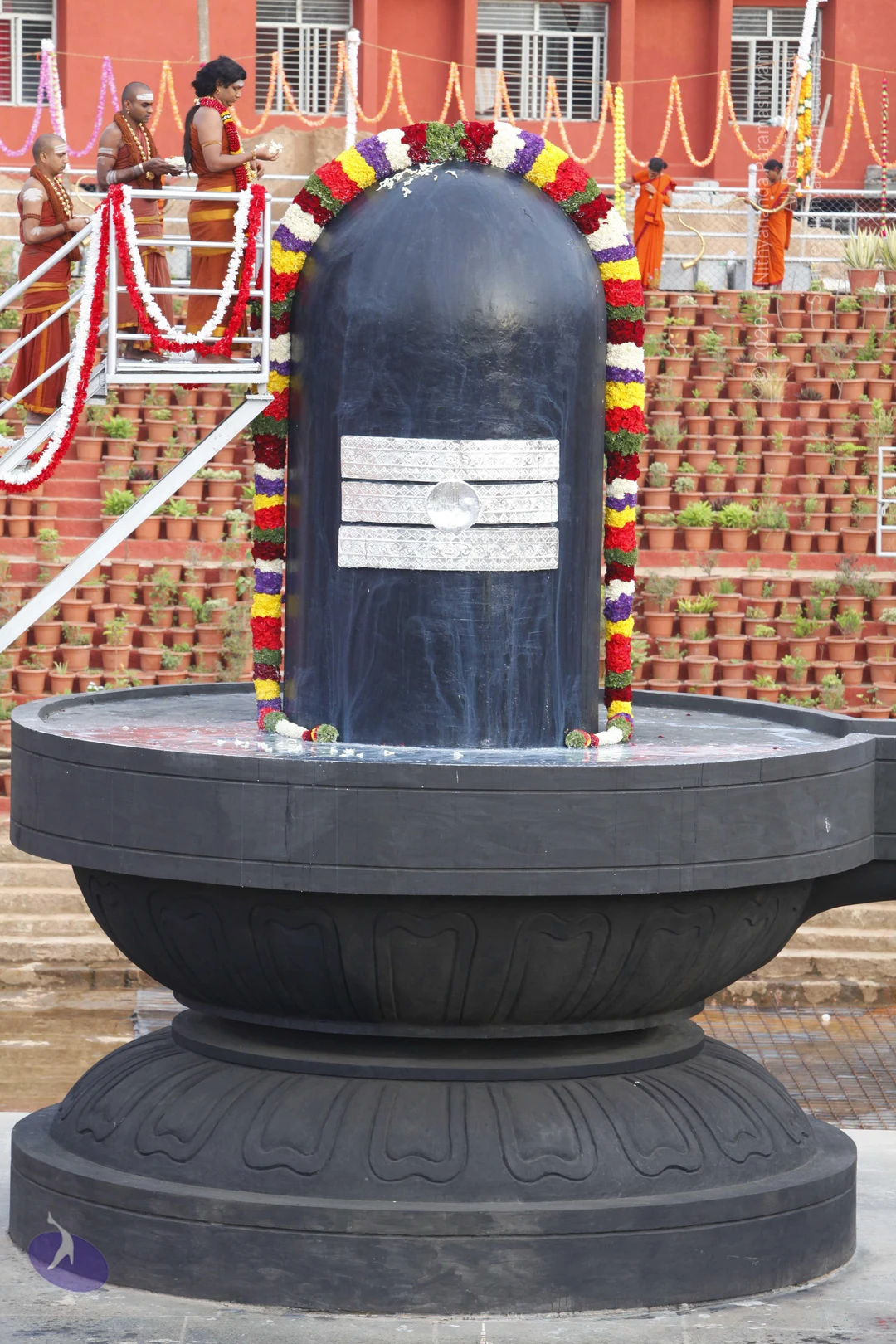
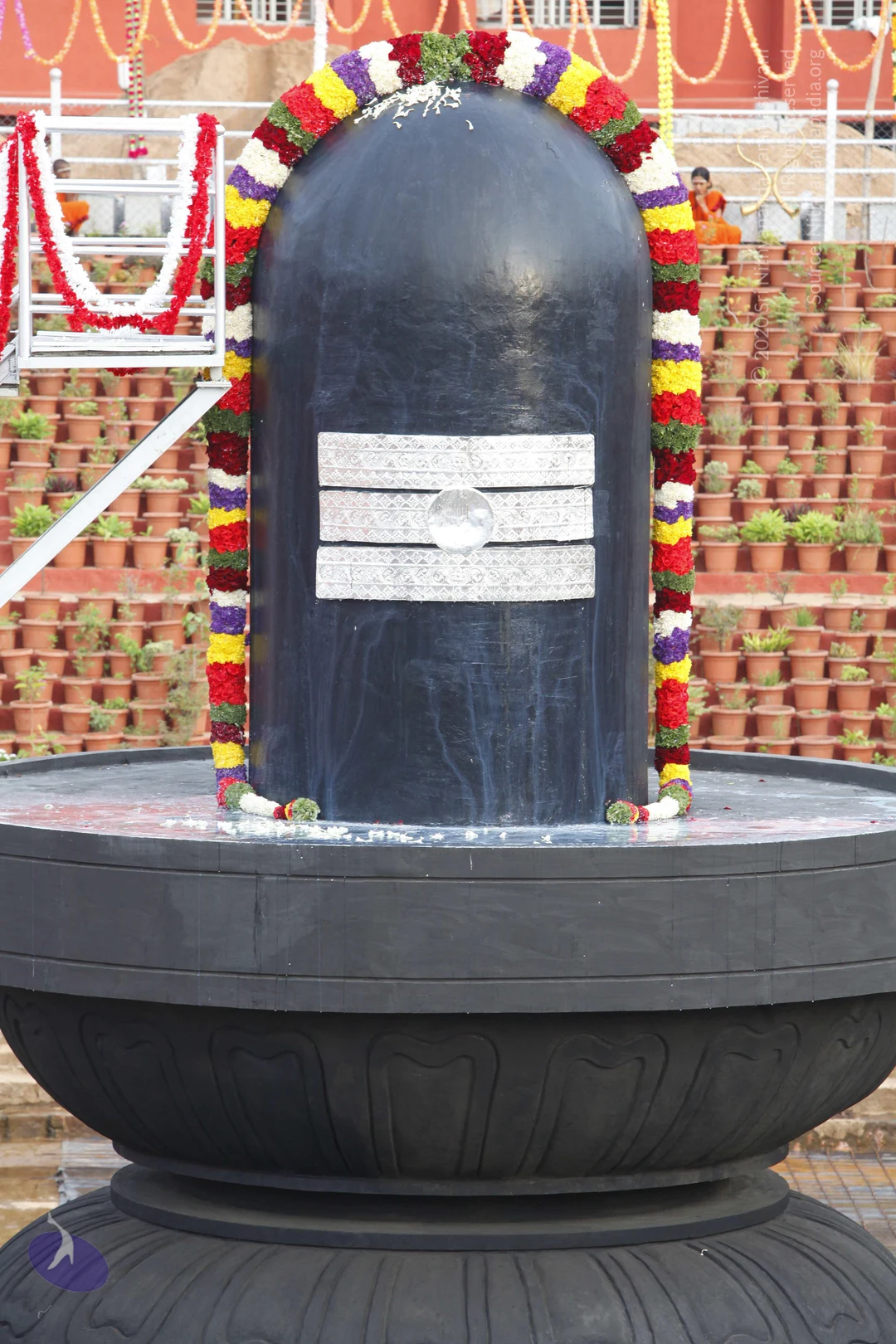
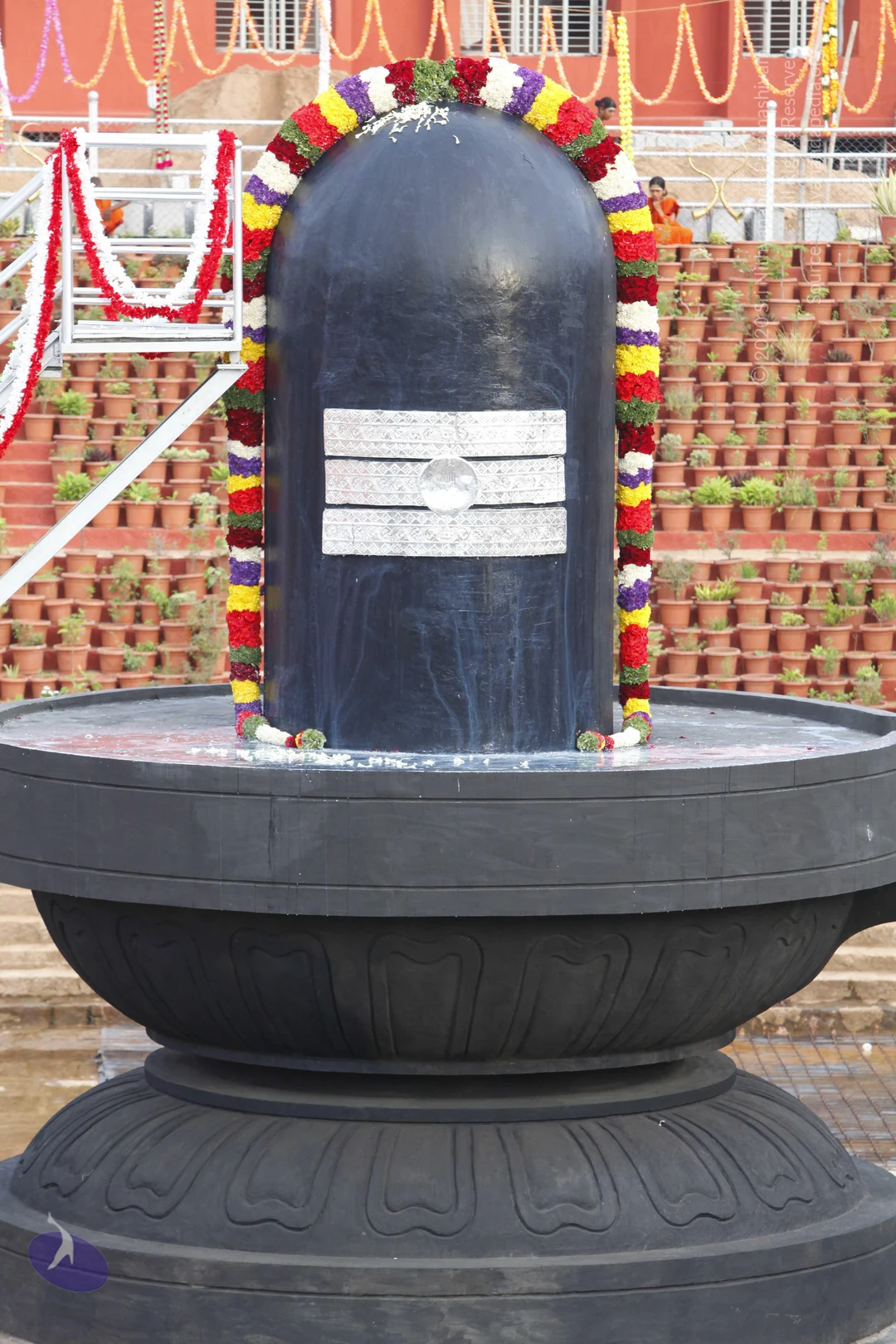
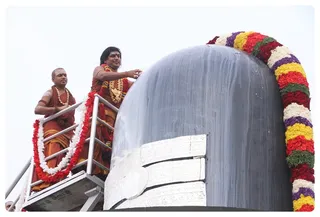
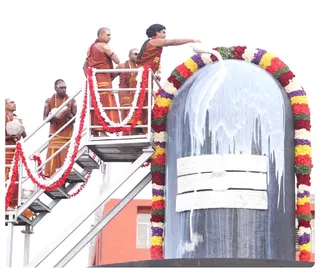
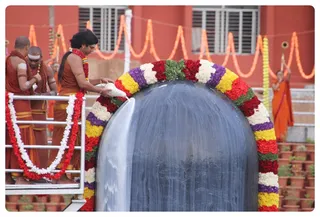
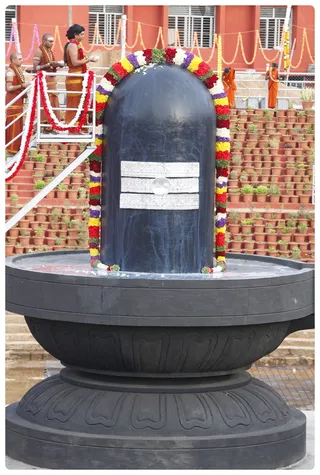
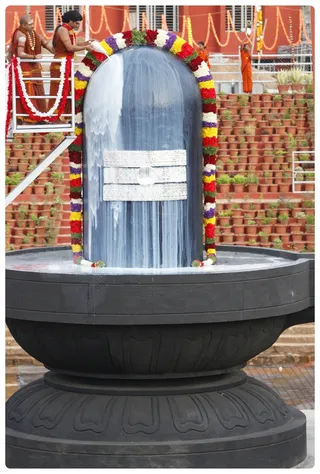
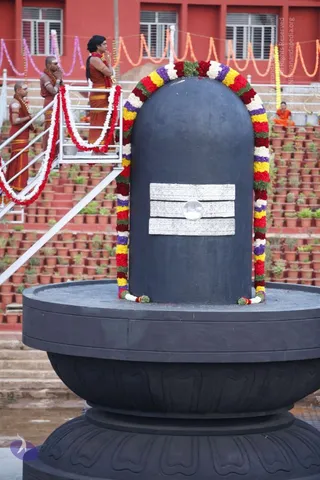
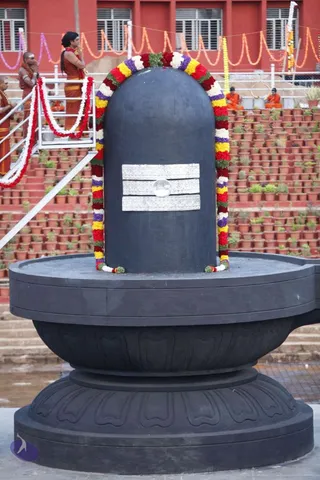
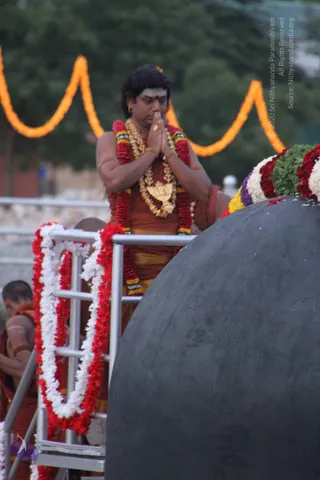
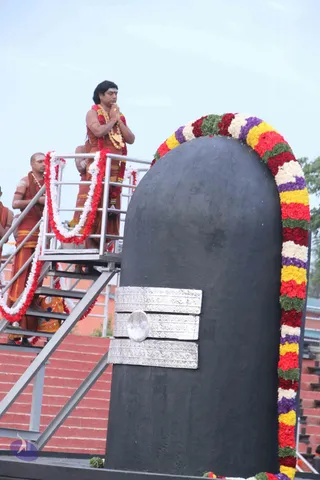
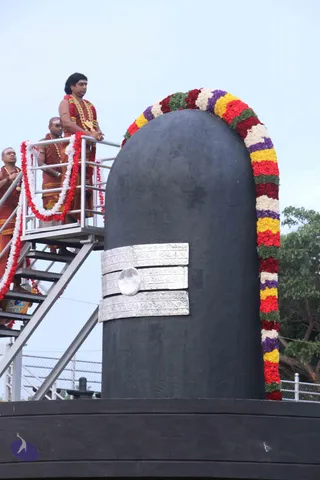
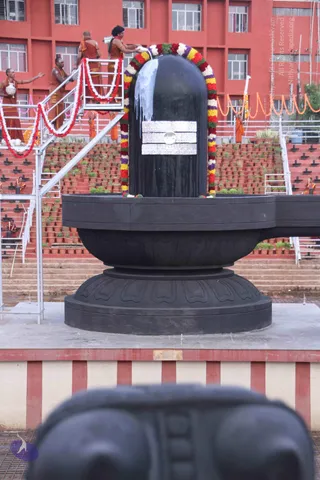
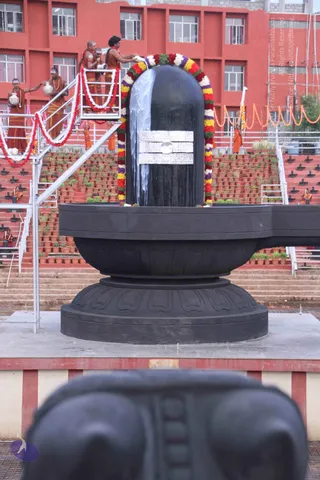
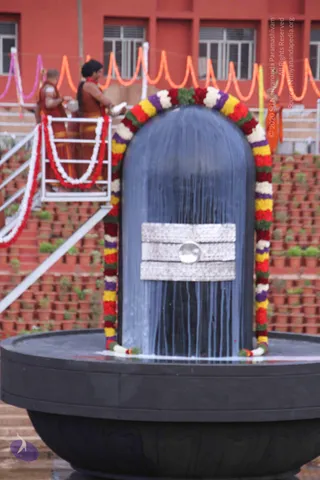
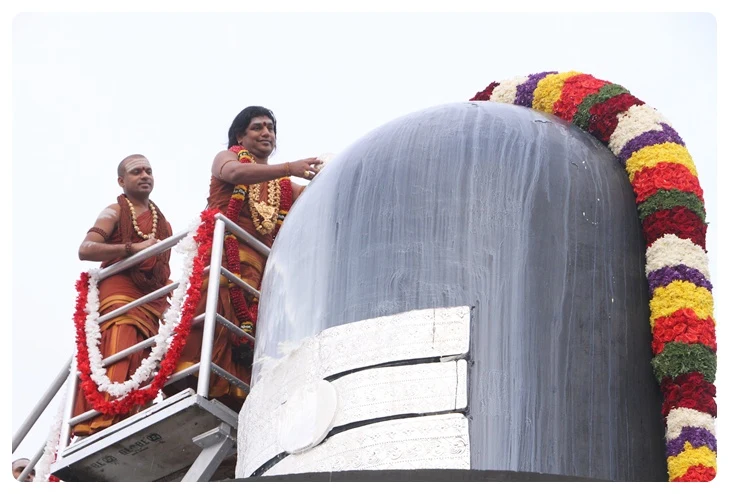
A photograph of a large dark grey Shiva lingam on a raised pedestal, its smooth dome partly covered in white paste, with a long multicoloured garland of red, yellow, purple, green and white flowers draped over its right side. Two men stand on a metal platform at left, a shaved-headed priest in an orange-saffron dhoti and white garland on the left, and a second man in orange-saffron robes with red and white flower garlands and gold necklaces beside him, his hand extended toward the lingam. The scene suggests an abhishekam or puja at the lingam; the second man has long dark hair and distinctive ornate adornments, a person candidate in person, though appearance is only partly visible.Outdoor photo of a large black Shiva lingam decorated with a multicolour garland arch of red, yellow, purple and white flowers, with white milk being poured over its top. A metal scaffold platform with stairs and white and red flower garlands stands beside it. Four to five men in saffron-orange dhotis and shawls, some with rudraksha necklaces and shaved heads, stand on the platform; one standing man at the top right pours the white liquid from a vessel. A red brick building is visible behind. Ritual abhishekam scene.A large dark stone Shivalingam is being bathed with flowing water and decorated with a thick garland of marigold-like flowers in red, yellow, purple, white and green. On a raised metal platform at left, a man with a shaved head wears orange-saffron robes and a red flower garland, while another robed figure stands beside him. Behind them, another person in orange cloth reaches up near a tall decorated pole. Orange and red strings of flowers hang along a red-walled building, with rows of small clay pots in the lower right.A large black stone Shivling stands on a dark circular yoni-pitha base, decorated with a multicolour flower garland in red, yellow, white and purple wrapped around its dome. Three horizontal silver tripundra bands and a central silver disc mark its face. Behind it, three saffron-robed men with shaved heads and rudraksha malas stand on a raised platform with a railing, one holding an object in his hand. Further back, several saffron-clad figures stand near a tiered wall of potted plants and a red building with white windows strung with orange and white garlands. The scene suggests a Shiva abhishekam or puja setting in an outdoor ashram courtyard.A large dark stone Shivalingam on a black yoni-shaped pedestal is being bathed with milk-white liquid that streams down its surface, a ritual abhishekam. A multicoloured flower garland of red, yellow, purple and white blossoms drapes around the lingam. The lingam bears three horizontal silver tripundra-style bands with a central disc. Two figures in saffron-orange robes stand on a raised white metal platform at upper left, one pouring from a vessel; a line of orange-clad people stands in the background before a terraced wall of potted green plants. The setting is an outdoor temple courtyard with orange-red walls and strings of marigold garlands.A dark brown bird of prey. Its wings are spread wide with the tail fanned, and it is seen from below in a mid-flight pose against empty white sky. No people, ritual objects or readable text are visible.

VAIDYA SAROVAR

1 photoSource gallery
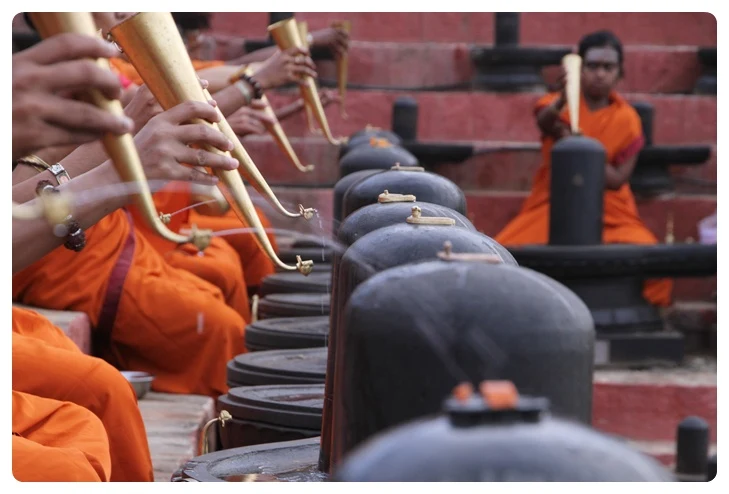
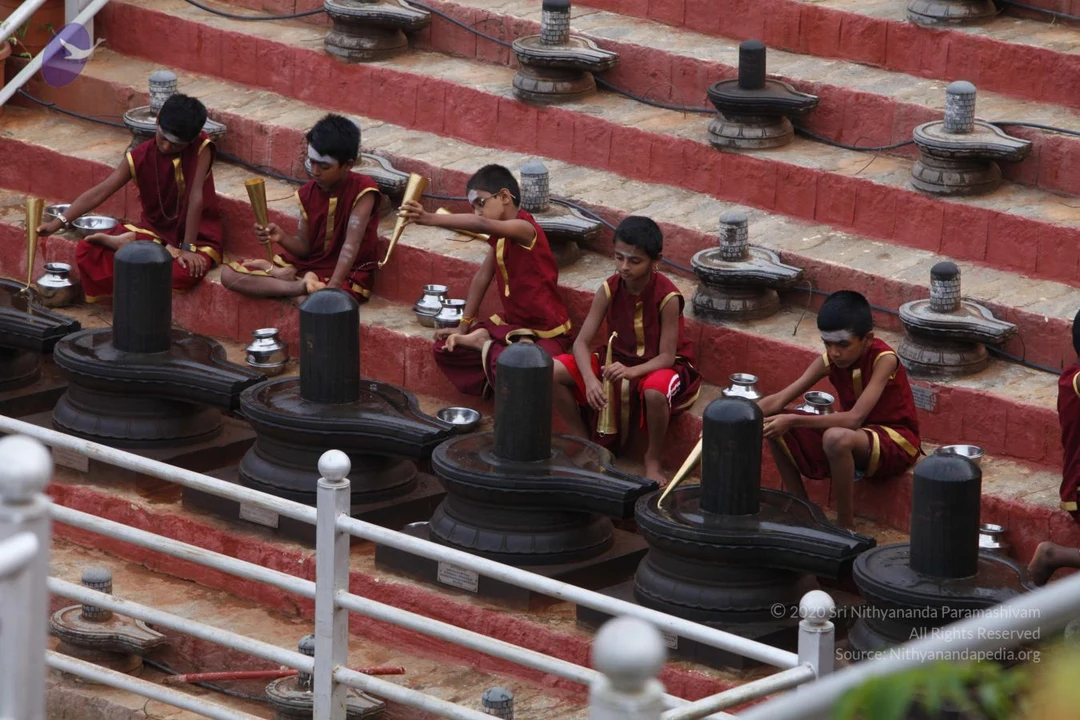
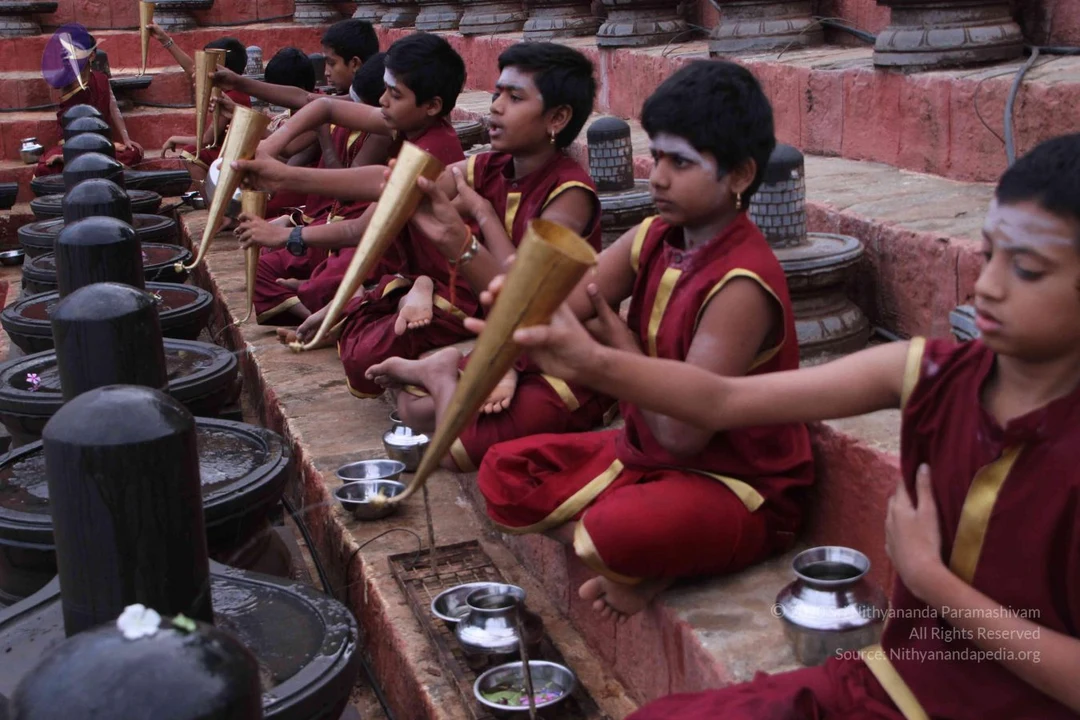
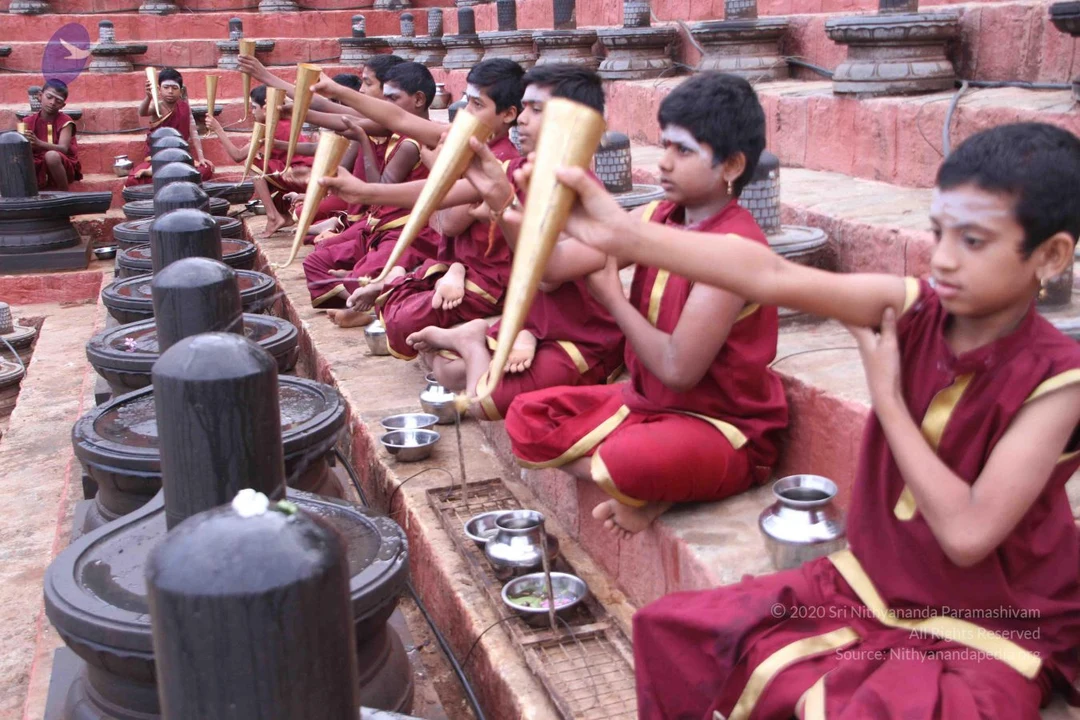
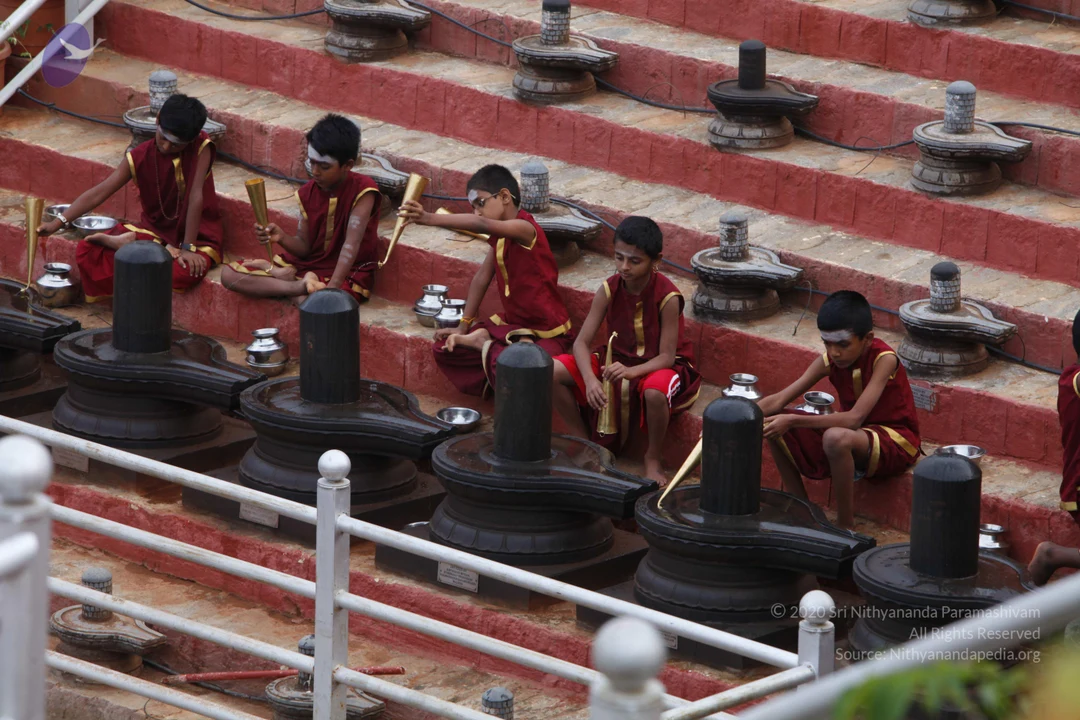
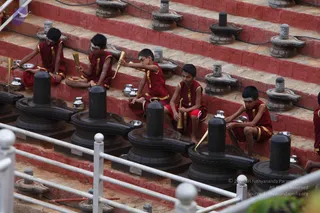
A photograph of young boys in maroon and red robes with gold trim seated on red brick tiered steps. Each boy sits beside a large black lingam on a black yoni-shaped peetha base, several bases lined across the steps. Some boys hold brass or gold pouring vessels and small metal bowls, appearing to perform an abhishekam on the lingams. A white railing runs across the front of the frame, with greenery at the lower right.

Lotus-TV-Pictures
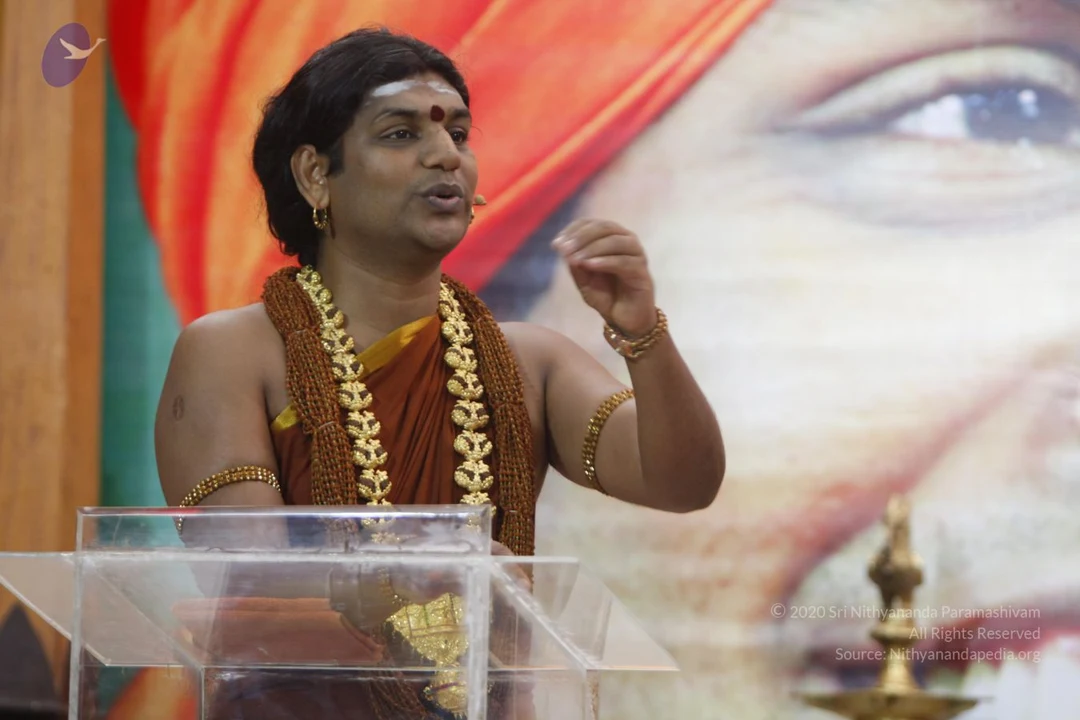
25 photosSource gallery
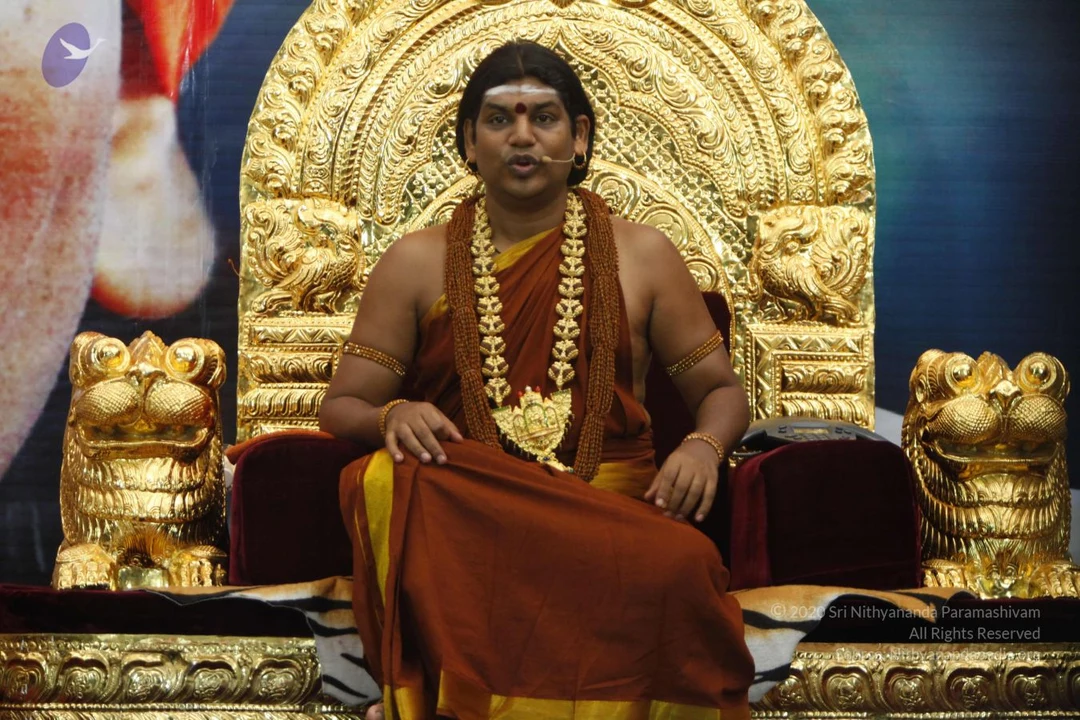
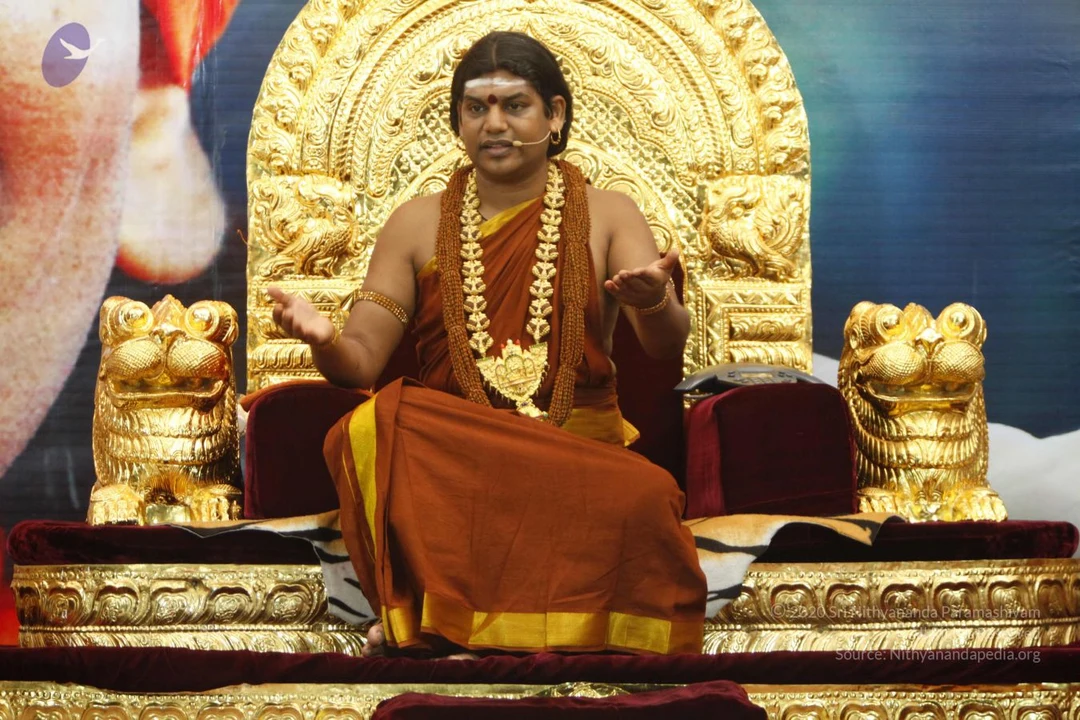
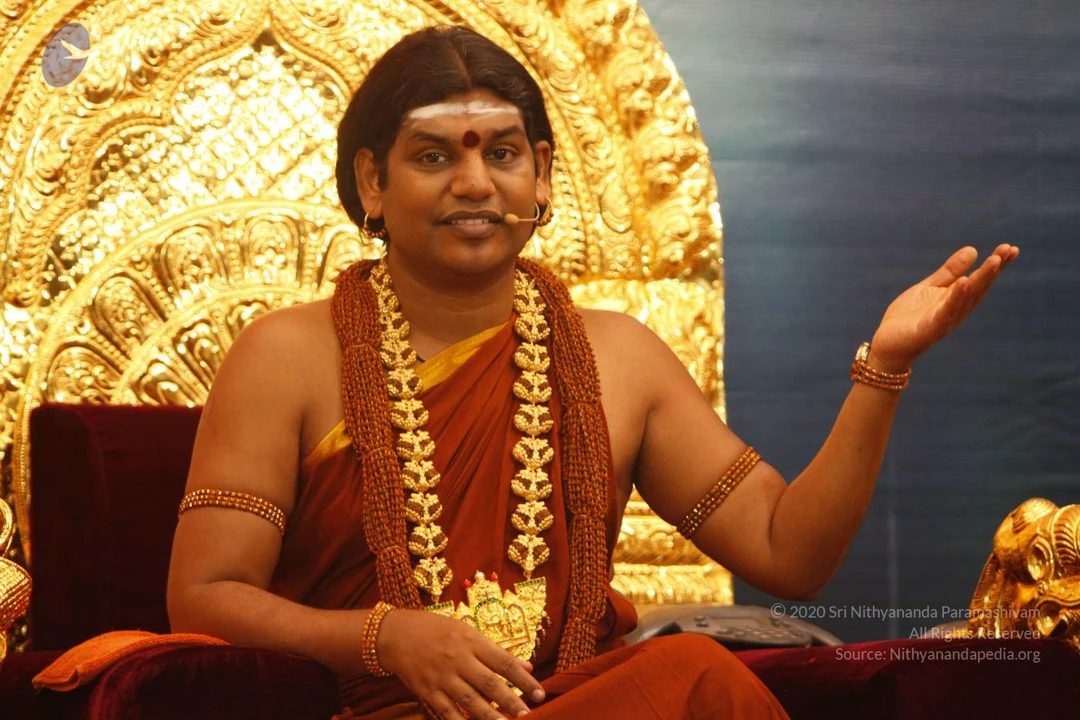
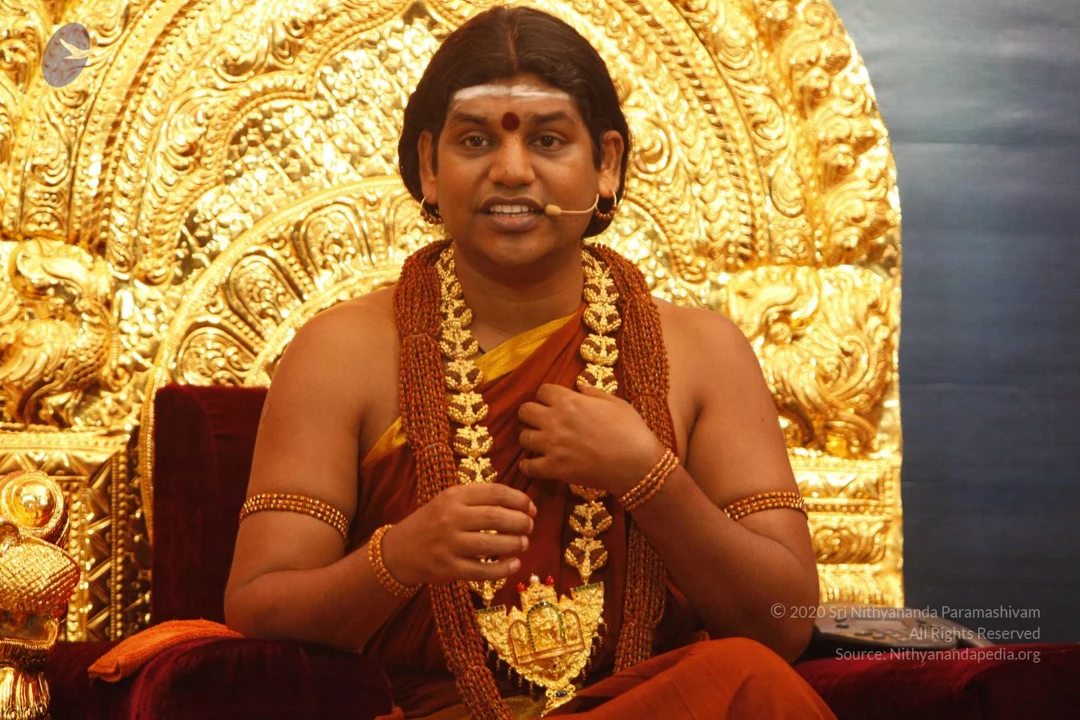
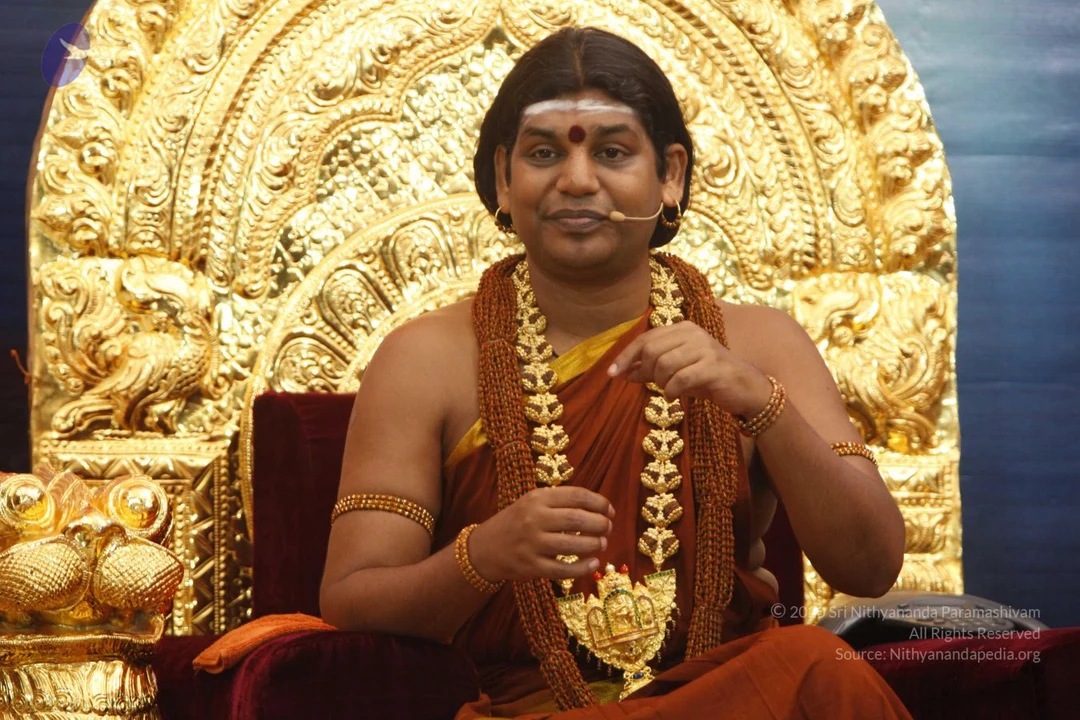
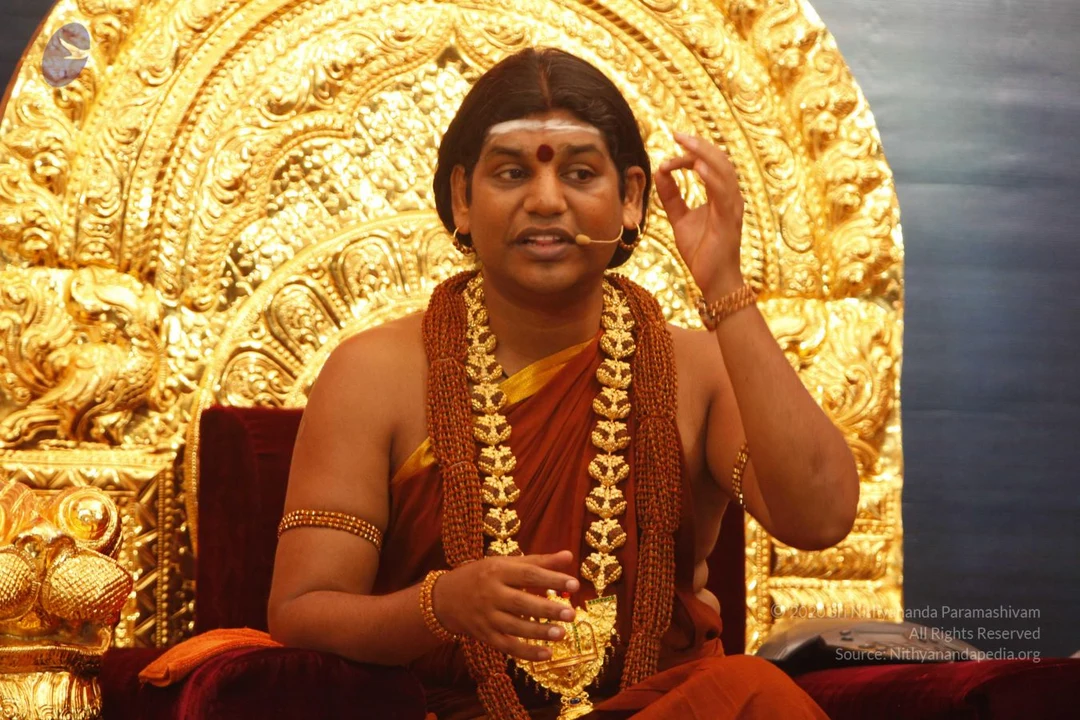
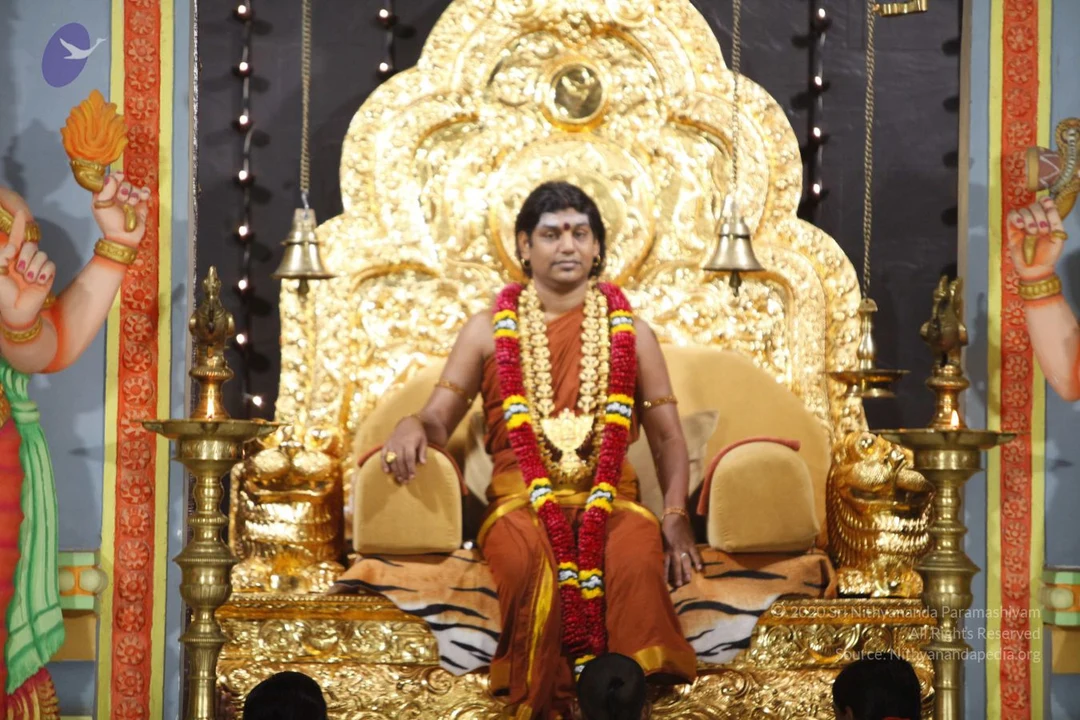
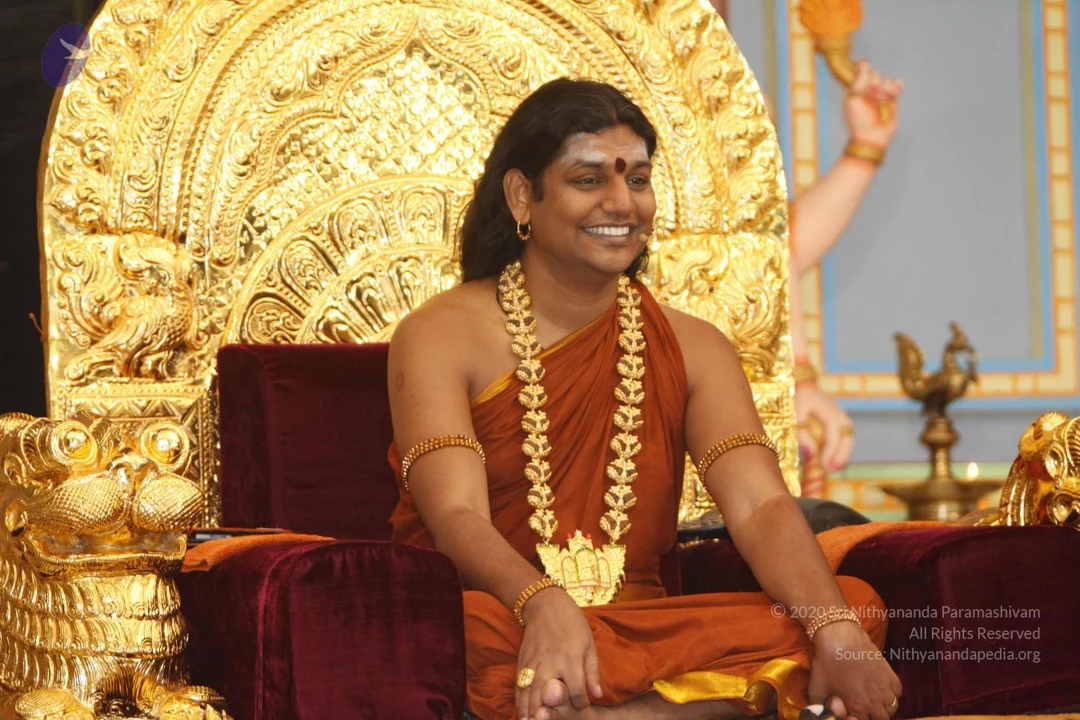
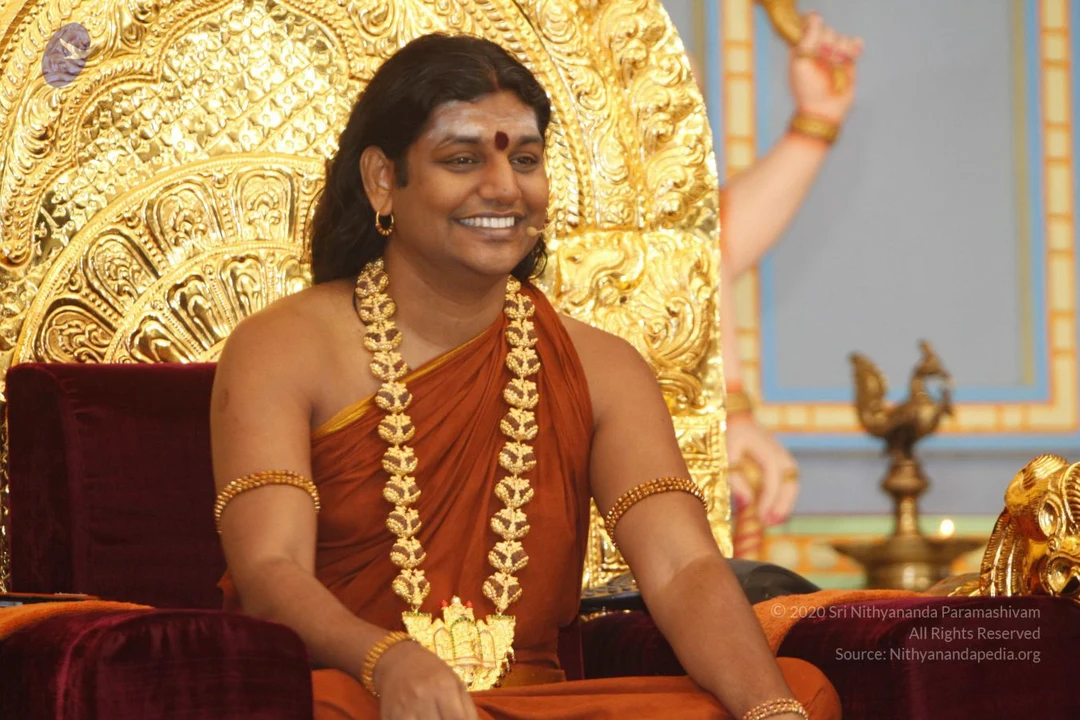
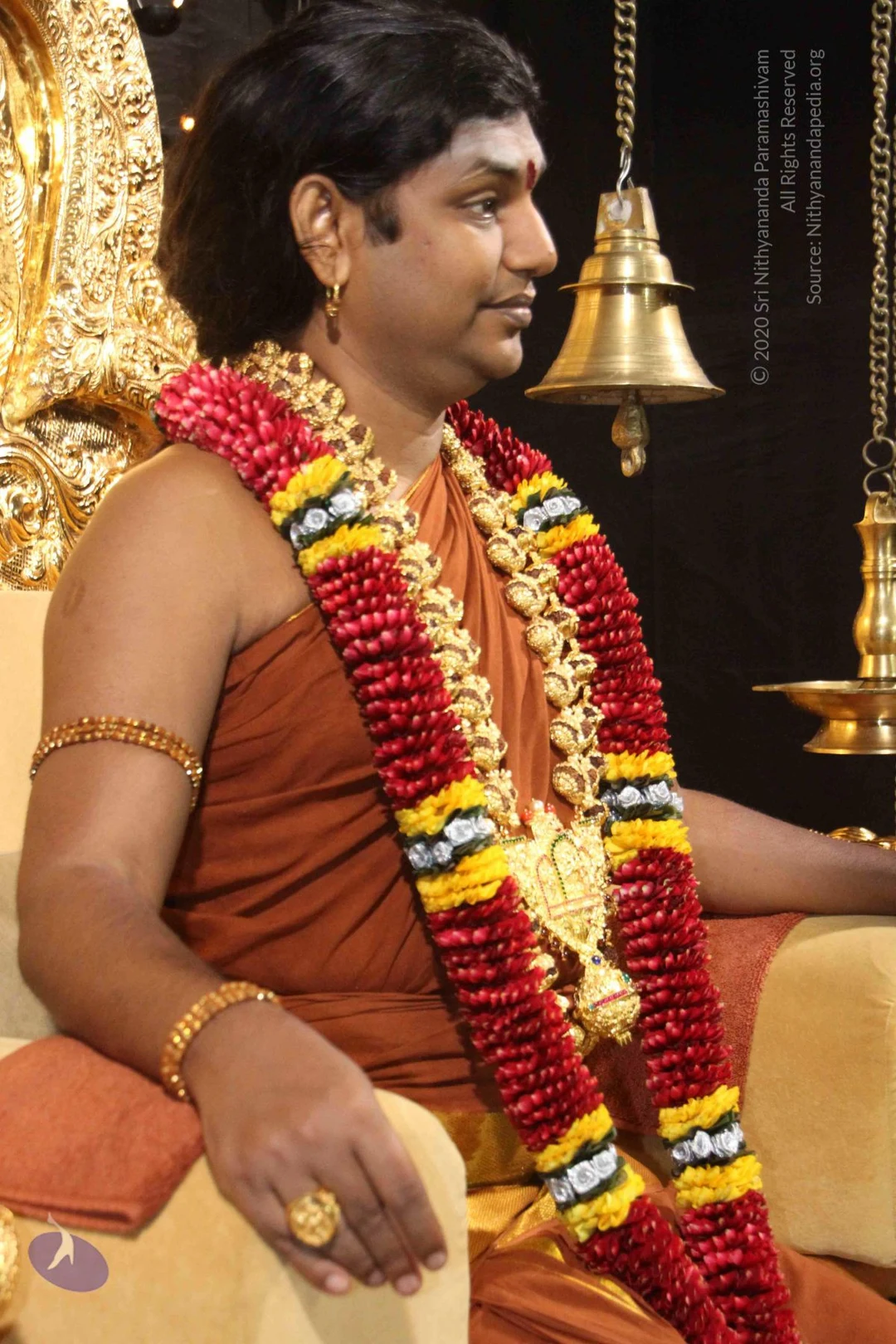
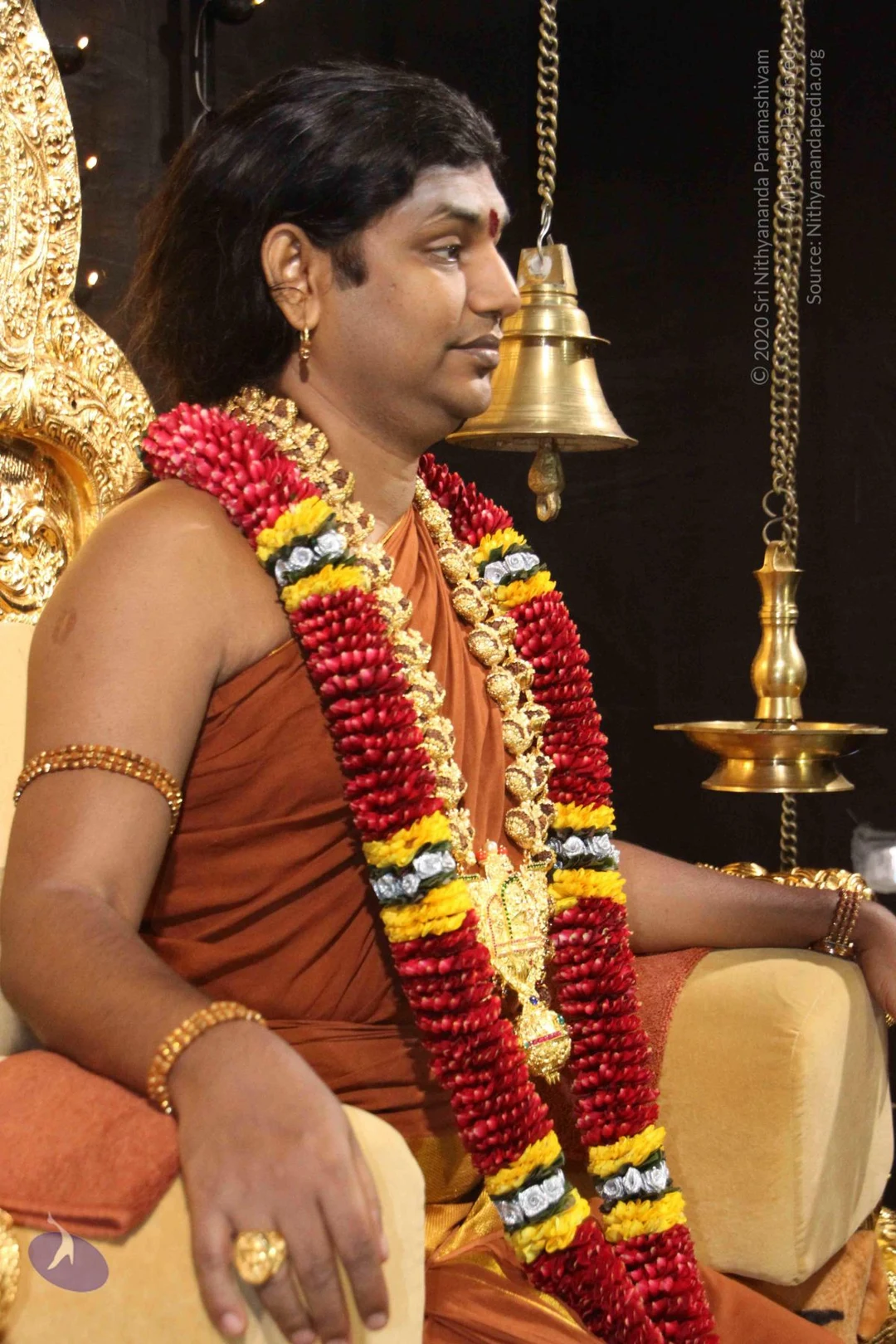
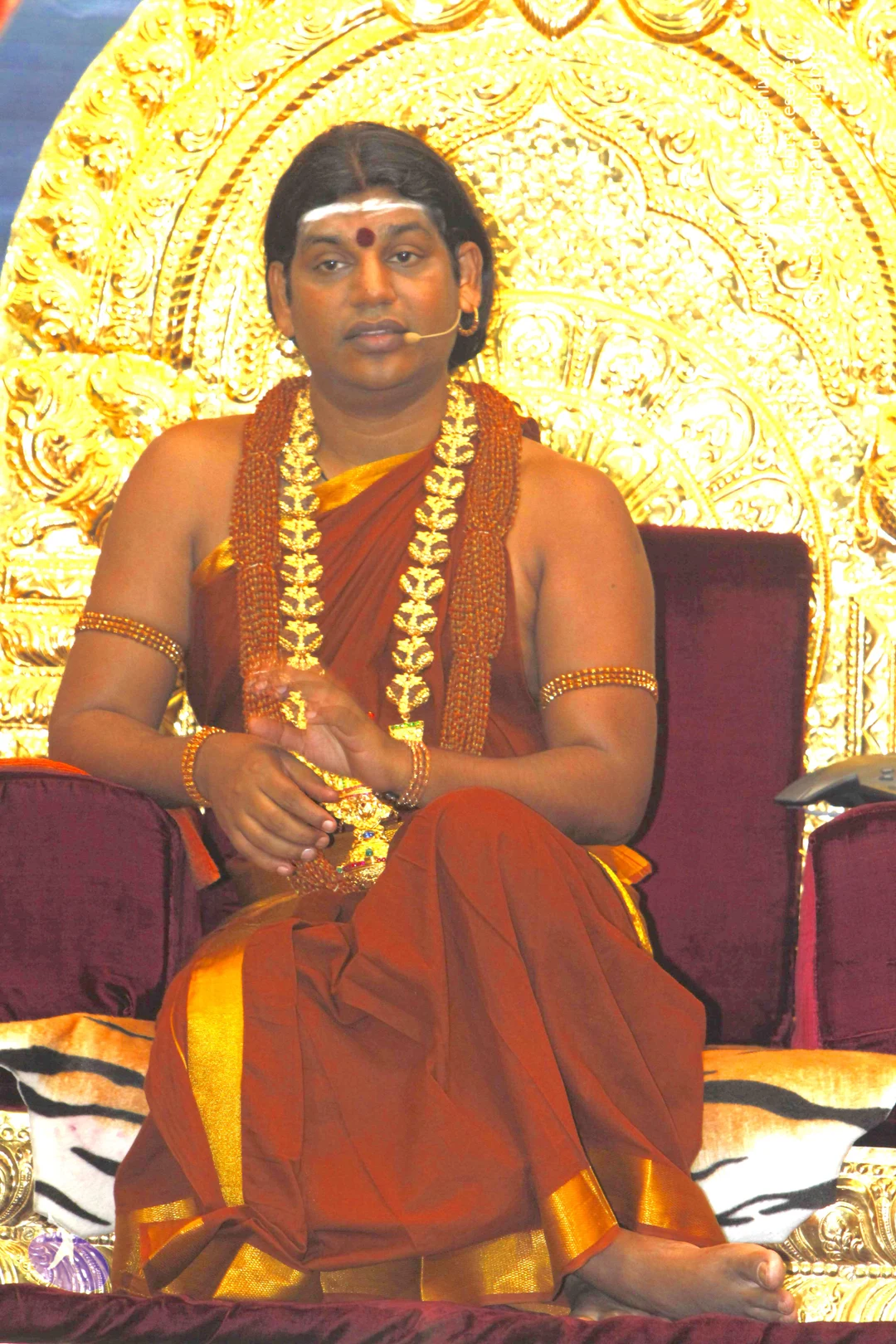
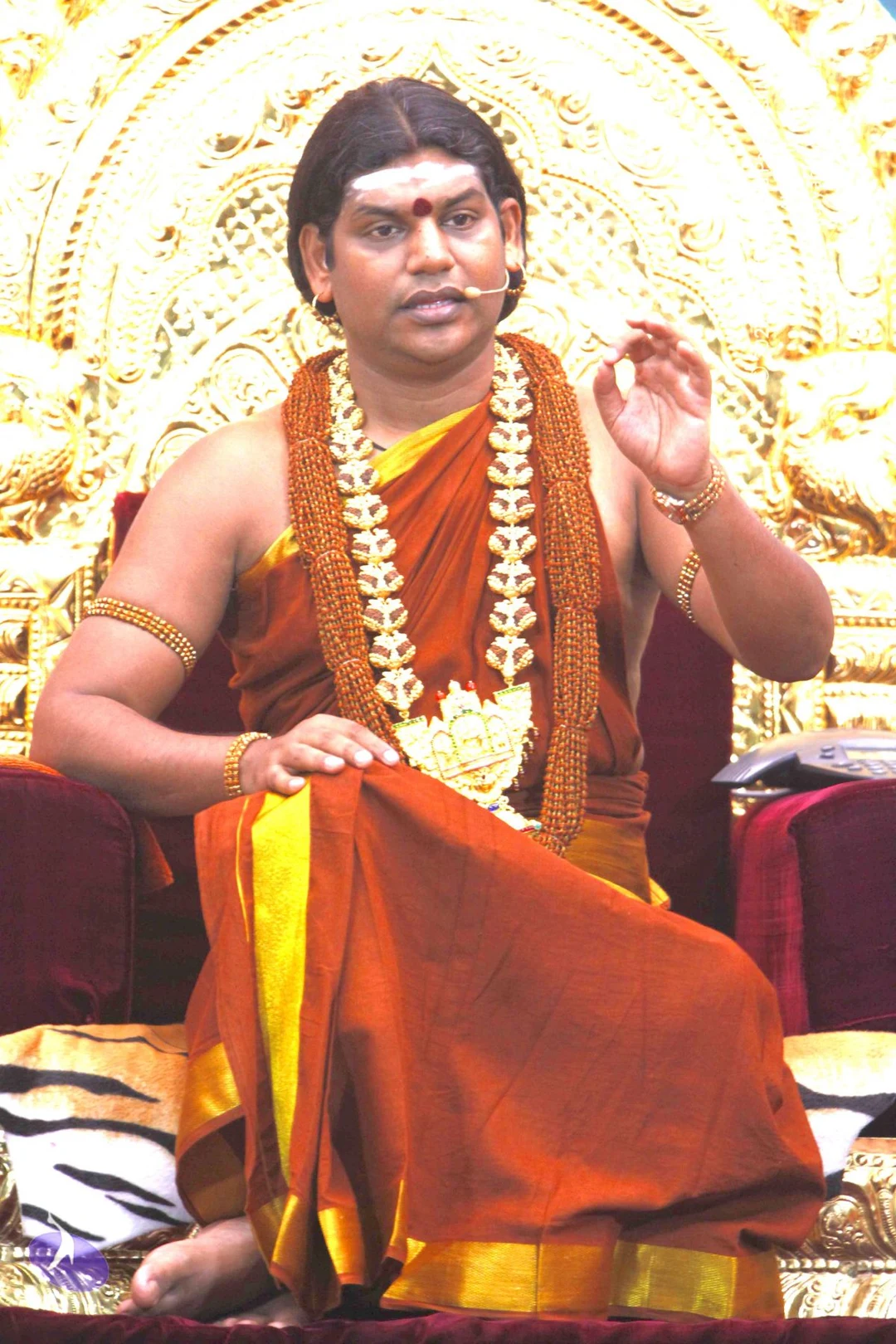
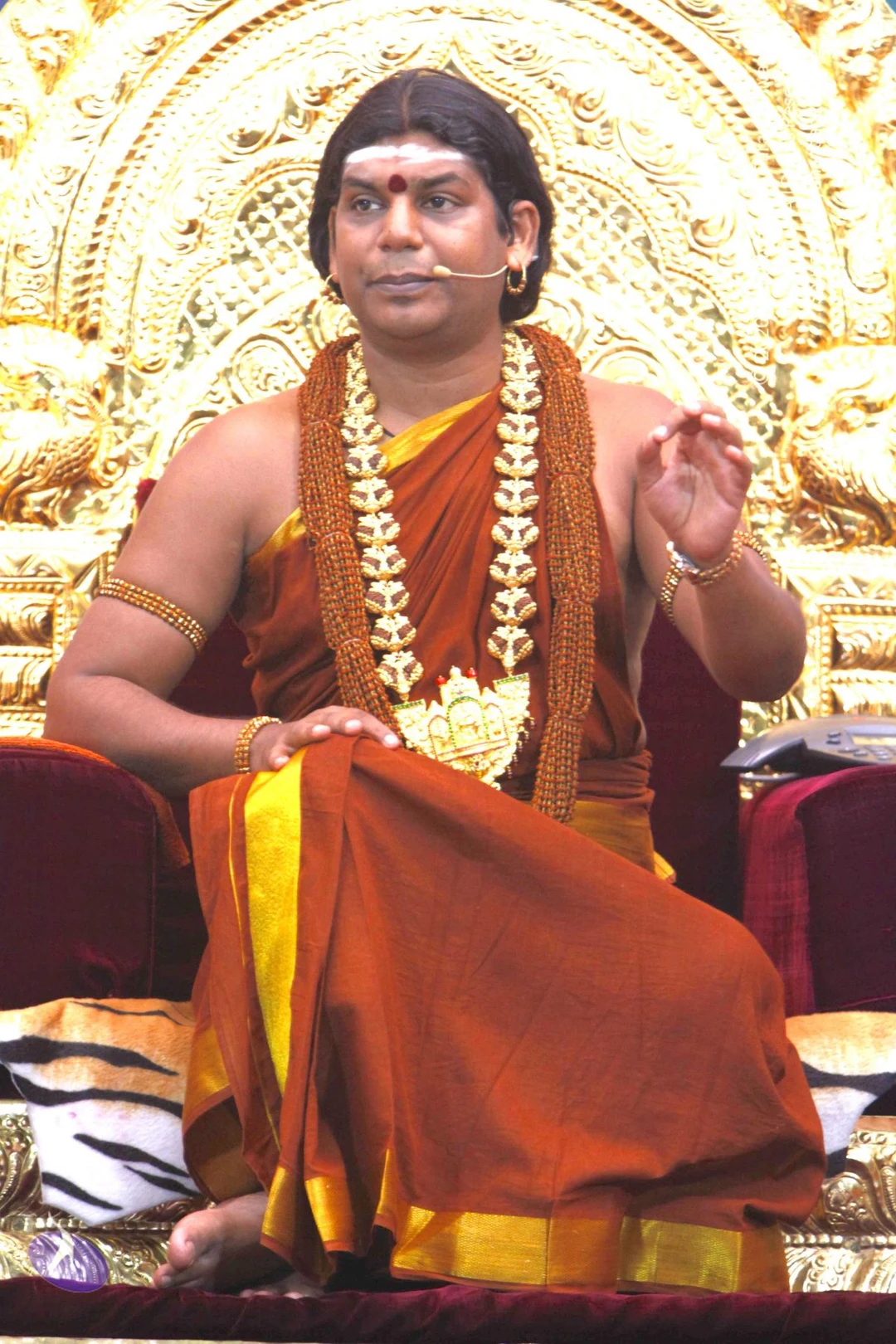
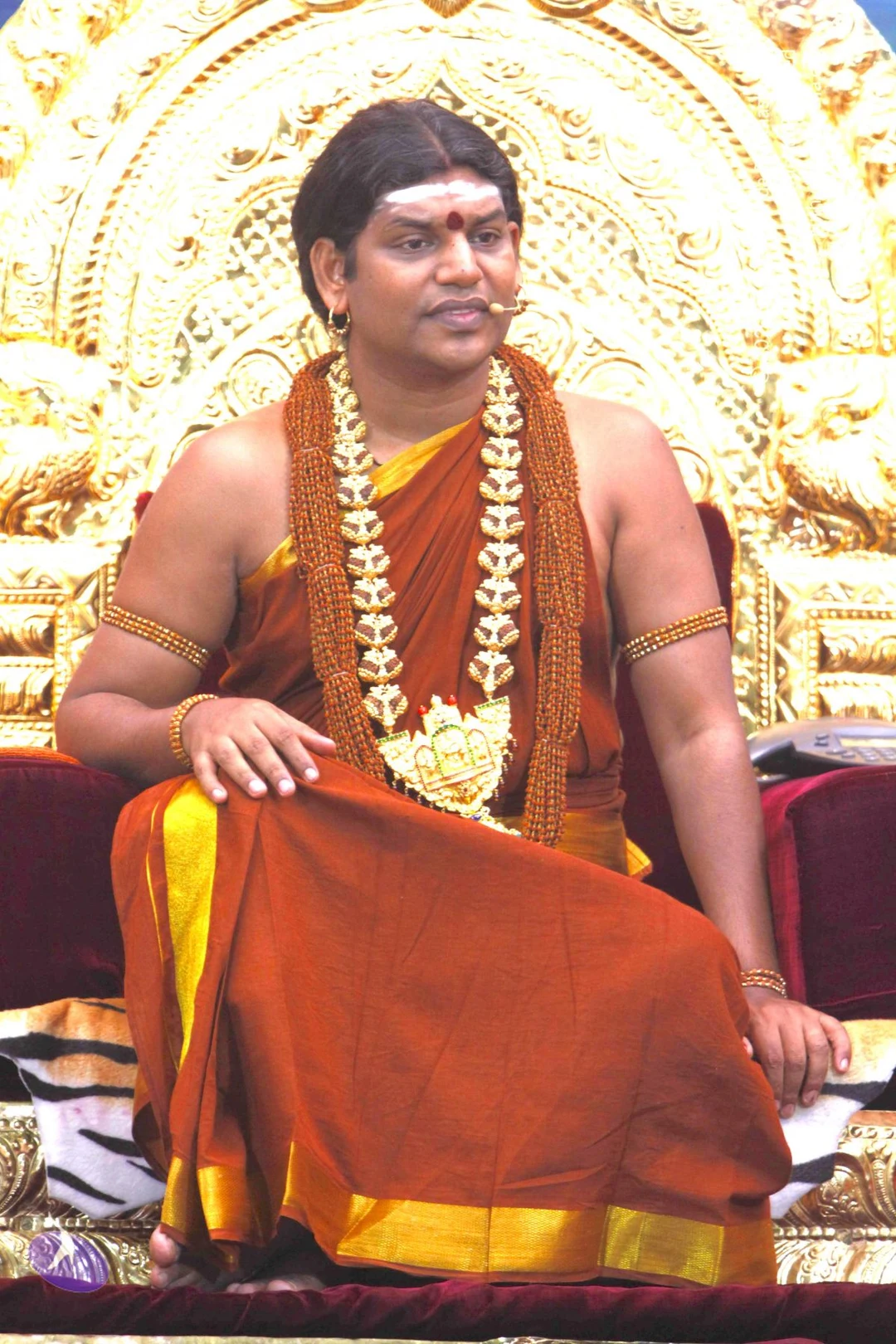
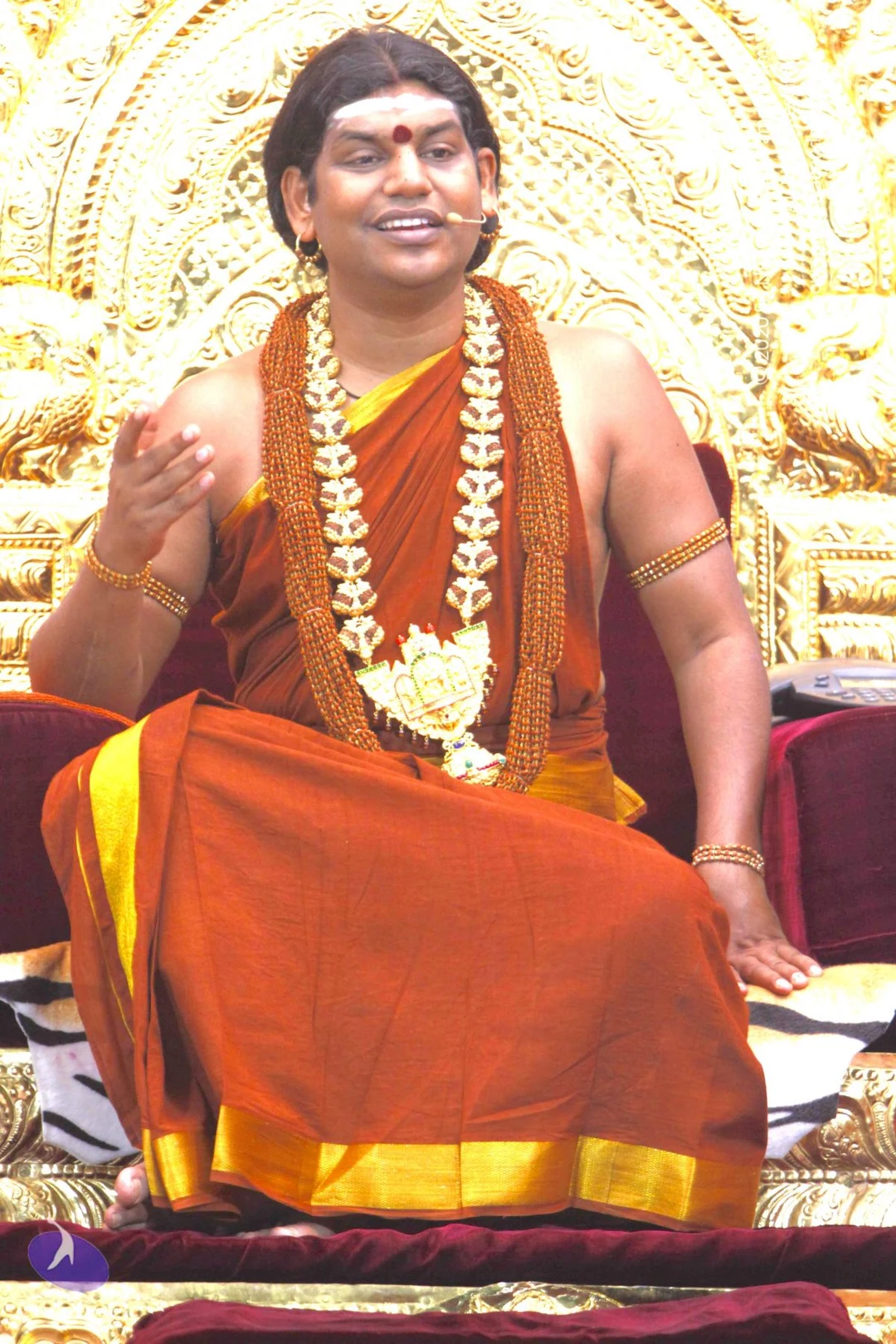
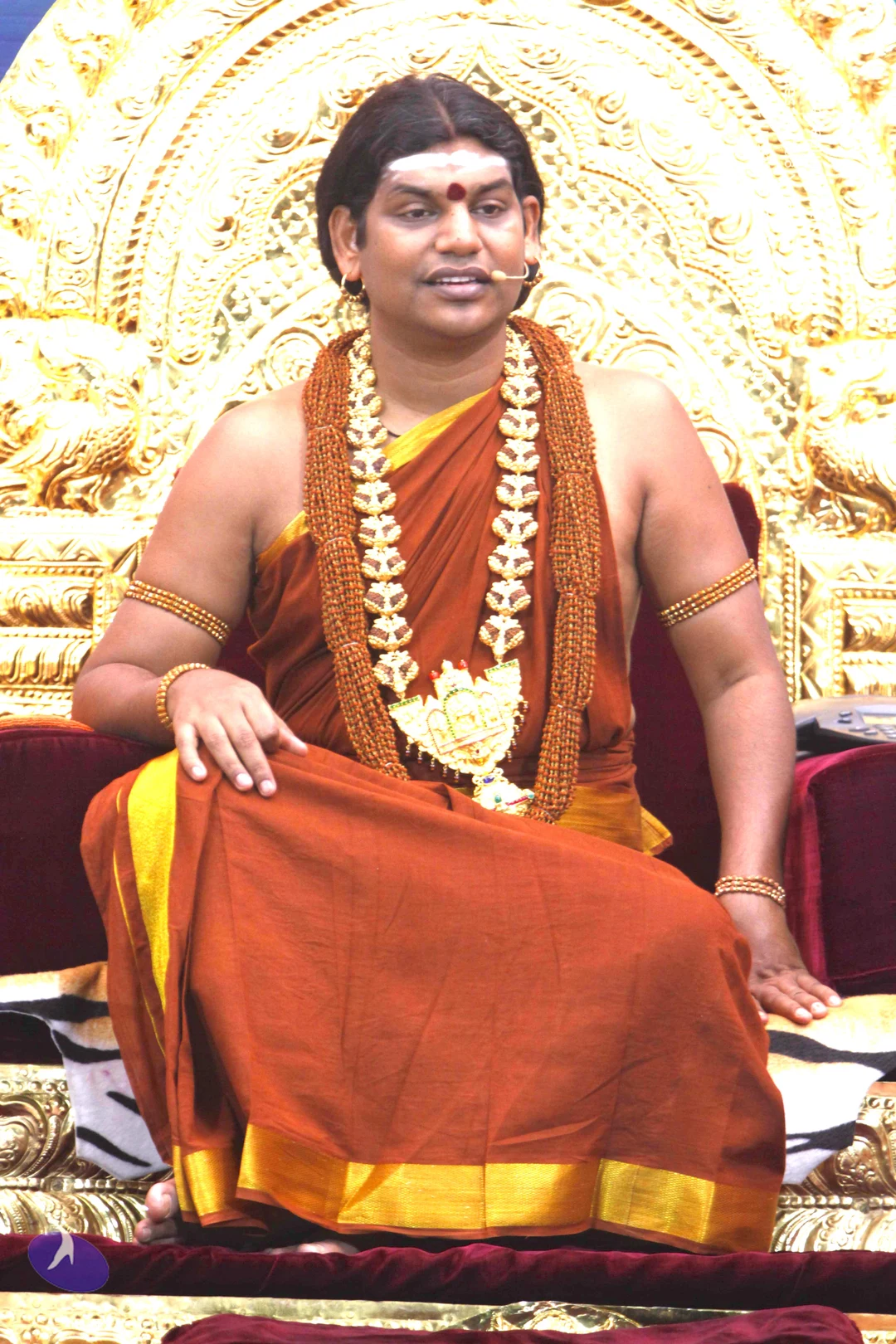
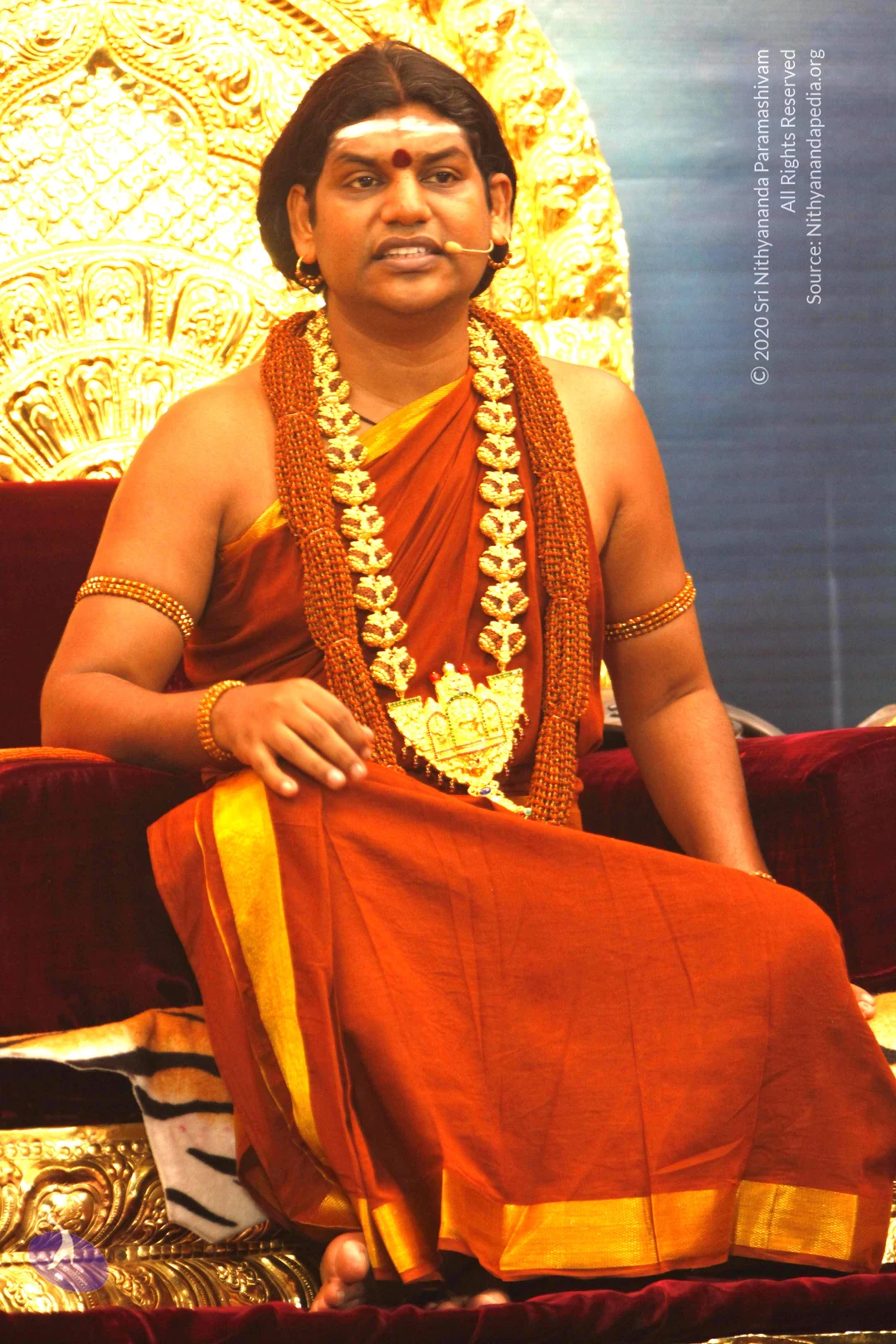
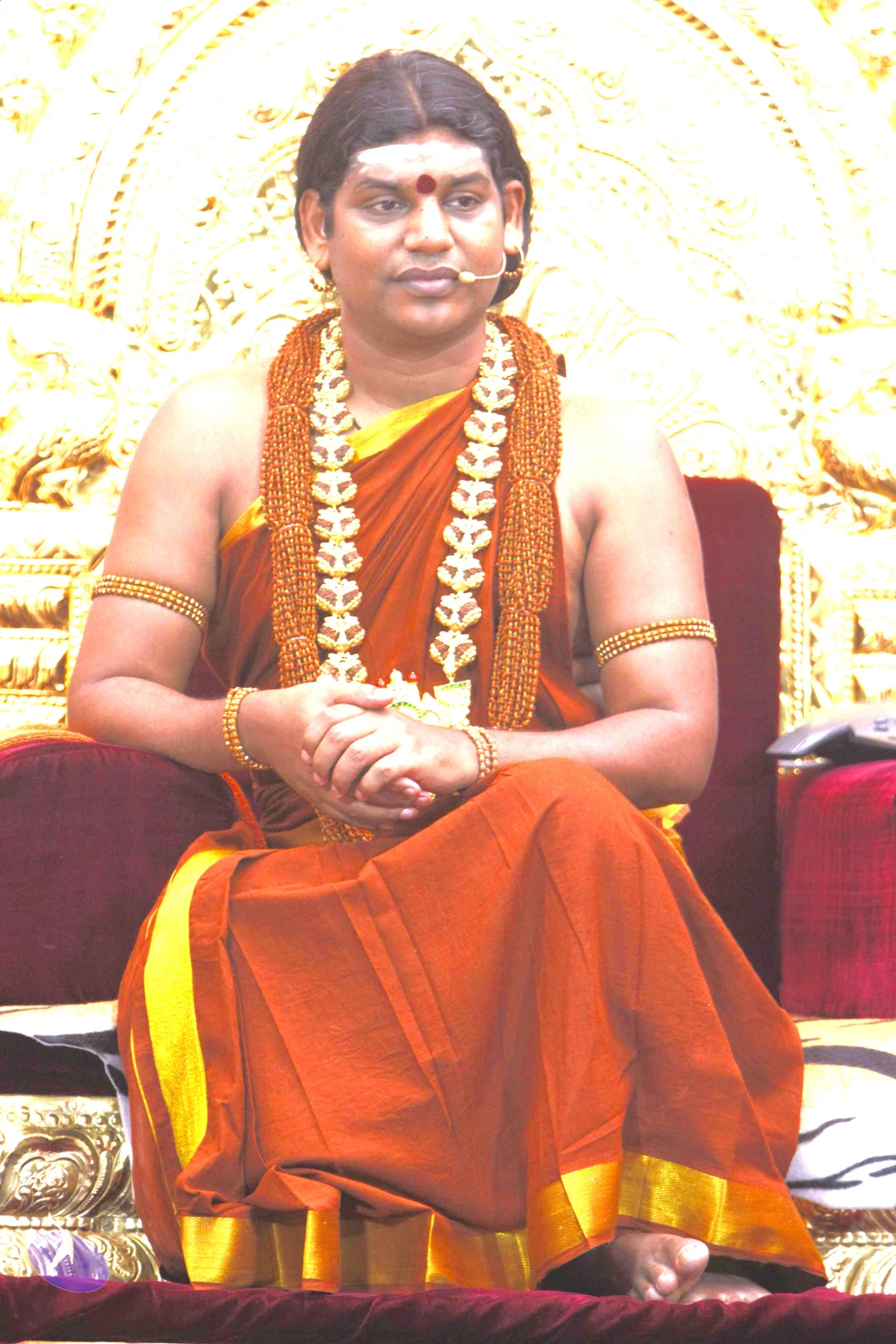
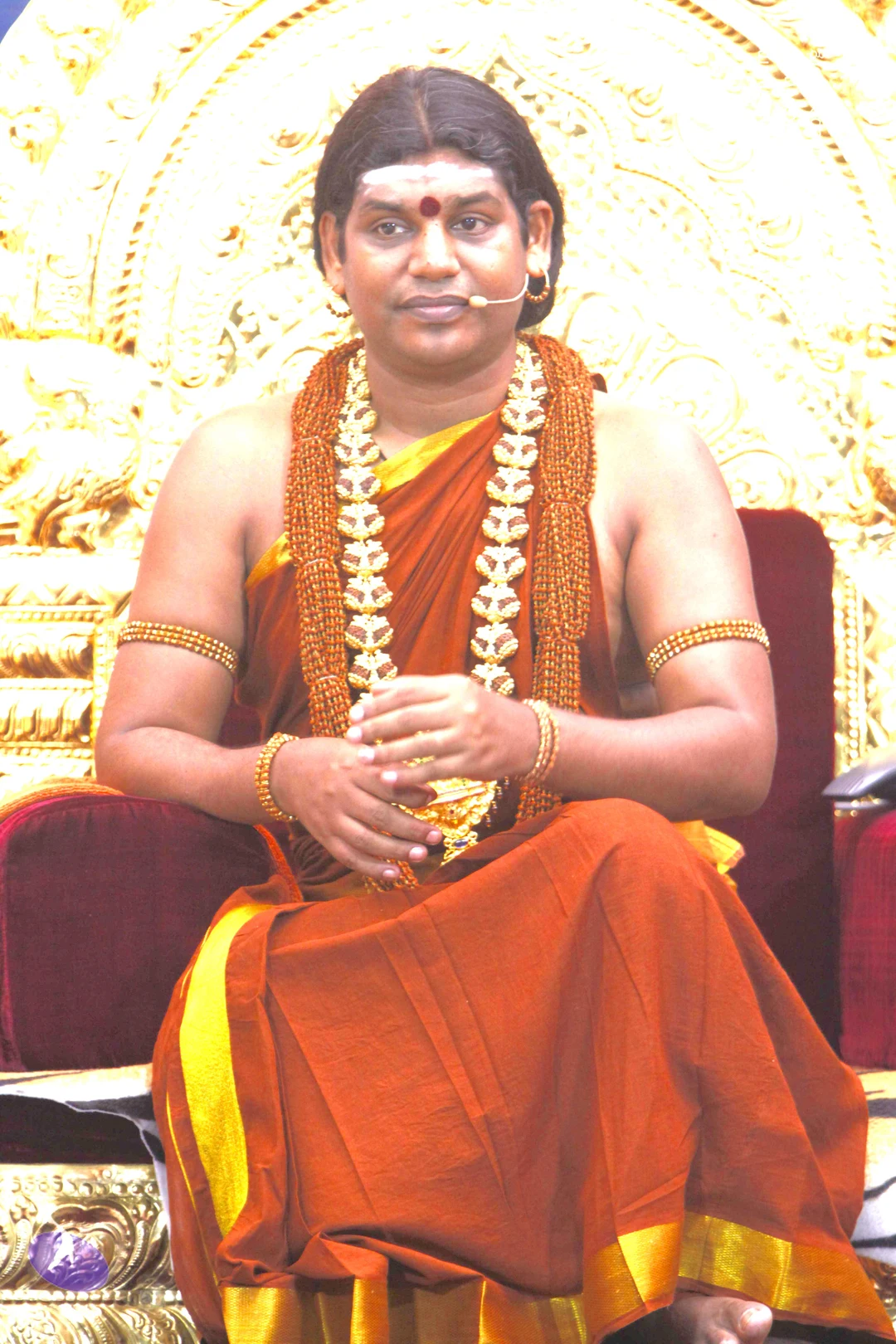
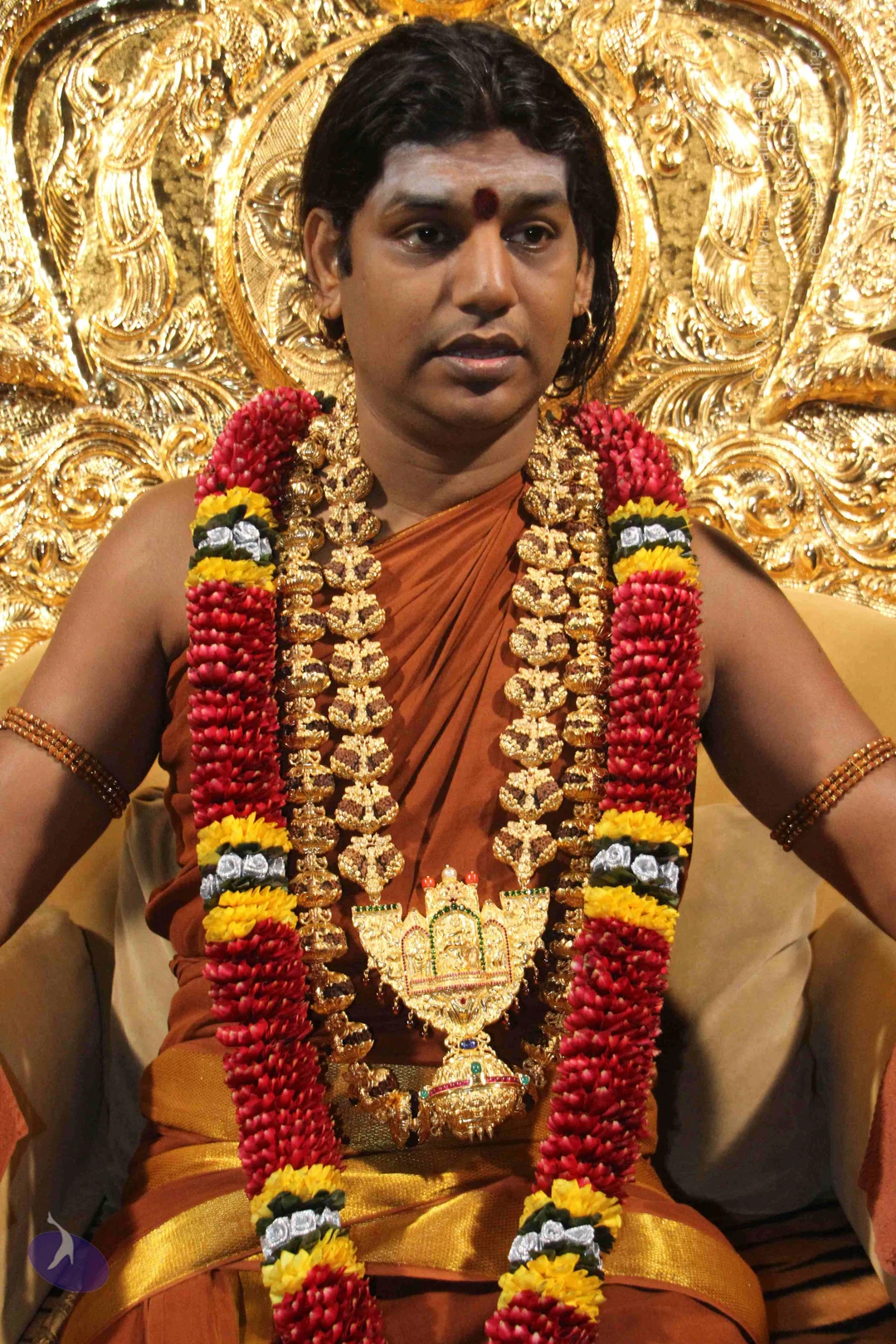
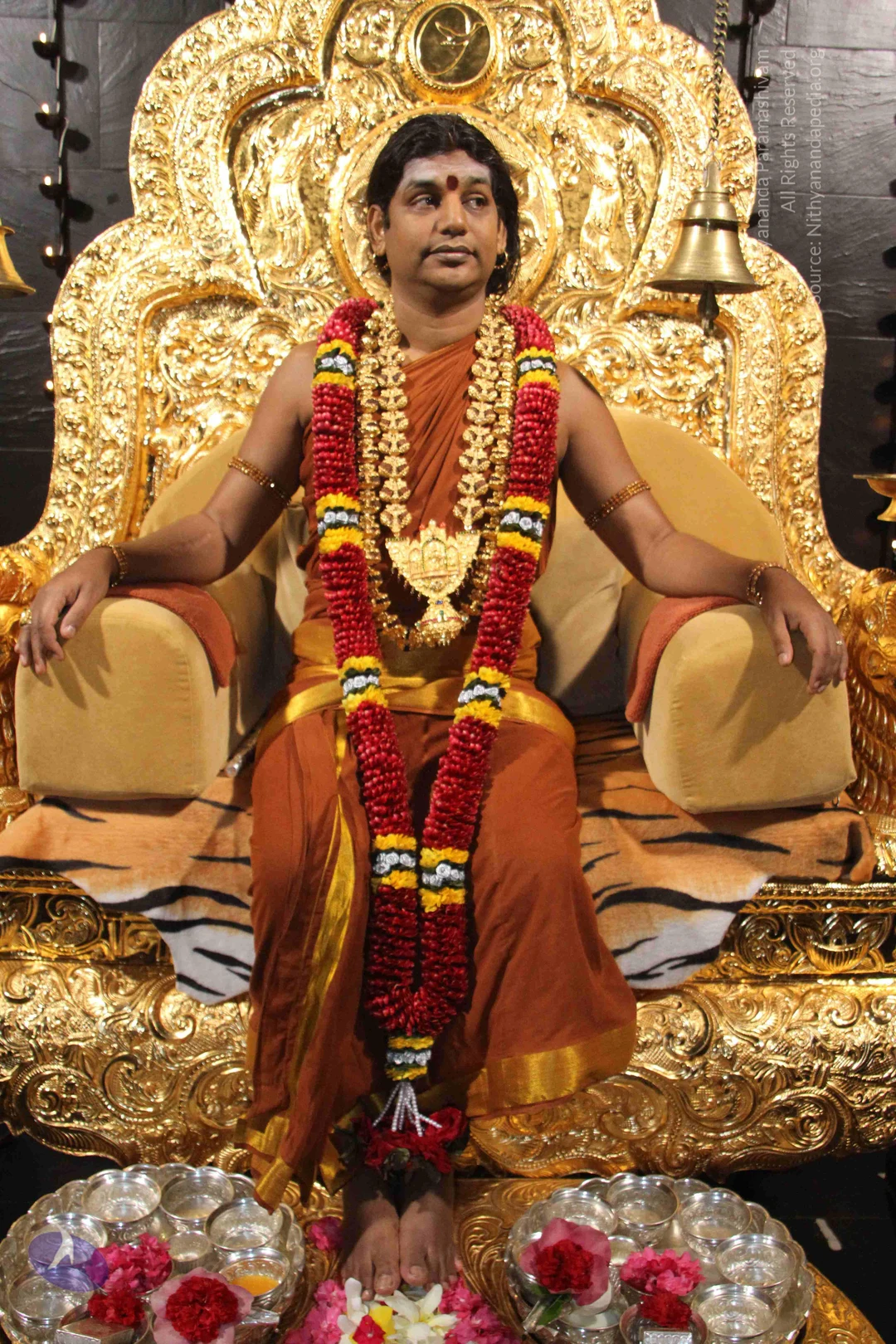
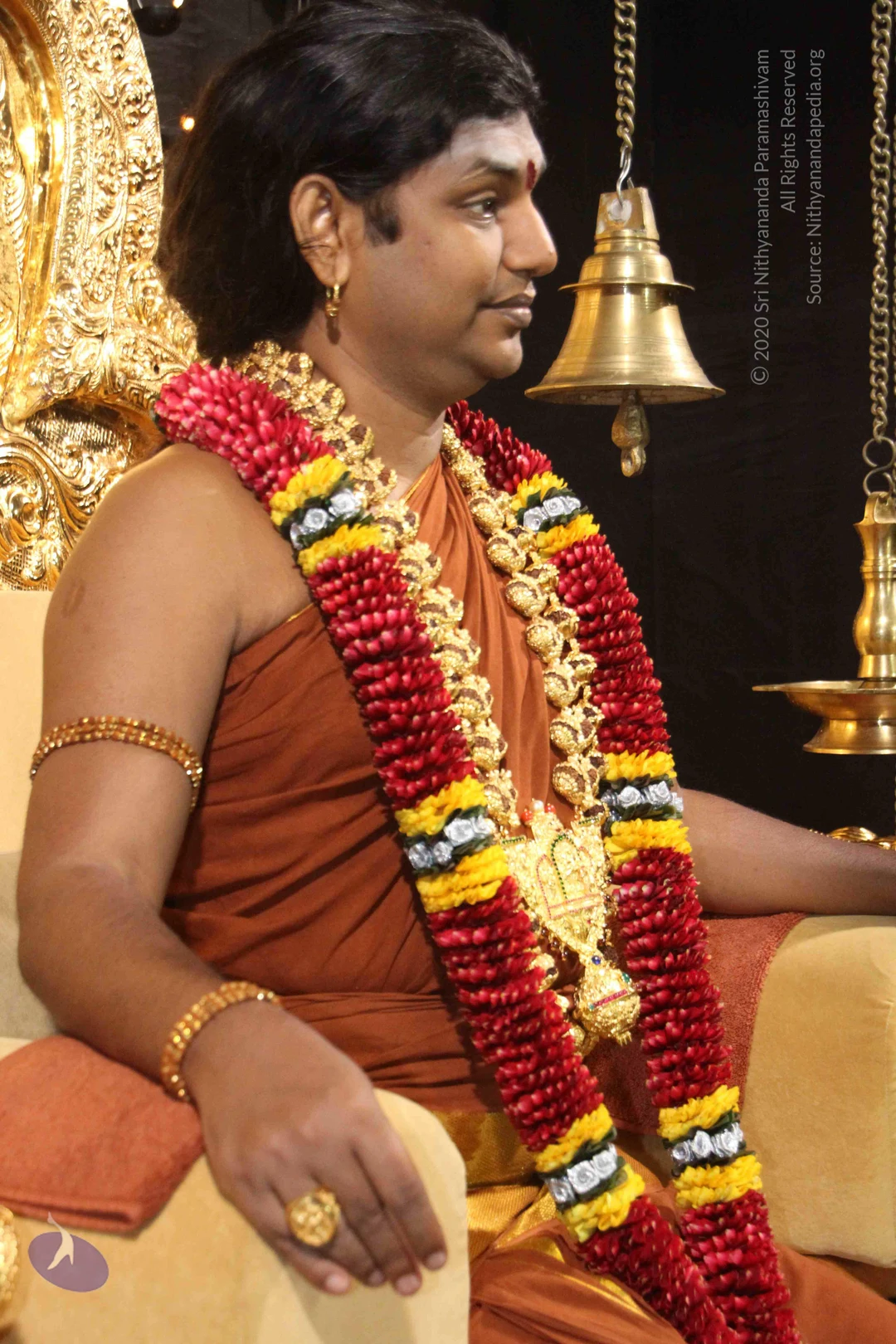
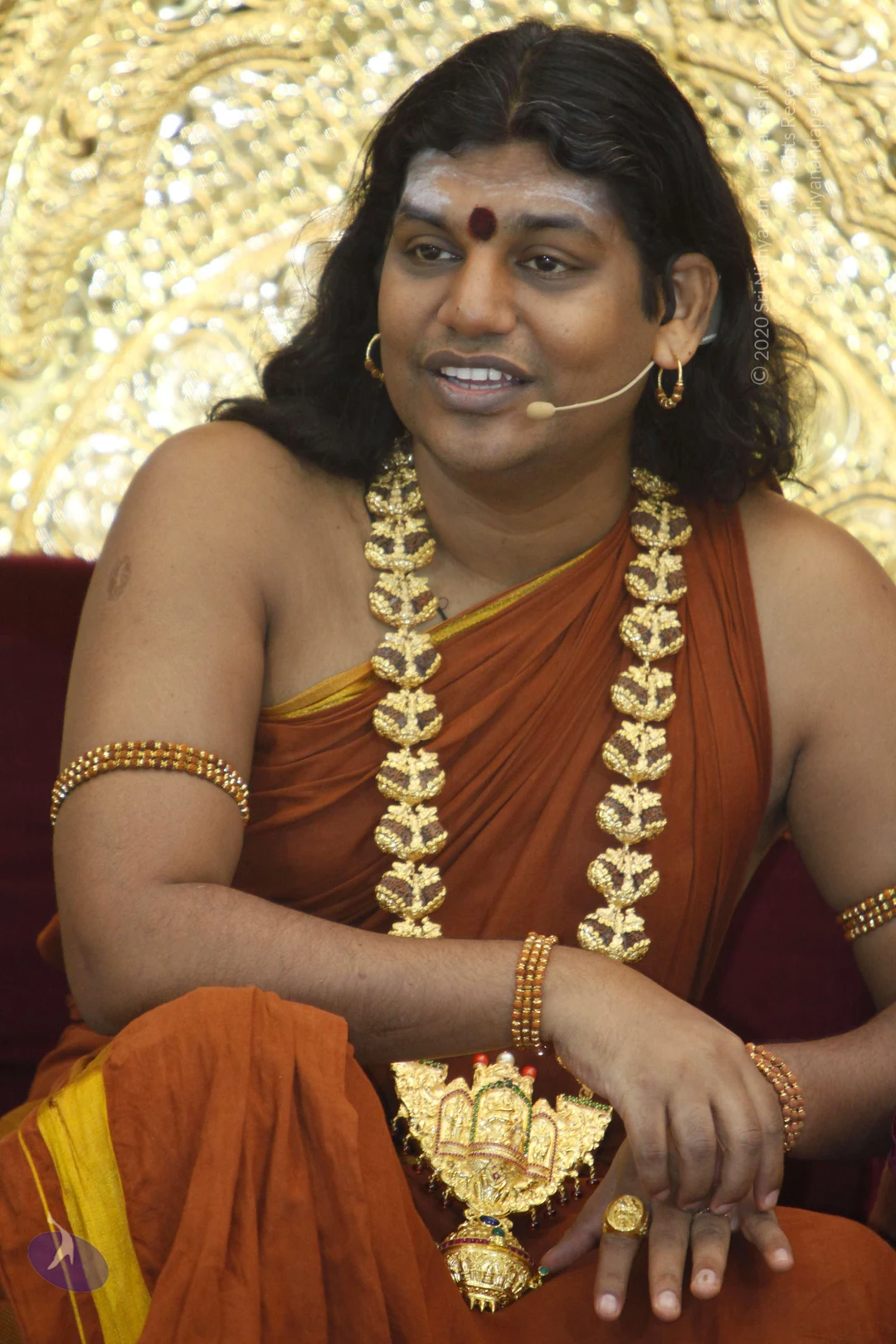
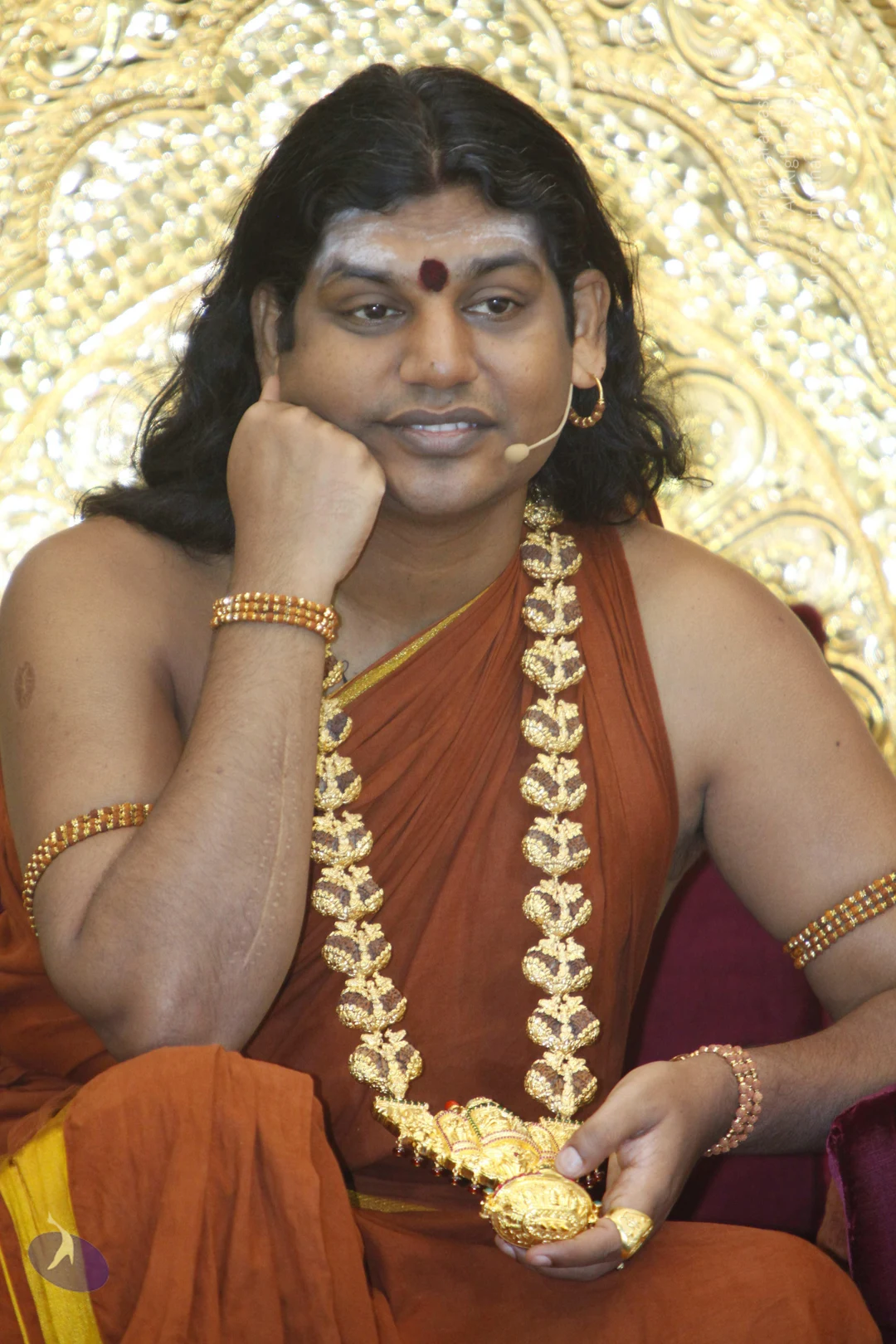
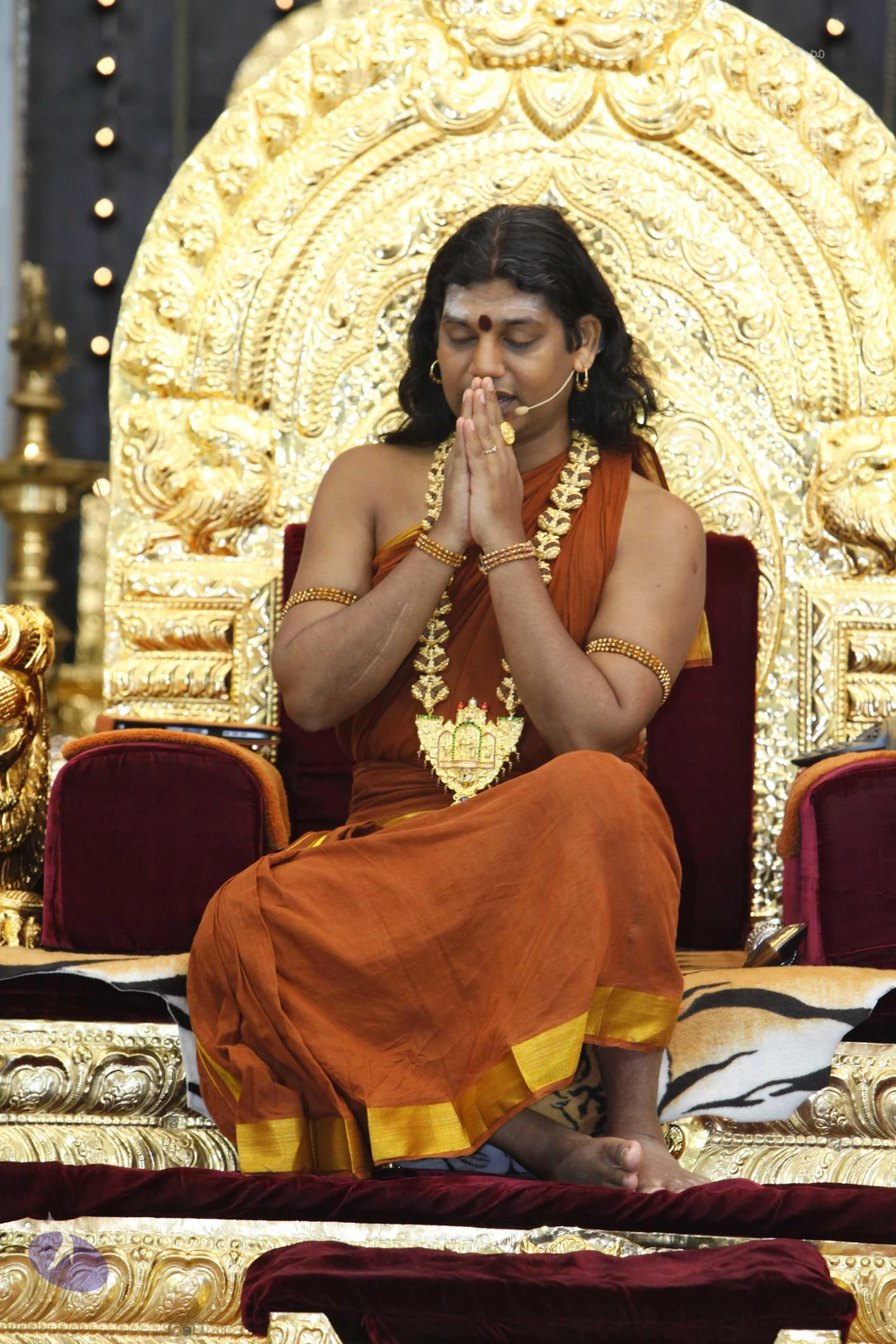
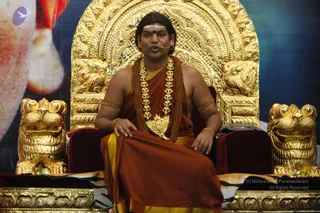
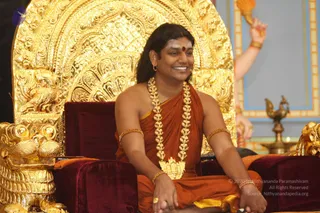
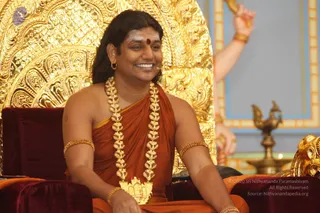
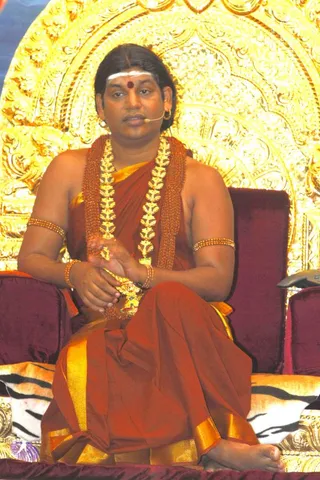
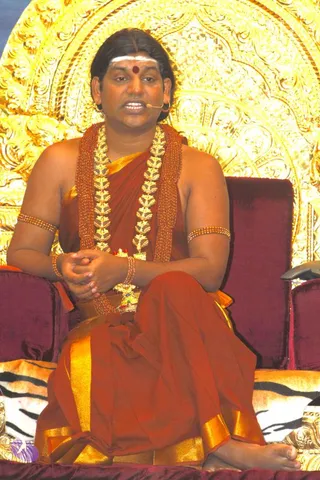
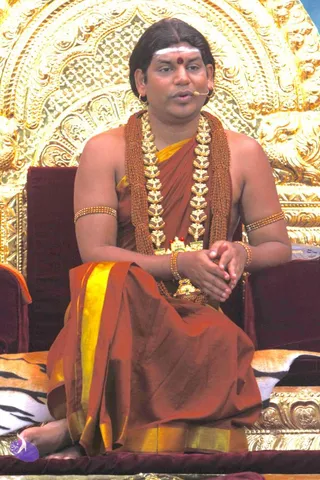
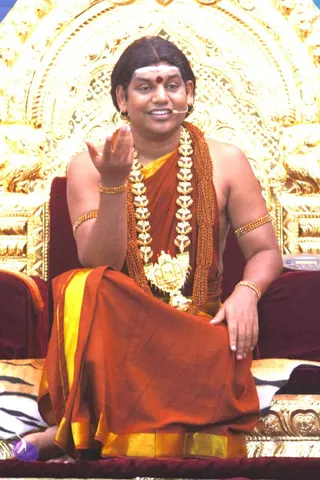
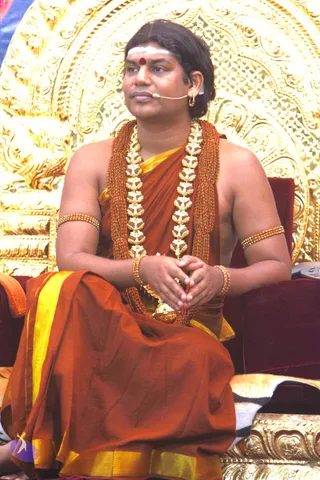
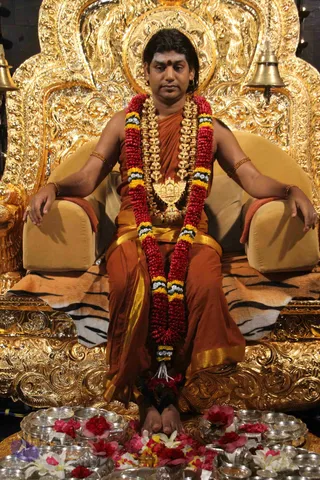
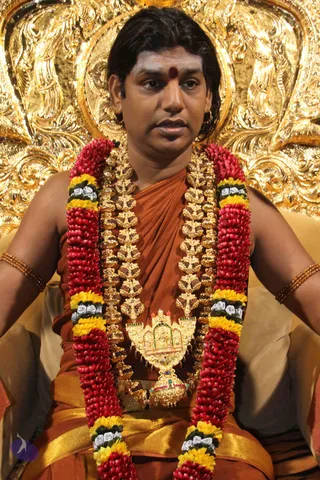
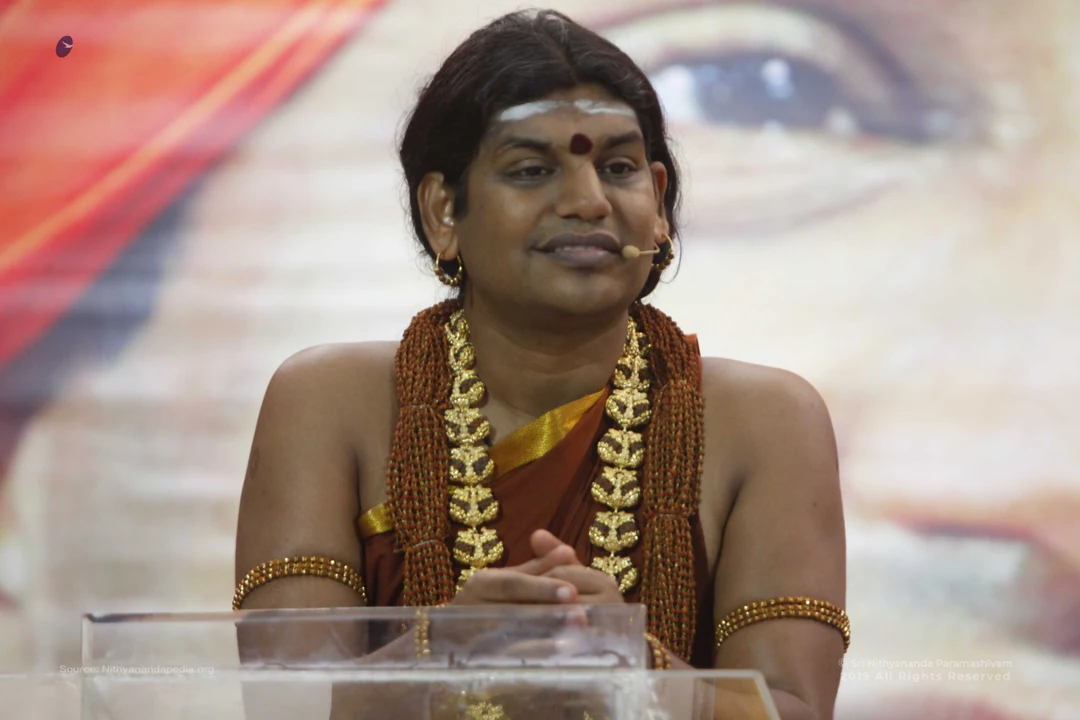
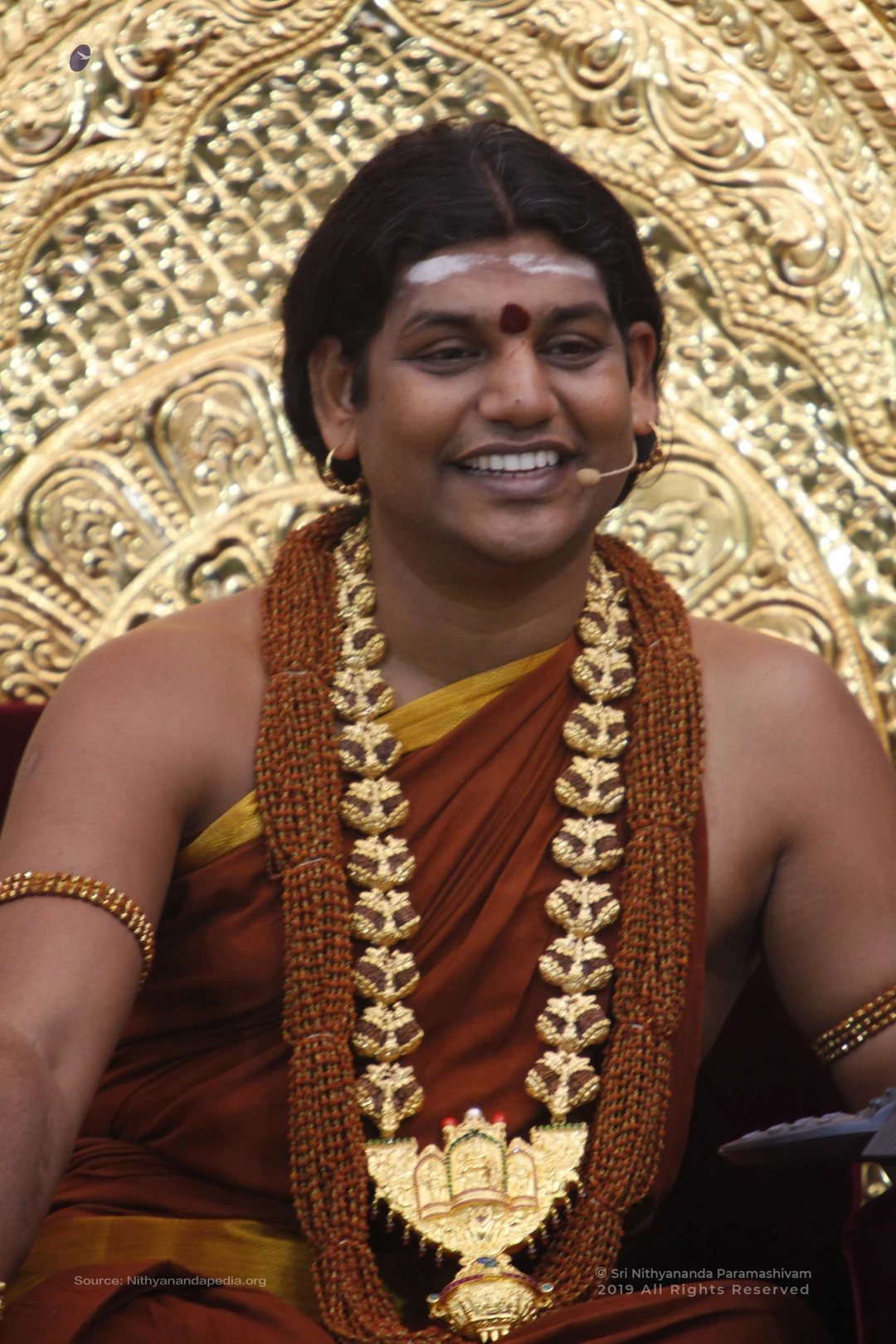
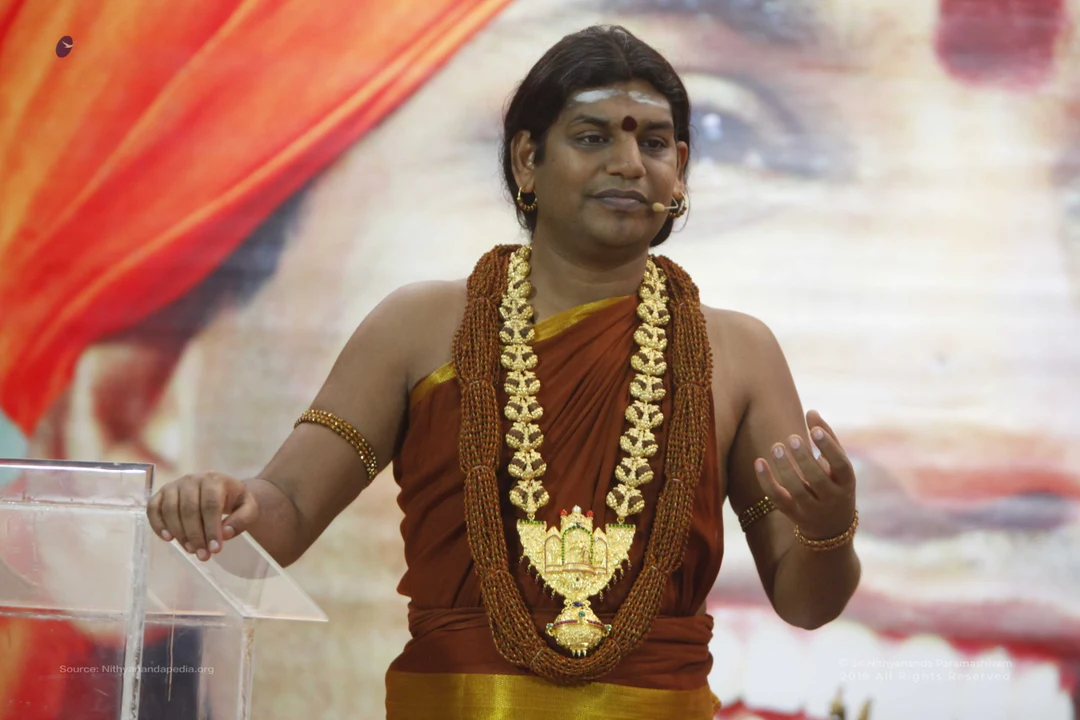
A photograph of a man seated on an ornate gold throne carved with lion heads, with lion-form gold armrests on either side. He wears a saffron-orange robe with yellow borders, a long rudraksha mala and a layered gold necklace, gold bangles on his arms, and a white tripundra with a red dot on his forehead, and he has a headset microphone. He is speaking as if giving a satsang discourse, and a red-and-white backdrop with a large face and a tiger-striped cloth draped over the seat frame the scene. a person is seated in front of an audience, consistent with a discourse setting, based on his saffron robe, rudraksha mala, gold necklace and throne.A man with long dark hair sits on an ornate gilded throne decorated with carved lion heads and scrolled backrest, seated on a red velvet cushion draped with a striped tiger-print cloth. He wears an orange-saffron robe with gold border, a multi-strand rudraksha mala, a long gold necklace with a central pendant, gold armlets and bangles, and a white tripundra with a red bindi on his forehead, while a small headset microphone is attached near his mouth. His right hand rests on his knee and his left hand rests on the armrest. a person is seated here in the satsang setting, identified by his saffron robe, rudraksha mala and ceremonial gold necklace. The background shows a blue backdrop with a partially visible painted image at the upper left.A seated man in saffron-orange robes with gold trim sits on an ornate golden throne flanked by gold lion-shaped armrests, with red velvet cushions and a tiger-striped cloth draped on the seat. He wears a long gold necklace with a heart-shaped pendant, a beaded rudraksha-style mala, gold bangles, a small red bindi and a headset microphone, and gestures with both open hands while speaking. A large painted backdrop with a red and white figure is behind him.A man seated on a red velvet throne in front of an ornate gold repoussé backdrop, speaking into a headset microphone with his right arm extended outward and palm open, left hand resting on his lap. He wears a saffron-orange robe with a yellow edge, a rudraksha mala draped over both shoulders, a heavy gold necklace with leaf motifs and a gold pendant, gold bangles, and gold armlets. He has a white horizontal tilak with a red dot on his forehead and gold hoop earrings. A white telephone sits on a red surface beside him. Single seated speaker, discourse setting.A seated man speaks into a headset microphone in front of an ornate gold repoussé throne back with carved lions and floral panels. He wears an orange-red robe with a yellow edge, layered rudraksha malas, a gold ceremonial pendant necklace, gold armbands and bangles, and a red bindi with white tilak on his forehead. His hands rest at his chest in a gesturing pose on a red velvet cushion. The distinctive long swept-back hair, saffron robe, rudraksha malas and ceremonial gold ornaments match the page's Swamiji reference, so this is an appearance-based probable Swamiji candidate in person, with one person visible.A photo of a seated man on a red velvet throne in front of an ornate gold-leaf carved backrest with scrollwork and lion-like motifs. He wears saffron-orange robes with a gold border, multiple rudraksha malas, a gold ceremonial necklace with a large pendant, gold bangles and an armlet, with a white vertical tilak and red bindi on his forehead, and a small headset microphone. He gestures with his hands while speaking, with a golden ornamental vessel on the left edge of the frame. The a person field reflects the visible cues of a long swept-back hairstyle, saffron clothing, rudraksha malas and ceremonial gold necklace matching the page's identification.

Photos Of The Day:

26 photosSource gallery
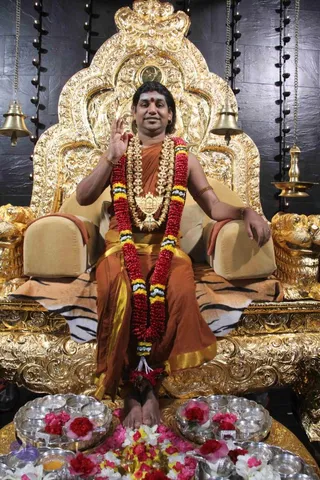
A photograph of a man seated on an ornate gold throne carved with lion heads, with lion-form gold armrests on either side. He wears a saffron-orange robe with yellow borders, a long rudraksha mala and a layered gold necklace, gold bangles on his arms, and a white tripundra with a red dot on his forehead, and he has a headset microphone. He is speaking as if giving a satsang discourse, and a red-and-white backdrop with a large face and a tiger-striped cloth draped over the seat frame the scene. a person is seated in front of an audience, consistent with a discourse setting, based on his saffron robe, rudraksha mala, gold necklace and throne.A man with long dark hair sits on an ornate gilded throne decorated with carved lion heads and scrolled backrest, seated on a red velvet cushion draped with a striped tiger-print cloth. He wears an orange-saffron robe with gold border, a multi-strand rudraksha mala, a long gold necklace with a central pendant, gold armlets and bangles, and a white tripundra with a red bindi on his forehead, while a small headset microphone is attached near his mouth. His right hand rests on his knee and his left hand rests on the armrest. a person is seated here in the satsang setting, identified by his saffron robe, rudraksha mala and ceremonial gold necklace. The background shows a blue backdrop with a partially visible painted image at the upper left.A seated man in saffron-orange robes with gold trim sits on an ornate golden throne flanked by gold lion-shaped armrests, with red velvet cushions and a tiger-striped cloth draped on the seat. He wears a long gold necklace with a heart-shaped pendant, a beaded rudraksha-style mala, gold bangles, a small red bindi and a headset microphone, and gestures with both open hands while speaking. A large painted backdrop with a red and white figure is behind him.A man seated on a red velvet throne in front of an ornate gold repoussé backdrop, speaking into a headset microphone with his right arm extended outward and palm open, left hand resting on his lap. He wears a saffron-orange robe with a yellow edge, a rudraksha mala draped over both shoulders, a heavy gold necklace with leaf motifs and a gold pendant, gold bangles, and gold armlets. He has a white horizontal tilak with a red dot on his forehead and gold hoop earrings. A white telephone sits on a red surface beside him. Single seated speaker, discourse setting.A seated man speaks into a headset microphone in front of an ornate gold repoussé throne back with carved lions and floral panels. He wears an orange-red robe with a yellow edge, layered rudraksha malas, a gold ceremonial pendant necklace, gold armbands and bangles, and a red bindi with white tilak on his forehead. His hands rest at his chest in a gesturing pose on a red velvet cushion. The distinctive long swept-back hair, saffron robe, rudraksha malas and ceremonial gold ornaments match the page's Swamiji reference, so this is an appearance-based probable Swamiji candidate in person, with one person visible.A photo of a seated man on a red velvet throne in front of an ornate gold-leaf carved backrest with scrollwork and lion-like motifs. He wears saffron-orange robes with a gold border, multiple rudraksha malas, a gold ceremonial necklace with a large pendant, gold bangles and an armlet, with a white vertical tilak and red bindi on his forehead, and a small headset microphone. He gestures with his hands while speaking, with a golden ornamental vessel on the left edge of the frame. The a person field reflects the visible cues of a long swept-back hairstyle, saffron clothing, rudraksha malas and ceremonial gold necklace matching the page's identification.

Rudra-Abhishekam

143 photosSource gallery
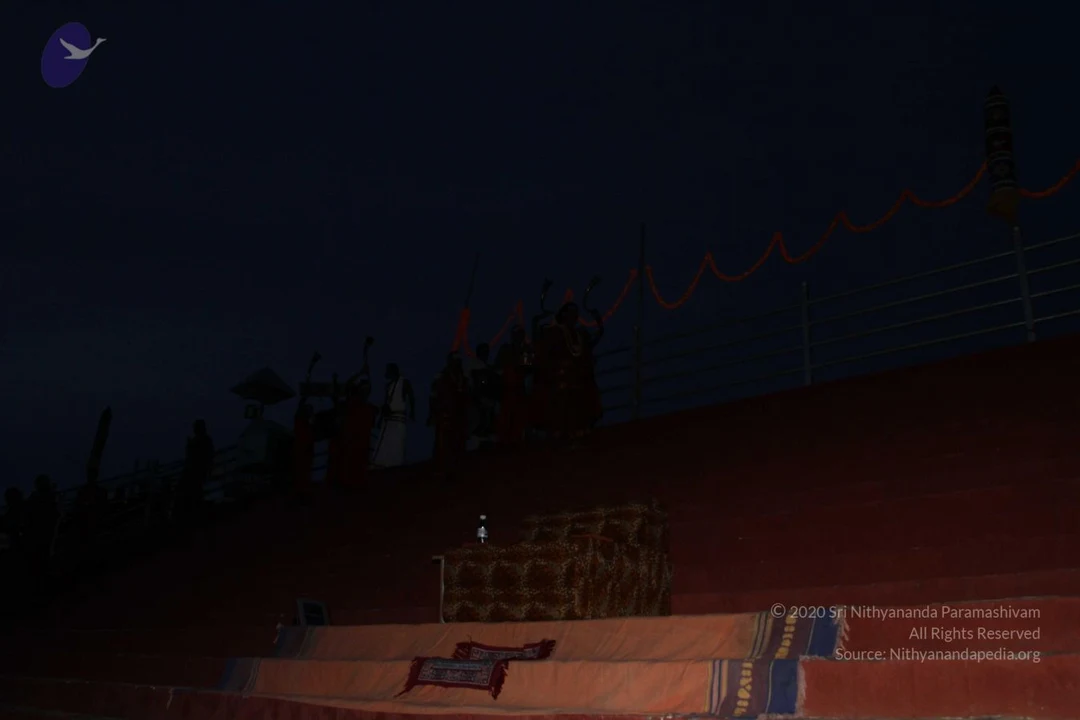
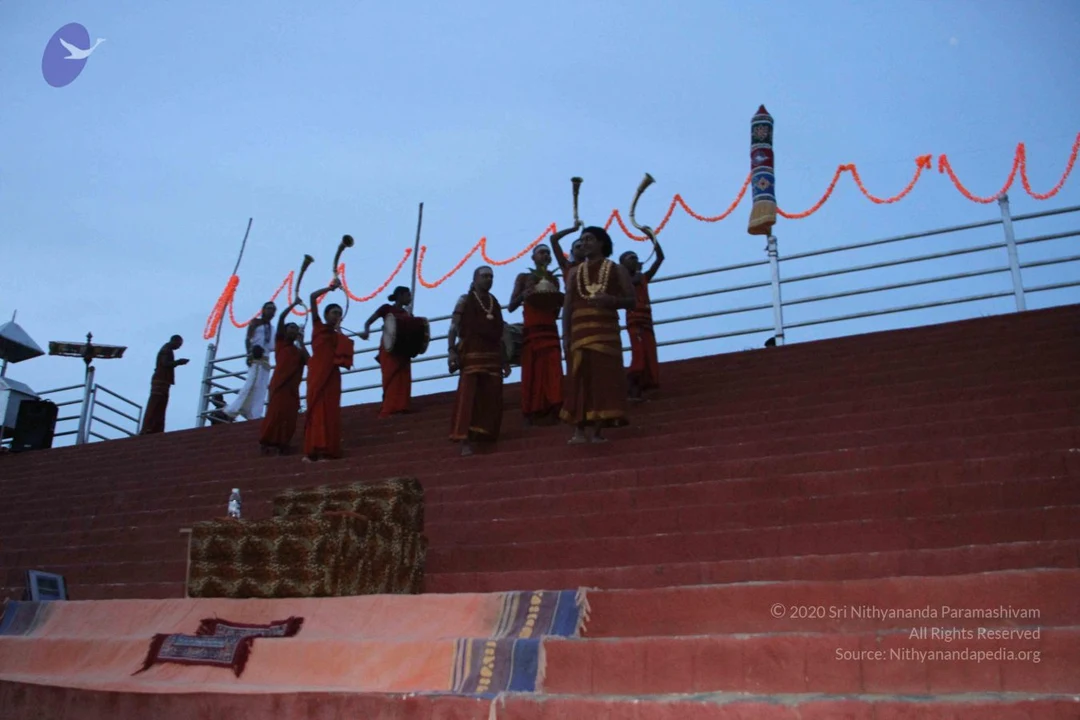
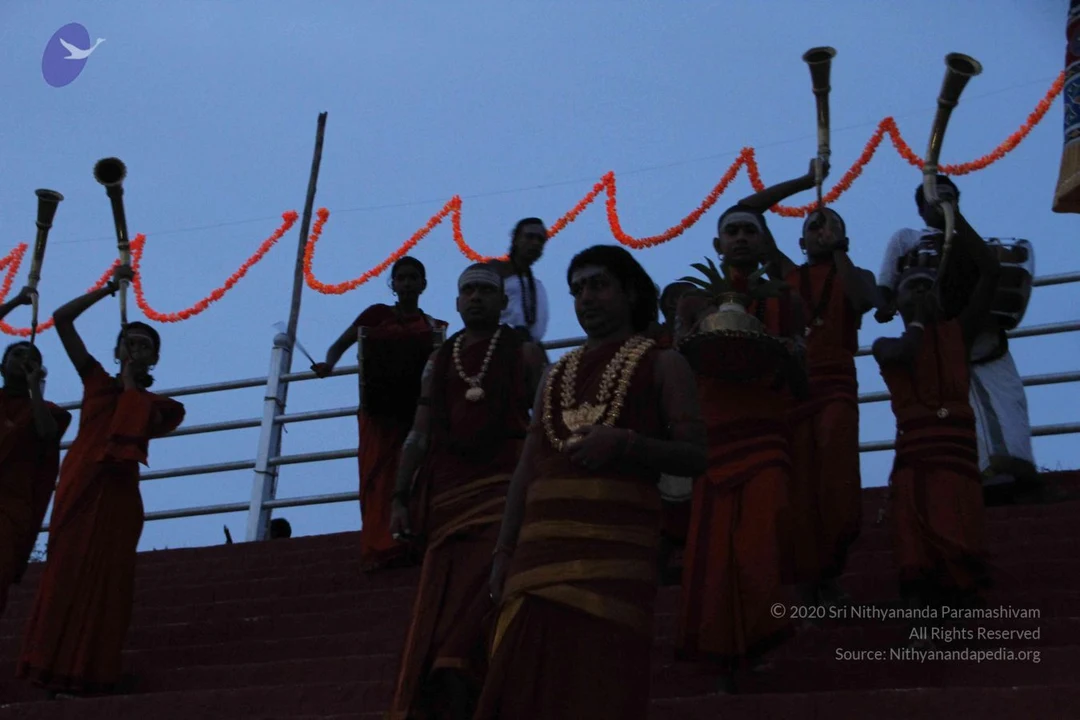
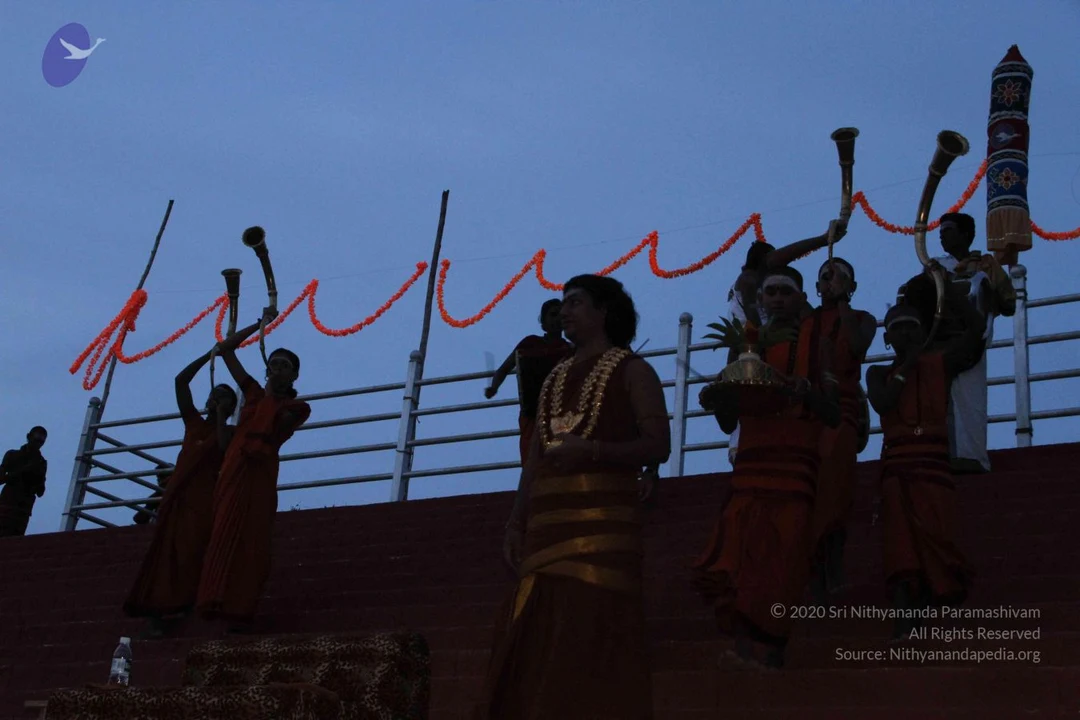
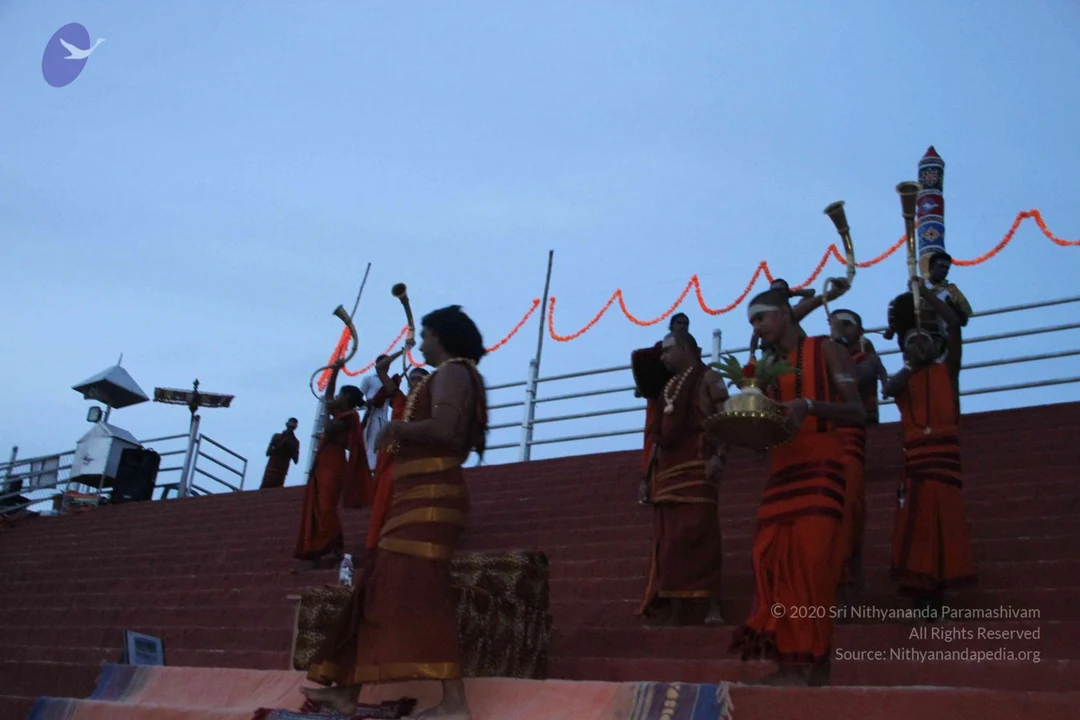
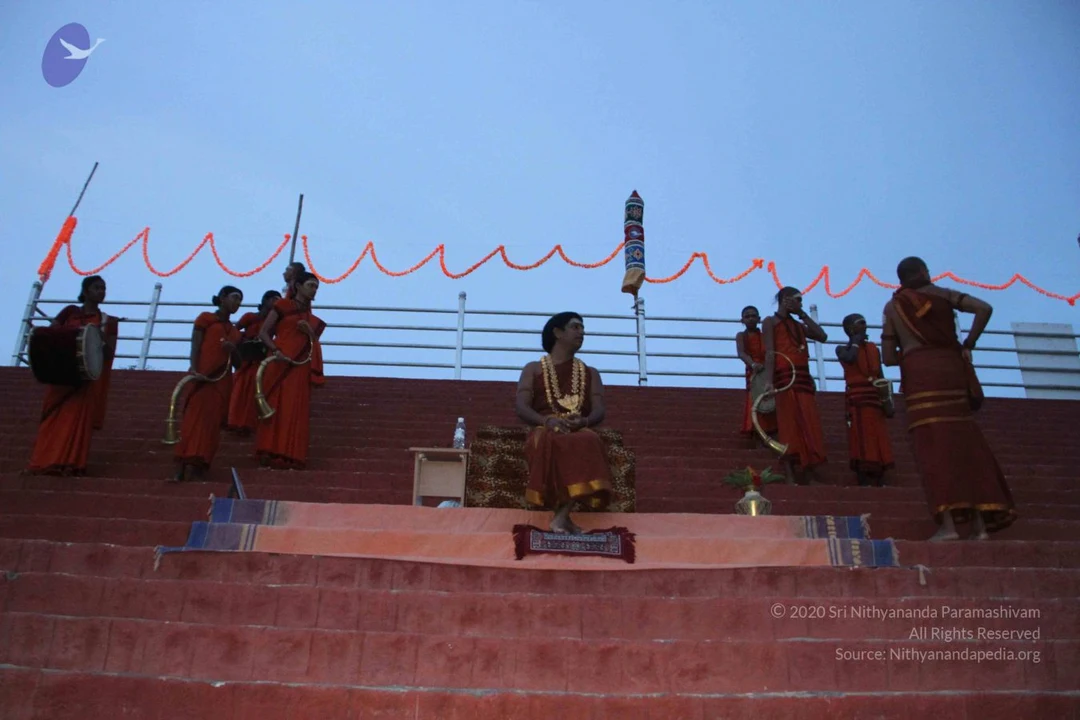
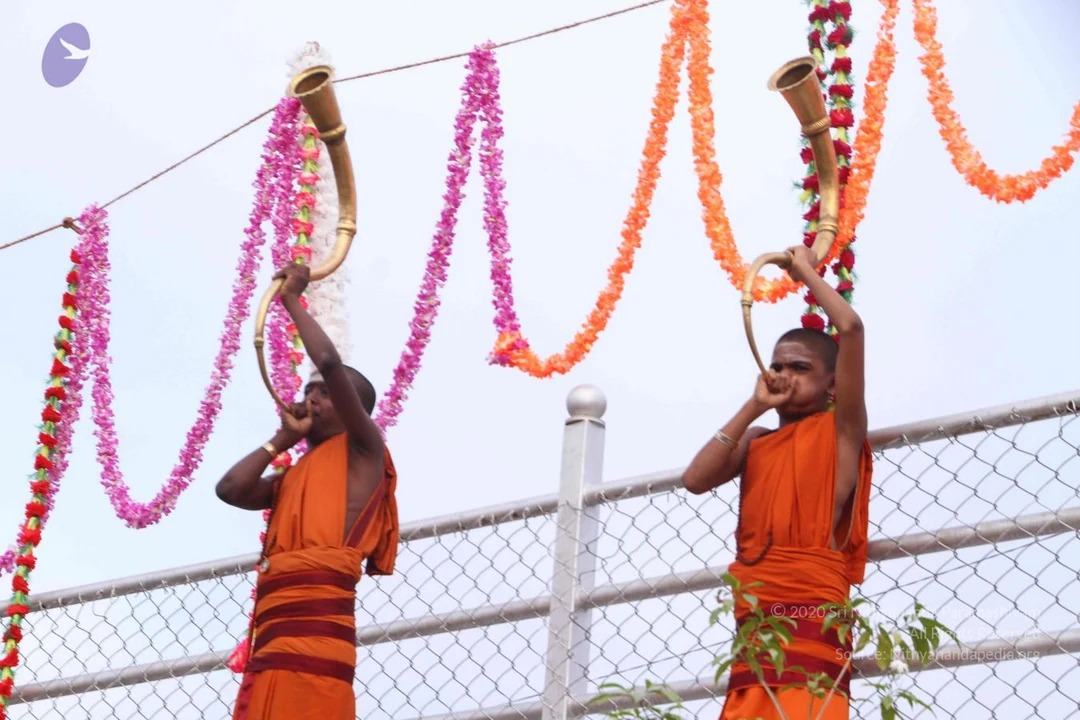
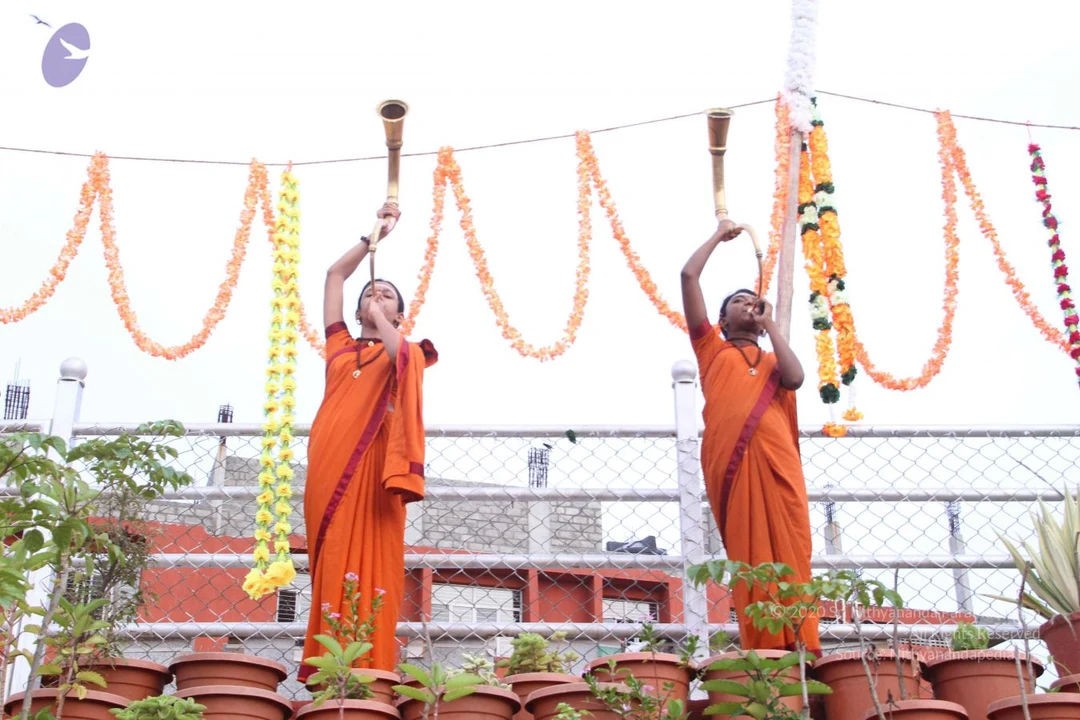
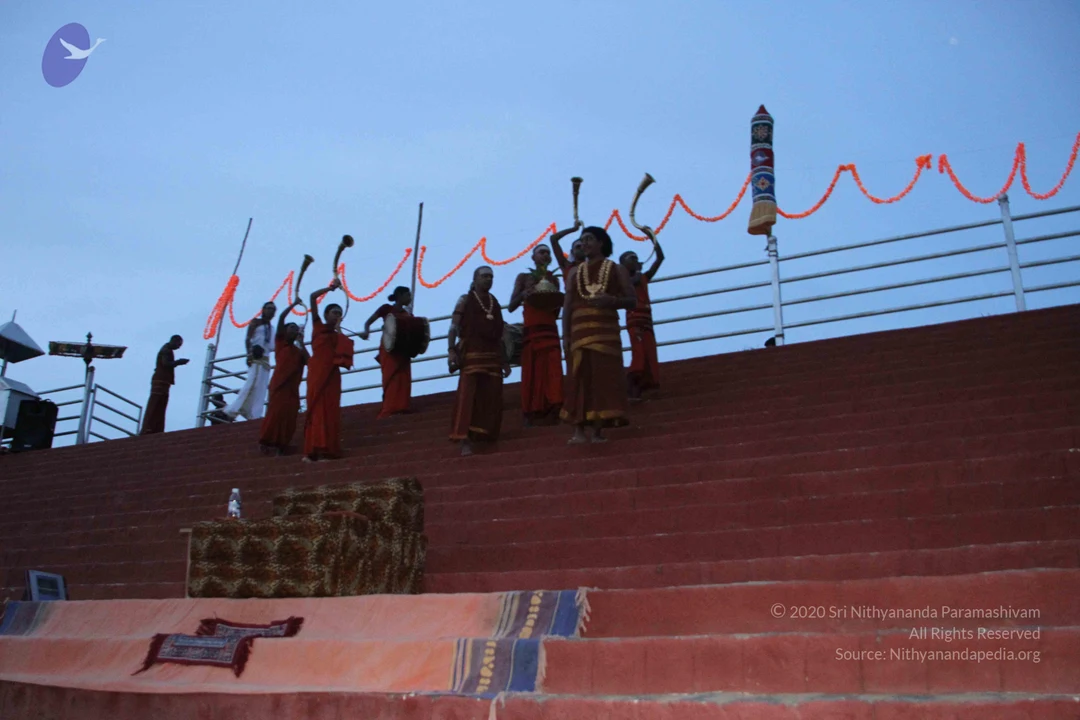
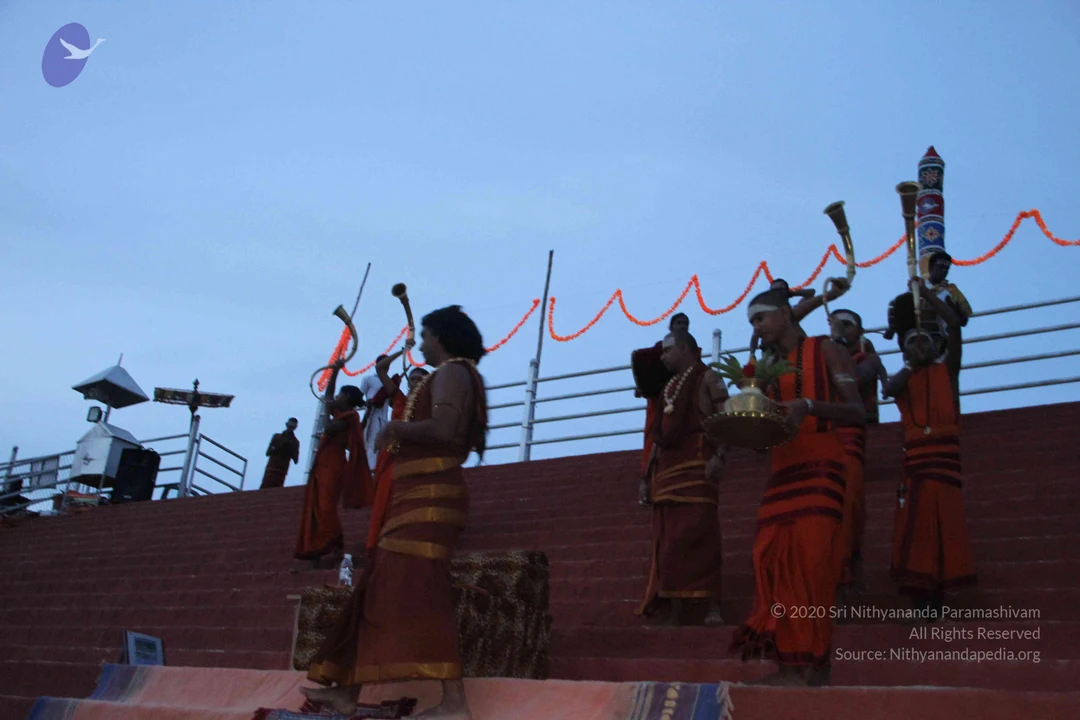
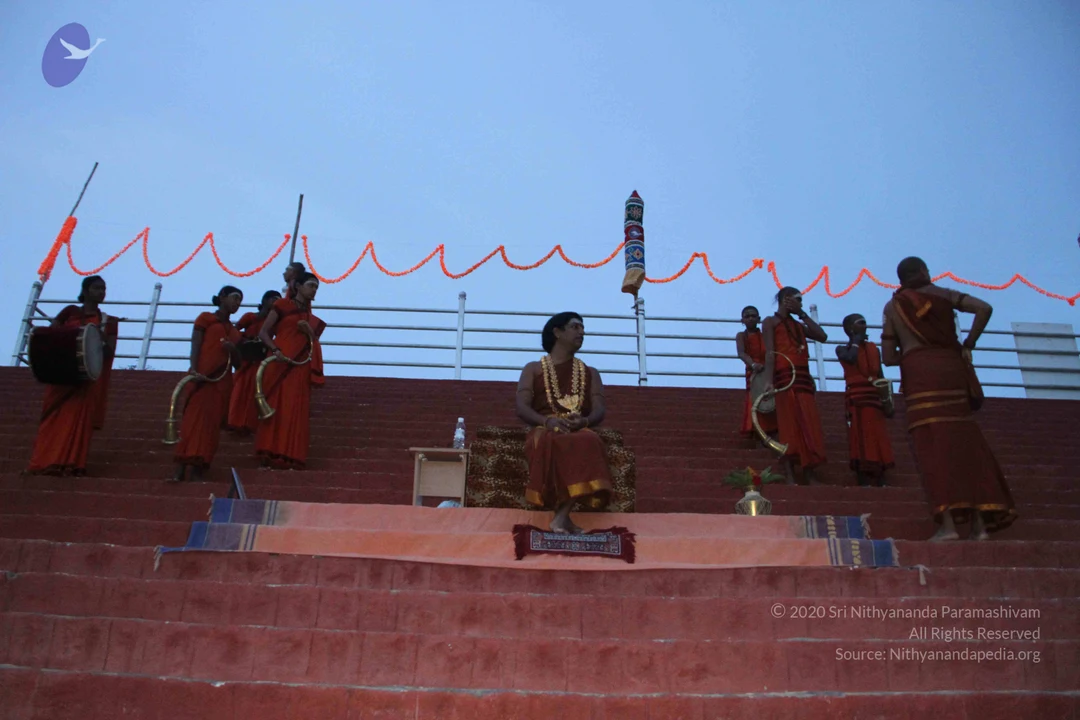
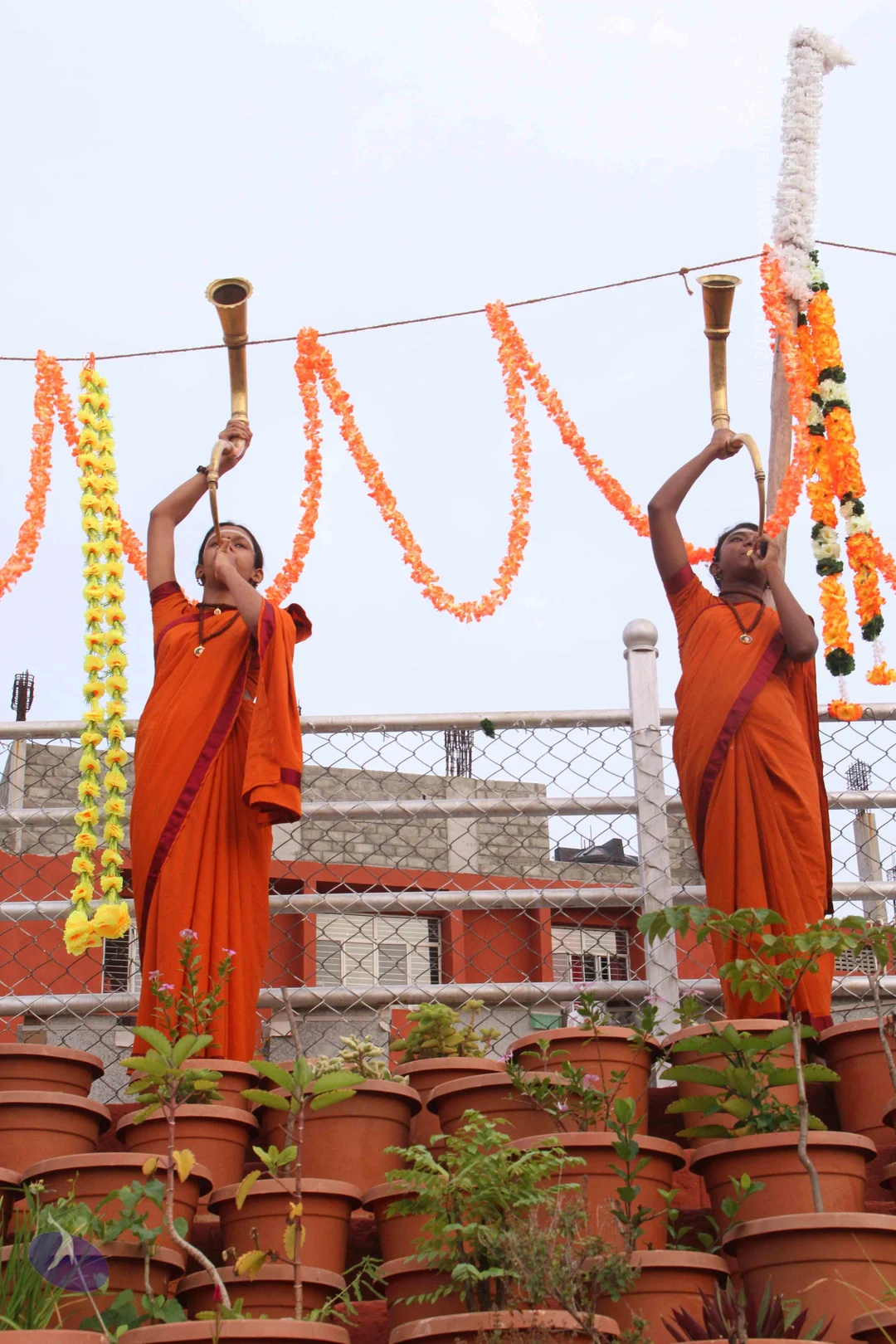
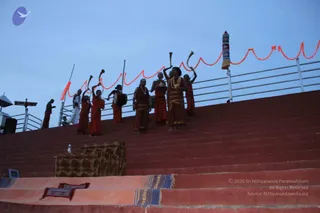
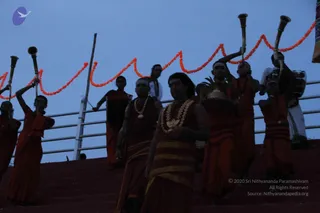
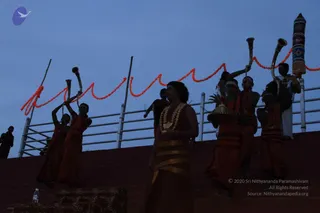
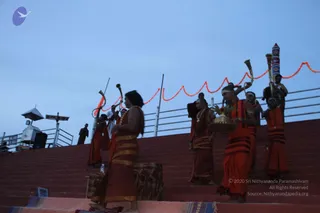
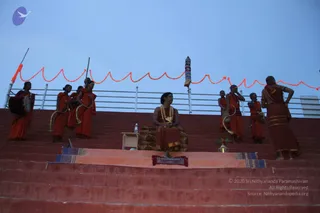
A dark night scene on a steep stone ghat or temple staircase with orange-red steps. Near the bottom, a low dais draped in a patterned maroon cloth holds a small bottle and two folded red-and-gold mats lie on the steps. Above, a group of figures in orange-red and saffron robes stand on the upper steps, several holding long staffs or tridents raised. A string of orange-red flags or garlands runs along a railing at the top right, with a tall pillar at the right edge. The scene is mostly silhouetted against the dark sky.A photograph of a group of saffron-robed men standing on wide red-painted stone steps at dusk, several raising long curved brass horns to their lips. One man in the centre wears a gold necklace and a dark wrap, and a drummer in orange clothing beats a drum nearby. Strands of orange marigold garlands stretch along a metal railing above, with a tall ornamented pillar topped with a decorated cloth bundle at the right. Low woven mats and cushions sit at the front of the steps, and a small bottle rests on the stone. A person in white stands near the left edge.Dusk procession on a red-stepped ghat or stairway, with a line of devotees in saffron-orange and maroon robes. Several men in the foreground hold long brass horns (trumpets) raised high, while others carry a silver-rimmed kalasha topped with a pineapple-shaped offering. A man in the centre wears a white floral garland, a rudraksha-style bead mala and a thick white ornamental necklace, with a red-and-gold cloth wrap. Behind them, a white-clad drummer plays a drum on the right. Orange marigold garlands are strung along a railing above, and the sky is pale blue at dusk.Dusk procession on a red stone ghat. A central figure in an orange-red robe with a gold-coloured waist band and a long beaded necklace of gold and white garlands stands at the front, facing forward, hair worn up in a dark bun. Behind her, several men in saffron-orange robes raise long brass horns (ceremonial trumpets) to their lips and lift a tall decorated kalasha-like staff with a patterned cloth and tassel. A strand of orange-red marigold garlands is strung across the scene on poles against a pale evening sky. A white-clad attendant stands at the right edge. A small floral-covered table sits in the lower left with a water bottle beside it. The frame is dim, dusky and blue-toned.A photograph of a group of ritual performers in saffron-orange robes standing on red stone steps at dusk under a pale blue sky. Several play long brass horns, including a tall trumpet-like instrument held upright. One performer in the foreground carries a brass tray or vessel with green leaves and flowers. Another at right holds a tall decorated pole with red, white and blue patterned panels. A strand of orange-red marigold garlands is strung along the railing behind them, and a small raised stand with a light and speaker sits at left. The setting appears to be a riverside ghat or outdoor ceremonial platform. No one in the image is clearly identifiable as a person.Outdoor photo on red stone steps under a pale evening sky. A man sits cross-legged on a patterned mat and raised platform, wearing an orange-saffron dhoti and shawl, a long white-and-gold garland and a rudraksha-style necklace. Around him, musicians in orange-red robes play long curved brass horns and a drum at left, while other performers stand on the steps. Strands of orange flowers hang along a railing behind them, a decorated ceremonial pole rises at centre, and a small vase with flowers and a water bottle sit nearby.

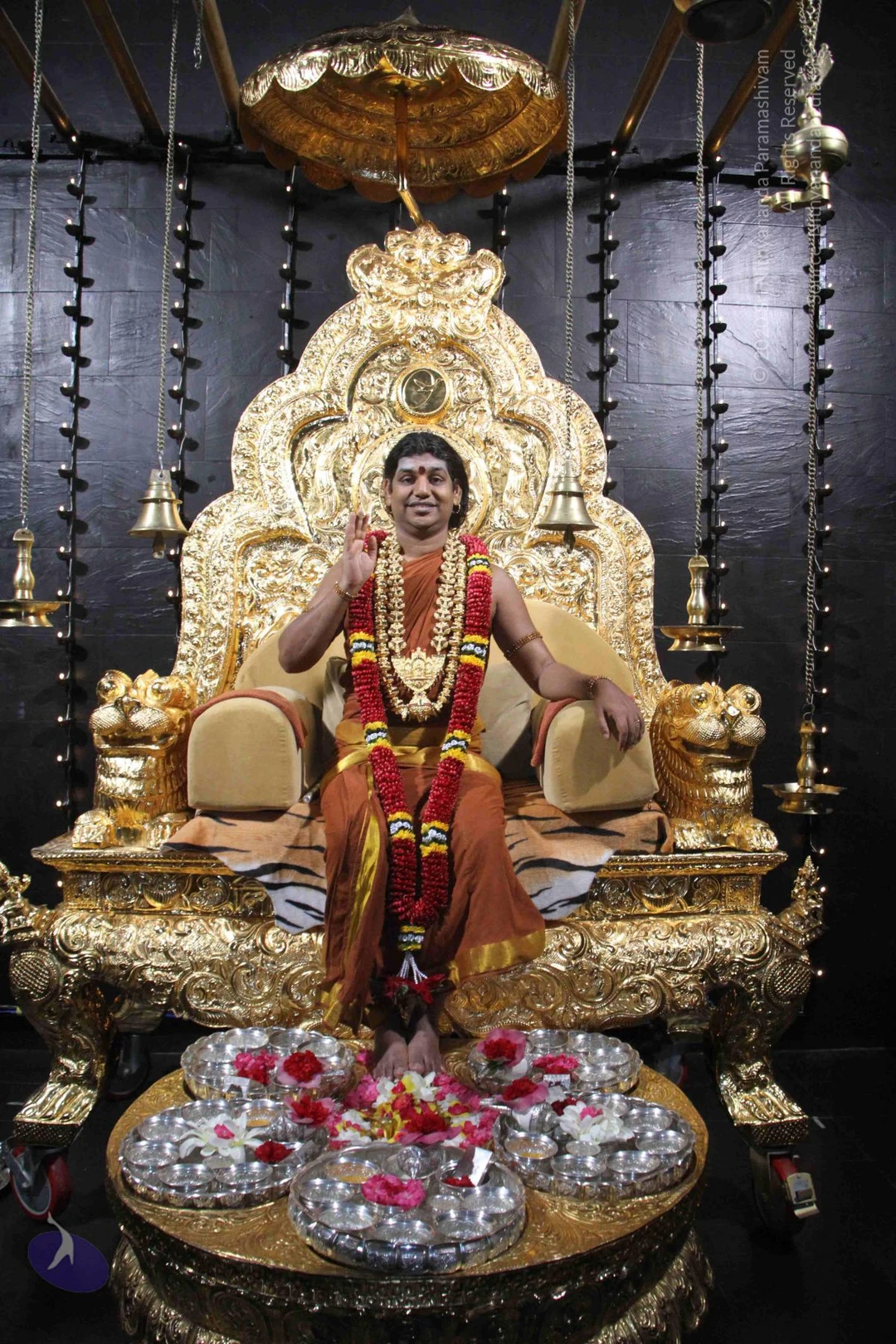
Garbha-Mandir-Pratyaksha-Pada-Puja

21 photosSource gallery
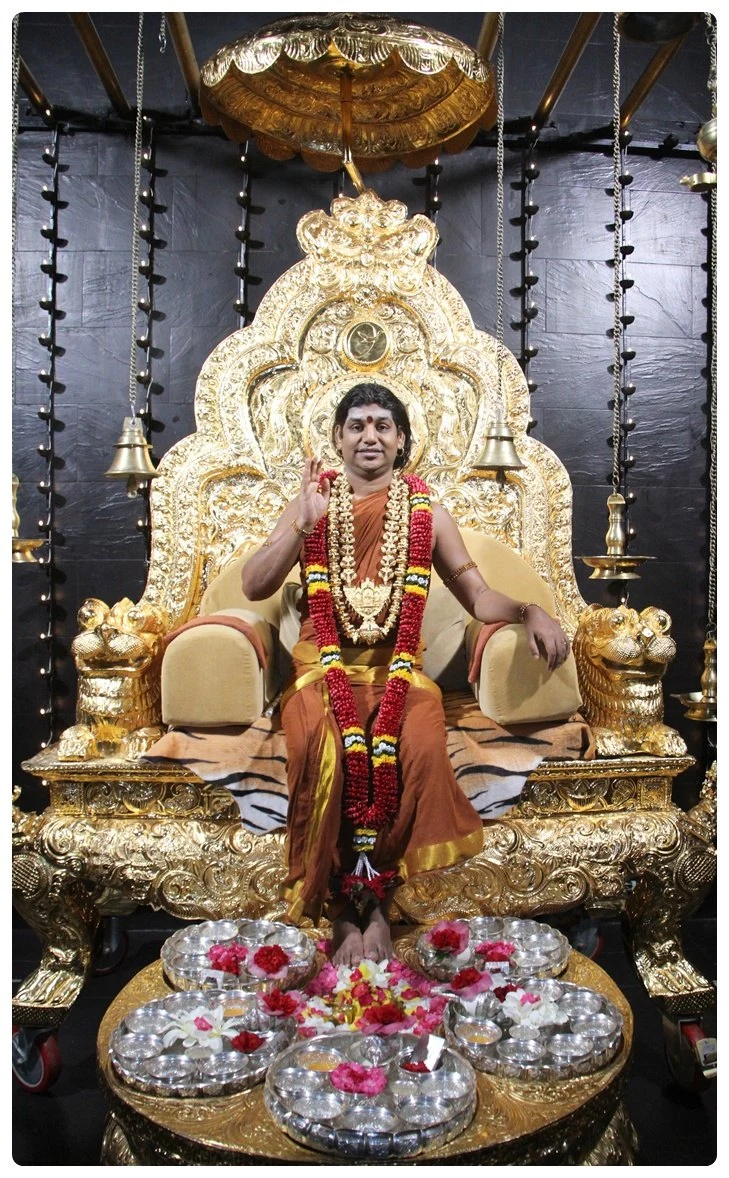
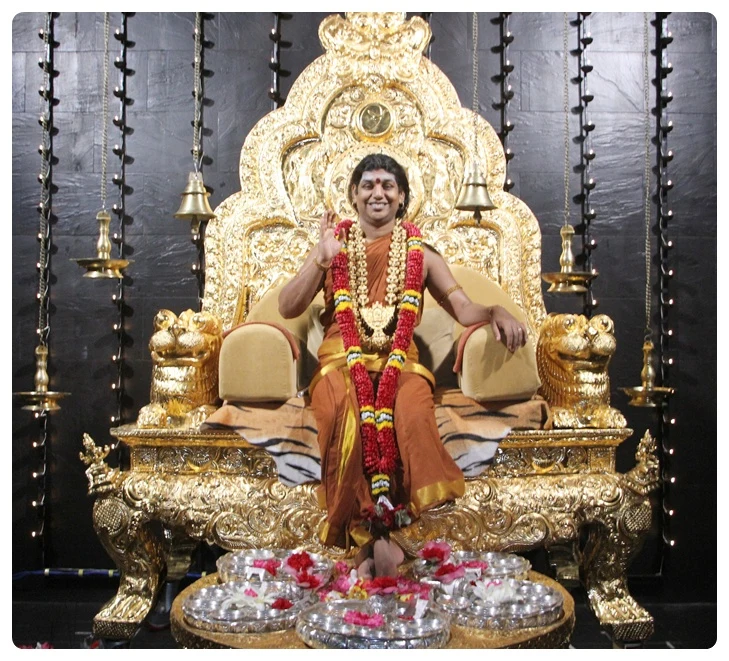
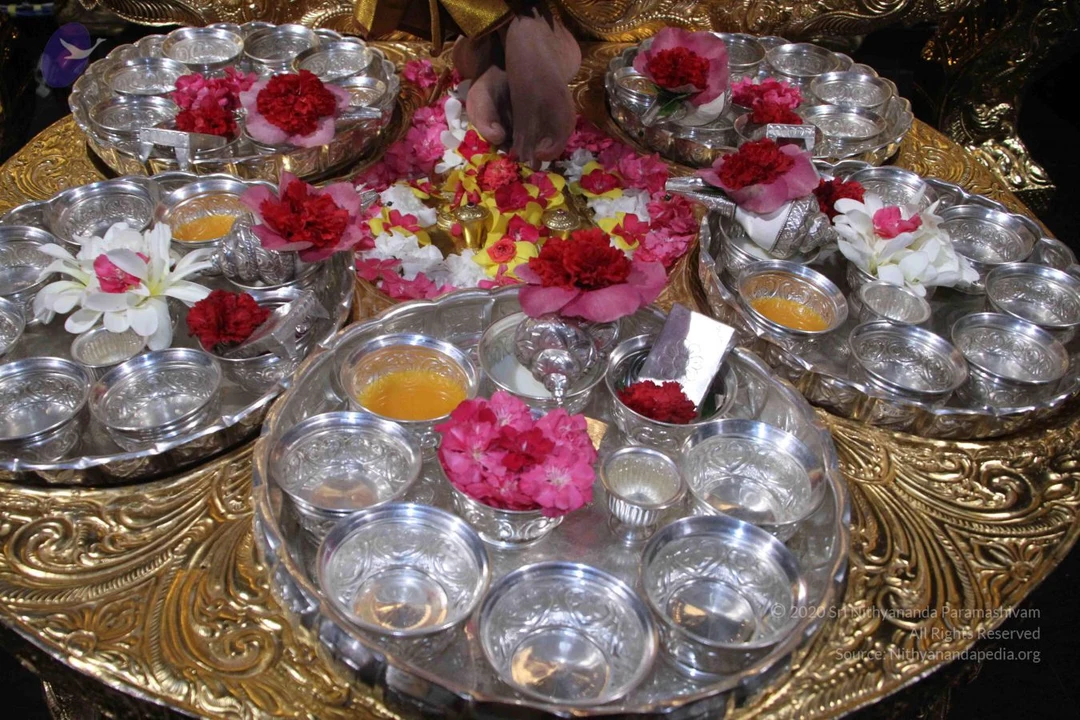
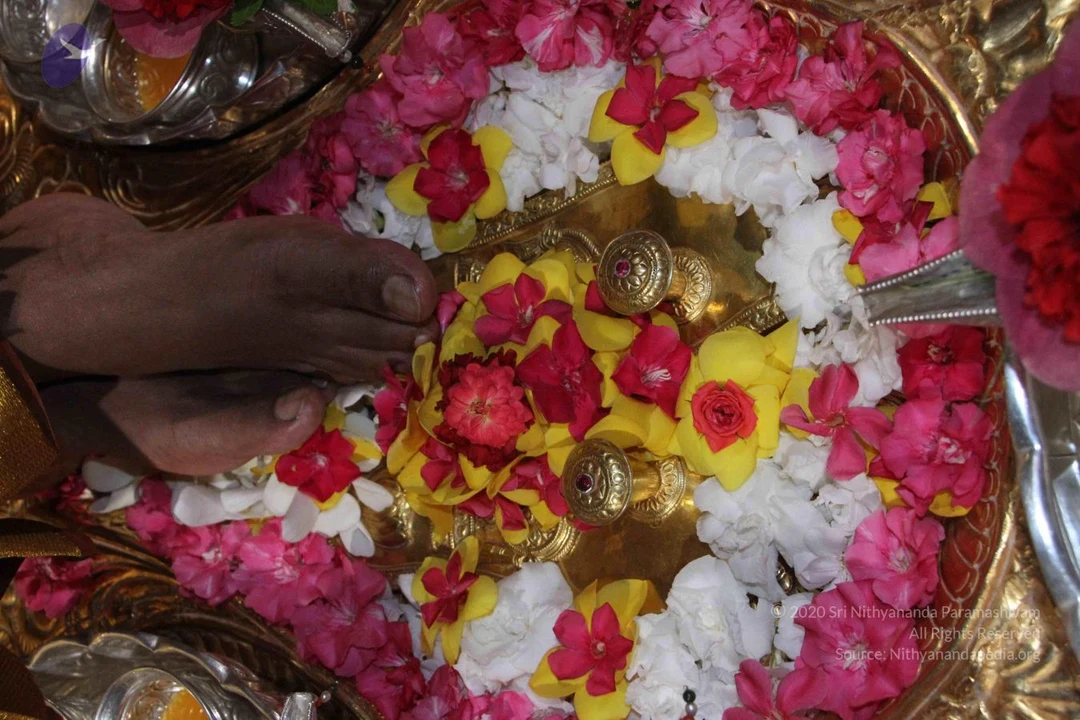
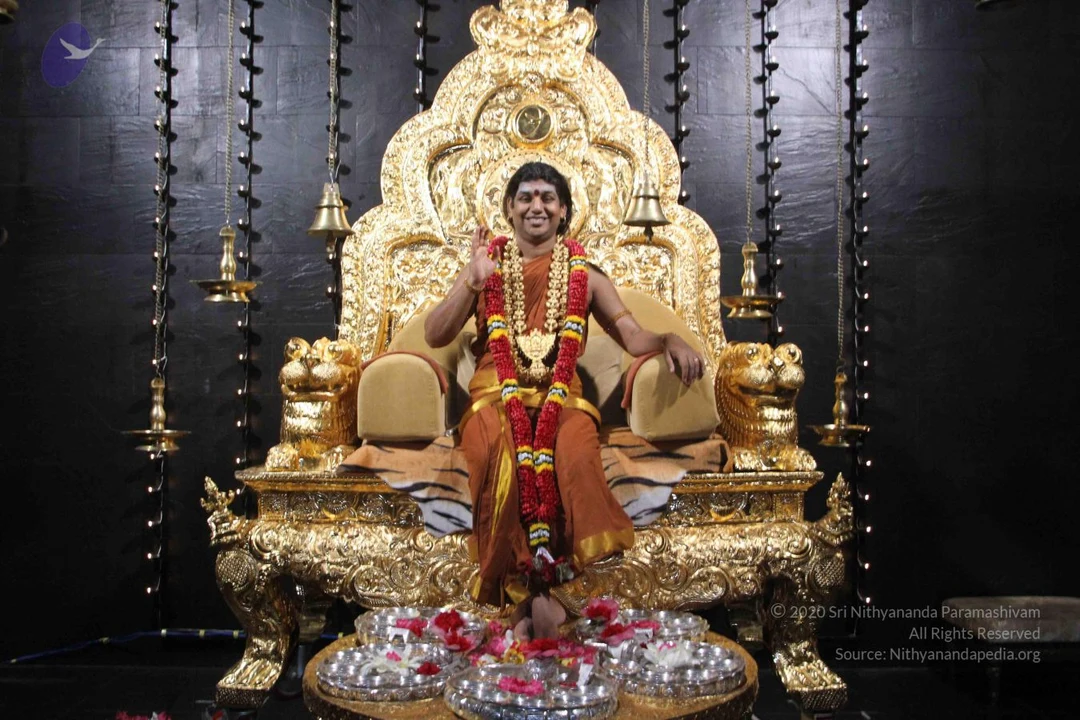
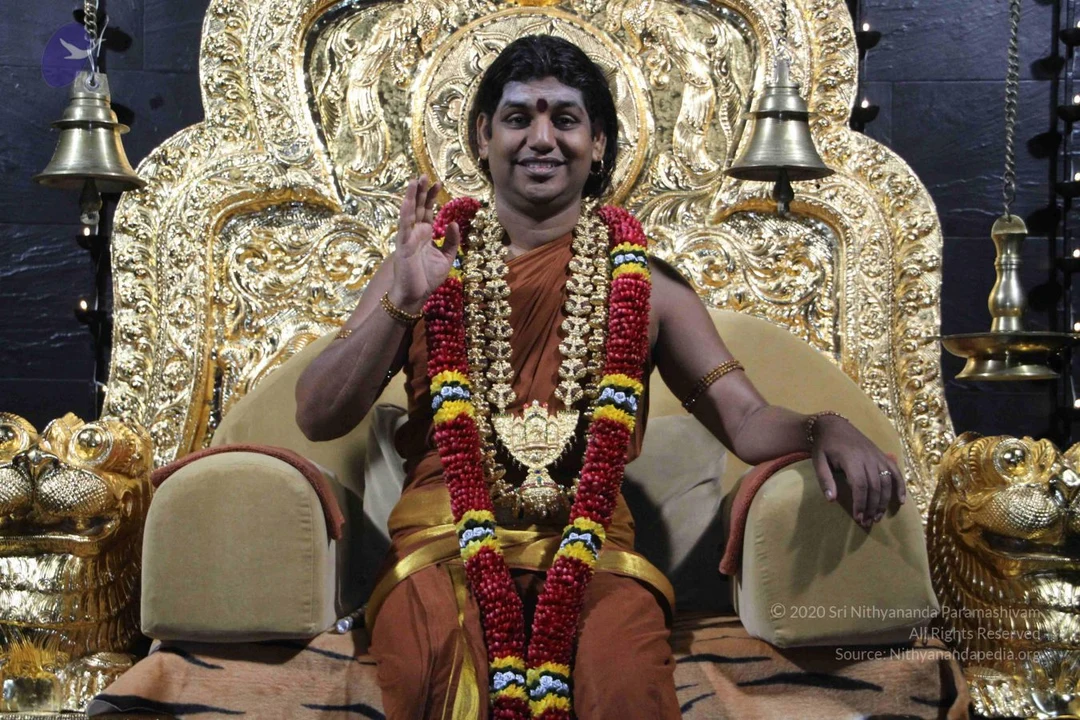
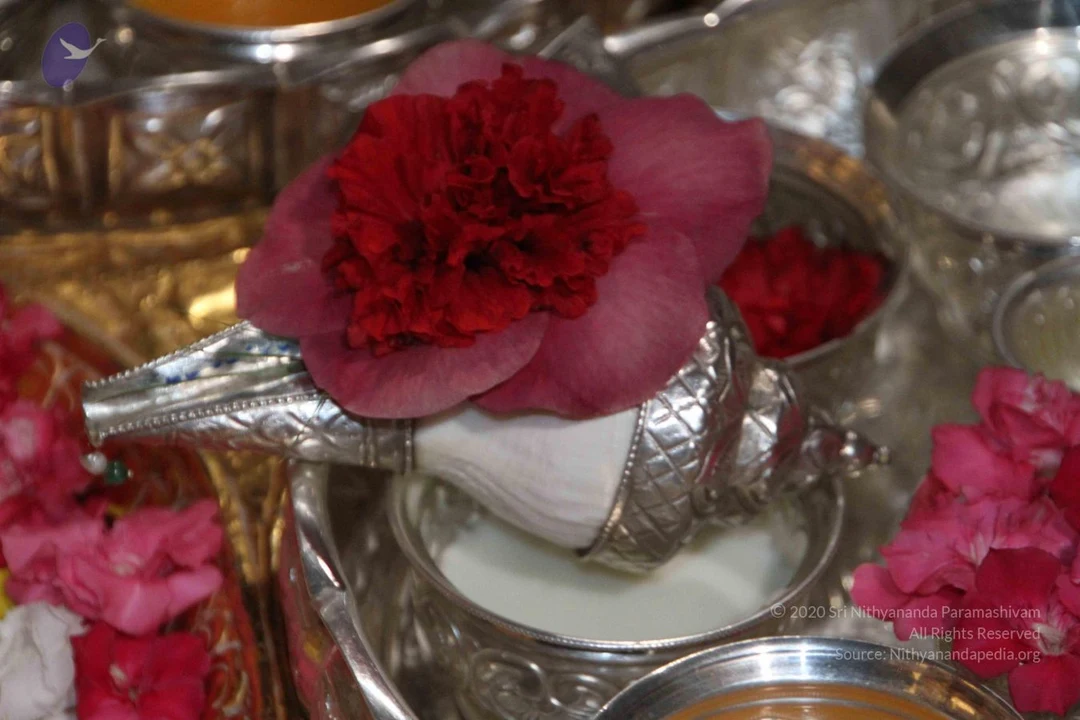
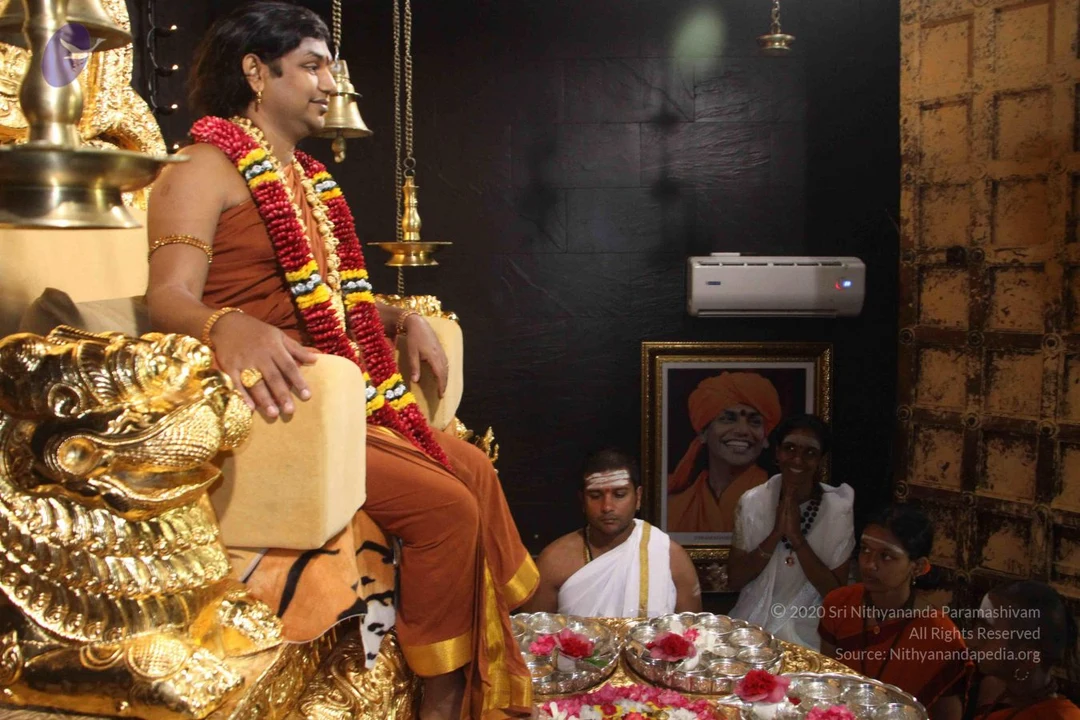
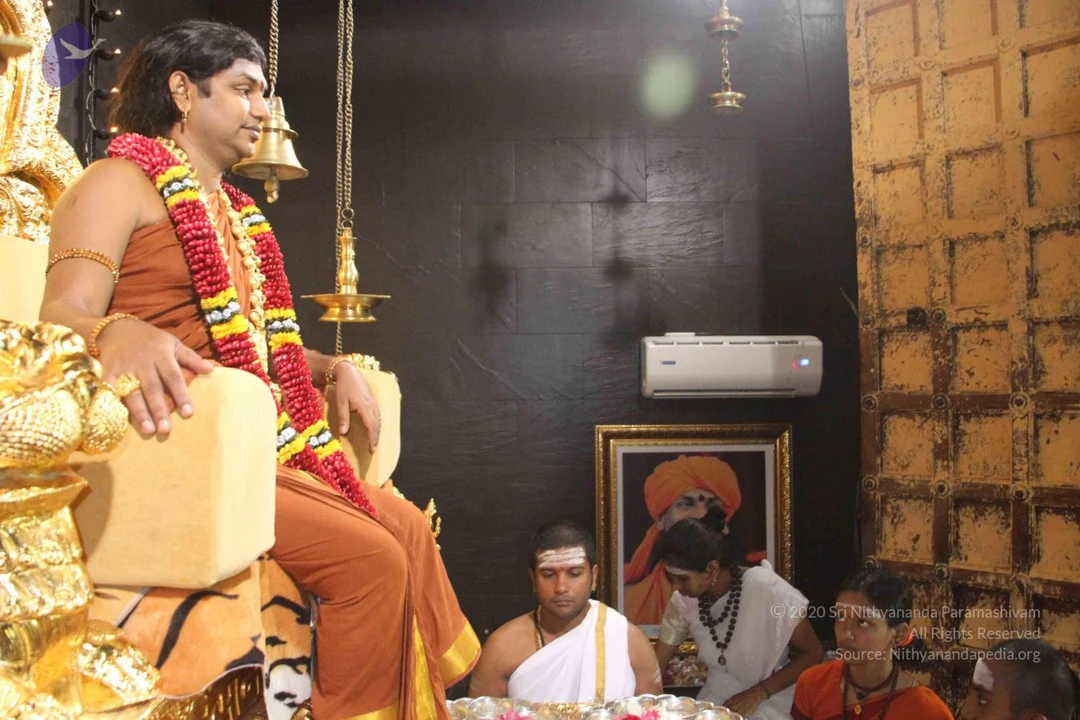
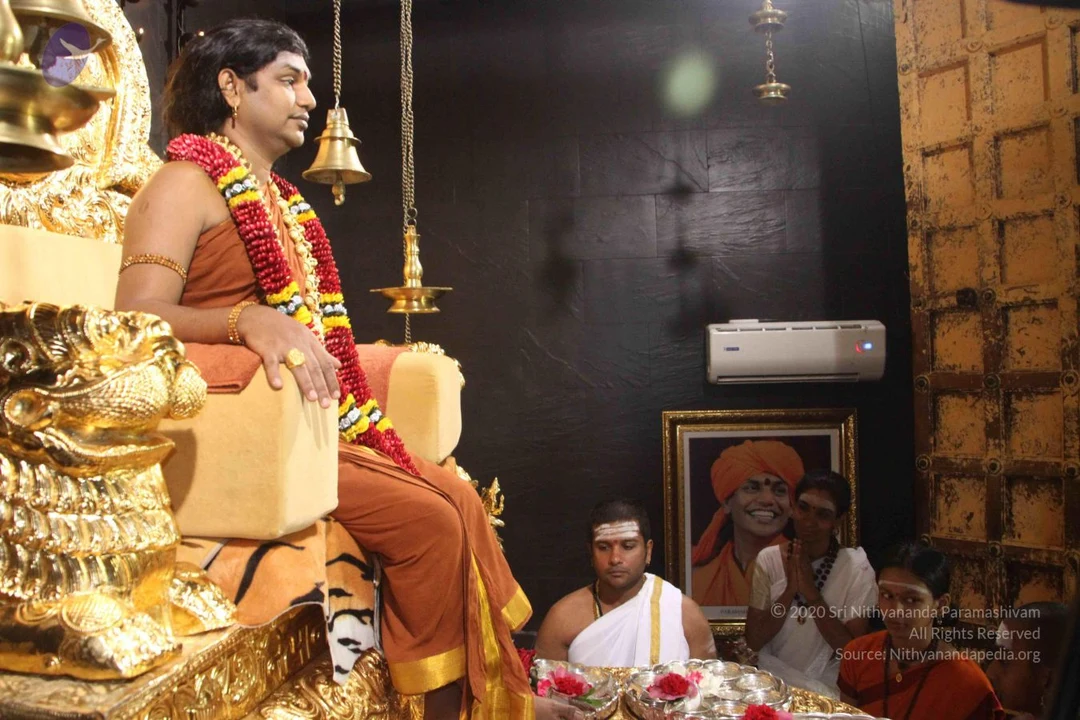
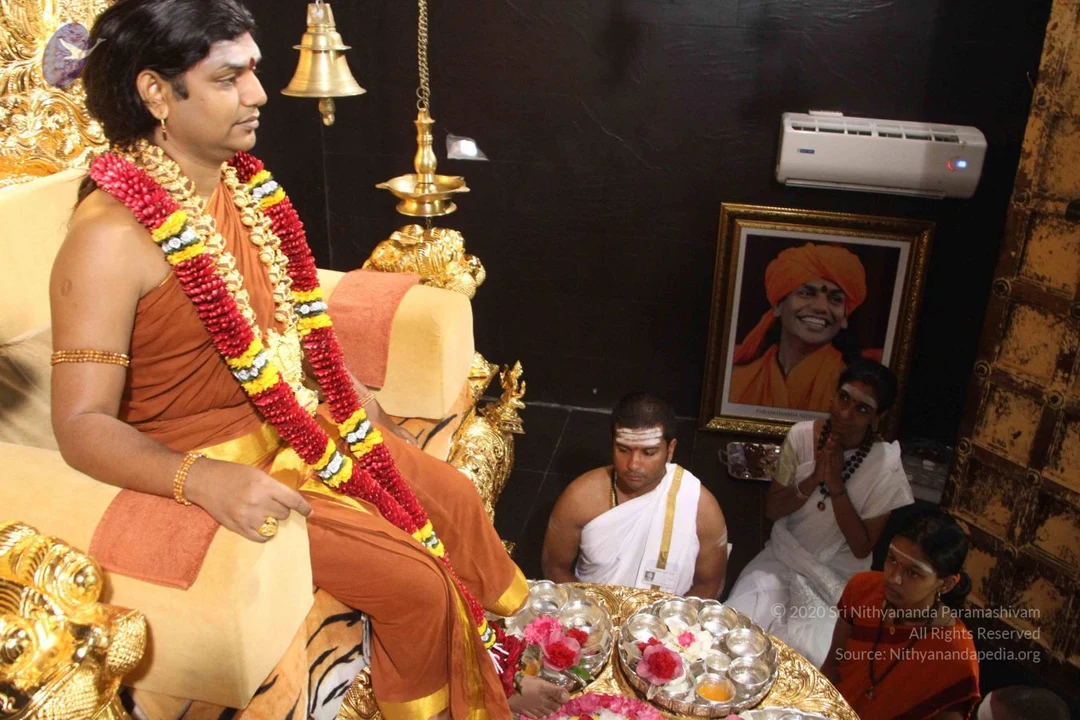
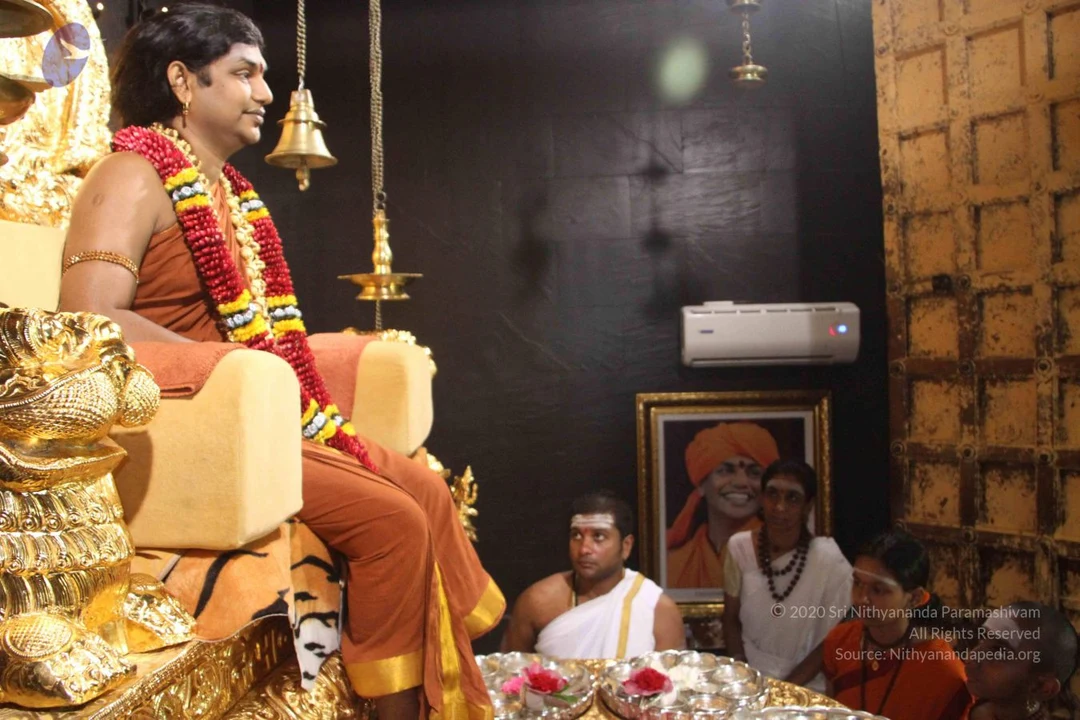
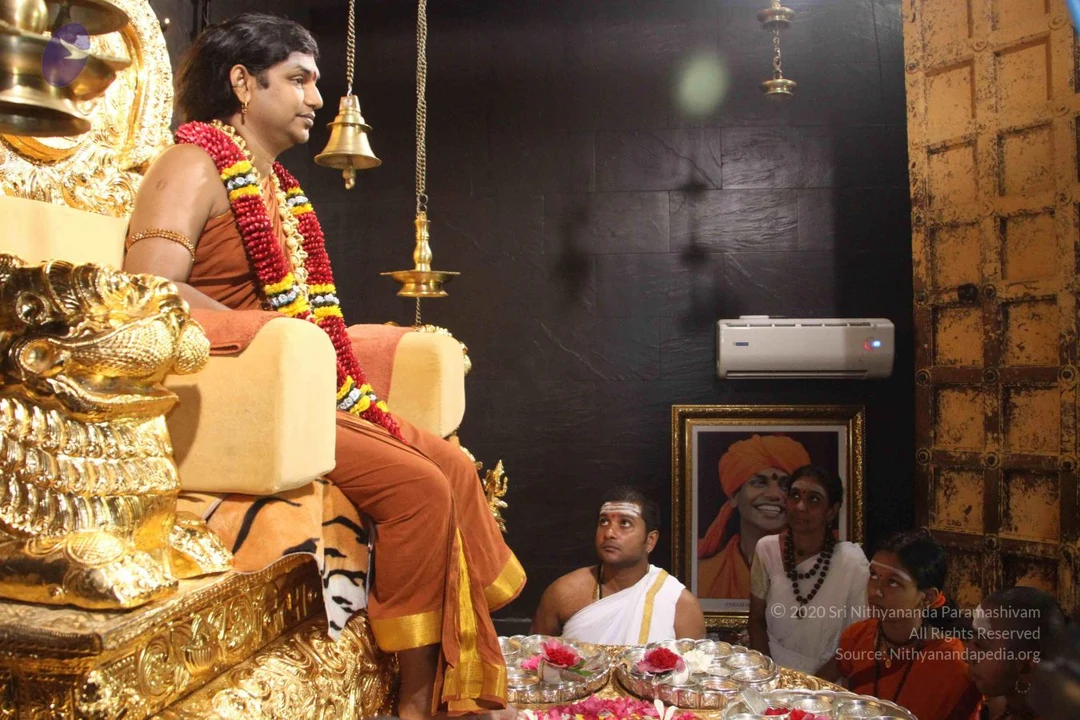
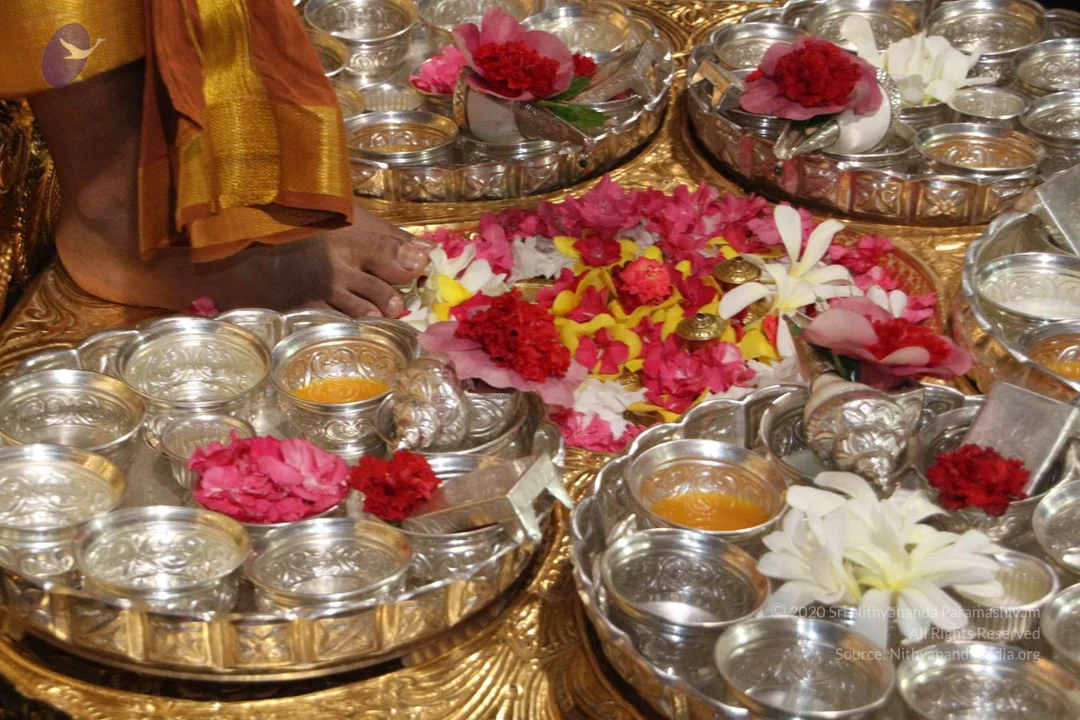
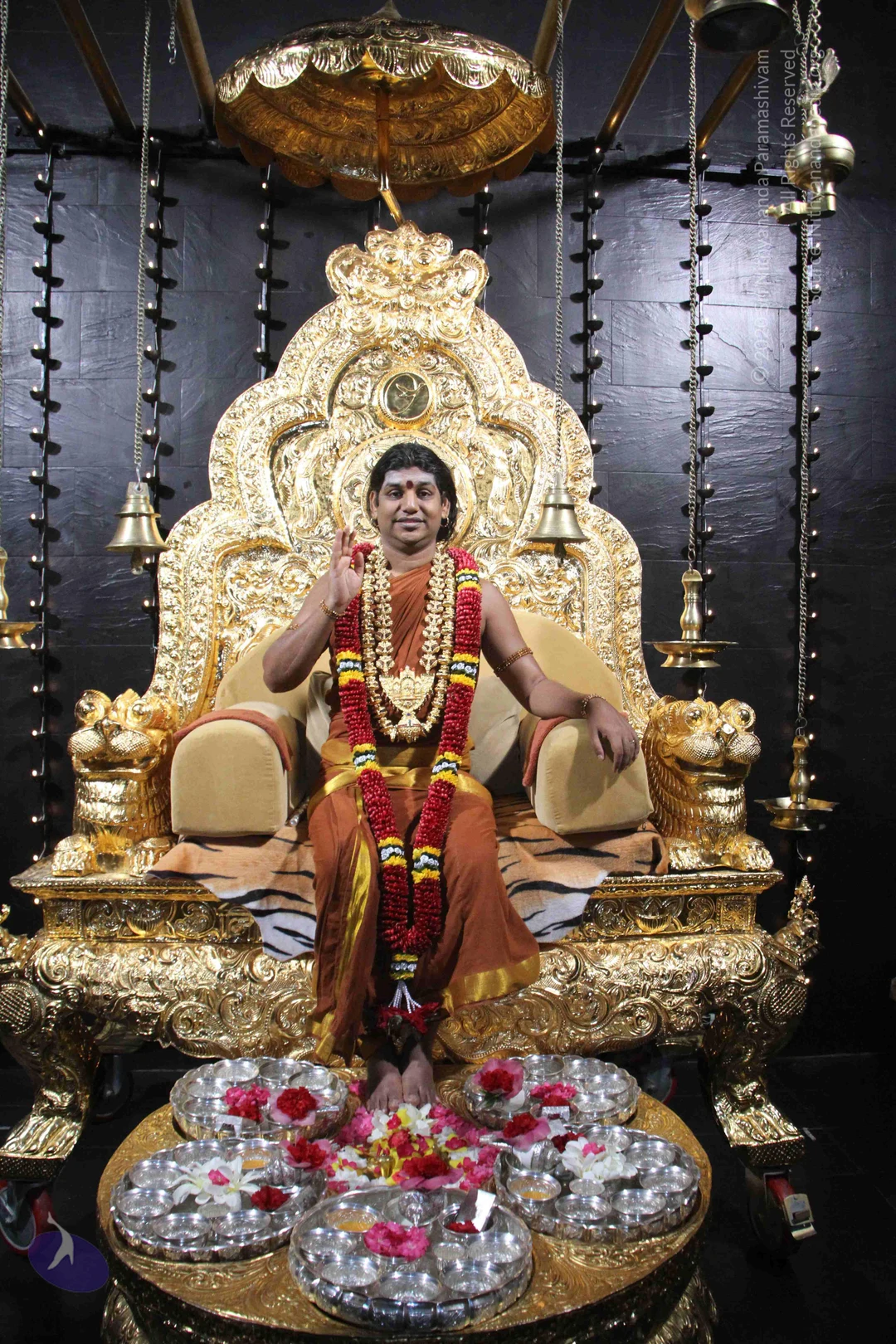
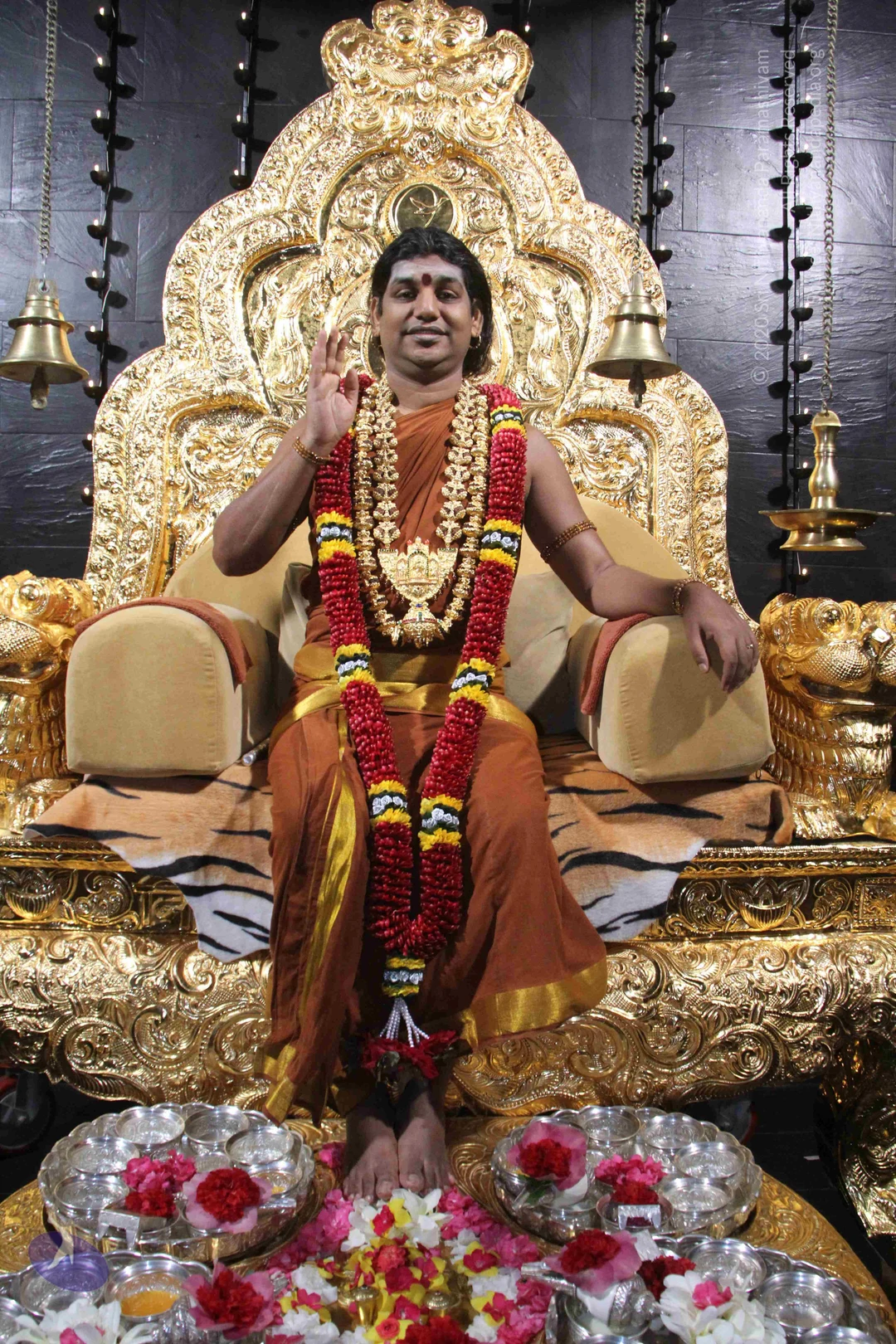
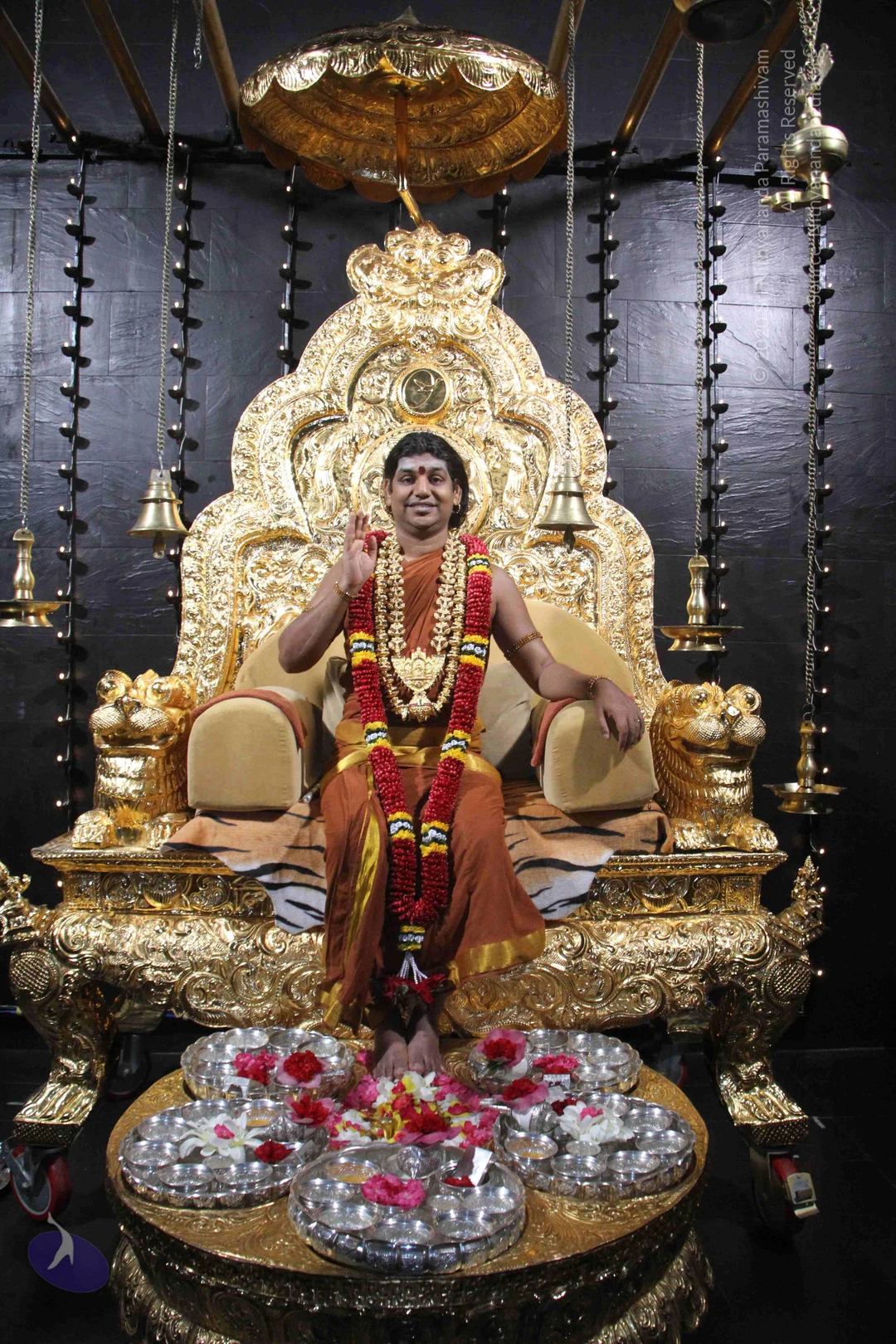
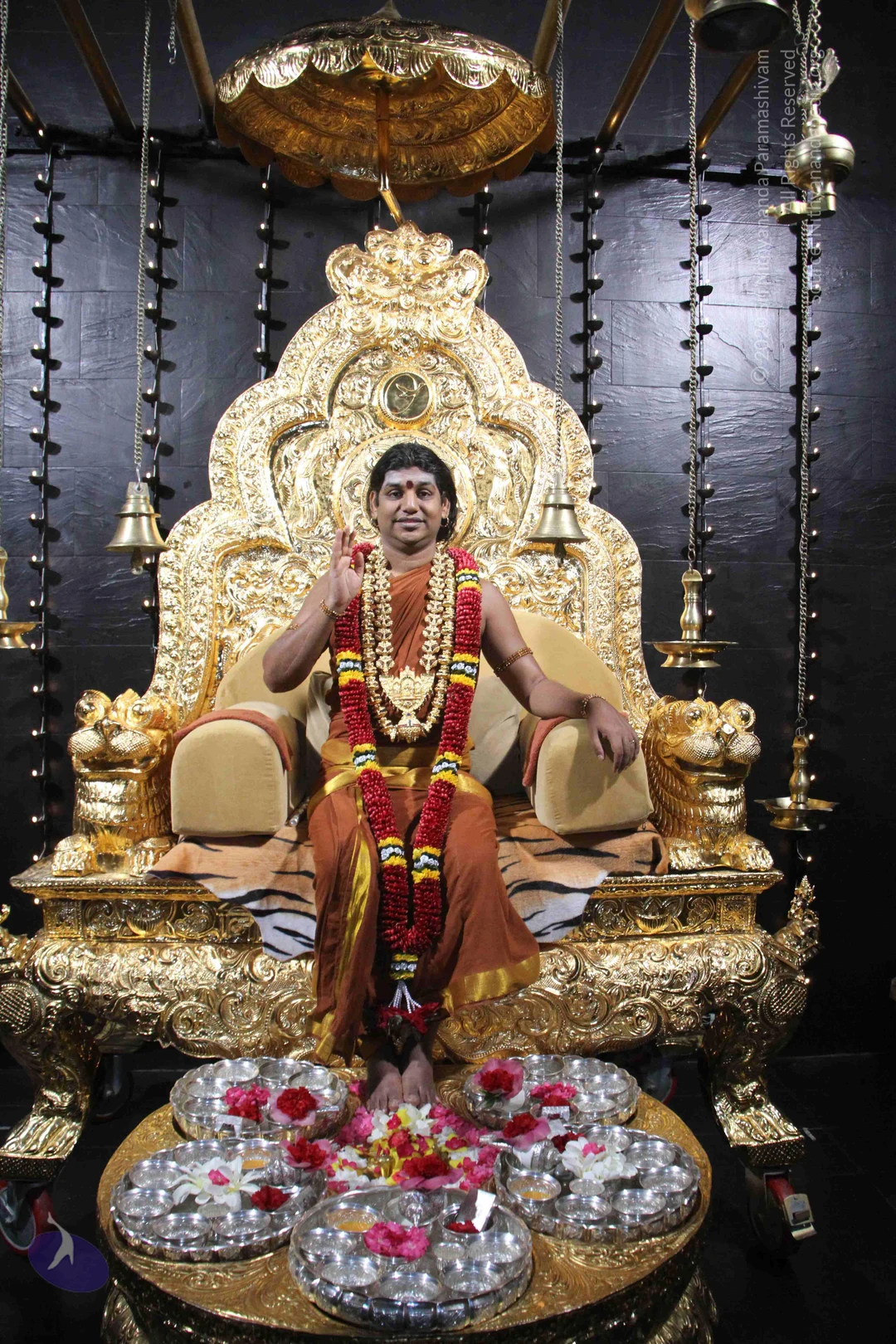
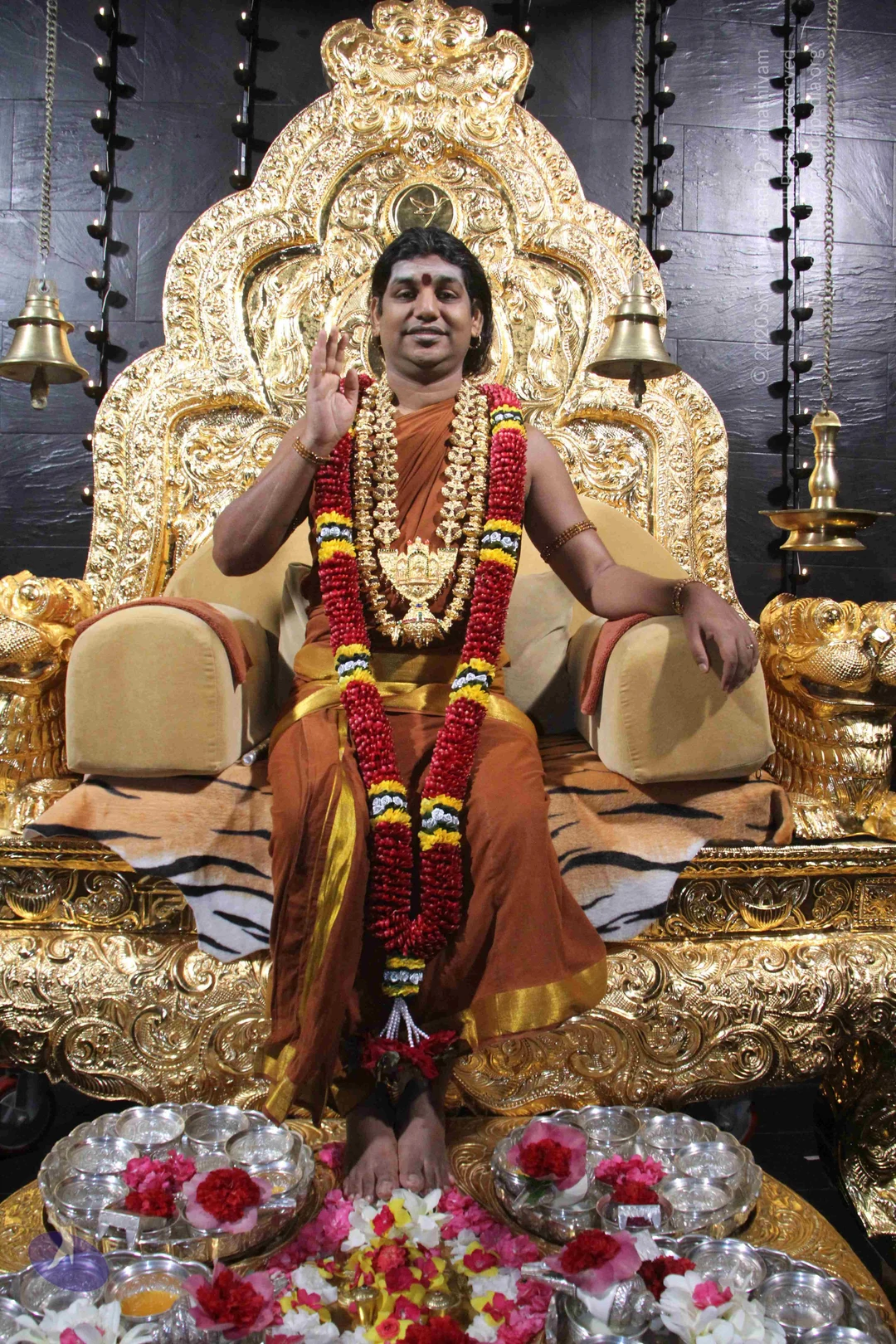
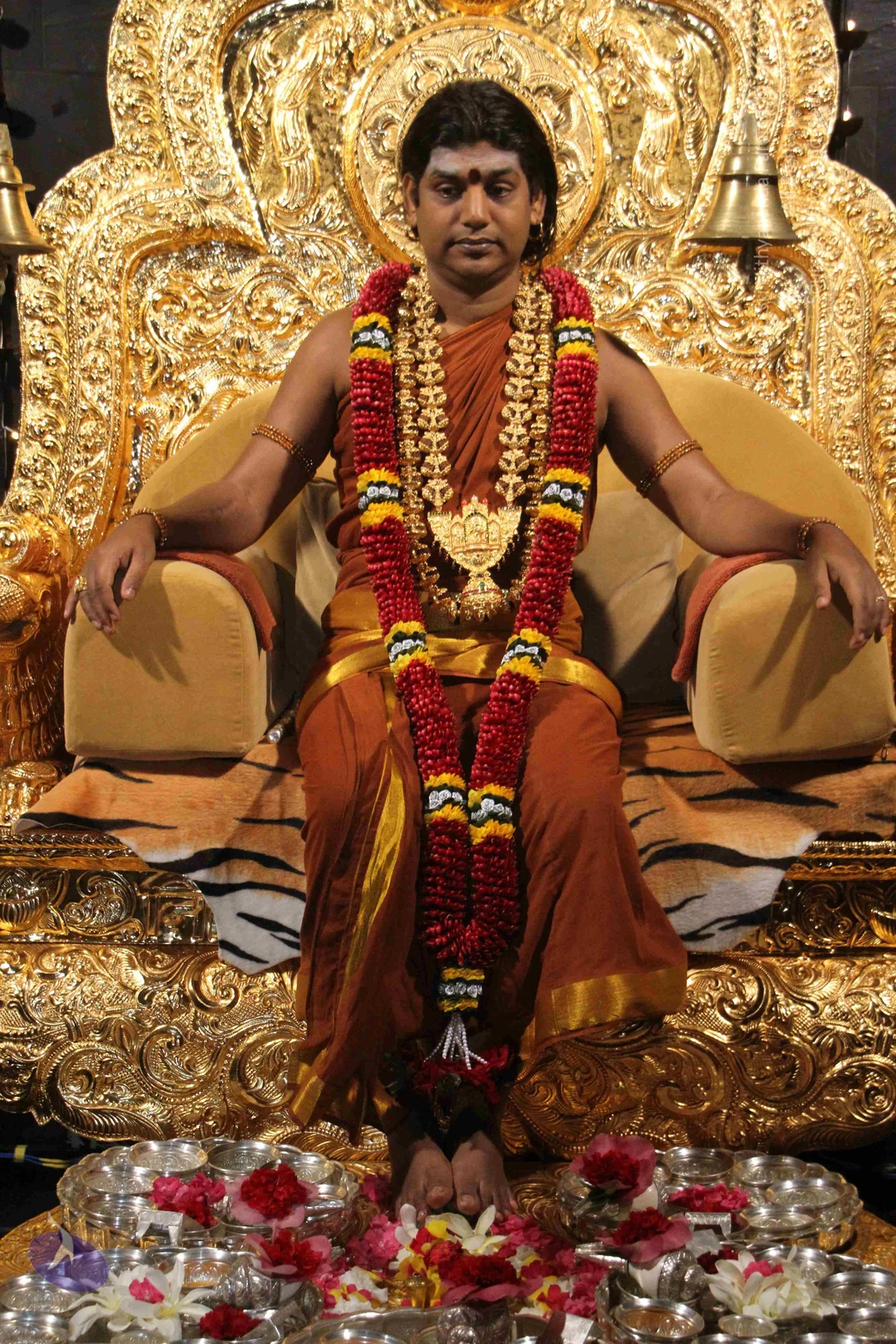
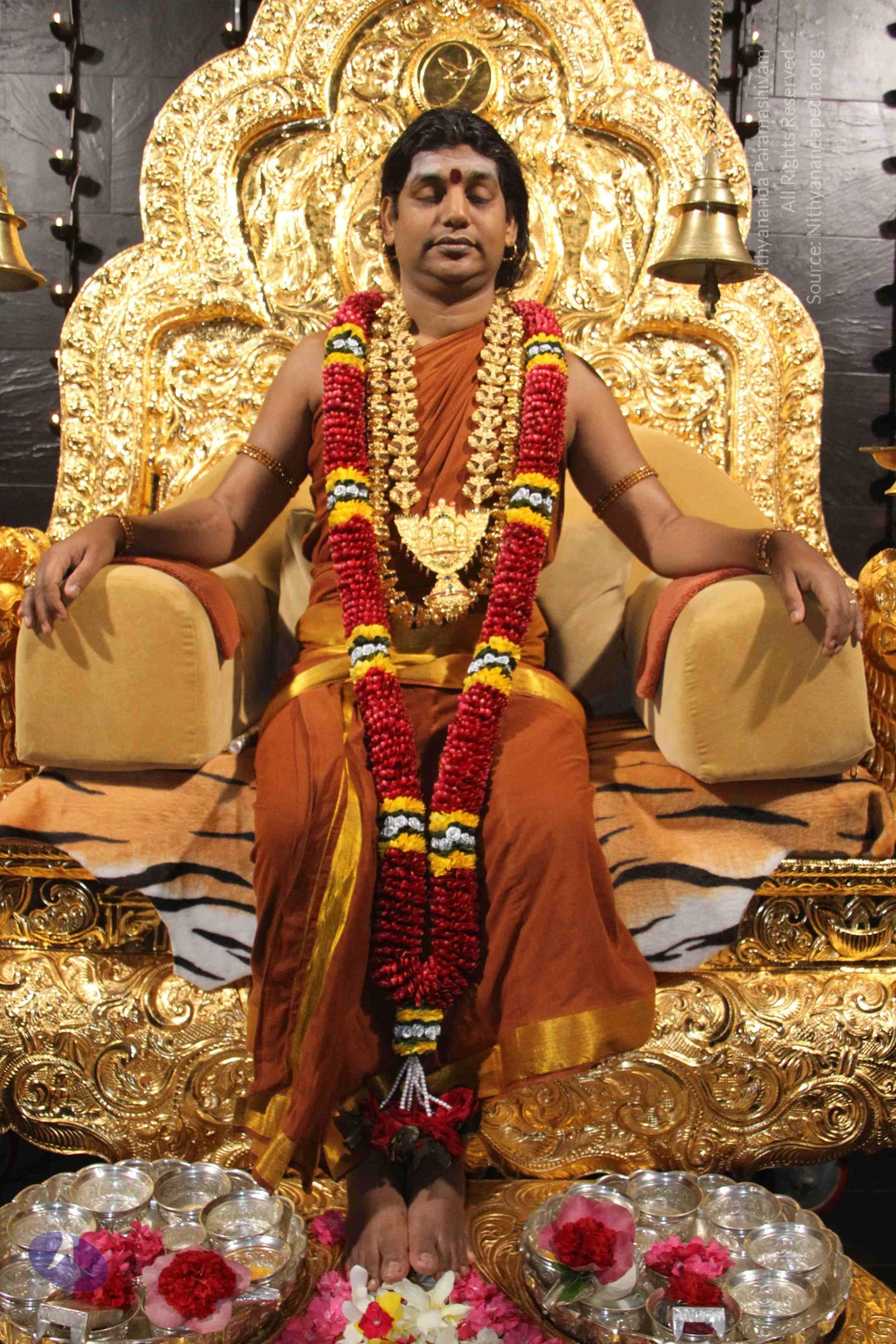
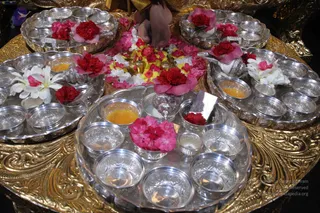
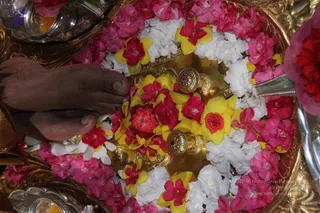
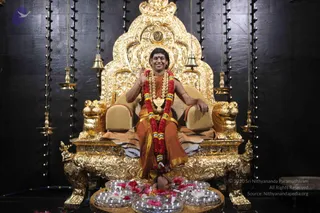
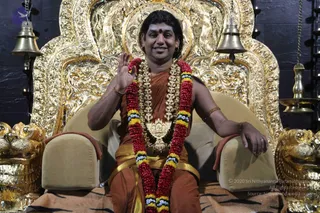
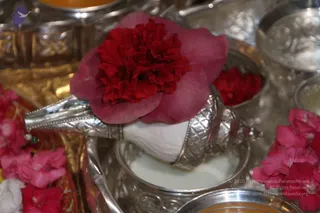
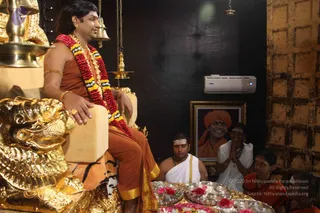
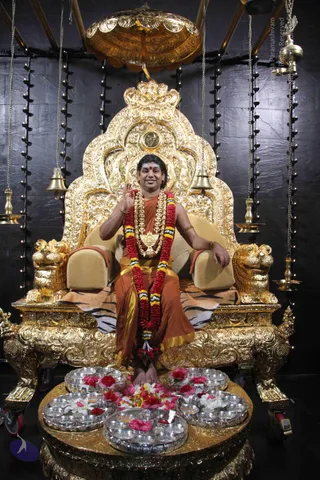
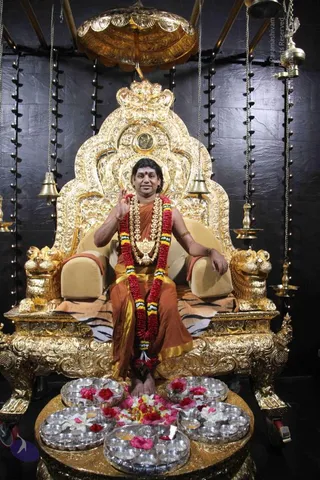
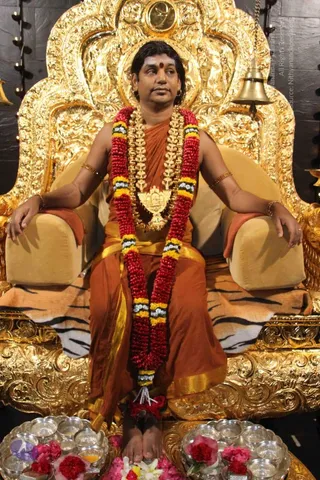
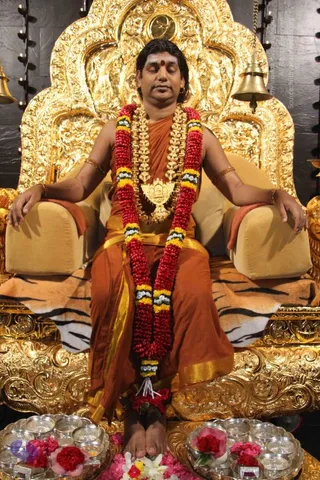
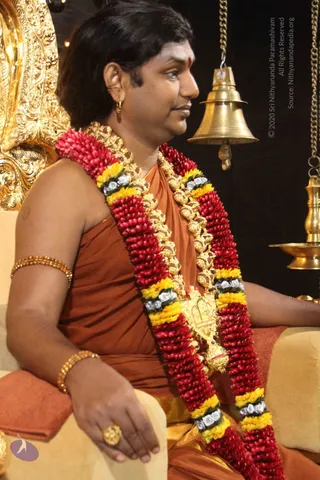
Close-up photo of a puja arrangement on an ornate gold-embossed tray. Several silver bowls and plates hold yellow liquid, red and pink carnations, white frangipani-like blossoms, and loose pink and red petals. A central golden vessel sits among a ring of flowers, and a small silver item rests nearby. A partial hand or limb with a reddish-brown tone appears at the top edge. No people are clearly visible as physical persons, and no one is identifiable in the scene.Close overhead photo of a padapuja: a pair of bare feet rests on a large brass tray filled with red, pink, yellow and white flower petals, with two ornate brass knobs with red stones at the centre. A silver vessel with flowers sits at the right edge and a small silver bowl at top left. The feet are the focus; the rest of the frame is flower petals and metalwork. No face is visible.A seated man in an orange-saffron dhoti and shawl with a gold-coloured waist cloth sits on an ornate gold throne carved with lion heads and draped with a striped tiger-print cloth. He wears a white and gold flower necklace, a red and multicoloured garland over his shoulders, and a bangle on his wrist, and raises one hand in a blessing gesture while smiling. Behind him hang brass oil lamps on chains against a dark wall. In front, silver bowls filled with flower petals and garlands sit on a tray.A man seated on an ornate gold throne with carved lion-head armrests, raising his right hand in a blessing gesture while smiling. He wears an orange-saffron robe, a layered gold necklace with a large pendant, gold bangles, and a long garland of red and yellow flowers with white accents draped over his shoulders. Brass bells hang on chains and a brass oil lamp stands at the right edge, with a tiger-striped cloth covering the seat. Swamiji (probable): long swept-back hair, saffron robes, ornate gold jewellery and a red-and-yellow garland match the page's Swamiji reference.Close-up photograph of a ritual arrangement on silver trays. A white conch shell rests in a silver-chased bowl filled with milky liquid, topped with a large deep red carnation bloom with pink-edged petals. Scattered pink and red flower petals and silver bowls surround it, with a gold-toned tray in the background. No people are visible; the scene suggests abhishekam offerings.A seated man on an ornate gold throne with carved lion-head arms, wearing an orange-saffron dhoti and a red-and-yellow flower garland, with gold bangles and a ring, is turned to the right and smiling. Dark wall panels, a hanging brass bell and a brass lamp frame him. Before the throne, a man in white dhoti and shawl with a bare upper body and a forehead tilak sits with hands folded, and a woman in white shawl with folded hands smiles beside a woman in orange sari with a tilak. Plates of red flowers and petals sit on a gold tray in front. A framed portrait of a smiling man in an orange turban hangs on the wall. An air conditioner is mounted above.

Pada-Puja

55 photosSource gallery
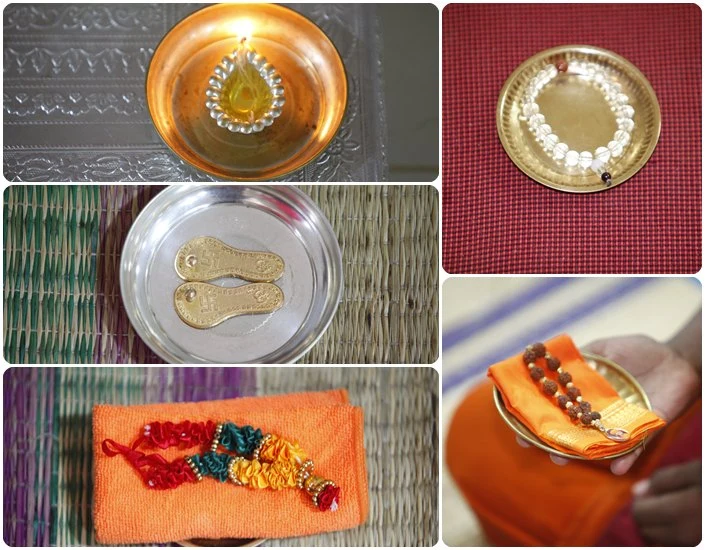
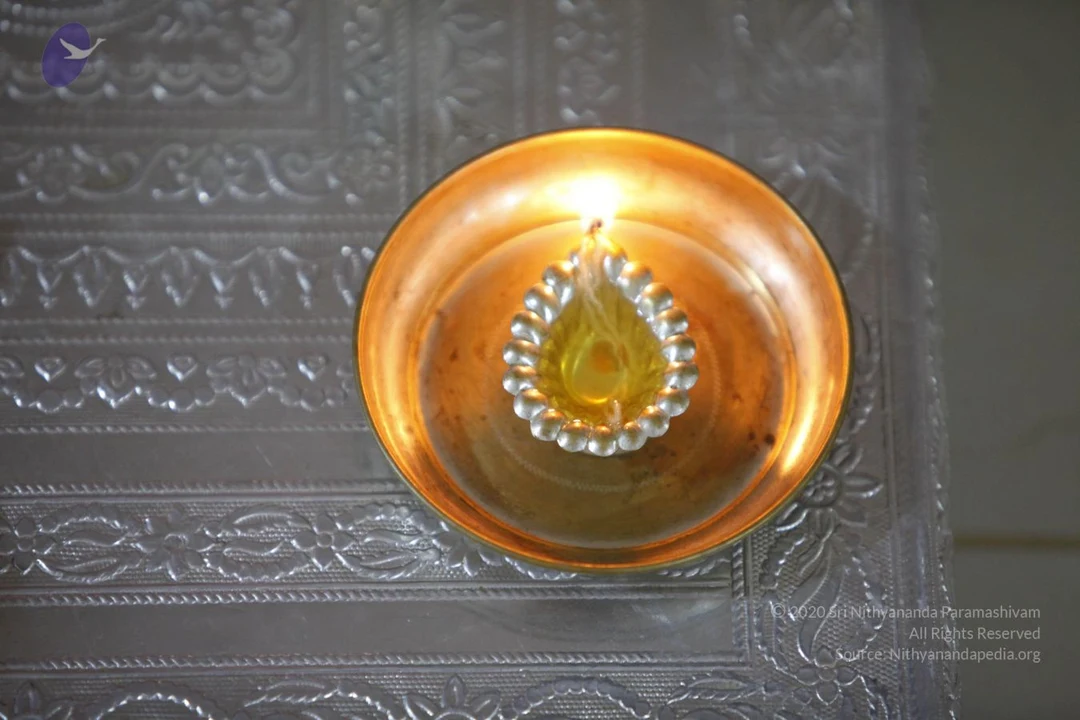
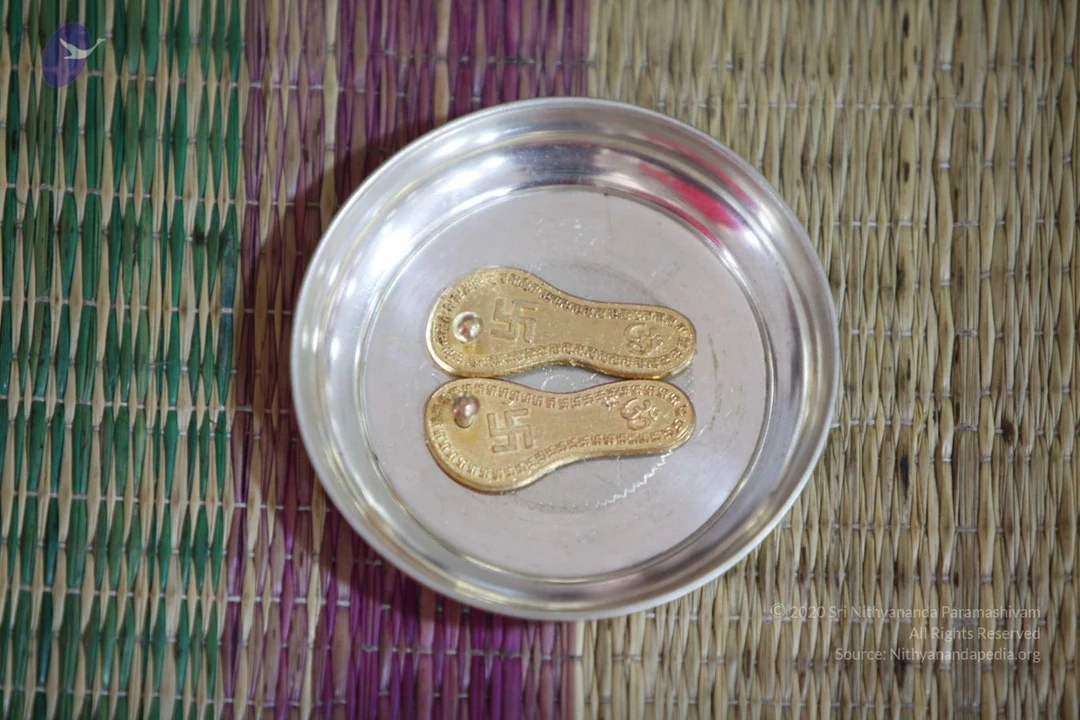
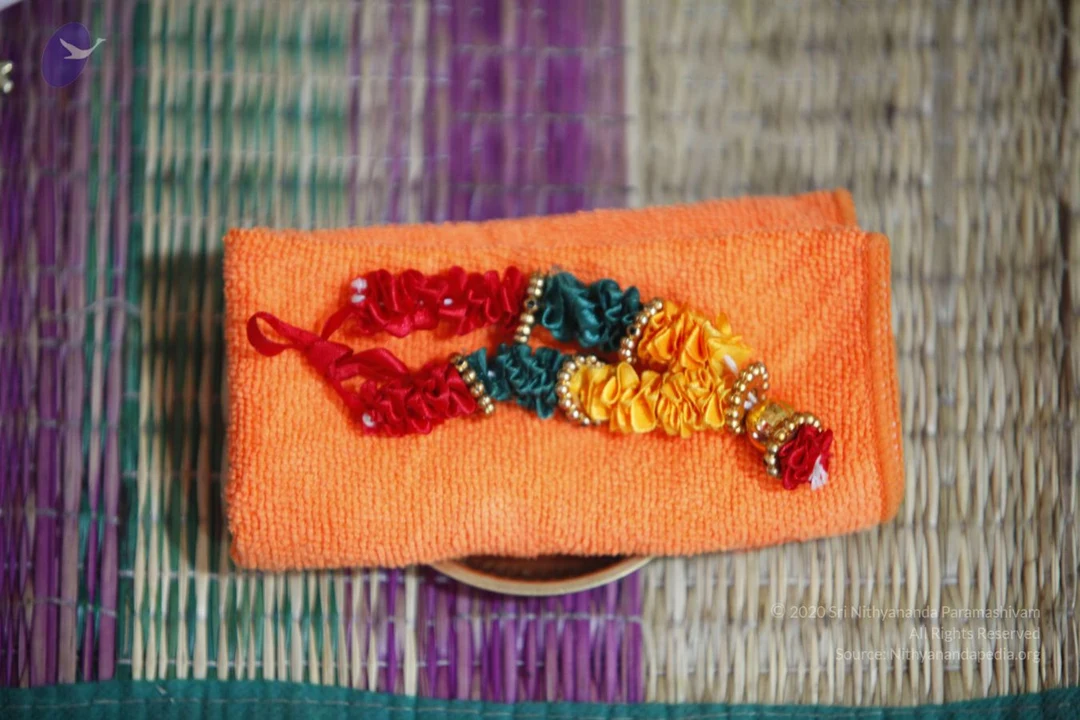
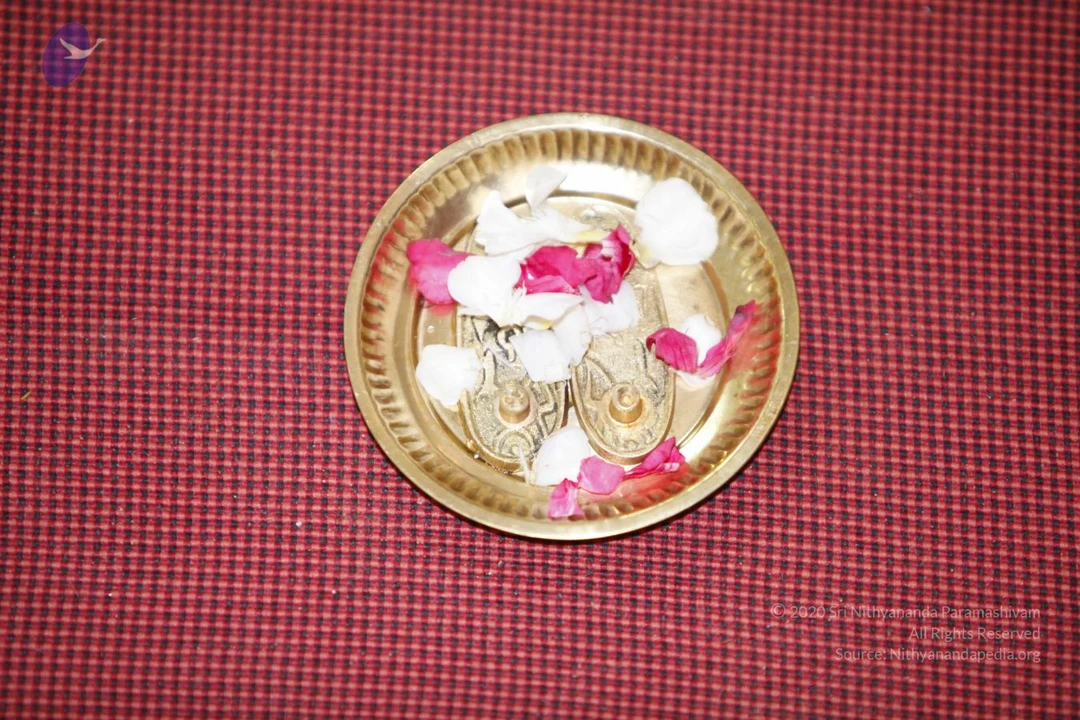
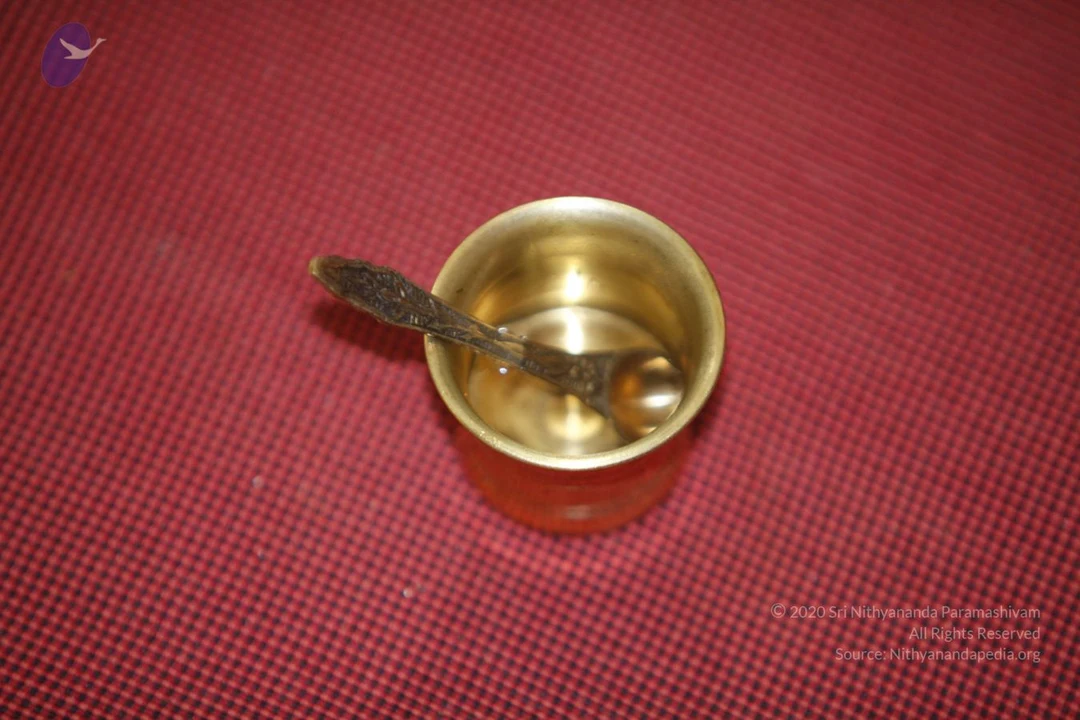
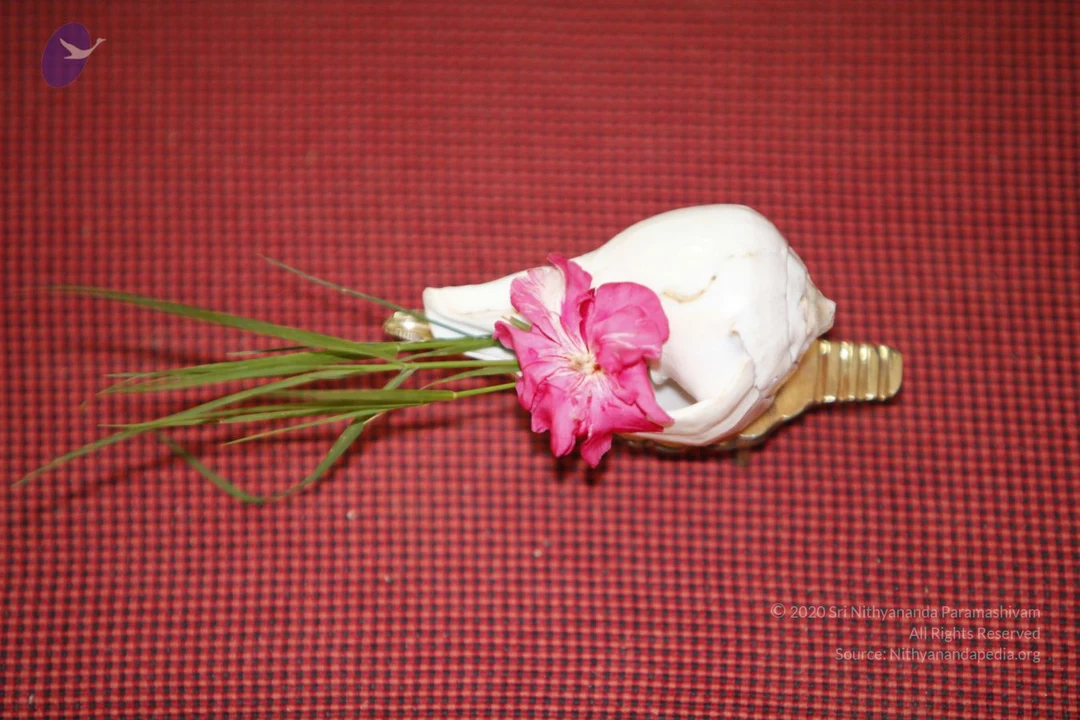
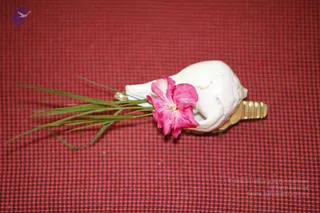
Overhead close-up of a single lit oil lamp in a polished brass bowl set on an ornately embossed silver or metal tray with floral and scroll patterns. The lamp has a teardrop-shaped base ringed with silver beads, holding a bright yellow flame and wick. No people are visible.A top-down photograph of a shallow polished silver plate resting on a woven mat with green, purple and natural straw stripes. On the plate lie two small gold padukas (sacred sandals) with raised swastika and Om-like motifs and a small round knob at the front. No people are visible; the scene shows a ritual object used in puja or padapuja.Overhead photo of a folded orange terry-cloth towel resting on a woven mat with purple and green stripes. Across the towel lies a decorative garland of red, yellow and dark green ribbon-like flowers strung with small gold beads, ending in a red tassel. A round wooden or metal dish edge is visible below the towel.A photograph of a round brass plate or tray resting on a red and dark-blue checked cloth. On the plate are a pair of ornate brass padukas or sandal-shaped footprints with raised knobs, scattered with white and pink flower petals. No people are visible; the padukas are the central object.A small brass cup with a spoon resting inside it, viewed from above on a red ribbed mat. The brass is polished and shows warm reflections. No people are visible; the spoon has an ornate engraved handle.A white conch shell with a gold-coloured band at its opening rests on a red and black checkered mat. A pink flower and several long green grass blades are tucked into the shell's opening, forming a simple ritual offering arrangement. No people are visible.

Morning-Satsang

23 photosSource gallery
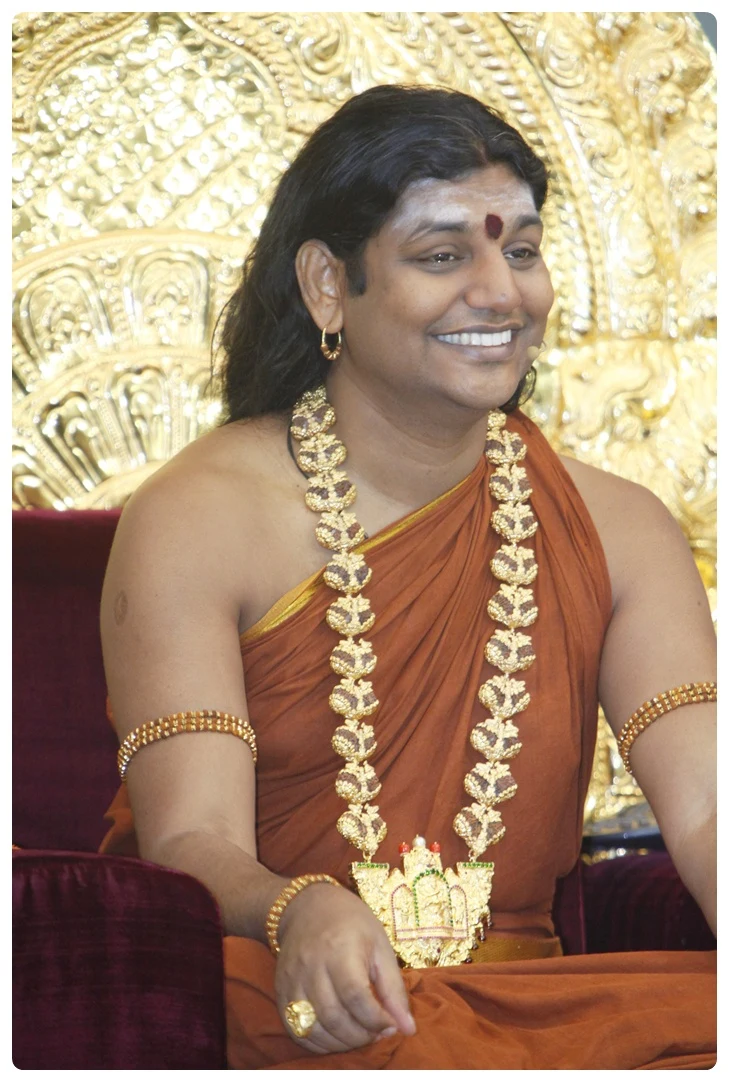
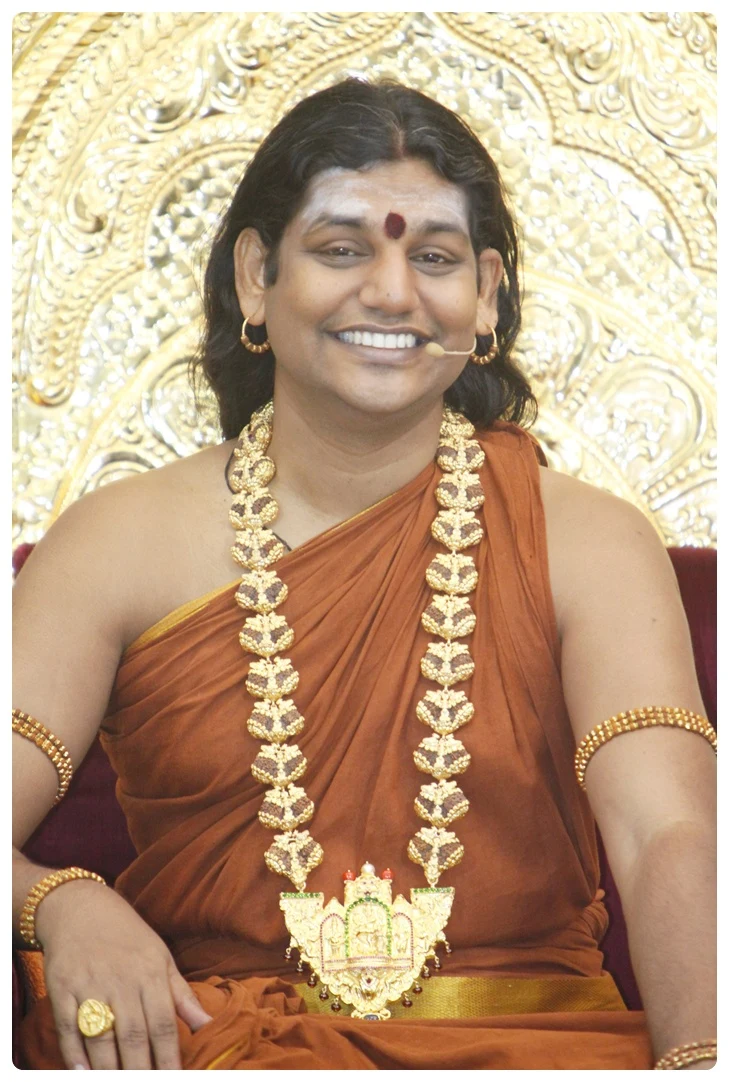
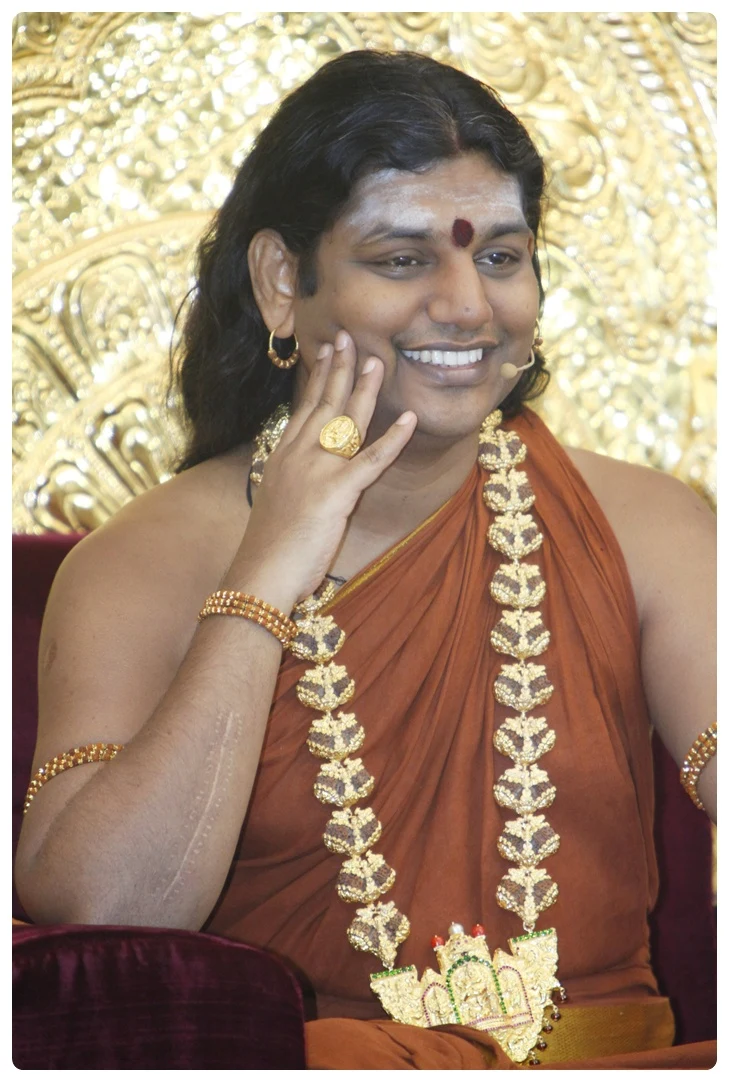
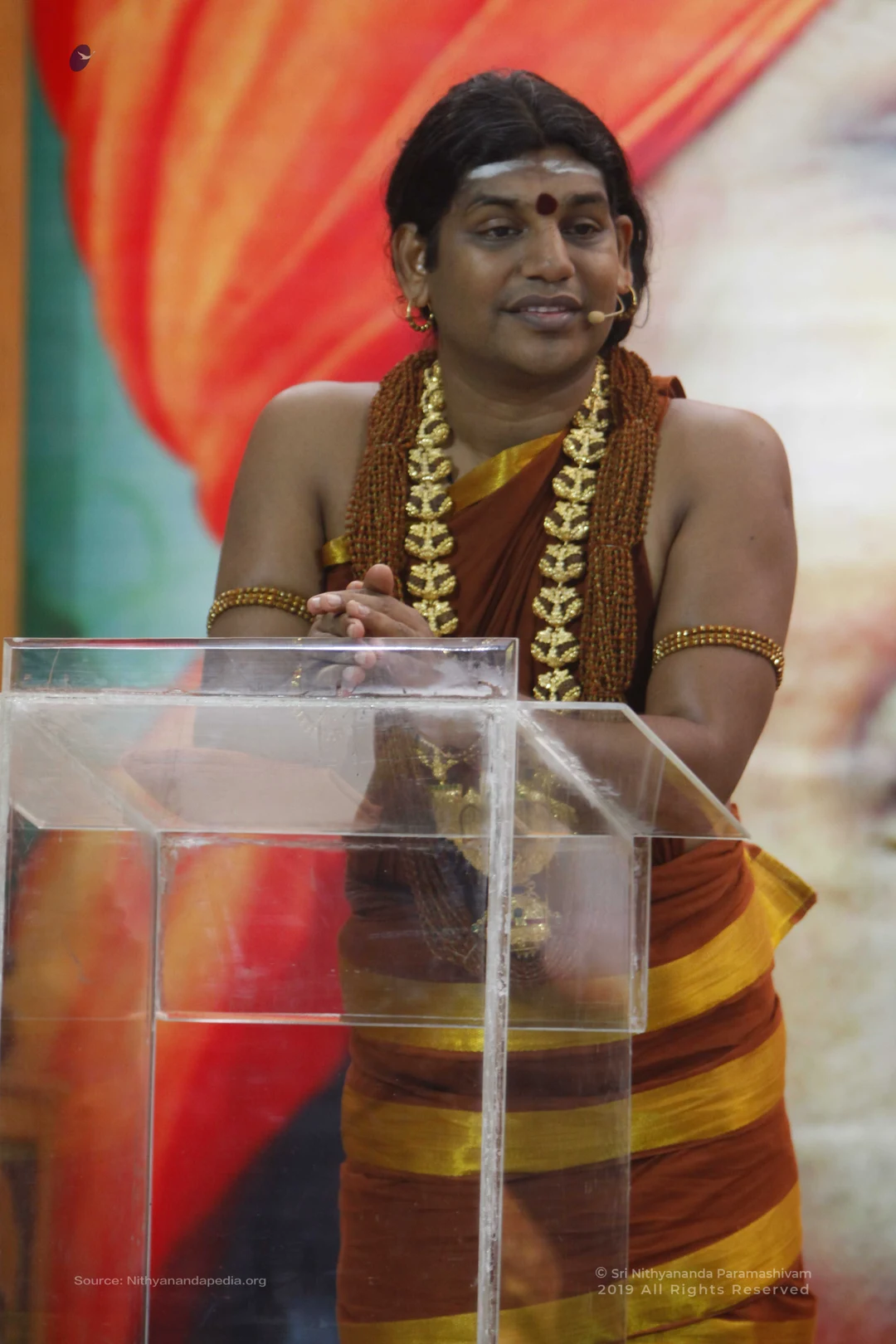
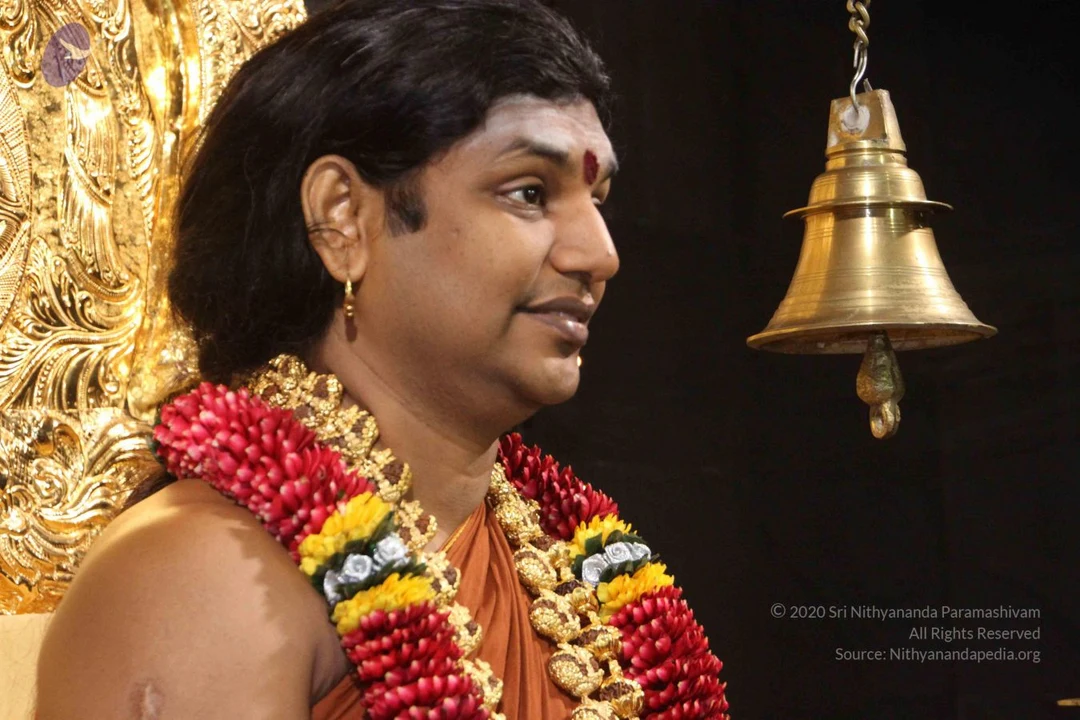
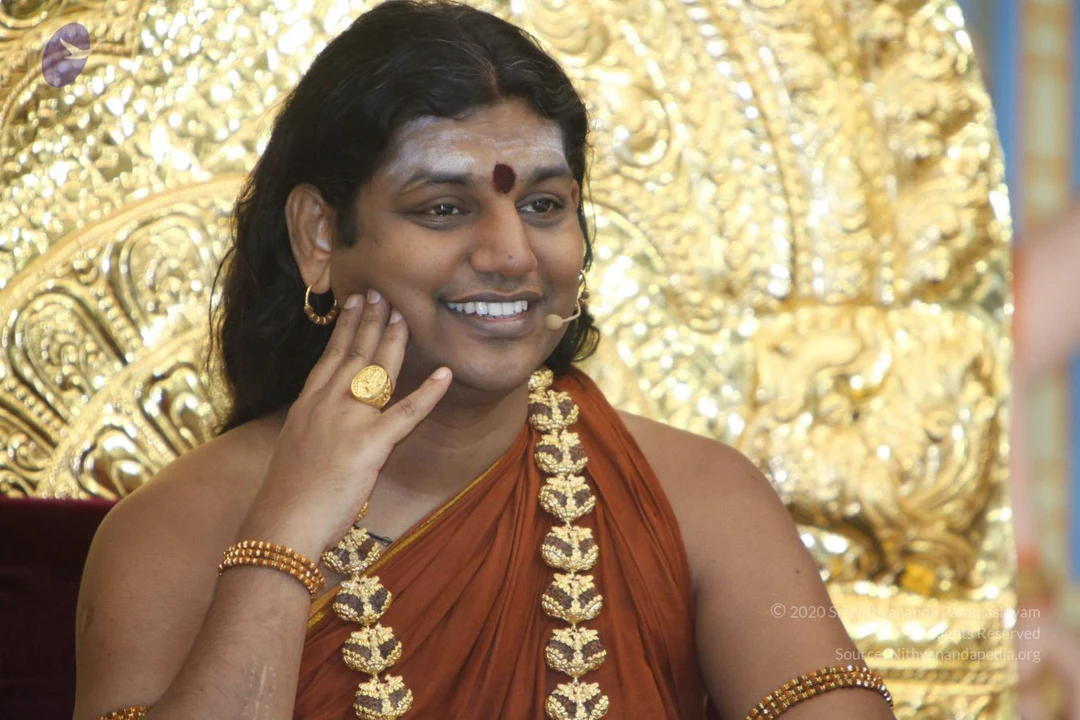
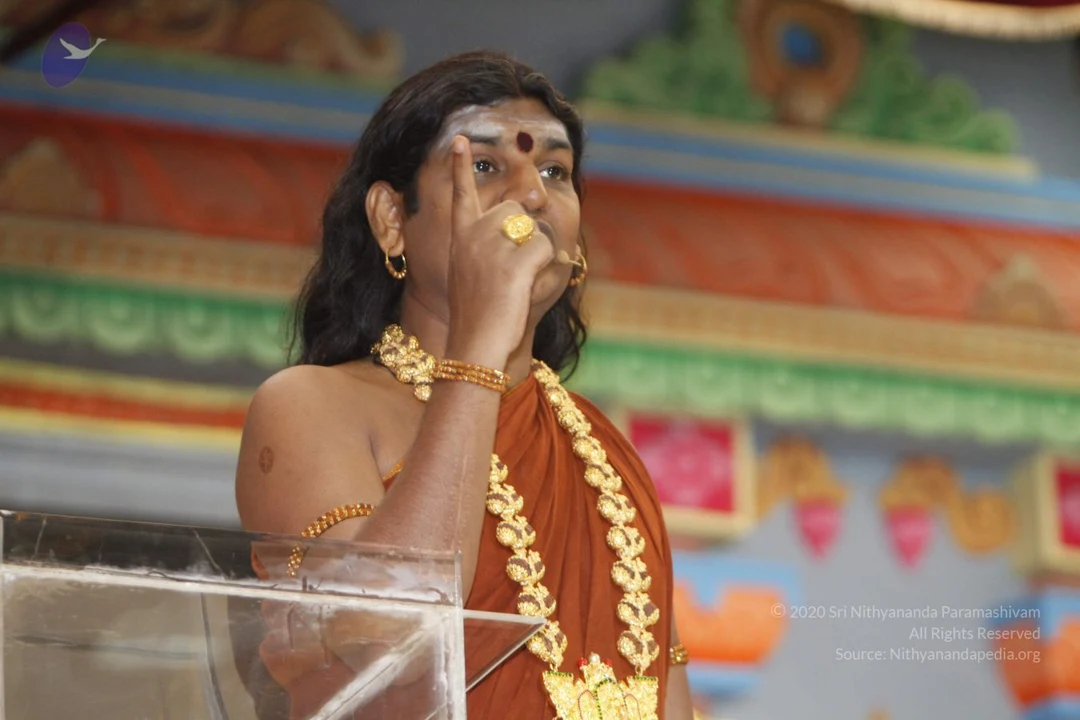
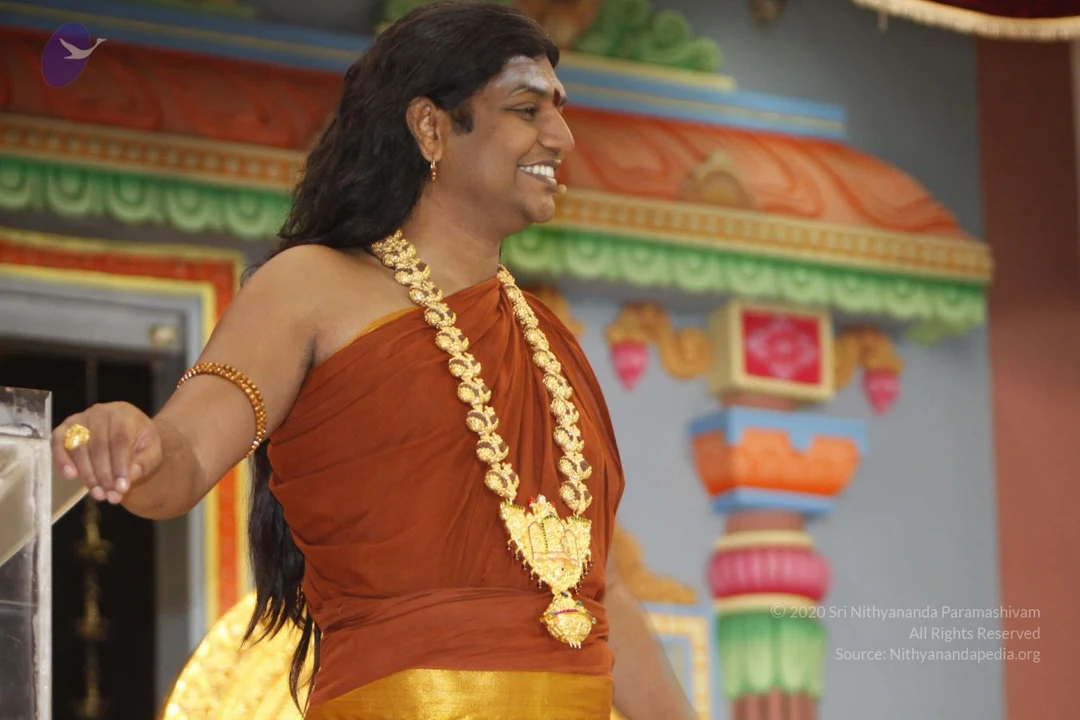
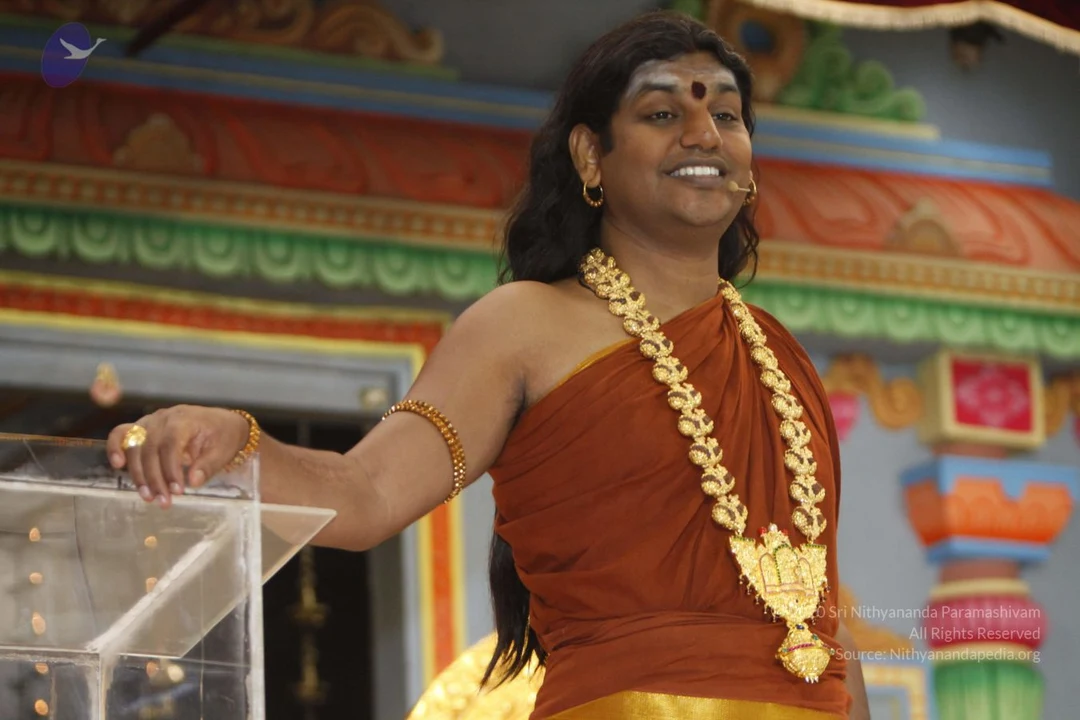
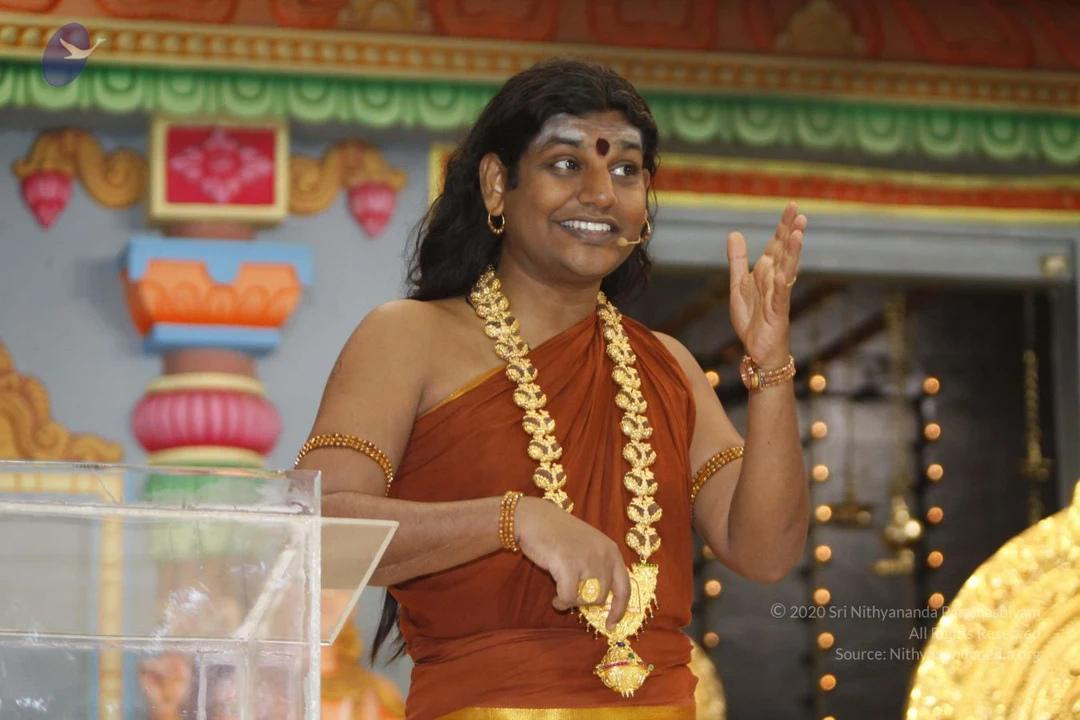
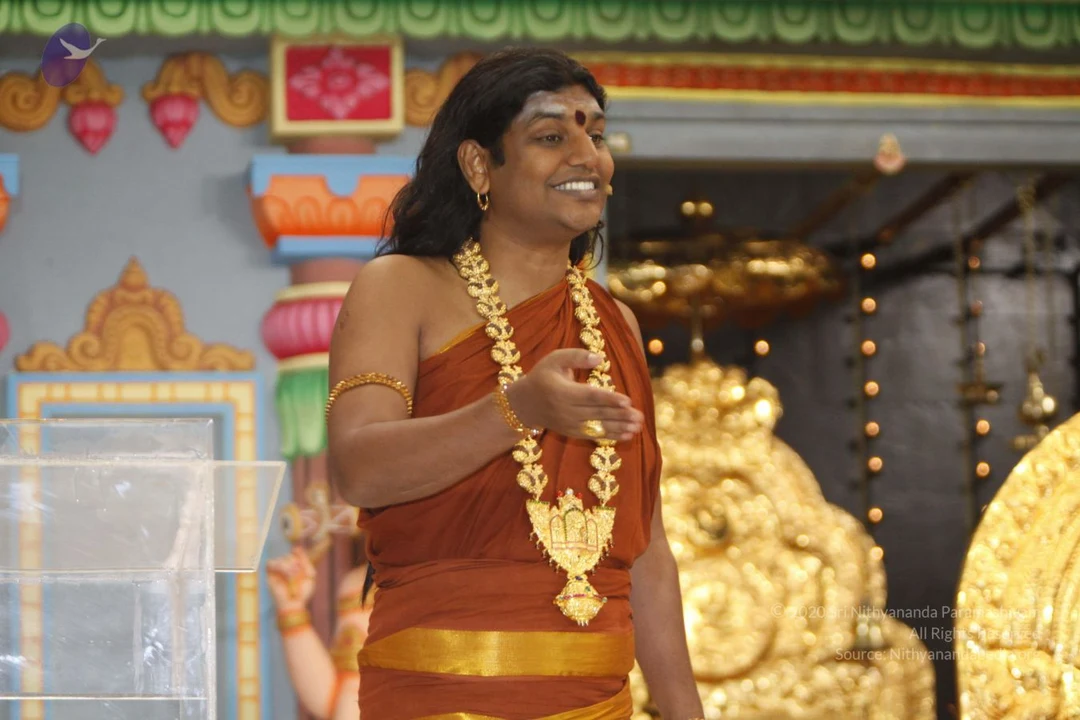
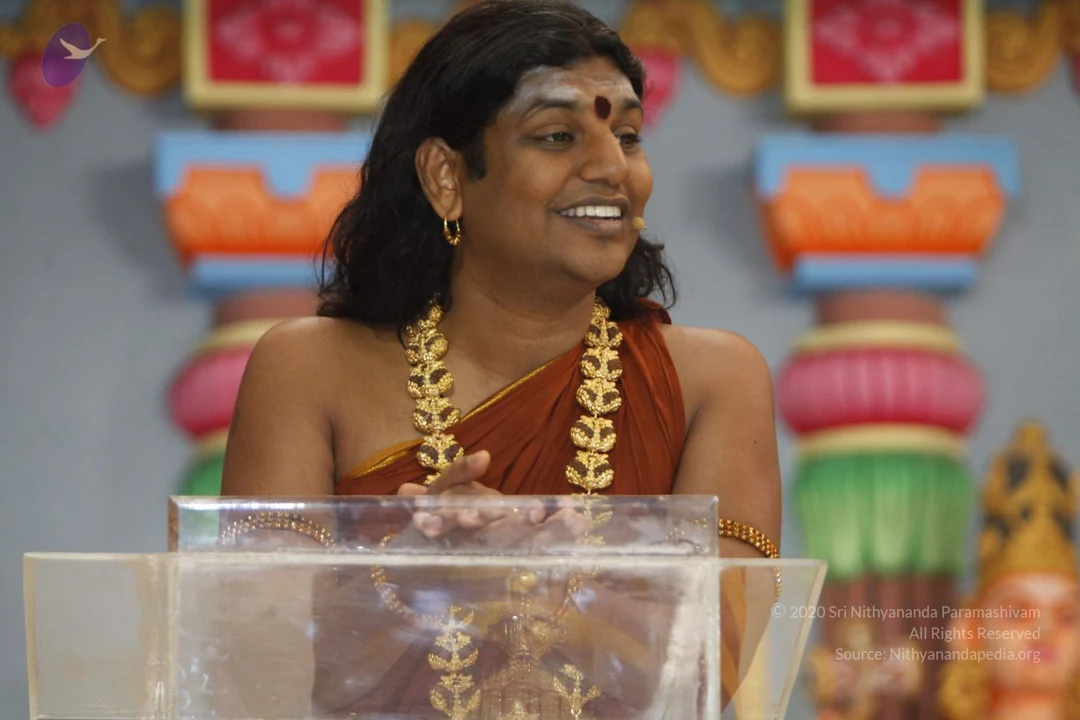
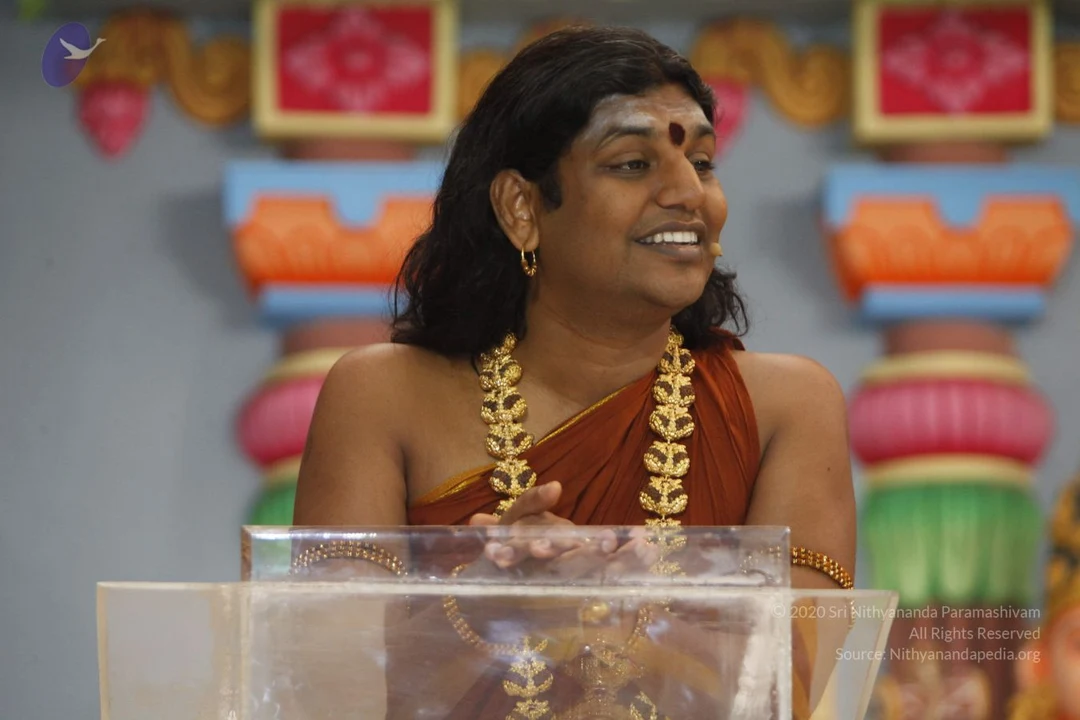
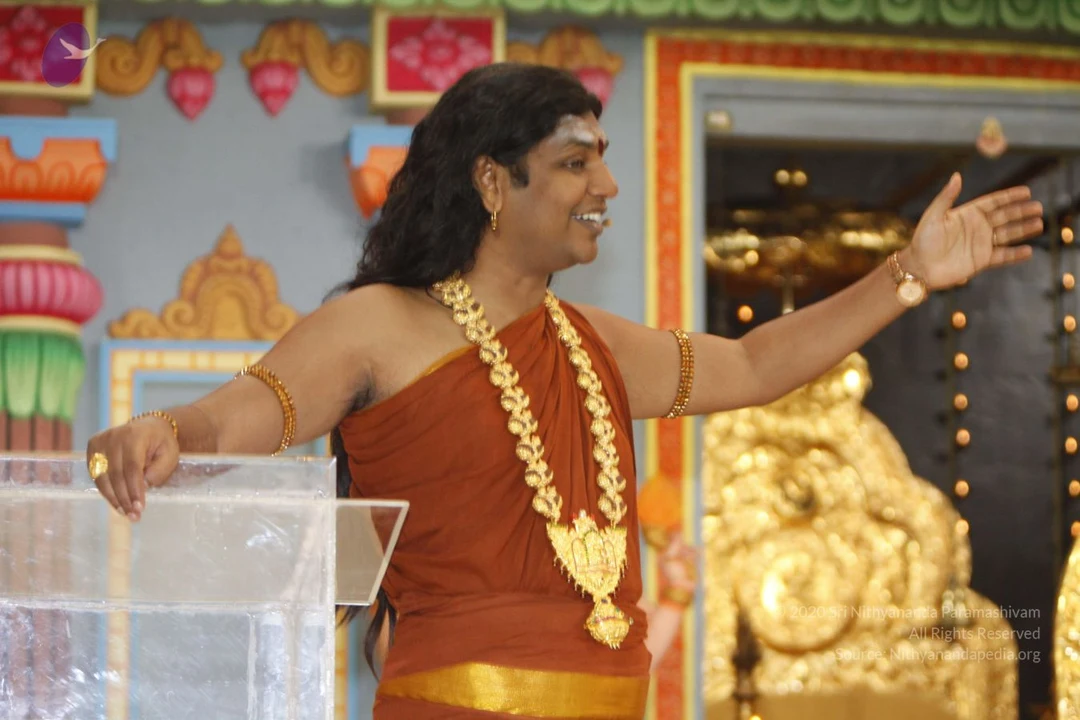
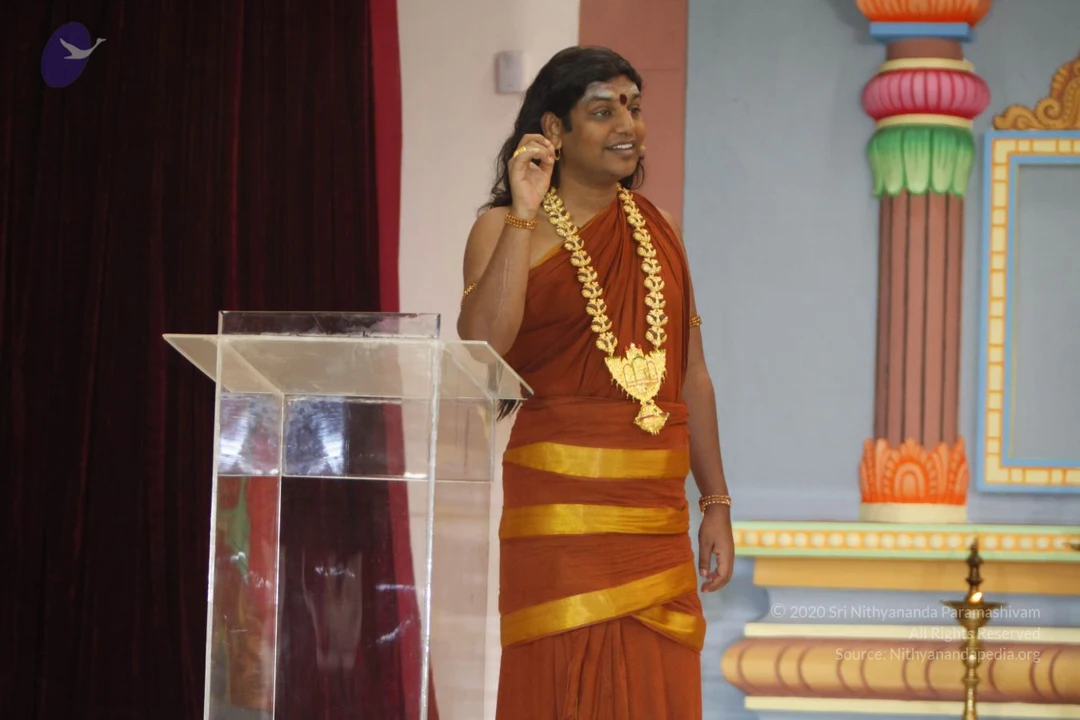
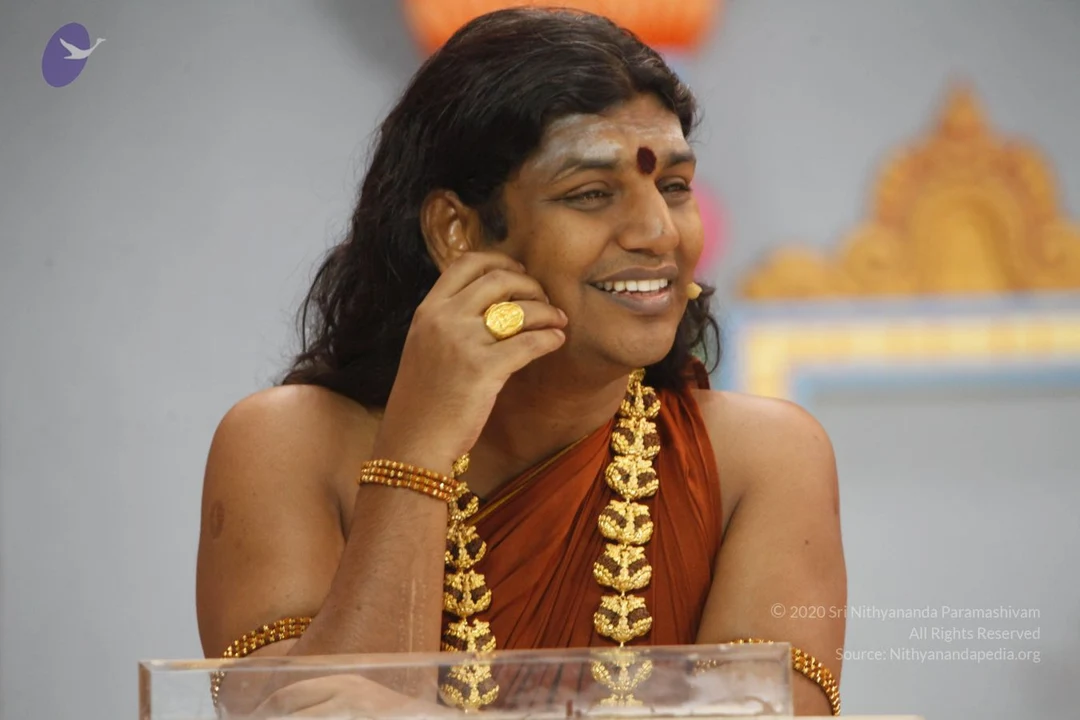
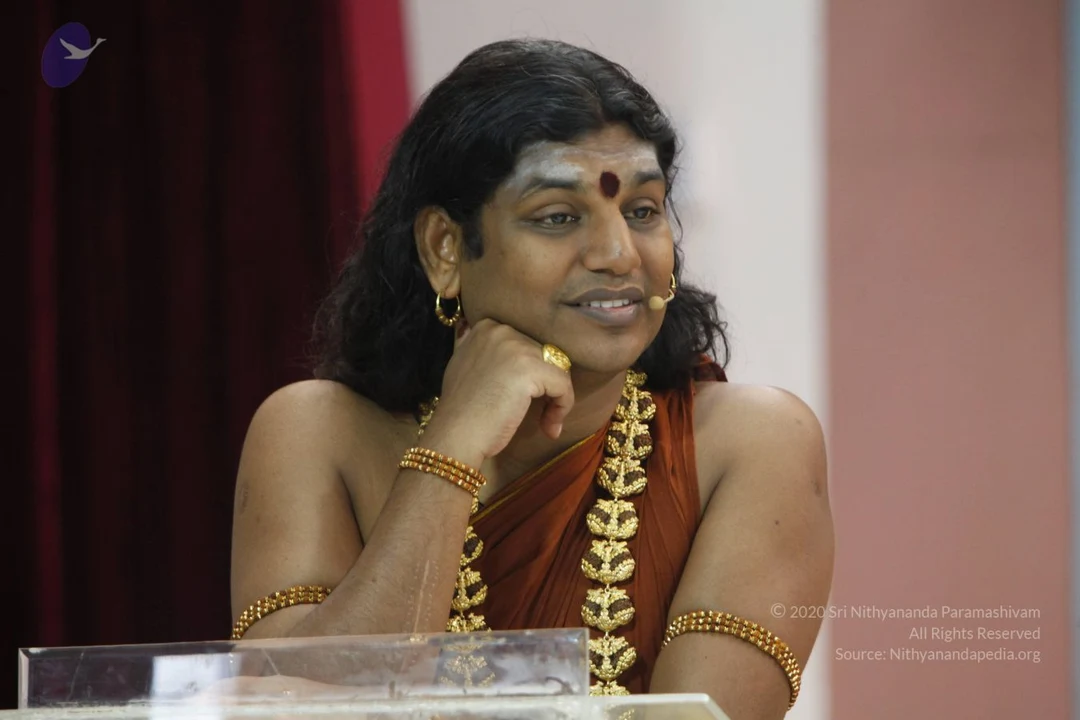
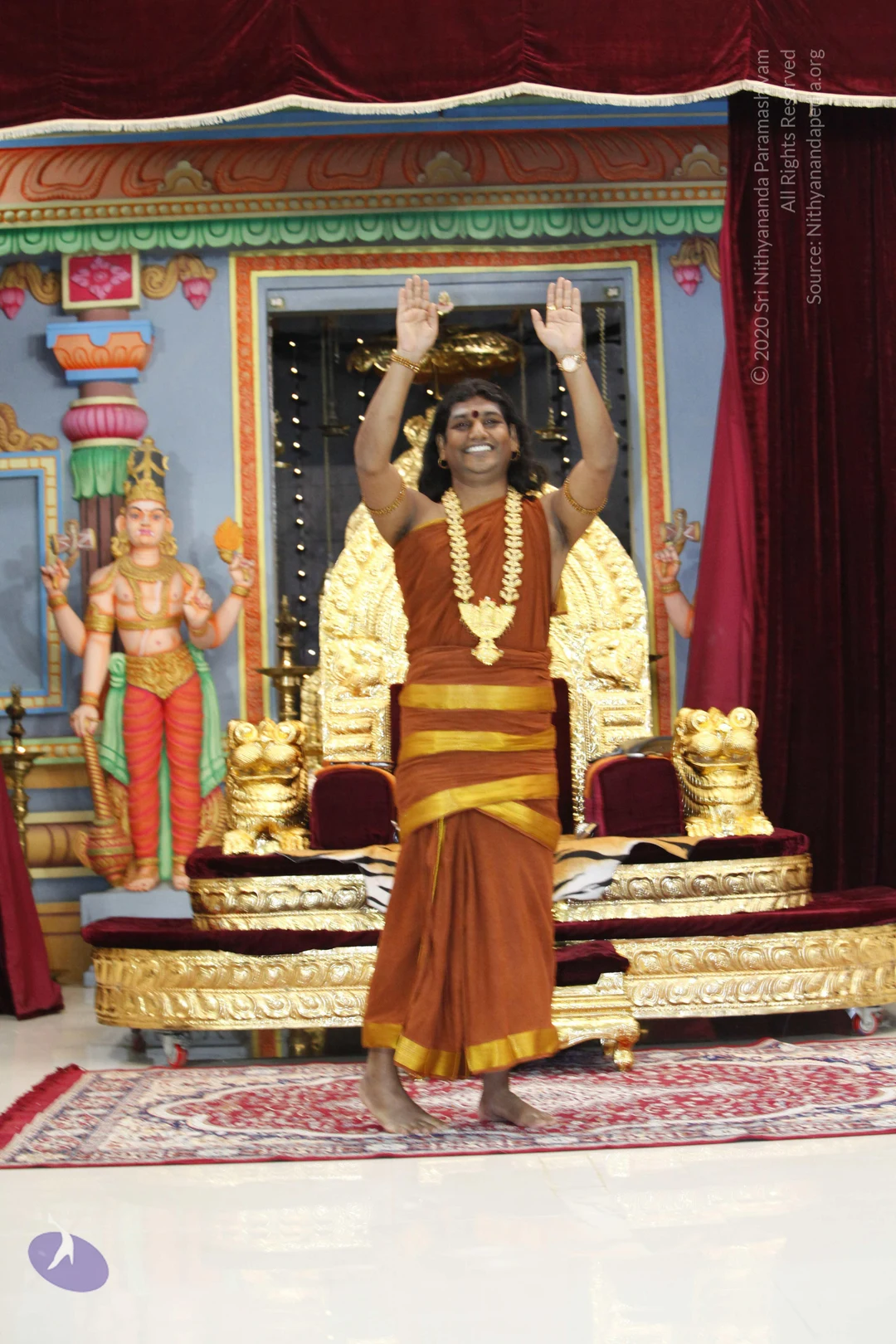
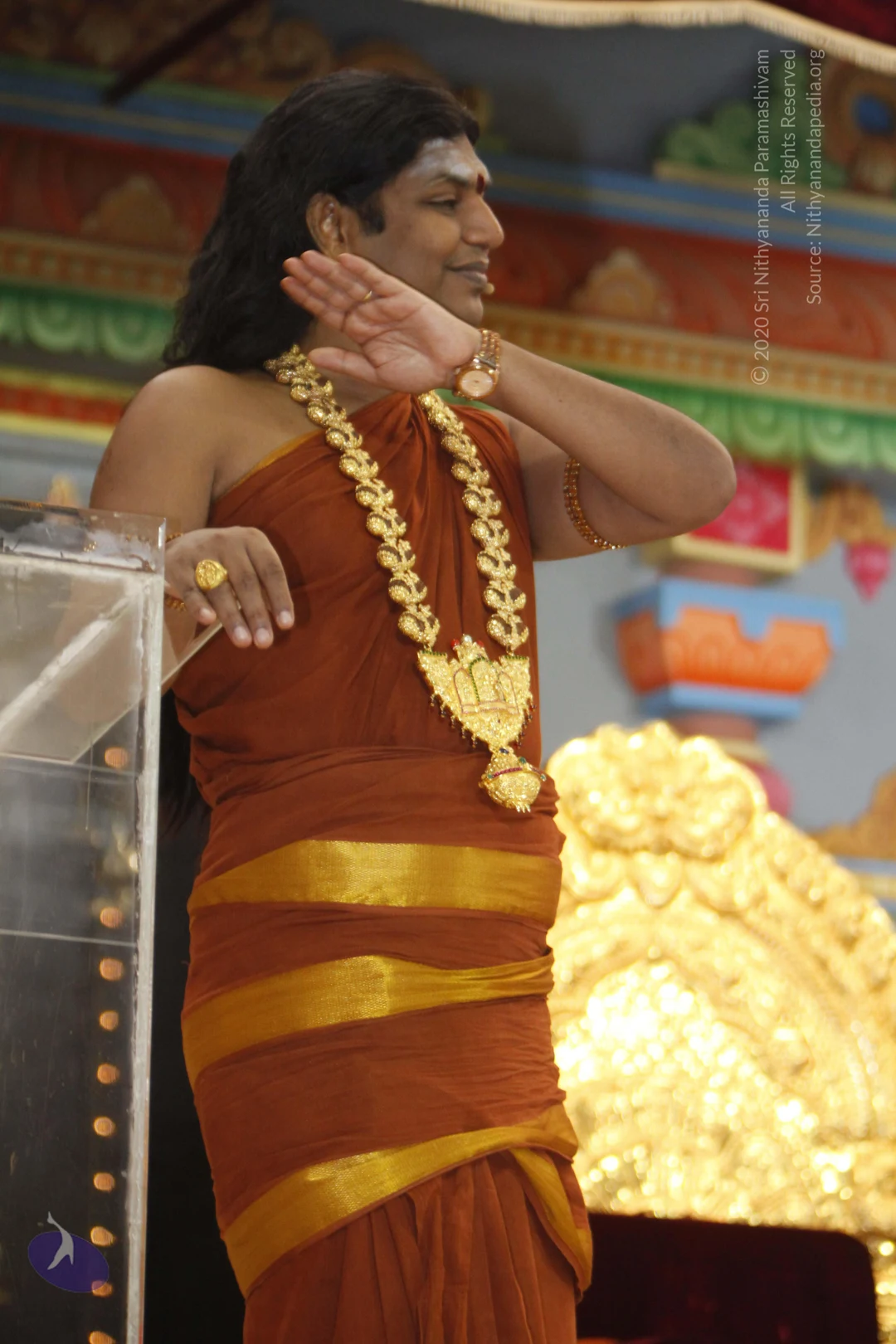
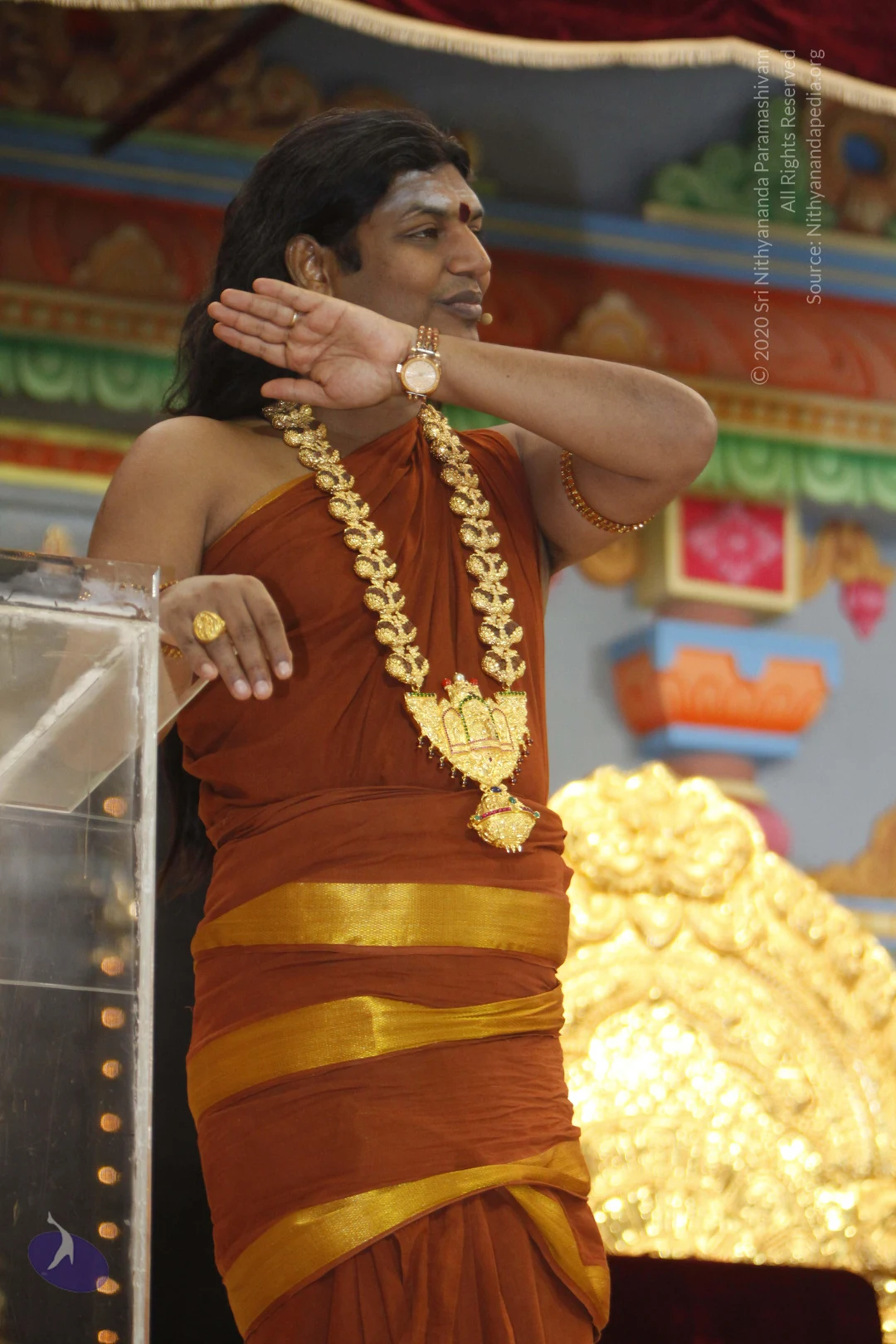
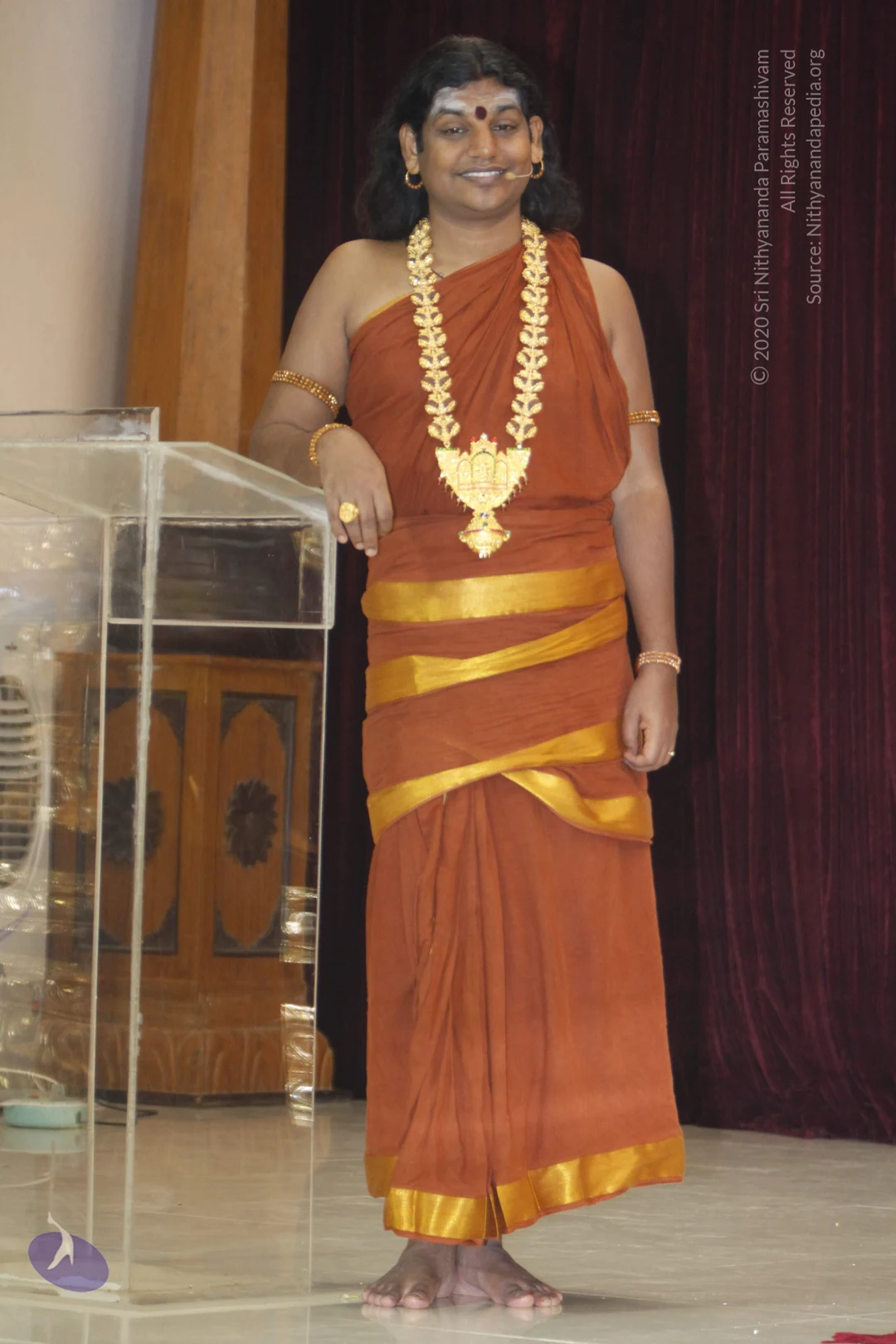
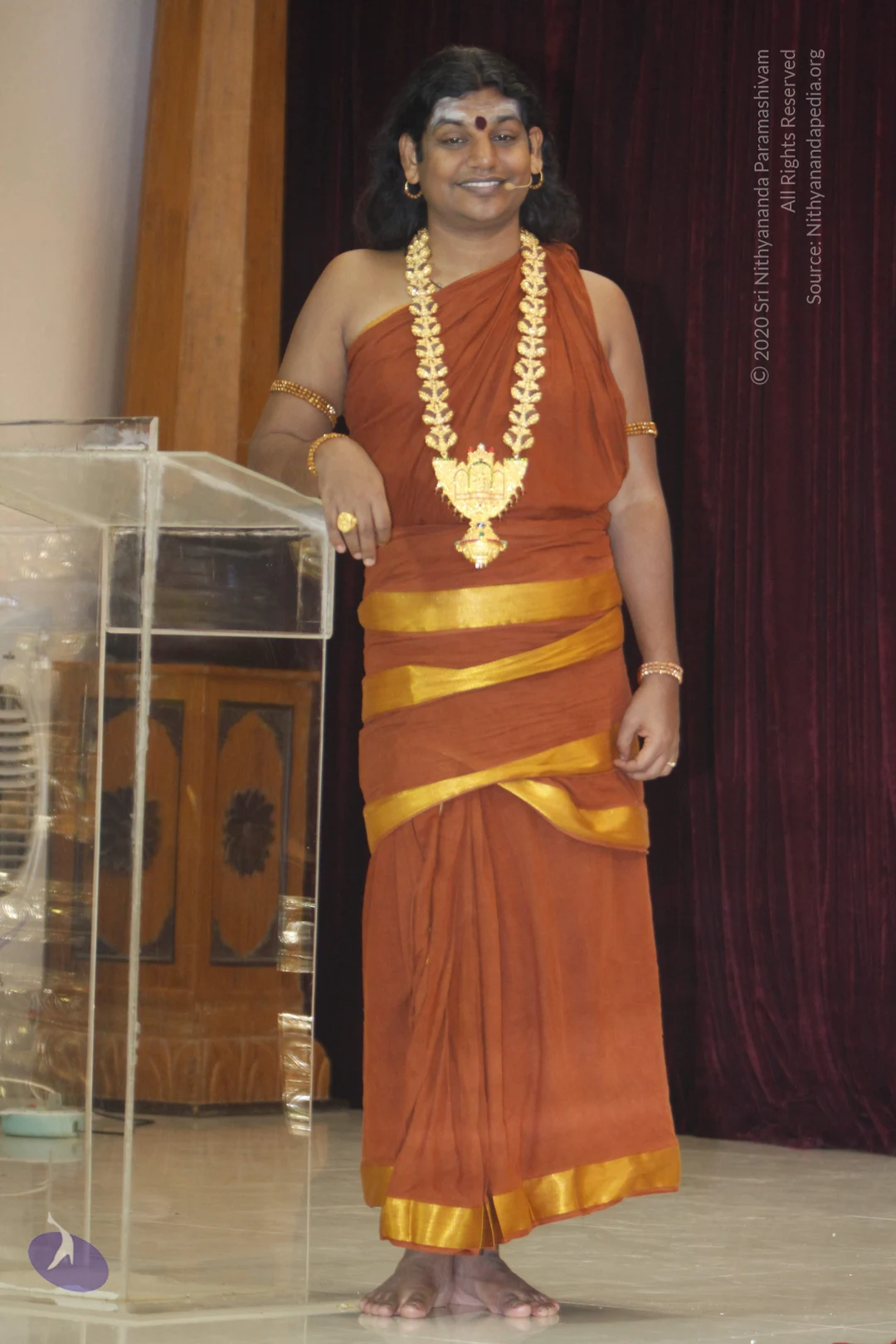
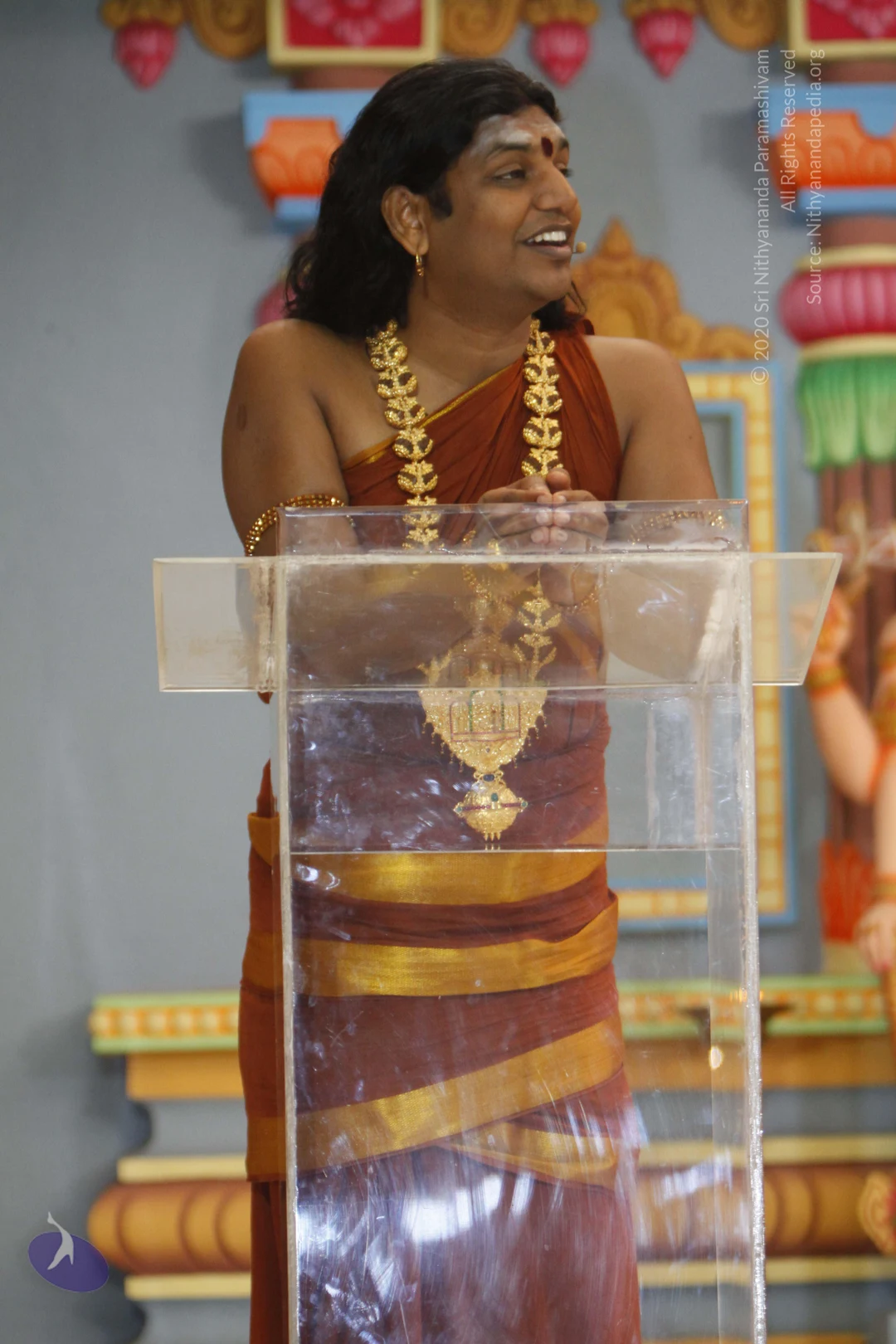
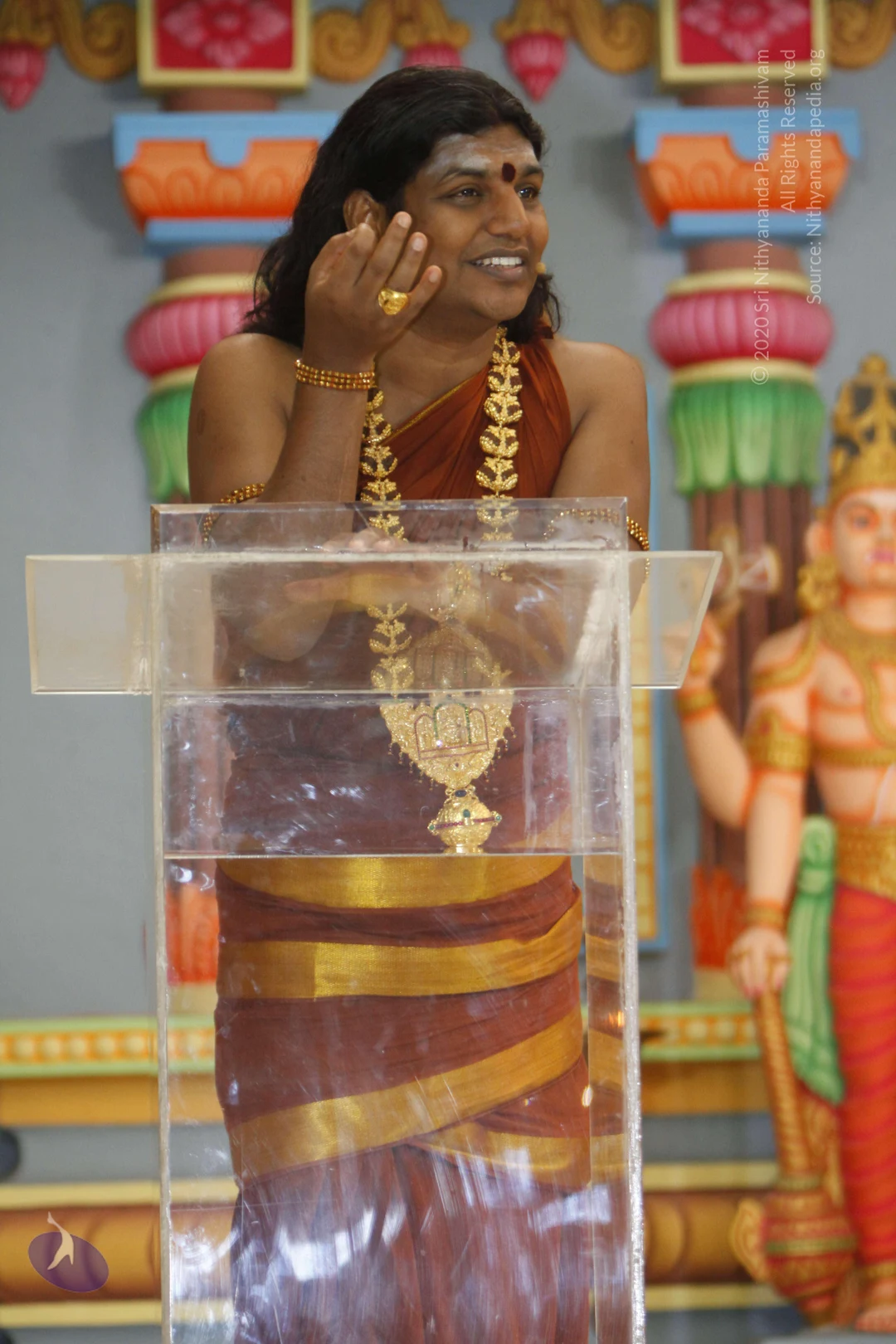
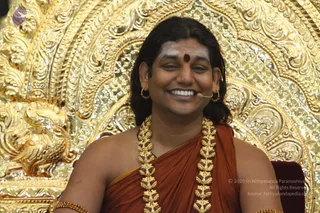
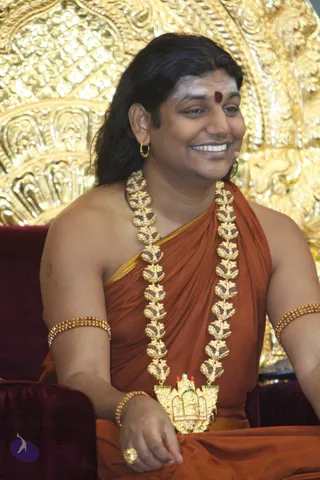
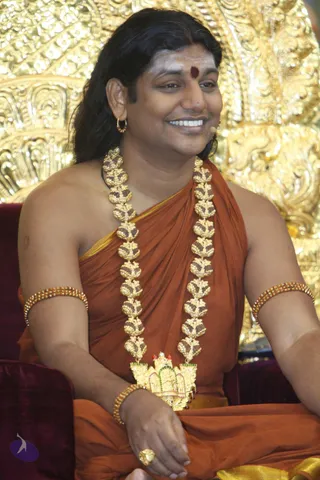
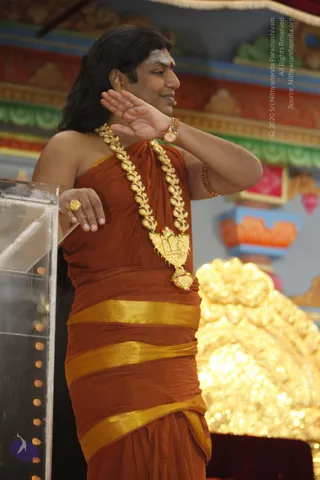
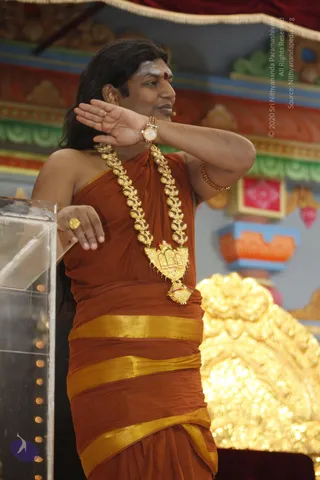
A smiling man with shoulder-length dark hair sits before an ornate gilded throne with repoussé floral and scrollwork panels. He wears a saffron-orange shawl over the shoulder, a long gold necklace of leaf-shaped beads, gold hoop earrings, a gold bangle, a white vertical forehead mark and a red bindi, and a small clip-on microphone is attached near his mouth. The image shows a single seated person, with no other figures visible.A smiling man with long dark hair sits cross-legged on an ornate gold throne with velvet maroon cushions and carved lion-head armrests. He wears an orange-saffron cloth draped over his shoulders and a long ceremonial gold necklace with a pendant, plus gold bangles on his arms and wrists and a gold ring. A red bindi marks his forehead. Behind him stands a gold-painted figure with a raised hand holding a ceremonial staff, beside a brass oil lamp.A smiling man sits on a large ornate gold throne with carved relief patterns and deep red velvet armrests. He wears an orange-saffron cloth draped over one shoulder and across the chest, a long gold-and-white flower garland, gold armlets and bangles, and a red bindi on his forehead with a small headset microphone. Behind him a painted figure's raised arm and a brass oil lamp with a bird-shaped finial are visible.Close-up photo of a smiling man with long dark hair, white and red vertical marks on his forehead, a red bindi, and a small microphone clipped near his face. He wears an orange-brown saffron shawl draped over his shoulders, a long multi-strand gold necklace with ornate beaded pendants, a gold ring, gold bangles and a gold hoop earring. His right hand rests near his cheek. Behind him is an elaborately carved gold throne backdrop. Swamiji (probable): long swept-back hair, saffron shawl and ceremonial gold necklace with the Nithyananda Dhyanapeetam setting; the appearance cues are consistent with the page's claim but the image is a single photo, so identification is appearance-based only.A man with long, swept-back dark hair stands at a clear acrylic lectern, speaking into a small headset microphone. He wears an orange-saffron cloth draped over his shoulders, a heavy gold necklace of intricate floral links, a gold bangle and a gold ring, and a gold armlet on his upper arm. A vertical red-and-white mark is on his forehead with a red dot between the brows. His right hand is raised near his face, index finger pointing upward. Behind him, a colourful painted border of orange, blue, green and red bands with gold-trimmed motifs decorates the wall. The probable Swamiji label applies to him, with the cues of long hair, saffron clothing and ornate gold ornaments, seen as a satsang speaker at a lectern.A smiling man with long dark hair, white tilak and a red bindi stands before a colourful temple-style backdrop of pink, orange and green pillars. He wears a saffron-orange shawl over the shoulder, heavy gold beaded necklaces, gold hoop earrings, and a headset microphone. His arms are open in an expressive gesture while he speaks. Probable Swamiji's appearance cues include long swept-back hair, saffron clothing and ornate gold necklaces, with the page noting his presence at a satsang.

Sarva-Darshan

5 photosSource gallery
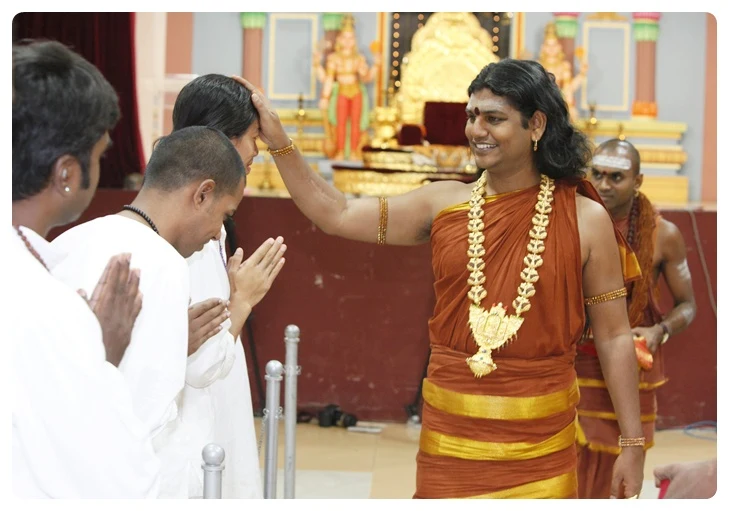
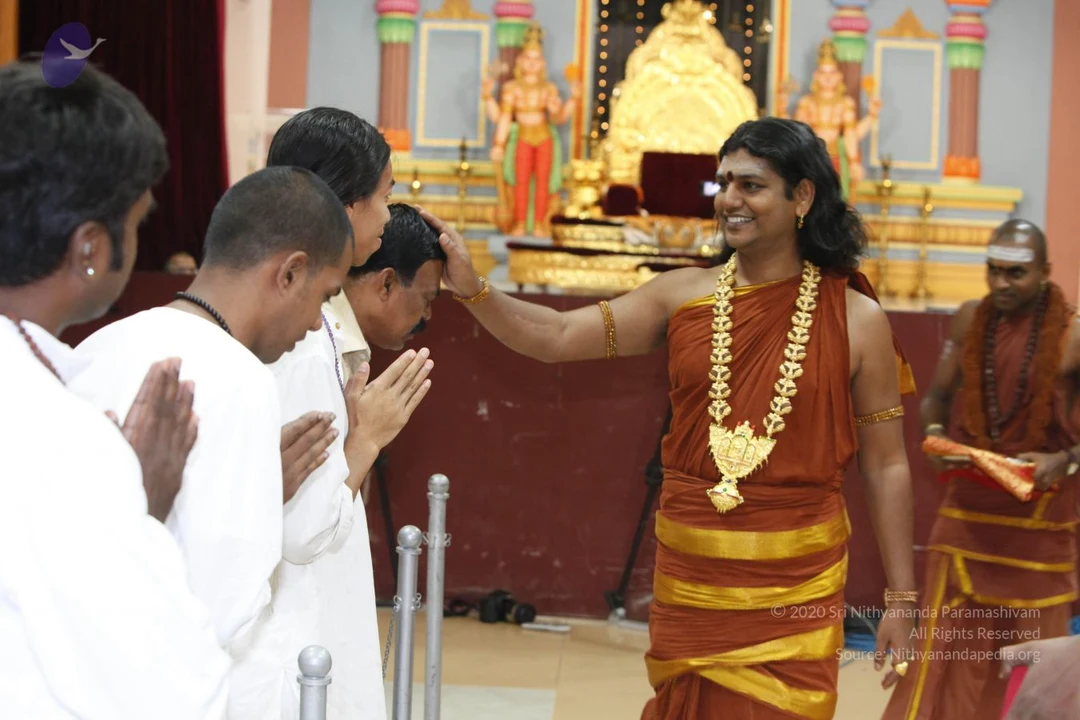
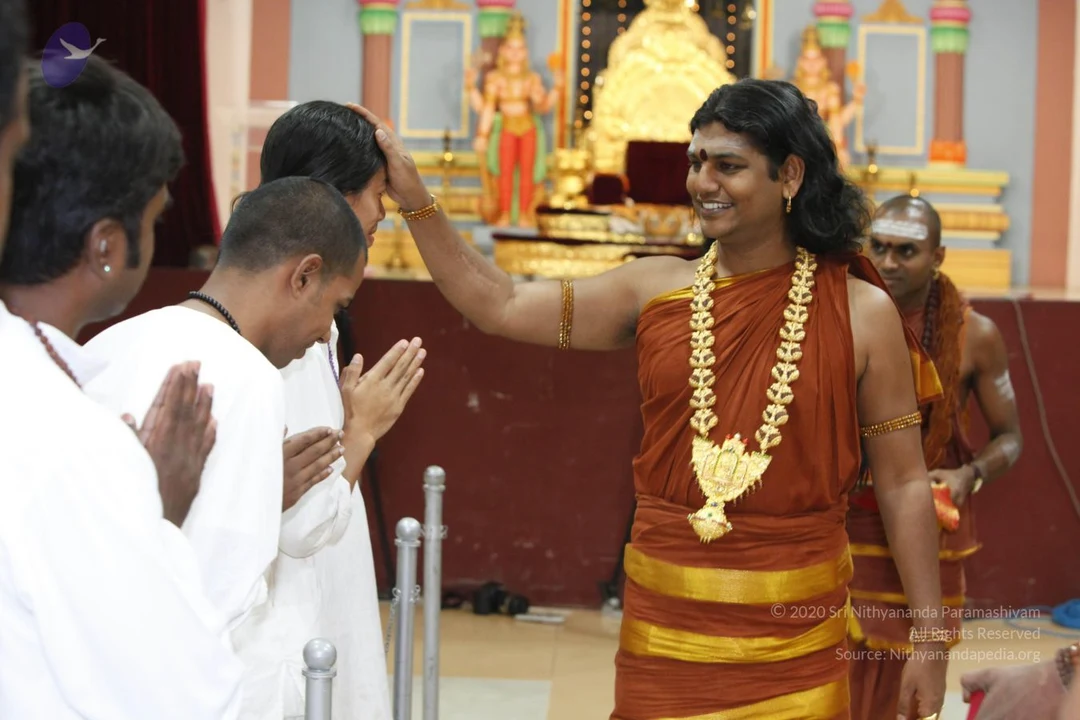
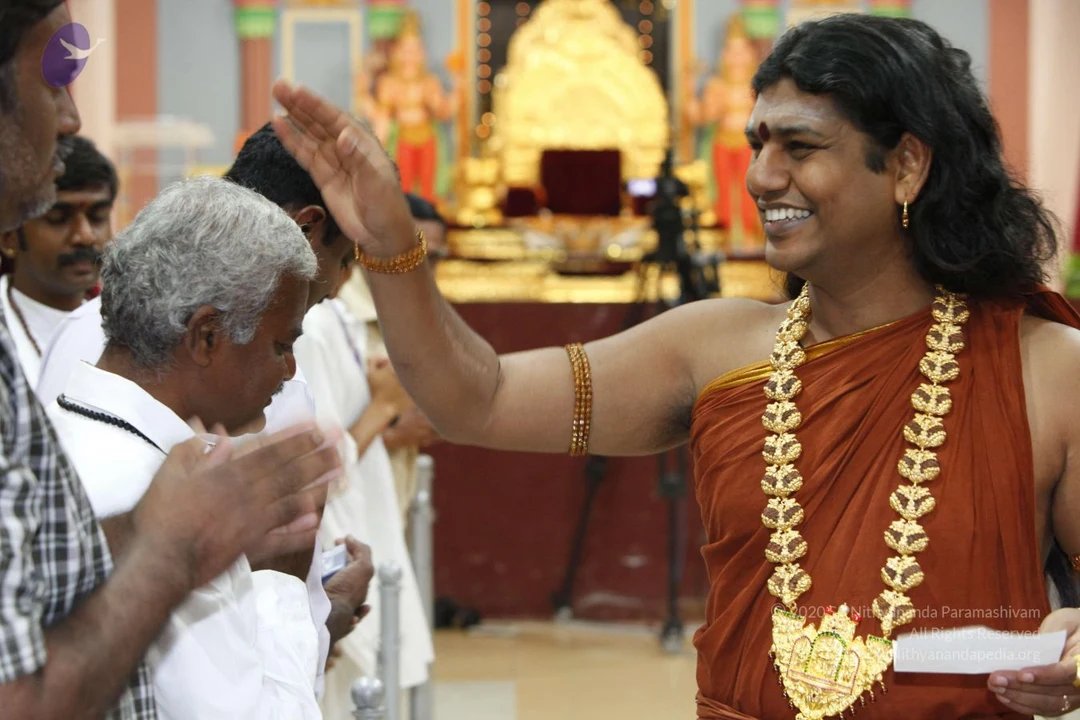
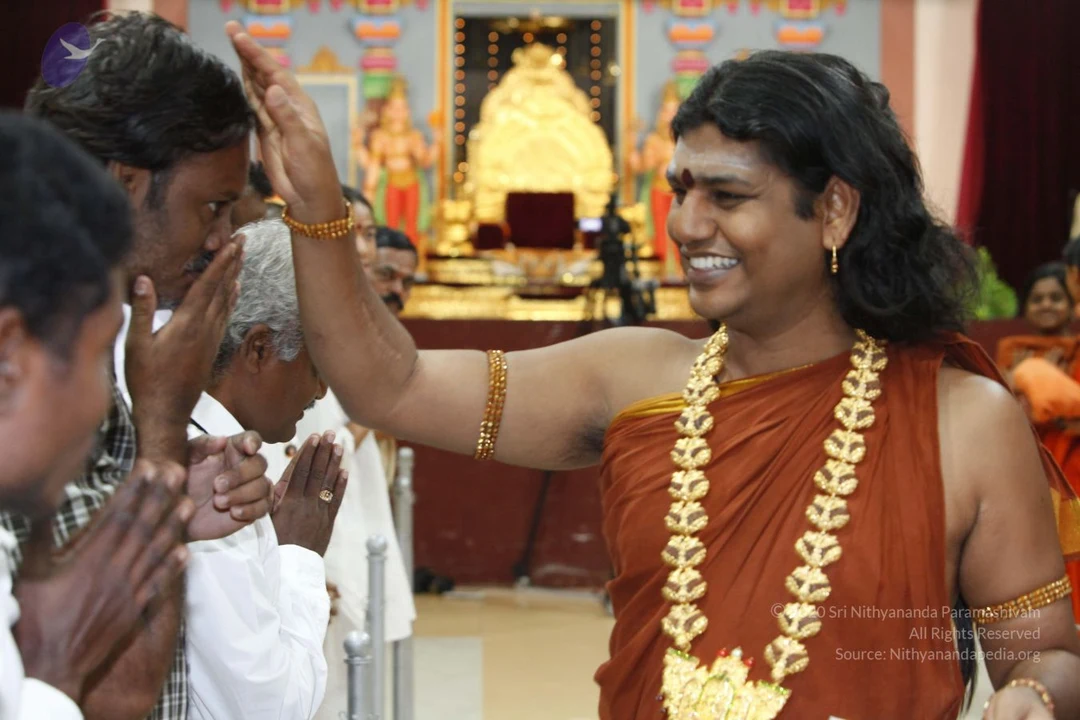
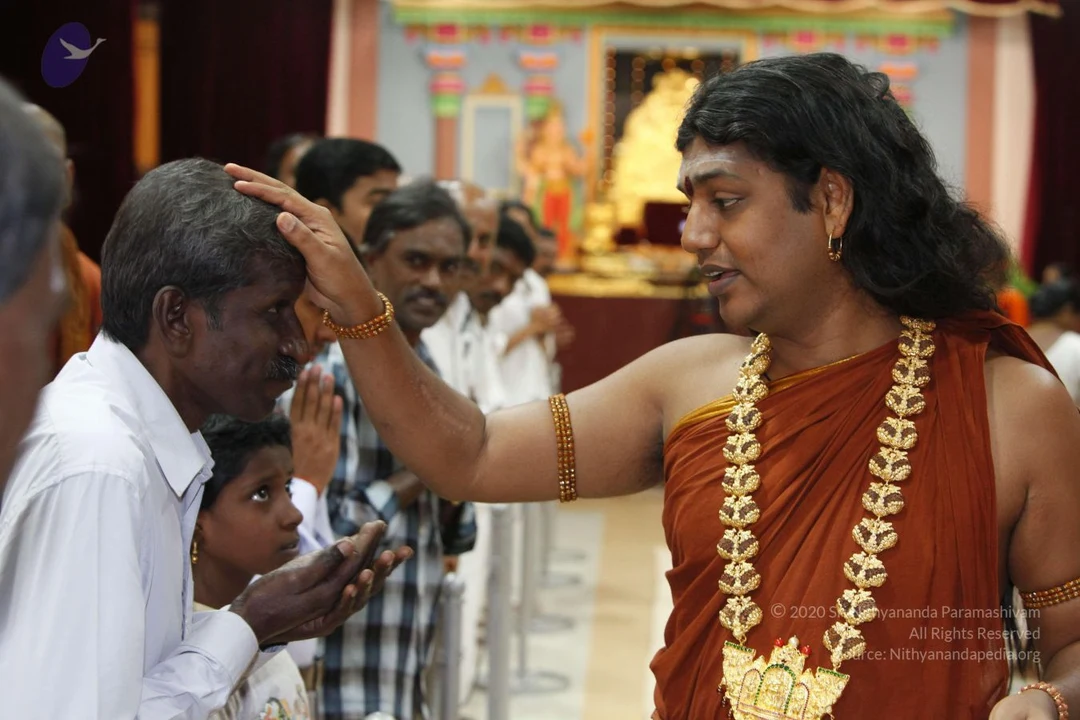
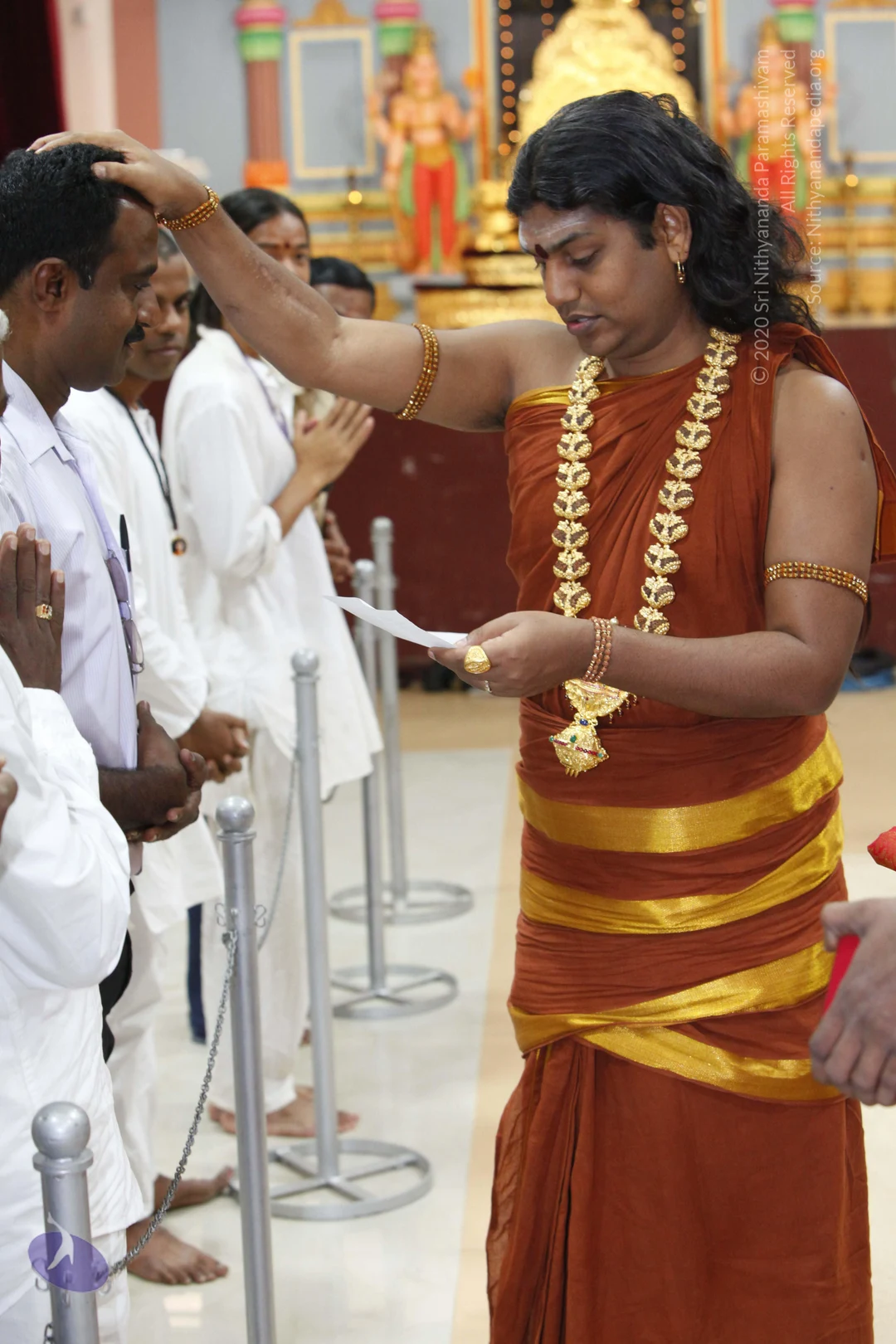
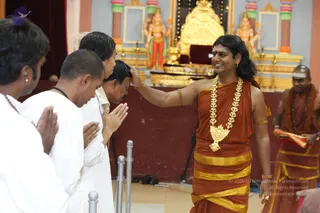
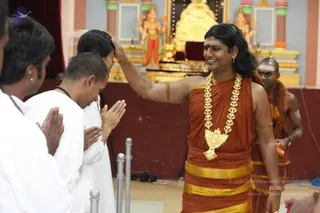
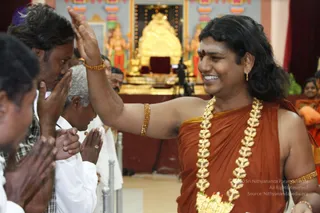
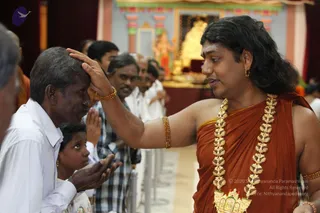
A photograph of a temple interior where a smiling figure in an orange-red dhoti-style wrap with a wide gold border and a heavy gold pendant necklace places his hand on the forehead of a devotee. The figure has long, swept-back dark hair, gold bangles and a red bindi, and is the probable Swamiji, identified by long swept-back hair, ceremonial gold necklaces and saffron-orange ornate clothing. Three men in white clothes stand with palms pressed together in namaskar, receiving the blessing, with one man's head bowed. Behind them a golden throne with a red cushion and two painted deity murtis in red and green stand on a pillared backdrop. A second priest in orange-red robes and a rudraksha mala stands at right holding a red cloth.A standing man in an orange-saffron dhoti and shawl with a heavy gold necklace and gold armbands places his right hand on the head of a woman in white, who presses her palms together in namaskar. Beside them, a bald man in white with a vertical tilak on his forehead and a dark beaded mala watches. Behind, a gilded throne and colourful painted deity murtis stand against a pink-and-grey wall. The standing man has long swept-back hair, a red bindi and a smile, matching distinctive a person cues, so this is a probable in-person candidate. A man in white with a white cloth at the left edge holds his hands together in namaskar.A smiling man with long swept-back dark hair, a small red bindi, gold bangles and a heavy gold ceremonial necklace with a large gold pendant stands in an orange-saffron robe that bares his shoulder, raising one hand in a blessing gesture. Nearby, a man in a checked shirt and two men in white shirts with white dhotis stand with hands together in namaste. Behind them is a golden throne with a golden canopy, flanked by two orange-clad deity statues, and a red pedestal in a temple hall. A card is held in one hand at the lower right.A smiling man with long dark hair and a red tilak on his forehead stands at right in a rust-orange robe with a thick gold garland and gold bangles, raising his hand in blessing over the head of a devotee. Several people in white and grey clothes stand with palms pressed together in namaskar at left. Behind them is a golden ornate throne with a red cushion, flanked by painted deity figures in a temple hall with colourful garlands and lights.A photograph of a long-haired figure in an orange-saffron shawl and layered gold necklaces with a gold-and-green pendant, placing one palm on the head of an older man in a white shirt who has his eyes lowered and hands pressed together. A young child in a patterned top watches from below and other devotees in white and checked shirts stand behind. Behind them a gilded deity murti and golden ornaments stand in a temple hall with pink and green banners overhead. The figure wears gold bangles and a forehead tilak. Counted physical people: about eight visible.

Sacred-Arts-and-Construction

9 photosSource gallery
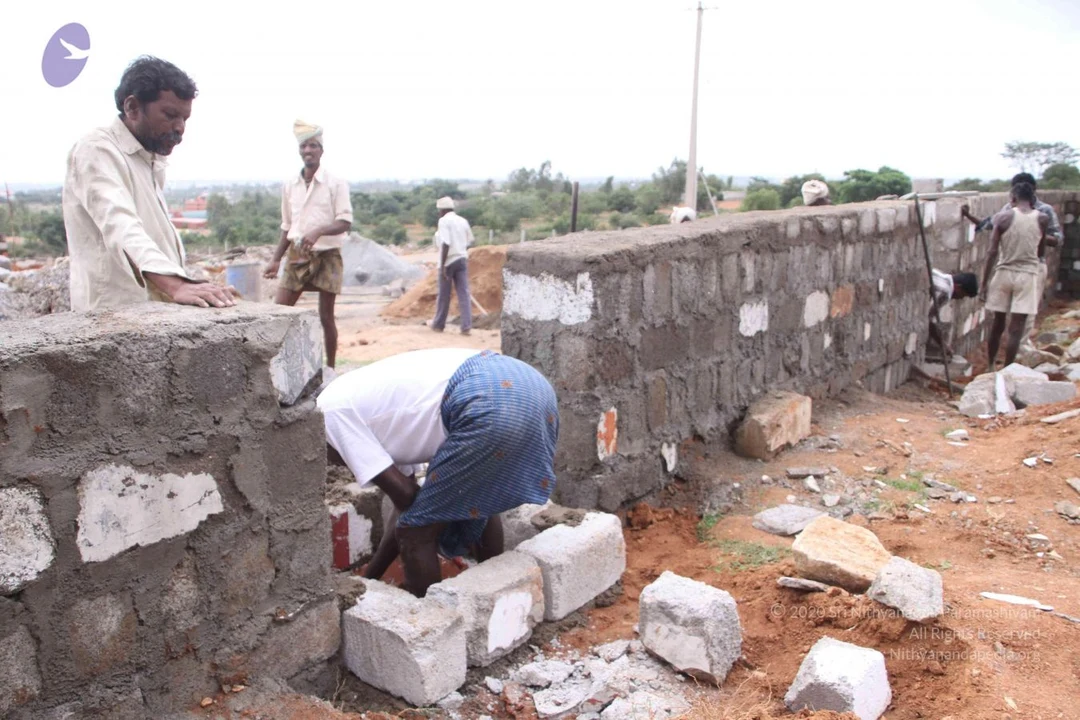
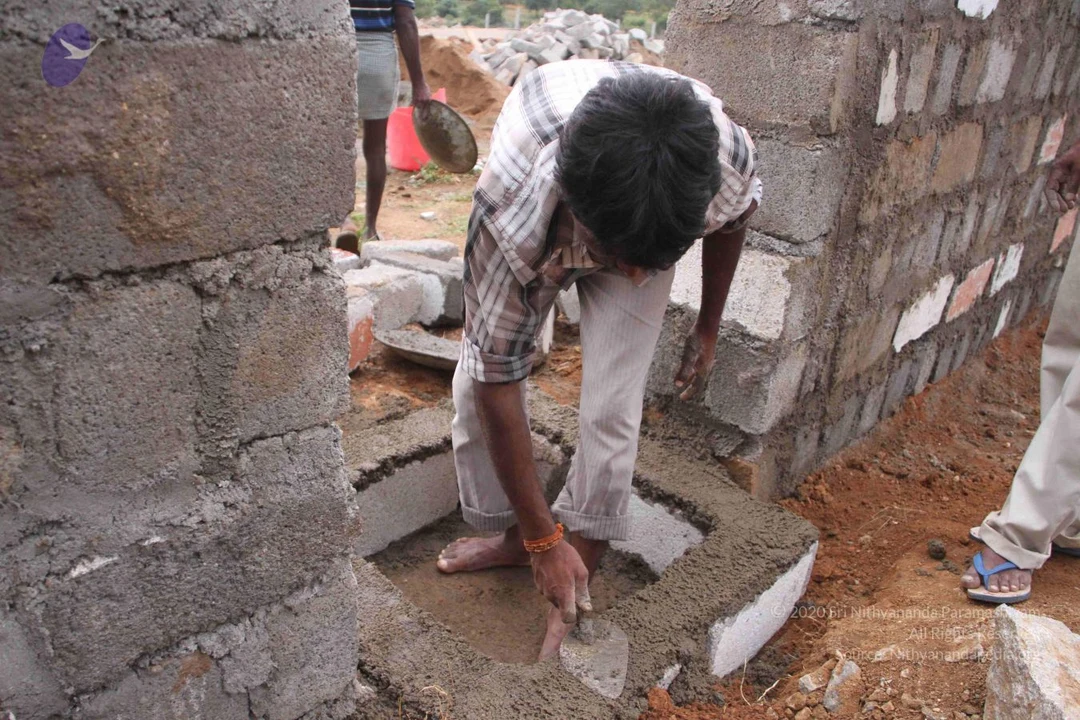
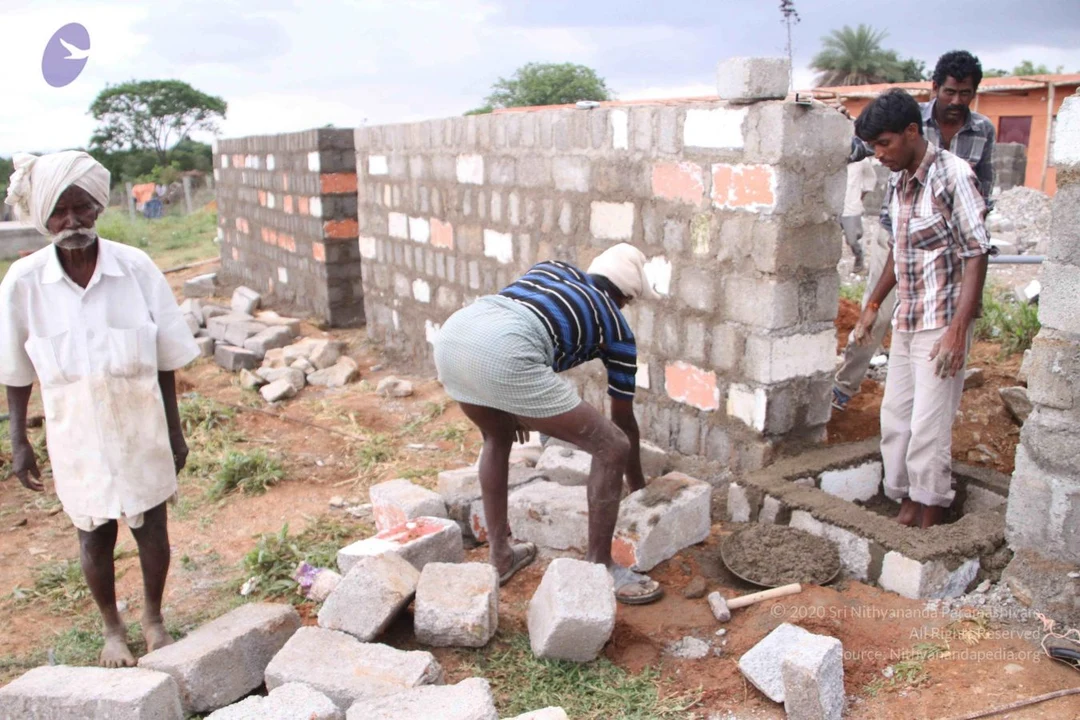
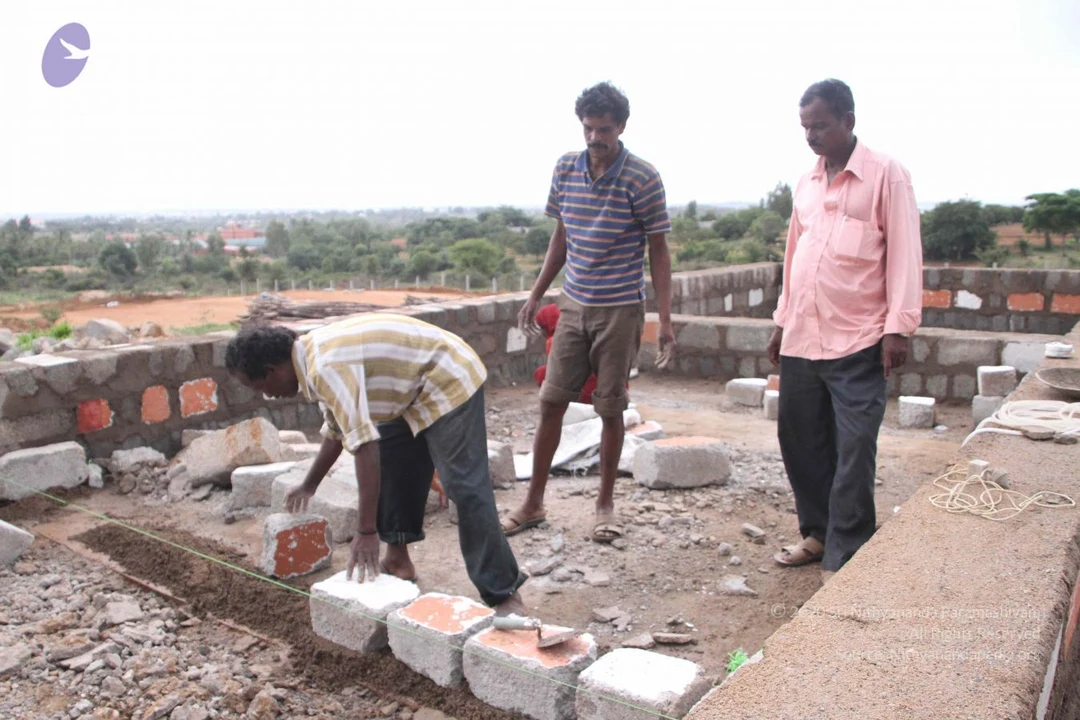
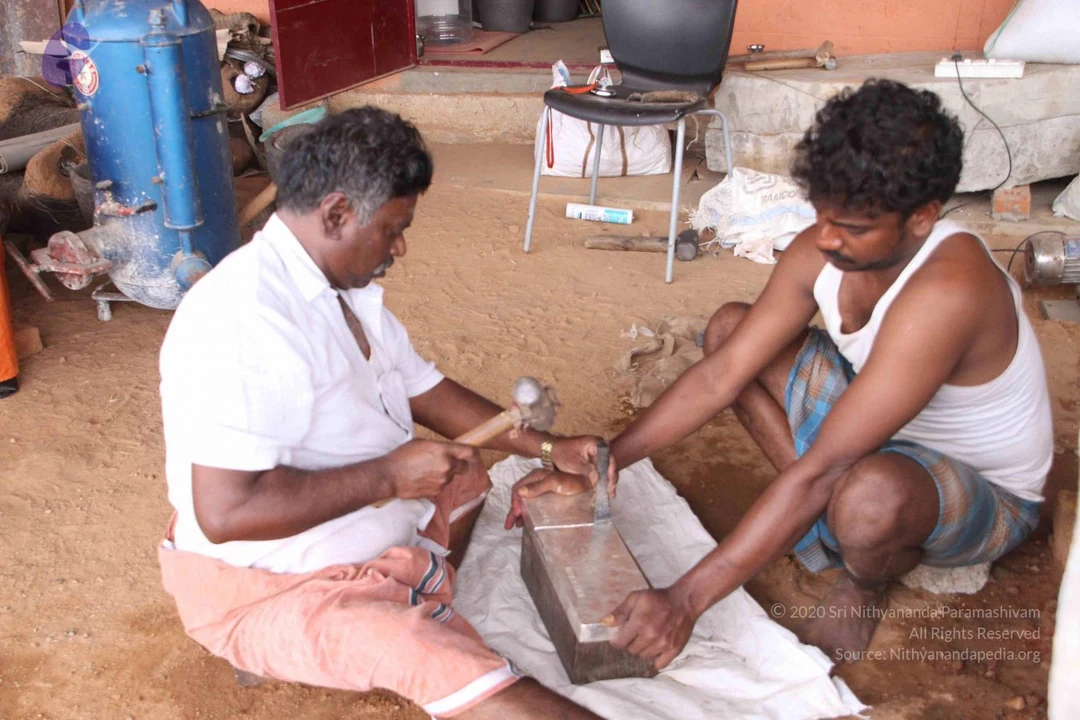
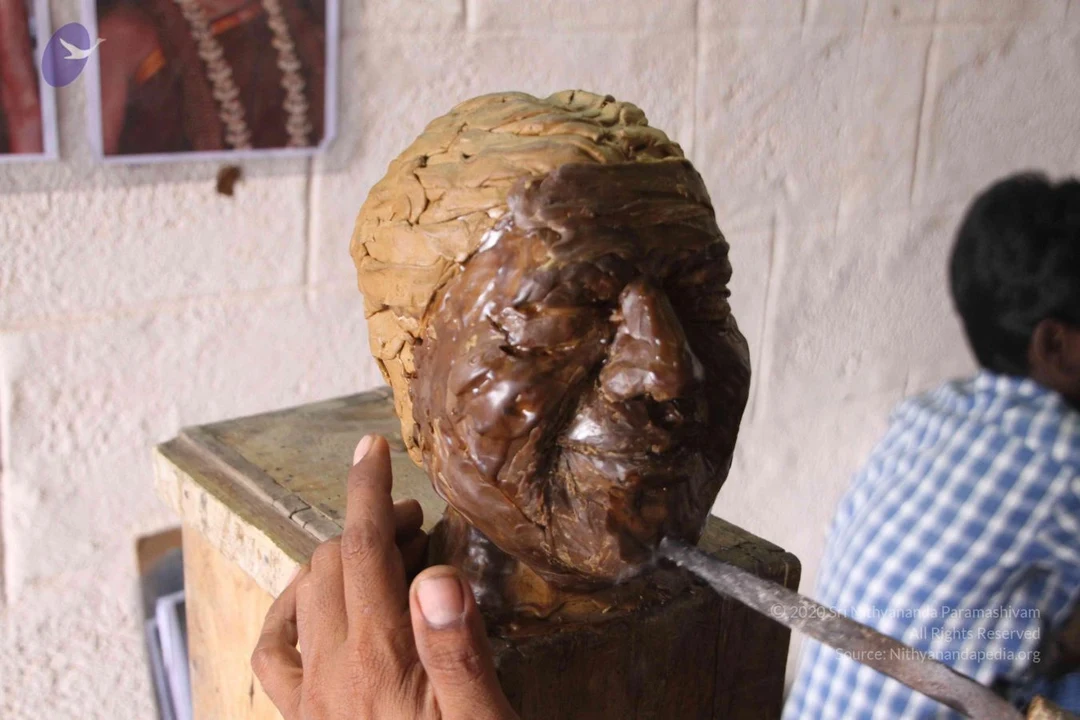
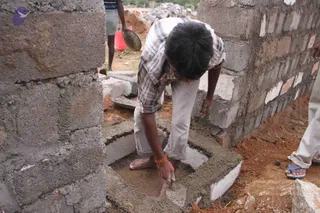
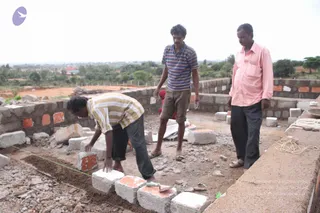
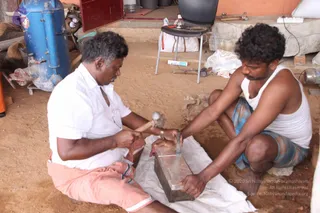
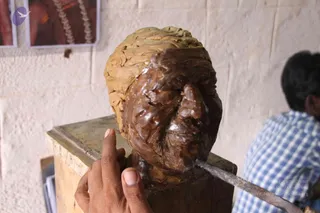
Outdoor construction site with concrete block walls being built on a dirt plot under a pale sky. Four men work on the walls: a man in a cream shirt rests his hands on the left wall, a man in a white shirt and checked lungi stands behind him, a man in white bends low to lay blocks at the base, and a figure in a sleeveless vest works at the right wall. Loose stones, bricks and piled sand lie on the ground, with open land and distant trees behind.A worker in a plaid short-sleeved shirt and light striped trousers bends over a concrete block structure at a construction site, troweling wet cement into a square opening between grey breeze-block walls. He wears an orange thread bracelet on his wrist and is barefoot. Behind him another worker holds a metal pan, and loose rubble, red soil and stacked stones surround the site. A second person's bare-legged, sandaled feet are visible at the right edge.A rural construction site where men are building a wall from grey concrete blocks on bare reddish earth with scattered blocks and a small mortar-filled pit in the foreground. An older man with a white turban, white shirt and white dhoti stands at left with a grey beard. A younger man in a blue-and-white striped top and a checked shirt with white trousers bends low to place a block, while another man in a checked shirt stands behind at right. Behind them stand walls of brick and block and a terracotta-roofed house. Four people are visible.A construction site on a rooftop or raised slab with brick and stone walls under open sky. A man in a striped polo shirt and brown shorts stands in the centre-left, and a man in a yellow-and-white striped shirt and dark trousers crouches, laying concrete blocks along a taut string line and using a trowel to set them. A third man in a pink button-up shirt and dark trousers stands at the right, watching. Loose rubble and a rope coil lie nearby, with a hazy landscape of trees and distant buildings behind. No a person is visible.Two men sit on sand in an outdoor workshop, working on a metal block. The man on the left wears a white shirt, an orange-pink dhoti and a gold ring, and swings a hammer. The man on the right wears a white sleeveless vest and a checked blue lungi, and holds a chisel against the block with both hands. Behind them are a blue cylindrical tank, sacks, a plastic chair and a wooden stick on the ground, with an orange wall and a red door in the background.A sculptor's clay head bust in progress on a wooden pedestal, with a brown wet clay face shaped over a tan clay cap of hair. A hand with a thin metal tool works the lower face, and a person in a blue checked shirt stands blurred at the right edge. Two small framed prints hang on the white textured wall behind. The sculpted face is a statue, not a living person.

Temple

31 photosSource gallery
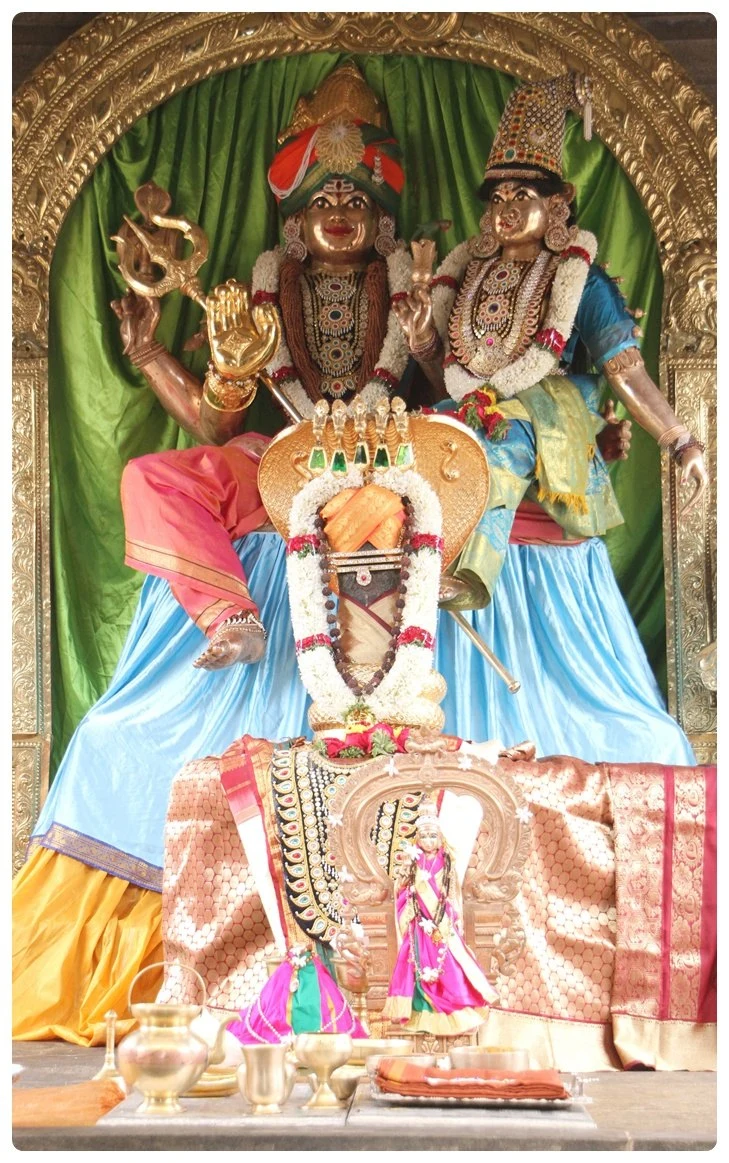
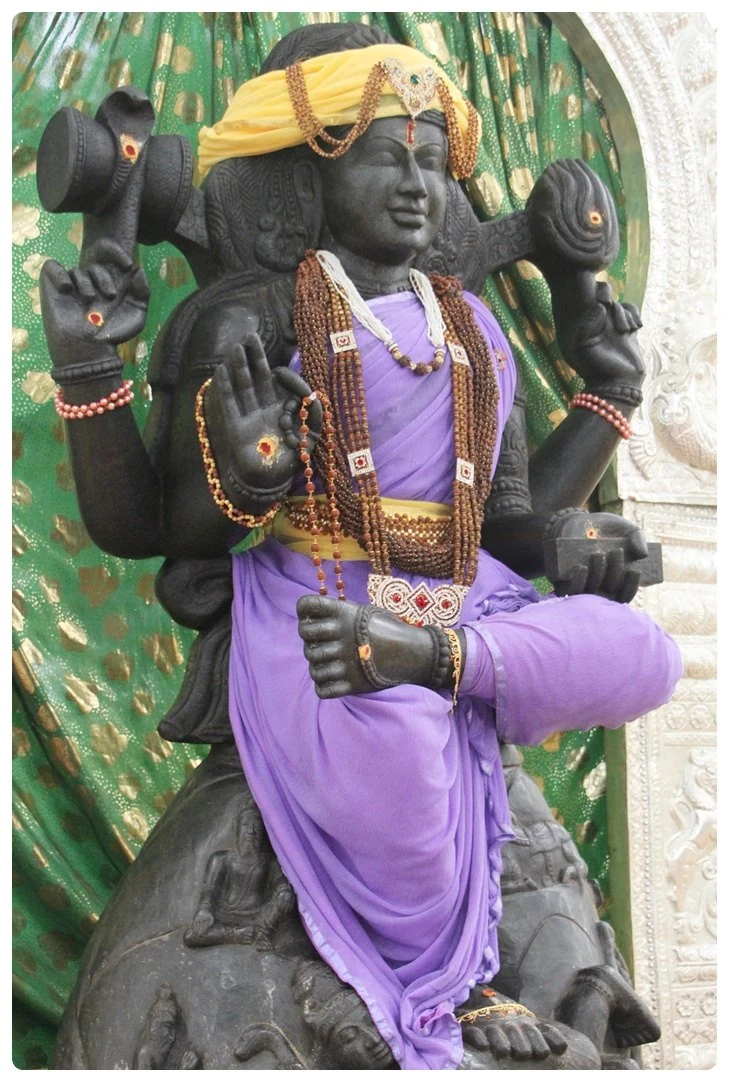
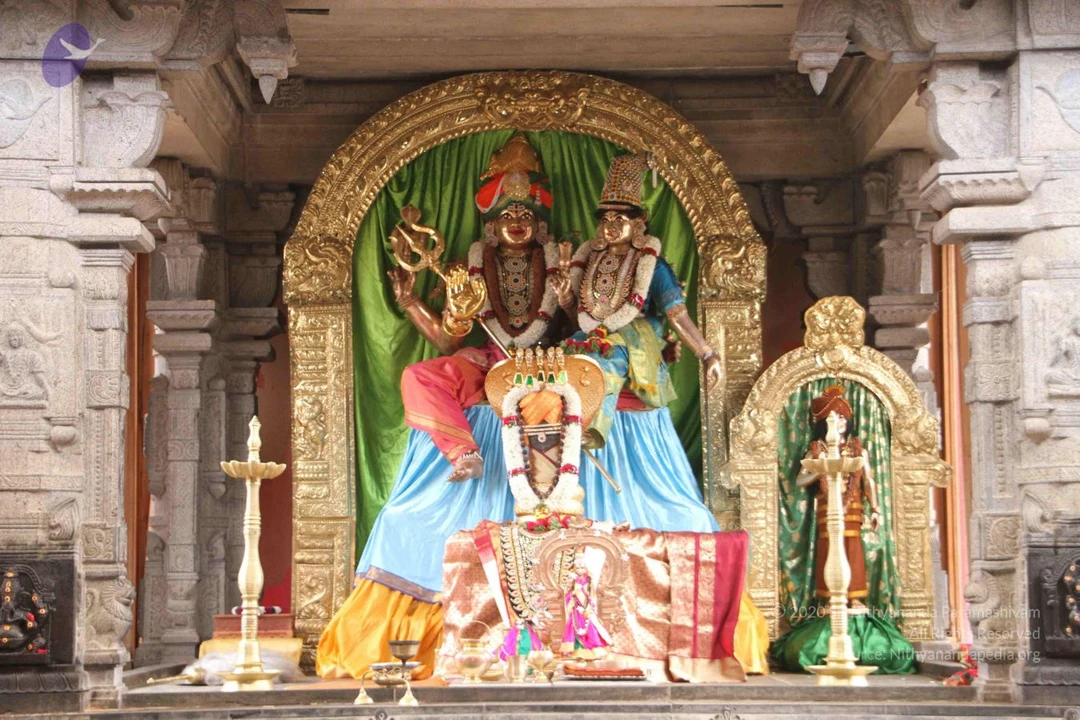
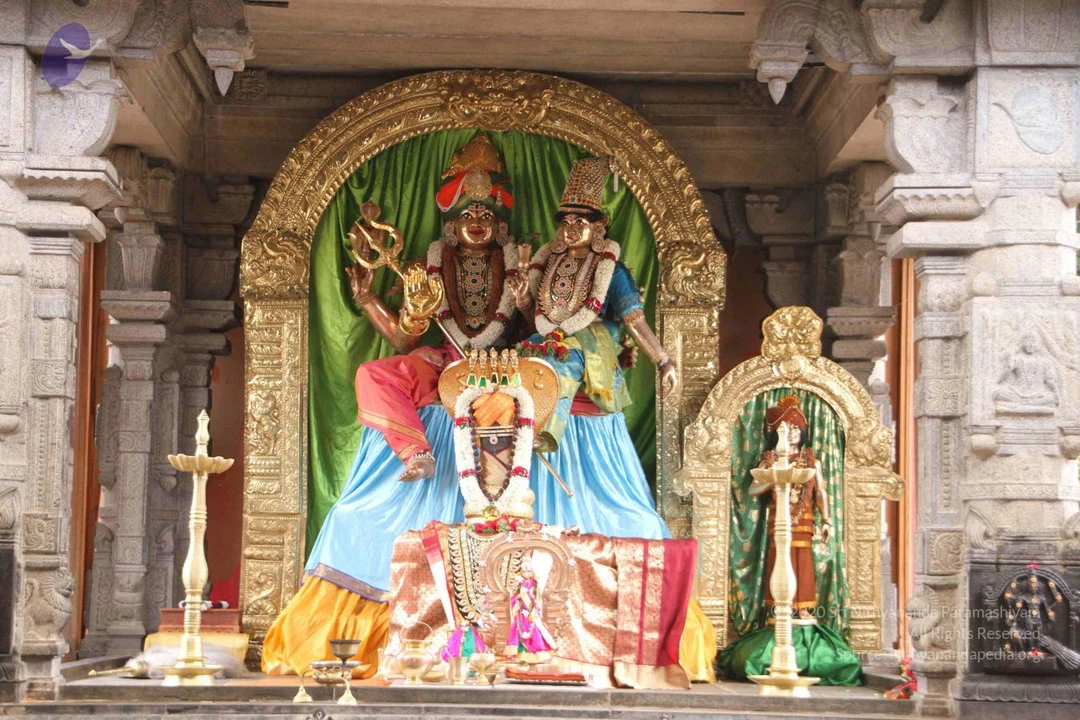
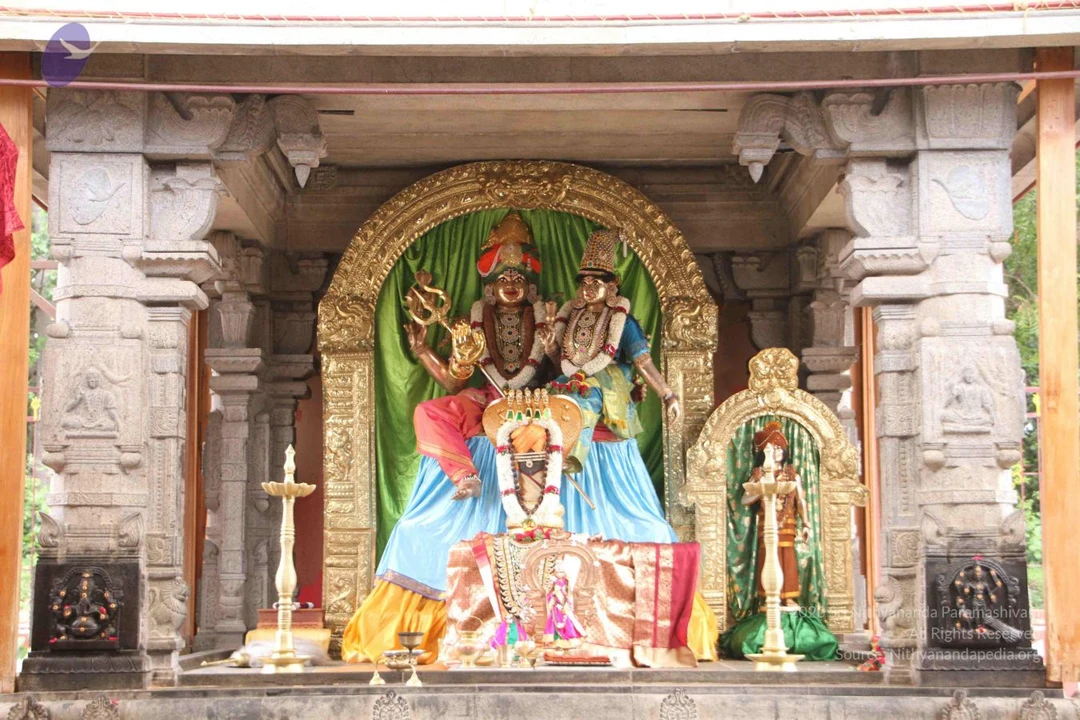
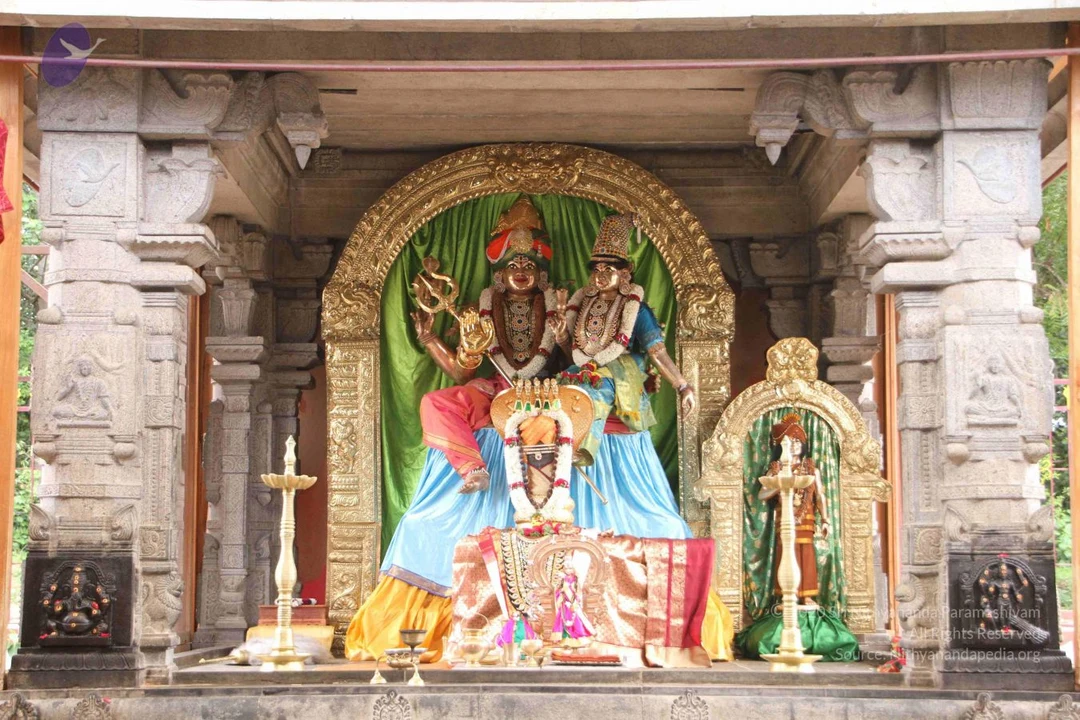
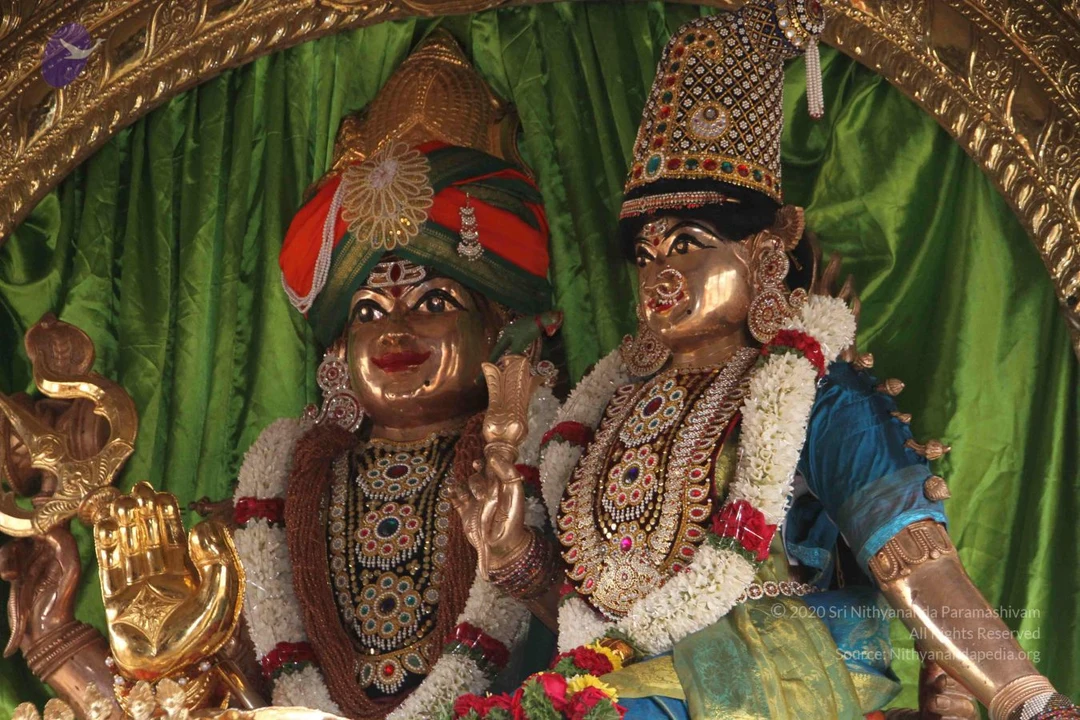
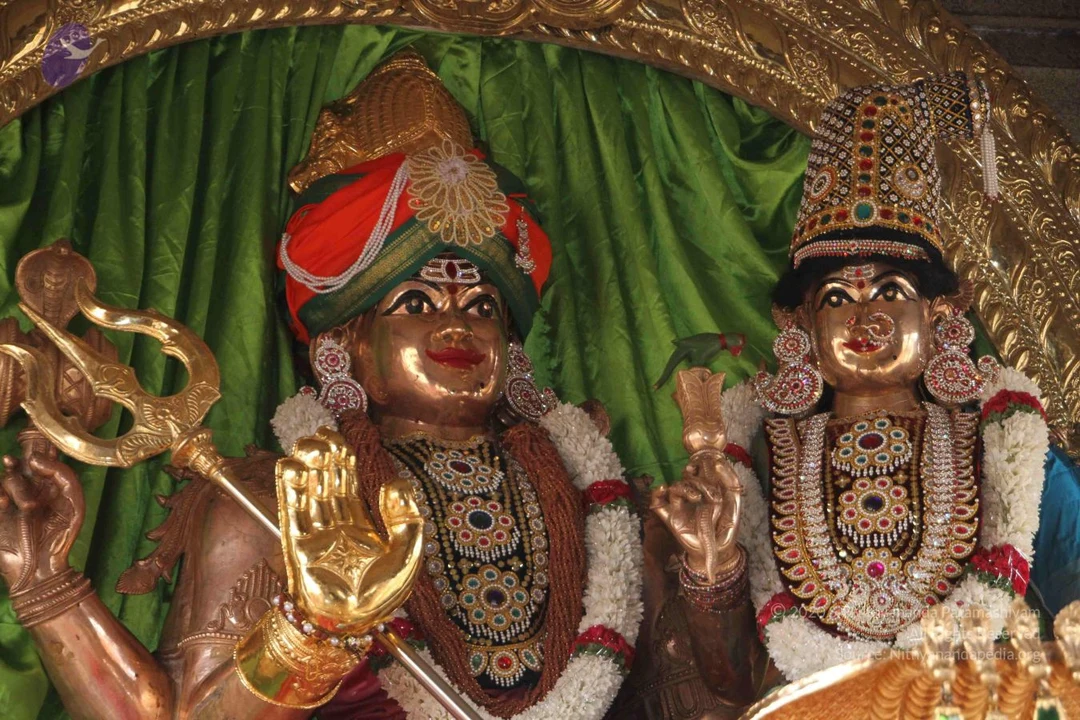
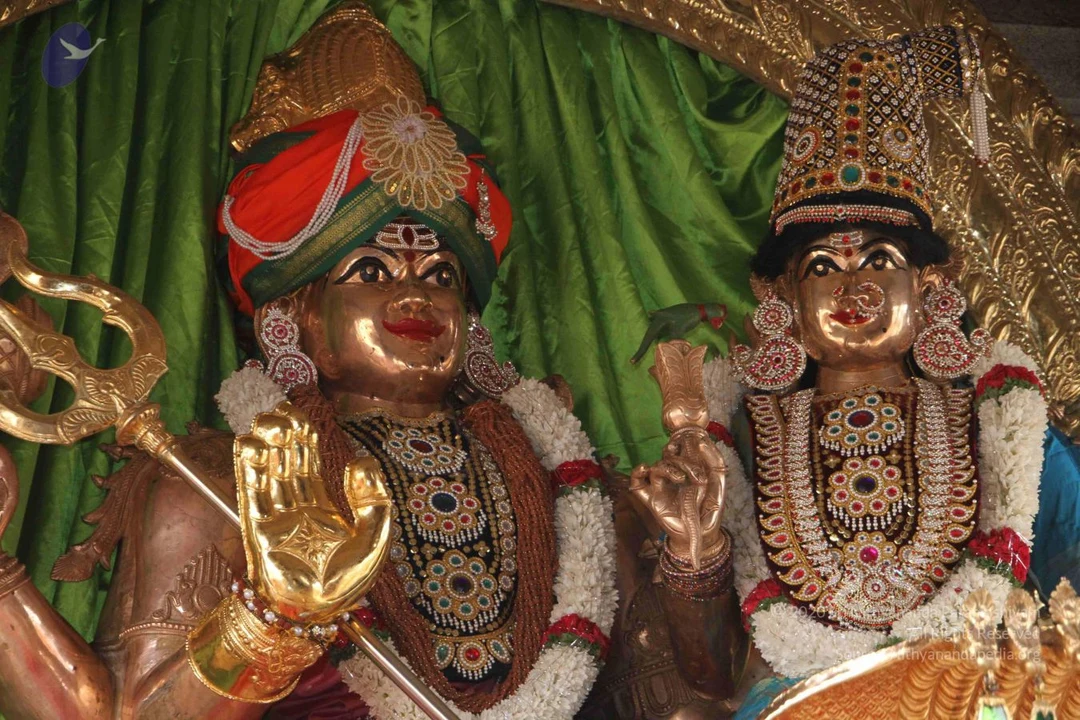
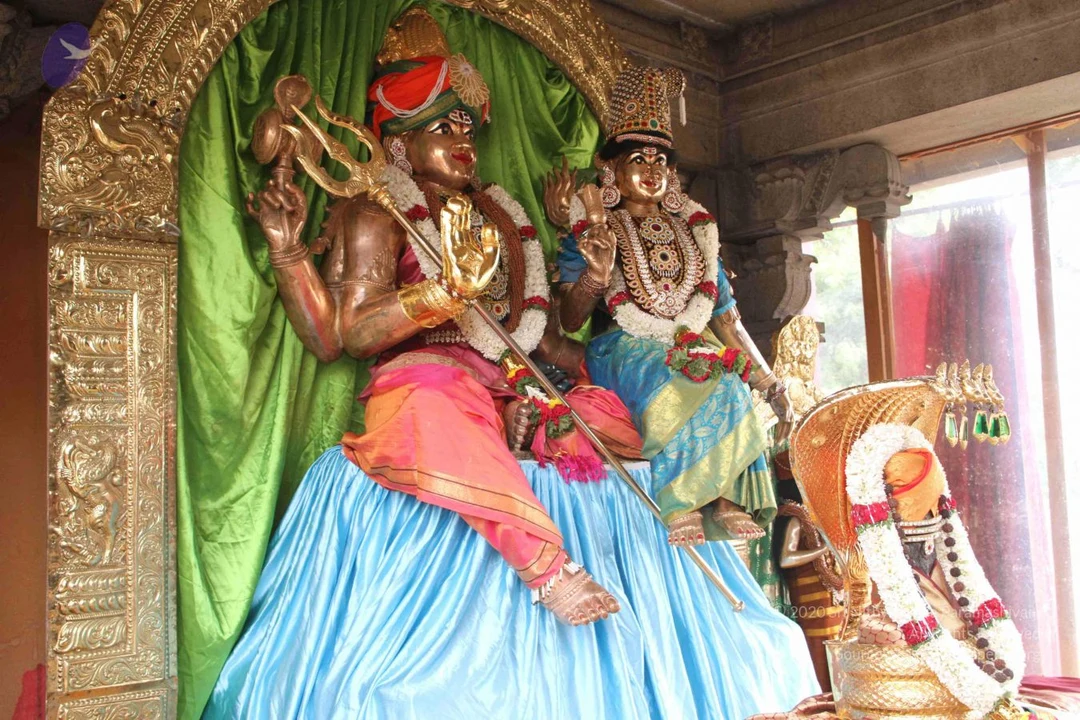
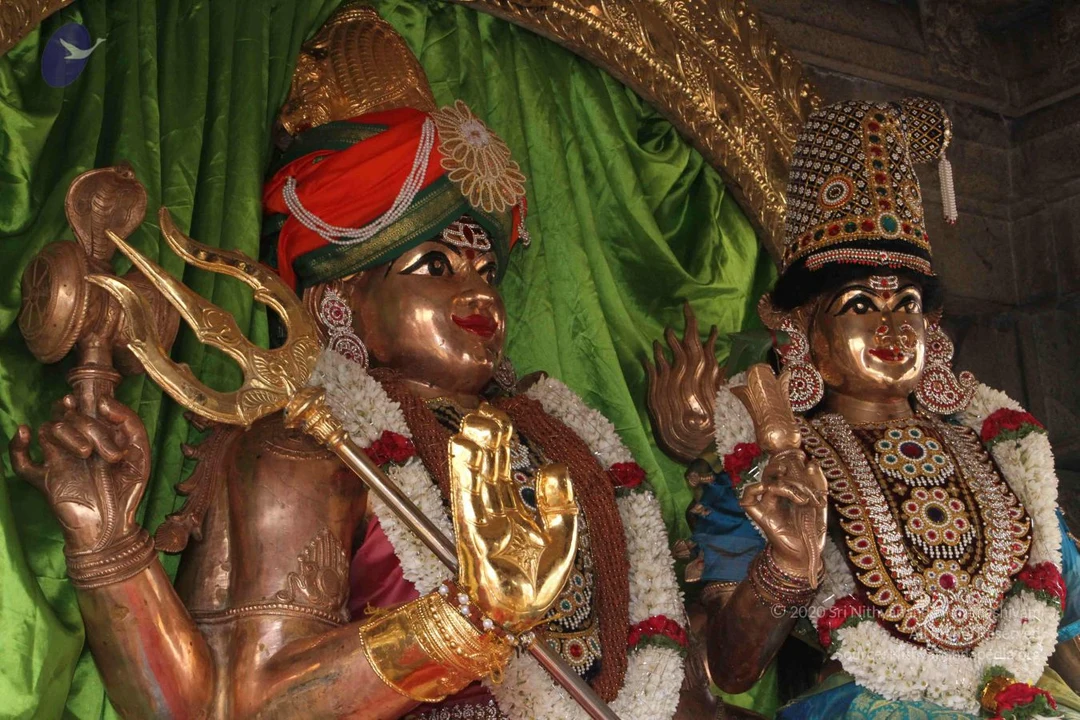
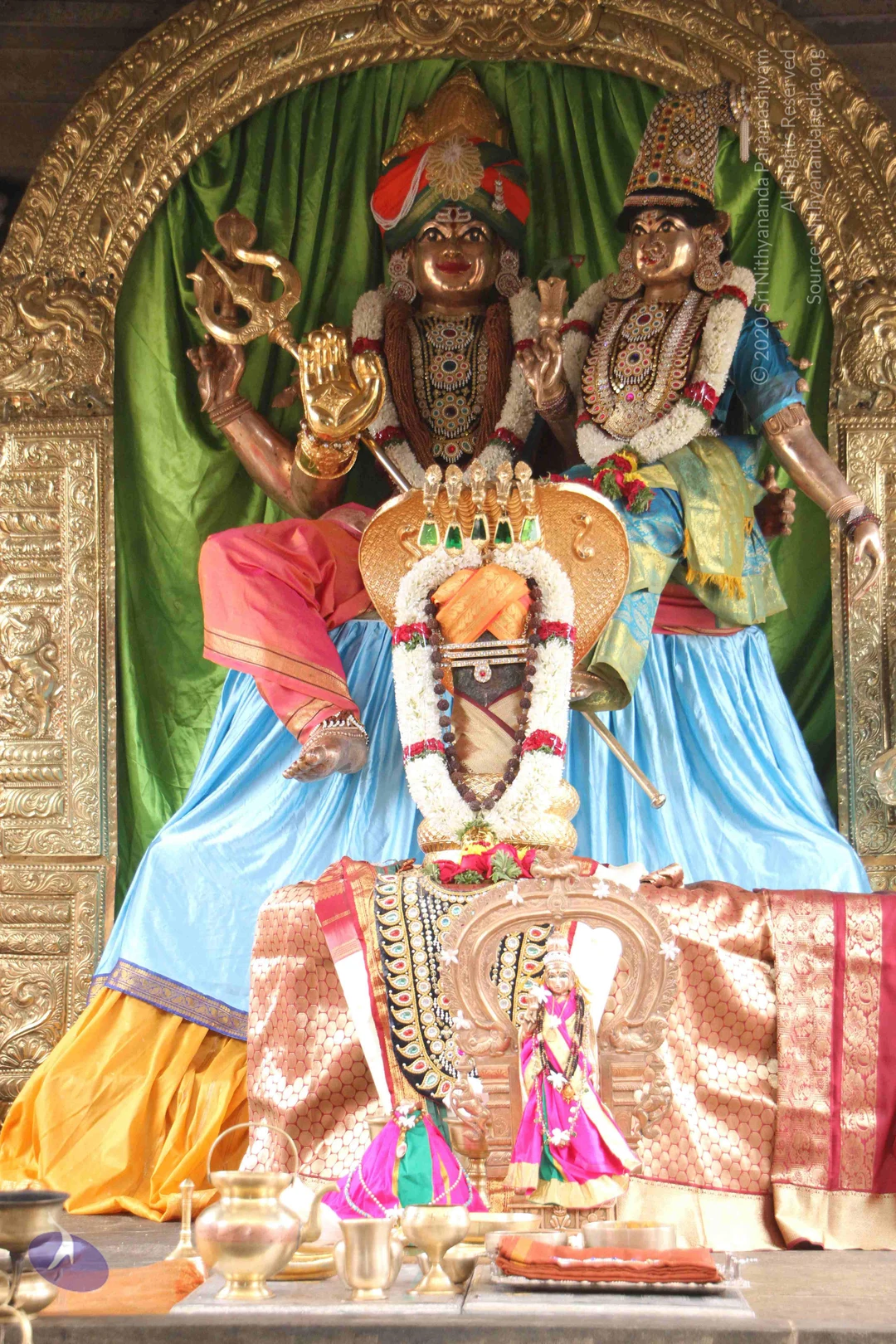
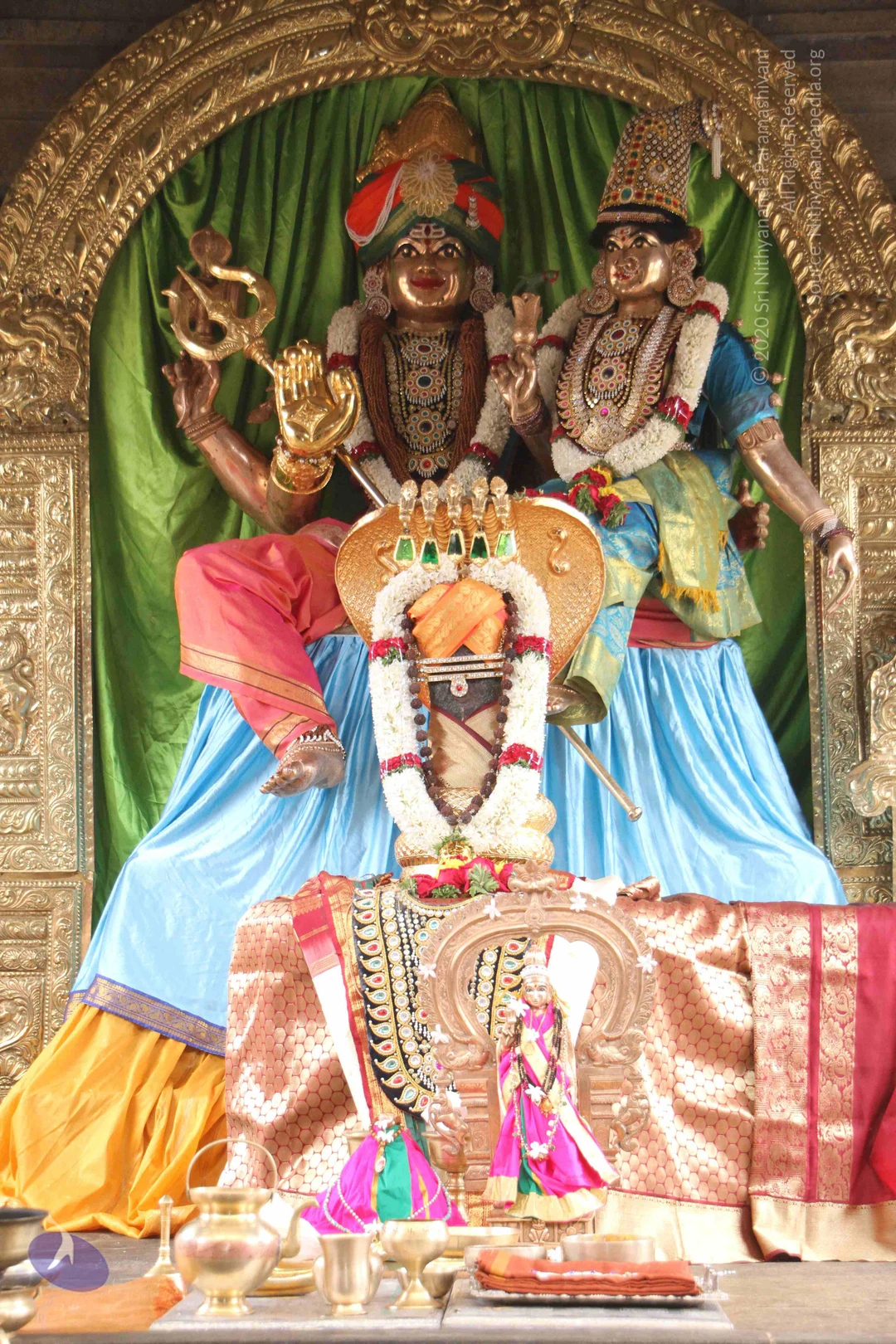
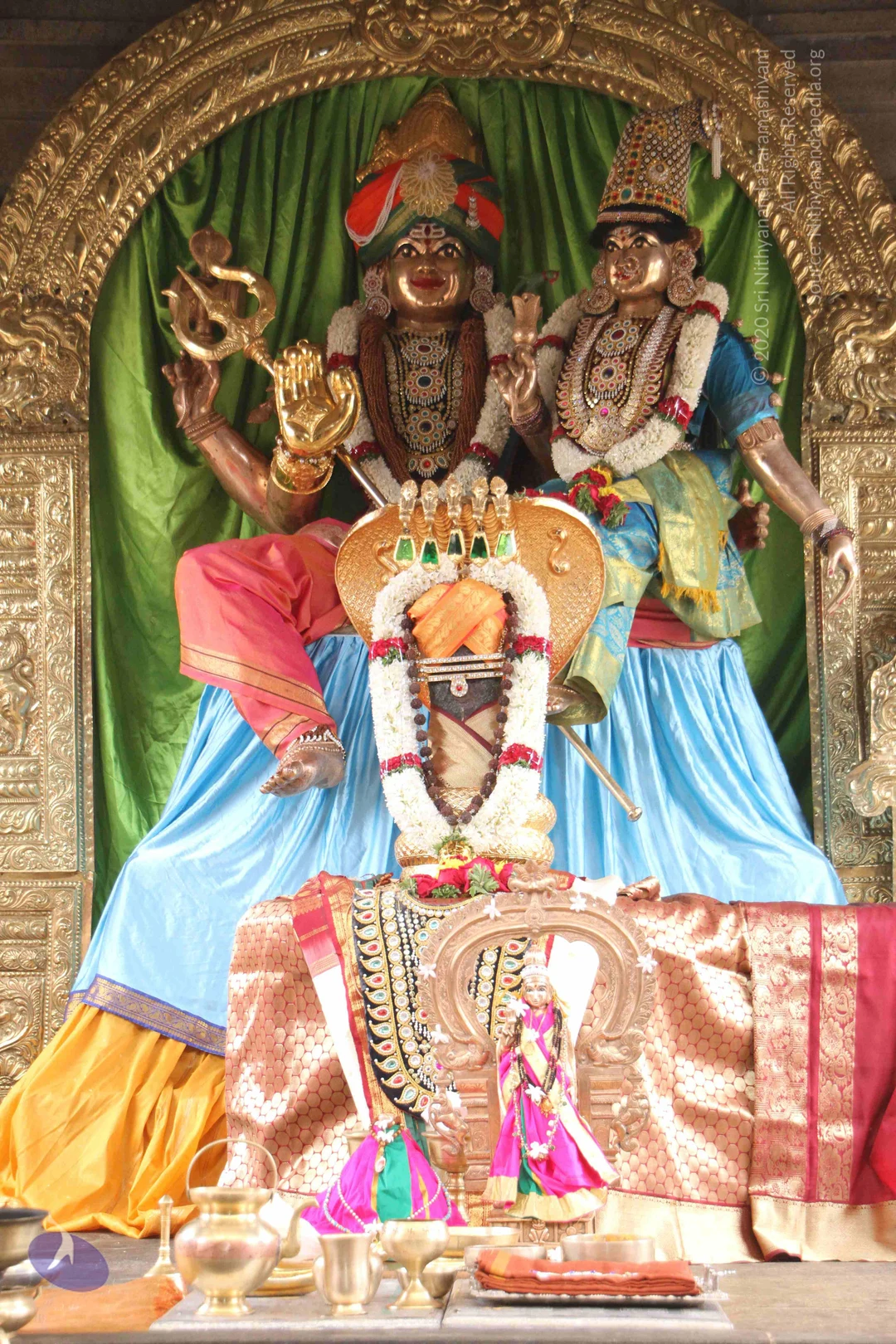
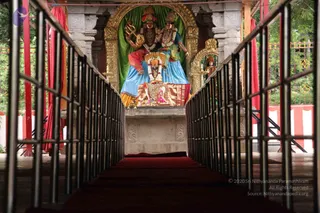
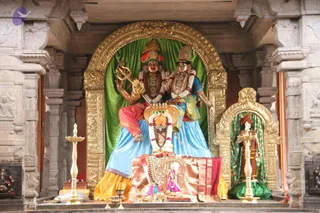
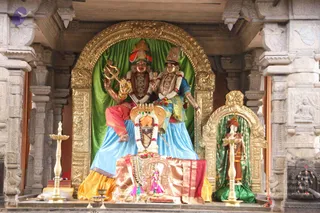
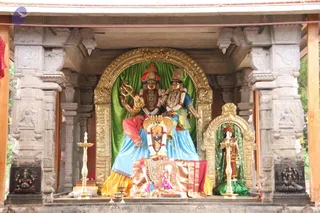
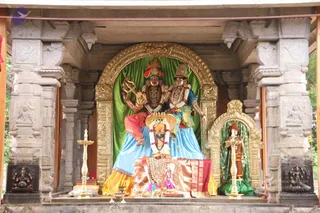
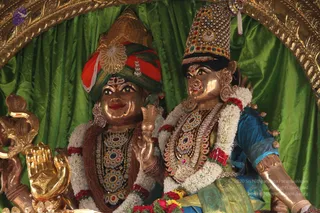
A photograph looking down a narrow corridor lined with black metal railings, leading to a shrine of a deity murti pair seated on a raised stone platform. The central figures wear gold crowns and garlands, one holds a trident, and the figures are dressed in blue and red garments. Before them rests a small seated figure adorned with a garland and crown, with a gold-bordered cloth and a decorative plate in front. A green backdrop and gold arch frame the shrine, with red cloth draped on the side pillars and green foliage visible behind the walls. No people are present.A shrine photograph showing an ornate stone temple niche framed by a gold-painted arch with a green cloth backdrop. Two large painted deity murti stand side by side, one holding a trident, both adorned with garlands, rudraksha-style necklaces and crowns, with blue and orange draped garments. A smaller figure sits or stands in front, decorated with a garland and a set of small lit oil lamps and offerings on a patterned pink-and-gold cloth. Brass oil lamps stand on either side and a small side shrine with another figure is visible at right. No physical people are present.A photograph of a golden-framed shrine in a stone temple, showing a pair of carved and painted deity murti seated side by side against a green cloth backdrop. The figure on the left holds a trident and a small drum, wears a red and yellow headdress and a red-and-gold garland; the figure on the right wears a tall crown, blue sari-like drapery and a white flower garland. Brass oil lamps and offering plates stand in front, with a decorated gold-framed niche to the right holding a smaller figure in green. No living people are visible.A temple shrine with stone pillars and a gilded arched niche framing a green cloth backdrop. Two large deity figures stand together: the left figure has a trident in hand, a red-and-gold headdress and a rudraksha-style garland, while the right figure wears a tall crown and blue garment with a garland. A smaller seated figure in orange sits in front, garlanded, with a crown-like ornament above. Brass oil lamps stand on either side, and a small offering of flowers and cloth sits at the base. Carved deity reliefs decorate the pillars. Setting appears to be a stone temple shrine, possibly a deity murti display.A stone shrine niche with carved pillars holds a large sculpted deity murti pair seated on a throne: a figure with a trident and ornate crown and a seated consort in blue and yellow dress, both garlanded with white flowers and rudraksha-style beads. A green cloth backdrop frames the arch, and a smaller shrine to the right shows a second figure. Brass oil lamps stand on the platform, with a Shiva linga draped in a garland and offering plates before them. Zero physical people are visible; this is a statue shrine.Close view of a pair of gilded metal deity murtis seated before a green silk curtain framed by an ornate gold arch. The figure on the left wears a red and green turban with a gold floral ornament, a rudraksha-style brown bead mala, and a multi-coloured jewelled necklace, and holds a gold hand gesture. The figure on the right wears a tall jewelled crown, white jasmine garlands with red flowers, layered gem necklaces, and a blue blouse with a green silk skirt. Red and white flower offerings rest in the foreground. The statues are not living people.

Rudra-Abhishekam

28 photosSource gallery
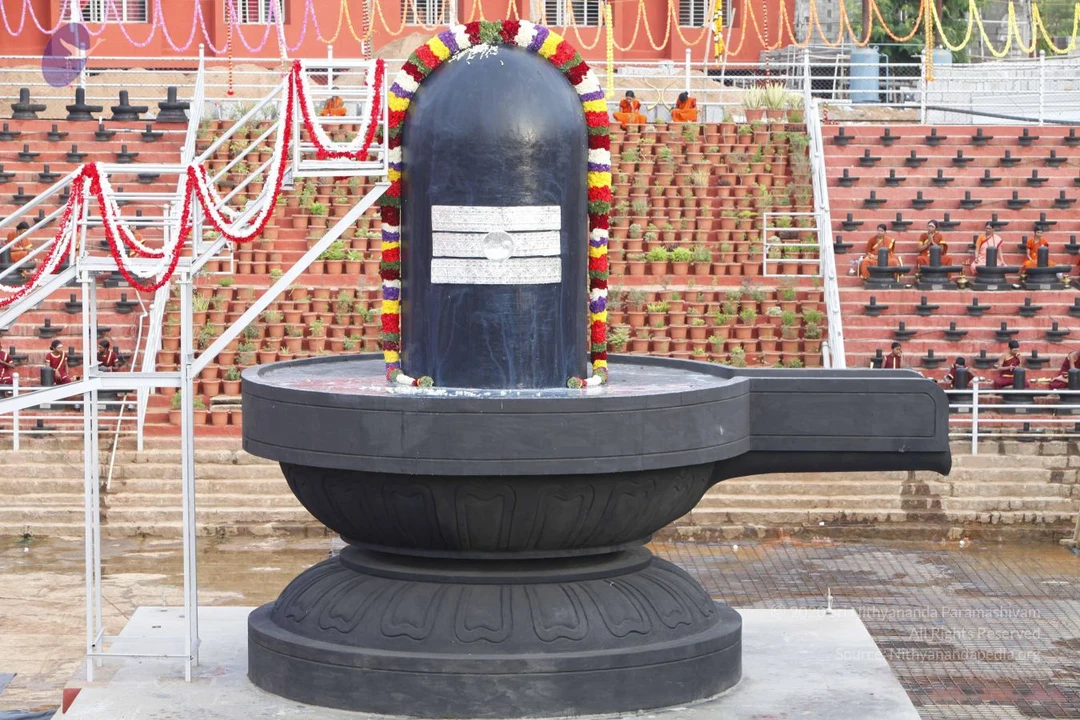
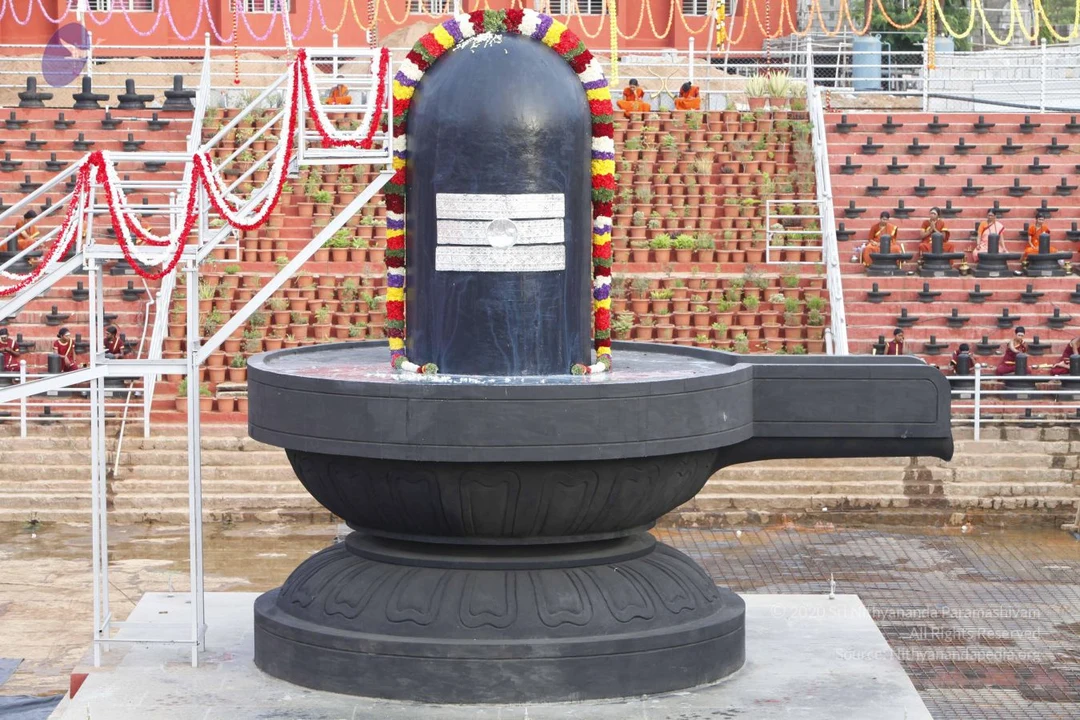
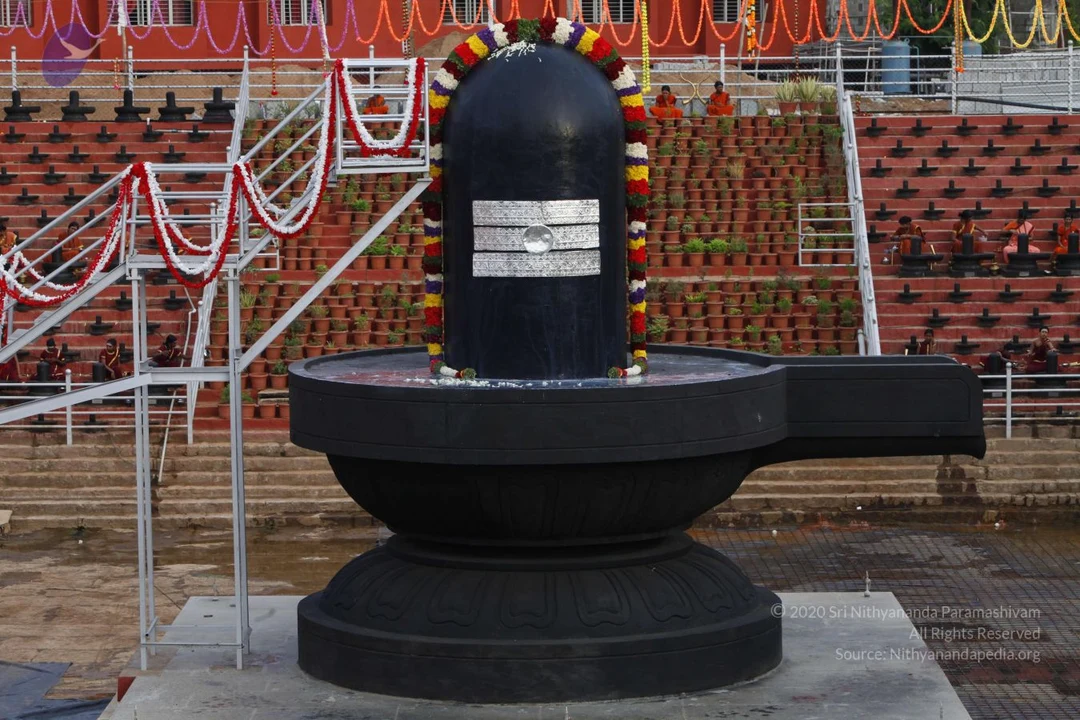
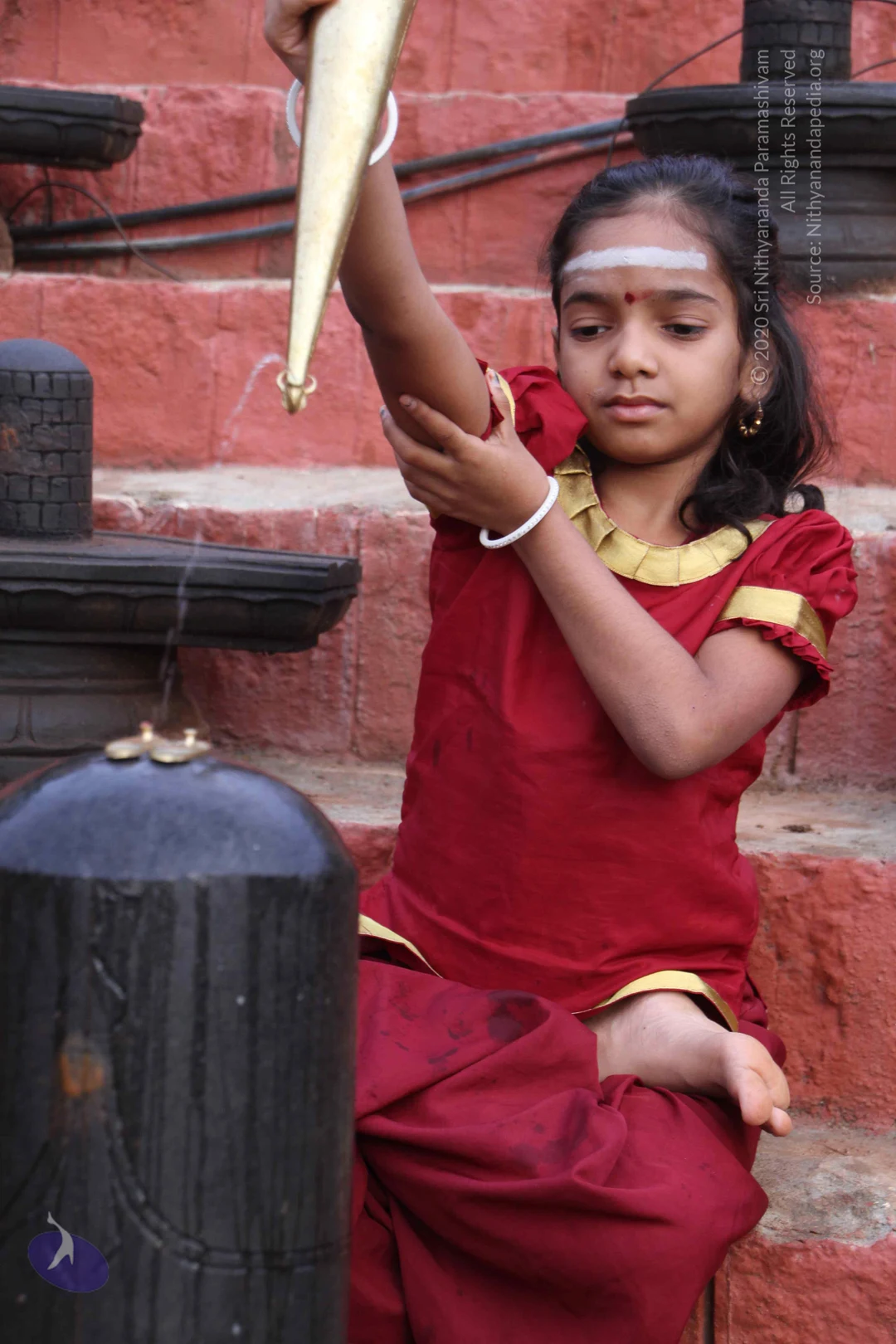
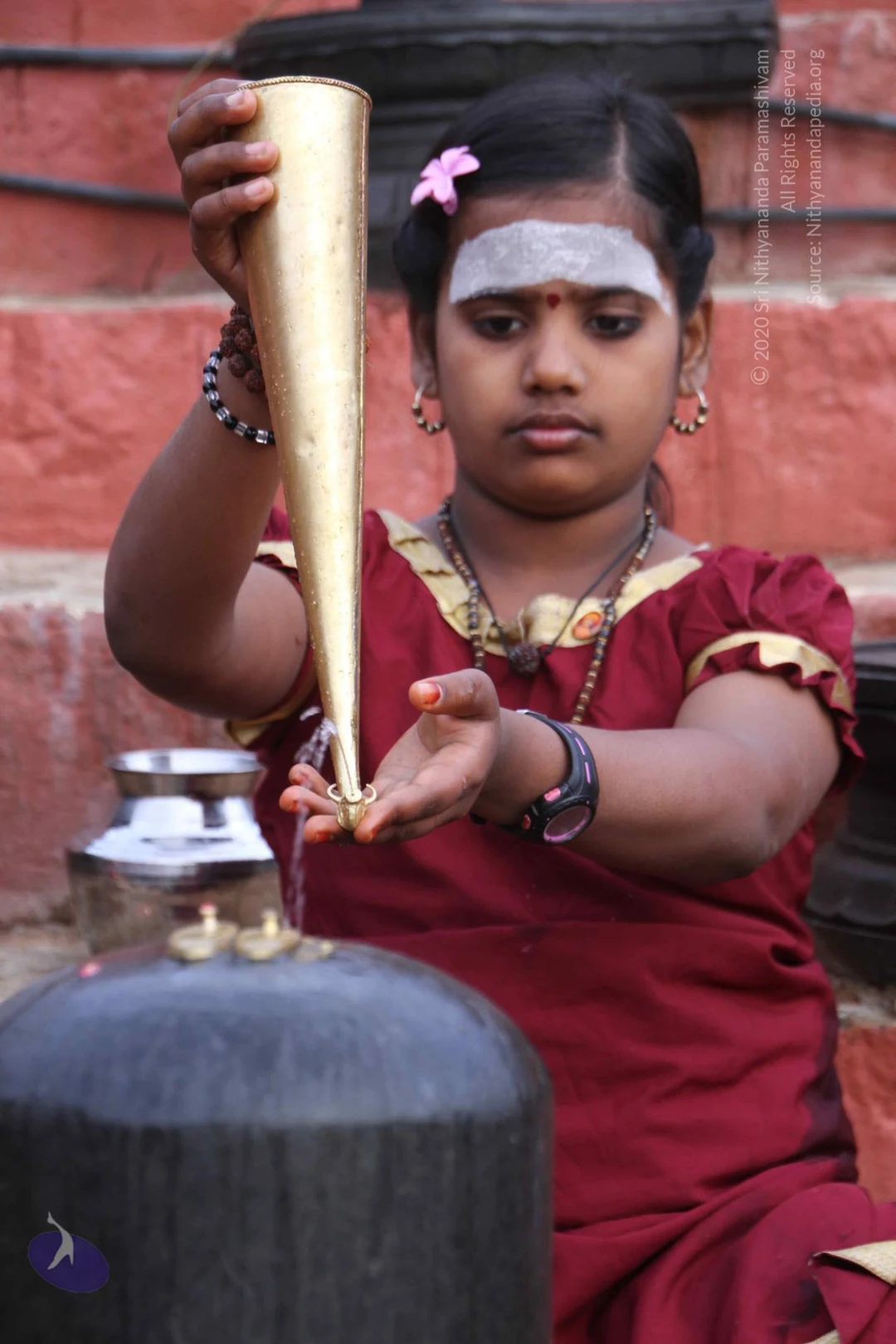
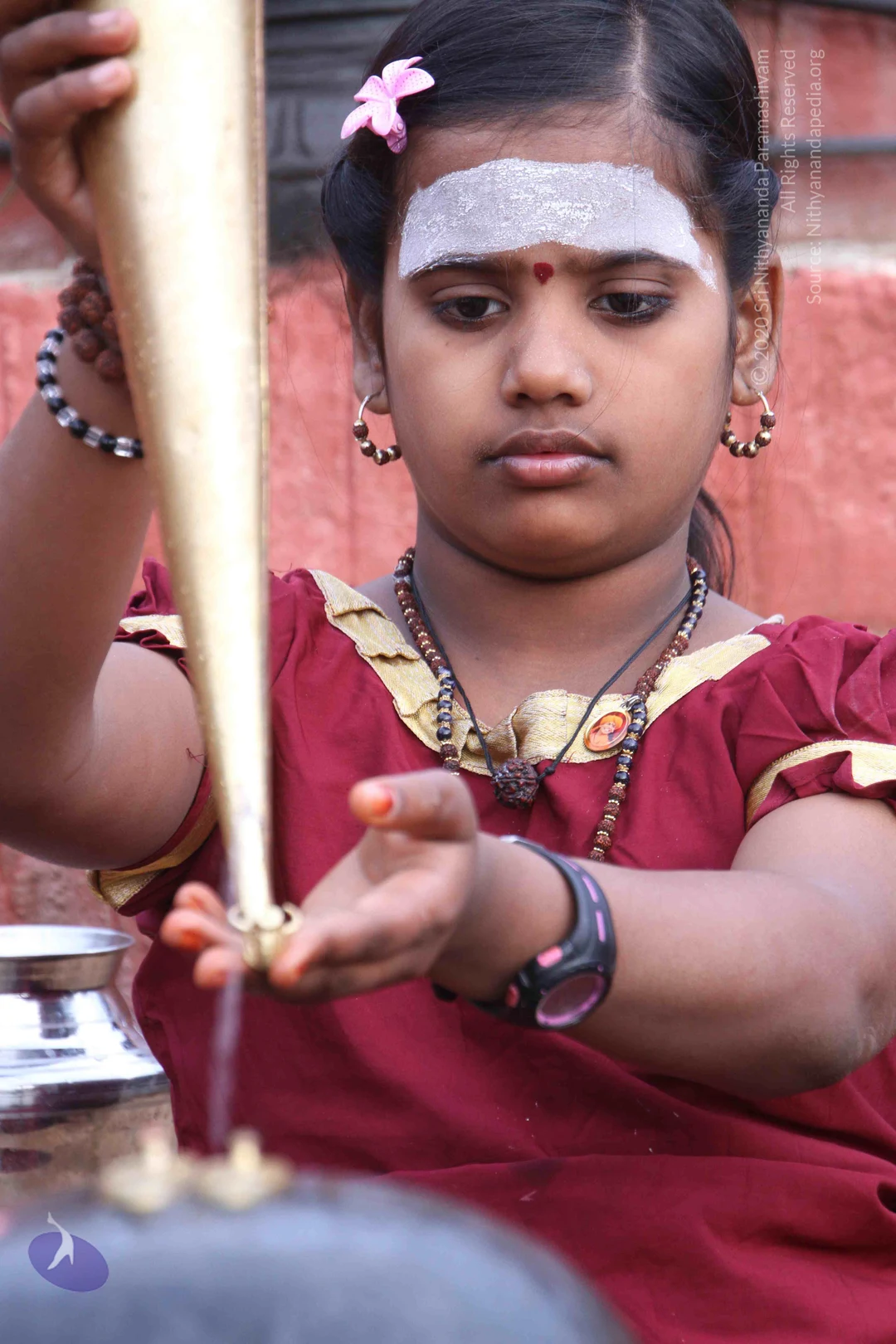
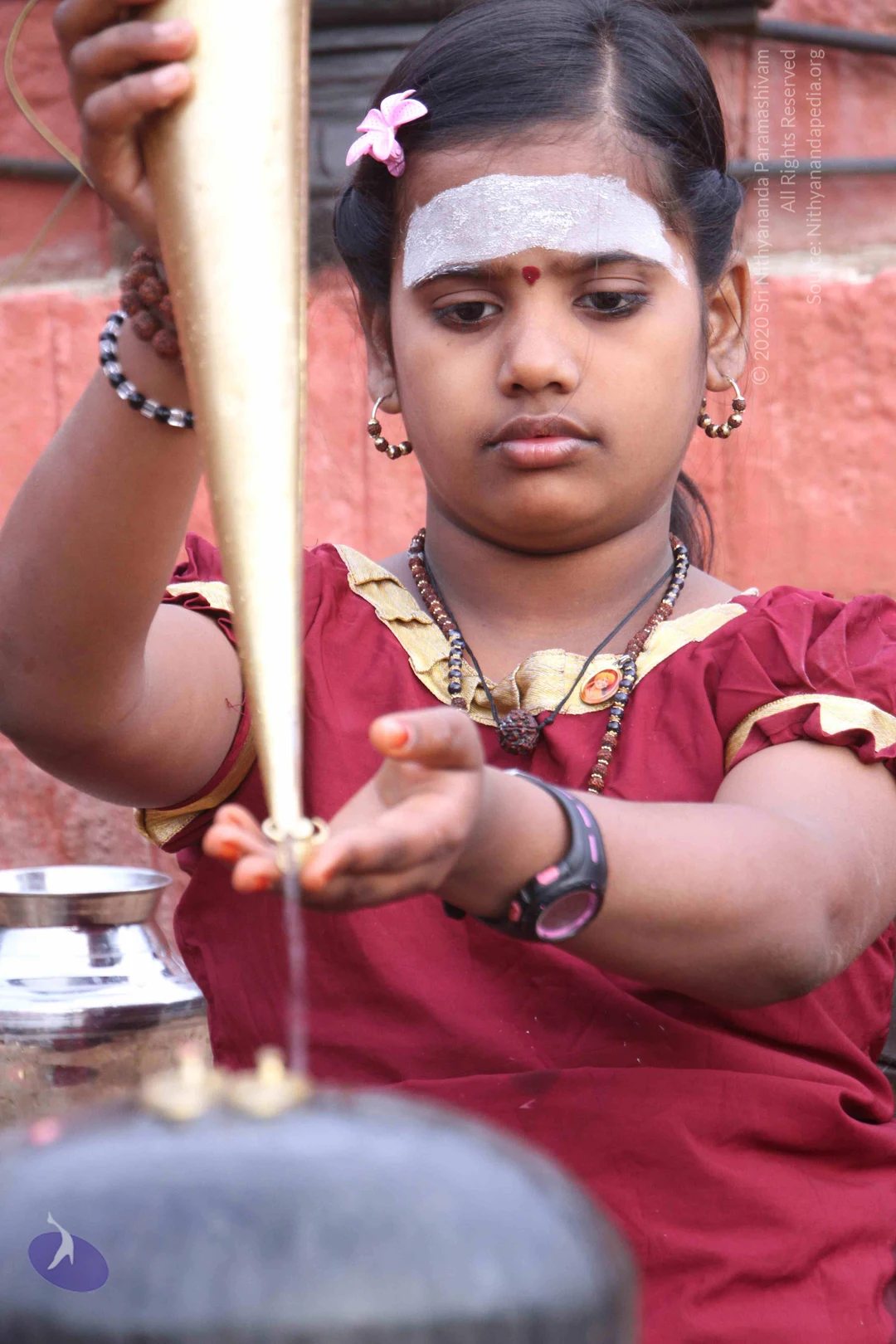
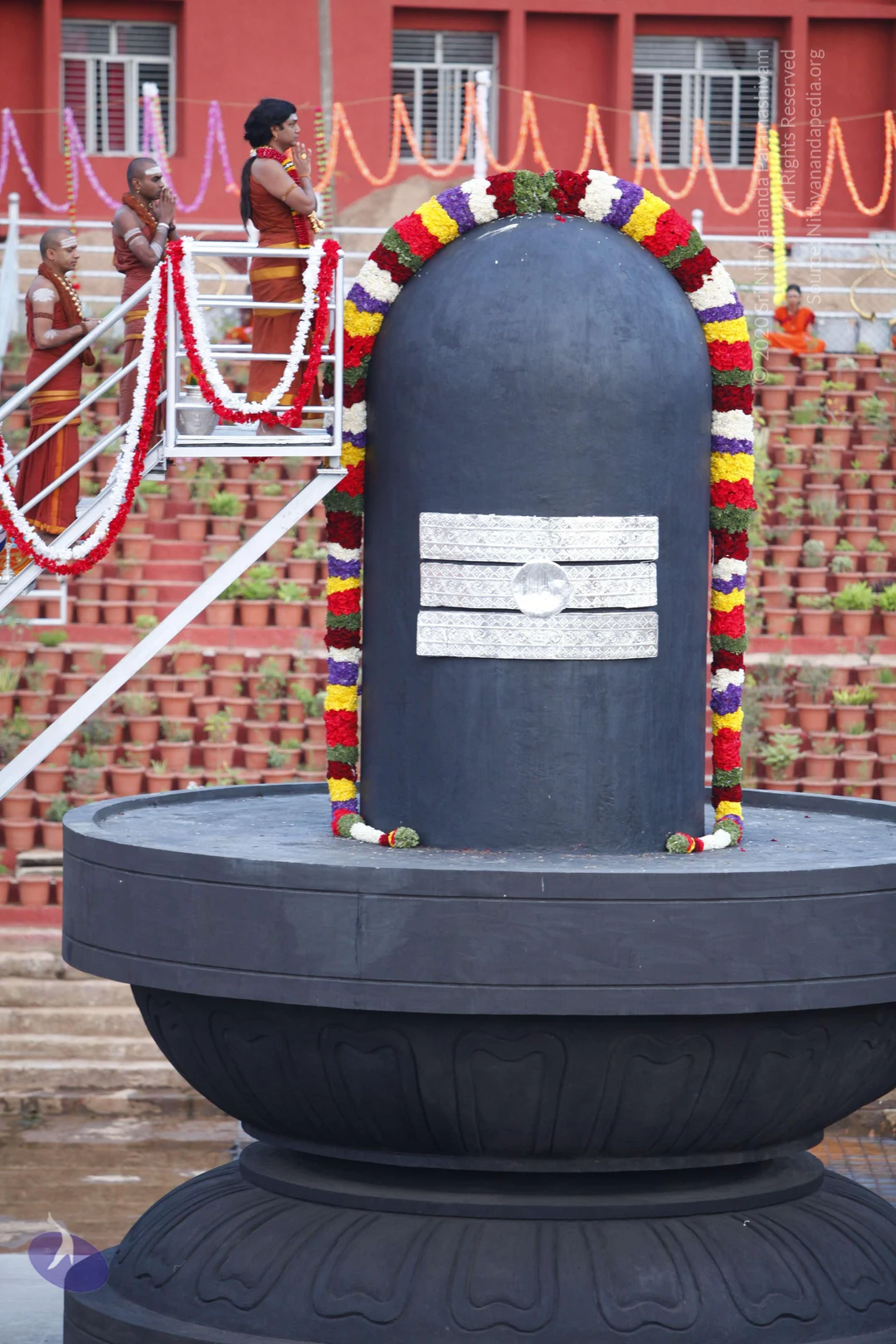
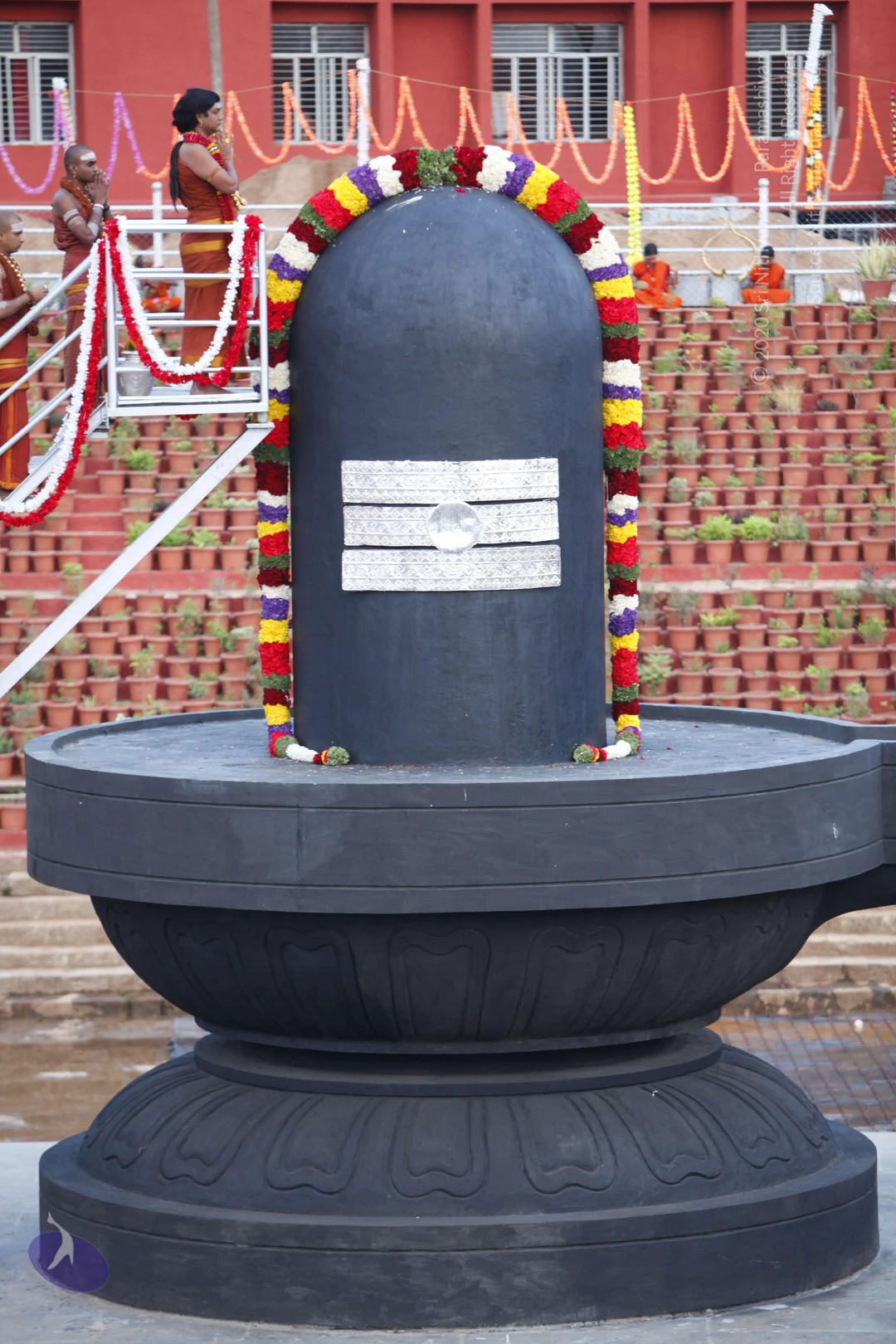
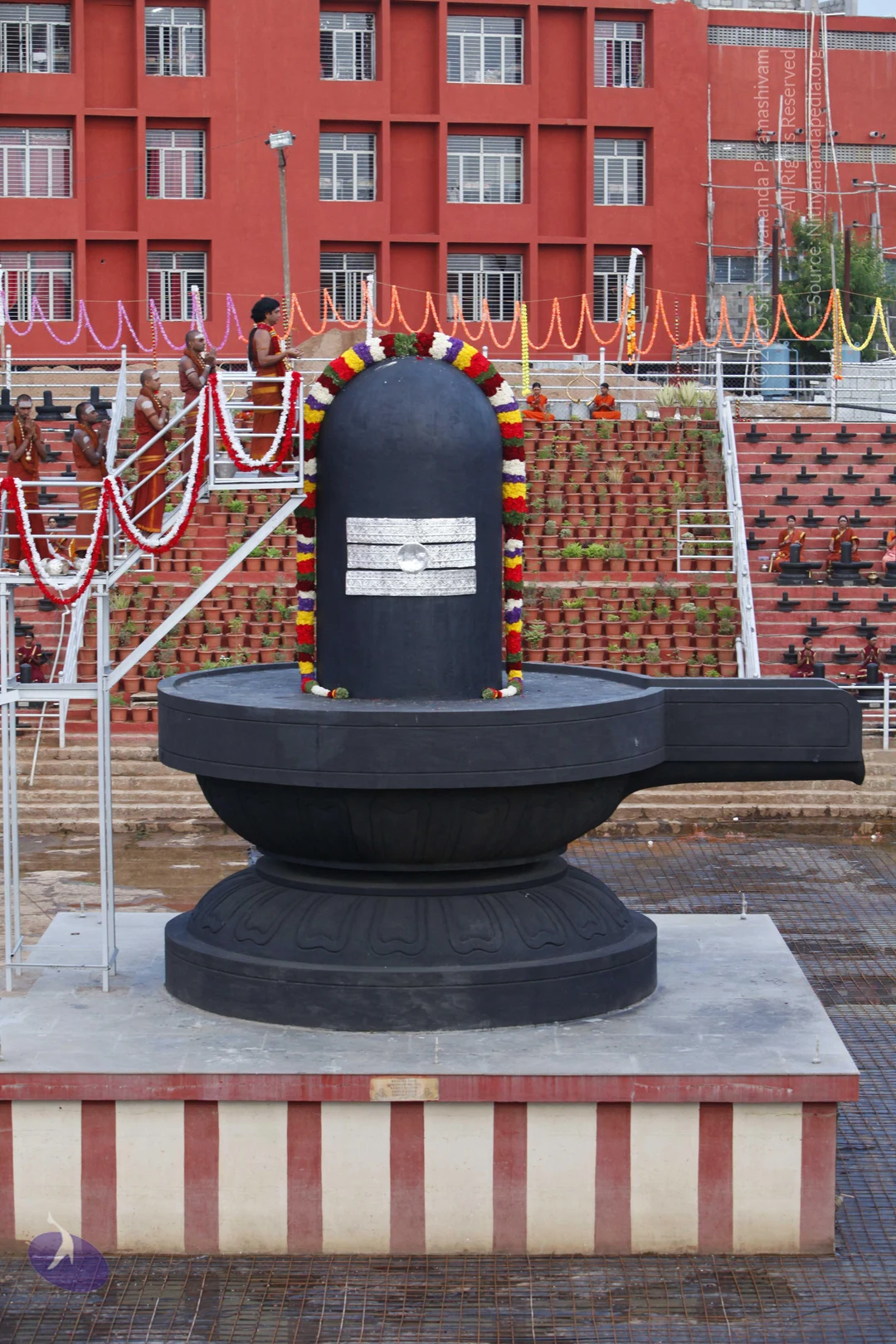
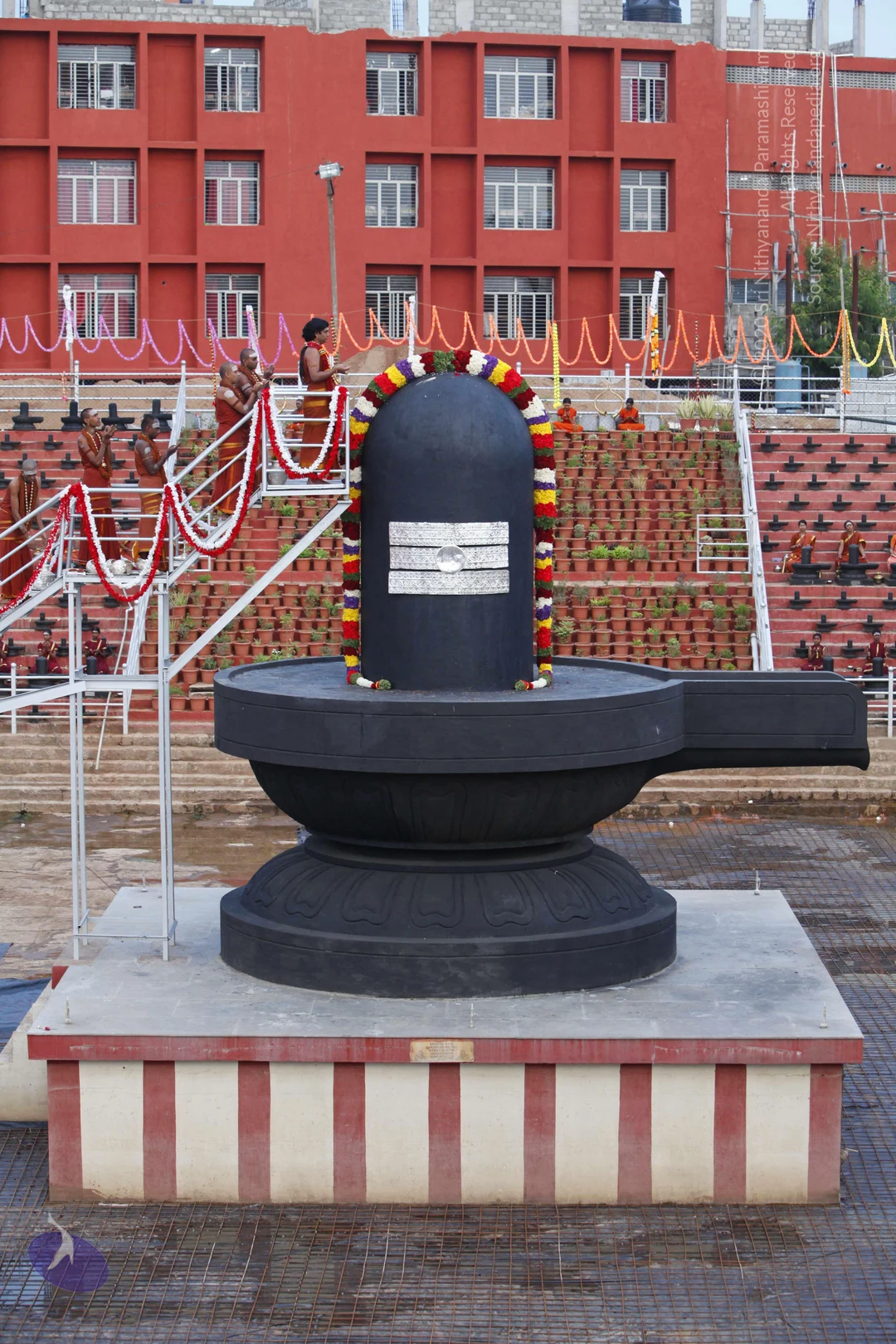
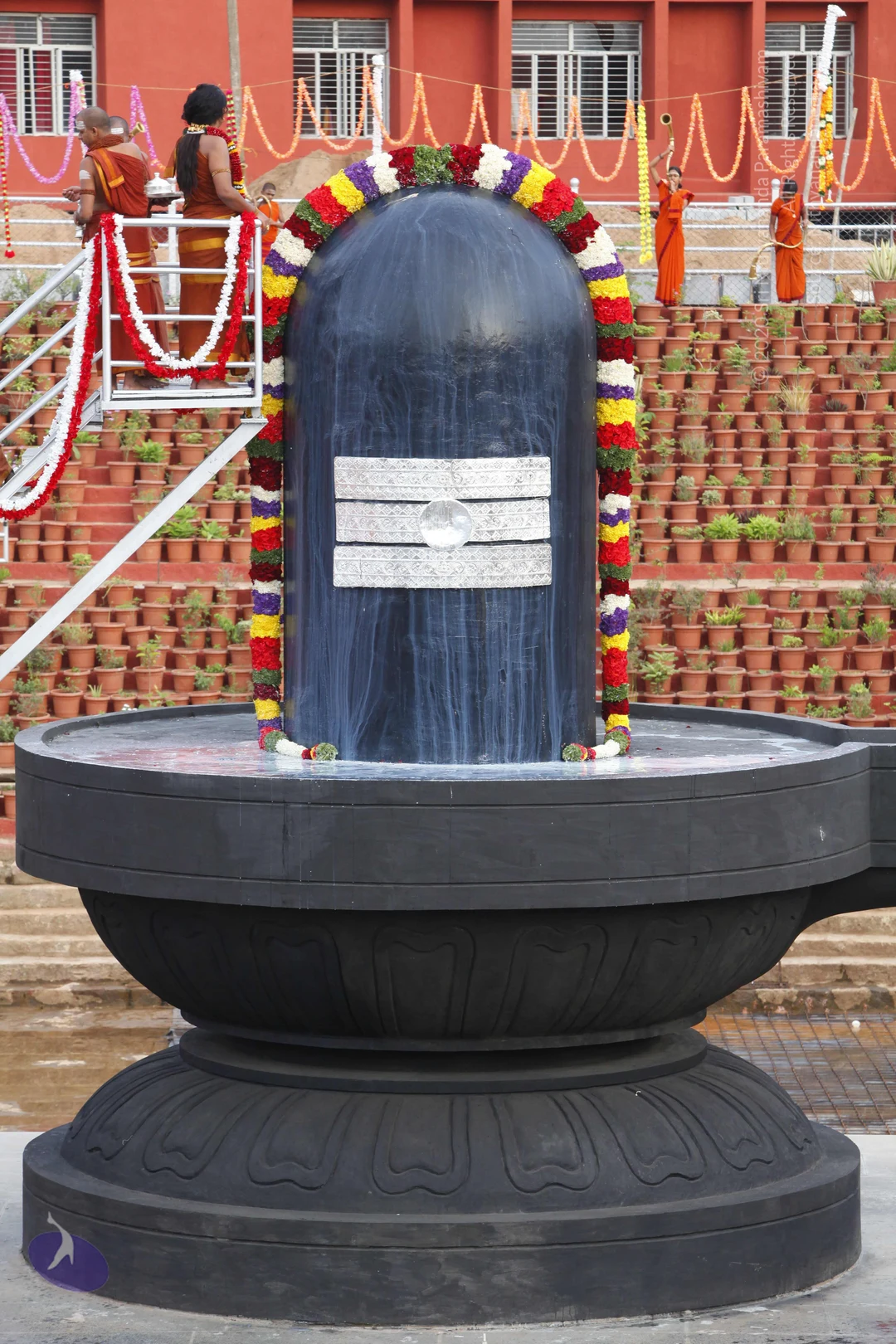
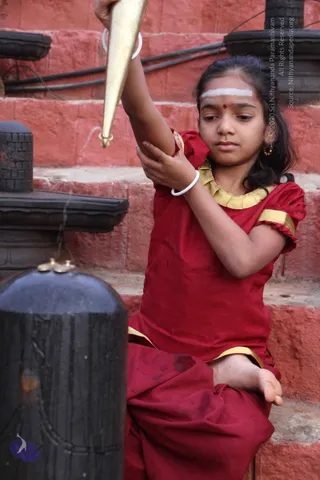
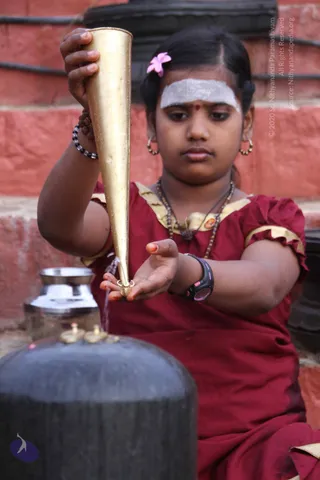
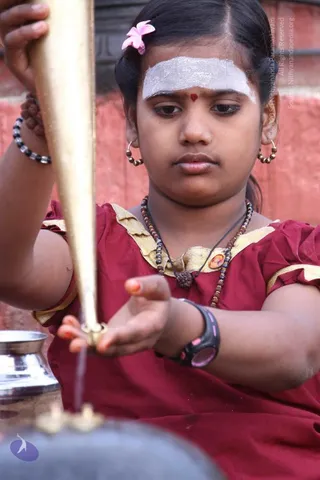
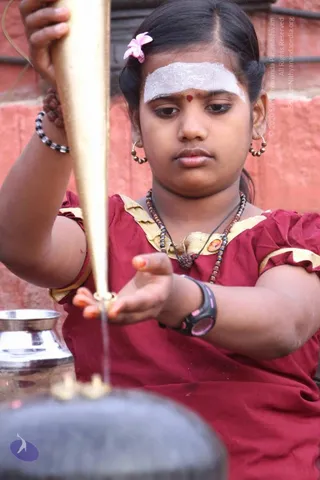
A young girl in a red dress with gold trim sits on red stone steps, pouring water from a tall gold vessel over a black stone shivalinga on the left. She wears a white horizontal sacred ash mark on her forehead with a red bindi, white bangles and small gold earrings. Black carved stone elements and wires sit behind her. This is a ritual abhishekam of a shivalinga, with no a person appearance visible.A young girl in a maroon dress with gold trim pours water through a tapering gold-coloured conical vessel over a dark black Shiva lingam set on a base. She wears a white vibhuti band with a red bindi, a pink flower in her hair, rudraksha and bead necklaces, hoop earrings and a bracelet, and her hand catches the falling water. A steel vessel sits beside the lingam and a red stone wall forms the backdrop.A young girl in a maroon dress with gold trim and a pink flower in her hair pours liquid from a tall brass vessel over a dark stone deity murti or lingam base below. She has white sandal paste on her forehead with a red kumkum dot, rudraksha and bead necklaces, hoop earrings, and beaded bracelets with a dark watch. A steel bowl sits at left. Her right hand is extended palm-up beneath the stream. A small orange pendant hangs at her chest.A young girl in a maroon dress with gold trim performs abhishekam, pouring water from a tall brass vessel over a dark stone shivalingam. She wears a white sacred ash band with a red kumkum dot on her forehead, a pink flower in her hair, rudraksha and bead malas, and a wristwatch. A steel pot sits at the left edge of the frame. Her other hand is held open beneath the stream of water.A large dark stone Shivling on a black lotus-shaped peetha is garlanded with a multicoloured floral arch of red, yellow, purple, white and green blooms. Silver horizontal tripundra bands with a central disc mark its face. Behind it, a staircase platform holds three men in orange-saffron dhoti and shawl; one stands at the top with hands folded in namaskar, wearing a red-and-white flower garland and gold ornaments, while two others with white-marked foreheads and bare upper bodies stand nearby in prayer. Red-and-orange flower strings drape the railings. Behind them, a red building with windows is hung with orange and pink marigold festoons, and terracotta pots line the tiered wall. A seated figure in orange sits at the far right edge.A large black stone Shivalinga stands on a black yoni-pitha base, decorated with a garland arch of marigolds and roses in red, yellow, white, purple and green, with three silver horizontal bands and a central white crystal or stone on the lingam. Behind it, a red building is hung with orange and pink marigold strings, and tiers of potted plants line a red terrace. On a raised white metal platform at left, two men in orange and saffron clothes stand, one in a red-and-white garland with long hair, one with hands folded in namaste; a third figure in white dhoti stands at far left. Two seated figures in orange robes sit further back on the terrace. Several people are visible in total, all partially in frame.

Garbha-Mandir-Pratyaksha-Pada-Puja

16 photosSource gallery
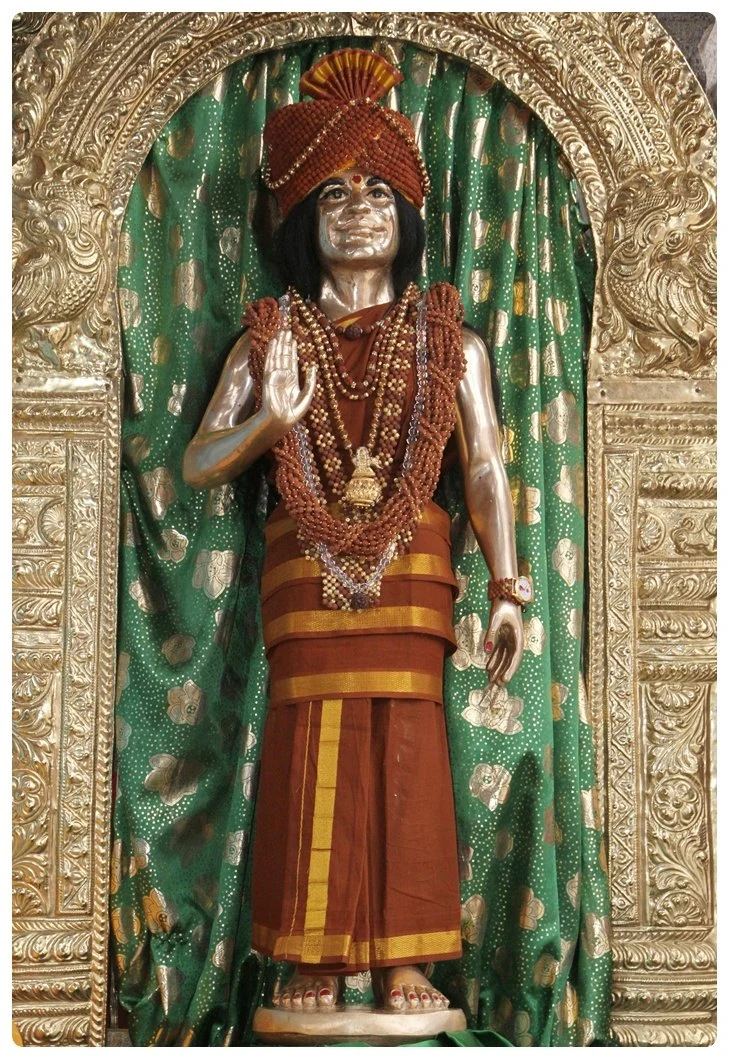
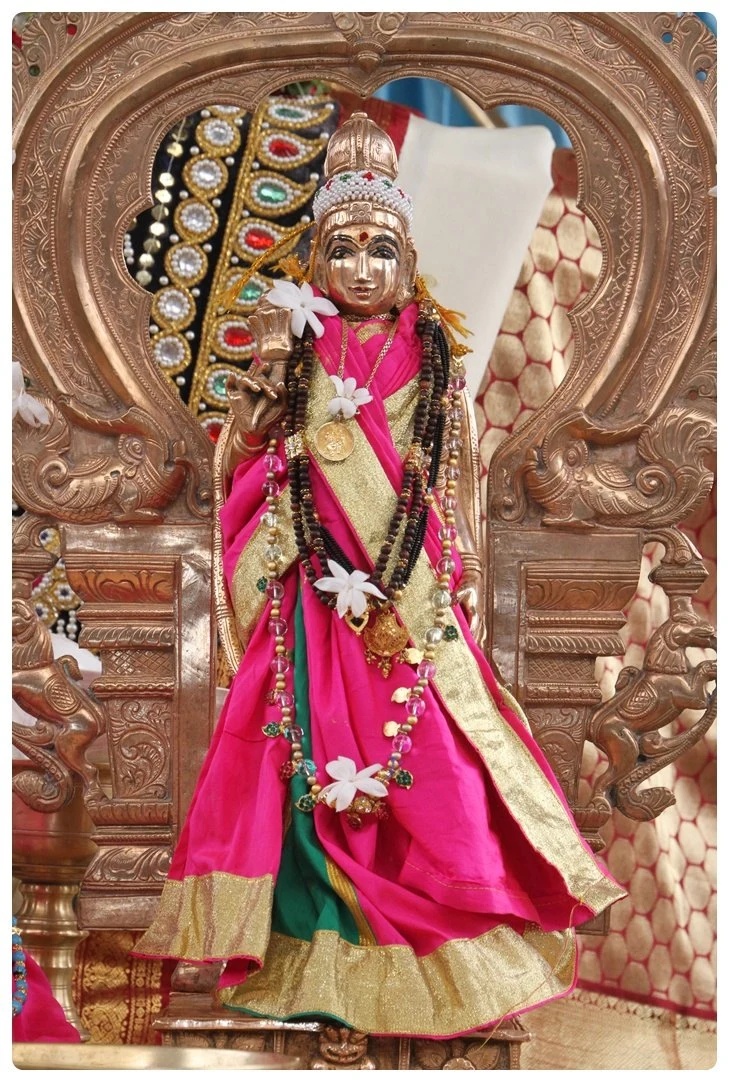
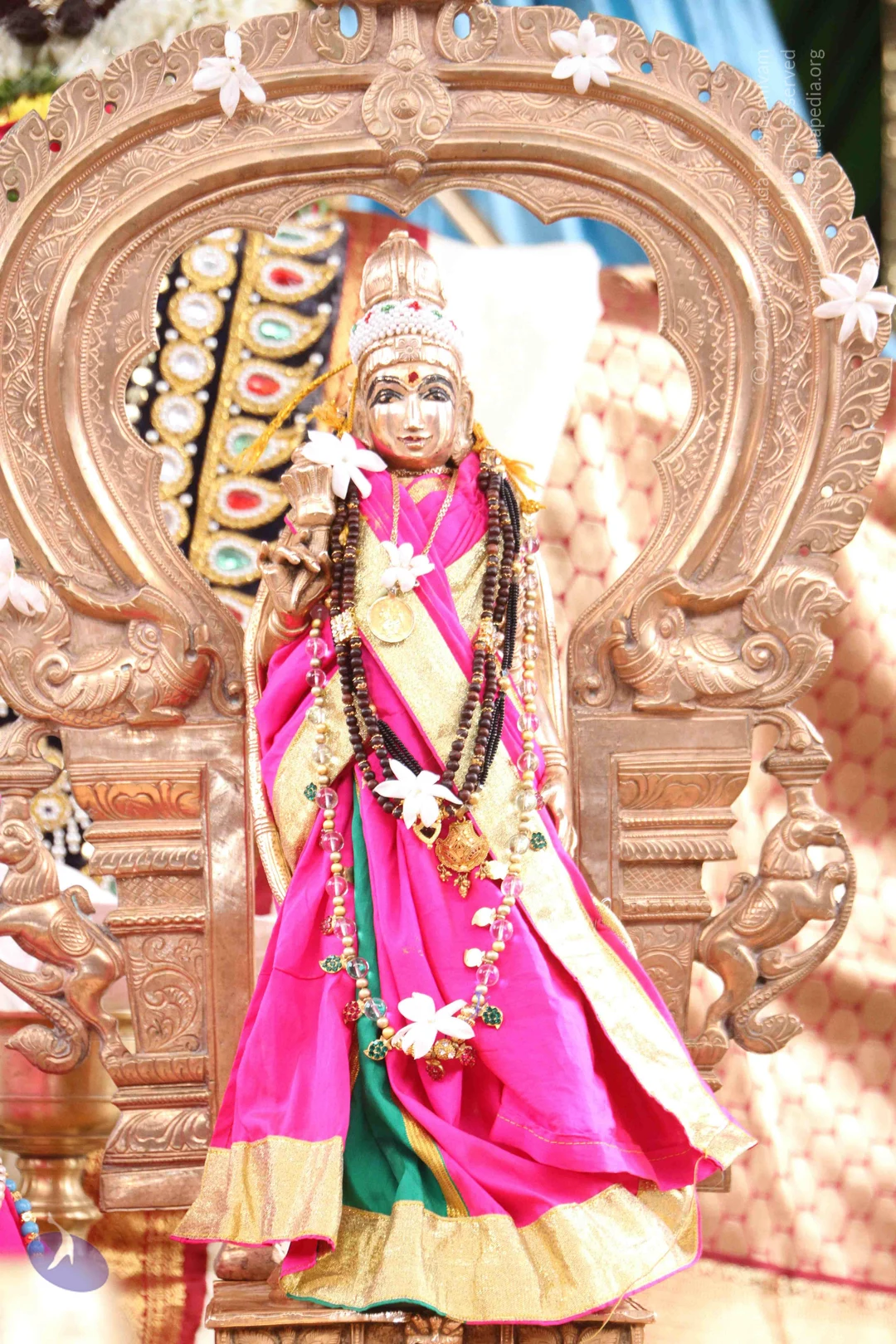
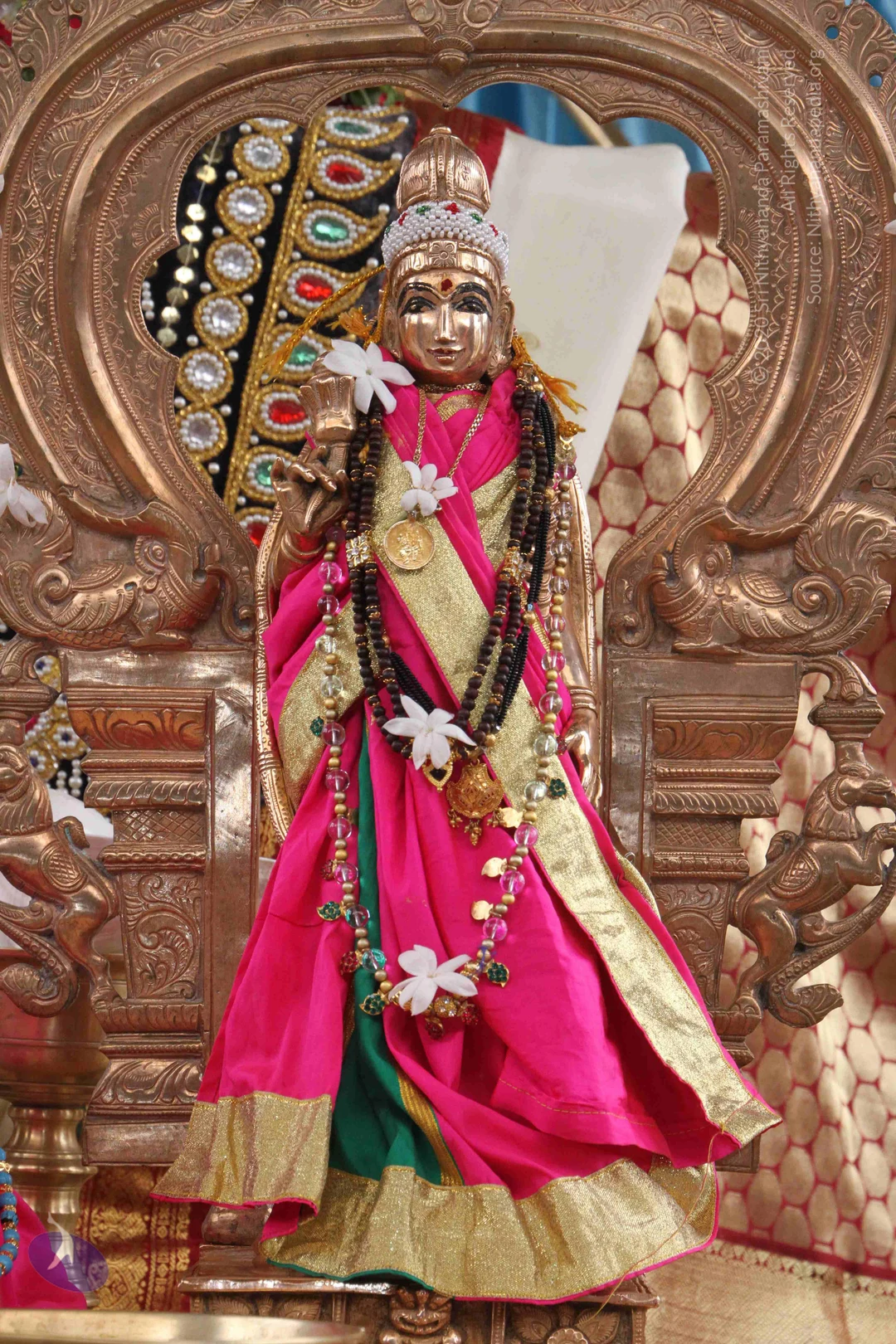
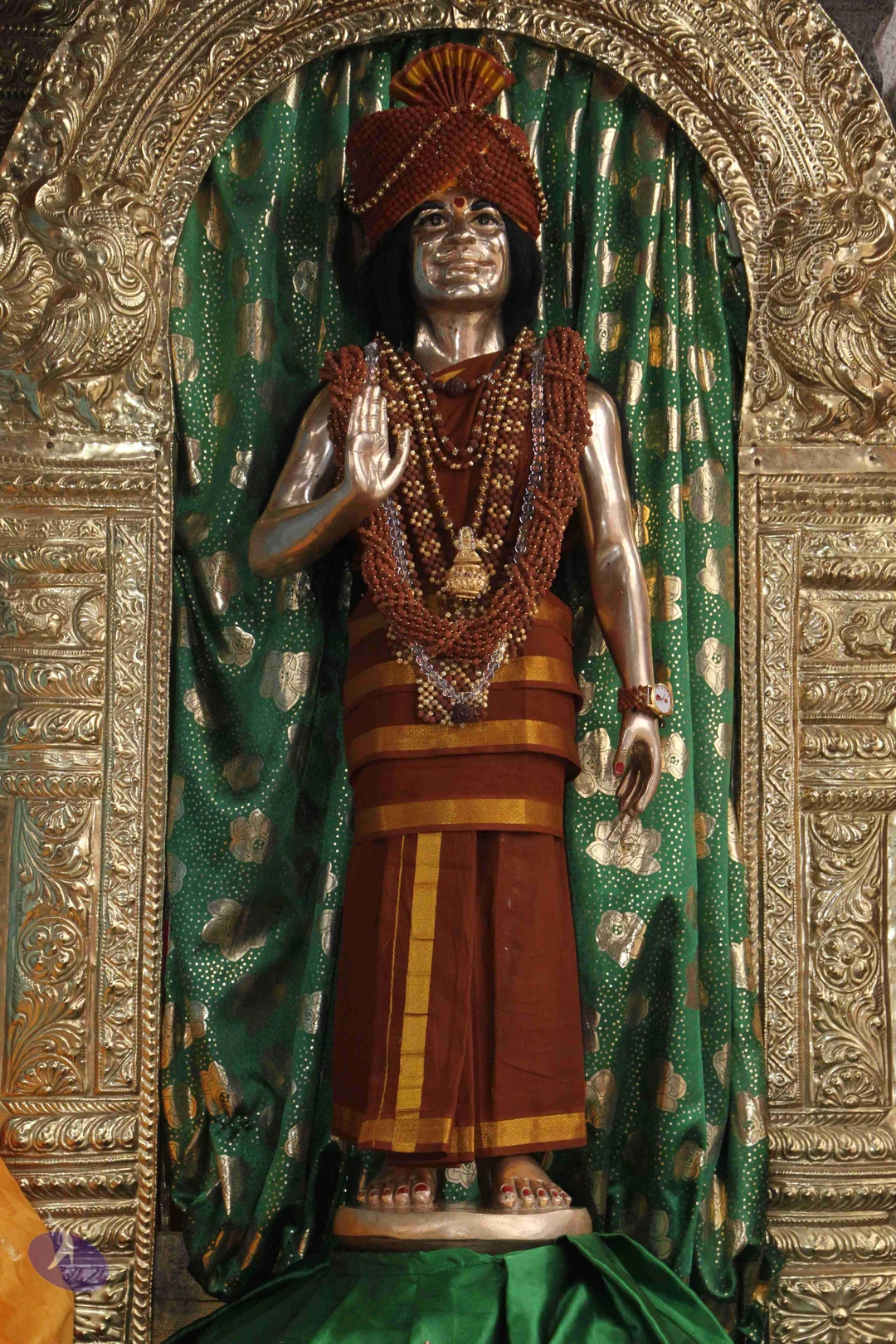
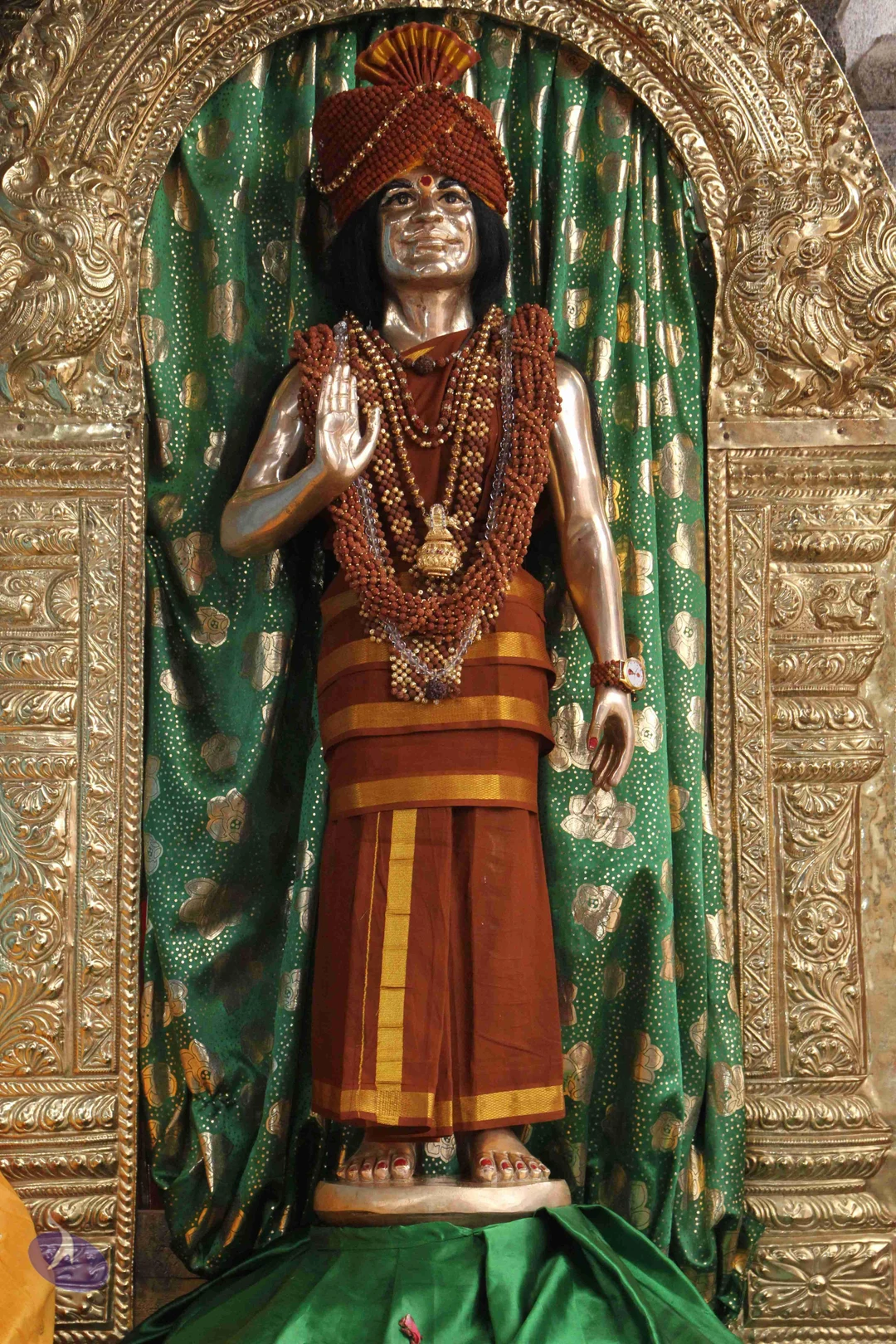
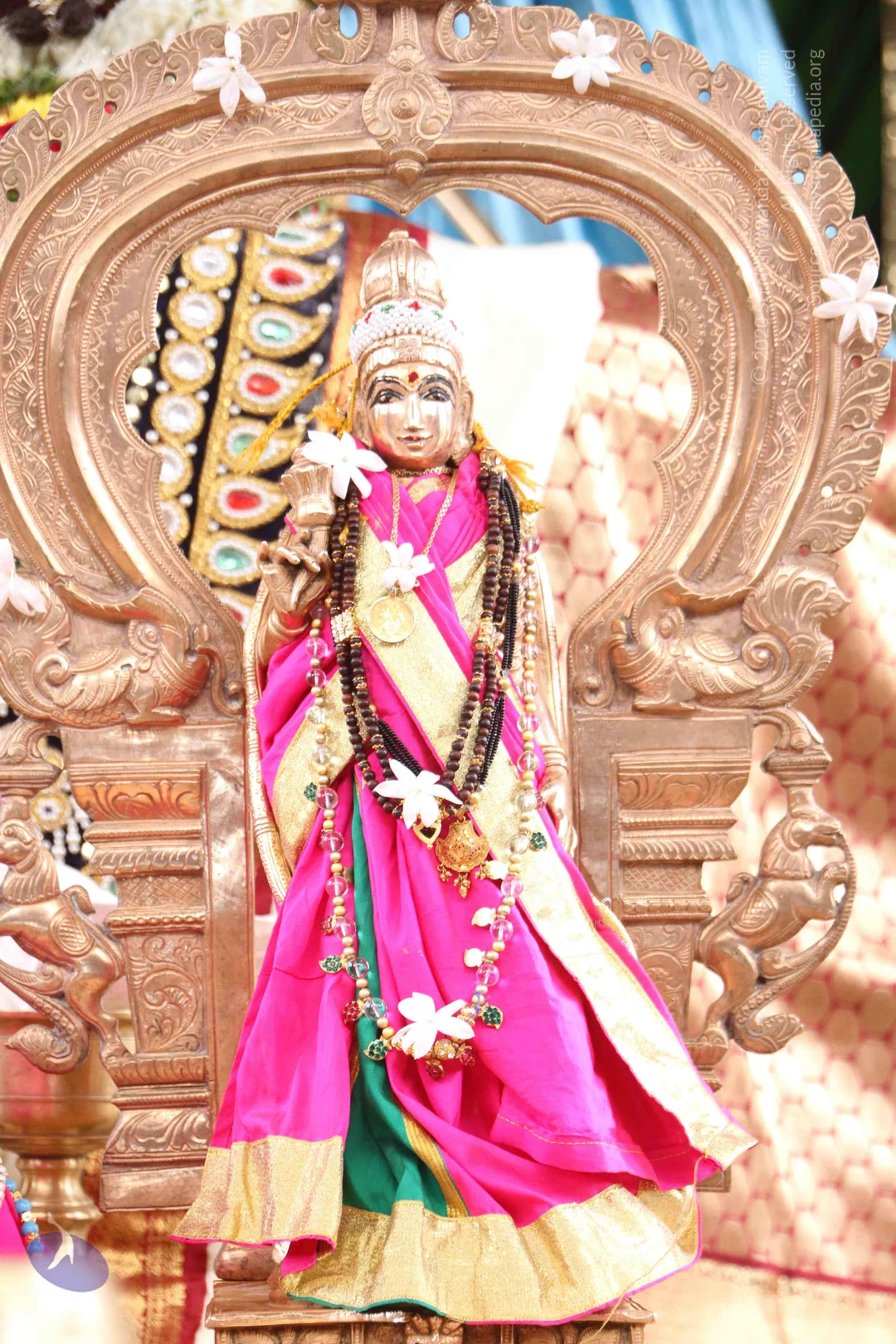
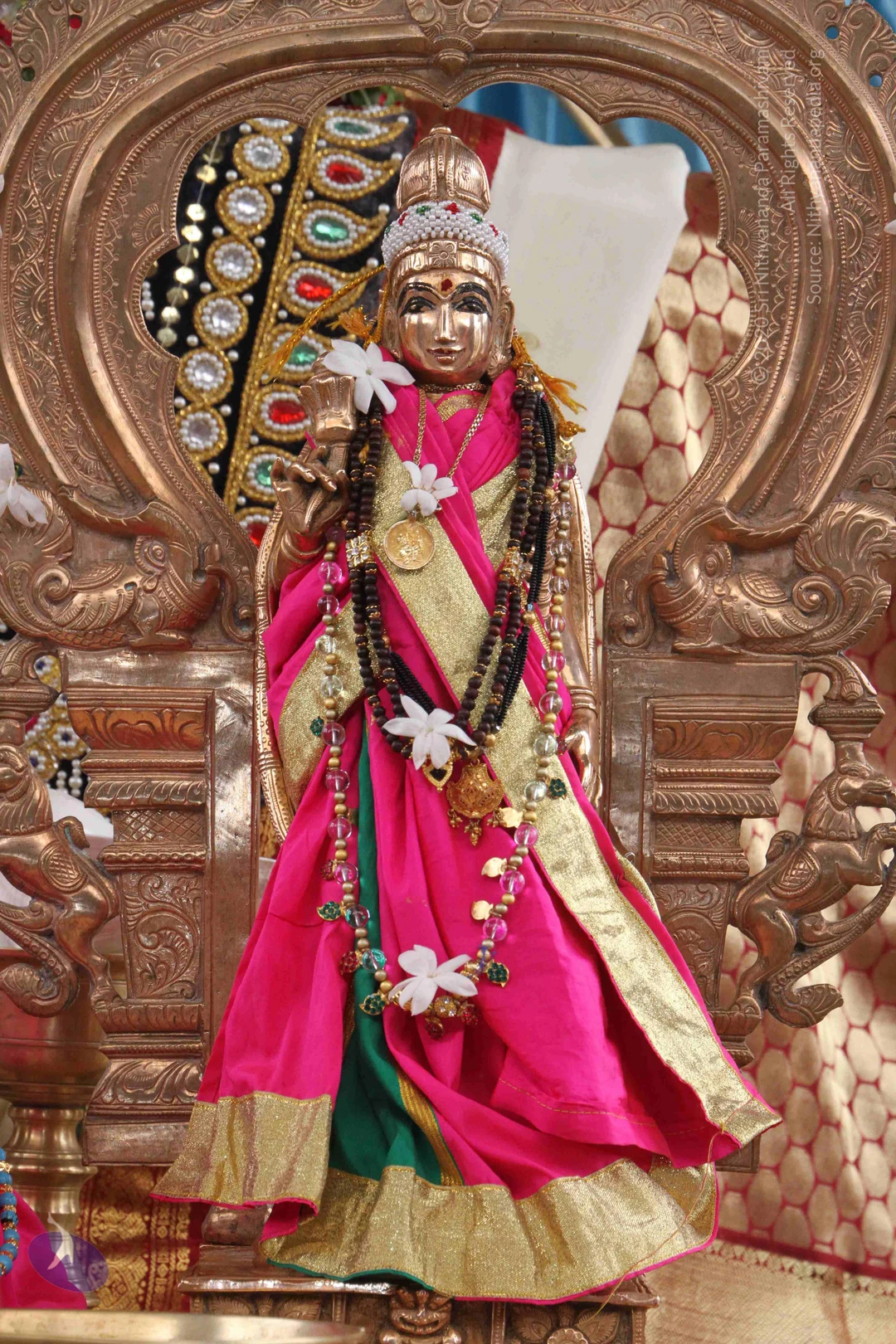
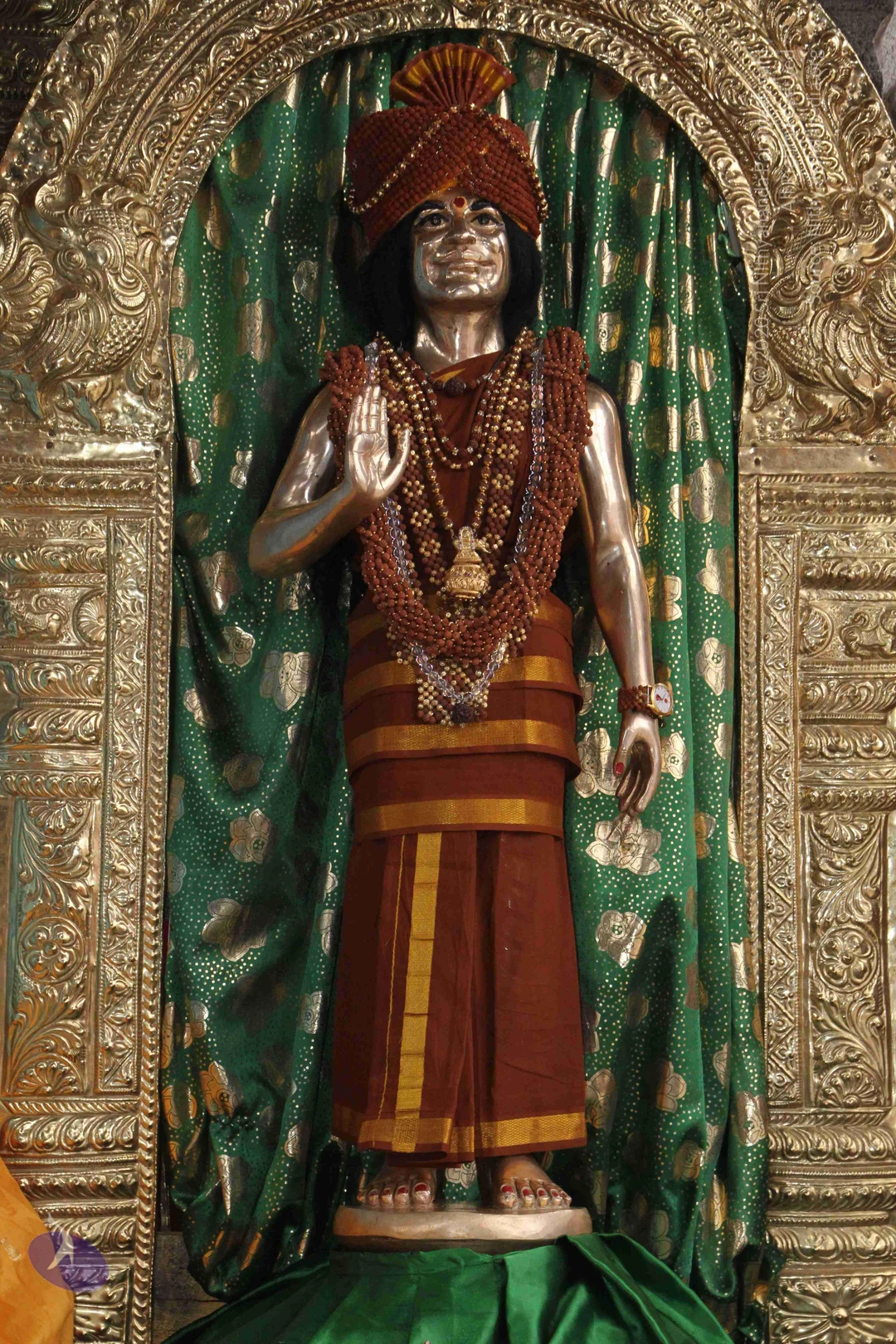
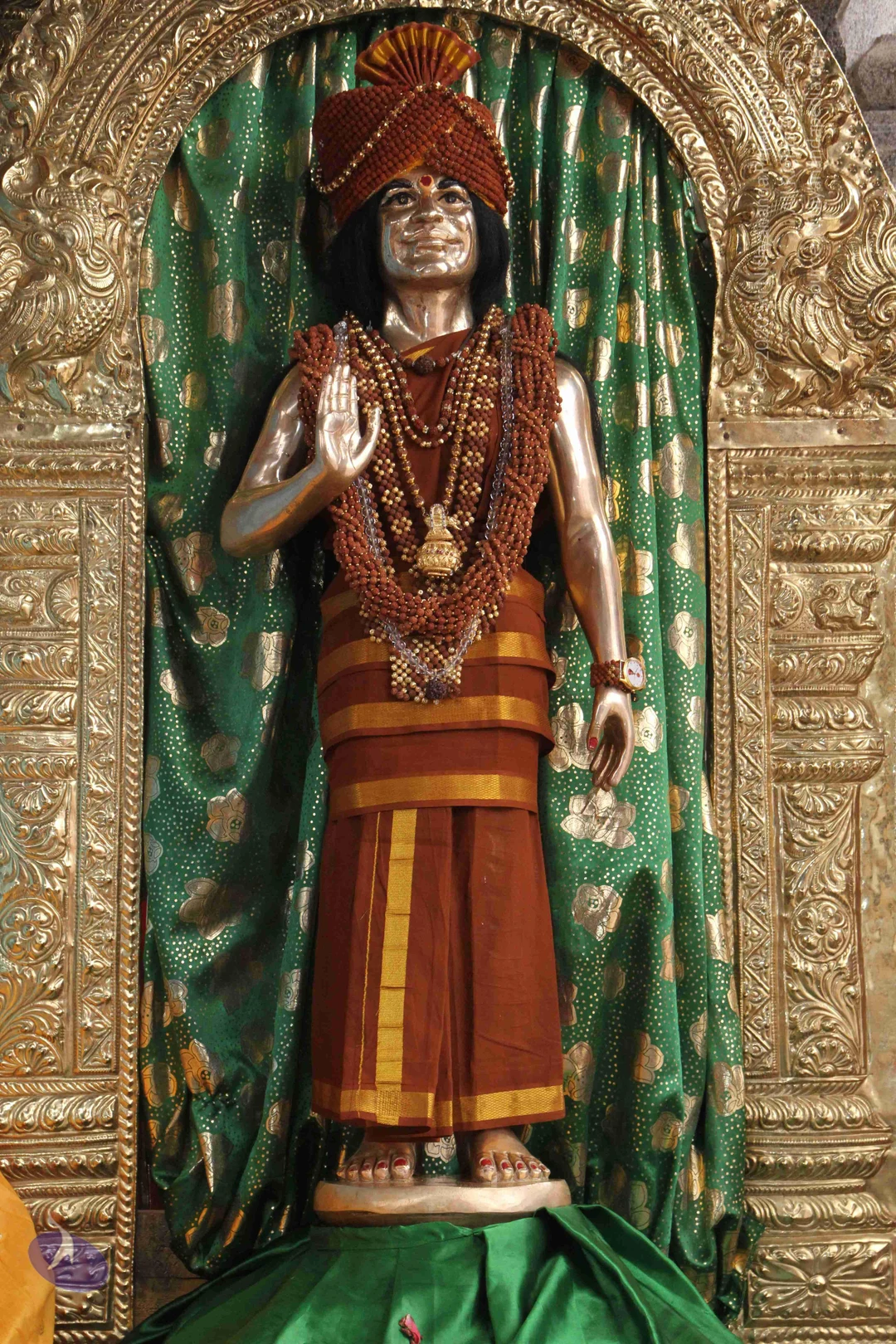
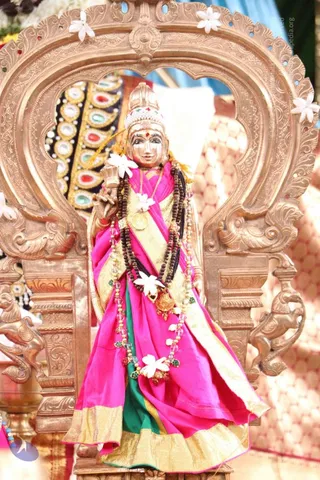
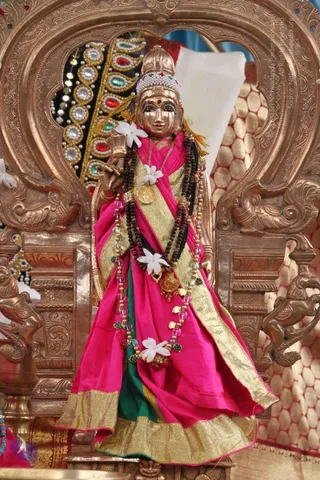
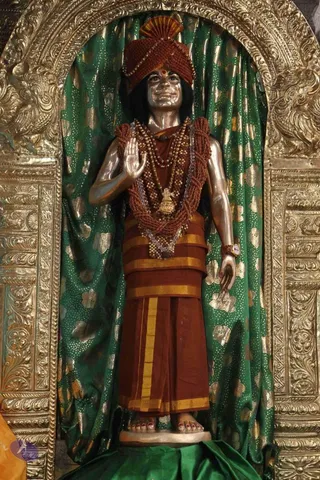
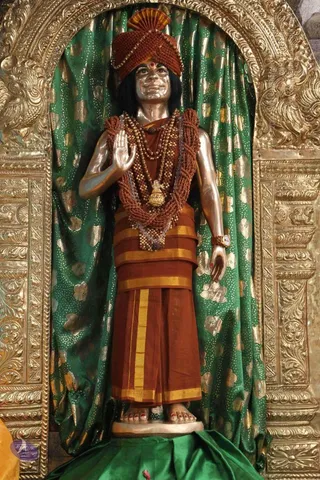
A photograph of a temple shrine showing a pair of gilded metal deity murti standing in a golden arched niche against a green curtain. The left figure wears a red and green turban and holds a trident and a raised hand; the right figure wears a tall jewelled crown and a blue garment. Between them stands a black linga-like form draped in orange cloth, adorned with a white jasmine garland, red flowers, a rudraksha mala and a jewelled crown-like top. A blue silk cloth covers the lower platform, and a brass kalasha, brass cups and a small figure in pink and green sit in front. No living people are visible.A photograph of a temple shrine centred on a large golden-bronze image of a deity pair seated on a blue silk-draped throne in front of a green curtain and an ornate gold arch. The taller figure on the left wears a red-and-orange turban, holds a trident and has a rudraksha mala; the figure on the right wears a jewelled crown and a blue garment. Both are garlanded with white jasmine and red flowers. Below, a central Shivalinga-like form wrapped in an orange cloth and garlands sits beneath a gold canopy. In front, a small figure in pink and green attire stands before a gold torana, with brass kalasha pots, cups and a tray of offerings in the foreground. No living people are visible; the subjects are statues.A golden metal deity murti stands in front of an ornate gilded arch-shaped throne back with carved peacock-like and floral motifs. The figure wears a hot pink and gold-bordered sari with a green lower panel, layered dark beaded malas, a round gold pendant and clear and green bead strands. White jasmine flowers are tucked into the headdress, garland and arch. The murti holds a staff-like object in one hand, and bright decorative fabric and a blue cloth appear in the background.A photograph of a bronze-coloured deity murti standing in an ornate copper-toned throne arch with carved peacock and lion motifs. The figure wears a pink and gold sari with a green underskirt, a beaded crown with red and green stones, layered black and multicoloured bead necklaces, a round gold pendant, and white jasmine flowers pinned at the shoulder and waist. One hand holds a lotus-like object near the shoulder. Behind it hang beaded gold embroidered panels in red, green and white. No physical people are visible.A silver-toned standing statue of a male figure is displayed inside an ornate gilded metal arch framed by a green silk backdrop printed with silver flower motifs. The figure wears a rust-red rudraksha-bead turban with a fan-shaped top, multiple rudraksha and gold-bead malas, and a pendant on the chest. The saffron-brown garment has gold borders and a gold-striped dhoti. The right hand is raised in blessing, and the left hand rests at the side, with a bead bracelet on the wrist. The figure stands on a silver base over a green cloth. This is a statue, not a living person.A life-size silver-toned statue of a standing guru figure in an ornate gilded golden frame with a green curtain backdrop patterned with gold and silver motifs. The figure wears a rust-red turban with a gold-accented fan top, a red bindi, long dark hair, layered rudraksha and bead malas with a gold pendant, a rust-red dhoti-style garment with gold borders, and a bracelet on the wrist. The right hand is raised in abhaya blessing gesture while the left hand hangs at the side with red-painted nails. Feet rest on a base with red-painted toes, and a small red flower sits at the bottom of the frame.

Morning-Satsang

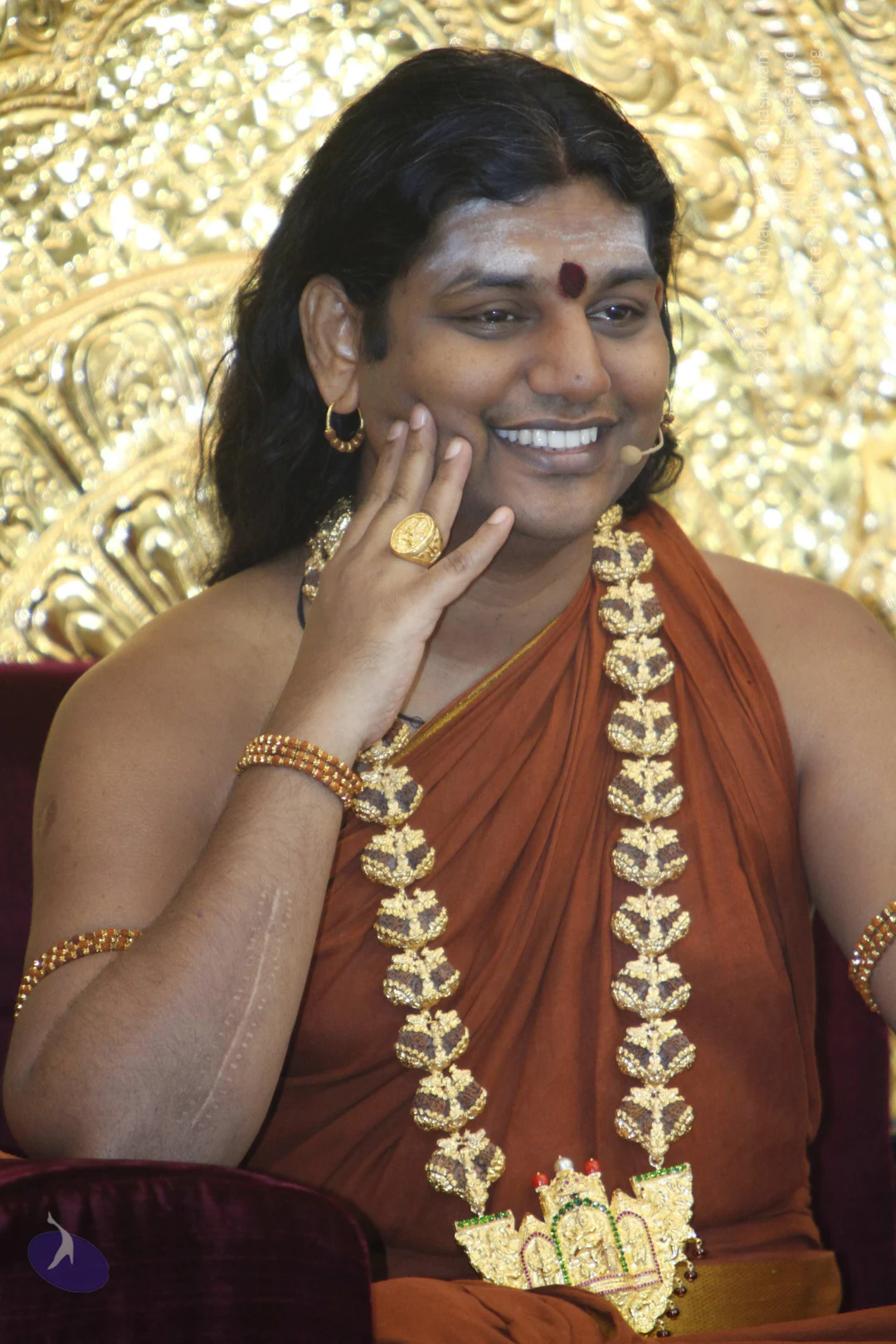
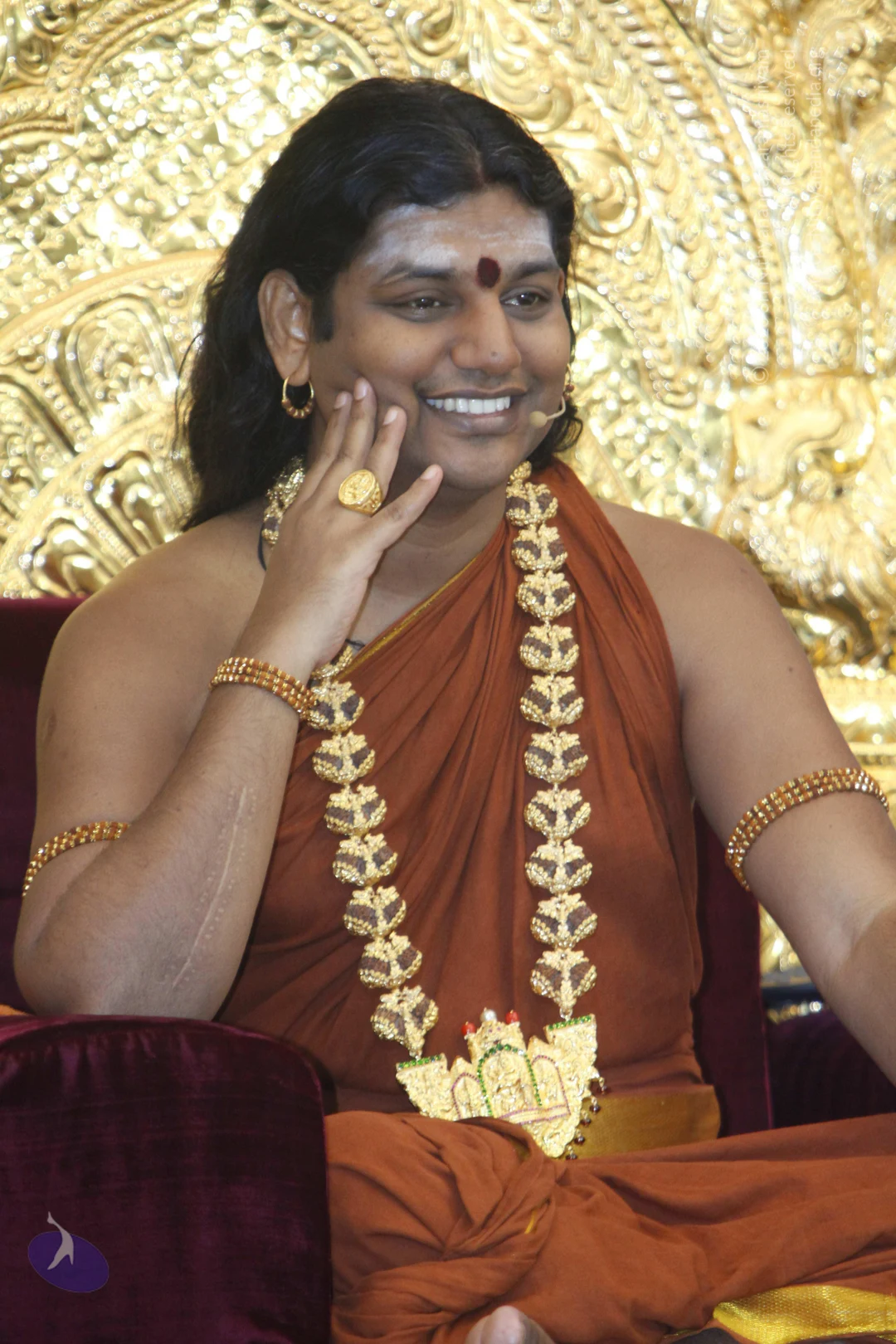
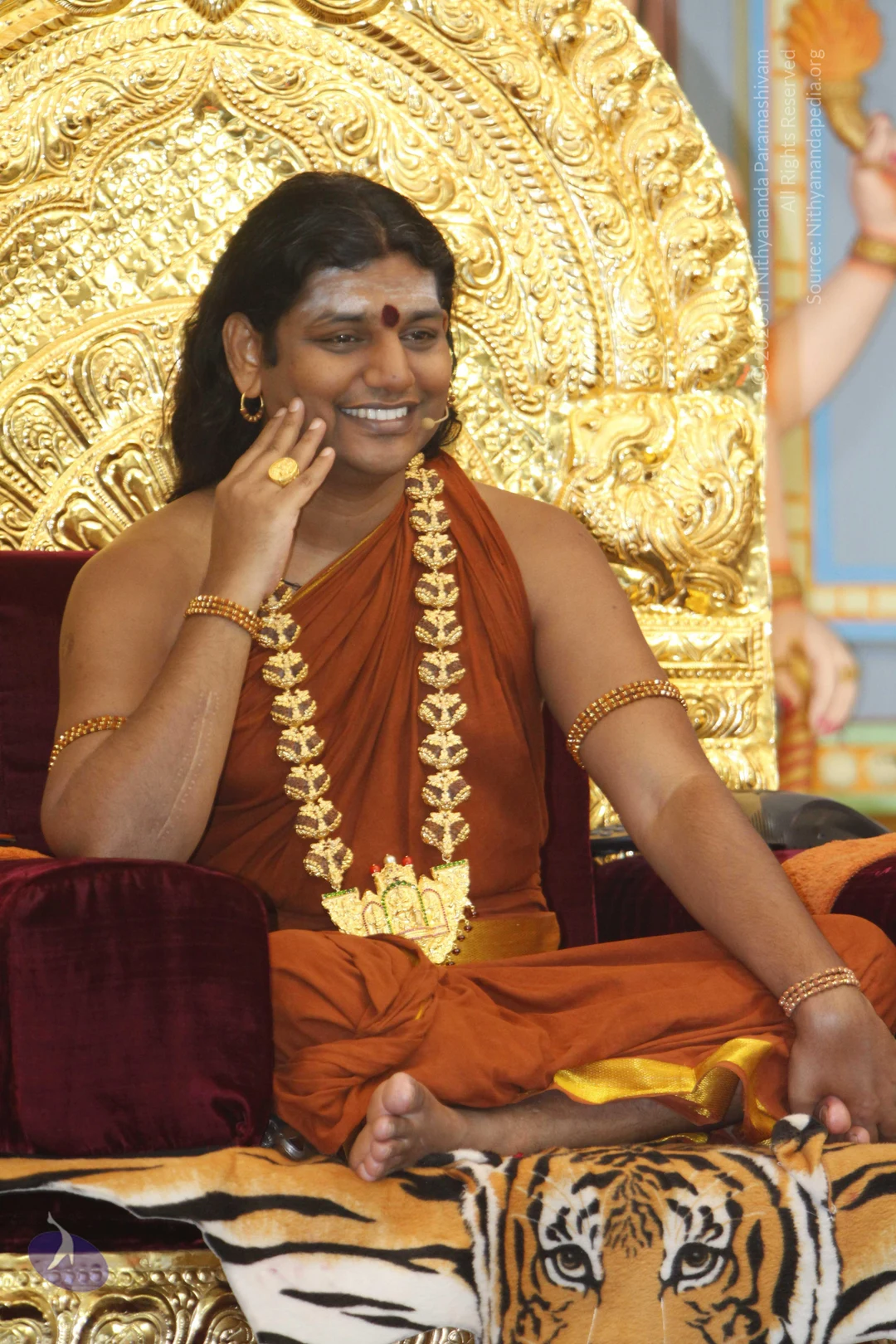
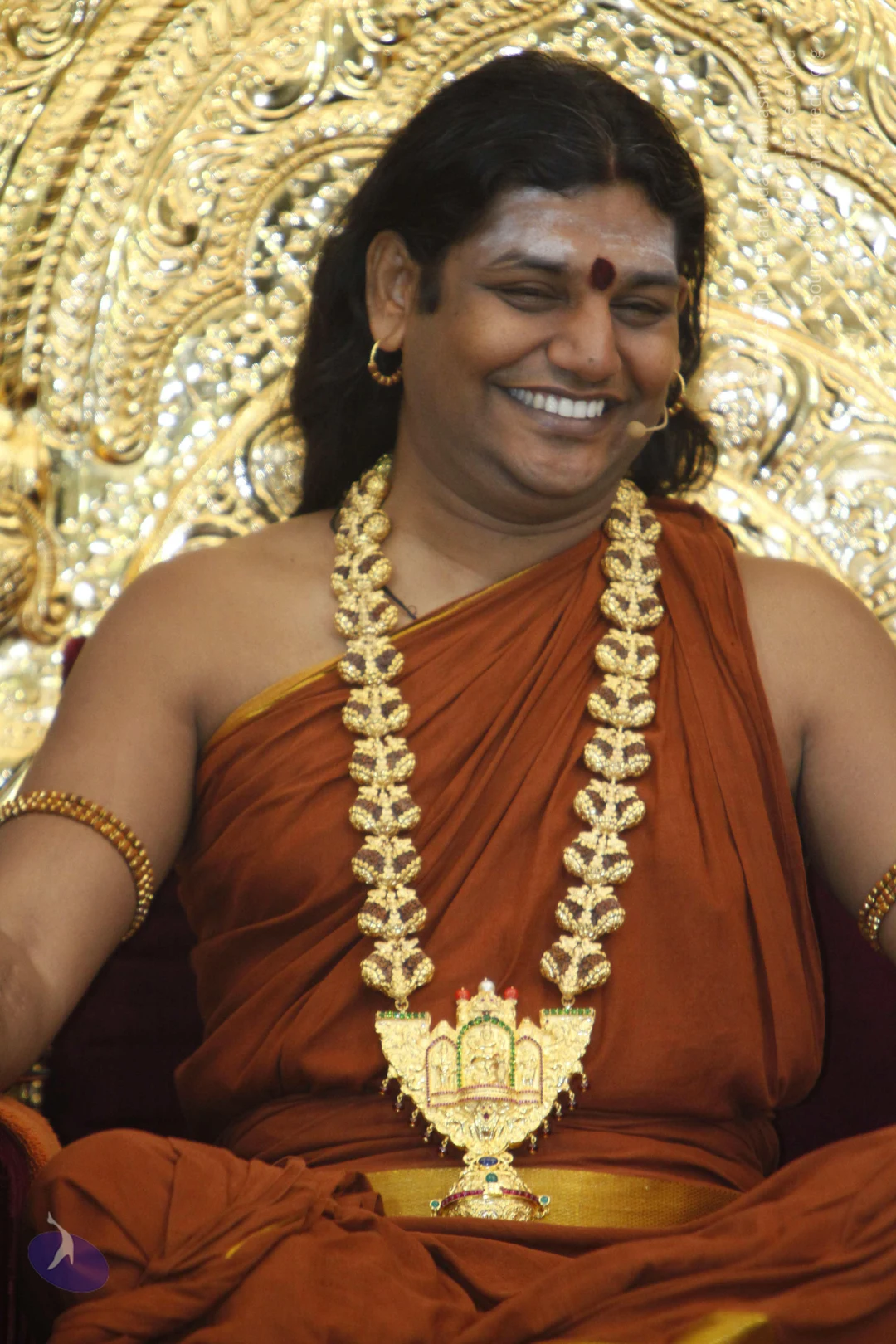
44 photosSource gallery
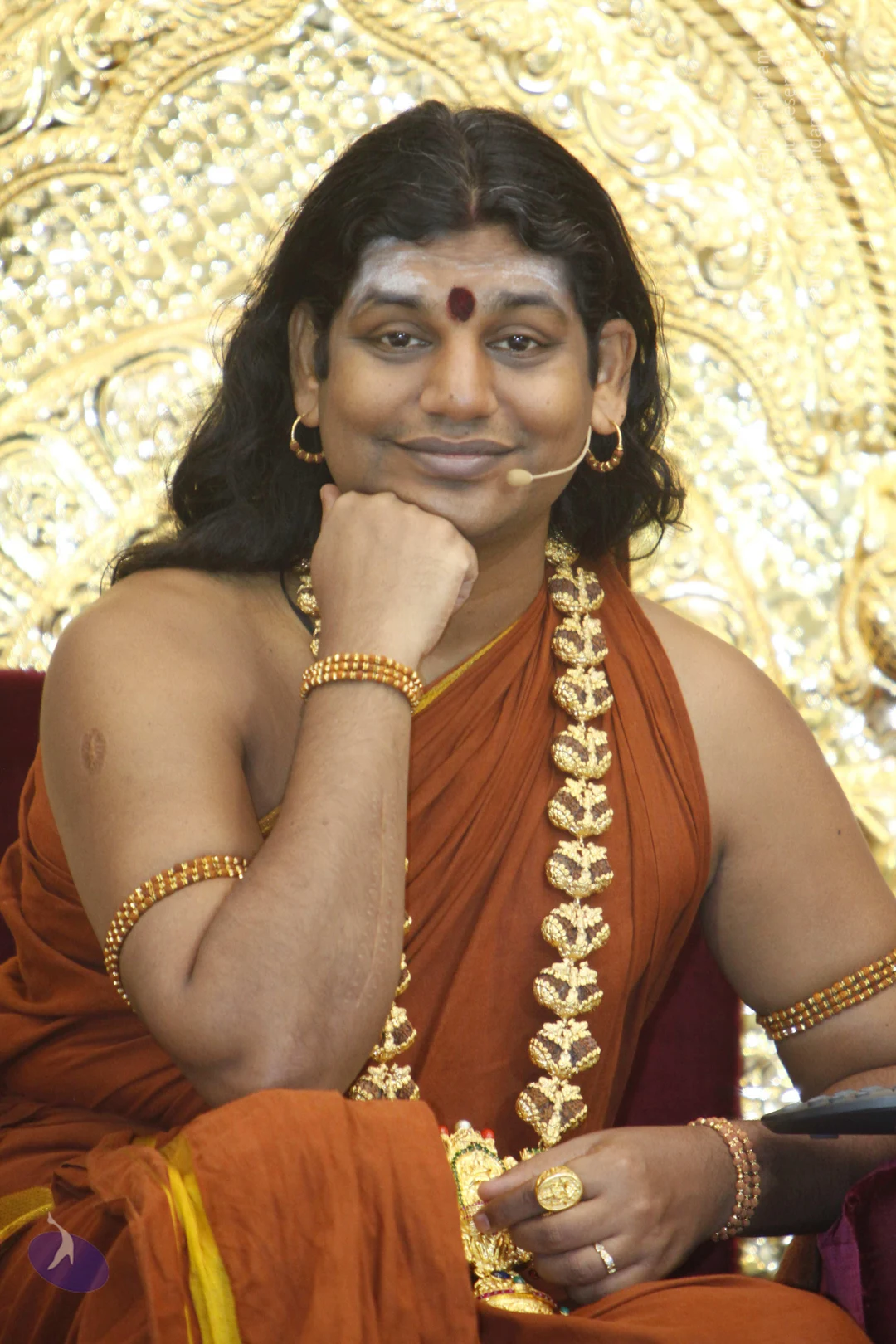
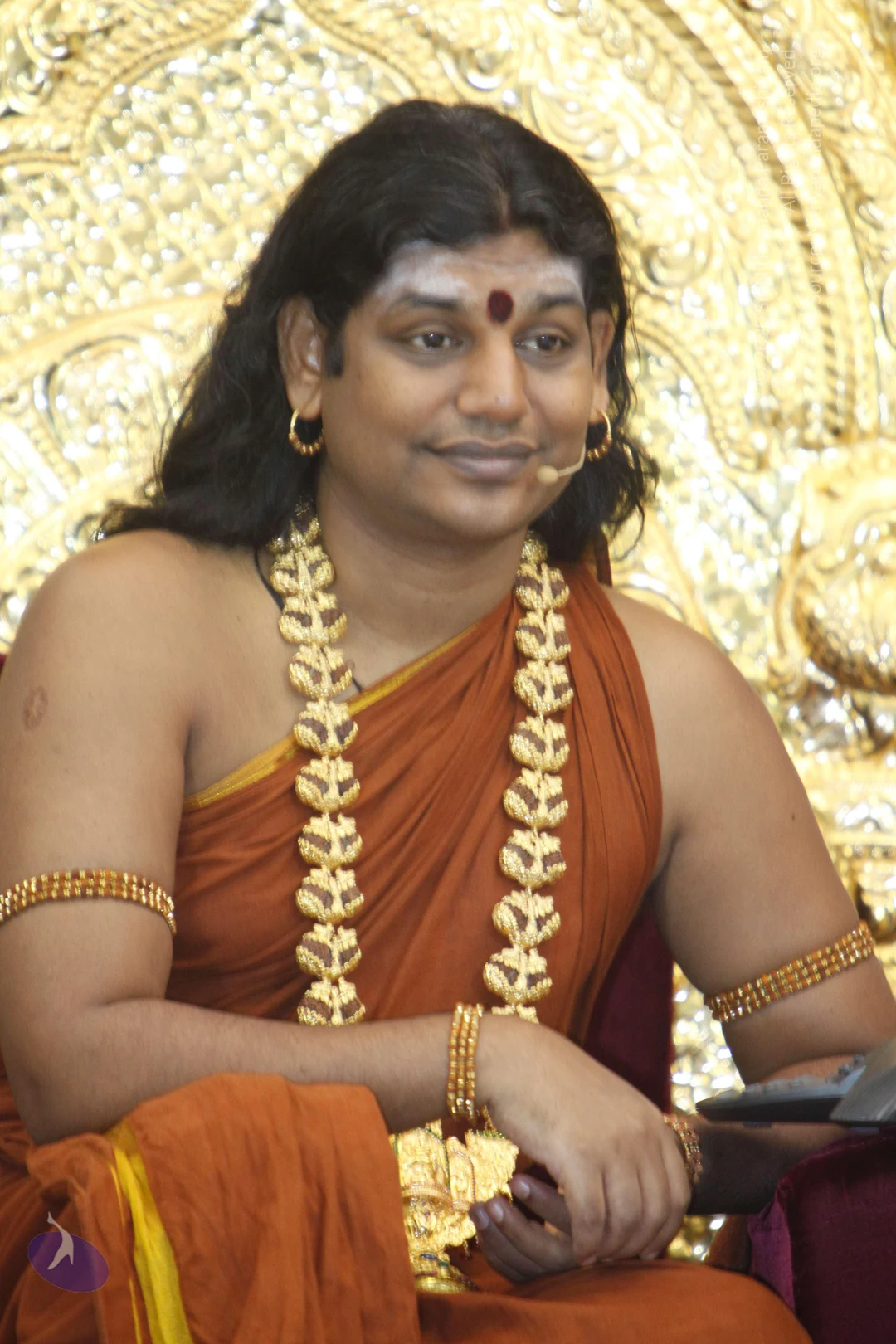
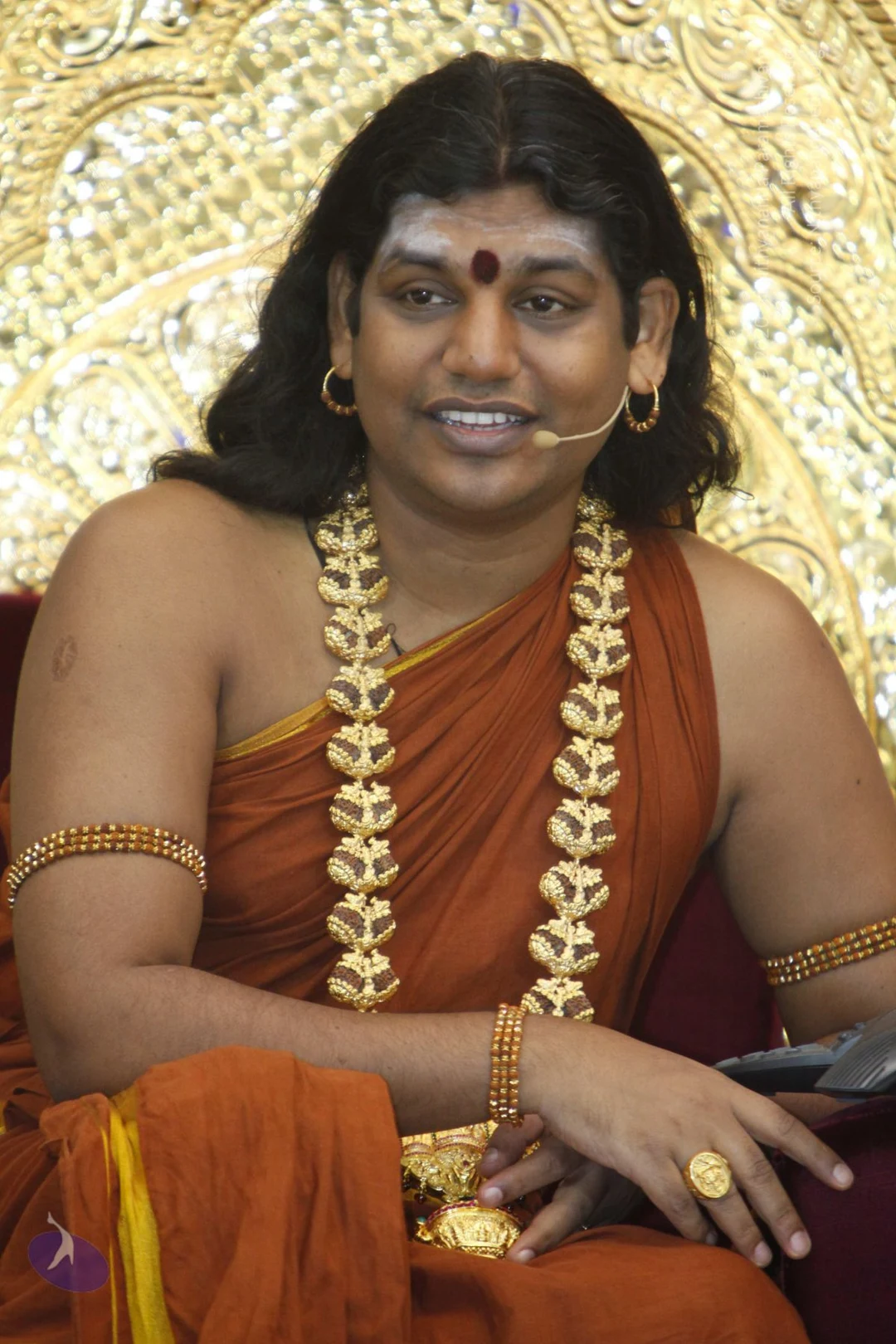
Close-up photo of a smiling man seated against an ornate gold repoussé backdrop. He has long swept-back dark hair, a red bindi and white forehead markings, gold hoop earrings and a small headset microphone. He wears a saffron-orange draped robe with a gold border, a heavy gold and rudraksha-bead garland with a large gold pendant, gold armlets and bangles, and a gold ring.A smiling man with long swept-back dark hair sits on an ornate gilded throne, wearing a saffron-orange draped robe with a gold border, a long necklace of gold-capped rudraksha beads, a large gold pendant with a temple motif, gold armlets and bangles, and a gold ring. He has a red bindi and white forehead markings and wears a small headset microphone. The background is an elaborate gold repoussé relief. Visual cues match the Swamiji (probable) profile: long hair, saffron clothing, rudraksha mala and ceremonial gold ornaments.A smiling man with long dark hair sits against a backdrop of ornate gold repousse relief. He wears a rust-orange shawl draped over one shoulder with a gold border, a gold-coloured ceremonial necklace of rudraksha-style beads with a gold pendant panel, gold armlets and bangles, and a small red bindi with white vibhuti on his forehead. A small microphone is clipped near his face.A smiling man with long dark hair sits in front of an ornate gold-embossed backdrop, wearing a rust-orange saffron wrap with a gold border over bare shoulders. He has white vibhuti and a red kumkum dot on his forehead, a headset microphone, and a long double strand of gold-capped rudraksha beads with a large gold pendant bearing a deity relief. Gold bangles are on his wrist and upper arm, and a gold ring is on his finger. He is seated as a speaker during a satsang.A smiling man sits in front of an ornate gold repoussé backdrop on a red upholstered seat. He wears an orange-saffron shawl over bare shoulders, a long gold-and-rudraksha ceremonial necklace with a gold pendant, gold bangles on both upper arms and wrist, and a gold ring. He has long dark hair, a white forehead marking and a red bindi, and a small microphone is visible near his face. Probable Swamiji by appearance cues including long hair, saffron shawl and ceremonial gold ornaments.Photograph of a seated man with long dark hair, wearing an orange-brown saffron wrap draped over one shoulder and a gold-coloured rudraksha mala with a gold ornamental pendant. He wears gold armbands, a gold bangle, a gold ring and a red bindi with white tilak, and sits in front of an ornate gold-embossed throne backdrop. A small microphone is visible near his face. One physical person is present.

Sarva-Darshan

11 photosSource gallery
A seated man in an ornate golden throne with lion-form arms and a golden canopy above, against a dark stone wall with hanging brass lamps. He wears an orange-brown robe with a gold border, gold ceremonial necklaces, and a red, yellow and white garland. He raises one hand in a blessing gesture and sits on a tiger-striped cloth. Before the throne, silver trays holding flowers and small lamps are arranged on a gold-trimmed round table.A man in saffron-orange robes sits on an ornate gold throne with carved lion-head armrests and lion-paw legs, draped with a striped tiger-skin cloth. He raises one hand in blessing, wearing layered red, yellow and white flower garlands, a gold necklace, bangles and a red tilak on his forehead. Silver plates of flowers, marigolds and oil lamps are arranged on a round gold base at his bare feet. A gold umbrella hangs above, with hanging bells and brass lamps on chains beside the throne against a dark wall. a person appears as the seated figure, matching the saffron robes, garlands and ornate gold throne setting.A man in an orange-saffron dhoti and shawl with a gold border sits on an ornate gold throne carved with lion heads and draped with a striped tiger-skin cloth. He wears a red, yellow and white flower garland, a gold necklace with a pendant, gold bangles, and a red-and-white forehead mark, and raises his right hand in blessing. Brass bells hang on chains beside the throne and a brass oil lamp stands at right. Trays of silver bowls with red flowers and white petals lie at his feet. Swamiji (probable): the seated man has long swept-back hair, saffron clothing and ornate gold ornaments, so he is an appearance-based candidate for Paramahamsa Nithyananda, present in person.A seated man in an ornate gilded throne with a carved golden backrest and tiger-striped cloth draped over the seat. He wears an orange-brown robe with a gold border, a red garland of beads with yellow and white accents, gold chain necklaces and a large gold pendant, gold bangles on his arms, and a red kumkum dot on his forehead. A brass bell hangs at the upper right of the throne. Silver plates holding red and pink flowers and oil lamps sit at his feet. Swamiji (probable) is seated in the throne with long swept-back hair, saffron-orange robes, rudraksha-style adornment and ceremonial gold necklaces, indicating a ceremonial sitting.A seated man in ochre-orange robes sits on an ornate gold throne with a tiger-striped cloth draped over it, eyes closed in meditation. He wears a long red and yellow flower garland, layered gold necklaces with a large gold pendant, gold armbands, and a red bindi on his forehead. Silver plates of pink and red flowers and petals lie at his bare feet, and brass bells hang beside the throne.A seated man in an orange-brown cloth draped over one shoulder wears a thick garland of red and yellow flowers with silver accents, plus a gold ornamental pendant and gold necklace beads. He has a red dot on his forehead, gold earrings, a gold bangle and a large gold ring. He sits on a cream cushioned seat in front of an ornate gold carved throne back, with a brass hanging bell and brass lamp at right against a black backdrop. The image is a photograph of one person; the seated figure has distinctive garland and gold adornments and a swept-back hairstyle, consistent with the a person candidate on the page, but the identification is appearance-based.

Lotus-TV-Pictures
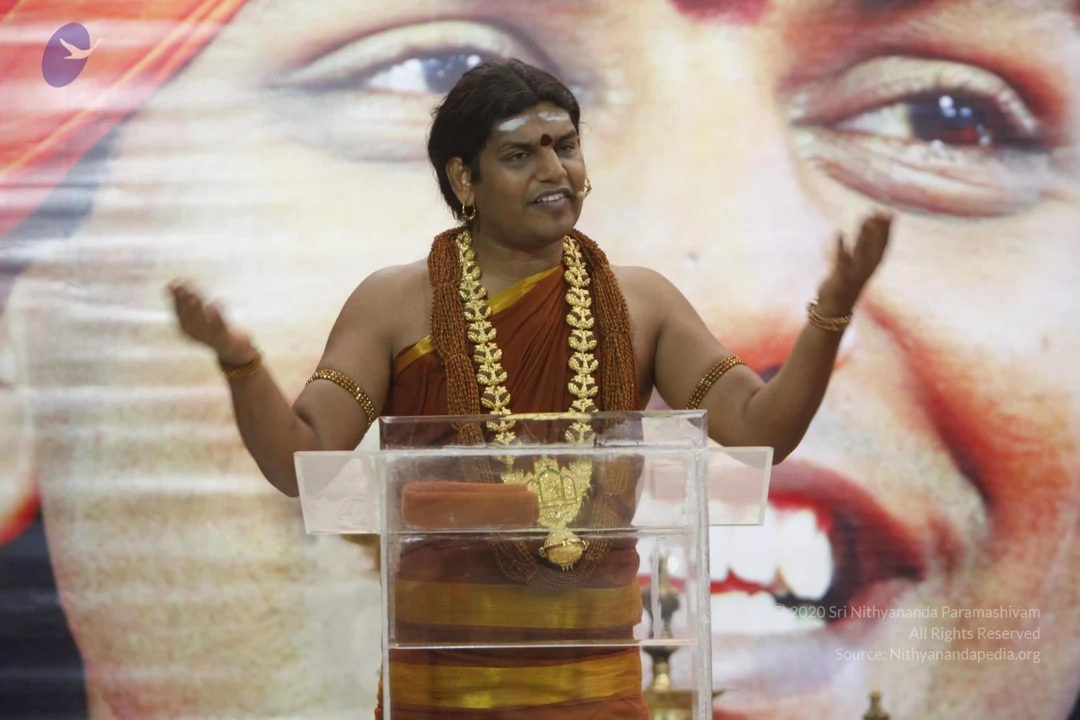
26 photosSource gallery
A framed printed portrait labelled "Mystic Yogi" shows a man with long swept-back dark hair, a white vertical tilaka with a red dot on his forehead, an orange saffron shawl and a leopard-print garment, wearing a long rudraksha mala. He gazes to the side against a blurred pale background. The caption is printed beneath the photograph; the portrait is a depiction, not a person physically present in the scene.A seated man in rust-orange robes with gold borders sits on a plush maroon throne in front of an ornate gold repoussé backdrop. He wears a gold-leaf and orange bead garland, orange bead armlets and bracelets, and a white urdhva-style tilak with a red bindi, and speaks into a small headset microphone with his hands clasped in his lap. Striped tiger-print cushions rest beside him. The appearance is consistent with the a person candidate described in the page, so the label is probable, but the identification rests on appearance cues: long swept-back hair, saffron-orange robes, ornate gold garland and beaded rudraksha-style malas.A seated man in an orange-red saffron dhoti and shawl with gold border speaks into a headset microphone on a stage. He wears a long gold-and-bead garland, rudraksha-style beaded armlets and bangles, a white vertical tilak with a red dot on his forehead, and hoop earrings. His hands are clasped in his lap. Behind him is an ornate gold-embossed backdrop. He sits on a maroon velvet throne with a tiger-striped cushion.Photograph of a seated man in an orange-rust dhoti-style garment with gold-bordered edges, speaking into a headset microphone during a satsang. He wears a long rudraksha mala draped over the shoulders, a heavy gold-leaf necklace, gold armlets and wristband, and has a white tilak with red bindi on his forehead. He sits on a dark maroon cushioned seat in front of an ornate gold repoussé backdrop, with a tiger-striped cloth beside him and his hands clasped in his lap. Probable Swamiji: long swept-back hair, rudraksha malas and ceremonial gold necklaces are visible cues, and he is seated in the speaker's position at the satsang.A man seated on an ornate gold throne with a carved, gilded arched backrest and red velvet cushions, speaking with his right hand raised in a gesture. He wears an orange-saffron cloth draped over his bare shoulder with a gold border, a long gold-bead and flower garland with a large gold pendant, gold armlets and bangles, and a headset microphone. He has a white horizontal line and a red dot on his forehead. A tiger-striped cloth covers the seat beside him. This appears to be a satsang discourse, with the speaker's appearance matching the page's a person identification only in a probable, appearance-based sense.A seated man in orange-saffron robes with a gold-bordered dhoti and shawl sits on an ornate gold throne with a richly carved gold backdrop. He wears layered rudraksha malas and a heavy gold ceremonial necklace, gold armlets and bangles, and a small earring with a head microphone. A white tilak and red bindi mark his forehead. His long dark hair is swept back, and his hands rest clasped in his lap as he looks off to the side. Appearance-based candidate: a person, matching the page's discourse context, shown in person.

1-Rudrabhishekam

8 photosSource gallery
A photograph of a man standing at a metal railing beside a large dark grey dome-shaped black stone, which is draped with garlands of red, white, green, yellow and purple flowers. He presses his palms together in anjali mudra with eyes lowered, wearing a rust-orange dhoti and shawl, a heavy gold necklace with a lotus-shaped pendant, red and yellow garlands, gold armlets and a red-and-white tilak on his forehead. Behind him, orange and marigold garlands hang across the trees. Another person in orange clothing is partly visible at the left edge, appearing to be a priest or attendant on a lower level. The setting suggests an abhishekam or outdoor puja around the black stone.Outdoor photograph of a large black lingam (Shiva linga) draped with a multicoloured flower garland in red, white, yellow, purple and green, fitted with silver bands. Beside it on a metal scaffold platform stands a man with long dark hair, hands folded in anjali, wearing an orange-red robe, a red-and-white flower garland, and gold necklaces; the posture suggests an abhishekam or puja. Behind him stand other priests in orange and red robes, one with a shaved head and white markings. Red brick steps and a pale sky form the background. The central figure is a person by appearance cues (long swept hair, saffron-orange robe, garland and gold necklaces), though this is uncertain.Outdoor photograph of a large black Shiva lingam draped with a multicolored garland of red, yellow, white, purple and green flowers arching over its top, with silver bands wrapped around its base. Standing on a raised metal platform with railings and stairs to the left, a man with long dark hair wears an orange-red dhoti, a garland of flowers and a gold necklace, and stands with hands resting on the railing. Two priests in orange-red robes stand beside him, one wearing a white tilak mark on the forehead, with a red and white flower garland draped along the railing. Trees and a pale sky appear in the background.A large black stone Shivalinga on a tiered black yoni-pitha base stands outdoors before a red multi-storey building. A garland of red, yellow, white, green and purple flowers arches over the lingam, and milky liquid pours down its front, consistent with abhishekam. Silver-coloured plates with a central circular emblem are fixed to the lingam. Three or four priests in saffron-orange dhotis and shawls stand on a metal scaffold at the left and top, one holding a vessel and another pouring offerings. Tiers of potted plants and small lamps line the steps behind. A blurred dark object in the foreground is out of focus.Outdoor abhishekam of a large black Shivalinga on a black yoni-pitha base, with water poured over the lingam and a multicoloured flower garland arching over it. The lingam bears a silver Tripundra and a central disc. On a raised scaffold stand several men in orange-saffron dhotis and shawls, some with bare upper bodies and rudraksha malas, pouring liquid from pots and kalashas. A man in the foreground-right of the scaffold, with long dark hair and a black shawl, holds a white cloth or vessel toward the lingam. Behind them are a red multi-storey building and tiers of potted plants. A blurred dark stone Nandi occupies the lower foreground.A large dark black stone lingam, the Shiva linga, stands on a round black yoni-pitha base, with water streaming down its surface over a silver-toned horizontal band and a clear crystal set at the centre. The lingam is garlanded with a bright arch of marigold-style flower garlands in red, yellow, purple and white. Behind it, two priests in orange-red dhotis and bare upper bodies stand on a white metal platform, one holding a white vessel, performing abhishekam. Above them, an orange and pink festoon of flower garlands hangs along a red building with windows, and terracotta pots line the steps at the right.
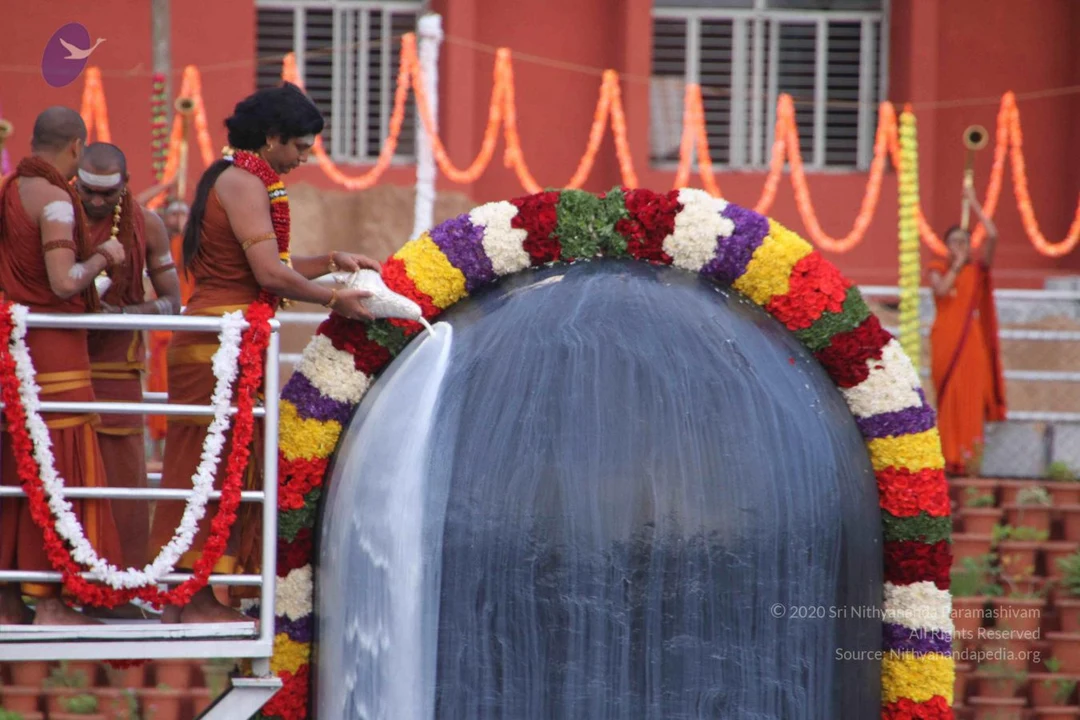
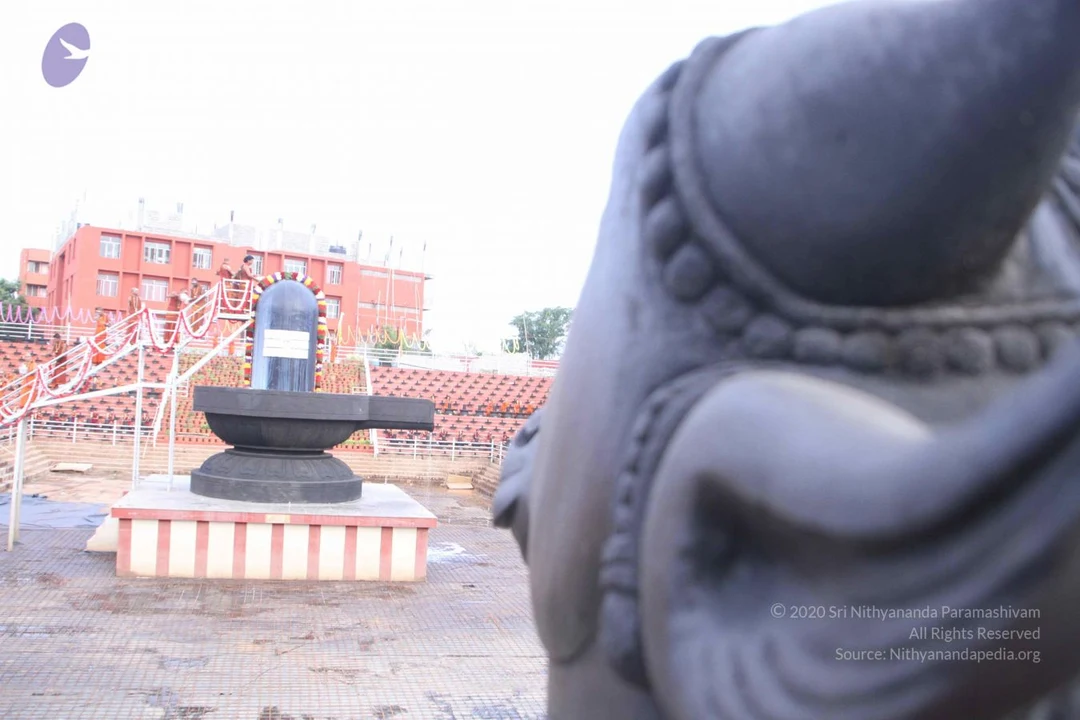
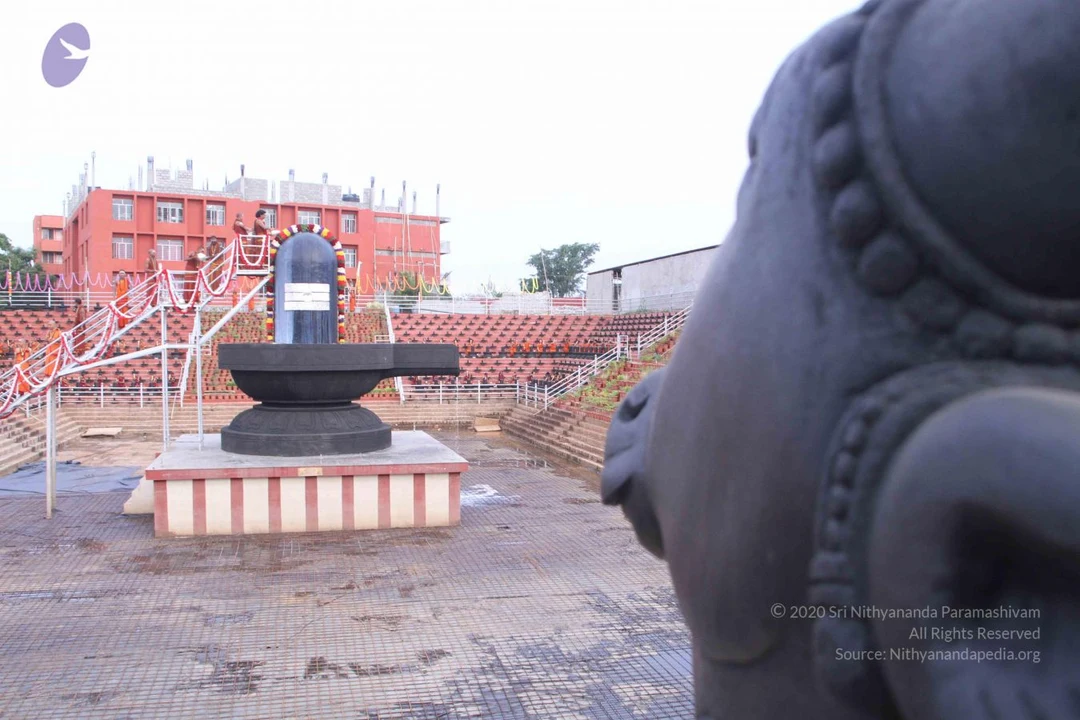
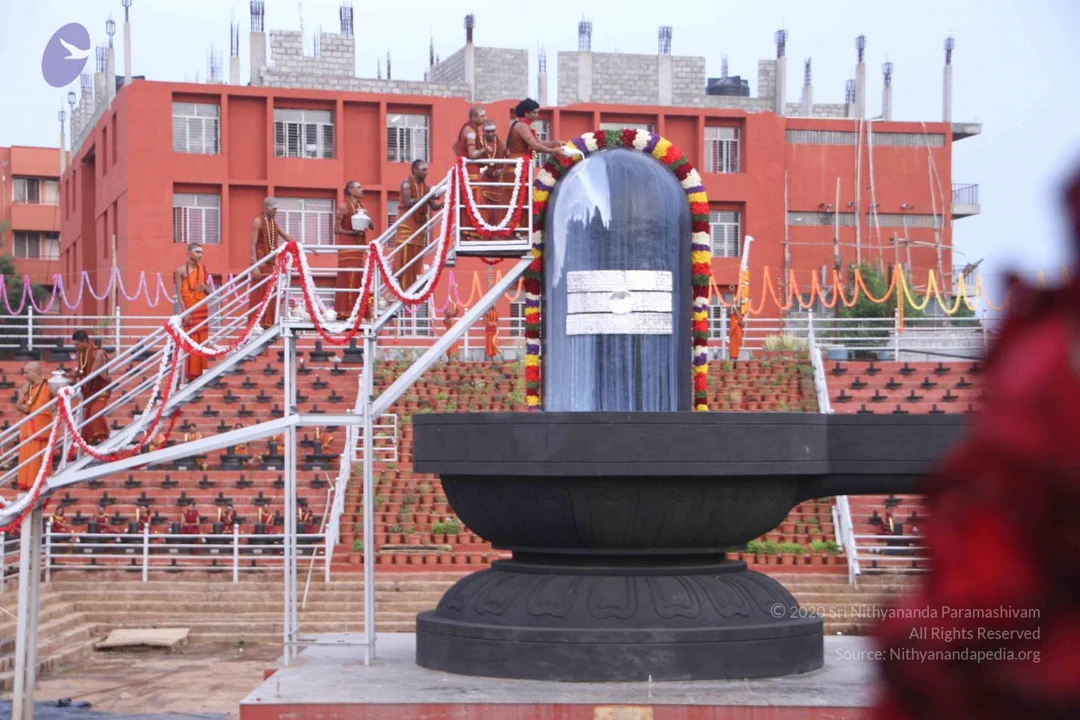
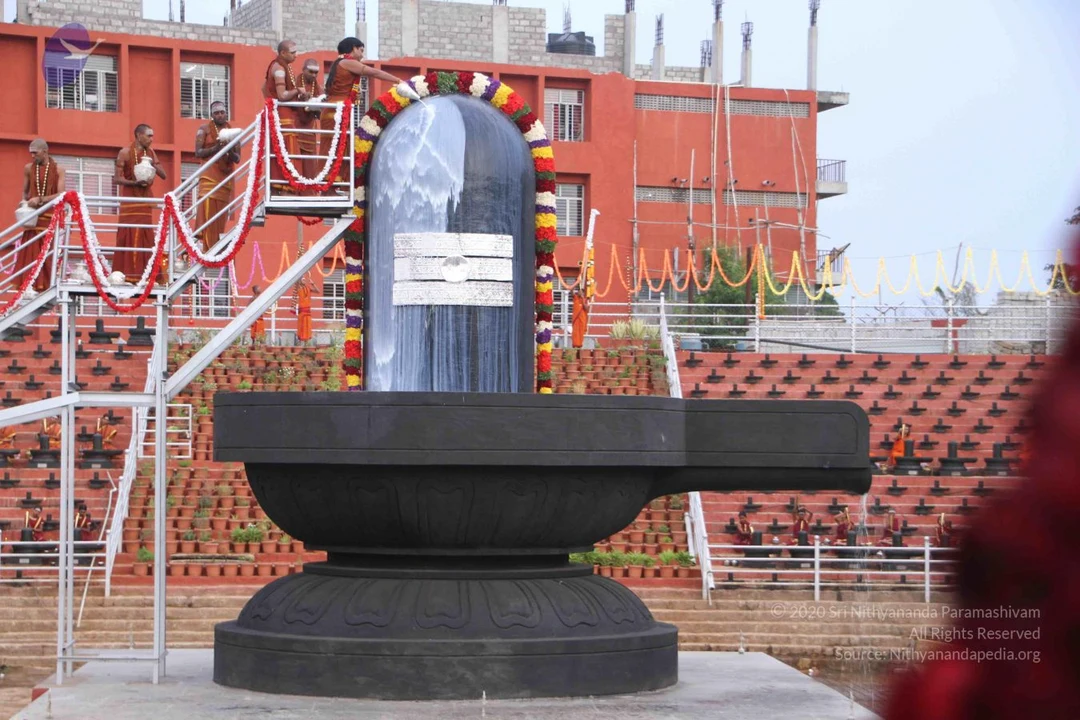
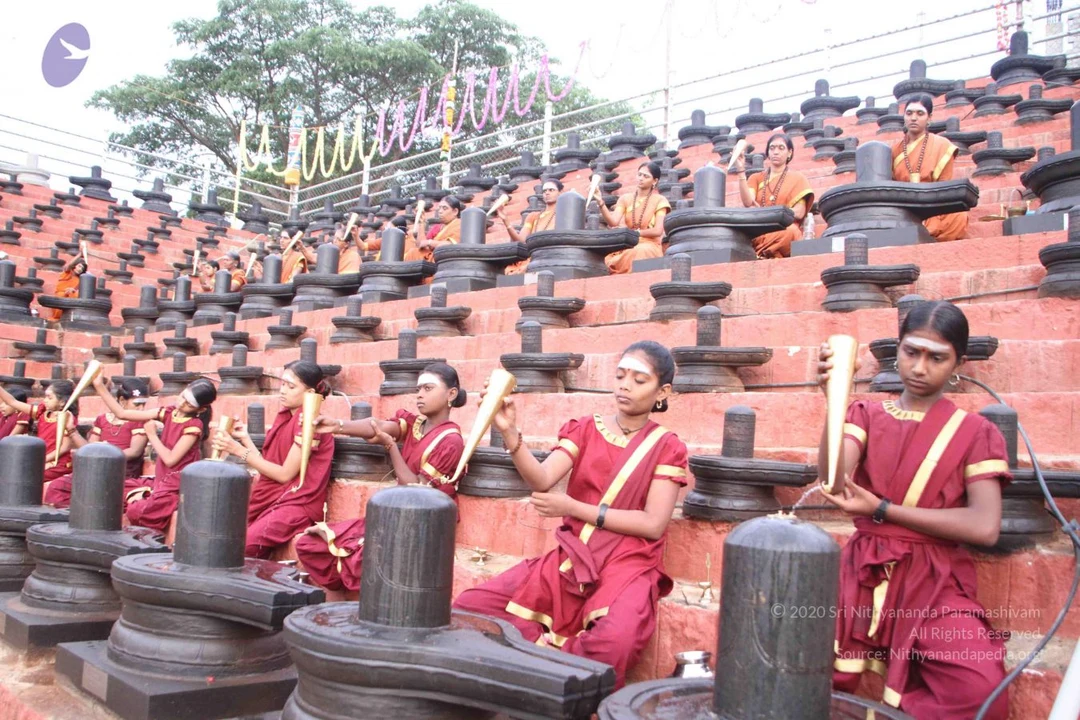
2-Pada-Puja

2 photosSource gallery
A seated man in an ornate gilded throne with carved lion-head armrests and a tiger-skin covering, wearing an orange-brown robe with gold border, a gold sash, a gold necklace with a large pendant, bangles, and two long red-and-yellow flower garlands with white beads. A red tilak marks his forehead and he sits barefoot. In front of him, silver plates hold red and white flowers and petals, consistent with a padapuja offering. Photograph of one person.A seated man in an orange-saffron draped garment with a gold border sits before an ornate gold repoussé backdrop. He wears heavy garlands of red and yellow flowers with white accents, a dense gold necklace of rudraksha-style beads, a large gold pendant with a deity figure and red and green stones, gold bangles-style armbands of beaded strands, and a red kumkum mark on the forehead. He is speaking, with dark hair swept back, in a formal ceremonial setting.
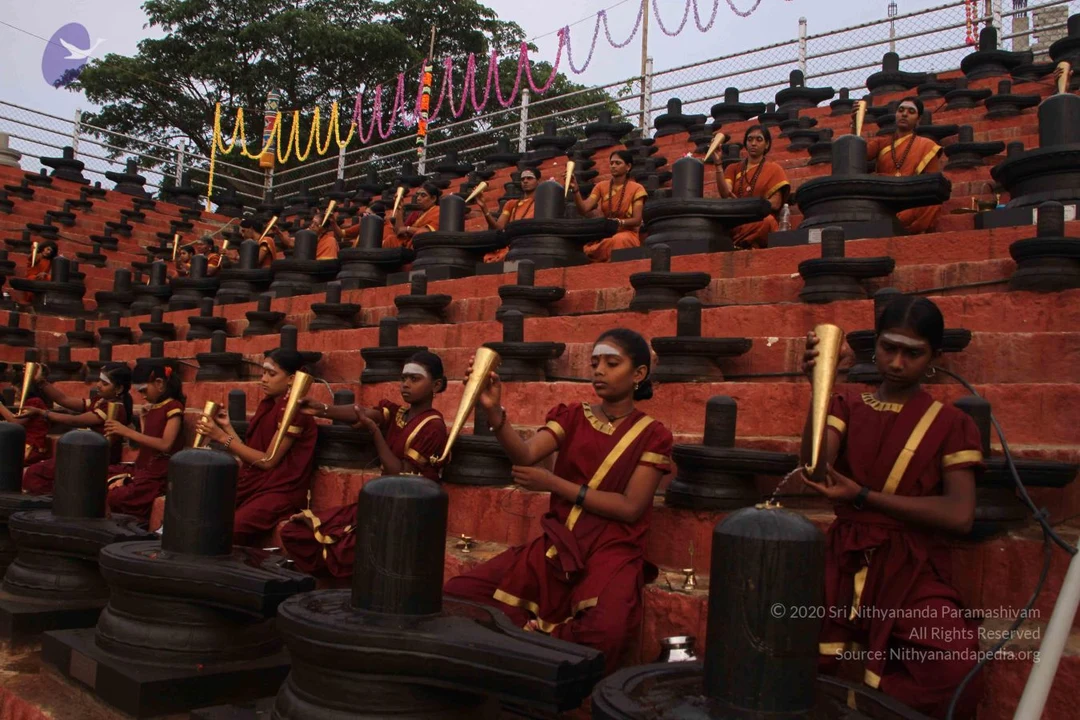
3-Satsang
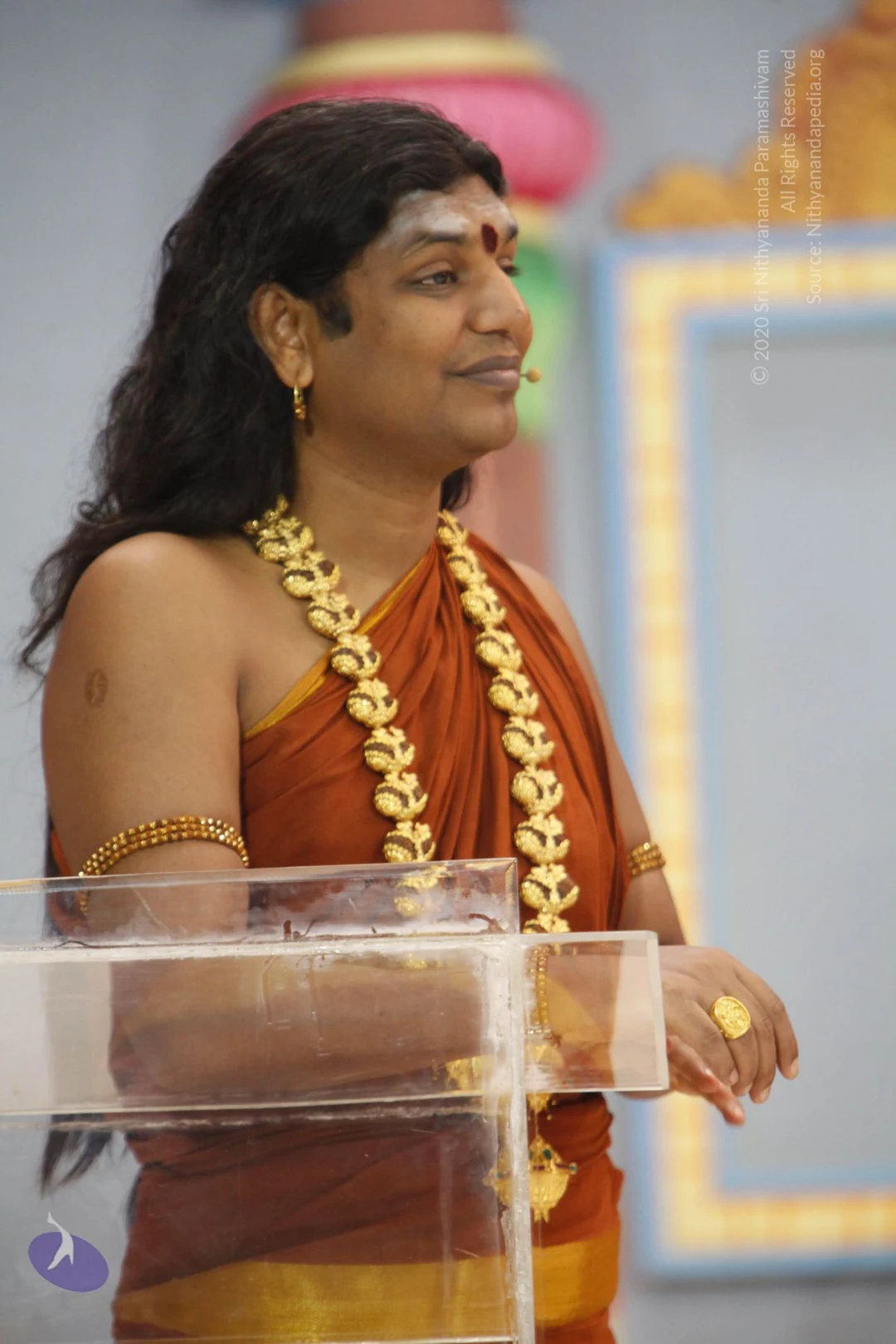
7 photosSource gallery
A man with long swept-back dark hair stands beside a clear acrylic lectern, gesturing with his raised right hand near his shoulder. He wears a rust-orange draped garment with broad gold borders, a heavy gold ceremonial necklace with a large gold pendant, a gold ring and a gold bracelet, and has a red bindi and white markings on his forehead. Behind him a gold ornate throne glows against a colourful painted temple-style backdrop of red, green, blue and orange. This is a photograph of a satsang discourse. Appearance cues (long swept-back hair, ornate gold necklace, orange garment) are consistent with a probable Swamiji presence on stage.A man with long dark hair and a red tilak on his forehead stands at a clear acrylic lectern, speaking with his right hand raised near his head. He wears a rust-orange draped garment with broad gold borders, a heavy gold ceremonial necklace with a large gold pendant, a gold bangle, a wristwatch and a gold ring. Behind him a gilded golden throne glows against a red and multicoloured temple-style backdrop. a person: the long swept hair, saffron-orange clothing and ornate gold necklace match the appearance cues.Photograph of a man with long swept-back dark hair standing at a clear acrylic lectern on a stage, speaking and gesturing with his right hand. He wears a rust-orange draped garment with a broad gold border and a heavy gold ceremonial necklace with a pendant, plus a gold ring and bracelets. A red bindi and white forehead markings are visible. Behind him is a gold-embossed backdrop with painted red, green and blue decorative bands. Cues consistent with the page's Swamiji label: long swept-back hair, saffron-orange draped clothing and ceremonial gold necklace. Swamiji (probable) is a satsang speaker at the lectern.A man stands behind a clear acrylic lectern, speaking into a headset microphone with his hands clasped in front of him. He has long dark hair, gold hoop earrings, a red bindi and white markings on his forehead. He wears a rust-orange garment with a gold border draped over his shoulders and a long gold ceremonial necklace with leaf-like pendants, plus gold bangles on his upper arms. A gold ornamental pendant hangs at his chest, reflected in the acrylic. Behind him are gold-and-blue decorative panels and warm blurred lights.A person stands barefoot behind a clear acrylic lectern on a stage, speaking into a head microphone. They wear a rust-orange draped garment with broad gold borders and a long gold ceremonial necklace with a central gold pendant, plus a red bindi and gold bangles. Long dark hair falls past the shoulders. Behind them stand tall brass oil lamps with lit flames and a painted backdrop in blue, pink and yellow with a green lotus-shaped column. A potted green plant sits at the lower right. Swamiji (probable): long swept-back hair and ornate gold necklaces with a saffron-orange garment, consistent with a satsang discourse speaker.A single person stands beside a clear acrylic lectern on a polished floor, speaking and gesturing with one raised hand. He wears a rust-orange garment with a wide gold border draped over one shoulder, a long gold ceremonial necklace, gold bangles, a gold ring and a red tilak on the forehead. Behind him stand brass oil lamps with lit flames and a painted temple backdrop with a deity figure at the right edge. A small green potted plant sits at the base of the lectern. The person presents as a probable Swamiji through the long hair, ornate gold necklace and saffron-orange garment, and is shown in person as a speaker at a satsang.
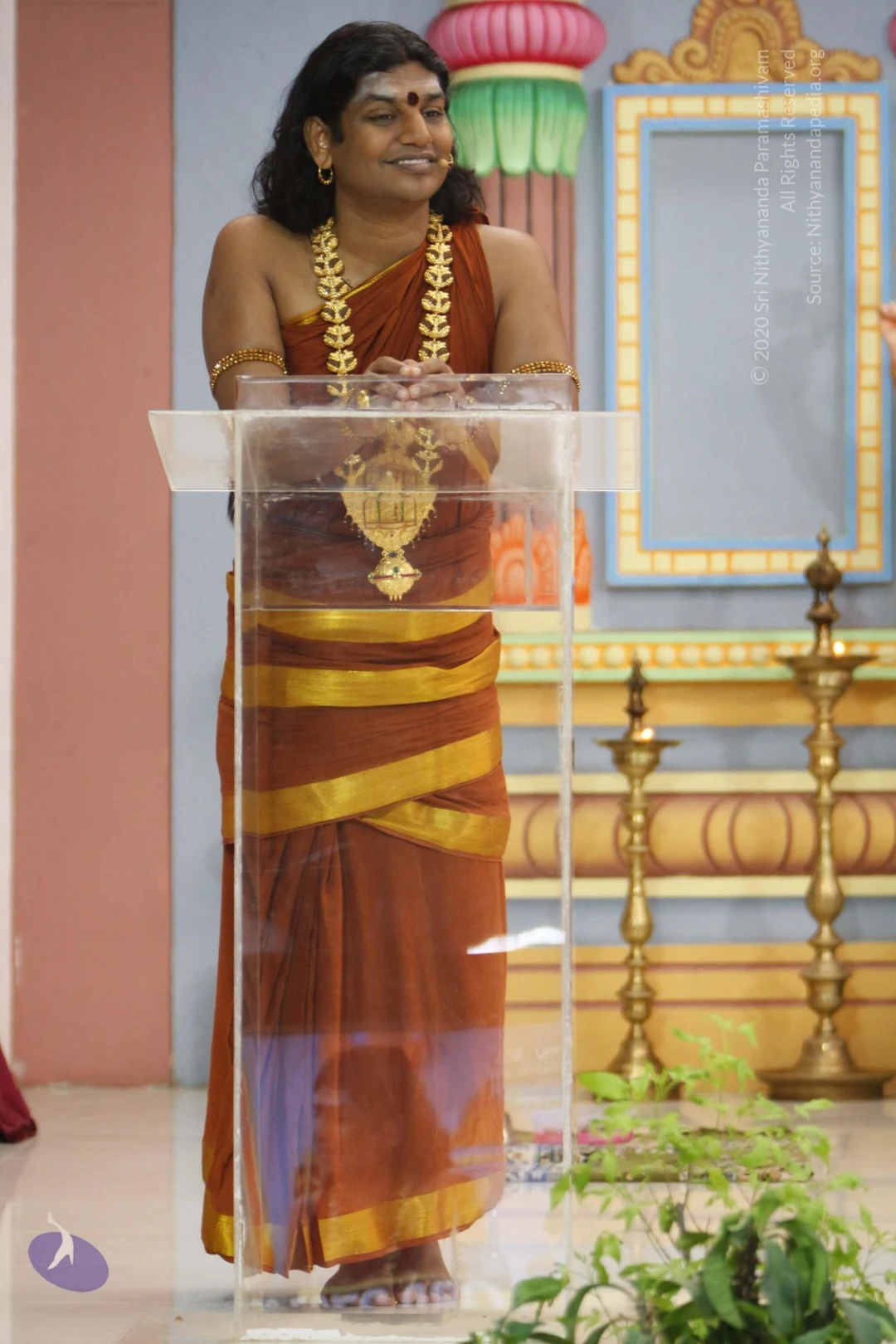
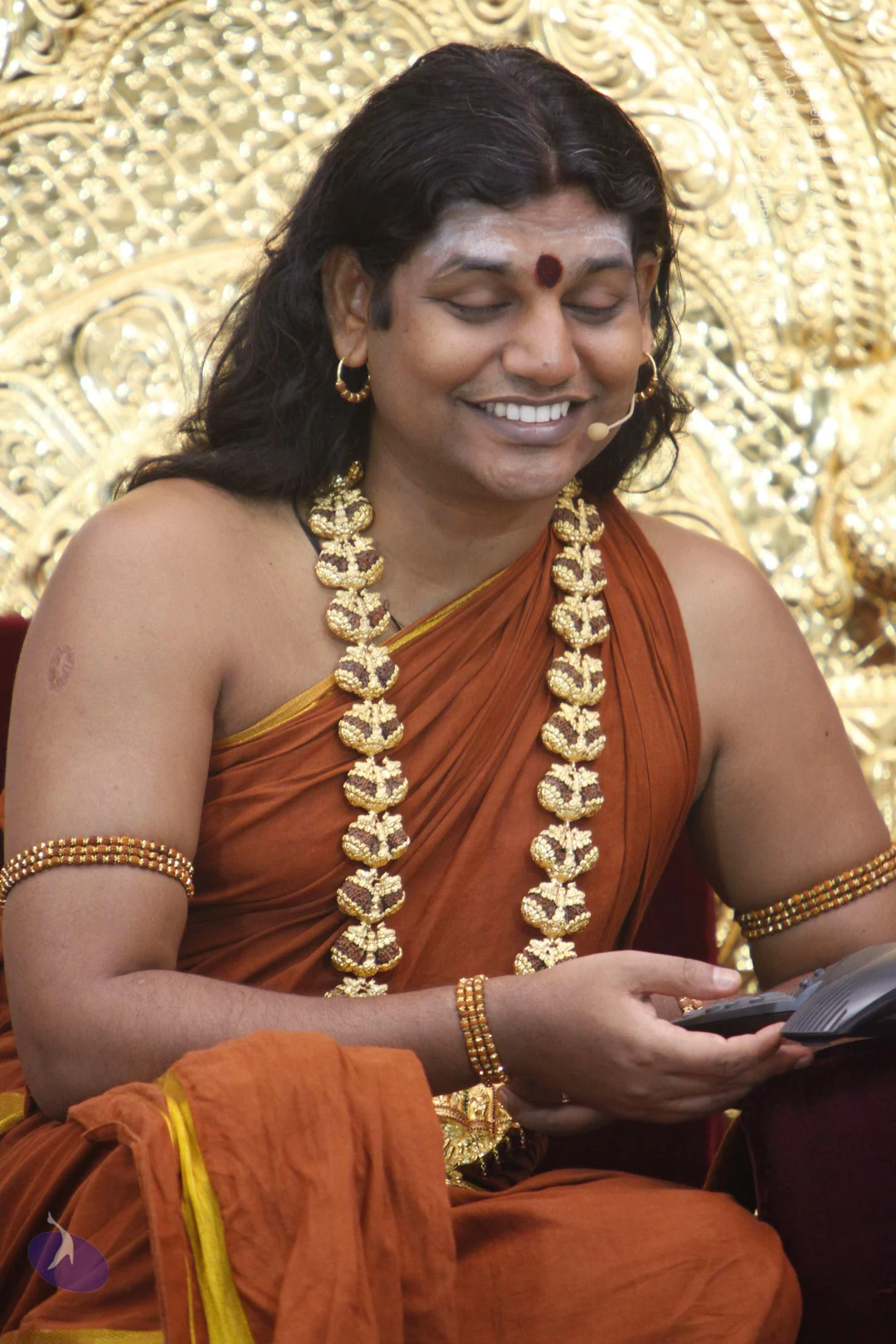
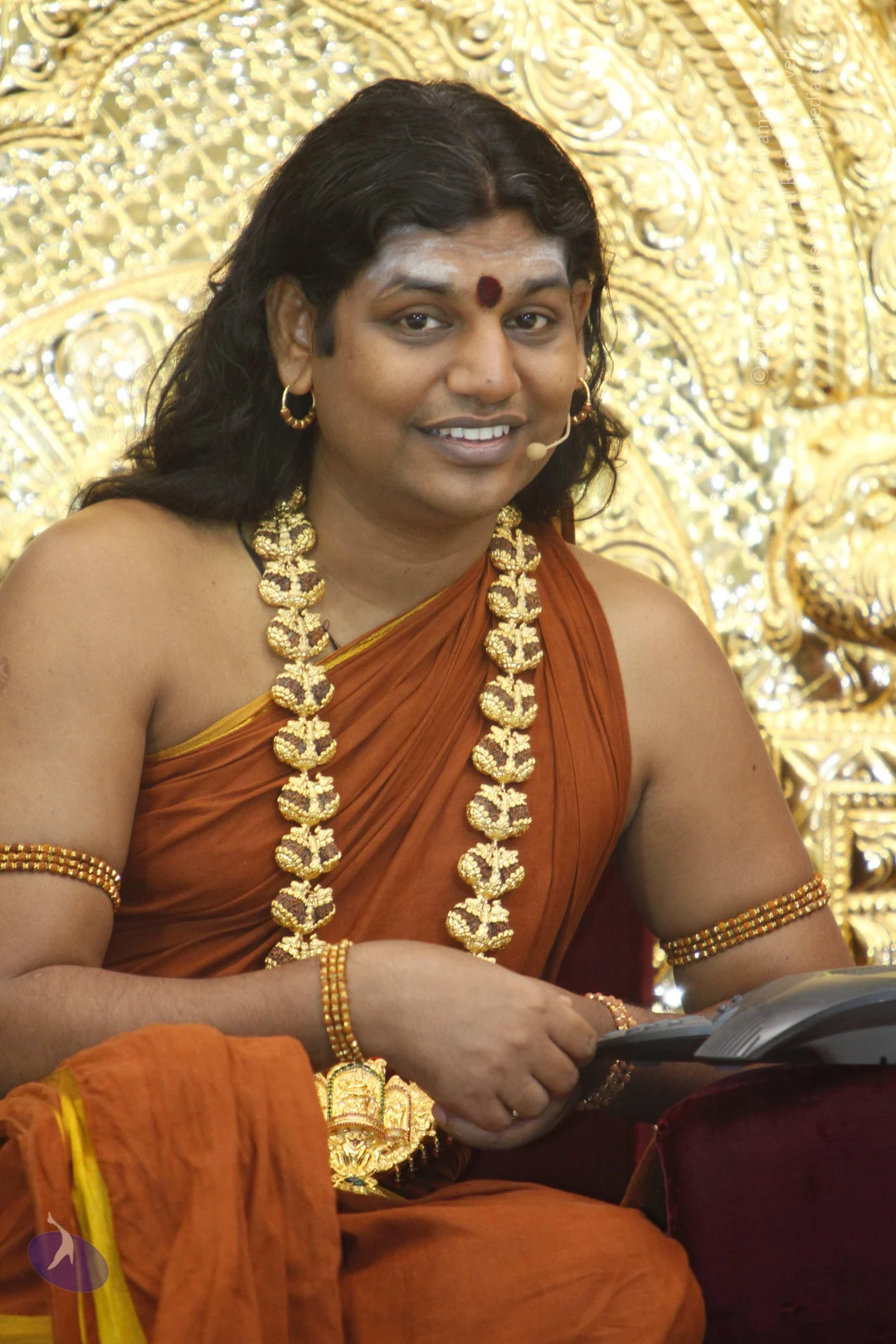
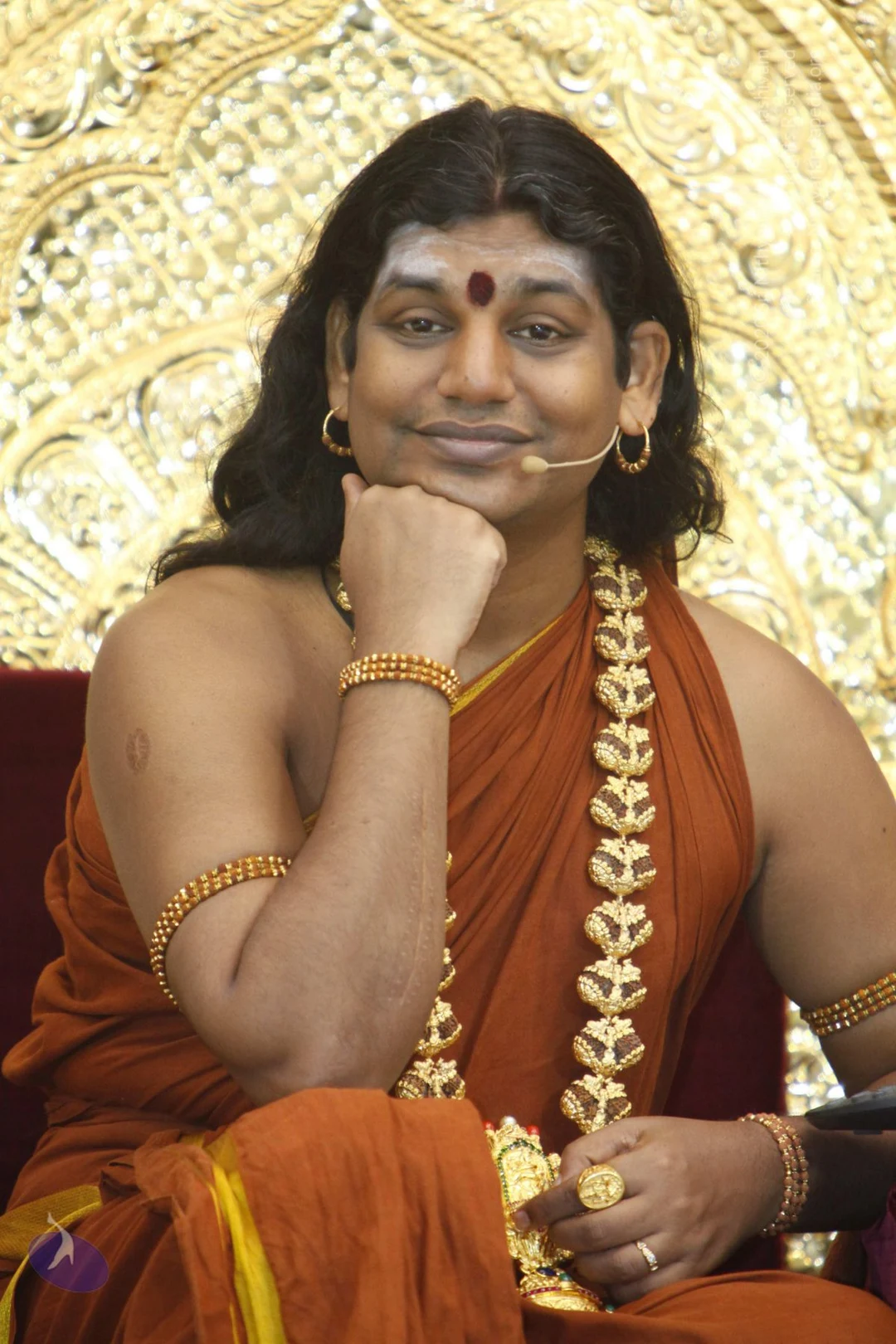
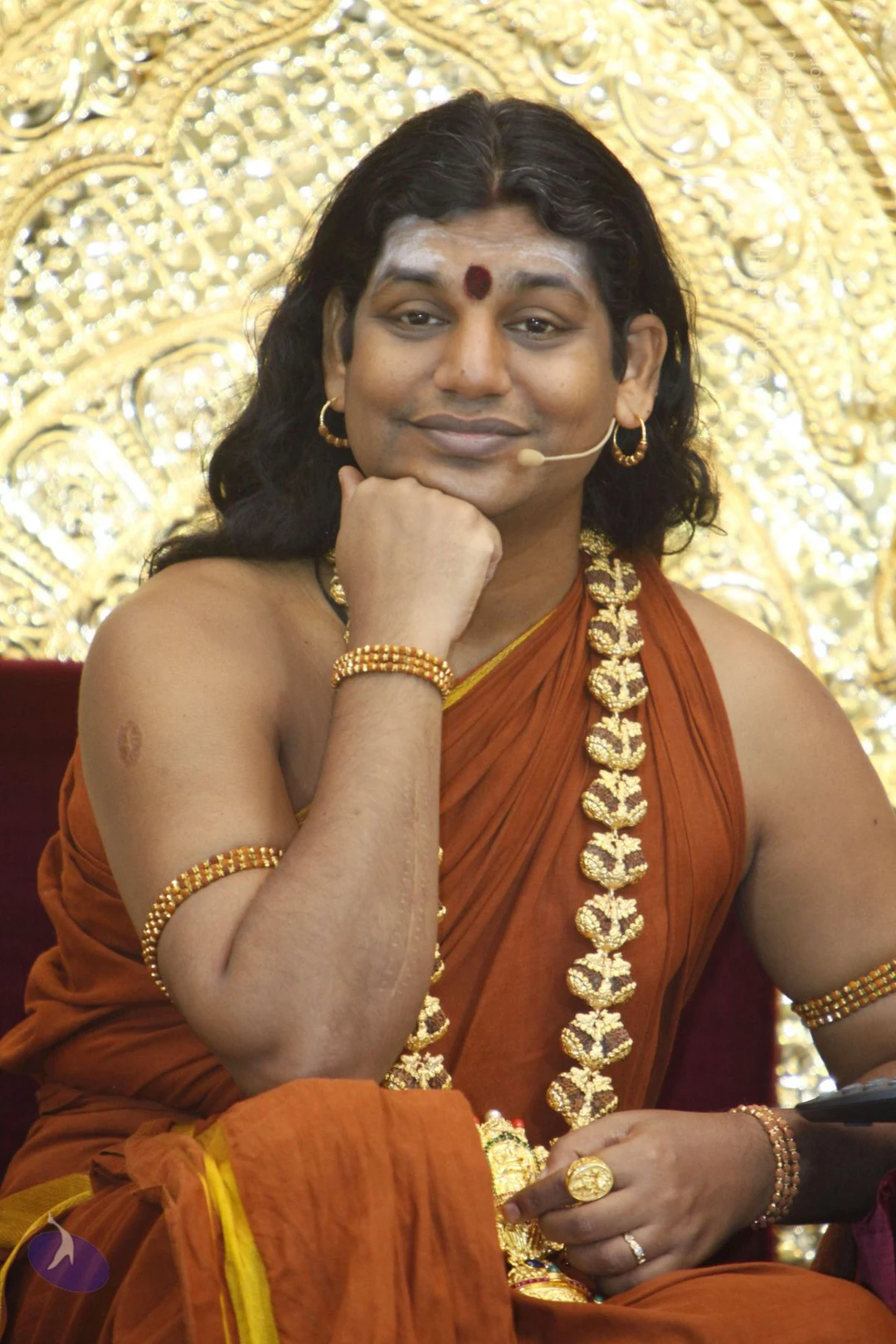
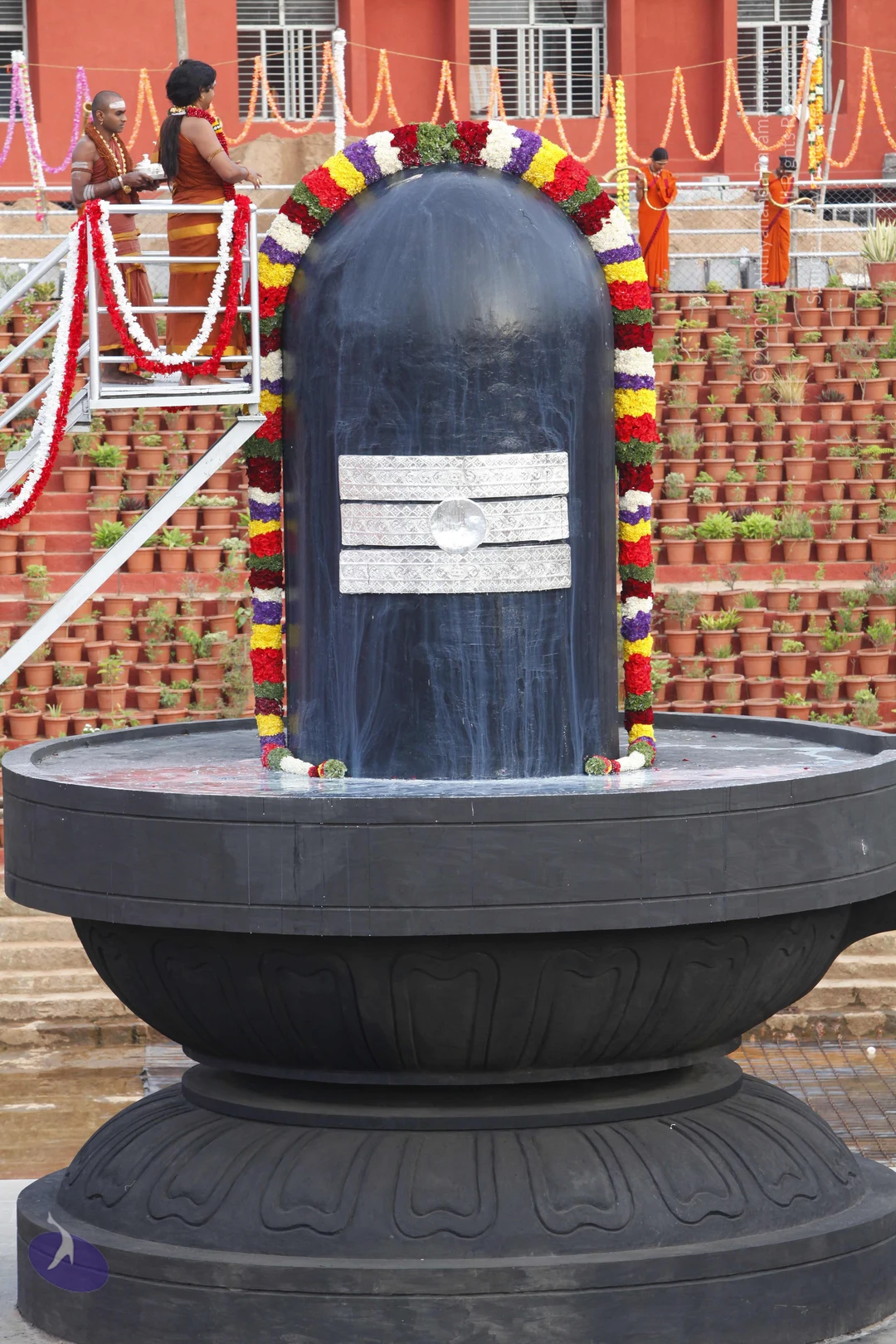
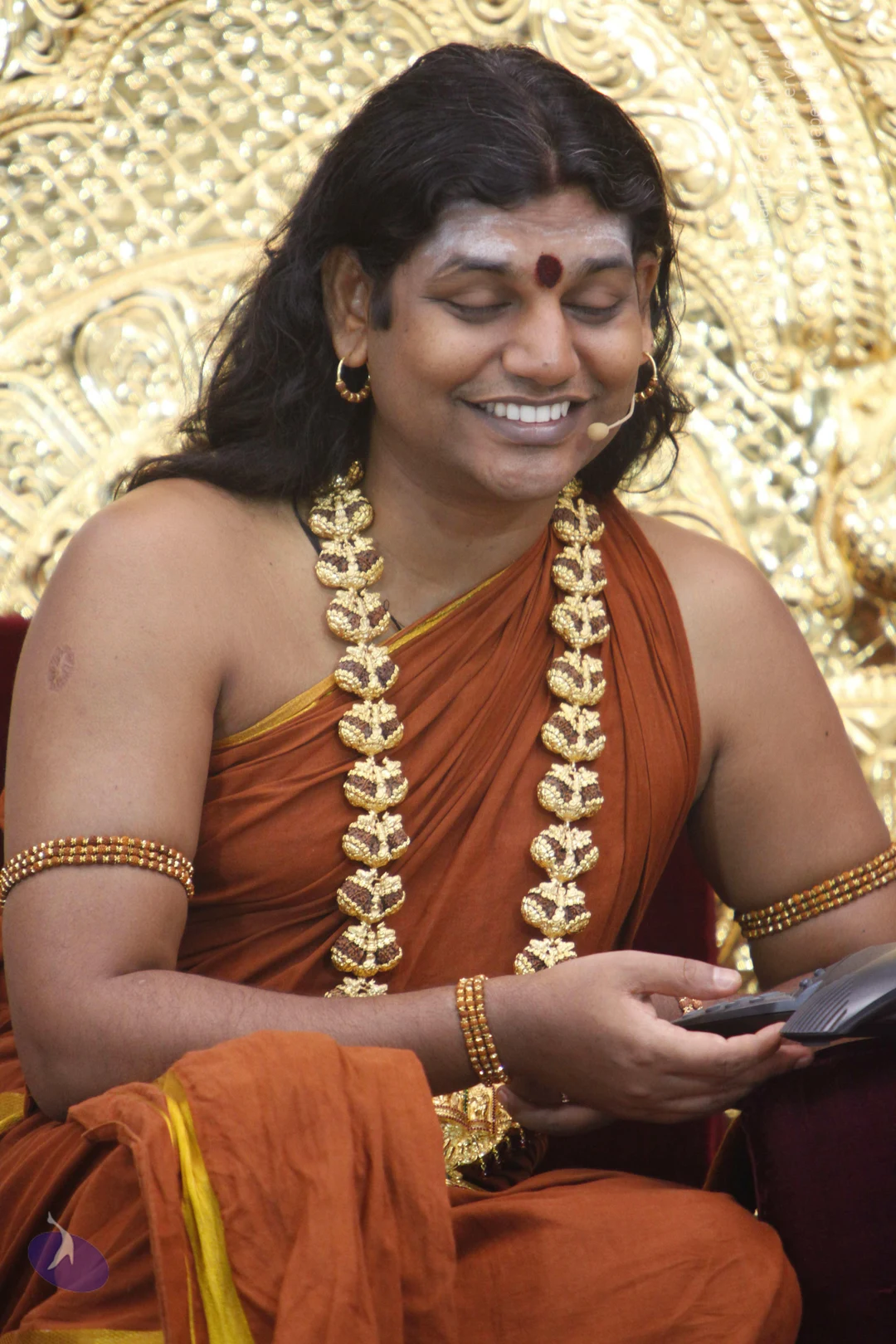
4-Temple

1 photoSource gallery
A photograph of a sculpted deity murti seated before a golden cobra hood with five raised serpent heads and green gemstone drops. The murti is draped in an orange and gold brocade cloth, wrapped with a jewelled band, and adorned with long white jasmine garlands interspersed with red flower strands and a rudraksha mala hanging down the chest. A gold-and-red cloth and marigold-type flowers rest on the base in front. No physical people are visible, and the image is a photo of a statue, so no living person is depicted.