Skip to content
Tuesday

25 June 2013

Supreme Pontiff of Hinduism HDH Bhagavan Nithyananda Paramashivam

Dated photos
374
Source pages
1
Media
4
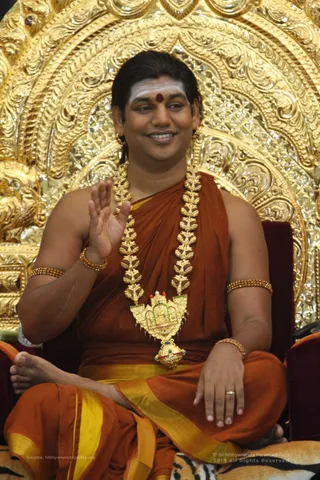
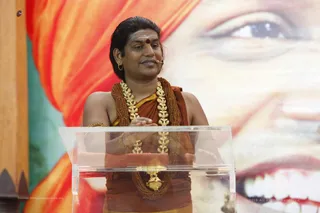
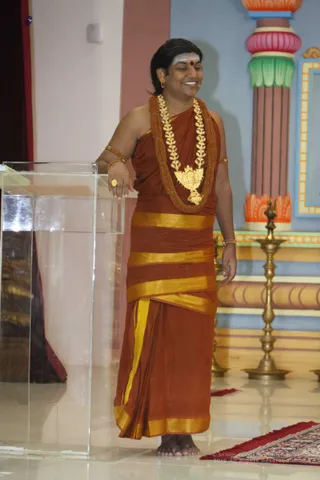
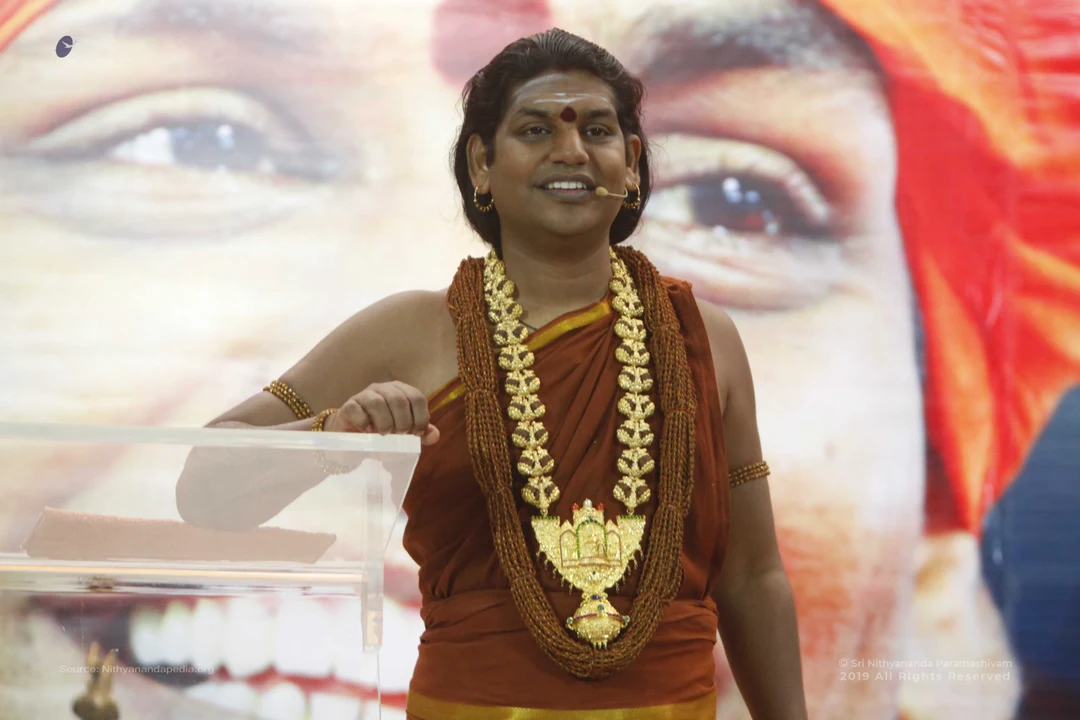
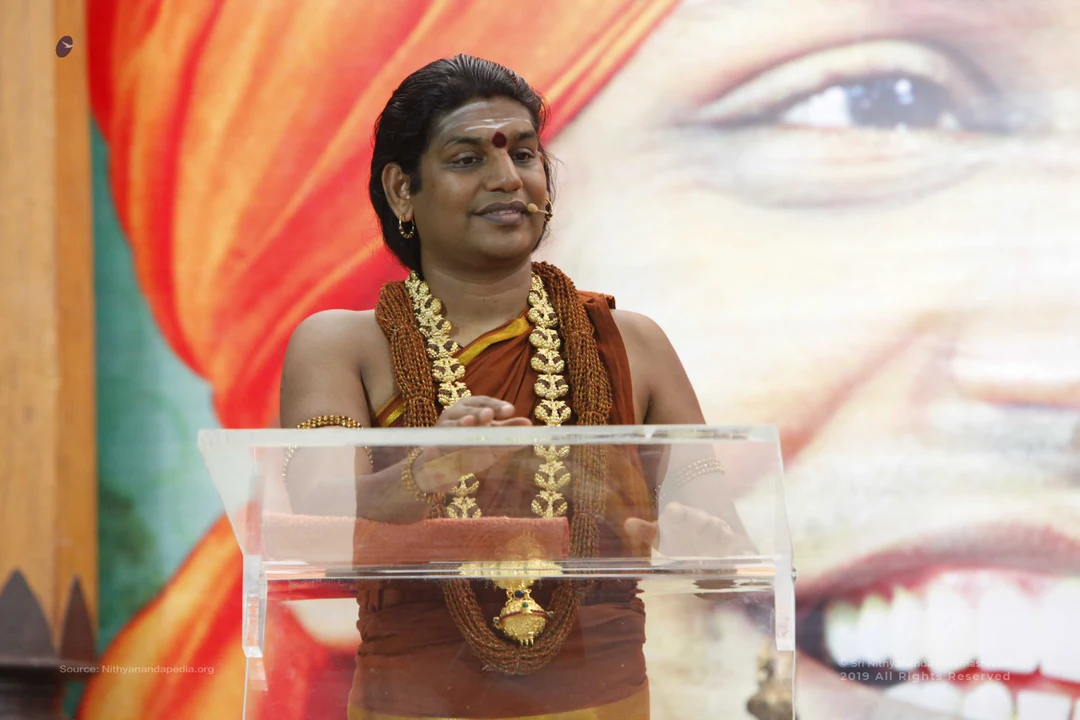
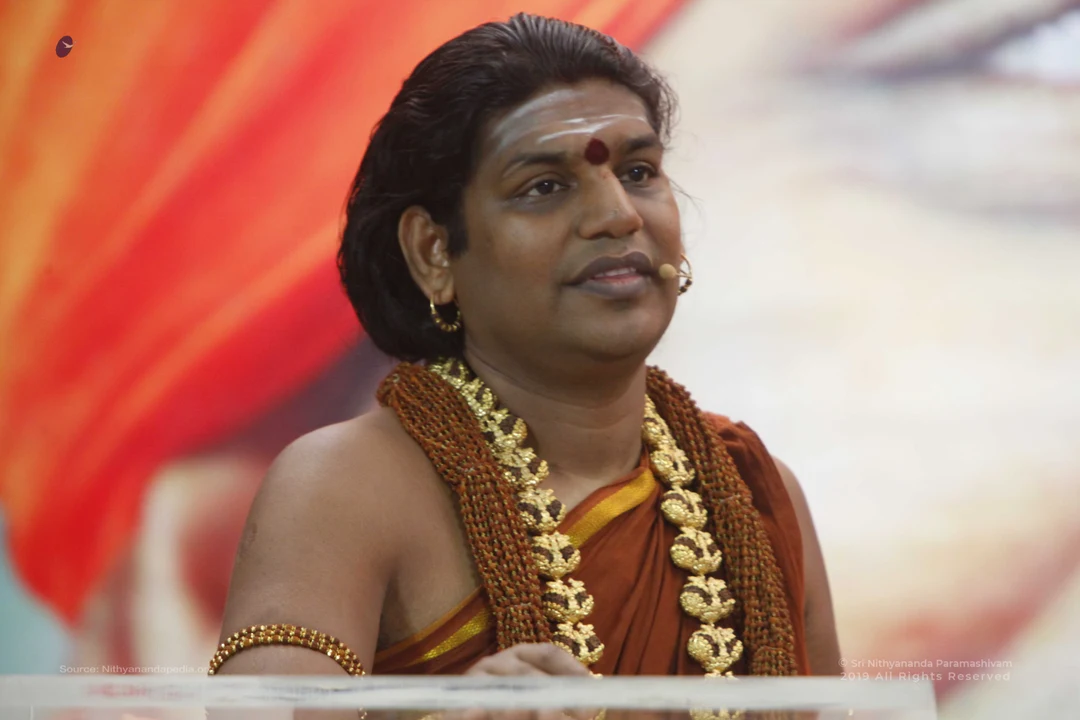
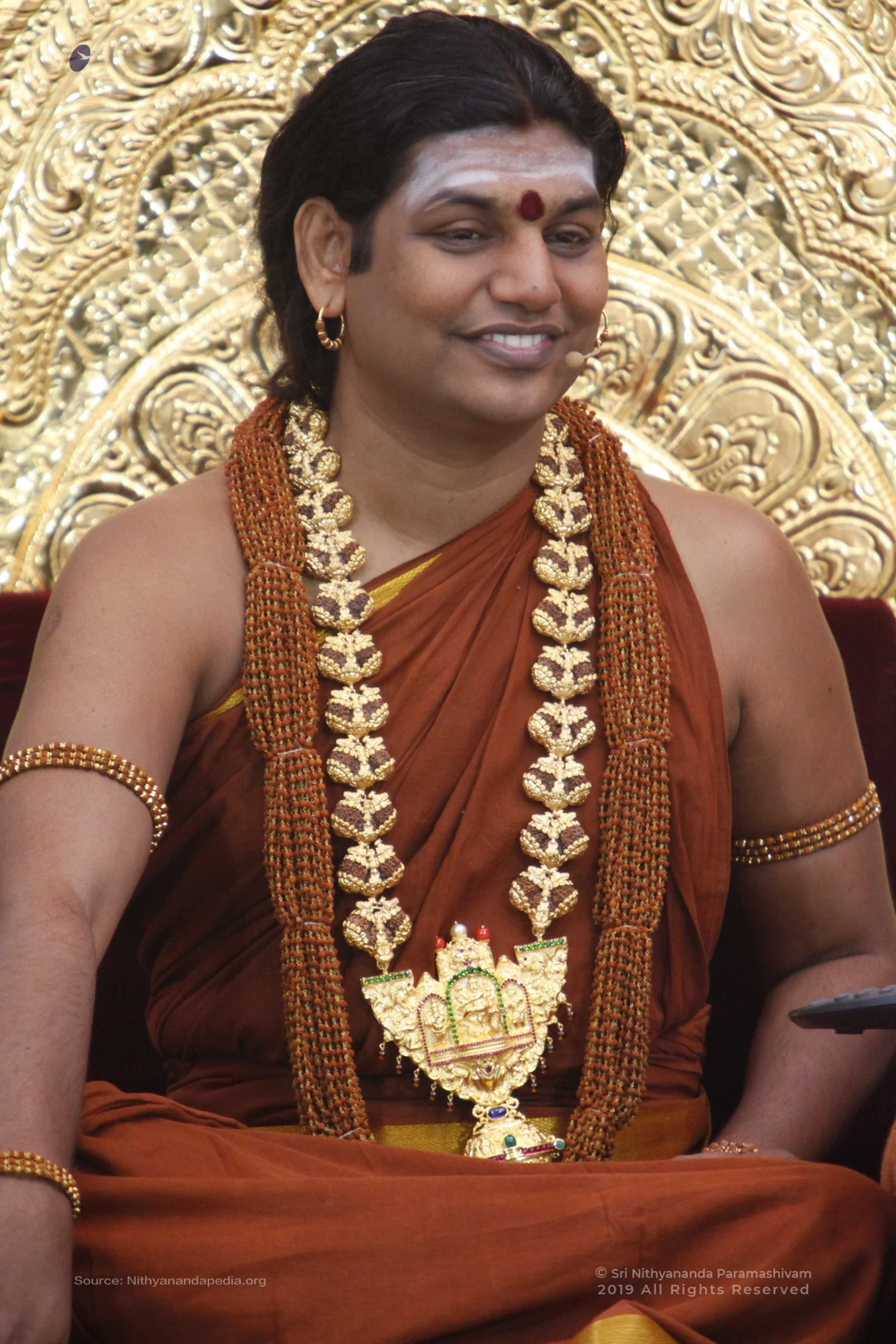
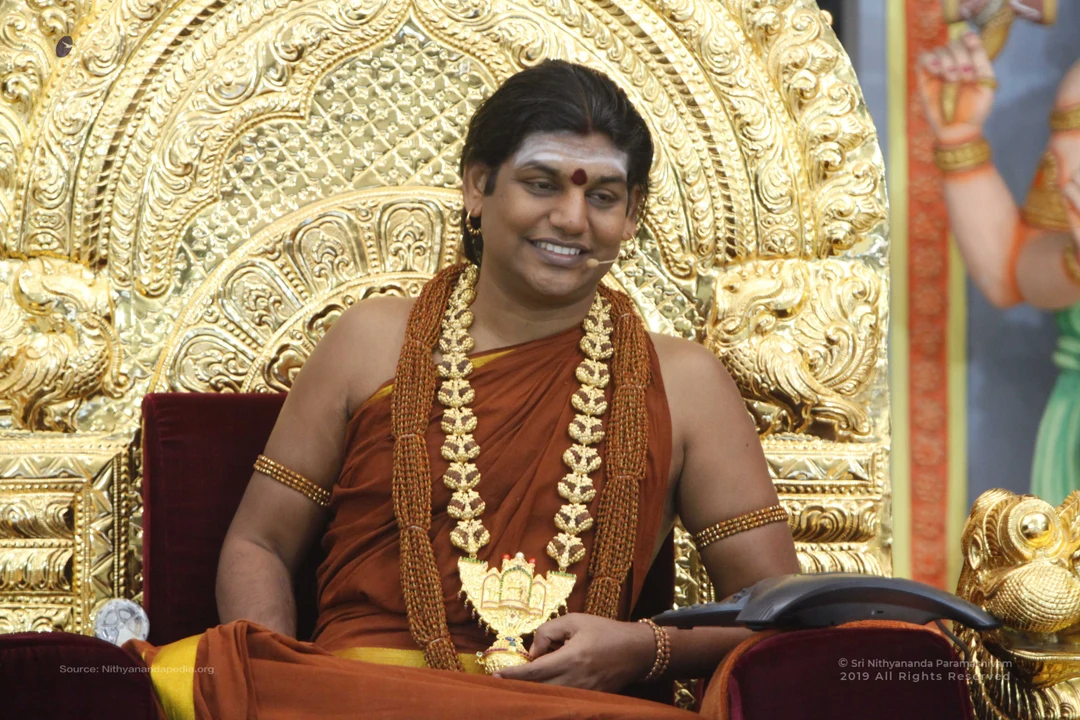
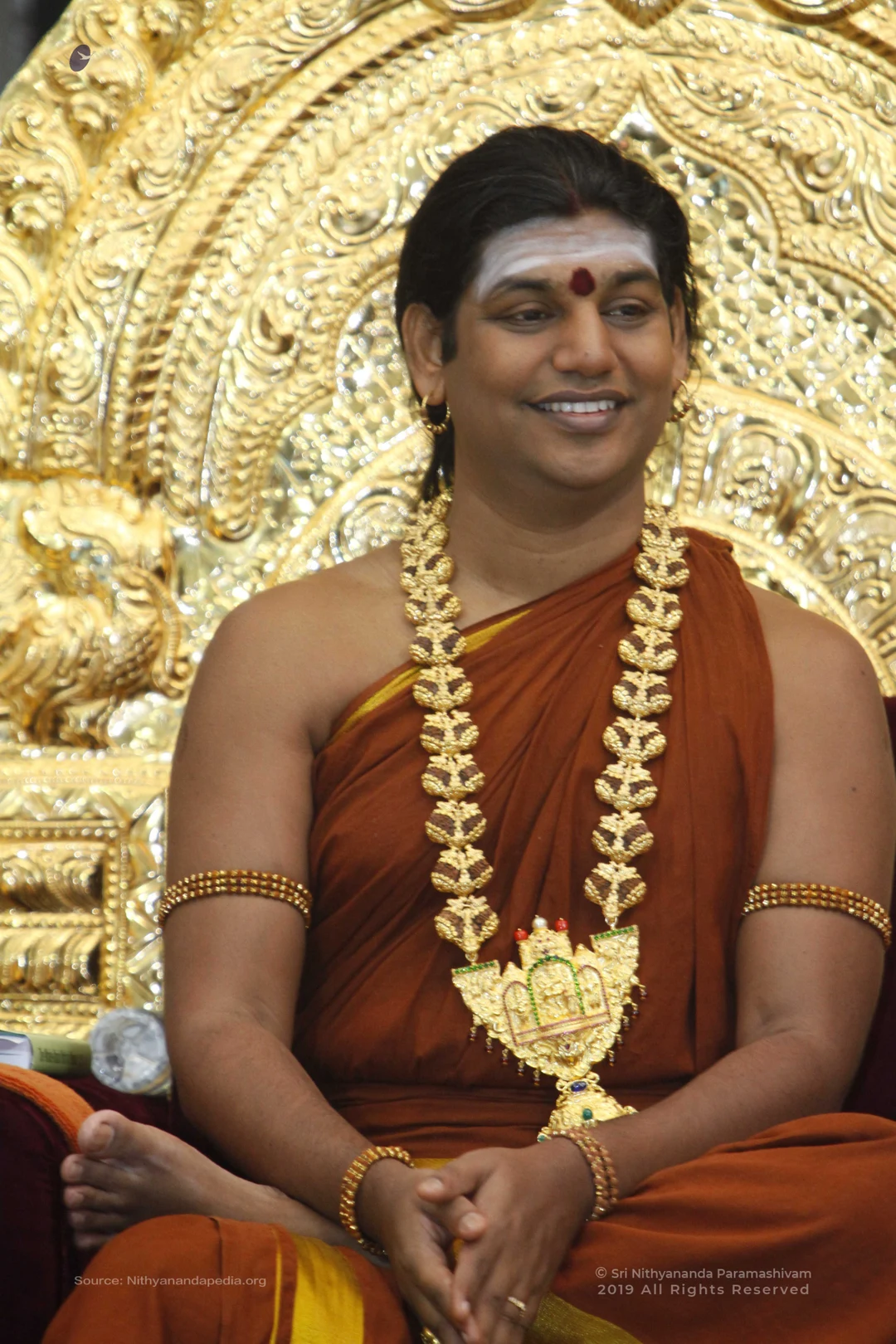
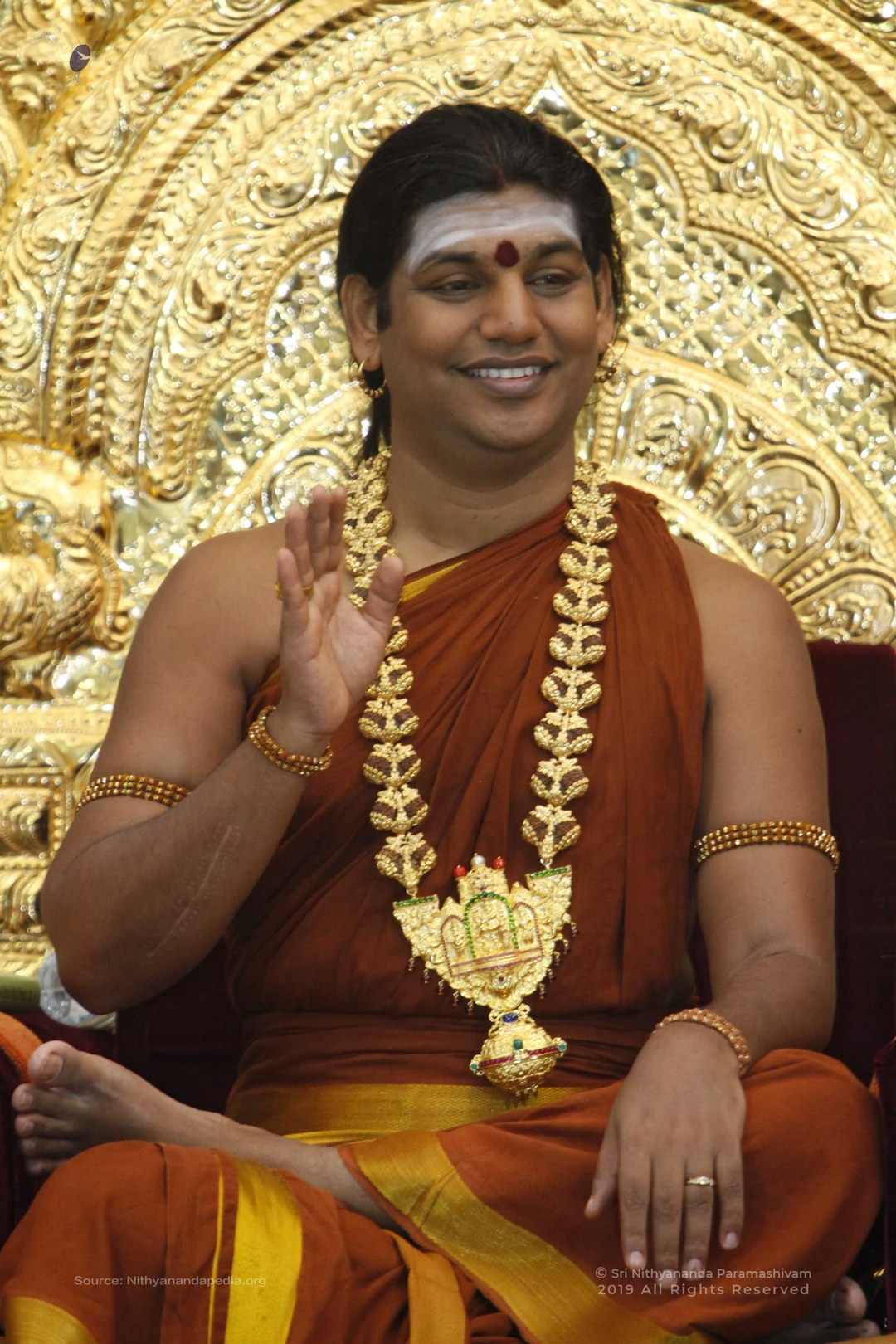
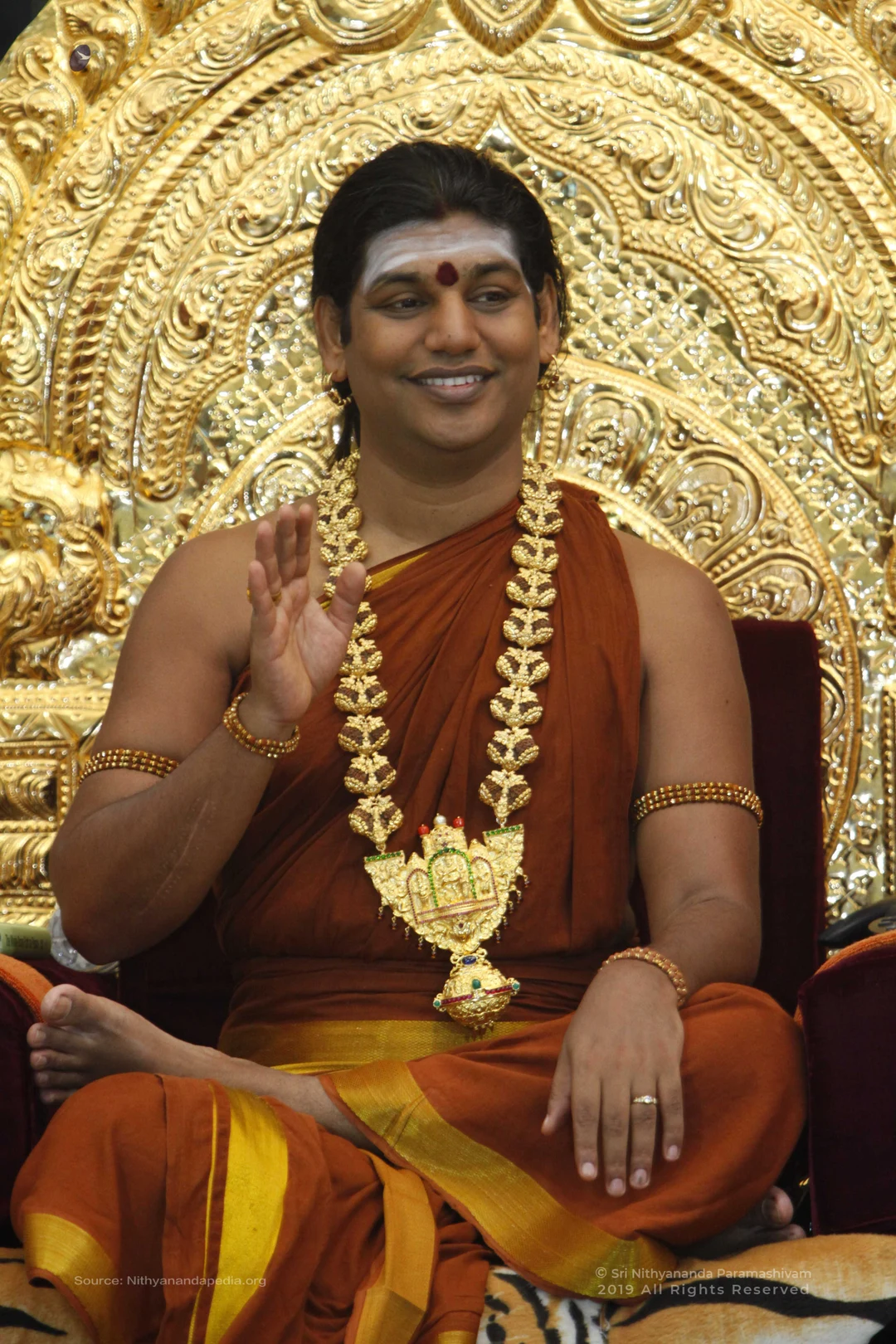
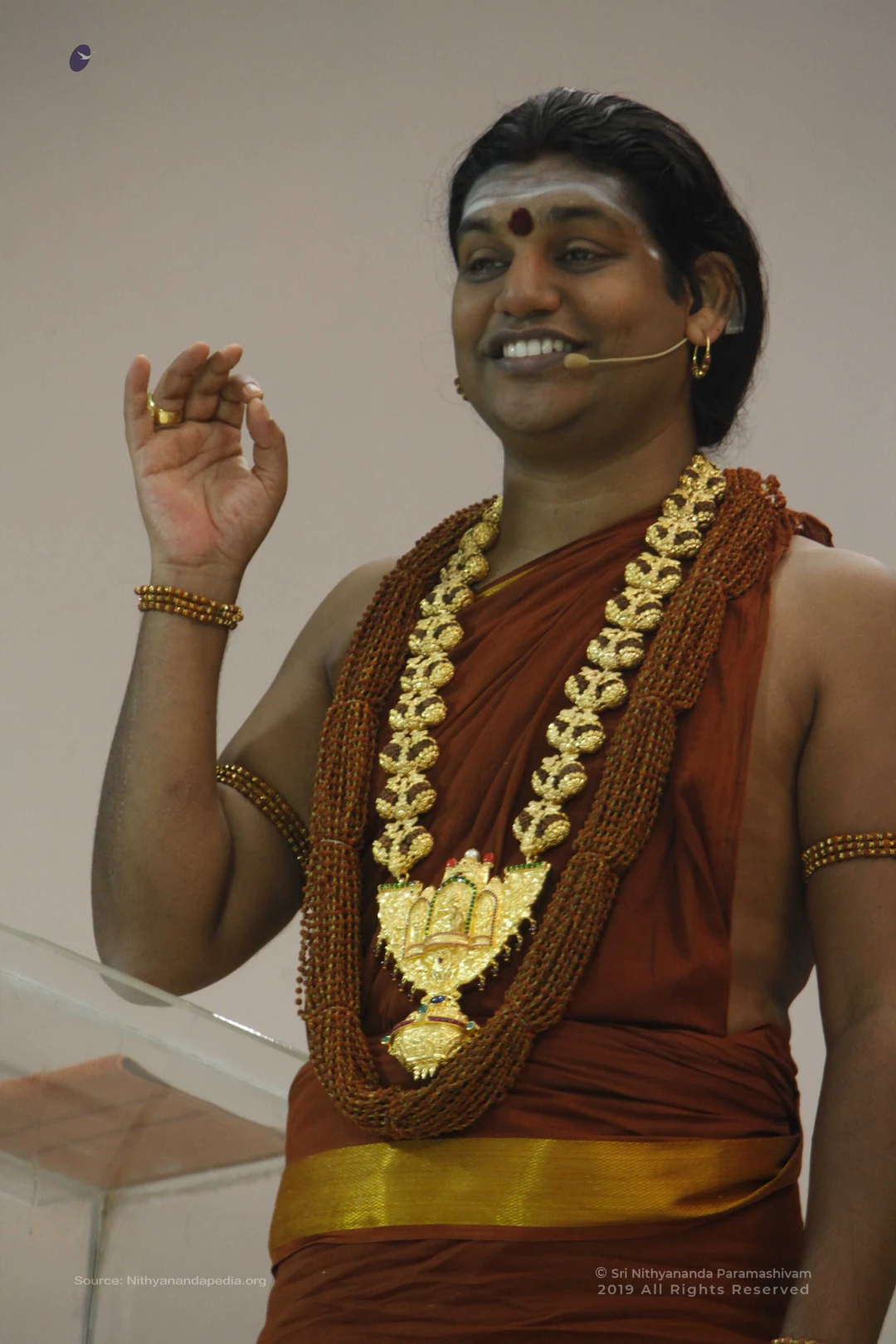
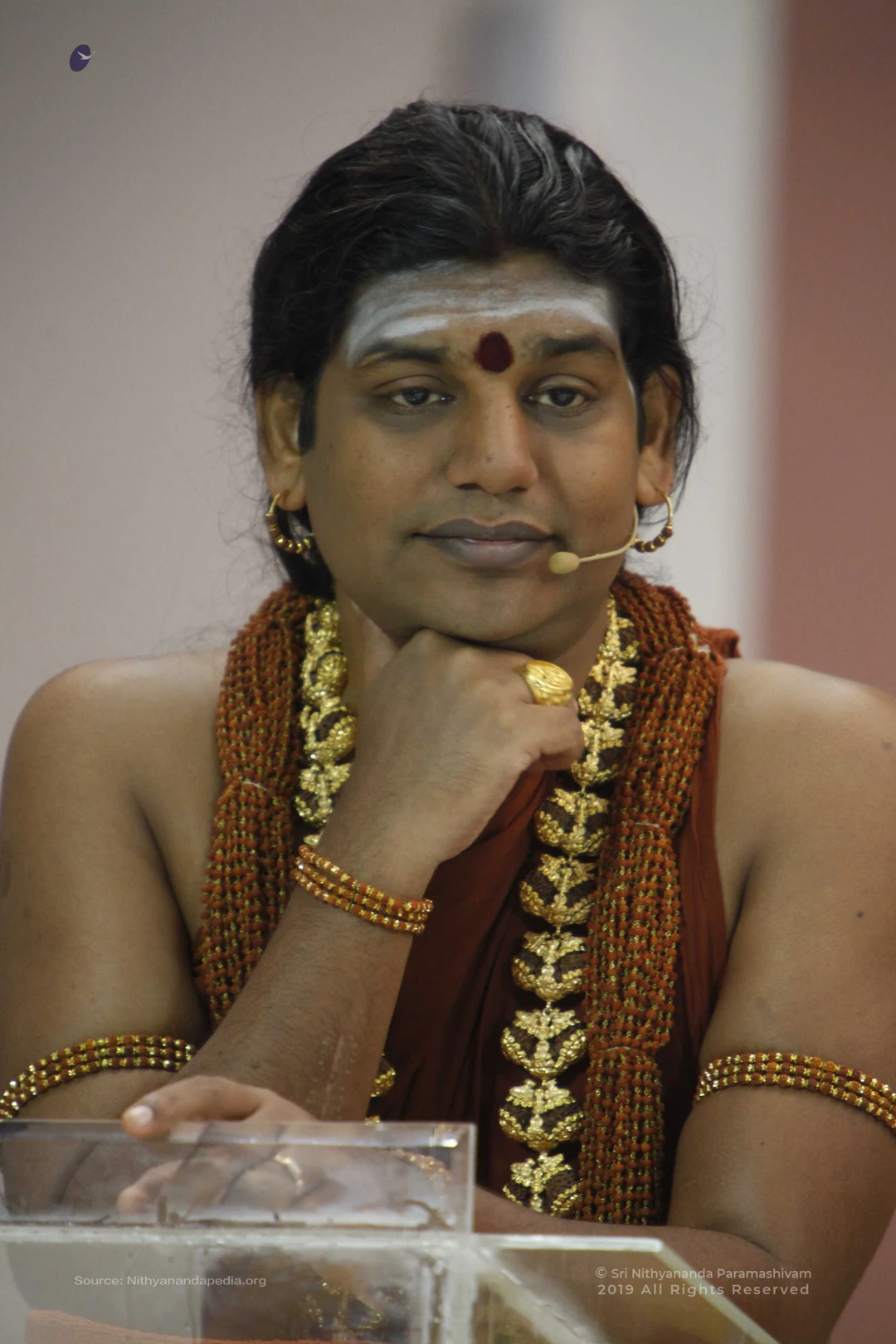
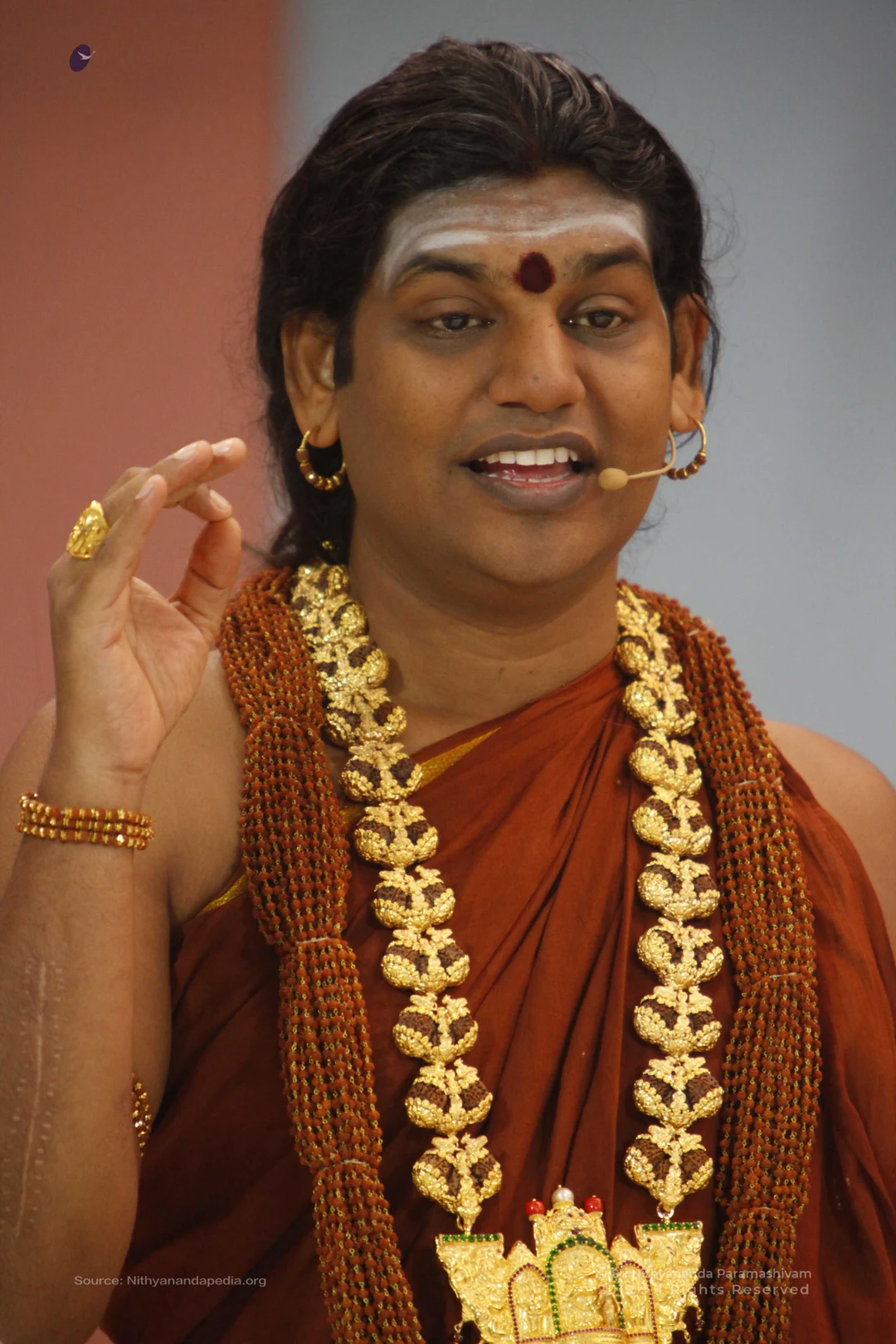
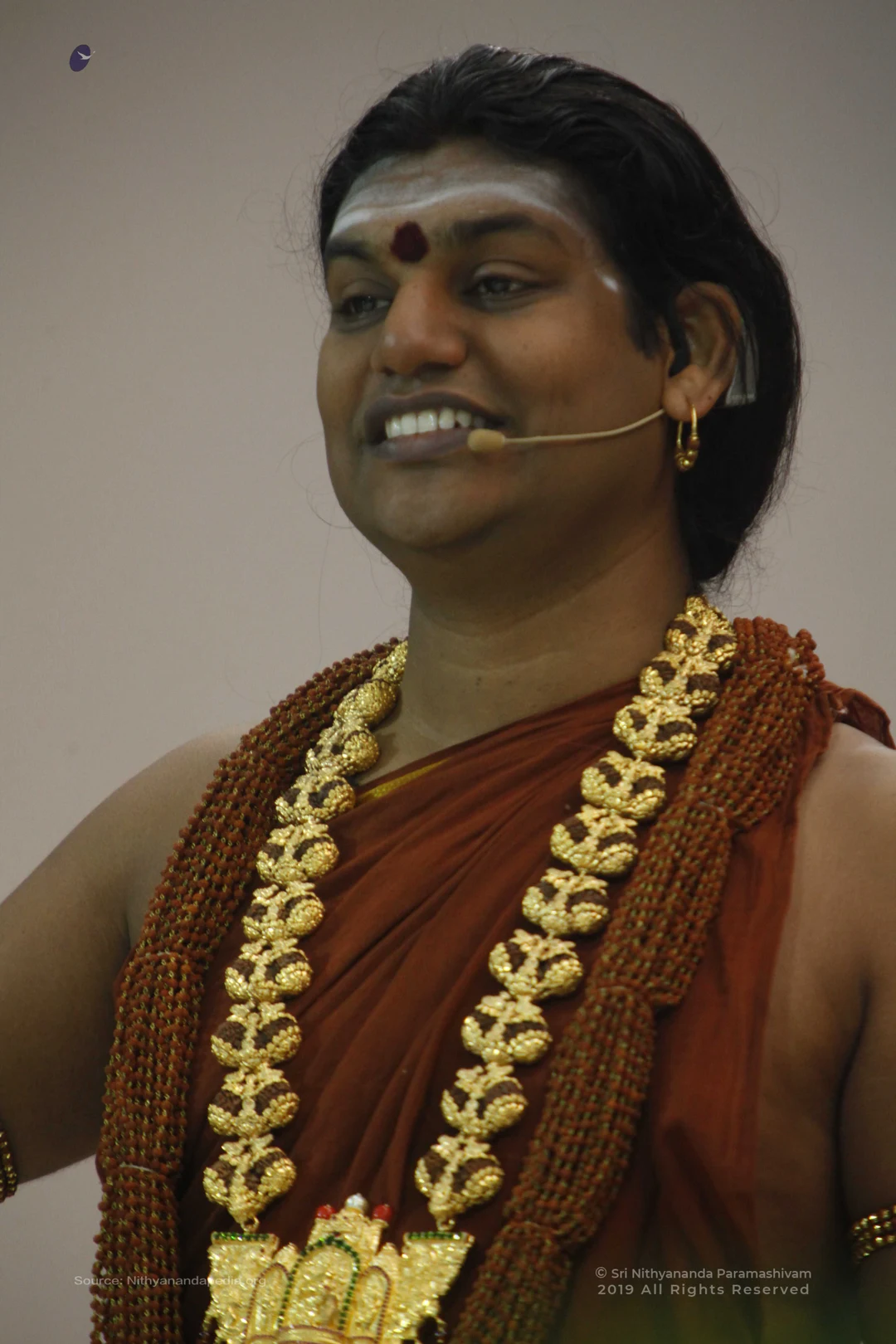
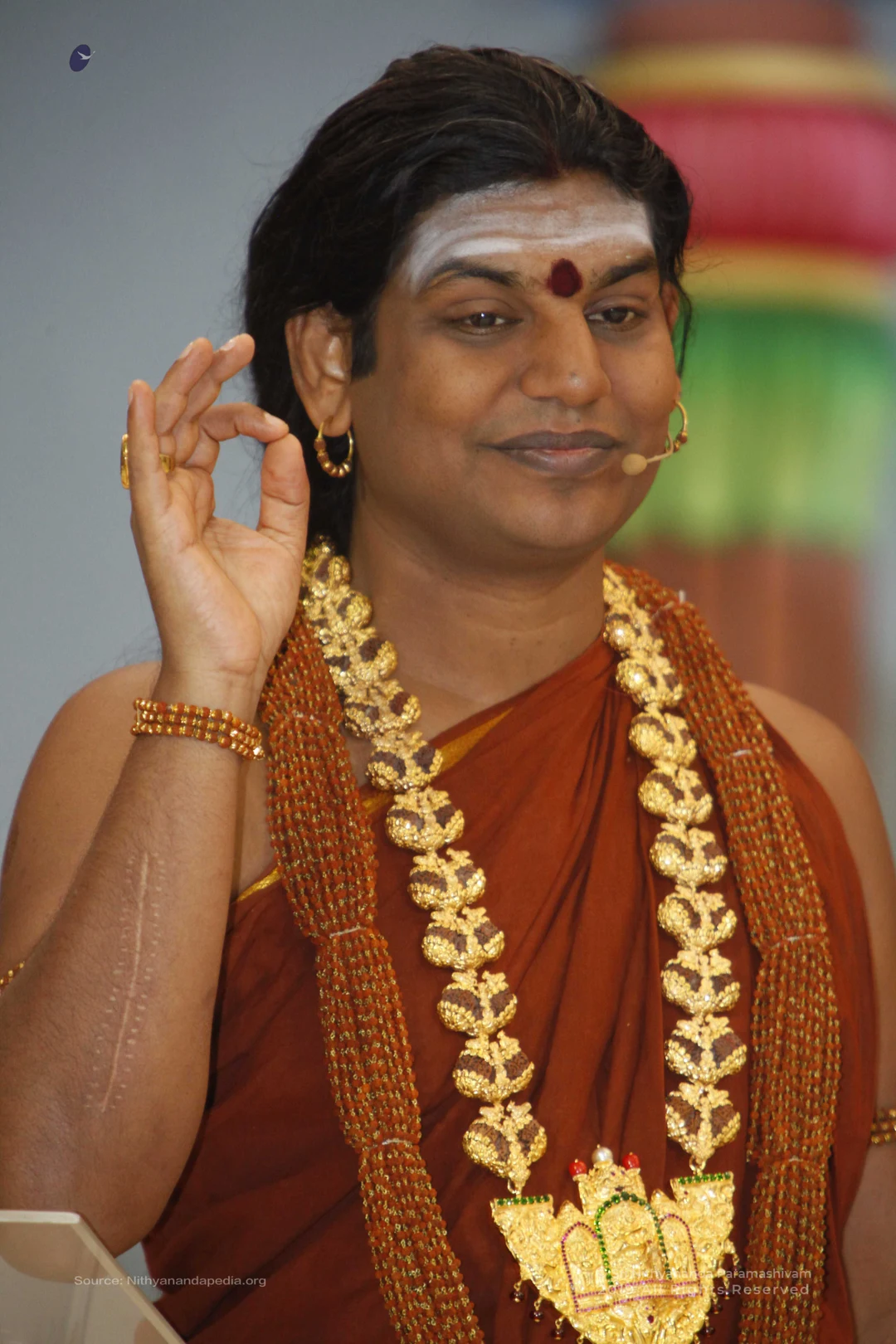
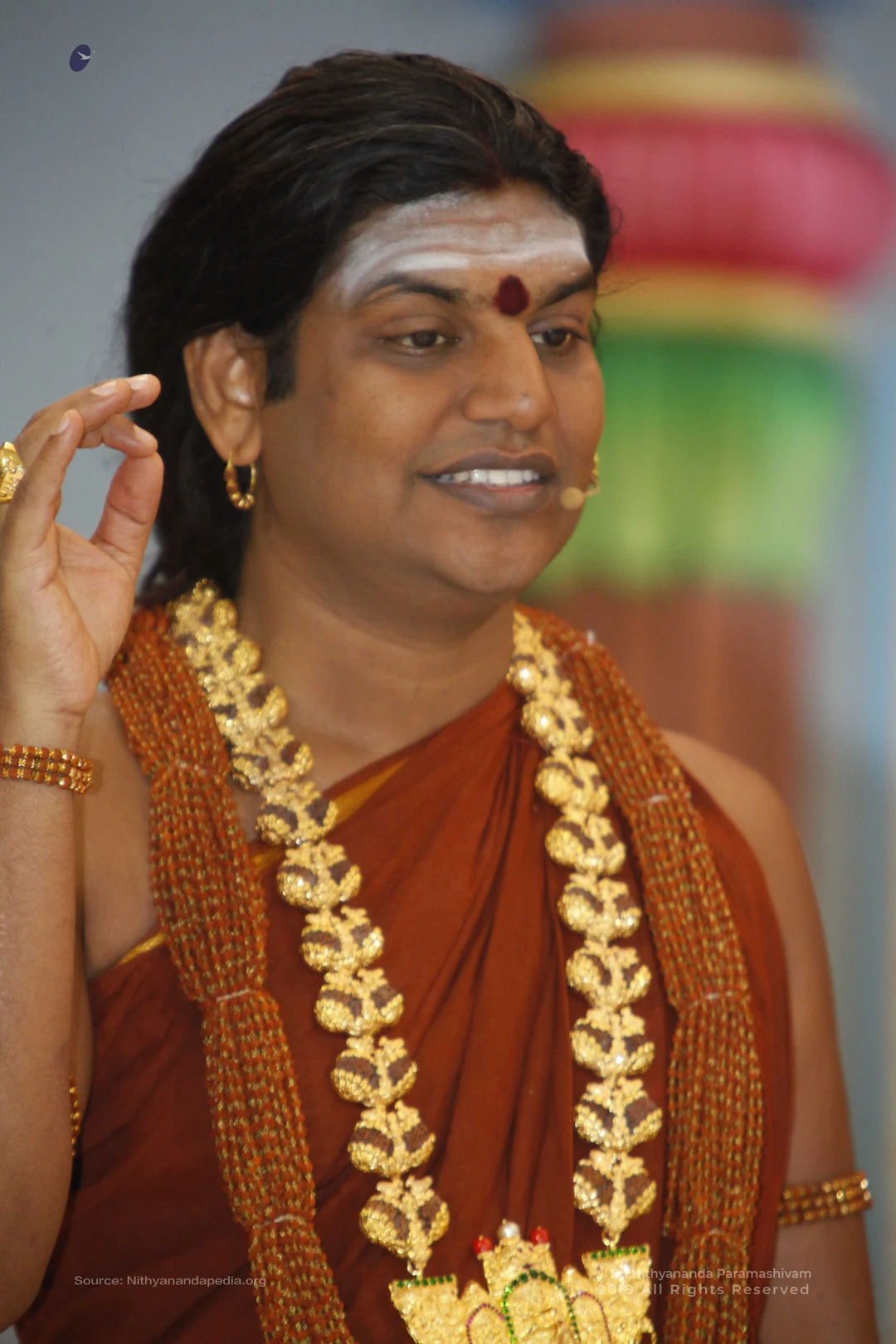
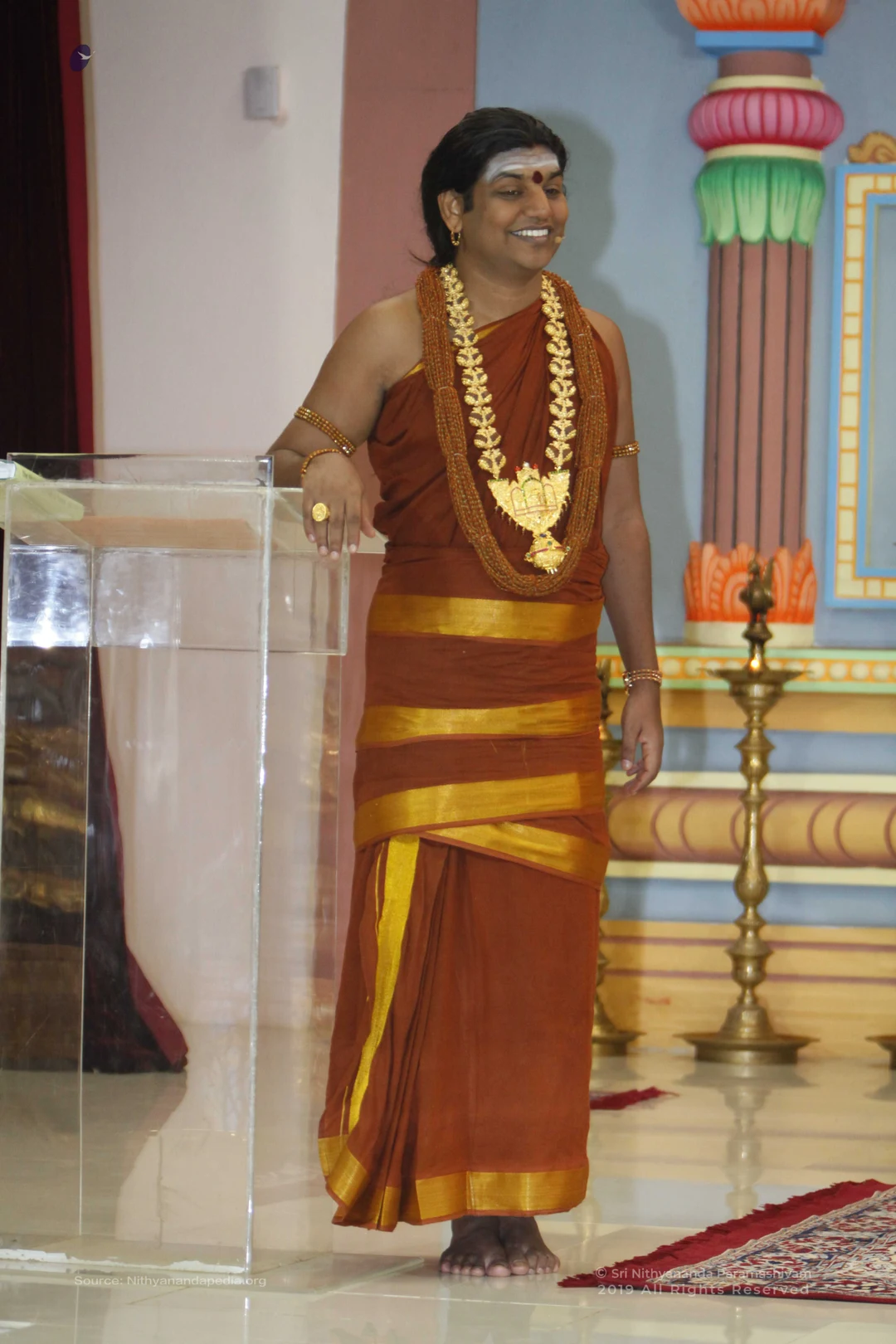
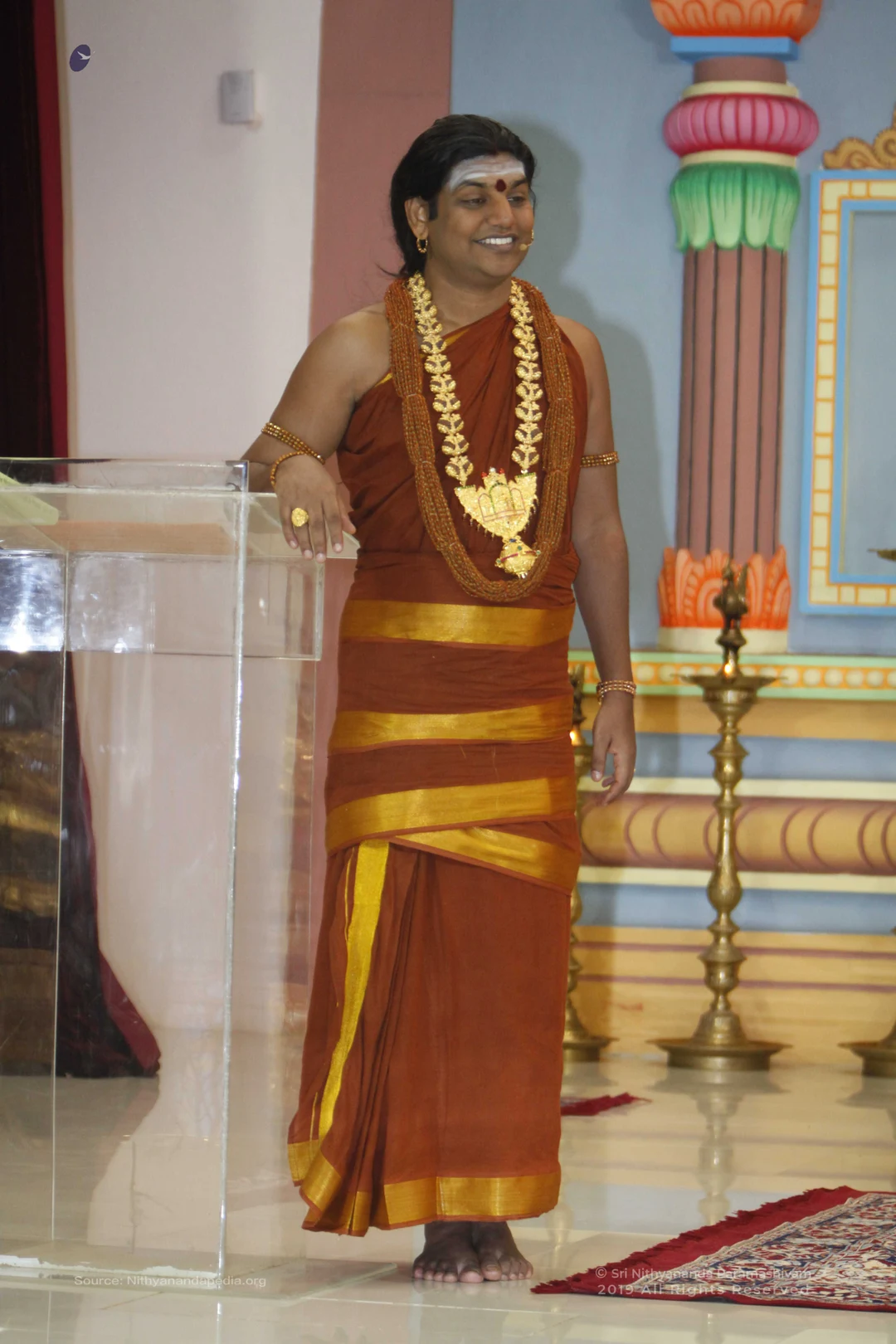
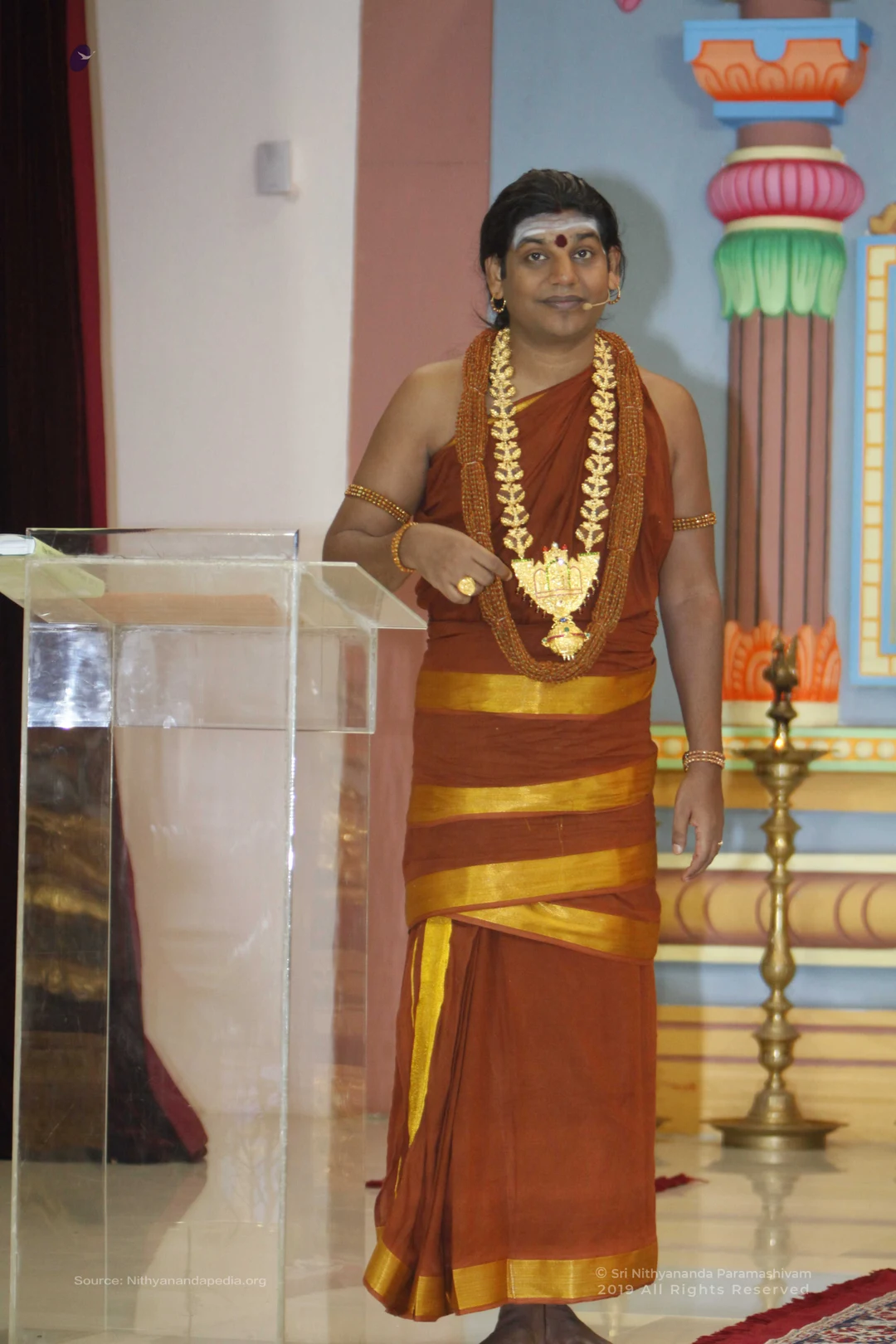
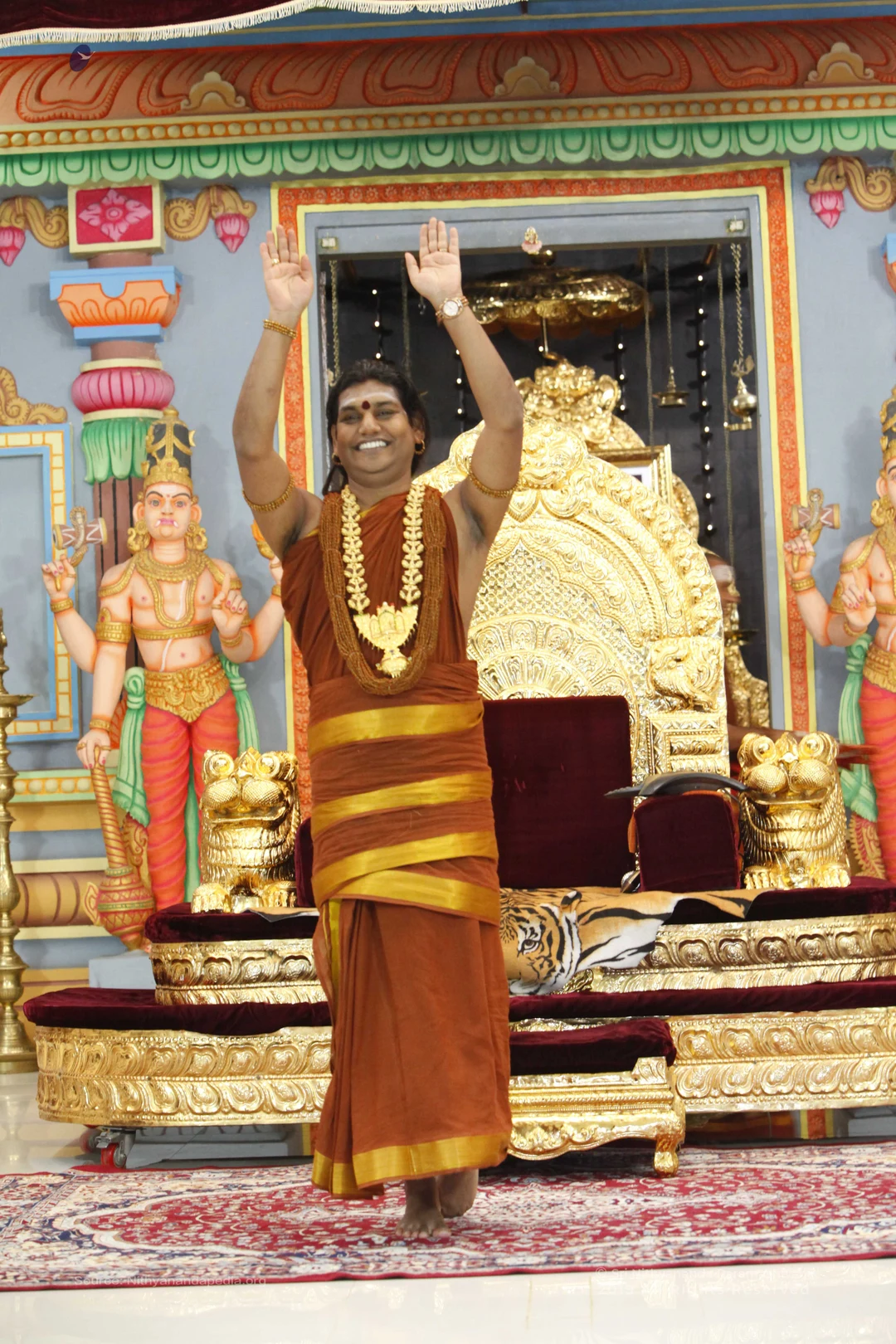
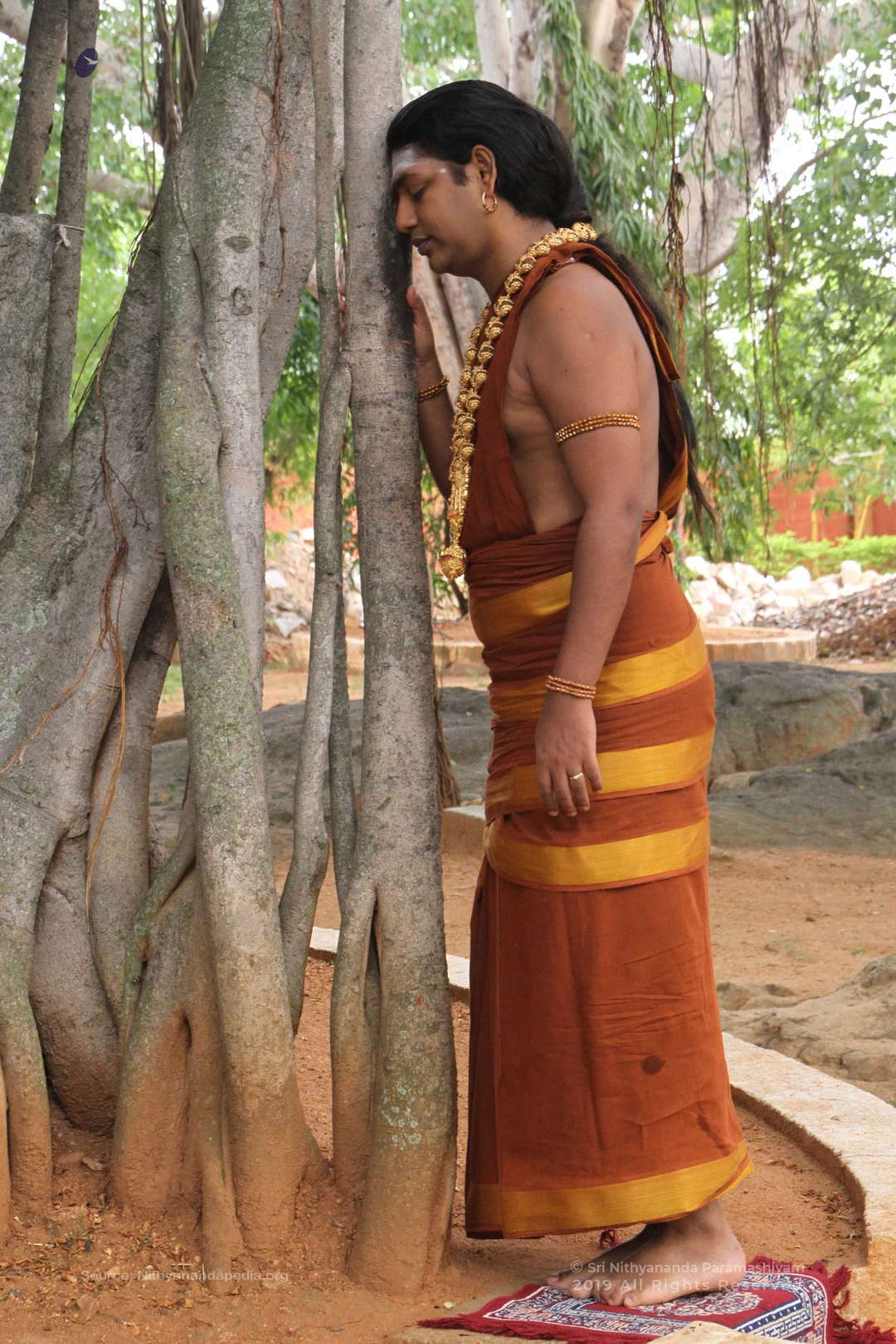
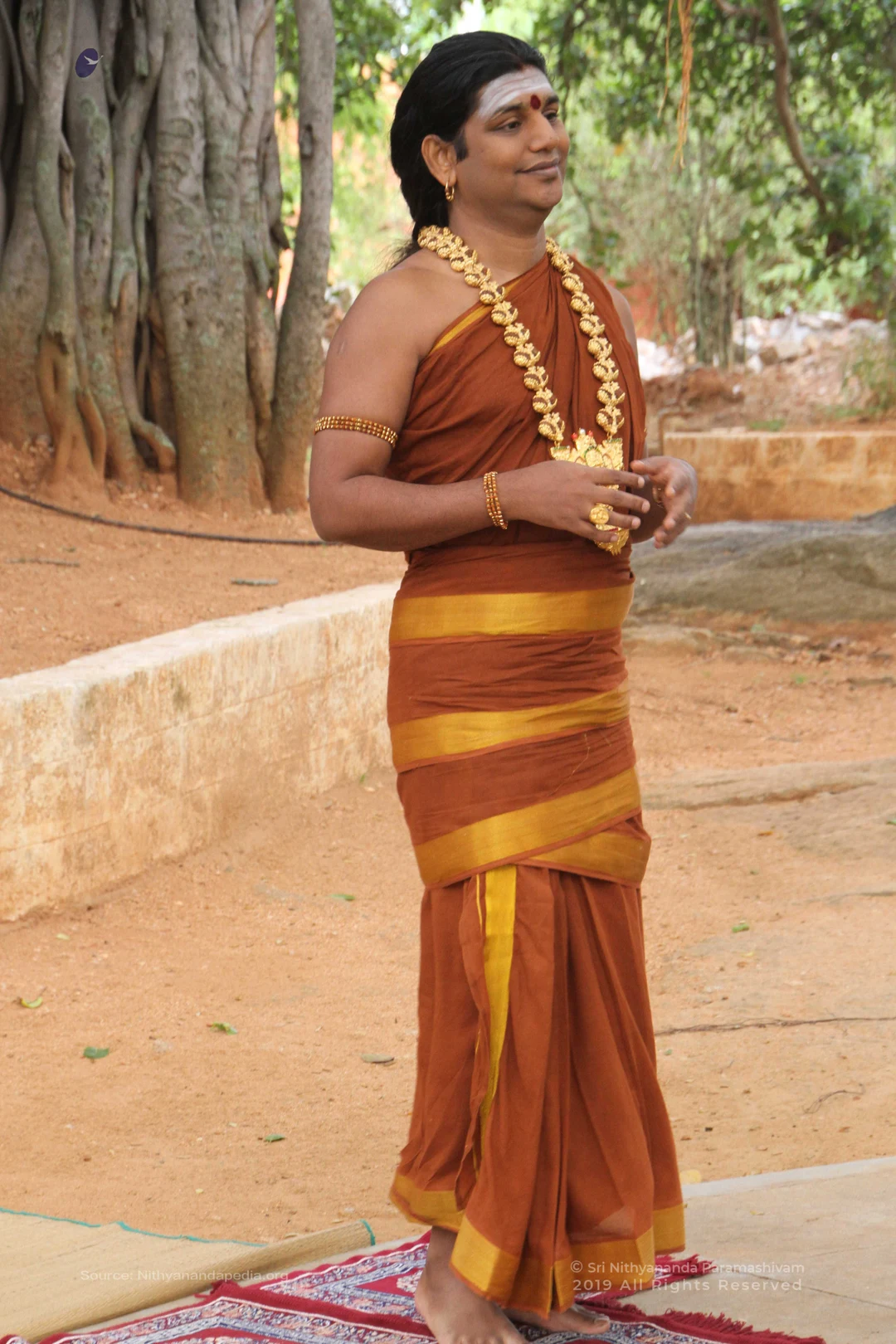
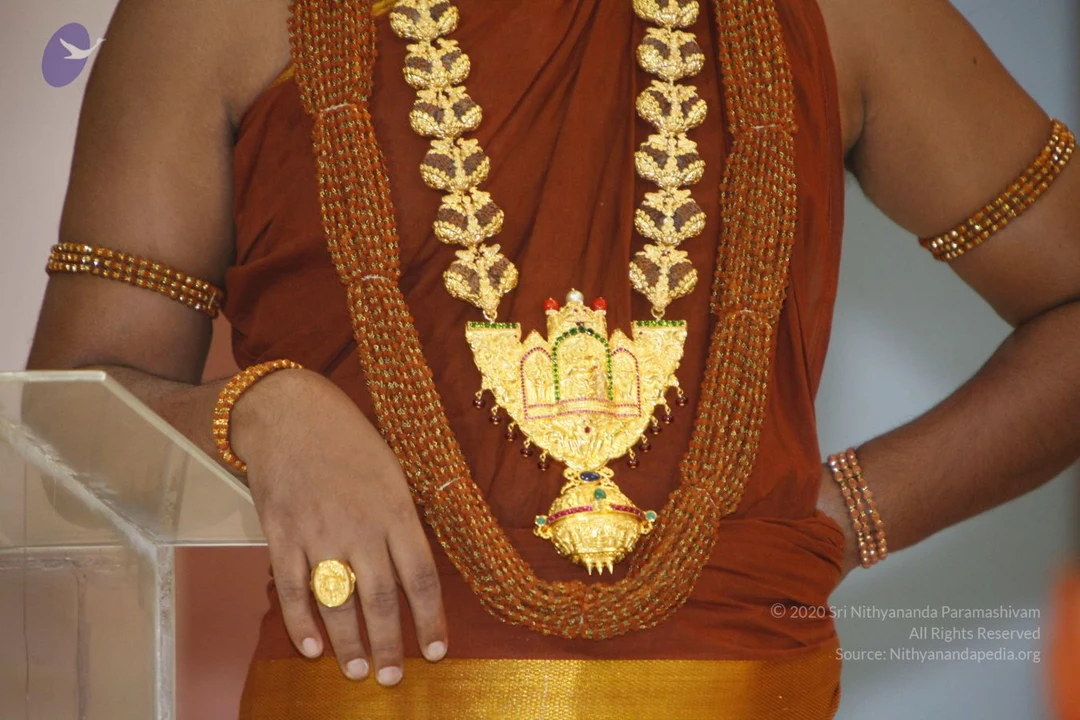
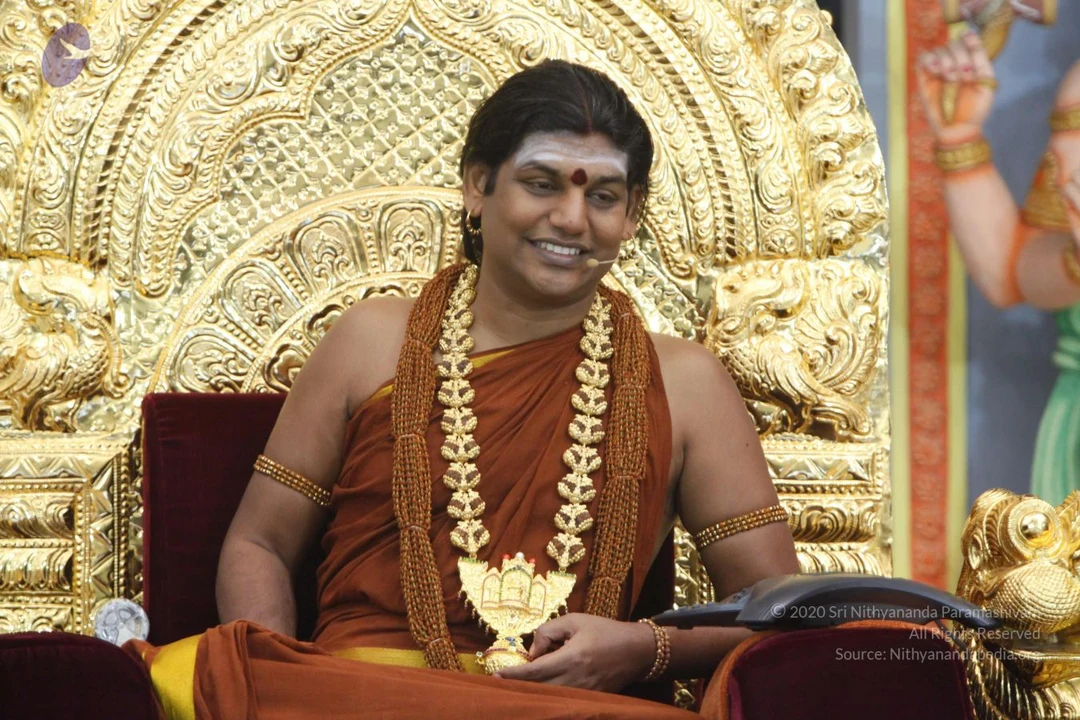
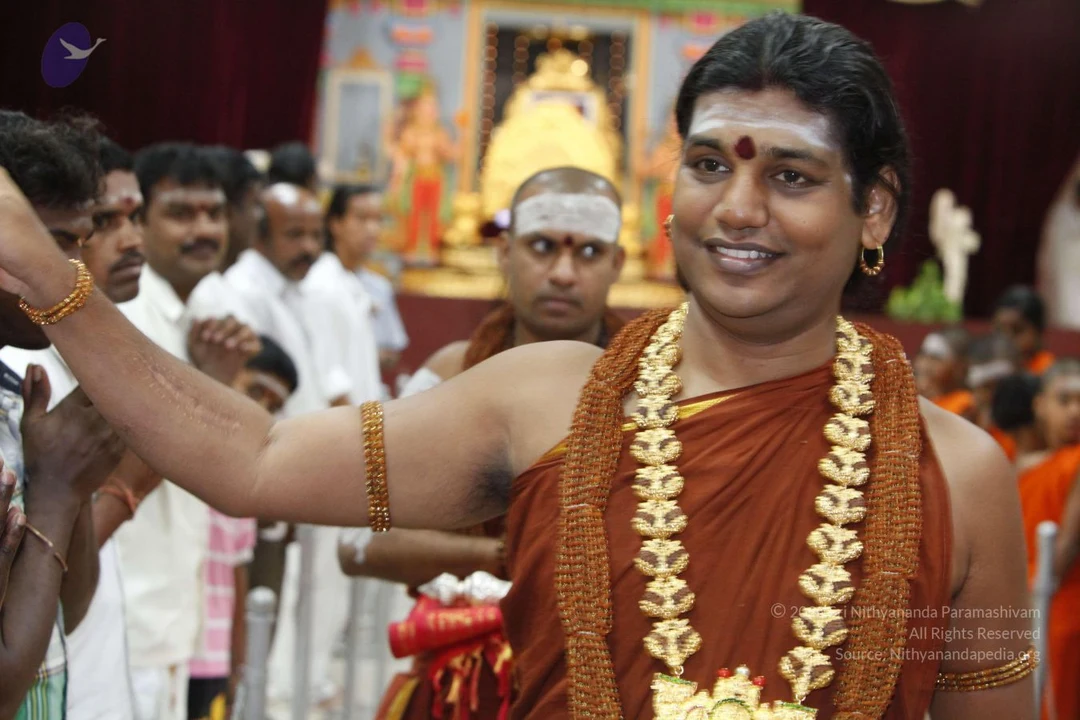
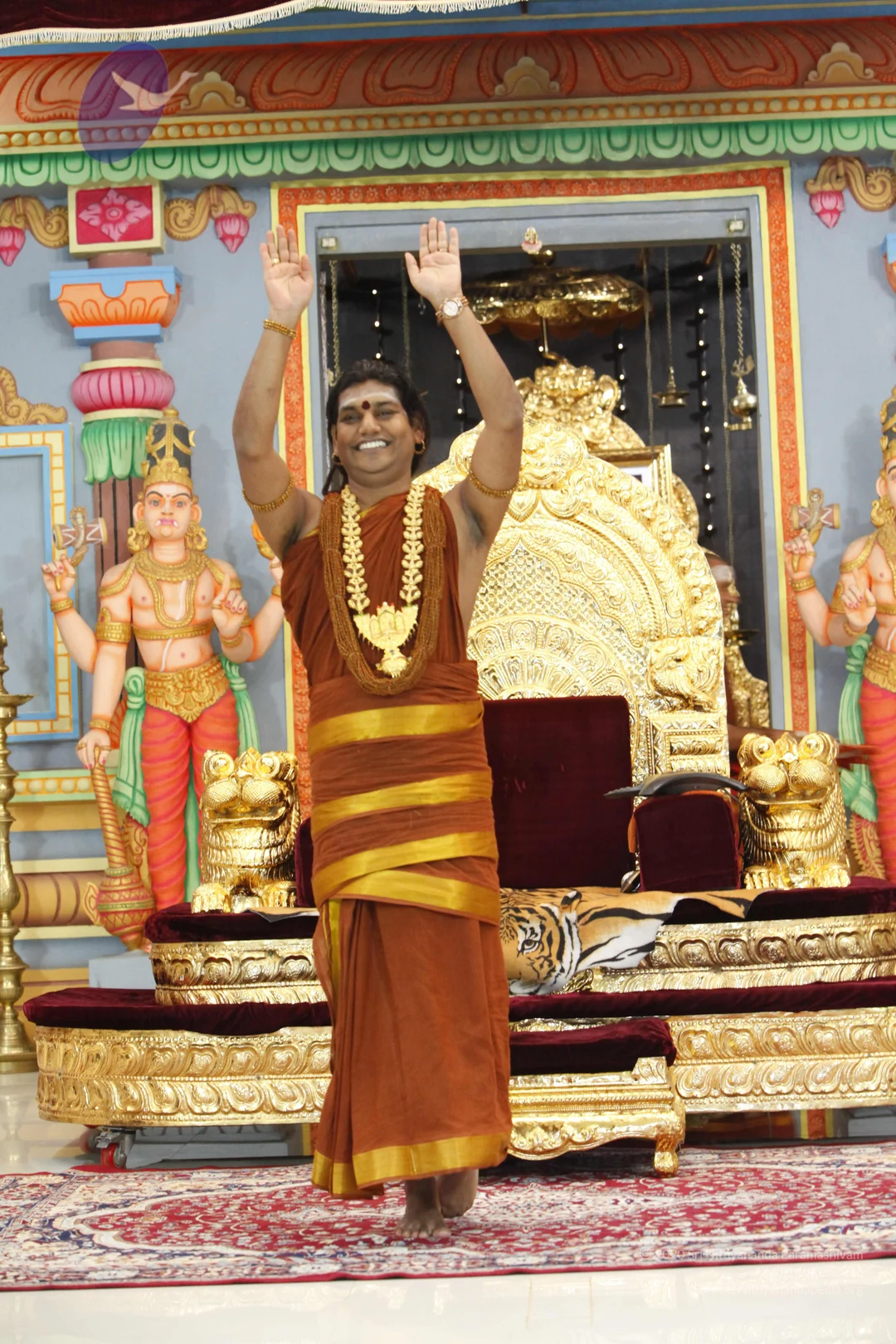
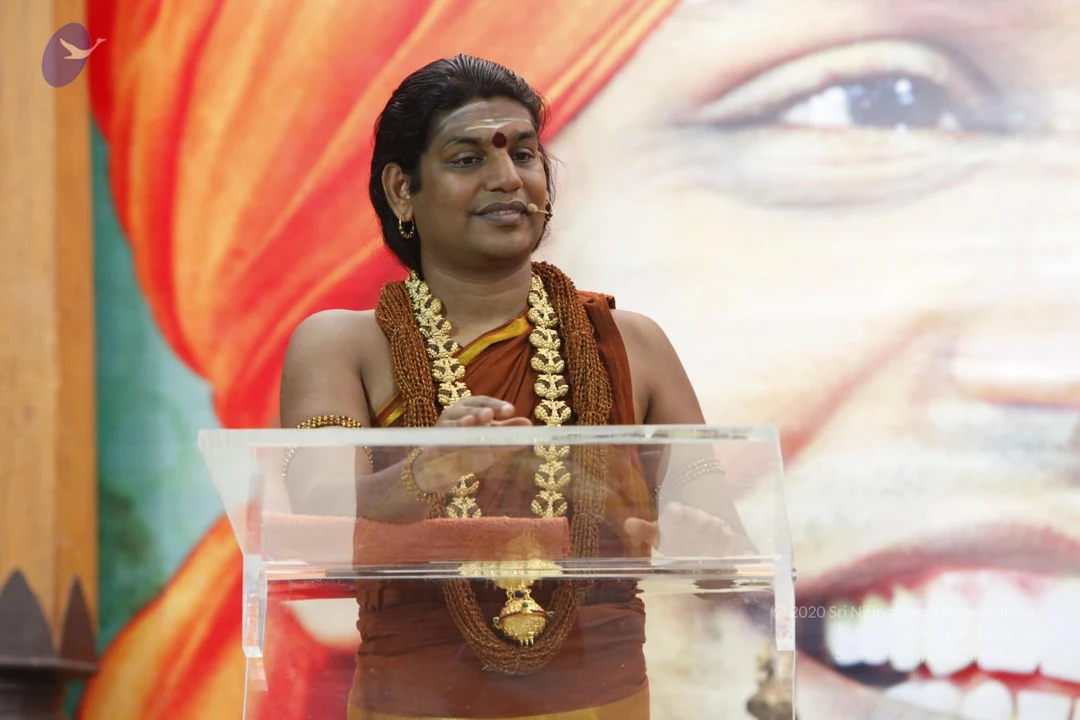
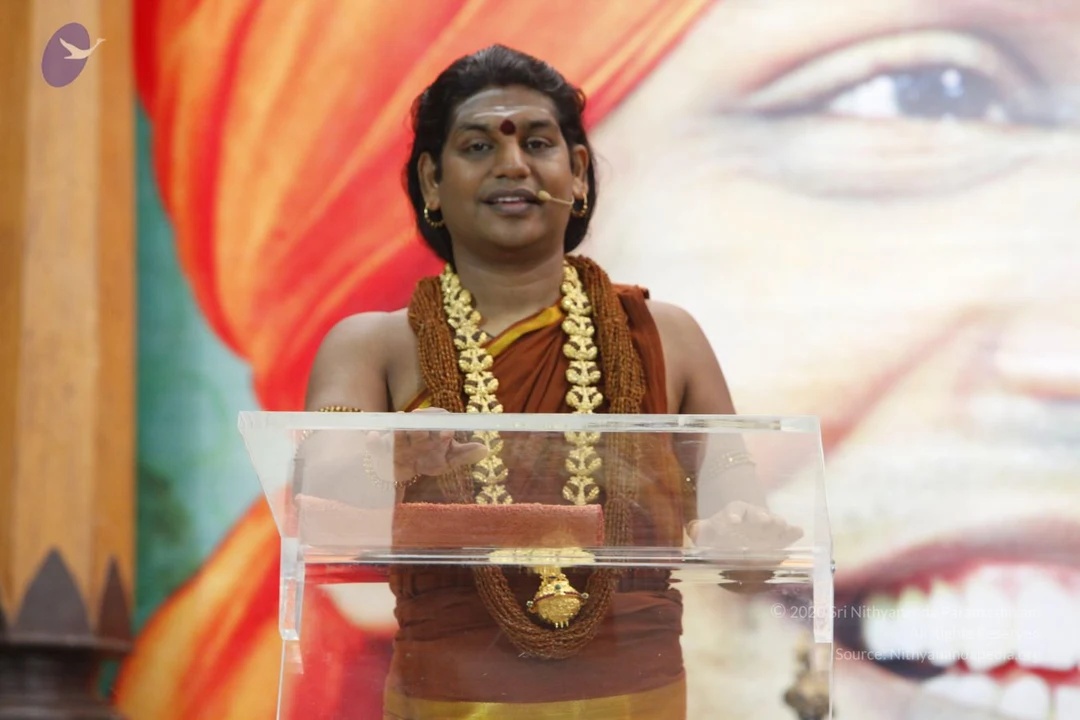
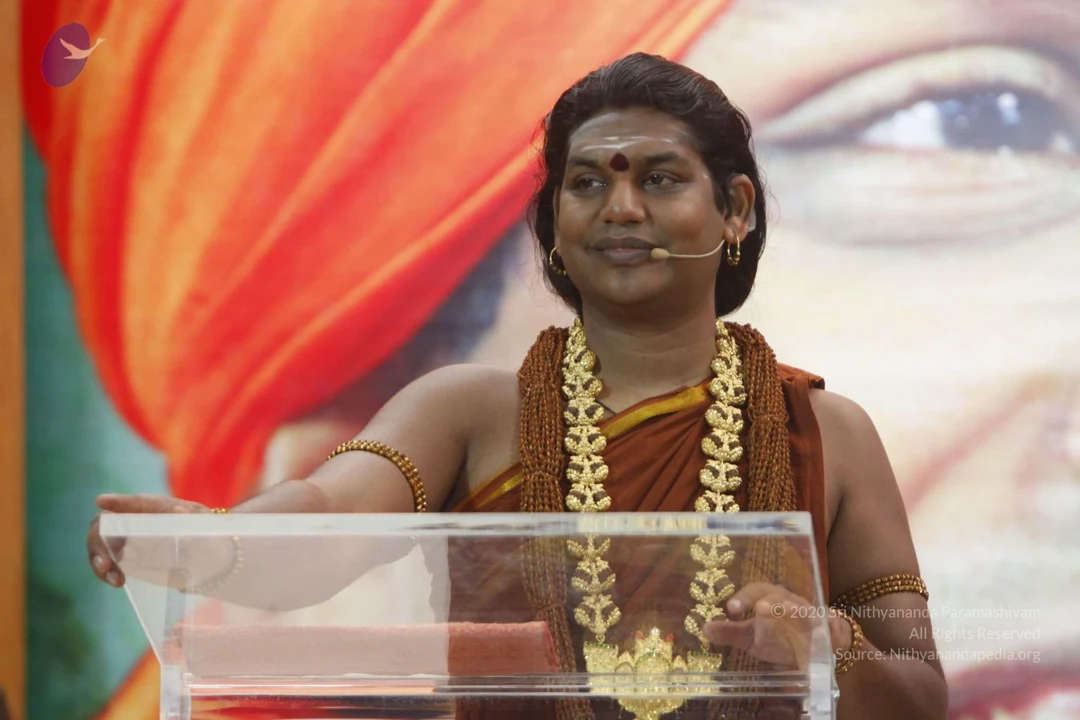
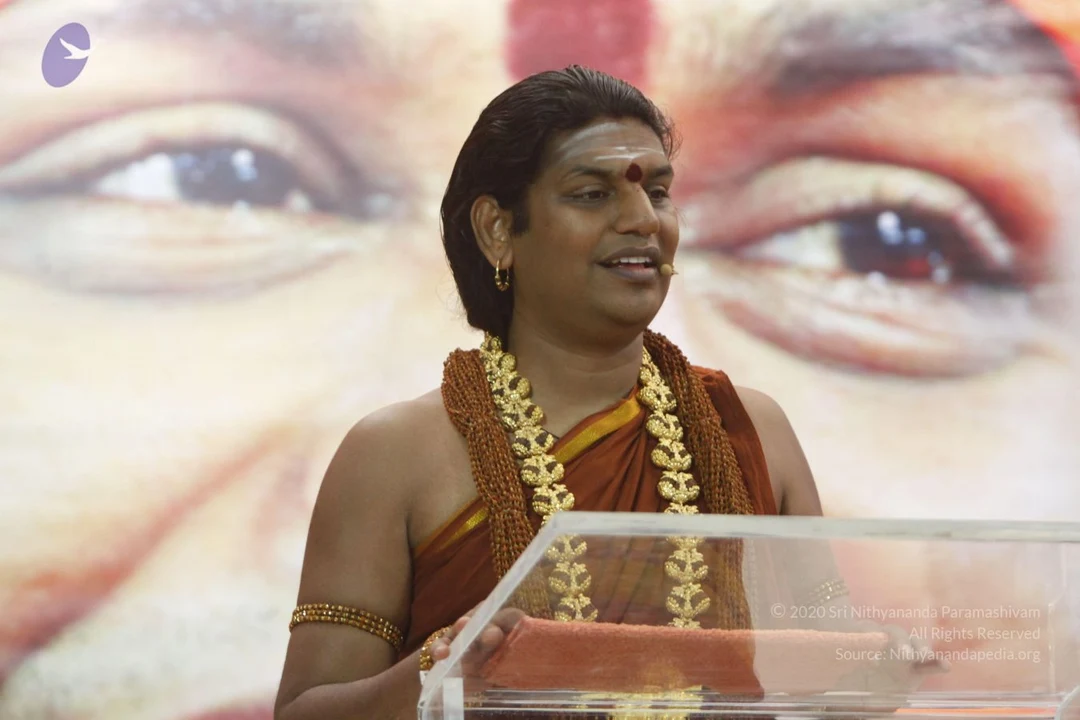
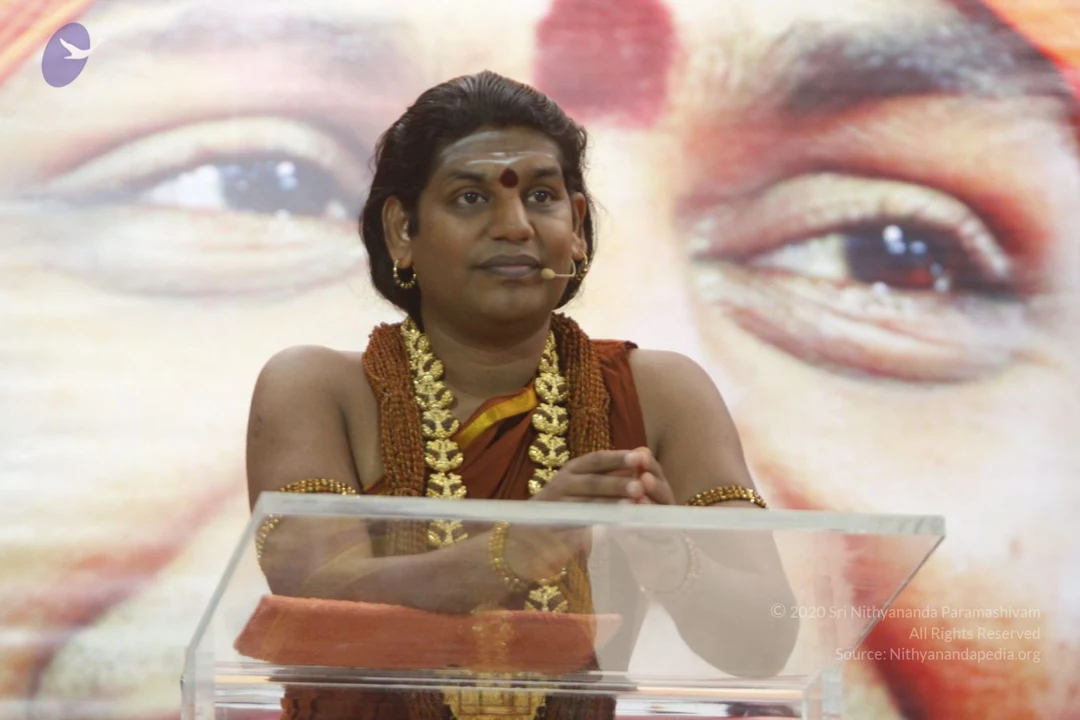
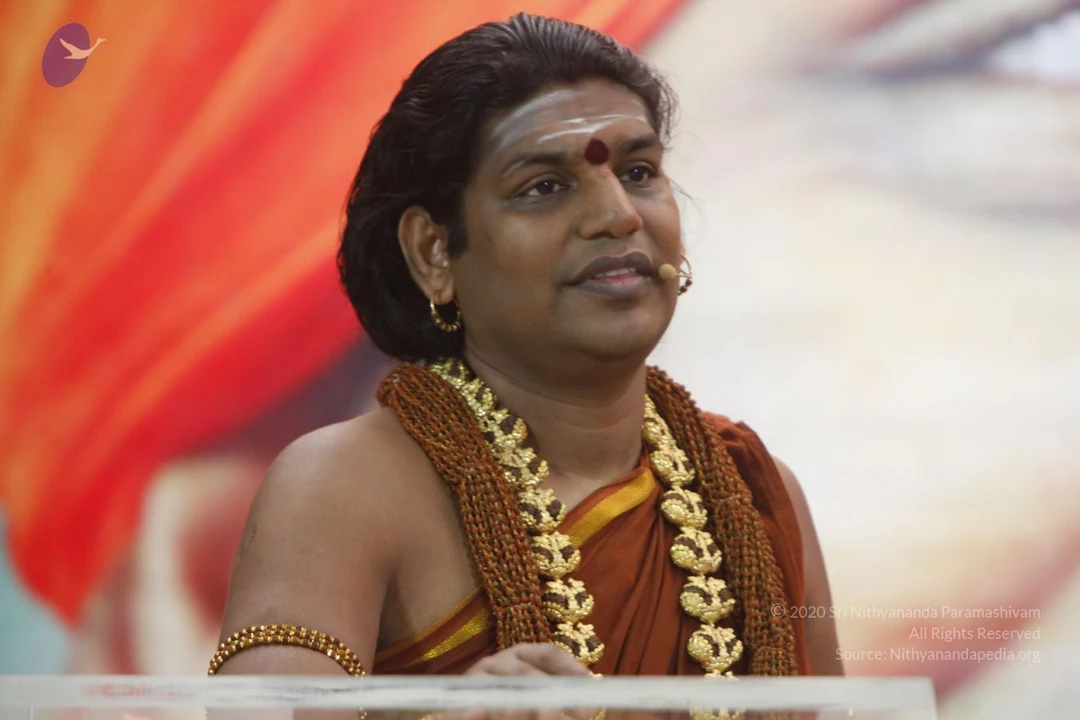
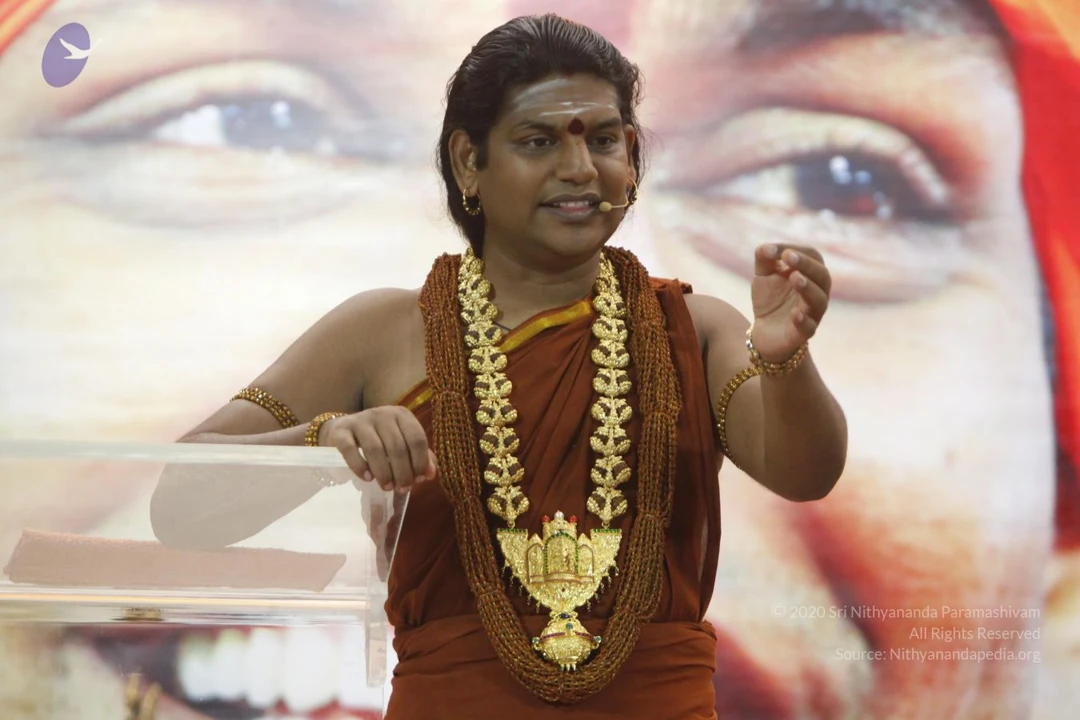
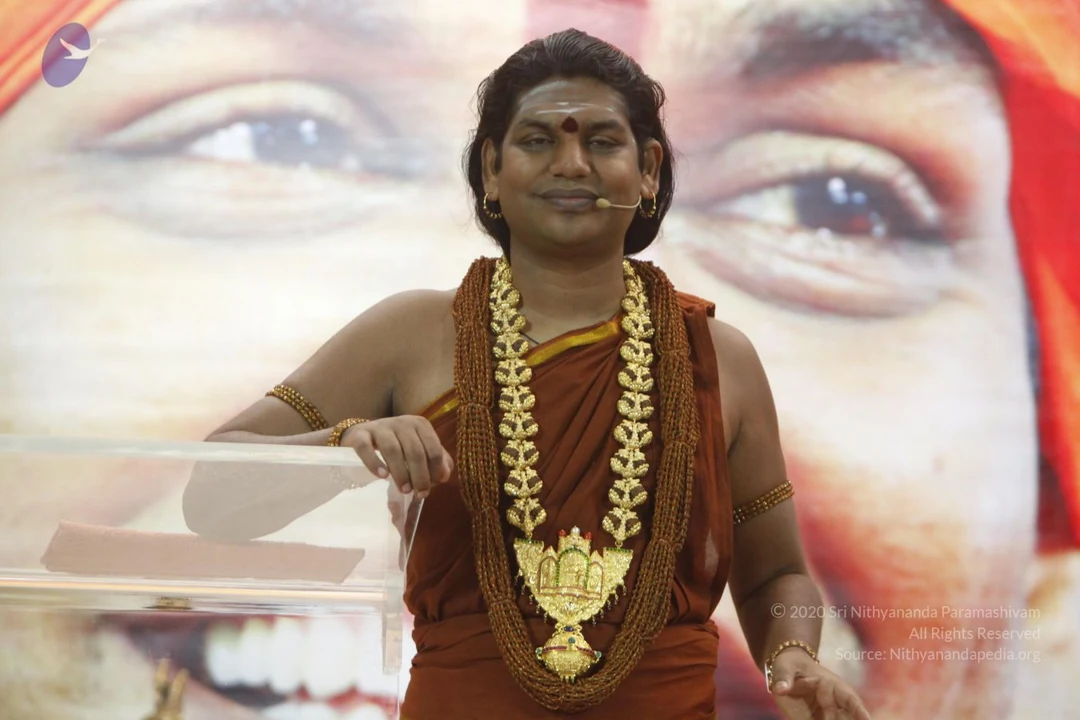
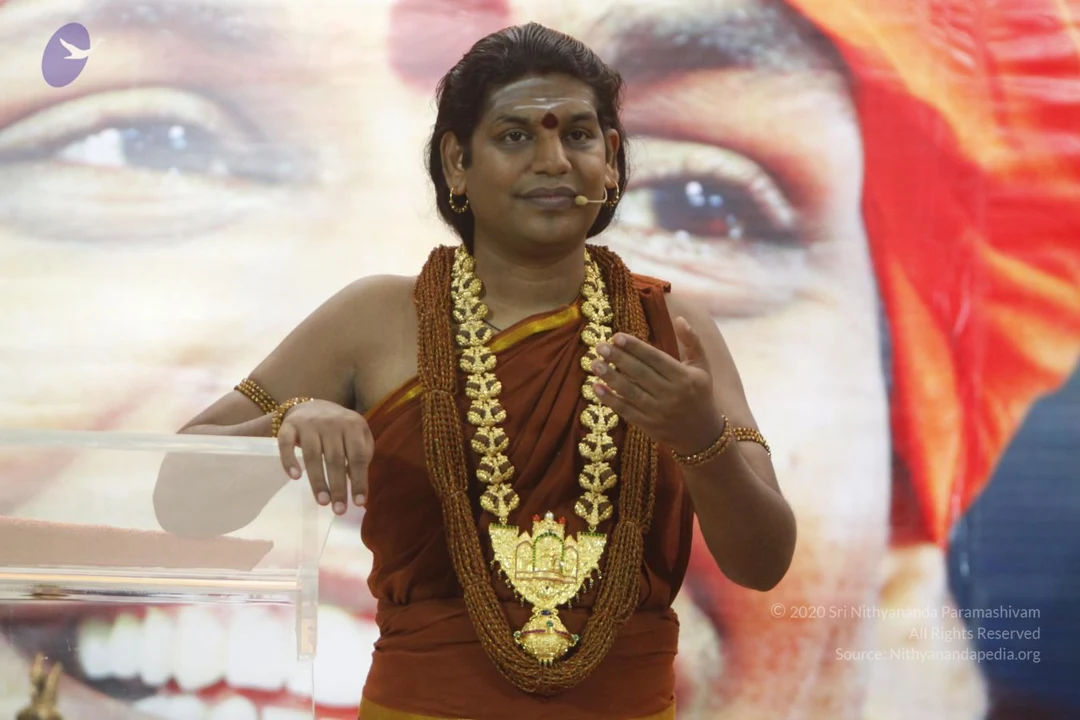
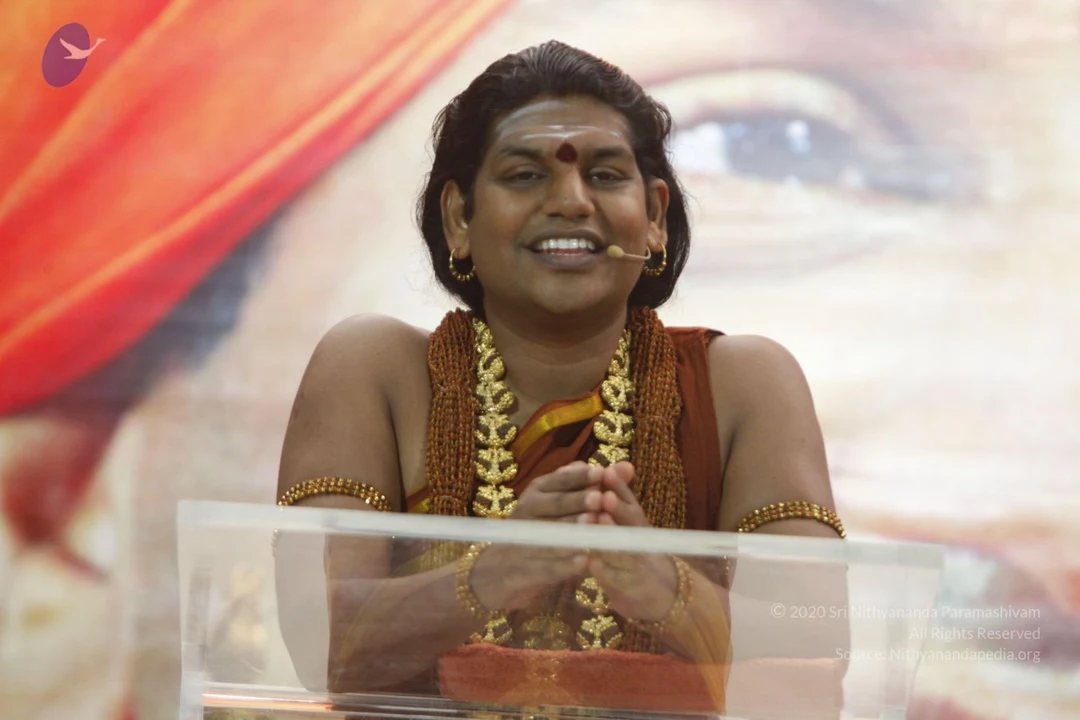
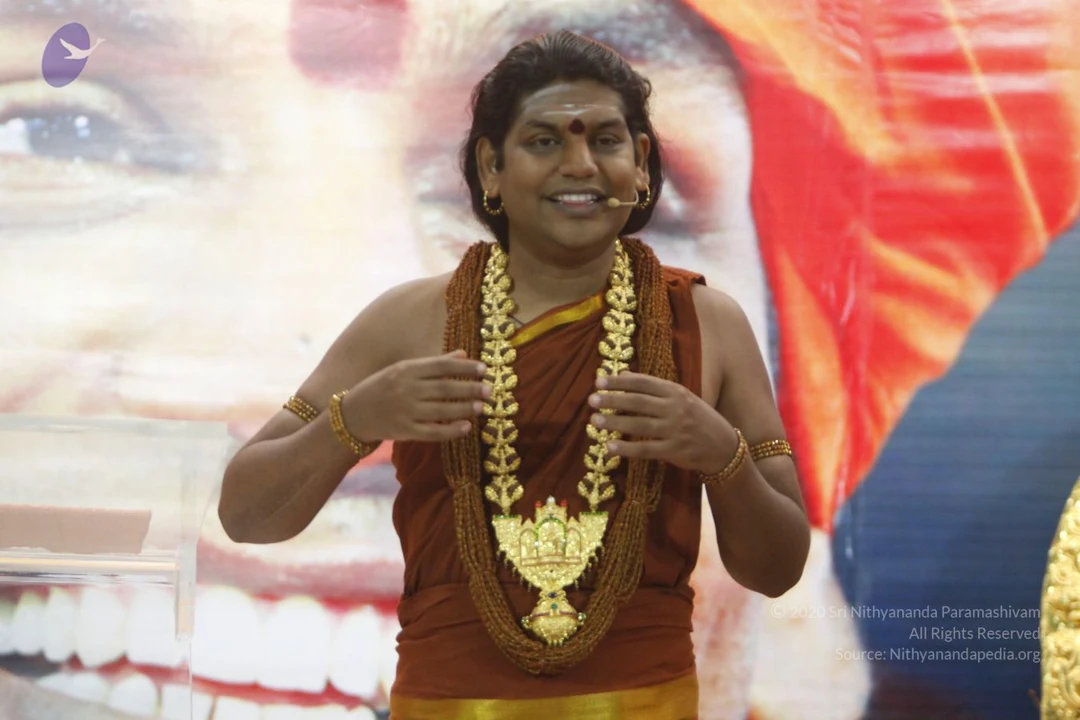
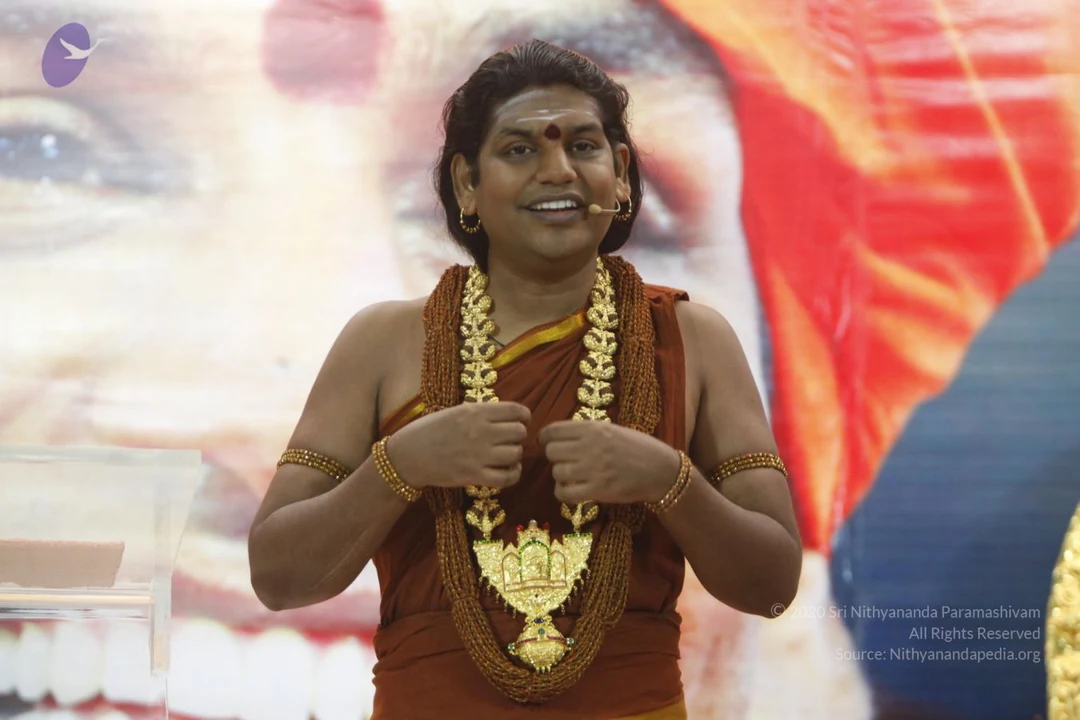
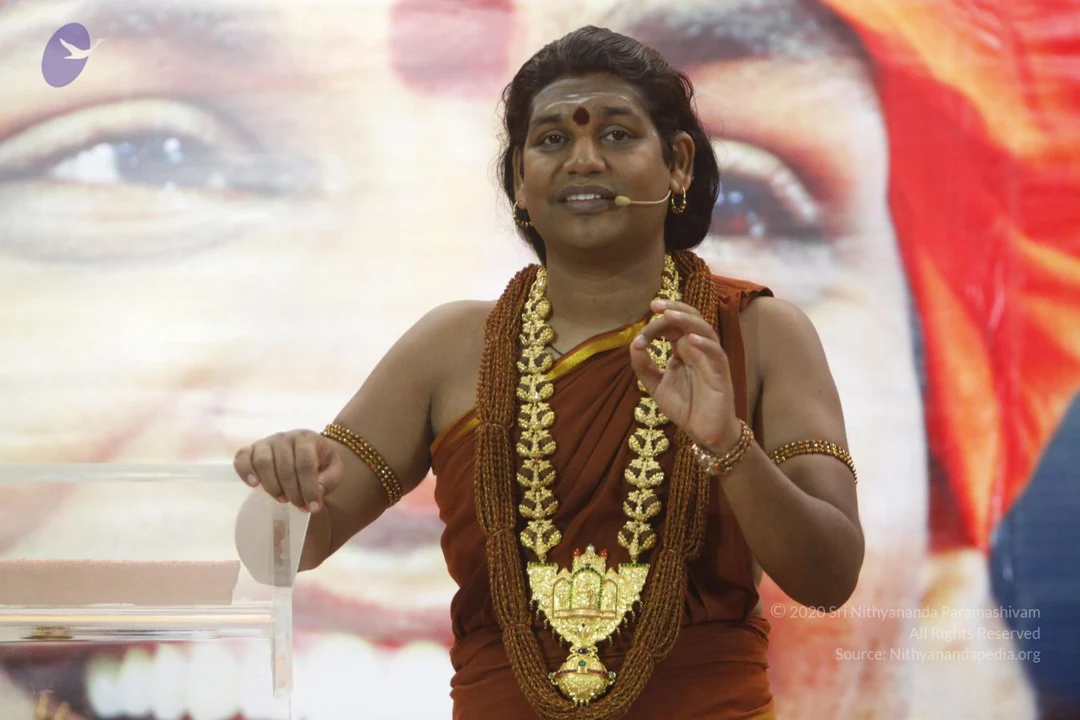
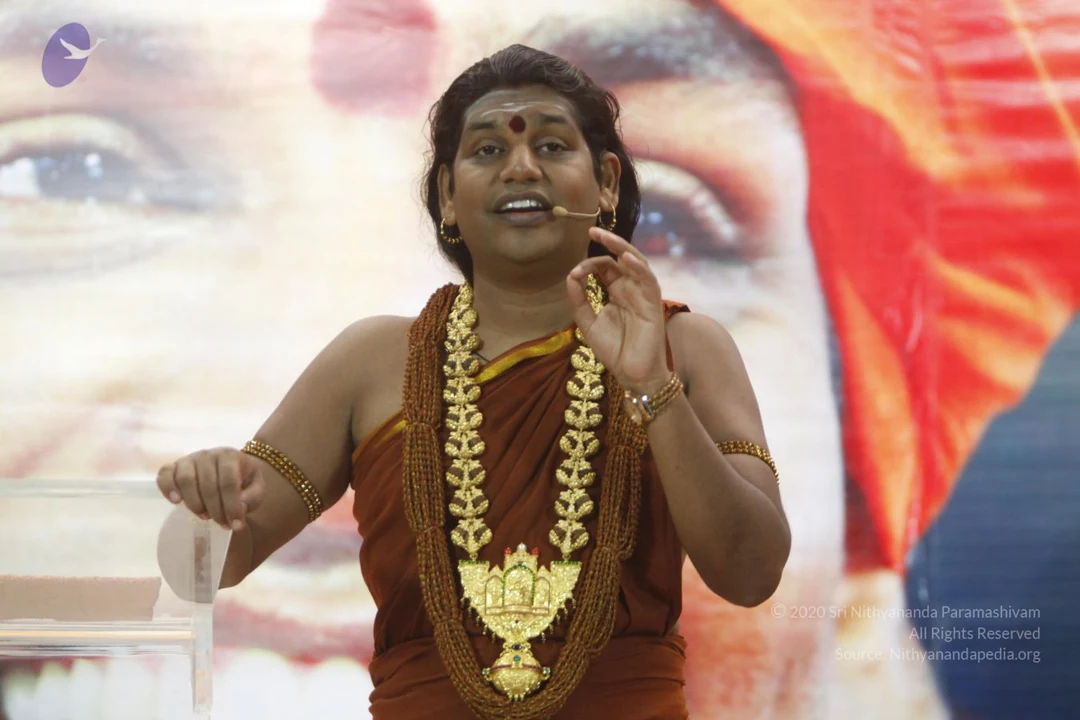
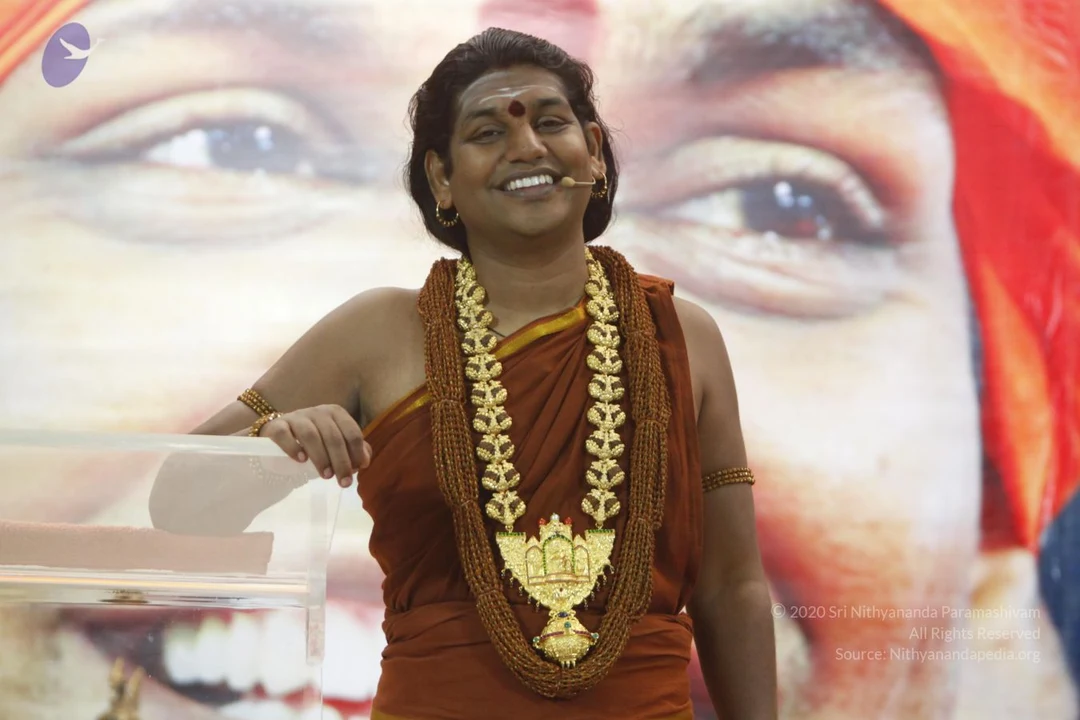
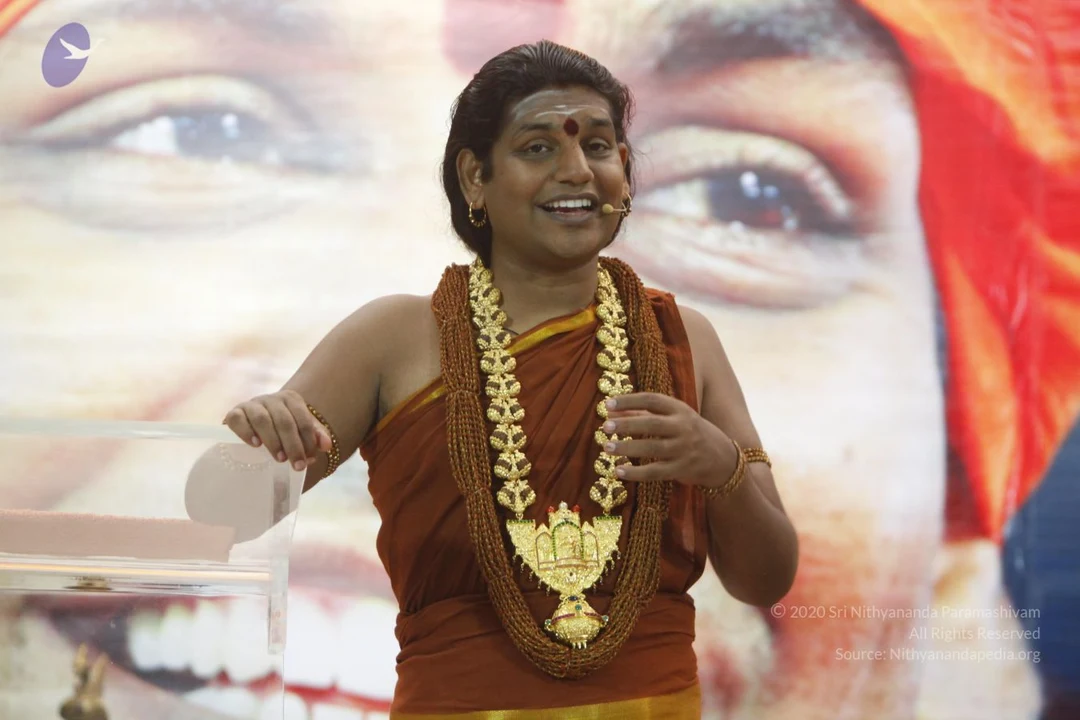
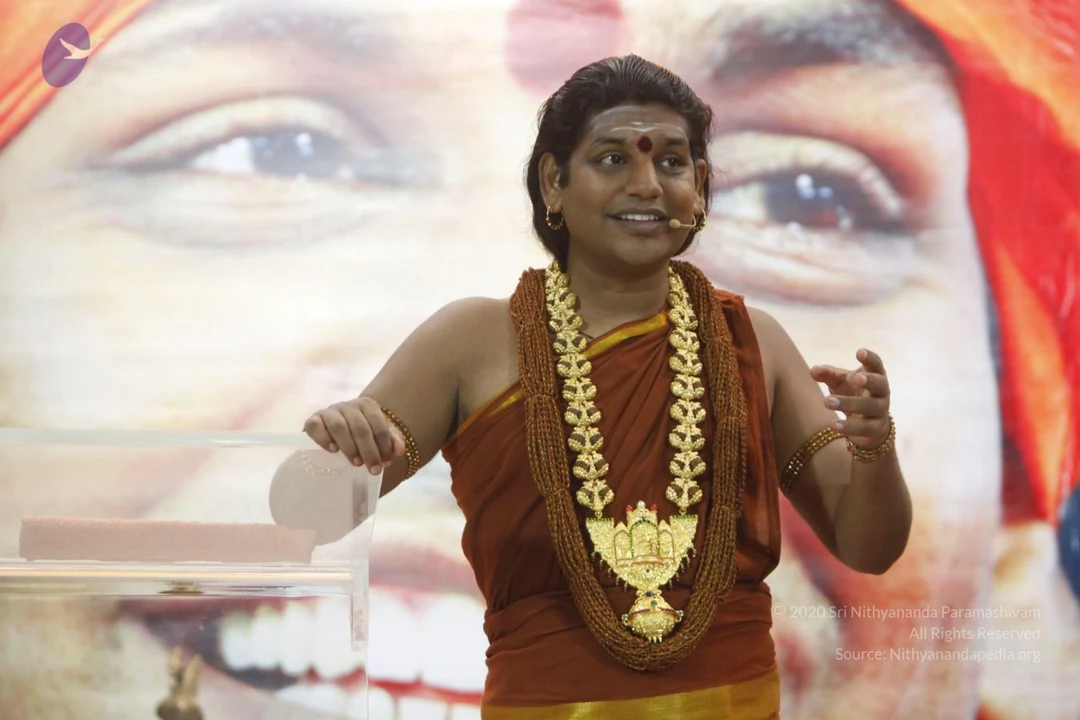
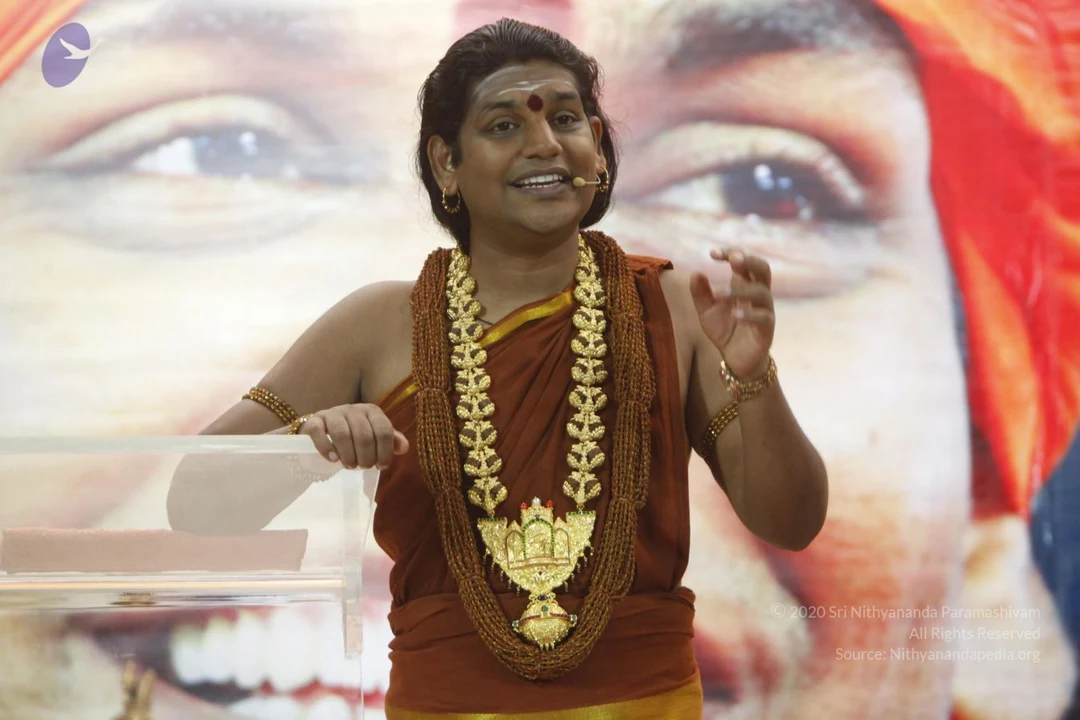
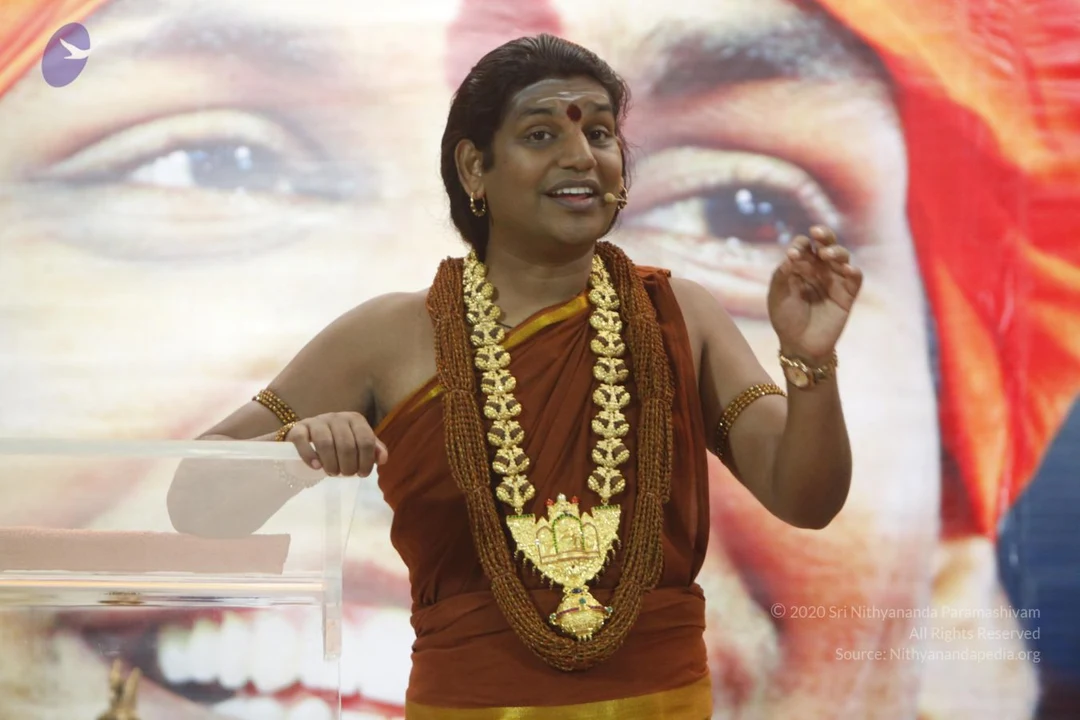
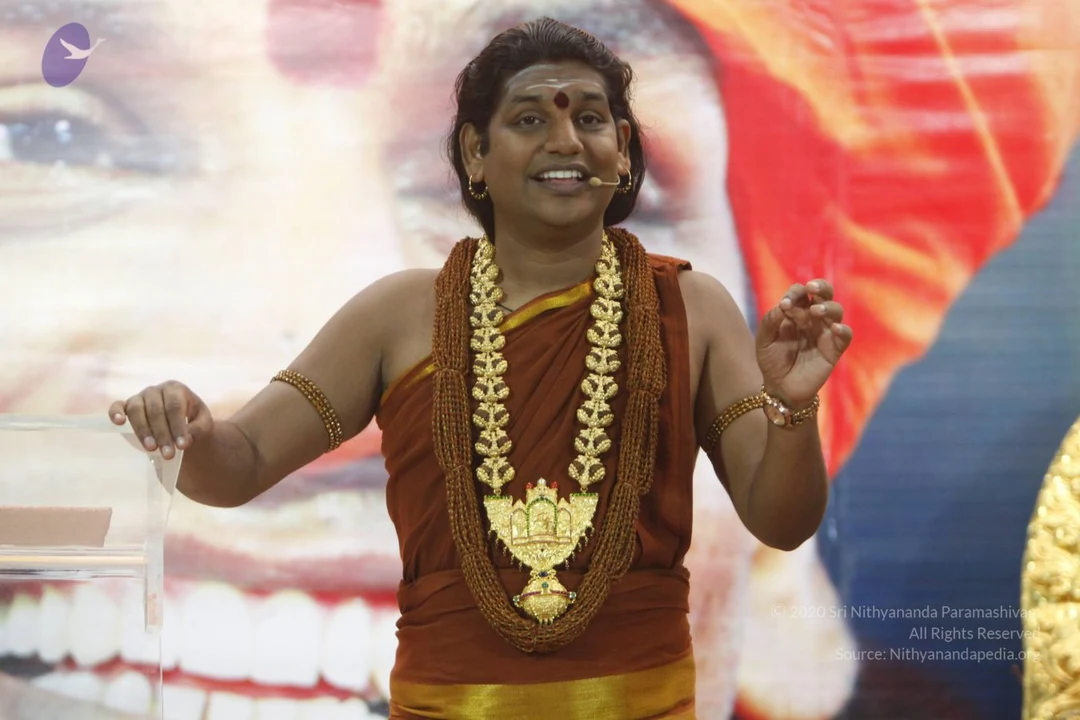
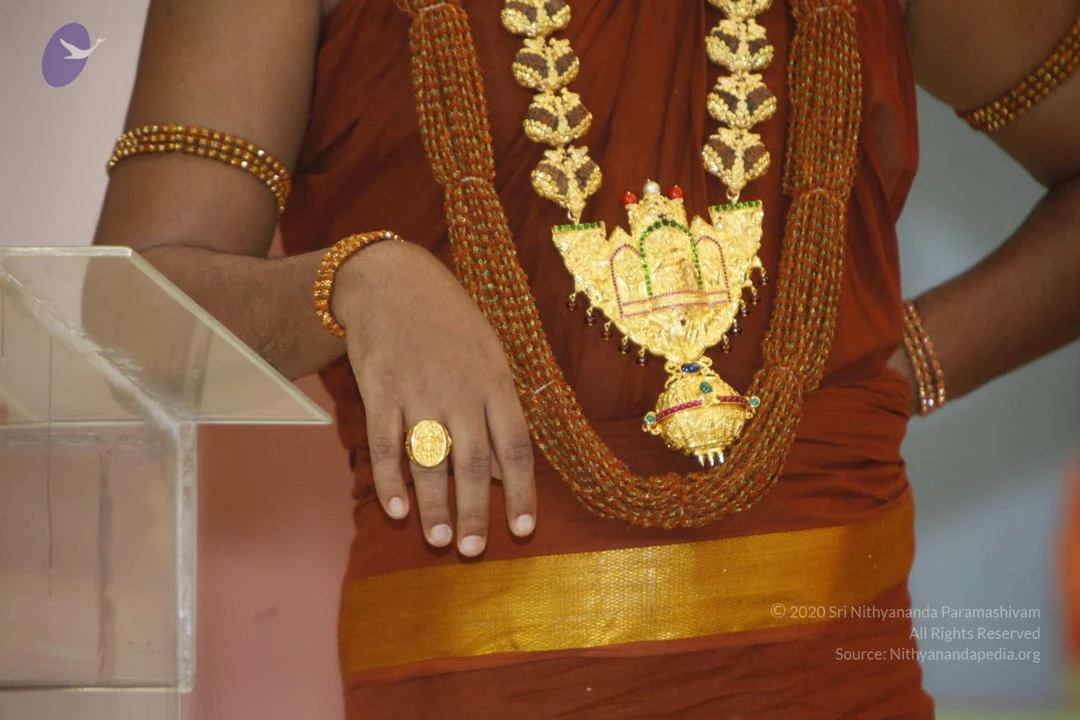
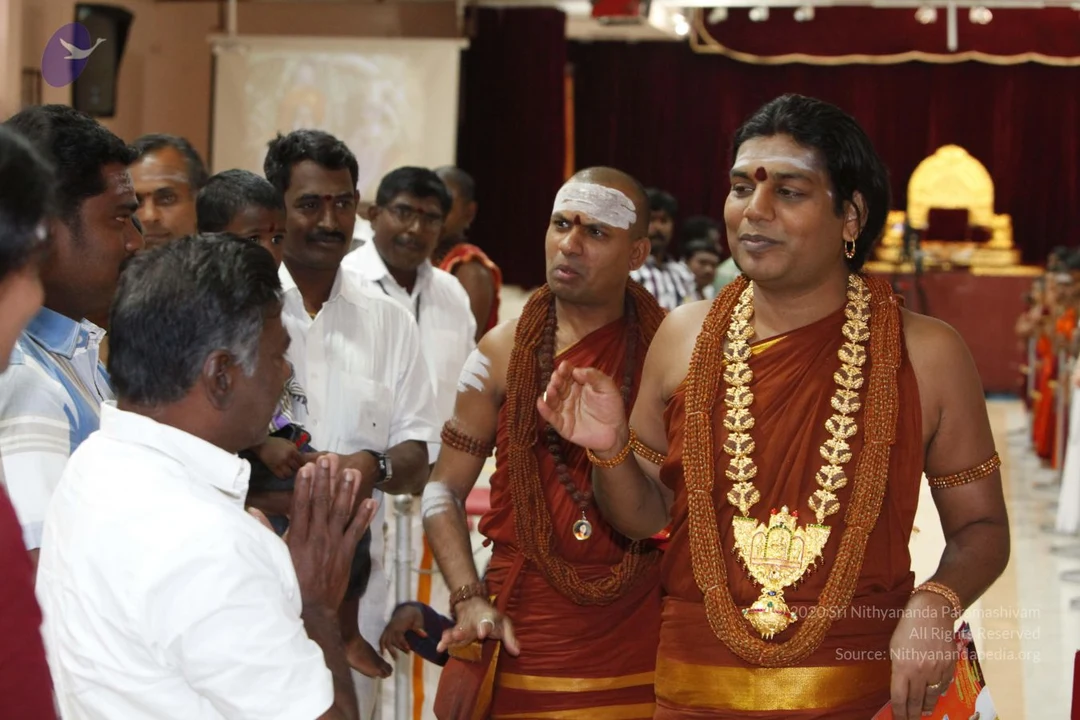
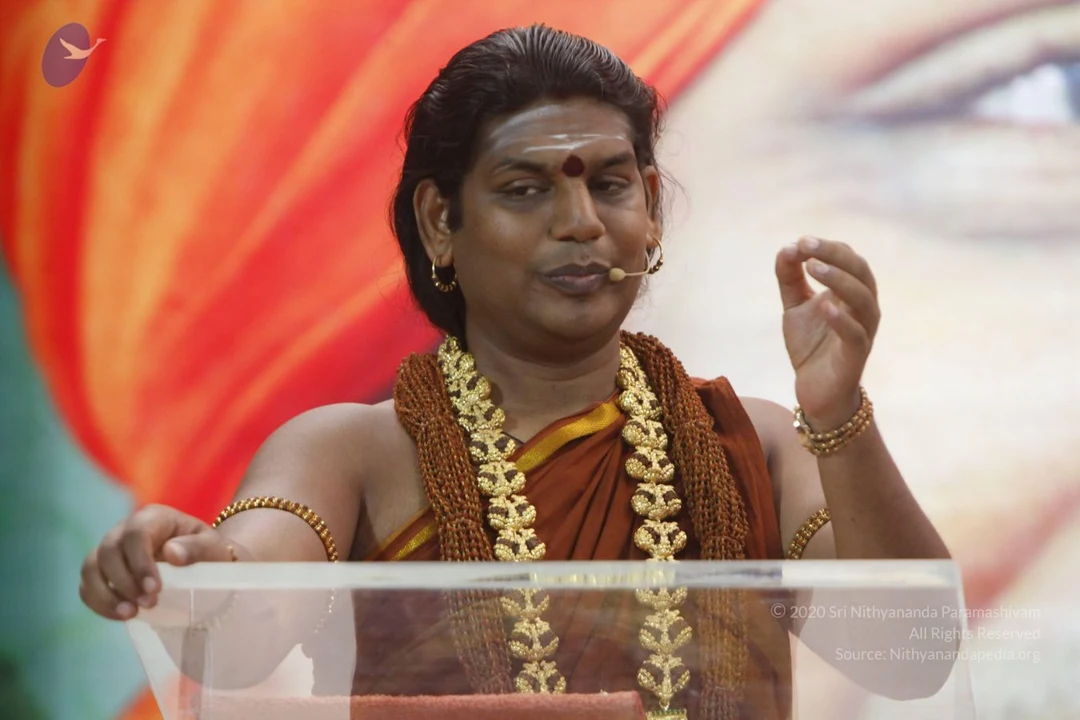
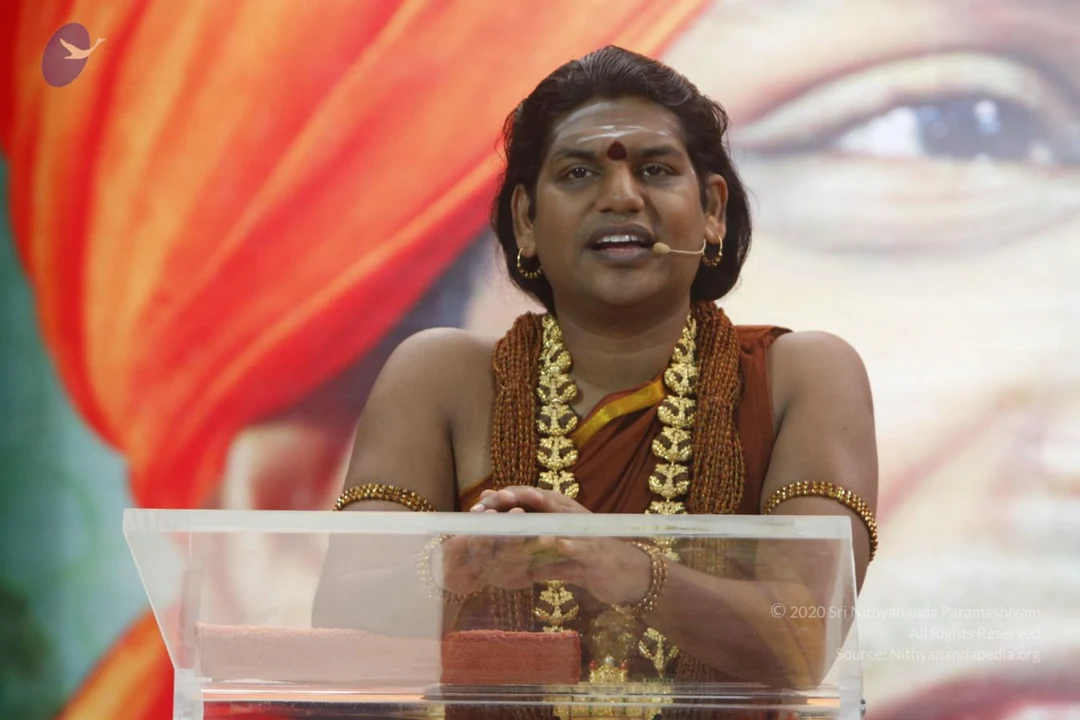
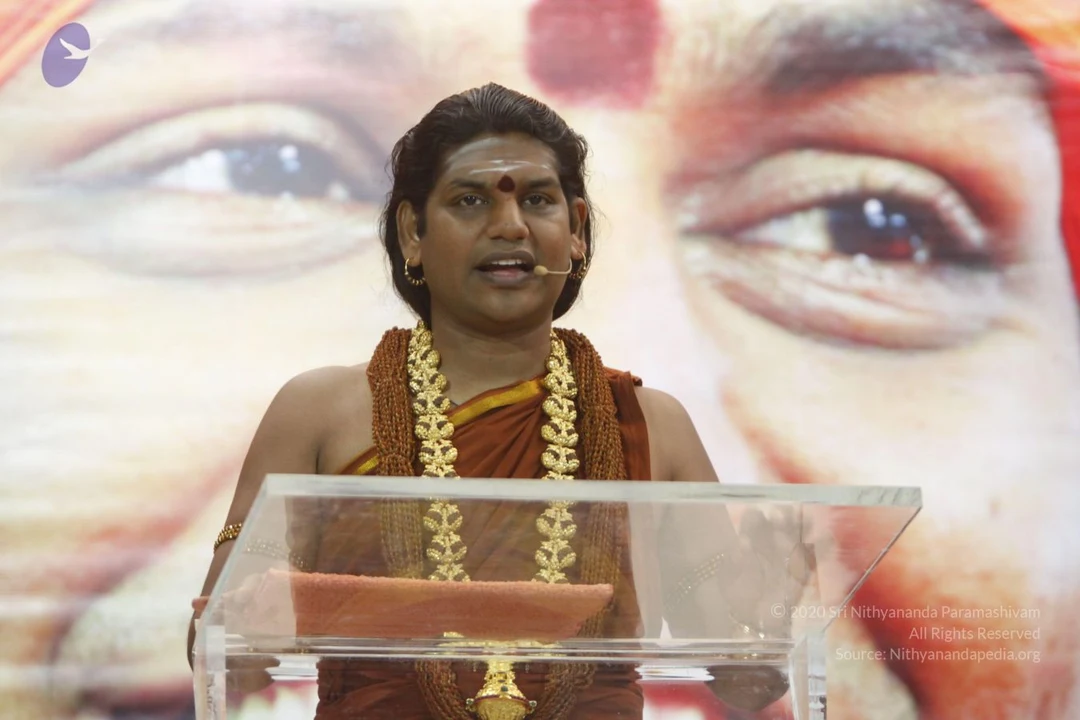
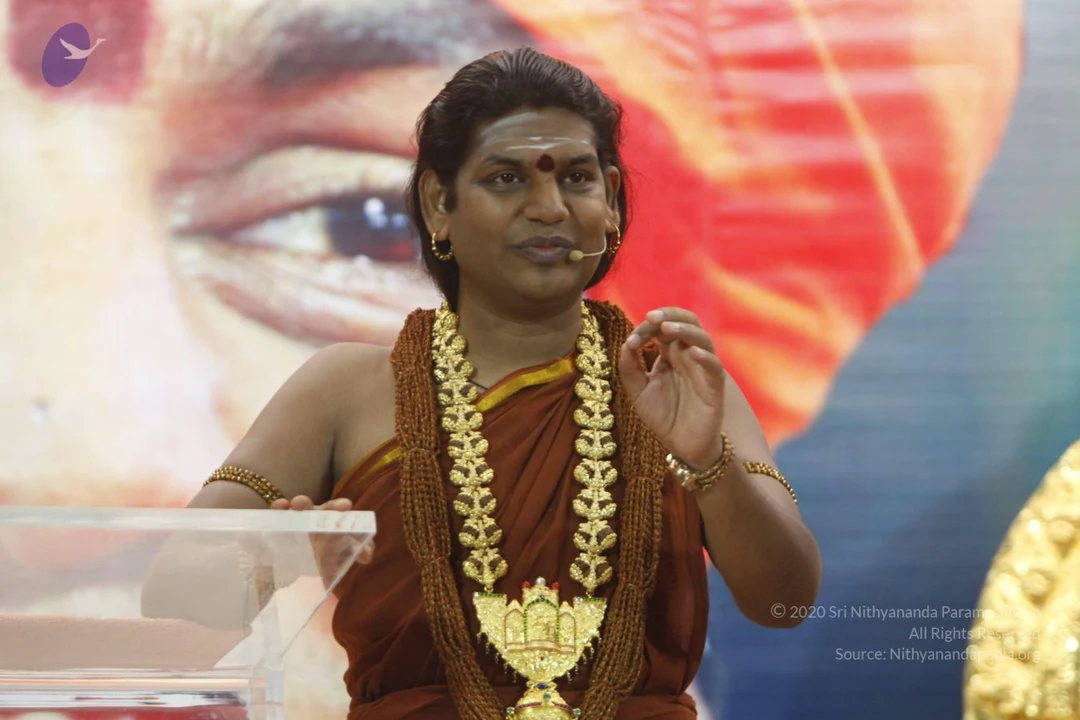
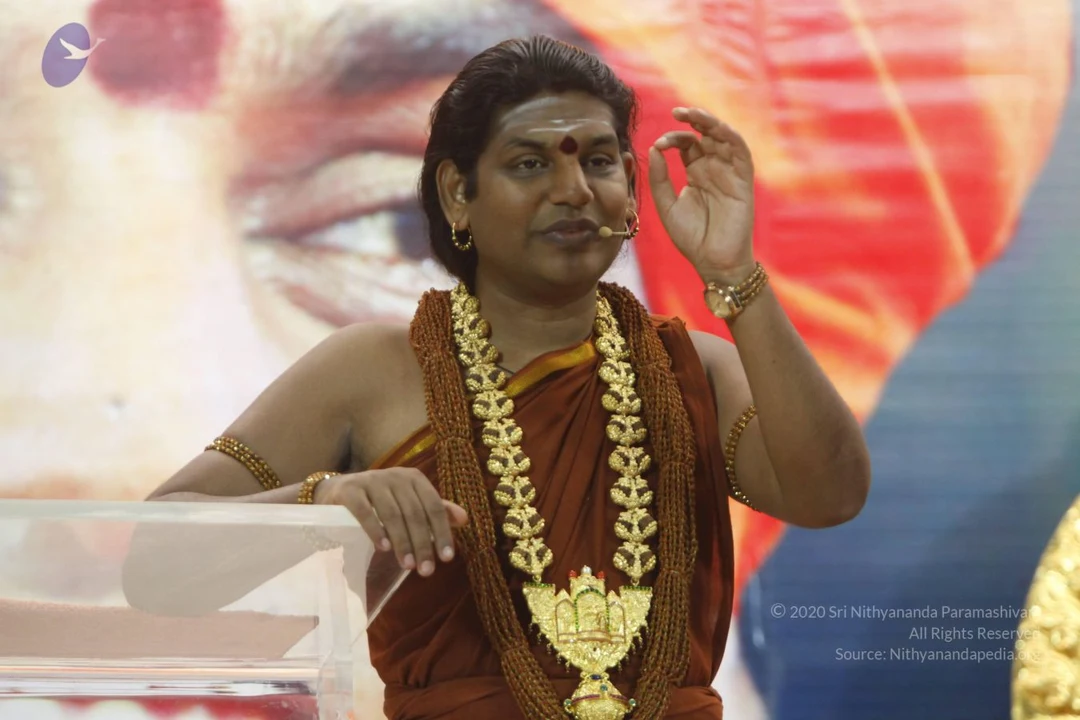
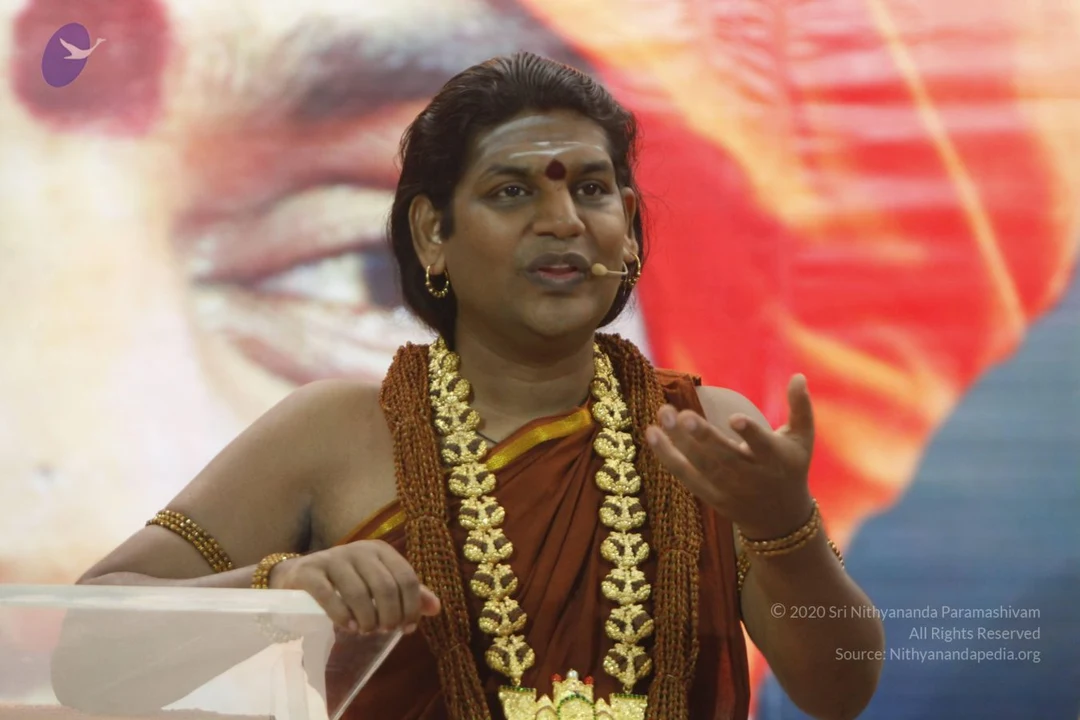
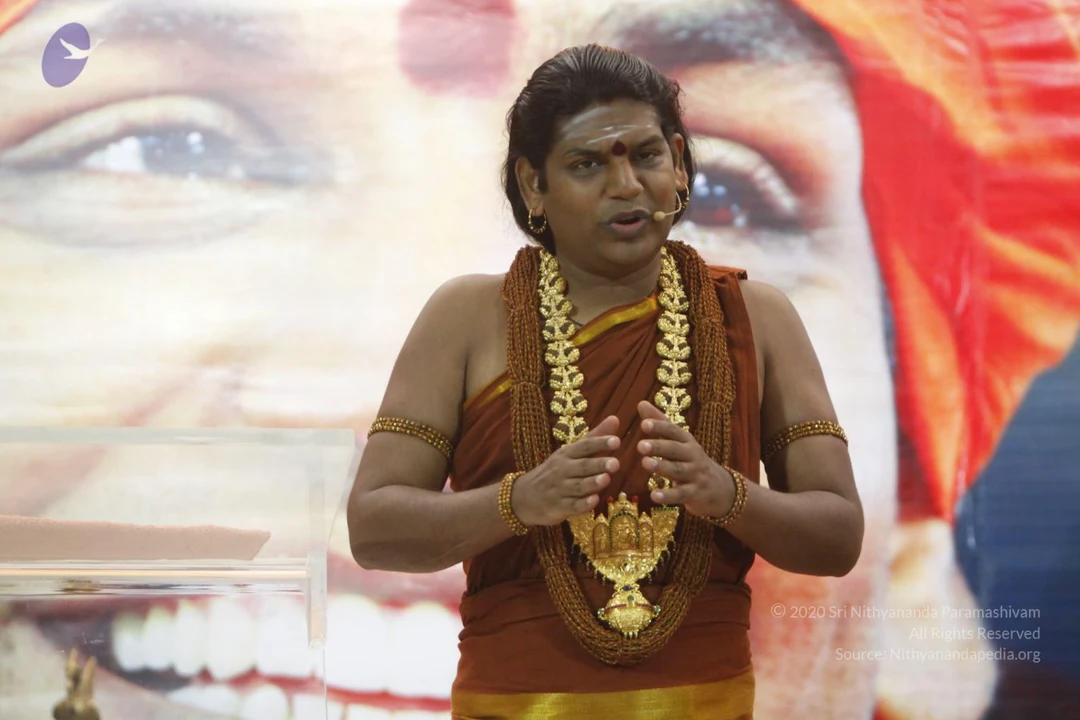
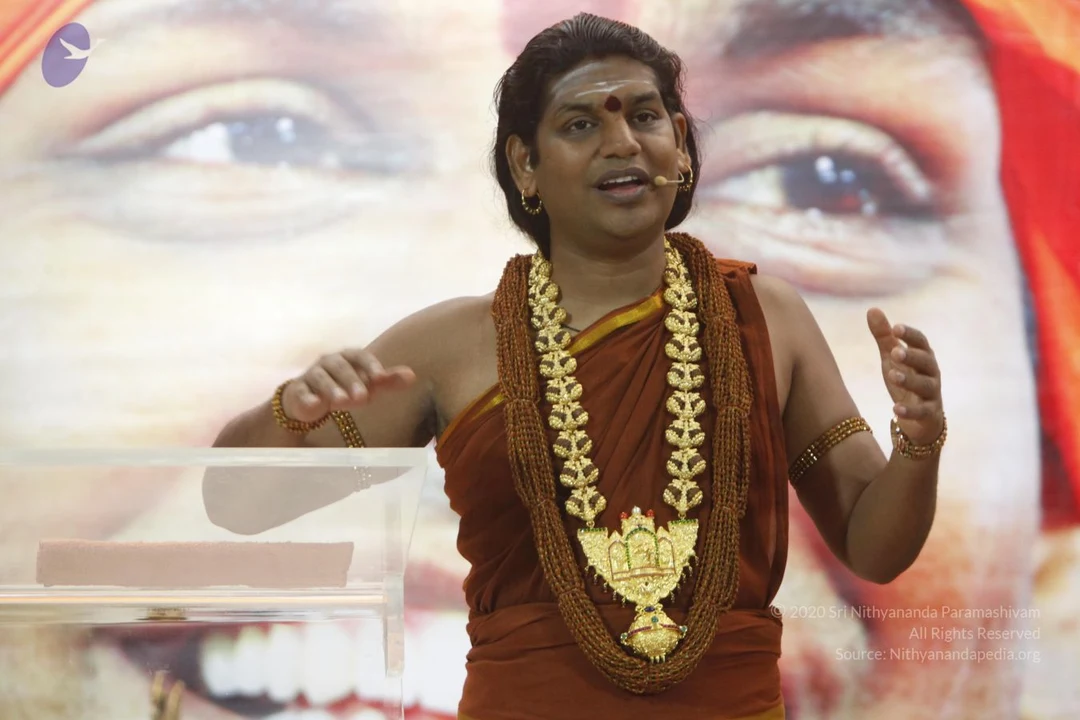
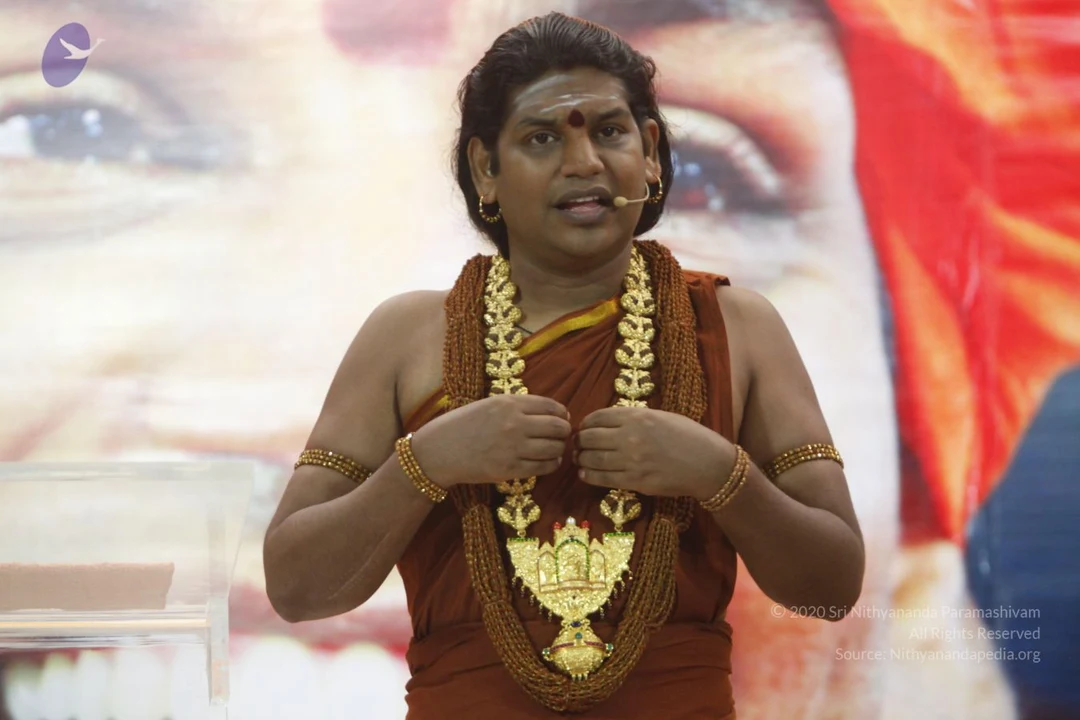
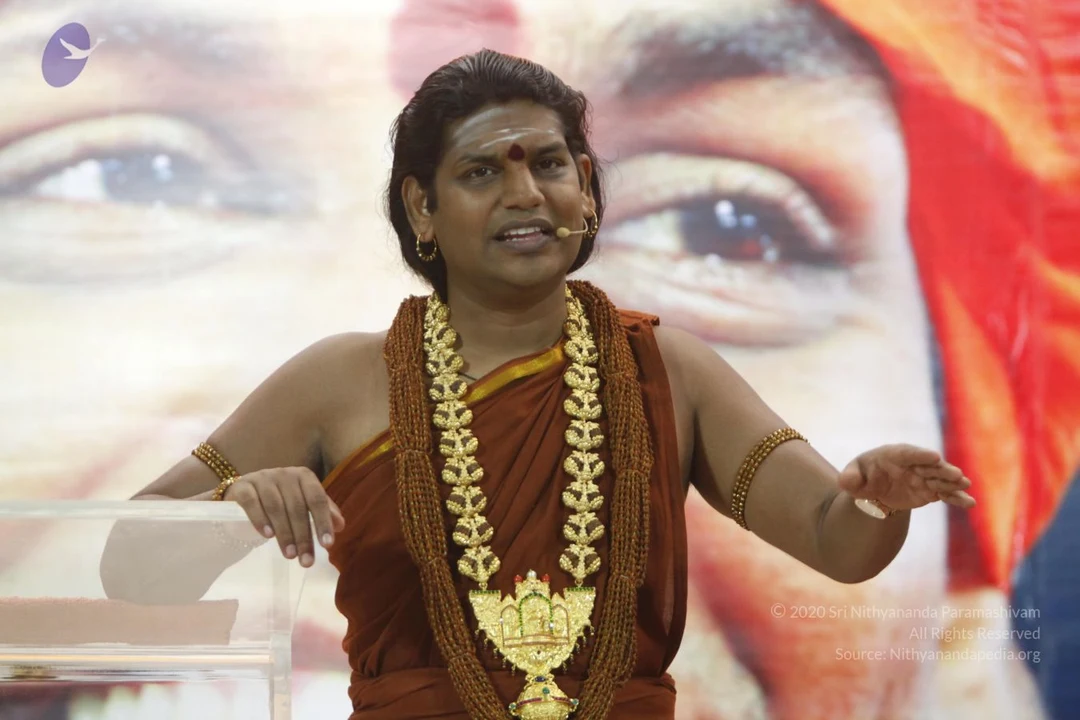
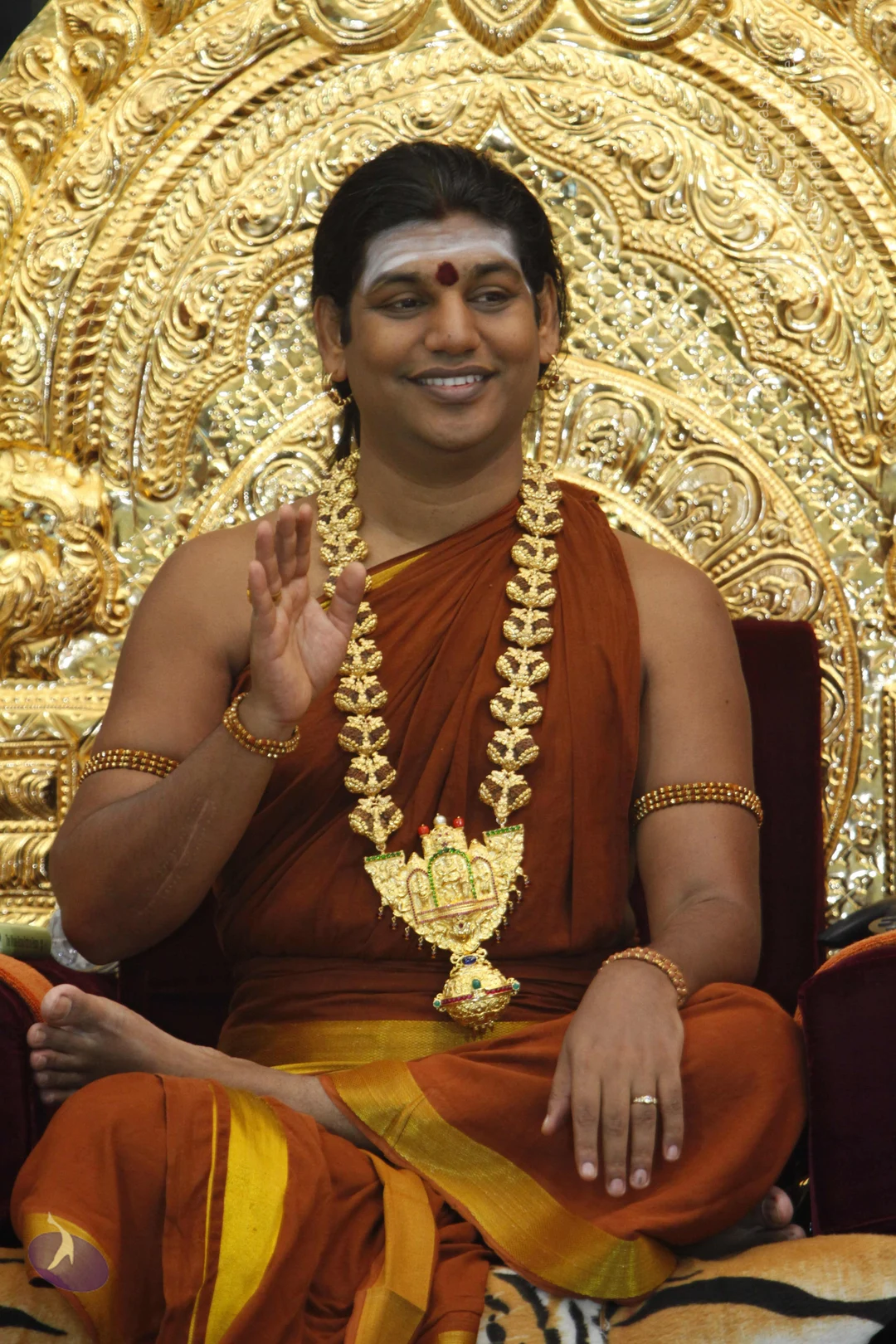
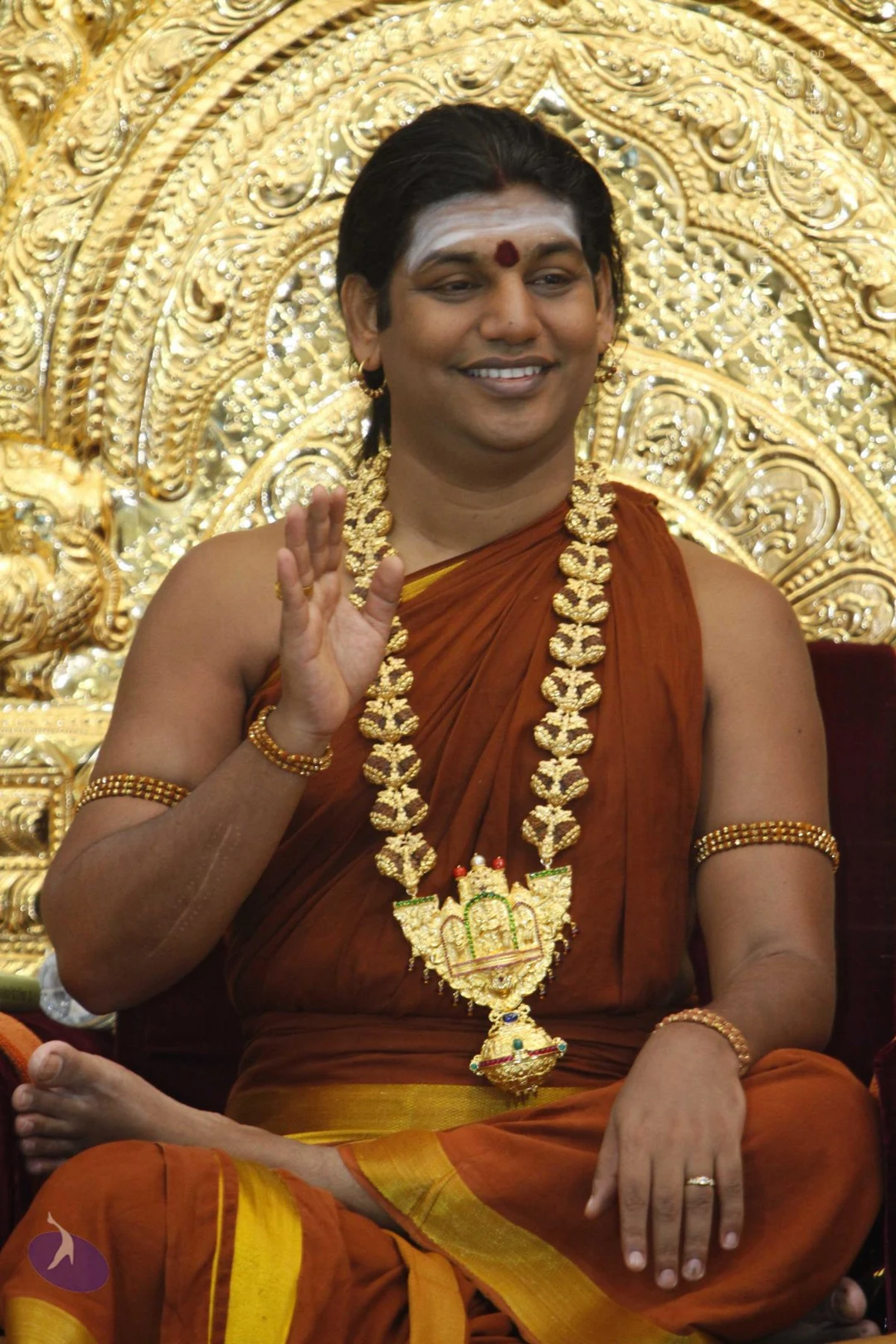
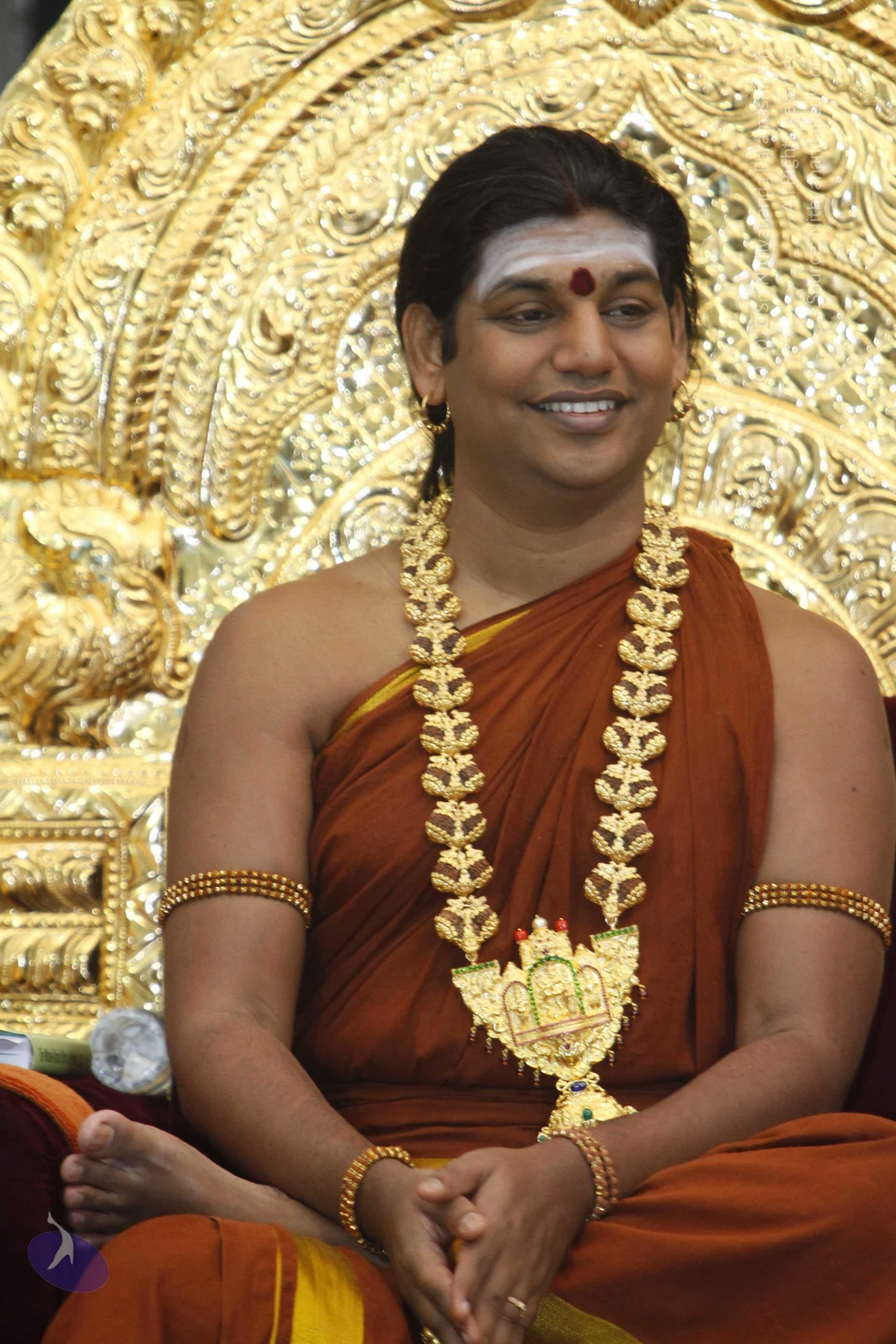
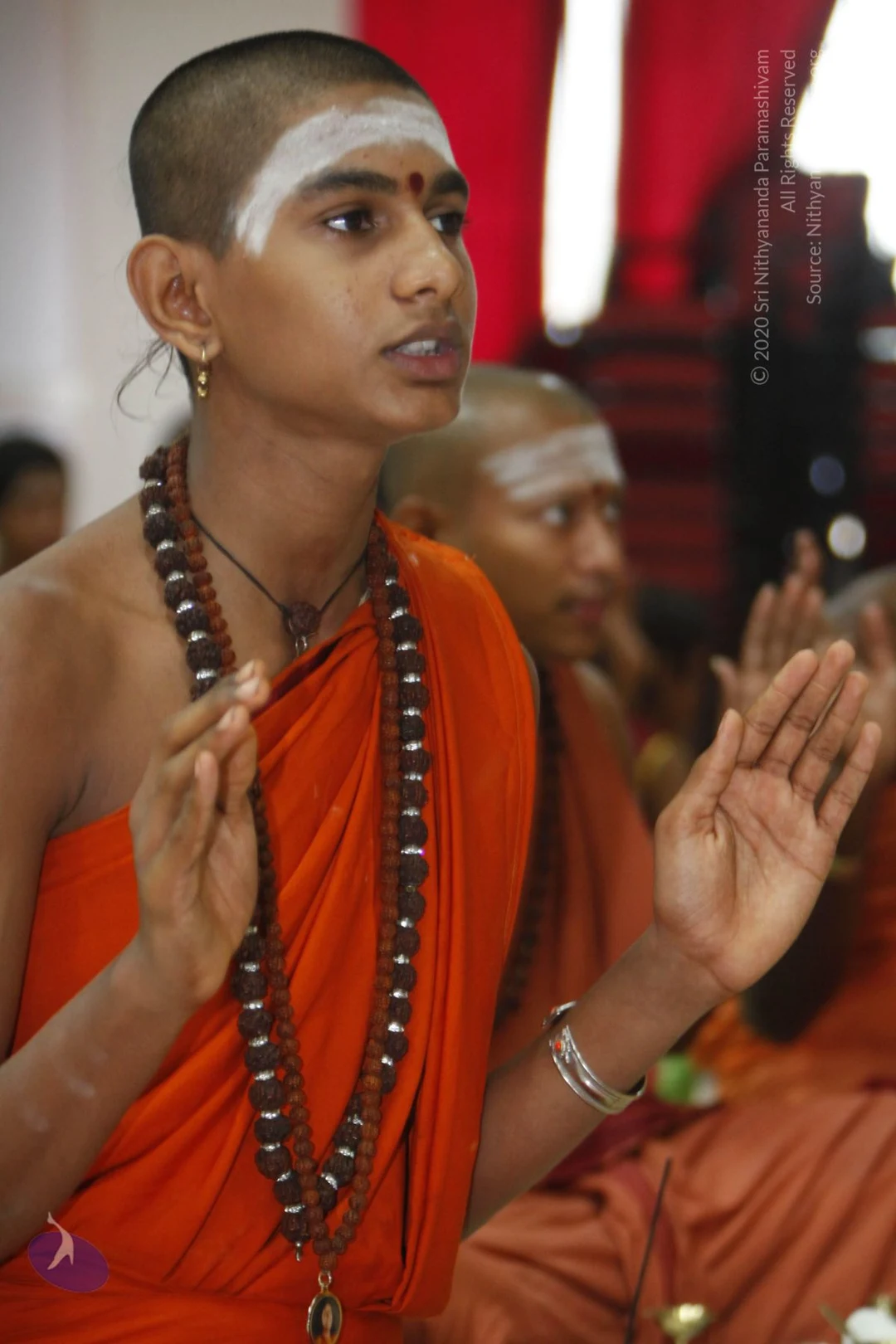
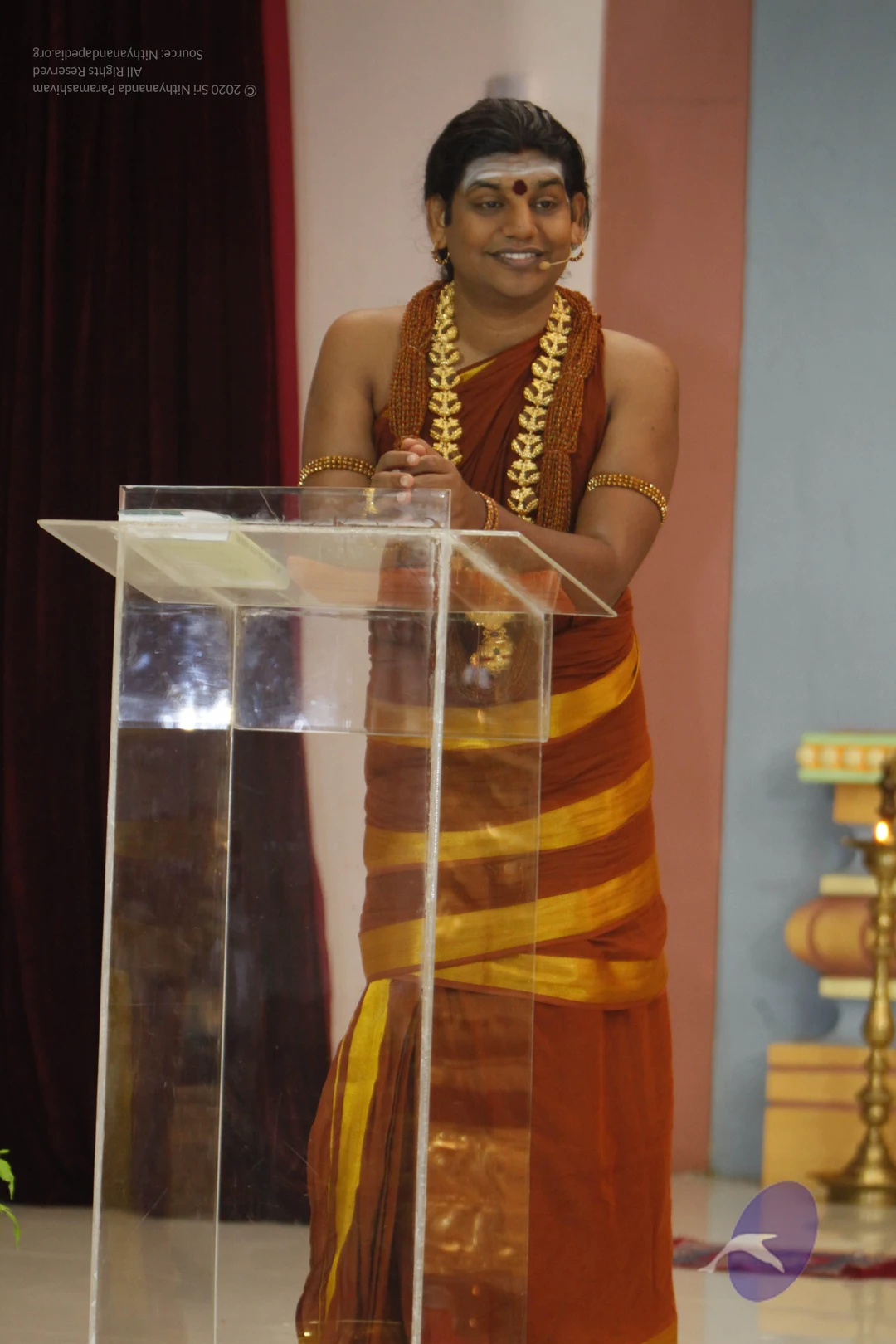
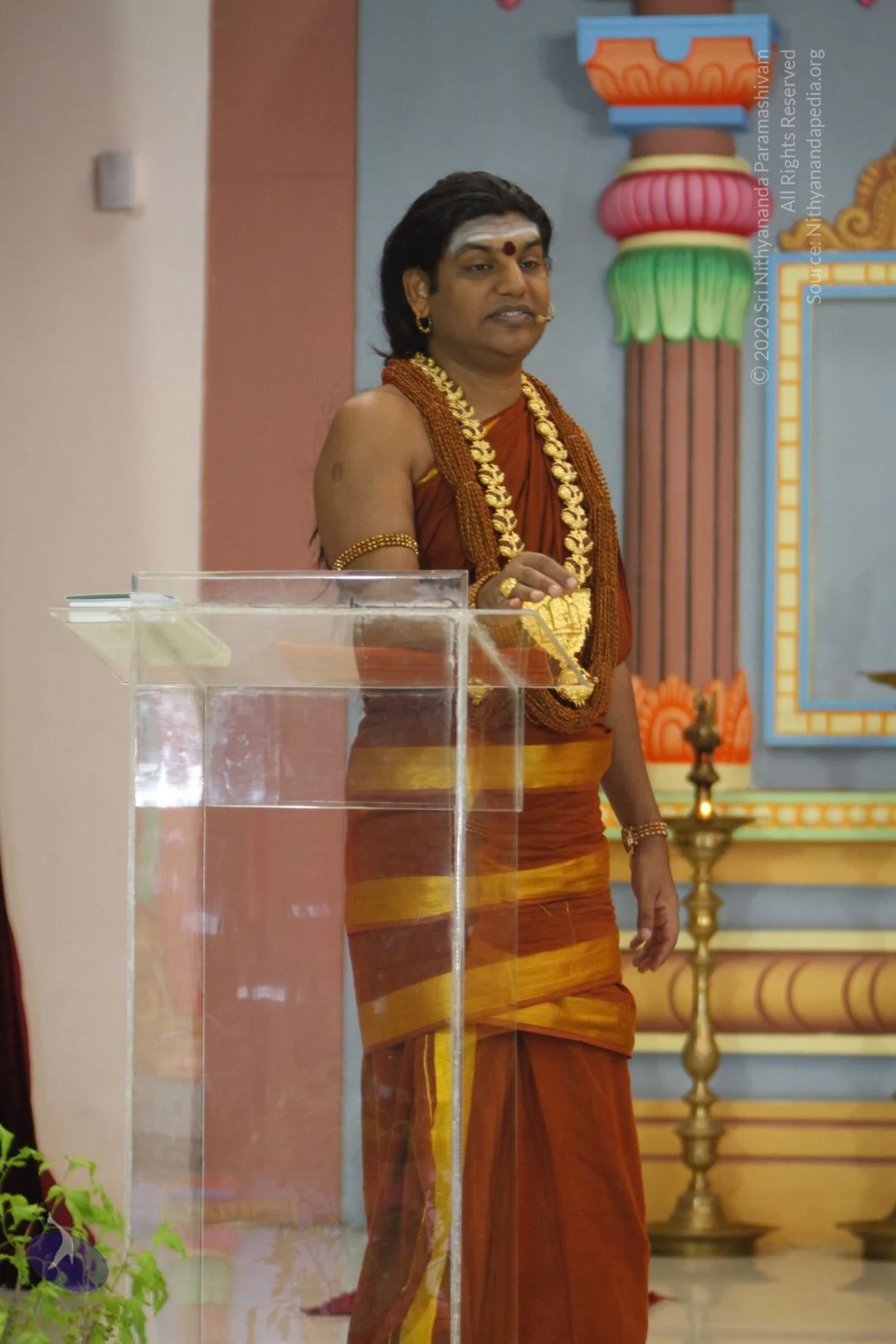
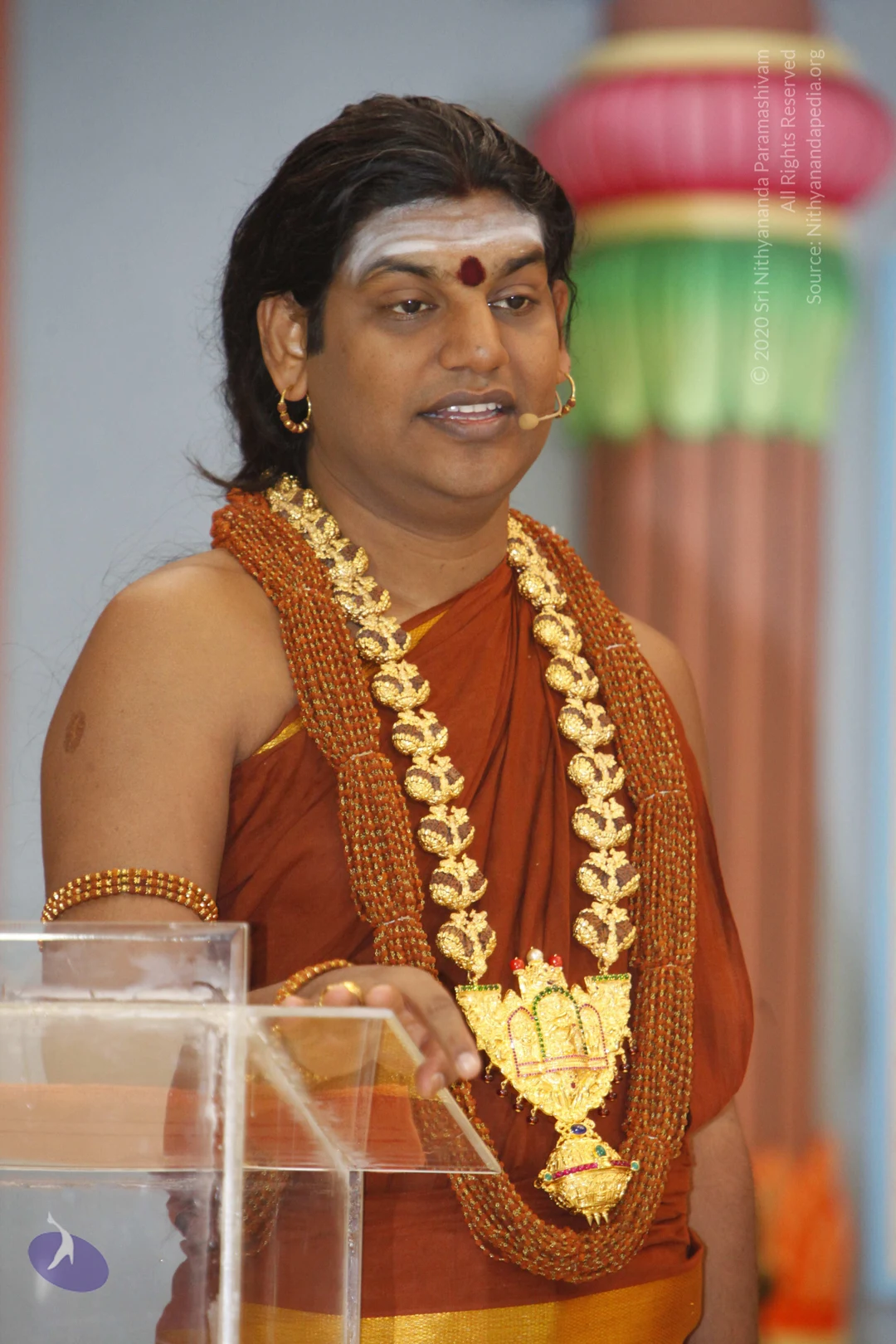
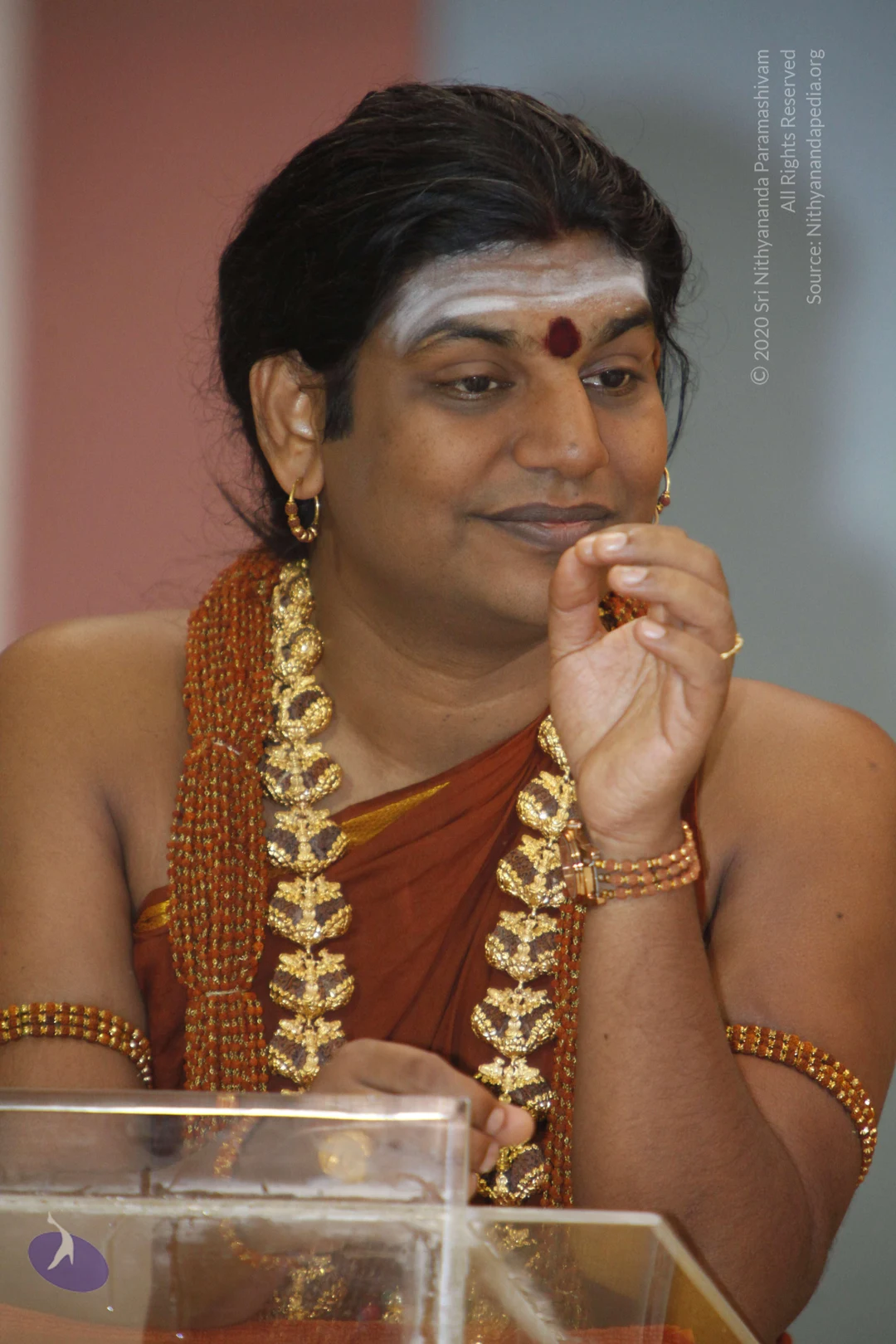
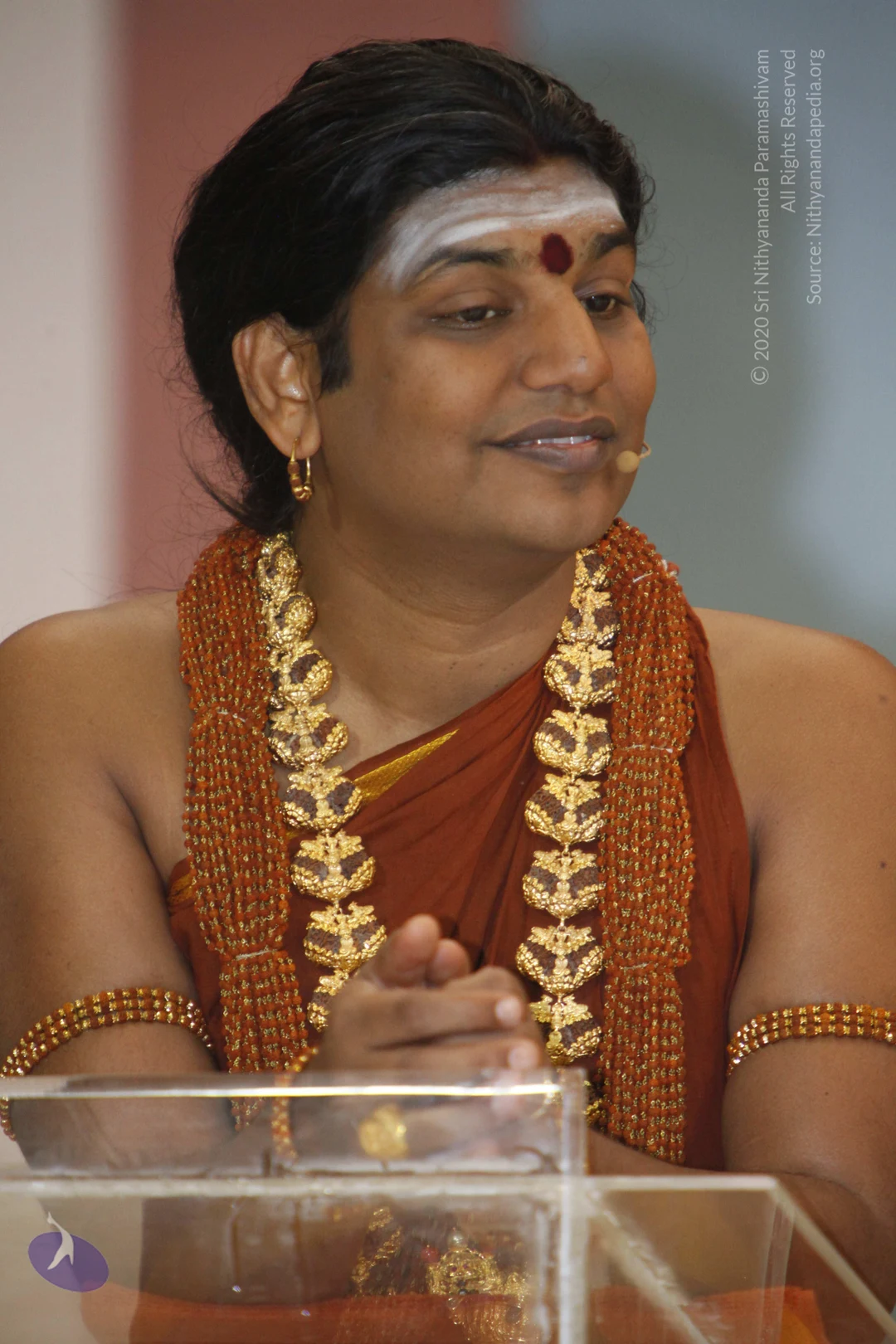
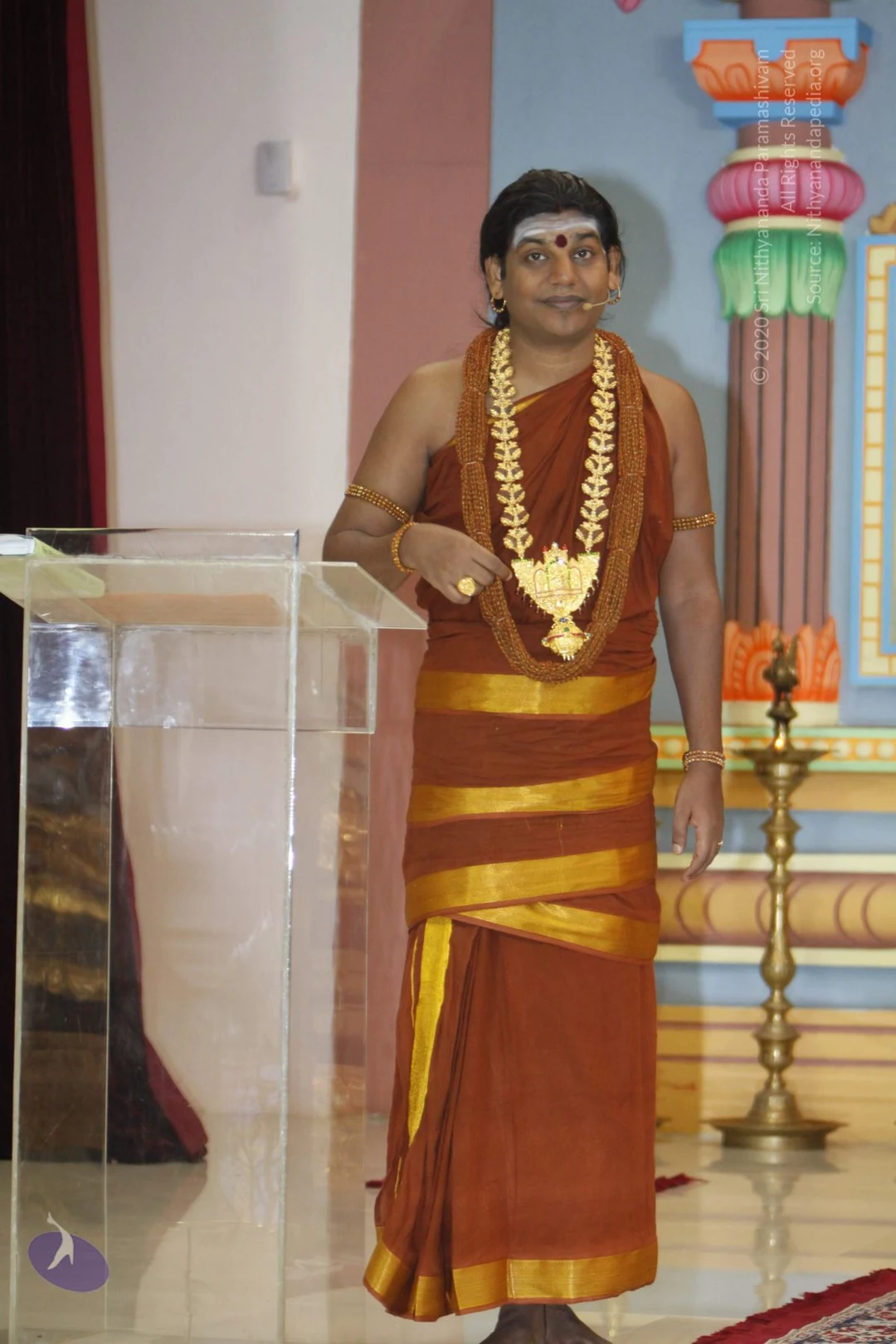
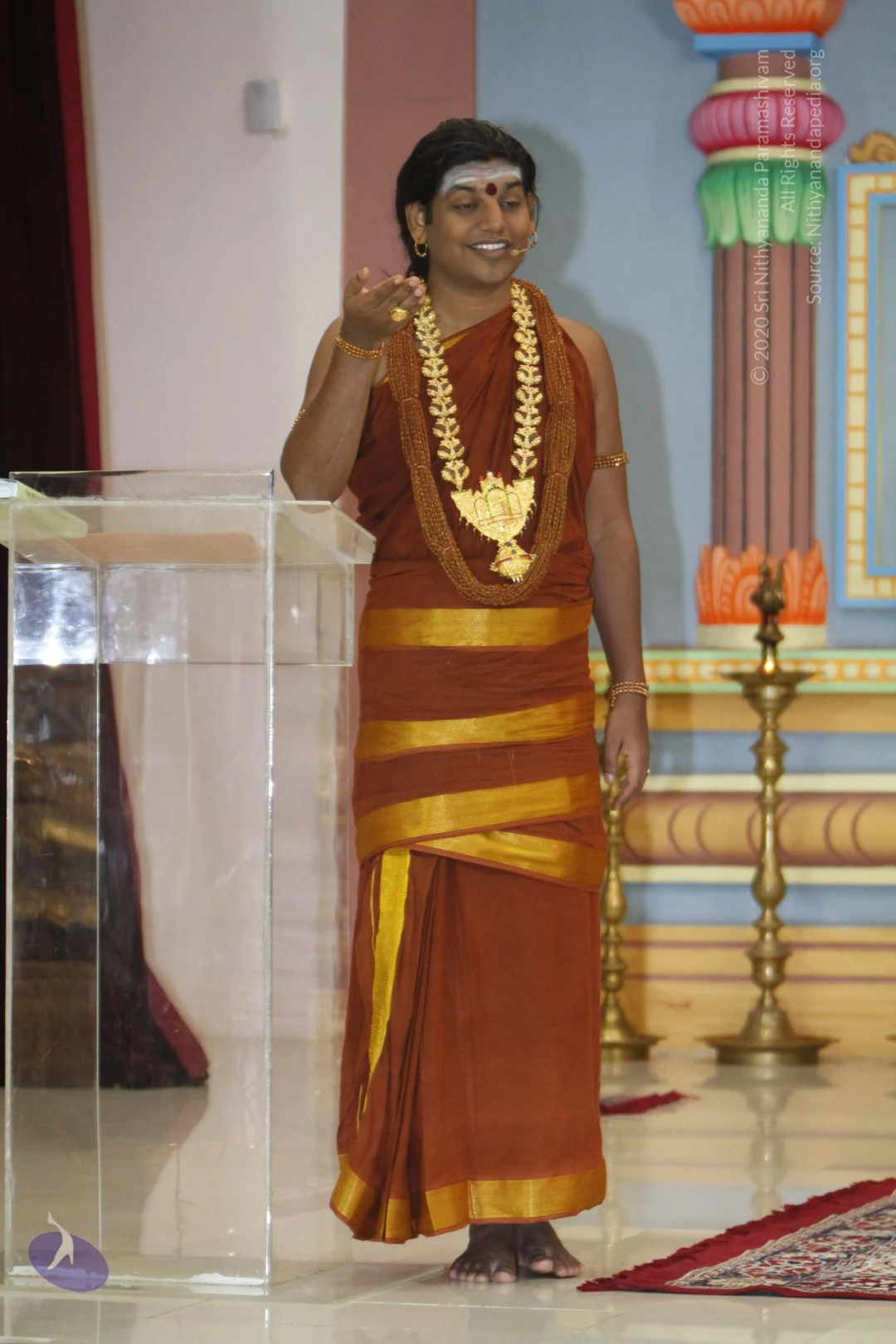
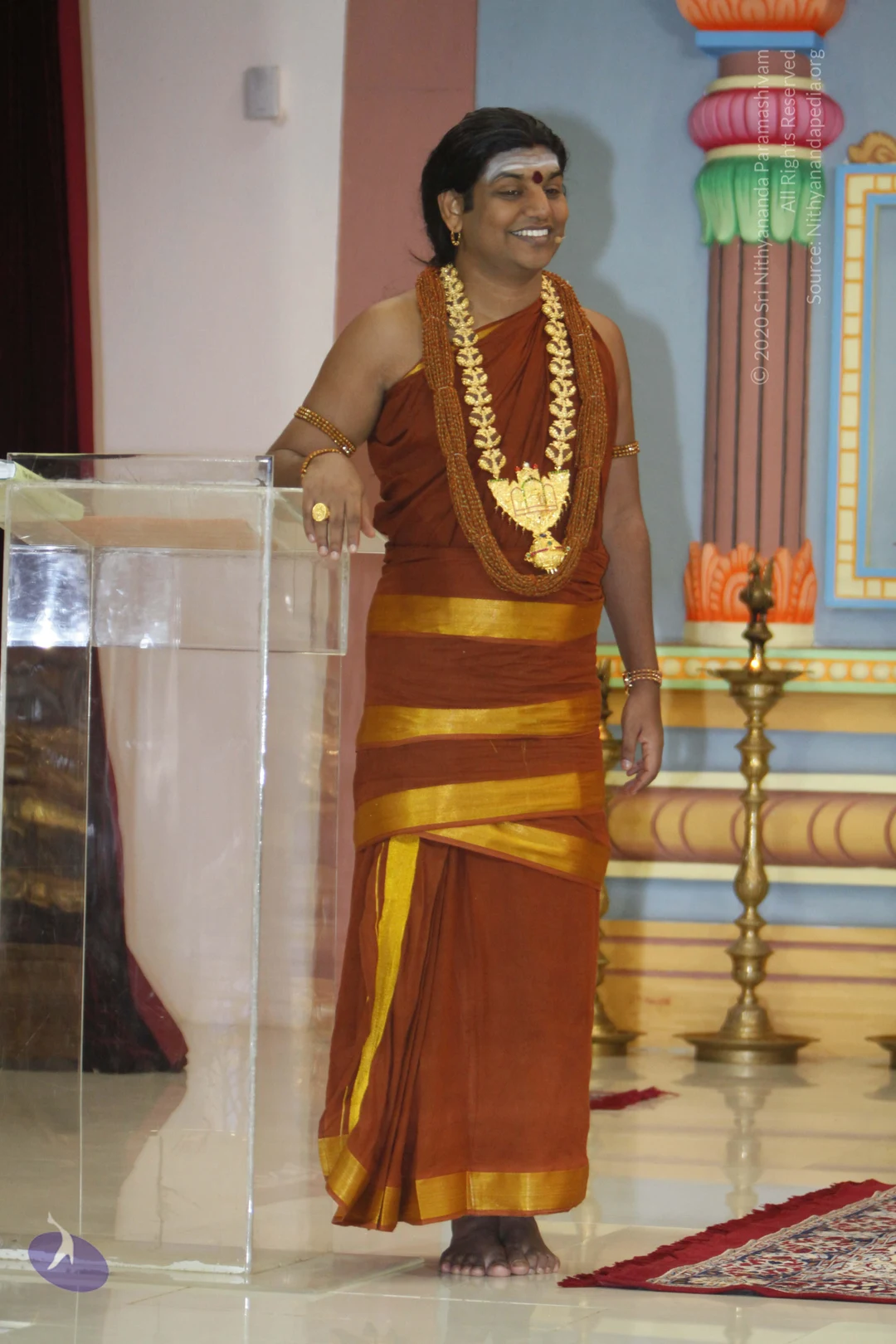
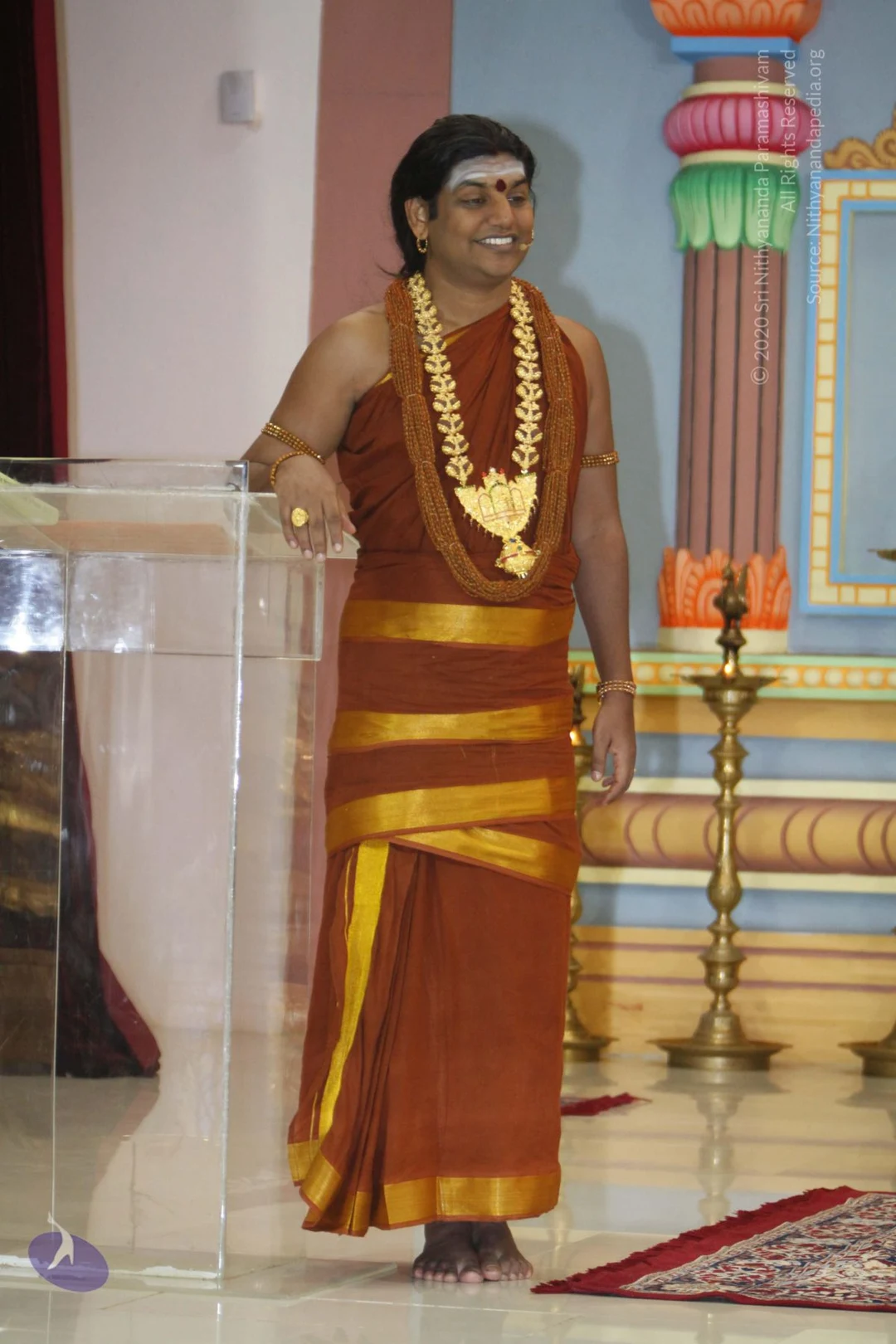
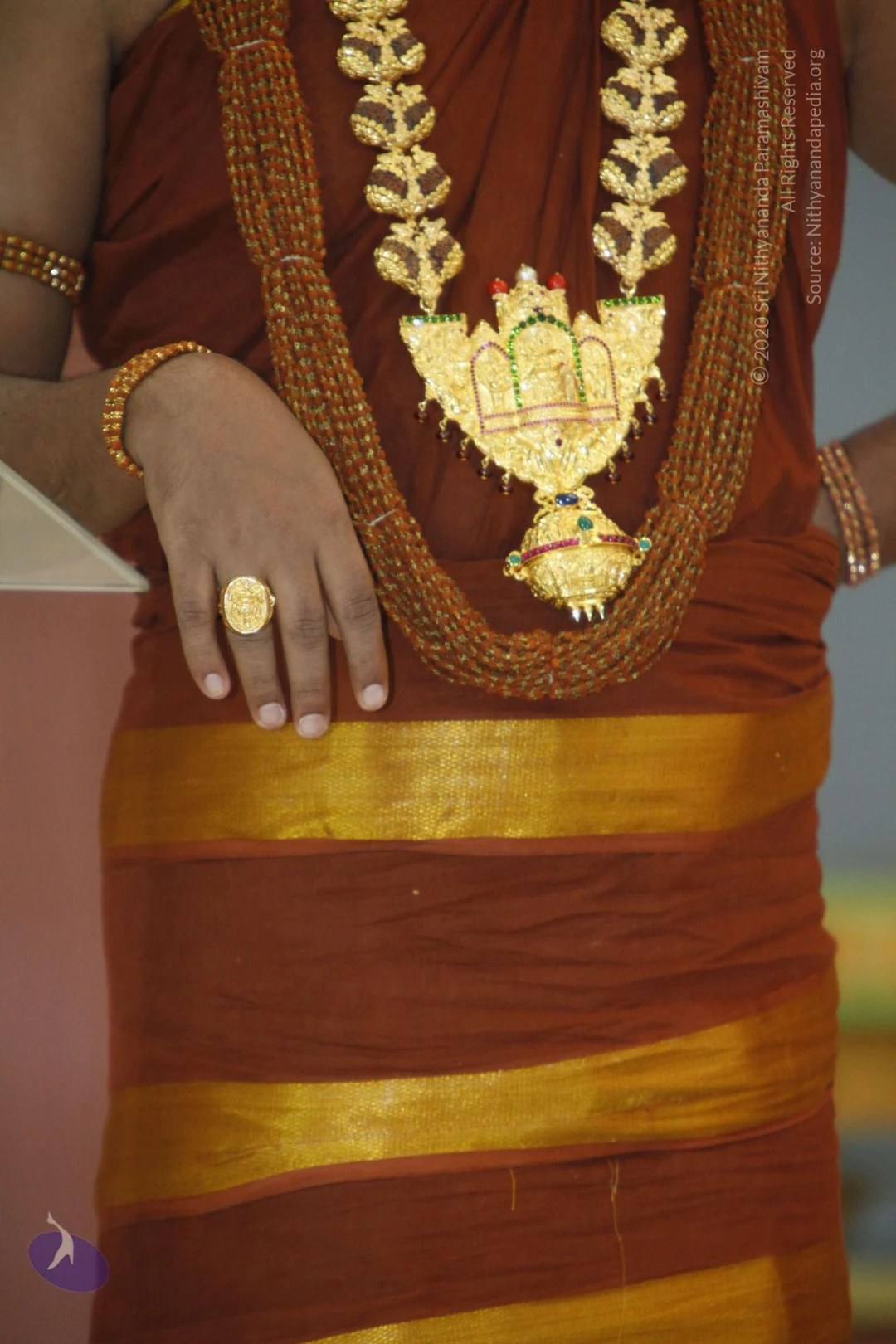
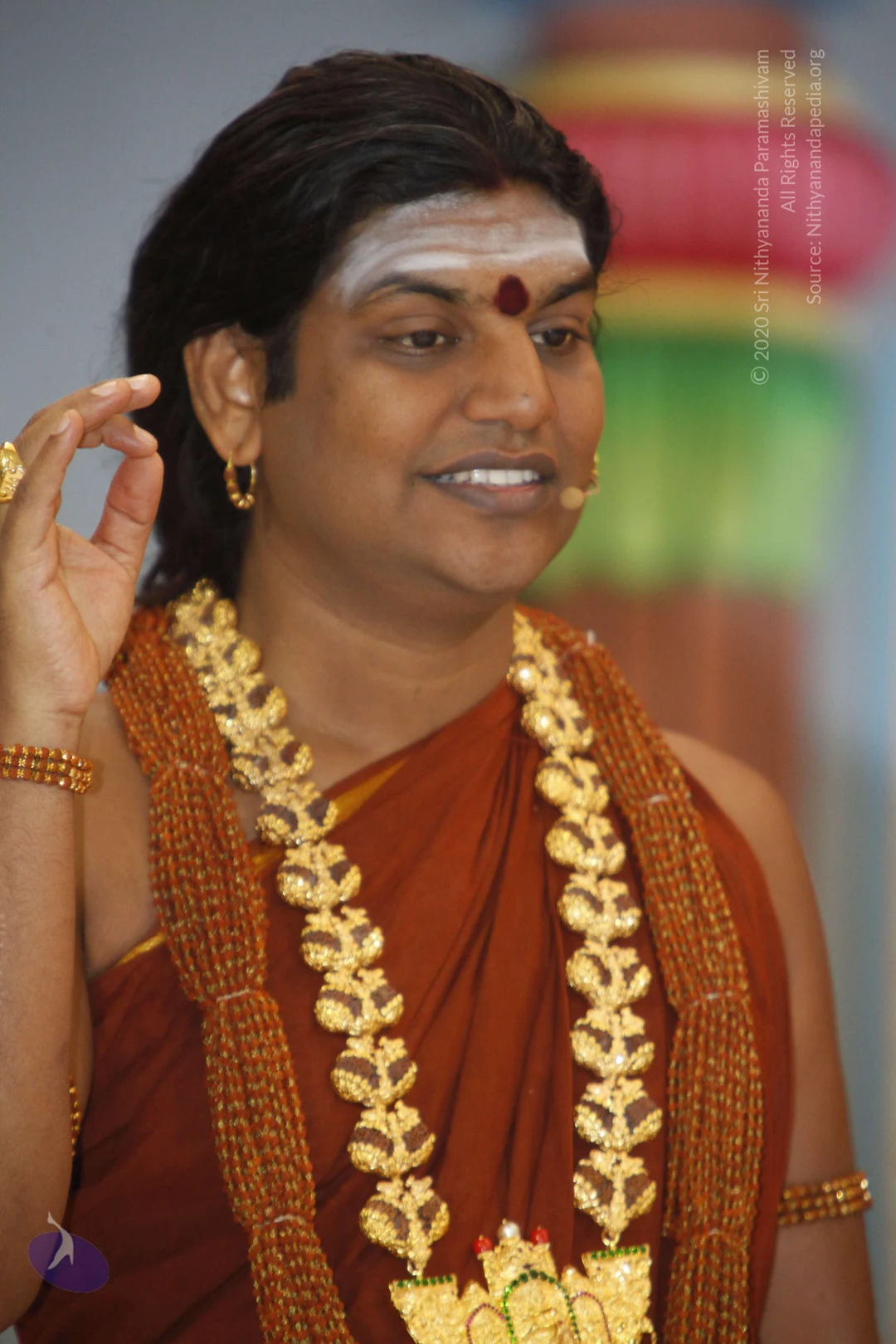
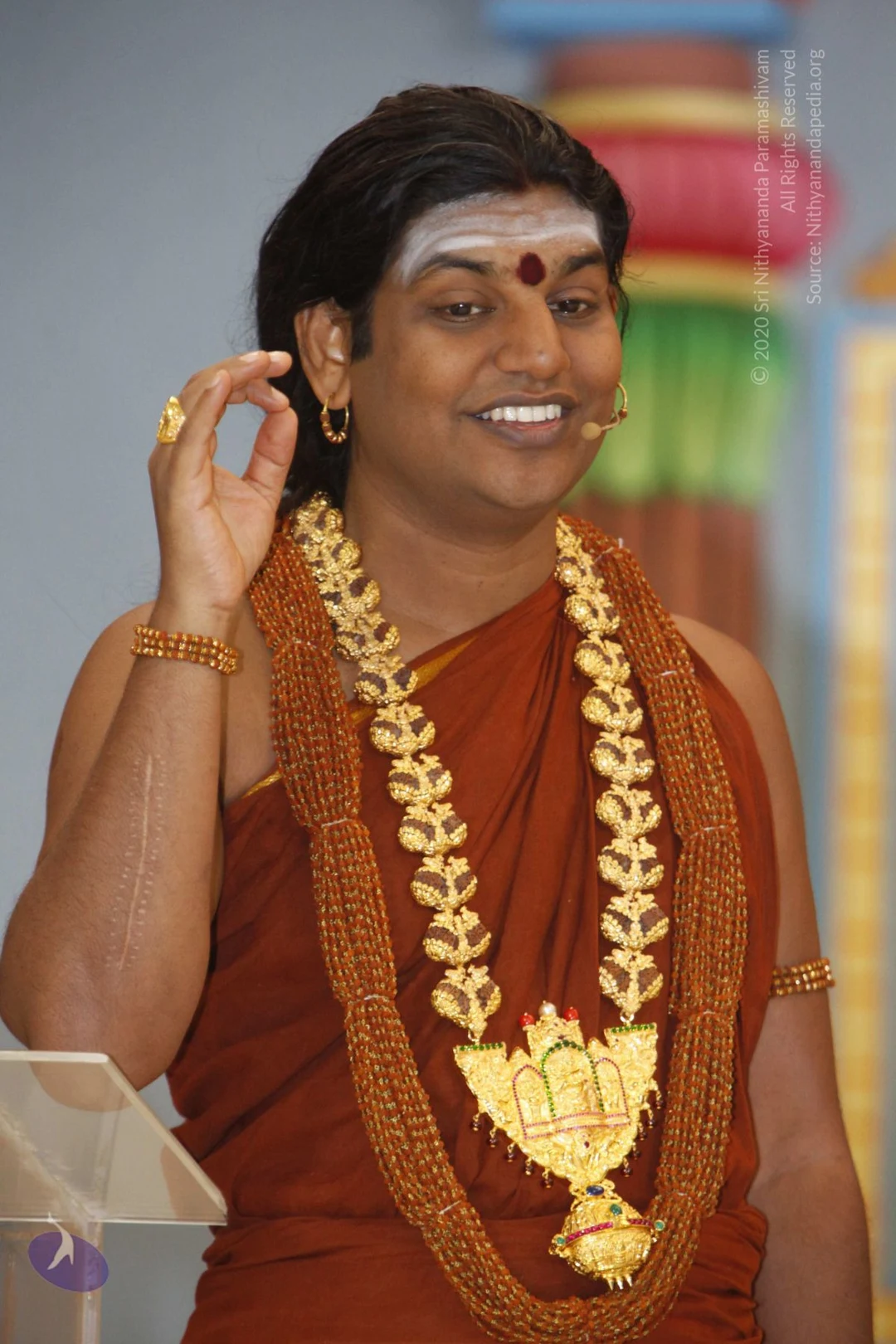
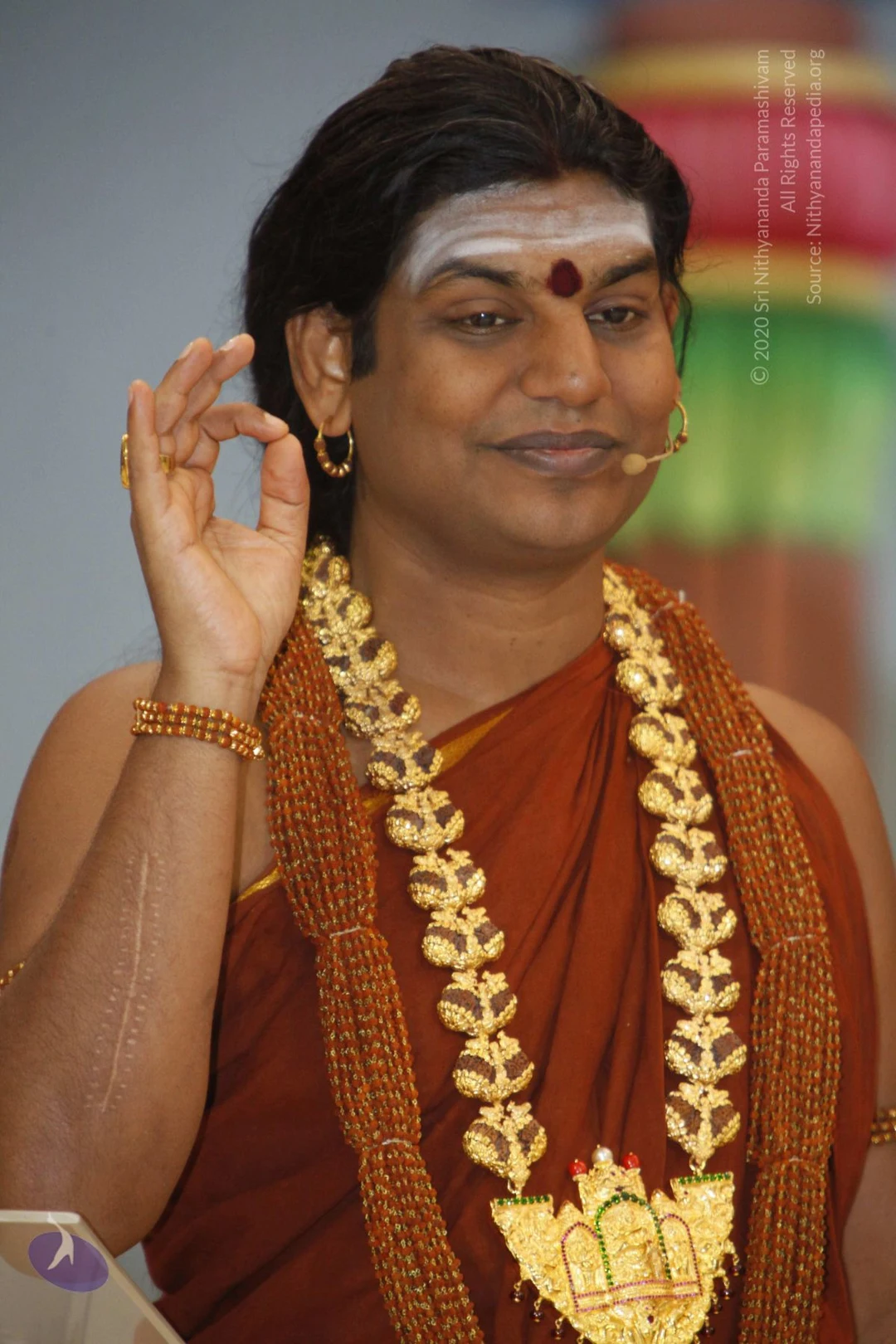
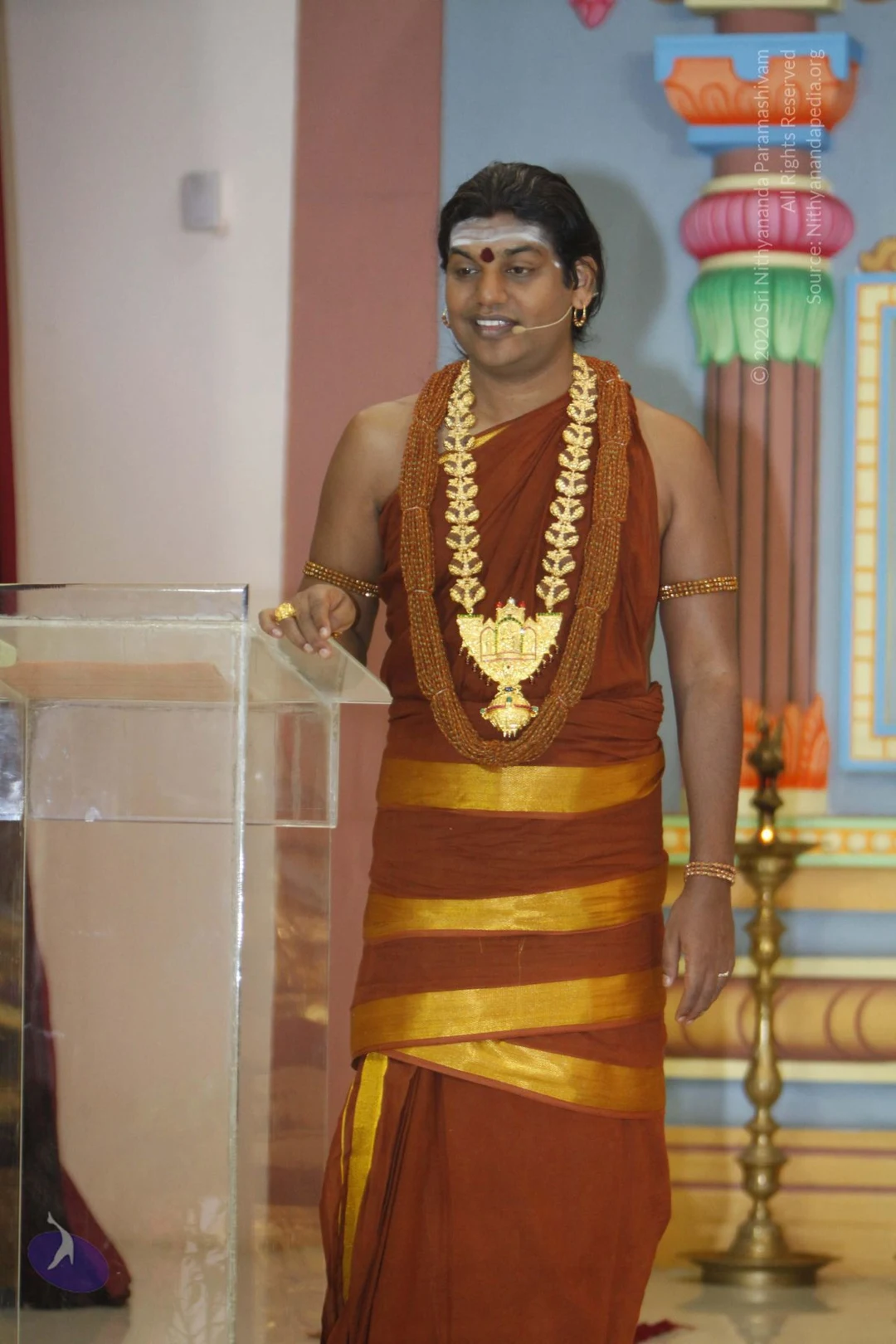
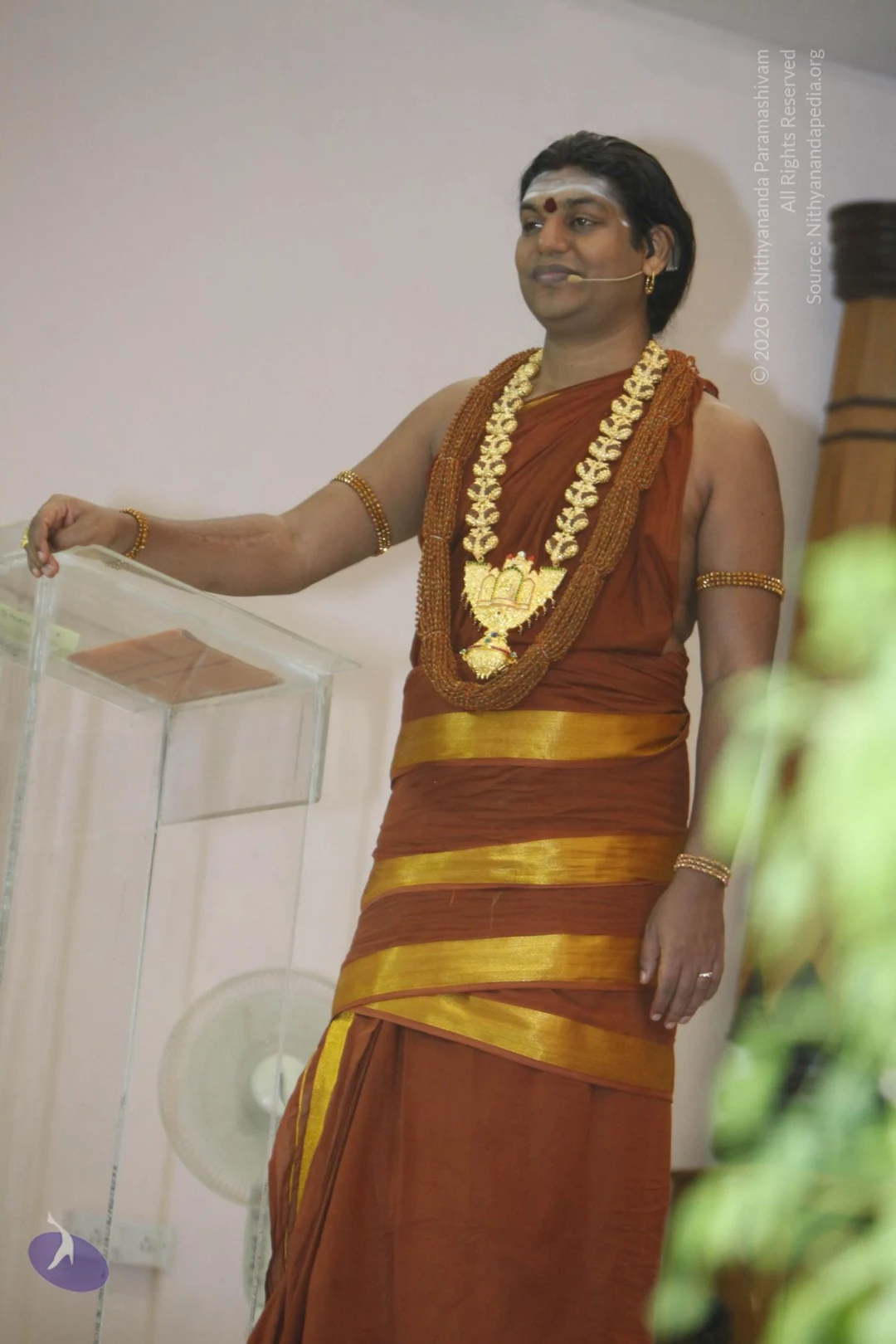
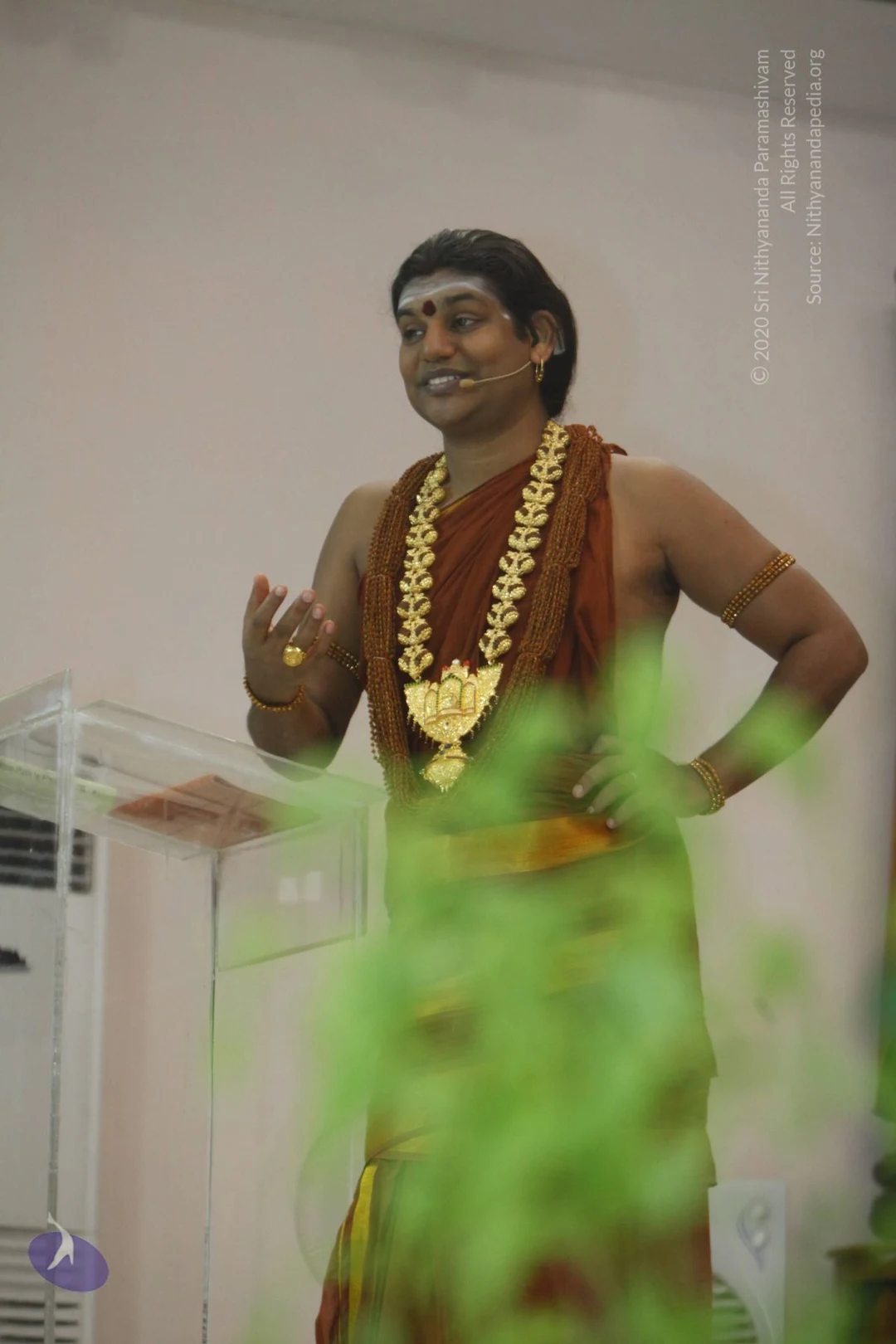
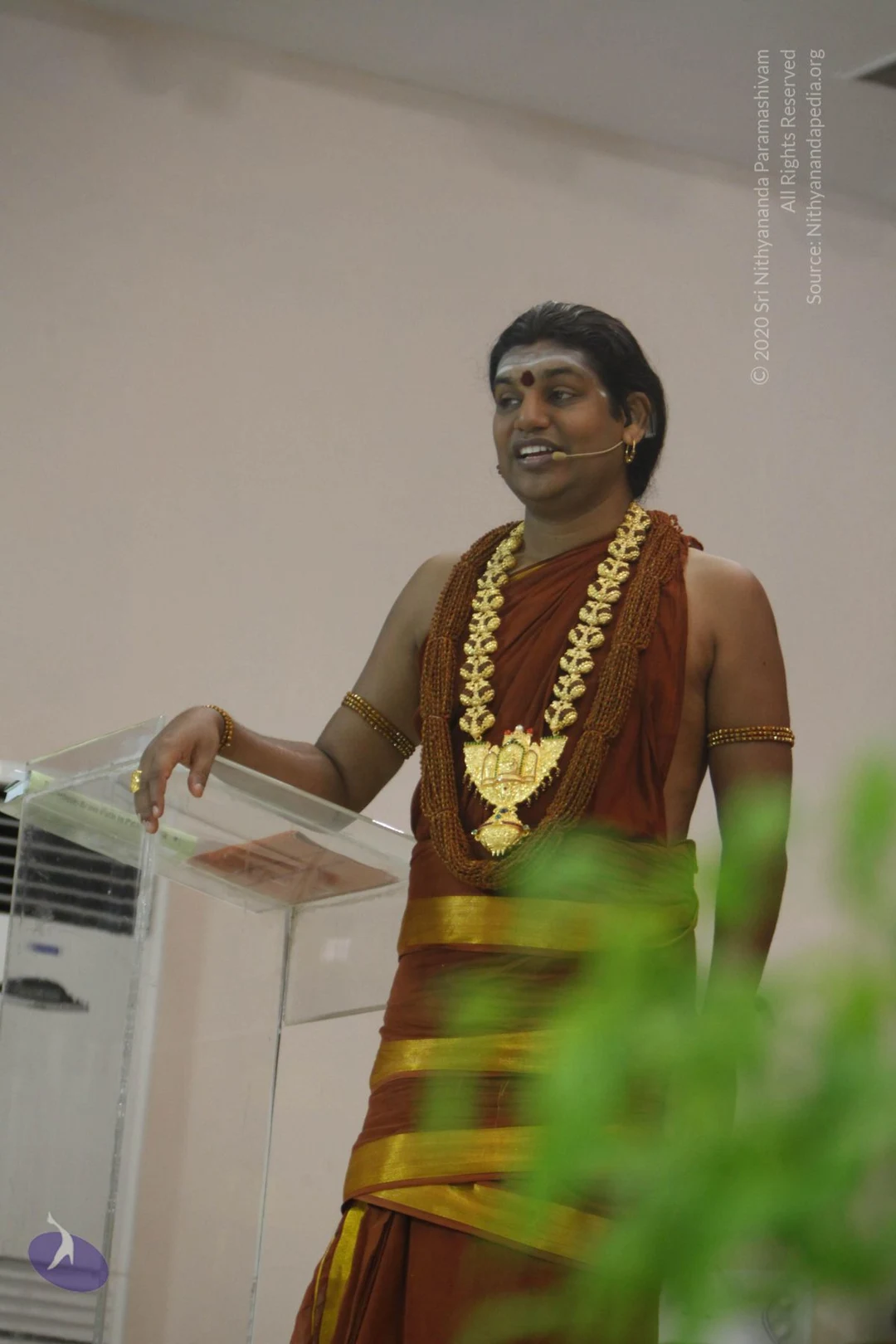
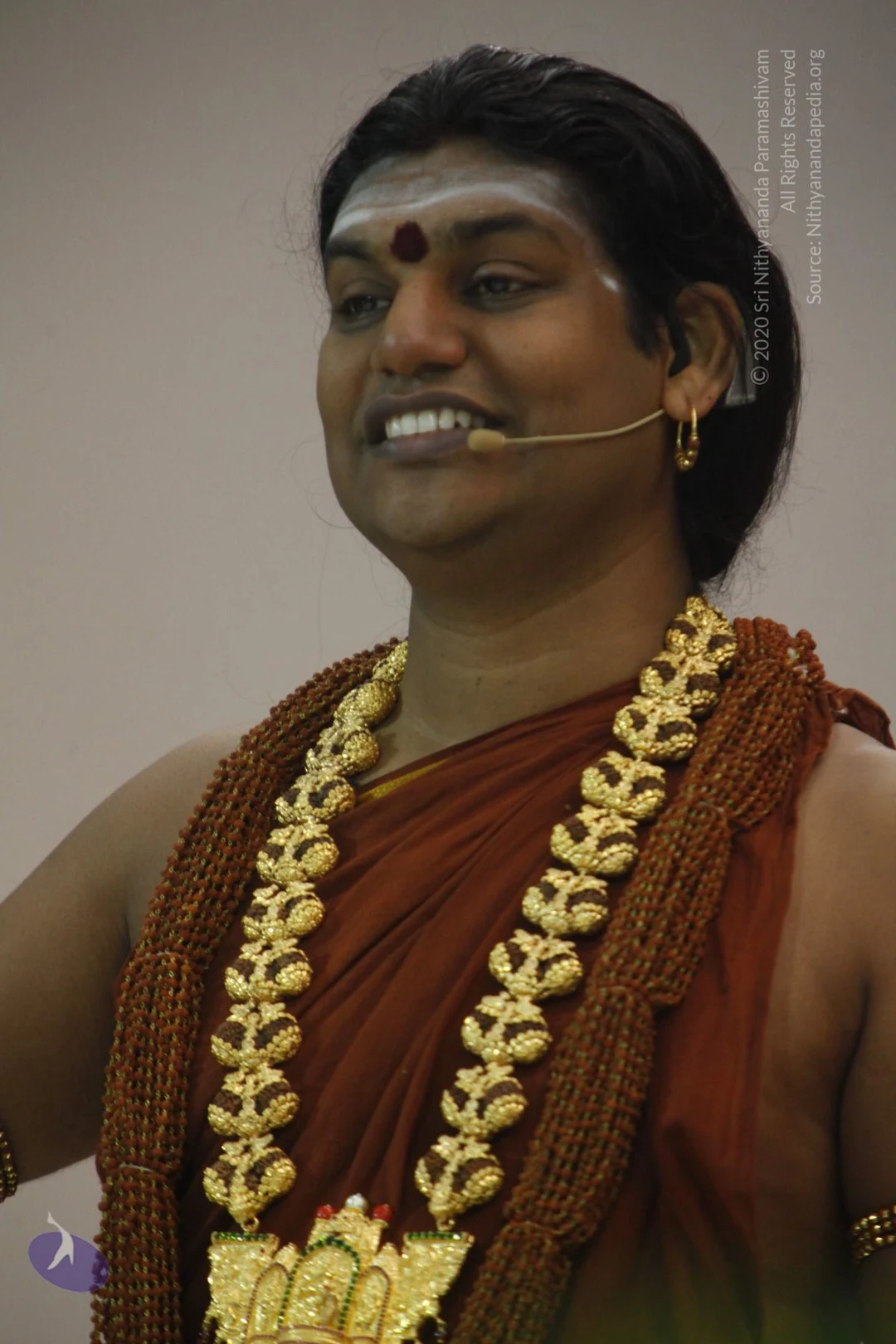
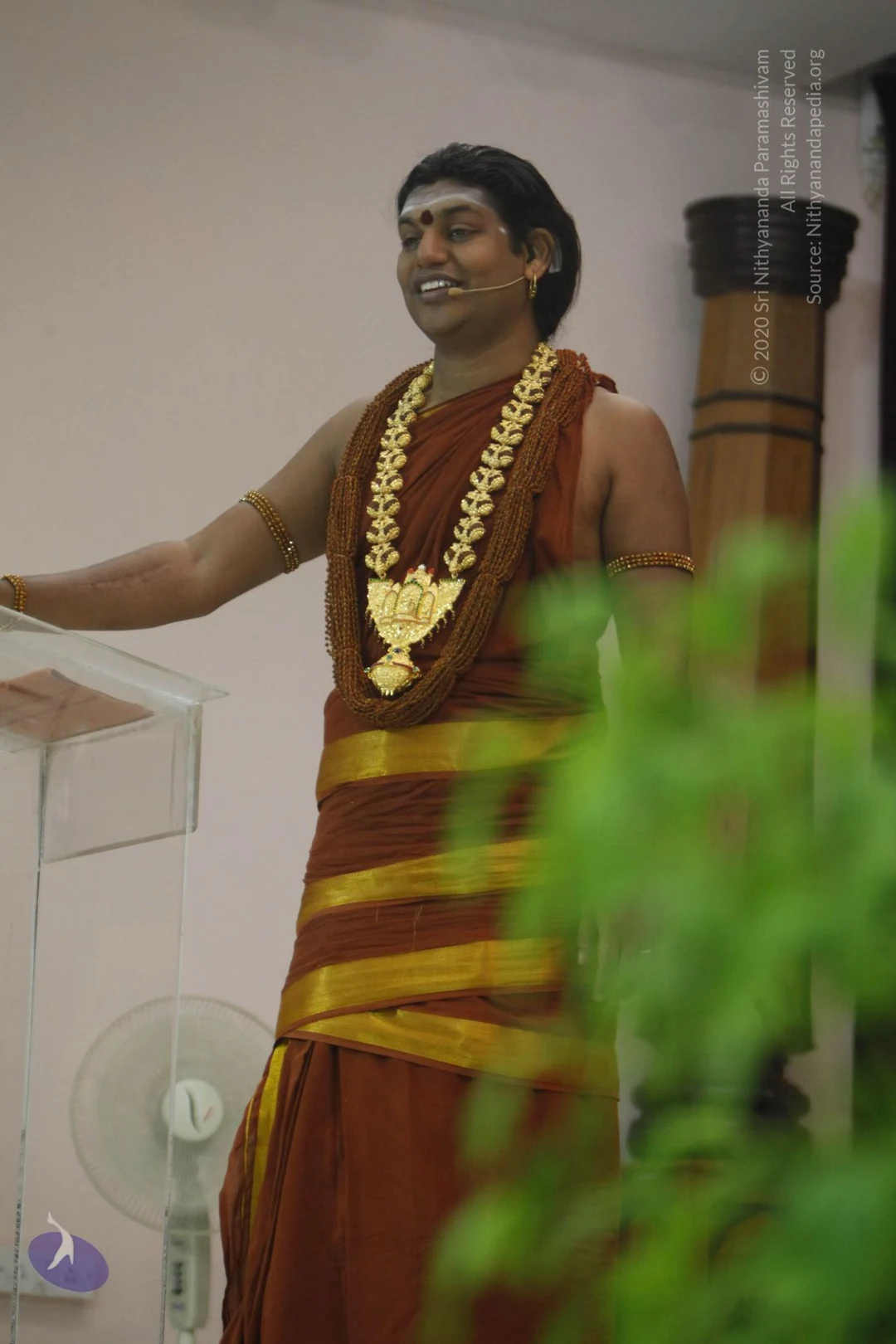
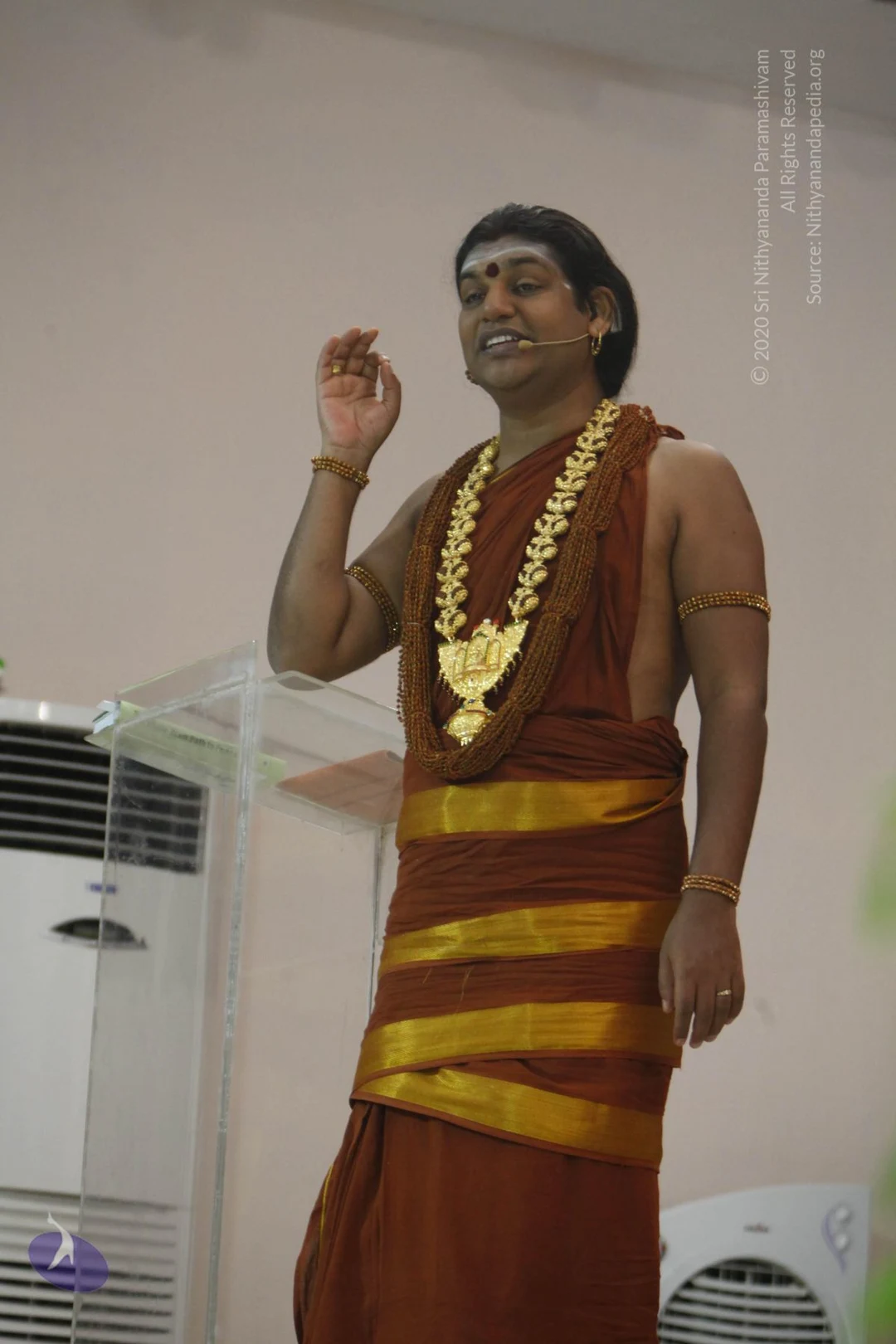
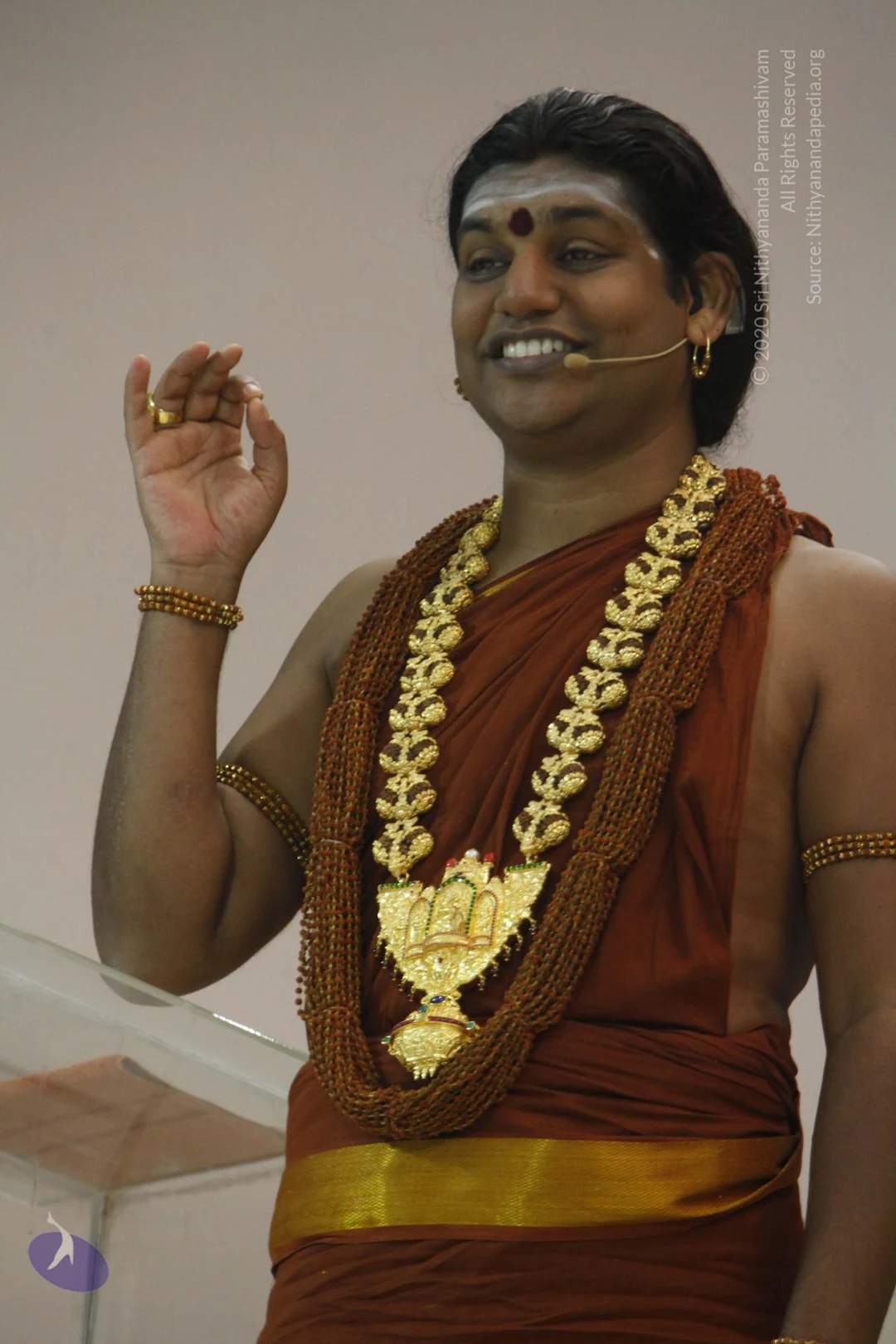
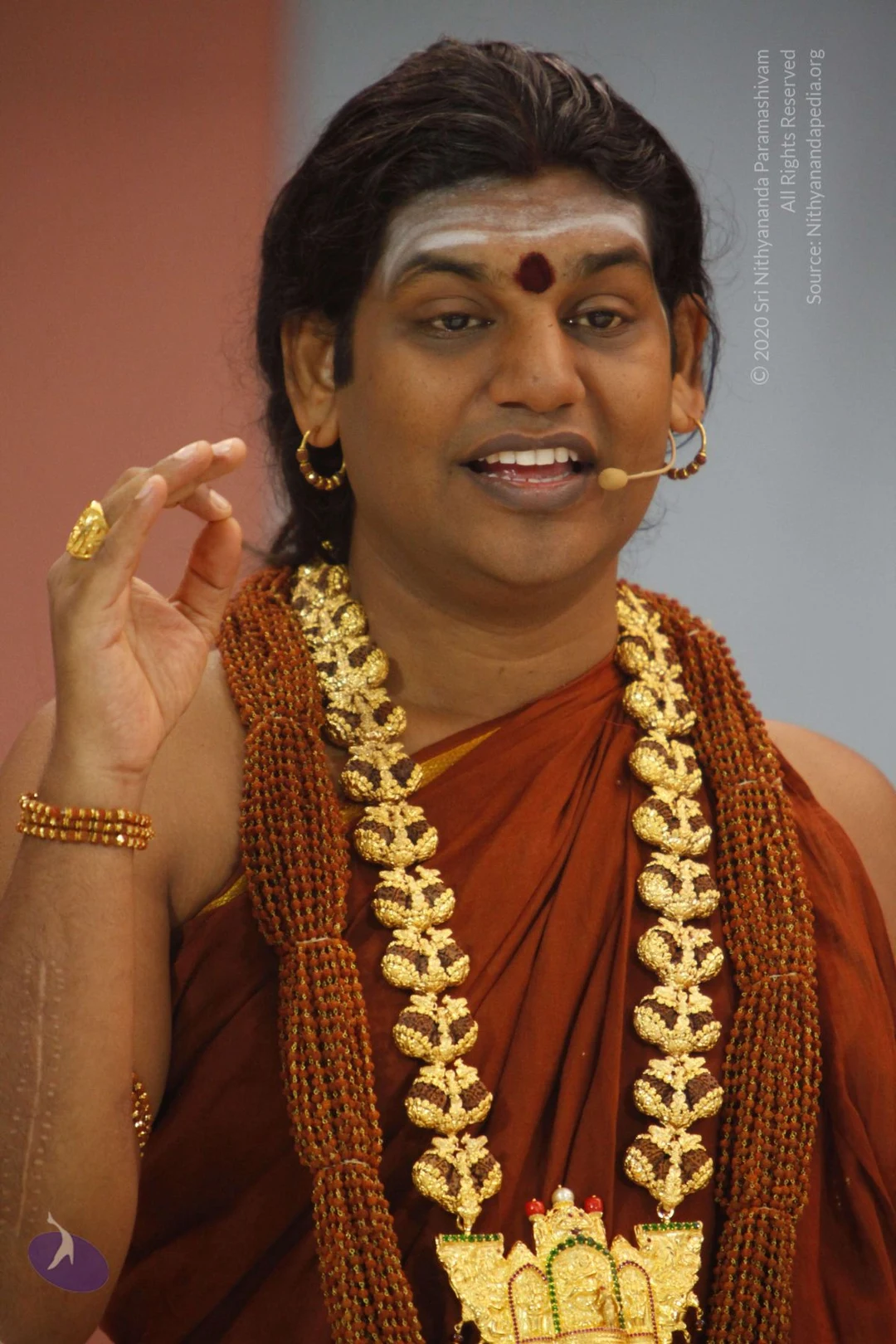
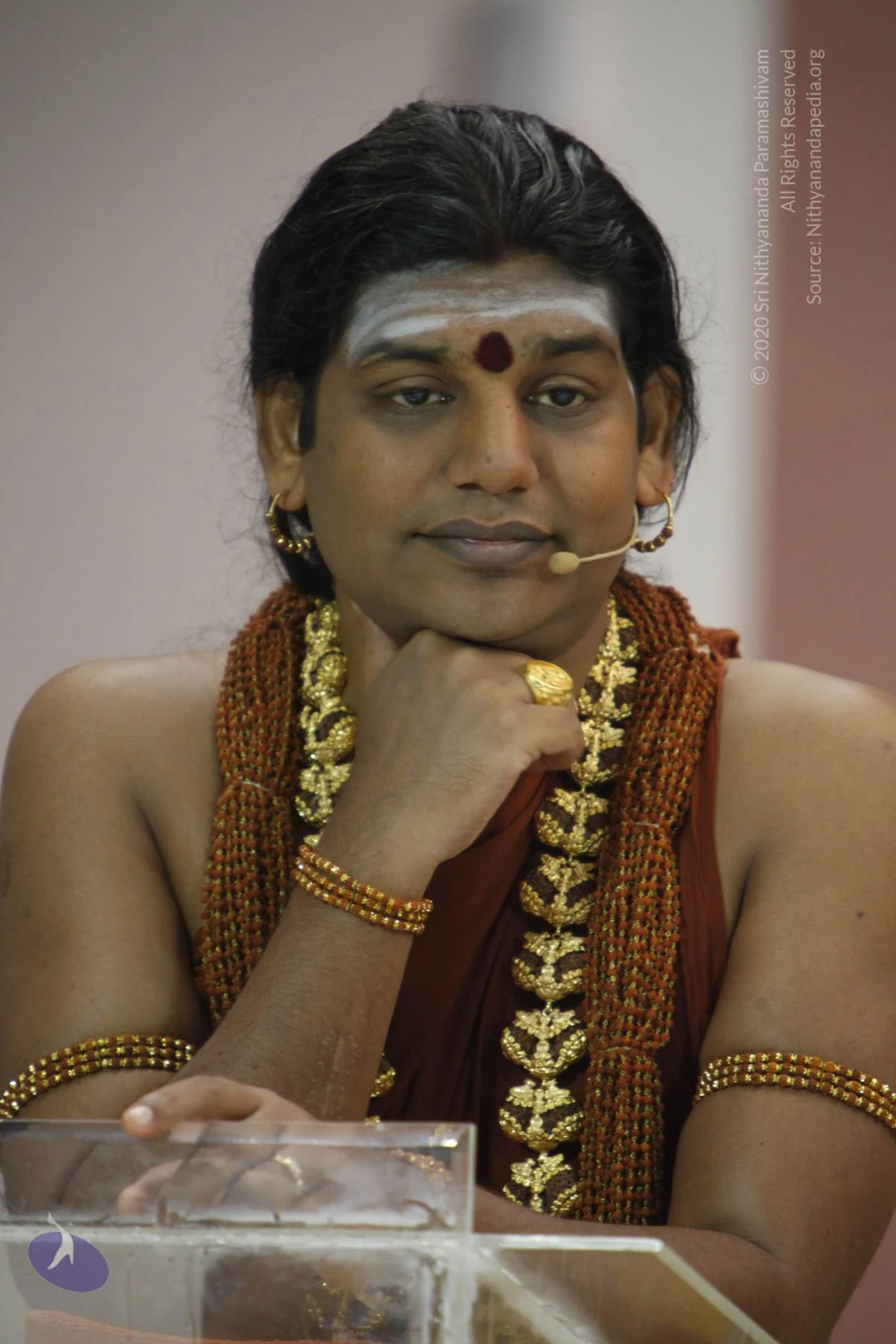
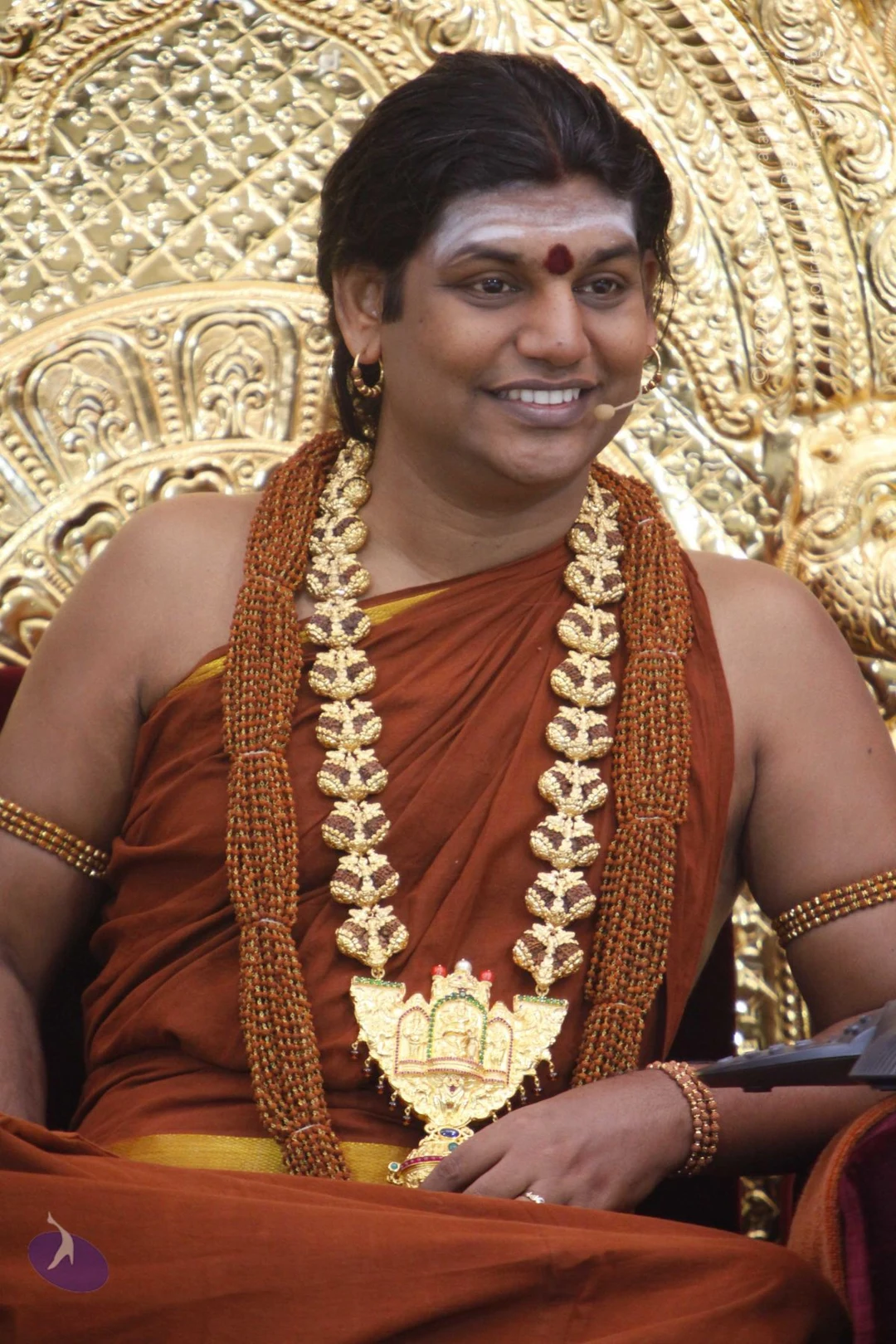
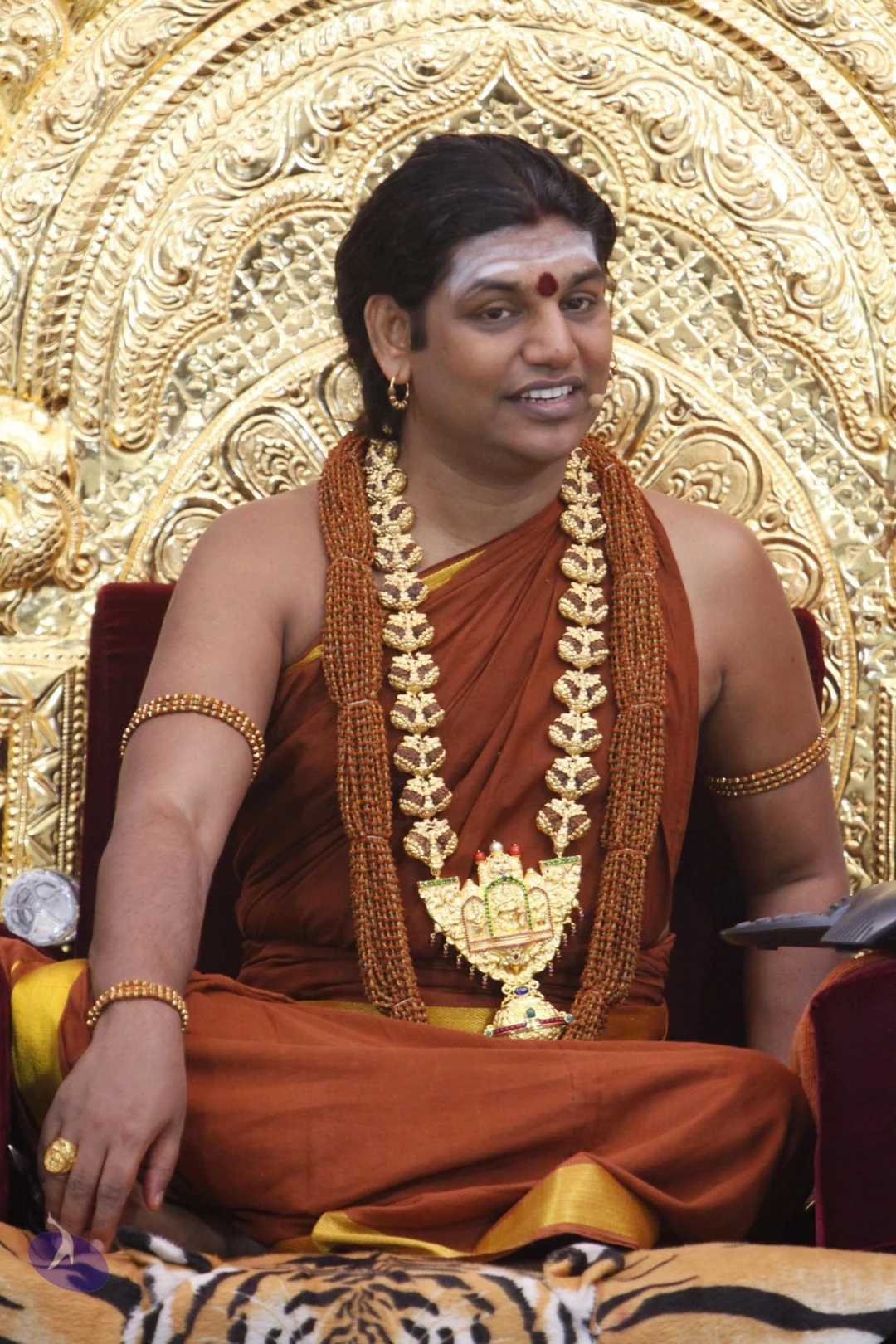
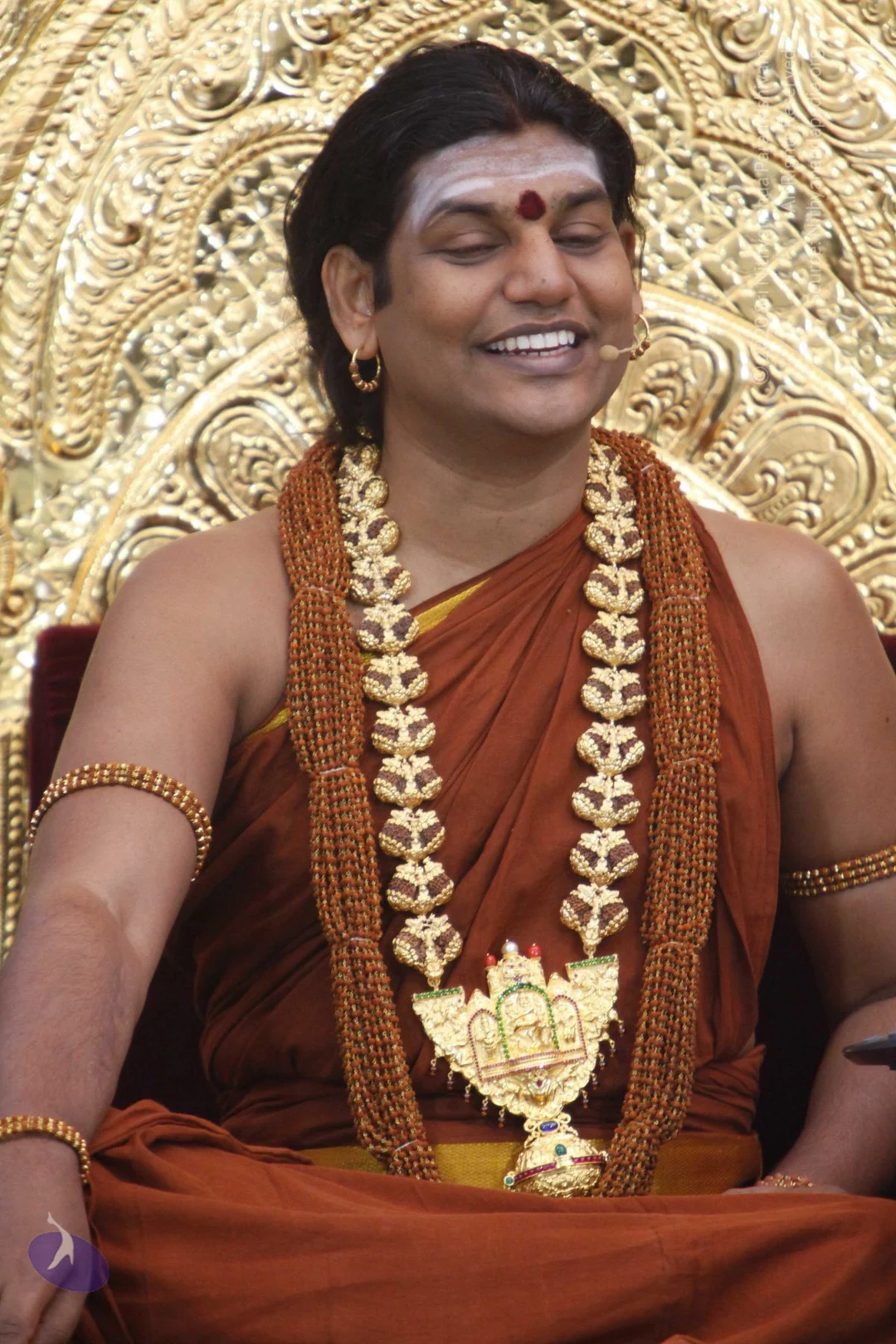
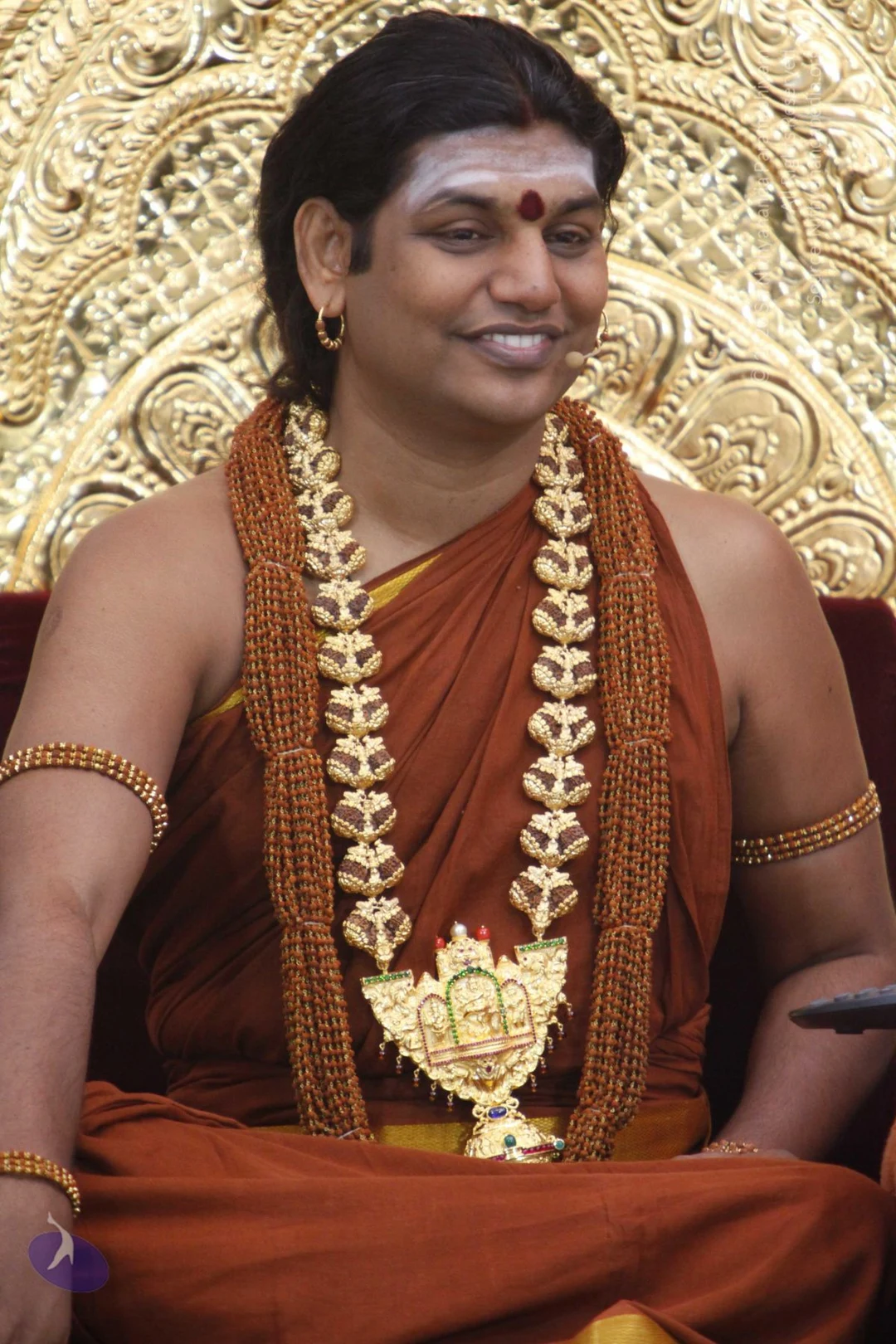
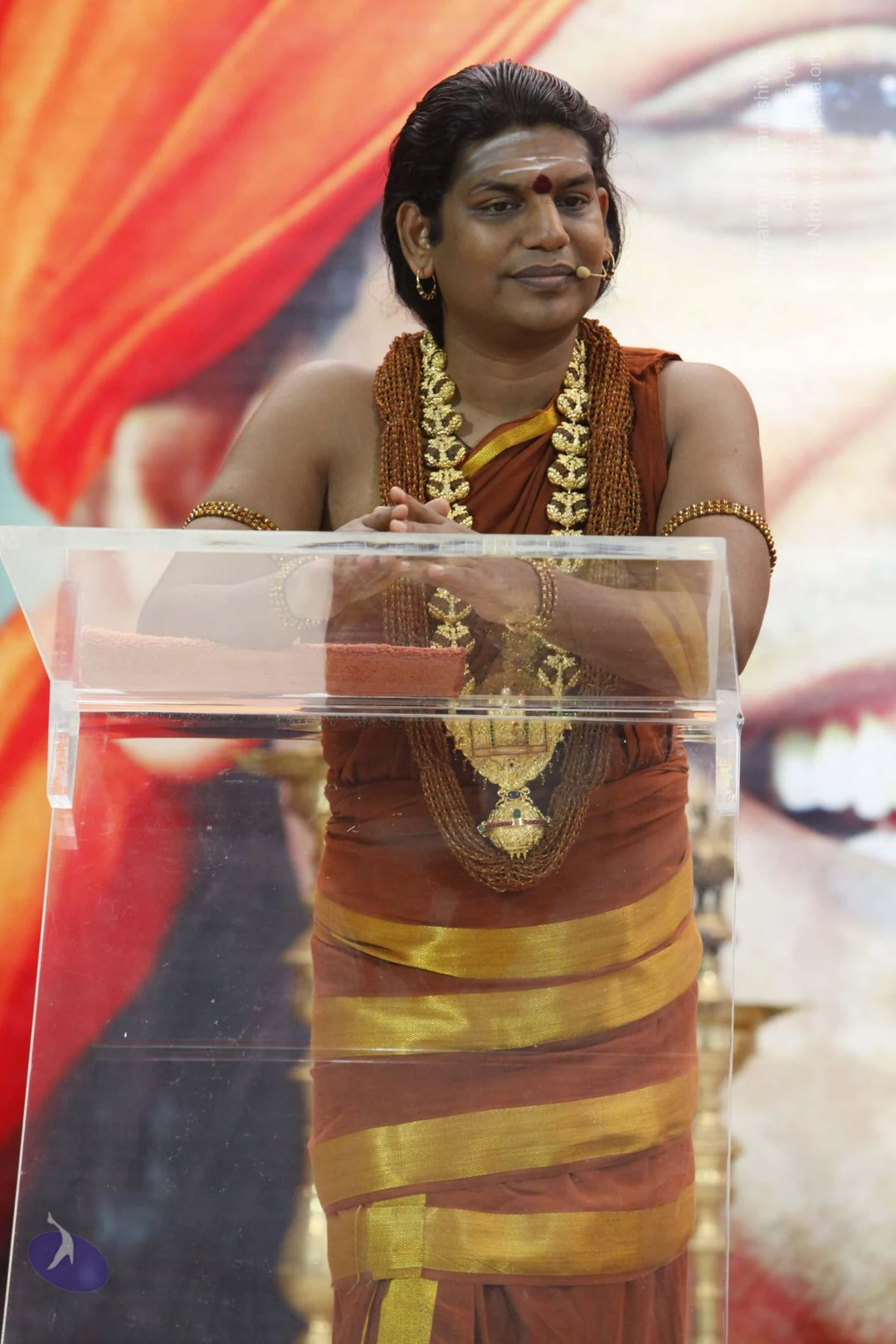
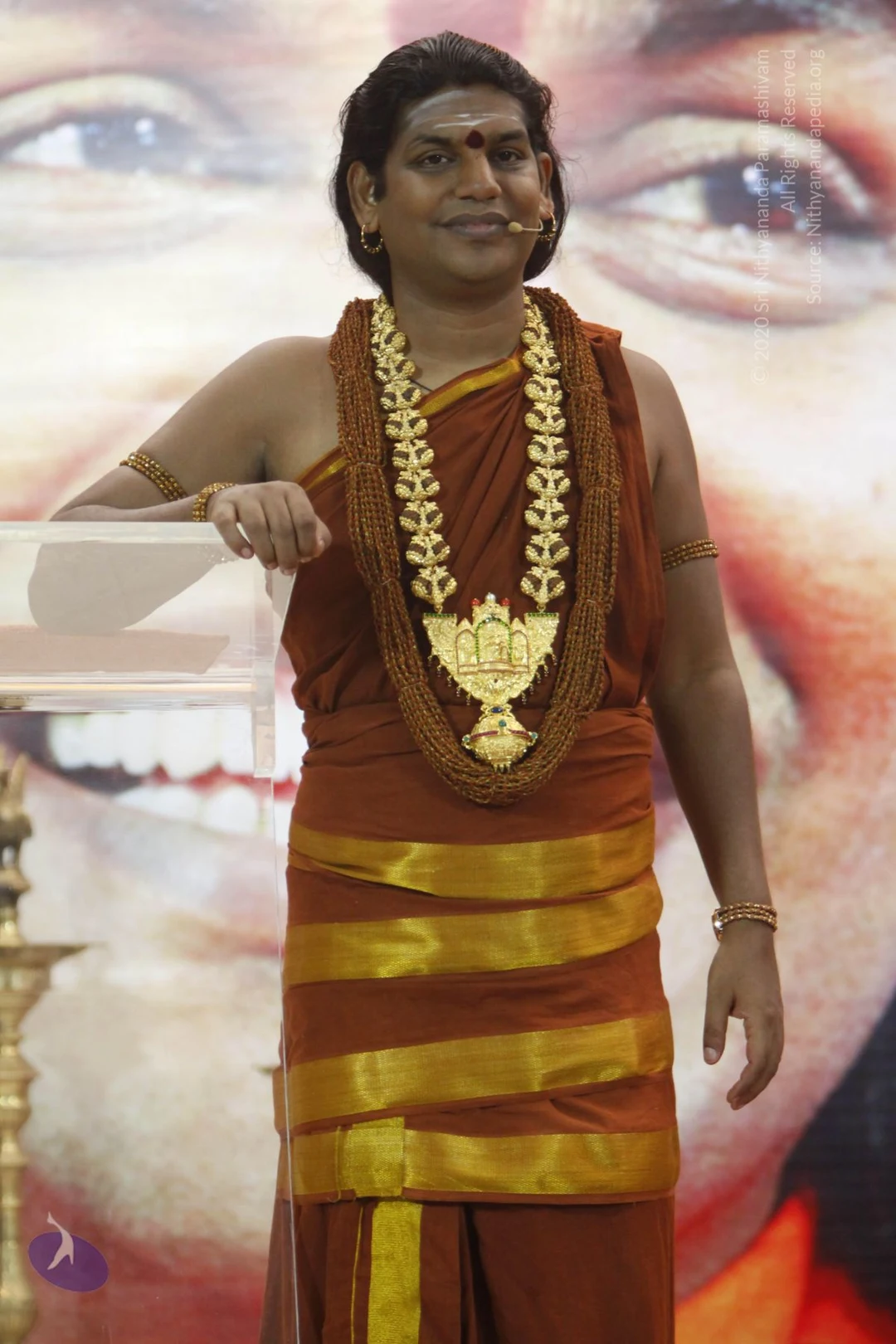
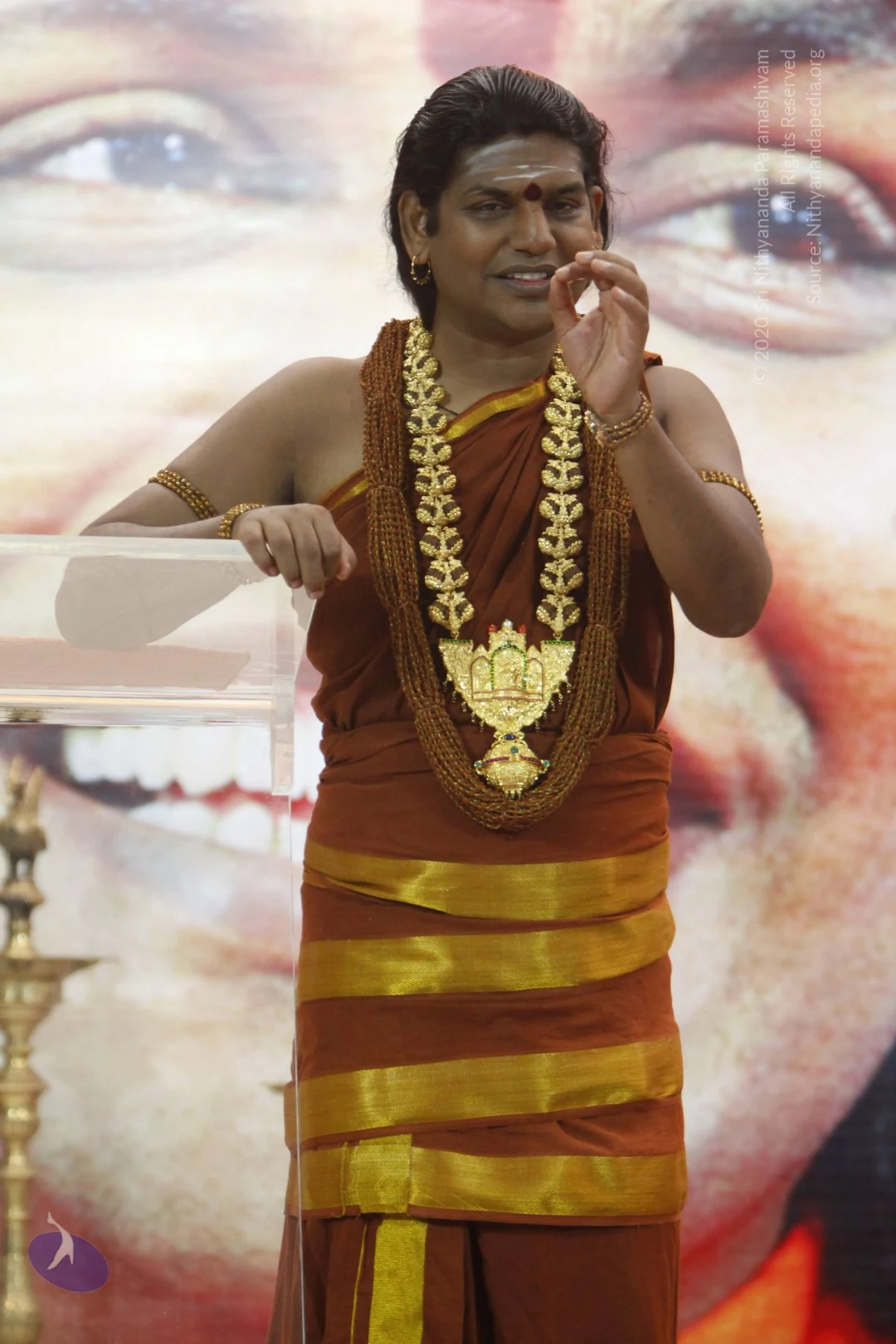
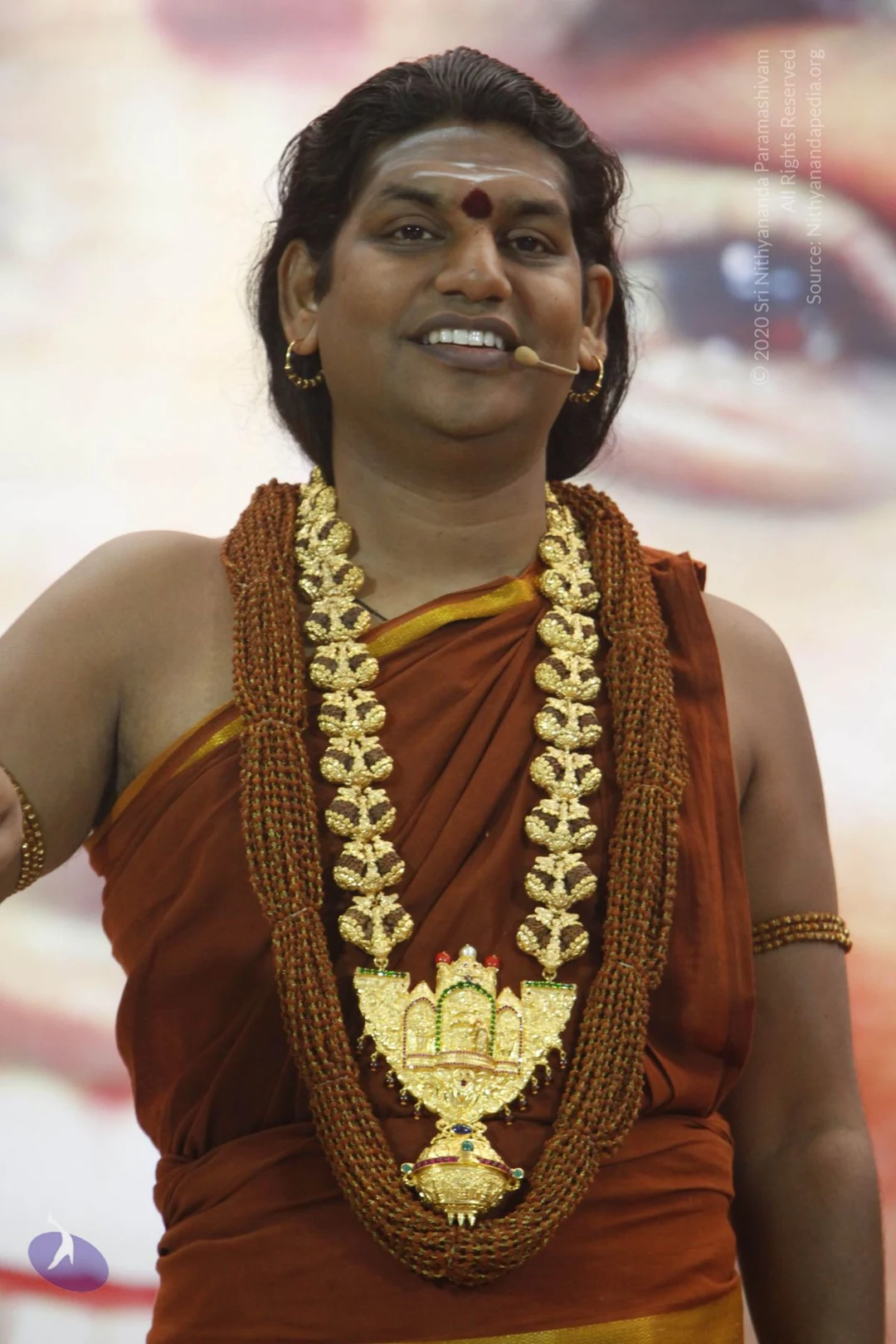
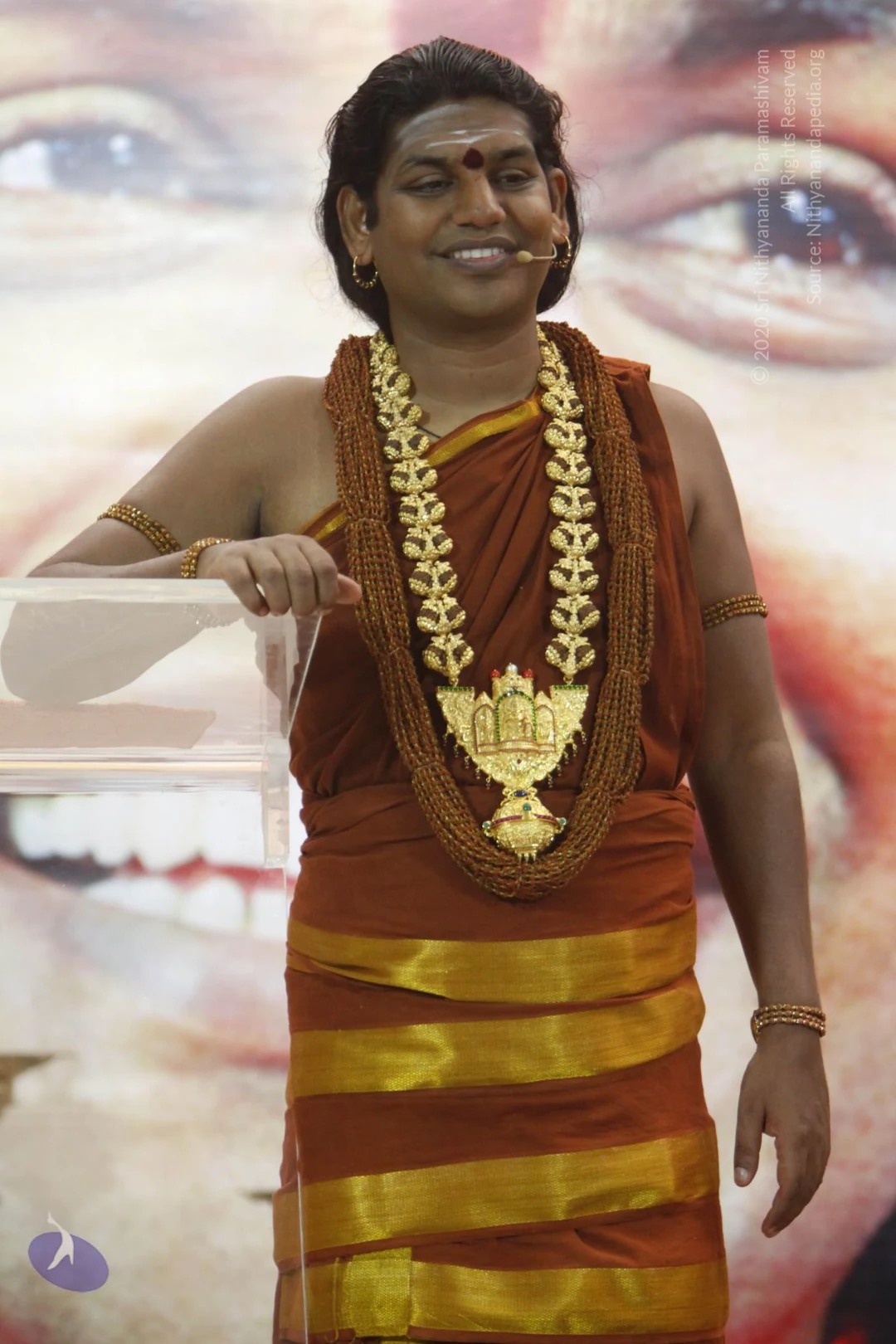
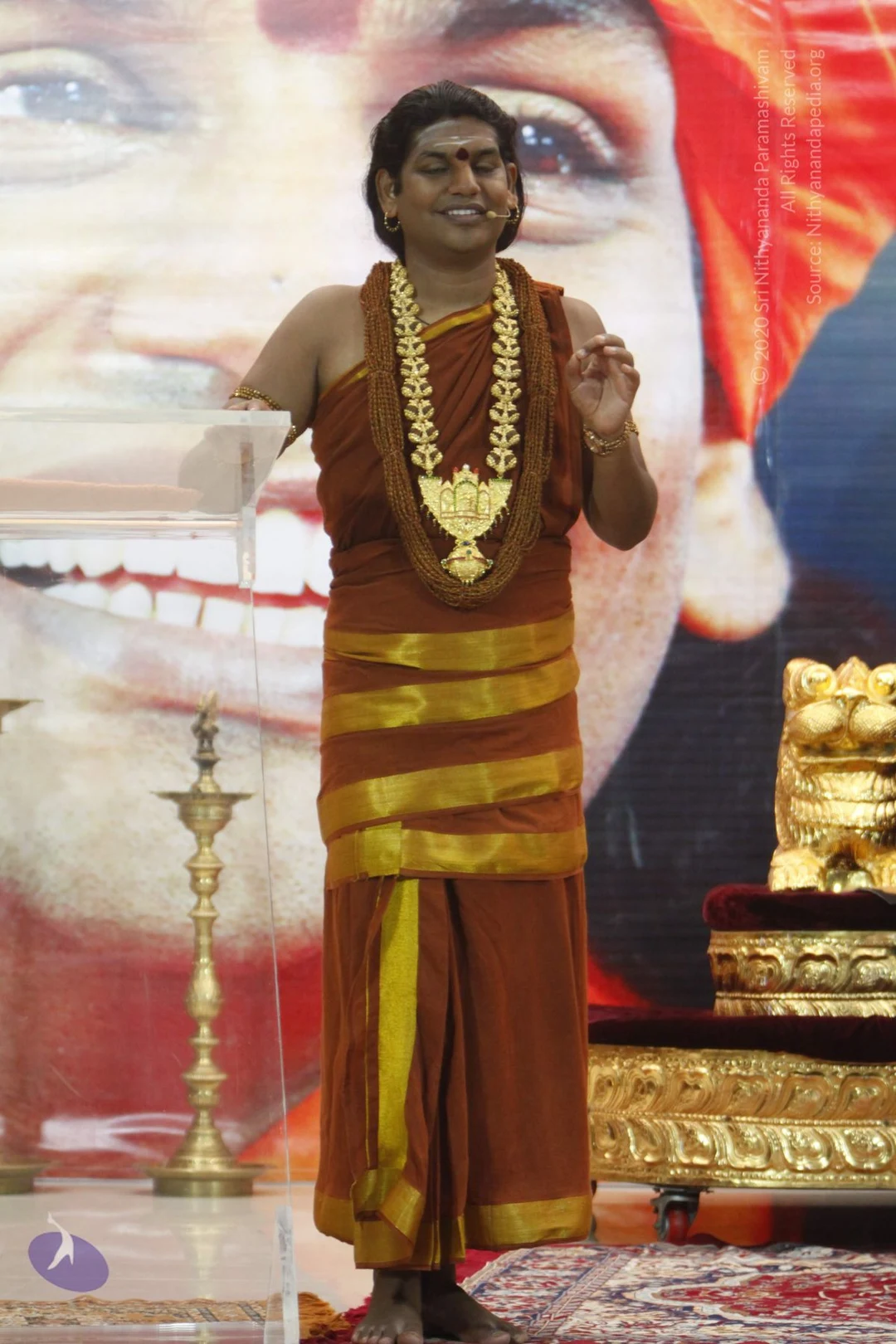
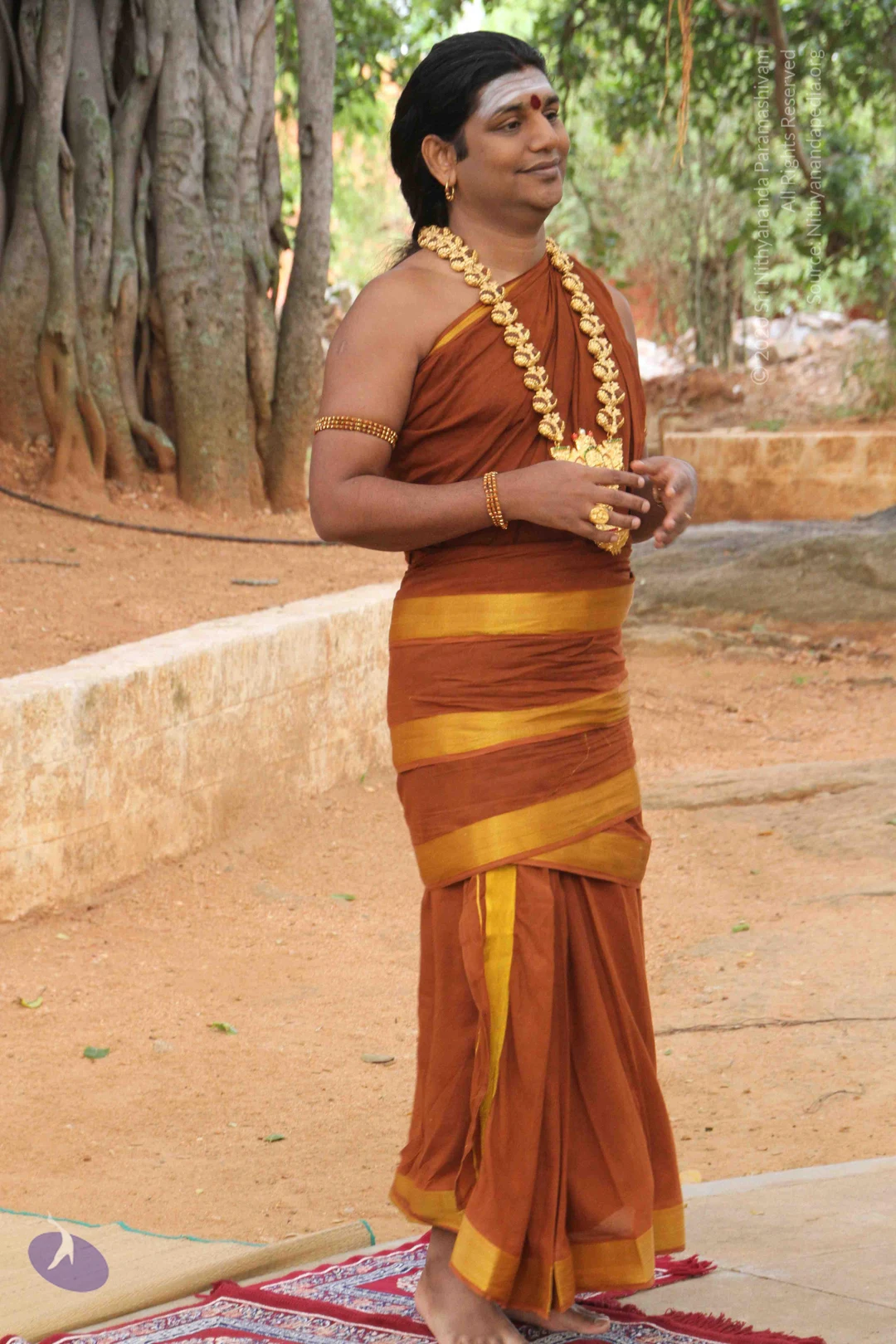
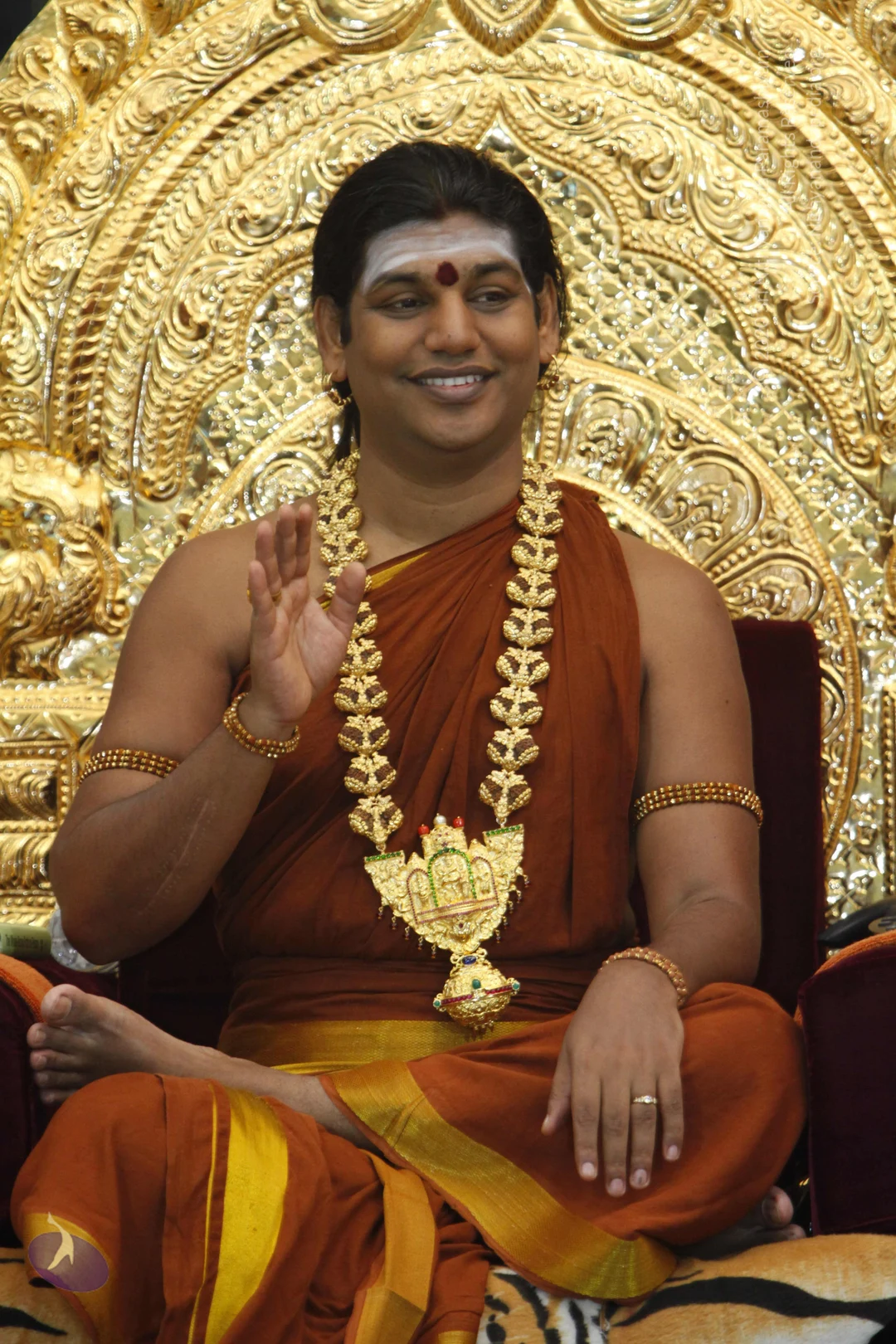
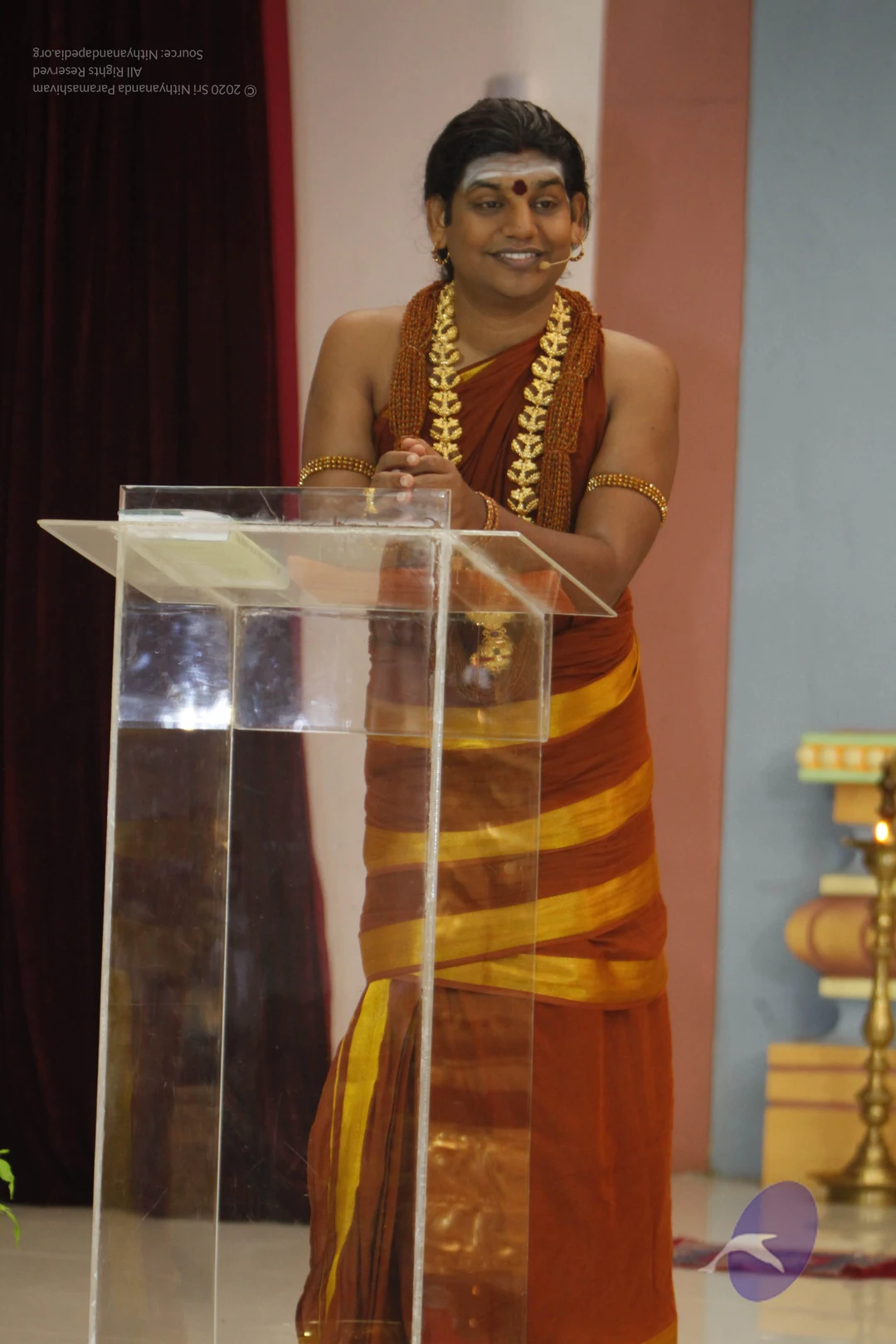
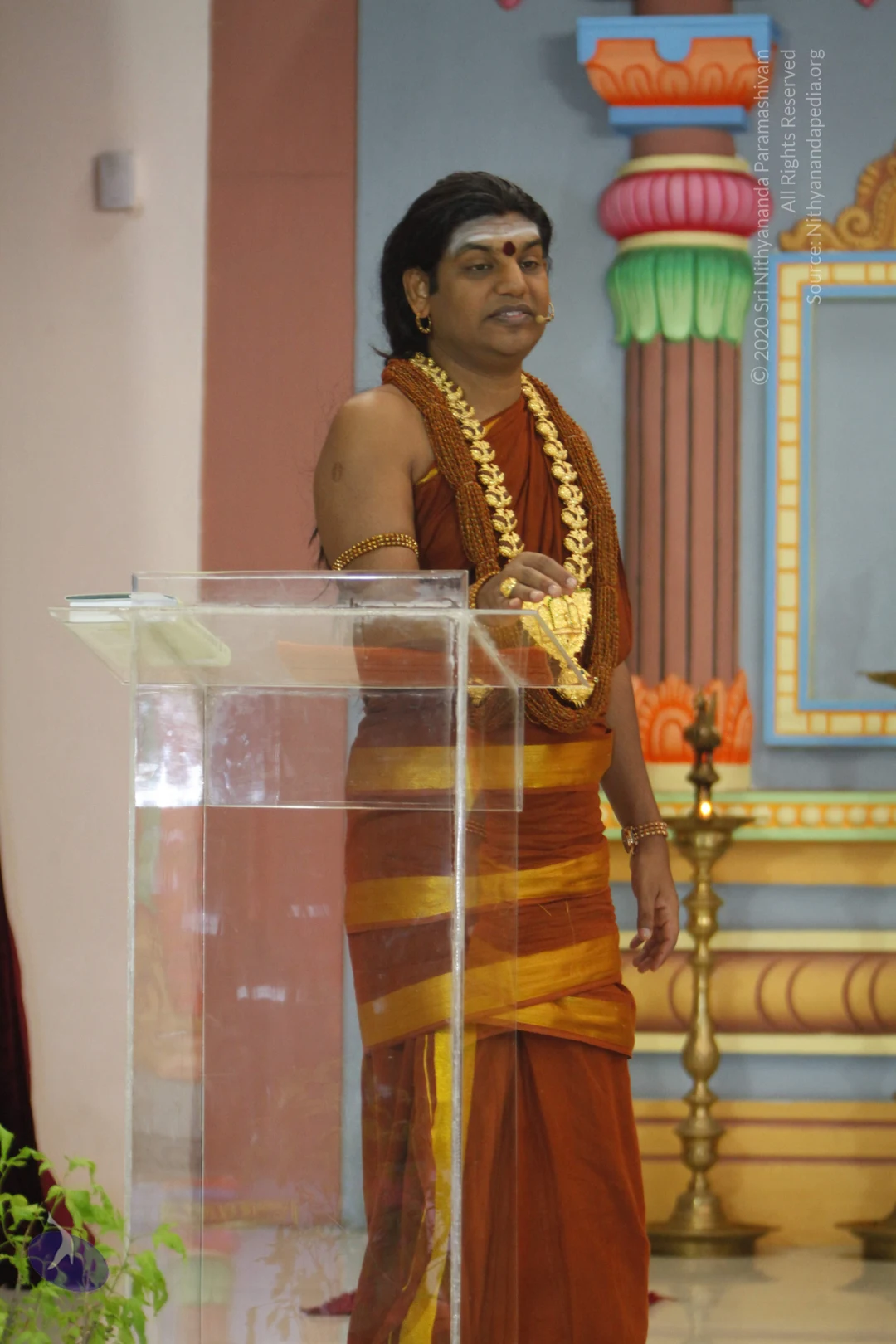
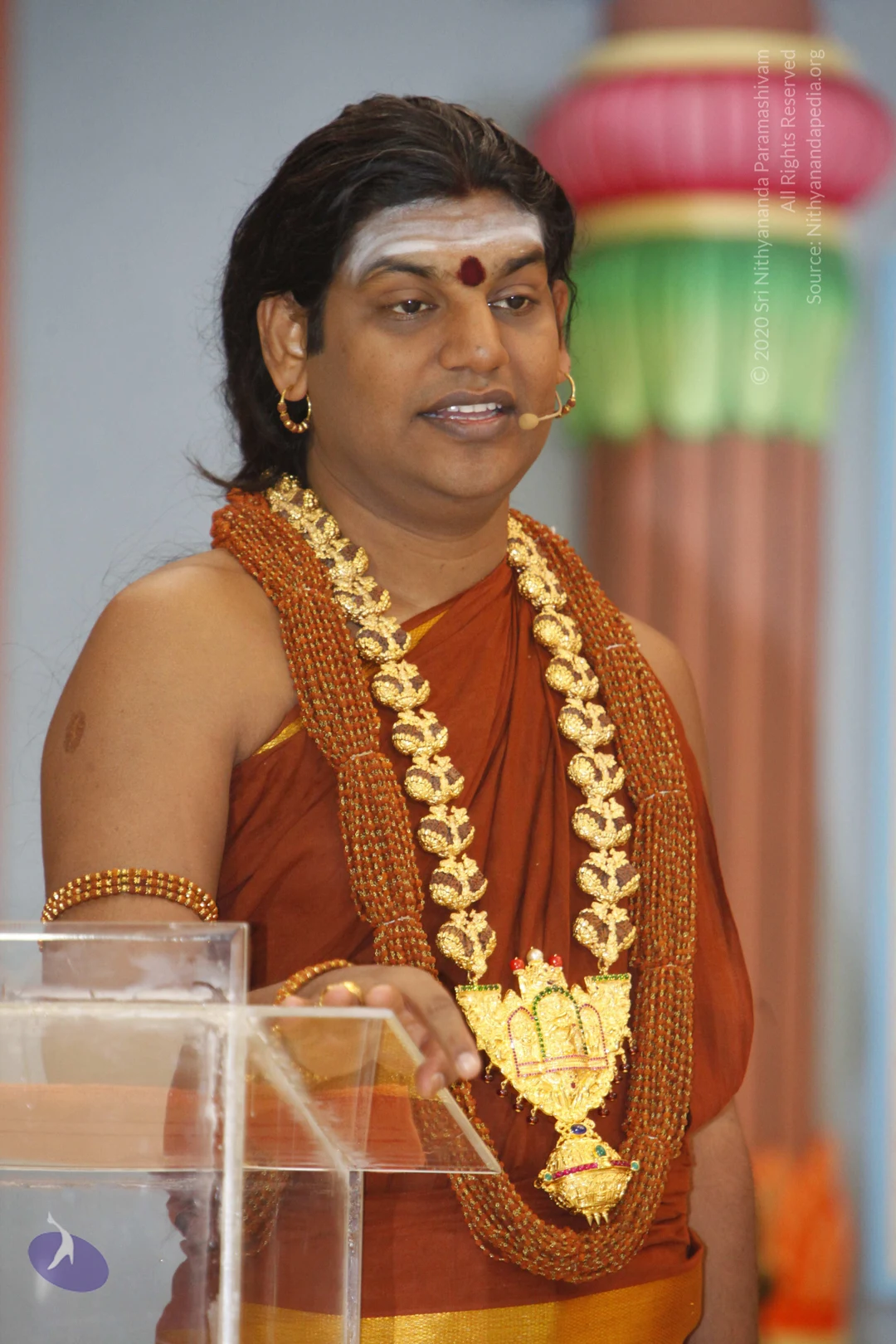
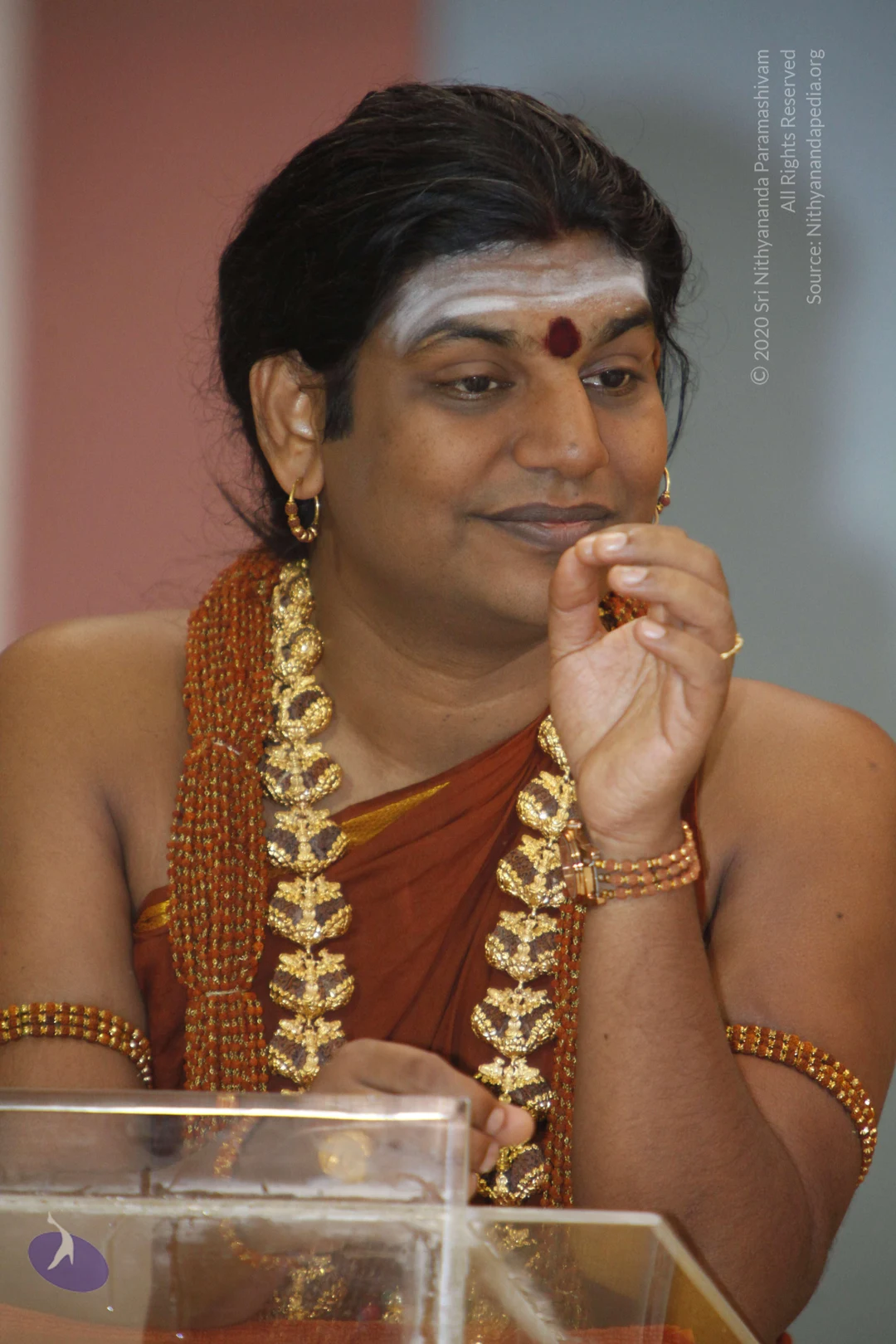
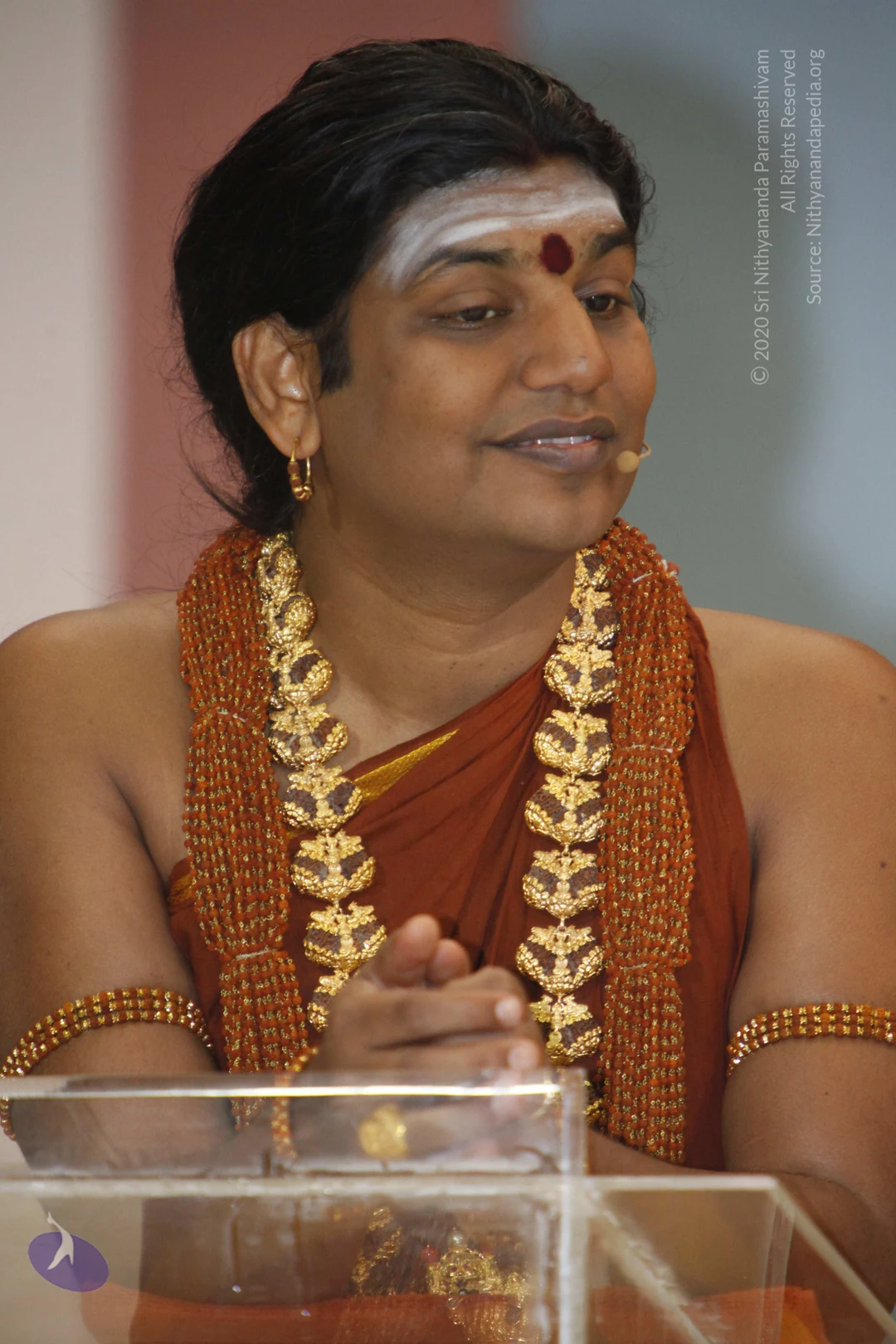
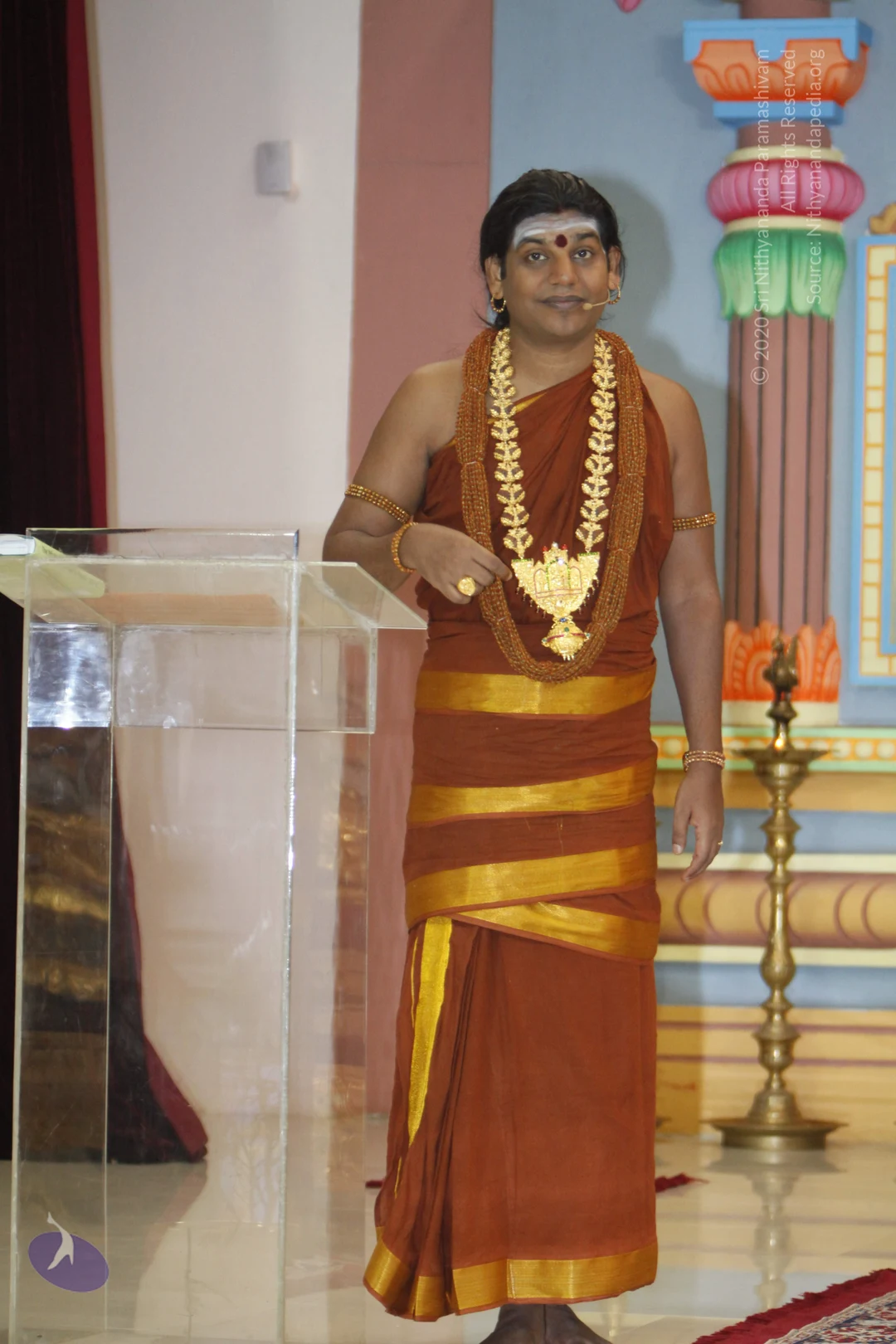
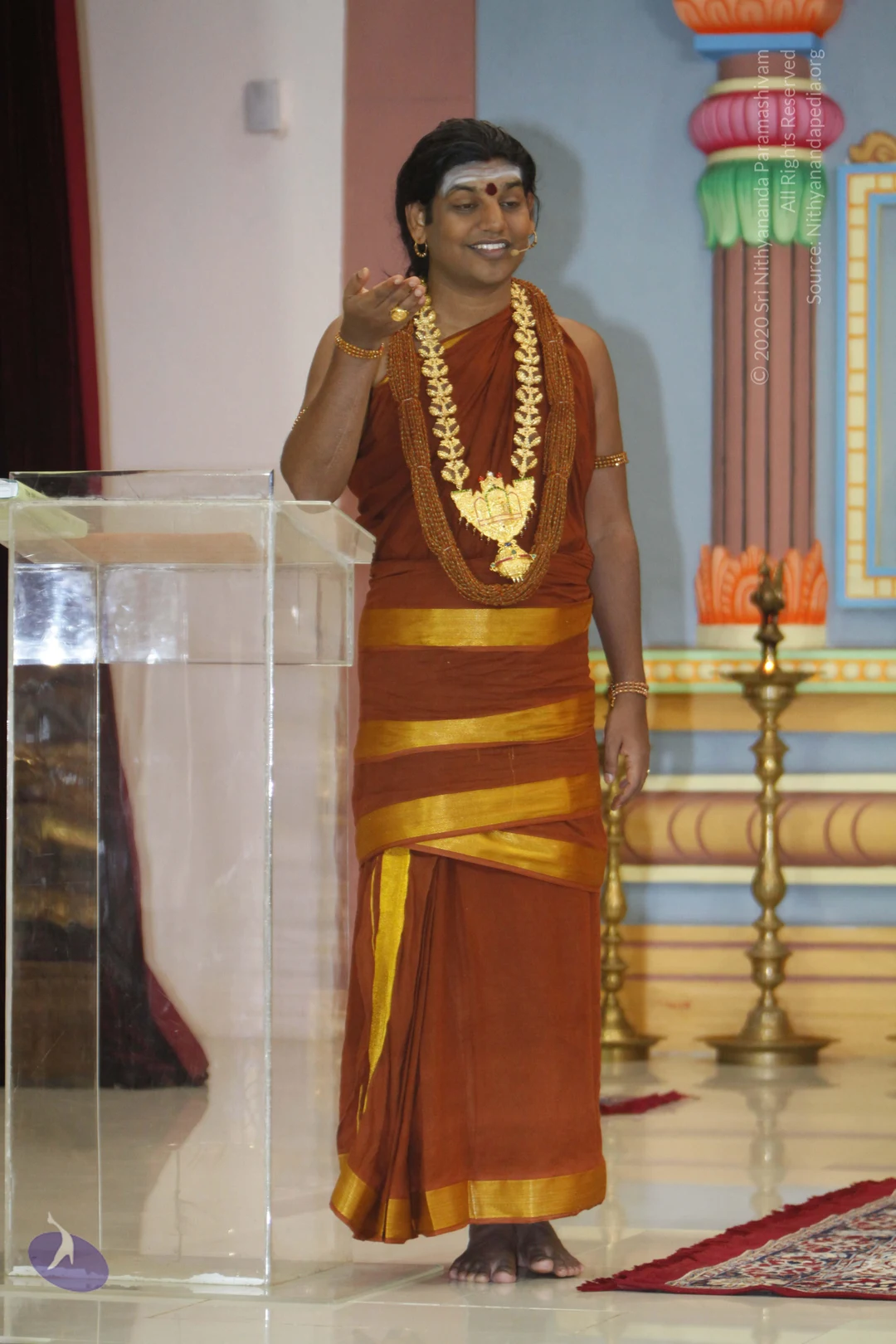
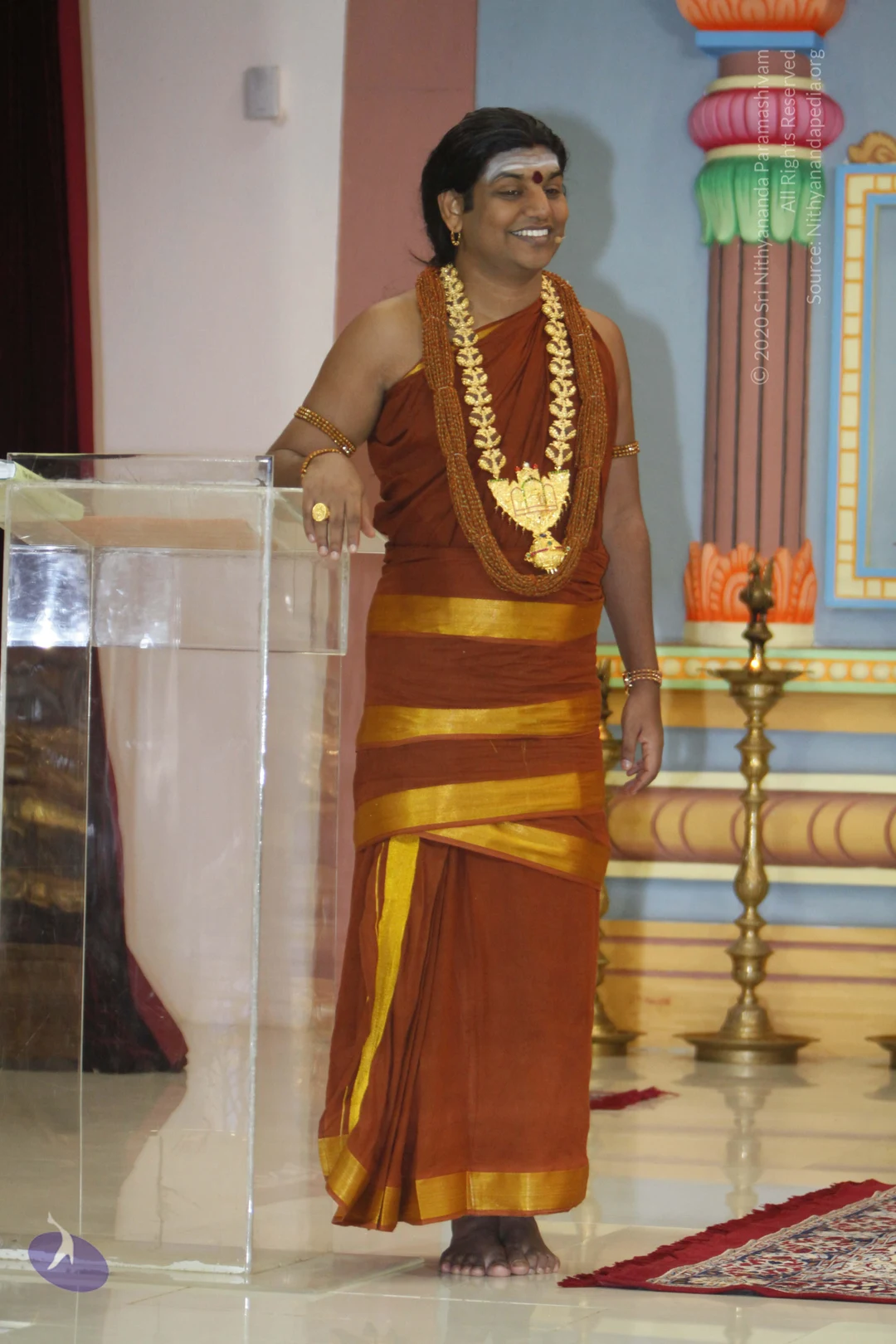
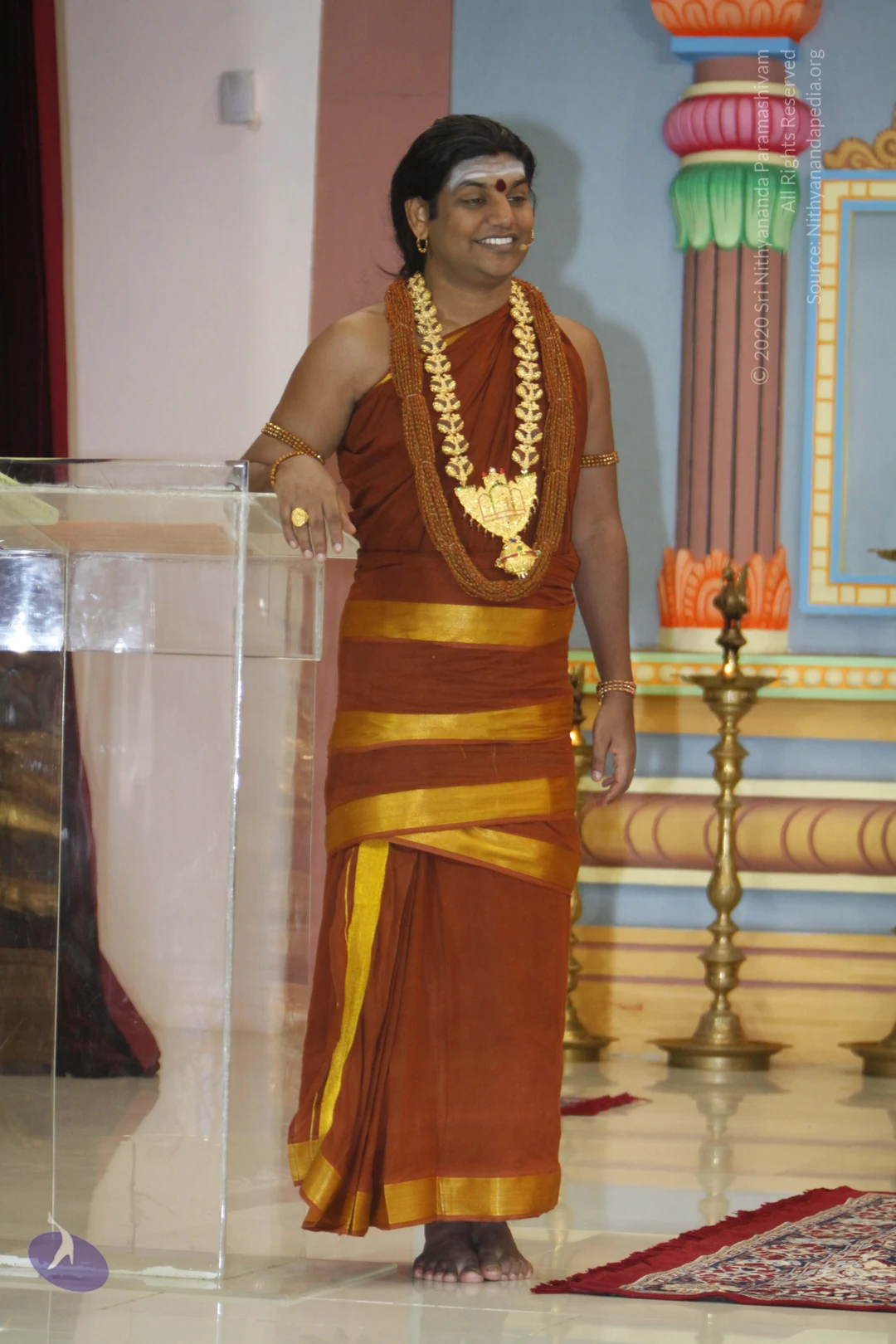
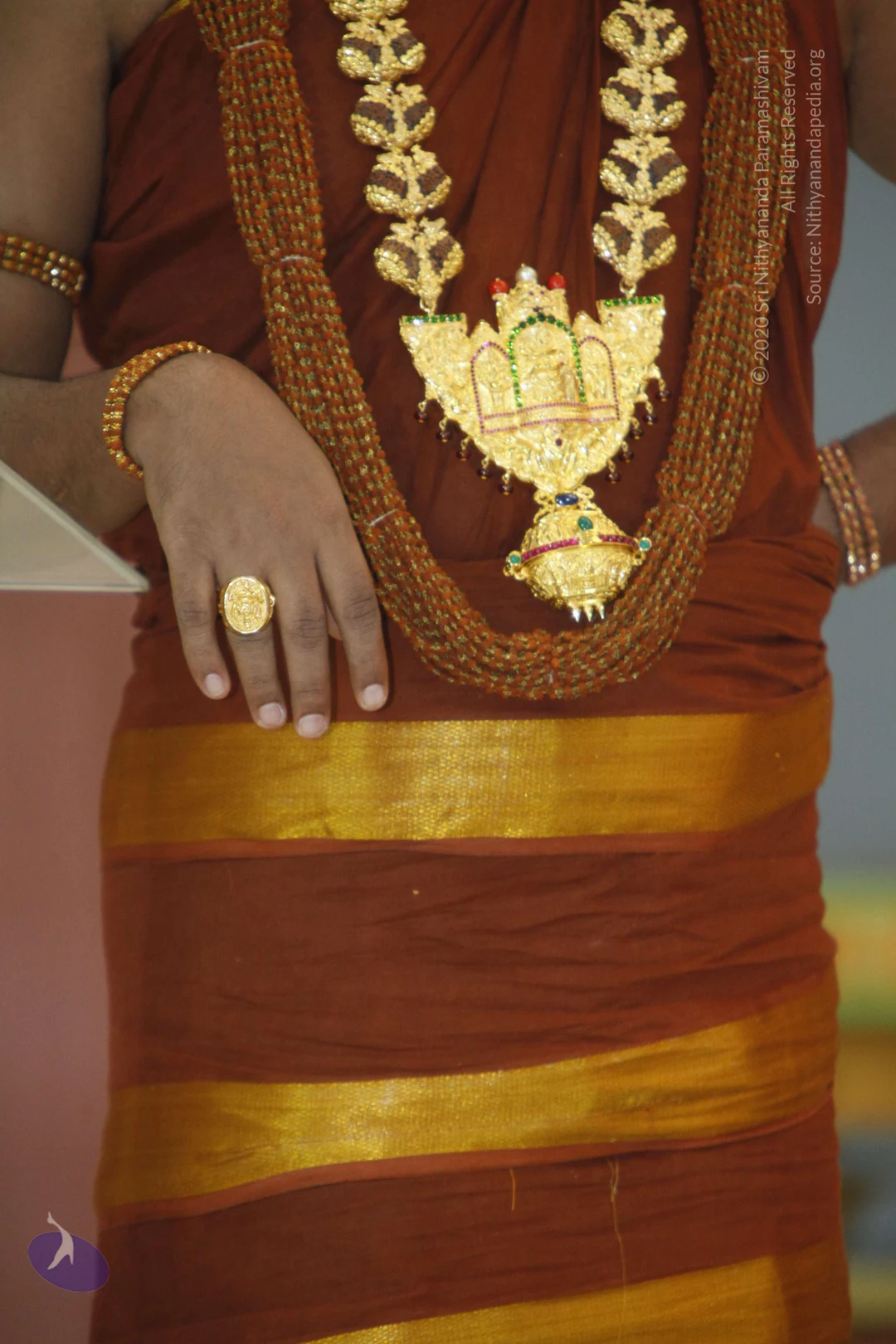
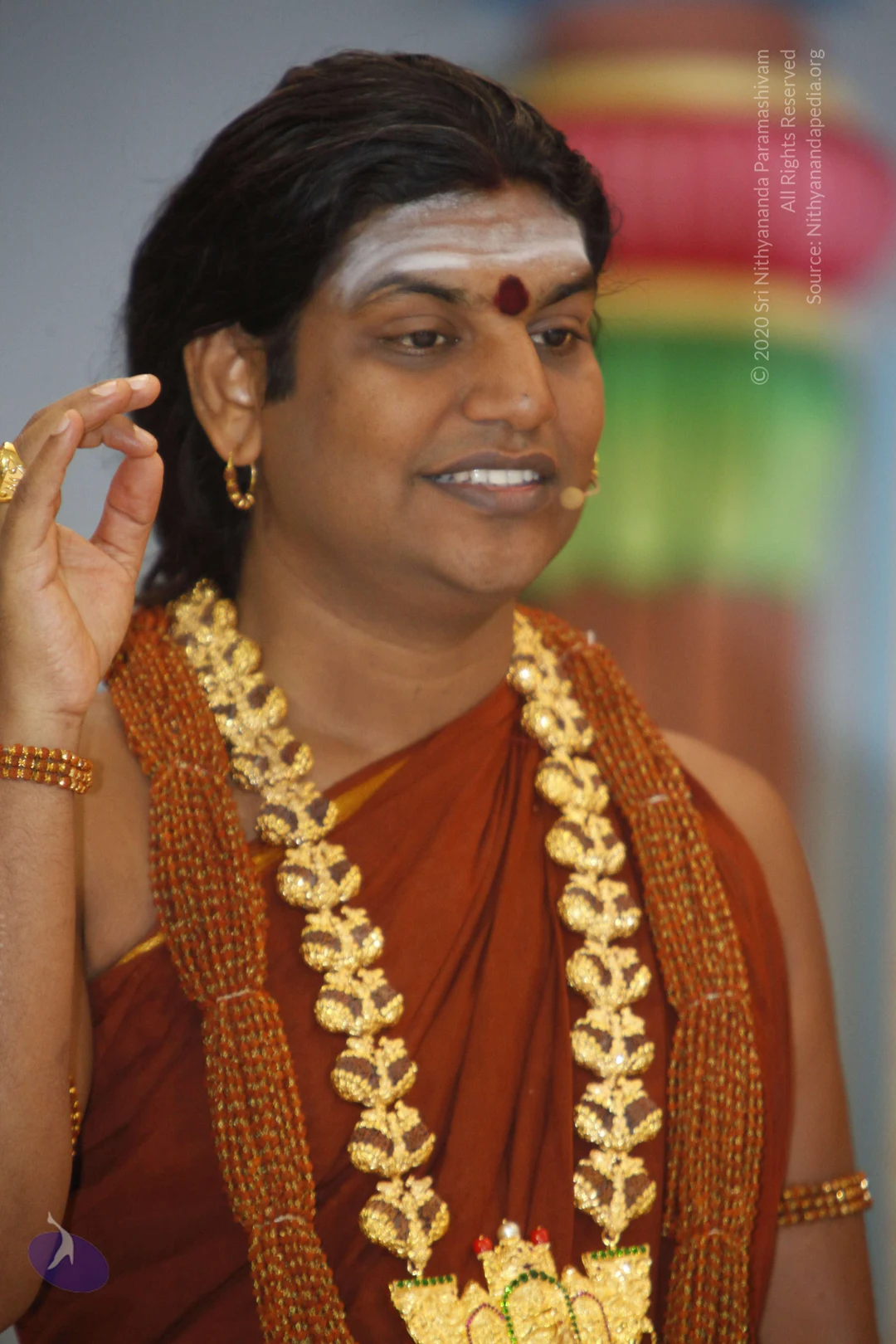
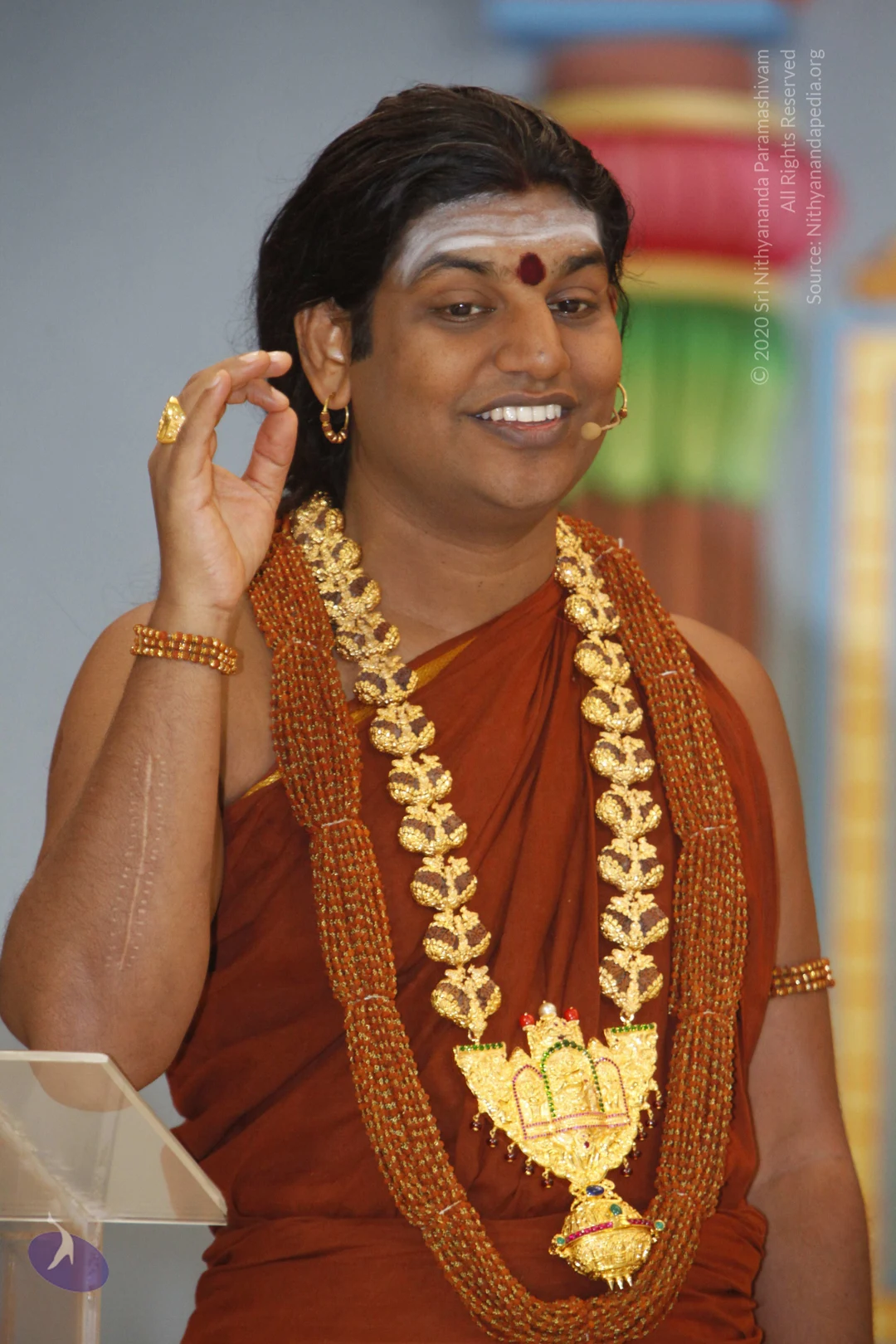
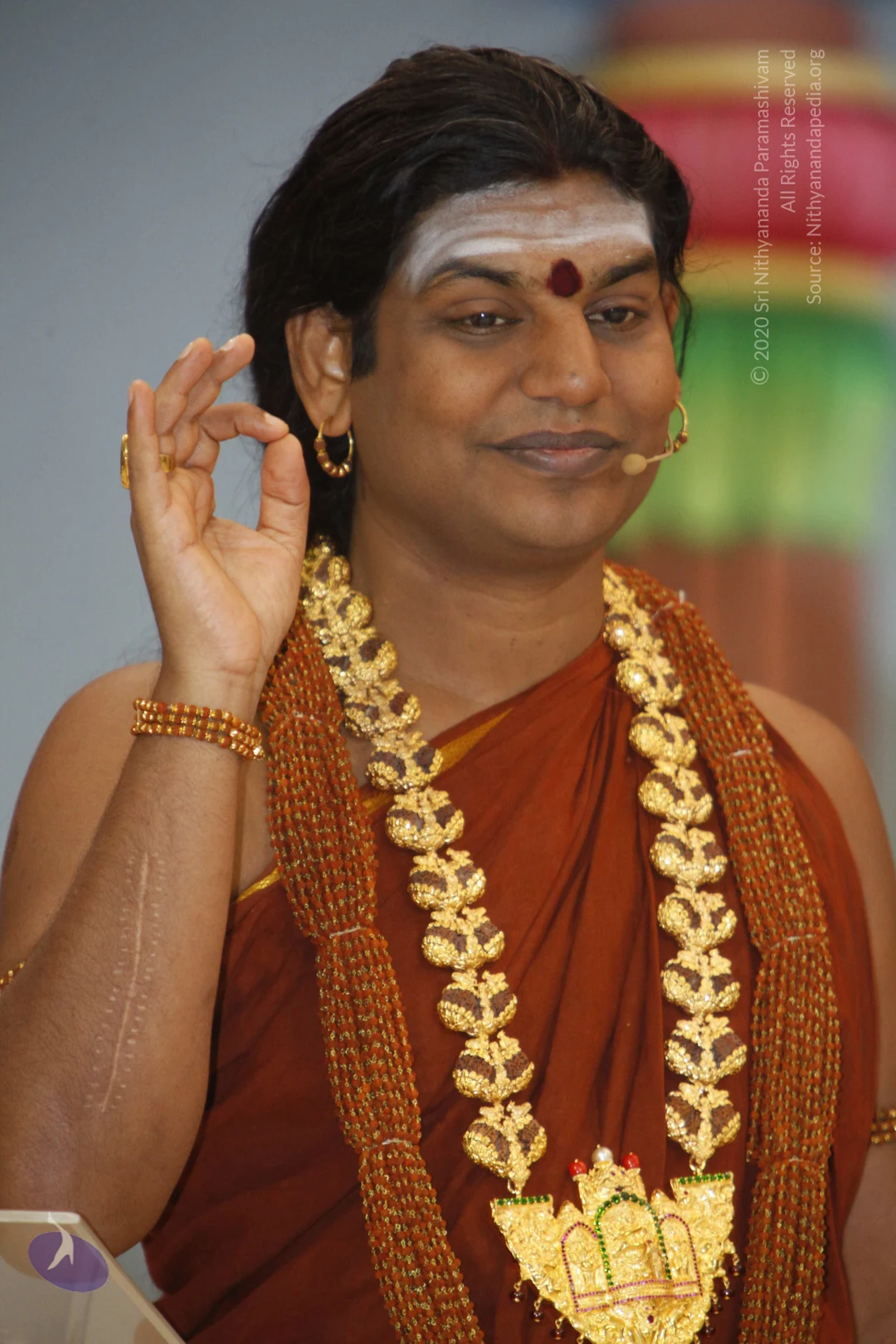
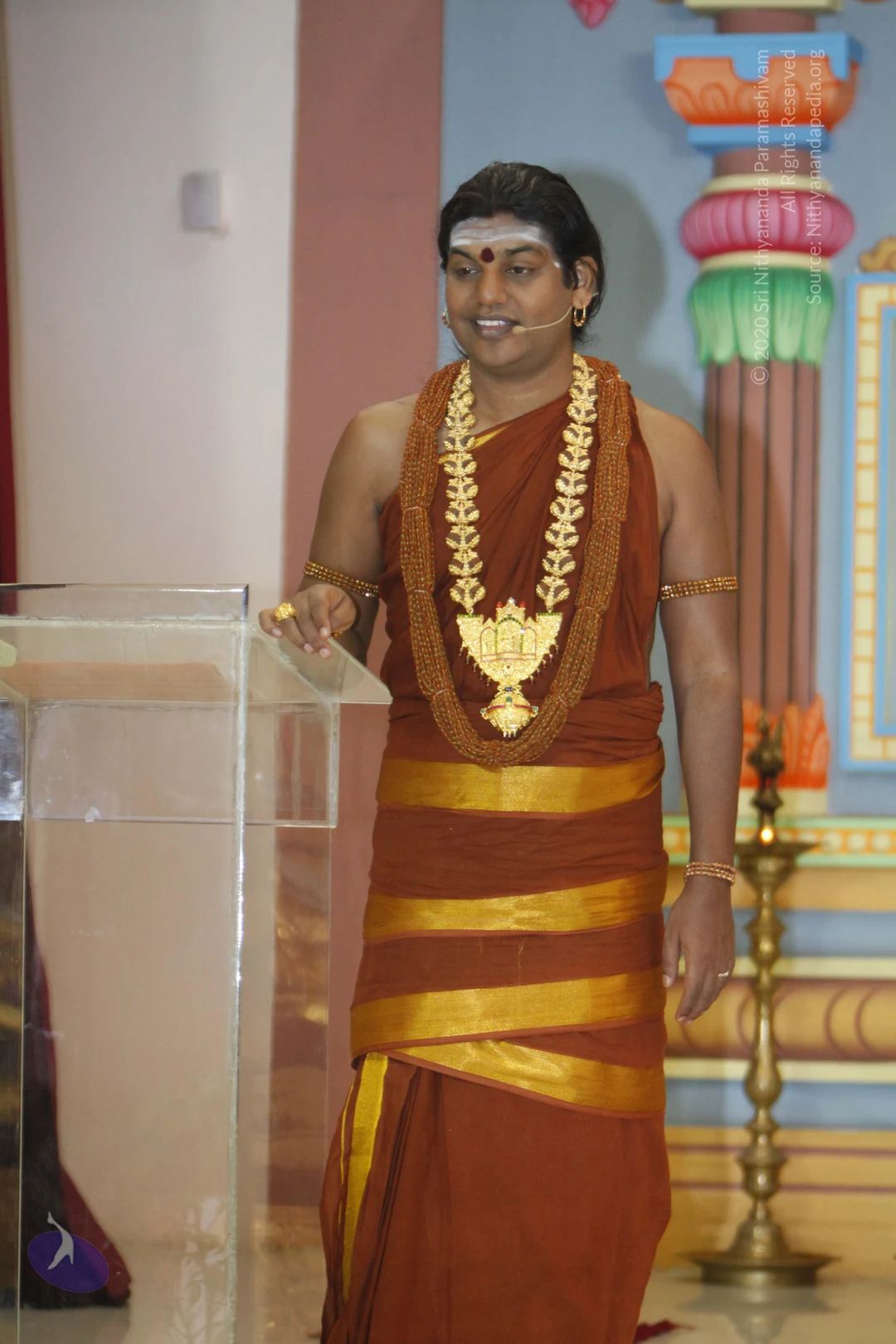
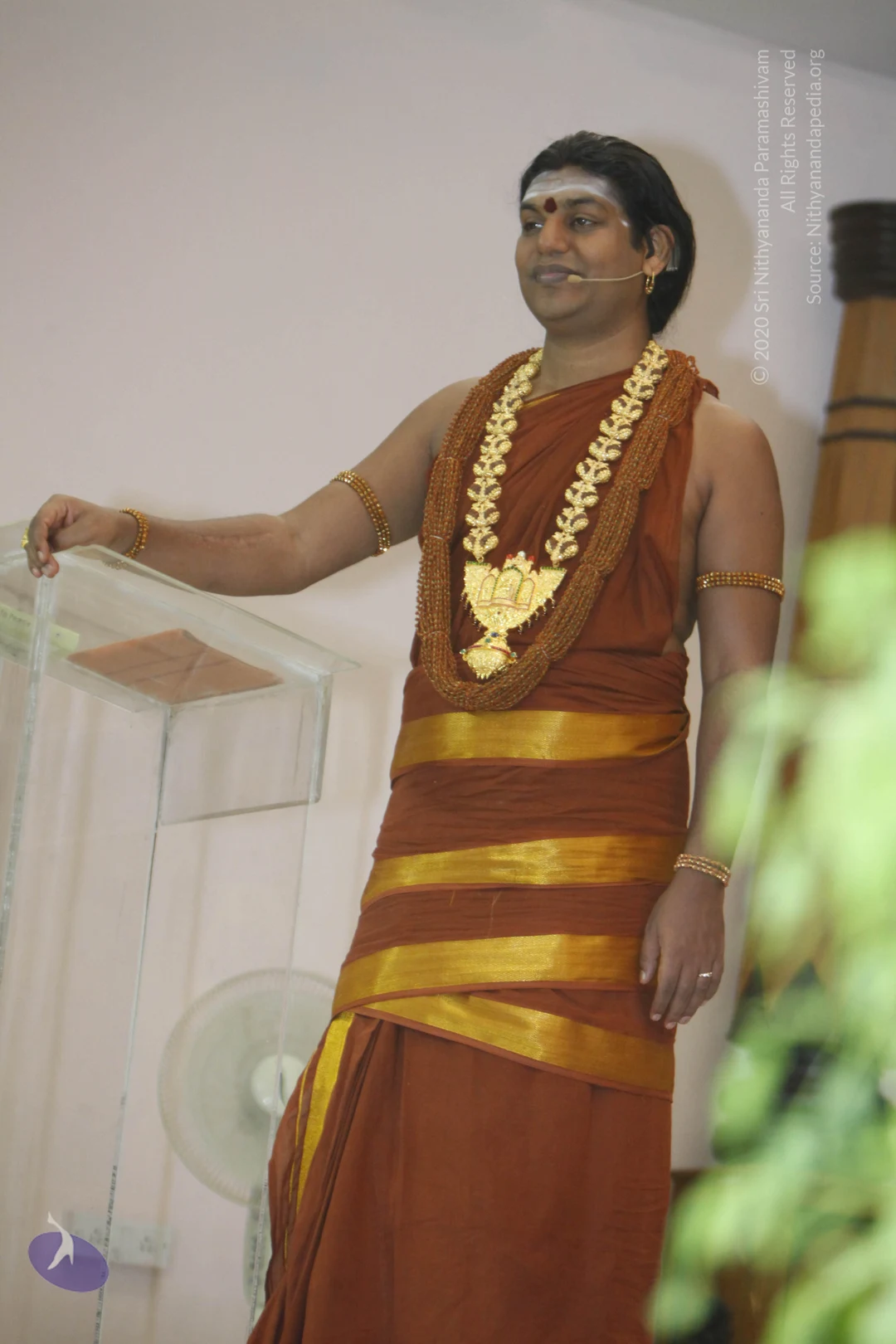
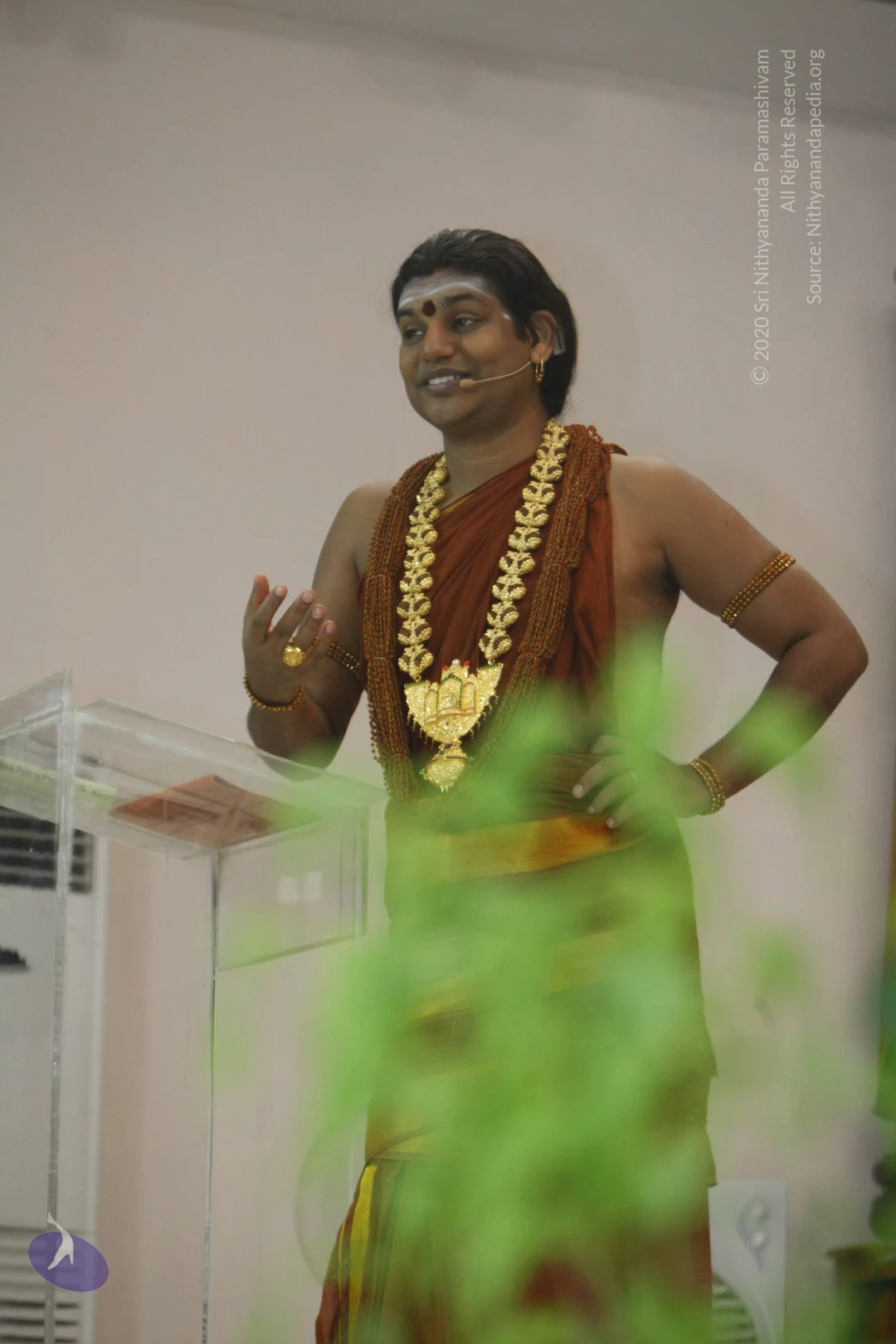
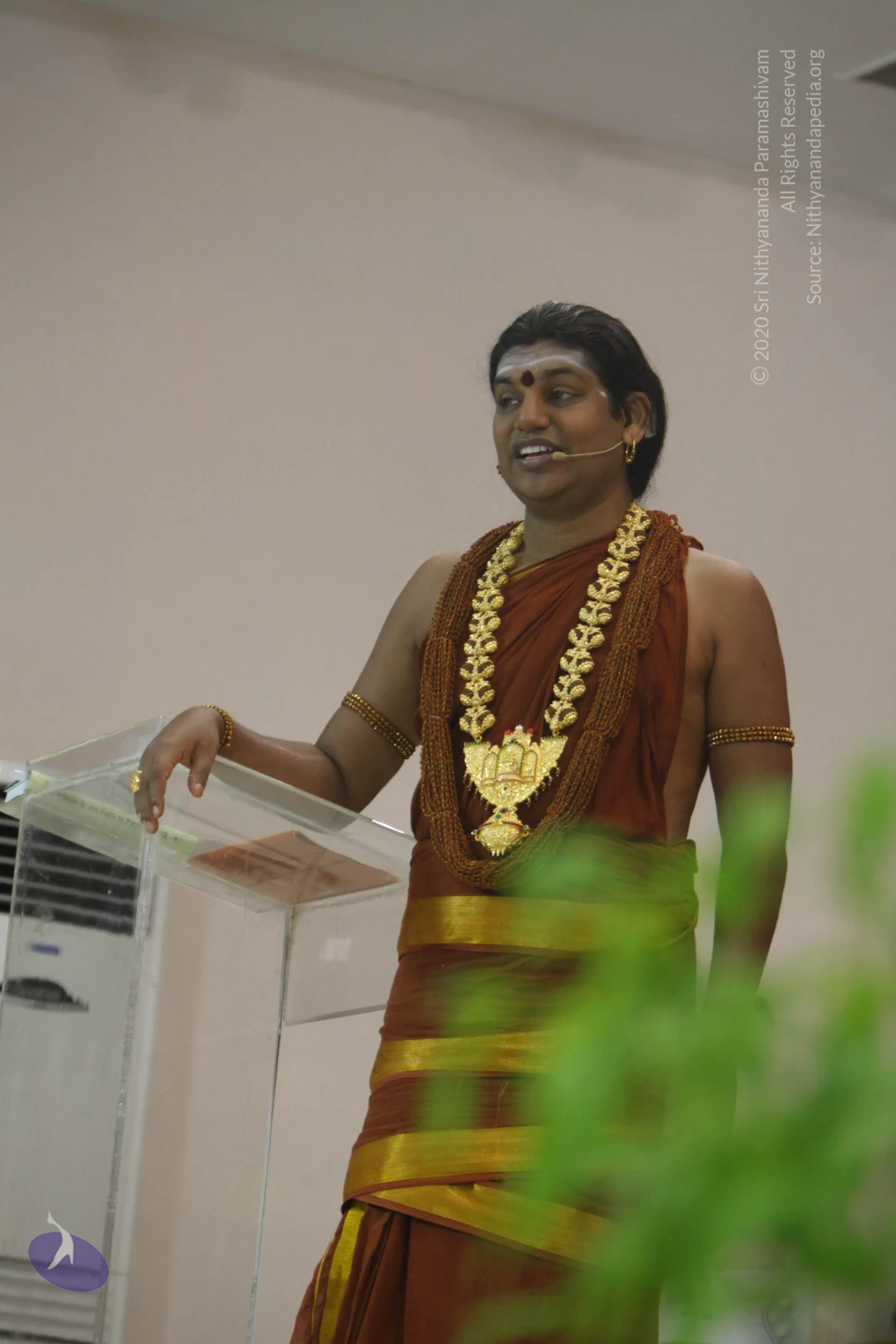
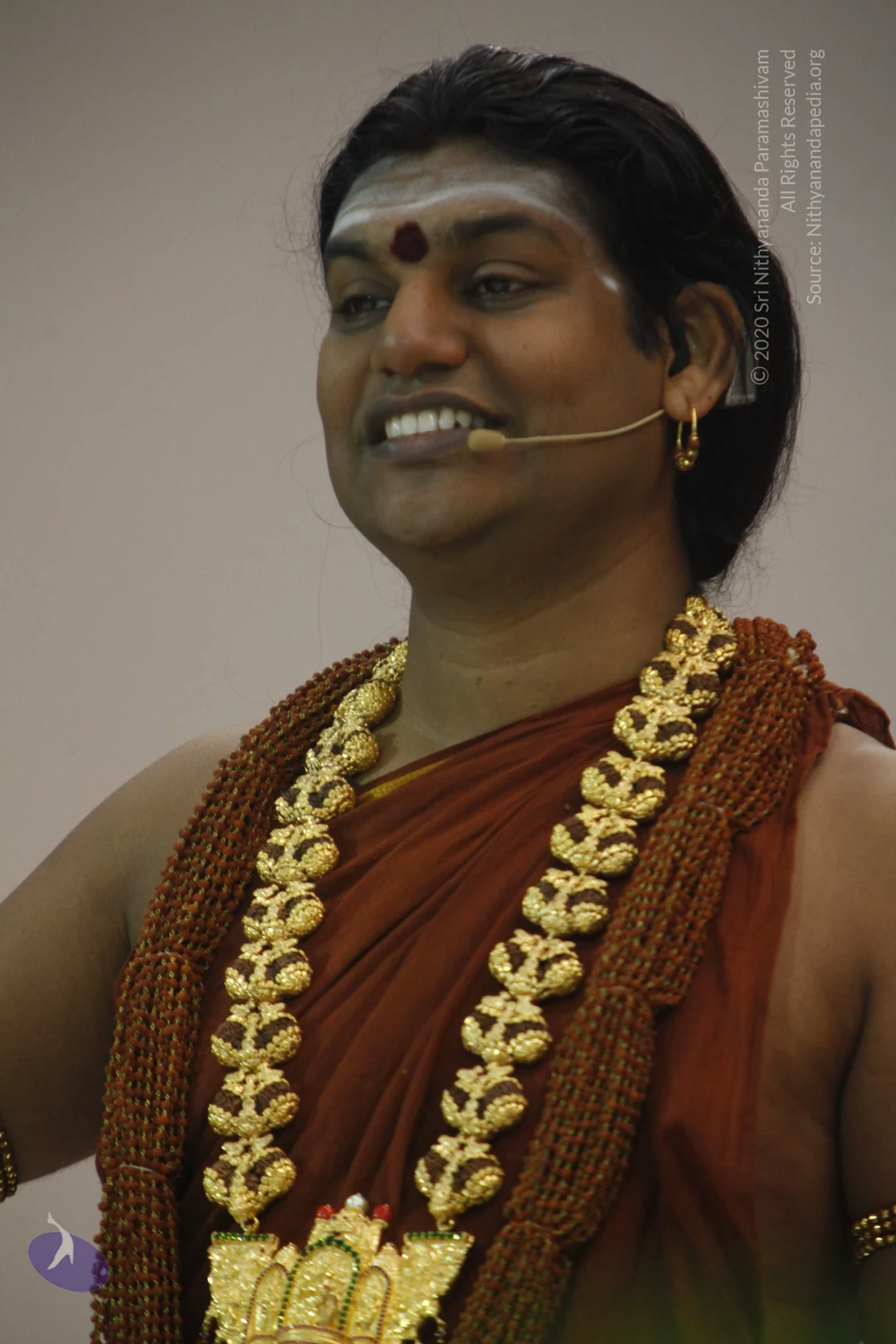
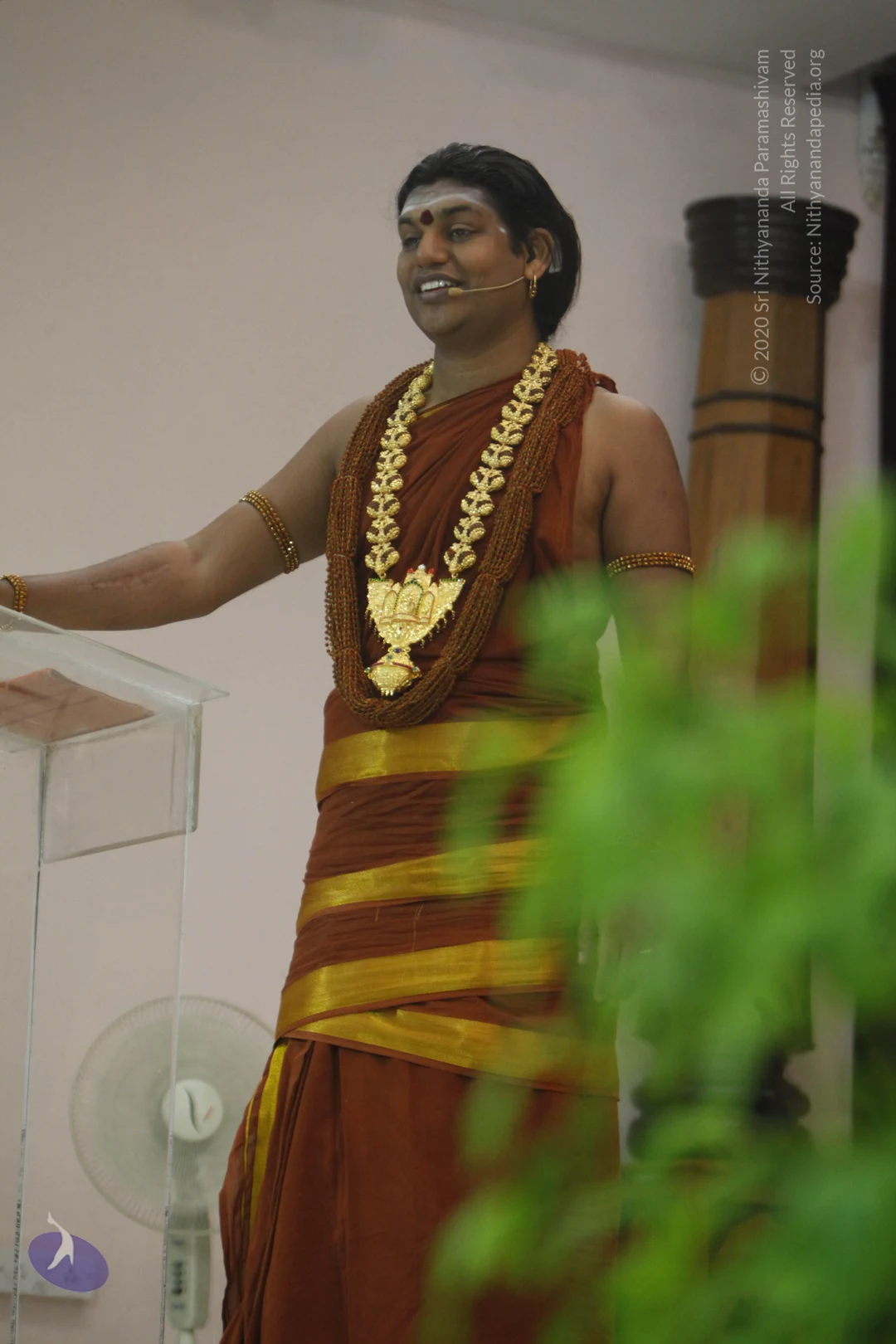
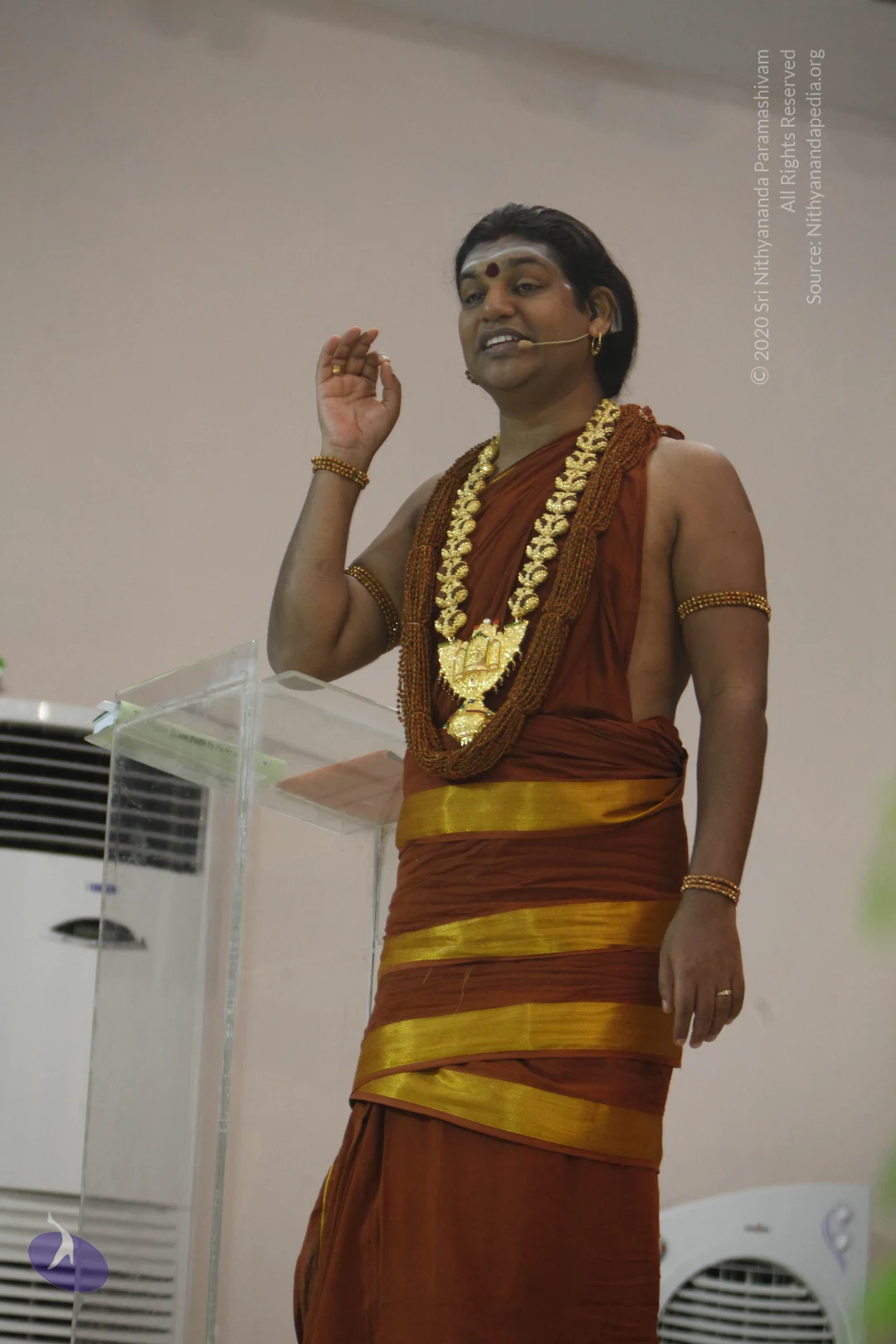
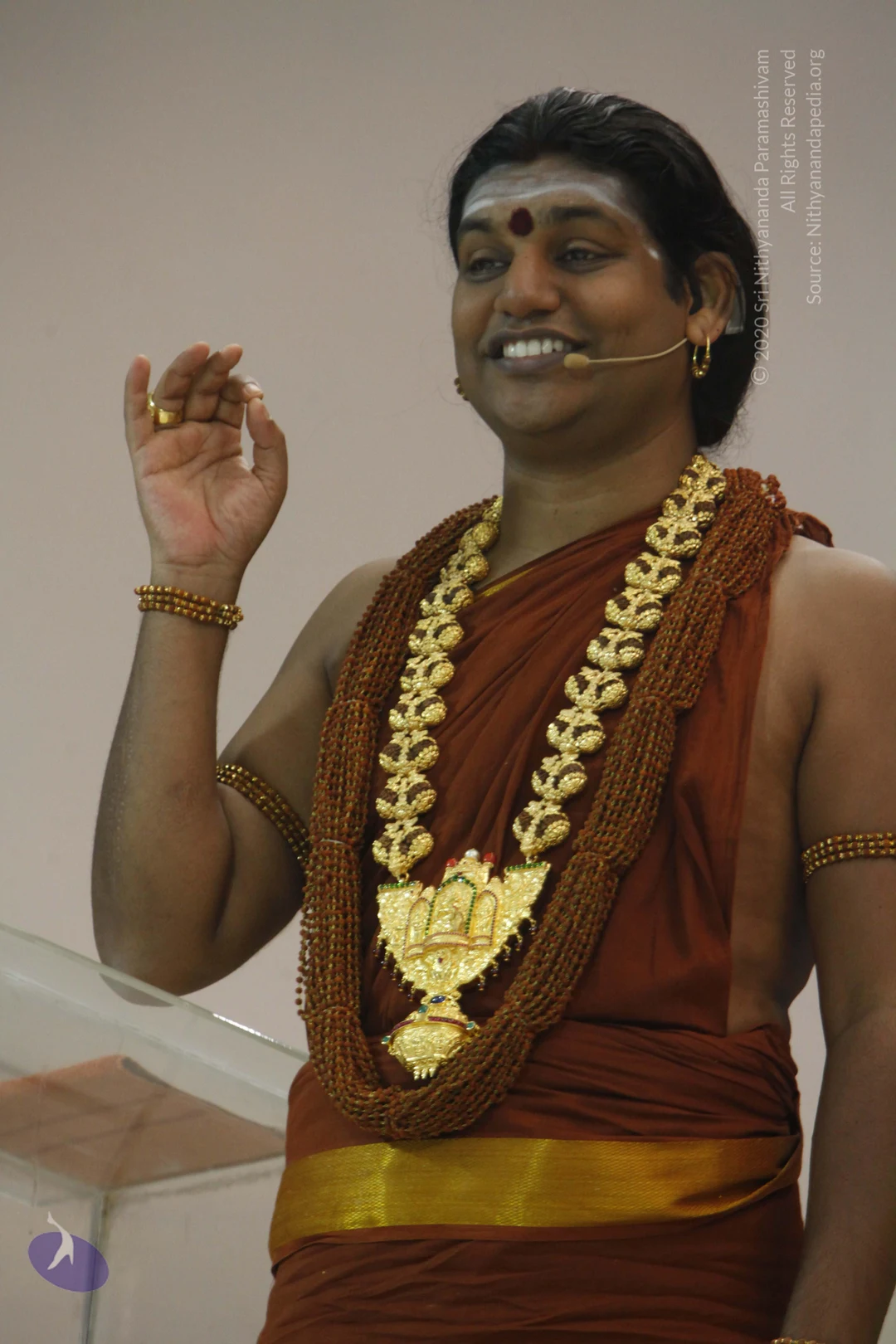
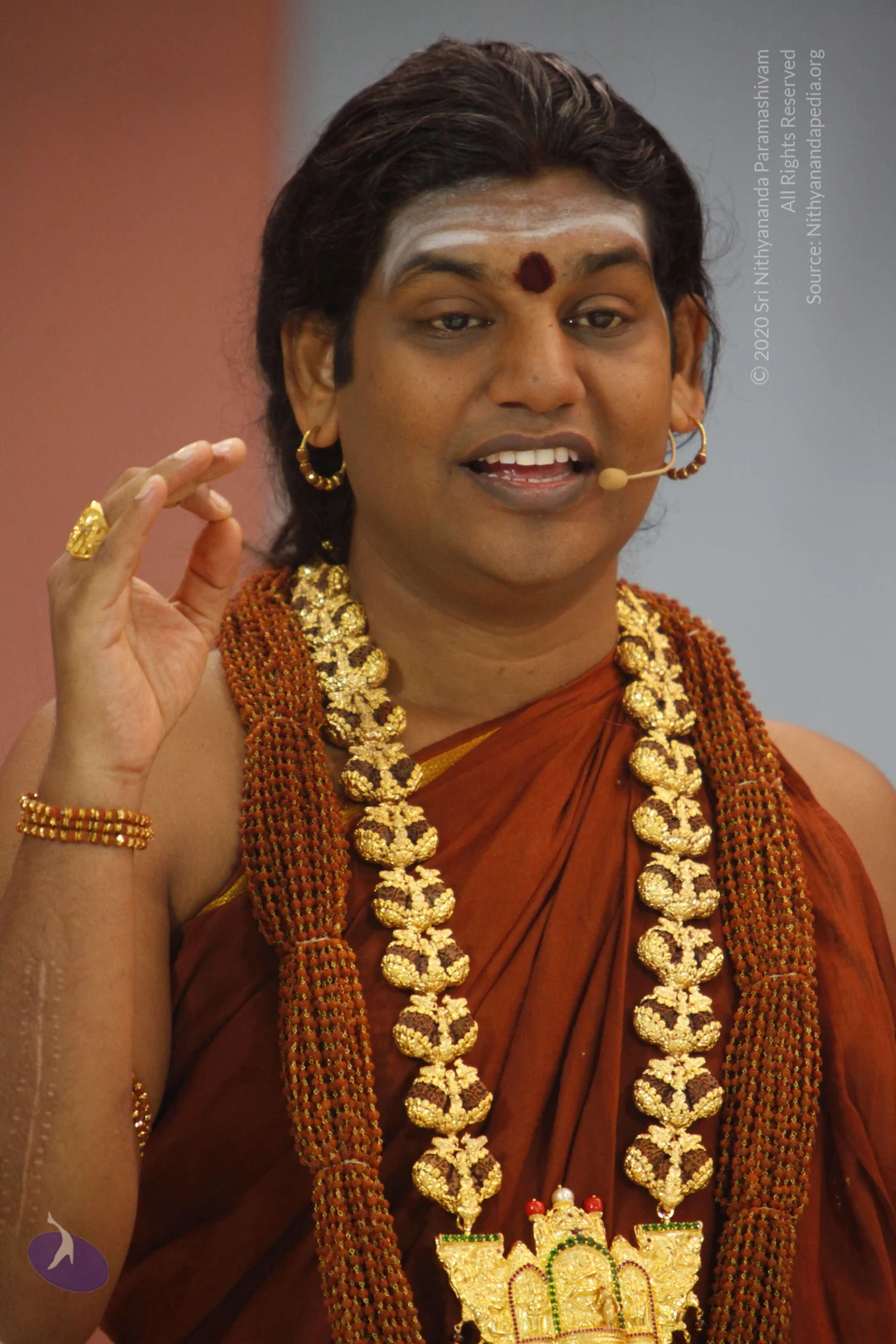
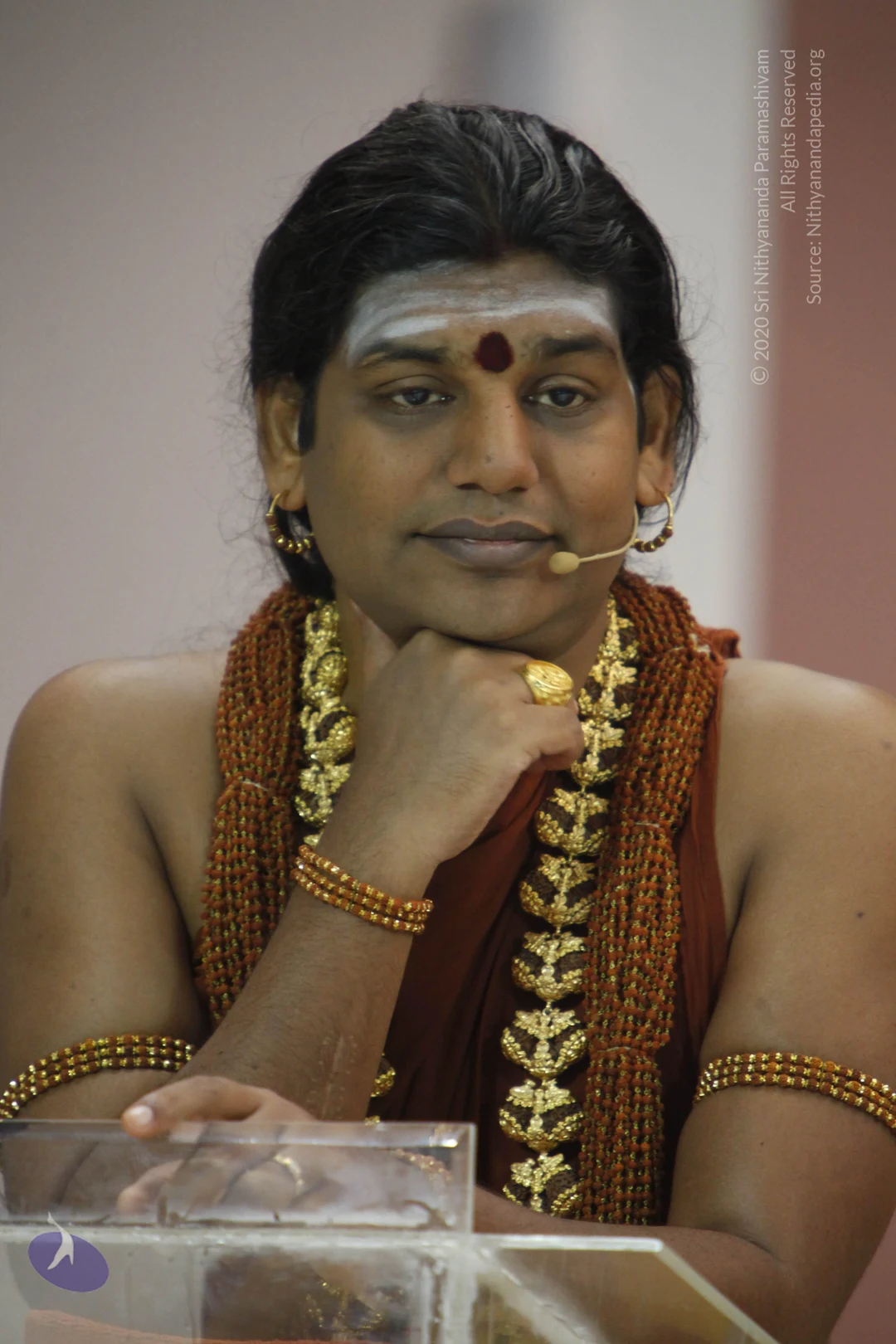
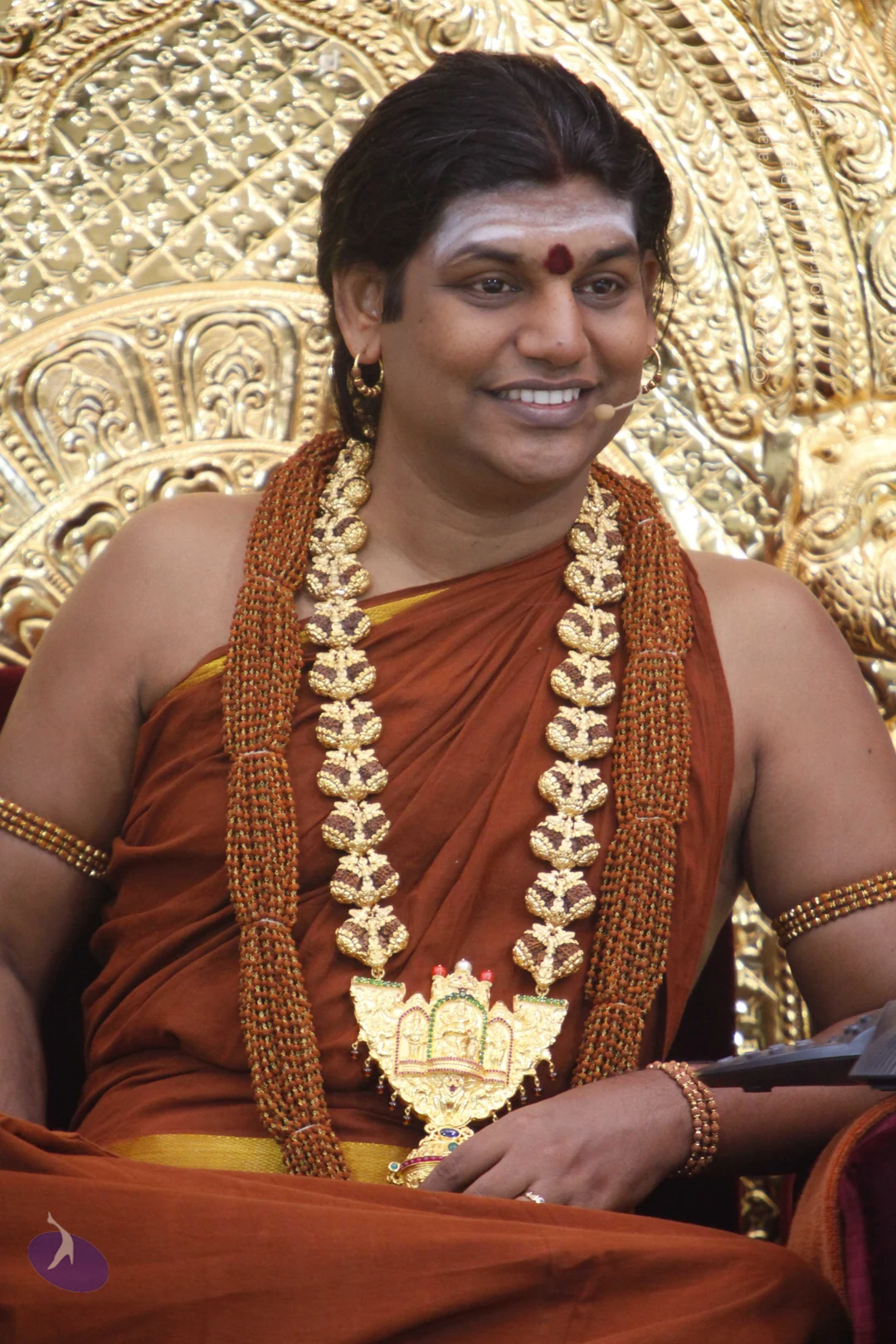
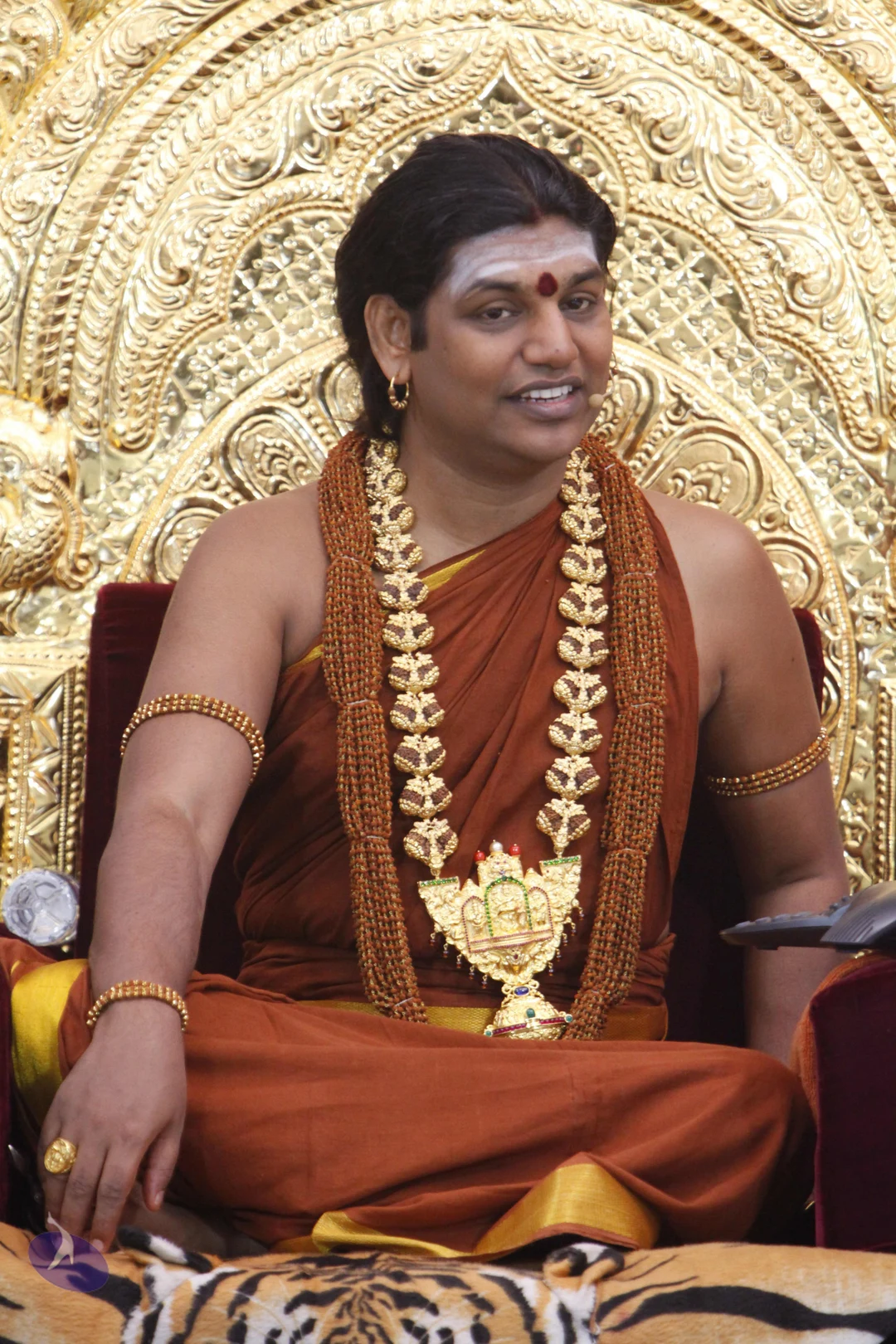
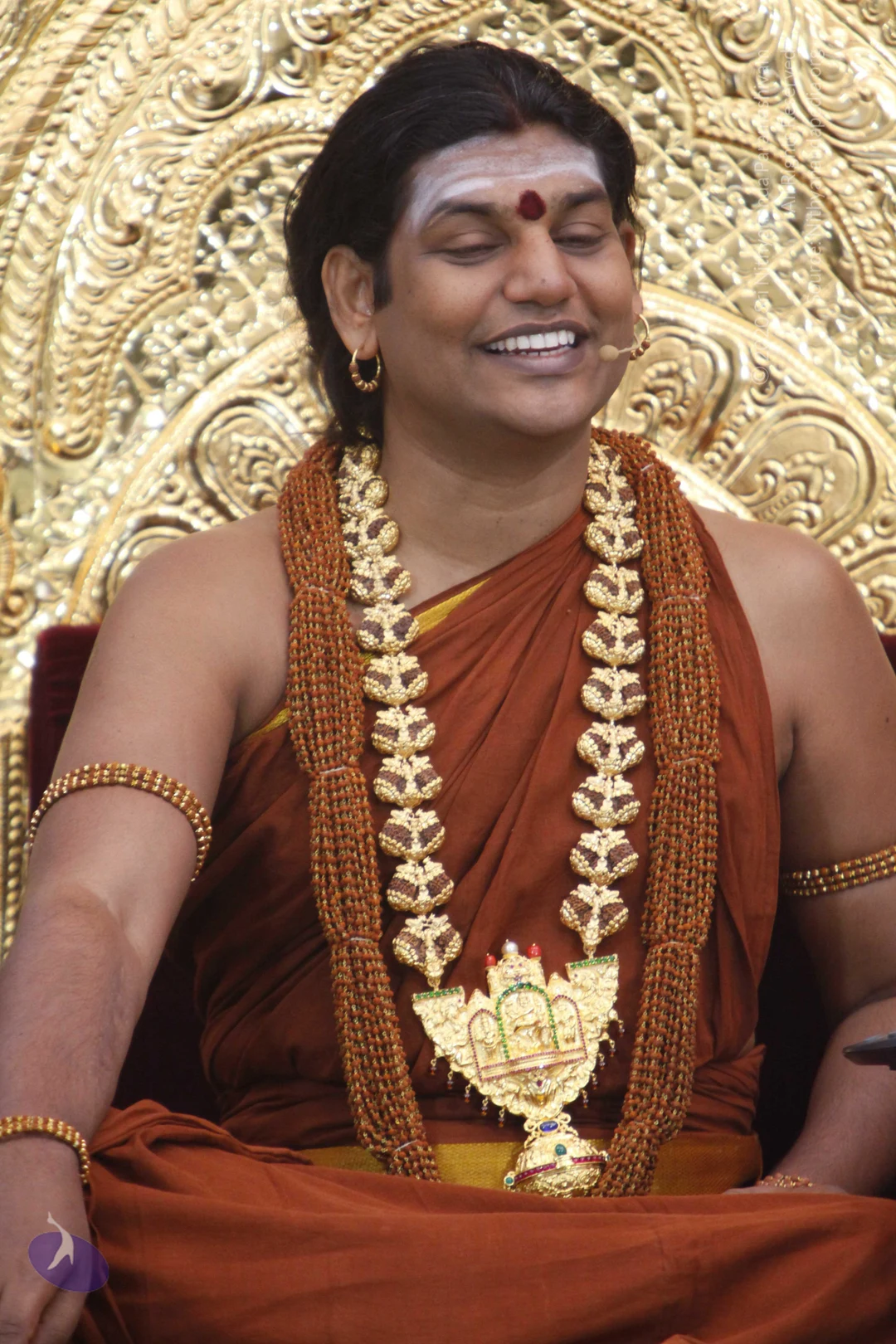
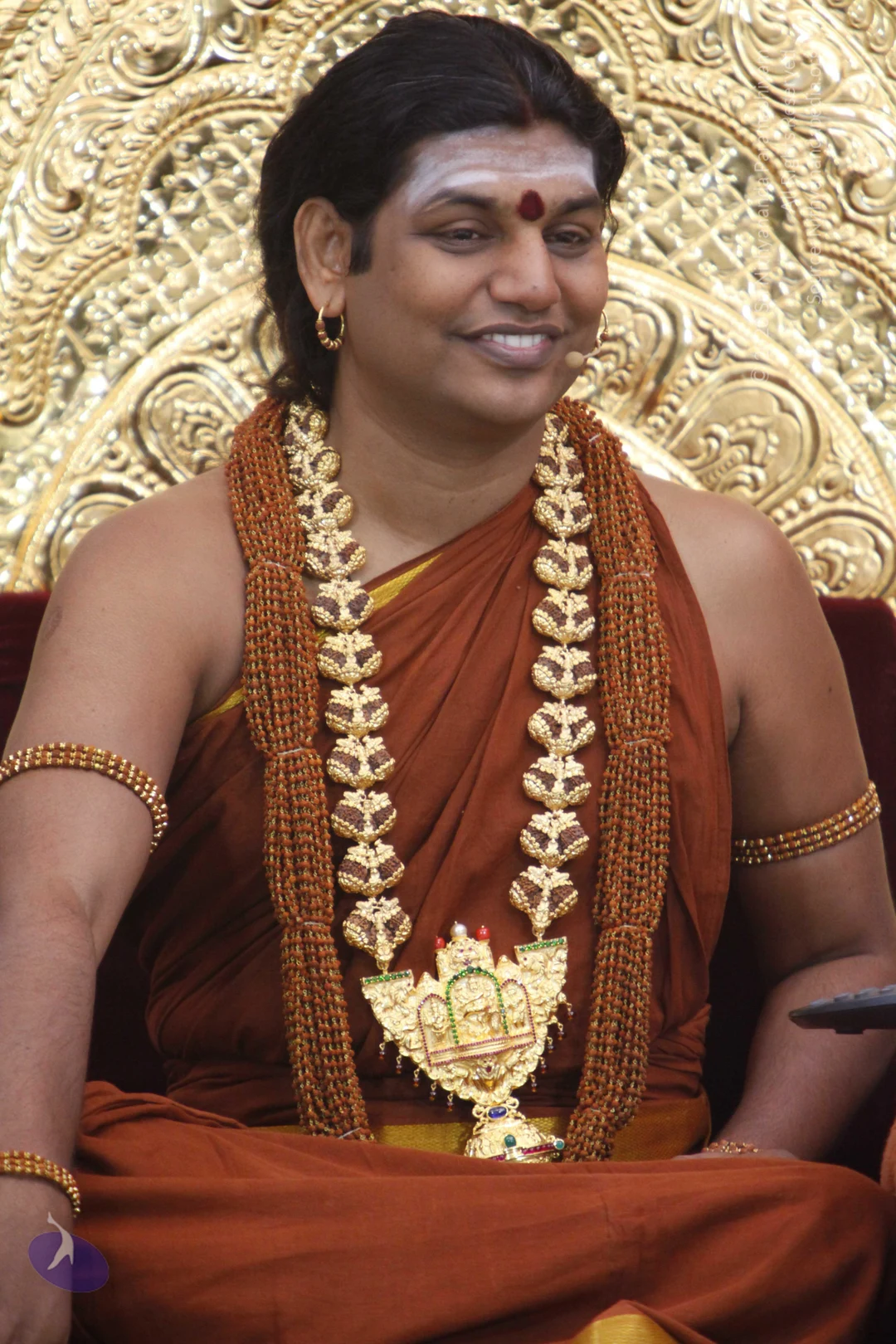
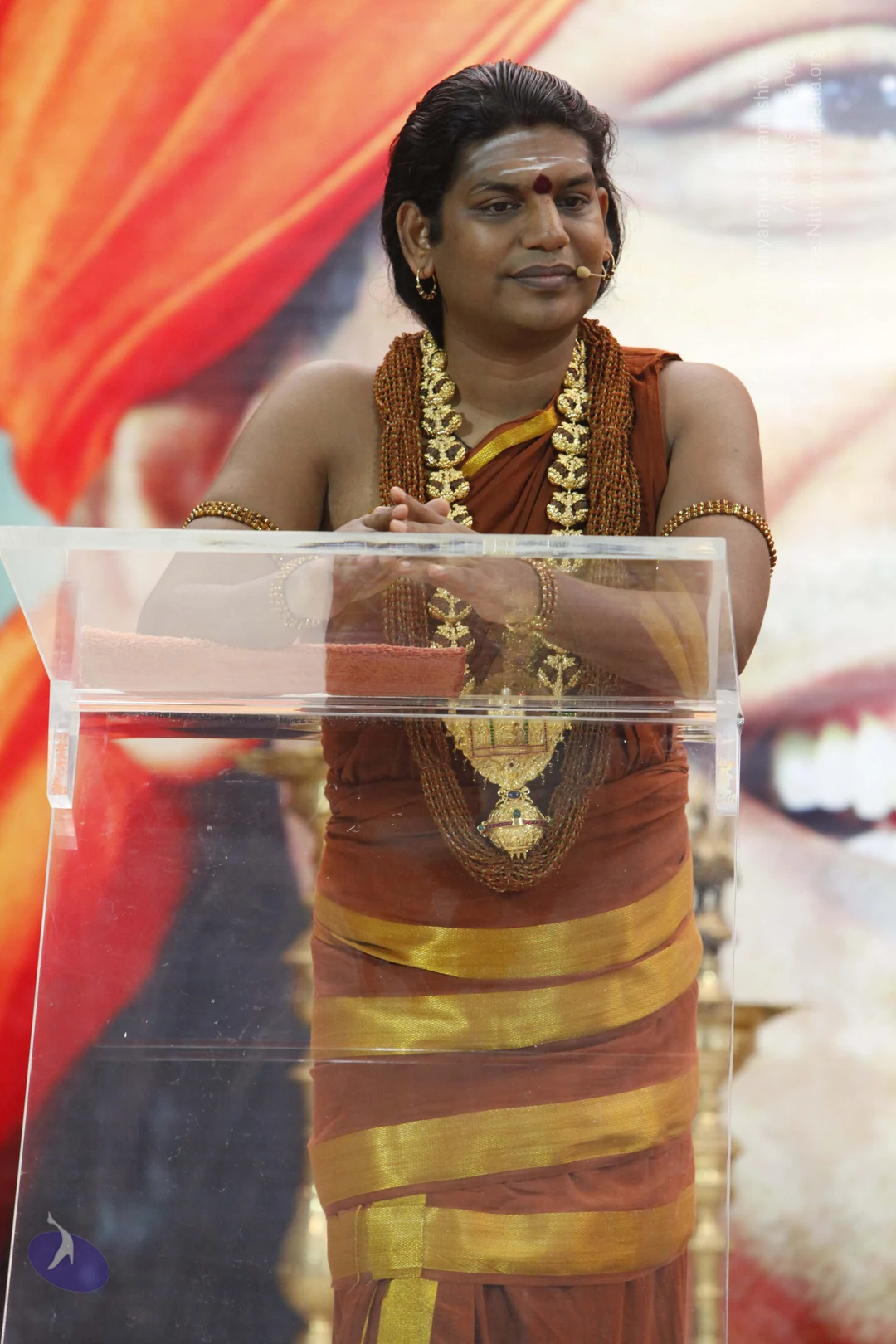
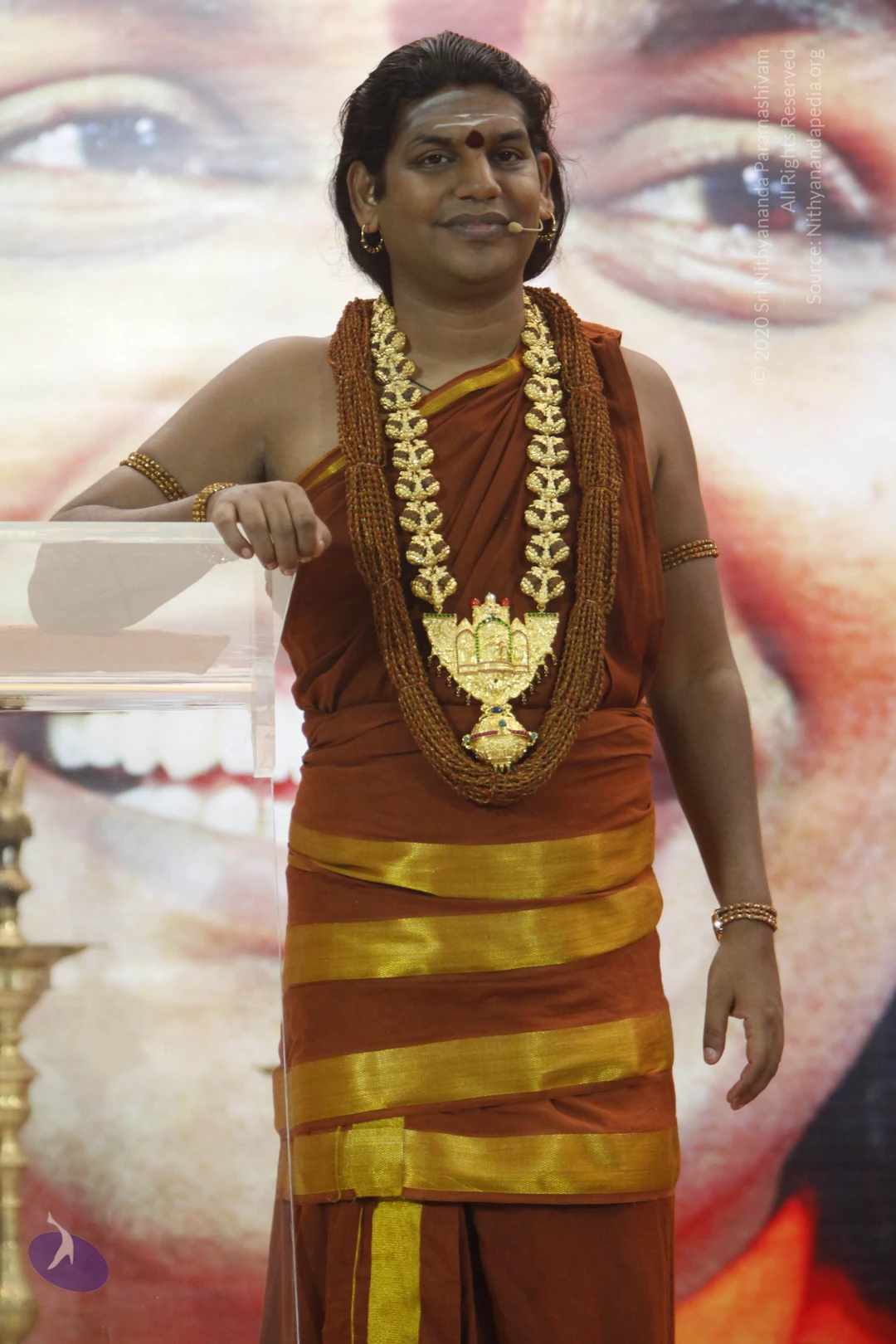
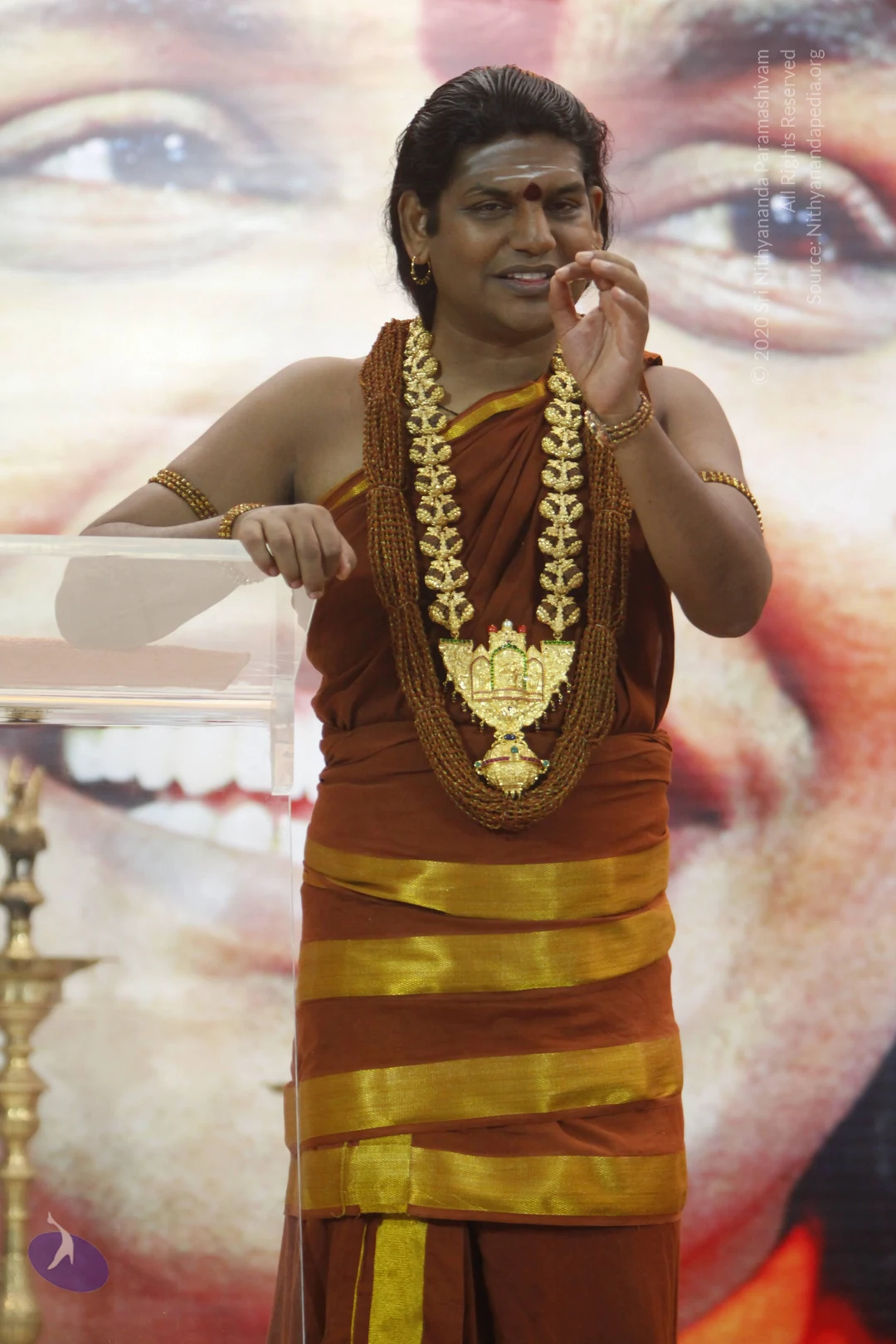
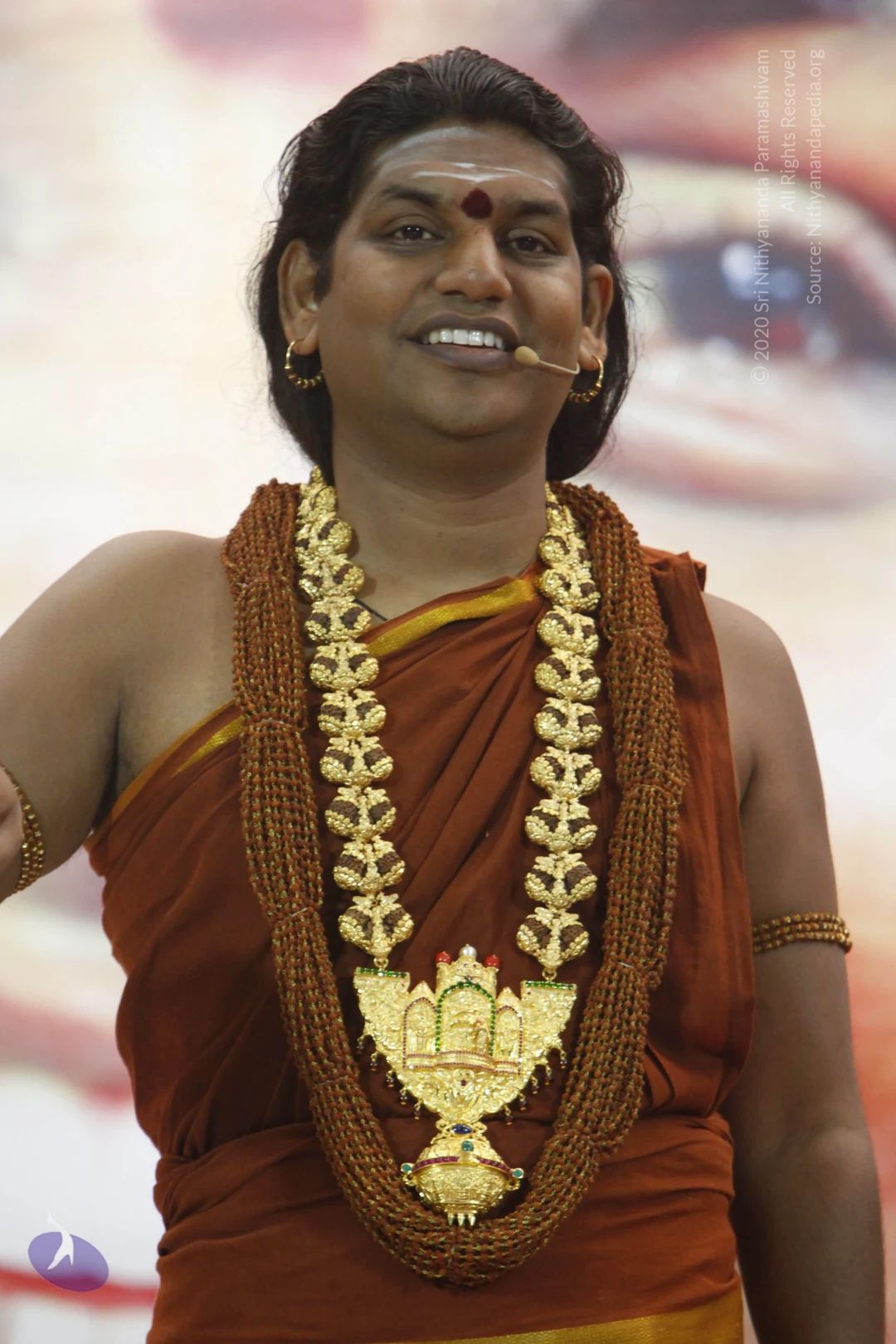
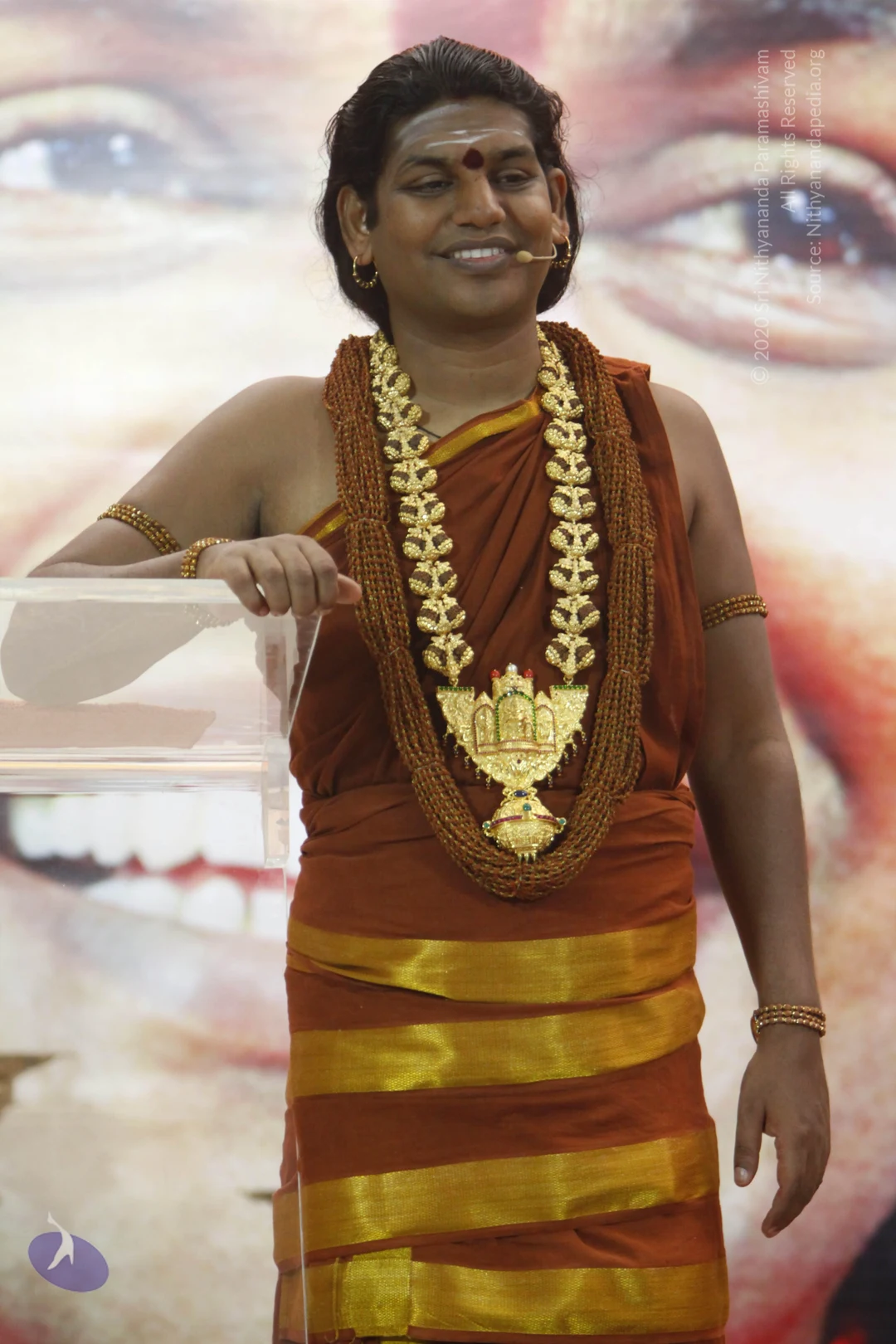
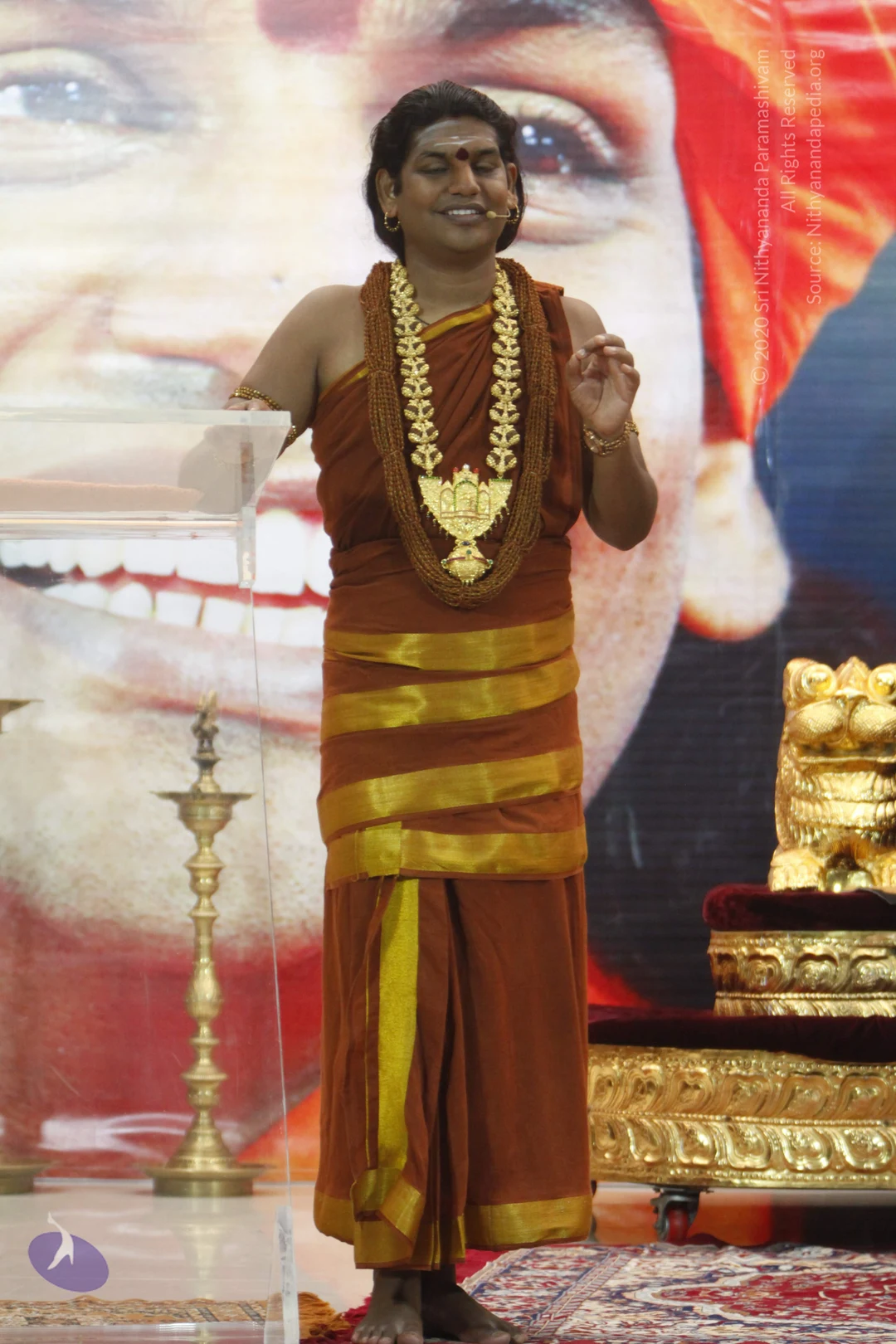
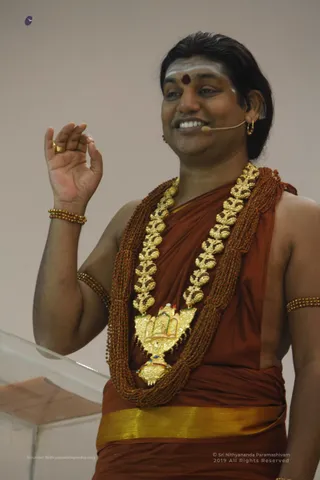
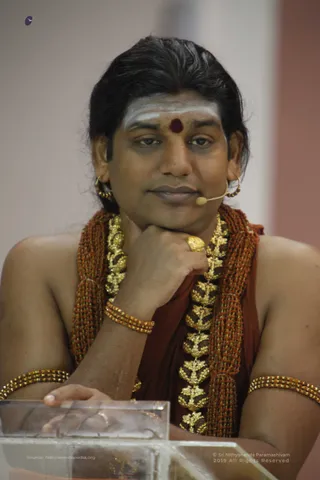
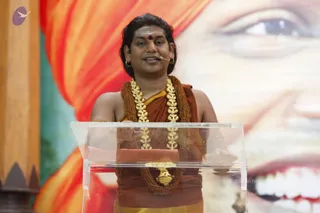
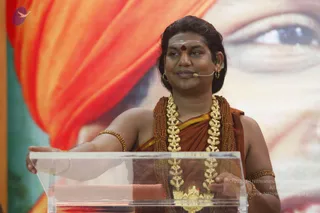
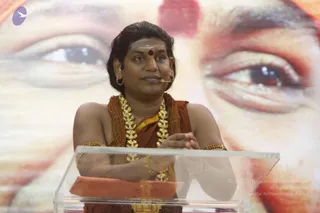
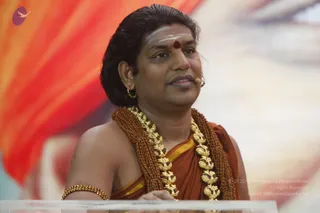
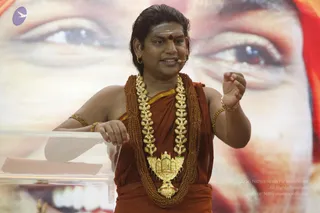
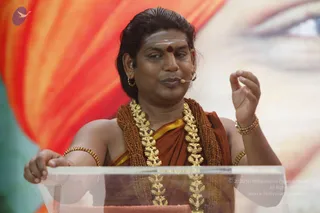
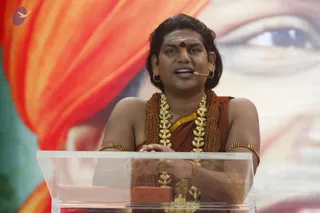
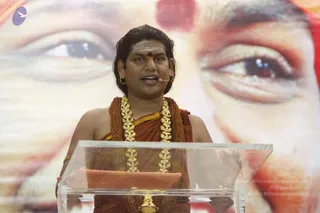
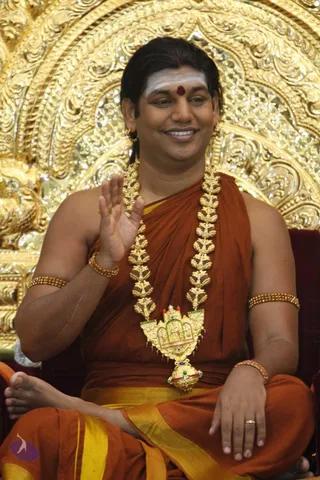
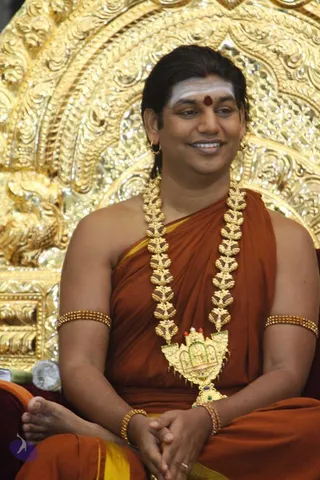
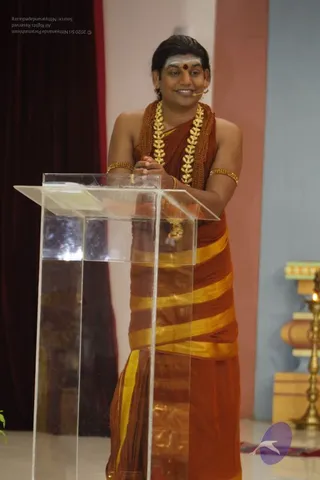
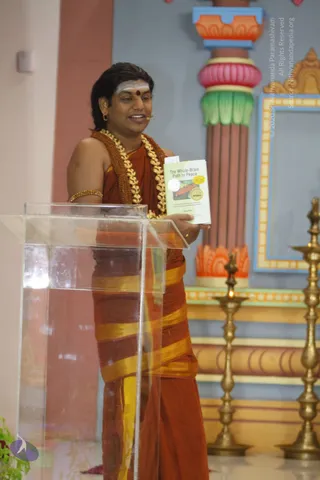
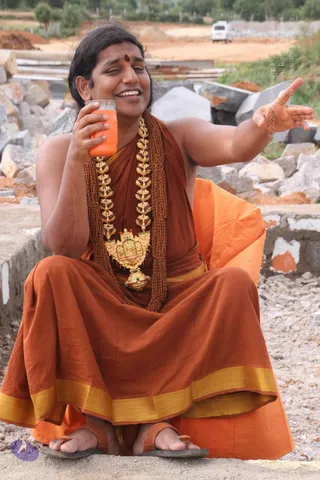
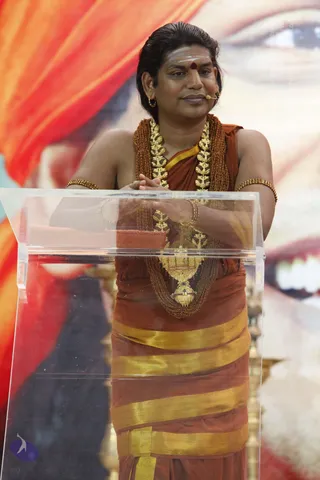
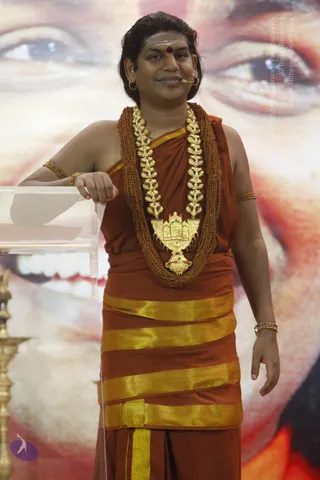
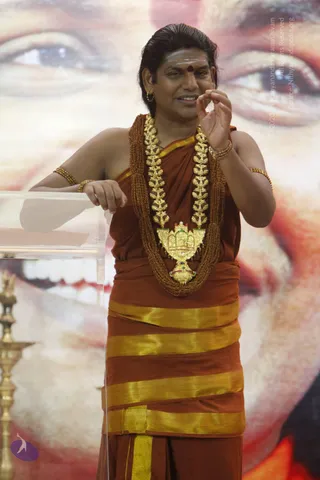
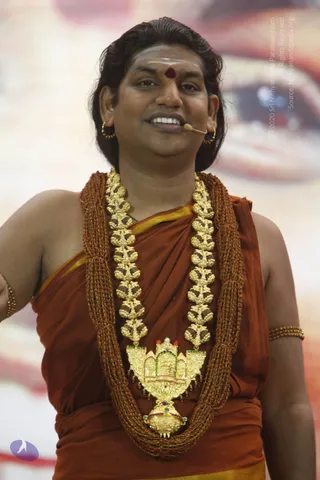
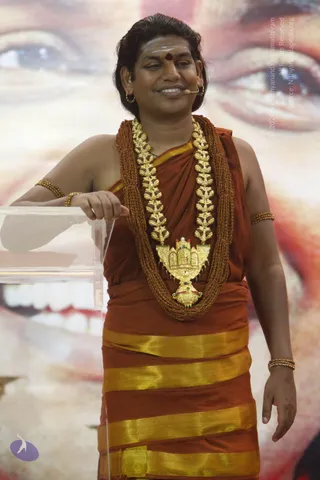
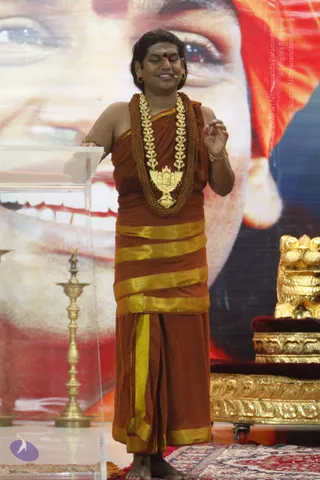
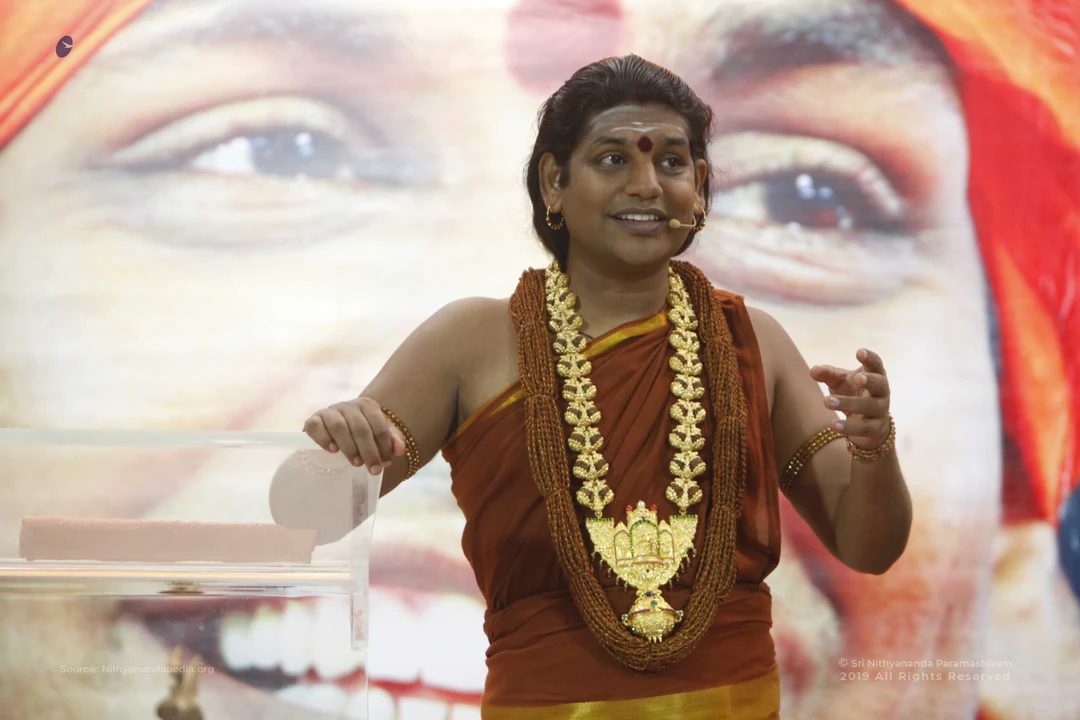
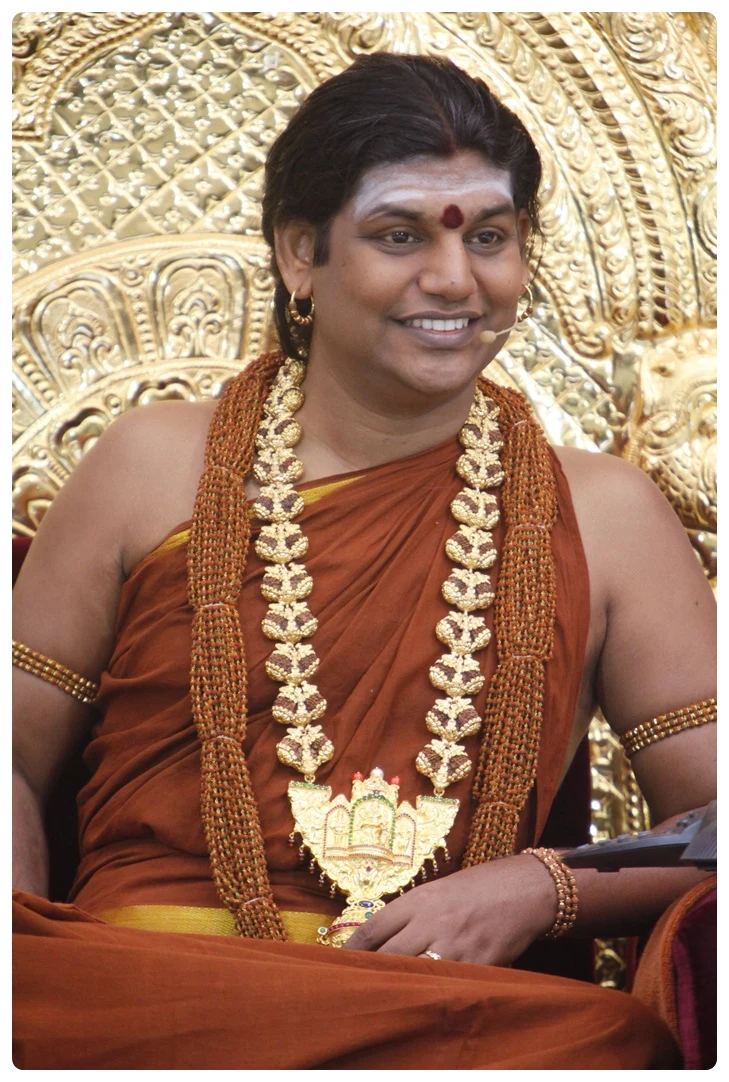
A smiling man sits cross-legged on a tiger-skin-covered seat before an ornate gold repoussé backdrop, raising his right hand in a gesture of address. He wears a saffron-orange robe with gold-bordered yellow-and-gold dhoti, a heavy gold multi-strand garland and a large gold pendant with a deity relief set with green and red stones, gold bangles on his upper arms and wrists, and a white forehead band with a red bindi.A photograph of a man standing behind a clear acrylic lectern, speaking into a headset microphone. He wears a rust-orange dhoti-style wrap over bare shoulders, a thick golden-brown rudraksha mala with gold ornamental necklaces, gold armbands and bangles, gold earrings, and a red bindi with white tilak on his forehead. His hair is swept back and he is smiling. Behind him is a large backdrop of a painted face with a saffron-orange turban and visible smiling teeth. A small gold ornament rests on the lectern.A standing man in a rust-brown saffron-toned dhoti-style garment with broad gold-bordered stripes, wearing a long multi-strand rudraksha mala with a large gold pendant ornament and gold chain necklace, gold bangles on his upper arms, and a gold ring. He has long swept-back dark hair, a white vibhuti line and red kumkum bindi on his forehead, and a gold earring. He stands barefoot beside a clear acrylic podium, smiling, with one hand resting on the podium. Behind him are a painted pillar in pink, green and orange, and a tall brass oil lamp (lit) on the floor beside a red-and-patterned rug. a person, in a satsang-style discourse setting.

June 25 2013

Original wiki page
Contents

Title:

Supreme Pontiff of Hinduism HDH Bhagavan Nithyananda Paramashivam

Description

In this day's morning Satsang, Paramahamsa Nithyananda explains that enlightenment is impossible by putting ourselves into isolation or removing ourselves from society.

On this Day Supreme Pontiff of Hinduism HDH Bhagavan Nithyananda Paramashivam Also Delivered a Satsang Discourse on Lotus TV

Link to Video:

VideoAudio
VideoAudio

Transcript:

Today’s satsang topic is enriching is an expression of enlightenment.

Aaj key satsang kaa vishay hai laabhaanvit karrnaa jeevan mukti kee abhivyakti hai.

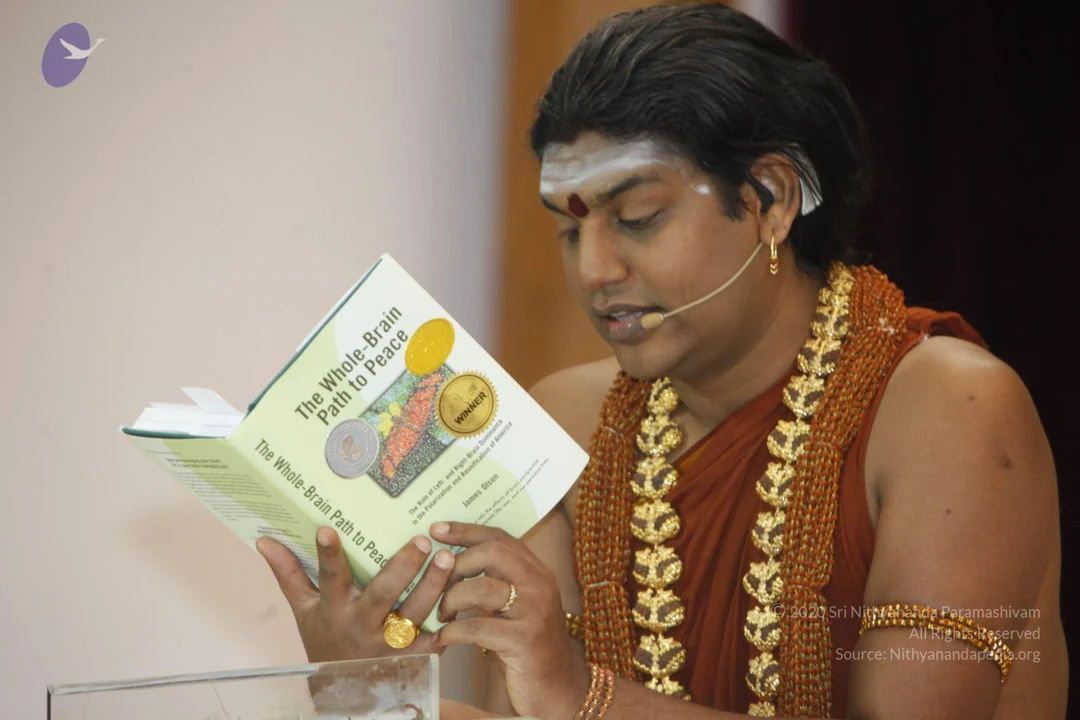
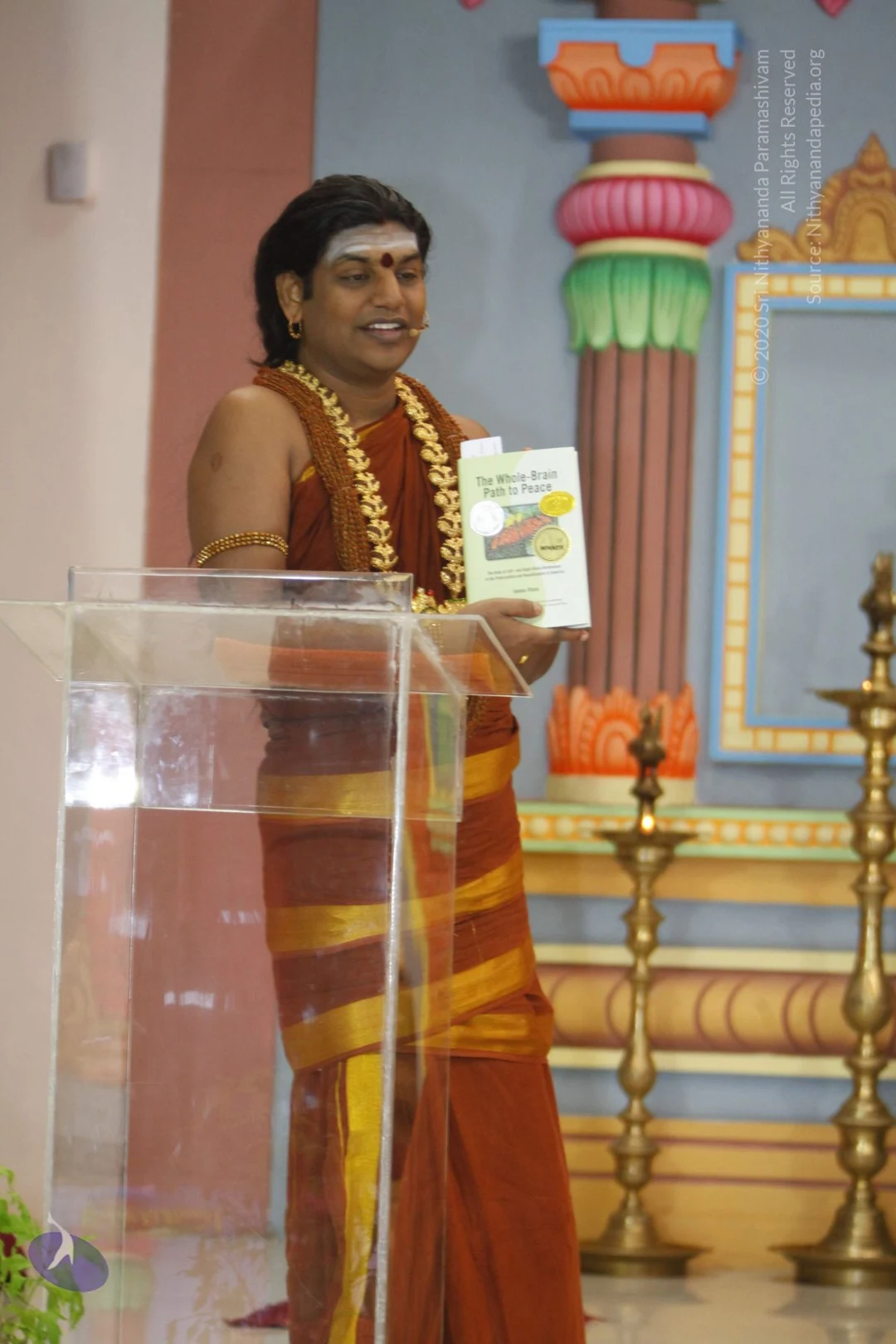
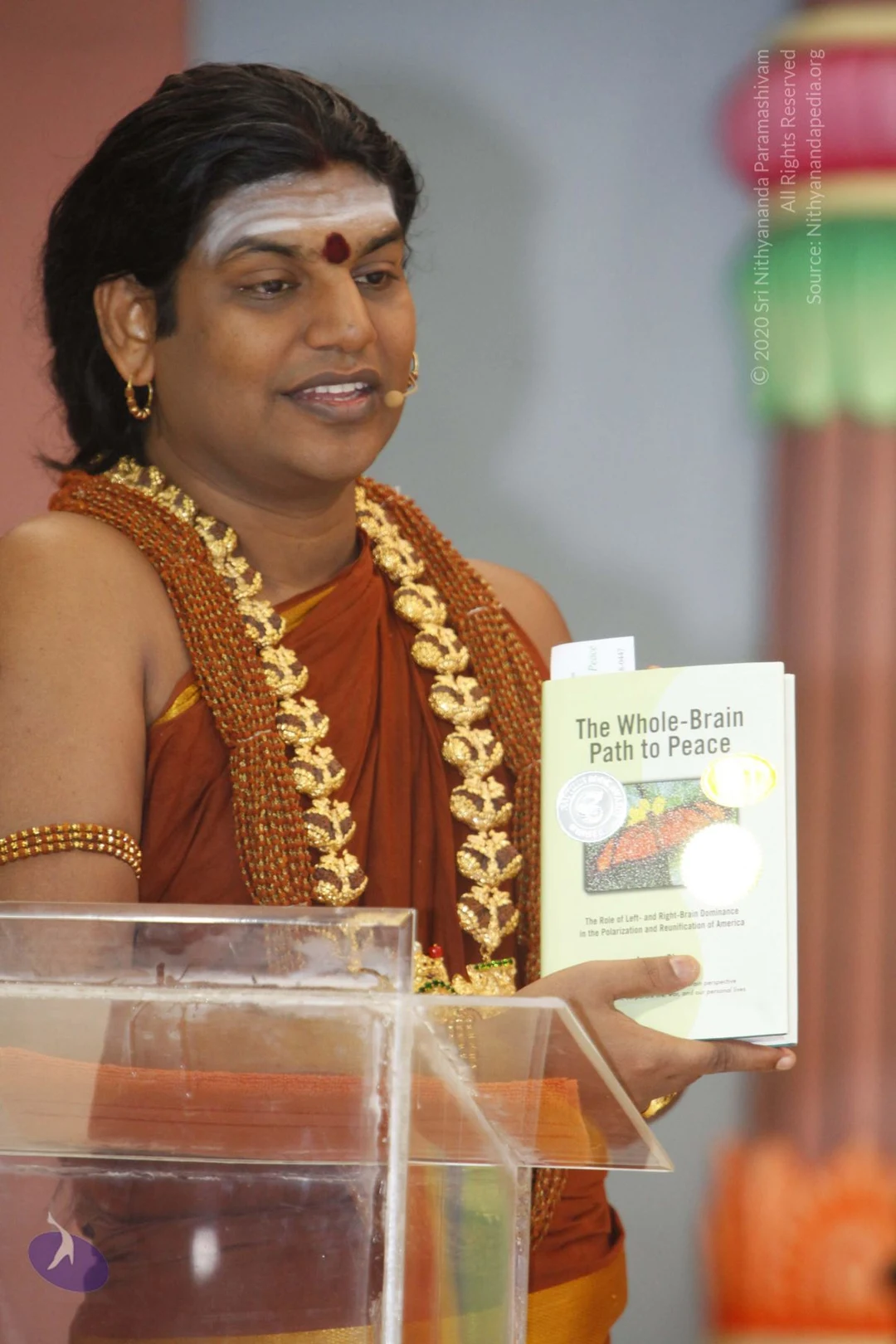
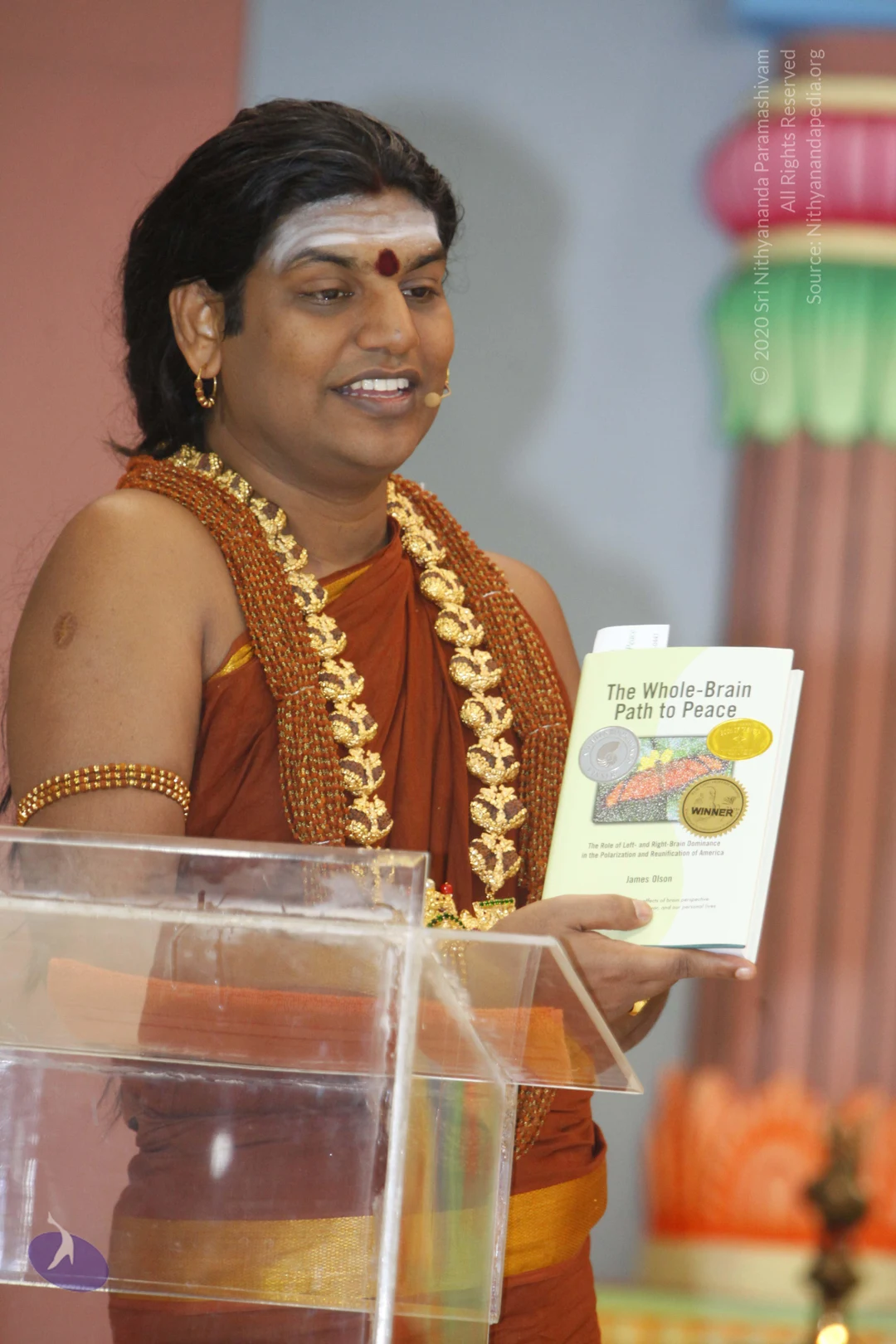
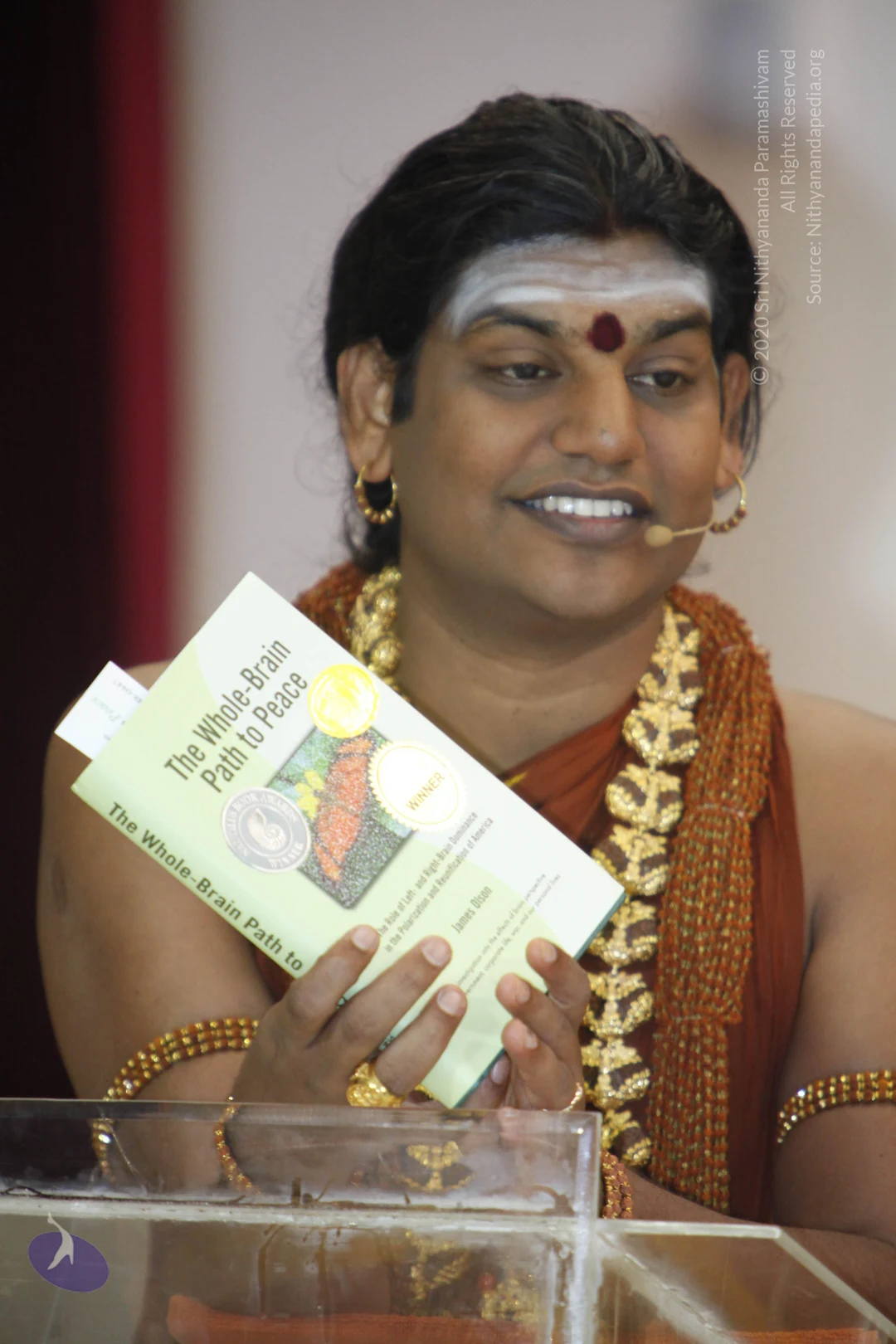
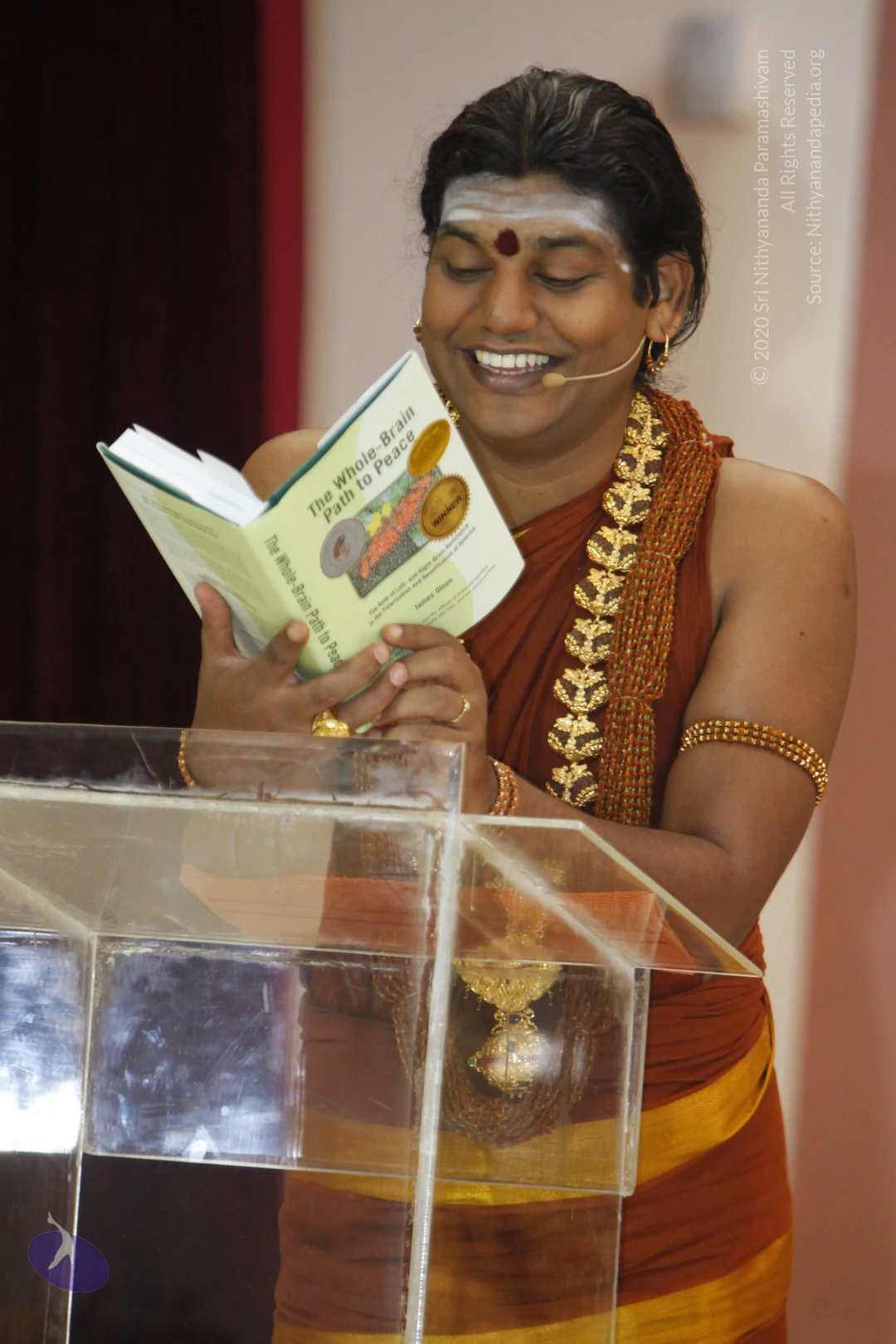
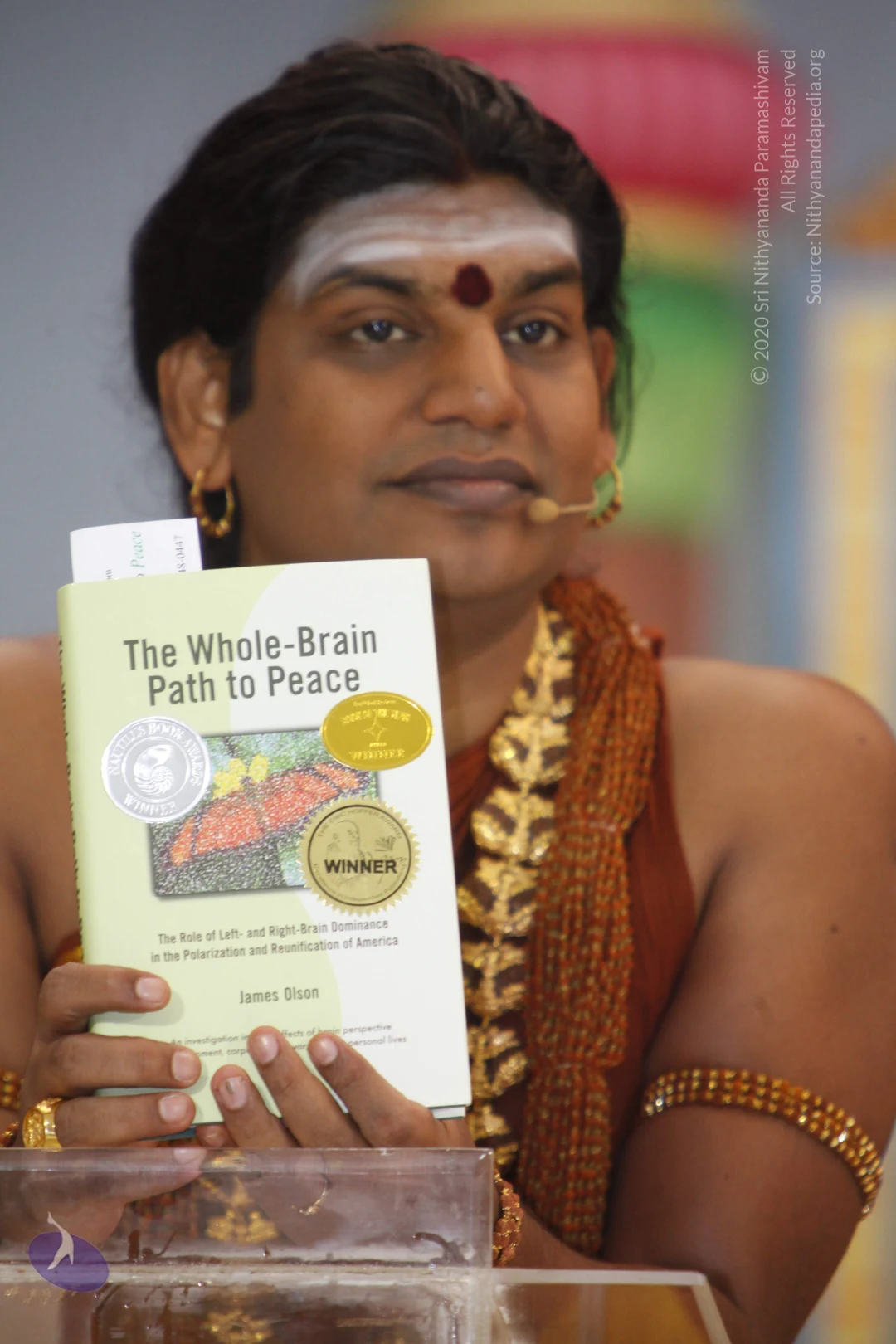
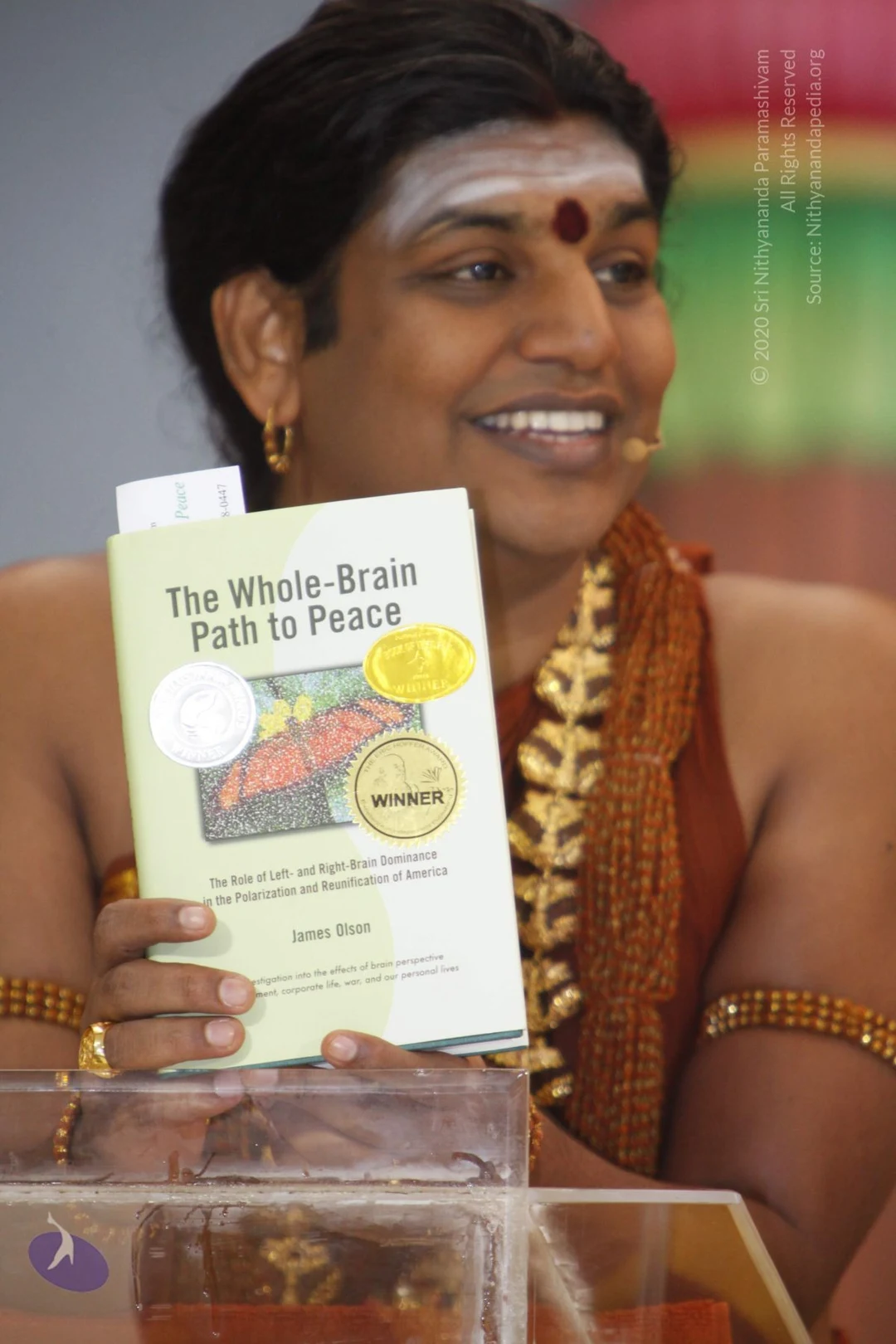
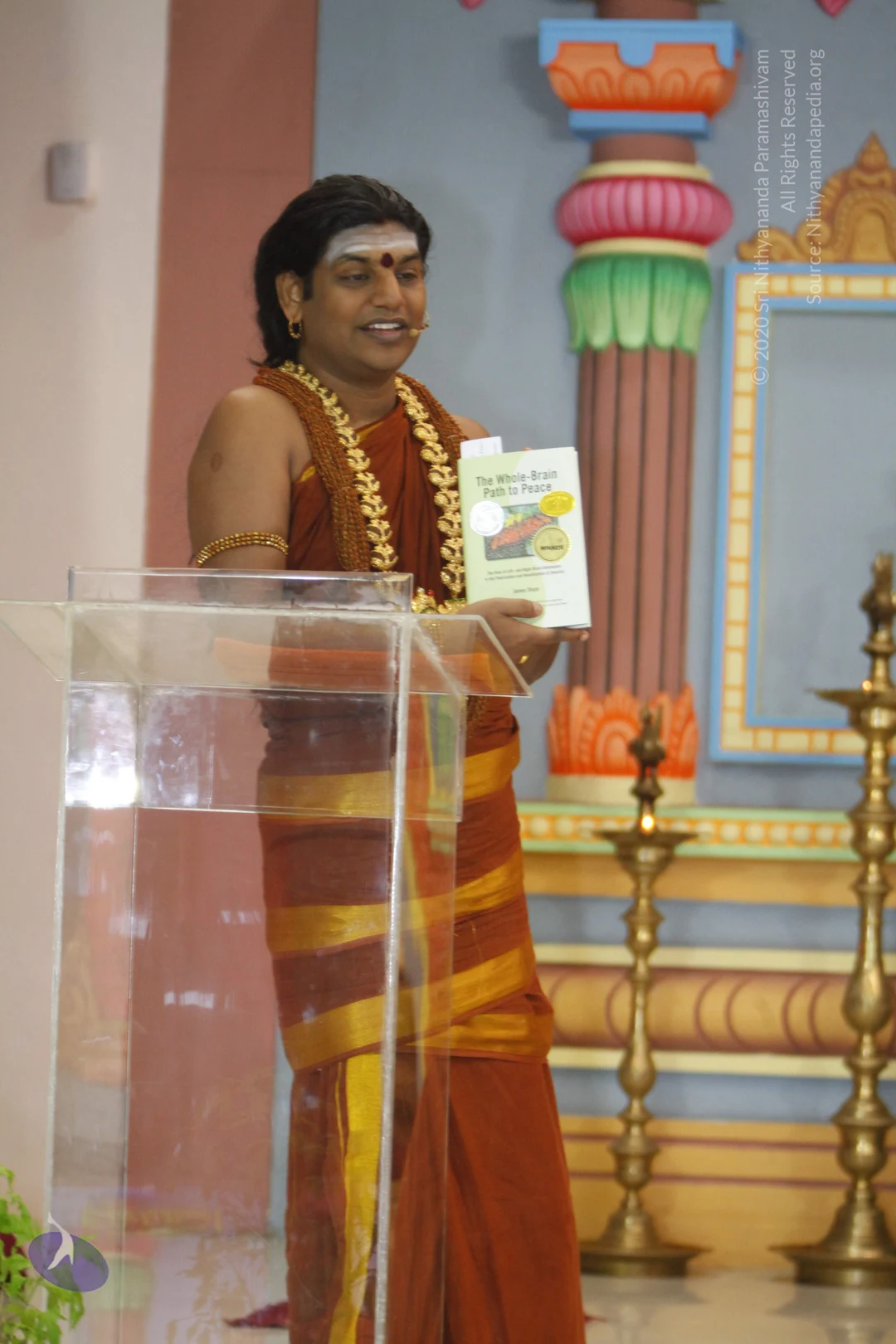
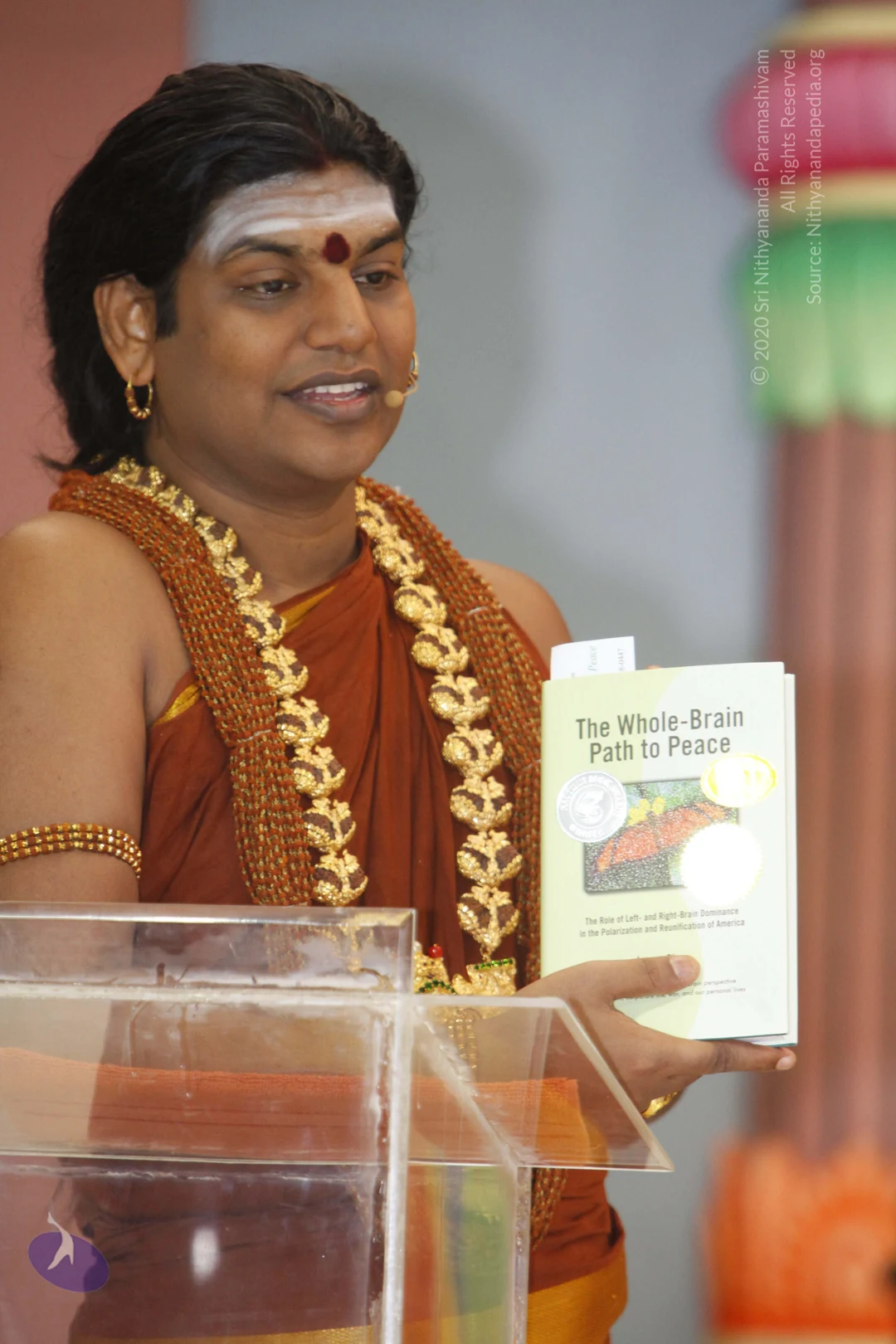
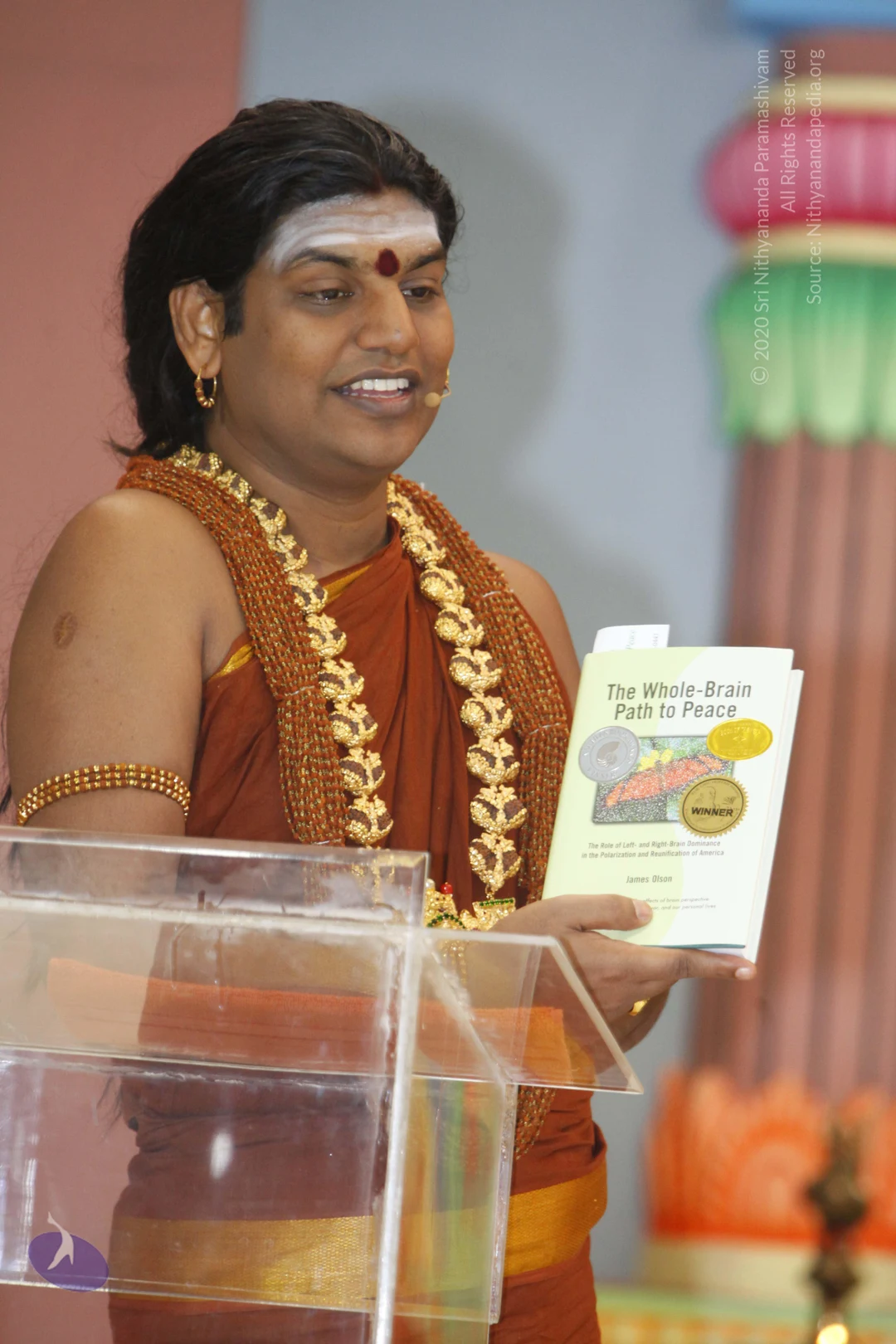
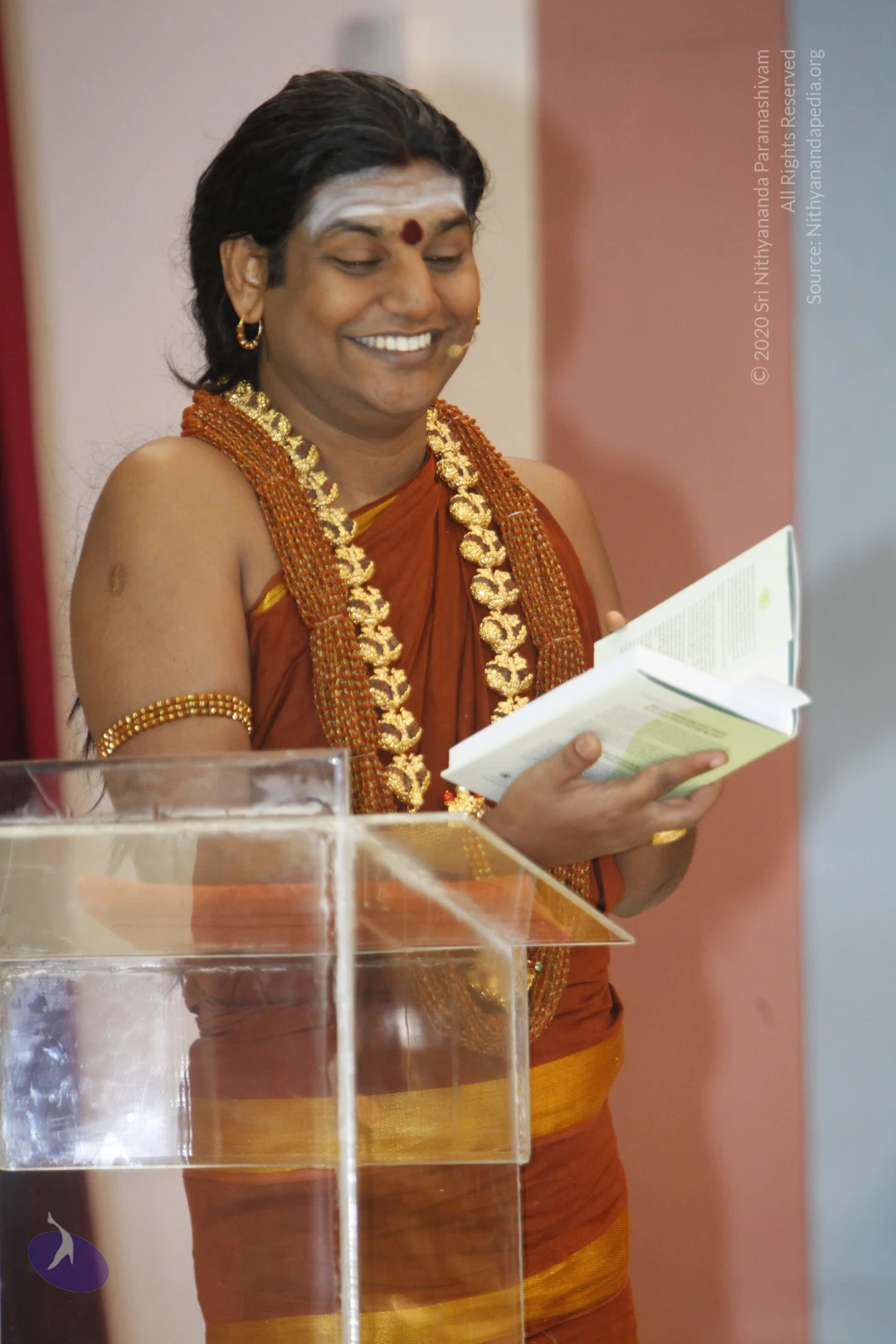
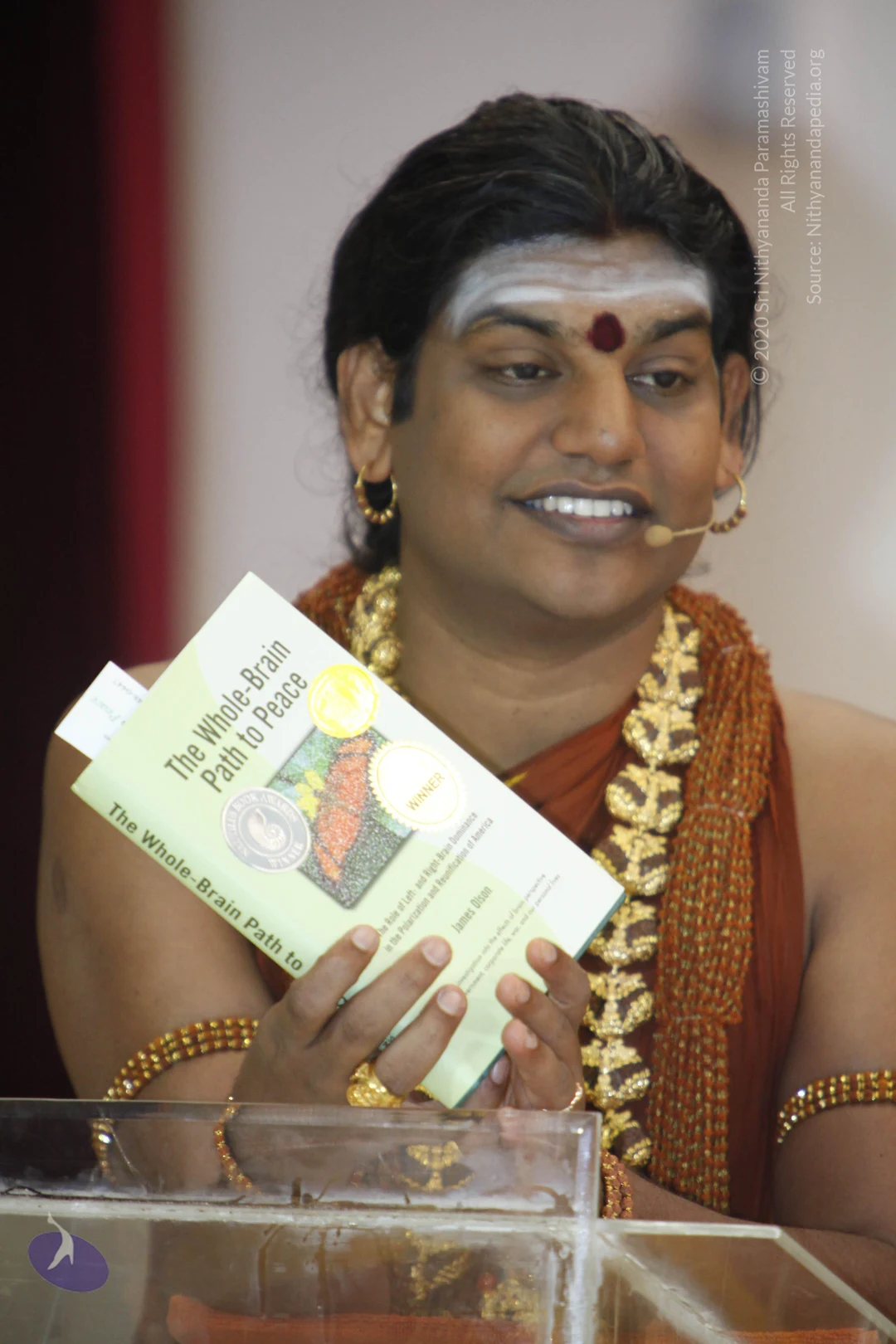
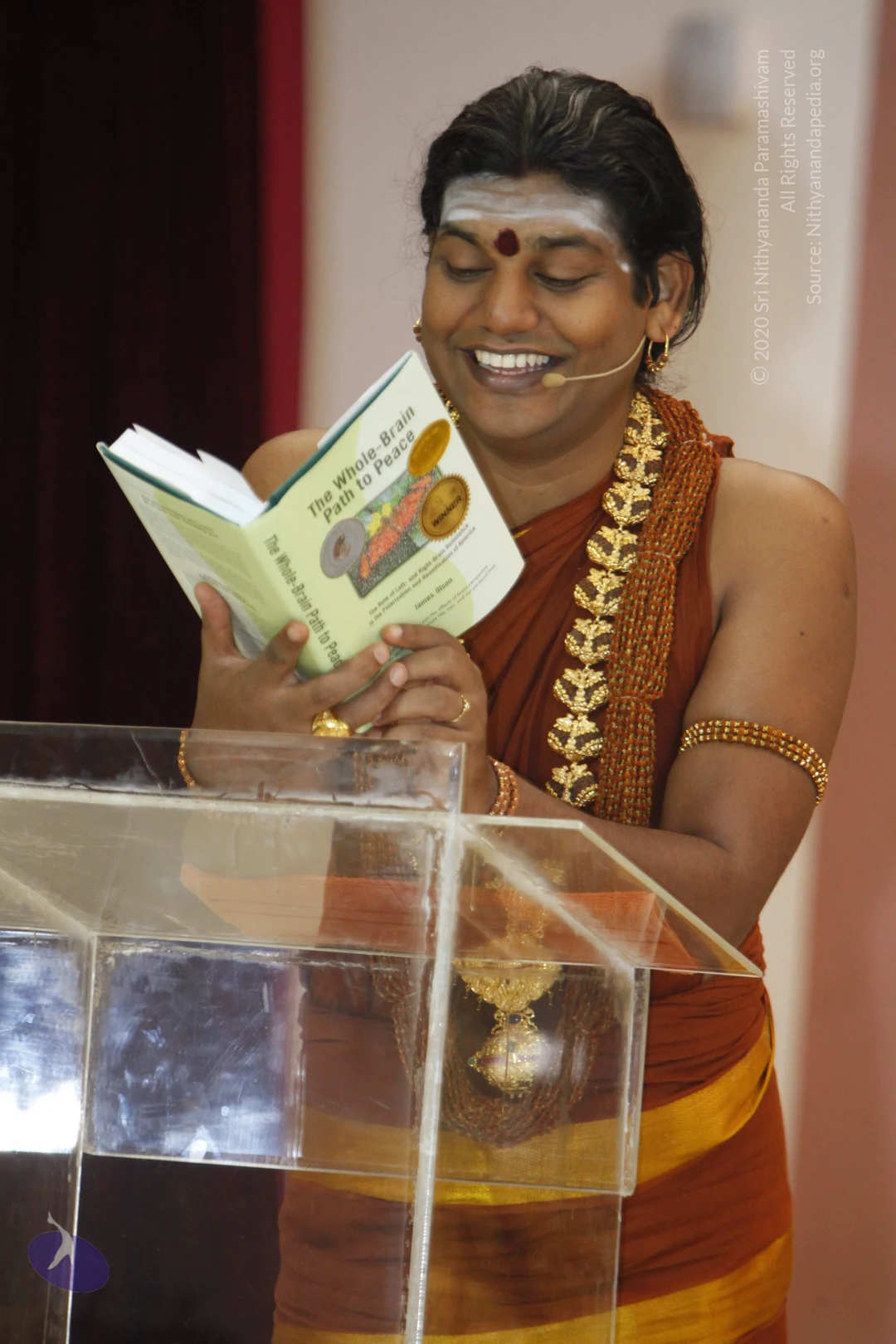
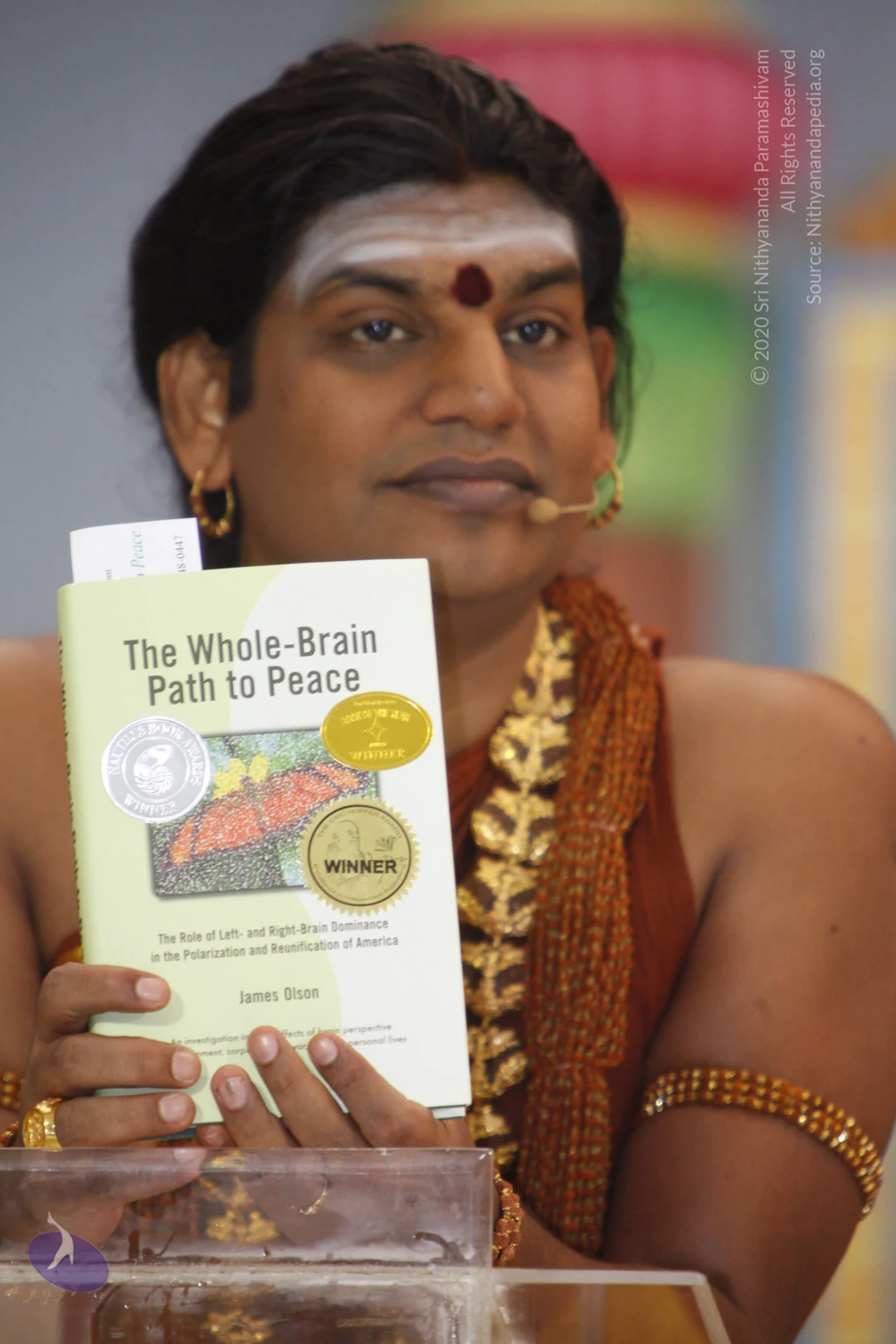
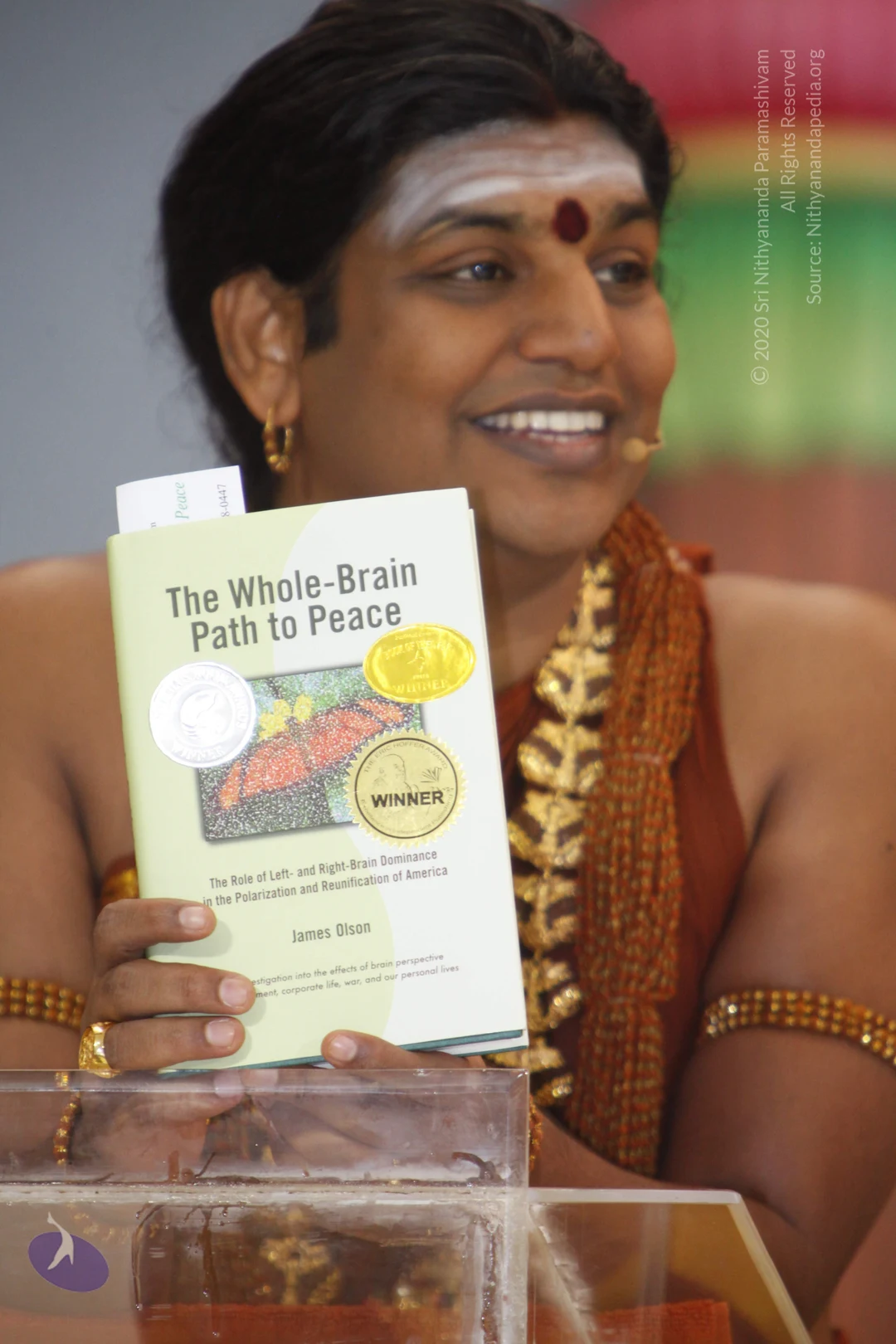
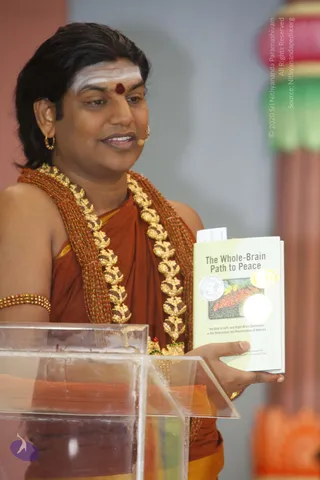
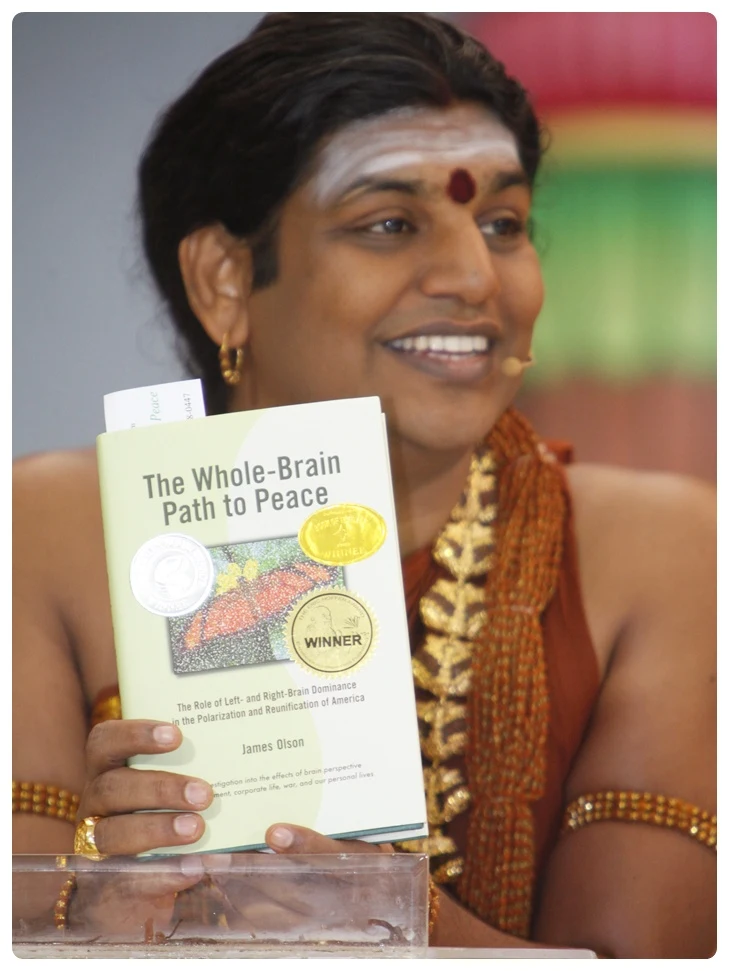
Before that I want to praise James Olson’s book ‘The Whole brain path to peace’. After a long time I read a book that is energizing.

Isskey pehley James Olson key pustak ‘the whole brain path to peace’ kee prashansaa karrnaa chaahtaa hoo. Bahut samay baad mainey aisaa pustak paddhaa jo jeev oorjaa ko jaagrit karrtaa hai.

Enriching is a lifestyle.

Laabhaanvit karrnaa ek jeevanshailee hai.

You should know the right reason for enriching.

Aap ko yeh jaannaa chaahiye kee laabhaanvit karrney kaa sahee kaaraN kyaa hai.

Sometimes we think we should enrich for name or good relations.

Hum kabhee kabhee sochtey hai kee humey laabhaanvit iss liye karrnaa chaahiye kyoo kee mujhe naam chaahiye, acchey sambandh chaahiye.

This is the wrong reason.

Yeh galat kaaraN hai.

Enrich because every person, every being is a part of you.

Laabhaanvit iss liye keejiye kyoo kee harr vyakti, harr jeevan aap hee kaa bhaag hai.

Then you will not experience even one moment of powerlessness.

Tab aap ek bhee shaktiheen kshan kaa anubhav nahee karengey.

What is enriching?

Laabhaanvit karrnaa kyaa hai?

Nothing but you teaching yourself.

Kucch nahee bulkee aapkaa swayam ko sikkkaanaa hee laabhaanvit karrrnaa hai.

What you think you never listen.

Aap jo sochtey hai voh aap nahee sunntey hai

But what you talk you listen.

Kintu aap jo baat karrtey hai voh aap sunntey hai.

So what you talk to others, enrich others with, you are teaching yourself.

Iss liye jab aap doosro sey baat karrtey hai, unhey laabhaanvit karrtey hai, aap swayam ko sikkkaa rahey hai.

It is impossible to get enlightened yourself.

Jeevan mukti ko swayam hee paanaa asambhav hai.

By being separate from others, becoming enlightened is impossible.

Aap doosro sey parey hokarr, sab say alagg hokarr jeevan mukti paanaa asambhav hai.

I am telling you from my experience, in my life at the age of 12 me becoming enlightened in Tiruvannamalai or at age of 22 me realizing my avataric mission in Madhya Pradesh, both are not the ultimate experiences.

Mai apnee anubhooti say keh rahaa hoo, merey jeevan may baaaraa varsh ke umra may Tiruvannamalai may jeevan mukti paanaa yaa baayees varsh kee umra may Madhya Pradesh may apnee avataaree uddeshya ko jaannaa, dono hee sabsey param anubhootiyaa nahee hai.

When I started enriching others, then only I experienced enlightenment completely.

Jab mainey laabhaanvit karrnaa aarambh kiyaa, tabhee mainey poorna jeevan mukti kaa anubhav kiyaa.

Listen:

Dhyaan sey suniye:

I tell you, whichever people are in your life are all a par of you.

Mai kehtaa hoo, aapkay jeevan may jo bhee vyakti hai, veh sabhee log aap hee kay bhaag hai, swayam key bhaag hai.

Whoever is around you is a part of you.

Aapkay aaspaas key sabhee log aap key bhaag hai.

Understand, only when you start living, practicing, you experience success.

Samjjiye, keval jab aap jeenaa aarambh karrtey hai, abhyaas karrnaa aarambh karrtey hai, aap safaltaa kaa anubhav karengey.

If you listen to my words, they will propel you to action.

Yadee aap merey shabdo ko dhyaan sey sunengey, voh aapko kaarya key liye prerit karengey.

If you are not inspired to action, you are not listening to my words.

Yadee aap kaarya key liye prerit nahee hai, aap merey shabdo ko nahee sunn rahey hai.

Don’t give up on others.

Kabhee doosro parr vishwaas naa khoyiye.

The one quality in my life which I have shown every moment is not giving up on me and others.

Merey jeevan kaa ek gun jo mainey harr kshan darshaayaa hai voh hai swayam aur doosro parr vishwaas naa khonaa.

Whoever you may be – CEO or housewife, whatever you do, let the actions be to enrich others.

Chaahey aap jo bhee ho – CEO yaa ghareloo stree, aap jo bhee karrtey hai, voh doosro ko laabhaanvit karrney vaale kaarya honey deejiye.

Only the you will experience success.

Keval tab hee aap safaltaa kaa anubhav karengey.

Take the example of nirahara samyama.

Nirahara samyama kaa hee udaaharan leejiye.

Nirahara samyama is a process which awakens your innate ability to take in prana from the space.

Nirahara samyama voh kriyaa hai jab aap prana Shakti aakash sey leney kee apnee swaabhaavik andhroonee Shakti ko jaagrit karrtaa hai.

It is not only a technique for reducing weight.

Yeh keval vazan kamm karrney kee takneek nahee hai.

It is a powerful technique to go beyond all your root patterns related to food.

Yeh aapkay khaaney sey sambandhit sabhee mool vichaar dhaaraao sey oopar jaaney kee shaktishaalee takneek hai.

Only when you inspire and enrich others for nirahara samyama that is going beyond the need for food, then only you will remain a nirahari.

keval jab aap doosro ko Nirahara samyama yaanee khaaney kee aavashyaktaa sey oopar jaaney key liye prerit karrtey hai aur unhey laabhaanvit karrtey hai, tab hee aap swayam niraharee rehetey hai.

Continuously go on enriching others.

Lagaataar doosro ko laabhaanvit karrtey jaayiye.

You will see you are yourself enriched.

Aap dekhengey kee aap swayam laabhanvit hongey.

The biomemory of human is the best.

Manushya kee ‘bio-memory’ sabsey uttam hai.

Like how a tree can generate its energy, you also have the innate natural ability to generate energy.

Aap may ek vriksh kee tarah swayam oorjaa utpann karrney kee Shakti swaabhaavik roop say hai.

From childhood by eating more this ability has been hidden.

Bachpan sey Adhik kkhaney key kaaran yeh Shakti aap may lupt ho gayee.

Through nirahara samyama, I am awakening this natural ability of yours.

Niraahaara samyama dwaaraa mai aapkee issee swaabhaavik Shakti ko jaagrit karrtaa hoo.

Several of my disciples are living as niraharis for months.

Merey kayee shishya yeh niraahaaree jeevan maheenoy sey jee rahey hai.

Through medical tests, we are also seeing that through nirahara, people’s health is getting better.

Hum medical pareekshan dwaaraa hum yeh bhee dekh rahey hai kee niraahaaree logo kaa swaasthya aur acchaa ho rahaa hai.

Extraordinary people are extraordinary because they are ordinary humans and doing extraordinary work.

asaadharan log isliye asaadharan hai kyo kee ve sadharan maanav hokay asaadharan kaam kartay hai

all great people are great as they are inspired for extraordinary action to enrich themselves and others.

Sabhee mahaan log mahaan iss liye hai kee veh asaadhaaran kaarya key liye prerit hai swayam aur doosro ko laabhaanvit karrney key liye.

Whatever experience you have felt is ultimate in your life, continuously share that with others and enrich them.

Jo bhee aapnay apney jeevan may sabsay sarvocch anubhooti paayaa hai, ussey lagaataar doosro key saath baaTTiye aur unhey laabhaanvit keejiye.

Continuously keep enriching others.

Lagaataar doosro ko laabhaanvit karrtey jaayiye.

When you enrich others, you experience your own hidden qualities.

Jab aap doosro ko laabhaanvit karrtey hai, aap swayam key chhipey guno kaa anubhav karrtey hai.

Enriching others is a powerful completion with them.

Doosro ko laabhaanvit karrnaa unnkey saath ek shaktishaalee poornatva hai.

The essence of today’s satsng is:

Aaj kay satsang kaa saaraansh hai:

Continuously enrich others and expand yourself.

Lagaataar doosro ko Laabhaanvit keejiye aur swayam ko vistaarit hotey jaayiye.

Photos
Link to Facebook Page:

https://www.facebook.com/notes/202844716537202/

Photos Of The Day:
Temple

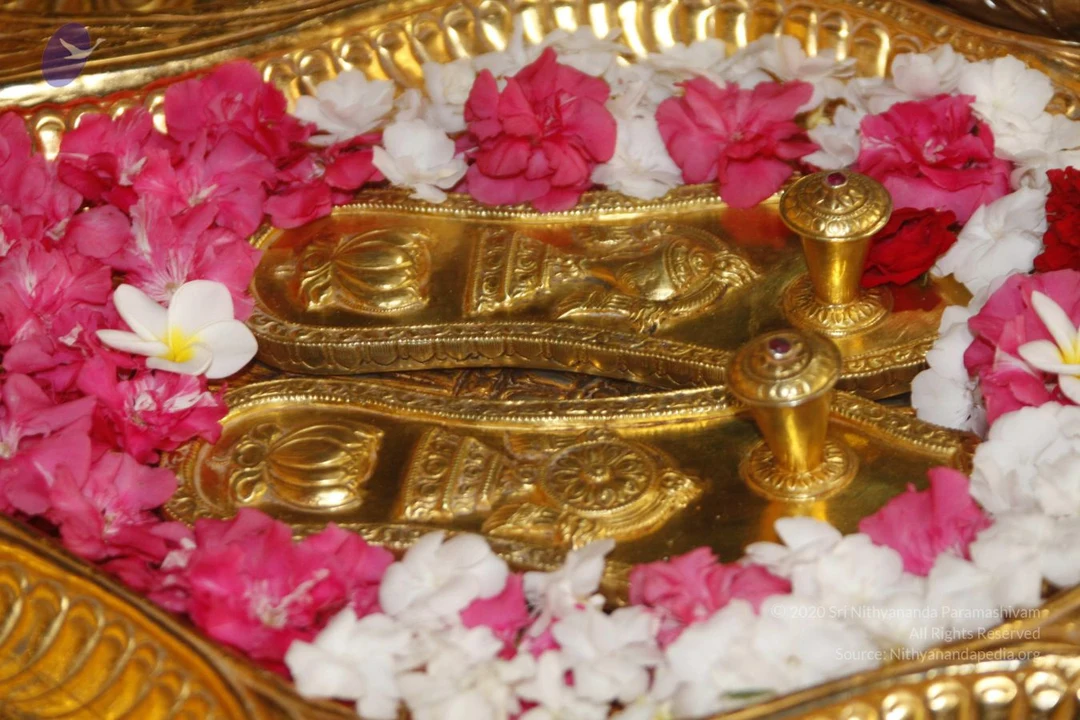
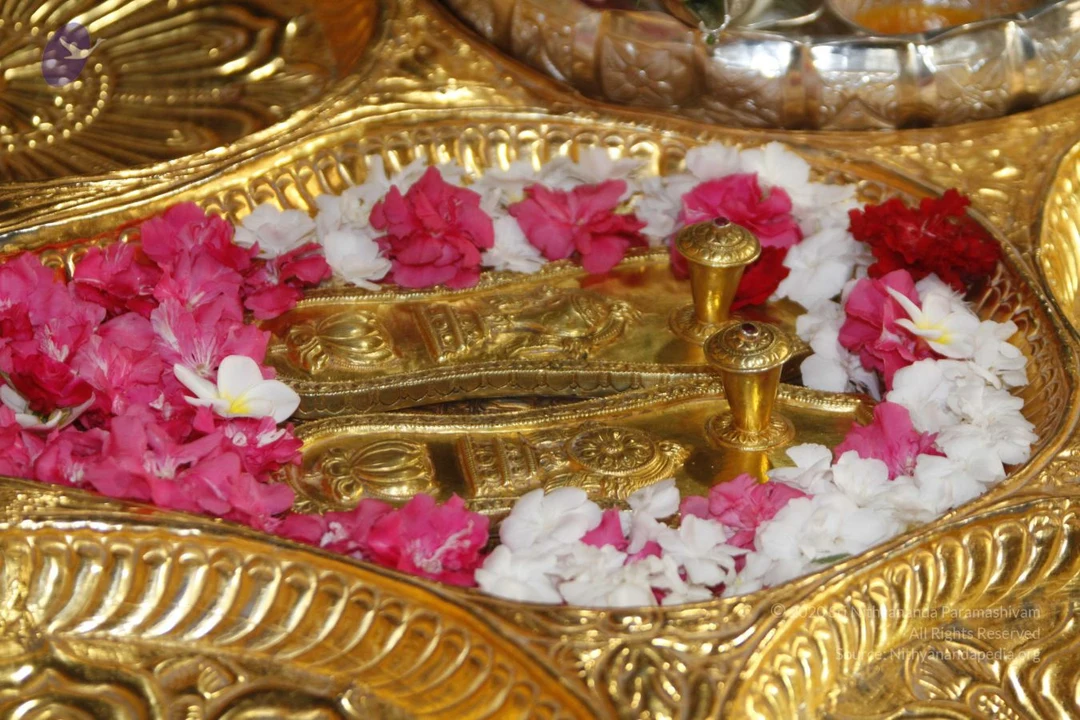
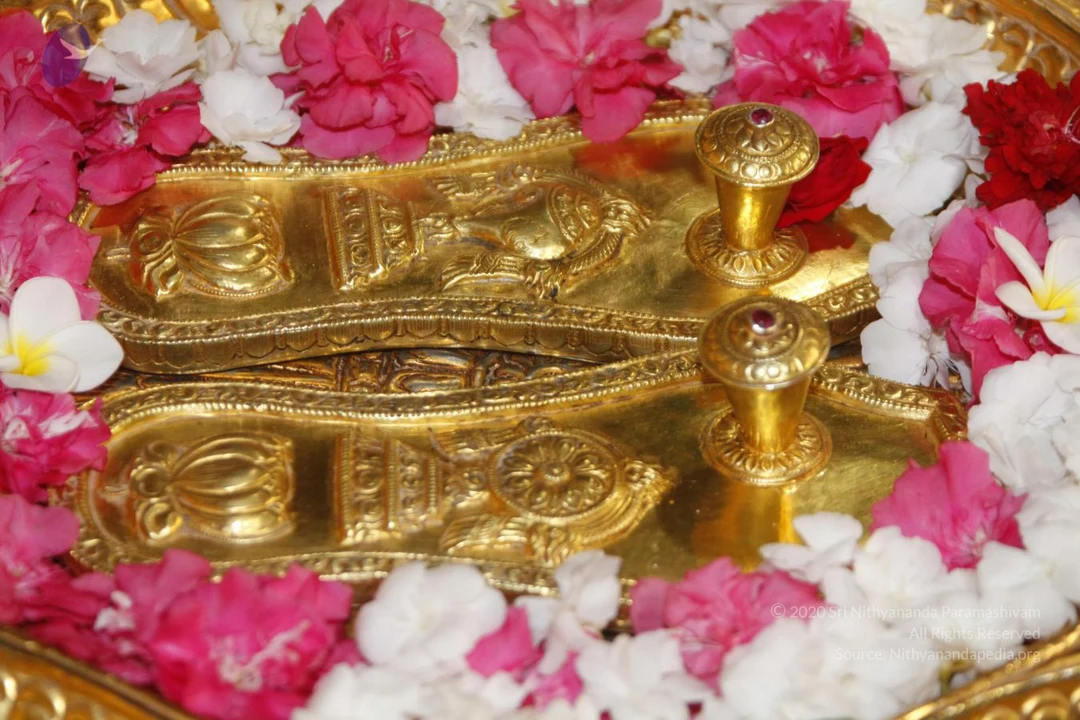
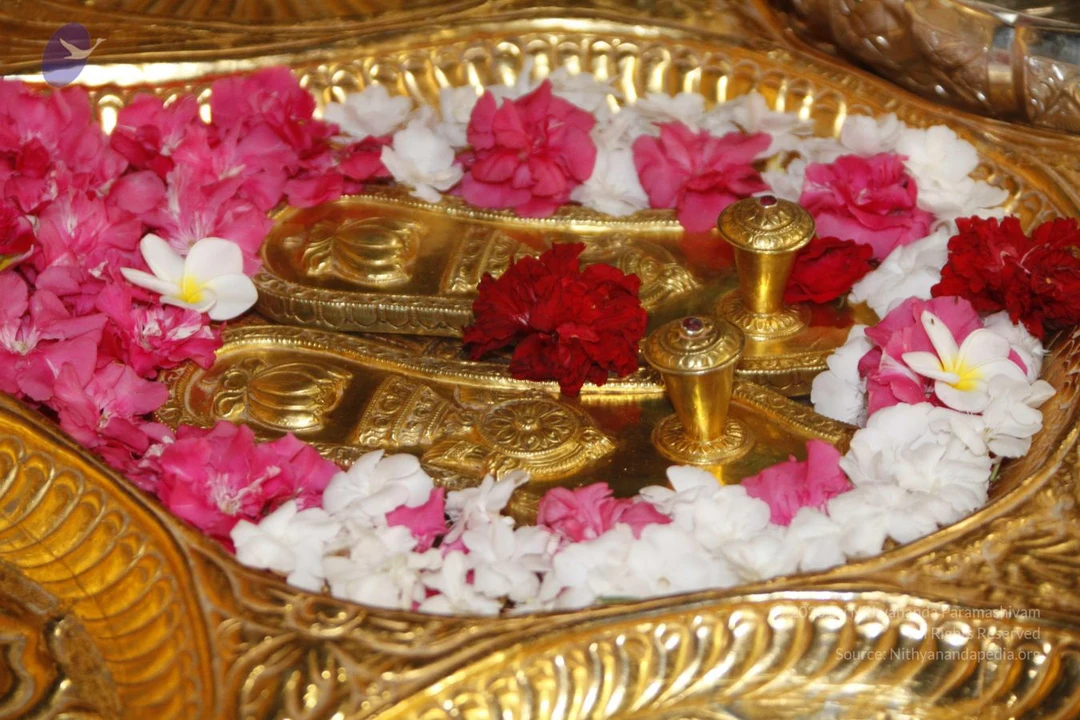
PadaPuja

Nithya-Satsang

SarvaDarshan

Construction-Photos
SacredArtsConstruction-Photos-Swamiji

LotusLiveSwamiji

Photos Of The Day:
Temple

PadaPuja

Nithya-Satsang

SarvaDarshan

Construction-Photos
SacredArtsConstruction-Photos-Swamiji

LotusLive-Swamiji

Photos Of The Day:

Temple
PadaPuja

Nithya-Satsang

SacredArtsConstruction-Photos-Swamiji

LotusLiveSwamiji

1-Temple

2-PadaPuja

3-Nithya-Satsang

5-SacredArtsConstruction-Photos-Swamiji

6-LotusLiveSwamiji

Photos from this day

View all 374 photos

Photos

19 photosSource gallery
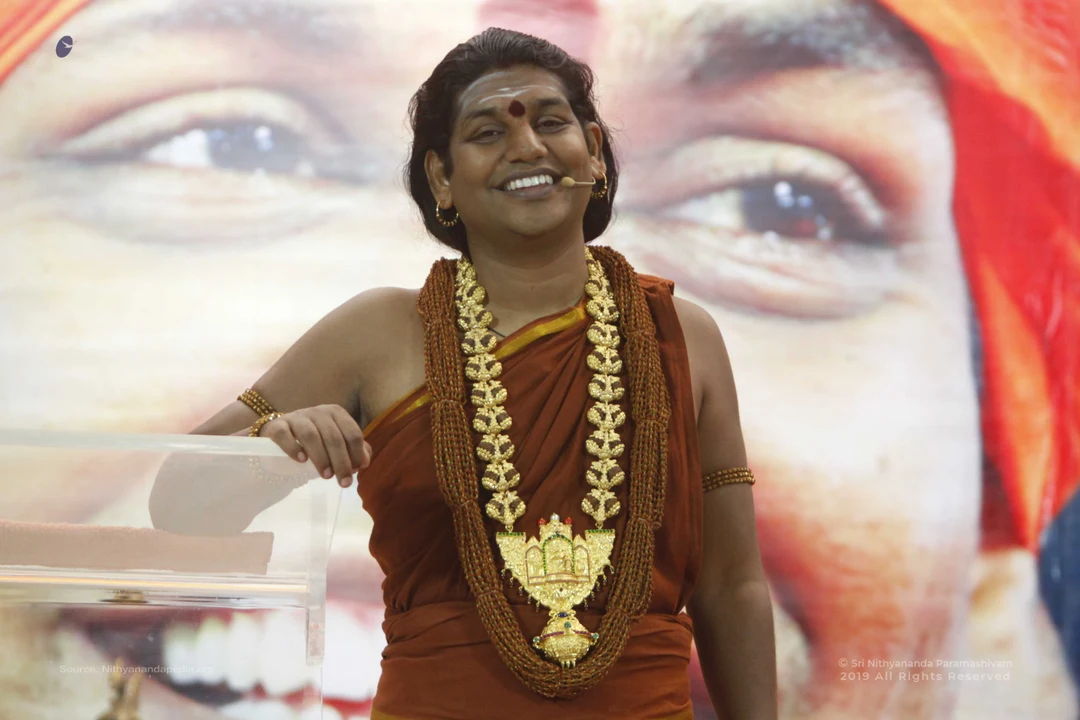
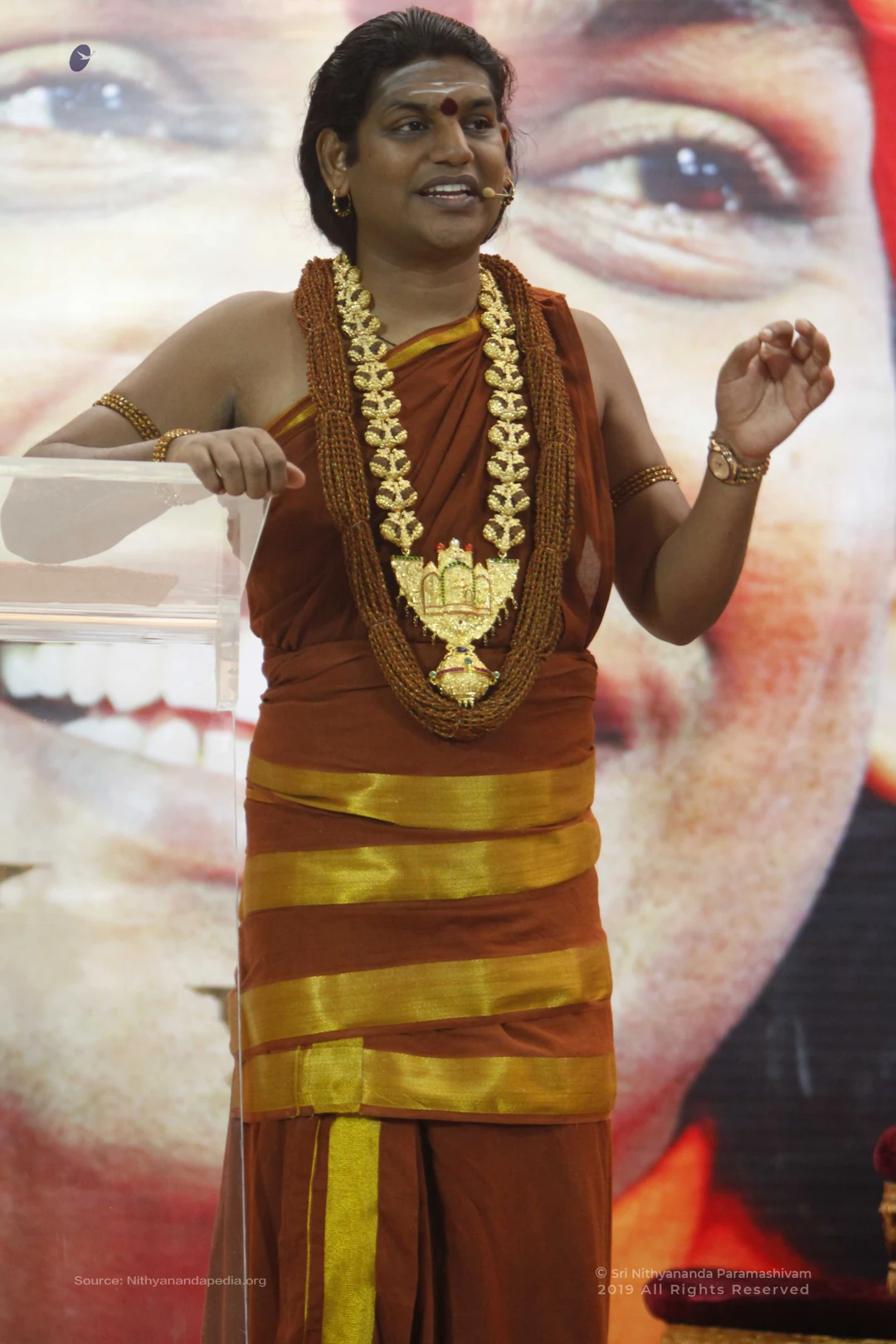
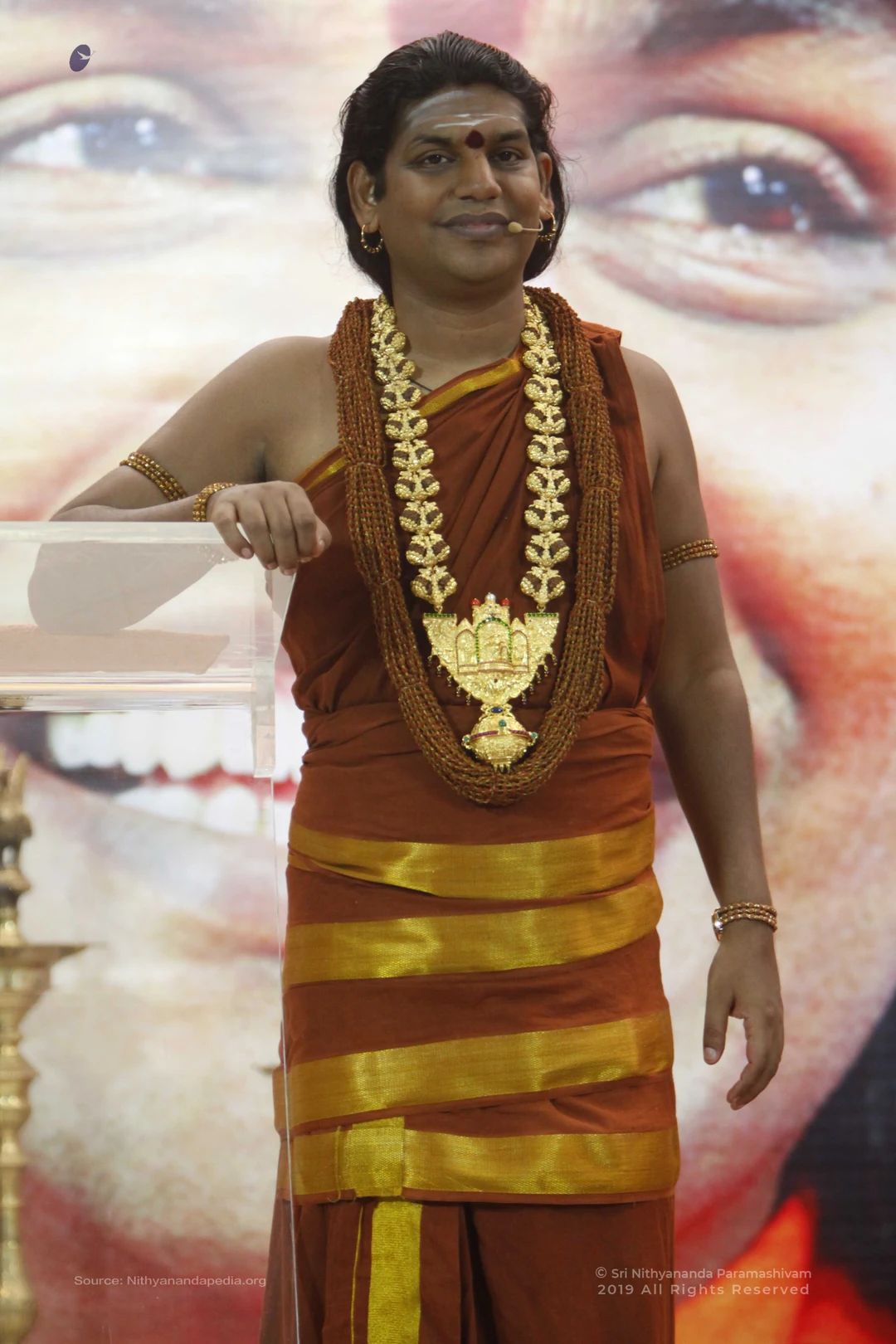
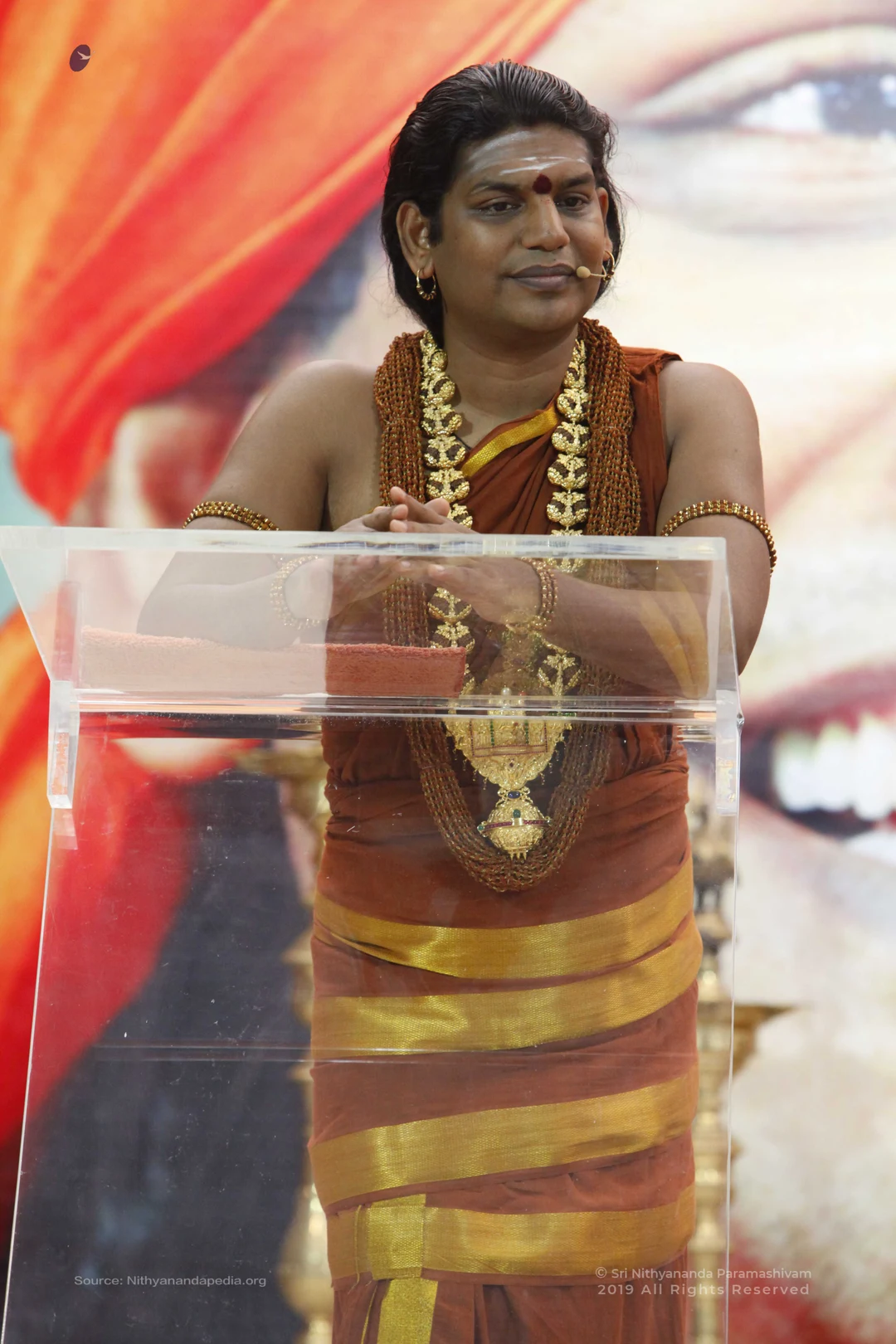
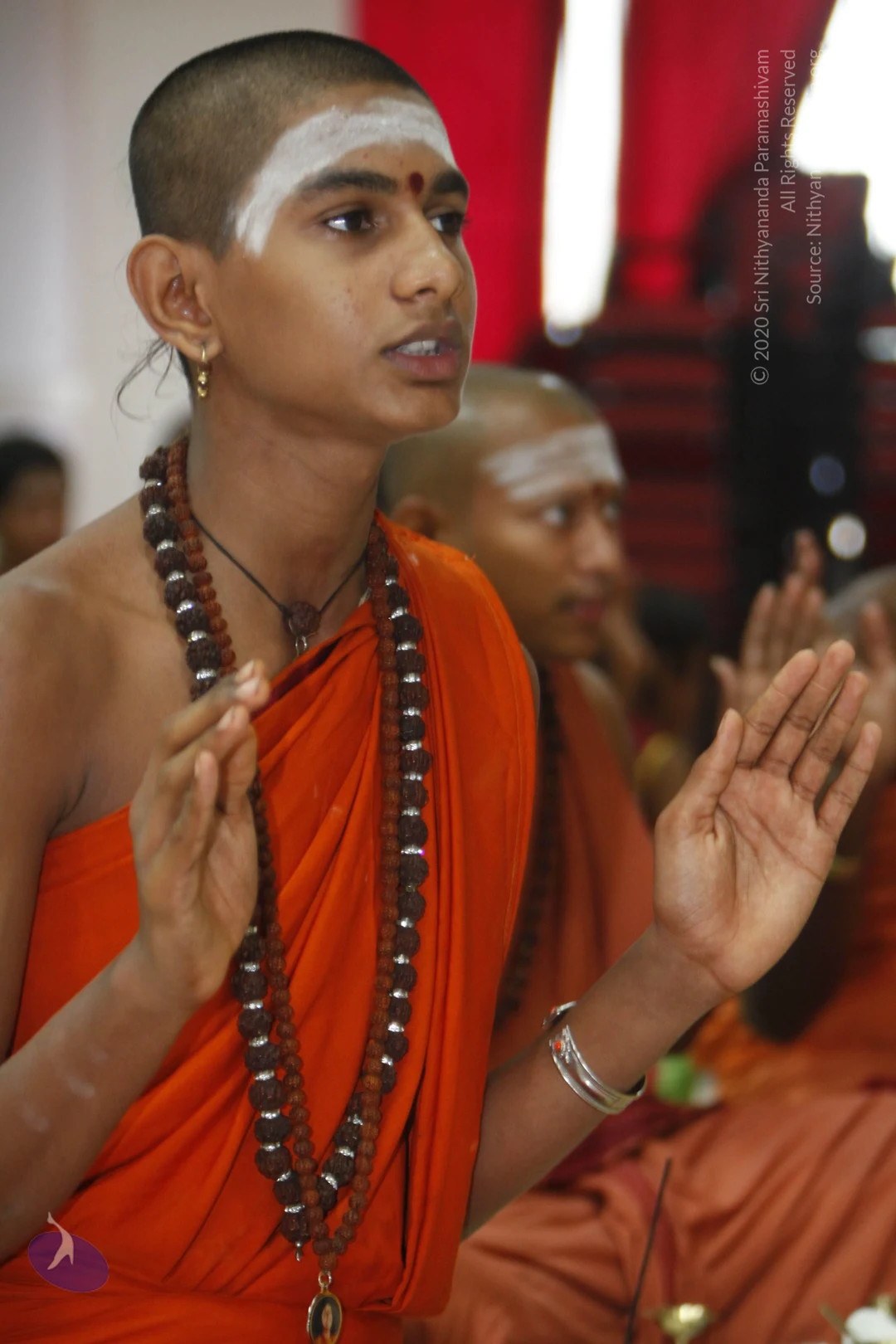
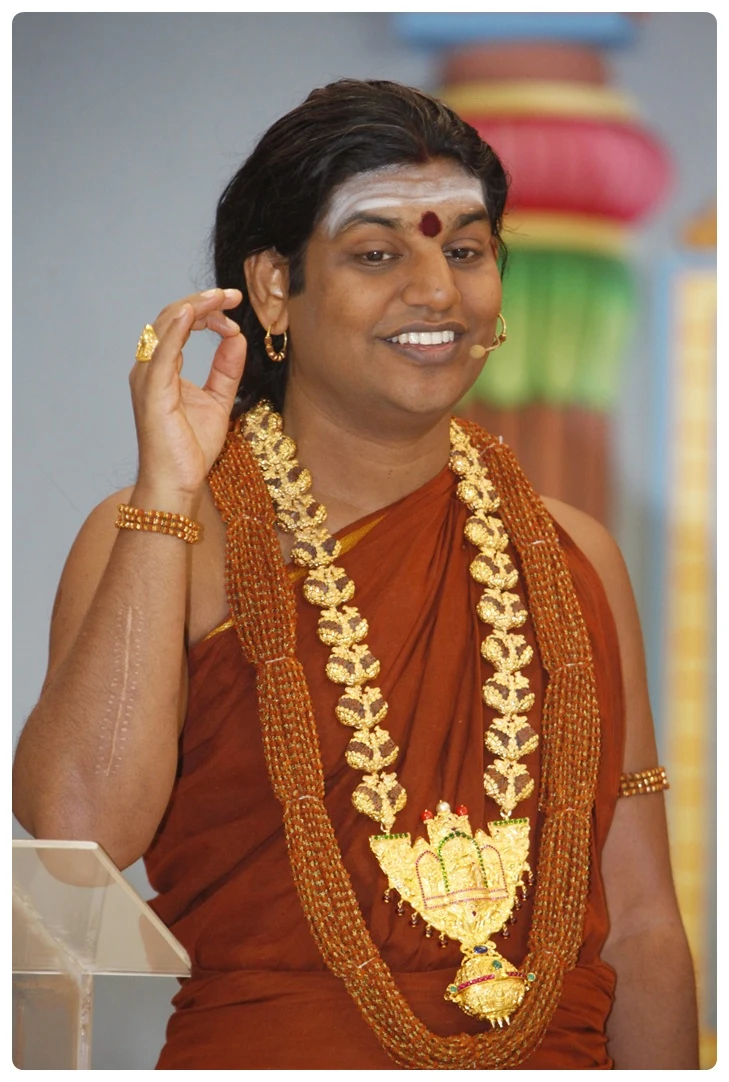
A man with swept-back dark hair stands behind a clear acrylic lectern at a stage event, smiling. He wears a rust-orange sleeveless wrap over his chest, a thick rudraksha-style mala with a large ornate gold necklace and gold pendant, gold bangles, and a red bindi with vertical white markings on his forehead. A small headset microphone is on his face. Behind him is a large backdrop printed with a close-up of a face with bold eyes and a red-orange headpiece.A man stands at a clear acrylic lectern speaking into a headset microphone, one hand resting on the lectern and the other raised in a gesture. He wears a rust-orange garment draped over one shoulder with gold-bordered wrap, a gold-banded orange cloth at the waist, a multi-strand rudraksha mala across the chest, a gold floral garland, a gold pendant with green and red stones, gold armbands and a wristwatch, and a red bindi with white vibhuti on the forehead. Behind him is a large enlarged portrait of a face with wide eyes and a smile. The setting resembles a stage talk or satsang. a person: the rudraksha mala, rust-orange robes, gold ornaments and large background portrait match the cues for the a person candidate, so this is treated as an in-person appearance-based candidate.A photograph of a man standing behind a clear acrylic lectern, speaking into a headset microphone. He wears a rust-orange dhoti-style wrap over bare shoulders, a thick golden-brown rudraksha mala with gold ornamental necklaces, gold armbands and bangles, gold earrings, and a red bindi with white tilak on his forehead. His hair is swept back and he is smiling. Behind him is a large backdrop of a painted face with a saffron-orange turban and visible smiling teeth. A small gold ornament rests on the lectern.A smiling man sits cross-legged on a tiger-skin-covered seat before an ornate gold repoussé backdrop, raising his right hand in a gesture of address. He wears a saffron-orange robe with gold-bordered yellow-and-gold dhoti, a heavy gold multi-strand garland and a large gold pendant with a deity relief set with green and red stones, gold bangles on his upper arms and wrists, and a white forehead band with a red bindi.A man in rust-orange draped robes with a gold-bordered waistband stands at a clear acrylic lectern, speaking with his right hand raised in a gesture. He wears a thick rudraksha mala with an ornate gold pendant and a gold rope-style necklace, gold bangles and a gold ring, and a headset microphone. He has a white forehead marking and a red dot.A close photo of a man seated behind a clear glass lectern, resting his chin on one hand with a gold ring. He has long dark hair swept back, white vertical tilak with a red bindi, gold hoop earrings and a small clip-on headset microphone. He wears layered rudraksha malas with gold beads, multiple gold-and-rust beaded armlets and bracelets, and a rust-orange cloth over bare shoulders. a person appears as an in_person speaker in a satsang setting.

Temple
50 photosSource gallery
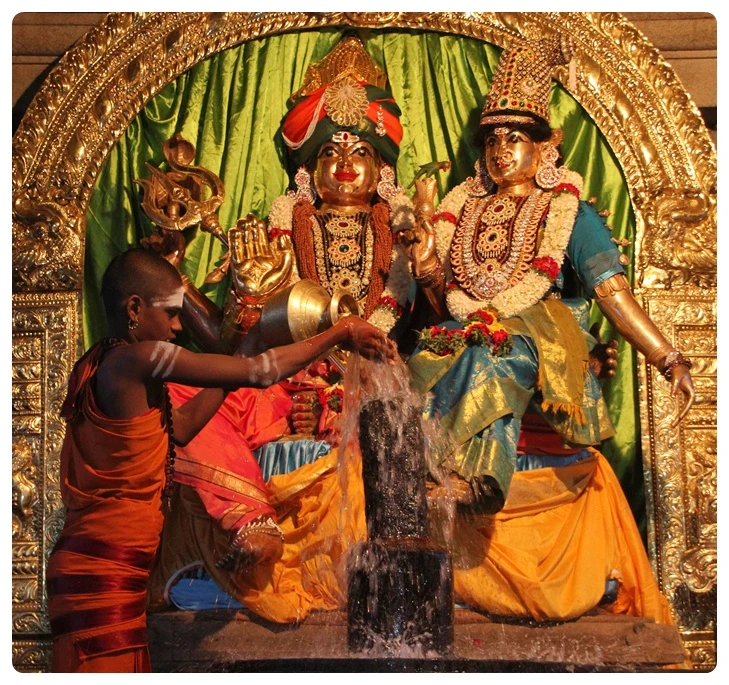
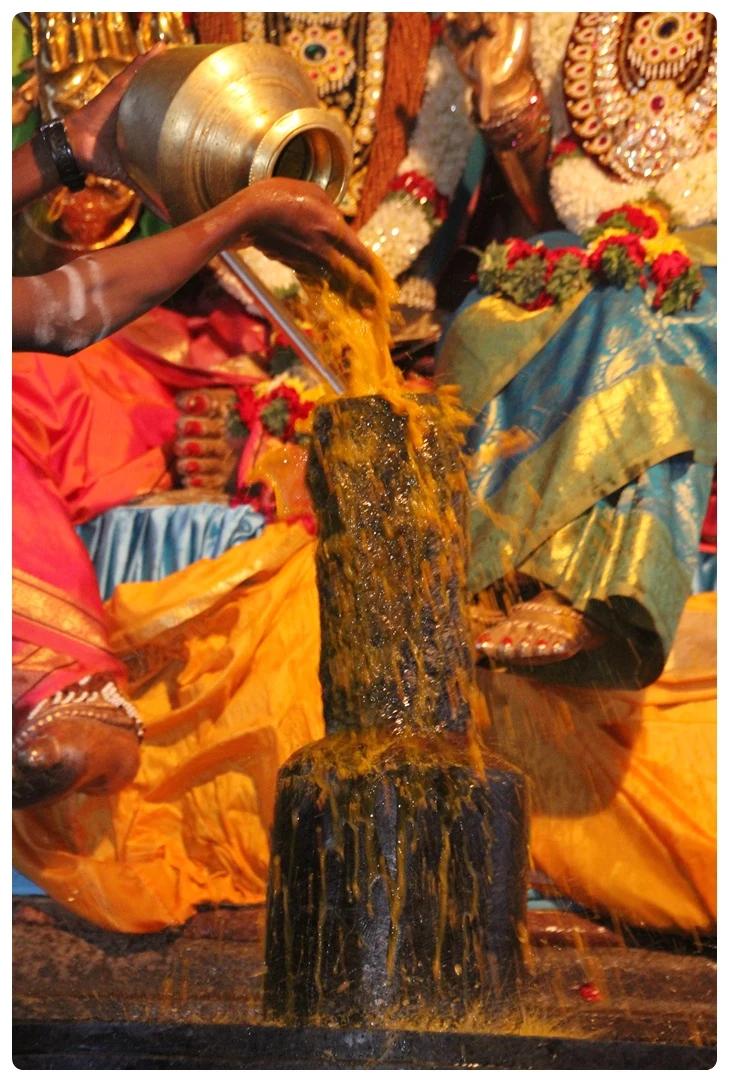
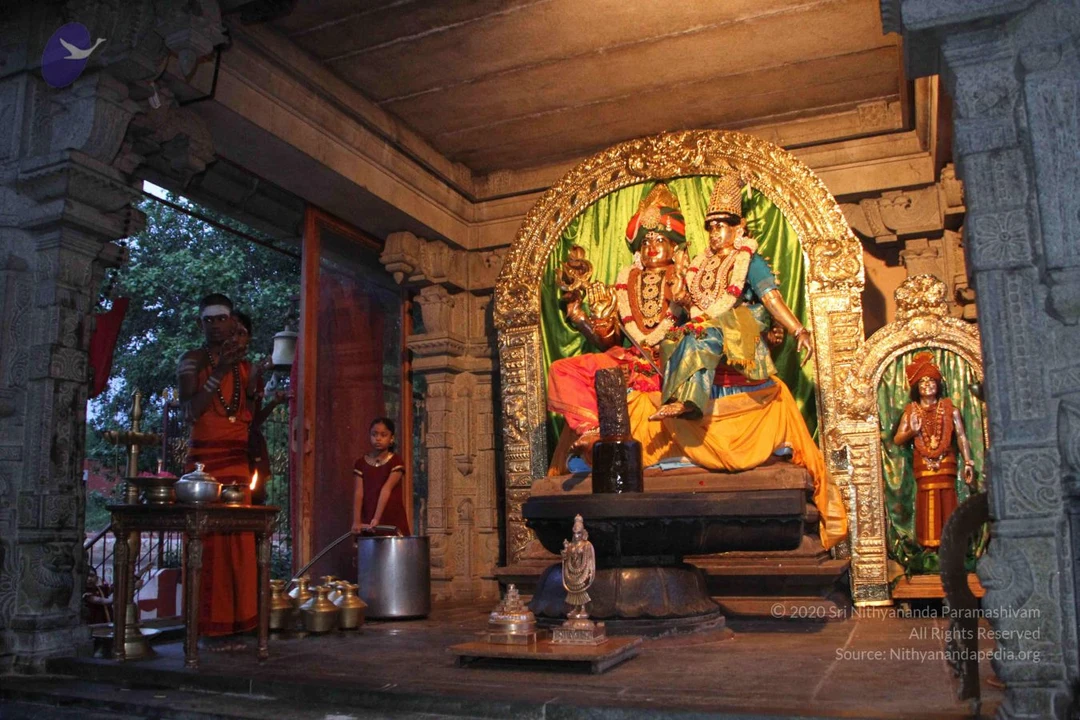
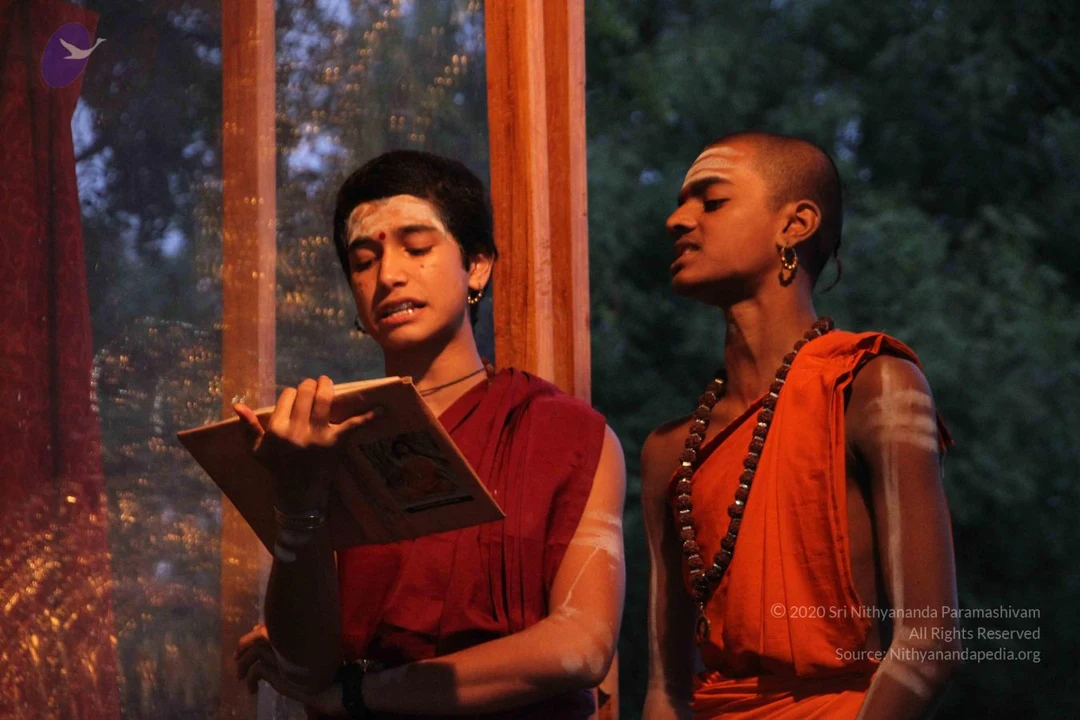
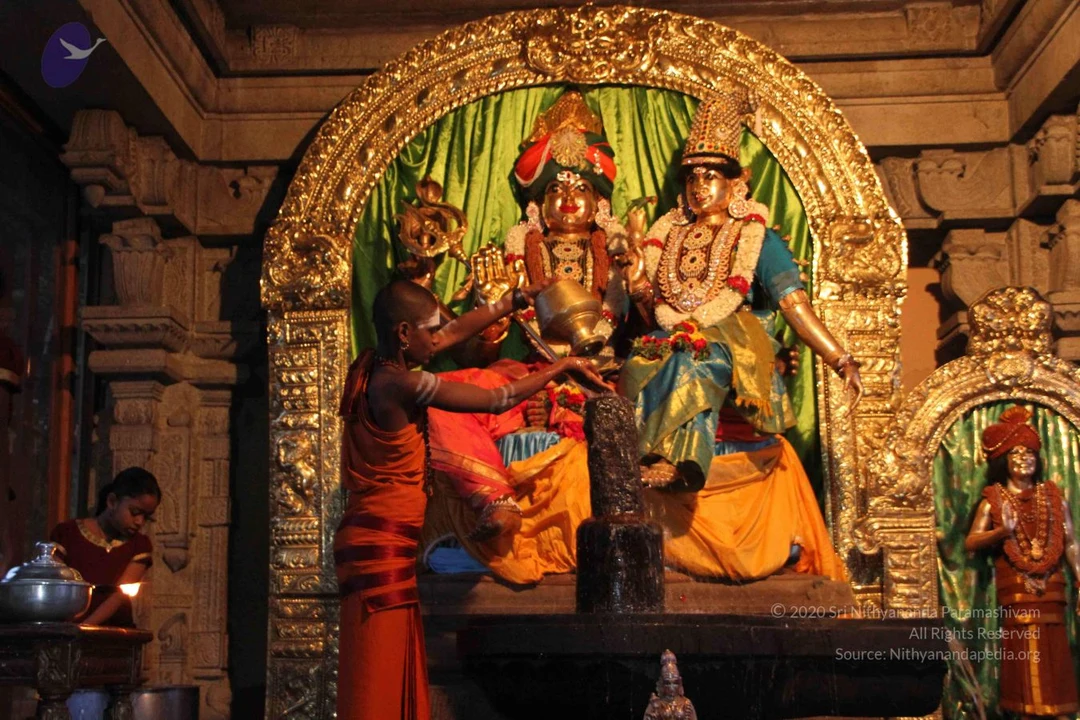
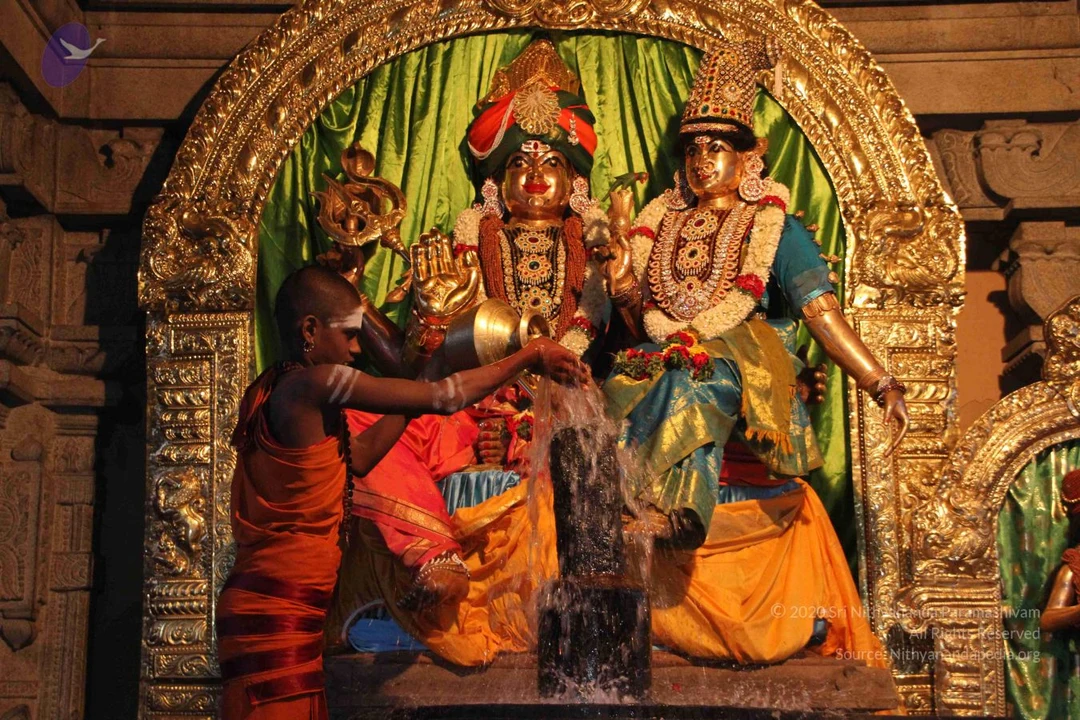
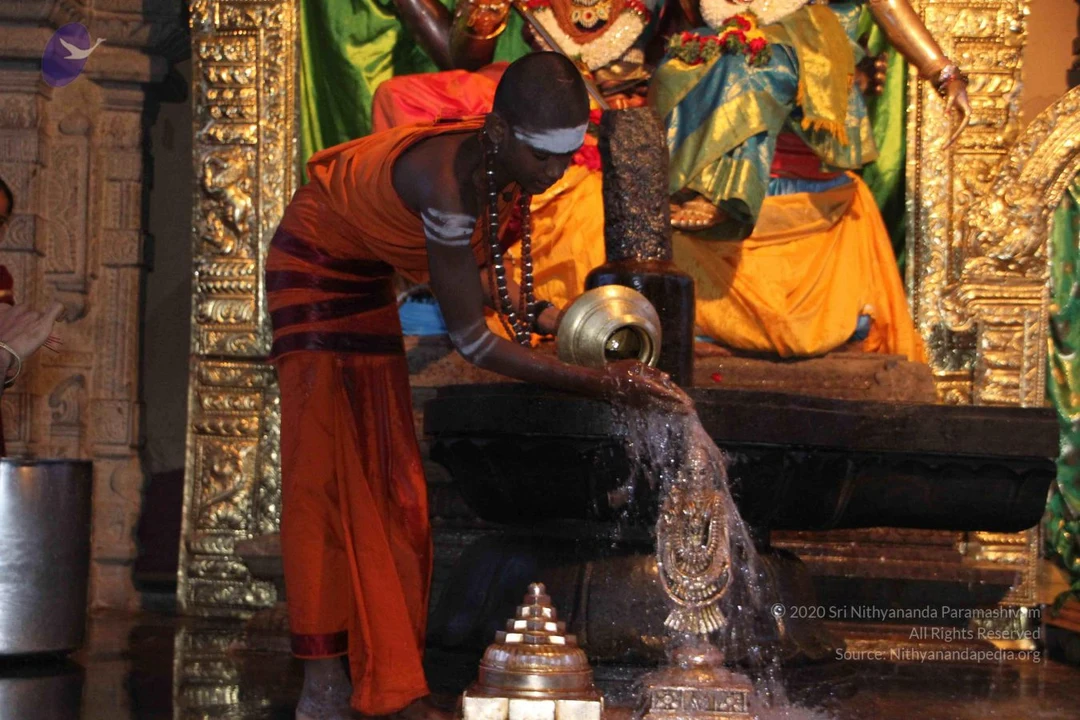
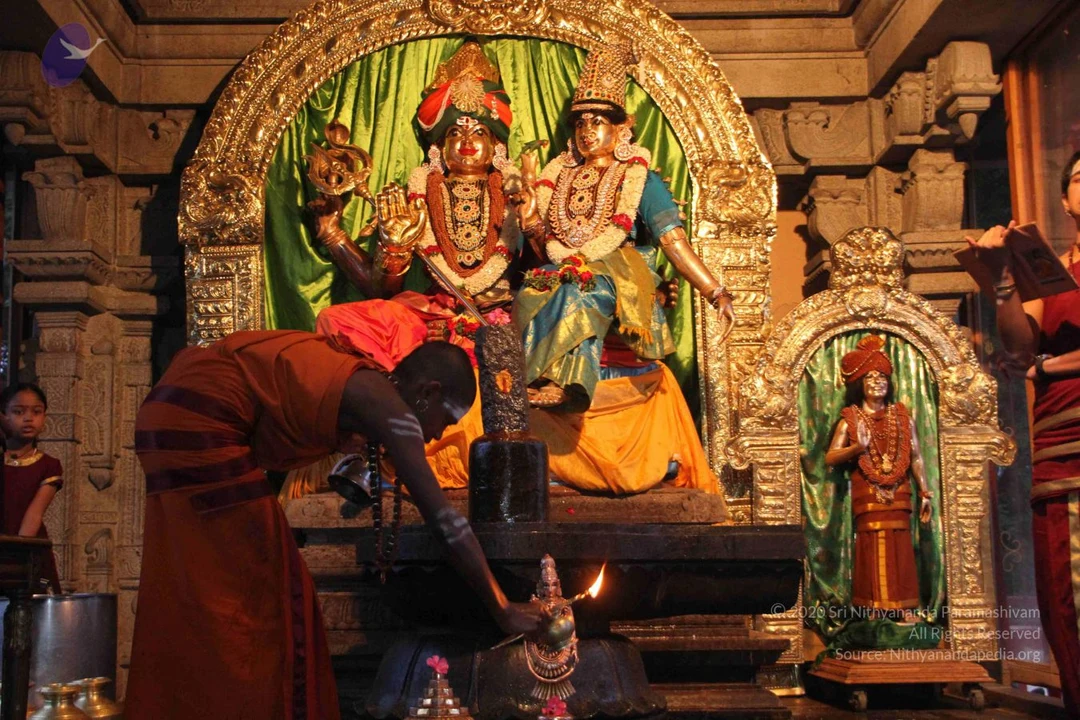
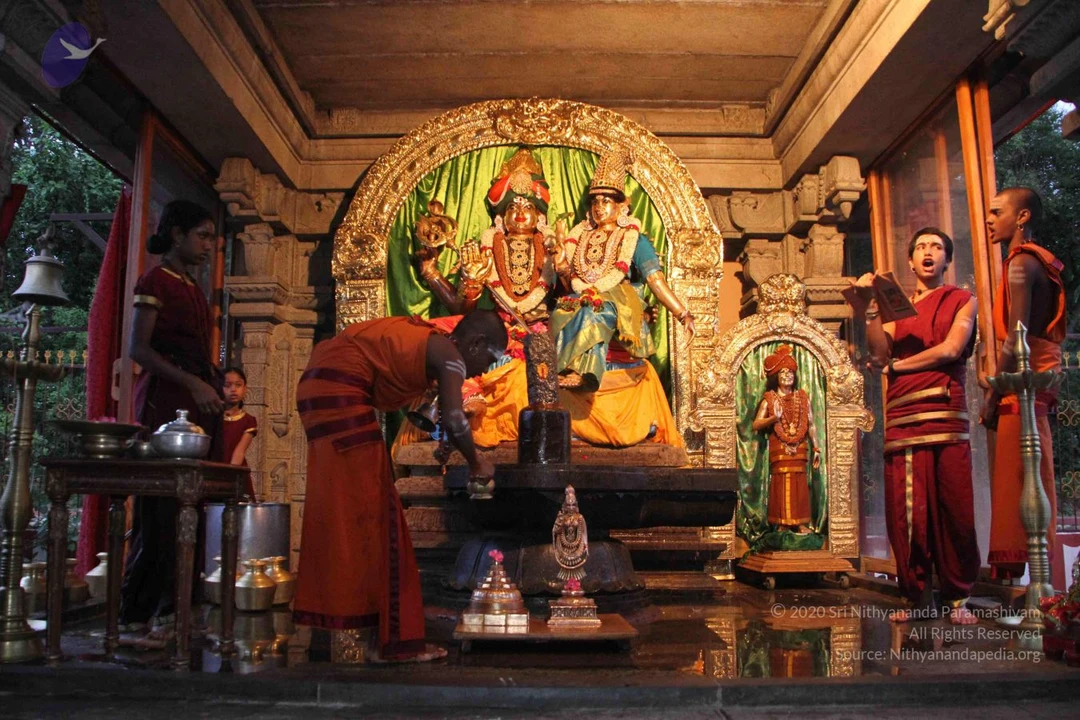
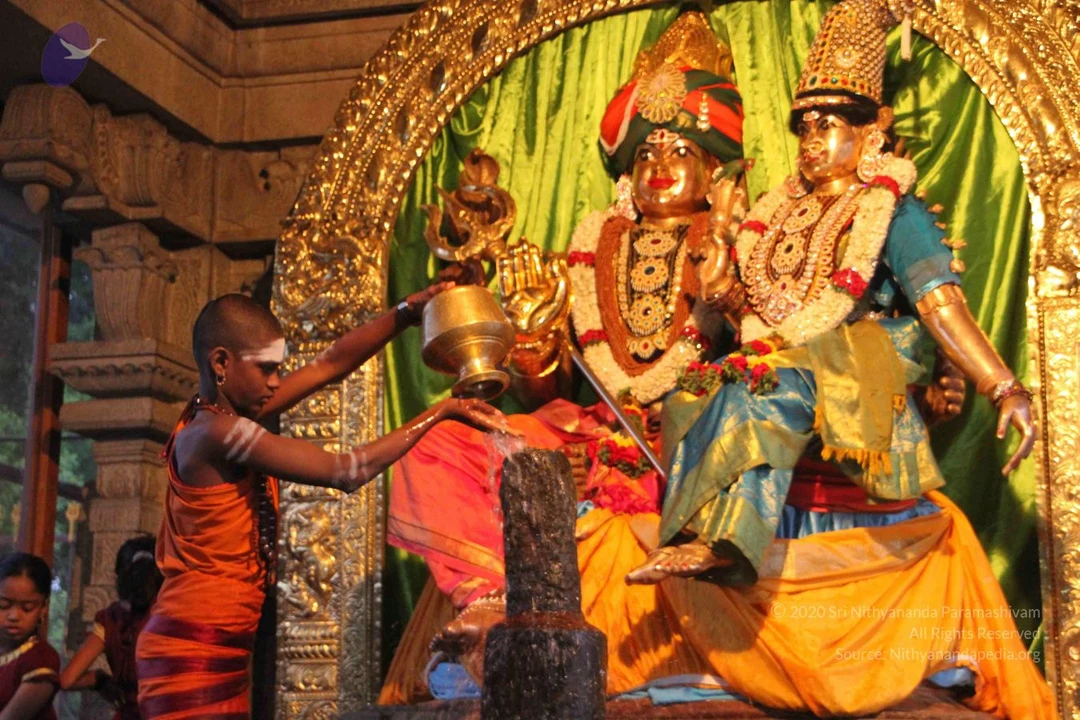
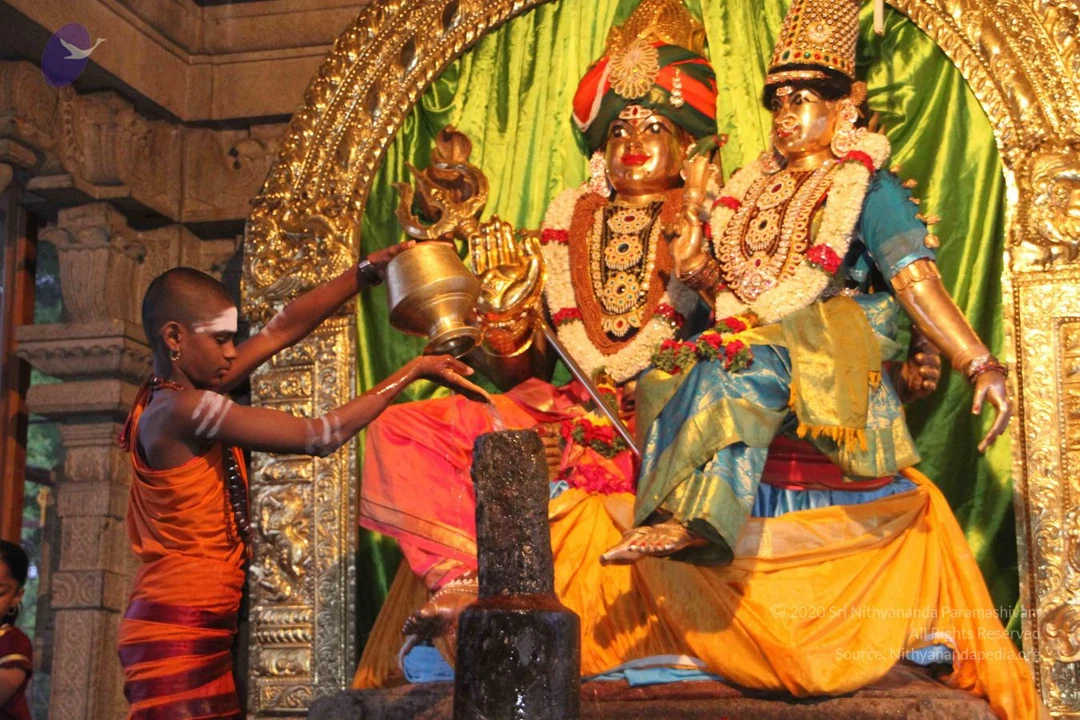
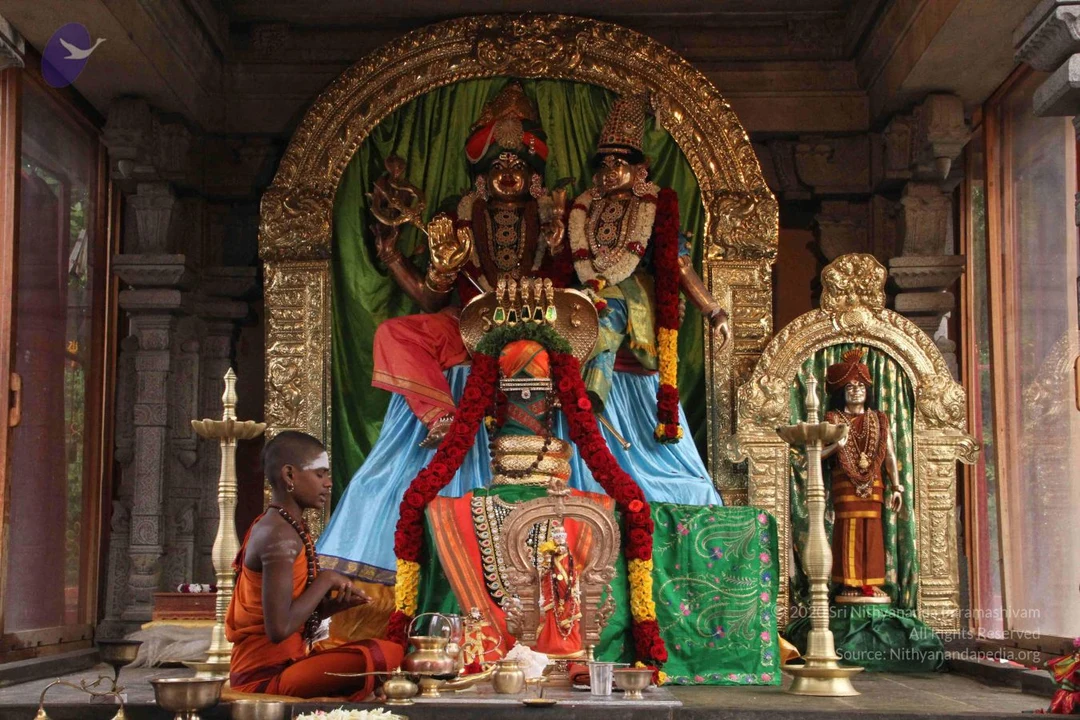
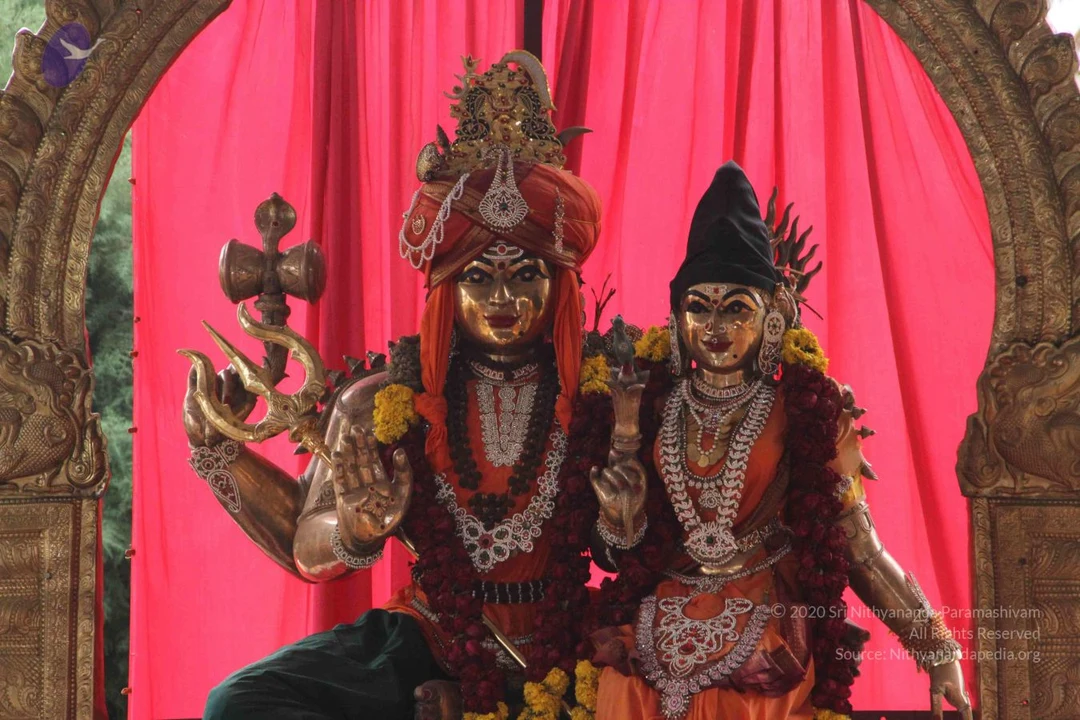
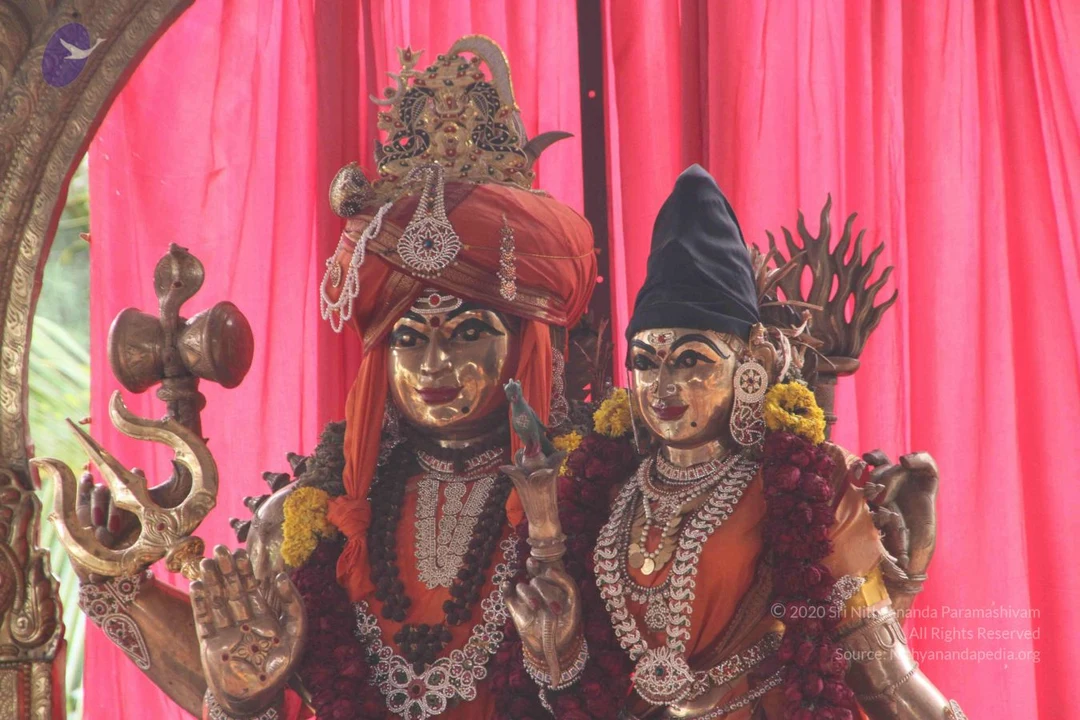
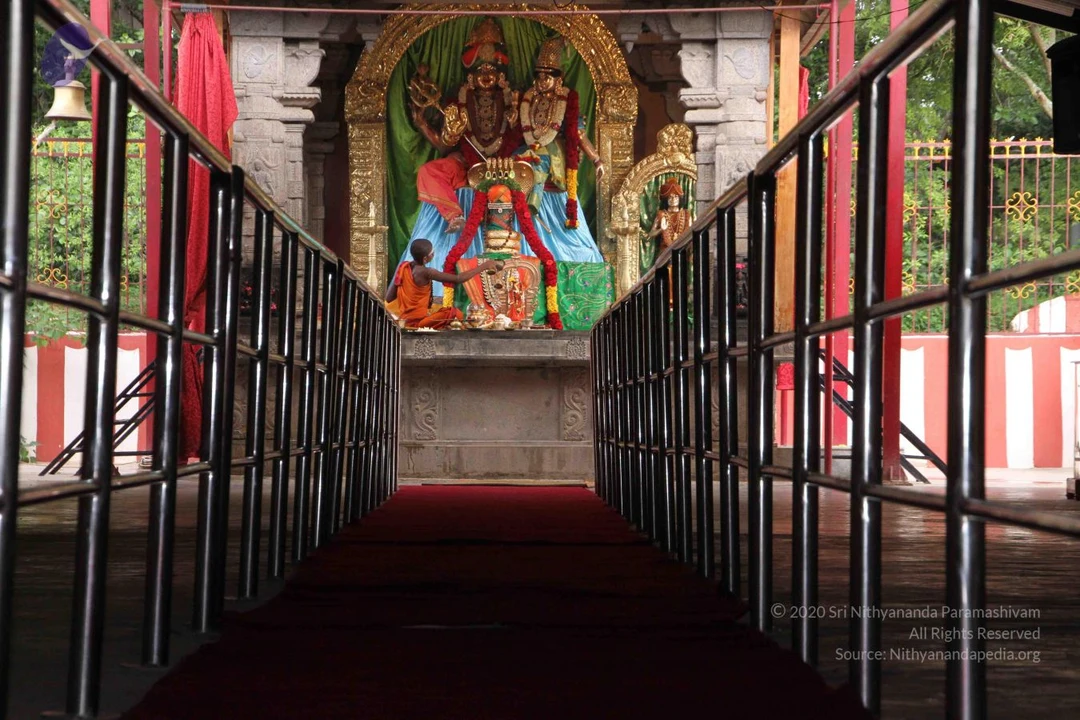
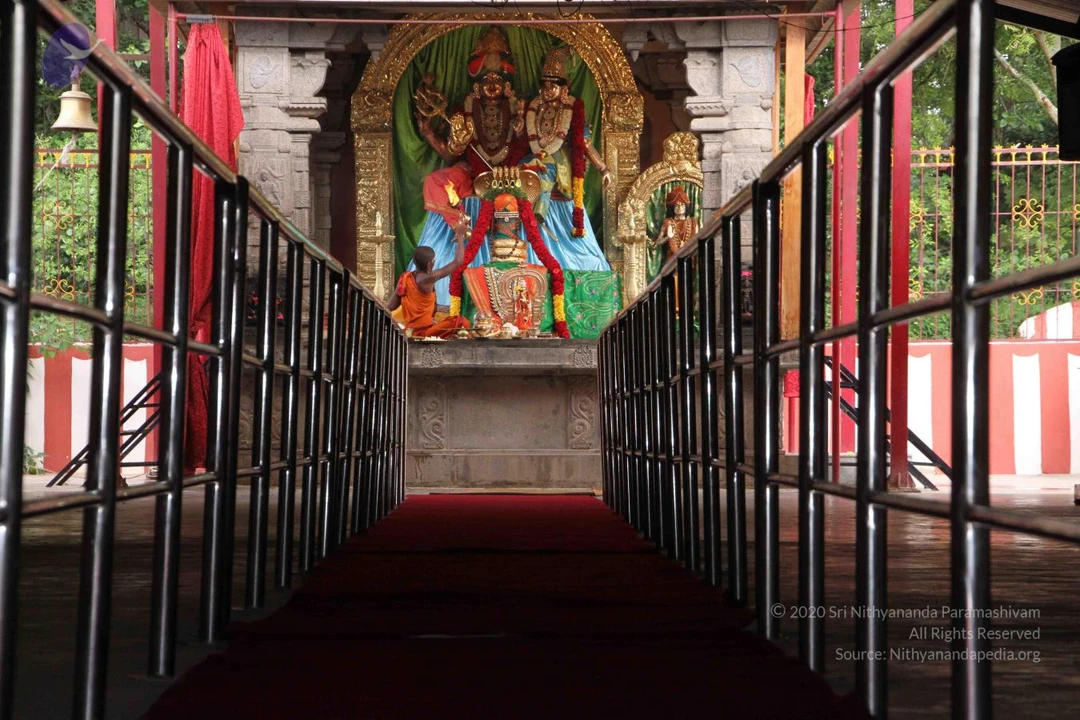
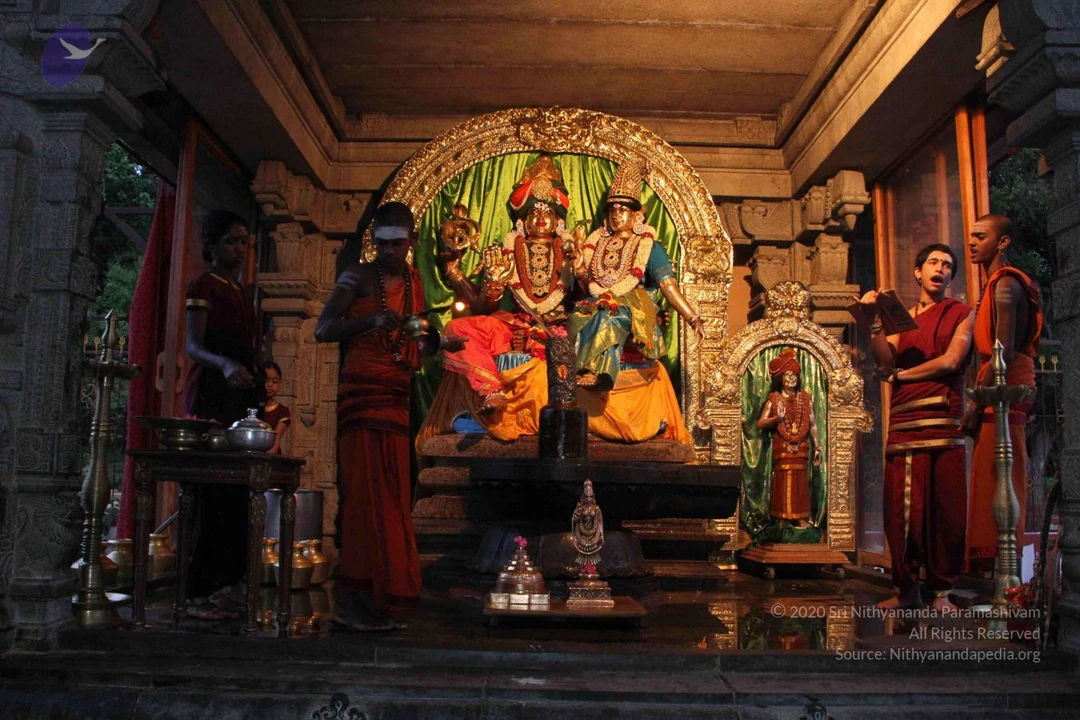
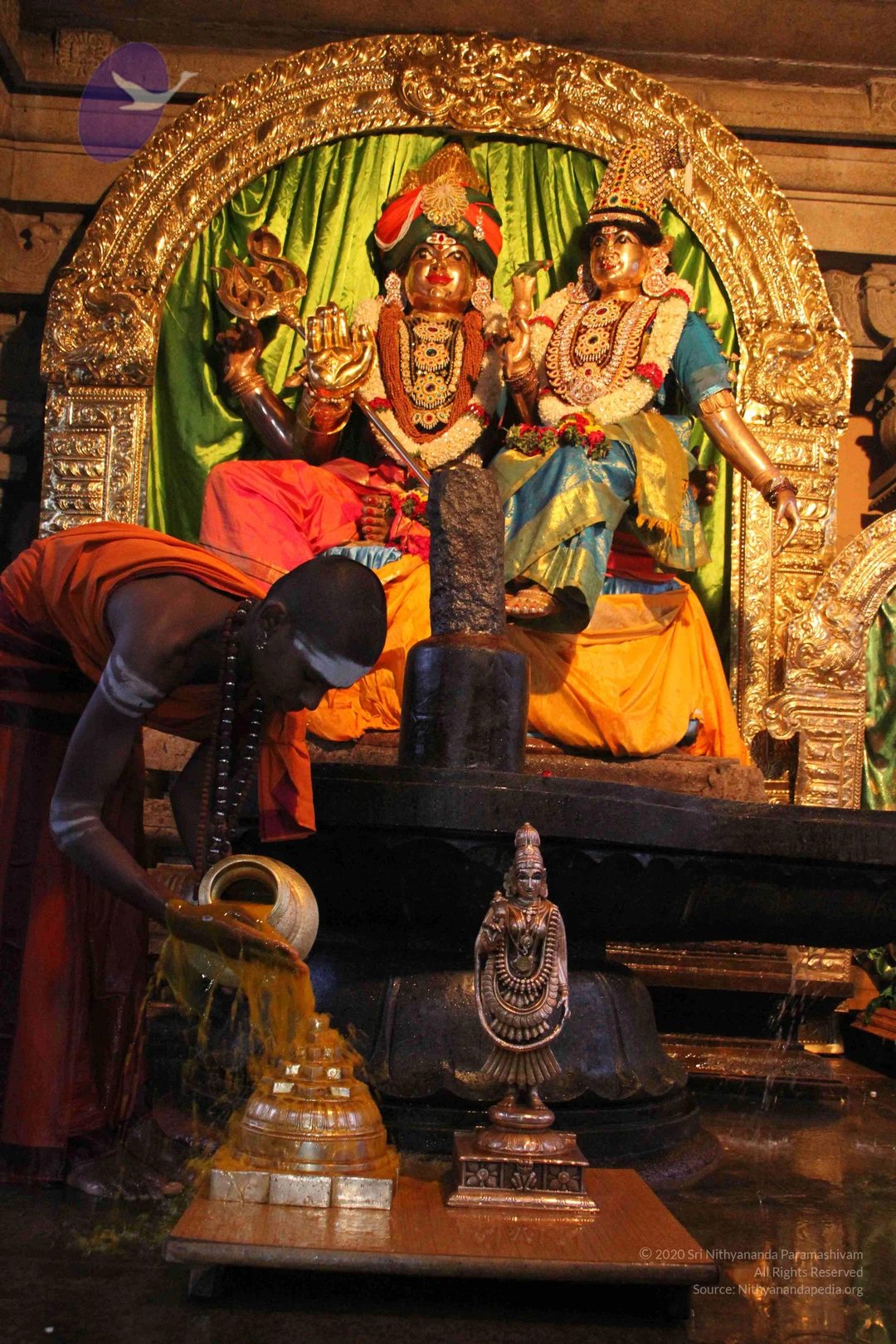
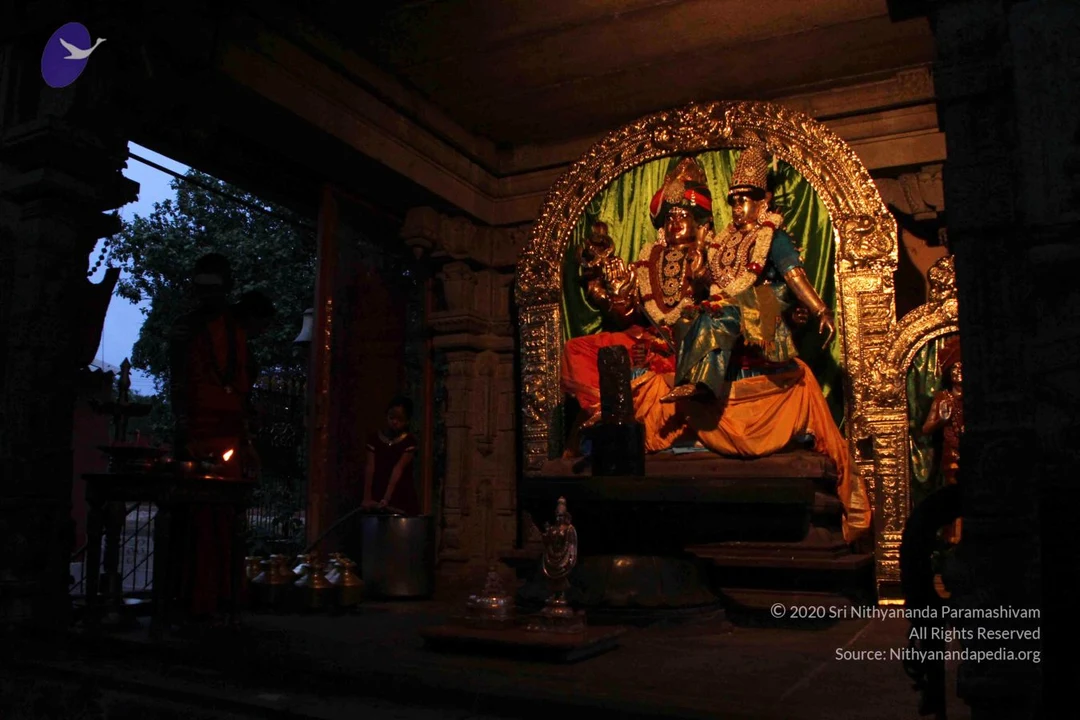
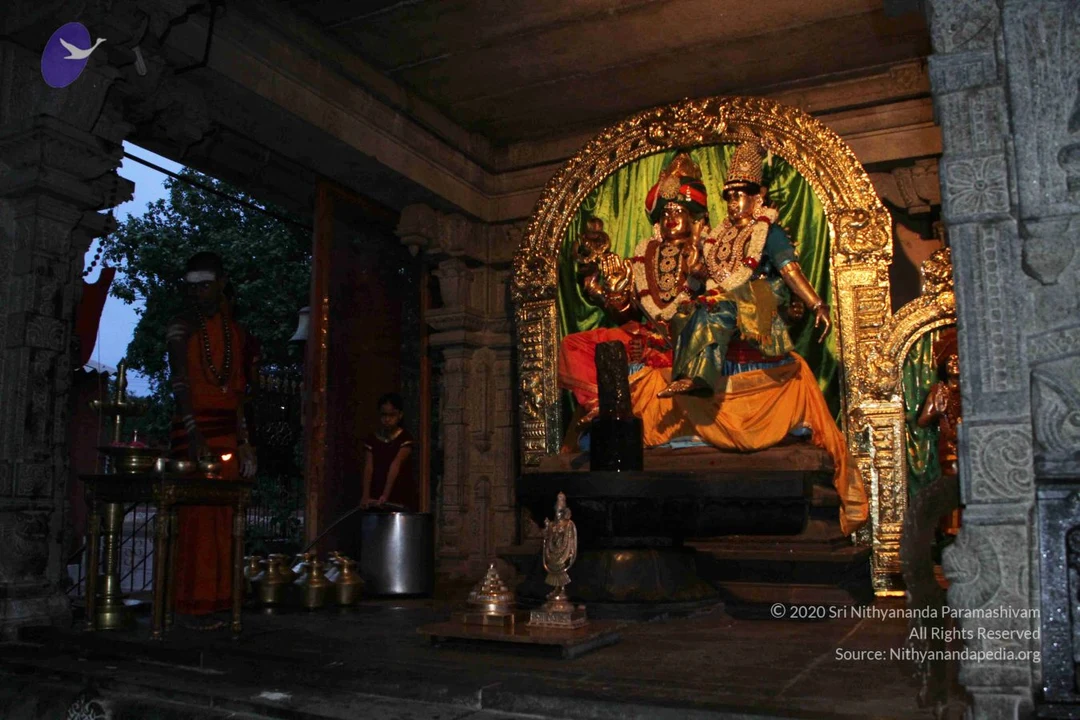
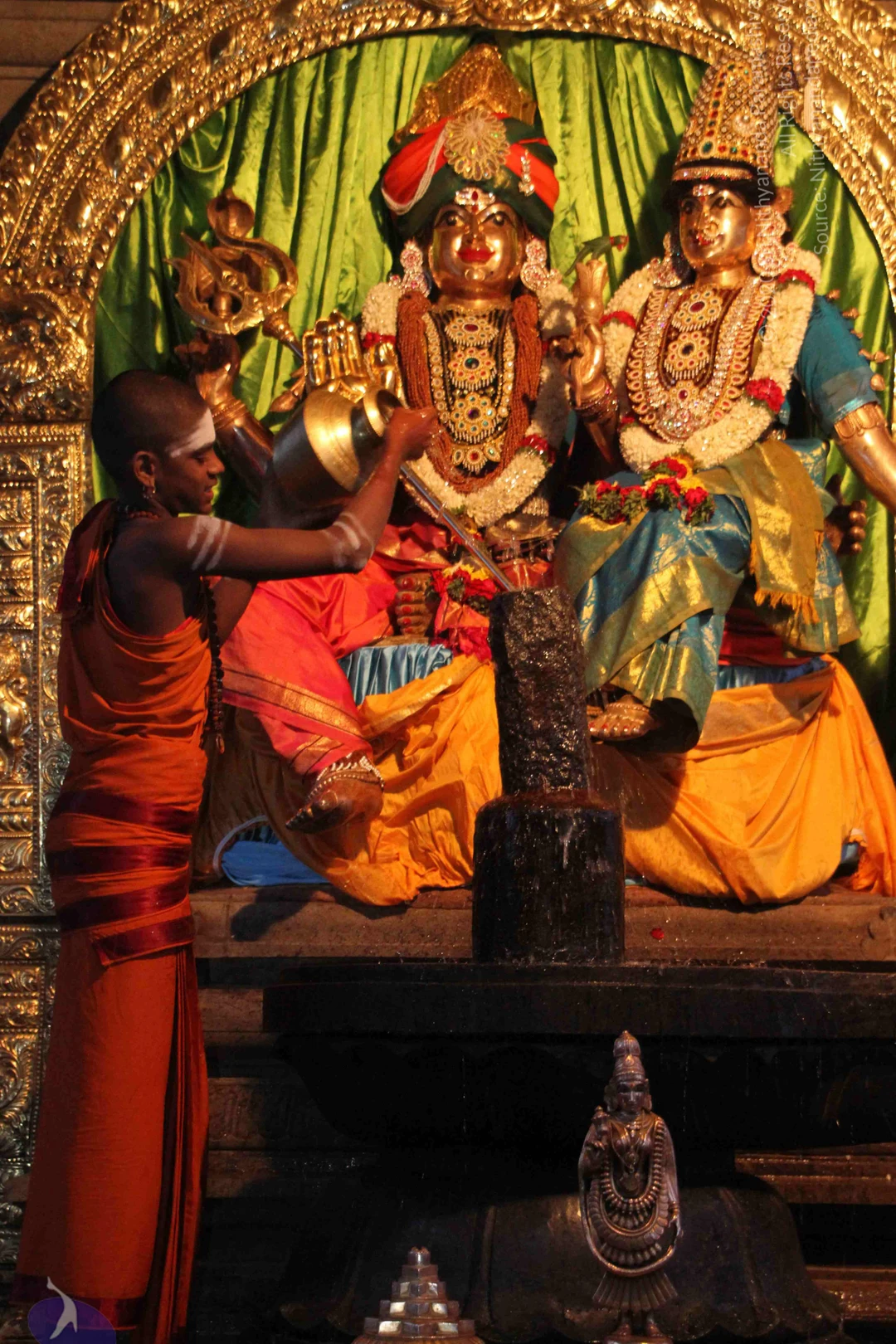
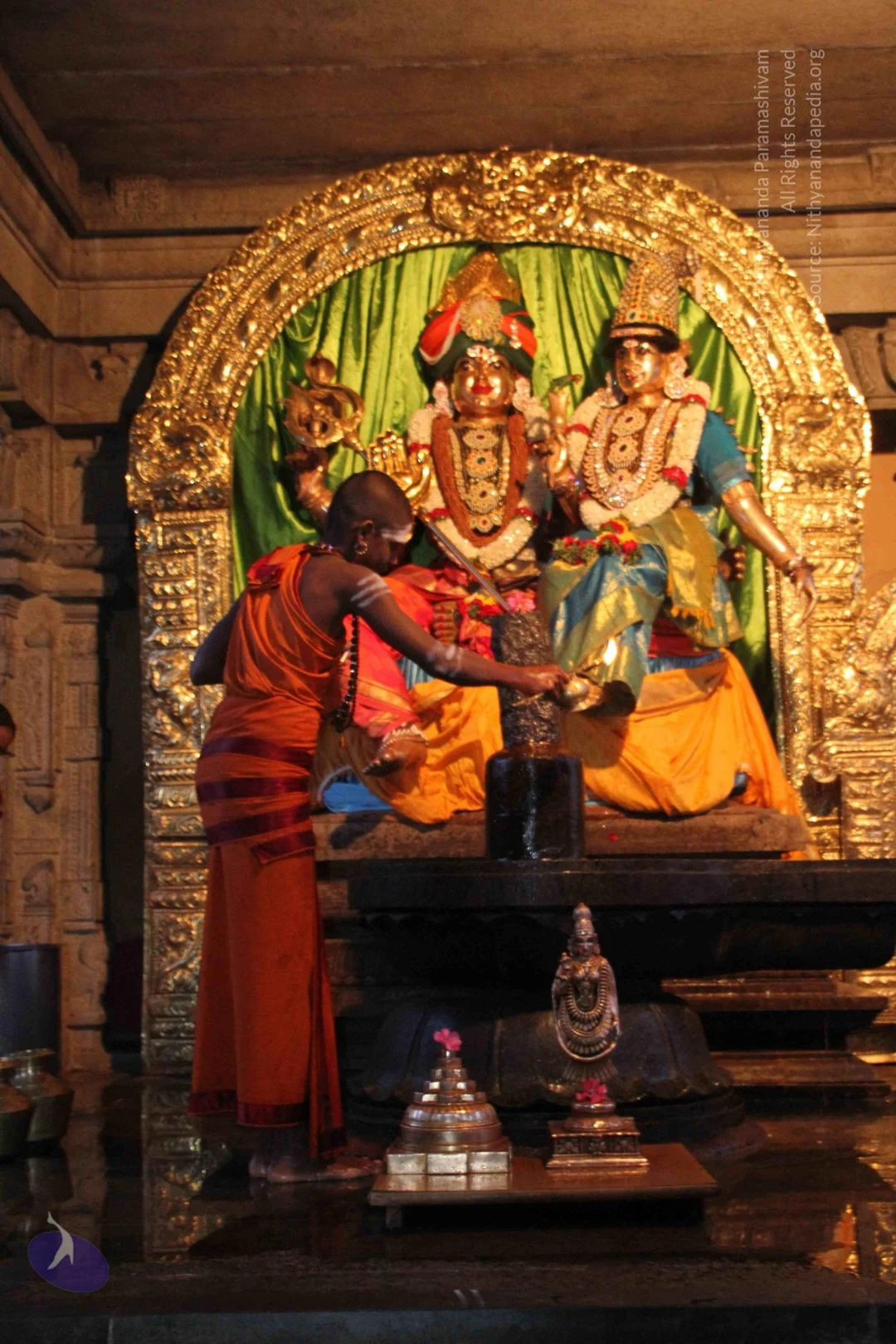
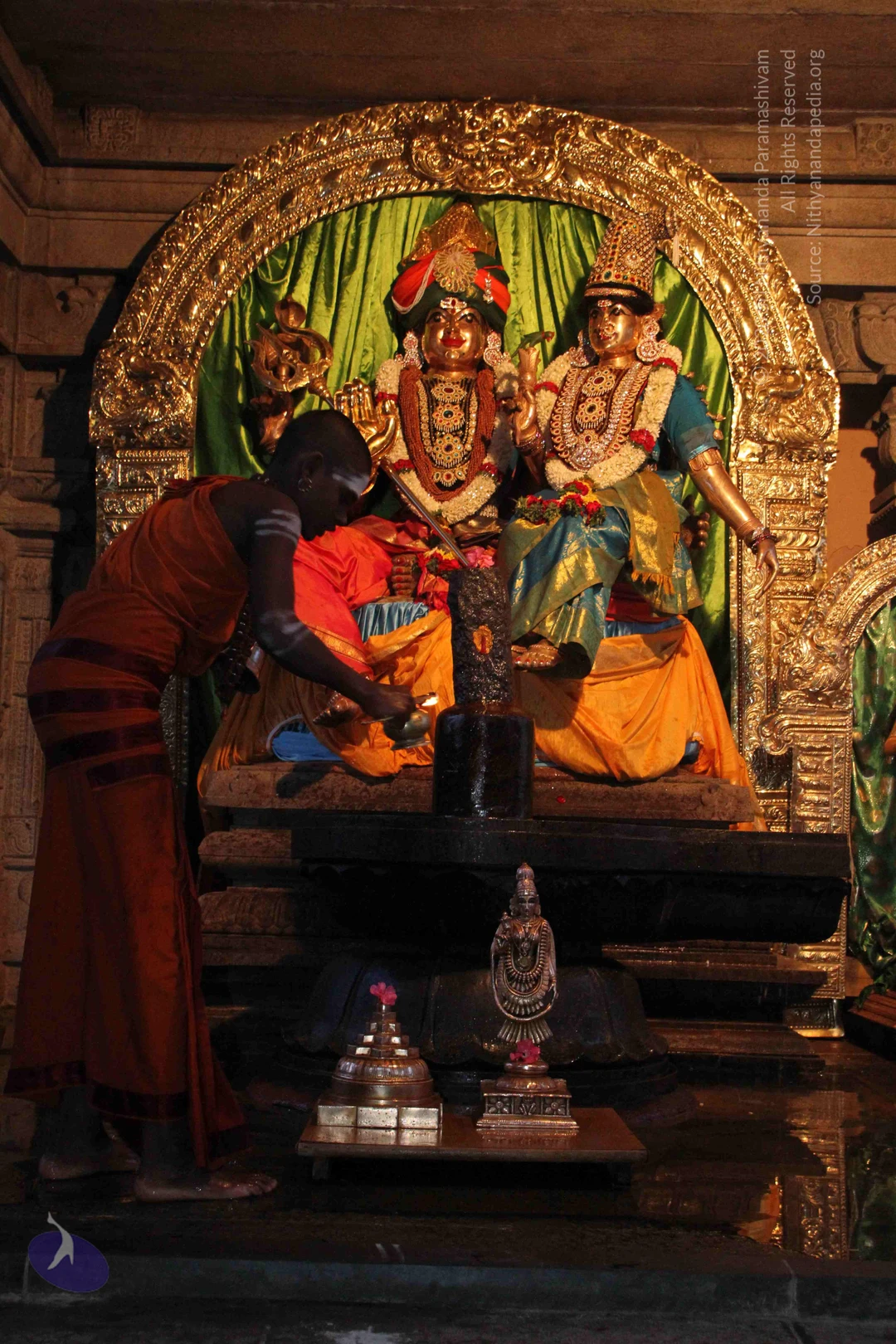
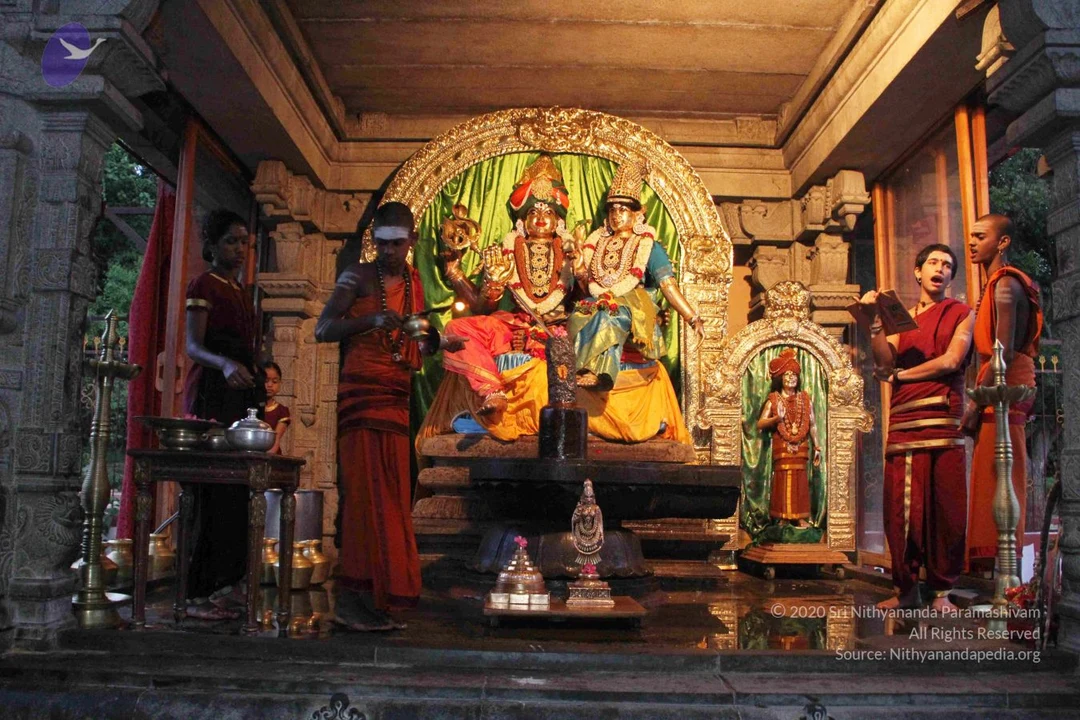
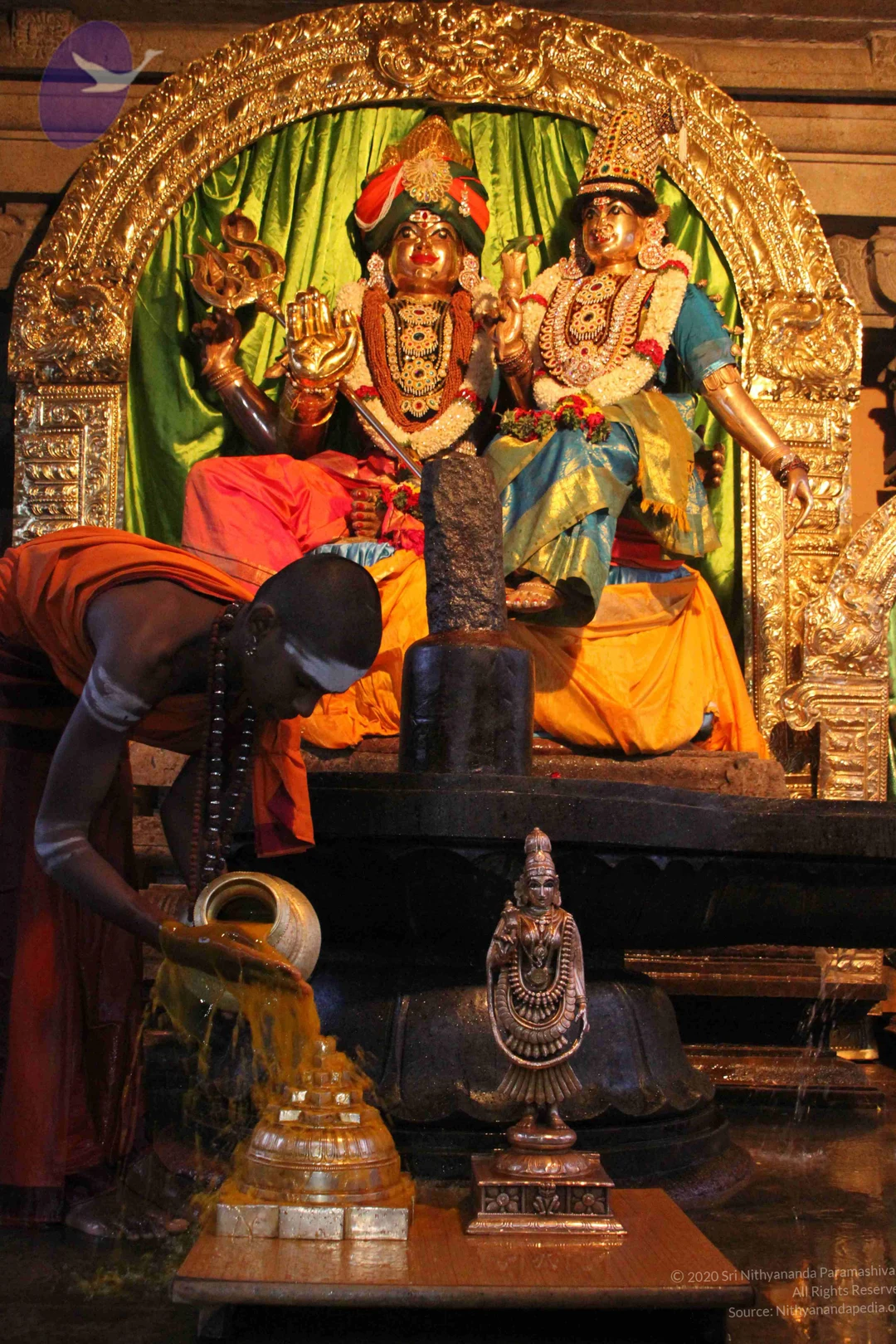
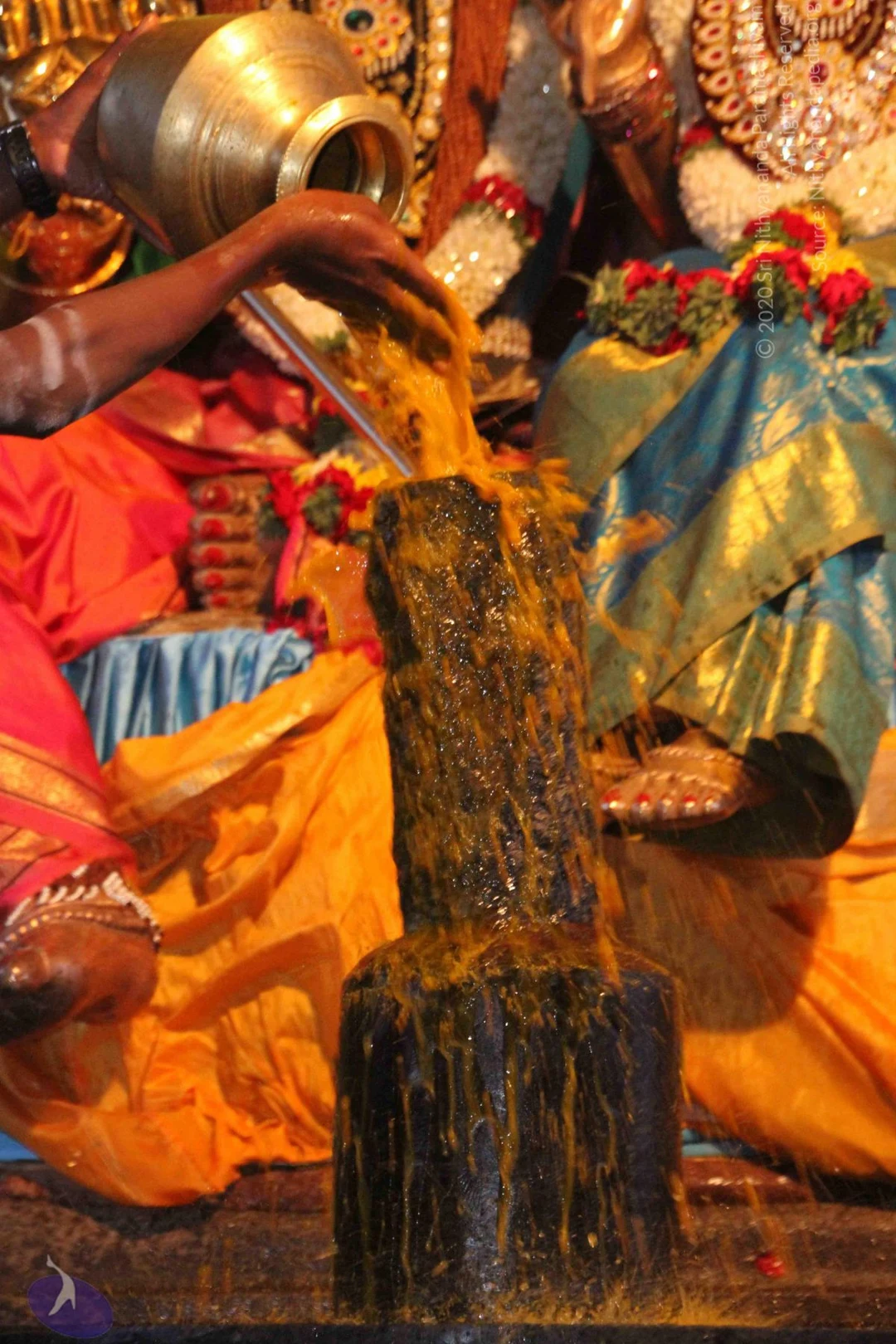
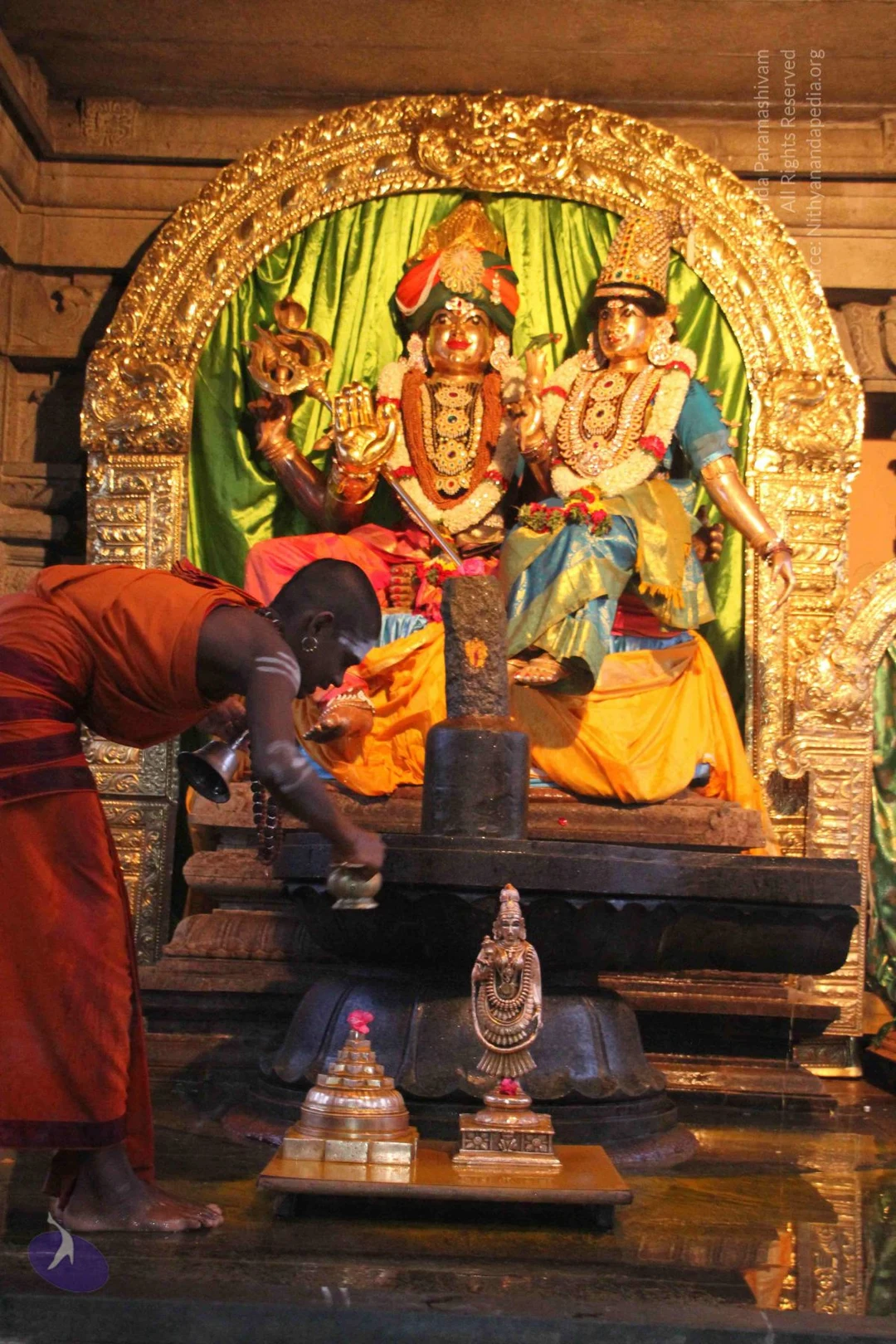
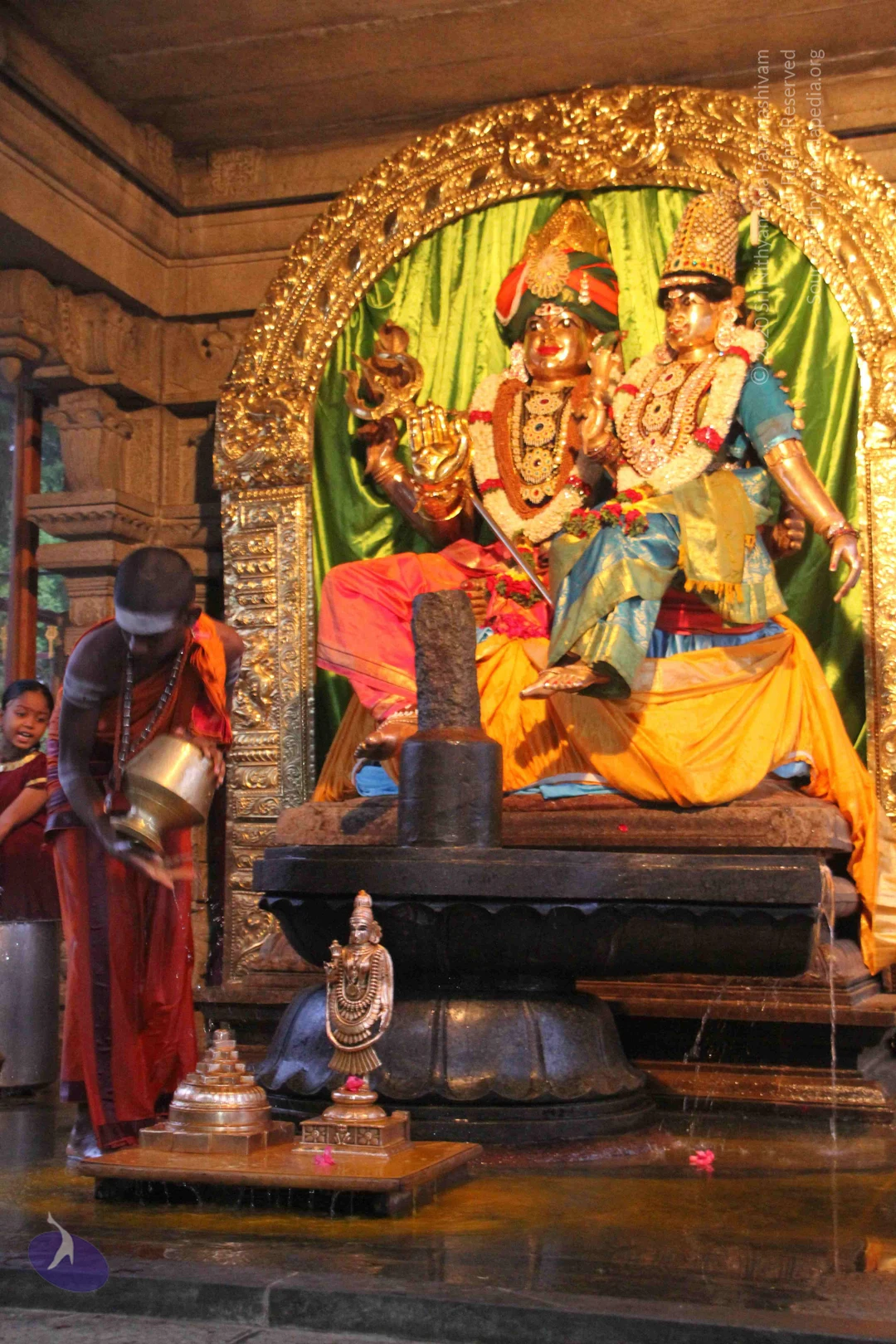
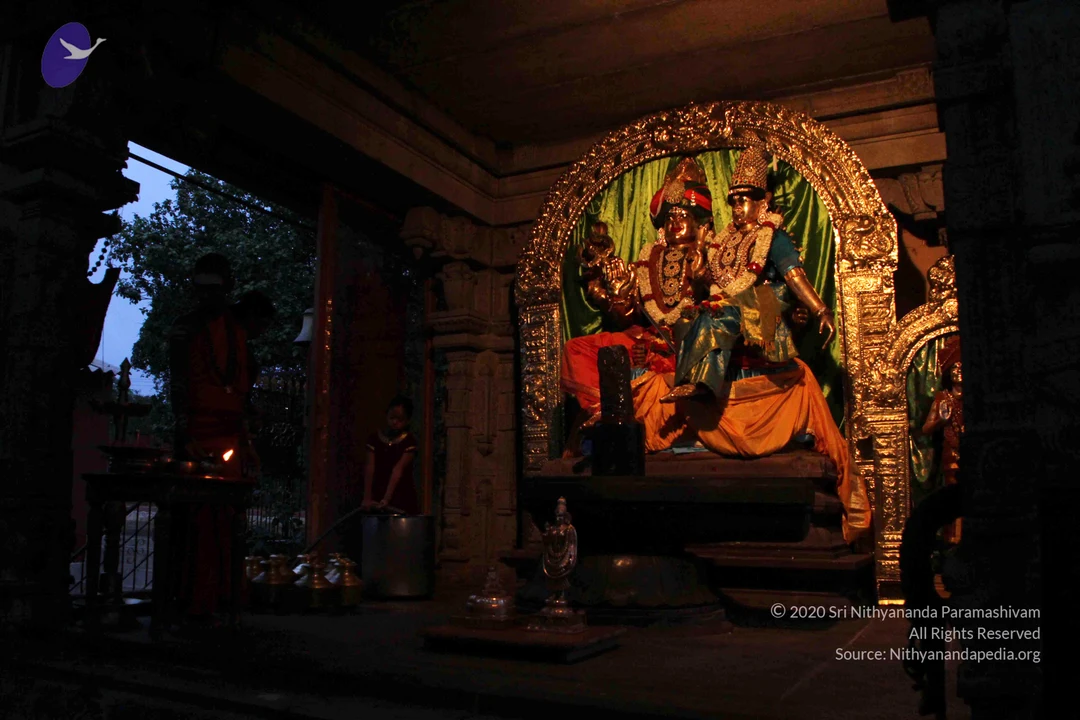
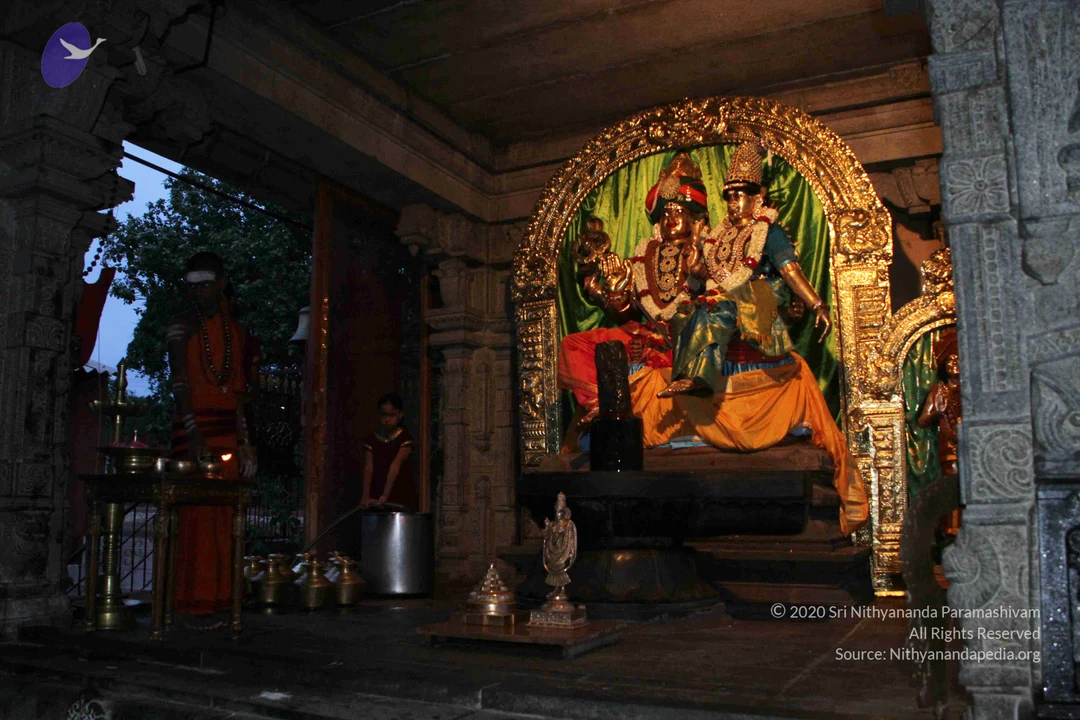
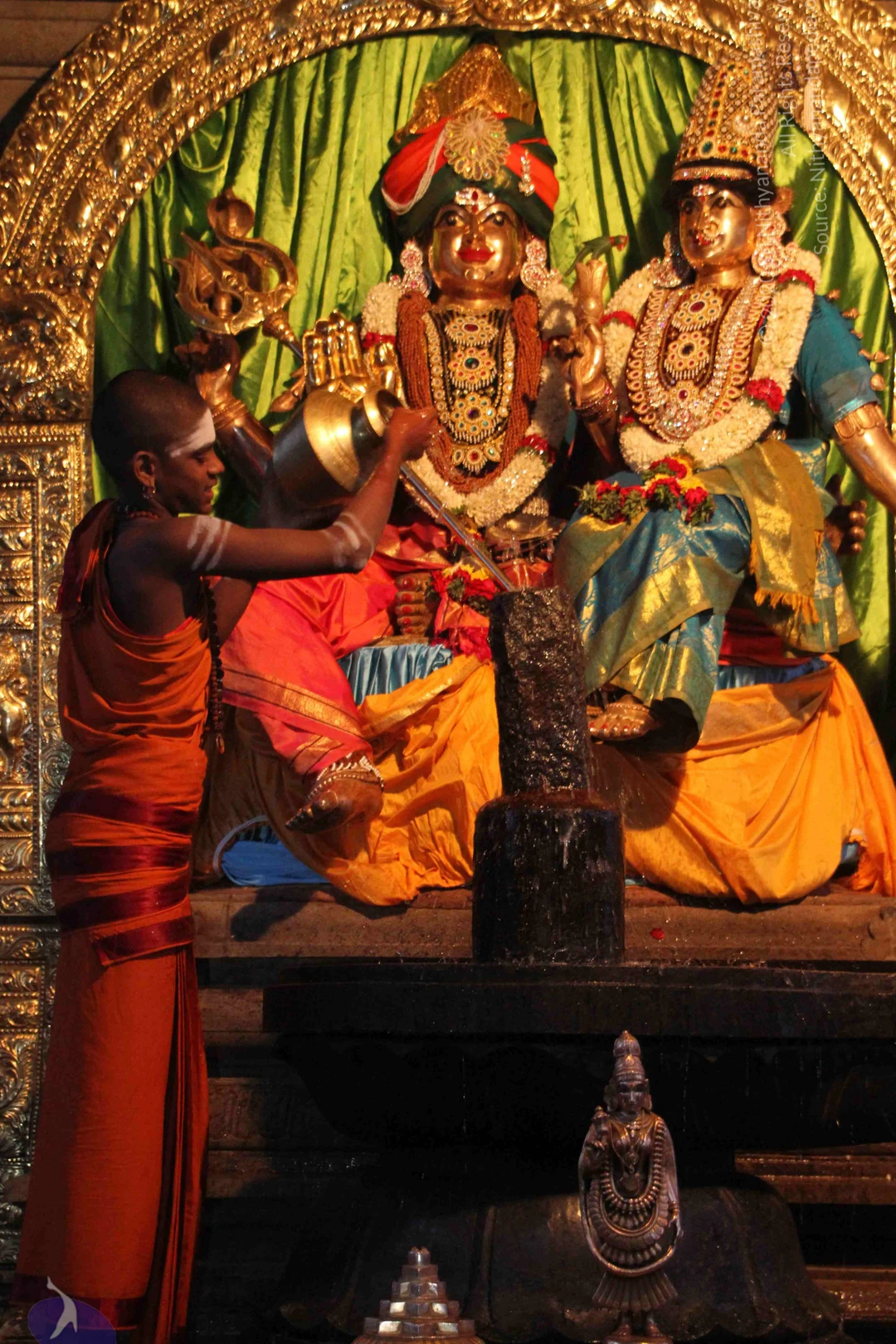
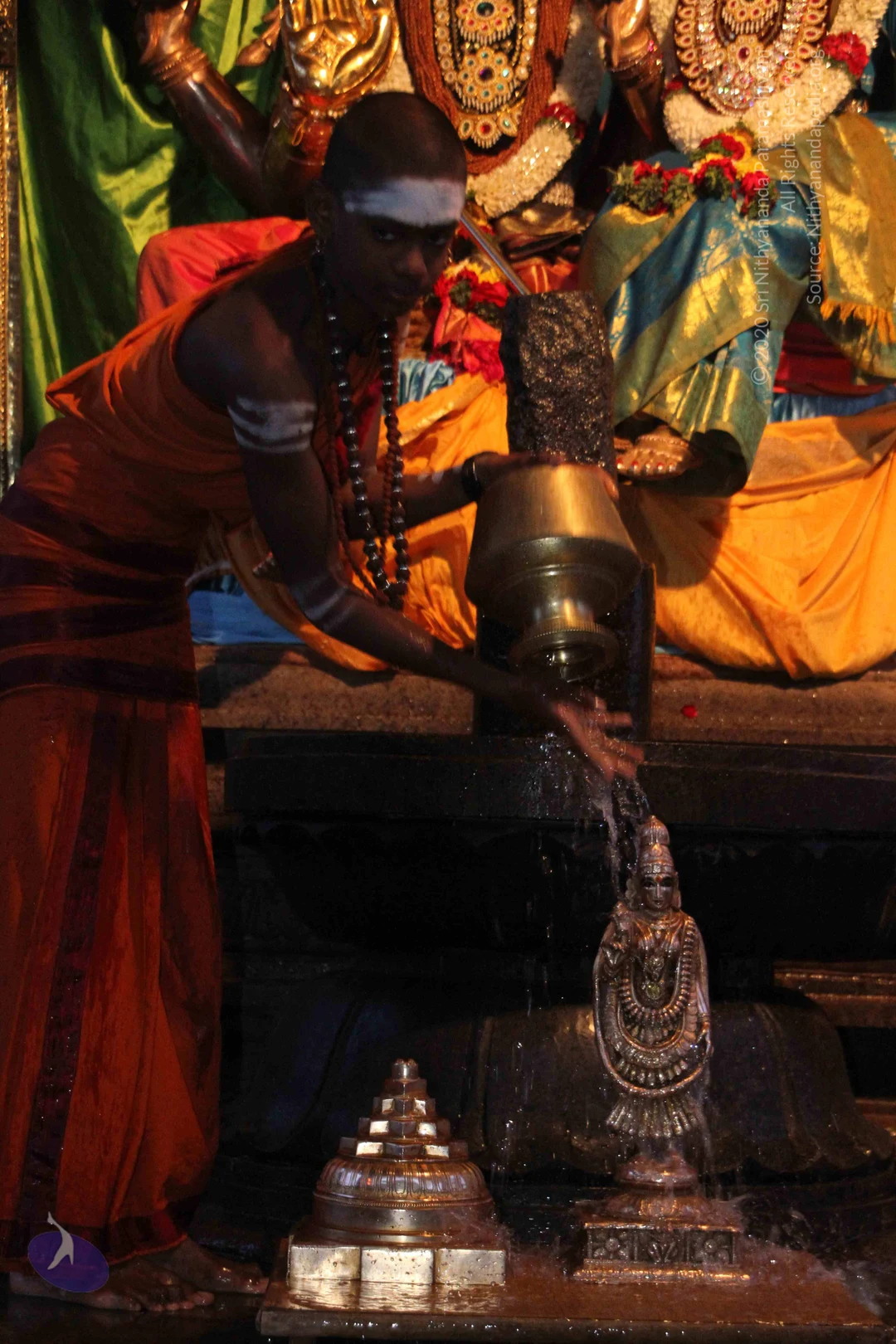
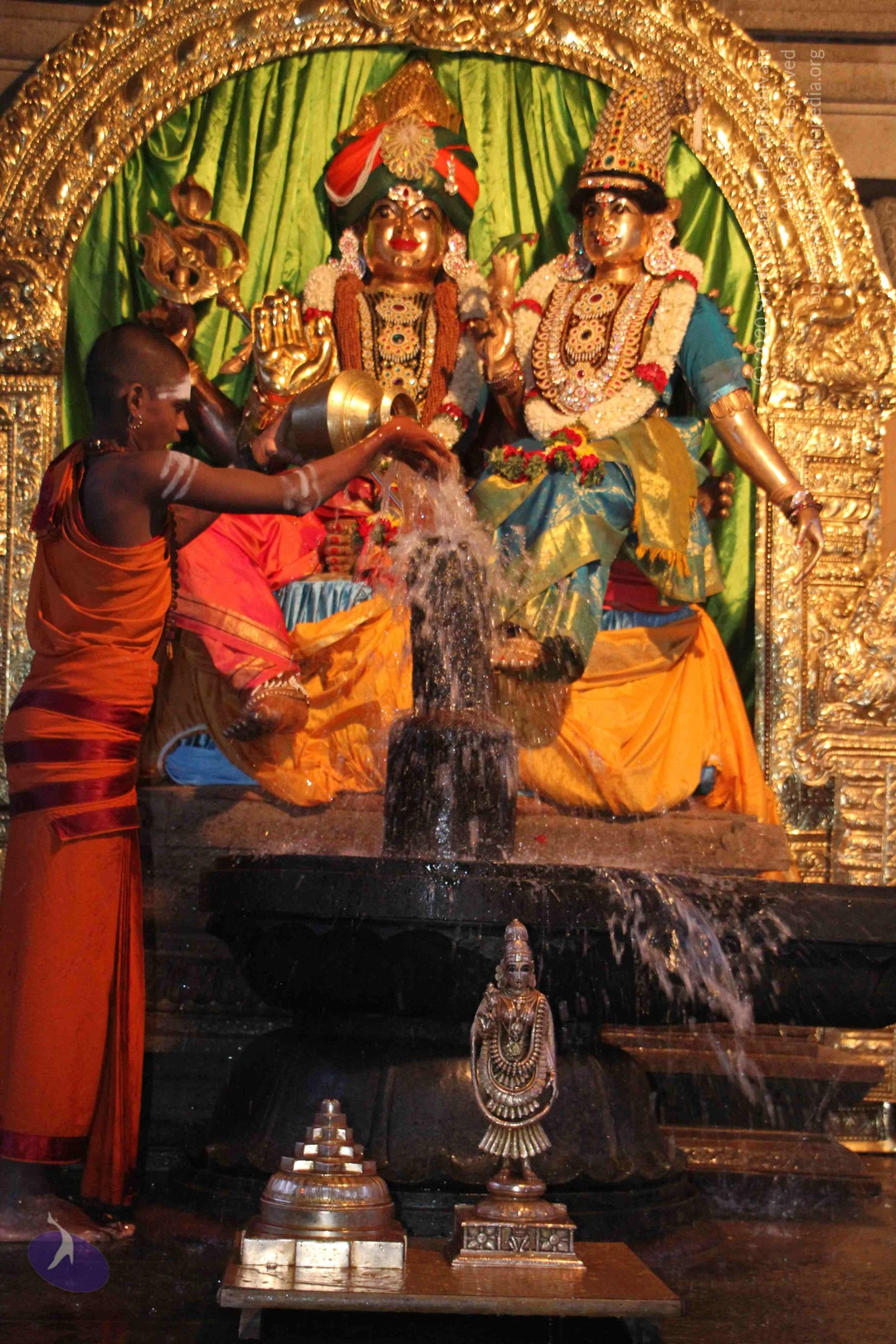
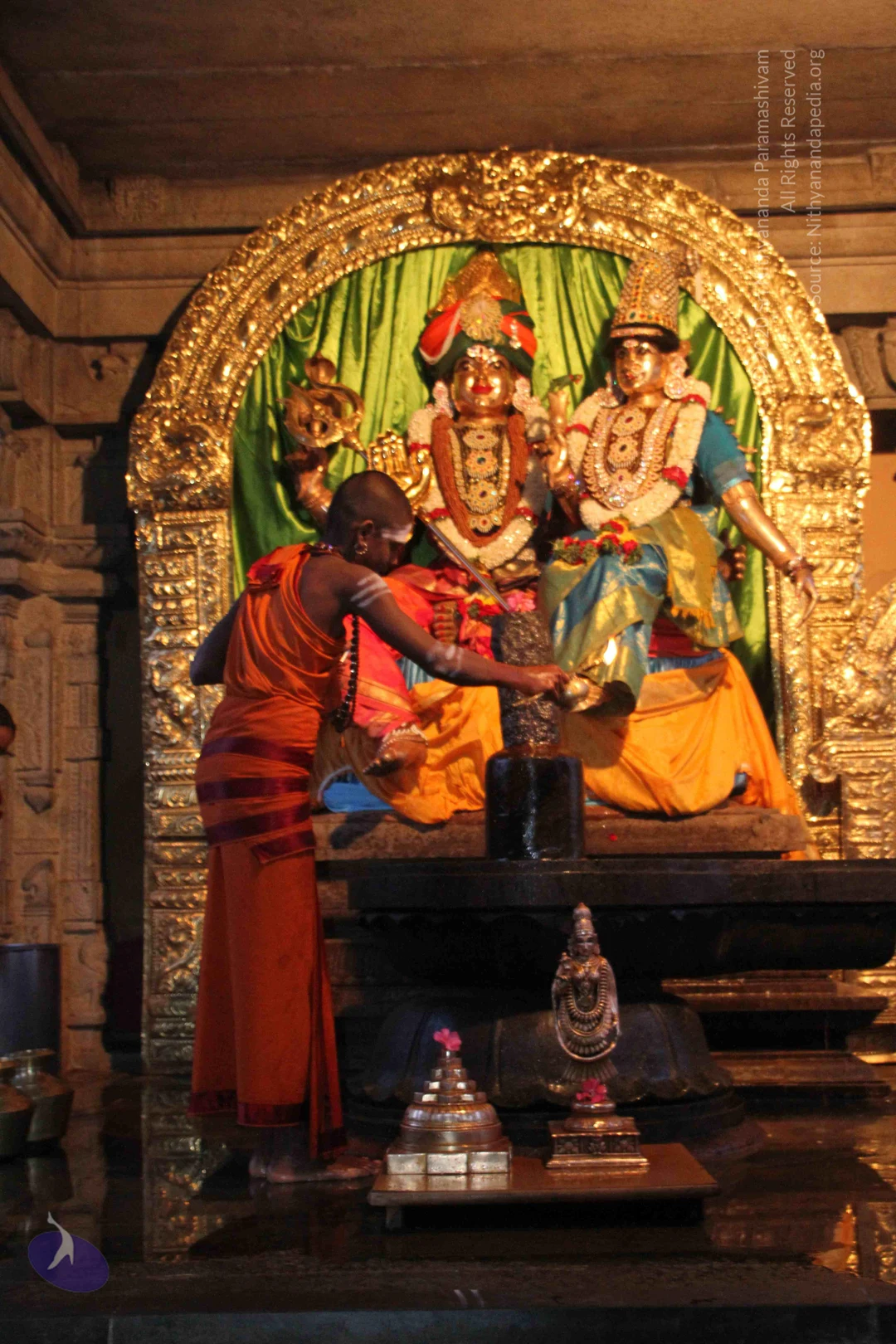
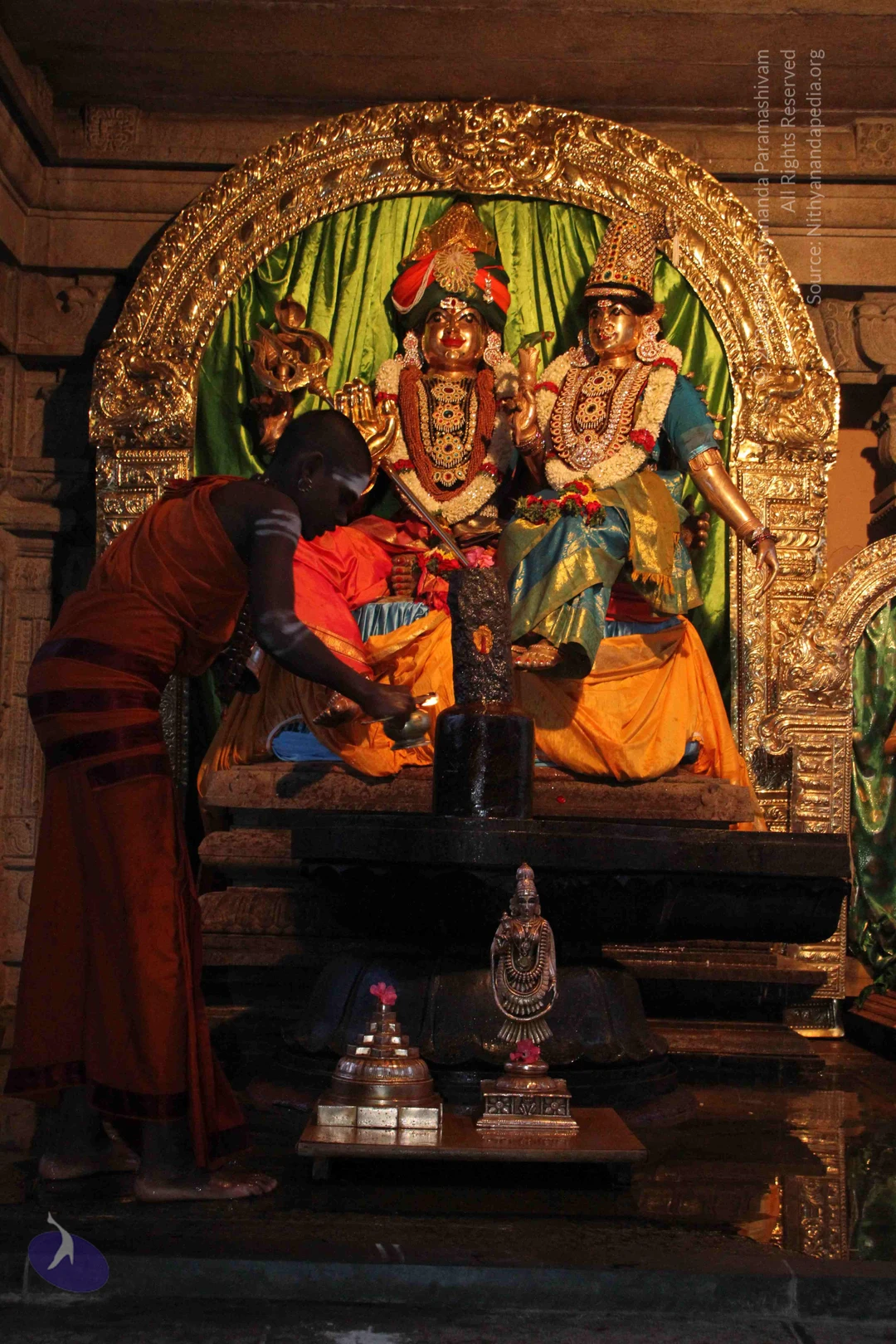
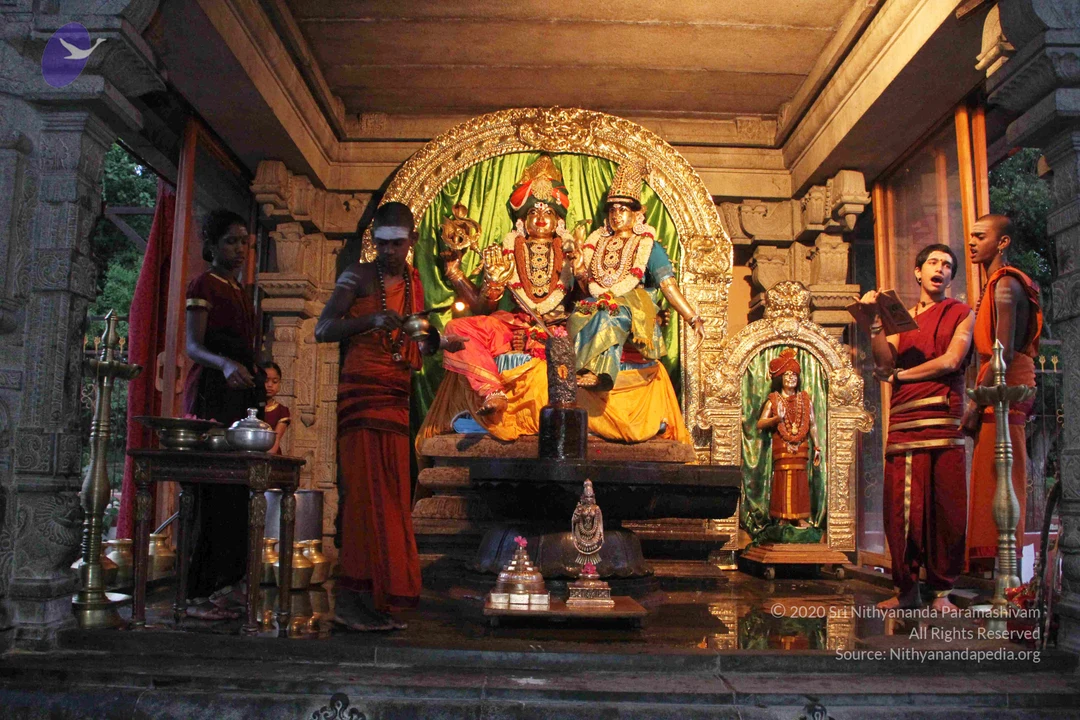
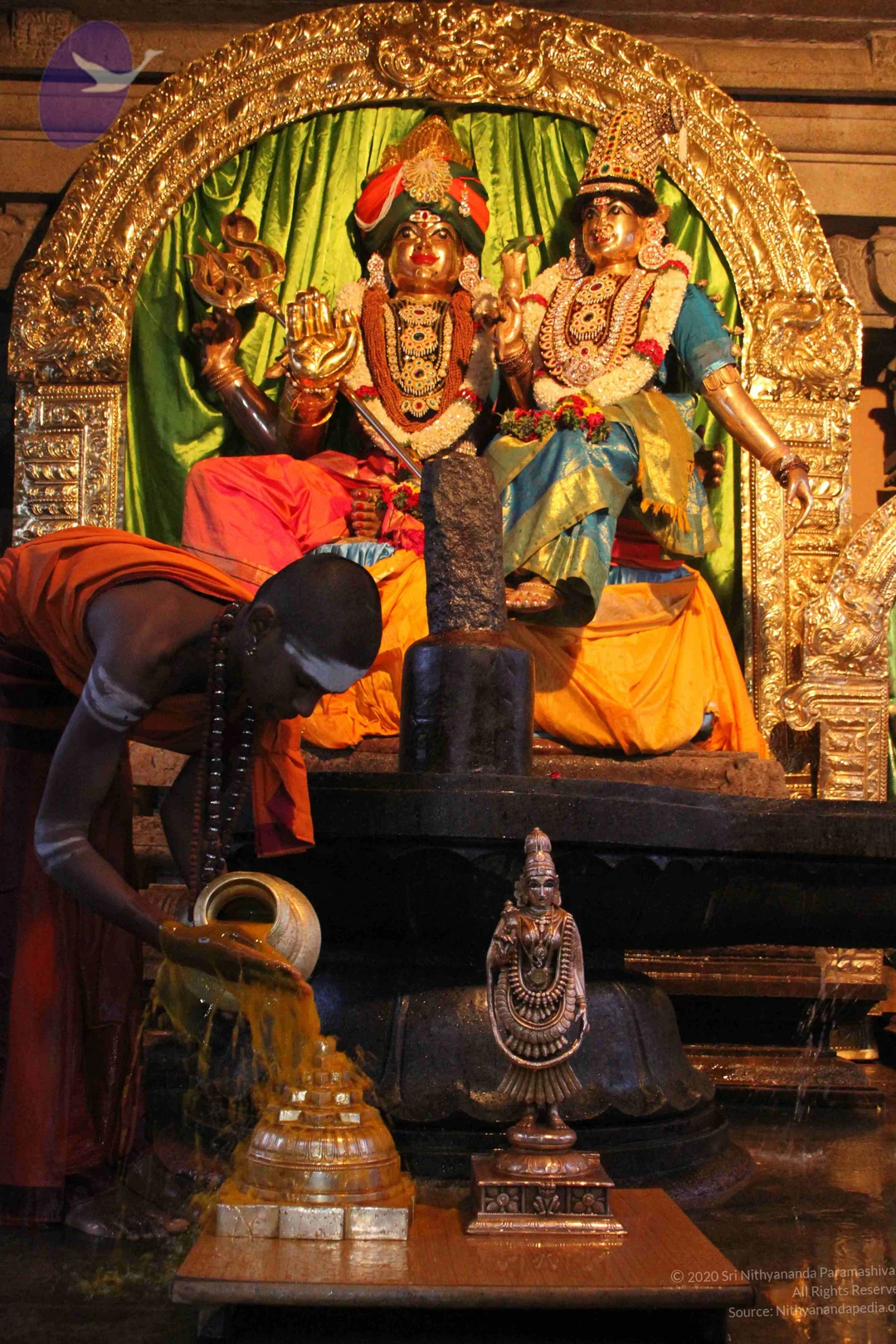
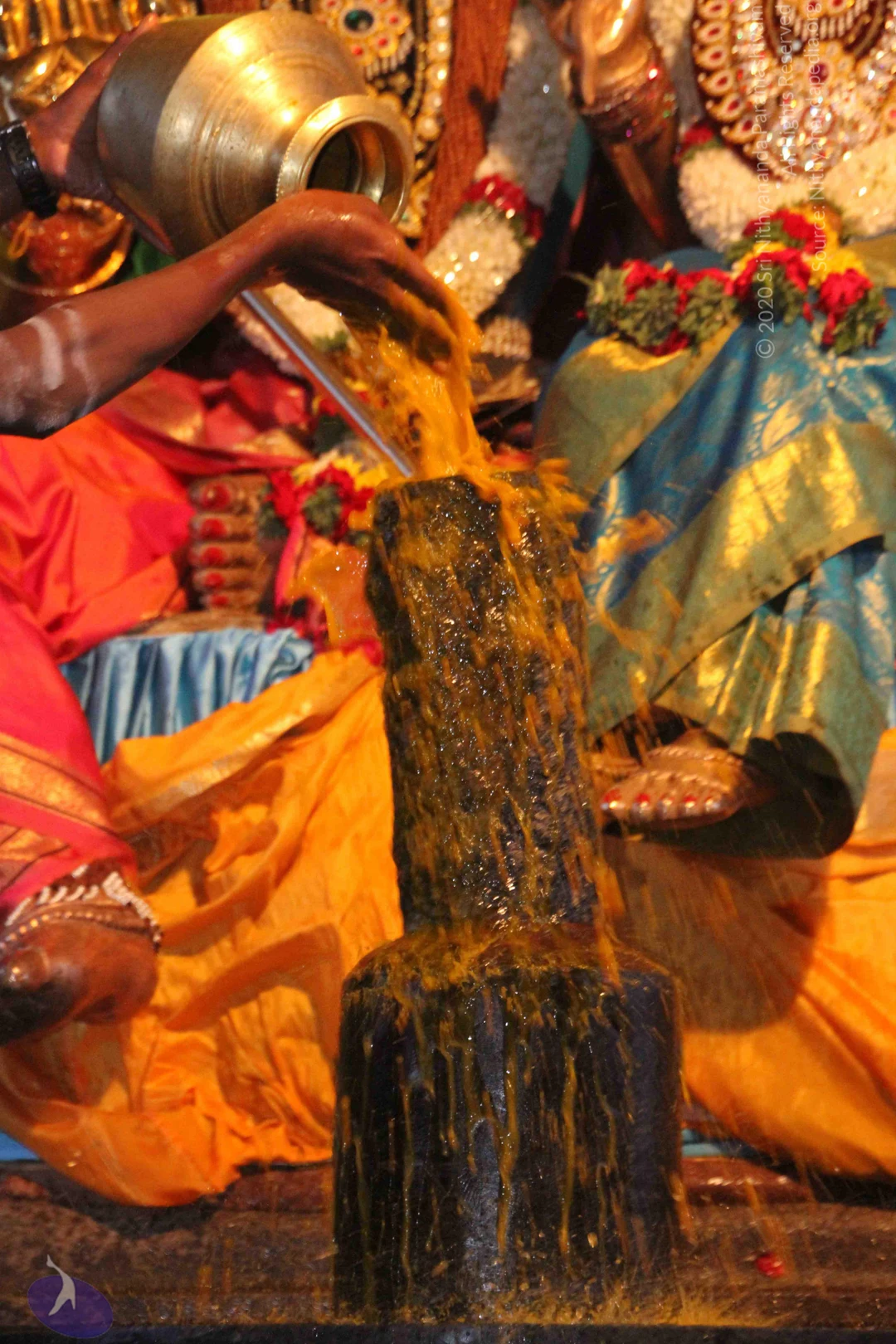
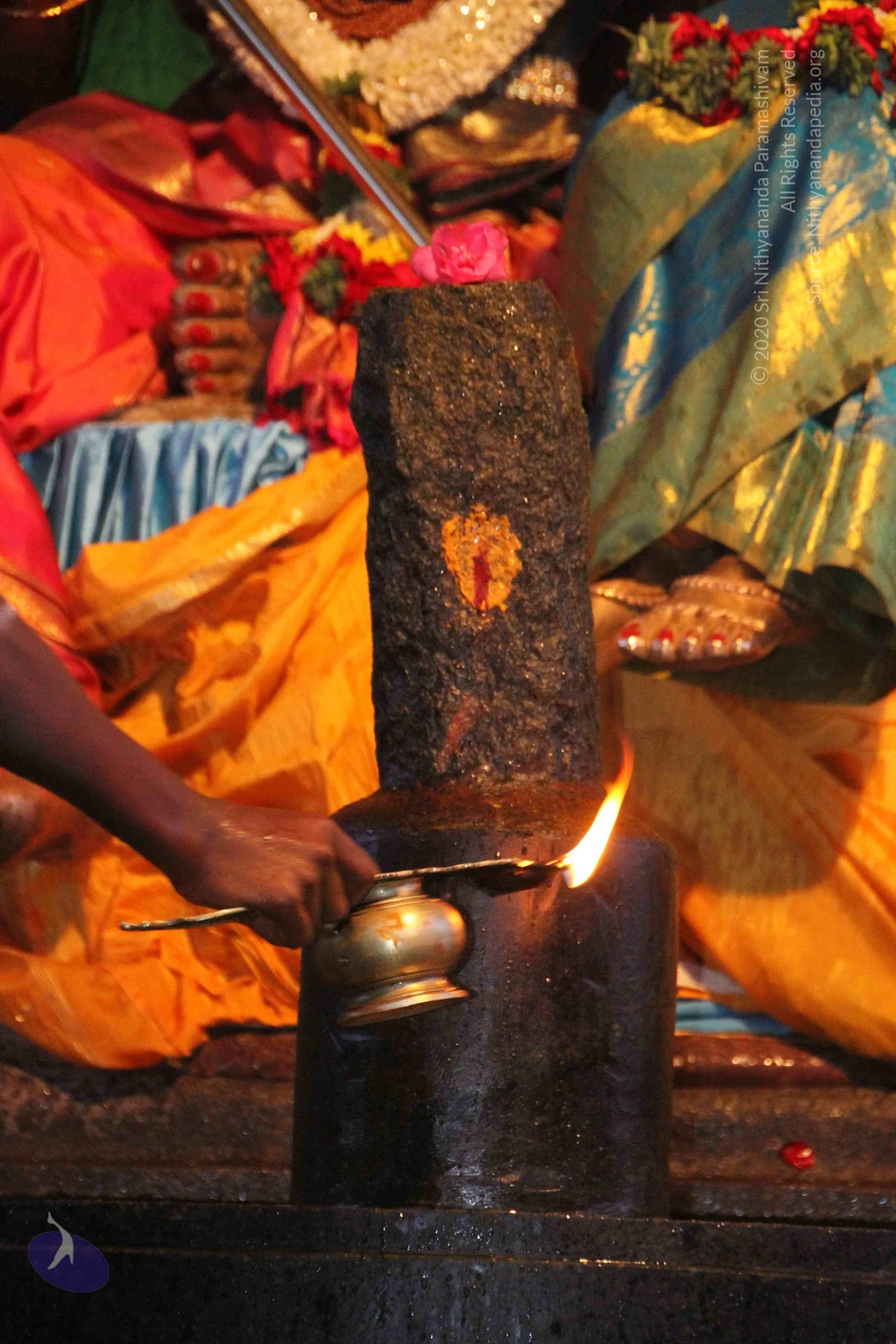
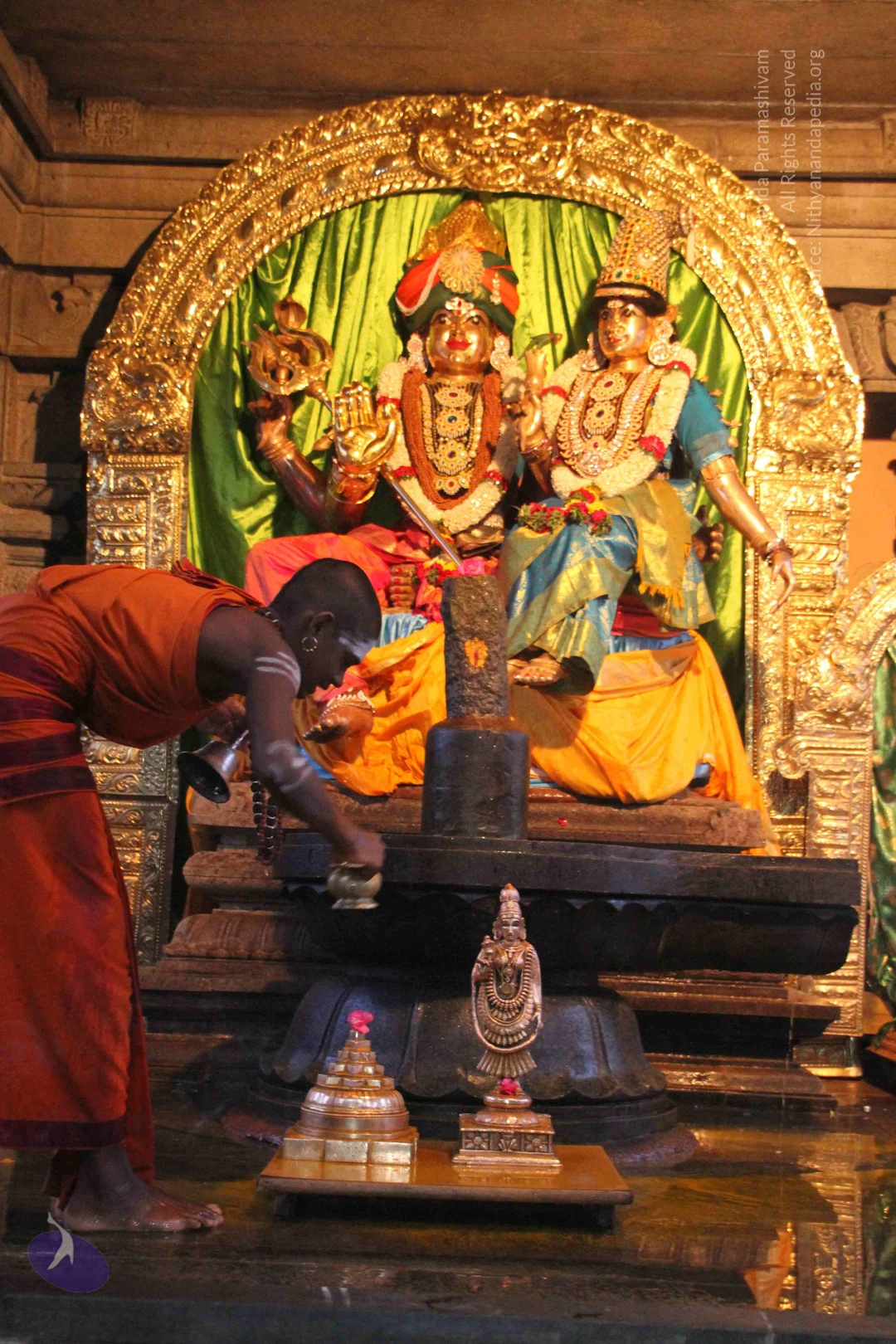
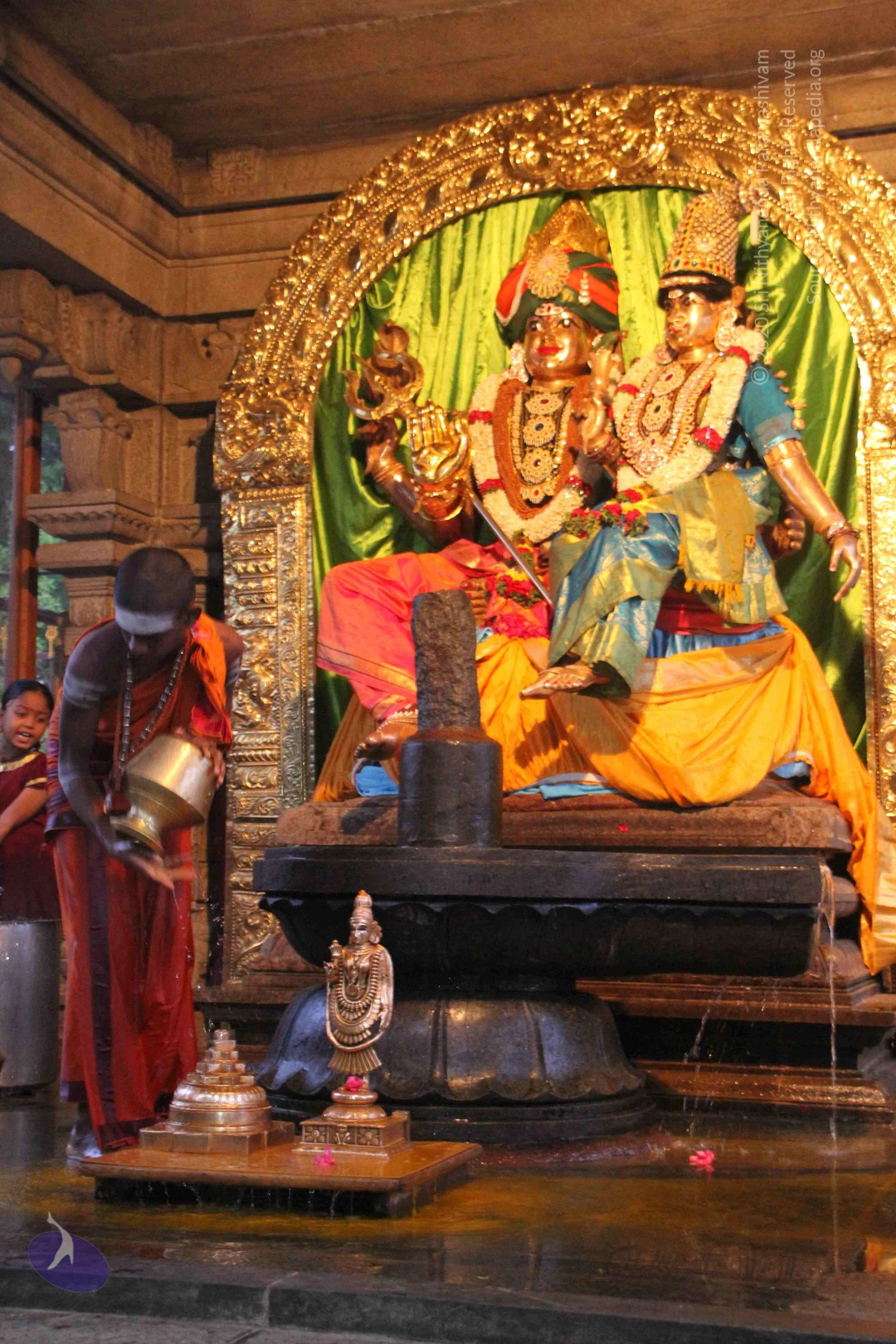
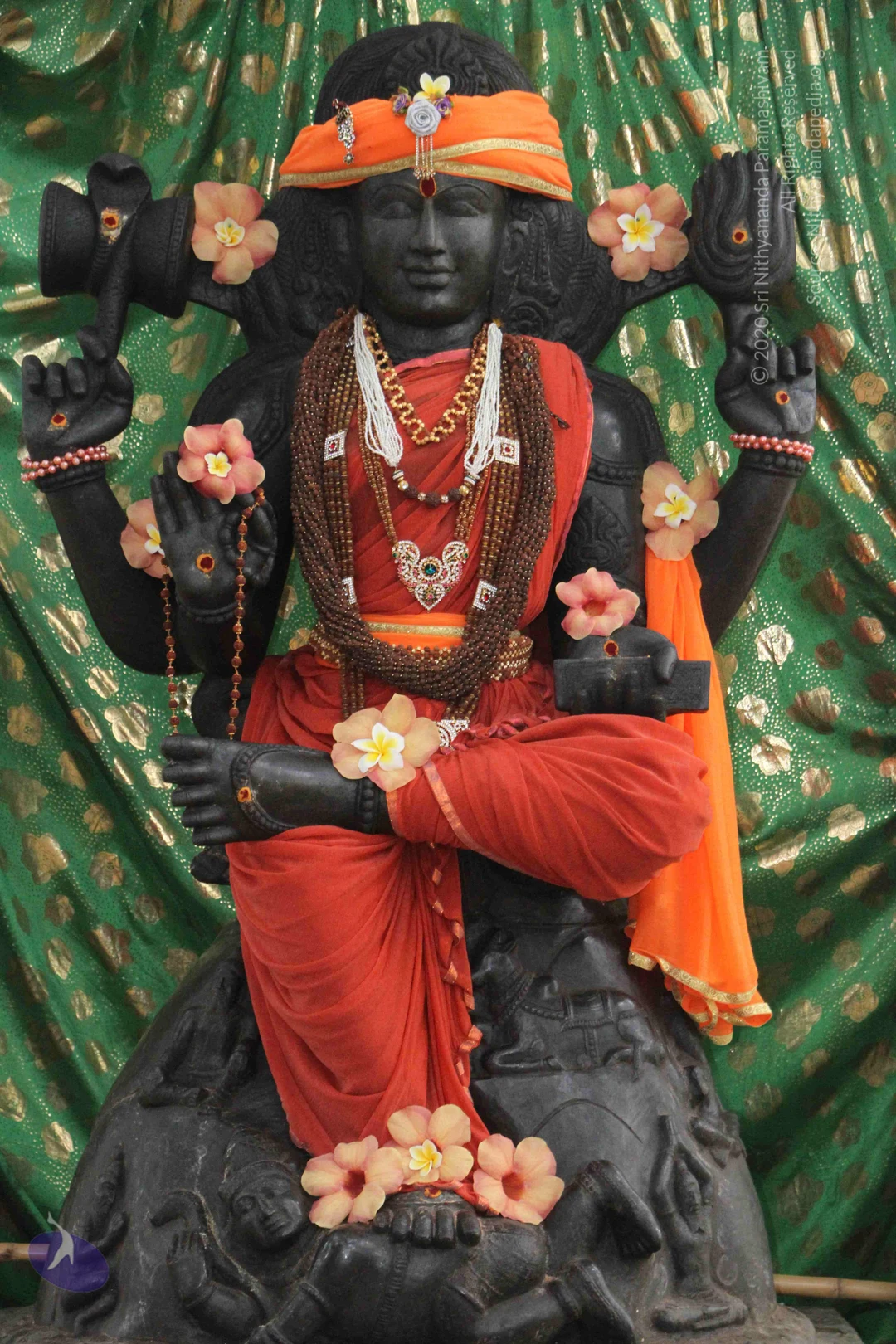
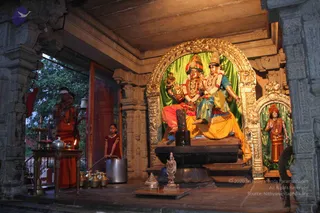
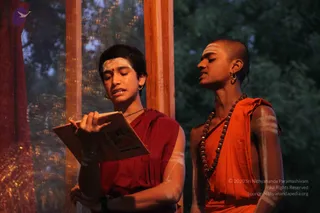
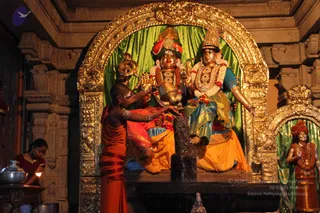
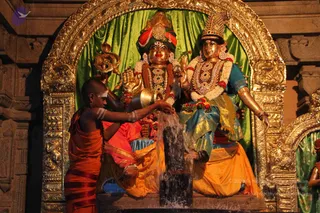
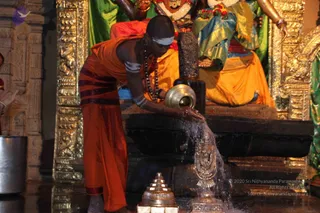
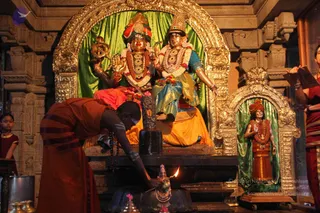
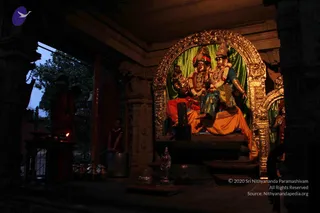
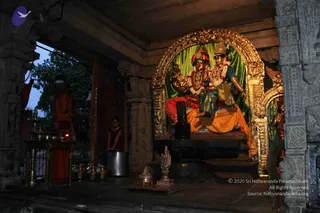
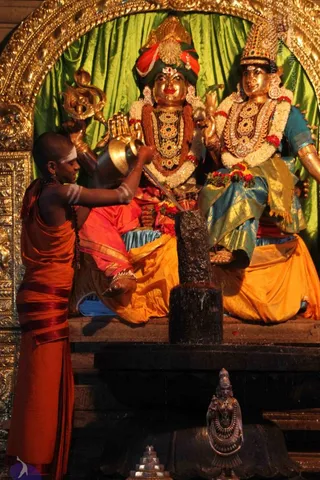
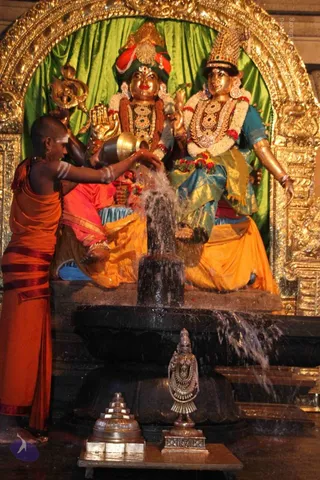
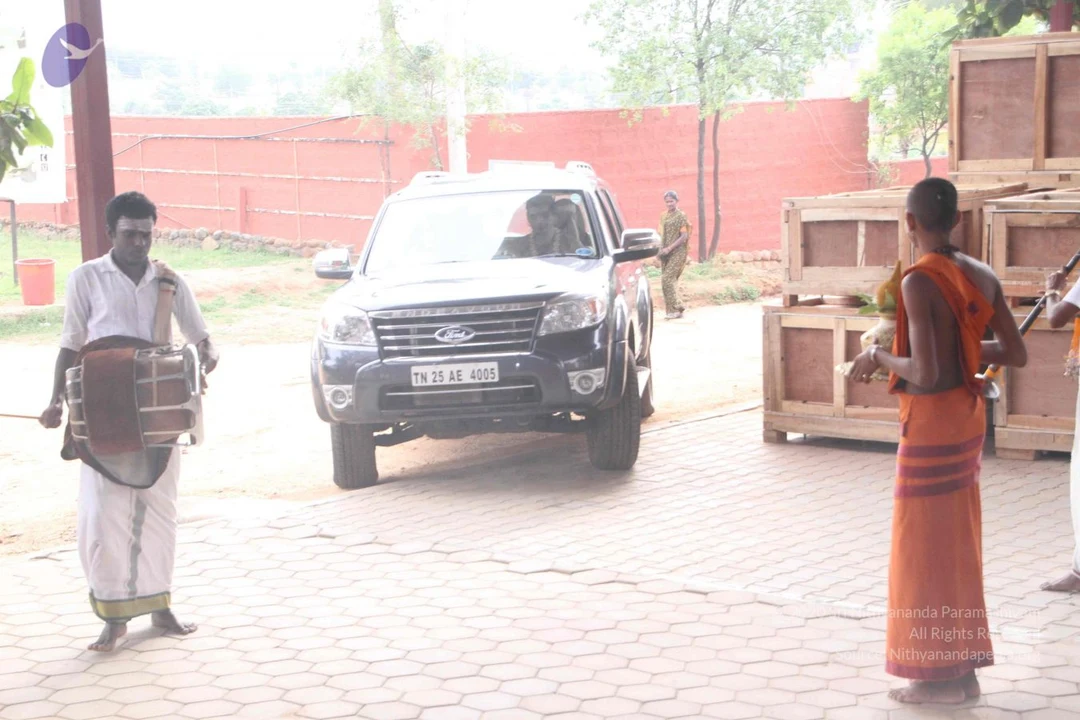
Interior of a stone temple shrine with a golden arched frame and green backdrop holding a pair of deity murtis, one with a red and green headdress and one with a tall crown, decorated with garlands and a dark shivalinga-like stone on a black pedestal. At left, a man in an orange robe with rudraksha beads stands beside a table holding brass vessels and oil lamps. A young girl in a maroon dress stands near a large steel vessel. Another gilded deity figure stands in a side niche at right, and a small brass figure sits on the platform in front.Two young men in monastic-style dress stand outdoors at dusk beside a wooden window frame and a red curtain. The man on the left, in a deep red garment, holds an open book and reads aloud, with white horizontal marks on his forehead, a red dot between his brows, a small earring and a bracelet. The man on the right wears an orange-saffron wrap, a long rudraksha mala, white marks on his forehead and shoulders, and a hoop earring, and stands with eyes lowered, listening. Leafy trees are visible through the window.A temple shrine with gold-framed arch and green drape holds two deity murtis: a figure in red-and-green turban and garlands, and a figure in gold crown and blue-gold sari with garlands. A shaven-headed priest in saffron-orange dhoti and shawl stands at the front, pouring liquid from a metal vessel over a black shivalinga on a dark pedestal, with a kalasha-style pot held in his hands. A seated woman in red attends at left beside a brass lamp and bowl. A statue of a standing figure in orange with rudraksha mala appears at right edge. The scene shows abhishekam at a temple shrine.Golden shrine arch framing two gilded deity murti seated against a green drape. The left figure wears a red and green turban, the right a tall crown; both are heavily adorned with jewelled necklaces, white and red flower garlands. A shaved-headed priest in an orange dhoti and saffron shawl, with white tripundra markings on his forehead, pours water over a black shivalinga from a metal pot as an abhishekam. The shivalinga sits before the deity figures on a stone base. Warm lamplight illuminates the scene.A priest in an orange-saffron dhoti and shawl with a maroon waist cloth and white forehead band pours water from a brass vessel over a dark stone shivalingam at a temple altar. Beside him, a small silver pedestal bears a brass-and-silver conical object, and a silver-framed element sits on the base. Behind the lingam, ornate deity figures wear gold and green silk and garlands, and gold temple carvings frame the shrine. Rudraksha beads hang around his neck. This is an abhishekam being performed on the lingam.Inside a gold-framed shrine, a shaven-headed priest in saffron-orange robes bends forward and lights an oil lamp on a black stone pedestal before a black lingam. Behind him, two gilded deity murti stand under a green backdrop: the left figure has a crown, a green turban-like headdress, a rudraksha mala and garlands, and holds a trident-like weapon; the right figure wears a gold crown, white garlands and a teal and gold sari. A smaller gilded figure in a green-curtained niche to the right wears an orange turban and a red-brown garment. A child in red stands at the left edge, and a woman in a red sari holds a book at the right. Brass vessels sit at the lower left.

PadaPuja

110 photosSource gallery
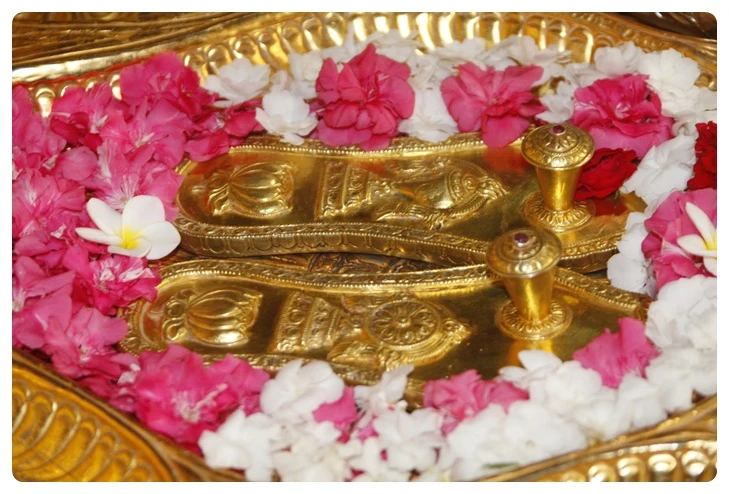
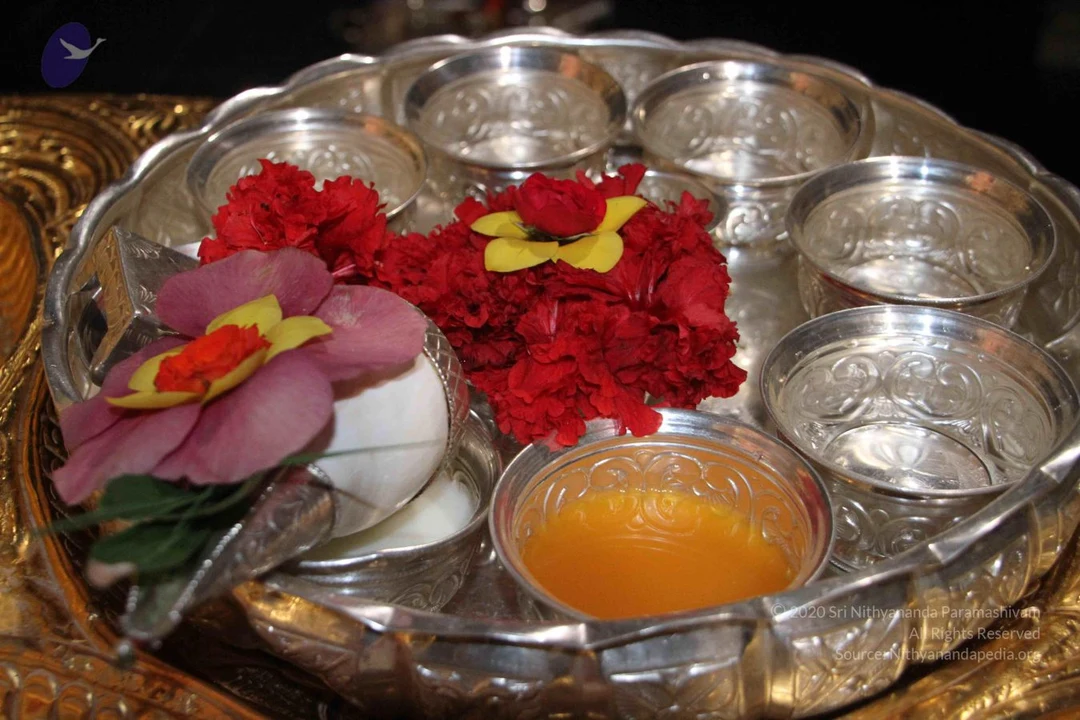
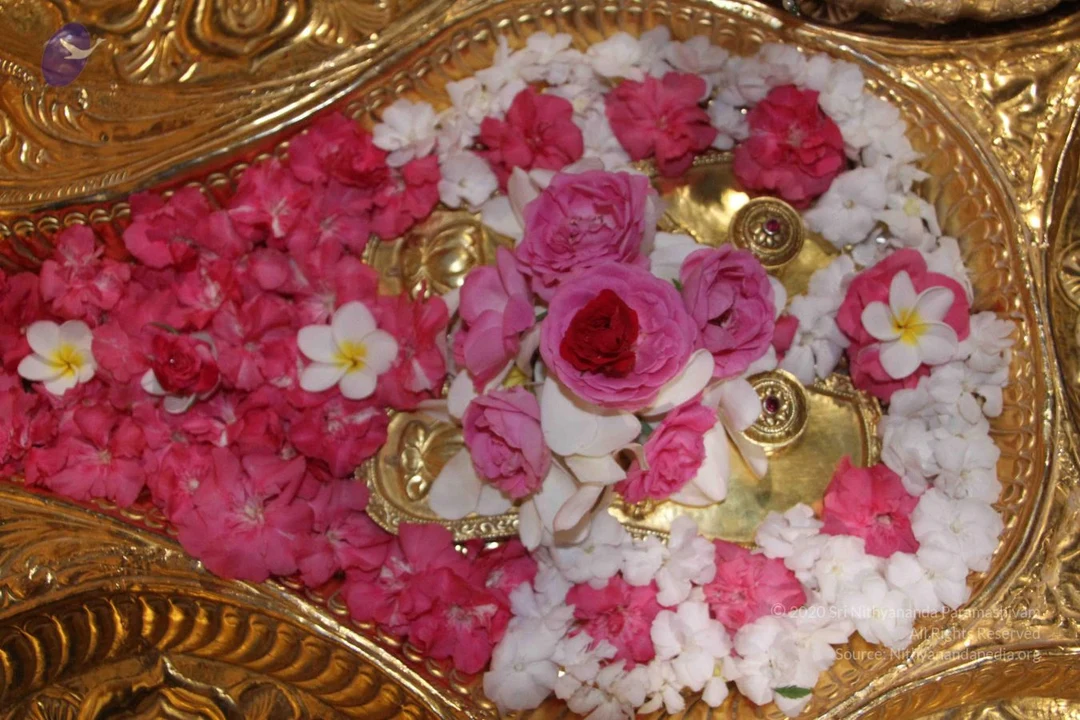
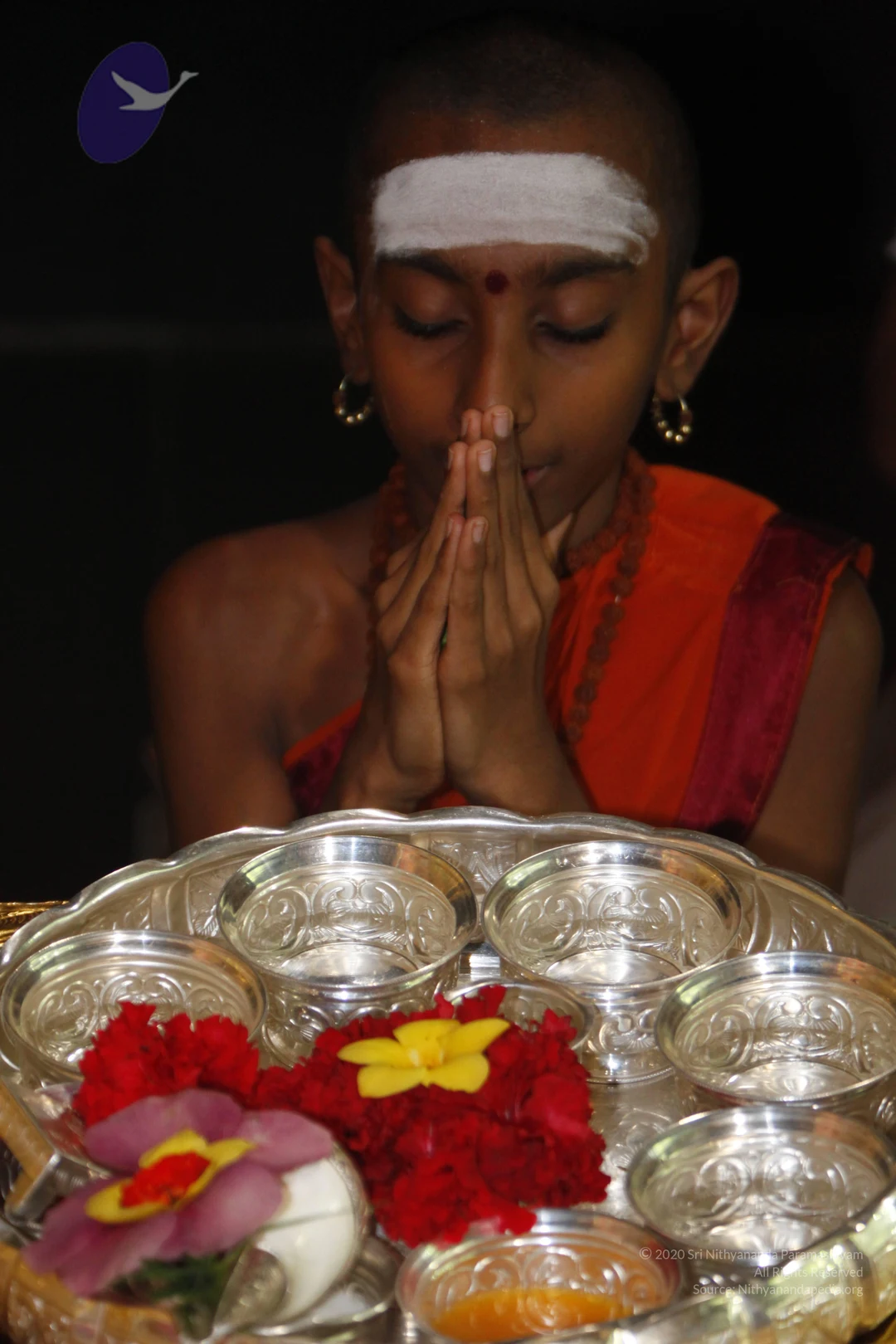
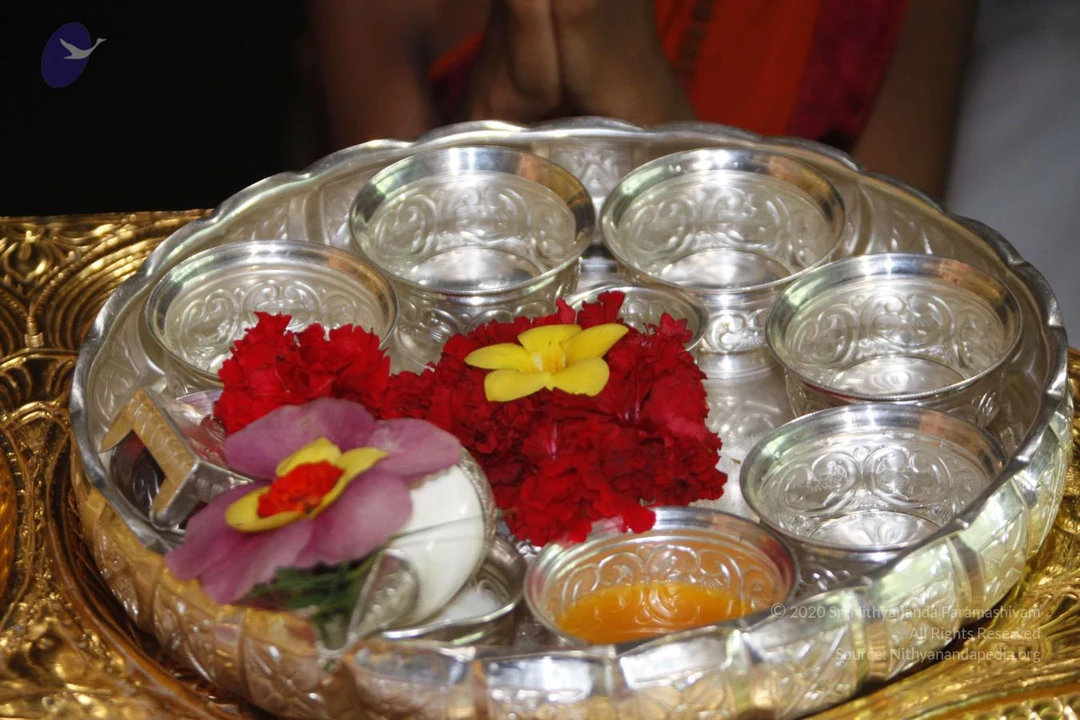
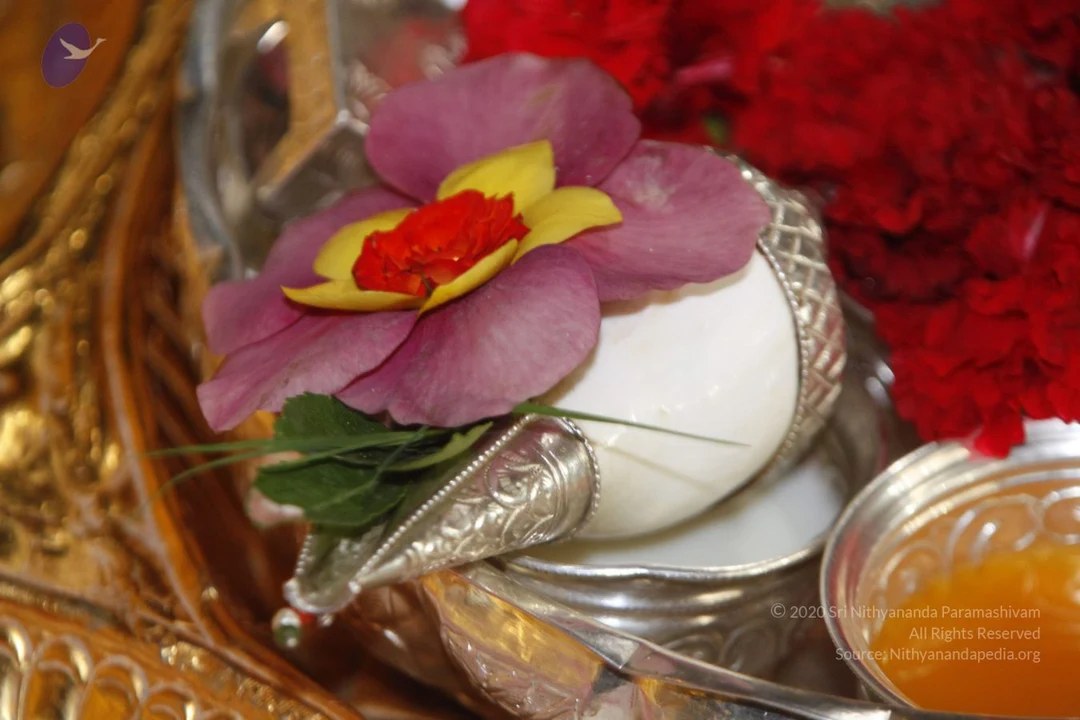
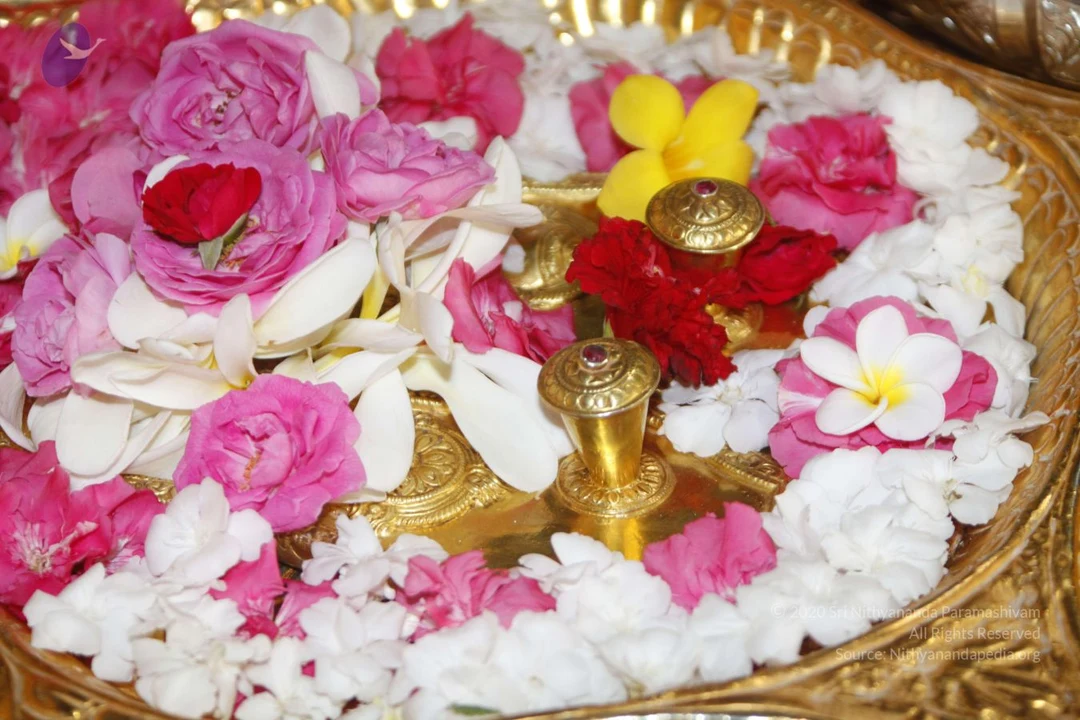
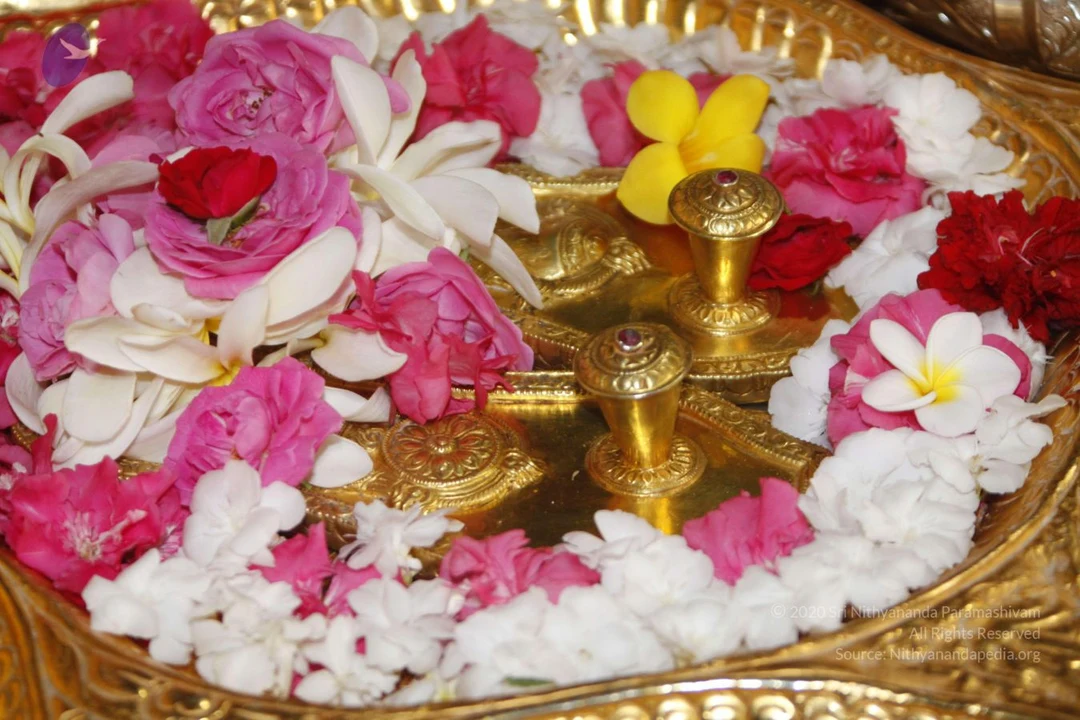
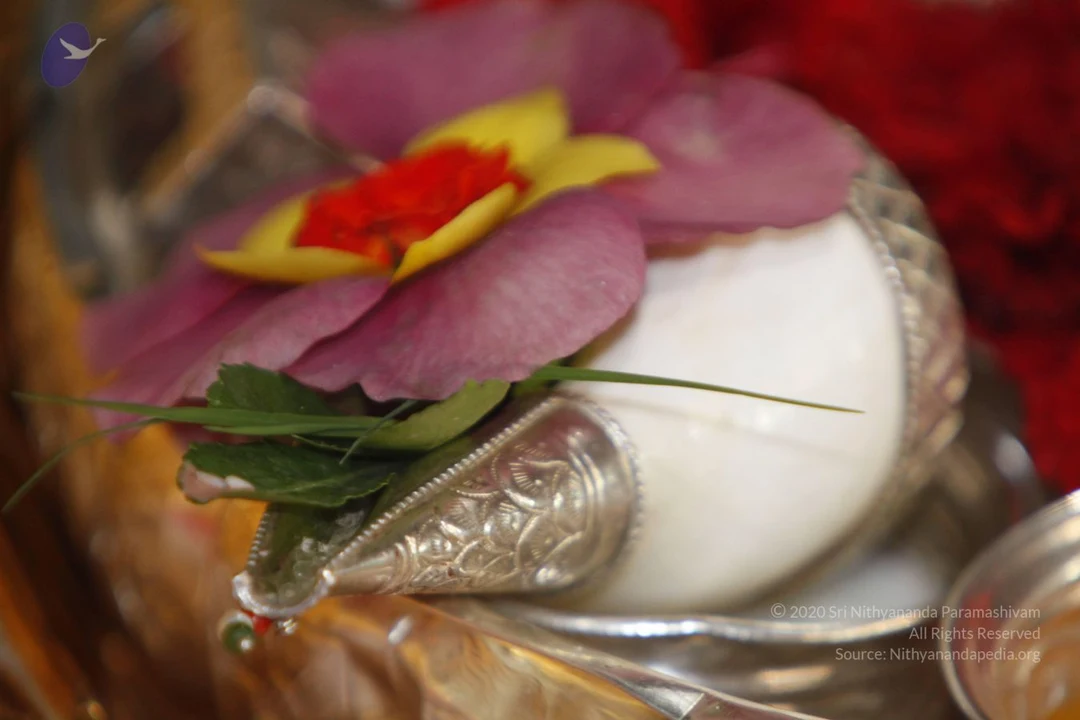
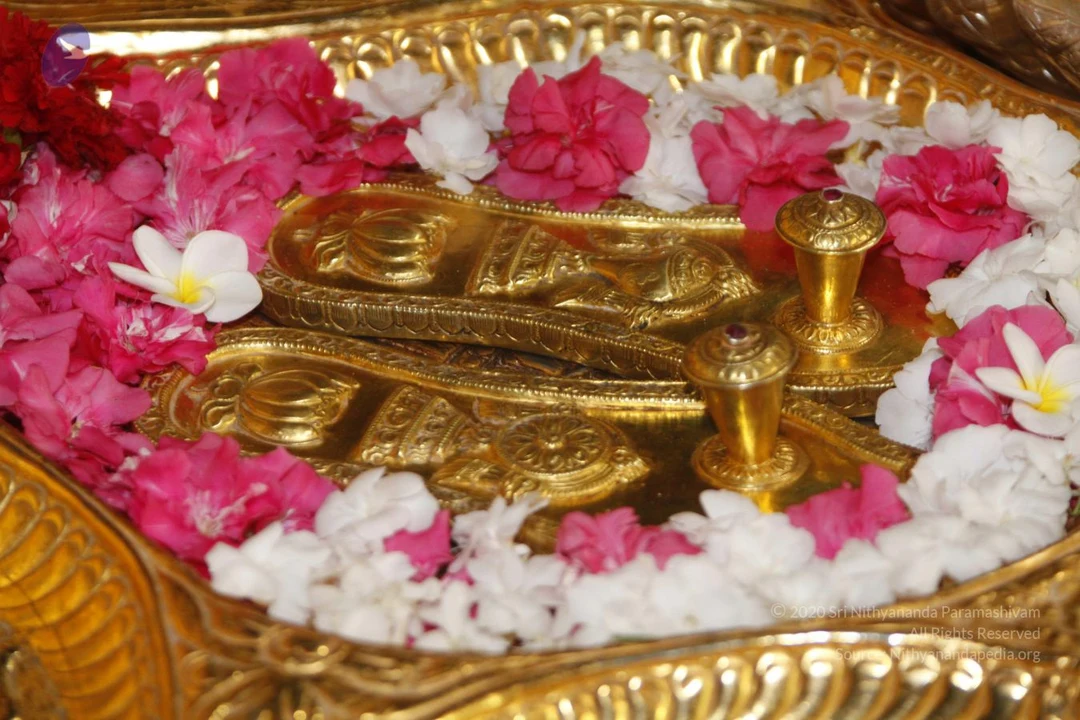
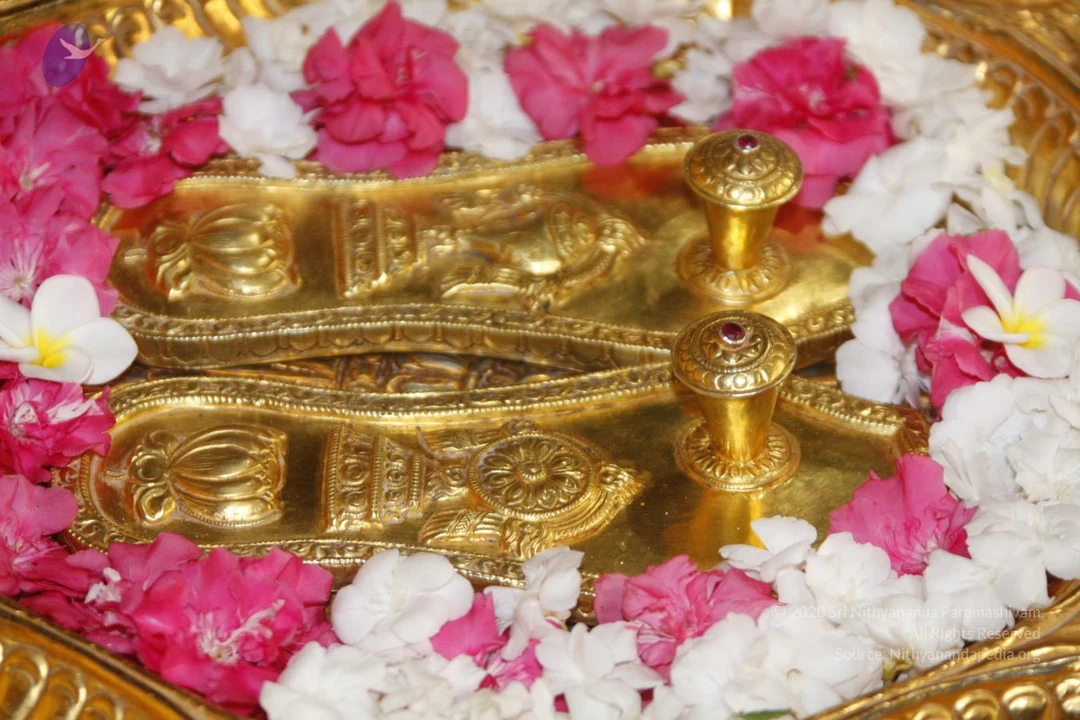
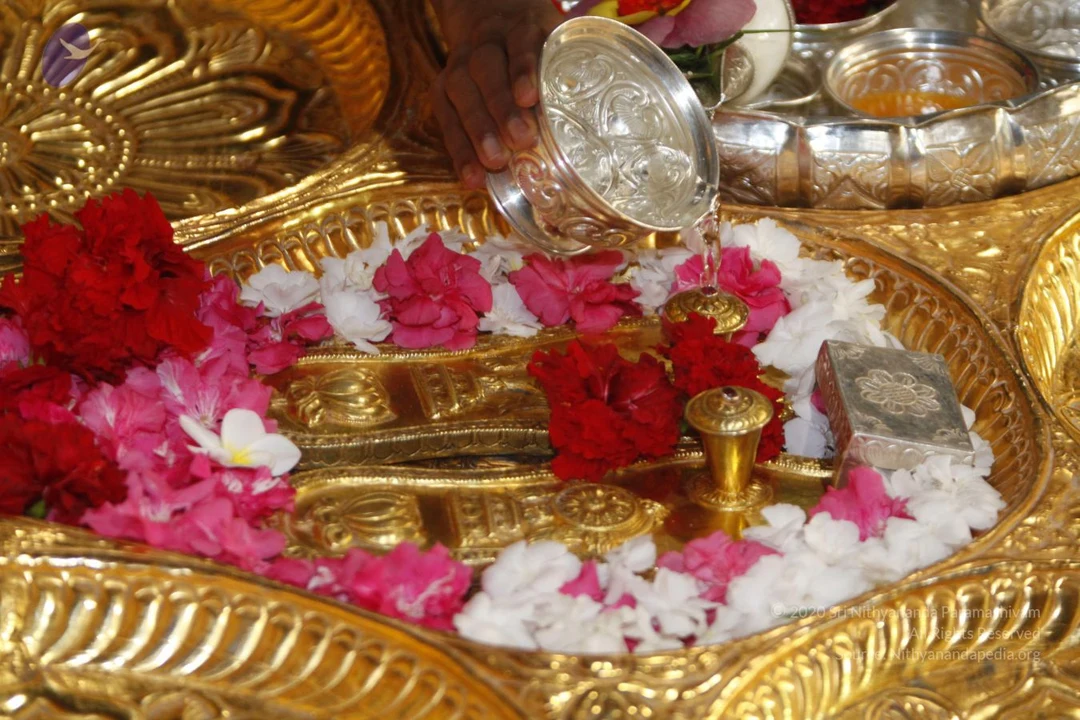
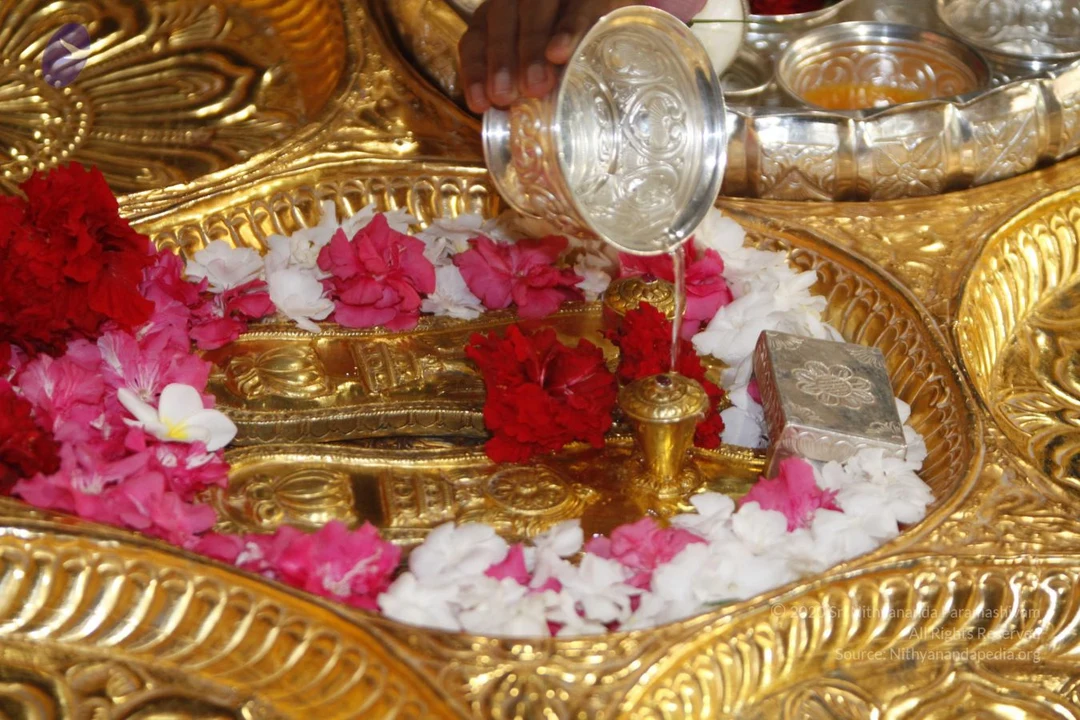
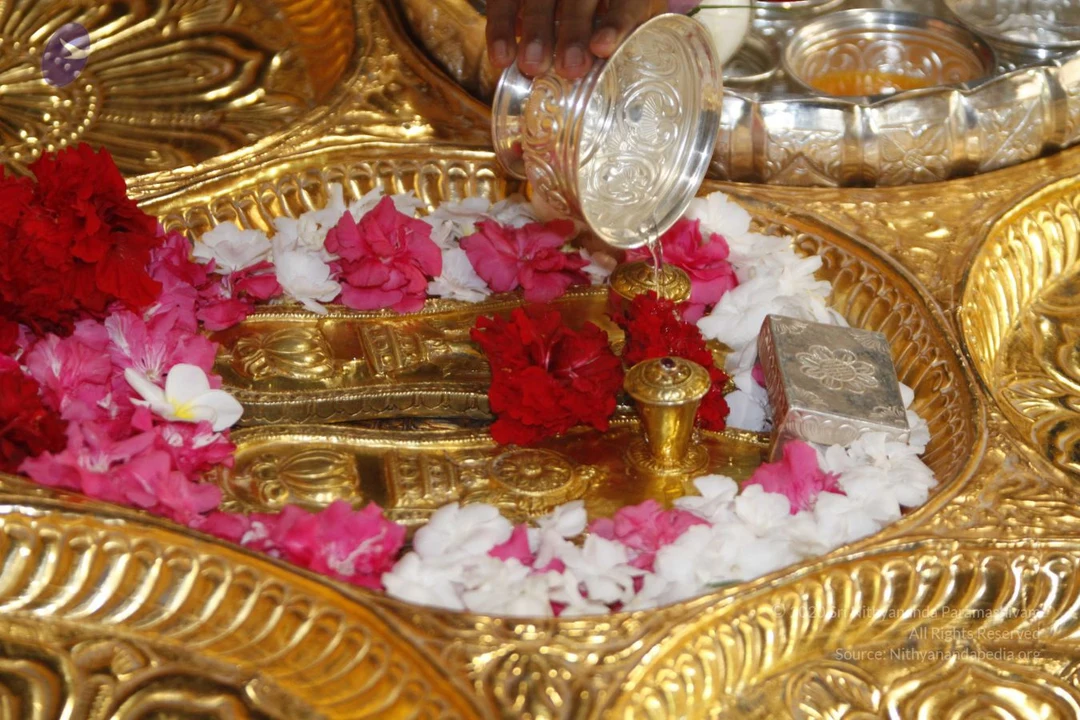
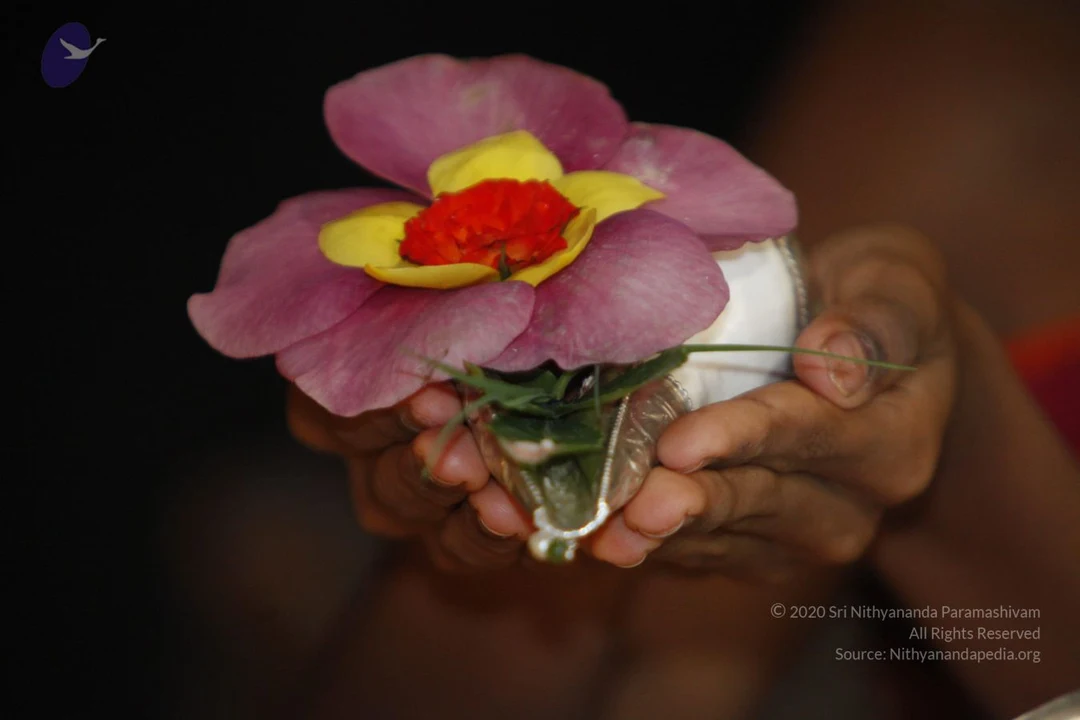
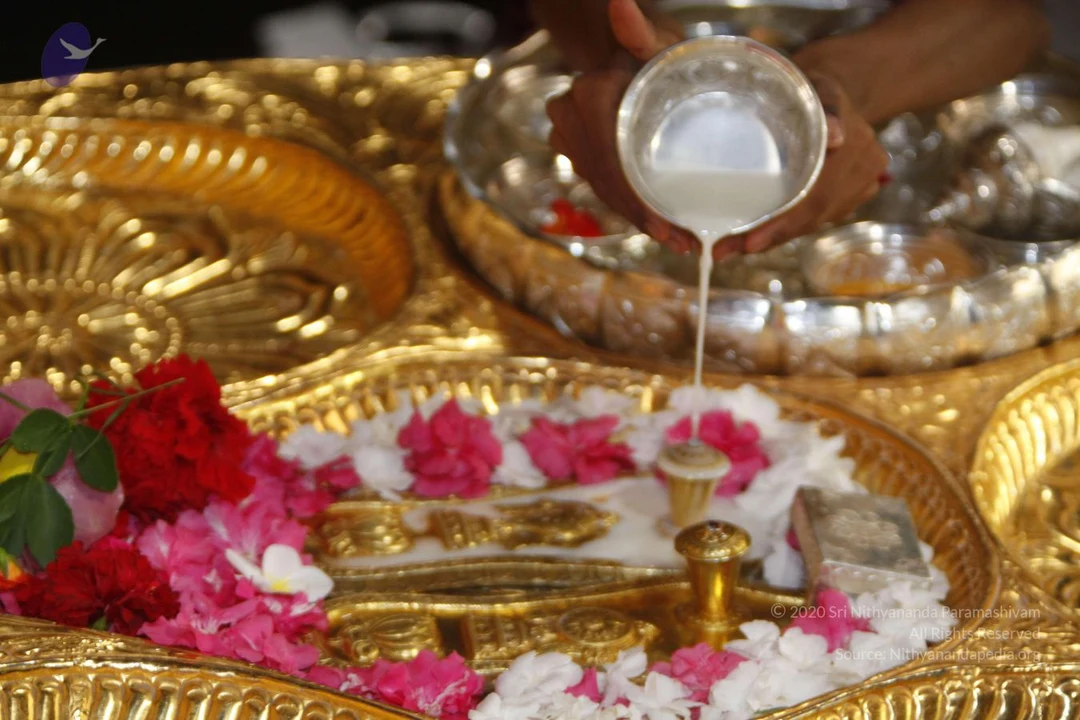
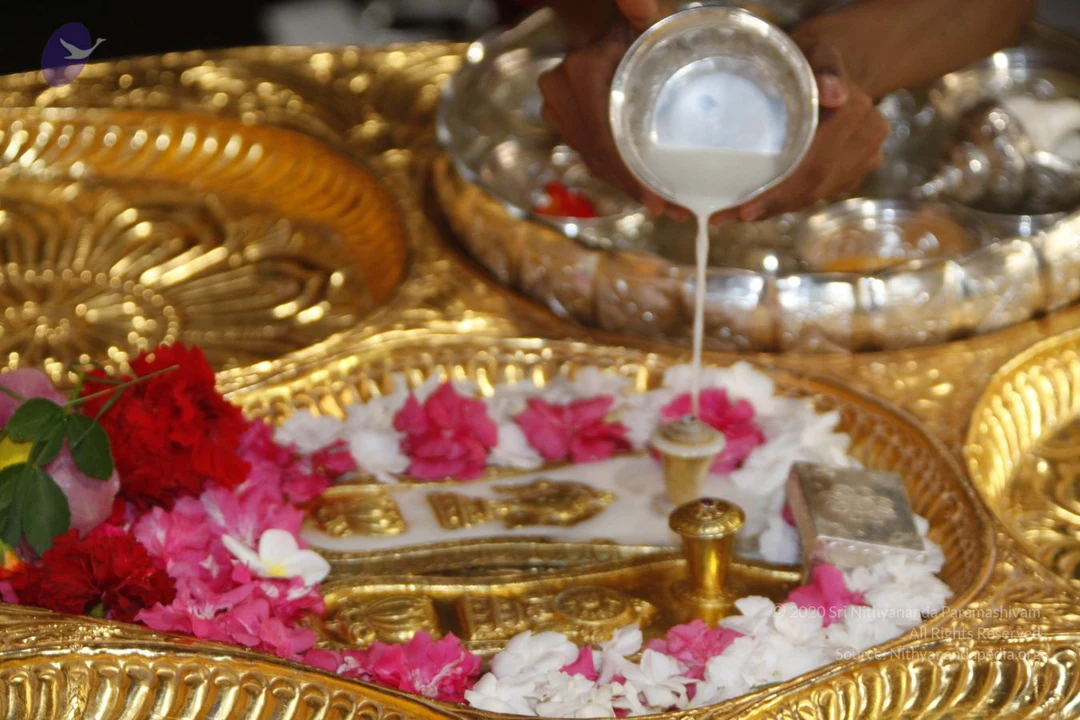
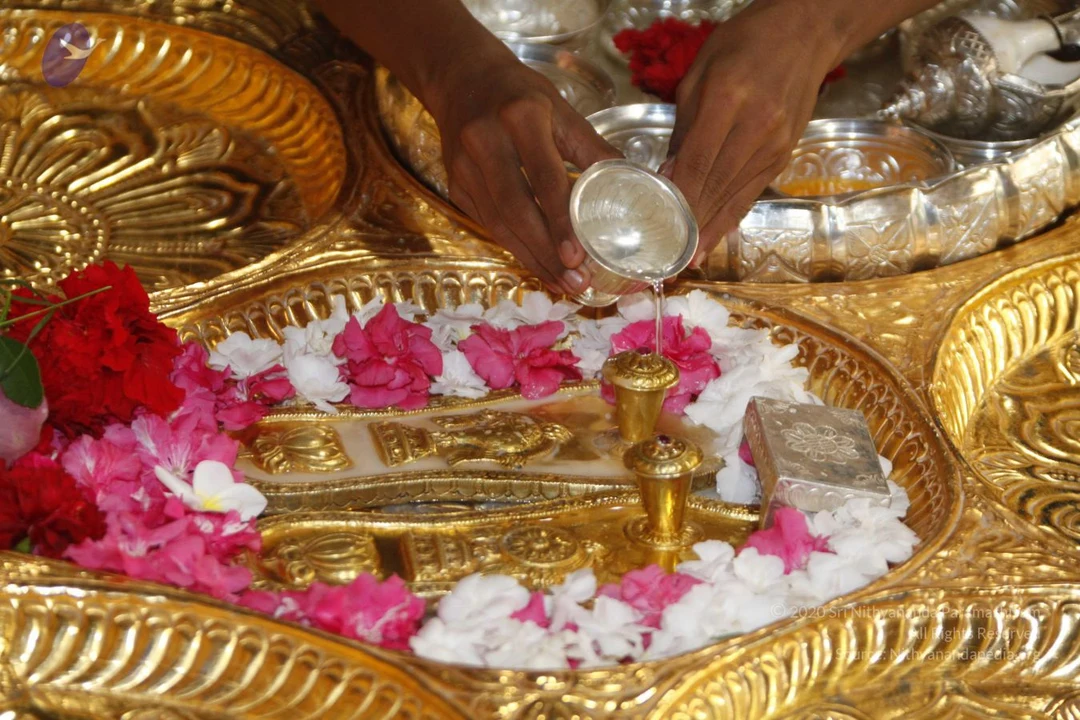
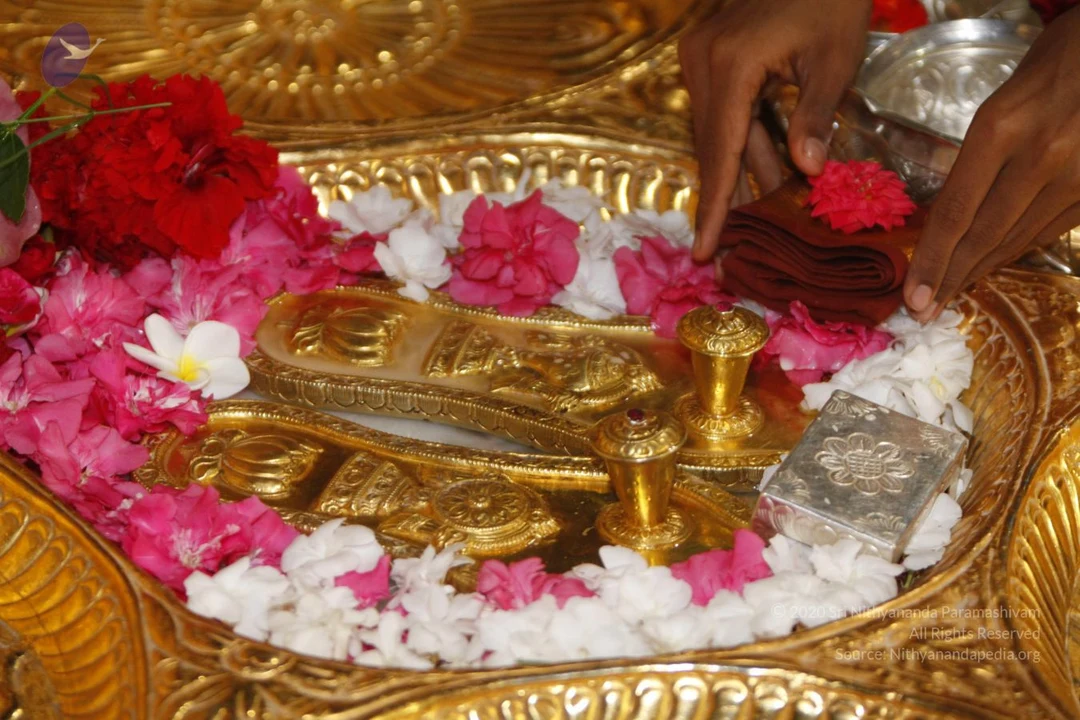
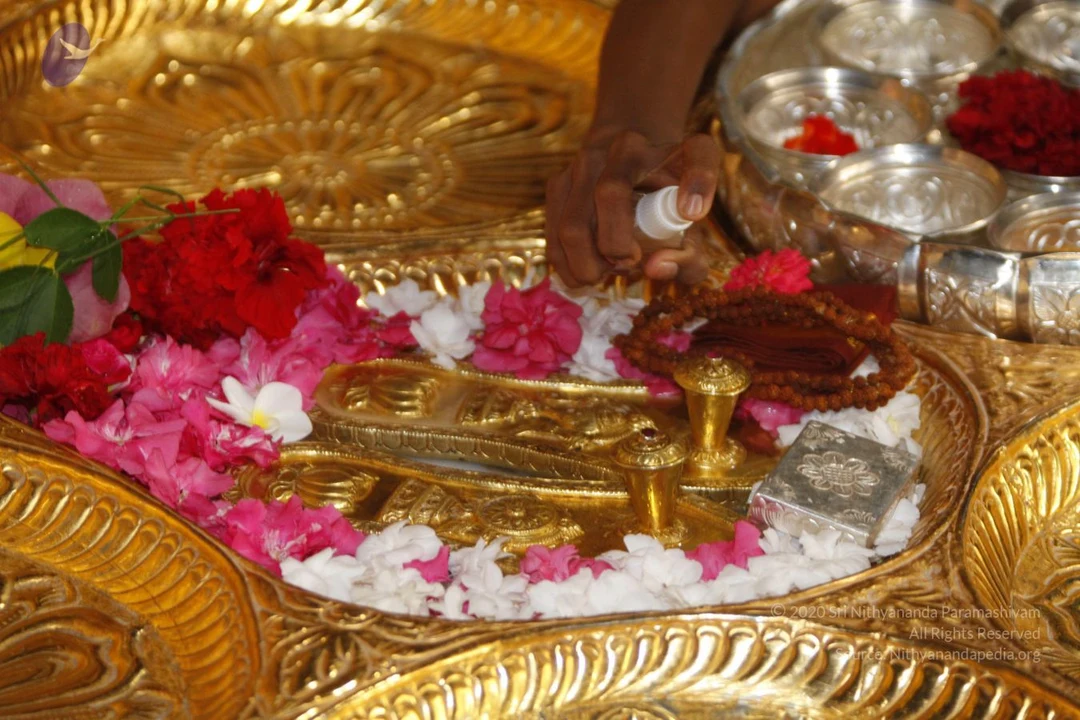
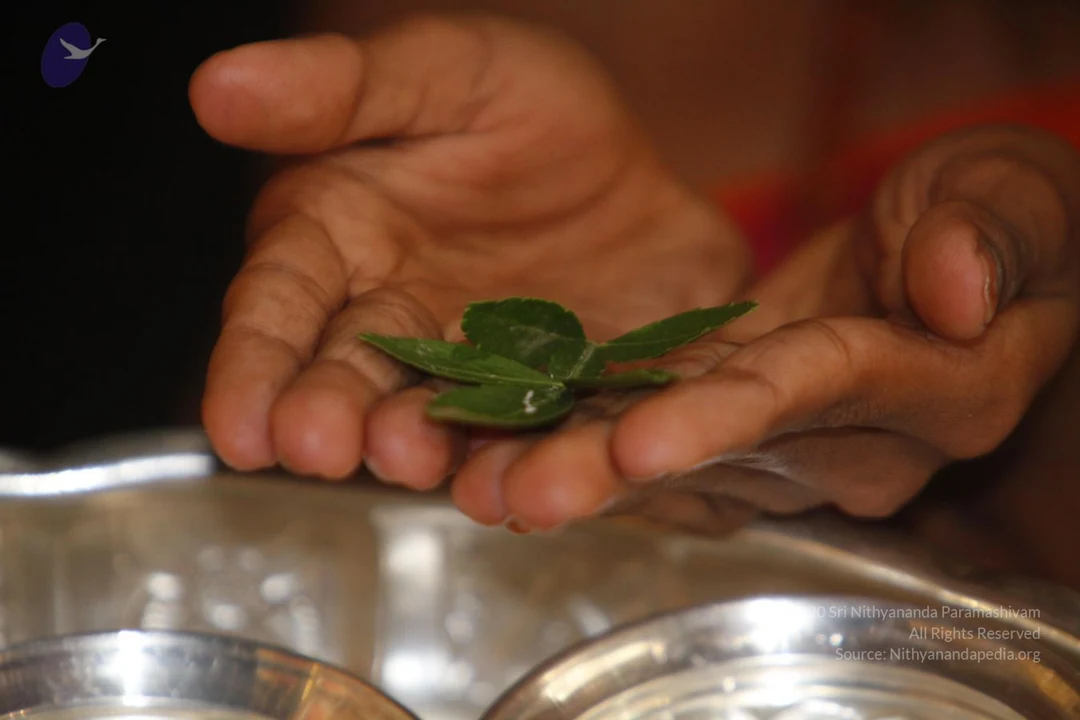
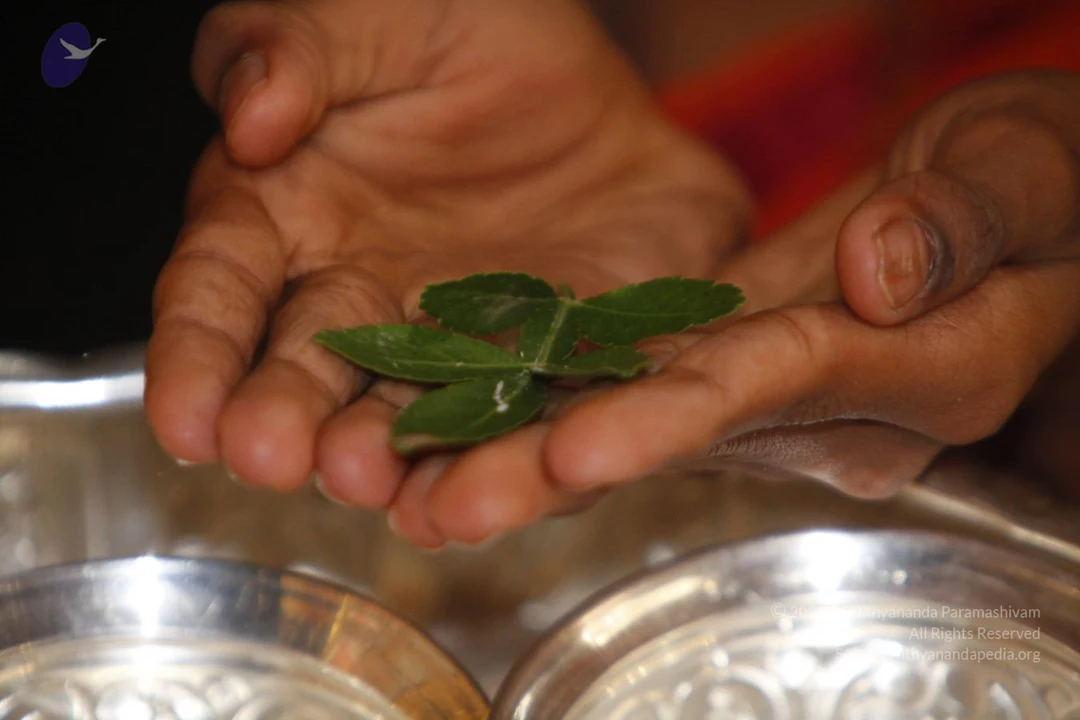
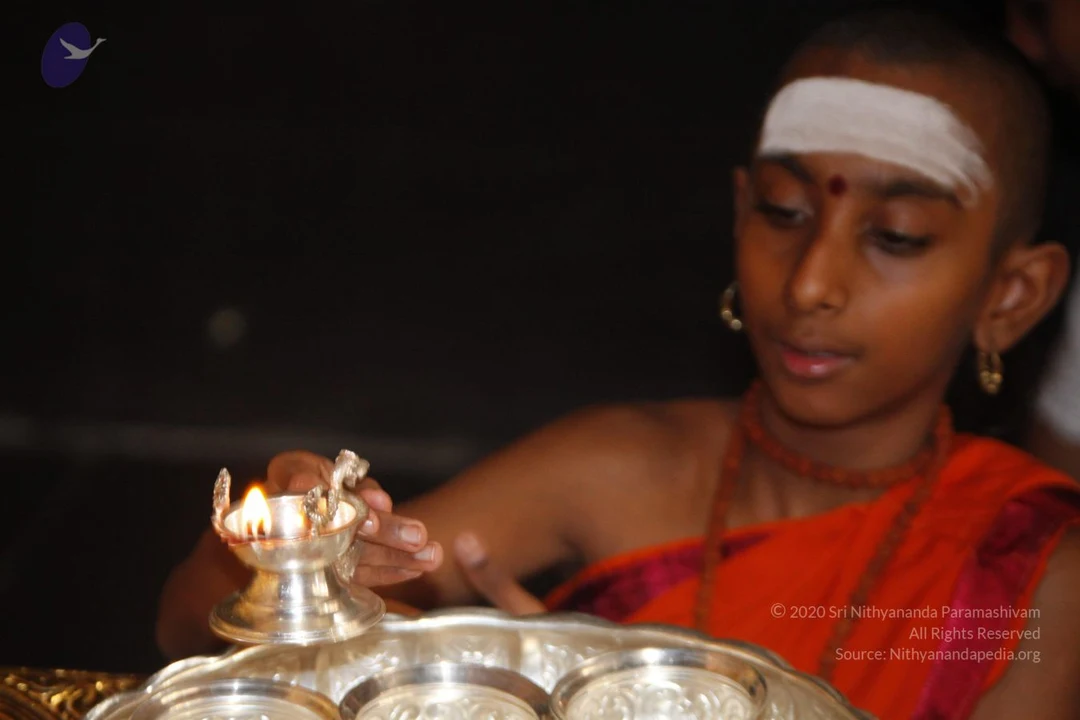
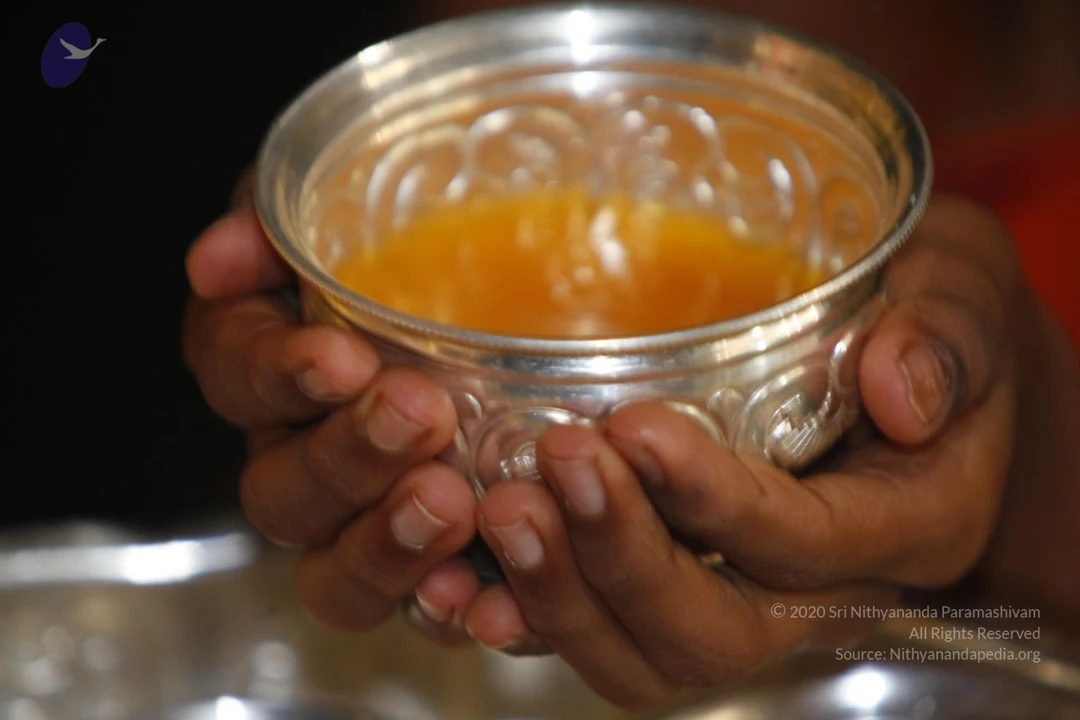
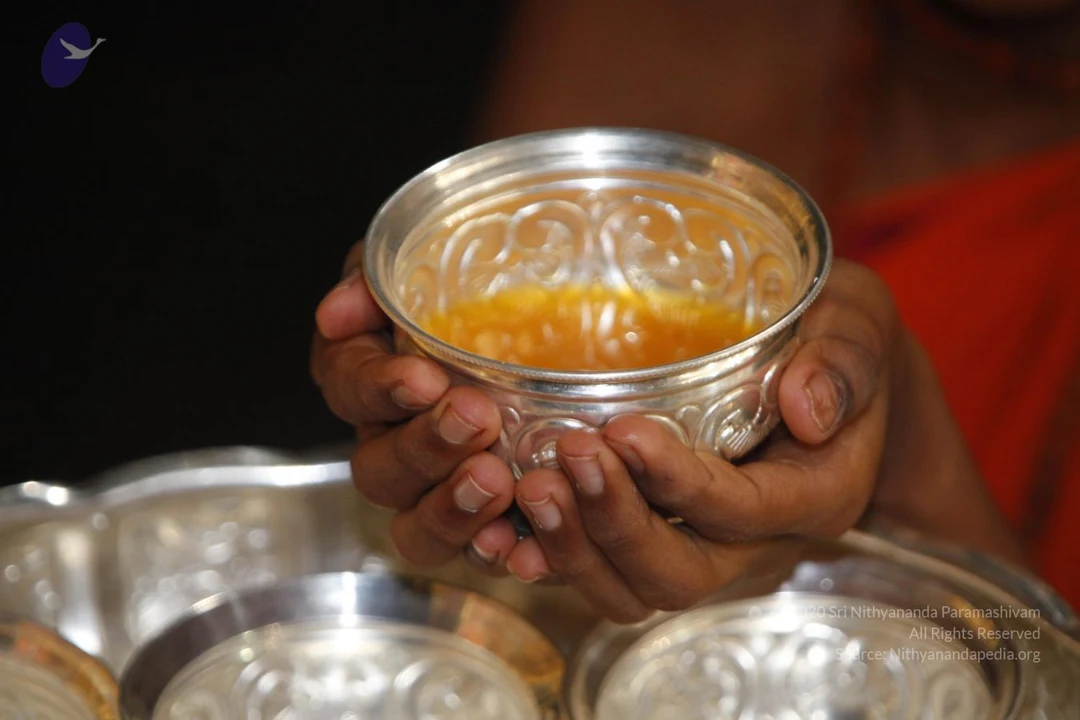
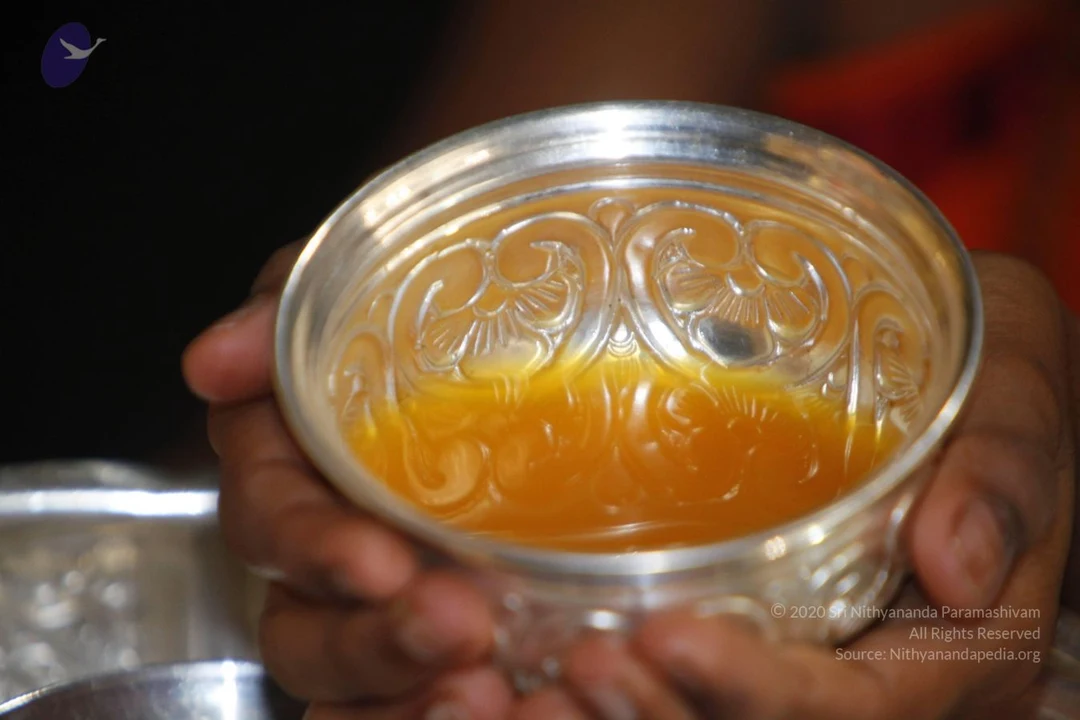
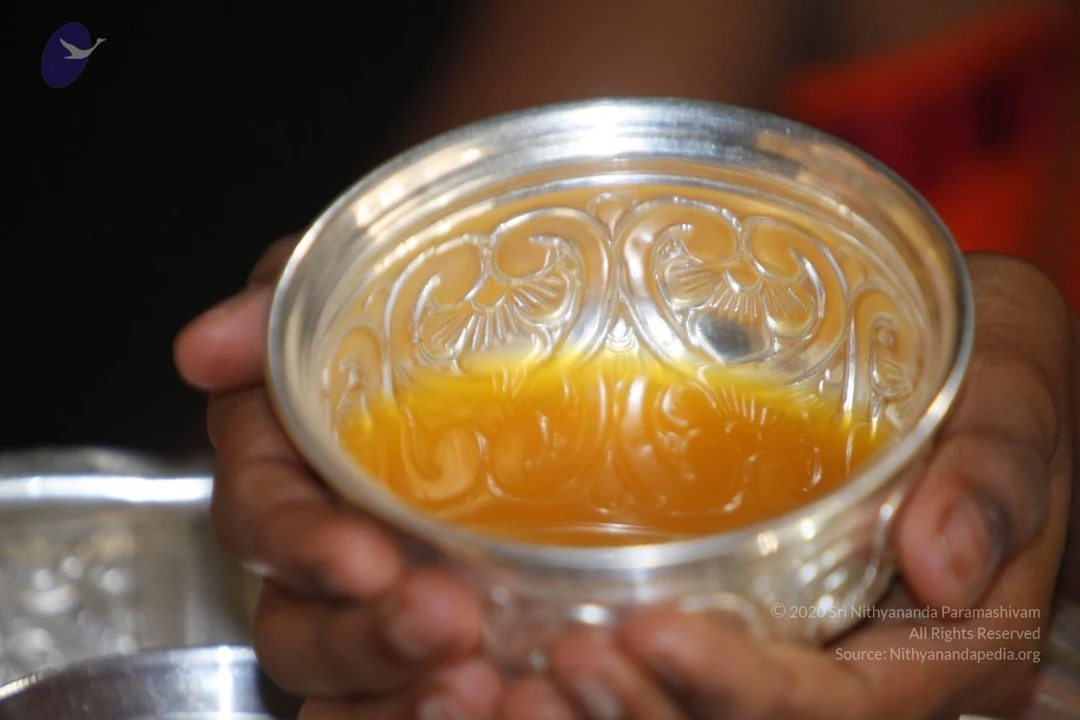
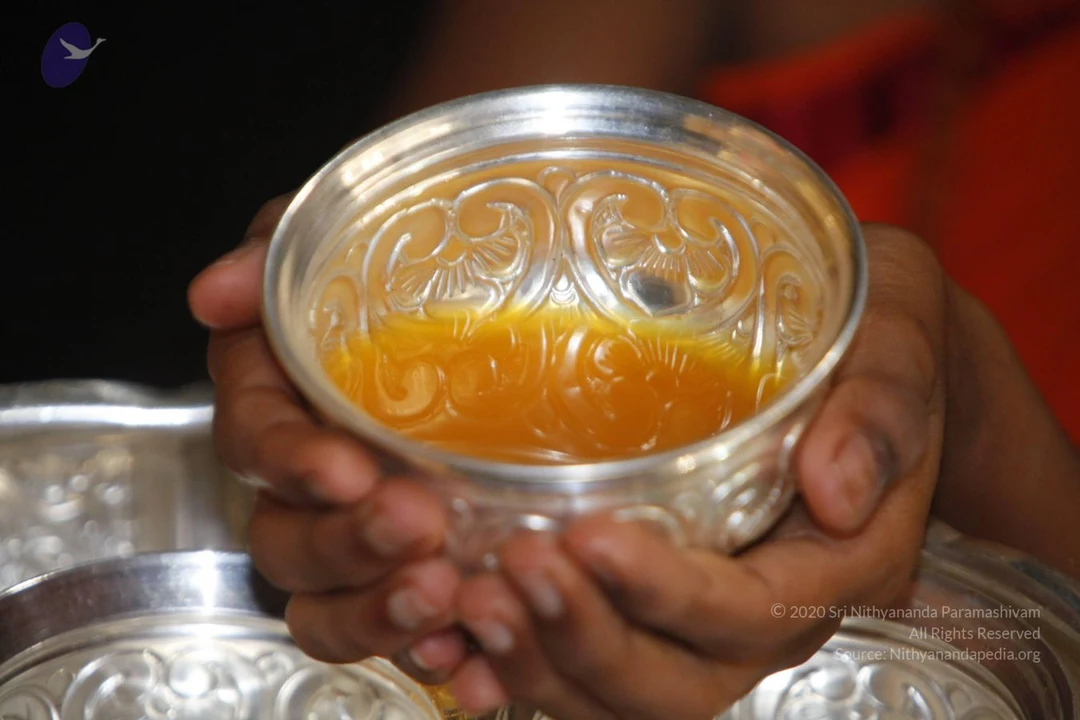
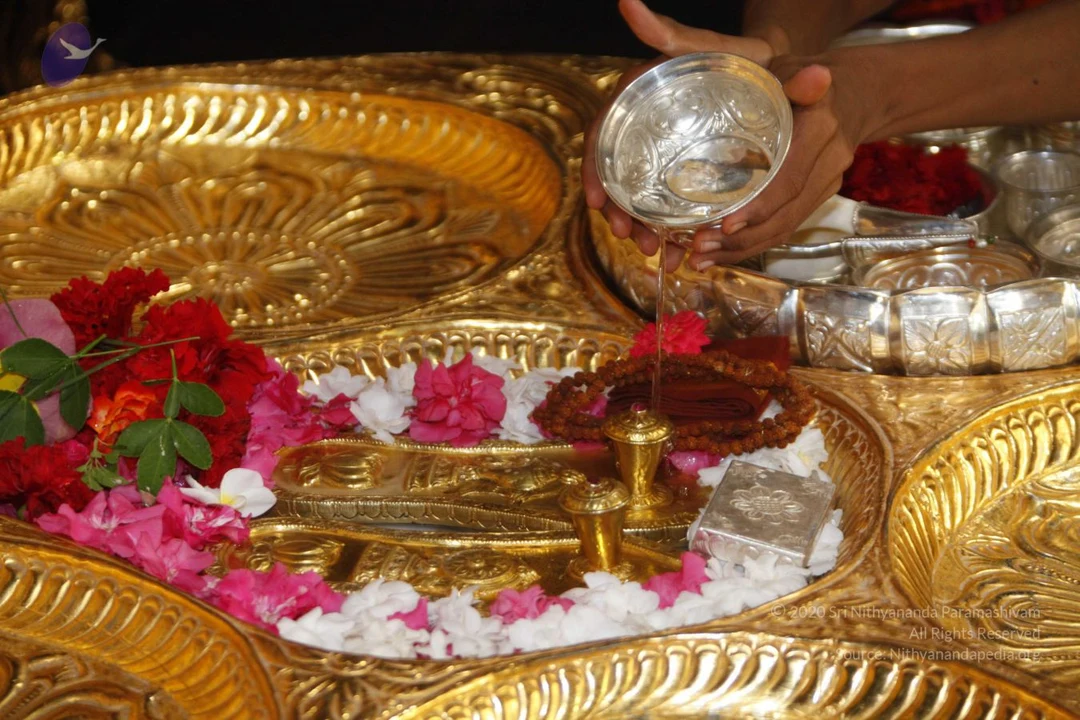
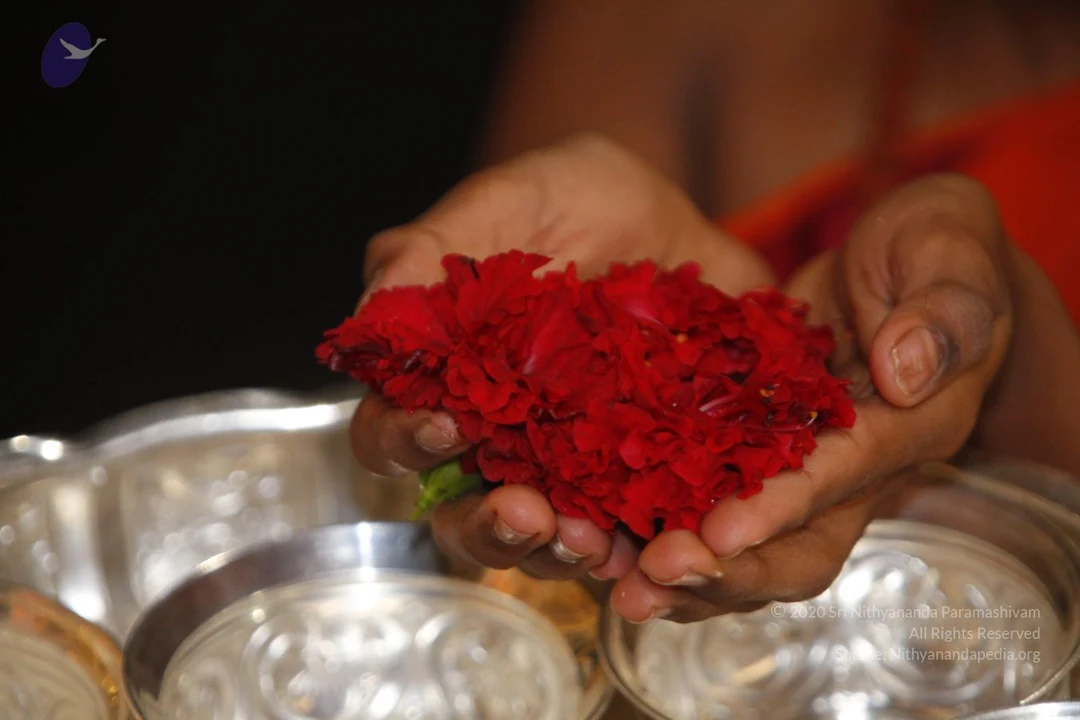
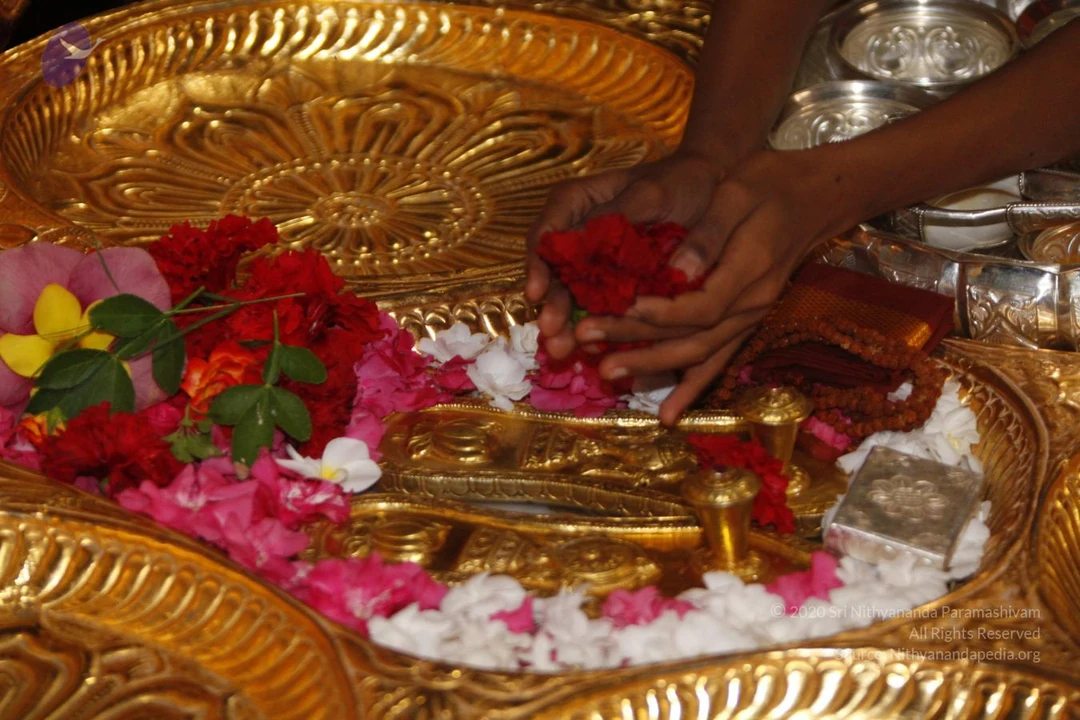
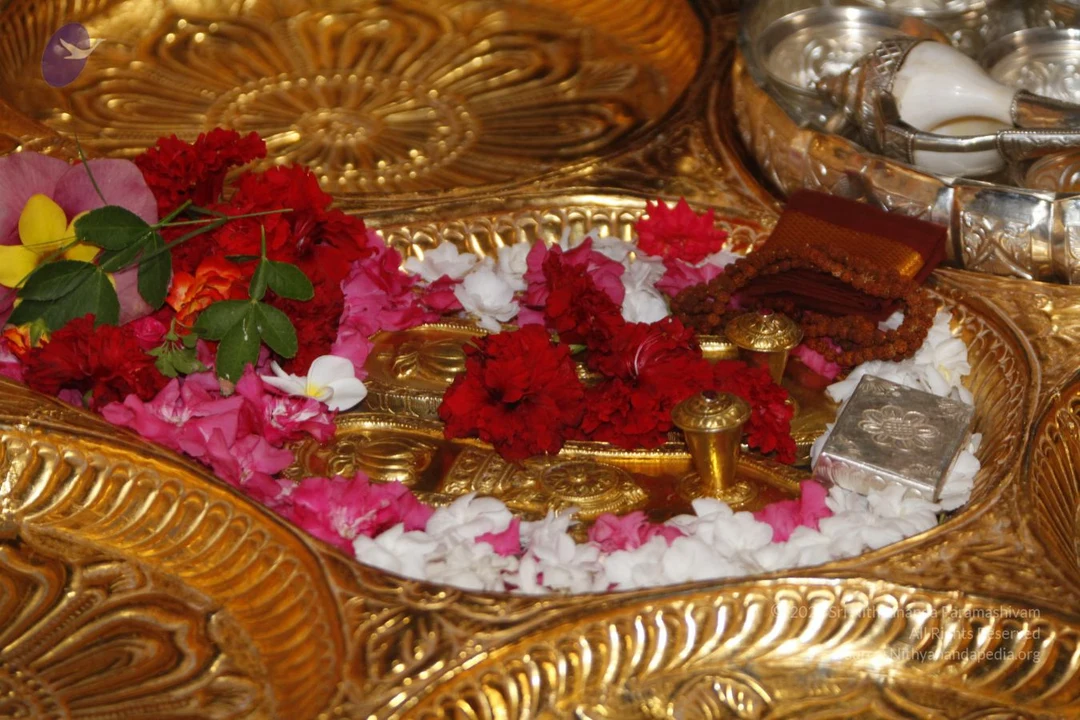
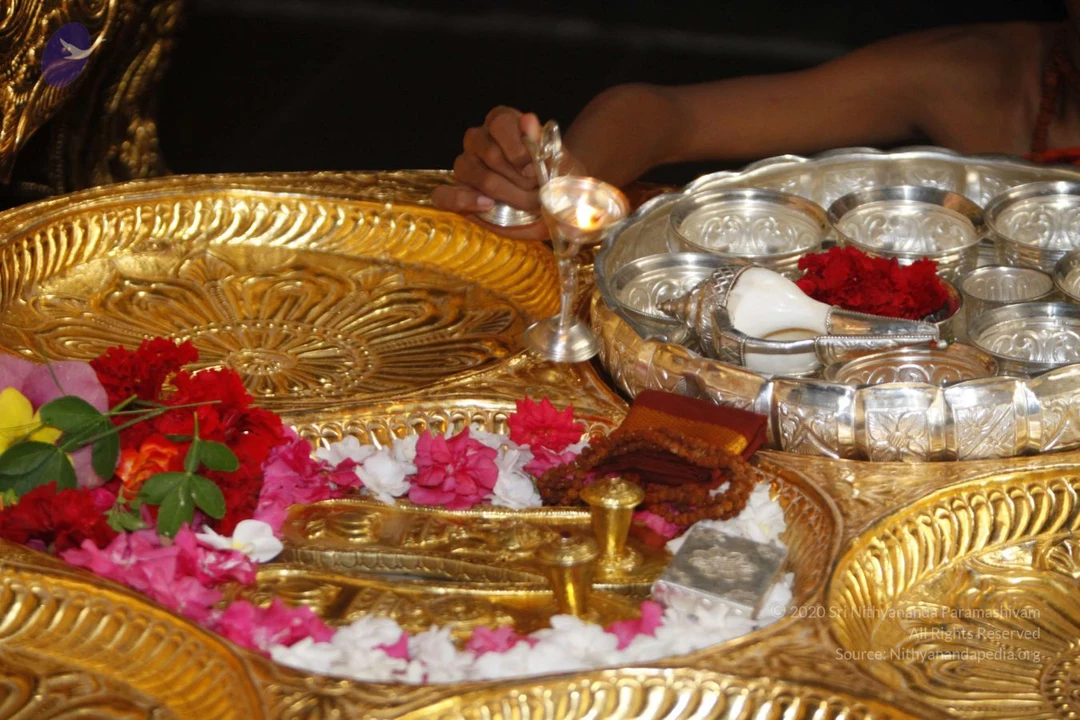
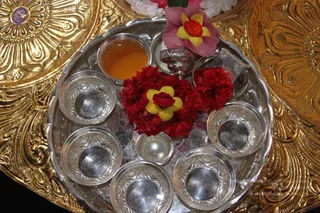
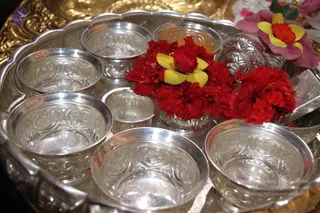
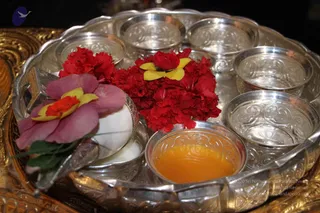
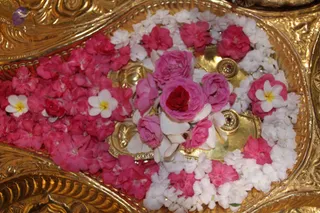
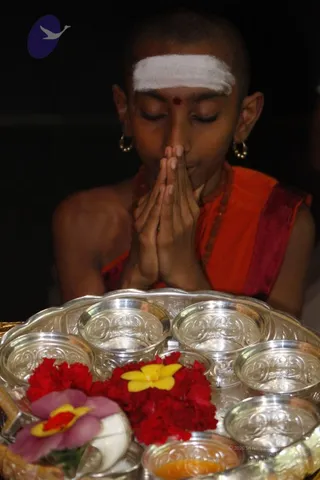
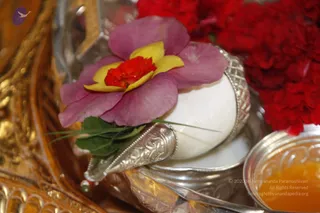
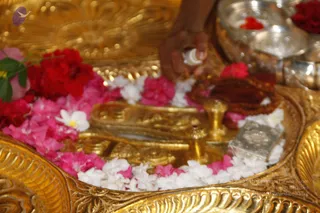
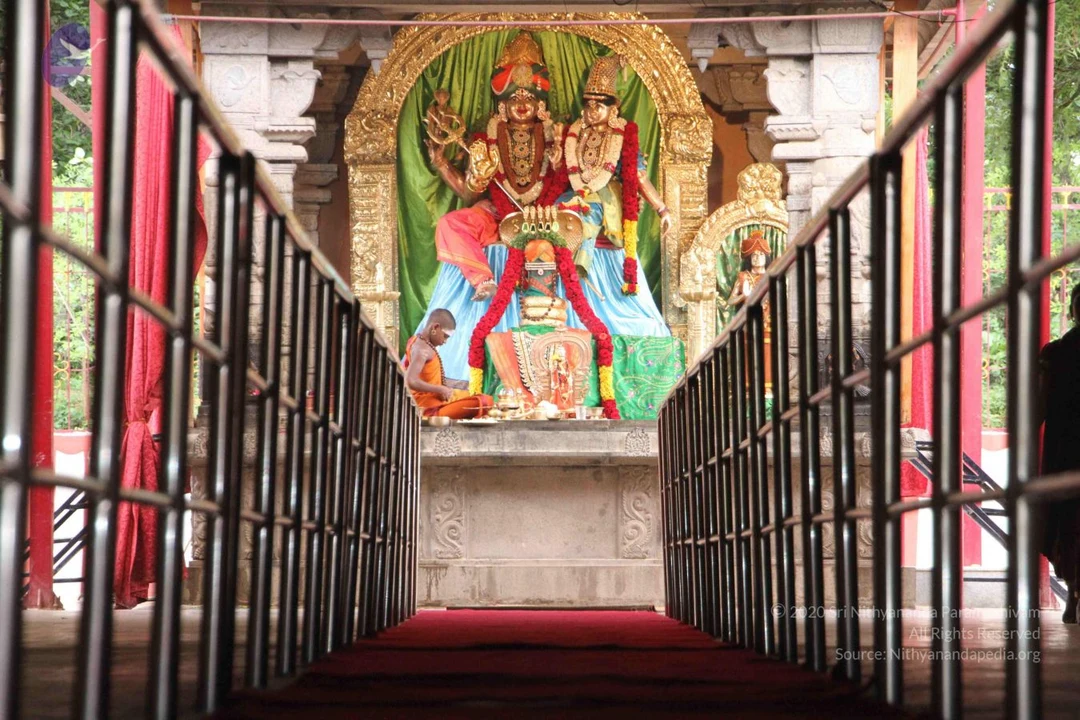
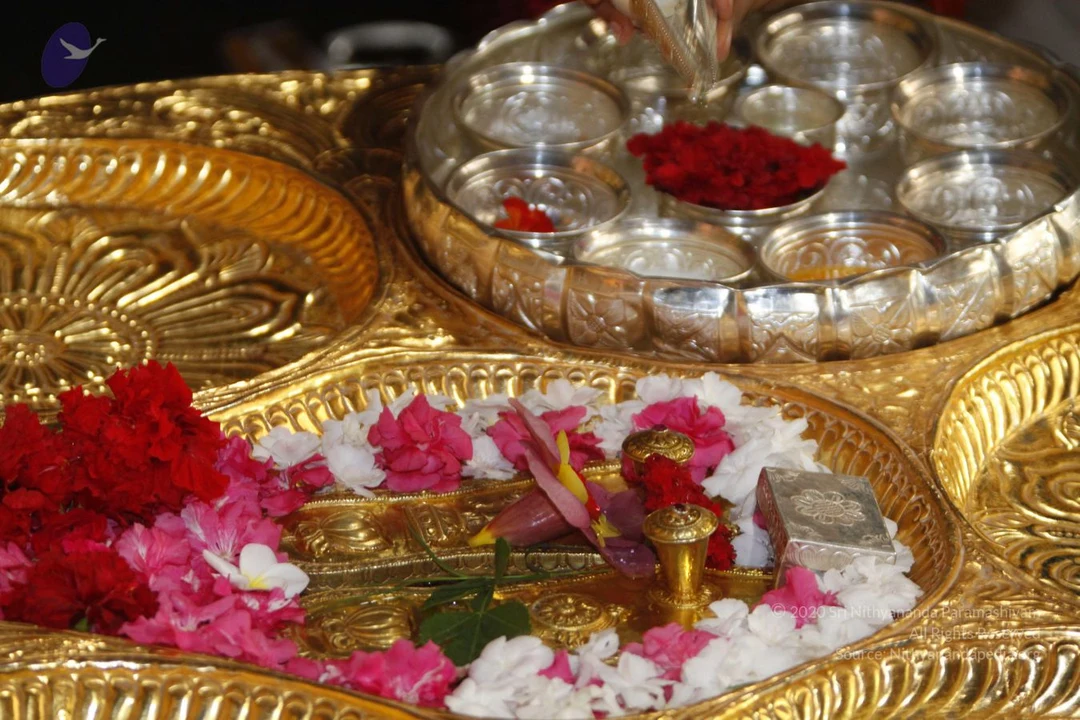
Overhead photo of a polished silver puja thali on a gold-embossed ornate surface. Five small silver katoris with engraved rims hold no visible contents except one filled with orange-yellow liquid. Red flowers, possibly marigold or carnation, sit at the centre, with a large pink-and-yellow blossom and a small glass dish in the upper area. Blurred white flowers appear at the top edge. No people or deity murti are visible.Close-up of an ornate silver puja tray with repoussé floral and scroll engraving holding several small silver bowls filled with water. Red carnations and a yellow-and-red flower with pink petals sit among the bowls, with a silver spoon and a silver cup at the right edge. A gold-embossed tray lies beneath. No people are visible, and the scene shows ritual vessels and offerings only.A close-up photograph of an ornate silver puja tray with embossed rims resting on a gold-coloured metal surface. It holds small silver bowls with a clear liquid, a bowl of golden-yellow liquid, a white coconut half, and red carnation-like flowers. Two pink hibiscus-style flowers with yellow centres sit on the left edge beside a folded green leaf. No people are visible; the arrangement suggests a ritual offering setup.Close overhead photo of an ornate gilded tray or throne-edge filled with pink and white flower petals. Pink carnations and pink and red roses fill the centre and left, mixed with white jasmine-like blossoms and white frangipani with yellow centres. Two small gold-toned decorative knobs with red gemstone centres sit among the petals on the gold plate. No people are visible; the scene is a floral offering arrangement on ornamental gold metalwork.A young boy with a shaved head and a white vertical tilak with a red dot on his forehead sits with palms pressed together in namaste and eyes closed. He wears an orange and maroon sleeveless garment, rudraksha beads around his neck and small gold hoop earrings. In front of him is a silver puja tray with embossed rims, filled with red carnations, a yellow flower and a pink flower, plus small silver bowls and a bowl of orange offering. The dark background suggests a temple or ashram setting.Close-up photograph of a ritual offering on a silver plate: a smooth white rounded object, possibly a shivalingam or stone form, decorated with a large pink-purple flower with yellow and red centre, green leaves and a silver spoon-shaped vessel. A bowl of golden honey or ghee sits at right beside a heap of red flowers, with gold-toned metal surfaces at left. No people are visible.

Nithya-Satsang

15 photosSource gallery
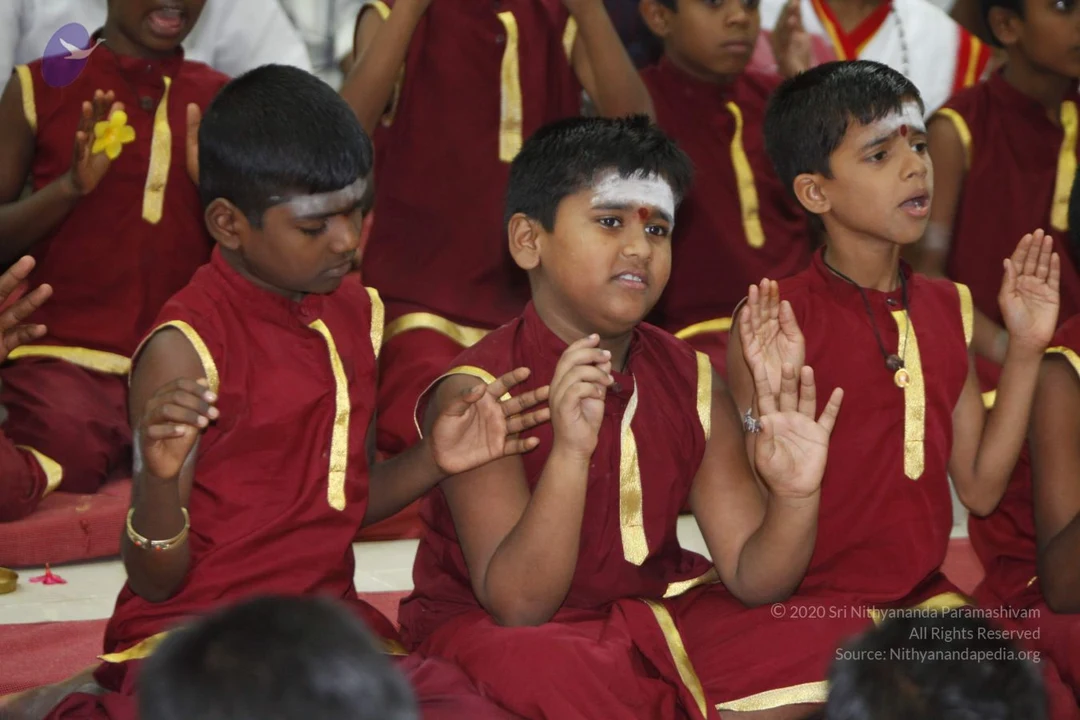
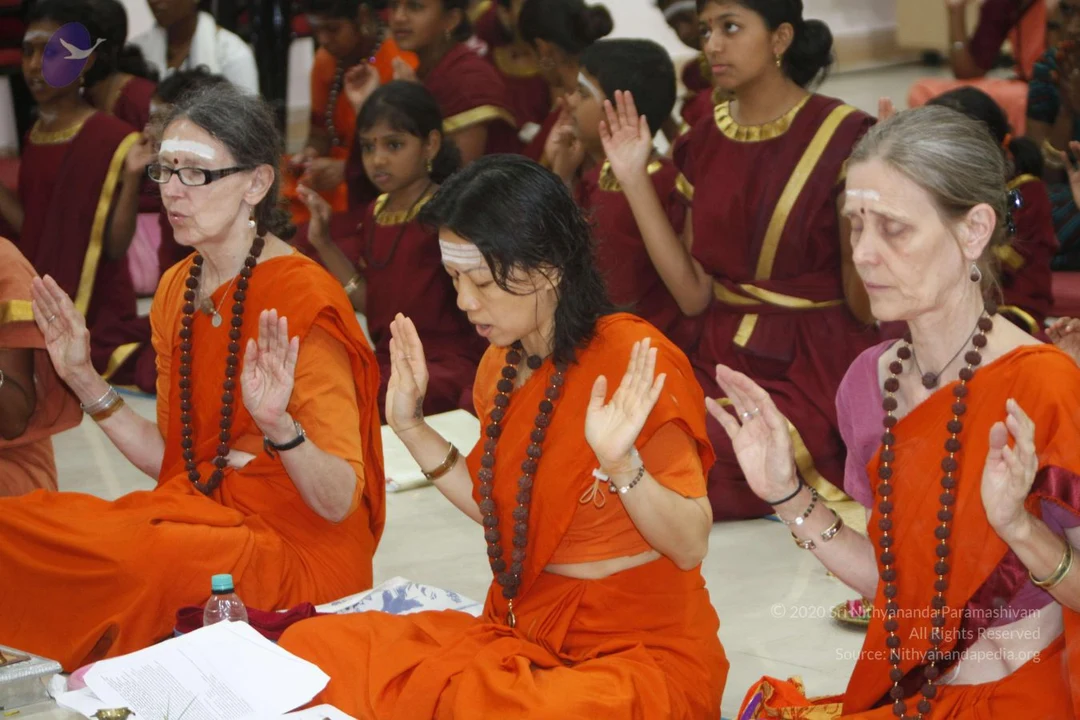
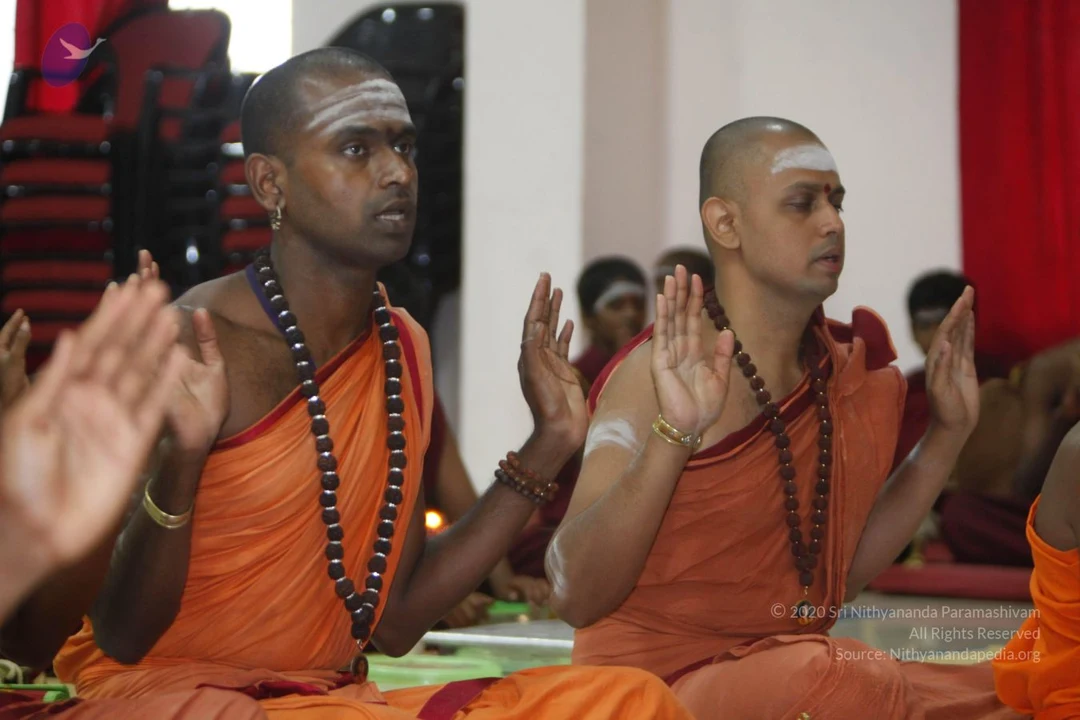
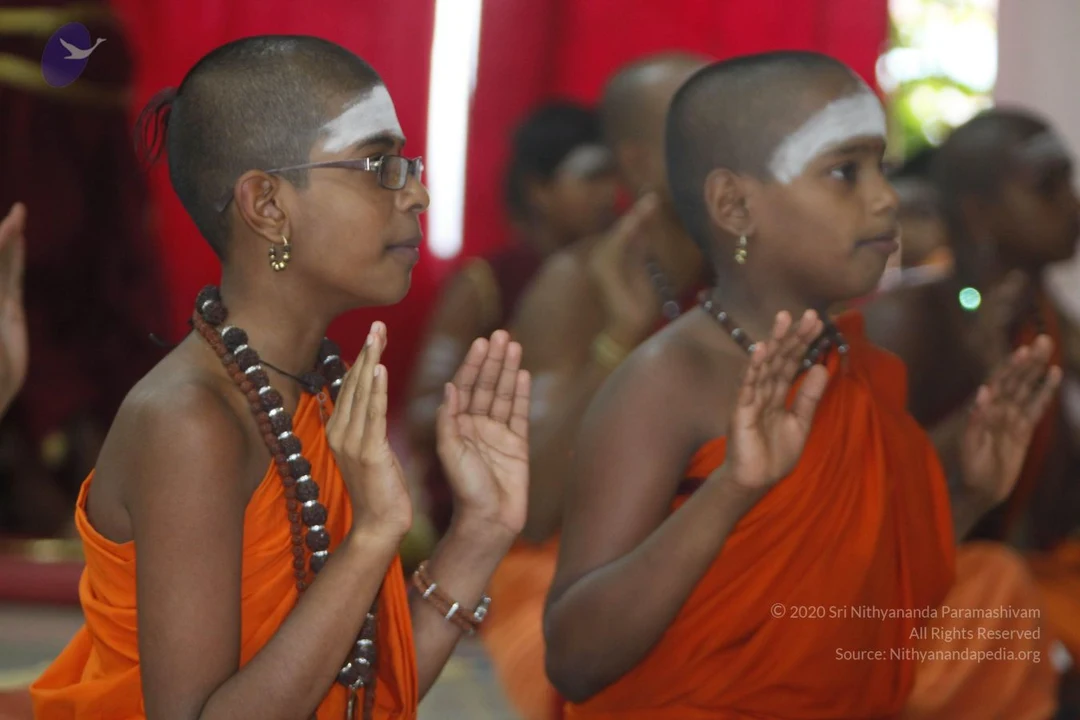
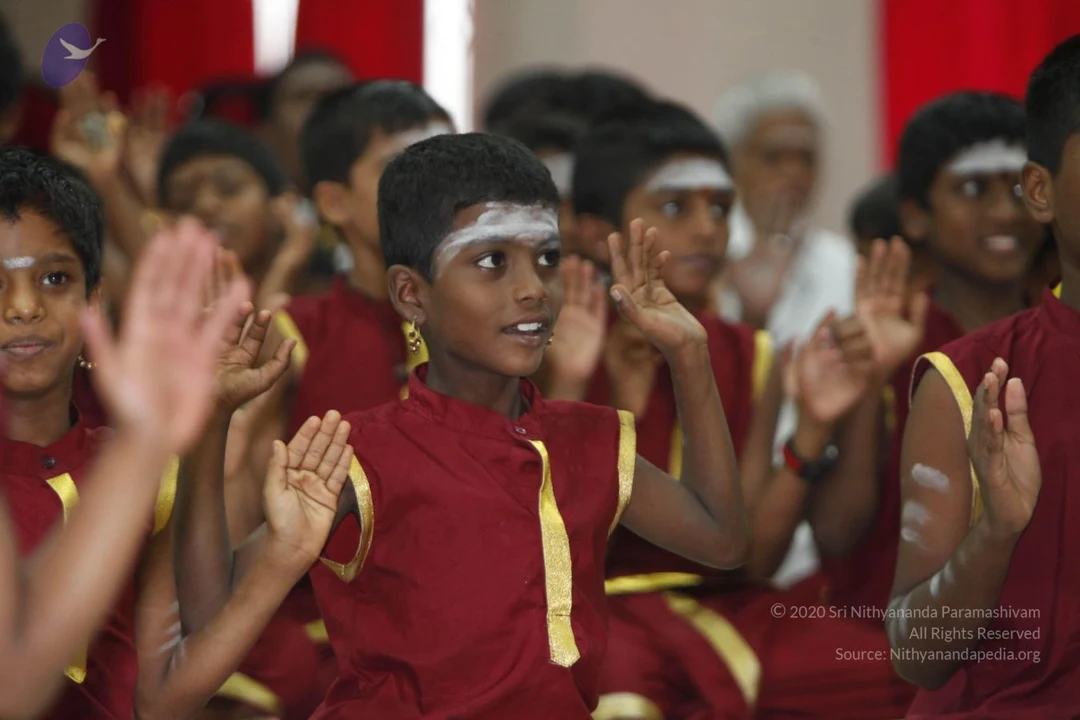
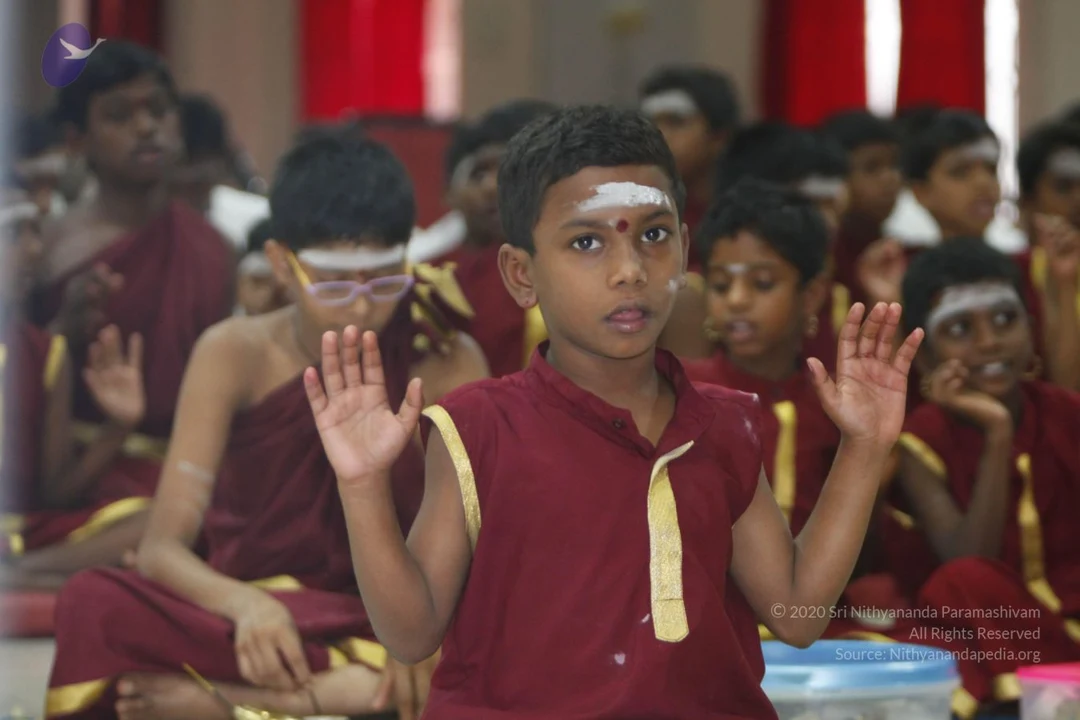
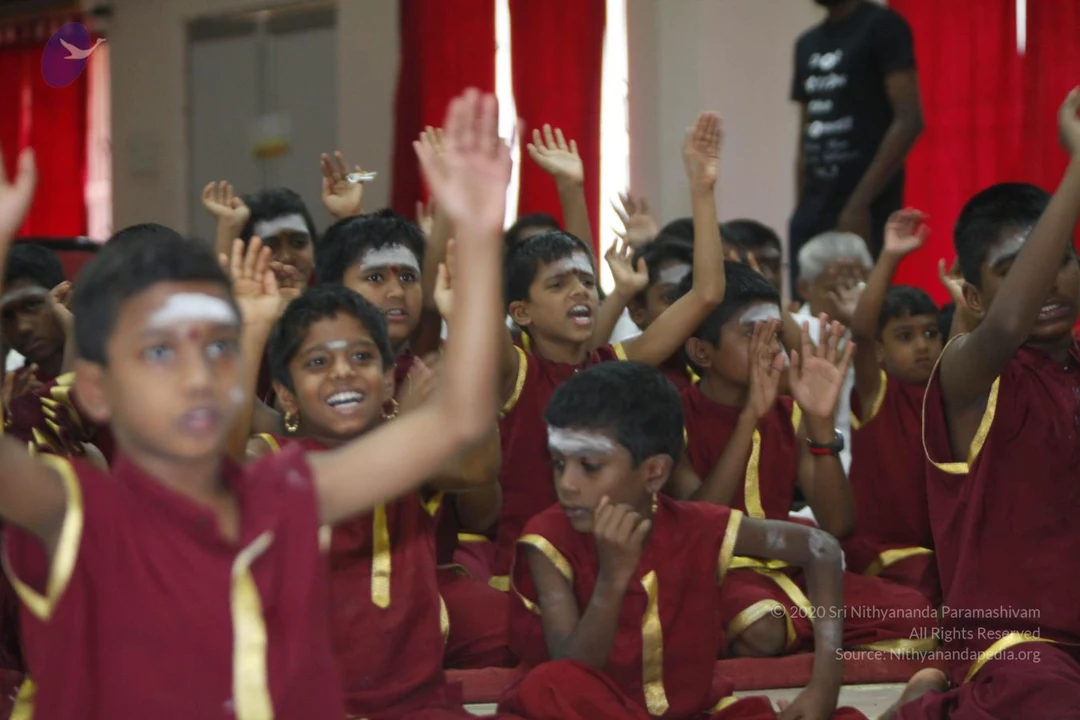
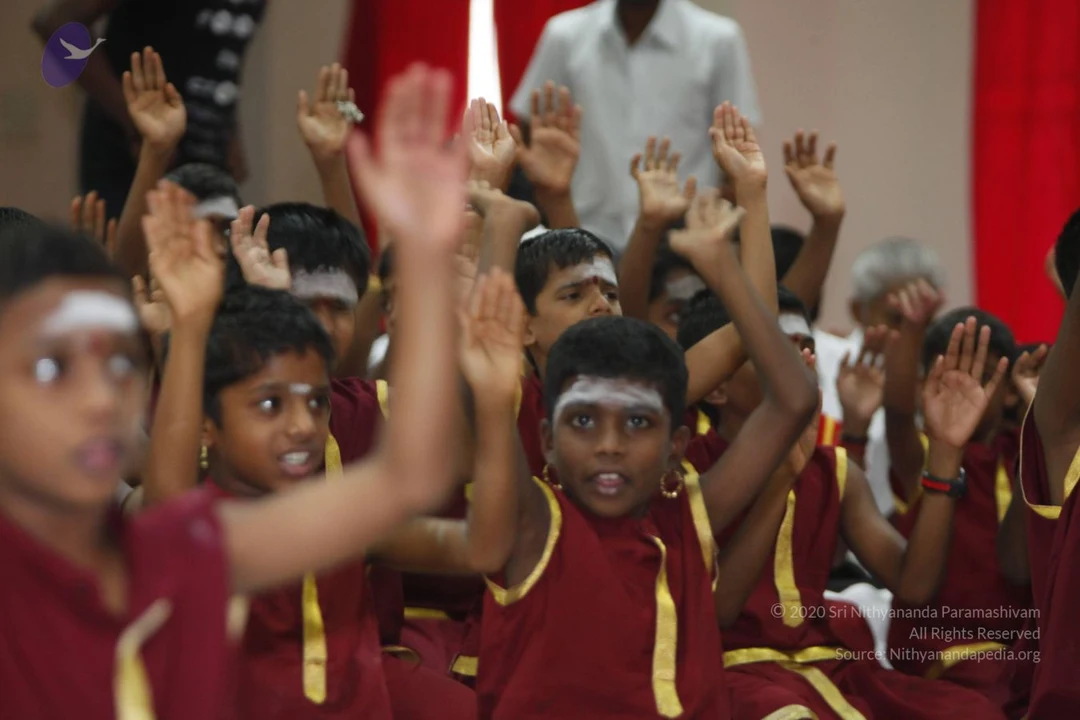
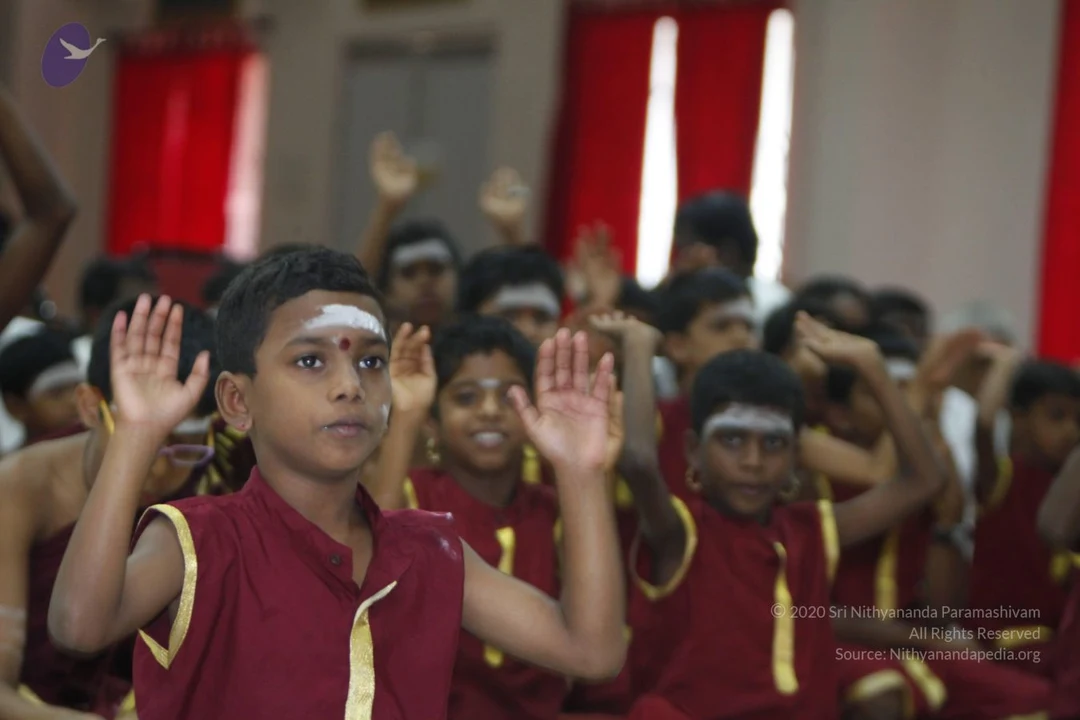
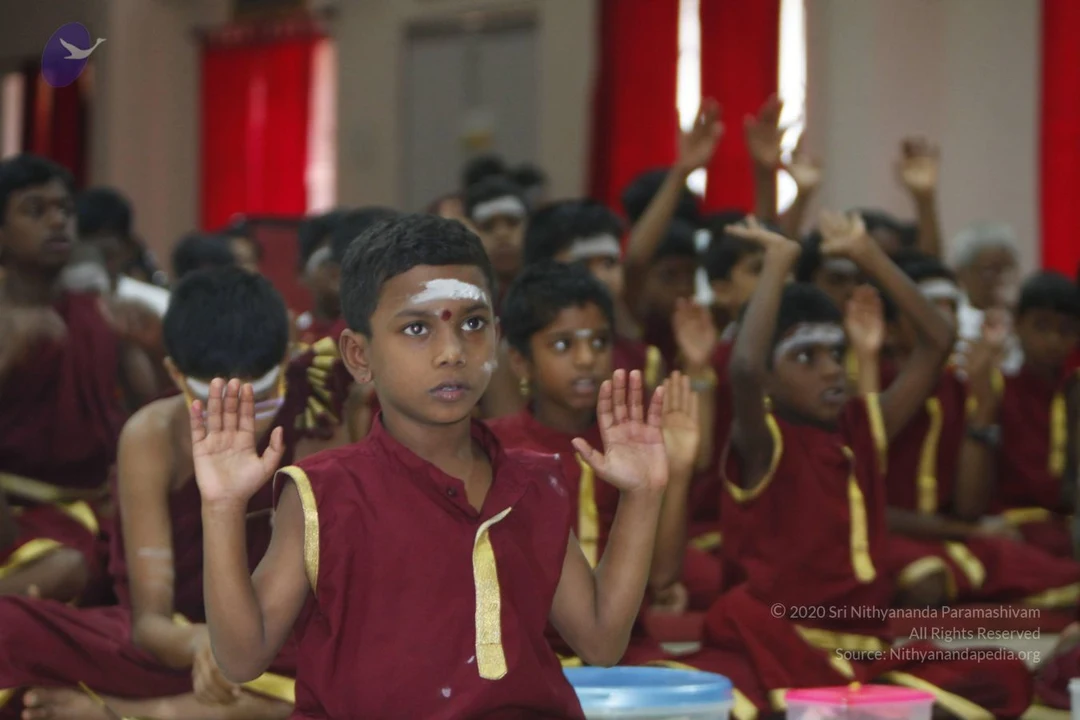
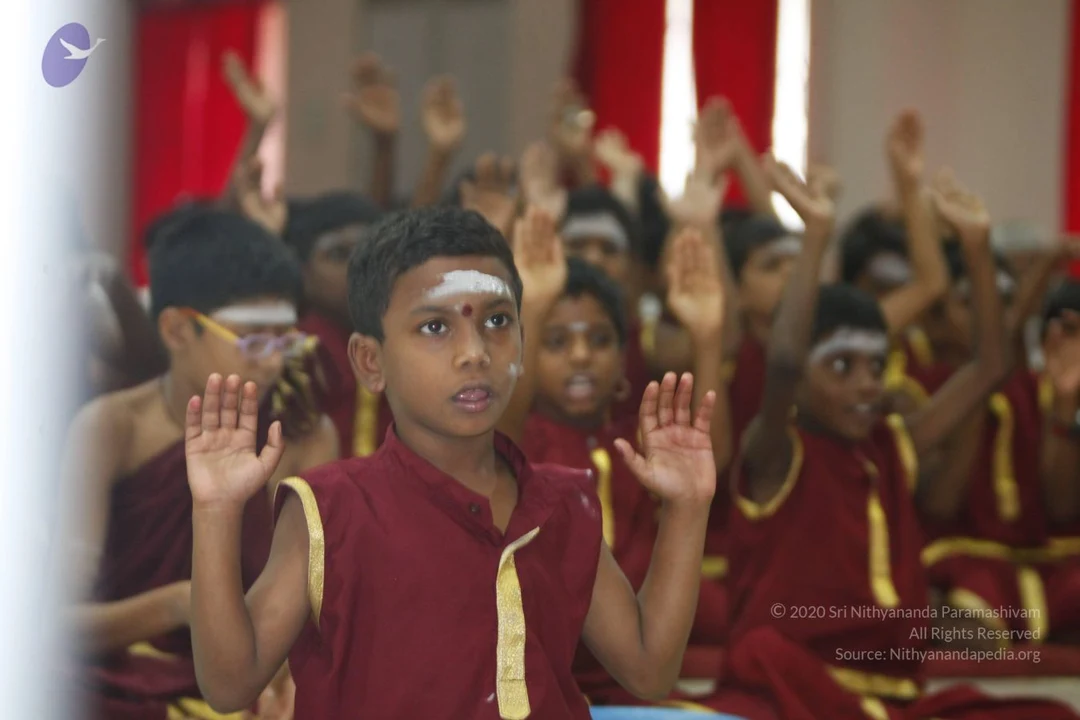
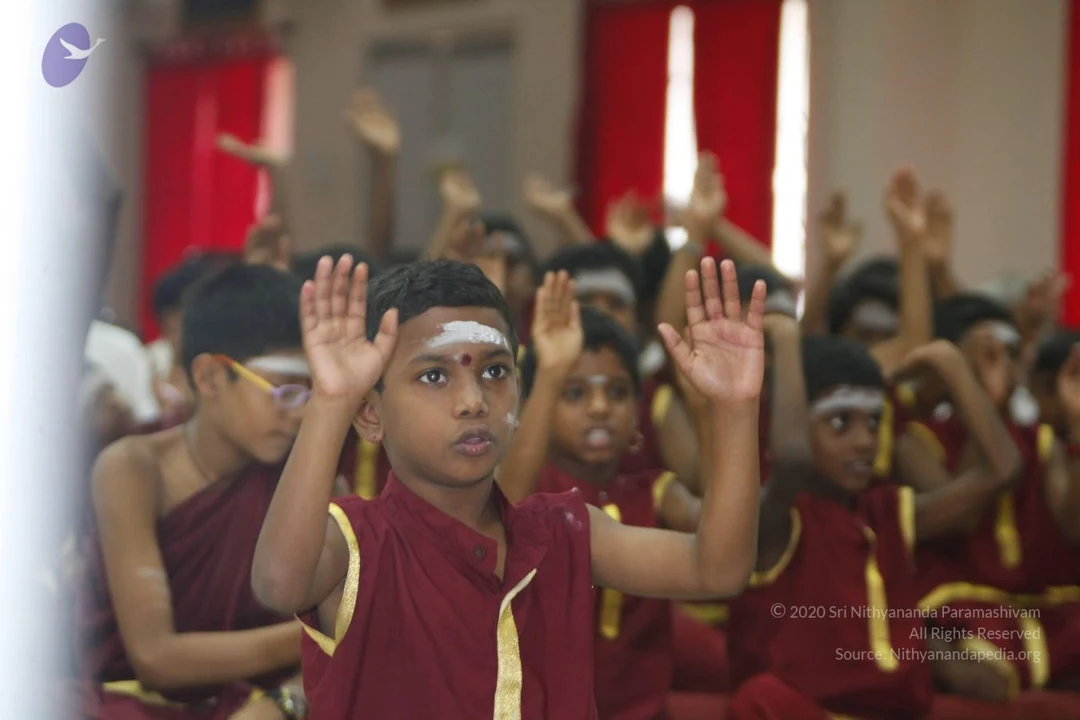
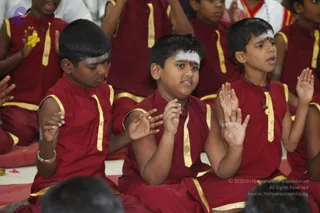
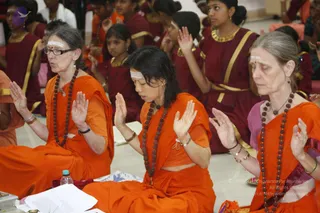
Several young boys sit closely together on a red floor mat, dressed in maroon kurta-style tunics with gold trim. Their foreheads bear white vibhuti marks, and the central boy also has a red kumkum dot. They raise their hands with palms open in a devotional gesture while chanting or singing, and some hold a yellow flower. Other seated children in matching maroon dress are visible behind them.A seated group of devotees chants during a satsang-style gathering in a hall with white flooring. In the foreground, three women in orange saffron robes wear rudraksha malas and have white vertical marks on their foreheads; each has palms pressed together in an anjali gesture. Behind them, young girls and women in maroon and gold-bordered dresses also sit with raised hands. A water bottle, papers and a small brass plate are on the floor in front.Two seated men in saffron-orange robes with rudraksha malas perform a ritual, palms raised in front of them. The man on the left has white and grey tilaka marks, a gold earring and a gold bracelet, and has his eyes open. The man on the right has white forehead markings, a red bindi, a gold bangle and a long rudraksha mala, with eyes closed. Behind them, other seated devotees in orange and maroon garments sit on mats, and red curtains and stacked red chairs fill the background. A small oil lamp glows near the mats. The scene is an indoor satsang or puja.Two shaved-headed young monastic devotees in saffron-orange robes sit side by side with palms pressed together in anjali mudra during a satsang, with white vibhuti horizontal lines on their foreheads. Both wear rudraksha malas; the one on the left also wears small gold earrings and glasses, and the one on the right has gold earrings and a beaded bracelet. Other monastics in orange sit blurred behind them against a red drape, with hands raised in prayer.Boys in maroon sleeveless kurta-style tunics with gold trim sit in a hall and raise open palms in a group gesture. The boy at centre-front has white vibhuti smeared across his forehead and speaks while looking off to his left. Other boys nearby also wear white forehead markings, and an older person in white clothes sits in the background. Red curtains frame the room and a purple bird logo appears in the upper left corner.A young boy in a maroon sleeveless tunic with gold trim sits cross-legged in front and raises both palms outward in an expressive gesture, with a white vibhuti line and red kumkum dot on his forehead. Behind him, many similarly dressed boys in maroon robes with gold borders sit in rows, several with white forehead markings, some with hands raised or resting on their knees. Red curtains hang in the background and a blue plastic container sits near the lower right.

SarvaDarshan

17 photosSource gallery
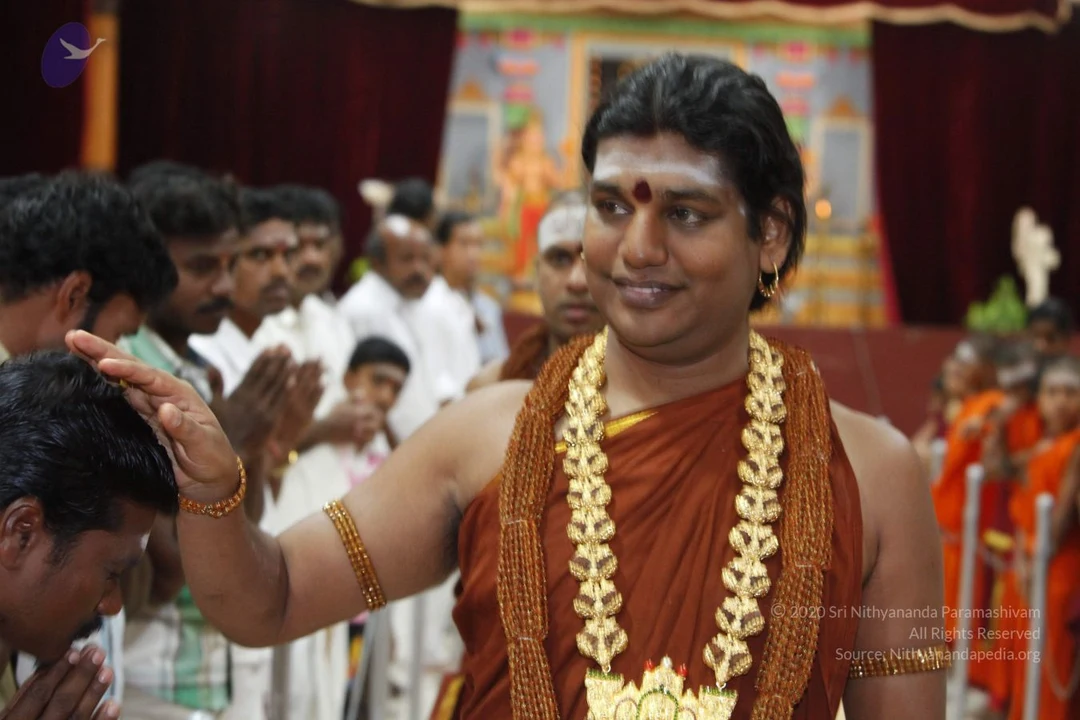
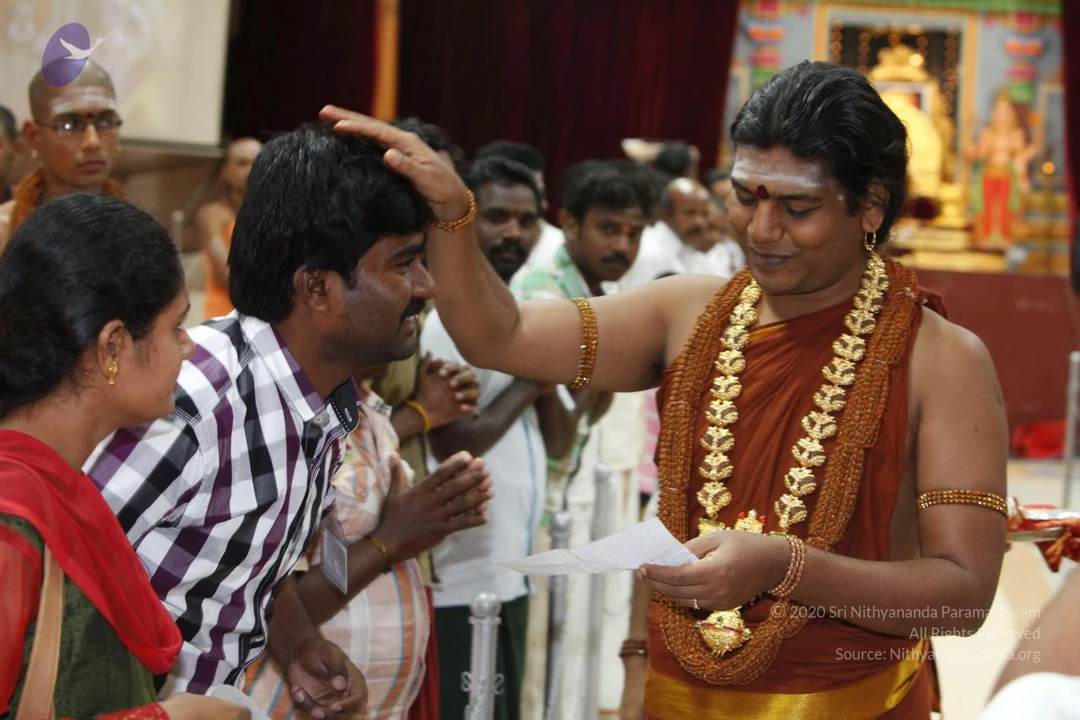
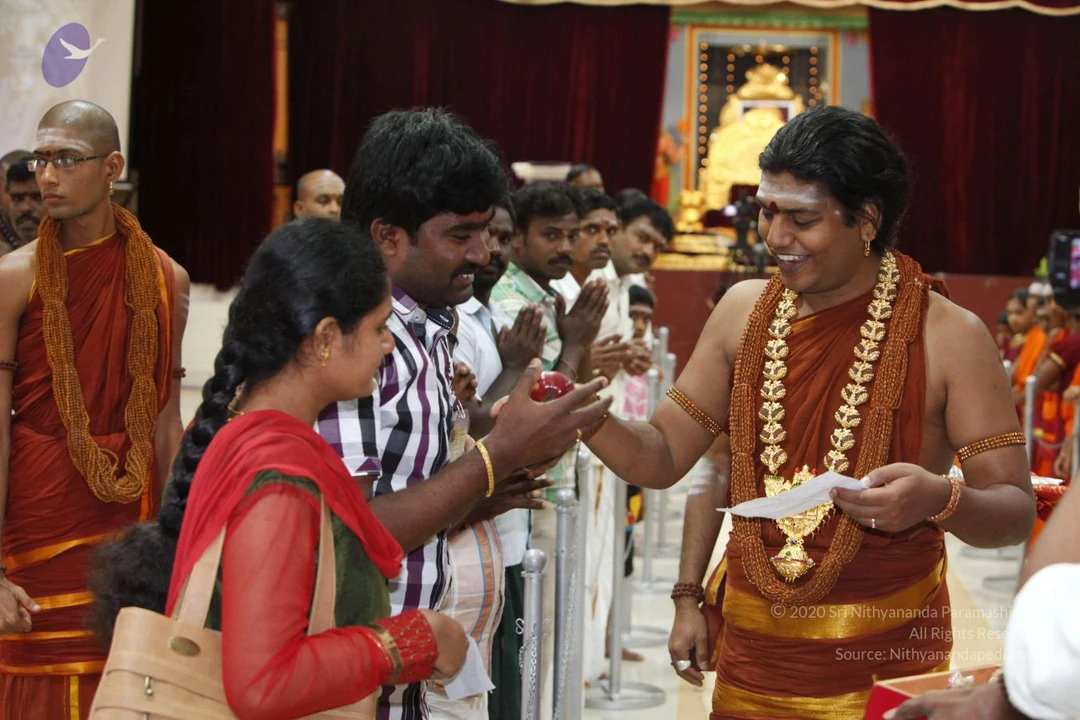
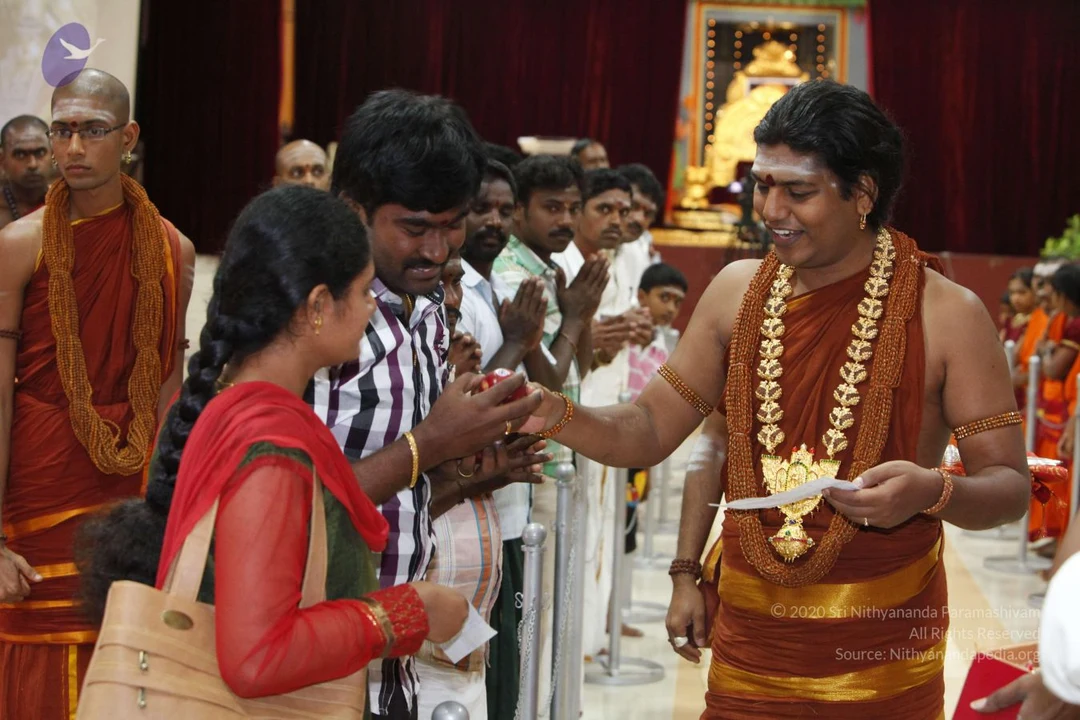
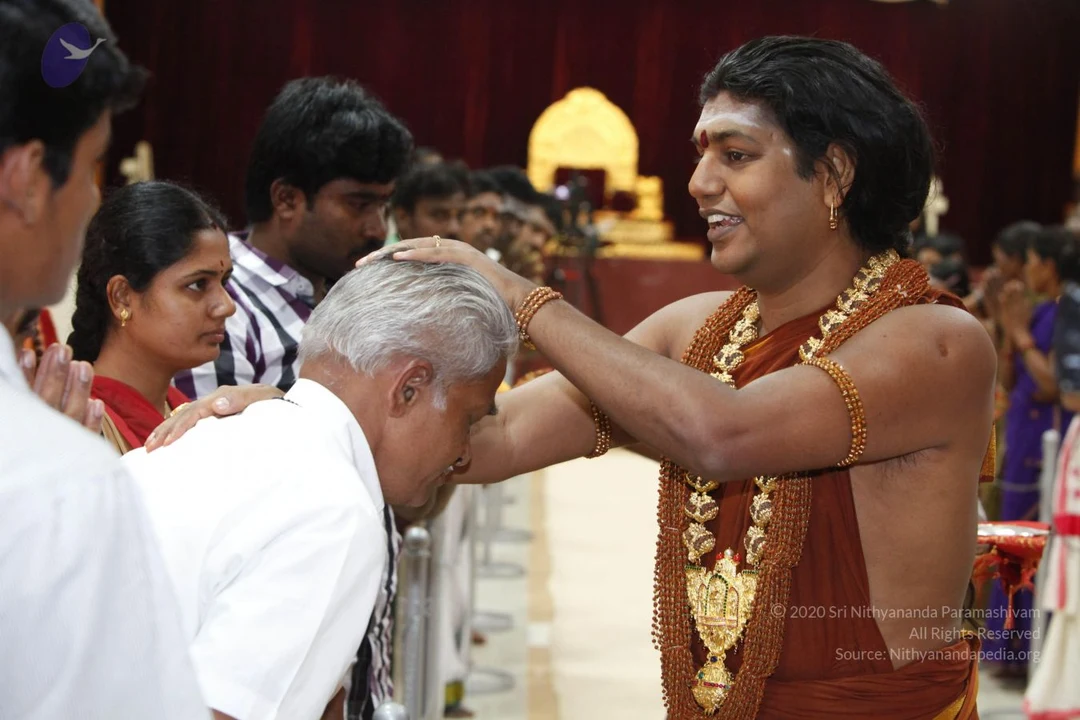
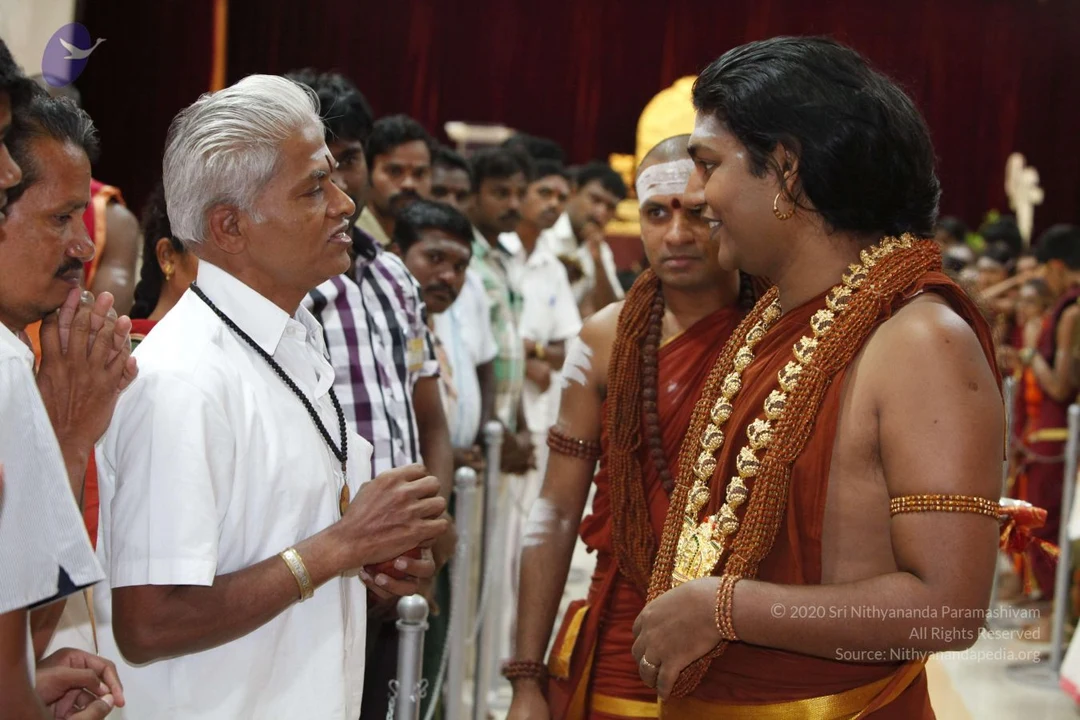
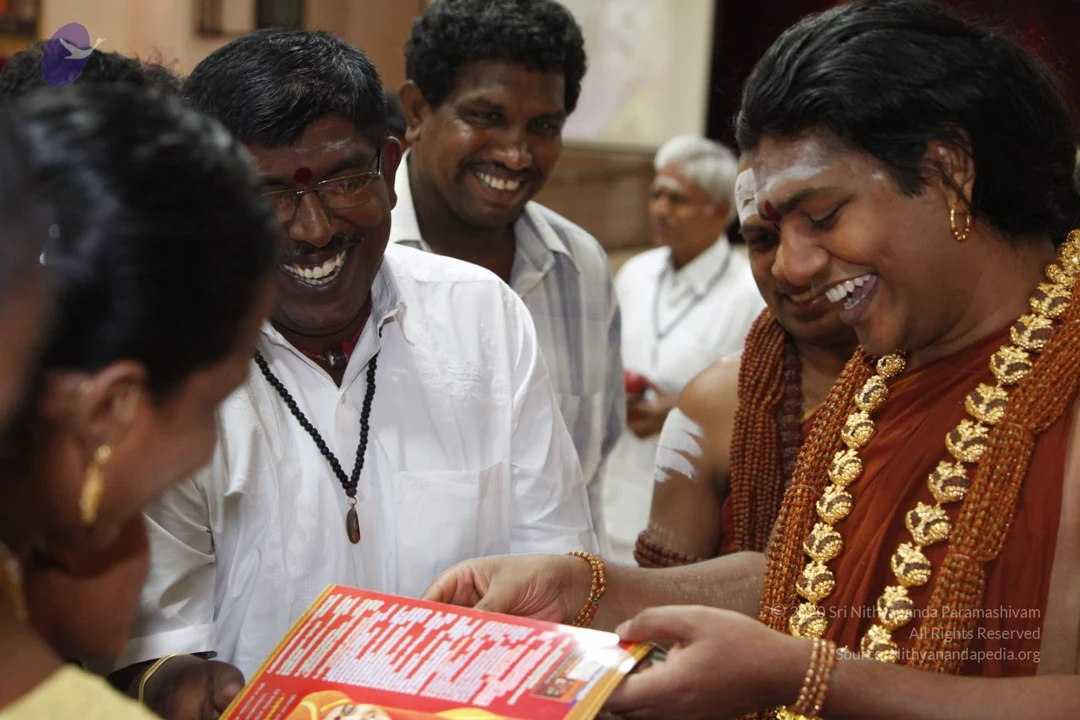
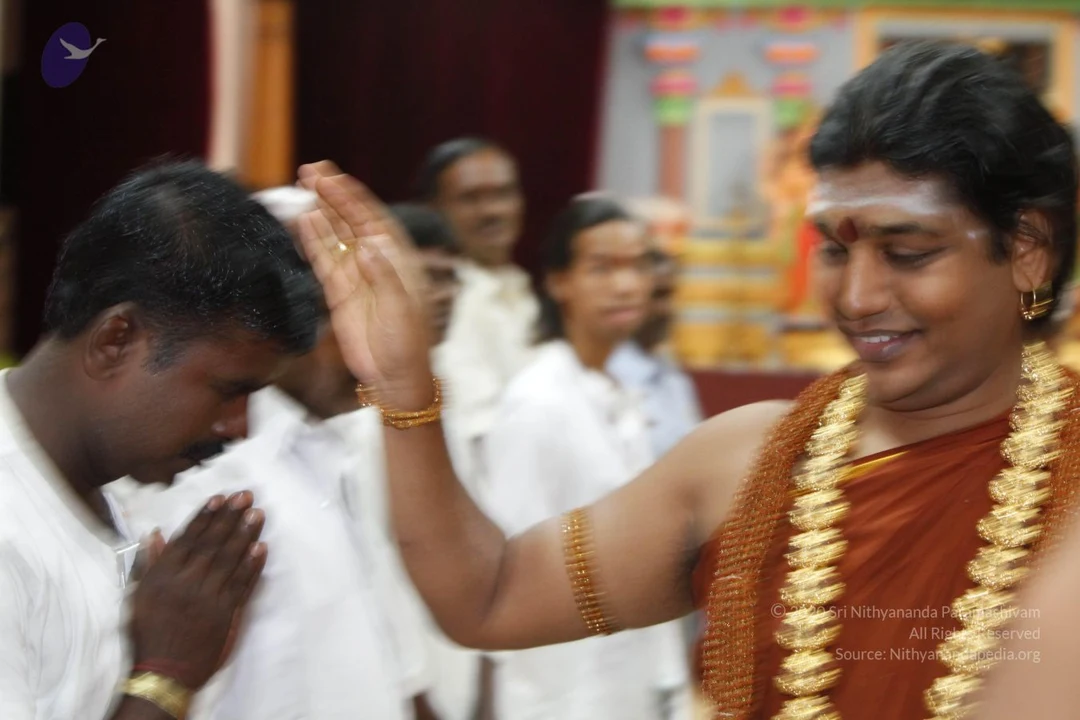
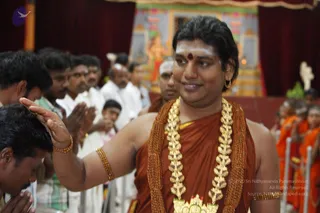
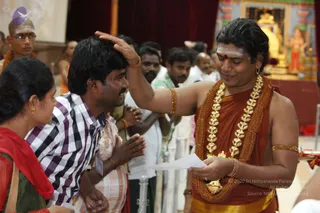
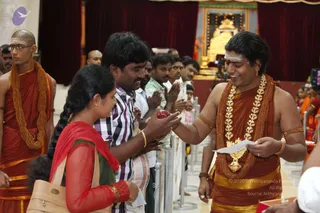
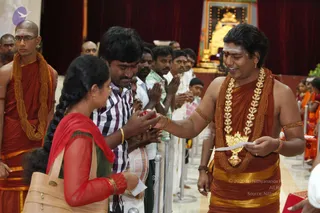
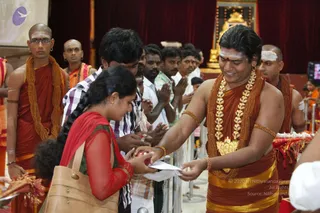
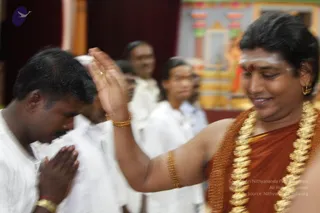
Photo of a smiling man with shoulder-length dark hair, white vertical tilak and red bindi on his forehead, wearing a rust-orange draped robe with a gold-and-beaded mala and gold bangles. He raises one arm toward a line of devotees in white and cream clothing on the left, who reach toward him. Behind him, a gold-toned deity murti and a saffron-robed assistant with a shaved head and white tilak stand in a red-curtained hall. Crowd members at the right wear orange robes. Swamiji (probable): long swept-back hair, ornate gold mala, orange robe and gold armlets fit the presentation of the central figure, who is shown greeting the crowd.A figure in a rust-orange cloth wrap with long rudraksha-style beaded malas and a heavy gold floral necklace stands at centre, raising one hand in blessing toward a kneeling devotee at lower left. The figure has long swept-back dark hair, a white sacred ash line across the forehead and a red bindi, with gold bangles on the wrist. Behind, men in white dhotis and shirts stand with palms pressed together, and a row of saffron-robed people stands along a barrier at right. A red curtain and a painted shrine backdrop with a deity image frame the scene. a person in the central role of receiving devotees.A photograph of a ceremonial blessing at a temple hall. A man in orange-red robes with a gold-bead necklace and gold armlets, a tilak and a red bindi on his forehead, places his right palm on the head of a man in a checked purple-and-white shirt, who has his hands folded. The blessed man is one of several people in front of them; a woman in a red shawl stands at left, and other devotees in white and light clothing stand behind. A man in white holding a sheet of paper is shown near the robed figure. A gold deity murti or altar is visible in the background at top right, with a red curtain and a shaved-headed man in white at top left. The robed figure is an appearance-based probable Swamiji (probable) with long swept-back hair, ornate gold necklaces and saffron-orange clothing, presiding over a blessing.A photograph in a temple hall with red curtains and a gold-decorated shrine in the background. A man with swept-back dark hair, orange-red cloth, a gold-and-bead garland, gold armbands and a gold pendant is smiling and handing a folded white paper to a woman in a red dupatta and green kurta. A young man in a striped shirt stands beside her with palms joined, and a shaven-headed young man in orange robes and a bead necklace stands at left. Several more people in white and orange clothes stand in a line behind the rope barrier, with a visible camera at right. a person: the central figure wears saffron-orange clothing, a gold ceremonial necklace and a rudraksha-style bead garland, with distinctive ornamental cues, and is in the role of giving paper to devotees.A photograph of a ceremonial gathering in a temple-style hall with dark red curtains and a golden deity murti or ornate throne in the background. A man with swept-back dark hair, a tilak on his forehead, a gold ornate pendant, a multi-strand rudraksha-style mala and an orange-saffron dhoti with a gold border is smiling and handing a folded paper and a red fruit to a young woman in a red top and green dupatta, who is holding out her hands. Behind them, a line of devotees in white and striped shirts stands with palms pressed together. On the left, a shaved-headed young man in saffron robes and a long orange mala stands near the line. Several other saffron-clad attendants and devotees stand along the rope barriers at the right.A photograph of a temple-style ceremony in a hall with dark red drapes and a golden shrine in the background. A figure in an orange-red ochre robe with a gold-thread shawl and layered gold ornamental necklaces, with a gold-bordered waist cloth and gold armlets, hands a folded white paper to a young woman in a red top and tan bag, who holds a red object. Around them stand several robed attendants with white forehead markings and devotees with folded hands applauding. a person: the central figure in saffron-ochre robes and ornate gold necklaces matches the page's reference to the Supreme Pontiff, presented as a probable identification from appearance cues.

Construction-Photos

5 photosSource gallery
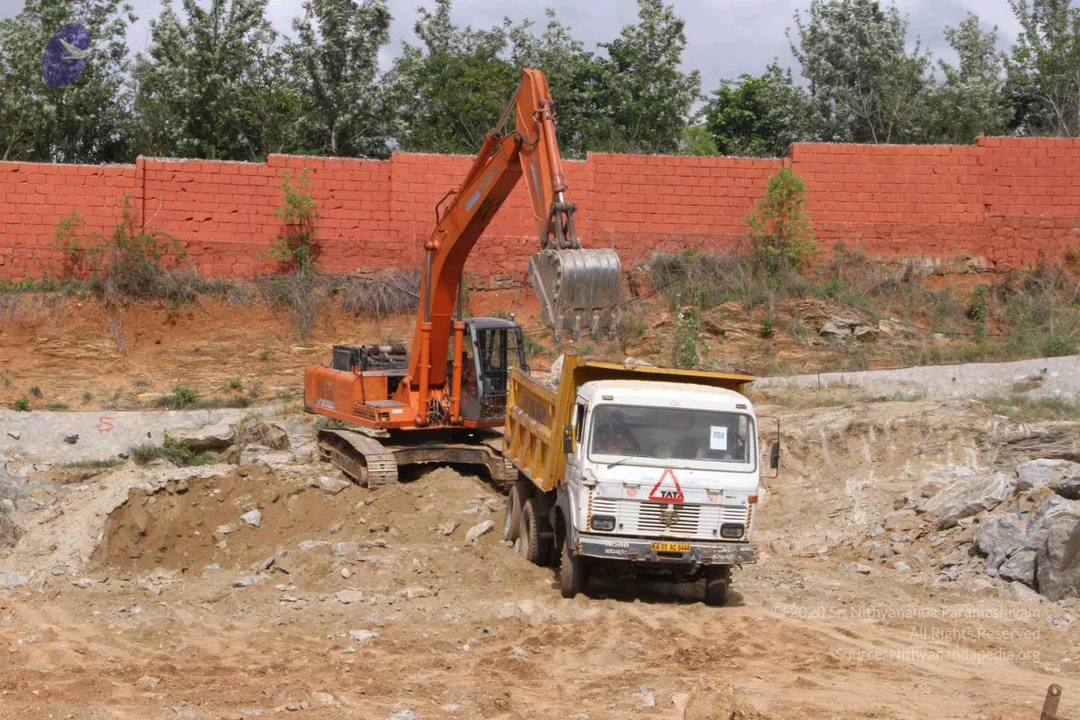
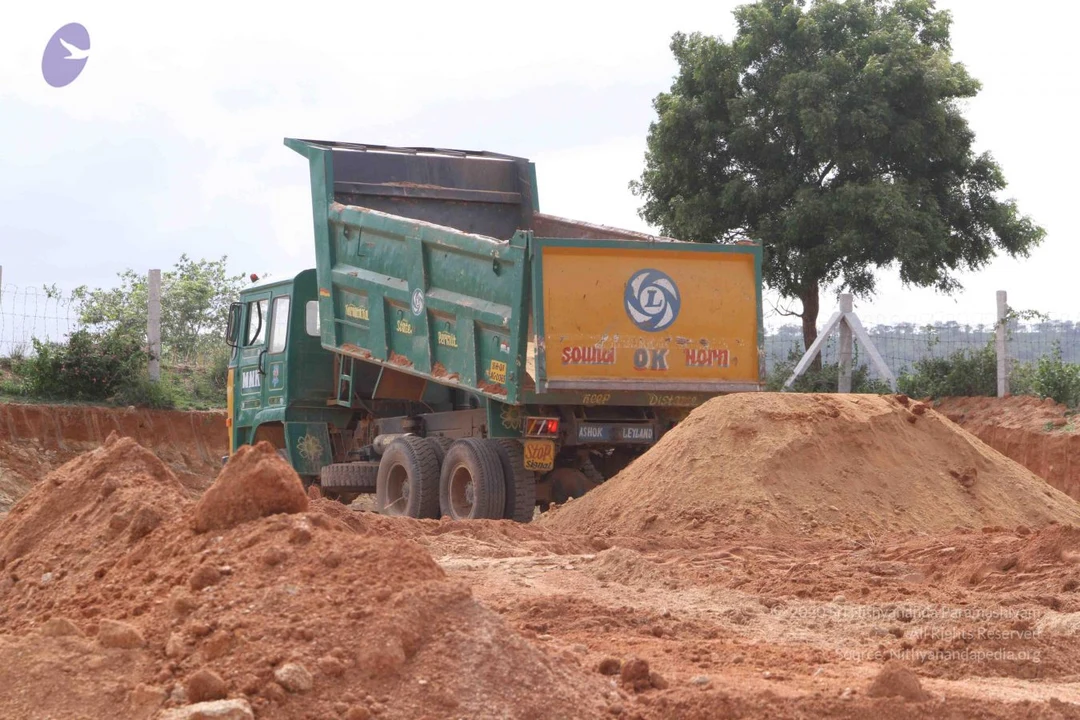
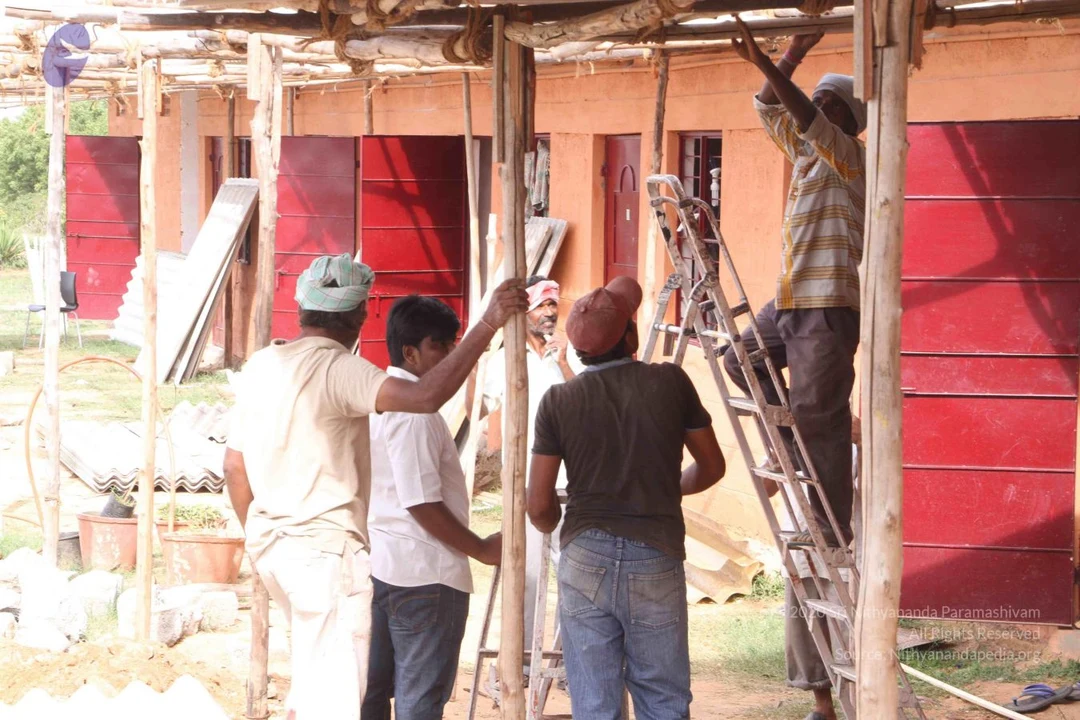
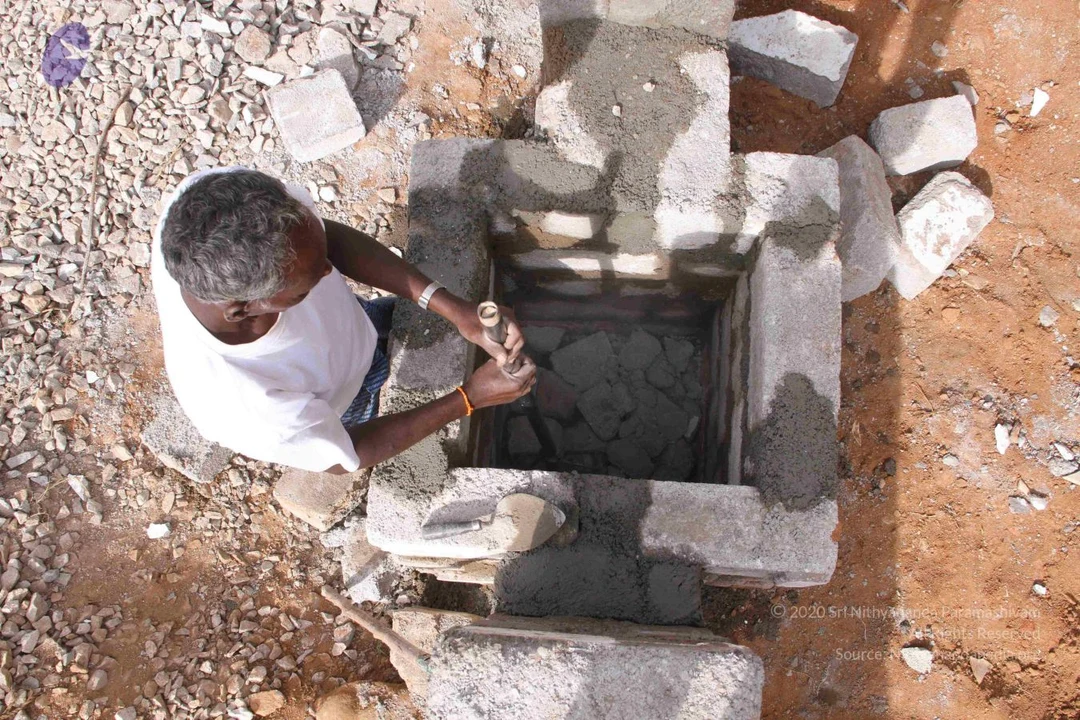
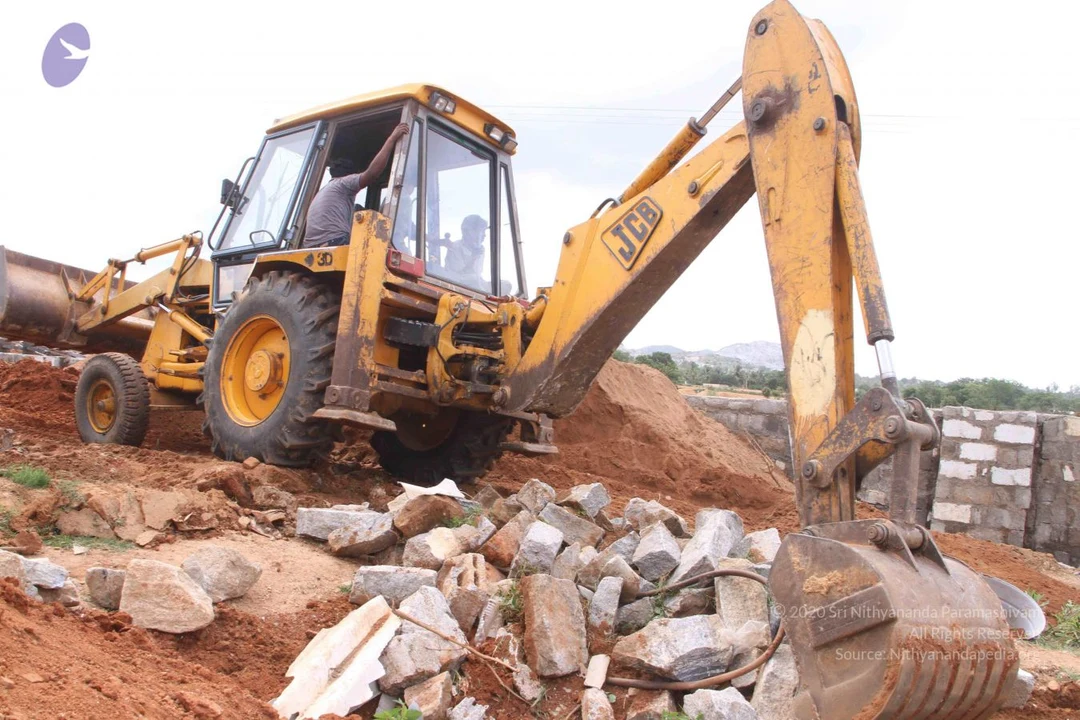
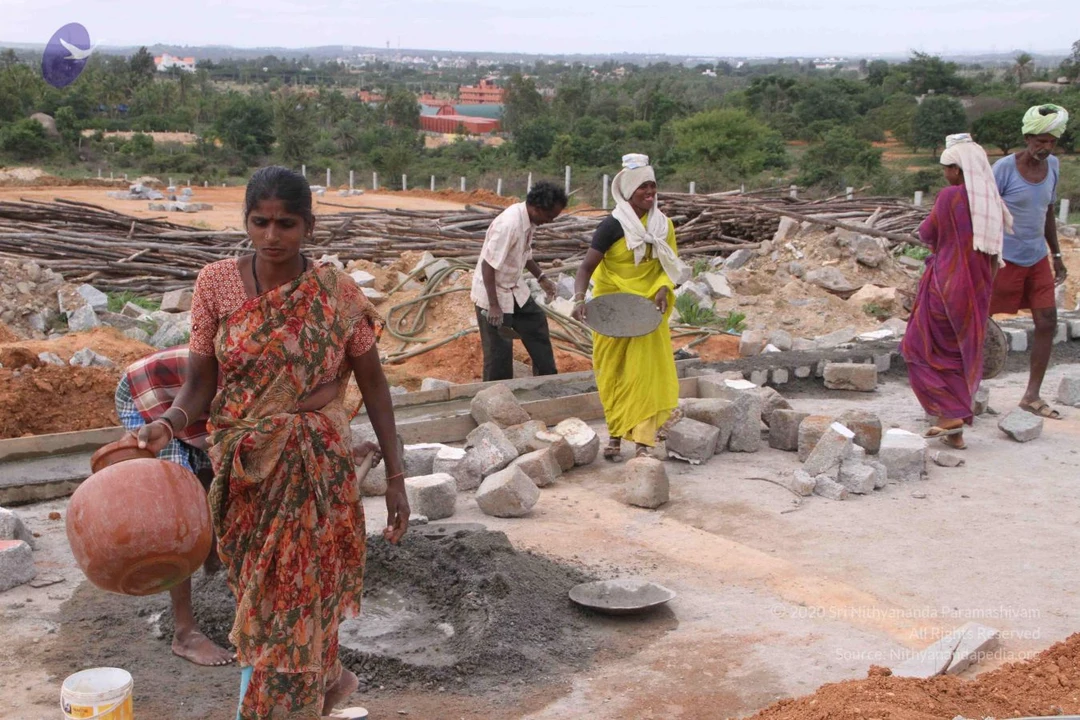
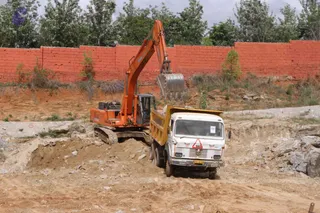
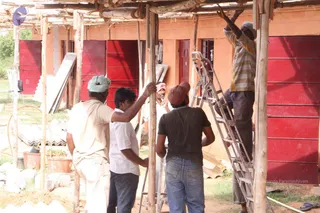
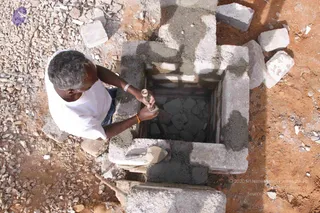
A construction site photograph showing an orange tracked excavator with its bucket raised, loading earth into a white and yellow TATA dump truck. A red brick boundary wall runs across the background behind scrubby bushes and trees. Piles of excavated reddish soil and grey rocks lie on the ground. No people are visible in the scene.A green and yellow Ashok Leyland dump truck is tipping red-brown earth onto a graded site. Two large piles of reddish soil sit in the foreground, and the truck's yellow tailgate reads SONIA OK HOPE. A tall green tree and a wire fence stand beside the plot, with no people visible.Outdoor construction work beside a terracotta-coloured building with red wooden doors and shutters. A man in a striped shirt and dark trousers stands on a metal ladder, reaching up to a wooden beam of a timber pergola frame. Three men stand below in conversation: one in a beige shirt and green checked head cloth holds a vertical log, another in a white shirt and jeans stands beside him, and a man in a dark t-shirt and red cap faces the frame. A fourth man in a white shirt and red head cloth stands behind them. Stacked corrugated sheets, pots with plants and a coiled hose lie on the ground, with green shrubs behind.Overhead photo of a construction site showing a man in a white shirt and blue shorts, with grey hair, kneeling beside a square concrete-block pit filled with rubble and dark stones. He holds a small metal tool and works at the edge of the pit. Scattered grey concrete blocks, gravel and bare reddish-brown earth surround the pit. A lone worker on a building site.A yellow JCB backhoe loader excavates reddish soil and piles of grey stones on a construction site. A man in a grey shirt sits in the operator's cab, gripping the controls, while a second person is partly visible behind the glass. The bucket rests among scattered rubble, with a low brick wall and distant hills and trees in the background. No ritual, a person or event activity is visible.

SacredArtsConstruction-Photos-Swamiji

8 photosSource gallery
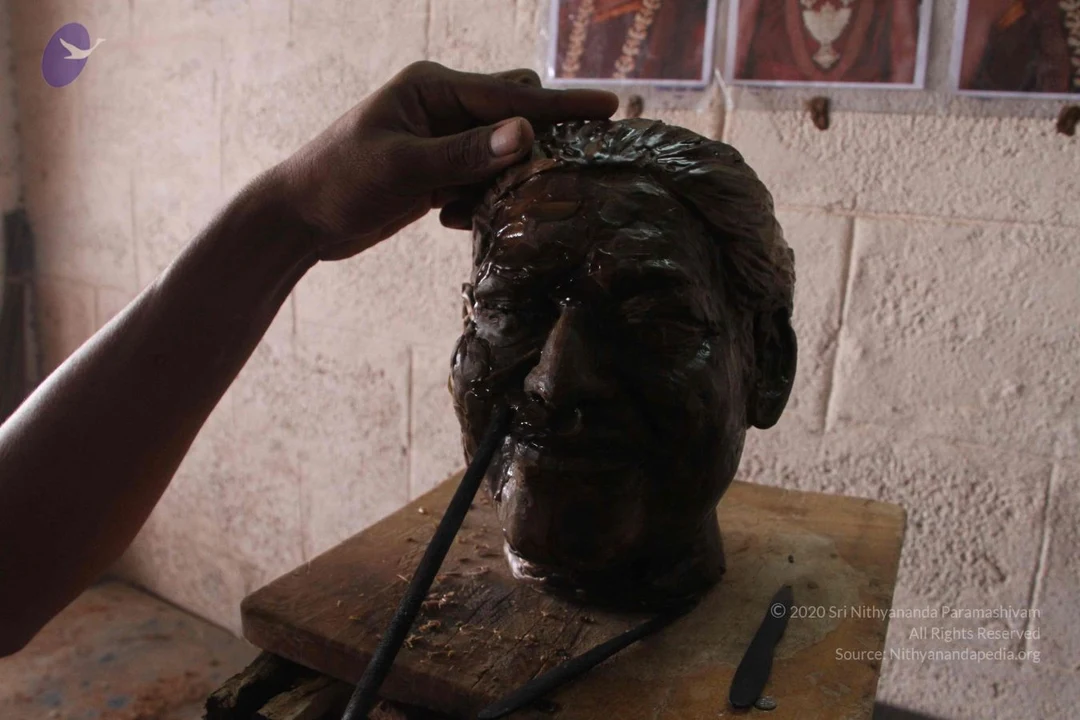
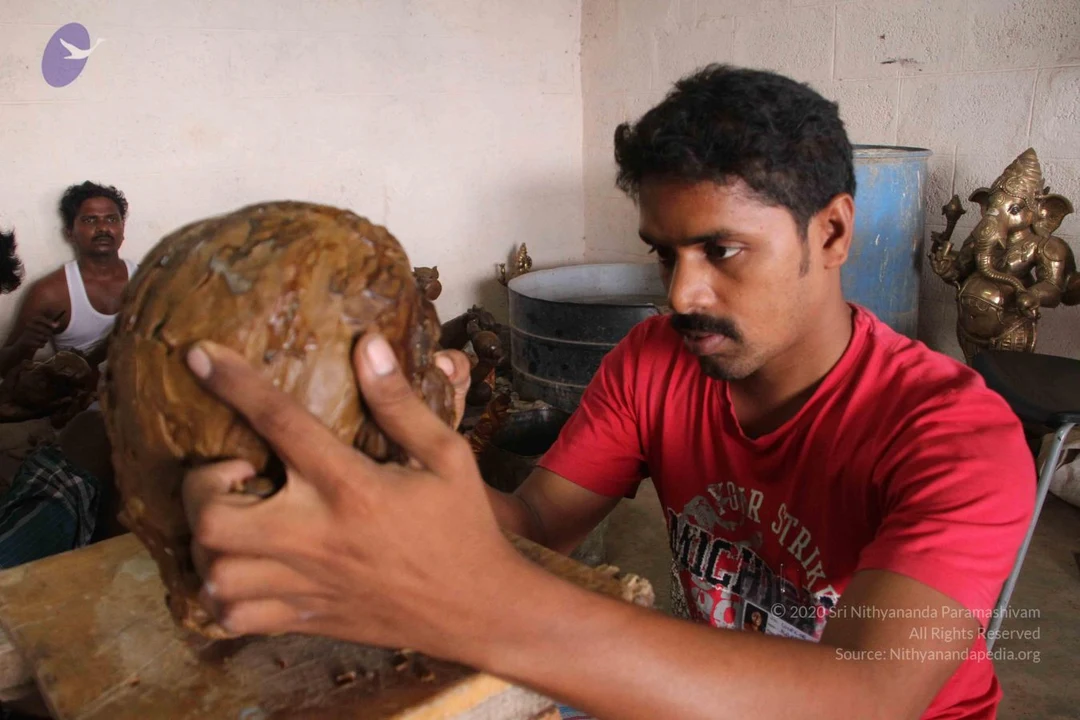
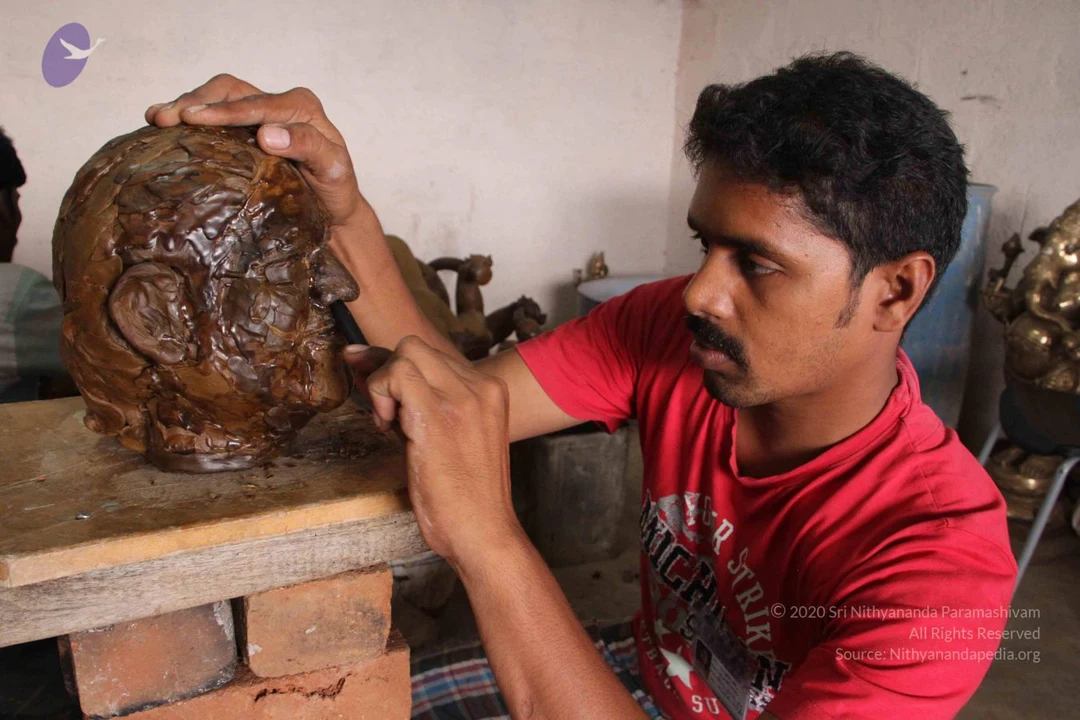
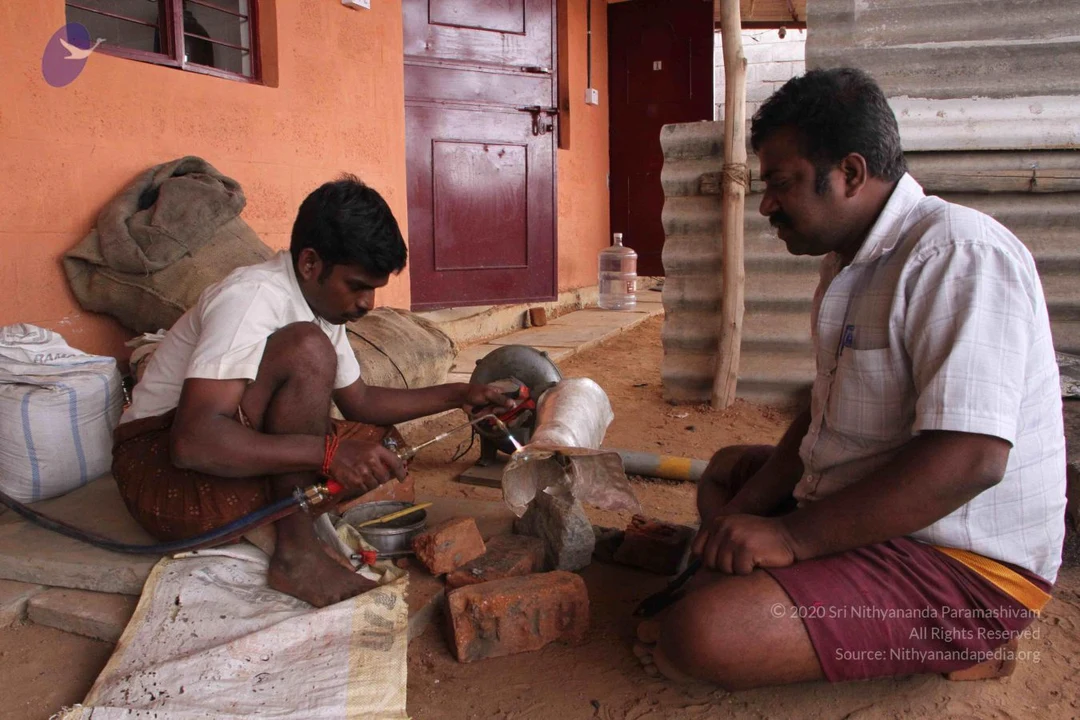
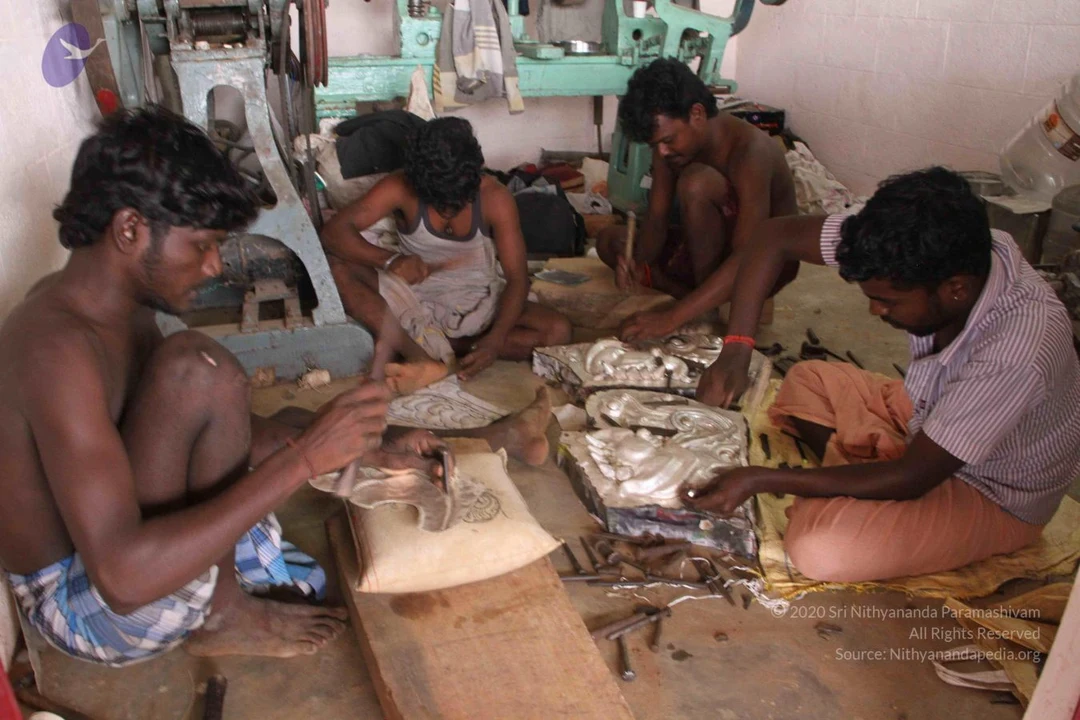
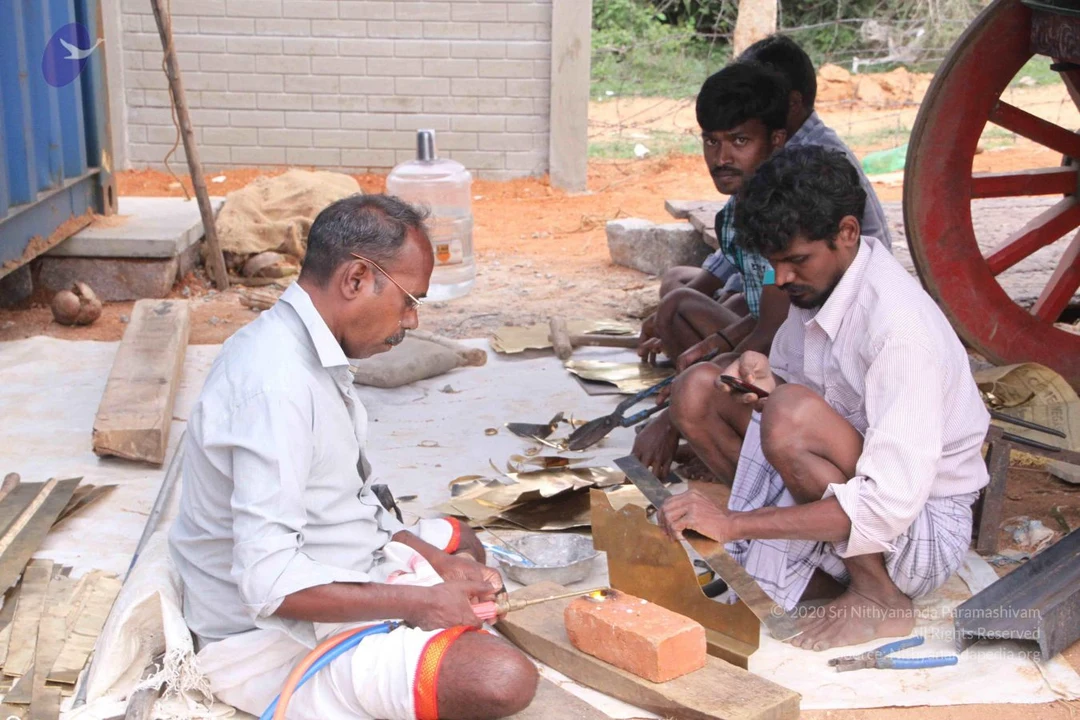
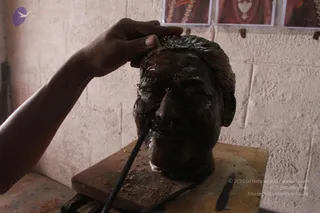
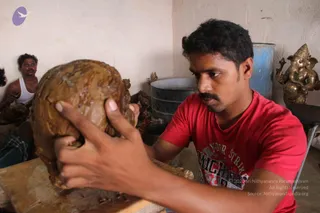
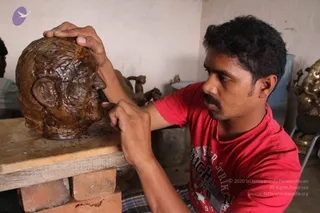
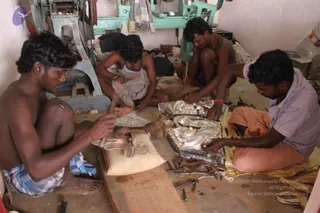
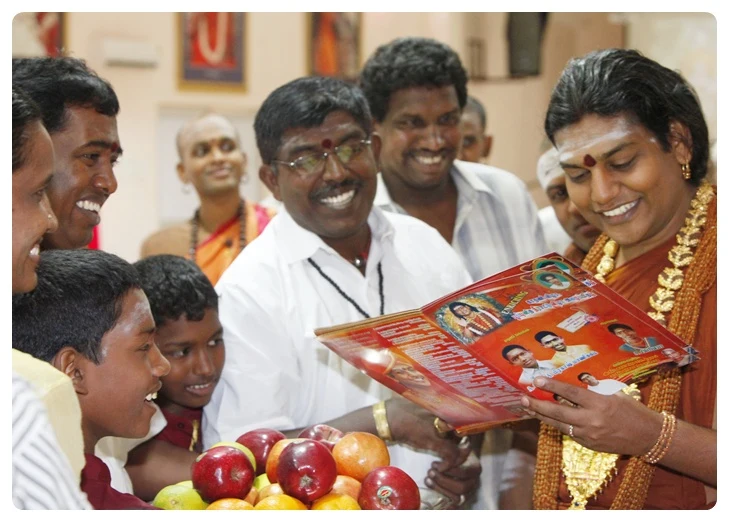
A clay or wax sculpture of a male head on a wooden board is being shaped by a hand with a sculpting tool. The head has short swept hair and a smooth face with a prominent nose. A hand and forearm enter from the left. Behind the bust, a plain whitewashed block wall displays three small framed photographs of ornate red and gold clothing, garlands and a decorative ceremonial vessel. A sculpting stick and a knife rest on the board. No physical people are visible beyond the hand, and the head is a sculpted likeness, not a person present in the scene.A young man in a red t-shirt with a graphic print sits in a workshop and shapes a large brown clay mould with both hands, his eyes focused on the work. Behind him a second man in a white vest sits near a workbench. A brass Ganesha figurine stands on a shelf at right, beside a blue metal drum and a wall of bare cement blocks.A man in a red t-shirt with a printed graphic sits at a wooden workbench in a plain whitewashed workshop, carefully shaping a large brown clay head with a modelling tool in his right hand while his left hand steadies the sculpture. Behind him are other clay and metal figures, including a golden Ganesha statue on the right and a blue barrel. The sculptor is focused on the facial details of the clay head.Two men work outdoors on bare red earth in front of an orange-painted building with a maroon door and a corrugated metal wall. The man on the left, in a white shirt and maroon-and-red cloth, crouches with a torch or blowpipe over a small metal vessel set on red bricks, using a hose and gas fitting. The man on the right, in a white checked shirt and maroon cloth with yellow border, sits cross-legged beside him holding a tool and watching the work. A sack and a plastic water bottle sit nearby.Four men sit on a floor in a workshop crafting silver or metal relief panels with hand chisels and tools. Two men on the left and centre work on pieces resting on a wooden board and cloth; the man on the right in a striped shirt and orange lungi works on ornate silver-toned relief figures. Scattered metal tools lie on the floor, and a green industrial machine stands behind them against a white tiled wall.Three men sit on the ground at an outdoor work site beside a red-spoked wooden wheel and a blue-painted metal container. The man on the left, in a white shirt with a red-and-white cloth at his waist, wears glasses and uses a small torch-like tool on a brick, with a bowl of metal bits beside him. Two younger men in striped shirts and checked lungis sit on the right, one working with a long metal blade and the other holding a small tool. Scattered sheet metal, scraps, hand tools and a brass-coloured piece lie on a white cloth. A large water jug and a brick wall stand in the background. The scene shows manual metalwork or craft.

LotusLiveSwamiji

20 photosSource gallery
A man stands behind a clear acrylic lectern, speaking into a headset microphone. He wears an orange-red shawl over bare shoulders, gold-and-rudraksha style necklaces with a gold pendant, gold bangles and a red bindi with white vibhuti marks on his forehead. Behind him a large painted portrait shows an orange-red turban and a close view of a face with a smiling mouth and eyes. A green curtain edge and a carved wooden pillar frame the left side. a person, speaking at the podium during a satsang discourse, with a crowd not visible.A person in a saffron-orange shawl stands at a clear acrylic lectern, speaking into a headset microphone. He wears a rudraksha mala with a gold ceremonial necklace, gold bangles, and a red bindi with white forehead markings. Behind him a large printed backdrop shows an enlarged close-up of a face with an orange draped cloth. Speaking at a satsang discourse; the image shows one speaker.A man in orange-saffron robes stands behind a clear acrylic lectern, speaking into a headset microphone. He wears a rust-orange shawl over bare shoulders, a rudraksha-style brown bead mala, layered gold ceremonial necklaces, a gold armlet, gold earring and a red kumkum dot with white vibhuti lines on his forehead. Behind him is a large enlarged portrait of a face with red and white markings and prominent eyes. a person, speaking as a discourse speaker at a satsang lectern.A man with swept-back dark hair stands behind a clear acrylic lectern, speaking into a headset microphone. He wears orange-red draped robes, layered rudraksha beads, a long gold ceremonial necklace and gold bangles, with a red bindi and white tilak on his forehead and gold hoop earrings. His hands are clasped on the lectern. Behind him a large backdrop shows enlarged close-up eyes with red-tinted make-up. The appearance matches the a person cues of ornate saffron clothing, rudraksha and ceremonial gold, presented as a speaker at a satsang discourse.A man seated behind a clear acrylic lectern speaks into a small headset microphone during a discourse. He wears a rust-orange shawl over bare shoulders, with a thick rudraksha-style mala of dark beads and layered gold ceremonial necklaces. Gold bangles are on his upper arm, gold hoop earrings are in his ears, and he has white horizontal tilak lines with a red dot on his forehead. His hair is dark and swept back. The blurred background is in red, orange and cream tones. Swamiji (probable) appears in this single-person photo, based on the orange shawl, rudraksha mala, gold necklaces and swept-back hair.A man stands behind a clear acrylic lectern, gesturing with his right hand raised near his chest while speaking into a head-mounted microphone. He wears a rust-orange saffron wrap draped over bare shoulders, with gold armlets and bangles, a thick multi-strand rudraksha-style mala, and a large ornate gold pendant with a temple-shaped design set with coloured stones. He has a red bindi and white tripundra markings on his forehead. Behind him is an enlarged backdrop photograph of a face showing eyes and red-orange tones. Only one physical person is present.

Temple
56 photosSource gallery
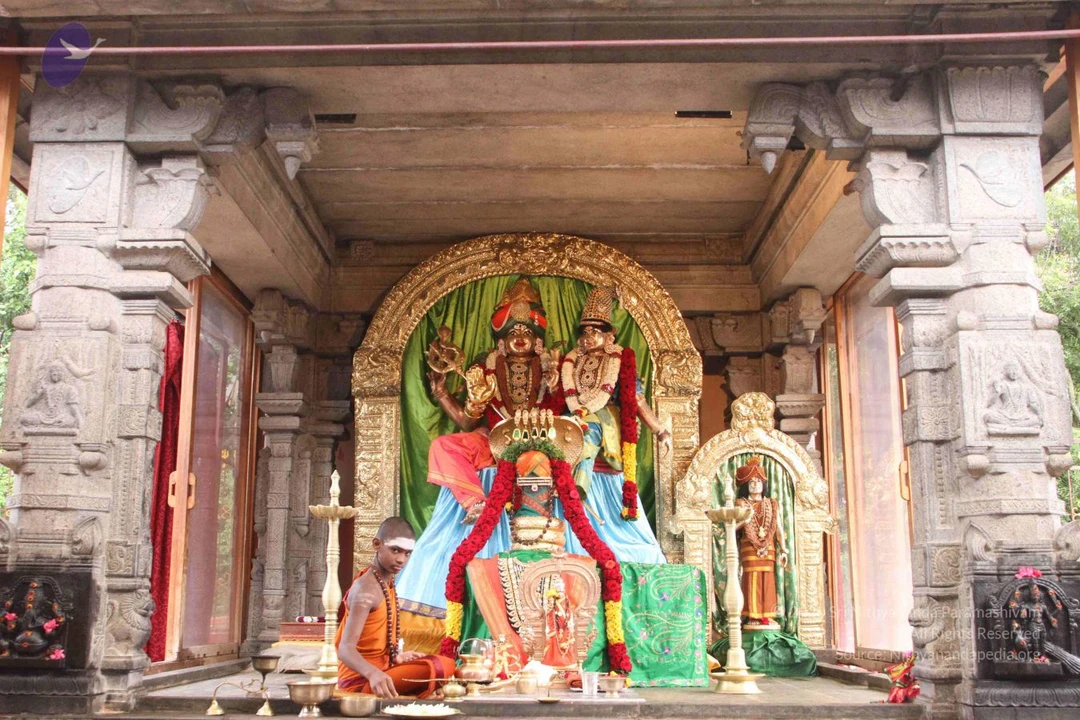
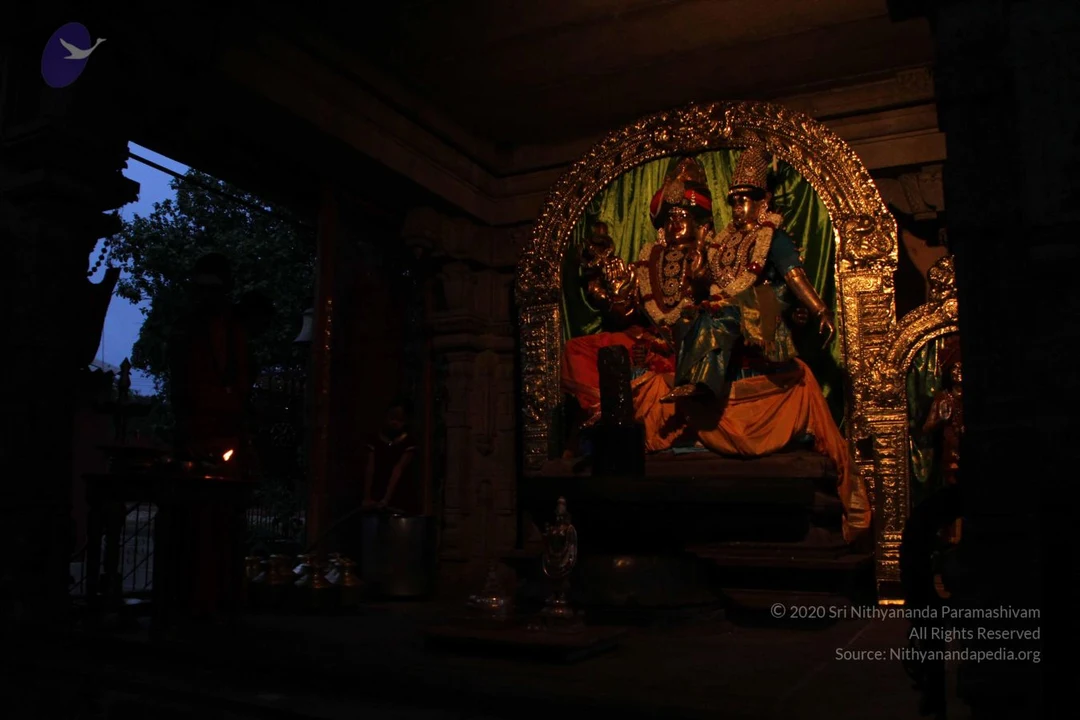
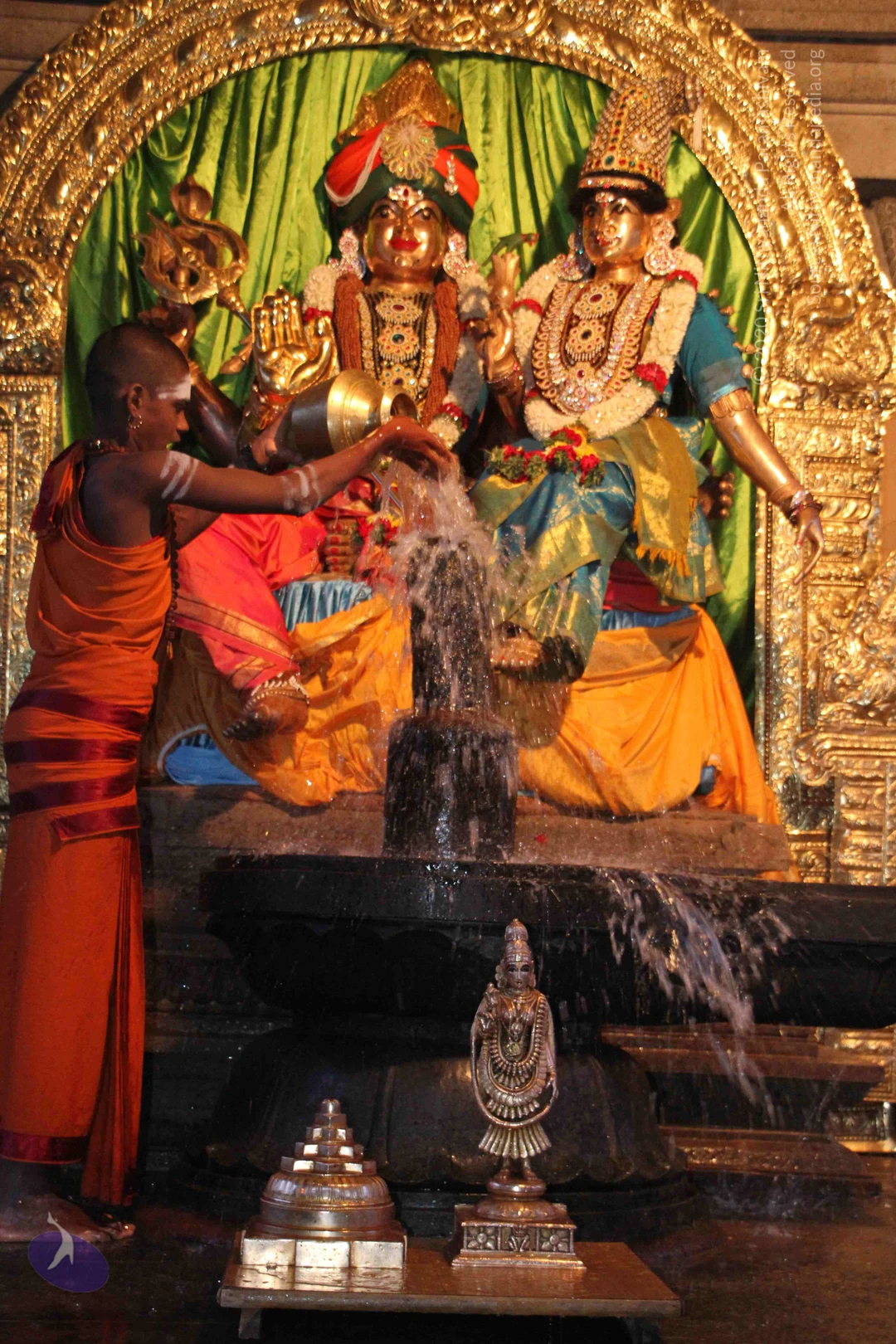
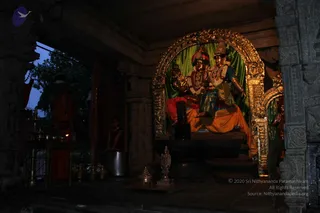
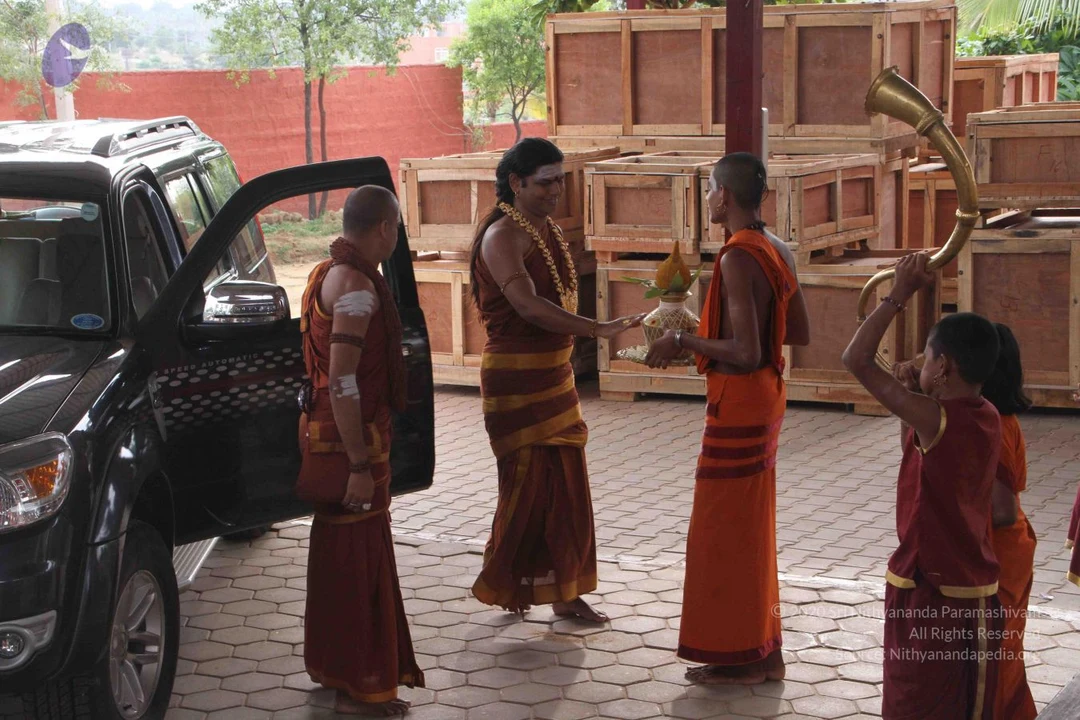
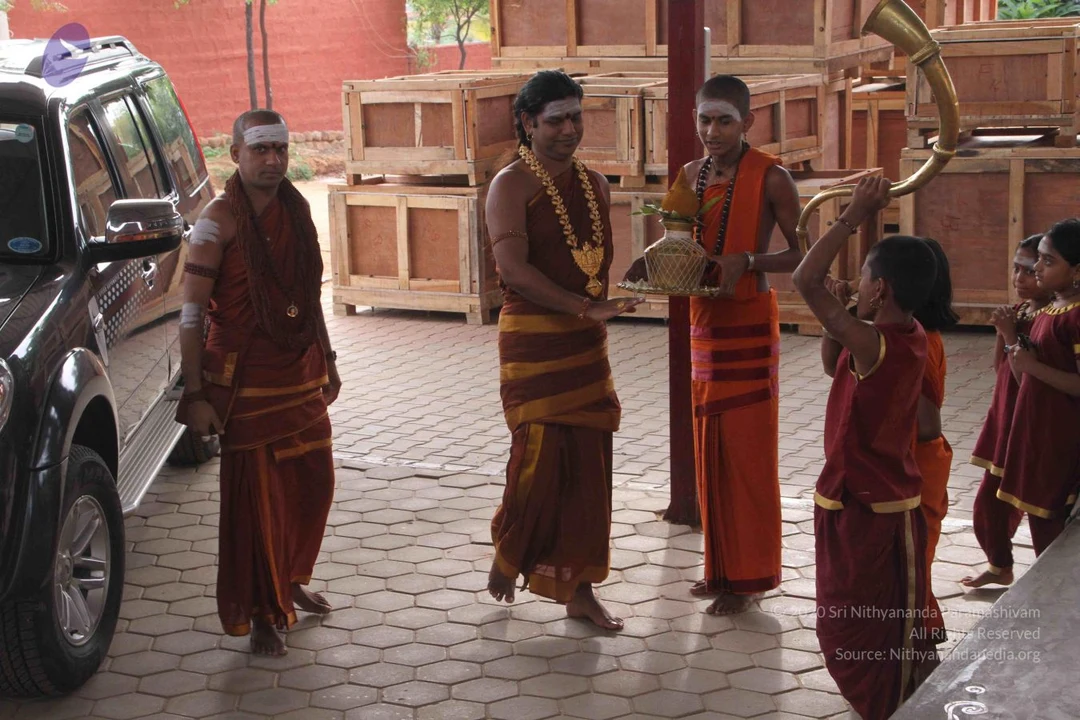
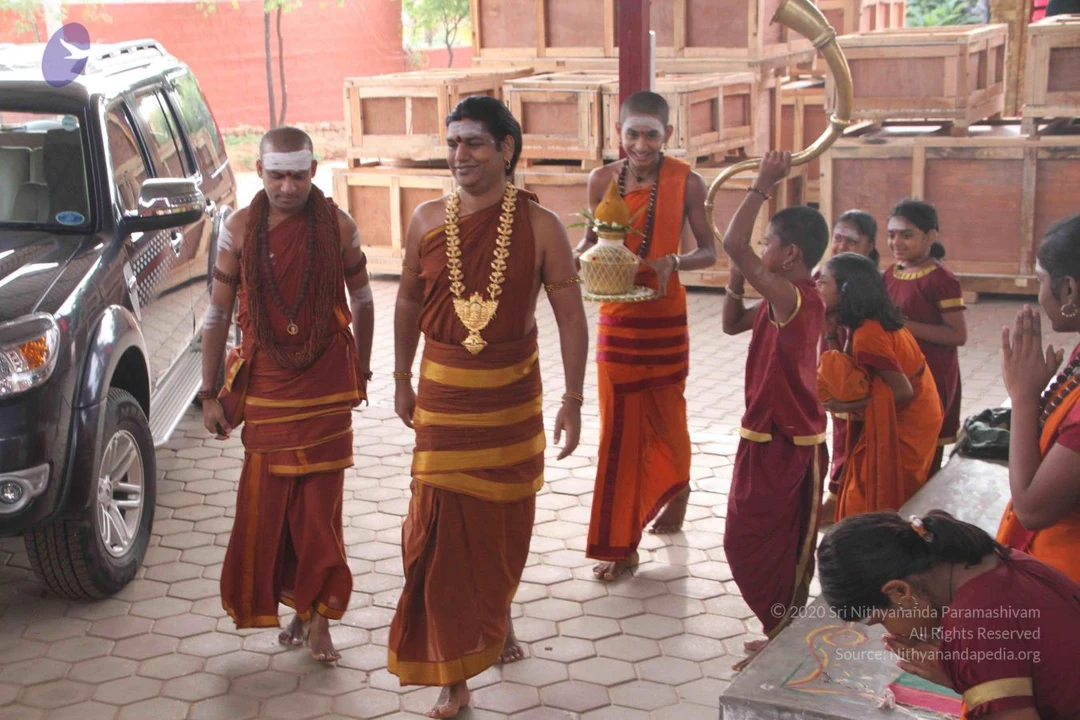
A dimly lit temple shrine at dusk shows two gilded deity murti seated side by side inside an ornate golden arch framed by green drapery. Both figures wear orange and red garments, crowns, and floral garlands, and one holds a ceremonial object. To the left, small oil lamps and brass vessels sit on a low stand near an open doorway with a tree visible outside. A single figure stands in shadow near the lamps. No a person candidate is clearly visible; the scene is a shrine with deity murti and lamps.Photograph of a dimly lit temple shrine at dusk with a deity murti pair seated within a gilded arch backed by green drapery. The central figures wear red and gold garments, garlands and ornate crowns, and a black stone lingam sits on the altar base in front. Brass oil lamps stand on the left, and a standing figure in orange robes and a rudraksha-style mala is visible at the left edge beside a lamp stand, with a small figure in dark clothing nearby. Carved stone pillars frame the scene, with a window showing trees outside.Interior of a stone temple shrine with a golden arched frame and green backdrop holding a pair of deity murtis, one with a red and green headdress and one with a tall crown, decorated with garlands and a dark shivalinga-like stone on a black pedestal. At left, a man in an orange robe with rudraksha beads stands beside a table holding brass vessels and oil lamps. A young girl in a maroon dress stands near a large steel vessel. Another gilded deity figure stands in a side niche at right, and a small brass figure sits on the platform in front.Two young men in monastic-style dress stand outdoors at dusk beside a wooden window frame and a red curtain. The man on the left, in a deep red garment, holds an open book and reads aloud, with white horizontal marks on his forehead, a red dot between his brows, a small earring and a bracelet. The man on the right wears an orange-saffron wrap, a long rudraksha mala, white marks on his forehead and shoulders, and a hoop earring, and stands with eyes lowered, listening. Leafy trees are visible through the window.A temple shrine with gold-framed arch and green drape holds two deity murtis: a figure in red-and-green turban and garlands, and a figure in gold crown and blue-gold sari with garlands. A shaven-headed priest in saffron-orange dhoti and shawl stands at the front, pouring liquid from a metal vessel over a black shivalinga on a dark pedestal, with a kalasha-style pot held in his hands. A seated woman in red attends at left beside a brass lamp and bowl. A statue of a standing figure in orange with rudraksha mala appears at right edge. The scene shows abhishekam at a temple shrine.Golden shrine arch framing two gilded deity murti seated against a green drape. The left figure wears a red and green turban, the right a tall crown; both are heavily adorned with jewelled necklaces, white and red flower garlands. A shaved-headed priest in an orange dhoti and saffron shawl, with white tripundra markings on his forehead, pours water over a black shivalinga from a metal pot as an abhishekam. The shivalinga sits before the deity figures on a stone base. Warm lamplight illuminates the scene.
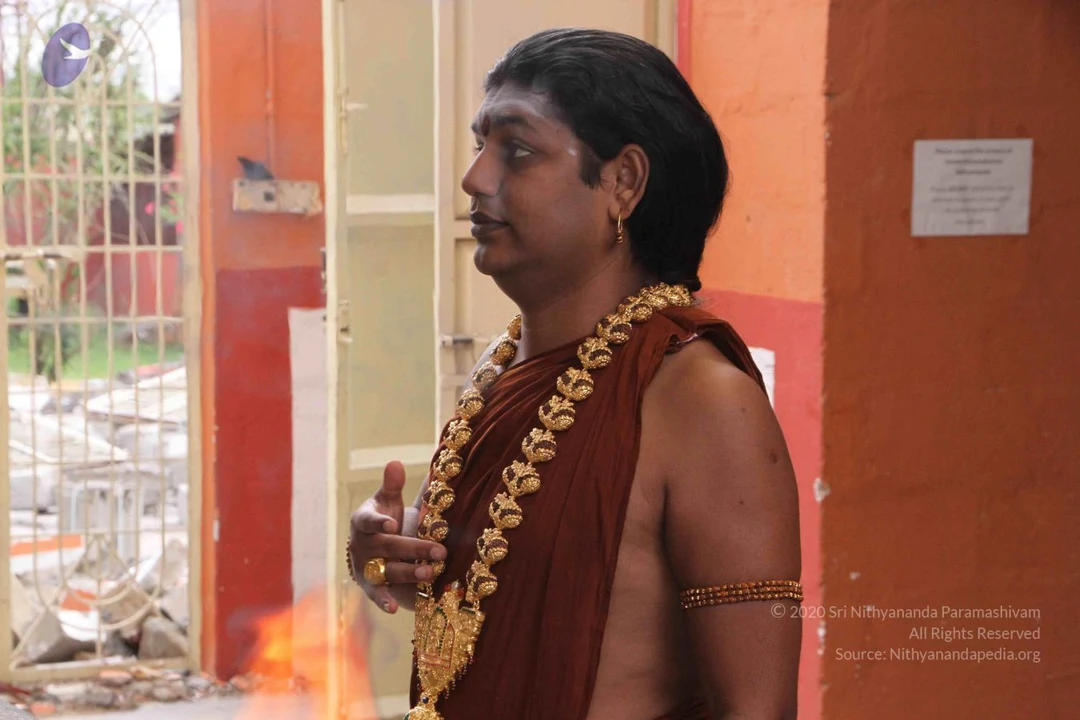
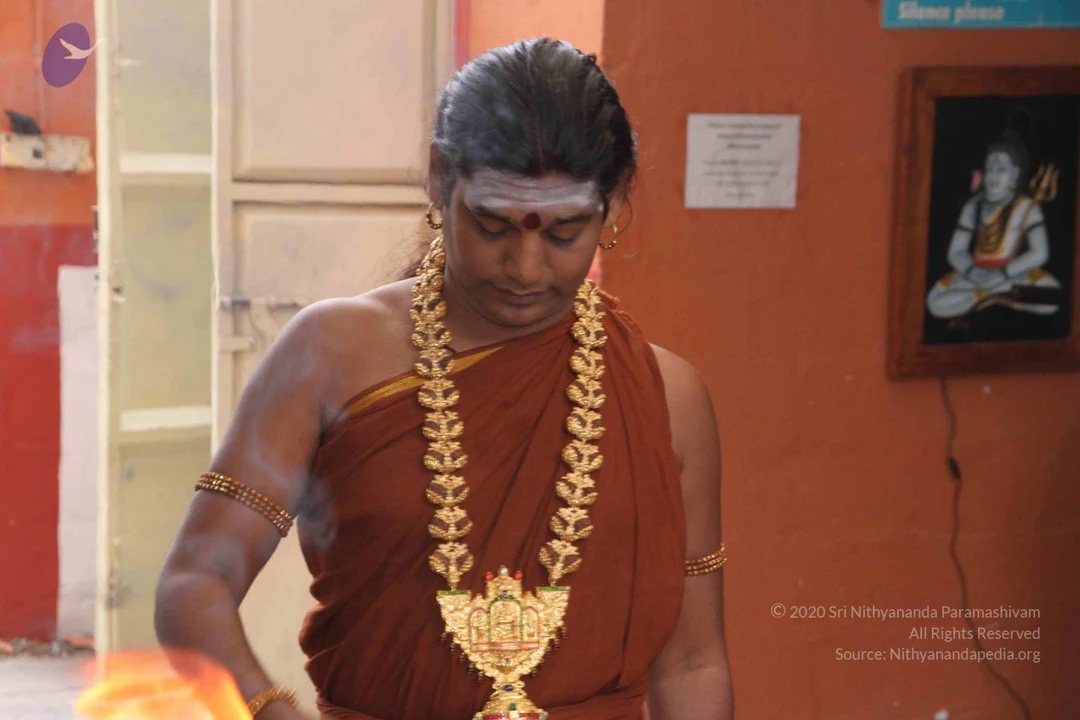
PadaPuja
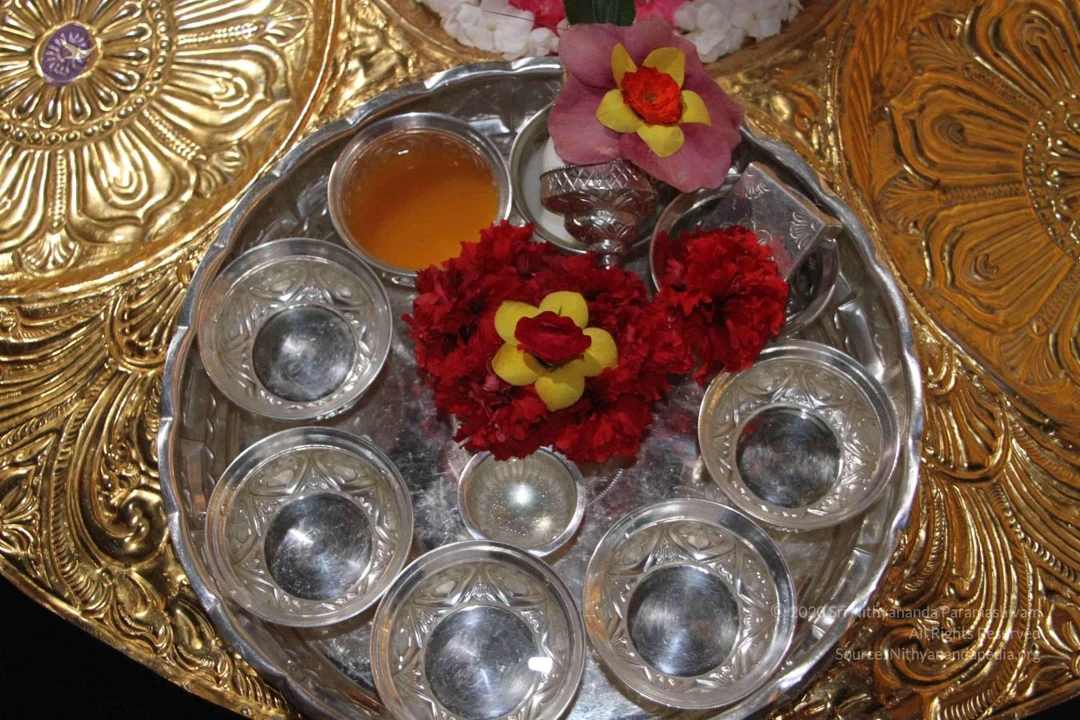
133 photosSource gallery
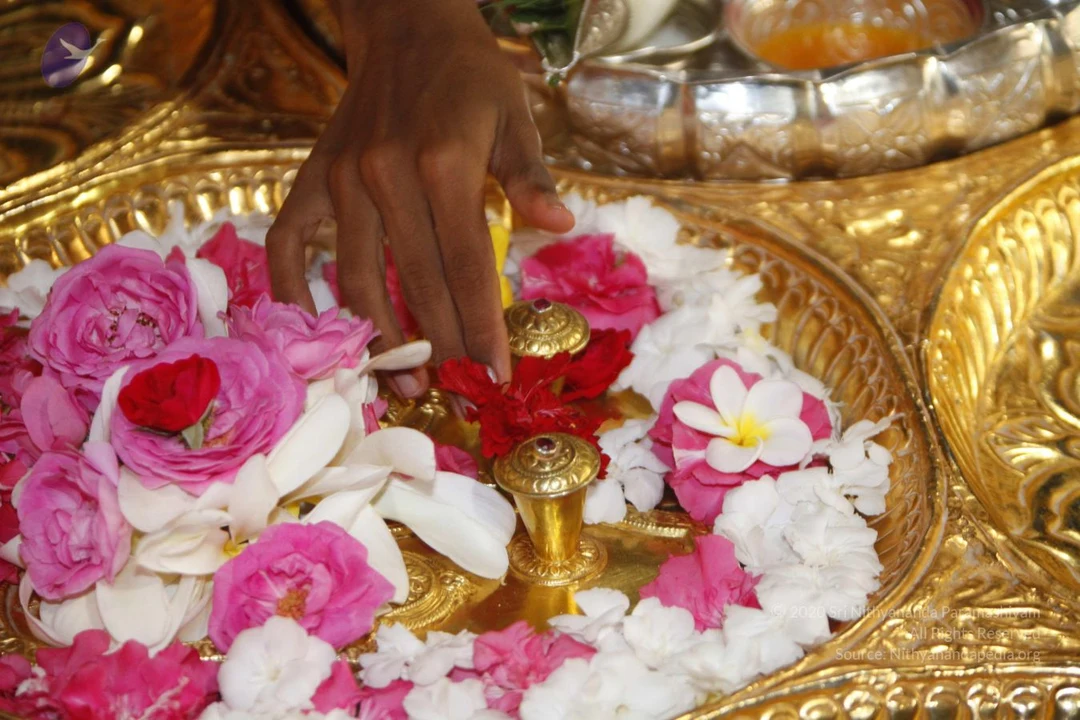
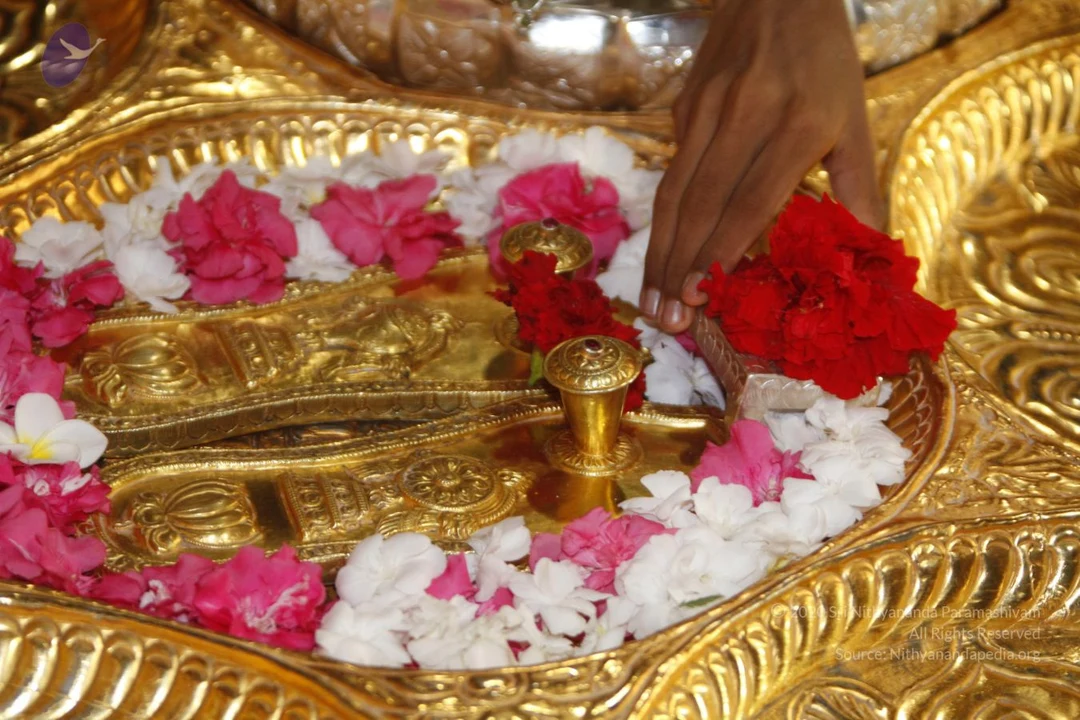
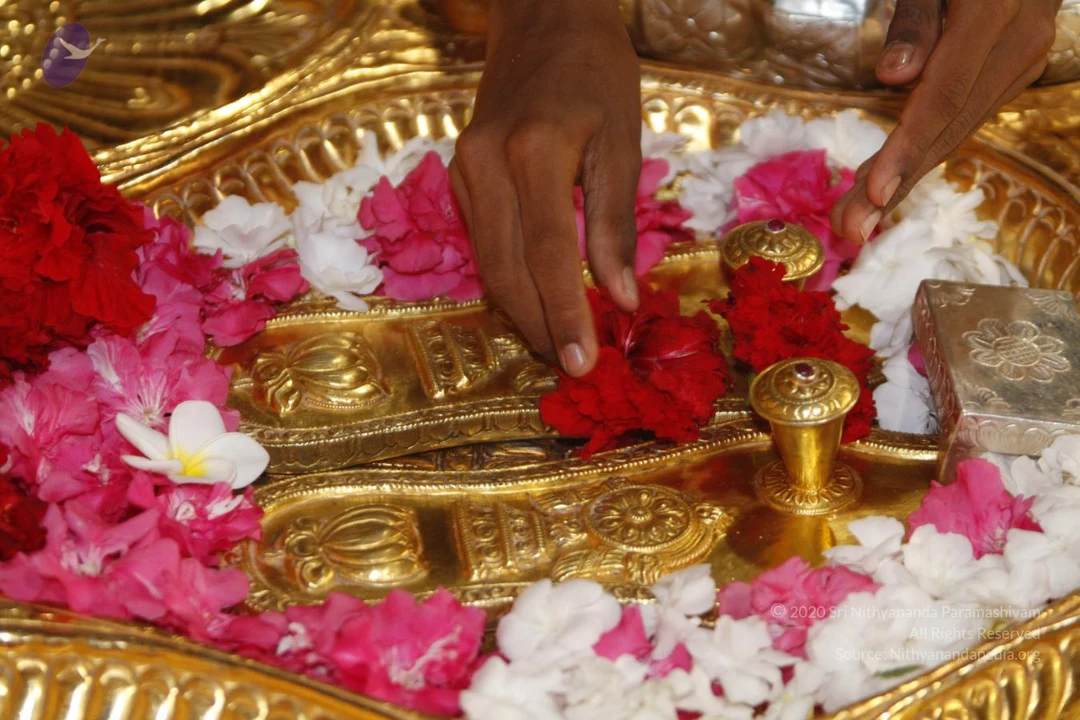
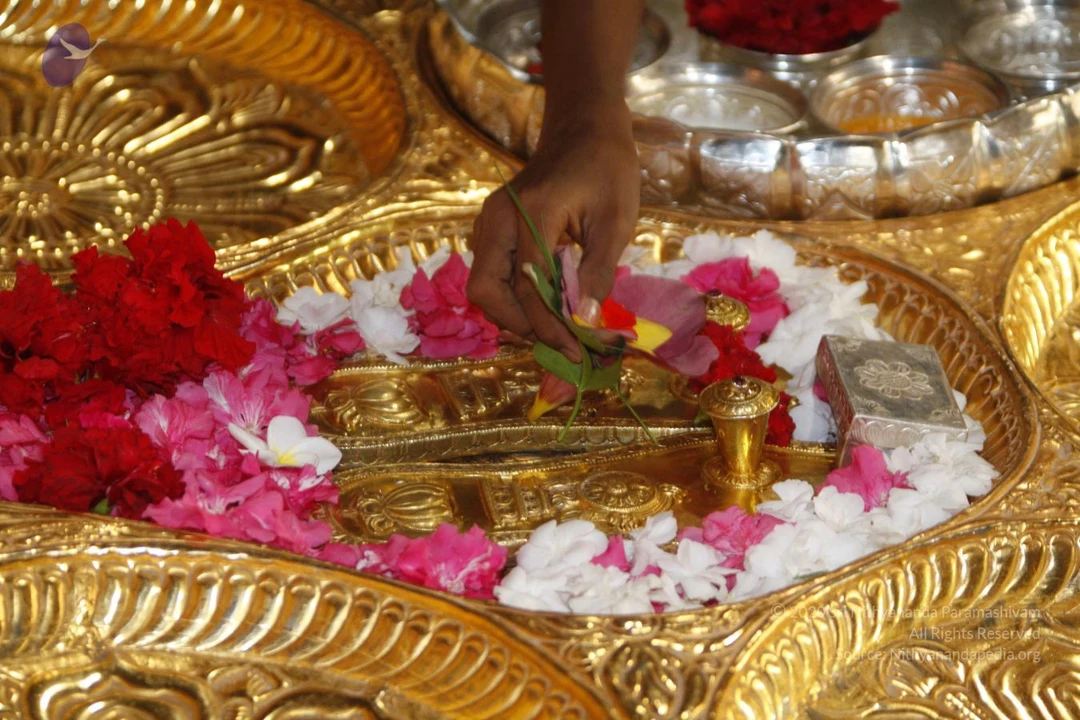
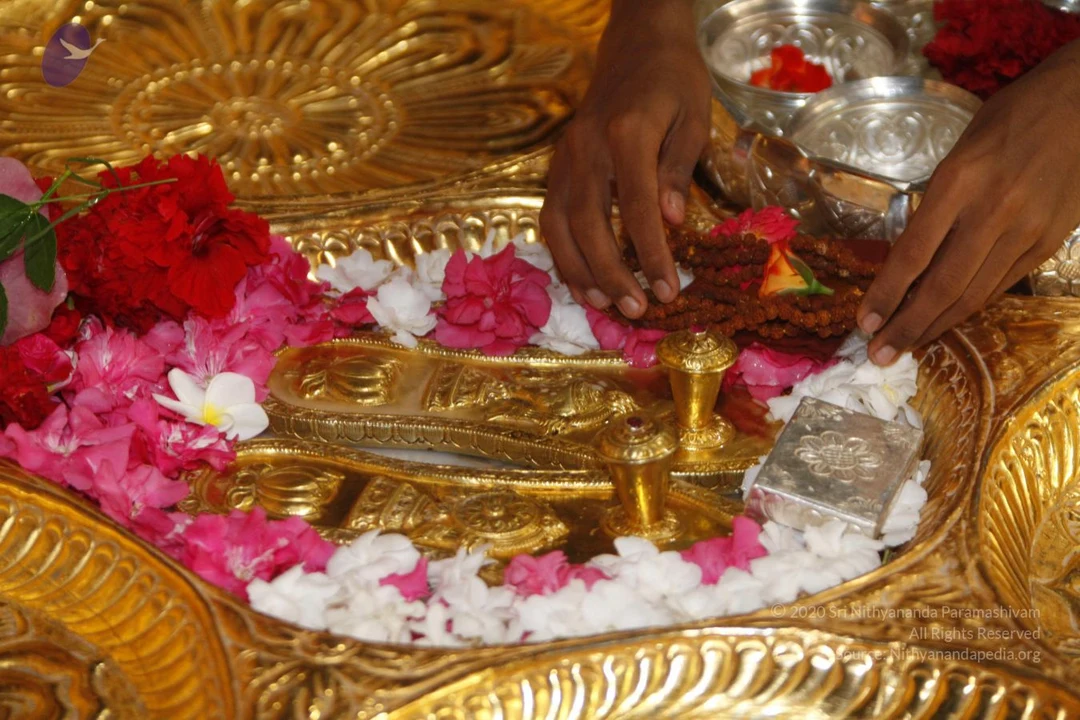
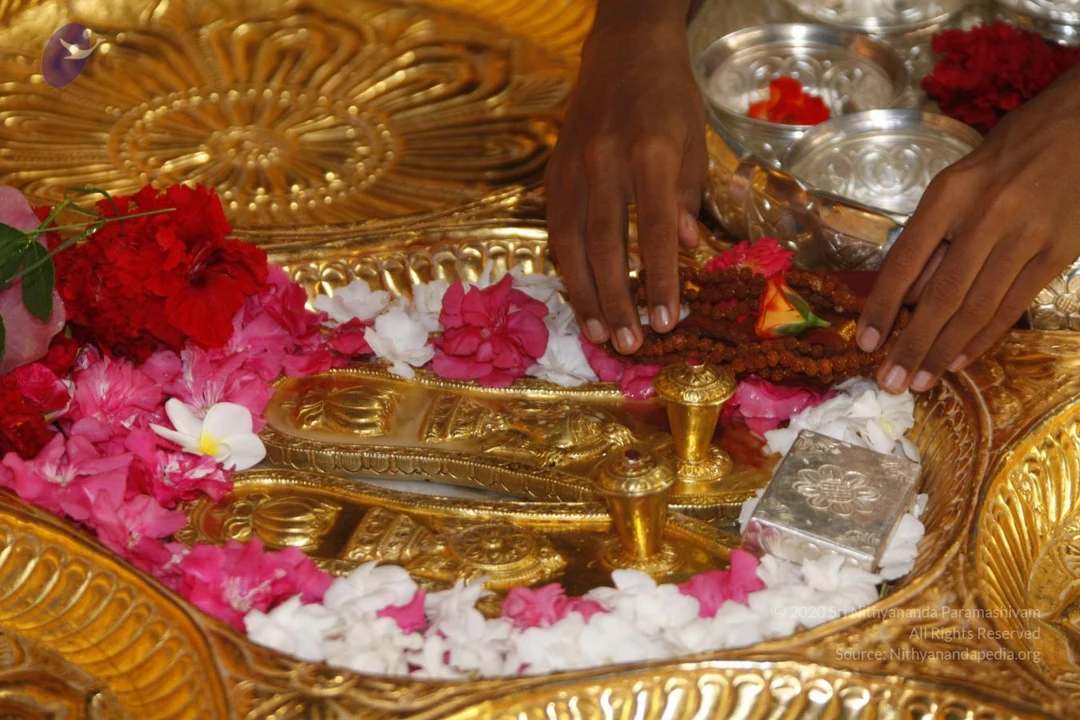
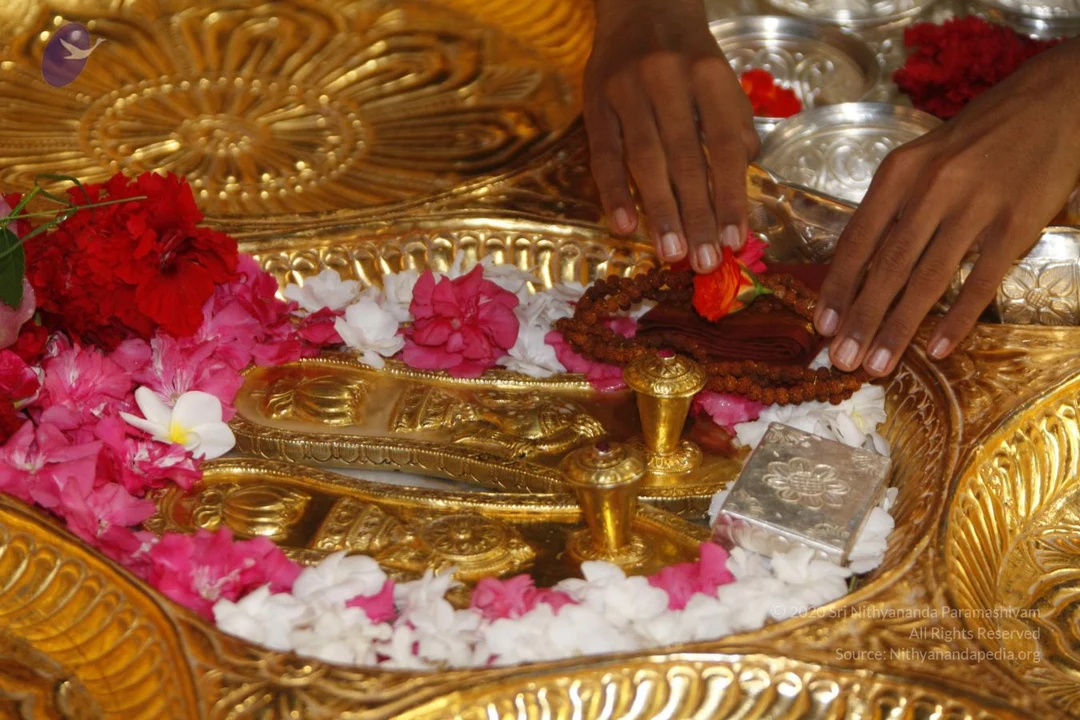
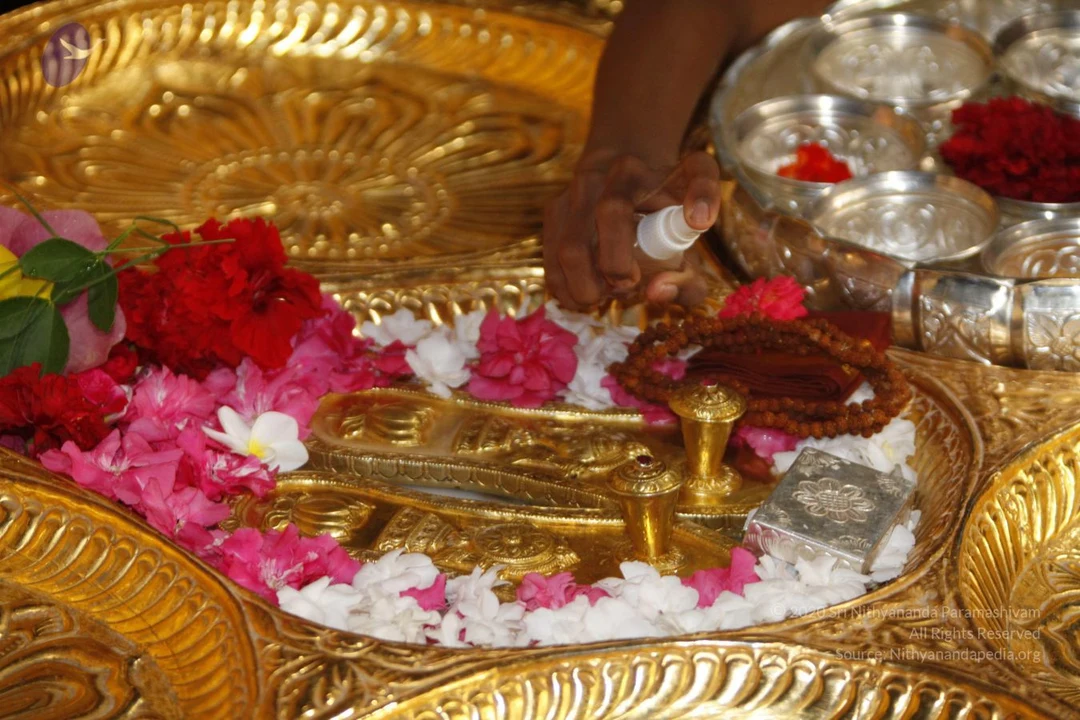
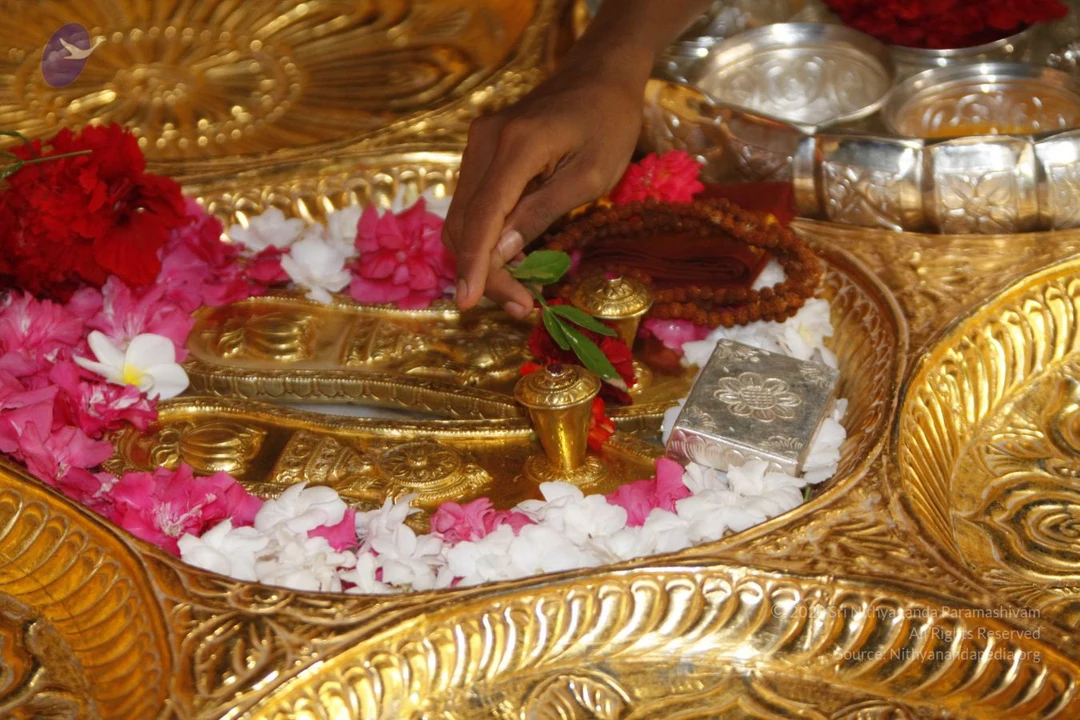
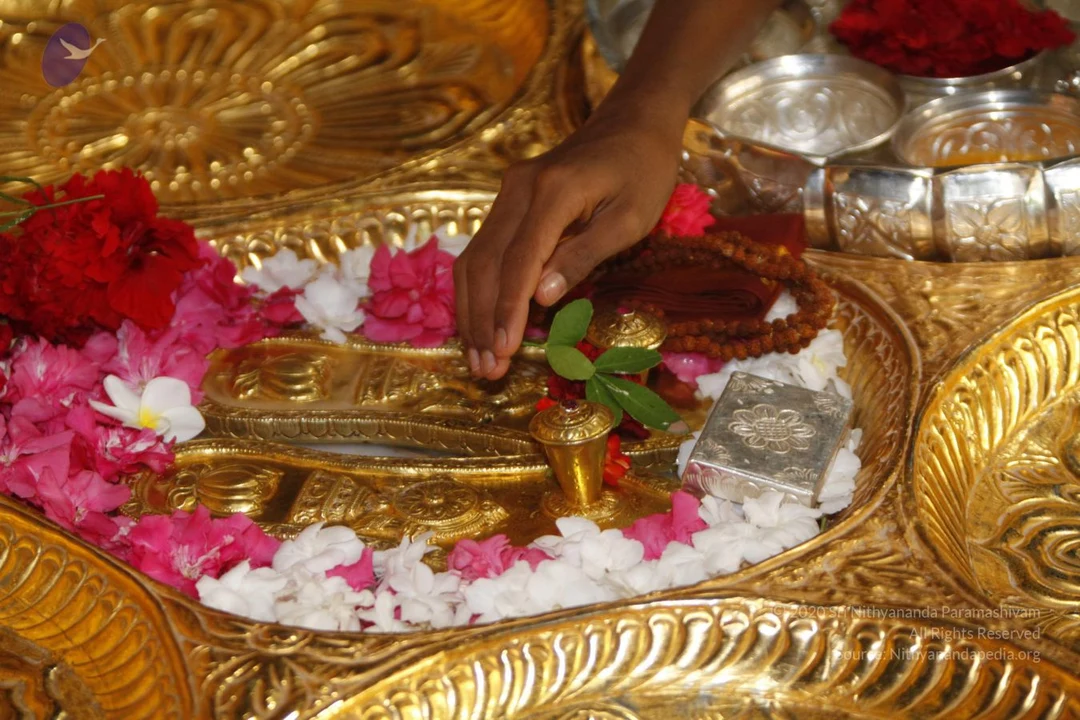
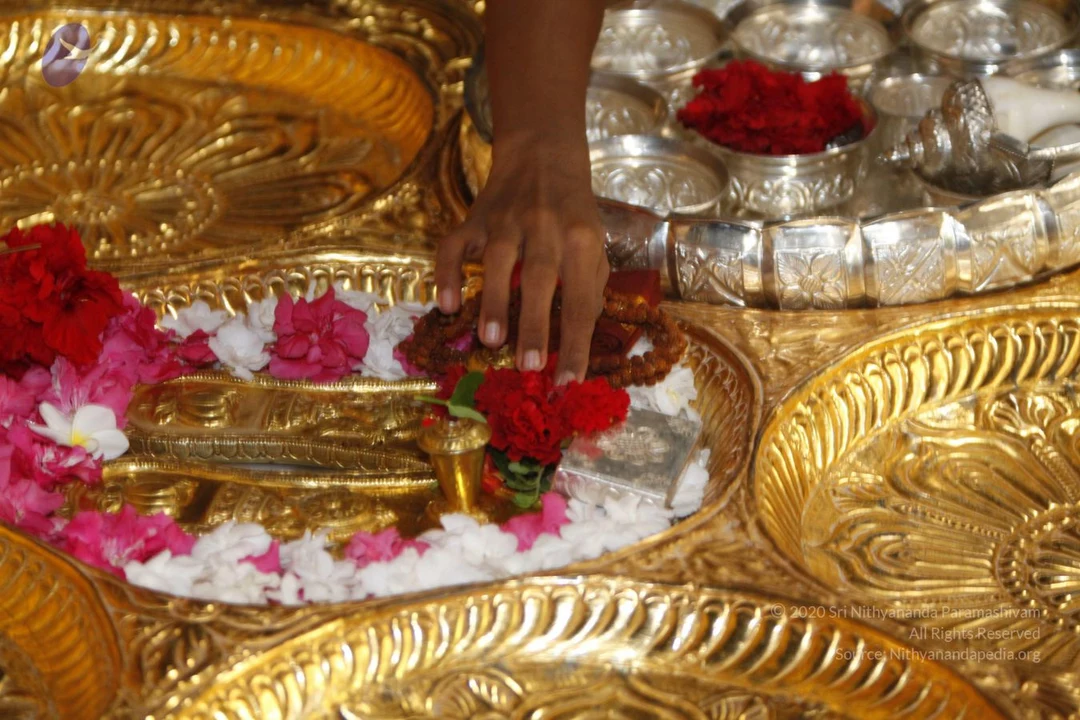
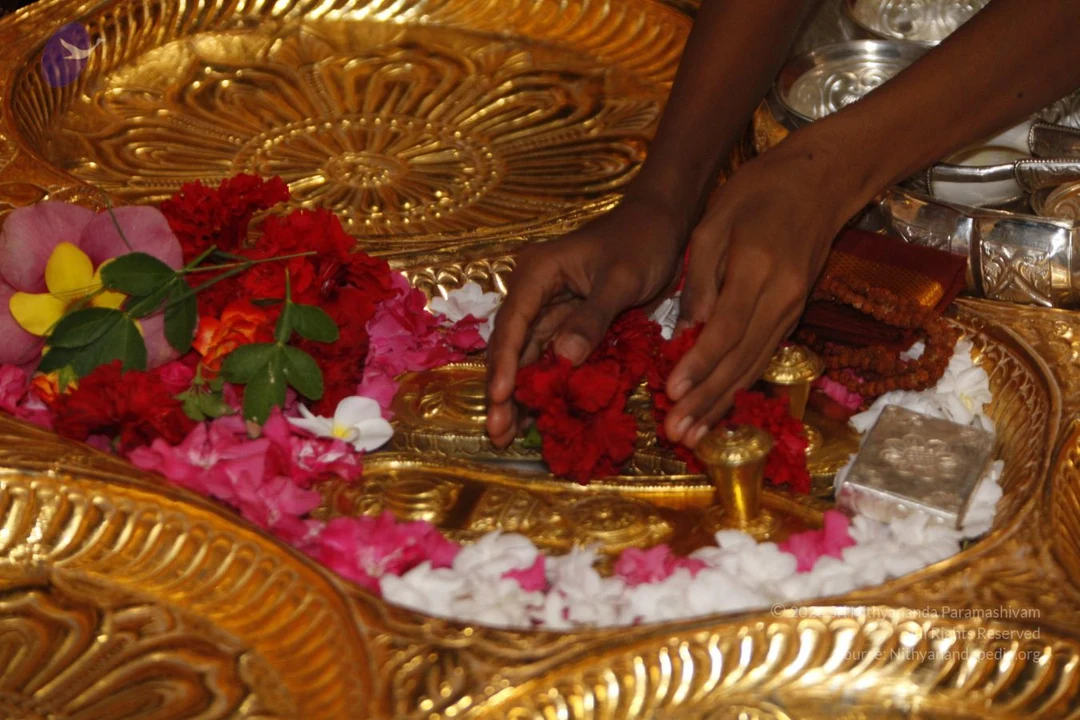
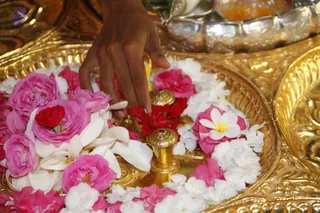
Overhead photo of a polished silver puja thali on a gold-embossed ornate surface. Five small silver katoris with engraved rims hold no visible contents except one filled with orange-yellow liquid. Red flowers, possibly marigold or carnation, sit at the centre, with a large pink-and-yellow blossom and a small glass dish in the upper area. Blurred white flowers appear at the top edge. No people or deity murti are visible.Close-up of an ornate silver puja tray with repoussé floral and scroll engraving holding several small silver bowls filled with water. Red carnations and a yellow-and-red flower with pink petals sit among the bowls, with a silver spoon and a silver cup at the right edge. A gold-embossed tray lies beneath. No people are visible, and the scene shows ritual vessels and offerings only.A close-up photograph of an ornate silver puja tray with embossed rims resting on a gold-coloured metal surface. It holds small silver bowls with a clear liquid, a bowl of golden-yellow liquid, a white coconut half, and red carnation-like flowers. Two pink hibiscus-style flowers with yellow centres sit on the left edge beside a folded green leaf. No people are visible; the arrangement suggests a ritual offering setup.Close overhead photo of an ornate gilded tray or throne-edge filled with pink and white flower petals. Pink carnations and pink and red roses fill the centre and left, mixed with white jasmine-like blossoms and white frangipani with yellow centres. Two small gold-toned decorative knobs with red gemstone centres sit among the petals on the gold plate. No people are visible; the scene is a floral offering arrangement on ornamental gold metalwork.Close-up photograph of a ritual offering on a silver plate: a smooth white rounded object, possibly a shivalingam or stone form, decorated with a large pink-purple flower with yellow and red centre, green leaves and a silver spoon-shaped vessel. A bowl of golden honey or ghee sits at right beside a heap of red flowers, with gold-toned metal surfaces at left. No people are visible.Close-up of a hand, with a dark-skinned wrist and fingers, placing or arranging red flower petals in a large polished gold tray. The tray holds pink roses, white frangipani and plumeria blossoms, and white petals, scattered around two small gold cups or vessels. Ornate gold-engraved metalwork surrounds the tray, and a silver bowl with an orange-yellow offering sits at the top edge. This is a floral offering arrangement.

Nithya-Satsang

16 photosSource gallery
Several young boys sit closely together on a red floor mat, dressed in maroon kurta-style tunics with gold trim. Their foreheads bear white vibhuti marks, and the central boy also has a red kumkum dot. They raise their hands with palms open in a devotional gesture while chanting or singing, and some hold a yellow flower. Other seated children in matching maroon dress are visible behind them.A seated group of devotees chants during a satsang-style gathering in a hall with white flooring. In the foreground, three women in orange saffron robes wear rudraksha malas and have white vertical marks on their foreheads; each has palms pressed together in an anjali gesture. Behind them, young girls and women in maroon and gold-bordered dresses also sit with raised hands. A water bottle, papers and a small brass plate are on the floor in front.Two seated men in saffron-orange robes with rudraksha malas perform a ritual, palms raised in front of them. The man on the left has white and grey tilaka marks, a gold earring and a gold bracelet, and has his eyes open. The man on the right has white forehead markings, a red bindi, a gold bangle and a long rudraksha mala, with eyes closed. Behind them, other seated devotees in orange and maroon garments sit on mats, and red curtains and stacked red chairs fill the background. A small oil lamp glows near the mats. The scene is an indoor satsang or puja.Two shaved-headed young monastic devotees in saffron-orange robes sit side by side with palms pressed together in anjali mudra during a satsang, with white vibhuti horizontal lines on their foreheads. Both wear rudraksha malas; the one on the left also wears small gold earrings and glasses, and the one on the right has gold earrings and a beaded bracelet. Other monastics in orange sit blurred behind them against a red drape, with hands raised in prayer.Boys in maroon sleeveless kurta-style tunics with gold trim sit in a hall and raise open palms in a group gesture. The boy at centre-front has white vibhuti smeared across his forehead and speaks while looking off to his left. Other boys nearby also wear white forehead markings, and an older person in white clothes sits in the background. Red curtains frame the room and a purple bird logo appears in the upper left corner.A young boy in a maroon sleeveless tunic with gold trim sits cross-legged in front and raises both palms outward in an expressive gesture, with a white vibhuti line and red kumkum dot on his forehead. Behind him, many similarly dressed boys in maroon robes with gold borders sit in rows, several with white forehead markings, some with hands raised or resting on their knees. Red curtains hang in the background and a blue plastic container sits near the lower right.

SarvaDarshan

19 photosSource gallery
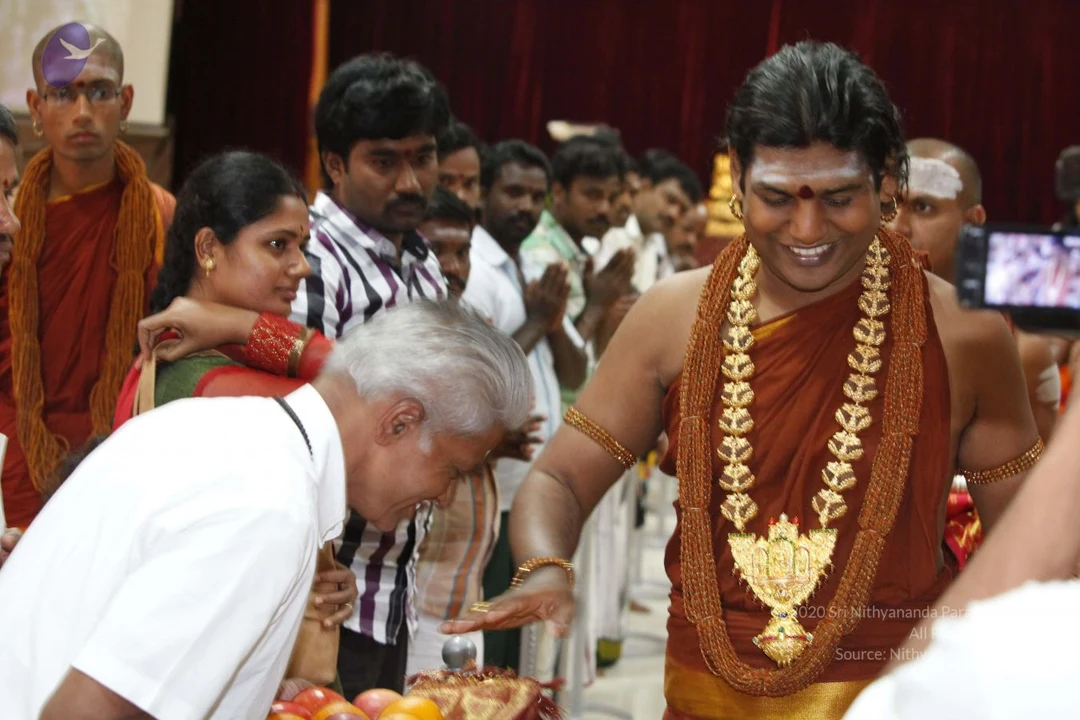
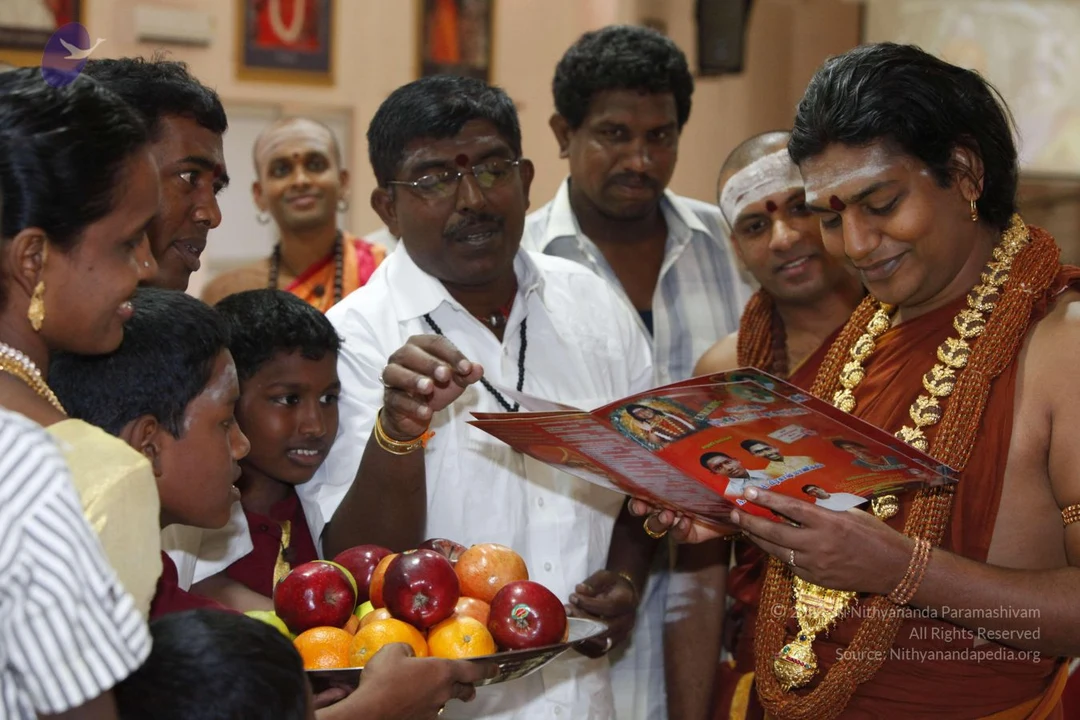
A photograph of a saffron-robed man with long swept-back hair, gold ceremonial necklaces, gold bangles and sacred vibhuti and kumkum marks on his forehead, raising one hand in blessing toward a kneeling devotee in white. The devotee on the left presses his palms together in namaste with his head bowed. Several other men in white shirts stand behind them, and a golden deity shrine or altar with colourful decorations is visible in the background. a person appears as the saffron-robed blessing figure, matching the page's identification of an event with a person present. The blessing figure's distinctive adornments include rudraksha-style gold necklaces and a saffron robe, while the kneeling man wears a white shirt and gold bracelet.Photo of a smiling man with shoulder-length dark hair, white vertical tilak and red bindi on his forehead, wearing a rust-orange draped robe with a gold-and-beaded mala and gold bangles. He raises one arm toward a line of devotees in white and cream clothing on the left, who reach toward him. Behind him, a gold-toned deity murti and a saffron-robed assistant with a shaved head and white tilak stand in a red-curtained hall. Crowd members at the right wear orange robes. Swamiji (probable): long swept-back hair, ornate gold mala, orange robe and gold armlets fit the presentation of the central figure, who is shown greeting the crowd.A figure in a rust-orange cloth wrap with long rudraksha-style beaded malas and a heavy gold floral necklace stands at centre, raising one hand in blessing toward a kneeling devotee at lower left. The figure has long swept-back dark hair, a white sacred ash line across the forehead and a red bindi, with gold bangles on the wrist. Behind, men in white dhotis and shirts stand with palms pressed together, and a row of saffron-robed people stands along a barrier at right. A red curtain and a painted shrine backdrop with a deity image frame the scene. a person in the central role of receiving devotees.A photograph of a ceremonial blessing at a temple hall. A man in orange-red robes with a gold-bead necklace and gold armlets, a tilak and a red bindi on his forehead, places his right palm on the head of a man in a checked purple-and-white shirt, who has his hands folded. The blessed man is one of several people in front of them; a woman in a red shawl stands at left, and other devotees in white and light clothing stand behind. A man in white holding a sheet of paper is shown near the robed figure. A gold deity murti or altar is visible in the background at top right, with a red curtain and a shaved-headed man in white at top left. The robed figure is an appearance-based probable Swamiji (probable) with long swept-back hair, ornate gold necklaces and saffron-orange clothing, presiding over a blessing.A photograph in a temple hall with red curtains and a gold-decorated shrine in the background. A man with swept-back dark hair, orange-red cloth, a gold-and-bead garland, gold armbands and a gold pendant is smiling and handing a folded white paper to a woman in a red dupatta and green kurta. A young man in a striped shirt stands beside her with palms joined, and a shaven-headed young man in orange robes and a bead necklace stands at left. Several more people in white and orange clothes stand in a line behind the rope barrier, with a visible camera at right. a person: the central figure wears saffron-orange clothing, a gold ceremonial necklace and a rudraksha-style bead garland, with distinctive ornamental cues, and is in the role of giving paper to devotees.A photograph of a ceremonial gathering in a temple-style hall with dark red curtains and a golden deity murti or ornate throne in the background. A man with swept-back dark hair, a tilak on his forehead, a gold ornate pendant, a multi-strand rudraksha-style mala and an orange-saffron dhoti with a gold border is smiling and handing a folded paper and a red fruit to a young woman in a red top and green dupatta, who is holding out her hands. Behind them, a line of devotees in white and striped shirts stands with palms pressed together. On the left, a shaved-headed young man in saffron robes and a long orange mala stands near the line. Several other saffron-clad attendants and devotees stand along the rope barriers at the right.

Construction-Photos

5 photosSource gallery
A construction site photograph showing an orange tracked excavator with its bucket raised, loading earth into a white and yellow TATA dump truck. A red brick boundary wall runs across the background behind scrubby bushes and trees. Piles of excavated reddish soil and grey rocks lie on the ground. No people are visible in the scene.A green and yellow Ashok Leyland dump truck is tipping red-brown earth onto a graded site. Two large piles of reddish soil sit in the foreground, and the truck's yellow tailgate reads SONIA OK HOPE. A tall green tree and a wire fence stand beside the plot, with no people visible.Outdoor construction work beside a terracotta-coloured building with red wooden doors and shutters. A man in a striped shirt and dark trousers stands on a metal ladder, reaching up to a wooden beam of a timber pergola frame. Three men stand below in conversation: one in a beige shirt and green checked head cloth holds a vertical log, another in a white shirt and jeans stands beside him, and a man in a dark t-shirt and red cap faces the frame. A fourth man in a white shirt and red head cloth stands behind them. Stacked corrugated sheets, pots with plants and a coiled hose lie on the ground, with green shrubs behind.Overhead photo of a construction site showing a man in a white shirt and blue shorts, with grey hair, kneeling beside a square concrete-block pit filled with rubble and dark stones. He holds a small metal tool and works at the edge of the pit. Scattered grey concrete blocks, gravel and bare reddish-brown earth surround the pit. A lone worker on a building site.A yellow JCB backhoe loader excavates reddish soil and piles of grey stones on a construction site. A man in a grey shirt sits in the operator's cab, gripping the controls, while a second person is partly visible behind the glass. The bucket rests among scattered rubble, with a low brick wall and distant hills and trees in the background. No ritual, a person or event activity is visible.

SacredArtsConstruction-Photos-Swamiji

8 photosSource gallery
A clay or wax sculpture of a male head on a wooden board is being shaped by a hand with a sculpting tool. The head has short swept hair and a smooth face with a prominent nose. A hand and forearm enter from the left. Behind the bust, a plain whitewashed block wall displays three small framed photographs of ornate red and gold clothing, garlands and a decorative ceremonial vessel. A sculpting stick and a knife rest on the board. No physical people are visible beyond the hand, and the head is a sculpted likeness, not a person present in the scene.A young man in a red t-shirt with a graphic print sits in a workshop and shapes a large brown clay mould with both hands, his eyes focused on the work. Behind him a second man in a white vest sits near a workbench. A brass Ganesha figurine stands on a shelf at right, beside a blue metal drum and a wall of bare cement blocks.A man in a red t-shirt with a printed graphic sits at a wooden workbench in a plain whitewashed workshop, carefully shaping a large brown clay head with a modelling tool in his right hand while his left hand steadies the sculpture. Behind him are other clay and metal figures, including a golden Ganesha statue on the right and a blue barrel. The sculptor is focused on the facial details of the clay head.Two men work outdoors on bare red earth in front of an orange-painted building with a maroon door and a corrugated metal wall. The man on the left, in a white shirt and maroon-and-red cloth, crouches with a torch or blowpipe over a small metal vessel set on red bricks, using a hose and gas fitting. The man on the right, in a white checked shirt and maroon cloth with yellow border, sits cross-legged beside him holding a tool and watching the work. A sack and a plastic water bottle sit nearby.Four men sit on a floor in a workshop crafting silver or metal relief panels with hand chisels and tools. Two men on the left and centre work on pieces resting on a wooden board and cloth; the man on the right in a striped shirt and orange lungi works on ornate silver-toned relief figures. Scattered metal tools lie on the floor, and a green industrial machine stands behind them against a white tiled wall.Three men sit on the ground at an outdoor work site beside a red-spoked wooden wheel and a blue-painted metal container. The man on the left, in a white shirt with a red-and-white cloth at his waist, wears glasses and uses a small torch-like tool on a brick, with a bowl of metal bits beside him. Two younger men in striped shirts and checked lungis sit on the right, one working with a long metal blade and the other holding a small tool. Scattered sheet metal, scraps, hand tools and a brass-coloured piece lie on a white cloth. A large water jug and a brick wall stand in the background. The scene shows manual metalwork or craft.

LotusLive-Swamiji

29 photosSource gallery
A man stands behind a clear acrylic lectern, speaking into a headset microphone. He wears an orange-red shawl over bare shoulders, gold-and-rudraksha style necklaces with a gold pendant, gold bangles and a red bindi with white vibhuti marks on his forehead. Behind him a large painted portrait shows an orange-red turban and a close view of a face with a smiling mouth and eyes. A green curtain edge and a carved wooden pillar frame the left side. a person, speaking at the podium during a satsang discourse, with a crowd not visible.A man in orange-saffron robes stands behind a clear acrylic lectern, speaking into a headset microphone while gesturing with his right hand. He wears a long, swept-back hairstyle, a red bindi and white vibhuti marks on his forehead, layered gold ceremonial necklaces and rudraksha-style beaded malas, gold hoop earrings, and gold bangles on both wrists. A large blurred orange and red backdrop with a stylised eye fills the background. a person is the speaker, shown in in-person satsang discourse.A person in a saffron-orange shawl stands at a clear acrylic lectern, speaking into a headset microphone. He wears a rudraksha mala with a gold ceremonial necklace, gold bangles, and a red bindi with white forehead markings. Behind him a large printed backdrop shows an enlarged close-up of a face with an orange draped cloth. Speaking at a satsang discourse; the image shows one speaker.A man with swept-back dark hair and a red bindi on his forehead speaks at a clear acrylic lectern while wearing a headset microphone. He wears an orange-saffron robe, a thick rudraksha mala, and a long ornate gold floral necklace, with gold armbands on both upper arms. A large painted backdrop shows an orange-red turban and a close view of a face with a large eye. The man appears to be delivering a satsang discourse from behind the podium, and his hands rest on the lectern.A man in saffron-orange robes speaks at a clear acrylic lectern with a headset microphone. He wears layered gold and rudraksha-style beaded necklaces, a red bindi and white tripundra marks on his forehead, and gold hoop earrings. Behind him, a large backdrop shows an enlarged close-up of a face with red-painted eyes and brow. The lectern holds an orange cloth. This appears to be a satsang discourse. Given the page cues of long swept-back hair, ornate gold garlands, and saffron clothing, this is.A man in orange-saffron robes stands behind a clear acrylic lectern, speaking into a headset microphone. He wears a rust-orange shawl over bare shoulders, a rudraksha-style brown bead mala, layered gold ceremonial necklaces, a gold armlet, gold earring and a red kumkum dot with white vibhuti lines on his forehead. Behind him is a large enlarged portrait of a face with red and white markings and prominent eyes. a person, speaking as a discourse speaker at a satsang lectern.

Temple

30 photosSource gallery
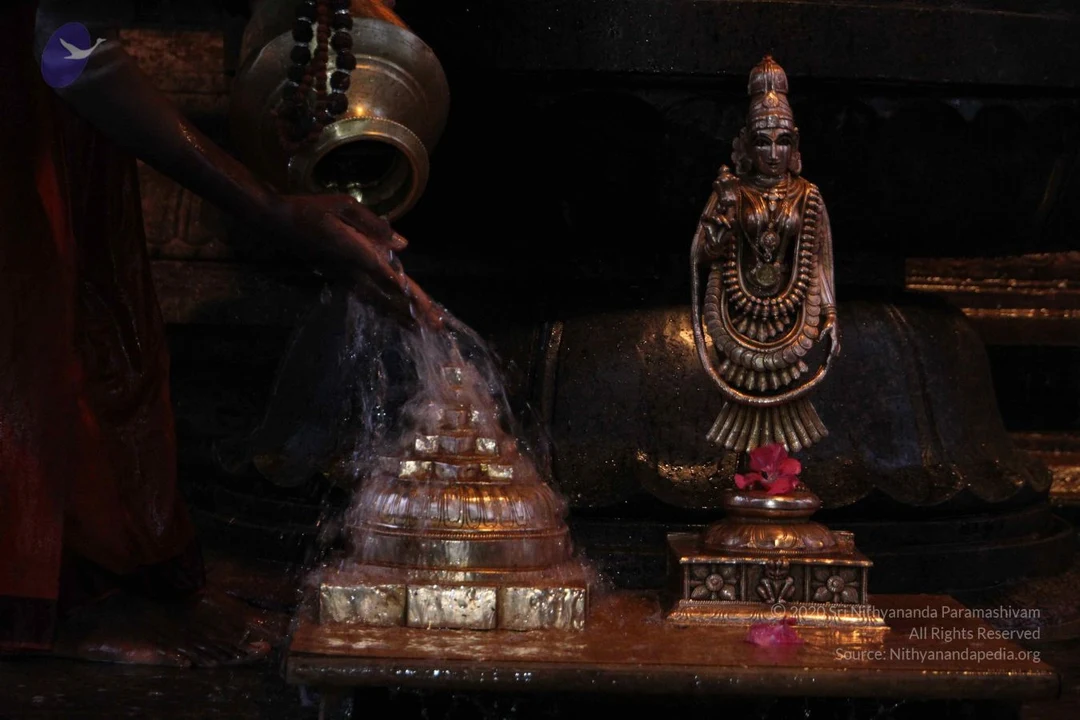
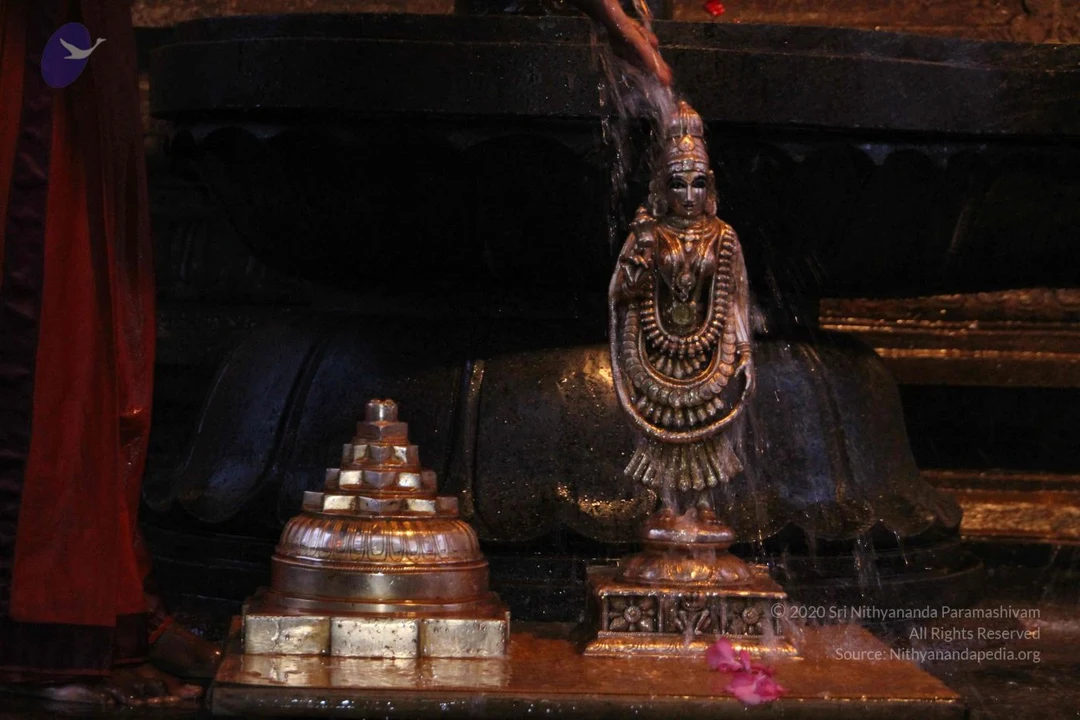
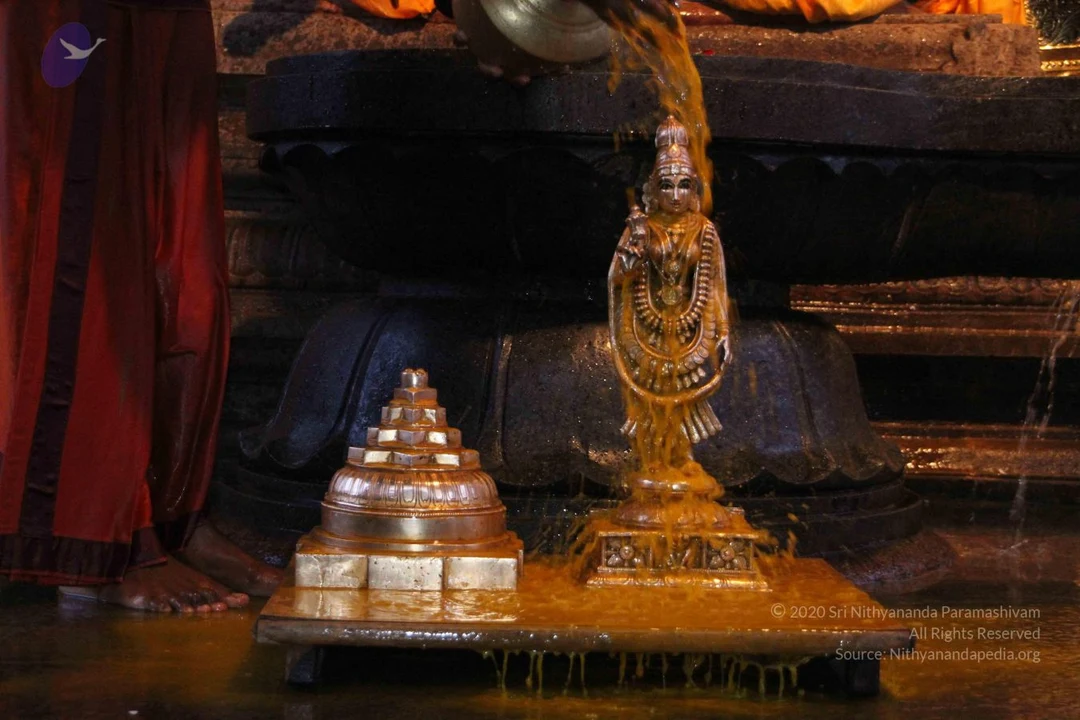
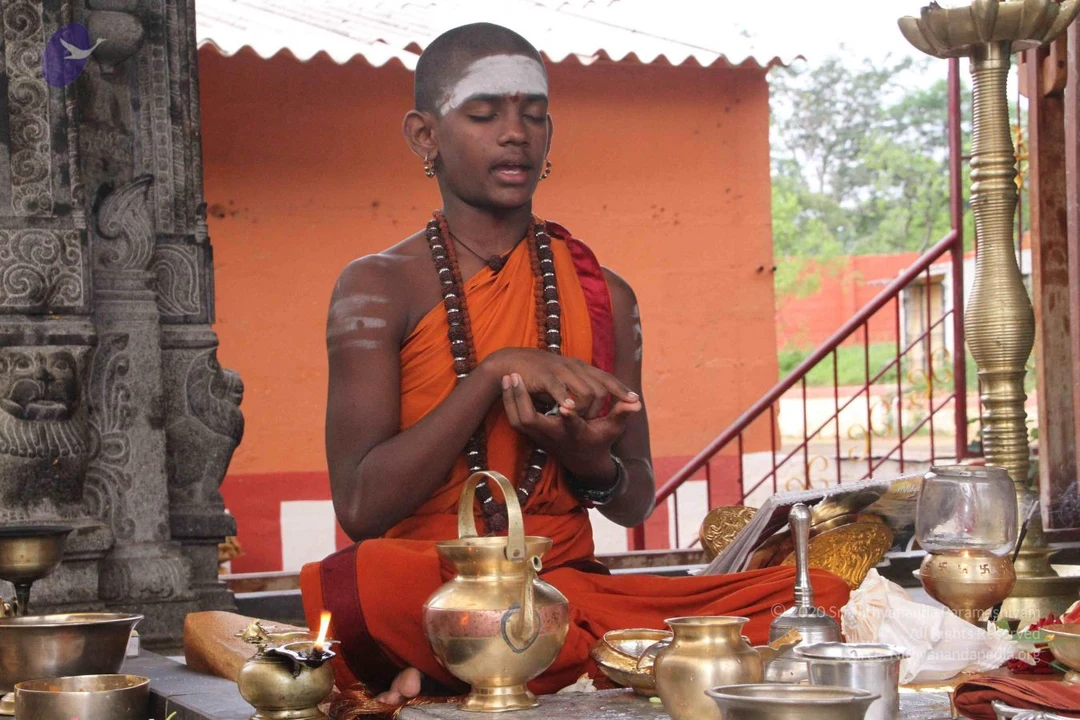
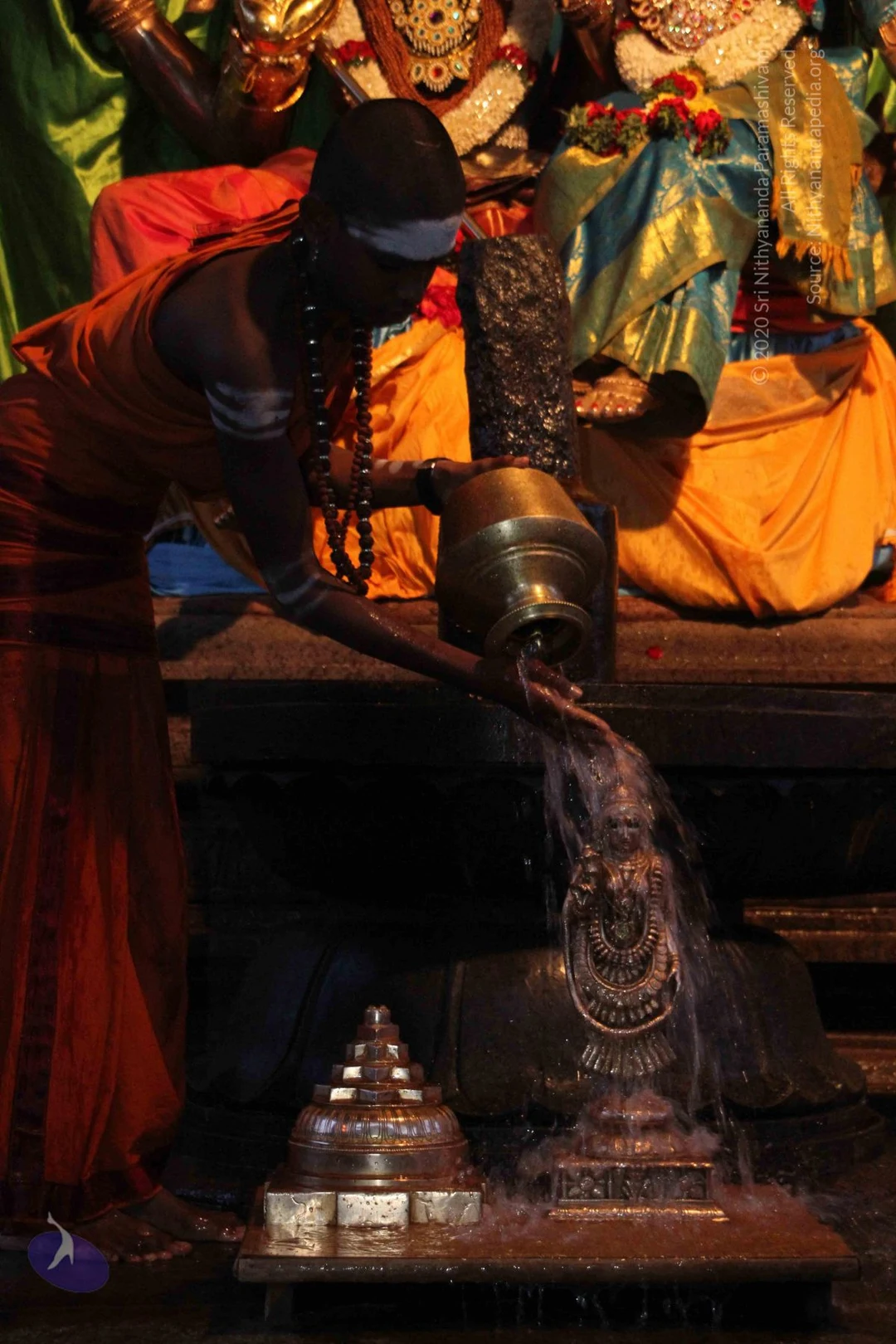
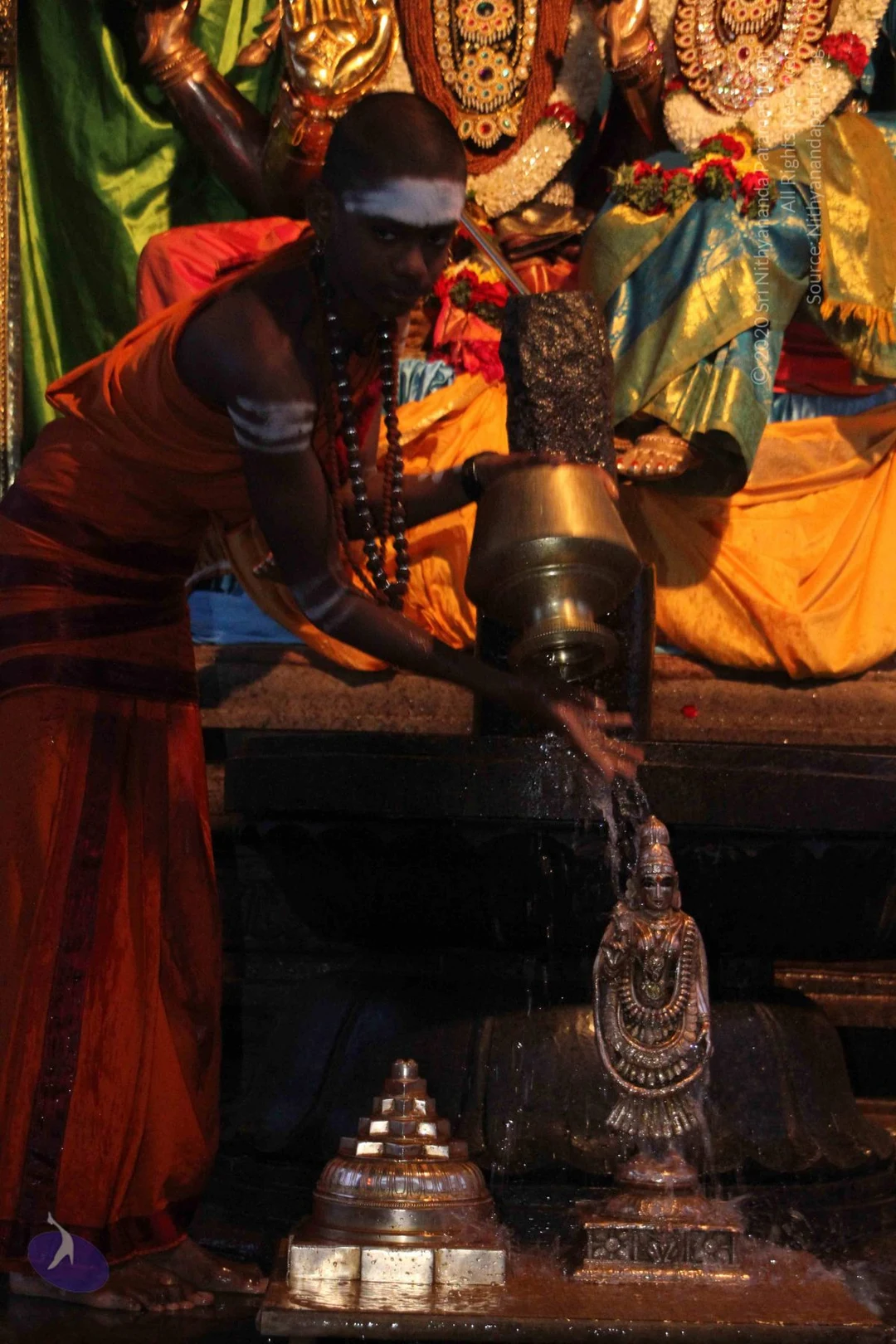
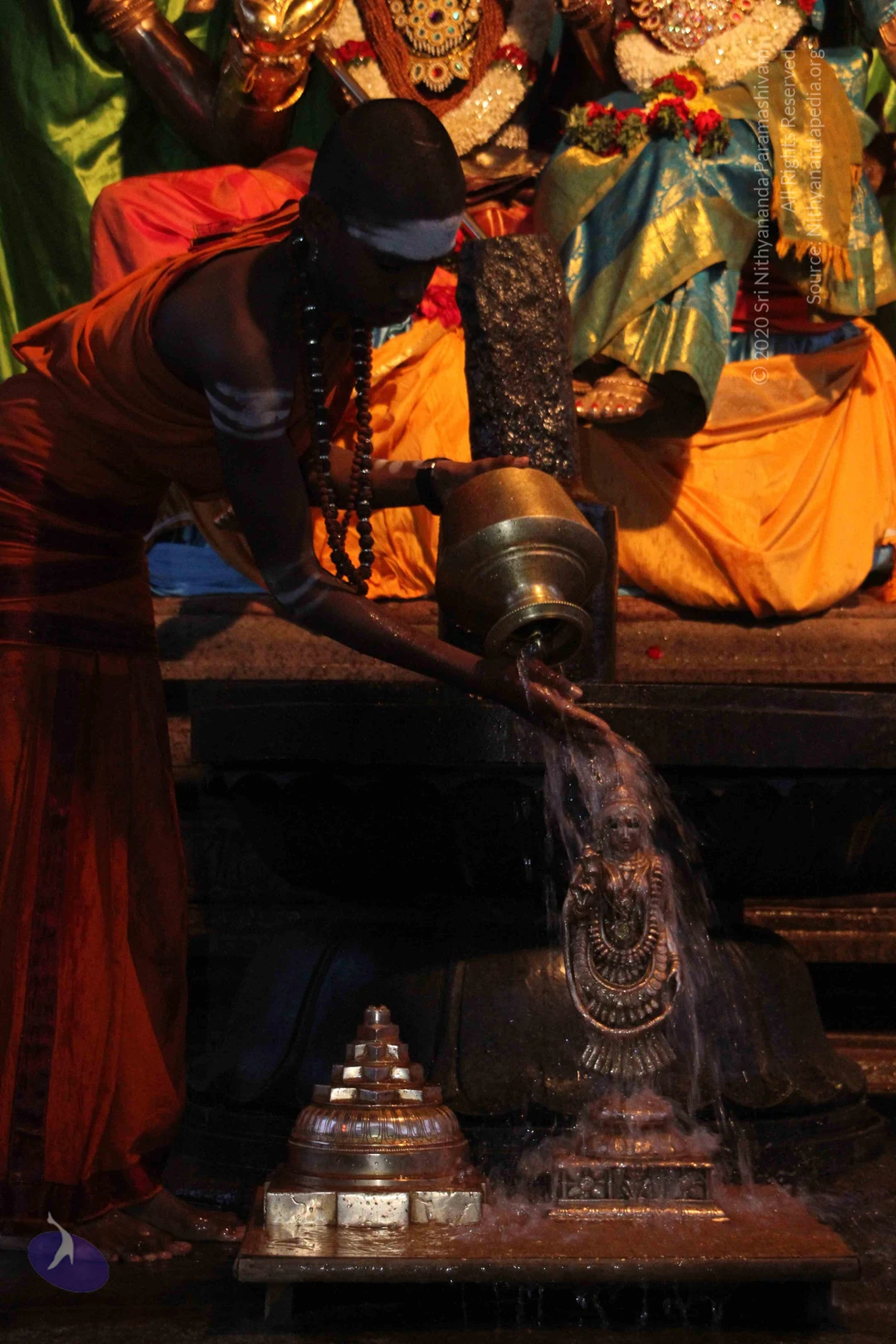
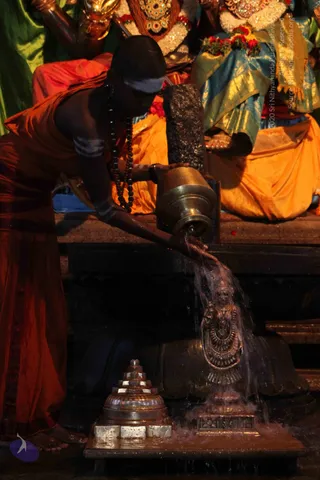
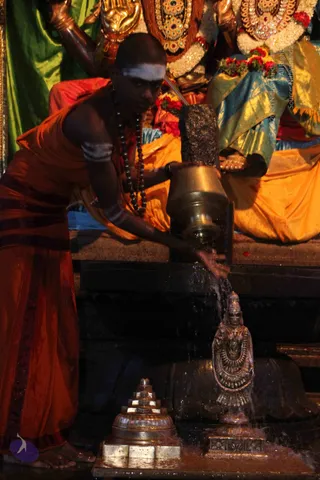
Dim temple shrine at dusk with a gilded arched frame around a pair of deity murti seated on a raised platform, one holding a ritual object, draped in orange and teal cloth with red and gold garlands. A small figure in dark clothing stands beside a metal vessel near brass lamps on the floor, and a person in orange robes stands at left beside a lit oil lamp on a stand.A photograph inside a stone temple shrine at dusk, showing a gilded arch framing two deity murtis seated together on a dark pedestal, one with a crown and red-and-orange garment, the other in teal and gold with a tall crown and garland. Green drapery hangs behind them. In the left foreground, a standing man in an orange-saffron dhoti and shawl with a rudraksha mala holds a lamp or ritual vessel beside a stand of brass pots and bells. A young woman in a dark red sari stands near a steel vessel by the doorway. A bronze lamp stand and small brass figures sit on the floor. Dark carved stone pillars frame the scene.A priest in an orange dhoti and orange upper cloth, with a shaved head, white urdhva pundra marks and a rudraksha mala, pours water from a golden pot over a black shivalinga during abhishekam. Behind the linga stand gilded deity murti in a gold arched shrine with a green silk backdrop: a figure in a red and green turban and rich gold jewellery, and a consort in a blue and gold sari with a jewelled crown and garlands. A small dark figure sits on the pedestal below. Oil lamps and red flower petals surround the shrine.A figure in a rust-orange dhoti and draped orange shawl, with a dark rudraksha mala around the neck and white sacred ash markings on the upper arm, pours water from a bronze vessel over a metal deity murti set on a stone base. A small metal shrine or yantra-like structure stands in front of the murti. Behind, seated figures in orange and teal silk sarees and garlands of white flowers with red blooms sit before ornate golden processional figures. The scene is a lit abhishekam of a metal murti.A priest in an orange-red dhoti and draped cloth stands at a dark stone shivalinga platform, pouring water from a brass pot over a small metal murti of a deity in an elaborate headdress and necklace. A brass pyramidal vessel and a small metal base sit in the foreground, with flower garlands and gold-and-green draped fabric in the background. He wears rudraksha beads and white forehead and arm markings. Number of people: one priest visible.A priest in an orange dhoti and shawl, head shaved with white vibhuti marks on the arms, pours water from a vessel over a black stone shivalingam in a temple shrine. Behind is a large golden arch with two gilded deity murtis in front of green drapery: the left figure wears a red and green turban and rudraksha, the right wears a tall jeweled crown, a flower garland and a teal blue sari with gold border. A small silver Nandi-style figure and a silver pyramid stand on a wooden platform in the foreground, and water runs down the lingam into a black basin. A priest performing abhishekam.

PadaPuja
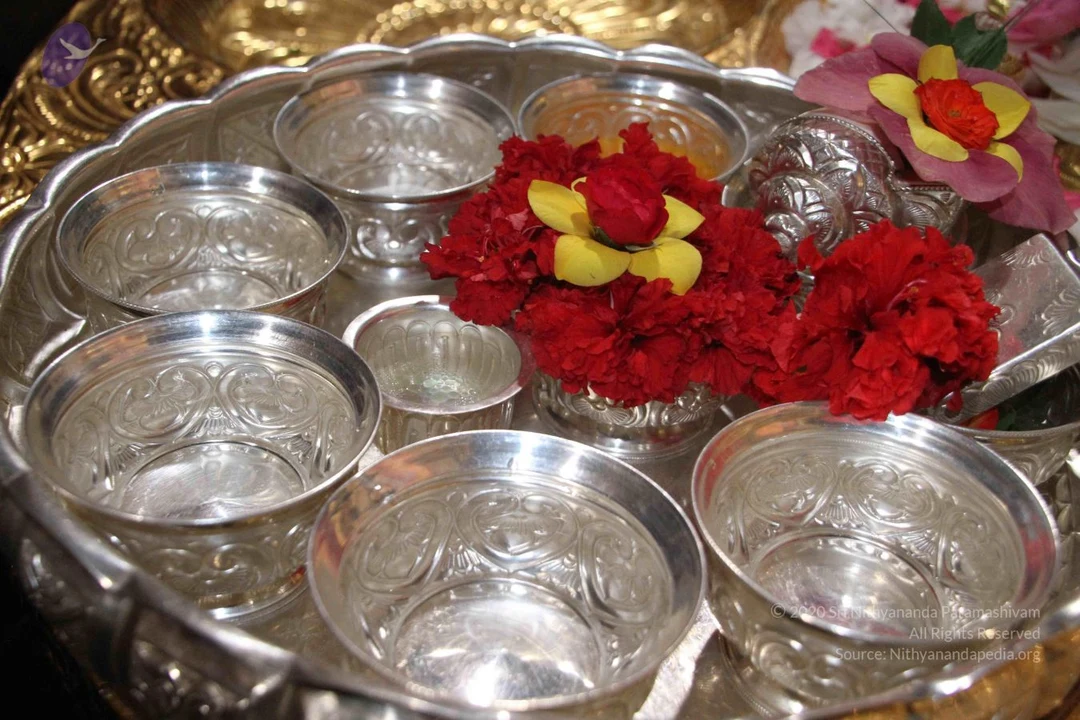
11 photosSource gallery
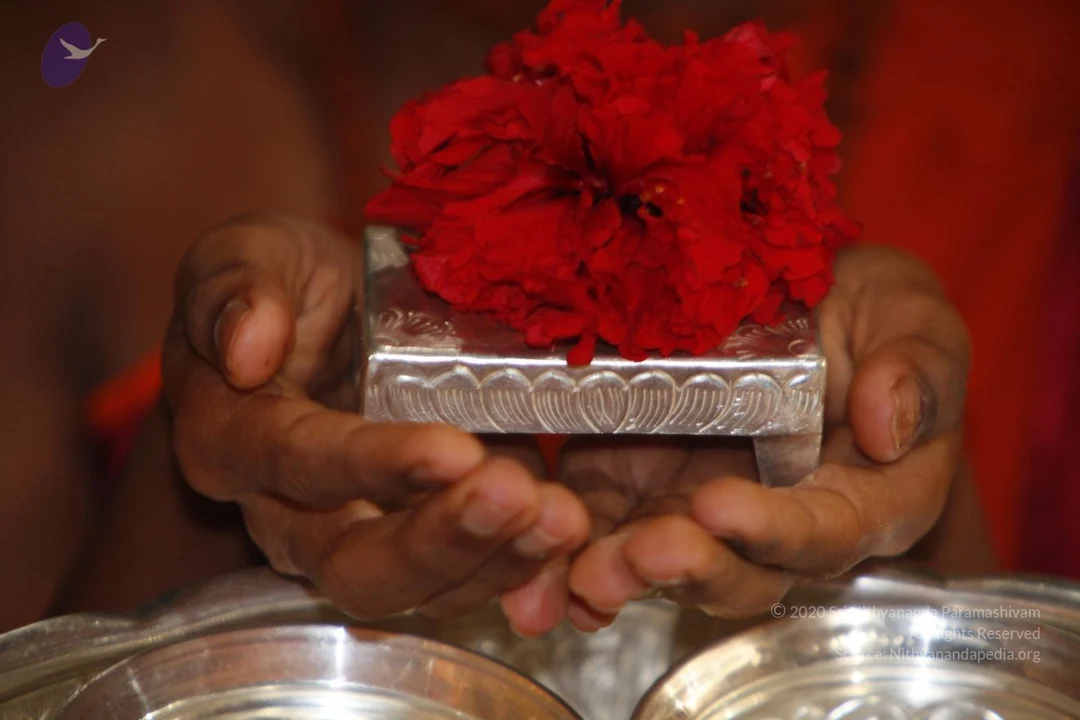
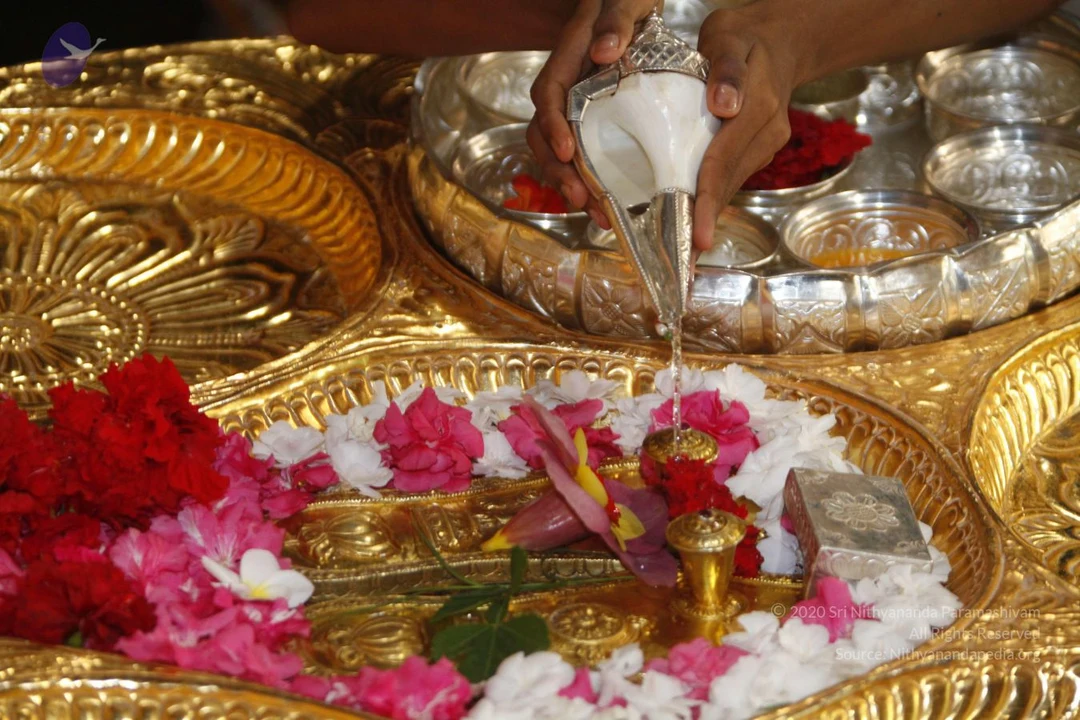
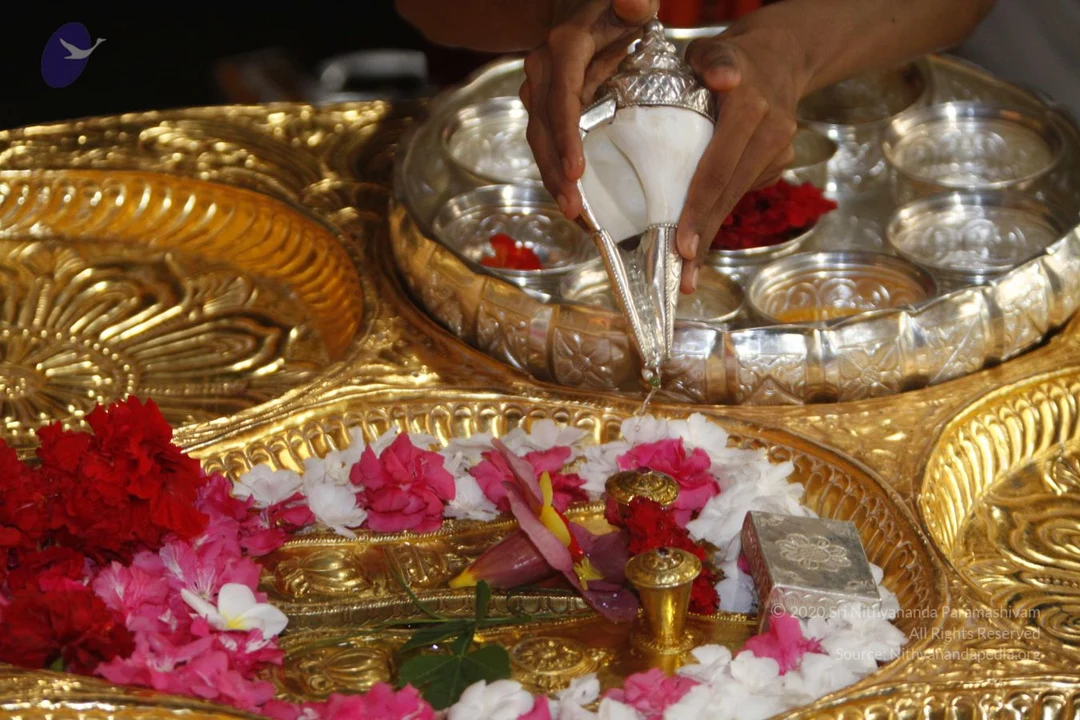
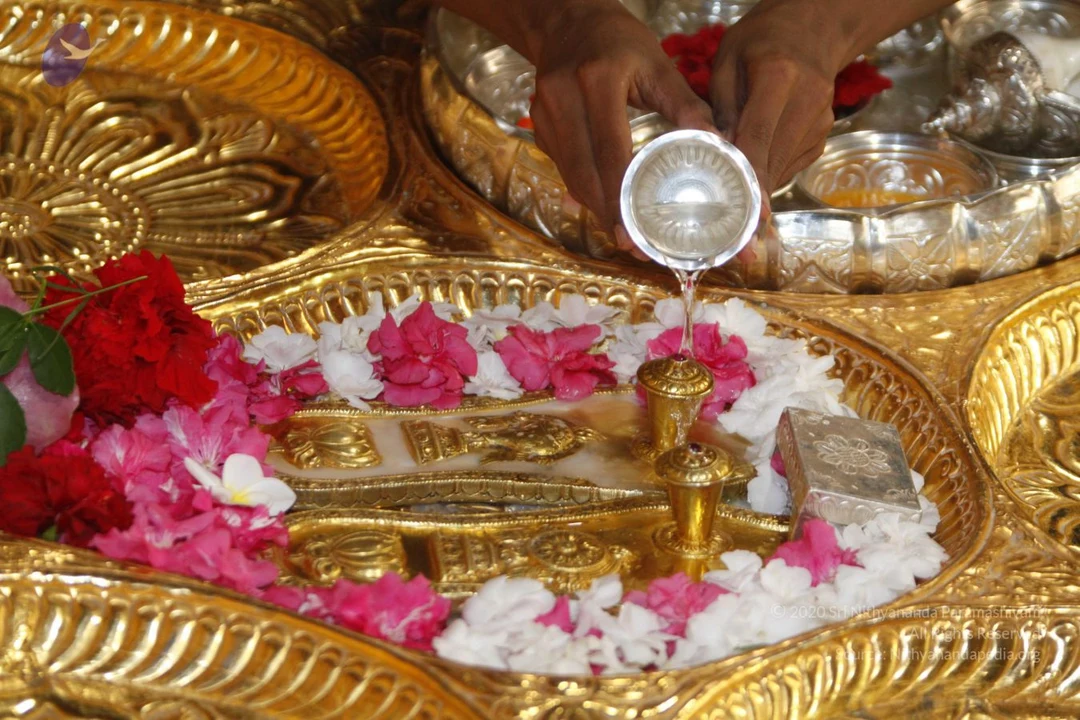
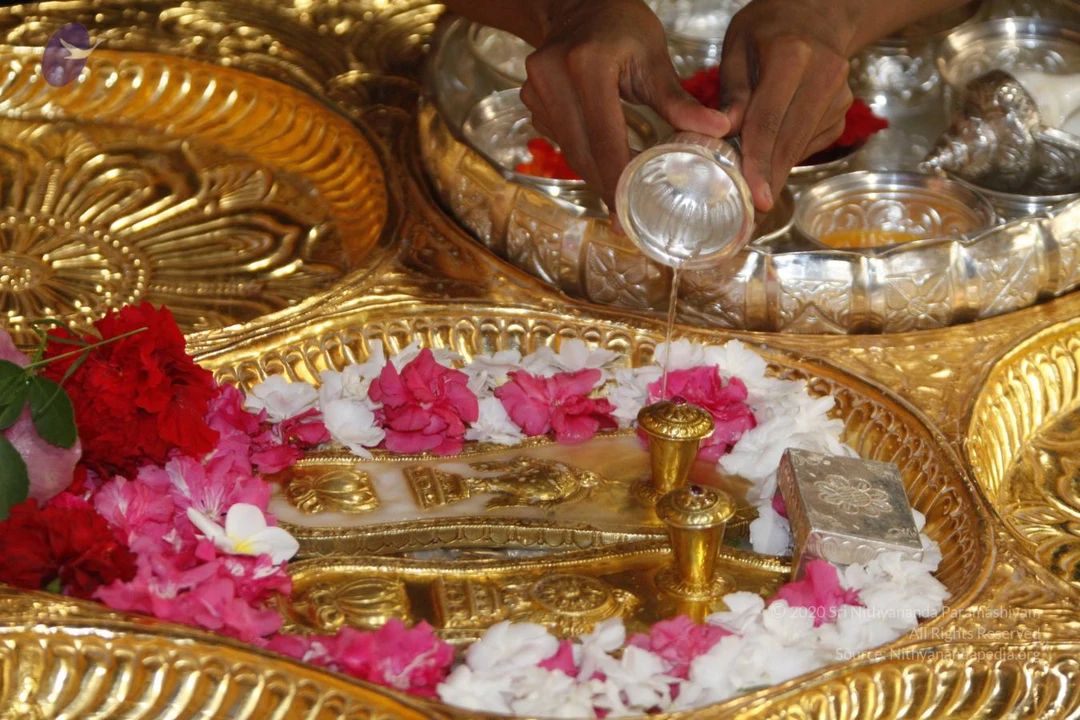
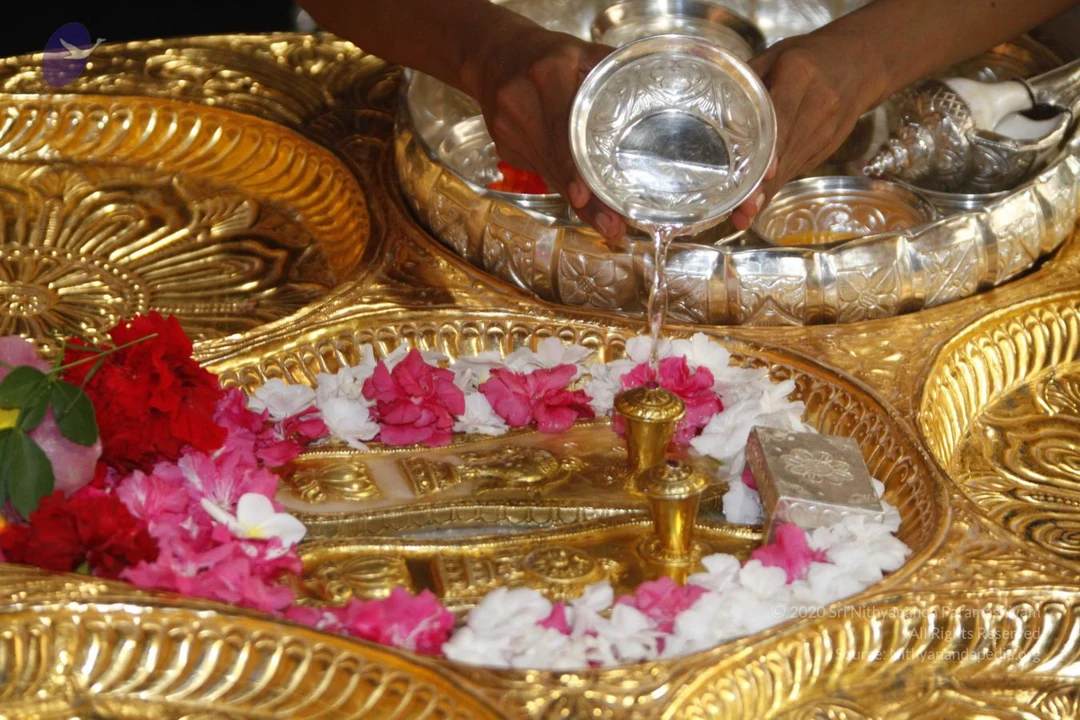
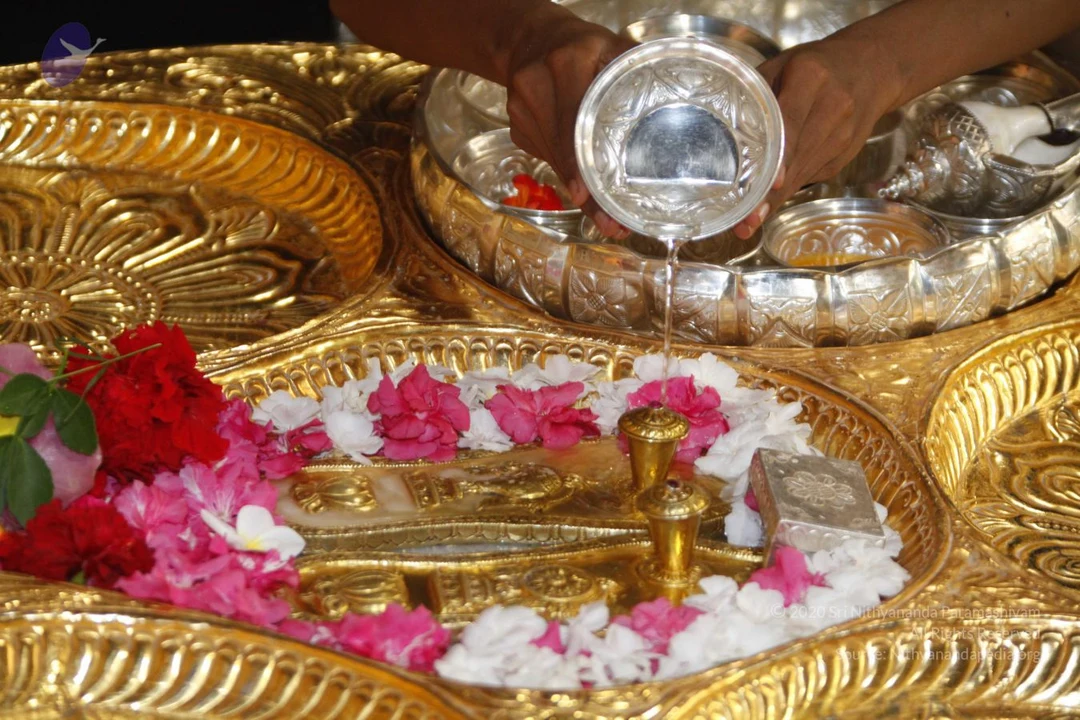
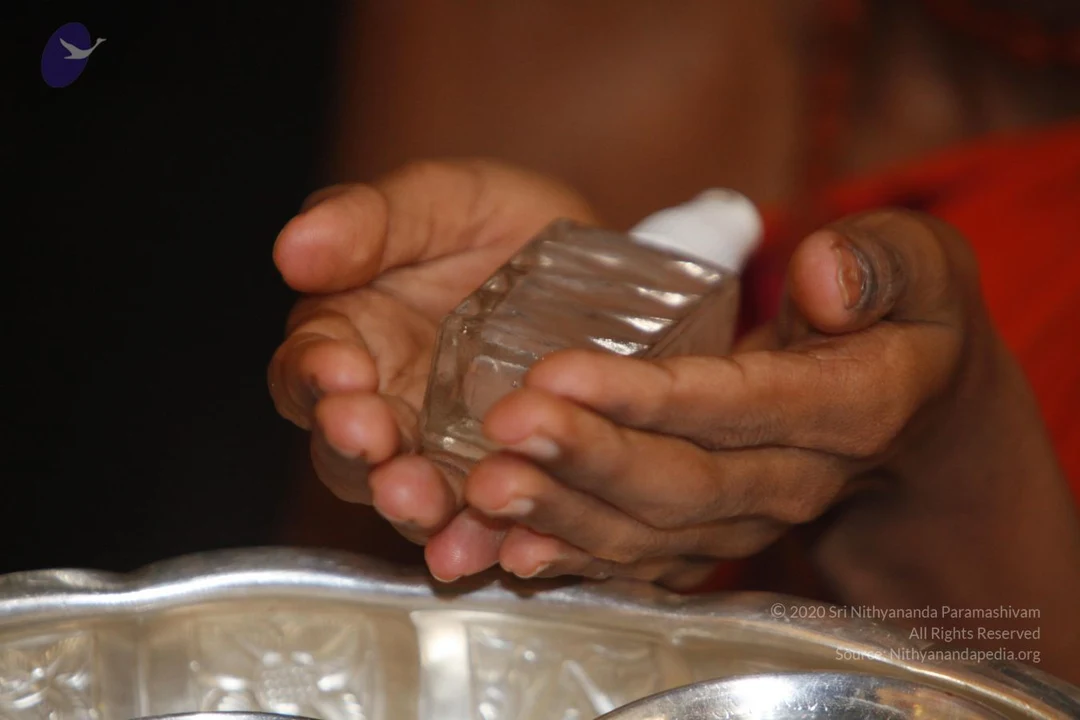
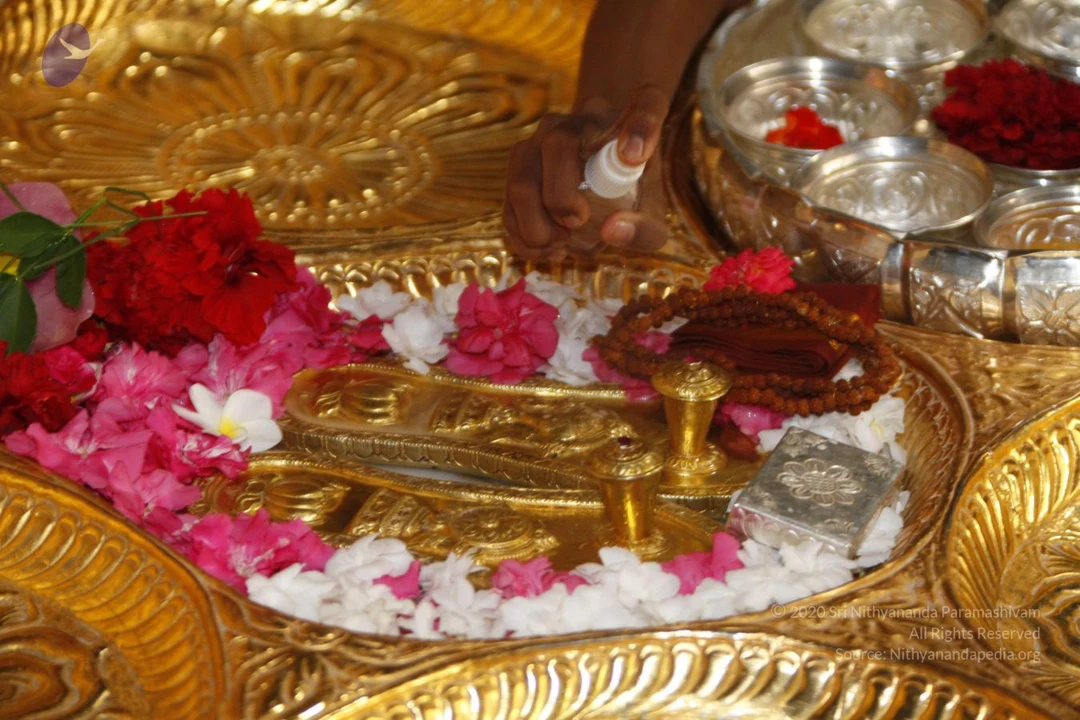
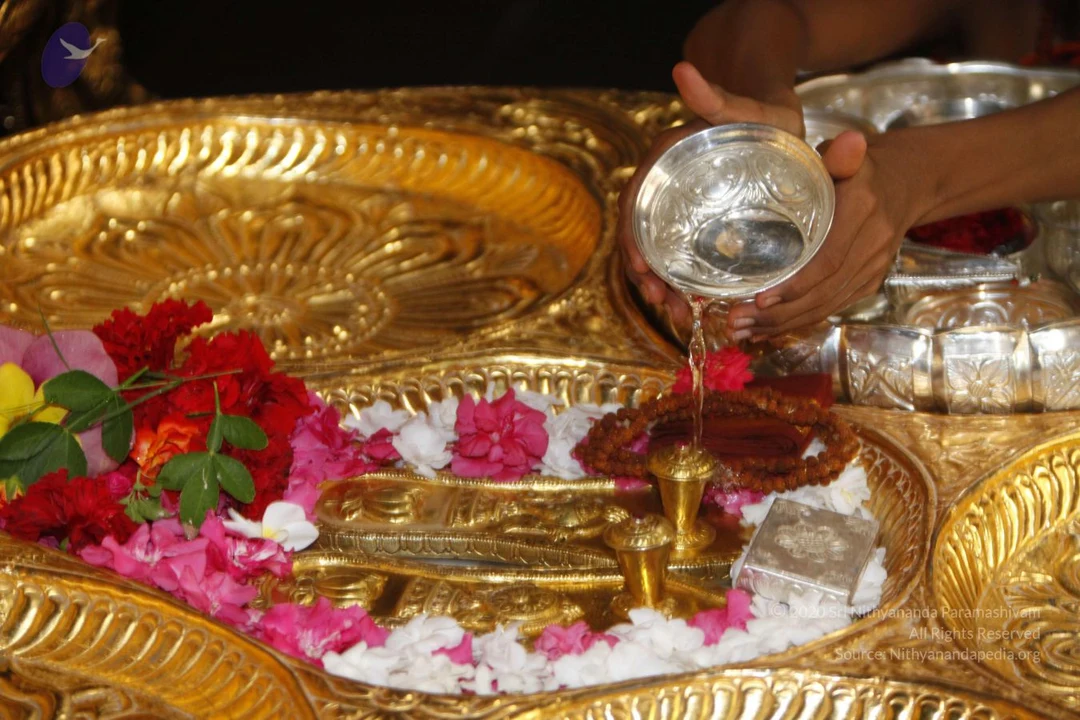
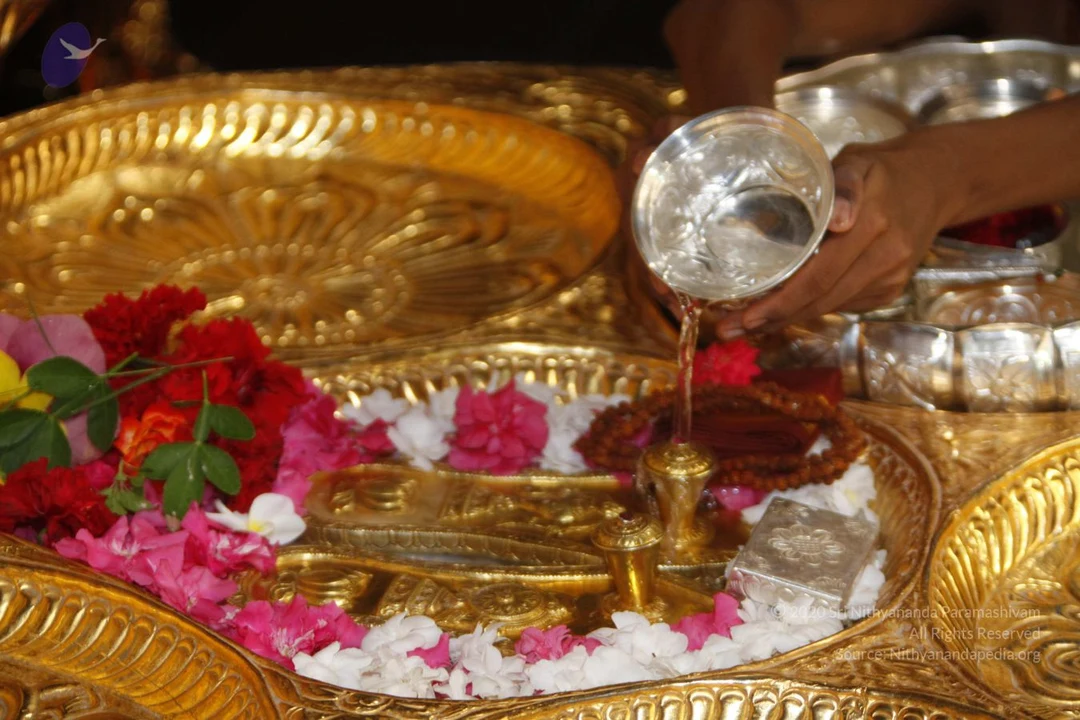
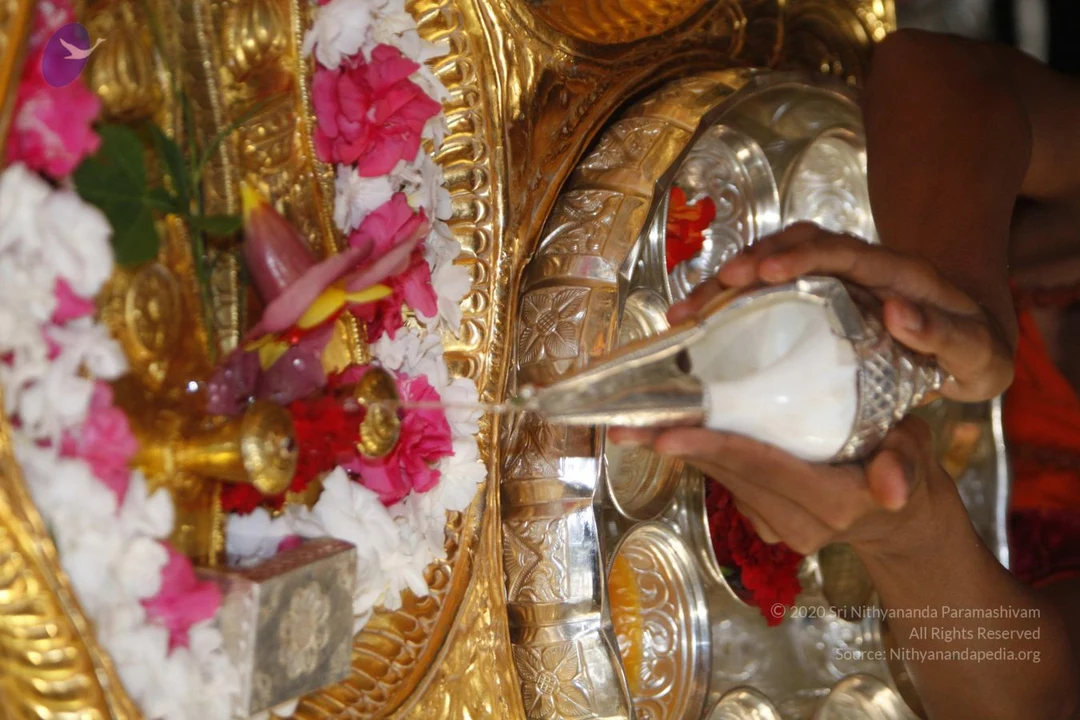
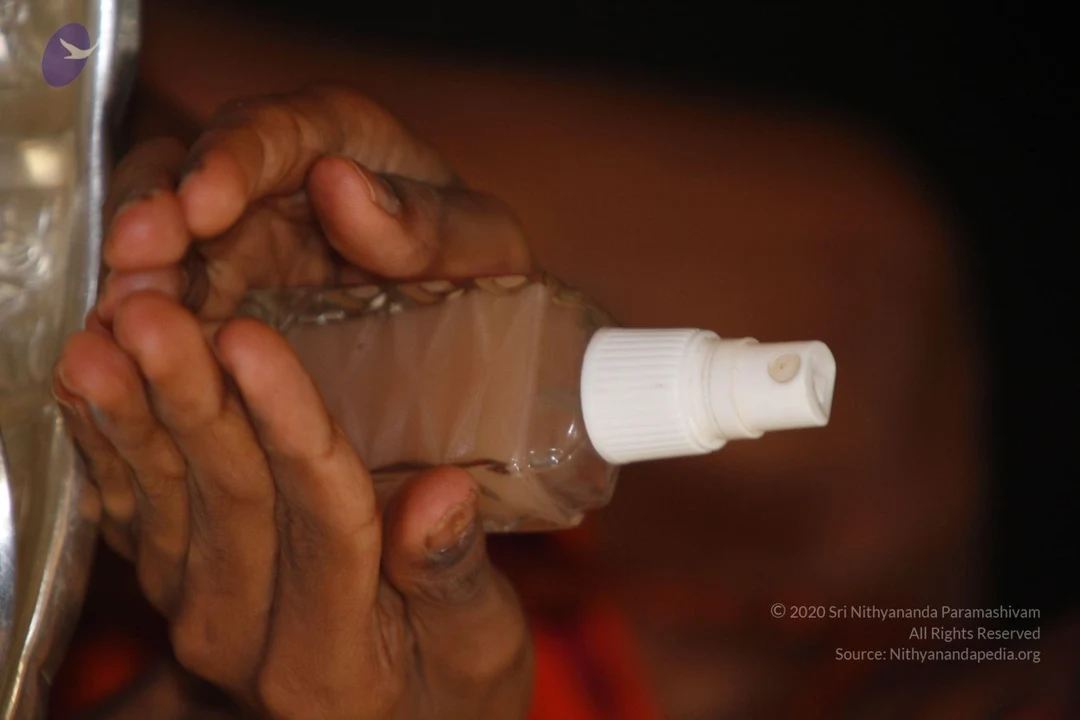
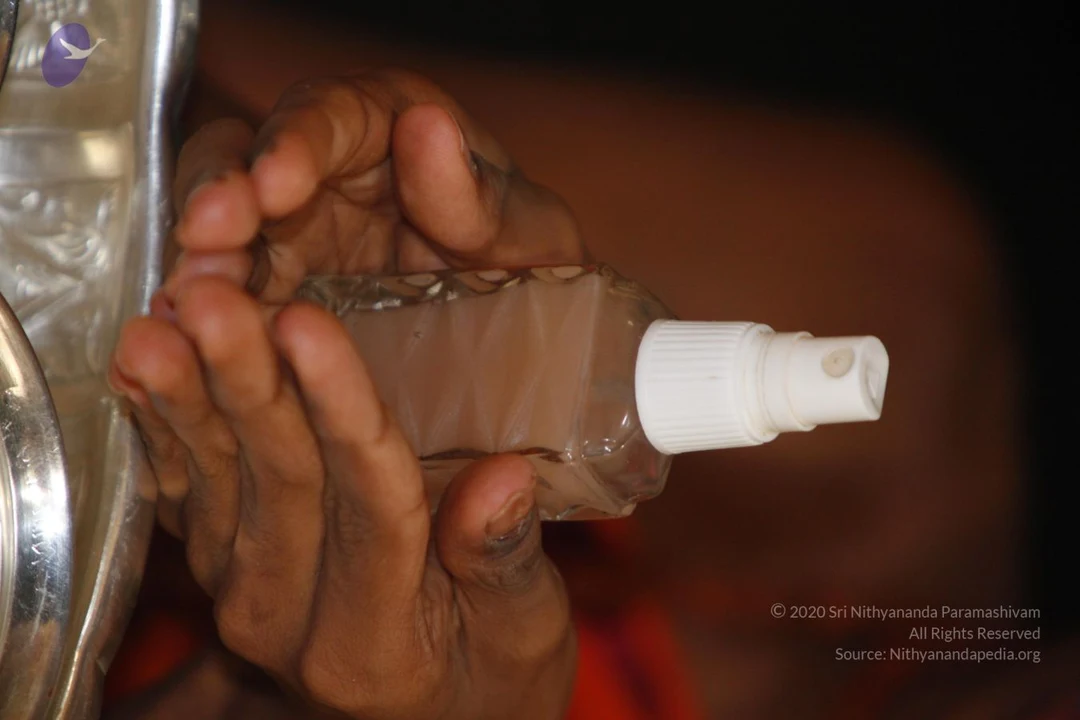
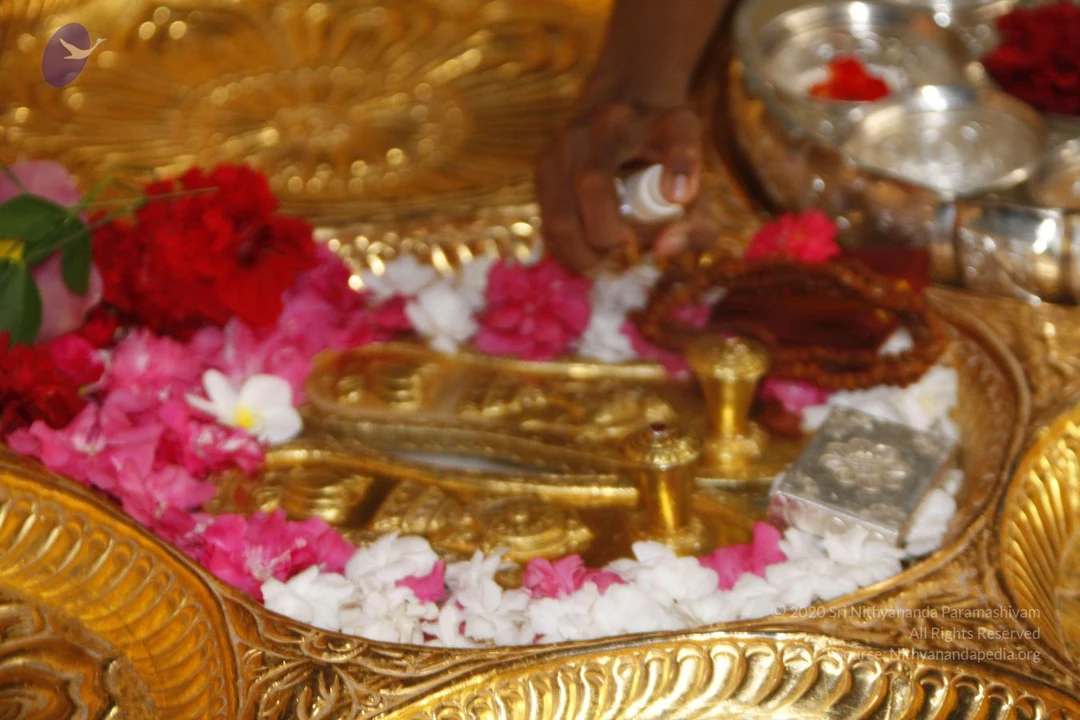
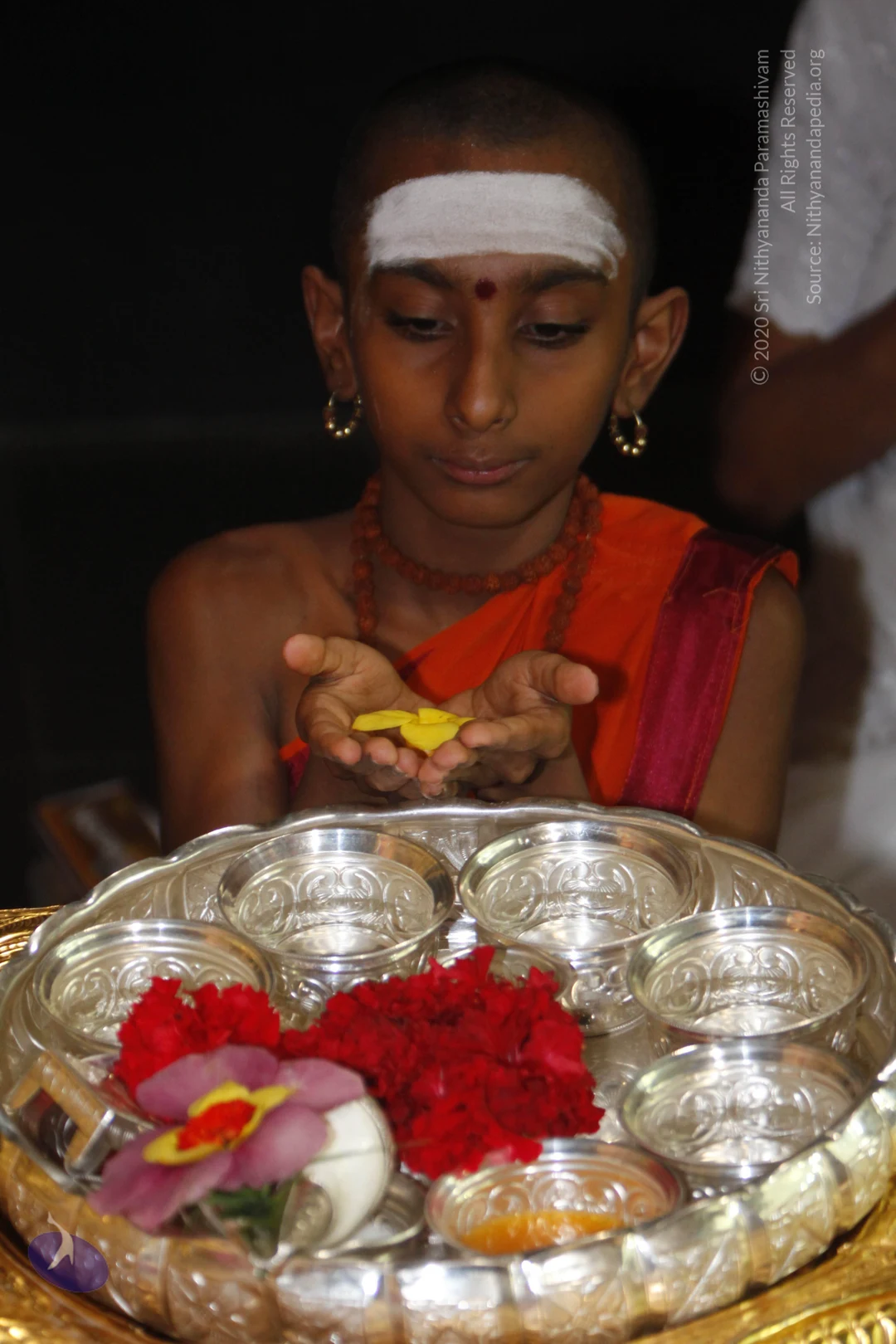
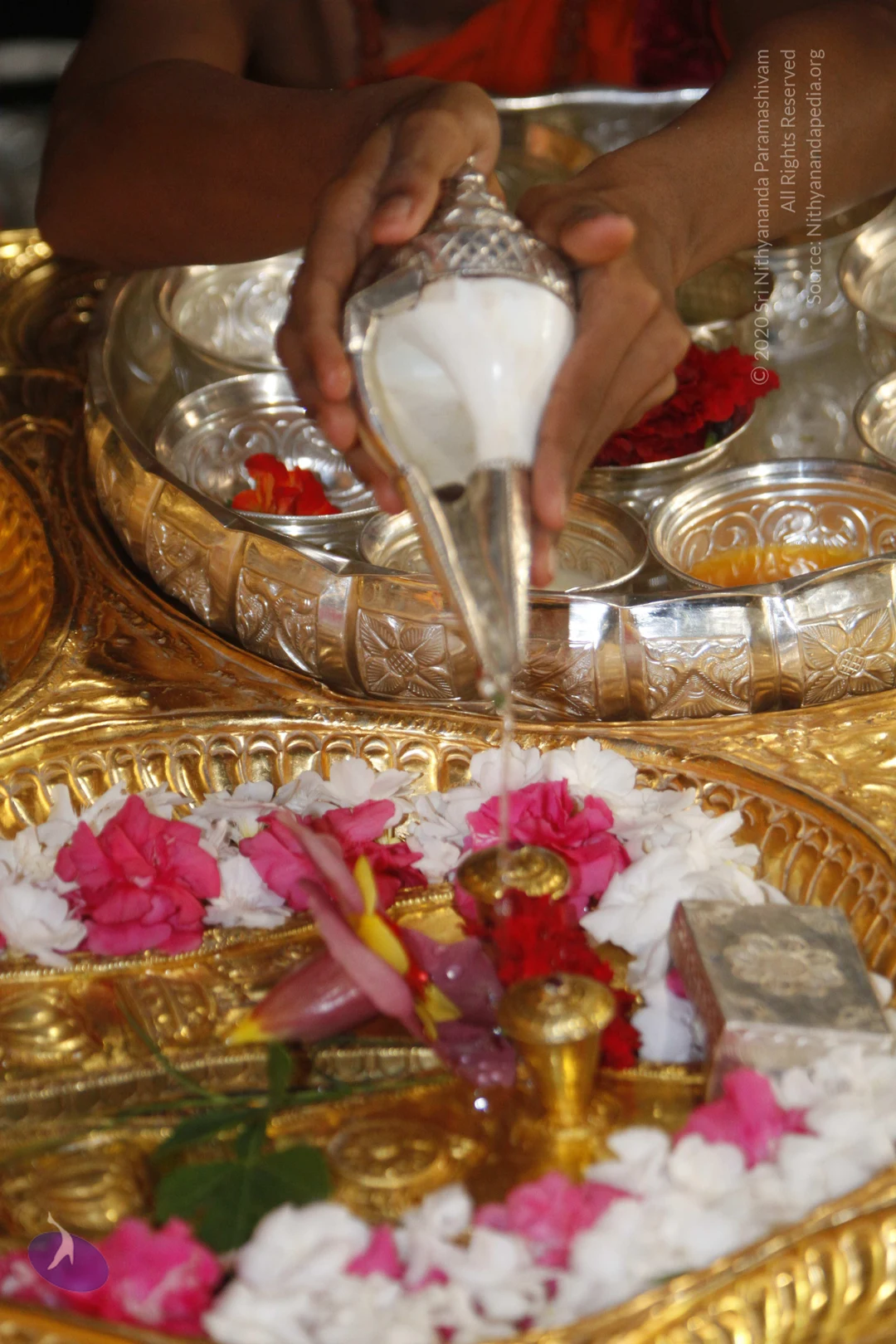
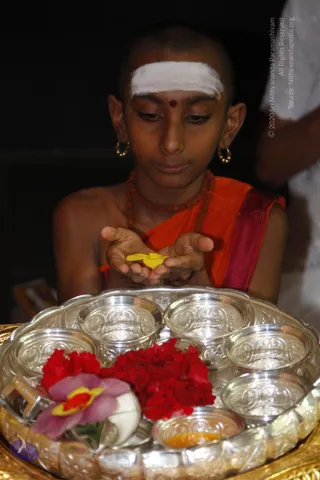
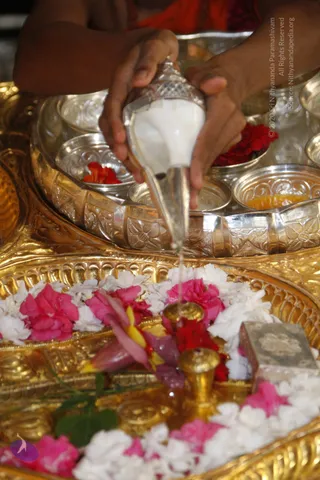
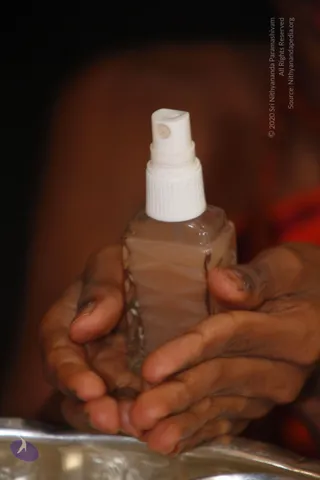
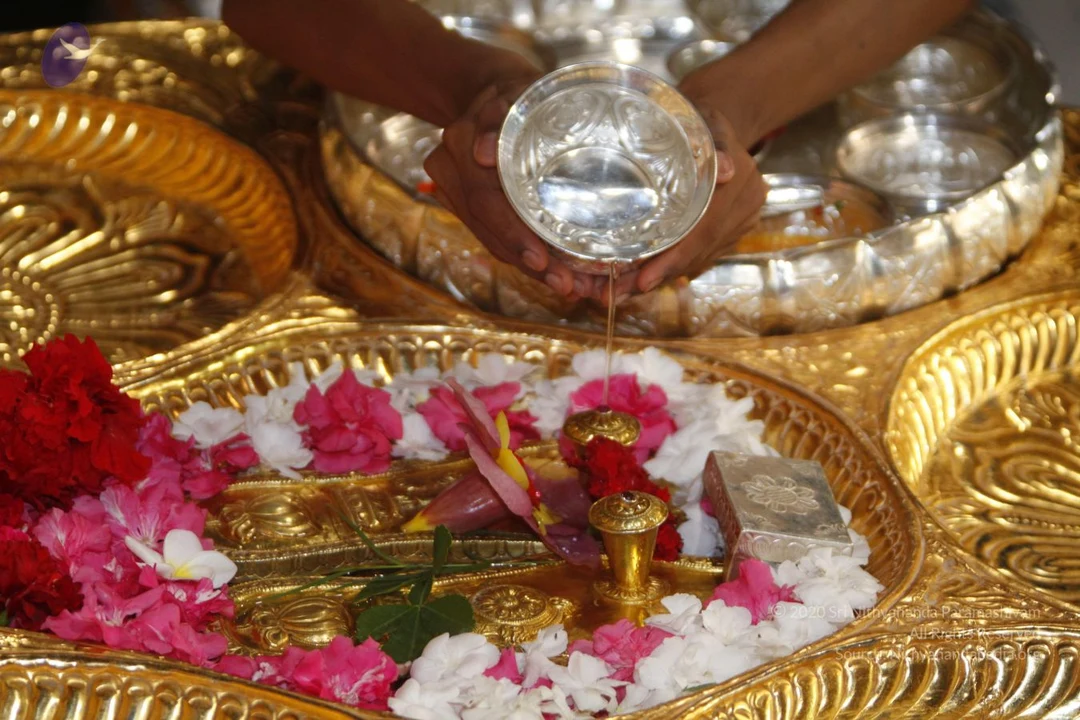
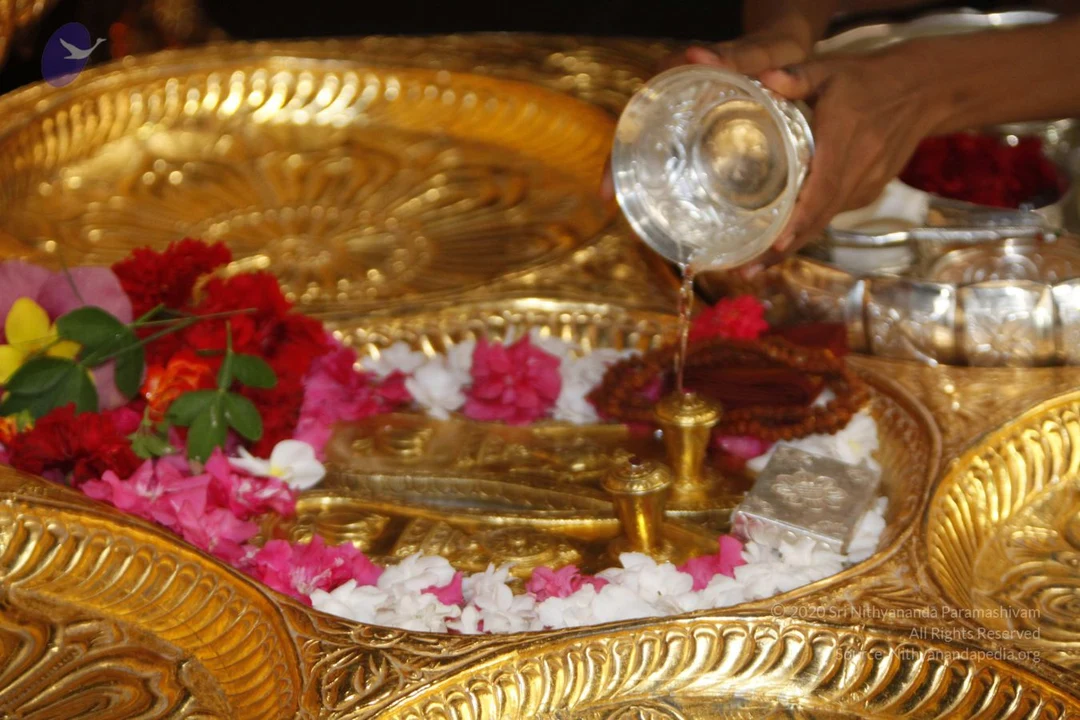
A young boy with a shaved head and a white horizontal tilak with a red dot on his forehead sits behind a polished silver puja tray. He wears a saffron-orange cloth over his shoulders and a rudraksha mala around his neck, with small gold hoop earrings. He holds a yellow flower petal cupped in both hands while looking down. The silver tray holds small silver bowls, red carnations, a pink flower with a yellow centre, and an orange paste in a dish. A partially visible person in white stands at the right edge. The setting suggests a puja offering.Close photo of a ritual abhishekam: a pair of hands, one wearing a red garment at the top edge, pours liquid from a silver-tipped white conch shell (shankha) over a gold tray. The tray holds white and pink flower petals, a red flower, and a gold kalasha-style vessel with a small gold cup or base. Silver bowls with red flowers and a yellow liquid sit on a silver tray behind. A small silver box lies at the right. Water runs down onto the petals.Close-up photograph of a pair of hands cupping a small clear plastic spray bottle with a white ribbed pump-spray nozzle, holding it over a polished silver tray or plate at the bottom edge. The liquid inside is pale and cloudy. The hands appear to be a sadhu's or devotee's, with visible wear on the fingers.Close-up photo of a pair of hands holding a clear plastic spray bottle with a white spray nozzle, resting on the edge of a polished silver metal tray or plate. Only the hands are visible; no full person is shown. The bottle appears to contain a pale liquid, possibly rose water or a similar sprinkling fluid used in ritual settings.Close view of a ritual setup on a gold tray decorated with red, pink and white flowers, including frangipani-like white blossoms and red blooms. A hand, partly visible at the top, holds a small white container over the arrangement. Gold bowls, a silver-toned vessel with red petals, a gold cup-shaped stand and a small silver box are arranged among the flowers. Appears to be a puja or abhishekam offering setup. No people's faces are visible.
Nithya-Satsang

35 photosSource gallery
a person seated on an ornate golden throne with a gilded repoussé backdrop, smiling and raising his right hand in a gesture of blessing. He wears a saffron-orange draped robe with a gold-bordered dhoti, a long gold necklace of rudraksha-style beads and a large gold pendant with a deity image, gold bangles and armlets, and a gold ring. A white vertical tilak and red bindi mark his forehead, and his feet are bare. Only one person is visible.A smiling man sits cross-legged in front of an ornate gold repoussé throne with scrolled and floral carving. He wears a rust-orange saffron cloth draped over one shoulder with a gold border, heavy gold ceremonial necklaces with a large gold pendant set with red and green stones, gold armlets and gold bangles. His forehead bears white tripundra lines with a red kumkum dot, his hair is swept back, and his bare feet are visible. Probable Swamiji: the saffron robe, swept-back hair, ceremonial gold necklaces and white forehead marks are cues, and he is seated on the throne. A small blue circular logo appears at lower left, and faint vertical text sits at the upper right edge.A man stands behind a clear acrylic lectern on a stage, hands clasped at chest level, smiling as he addresses an unseen audience. He wears a rust-orange garment with gold-striped borders draped over his shoulder and body, a multi-strand rudraksha mala and a heavy gold ceremonial necklace, gold bangles on his upper arms and wrists, and a small gold earring. He has a white vibhuti marking on his forehead with a red kumkum dot, and a small microphone is attached near his face. A brass oil lamp with a lit flame stands at the right edge beside a brass pot, and a deep maroon curtain hangs behind the stage on the left.A man in a saffron-orange dhoti with gold-bordered edges and a matching shawl stands at a clear acrylic lectern, holding up a green-covered book titled The Whole-Brain Path to Peace. He wears a white vibhuti line with a red dot on the forehead, a gold necklace of ornate links, a gold bangle and small gold earrings, and smiles while speaking into a head microphone. Behind him are a pink-and-green painted pillar and a blue-framed panel, with brass oil lamps standing on the right. The page identifies the speaker as a person; the appearance cues of saffron clothing, gold necklace and tilak are present, so this is a probable match.A man speaks at a clear acrylic lectern while holding up a book titled "The Whole-Brain Path to Peace" with a pale green cover. He wears an orange-red shawl over bare shoulders, a heavy ornate gold necklace with a red-brown bead mala, a gold armlet, and small gold earrings. He has a white forehead marking and a red dot between his brows, and a small headset microphone is clipped near his face. Behind him are blurred pink, green and red decorative hangings. He is a single physical person in a stage setting, and the page indicates a person appearance but his features are not clearly distinctive.
SacredArtsConstruction-Photos-Swamiji

4 photosSource gallery
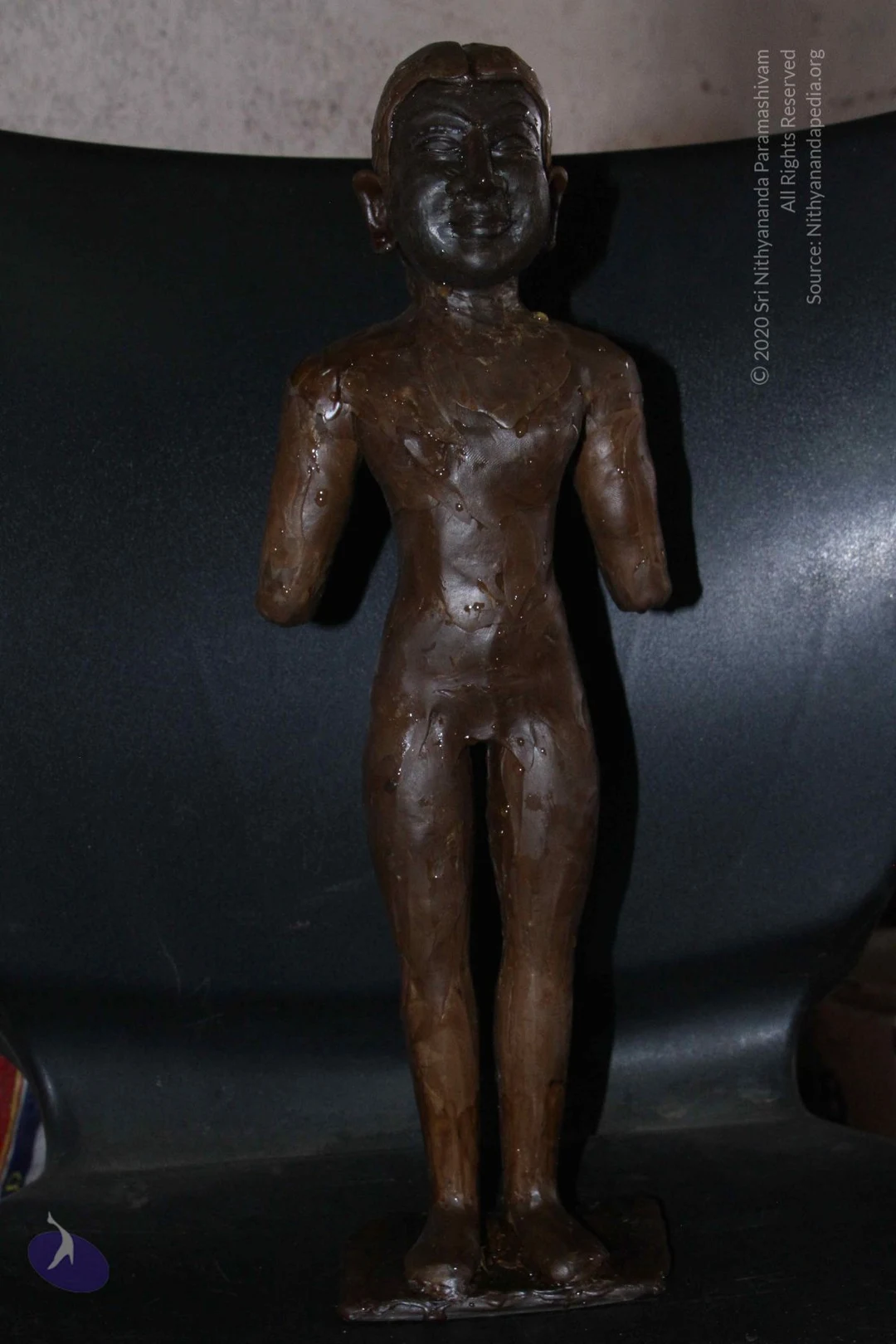
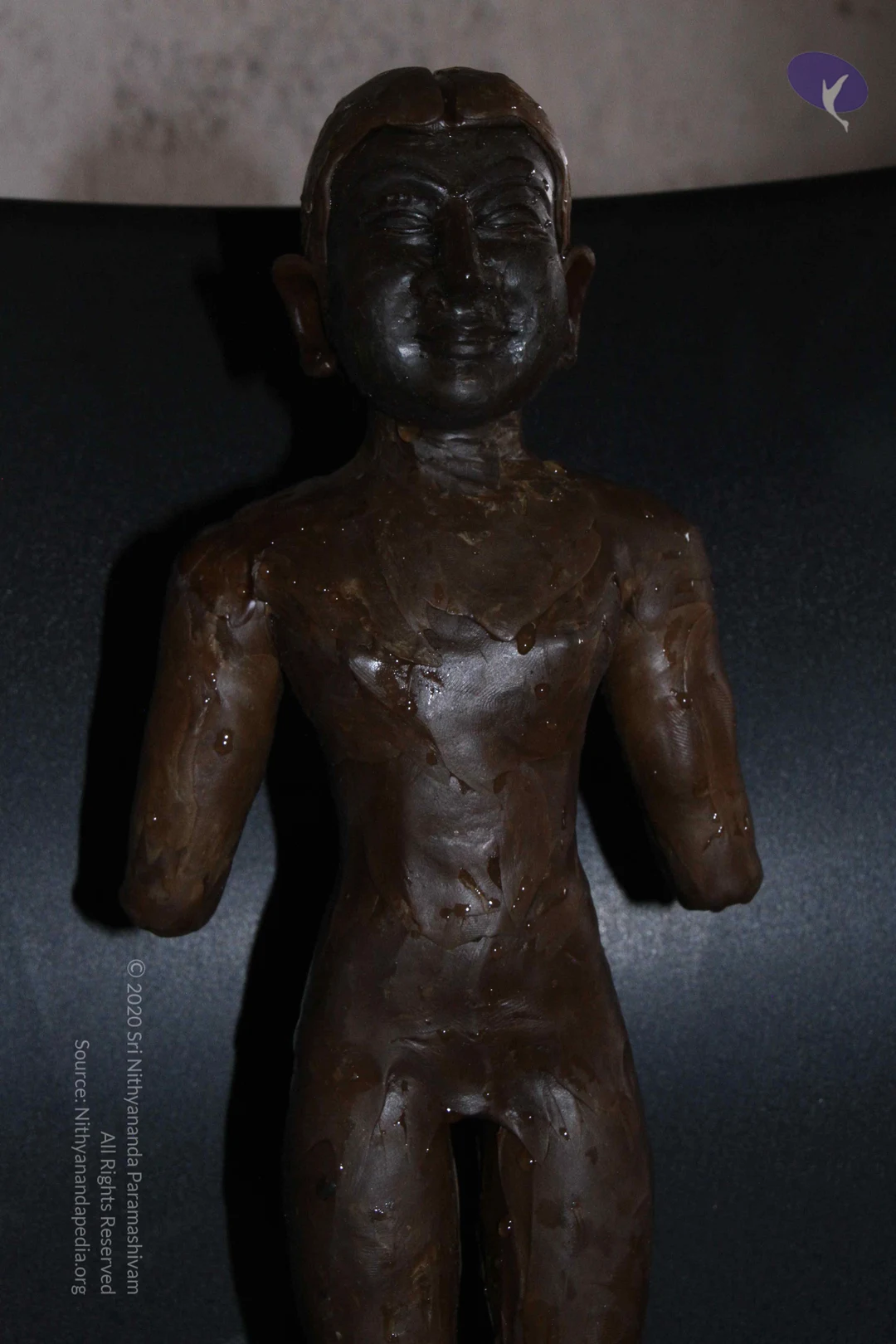
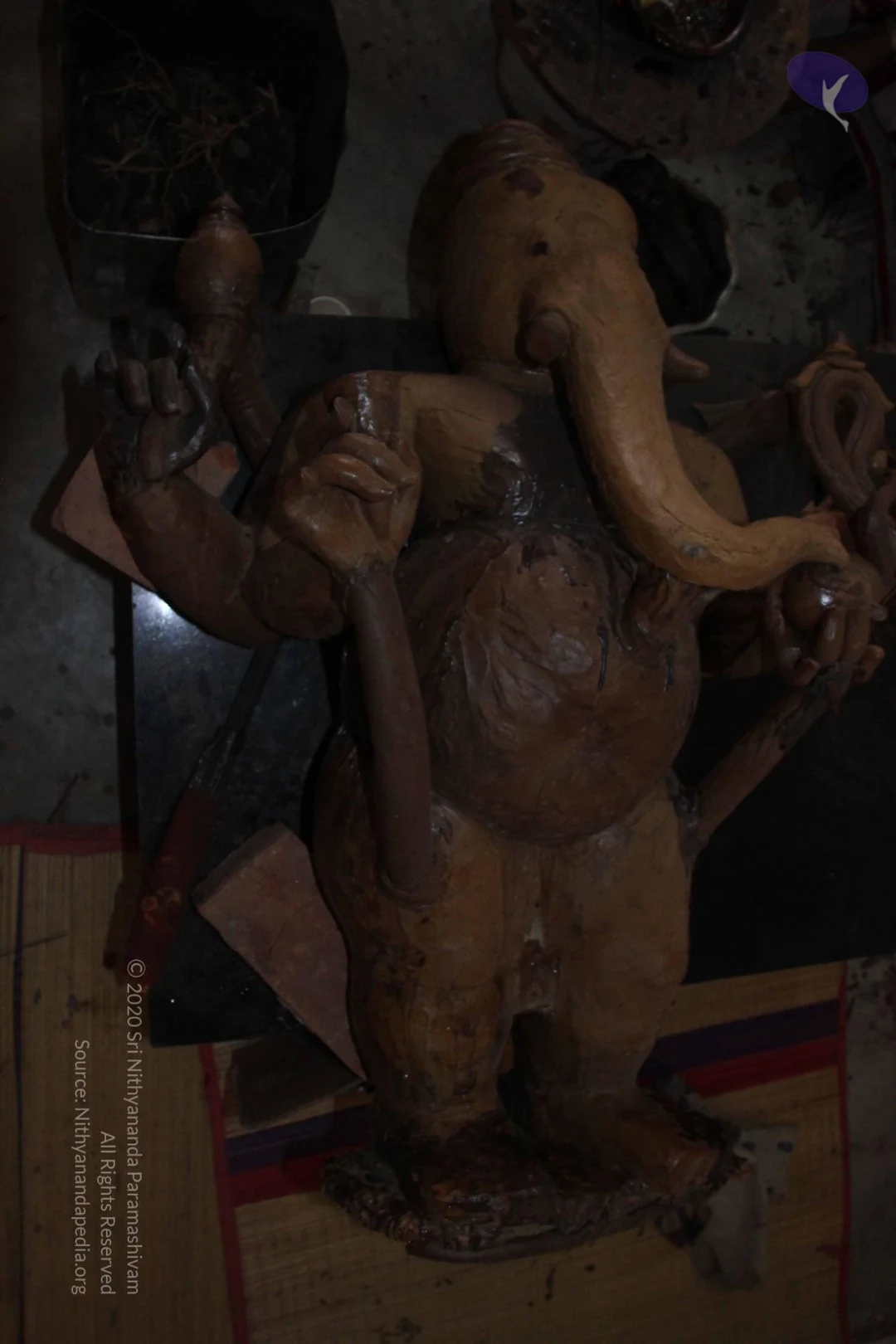
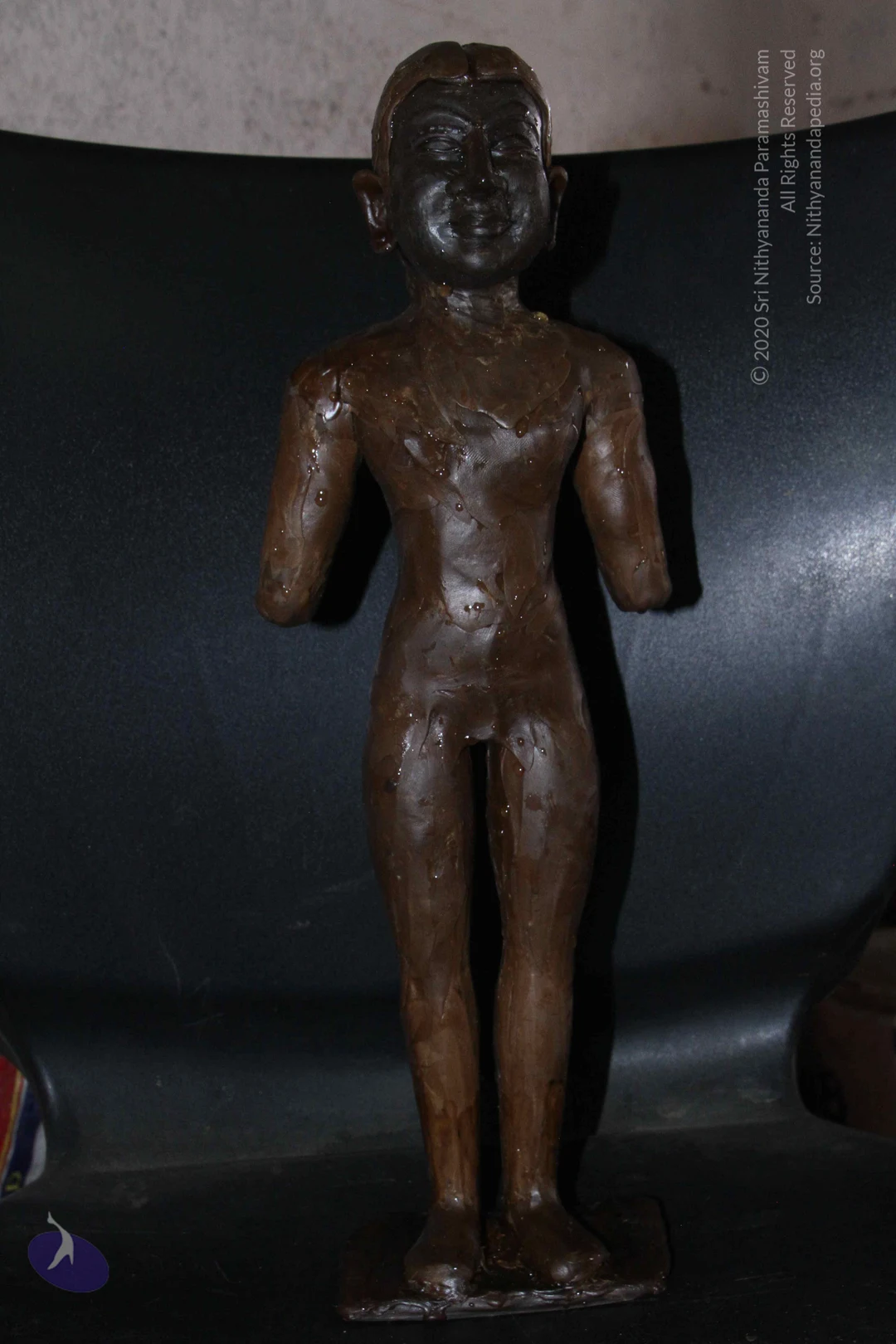
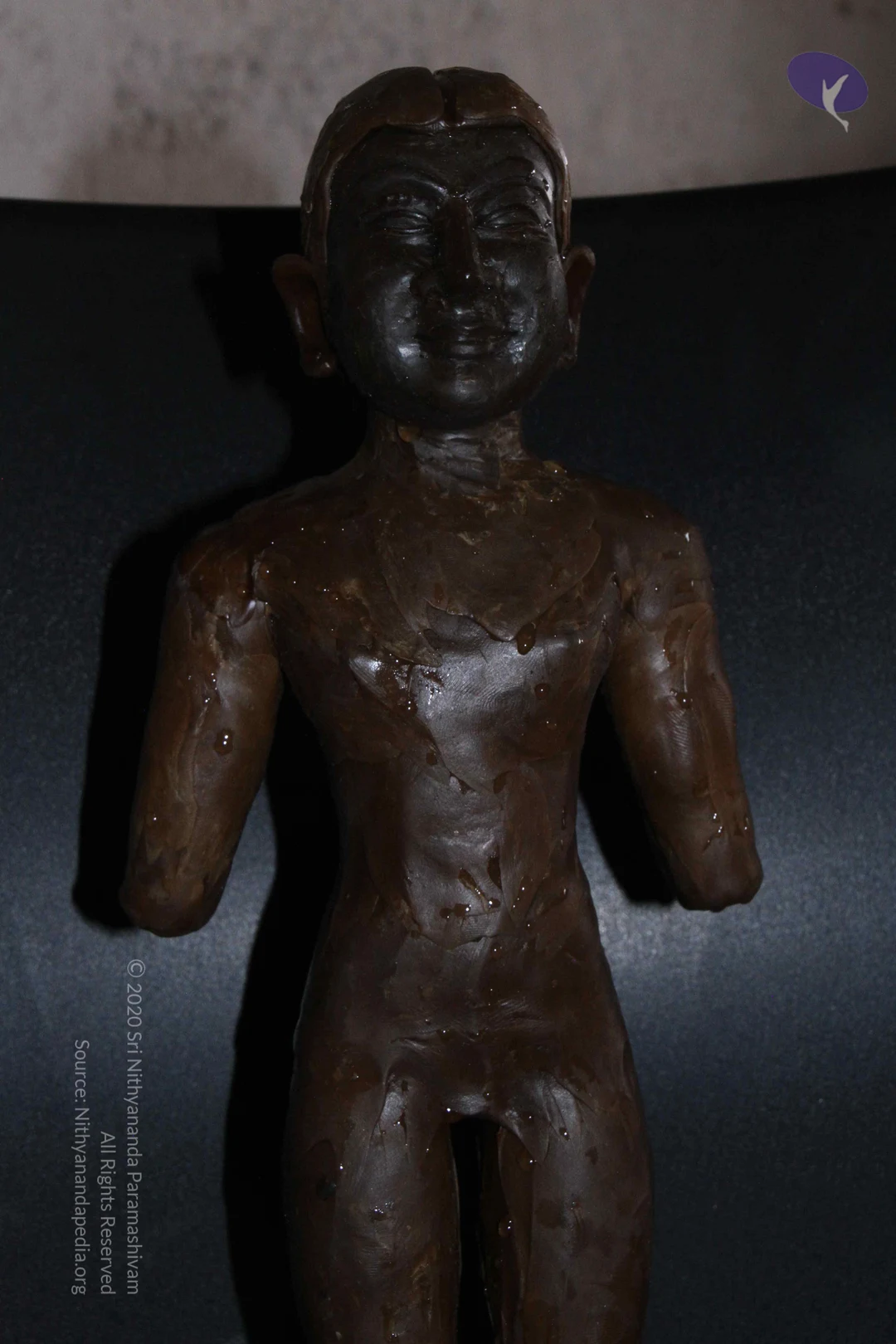
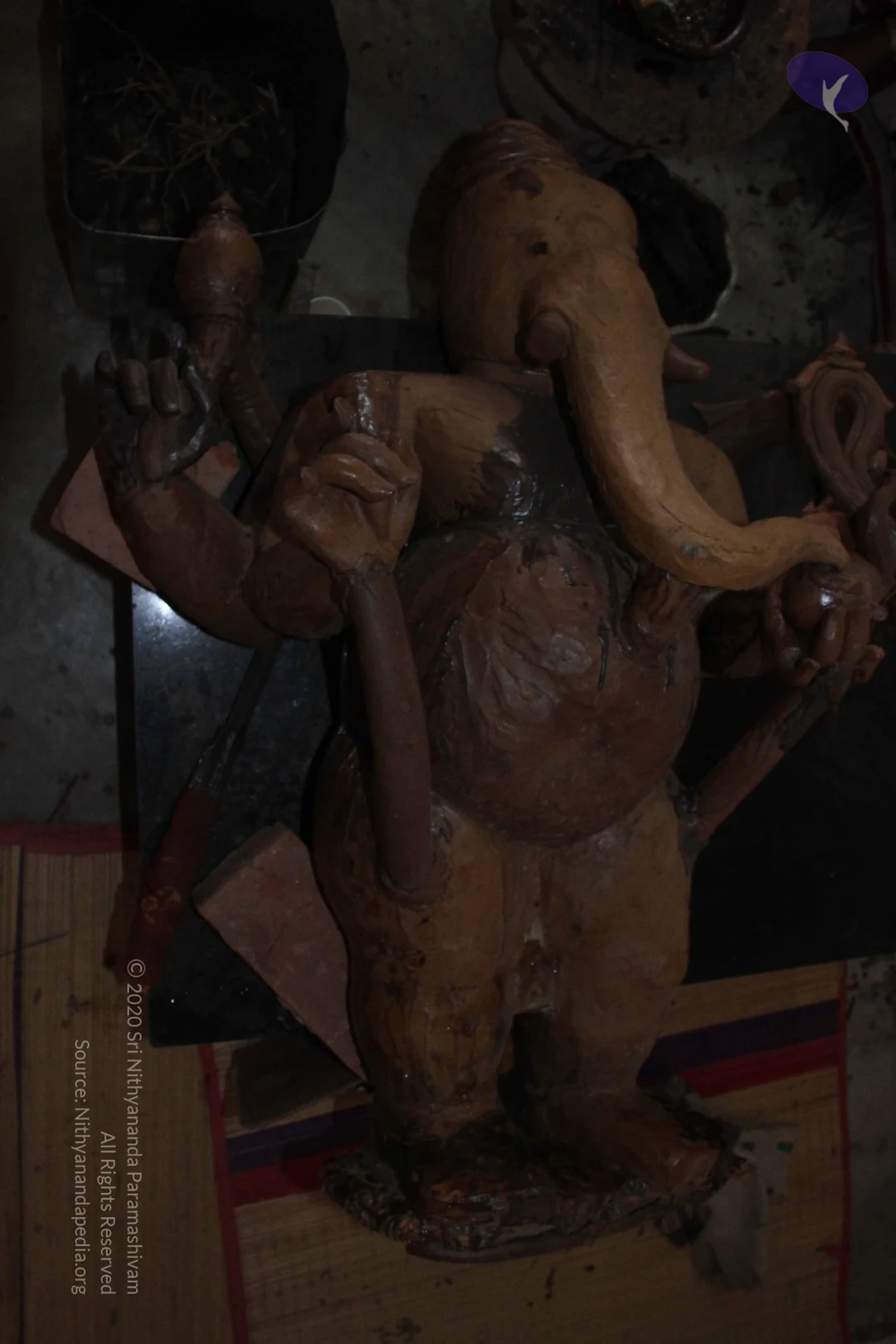
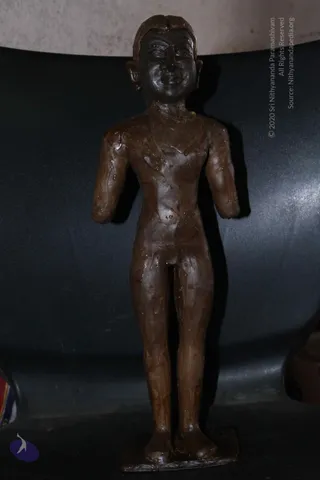
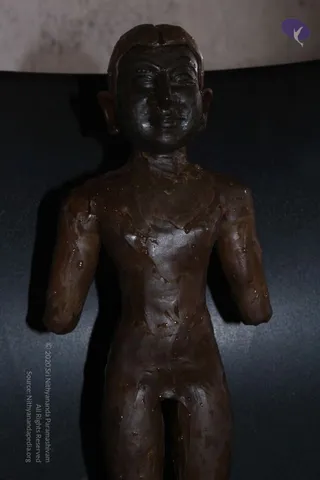
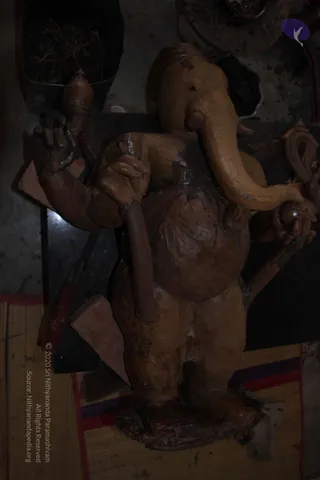
A small standing sculpture of a nude male figure with arms held slightly away from the body, shown against a dark backdrop with a lamp shade visible at the top. The brown, glossy figure has a smooth face and simple features, set on a rectangular base. It appears to be a statue or figurine rather than a living person, and is not a candidate for a physical presence of a person. Oily or wet sheen on the surface.A dim photograph of an unpainted terracotta-coloured Ganesha sculpture in an unfinished state, standing on a rounded base. The elephant-headed deity has a large round belly, a raised trunk, and multiple arms holding objects such as an axe-like implement and a sweet or modak in one hand. Scattered tools, clay and wooden boards surround the figure in a dark workshop-like setting. No physical people are visible.

LotusLiveSwamiji
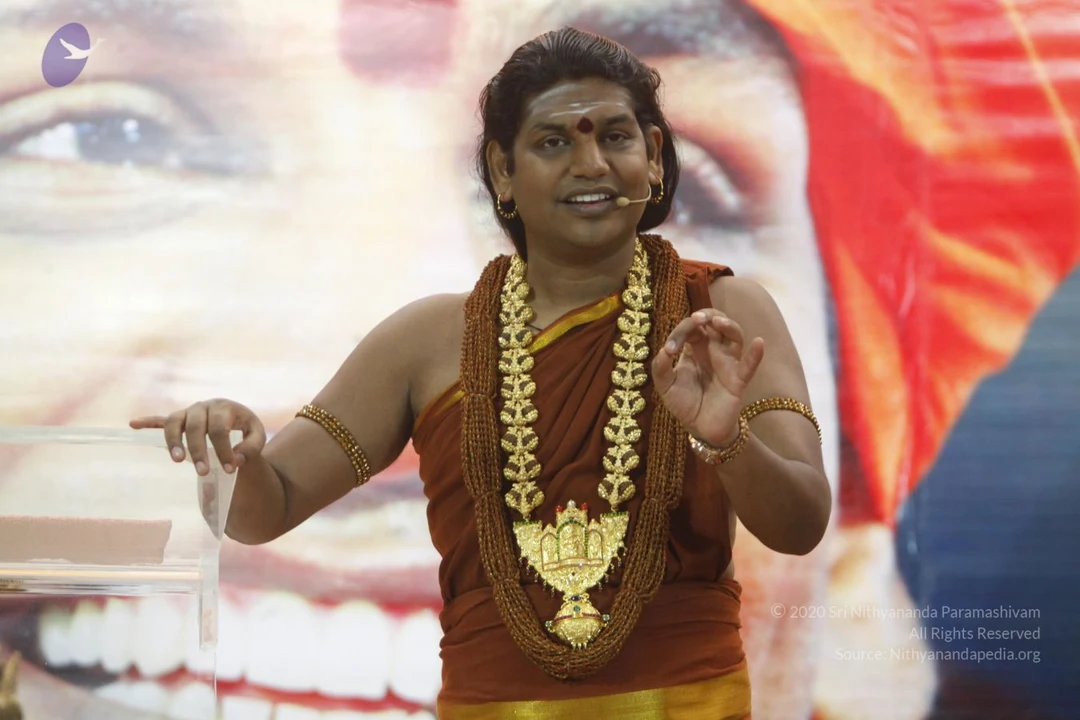
6 photosSource gallery
A man stands behind a clear acrylic lectern during a satsang discourse, hands pressed together in front of him. He wears a rust-orange garment with a wide gold-bordered cloth wrapped at the waist and draped over one shoulder, a rudraksha-style mala and a heavy gold ceremonial necklace with a central pendant, gold armlets and bangles, and a small headset microphone. He has a red bindi and white forehead markings. Behind him a large printed backdrop shows a close-up of a face in orange and red tones, and gold brass vessels are visible at the lower edges. A probable Swamiji is shown with these cues: long swept-back hair, ornate gold ceremonial jewellery and saffron-orange clothing, with the satsang lectern setting.A man with swept-back dark hair stands beside a clear acrylic lectern, one hand resting on it, at an event with a large backdrop of an enlarged face. He wears a rust-orange dhoti and shawl with broad gold borders, a multi-strand rudraksha mala, a heavy gold ceremonial necklace with a central pendant, gold bangles and armlets, and a red bindi with white tilak on his forehead. A small headset microphone is attached near his face. Behind him at left, part of a brass lamp stand is visible. Swamiji (probable): the swept-back hair, ornate gold necklace, rudraksha malas and saffron-orange clothing are the qualifying appearance cues for this speaker.A man in rust-orange robes with gold-bordered wrap stands at a clear acrylic lectern, one hand resting on it and the other raised in a gesture while speaking. He wears a long gold necklace with a large gold pendant set with red and green stones, gold armbands and bangles, a red bindi and vertical white tilak, and a rudraksha-style bead necklace. Behind him a large printed portrait of a face fills the backdrop. A brass oil lamp stands at the left edge of the frame.A smiling man with long swept-back dark hair stands before a large blurred backdrop showing a painted face and eye. He wears a rust-orange shawl with gold border over his shoulders, a thick brown rudraksha-style mala with a large ornate gold pendant, a gold necklace with gold bead ornaments, gold earrings and gold armlets, and a red kumkum dot with white vibhuti marks on his forehead. A small clip-on microphone is attached near his mouth. a person: the long swept-back hair, saffron-orange shawl, rudraksha mala and ceremonial gold necklaces match the page's reference to a person at this event, presented as a satsang speaker.A man stands beside a clear acrylic lectern on a stage, smiling, wearing a rust-orange draped garment with broad gold borders, a heavy rudraksha mala of dark beads, and a large gold necklace with a temple-shaped pendant set with green and red stones, plus a gold floral garland. He wears a headset microphone, gold hoop earrings, bangles, and a red bindi with vibhuti marks on his forehead. A large printed portrait of a face fills the background. Appearance-based cue with several distinctive ornaments and orange clothing: a person, shown speaking at a lectern as a discourse presenter.A standing man speaks at a clear acrylic lectern on a stage during a satsang. He wears a rust-orange draped garment with gold-bordered wraps, a dense gold-and-bead garland with a large gold pendant, gold bangles and a red bindi, and is barefoot. A microphone headset is visible. Behind him a large printed portrait of a smiling face in red and orange hangs on a backdrop. A gold lion-form throne with a red cushion stands at right, and a brass lamp is at left.