Skip to content
Wednesday

26 June 2013

Nirahara - Natural Cure For Obesity

Dated photos
294
Source pages
1
Media
2
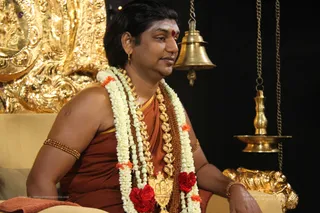
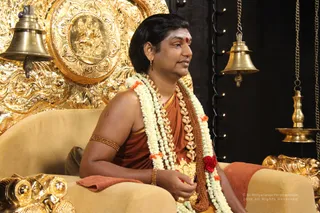
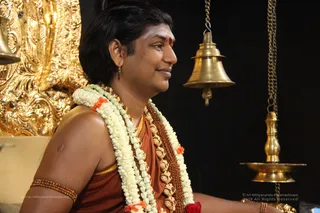
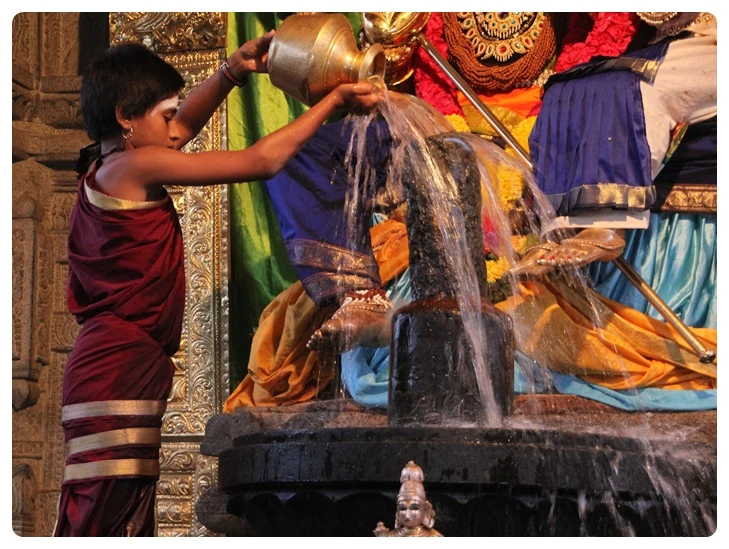
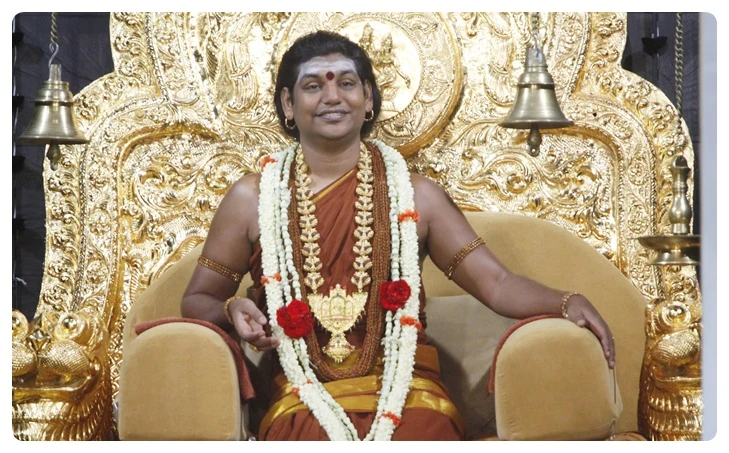
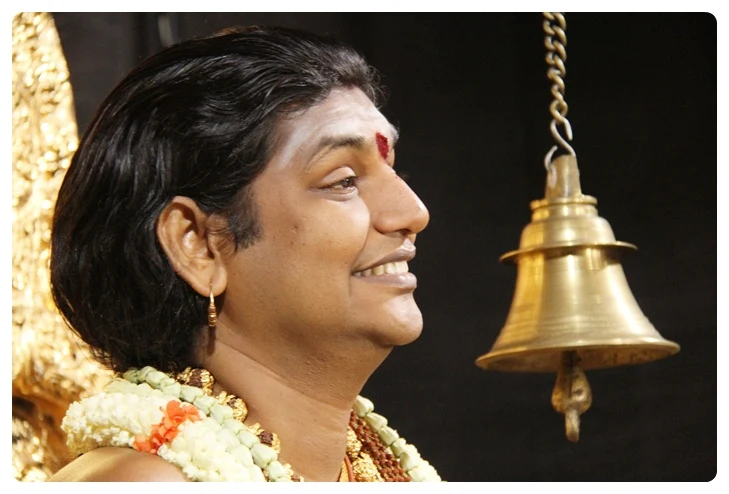
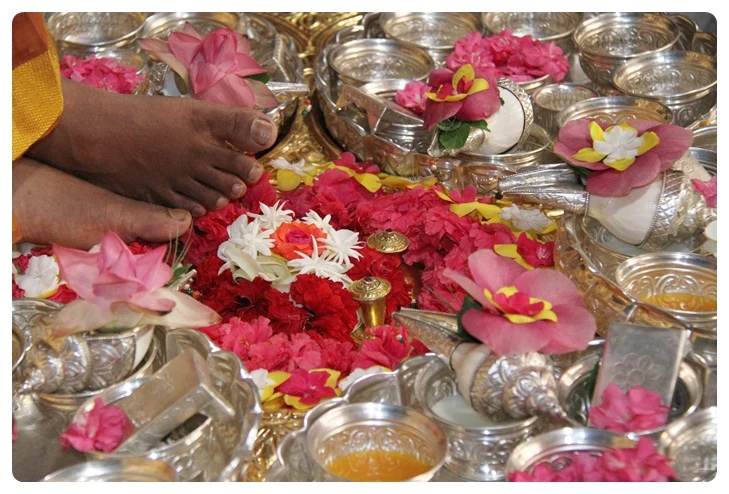
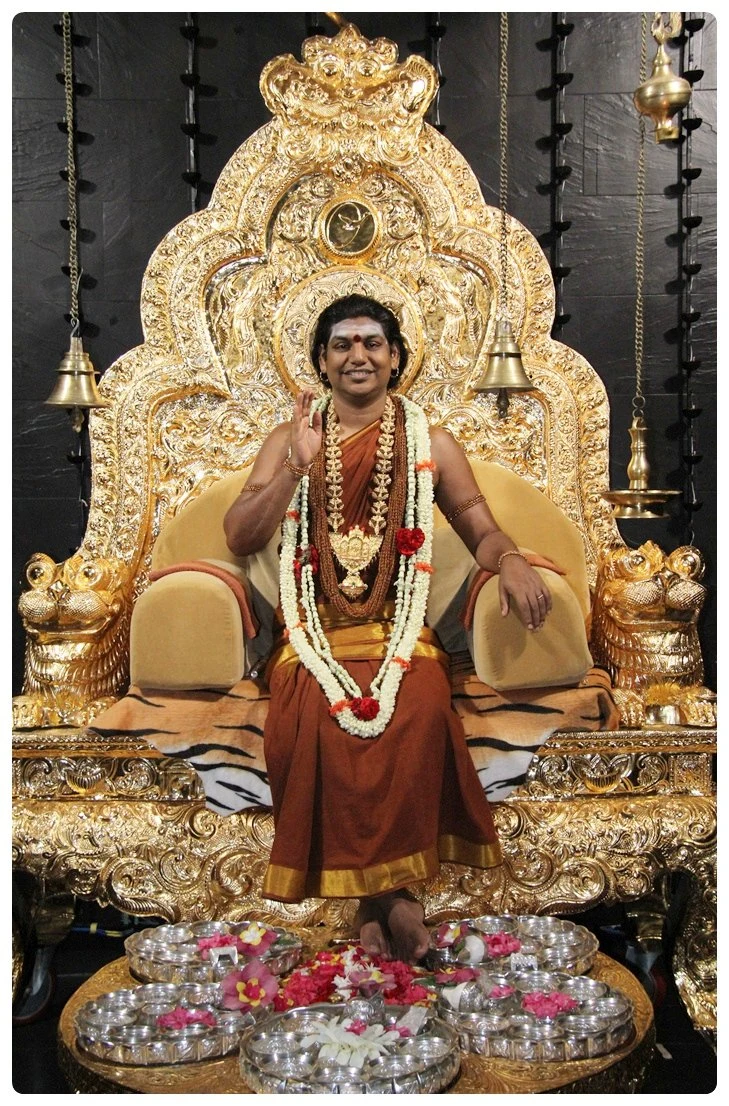
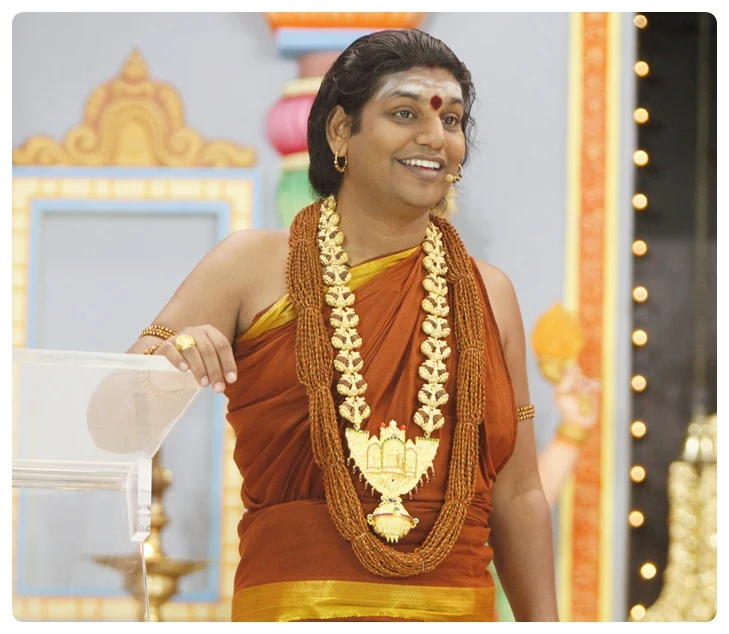
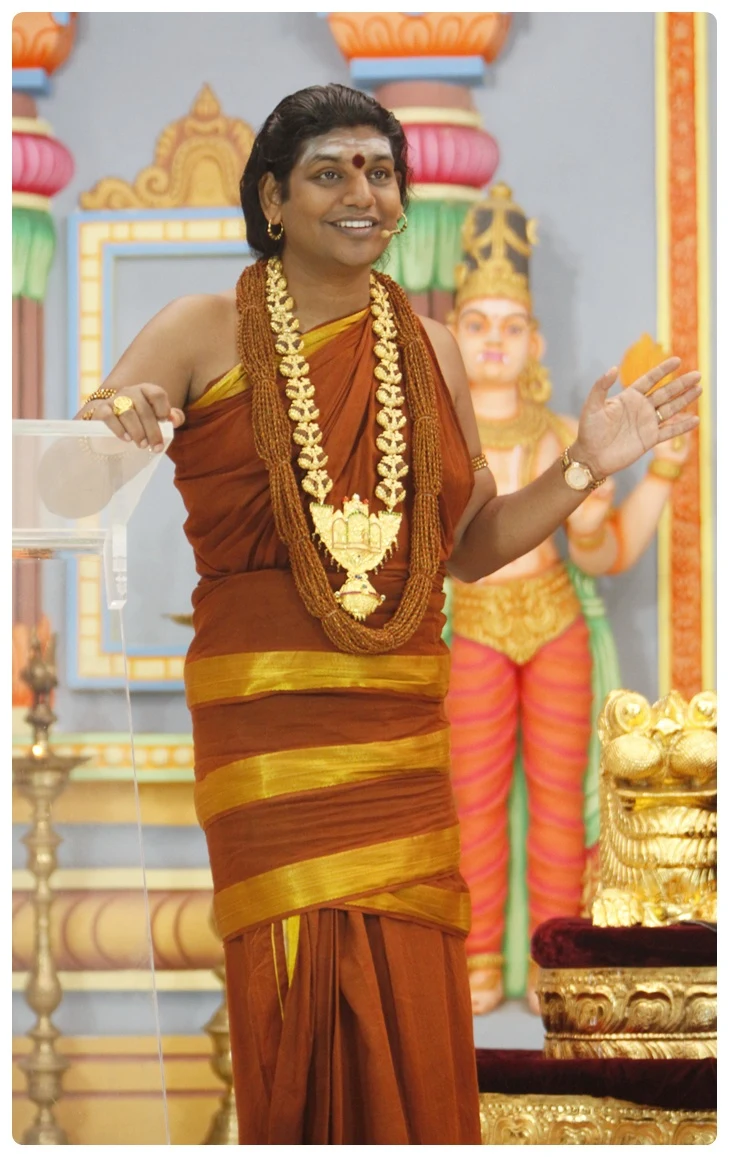
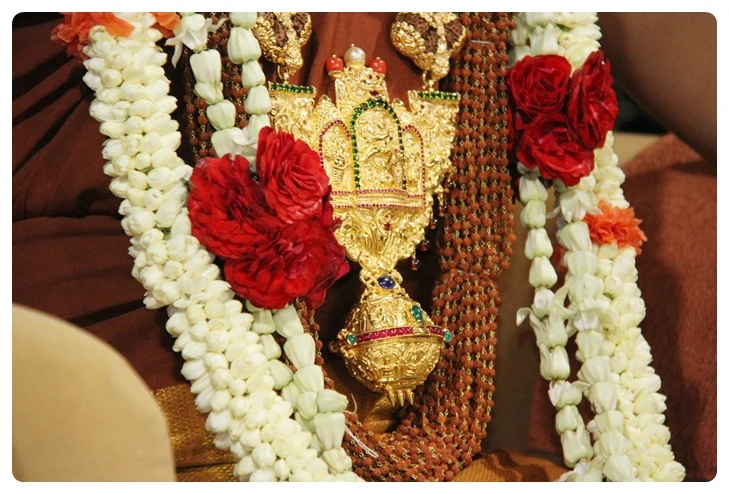
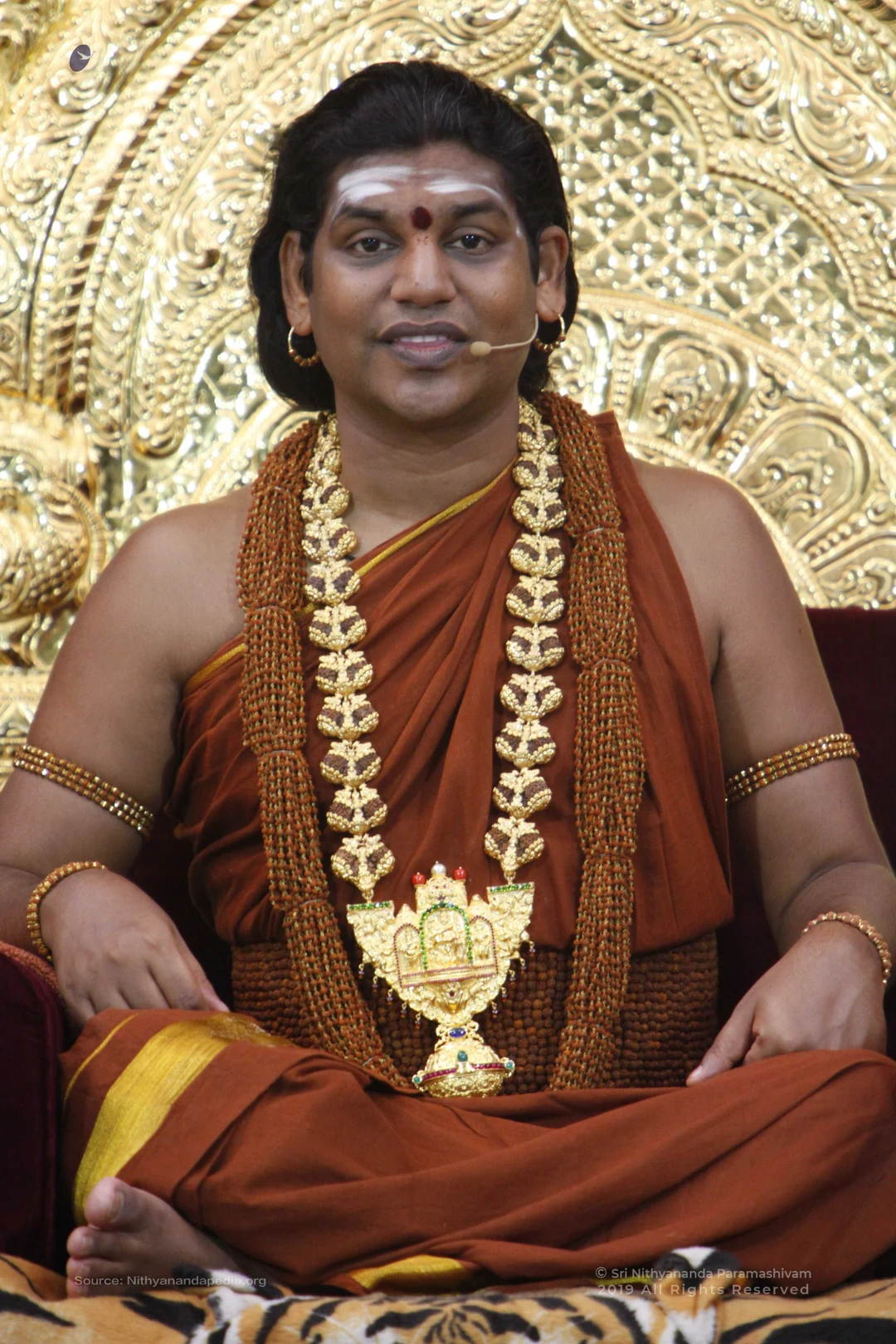
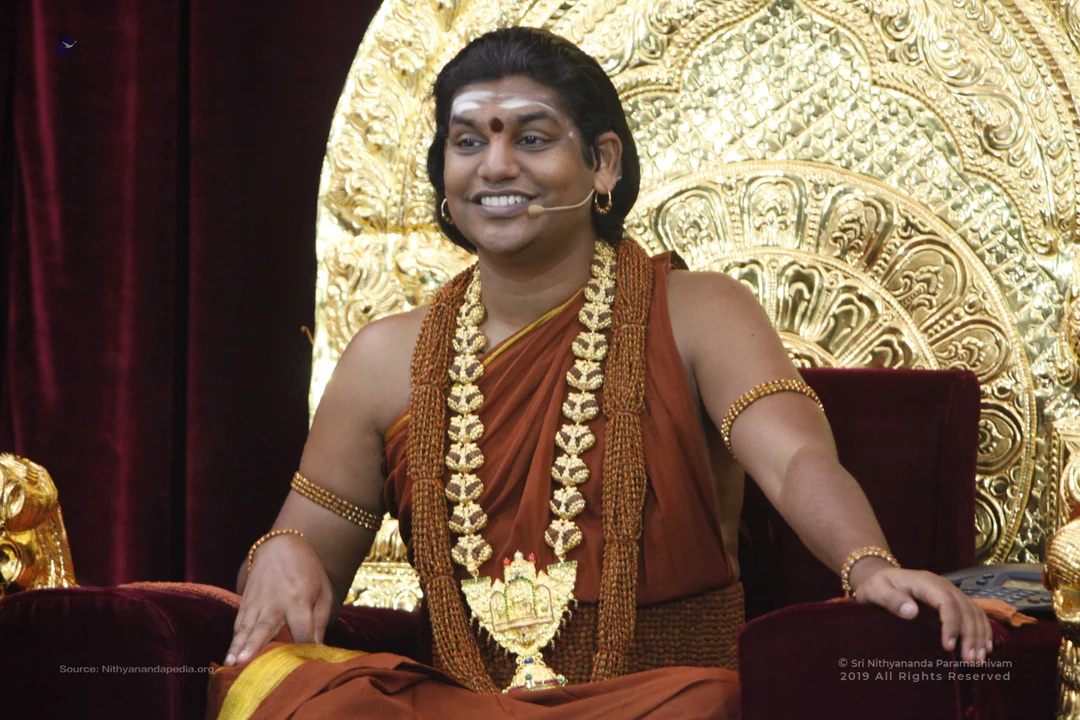
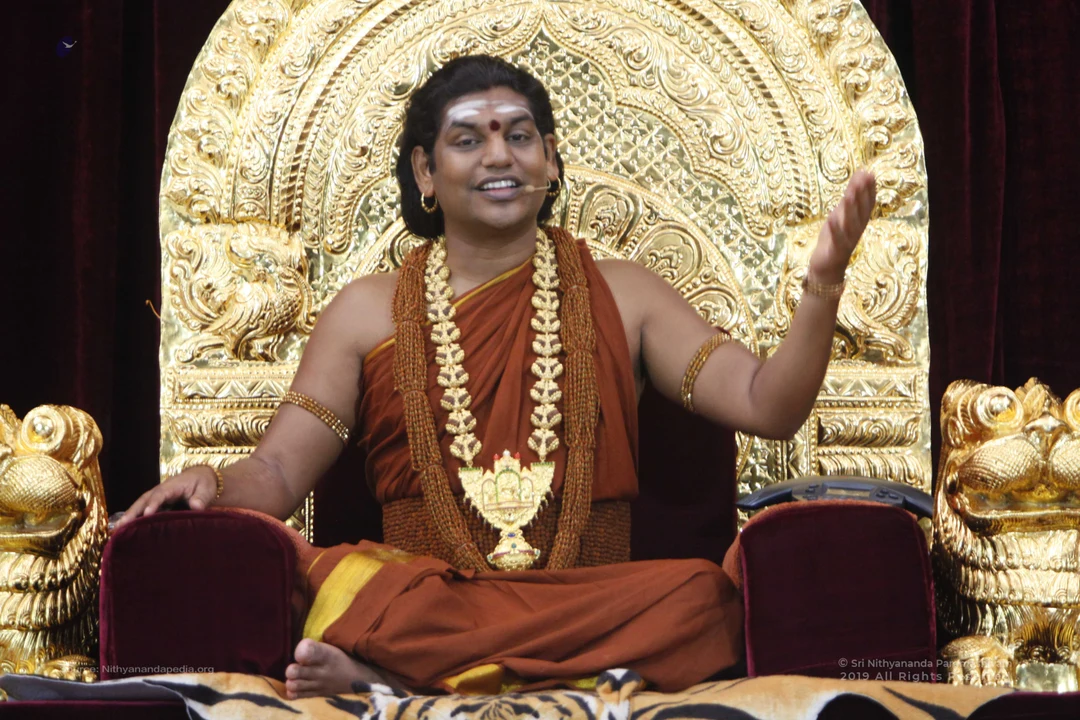
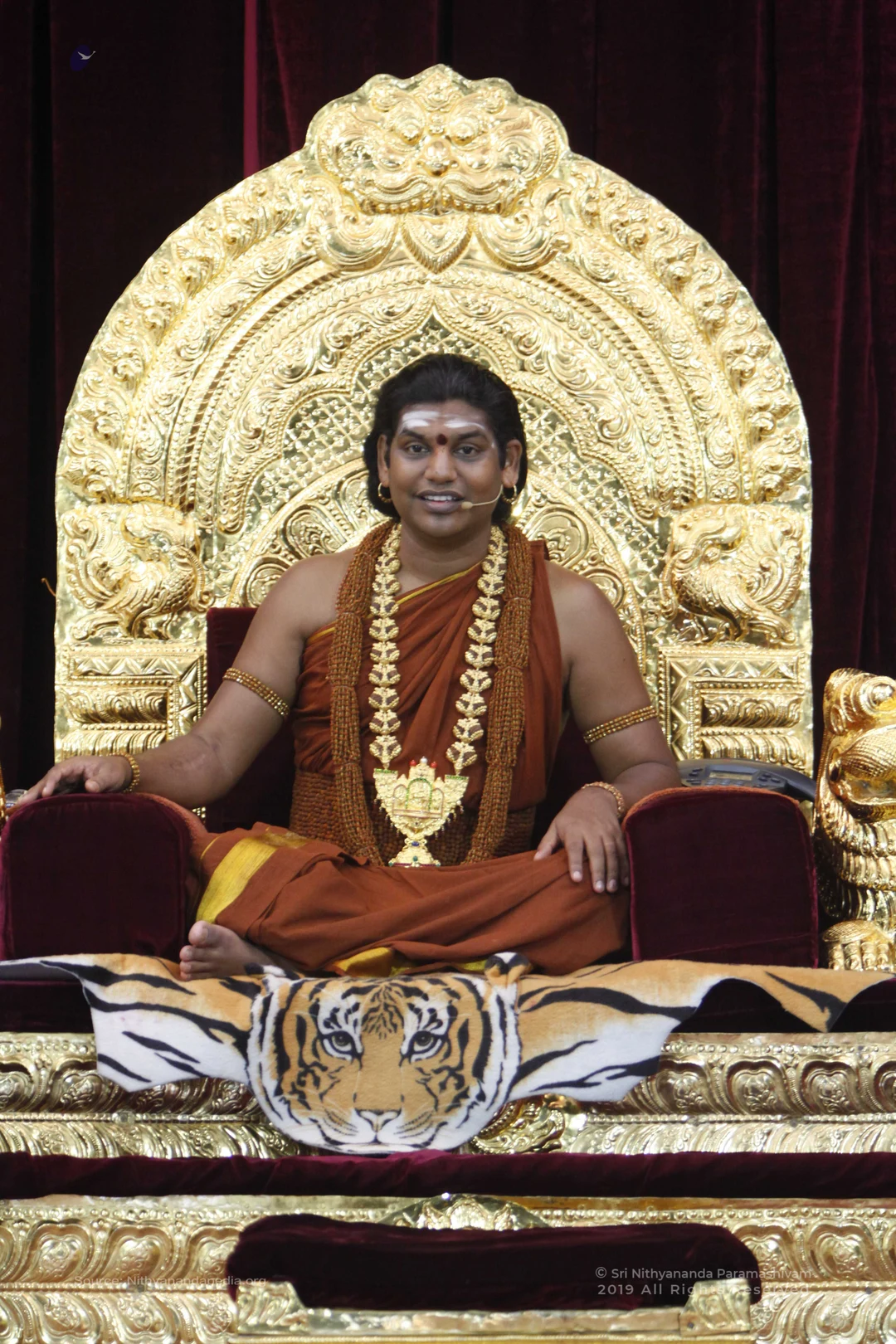
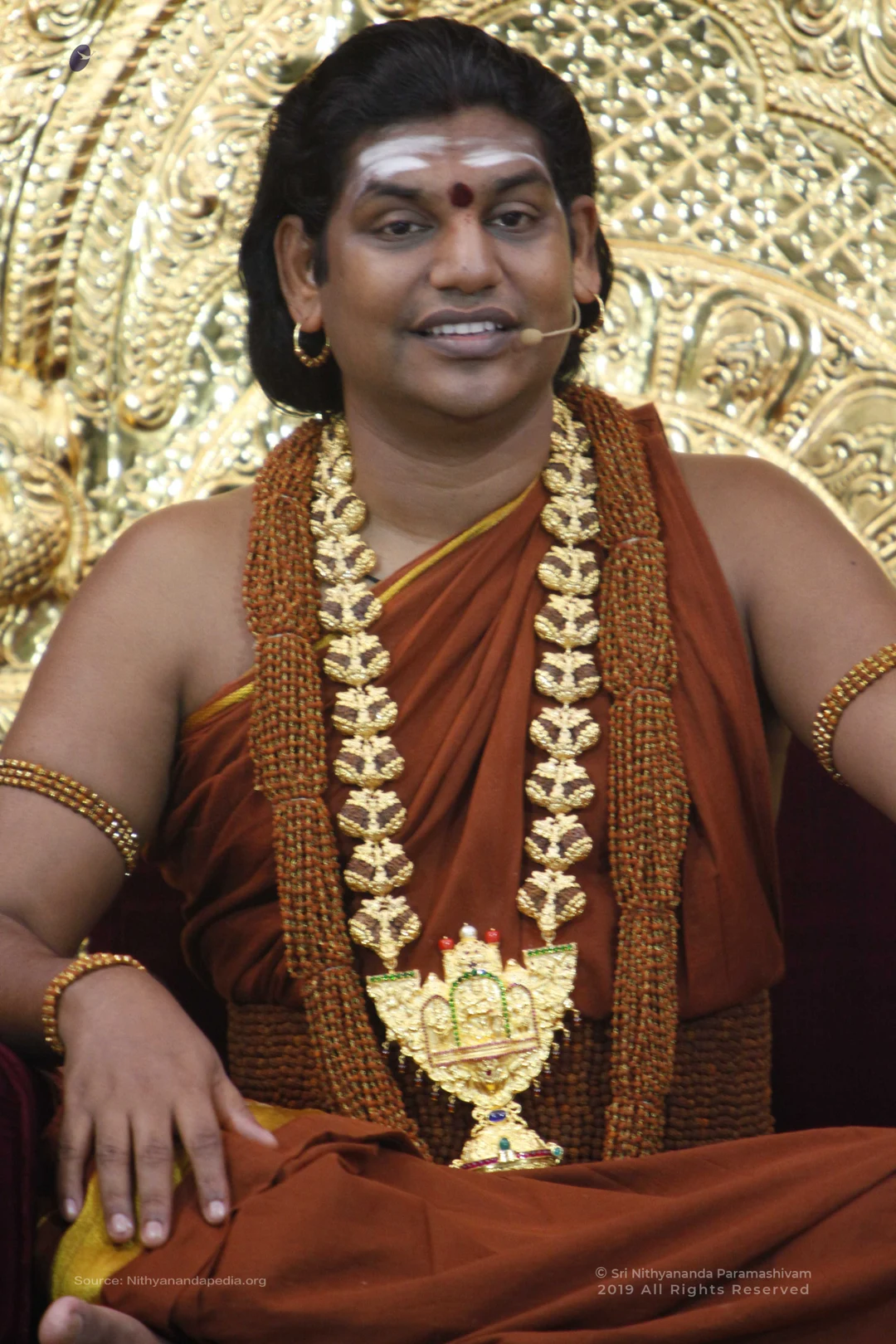
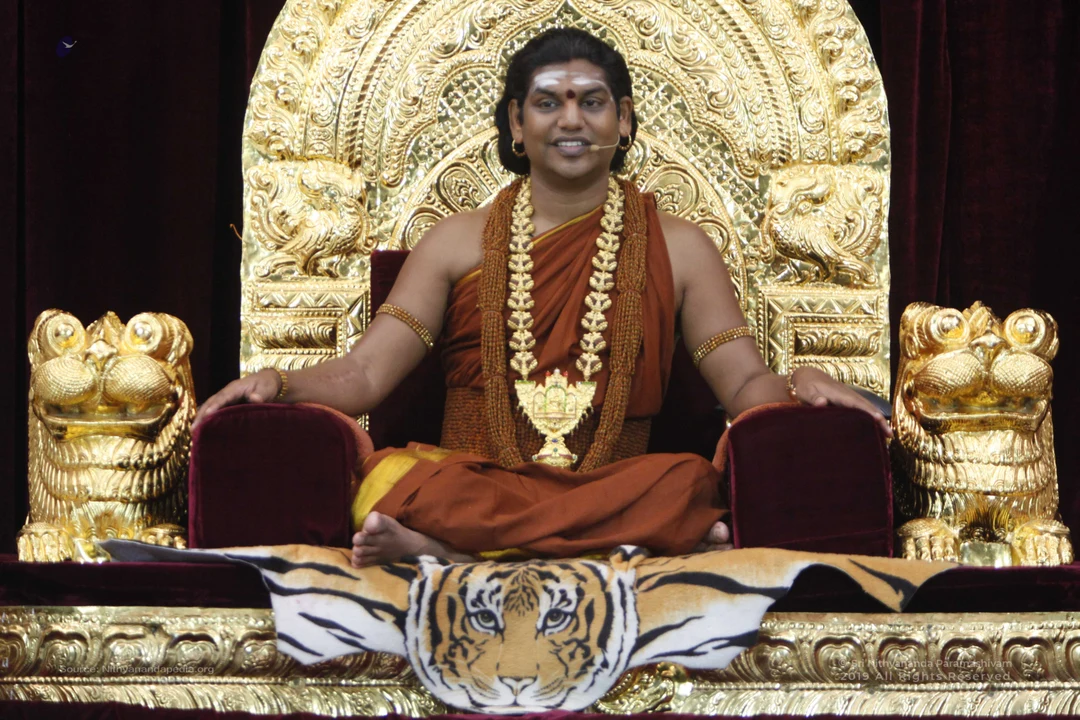
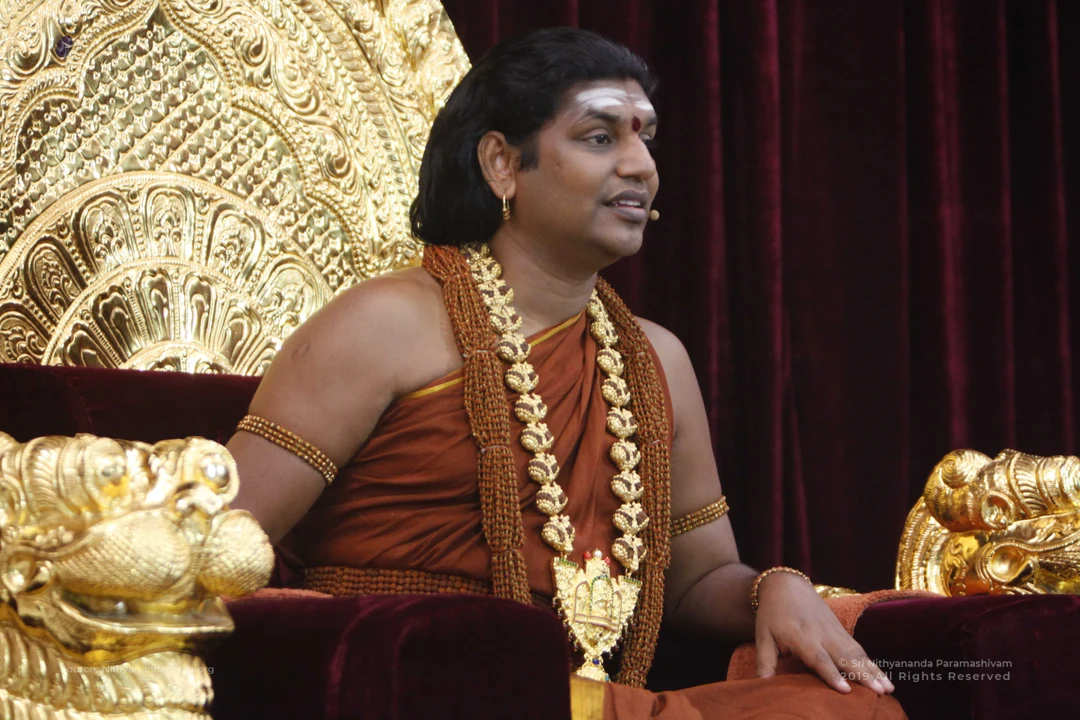
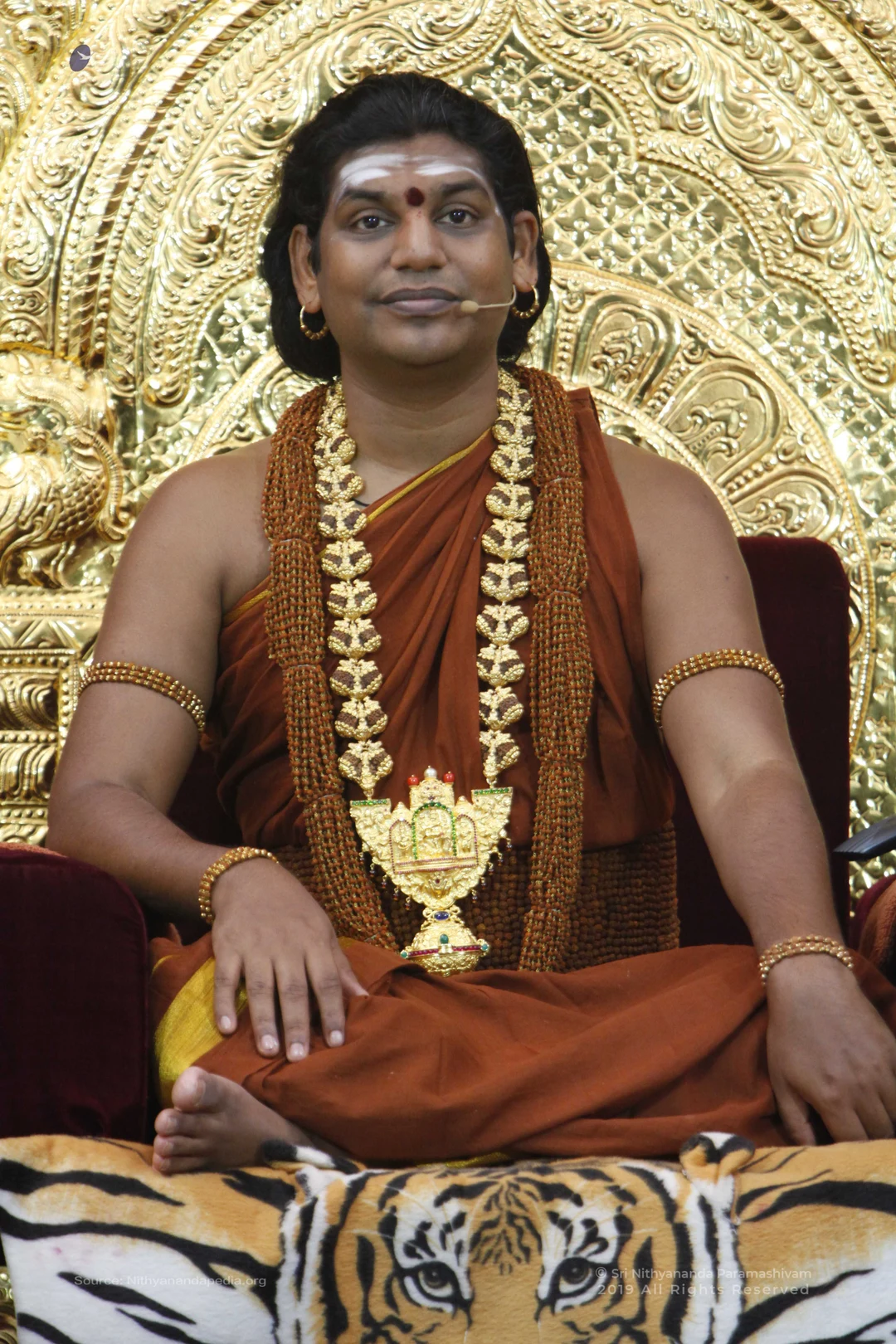
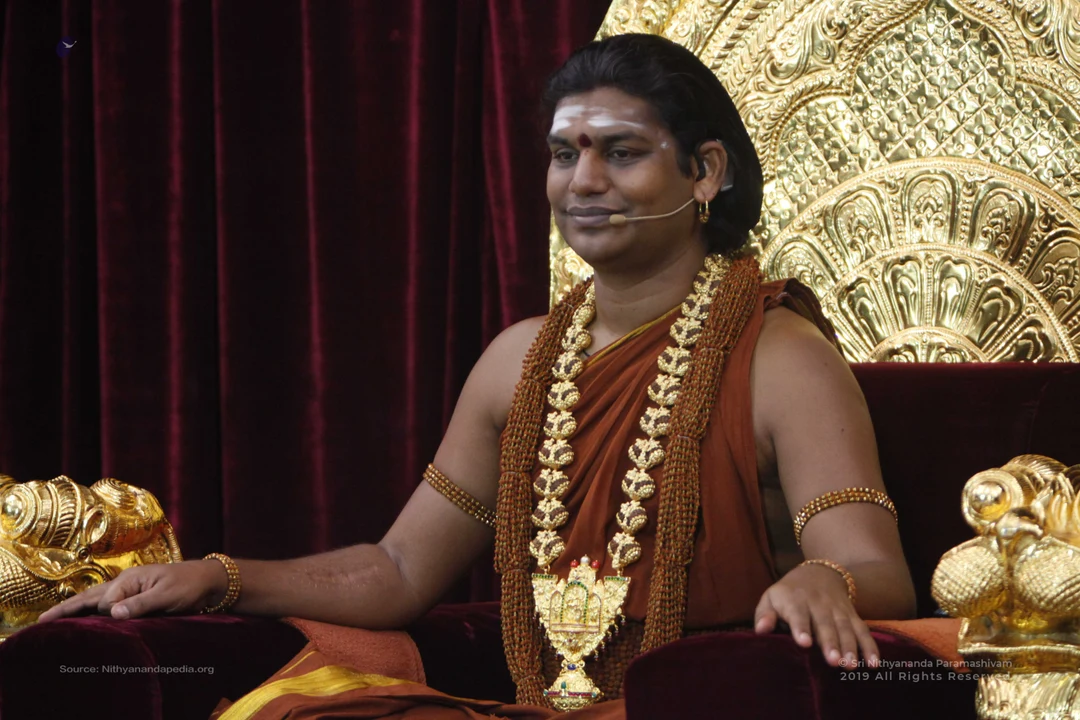
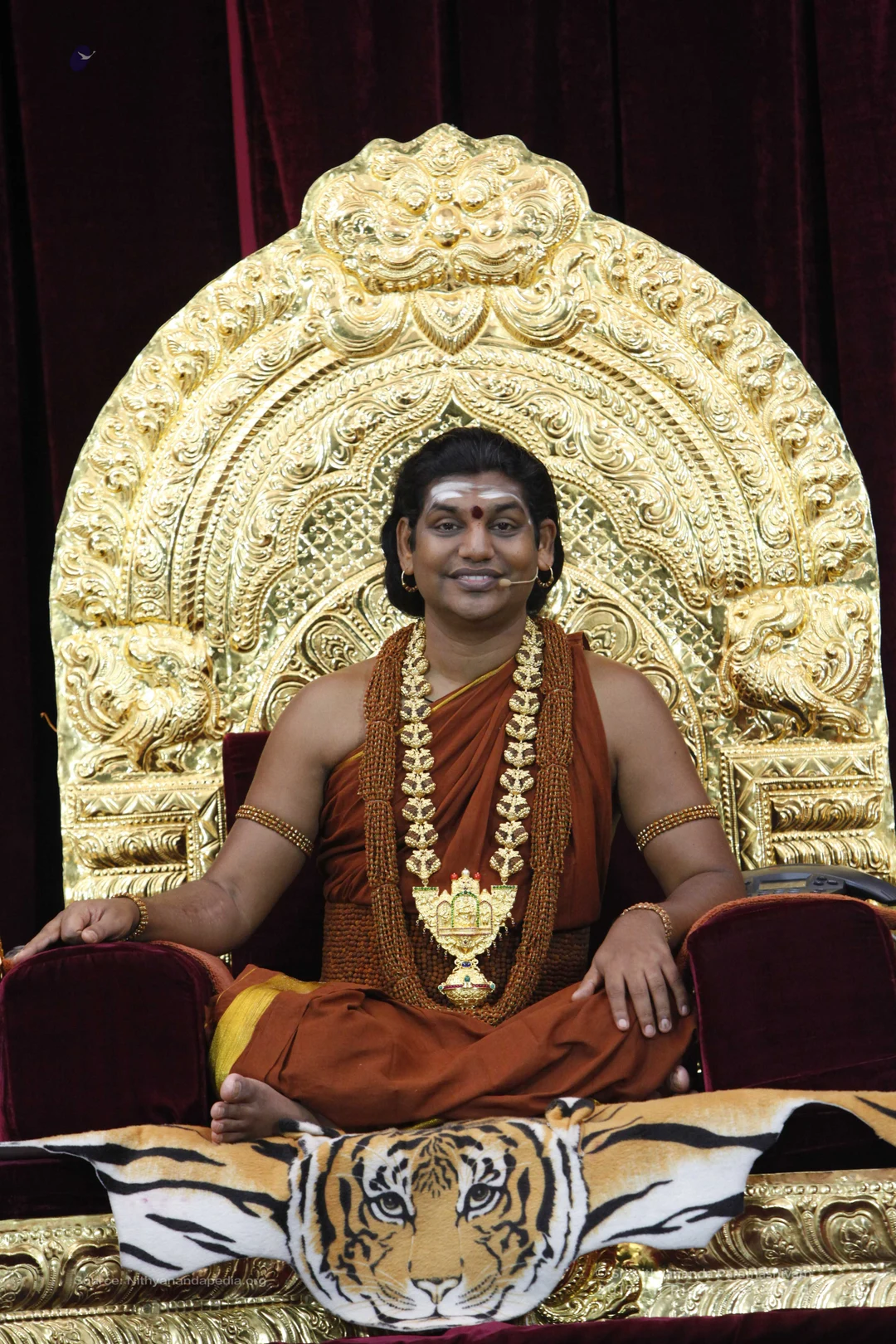
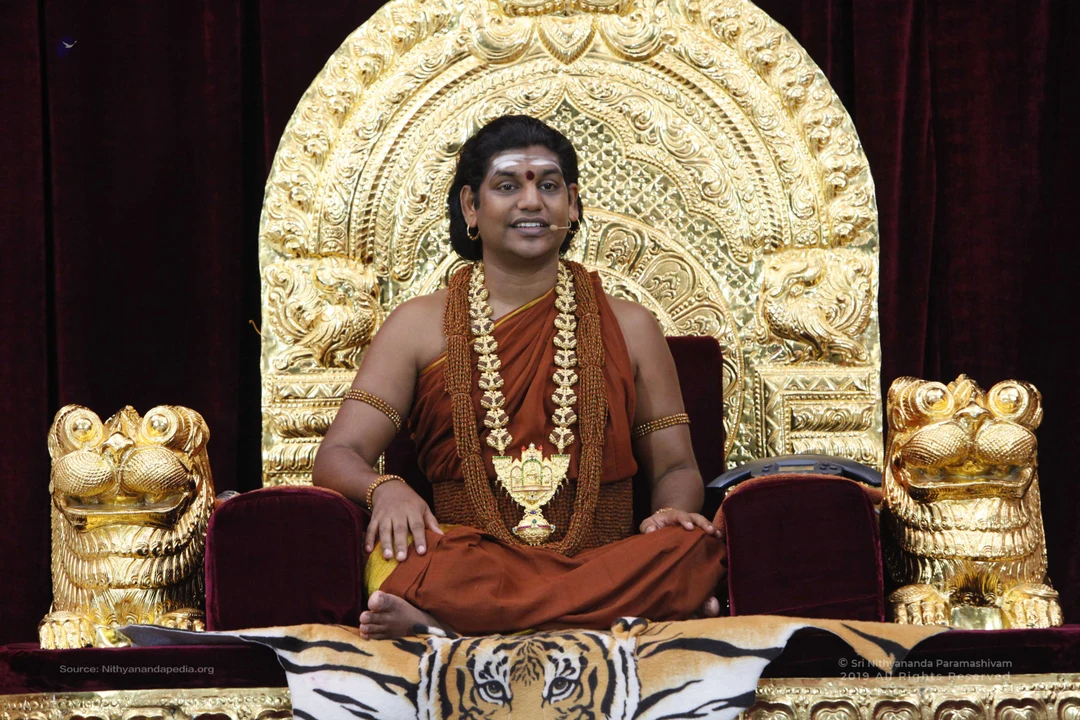
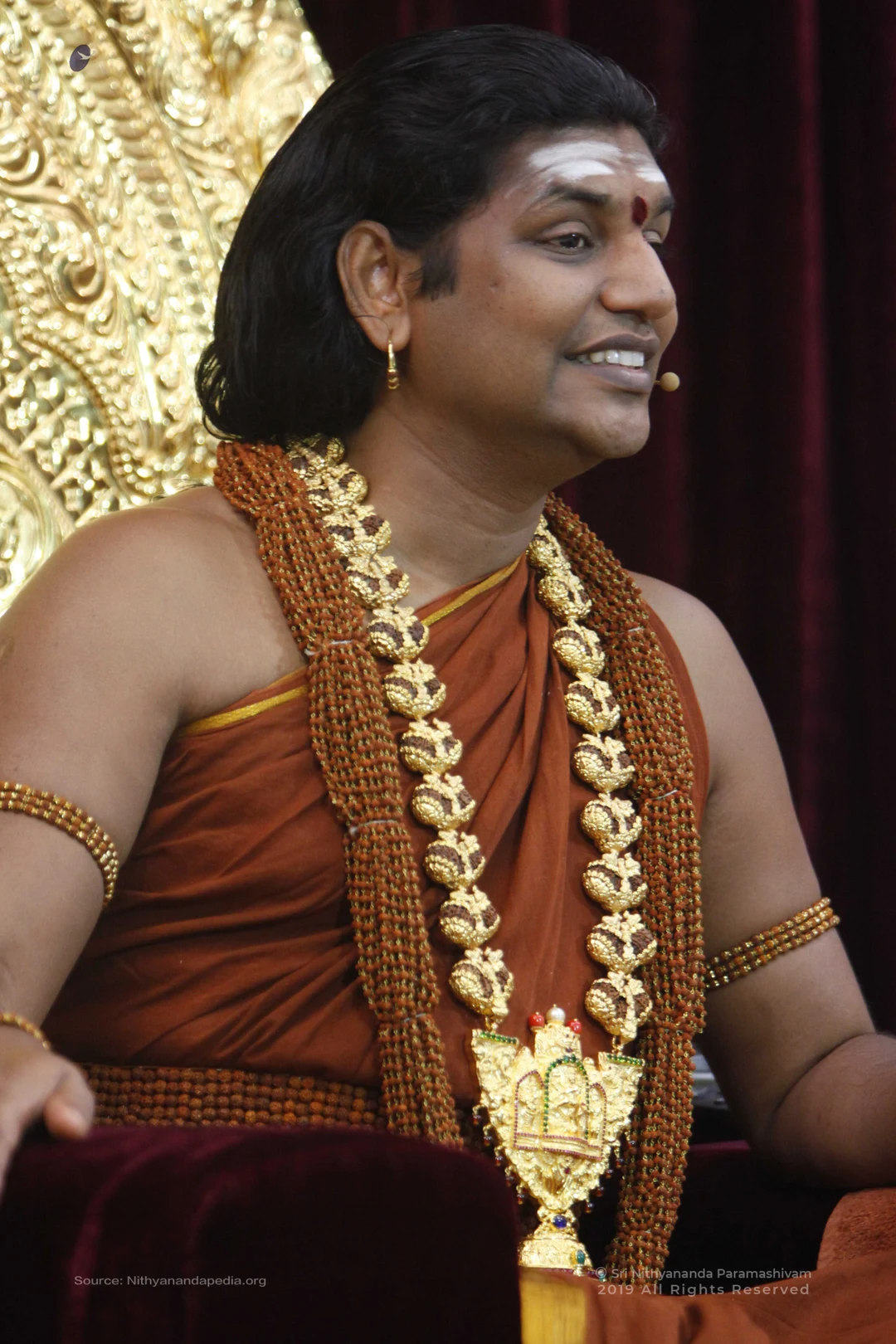
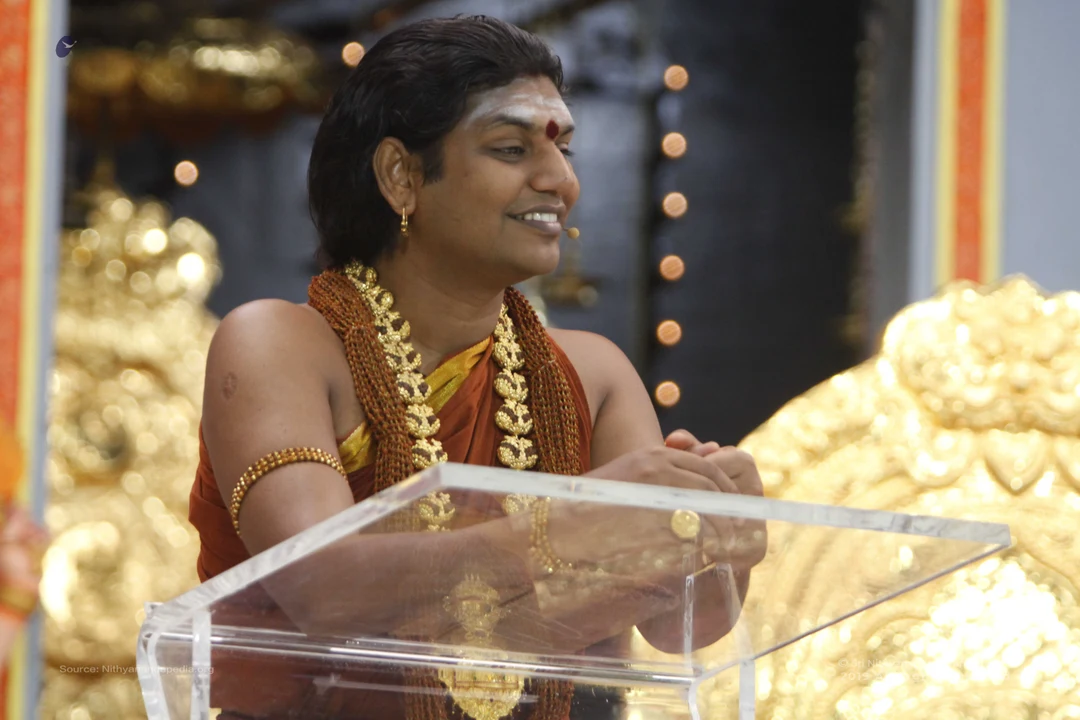
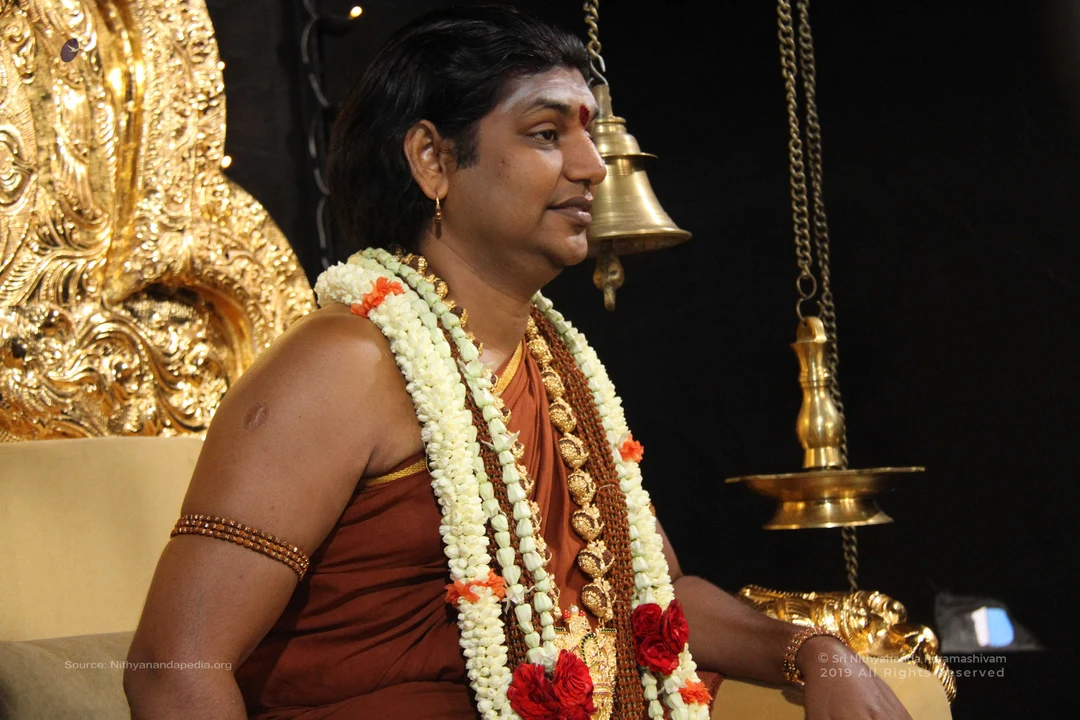
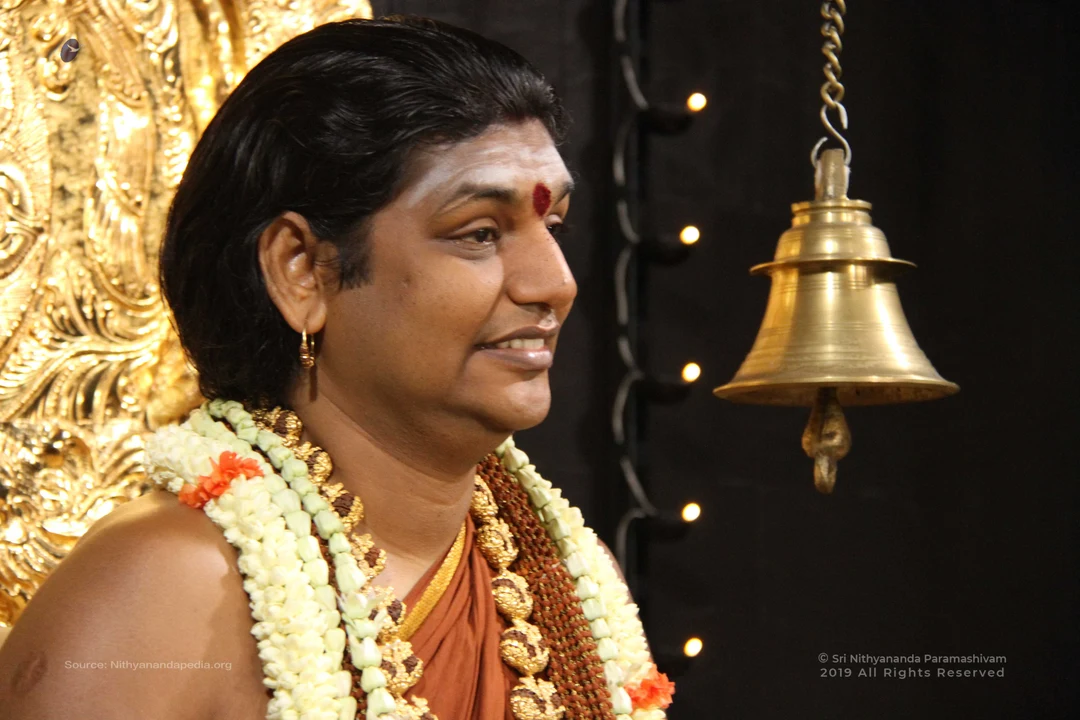
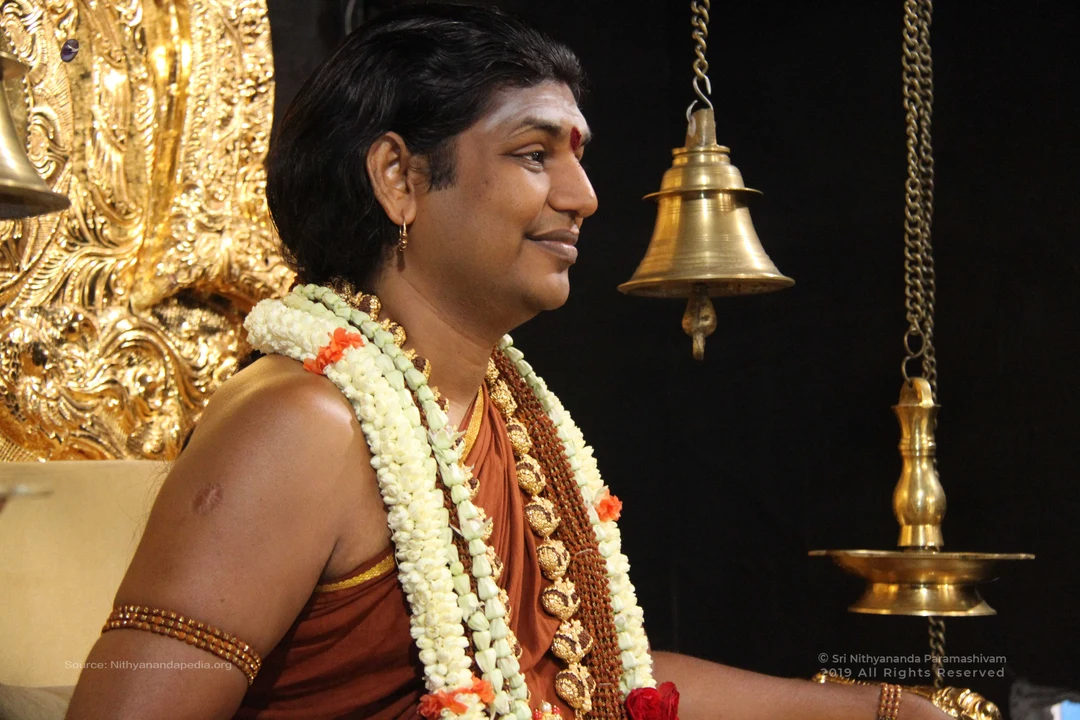
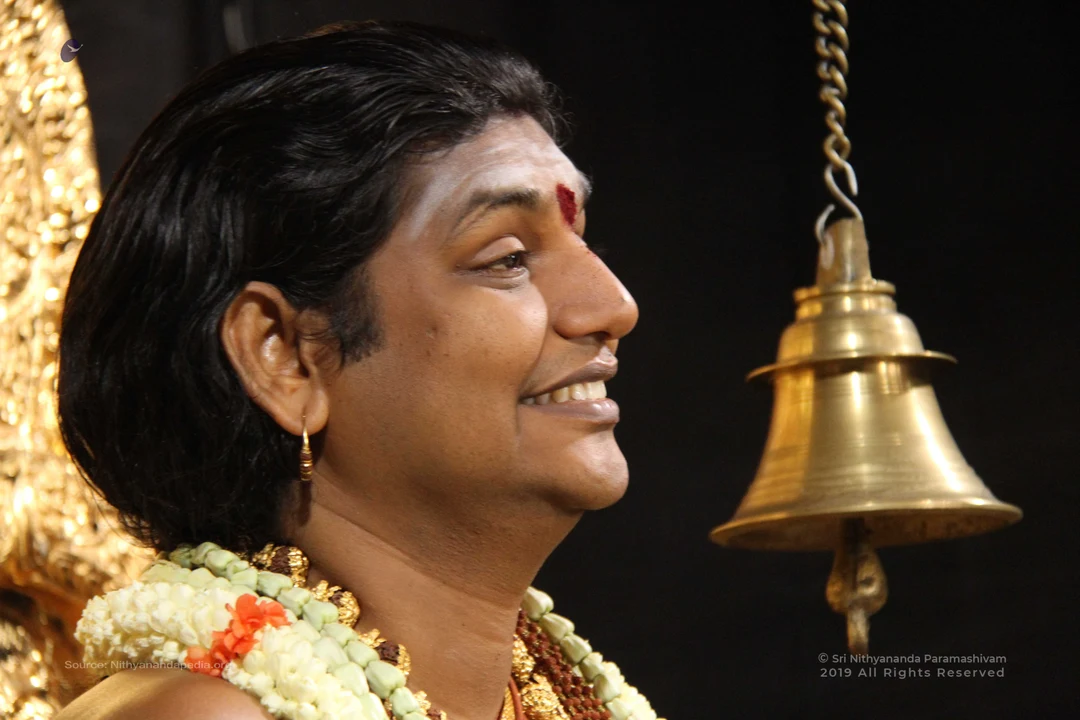
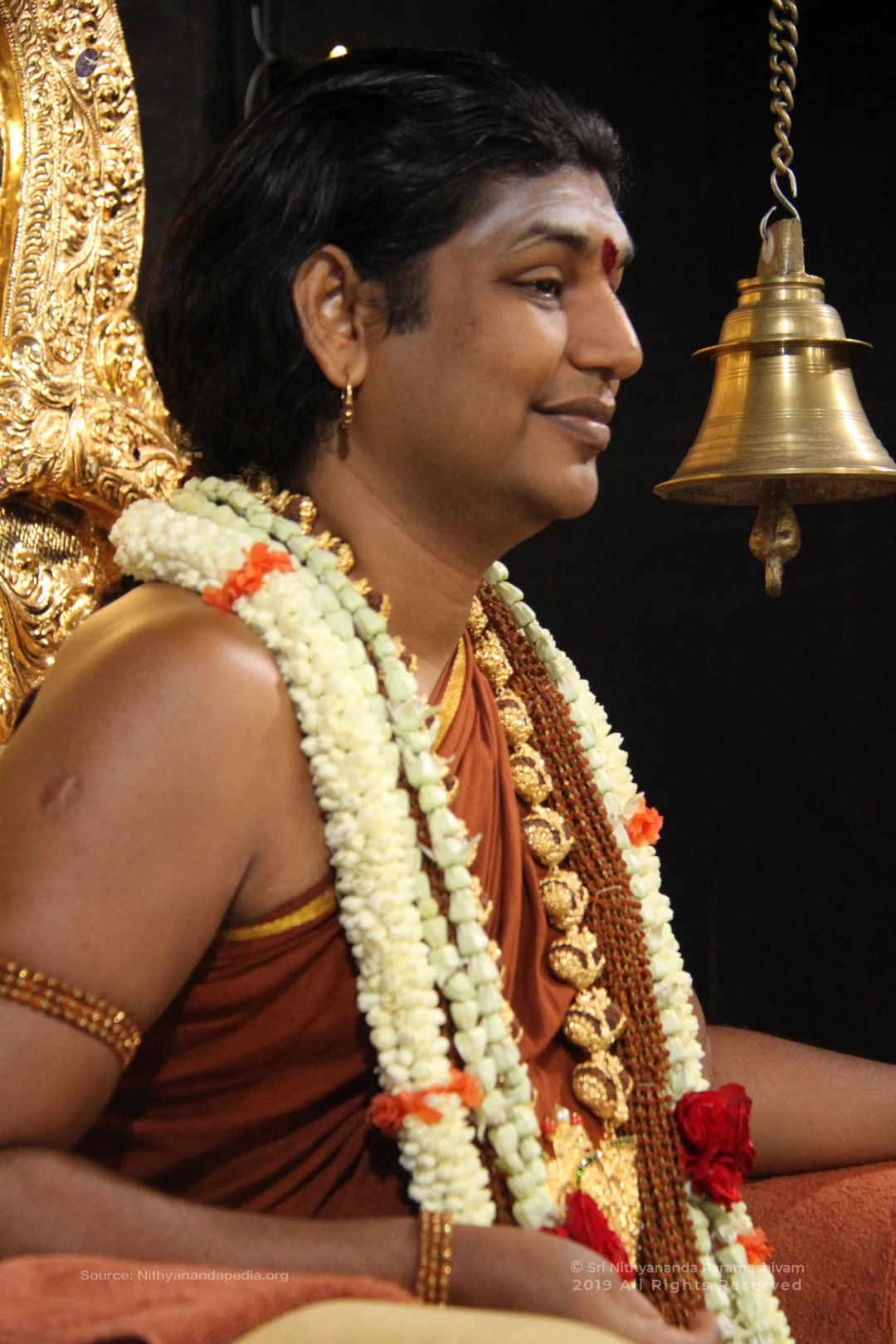
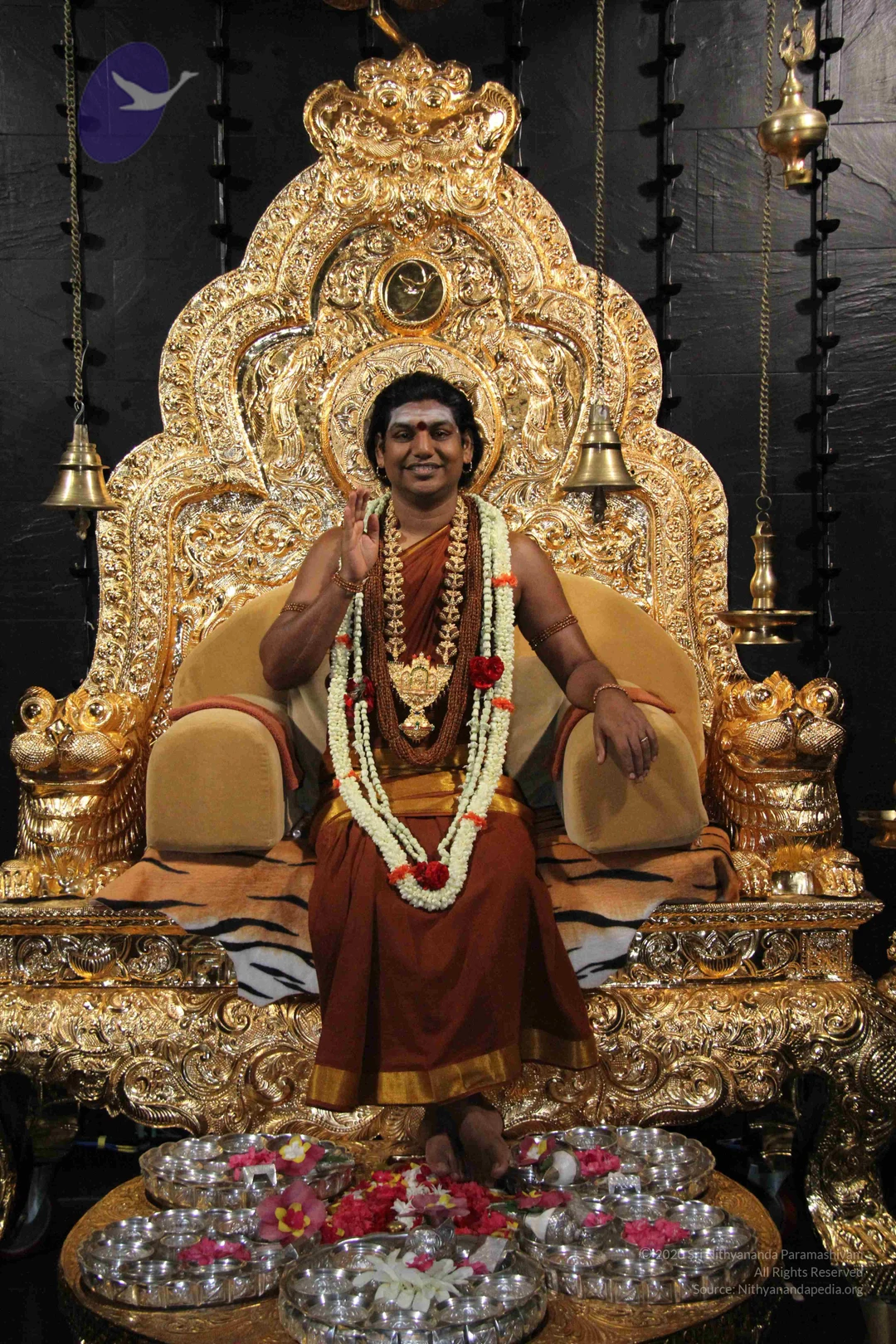
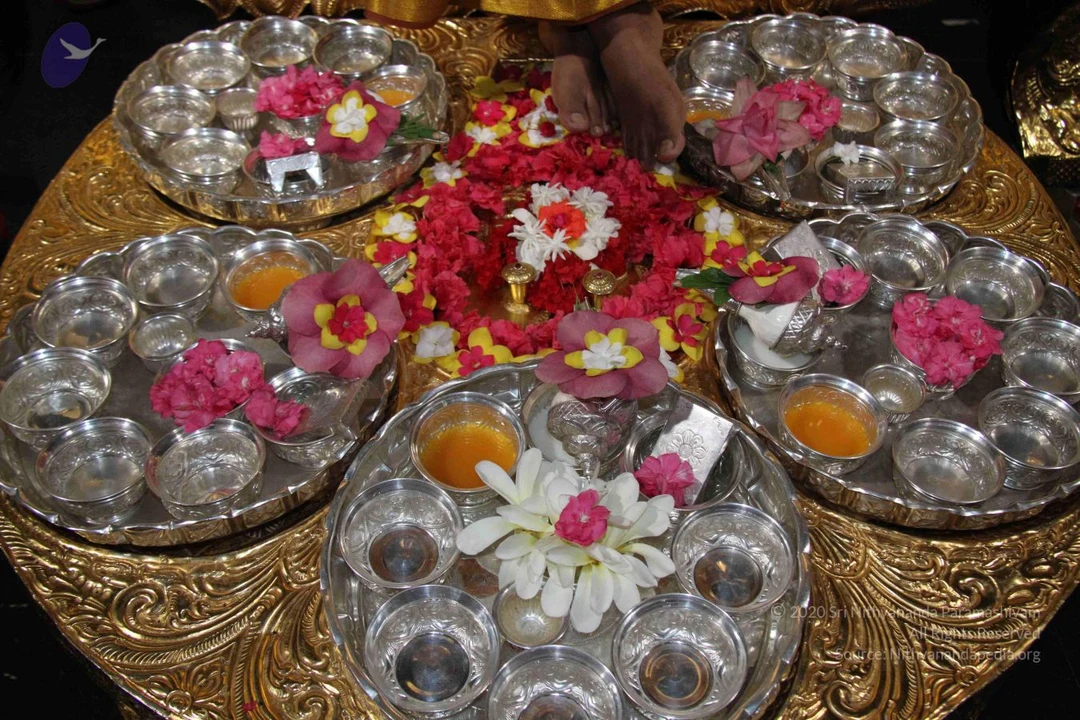
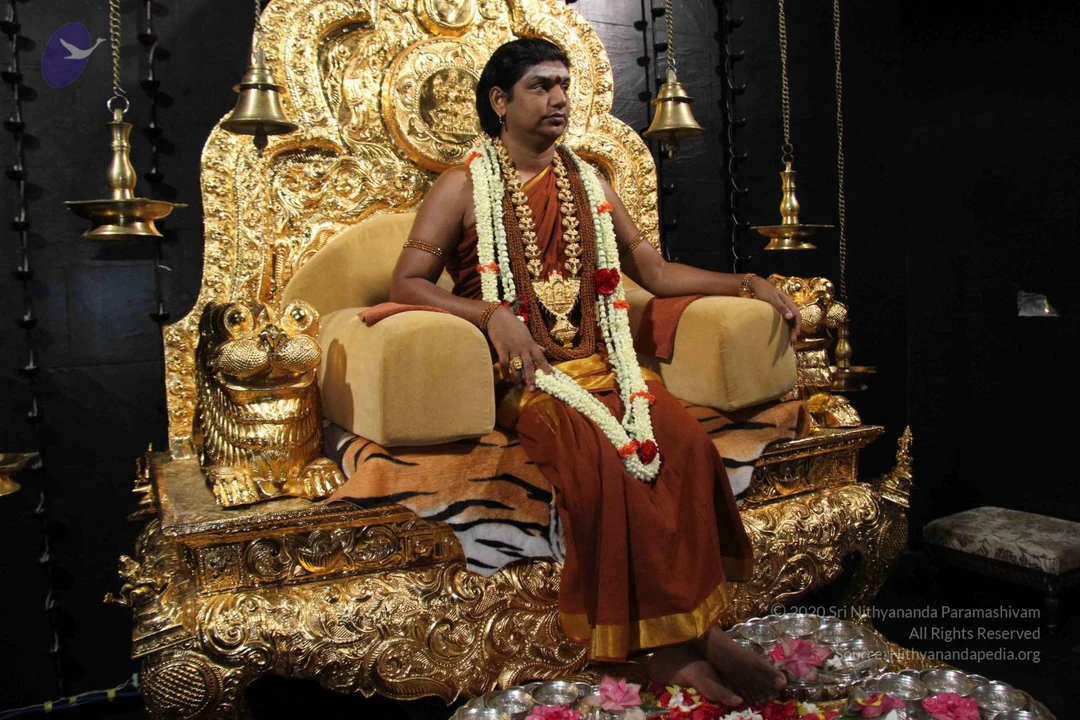
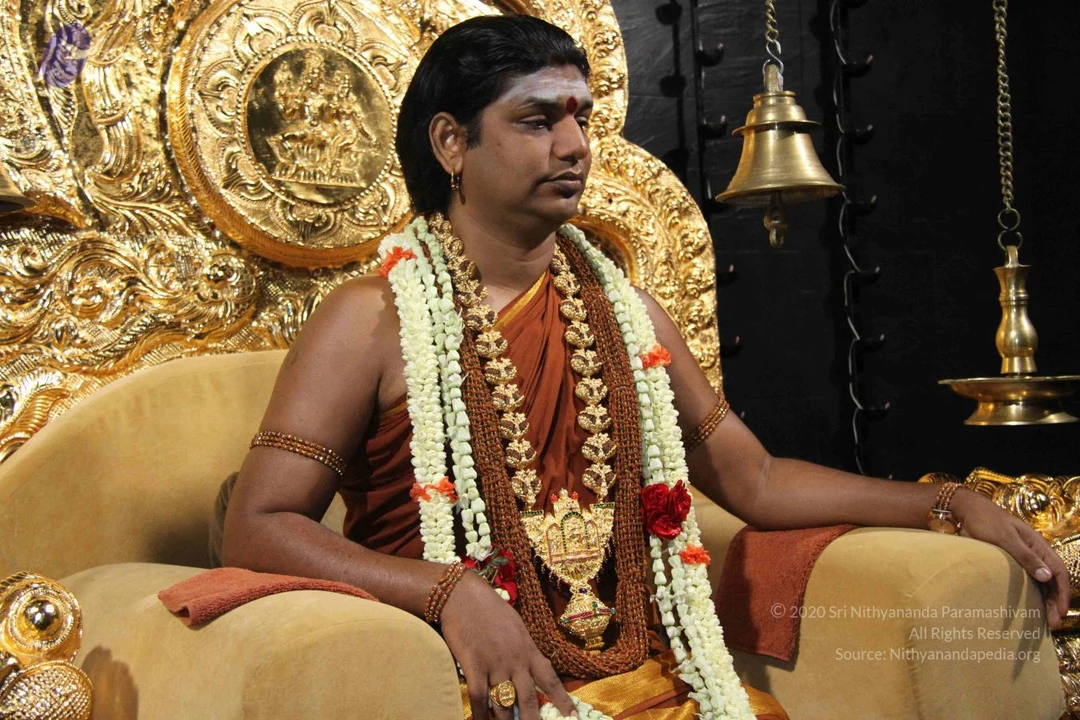
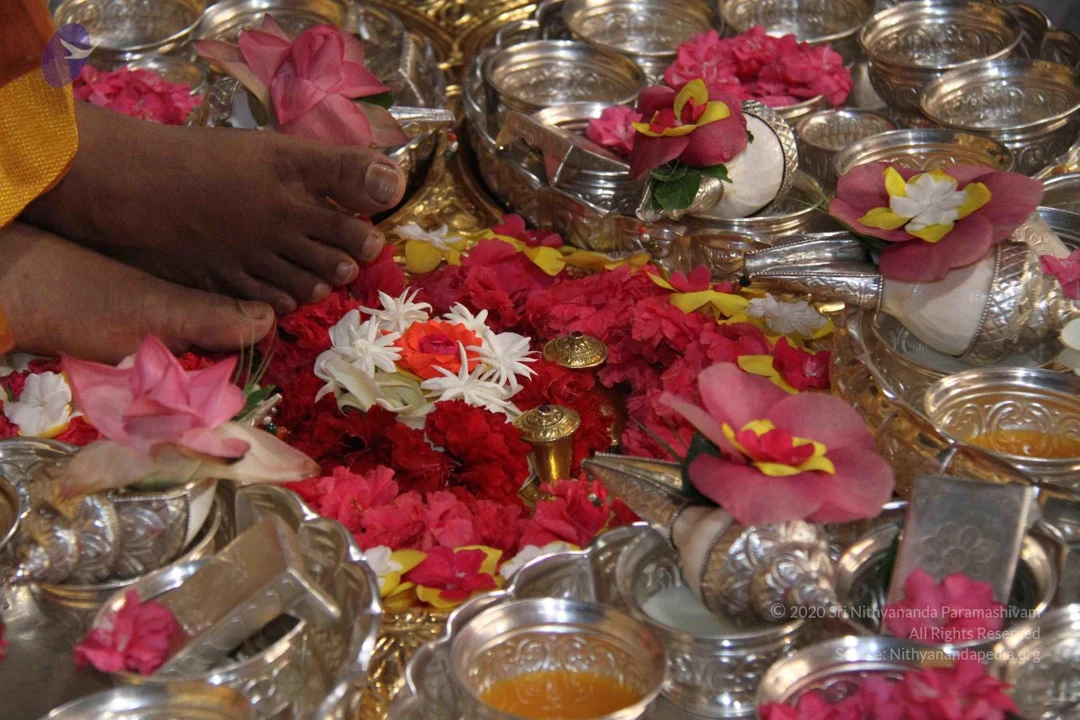
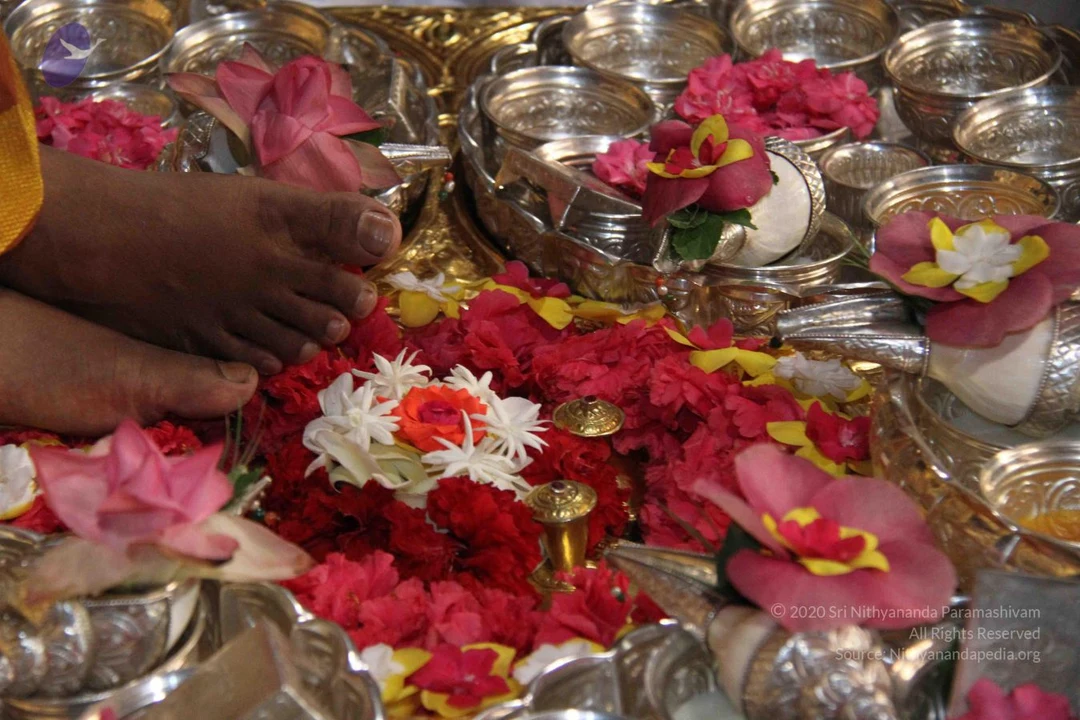
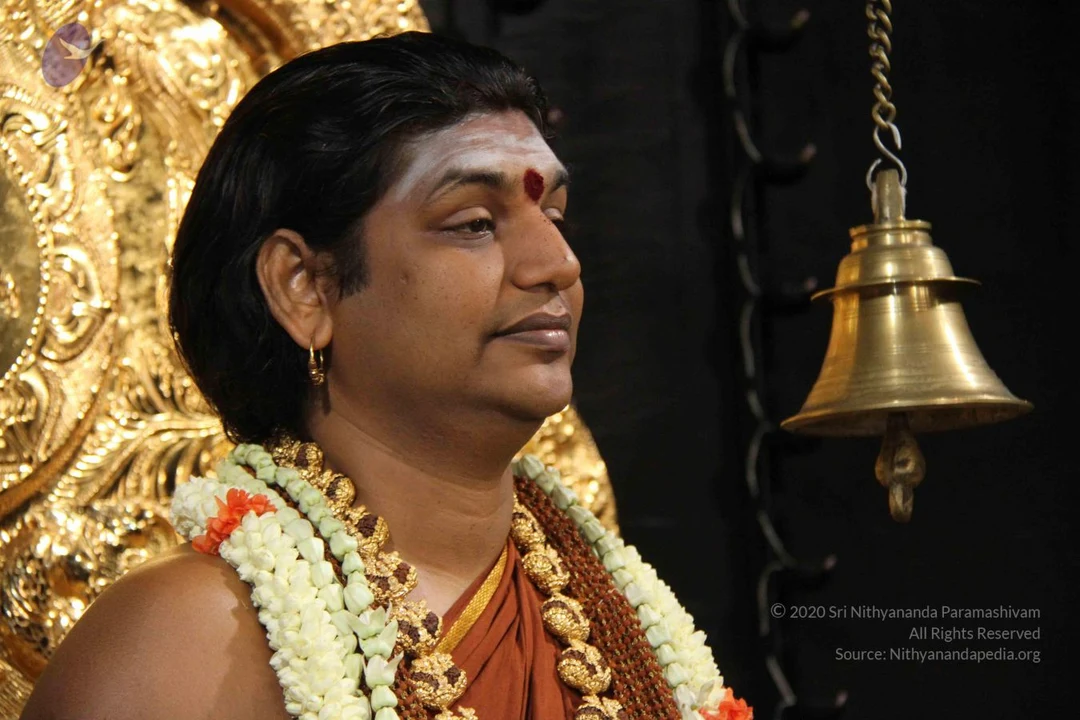
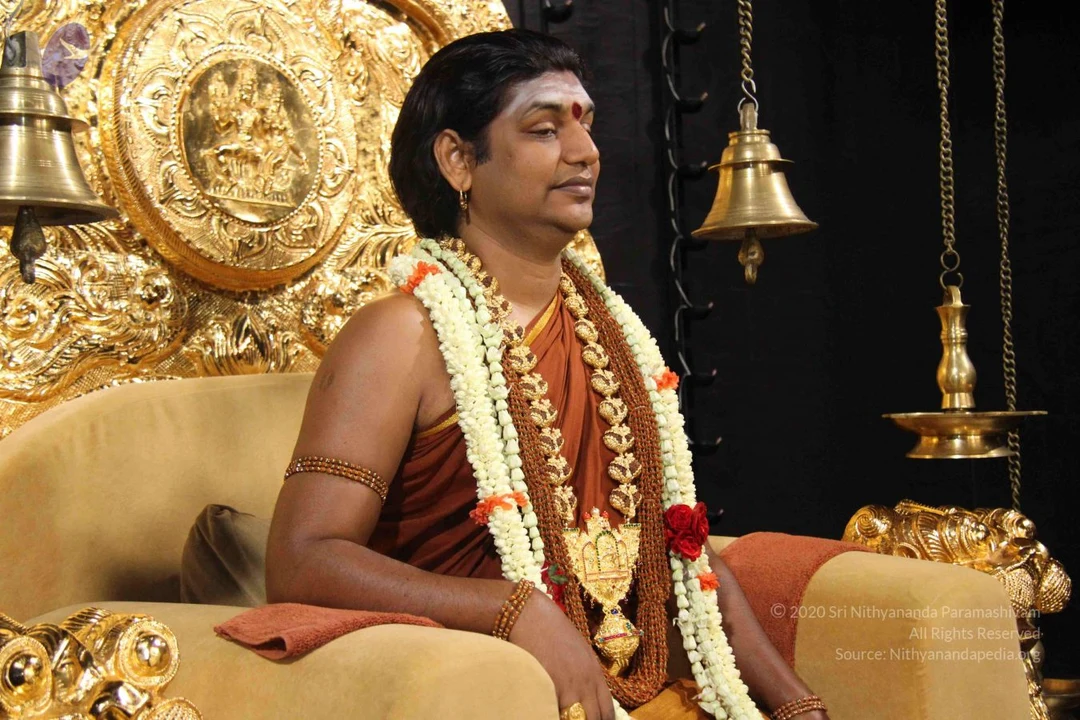
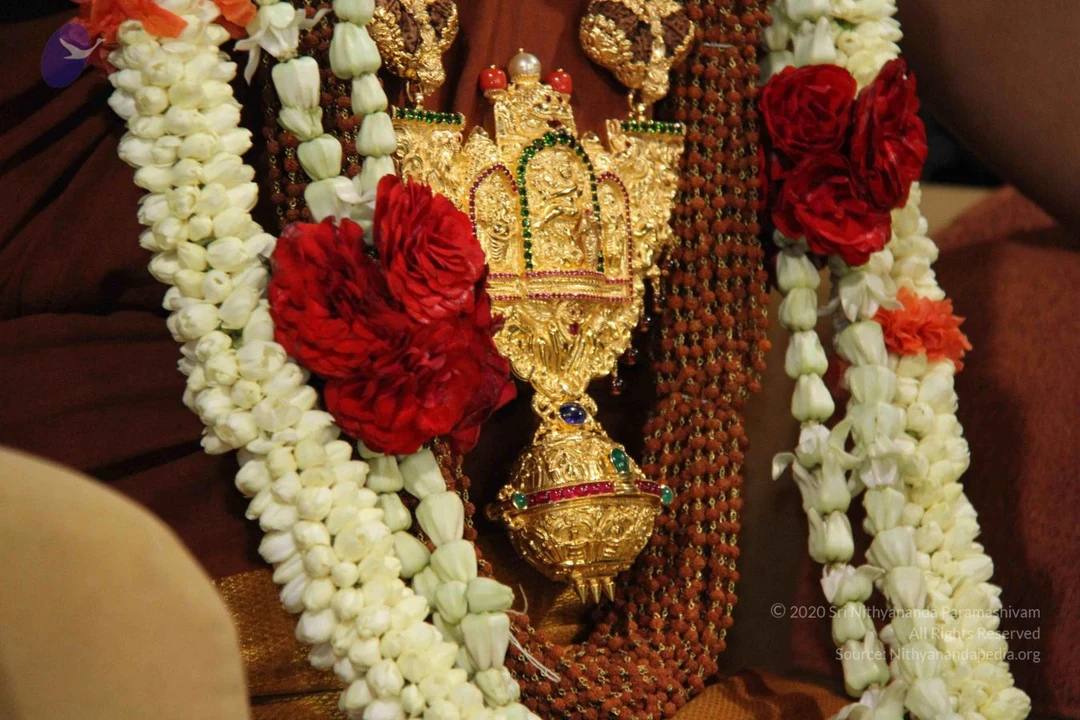
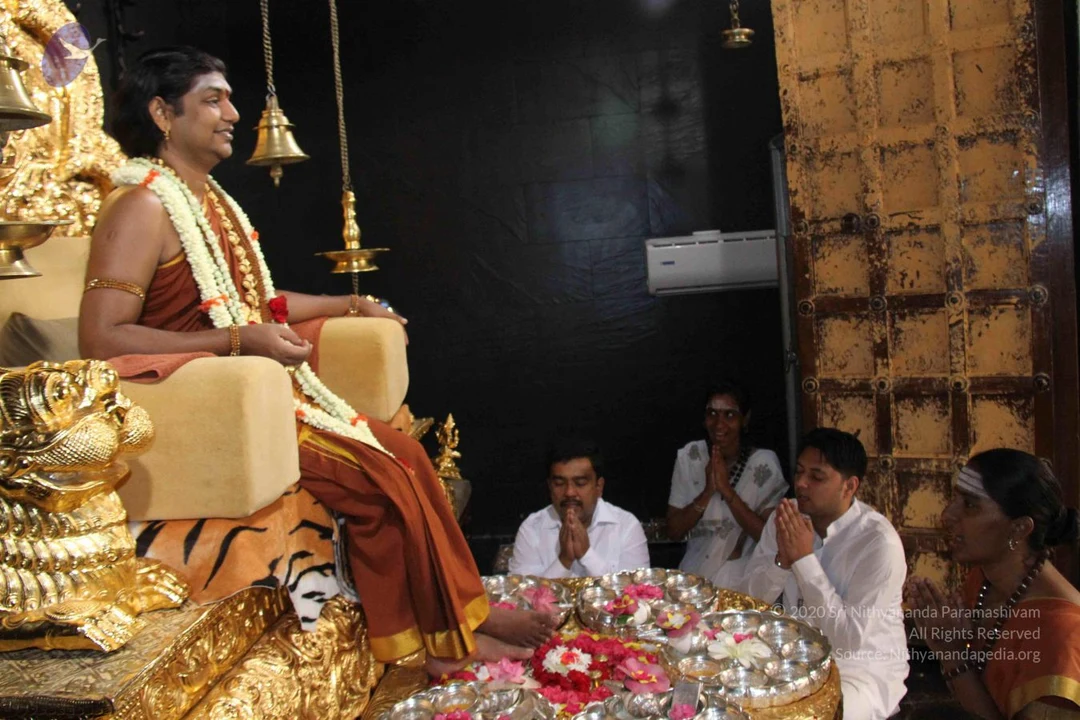
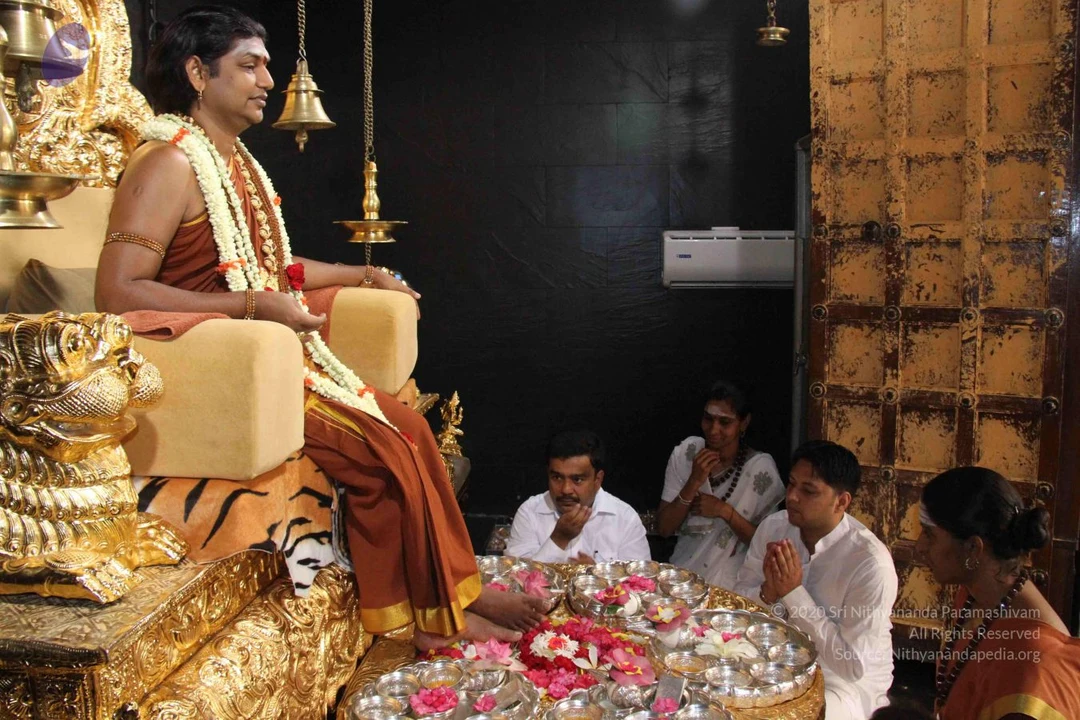
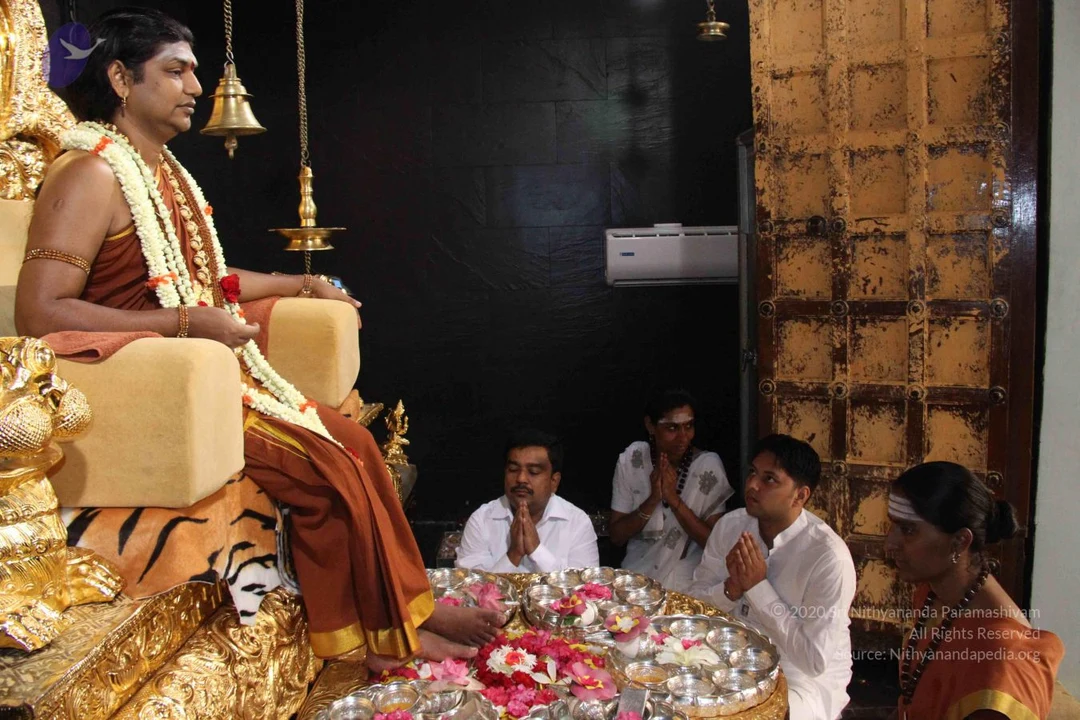
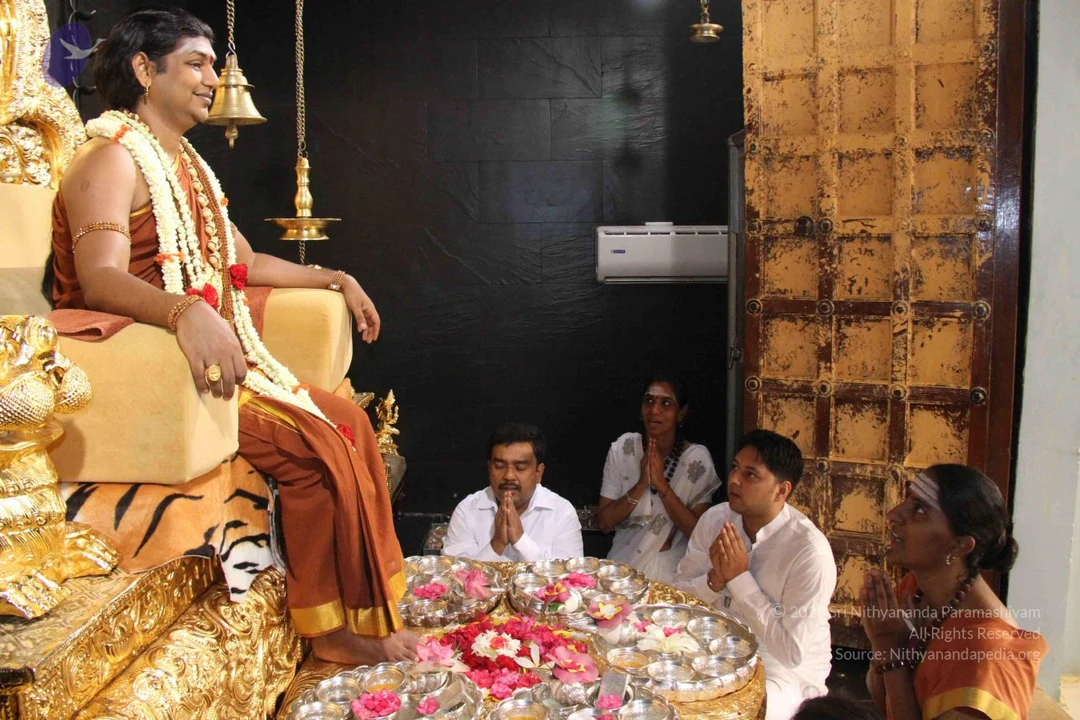
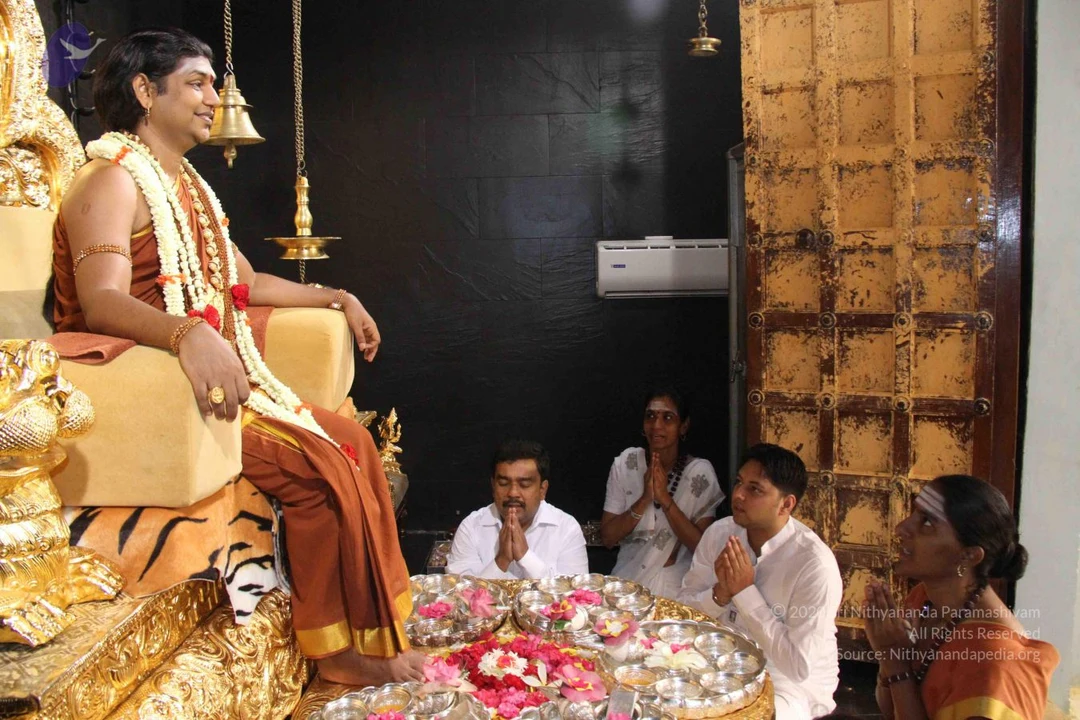
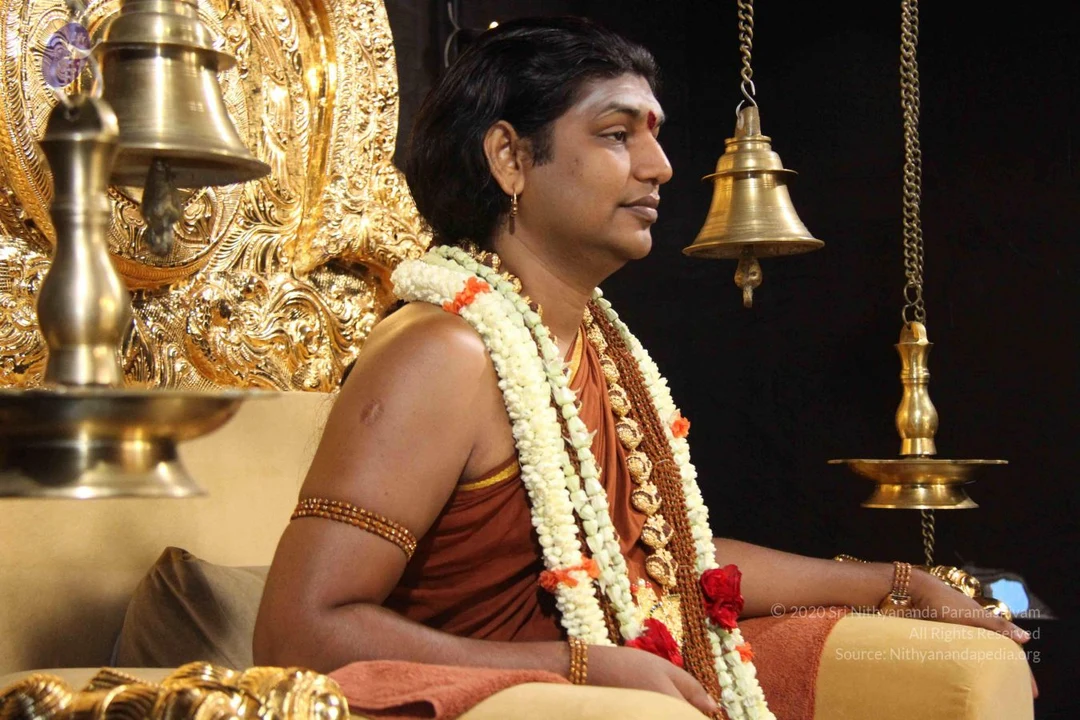
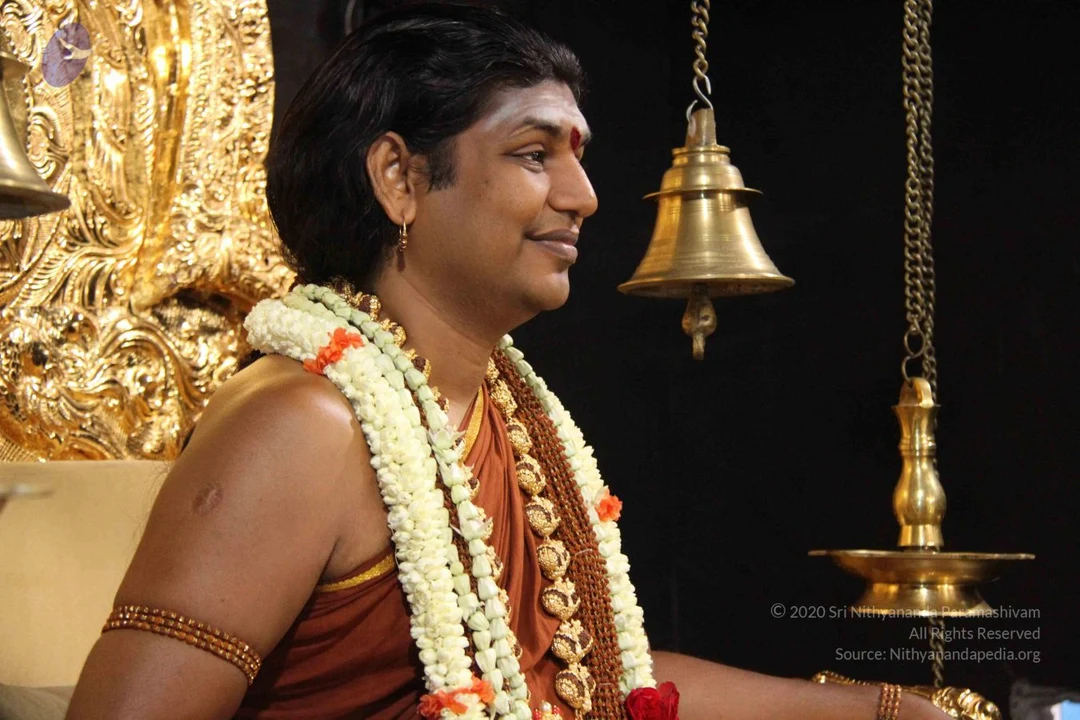
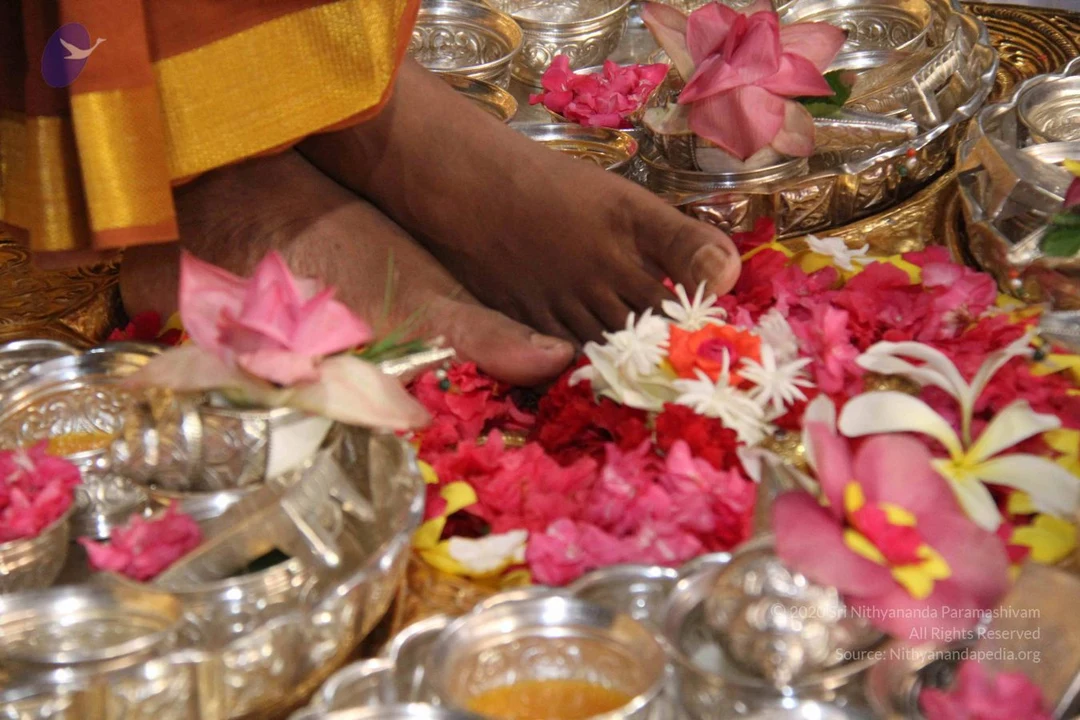
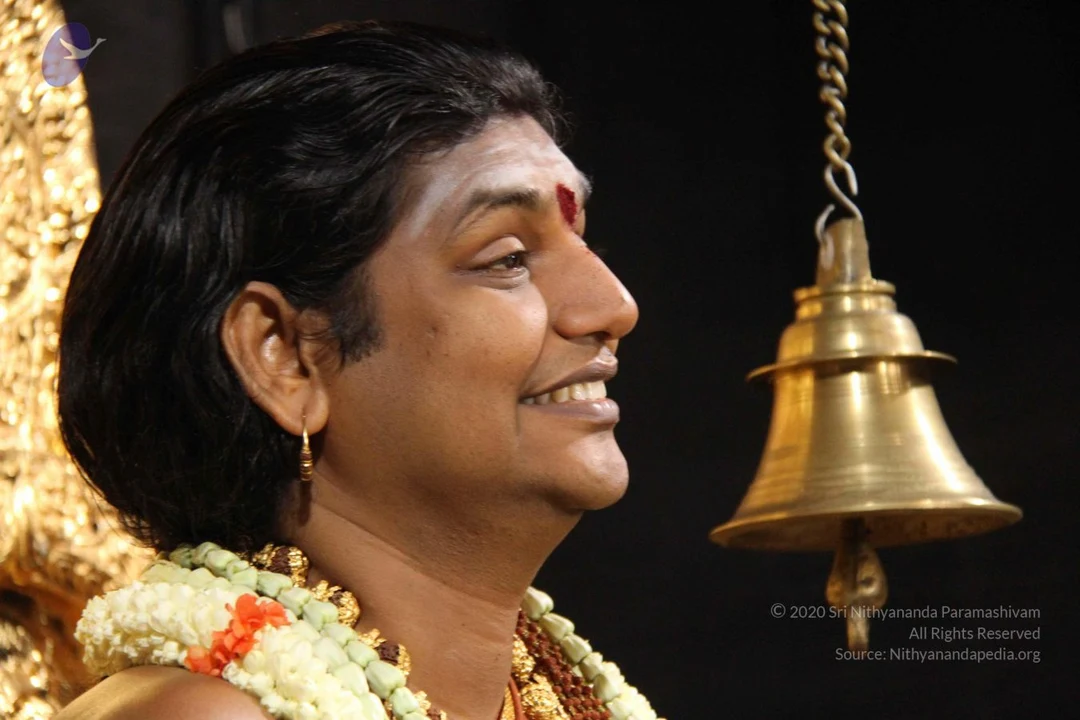
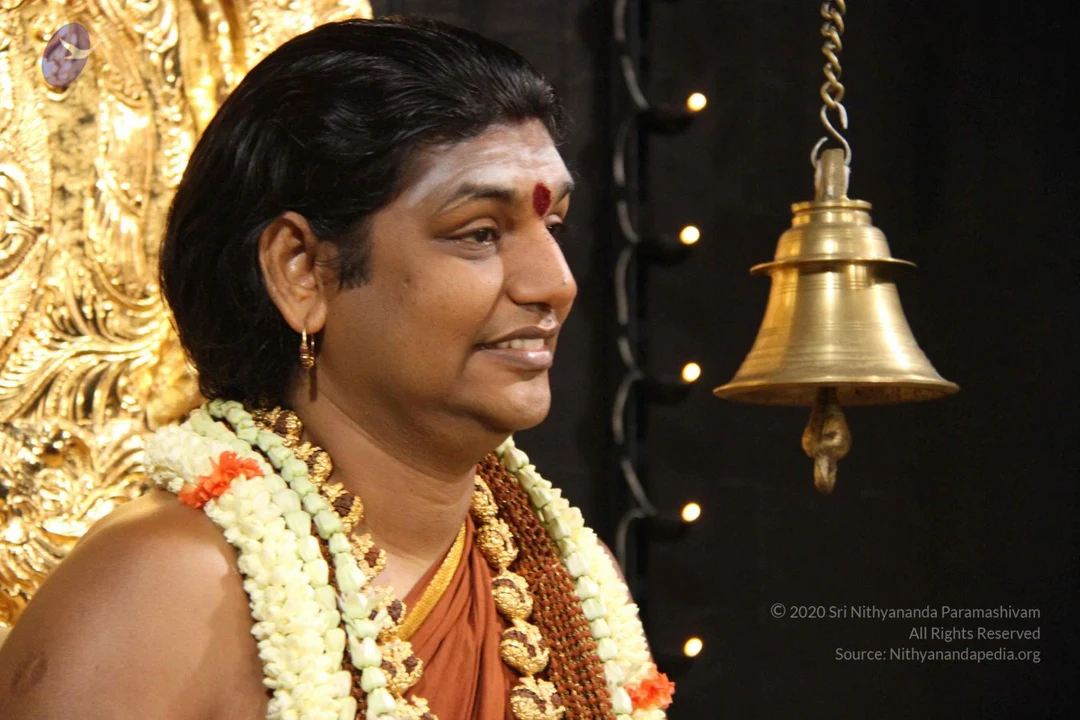
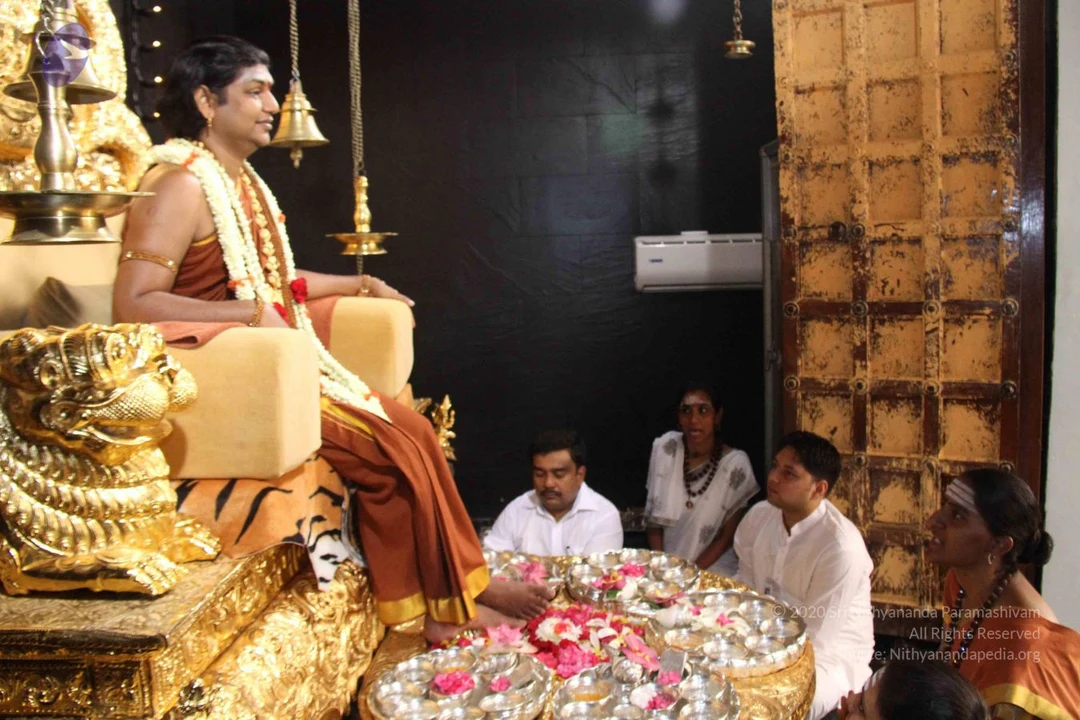
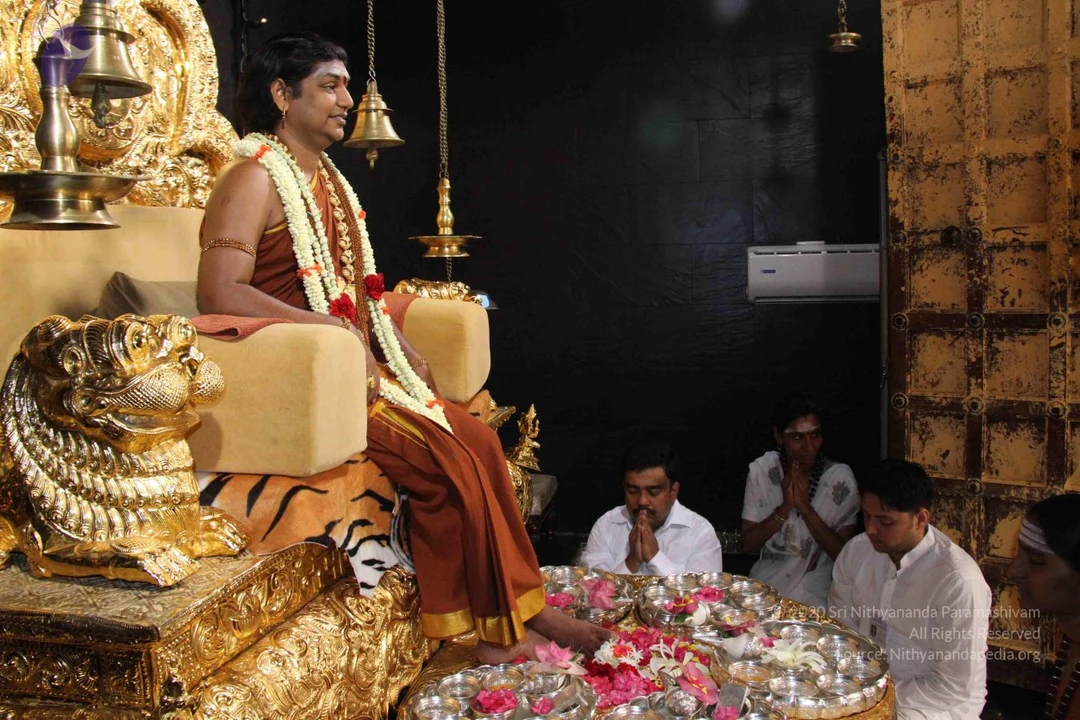
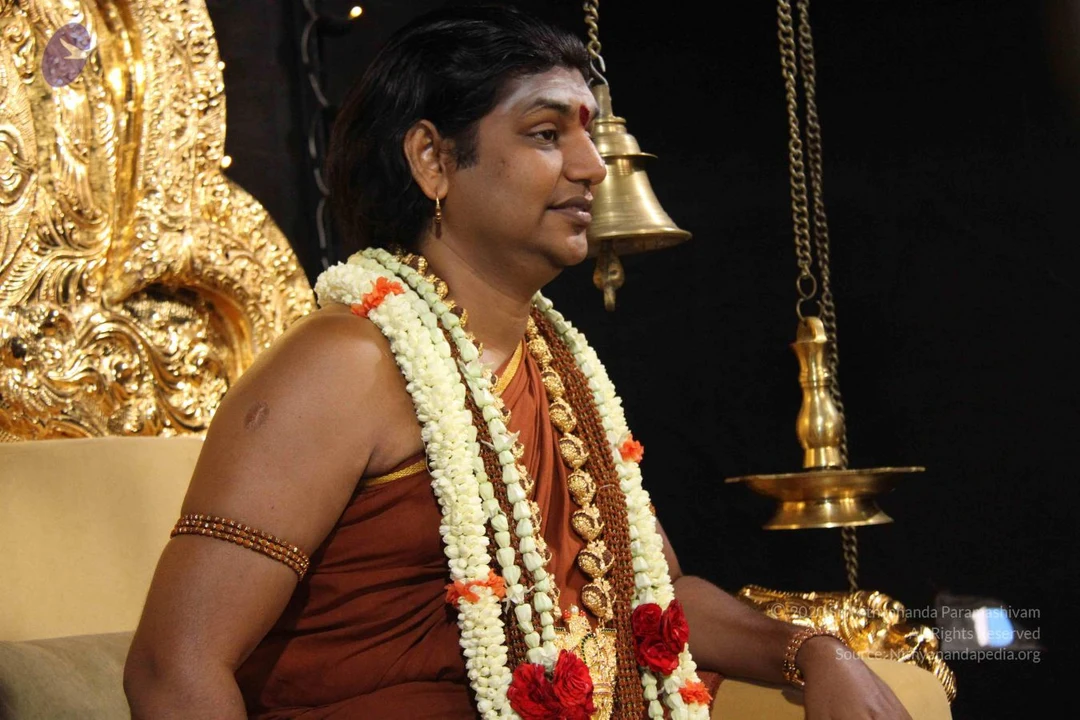
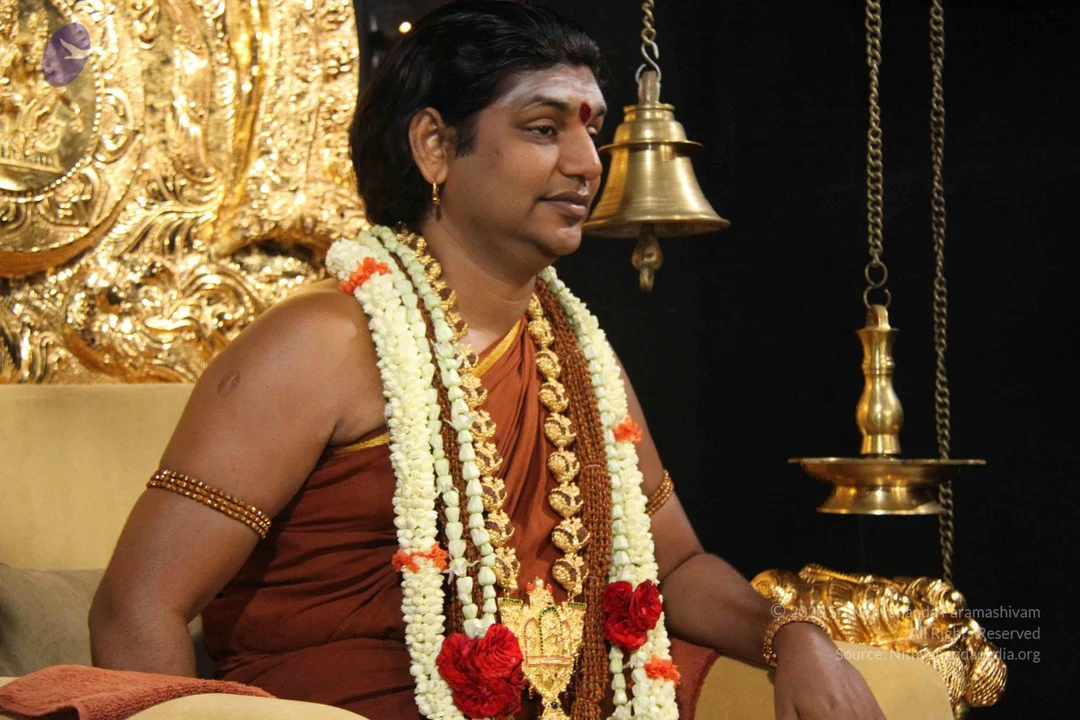
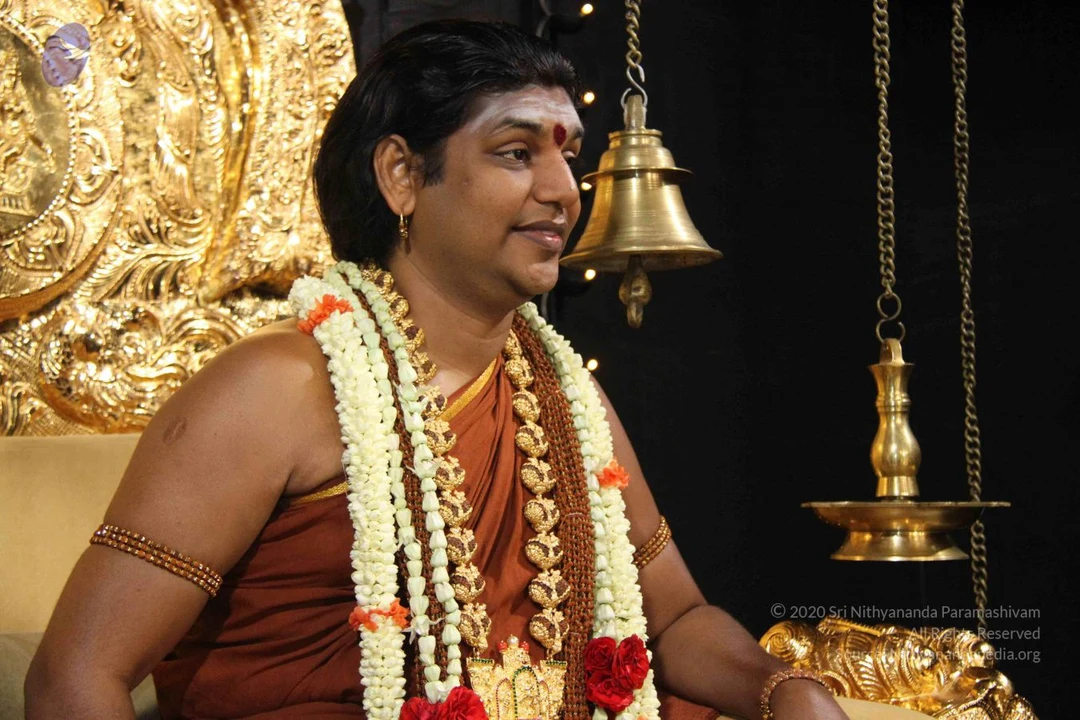
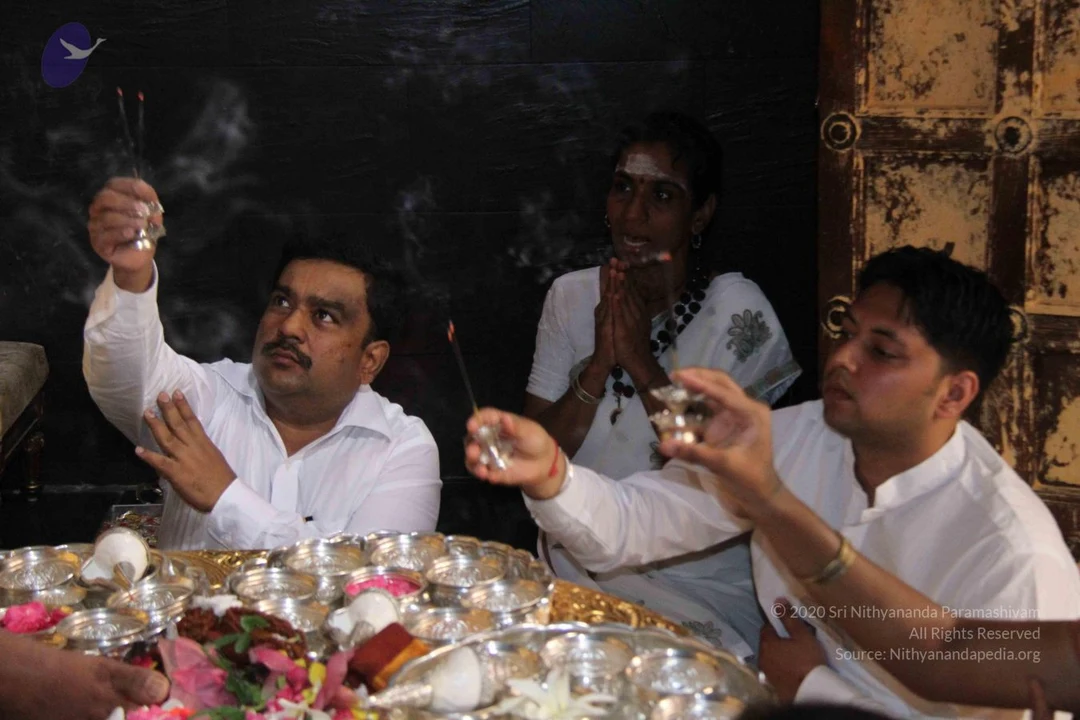
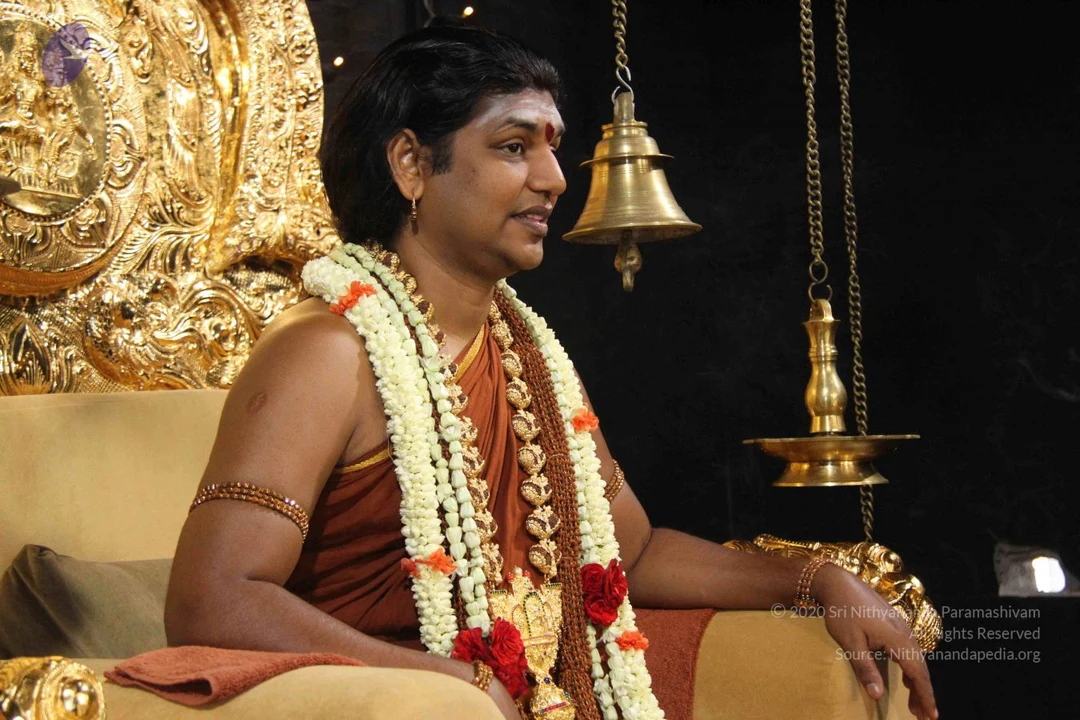
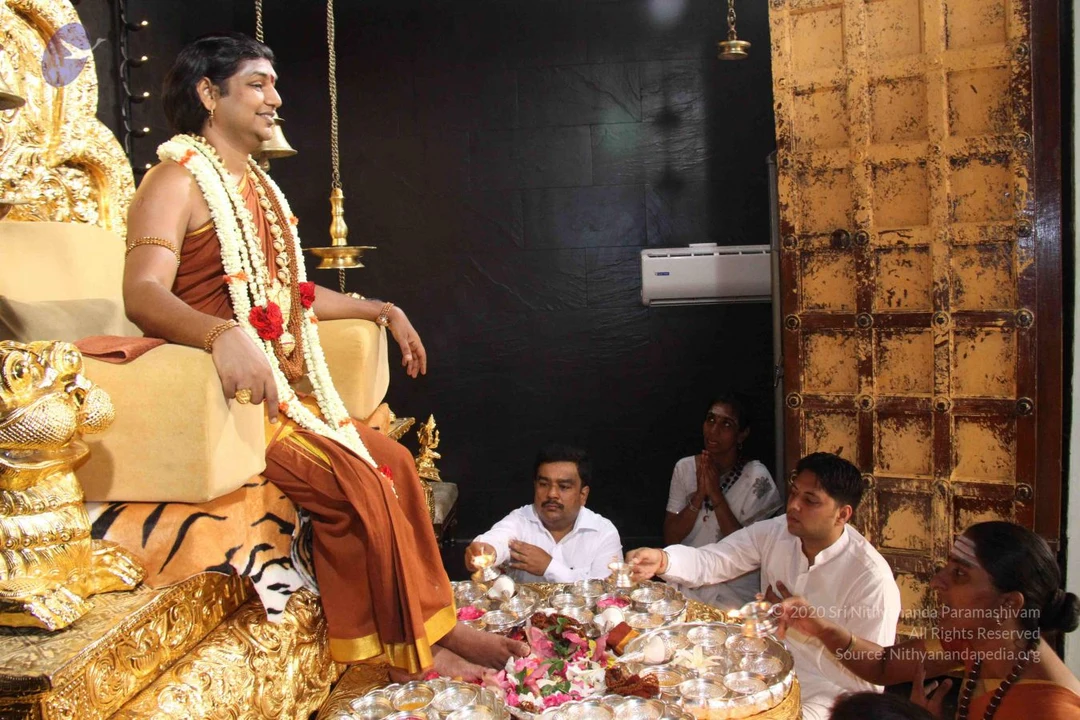
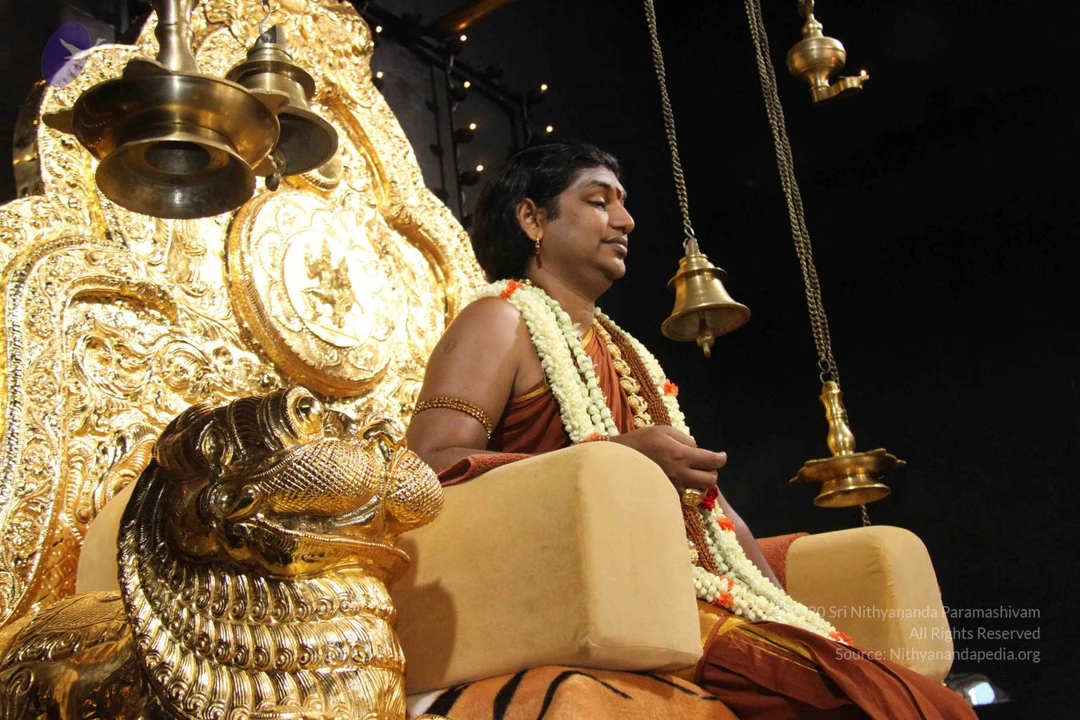
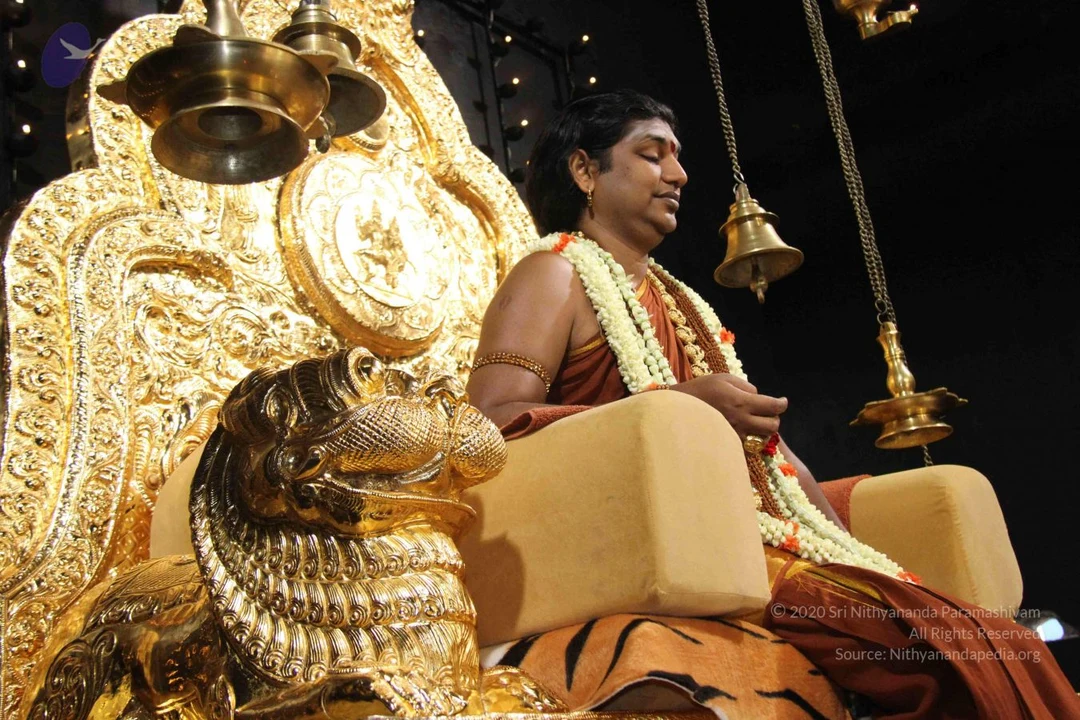
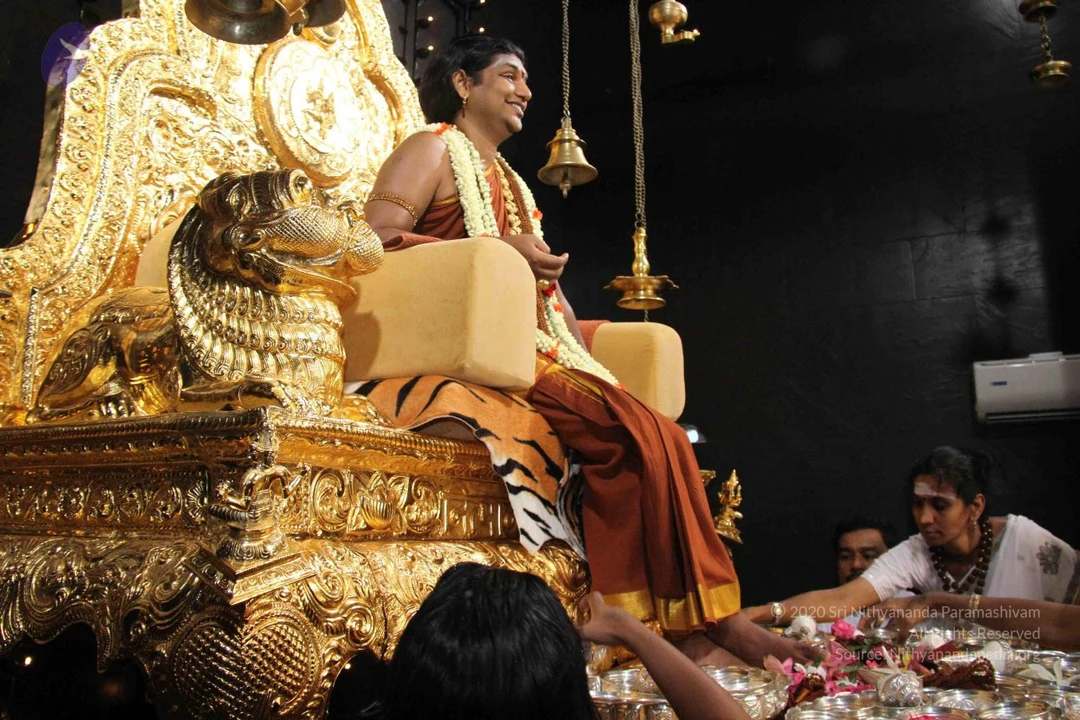
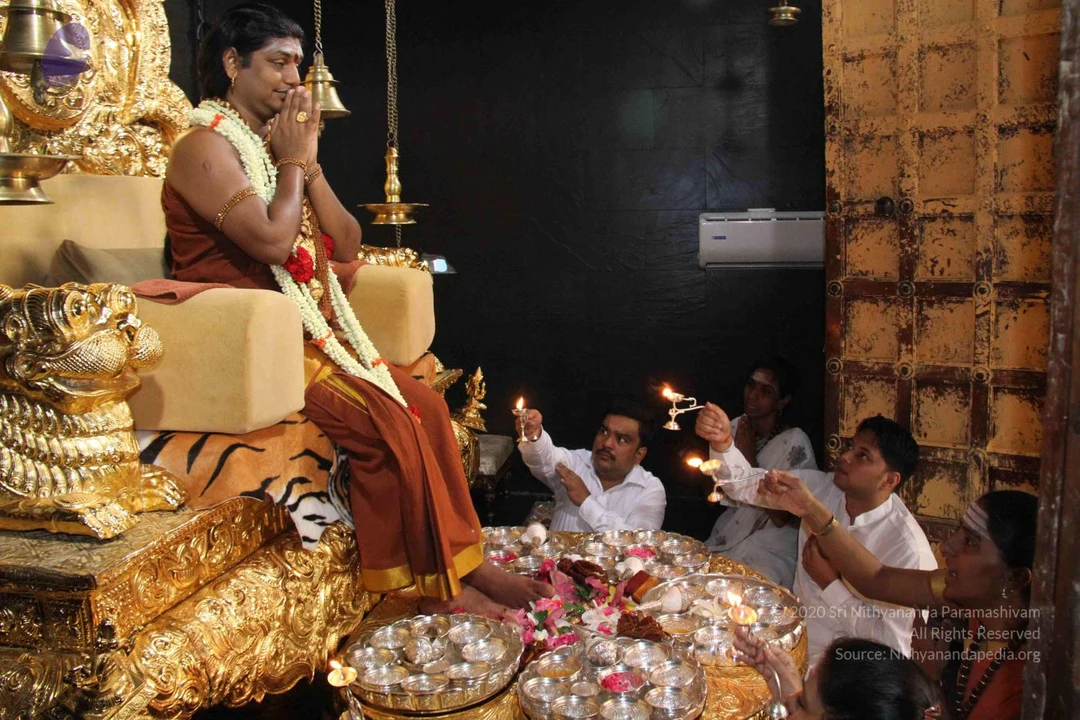
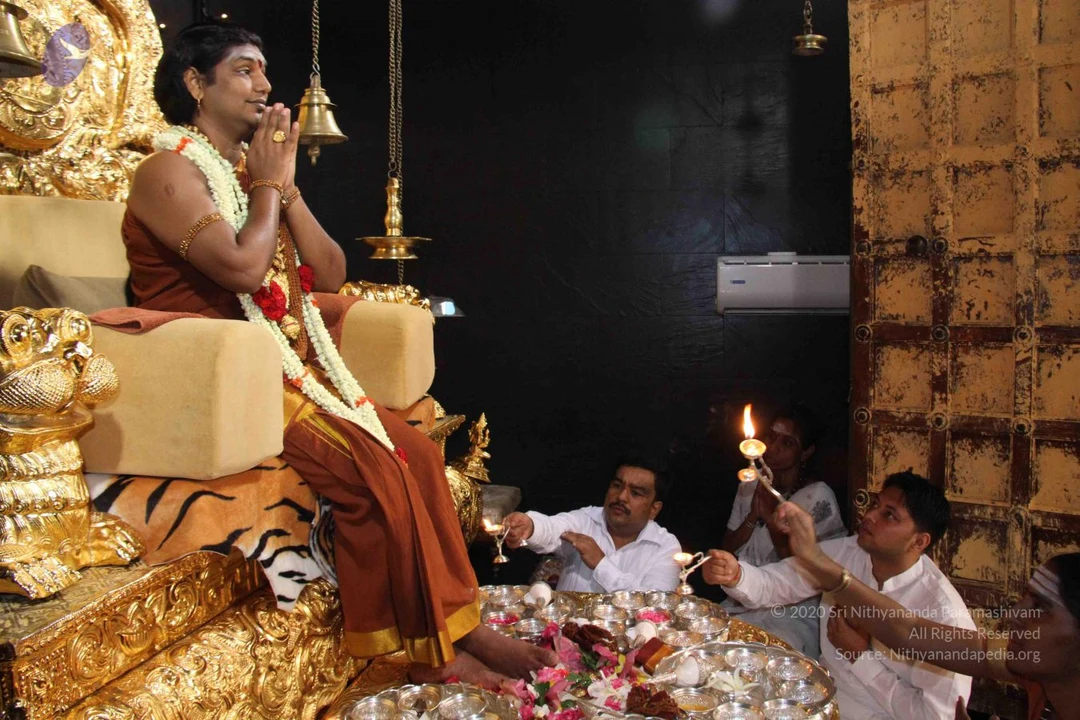
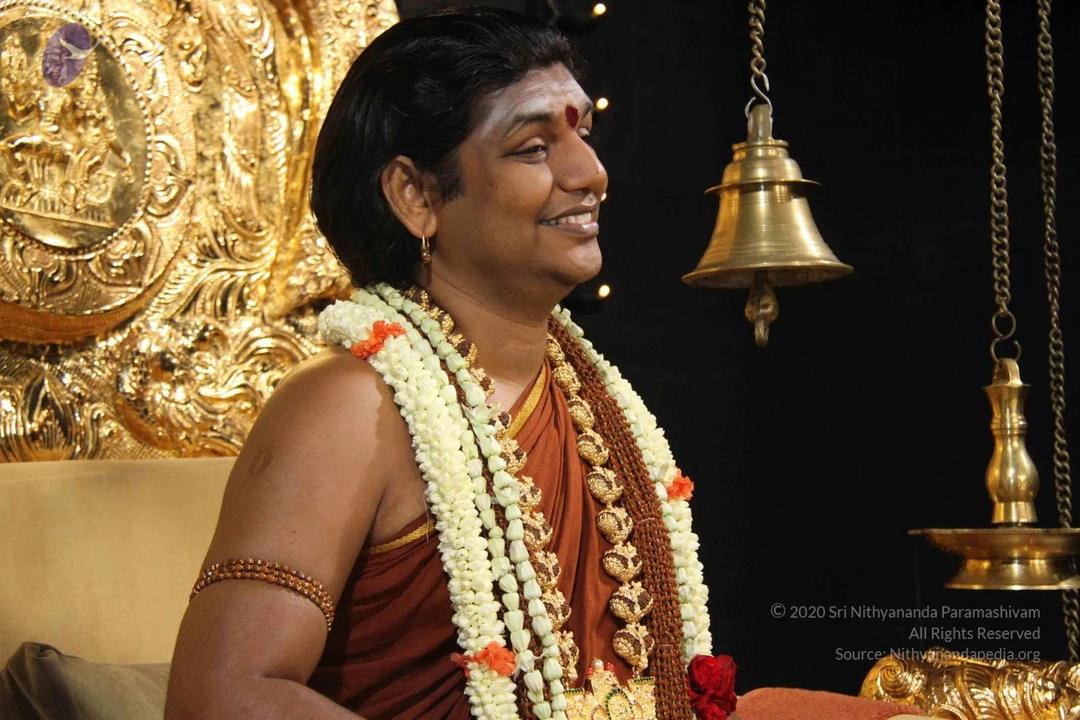
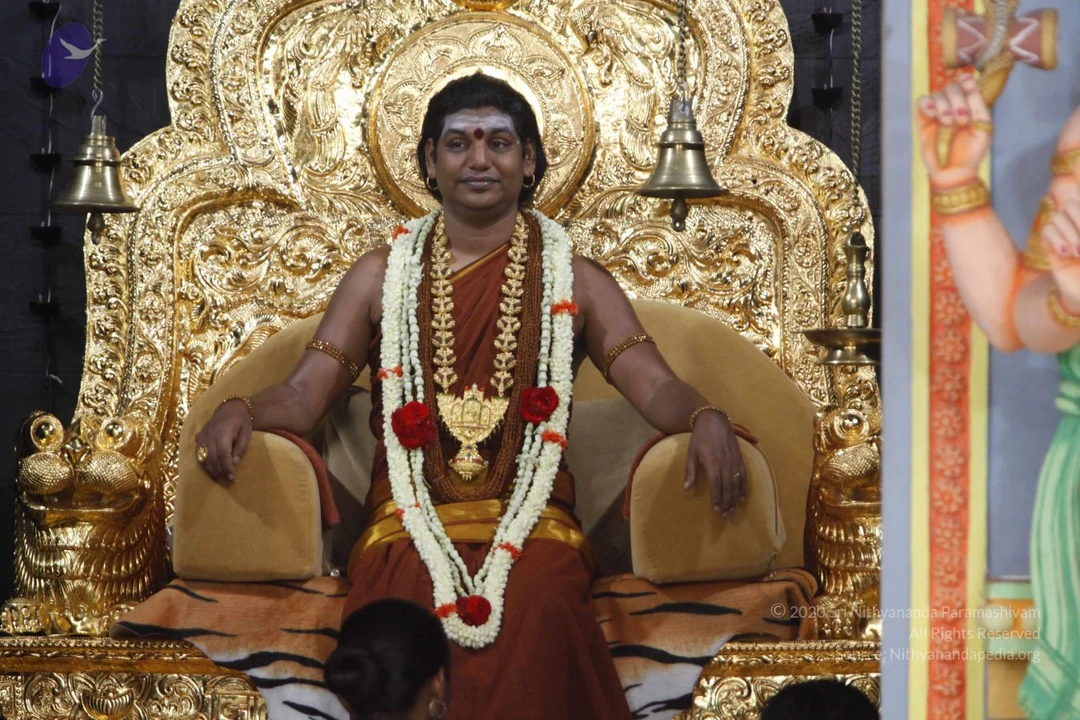
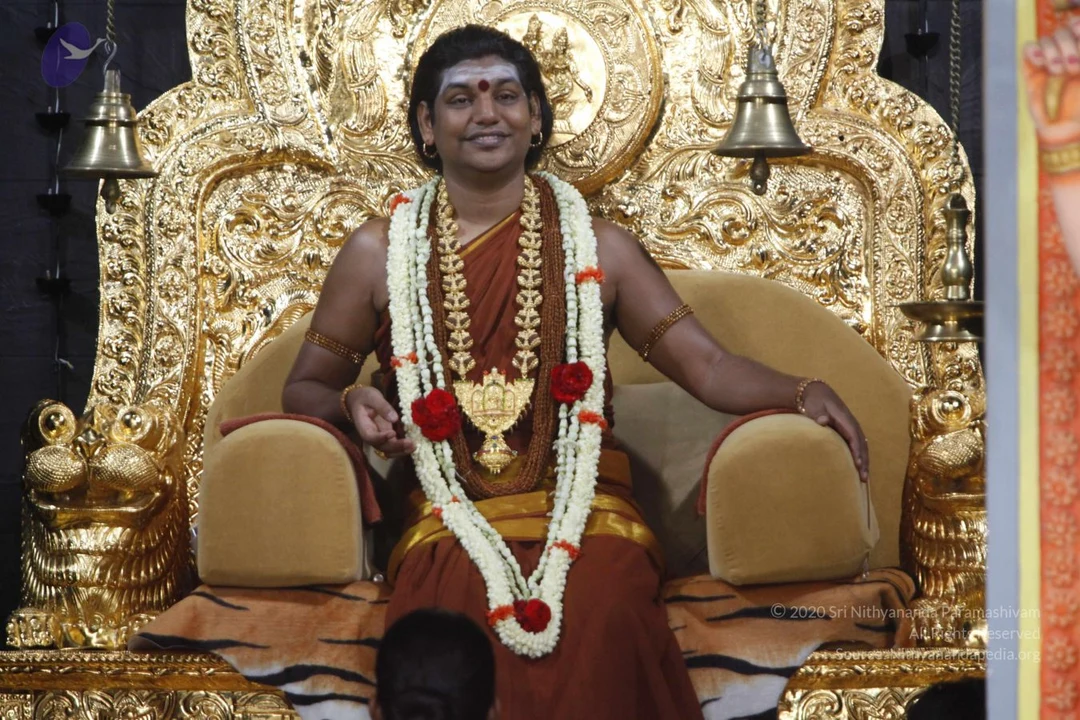
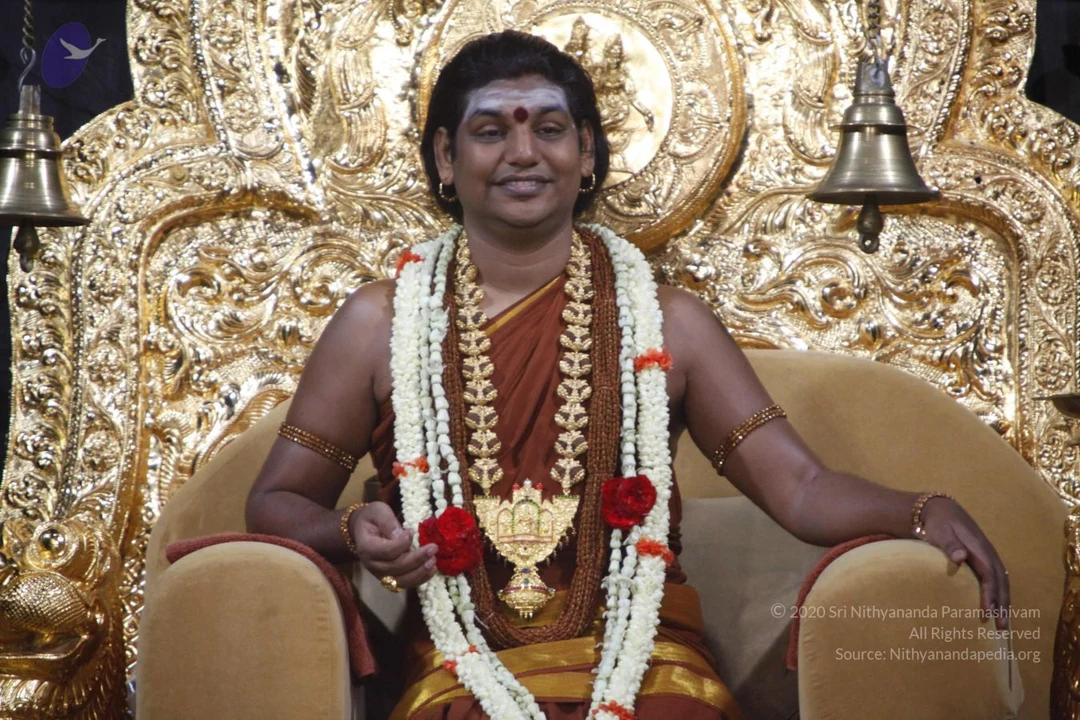
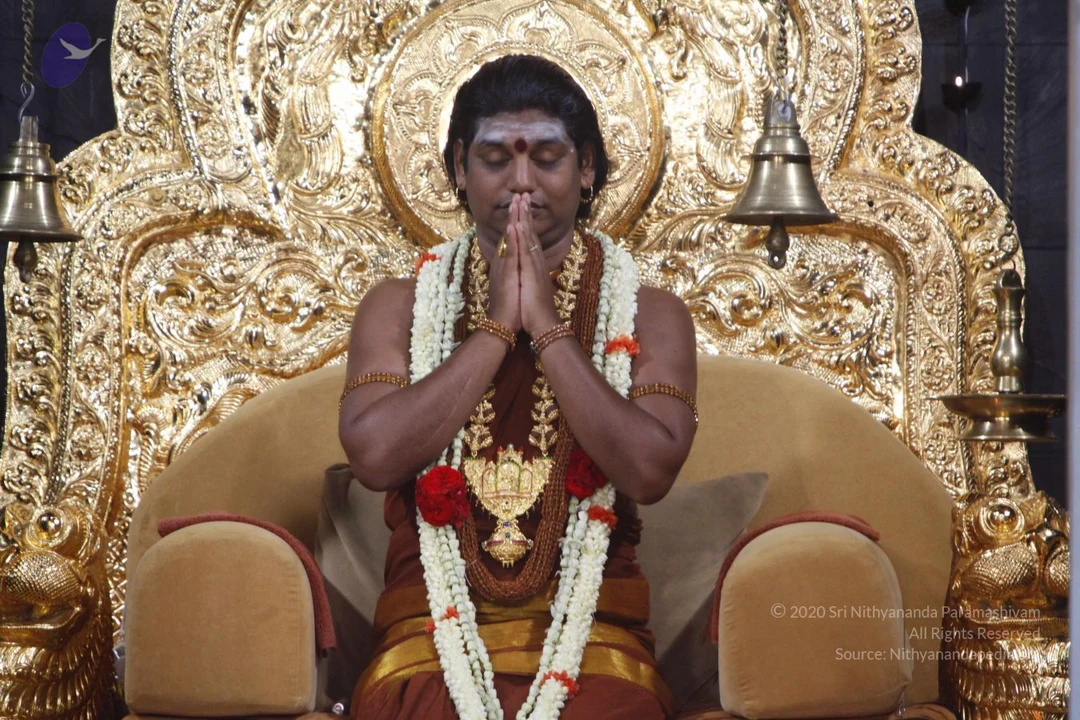
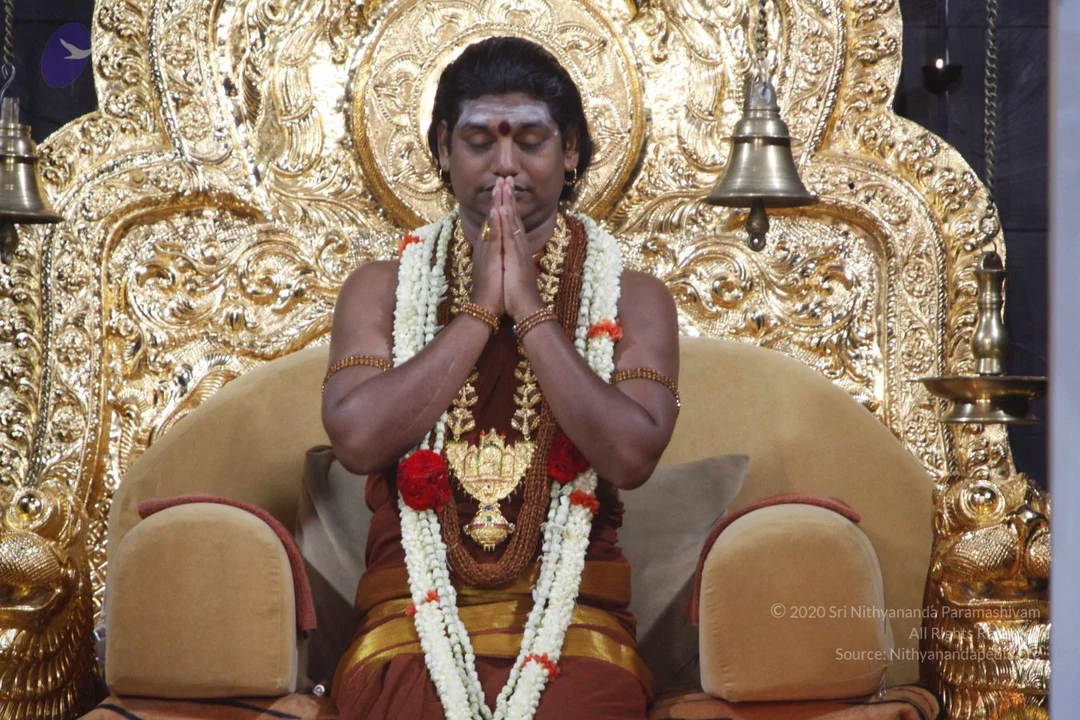
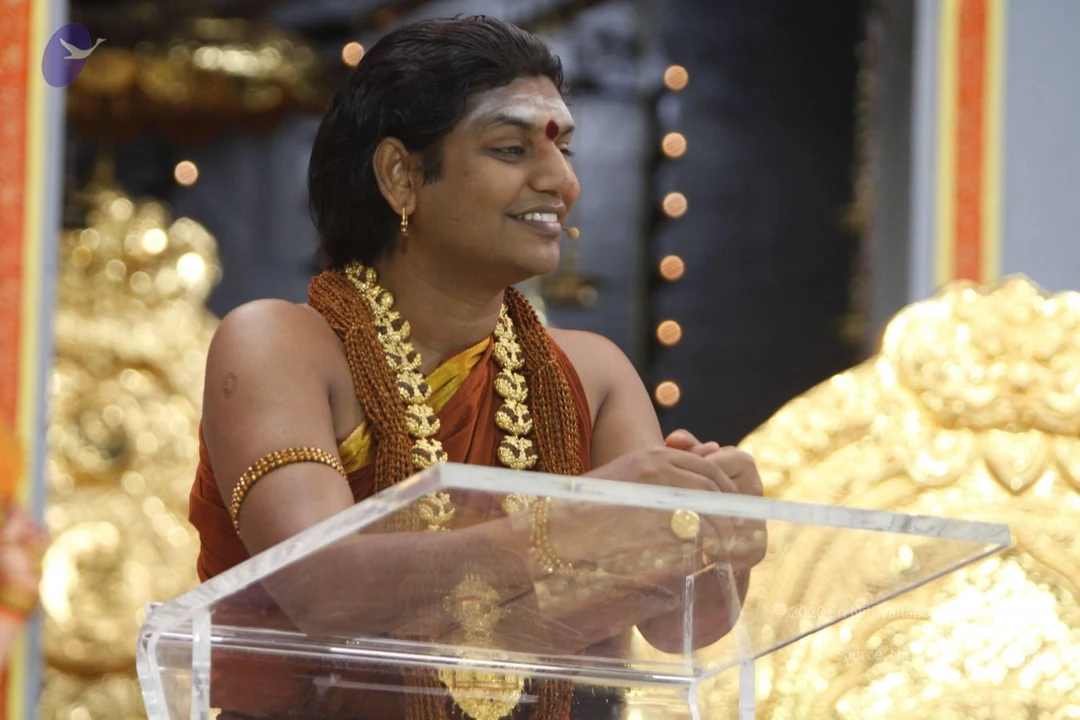
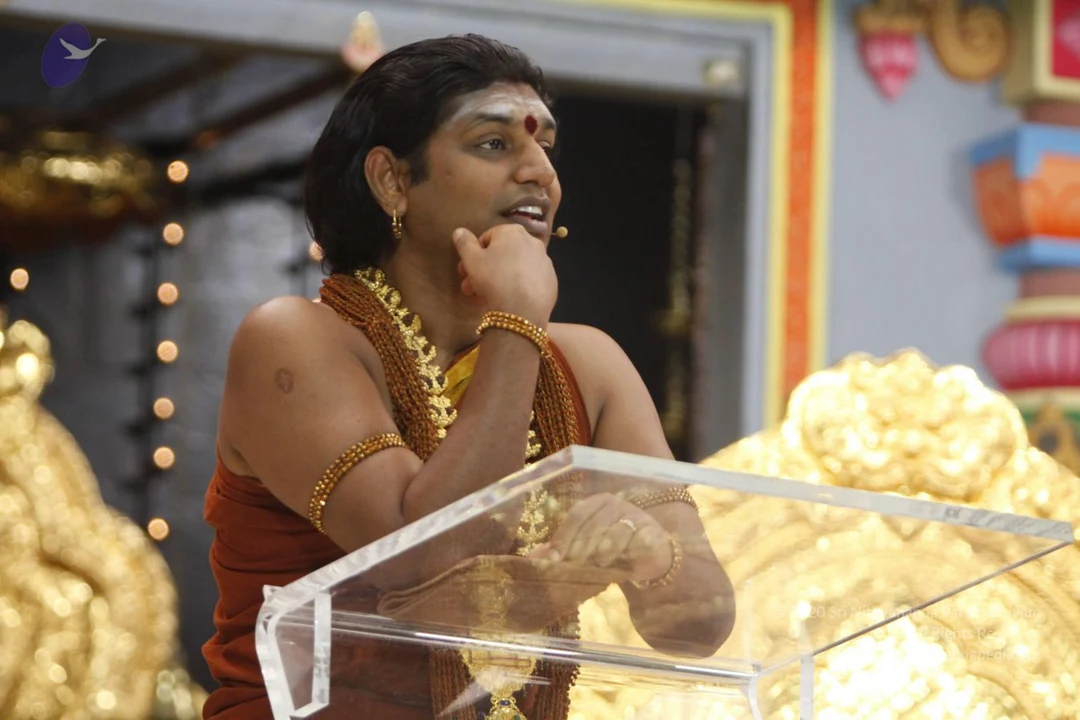
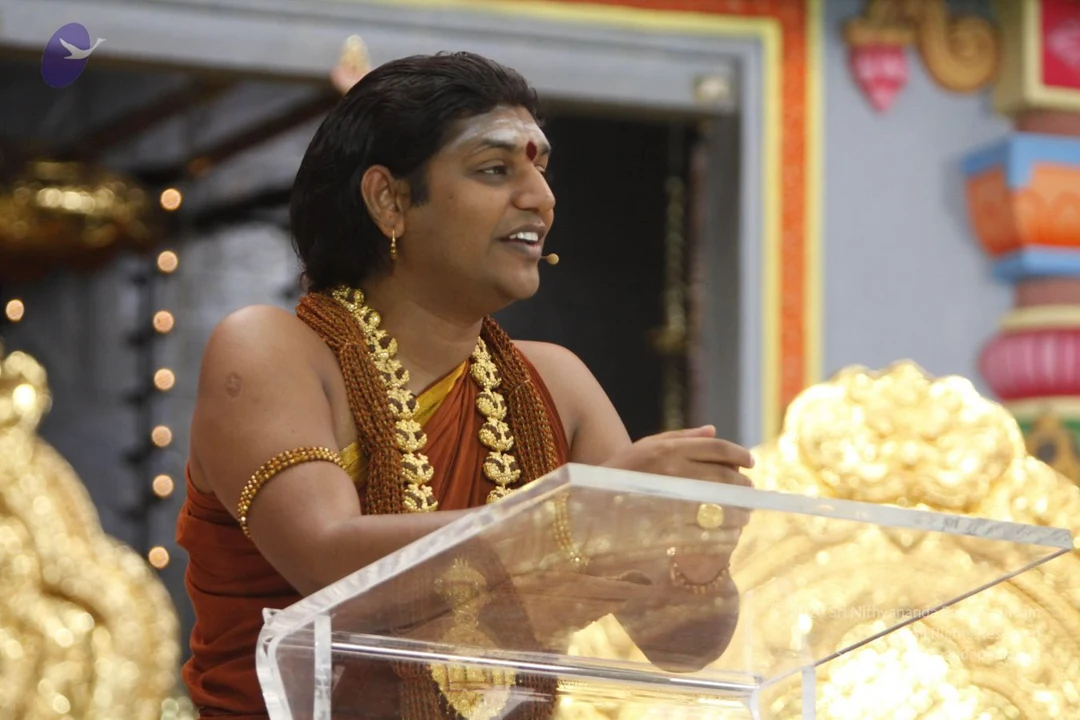
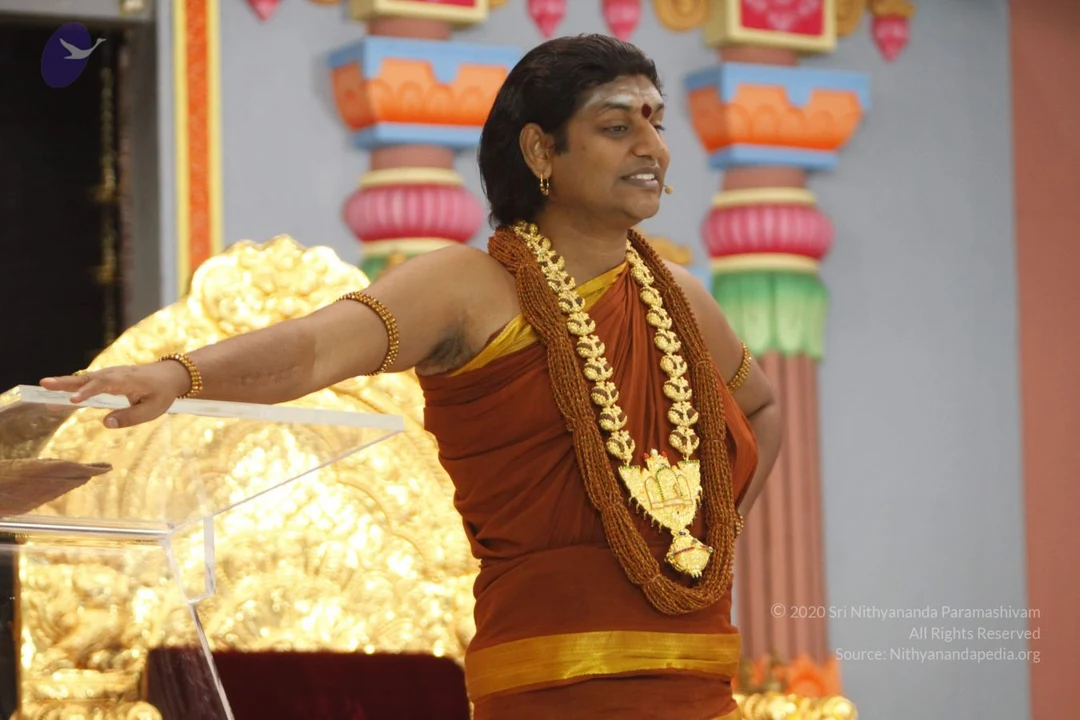
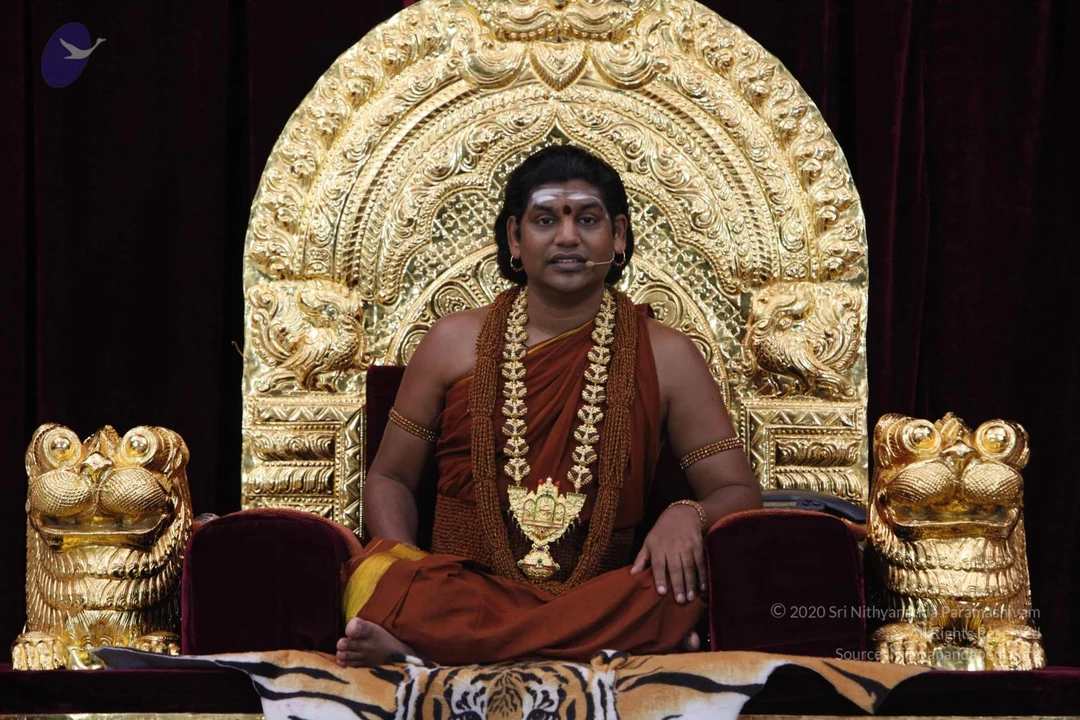
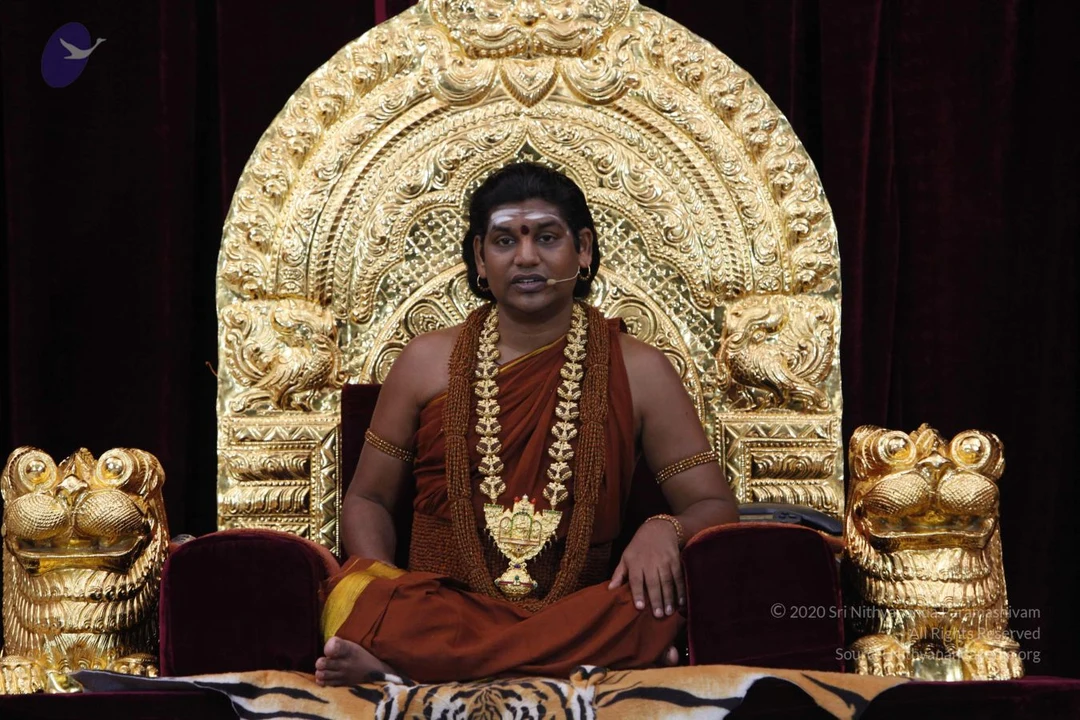
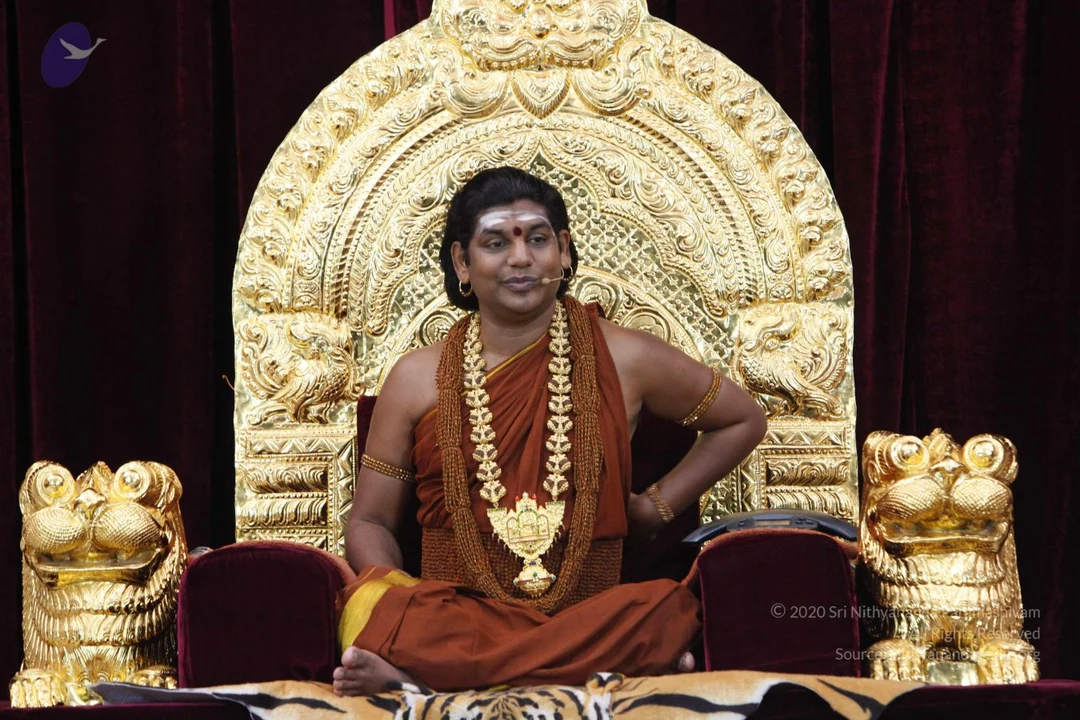
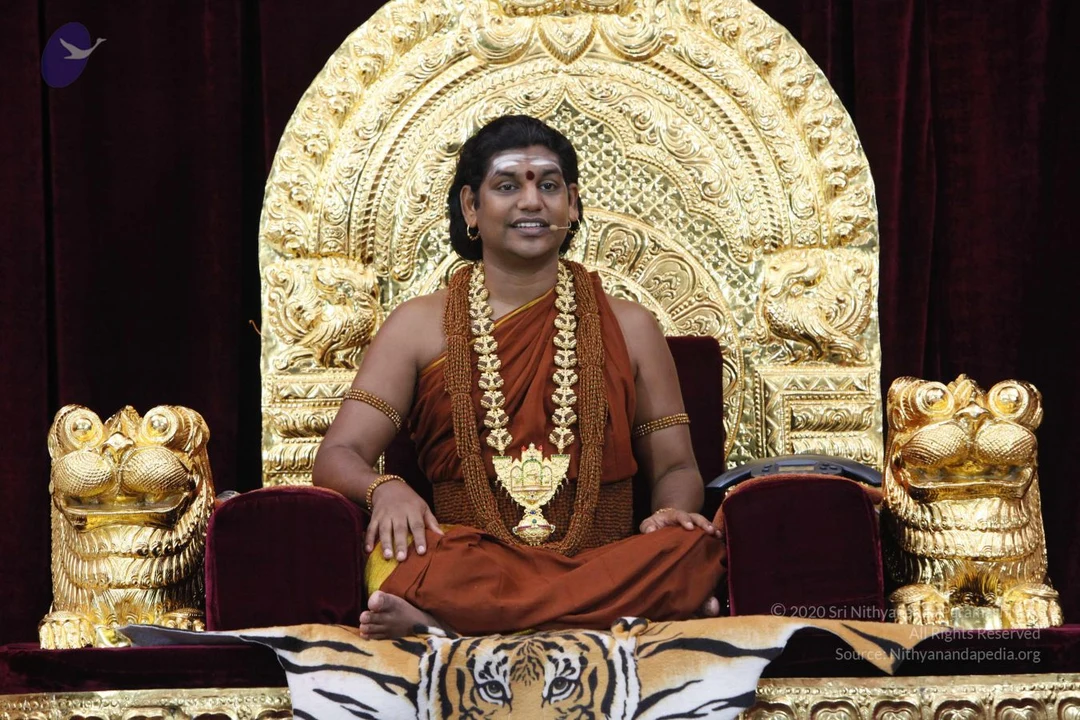
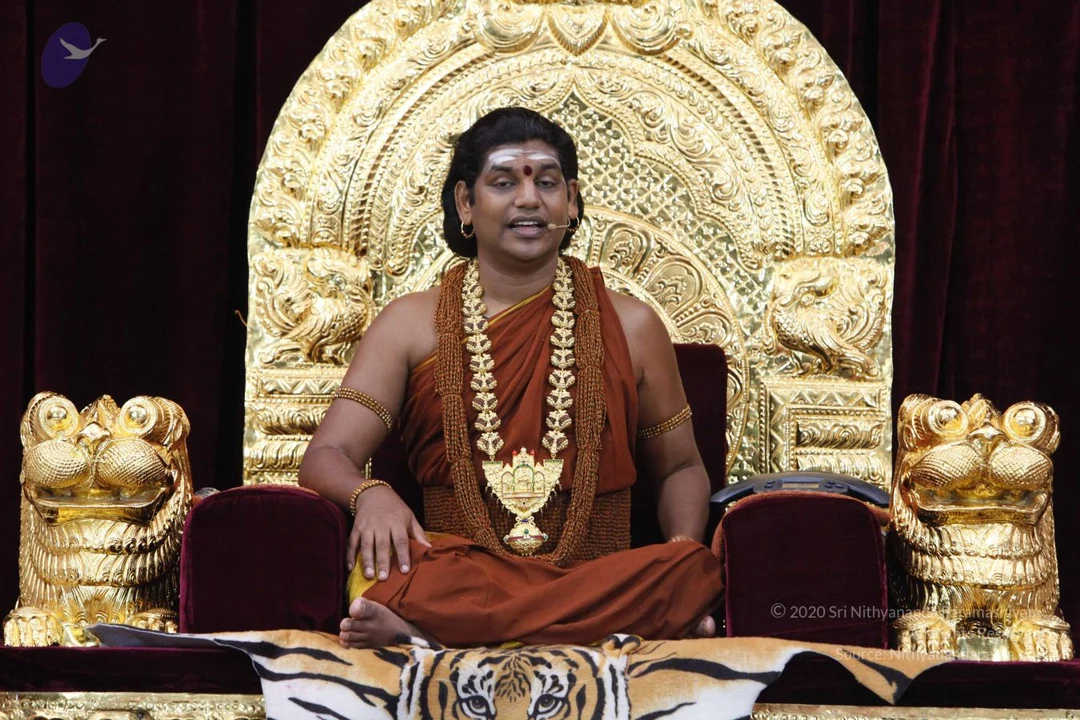
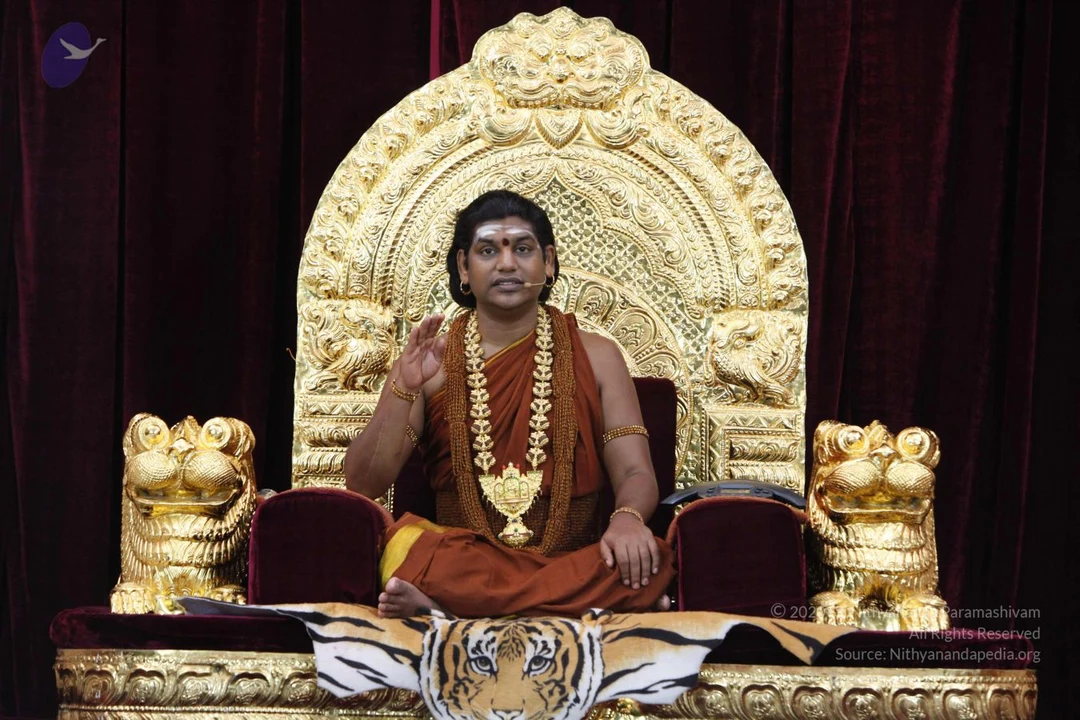
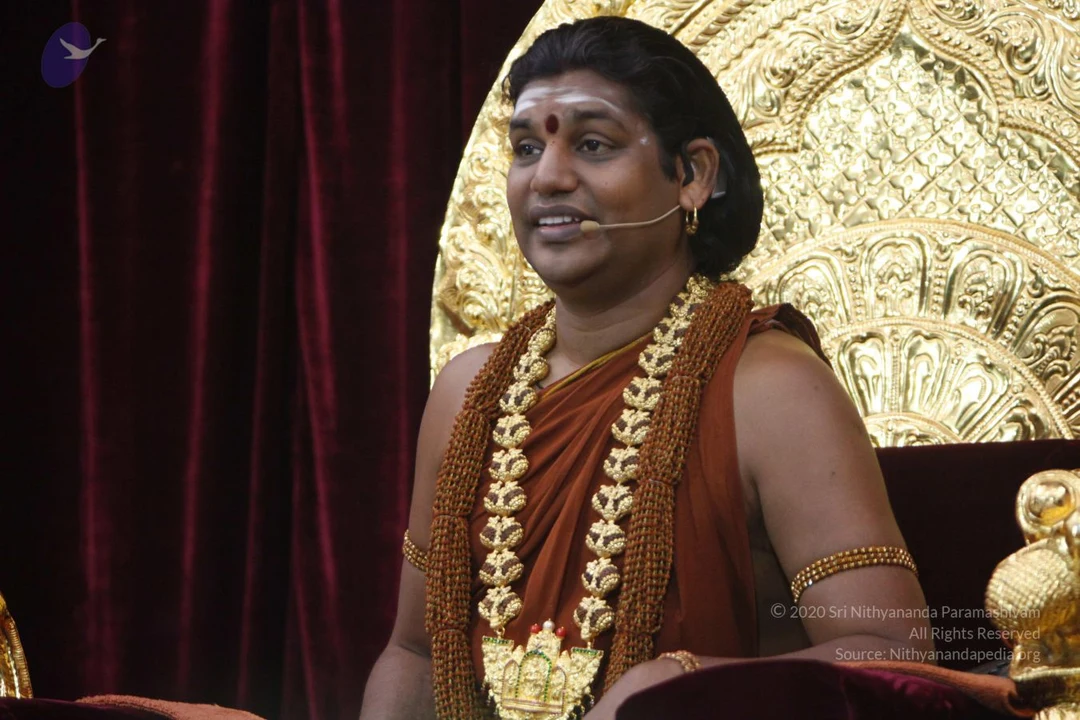
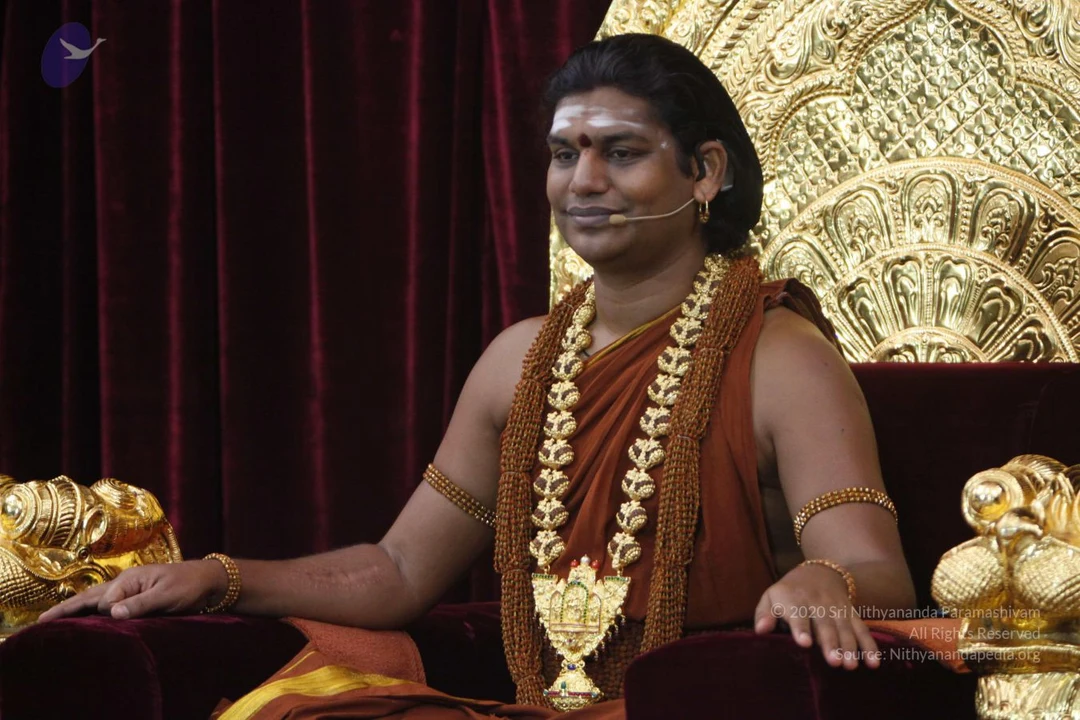
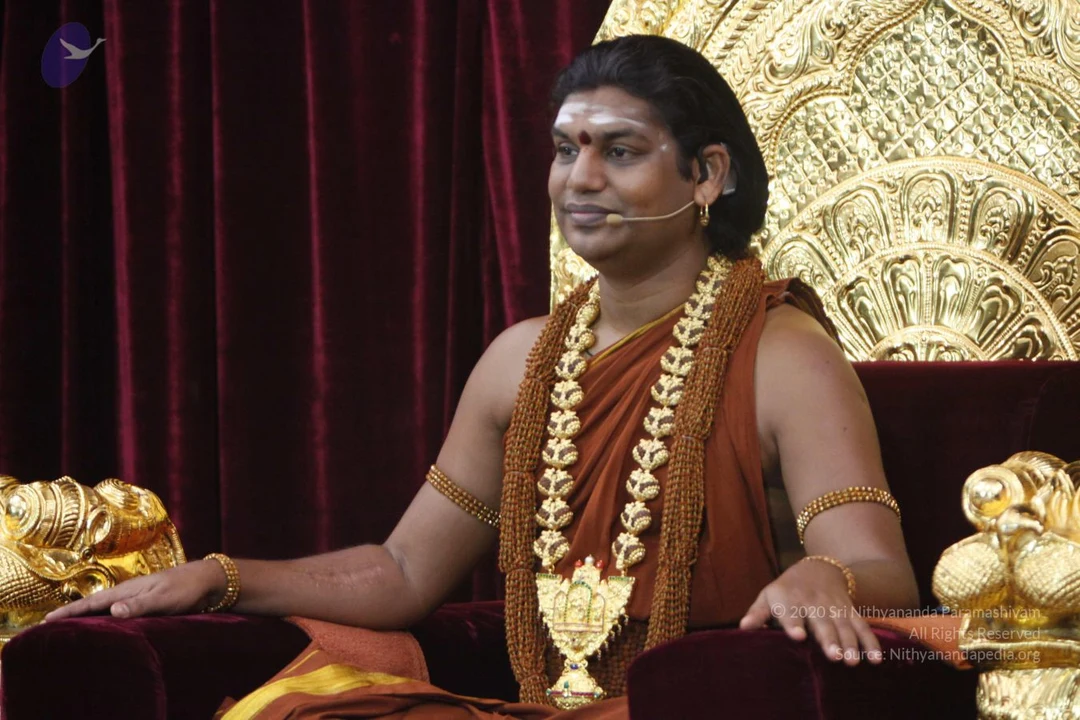
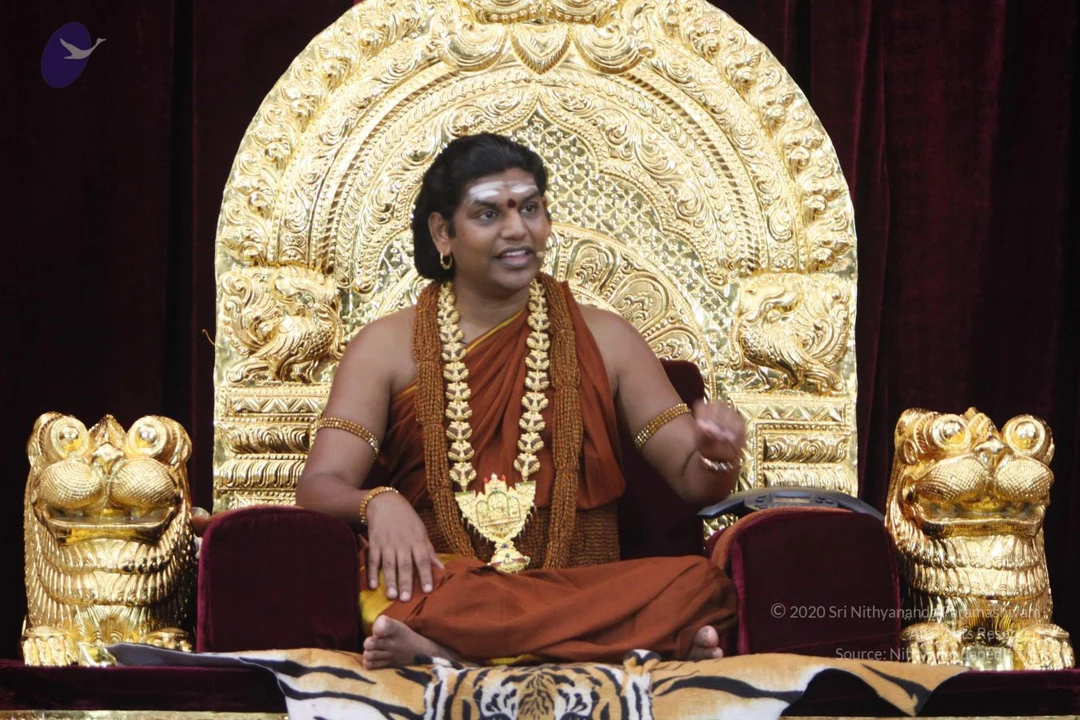
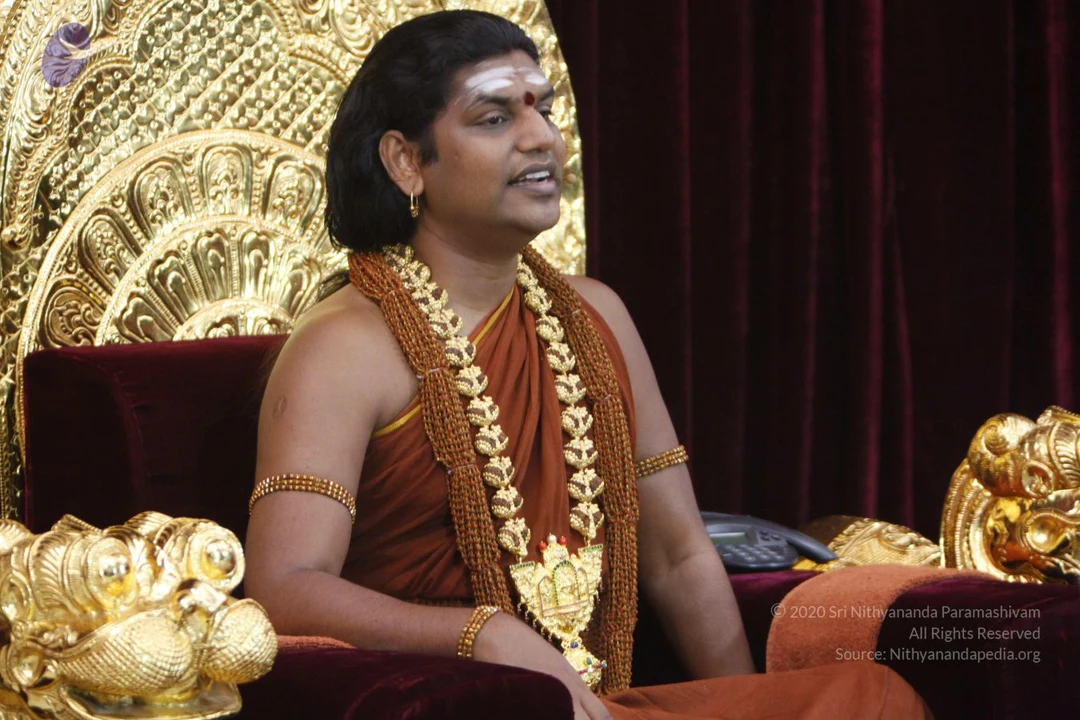
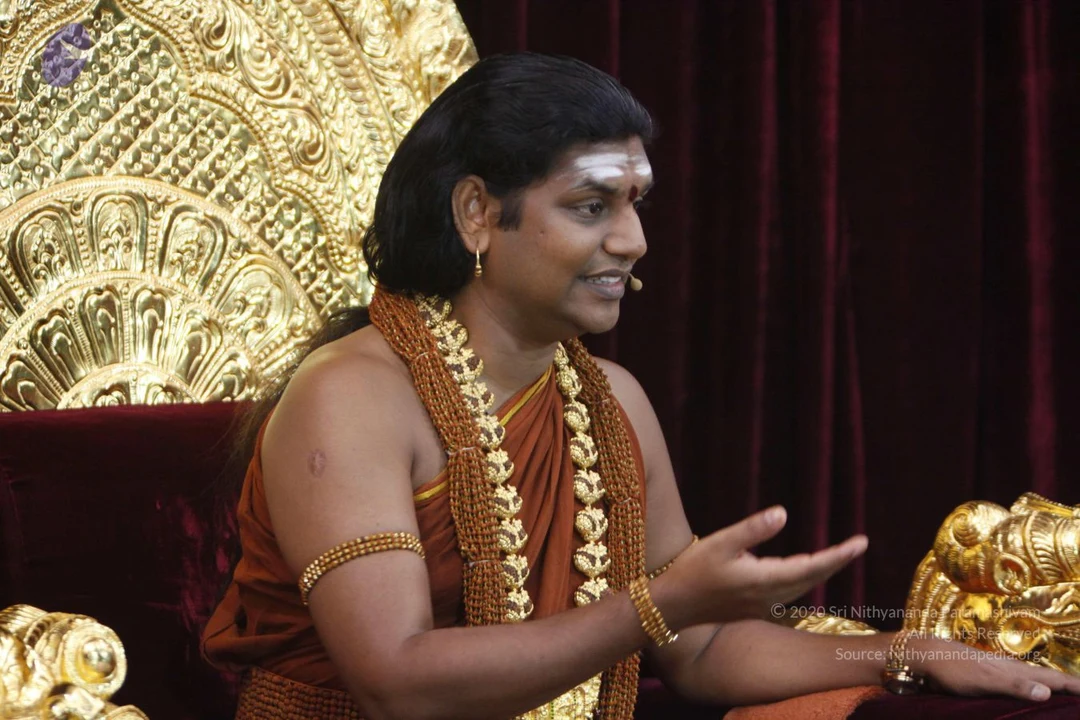
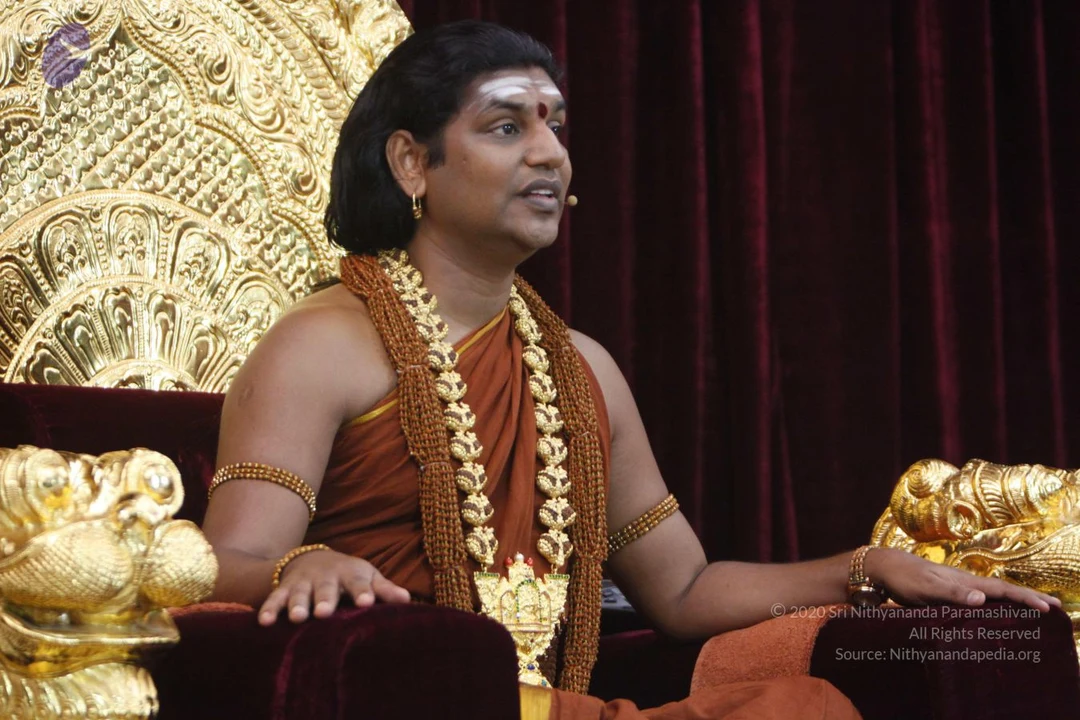
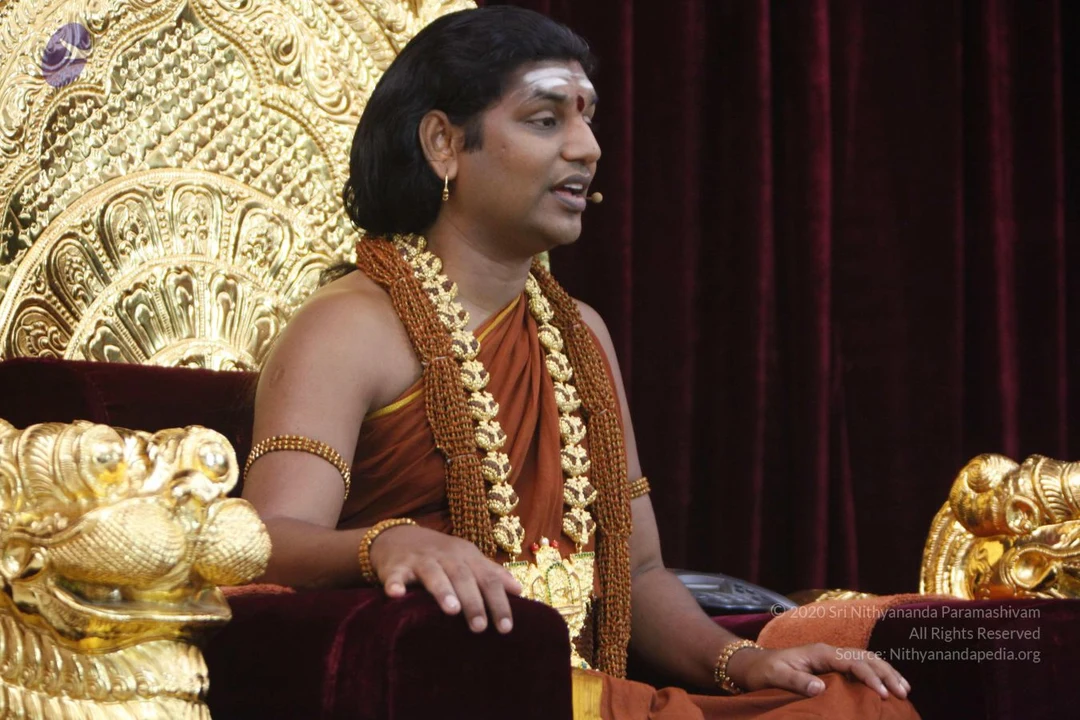
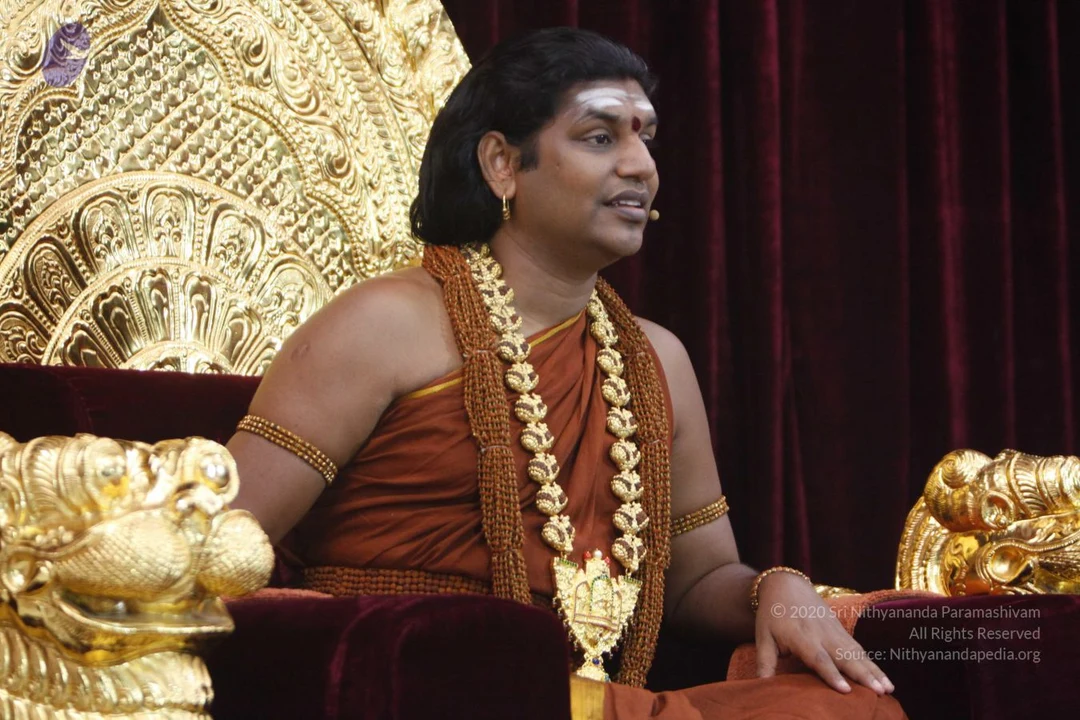
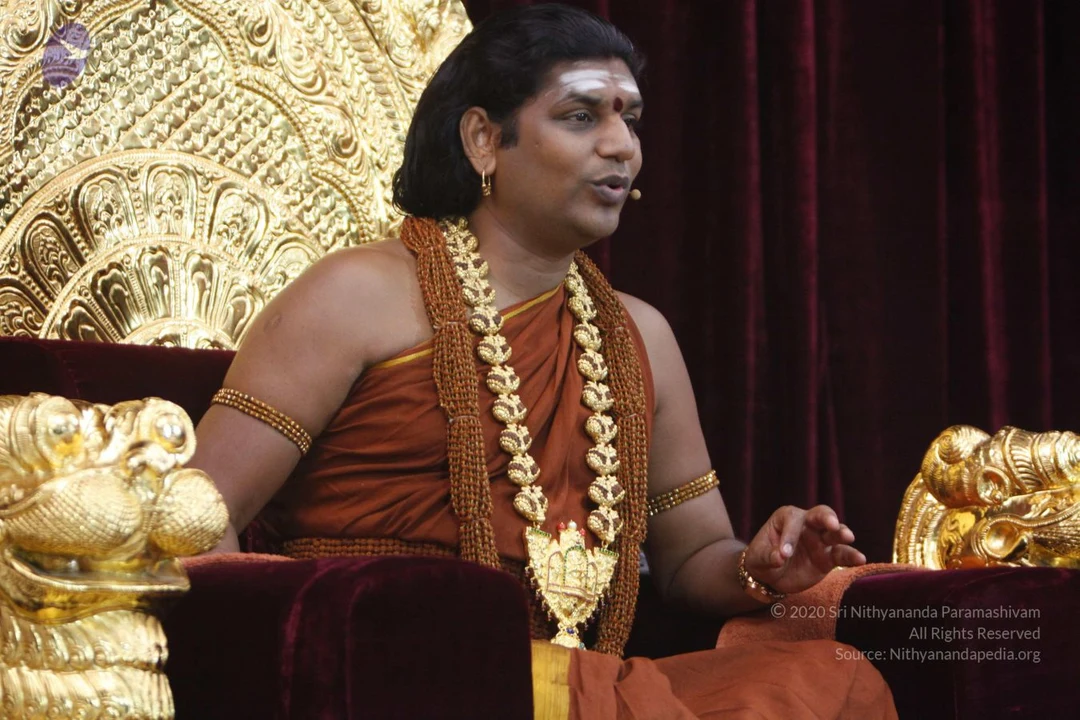
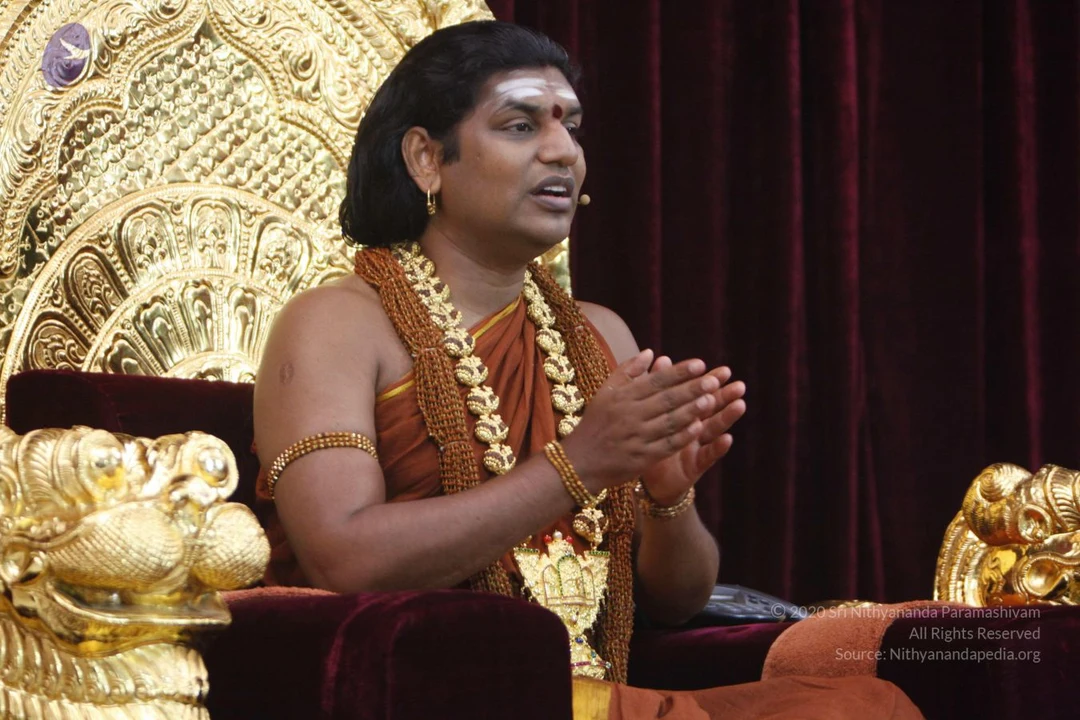
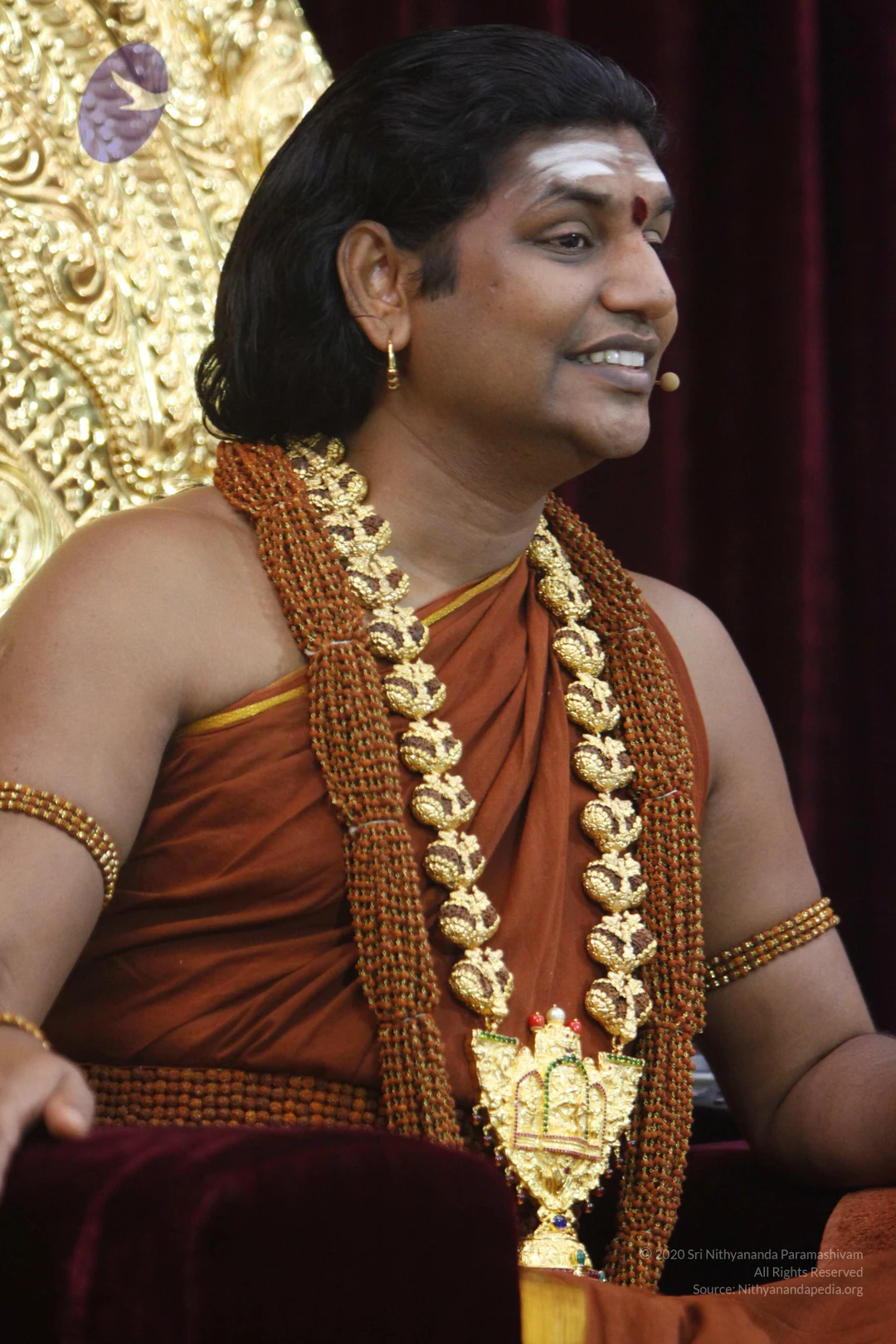
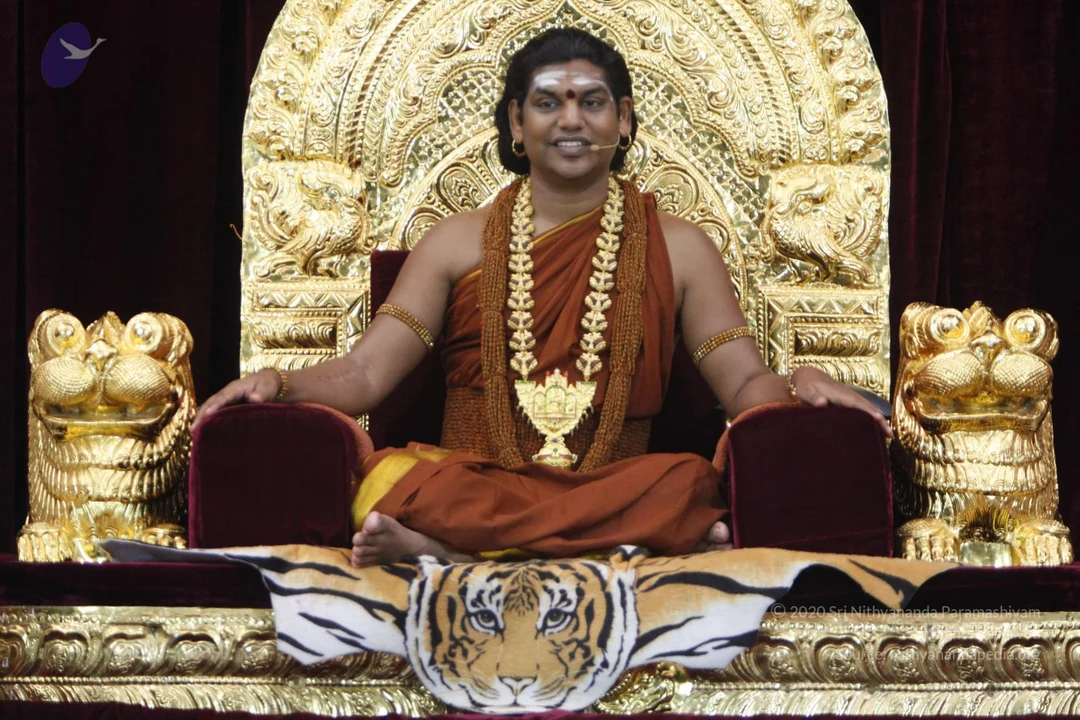
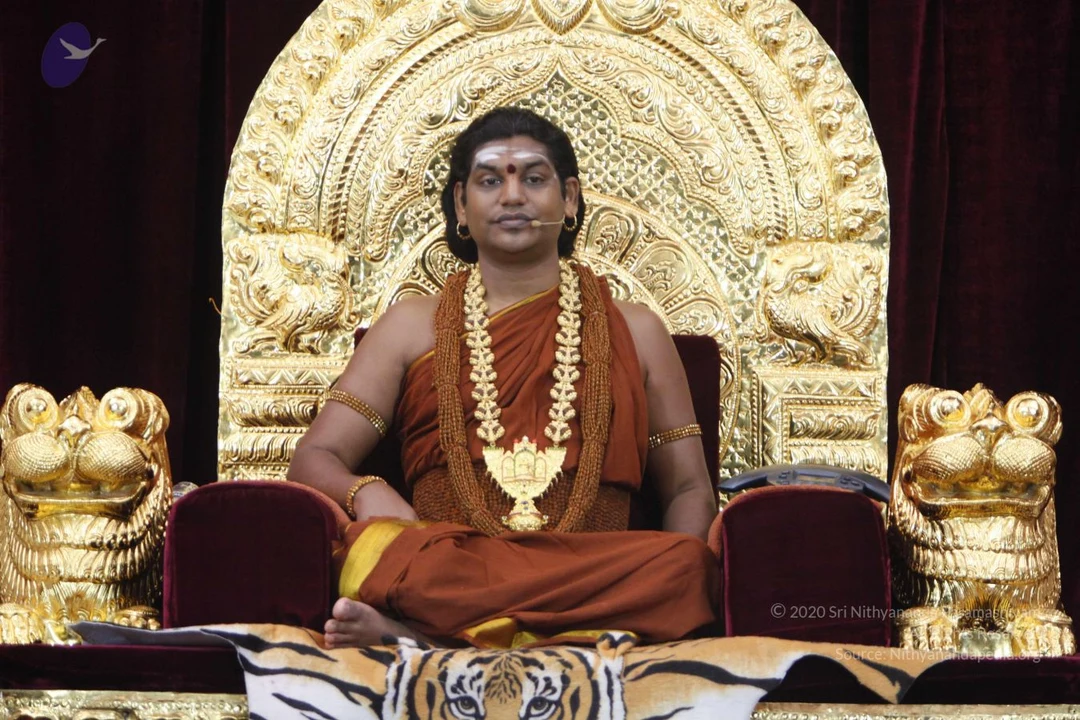
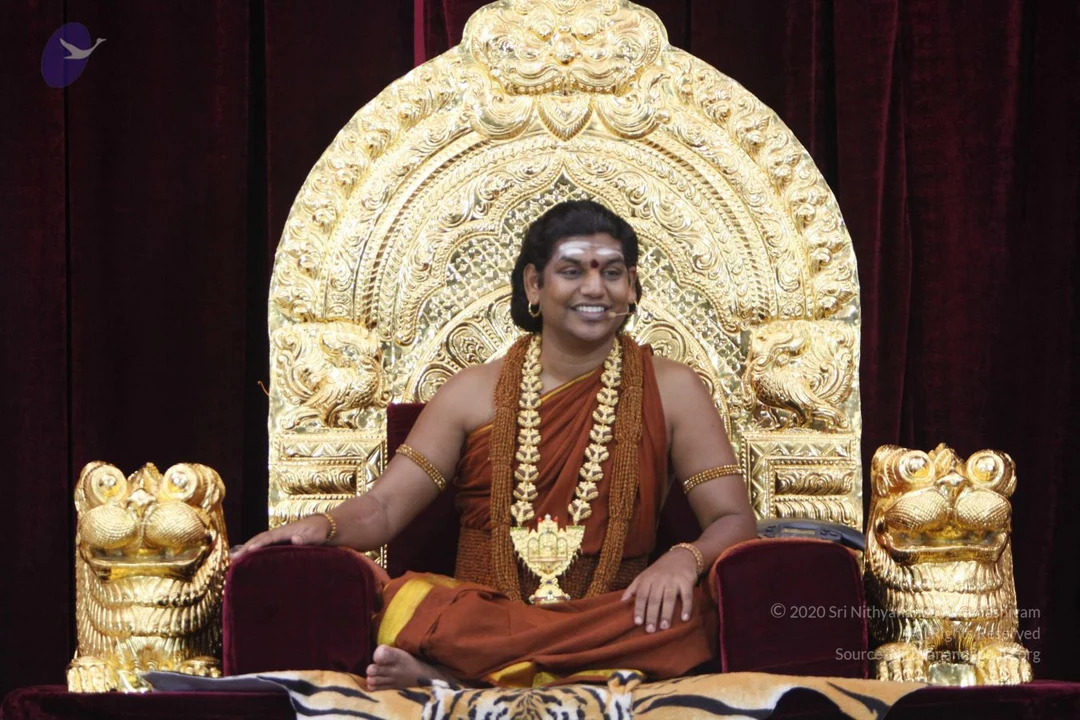
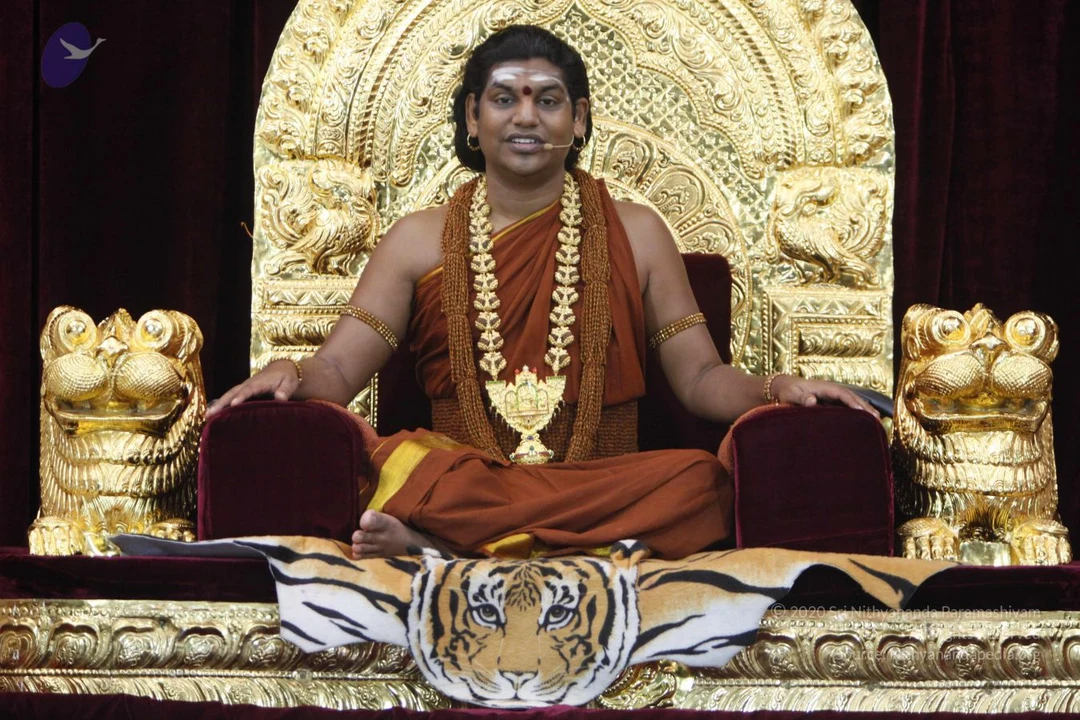
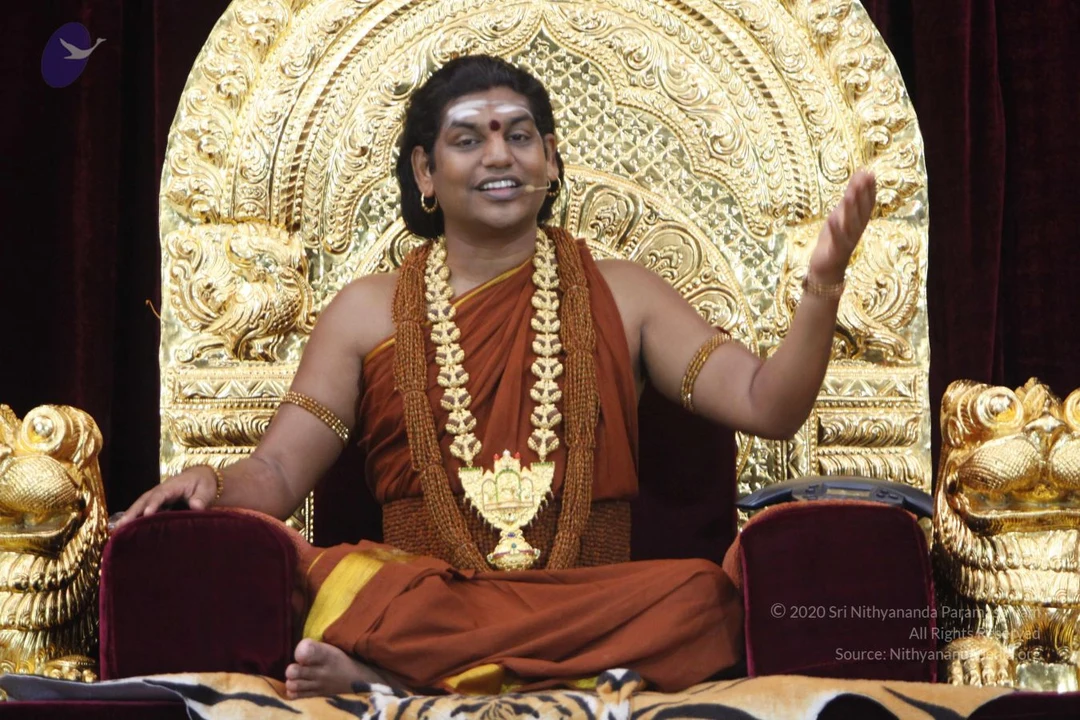
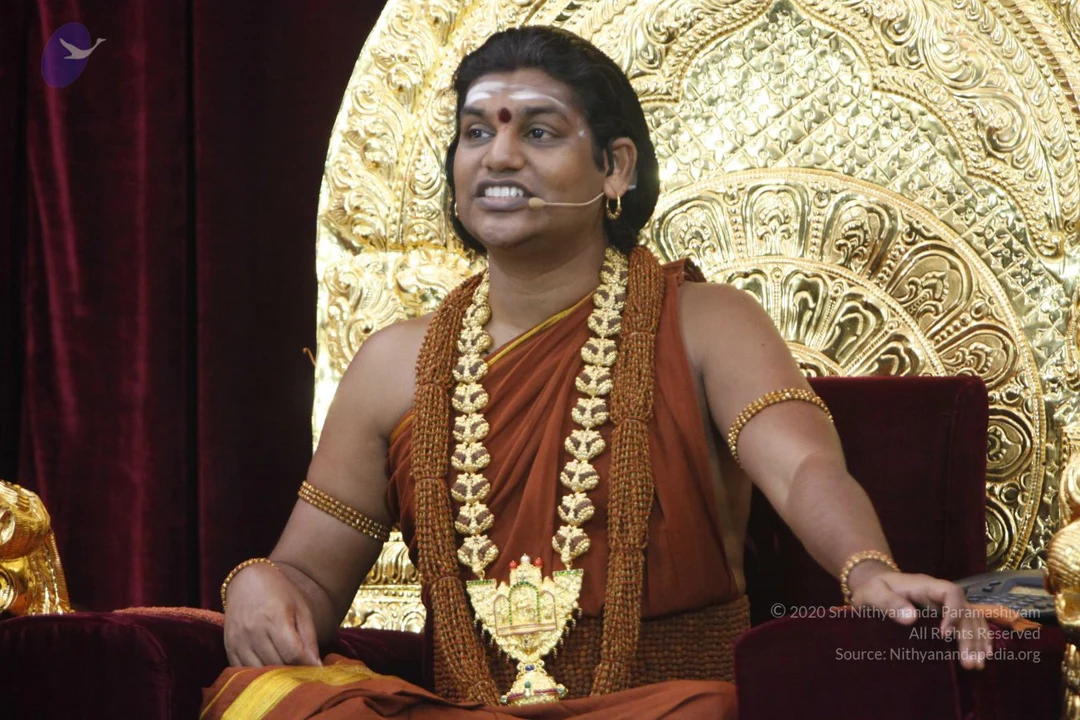
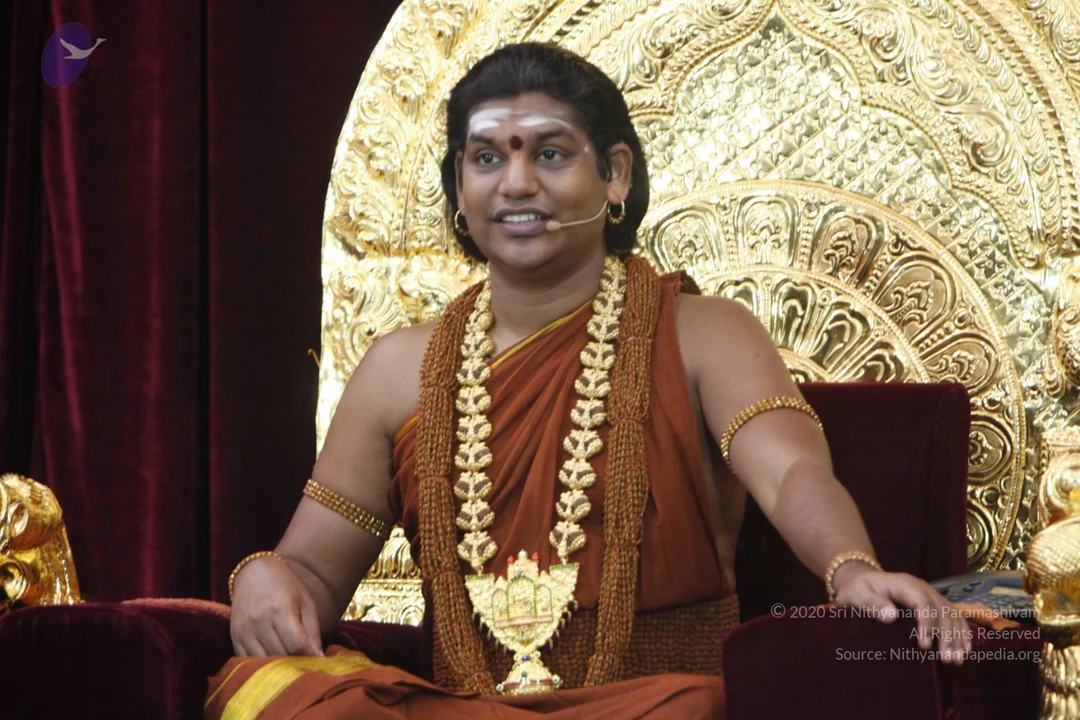
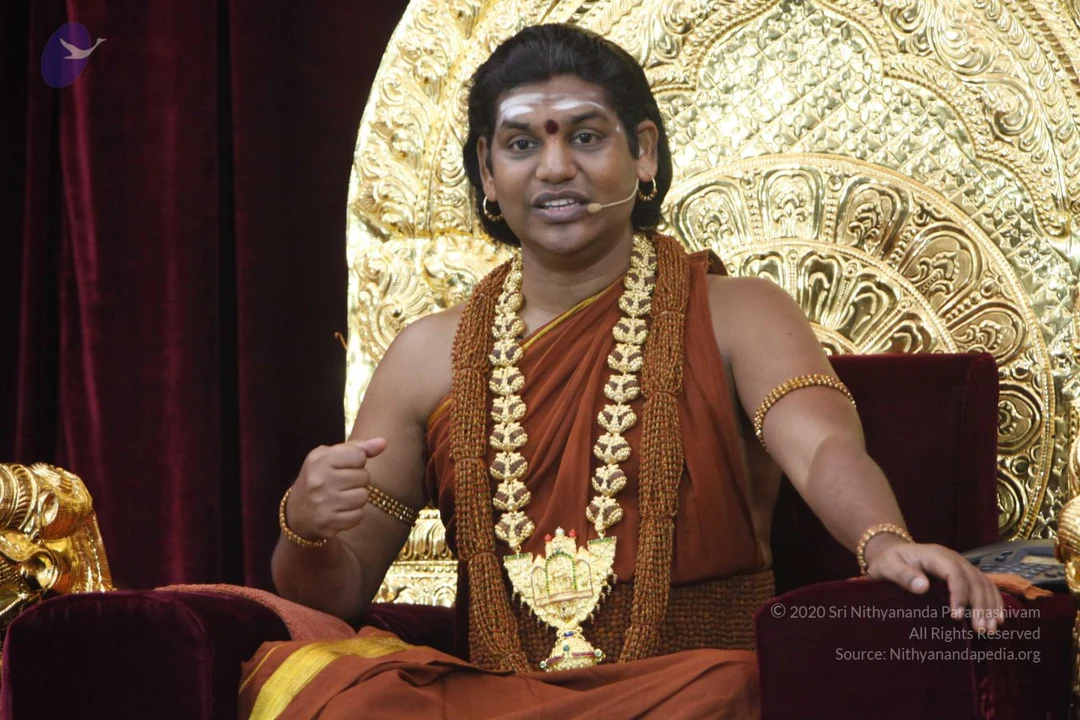
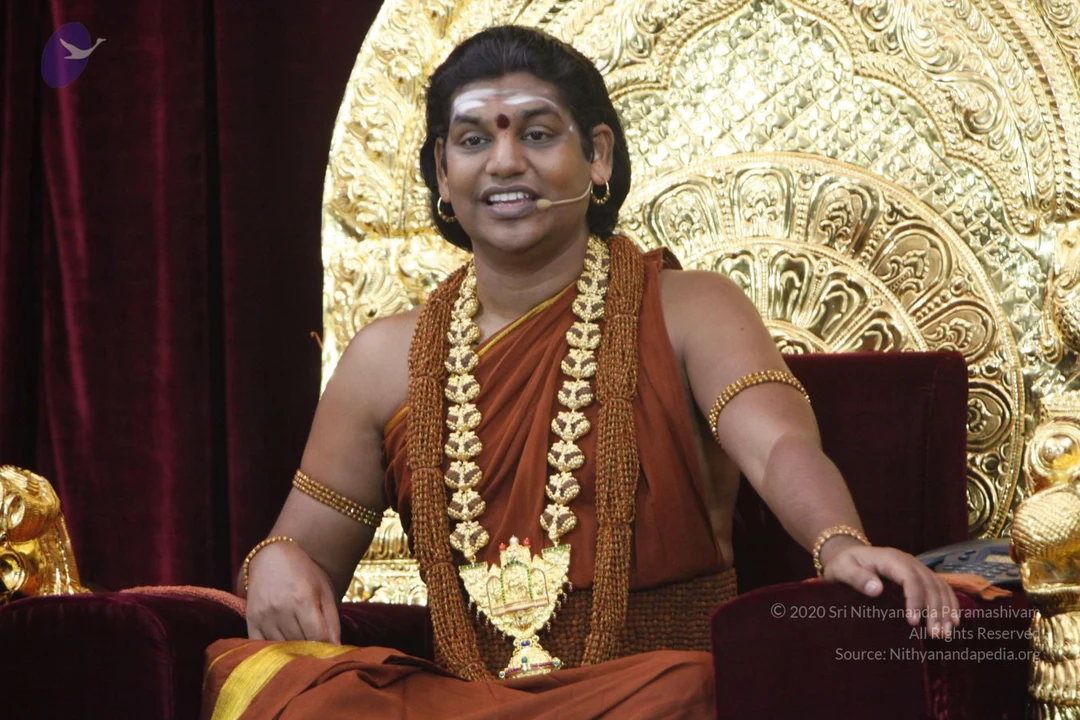
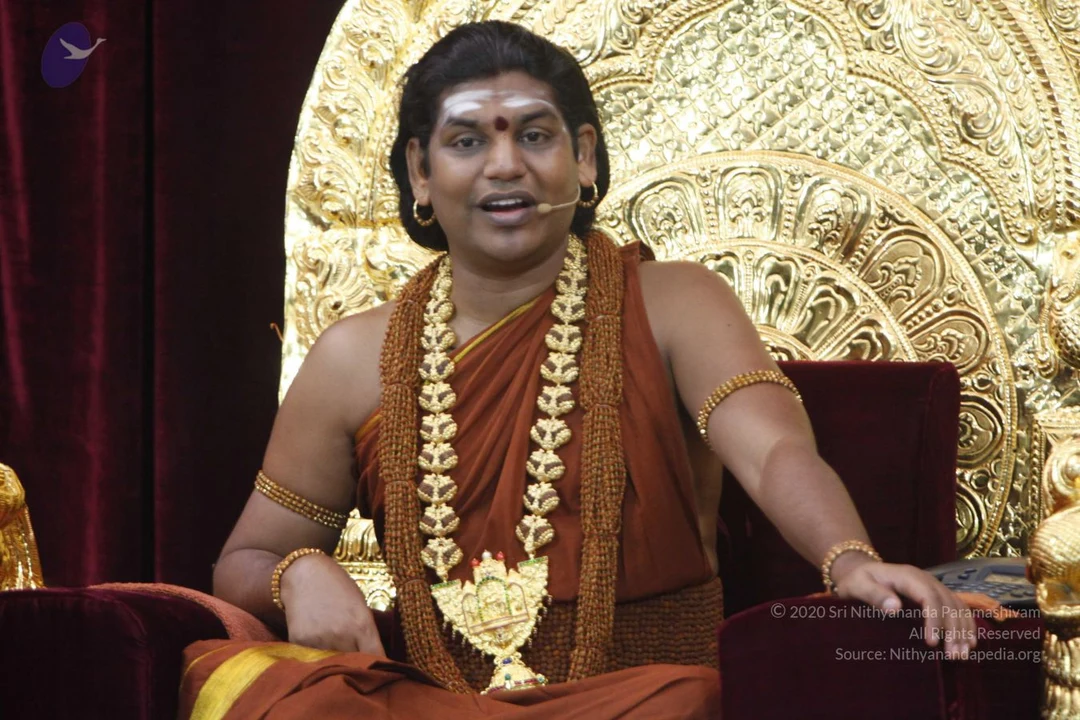
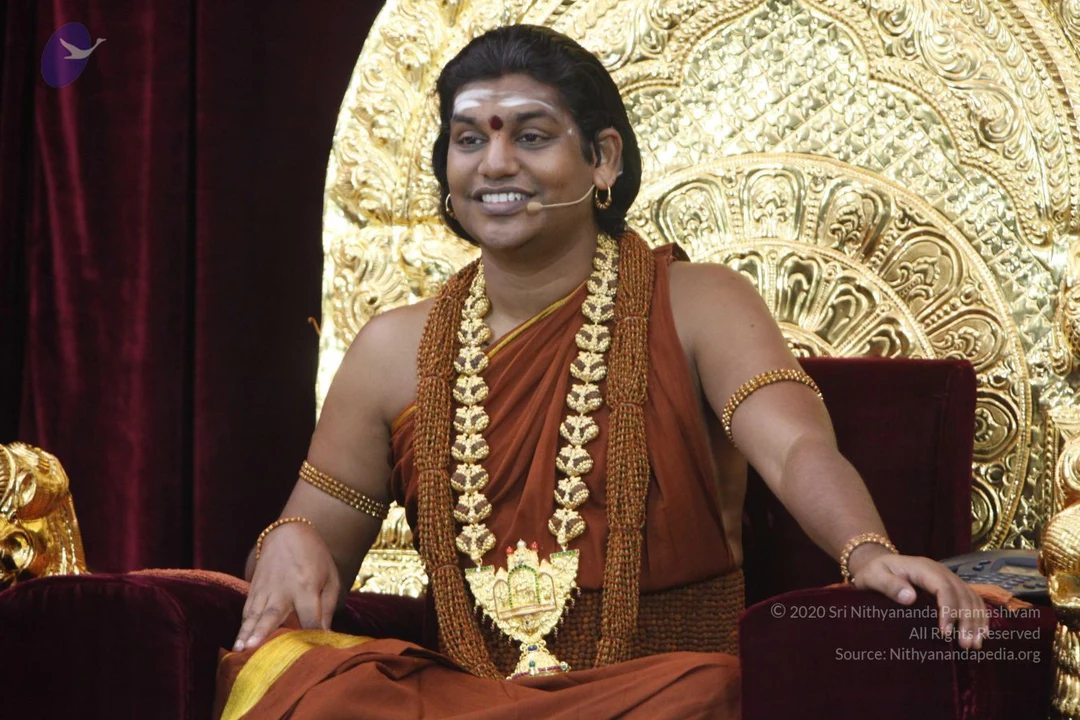
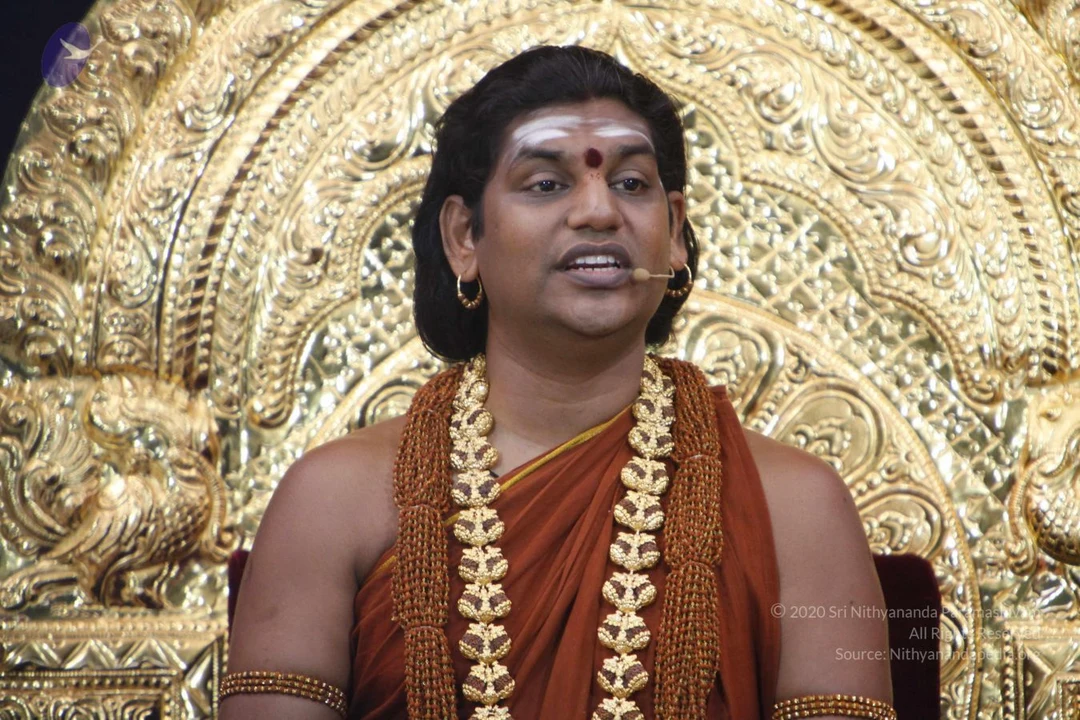
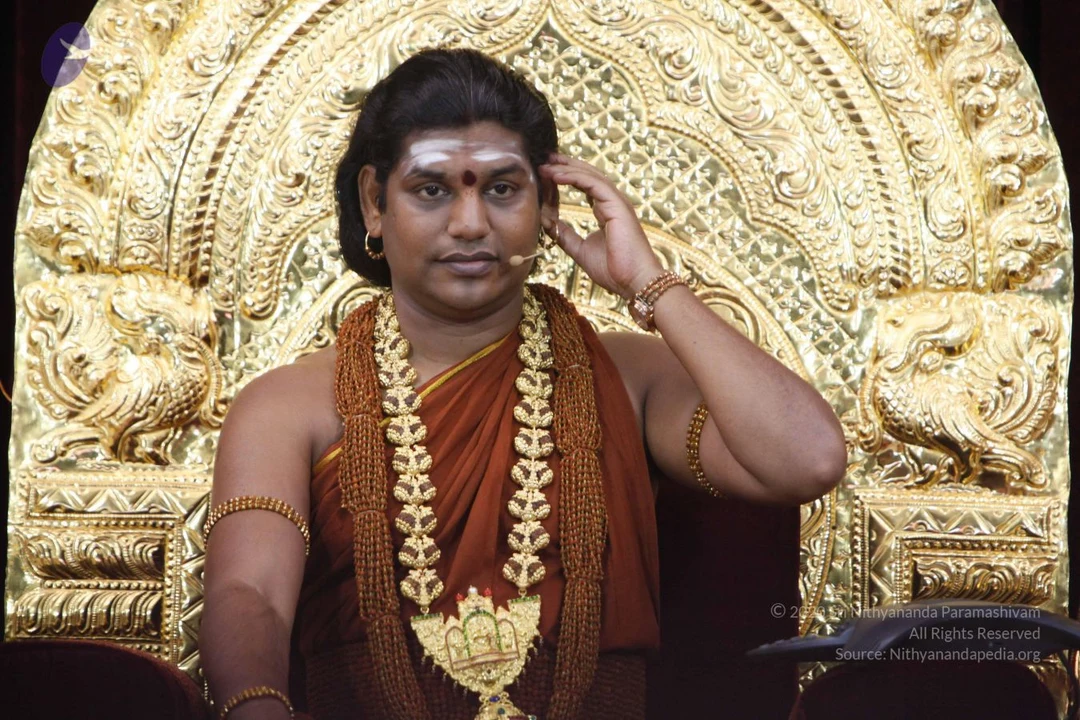
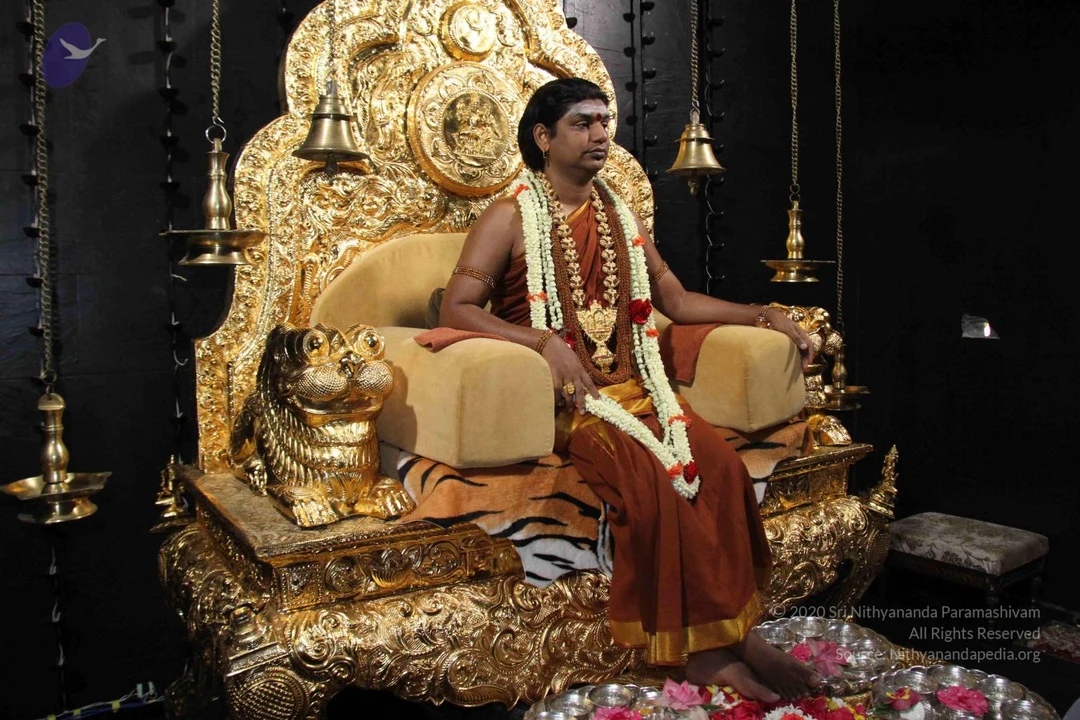
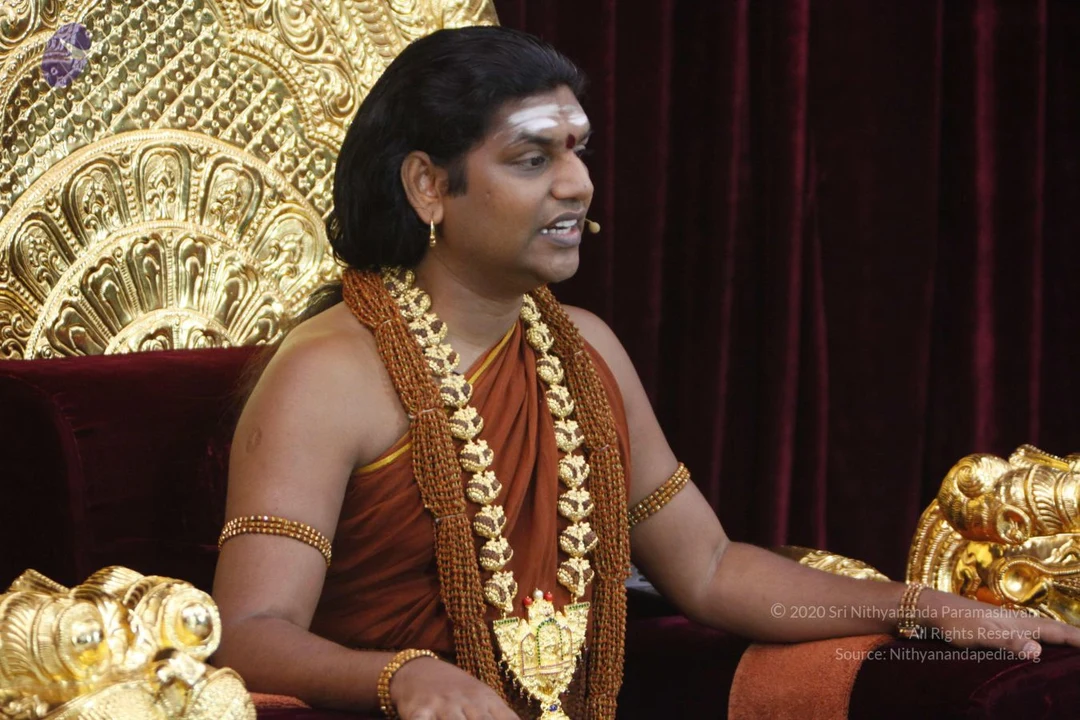
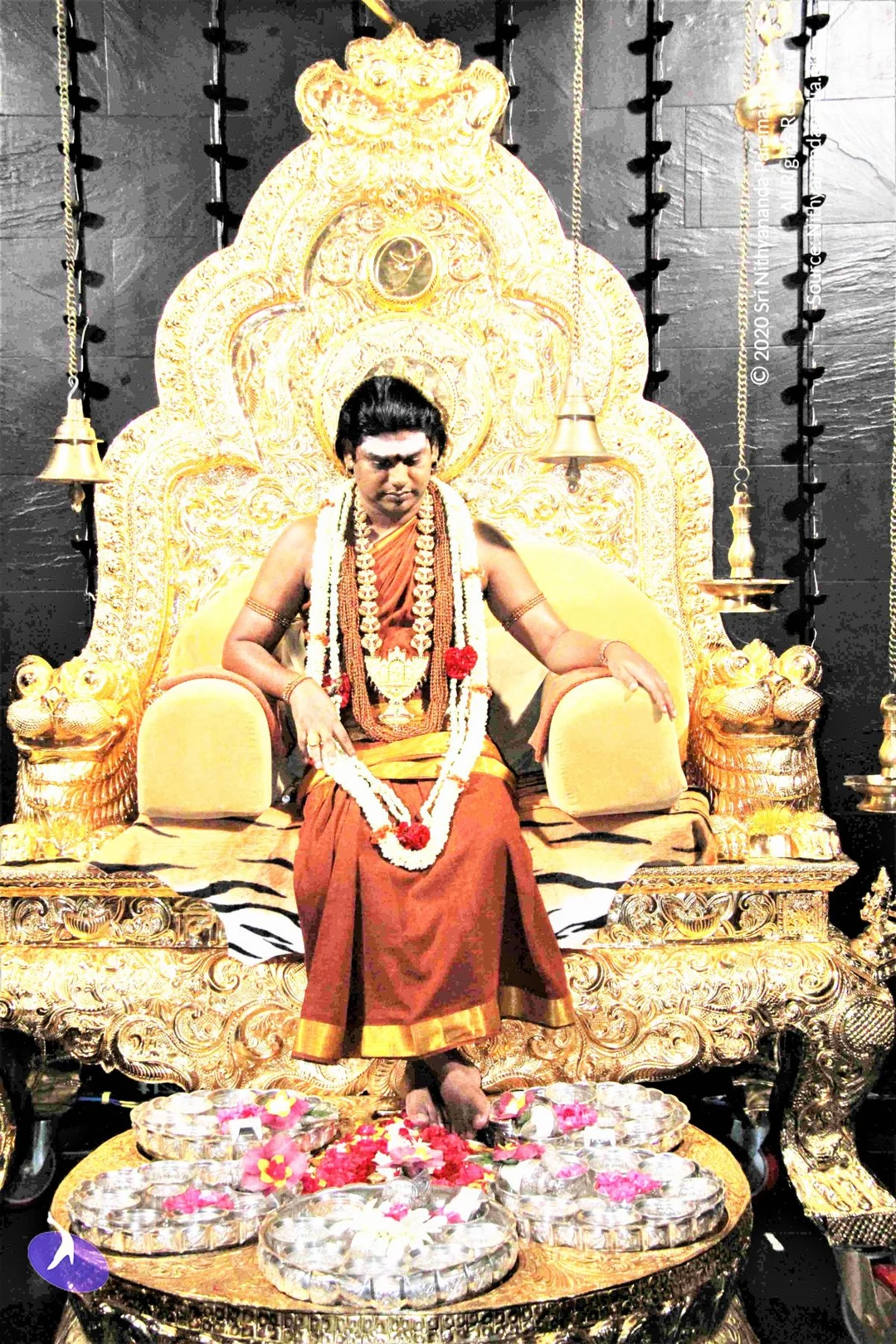
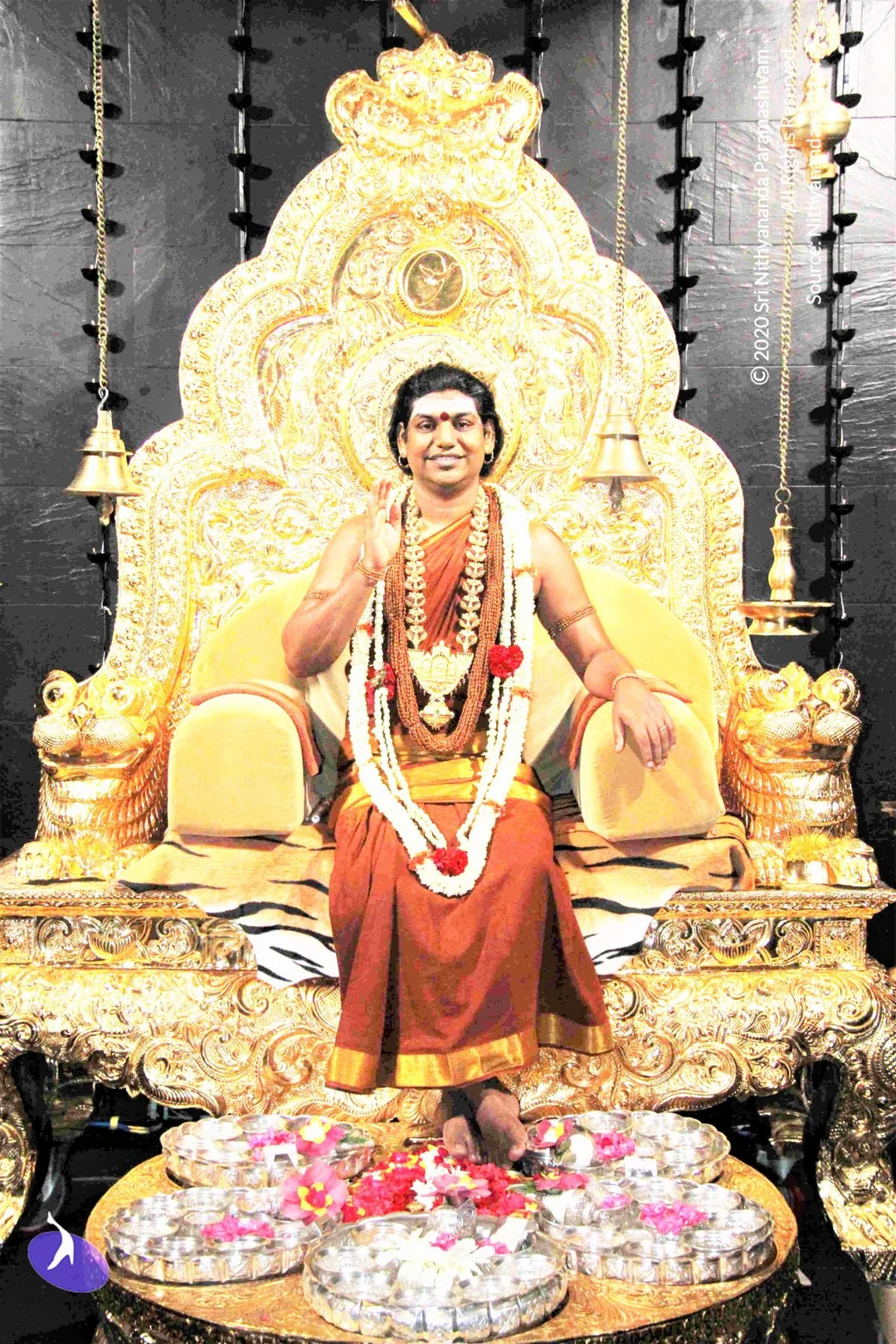
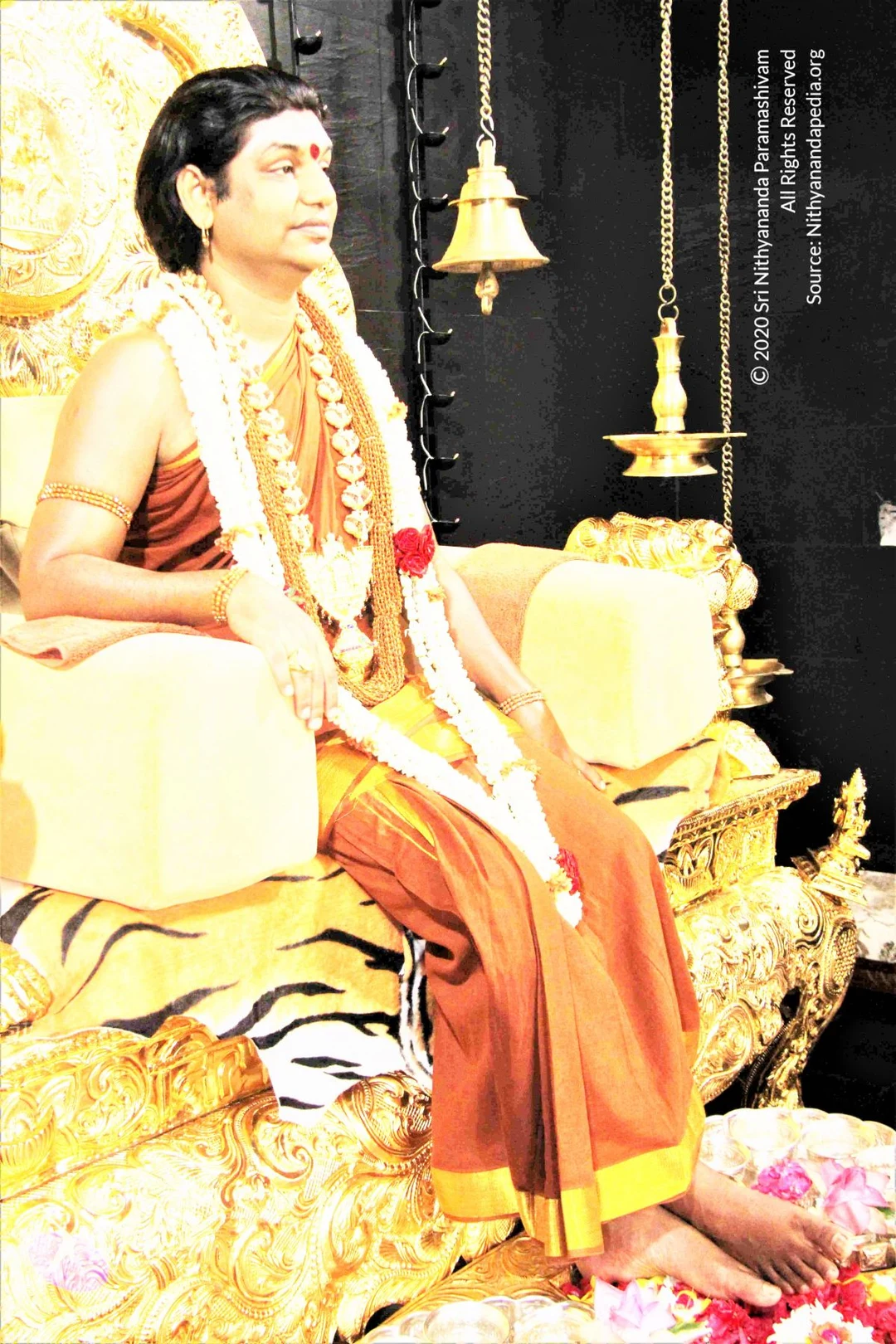
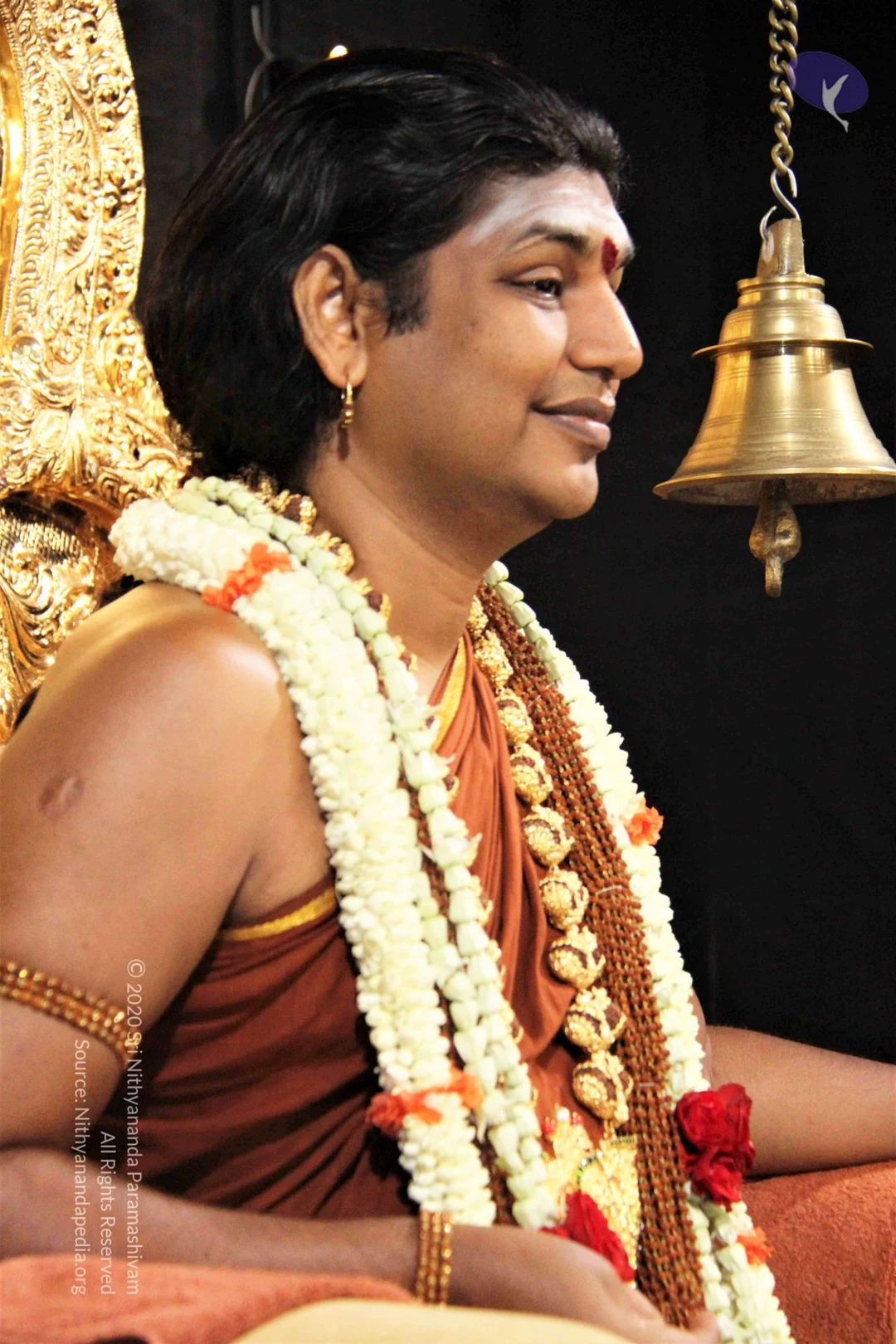
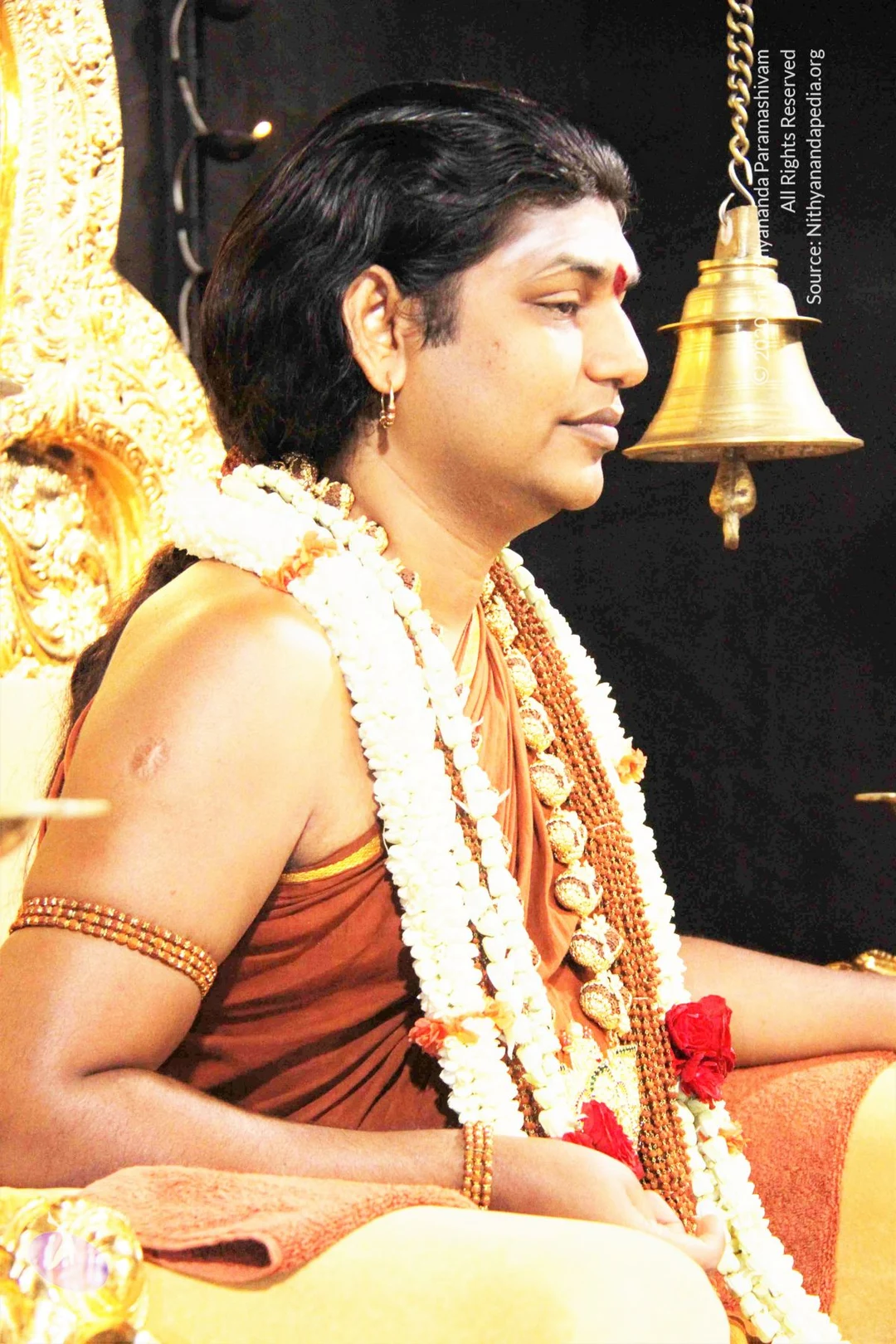
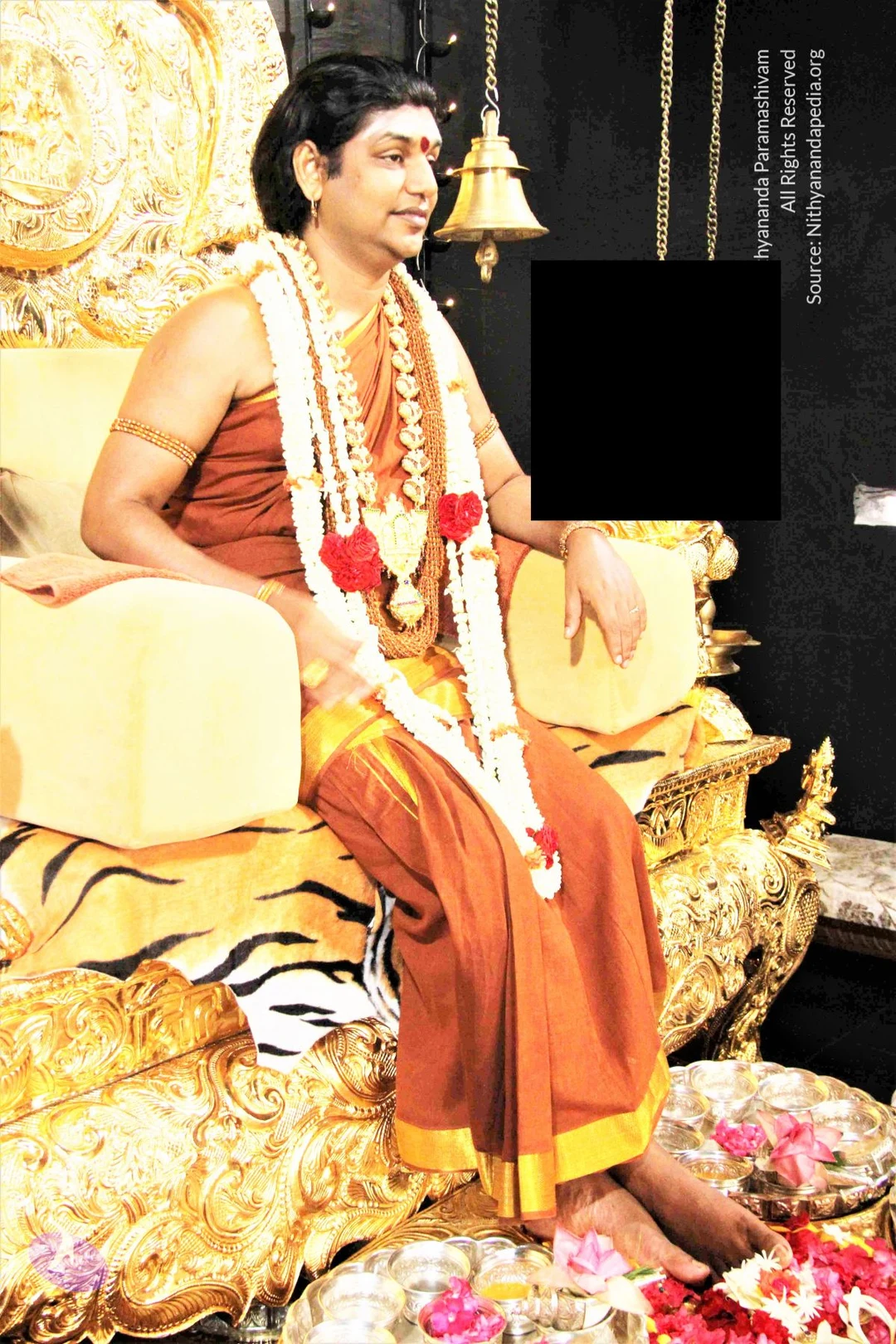
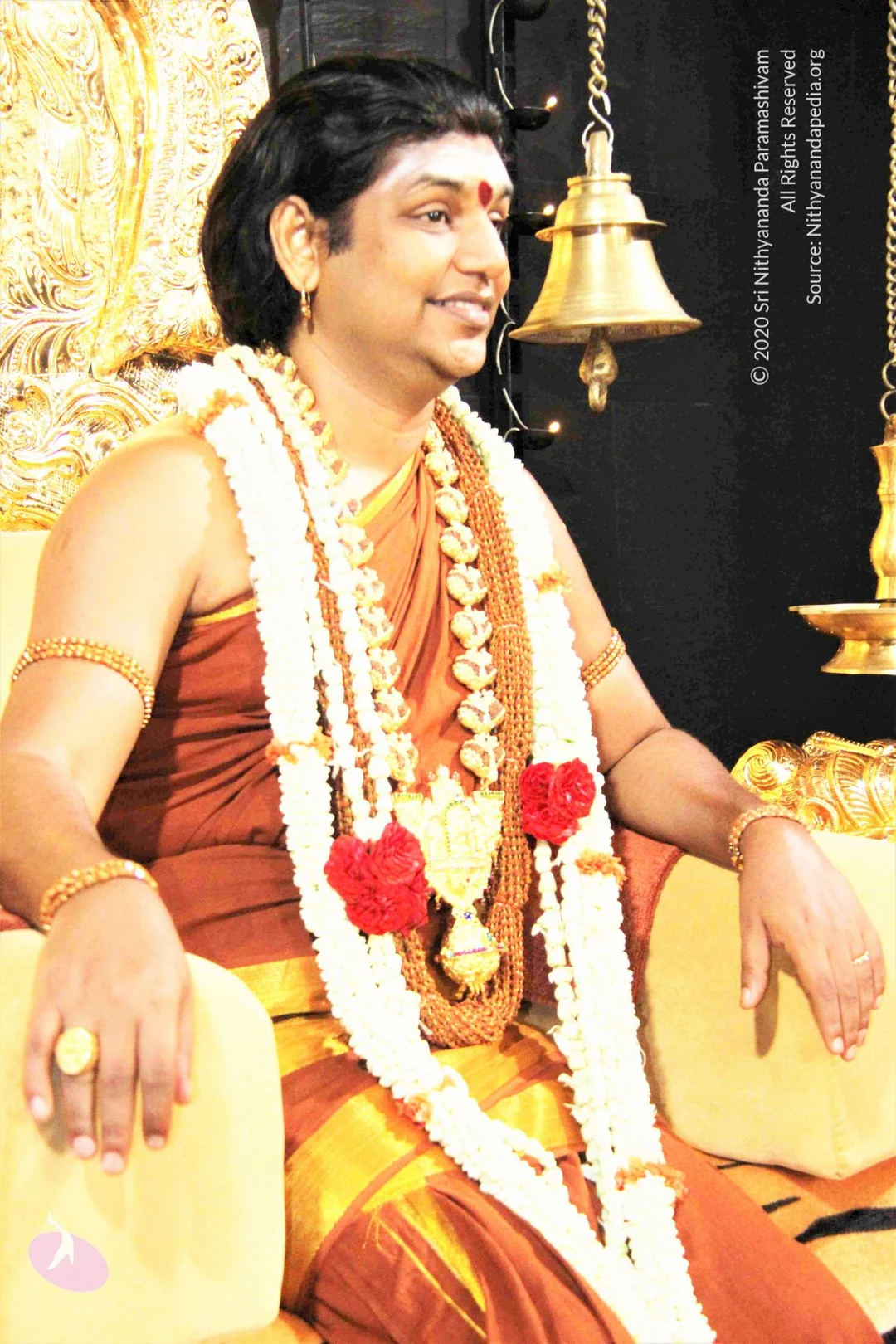
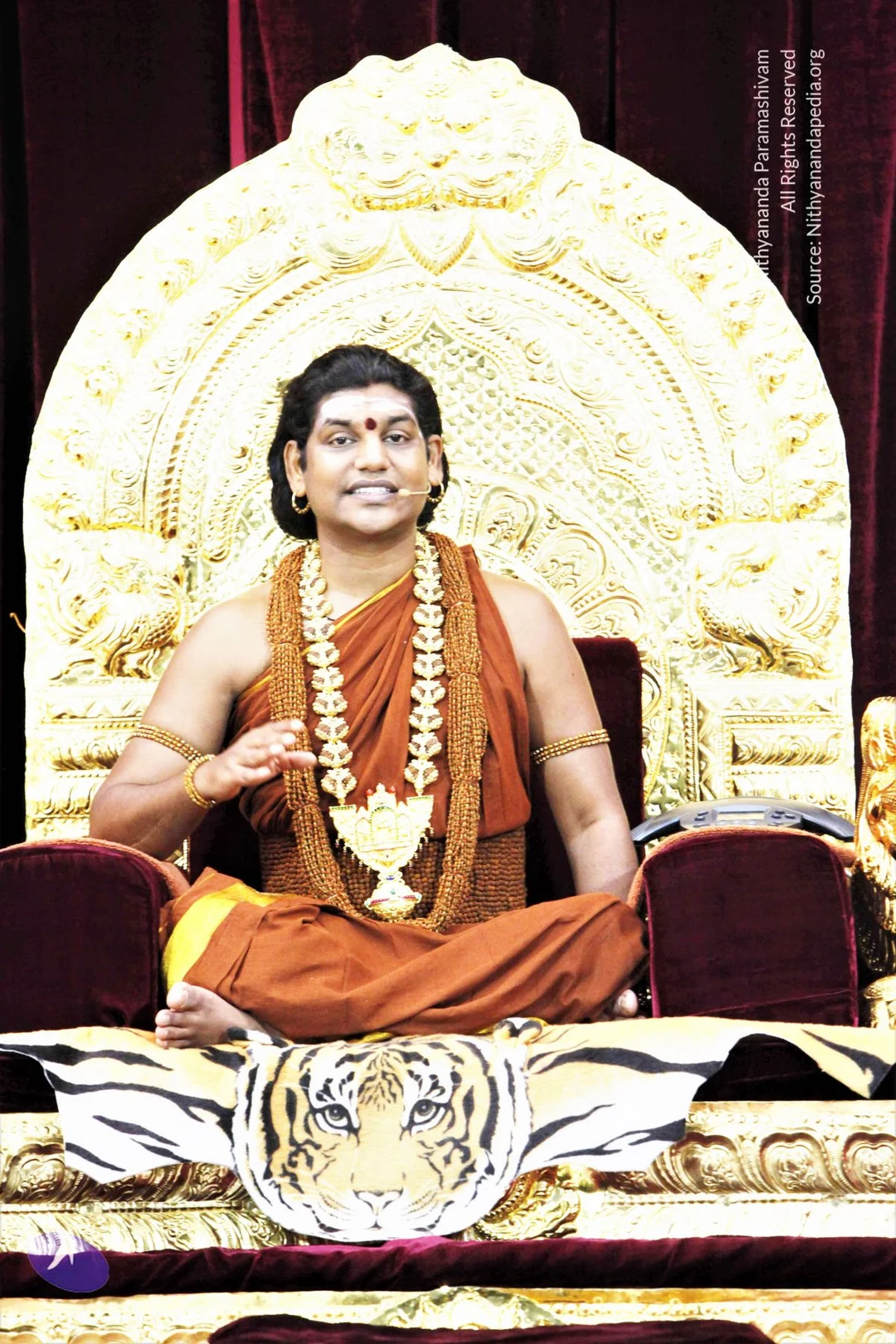
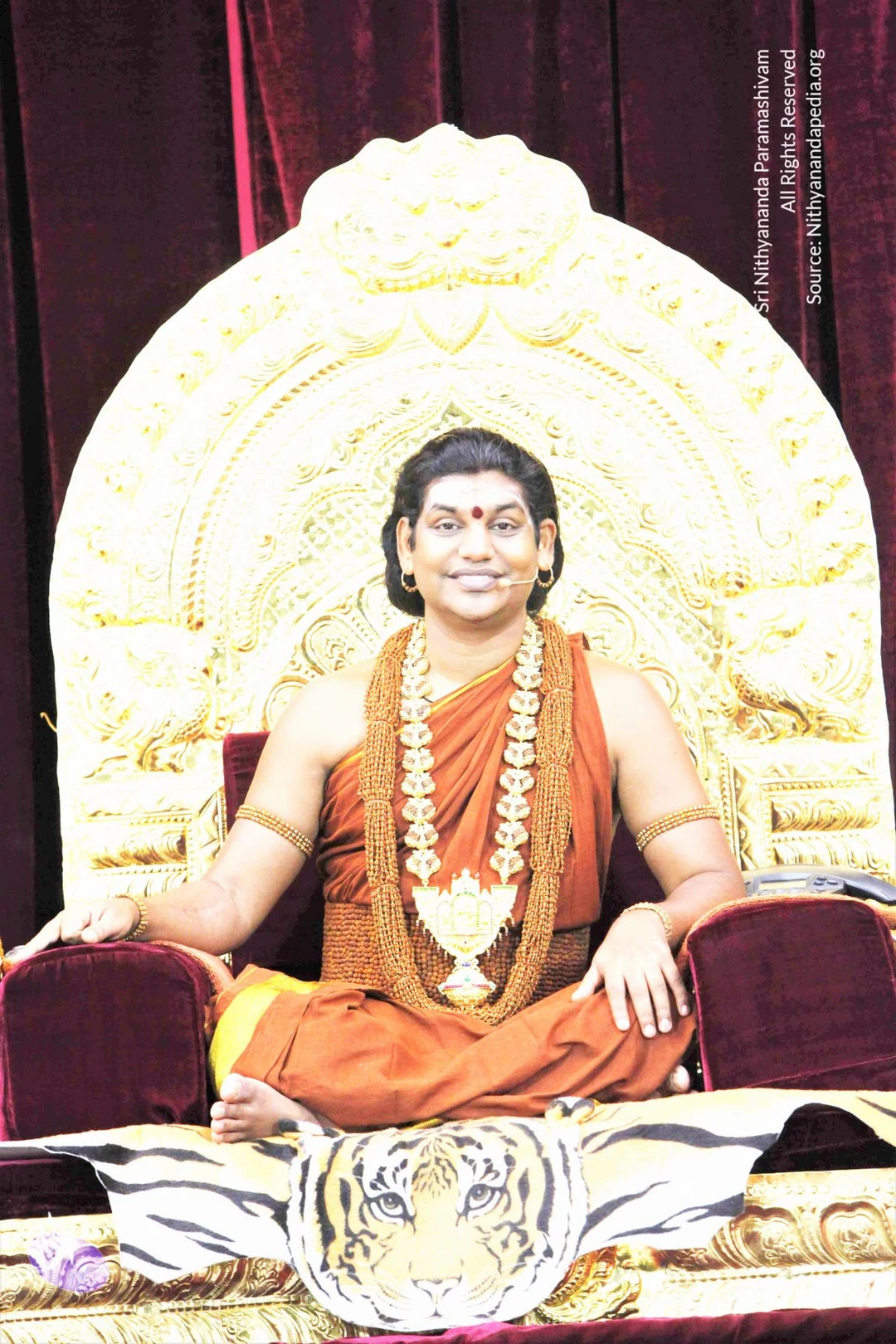
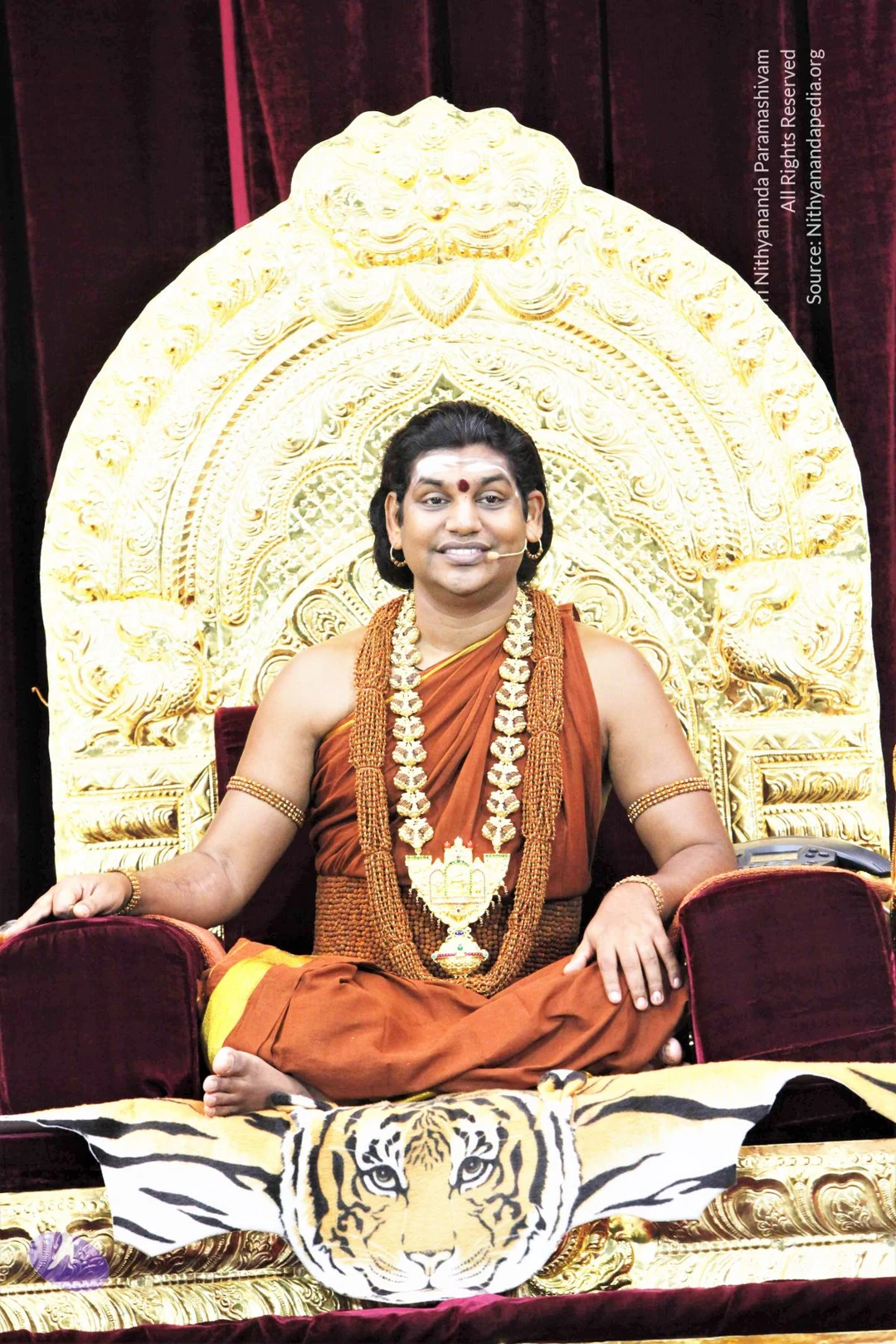
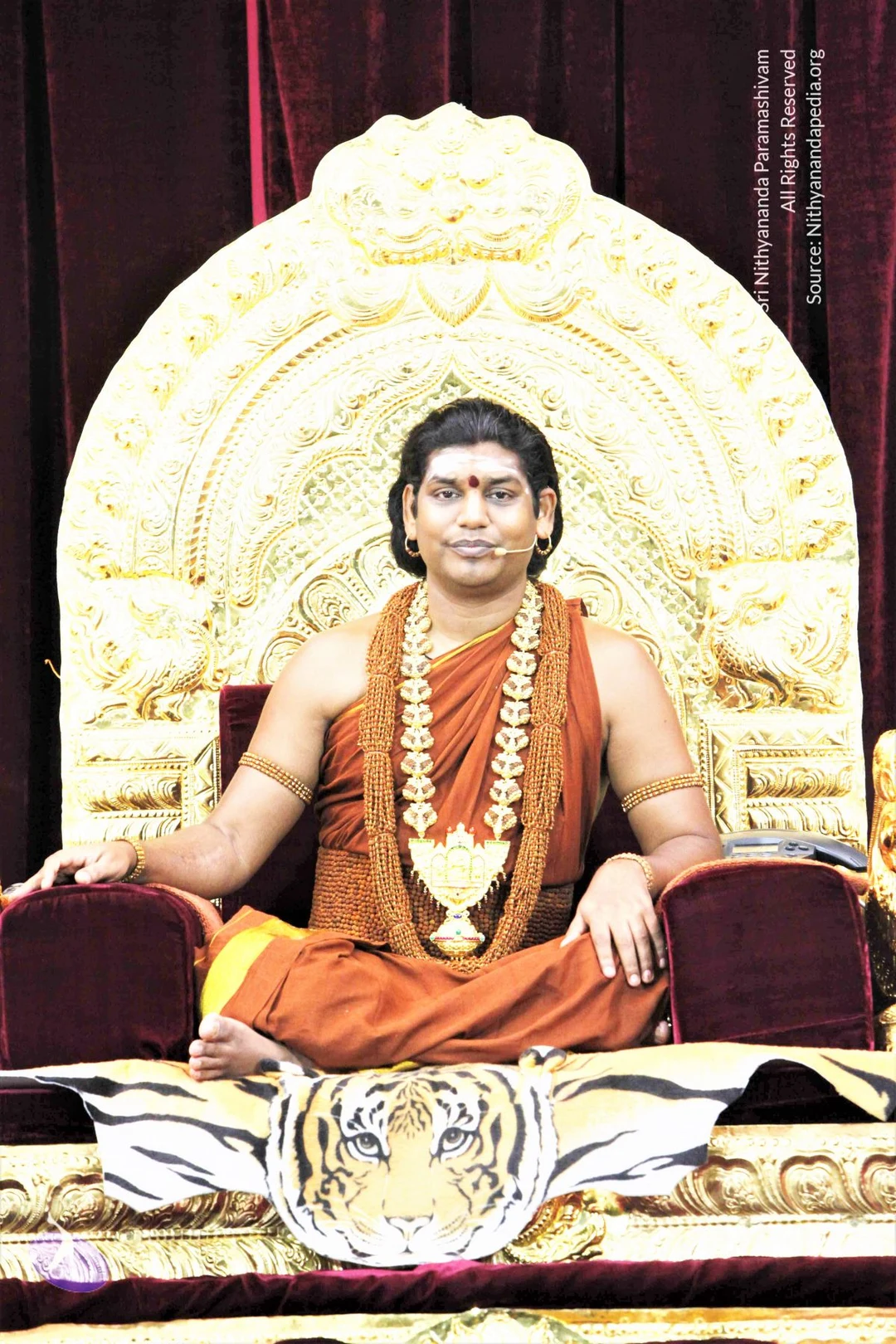
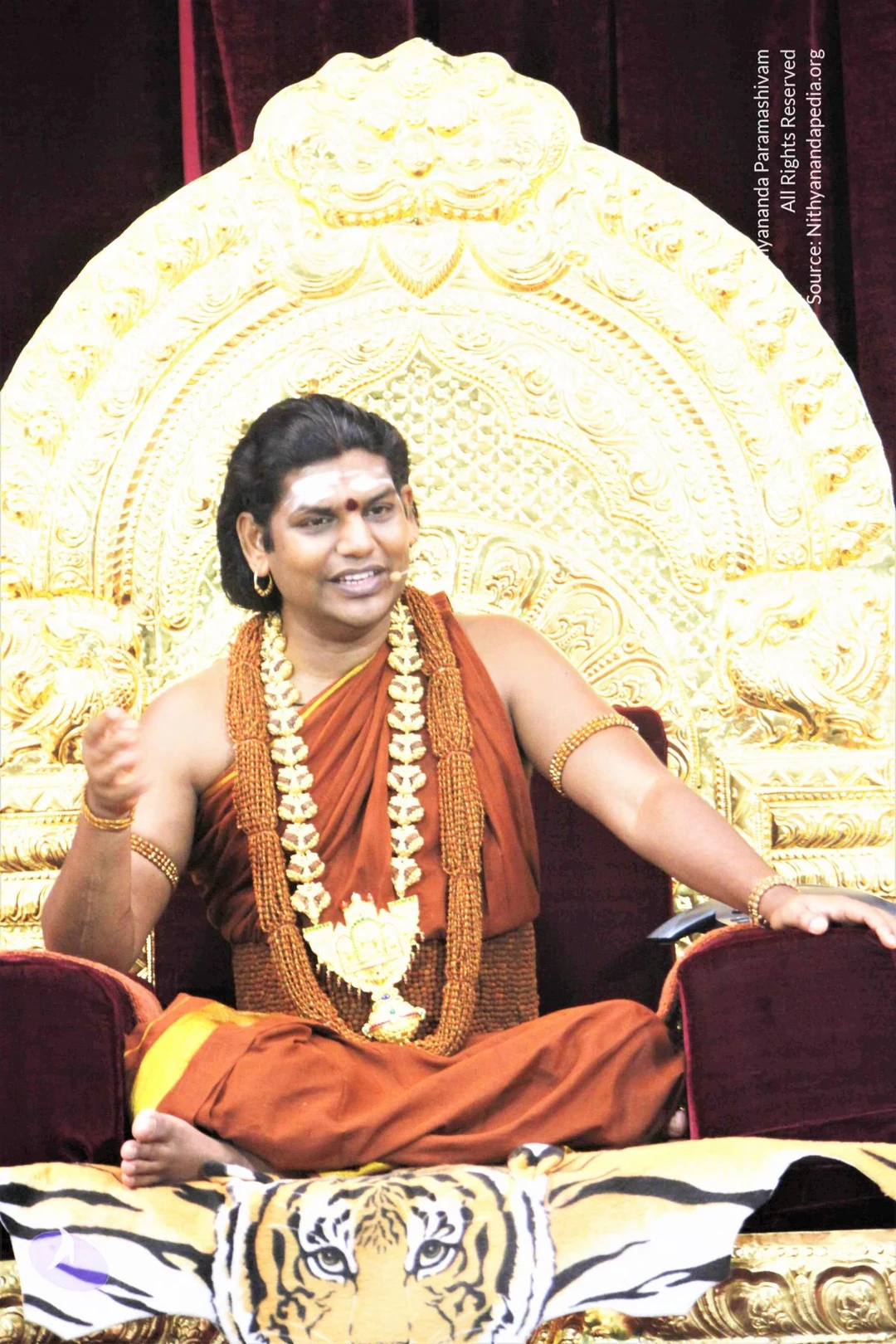
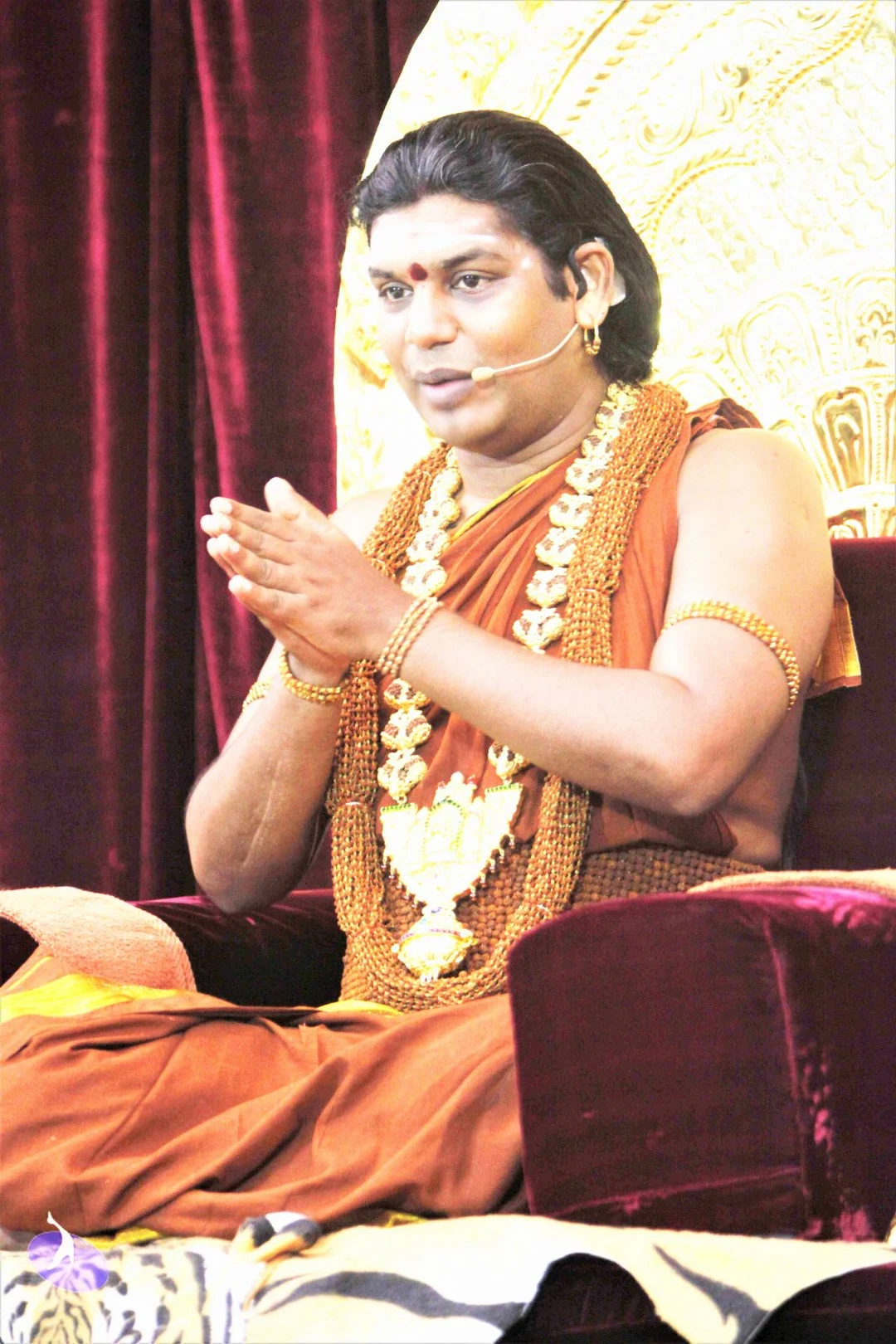
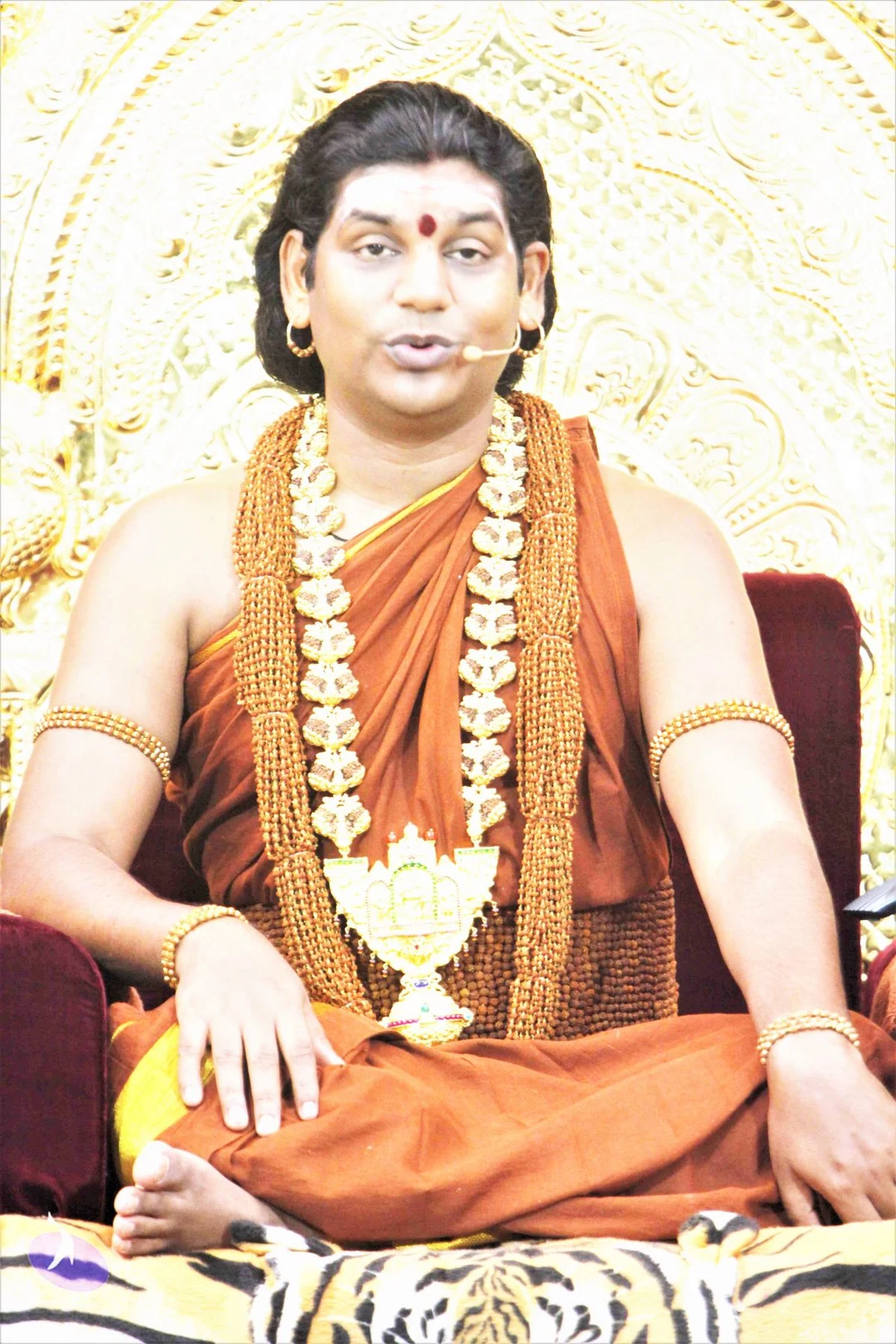
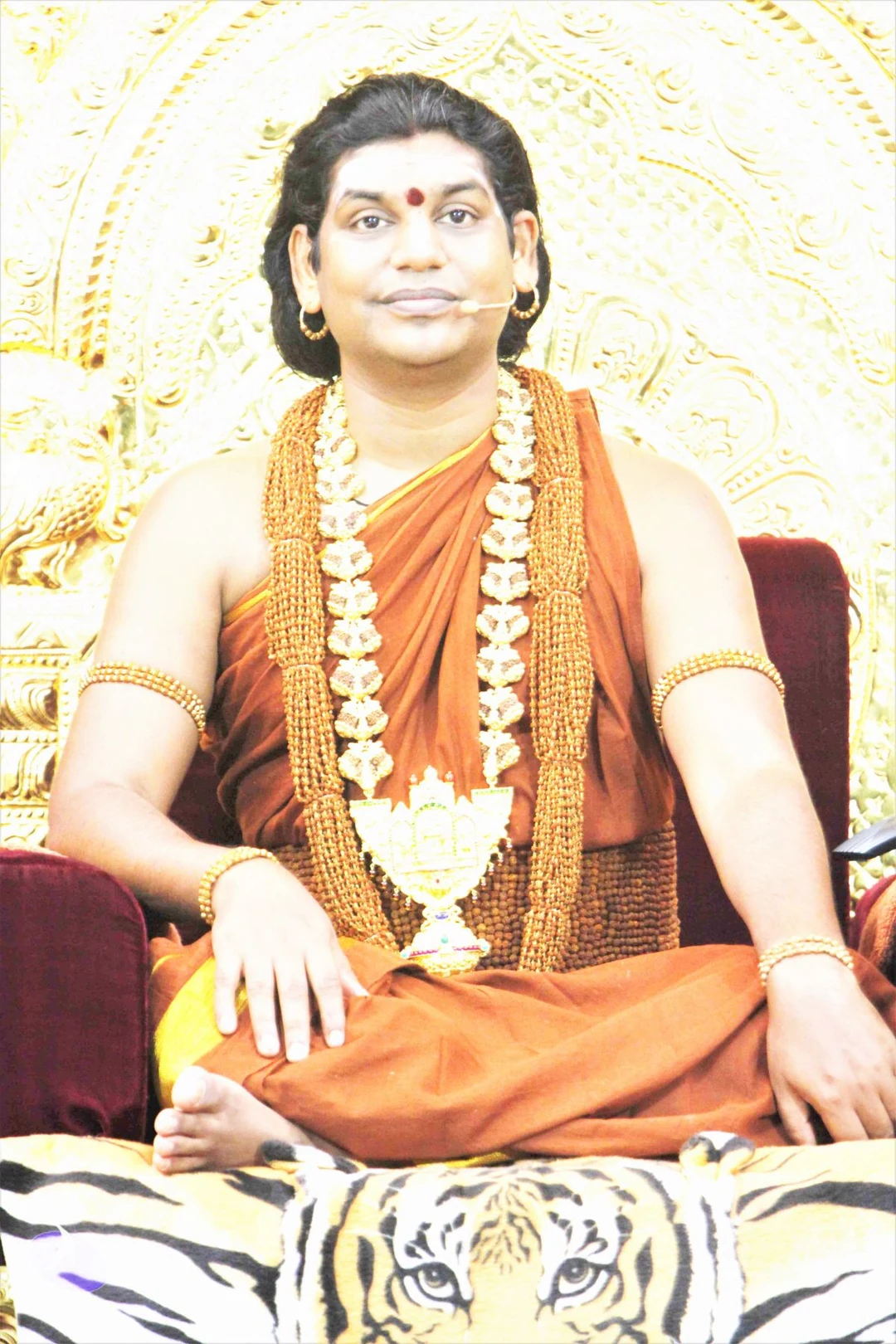
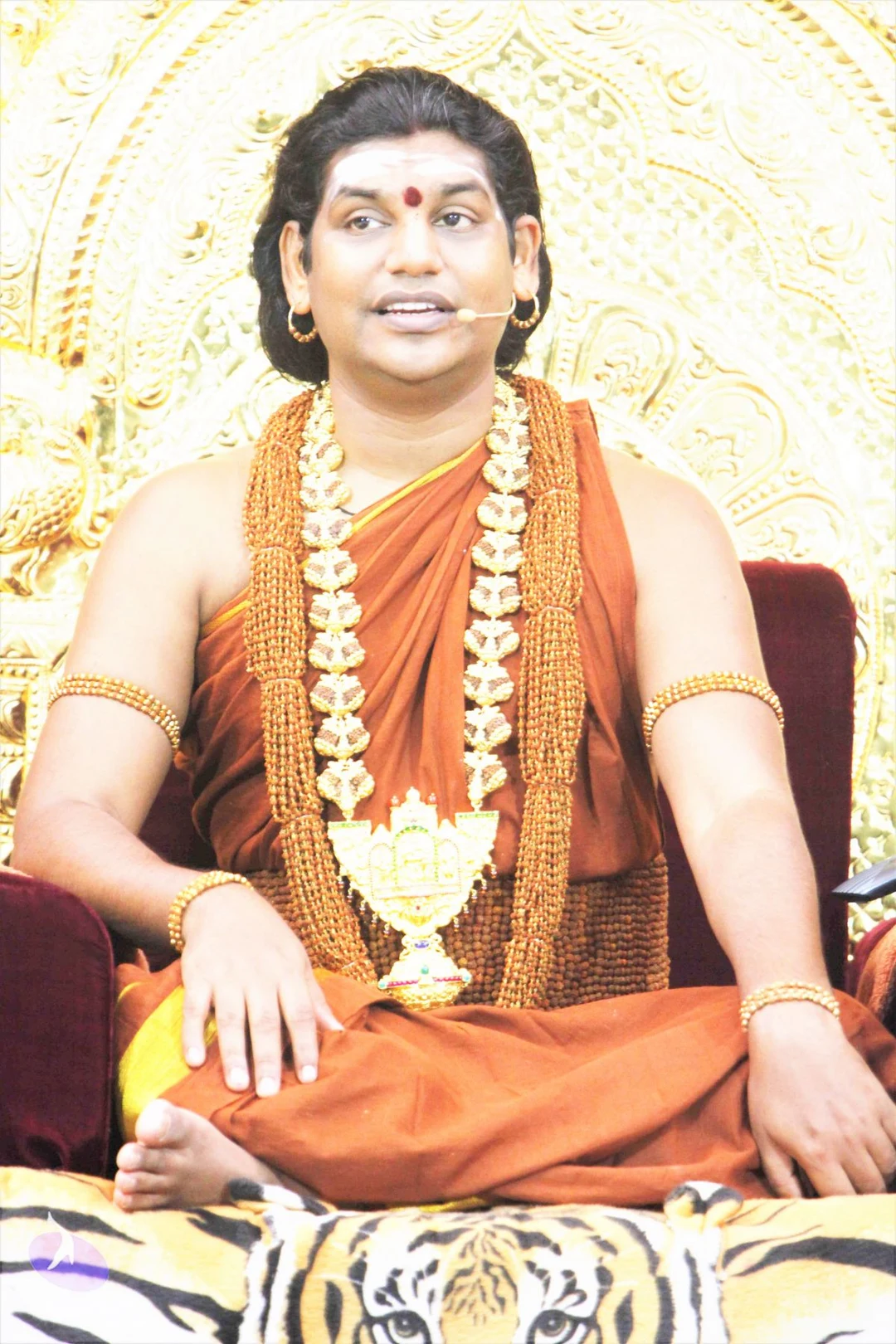
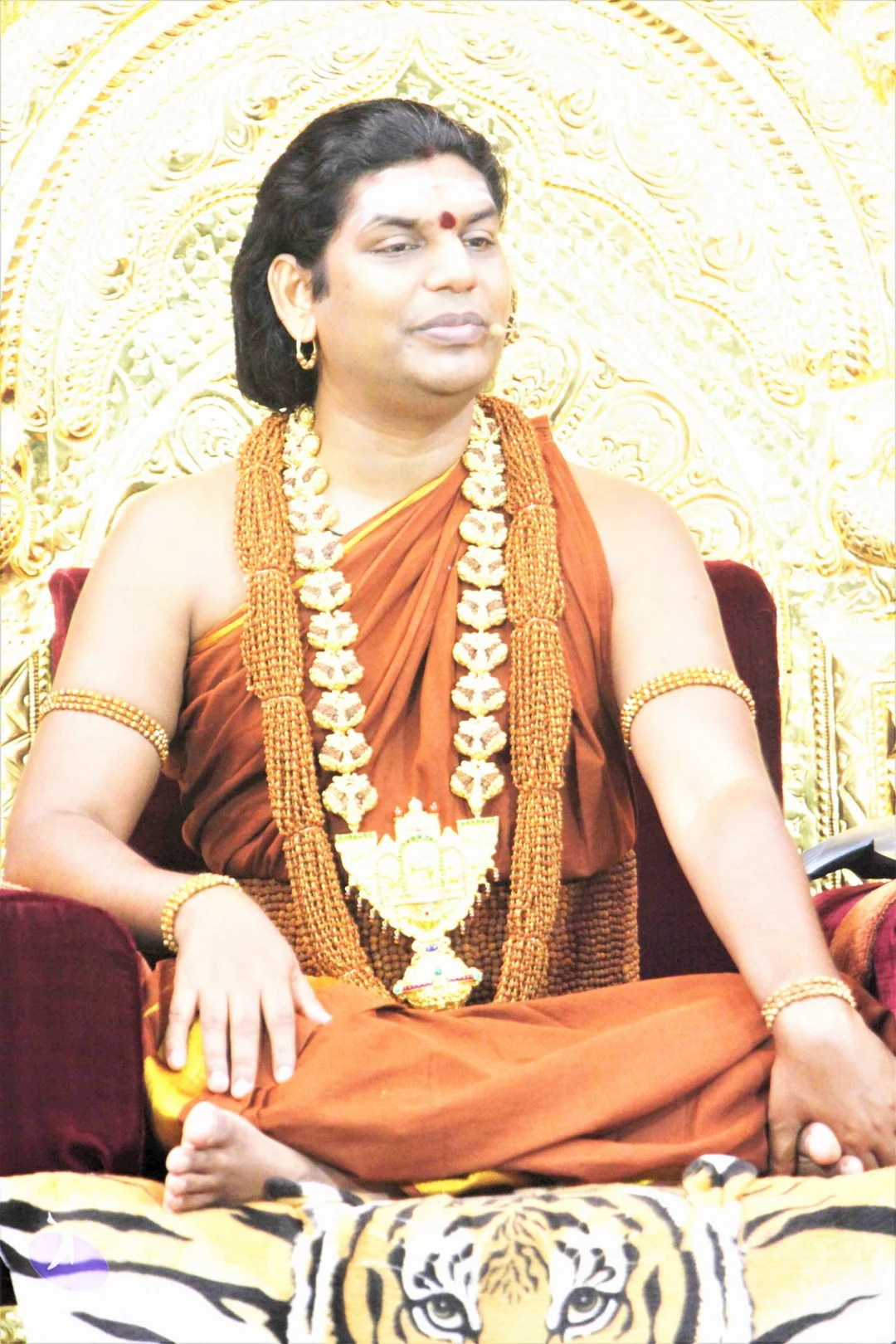
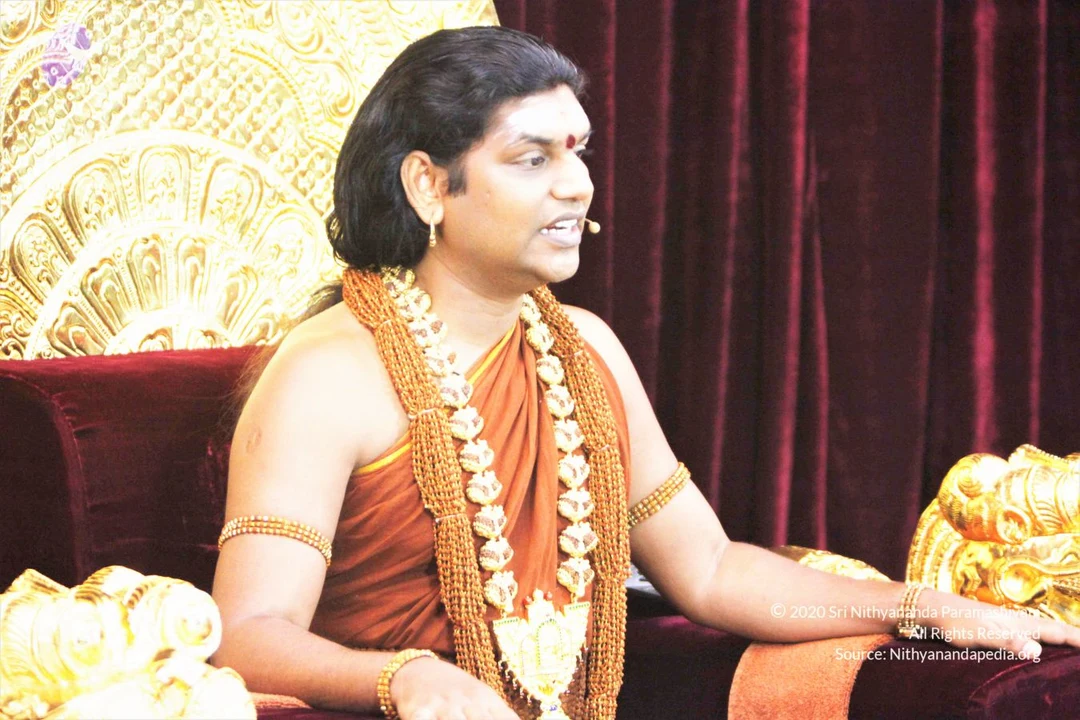
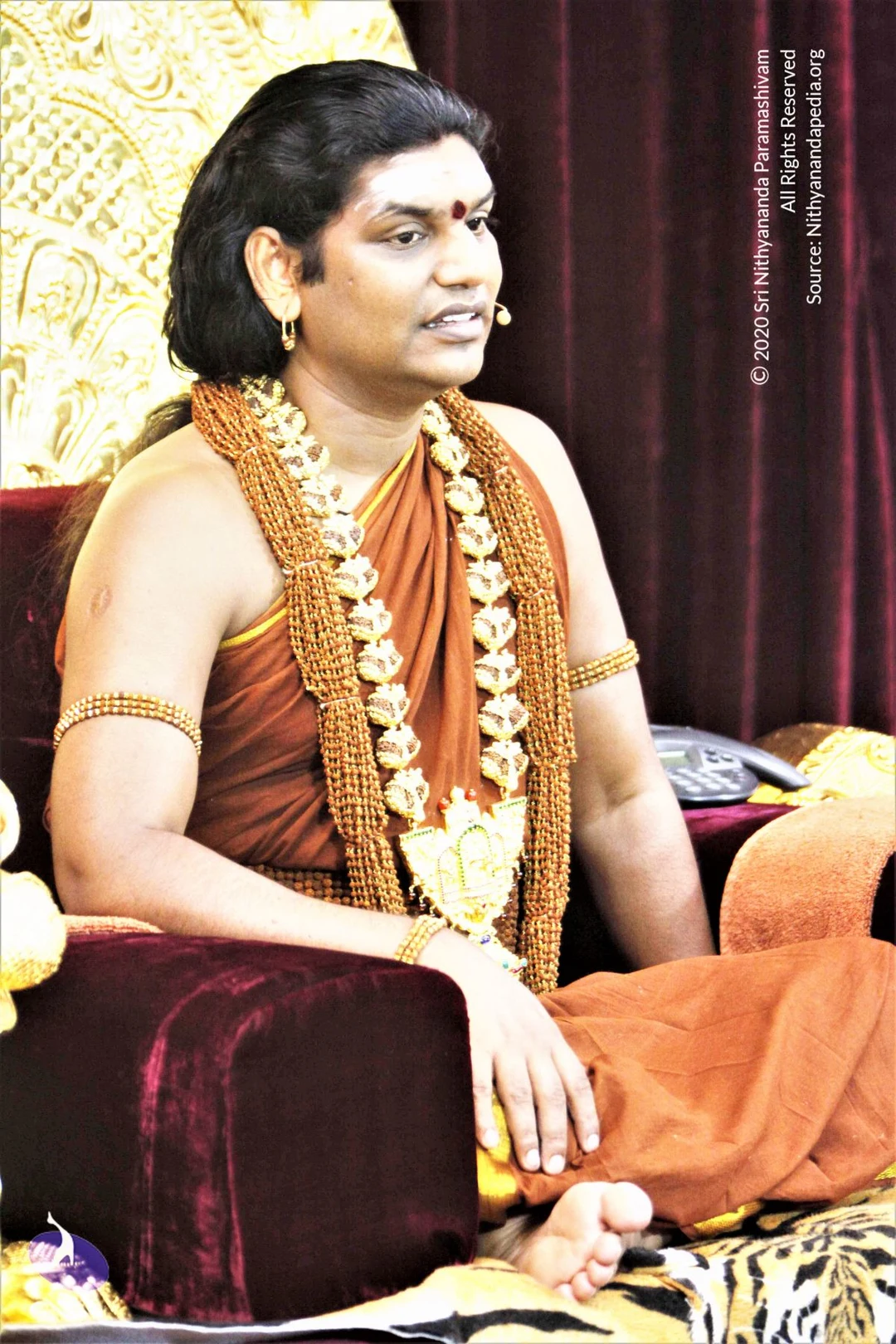
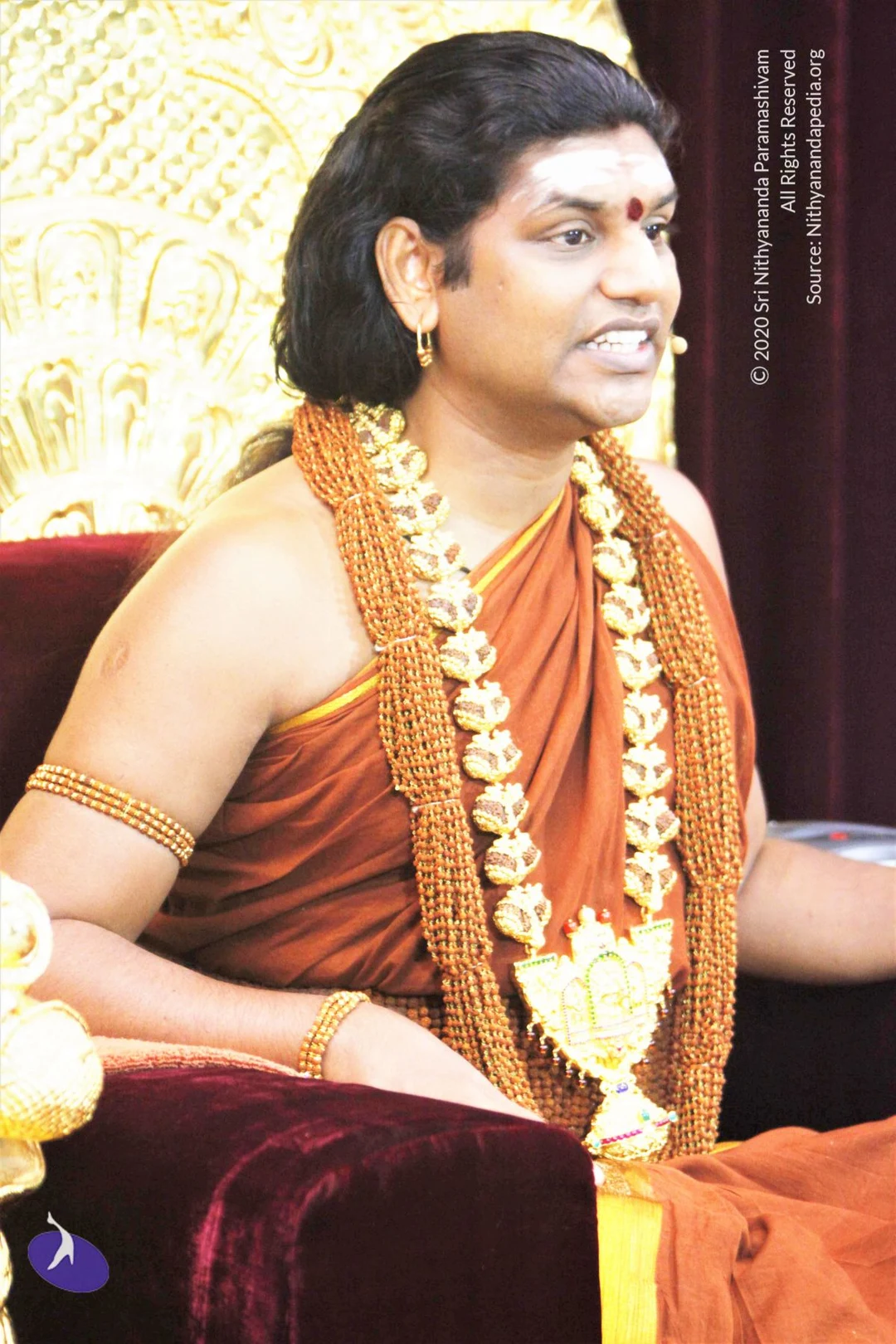
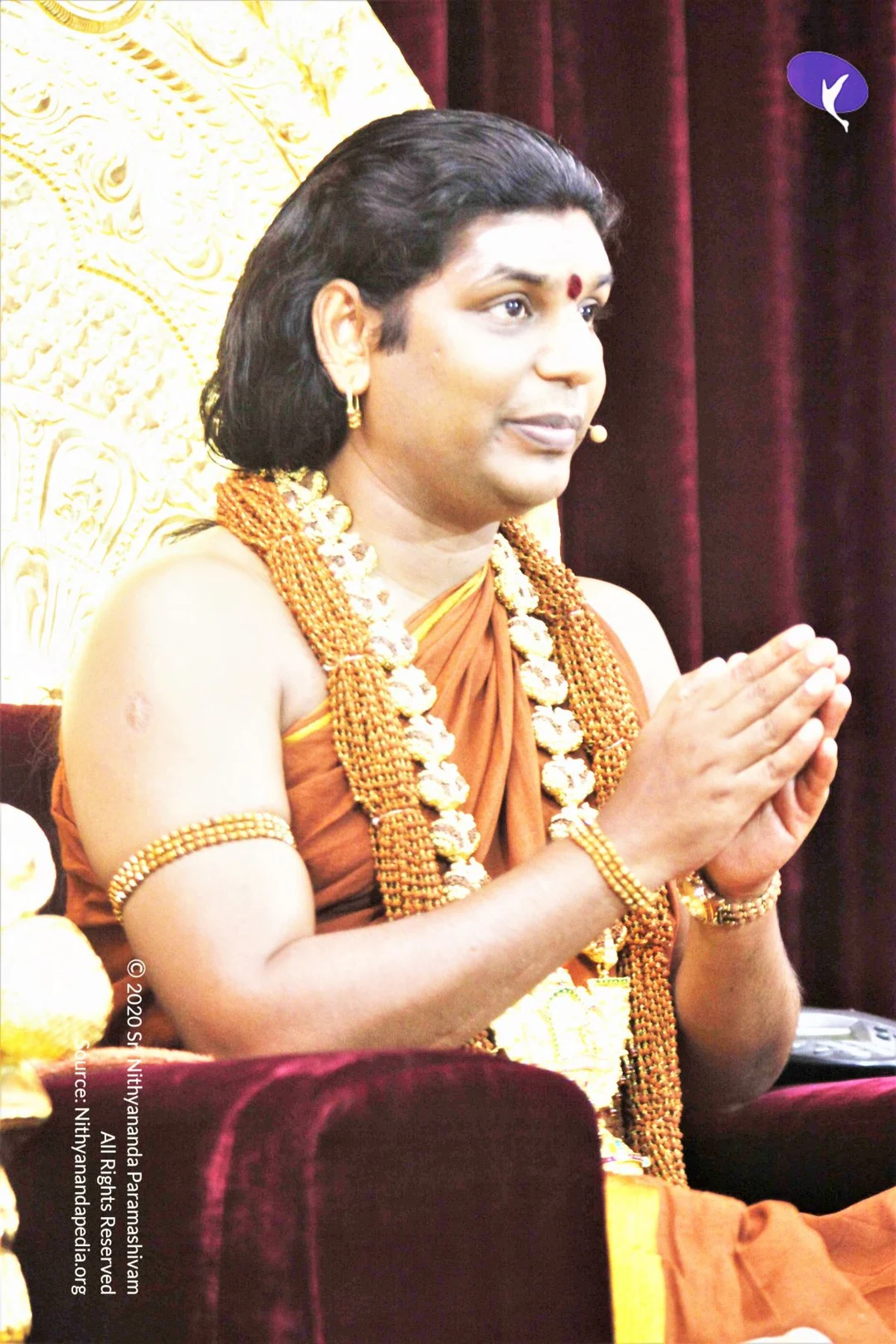
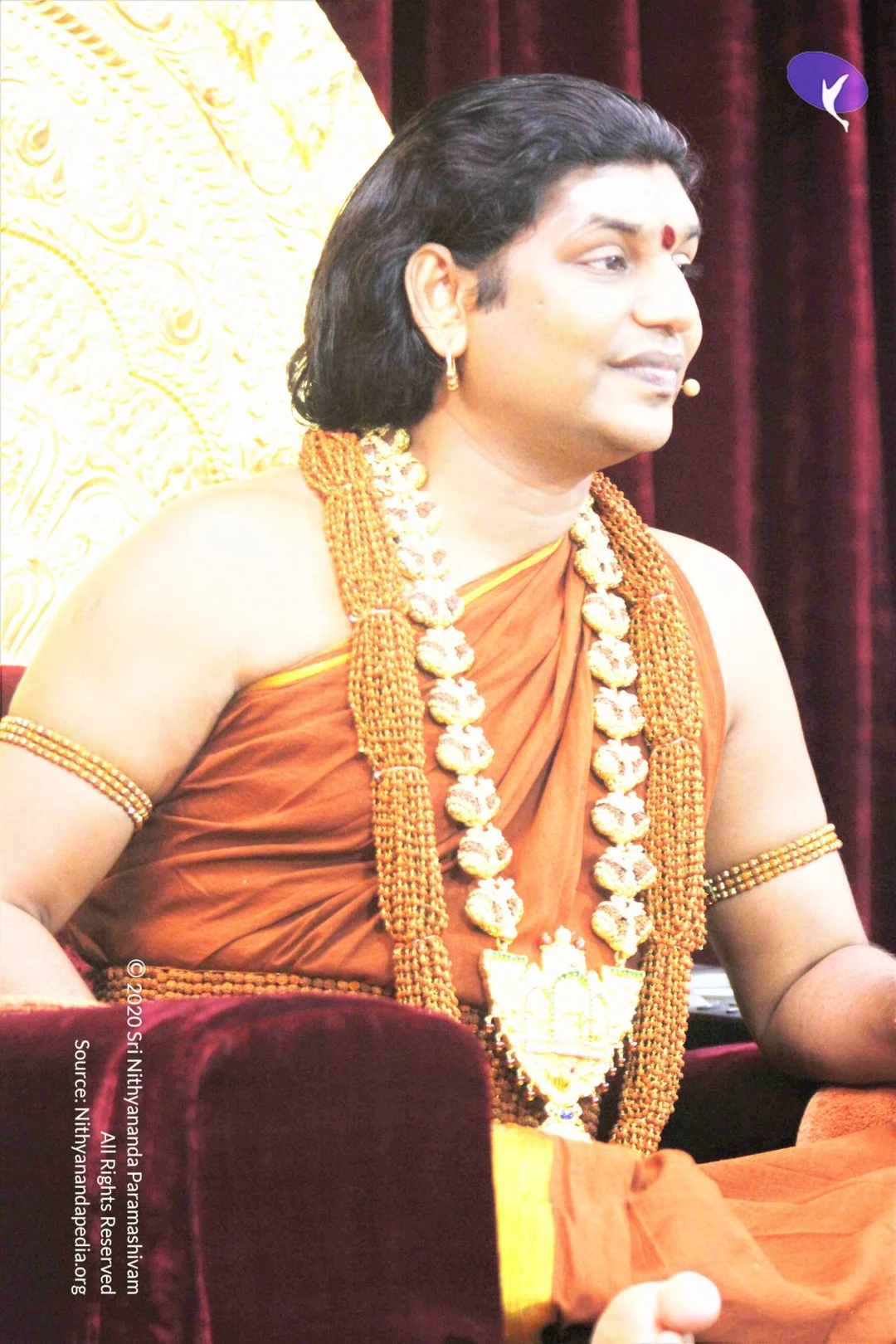
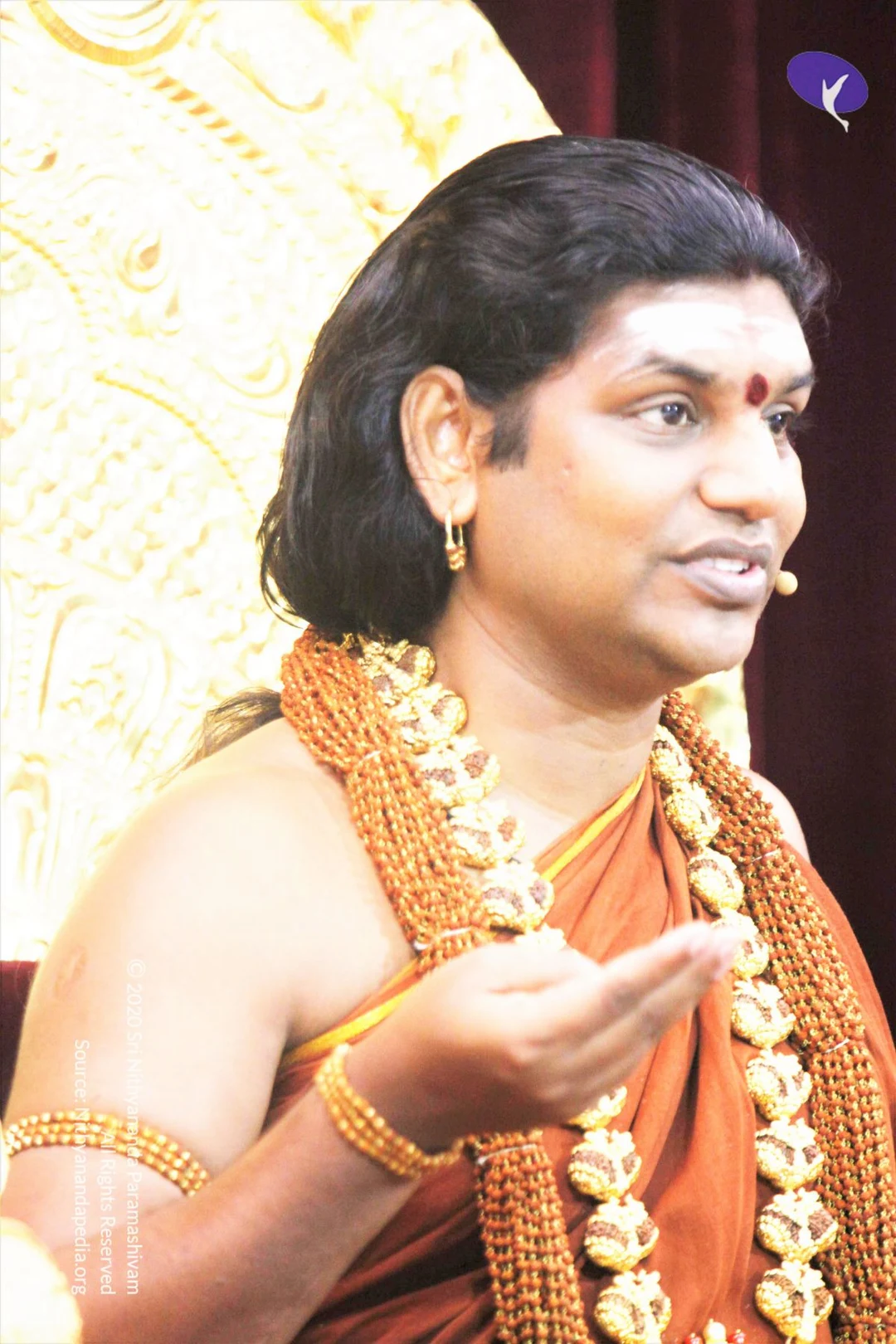
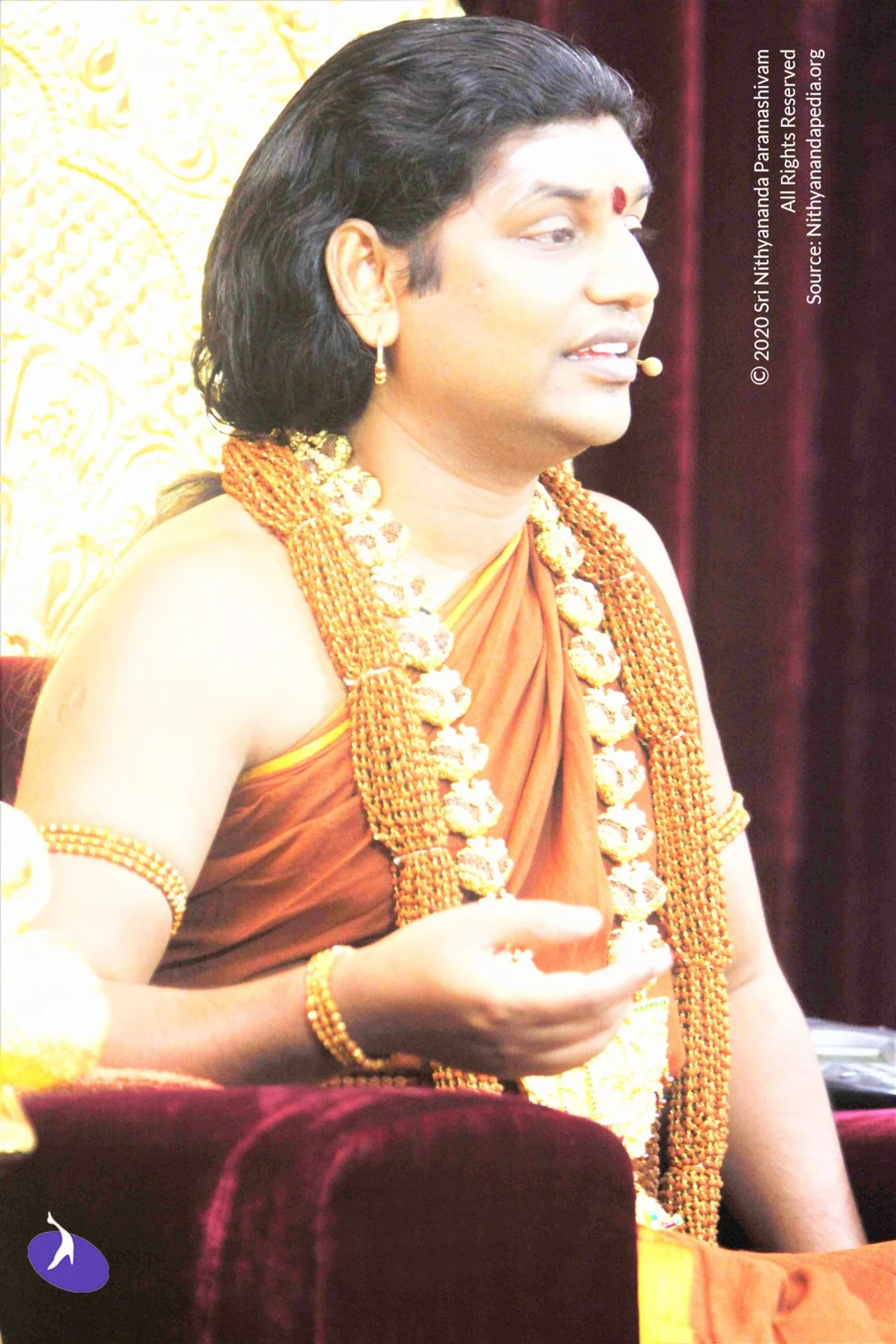
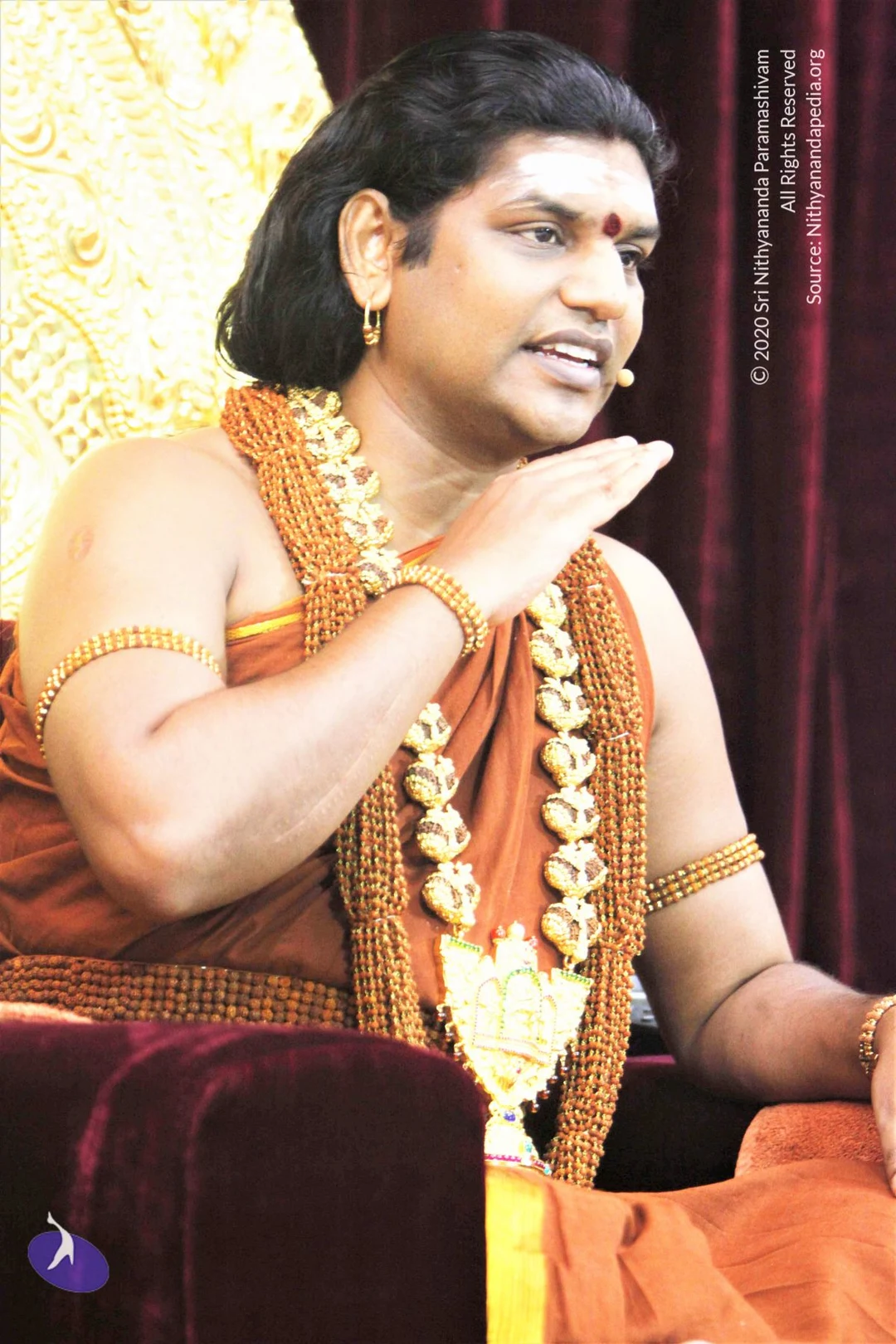
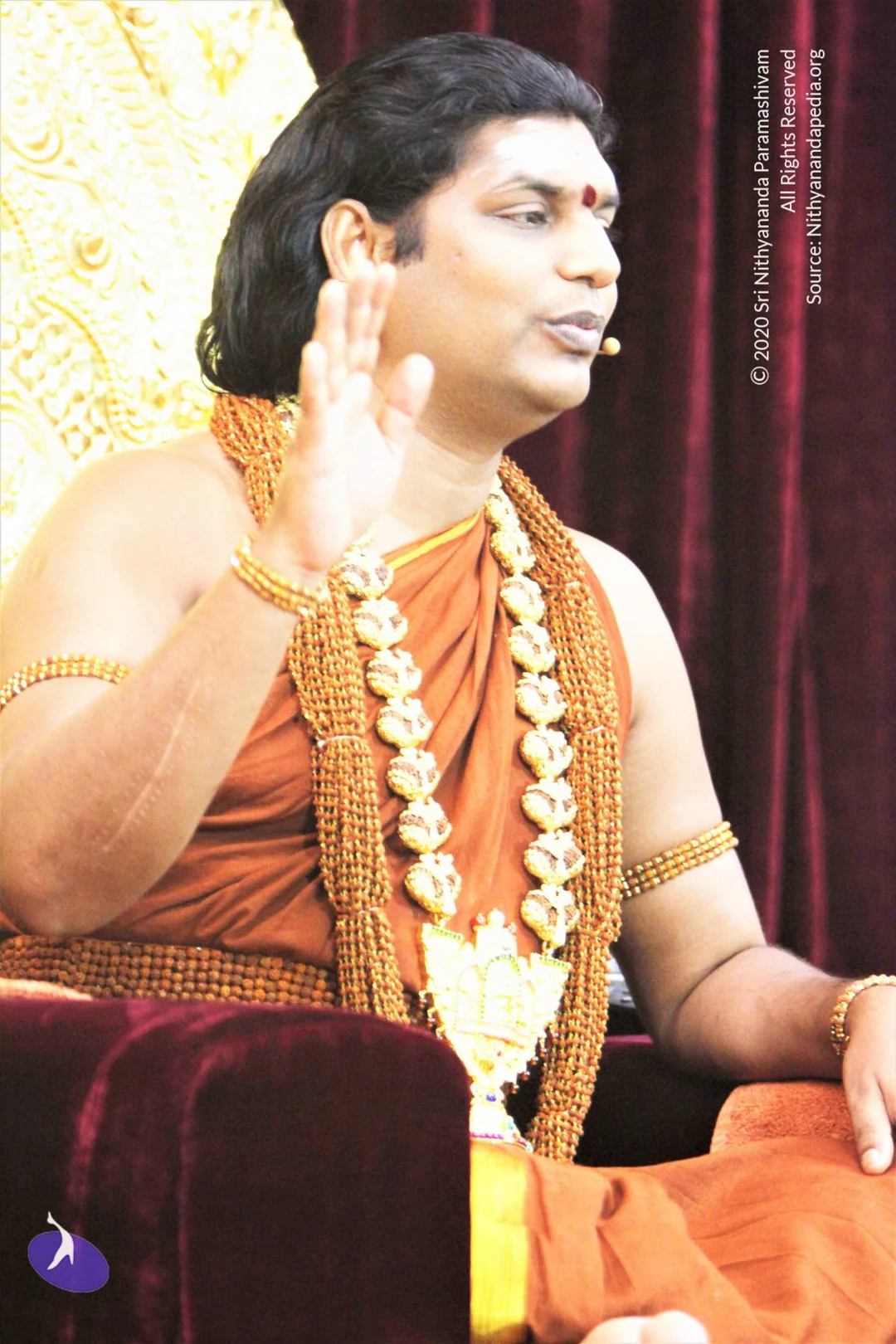
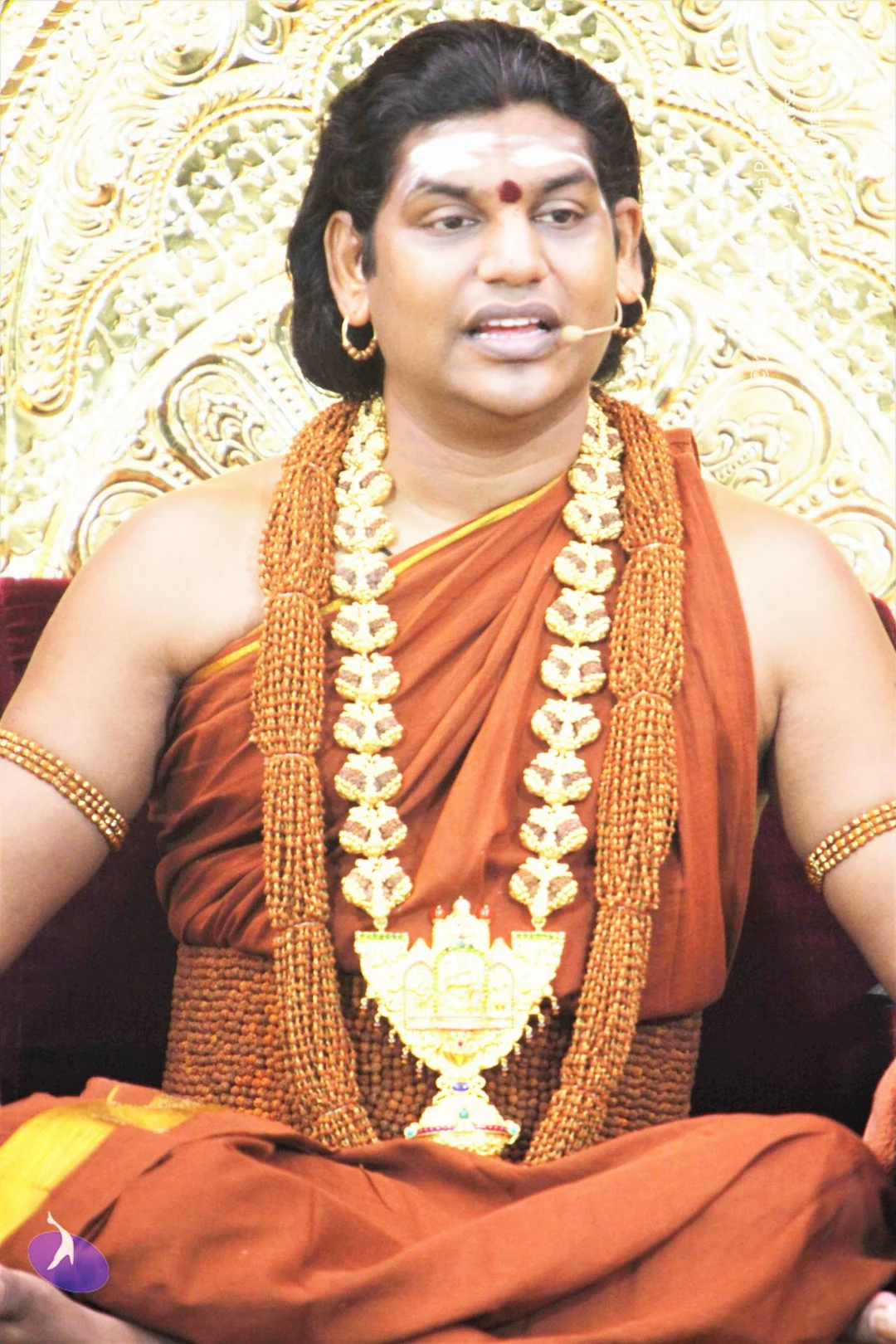
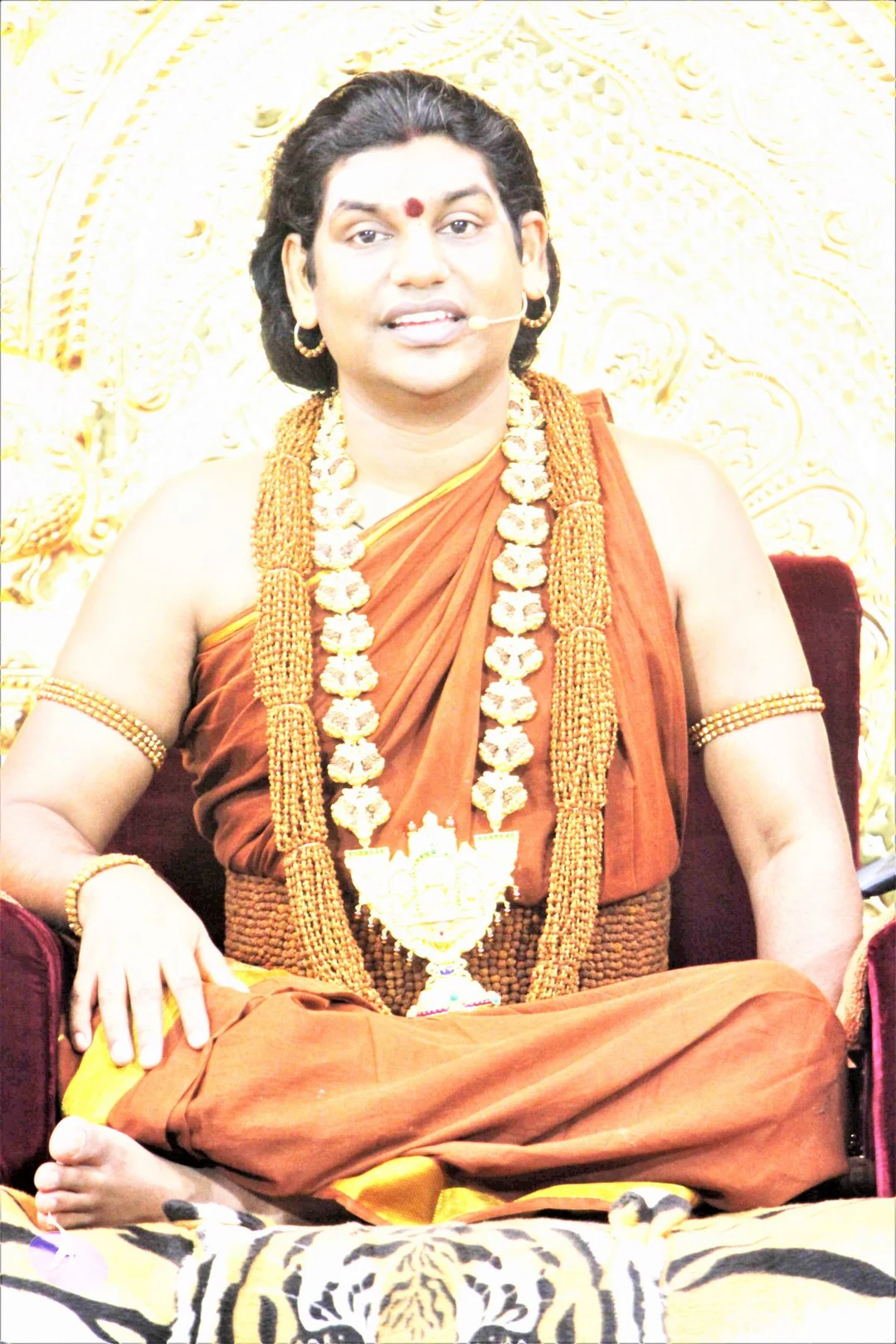
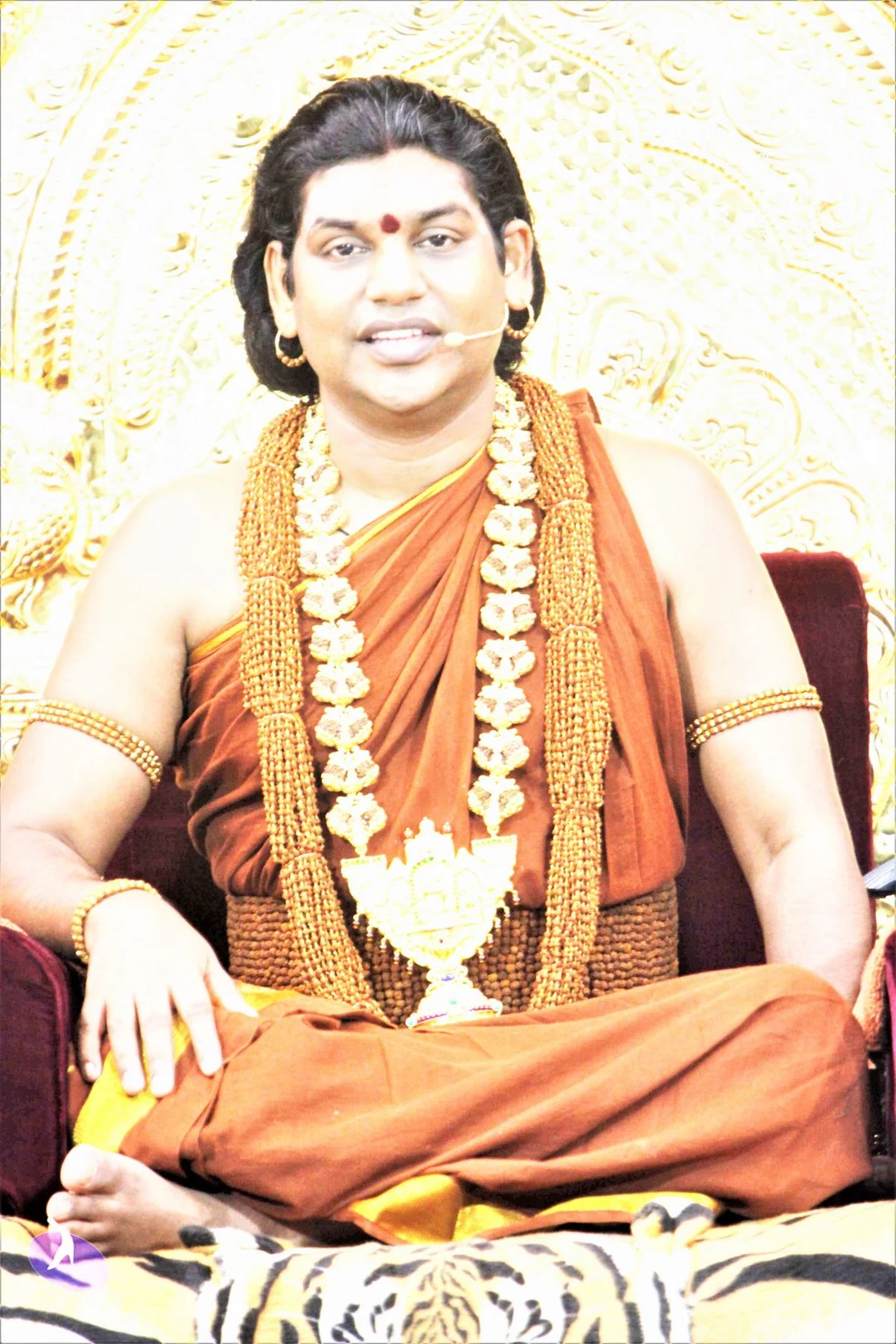
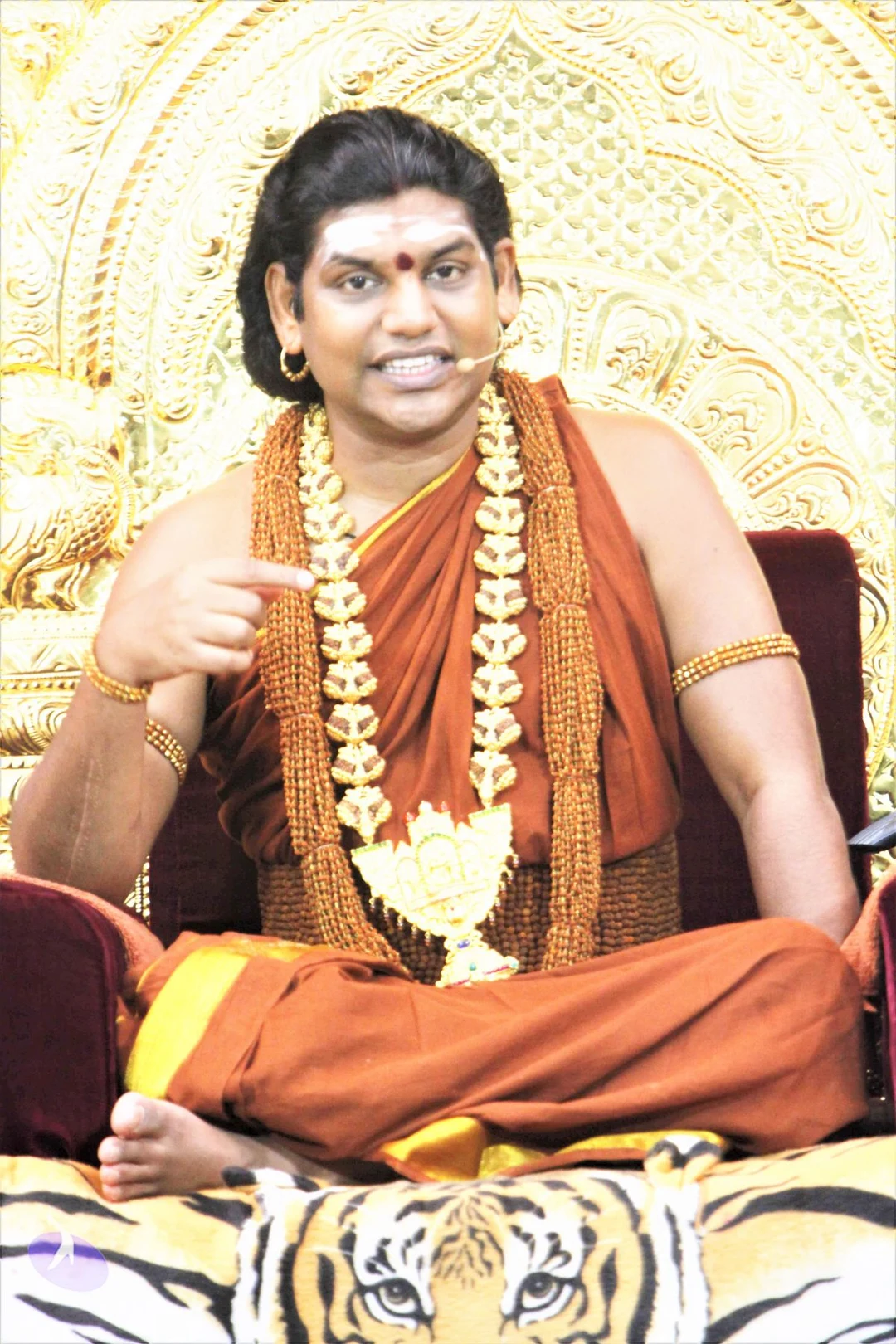
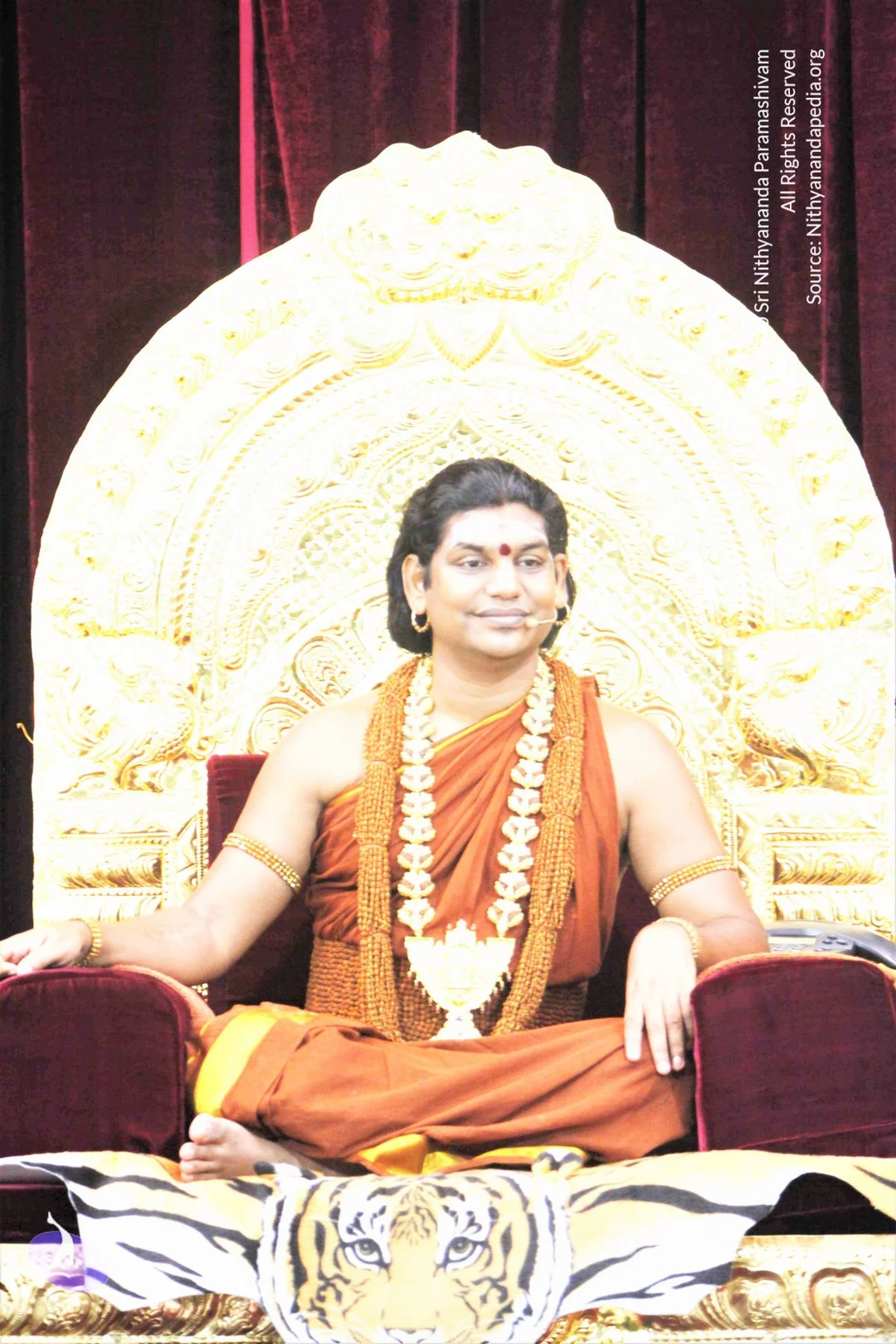
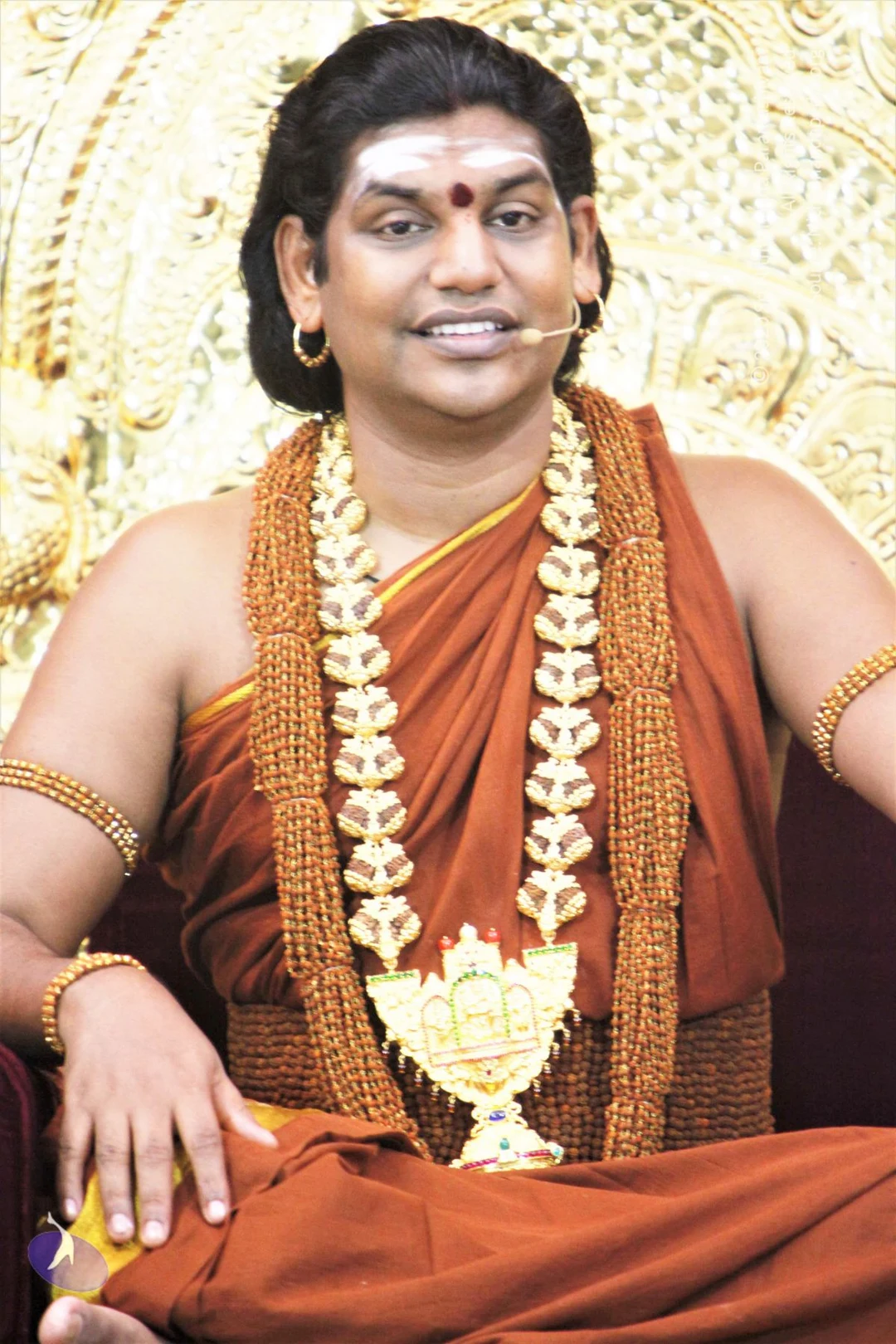
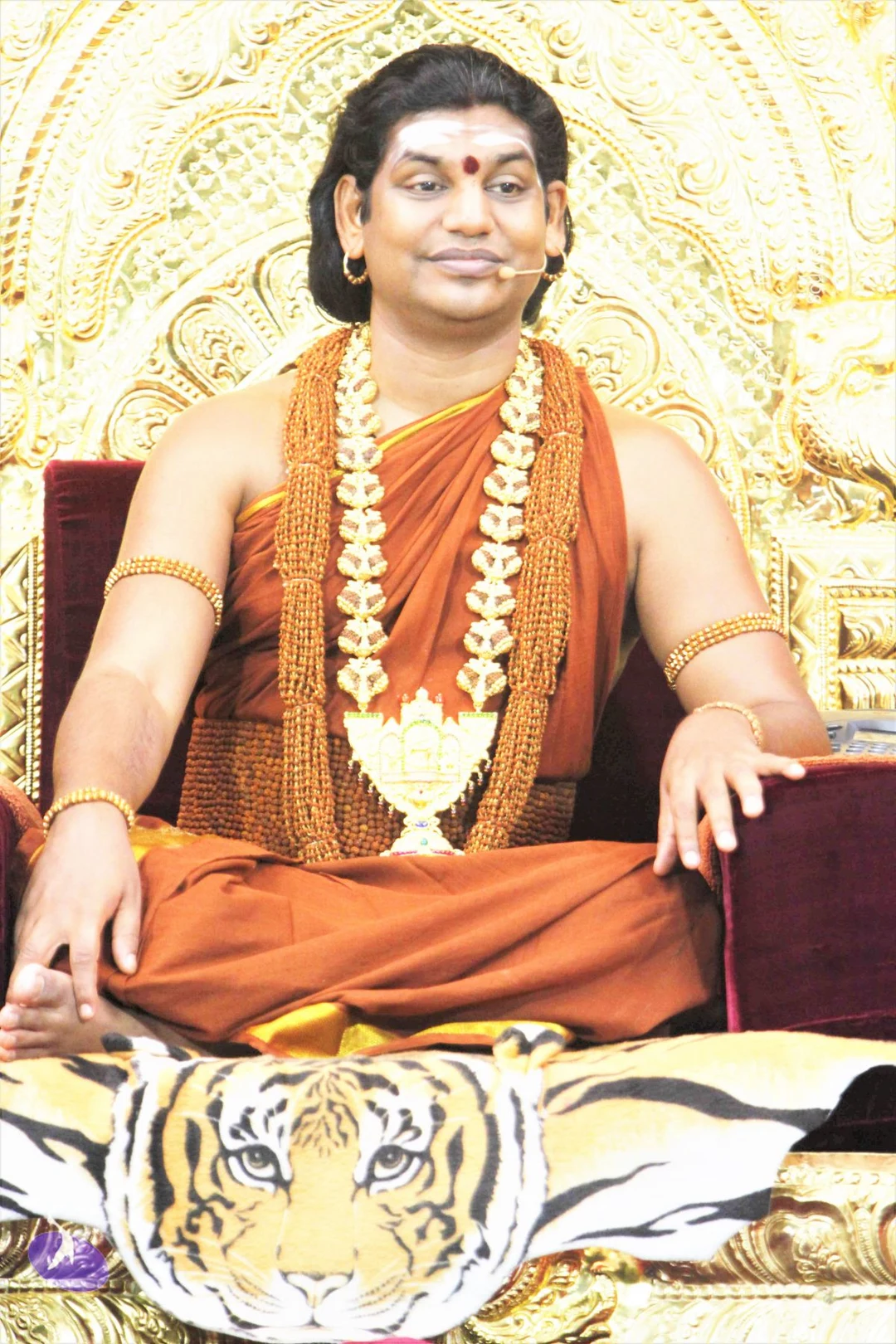
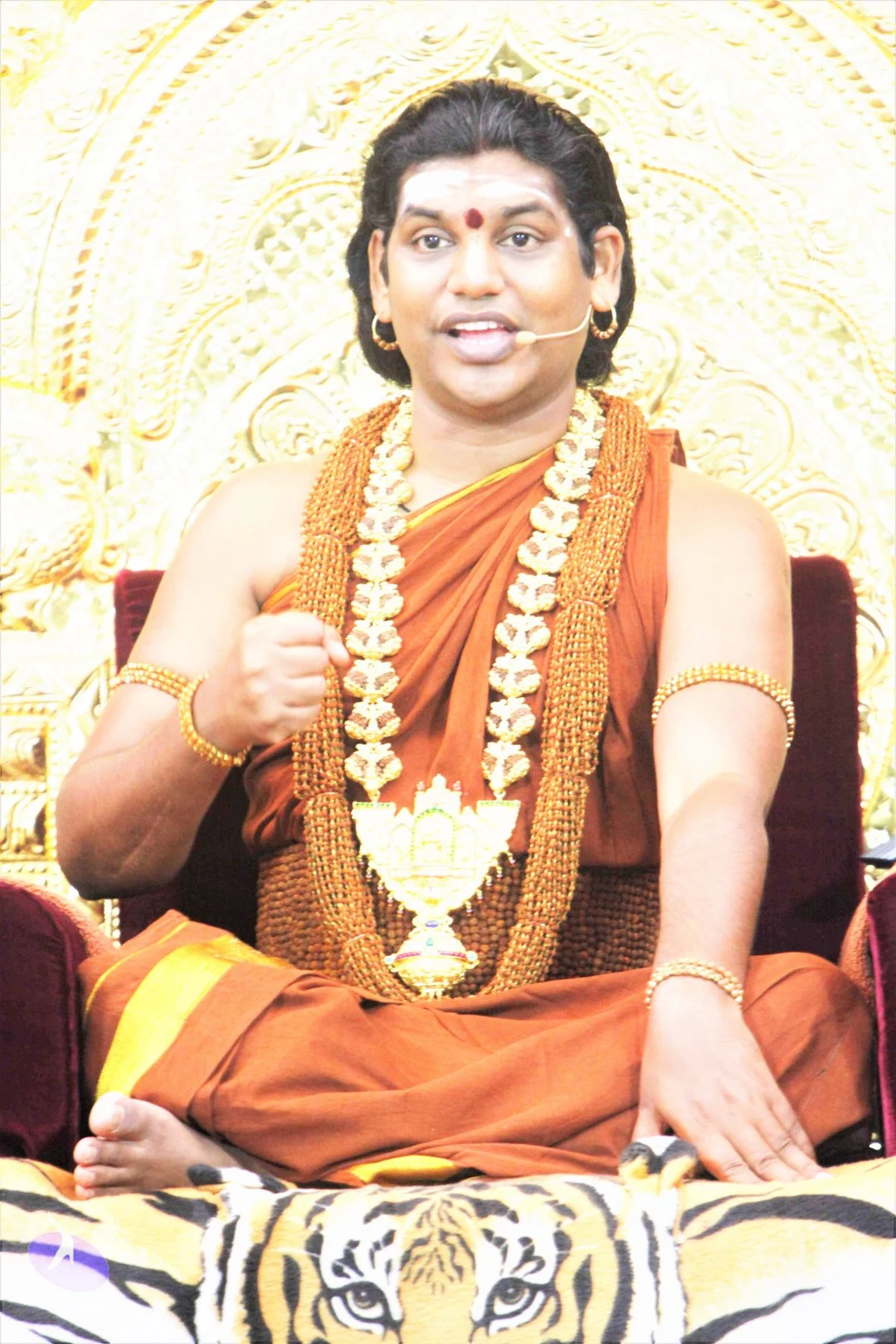
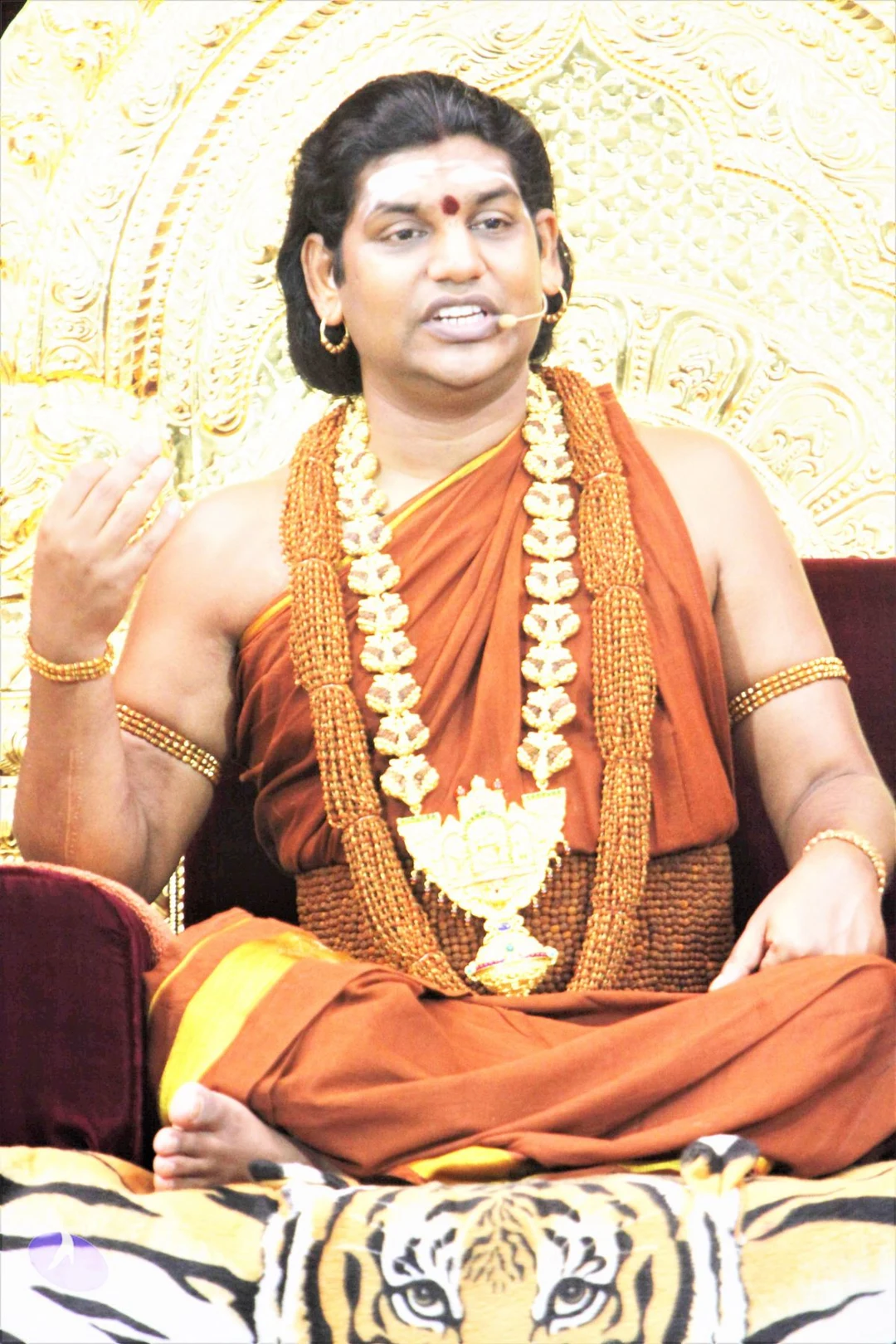
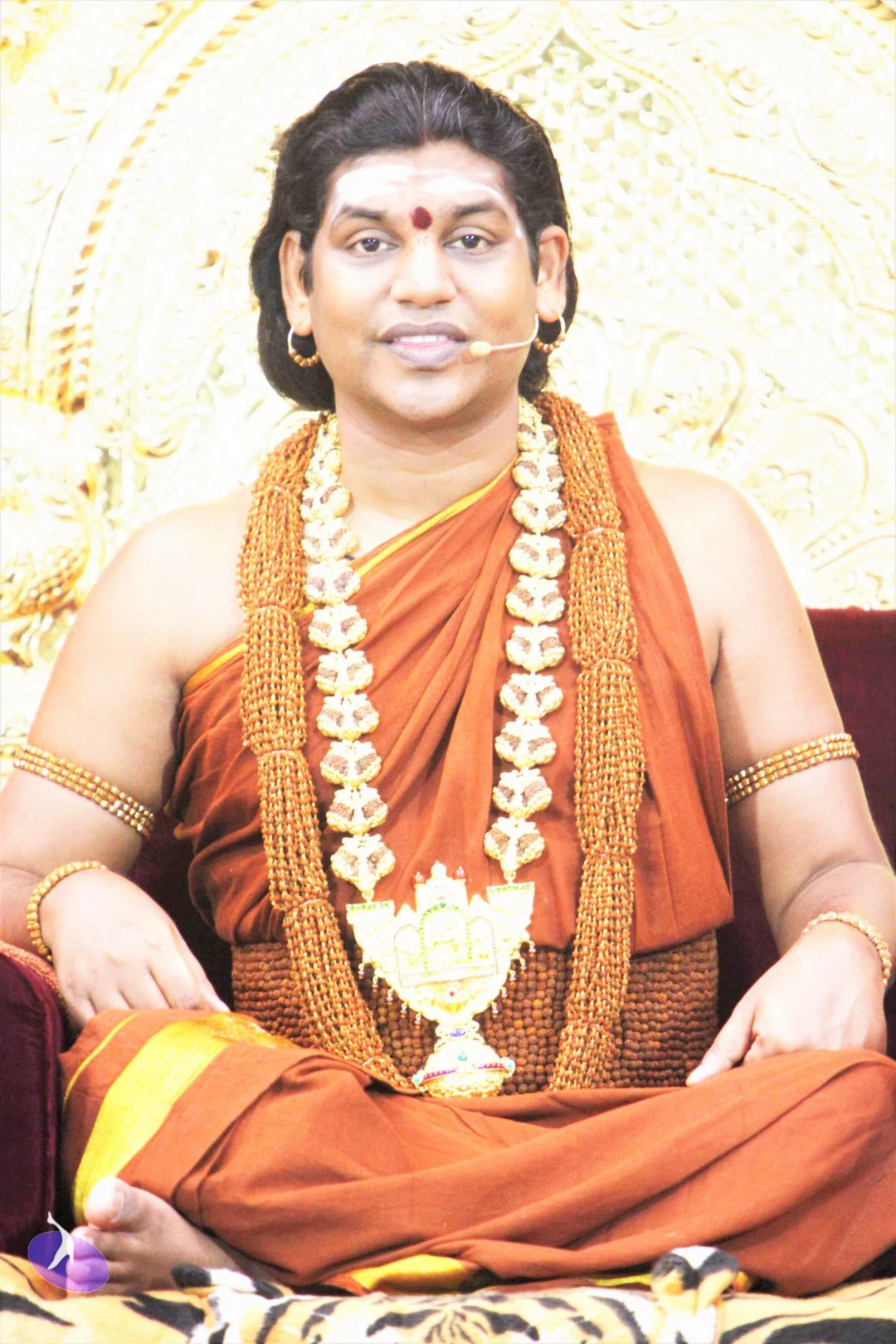
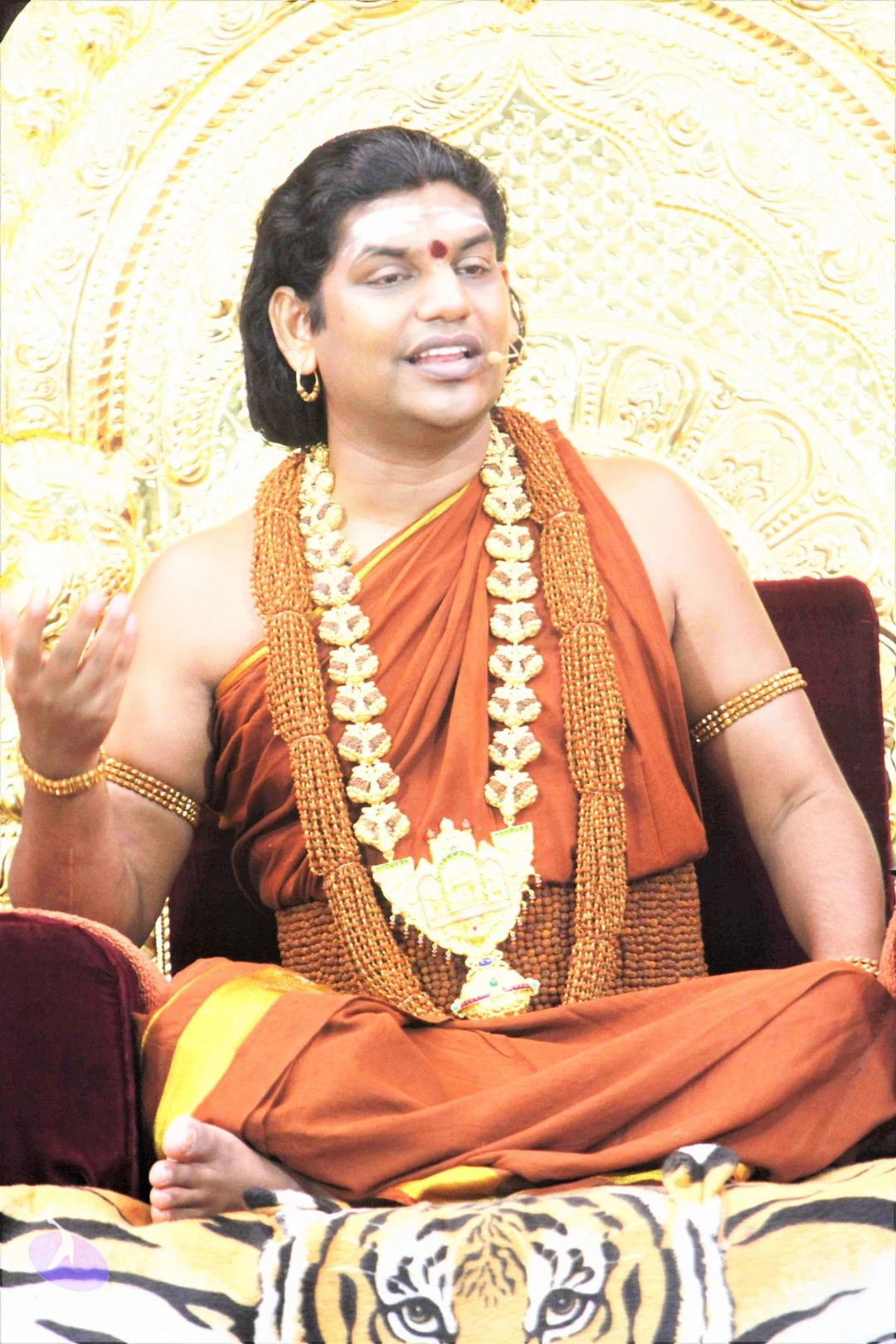
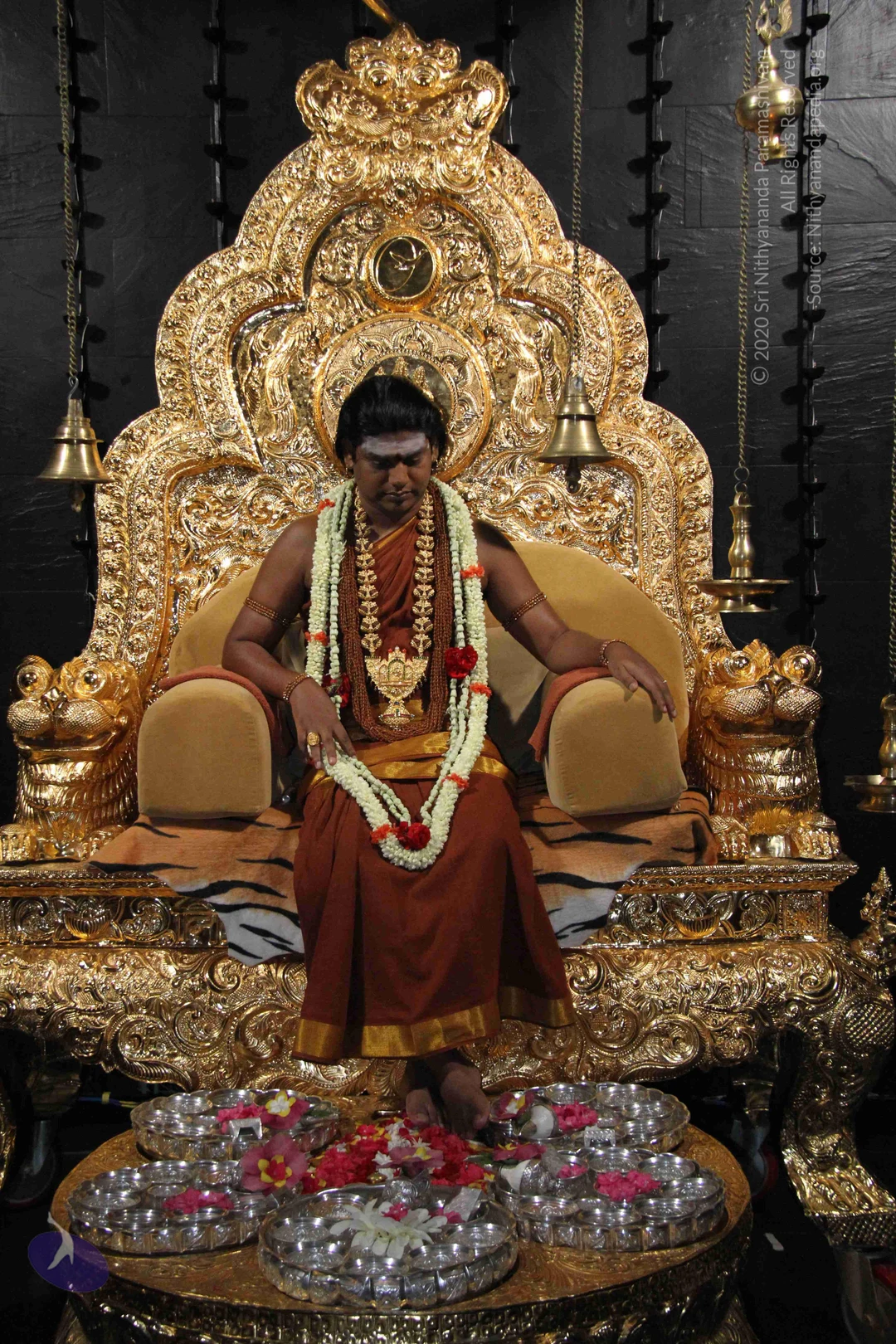
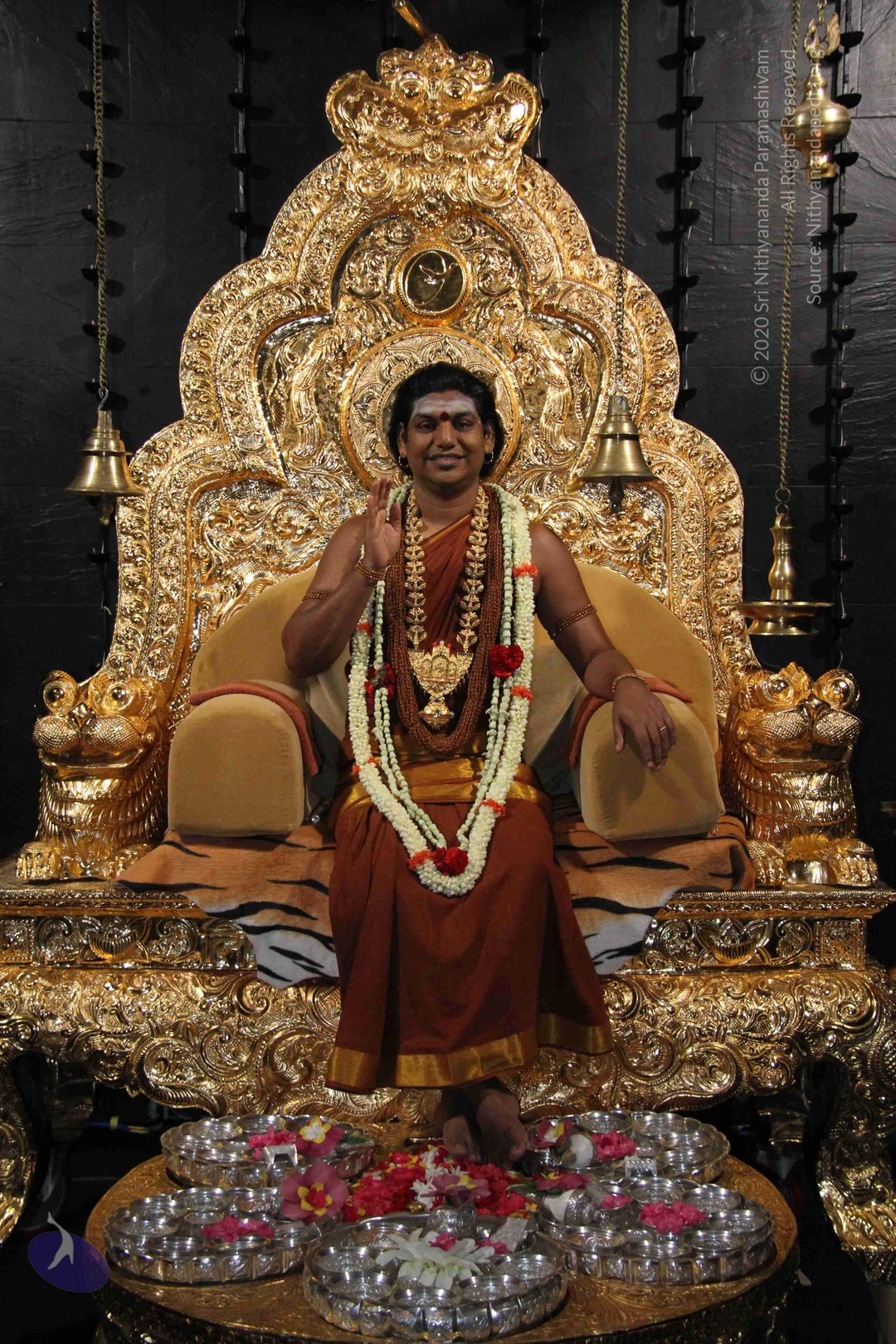
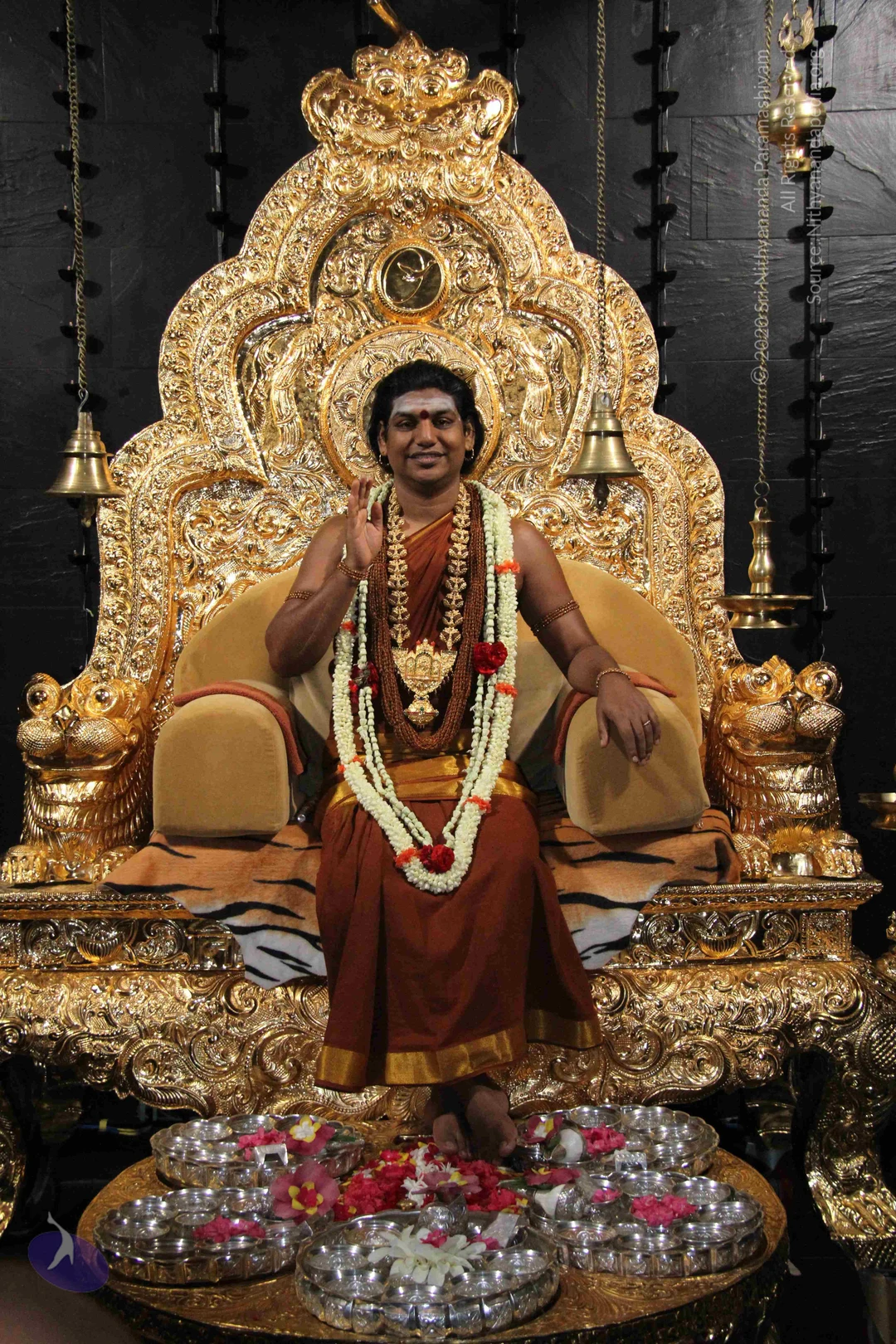
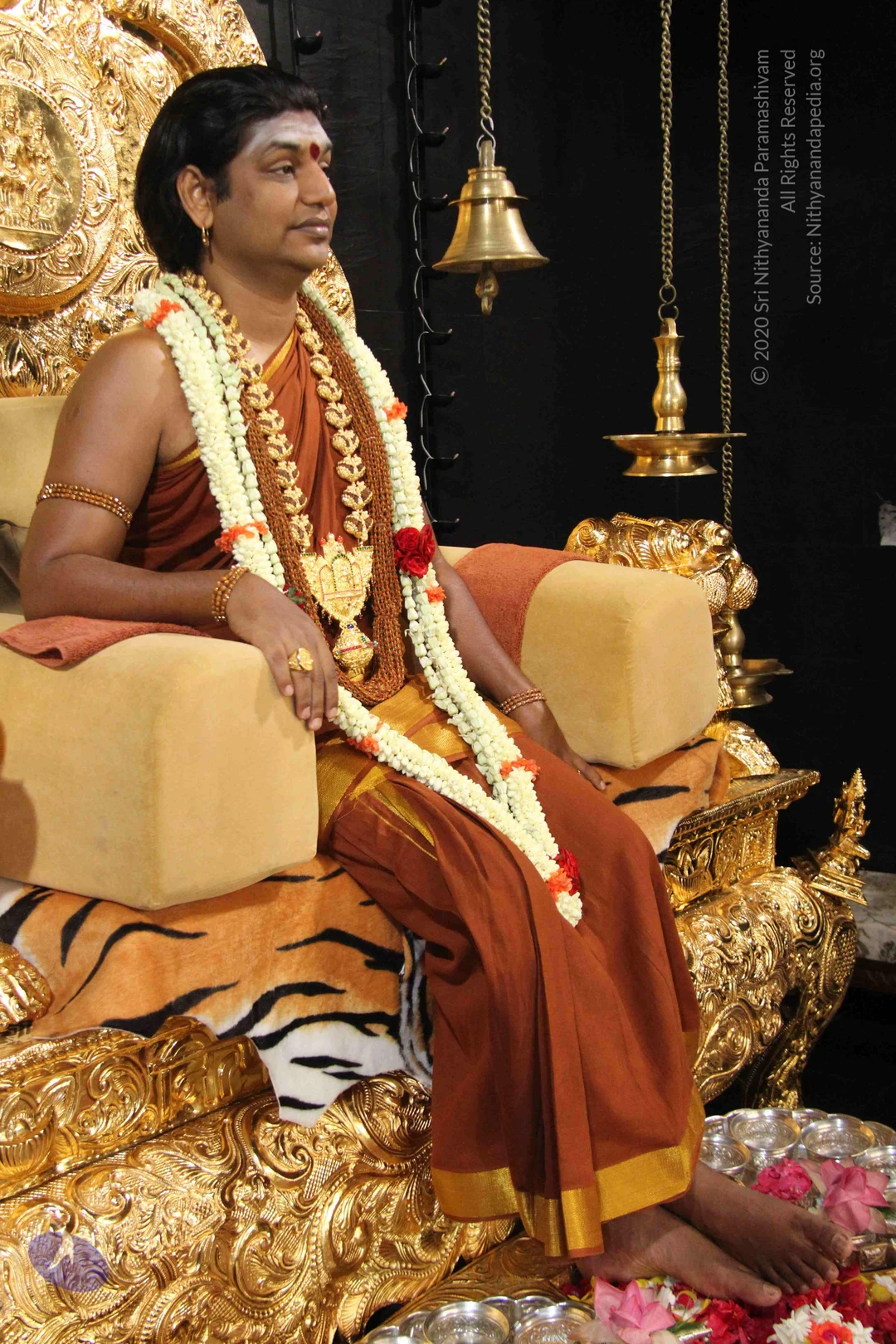
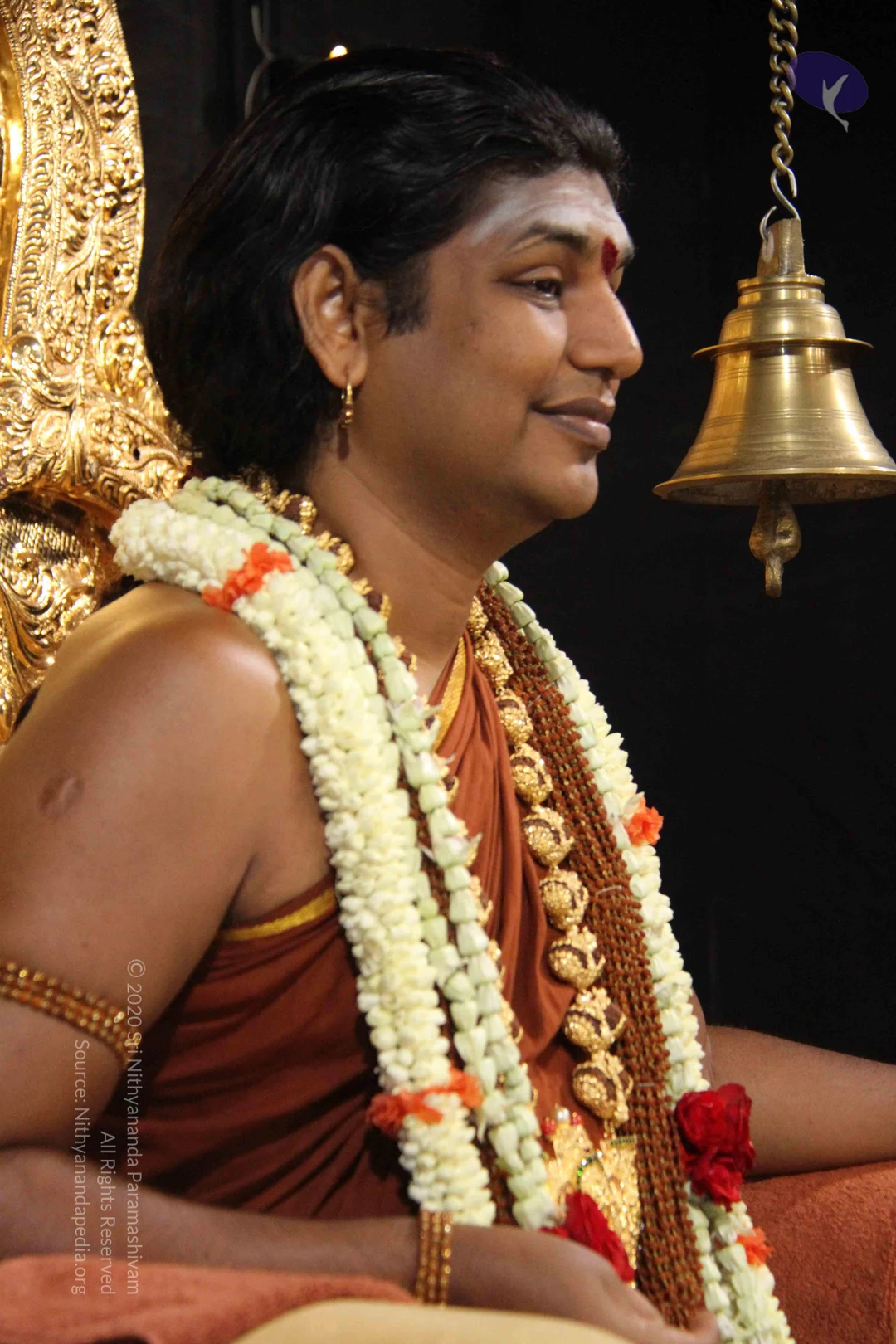
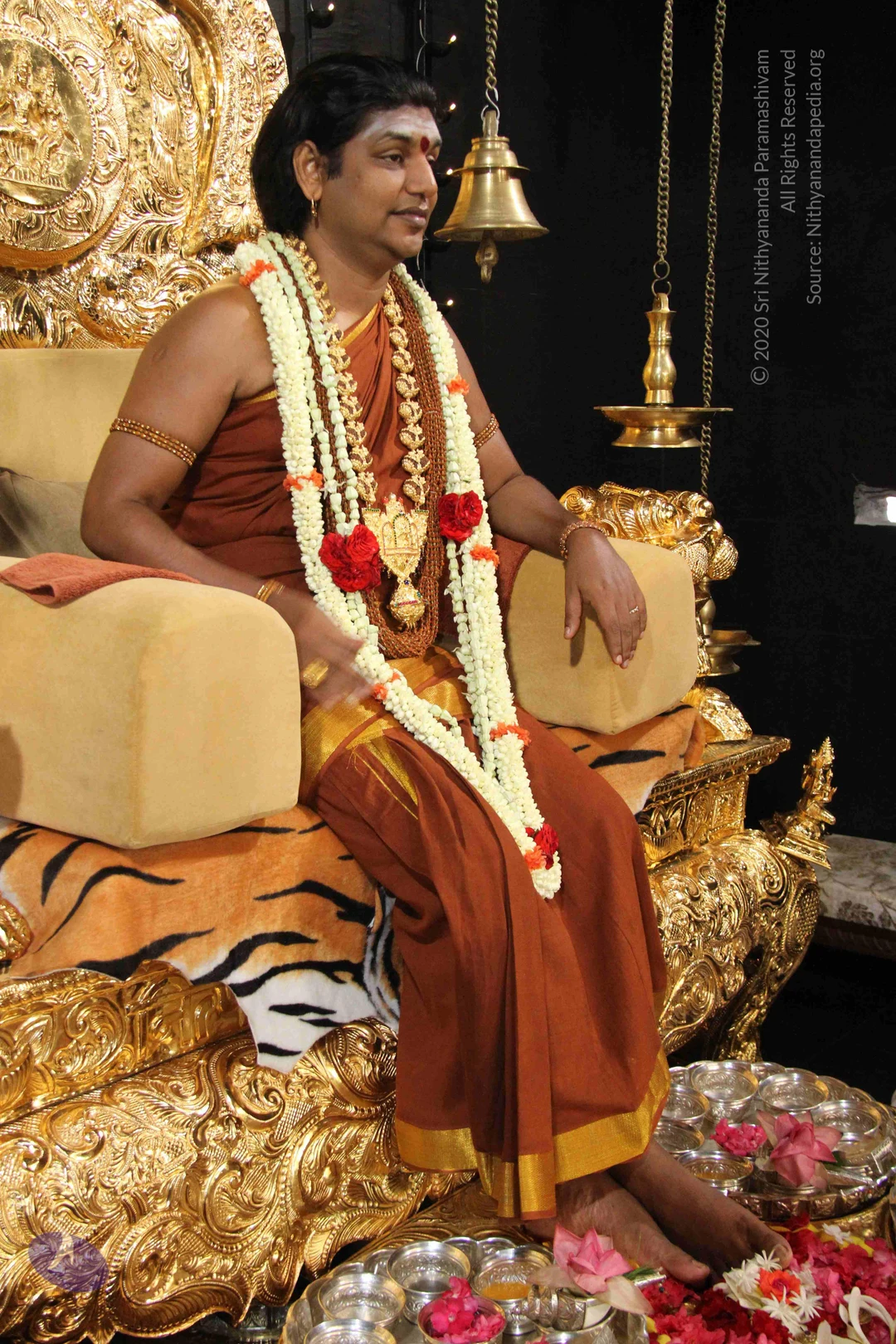
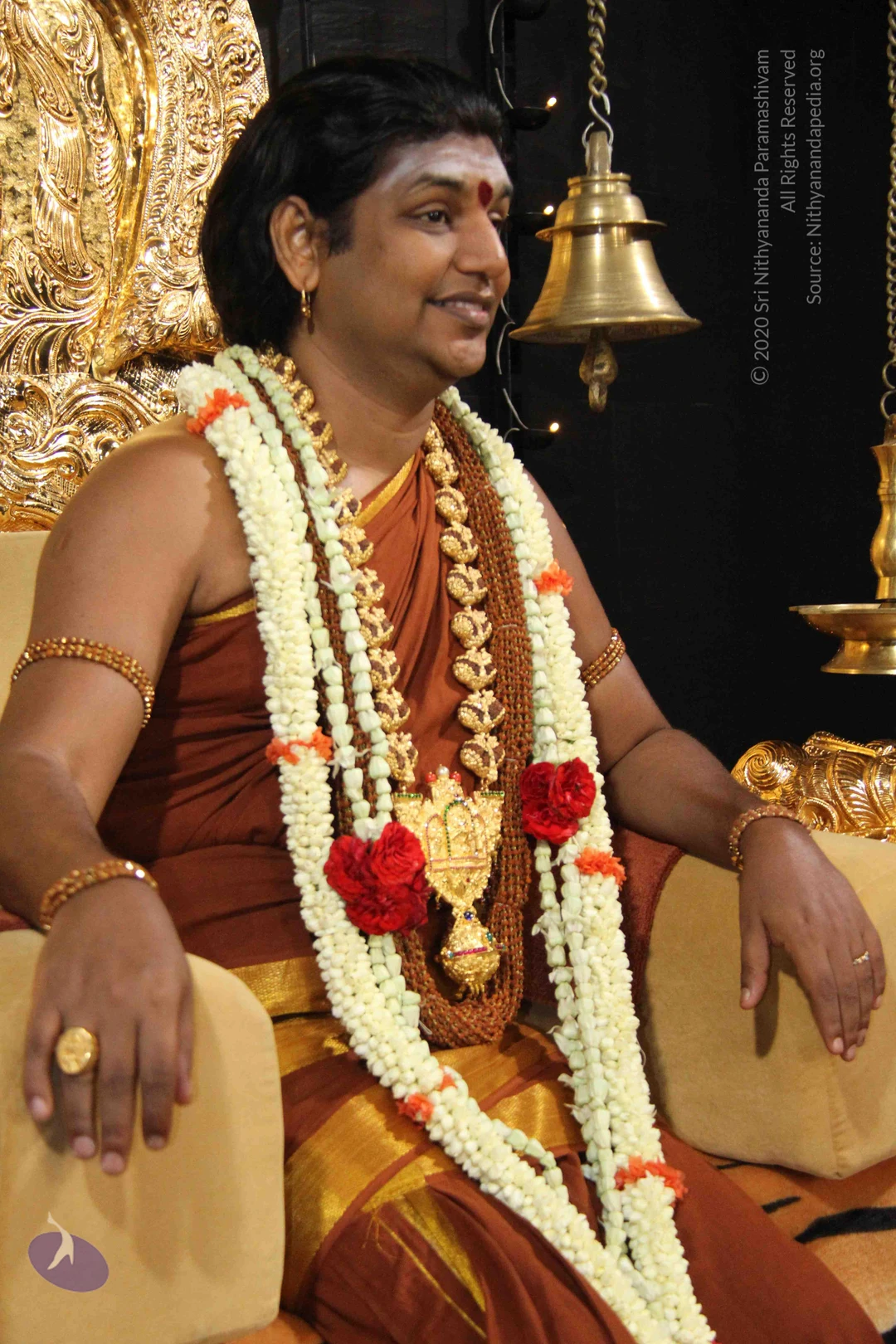
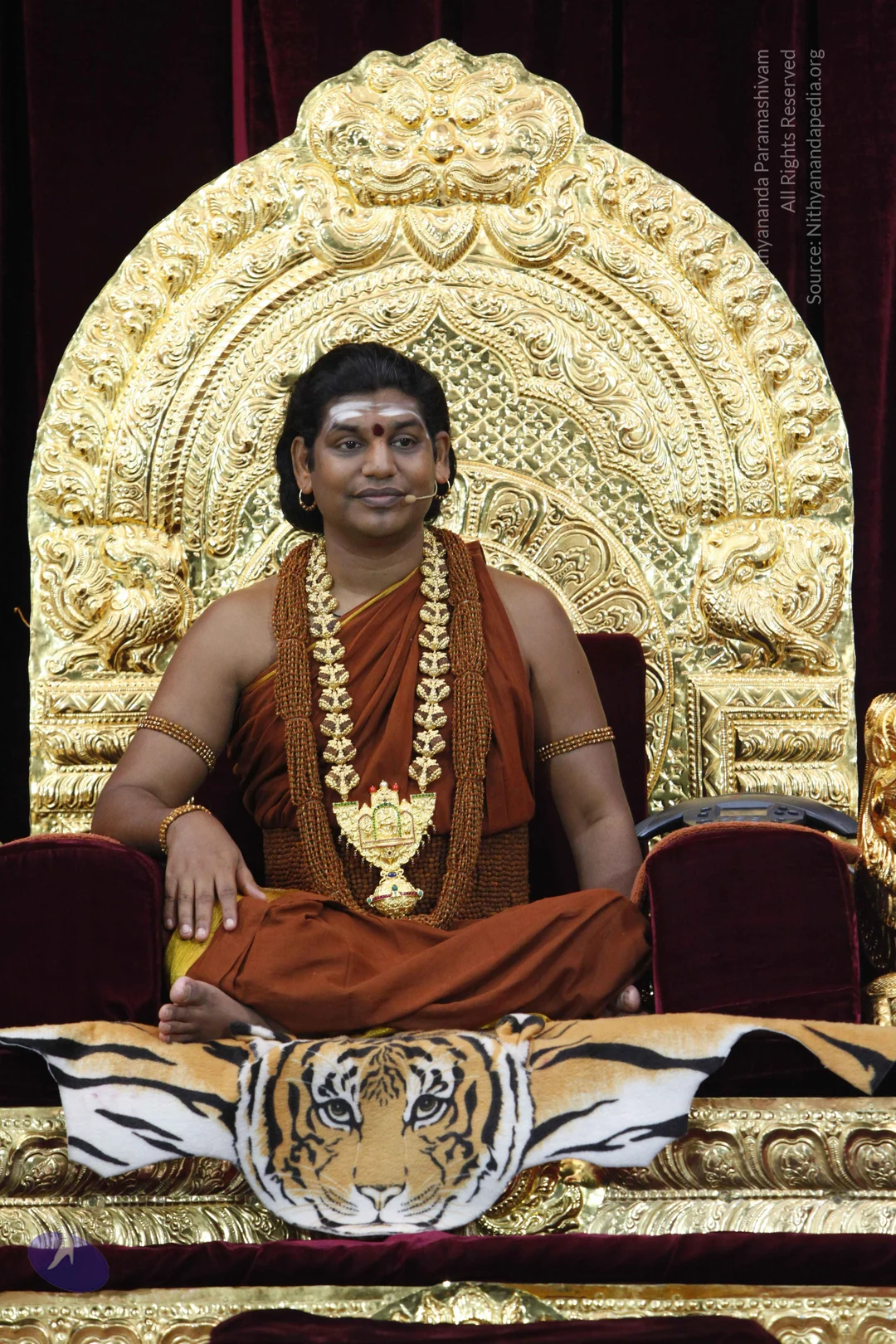
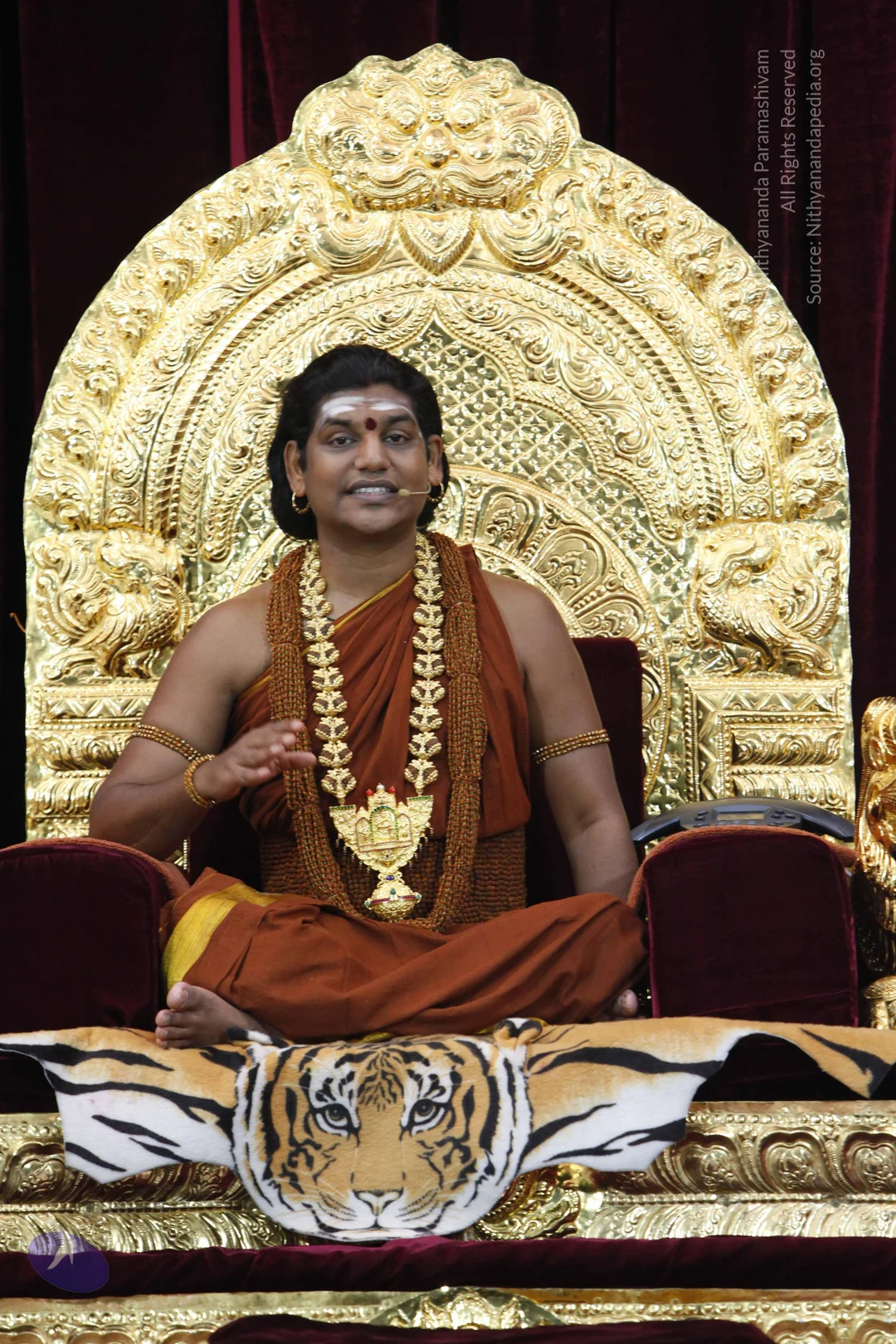
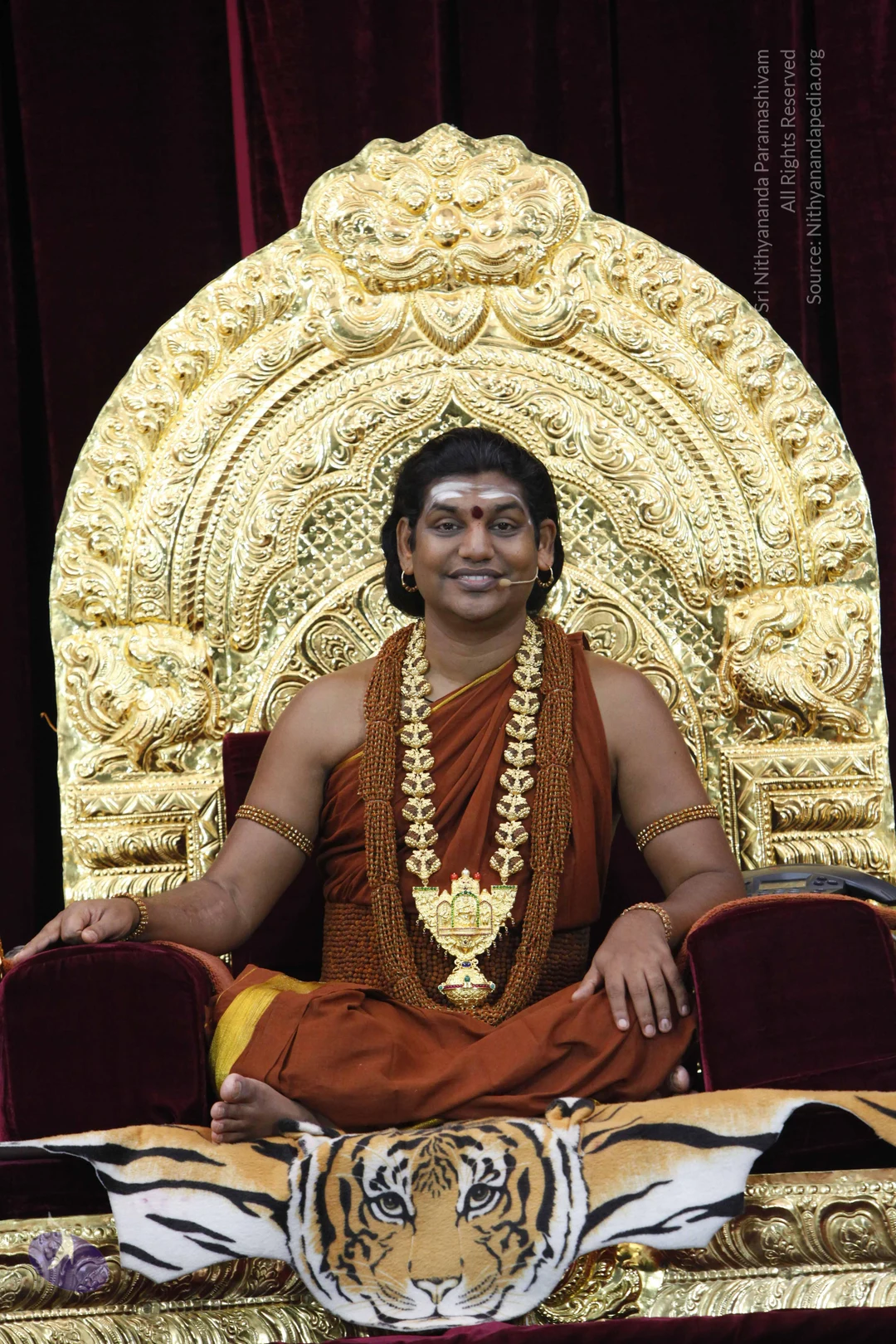
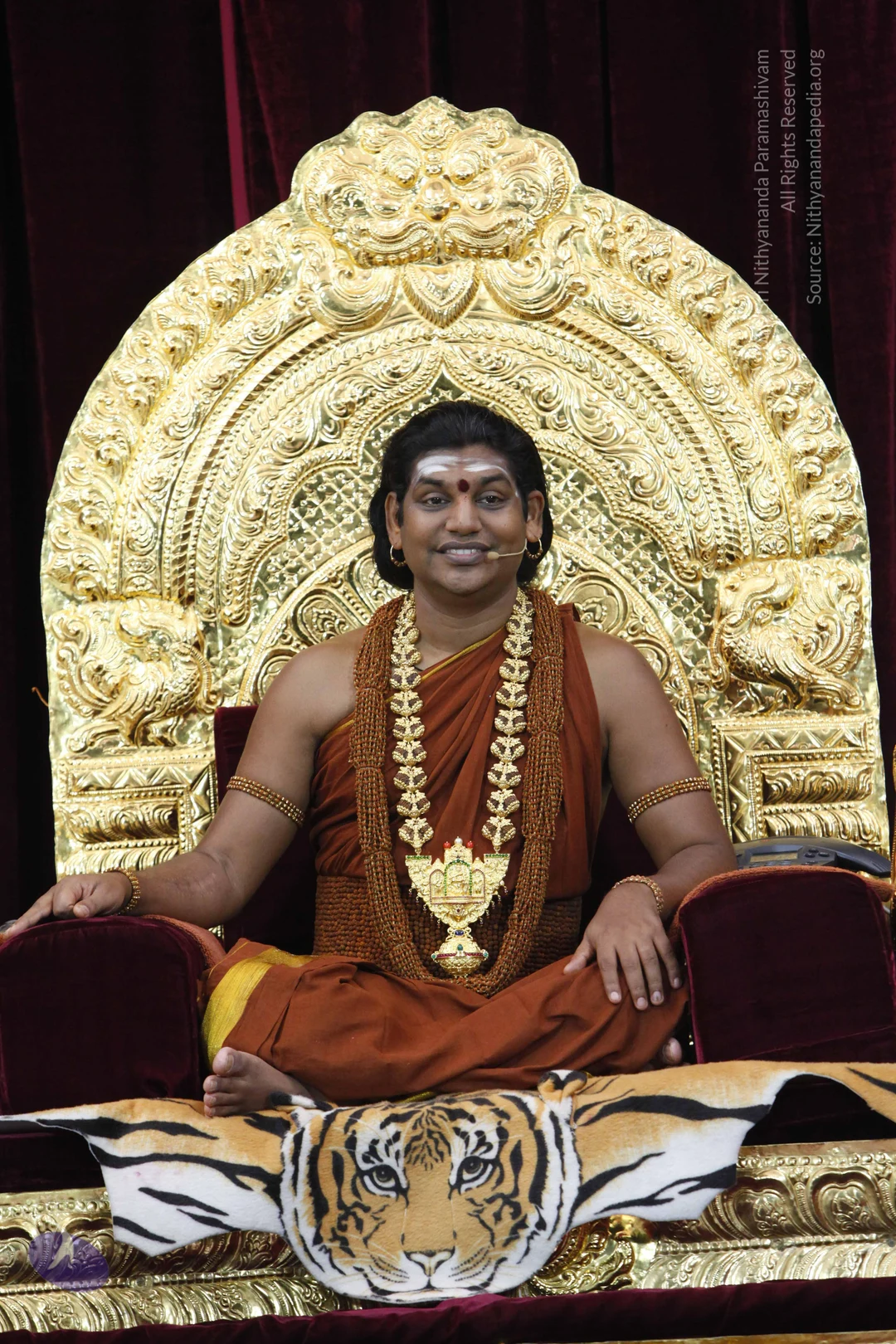
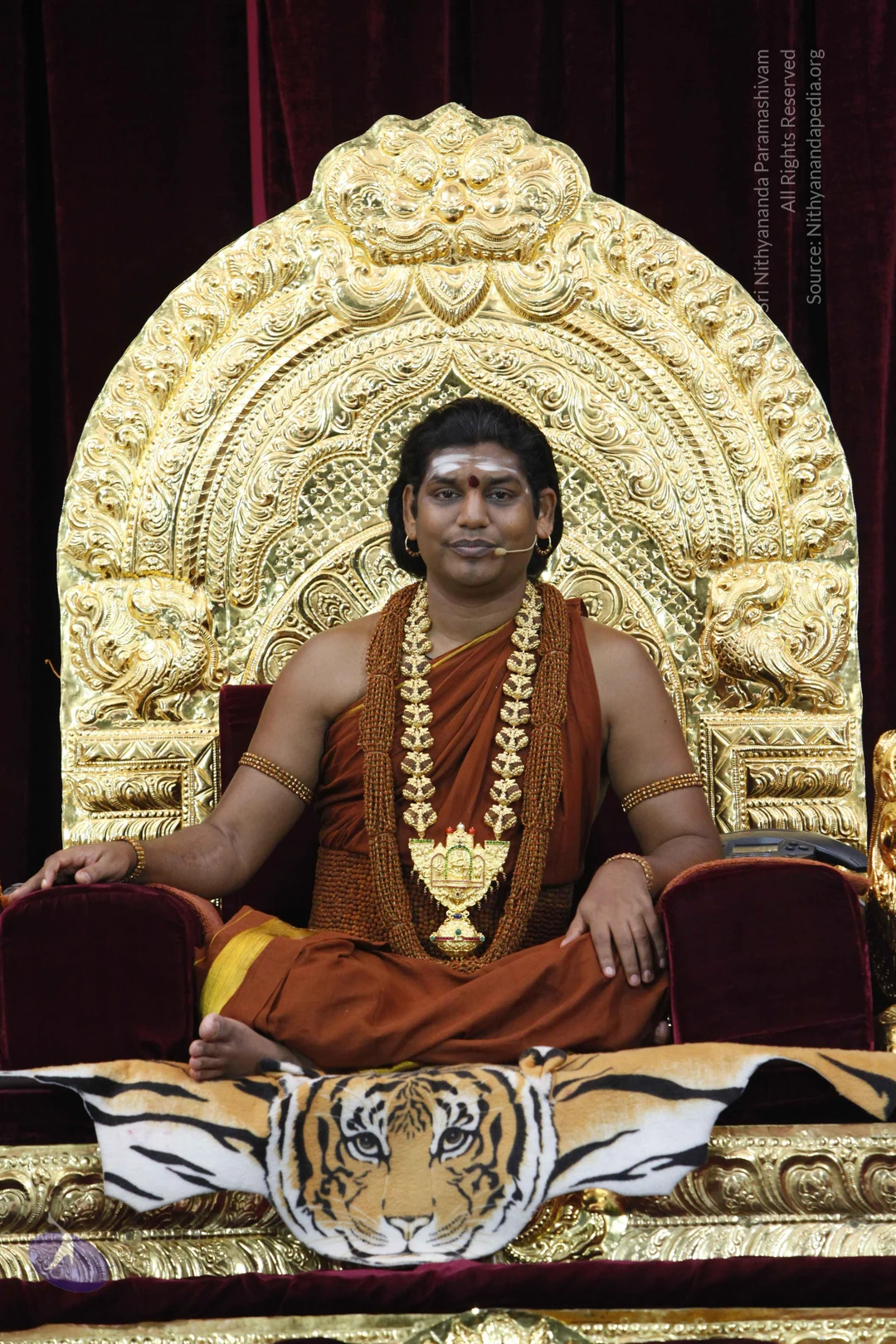
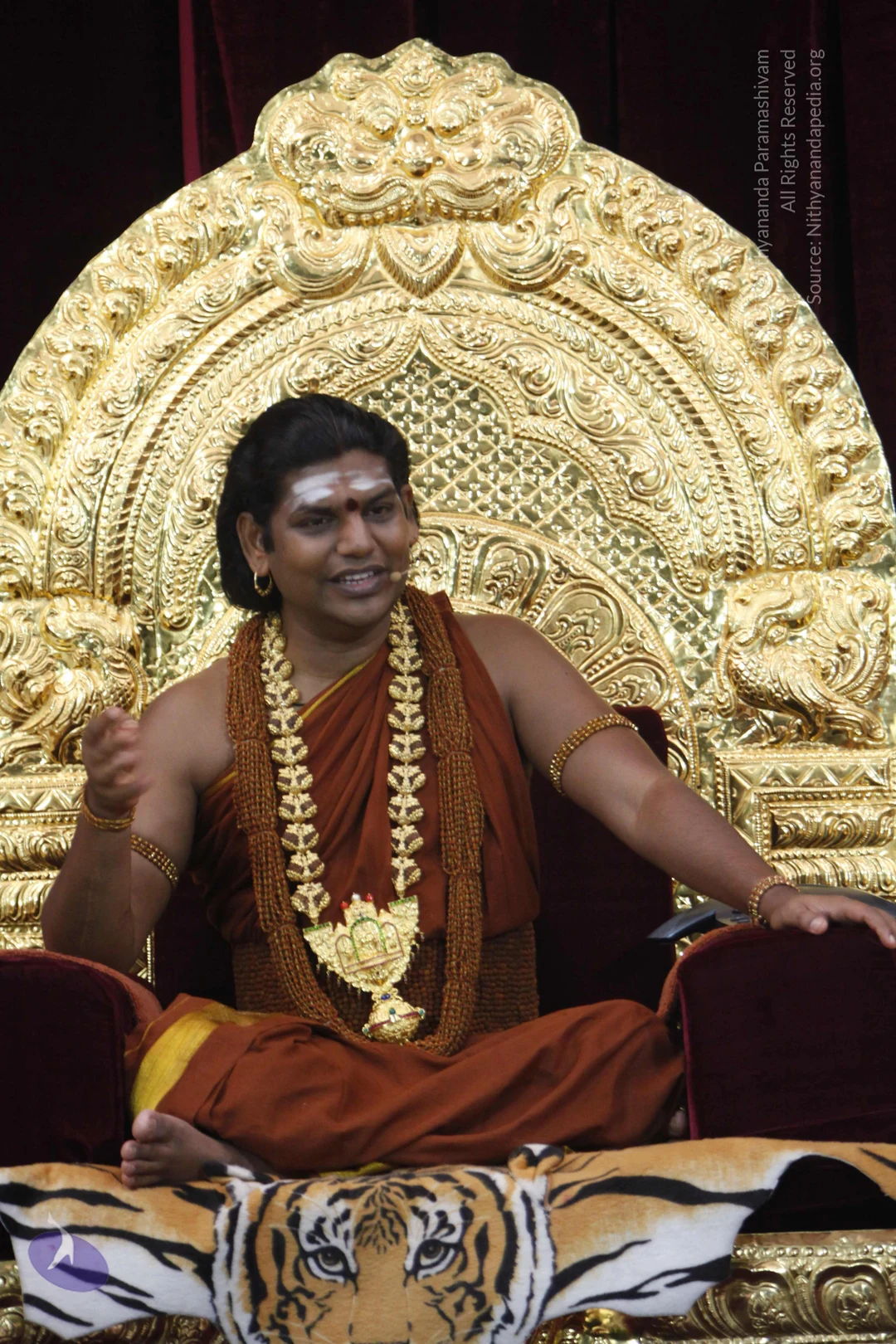
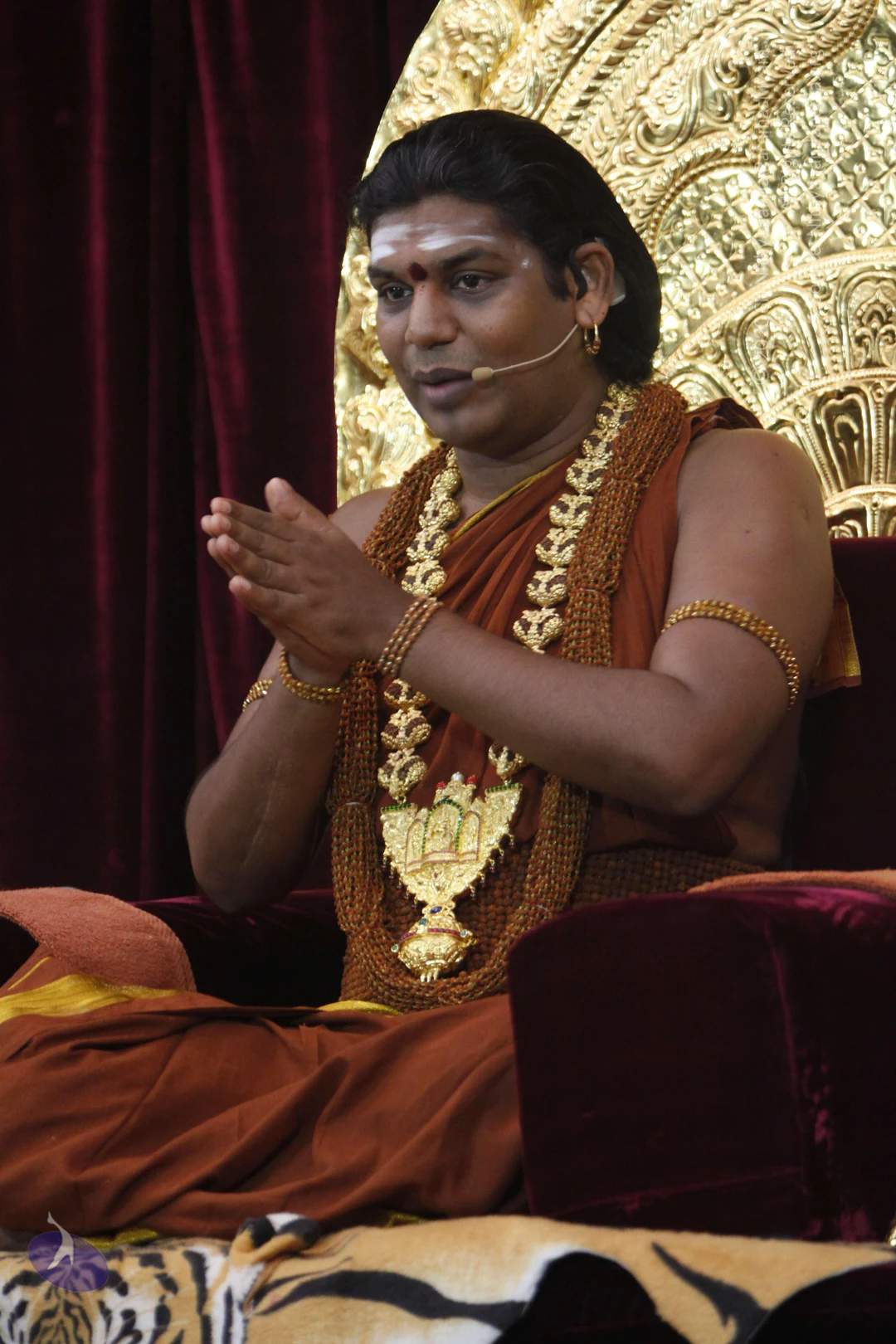
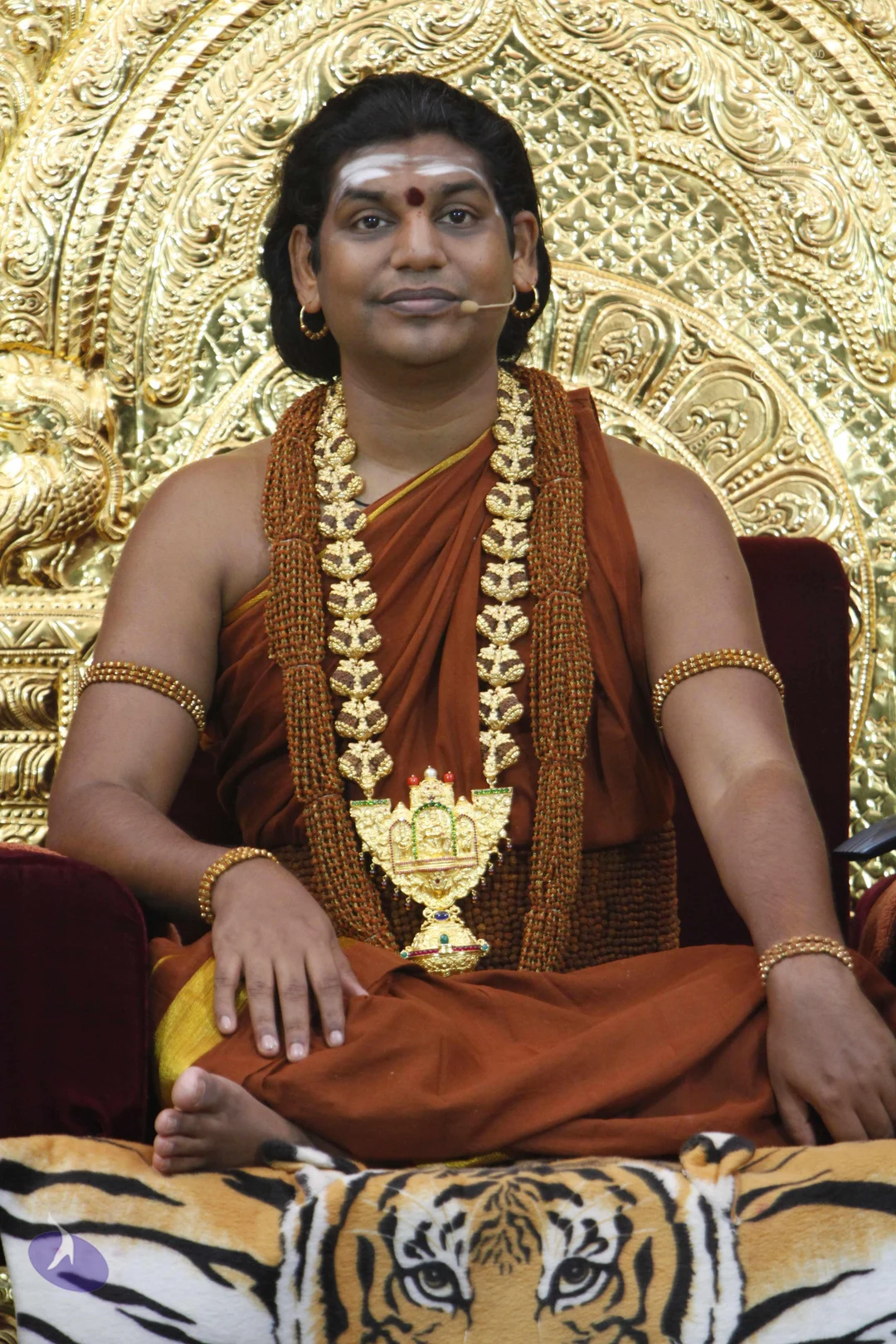
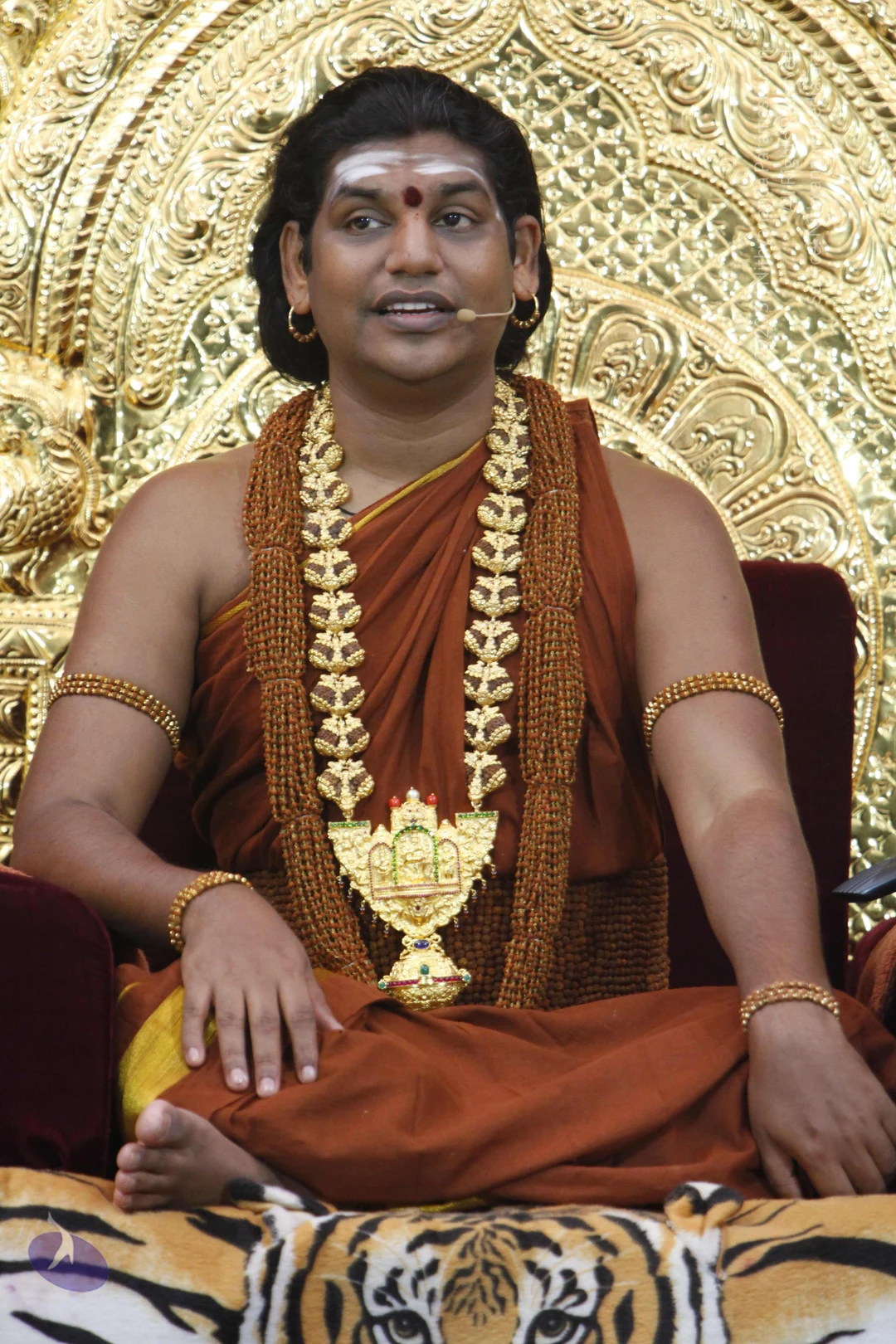
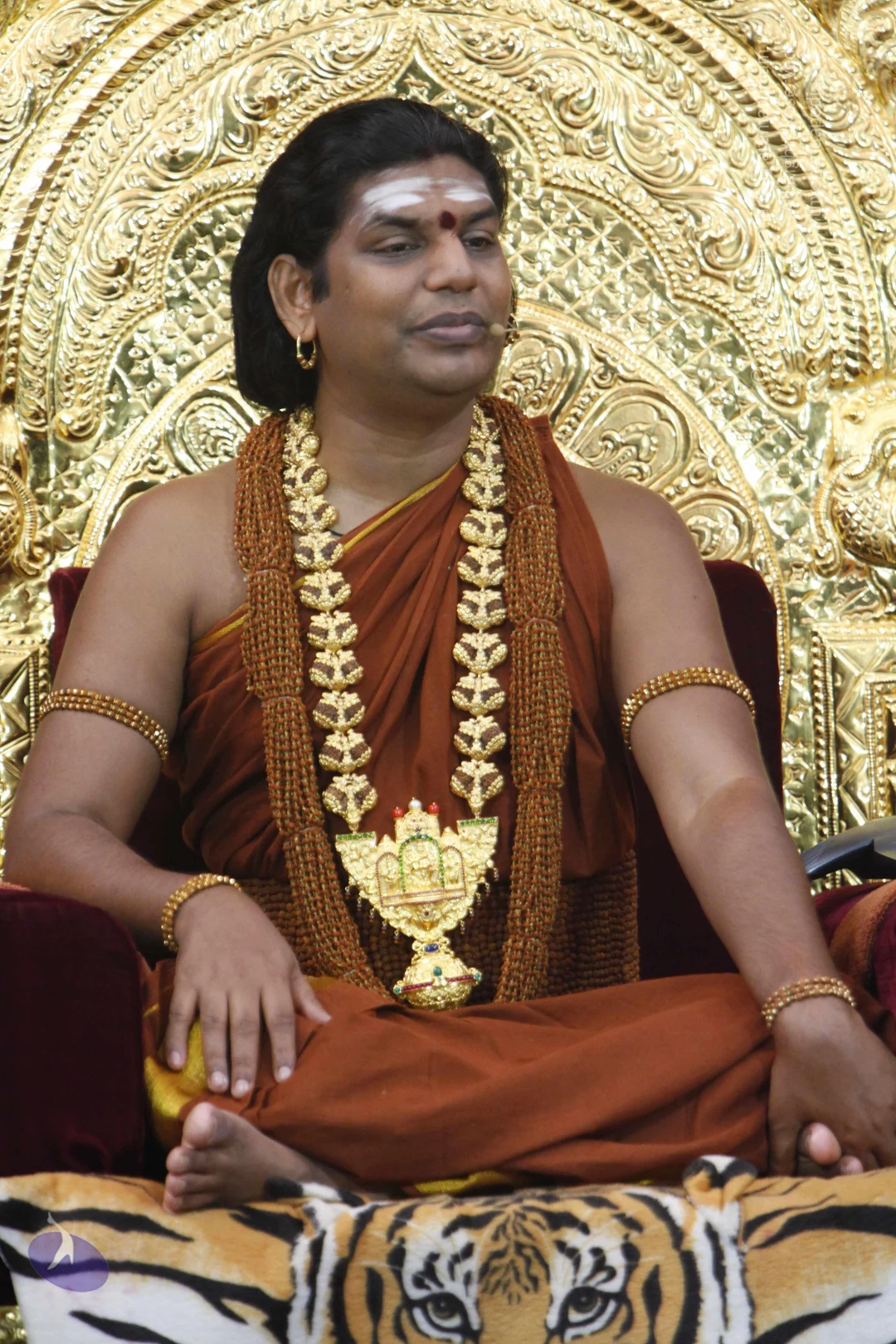
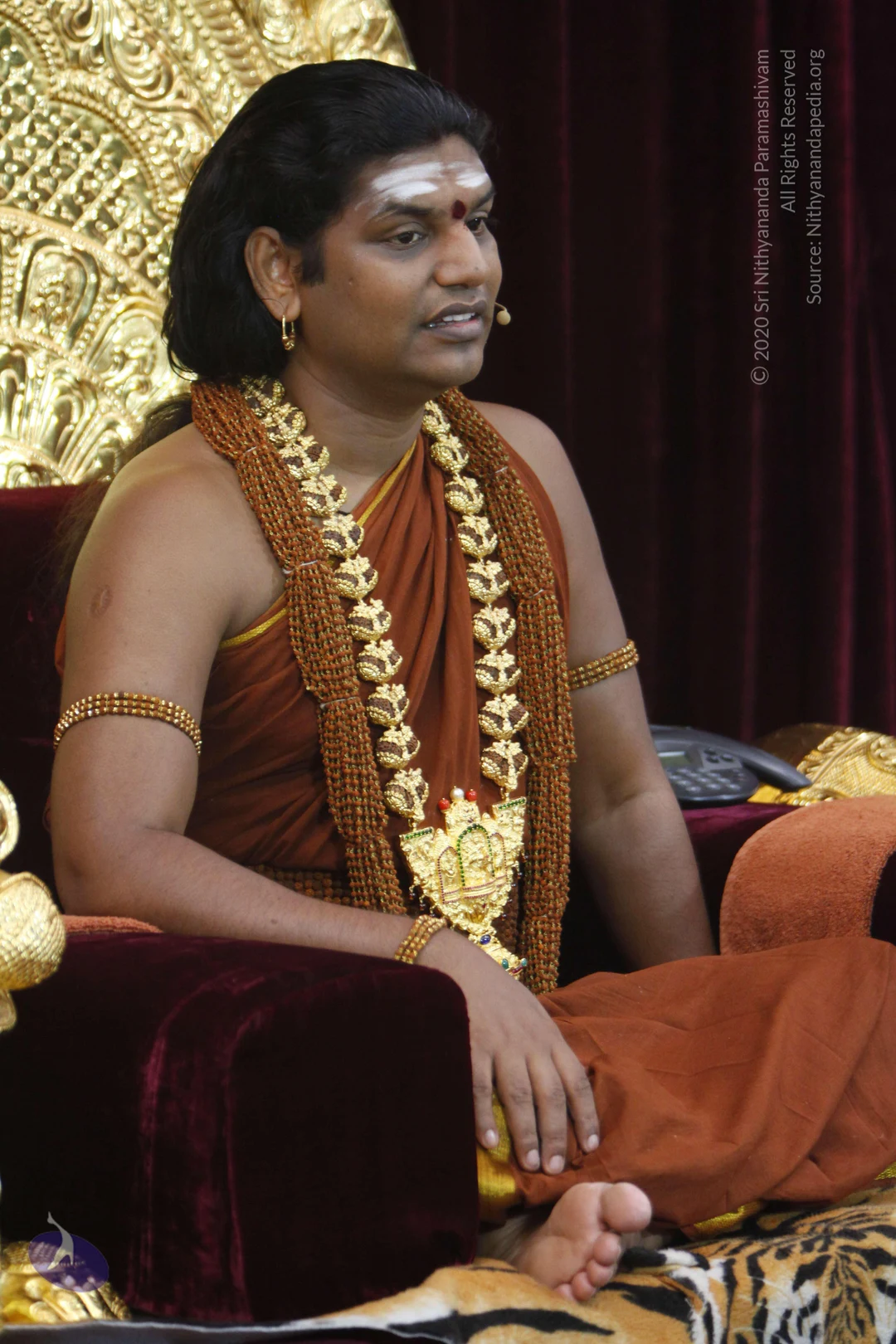
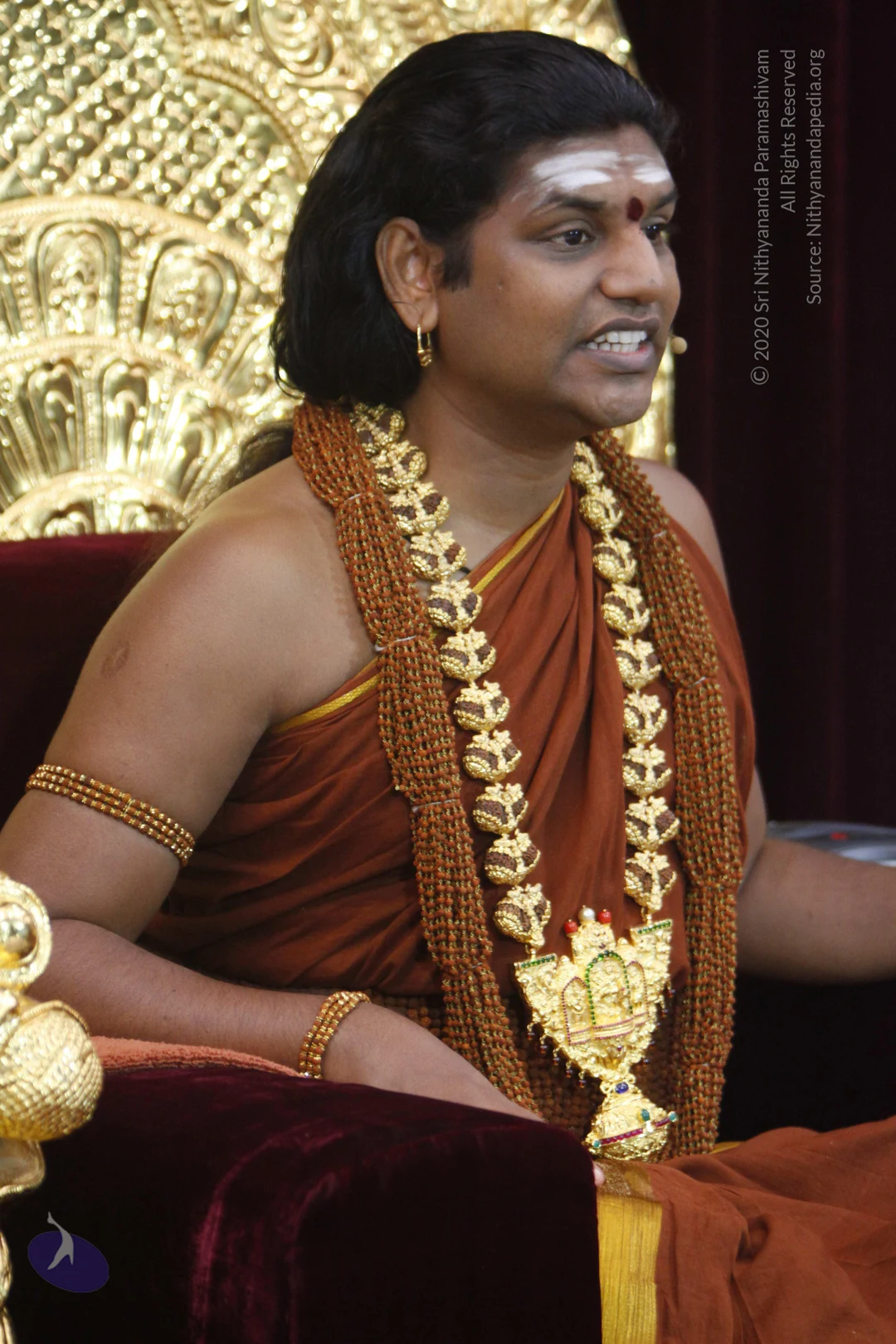
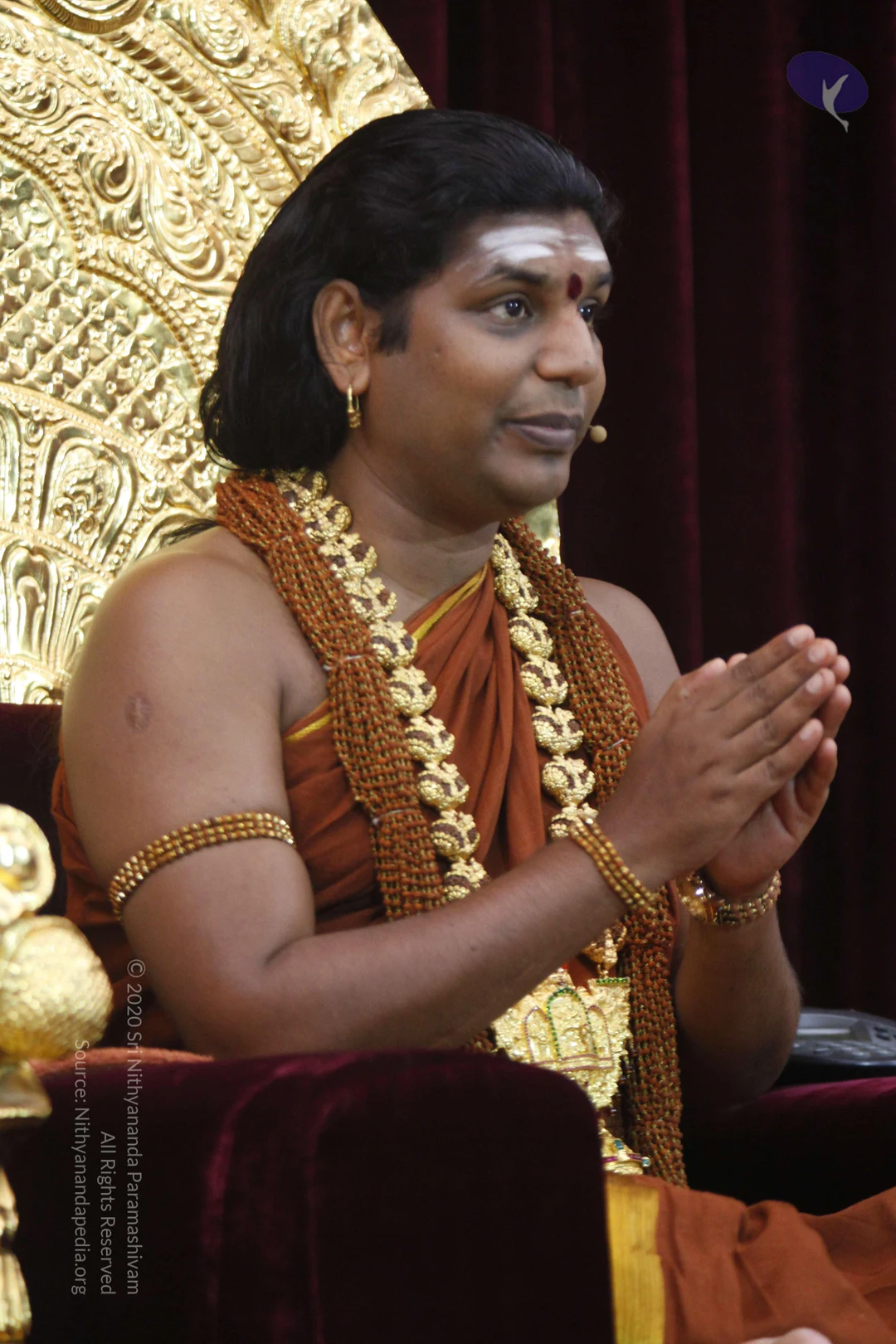
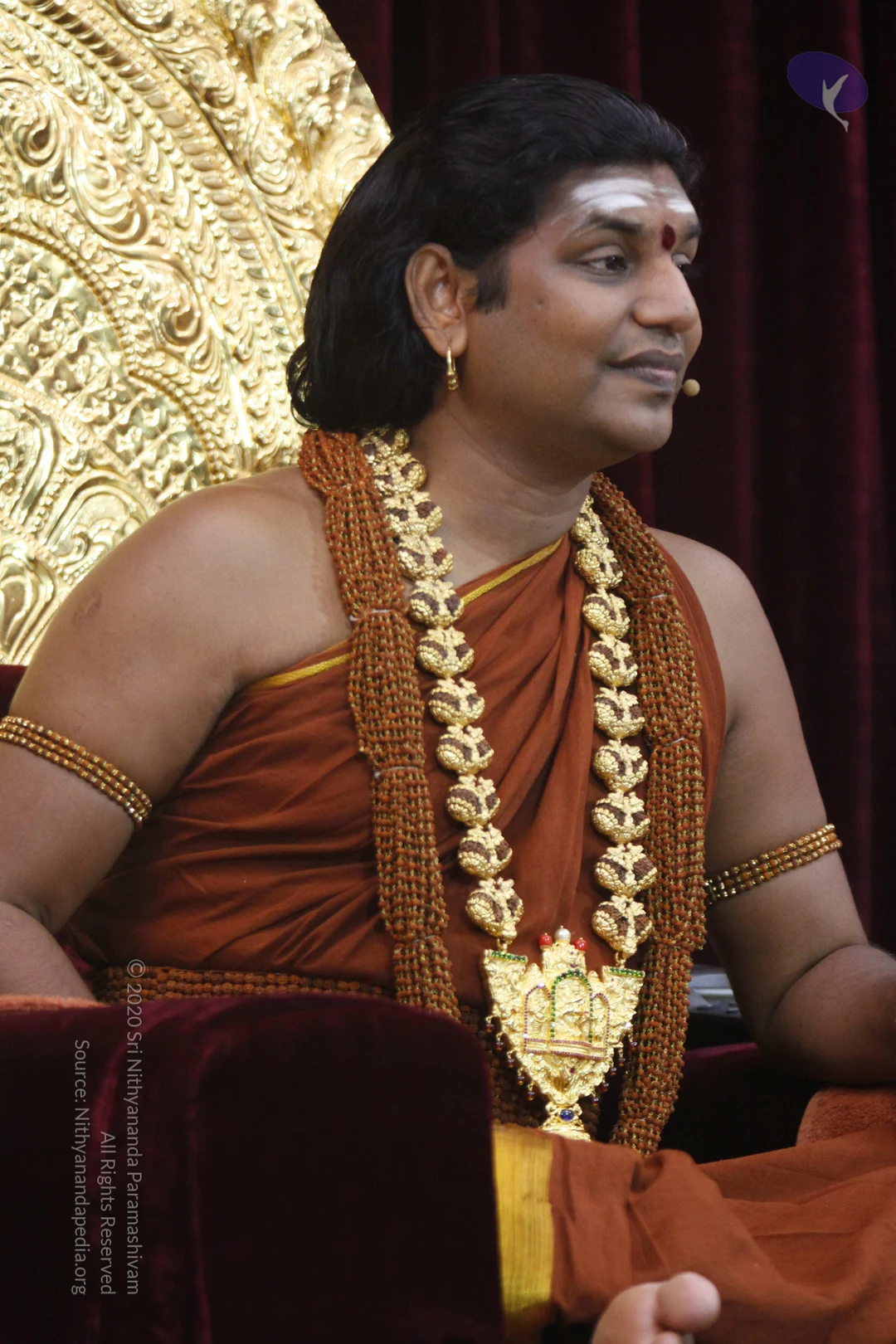
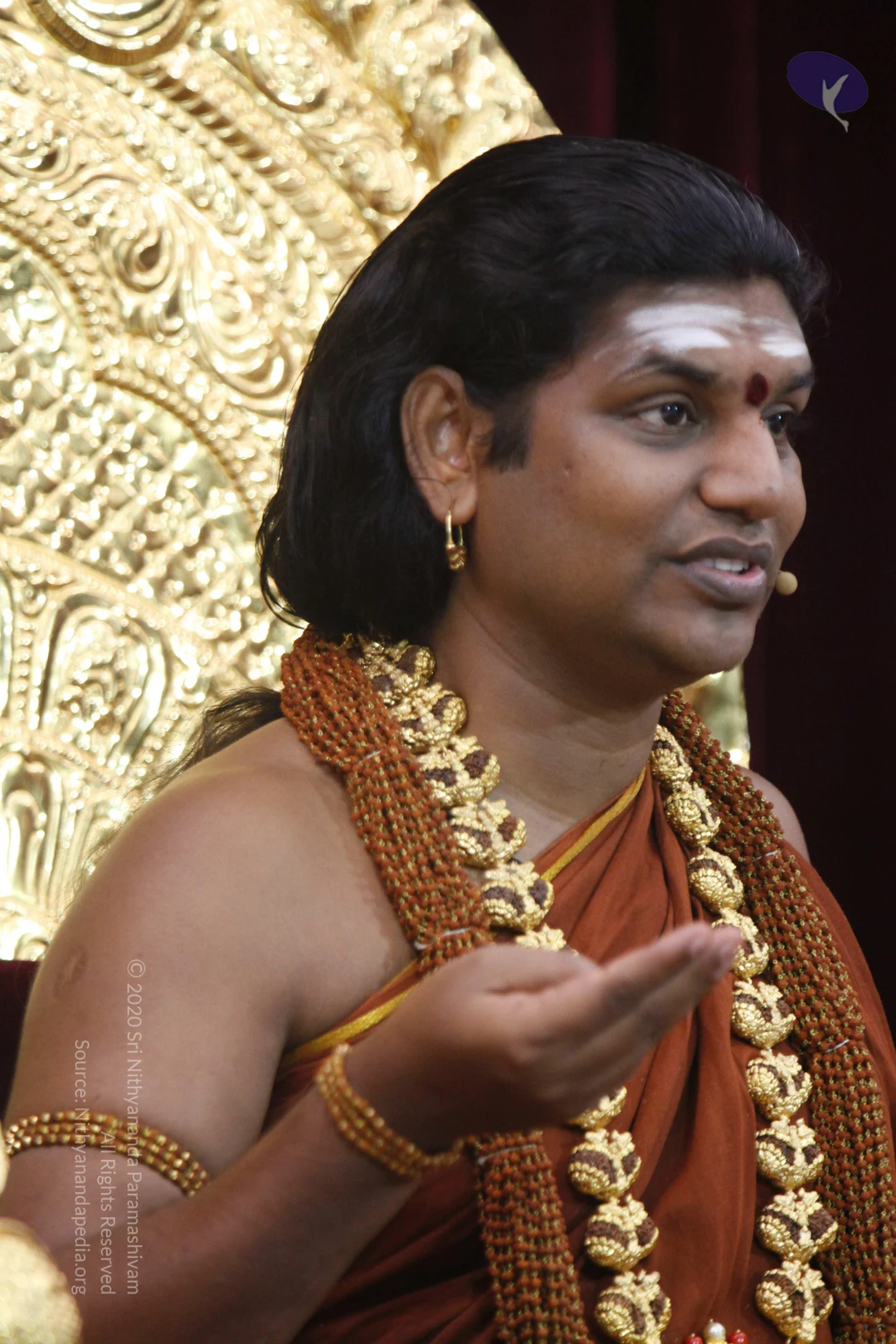
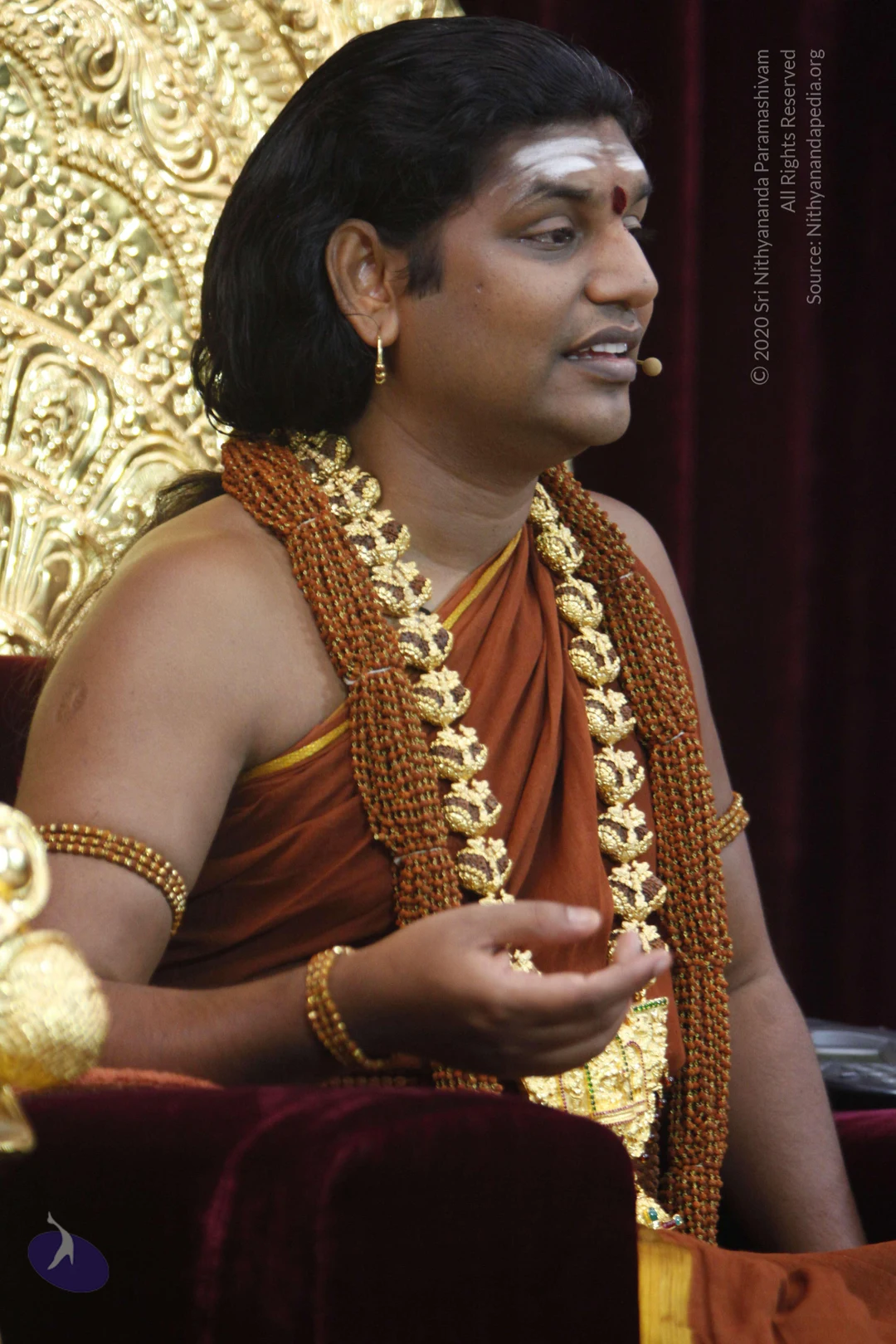
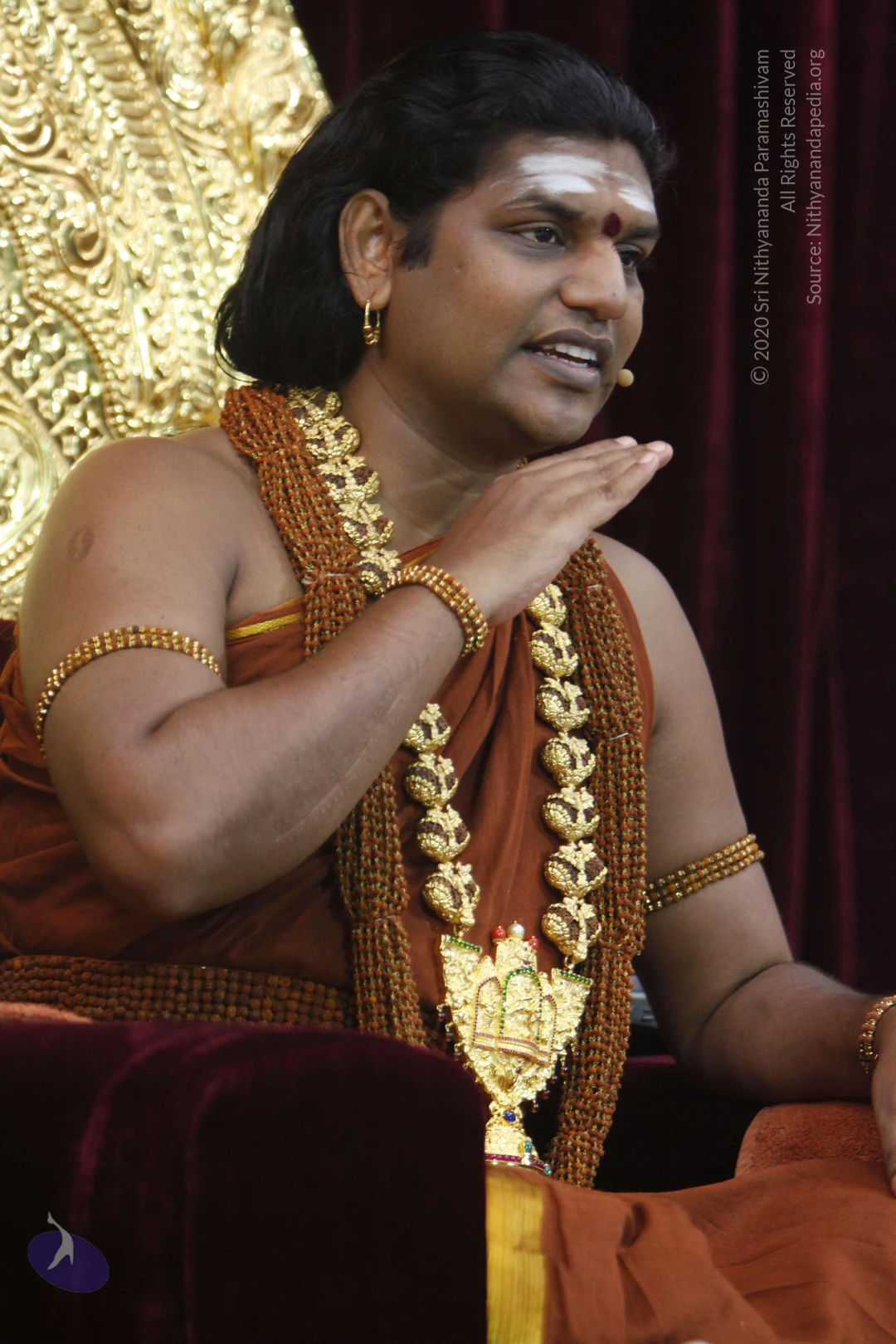
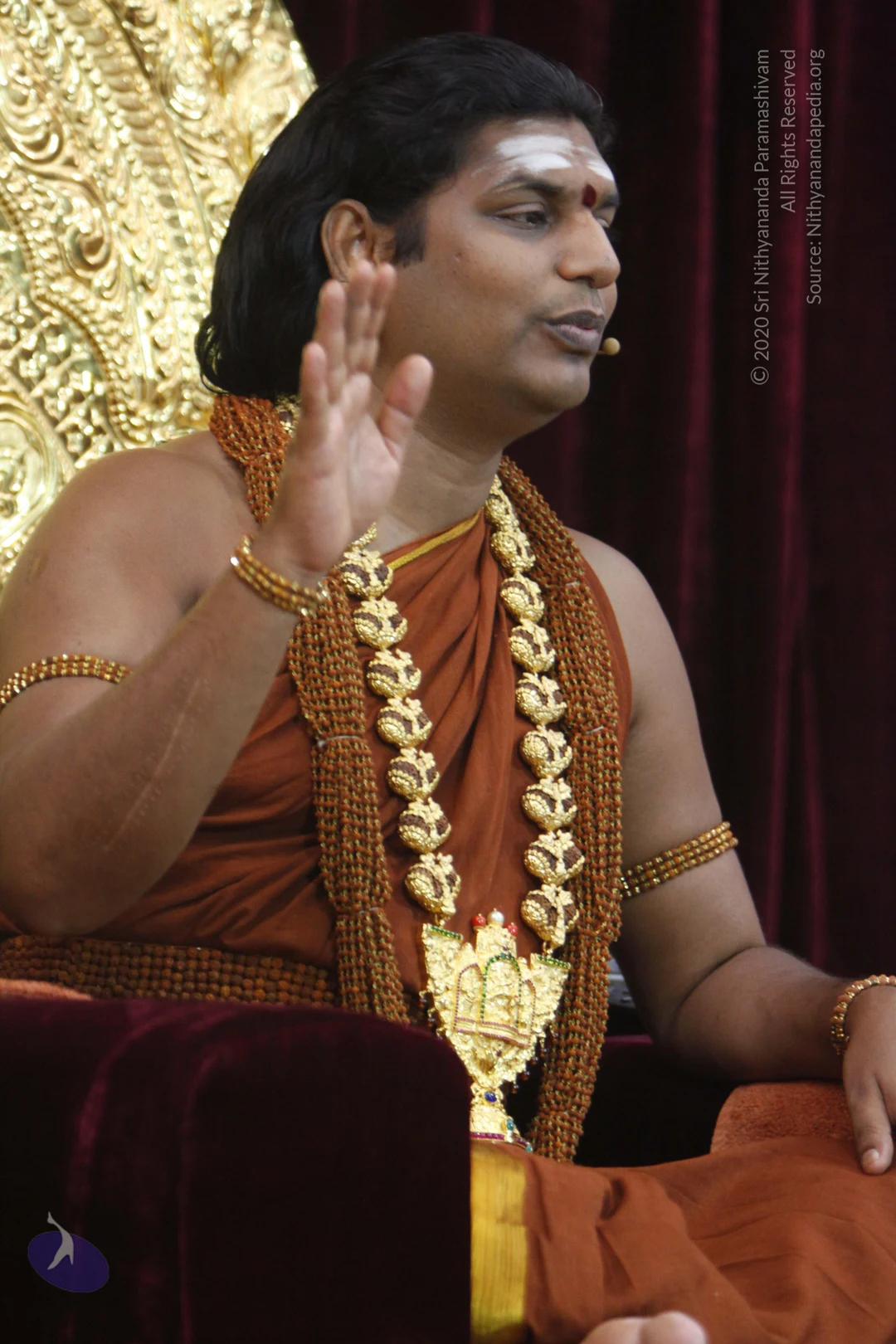
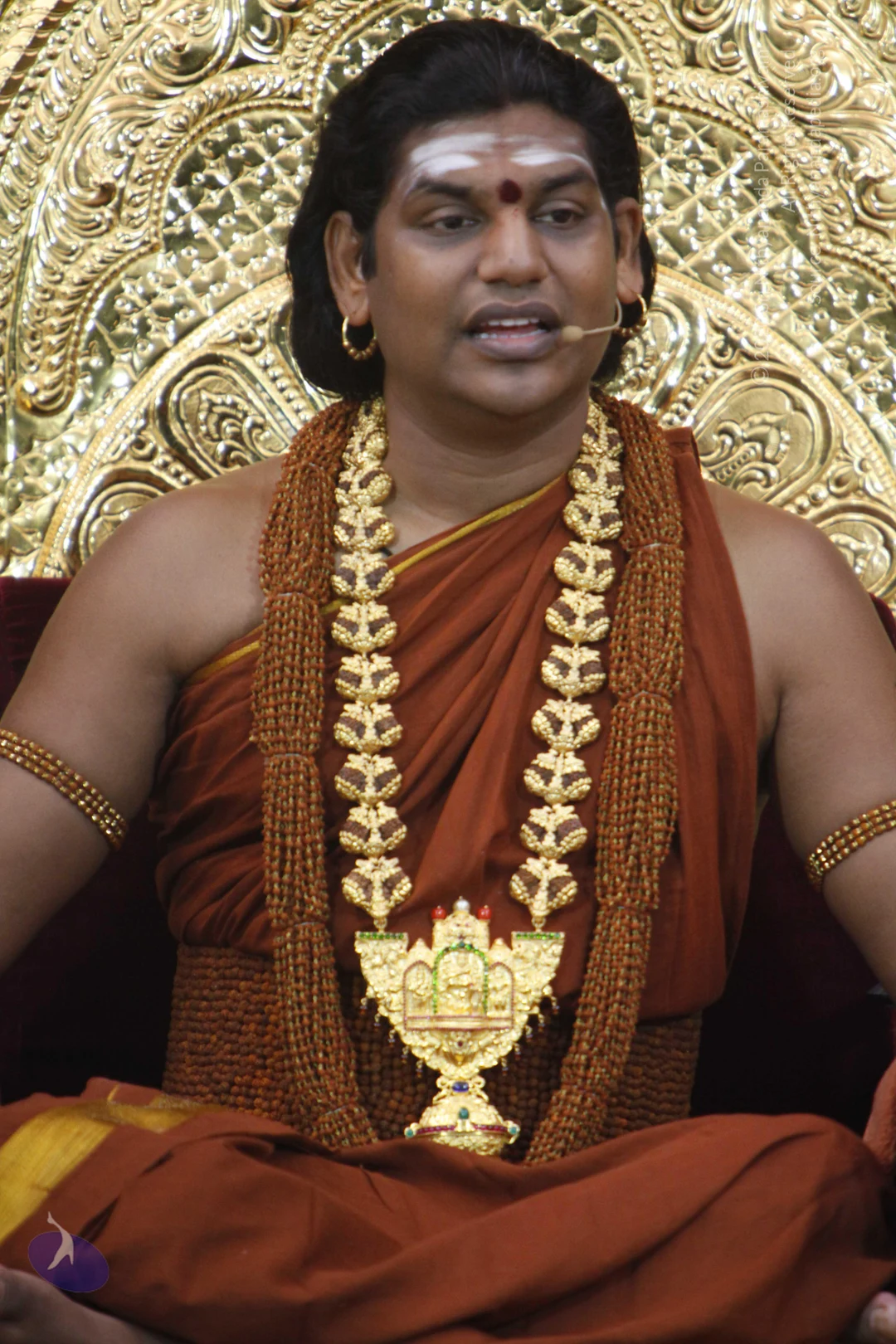
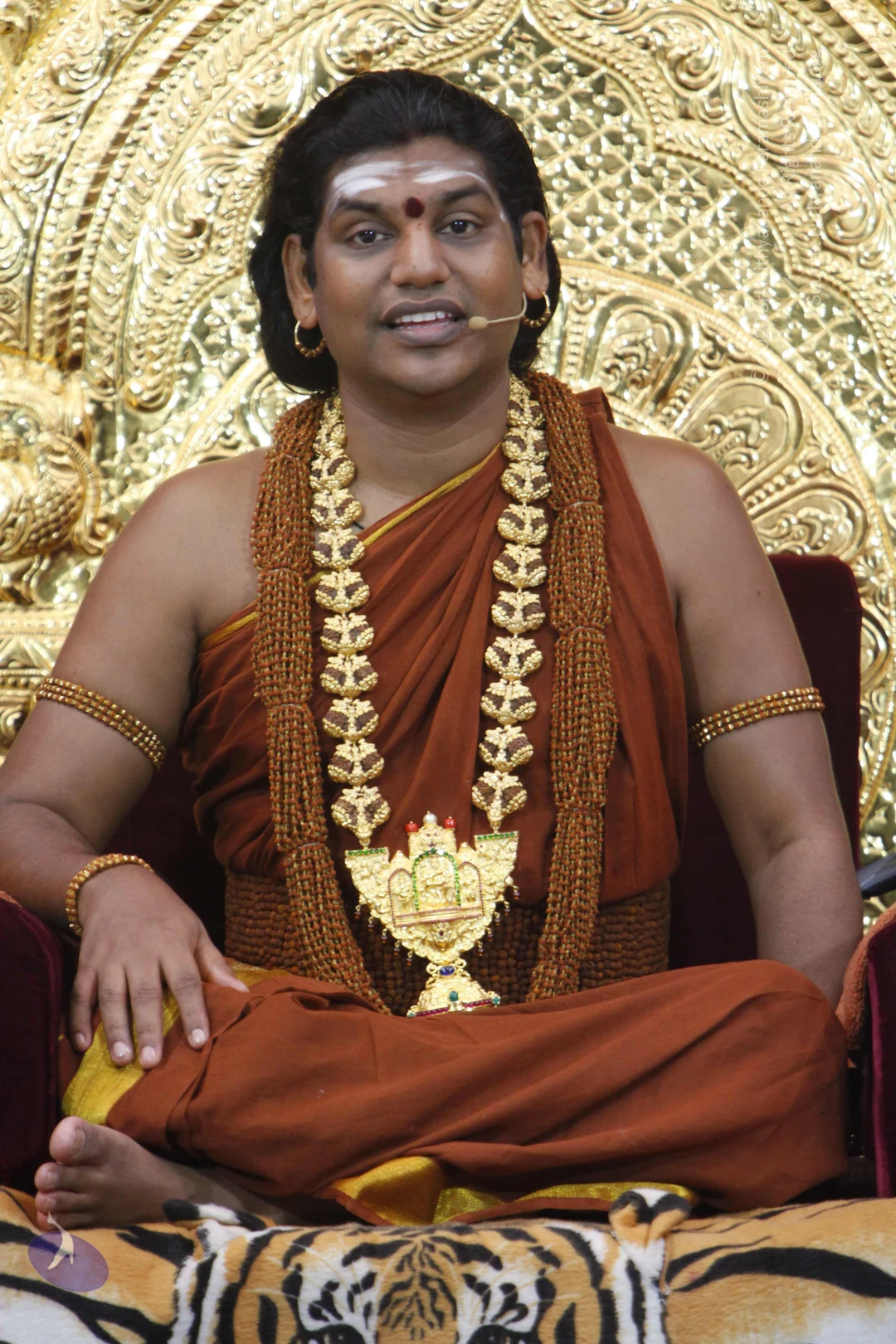
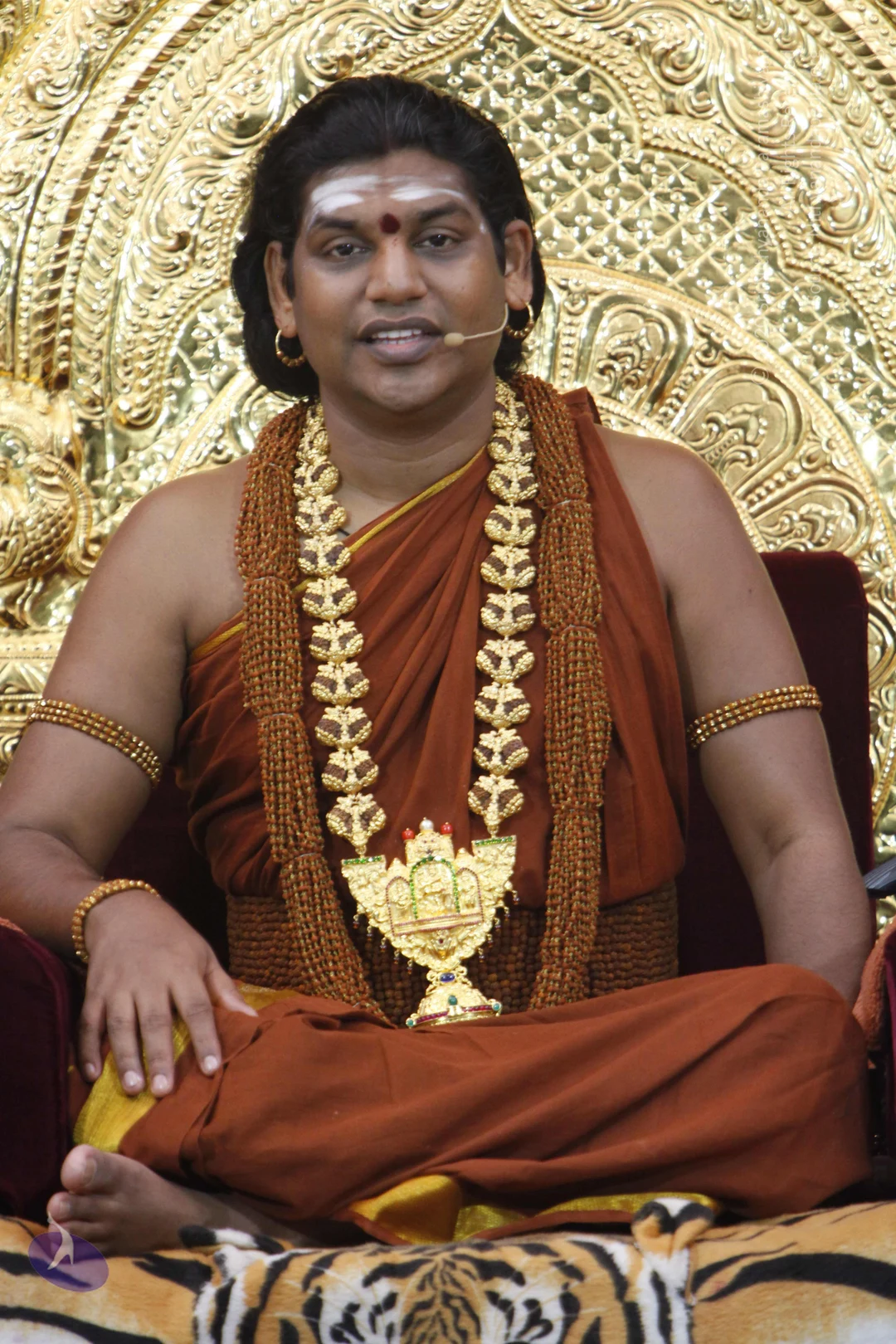
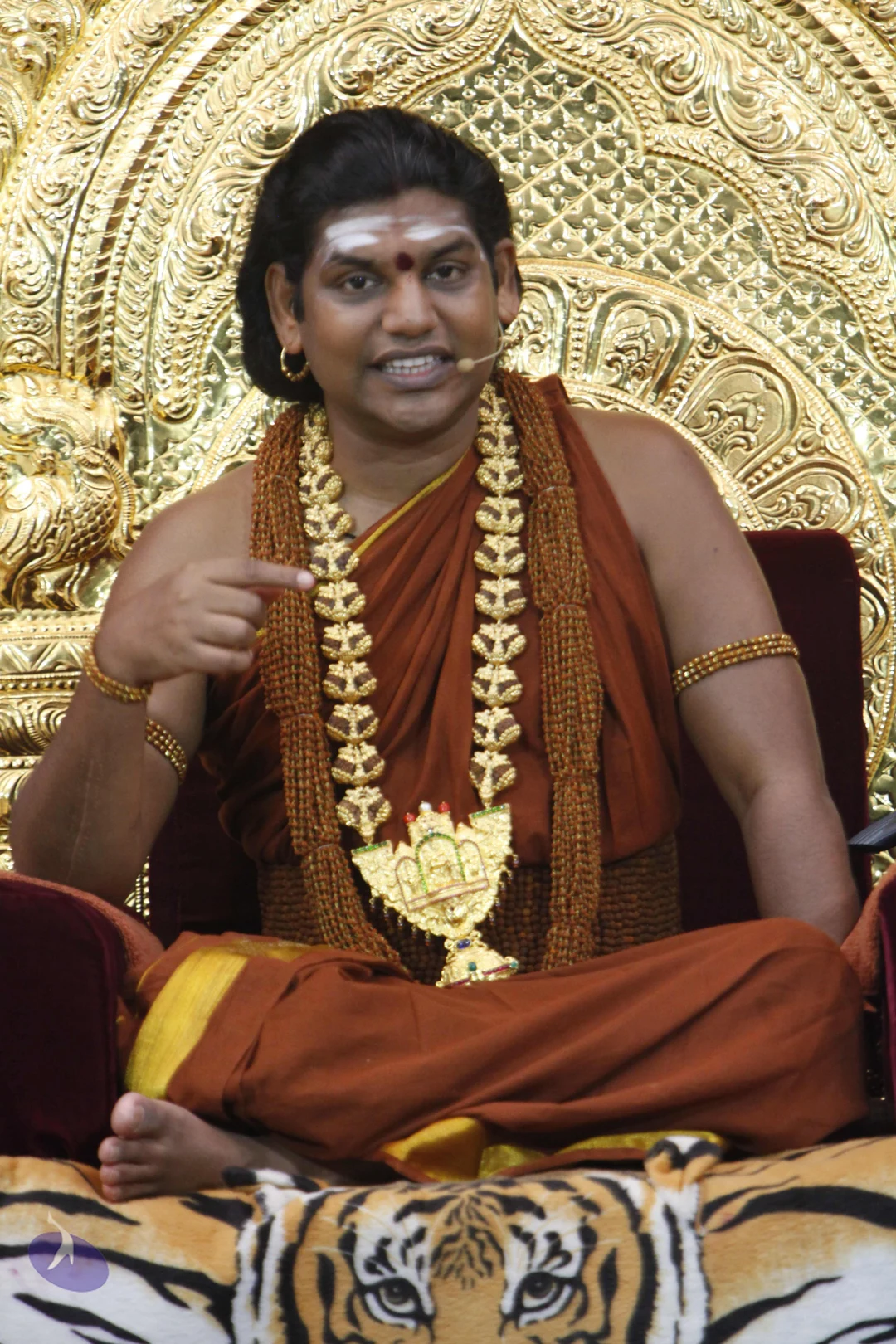
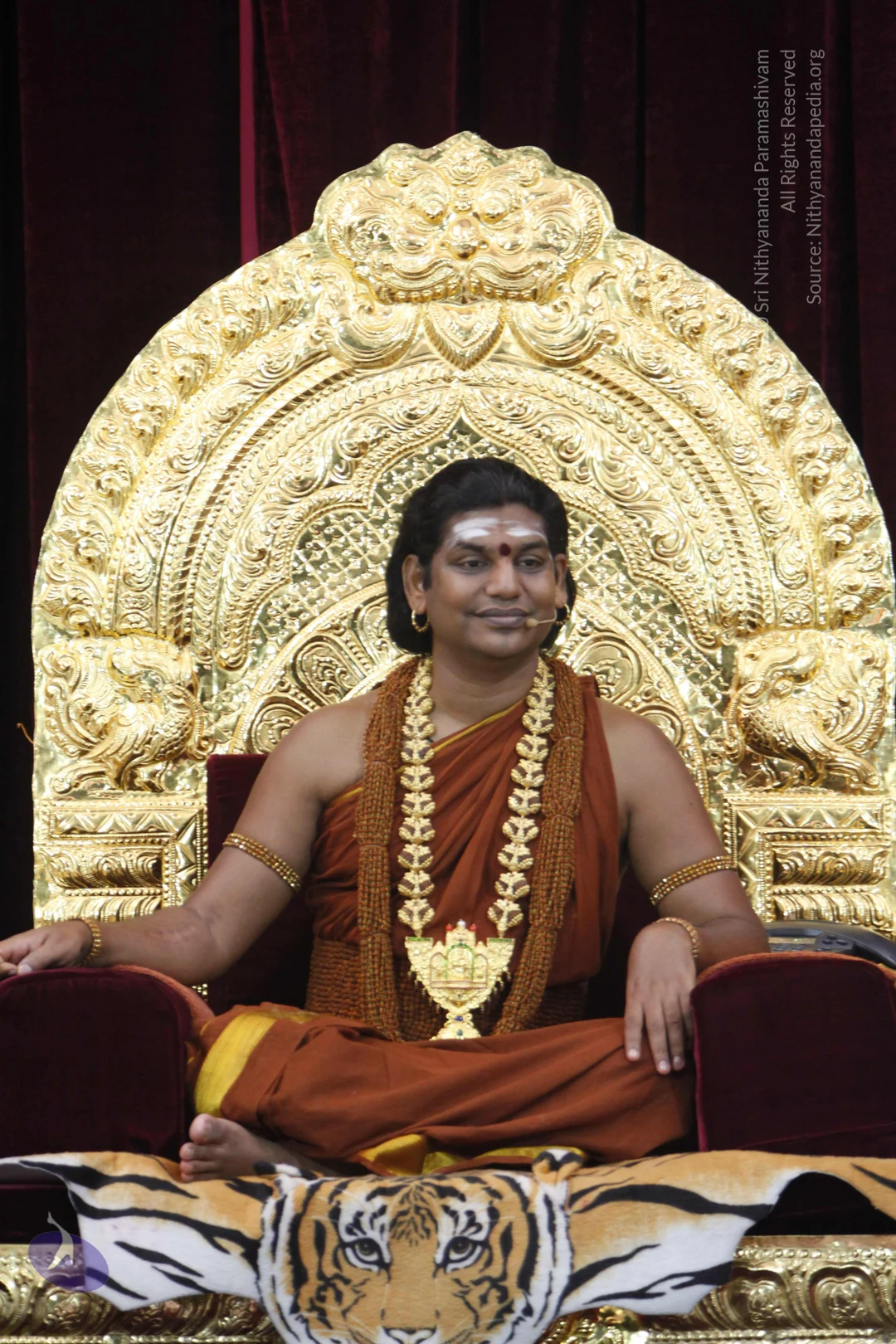
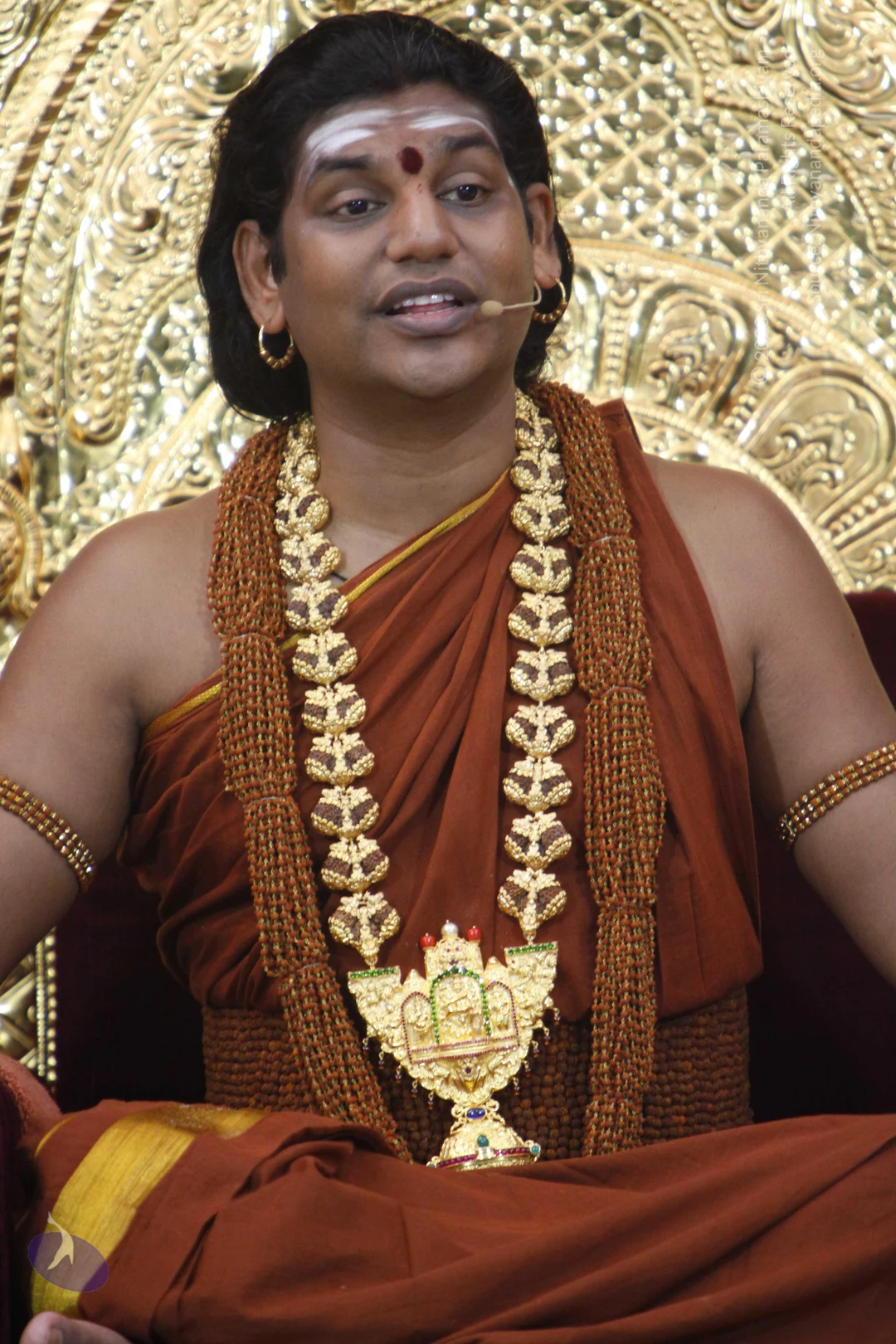
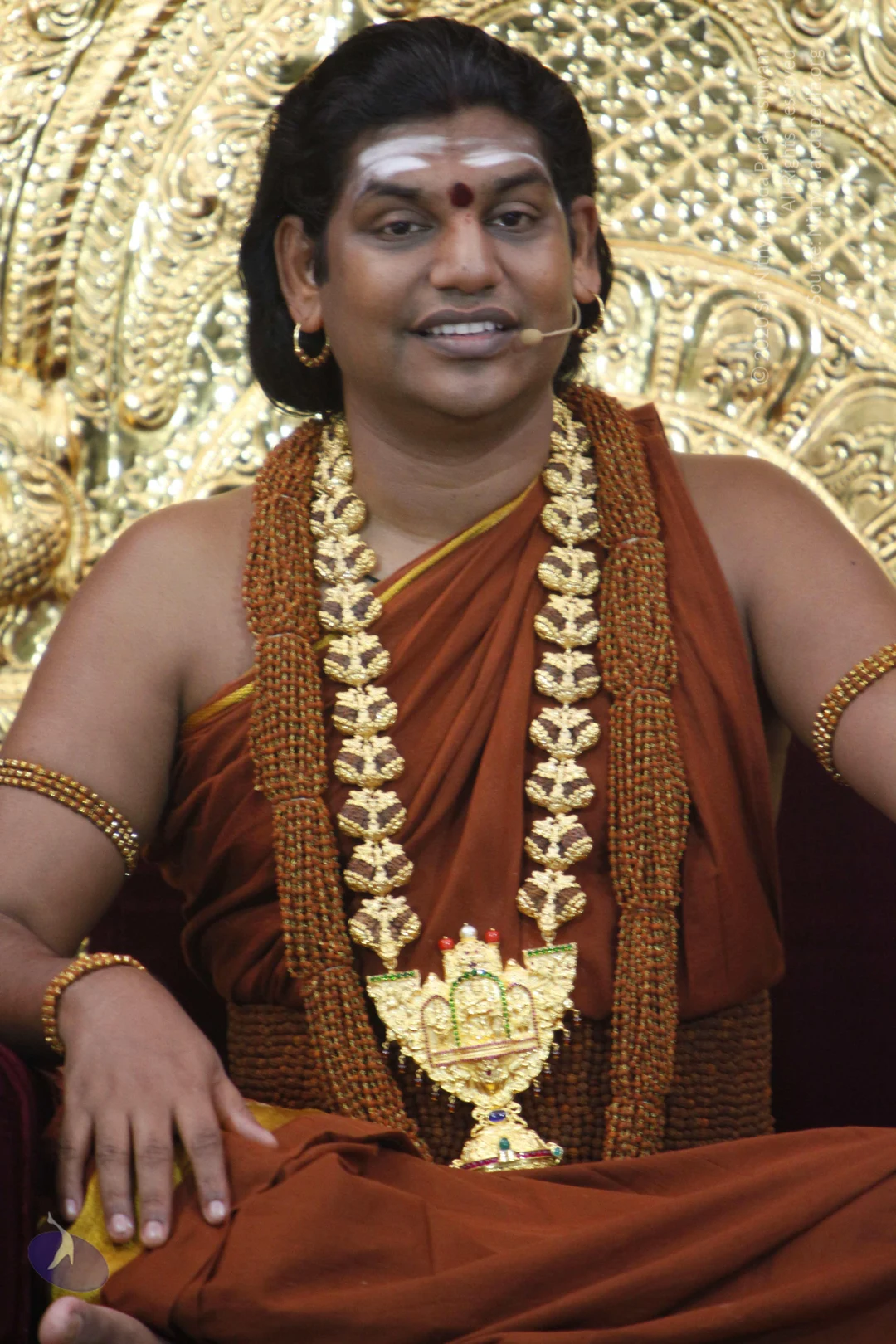
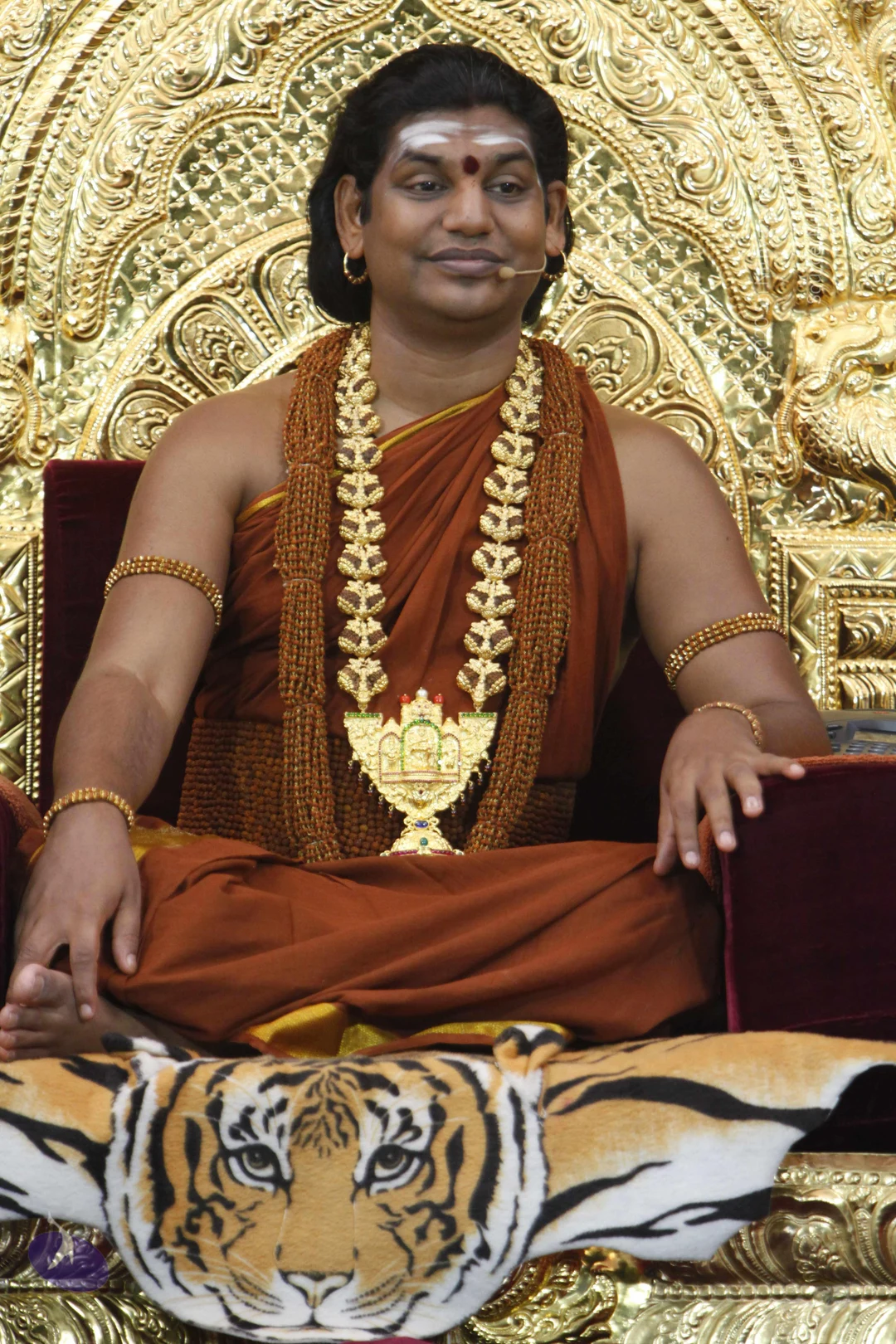
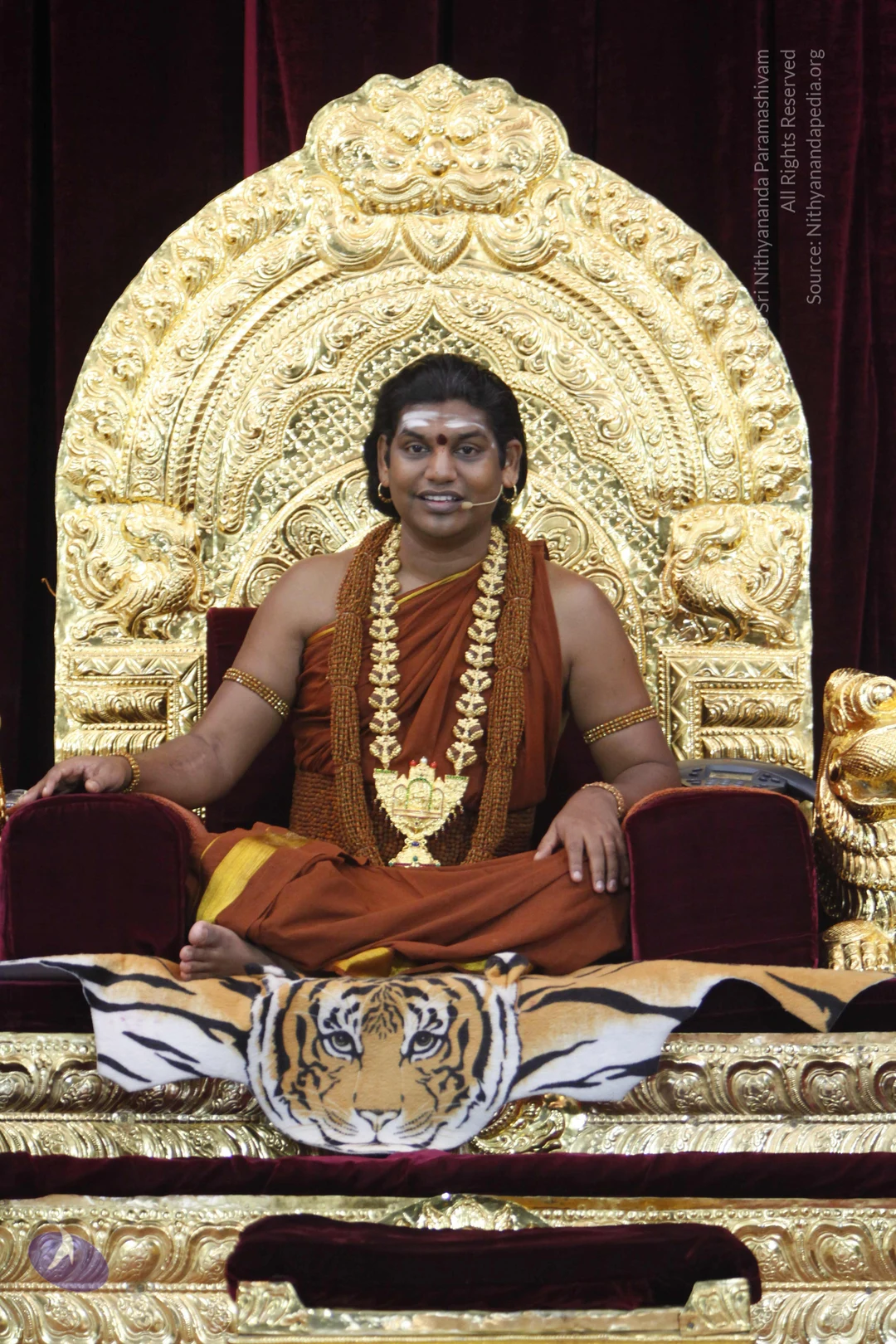
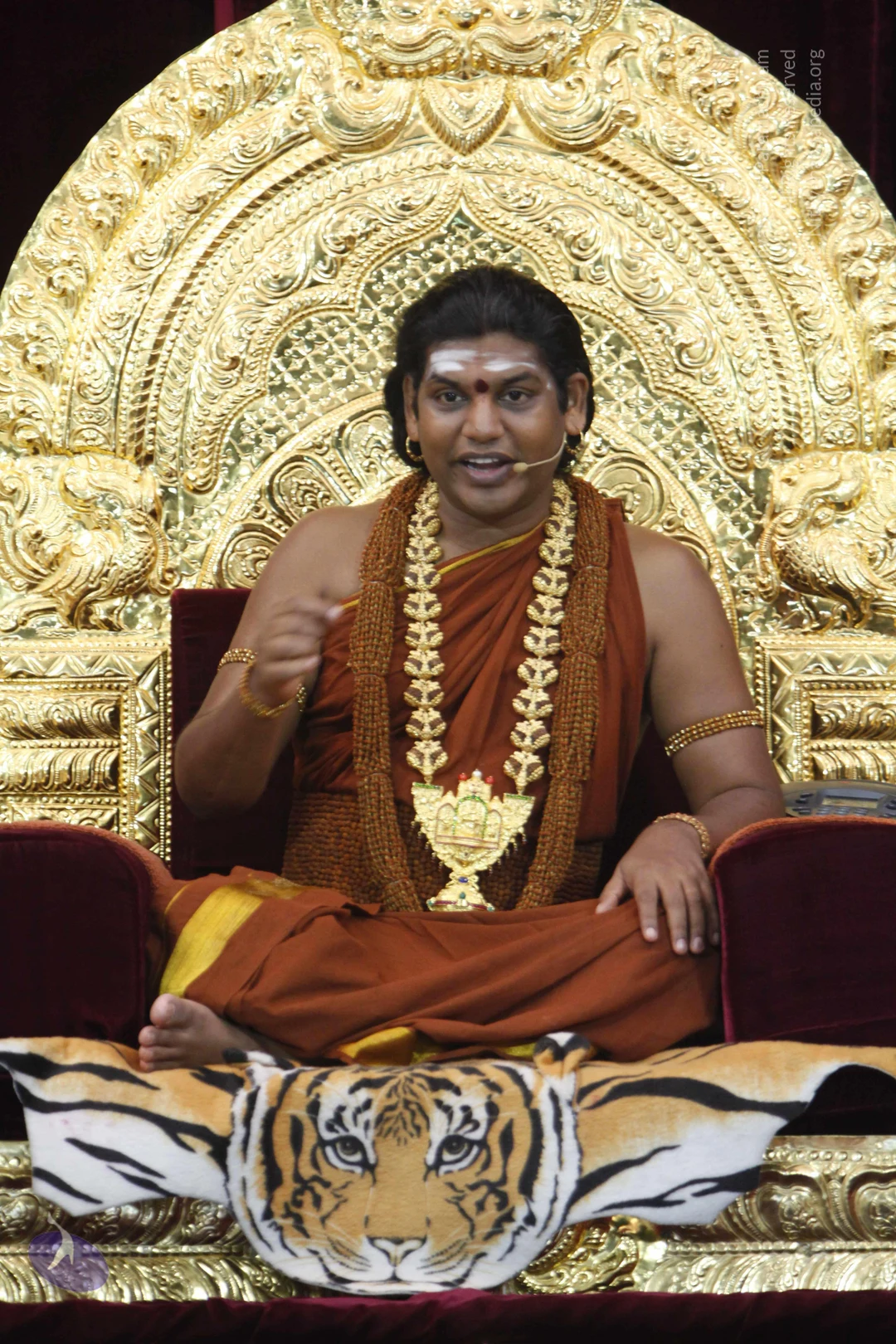
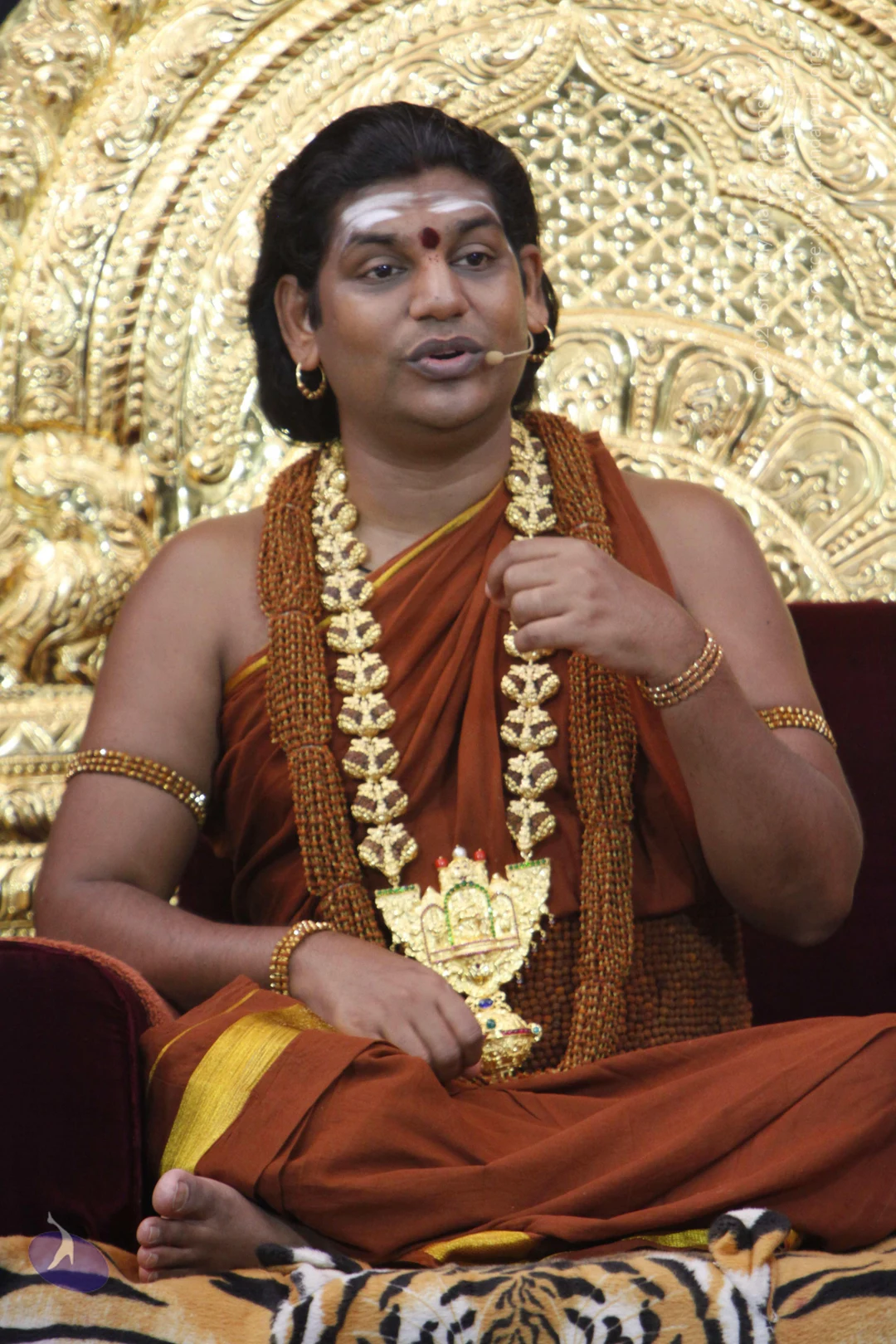
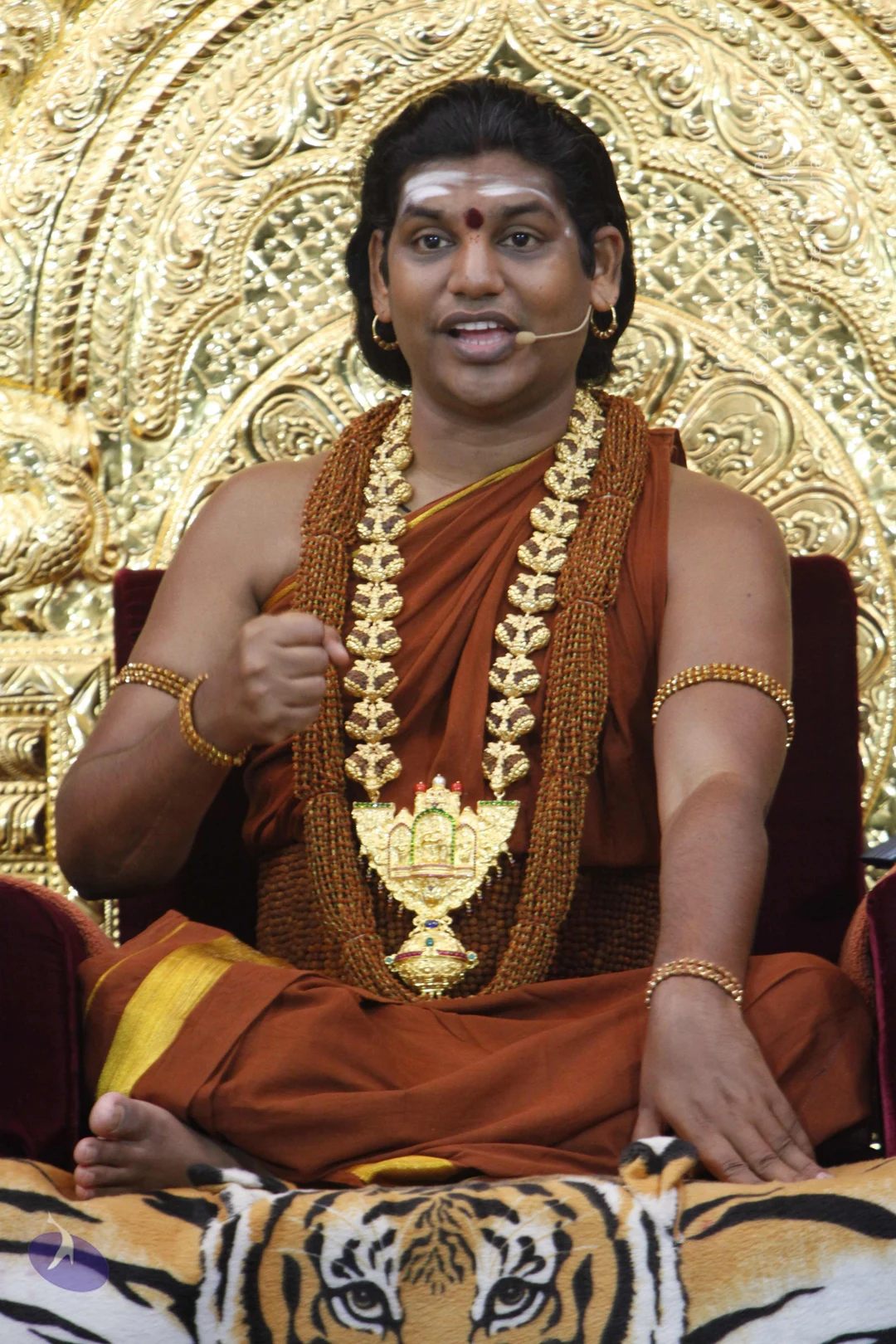
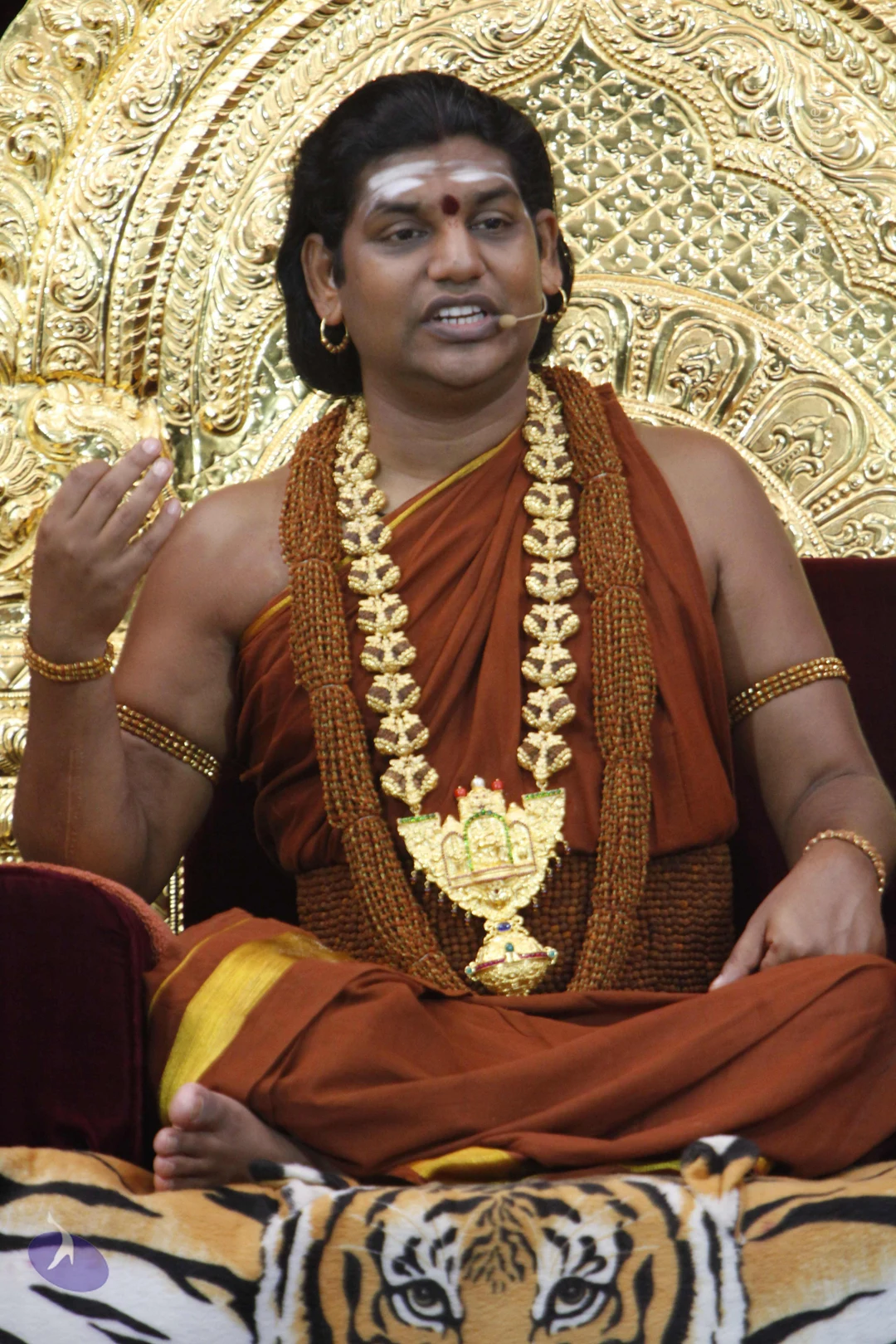
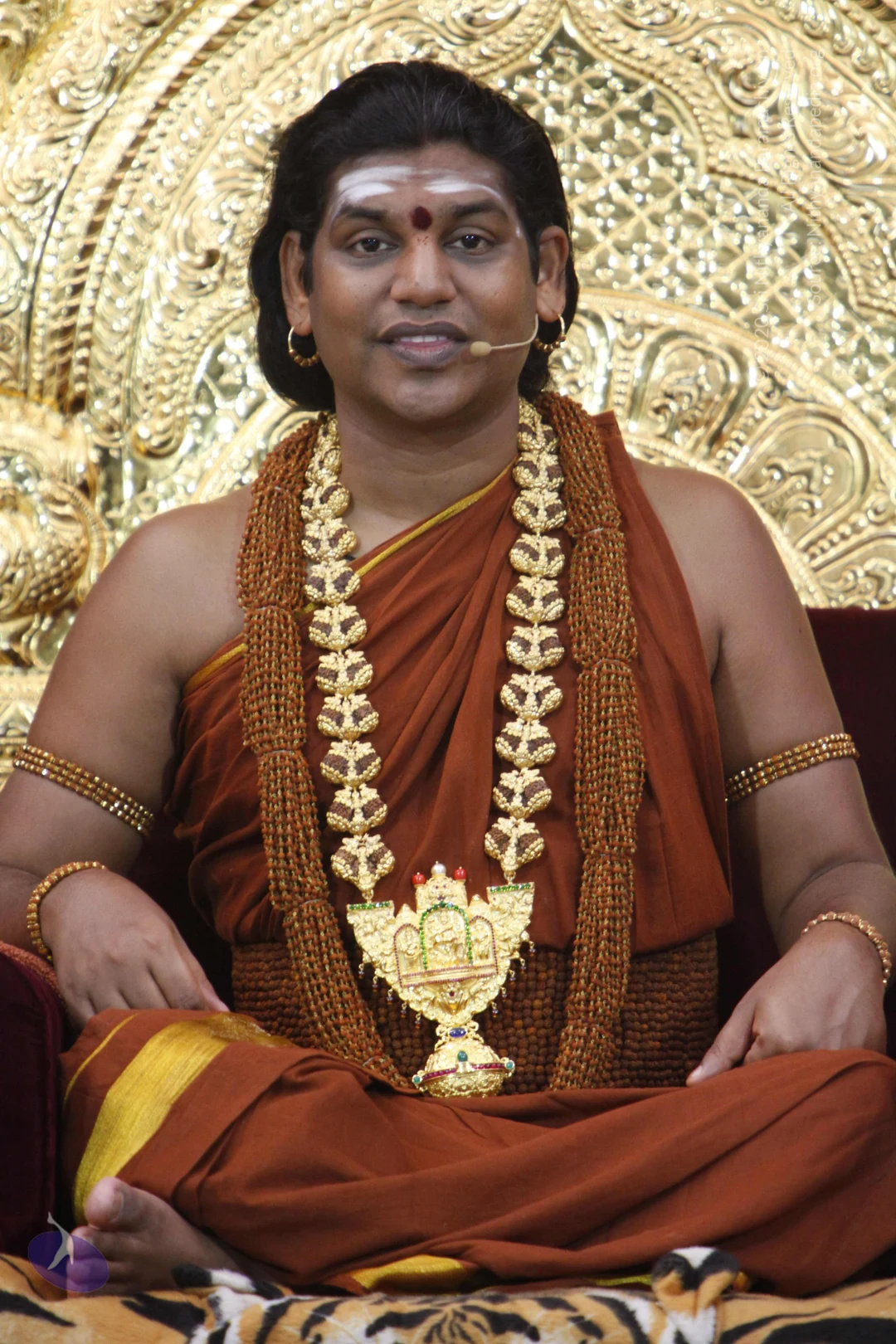
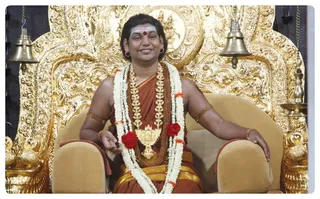
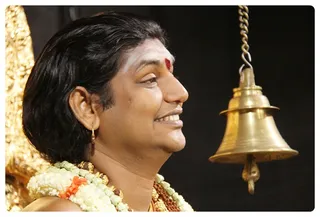
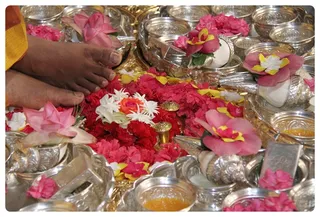
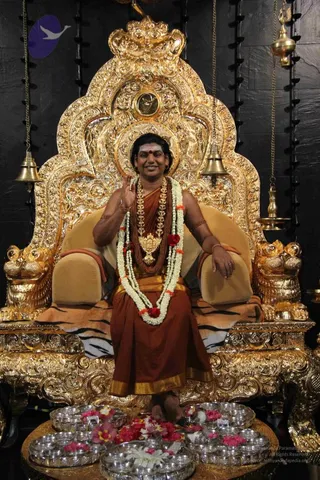
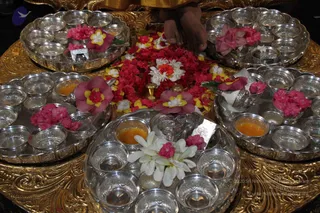
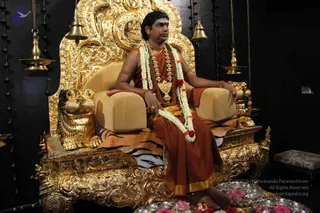
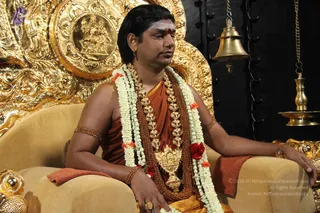
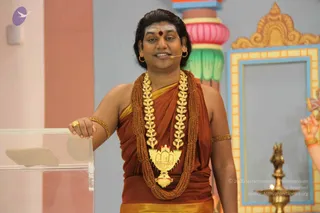
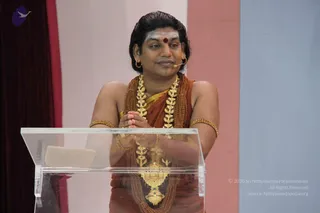
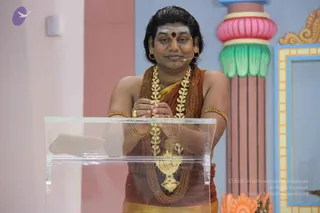
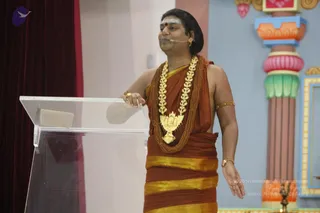
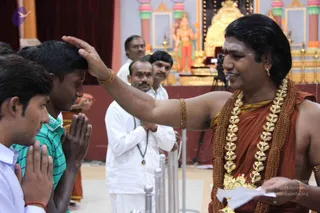
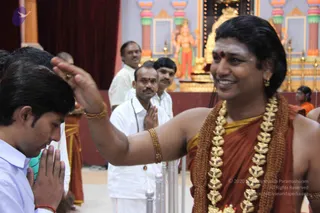
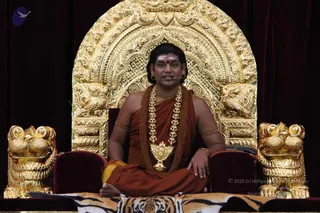
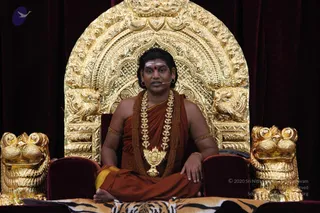
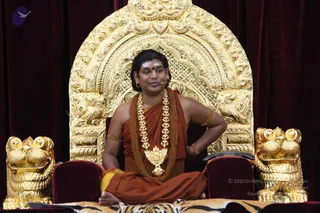
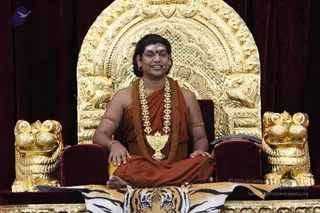
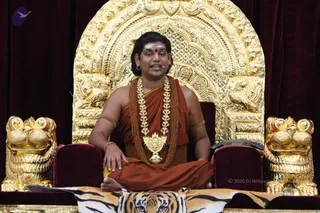
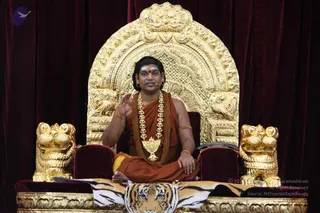
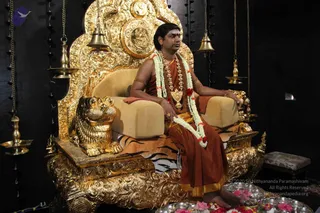
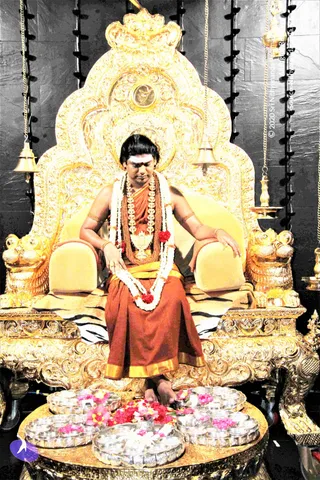
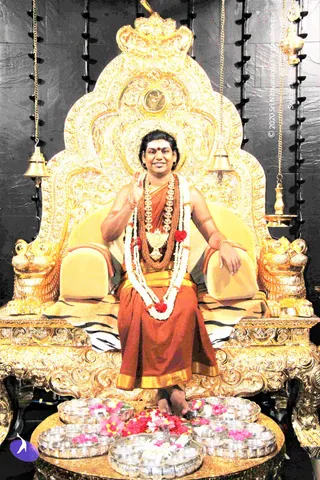
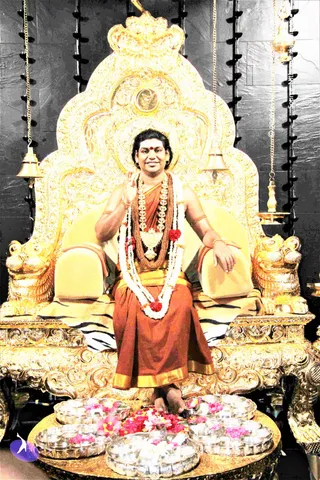
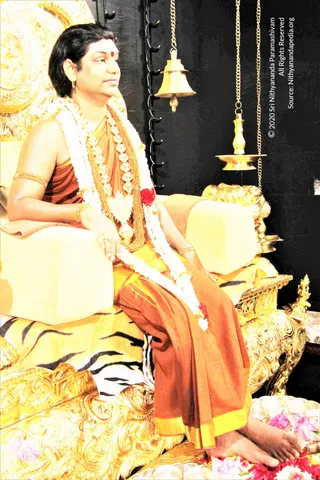
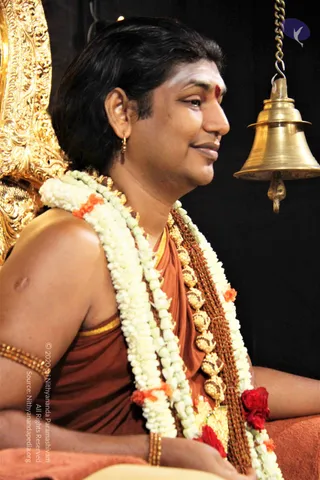
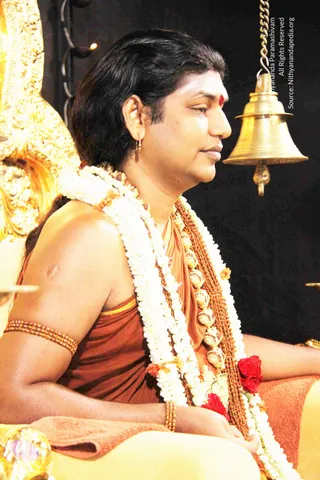
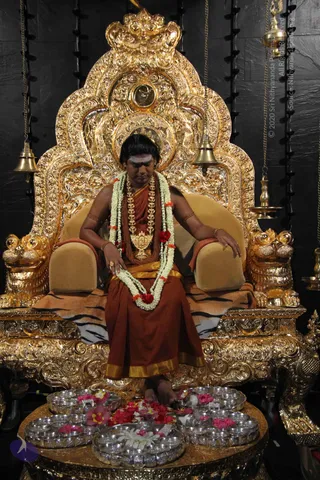
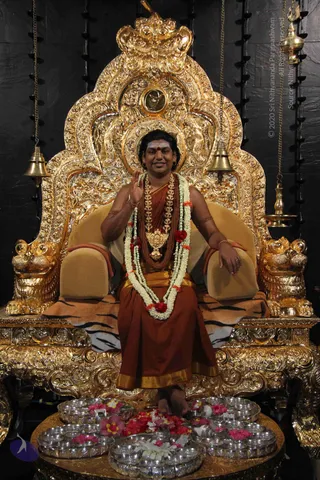
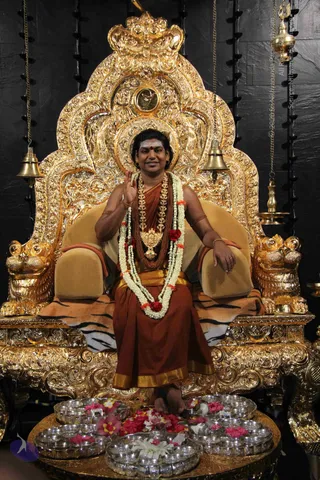
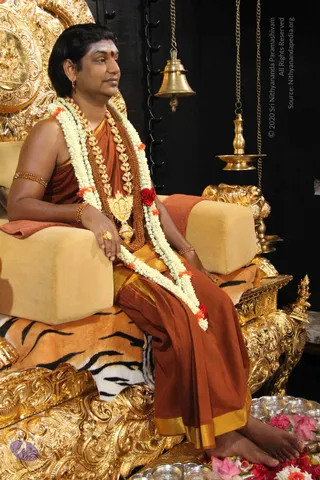
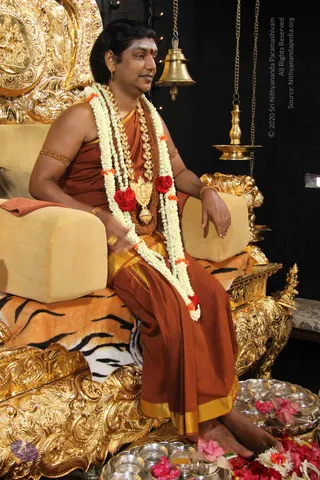
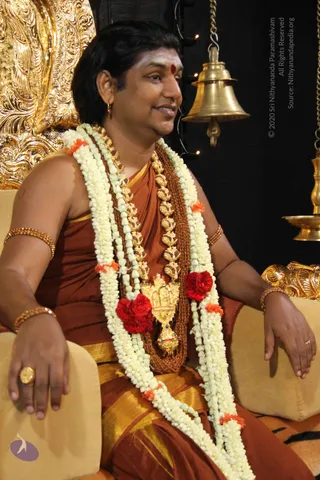
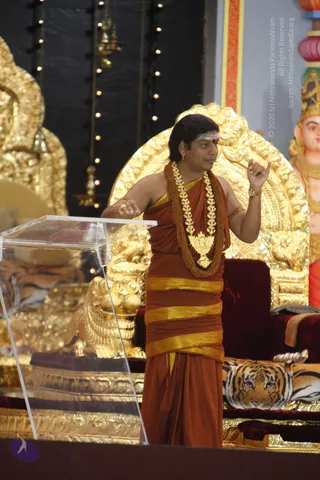
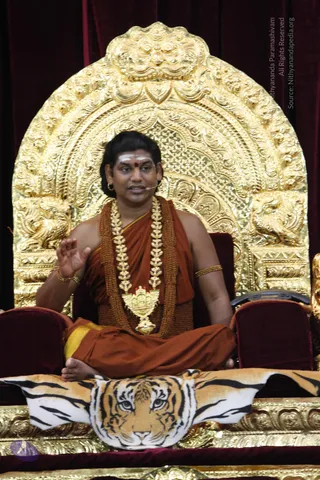
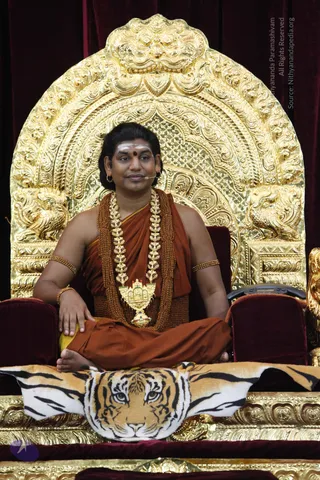
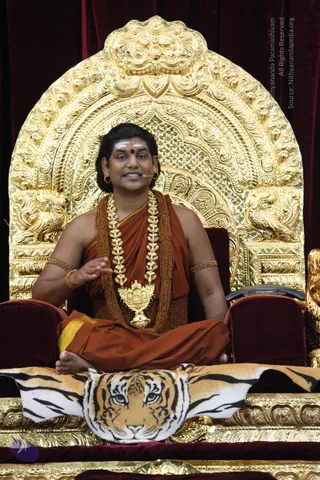
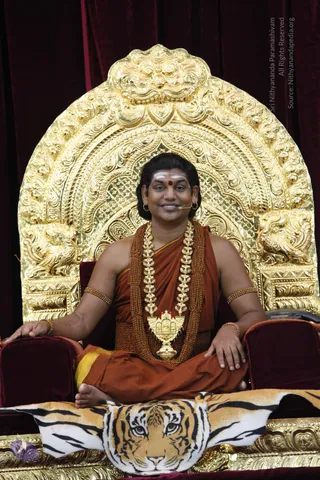
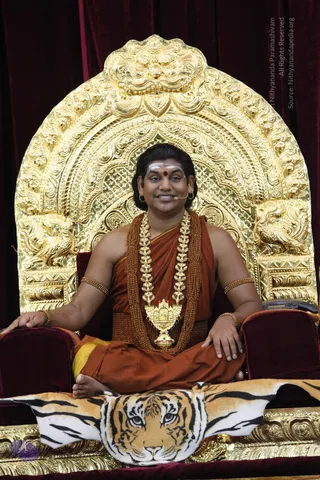
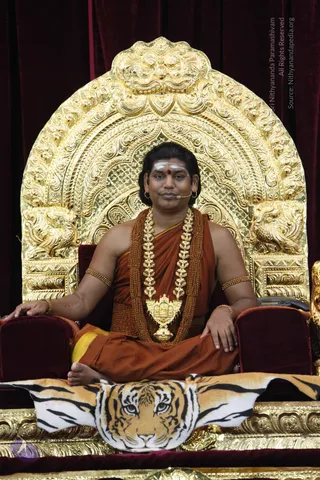
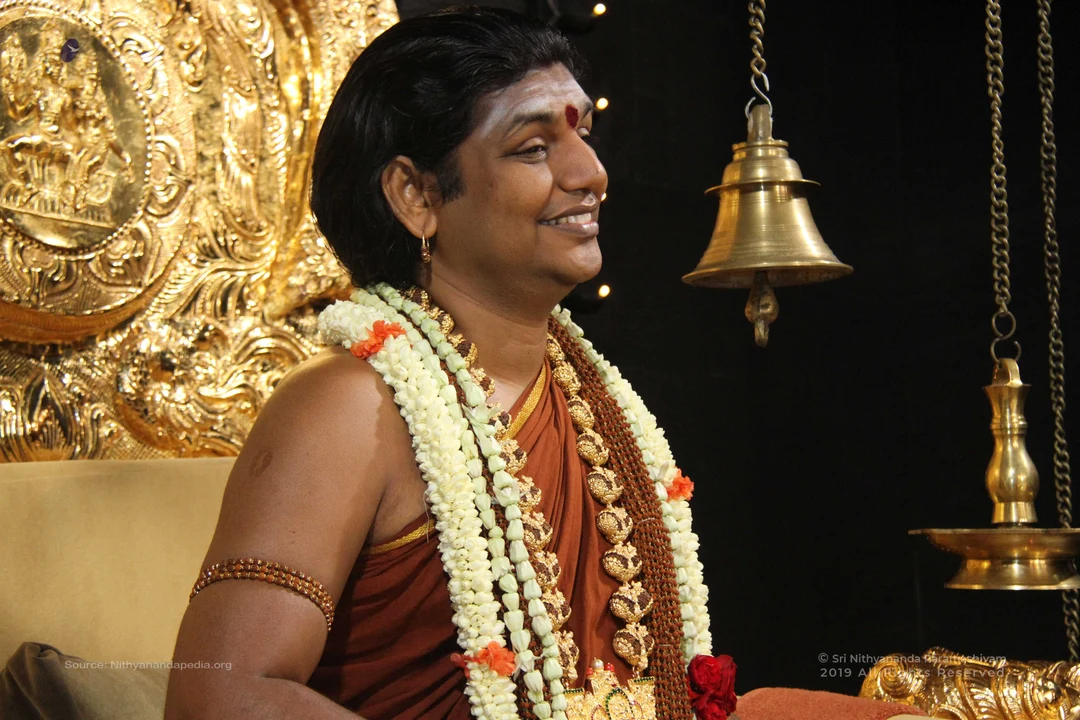
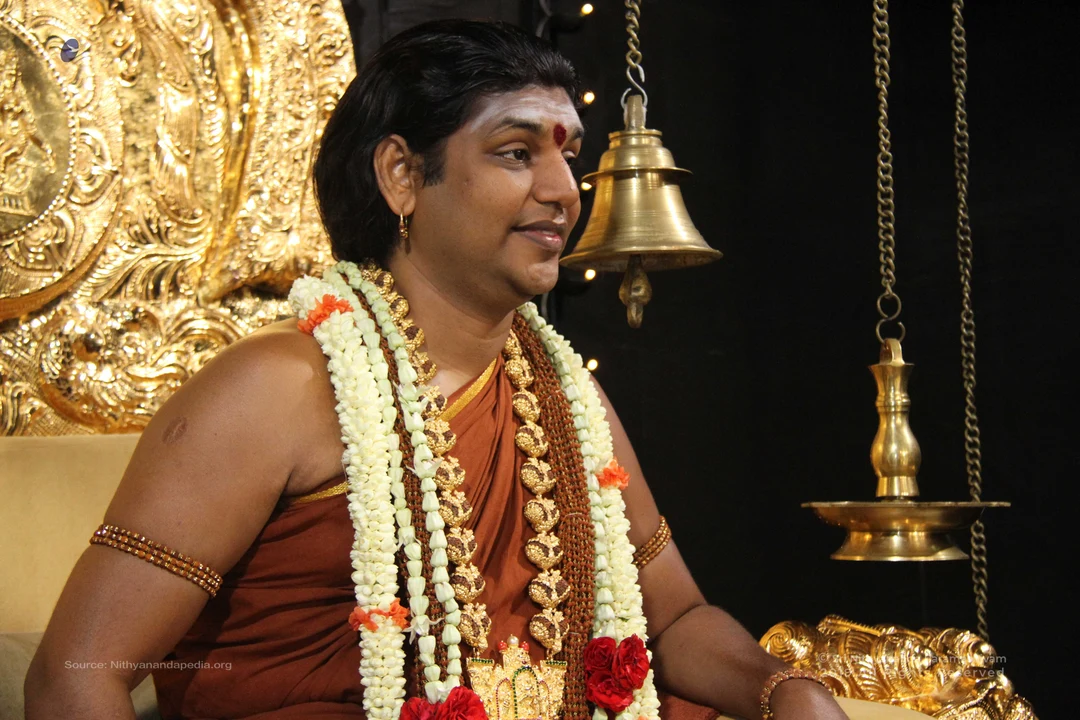
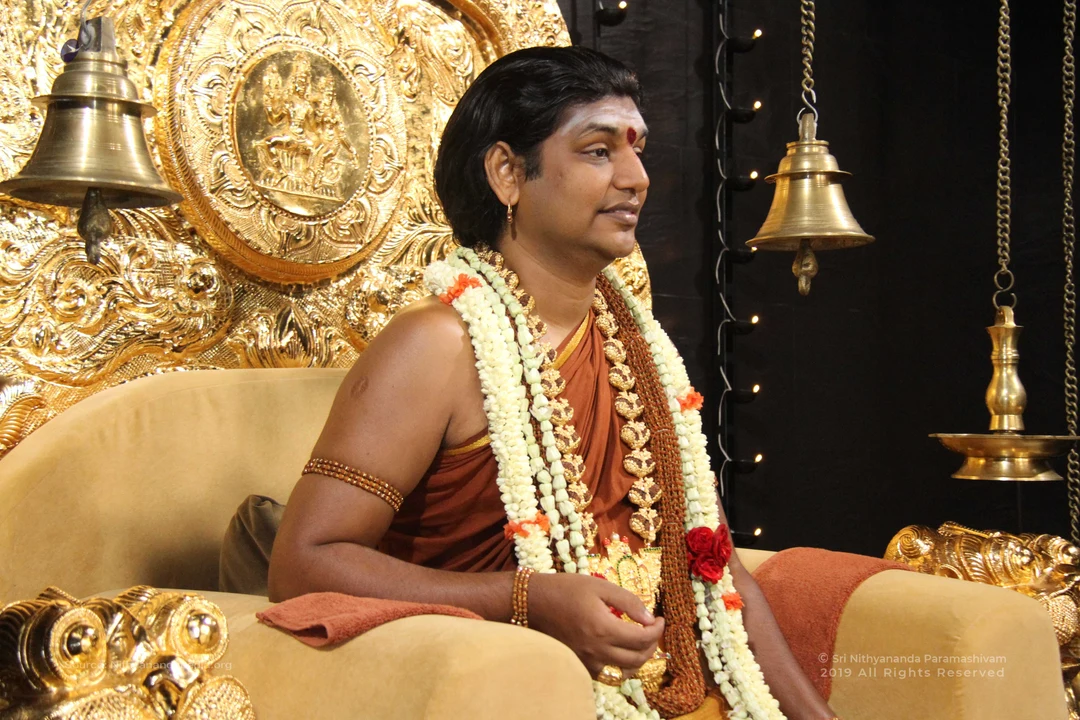
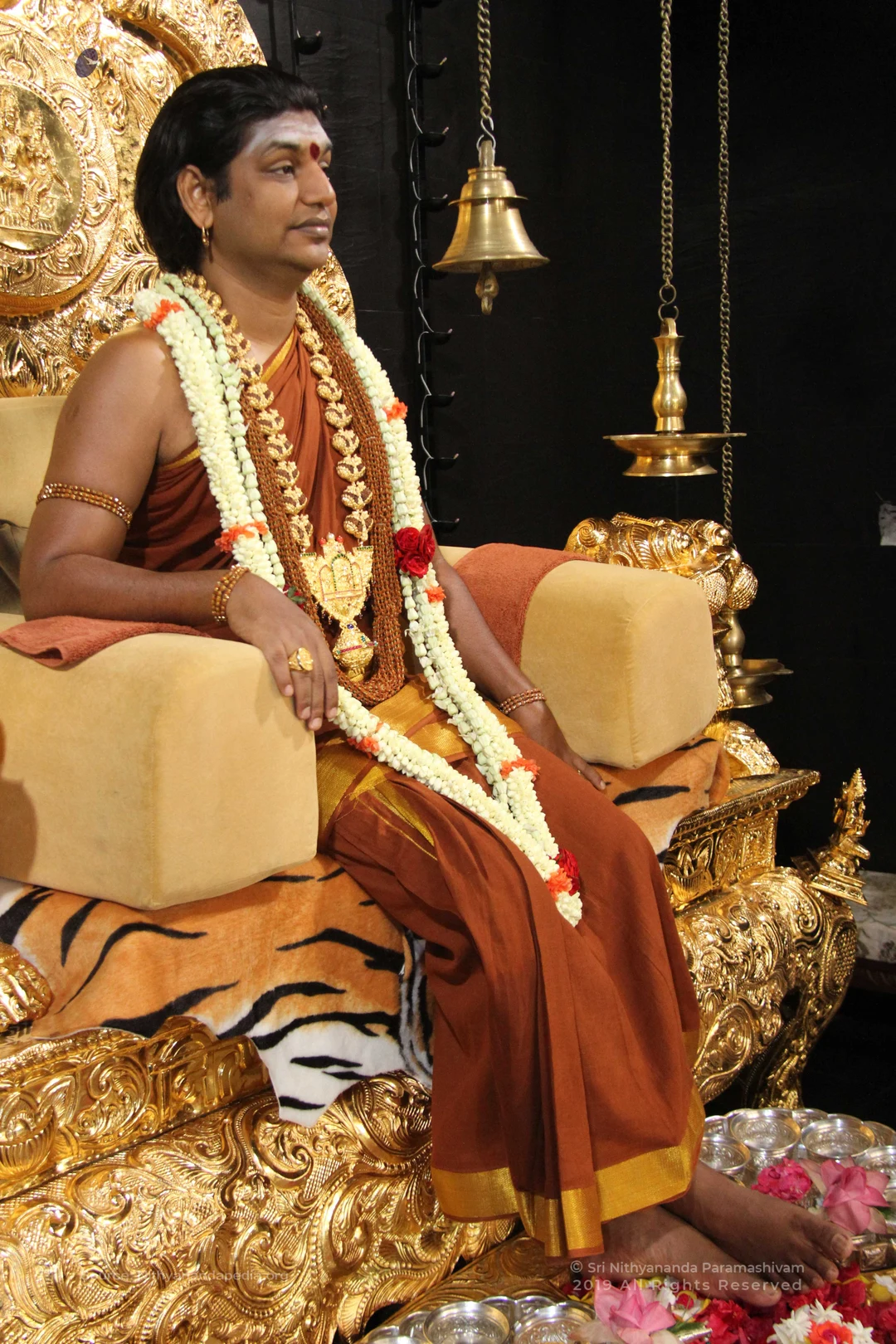
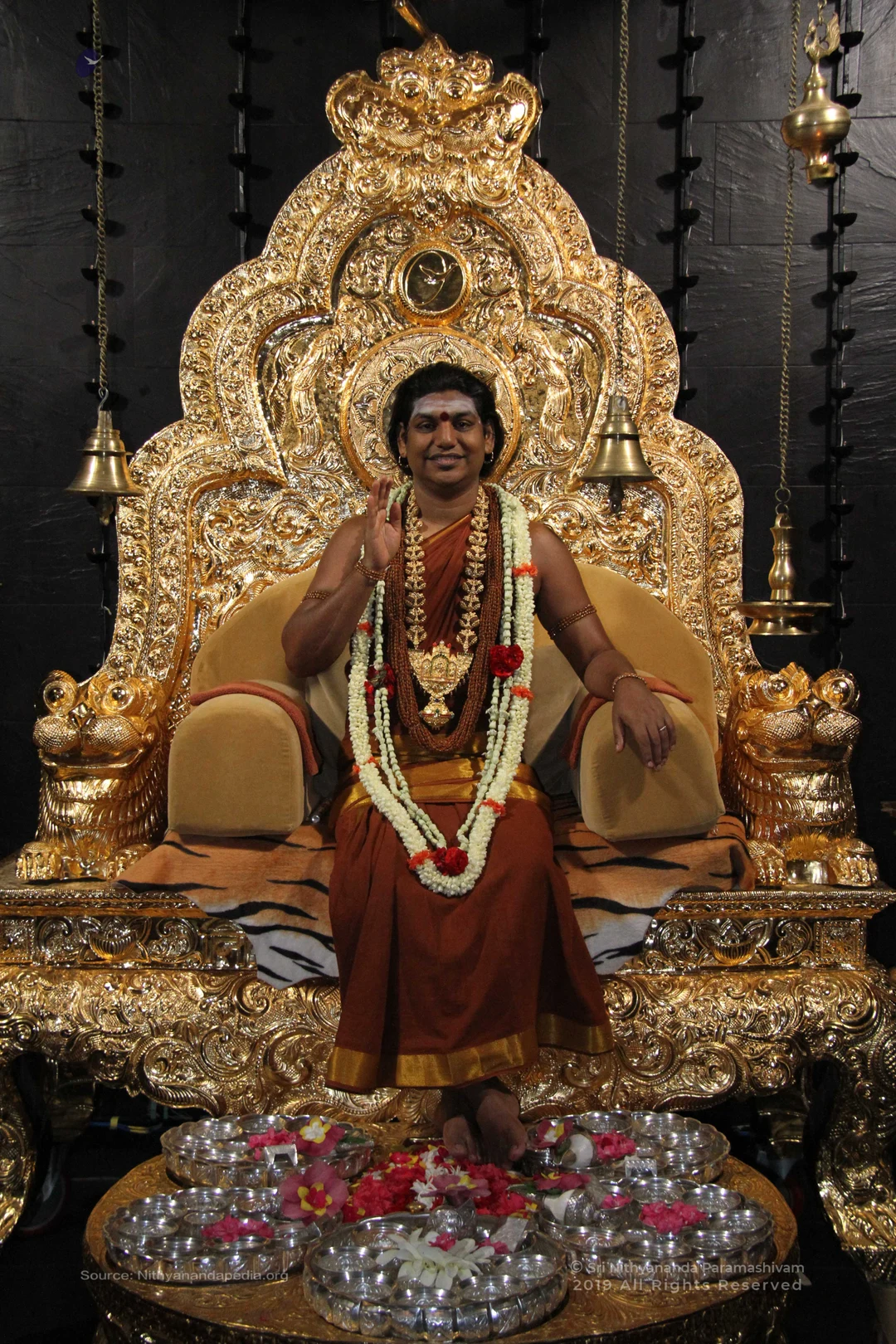
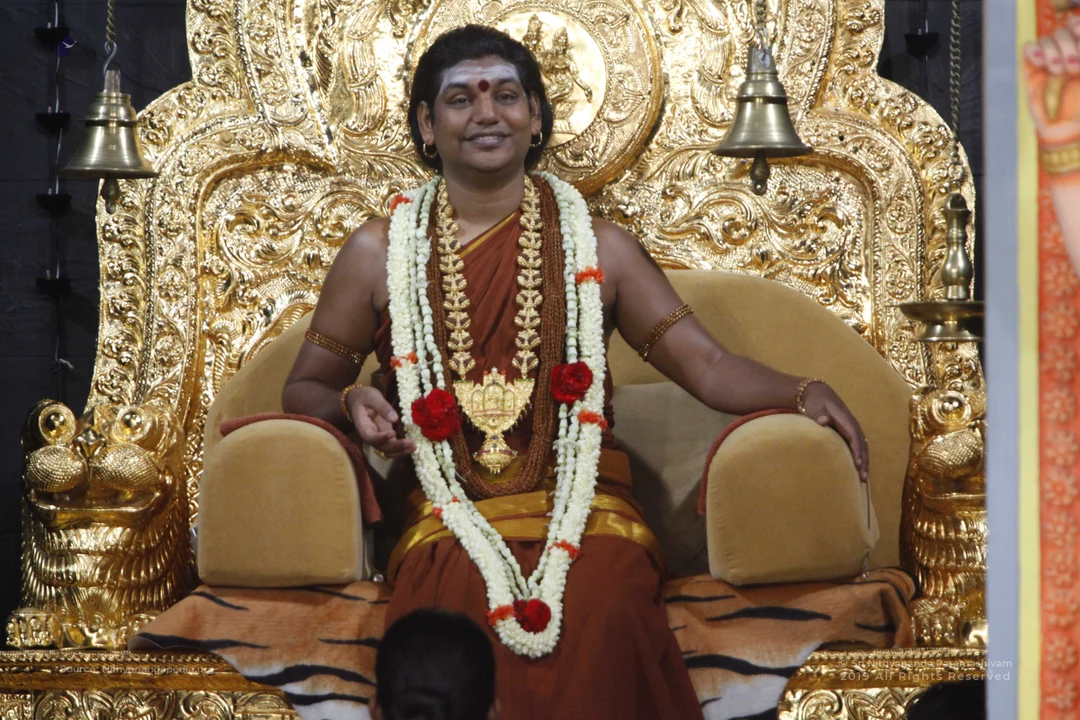
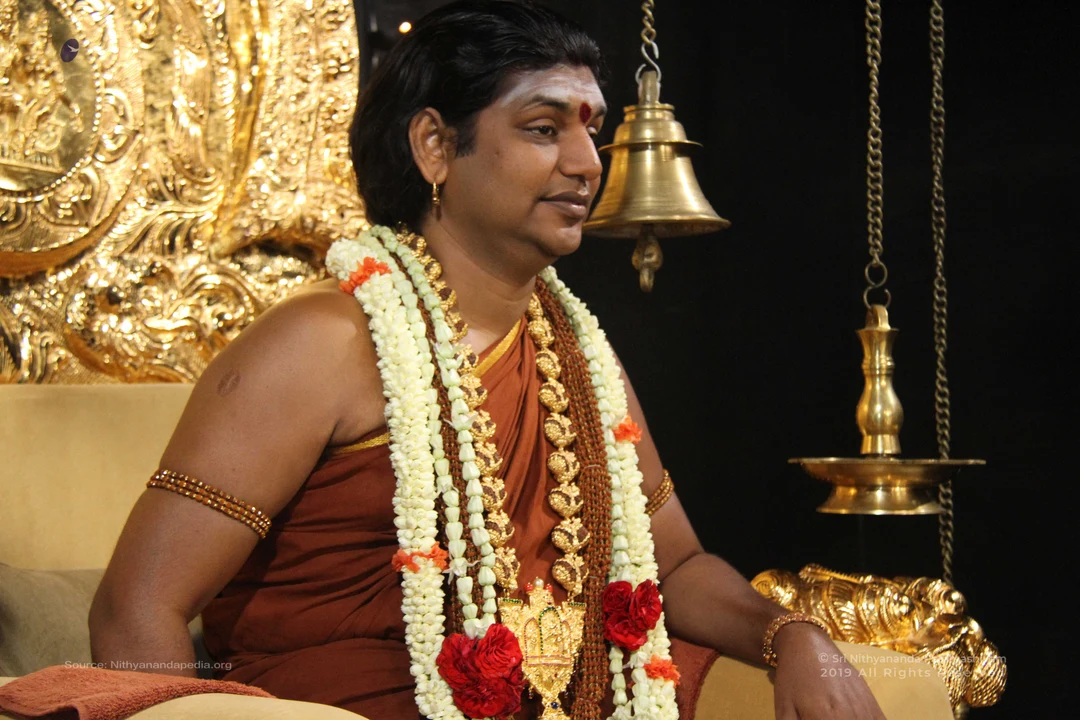
A man seated in front of an ornate gold-embossed backdrop, wearing a rust-orange draped garment bared at one shoulder and a long garland of white jasmine with red roses and orange flowers. He wears a rudraksha mala with ceremonial gold beads and a gold pendant, gold bangles on his upper arm and wrist, and a red dot with white markings on his forehead. Beside him hang a brass bell and a brass oil lamp on chains, with a golden figure at the lower right. Swamiji (probable): the long swept-back hair, saffron-orange draped clothing, rudraksha mala and gold necklaces match the page's Swamiji claim, so this is an appearance-based candidate present in the photo.A seated man in an ornate golden throne setting, wearing an orange-brown shawl draped over one shoulder and bare-chested, with a white garland of jasmine-like flowers and red roses, multiple rudraksha-style beaded and gold ceremonial necklaces, a gold armlet and a red bindi with white markings on his forehead. He has long swept-back dark hair and gazes to the side with hands resting in his lap. Behind him is a gold-embossed backrest with a relief of a deity, and brass bells and a brass oil lamp hang at the right. Swamiji (probable): the appearance cues of long hair, saffron-orange clothing, rudraksha malas and ceremonial gold necklaces on a throne are present.A seated man in profile wears an orange-brown saffron-toned shawl draped over bare shoulders, with a white and green jasmine-style garland and orange flowers around his neck. He wears multiple rudraksha-style beaded malas with brown and gold beads, a gold bangle on his upper arm and a red bindi on his forehead, and his hair is swept back. Beside him hang a brass handbell on a chain and a brass lamp stand, with a gold-embossed throne visible at left against a black background. Swamiji (probable): long swept-back hair, saffron clothing, rudraksha malas and a ceremonial garland mark him as the sannyasi seated for satsang.

June 26 2013

Original wiki page
Contents

Title:

Nirahara - Natural Cure For Obesity

Description:

In today’s morning Satsang, Paramahamsa Nithyananda expands on the science of the Nirahara Samyama. He explains how we build up hundreds of patterns and unnecessary sentiments relating to food. We relate food with love, associate it with prestige, and carry deep fear planted in us from society: fear of starvation, death. Maybe we can remember when our father instilled in us to eat everything on our plates, or grandma out of her expression of love, continued piling more food on the plate. Many of us have heard at some point, how will you make money to buy food? Now Paramahamsa Nithyananda offers a way to free us from these patterns through the beautiful Nirahara Samyama. He is making this science available to all of us, unlocking the bio-memory each of us carries, to live from the air and sun.

Link to Video:

VideoAudio

Transcript:

0:29

Before entering into the satsang, Nithya Satsang, today I wanted to say few words about Nirahara Samyama.

Please understand. Come to the space of listening.

You have something called ‘muscle-memory’. Means, your basic habits, way you respond, way you like things, way you hate things, way you are addicted to it or way you are allergic to it. All these, please listen, there are some things you are addicted to, there are some things you are allergic to, some things you like, some things you hate. All the memories you need to live this life stays with your muscle-memory. It stays in your muscles. That is why if you touch the live wire, electricity, even by mistake, automatically your body jumps out. Medically, you call it ‘instinct’ or whatever names you may give. That component which has the basic survival instinct and all the basic knowledge you need to run this life, is ‘muscle-memory’. It stays in your muscle-memory.

The language you learnt and the way you respond to situation; some people can tolerate anything but can’t tolerate if their ego is hurt. They will tolerate anything, but they can’t tolerate if their ego is hurt. Same way, there are some people, they will not bother about their ego; they can tolerate even if their ego is hurt; but physical pain they can’t handle. All these patterns are in your muscle-memory. All these patterns are in your muscle-memory. Listen.

But, there are higher intelligences which you learnt in your past lives: ability to fly like a bird, ability to swim like a fish, ability to live under water, ability to produce food directly from the air and the sunrays. Please understand, I am talking knowing I am talking in a national TV. I am talking responsibly. I am not promoting any superstition. All these powers are in your bio-memory. Ability to fly like a bird, ability to swim like a fish, ability to live under the water like a tortoise or crocodile, ability to produce food directly from air and sunrays just like trees, all these abilities are there in your bio-memory.

Then you may ask, ‘Do you mean to say we can fly?’

Naturally, I am going to say ‘Yes’. With the right technique and process, if you awaken those bio-memories, you can do. But as on now, I have not successfully proved any technique or process which can make anybody fly. So, once I establish, I will teach the science.

Till now, but I am able to comfortably, very successfully make at least few hundred people live without solid food; some people even without anything other than water, just on water and air. By the divine grace, I received the techniques and process to activate your Kundalini to such level, Kundalini energy to such level where people can comfortably, without disease – that is the main thing – without tiredness, without fatigue, comfortably able to live quite a long time. I have Niraharis who are successfully living that as a lifestyle for more than ten months. They are going to be completing a year, one year. Many, many of them have taken up this lifestyle. Many people in my ashram do off and on, doing Nirahara. Understand, that is why I am sharing this process, this technique with you.

I tell you, it is a successful process, it is a successful technique. Your bio-memory which carries the intelligence to produce the food directly from the space, from sunrays and air, is possible.

7:27

The next question comes: ‘Why I should do this? I am not that poor that I don’t have food. Why I should do that? I am rich enough to eat.’

India is suffering with the swing of pendulum. Please listen. When a society or civilization suffers with utter poverty, they don’t have money even for food, if they have suffered, the moment they get the money first thing they will do is eat, eat, eat, eat, eat, till they become obese. Means, by eating they will die, because their pattern is the fear, ‘Without food I am going to die.’ That pattern will leave so much of incompletion, just by eating they will die.

I tell you, the whole India, especially the middle-age and younger generation – when I say ‘younger’, I am telling my age only; see, 30-50, that group remembers their young age – all Indians, if you are between 30-50, you remember either your parents or when you were born that time, we suffered even for food. How many of you remember, raise your hand. How many of you say your family had suffering even for food at sometime? I will raise the hand. India, now only India is moving from that zone to the ‘money is available for food’, that zone. That is why we are suffering and we are going to suffer with obesity.

I tell you, one of the worst predictions which is going to become true for India, I am making is, India is going to suffer terribly by obesity just like USA; may be worse than USA, because our food was designed for hard work, now we are going to eat and not going to work. Our food is designed for hard work. Rice, wheat, all these are designed for hard work. We are going to eat, but we are not going to work out. That is the biggest danger.

And one more worse thing: we are not health-conscious. In India, including body, everything only breakdown maintenance. After it breaks down, we will plan for maintenance. There is no preventive maintenance. In Mechanical Engineering these terms come – preventive maintenance and something called I think running maintenance and breakdown maintenance. In India, everything, whether it is a road or a bridge or a vehicle or a machinery or a body, Indian psyche is like that only. As long as it runs, run. When it breaks, then we will see. When it breaks, let us see.

I know one Swami who used to be 130 kg.

I used to tell him, ‘Swamiji, you should do something. Go for a walk.’

He used to tell, ‘ehh What is there. It’s okay.’

I used to tell, ‘Swamiji, it will lead to unnecessary heart problems.’

He was already having diabetes.

He used to say, ‘No, no, no. If something happens, then we will see.’ But unfortunately, he had a sudden heart attack and died just at the age of sixty. Sixty is not the age to die. He died.

12:10

Wall Street journal also says, ‘OBESITY IS SEEN AS INDIA’S ECONOMY GROWS.’

We are going to suffer obesity, listen, because we saw money just now, and we suffered lack of food, the fear of poverty, fear of ‘no food’ for quite a long time; the stories of ‘no food’ quite a long time. Obesity is going to be epidemic in India, I tell you. Obesity is going to be epidemic.

We may think, ‘No, no, no, I have money. Why should I do this? Why should I not eat?’

Listen. Food is not just related to your body. Along with food you built hundreds and hundreds of patterns. Love is associated with food. That is why every social function in India, social gathering in India, first thing - sharing the food, and sumptuously, varieties. I just get frightened about the feasts. No, really. When people call me for feast, I shiver literally. ‘Oh God! One more person is going to torture me.’ No, really. The pattern of food.

Food is unfortunately associated with love and it is so unfortunate feeding is shown as a symbol of love, because in India those days that was very rare, food was rare commodity. When I say ‘those days’, I mean the period of the Moghuls and British ruling, not before that. When we were ruling, we know, when Vedic Rishis were ruling, Vedic tradition was ruling we know ‘Annam Bahukurveeta’. We know how to create food and share food and how to remain Niraharis.

Food is associated with Love. There is so much of sentiments associated unnecessarily with food. When you become Nirahari and break the pattern of food, first thing happens to you is you break all those patterns which tortures you.

15:26

Society starts controls you with food. See, when you are young, if you don’t want to listen to the ways of the society, first thing what parents will tell, what family will tell, ‘How will you eat if you don’t work? If you don’t listen to the society, you won’t have food.’ Because, everyone wants to throw everything of the society and go away to forest and live on their own. But first question: Where is the food? ‘Alright’, because of the fear of food, once you start saying ‘okay’, then…over. You are bulldozed and road is made on you. They lay the road.

Food is such a sensitive component of human life. It is considered as the symbol of prestige, symbol of love. There are multiple things associated with food. I tell you, we eat everything other than food when we eat, because there are so many others things associated with food, only that goes inside. The way we cook, when the prestige is associated with it, all high, rich items, which brings you the rich man’s diseases – diabetes, sugar. And same way, when it is associated with Love, then naturally the person has to feed you large quantity; only then you will be made to understand he loves you so much.

No. Whenever I go to any feast, one, I am afraid of the amount of the food they serve me and the varieties; two, I am more afraid of the way they serve me and their expectation of how I should finish everything served. Especially most of the devotees have the habit of literally living with me in their house. They have either my photo or the deity, in front of which they put varieties and varieties. That is always a safe method. You put it in front of my deity and YOU eat. I have no problem. But when they expect this physical body to eat the whole thing, God!

I tell you, almost four years, four years in my ten years of public life, four full years, I was tortured by the feasts. Only one fine morning, when doctors warned me, I put my foot down and said, ‘No more going to devotees’ houses. No question of eating anything devotees bring.’ Even after I stopped going to devotees’ houses, they will bring it from all the way. And in the Sarvadarshan they will stand. ‘Swamiji, I myself made, eat little.’ And that will be twenty box per day. Even if I taste all that twenty box, what will happen to my body? No it’s a big, only then I put my foot down very clearly, ‘Anything devotees want to give, please send it to the temple. Anandeshwara will not have any problem.’

19:16

48% of the Indian population is overweight and in that 48%, majority, I can say almost nobody does any exercise. 34% of them live a sedentary lifestyle. 51% of the population is physically unfit and suffer from various diseases related to food, diseases which caused by food. 33% of the Indians need to consume medicines daily. 26% of the people are hyper tensed and having blood-pressure. 30% of the people have bad teeth. 17% has diabetes, sorry, 17% suffers with acute diabetes. 31% suffers related to disorders of digestion of food. God!

Food is associated so much with Love, other emotions. If somebody snatches your plate, that’s it. Your Kundalini will go in wrong direction. It will go down, instead of going up. No, how you behave, hmmm. You don’t just eat food; you eat so many things associated with food by society – Prestige, Love. Because of prestige, good quality; when I say ‘good quality’, I don’t mean ‘healthy’. What you think as costly food, many time, because you pay more money, don’t think you get quality product. Unfortunately, in human mind, cost is associated with quality. They think if you pay more money, it is good food. No. Junk also is sold for high price because of the publicity, advertisement costs. What you think as good food, but not healthy food, when you make the pattern of eating that because food is associated with prestige. Then, because it is associated with love, you eat large quantity. Neither your wife who serves you or the mother who serves you reminds you, ‘no, enough, Stop.’ ‘No, no, no, no, no. It is love. Please oh my son, eat little more. Oh, my daughter, eat little more. Oh, my dear, please eat little more.’

I tell you the wife who does not stop husbands eating is killing the husband. May be she has a purpose. No, the mother who does not stop the son eating has a purpose. And in Indian society it is also inauspicious if you tell somebody, ‘enough, don’t add more’. Best way of taking revenge on somebody is to dump the food. And also, there is a habit food is God, so you cannot waste. If you waste outside, only food will be wasted. If you put it inside, food and the system, both will be wasted. If food is God; your body is also God. What about that? So, that is why you think let God be with God!

23:41

Too many things, too many things are associated with food. Food has become too loaded idea in India. Food is not just left to be a food. And many time, see, all our pleasures are just to prove our powerfulness. When you give fifty items and serve, it is like you show, ‘See, how big guy I am. What I can do, do you see?’

When you do Nirahara Samyama, the right Kriya and process, and awaken your bio-memory’s capability to produce the food directly from air and space, first thing will happen, all the psychological patterns you carry, mental patterns you carry, sufferings related to food will break. That is the first thing. First thing, break patterns related to food.

(HINDI)

28:08

Understand, with this Nirahara Samyama, Kriya, first thing, you will break all the psychological patterns related to food. You will complete all the incompletions related to food. Because society started controlling you in the young age based on food; how many of you remember it is based on food you are forced to go to school, go to job, do many things which you don’t want to do? Raise your hand, let me see. Yes, even I can raise.

With that pattern only my parents used to always keep me, try to keep me in the house, because I want to run away at the age of twelve itself. And I did. I did. When I was twelve, I ran away. Just few months before I met the person who brought me back. I ran away to a place called Vadalur. In Tamil Nadu, there is a great saint Vallalar; because the family always used to talk about food. ‘If you run away, if you become sannyasi, what will happen to food? What will happen to food?’ I know one place in Tamil Nadu where they give food every day without missing: that’s Vallalar’s place. I heard about their Annadaana. I thought ‘then I won’t have a problem about food; I will go and stay there and do my spiritual practices.’ I ran away. Finally I, even then, where I ran away? I ran away to a place where I am given food regularly.

So, understand, even when you refuse to go to school, they tell you ‘if you do not go to school and study, you will not have job, you will not have food, you will have to beg for food, you will die without food. So you have to study, settle down in a job to earn and eat.’

To settle down with the ways of the society, the first thing, fear created in us is food. Once you bend for that, first weapon of the society uses to turn you, over. Then all the other weapons are thrown on you. And the first weapon society uses to control you is food.

Understand, because of these reason, every one of you will be carrying some or other incompletions with food. You need to complete that. You need to complete that. Nirahara Samyama is the space for completing all your patterns with food and awakening the extraordinary bio-memory, ability to produce food directly from space and ether and air.

(HINDI)

It is food, it is food which is the first and foremost, which is the first and foremost pattern, pattern and incompletions you will be suffering with. So, for Nirahara Samyama, first thing you should start doing all the food-related incompletions you carry in your life, complete with them. Complete with Annapoorni. Understand, complete with Annapoorni. Complete with all the patterns created based on food and do this Kriya, Nirahara Samyama Kriya. Naturally, the Nirahara Samyama Kriya will awaken your bio-memory to produce the food directly from space. I do it very systematically, scientifically-proved valid method, step by step. First, only the solid food is removed from your life. You are brought to liquid diet. Then, slowly, slowly, slowly the liquid is reduced. Continuously, you are medically observed. Only then, after a thorough medical observation, may be after six months, you are allowed to live as Nirahari, you are initiated into Nirahara.

34:11

So, it’s a four-level process.

First level, two day, just forty-eight hours you try.

Second level, seven days you try. That seven days level only, all the food-related patterns will come up: irritation, agitation, feeling poor – ‘I can’t even eat or what? Then why should I work so much? I went to this Swami. He made me not even eat.’ Hatred related to food, everything will come out. If you can continue, continue, continue to complete with all that and stay in your decision to awaken your bio memory.

The third, third phase is eleven days. You will almost cross psychological components and incompletions related to food, psychological patterns and incompletions related to food.

Then, ‘The Samyama’, the fourth level, your bio-memory will be awakened to be without food; your bio-memory will be initiated by proper kriyas to directly assume, directly create energy from water and sun, space, nature. Then you will be able to live this lifestyle.

From July 1st, through Sadhna TV and Lotus TV, I will be teaching the science of Nirahara Samyama and the Kriya, I have developed a special Kriya for Nirahara Samyama which you can be doing.

(HINDI)

37:54

It is intelligence in your system, intelligence in your bio-memory. It is your birthright. That is all I can say about Nirahara Samyama.

The essence of today’s satsang:

Nirahara state is your birthright. Food is not your birthright. Now I am seeing Government passing a law, ‘Right of Food’ Bill. I tell you, right to be a Nirahari is your birthright, not just food. The science of Nirahara should be taught to every one of you guys.

(HINDI)

I have done enough of medical research and documentation on the science I am talking – Nirahara Samyama. Even people with so many diseases got healed completely. Anemic people get healed by not eating. Can you imagine? Gastric trouble gets healed by not eating. Stomach ulcer gets healed by not heating. Of course, obesity getting healed is usual. Many things which you think will be aggravated by not eating as per the Allopathy, completely gets healed by this Nirahara Samyama; because it is done with a proper Kriya and right context, right understanding.

Photos
Tags:

Paramahamsa Nithyananda, Nirahara Samyama, patterns, sentiments, food, love, prestige, fear, society, starvation, death, free, bio-memory, air, sun.

Photos Of The Day:
Temple-LingaAbhishekam

Pratyaksha-PadaPuja

Nithya-Satsang

SarvaDarshan

Lotustv-Swamiji

SacredArts-Construction

Photos Of The Day:
Temple-LingaAbhishekam

Pratyaksha-PadaPuja

Nithya-Satsang

SarvaDarshan

lotustv-Swamiji

SacredArts-Construction

Photos Of The Day:
Temple-LingaAbhishekam

Pratyaksha-PadaPuja

Nithya-Satsang

SacreArts-Construction

1-Temple-Linga-Abhishekam

2-Pratyaksha-Pada-Puja

3-Nithya-Satsang

5-Satsang-Throne

20130626_Photo_1000_IMG_8079_CMP_WM

6-Final-Blessings

20130626_Photo_1000_IMG_8080_CMP_WM

7-Lotus-TV-HDH

8-Sacred-Arts-Construction

Photos from this day
View all 294 photos
Photos
24 photosSource gallery
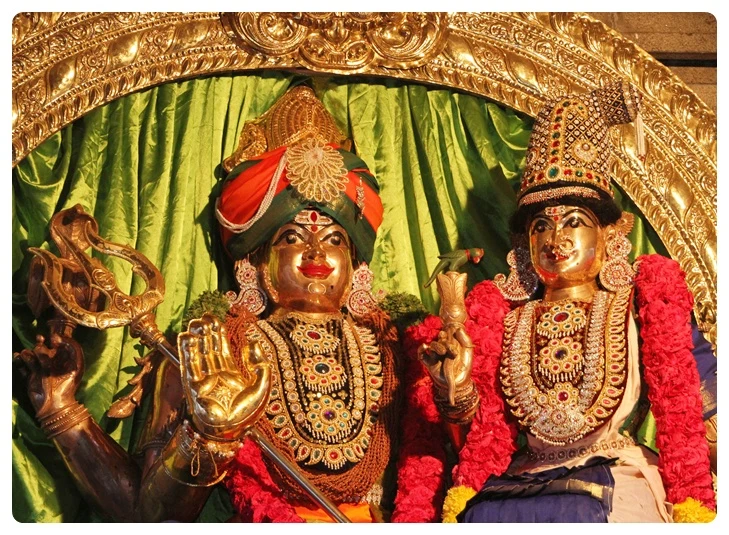
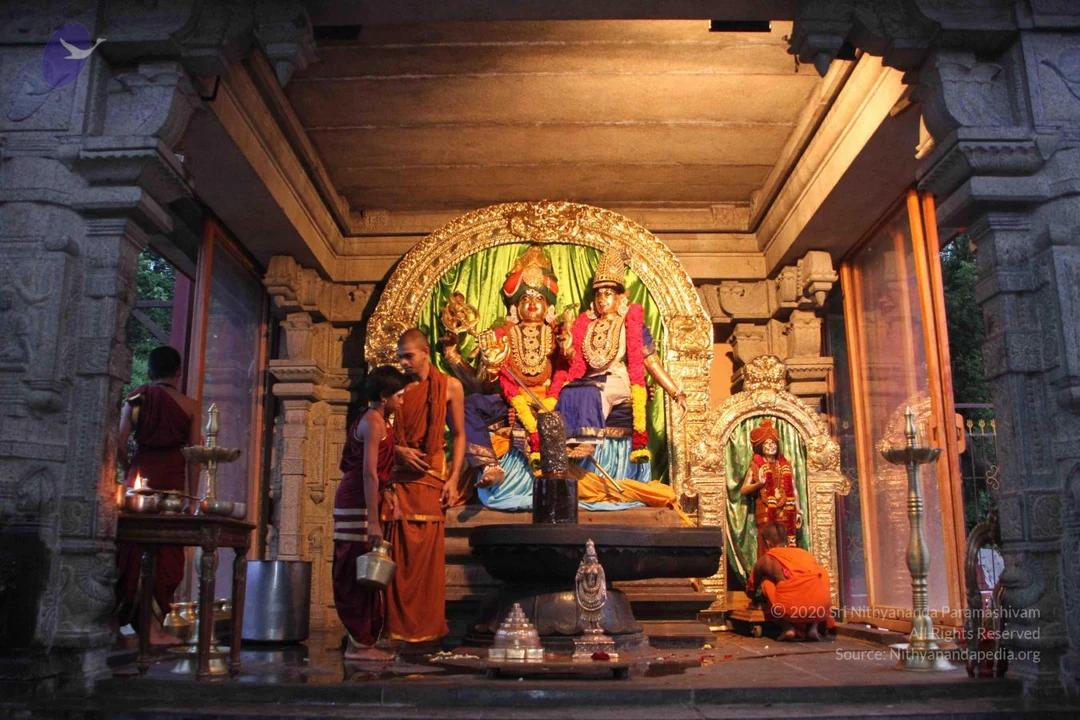
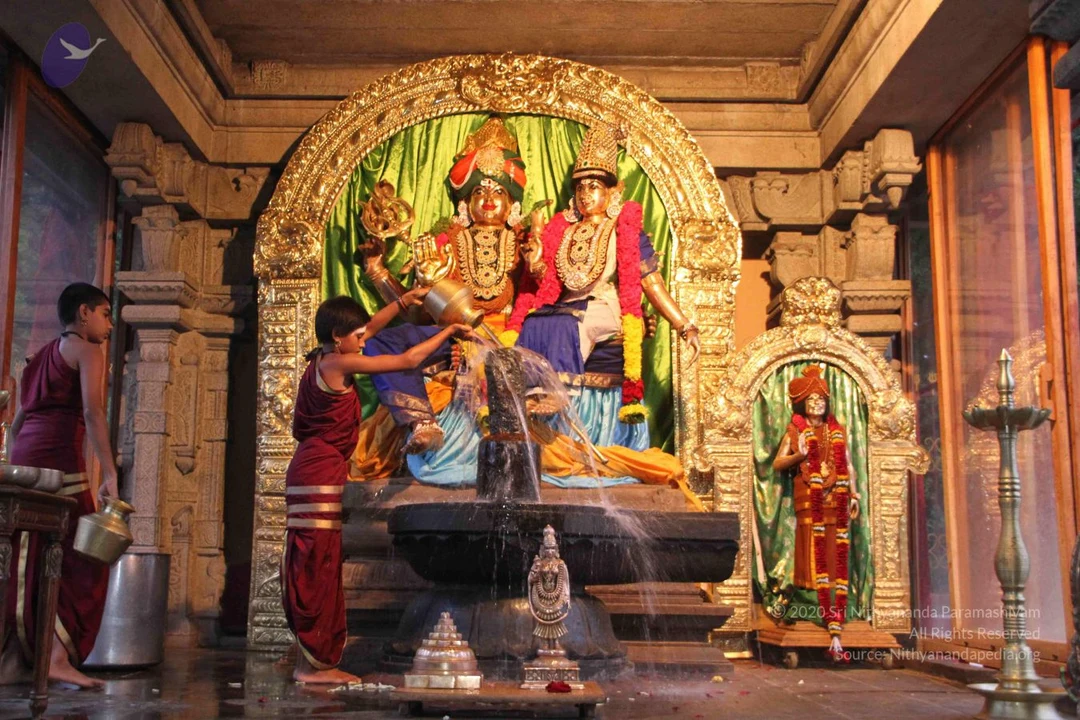
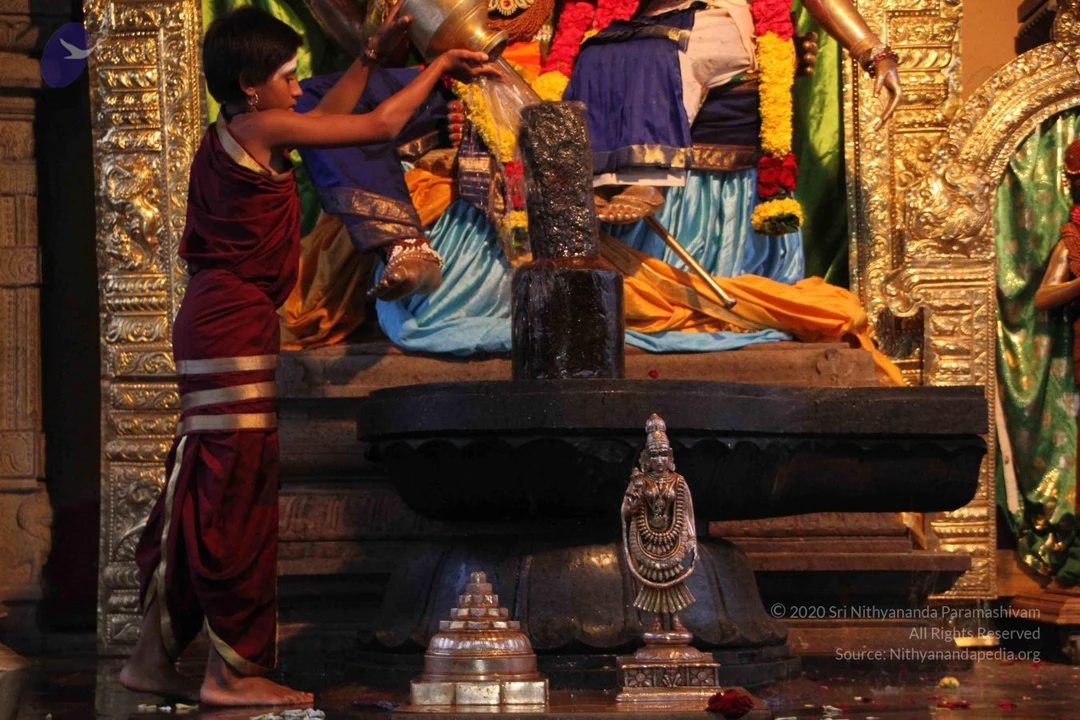
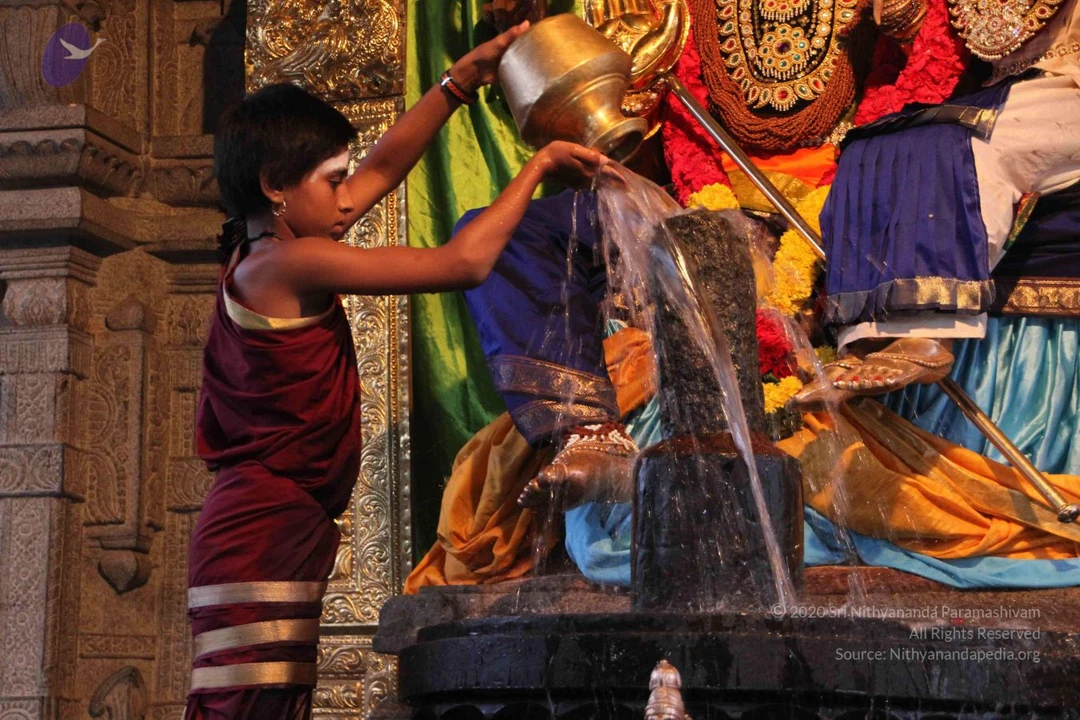
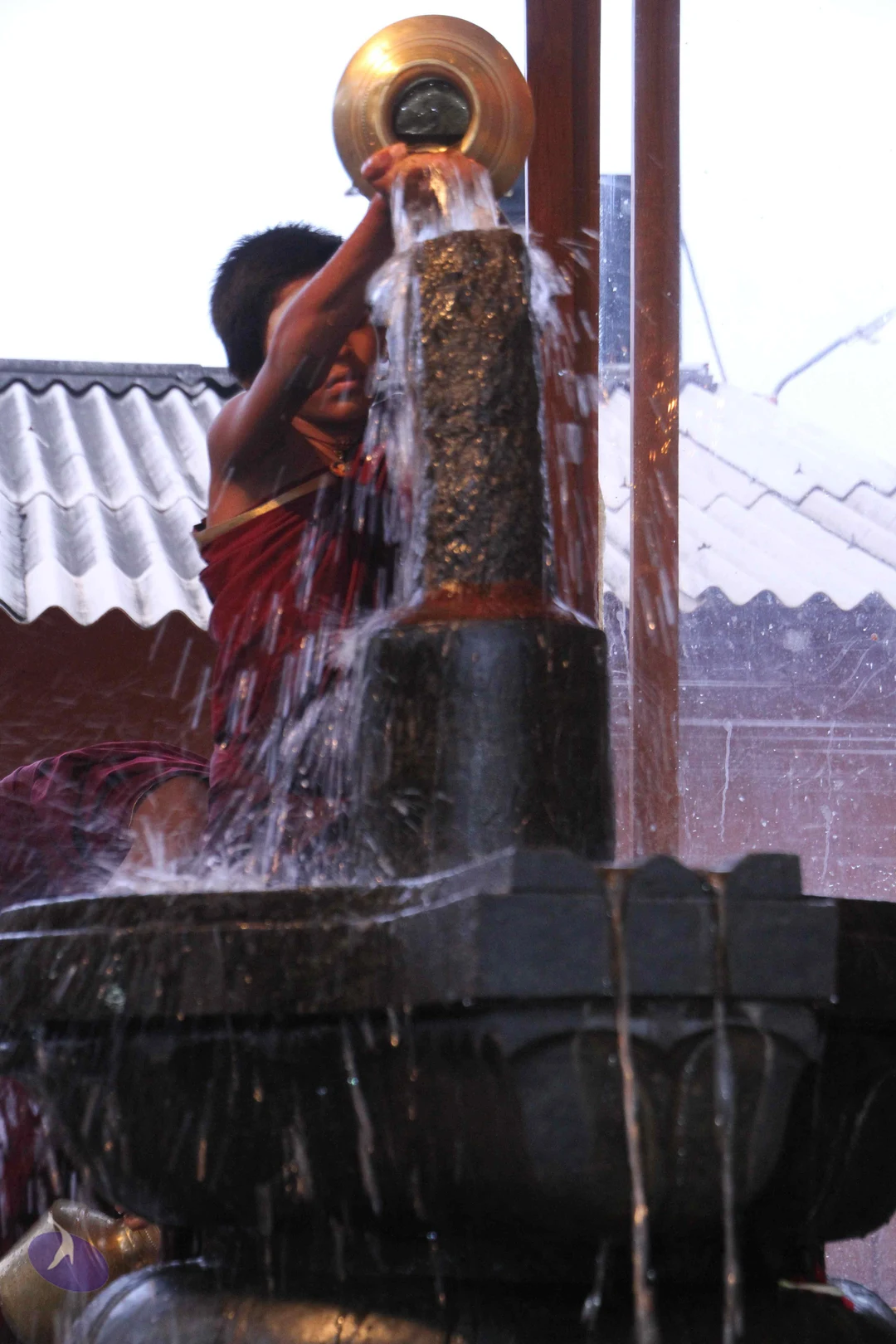
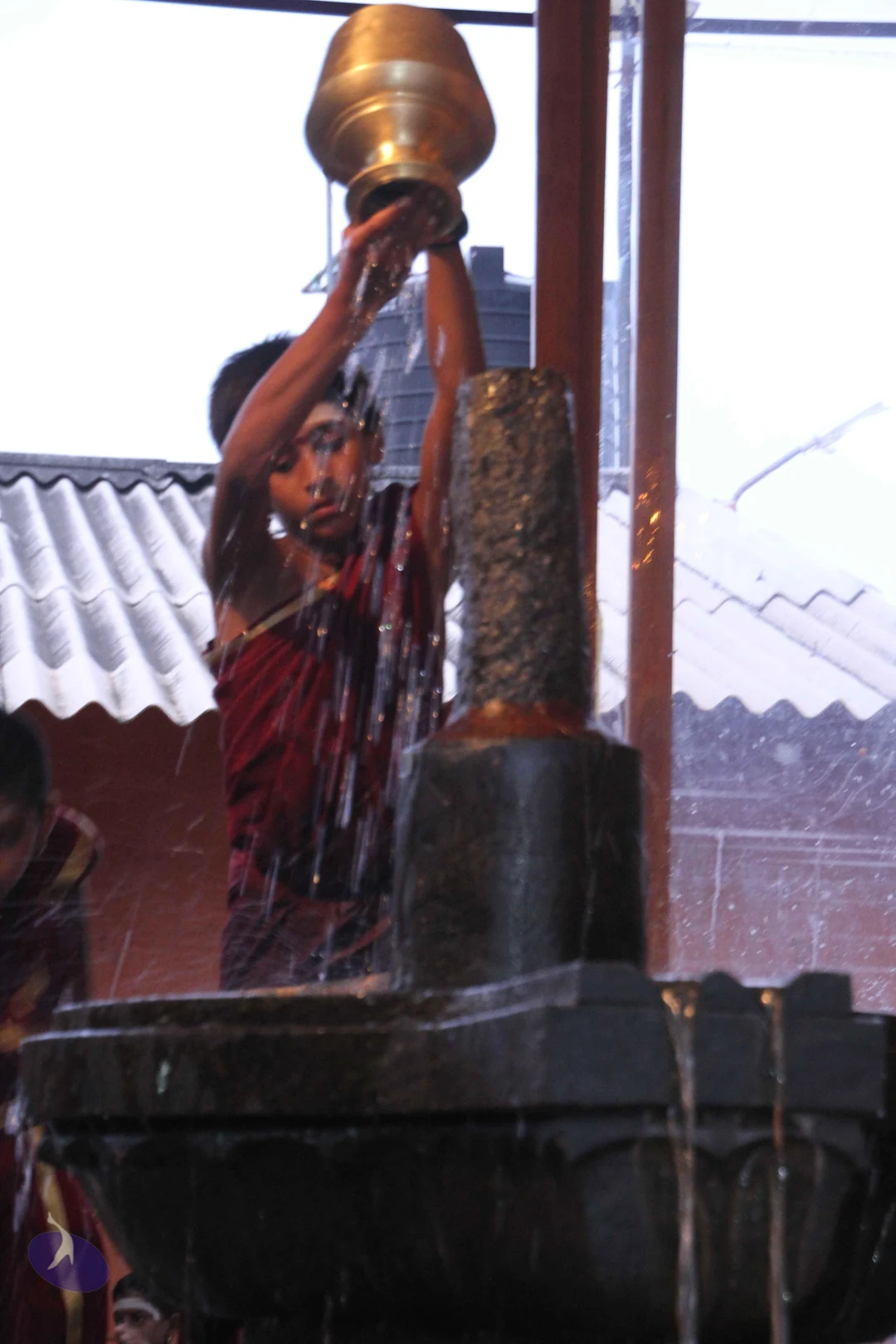
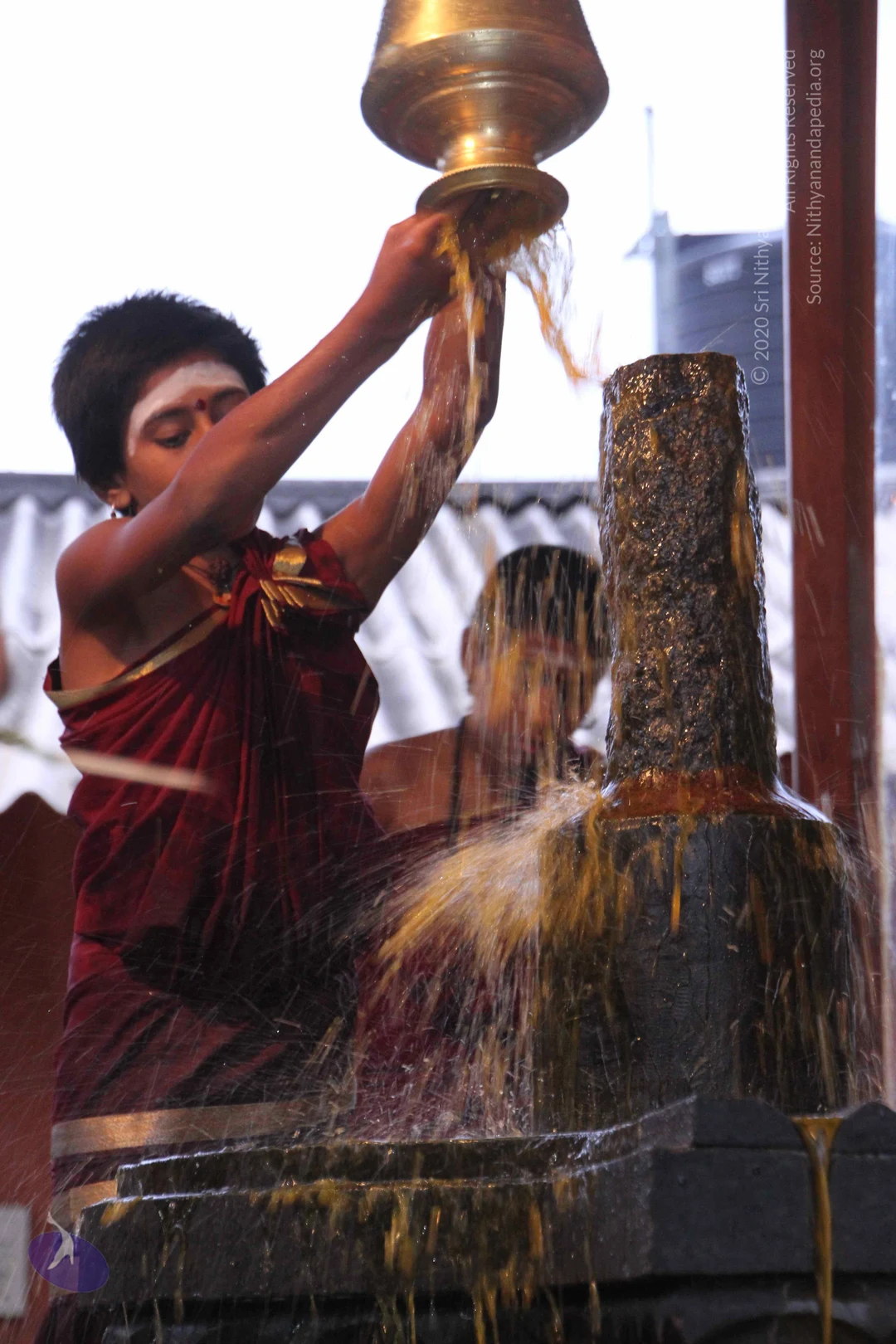
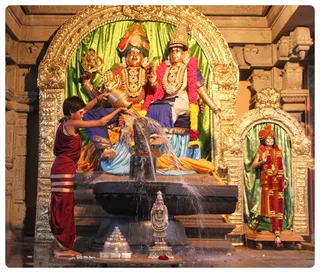
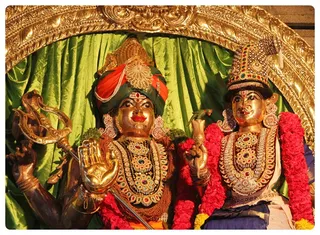
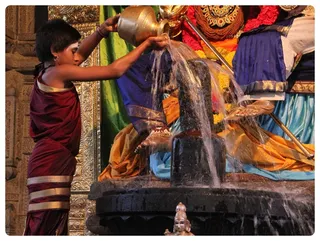
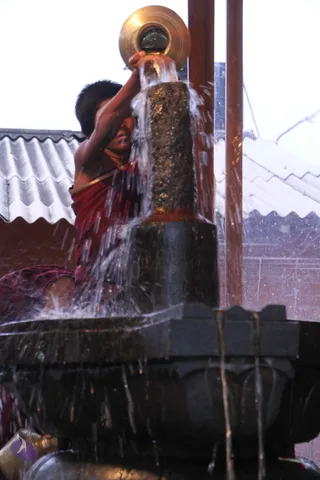
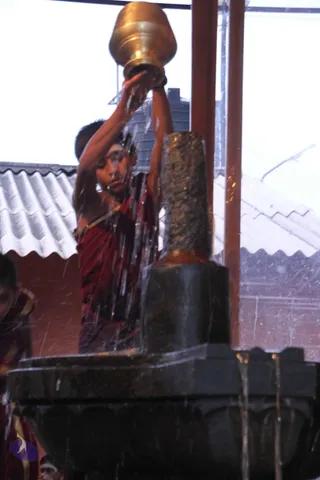
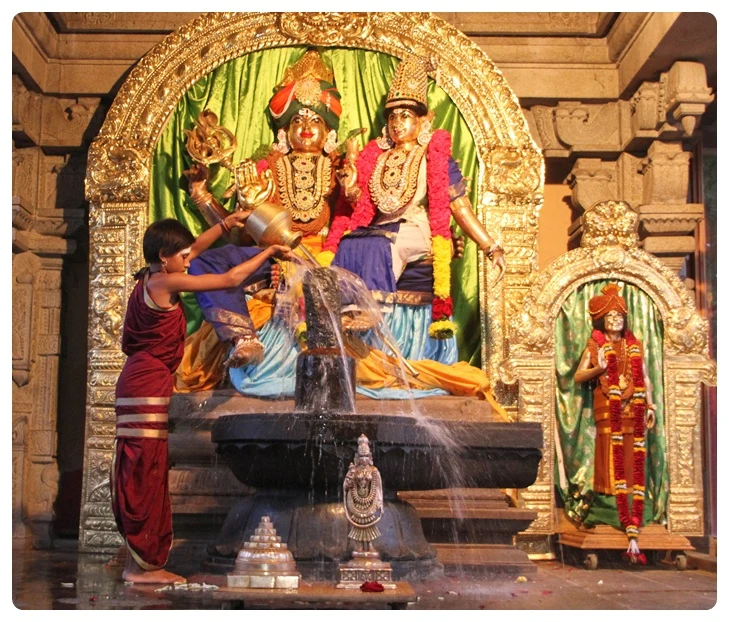
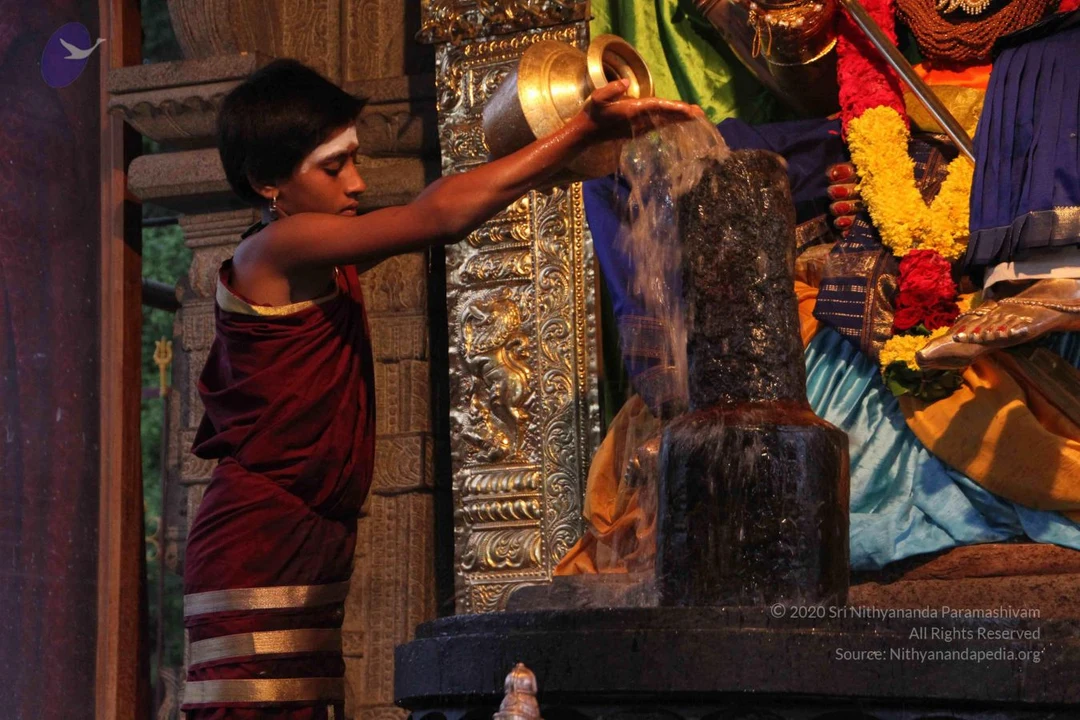
A young person in a maroon dhoti and maroon wrap stands barefoot at the left, pouring water from a silver kalasha over a black linga on a stone yoni-peetha base during abhishekam. Behind the linga are two gold-and-blue deity murtis, one with a crown and holding a trident, the other adorned with gold necklaces and garlands. At the right, a smaller standing figure in orange robes and an orange turban wears a red-and-white garland within a niche framed by green drapery and ornate gilded arches. Water cascades over the linga and marble floor, with red flowers scattered at the base.Two golden metal deity murtis stand side by side before a gold-framed arch and green silk drape. The figure on the left, holding a trident in one hand and a raised hand, wears a red and green turban, a rudraksha-style layered necklace and beaded jewellery, with a red tilak on the forehead. The figure on the right wears a jewelled crown and a heavy ornate necklace over a red and pink flower garland, with a blue garment below. Both are decorated with flowers and gem-set ornaments.A young boy in a maroon dhoti with gold-bordered white bands stands at left, pouring water from a brass pot over a black stone Shiva lingam on a dark stone pedestal. Streams of water flow down the lingam. Behind it, a deity murti is draped in orange and blue cloth and decorated with yellow flowers and gold ornaments, with green and gold hangings in the background. A small figure of a deity sits at the bottom of the frame. This is an abhishekam being performed on the lingam.A man sits on a cushioned tan armchair before an ornate gold-embossed throne backdrop with carved figures and brass bells on the sides. He wears a rust-orange garment with a gold-toned ceremonial necklace, a rudraksha mala, a long white and red flower garland with red blossoms, gold bangles and earrings, and a red bindi with white tilak marks on his forehead. His hands rest on the armrests and he smiles toward the camera. The bare-shouldered figure's distinctive adornments and saffron clothing align with the page's a person reference, so this is a probable in-person presence, though his appearance is only partly visible.Close-up profile photograph of a smiling man with long swept-back black hair, a red bindi and white forehead marks, wearing a white-and-green jasmine garland with orange flowers, a gold necklace and a gold earring. A large brass hanging bell with a chain is at right against a dark background, with gold-colored ornamentation at left.Close photo of a padapuja ritual: a pair of bare feet in orange-yellow cloth at the upper left rests on a large arrangement of red, pink and white flowers. Silver bowls, a silver kalasha-style vessel and silver trays surround the feet, holding pink and yellow flowers and orange liquid. Only the feet and lower garment are visible, so no face is shown and the person is not identifiable from the image.
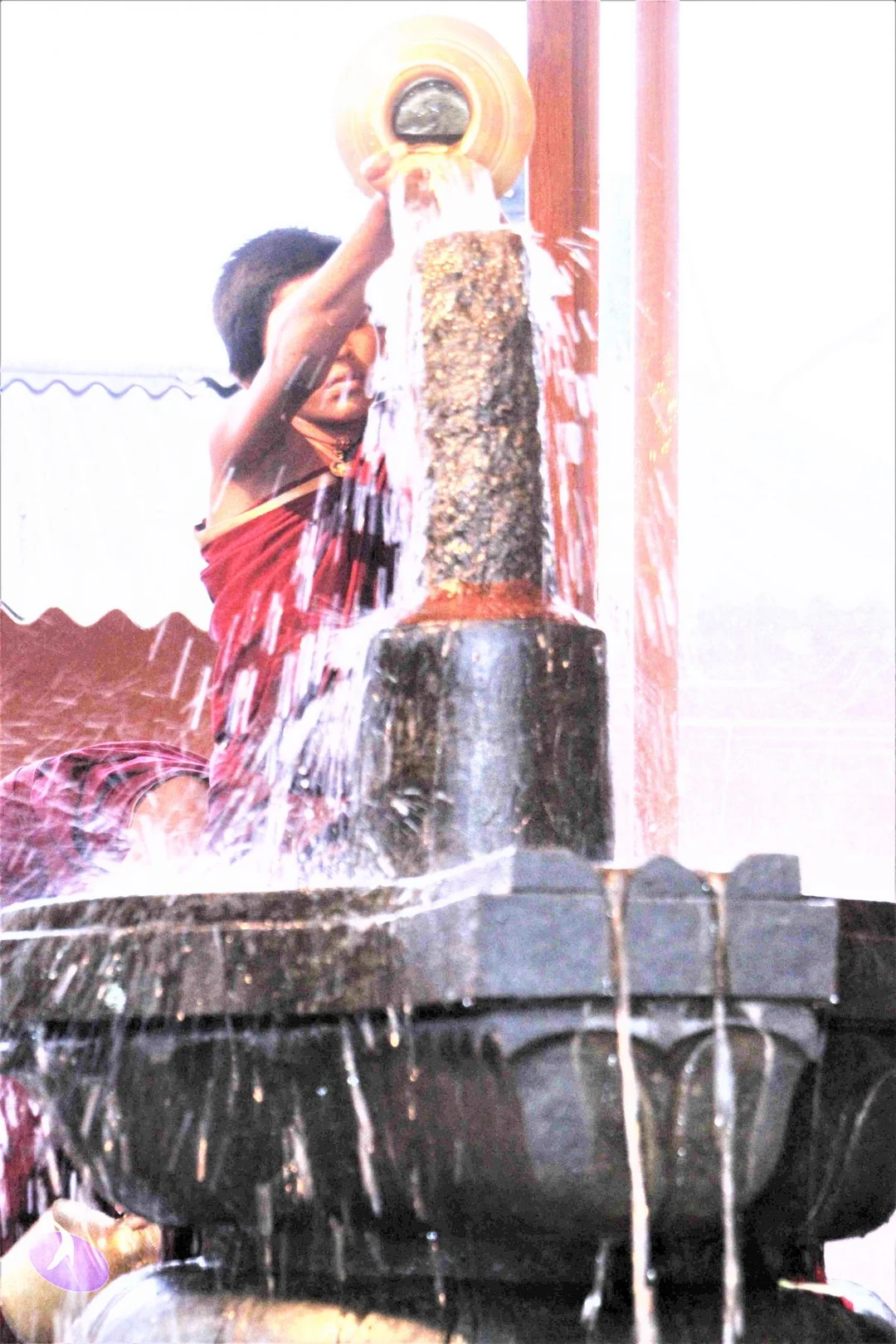
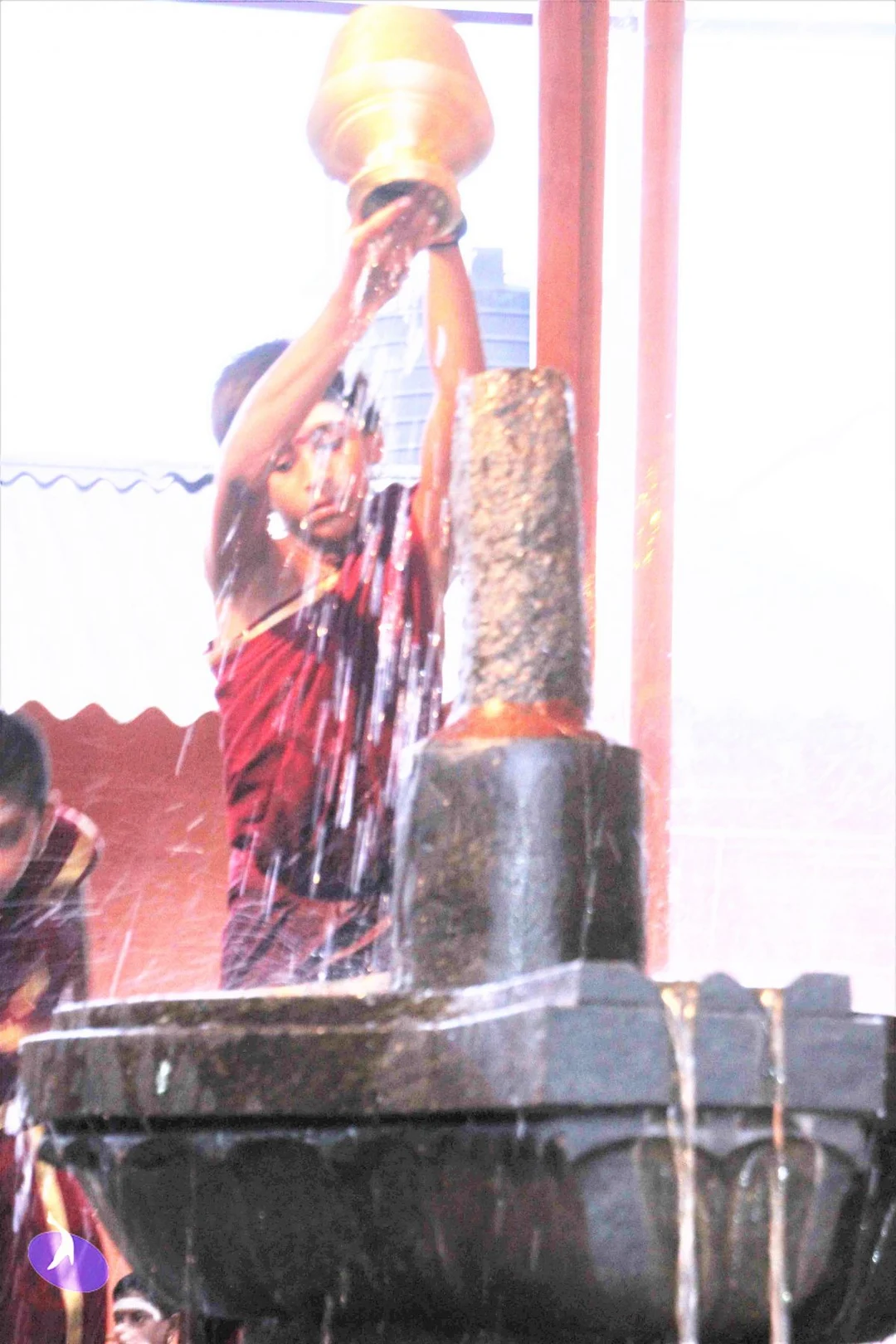
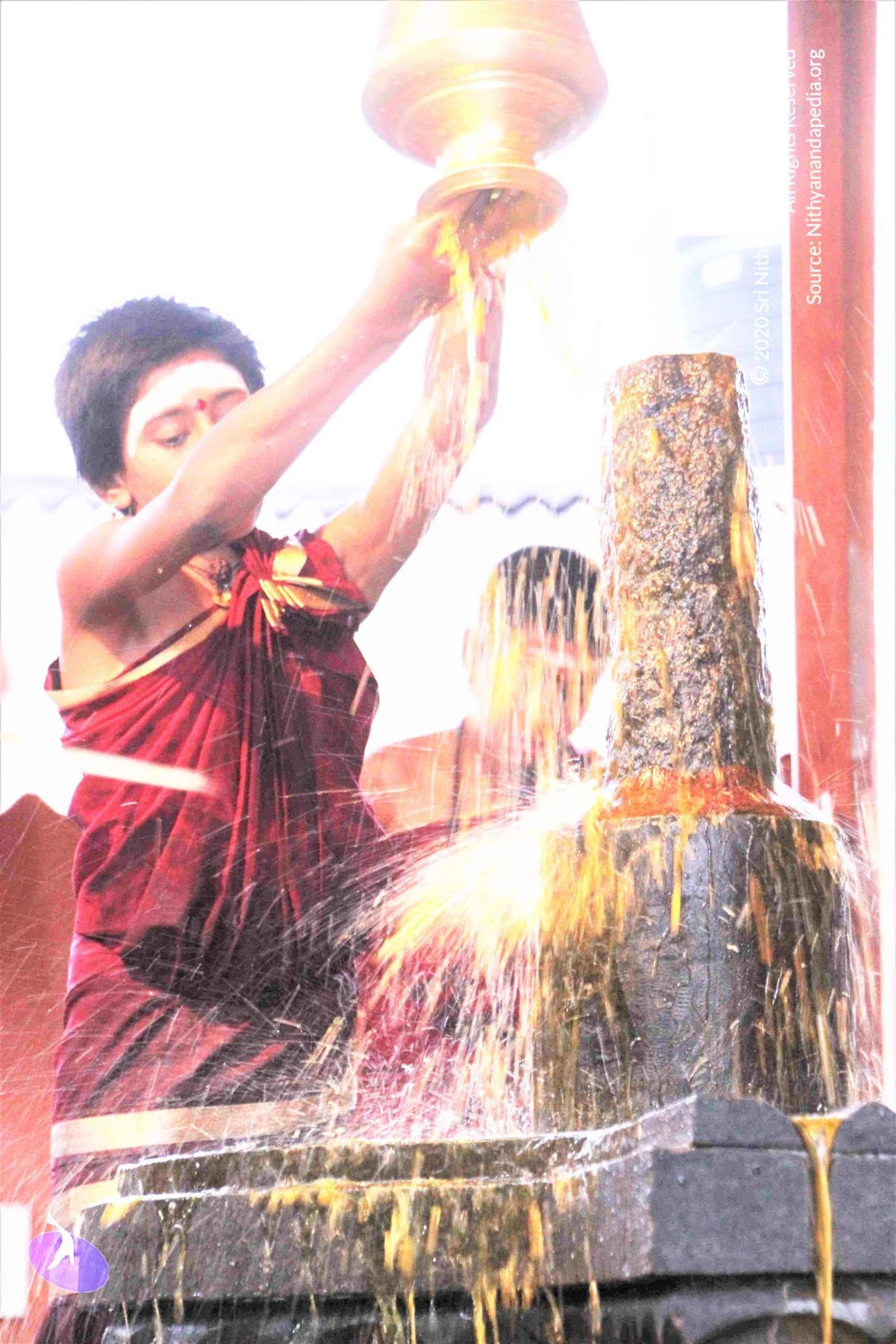
Temple-LingaAbhishekam
32 photosSource gallery
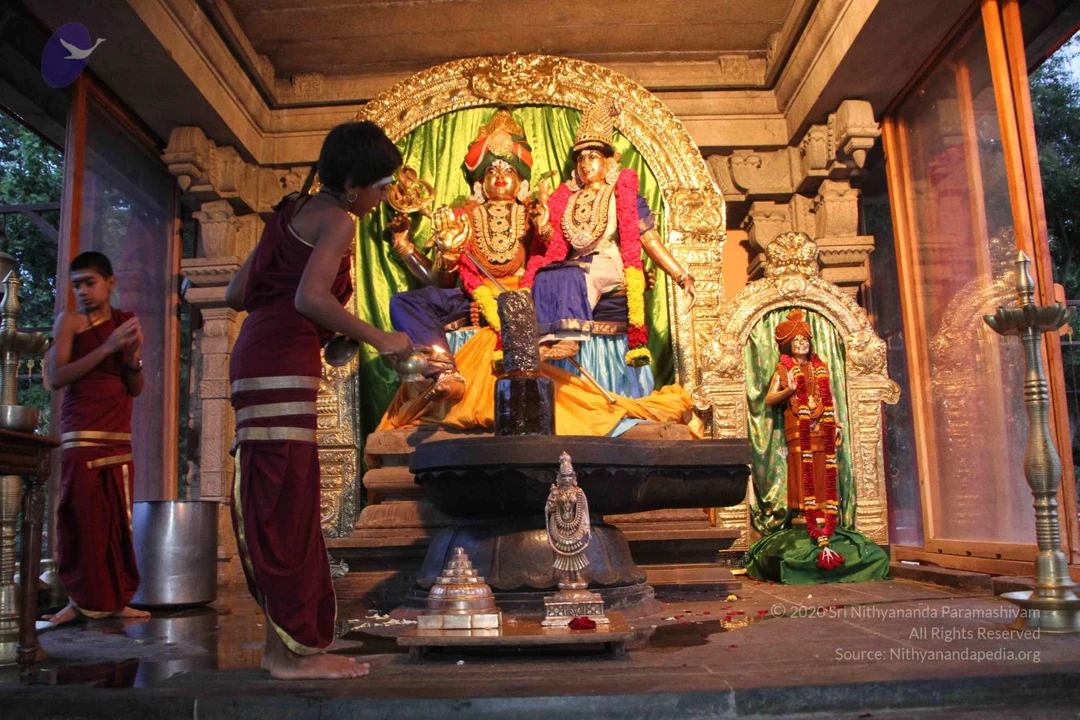
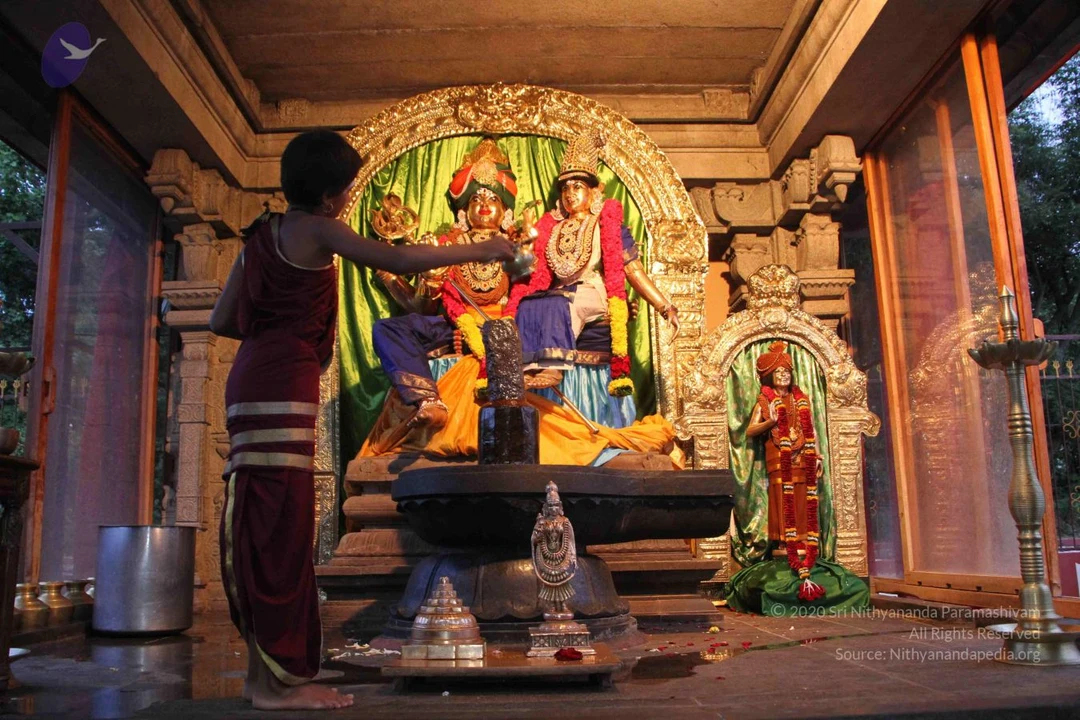
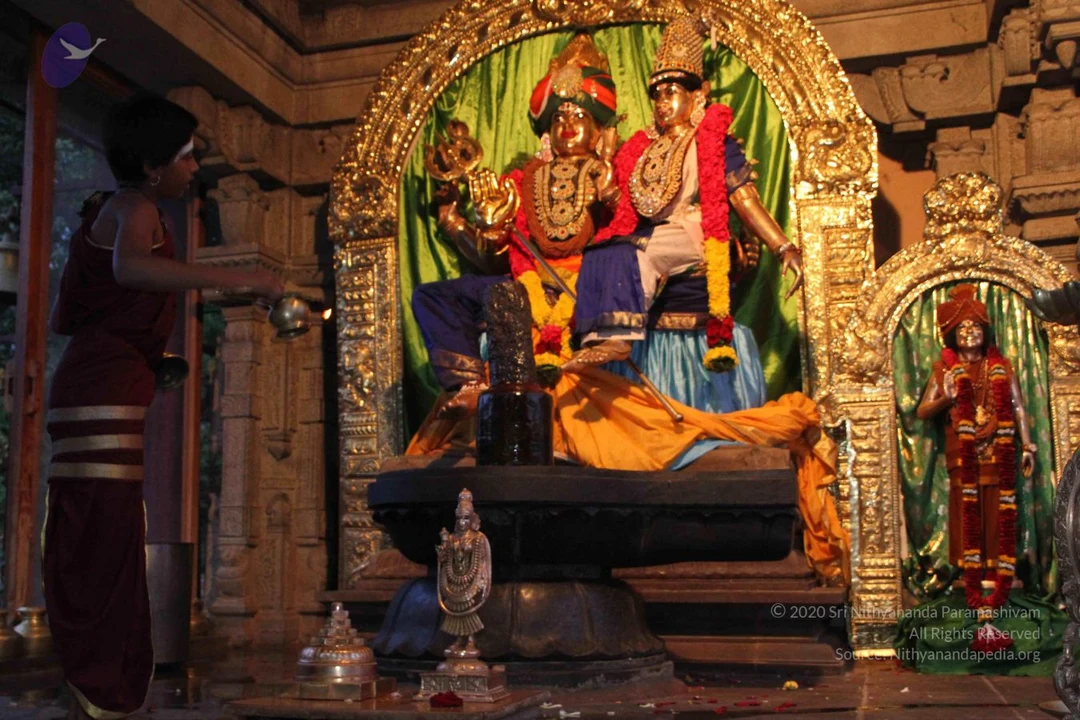
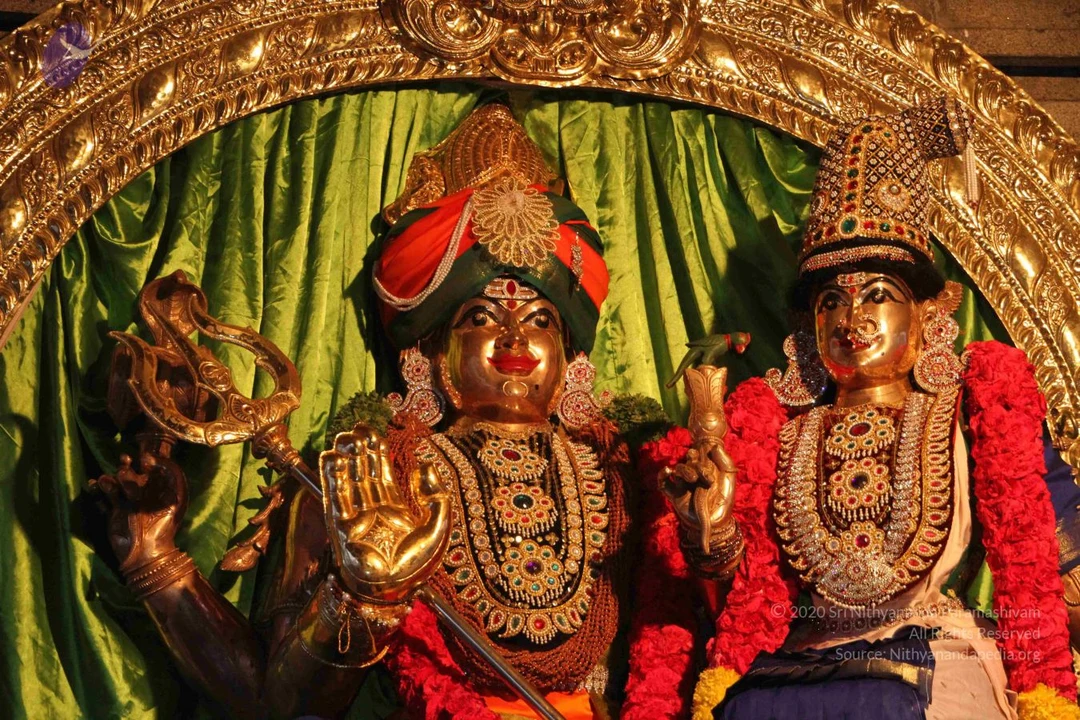
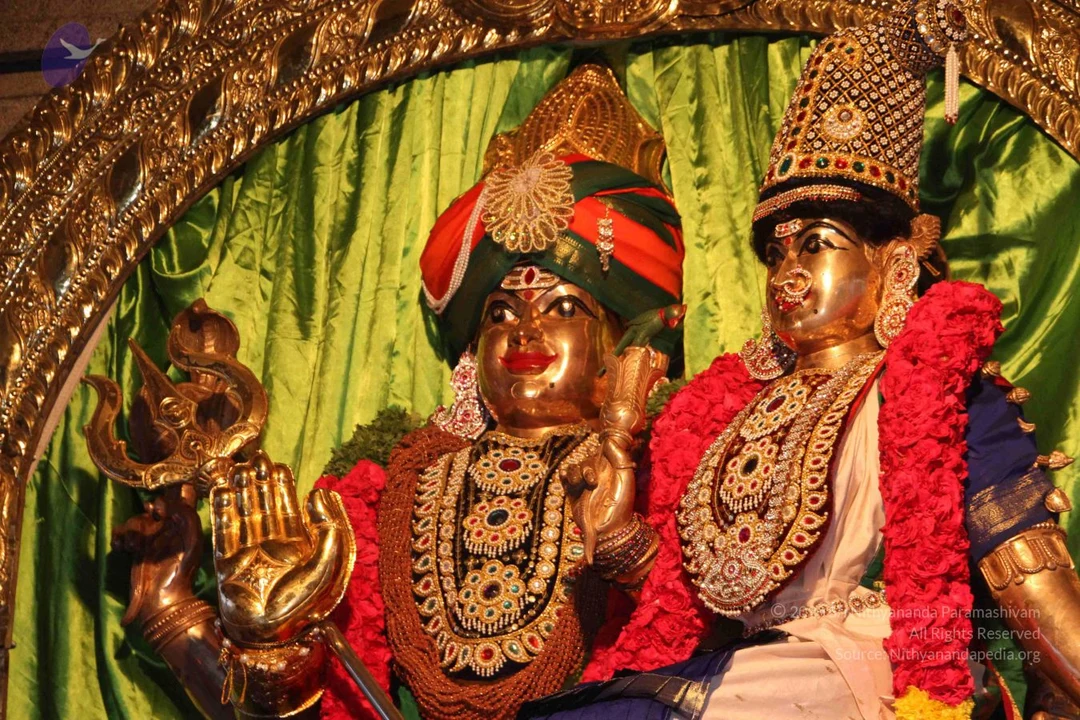
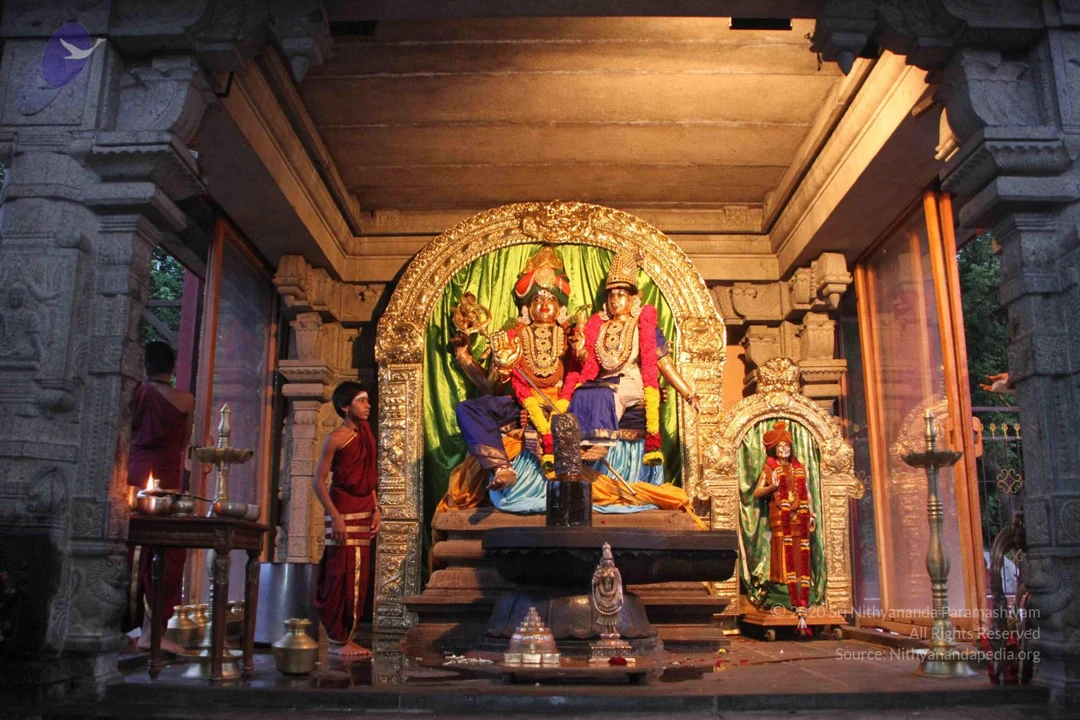
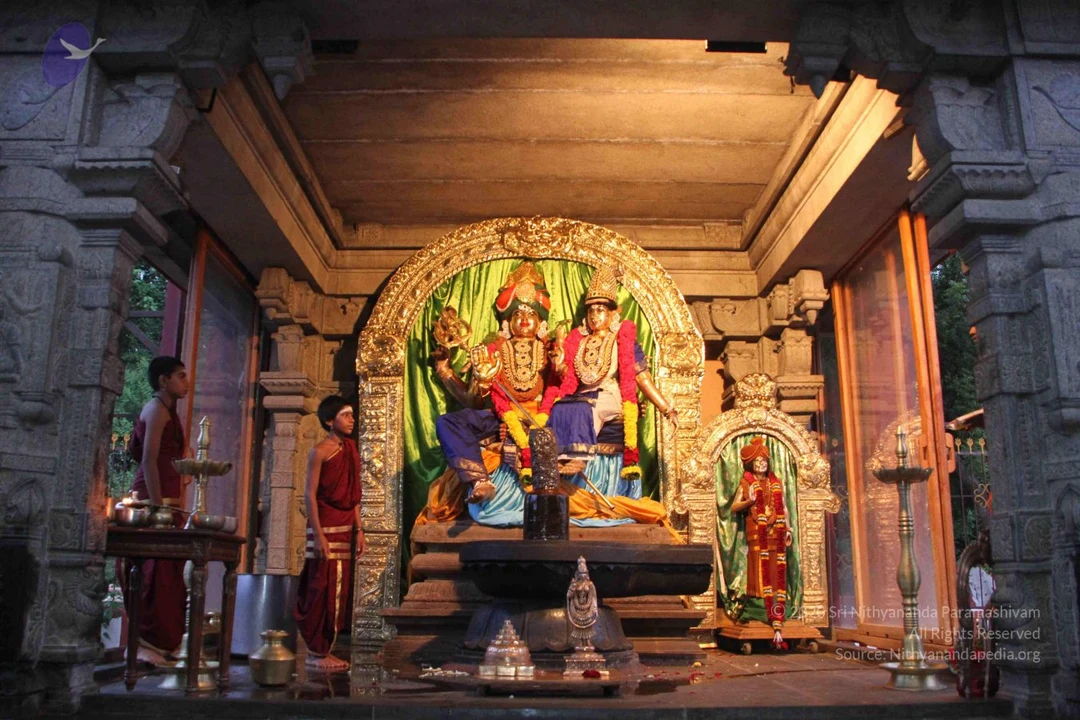
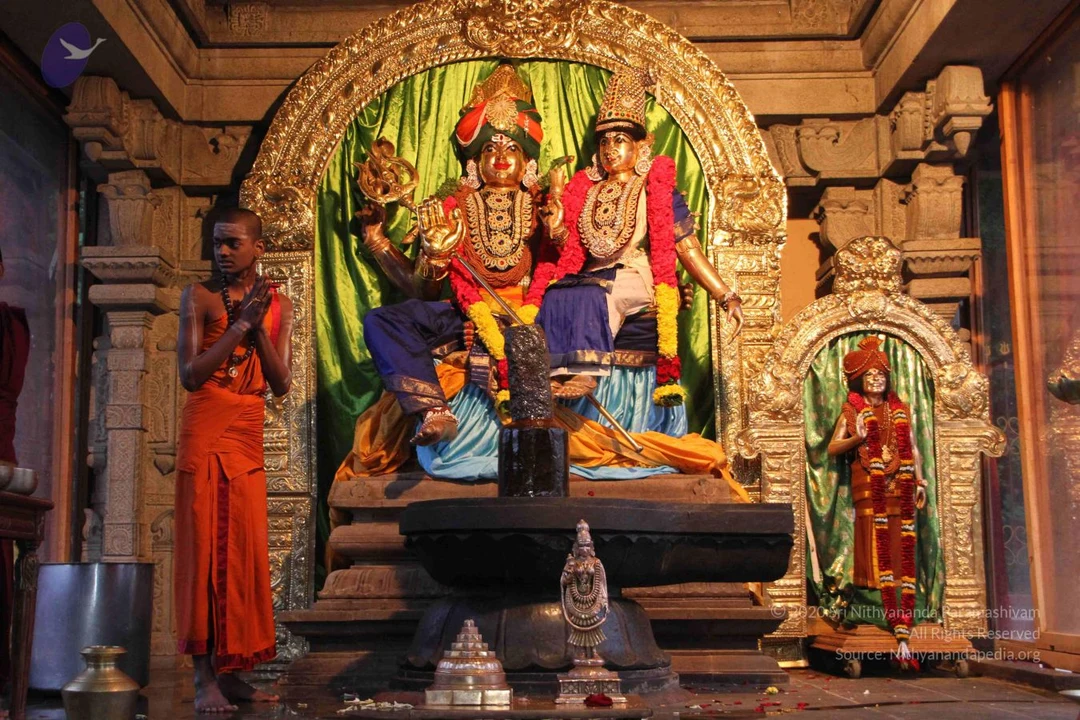
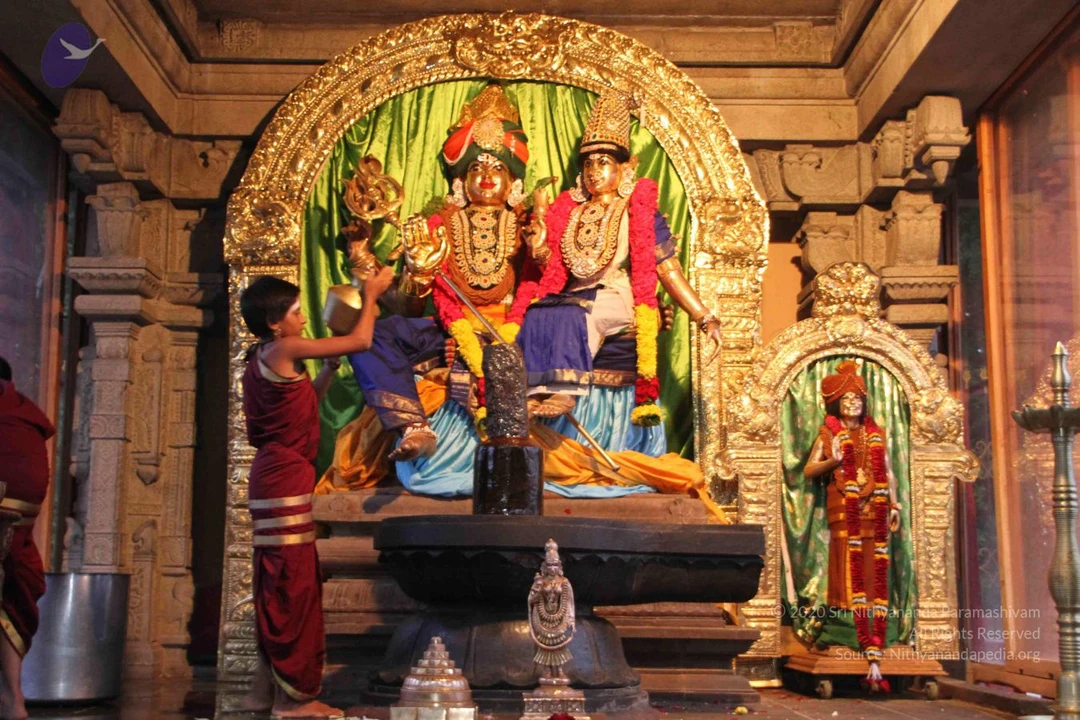
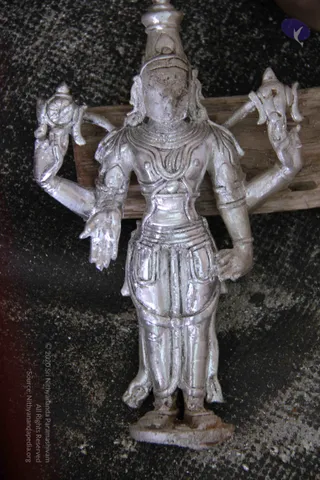
Close view of two metal ritual objects on a wooden altar before a large dark stone base. On the left stands a small tiered copper-toned pyramid. On the right stands a bronze deity murti with a tall crown, many-stranded necklaces and a draped pleated skirt, holding a flower-like object. Scattered petals and a red cloth lie on the altar.A close photograph of two small metal ritual objects on a wooden tray before a large dark stone base. On the left is a tiered brass or copper meru-style pyramid with silver-toned panels. On the right stands a small copper-toned standing deity murti wearing a tall crown, a layered necklace, a sash and a pleated skirt, holding a flute-like object. Scattered white flower petals and a red cloth lie near the base. Behind them, a dark polished stone pedestal and warm orange-gold fabric are visible at the top edge.A photograph of a temple shrine with a gilded arch and green drapery framing a pair of deity murtis, one holding a trident-like staff and the other with a crown, both garlanded with marigold and rose garlands. A dark stone linga stands on a black yoni pitha in front of them. At left, a woman in a maroon sari with silver borders pours liquid from a vessel toward the linga during abhishekam, while a young man in a maroon dhoti stands with hands folded in prayer. A small garlanded figure in a green niche at right and brass oil lamps line the shrine. No person is identifiable as a person in this scene.A shrine interior with a priest in a maroon garment with silver-banded edges pouring or offering something at a black linga on a dark stone base. Behind, a gilded arch frames two deity murtis draped in green cloth, one with a red-and-green crown and gold ornaments, the other in blue with a garland of red flowers. To the right stands a smaller standing statue in an orange turban and red garland, also in front of green drapery. Brass oil lamps stand at the sides, a metal pot sits at lower left, and scattered flower petals lie on the floor. The page labels the event a satsang, but the visible scene is a temple puja; no printed name is visible.A woman in a maroon sari with gold-banded border stands at left, holding a small brass lamp or vessel toward a shrine. The shrine holds a gold-framed set of two deity murtis, a male figure with a red-and-green turban and gold necklace and a female figure with a tall gold crown, both garlanded with marigolds and red flowers, set before a green cloth backdrop. A dark shivalingam sits on a black stone pedestal in front, with a yellow-orange cloth draped over the base. To the right, a smaller gold-arched niche holds a garlanded standing figure in a red turban and red garland. Scattered petals lie on the floor, indicating a temple puja setting.A photograph of two gilded metal deity murti standing in an ornate golden arch against a green silk backdrop. The figure on the left wears a red and green turban, holds a trident in one hand, and has a hand raised in abhaya mudra; he wears layered jewelled necklaces, garlands and earrings. The figure on the right wears a tall jewelled crown and a dark garland of red flowers and a cascading necklace of gems. A small parrot figure sits on a stand between them. No physical people are visible.

Pratyaksha-PadaPuja

42 photosSource gallery
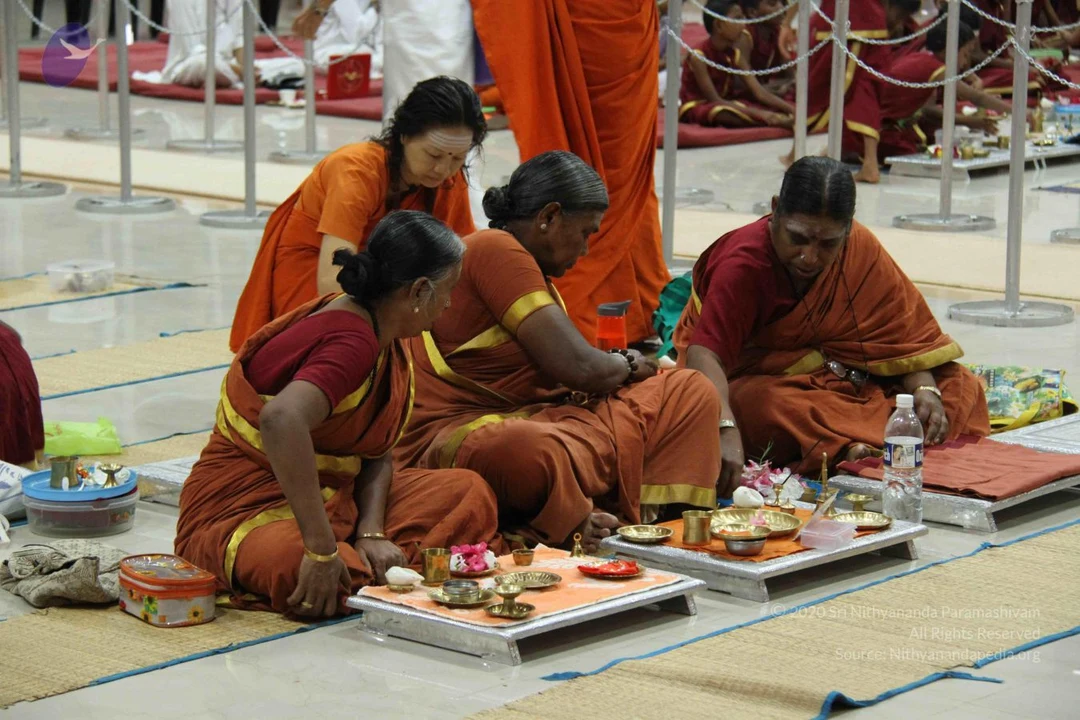
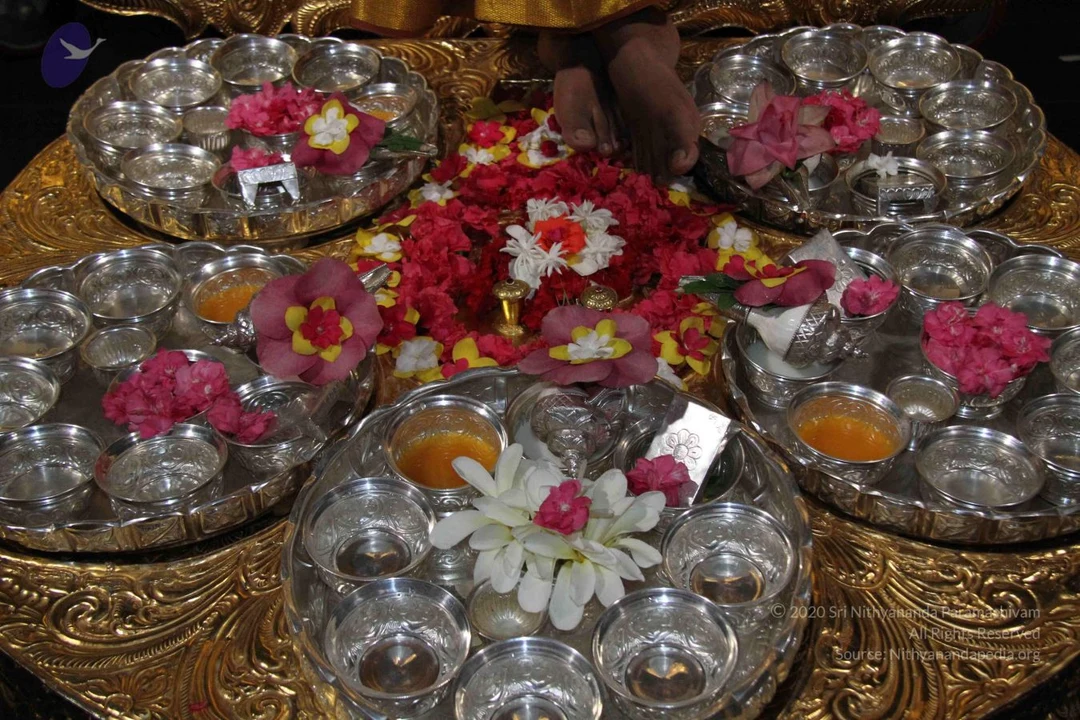
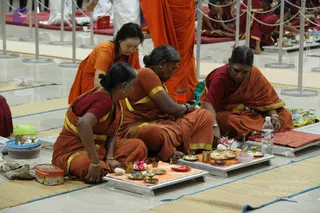
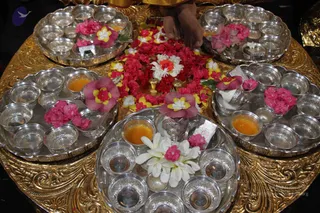
A photograph inside a hall with white floors and grey metal stanchions, showing several women in orange and deep red saris with gold borders seated on mats before small brass puja plates. The woman in the centre, with a grey bun, ties or adjusts a thread on her wrist while another woman in orange sari leans forward on the left and a third in red-and-orange sari sits on the right. The plates hold small brass lamps, diyas, bowls, kumkum, flowers and a white offering, and a water bottle sits nearby. Behind them, a standing figure in saffron robes and other seated people in red and orange line the rows of mats.A seated figure on an ornate gilded throne with lion-head armrests and a tiger-skin cloth draped over the seat, set against a dark slate wall with hanging brass bells and a lamp. The seated man wears a rust-orange dhoti and shawl with gold borders, multiple gold chains, a rudraksha mala, a white and red floral garland, a red tilak on the forehead, and gold bangles, and raises one hand in blessing. Silver plates of flowers, red petals and white blossoms sit at his feet in an offering arrangement. The appearance is a probable match to a person, given the throne, rudraksha and gold adornments; no physical people other than the seated figure are visible.Close-up of a ritual arrangement on a gold-embossed base. Bare feet of a person wearing gold-coloured cloth are visible at the top, seated or standing over a central heap of red and white flower petals. Around it are several round silver trays holding many small silver bowls, some filled with orange-yellow liquid, along with pink and red flowers, white blossoms and yellow-centred pink flowers. A small brass vessel stands at the centre. The arrangement suggests a puja setup with flowers and offerings, and no face is visible.Overhead view of a ritual arrangement on a gold-embossed round tray. Bare feet of a person standing at the top edge scatter red and pink flower petals onto a central circle of petals with brass vessels. Around it are several silver plates holding silver bowls filled with orange liquid, pink and white flowers, and small silver cups, with fresh flowers arranged on the plates. Silver and brass offering vessels and a small silver spoon are visible. The scene suggests a puja offering arrangement, though no clear deity is shown. The person's face is not visible.A seated man in an ornate gilded throne with carved lion heads and a striped tiger-skin cushion over the seat. He wears an orange-brown robe with a gold border, a rudraksha mala and gold ceremonial necklace, and white jasmine garlands with red flowers. Bells hang from chains above, brass oil lamps stand at the sides, and a tray of pink and white flowers and small brass vessels lies at the base of the throne. Swamiji (probable) is the central figure, seated as a guru, based on the long swept-back hair, saffron robe, rudraksha mala and gold necklace. The black backdrop and throne suggest a satsang or darshan setting.A seated man sits on a gold-carved throne with an ornate repoussé back panel depicting a deity scene. He wears an orange-brown shawl draped over the body, a long white jasmine and marigold-style garland with red flowers, a dense rudraksha mala and a large gold ceremonial pendant on a gold chain. He has a red tilak on his forehead, gold bangles on his arms and a gold ring, and a hanging brass bell and brass oil lamp stand to the right against a dark wall. Appearance-based cues include long swept-back hair, a rudraksha mala and ceremonial gold necklaces, so this is a probable Swamiji (probable) seated in person. One physical person is present.

Nithya-Satsang

18 photosSource gallery
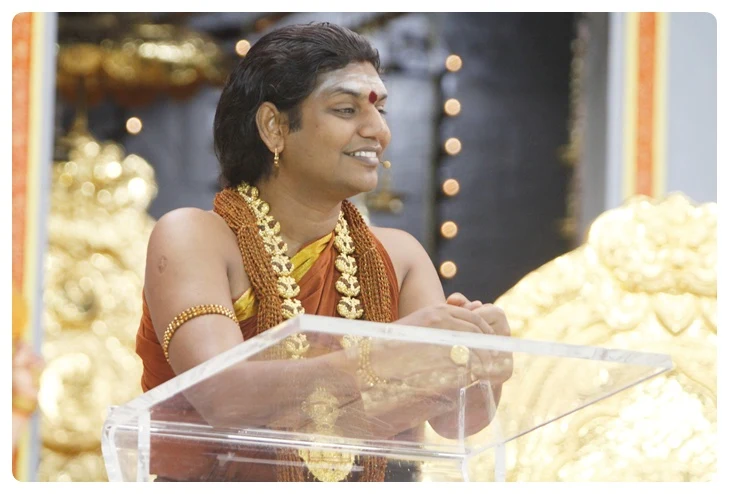
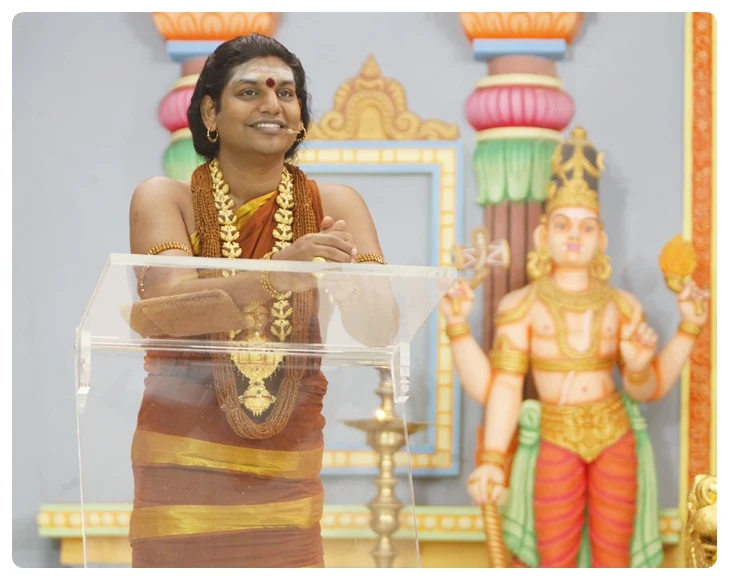
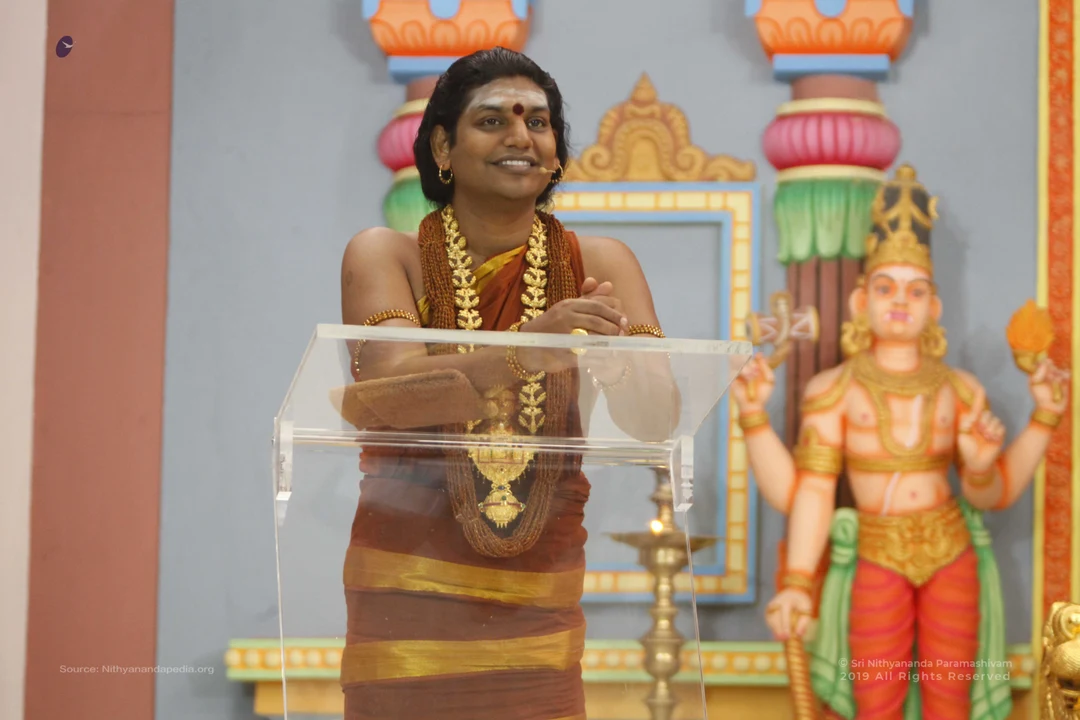
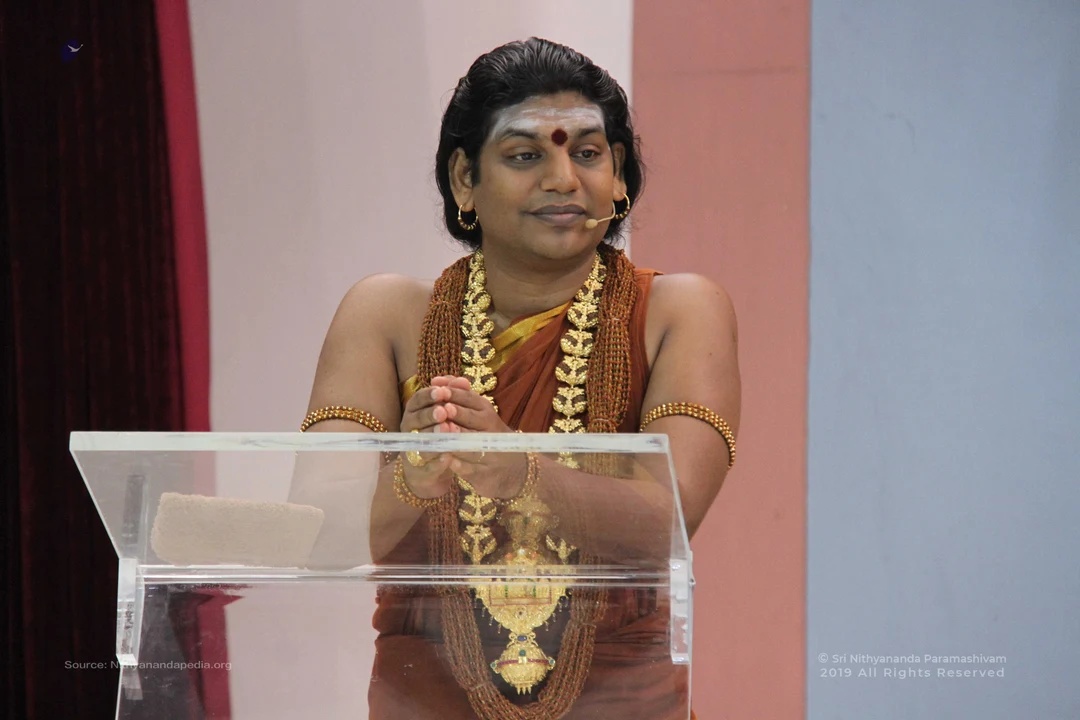
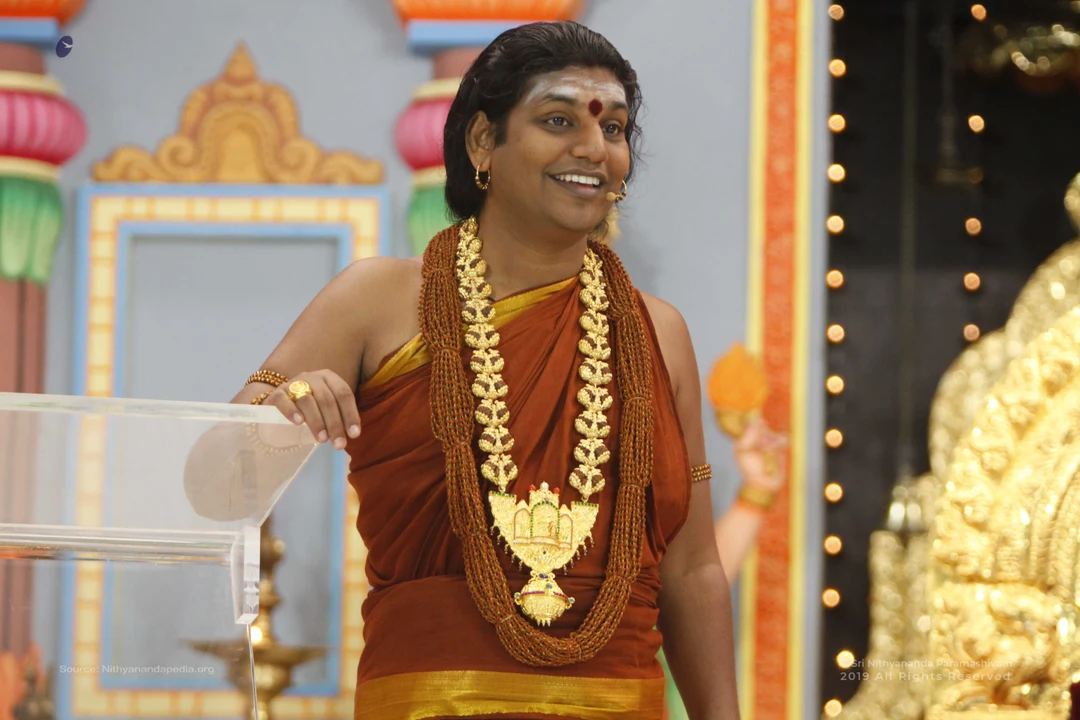
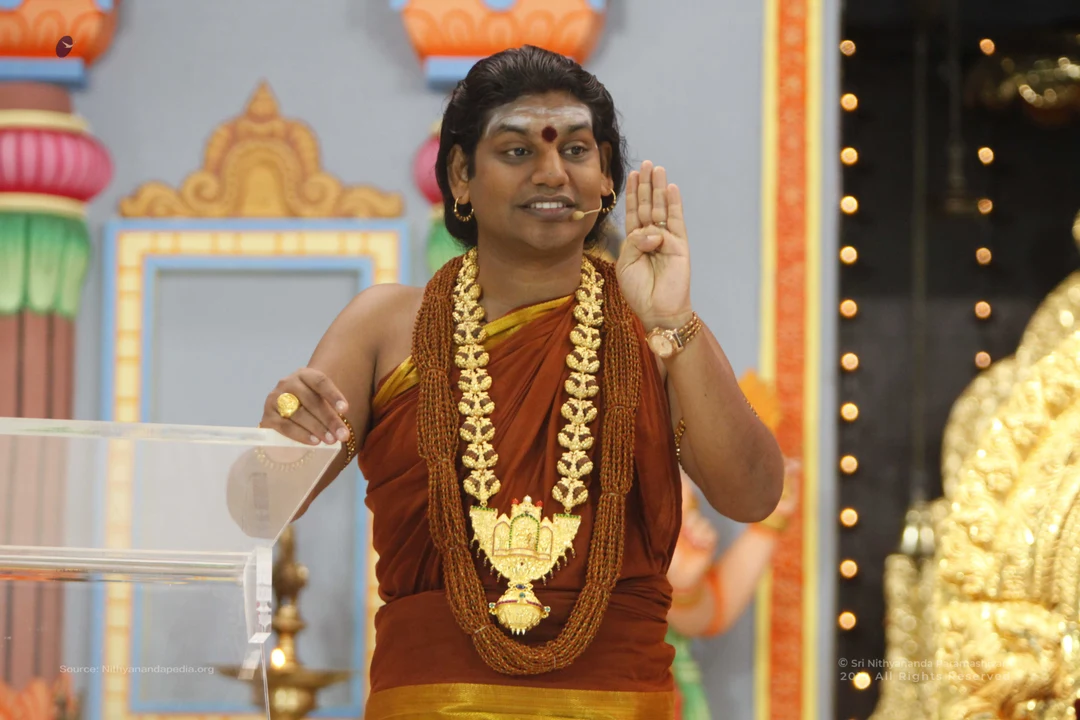
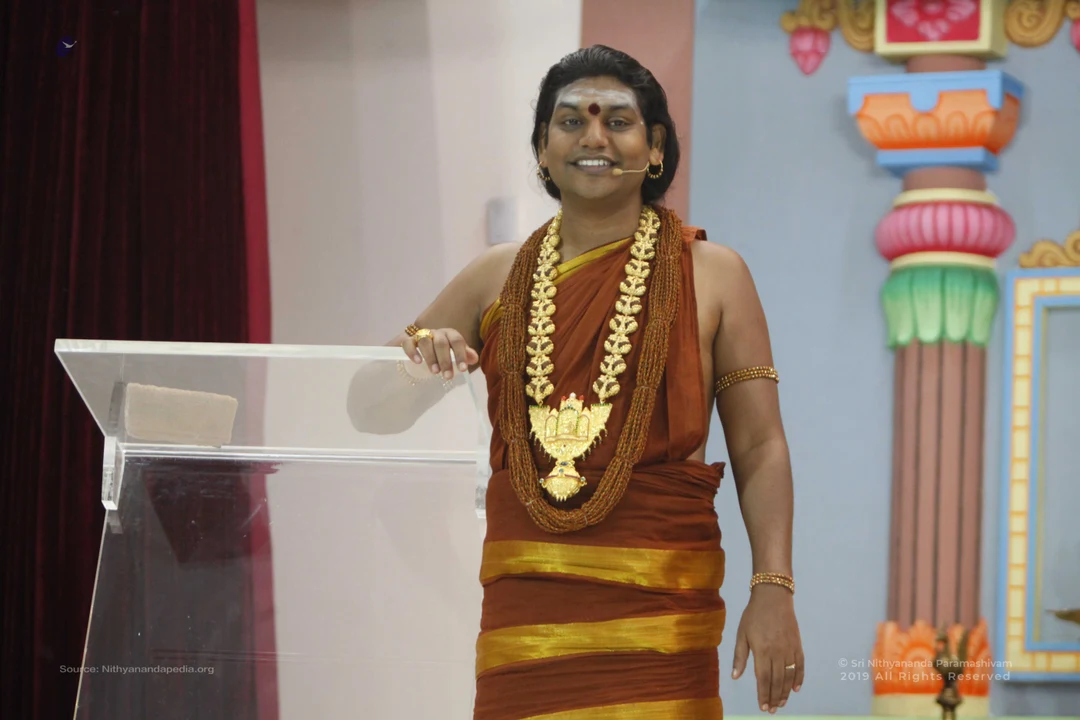
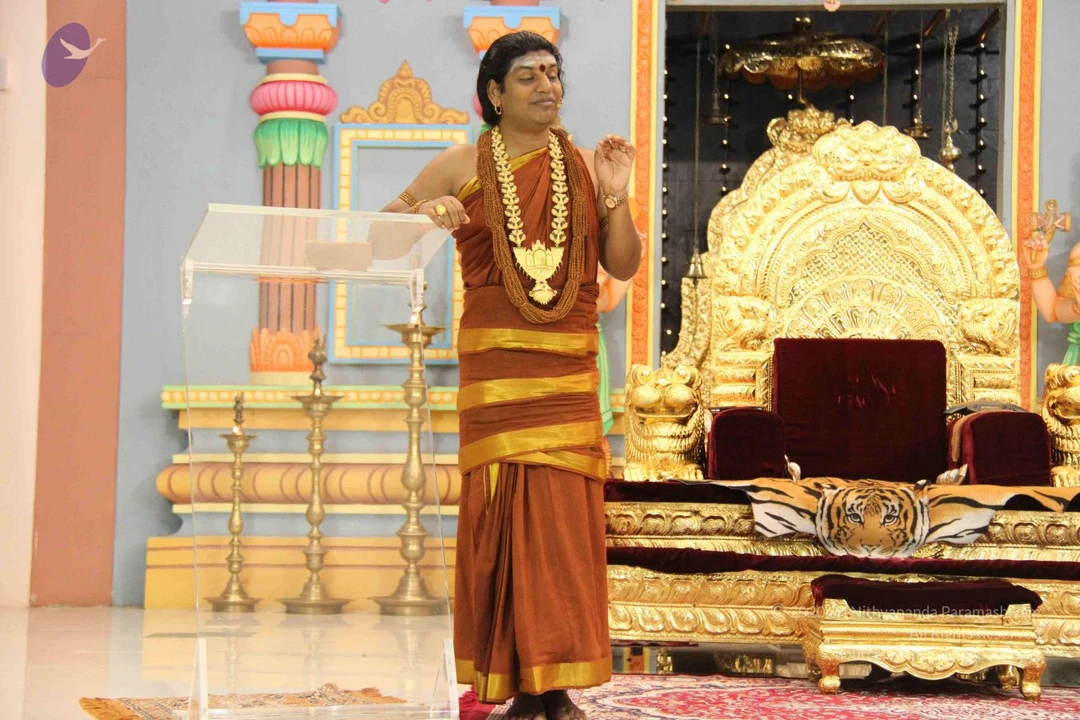
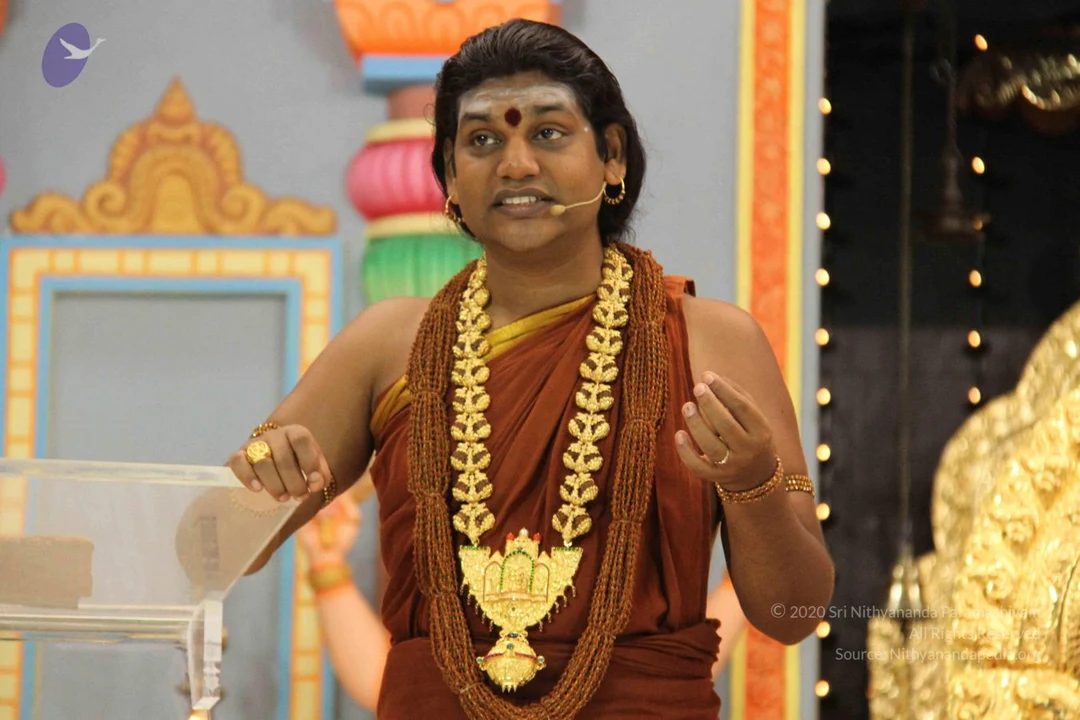
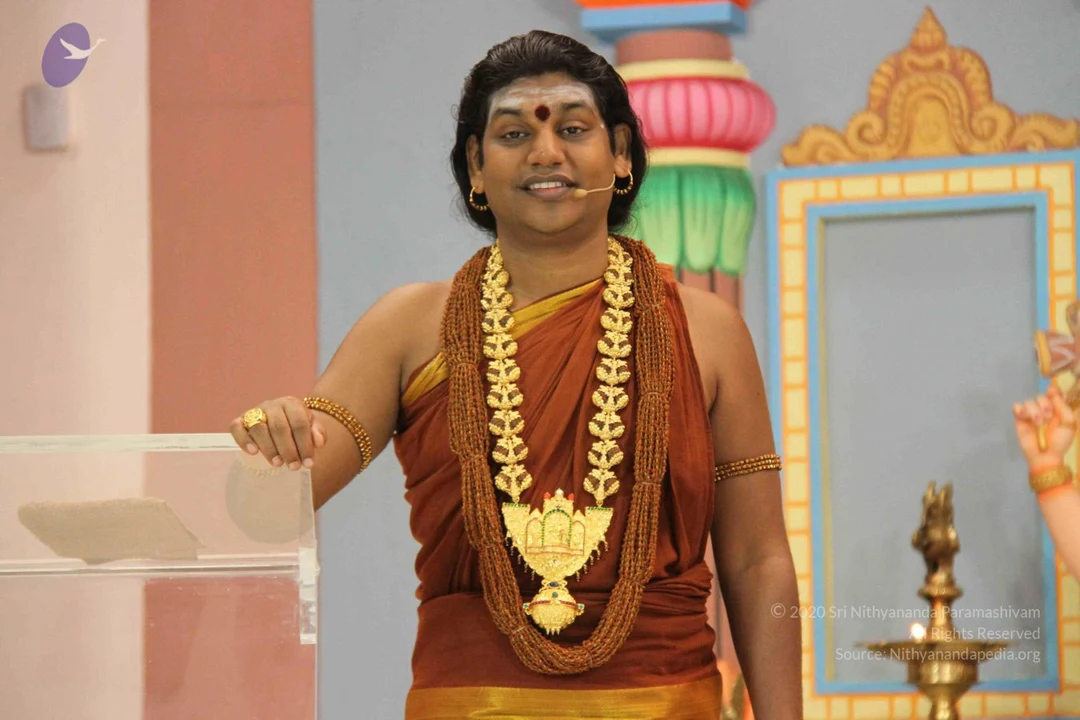
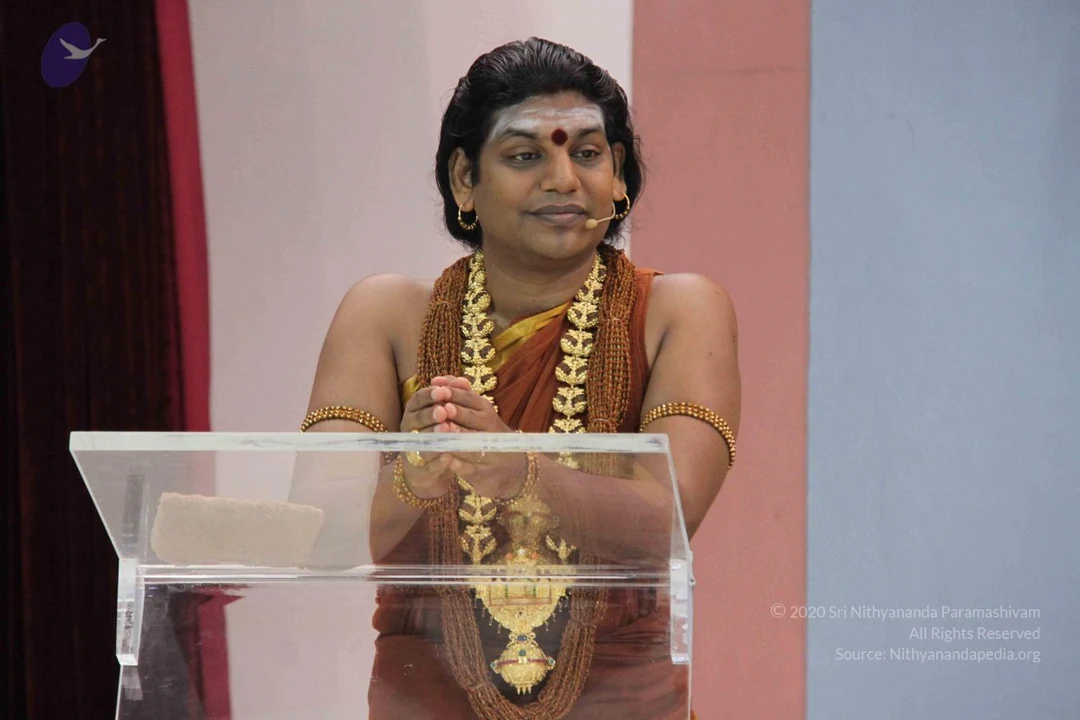
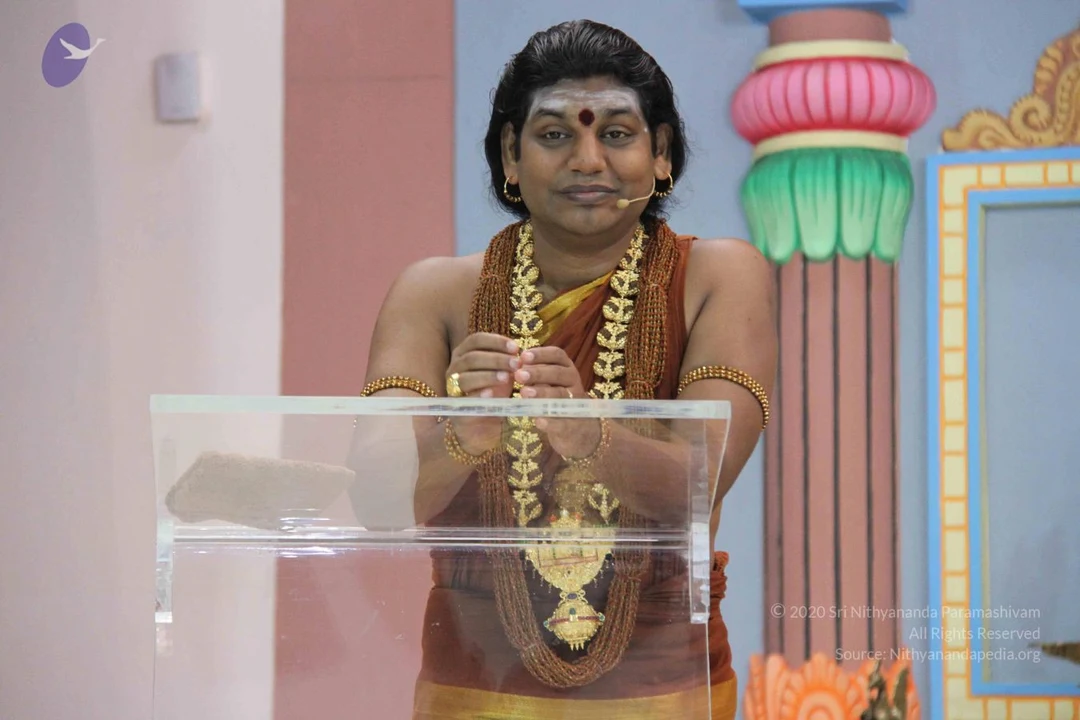
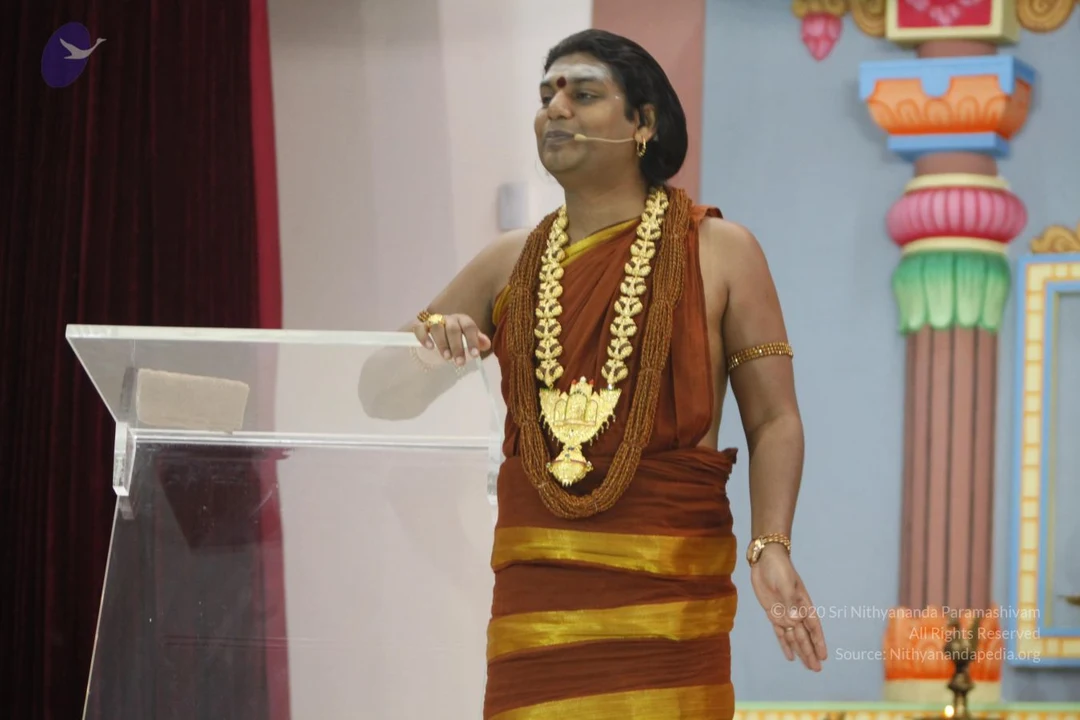
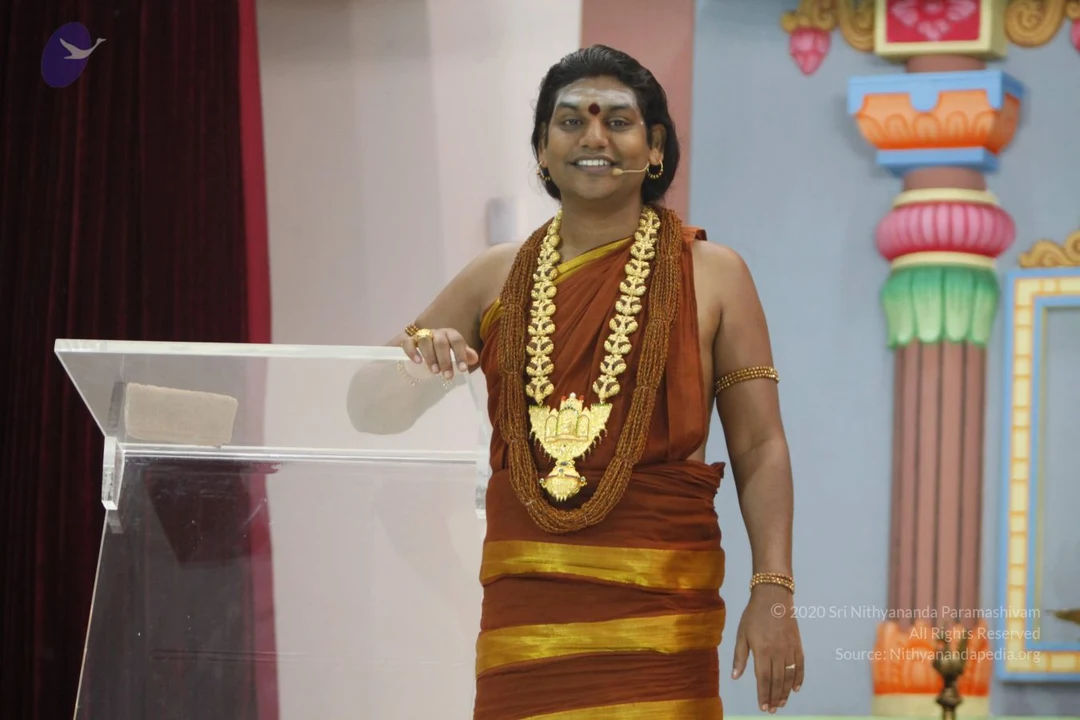
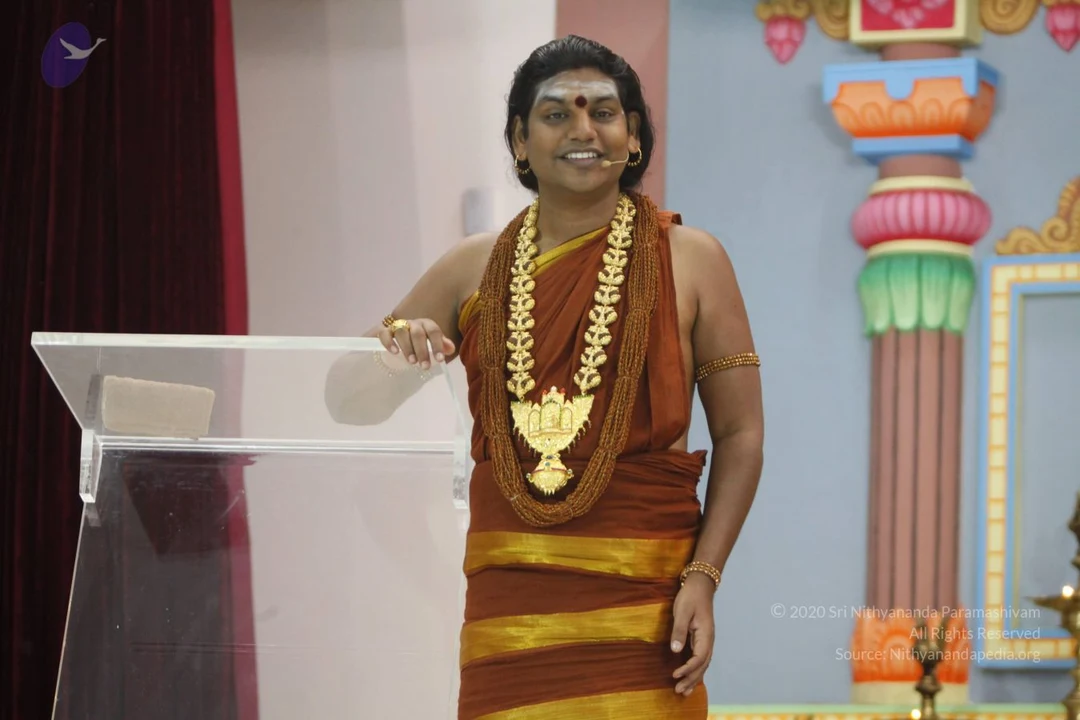
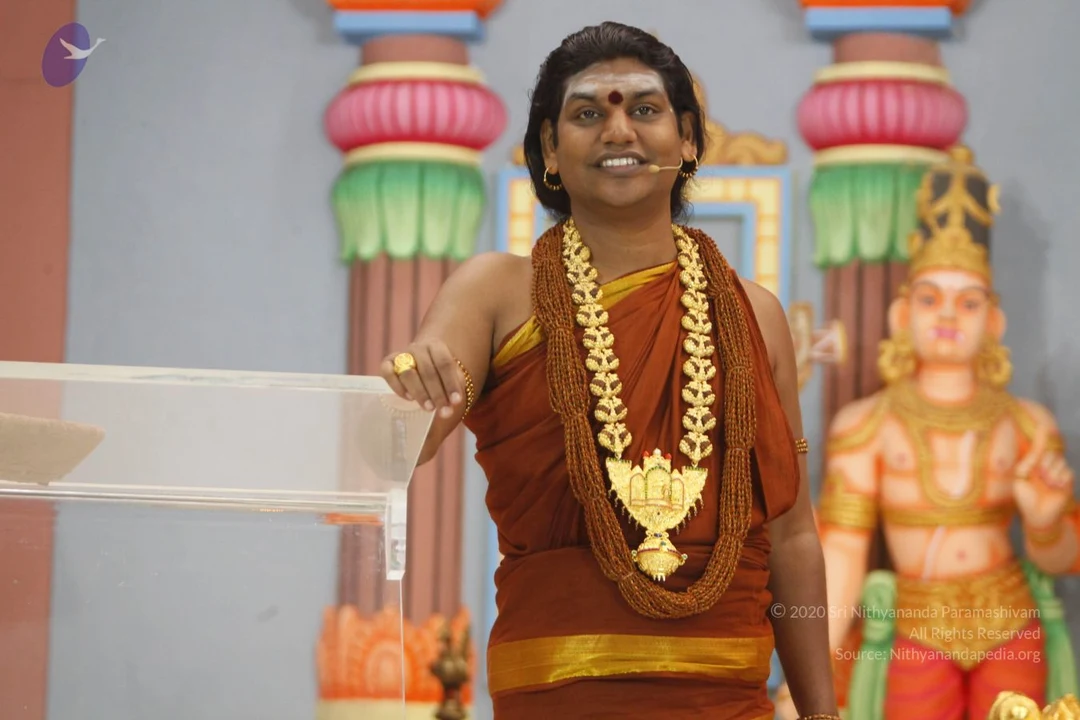
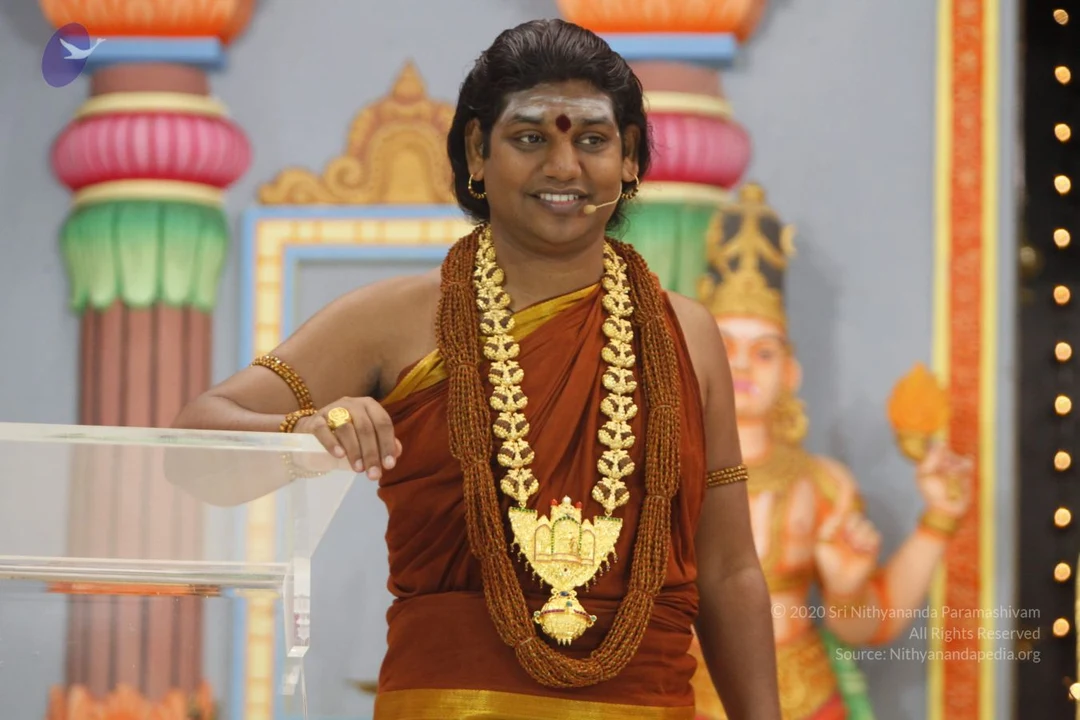
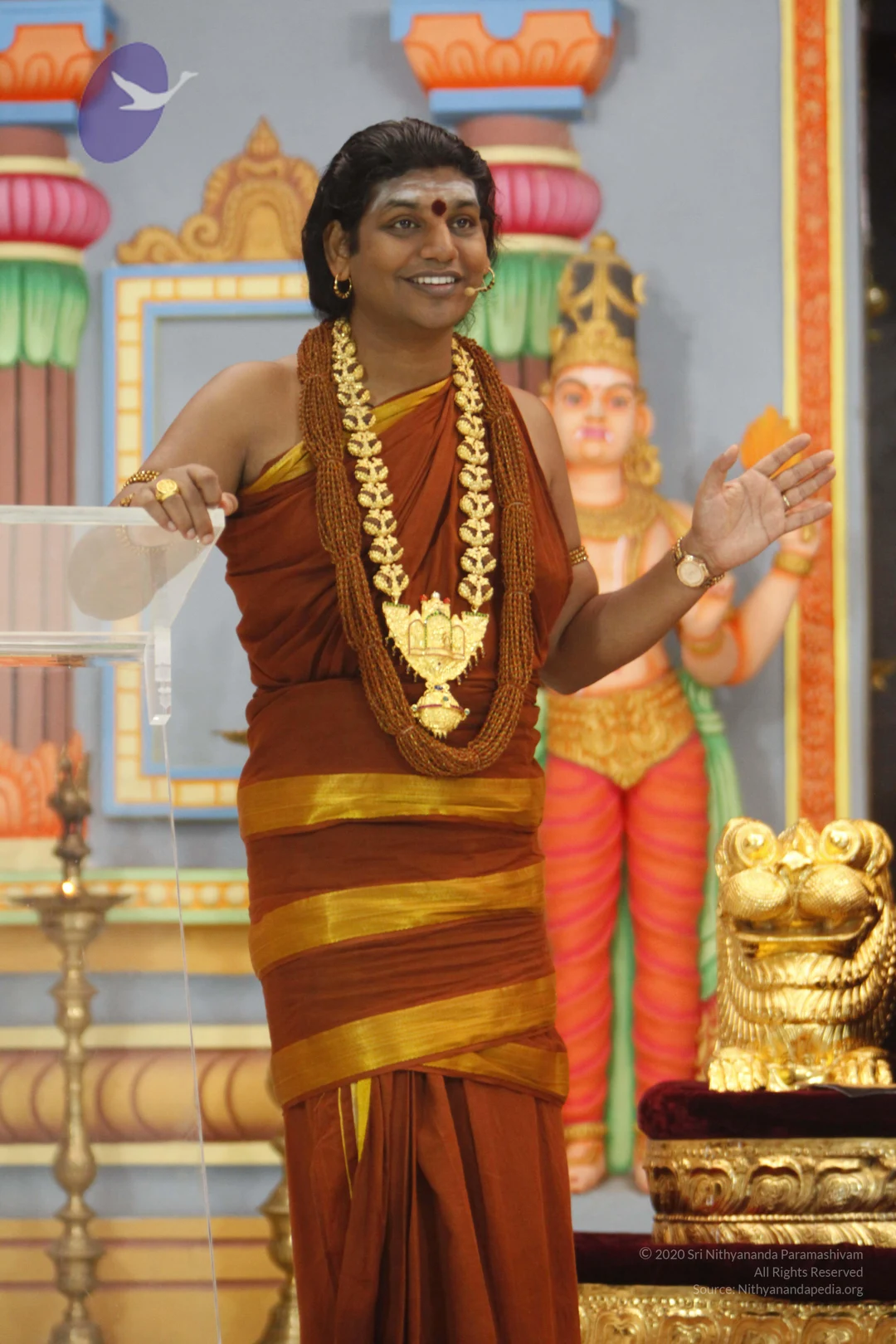
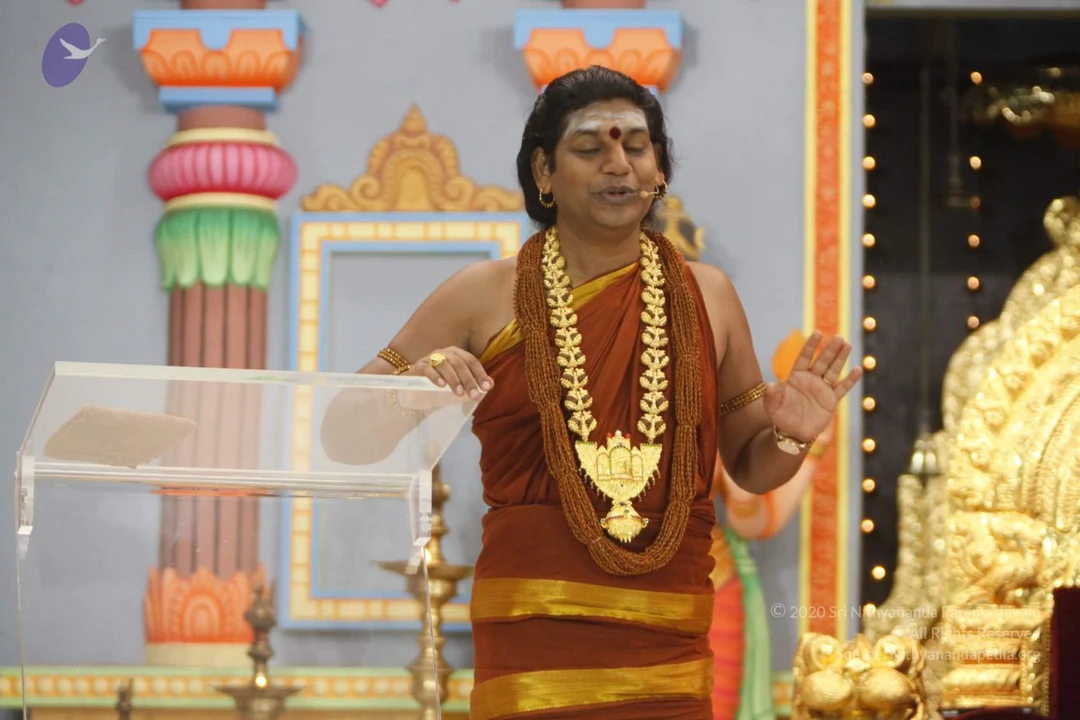
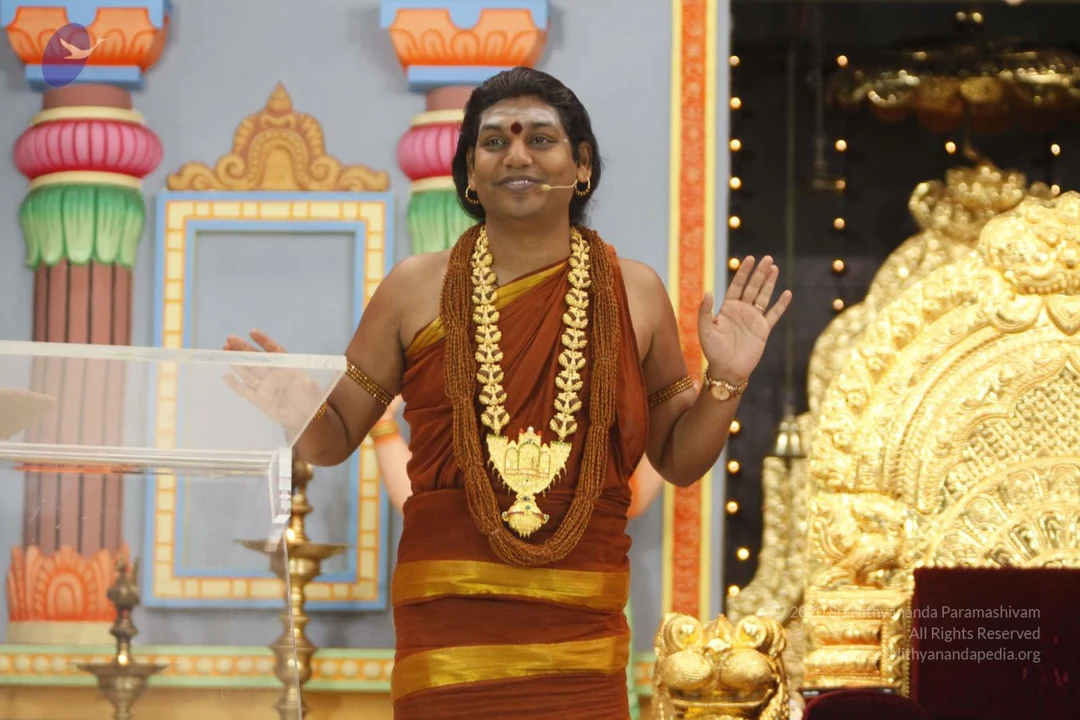
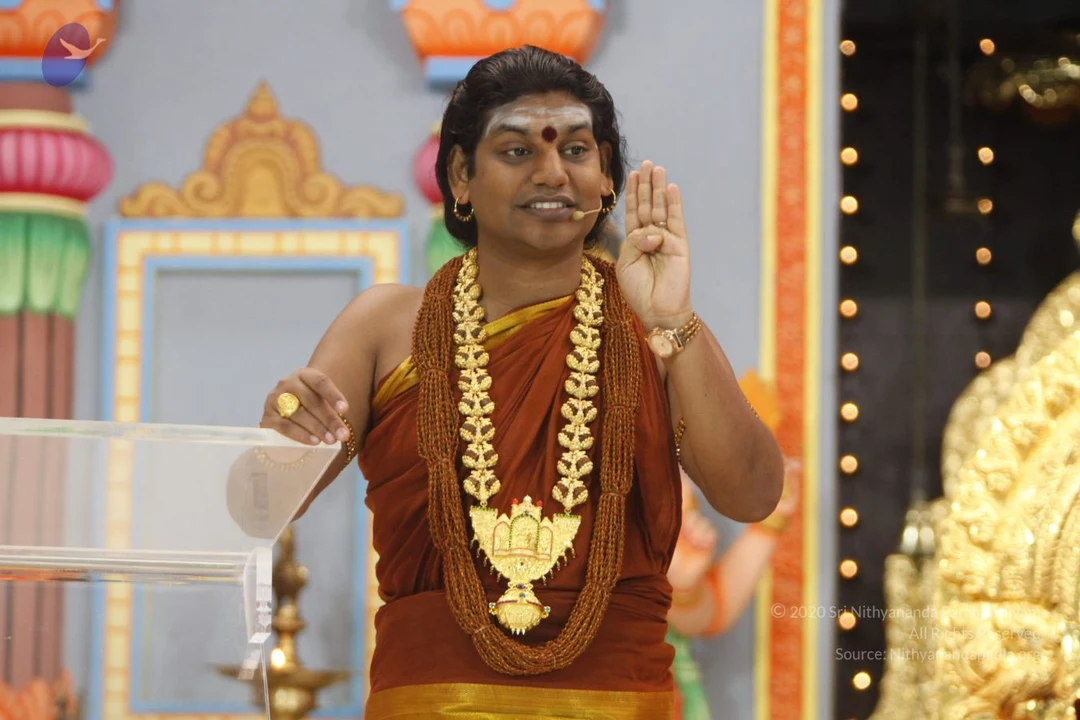
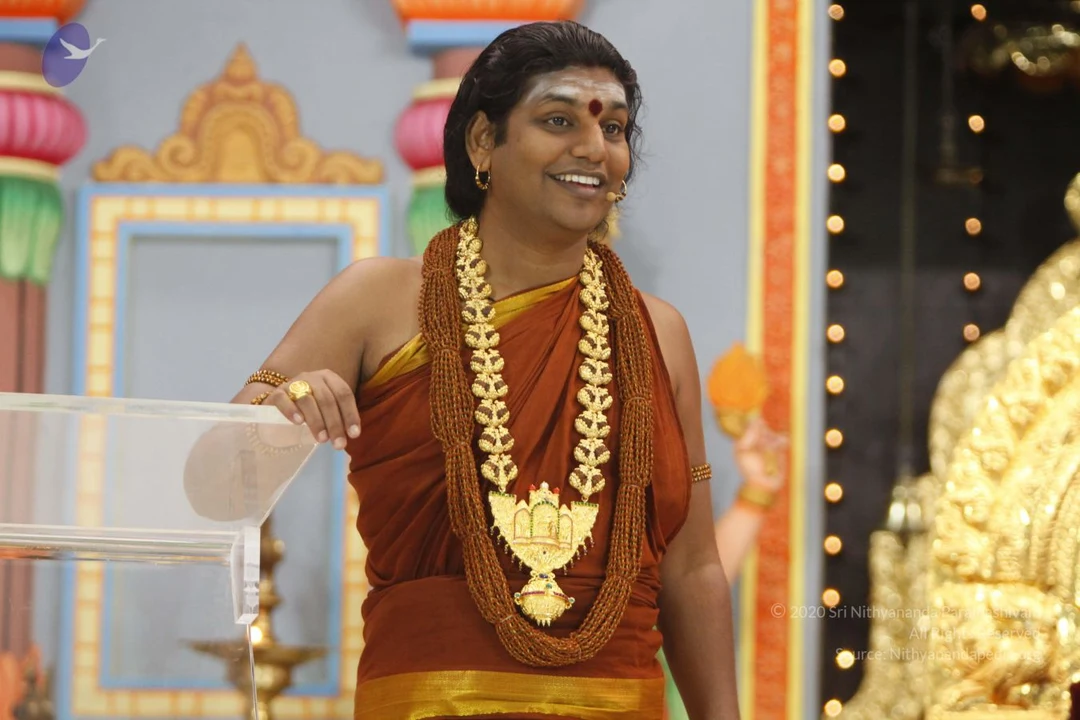
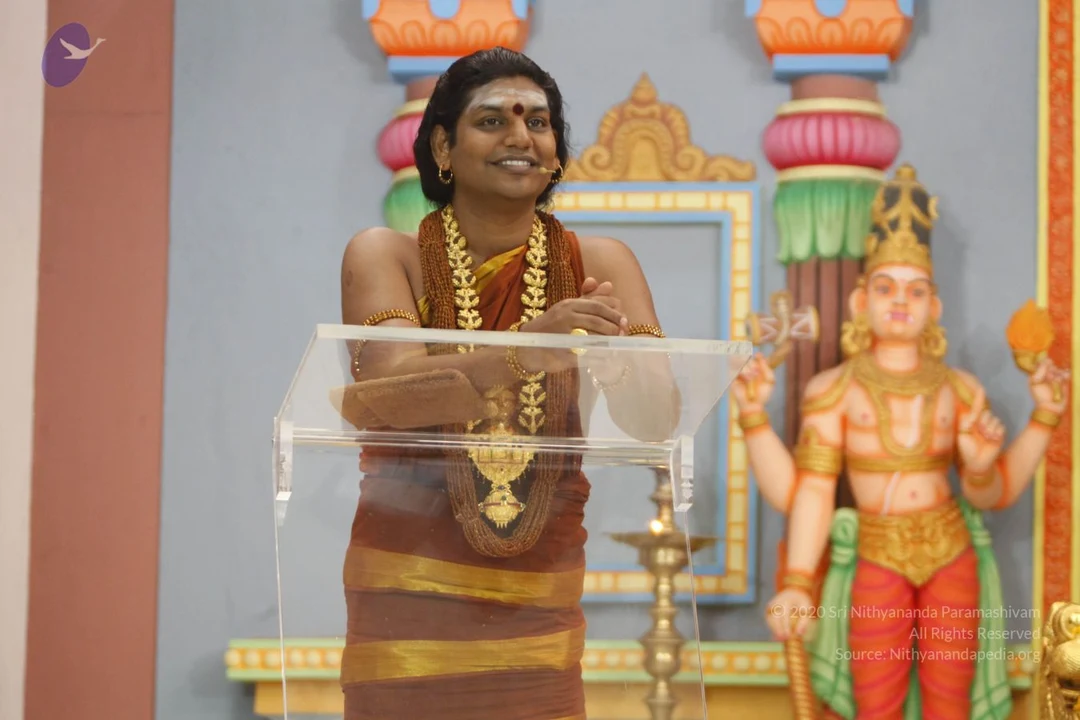
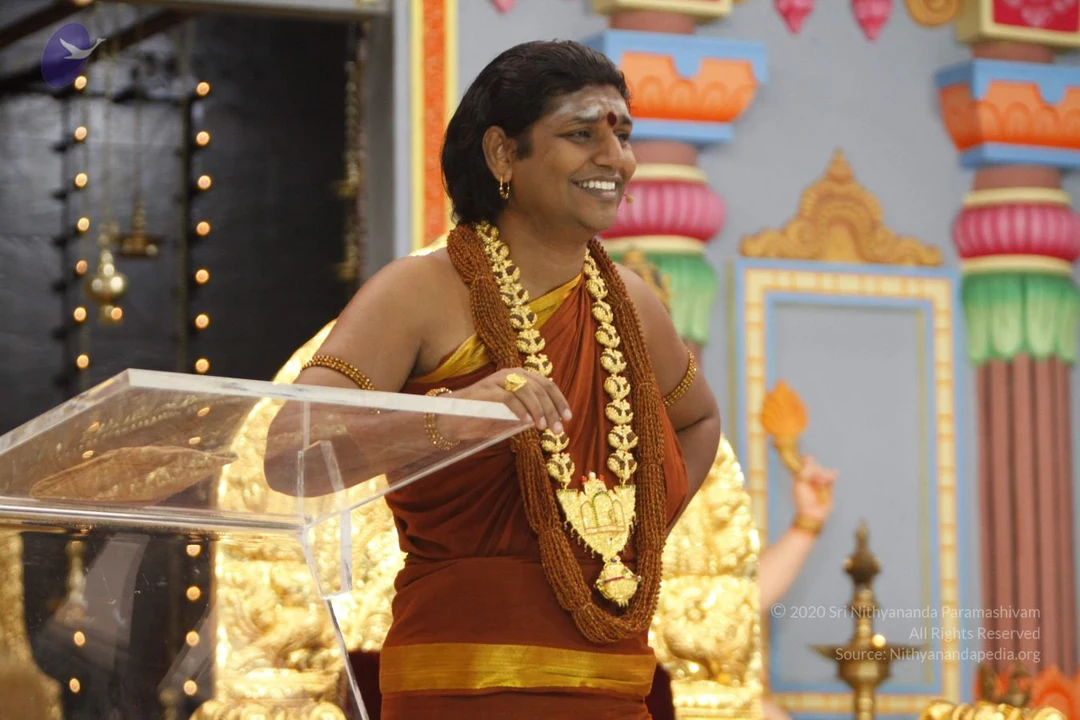
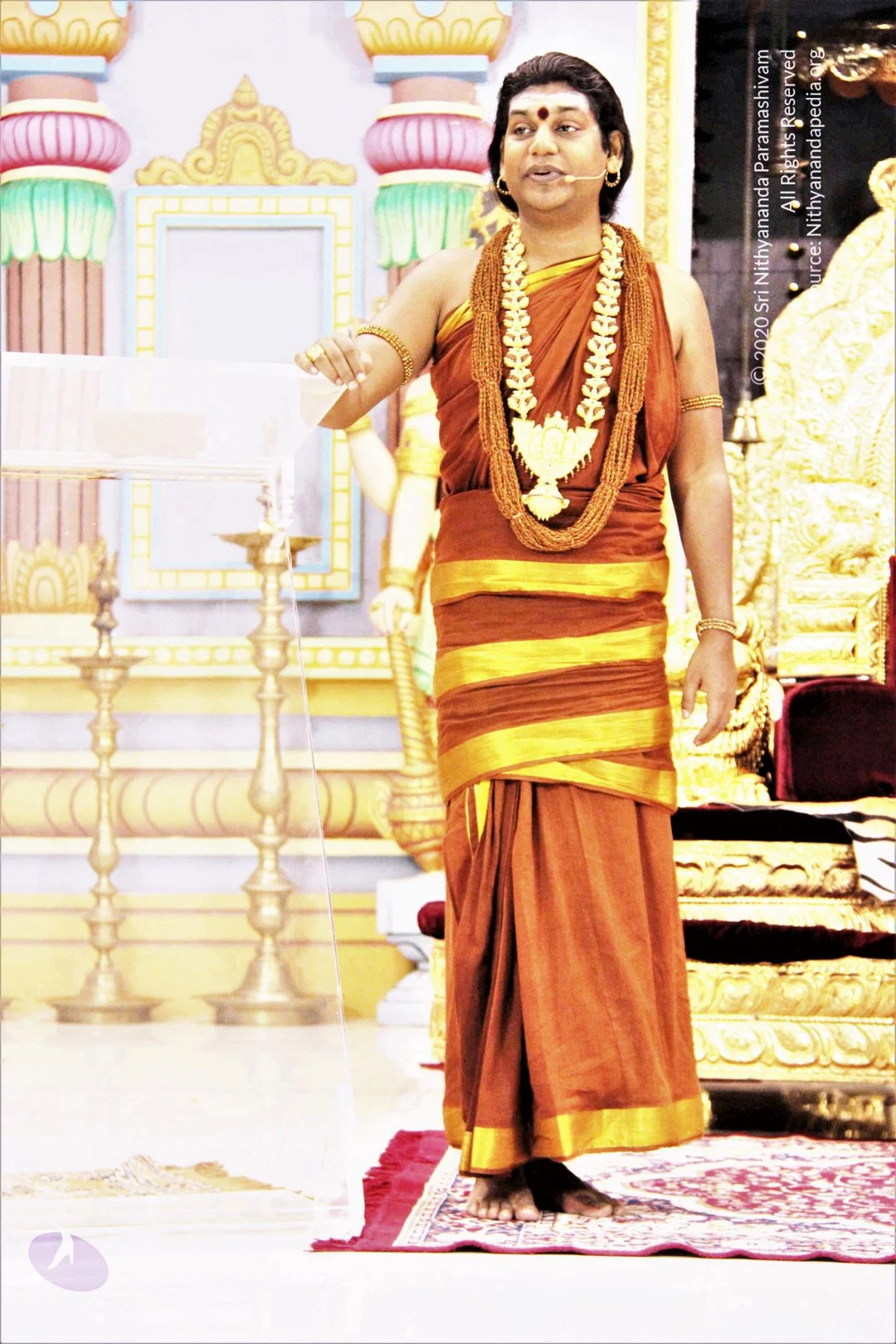
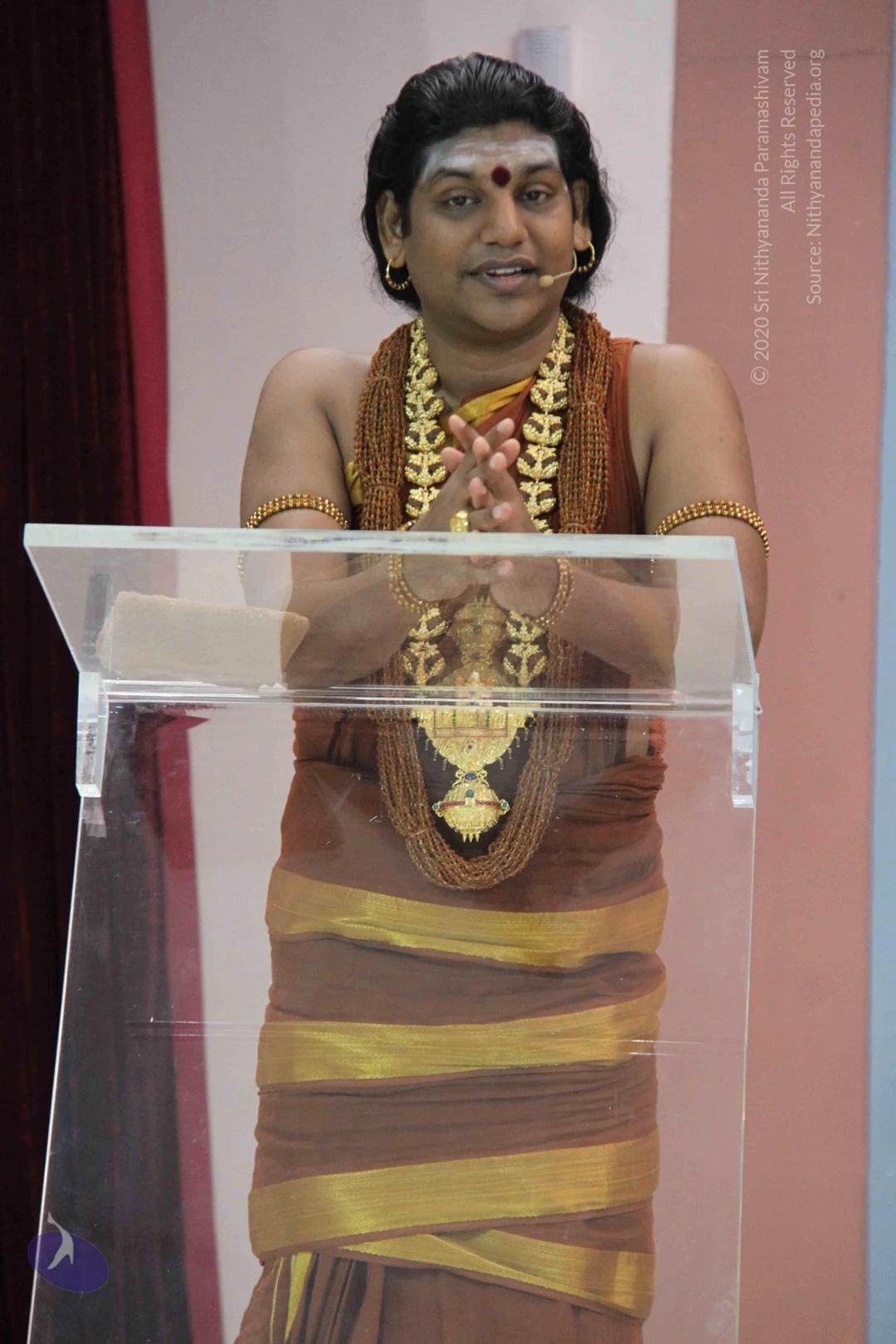
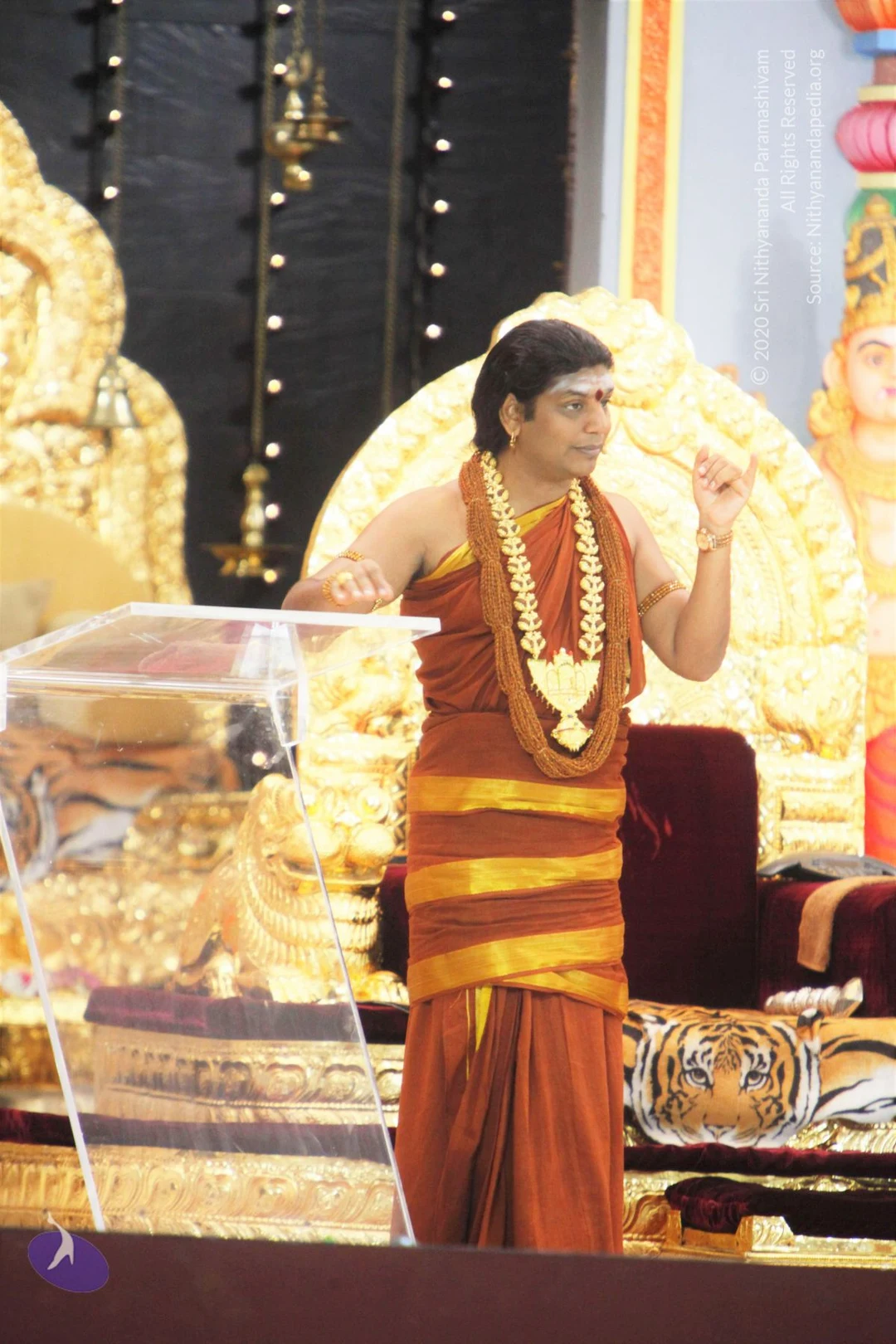
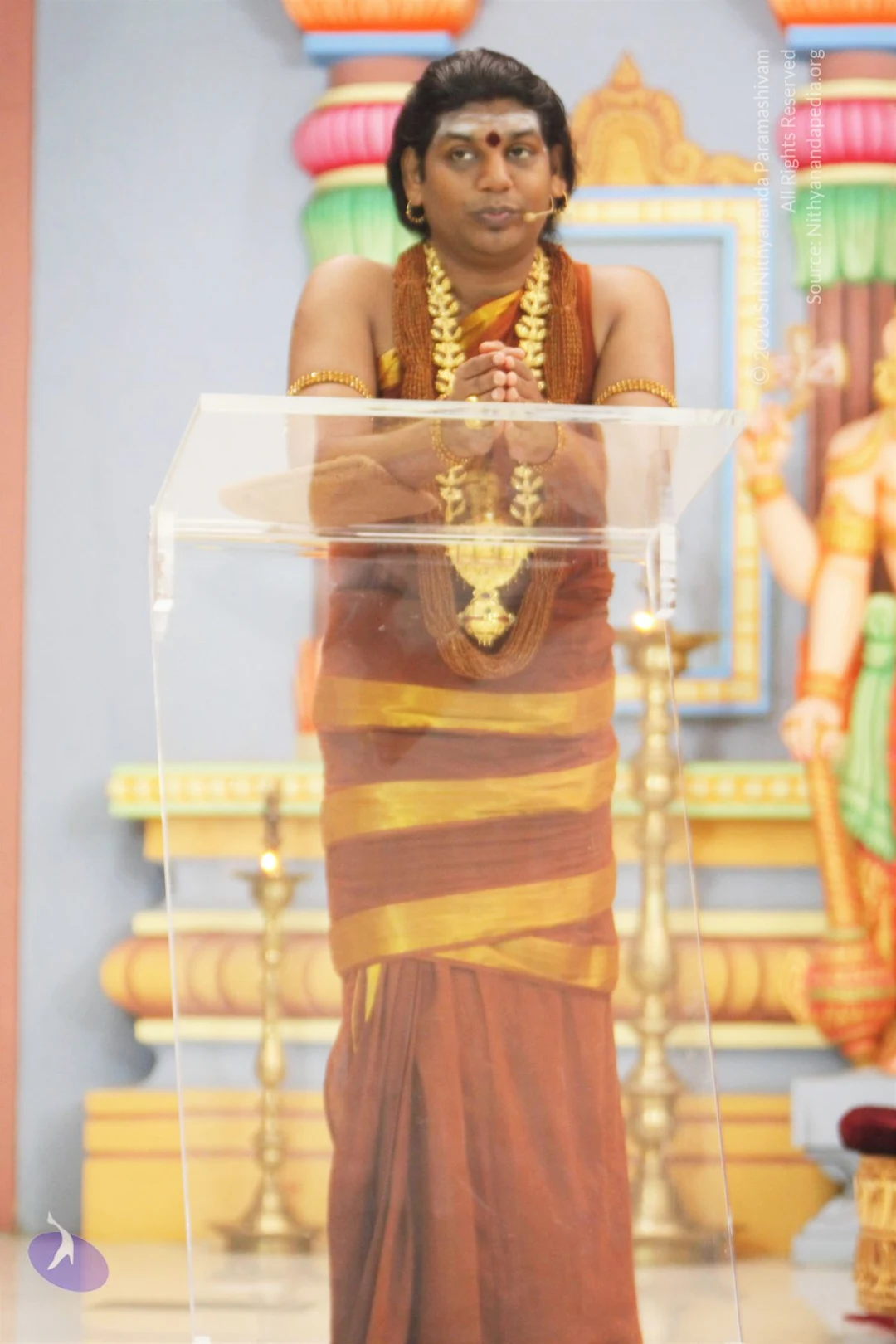
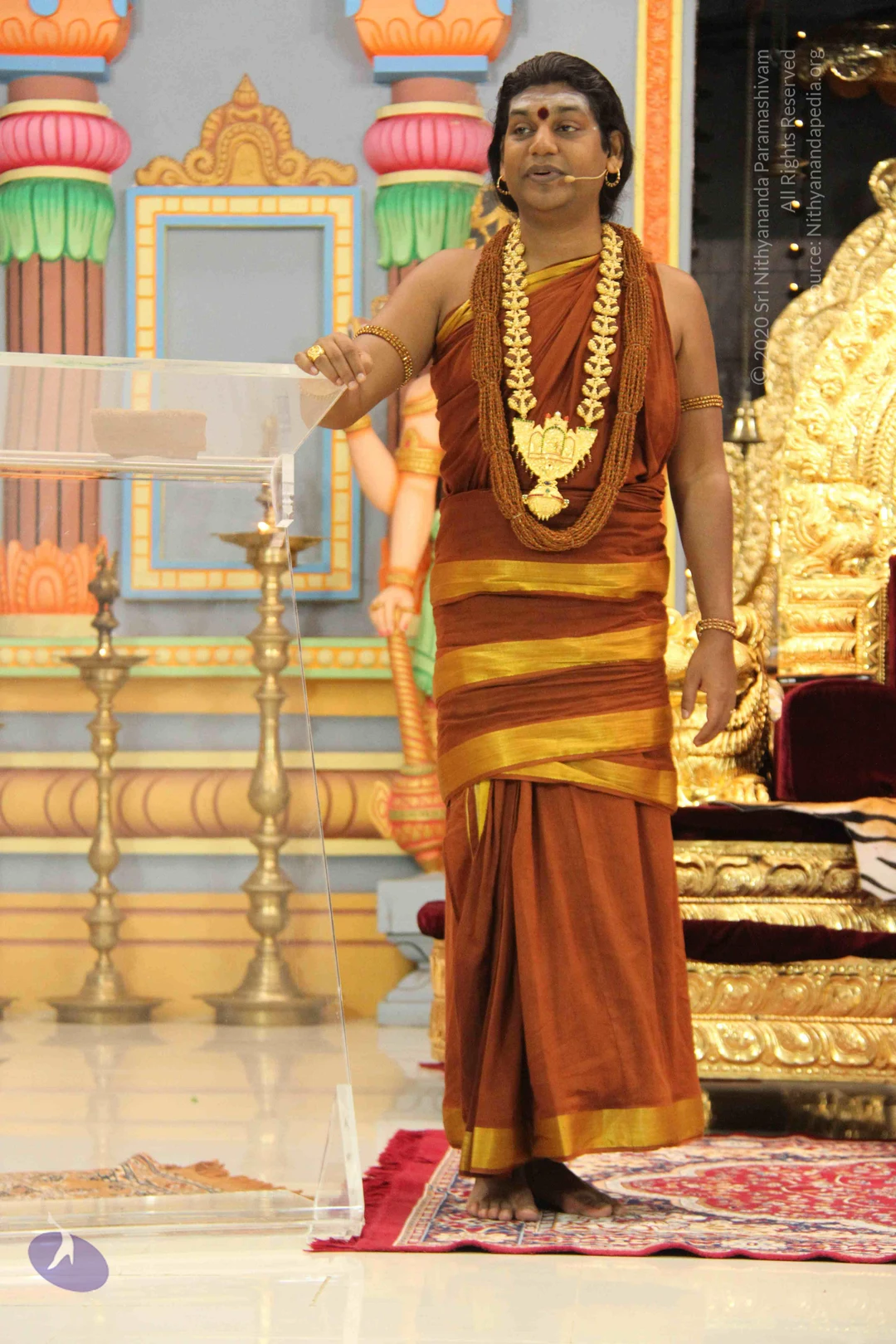
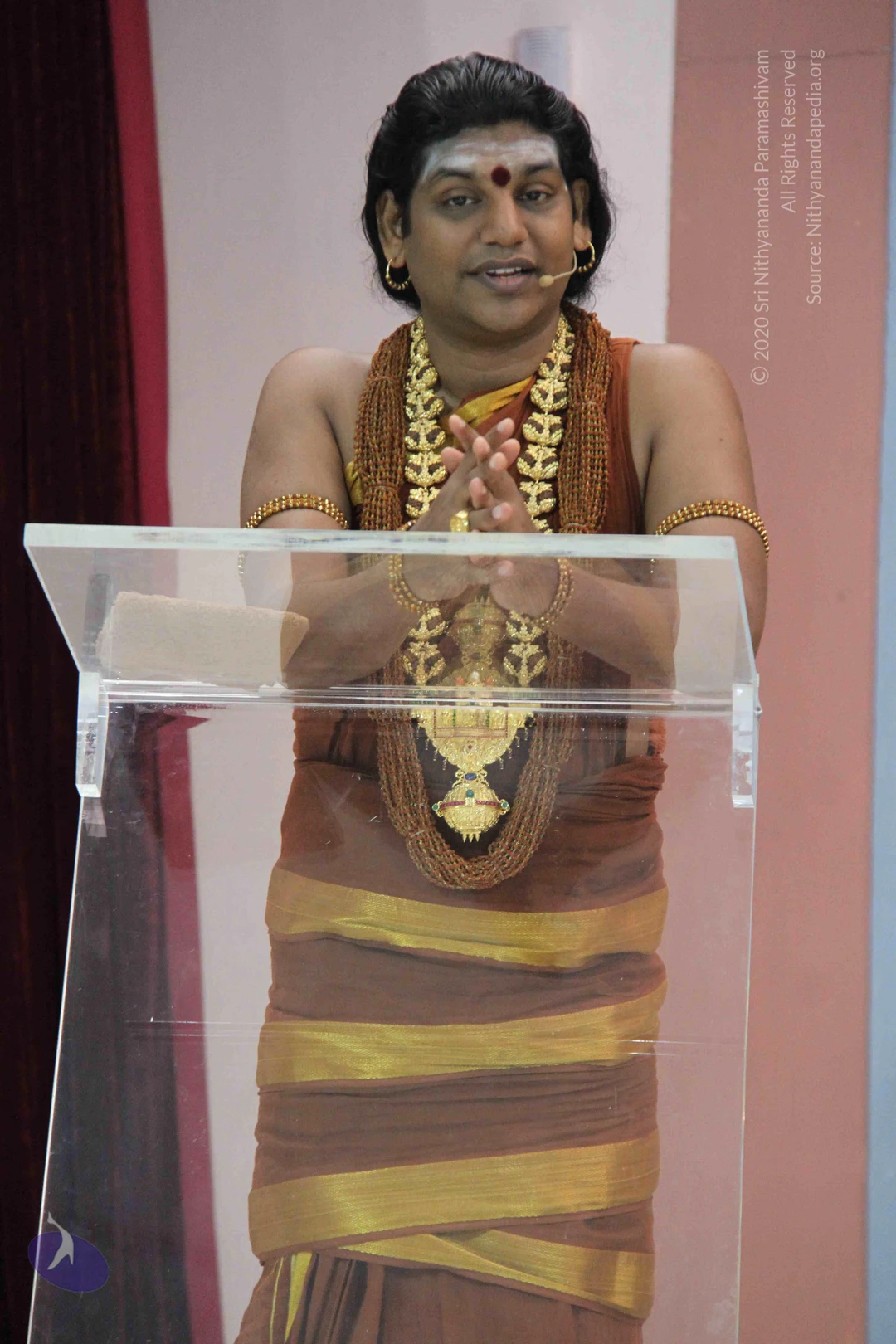
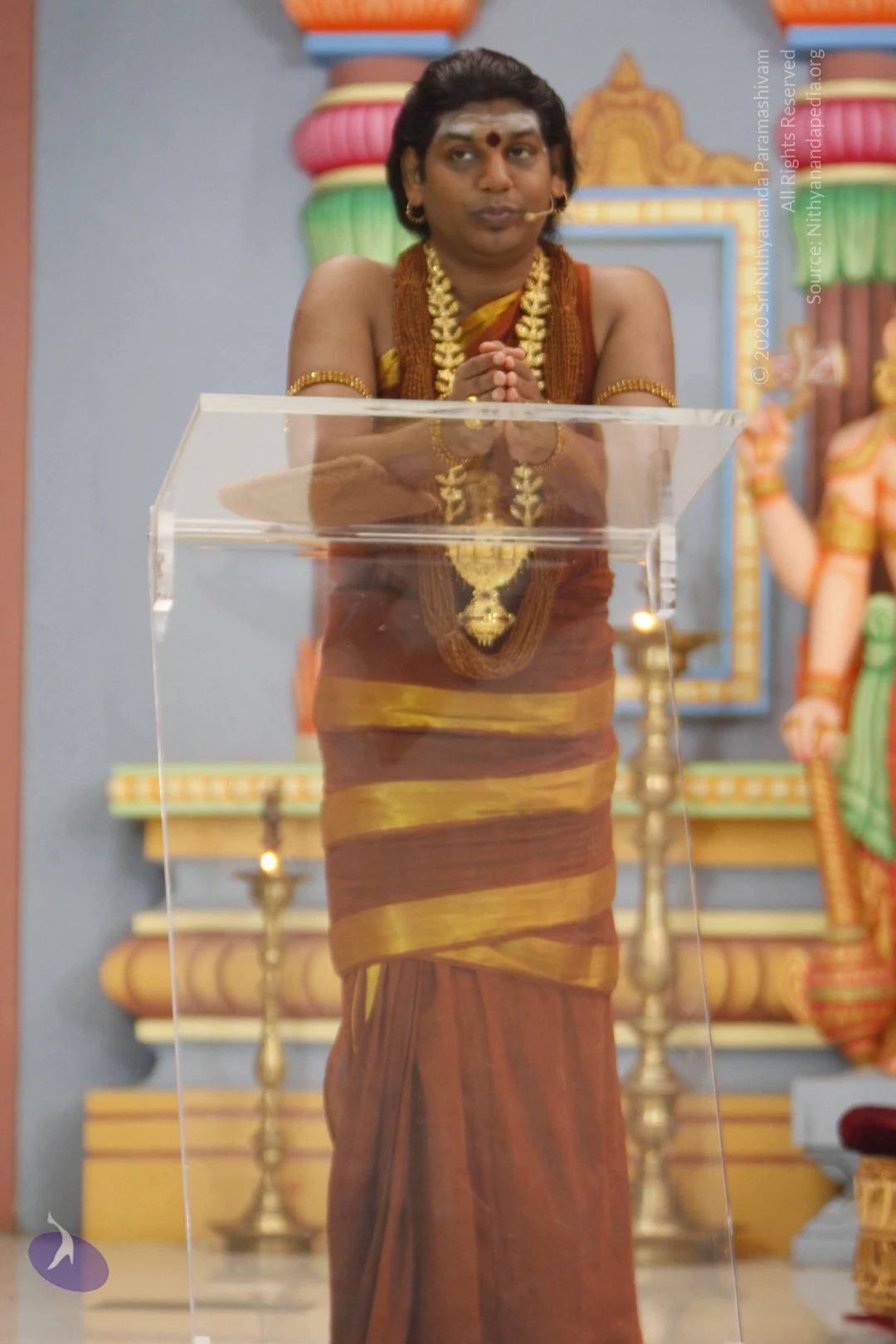
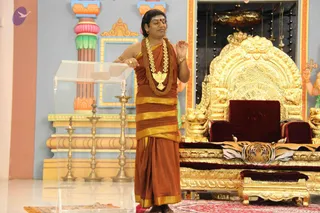
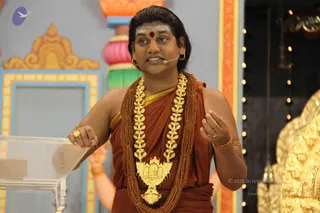
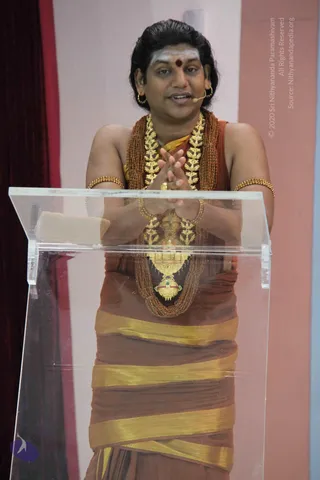
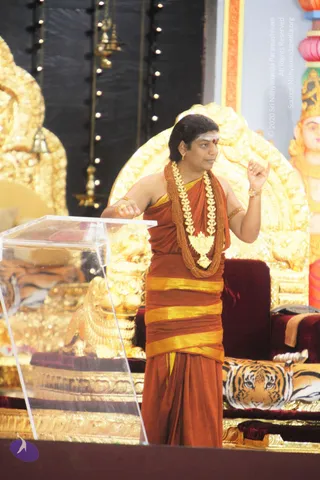
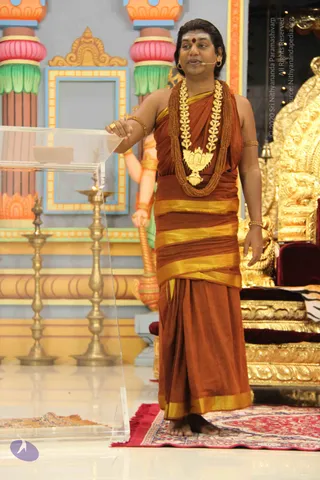
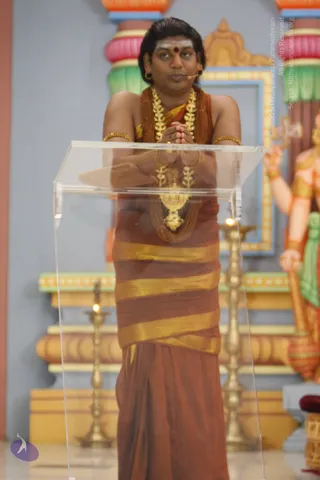
A man in a saffron-orange dhoti and shawl with gold-striped borders stands beside a clear acrylic lectern on a red carpet, gesturing with his right hand. He wears a heavy rudraksha mala, a ceremonial gold necklace with a lotus pendant, a red bindi and gold bangles. Behind him a golden throne with lion-head armrests, deep red velvet cushions and a tiger-skin cover sits before a painted temple backdrop with pillars and brass oil lamps stand nearby.A man in a rust-orange saffron wrap speaks at a clear acrylic podium, gesturing with both hands. He wears a rudraksha mala of brown beads, a heavy gold ceremonial necklace with a large gold pendant, gold earrings, a gold ring and bangles, and a white and red tilak with a red bindi on his forehead. A small microphone is attached near his face. Behind him stand painted pillars in red, green, pink and gold with a golden arch motif, and a gold ornamental shape appears at the right edge. a person is speaking here, based on the saffron clothing, the rudraksha mala and the ceremonial gold necklace as visible cues.A man stands beside a clear acrylic lectern in a decorated hall, smiling and resting his right hand on the lectern edge. He wears a rust-orange and gold dhoti-style wrap, a heavy gold ceremonial necklace with a central gold pendant, rudraksha mala strands, gold bangles and a gold ring, with a red bindi and white forehead marks. A small microphone is at his face. Behind him are painted pink and green columns, a yellow-and-blue framed panel and a brass oil lamp with a lit flame at the lower right.A man stands behind a clear acrylic lectern on a stage, hands pressed together in namaste at chest level. He wears a rust-brown robe over a yellow inner cloth, layered rudraksha malas and ornate gold necklaces with a large gold pendant, gold bangles on both upper arms, and gold hoop earrings. He has a white vibhuti marking and a red kumkum bindi on his forehead, with a small microphone clipped near his face. Behind him are pink, white and grey stage panels. The clear lectern and stage setting suggest a satsang discourse. a person: the bare-shouldered figure has distinctive rudraksha malas, ornate gold jewellery and a saffron-toned robe, and is presented as the speaker at the lectern.A man stands behind a clear acrylic lectern during a satsang, hands clasped at chest height and resting on a gold and rudraksha necklace. He wears a reddish-orange shawl over a bare upper body, a gold-coloured dhoti border, multiple gold garlands, gold bangles and a small headset microphone. A red bindi and white tilak mark his forehead. Behind him are a pink and green pillar with a lotus-style capital and a painted blue and yellow frame. A small stone slab sits on the lectern. Presentation cues match a person, with a long swept-back hairstyle, saffron-orange shawl and ornate gold necklaces, seen while speaking at a teaching event.A standing man in a satsang hall speaks at a clear acrylic podium, one hand resting on its edge. He wears a rust-orange wrap with broad gold borders, a rudraksha mala with a large gold ceremonial pendant and gold floral necklaces, a gold armlet and gold bangles, a red bindi, and a small headset microphone. He has long swept-back dark hair. Behind him stand painted columns in orange, pink and green with a lotus-style capital, and a red curtain hangs on the left. The appearance matches the Swamiji candidate cues of long hair, rudraksha and ceremonial gold jewellery, so this is a probable in-person depiction of Swamiji giving satsang.

SarvaDarshan

11 photosSource gallery
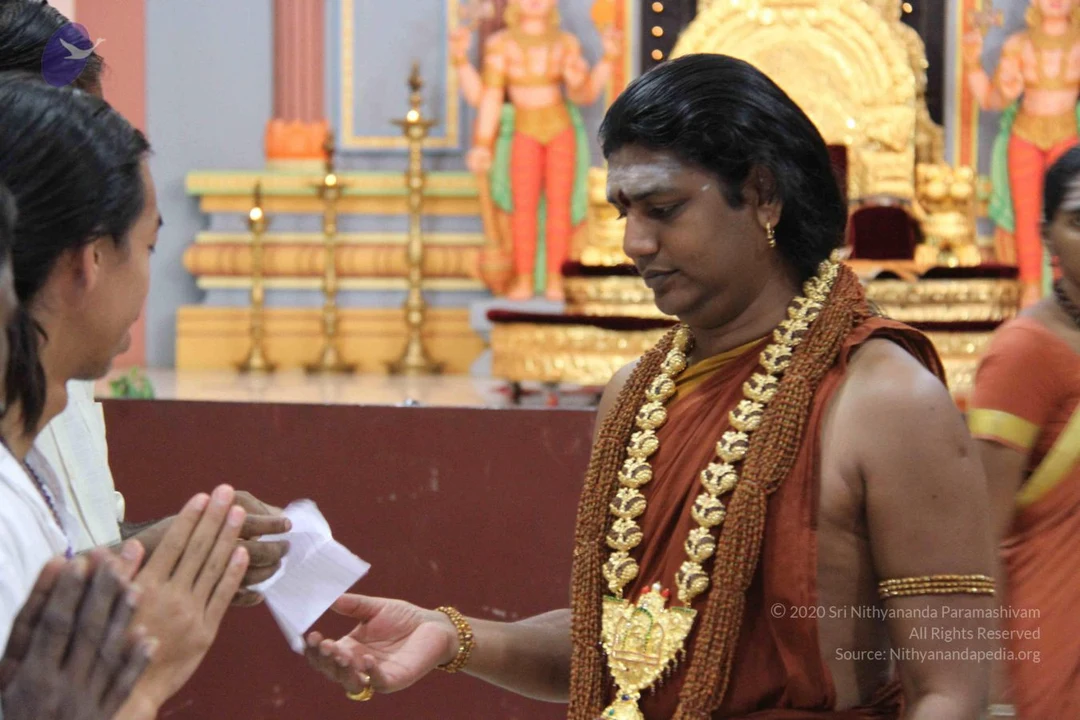
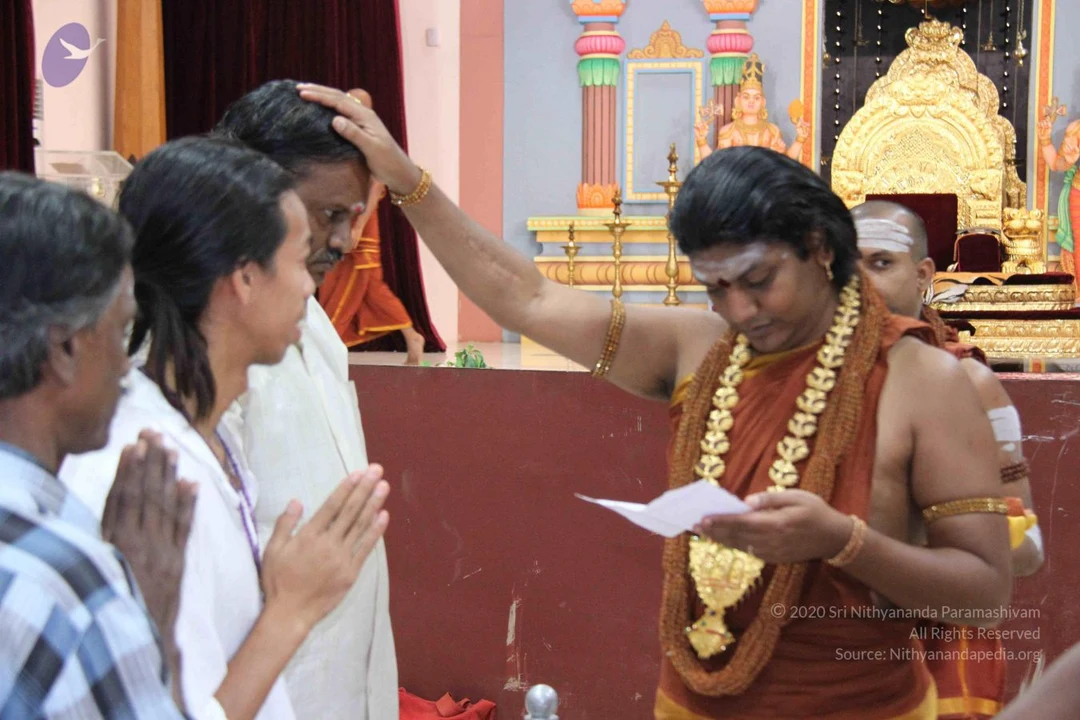
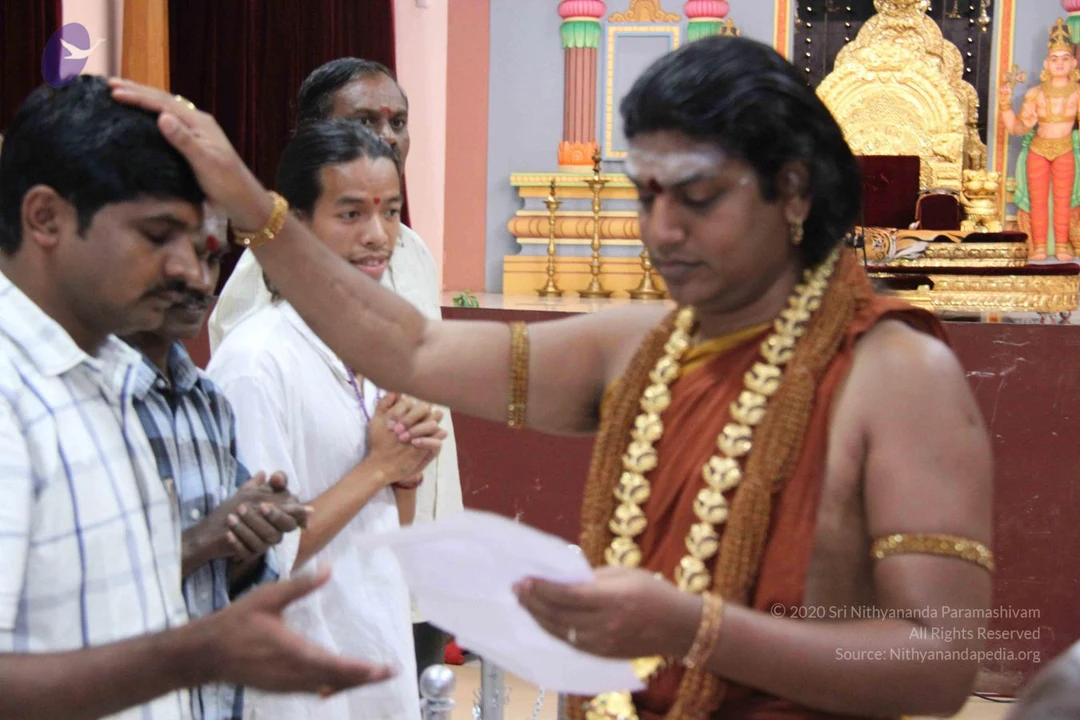
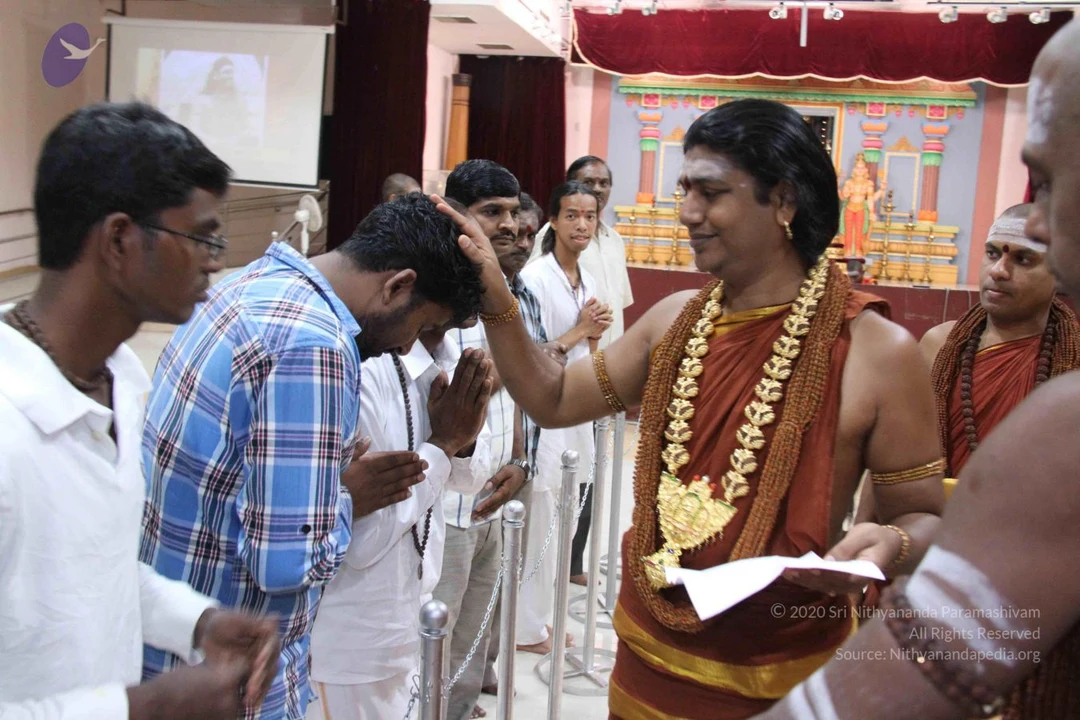
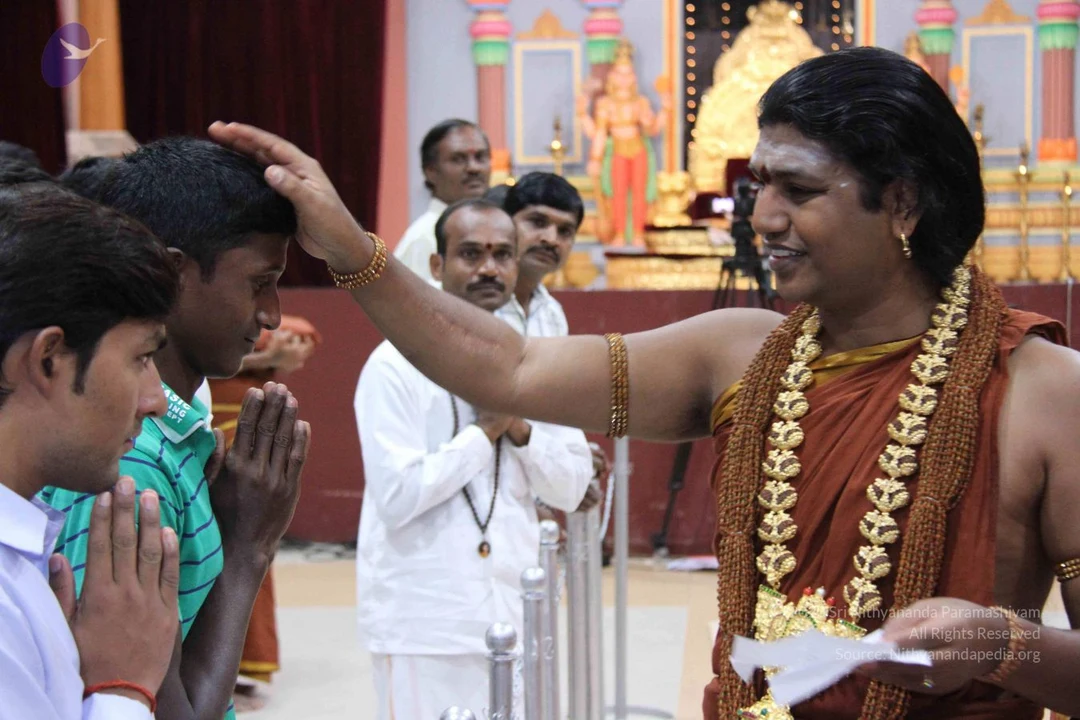
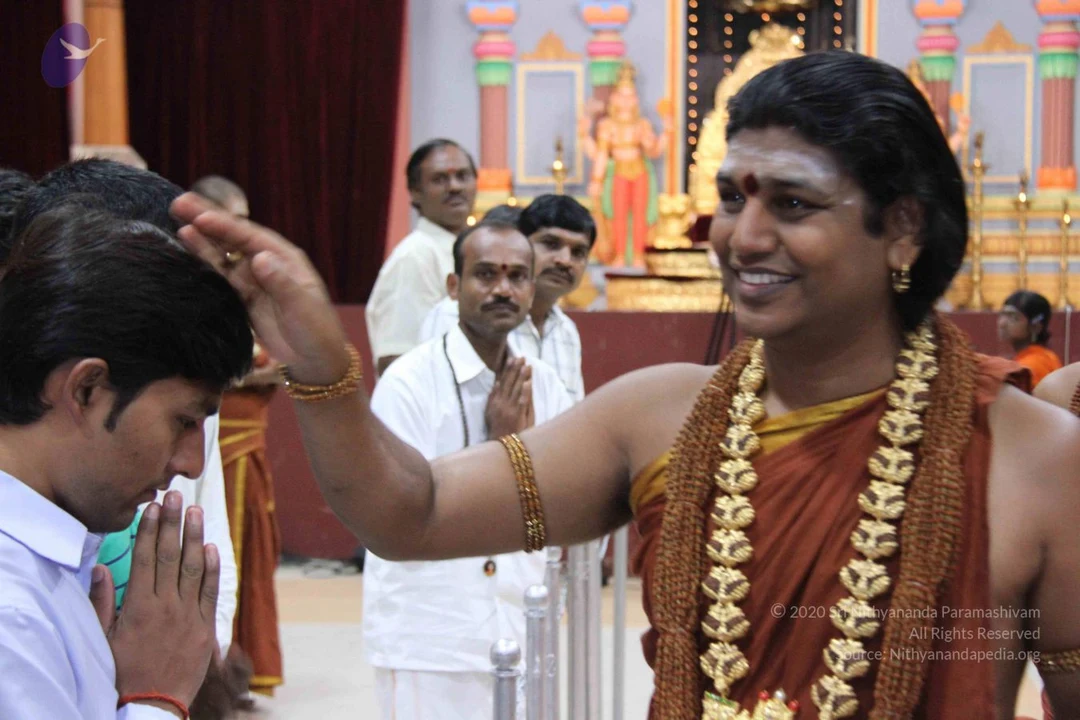
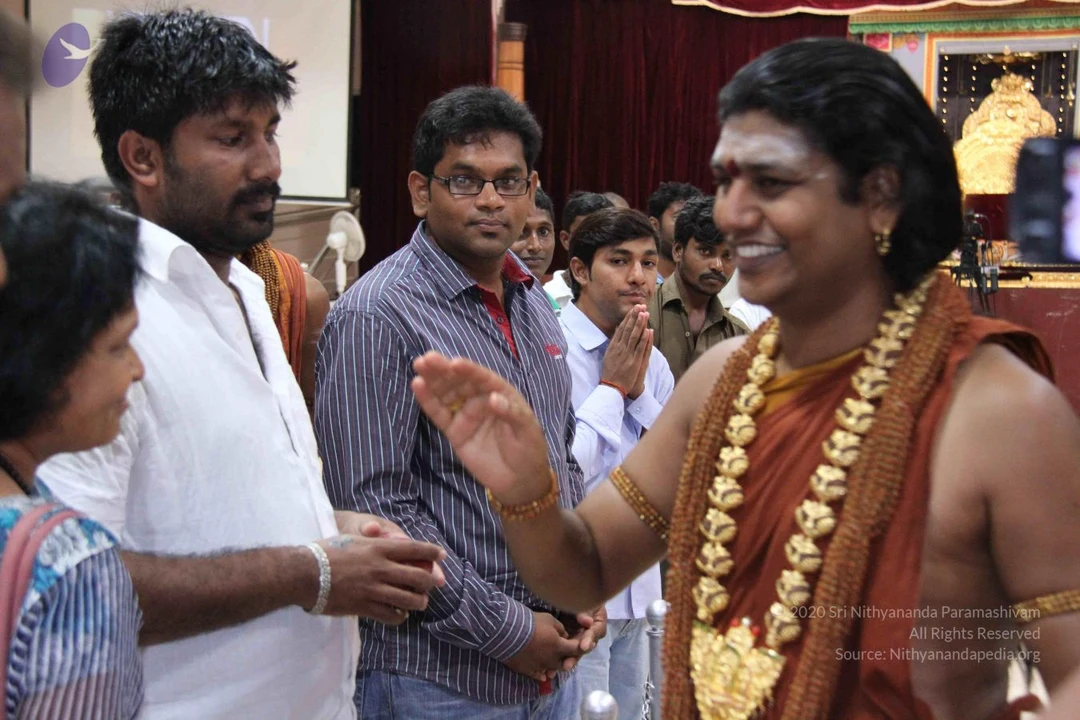
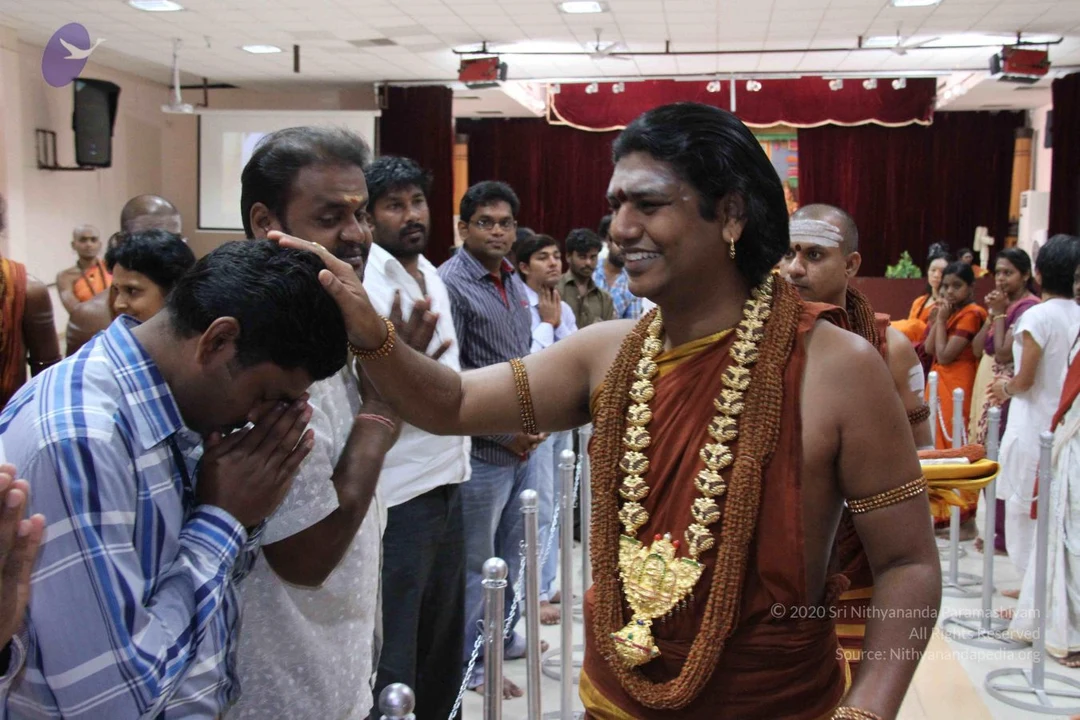
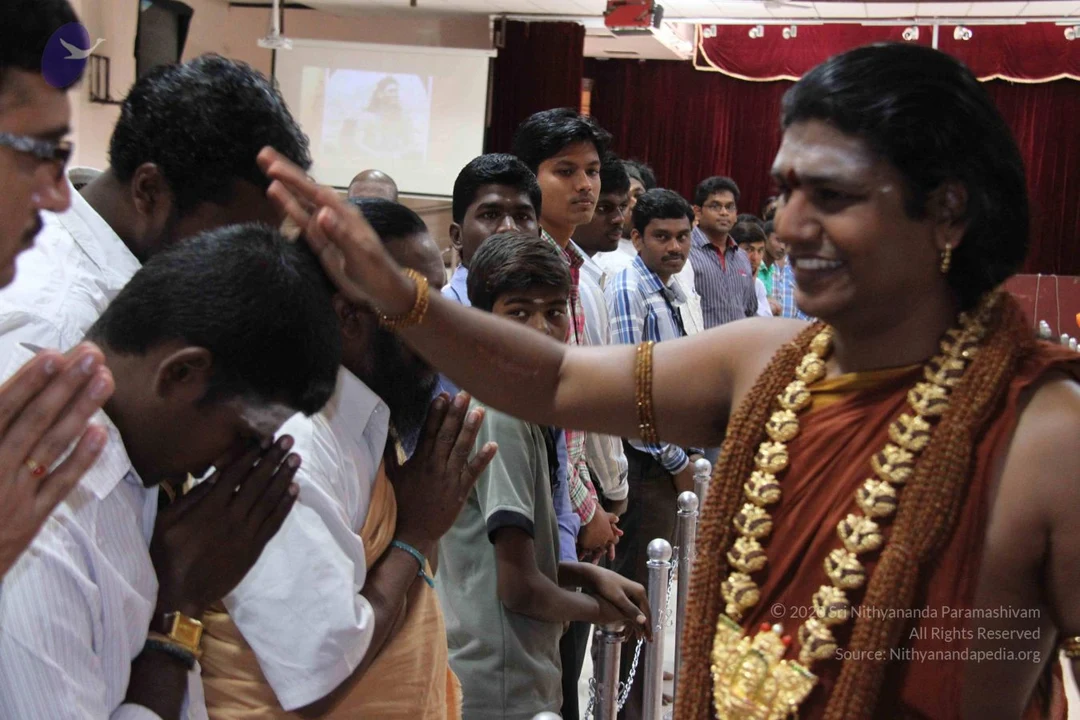
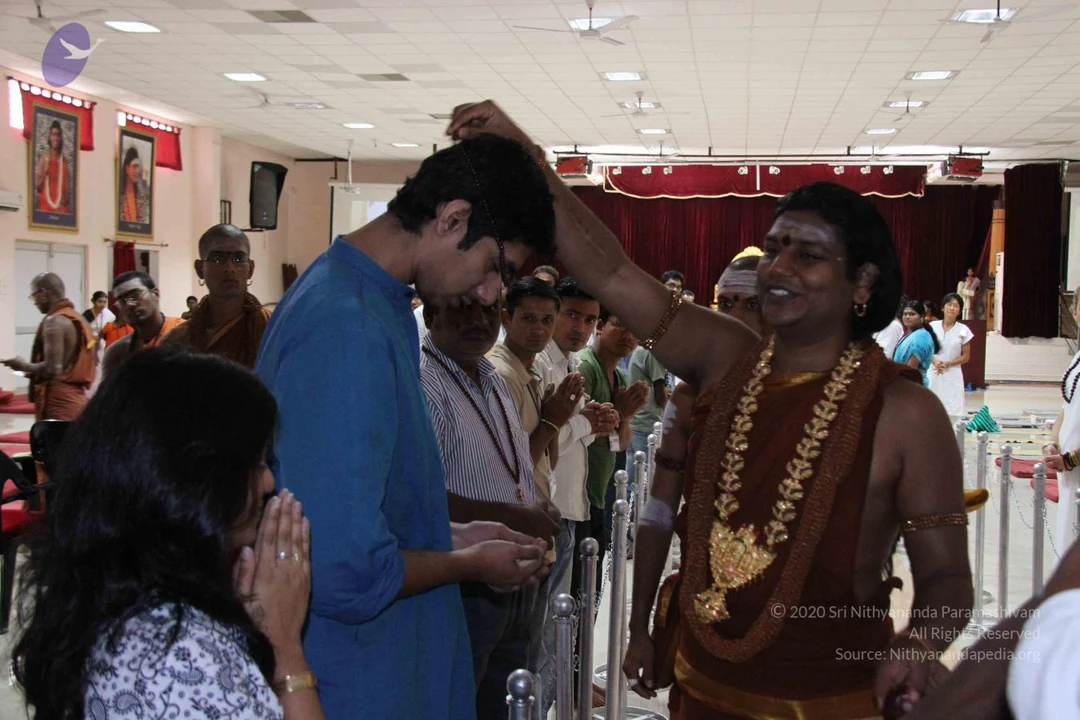
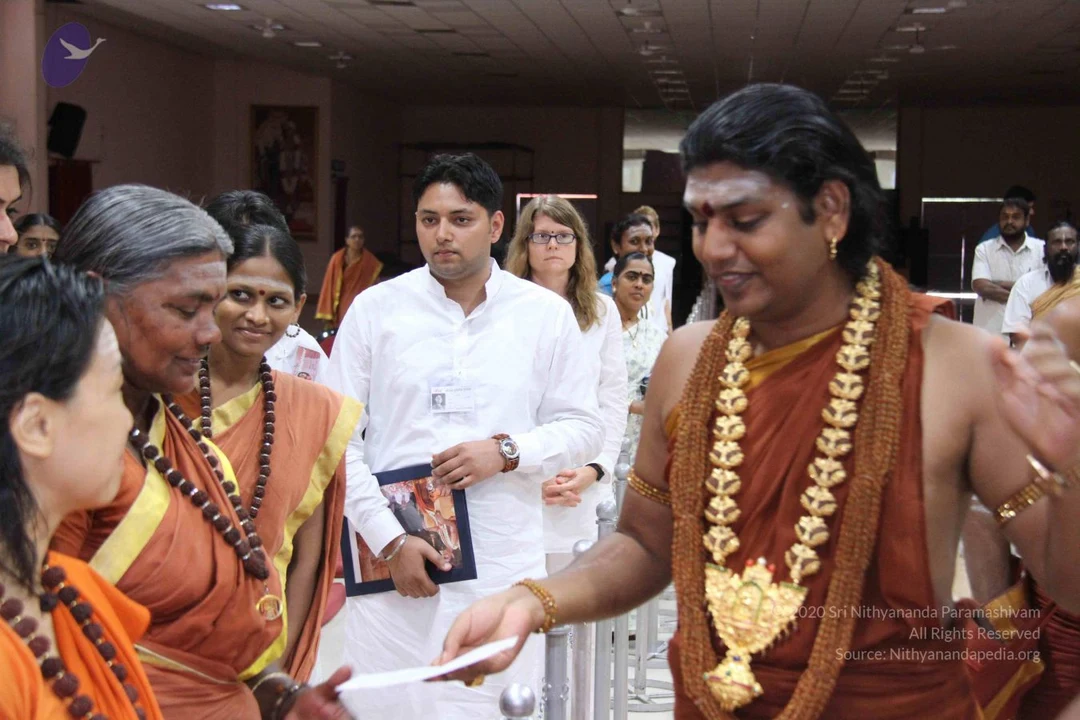
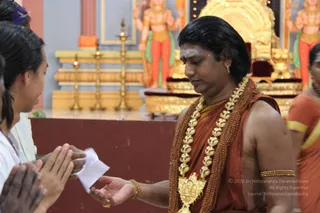
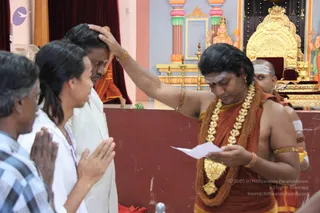
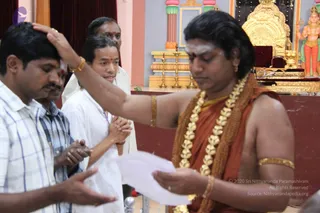
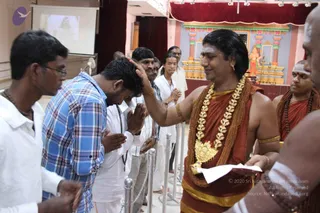
A photograph in a temple hall with gold-painted deity murti and lamp stands behind. A man with long swept-back dark hair, a white forehead mark, gold earring, rudraksha mala and ornate gold necklace, wearing an orange-saffron cloth draped over his shoulder and gold armlet, extends his hand to receive a folded white paper from a devotee. The devotee on the left, in white, has hands pressed together in anjali. Another person in orange stands at the right edge. Cues match the Swamiji (probable) profile: long hair, saffron clothing, rudraksha and gold necklace, giving the paper in a devotional setting.A photograph of a ceremonial blessing at a temple-style hall. A figure in saffron-orange robes with a long gold-and-bead garland and gold armbands stands at center, holding a small white paper in one hand while placing the other palm on the head of a bowed man in a white shirt. Two people with folded hands stand to the left, and a shaved-headed priest in white robes with a white forehead mark stands behind on the right. Behind them is a gilded throne and a painted backdrop with a deity figure and ornate pillars. The central figure has long swept-back hair, a tilak on the forehead, rudraksha-style beads and a ceremonial gold necklace, which are cues consistent with the page's identification; the appearance is only a probable match for a person.A photograph of a ceremony in a temple-style hall. A bare-chested man in an orange-saffron shawl and multiple gold necklaces with a gold armlet stands at right, holding a sheet of white paper and placing his right hand on the head of a seated man in a white-and-blue checked shirt at left. Two others stand behind with hands clasped in devotion: a man in a white kurta and a man in a white shirt. Behind them is a gold-decorated throne with a red cushion, gold lamps and brass kalasha-style vessels, and a gilded deity murti at upper right. Probable Swamiji cues: long swept-back hair, saffron shawl, ornate gold necklaces and armlet, shown in the blessing role.A photograph of a hall event in which a man in an orange-brown robe with a heavy gold necklace and rudraksha malas places his right hand on the head of a kneeling man in a blue plaid shirt. The kneeling man has his head bowed and hands folded in anjali. Around them, men in white shirts and dhotis, one wearing a rudraksha mala, stand behind silver stanchions and chain barriers. A bald man in white with a forehead marking and orange-robed attendant appear at right. In the background is a painted temple-style backdrop with pillars and a deity figure, a projector screen, and red curtains. The white-robed figure at the top of the stanchion line holds white paper. The robed man has long swept-back hair, a gold ceremonial necklace, bangles and an armband, and his appearance is consistent with the a person candidate, though the presentation alone is not conclusive.A photograph inside a temple hall in which a bare-shouldered man in an orange-brown cloth and layered rudraksha mala necklaces with ornate gold pendants raises his right hand in blessing over the head of a young man in a green striped shirt. The young man stands with palms pressed together in namaskar, and a man in a white shirt beside him also holds his hands folded. Behind them, a standing gold-and-red deity murti and gilded altar decor are visible, with a camera on a tripod at right.Indoor temple-hall photograph of a smiling man with swept-back dark hair, a red bindi and white forehead markings, wearing a rust-orange dhoti-style wrap, gold ceremonial necklaces of large pendant beads, a rust-brown rudraksha-style mala and gold armlets, raising his right hand in blessing toward a young man in a white shirt who stands with palms pressed together and head bowed. Behind them, several men in white shirts and white dhotis stand with folded hands, and a figure in orange clothing appears at the right. Ornate Hindu deity murti, gold-toned kalasha-style lamps and pillars with coloured stripes stand in the background, with a red curtain at left. The scene appears to be a devotee receiving blessing in a temple-style hall. a person candidate presence is uncertain given the pose and the hall setting.

Lotustv-Swamiji

34 photosSource gallery
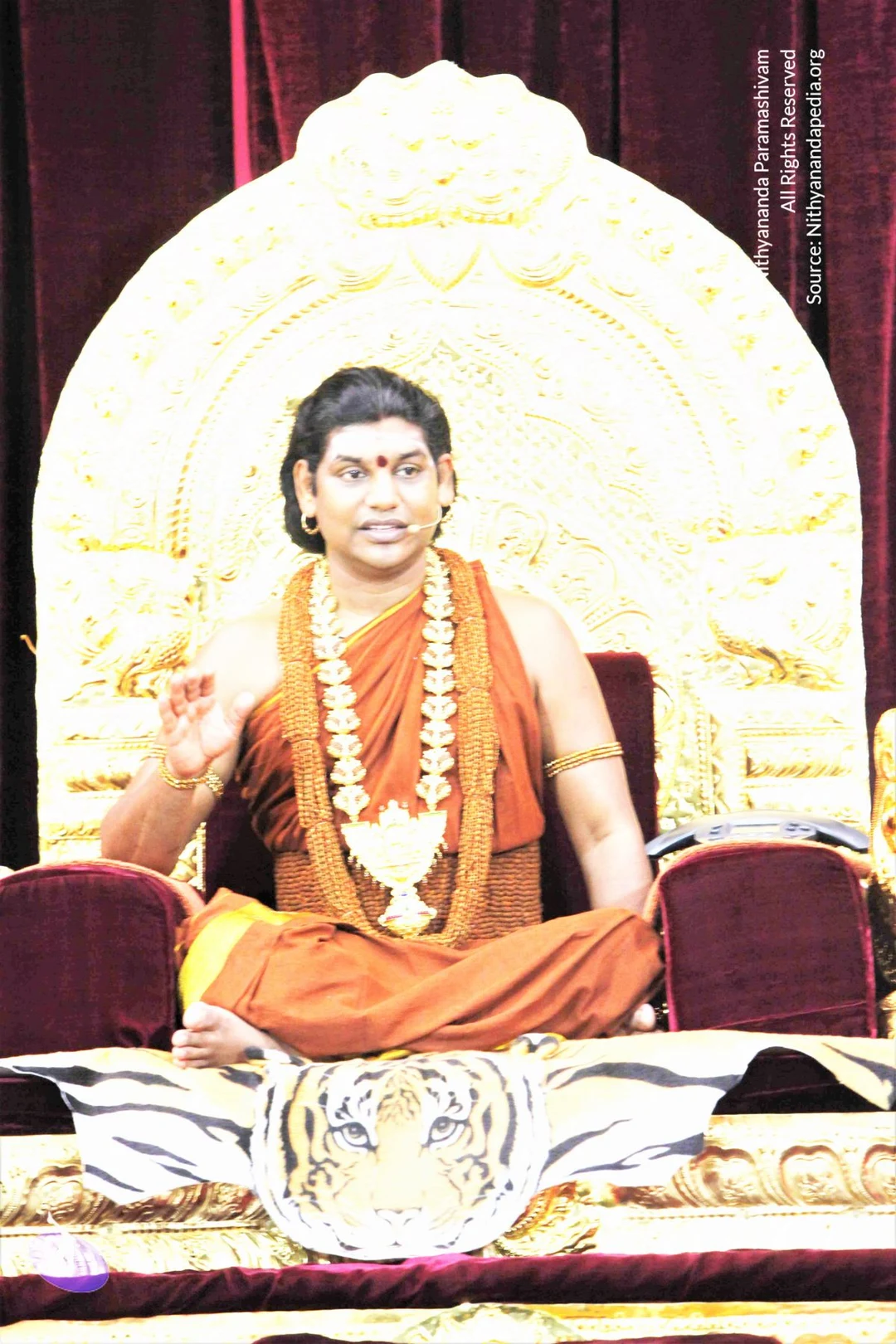
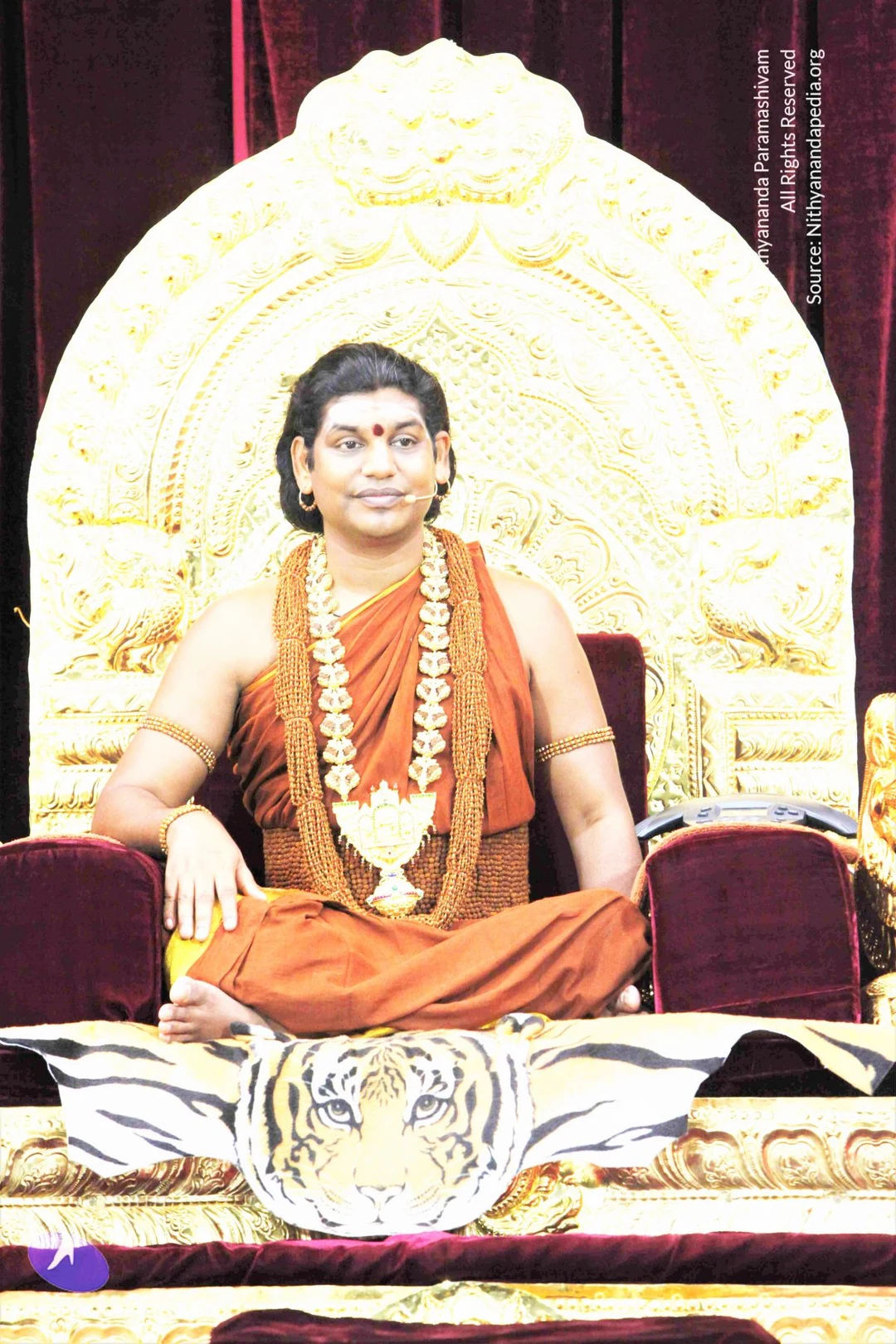
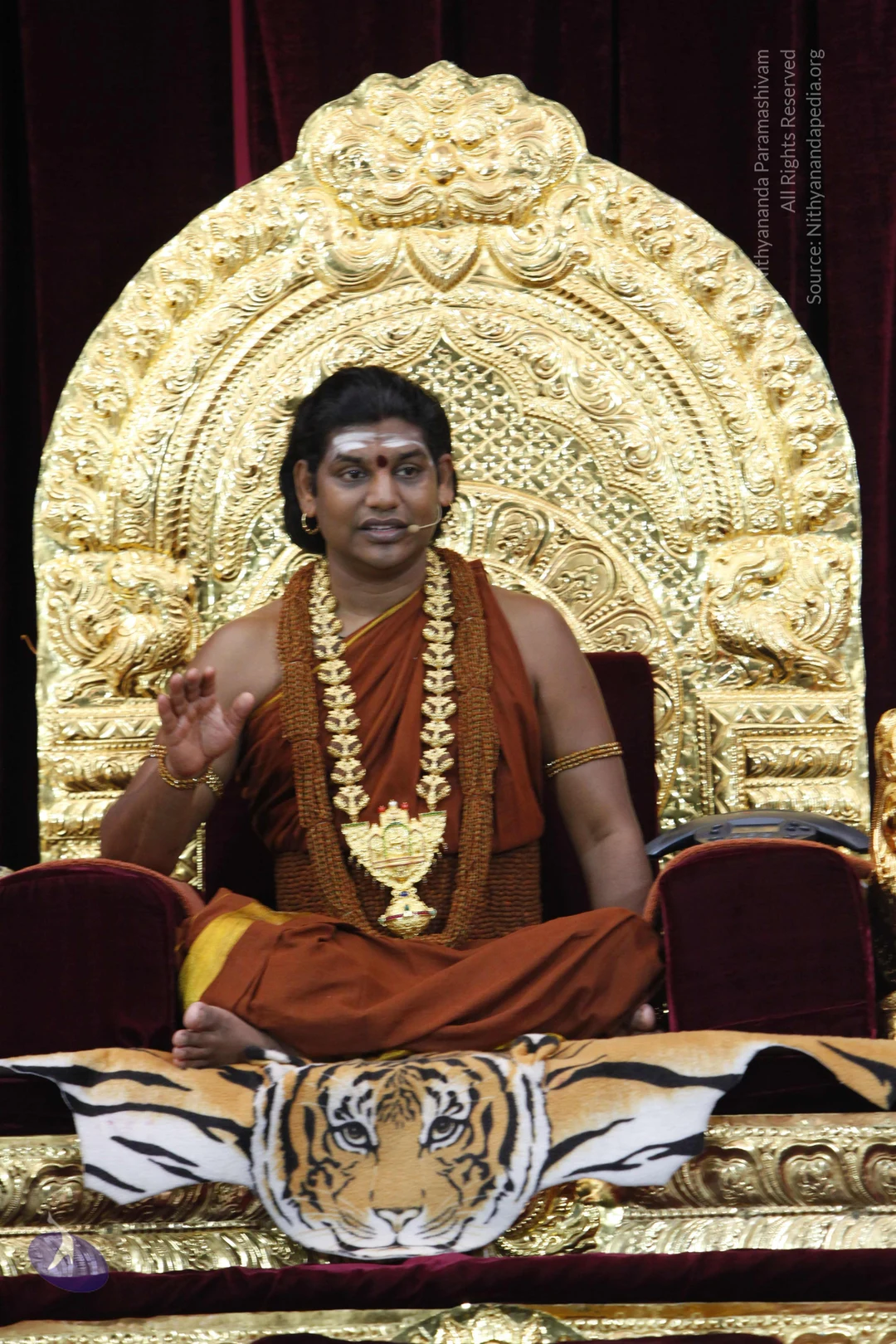
A seated man in saffron-orange robes sits cross-legged on a tiger-skin covered platform before an ornate gold arched throne flanked by golden lion heads. He wears layered gold and bead necklaces, a gold pendant, gold armlets and bangles, with a red bindi and tilak on his forehead and a small microphone at his ear, and appears to be speaking. This is a photo with one physical person, appearance-based candidate a person, seated on a throne in orange robes with rudraksha-style beads and ceremonial gold necklaces, teaching during a satsang discourse.A seated man in saffron-orange robes sits cross-legged on an elaborate gold throne carved with lion heads and floral scrollwork, against deep maroon drapes. He wears a long rudraksha mala with ornate gold pendant, several strands of beads, gold bangles on his upper arms and wrists, and a small headset microphone. A white vibhuti line and red dot mark his forehead. Below him a tiger-striped cloth covers the dais, and a gold-carved lion stands at each side. The man appears to be giving a discourse. Appearance-based label: a person, seated in the role of speaker on a throne, shown with a rudraksha mala, saffron robes and ornate gold jewellery.A seated man in saffron-orange robes sits cross-legged on a tiger-striped cloth before an ornate gold throne with carved arch and gilded lion-head armrests against maroon velvet drapery. He wears a gold ceremonial necklace with a central pendant, multiple rudraksha-style beaded malas, gold armbands and bangles, and a white and red tilak on his forehead. A small microphone is clipped near his face and he rests one hand on his hip. Swamiji (probable): long dark hair swept back, saffron clothing and ornate gold adornments, seated as a teacher on the throne.A seated man in saffron-orange robes sits cross-legged on a tiger-skin rug before an ornate golden throne with carved lions flanking him on both sides. He wears a gold beaded mala and a large gold pendant, a bangle on each arm, white vertical tilak marks and a red bindi on his forehead, and a small microphone clipped near his face. Deep red velvet drapes frame the golden backdrop. Swamiji (probable) is visible in the centre, with long swept-back hair, saffron robes, rudraksha-style beads and ceremonial gold necklaces.A seated man in saffron-orange robes sits cross-legged on a tiger-skin rug before an ornate golden throne flanked by golden lion-shaped armrests. He wears a long gold necklace with a gold pendant, rudraksha-style beaded garland, gold armbands and bracelets, a red bindi and white forehead markings, and a small microphone headset. His hand rests on his knee as he speaks. Crimson velvet drapes frame the background. a person is shown in person, identified by the saffron/orange clothing, the ceremonial gold necklaces and rudraksha malas, and the throne setting.A seated man in saffron-orange robes sits cross-legged on an ornate golden throne with a carved arched backrest and two golden lion heads at the armrests, draped with a tiger-skin rug at the base. He wears a gold necklace with a large pendant, multiple beaded malas, gold bangles, and a red bindi with white tilak marks on his forehead, and raises one hand mid-speech while a small headset microphone is visible at his ear. Deep red velvet drapes hang behind the throne. The figure's distinctive adornments and throne setting match the page's appearance-based cues for a person, so this is a probable in-person candidate.

SacredArts-Construction

14 photosSource gallery
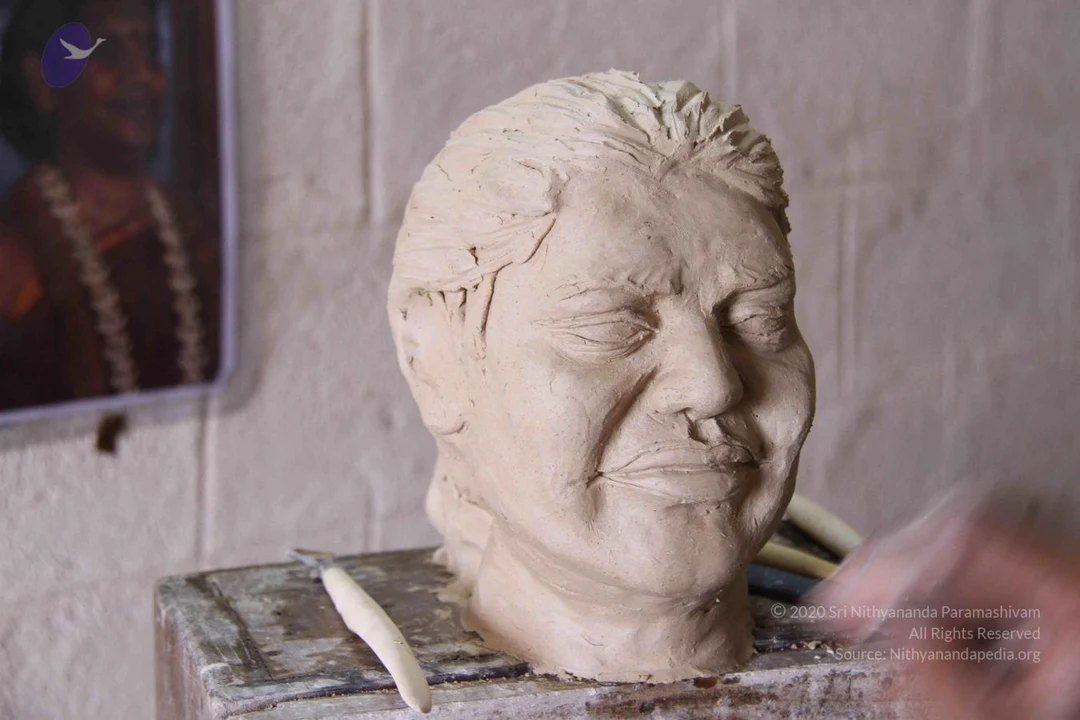
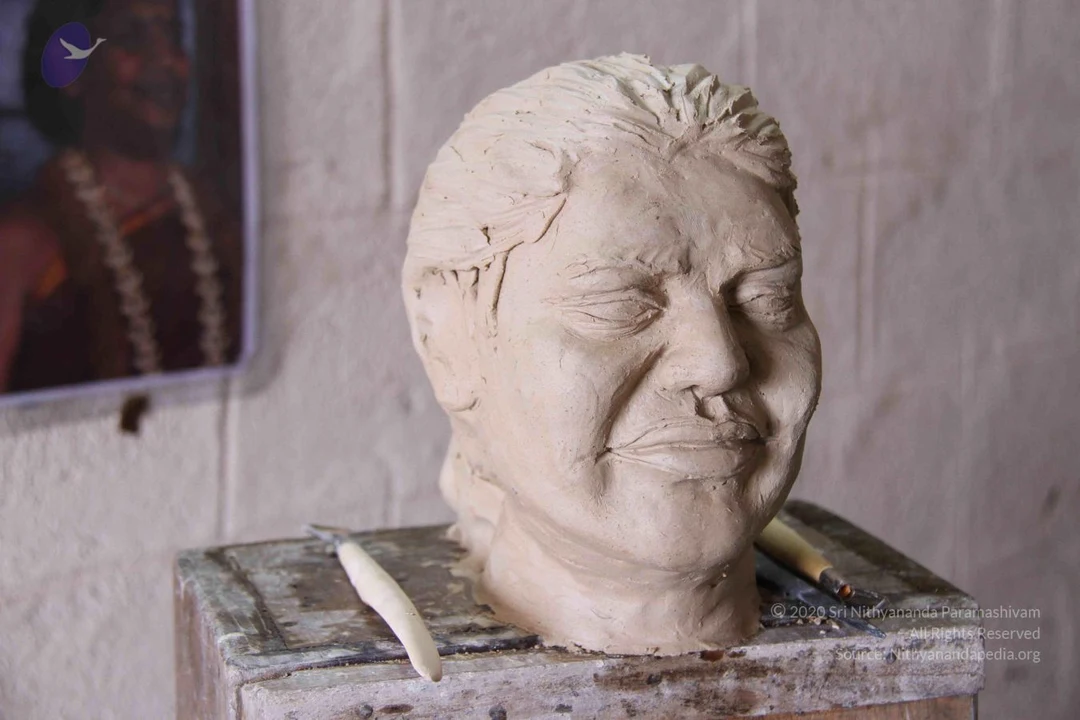
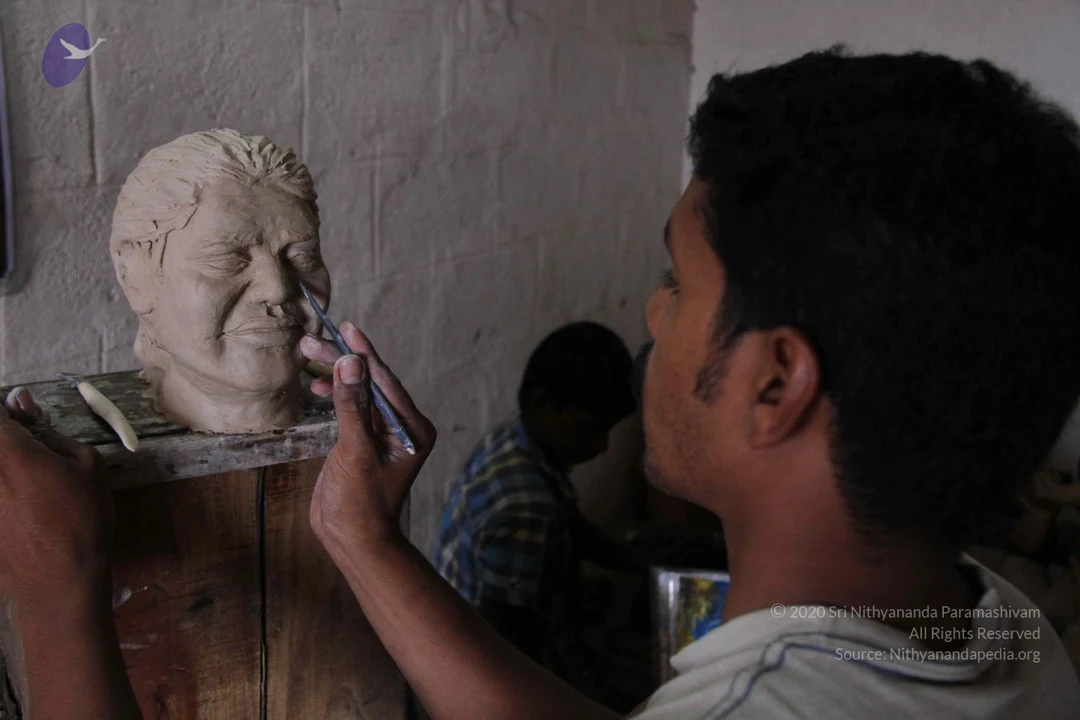
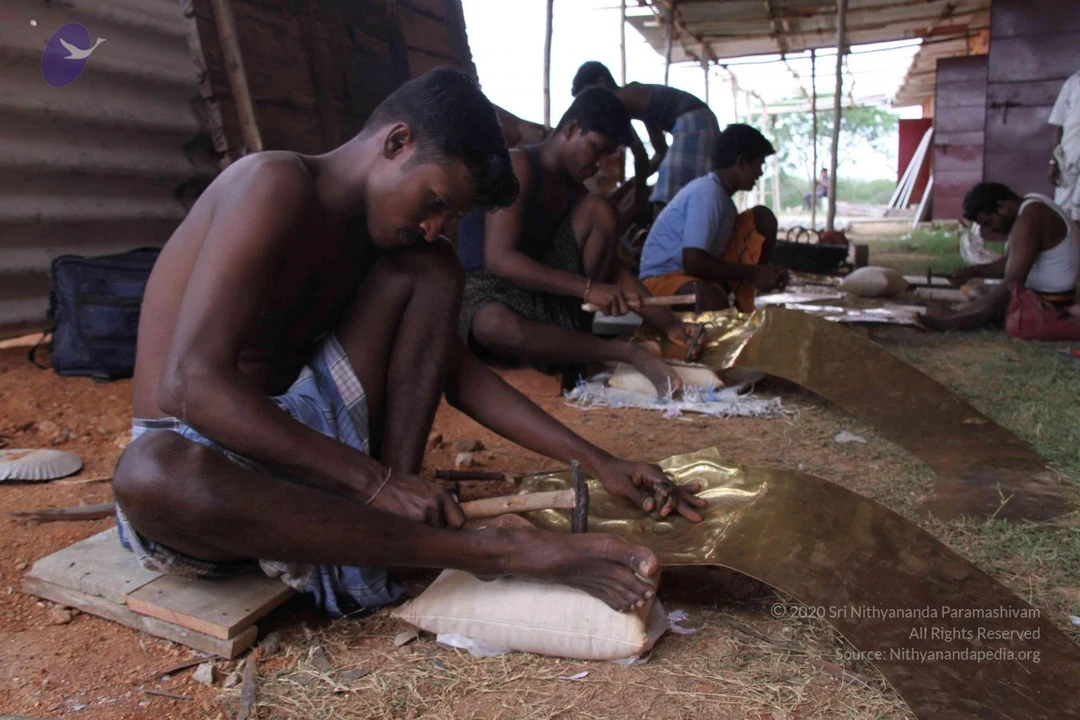
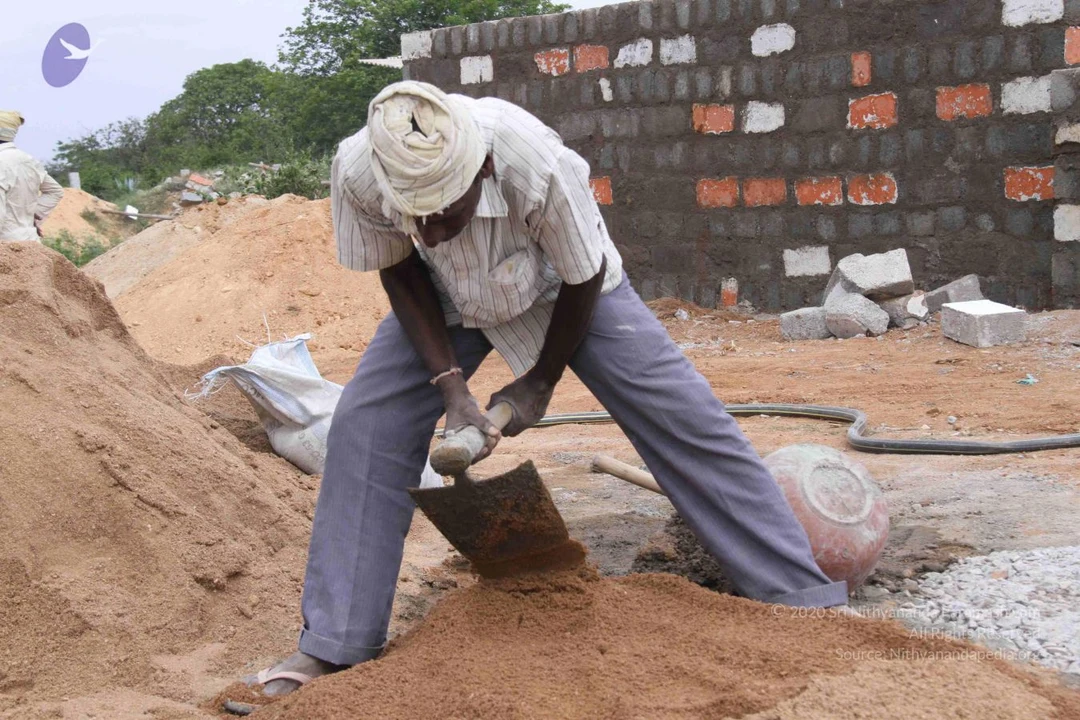
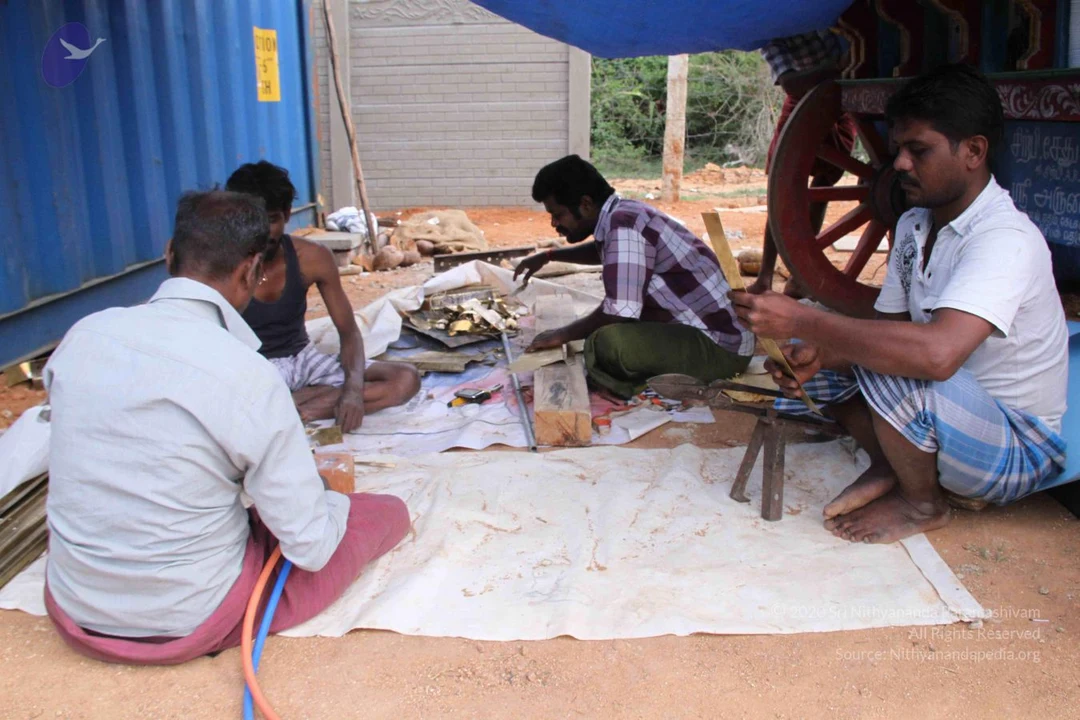
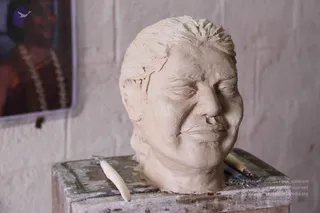
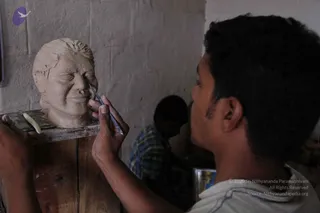
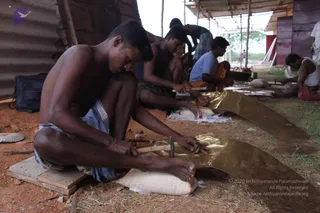
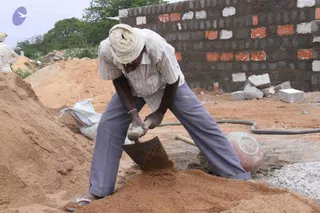
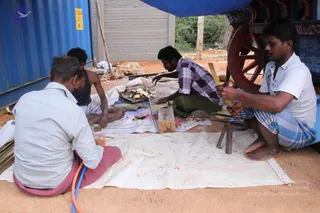
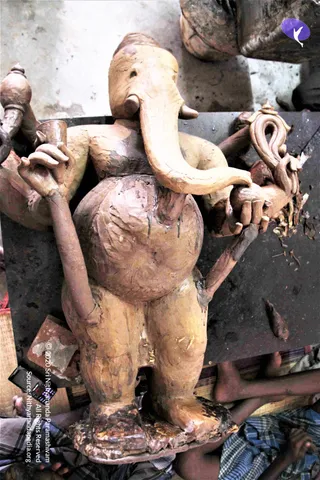
A photograph of an unfinished clay bust being sculpted on a weathered wooden block against a whitewashed wall. The head shows a rough, half-modelled face with closed eyes, short swept hair and a slightly open mouth. A sculptor's wooden modelling tool lies on the block in the foreground, and a blurred hand enters the frame at the right. In the upper left corner a framed photograph shows a smiling man with long dark hair wearing an orange garment and a multi-strand rudraksha mala. The sculpted head is a statue, not a living person, and the framed picture is a printed portrait.A pale unfired clay bust of a man's head rests on a weathered wooden plinth in a plain studio. The sculpted face has closed eyes, a broad nose and a set mouth, with the hair textured in ridged strokes. Two modelling tools lie on the plinth beside the head. Behind it, a framed photograph shows a smiling figure in dark clothing with layered beaded necklaces and a red-orange cloth, but that picture is a depiction, not a physical person. The bust is a sculpted depiction, not a living subject, and no people are physically present in the scene.A photograph of a young man in a white t-shirt sculpting a clay head on a wooden stand. He holds a thin sculpting tool against the face of an unfinished clay bust showing an older person with closed eyes and wrinkled features. The wall behind is whitewashed. Another worker in a blue checked shirt is partly visible in the background at a workbench.Several men sit cross-legged on the ground under a corrugated-roofed open shed, hand-hammering thin sheets of polished gold-coloured metal laid across cloth-covered sandbags. The foreground man, shirtless and wearing a checked lungi, holds a hammer and punch and works with bare feet on a wooden board. Behind him, others in plain vests and an orange-clad worker continue the same metal-shaping work, with tools and loose metal scattered on the dirt floor. A blue bag and a red cloth lie to the side. No a person candidate is visible, and the page is a workshop scene rather than a satsang.A man wearing a white and grey striped short-sleeved shirt, grey-blue trousers rolled at the ankles, and a white wrapped head cloth digs into a pile of reddish-brown earth with a metal shovel at a construction site. Behind him stands a partly built wall of grey blocks with orange bricks, beside scattered grey concrete blocks, loose soil heaps, a coiled black hose and a large terracotta pot. Another worker in white is faintly visible at the left edge. The scene shows manual labour during site preparation.Four men sit on a white cloth on sandy ground beside a blue corrugated metal container, working on metal sheets and pieces of gold-coloured foil scattered across the cloth. The man on the far right in a white shirt and checked lungi holds a thin gold strip, while the man in a plaid shirt and green trousers leans forward over the work. A shirtless man in a dark tank top sits in the centre, and an older man in a light shirt and maroon cloth sits at the left edge with his back to the camera. Beside them a red wooden cart wheel and a painted cart panel with Tamil lettering are visible under a blue tarp, with a green tree and a brick wall behind. No a person candidate is visible.

Temple-LingaAbhishekam
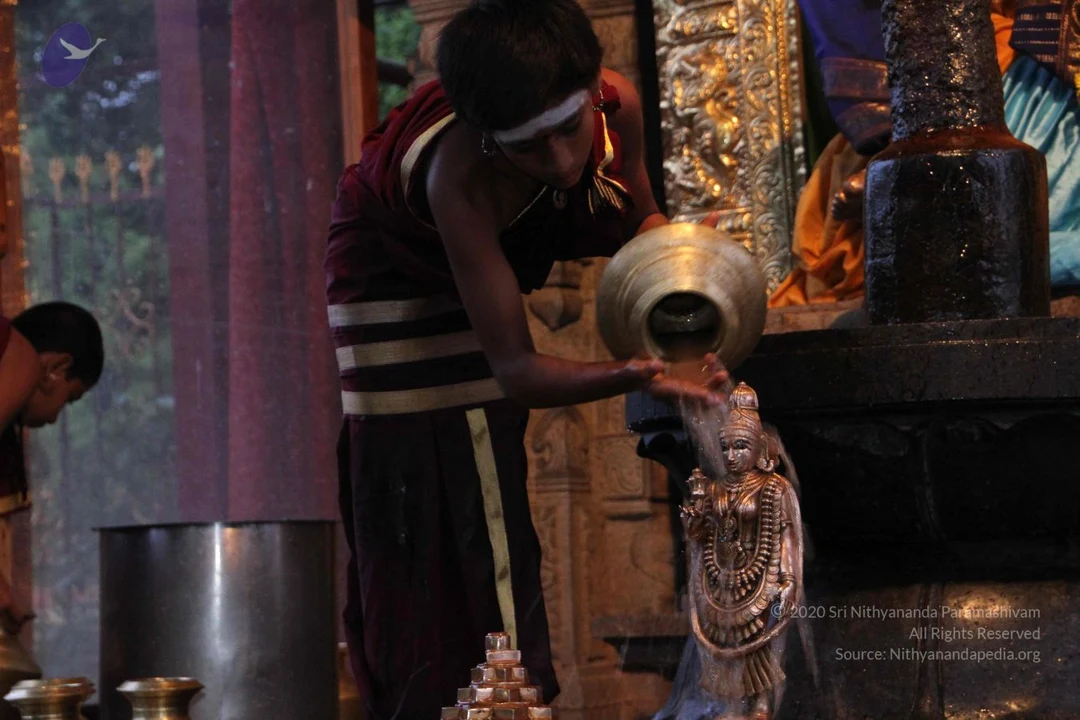
33 photosSource gallery
Close view of two metal ritual objects on a wooden altar before a large dark stone base. On the left stands a small tiered copper-toned pyramid. On the right stands a bronze deity murti with a tall crown, many-stranded necklaces and a draped pleated skirt, holding a flower-like object. Scattered petals and a red cloth lie on the altar.A close photograph of two small metal ritual objects on a wooden tray before a large dark stone base. On the left is a tiered brass or copper meru-style pyramid with silver-toned panels. On the right stands a small copper-toned standing deity murti wearing a tall crown, a layered necklace, a sash and a pleated skirt, holding a flute-like object. Scattered white flower petals and a red cloth lie near the base. Behind them, a dark polished stone pedestal and warm orange-gold fabric are visible at the top edge.A photograph of a temple shrine with a gilded arch and green drapery framing a pair of deity murtis, one holding a trident-like staff and the other with a crown, both garlanded with marigold and rose garlands. A dark stone linga stands on a black yoni pitha in front of them. At left, a woman in a maroon sari with silver borders pours liquid from a vessel toward the linga during abhishekam, while a young man in a maroon dhoti stands with hands folded in prayer. A small garlanded figure in a green niche at right and brass oil lamps line the shrine. No person is identifiable as a person in this scene.A shrine interior with a priest in a maroon garment with silver-banded edges pouring or offering something at a black linga on a dark stone base. Behind, a gilded arch frames two deity murtis draped in green cloth, one with a red-and-green crown and gold ornaments, the other in blue with a garland of red flowers. To the right stands a smaller standing statue in an orange turban and red garland, also in front of green drapery. Brass oil lamps stand at the sides, a metal pot sits at lower left, and scattered flower petals lie on the floor. The page labels the event a satsang, but the visible scene is a temple puja; no printed name is visible.A woman in a maroon sari with gold-banded border stands at left, holding a small brass lamp or vessel toward a shrine. The shrine holds a gold-framed set of two deity murtis, a male figure with a red-and-green turban and gold necklace and a female figure with a tall gold crown, both garlanded with marigolds and red flowers, set before a green cloth backdrop. A dark shivalingam sits on a black stone pedestal in front, with a yellow-orange cloth draped over the base. To the right, a smaller gold-arched niche holds a garlanded standing figure in a red turban and red garland. Scattered petals lie on the floor, indicating a temple puja setting.A photograph of two gilded metal deity murti standing in an ornate golden arch against a green silk backdrop. The figure on the left wears a red and green turban, holds a trident in one hand, and has a hand raised in abhaya mudra; he wears layered jewelled necklaces, garlands and earrings. The figure on the right wears a tall jewelled crown and a dark garland of red flowers and a cascading necklace of gems. A small parrot figure sits on a stand between them. No physical people are visible.

Pratyaksha-PadaPuja

43 photosSource gallery
A photograph inside a hall with white floors and grey metal stanchions, showing several women in orange and deep red saris with gold borders seated on mats before small brass puja plates. The woman in the centre, with a grey bun, ties or adjusts a thread on her wrist while another woman in orange sari leans forward on the left and a third in red-and-orange sari sits on the right. The plates hold small brass lamps, diyas, bowls, kumkum, flowers and a white offering, and a water bottle sits nearby. Behind them, a standing figure in saffron robes and other seated people in red and orange line the rows of mats.A seated figure on an ornate gilded throne with lion-head armrests and a tiger-skin cloth draped over the seat, set against a dark slate wall with hanging brass bells and a lamp. The seated man wears a rust-orange dhoti and shawl with gold borders, multiple gold chains, a rudraksha mala, a white and red floral garland, a red tilak on the forehead, and gold bangles, and raises one hand in blessing. Silver plates of flowers, red petals and white blossoms sit at his feet in an offering arrangement. The appearance is a probable match to a person, given the throne, rudraksha and gold adornments; no physical people other than the seated figure are visible.Close-up of a ritual arrangement on a gold-embossed base. Bare feet of a person wearing gold-coloured cloth are visible at the top, seated or standing over a central heap of red and white flower petals. Around it are several round silver trays holding many small silver bowls, some filled with orange-yellow liquid, along with pink and red flowers, white blossoms and yellow-centred pink flowers. A small brass vessel stands at the centre. The arrangement suggests a puja setup with flowers and offerings, and no face is visible.Overhead view of a ritual arrangement on a gold-embossed round tray. Bare feet of a person standing at the top edge scatter red and pink flower petals onto a central circle of petals with brass vessels. Around it are several silver plates holding silver bowls filled with orange liquid, pink and white flowers, and small silver cups, with fresh flowers arranged on the plates. Silver and brass offering vessels and a small silver spoon are visible. The scene suggests a puja offering arrangement, though no clear deity is shown. The person's face is not visible.A man seated on an ornate golden throne with a carved lion-face armrest and a tiger-skin cloth draped over the seat. He wears a rust-orange dhoti and matching shawl, a long necklace of white and red flower garlands, a dark beaded rudraksha mala with a gold pendant, gold bangles and a red tilak mark. Brass hanging lamps flank the throne against a black backdrop, and silver plates with pink flowers sit at his feet.A seated man in an ornate gilded throne with carved lion heads and a striped tiger-skin cushion over the seat. He wears an orange-brown robe with a gold border, a rudraksha mala and gold ceremonial necklace, and white jasmine garlands with red flowers. Bells hang from chains above, brass oil lamps stand at the sides, and a tray of pink and white flowers and small brass vessels lies at the base of the throne. Swamiji (probable) is the central figure, seated as a guru, based on the long swept-back hair, saffron robe, rudraksha mala and gold necklace. The black backdrop and throne suggest a satsang or darshan setting.

Nithya-Satsang

17 photosSource gallery
A man in a saffron-orange dhoti and shawl with gold-striped borders stands beside a clear acrylic lectern on a red carpet, gesturing with his right hand. He wears a heavy rudraksha mala, a ceremonial gold necklace with a lotus pendant, a red bindi and gold bangles. Behind him a golden throne with lion-head armrests, deep red velvet cushions and a tiger-skin cover sits before a painted temple backdrop with pillars and brass oil lamps stand nearby.A man in a rust-orange saffron wrap speaks at a clear acrylic podium, gesturing with both hands. He wears a rudraksha mala of brown beads, a heavy gold ceremonial necklace with a large gold pendant, gold earrings, a gold ring and bangles, and a white and red tilak with a red bindi on his forehead. A small microphone is attached near his face. Behind him stand painted pillars in red, green, pink and gold with a golden arch motif, and a gold ornamental shape appears at the right edge. a person is speaking here, based on the saffron clothing, the rudraksha mala and the ceremonial gold necklace as visible cues.A man stands beside a clear acrylic lectern in a decorated hall, smiling and resting his right hand on the lectern edge. He wears a rust-orange and gold dhoti-style wrap, a heavy gold ceremonial necklace with a central gold pendant, rudraksha mala strands, gold bangles and a gold ring, with a red bindi and white forehead marks. A small microphone is at his face. Behind him are painted pink and green columns, a yellow-and-blue framed panel and a brass oil lamp with a lit flame at the lower right.A man stands behind a clear acrylic lectern on a stage, hands pressed together in namaste at chest level. He wears a rust-brown robe over a yellow inner cloth, layered rudraksha malas and ornate gold necklaces with a large gold pendant, gold bangles on both upper arms, and gold hoop earrings. He has a white vibhuti marking and a red kumkum bindi on his forehead, with a small microphone clipped near his face. Behind him are pink, white and grey stage panels. The clear lectern and stage setting suggest a satsang discourse. a person: the bare-shouldered figure has distinctive rudraksha malas, ornate gold jewellery and a saffron-toned robe, and is presented as the speaker at the lectern.A man stands behind a clear acrylic lectern during a satsang, hands clasped at chest height and resting on a gold and rudraksha necklace. He wears a reddish-orange shawl over a bare upper body, a gold-coloured dhoti border, multiple gold garlands, gold bangles and a small headset microphone. A red bindi and white tilak mark his forehead. Behind him are a pink and green pillar with a lotus-style capital and a painted blue and yellow frame. A small stone slab sits on the lectern. Presentation cues match a person, with a long swept-back hairstyle, saffron-orange shawl and ornate gold necklaces, seen while speaking at a teaching event.A standing man in a satsang hall speaks at a clear acrylic podium, one hand resting on its edge. He wears a rust-orange wrap with broad gold borders, a rudraksha mala with a large gold ceremonial pendant and gold floral necklaces, a gold armlet and gold bangles, a red bindi, and a small headset microphone. He has long swept-back dark hair. Behind him stand painted columns in orange, pink and green with a lotus-style capital, and a red curtain hangs on the left. The appearance matches the Swamiji candidate cues of long hair, rudraksha and ceremonial gold jewellery, so this is a probable in-person depiction of Swamiji giving satsang.

SarvaDarshan

11 photosSource gallery
A photograph in a temple hall with gold-painted deity murti and lamp stands behind. A man with long swept-back dark hair, a white forehead mark, gold earring, rudraksha mala and ornate gold necklace, wearing an orange-saffron cloth draped over his shoulder and gold armlet, extends his hand to receive a folded white paper from a devotee. The devotee on the left, in white, has hands pressed together in anjali. Another person in orange stands at the right edge. Cues match the Swamiji (probable) profile: long hair, saffron clothing, rudraksha and gold necklace, giving the paper in a devotional setting.A photograph of a ceremonial blessing at a temple-style hall. A figure in saffron-orange robes with a long gold-and-bead garland and gold armbands stands at center, holding a small white paper in one hand while placing the other palm on the head of a bowed man in a white shirt. Two people with folded hands stand to the left, and a shaved-headed priest in white robes with a white forehead mark stands behind on the right. Behind them is a gilded throne and a painted backdrop with a deity figure and ornate pillars. The central figure has long swept-back hair, a tilak on the forehead, rudraksha-style beads and a ceremonial gold necklace, which are cues consistent with the page's identification; the appearance is only a probable match for a person.A photograph of a ceremony in a temple-style hall. A bare-chested man in an orange-saffron shawl and multiple gold necklaces with a gold armlet stands at right, holding a sheet of white paper and placing his right hand on the head of a seated man in a white-and-blue checked shirt at left. Two others stand behind with hands clasped in devotion: a man in a white kurta and a man in a white shirt. Behind them is a gold-decorated throne with a red cushion, gold lamps and brass kalasha-style vessels, and a gilded deity murti at upper right. Probable Swamiji cues: long swept-back hair, saffron shawl, ornate gold necklaces and armlet, shown in the blessing role.A photograph of a hall event in which a man in an orange-brown robe with a heavy gold necklace and rudraksha malas places his right hand on the head of a kneeling man in a blue plaid shirt. The kneeling man has his head bowed and hands folded in anjali. Around them, men in white shirts and dhotis, one wearing a rudraksha mala, stand behind silver stanchions and chain barriers. A bald man in white with a forehead marking and orange-robed attendant appear at right. In the background is a painted temple-style backdrop with pillars and a deity figure, a projector screen, and red curtains. The white-robed figure at the top of the stanchion line holds white paper. The robed man has long swept-back hair, a gold ceremonial necklace, bangles and an armband, and his appearance is consistent with the a person candidate, though the presentation alone is not conclusive.A photograph inside a temple hall in which a bare-shouldered man in an orange-brown cloth and layered rudraksha mala necklaces with ornate gold pendants raises his right hand in blessing over the head of a young man in a green striped shirt. The young man stands with palms pressed together in namaskar, and a man in a white shirt beside him also holds his hands folded. Behind them, a standing gold-and-red deity murti and gilded altar decor are visible, with a camera on a tripod at right.Indoor temple-hall photograph of a smiling man with swept-back dark hair, a red bindi and white forehead markings, wearing a rust-orange dhoti-style wrap, gold ceremonial necklaces of large pendant beads, a rust-brown rudraksha-style mala and gold armlets, raising his right hand in blessing toward a young man in a white shirt who stands with palms pressed together and head bowed. Behind them, several men in white shirts and white dhotis stand with folded hands, and a figure in orange clothing appears at the right. Ornate Hindu deity murti, gold-toned kalasha-style lamps and pillars with coloured stripes stand in the background, with a red curtain at left. The scene appears to be a devotee receiving blessing in a temple-style hall. a person candidate presence is uncertain given the pose and the hall setting.

lotustv-Swamiji

35 photosSource gallery
A seated man in saffron-orange robes sits cross-legged on a tiger-skin covered platform before an ornate gold arched throne flanked by golden lion heads. He wears layered gold and bead necklaces, a gold pendant, gold armlets and bangles, with a red bindi and tilak on his forehead and a small microphone at his ear, and appears to be speaking. This is a photo with one physical person, appearance-based candidate a person, seated on a throne in orange robes with rudraksha-style beads and ceremonial gold necklaces, teaching during a satsang discourse.A seated man in saffron-orange robes sits cross-legged on an elaborate gold throne carved with lion heads and floral scrollwork, against deep maroon drapes. He wears a long rudraksha mala with ornate gold pendant, several strands of beads, gold bangles on his upper arms and wrists, and a small headset microphone. A white vibhuti line and red dot mark his forehead. Below him a tiger-striped cloth covers the dais, and a gold-carved lion stands at each side. The man appears to be giving a discourse. Appearance-based label: a person, seated in the role of speaker on a throne, shown with a rudraksha mala, saffron robes and ornate gold jewellery.A seated man in saffron-orange robes sits cross-legged on a tiger-striped cloth before an ornate gold throne with carved arch and gilded lion-head armrests against maroon velvet drapery. He wears a gold ceremonial necklace with a central pendant, multiple rudraksha-style beaded malas, gold armbands and bangles, and a white and red tilak on his forehead. A small microphone is clipped near his face and he rests one hand on his hip. Swamiji (probable): long dark hair swept back, saffron clothing and ornate gold adornments, seated as a teacher on the throne.A seated man in saffron-orange robes sits cross-legged on a tiger-skin rug before an ornate golden throne with carved lions flanking him on both sides. He wears a gold beaded mala and a large gold pendant, a bangle on each arm, white vertical tilak marks and a red bindi on his forehead, and a small microphone clipped near his face. Deep red velvet drapes frame the golden backdrop. Swamiji (probable) is visible in the centre, with long swept-back hair, saffron robes, rudraksha-style beads and ceremonial gold necklaces.A seated man in saffron-orange robes sits cross-legged on a tiger-skin rug before an ornate golden throne flanked by golden lion-shaped armrests. He wears a long gold necklace with a gold pendant, rudraksha-style beaded garland, gold armbands and bracelets, a red bindi and white forehead markings, and a small microphone headset. His hand rests on his knee as he speaks. Crimson velvet drapes frame the background. a person is shown in person, identified by the saffron/orange clothing, the ceremonial gold necklaces and rudraksha malas, and the throne setting.A seated man in saffron-orange robes sits cross-legged on an ornate golden throne with a carved arched backrest and two golden lion heads at the armrests, draped with a tiger-skin rug at the base. He wears a gold necklace with a large pendant, multiple beaded malas, gold bangles, and a red bindi with white tilak marks on his forehead, and raises one hand mid-speech while a small headset microphone is visible at his ear. Deep red velvet drapes hang behind the throne. The figure's distinctive adornments and throne setting match the page's appearance-based cues for a person, so this is a probable in-person candidate.

SacredArts-Construction

14 photosSource gallery
A photograph of an unfinished clay bust being sculpted on a weathered wooden block against a whitewashed wall. The head shows a rough, half-modelled face with closed eyes, short swept hair and a slightly open mouth. A sculptor's wooden modelling tool lies on the block in the foreground, and a blurred hand enters the frame at the right. In the upper left corner a framed photograph shows a smiling man with long dark hair wearing an orange garment and a multi-strand rudraksha mala. The sculpted head is a statue, not a living person, and the framed picture is a printed portrait.A pale unfired clay bust of a man's head rests on a weathered wooden plinth in a plain studio. The sculpted face has closed eyes, a broad nose and a set mouth, with the hair textured in ridged strokes. Two modelling tools lie on the plinth beside the head. Behind it, a framed photograph shows a smiling figure in dark clothing with layered beaded necklaces and a red-orange cloth, but that picture is a depiction, not a physical person. The bust is a sculpted depiction, not a living subject, and no people are physically present in the scene.A photograph of a young man in a white t-shirt sculpting a clay head on a wooden stand. He holds a thin sculpting tool against the face of an unfinished clay bust showing an older person with closed eyes and wrinkled features. The wall behind is whitewashed. Another worker in a blue checked shirt is partly visible in the background at a workbench.Several men sit cross-legged on the ground under a corrugated-roofed open shed, hand-hammering thin sheets of polished gold-coloured metal laid across cloth-covered sandbags. The foreground man, shirtless and wearing a checked lungi, holds a hammer and punch and works with bare feet on a wooden board. Behind him, others in plain vests and an orange-clad worker continue the same metal-shaping work, with tools and loose metal scattered on the dirt floor. A blue bag and a red cloth lie to the side. No a person candidate is visible, and the page is a workshop scene rather than a satsang.A man wearing a white and grey striped short-sleeved shirt, grey-blue trousers rolled at the ankles, and a white wrapped head cloth digs into a pile of reddish-brown earth with a metal shovel at a construction site. Behind him stands a partly built wall of grey blocks with orange bricks, beside scattered grey concrete blocks, loose soil heaps, a coiled black hose and a large terracotta pot. Another worker in white is faintly visible at the left edge. The scene shows manual labour during site preparation.Four men sit on a white cloth on sandy ground beside a blue corrugated metal container, working on metal sheets and pieces of gold-coloured foil scattered across the cloth. The man on the far right in a white shirt and checked lungi holds a thin gold strip, while the man in a plaid shirt and green trousers leans forward over the work. A shirtless man in a dark tank top sits in the centre, and an older man in a light shirt and maroon cloth sits at the left edge with his back to the camera. Beside them a red wooden cart wheel and a painted cart panel with Tamil lettering are visible under a blue tarp, with a green tree and a brick wall behind. No a person candidate is visible.

Temple-LingaAbhishekam
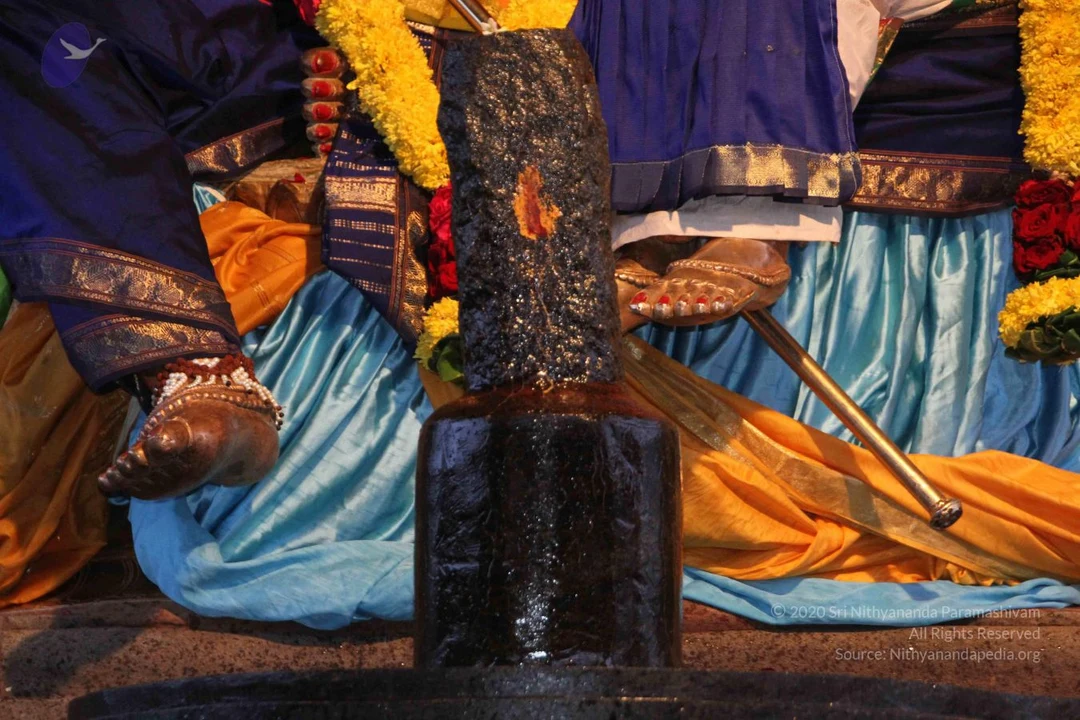
9 photosSource gallery
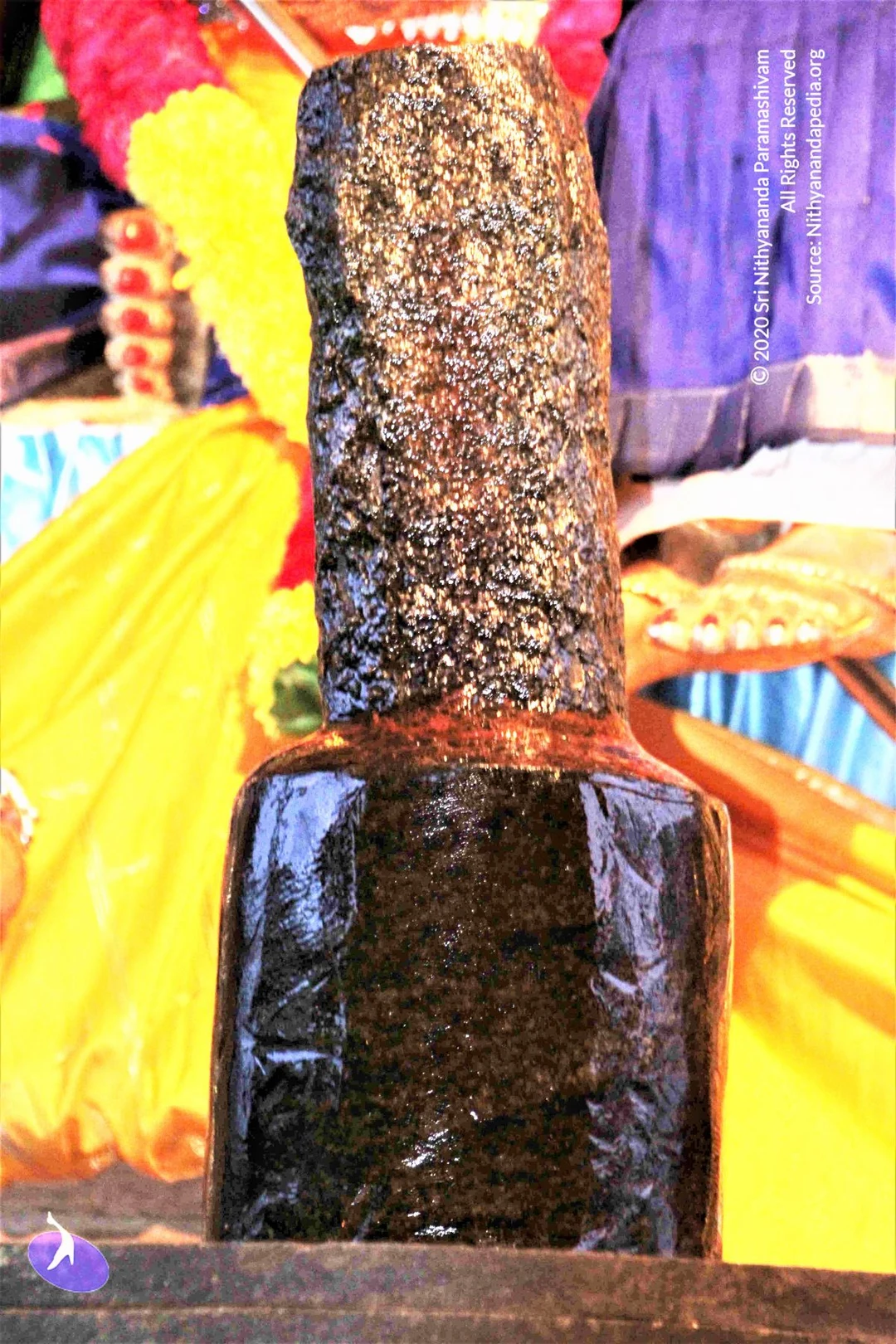
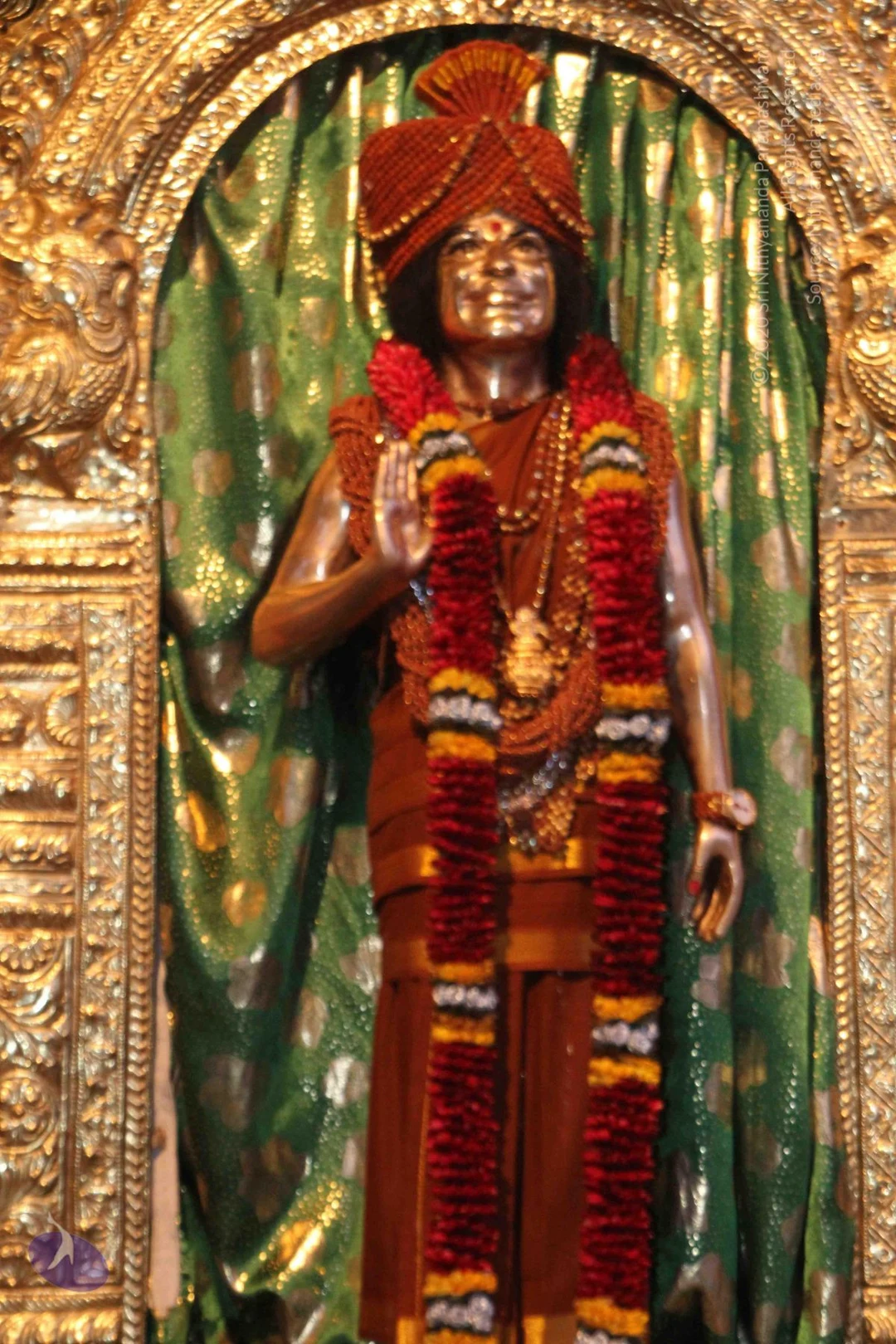
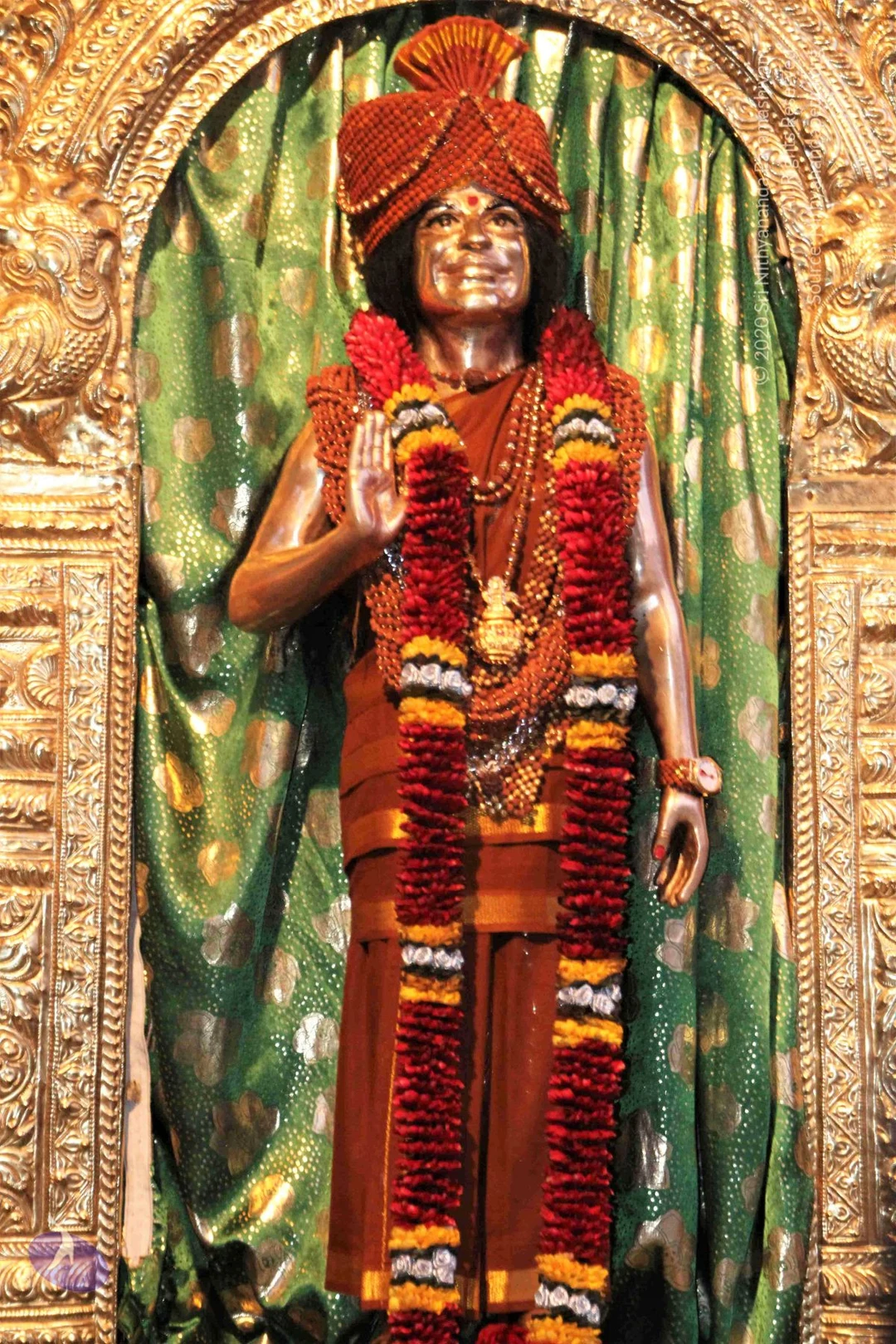
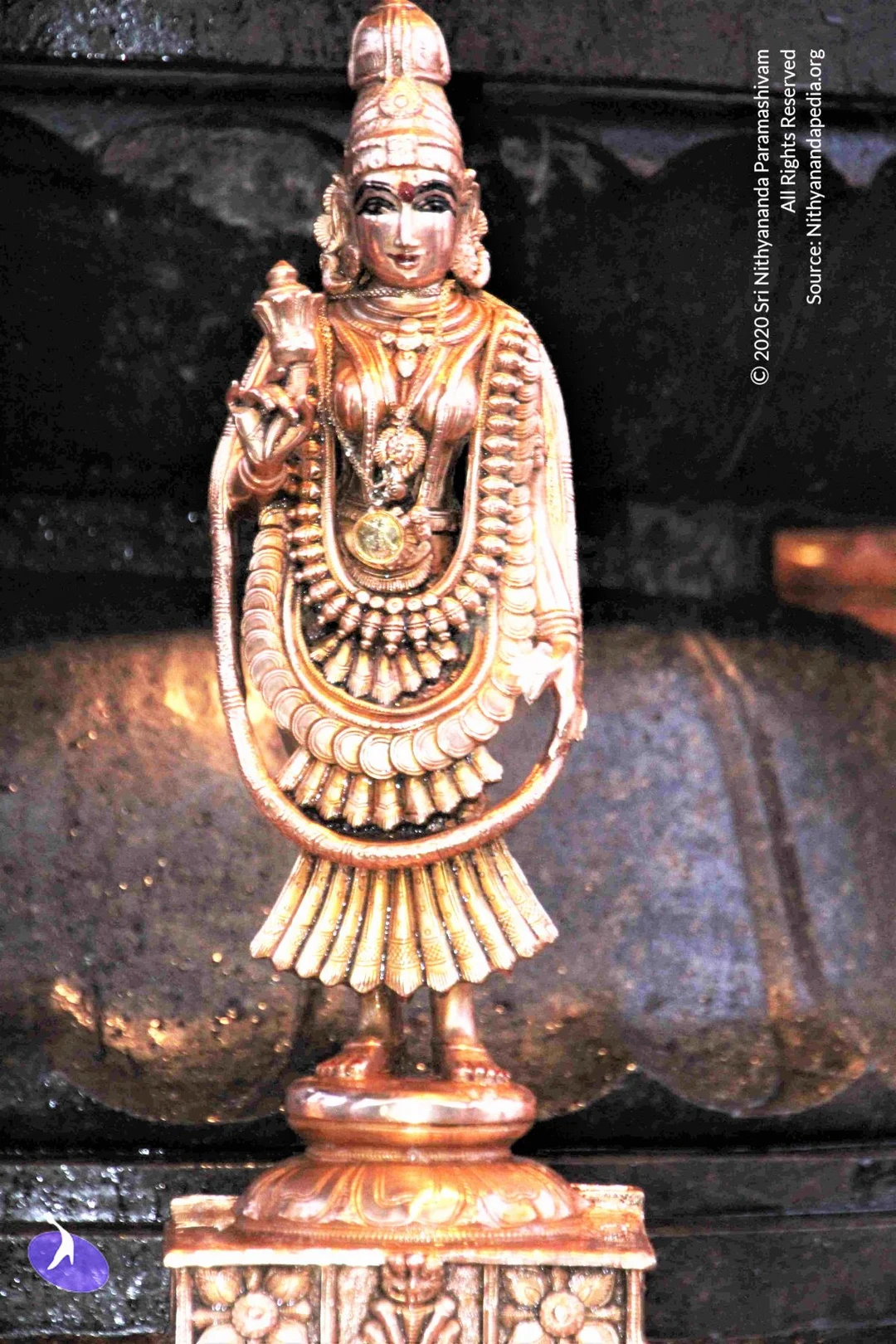
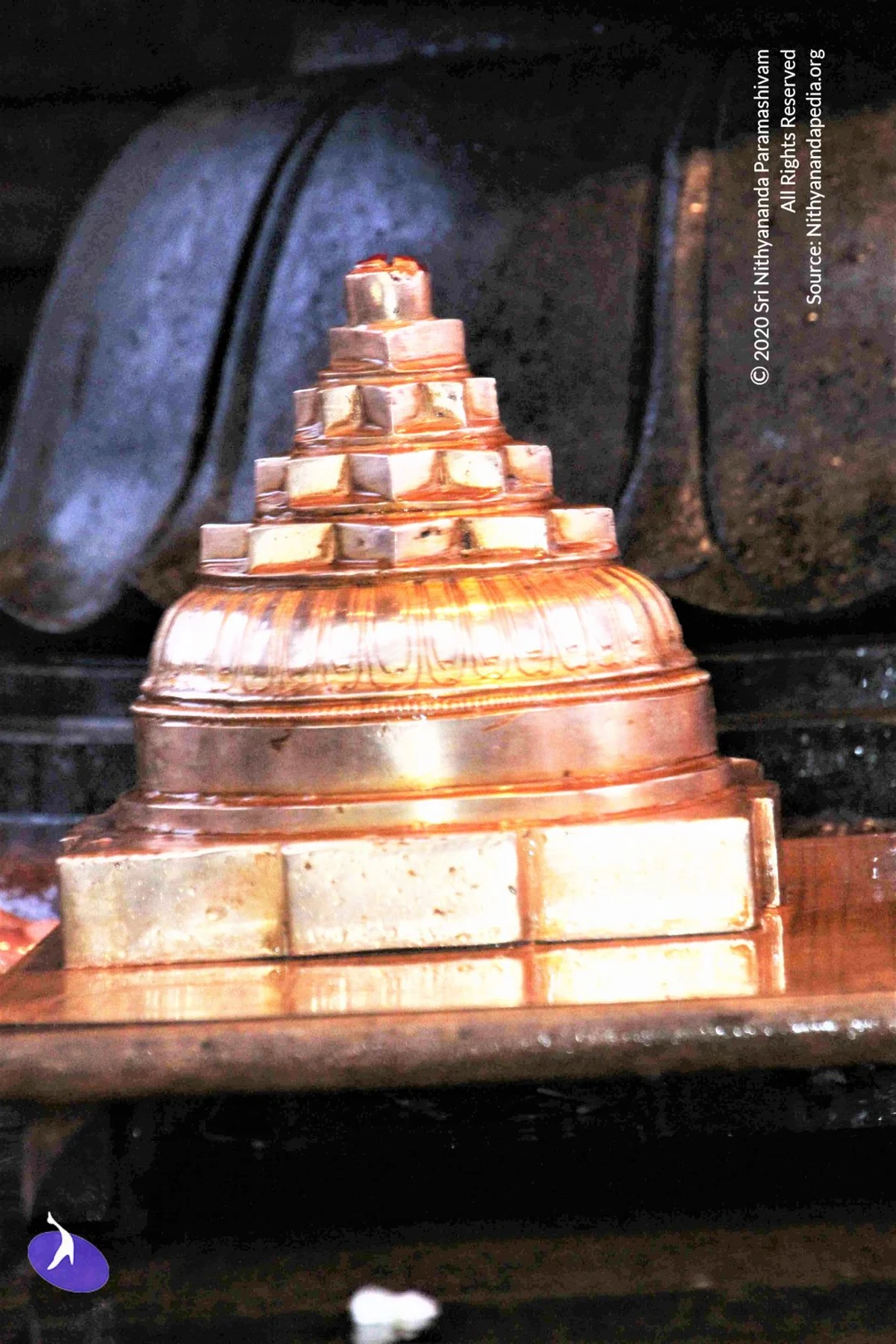
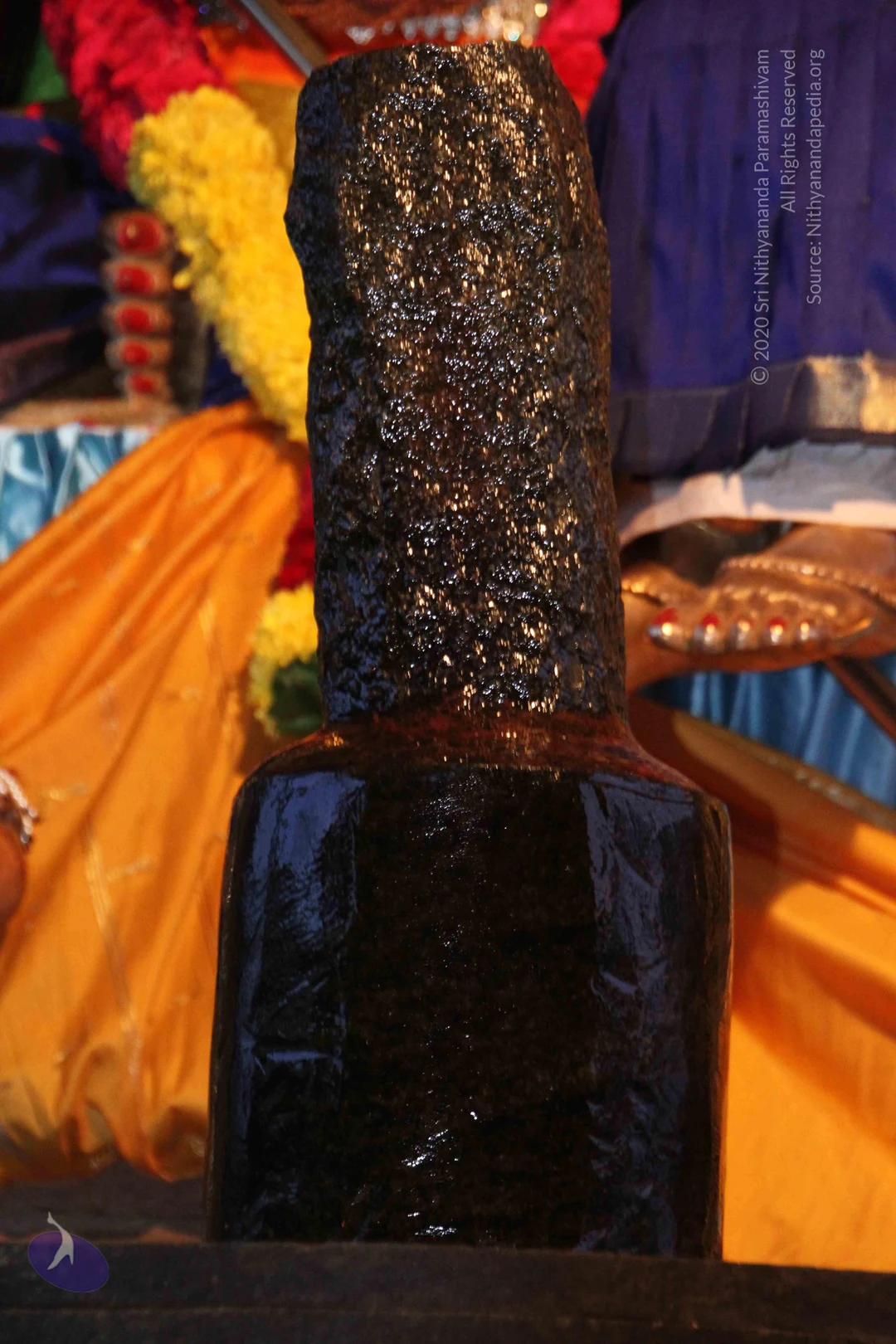
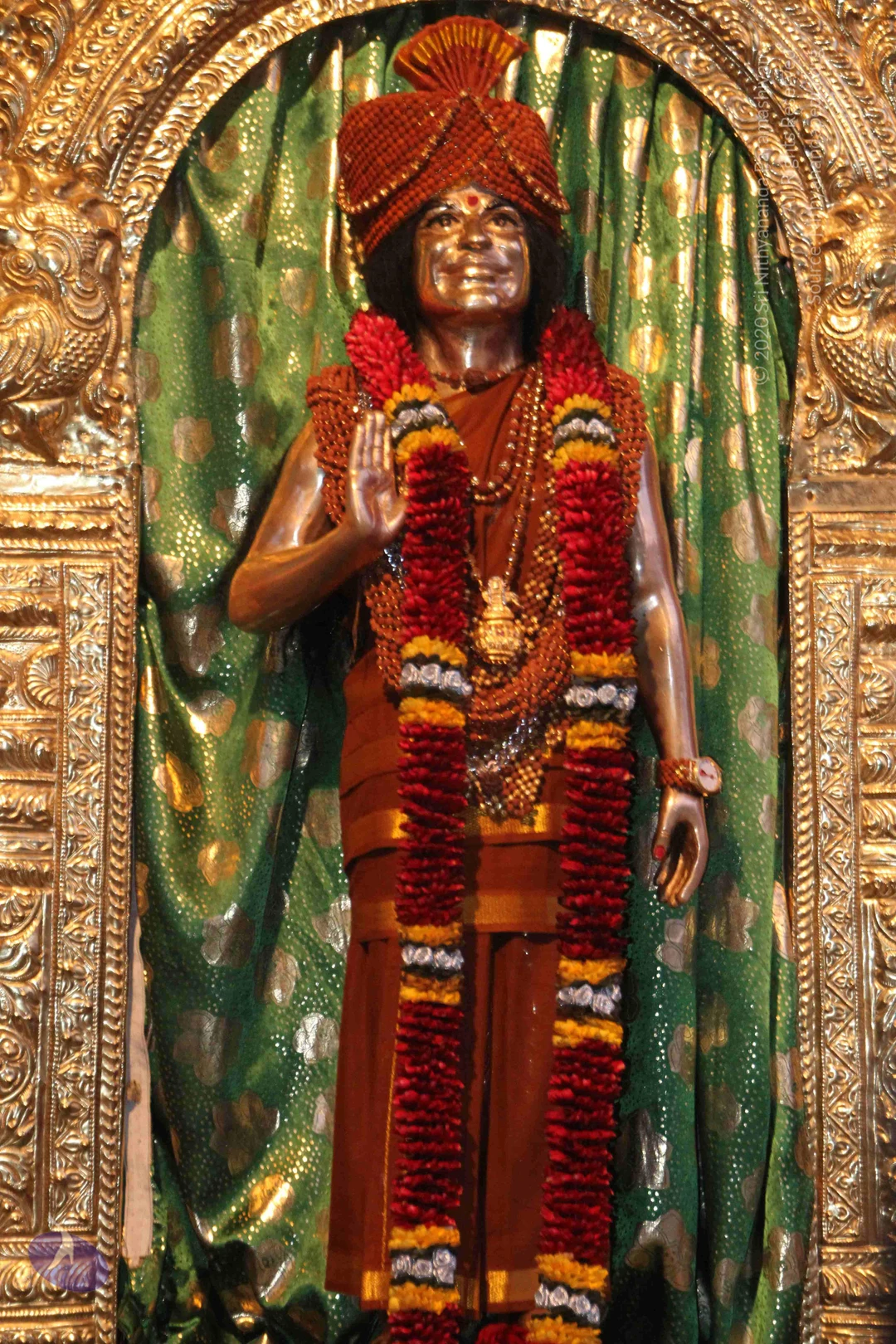
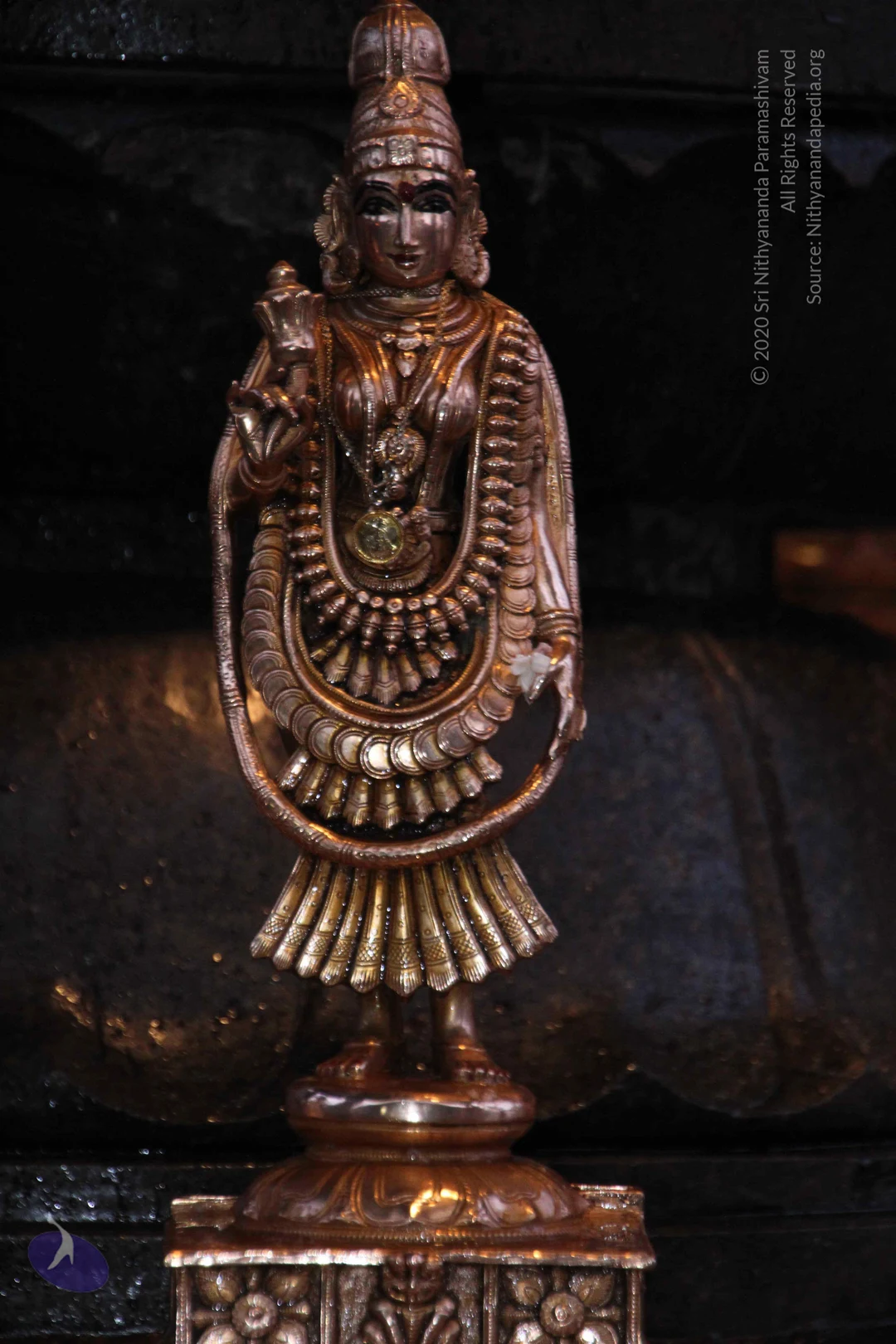
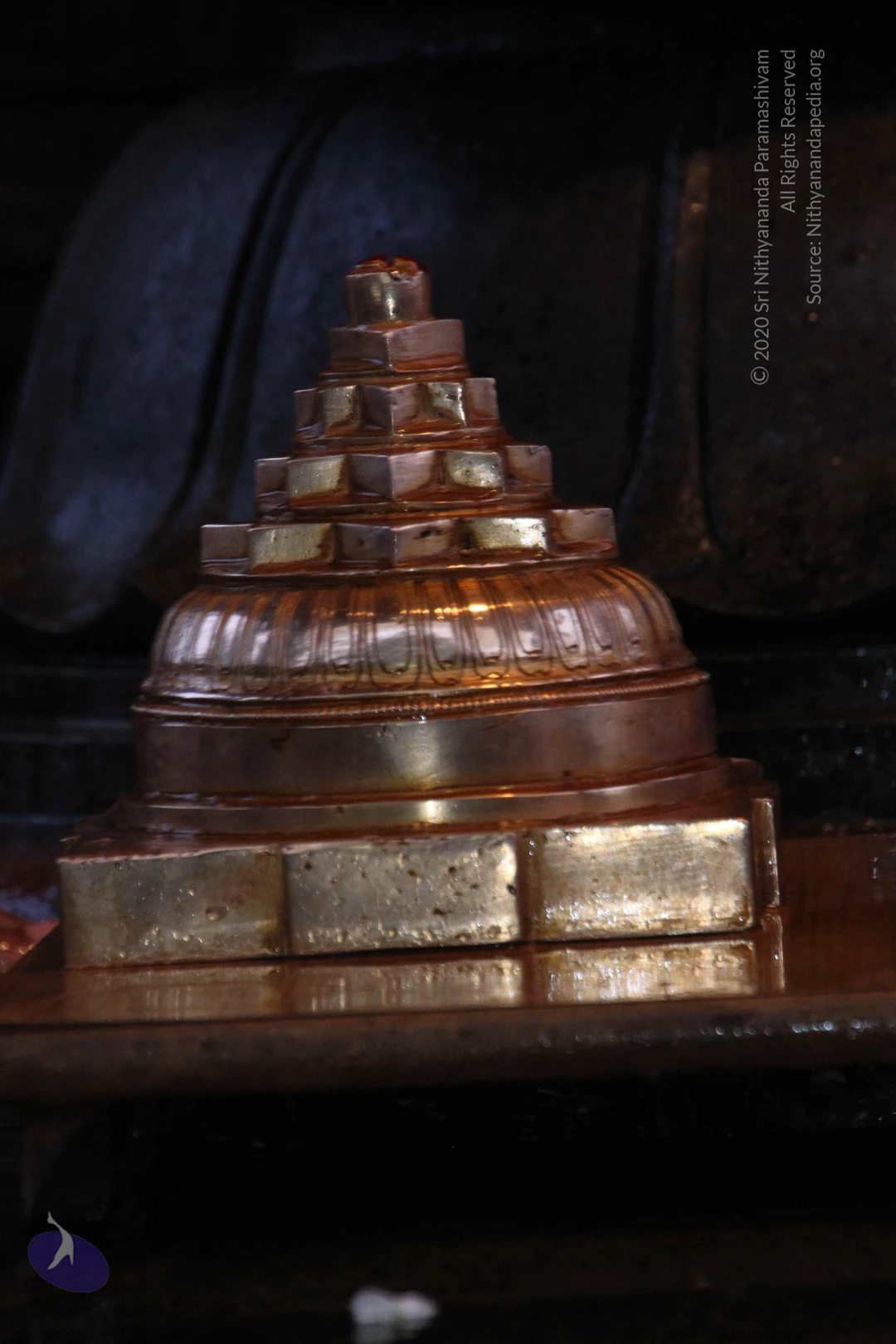
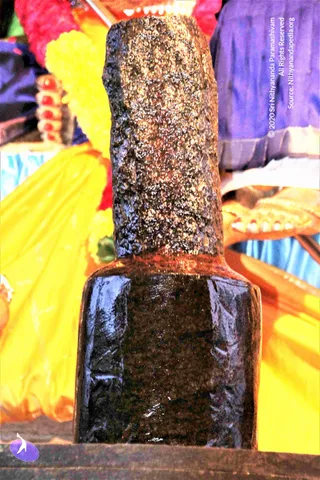
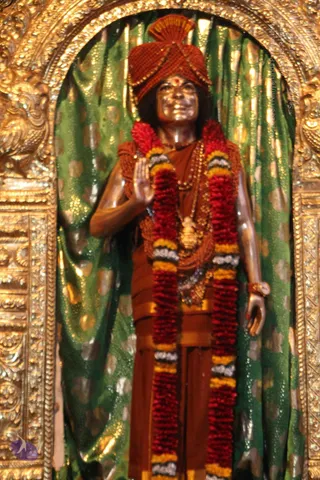
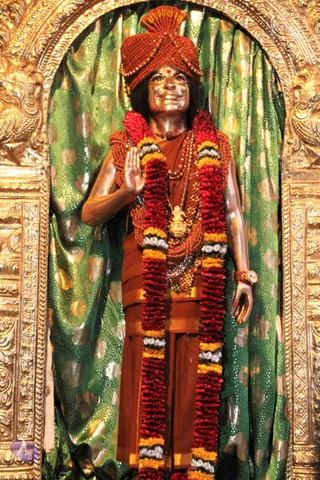
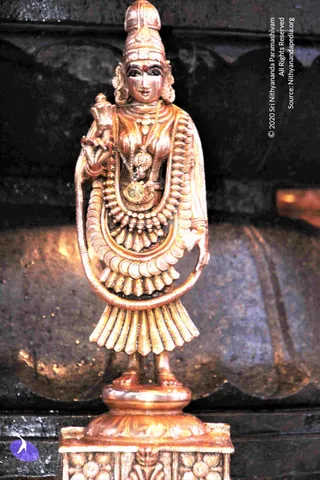
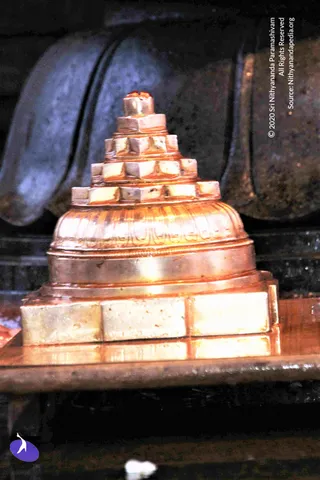
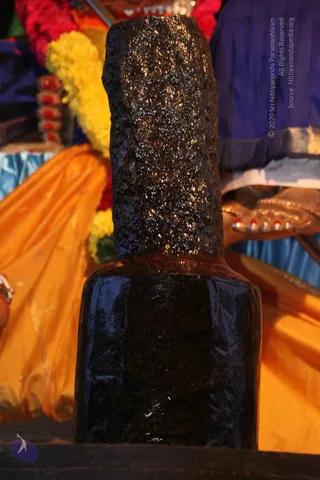
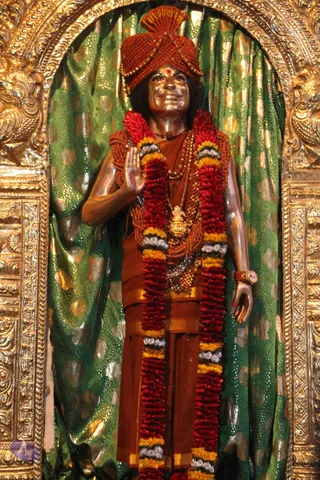
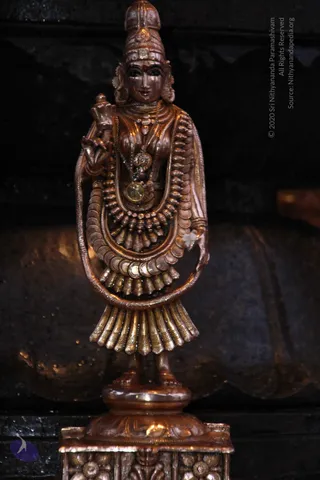
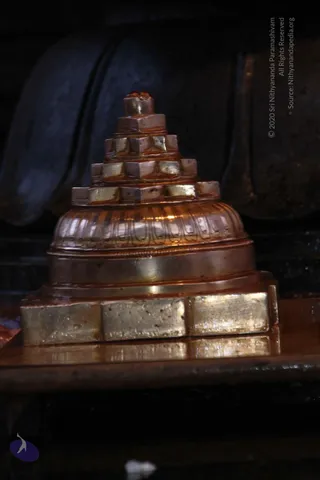
Close-up photograph of a dark, glossy black stone lingam on a square base, its rough upper column contrasting with the polished lower section. Behind it are marigold garlands in yellow and red and draped yellow and blue fabric. No people are visible in the frame.A golden statue of a man stands within an ornate gilded arch niche against a green curtain with gold dots. The figure wears a red-orange turban with a fan-shaped top, an orange-brown robe, layered gold and beaded necklaces, and a red-and-gold bracelet. Its right hand is raised in blessing and it is draped with thick red, orange and white flower garlands. A red bindi marks the forehead. The statue appears to be a murti or portrait sculpture, not a living person.A gilded statue of a male figure stands inside an ornate gold-carved arched niche backed by green fabric with gold dot patterns. The statue wears a red-orange turban with a fan-shaped top, an orange-saffron robe and dhoti-style wrap, and a heavy garland of red, yellow and white flowers. Multiple strands of rudraksha-style beads and a gold pendant hang at the chest, and a red bangle is on one wrist. The right hand is raised in a blessing gesture. The statue is a depiction, not a living person, and no name is printed on the image.A photograph of a standing bronze deity murti, polished to a warm golden-copper sheen, on a carved pedestal decorated with floral motifs. The figure wears a tall cylindrical crown, a red bindi, layered necklaces and a long beaded garland draped over the shoulders and waist. One hand holds a small object raised near the shoulder and the other hangs at the side holding a flower. The background is a dark stone wall with a blurred stone lingam-like form behind.A small gilt metal statue of a standing deity murti, with a tall crown, a broad ornate necklace and layered jewellery, stands on a lotus-style base in front of a dark stone surface. The figure holds a flute-like object near its hand and wears a long draped garment. The background is dark stone carving. No living people are visible.Close-up photograph of a polished copper-toned Sri Yantra, a stepped pyramid-shaped metal object with tiered geometric platforms and a rounded base, resting on a flat metal plate. A dark stone surface sits in the background, and a small red mark is visible at the peak. No people are visible in the scene. The object is shown as a sacred ritual implement in a temple setting.

Pratyaksha-PadaPuja

8 photosSource gallery
A man sits cross-legged on an ornate gold throne with carved lion-head arms and a tiger-striped cloth draped over the seat. He wears an orange-red saffron-toned garment with a gold border, a white and red flower garland, and a heavy brown rudraksha-style mala with a gold pendant. His right hand rests on the armrest while he gestures over a tray of flowers and small oil lamps in silver dishes placed on a gold pedestal. Hanging brass bells and a brass lamp decorate the dark stone wall behind him. The setting suggests a puja or satsang seating; the scene is a photograph.A photograph of a seated man on an ornate gold throne with carved lion-head armrests and a tiger-striped cloth draped over the seat. He wears an orange-rust dhoti and shawl with a gold border, multiple rudraksha mala strands, a gold pendant, and long white and red flower garlands; he has a red bindi and raises one hand in blessing. Silver trays of flowers and small lamps sit at the base of the throne. Gold bells hang from chains behind him against a dark stone wall.A seated man on an ornate gold throne with carved lion-head armrests and a tiger-striped cloth draped over the seat, raising one hand in a blessing gesture. He wears an orange-rust dhoti and shawl with gold borders, a long white and red flower garland, and rudraksha beads with a gold pendant. Silver bowls filled with red and pink flowers sit on a gold platform before him. Hanging brass bells and oil lamps frame the dark stone wall behind the throne. a person: the figure wears rudraksha malas and ceremonial gold necklaces with orange clothing, matching the page's claim of his presence.A photograph of a seated figure on an ornate gold throne draped with a striped tiger-skin cloth. The figure wears a rust-orange garment with a gold border, a long white jasmine garland, a gold chain and layered beaded necklaces, gold bangles and an armlet, and a red bindi. Hanging brass bells and a brass oil lamp stand beside the throne, with pink and white flowers at the feet. Based on appearance cues (swept-back dark hair, saffron-orange clothing, ceremonial gold necklaces and garlands), this is the probable Swamiji (probable) seated in a satsang setting.A seated man in profile, turned to the right, wears a rust-orange shawl draped over his shoulder and chest. He has long swept-back dark hair, a red kumkum dot and white vibhuti marks on his forehead, and gold earrings. Multiple strands of white jasmine garlands with orange and red flower accents hang around his neck, along with a brown rudraksha mala and gold ornaments. A gold-carved throne or peetha is visible at left, and a hanging brass bell with chain sits at upper right against a black background. Only one person is visible. Appearance-based label: Swamiji (probable), with cues of swept-back hair, ornate gold clothing and rudraksha mala beside the throne and bell.Side-profile photograph of a seated man in an orange-brown saffron shawl draped over one shoulder, wearing a thick white jasmine garland with red flowers and multiple rudraksha and gold-bead necklaces. He has long swept-back dark hair, a red tilak on his forehead, a small gold earring, and a gold armband. A brass hanging bell with a chain is visible to the right against a dark background, with a gold ornamental carving at the left edge. Appearance-based probable Swamiji (probable) with long hair, saffron shawl, rudraksha malas and ceremonial garlands, seated in what appears to be a satsang setting.

Nithya-Satsang

43 photosSource gallery
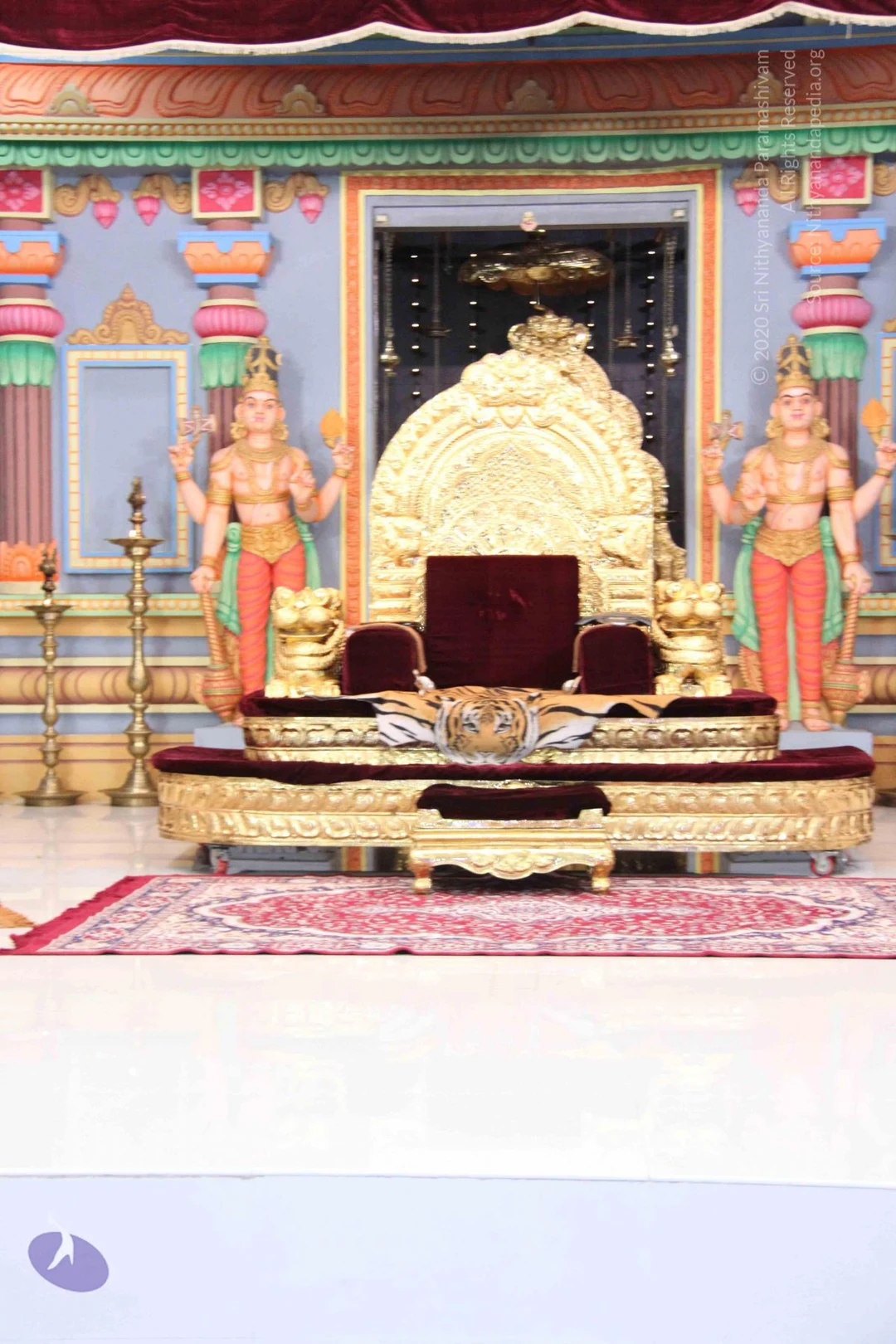
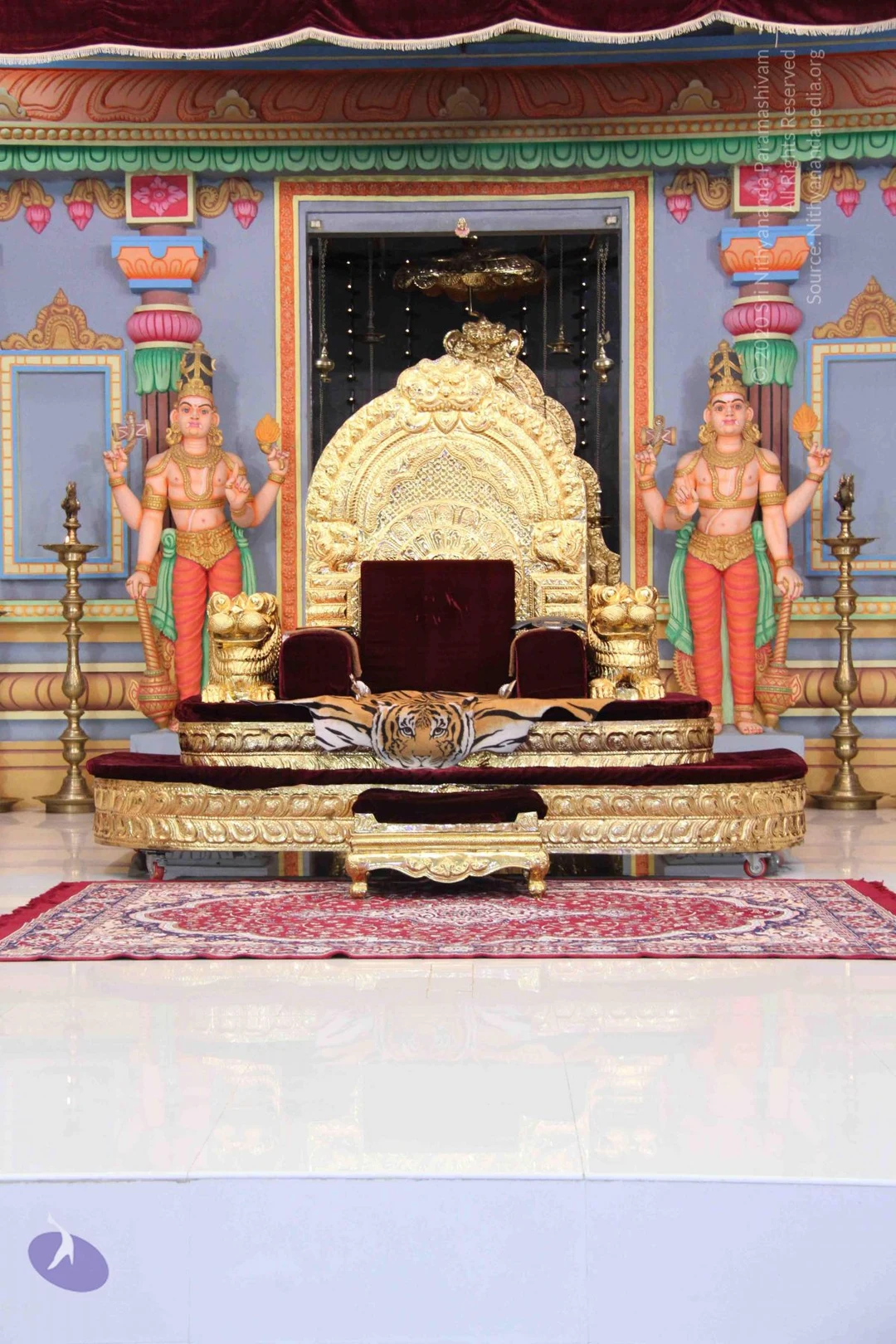
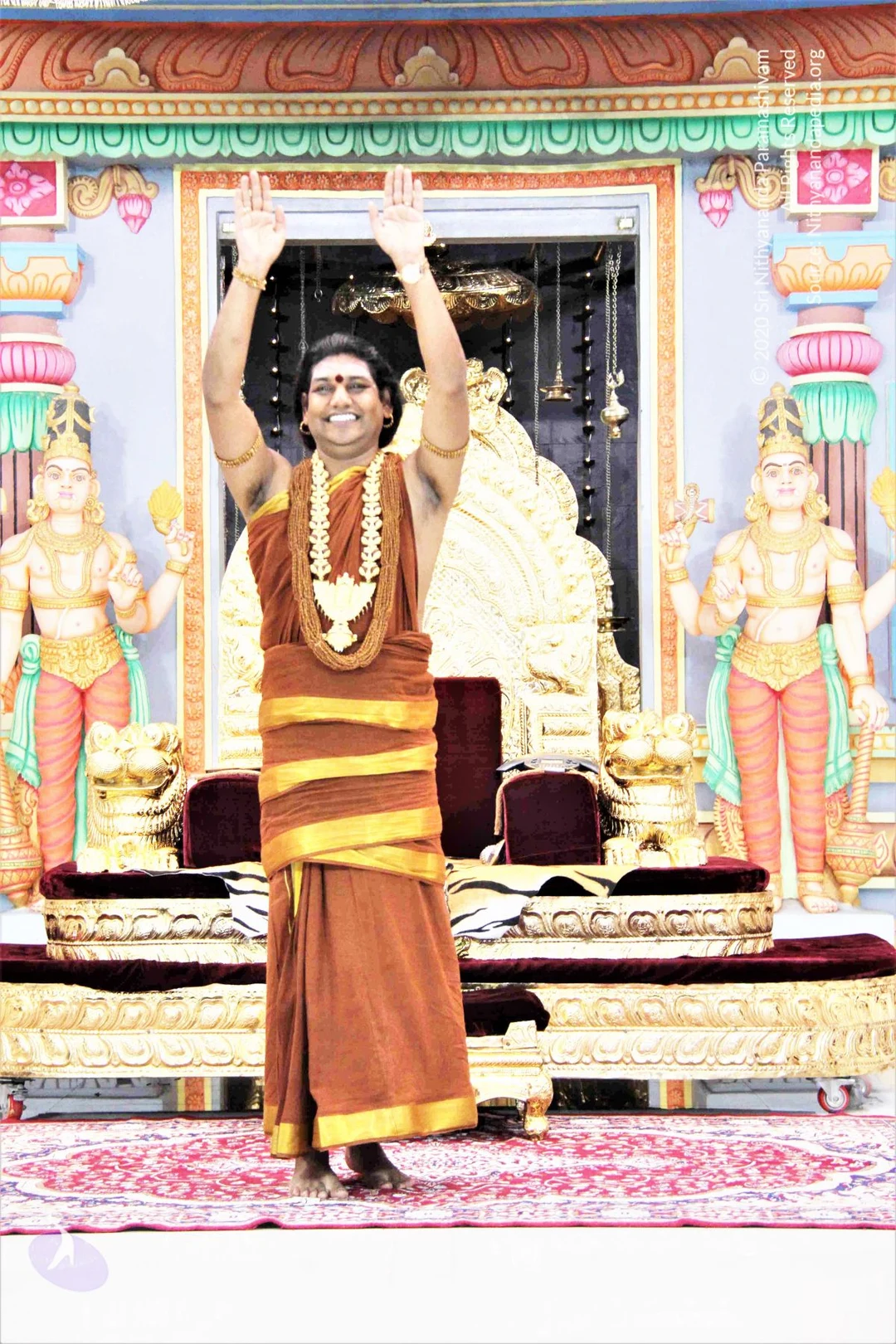
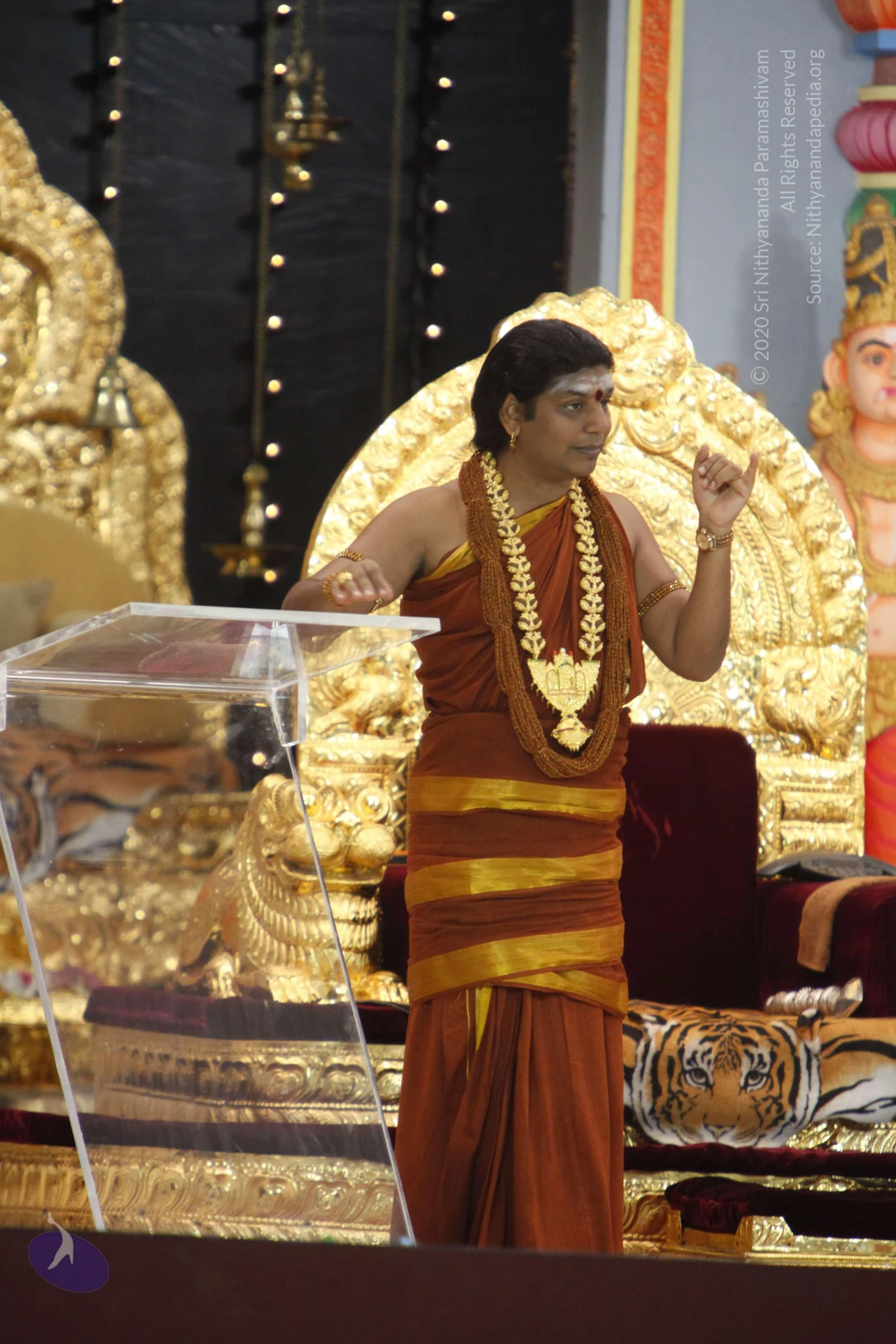
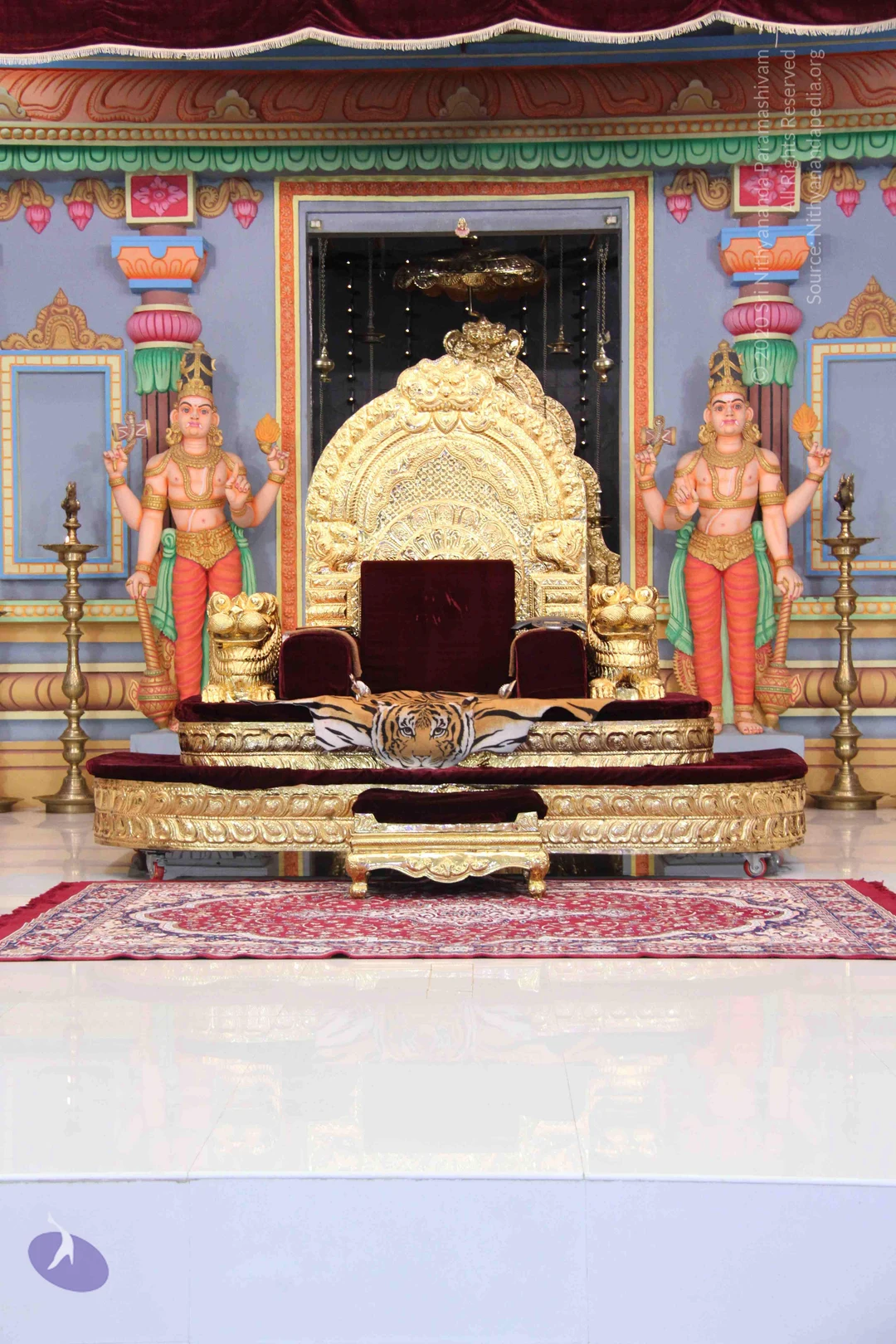
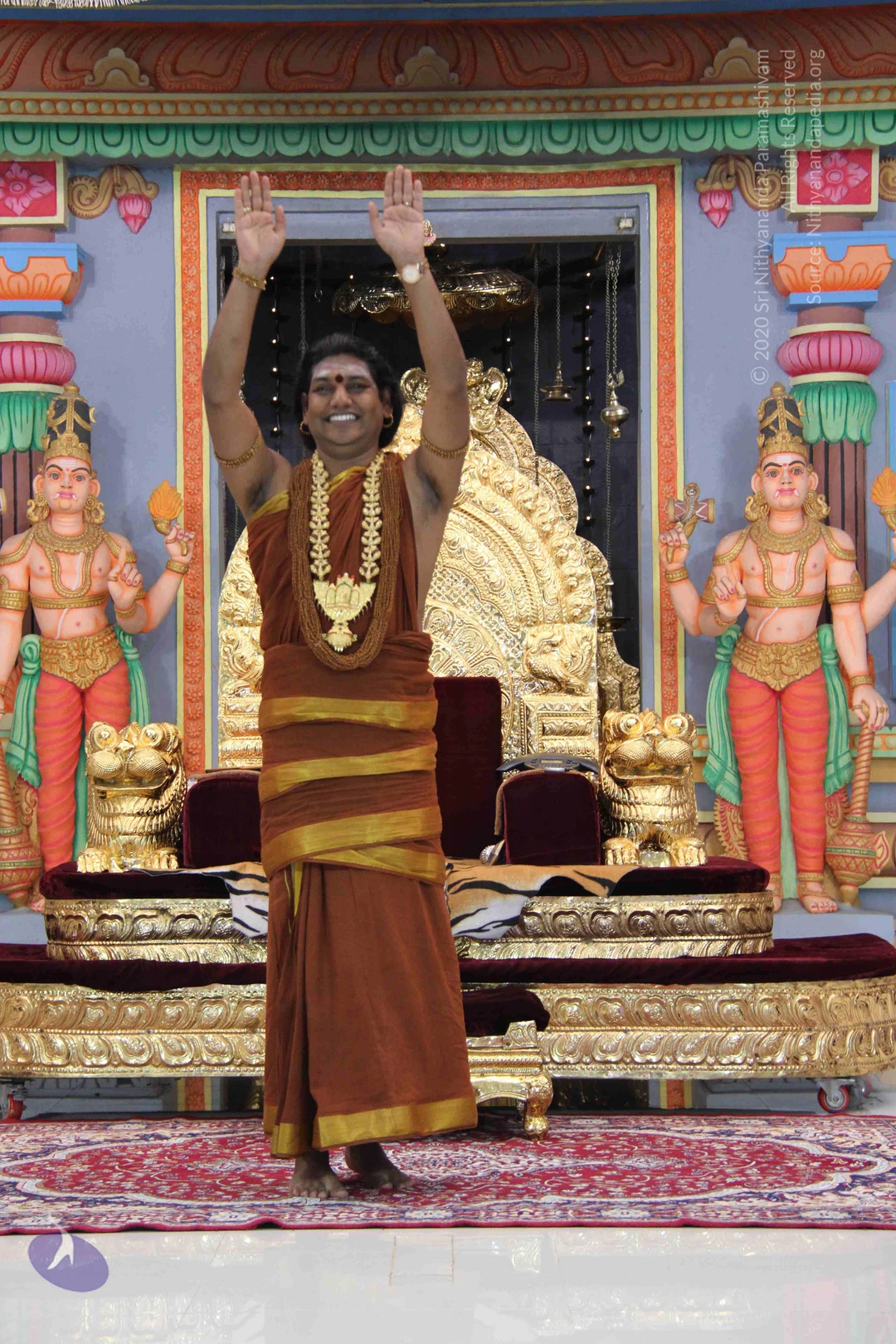
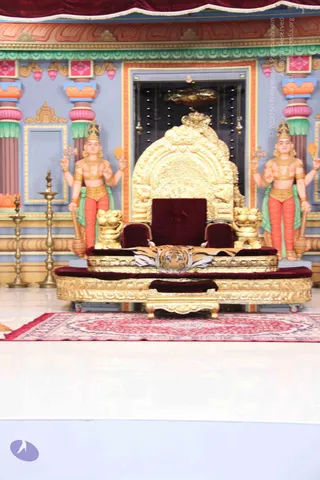
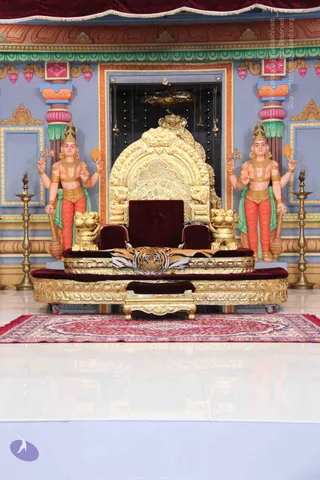
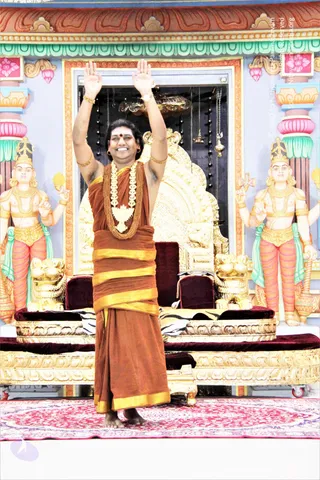
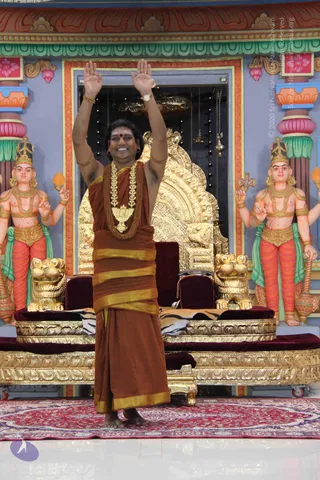
A standing man in an ochre-orange dhoti and shawl with broad gold borders speaks into a headset microphone at a clear lectern beside brass oil lamps. He wears a layered rudraksha mala and a large gold lotus pendant with a gold floral garland, gold bangles and armlets, and a red bindi. Behind him is a pastel-and-gold temple backdrop with ornate gold throne furnishings on the right, and he stands barefoot on a red patterned rug. Swamiji (probable): long swept-back hair, ochre-orange shawl, rudraksha mala and ceremonial gold necklace, speaking as a satsang teacher at the lectern.A man with swept-back dark hair, a white tilak and a red bindi stands behind a clear acrylic lectern, palms pressed together in namaste while speaking into a headset microphone. He wears a rust-orange garment with gold-bordered wrap and layered rudraksha-style beaded malas with a large gold pendant and gold ornaments on his arms and wrists. Swamiji (probable): long swept-back hair, rudraksha malas and ceremonial gold necklaces with saffron-orange clothing, presented as a teacher at a satsang discourse. Red curtains and pink walls form the backdrop.A photograph of an empty ornate golden throne platform in a colourful temple-style hall. A large gilded arched throne back with carved floral motifs sits on a raised gold-trimmed dais draped with deep red velvet cushions and a striped tiger skin. Two gilded lion-shaped armrests flank the seat. On either side stand painted deity statues with four arms, gold crowns, gold necklaces and orange-red dhotis, holding ritual objects. Brass oil lamps stand to the left, and a red patterned carpet lies at the base. No people are visible.Empty ornate golden throne (peetha) on a raised platform in a richly painted hall. The gilded throne has a dark maroon velvet backrest and seat cushions, with carved lion figures at its sides, and a tiger skin draped across the seat. Two painted standing guardian figures with multiple arms, crowns and orange-red dhotis flank the throne. Brass oil lamps (deepa) stand on either side, and a red patterned carpet lies before the platform. A tiered gold canopy hangs above the entrance behind the throne. No people are visible.A man in a rust-orange dhoti and shawl with gold-yellow borders stands barefoot on a red carpet with both arms raised overhead, smiling. He wears a long white flower garland with a gold pendant and a rudraksha-style mala with gold beads, a red bindi on his forehead, and gold bangles. Behind him is a gilded throne with a pale golden backrest, maroon cushions and a zebra-striped cloth, flanked by two golden lion figures. Two painted deity statues with crowns, bare chests and gold waistbands stand on either side of the dais, and a brass lamp hangs from the ornate pink and turquoise temple-style pillars. Probable Swamiji appearance: long hair, ornate gold necklaces, saffron-orange clothing and a mala on a throne-style dais.A man in saffron-orange robes with gold-yellow bands stands at a clear acrylic lectern on a gilded stage, one hand raised mid-gesture while speaking. He wears a long gold-and-beaded garland with a large pendant, gold bangles, a wristwatch and a red bindi with white markings on his forehead. Behind him are ornate gold-leaf thrones and a gold deity murti, with a striped tiger-skin cushion on a velvet seat to the right and hanging brass oil lamps at the upper left.

SacreArts-Construction

5 photosSource gallery
A large unpainted clay Ganesha murti stands on a flat base in a workshop, being sculpted or finished. The elephant-headed deity has a raised trunk curling toward the right, a round belly, and multiple arms holding objects including a modak-like sweet, a tusk-shaped or ceremonial implement and a curled ornamental piece. The clay is brown-beige with visible tool marks and smoothing. Behind it are a grey wall, a dark work table with scattered clay debris, and bare feet of workers on a woven mat at the bottom edge.A pair of hands holds a freshly cast silver-coloured metal statue of a standing deity figure, with a tall crown-like headdress, a parrot perched on its raised left hand, and a rounded base. The surface is rough and unpolished. The background shows a worn workbench and dark tools.A small weathered silver-toned metal figurine of a standing deity murti, with a tall crown, layered necklace, sacred thread and jewelled waist-band, one hand raised in a blessing gesture and the other holding a small object. It rests against a wooden log and a terracotta pot in an outdoor setting. No people are visible.A close-up photograph of a small silver-toned metal figurine of Ganesha standing on a flat base, with an elephant head and trunk curled toward the body. It has multiple arms, one holding a shaped object, and a wrapped waist cloth. A dark grey textured surface and fragments of debris lie around it, and a hand is partly visible at the top edge. A black rectangle covers part of the lower left. No people are shown in the scene apart from the partially visible hand, and no a person candidate is present.A small silver-coloured metal figurine of a four-armed standing deity murti, photographed close up against a dark grey textured surface with a piece of weathered wood behind it. The figure wears a tall crown with a finial, a broad necklace, a waist sash and a dhoti-style lower garment. Its hands hold a small round object, a flower-like item and a ritual implement. No physical people are visible.

1-Temple-Linga-Abhishekam
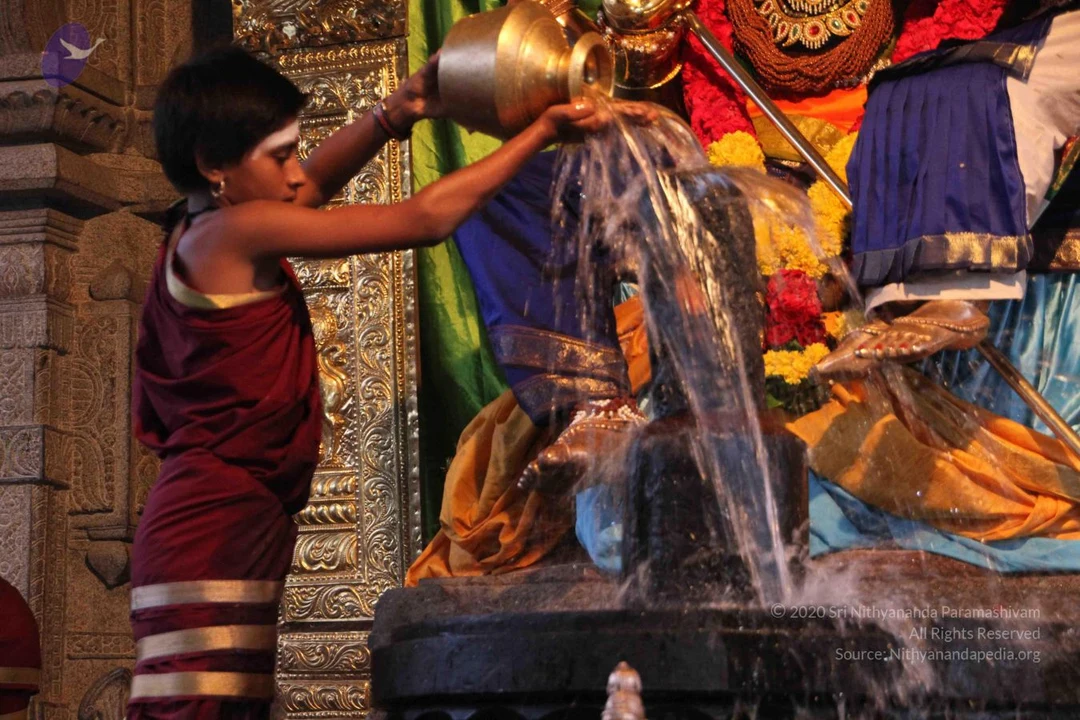
7 photosSource gallery
Close-up photo of a large black Shiva linga on a square yoni-pitha base, its glossy surface glistening as if freshly anointed during abhishekam. Behind it, a bright orange silk cloth, yellow marigold garlands and a red flower garland are visible, along with a blue cloth and a gilded metallic object with red stones at the right edge. No people are visible; the frame is dominated by the linga.A gilded statue of a standing male figure, shown as a murti rather than a living person, stands in an ornate golden arched niche framed with carved floral and figural relief. The figure wears a red-orange turban with a fan-shaped top knot, a bindi, and an orange-brown saffron-toned garment with a gold-edged cloth wrap. Multiple rudraksha malas and a gold pendant hang at the chest, and a red-and-yellow marigold garland with silver-toned beads drapes from the shoulders to the waist. The raised right hand is in an abhaya-style gesture while the left hand hangs at the side with a wristwatch and red bangle. Behind the statue hangs a green cloth with gold and silver floral motifs. No living people are present.A standing bronze or copper-toned deity murti on a carved pedestal, shown against a dark background. The figure wears a tall crown-like headdress, layered necklaces, a pendant, a waist belt and a pleated skirt, with one hand raised holding a small object and the other hand resting near a flower. Golden oil or water sheen covers the metal. No people are visible.Close view of a copper-toned tiered linga-shaped object, a metal yoni-linga or sri-chakra-style stepped form on a wooden ledge, glossy and warm-lit against dark stone behind. A small red mark sits at its peak. No people are visible. The stepped pyramid base and rounded middle suggest a sacred Shiva linga form.A photograph of a linga abhishekam at a temple. A person in a red-maroon garment with a gold-toned sash and a gold necklace pours water from a brass vessel held high over a dark stone shivalinga set on a black stone yoni pedestal. Water cascades down the linga and spills over the basin, with a tiled roof and wooden pillars in the background. The person's face is partly turned away and only one person is visible.A young boy in a red-maroon dhoti-style cloth stands at a dark stone shivalinga, raising a brass kalasha high overhead and pouring water over the lingam. Water streams down past his arms and the stone, with a dark stone yoni-pitha base below. Wooden pillars and a corrugated roof frame the scene behind him. A partially visible person in red stands at the left edge.
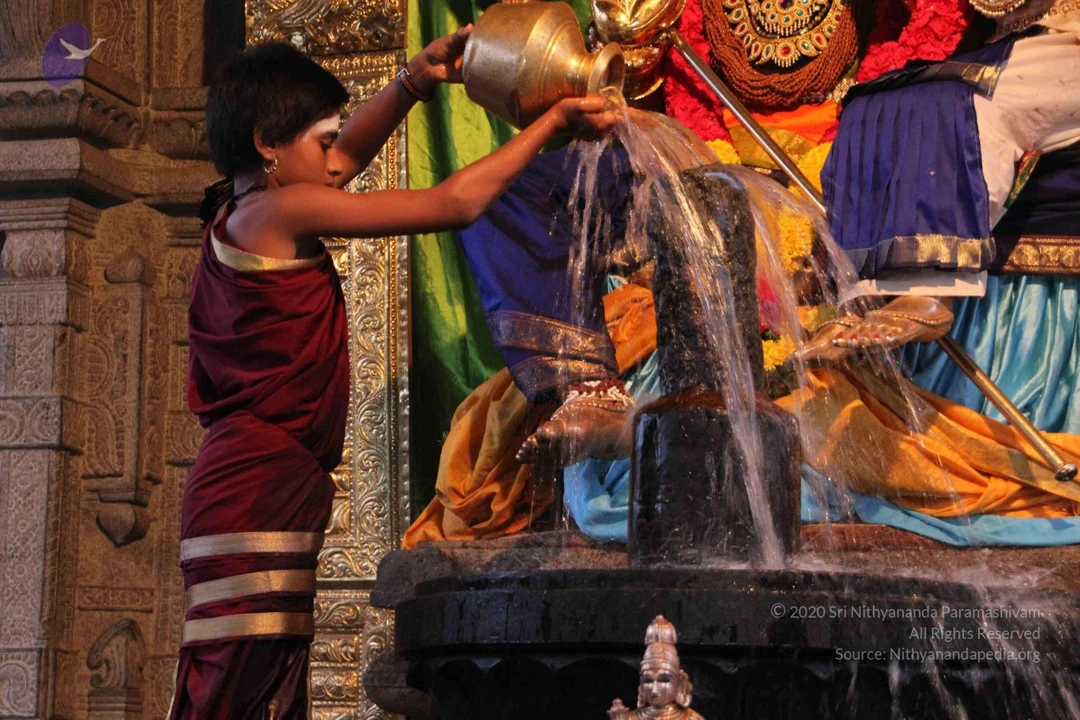
2-Pratyaksha-Pada-Puja
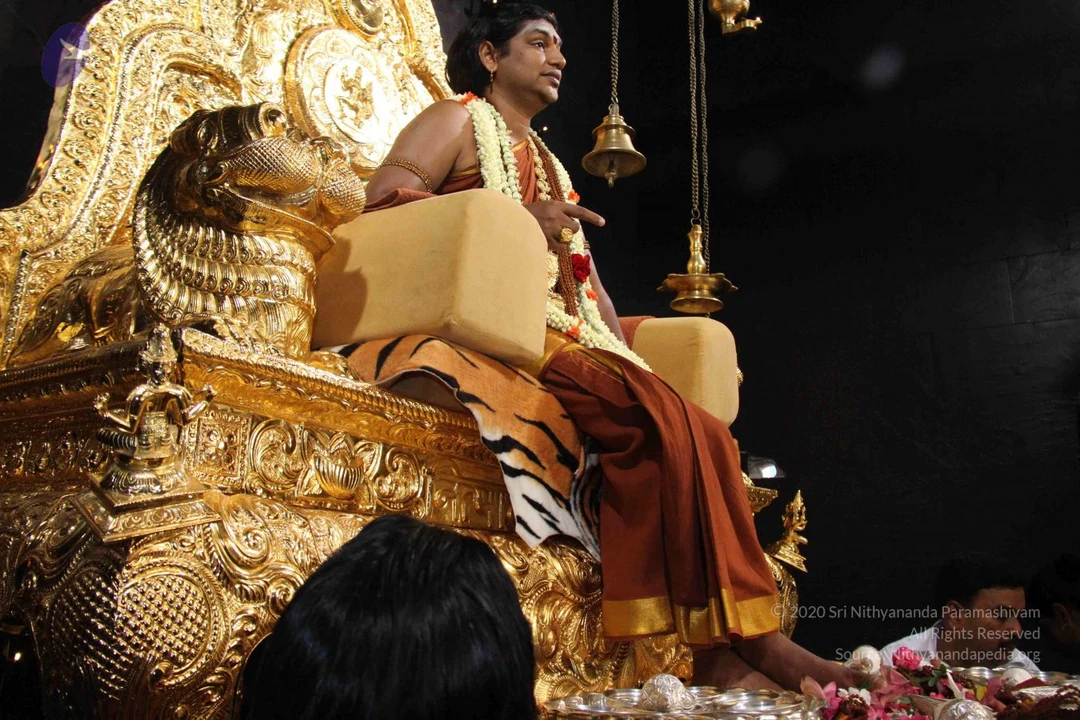
6 photosSource gallery
A seated man sits on an ornate gilded throne with lion-head armrests and a tiger-skin draped over the seat, set against a dark slate wall with hanging brass bells and a brass lamp. He wears a rust-orange garment with a gold-bordered wrap, a heavy gold and rudraksha necklace, and layered white jasmine garlands with red flowers. His eyes are lowered and his right hand rests on the armrest. Before the throne, a low table holds silver trays of small cups with red and pink flower petals and white blossoms. The man is alone in the frame, with no visible crown, long swept-back hair or saffron-only appearance, so the appearance cues are insufficient for an identity claim. Visible attire and garland details are the main features.A seated man in a rust-orange robe with a gold-bordered dhoti sits on an ornate gold throne carved with lion heads and a tiger-skin cloth, with a golden halo-like backdrop and hanging brass bells. He wears a long white jasmine garland with red flowers, a rudraksha mala with a gold pendant, gold necklaces and bangles, and a red tilak on his forehead, and raises one hand in blessing. Silver trays of flowers and offerings sit before the throne, with pink and white petals on a golden platform.A photograph of a man seated on an ornate gold throne carved with lion heads and draped with a tiger-skin cloth, set against a dark slate wall with hanging brass bells and lamps. He wears a rust-orange dhoti and shawl with a gold border, a rudraksha mala, a heavy gold necklace, and a long garland of white jasmine and red flowers, with a tilak on his forehead. He raises one hand in blessing. Silver trays of flowers and offerings rest on a gold platform at his feet. a person: the seated figure has ornate gold regalia, rudraksha, a gold necklace and garlands, consistent with the page's attribution. One physical person is visible.A seated man in a rust-orange dhoti and matching upper wrap sits on an ornate gold throne draped with a tiger-stripe cloth. He wears multiple strands of white jasmine garlands with orange and red flowers, a rudraksha mala, a large gold pendant and gold armlets, and a red bindi on his forehead. Hanging brass bells and a brass oil lamp are visible behind him, and silver bowls with pink and white flowers rest at his bare feet. a person: the long swept-back hair, rudraksha mala and ceremonial gold ornaments on a figure seated in a throne setting match the page's reference to a person, though the appearance is not conclusive. The scene is a satsang setting with an oil lamp and bells beside a central seated figure, with the photograph showing one person.A man with swept-back dark hair and a red bindi sits on an ornate gold throne draped with a tiger-striped cloth. He wears a rust-orange dhoti and shawl with gold border, multiple strands of white jasmine garlands with red roses, a gold pendant, a rudraksha mala and gold armlets. Silver bowls holding pink and red flowers sit at his feet on the floor, and a hanging brass bell and brass oil lamp appear beside him against a black background. Appearance-based a person, seated in puja setting.A seated man in a rust-brown robe with a gold-edged dhoti sits on a golden ornate throne-like chair, wearing layered white jasmine garlands with red roses and orange marigolds, a long rudraksha mala with a gold ornamental pendant, gold bangles and a gold ring. He has white vibhuti lines and a red kumkum dot on his forehead and looks to the side. A brass hanging bell and a brass oil lamp stand at the right against a black background. a person appears in person; the cues are the ornate gold throne, the rudraksha mala, and the saffron-brown robe with garlands.
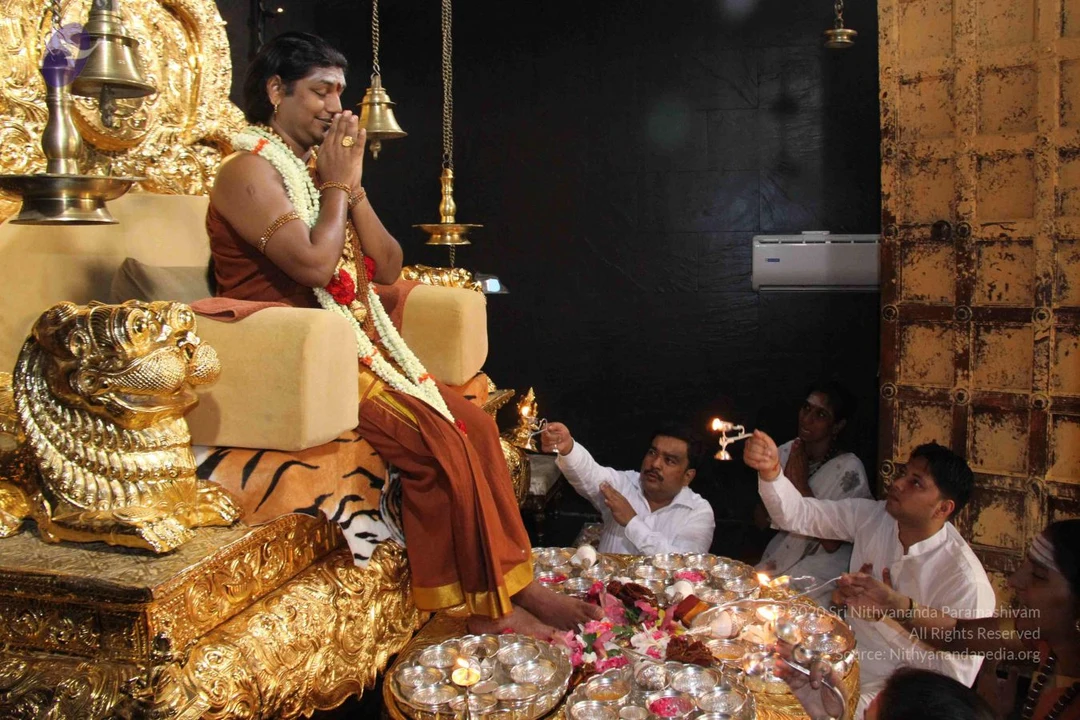
3-Nithya-Satsang

3 photosSource gallery
A man stands barefoot on a red patterned rug beside a clear acrylic lectern, speaking into a head microphone. He wears a rust-brown dhoti and wrap with broad gold borders, a heavy multi-strand rudraksha mala and a large gold pendant necklace, gold bangles, a gold armlet and gold hoop earrings, with a red bindi on his forehead. Behind him are brass oil lamps on a colourful painted wall with pink and green pillars, a golden throne with red velvet cushions, and a gold-decorated deity murti. The page suggests a satsang, and the man is presented in a saffron-toned ceremonial dress with distinctive adornments, so he is described as a person addressing the gathering, though his appearance is only partly consistent.A man in saffron-orange robes with gold-striped borders stands beside a clear acrylic lectern, gesturing with raised hands during a talk. He wears a long layered rudraksha mala with a large gold ceremonial pendant, gold bangles, a wristwatch, and has white vibhuti and a red bindi on his forehead. Behind him are ornate gold-leaf thrones, a tiger-striped cushion, hanging lamps and a colourful deity figure on the right. a person: the saffron clothing, rudraksha mala and gold ceremonial necklace, with a visible discourse at a lectern, match the page's satsang context.A man stands behind a clear acrylic lectern with his palms pressed together in anjali mudra, speaking into a headset microphone. He wears a rust-brown garment with gold-bordered wrap, a heavy gold necklace and bangles, a rudraksha-style brown bead garland, and a red bindi with white forehead marks. Behind him are brass oil lamps on stands and a painted deity figure in green and red. The setting resembles a satsang hall or temple stage.

7-Lotus-TV-HDH

31 photosSource gallery
A man in orange-saffron robes sits cross-legged on an ornate gold throne with a carved arched back, in front of maroon velvet drapes. He wears a long gold garland, a thick rudraksha mala, a gold pendant, gold armbands and bangles, and a headset microphone. He has white vibhuti lines and a red kumkum dot on his forehead, and his right hand is raised in a speaking gesture. A tiger-face rug lies over the dais edge in front of him. Seated teaching setting.A seated man sits cross-legged on an ornate gold-carved throne with a large arched back, placed on a red velvet stage. He wears an orange-saffron cloth draped over his shoulders and chest, a long multi-strand rudraksha-style mala, and a heavy gold necklace with a pendant, plus gold armbands and bangles. He has a white vertical tilak with a red dot on his forehead and a headset microphone near his mouth. His bare feet rest on a tiger-skin rug with a printed tiger face at the base of the throne. Behind him hang deep red curtains. Per the page, this is a satsang setting. Appearance cues (long swept-back hair, saffron clothing, ornate gold adornments) suggest the Swamiji (probable) presenting the teaching from the throne.A seated man in an ornate golden throne with a large arched gilded backrest and carved lion figures, draped in red velvet. He wears rust-orange robes, a thick rudraksha mala, a long gold necklace with a gold pendant, gold armlets and bangles, and gold hoop earrings. He has white and red sacred markings on his forehead and holds one hand raised mid-gesture while speaking into a headset microphone. A striped tiger-skin cloth covers the dais in front of him. a person is seated at center, speaking to an audience, consistent with a satsang discourse.A seated man in a golden ornate throne with a tall arched gilded backrest and deep red velvet drapes behind him. He wears an orange-rust ochre sannyasi cloth draped over one shoulder, a long multi-strand rudraksha mala, and an ornate gold necklace with a central gold pendant. He has gold bangles on both arms, a white vertical tilak and red bindi on his forehead, and a small headset microphone. He sits cross-legged and barefoot on a tiger-print cloth draped over the throne's base, smiling toward the camera.A seated man sits cross-legged on an ornate gold-carved throne with a deep red velvet backrest, draped over a tiger-face rug. He wears an ochre-orange shawl and bare-chested drape, with a long rudraksha mala and a large gold ceremonial pendant on a gold necklace, plus gold armlets. He has a white tilak and red bindi on his forehead, a small microphone at his cheek, and his hands rest on the armrests. The background is dark red drapery. Appearance cues, ochre shawl, rudraksha mala, ornate gold necklace and seated throne, suggest a person presenting satsang, though this is uncertain.A seated man in rust-orange robes sits cross-legged on an ornate gold throne with a large arched gold backrest carved with floral scrollwork and lion-like figures. Behind him hang deep red velvet drapes. He wears a long multi-strand rudraksha mala, a heavy gold necklace with a jewelled pendant, gold armlets and bangles, and a white vertical tilak with a red dot on the forehead. A small lapel microphone is clipped near his face. His feet rest on a tiger-skin rug with a printed tiger face. The page identifies this as a person; the appearance cues of long swept hair, saffron-orange robes, rudraksha mala and ceremonial gold necklaces are distinctive, so the figure is a person seated in person.
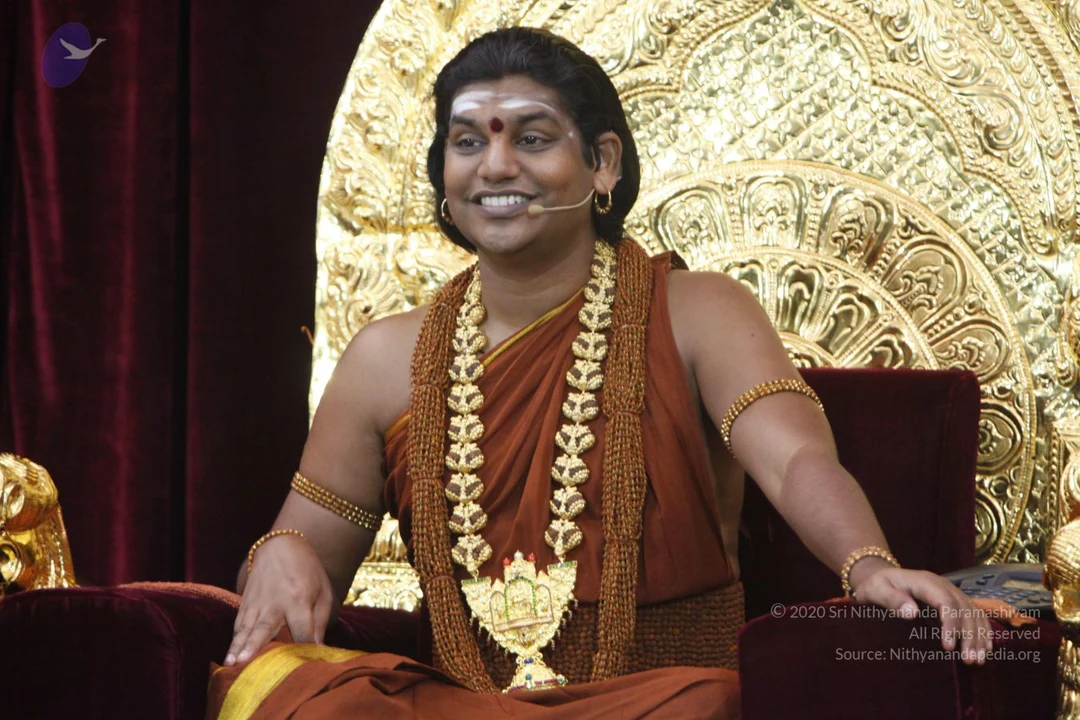
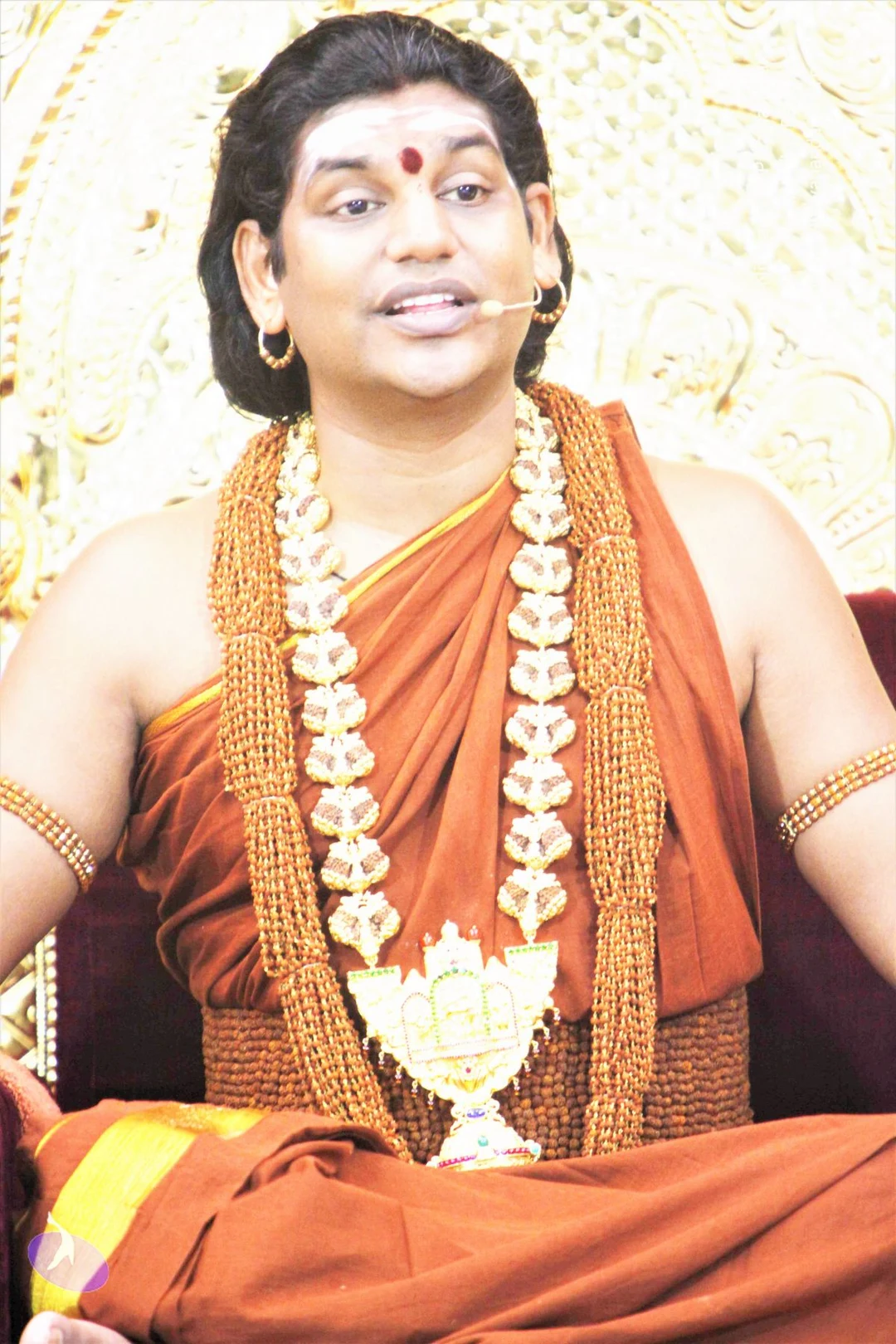
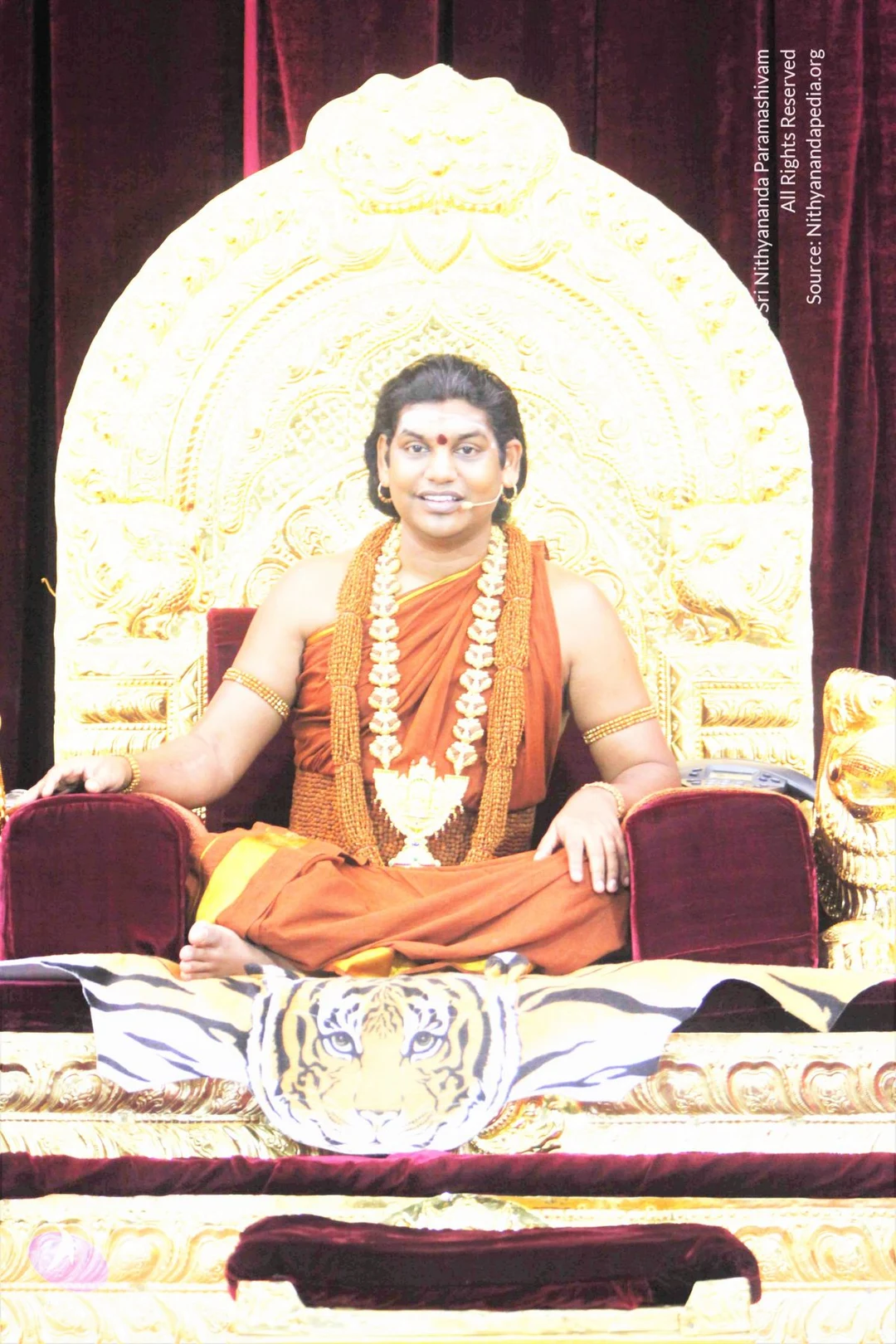
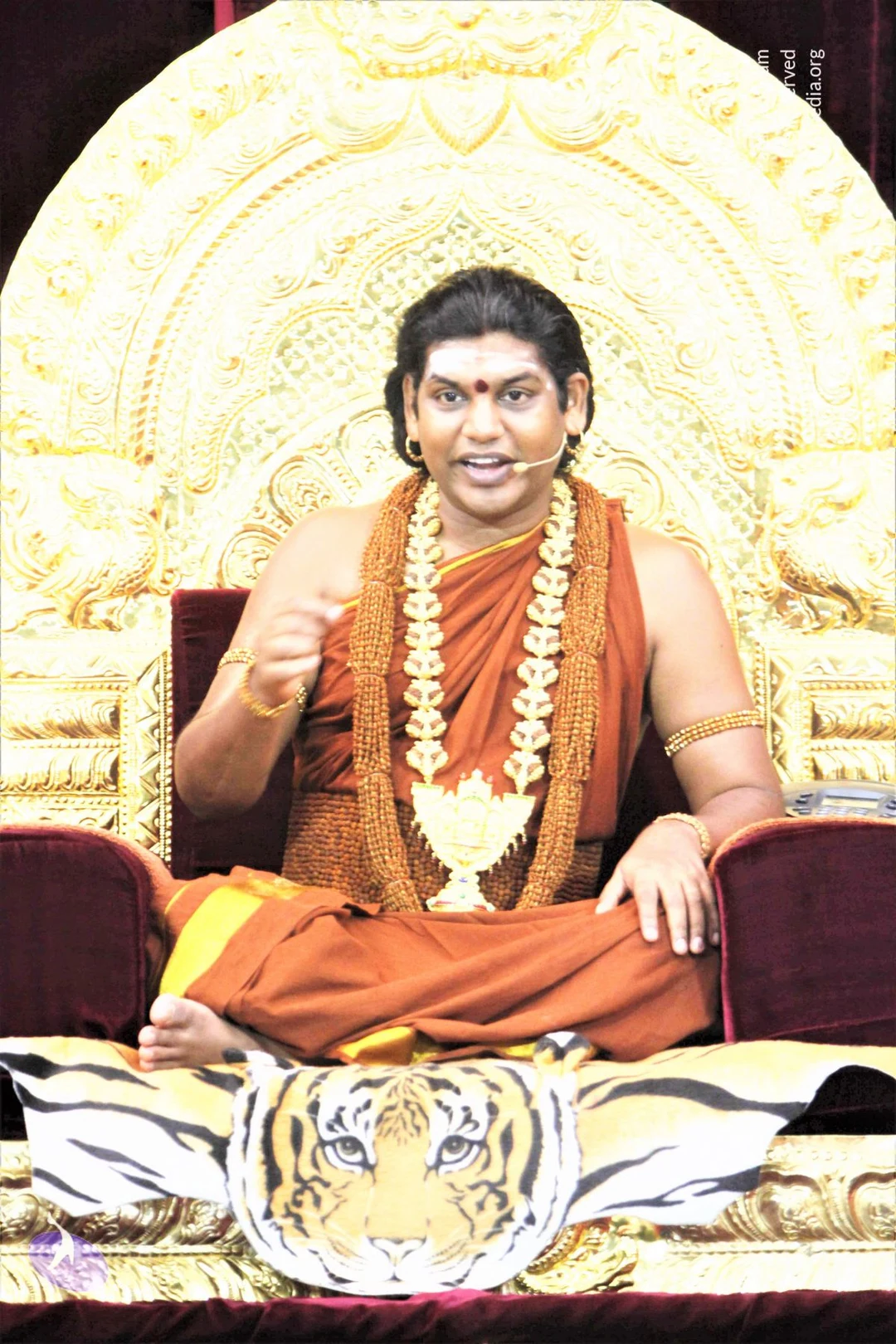
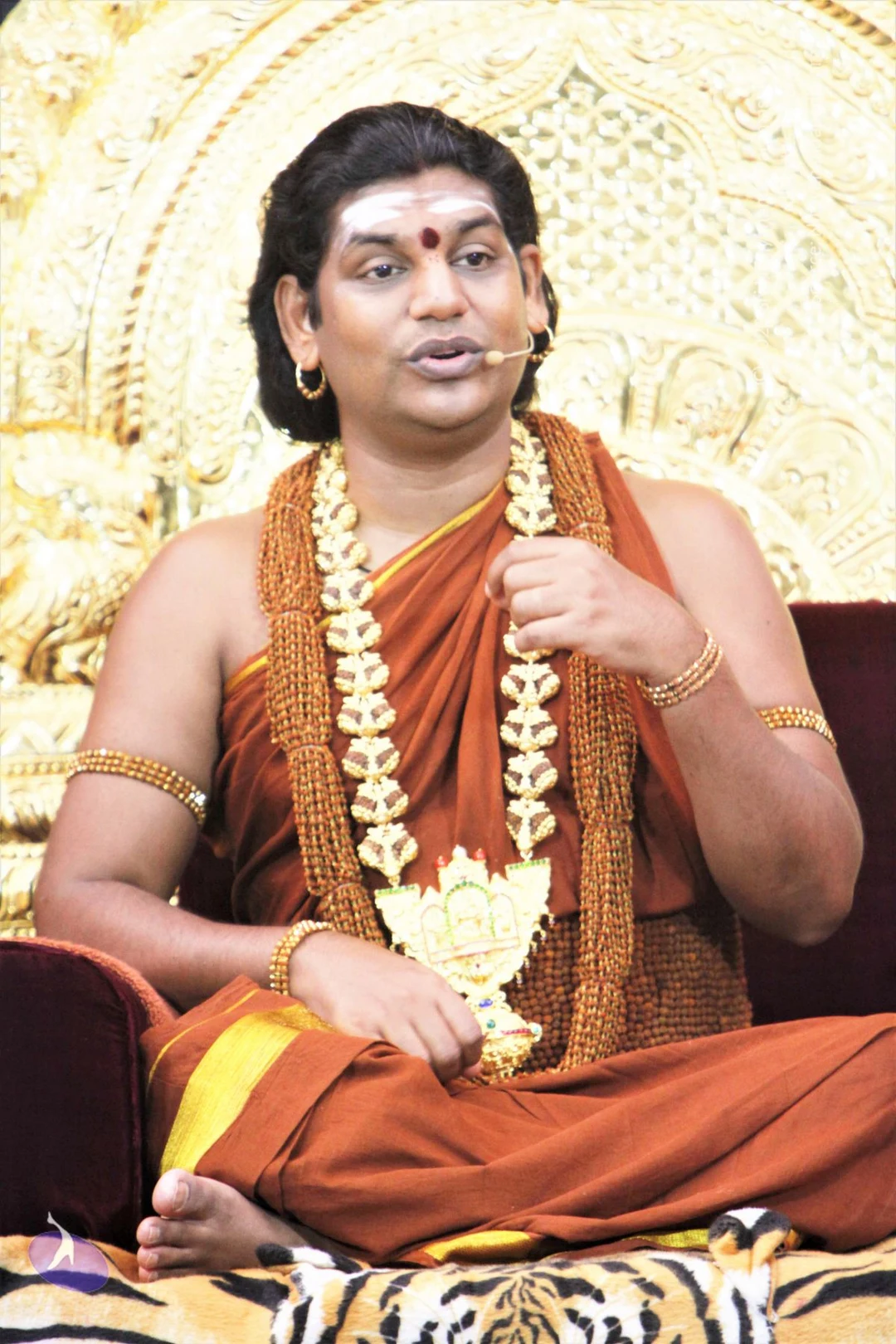
8-Sacred-Arts-Construction
3 photosSource gallery
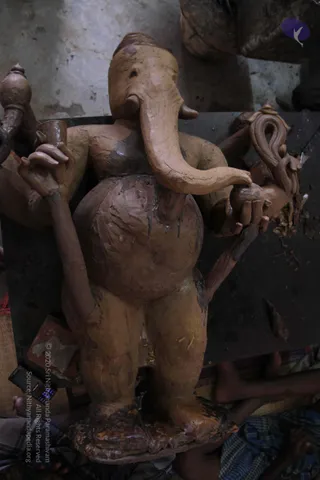
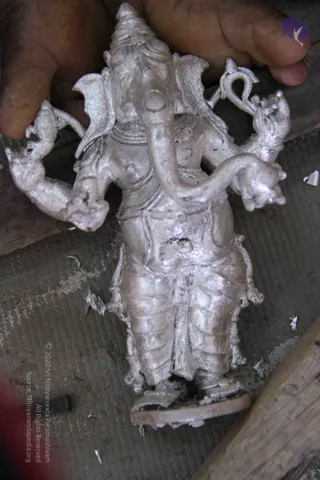
An unfinished clay sculpture of the elephant-headed deity Ganesha, shown standing in a workshop. The raw terracotta-coloured figure has a large round belly, an upraised trunk, and several arms; one hand holds a small cup and another a modelling tool or ornament, while the figure is still being shaped. Behind it are other clay pieces and bare dark work surfaces, and at the bottom edge the feet and checked lungis of workers are partly visible. Faded wall plaster is visible at the top. A purple logo appears in the upper right corner.A small silver-toned metal figurine of the elephant-headed deity Ganesha, shown standing on a flat base. A hand holds the figurine at the top left. It has a curved trunk, a conical crown, and multiple arms holding objects, with the metal surface still rough and showing casting marks. Metal filings and shavings lie on a grey textured surface beside a piece of wood. No people are shown except the hand, and no ritual setting is visible.A small silver-toned metal statue of a four-armed standing deity murti, photographed close up on a dark, gritty surface with a weathered wooden plank behind it. The figure wears a tall conical crown, a ridged necklace, a broad waist sash and a long pleated skirt. One upper hand holds a discus-like wheel, another holds a curved blade or conch-like object, and the lower hands are open in gestures. The image is a photograph of a statue, with no living people present.

June 26 2013

1 photoView all
A smiling man stands barefoot on a red patterned carpet with both arms raised overhead, palms open, in front of an ornate golden throne draped with a tiger-skin cloth. He wears a rust-orange robe wrapped with gold-bordered yellow fabric, a long gold-and-bead garland with a gold pendant, gold bangles and a red forehead mark. Flanking the throne are two painted deity murti figures with crowns, orange-red dhotis and green sashes, holding ritual objects. Golden lion sculptures sit at the base of the throne, and hanging brass lamps and bells appear behind. The scene is a stage in a temple-style hall with painted pink, green and blue columns.