Skip to content
Thursday

27 June 2013

Dated photos
183
Source pages
1
Media
2
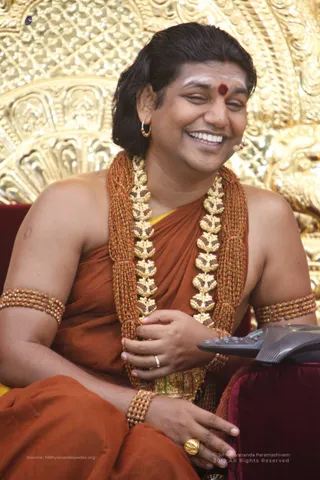
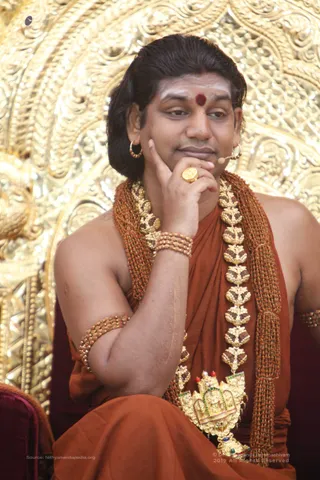
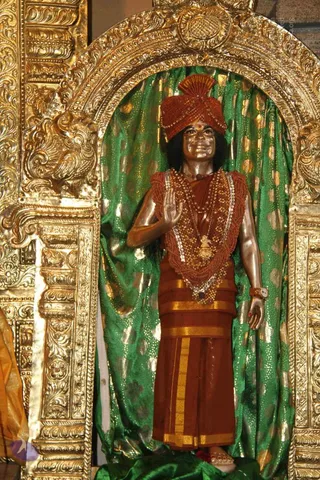
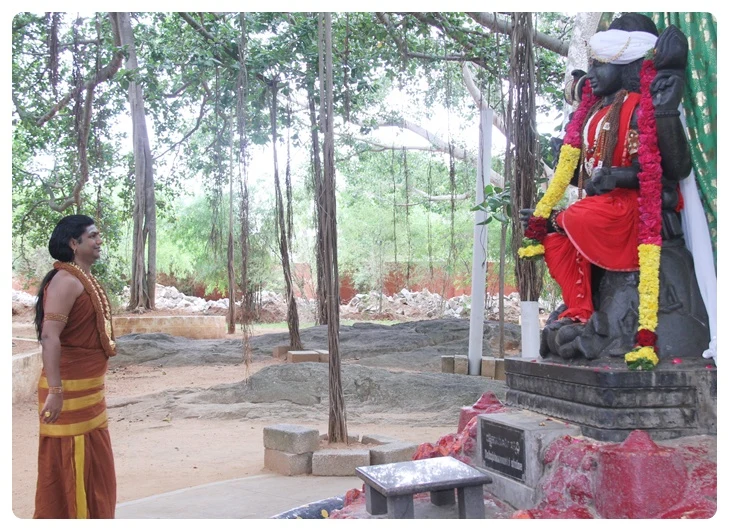
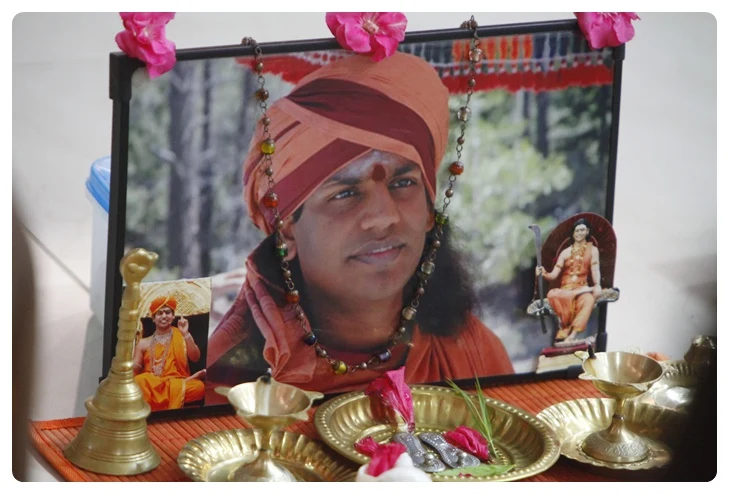
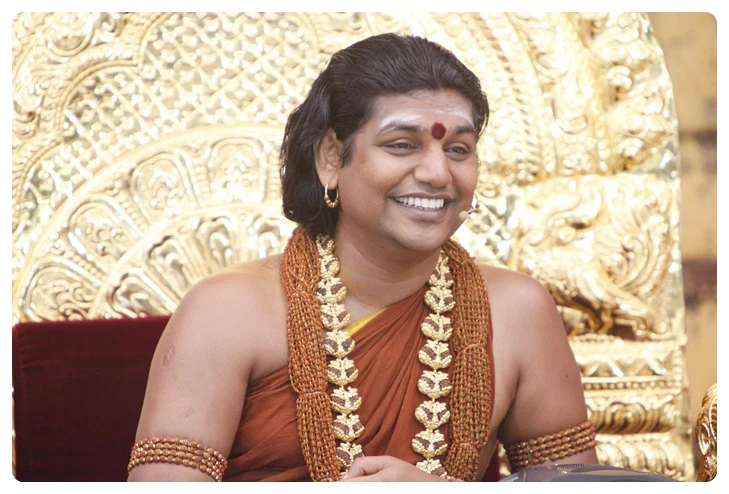
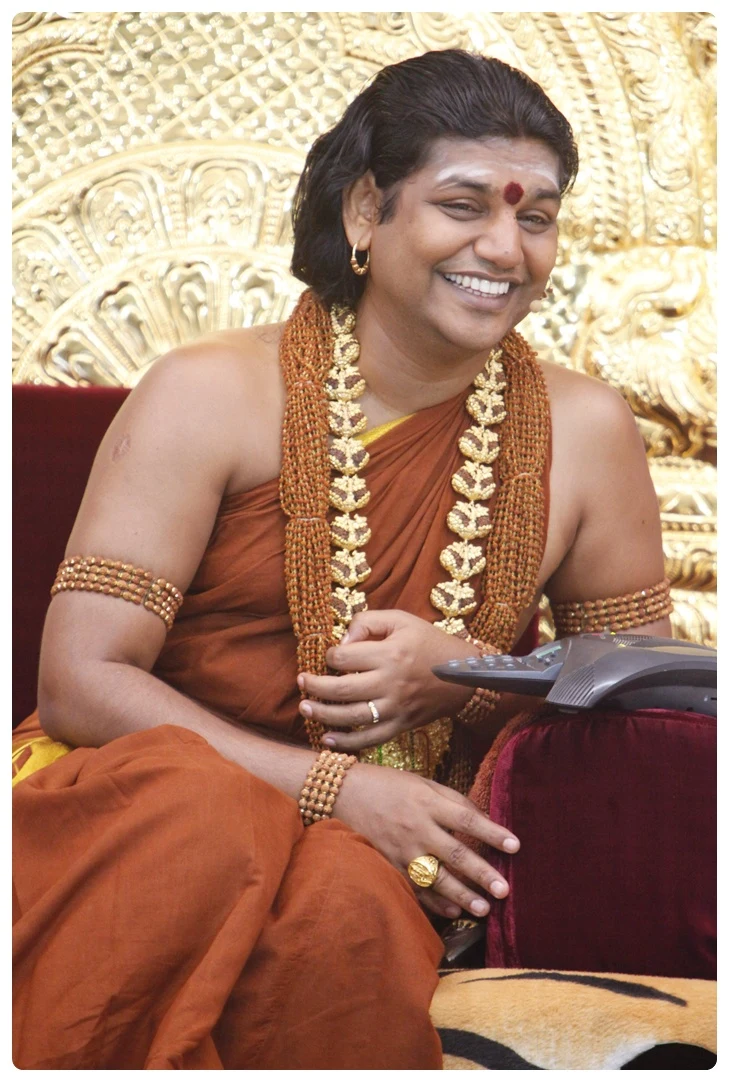
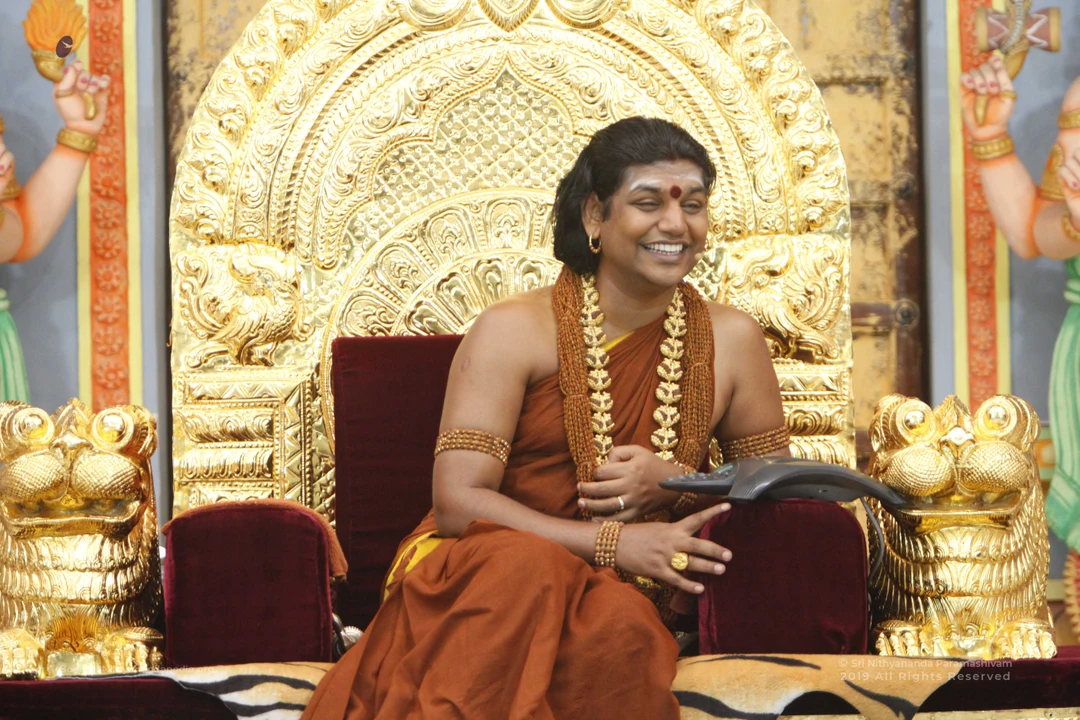
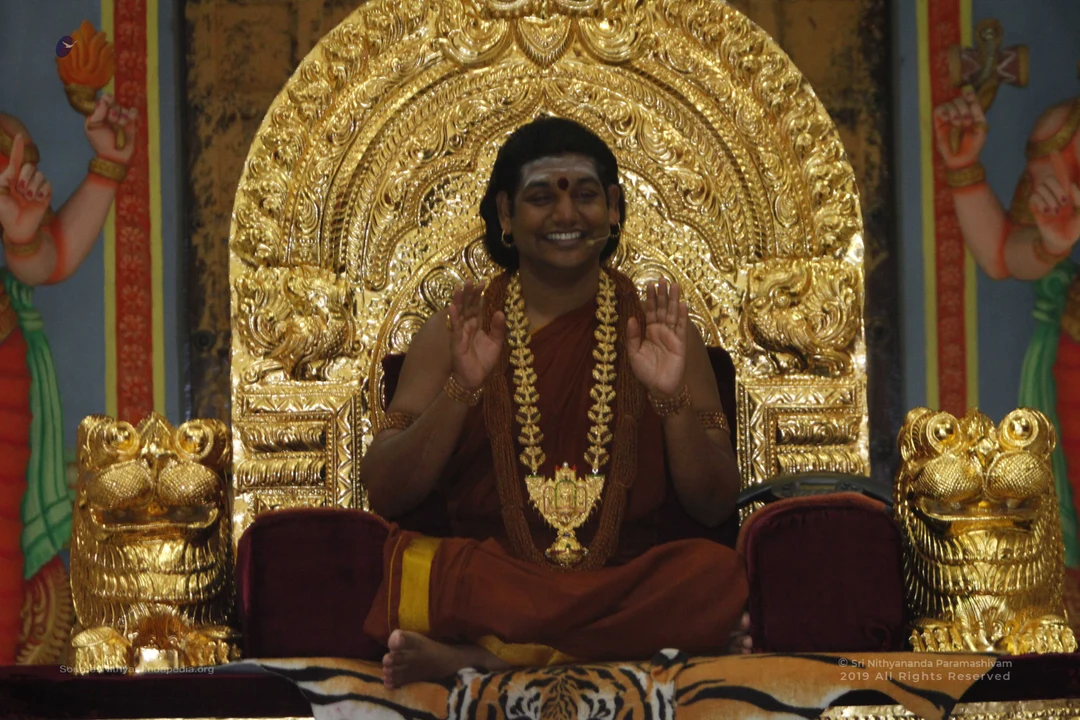
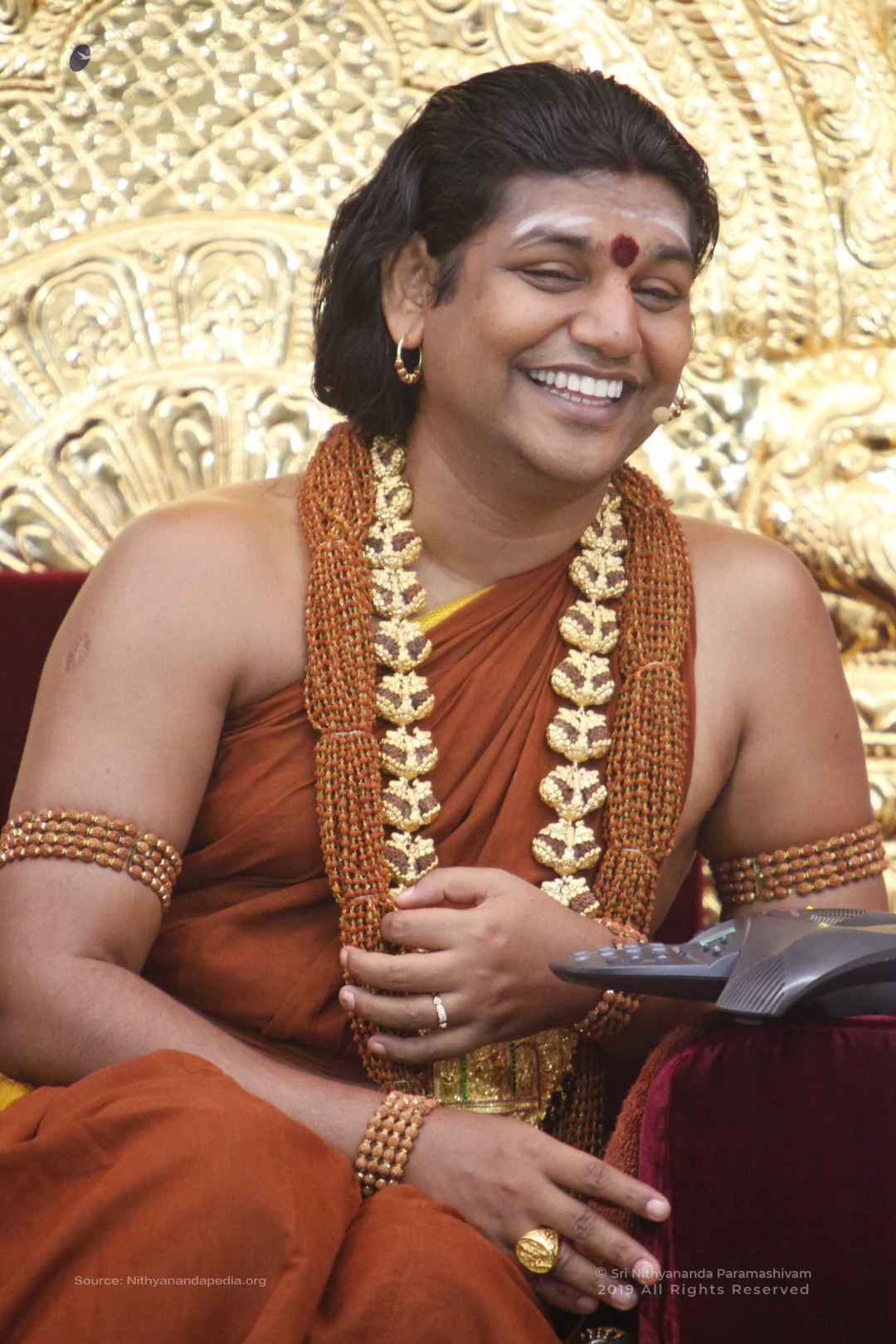
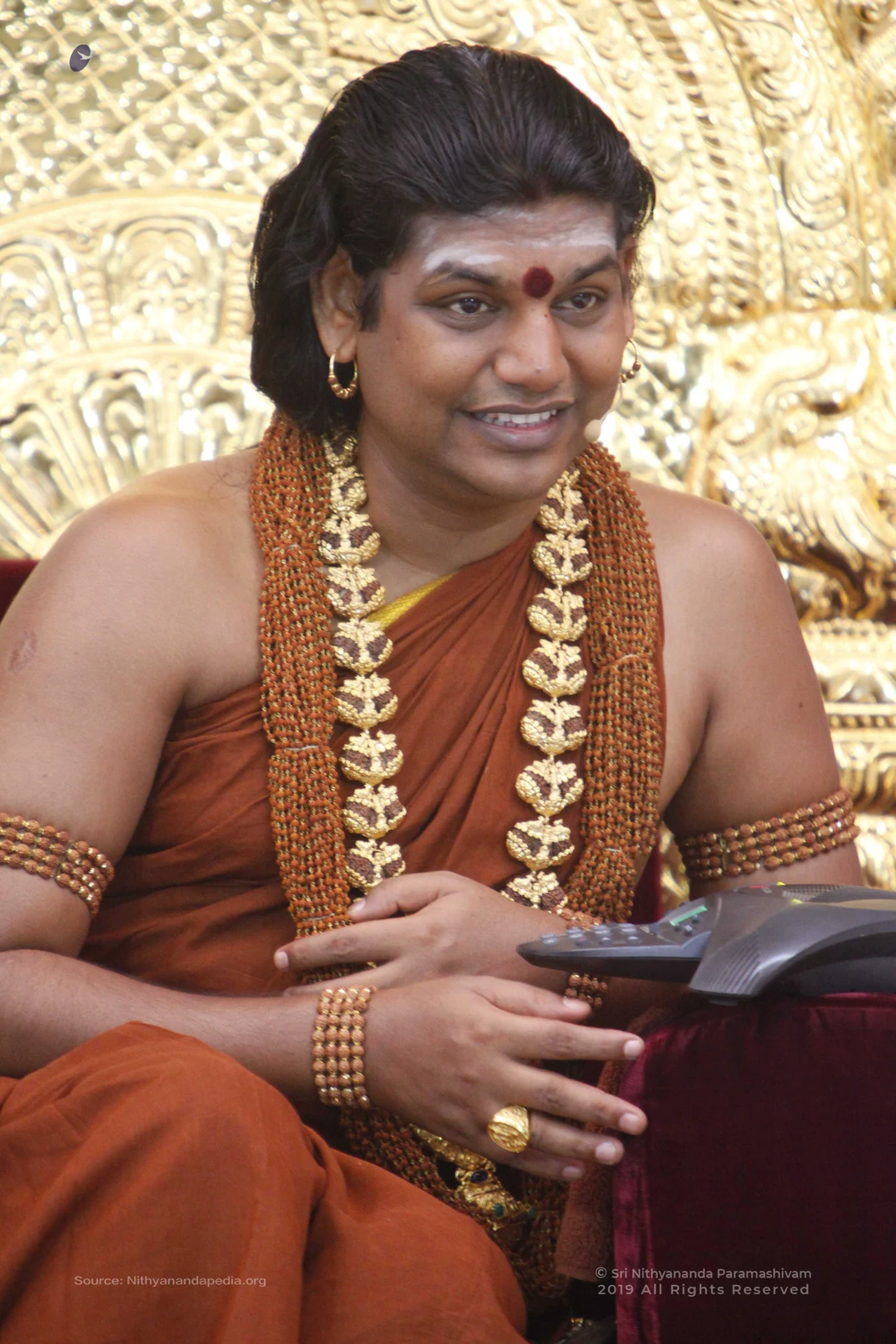
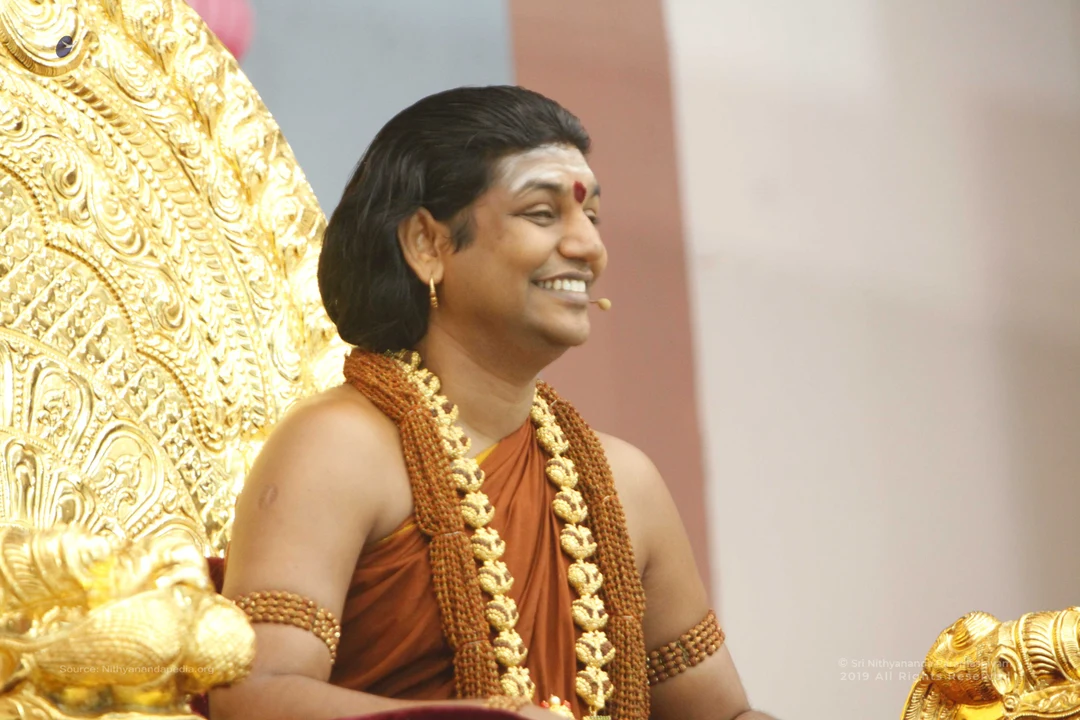
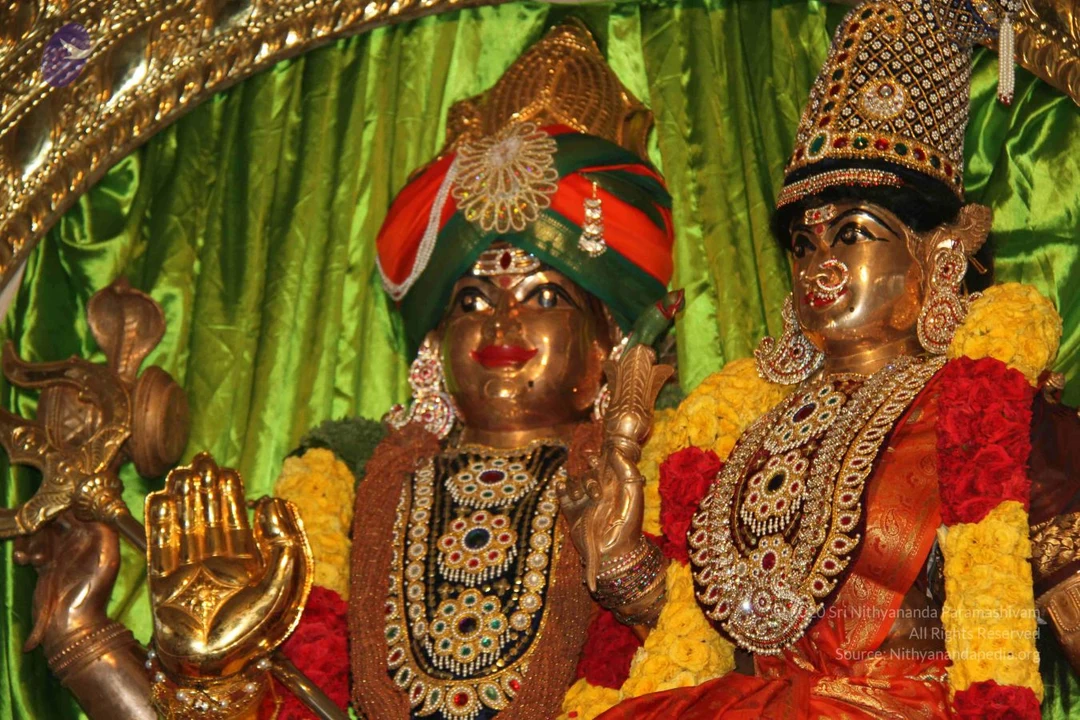
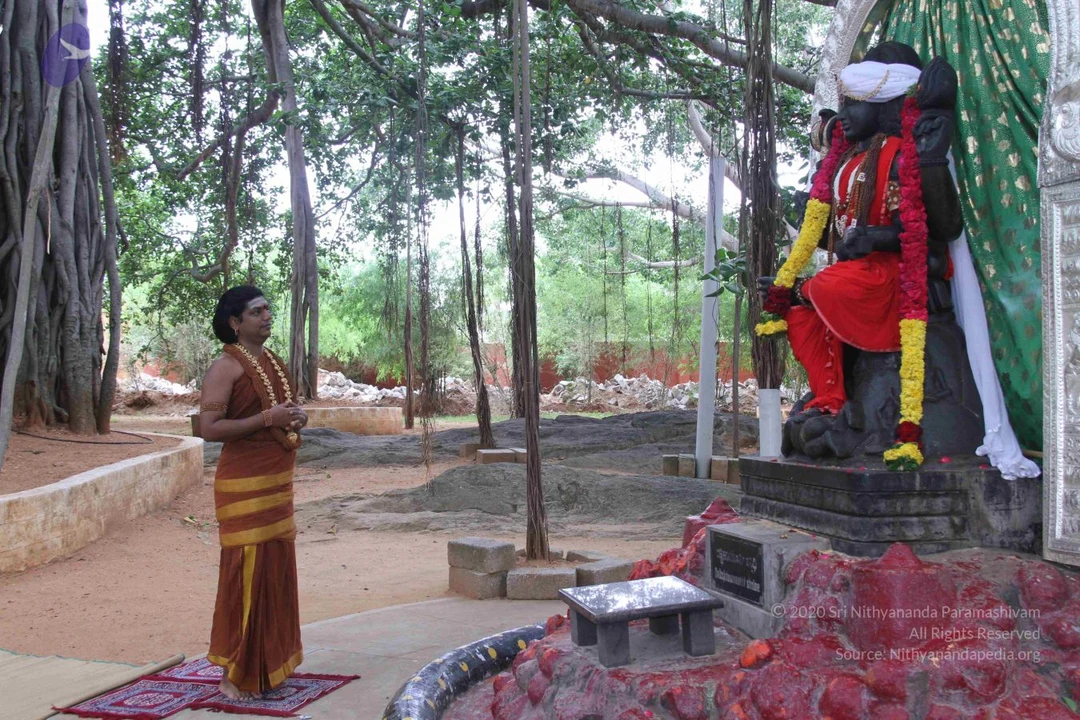
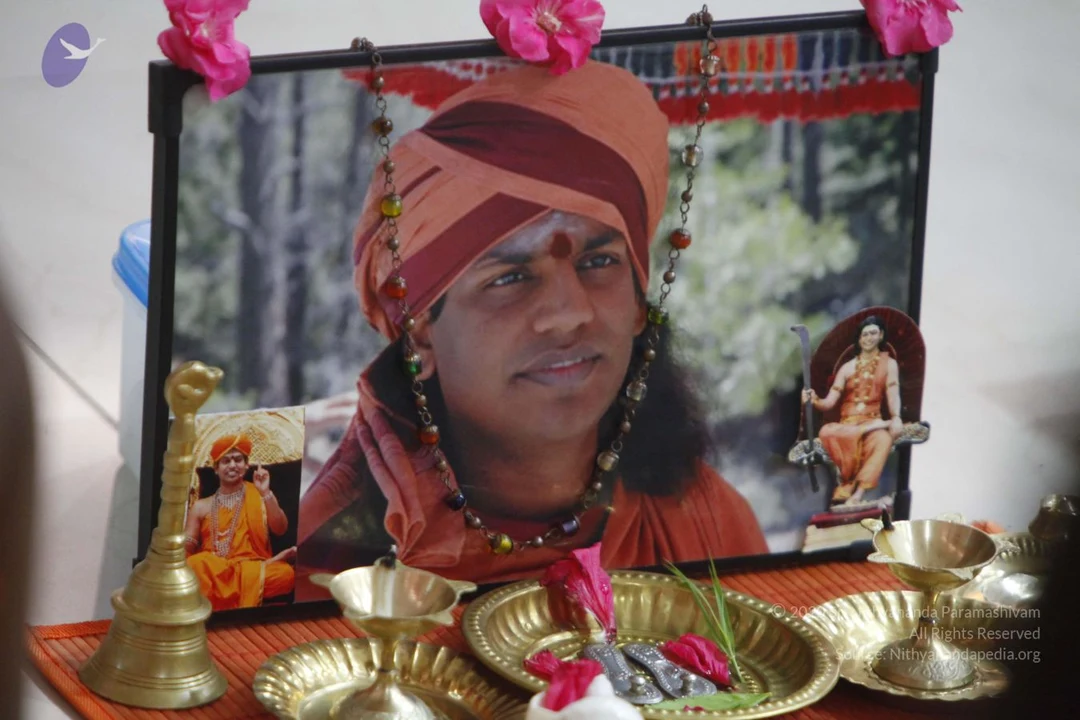
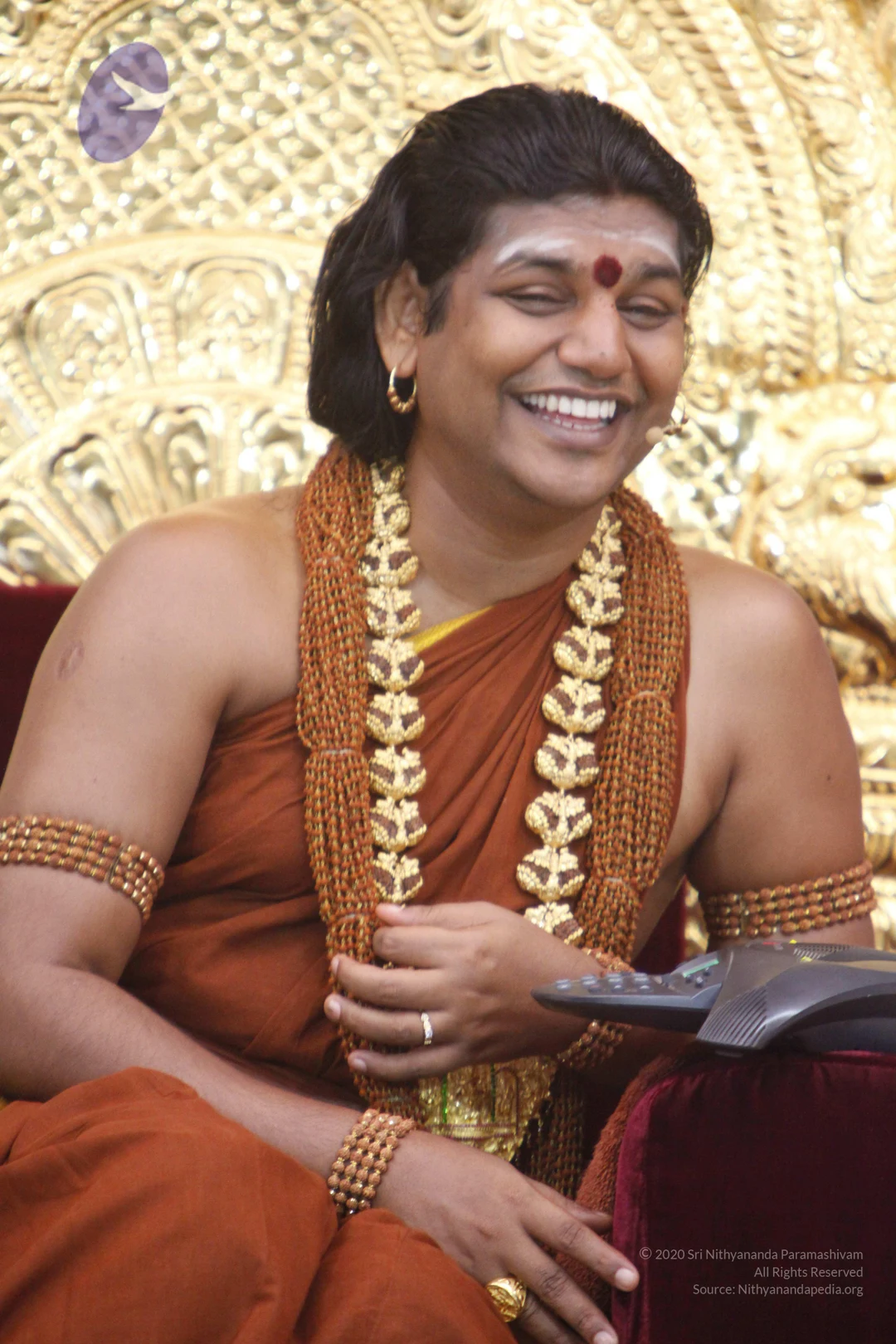
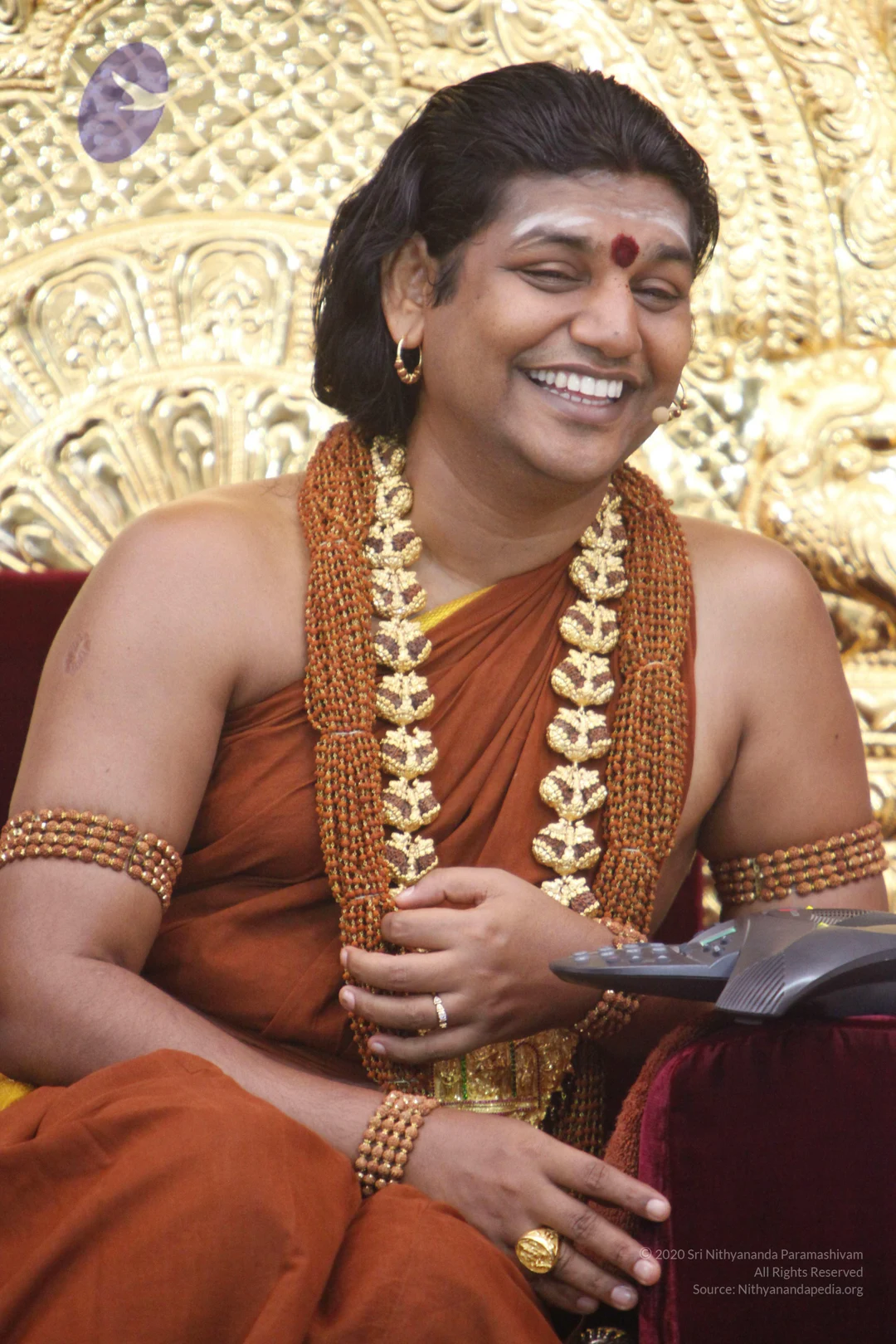
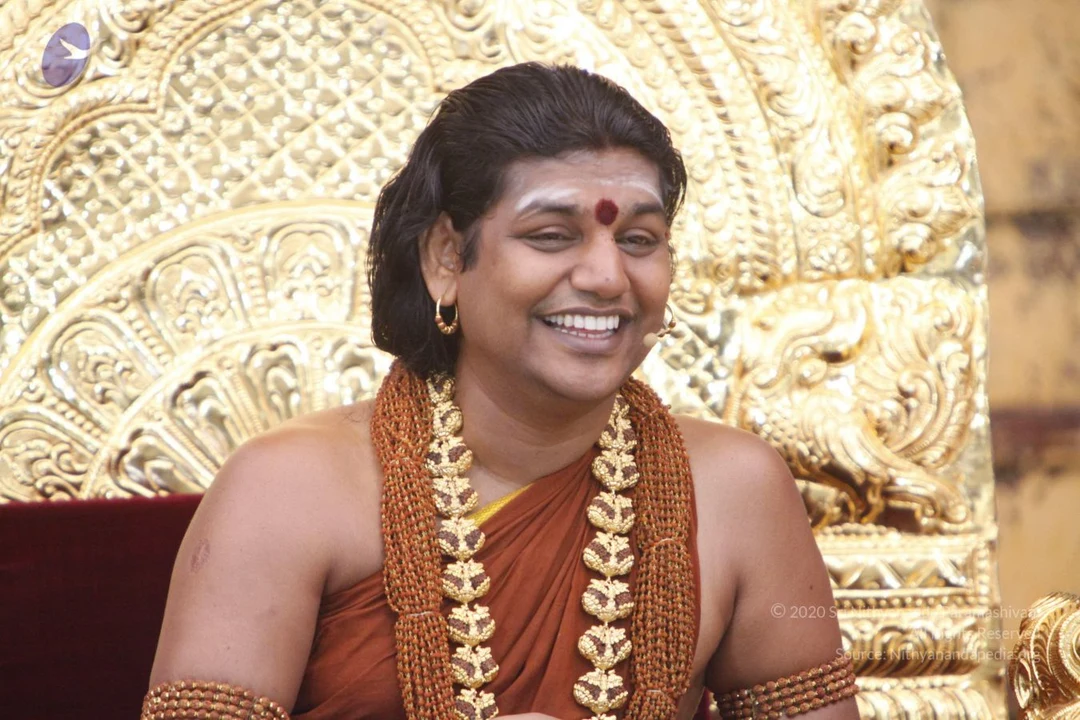
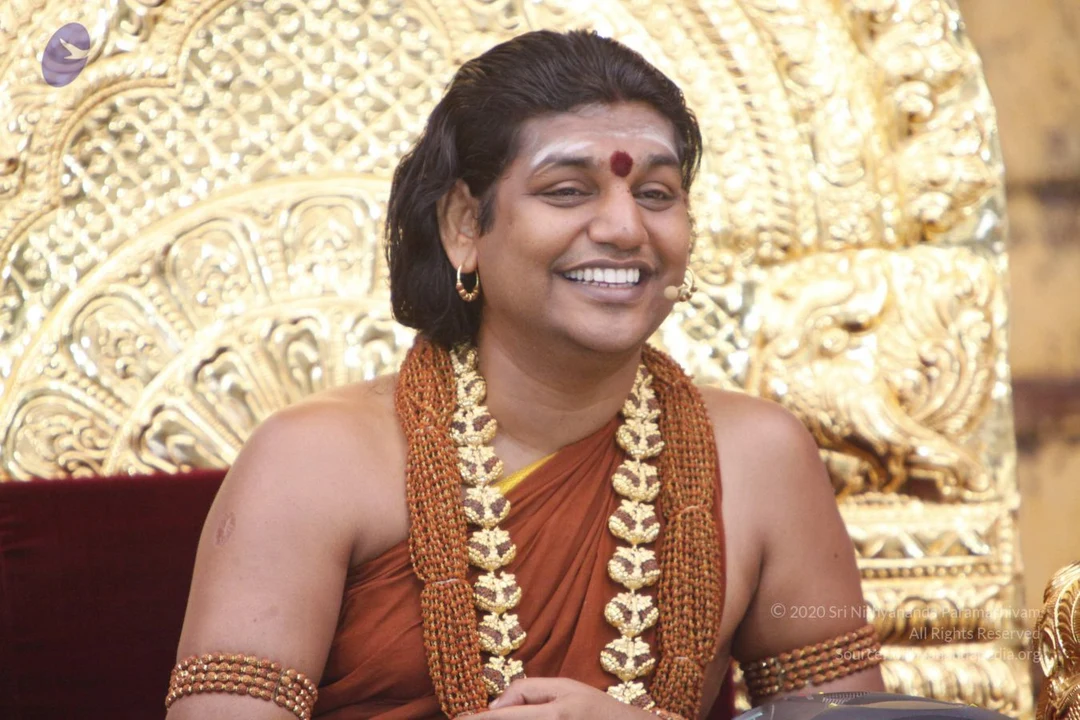
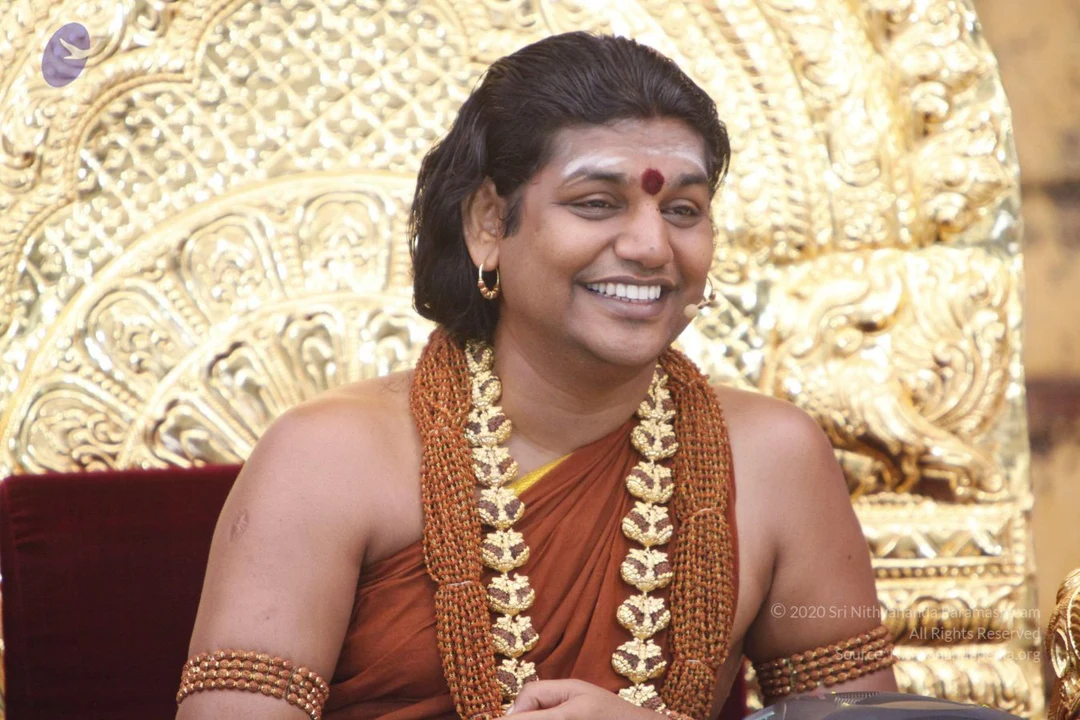
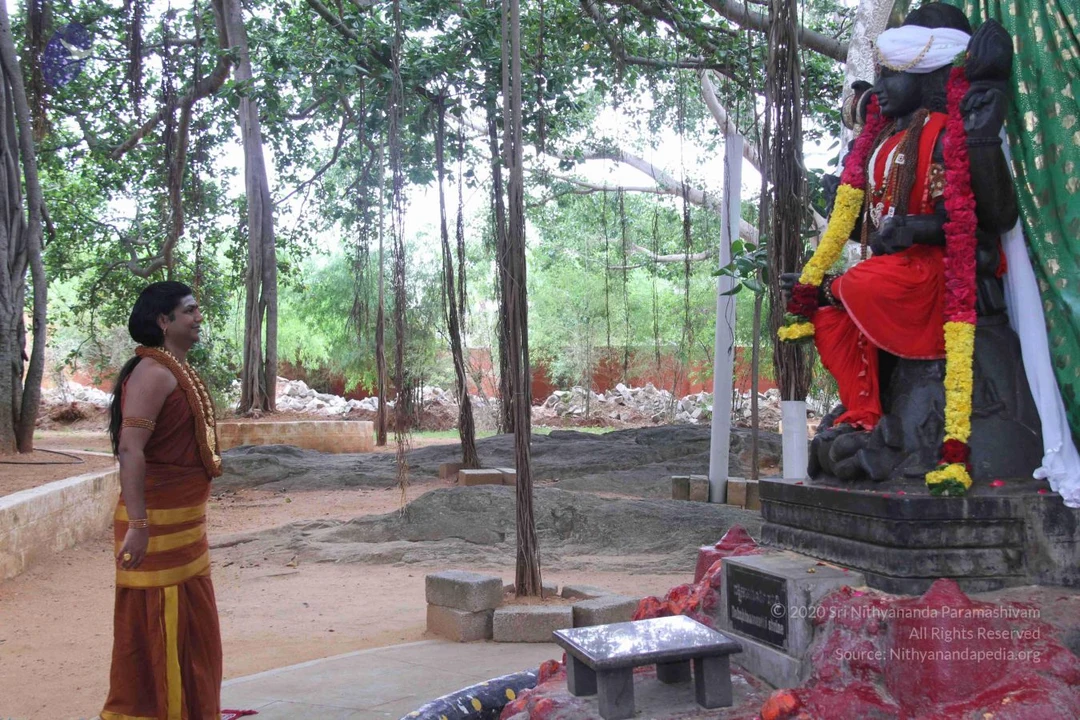
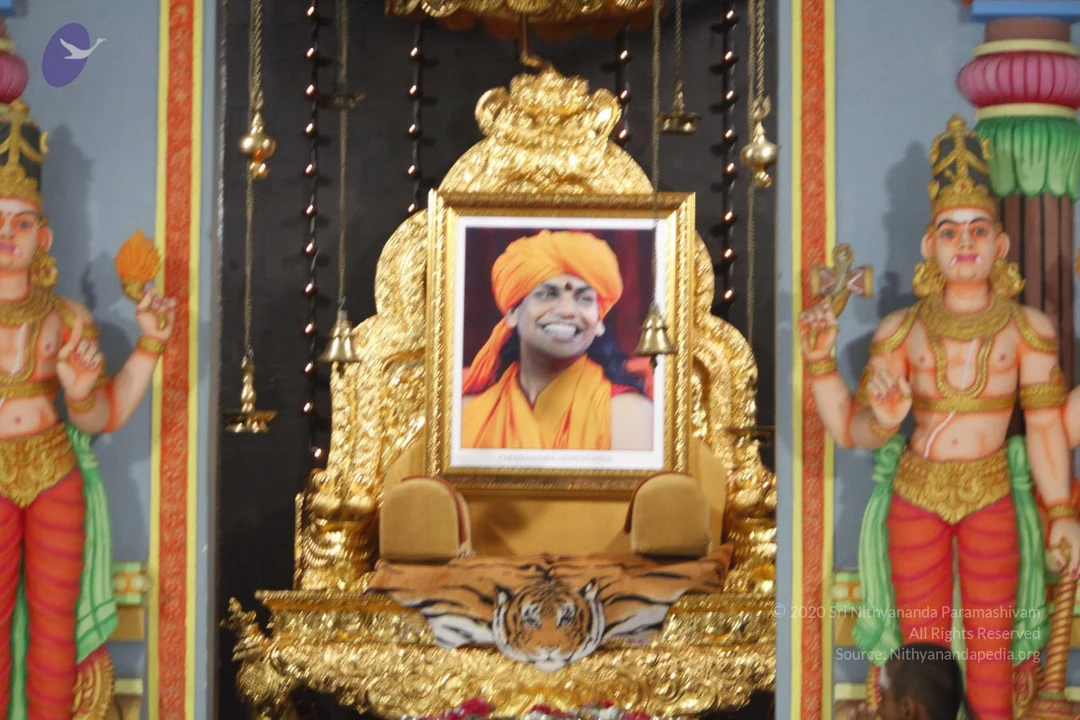
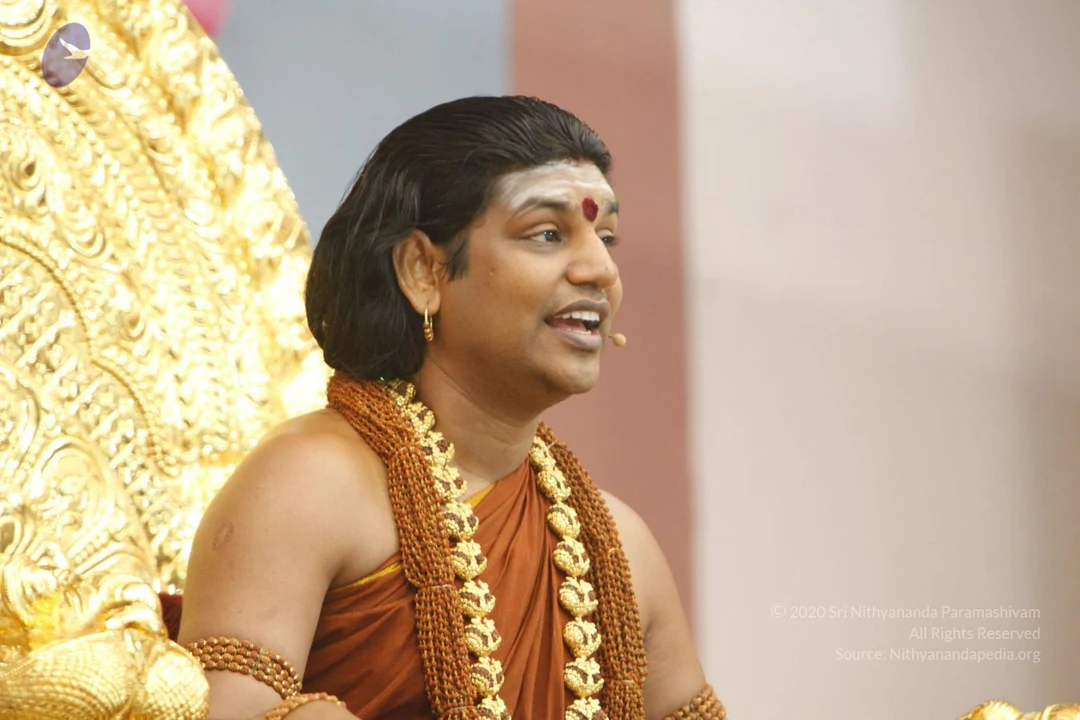
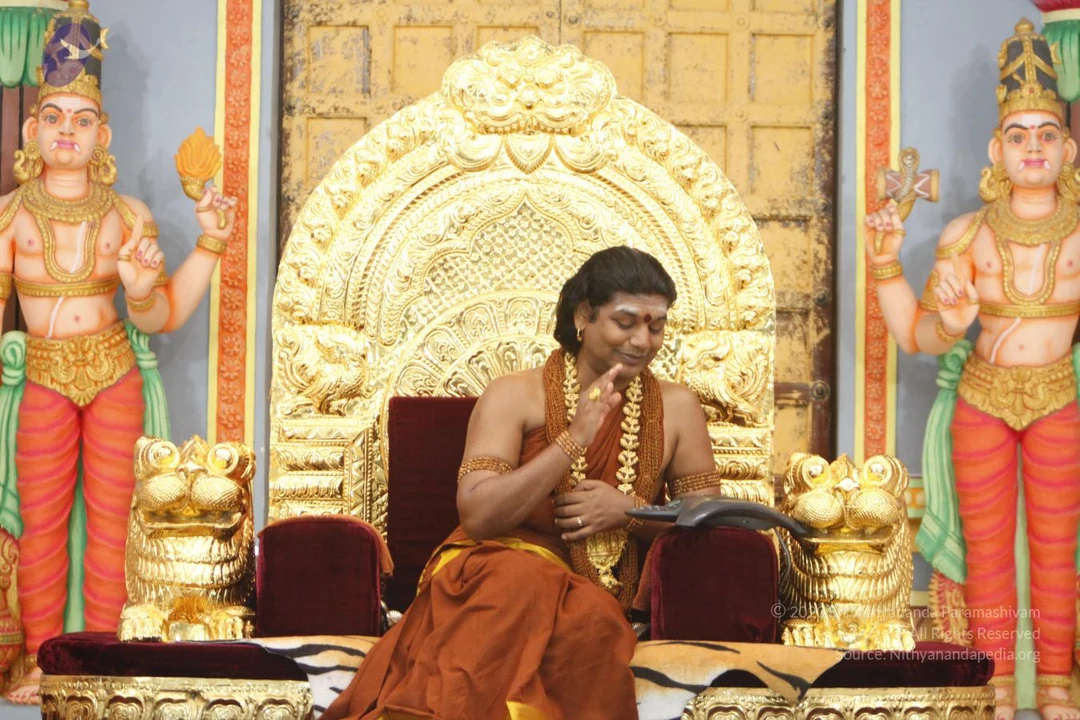
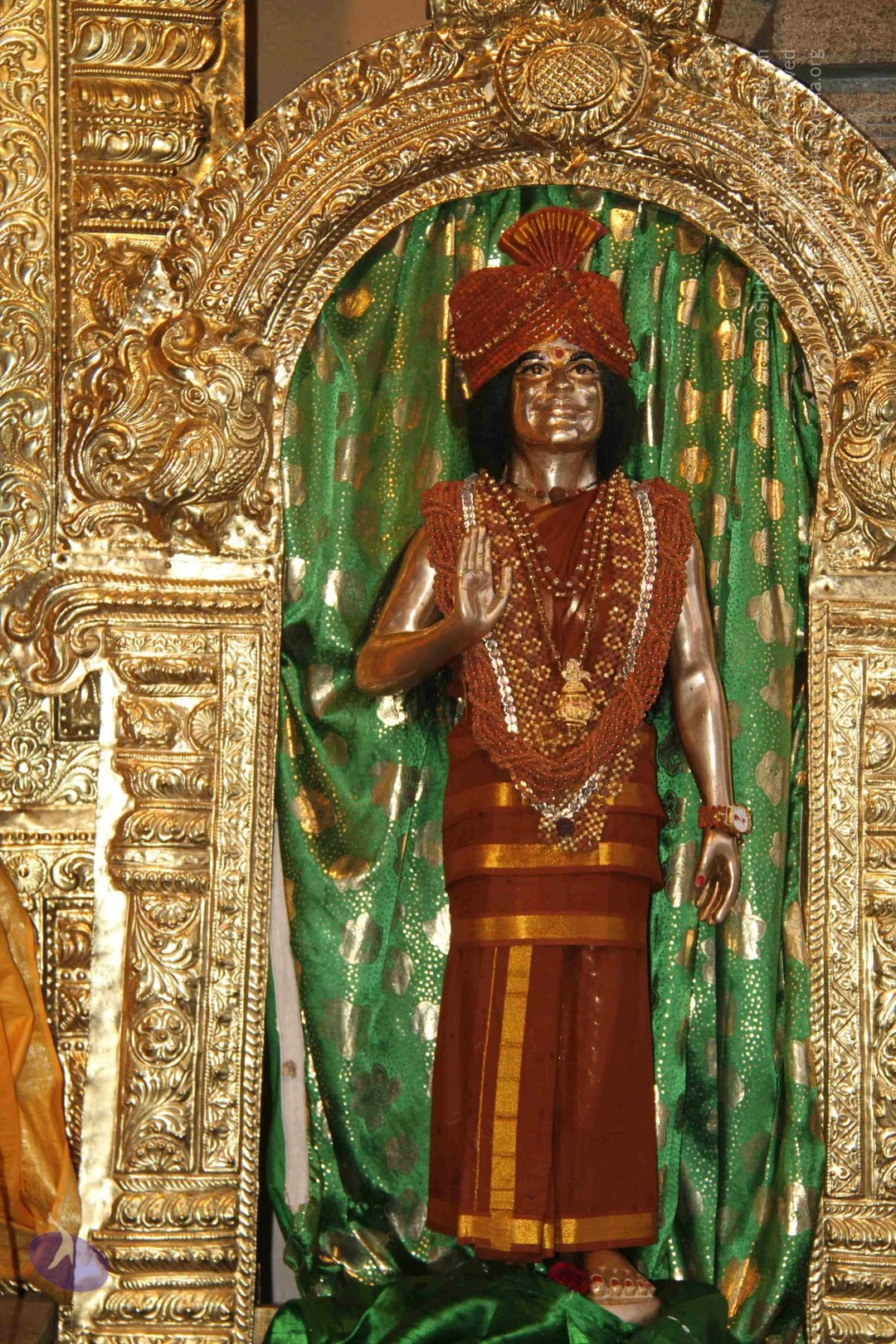
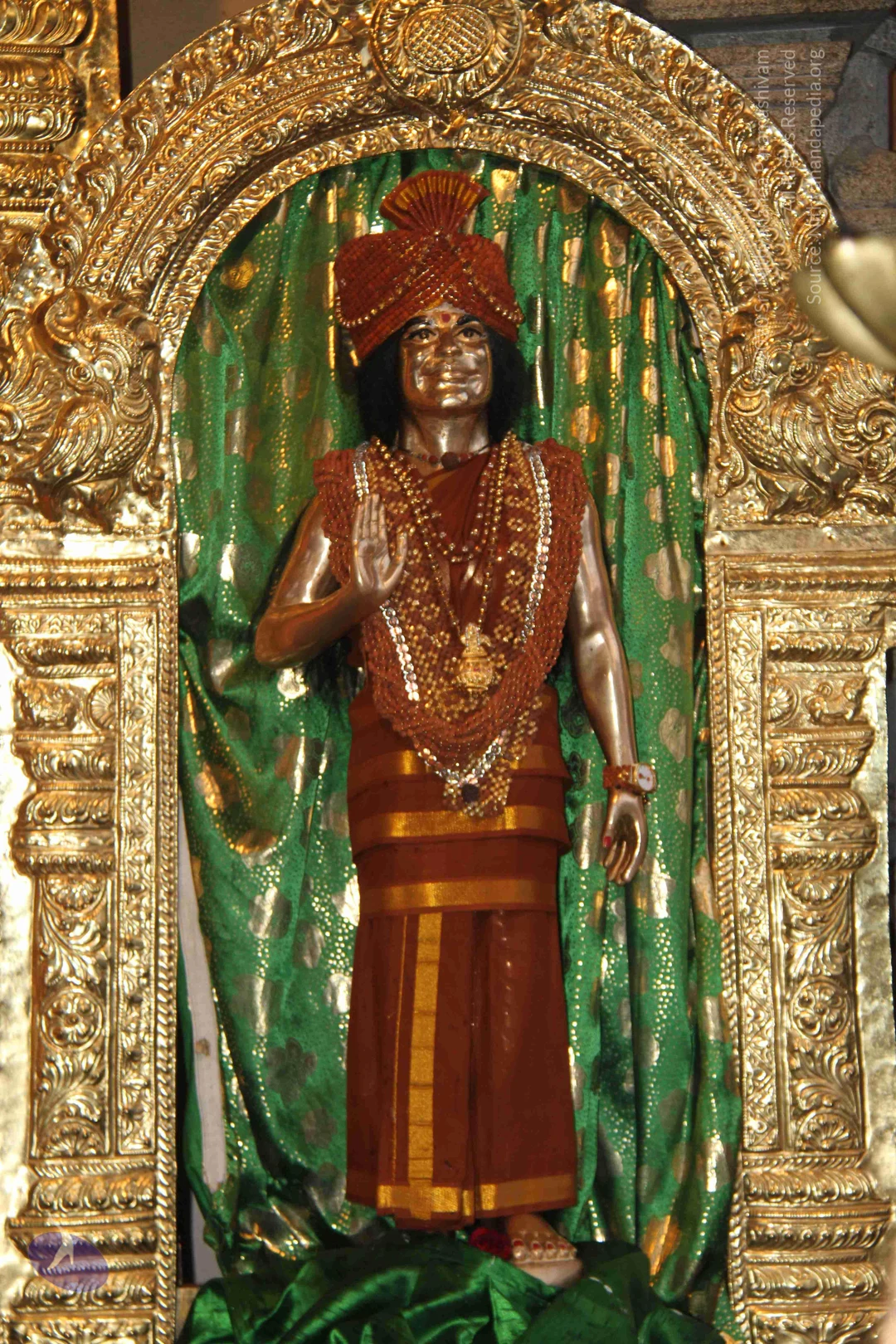
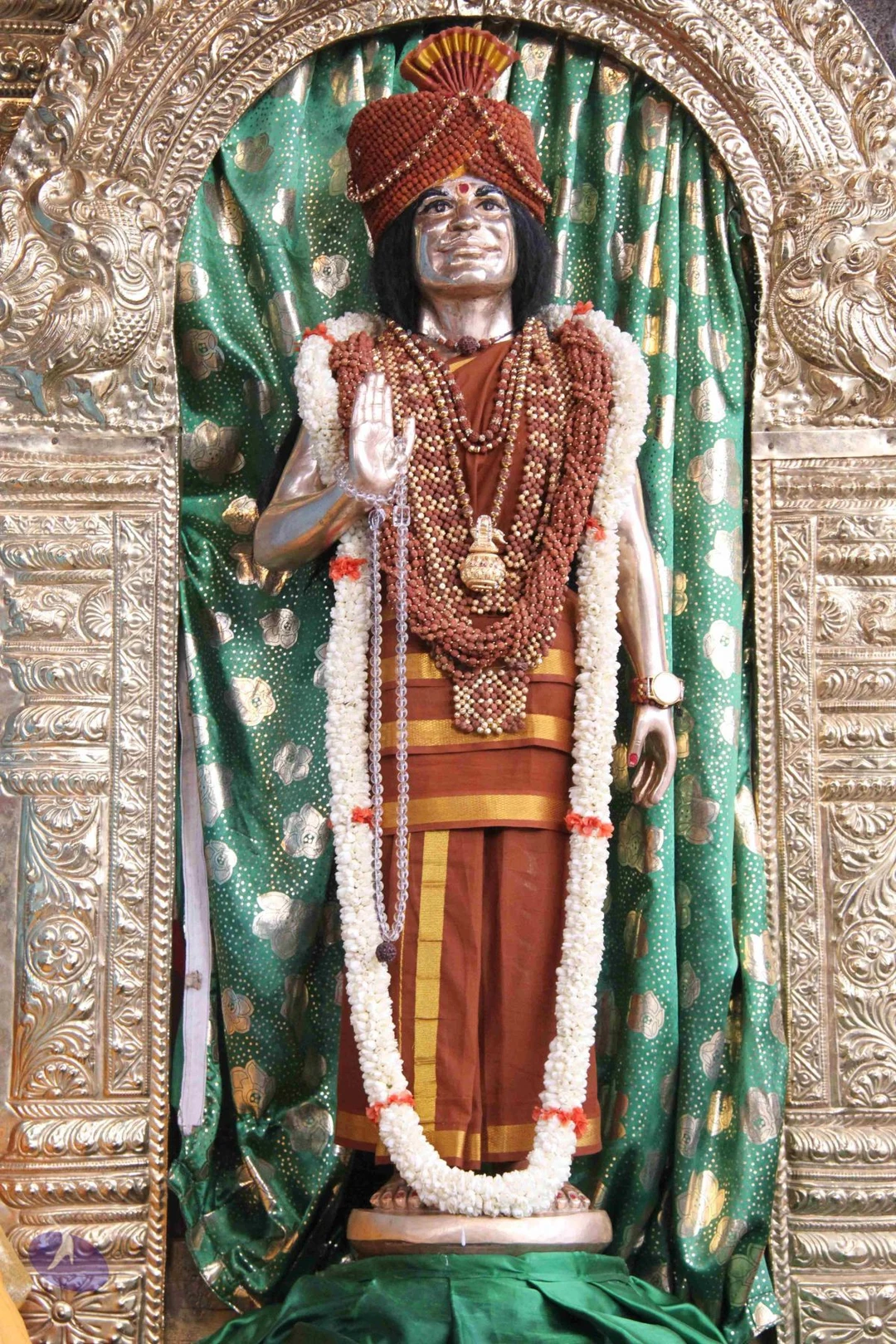
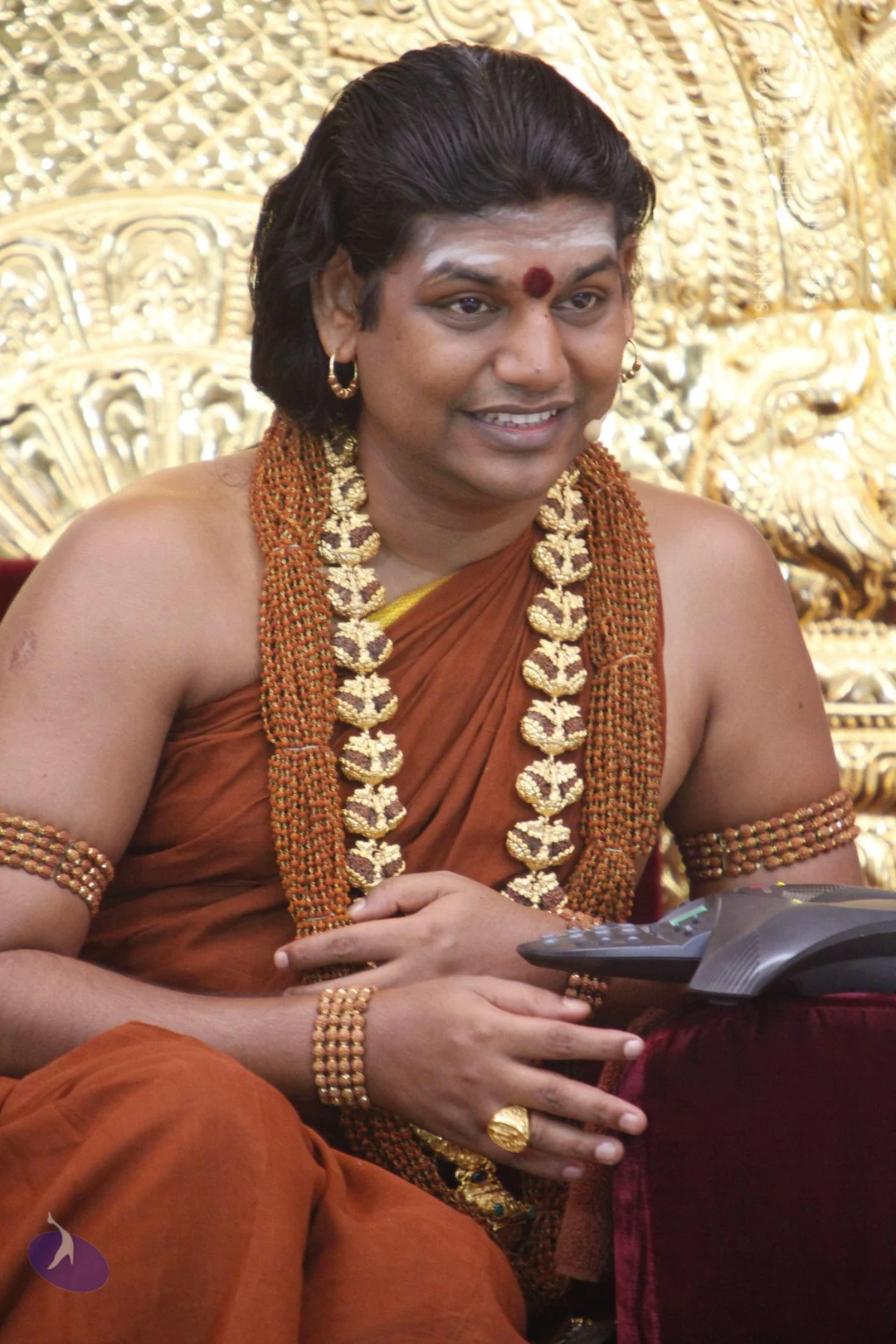
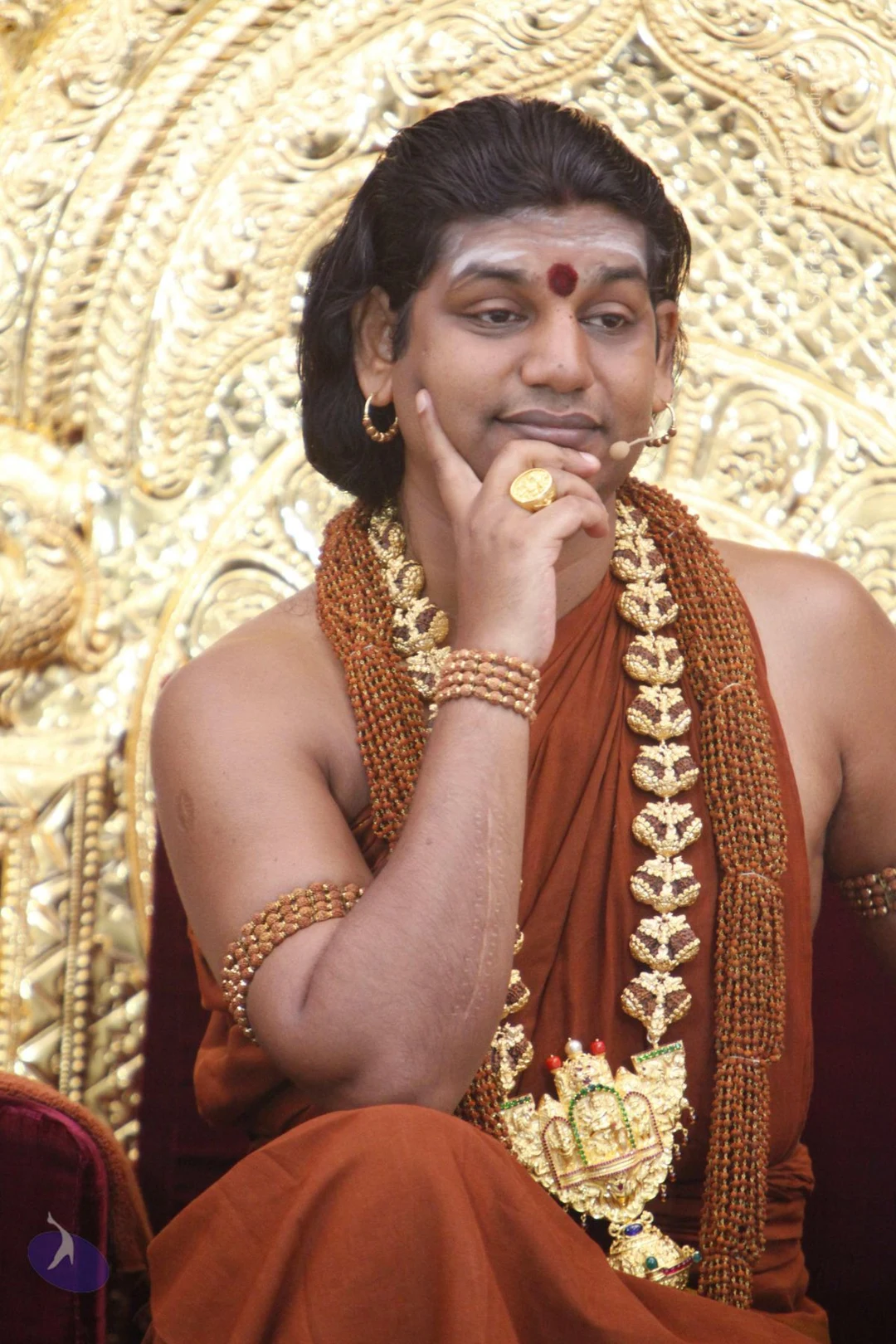
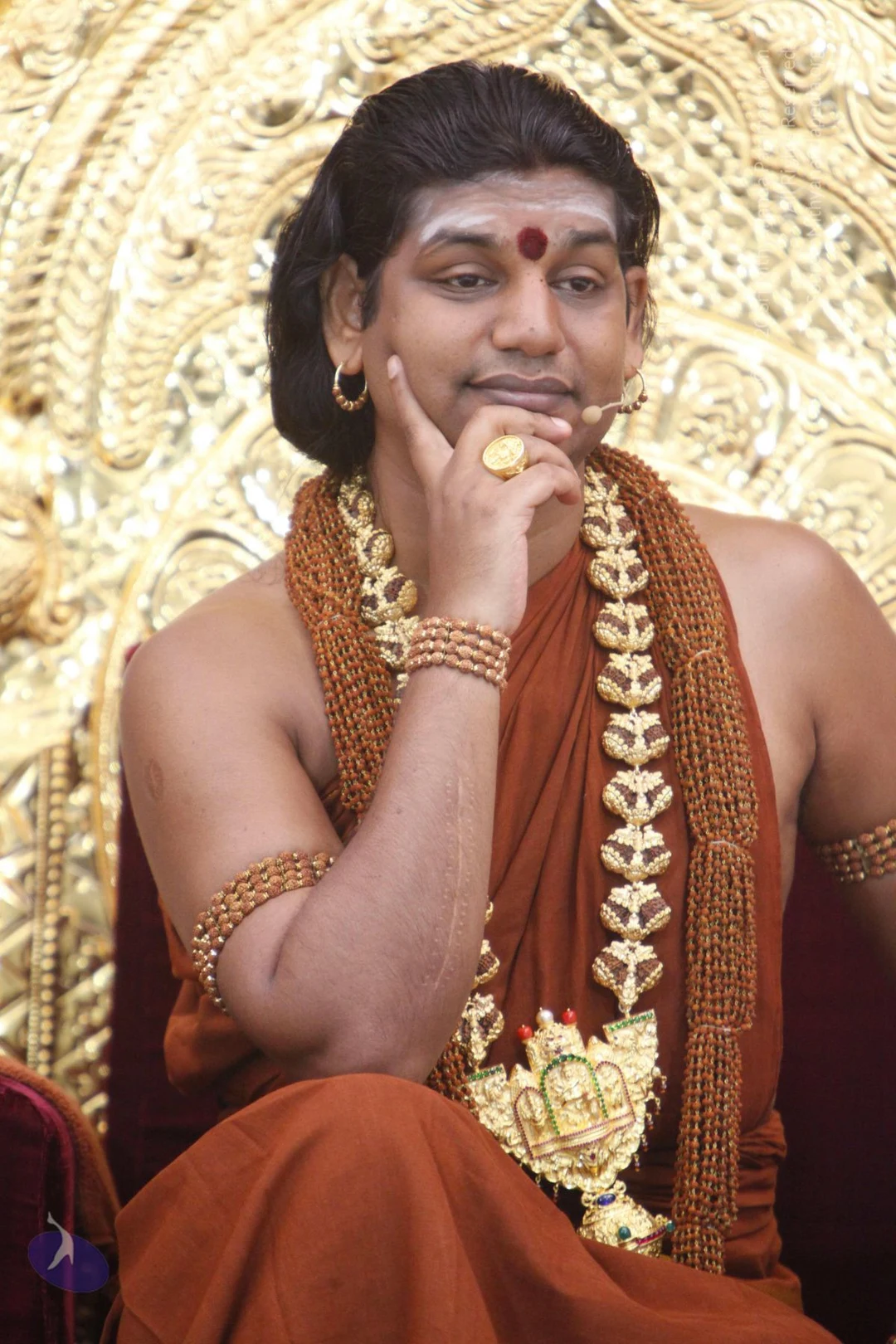
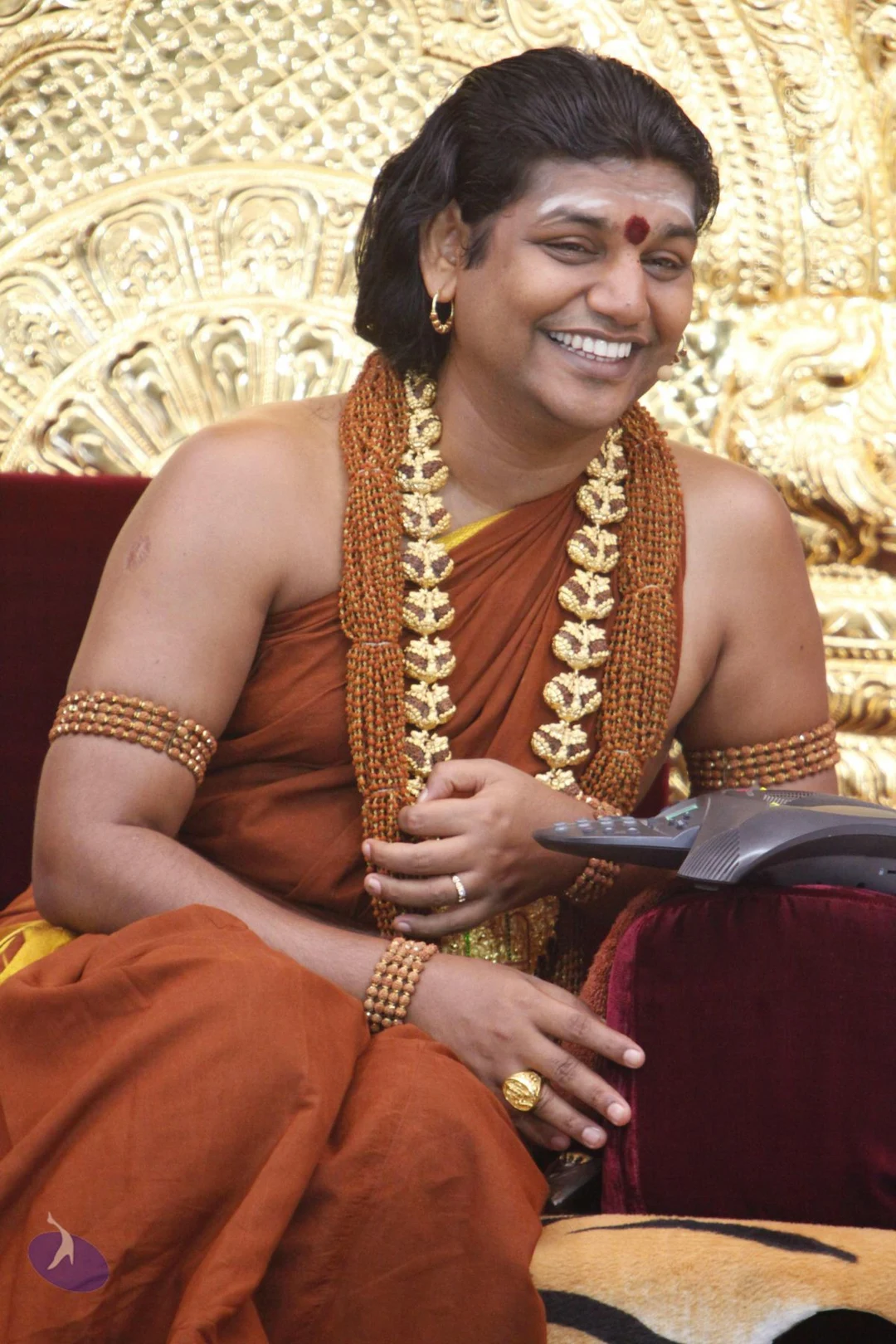
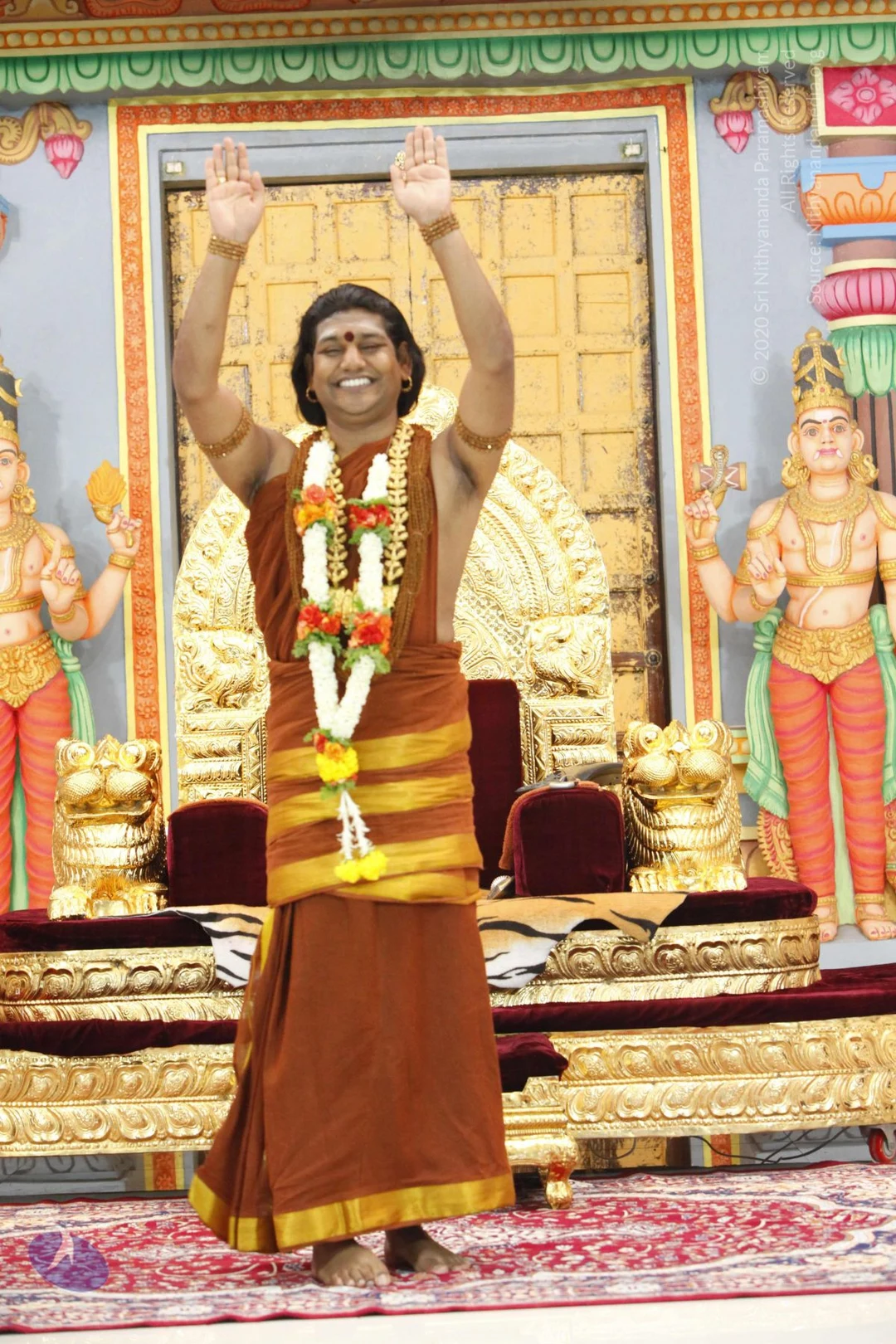
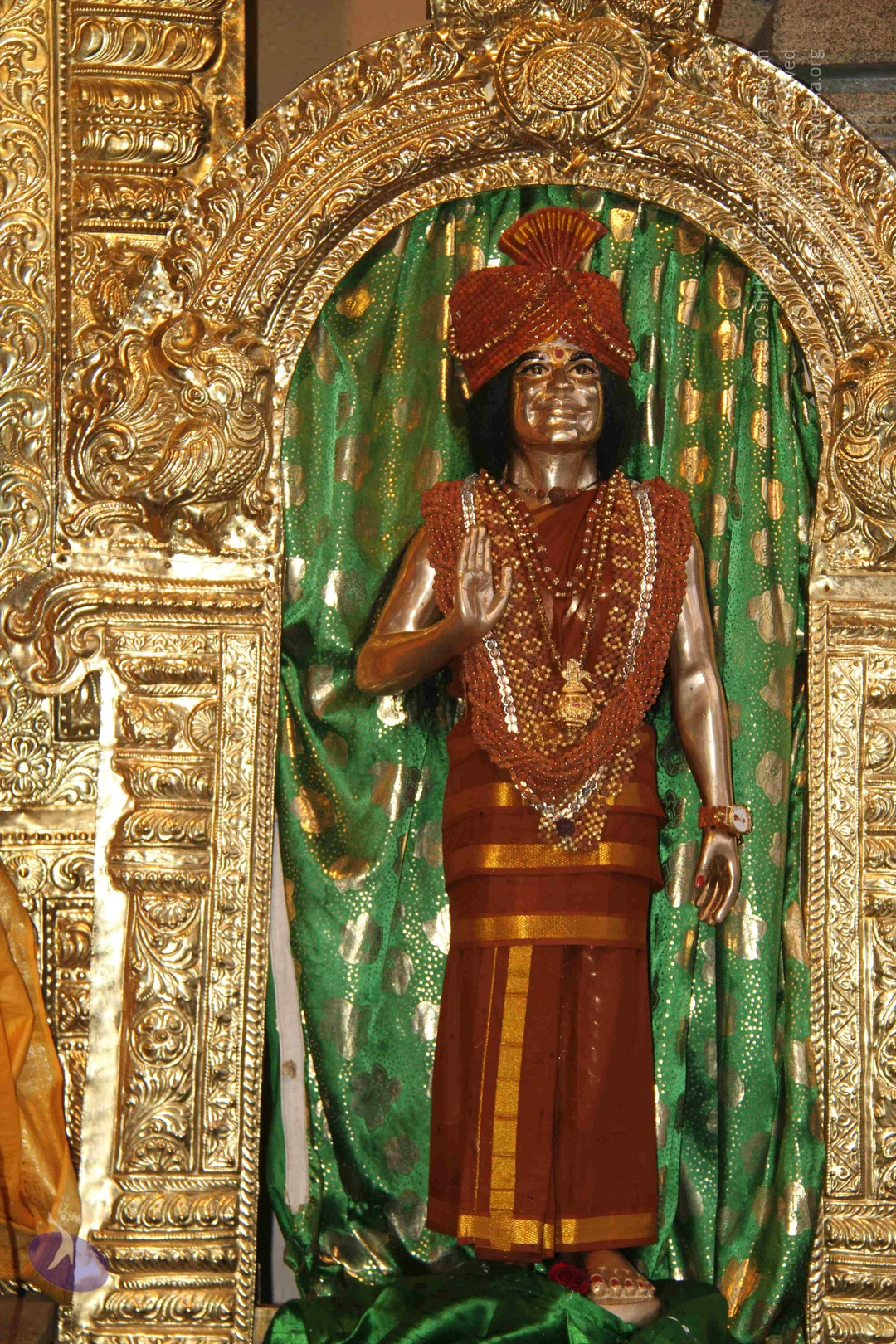
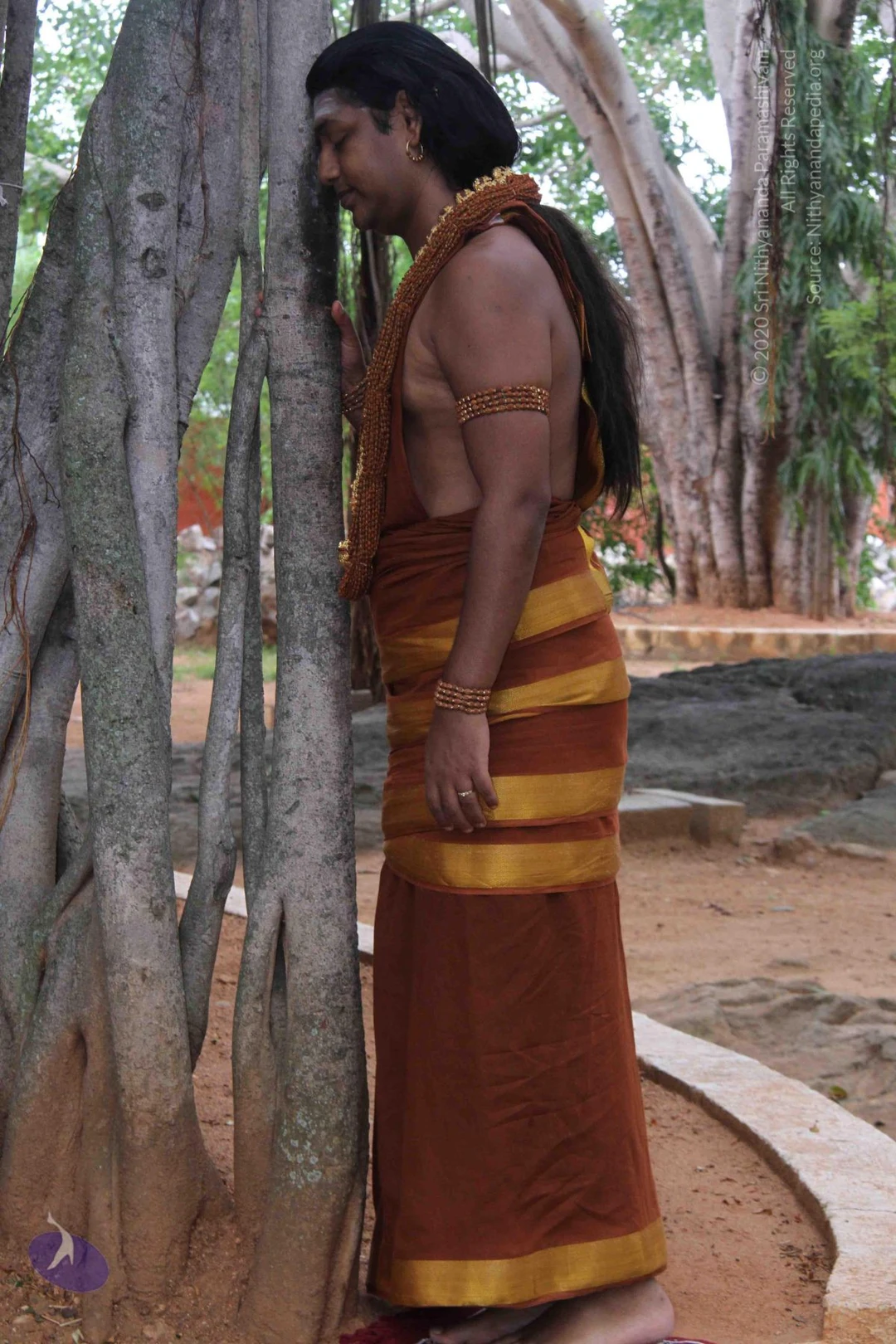
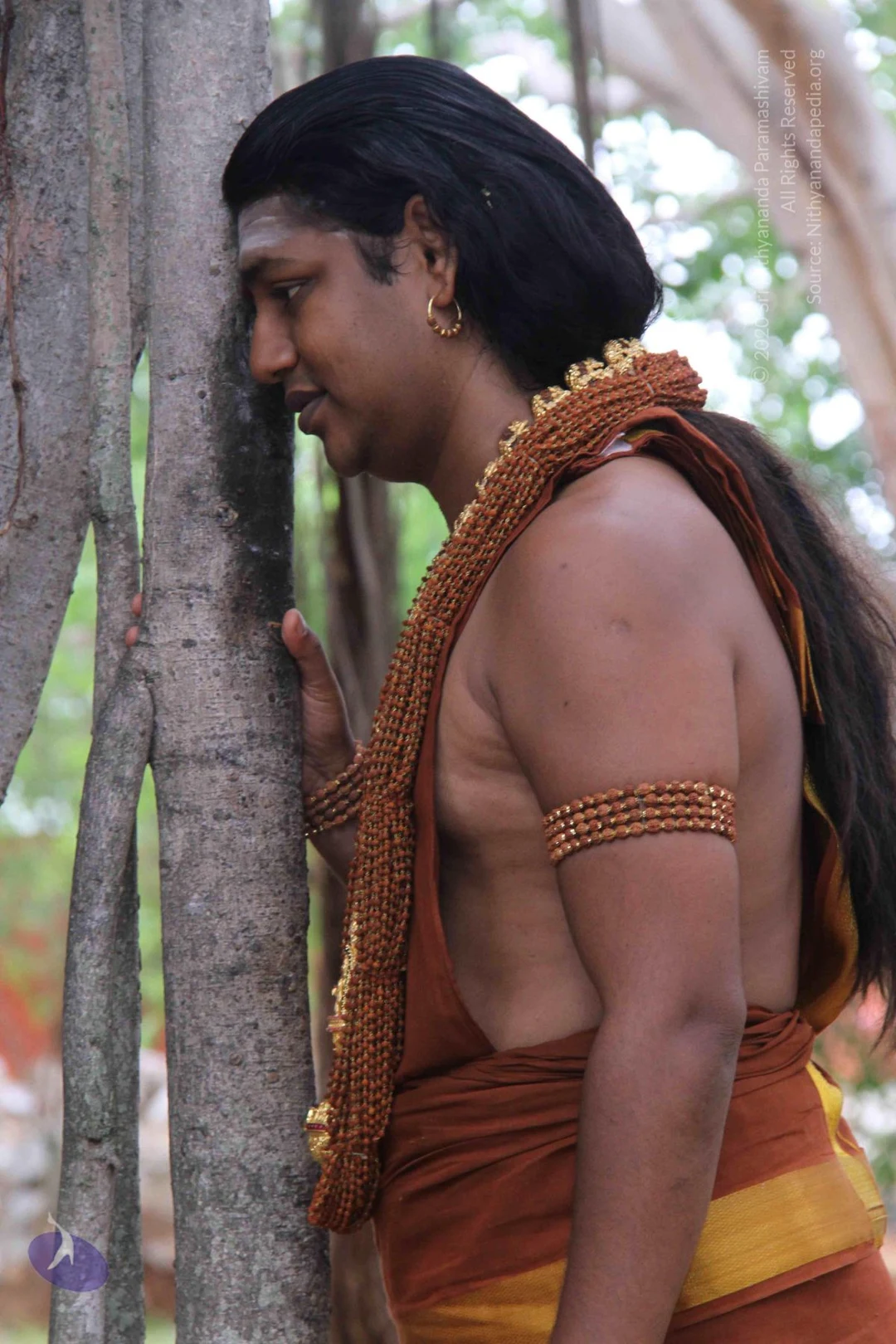
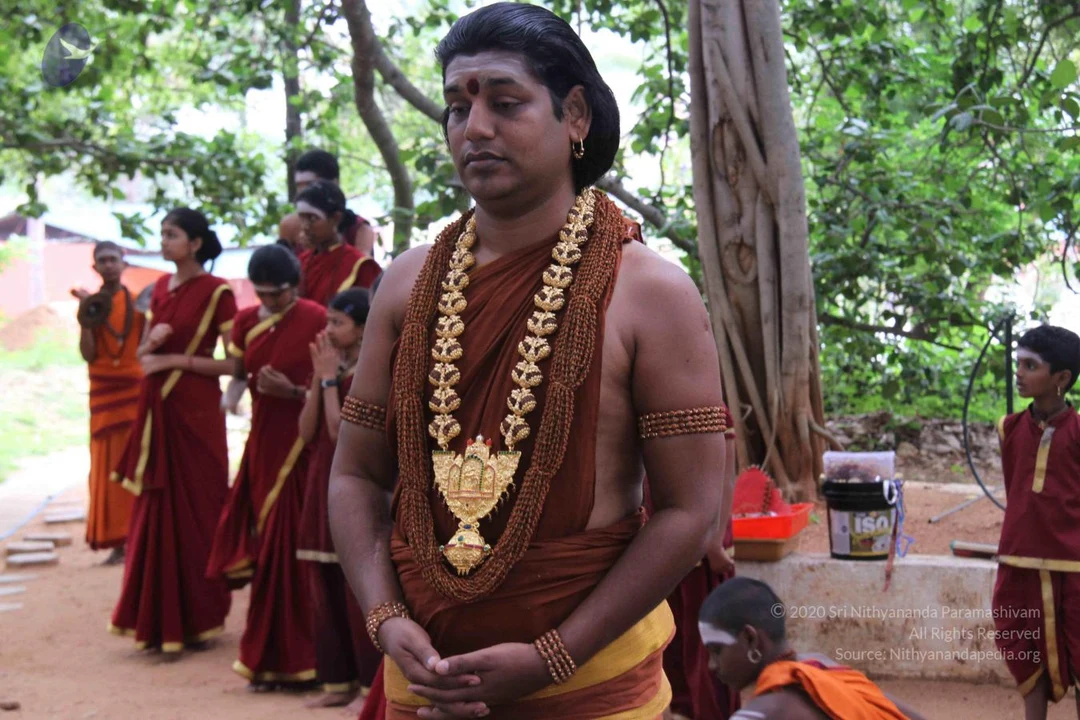
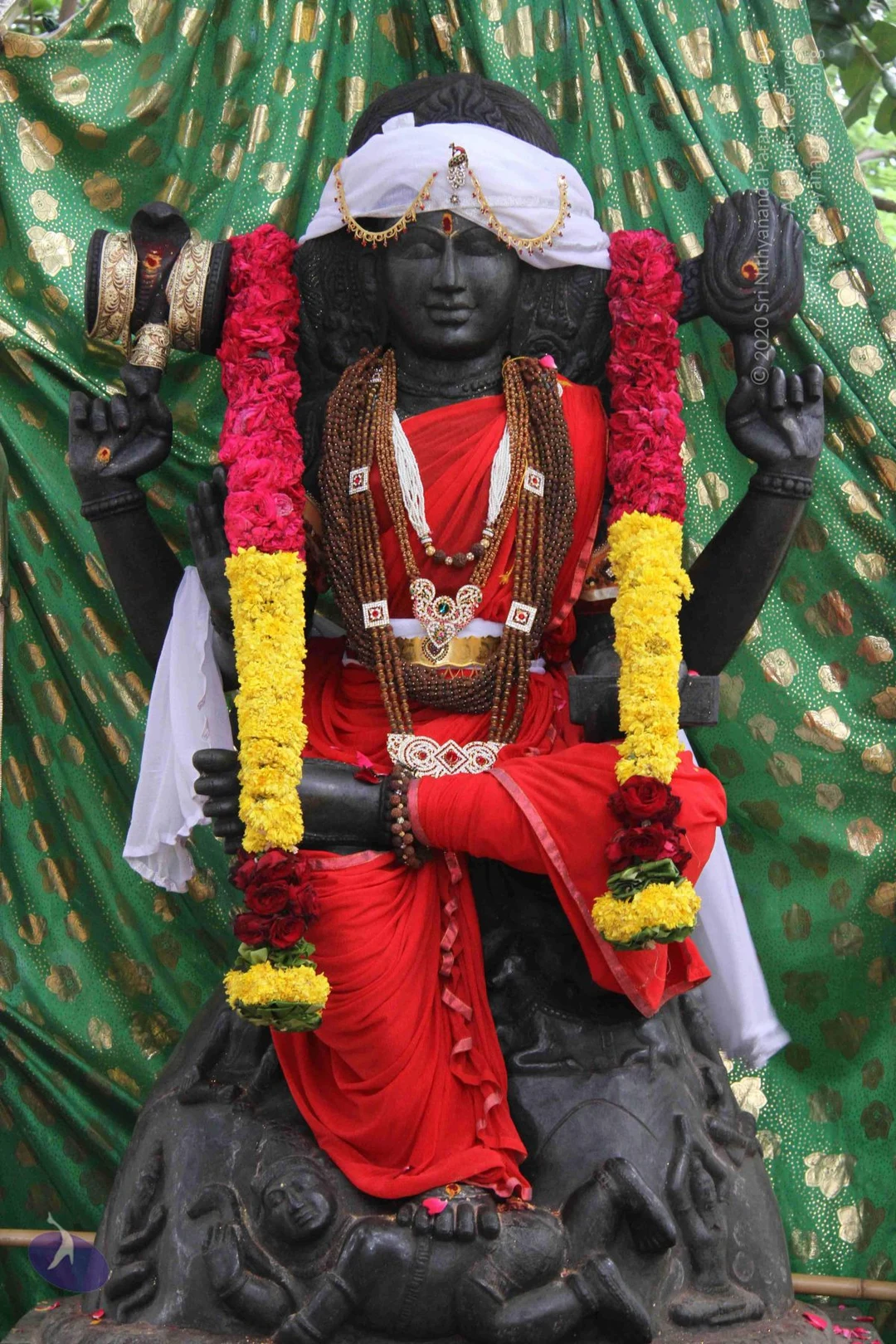
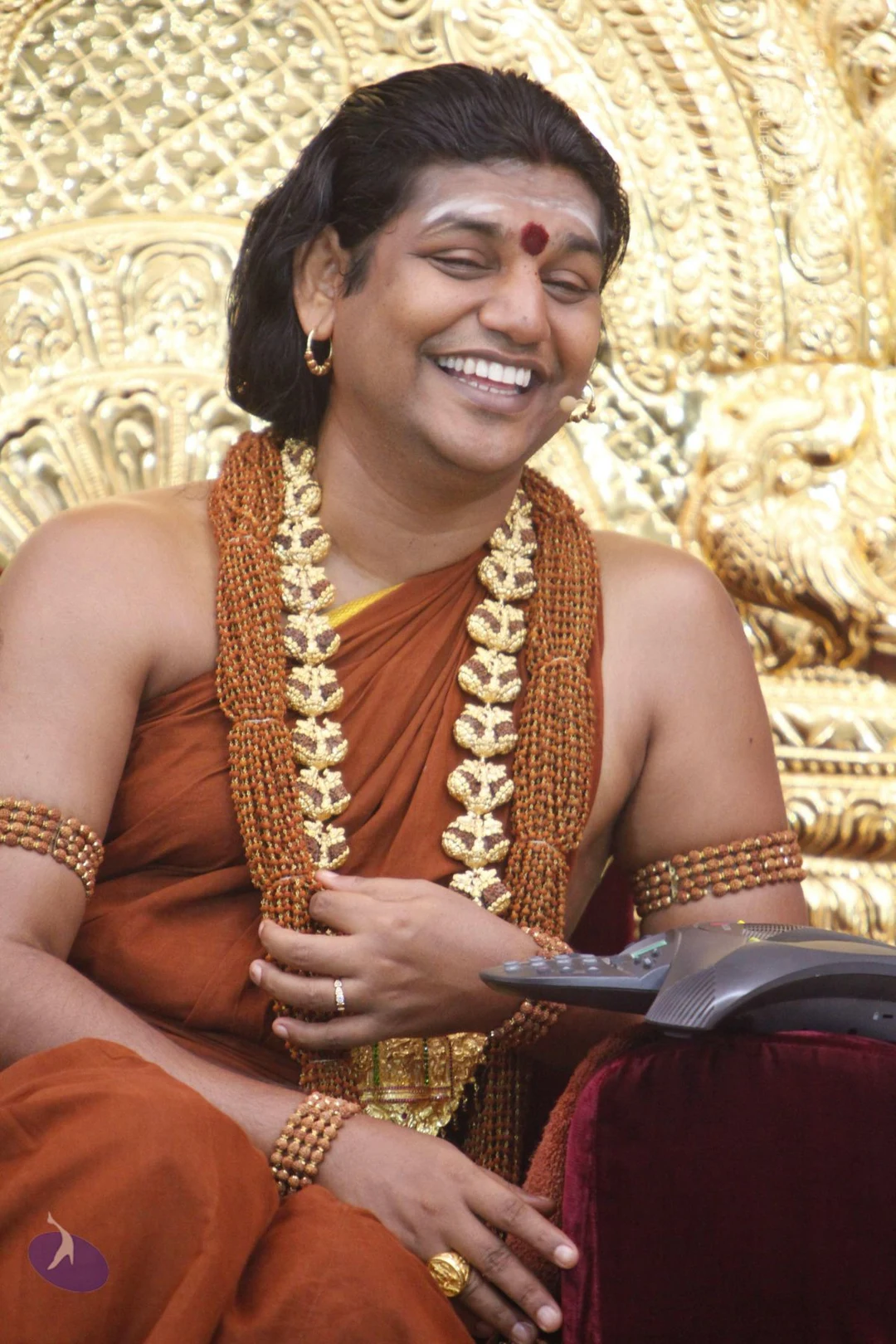
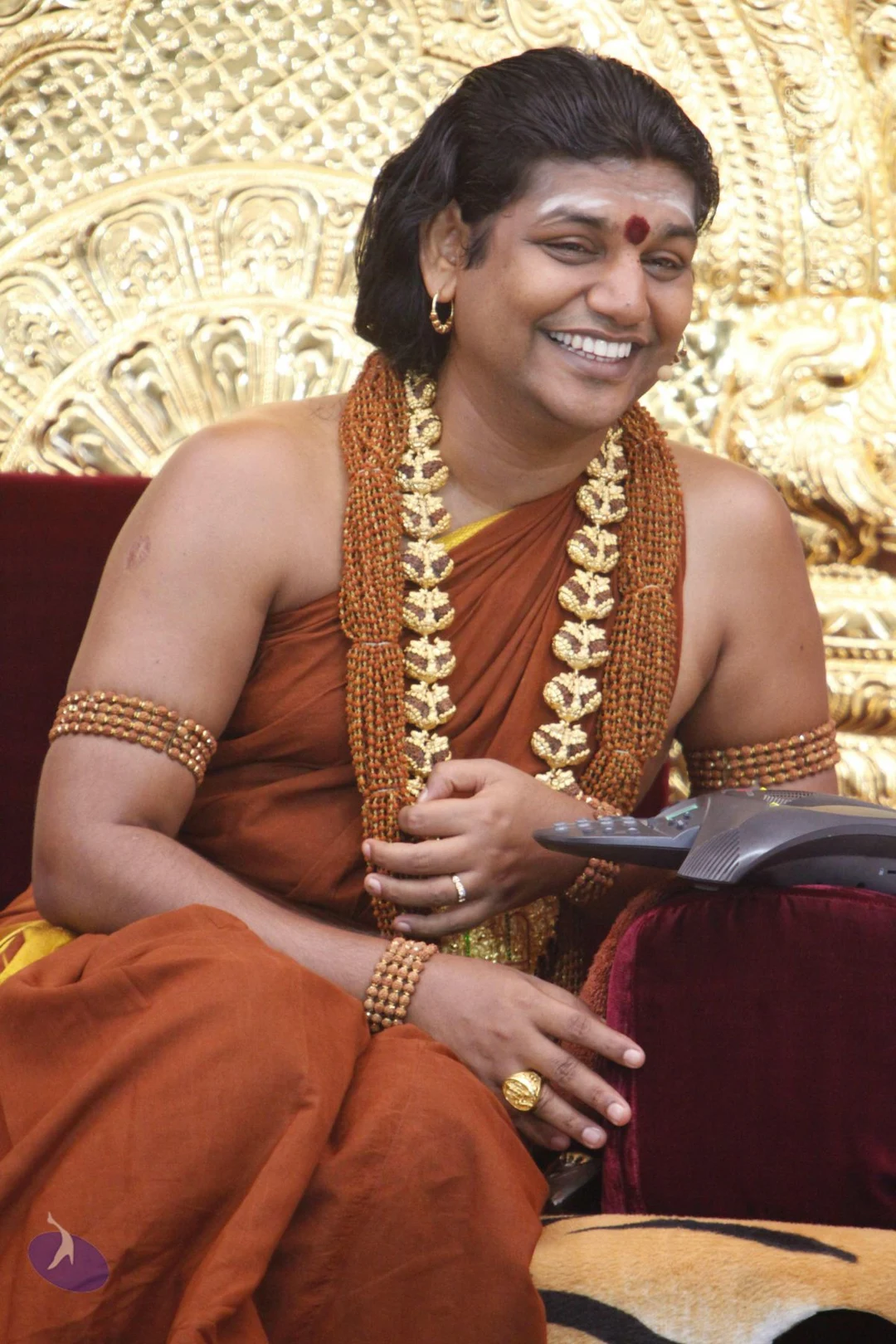
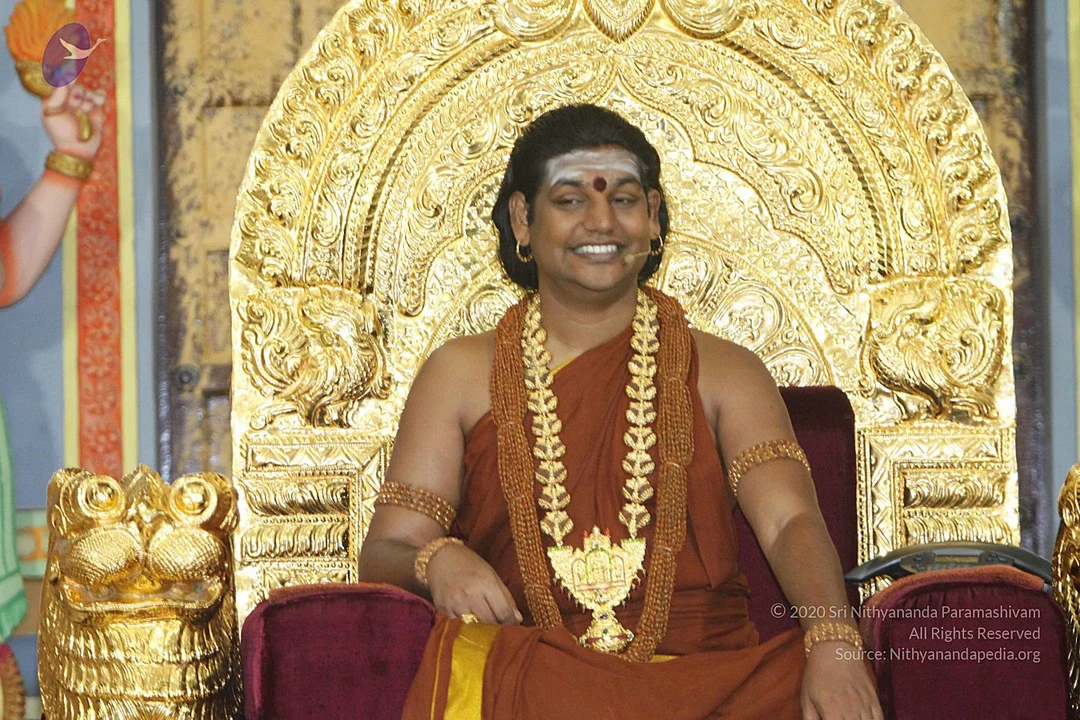
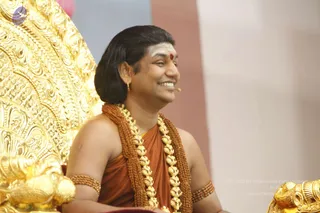
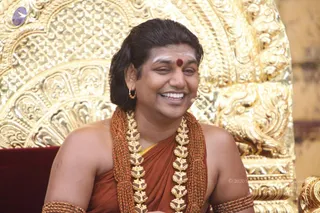
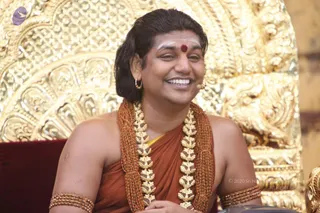
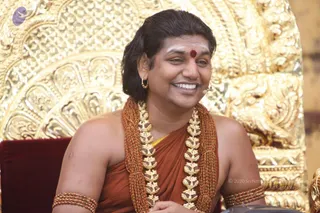
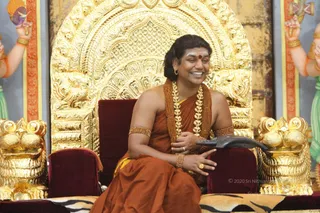
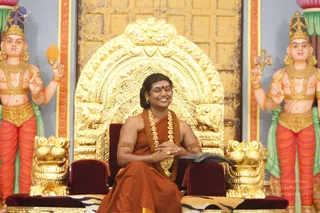
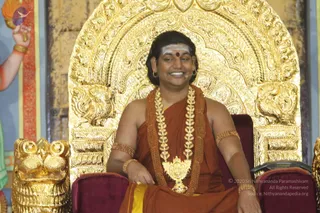
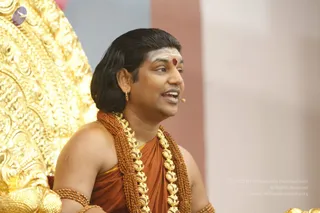
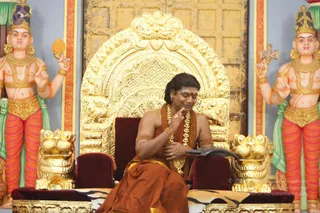
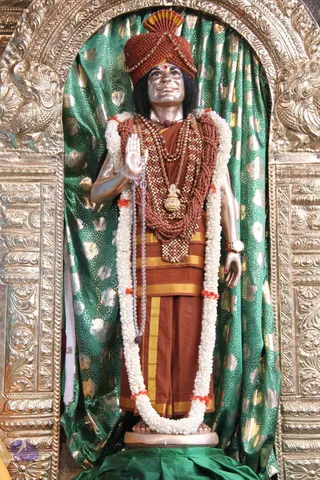
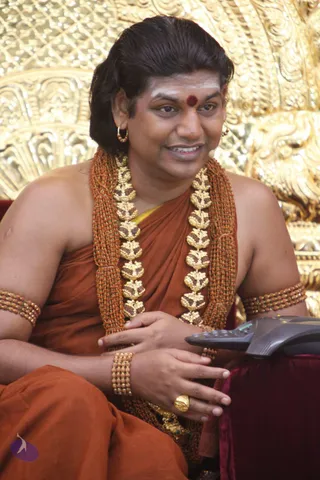
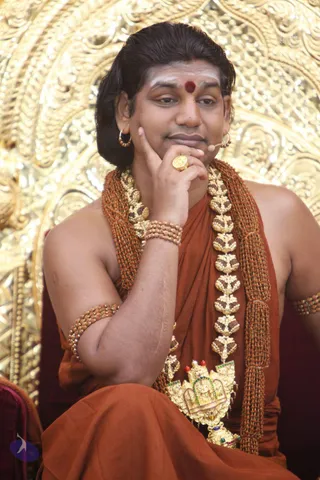
A smiling man sits on a red velvet seat in front of an ornate gold repoussé backdrop. He wears an orange-saffron cloth draped over one shoulder, a long orange and gold rudraksha-style garland with golden beads, matching rudraksha armbands and bracelets, and a gold ring. He has a red bindi and white vibhuti lines on his forehead, gold hoop earring, and a headset microphone. His hands rest on his lap beside a conference phone.A seated man in saffron-orange robes rests his chin on his hand, wearing a gold ring, rudraksha bracelets on the wrist and upper arm, a long rudraksha and gold bead necklace, and a gold ornamental pendant with green and red stones. He has a red bindi and white forehead markings, gold hoop earrings, and a small headset microphone. Behind him is an ornate gold repoussé backdrop.A golden statue of a standing figure in an ornate gilded arched niche with a green brocade backdrop printed with gold motifs. The figure wears a rust-red turban with a fan-shaped top, a rust-red garment with gold borders, layered rudraksha malas and beaded necklaces with a gold pendant, and a wristwatch on one arm. The right hand is raised in blessing. Red flowers lie at the feet. The figure is a statue or depiction, not a living person, and no one physically present is visible.

June 27 2013

Original wiki page
Contents

Description:

In today’s morning Satsang, Paramahamsa Nithyananda reveals that the most powerful collective delusionary pattern we live with is food! He shares with us a very astonishing sacred secret declaring that our bodies do not need the quantity of food that we consume. In fact, we don’t even require food at all! Through the very powerful technique of the Nirahara Samyama, Paramahamsa Nithyananda is able to rekindle our innate ability to produce food from the air and space; liberating us from our mental dependence on food and ultimately, food itself!

Link to Video:

VideoAudio

Transcript:

0:18

Nithyanandeshwara Samaarambhaam Nithyanandeshwari Madhyamaam | Asmath Aachaarya Paryanthaam Vandhey Guru Paramparaam ||

I welcome all of you with my love and blessings.

I have a beautiful announcement. California Government has declared October as a month for ‘Hindu Awareness’. I congratulate Senate Majority Leader, Ellen Corbett, Ellen Corbett and all the other people who worked for it. We will also be participating that October month for Hindu Awareness in a very big way. That one month, whoever visits the temple, we will give Bhagavad Gita copy as our gift; full October month. And we will also go around all the hotels, motels, run by Patels distributing Bhagavad Gitas and all the Hindu restaurants everywhere. From all those places we will distribute Bhagavad Gitas freely as a gift, only with one condition that nobody should waste it. The receiver should know about Bhagavad Gita, should have the sacred reverence for Bhagavad Gita. Whoever knows and has reverence for Bhagavad Gita will be given the copy as a gift. So, now, California Hindu Festival, one month, all our volunteers, devotees, disciples also will participate in our own way enriching Hinduism.

And I have one more very great news and good news. Nithyananda Gurukul is now affiliated and recognized. Affiliation and recognition for the Nithyananda Gurukul has already come. Not only that, now it is a recognized international school, because it is recognized and affiliated by world’s largest educational organization. So, it is a international school teaching IGCSE syllabus as per the international standards.

Now, now I give my call, now I give my call once more. If you are a Hindu family, plan at least one child for enriching Hinduism. If you want two, give birth to three. Send one to Dhyanapeetam. We will bring them up, train them and make them enrich Hinduism. Hinduism needs urgently spiritual activists. We need at least 100,000 sannyasis, million spiritual activists, 25,000 Krama Brahmacharis. We really need. It is time. We need men, men with responsibility, who can be responsible. This clarion call is not just for Indians. Many countries like Bali, Indonesia, Malaysia, Canada, US, millions of Hindu families have settled all over the world and many practicing Hindus. I have not mentioned all the countries. Almost all the countries in the world has Hindus settled down. It’s my request to all of you - if you are planning for your family with two kids, give birth to three. It is not a difficult job, I know, for you. Then come on. It will be such a best thing for the future of the Hinduism.

5:47

And I also invite all over the world, anybody who is interested in enriching Hinduism, understand, as a Mahamandaleshwar of Mahanirvani Peetha, I take the responsibility of calling people to come and learn Hinduism in a deeper way and be a spiritual activist, enrich the world with Hindu tradition. I am inviting people from all over the world, whoever is interested in devoting your life for enriching the world with Hinduism. We have also grown. I tell you, when I changed the focus of our responsibility, I can see Sangha is evolving with a right conscious Mamakaara, and conscious Ahankaara, and consciously taking responsibility for others’ Anyakaara, consciously developing Swa-Anyakaara. So, I request people from all over the world, it is time we take the responsibility for whole world’s spiritual strength. We need lot of spiritual activists. Lot means, LOT.

And if you are planning for two kid in your family, have three and give the one to the Sangha. Even at the age of seven you can bring the child. Of course, till seven you may have to bring it up. Still I have not created the facility for that. But soon I assure I will create for that also.

And one more thing, yesterday I saw the news in Tamil Nadu, one female child was given poison and killed by the parents because they can’t bring up. Now I take the responsibility and announce, as I am speaking in the Lotus News Channel, any child, male or female, if you are not able to bring up, please bring the child to the nearest Dhyanapeetam and hand over. We will take the responsibility of bringing up the child.

And I also commit with the world, this is my commitment with the world and Kalabhairava, I will never force any child to take sannyas. I will never force any child to take sannyas. I will give all the options in front of the child. Whatever child chooses, the child can be the decision-making authority for its own life. Whether it want to marry or take sannyas, it will be the child’s decision.

9:19

So, now, as we are the internationally-recognized school, I wanted to expand, concentrate on the school by putting my energy more, of course, more intelligence and more time. And I commit with you all, I commit with the future of the Planet Earth, future of the Time, Kalabhairava’s future hands, I commit with you, I will give you at least million enlightened beings, million enlightened beings for spiritually activating the world, for spiritual activism.

Either you should take sannyas, if you can’t, as a prayaschittha give birth to one child and bring that child up till the age of seven and hand over to Dhyanapeetam Peethadeeshwar’s Training center. Now we are a recognized school. I can call for kids.

See, Hinduism is the place of education. It is a religion of spiritual knowledge. This is the one word with which I can define Hinduism – ‘Religion of Spiritual Knowledge’. A farmer in Hinduism, ordinary village agriculture farmer will speak of more philosophy than any PhDs, in American universities. I can challenge for this. Go to any Indian village farmer who doesn’t know who is his Prime Minister, who is his MLA or who is his MP. Talk to him. He will say what philosophy and Gothra he belongs to. He may not even know who is his MLA. He may not know where is the next nearest police station. He may be disconnected so much from the world, but if you ask him, he will tell his Gothra, his Kula Devatha, the spiritual philosophy he belongs to, the spiritual tradition he belong s to; he will know completely the whole basic spiritual truths. He will know Mahabharatha. He will know Bhagavad Gita. That is the beauty; because spiritual knowledge is our lifestyle.

(HINDI)

Anybody and I will also take the responsibility of adopting street childrens; all of them. Wherever you see street children who want shelter, bring them up, please hand over them to the nearest Dhyanapeetam. I will take the responsibility and start bringing them up.

(HINDI)

And coming Saturday we have a special webinar on Spiritual Activism, on Spiritual Activism. It is time we create the future leaders with a lot of intelligence, energy, understanding and life.

13:39

With this, I will move to Nithya Satsang.

Today’s subject for the Nithya Satsang: ‘NIRAHARA SAMYAMA – NITTY-GRITIES OF NIRAHARA SAMYAMA’.

Listen. I am uttering two important sacred secrets. Please come to the space of listening; two important sacred secrets.

First, your body does not need the quantity of the food you take in. It is not just physical need. This is the first statement.

Second, your body does not even need food to live.

Understand, first statement I am making - Your body does not need the amount of food you take in because the food is not just physical requirement. Most of the time, with the food pattern hundreds of other things are associated, hundreds and hundreds of other things are associated. When you understand that and complete with all those patterns; actually to be successful in the Nirahari lifestyle, you have to complete with all the patterns related to food. The first three levels of Nirahara Samyama - Level 1, Level 2, Level 3, you have to complete with all the root-patterns and patterns related to food.

(HINDI)

Yes, now you have so many doubts: ‘What is this? Medical Science says without food we will die. Have you proved?’

Yes, I have proved Medical Science is wrong. I have thousands of my disciples living with simple juices, few living just on water and air. If you see them, you won’t find them very thin, skinny and all. They are good-size people. May not be obese, but good-size people. They look very healthy.

(HINDI)

18:00

I have proved with enough of scientific studies. I have proved enough, enough, enough. Now all you need to do, all you need to do, just listen, all you need to do is just try it once.

Nirahara Samyama is not fasting, I wanted to make it clear. Usually, people fast to feast. When you start the fasting, you will be counting number of hours when you are going to end it and start feasting.

Nirahara Samyama is not fasting. It is awakening, rekindling the power of your bio-memory to produce energy and food directly from air and water and space. Listen. It is to produce energy directly from the space.

(HINDI)

You need to understand, you need to live, you need to realize, only by living you will understand - the food is one of the powerful collective delusory pattern. ‘Collective Delusory Pattern’, that is what is the closest definition to Maya, the closest defining term for Maya. Understand, ‘Name’ is different, ‘Term’ is different. ‘Term’ defines what it means. ‘Name’ brands what it means, but does not define. Name is different, Term is different. This is the closest. Maya is the name, but it does not define completely. But this word defines. This is the term for Maya. Food is one of the major collective delusory pattern we human-beings have created for ourself.

I tell you, if you do this Kriya, Nirahara Samyama Kriya which I will be teaching on July 1st in the Nithya Satsang, your bio-memory will be awakened to produce the food directly from space. As I said, so many people got healed of so many diseases from this Kriya and through this Nirahara Samyama.

(HINDI)

23:11

Slowly, slowly, training your bio-memory to produce the energy directly from the space and liberating you from all the patterns you created about food and food itself; that is the purpose of Nirahara Samyama. And it is possible. It is possible. Your bio-memory, once awakened, will do so much good which you can’t imagine.

(HINDI)

I am not giving you false promises; I am just giving you possibility. When you enter into the space of Nirahara, not only you go beyond food, suddenly your consciousness rises to the next level. Your consciousness rises to the next level; completely to the next level.

(HINDI)

Nirahara Samyama will undoubtedly prove your own higher possibility for you. I tell you, if you want to practice shraddha, Authenticity, gain confidence. First thing, hit at the root-pattern of food. Hit at the root-pattern of food.

When you hit at the pattern of food, you will gain confidence about your Authenticity. You will gain confidence that you can be authentic, you can do something which others are afraid of doing, you can do something which even you are afraid of doing.

Nirahara Samyama is one of the most powerful technique, most powerful process.

(HINDI)

27:22

Understand, it is so unfortunate, it is so unfortunate, human-beings have forgotten their capability so much, it takes so much to remember and bring them back to that space of remembrance of their capabilities. Nirahara Samyama will really, really, really help you to experience Authenticity, to live Authenticity, because it’s a direct experience which you can see directly, which you can listen directly, which you can visualize directly, the pattern with which you can directly play, complete.

First thing required for Nirahara Samyama, start practicing Integrity, Authenticity, Responsibility and Enriching. Complete all the patterns related to food. I tell you, once you reach completion, you don’t need the quantity of food you are taking.

Now I am developing the Gudakesha Samyama; means, going beyond sleep. Only thing you need to go beyond sleep is, complete inner space. Just if you complete and reach the space of no dream, you can just go beyond the sleep. So, intense completion is required.

I wanted all the devotees, disciples, sannyasis, Gurukul kids, this is a Poornathva Rithu, Season of Completion. So, everyday, before going to bed, before falling asleep, at least one hour you should spend in completion, you should spend completing, completing, completing. Completing, completing, completing. Learn what is completion and continuously practice completion. Only this can lead you to Nirahara Samyama and the next coming Gudakesha Samyama.

(HINDI)

Understand, the essence of today’s satsang:

Nirahara Samyama not only liberates you from food, it liberates you lot of patterns you created based on food and many bondages related to food.

See if you want to remove a rock, first you blast. Then it becomes loose. Then removing the rock is easy. Same way, all your patterns, if you blast that patterns with Nirahara Samyama, then removing all the patterns is very easy.

(HINDI)

Photos
Tags:

Paramahamsa Nithyananda, collective, delusionary, pattern, sacred secret, food, technique, Nirahara Samyama, rekindle, innate, ability, liberating, dependence.

Photos Of The Day:

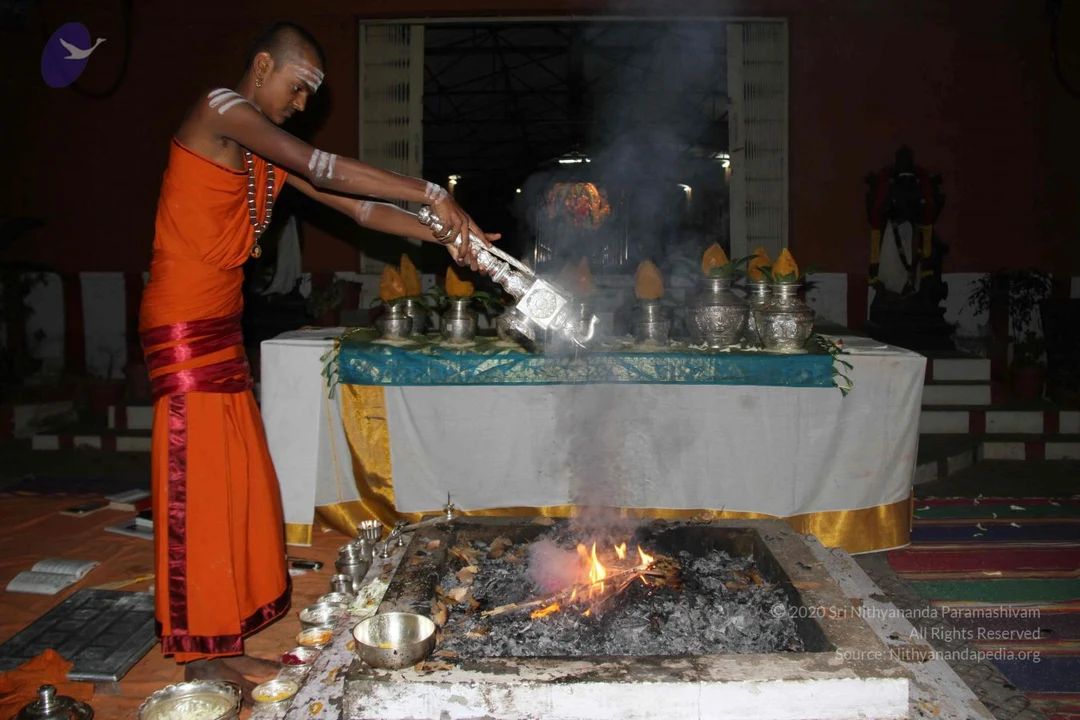
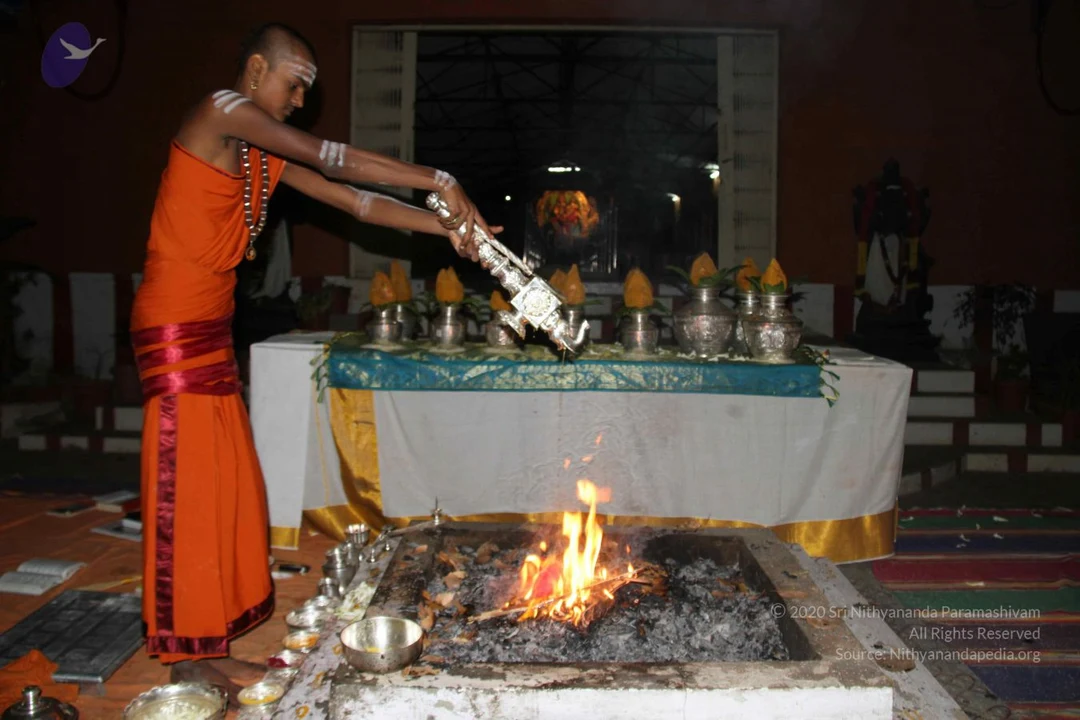
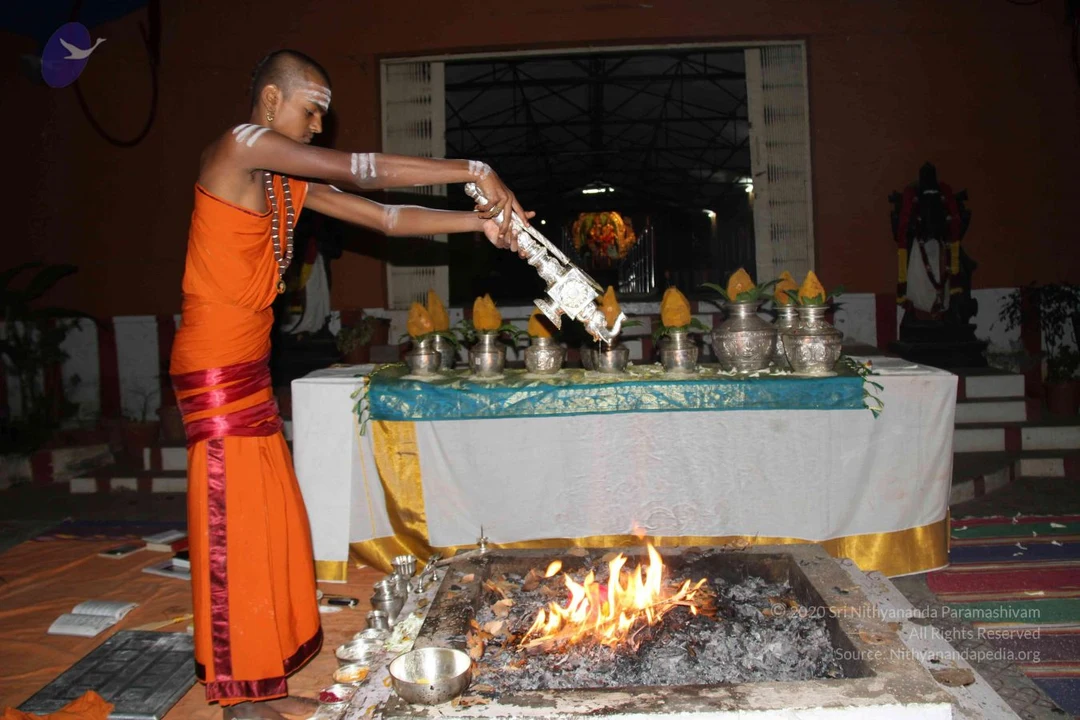
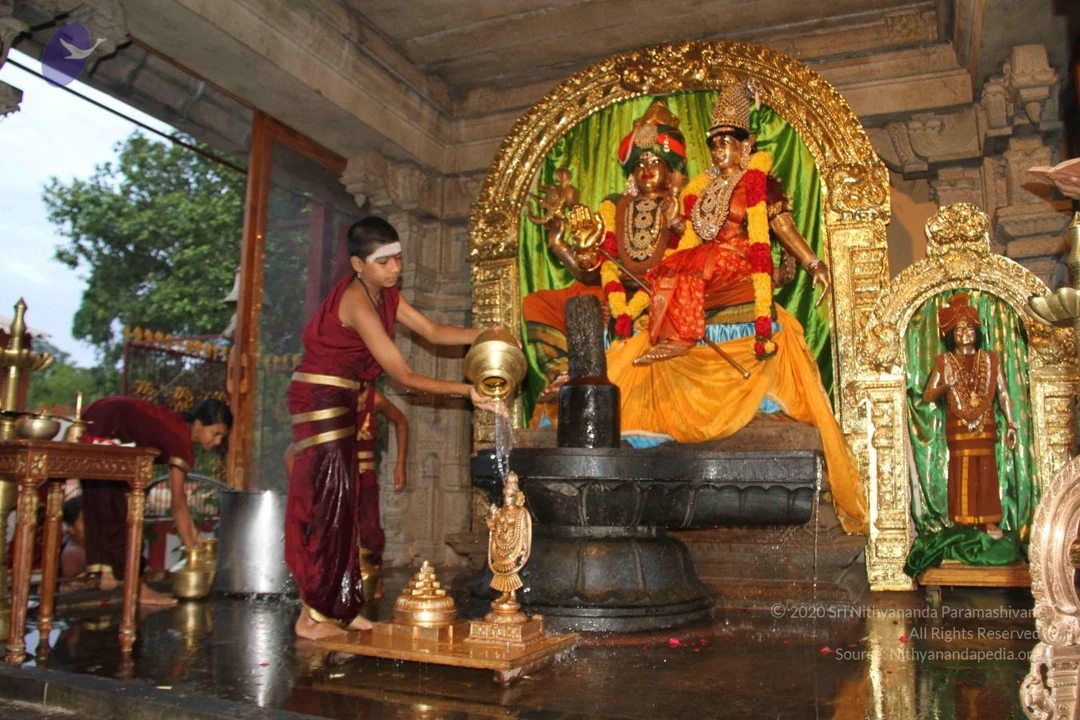
Temple Homa Abishekam
Paduka Puja

Swamiji's Blessings

Nithya Satsang

Sarva Darshan

Sacred Arts Construction

Photos Of The Day:

Temple-Homa-Abhishekam-SwamijiVisit

Paduka-Puja

Nithya-Satsang

SarvaDarshan

Dial-the-Avatar

SacredArts-Construction-Photos

Photos Of The Day:

Temple-Homa-Abhishekam-SwamijiVisit

Paduka-Puja

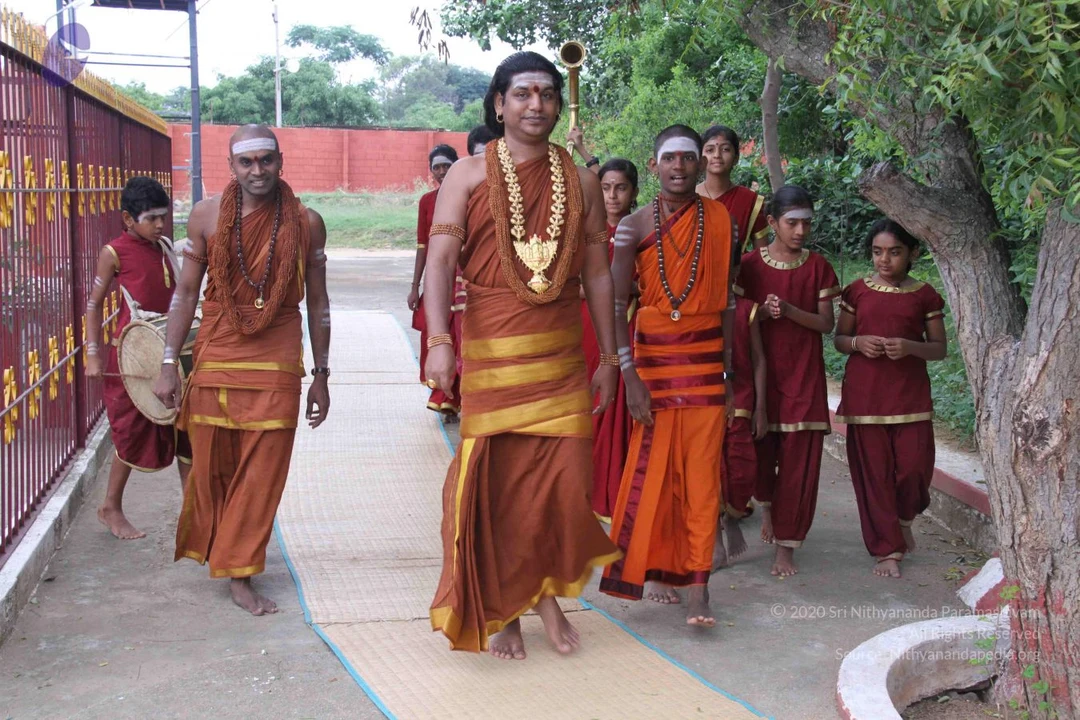
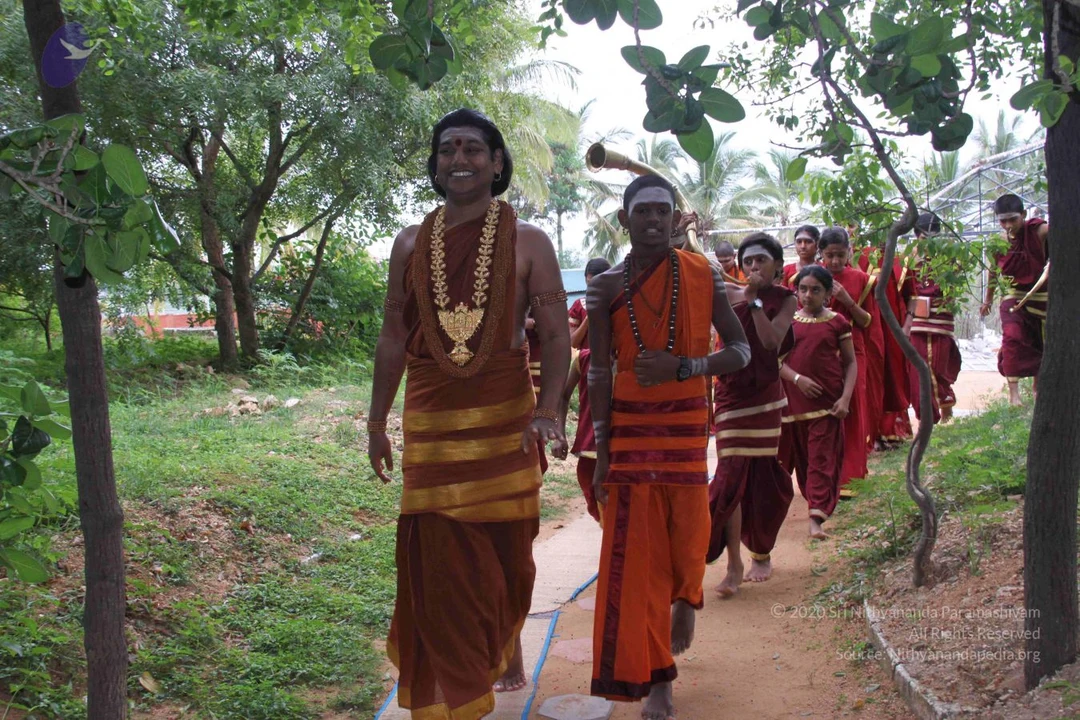
Gurukul-instrument

Nithya-Satsang

SarvaDarshan

Photos Of The Day:

Temple-Homa-Abhishekam-Swamiji-Visit

Gurukul-Instrument

Nithya-Satsang

Swamiji-Blessings

Sarva-Darshan

Final-Blessing

Photos from this day

View all 183 photos

Photos

15 photosSource gallery
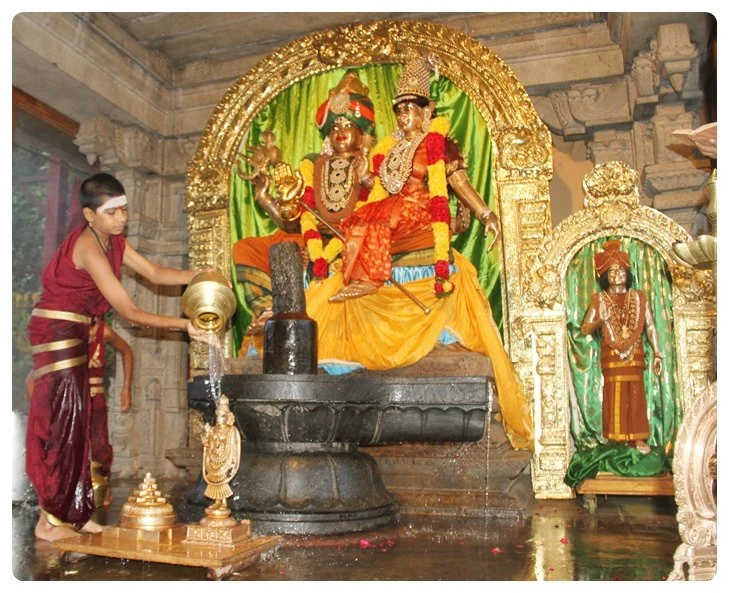
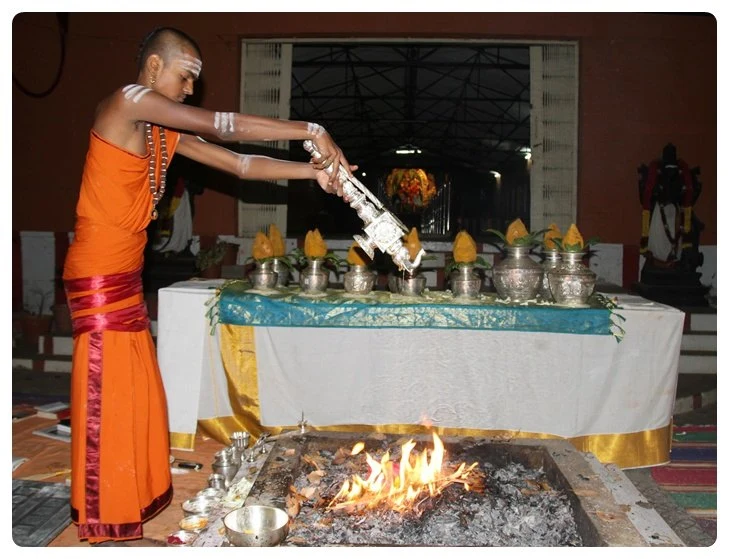
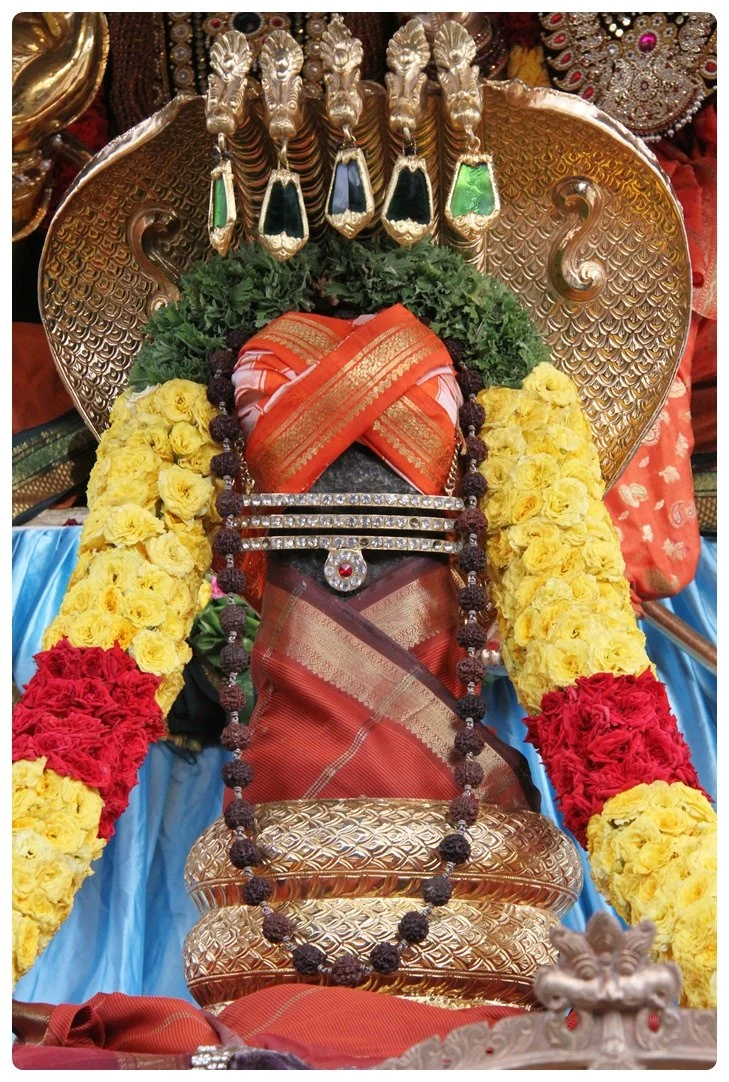
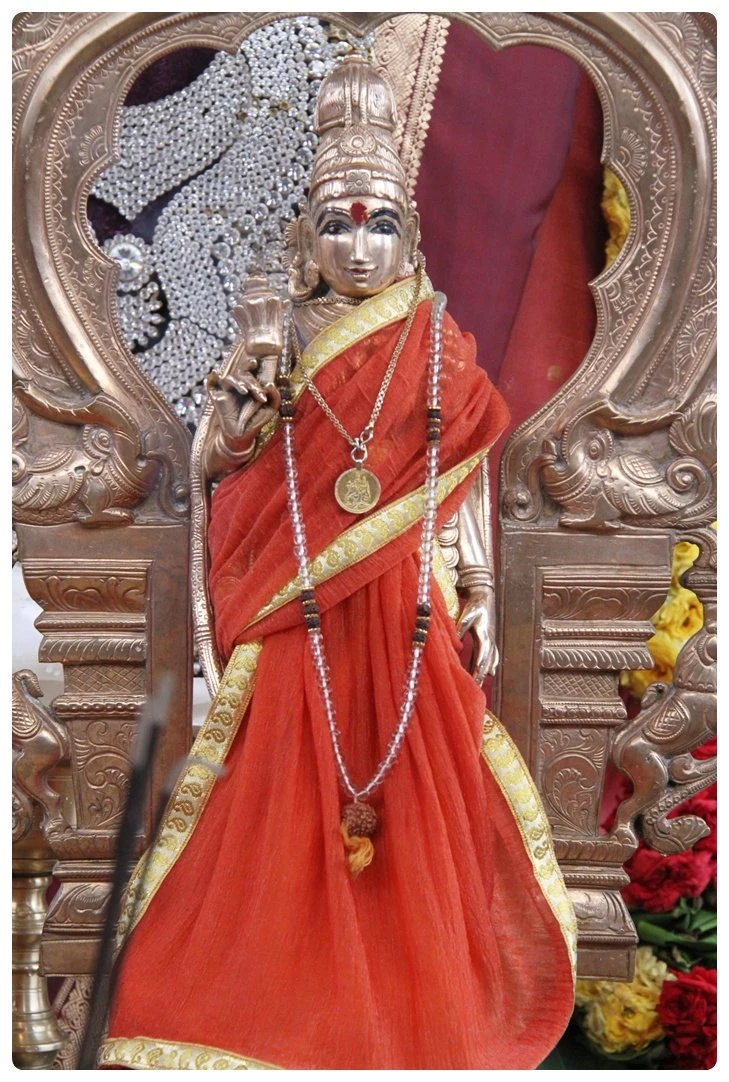
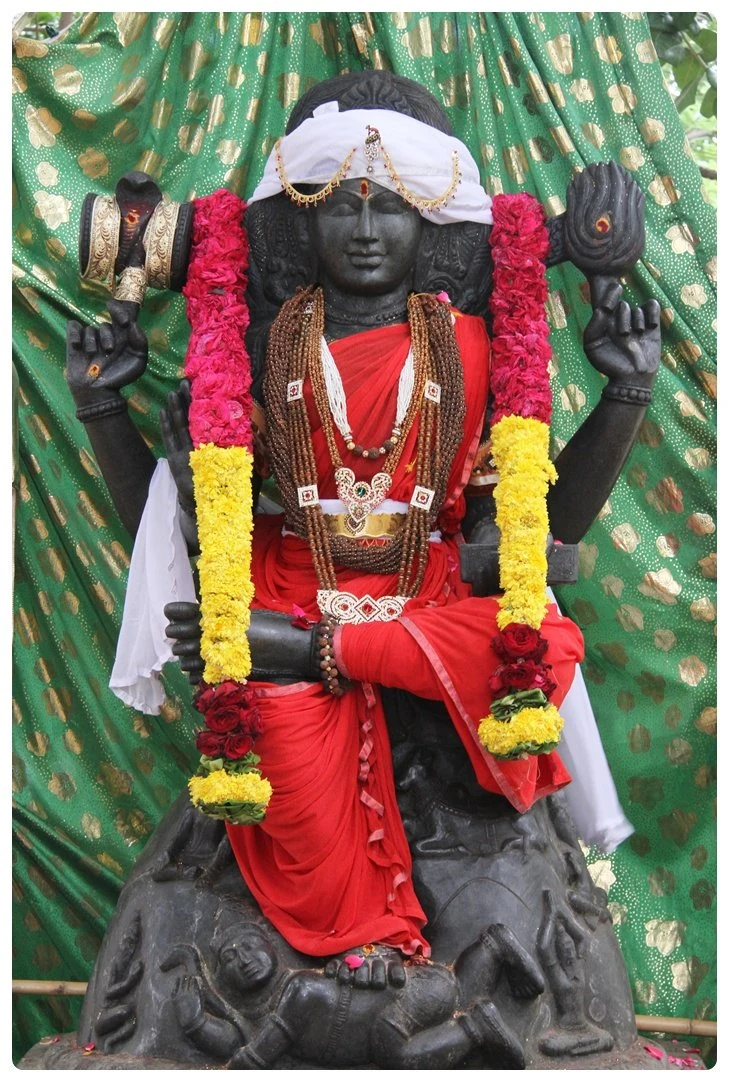
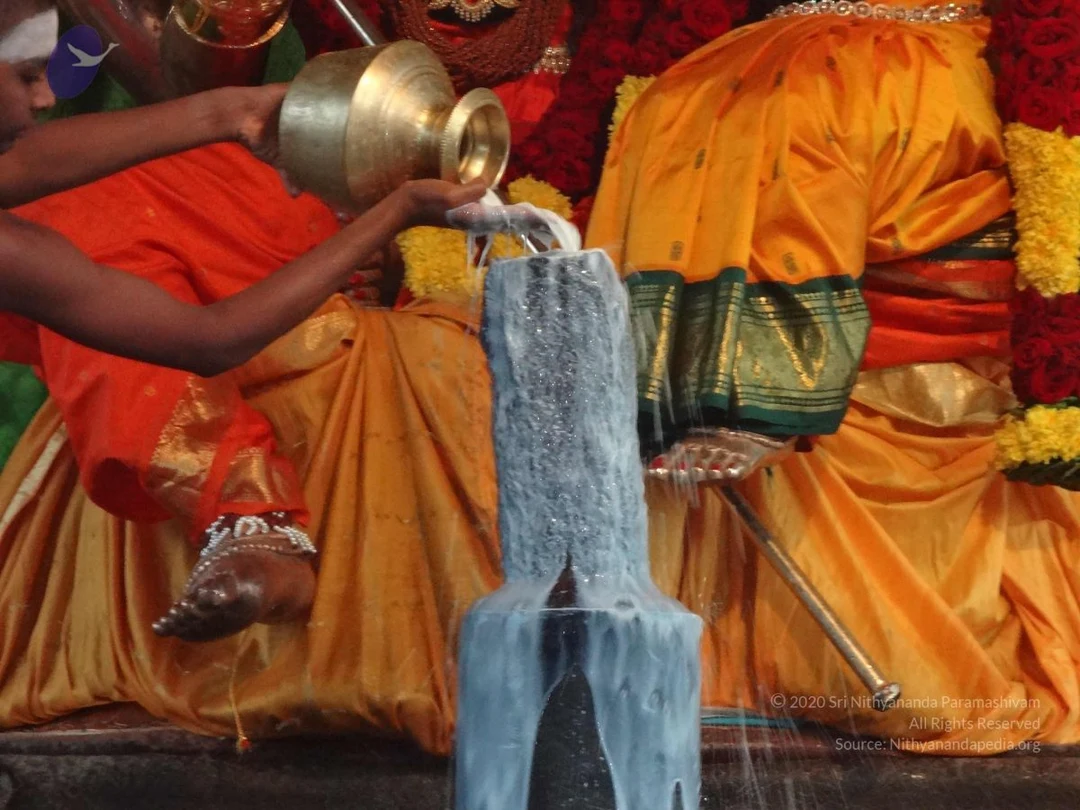
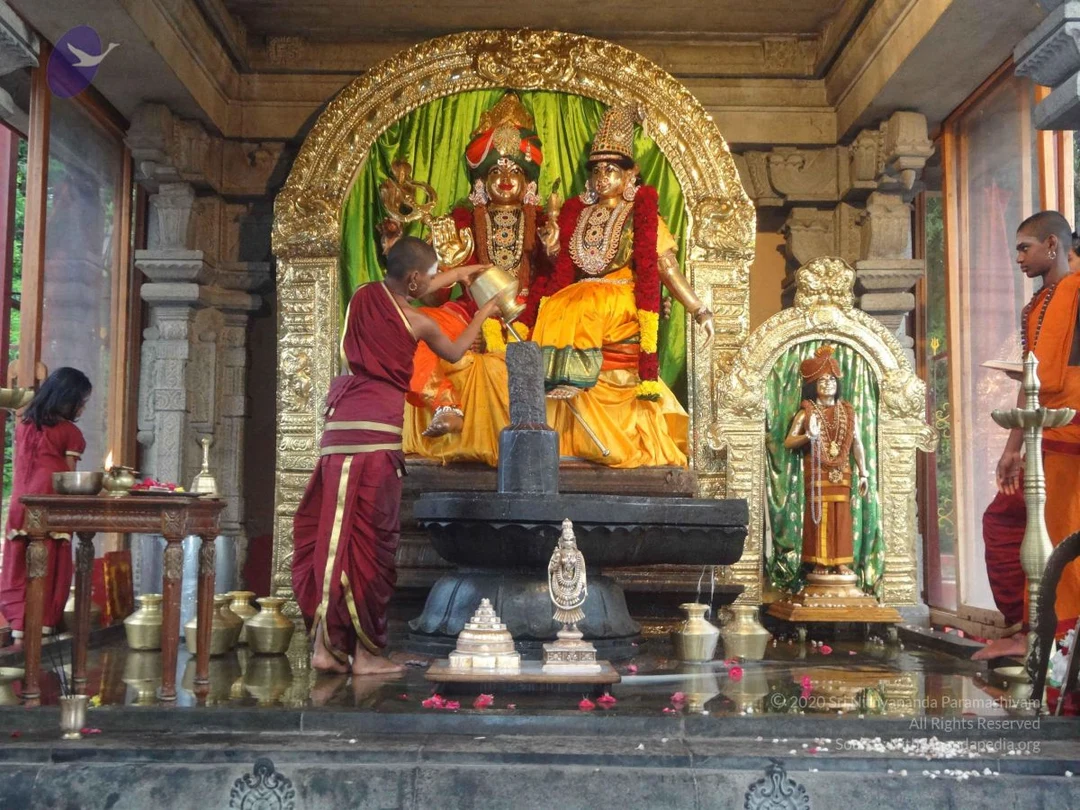
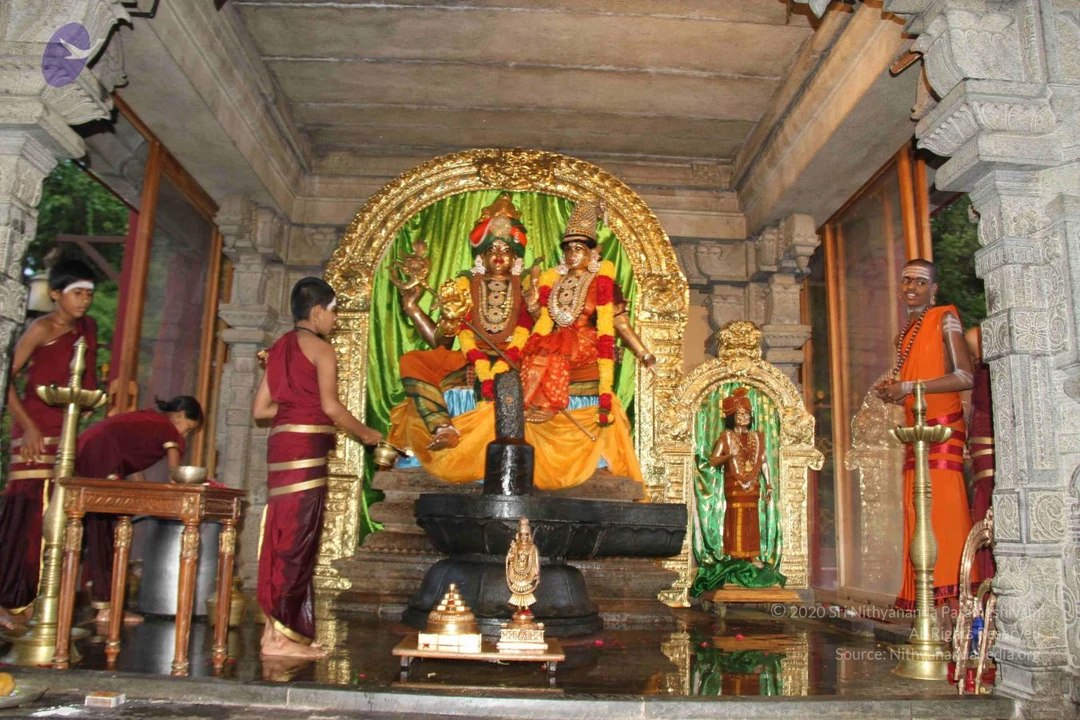
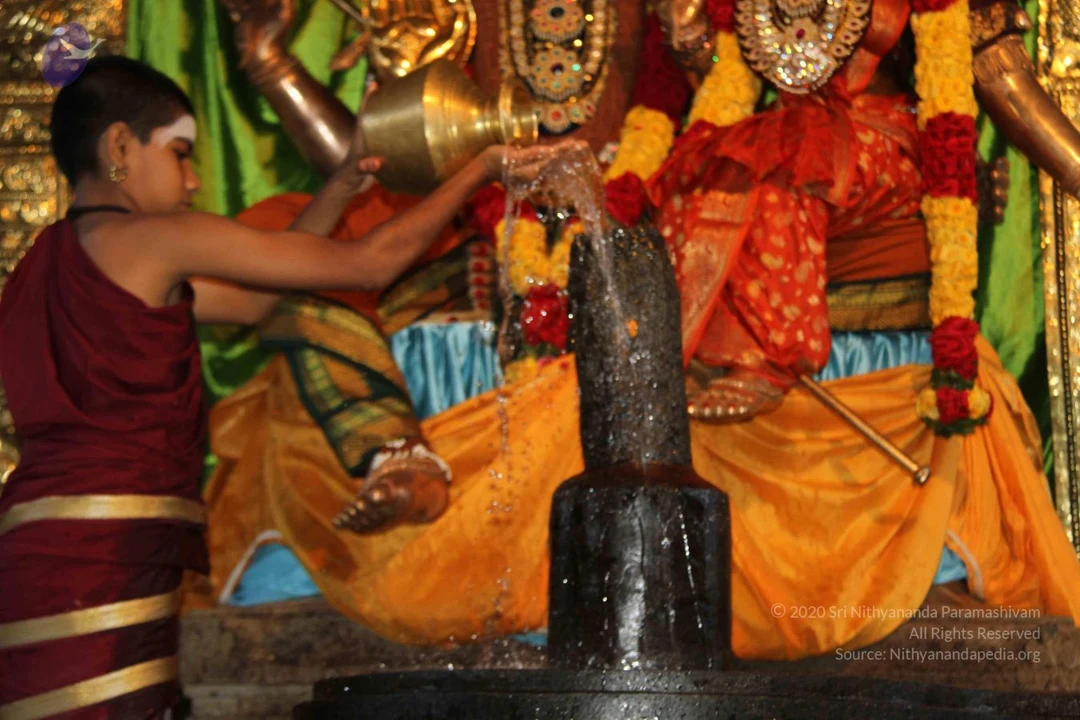
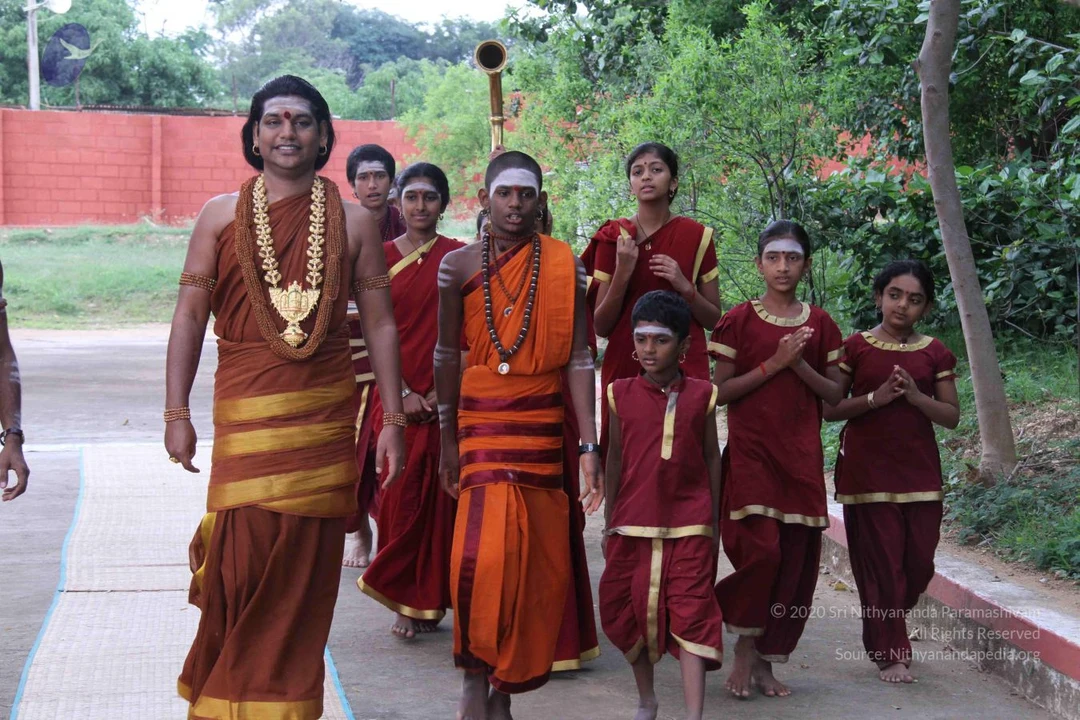
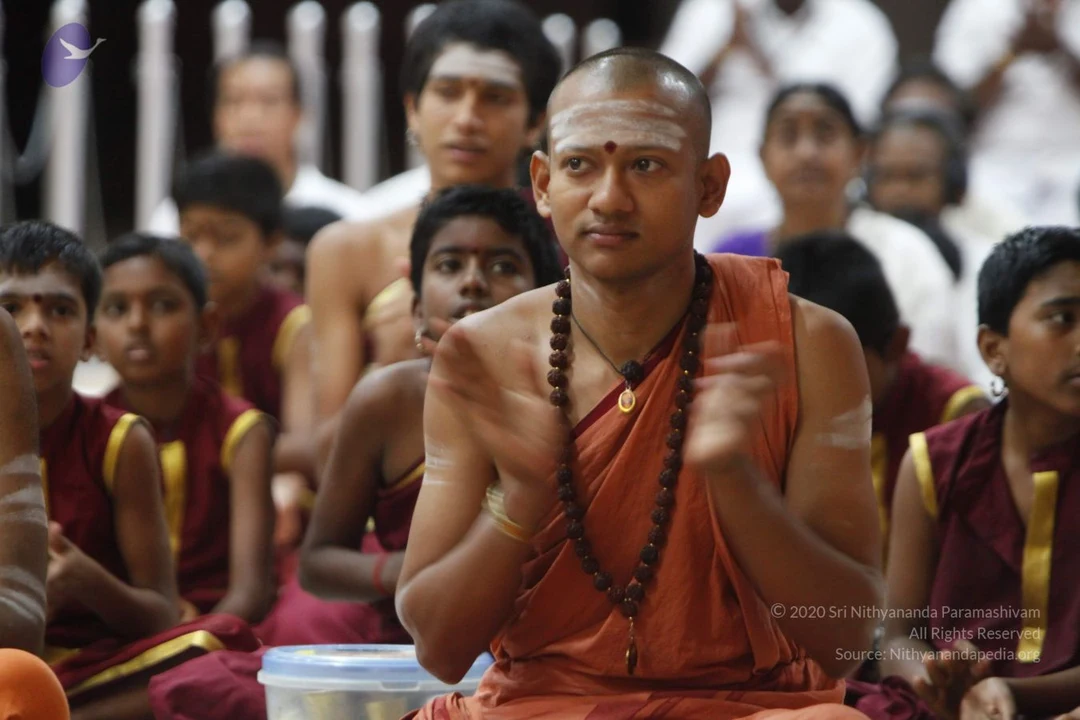
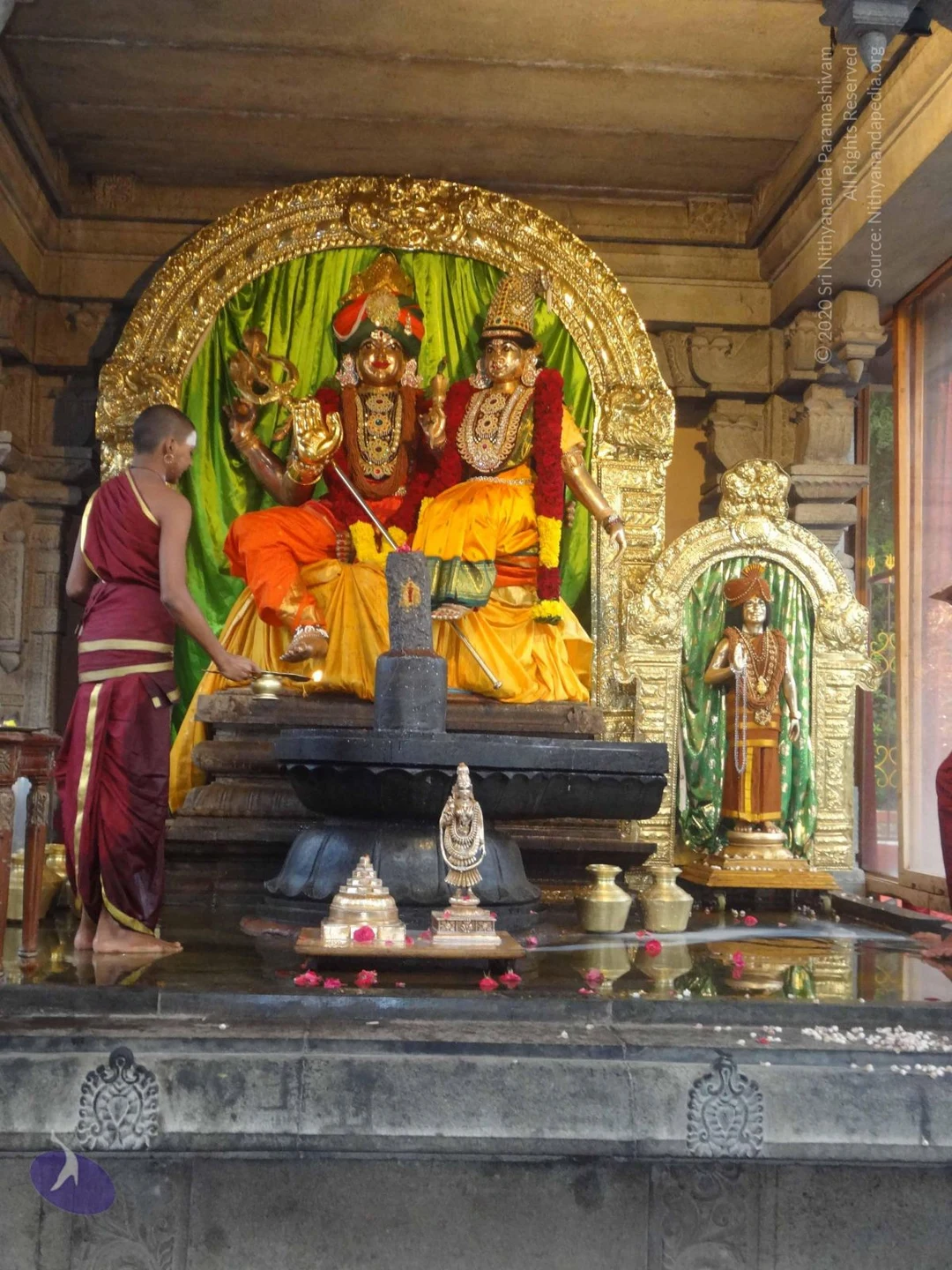
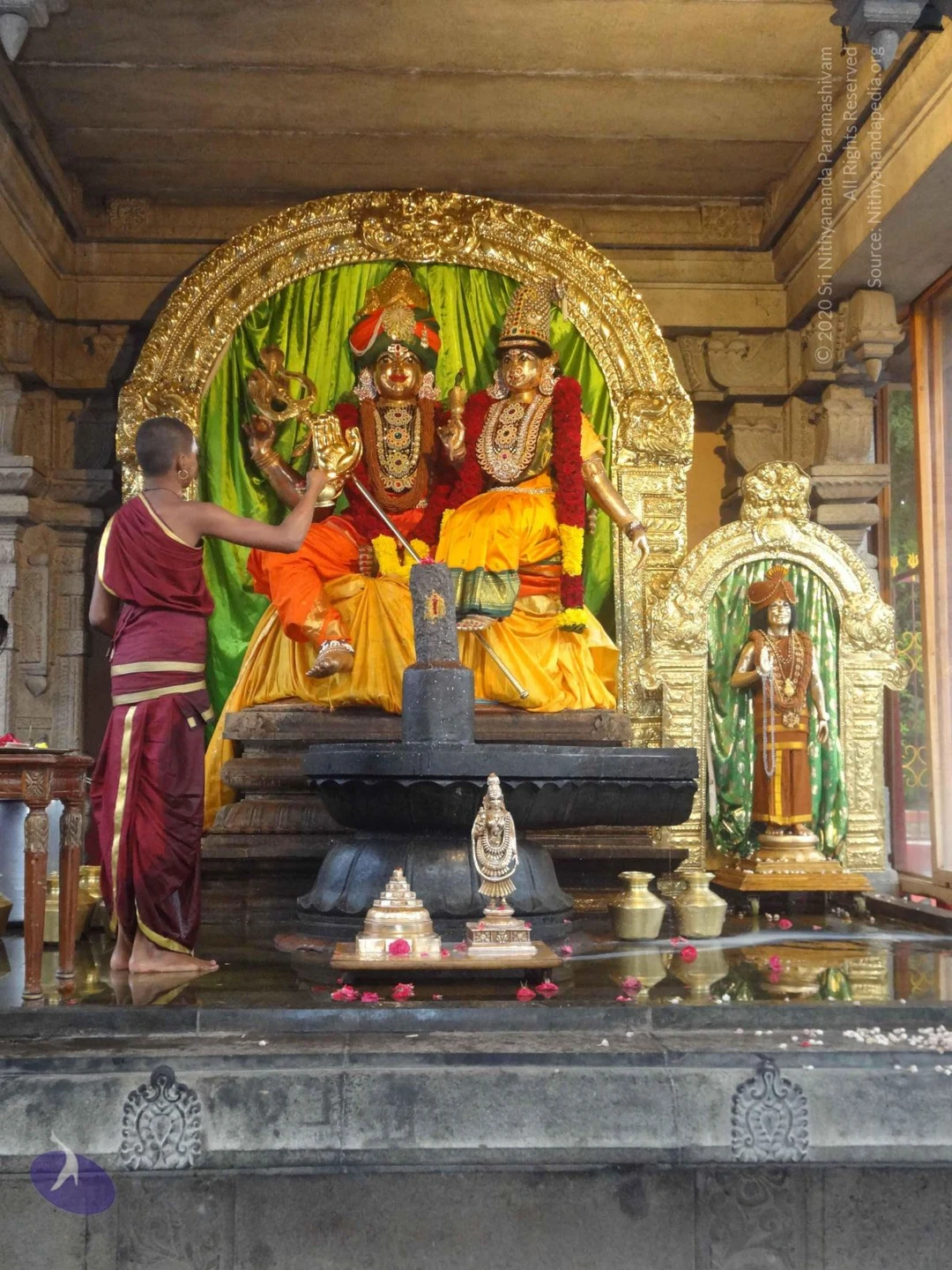
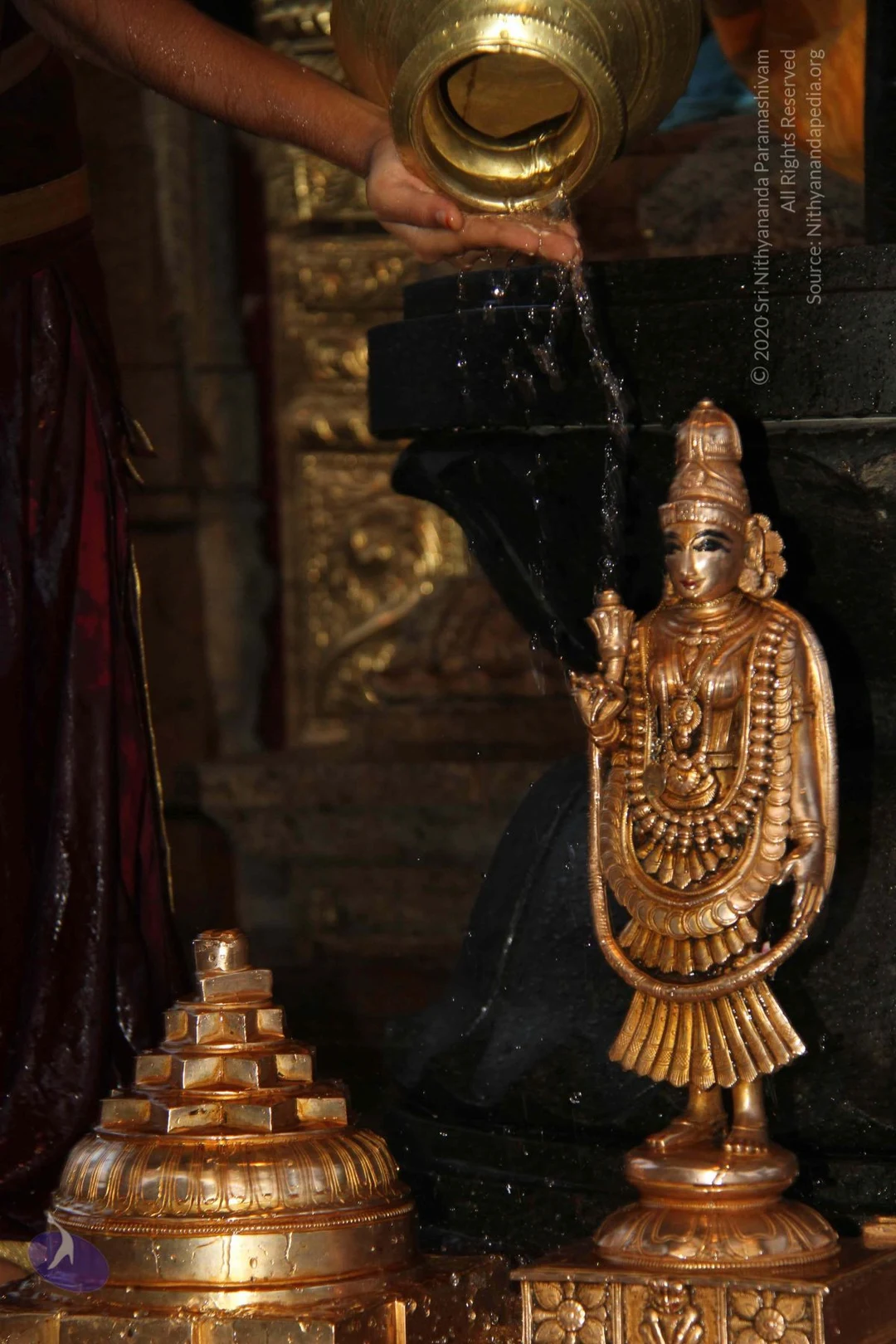
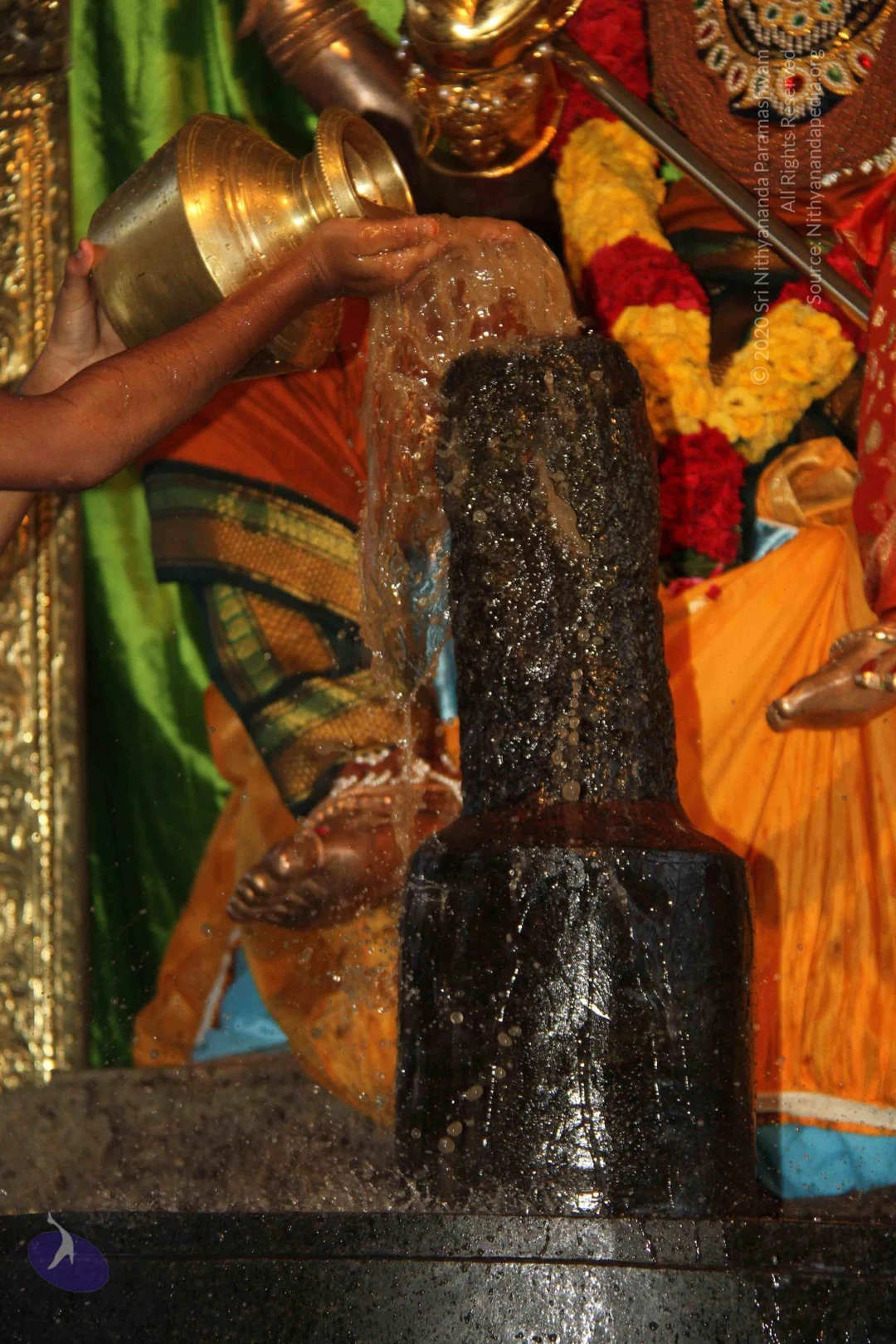
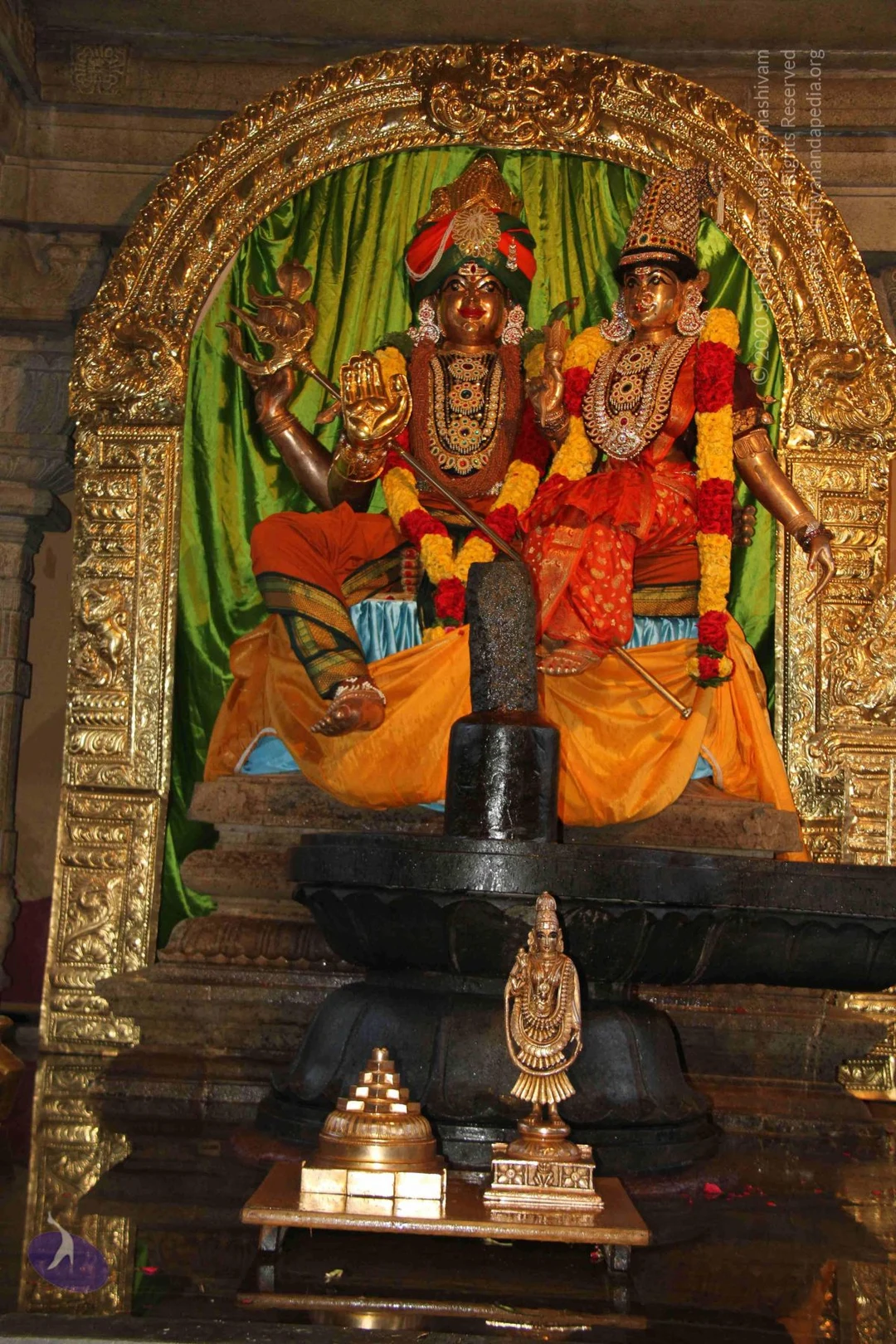
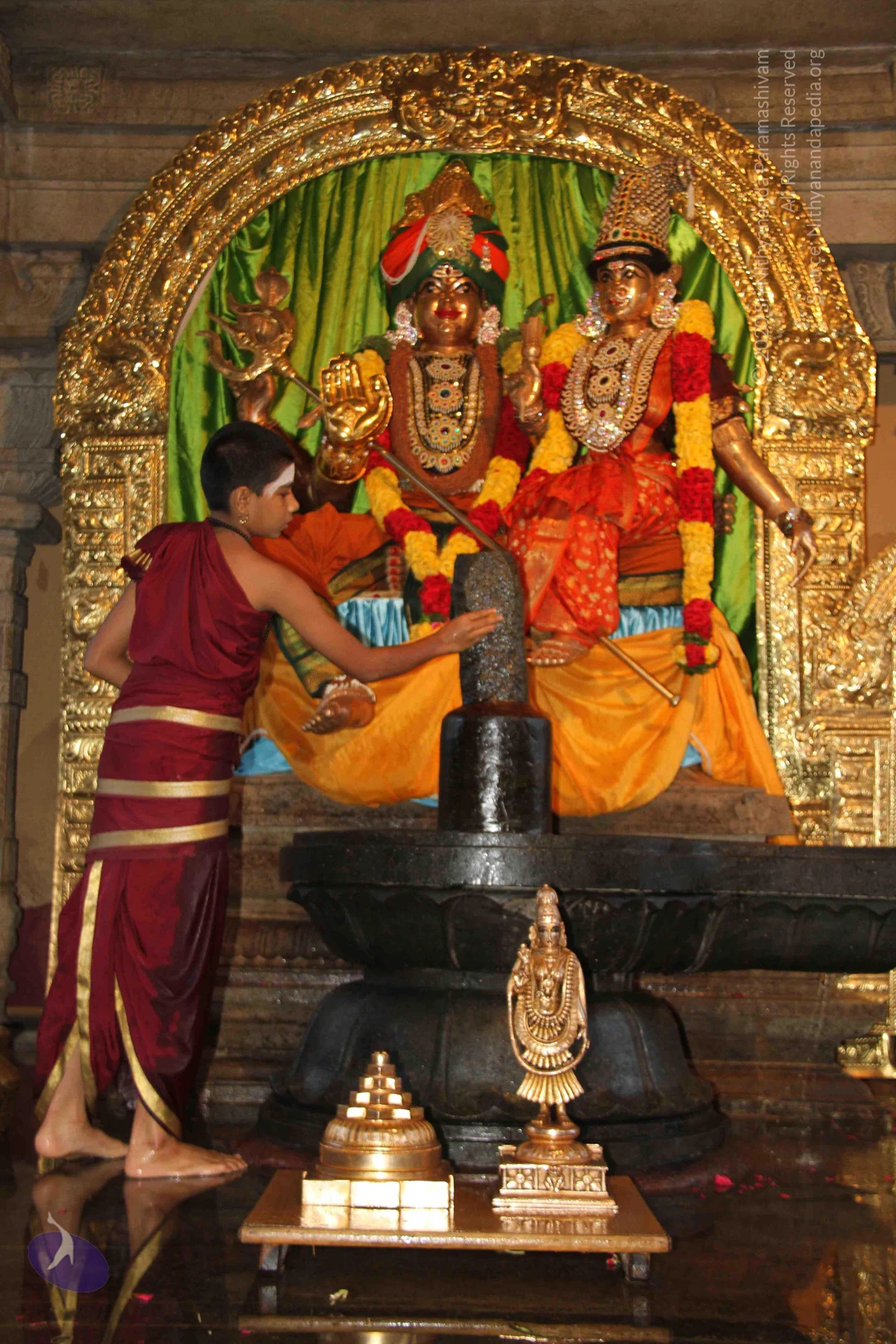
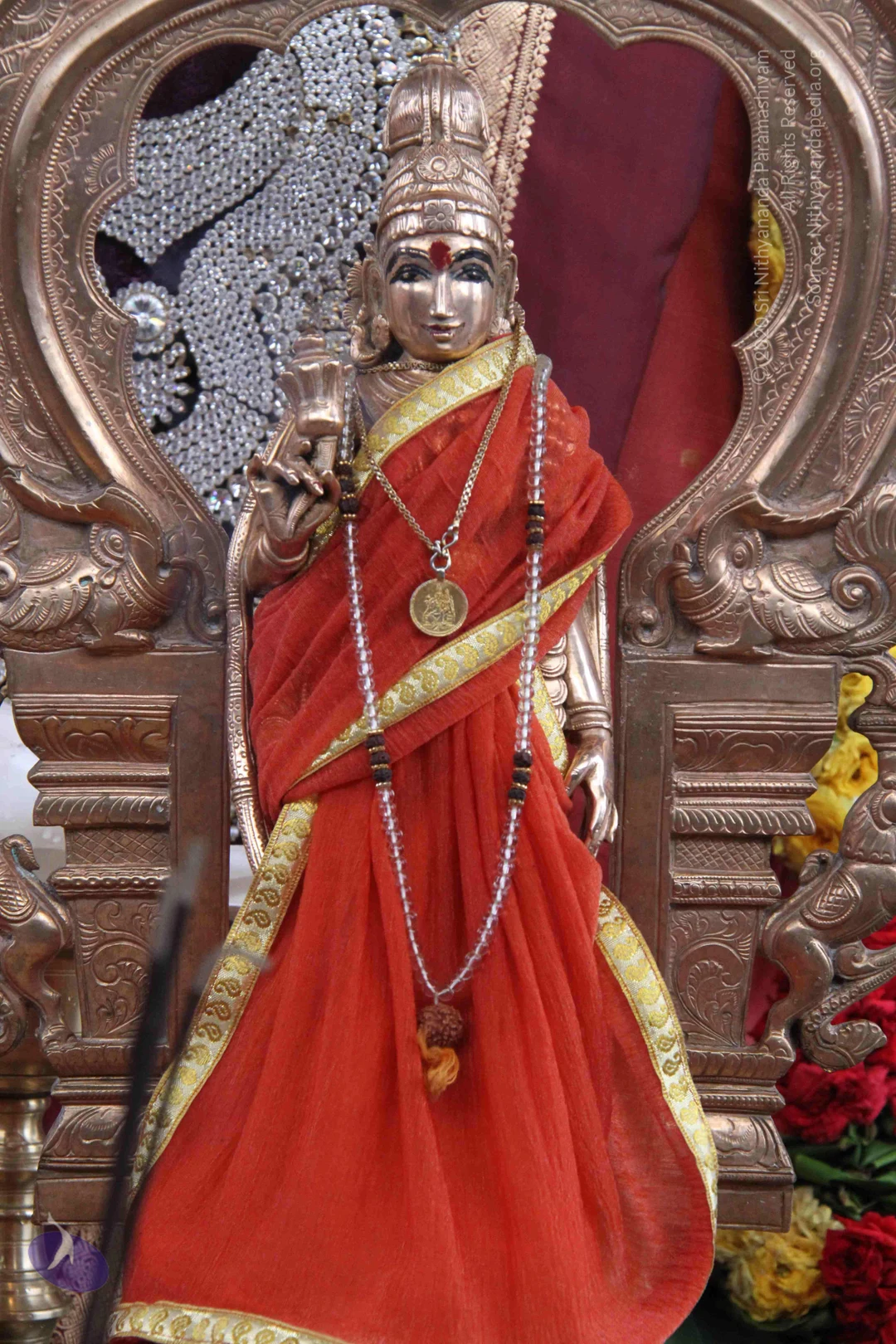
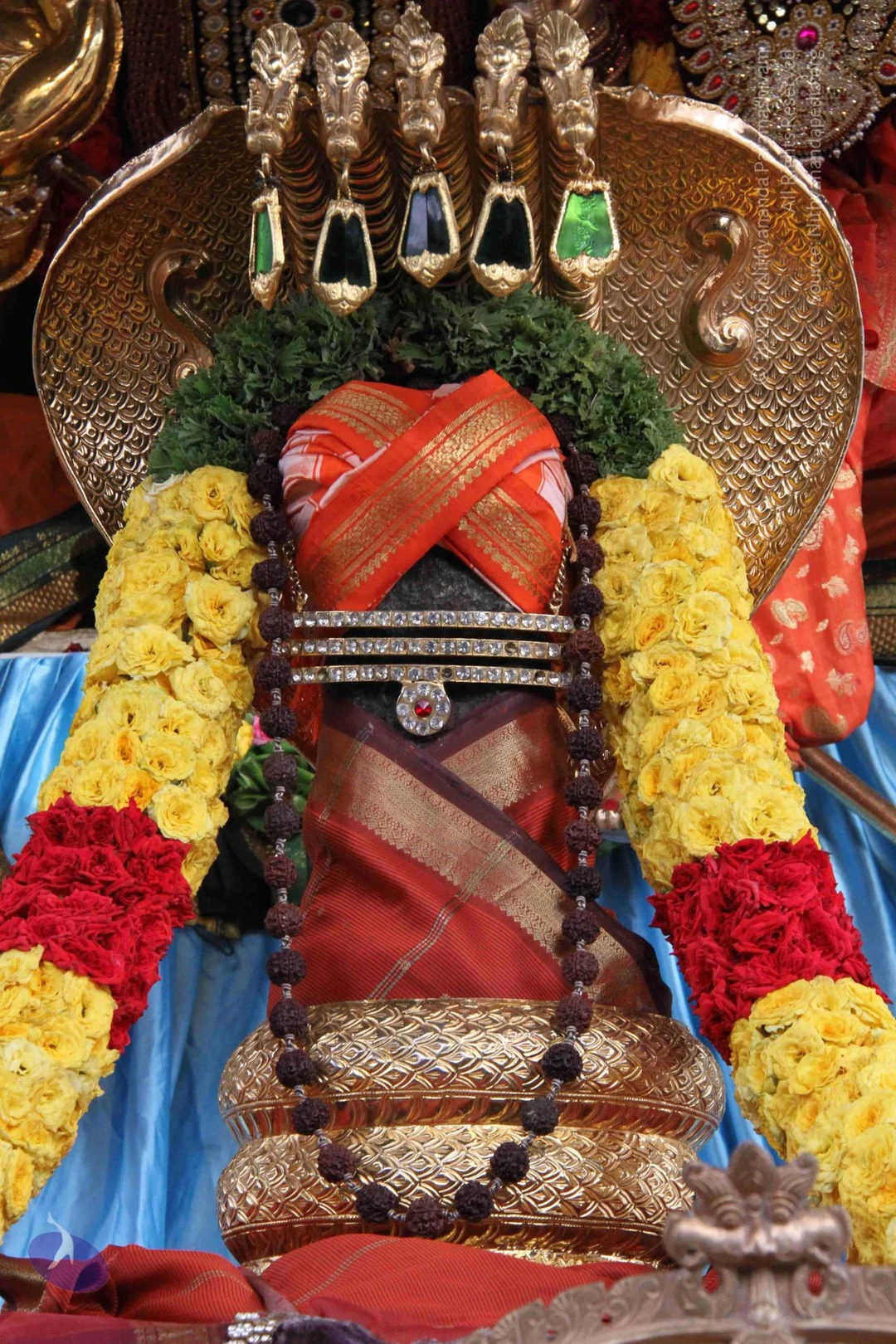
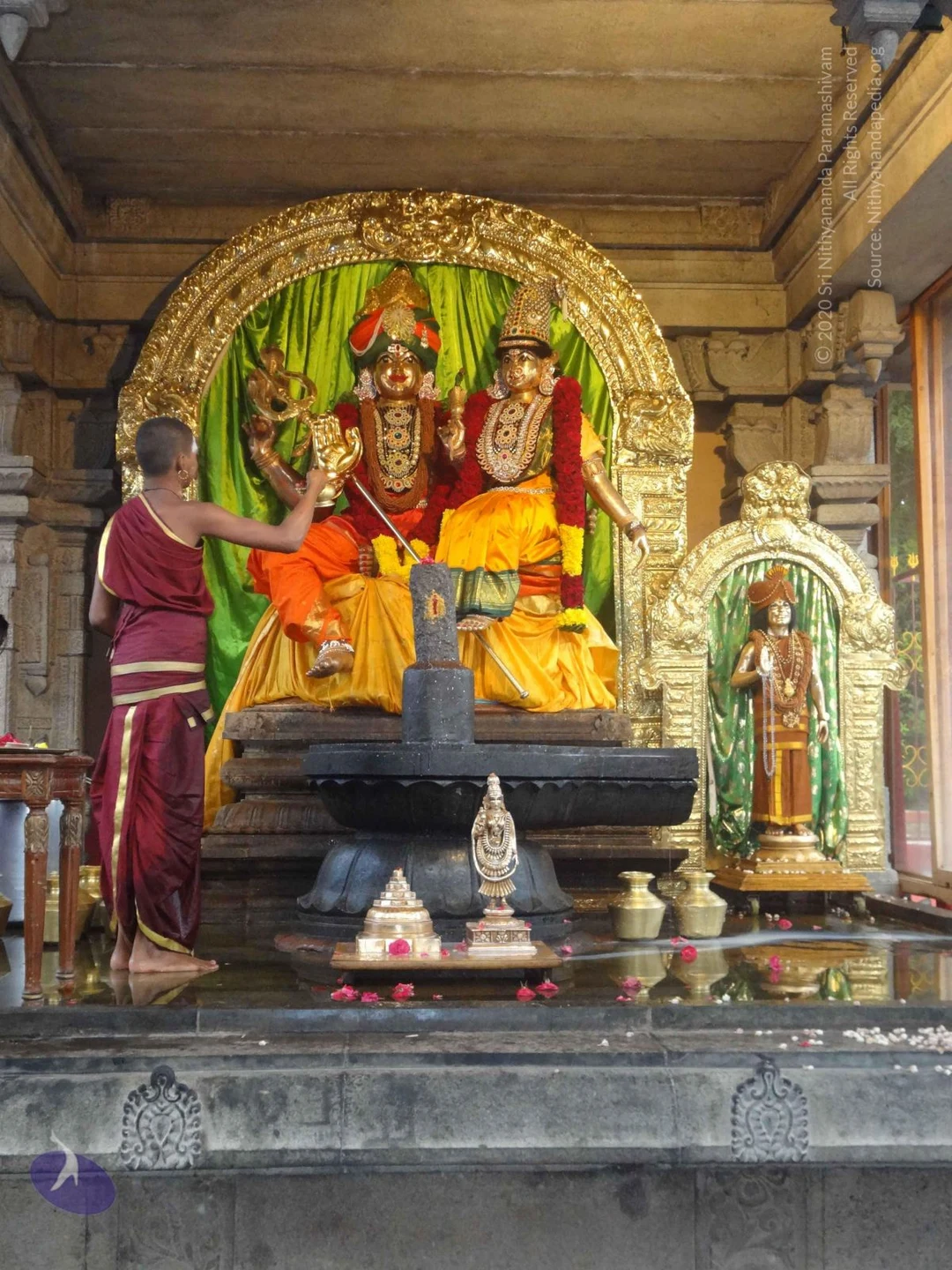
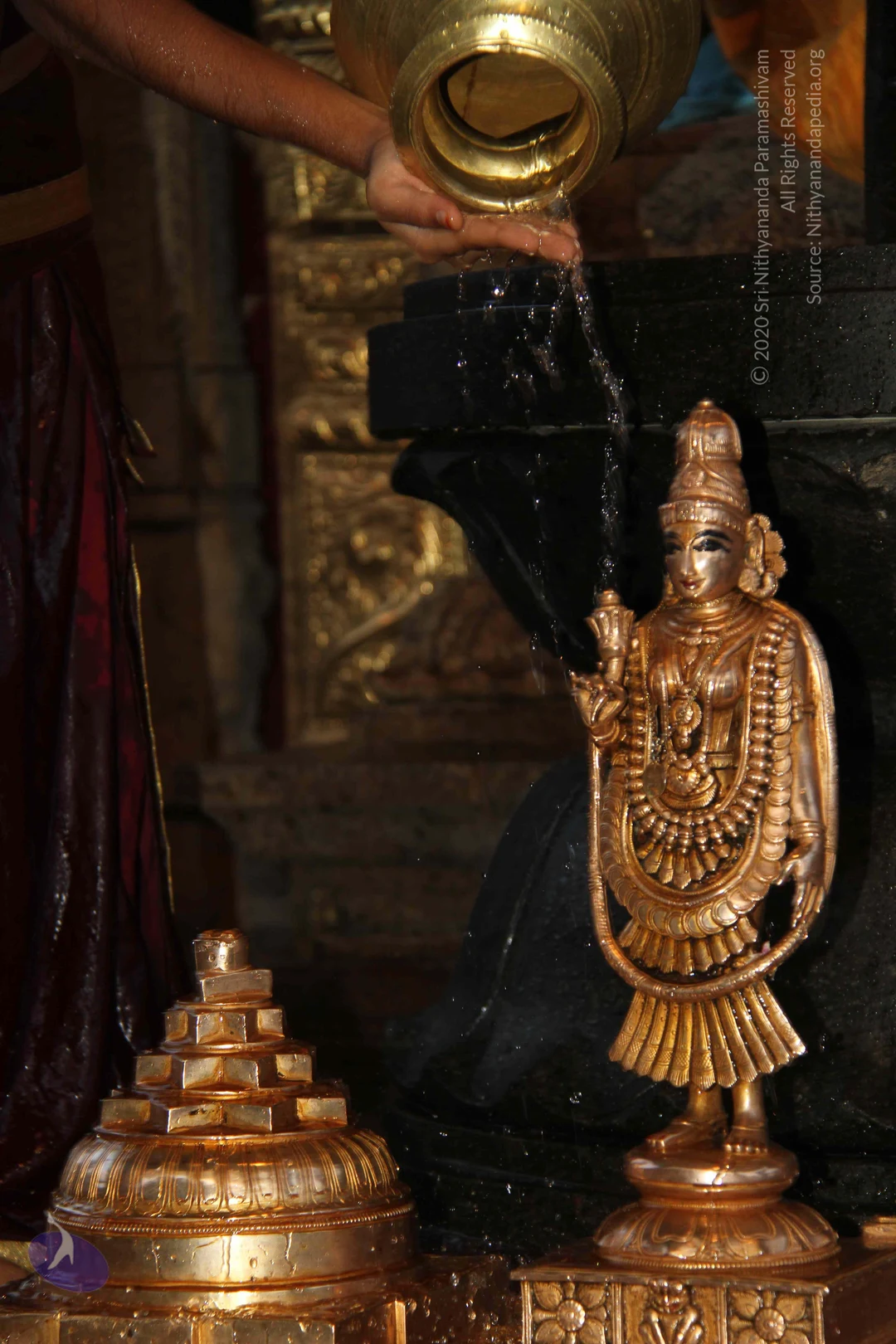
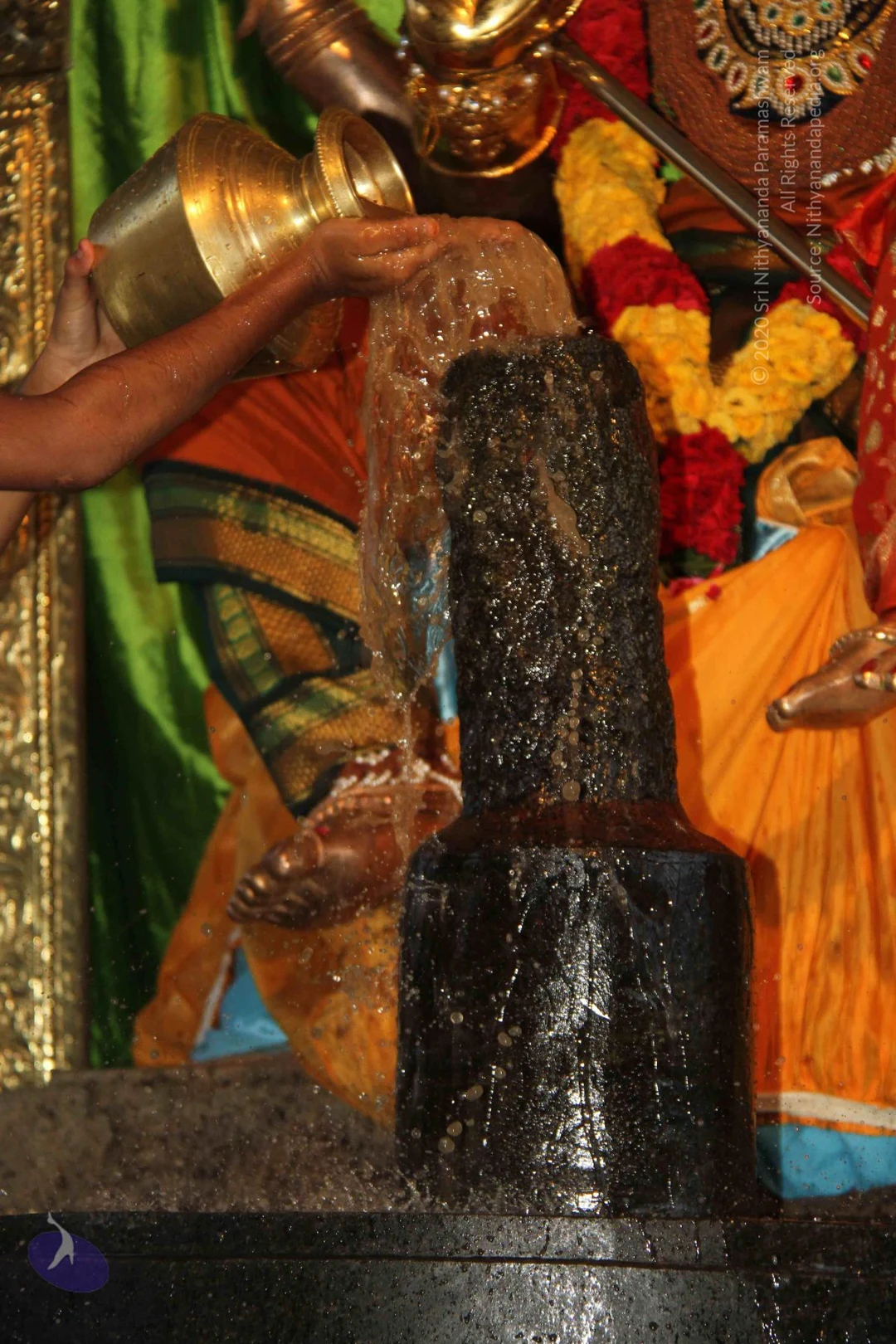
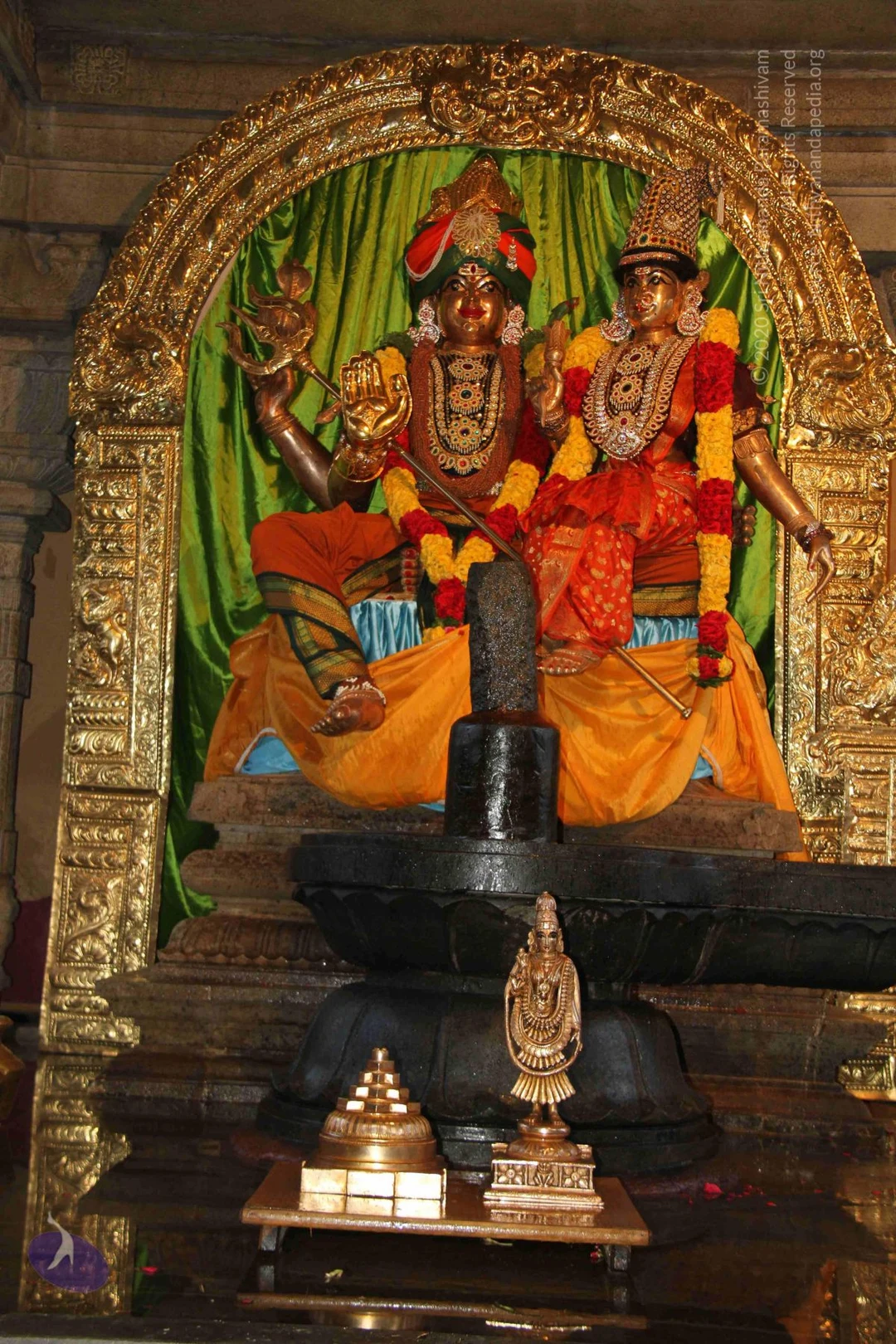
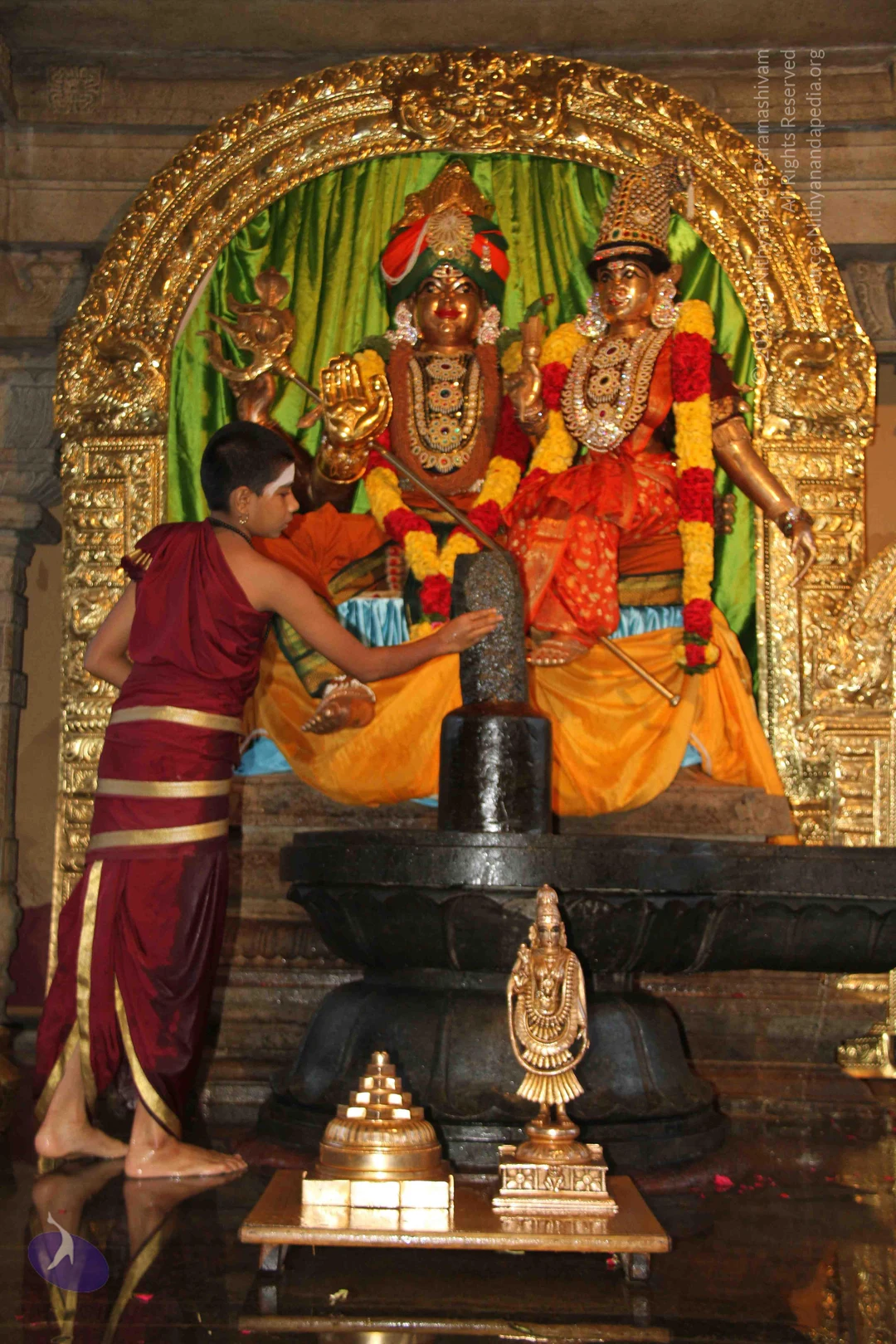
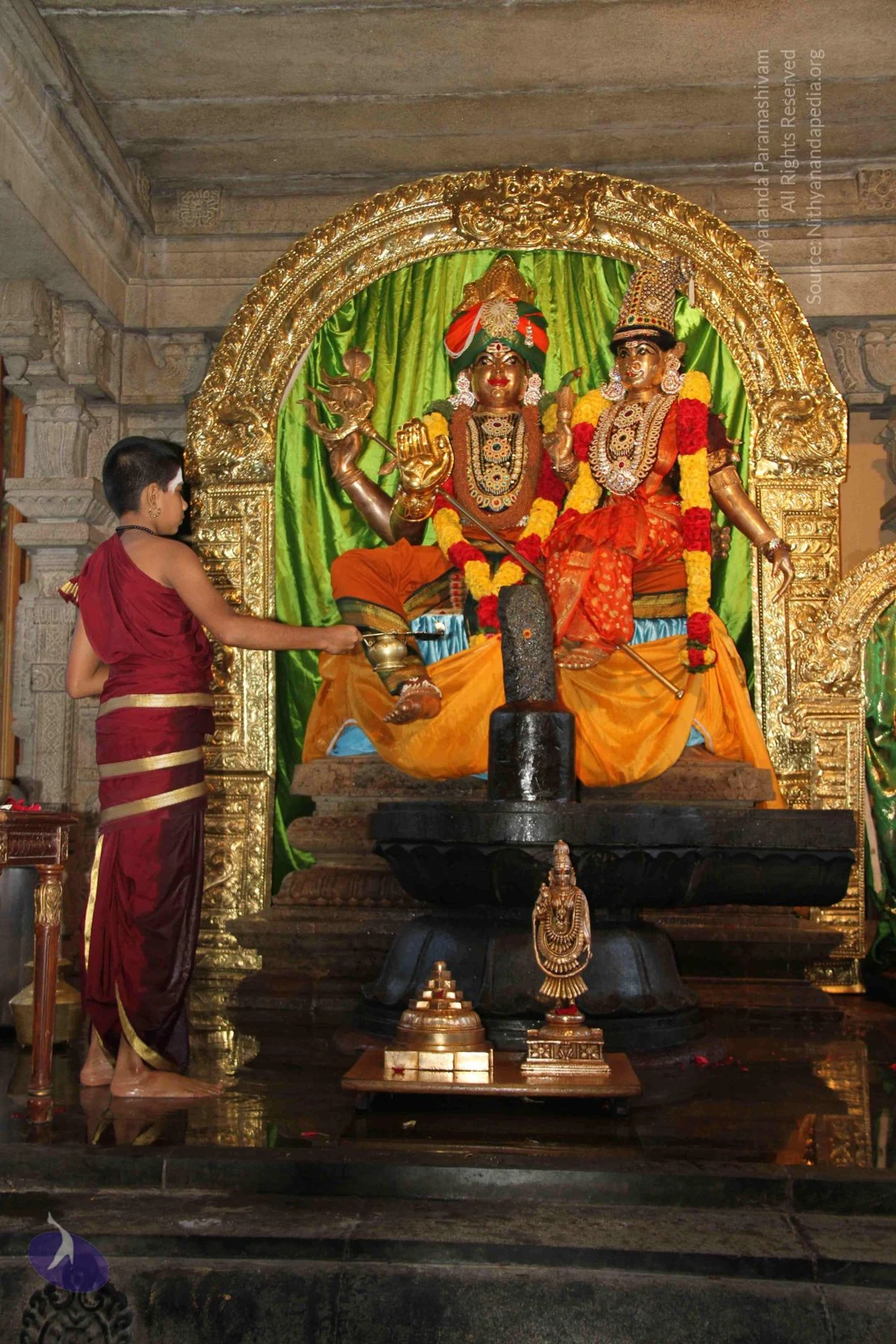
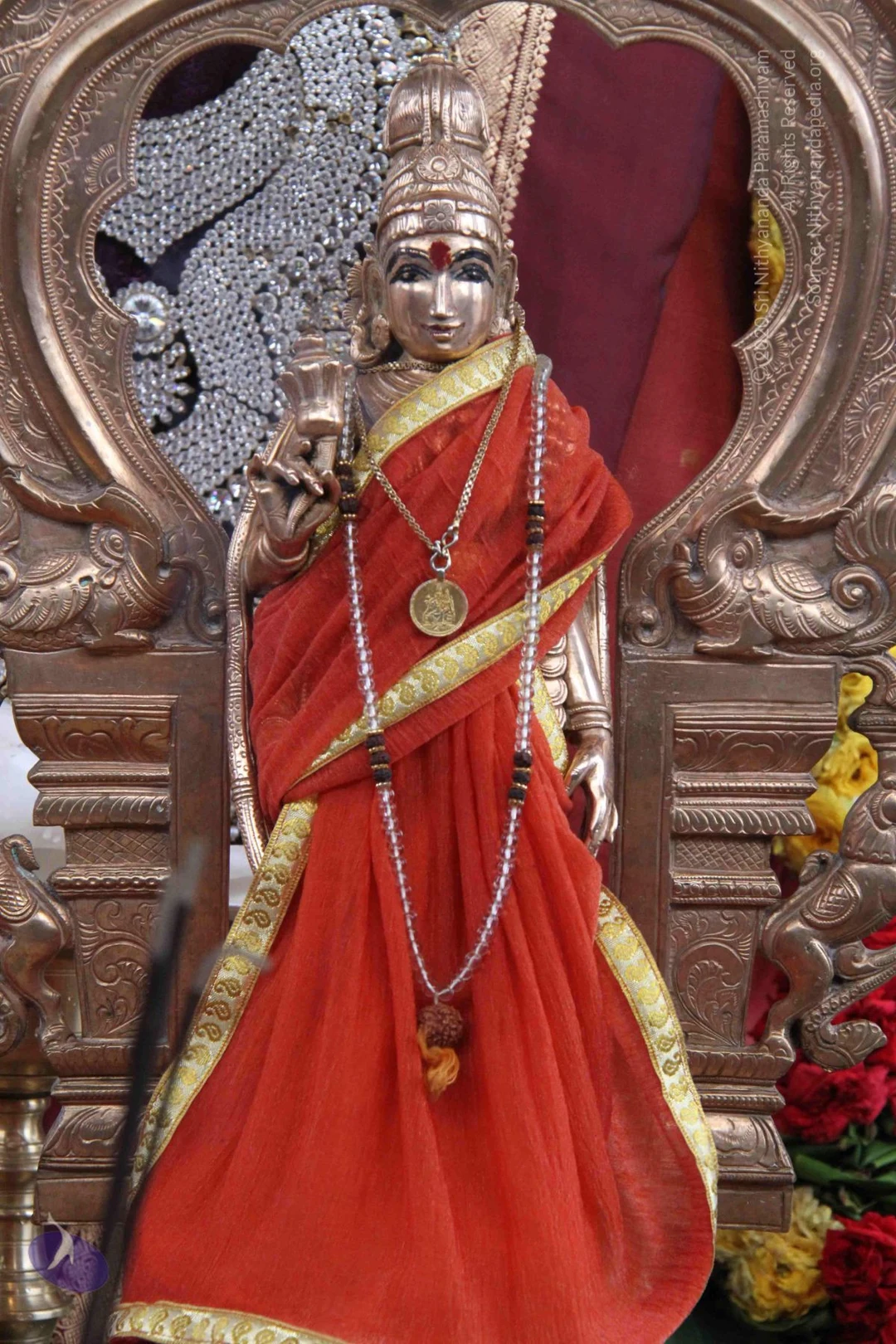
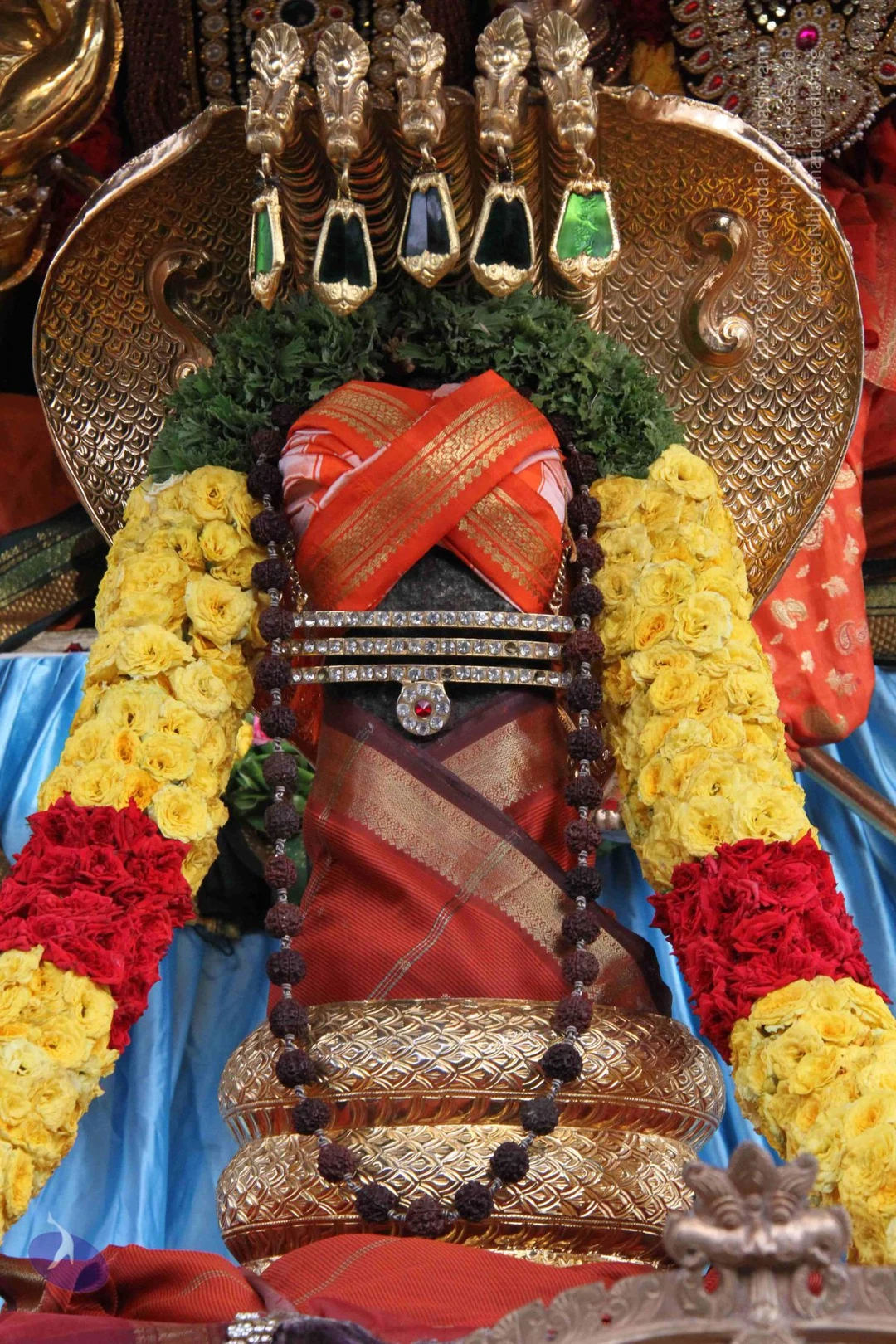
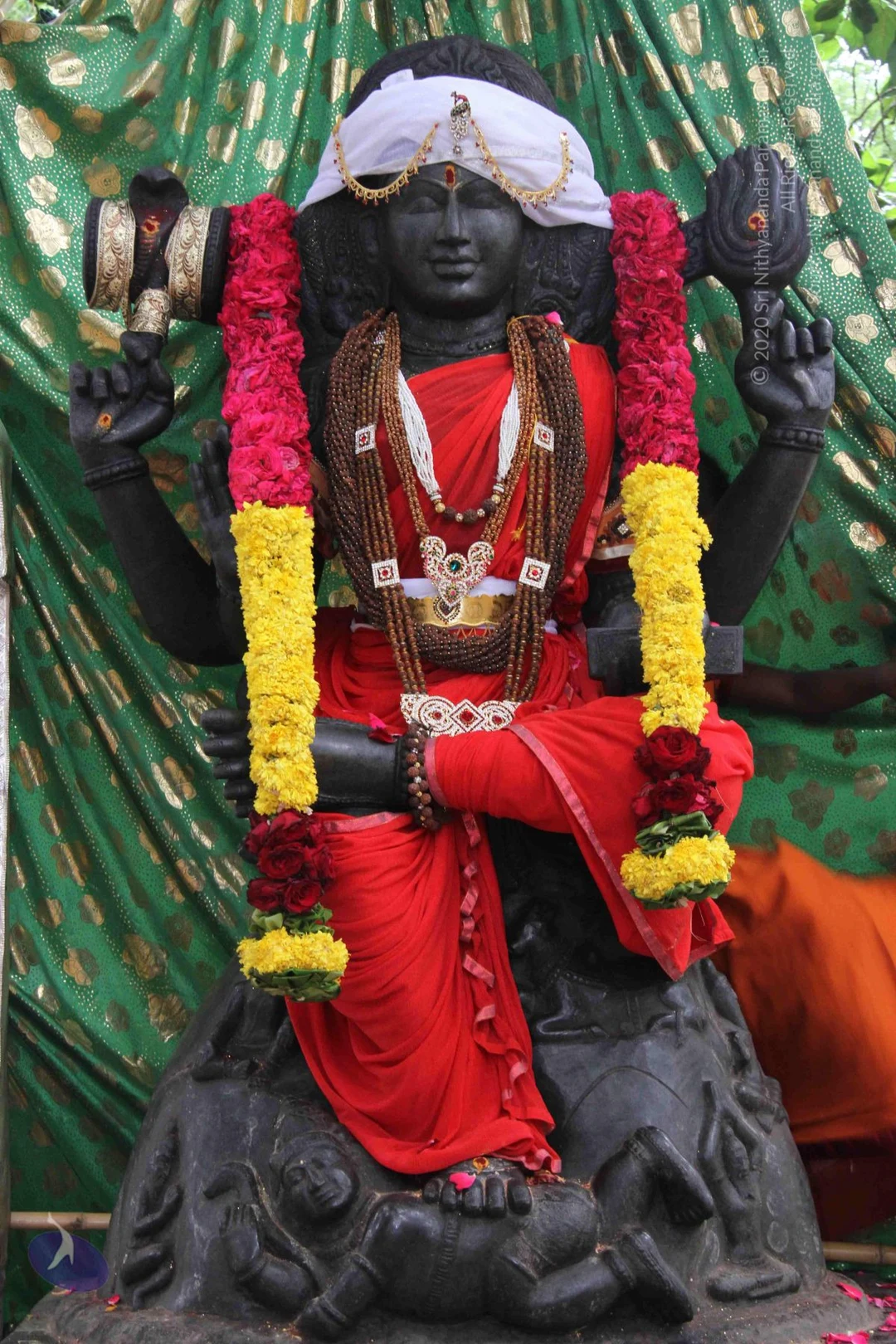
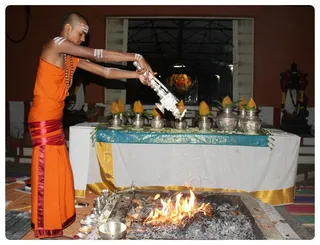
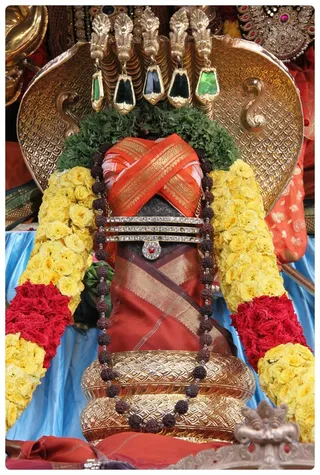
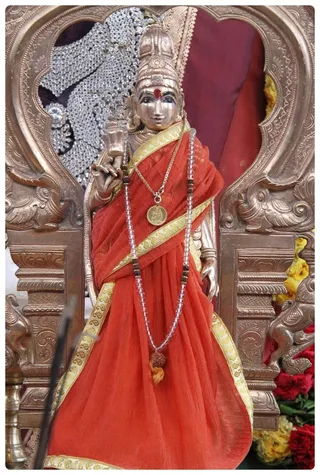
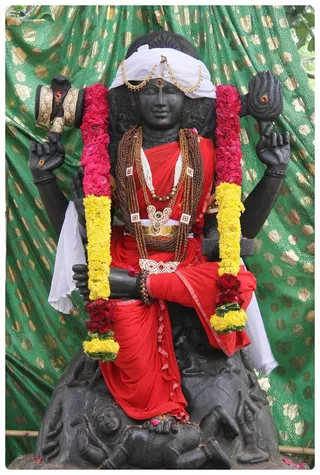
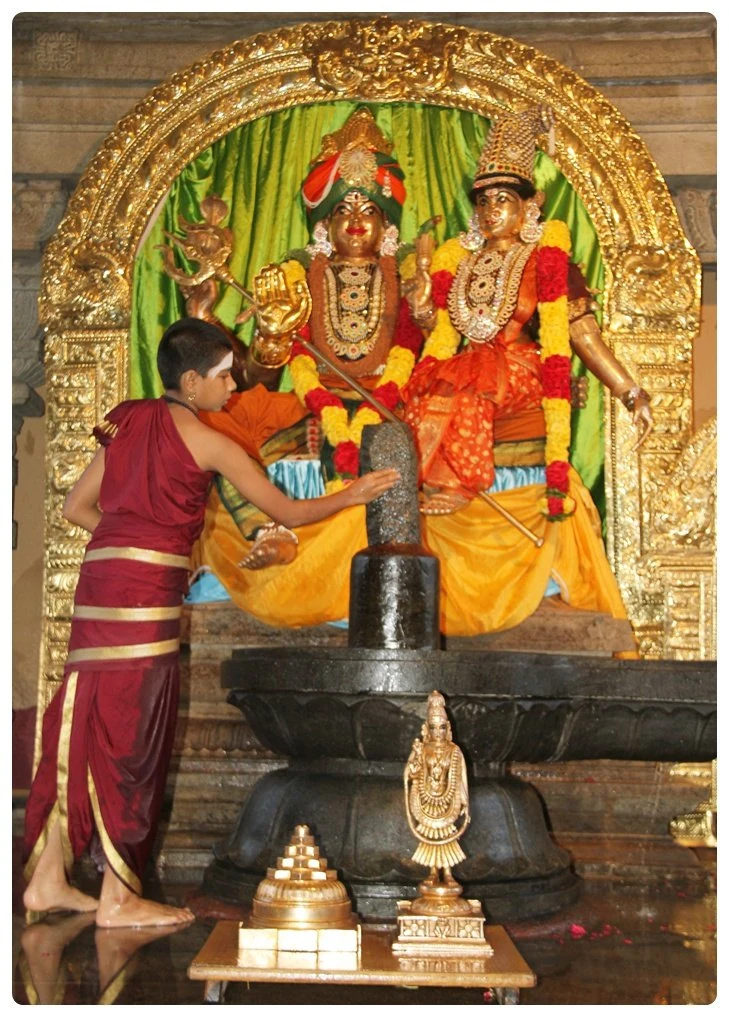
A young priest in a maroon dhoti with gold borders and a bare upper body stands at the left, his right hand resting on a black stone shivalinga set on a dark black yoni-peetha base. Behind the lingam, two golden deity murtis sit on a raised platform framed by a gilded arch and green drape; the left figure wears a red and green crown and a jewelled necklace and holds a trident, while the right figure wears a tall ornate crown, red-orange garments and a garland of yellow and red flowers. In front stand a small golden pyramid-shaped kalasha-style vessel and a small gold deity figure on a tray. The priest's forehead shows white markings. Rose petals lie scattered on the floor.Photograph inside a temple sanctum showing an abhishekam of a Shiva lingam on a black stone yoni pitha. A young priest in a maroon dhoti with a white tilak and bare torso pours water from a brass vessel over the lingam. Behind is a golden-framed shrine with a seated deity murti in orange and yellow garments, adorned with marigold garlands and a crown, and a standing figure in brown and gold dress on the right. Brass puja items and a shrine lamp sit on the wet floor.A photograph of a homa at an indoor temple hall. A young shaven-headed priest in orange dhoti and orange shawl with a maroon-and-gold border, with white tripundra marks on his forehead and arms, pours liquid from a long silver vessel over a row of silver kalasha pots topped with mango leaves and coconuts. Beside him a fire burns in a rectangular fire pit with offerings. The altar is draped in a teal and gold cloth. Background shows a dark deity murti and a red wall.Close-up photograph of a Shiva lingam, dressed for worship. A golden naga hood with five serpent heads rises behind it, and the lingam is wrapped in an orange-red and maroon silk cloth with gold border, bound with an orange turban-like band. Garlands of yellow and red flowers hang down both sides, with a green leaf crown on top and a long rudraksha mala draped over the stone. A jeweled silver band and golden ornaments decorate the base, set on a blue satin cloth. No people are visible.A metal deity murti. The figure wears a red-orange sari with a gold border draped over the shoulder, a red kumkum mark on the forehead, a crown-like headdress, and a clear bead mala with a rudraksha bead and a round pendant. Red and yellow flowers and garlands decorate the base of the shrine, and a brass lamp stand is visible at the lower left. No living people are visible.A dark stone statue of a multi-armed deity seated on a rock plinth, draped in a red cloth and white sash, adorned with rudraksha beads, a jeweled gold necklace, and a white headband with gold chains. Pink and yellow marigold garlands hang over the shoulders, with red roses at the lower ends. Two raised hands hold ceremonial objects, and small carved figures lie at the base before a green cloth with gold dots. No physical people are visible.

Temple Homa Abishekam
40 photosSource gallery
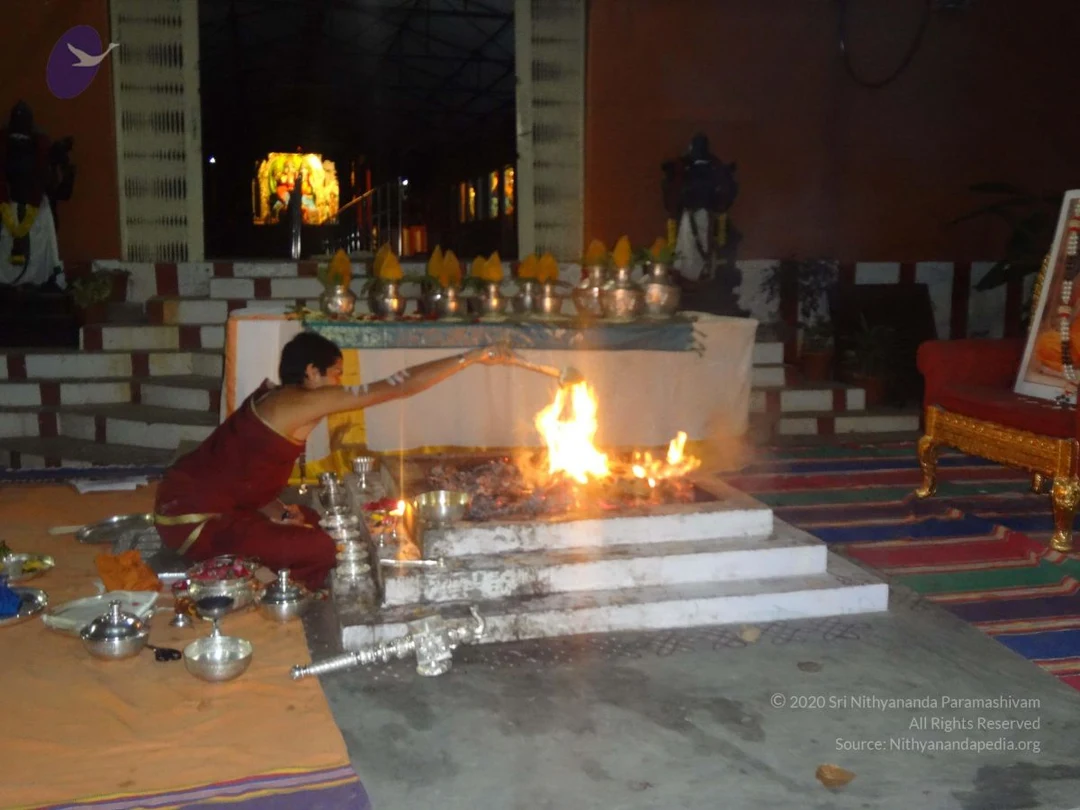
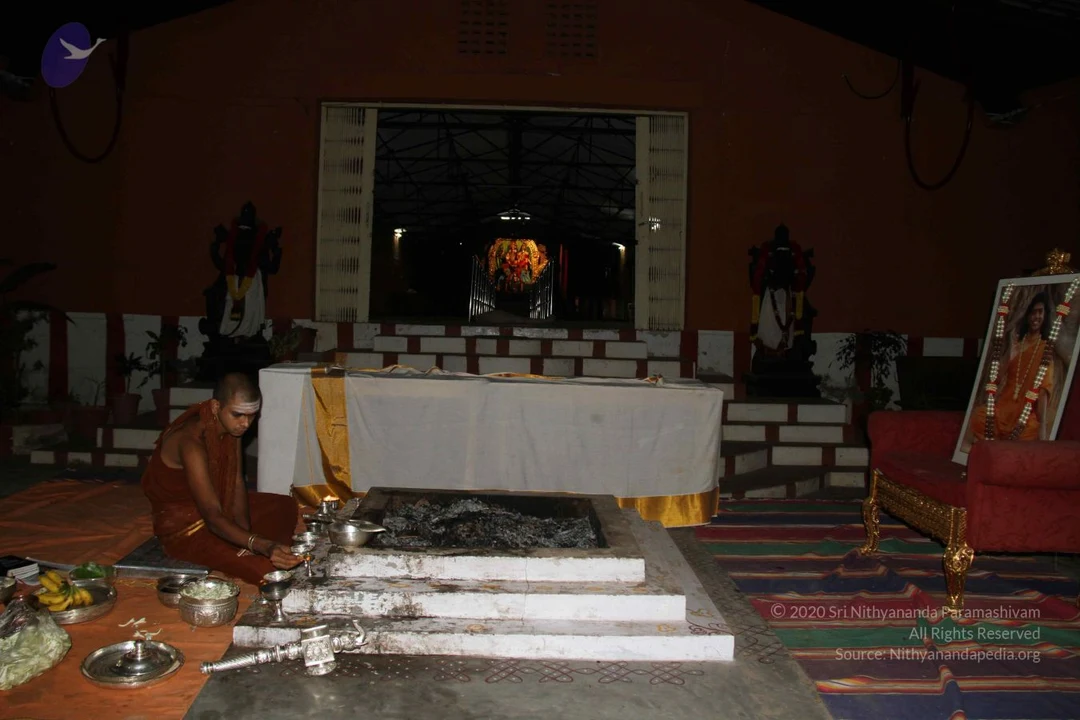
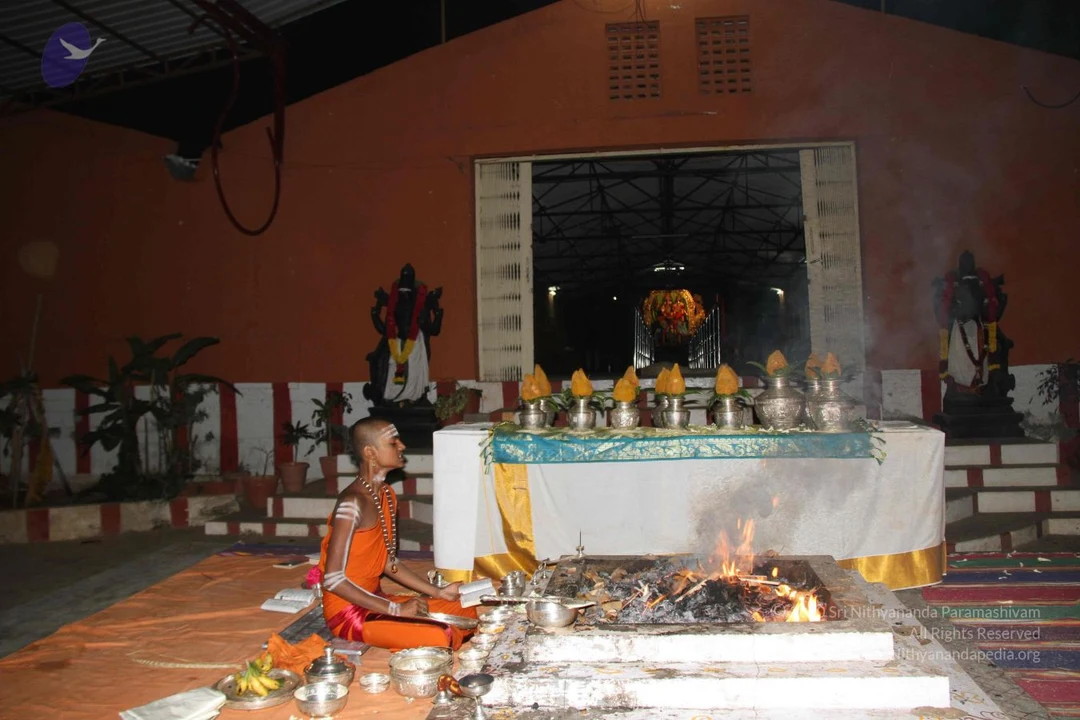
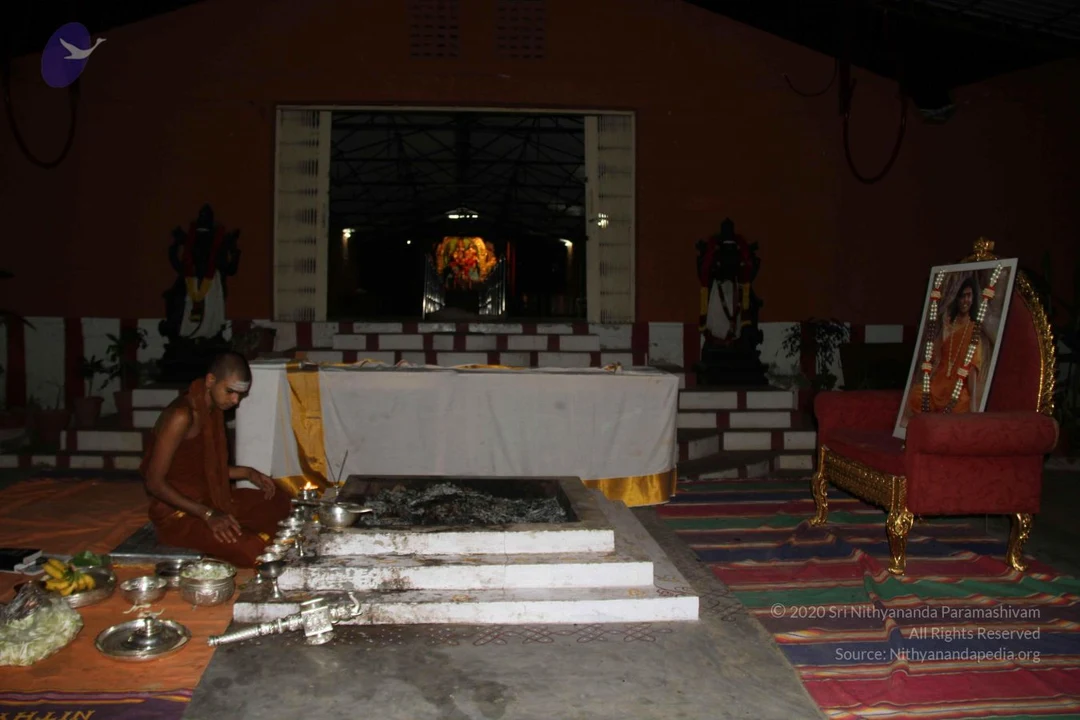
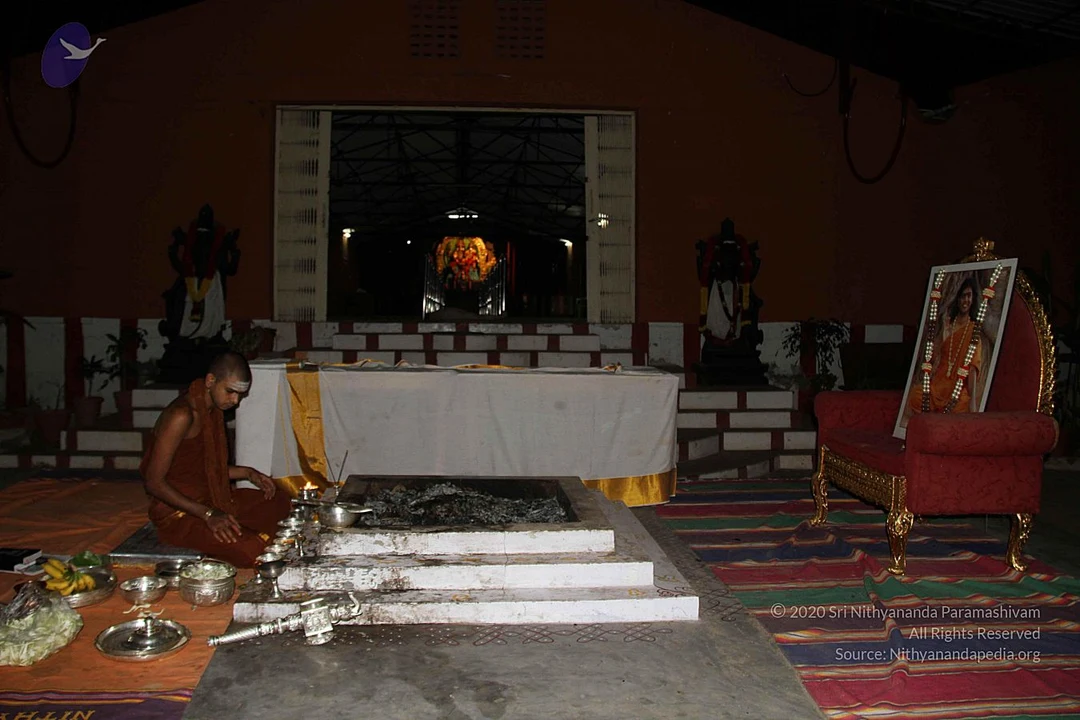
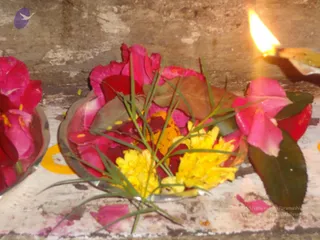
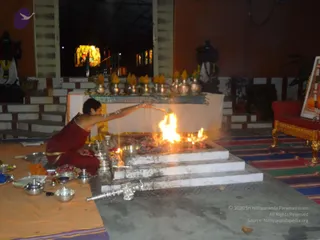
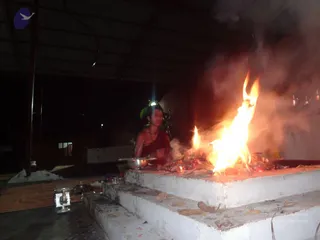
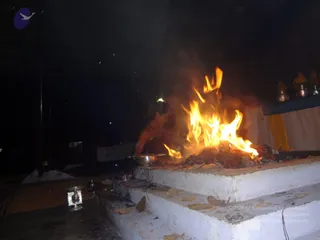
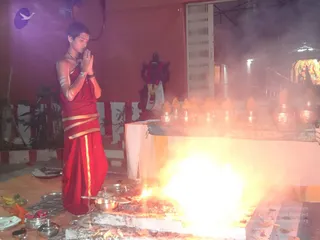
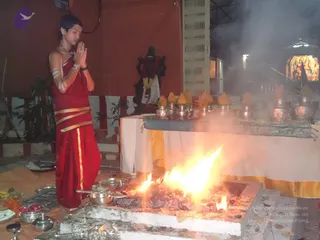
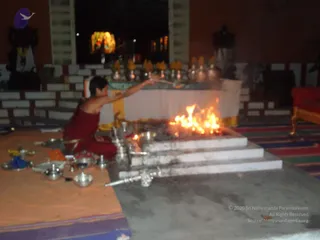
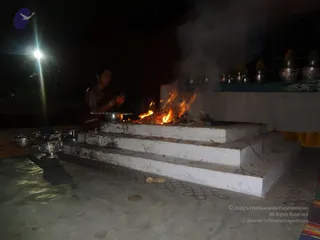
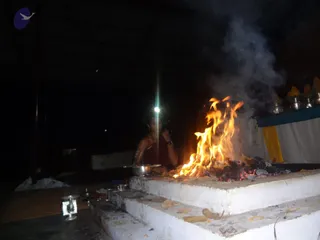
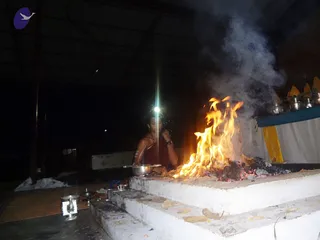
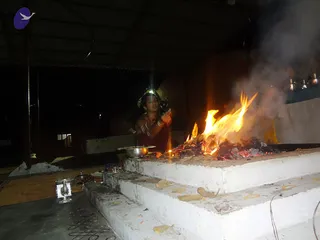
Close-up photograph of a ritual offering on a whitewashed stone surface. Two small metal plates hold pink rose petals, red and yellow marigold flowers, green blades of grass and a few dark green leaves, scattered with loose petals. A lit oil lamp flame burns at the upper right. No people are visible; the scene shows a flower puja offering.A photograph of a homa fire ritual at night in a temple hall. A priest in a maroon dhoti-style cloth, bare-torsoed, kneels at a white stepped fire pit and extends a long ladle toward the flames. Brass and silver vessels with yellow flower decorations sit on a draped altar behind the fire pit, and brass pots and offering plates lie on an orange cloth at left. An illuminated deity murti stands in the background doorway, and a framed portrait with garlands hangs at right beside a red and gold seat. The orange-painted walls and striped floor mats frame the scene. No a person candidate is clearly identifiable in this image.A night homa in an open-sided hall. A flame rises from a white-tiled fire altar with stepped platforms, with smoke billowing to the right. A man in a dark red-brown cloth wrap sits cross-legged behind the fire, with a rudraksha mala and a bowl of offerings in his hands. A small silver lamp and metal vessels sit on the floor to the left, with scattered petals on the steps. The scene is lit mainly by the fire.A large fire blazes on a tiered white concrete altar in a dark hall, flames rising from a heap of burning offerings and leaves. A person with a bare or partly bare upper body, in a reddish-orange cloth, stands behind the fire tending it with a metal ladle or pan. Small steel vessels sit on a blue-topped shelf at right, and a brass lamp rests on the floor at left. This appears to be a homa or yagna fire ritual.A photograph of a yagna or homa at a temple. A young man in a red dhoti and red upper cloth edged with gold bands stands with palms pressed together in namaskar, eyes closed, a red tilak on his forehead and white sacred markings on his arms. Beside him a large fire blazes on a raised altar, with rows of brass kalashas and oil lamps set on a white-draped table. Brass plates with flowers, fruit and offerings lie on the floor. A dark deity murti with garlands stands in the background, and a smoky, dimly lit hall surrounds the scene.A young male priest in a red dhoti with gold-bordered edges stands with palms pressed together in namaskar beside a flaming fire pit (homa) on a white-tiled platform. White ash markings on his arms and forehead, and rudraksha-style beads at his neck. Behind him, a dark stone deity murti adorned with a garland stands on a white-draped table lined with kalasha pots topped with saffron-coloured cones, and a metal lamp stand and bowls of flowers sit in the foreground. Smoke fills the warm-lit hall, with a bright decorated shrine visible at the right.

Paduka Puja

10 photosSource gallery
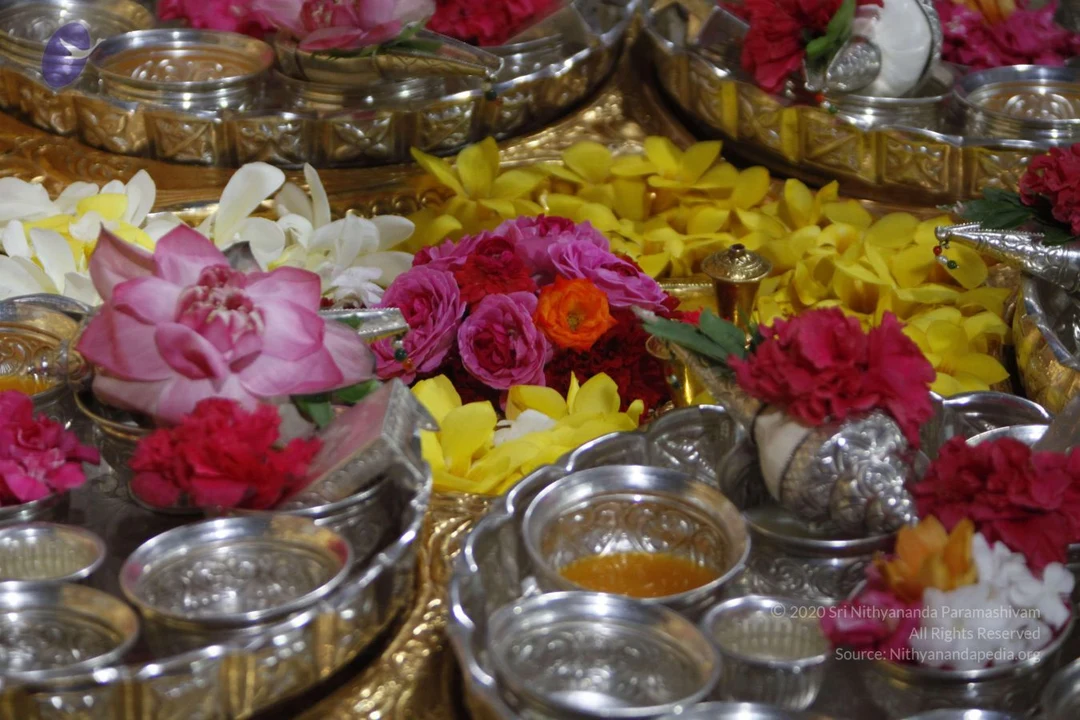
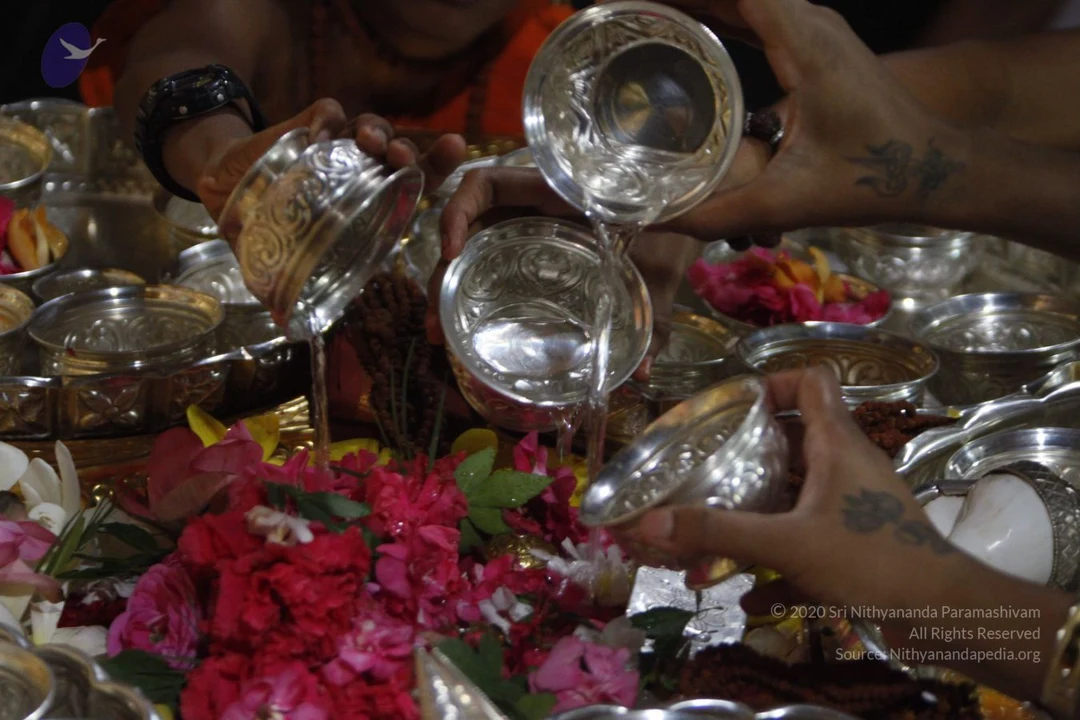
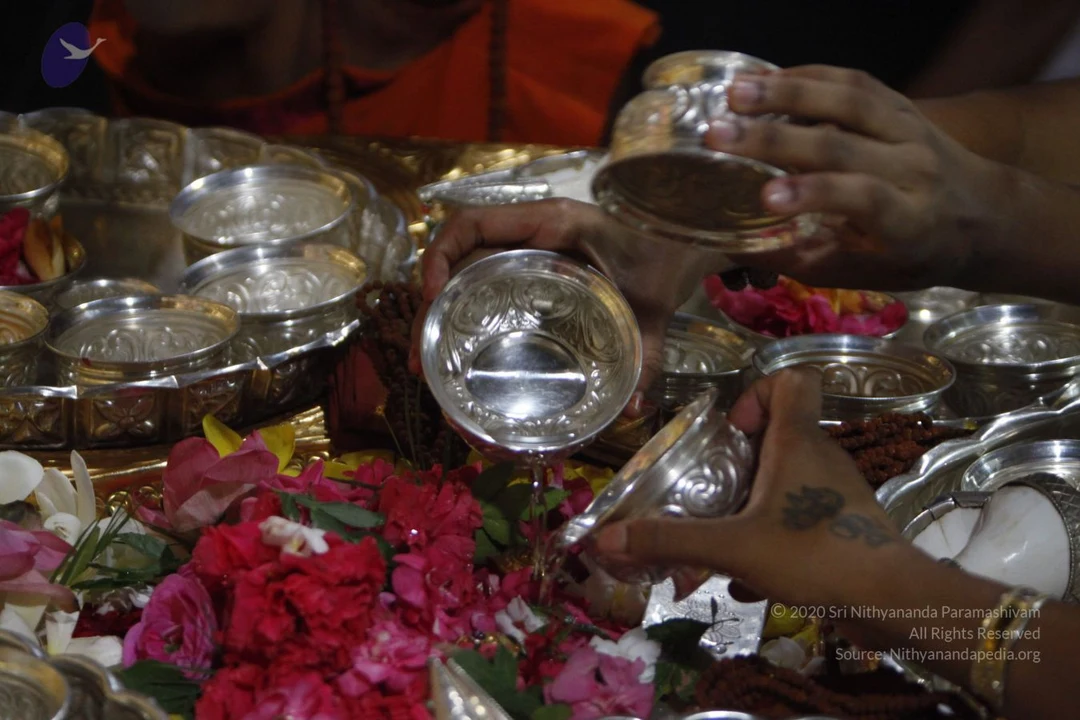
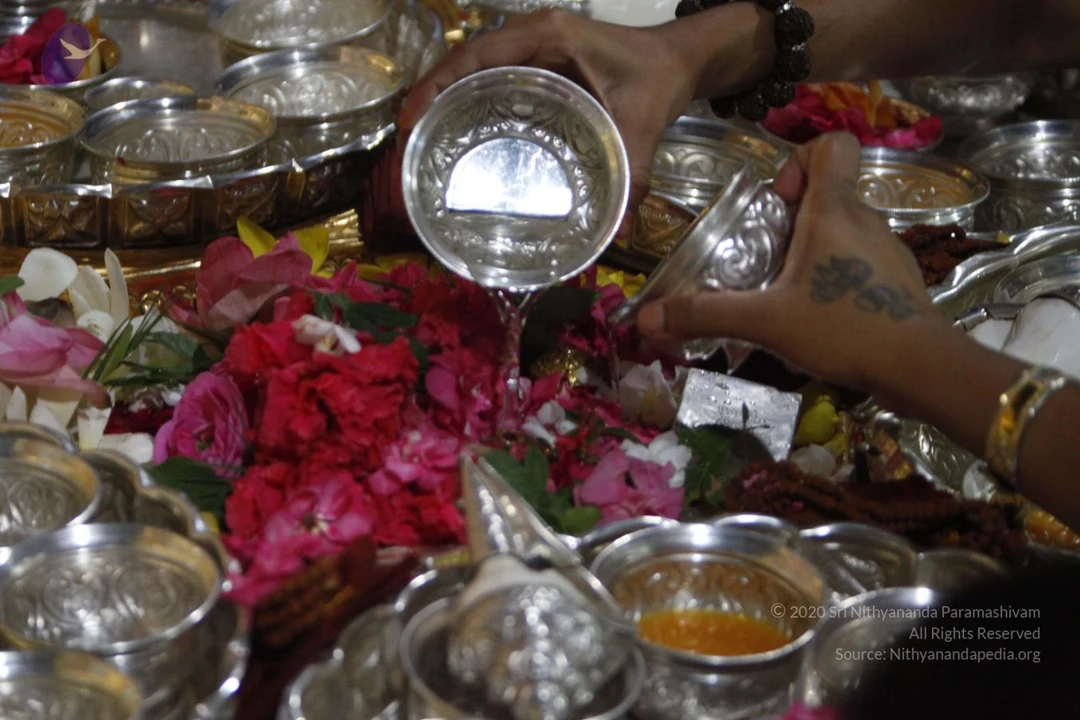
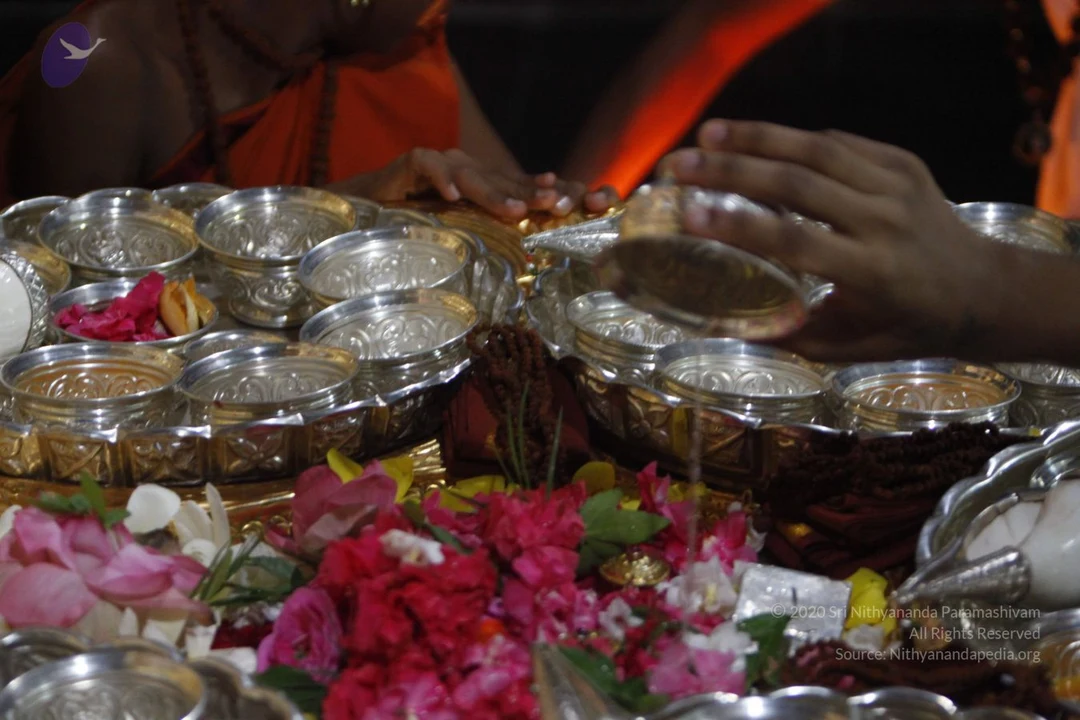
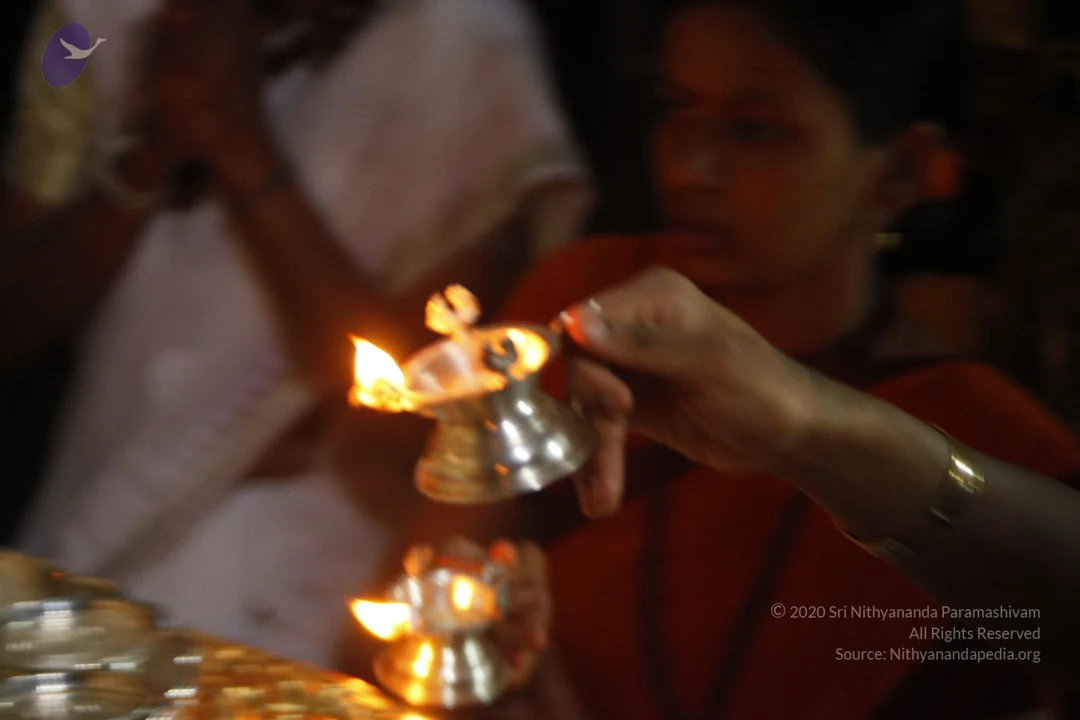
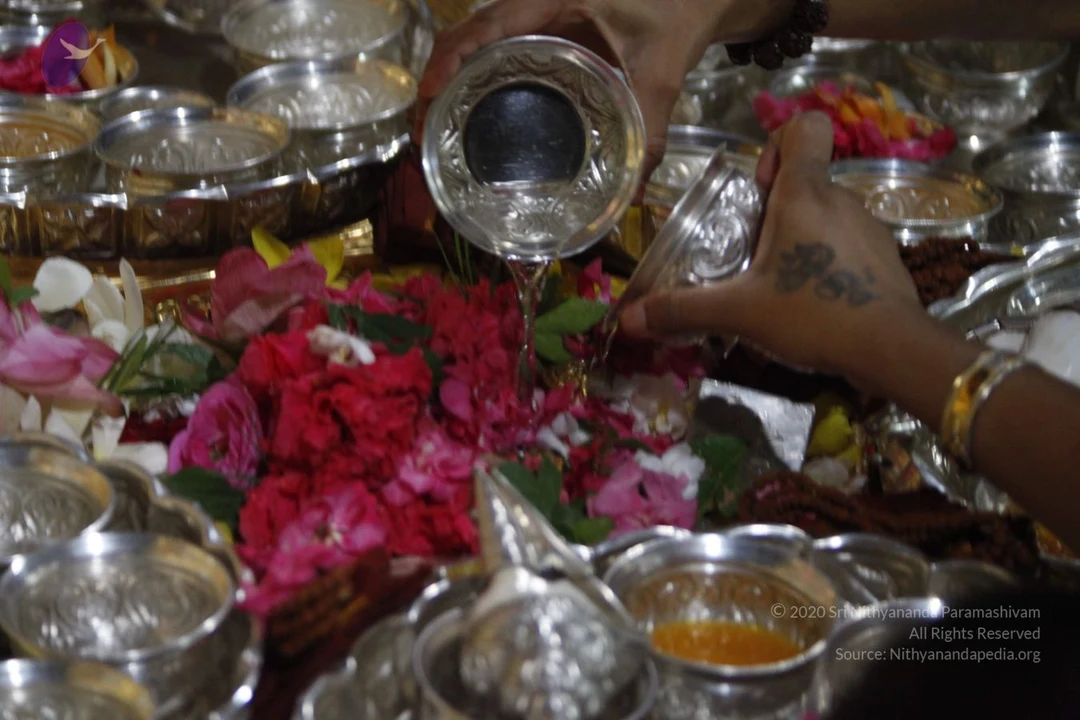
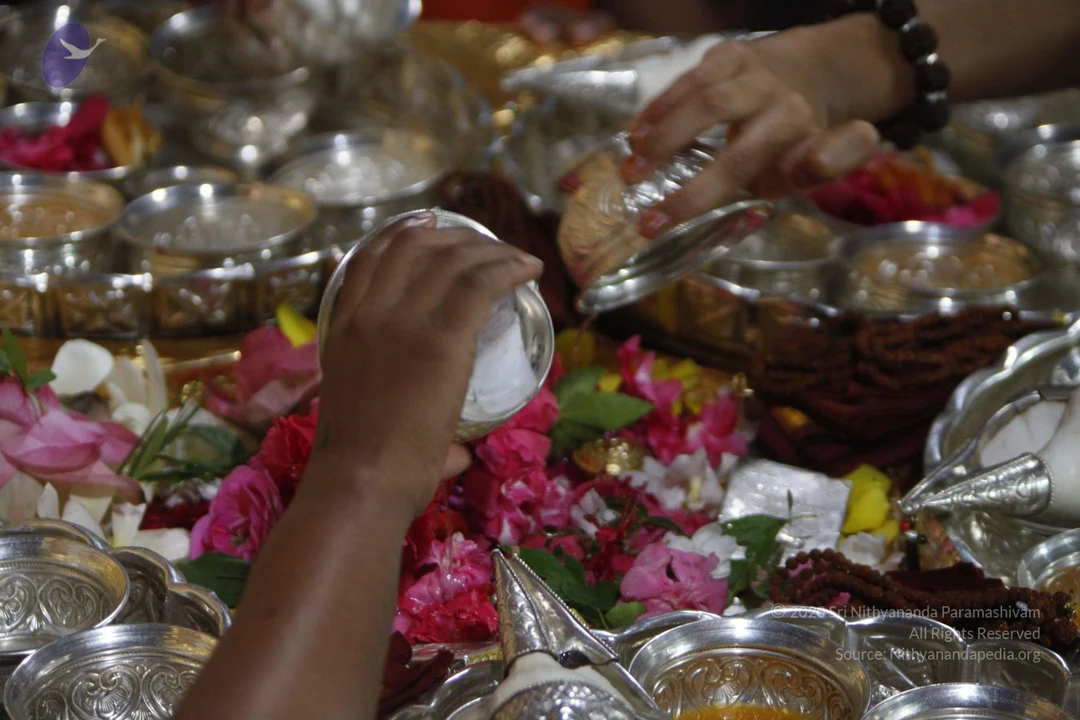
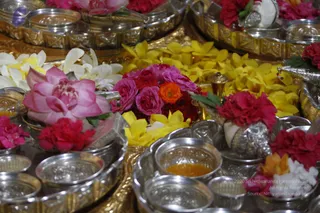
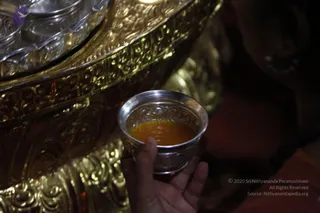
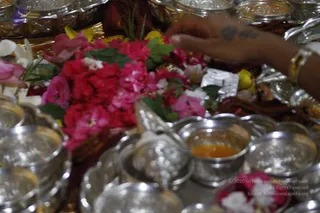
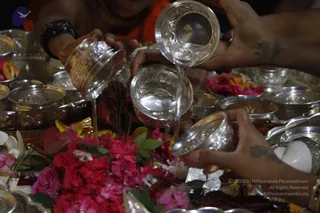
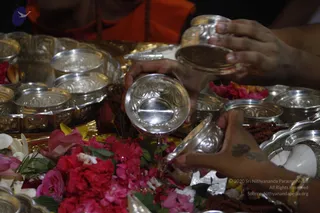
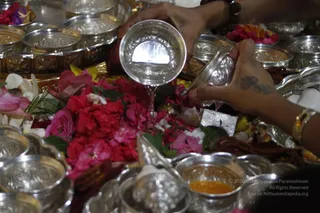
Close-up photograph of an arranged puja offering on a gold-toned tray. Silver bowls and small silver vessels hold orange-yellow sweet, pink and red roses, a large pink lotus, orange marigold-like blooms, yellow plumeria or champa flowers and white blossoms. A silver kalasha-style vessel and a small brass lamp stand among the flowers, with green leaves scattered throughout. No people are visible, and no a person candidate appears in the scene.Close photo of a hand holding a small silver cup filled with a golden-orange liquid. Glass bowls or jars sit at the upper left. The background is dark, with a glimpse of orange cloth and a bead necklace at the right edge. No face is visible.Close photograph of a ritual offering arrangement with many polished silver and brass bowls and plates. Bright red and pink flowers, with some white blossoms and green leaves, fill the centre. A small silver bowl holds an orange substance, and a silver ladle rests among the vessels. A woman's hand with a dark tattoo and gold bangles reaches into the arrangement at the top right. No person's face is visible, and the image is blurred in places. The scene suggests puja items being prepared for an offering.Close-up of hands pouring water from silver vessels into a bowl of pink, red and white flowers during an abhishekam-style ritual. Ornately engraved silver cups and bowls surround the flowers, and rudraksha beads lie among the offerings. Several hands with tattoos and a wristwatch are visible, one wearing an orange garment in the background, with a tattooed arm in the top right. Two people are partly visible, so the count is low.Close-up photograph of a ritual offering being prepared on a golden tray. Several hands hold ornate silver bowls and cups, one pouring or lifting a silver cup over a heap of red, pink and white flowers. Rudraksha beads are visible among the bowls. Behind them, a figure in orange robes with rudraksha malas is partly visible at the top edge, and a wrist bears a tattoo. The setting suggests a puja or abhishekam offering.Close-up photo of a puja arrangement with silver bowls and a silver vessel being poured. A hand with a rudraksha mala on the wrist and a tattooed hand hold a silver cup and a silver spouted vessel over a heap of red and pink flowers and white blossoms. Ornate silver bowls surround the offerings, one containing orange liquid, and red flowers and green leaves are scattered across the tray. The scene suggests abhishekam or padapuja preparation. No identifiable face is visible, so no person is attributed to a person.
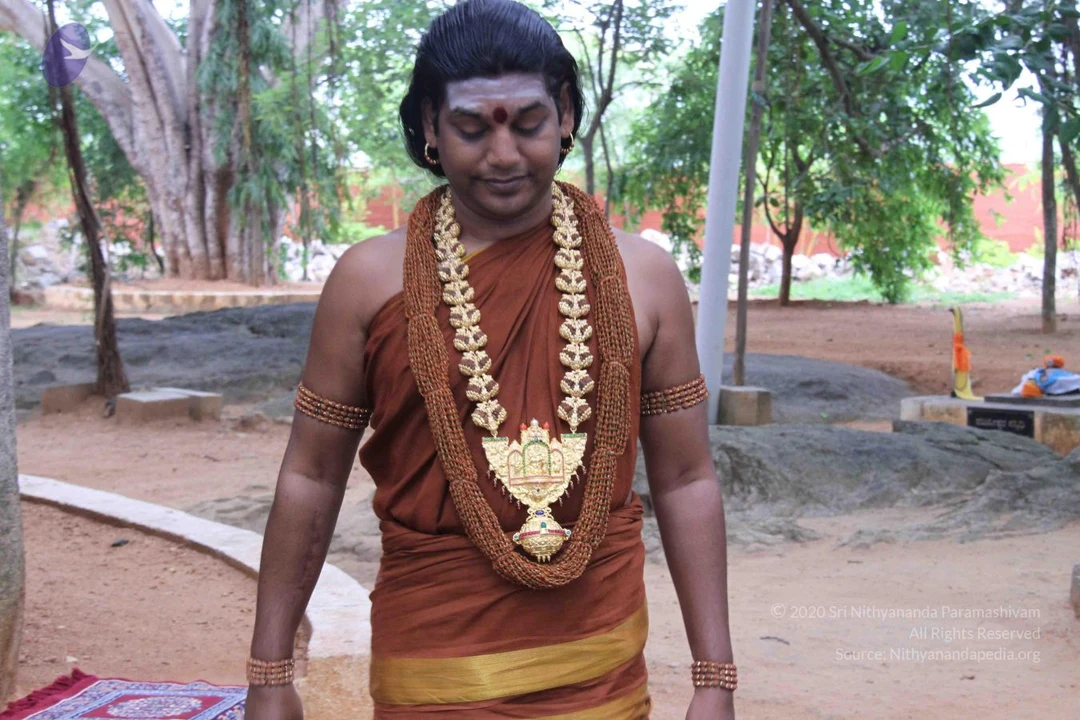
Swamiji's Blessings

1 photoSource gallery
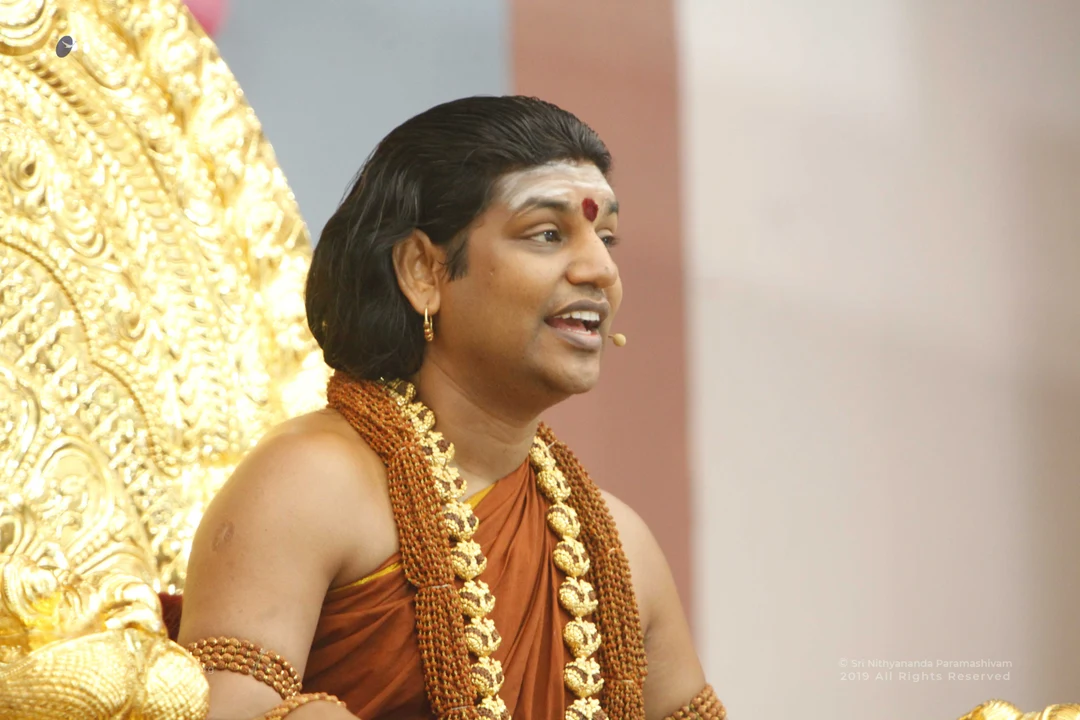
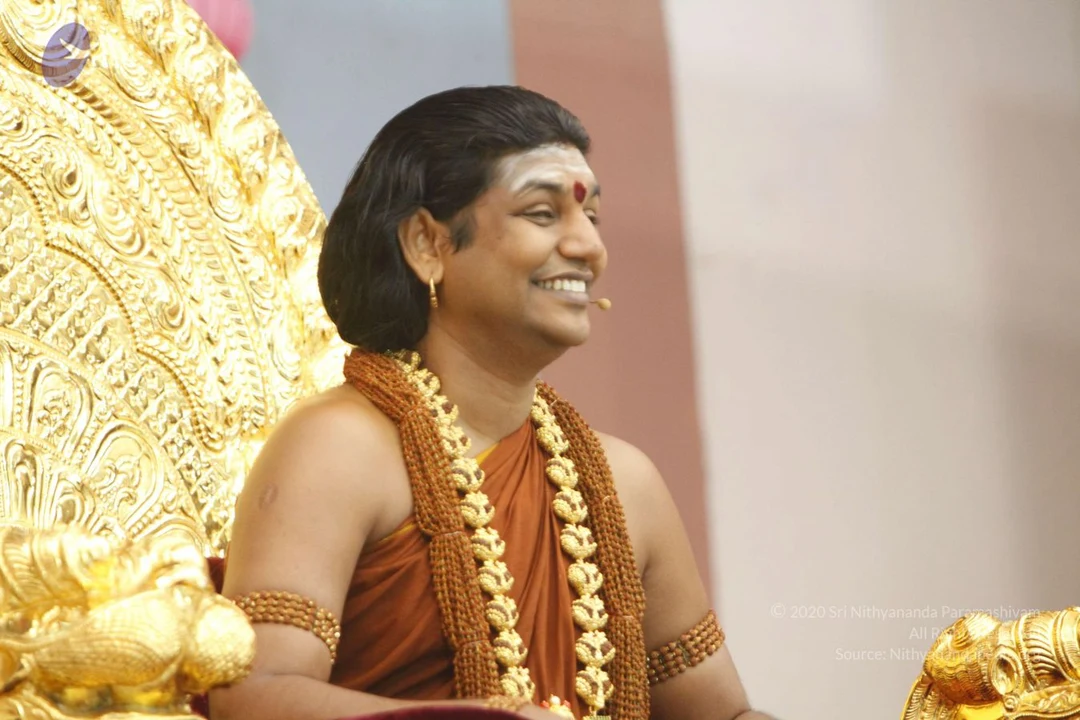
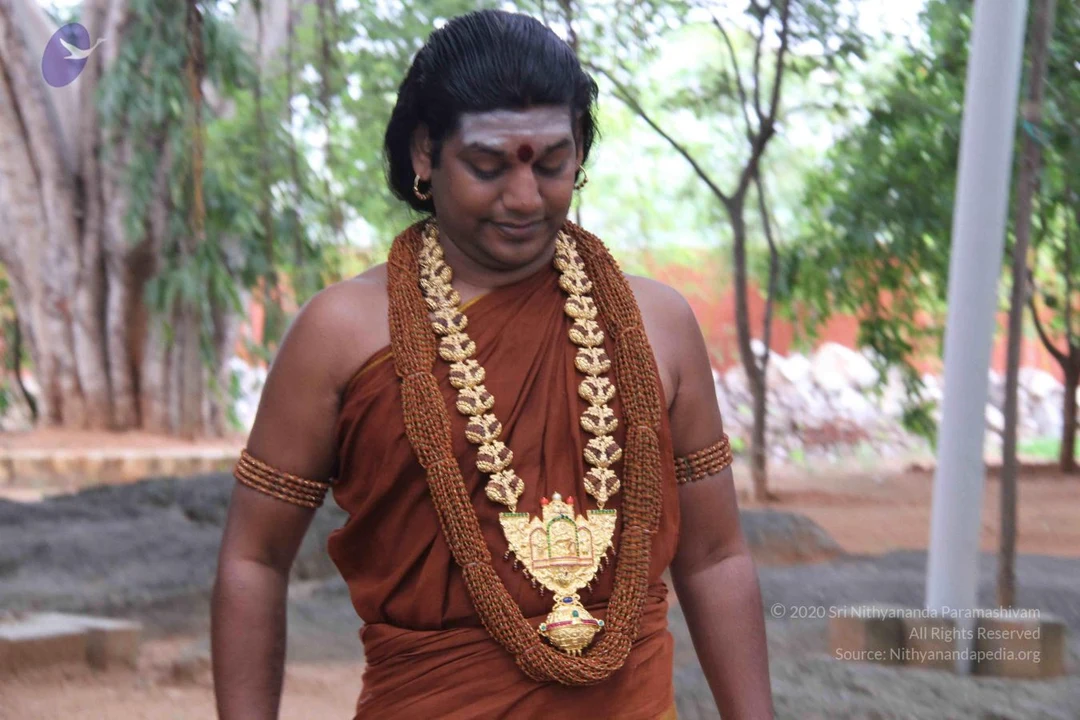
A smiling man with swept-back dark hair sits on an ornate gold throne with carved floral relief. He wears an orange-saffron cloth draped over bare shoulders, a gold-bead and rudraksha-style garland, bronze armbands, a white forehead marking with a red dot, and a small gold earring. A headset microphone is visible near his face. a person is seated and speaking at a satsang, with appearance cues of saffron cloth, rudraksha-style mala, gold ornaments and swept hair. The background shows a pink wall and a gilded lion-shaped armrest.

Nithya Satsang

6 photosSource gallery
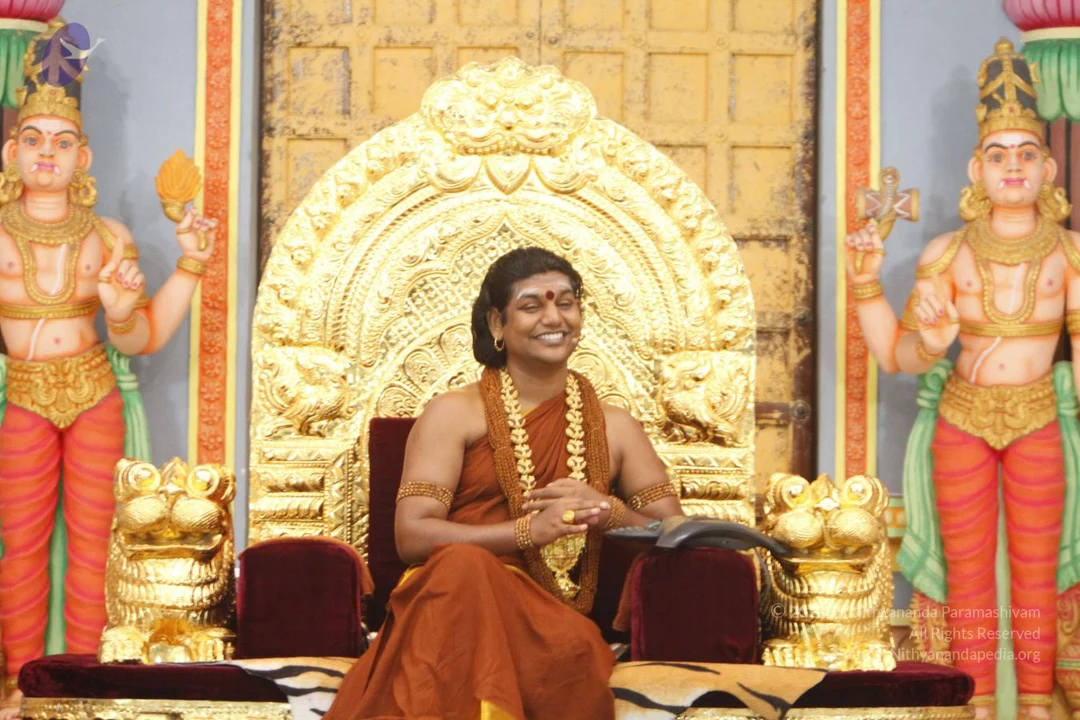
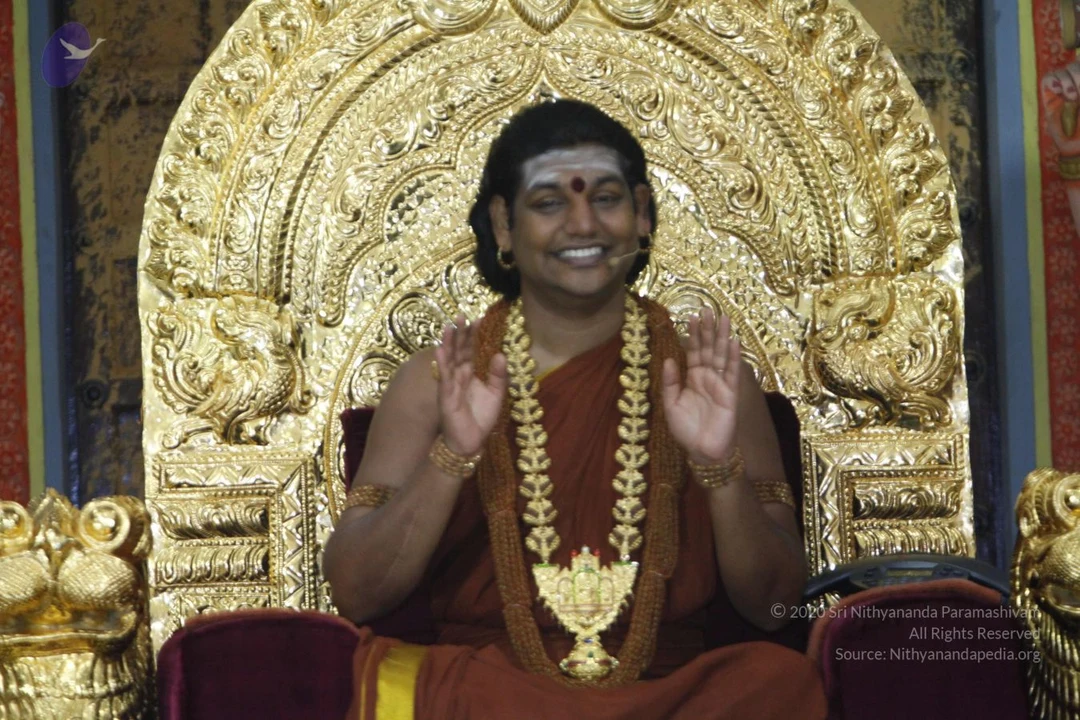
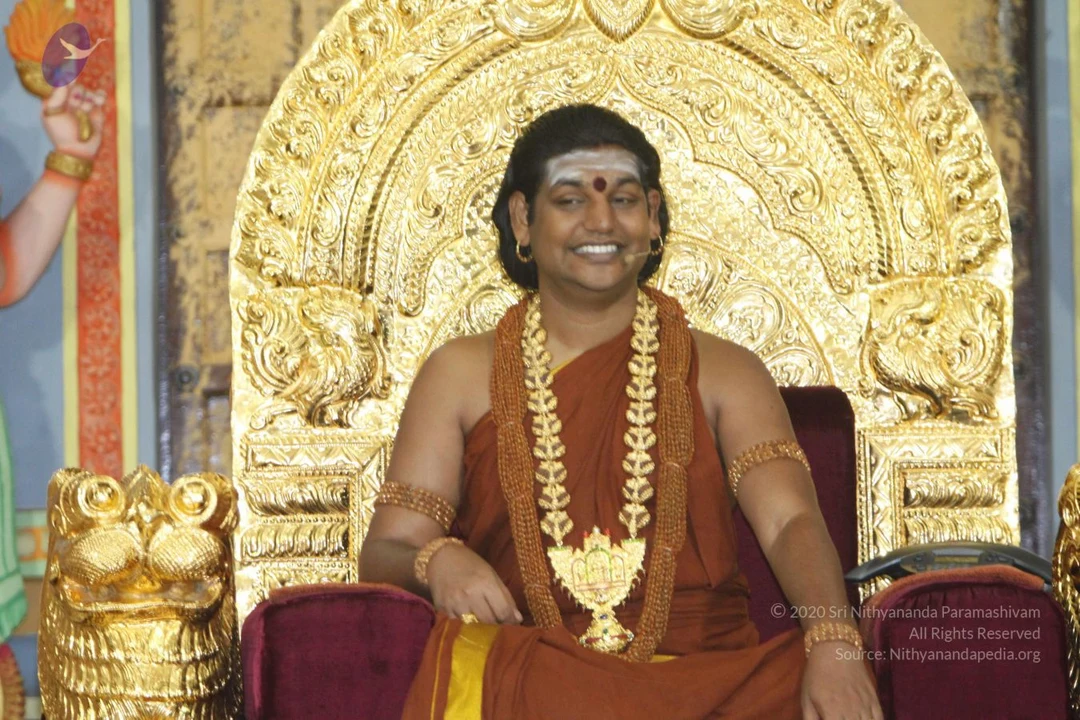
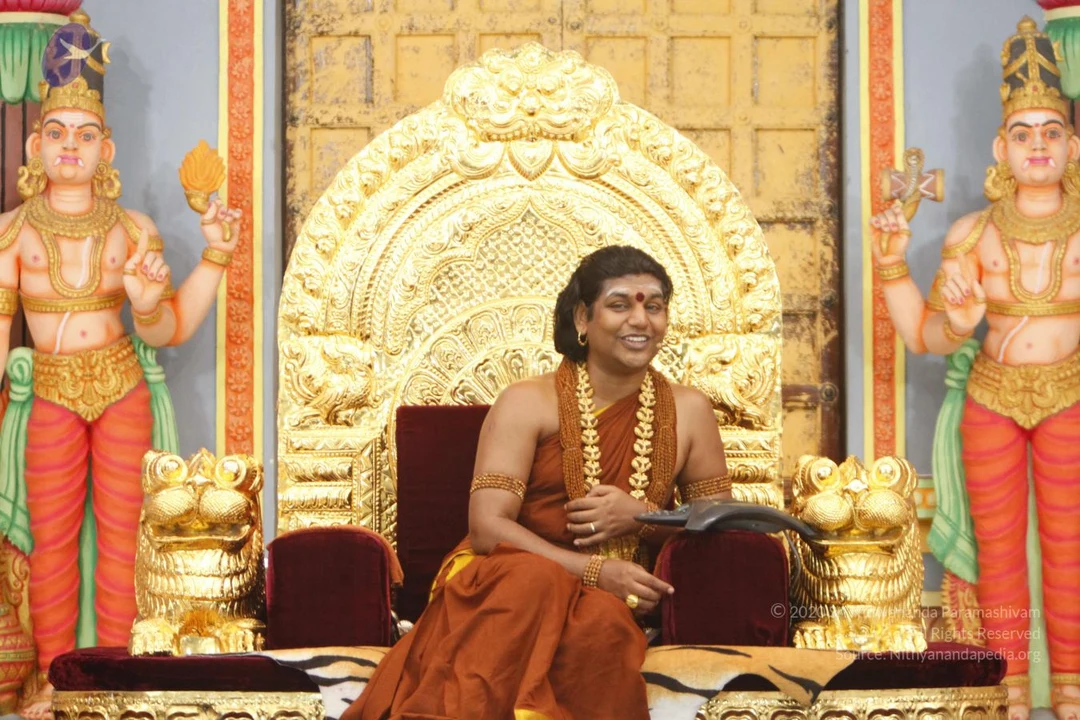
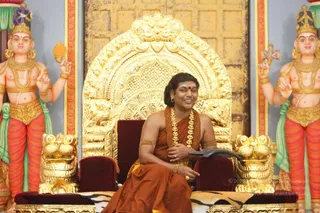
A smiling man with swept-back long dark hair sits on a red velvet seat before an ornate gold-embossed backdrop. He wears an orange-saffron robe draped over one shoulder, a long gold-and-rudraksha necklace, gold bracelets and armlets, a gold earring, a red bindi and white tilak. He rests one hand on his chest and the other on his knee; a small black conference microphone sits beside him. Swamiji (probable) is shown in an appearance-based label from the saffron robe, long hair, rudraksha and gold ornaments, seated as a teacher at a satsang.A smiling man sits on an ornate gold throne carved with floral and scrollwork motifs. He wears a saffron-orange cloth draped over his bare shoulders, a long multi-strand gold-and-brown beaded necklace with ornate gold pendants, and gold beaded armlets. He has swept-back dark hair, a white forehead marking and a red bindi, with a small microphone clipped near his face. a person: the saffron cloth, long swept-back hair and ceremonial gold necklaces are consistent with the page's reference to the event, though the identification is based on appearance only.A smiling man with long swept-back dark hair sits on an ornate golden throne with embossed floral and foliate carving. He wears an orange-saffron wrap over one shoulder, a long gold-and-beaded ceremonial necklace with a second gold mala, beaded gold armbands, and gold hoop earrings. A red bindi and white vertical tilak mark his forehead, and a small microphone is clipped near his face. Appearance-based probable candidate: Swamiji (probable), identified by long swept-back hair, saffron clothing, ceremonial gold necklaces and a throne. He is seated in a satsang setting.A smiling man sits on a red velvet chair before an ornate gold-toned repoussé backdrop with floral and scrollwork patterns. He wears a rust-orange saffron-coloured wrap over bare shoulders, with a thick golden-brown beaded mala and a long gold leaf-motif necklace, gold bangles on both upper arms and small gold hoop earrings. A white forehead marking and a red bindi are visible, and a small headset microphone is clipped near his ear. Swamiji (probable) is shown in his seated discourse setting, with his long swept-back hair, saffron wrap, ornate gold necklaces and ceremonial adornments.A smiling man sits on an ornate gold throne with a deep red velvet seat and carved lion-head armrests, a tiger-striped rug beneath. He wears an orange-saffron shawl draped over bare shoulders, a yellow undergarment, a rudraksha mala and ceremonial gold necklaces, gold armbands and bangles, and a gold ring. A red bindi sits on his forehead and a telephone handset rests on his lap. Gilded deity figures with raised hands flank the throne on the sides. a person seated on the throne, the presiding speaker at a satsang.A smiling man in saffron-orange robes sits on an ornate gold throne with a carved arched backrest and lion-form armrests, draped with a dark red cushion and a tiger-striped cloth. A long gold-beaded necklace and garland hang on his chest, with gold bangles on his wrists and a red tilak on his forehead. Two large painted guardian statues flank the throne, one on each side, wearing gold crowns, gold jewellery and red-and-green dhoti-like garments, one holding a flame-like lamp. A gilded panelled door stands behind.

Sarva Darshan

7 photosSource gallery
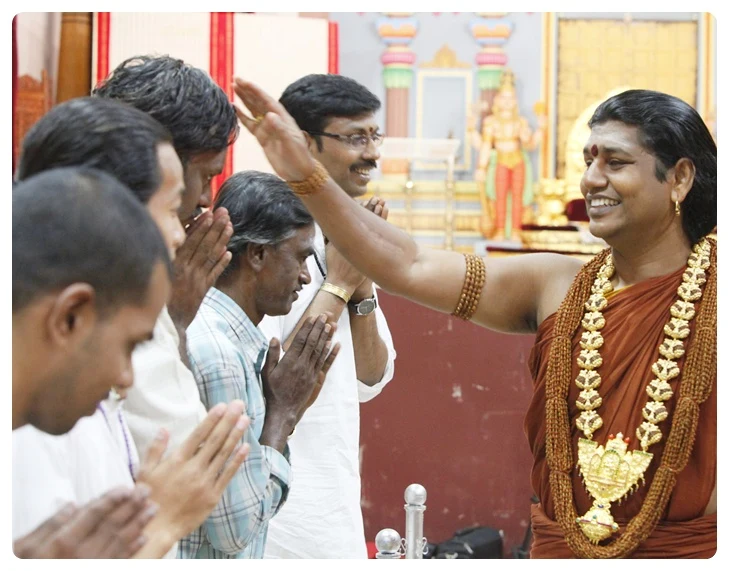
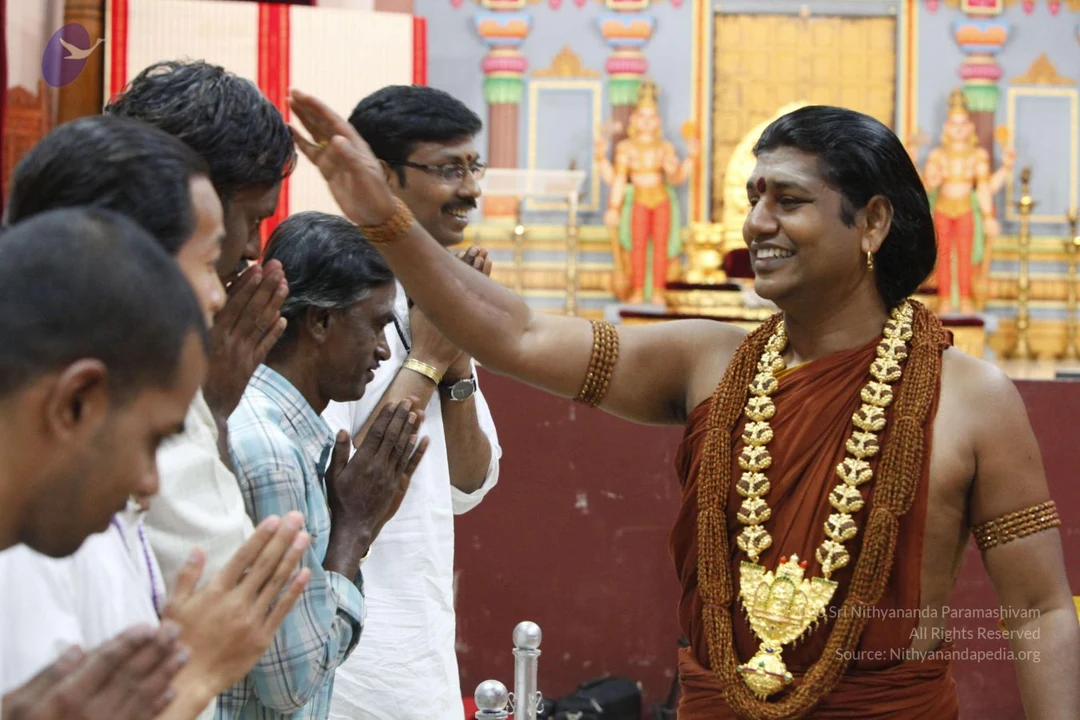
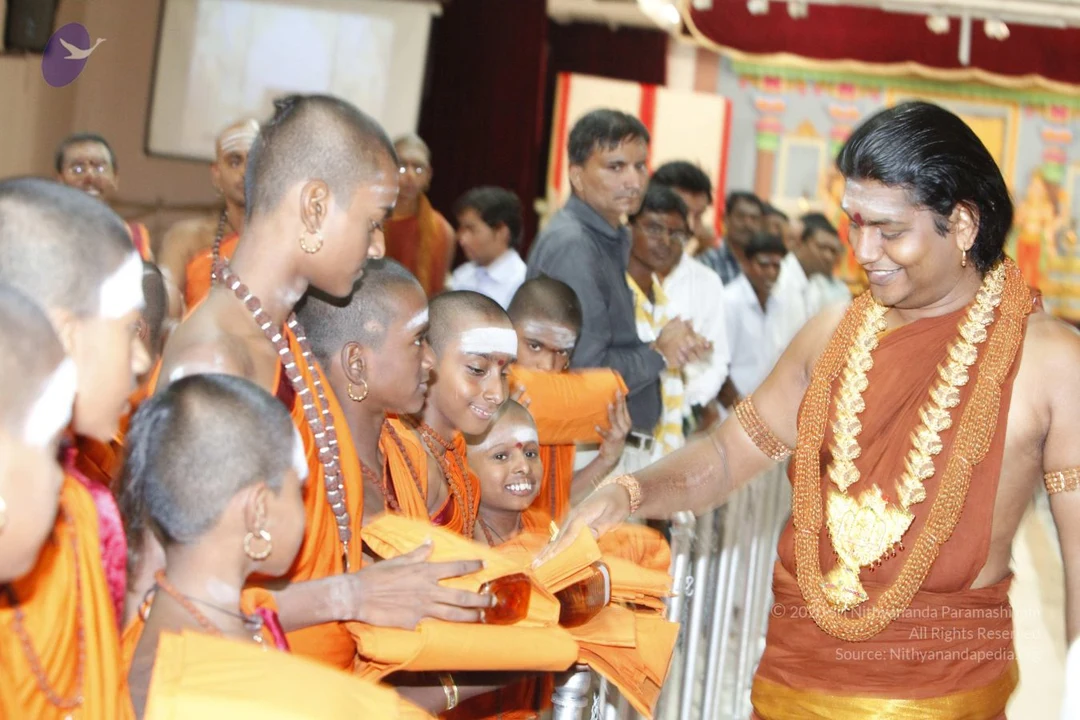
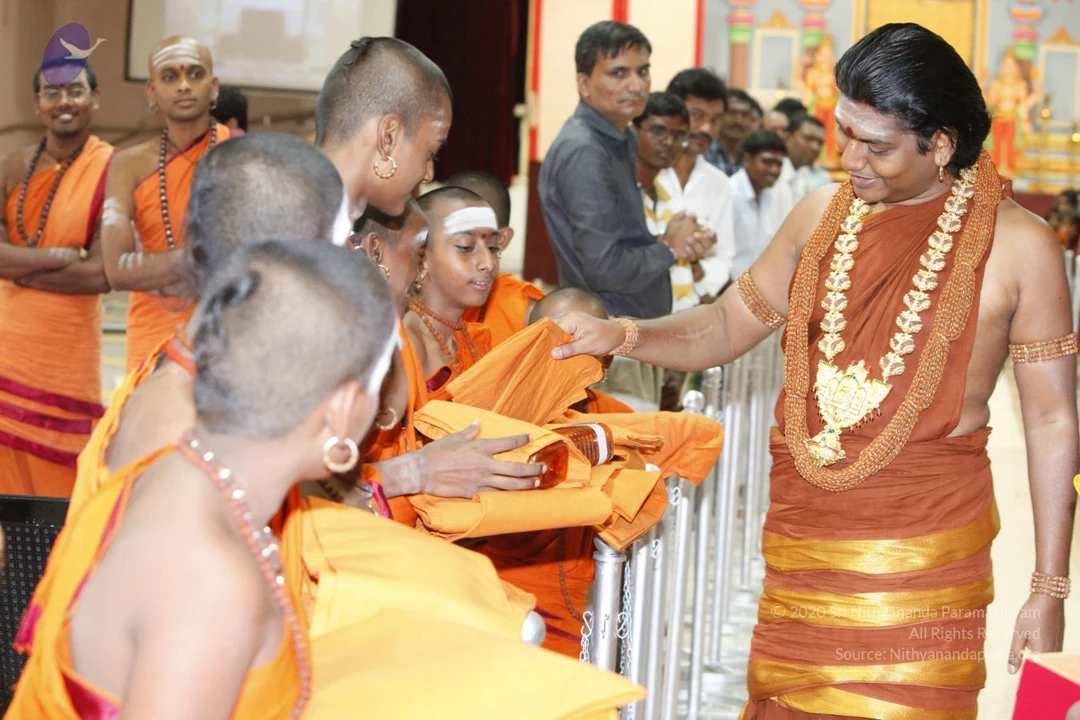
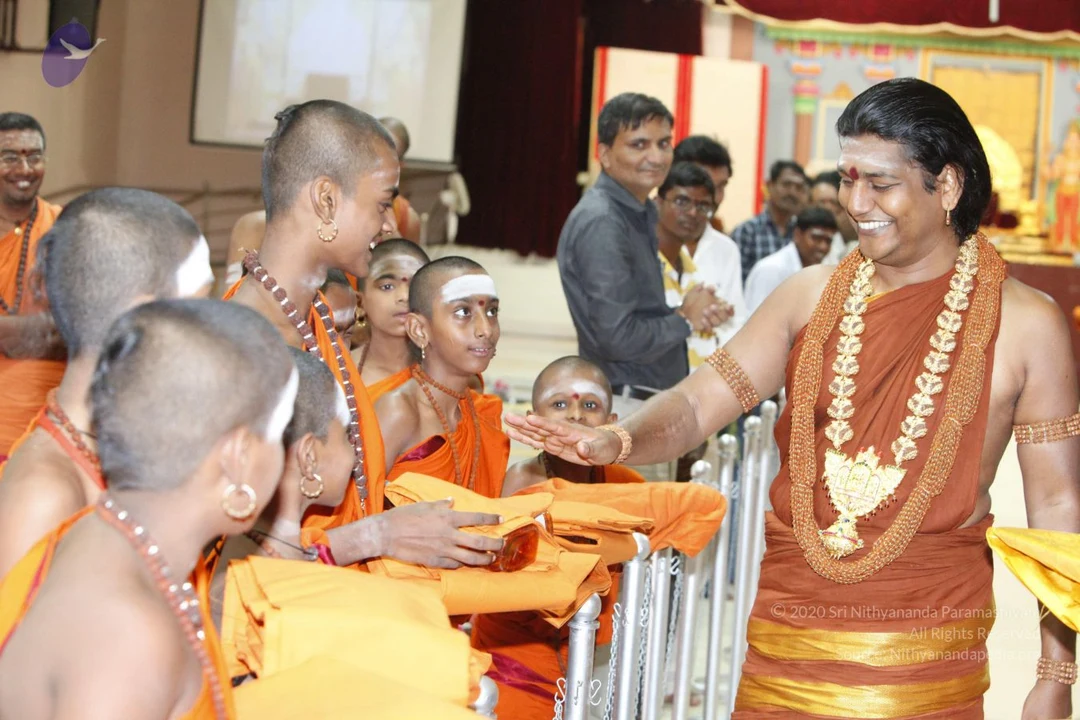
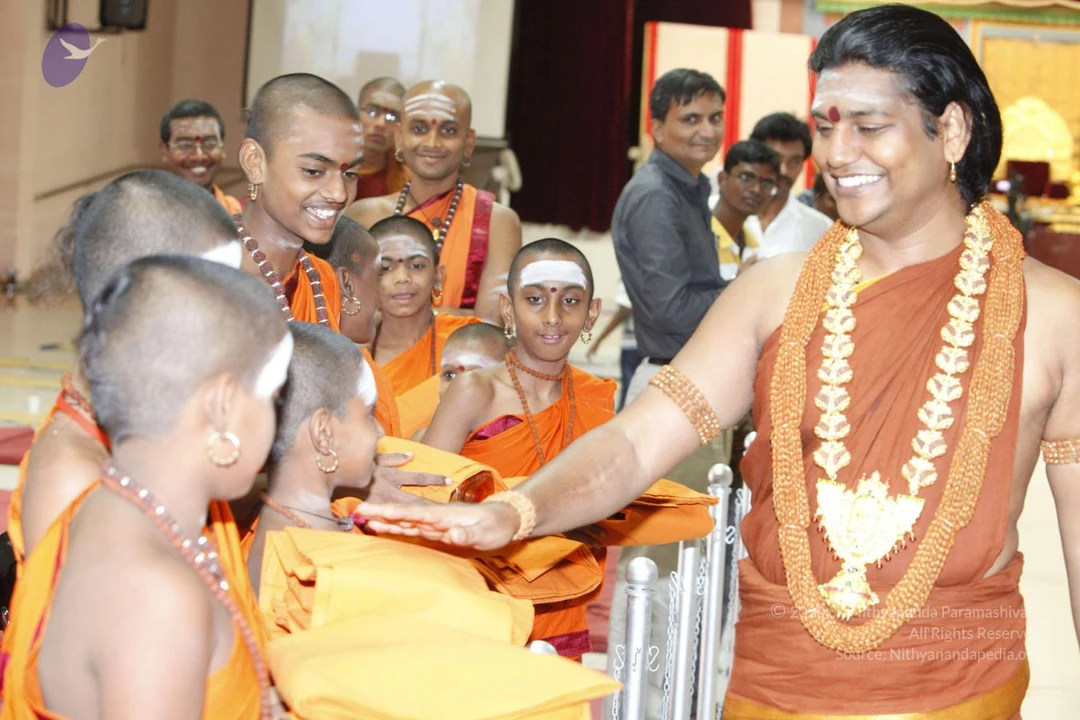
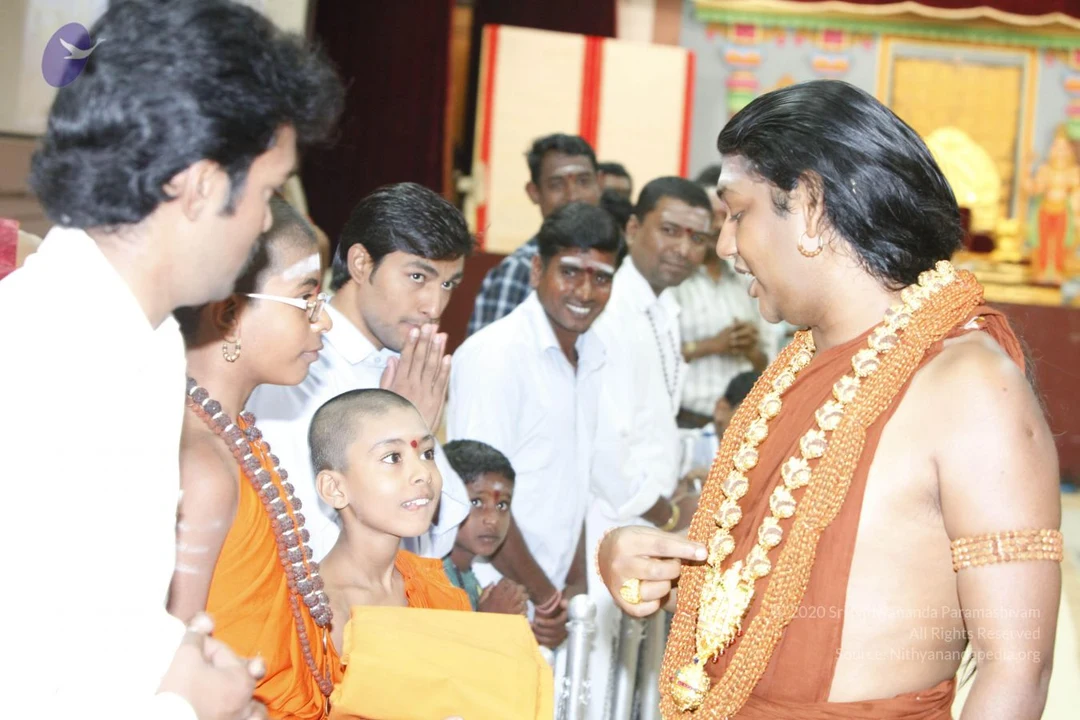
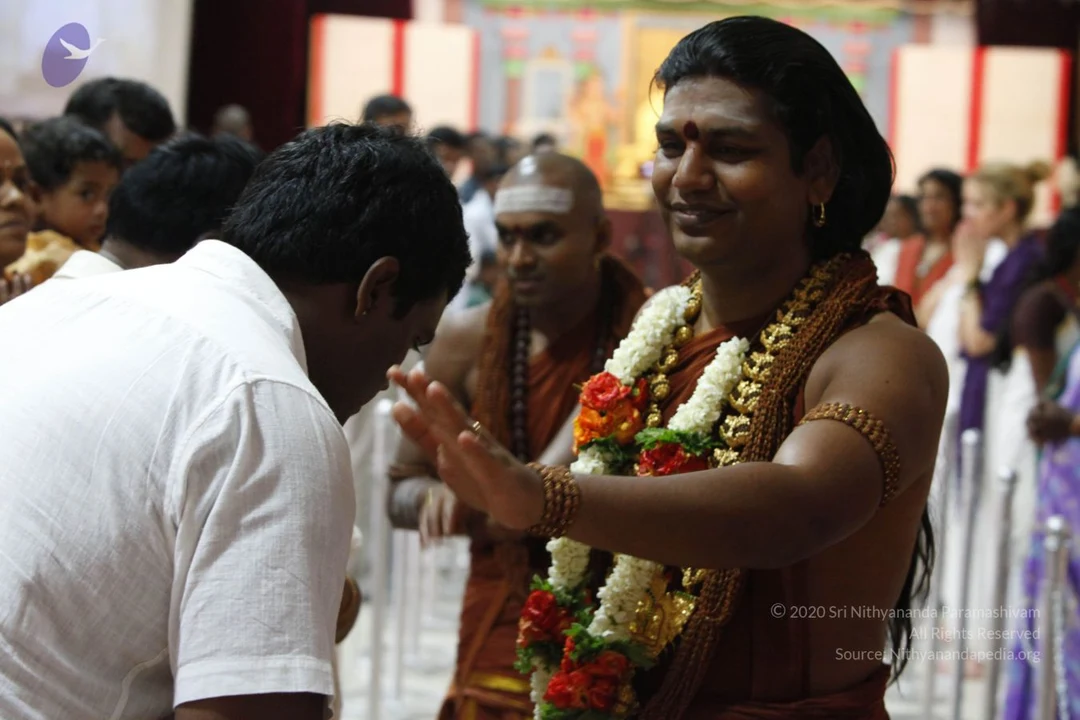
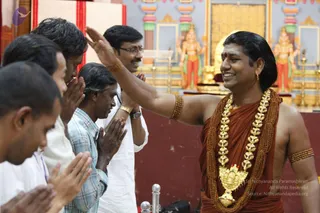
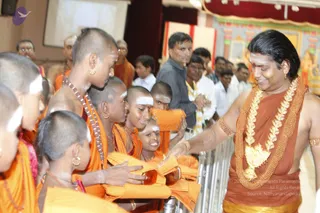
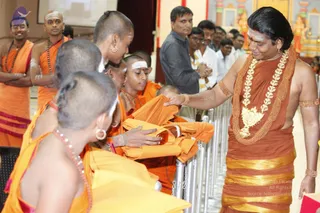
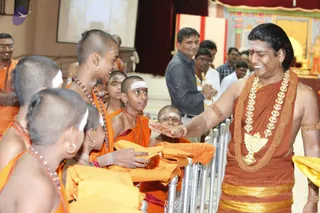
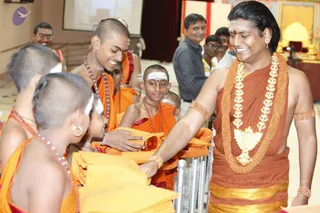
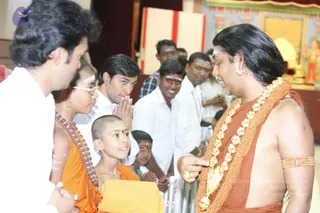
Photograph of a bare-chested man in an orange-brown saffron-toned cloth draped over his shoulder, with long swept-back dark hair, a red bindi, gold armlets and a heavy gold ceremonial necklace with a gold pendant, smiling broadly and raising his right arm in greeting toward a line of people at left who stand with palms pressed together in anjali mudra; several wear white shirts and white dhotis and one wears a checked blue shirt and wristwatch. Behind them stands a temple-style backdrop with painted gold-and-red dvarapala guardian figures and a gilded shrine area, and a metal stand is visible in the lower foreground. Two of the people at left are partially visible.Indoor event photo of a man with swept-back dark hair, a red tilak and a bare upper body wrapped in a rust-orange cloth, wearing heavy gold necklaces, gold armbands and a gold bangle. He reaches out and touches the hands of a line of shaved-headed young boys in orange robes, some with white and orange forehead markings, beaded necklaces and small earrings. Behind them stand men in white and grey shirts, and a backdrop with colourful decorative panels and a projection screen is visible.A photograph of a formal ceremony in a hall. On the right, a man with swept-back long dark hair, a tilak mark, ornate gold necklaces and a rust-brown garment with gold border reaches out to hand orange cloth to a line of shaven-headed young people in saffron robes, some with white forehead marks and rudraksha beads. Several standing men in white shirts and a man in a grey shirt watch in the background, and devotional decorations line the wall.A photograph of a smiling man in a saffron-orange dhoti and shawl, wearing a long layered gold necklace, a rudraksha-style mala, gold armlets and a red tilak with a small red dot on his forehead, reaching out his hand toward a line of young shaven-headed boys in saffron robes. The boys wear white tilak marks, rudraksha malas and small hoop earrings, and some hold folded saffron cloth; one holds a small glass or cup. Behind the railing, adult men in white and grey shirts stand watching. A large screen and an ornate painted backdrop with deity imagery are visible in the background. a person is the man in the orange robes and gold necklace, shown greeting the young sannyasi students.A photograph of a smiling man with long swept-back dark hair, a red-orange cloth wrapped at his torso, a dense gold and beaded ceremonial necklace, gold bangles and a red bindi, reaching out to hand items to a group of young boys with shaved heads and white forehead markings. The boys wear orange robes and beaded rudraksha-style necklaces, and one holds a small red object. Behind them stand several adult men in shirts, and a gold-decorated shrine or throne is visible at the right edge.A photograph of a man with swept-back dark hair, a red bindi and an orange-brown dhoti-style garment, wearing a long ornate gold-and-beaded garland and a large gold pendant, smiling as he reaches out his hand toward a group of young boys with shaved heads, white forehead markings and saffron robes. The boys, some holding folded saffron cloths, smile back. Behind them stand adults in casual clothes and a few seated attendees, with a stage backdrop in the distance. Visible cues suggest a person presence, identified by his distinctive hair, ornate gold necklace and saffron-orange attire, while the boys appear to be young sannyasi students or devotees.

Sacred Arts Construction

8 photosSource gallery
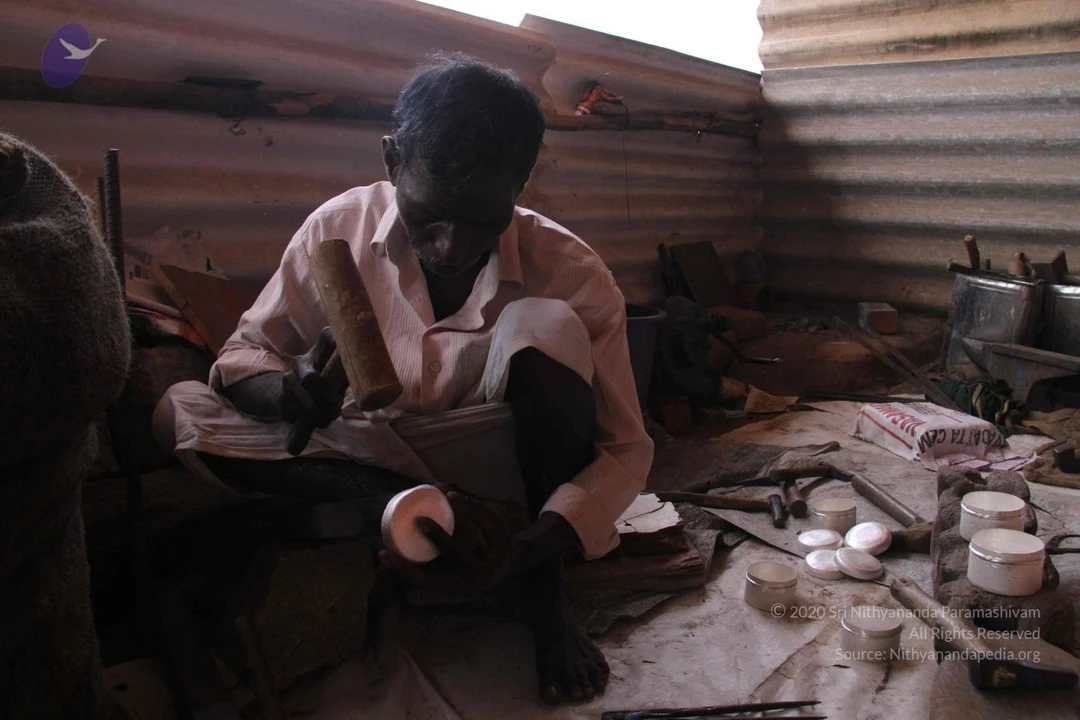
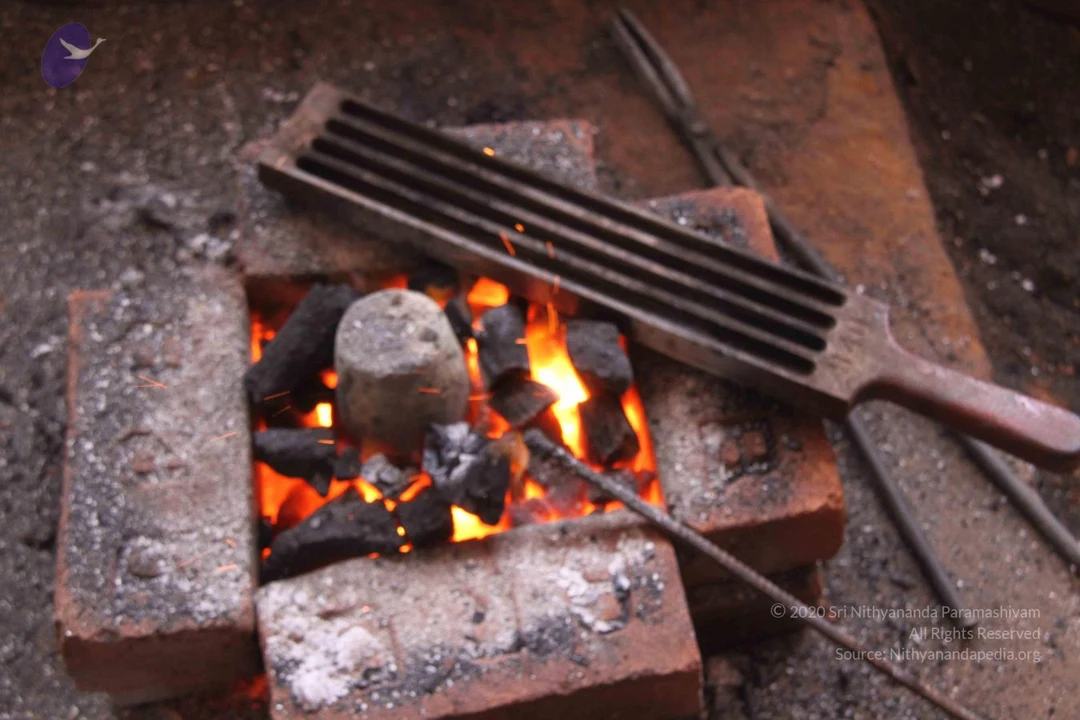
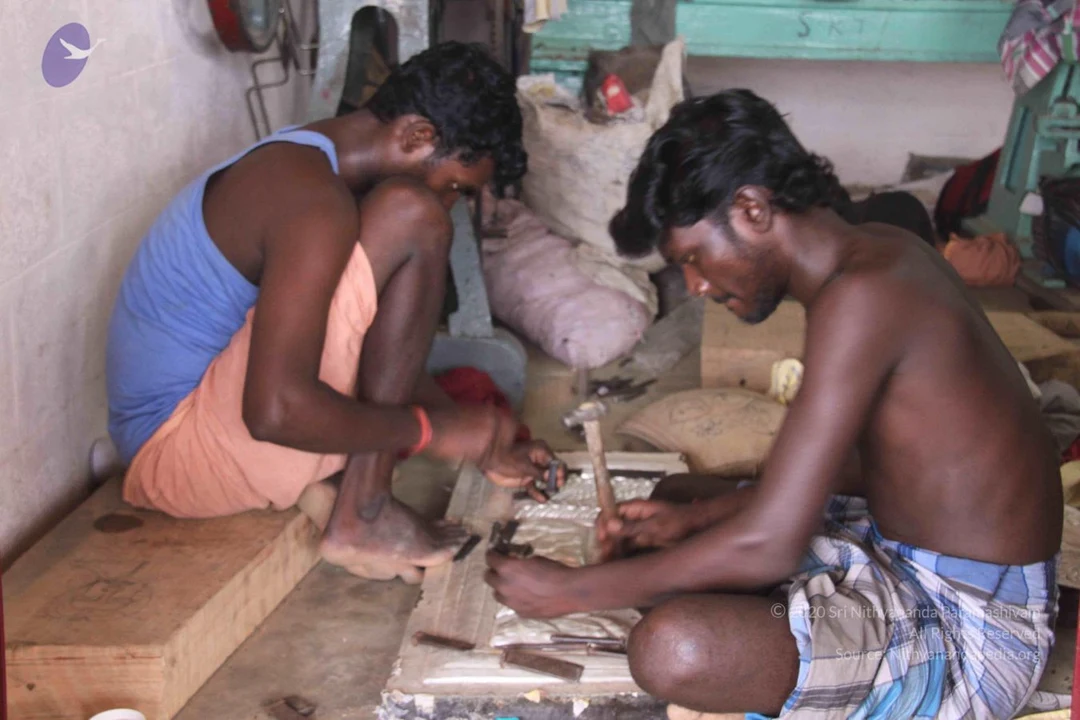
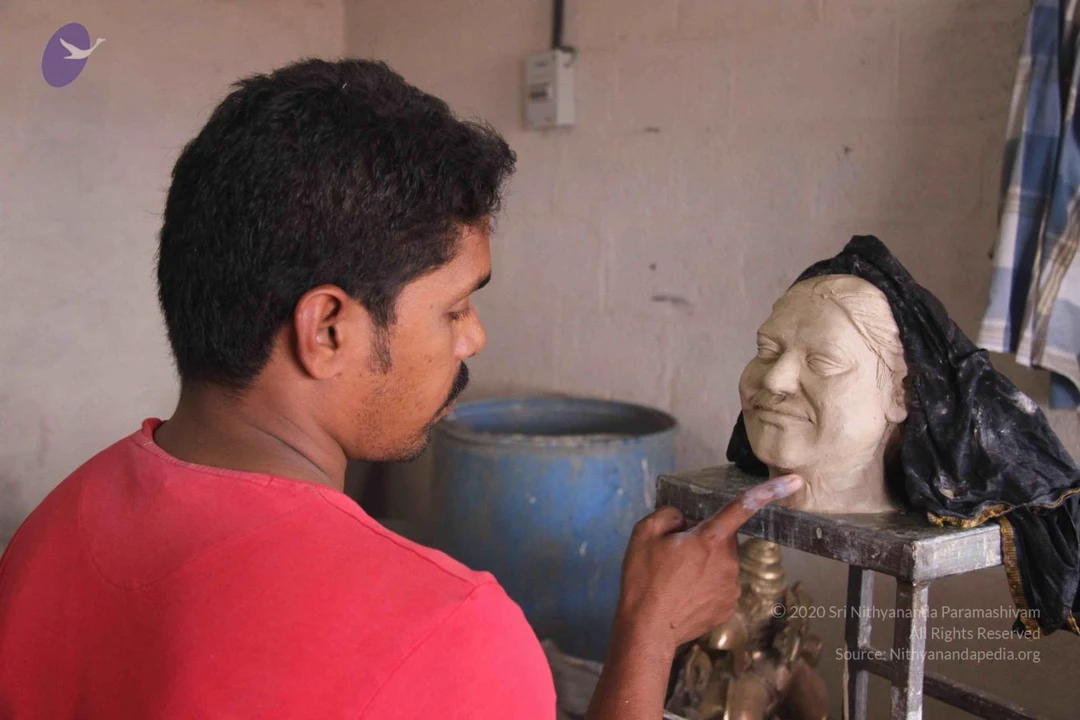
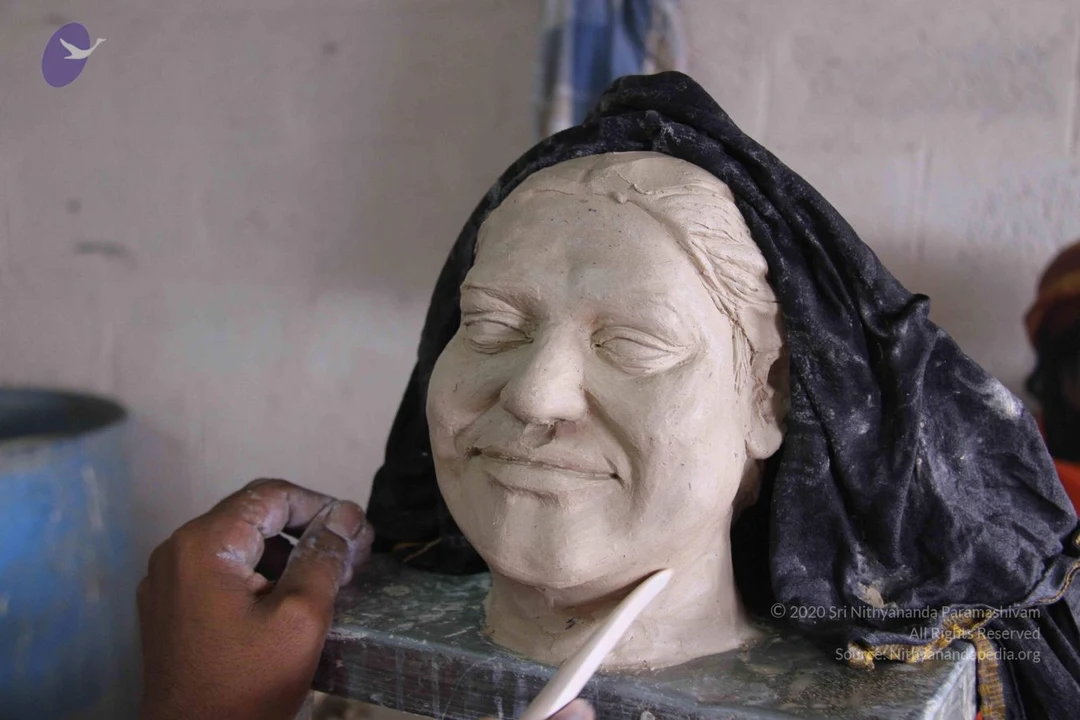
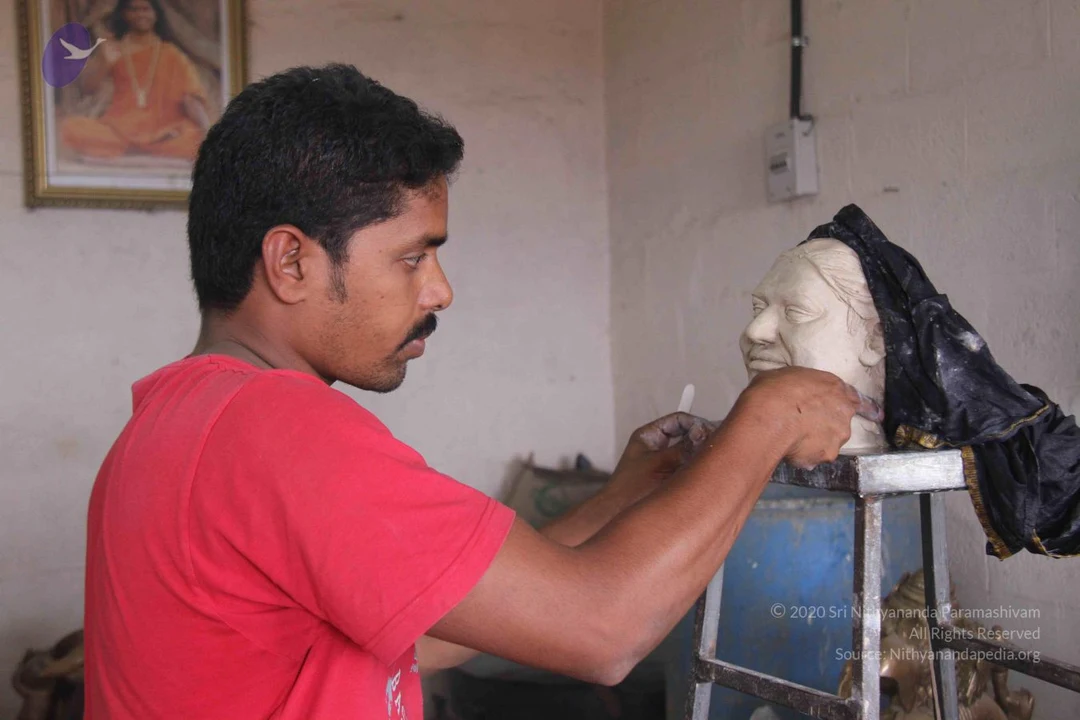
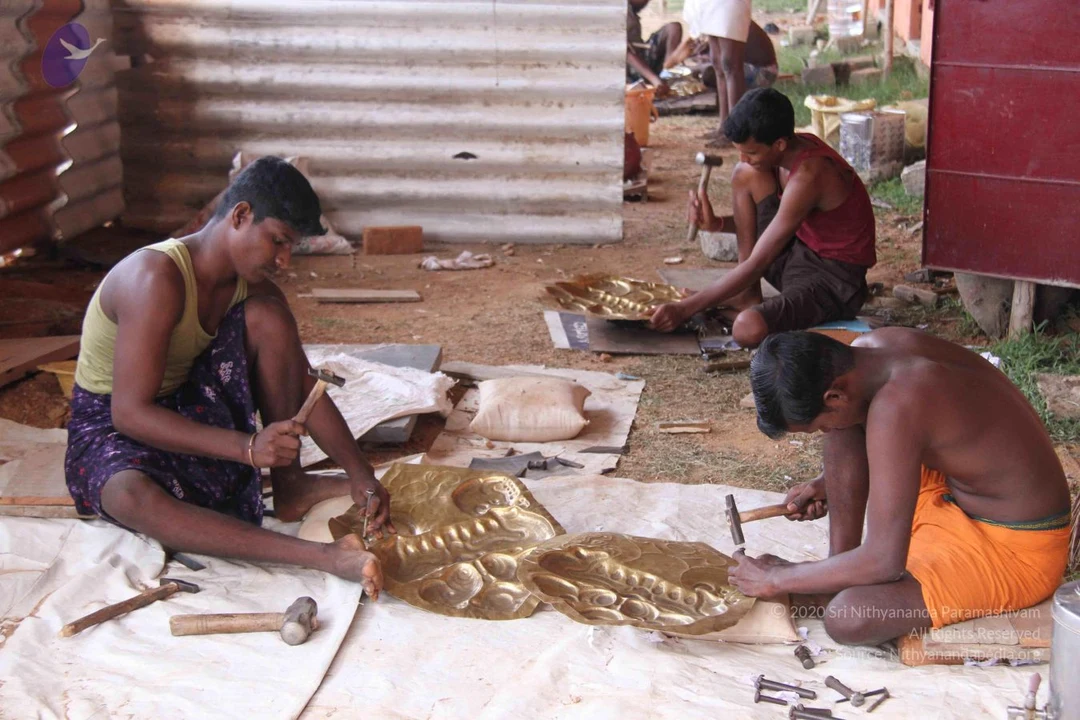
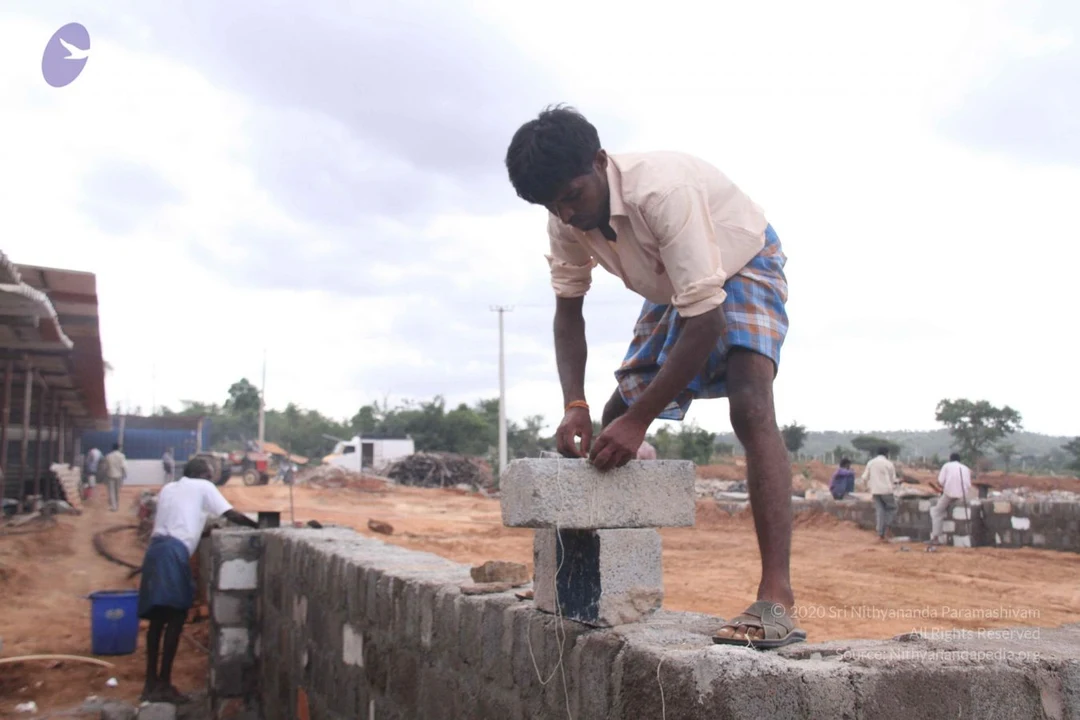
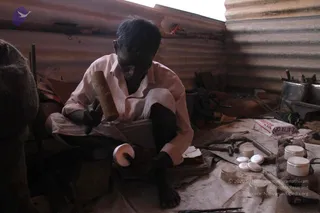
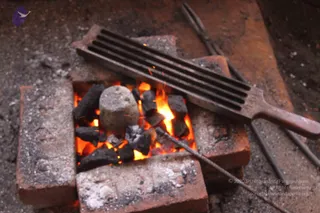
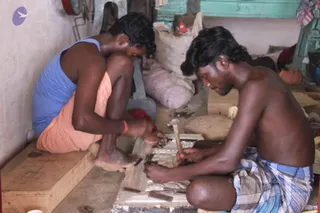
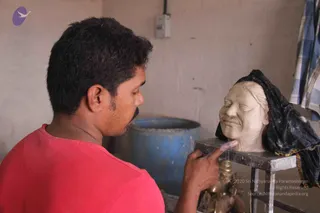
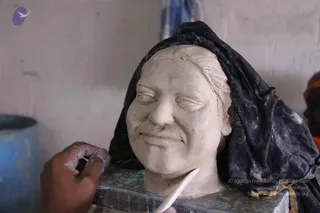
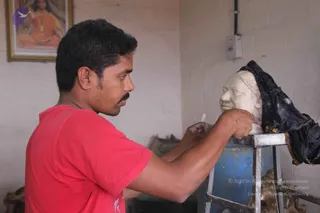
A photograph of a craftsman seated on the floor of a dim, corrugated-metal workshop, working on a small round white object with a hand tool. He wears a pink-and-white striped collared shirt, a white dhoti-style cloth and bare feet. He holds a tapered wooden tool in one hand and a cylindrical piece in the other. Around him on a cloth-covered floor are hammers, small metal tools, a metal tin, and several white lidded round containers. A cloth sack and a bundle of dark fabric sit at the edge of the frame.A close photograph of a small charcoal fire built within a ring of rough red bricks on a dirt ground. Glowing orange embers and black charcoal pieces surround a rounded grey stone or lump placed in the centre. A metal grill with parallel bars and a wooden handle rests diagonally across the bricks, and thin iron rods lie on the ground at right. No people are visible. The image is a stovetop-style cooking or heating setup rather than a ritual scene.Two young men work on a stone carving in a cramped workshop with a tiled wall and a turquoise cabinet behind them. The man on the right, shirtless and wearing a blue checked lungi, holds a hammer and chisel against a white stone block resting on a wooden board. The man on the left, in a blue sleeveless top and orange-peach dhoti with a red wrist thread, leans forward bent over the same work with a small tool. Chisels lie scattered on the floor and cloth sacks are piled behind them.A photograph of a man in a red crew-neck t-shirt working in a plain studio with pale walls and a blue cylindrical drum behind him. He is touching the cheek of an unpainted pale clay or plaster sculpted head of an elderly woman with closed eyes and a faint smile, draped in a black cloth with gold trim, set on a wooden stand. A small brass figure stands at the lower edge, and striped cloth hangs at the right. No a person candidate is visible; the sculpted head is a statue, not a person.A photograph of a sculptor at work on an unfinished clay bust of a smiling older woman with closed eyes, draped in a dark grey-black cloth. A hand holds a pale wooden modelling tool against the neck of the sculpture, which sits on a green-grey marble-like pedestal. The wall behind is pale grey-white, with a blue bucket at left and a partly visible orange-clad figure at the right edge. Only the sculptor's hand is visible; no full person is shown.A young man in a red crew-neck t-shirt works closely on a white plaster sculpture of a human head, which rests on a metal stand in a plain room with white walls. He holds a small tool in his right hand while smoothing the face of the bust, which shows an older woman's features and wears a dark cloth draped over its top. Behind him, a framed picture on the wall shows a figure in orange robes seated in meditation. A blue drum and bronze-coloured sculpture pieces sit at the bottom edge of the frame.

Temple-Homa-Abhishekam-SwamijiVisit

55 photosSource gallery
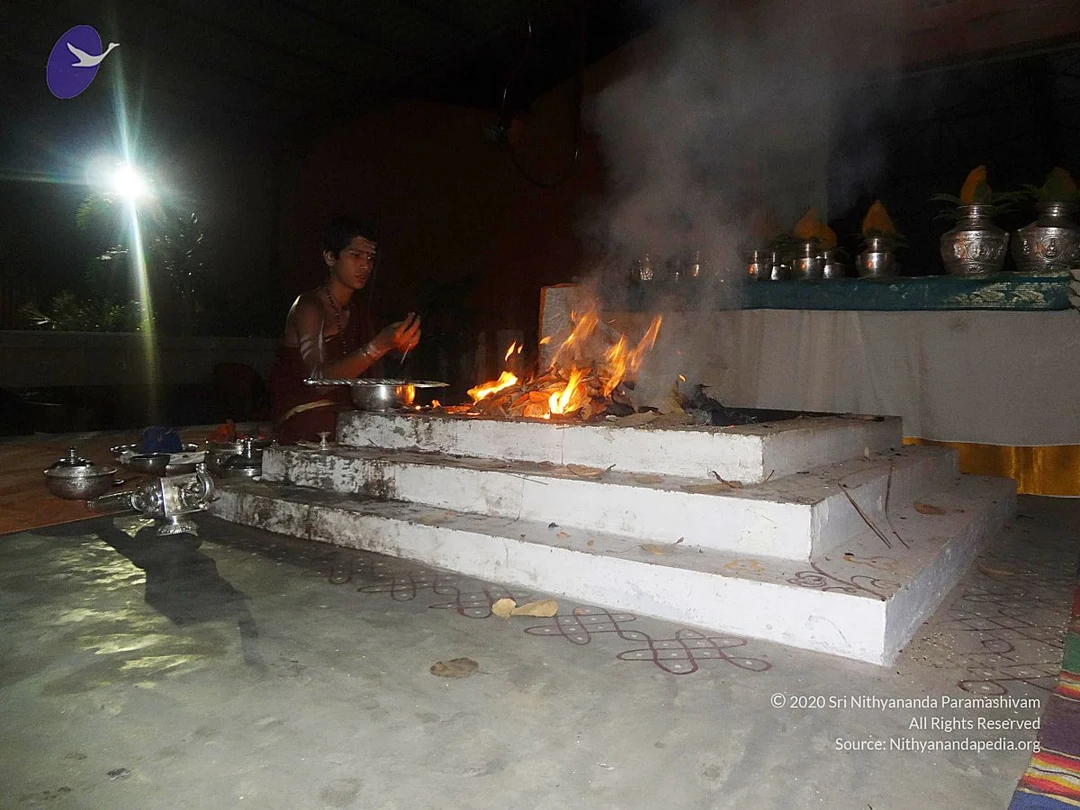
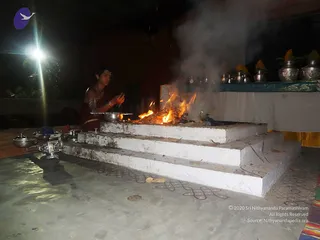
Close-up photograph of a ritual offering on a whitewashed stone surface. Two small metal plates hold pink rose petals, red and yellow marigold flowers, green blades of grass and a few dark green leaves, scattered with loose petals. A lit oil lamp flame burns at the upper right. No people are visible; the scene shows a flower puja offering.A photograph of a homa fire ritual at night in a temple hall. A priest in a maroon dhoti-style cloth, bare-torsoed, kneels at a white stepped fire pit and extends a long ladle toward the flames. Brass and silver vessels with yellow flower decorations sit on a draped altar behind the fire pit, and brass pots and offering plates lie on an orange cloth at left. An illuminated deity murti stands in the background doorway, and a framed portrait with garlands hangs at right beside a red and gold seat. The orange-painted walls and striped floor mats frame the scene. No a person candidate is clearly identifiable in this image.A blurred night photograph of a homa or fire ritual in a temple hall with orange walls. A young person in a red-maroon garment kneels on an orange cloth at left, reaching an arm toward a flaming fire pit of white stepped tiers. Brass and silver ritual vessels, a plate with flowers and a small lamp sit on the cloth. Behind the fire, a row of brass kalasha-style vessels with yellow tips stands on a white-and-red banded platform beneath a lit shrine doorway. A red cushioned seat is at right. The person's face and features are not identifiable and the presence of a person cannot be determined from appearance.A night-time photograph of a homa fire ceremony in an open courtyard. A woman in a dark red sari stands at the left, holding a small metal plate and making a gesture over a three-tiered white stepped fire pit where flames rise. Behind the fire, a table draped with a teal and gold cloth holds several brass and silver kalasha pots, some topped with mango leaves, with smoke rising. Silver ritual vessels sit at the lower left, and white kolam rangoli patterns decorate the floor. A bright lamp lights the scene against the dark background.A night homa in an open-sided hall. A flame rises from a white-tiled fire altar with stepped platforms, with smoke billowing to the right. A man in a dark red-brown cloth wrap sits cross-legged behind the fire, with a rudraksha mala and a bowl of offerings in his hands. A small silver lamp and metal vessels sit on the floor to the left, with scattered petals on the steps. The scene is lit mainly by the fire.A night-time fire ritual on a white concrete platform. A tall flame and smoke rise from a fire pit at the right, with scattered offerings and ash on the steps. A single person in a dark red garment sits behind the fire, holding a metal bowl or plate, partly lit by the flames. To the right stand brass or steel vessels on a draped table with yellow and white cloth. Small metal lamps and a glass oil lamp sit on the lower left step. The setting appears to be an outdoor or open hall at night.

Paduka-Puja

19 photosSource gallery
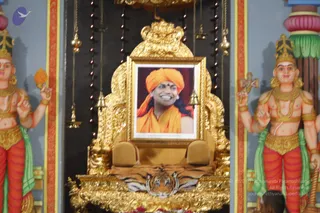
A photograph of a shrine niche with a gilded ornate throne holding a framed portrait of a smiling man wearing an orange saffron head-wrap and orange garment, with a caption label printed at the bottom of the frame reading "Paramahamsa Nithyananda". The portrait is a depiction, not a physical person. The throne has golden carved arches, hanging brass bells and beaded strings, a tiger-skin cloth draped on its seat, and red flowers at its base. Flanking the niche are two painted dvarapala guardian figures with gold crowns and jewelry, one holding a flame lamp and the other a staff, against blue and red painted pillars. No physical people are visible.Close-up photograph of an arranged puja offering on a gold-toned tray. Silver bowls and small silver vessels hold orange-yellow sweet, pink and red roses, a large pink lotus, orange marigold-like blooms, yellow plumeria or champa flowers and white blossoms. A silver kalasha-style vessel and a small brass lamp stand among the flowers, with green leaves scattered throughout. No people are visible, and no a person candidate appears in the scene.Close photo of a woman in a red top lighting or holding a small silver oil lamp with a visible flame, her bangled hand raised near the lamp. A second silver lamp with a flame sits lower in the foreground beside a tray of brass or silver items. In the blurred background, another person in white clothing stands with hands joined. Soft, warm lamplight dominates the dim setting.Close photo of a hand holding a small silver cup filled with a golden-orange liquid. Glass bowls or jars sit at the upper left. The background is dark, with a glimpse of orange cloth and a bead necklace at the right edge. No face is visible.Close-up of hands pouring water from silver vessels into a bowl of pink, red and white flowers during an abhishekam-style ritual. Ornately engraved silver cups and bowls surround the flowers, and rudraksha beads lie among the offerings. Several hands with tattoos and a wristwatch are visible, one wearing an orange garment in the background, with a tattooed arm in the top right. Two people are partly visible, so the count is low.Close-up photograph of a ritual offering being prepared on a golden tray. Several hands hold ornate silver bowls and cups, one pouring or lifting a silver cup over a heap of red, pink and white flowers. Rudraksha beads are visible among the bowls. Behind them, a figure in orange robes with rudraksha malas is partly visible at the top edge, and a wrist bears a tattoo. The setting suggests a puja or abhishekam offering.
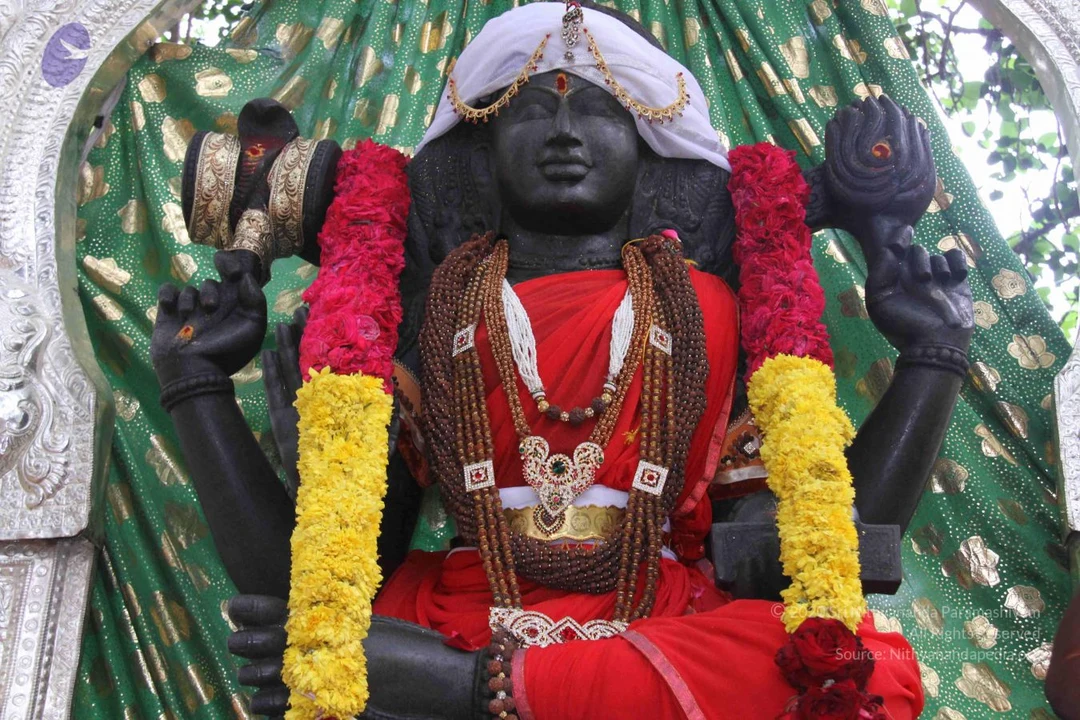
Nithya-Satsang

9 photosSource gallery
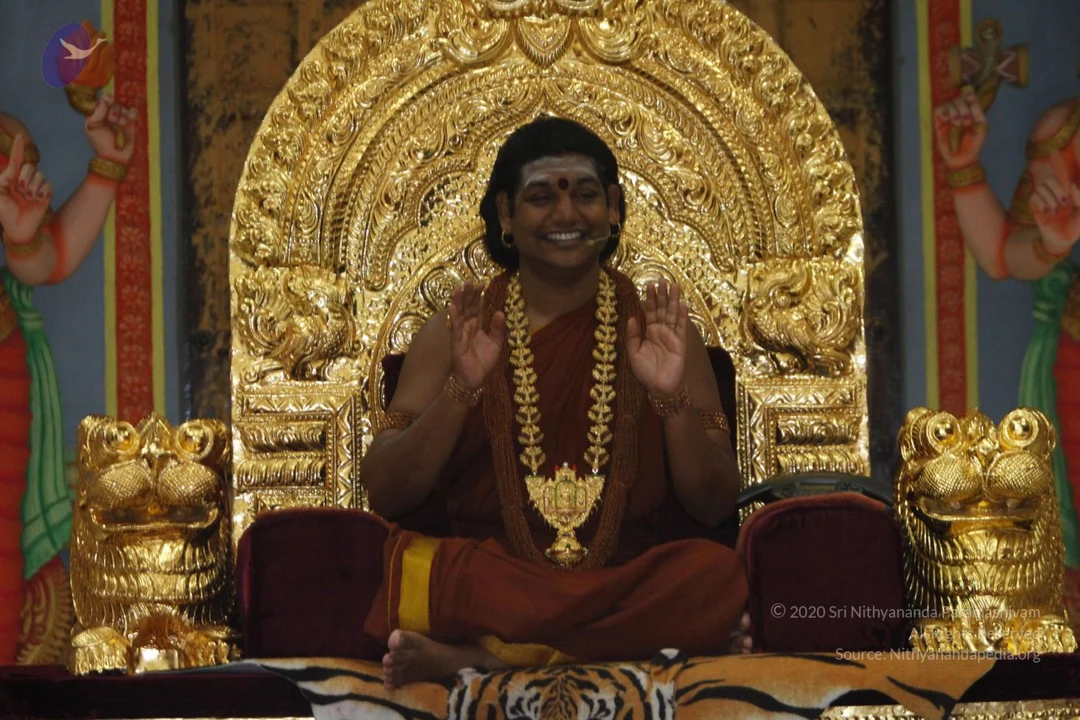
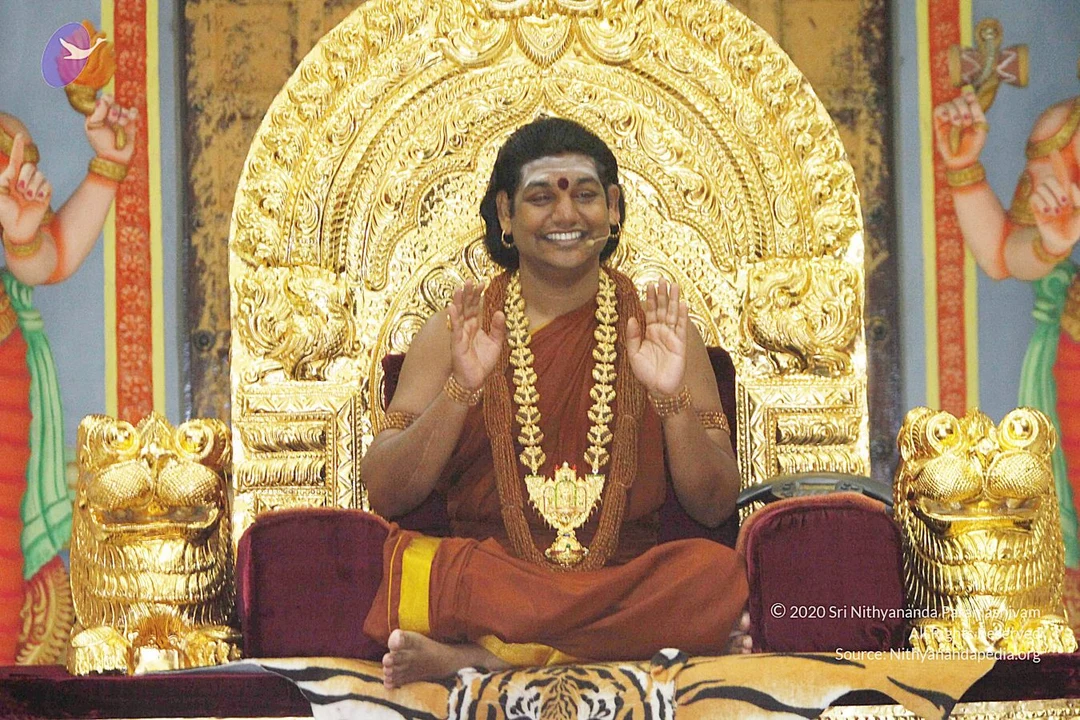
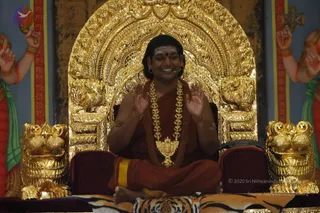
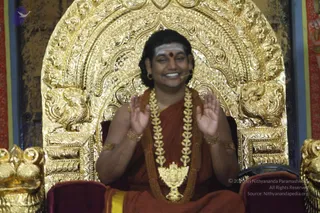
A smiling man in a saffron-orange robe sits cross-legged on an ornate gilded throne with a large arched backrest carved with floral and lion motifs, lion-head armrests, and a tiger-striped cloth draped over the platform. He wears a gold-and-beaded multi-strand necklace with a central gold pendant, gold bangles, and a red bindi with white tilak on his forehead, and raises both hands in front of his chest with palms open toward the audience. Painted deity figures with multiple raised arms flank the throne on pink-and-blue walls. Swamiji (probable): long swept-back hair, saffron robe and ornate gold necklaces, seated on the throne in a teaching posture.A smiling man in a saffron-orange robe sits on an ornate gold throne with carved scrollwork and lion-like figures at its base. He wears a heavy gold ceremonial necklace with a central pendant, gold bangles, gold earrings, and a red bindi with white sacred ash on his forehead. His hands are raised palms-outward in a gesture of blessing, with a small microphone clipped near his face. Red velvet cushions and red drapes frame the stage. Swamiji (probable): the seated speaker with long swept-back hair, ornate gold jewellery and saffron robe, presenting a satsang discourse from the throne.A seated man in saffron-orange robes sits on an ornate gold throne with carved lion-head armrests and a gold arched backrest, smiling. He wears a gold-toned multi-strand necklace with a gold pendant, rudraksha-style beaded mala, gold armbands and bangles, and gold earrings, with white vibhuti and a red bindi on his forehead. A yellow cloth hangs over the front of the throne, and a painted deity arm holding an object is visible at the left edge. One physical person is present.A man with swept-back dark hair sits on an ornate gilded golden throne, speaking into a small headset microphone. He wears a saffron-orange cloth draped over his shoulders, a long rudraksha mala with gold bead ornaments around his neck, gold bead armlets, a white vibhuti line and a red kumkum dot on his forehead, and a small gold earring. Swamiji (probable) is shown here in a seated teaching posture, identified by the swept-back hair, ornate saffron clothing and rudraksha and gold adornments. The background is a plain pale wall.A smiling man with swept-back dark hair sits on an ornate gold throne with carved floral relief. He wears an orange-saffron cloth draped over bare shoulders, a gold-bead and rudraksha-style garland, bronze armbands, a white forehead marking with a red dot, and a small gold earring. A headset microphone is visible near his face. a person is seated and speaking at a satsang, with appearance cues of saffron cloth, rudraksha-style mala, gold ornaments and swept hair. The background shows a pink wall and a gilded lion-shaped armrest.A smiling man with swept-back long dark hair sits on a red velvet seat before an ornate gold-embossed backdrop. He wears an orange-saffron robe draped over one shoulder, a long gold-and-rudraksha necklace, gold bracelets and armlets, a gold earring, a red bindi and white tilak. He rests one hand on his chest and the other on his knee; a small black conference microphone sits beside him. Swamiji (probable) is shown in an appearance-based label from the saffron robe, long hair, rudraksha and gold ornaments, seated as a teacher at a satsang.

SarvaDarshan

10 photosSource gallery
Photograph of a bare-chested man in an orange-brown saffron-toned cloth draped over his shoulder, with long swept-back dark hair, a red bindi, gold armlets and a heavy gold ceremonial necklace with a gold pendant, smiling broadly and raising his right arm in greeting toward a line of people at left who stand with palms pressed together in anjali mudra; several wear white shirts and white dhotis and one wears a checked blue shirt and wristwatch. Behind them stands a temple-style backdrop with painted gold-and-red dvarapala guardian figures and a gilded shrine area, and a metal stand is visible in the lower foreground. Two of the people at left are partially visible.A photograph of a man with long swept-back dark hair and a bare chest, wearing a rust-brown wrap and a heavy gold necklace and gold armband, pointing with one finger while speaking to a group. A shaved-headed boy in an orange robe with a rudraksha mala and a bindi stands in front of him, with a girl in orange and rudraksha beads beside him. Around them, men in white shirts and dhotis, some with white forehead markings, stand behind metal barriers; one young man in white has his palms pressed together in namaste. Behind them are a red and white draped panel and a gilded deity murti in a shrine. Swamiji (probable) cues: long swept-back hair, rust-brown wrap, ornate gold necklace and armband, as the speaker receiving the devotees.Indoor event photo of a man with swept-back dark hair, a red tilak and a bare upper body wrapped in a rust-orange cloth, wearing heavy gold necklaces, gold armbands and a gold bangle. He reaches out and touches the hands of a line of shaved-headed young boys in orange robes, some with white and orange forehead markings, beaded necklaces and small earrings. Behind them stand men in white and grey shirts, and a backdrop with colourful decorative panels and a projection screen is visible.A photograph of a formal ceremony in a hall. On the right, a man with swept-back long dark hair, a tilak mark, ornate gold necklaces and a rust-brown garment with gold border reaches out to hand orange cloth to a line of shaven-headed young people in saffron robes, some with white forehead marks and rudraksha beads. Several standing men in white shirts and a man in a grey shirt watch in the background, and devotional decorations line the wall.A photograph of a smiling man in a saffron-orange dhoti and shawl, wearing a long layered gold necklace, a rudraksha-style mala, gold armlets and a red tilak with a small red dot on his forehead, reaching out his hand toward a line of young shaven-headed boys in saffron robes. The boys wear white tilak marks, rudraksha malas and small hoop earrings, and some hold folded saffron cloth; one holds a small glass or cup. Behind the railing, adult men in white and grey shirts stand watching. A large screen and an ornate painted backdrop with deity imagery are visible in the background. a person is the man in the orange robes and gold necklace, shown greeting the young sannyasi students.A photograph of a smiling man with long swept-back dark hair, a red-orange cloth wrapped at his torso, a dense gold and beaded ceremonial necklace, gold bangles and a red bindi, reaching out to hand items to a group of young boys with shaved heads and white forehead markings. The boys wear orange robes and beaded rudraksha-style necklaces, and one holds a small red object. Behind them stand several adult men in shirts, and a gold-decorated shrine or throne is visible at the right edge.

Dial-the-Avatar

4 photosSource gallery
A smiling man sits on an ornate gold throne with a deep red velvet seat and carved lion-head armrests, a tiger-striped rug beneath. He wears an orange-saffron shawl draped over bare shoulders, a yellow undergarment, a rudraksha mala and ceremonial gold necklaces, gold armbands and bangles, and a gold ring. A red bindi sits on his forehead and a telephone handset rests on his lap. Gilded deity figures with raised hands flank the throne on the sides. a person seated on the throne, the presiding speaker at a satsang.A photograph of a seated figure on an ornate gilded throne with lion-shaped armrests, draped on a tiger-skin cushion. The figure wears an orange-saffron cloth over the shoulder, a long gold-beaded necklace, a rudraksha-style mala, gold bangles and a red bindi, with long swept-back hair, and smiles while holding a dark object. Two painted deity guardian figures with gold crowns stand on either side, one holding a flame and one a staff. A gilded carved backdrop and a wooden door are behind.A seated man in an orange-saffron dhoti and shawl sits on an ornate gold throne with carved lion-head armrests and a red velvet seat cushion, draped over a tiger-striped cloth. He wears a long beaded necklace, gold bangles, earrings and a red bindi, and holds a small dark book or device in one hand while gesturing with the other. Two painted deity murti flank the throne, each with multiple arms, gold jewellery, red-and-green lower garments and crowns. A large gold-carved arch and a wooden door form the backdrop.A smiling man in saffron-orange robes sits on an ornate gold throne with a carved arched backrest and lion-form armrests, draped with a dark red cushion and a tiger-striped cloth. A long gold-beaded necklace and garland hang on his chest, with gold bangles on his wrists and a red tilak on his forehead. Two large painted guardian statues flank the throne, one on each side, wearing gold crowns, gold jewellery and red-and-green dhoti-like garments, one holding a flame-like lamp. A gilded panelled door stands behind.

SacredArts-Construction-Photos

9 photosSource gallery
A photograph of a craftsman seated on the floor of a dim, corrugated-metal workshop, working on a small round white object with a hand tool. He wears a pink-and-white striped collared shirt, a white dhoti-style cloth and bare feet. He holds a tapered wooden tool in one hand and a cylindrical piece in the other. Around him on a cloth-covered floor are hammers, small metal tools, a metal tin, and several white lidded round containers. A cloth sack and a bundle of dark fabric sit at the edge of the frame.A close photograph of a small charcoal fire built within a ring of rough red bricks on a dirt ground. Glowing orange embers and black charcoal pieces surround a rounded grey stone or lump placed in the centre. A metal grill with parallel bars and a wooden handle rests diagonally across the bricks, and thin iron rods lie on the ground at right. No people are visible. The image is a stovetop-style cooking or heating setup rather than a ritual scene.Two young men work on a stone carving in a cramped workshop with a tiled wall and a turquoise cabinet behind them. The man on the right, shirtless and wearing a blue checked lungi, holds a hammer and chisel against a white stone block resting on a wooden board. The man on the left, in a blue sleeveless top and orange-peach dhoti with a red wrist thread, leans forward bent over the same work with a small tool. Chisels lie scattered on the floor and cloth sacks are piled behind them.A photograph of a man in a red crew-neck t-shirt working in a plain studio with pale walls and a blue cylindrical drum behind him. He is touching the cheek of an unpainted pale clay or plaster sculpted head of an elderly woman with closed eyes and a faint smile, draped in a black cloth with gold trim, set on a wooden stand. A small brass figure stands at the lower edge, and striped cloth hangs at the right. No a person candidate is visible; the sculpted head is a statue, not a person.A photograph of a sculptor at work on an unfinished clay bust of a smiling older woman with closed eyes, draped in a dark grey-black cloth. A hand holds a pale wooden modelling tool against the neck of the sculpture, which sits on a green-grey marble-like pedestal. The wall behind is pale grey-white, with a blue bucket at left and a partly visible orange-clad figure at the right edge. Only the sculptor's hand is visible; no full person is shown.A young man in a red crew-neck t-shirt works closely on a white plaster sculpture of a human head, which rests on a metal stand in a plain room with white walls. He holds a small tool in his right hand while smoothing the face of the bust, which shows an older woman's features and wears a dark cloth draped over its top. Behind him, a framed picture on the wall shows a figure in orange robes seated in meditation. A blue drum and bronze-coloured sculpture pieces sit at the bottom edge of the frame.

Temple-Homa-Abhishekam-SwamijiVisit

11 photosSource gallery
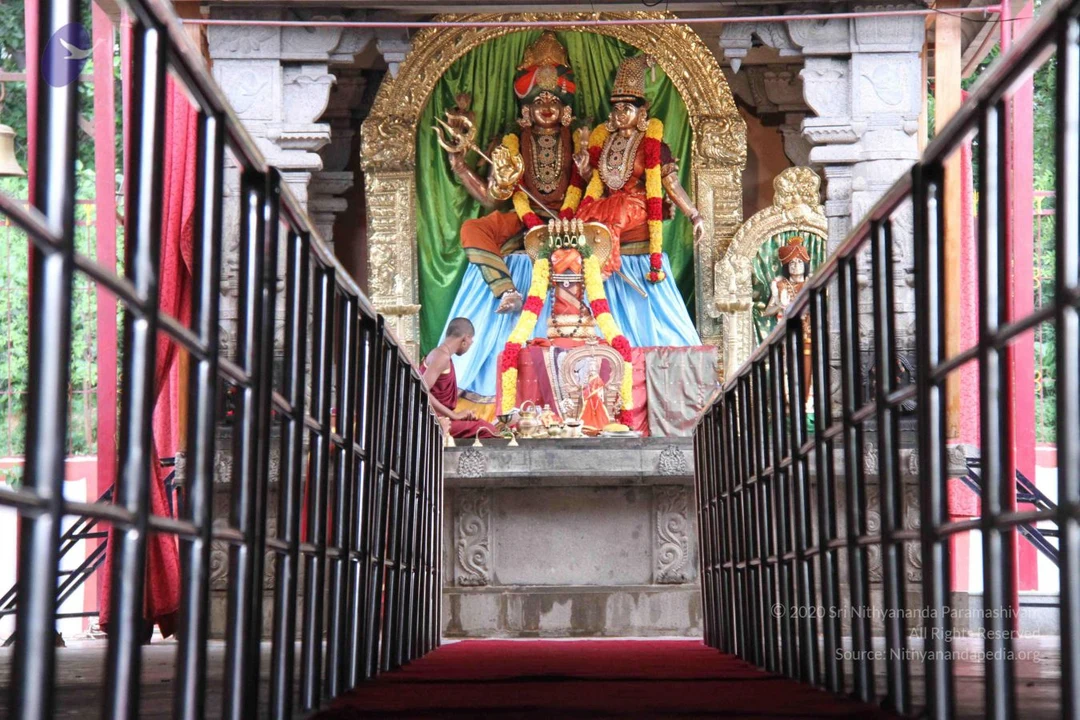
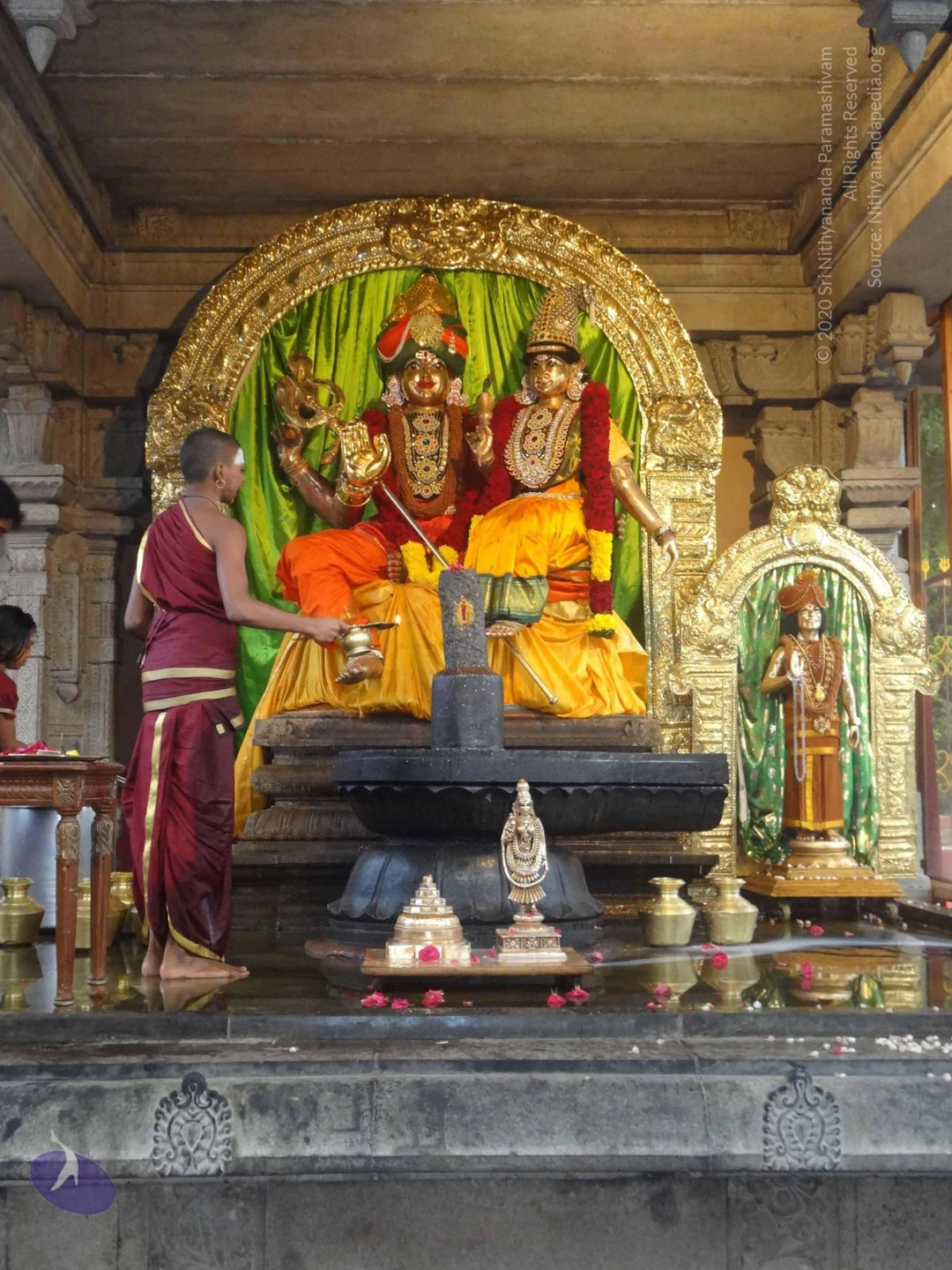
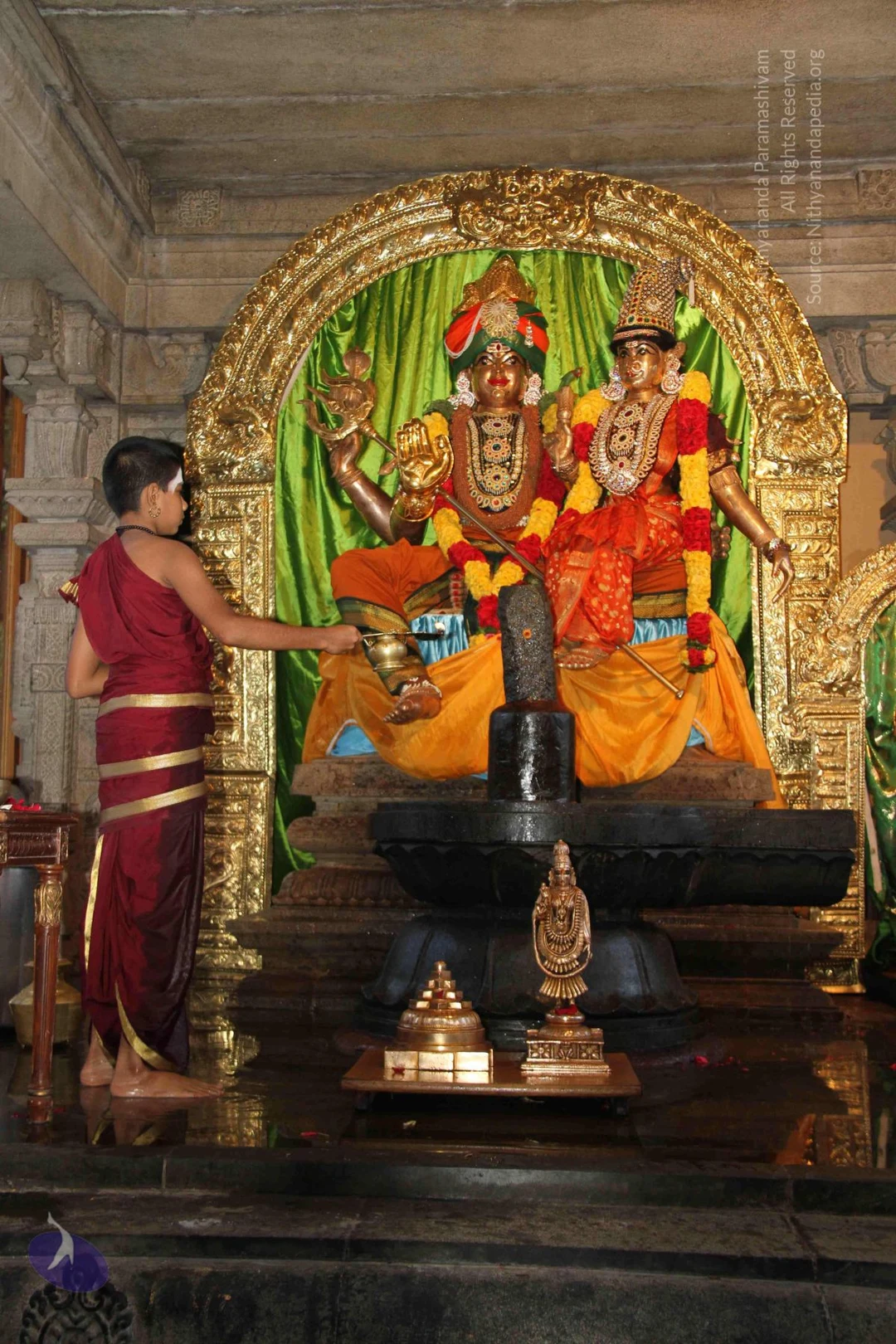
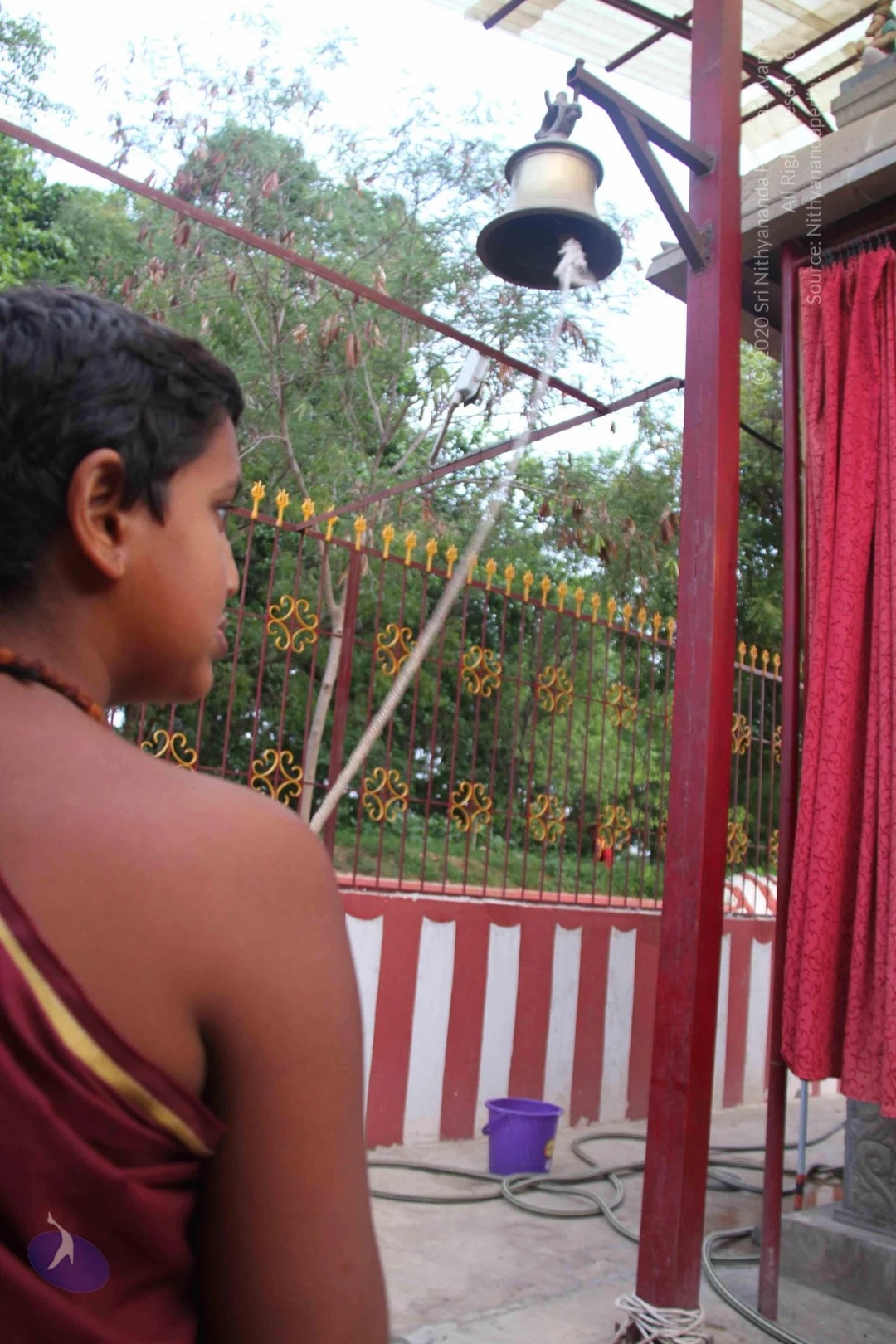
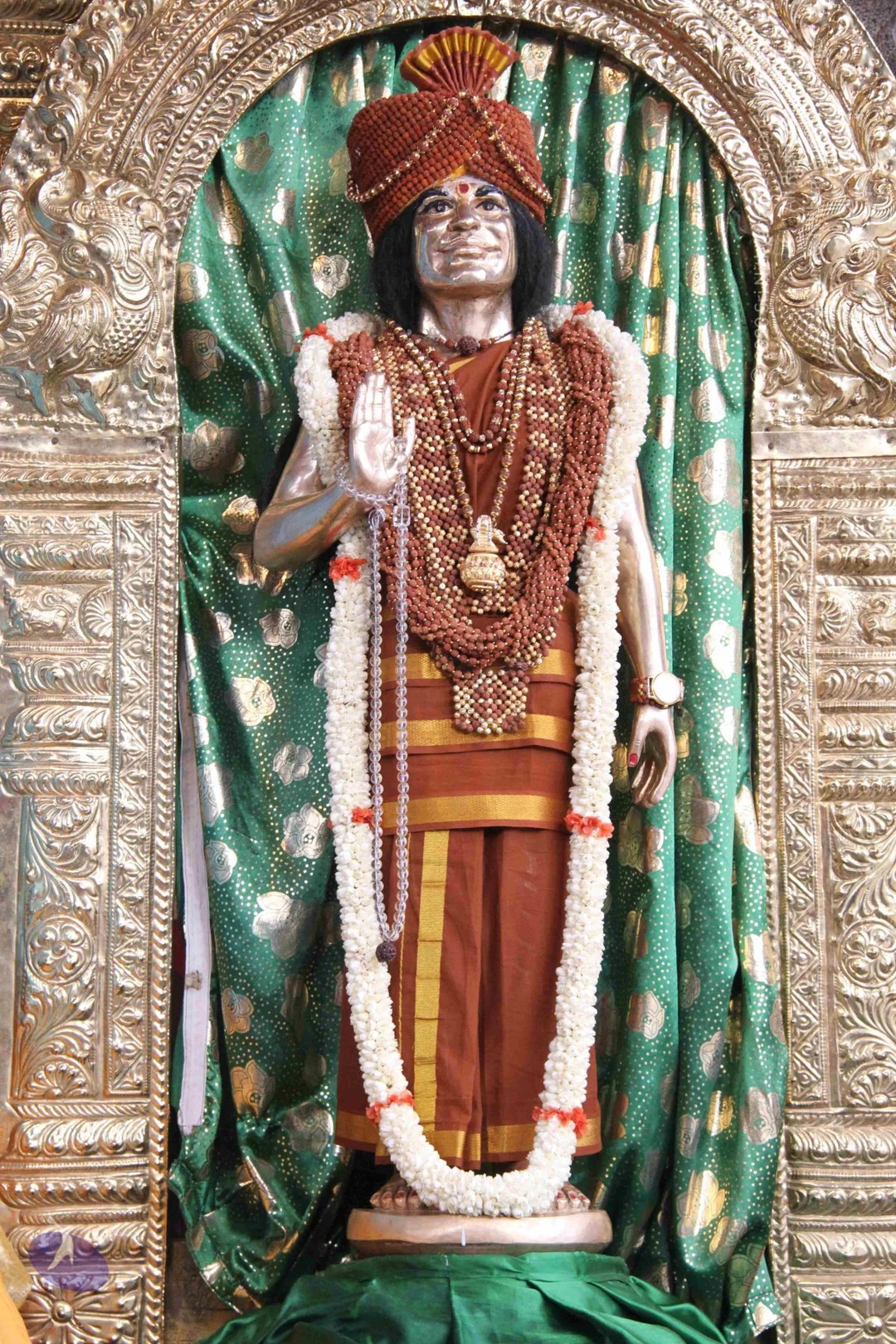
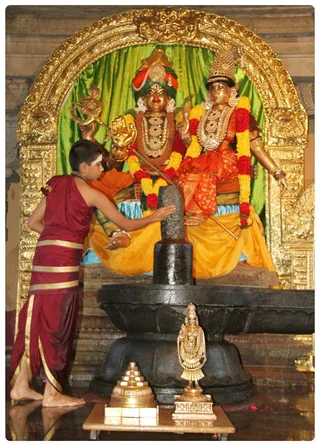
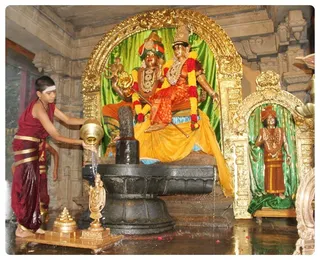
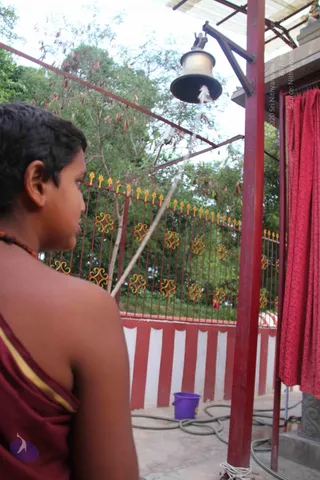
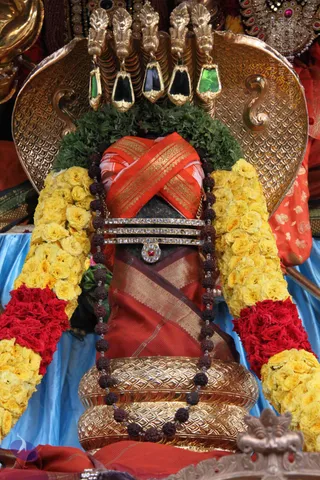
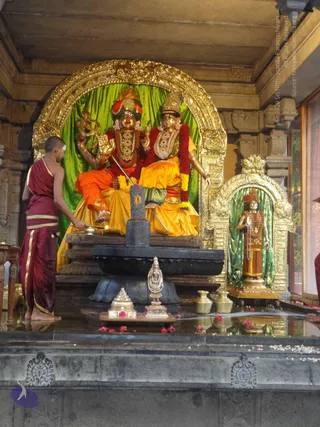
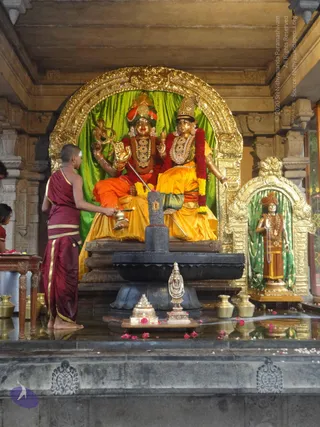
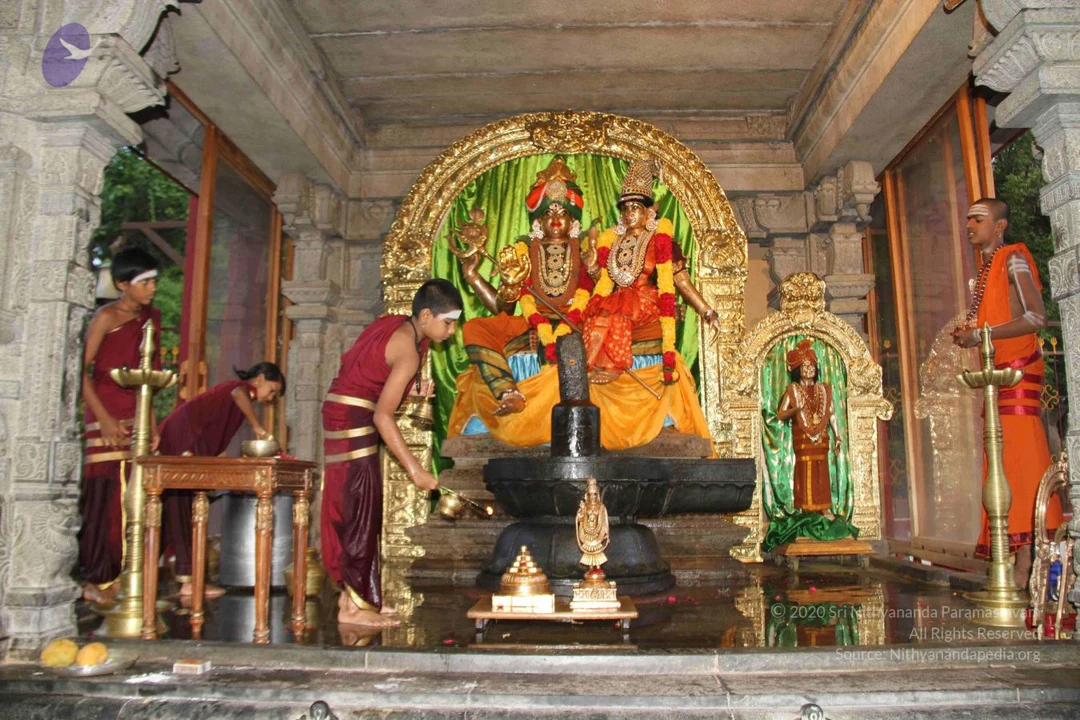
Inside a gold-framed shrine, a shaven-headed priest in a maroon dhoti with gold border stands at left, pouring or offering water over a black stone lingam on a black yoni-pitha base. Behind them sit two gilded deity murtis draped in orange and yellow silk, garlanded with red and yellow flowers, against a green curtain. A smaller gilt standing figure in a niche at right holds a bowl, with brass kalasha pots and small silver pedestals with flowers on the wet floor in front.A photograph of a temple shrine showing a pair of gold-toned deity murtis seated on a raised platform before a green silk backdrop within an ornate gilded arch. The left figure wears a red and green turban, holds a trident, and is dressed in orange and yellow silk; the right figure wears a tall jewelled crown and an orange-red sari-style garment. Both are adorned with layered gold necklaces and garlands of yellow and red flowers. A dark black shivalingam stands on a black yoni pedestal in front, flanked by a small gold pyramid-shaped object (sri chakra style) and a small gold standing figure. No people are visible.A young priest in a maroon dhoti with gold borders and a bare torso stands barefoot on a wet stone floor, one hand resting on a black shivalinga during abhishekam at a temple shrine. Behind him, a golden deity murti pair sits against a green curtain, adorned with red, yellow and white marigold garlands and jewelled ornaments; the figure on the left wears a red and gold turban, the other a jewelled crown. A small golden sri yantra and a gold deity figurine sit on a tray in front of the lingam. The scene is framed by ornate gold arch carving.A photograph of a young boy from behind and in left profile, his face turned upward toward a hanging brass temple bell. He wears a maroon-red cloth draped over his bare shoulder with a gold-yellow border and a rudraksha-style bead necklace. The bell hangs from a red-painted metal bracket beside a red wooden post, with a white rope attached to its clapper. Beside him is a red curtain with a patterned print, a red-and-white striped compound wall, a yellow-tipped iron gate, green trees behind, a purple bucket and coiled hose on the ground.A close-up photograph of a decorated Shivalinga worship form on a blue silk cloth. A cobra hood of gilded metal with five serpent heads rises behind it, with green and blue stones set in the hood. The lingam is wrapped in a red and gold-bordered cloth, bound with a jewelled band holding a red gem, and draped with a dark rudraksha mala. Thick garlands of yellow roses and red flowers hang on both sides, and green leaves encircle the top. Gold and jewelled ornaments are visible at the upper corners. No people are visible.A standing statue in a silver-framed niche draped with a green cloth printed with gold and silver motifs. The figure has a silver-toned face, a red-and-orange rudraksha-beaded turban with a fan-shaped top, and long dark hair. It wears a rust-brown robe with gold borders, layered rudraksha and beaded malas, a gold pendant, and a white jasmine garland with red flower accents. Its right hand is raised in abhaya-style blessing and the left hangs at its side. The statue stands on a pedestal draped in green cloth. Swamiji candidate by appearance: a sculpted depiction of a figure with distinctive turban, rudraksha malas and ceremonial garland.
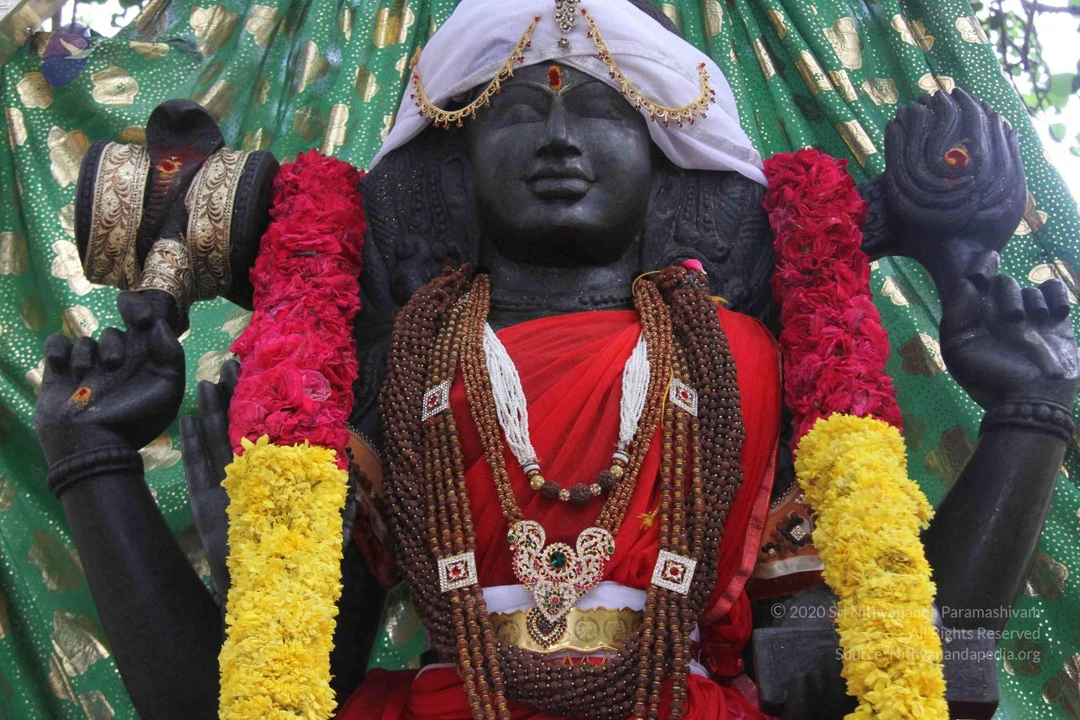
Paduka-Puja

9 photosSource gallery
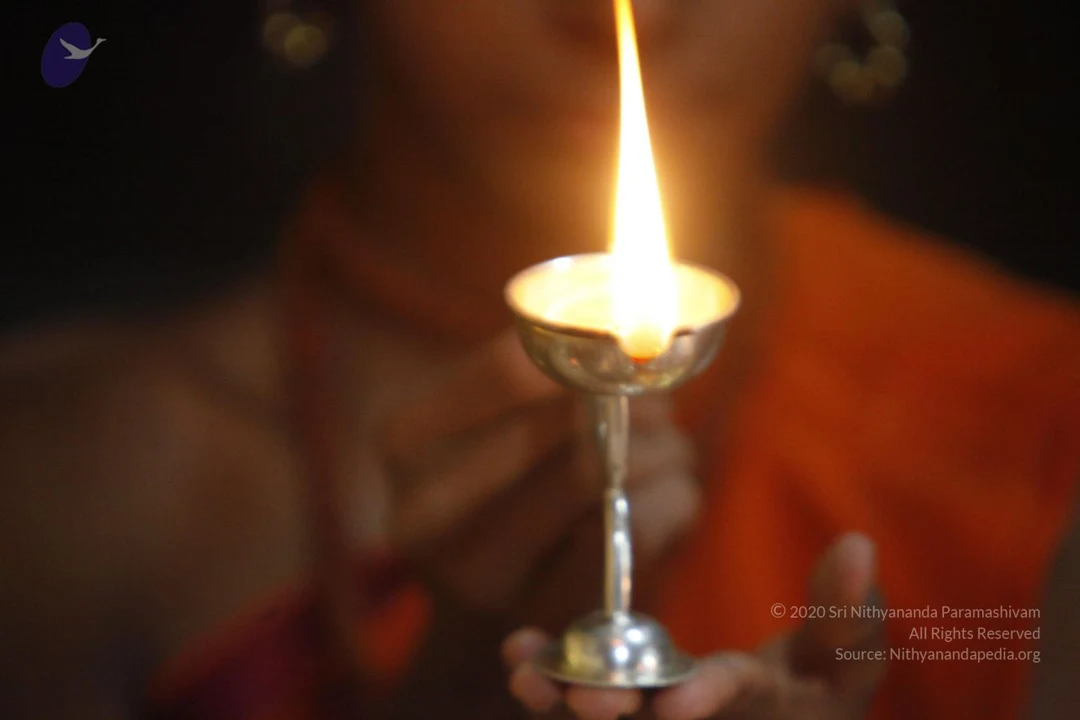
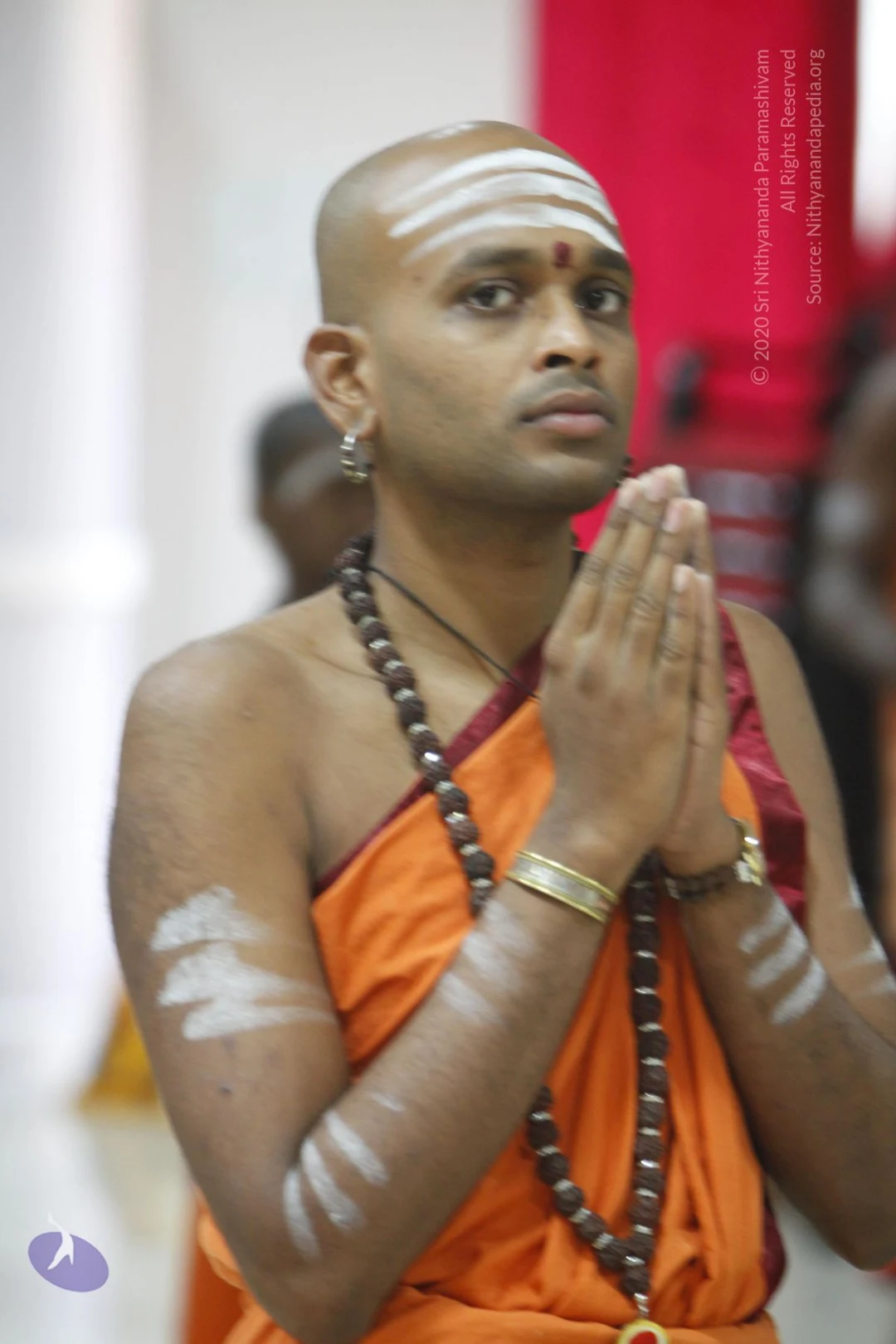
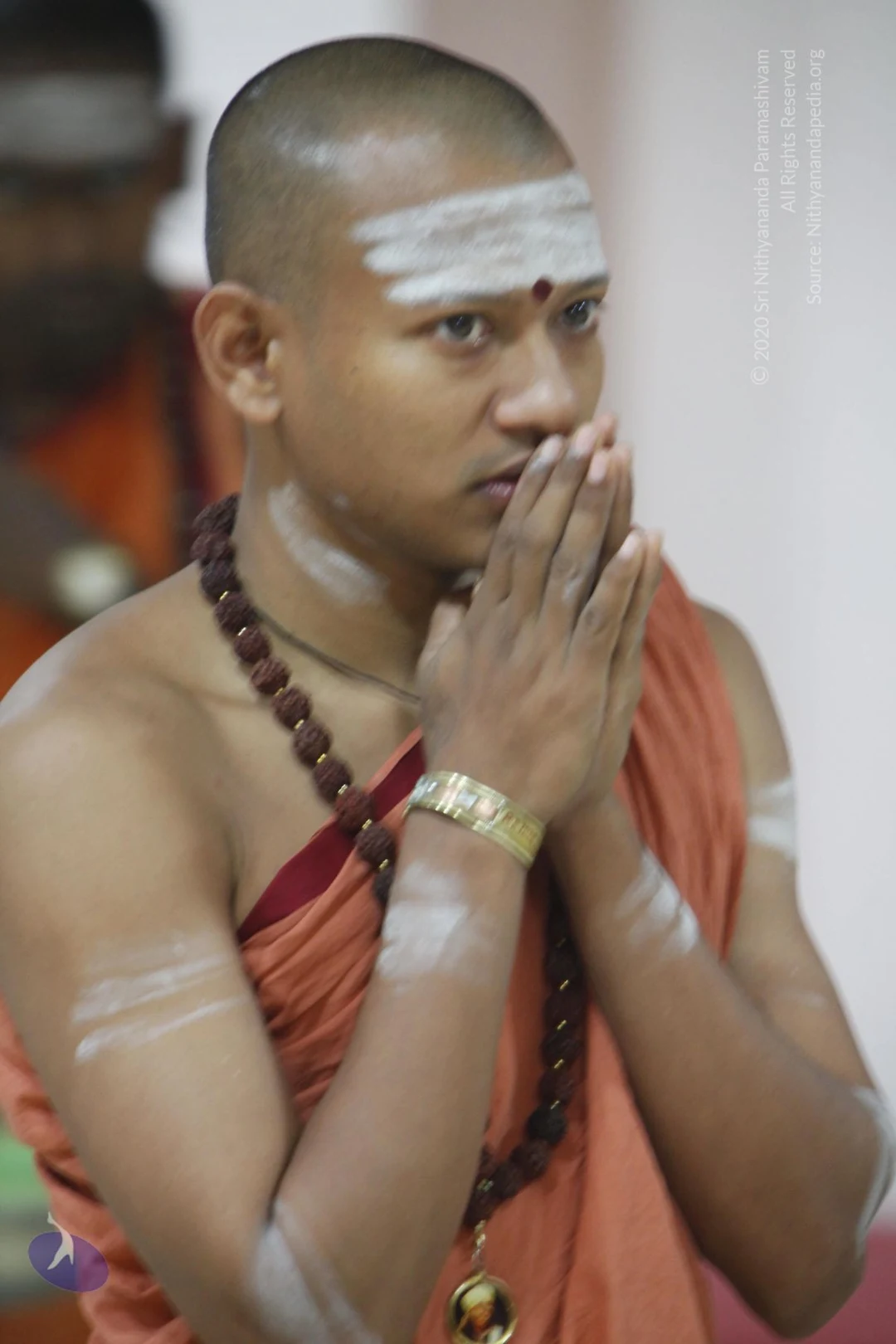
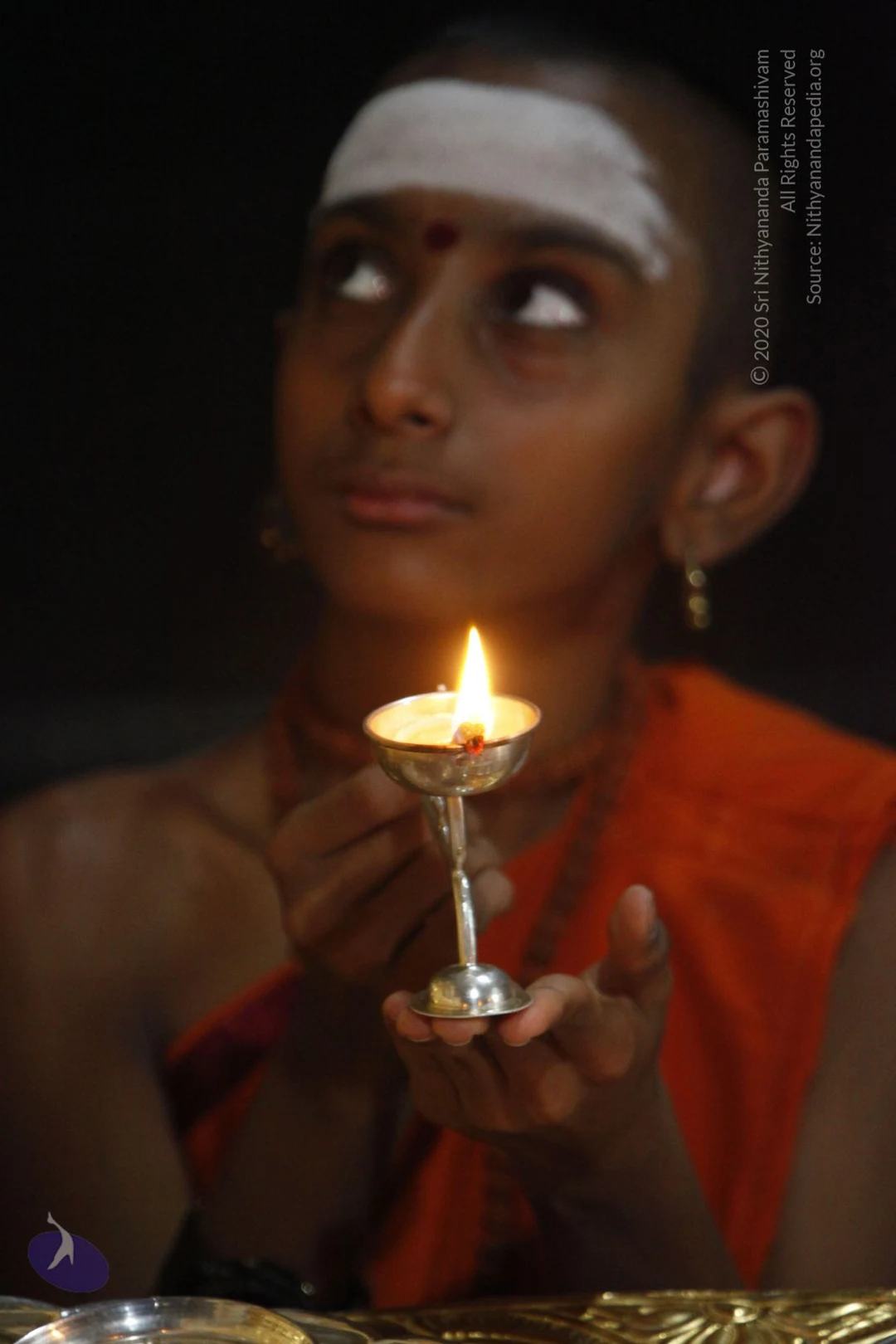
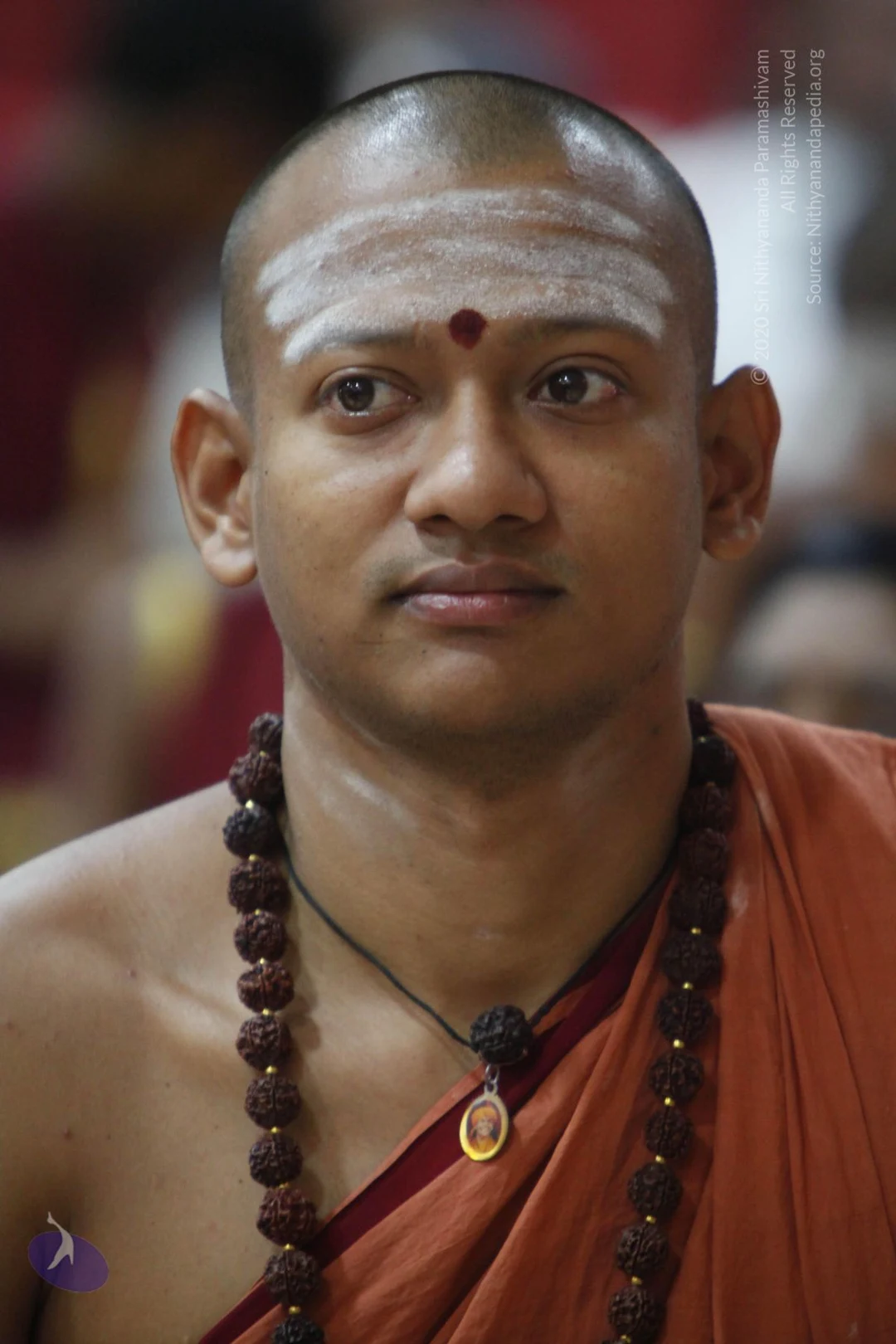
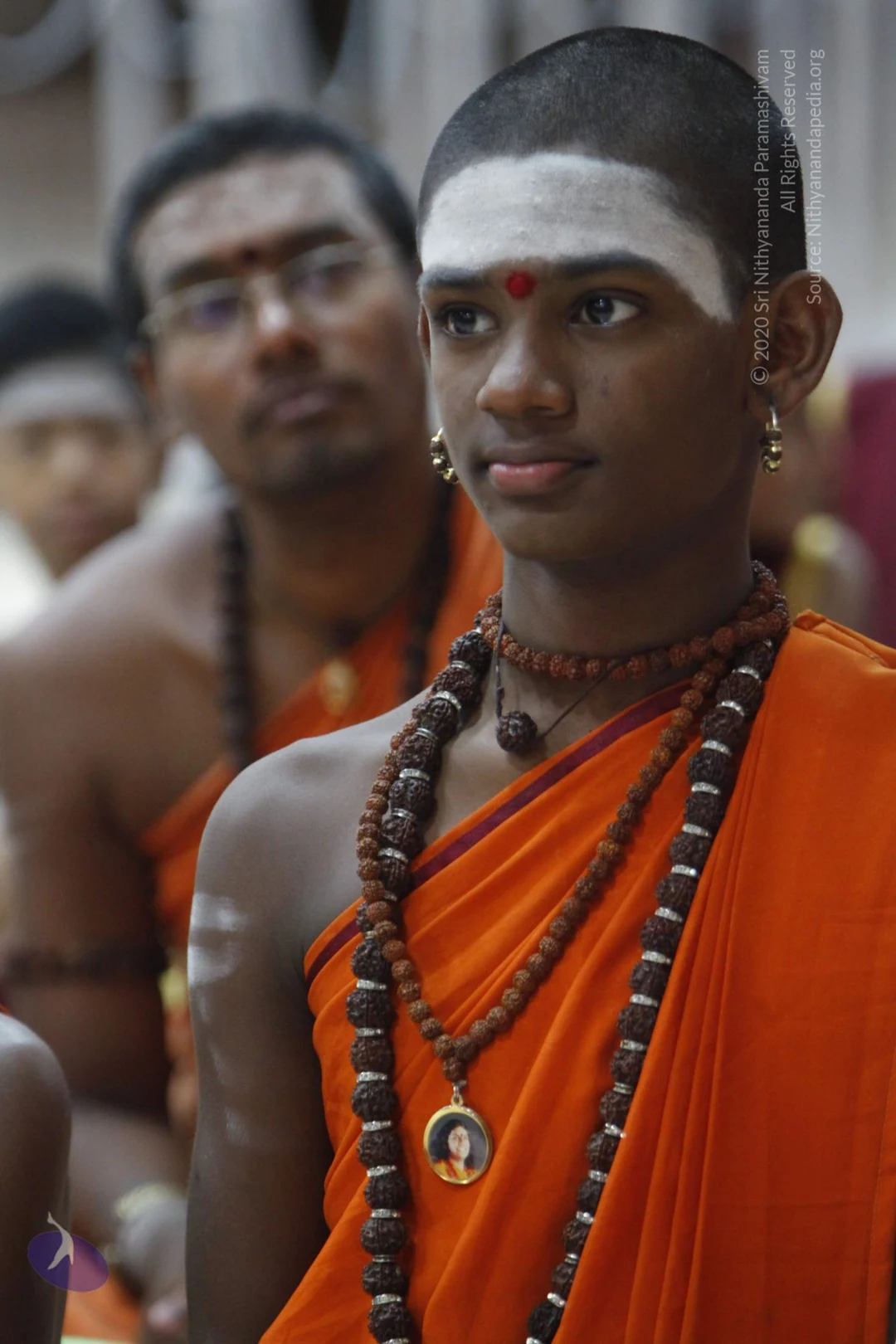
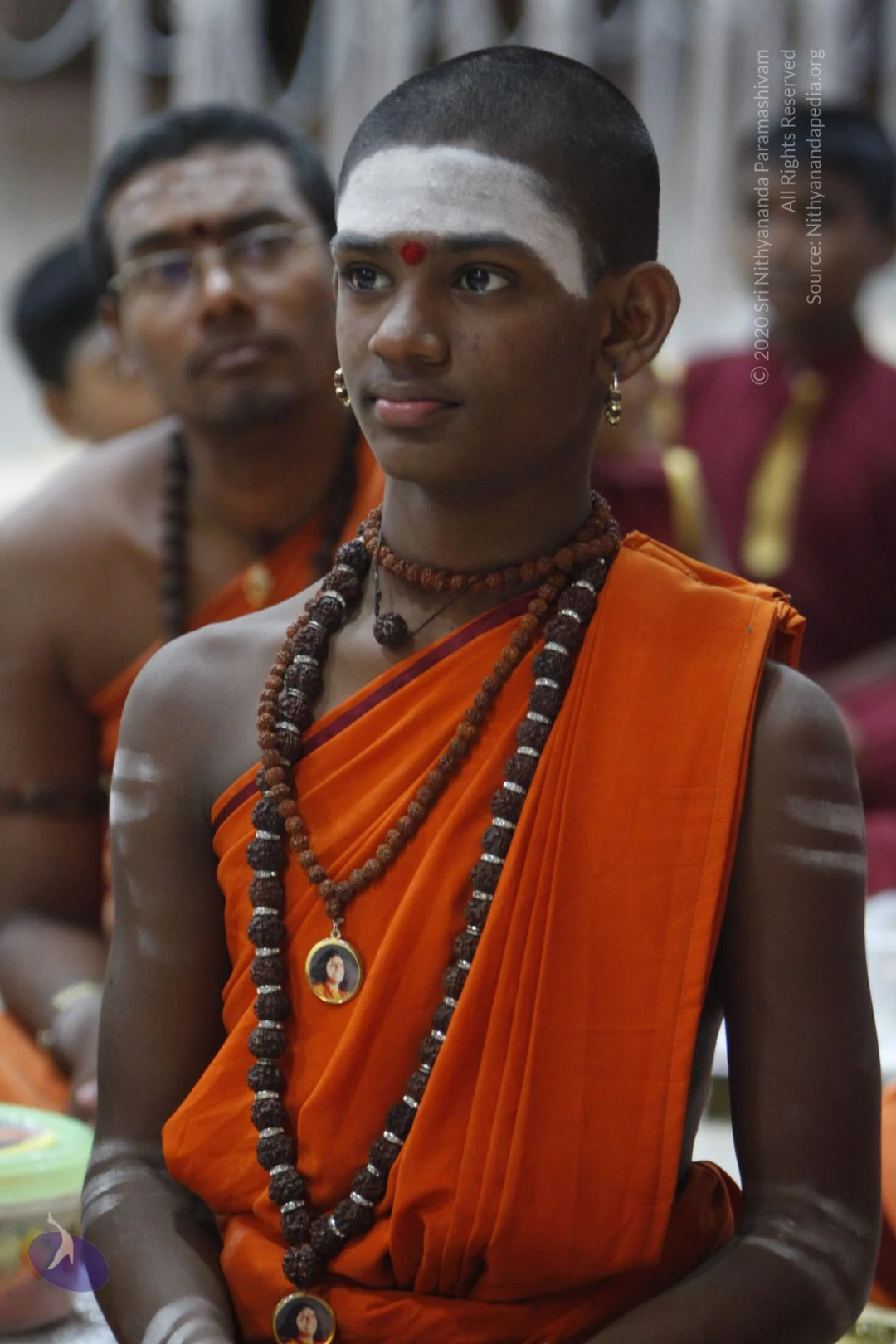
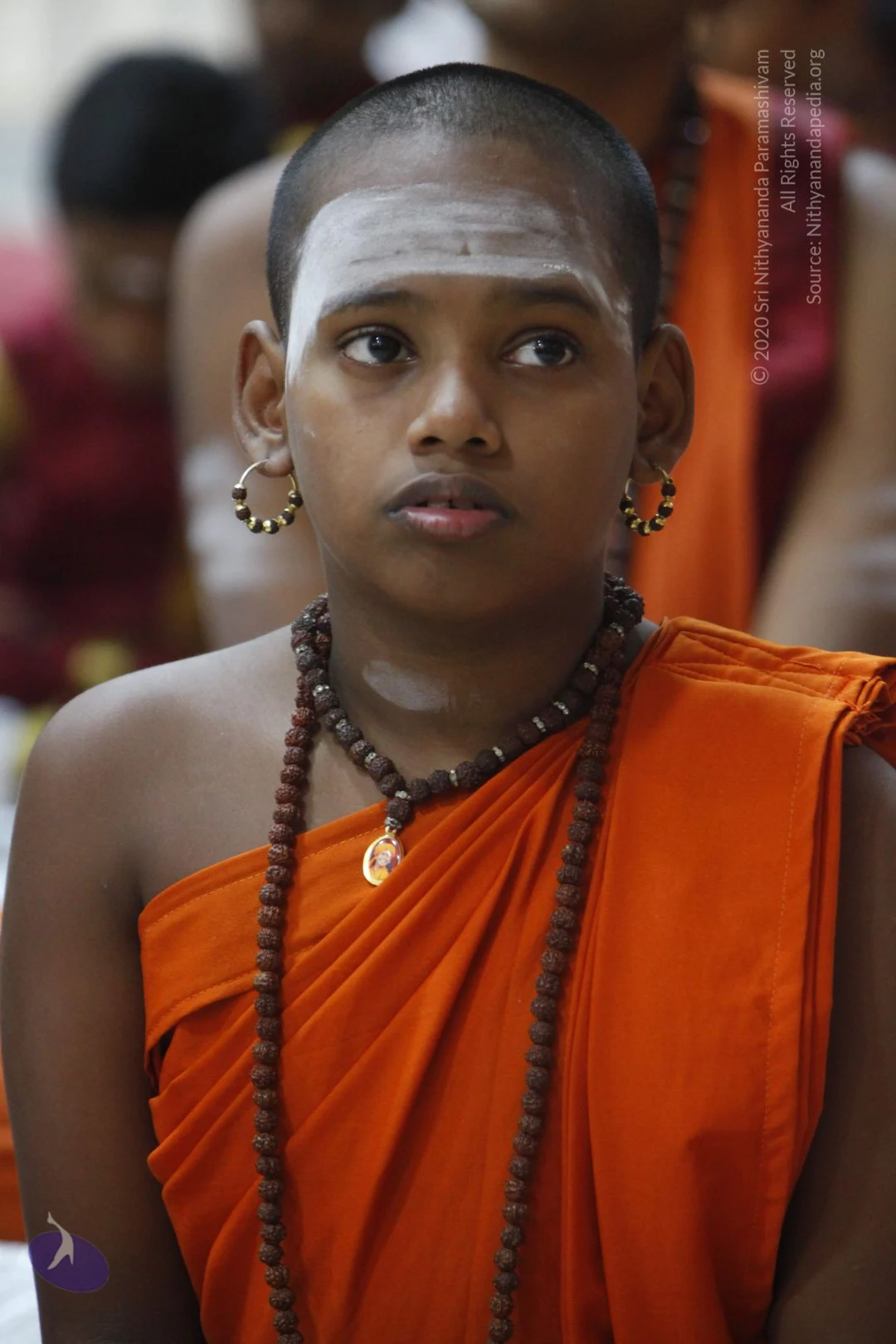
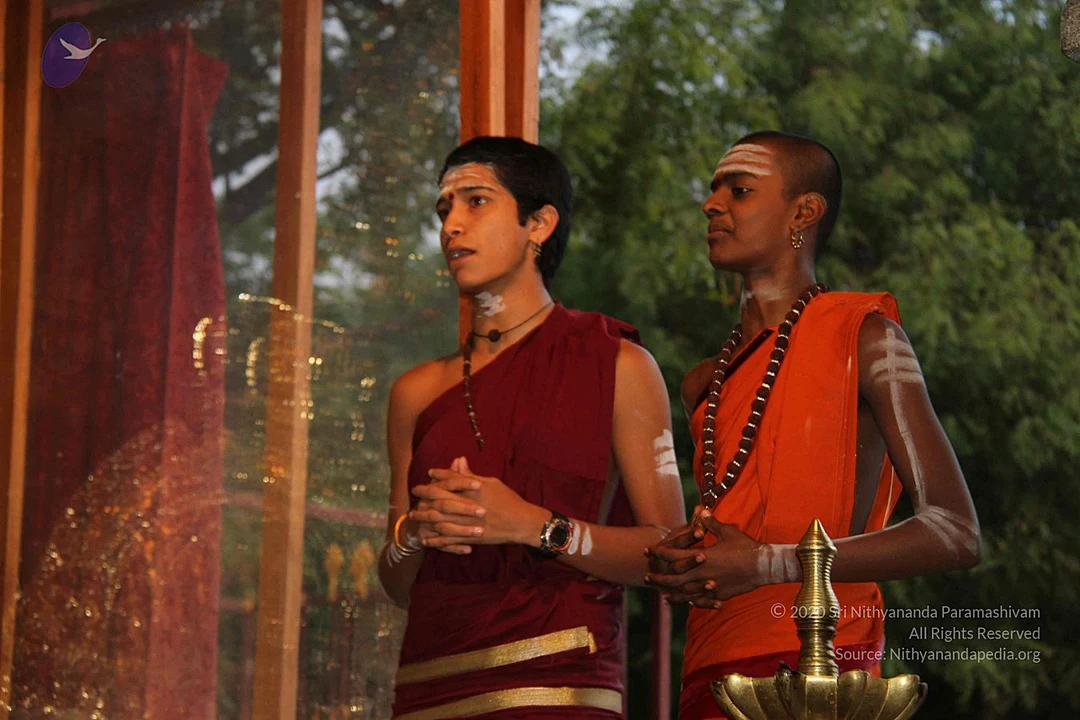
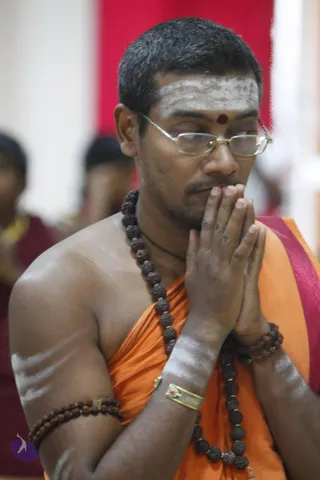
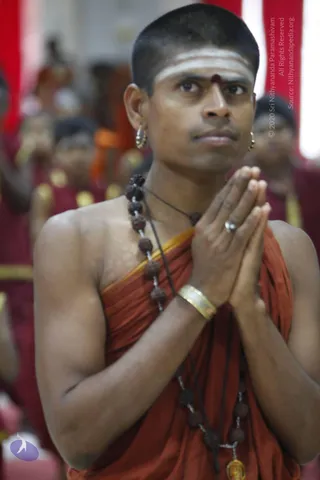
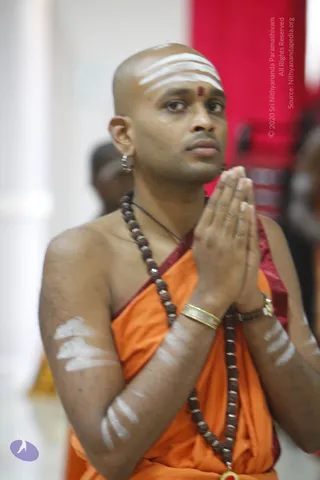
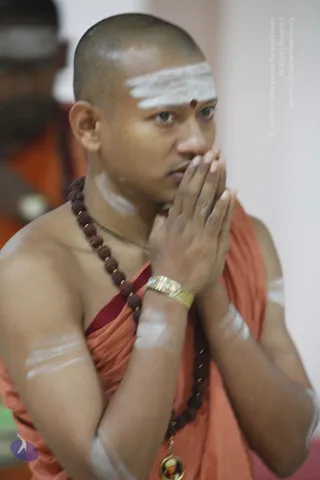
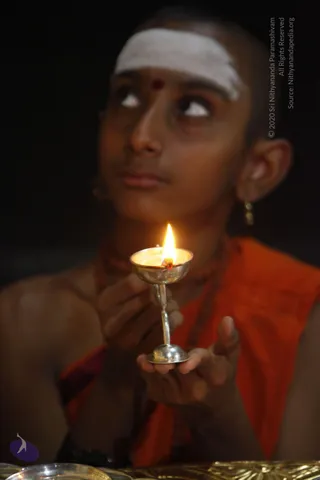
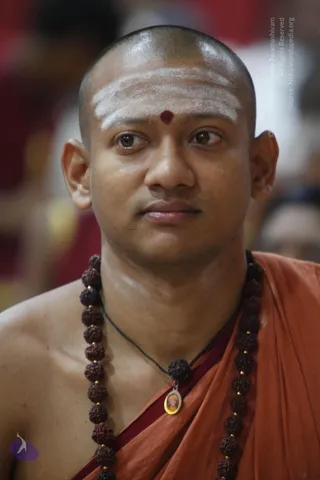
Close-up photograph of a man with short dark hair and gold-rimmed glasses, bare-chested under an orange cloth draped over one shoulder with a red border. He wears a red bindi and white vertical tilak marks on his forehead and arms, rudraksha malas around his neck and wrists, and a gold bracelet with a red stone. He holds his palms pressed together in anjali mudra with eyes lowered, in a bright red-and-white hall with blurred figures behind him.A close portrait photograph of a young man with a shaved head, white urdhva-pundra tilak and red bindi, pressing his palms together in anjali mudra with an upward, devotional gaze. He wears an orange-red sannyasi-style wrap over his bare shoulders, a rudraksha mala draped across his chest, a small gold-toned pendant, a gold bangle and a silver ring; hoop earrings are visible. Behind him, out of focus, several people in maroon and orange robes stand with hands folded beside red fabric drapes. The man is a devotee or sannyasi in prayer; his appearance does not clearly match a person candidate.A close portrait photograph of a shaved-headed man in orange saffron robes with a dark red border, his palms pressed together in anjali mudra at his chest. He wears wide white horizontal tilak stripes on his forehead with a small red dot at the centre, white markings on his upper arms and forearms, a rudraksha mala with silver spacer beads, gold bangles, a wristwatch and small hoop earrings. Behind him a red pillar and a blurred figure are visible.A close photo of a shaved-headed man in an orange-saffron upper cloth with a deep red undergarment, wearing a rudraksha mala of dark brown beads and a gold bangle. He has white vertical tilak-like marks on his forehead and arms and a small red dot between his brows. He stands with palms pressed together in anjali mudra at the chest, eyes lifted, in a devotional posture. A pendant with a small portrait medallion hangs at his chest. The background is blurred, with another orange-clad person partly visible at left.Close photograph of a young boy in a saffron-orange sleeveless wrap, with a white sacred ash band across the forehead and a red dot at the centre. He holds a small silver oil lamp with a lit flame in both hands and gazes upward, with rudraksha beads visible at his neck. Blurred gold and silver ritual vessels appear along the bottom edge against a dark background. Appearance-based identity cannot be confirmed, so the a person field is unsure.Close portrait of a shaved-headed man wearing white horizontal sacred ash bands across his forehead with a red bindi at the centre. He wears long rudraksha mala beads and an orange-saffron cloth draped over his shoulders, with a small pendant on a dark cord at his chest. He looks off to the side in a blurred indoor setting. The ash bands and shaved head are ordinary monastic marks, and the shawl and rudraksha are the only cues, so the appearance is too uncertain to confirm the page's claim about a person.

Gurukul-instrument

4 photosSource gallery
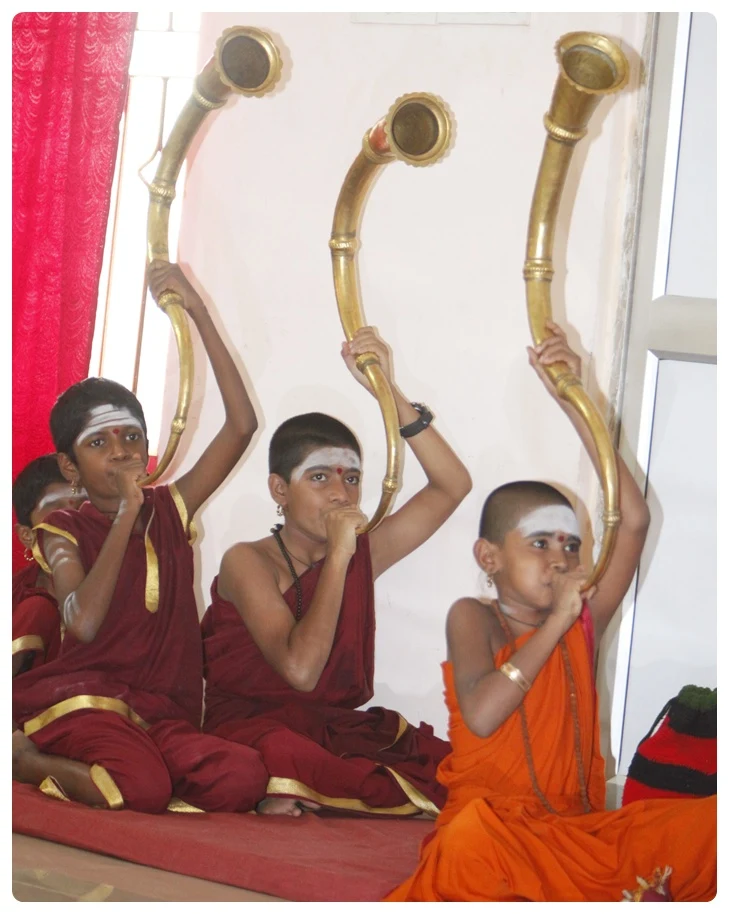
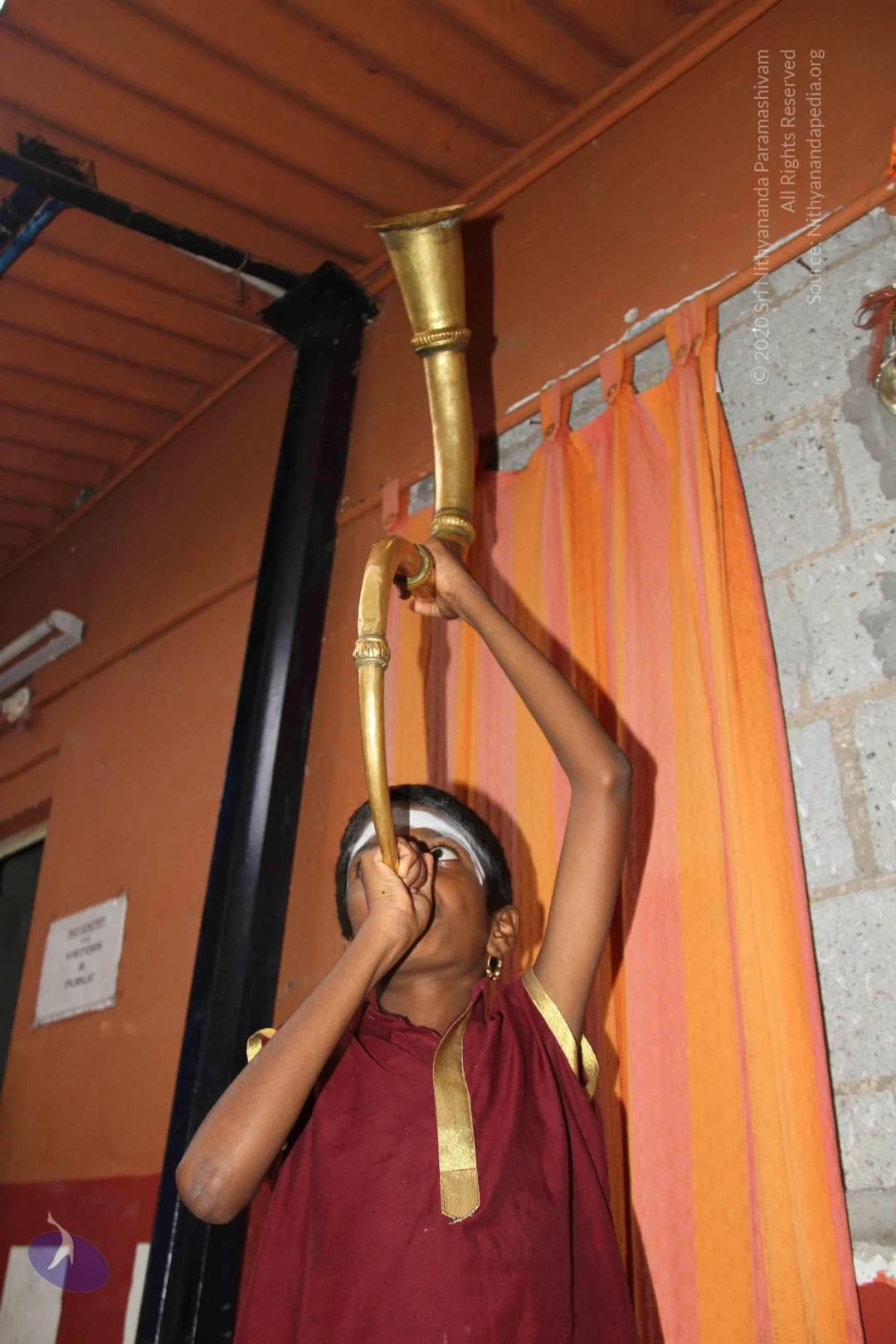
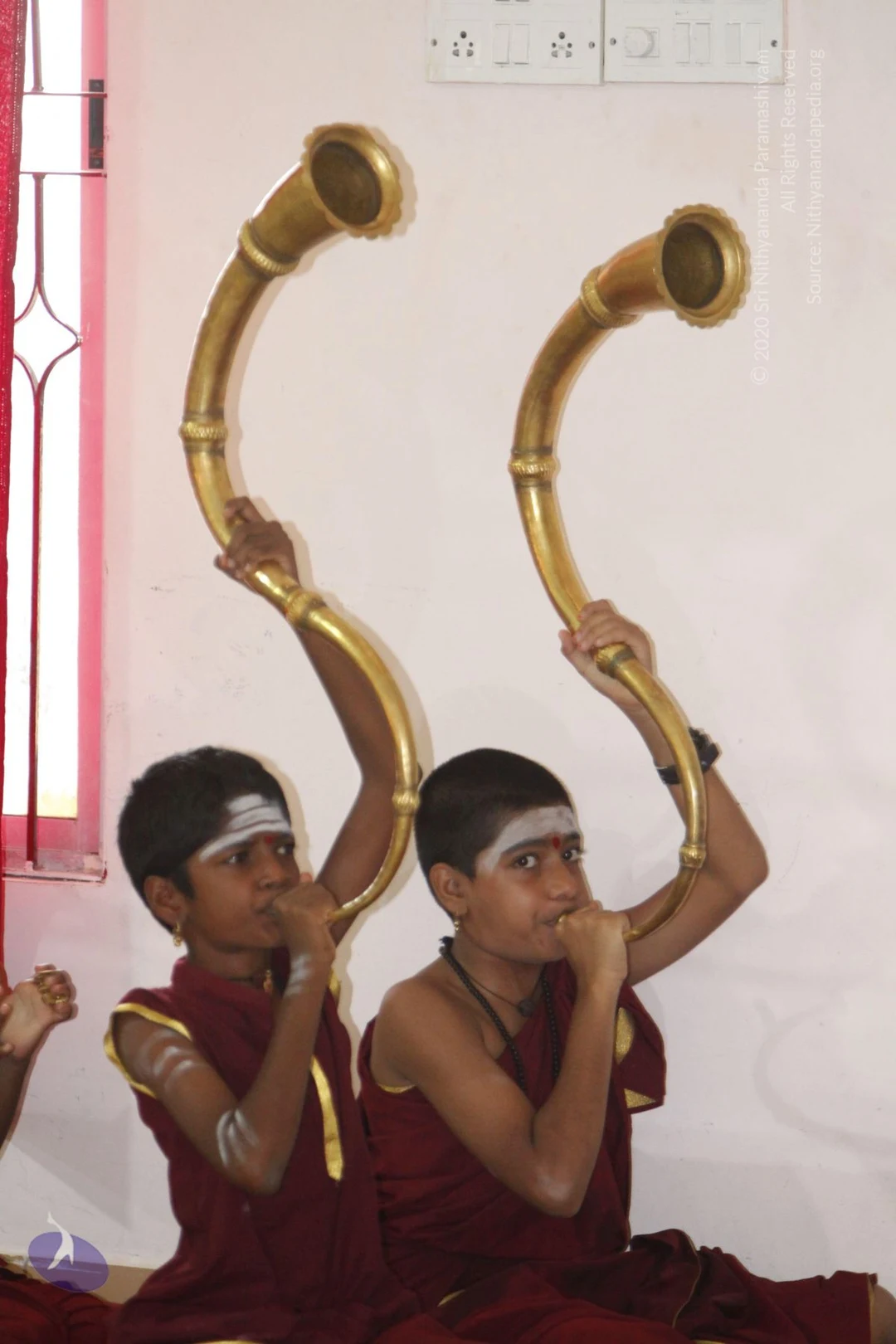
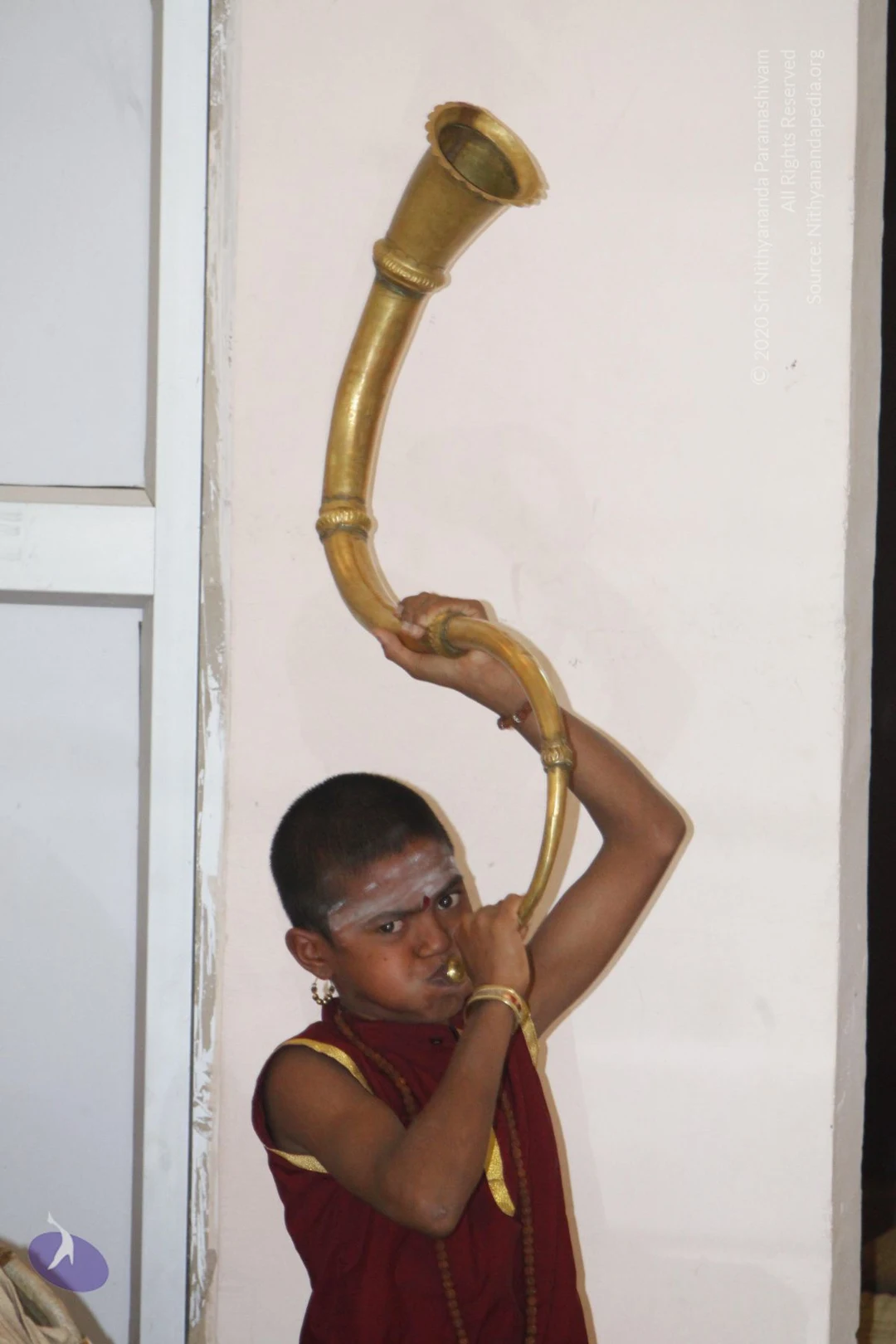
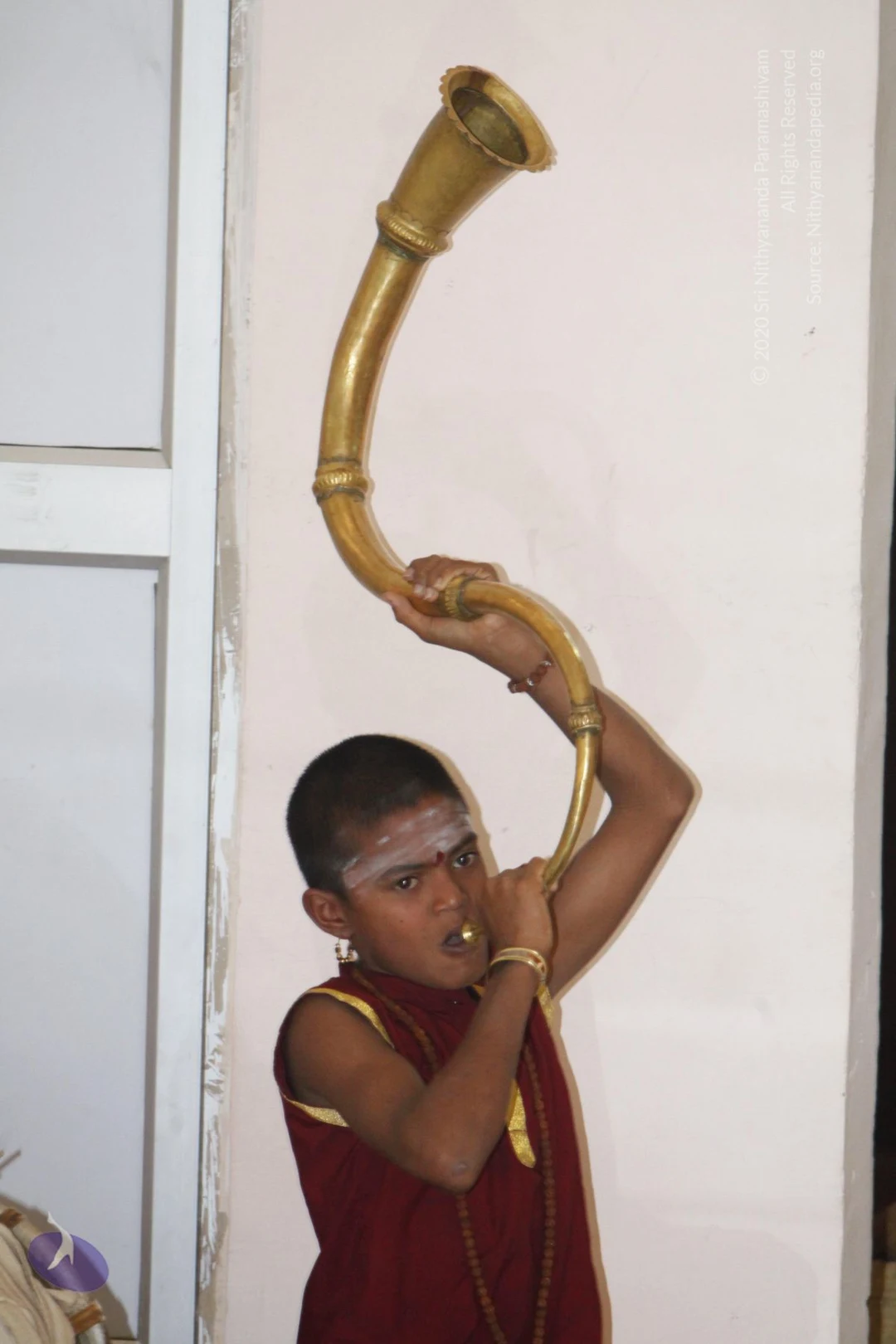
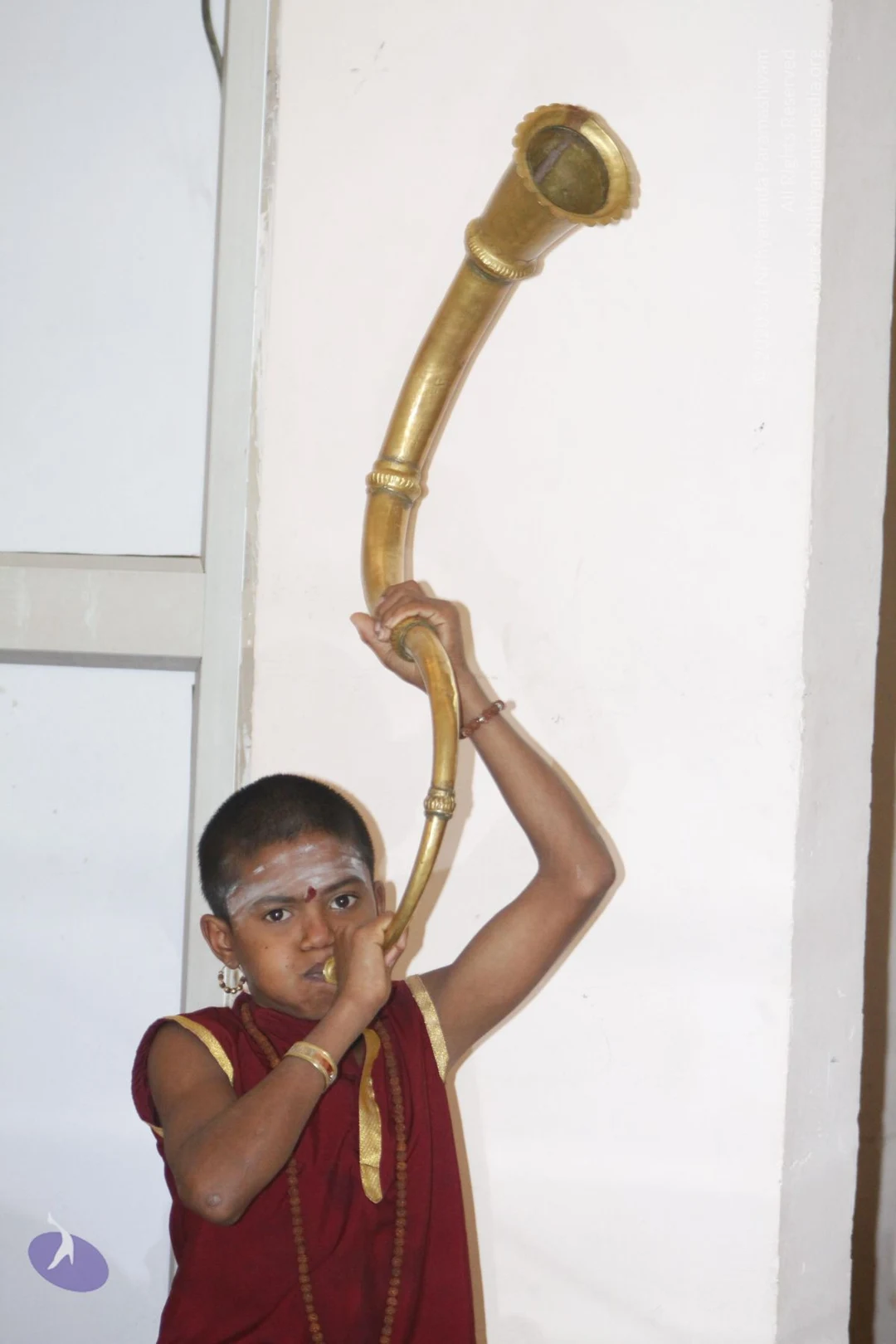
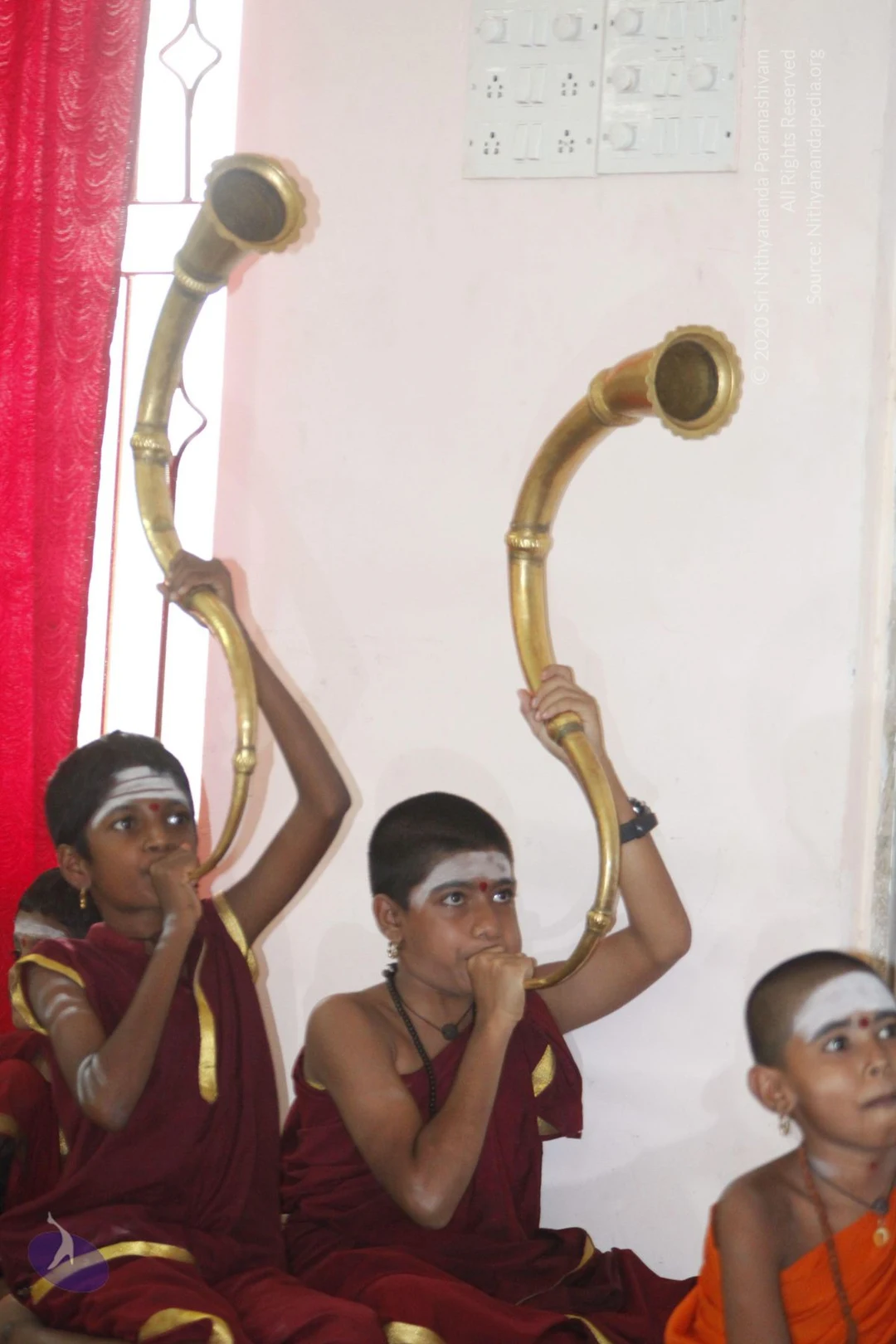
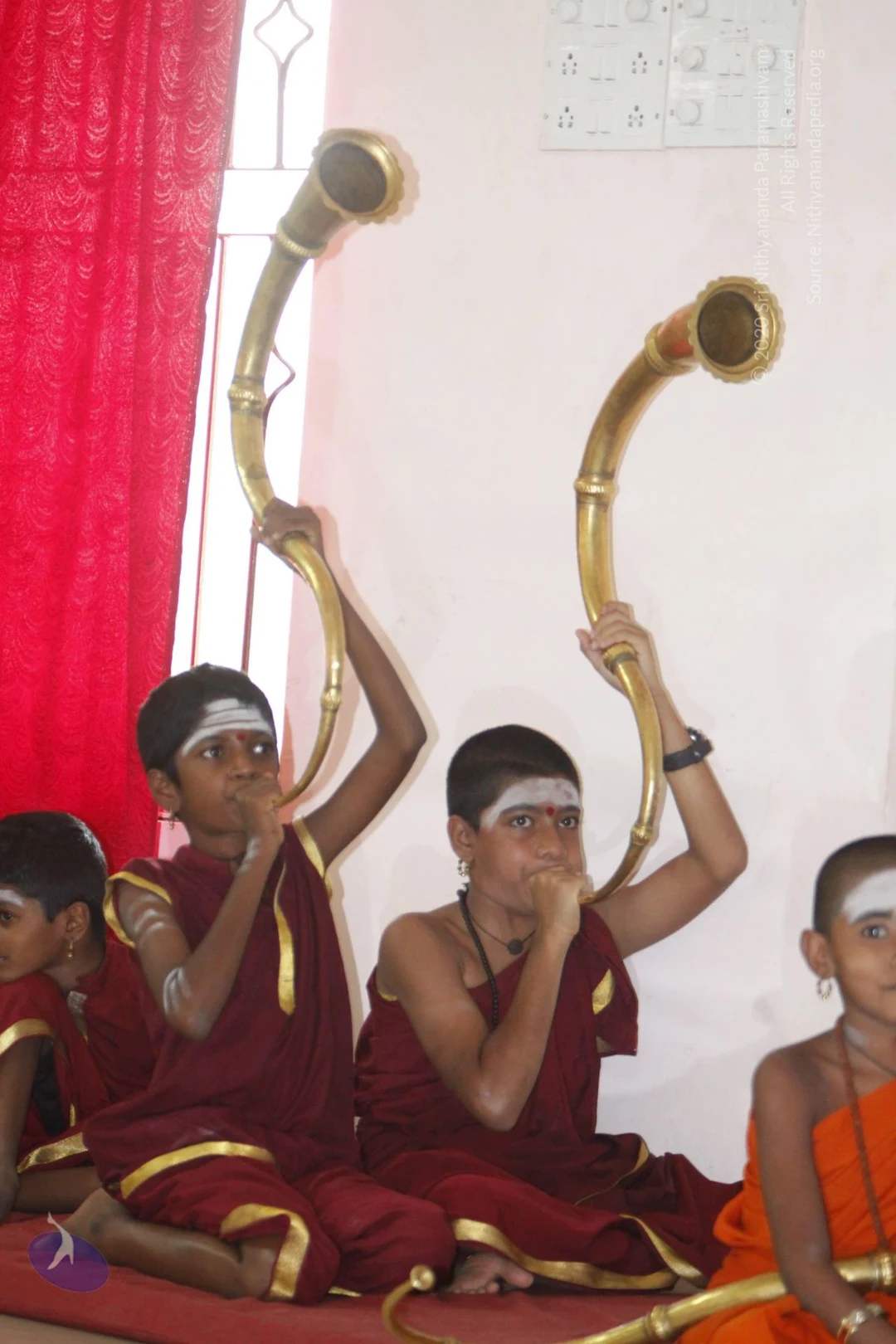
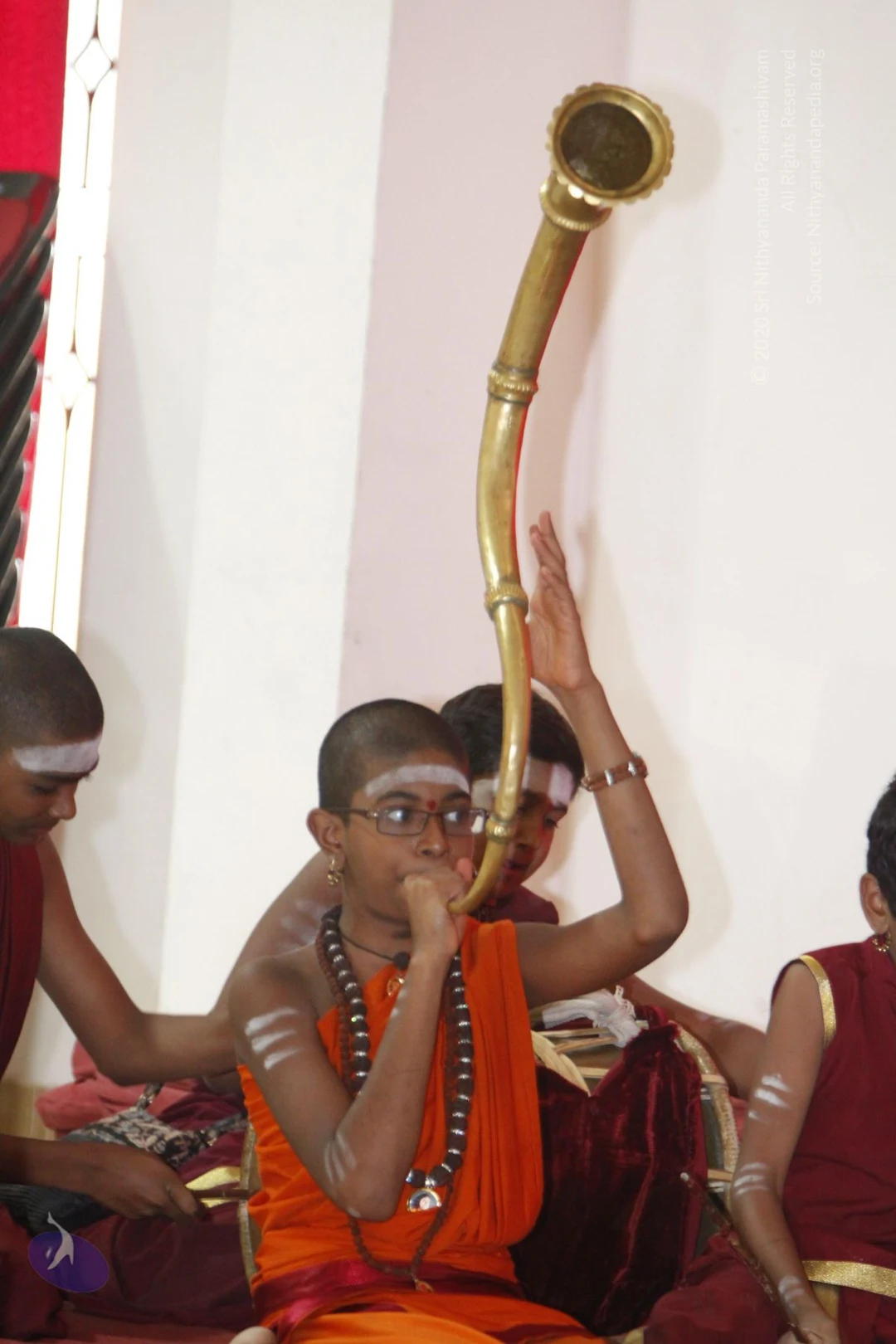
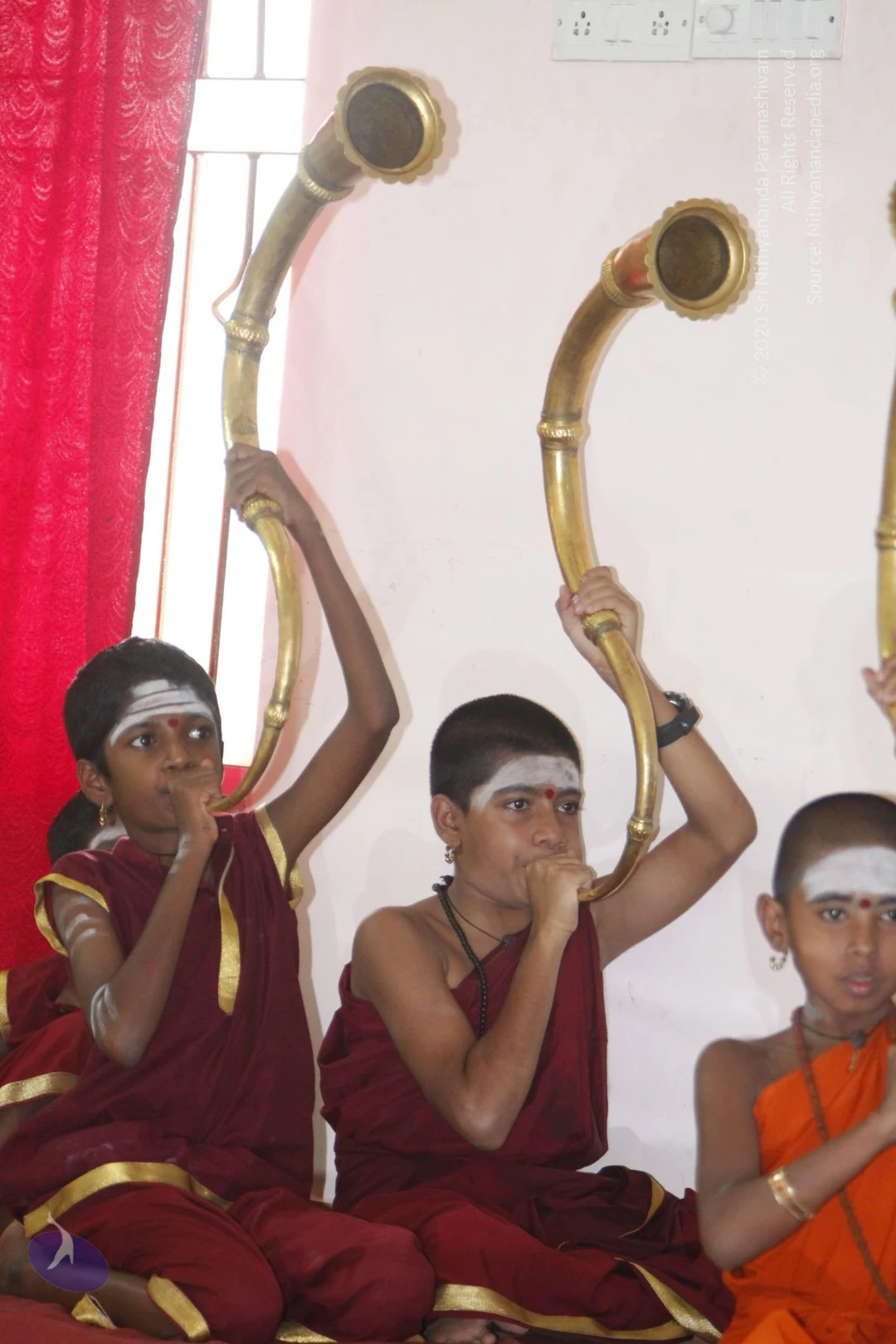
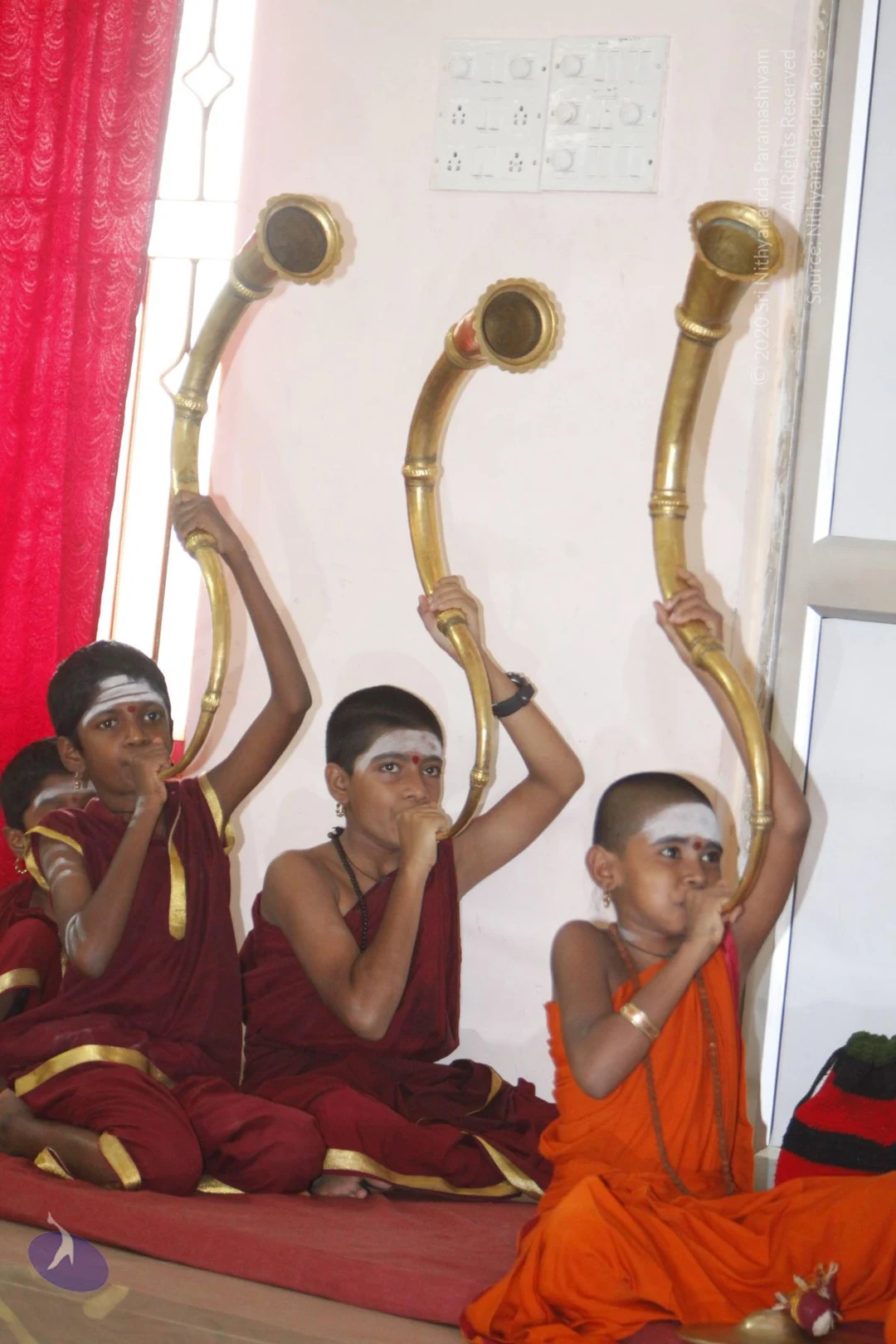
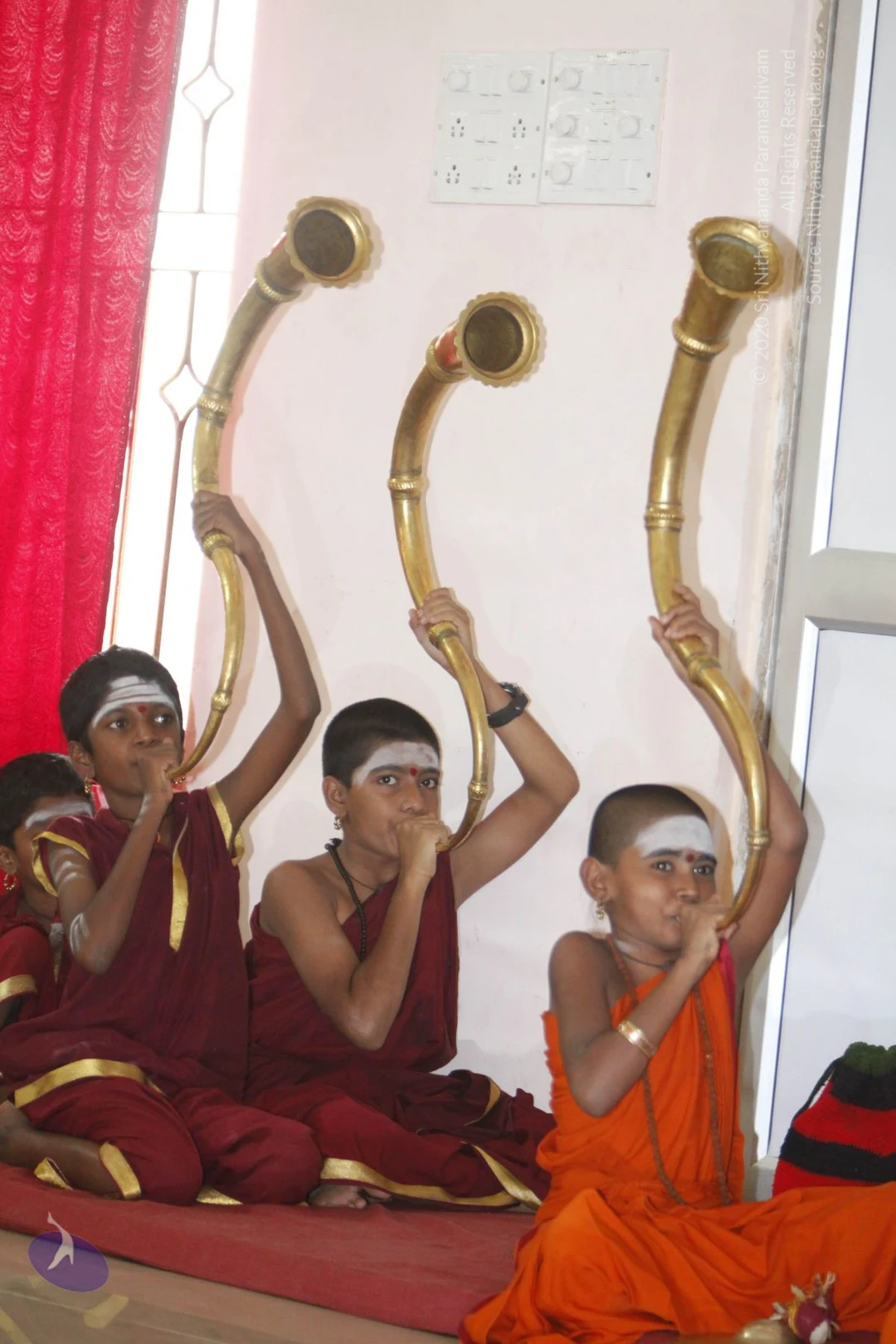
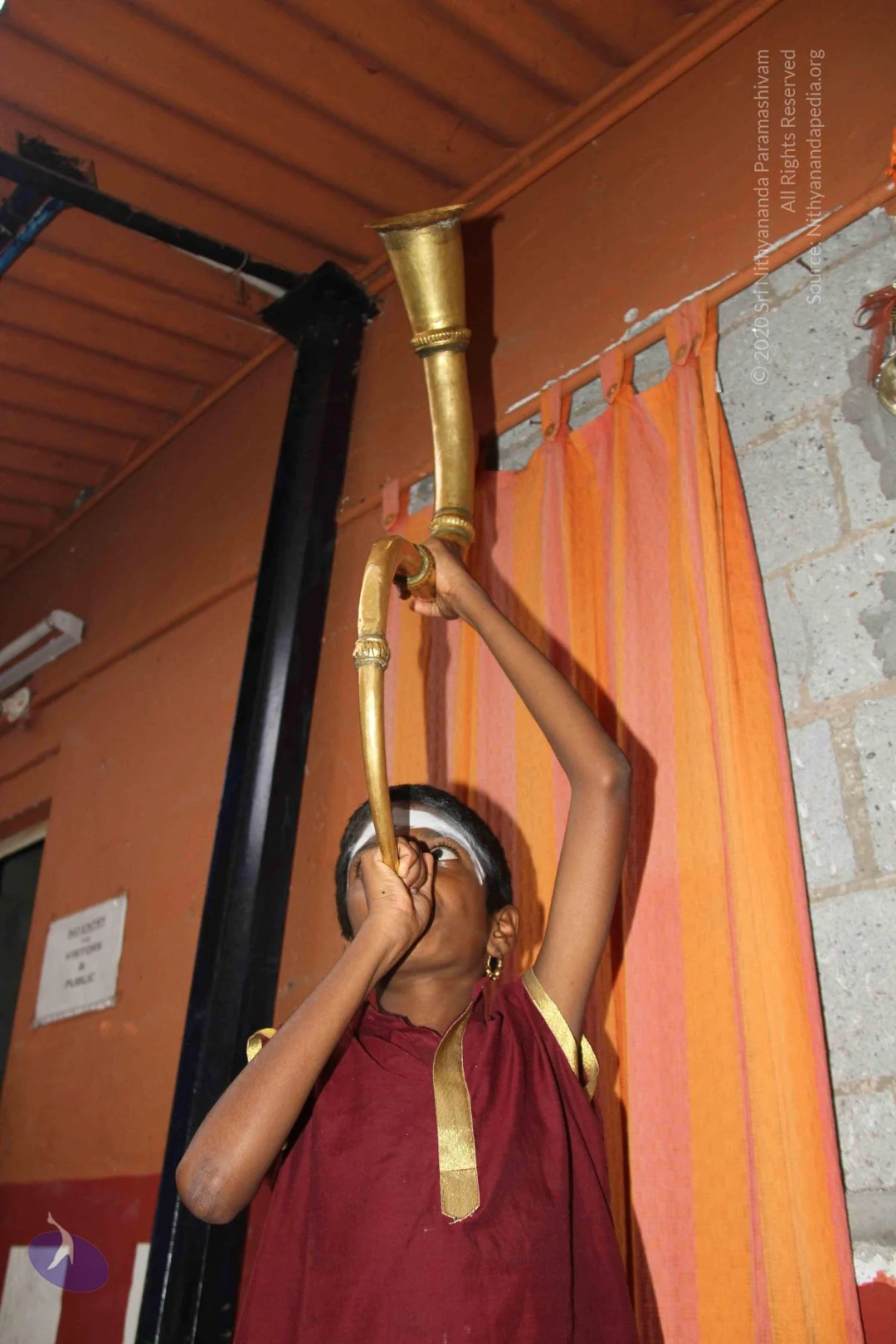
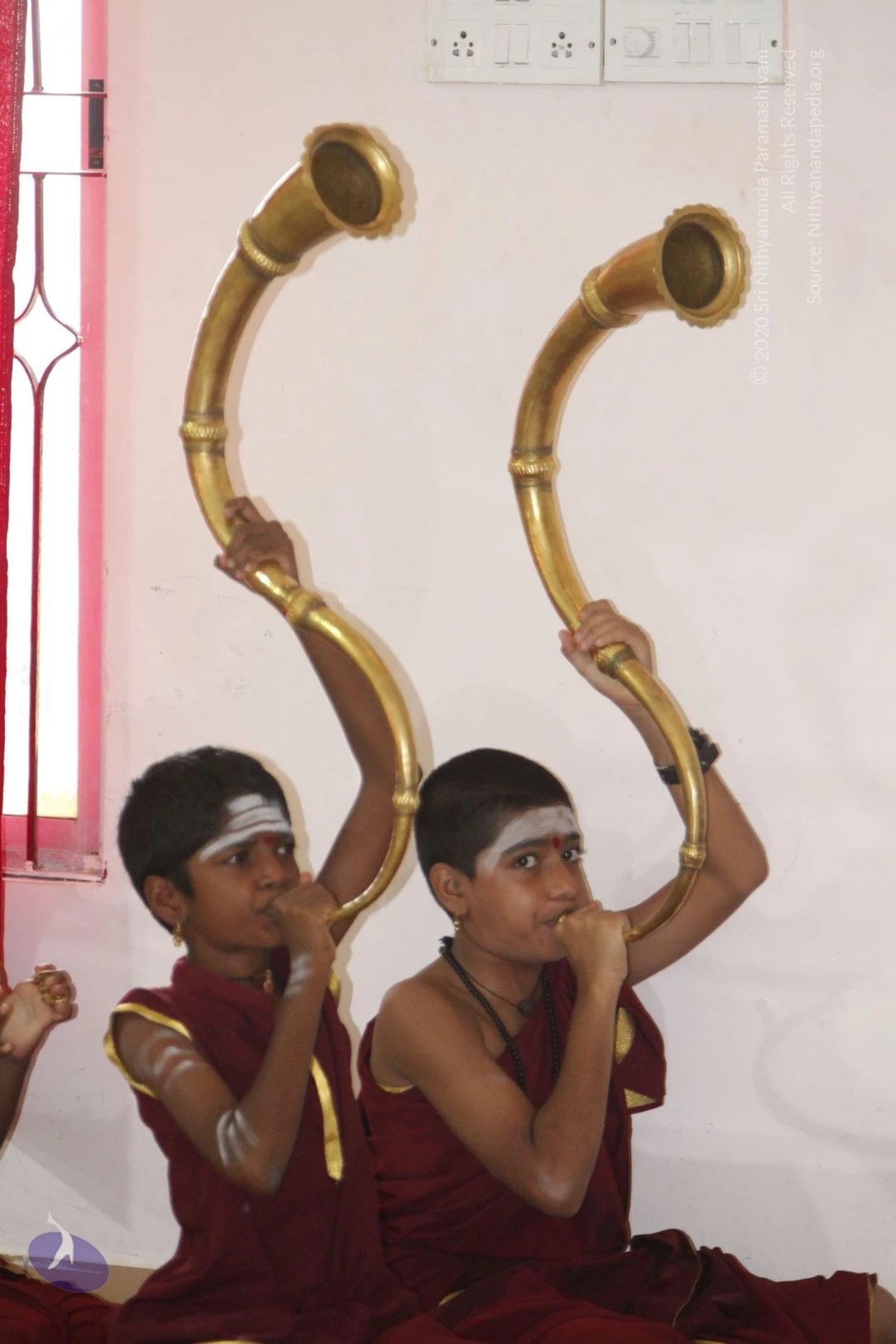
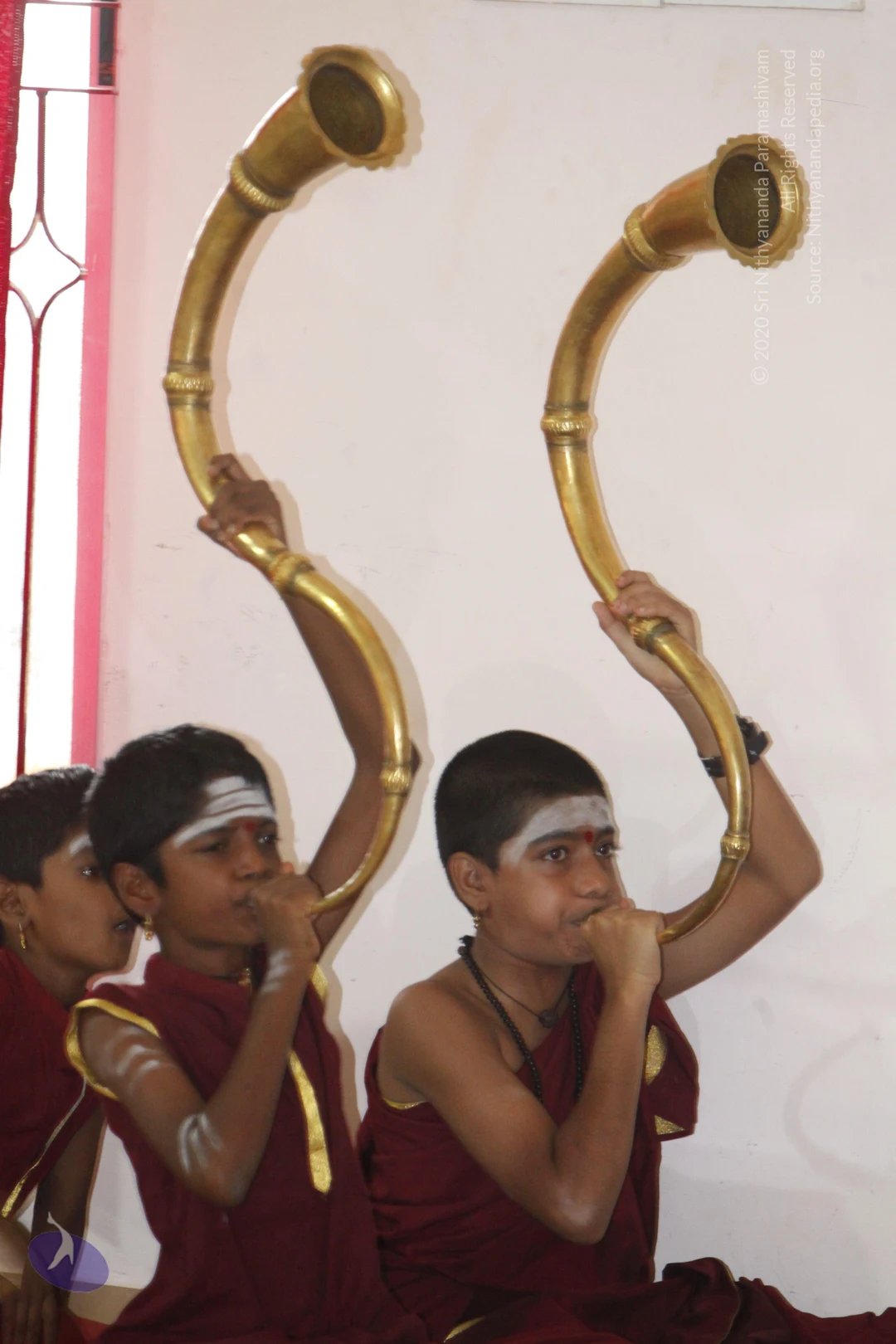
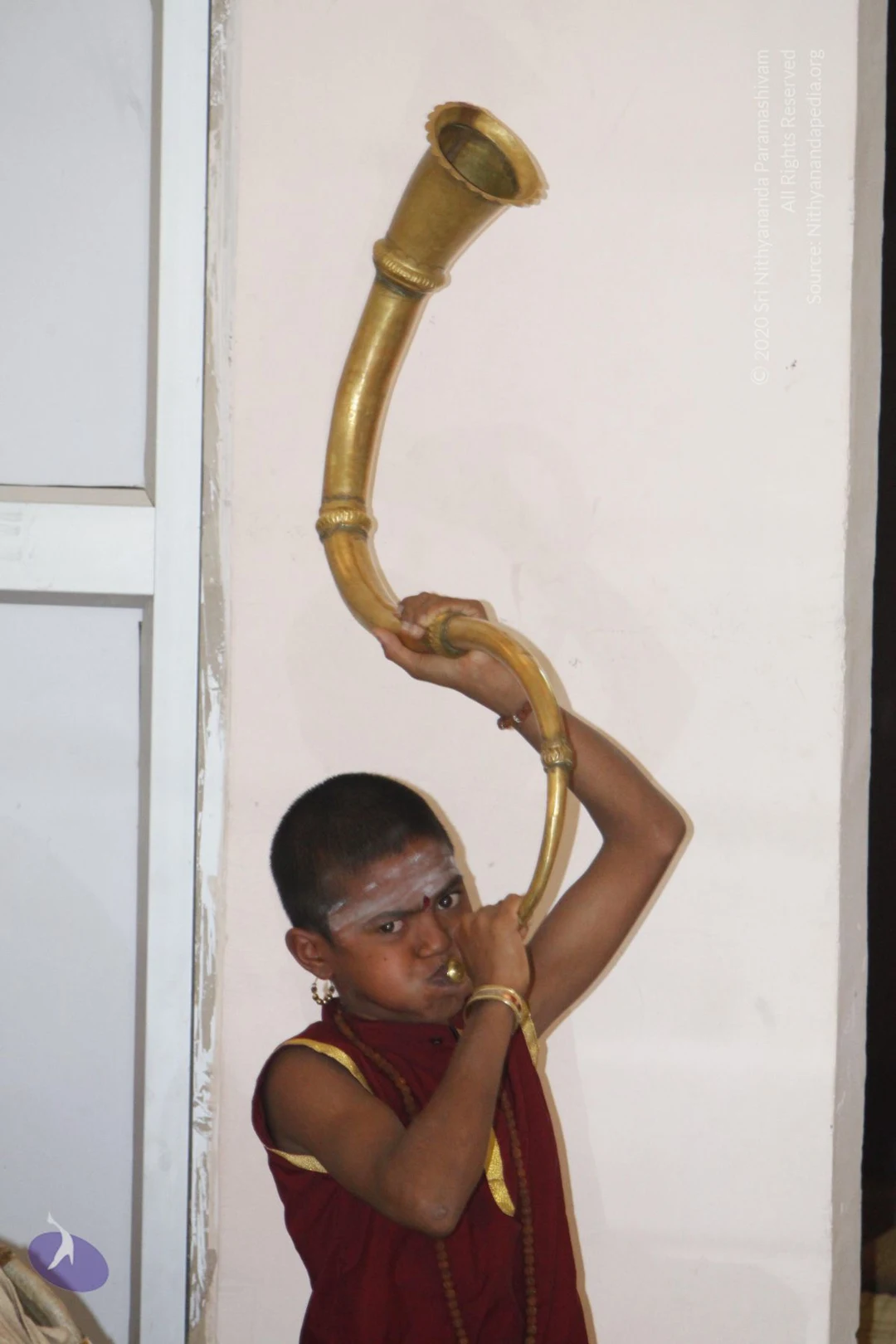
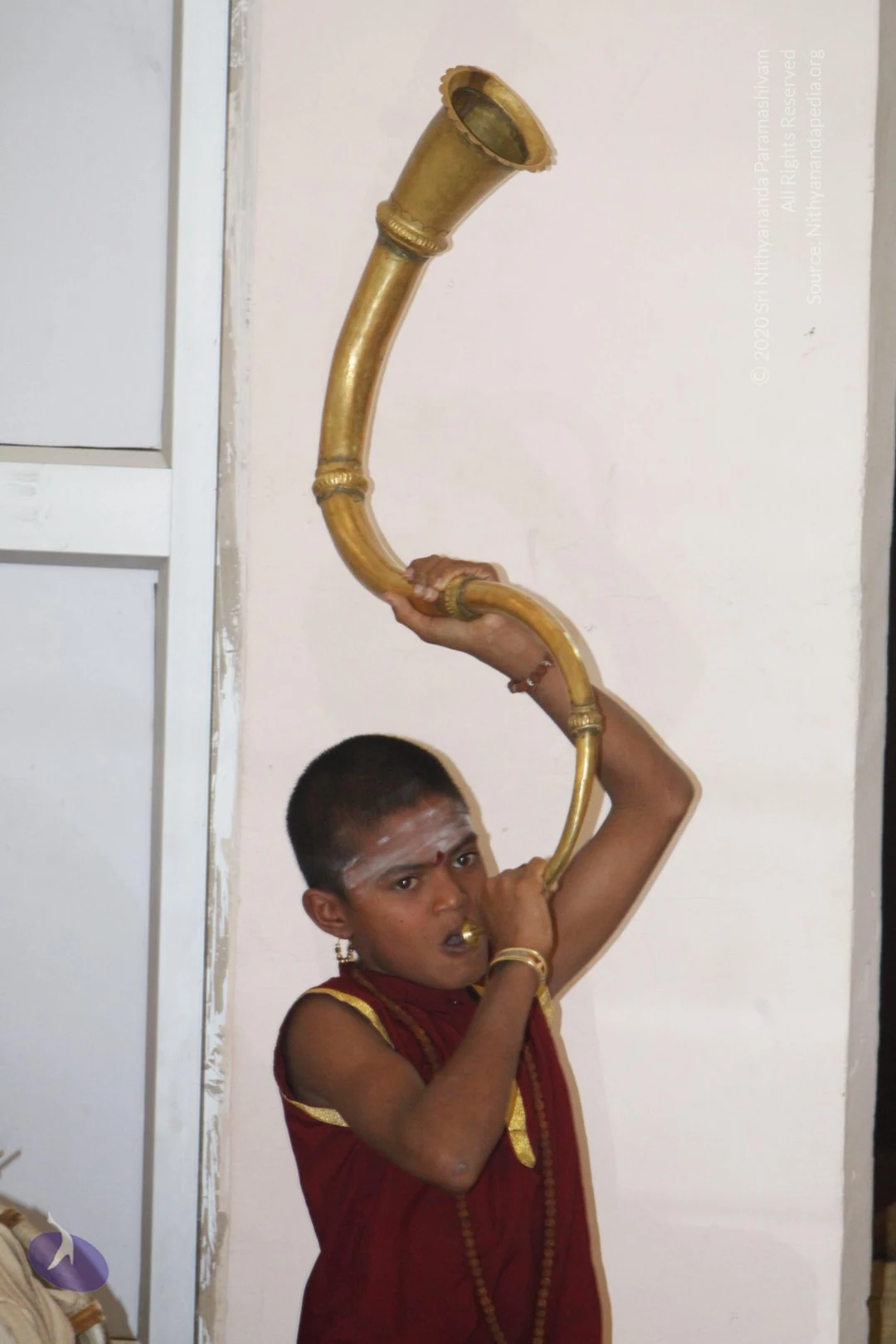
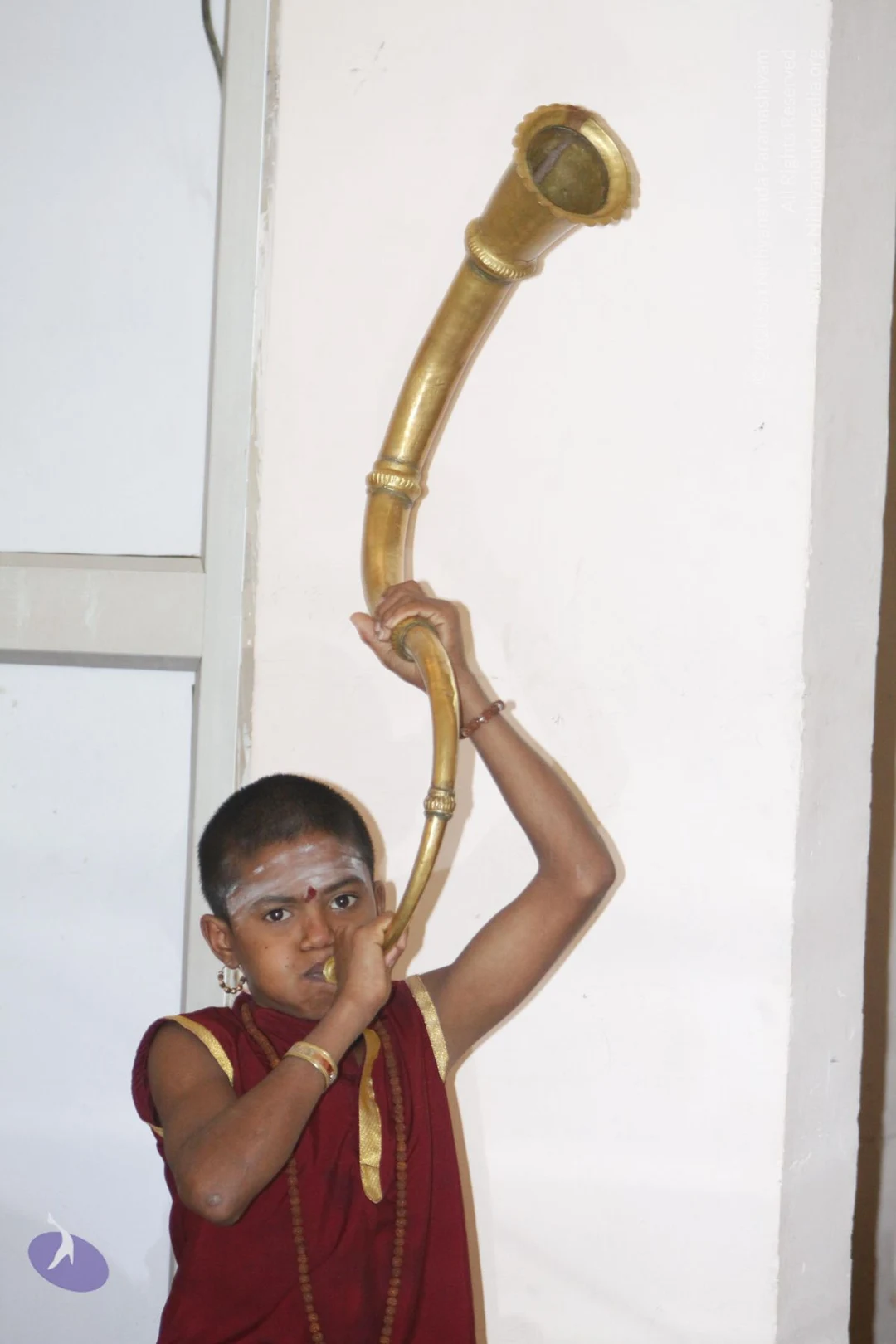
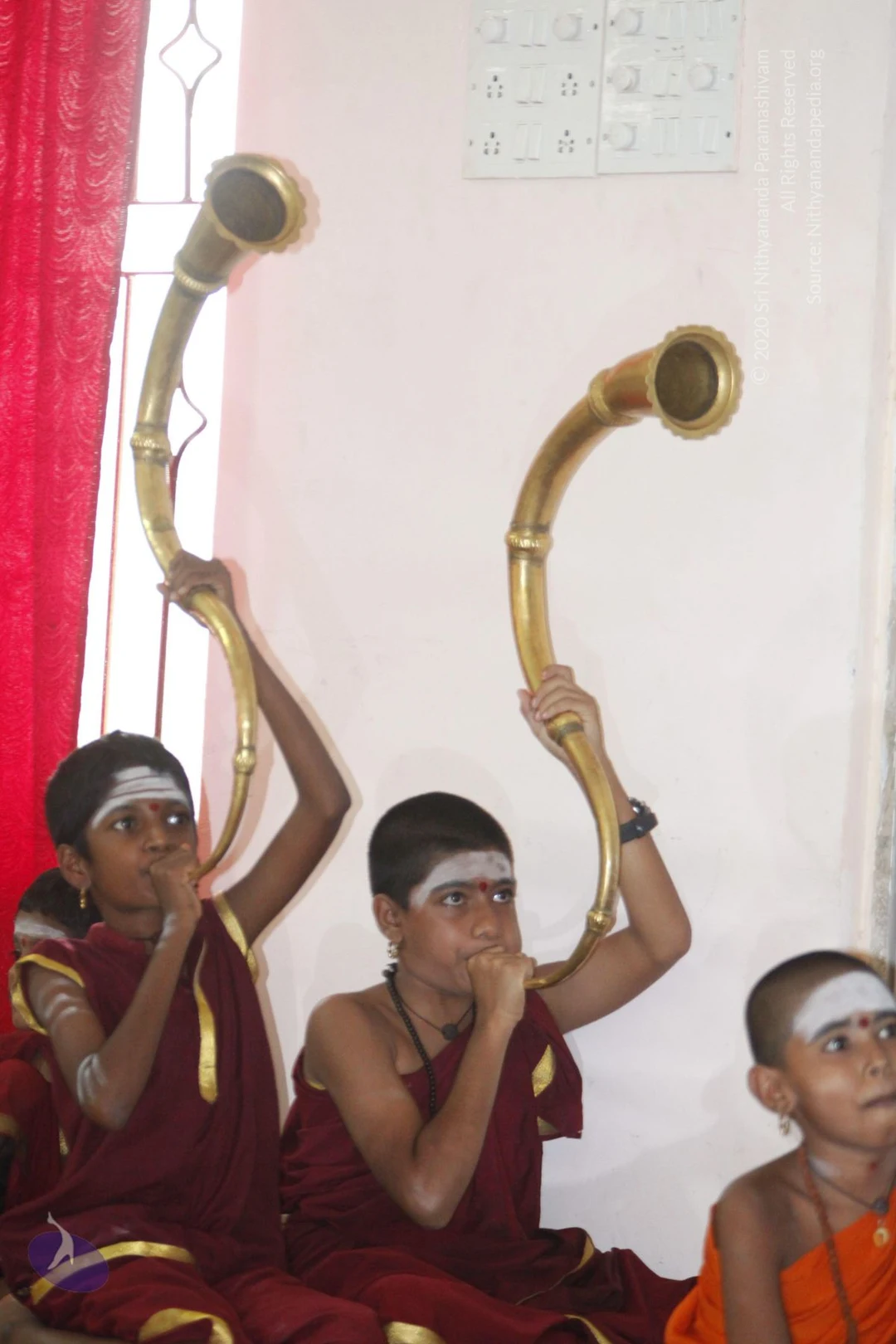
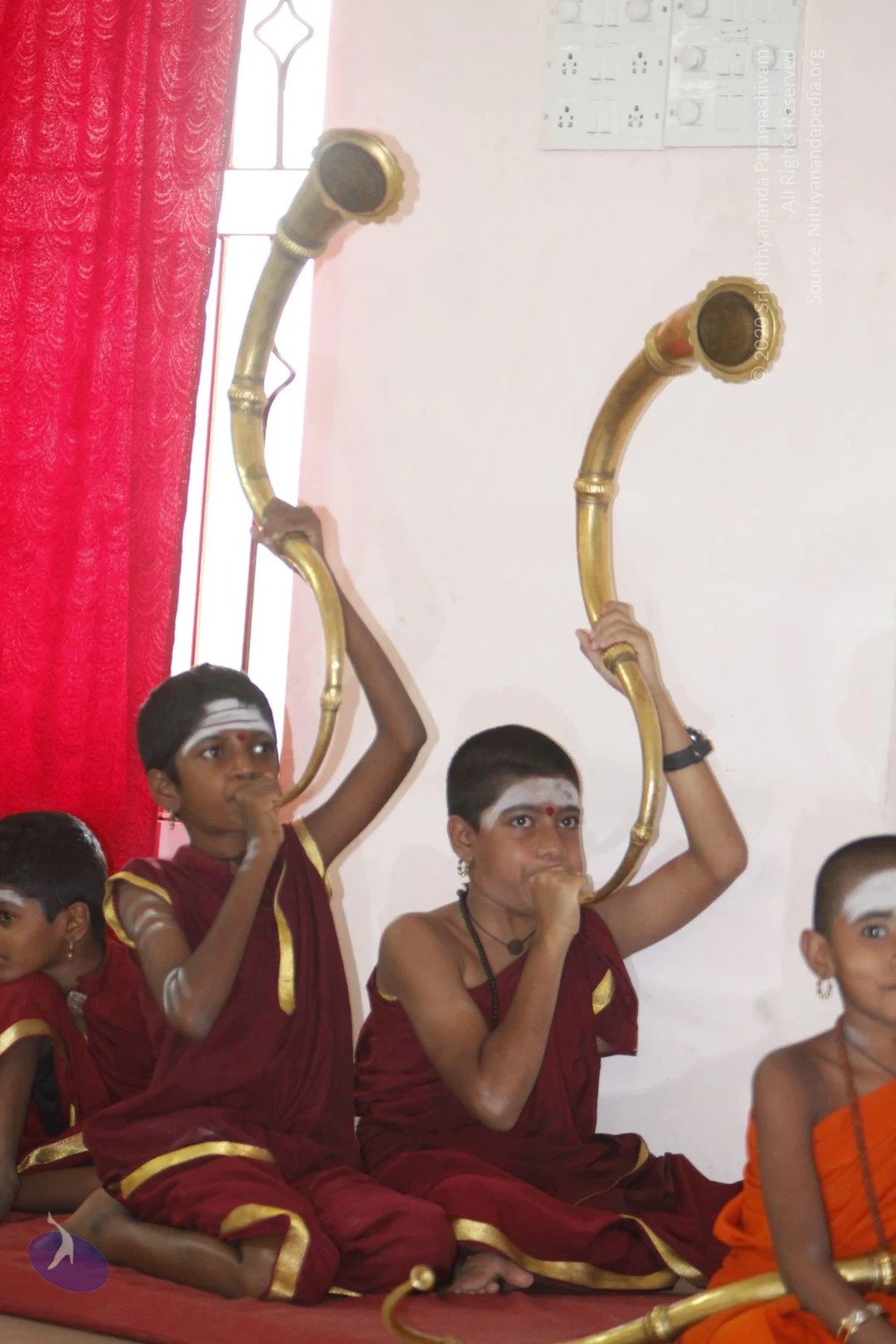
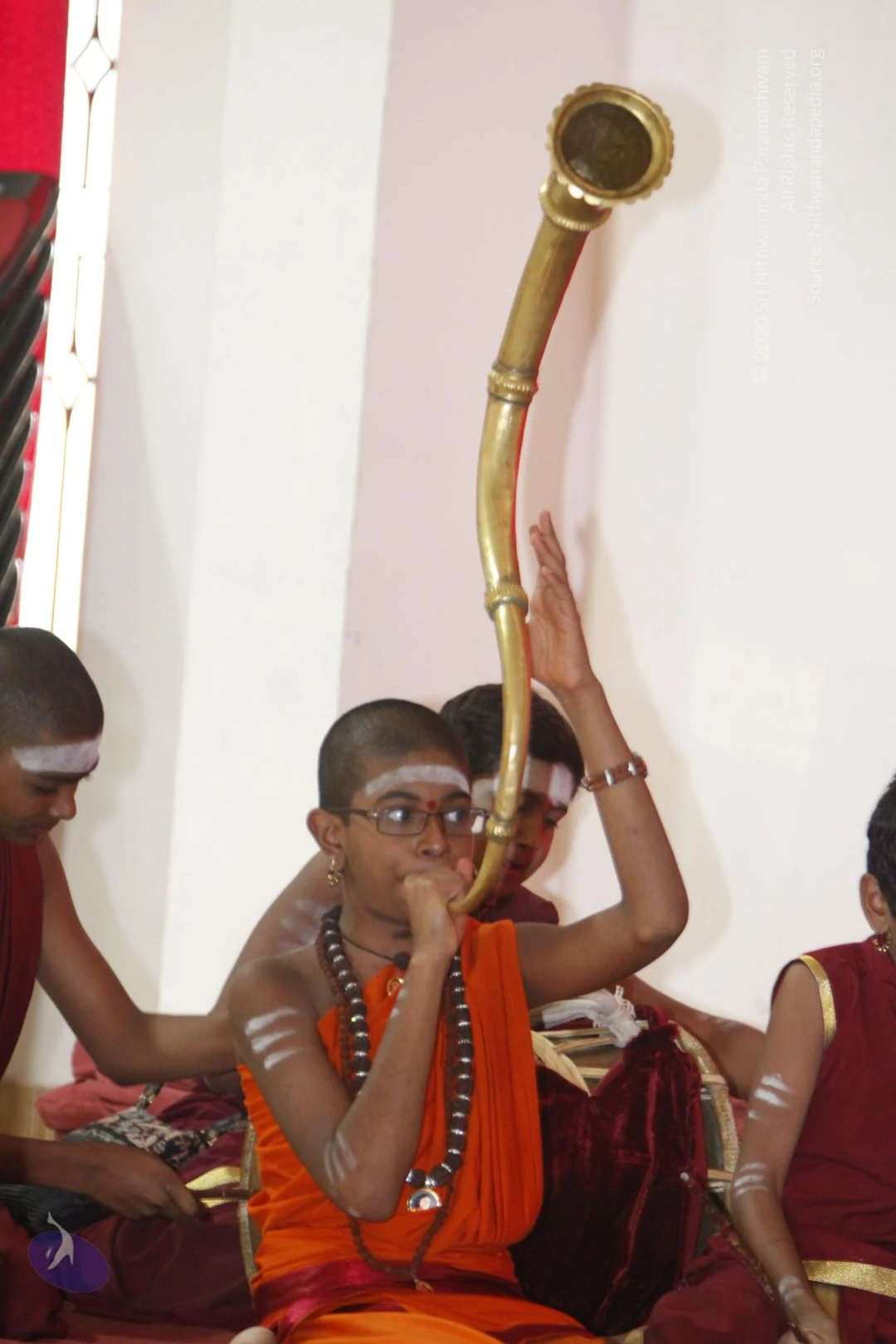
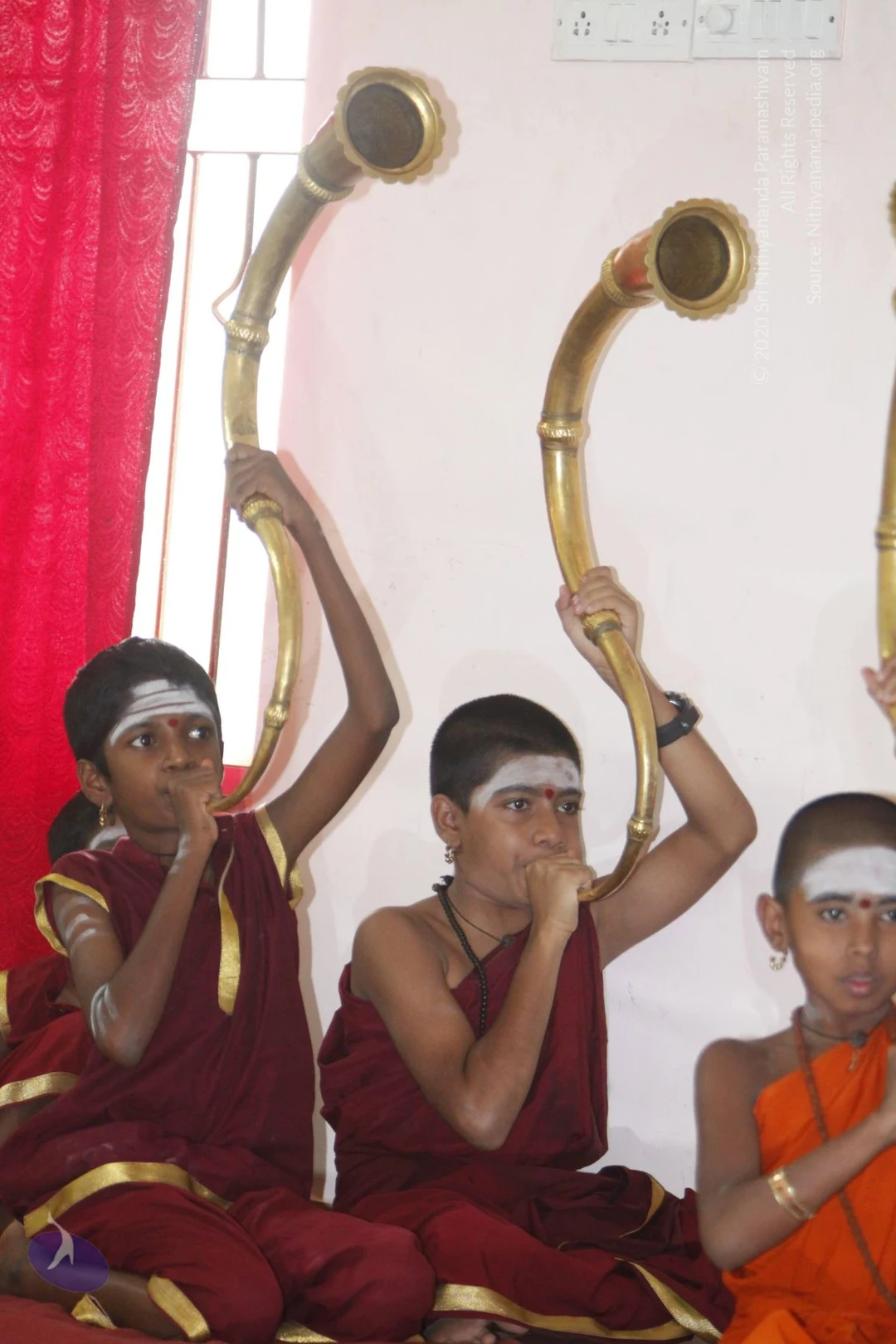
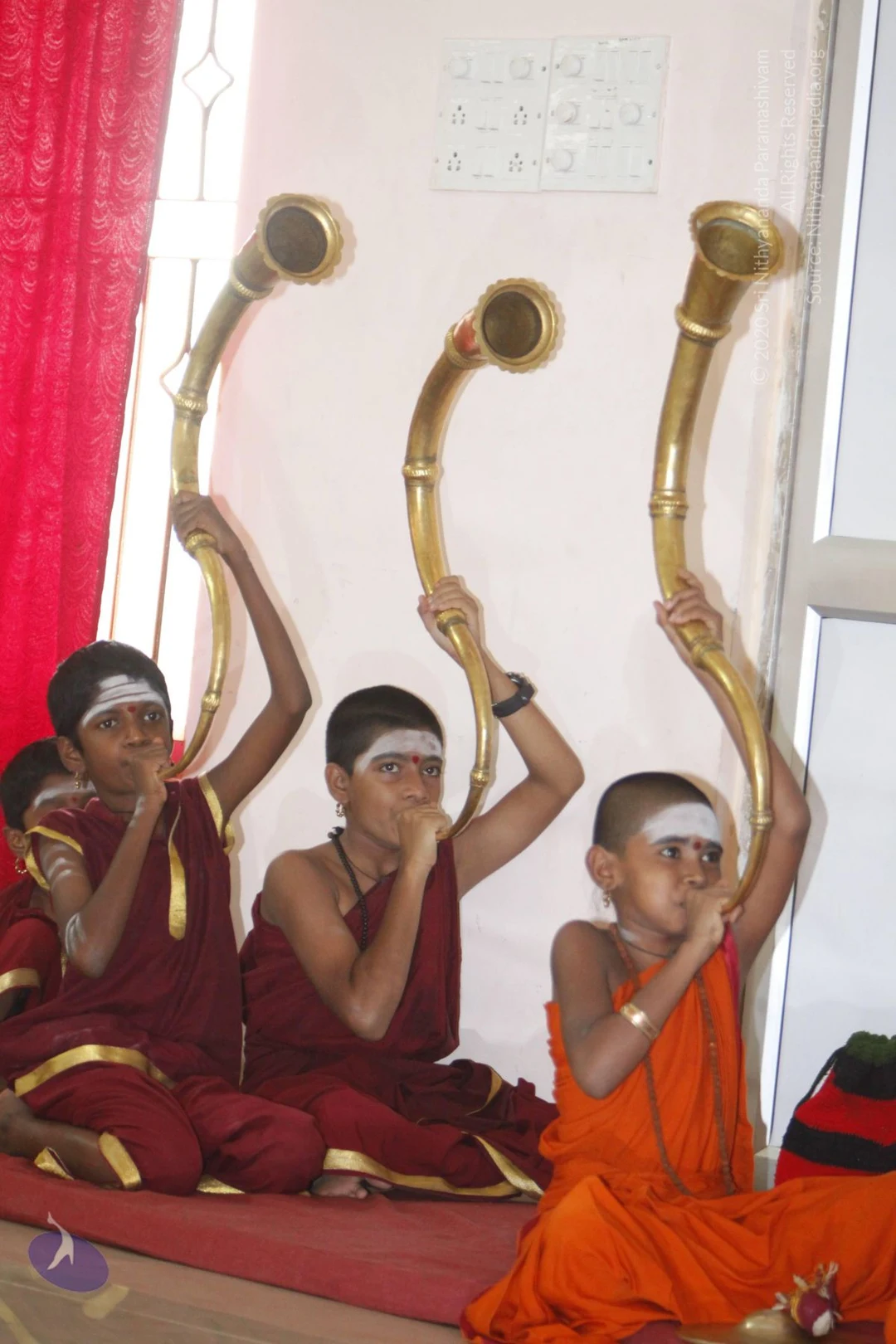
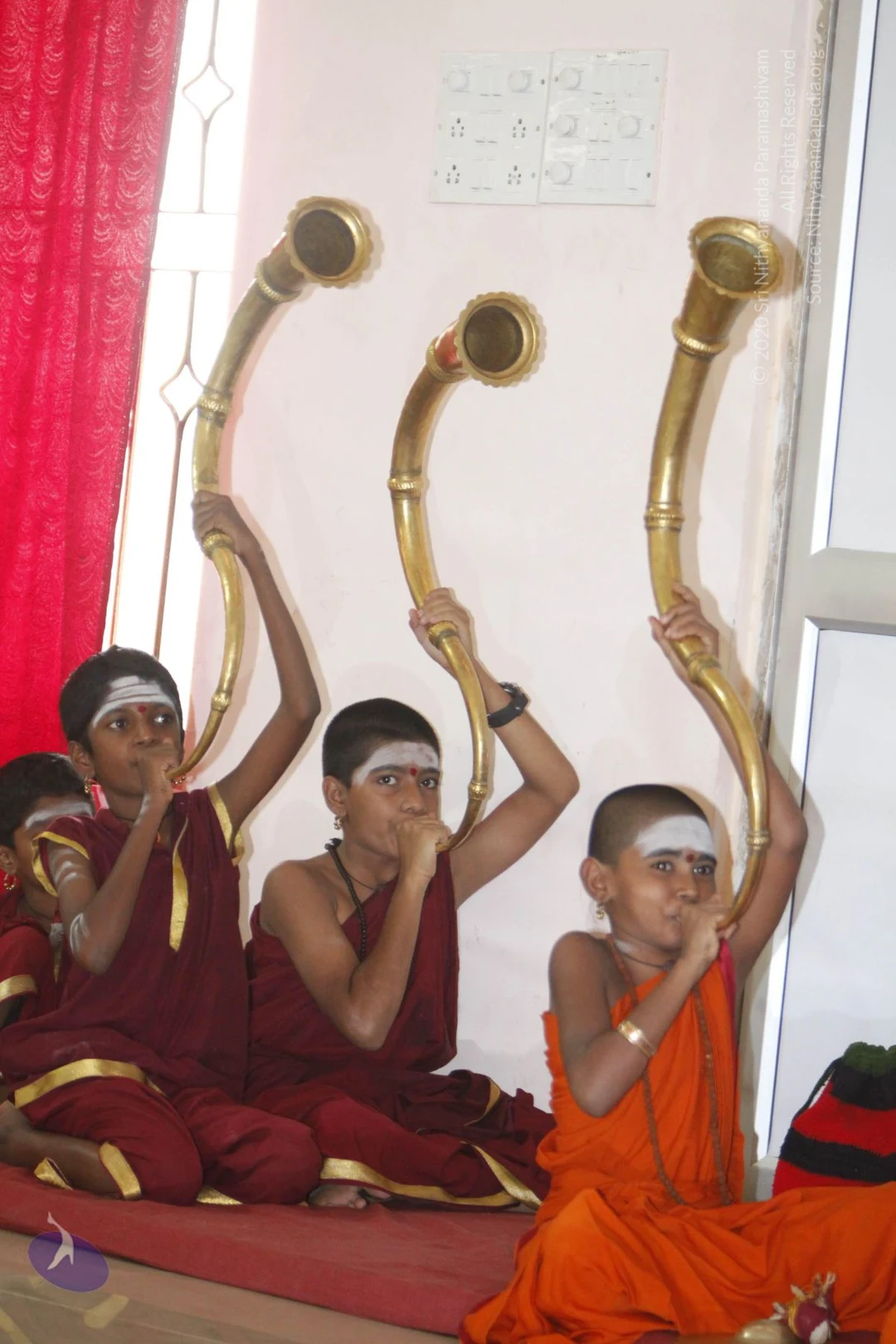
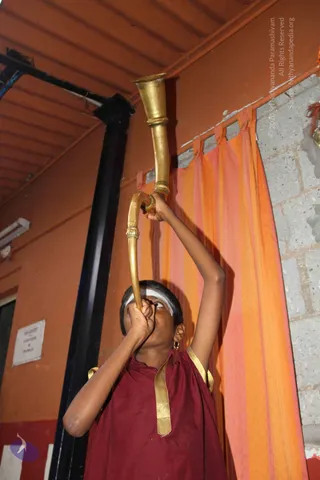
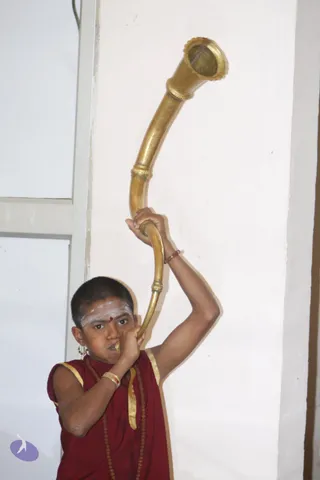
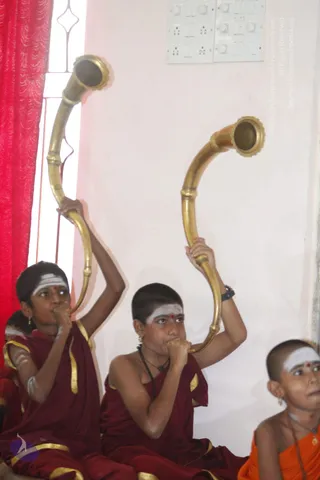
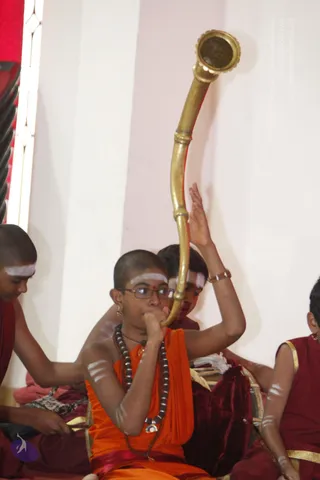
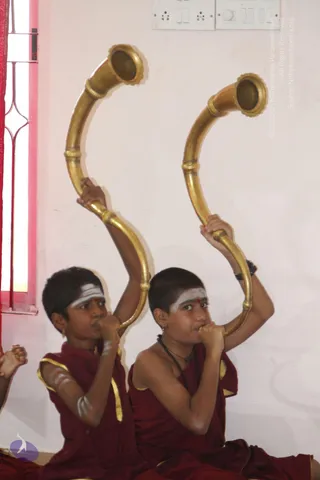
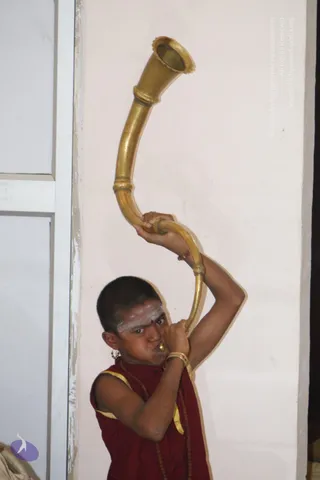
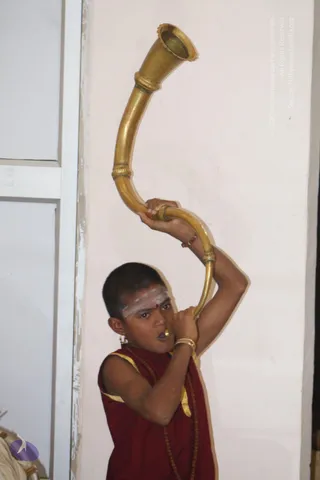
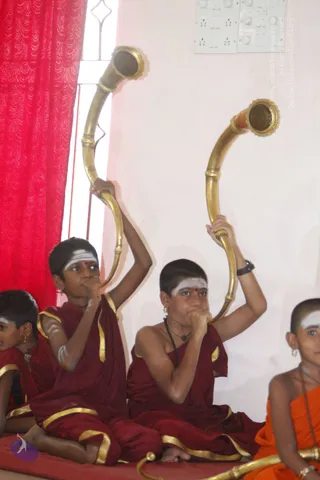
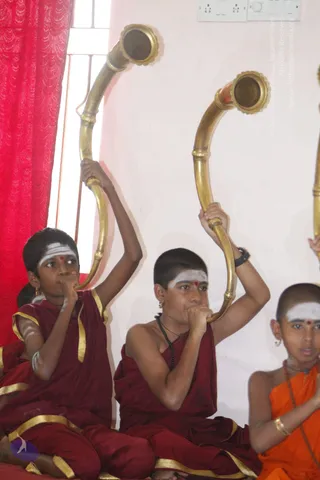
A young boy in a maroon robe with gold trim blows a long curved golden horn, raising it high toward the ceiling while looking upward. He has a white forehead band and small gold earring. Behind him hang orange and pink striped curtains on a wall beside a black metal pillar, with a small visitor-directions sign on the left. The scene suggests a temple or ashram announcement.A young boy in a maroon sleeveless robe with gold trim stands against a white wall and blows a long, curved gold-coloured brass horn raised above his head. He has white sacred ash marks on his forehead, a small red dot between his brows, a rudraksha mala around his neck, a red-beaded bracelet and a gold bangle on his wrist, and small hoop earrings. A white window frame is visible to the left. No a person candidate is visible in the scene.Three young boys in maroon robes with gold trim sit indoors playing long curved gold horns, one of which is held aloft, while a small red curtain hangs at left and a white wall with a light switch panel is behind them. White vertical tilak lines and red bindis mark their foreheads, and the boy at right wears an orange-robed sacred thread and bead necklace. Their attire and horn-playing suggest a temple or ashram ritual setting.A photograph of a young boy in an orange saffron robe and dark red-brown cloth, seated and blowing into a long curved brass horn. He wears a beaded dark rudraksha-style mala, white vertical tilak marks on his forehead and arms, and small glasses with a red bindi. He holds the horn up with his free hand raised. Beside him, other boys in maroon robes with white forehead markings sit close by, and one reaches toward the horn. A white wall and red curtain form the background.

Nithya-Satsang

4 photosSource gallery
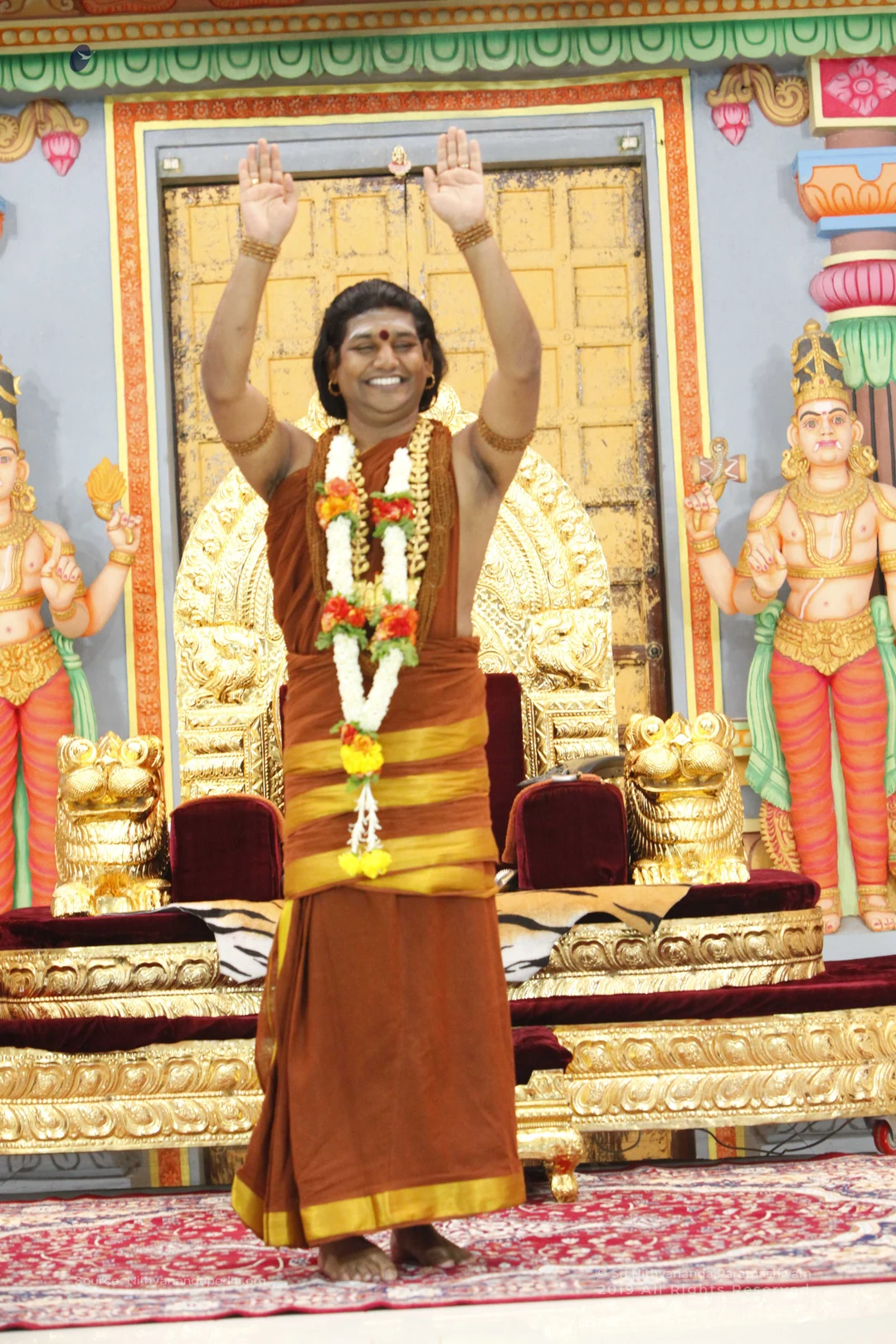
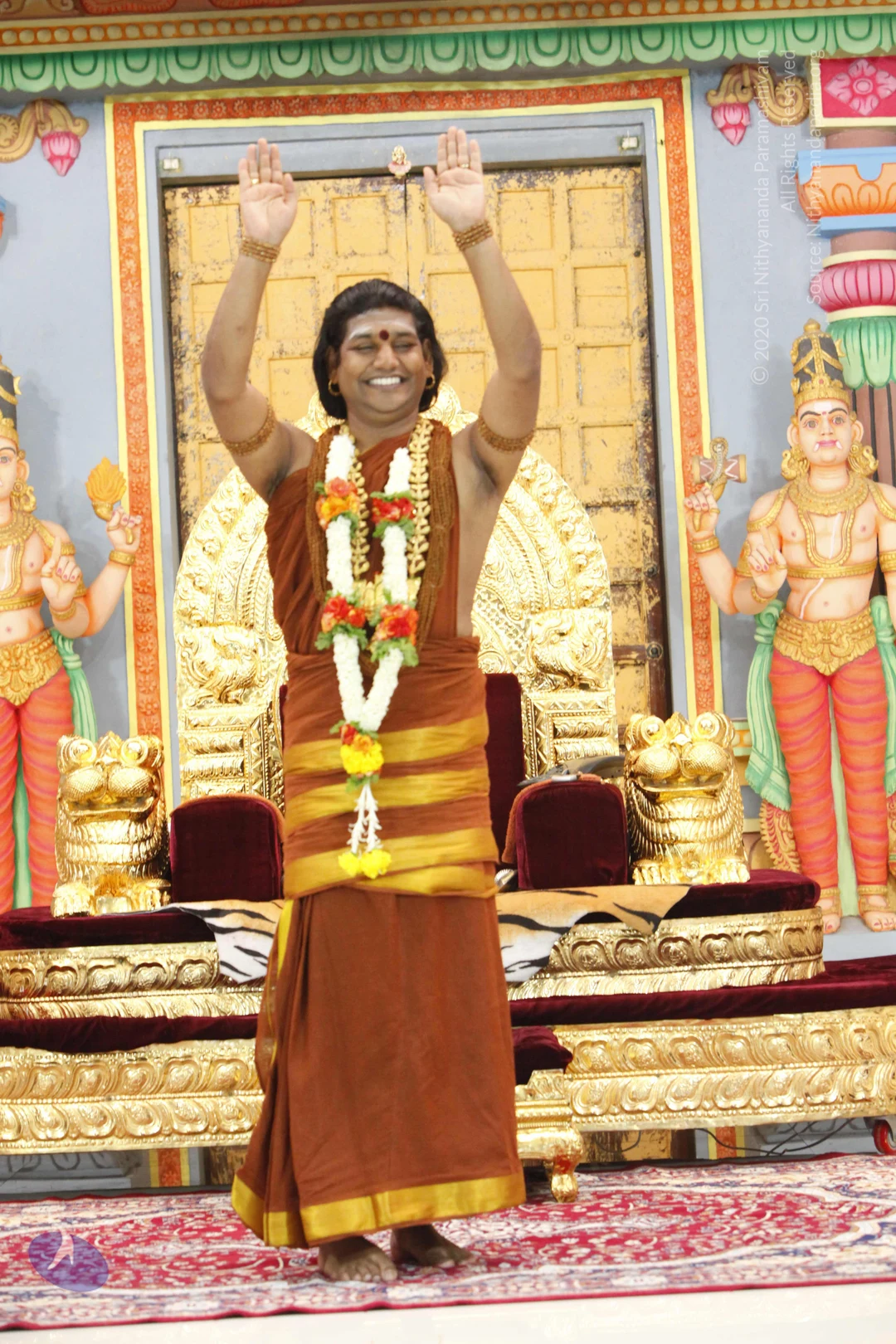
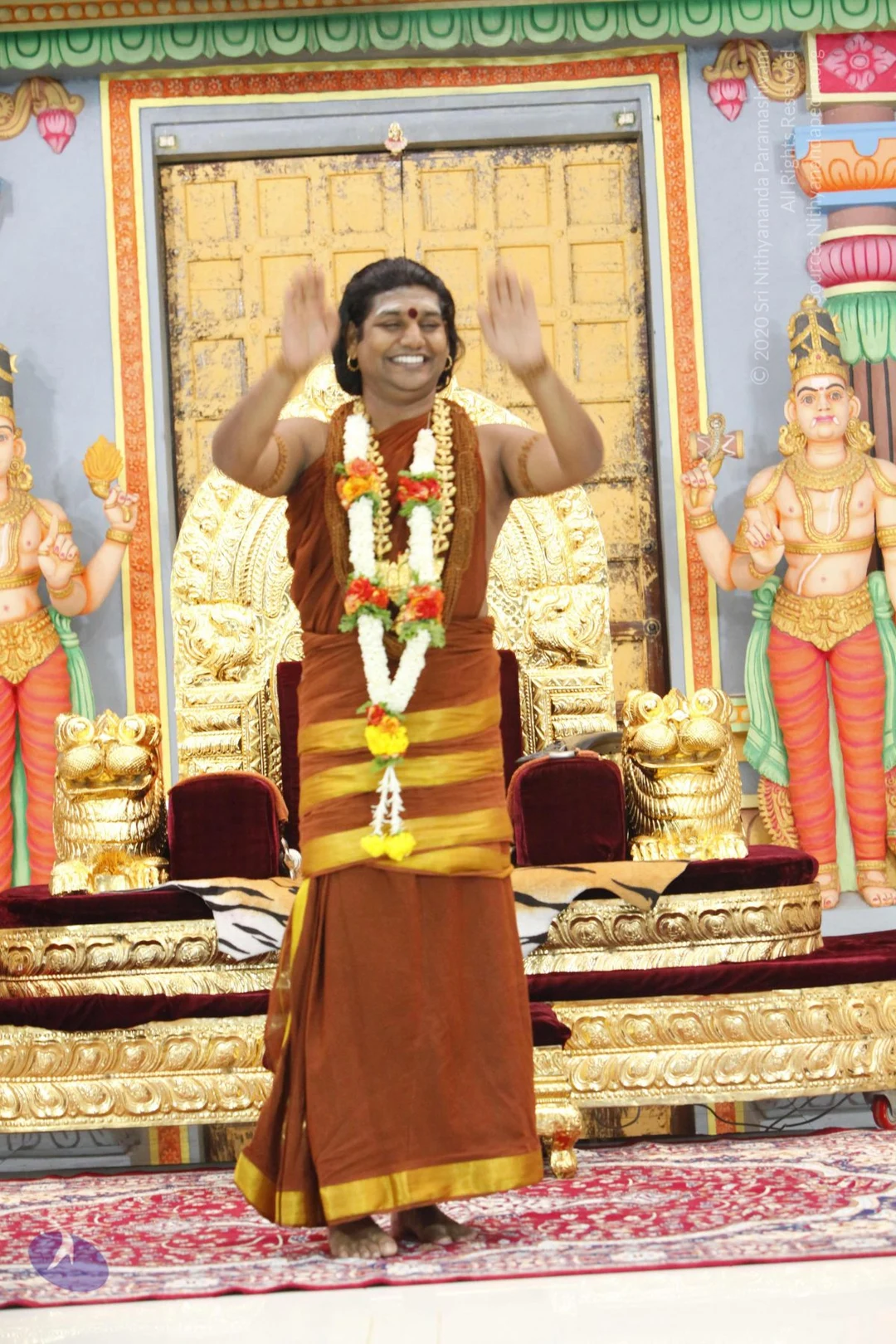
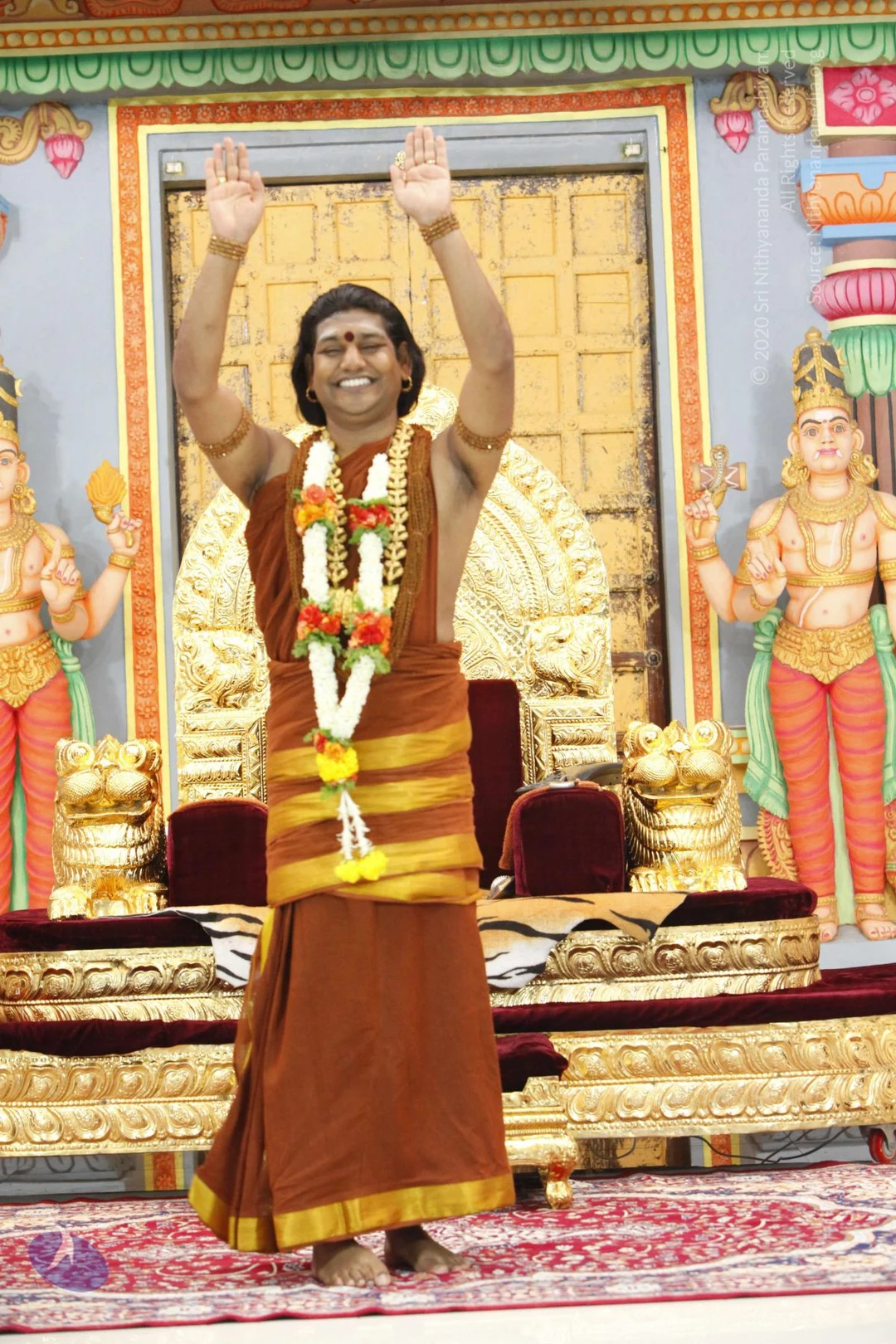
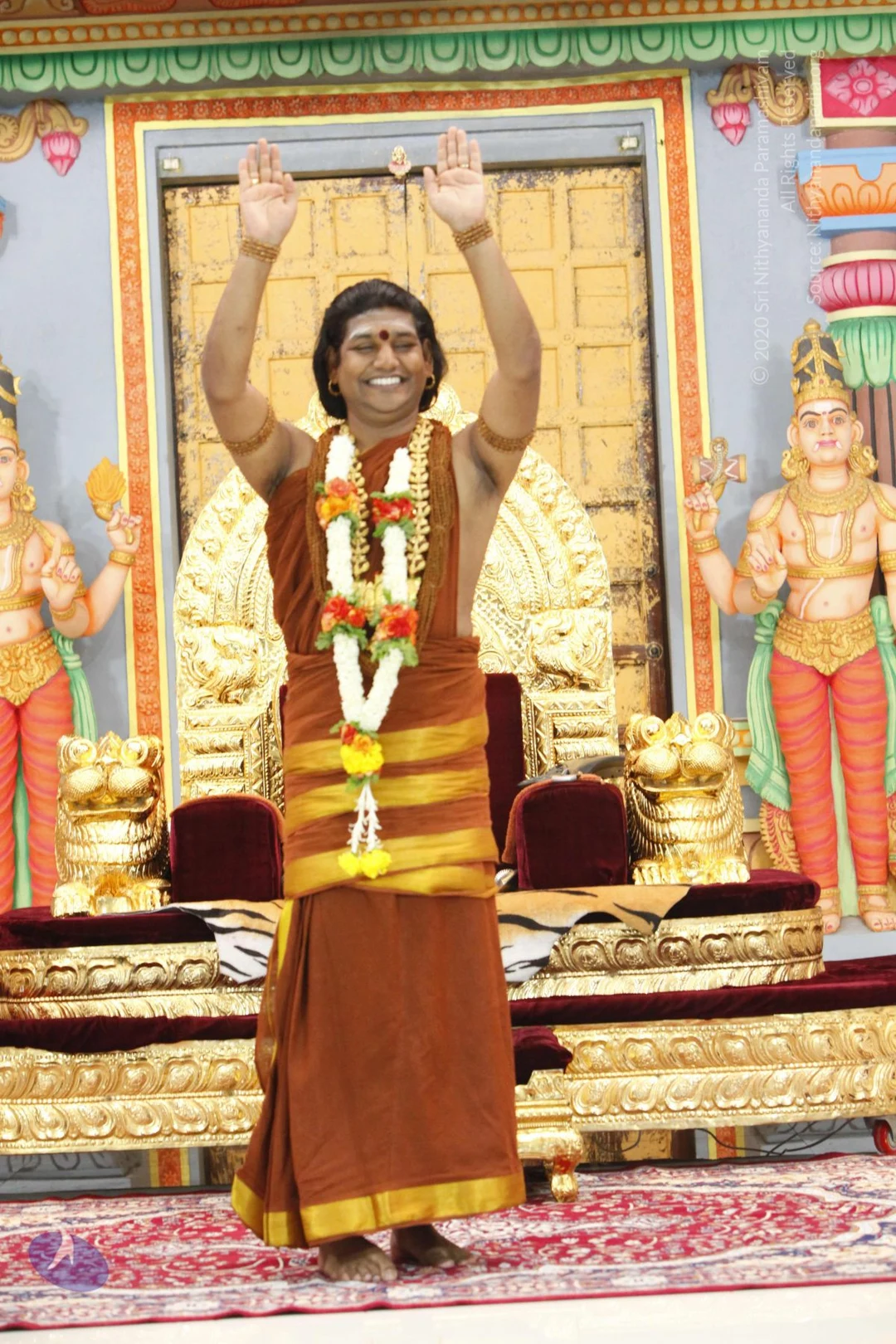
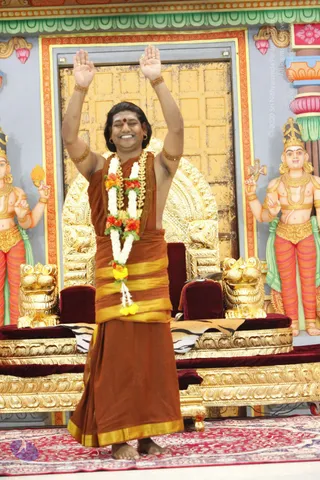
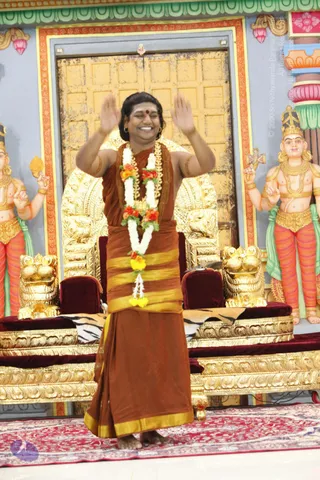
A seated man in rust-orange robes wears long swept-back dark hair, a red bindi and white tilak, gold hoop earrings, and multiple strands of rudraksha beads with ornate gold-capped rudraksha necklaces. Rudraksha bracelets are on his wrists and upper arms, and a gold ring is on one finger. He smiles while speaking, with a small headset microphone near his face and a black conference phone on a red velvet cushion beside him. Behind him is an ornate gold relief backdrop. Swamiji (probable) appears in person, seated as the speaker with distinctive rudraksha and gold adornment and swept-back hair, describing satsang with a microphone.A seated man in orange-saffron robes sits before an ornate gold-embossed backdrop, his bare shoulders and arms visible. He wears long rudraksha mala strands across his chest and arms, with ceremonial gold pendant and gold ring, and a small microphone headset. His right hand rests thoughtfully against his cheek. Swept-back dark hair, white and red tilak marks on the forehead, and gold hoop earrings are visible. Probable Swamiji's appearance cues include the swept-back hair, rudraksha malas, saffron clothing and gold ornaments, while he is speaking or seated in a discourse setting.A man stands barefoot on a red patterned rug in front of a golden throne with lion-shaped armrests and a tiger-striped cloth draped over the seat, flanked by two painted deity murti figures in gold jewellery. He wears a rust-brown robe with a gold-bordered wrap, a long white and orange flower garland, and a red bindi, smiling with both arms raised high with palms open. Behind him stands a large gilded door. The painted figures are statues, not physical people. Swamiji (probable): the man has long swept-back hair, ornate gold bangles, a flower garland and a saffron-toned robe, which are distinctive ceremonial cues.A smiling man stands barefoot on a red patterned carpet before a gilded throne with lion-head armrests and a tiger-skin cloth draped over it. He wears rust-orange robes with a gold-bordered sash, a fresh garland of white flowers with red and yellow blossoms, and a red bindi. Both arms are raised, palms open and turned outward, in an expressive gesture. Behind him is a gold-panelled door flanked by painted deity murti figures in orange dhotis and gold jewellery.

SarvaDarshan

1 photoSource gallery
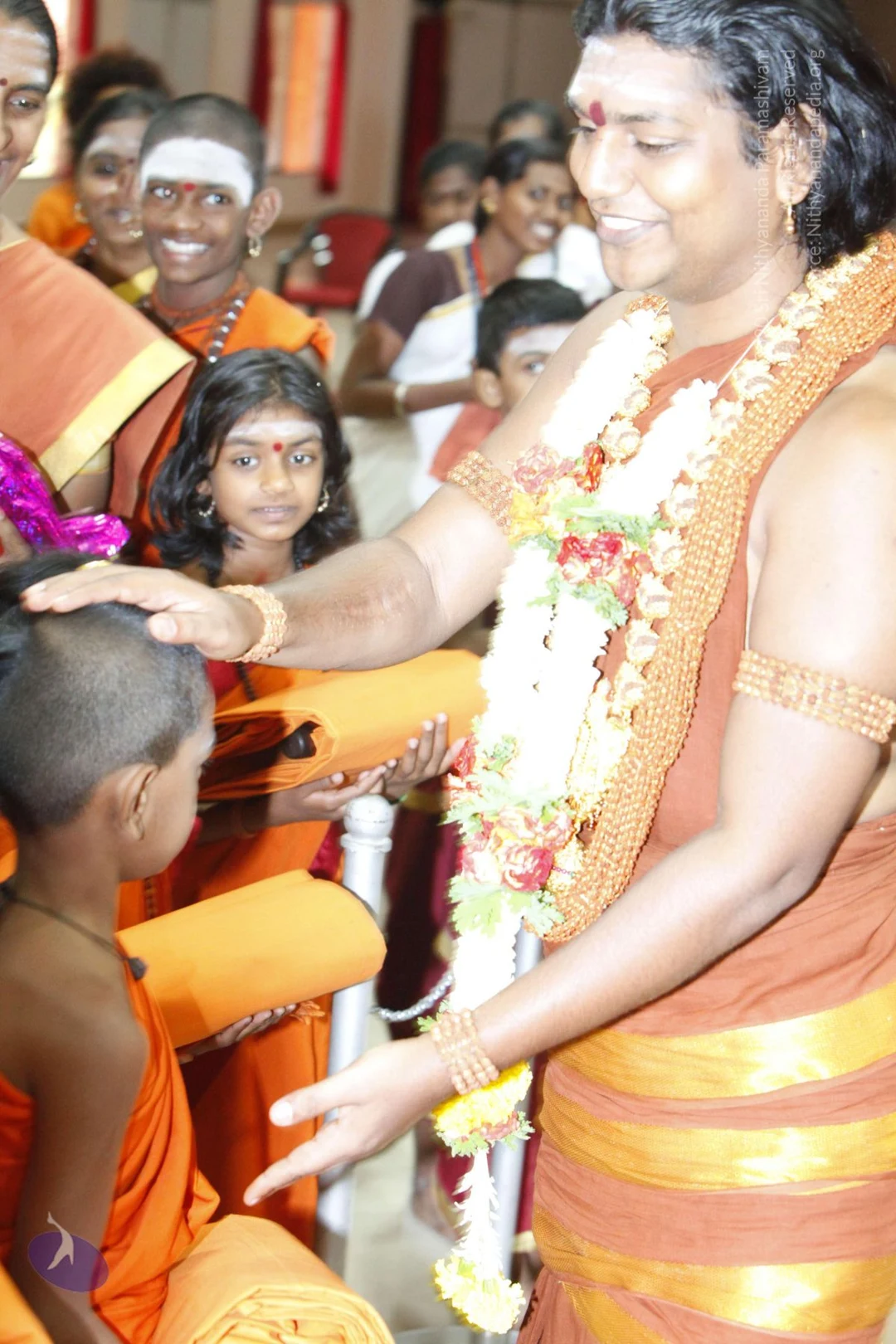
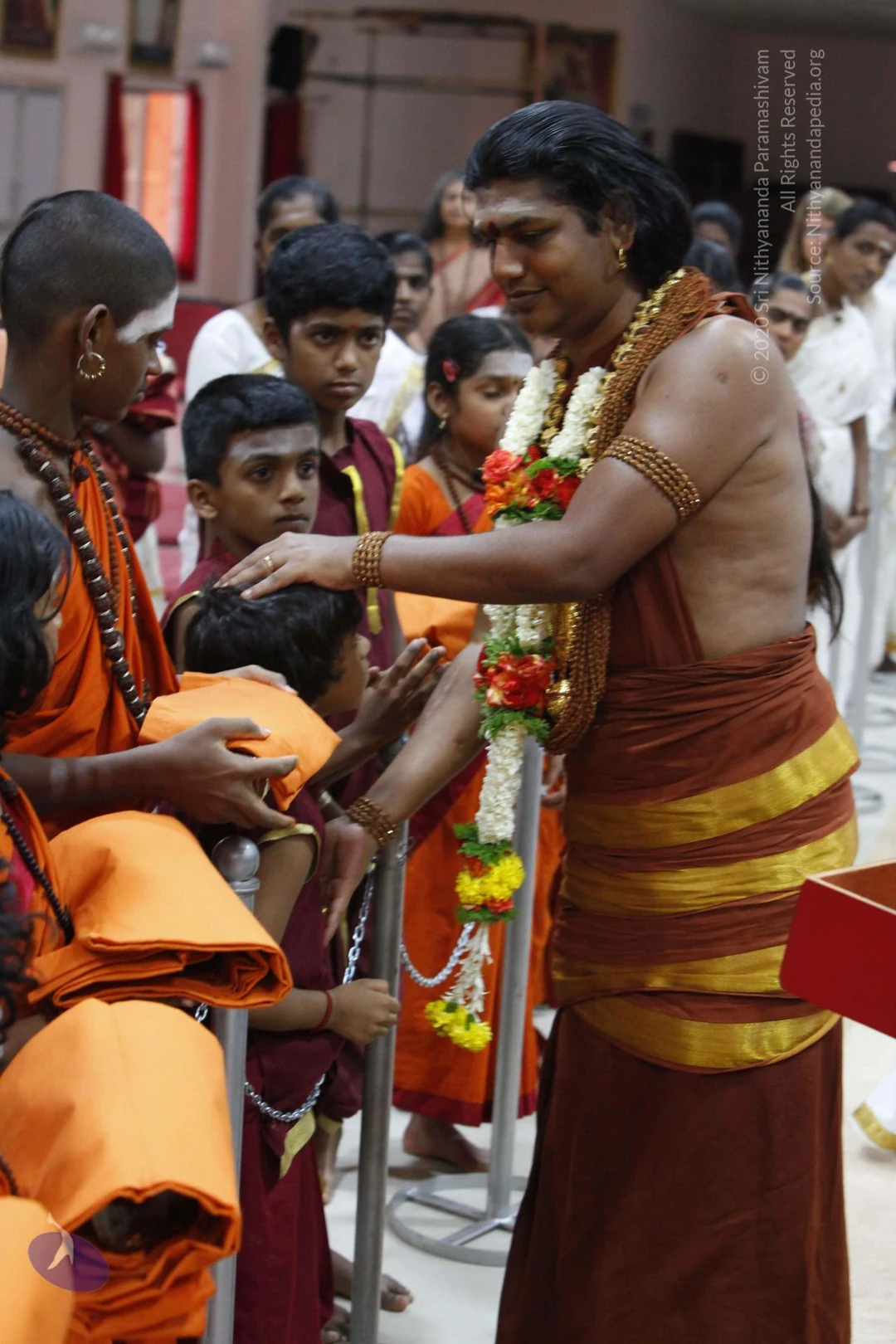
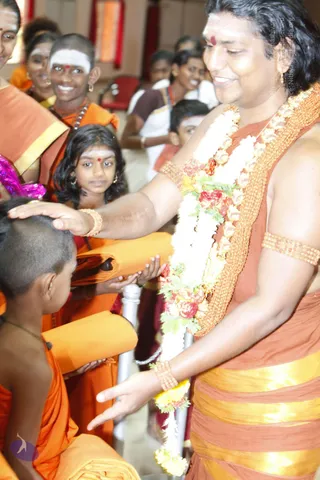
A man in a rust-orange and gold-bordered dhoti with a thick orange-brown beaded mala across his chest and beaded armbands rests his hand on the shaved head of a young boy in orange robes. Fresh white and red flower garland hangs from his neck. Behind them, young children and attendants in orange, white and maroon clothing, some with white tilak on their foreheads, stand and smile. A man in orange robes and beaded malas places his hand on the boy's head in blessing, with a red and white garland, in a hall with red curtains behind.

Temple-Homa-Abhishekam-Swamiji-Visit

24 photosSource gallery
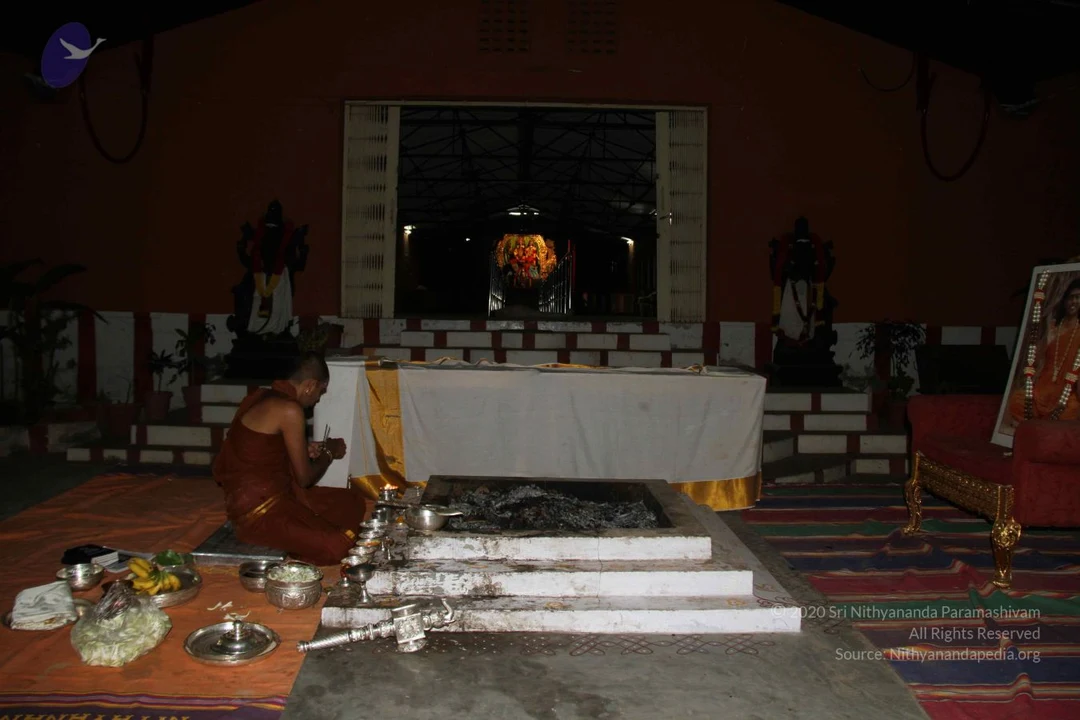
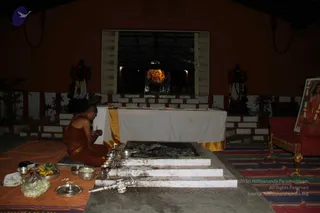
A night-time homa at an outdoor or semi-open shrine. A young priest with a bare upper body, a dark red or maroon cloth wrapped around his waist, and white sacred markings on his forehead and chest sits behind a stepped white platform. He holds a small plate or ladle near a blazing fire of logs and smoke rising from the altar. Behind the fire, a row of silver and brass kalasha pots topped with mango leaves and yellow cloth sits on a draped white and teal table. Silver puja vessels stand on the floor at left, and kolam designs are drawn on the ground. A bright floodlight glows at upper left.Night-time homa or yagna at an open-sided ritual pavilion. A large fire blazes on a white-tiled raised fire pit, with smoke rising into the dark roof. Behind the flames, a single person in a maroon garment sits with hands together near a steel bowl, possibly performing offerings. Steel vessels and a yellow-and-blue draped table stand at the right, and small oil lamps and a brass lamp sit on the lower left steps beside flatbread offerings.A night-time fire ritual photographed in a covered open pavilion. A single person kneels or stands at a white-tiled stepped fire platform, with a large bright flame and smoke rising from a pile of burning wood and offerings. The person has dark hair, bare upper body with white painted markings and a red cloth wrap, and holds their hands together in front of the fire. A steel bowl, a small brass vessel and a silver-coloured ritual object sit on the floor to the left, and a row of metal pots is visible at the right. This appears to be a homa or yagna fire ceremony. No face is identifiable and no appearance-based candidate is confirmed, so the person is described by role only.Inside a temple shrine, a shaven-headed priest in a maroon dhoti with gold borders stands barefoot at left, holding a small oil lamp toward a dark stone shivalinga on a black pedestal. Behind it sit two gilded deity murtis draped in orange and yellow silks with red and white garlands; the figure at left holds a trident and a drum-like implement, and the figure at right wears a tall crown. Green drapery and an ornate gold arch frame them. Pink flower petals and small brass pots are scattered on the wet floor. A small gilded figure with folded hands stands in a niche at right; no one is clearly identifiable as a person.A temple shrine photo centred on a pair of gilded deity murti seated on a dark stone peetha with a black lingam in front. The figures wear orange and yellow silk, flower garlands, and gold and jewelled necklaces; the left figure holds a trident. A priest in a maroon dhoti with gold borders, bare-chested with a shaved head and tilak, stands at left pouring liquid from a small vessel onto the lingam. Brass pots, scattered red petals and a small silver shrine model sit on the floor. A gilded arch frames the shrine, with a smaller standing gilded figure in a green-curtained niche at right. Rather than a person identification, the scene shows a temple abhishekam with a priest attending the lingam.A dim temple hall with terracotta-red walls and white-and-red striped dado. A shaved-headed monk in orange-saffron robes kneels on an orange cloth at left, hands joined in prayer before a white-stepped fire pit (homa kund) holding ash and embers. Metal kalasha pots, a bowl of bananas, plates of offerings and a bell-like brass vessel sit around the pit. Behind, a white-draped altar holds a lit deity murti under a canopy, flanked by two dark deity statues garlanded with flowers. At right, a framed photograph of a figure in orange robes with garlands rests beside a red sofa and striped rug. One visible person.
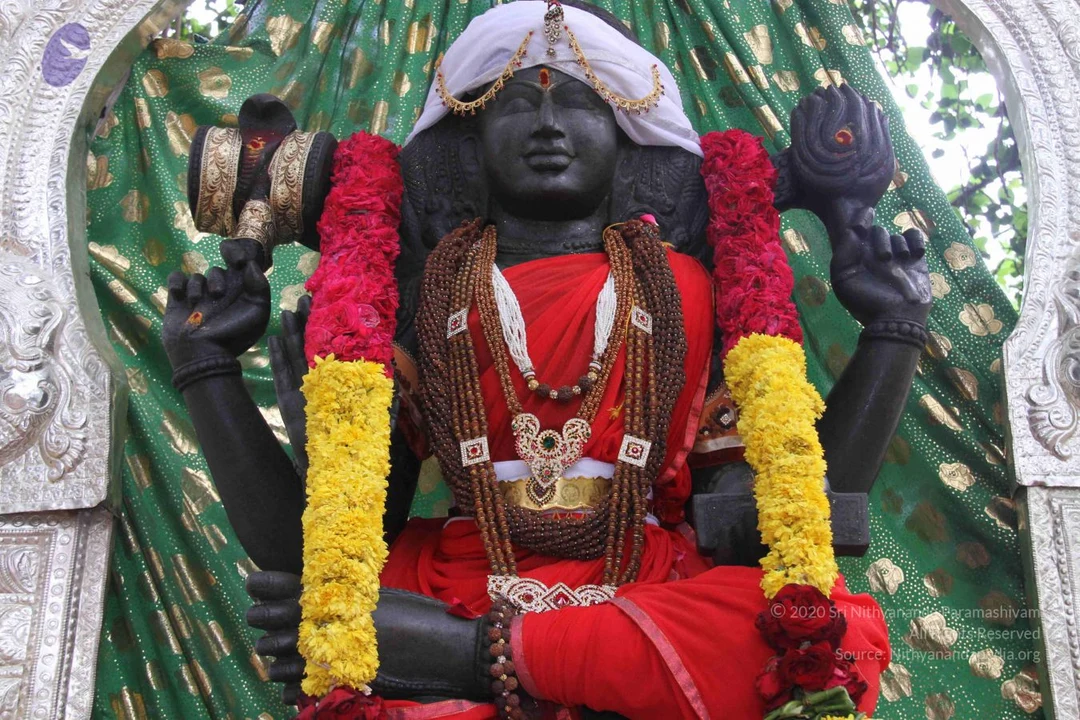
Gurukul-Instrument

8 photosSource gallery
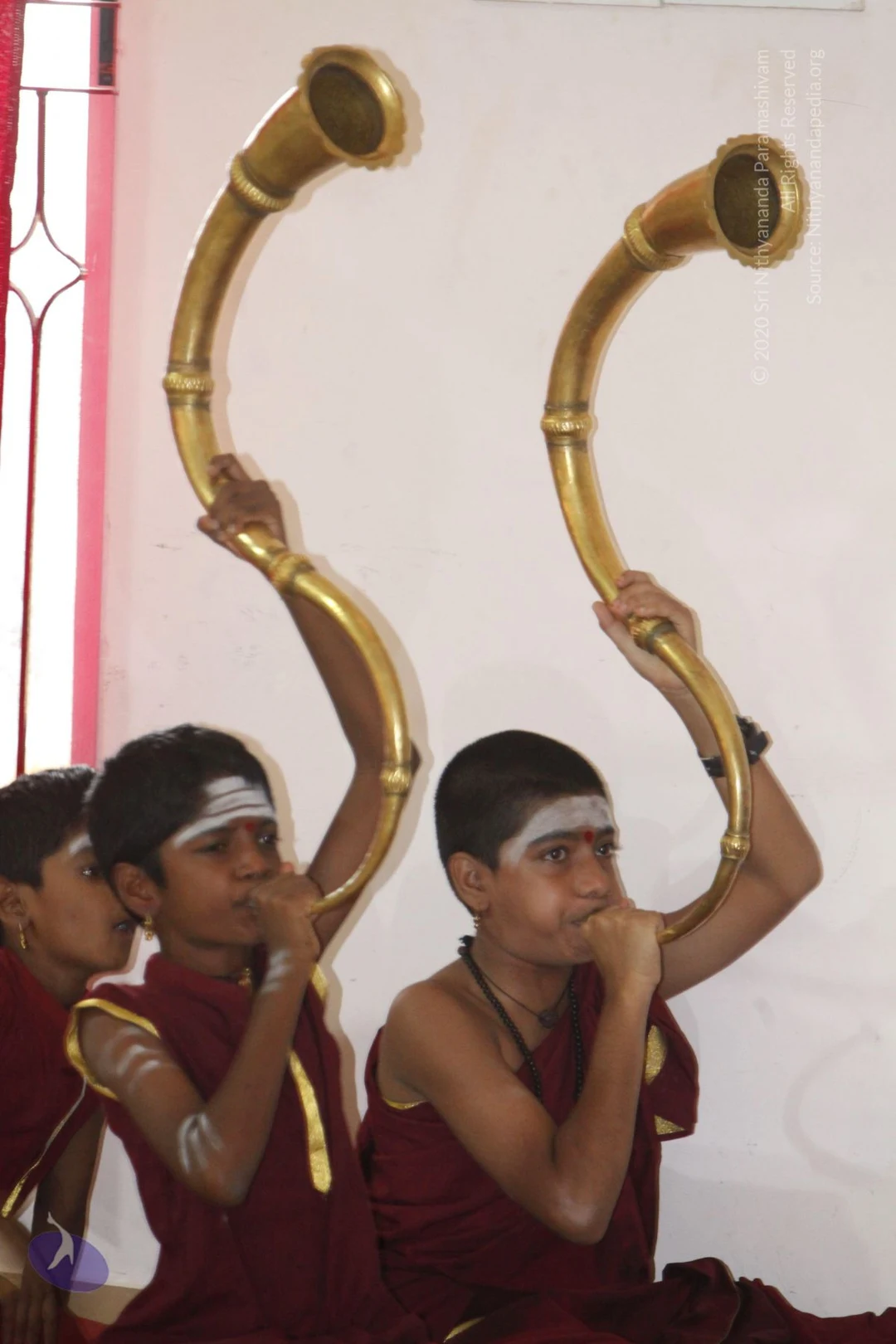
Two young boys in maroon robes with gold trim sit side by side playing long curved gold horns, one raised high in each boy's hands, mouthpieces at their lips. Both have white vertical tilaka marks on the forehead and red dots at the centre, with white markings on their arms. The boy on the right wears a black beaded mala. A window with red frame and grille is at left, and a wall switch panel is above. Only two physical people are clearly visible, with a partial hand at the far left edge.Three young boys in maroon robes with gold trim perform on tall, curved gold-painted brass horns. Two boys in front blow long horns held up overhead, their faces marked with white sacred ash and red bindi on the forehead. A rudraksha mala hangs on the nearer boy's chest. A third boy partly visible at left. Plain white wall and a window with red frame behind them.A young boy with a shaved head and white vertical tilaka marks on his forehead, wearing a maroon sleeveless garment edged in gold trim and rudraksha beads, plays a long curved golden brass horn raised high above his head with one hand, his cheeks puffed as he blows into the mouthpiece. A plain white wall and white-framed window stand behind him.A young boy with shaved head, white tilak marks and a red bindi stands against a pale wall, playing a long curved brass horn raised above his head. He wears a deep red sleeveless garment with gold trim and a rudraksha-style mala, plus gold bangles and a small earring. A white door frame is visible at left. The scene suggests a temple or ashram ceremonial musician, not a person candidate.Several boys seated on a red mat play long curved golden horns, raising them high while blowing into the mouthpieces. The two foreground boys wear maroon robes edged with gold, white sacred ash lines and red bindis on their foreheads, one wearing a black mala. A boy at the right wears an orange robe and a rudraksha-style mala. A red curtain hangs at the left beside a window, and a white wall with a switchboard stands behind them.Photograph of young boys in maroon robes with gold borders sitting cross-legged indoors, playing long curved gold brass horns raised overhead. Each boy wears white ash lines and red dot on the forehead; one wears a dark rudraksha-style mala and earrings. A boy at right in orange robe with a beaded necklace sits beside them. Behind them are a red curtain and a pale wall with a window.
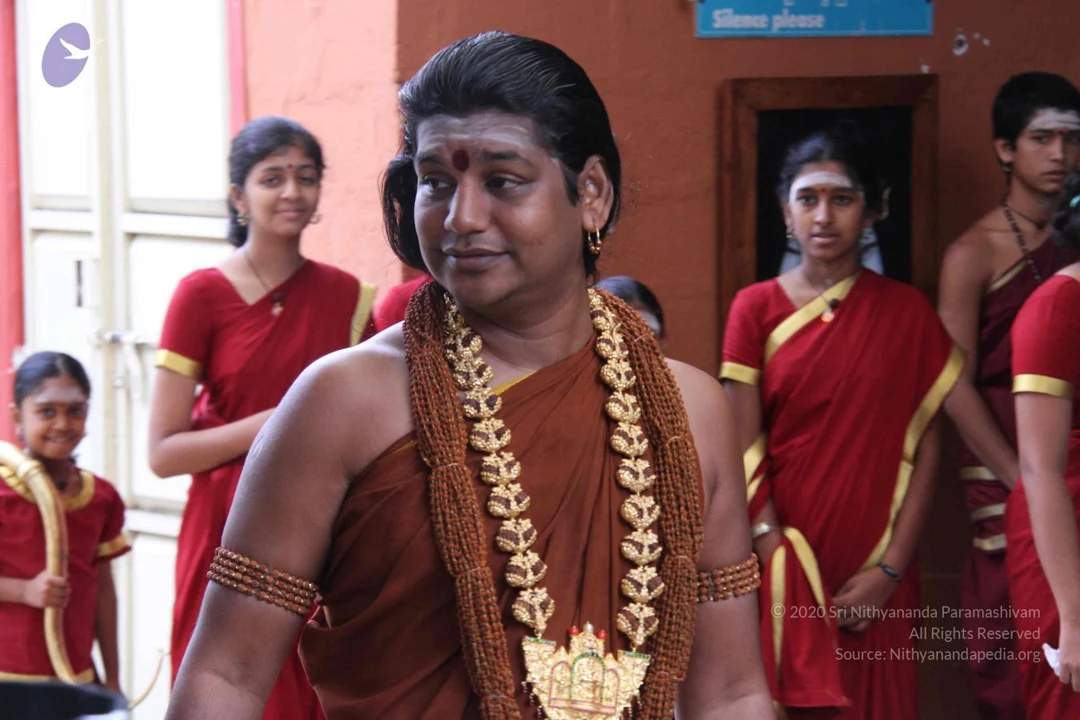
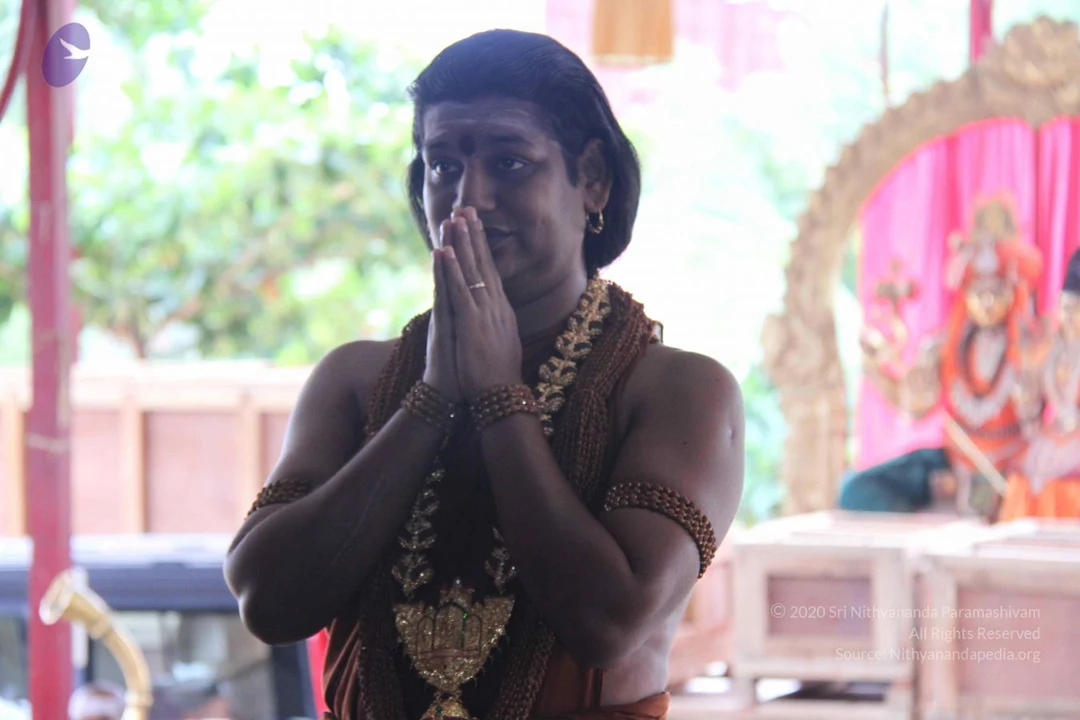
Nithya-Satsang

2 photosSource gallery
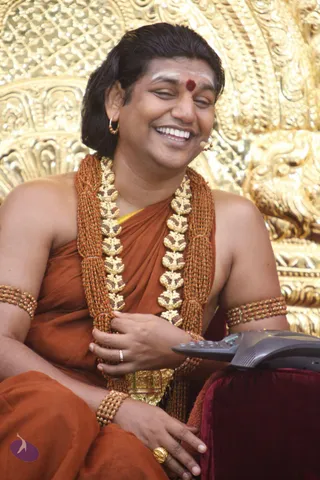
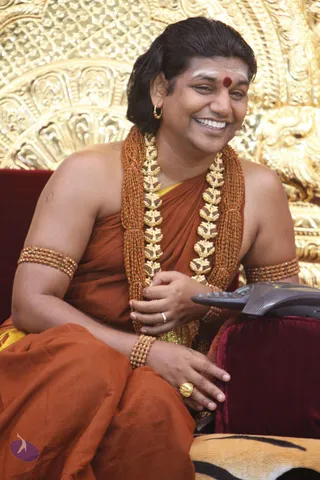
A smiling man sits on an ornate gilded throne backdrop with intricate repoussé patterns, wearing a headset microphone. He has long swept-back dark hair, a red bindi and white forehead markings, gold hoop earrings, and a saffron-orange garment draped over bare shoulders. He wears a long orange-brown rudraksha mala with gold bead ornaments, rudraksha armlets and a rudraksha bracelet, and a gold ring. One hand rests on his chest, the other on his knee, beside a conference-style microphone unit on a maroon cushion.A smiling man with swept-back dark hair sits on a red velvet chair before a gold repoussé backdrop. He wears an orange-saffron shawl draped over one shoulder, a long rudraksha mala with gold ornament beads across his chest, rudraksha armlets and bracelets, a gold ring, and a red bindi with white tilak. A conference phone rests on the armrest and a tiger-striped rug lies at the bottom edge.

Swamiji-Blessings

1 photoSource gallery
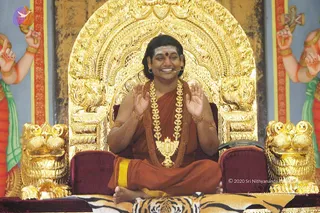
A seated man in saffron-orange robes sits cross-legged on an ornate gold throne with carved lion heads on the armrests, draped with a tiger-skin cover. He smiles broadly, palms raised facing outward in a blessing gesture, and wears a long gold and bead necklace with a gold pendant, multiple gold bangles, and a red bindi with tripundra markings on the forehead. Behind him stand painted deity figures with multiple raised arms holding objects, and a gold-framed backdrop. Swamiji (probable): the seated man has long swept-back dark hair, saffron robes, rudraksha-style beads and ceremonial gold necklaces, making him a candidate for the teacher named on the page, shown in a satsang setting on a throne.

Sarva-Darshan

4 photosSource gallery
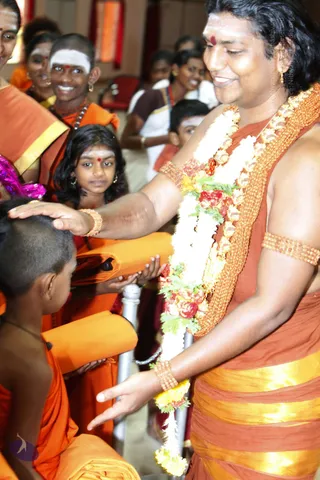
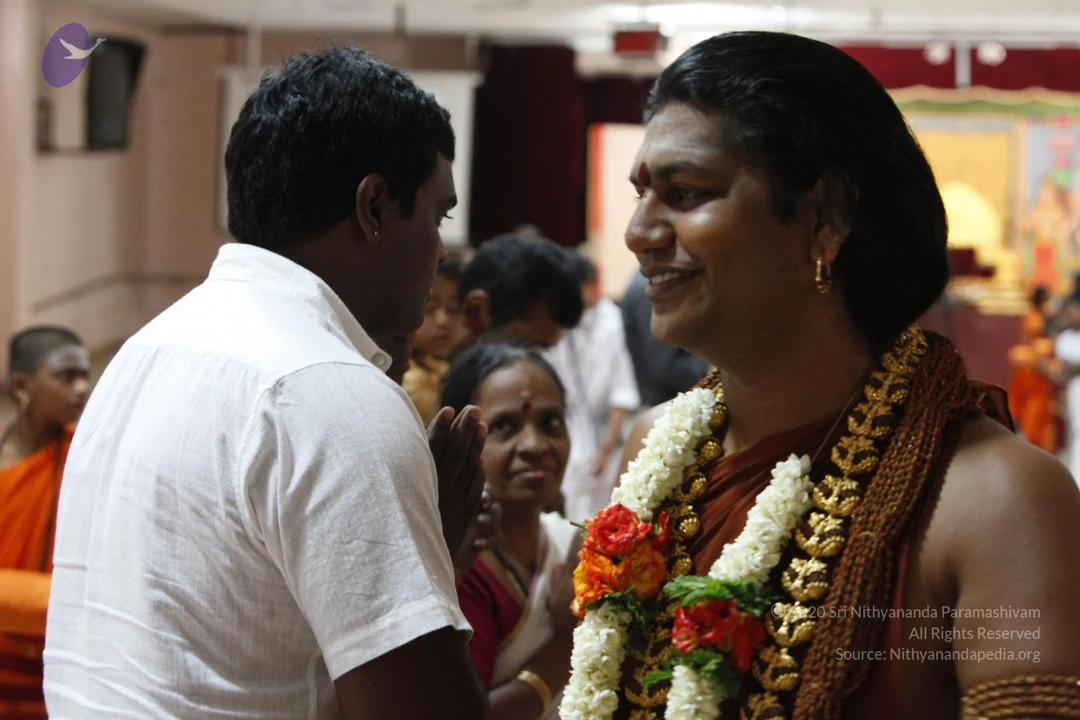
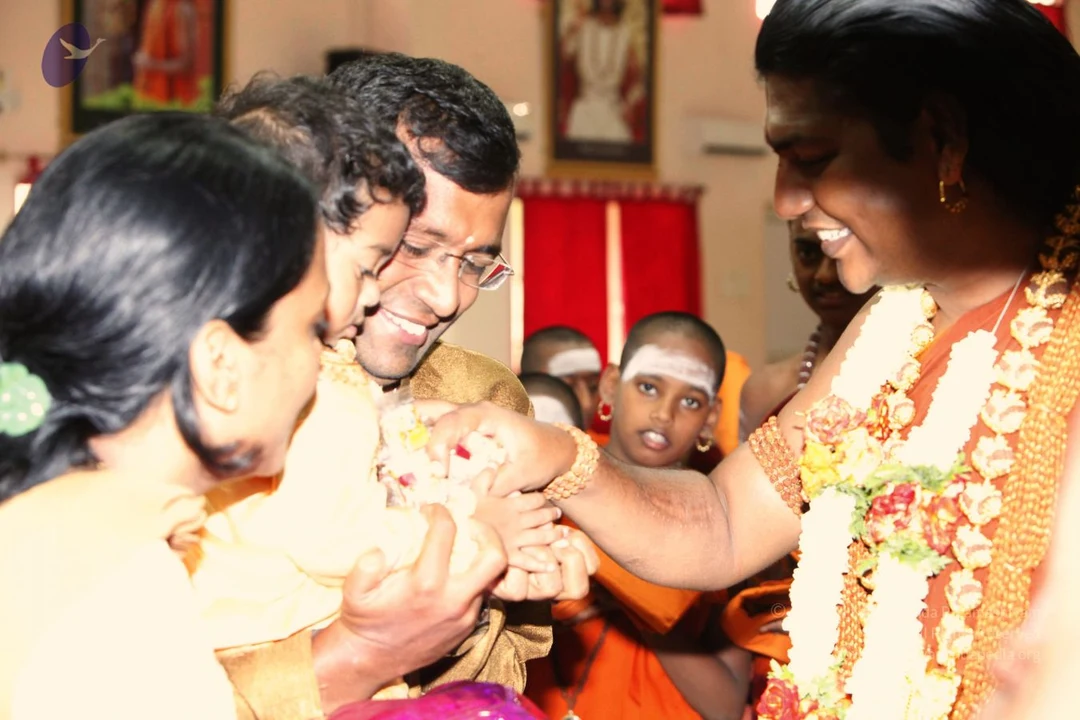
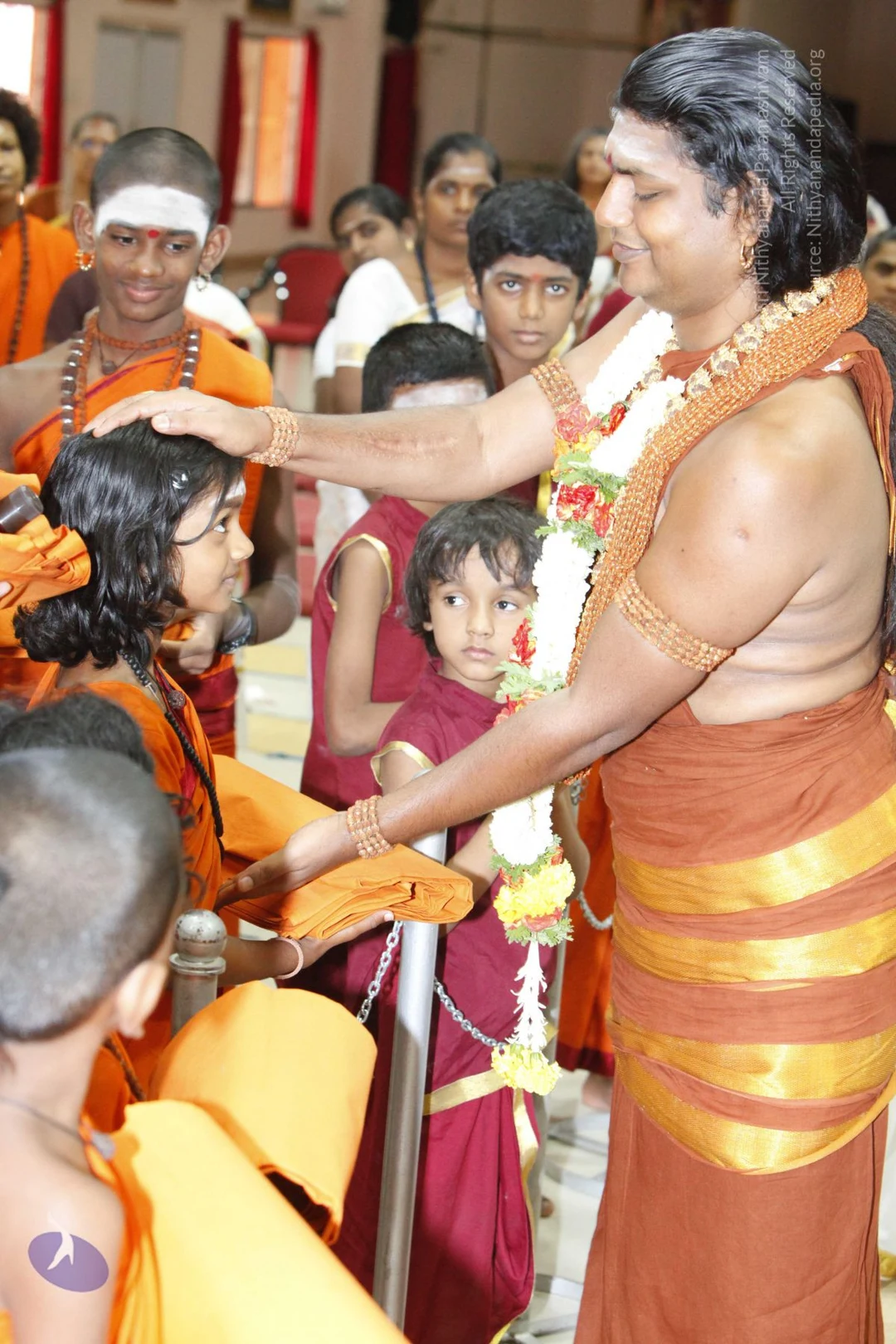
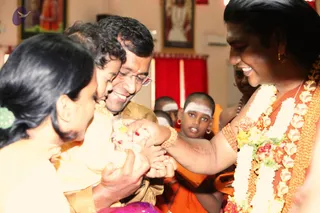
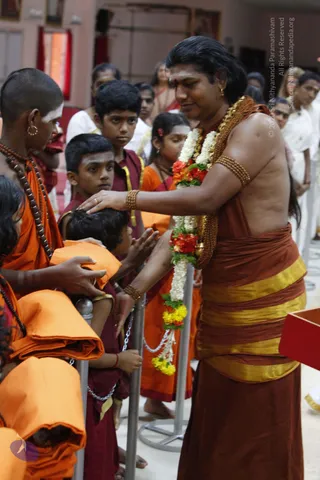
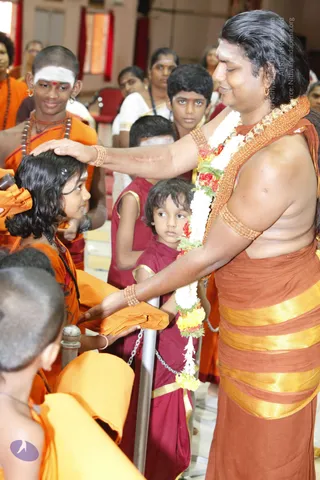
Indoor photo of a warm greeting in a temple-style room with red curtains and framed religious pictures on the wall. A woman with long black hair pulled back and a green hair clip, in pale yellow, leans in at left. A man in gold-brown ceremonial cloth and glasses with a vertical tilak on his forehead smiles and holds hands with her. At right, a smiling figure with long dark hair, a gold ornate necklace and a thick white and multicolour flower garland, wearing an orange-saffron garment and gold bangles, extends an arm to clasp a child's hand. Two young boys with shaved heads and white forehead marks stand in orange robes behind. a person cues in the right-hand figure: long swept-back hair, saffron clothing, ornate gold necklace and flower garland, presented as the honoured guest receiving the greeting.A bare-chested man with long swept-back black hair, a tilak on his forehead, gold armlets and a thick garland of white jasmine, red roses and yellow flowers stands at a metal barrier in a hall, placing his hand on the head of a young boy. The boy and several other children in maroon and orange clothing reach toward him, while a row of youths in saffron-orange robes with rudraksha malas stand at left. A man in a brown dhoti with a gold-banded waist wrap is central, and devotees in white and orange stand behind. a person: the central man has long swept-back hair, gold ornaments and a garland, consistent with the page's a person reference, so this is an appearance-based label only.Indoor scene in a hall with red curtains. A bare-chested man with swept-back dark hair, a red tilak and a long garland of white jasmine, orange-red flowers and yellow marigolds stands at right, wearing a rust-brown dhoti with gold borders and a gold-trimmed shawl; he rests his right hand on the head of a young child with dark curly hair who wears an orange robe and a rudraksha mala. Another boy in an orange robe holds a folded orange cloth. Behind them, boys with shaved heads and white tilak marks, one in orange and one in maroon, stand in line along a metal railing, with women in white and cream saris in the background. The figure is a candidate by appearance and is shown in person.A man with long swept-back dark hair, a red bindi and an orange-robed wrap with gold-bordered cloth, wearing a white and red flower garland, a rudraksha-style bead necklace and bead bangles, reaches out to lay his hand on the head of a shaven-headed boy in orange robes. Several other orange-clad children and women stand behind, some with white tilak marks, and an orange cloth bundle is held near the boy. The setting is an indoor hall with red curtains.

Final-Blessing

1 photoSource gallery
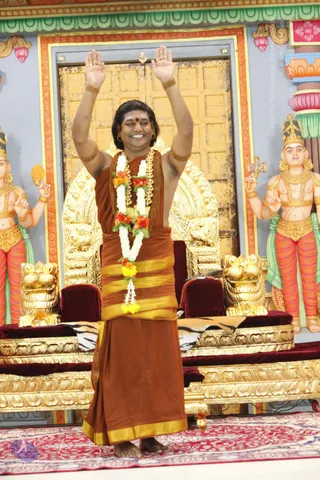
A smiling man with short dark hair, a red bindi and gold earrings stands barefoot on a red patterned rug, arms raised high with palms open. He wears an orange-brown ochre drape with a yellow-gold border and a garland of white jasmine and orange-red flowers, and his bangles and wrist ornaments are gold. Behind him is a gold-carved throne with lion-head armrests draped with a tiger-stripe cloth, in front of a golden wooden door. Painted, multi-armed deity murti stand on either side in orange dhotis and gold jewellery. The figure's appearance is consistent with a person, identified by shaved-free long swept hair, saffron-orange garments, rudraksha-style ornamentation absent, and gold ornaments, while the throne and garland mark him as a presiding teacher during a satsang setting.