Skip to content
Friday

23 June 2017

First Step to Manifesting Powers: Shaktipada, Connecting to the Cosmic Source

Dated photos
296
Source pages
1
Media
2
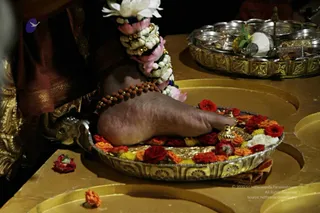
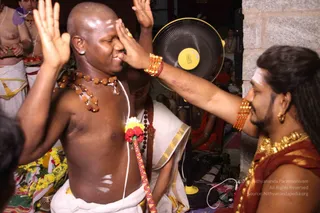
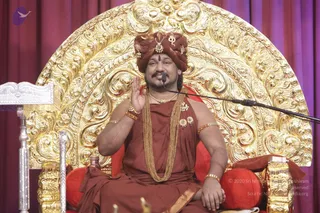
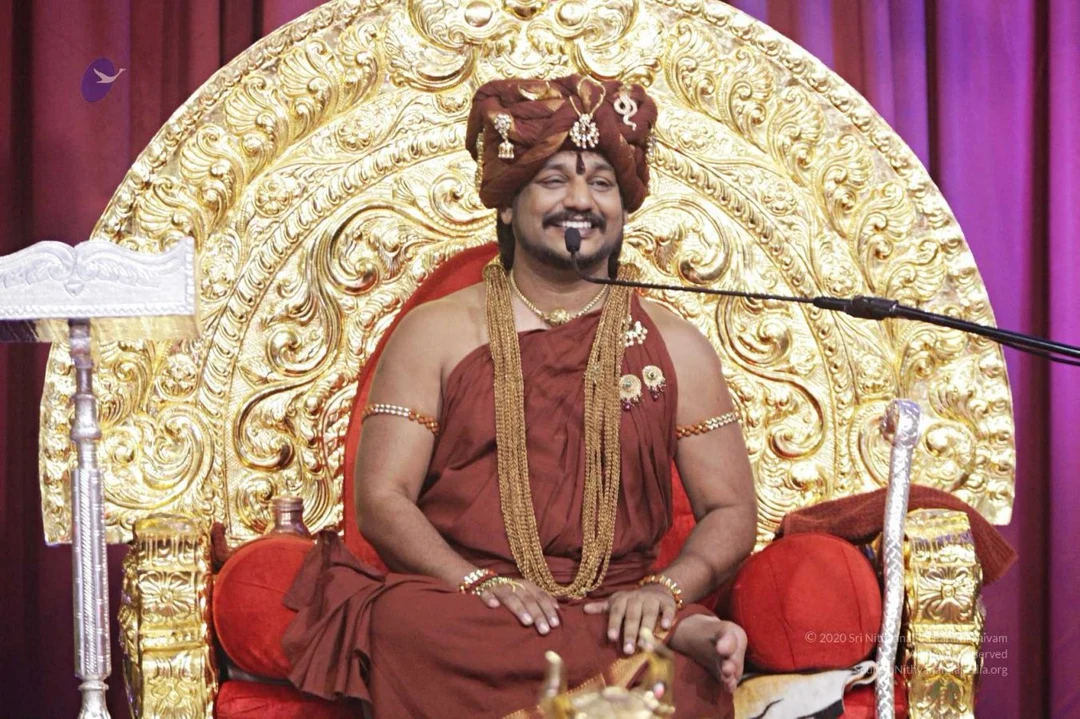
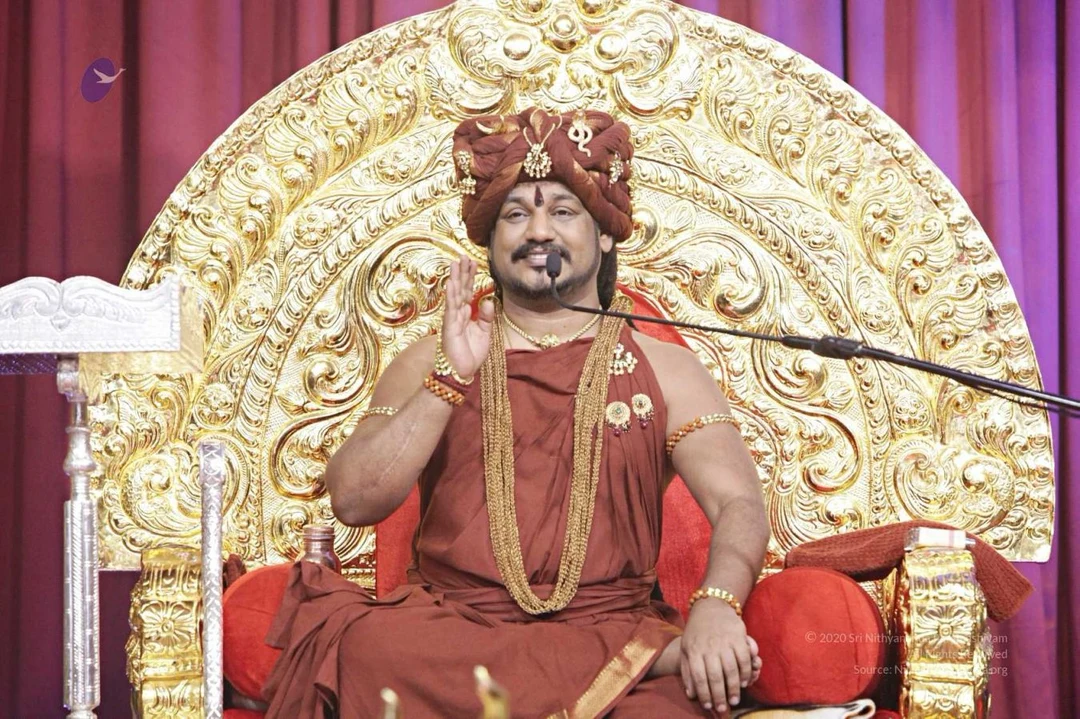
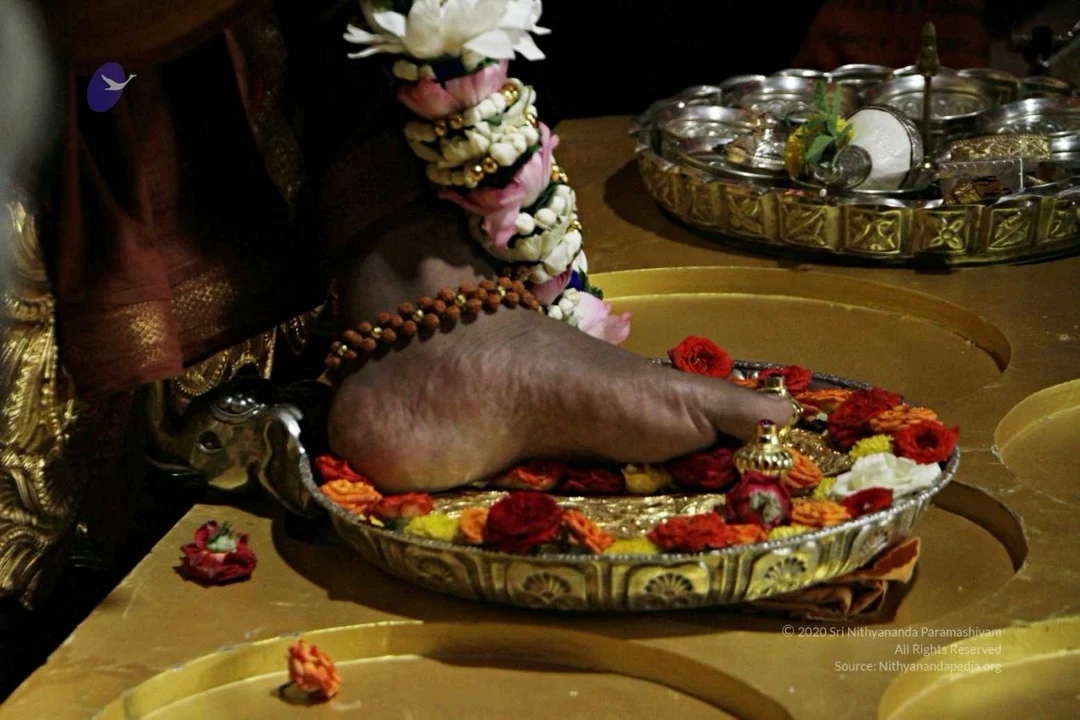
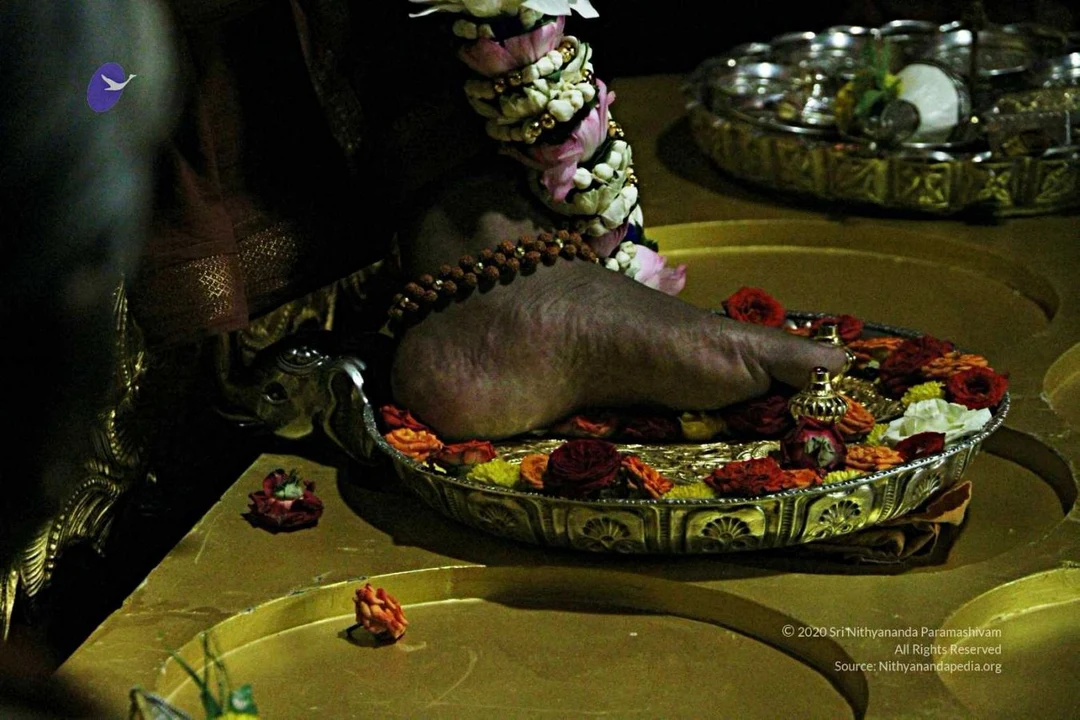
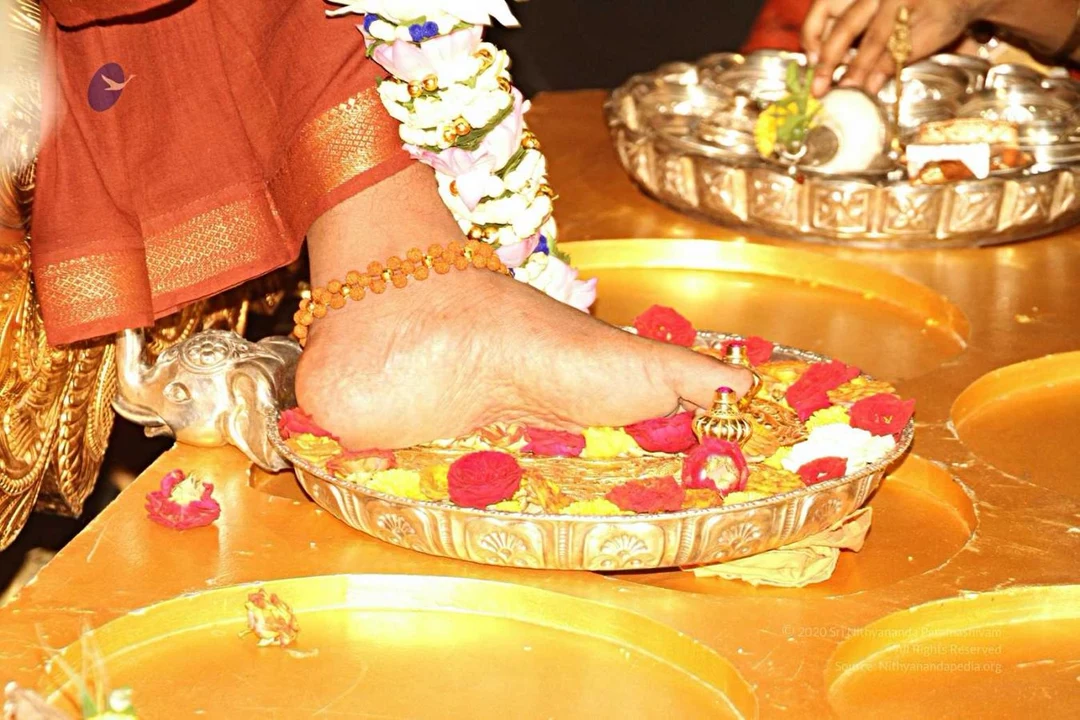
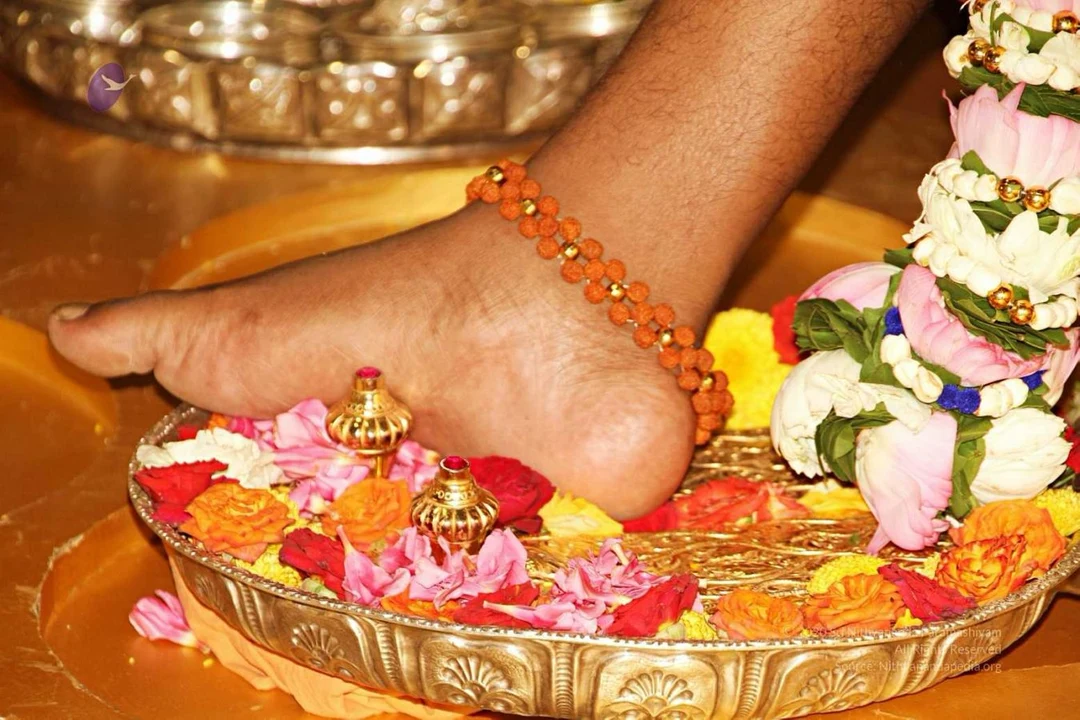
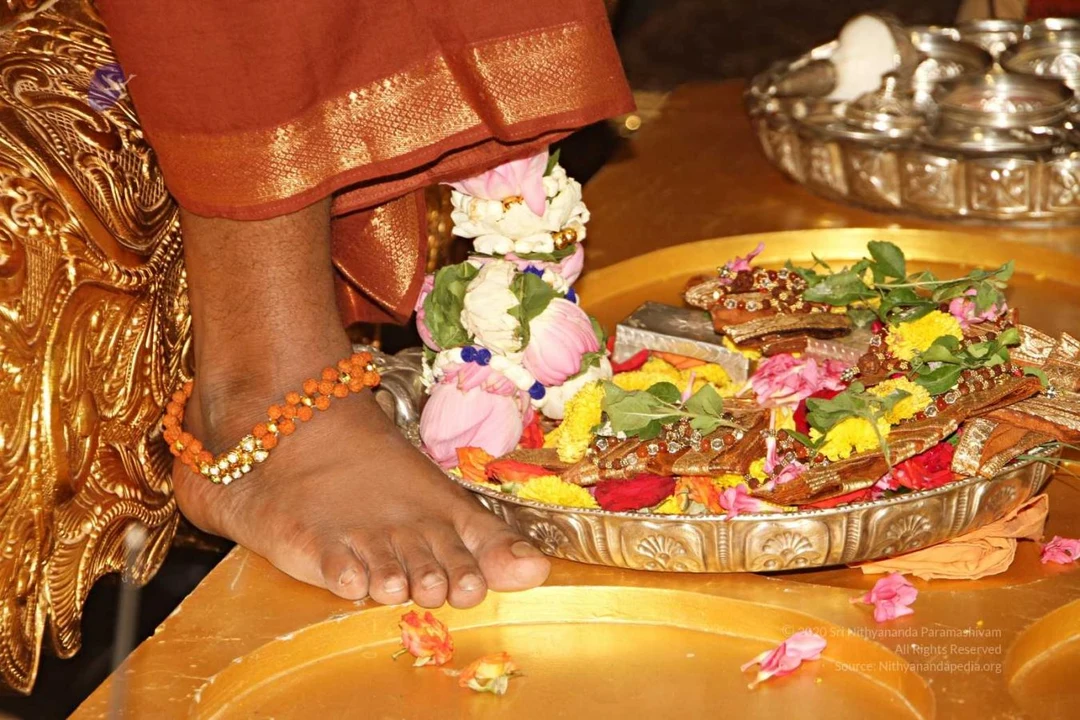
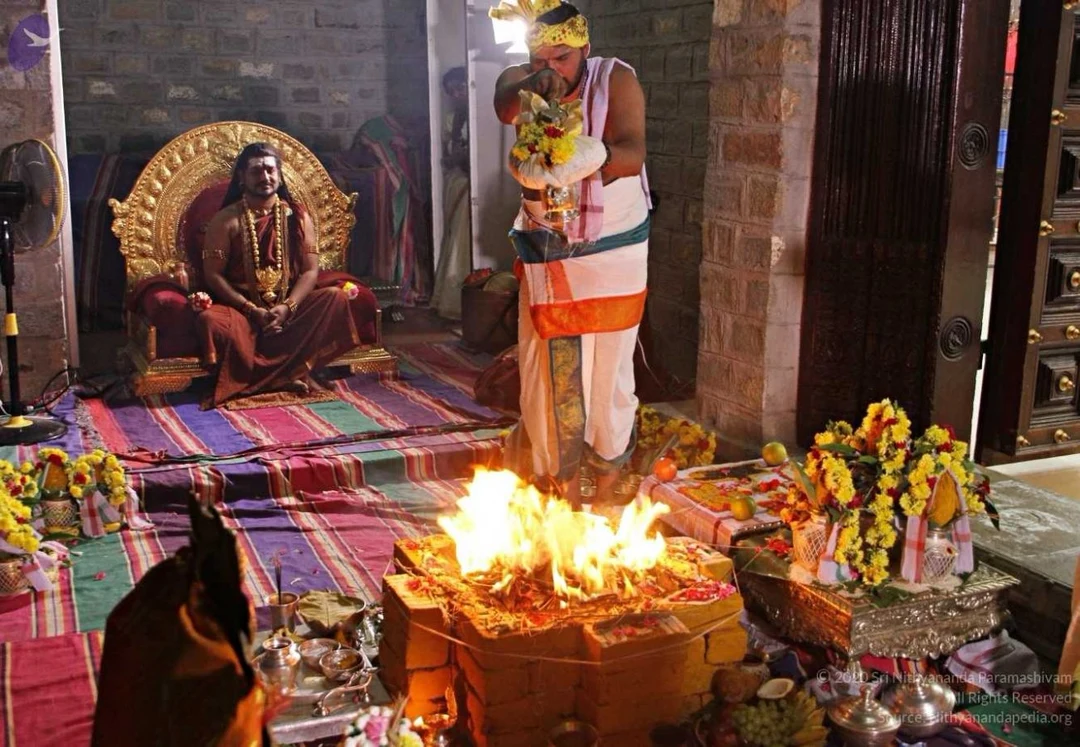
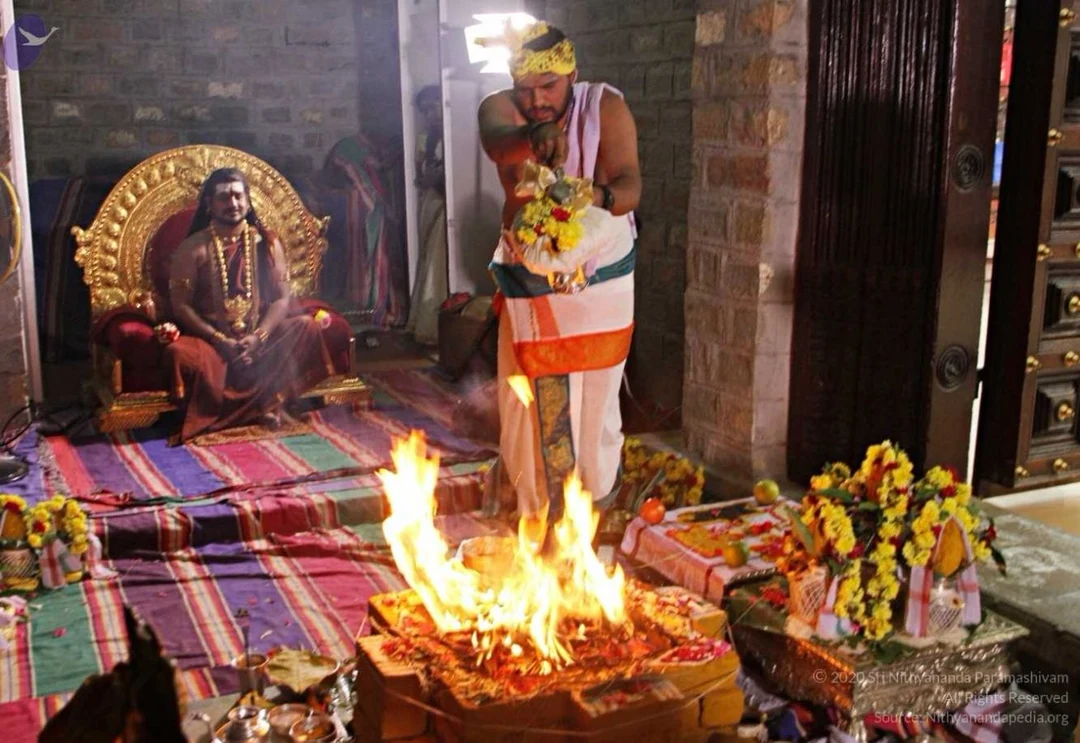
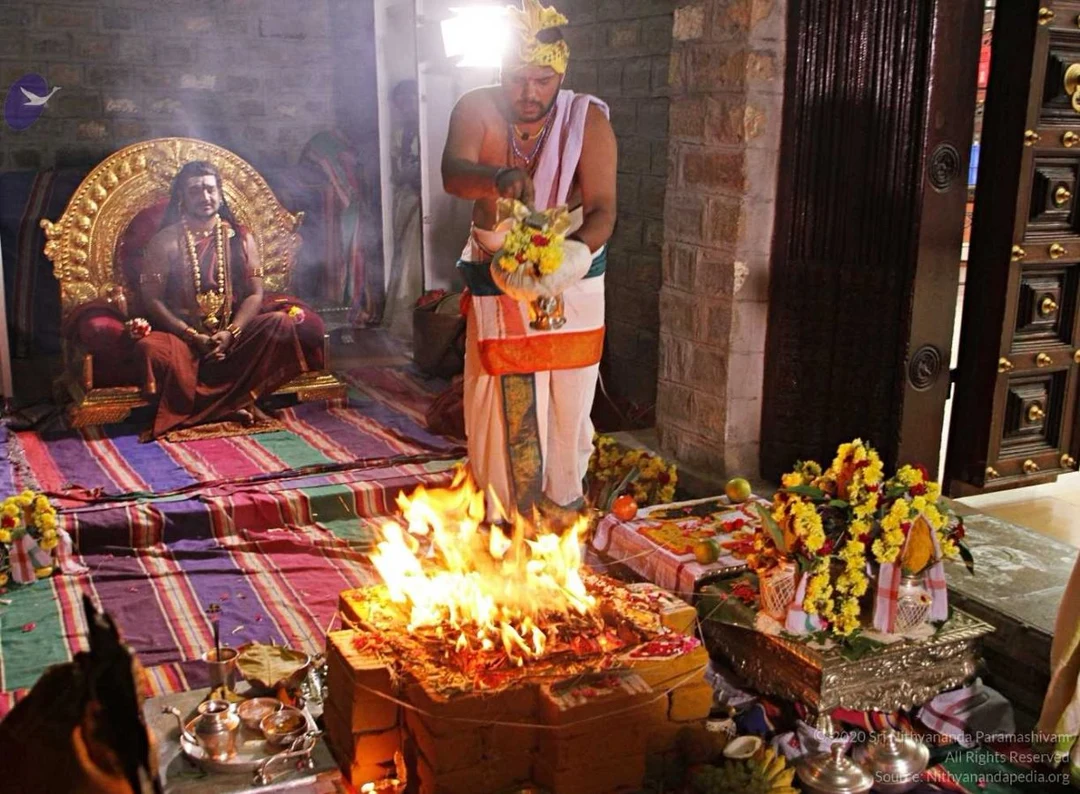
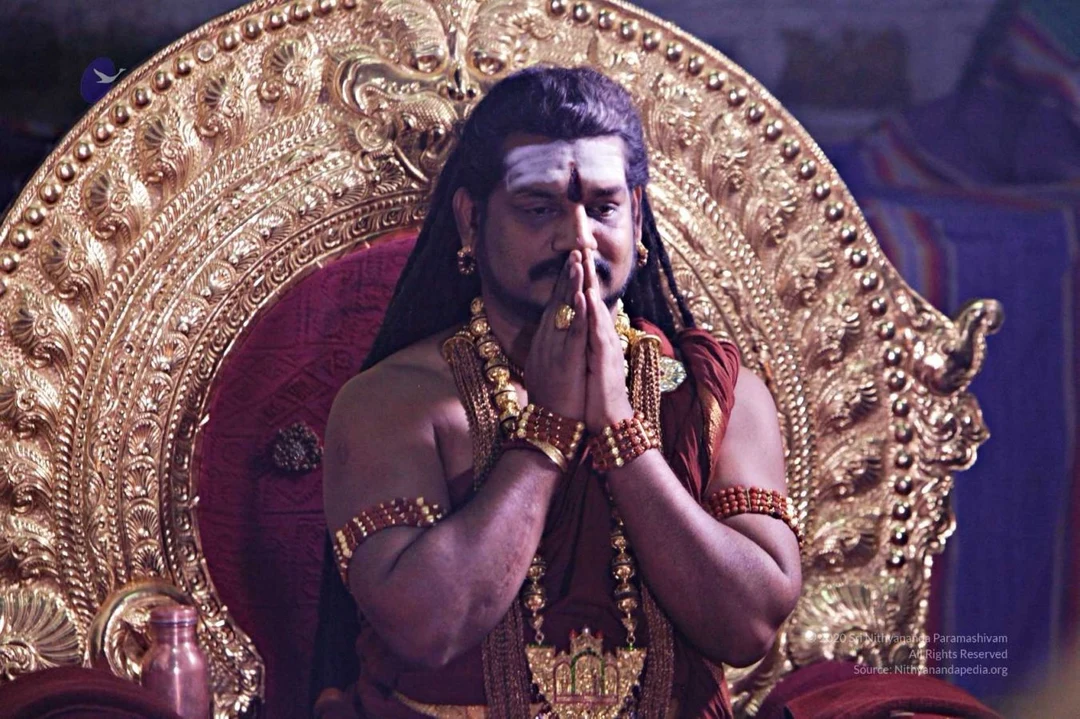
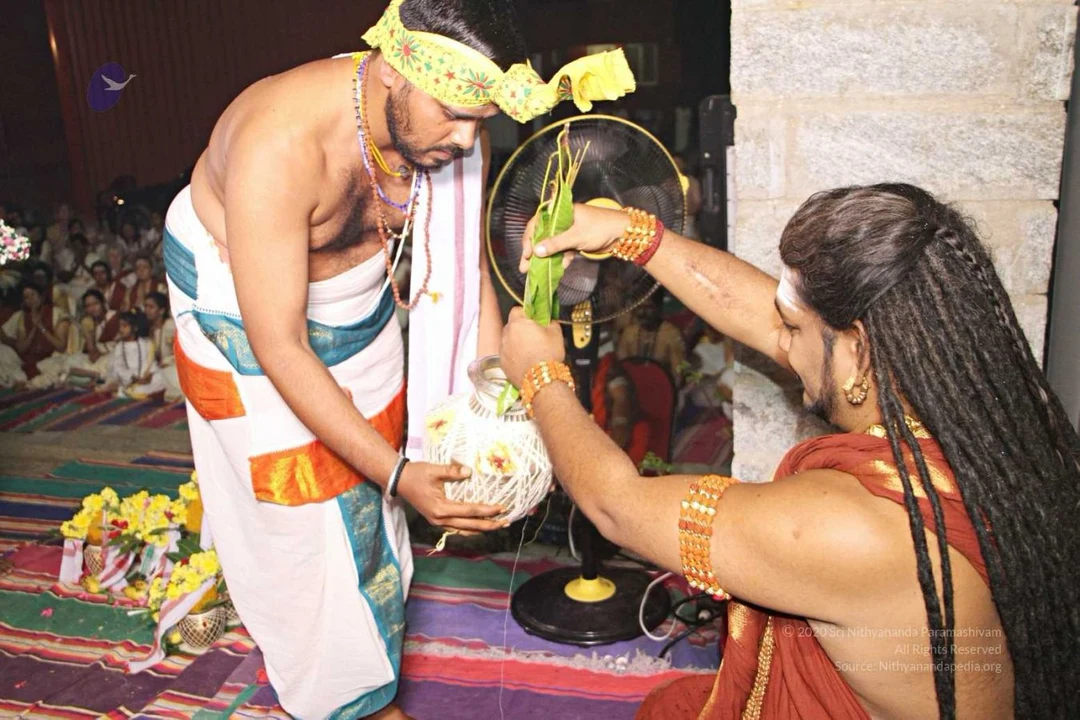
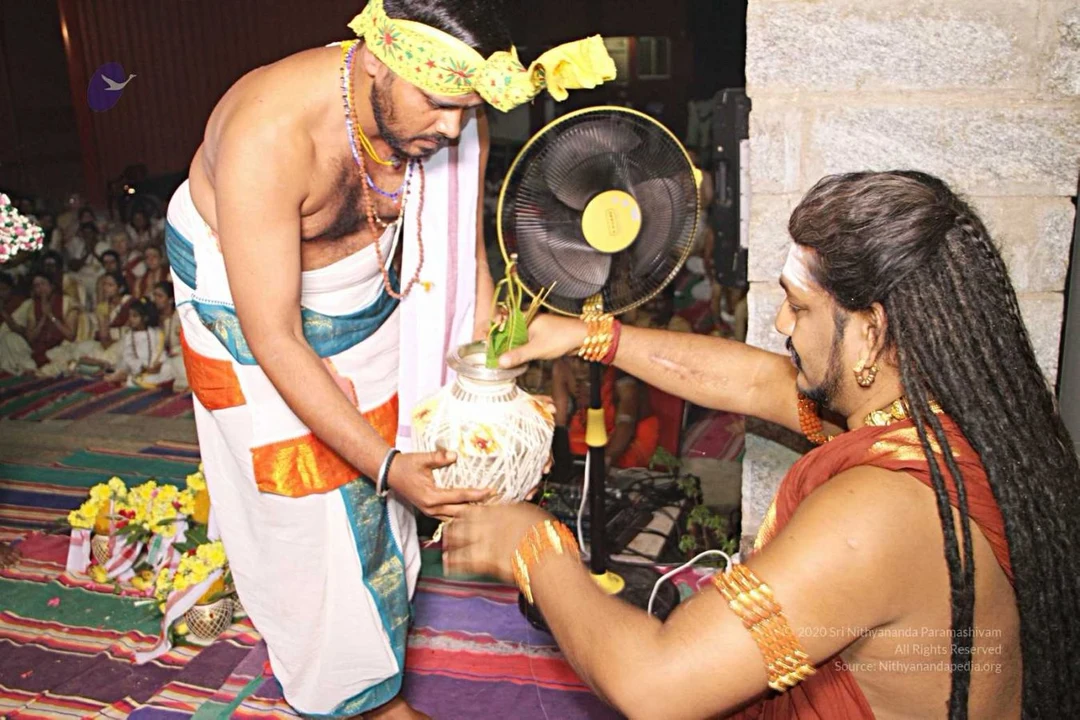
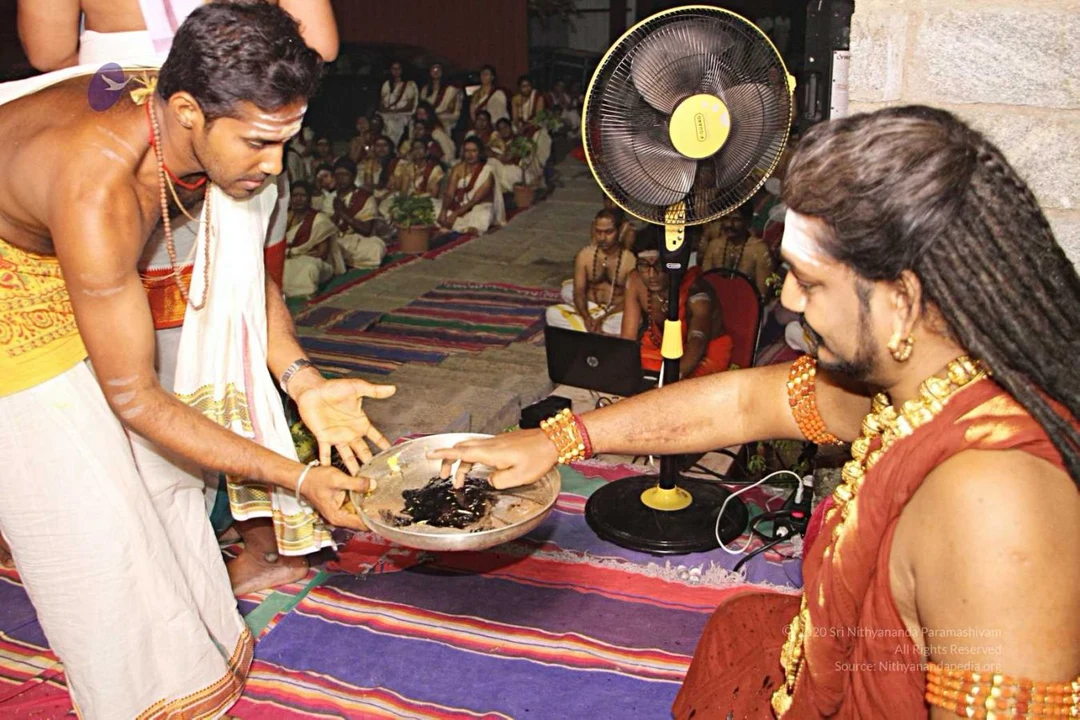
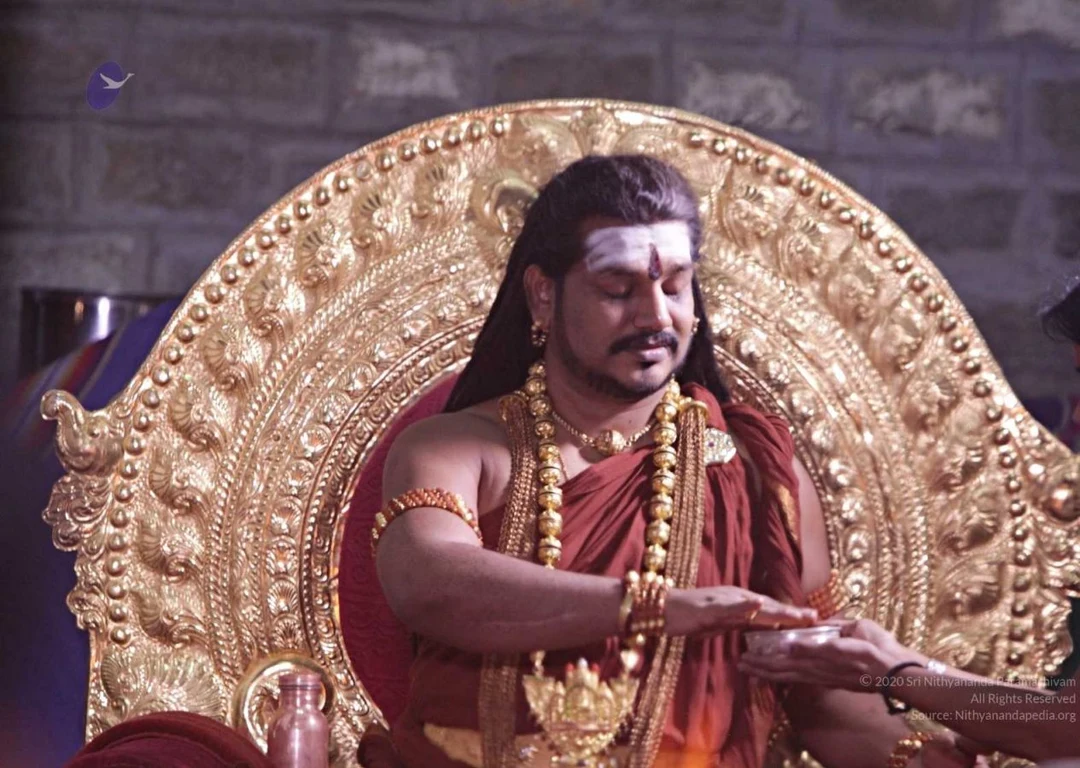
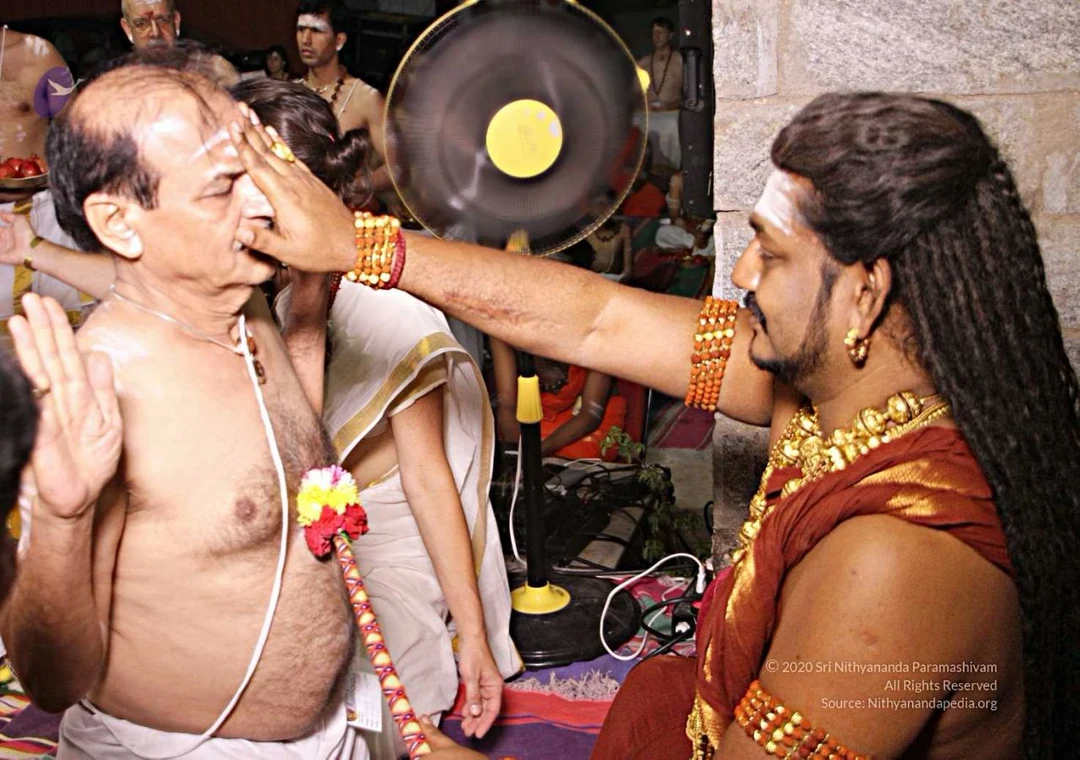
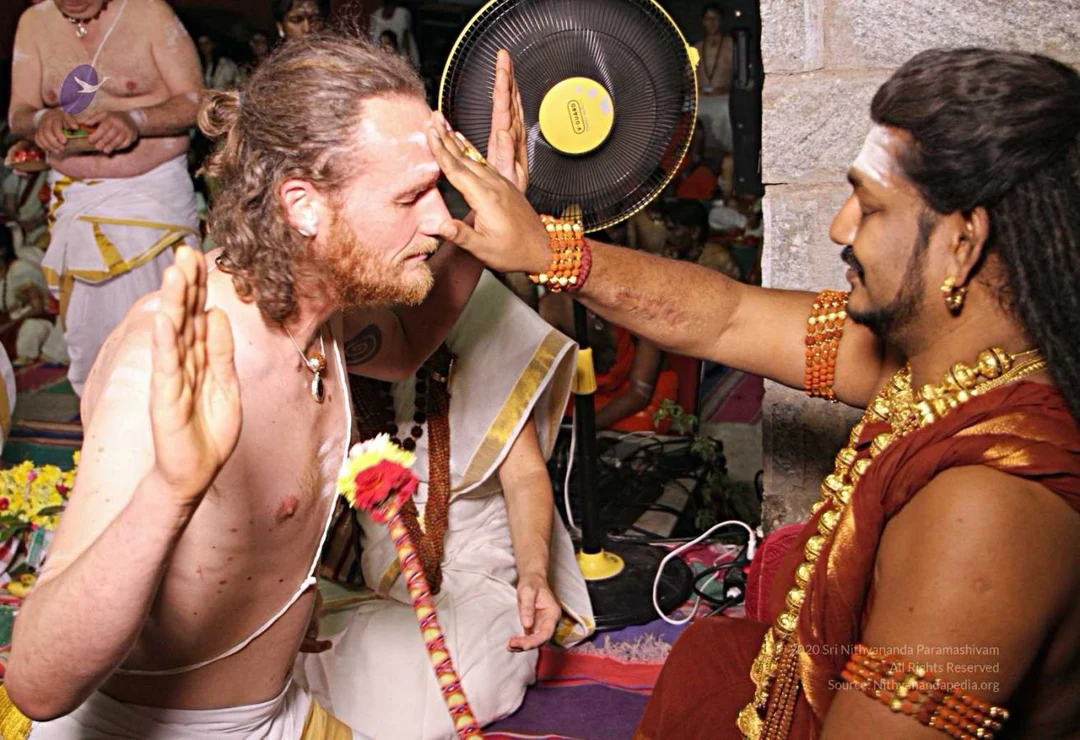
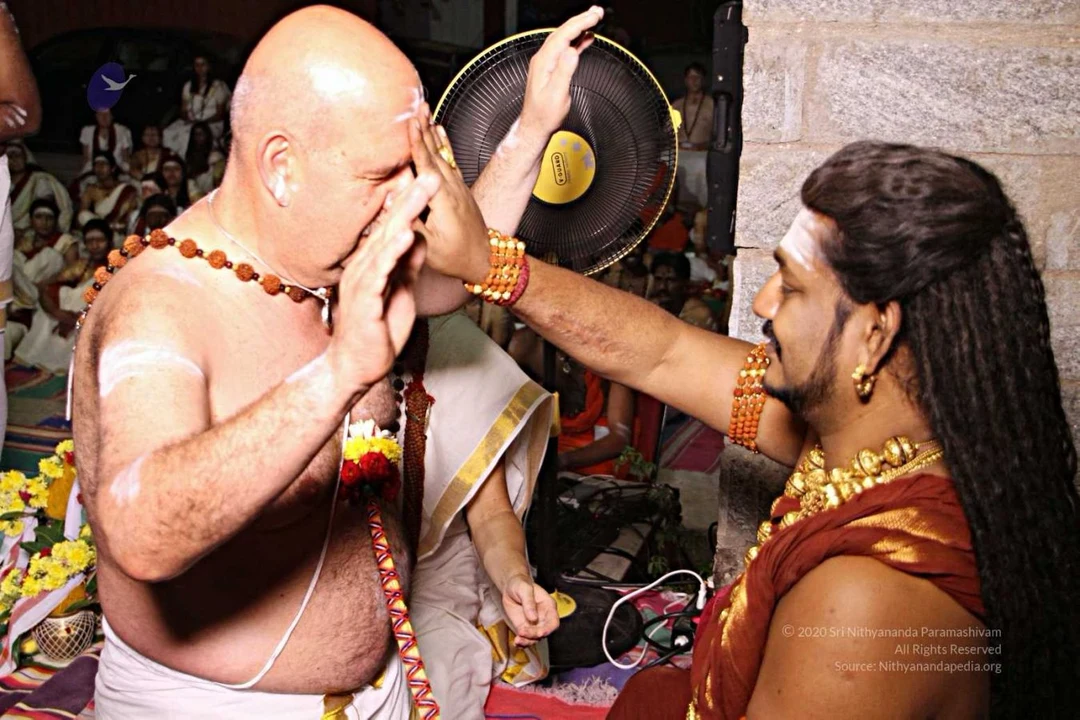
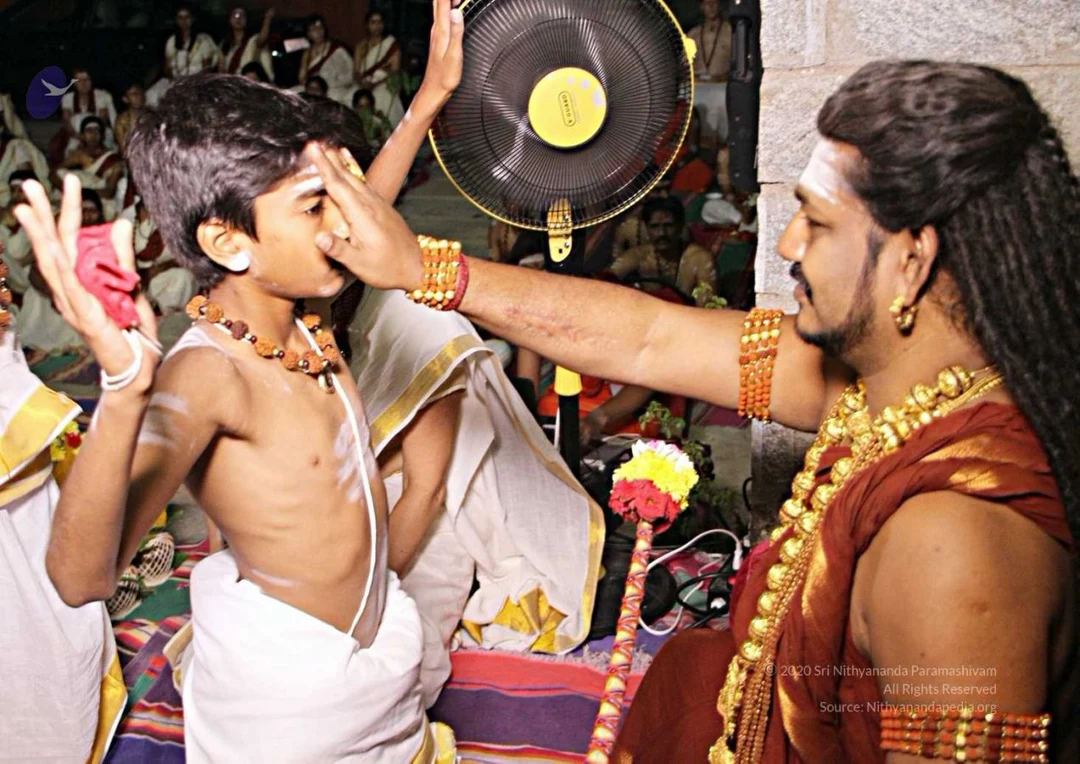
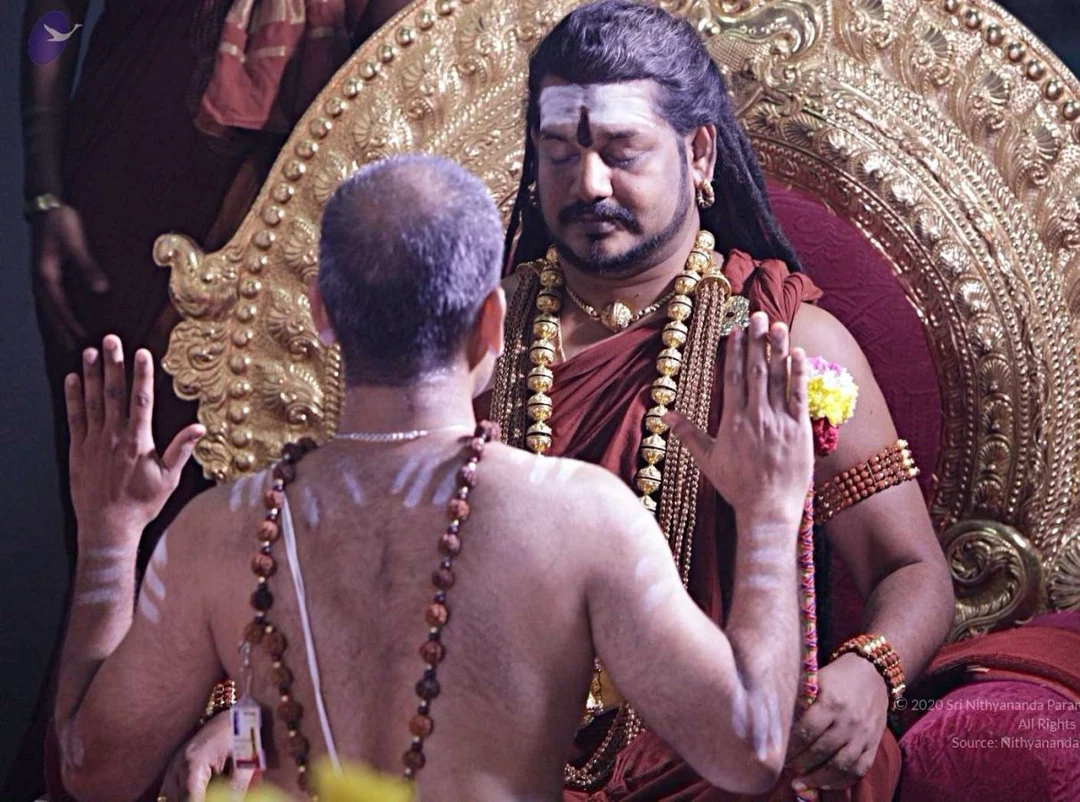
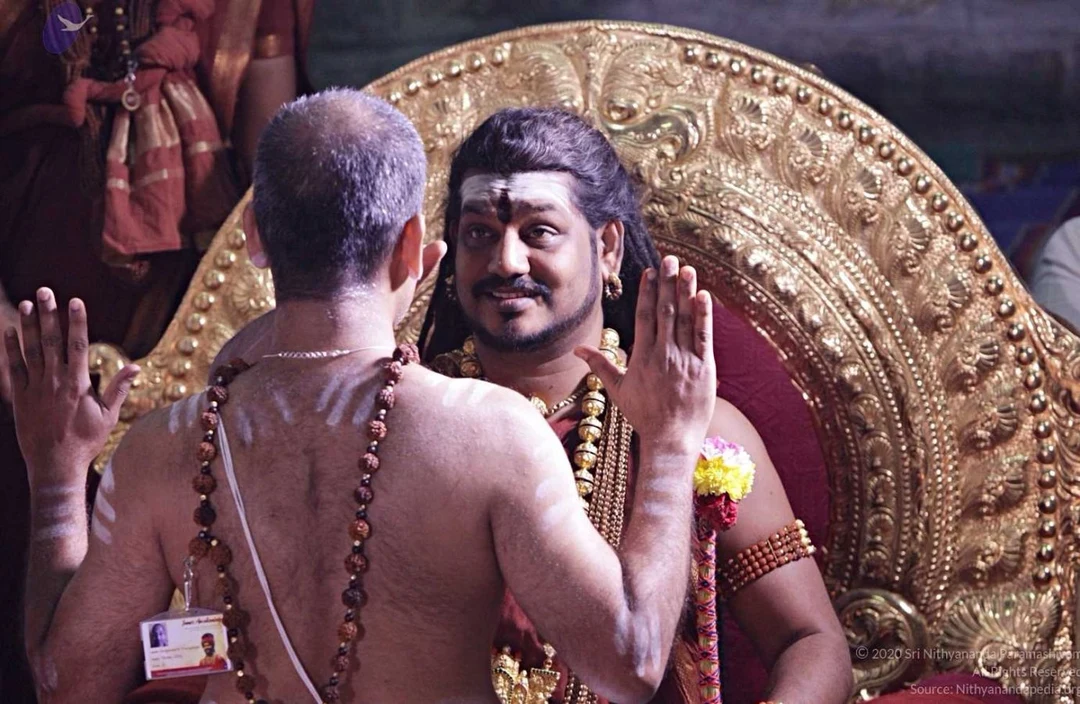
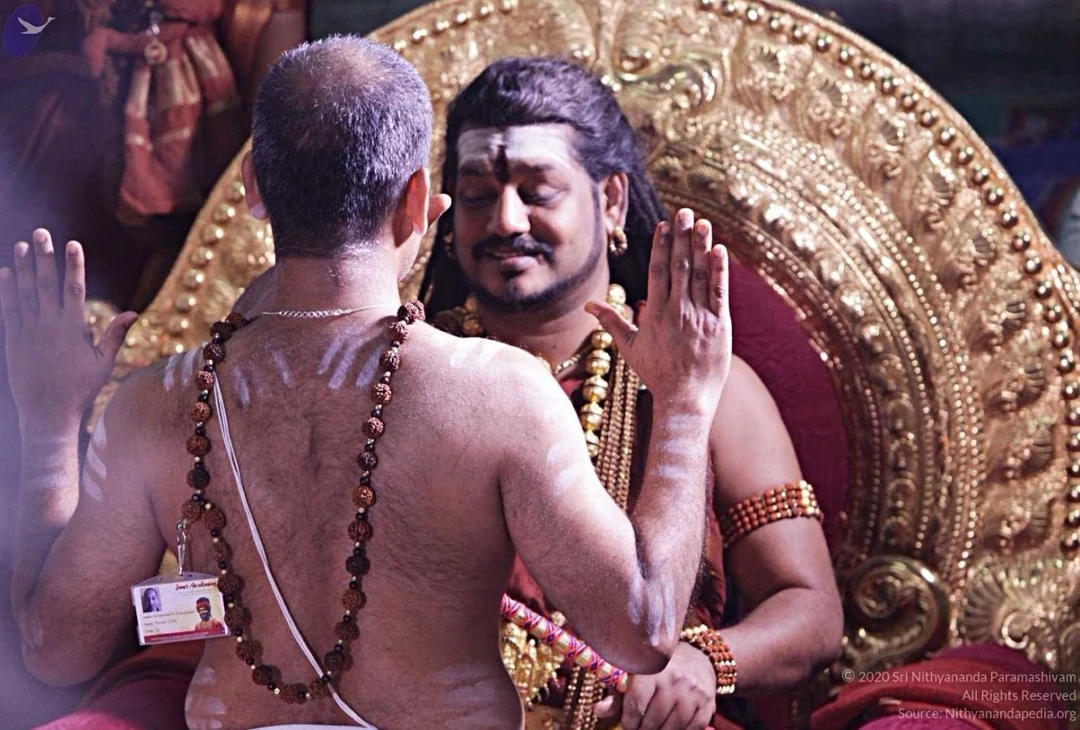
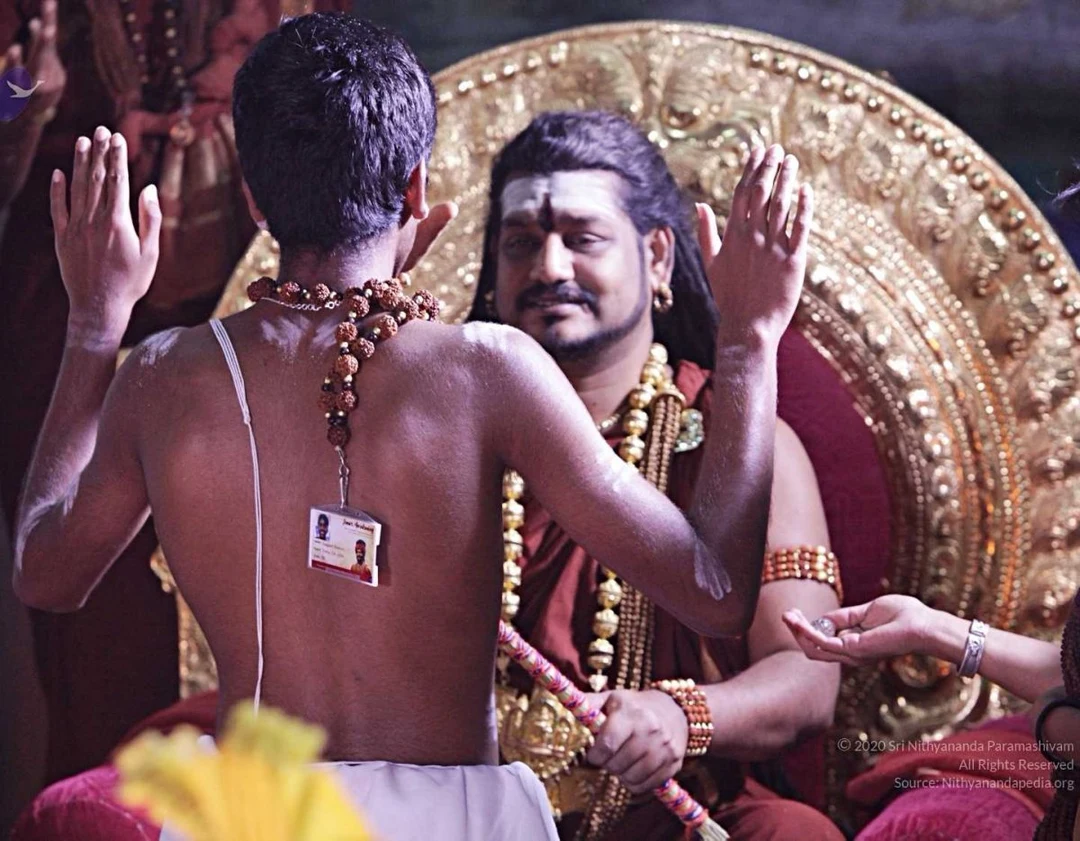
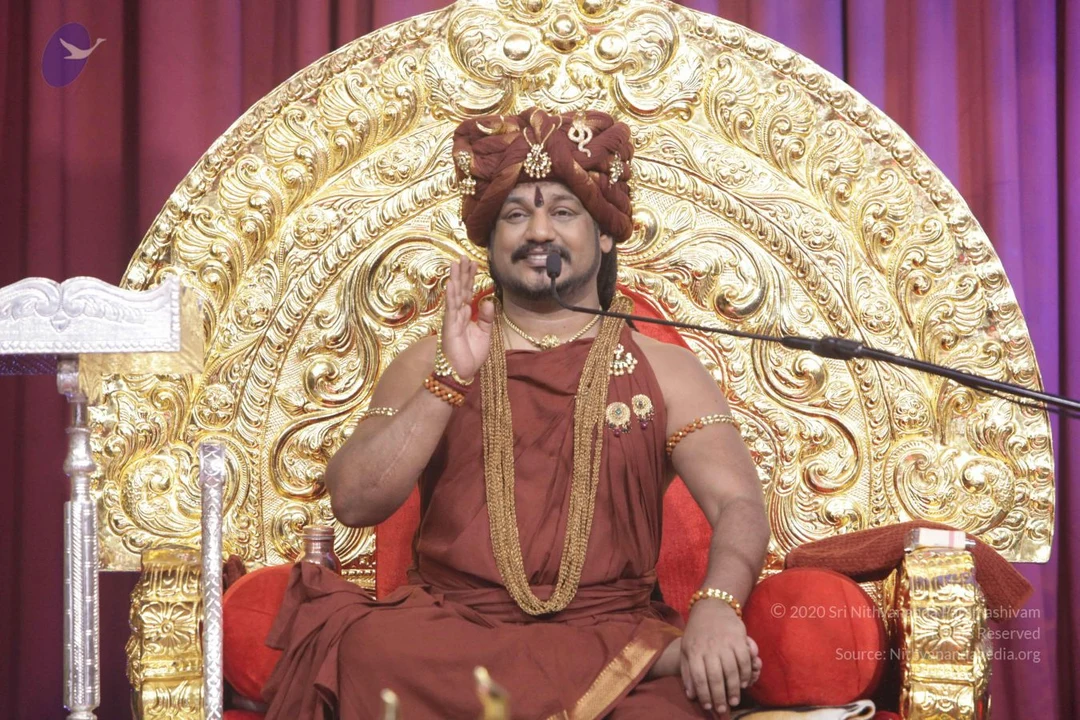
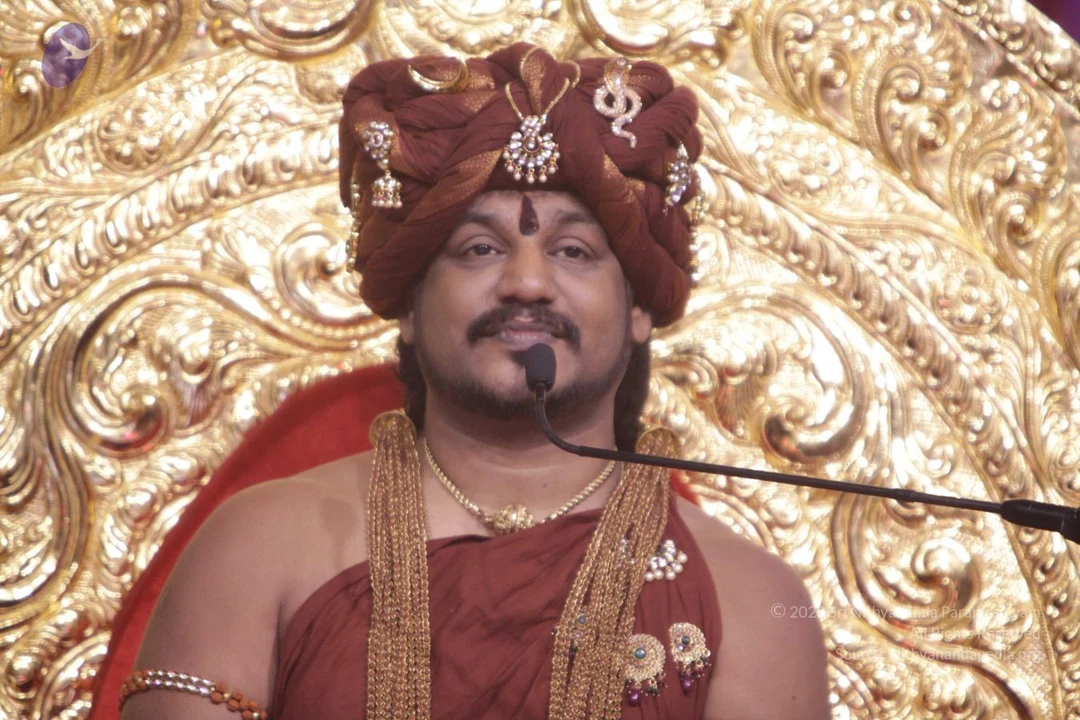
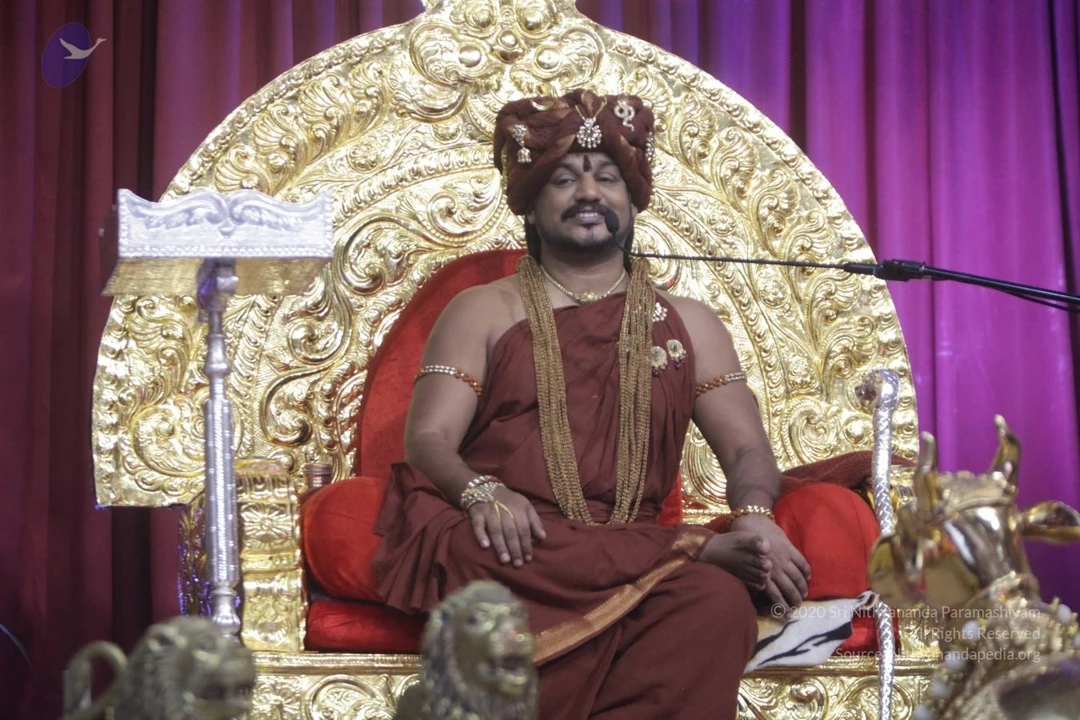
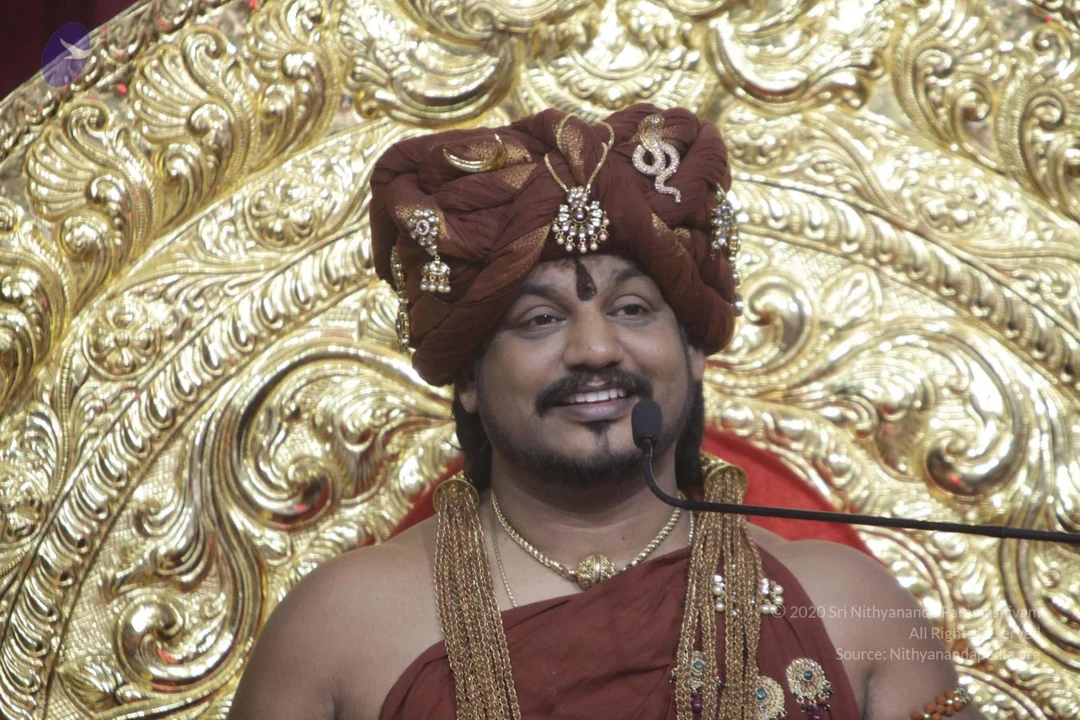
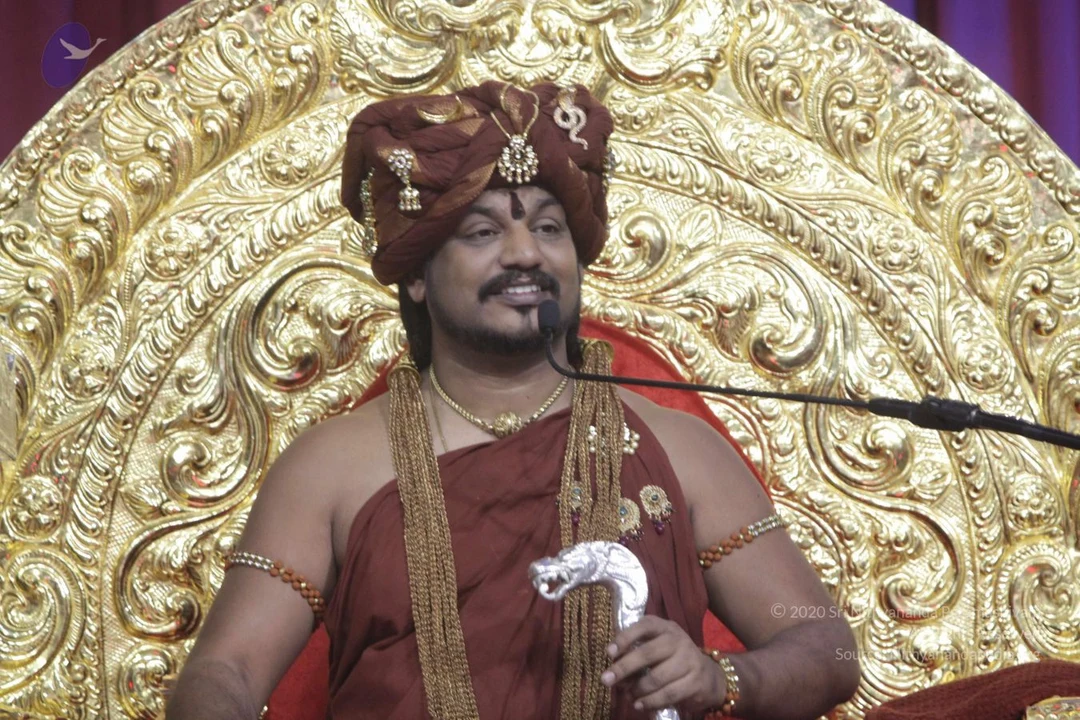
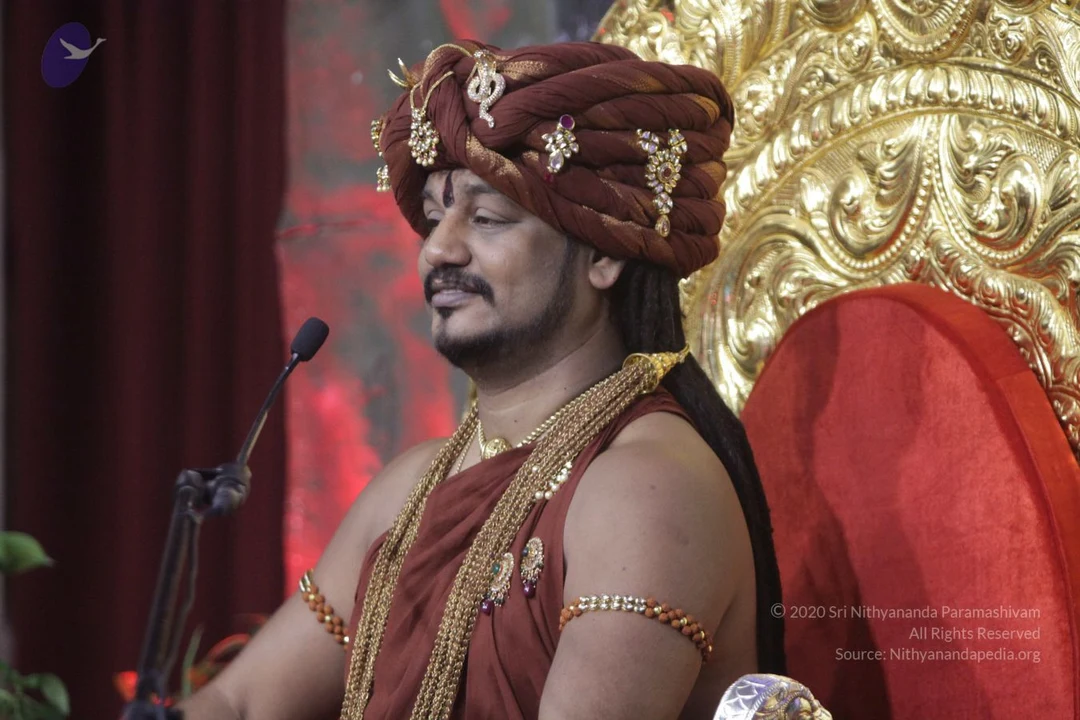
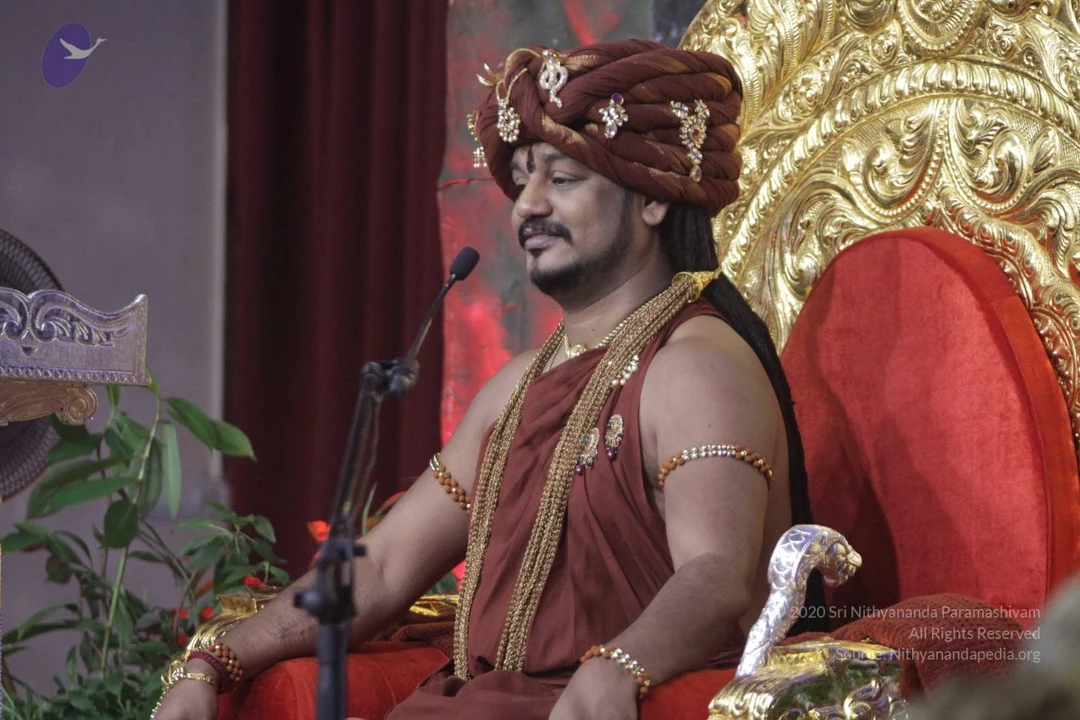
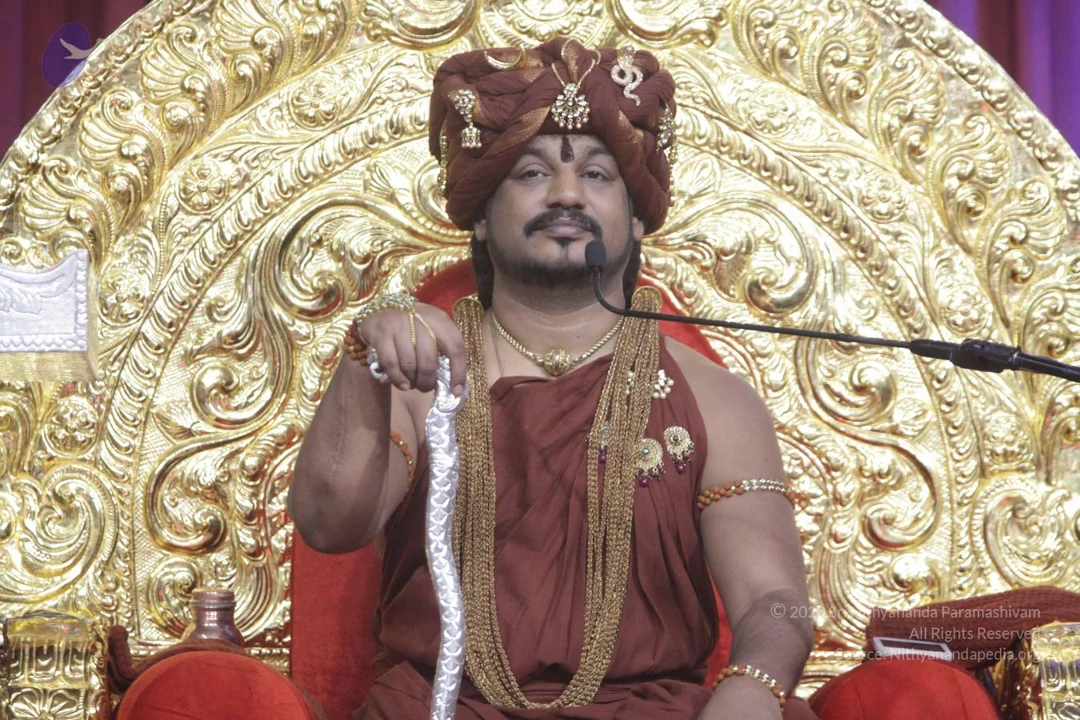
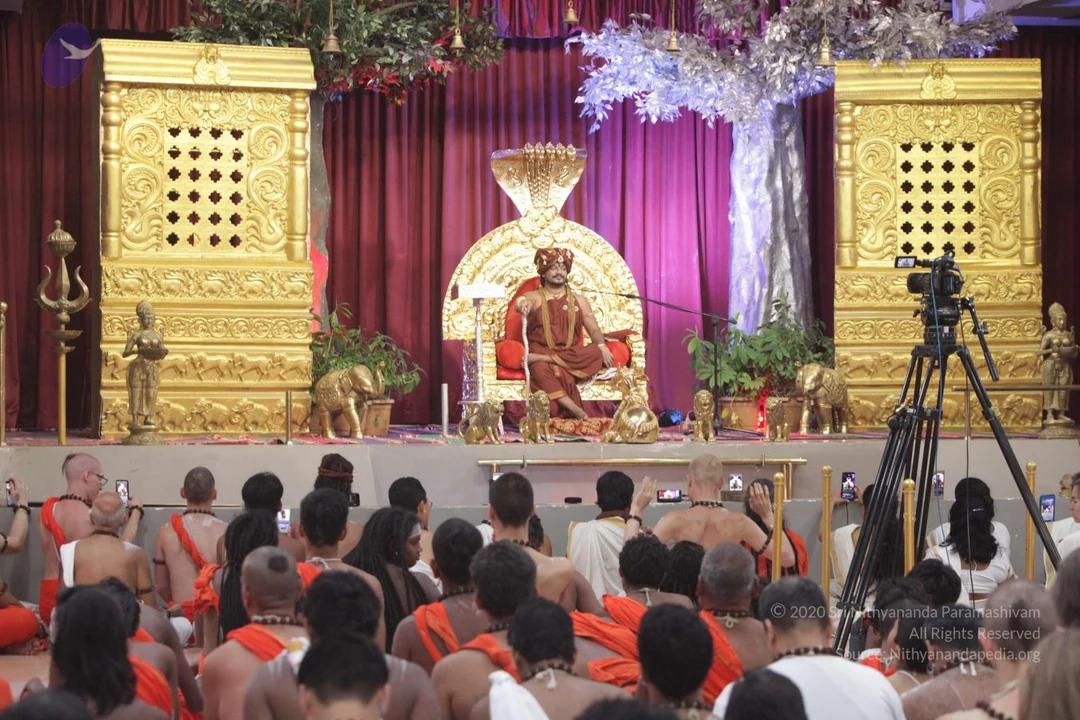
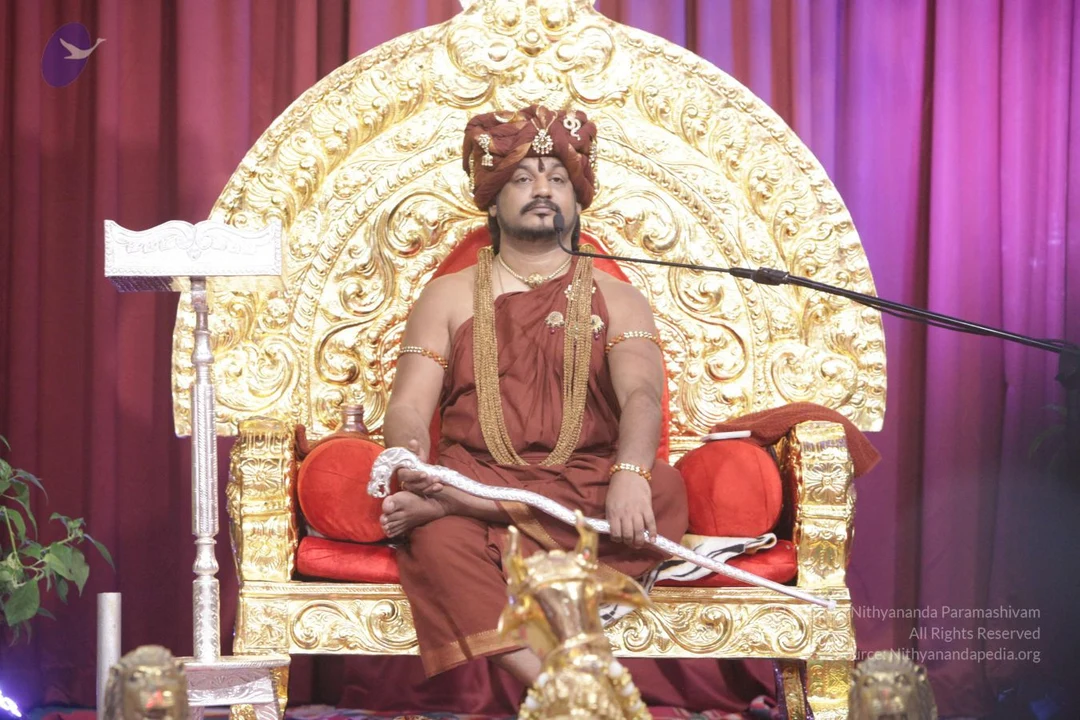
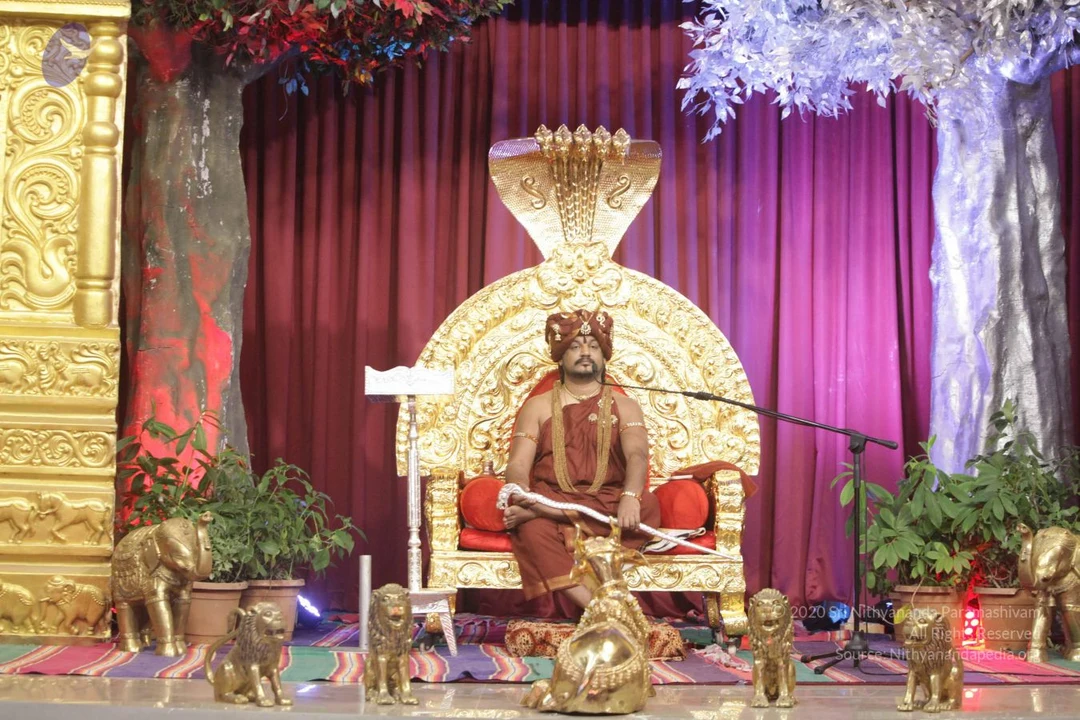
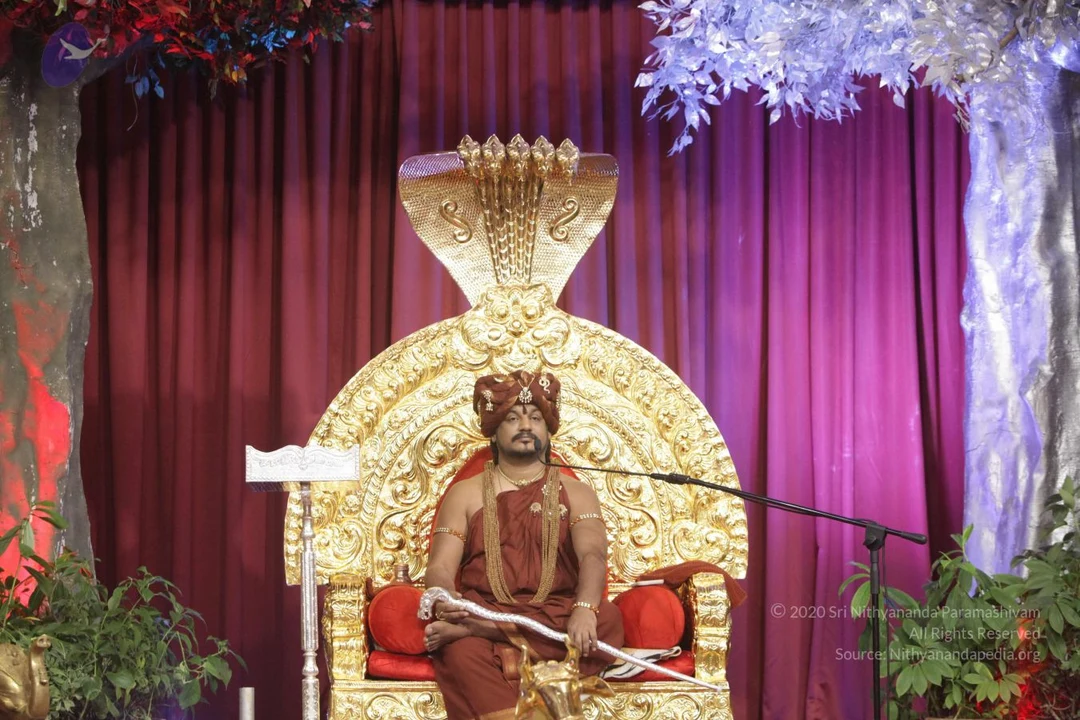
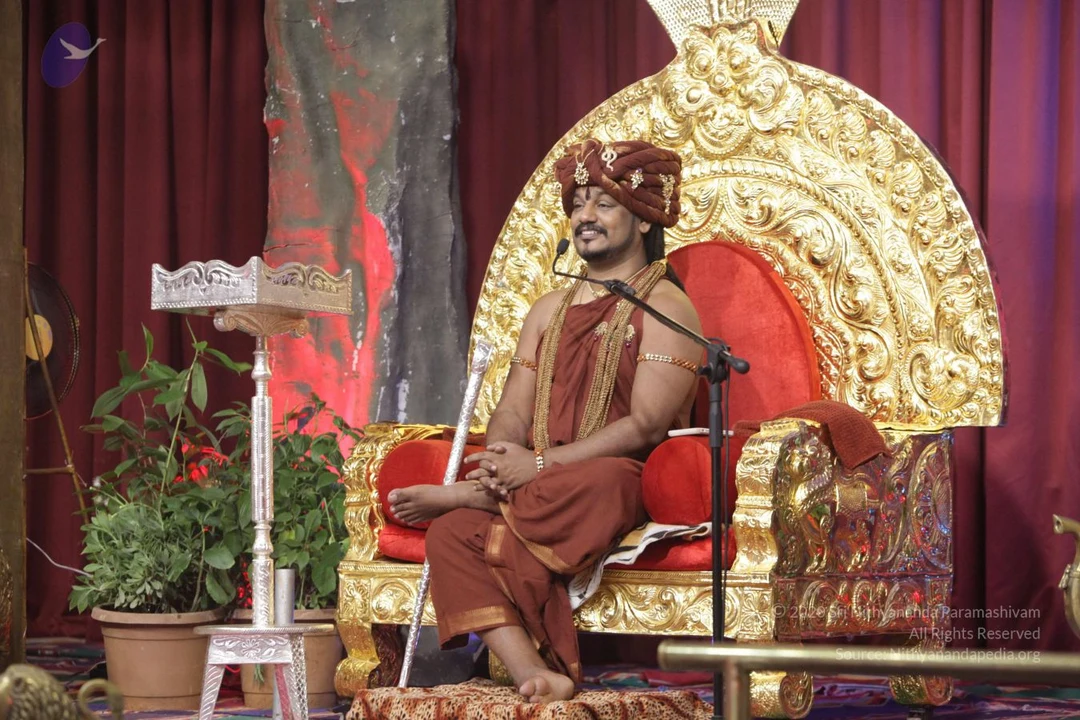
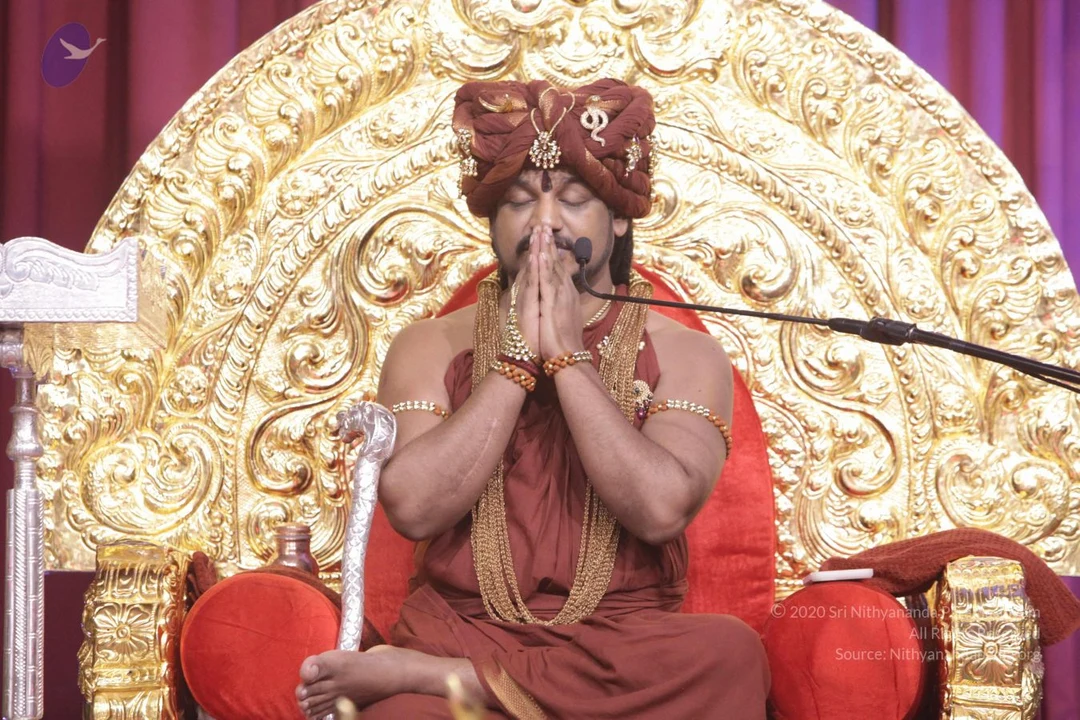
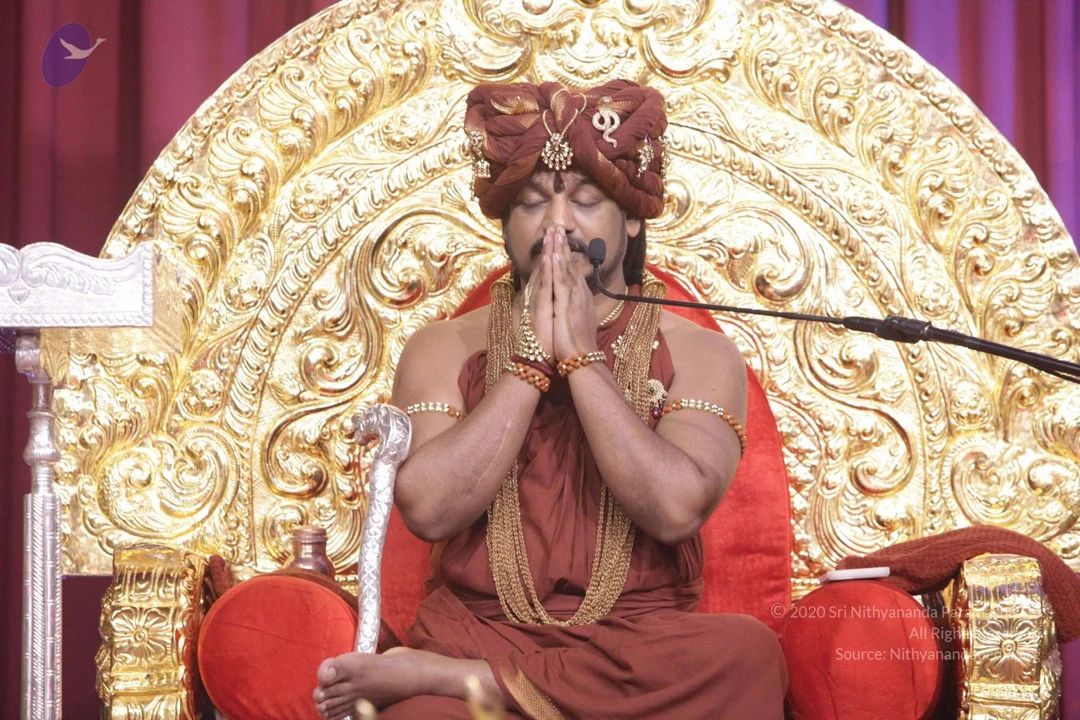
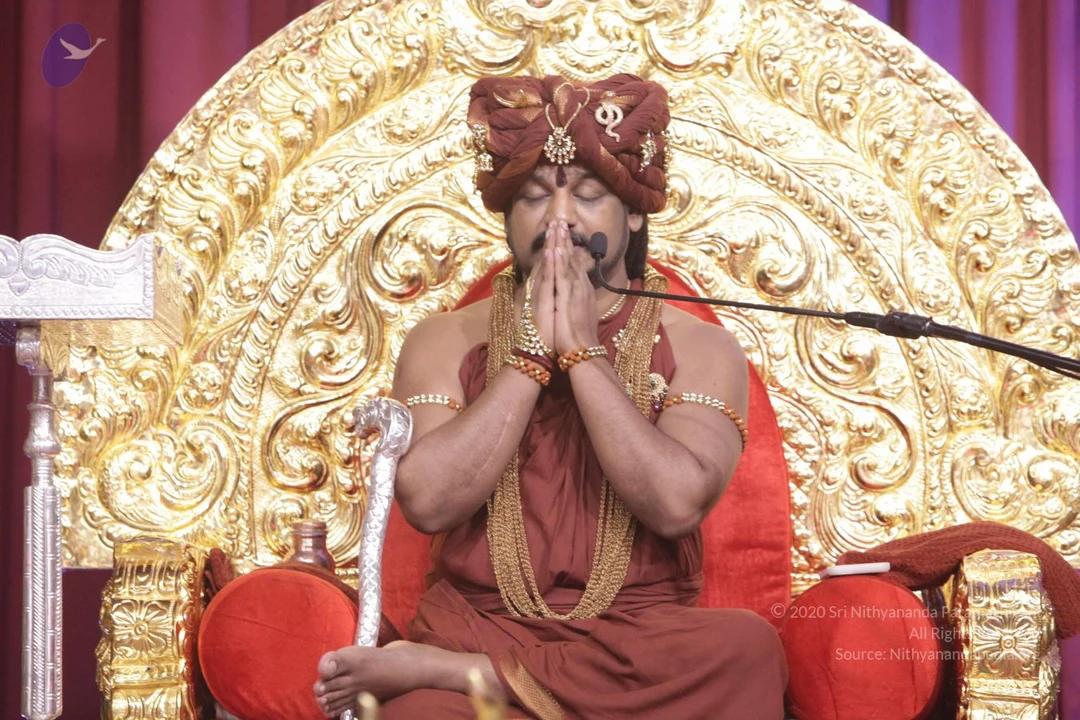
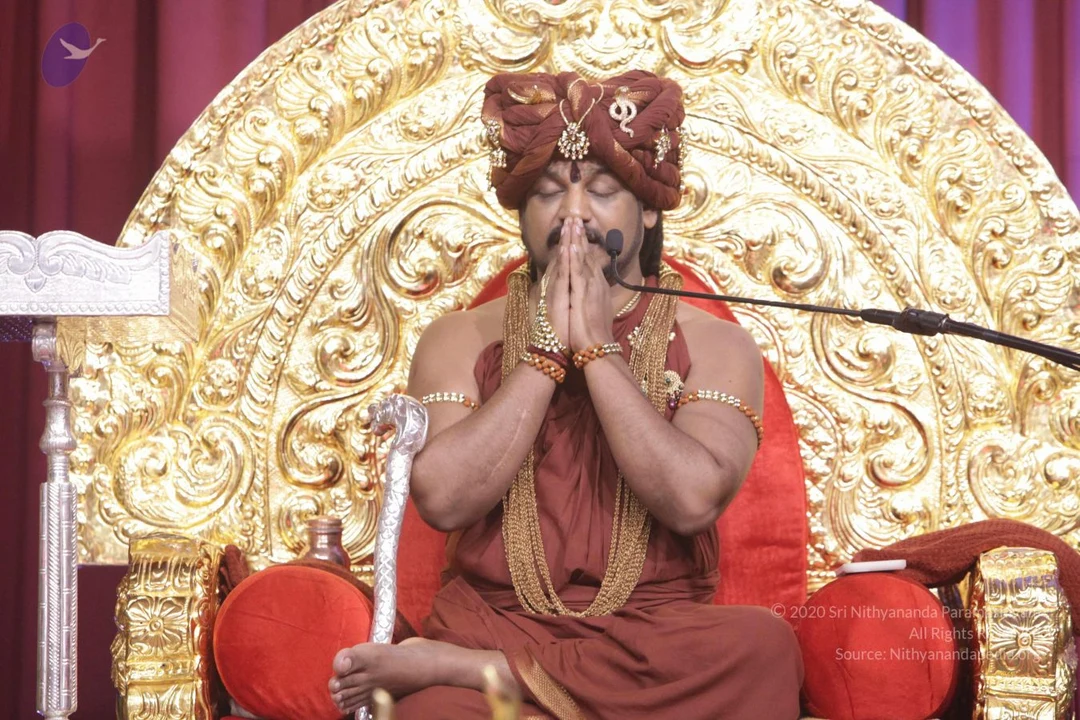
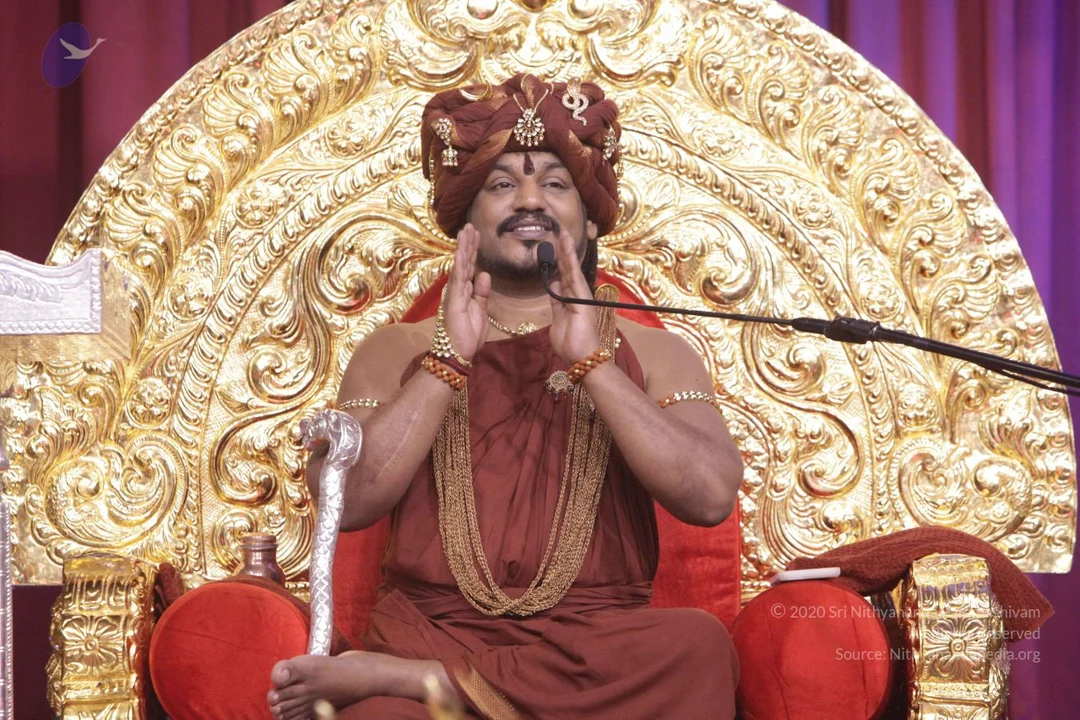
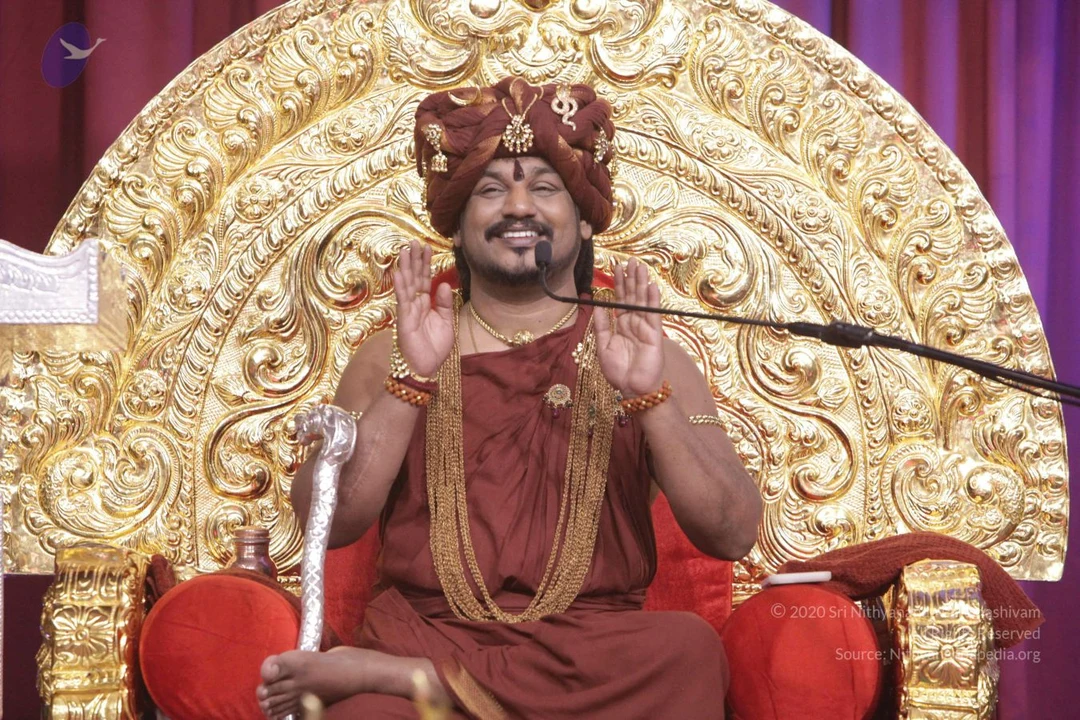
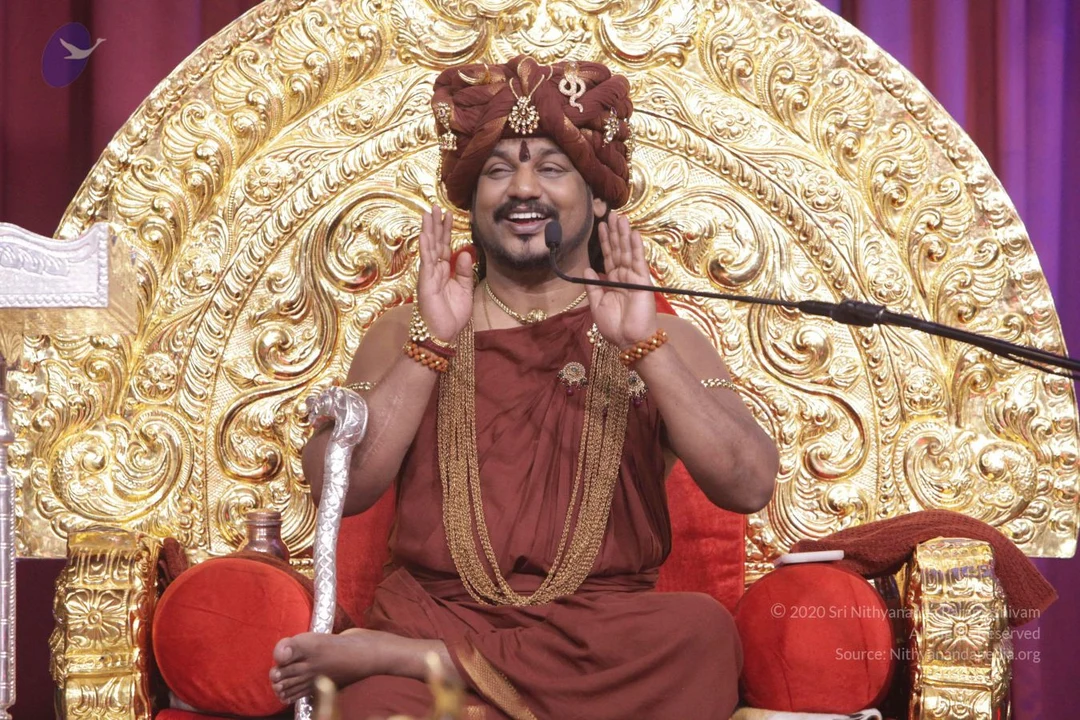
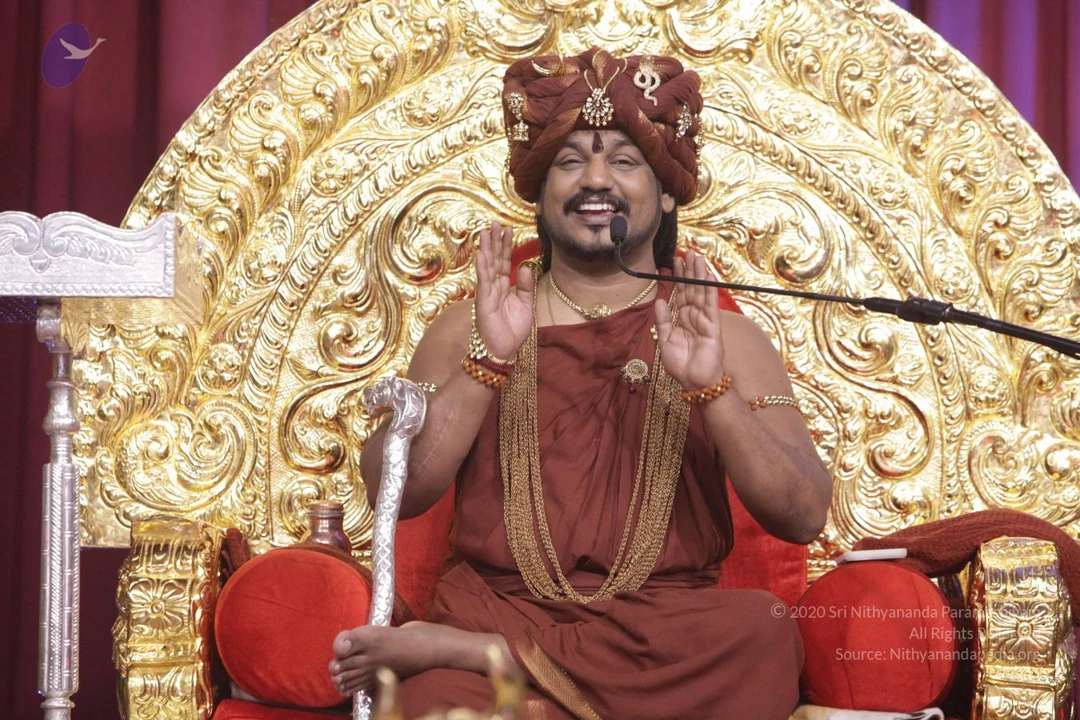
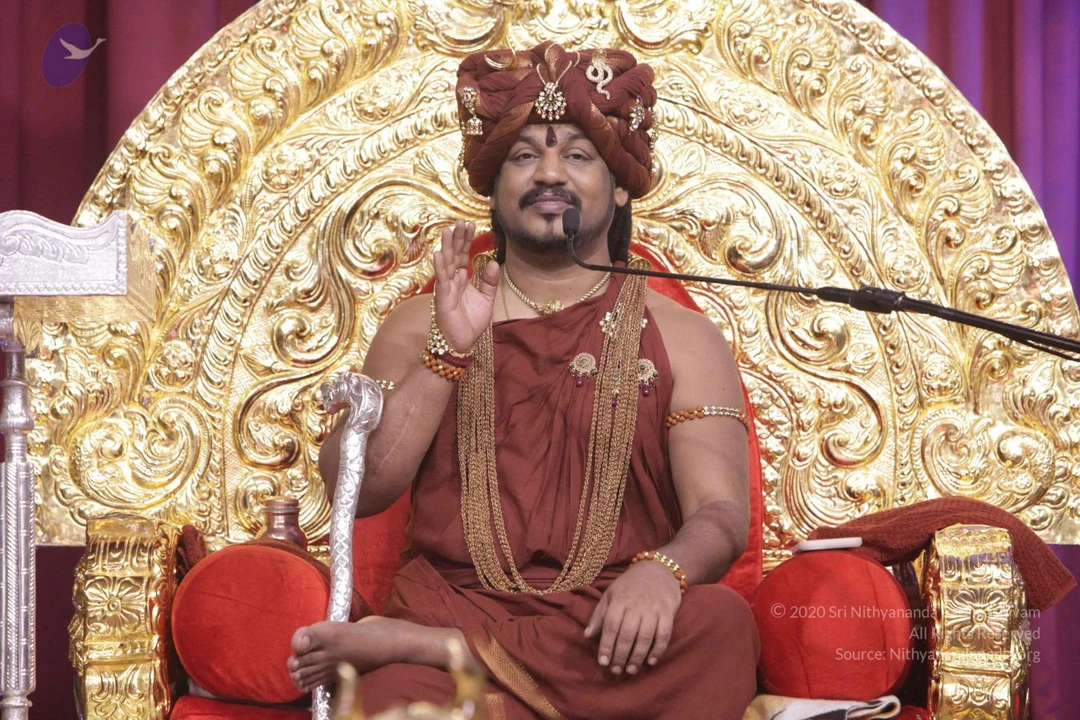
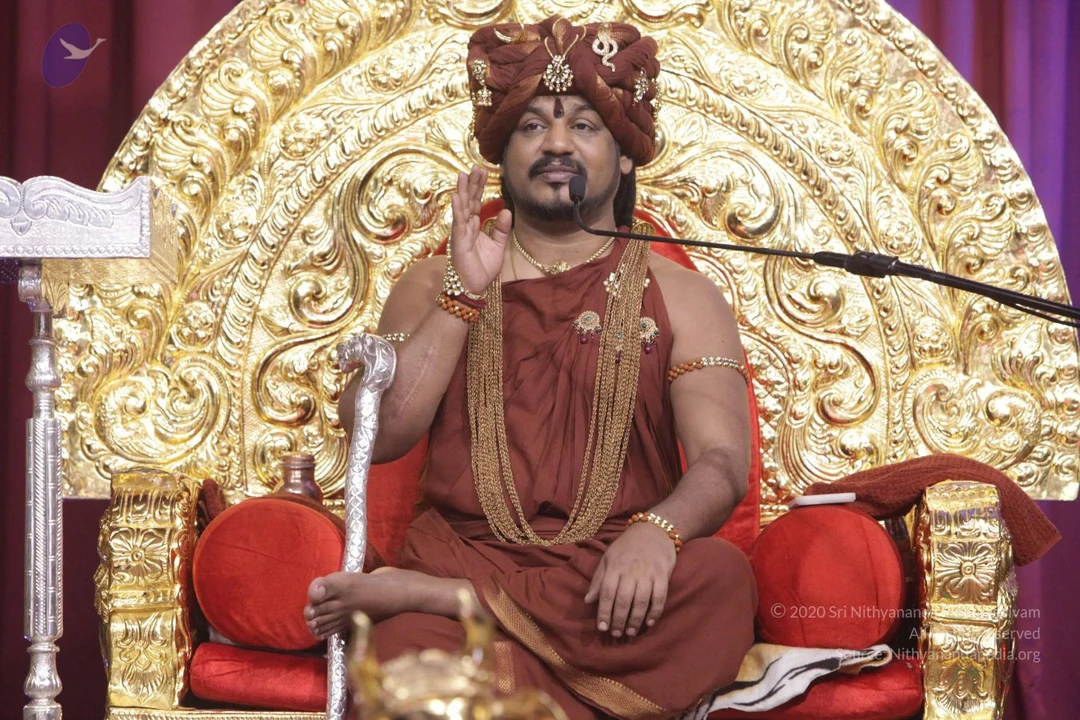
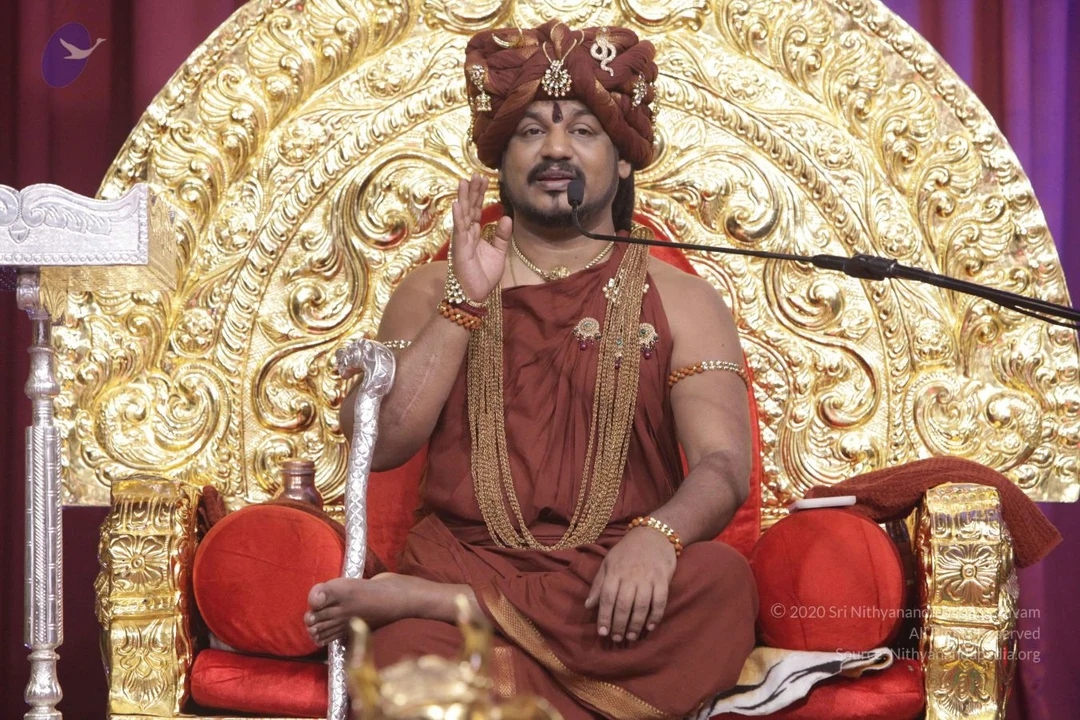
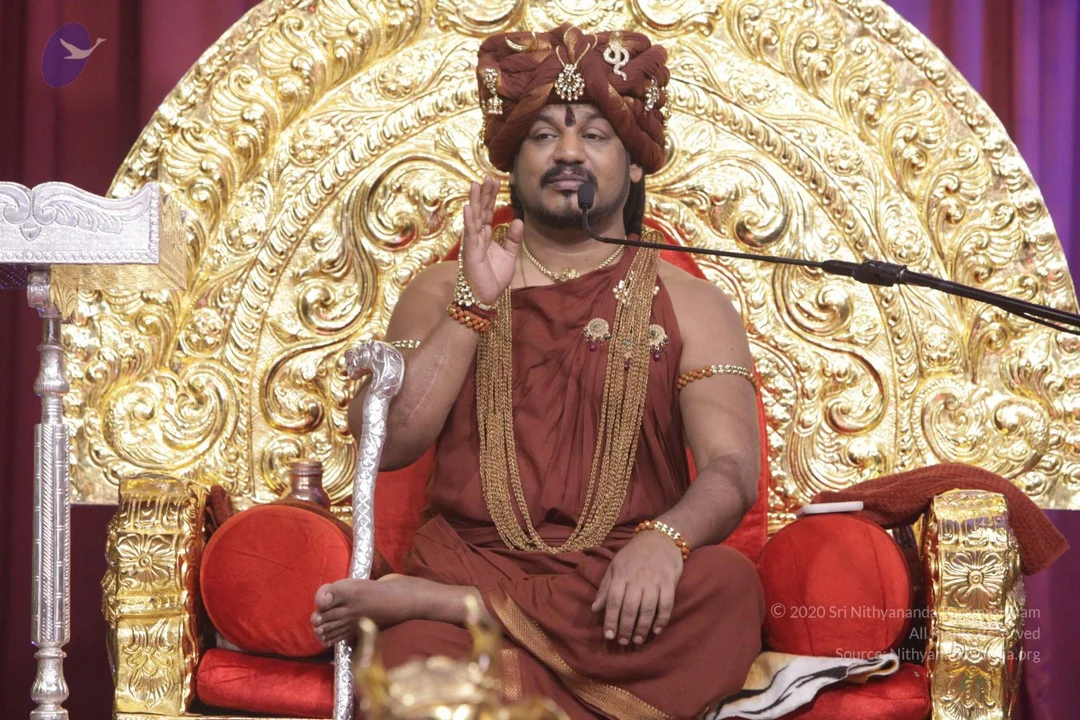
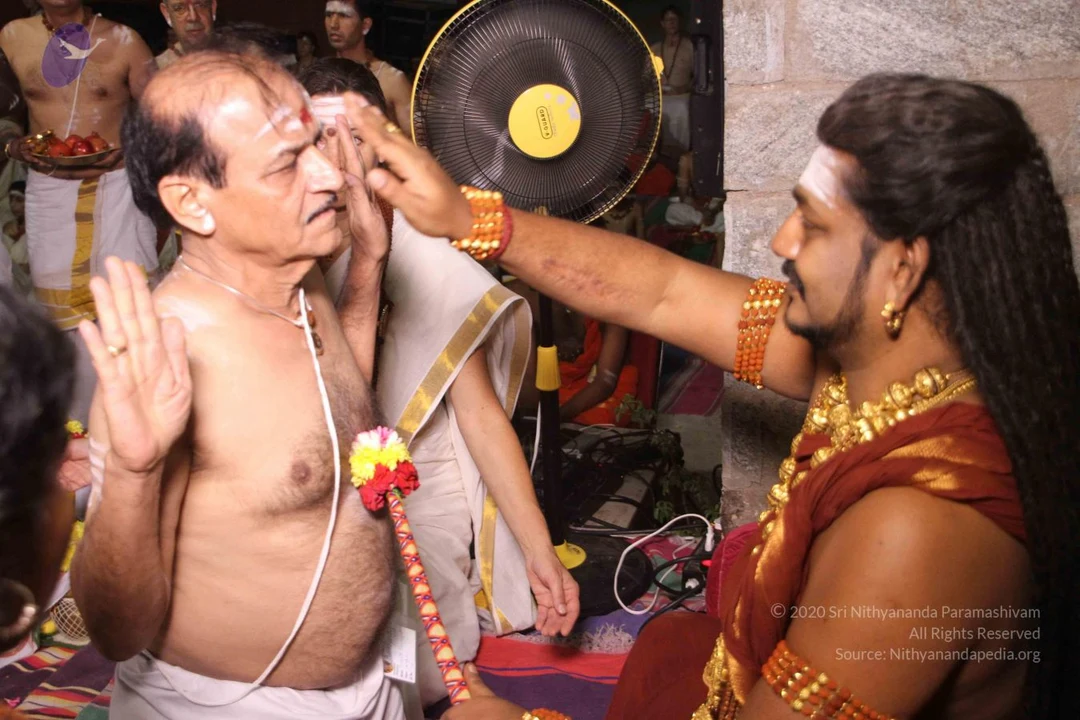
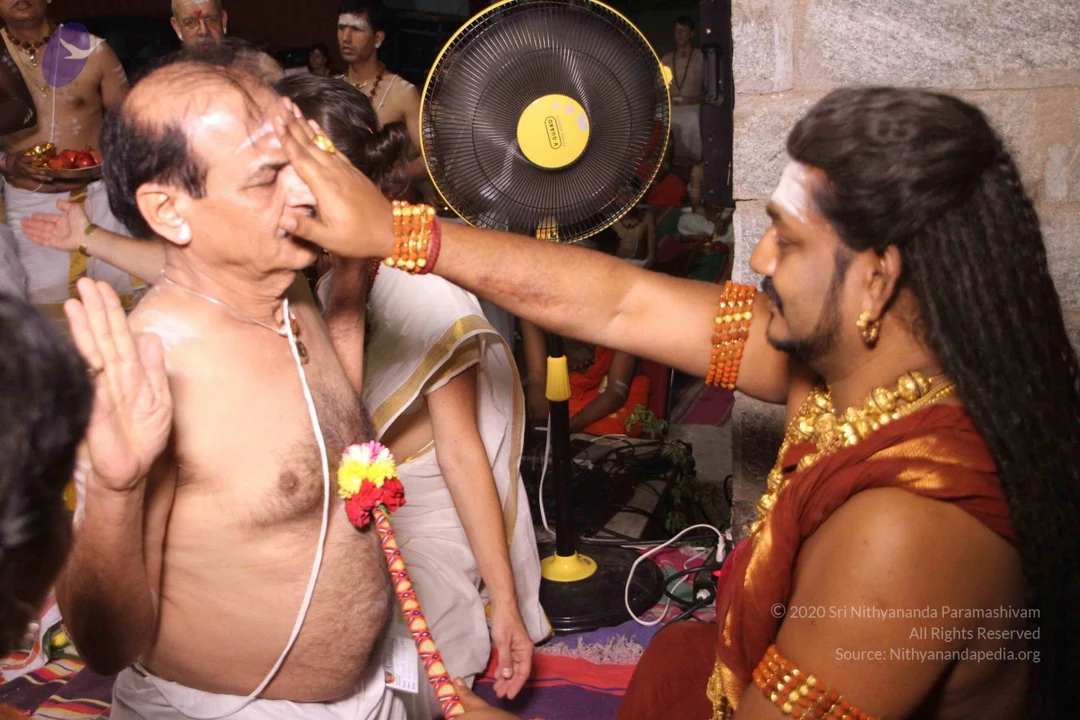
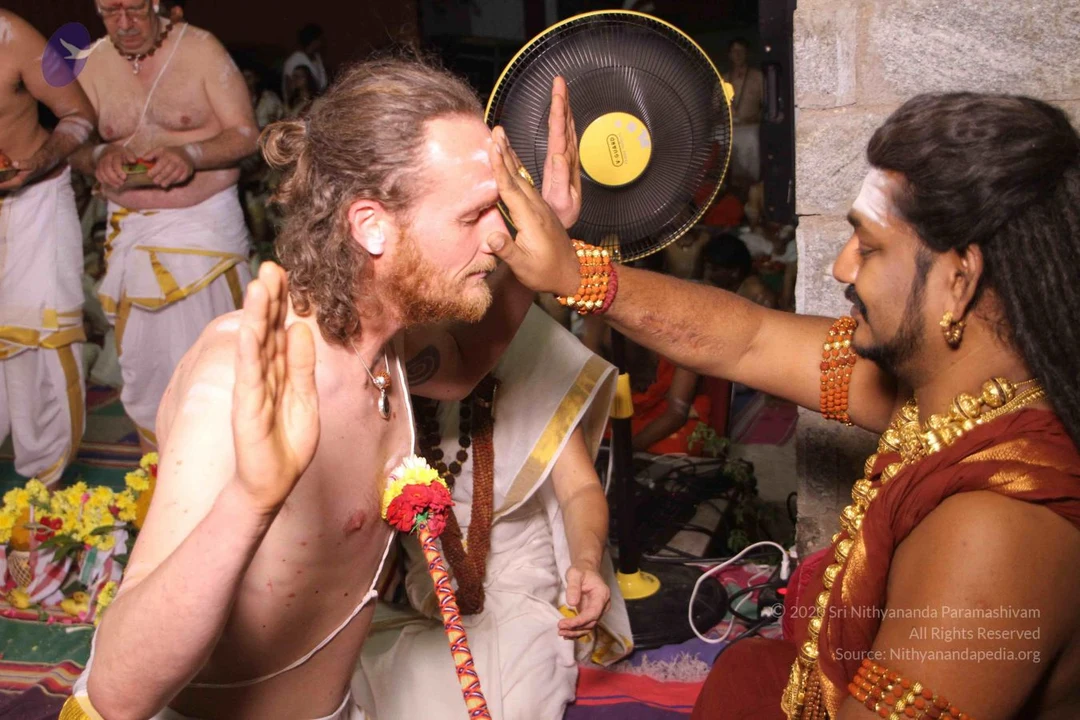
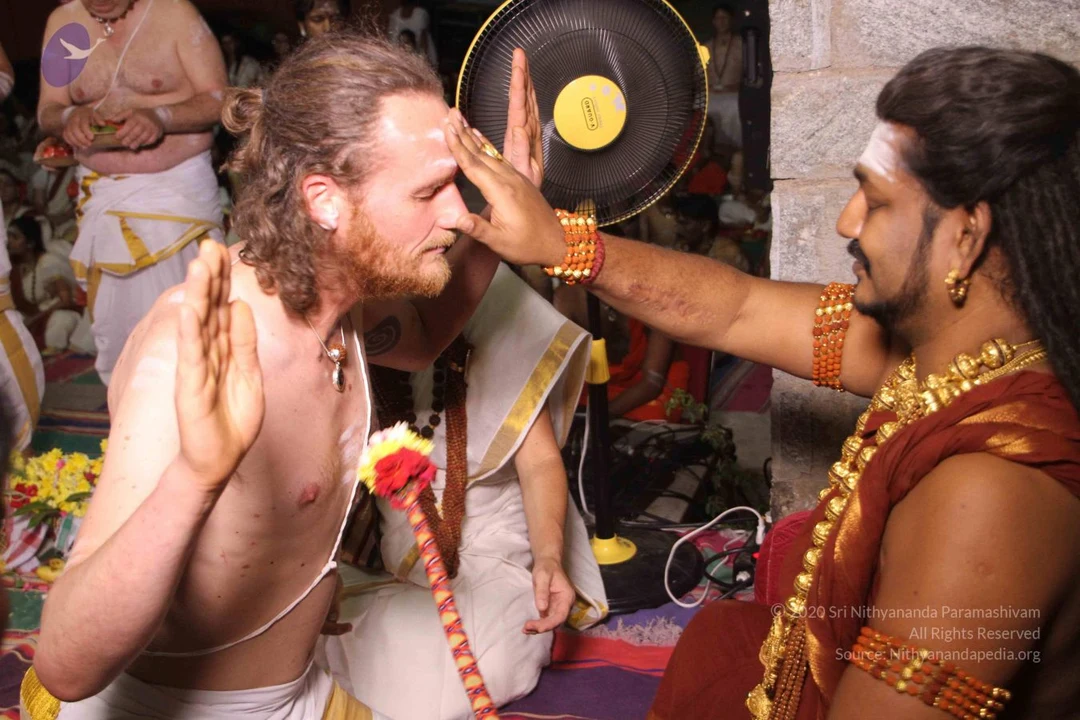
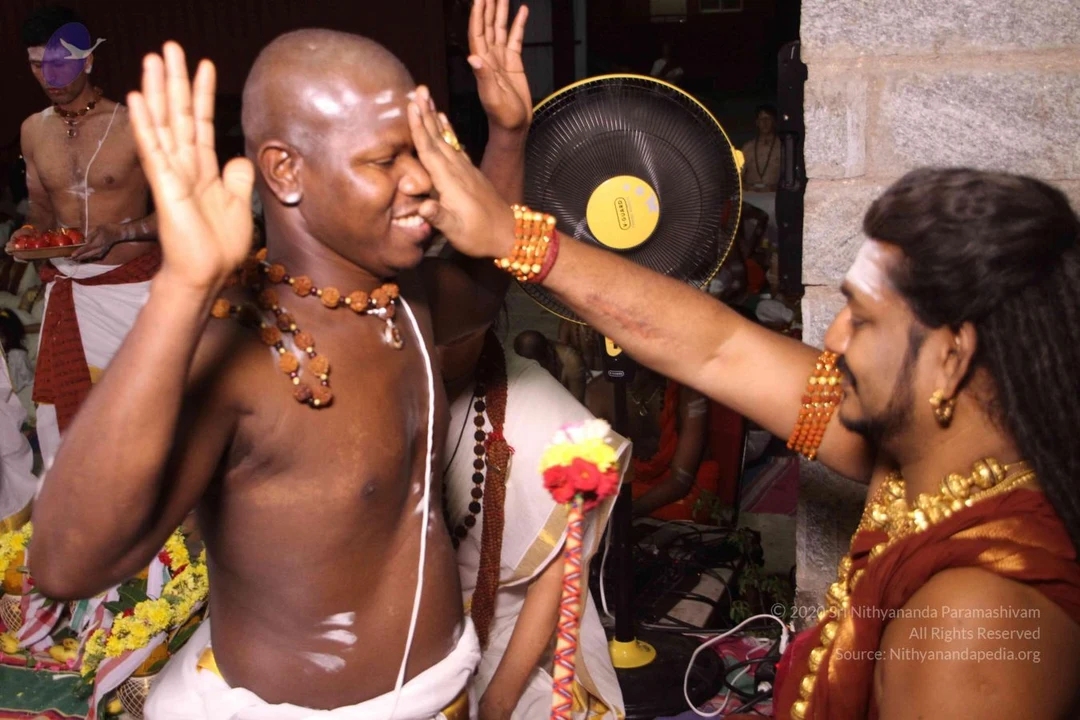
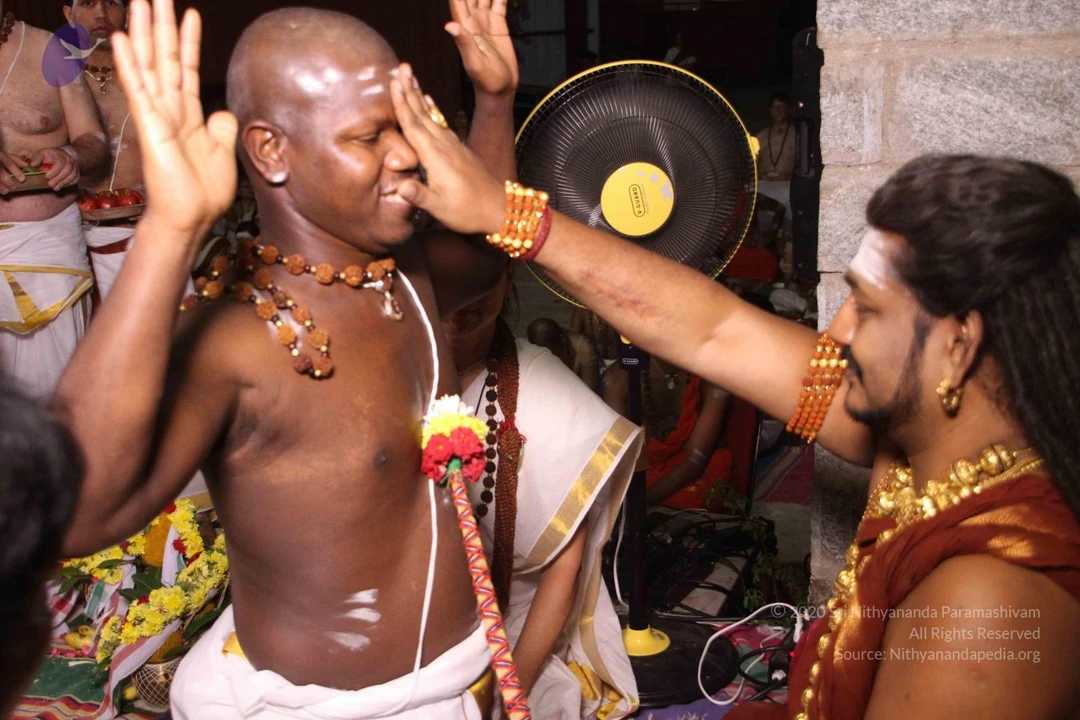
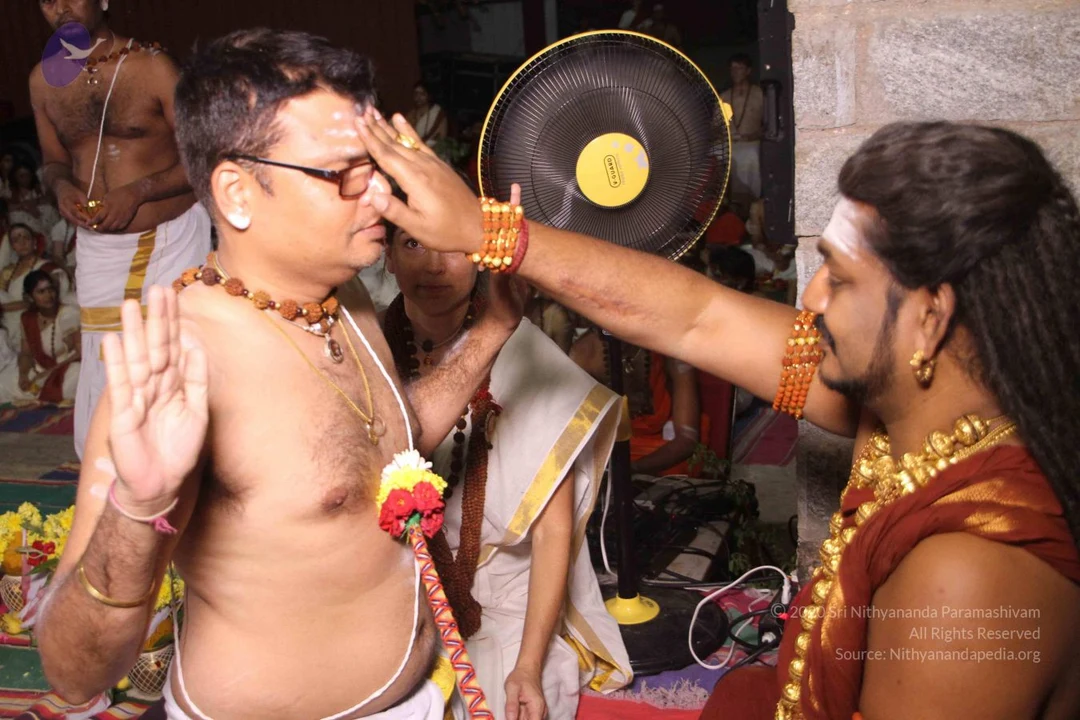
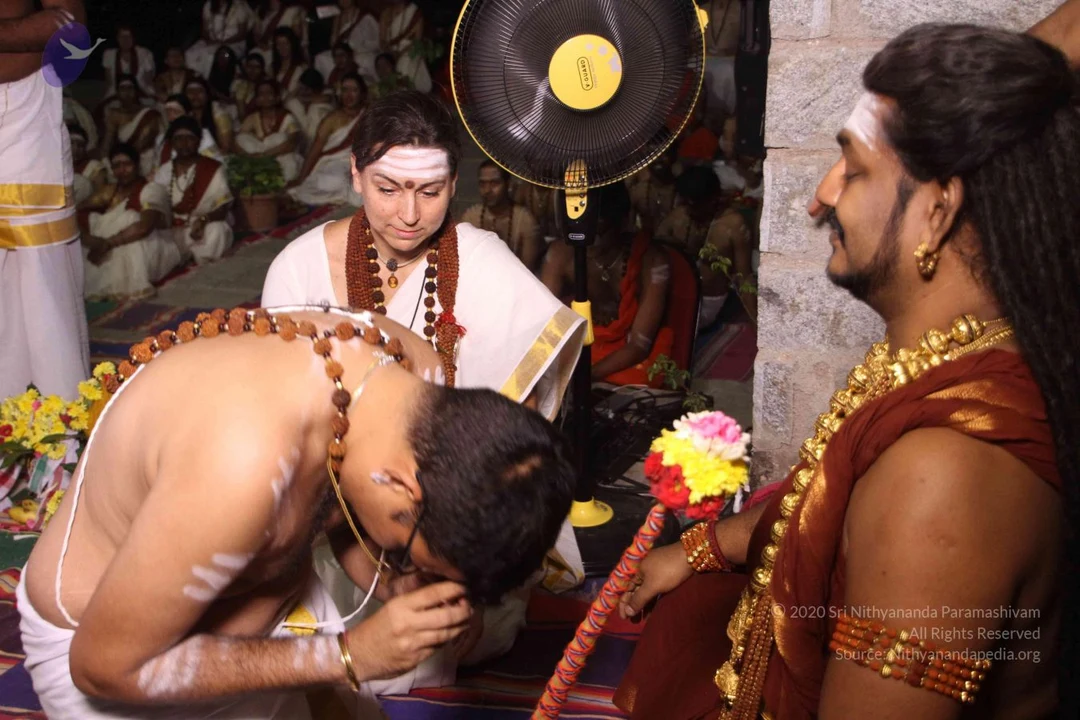
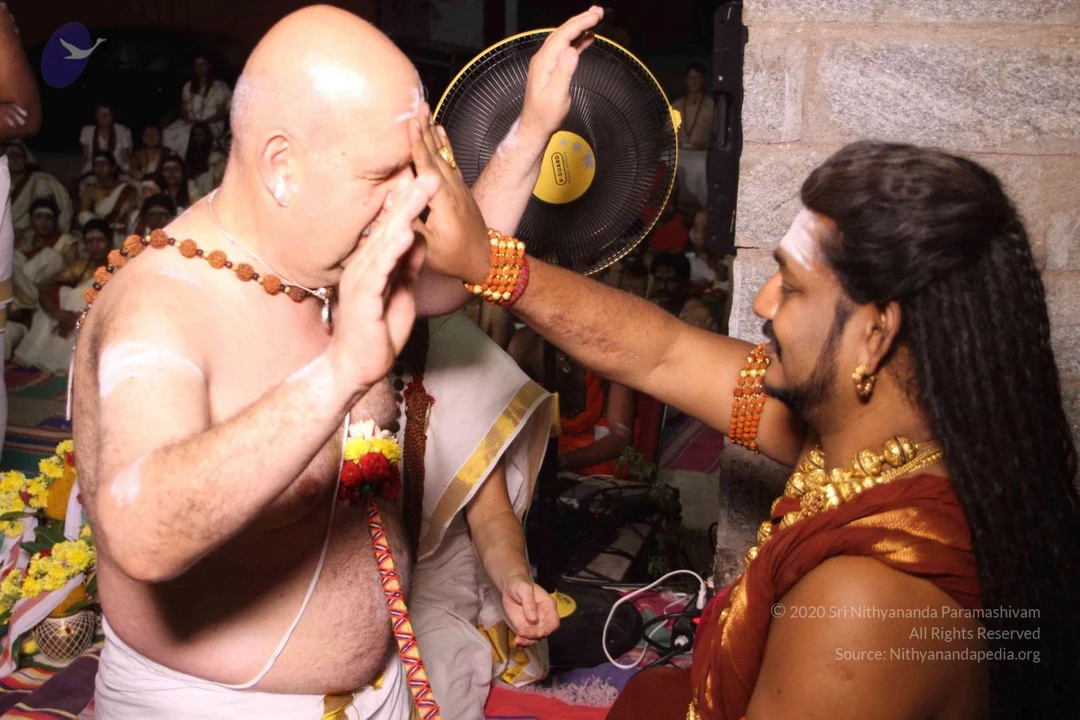
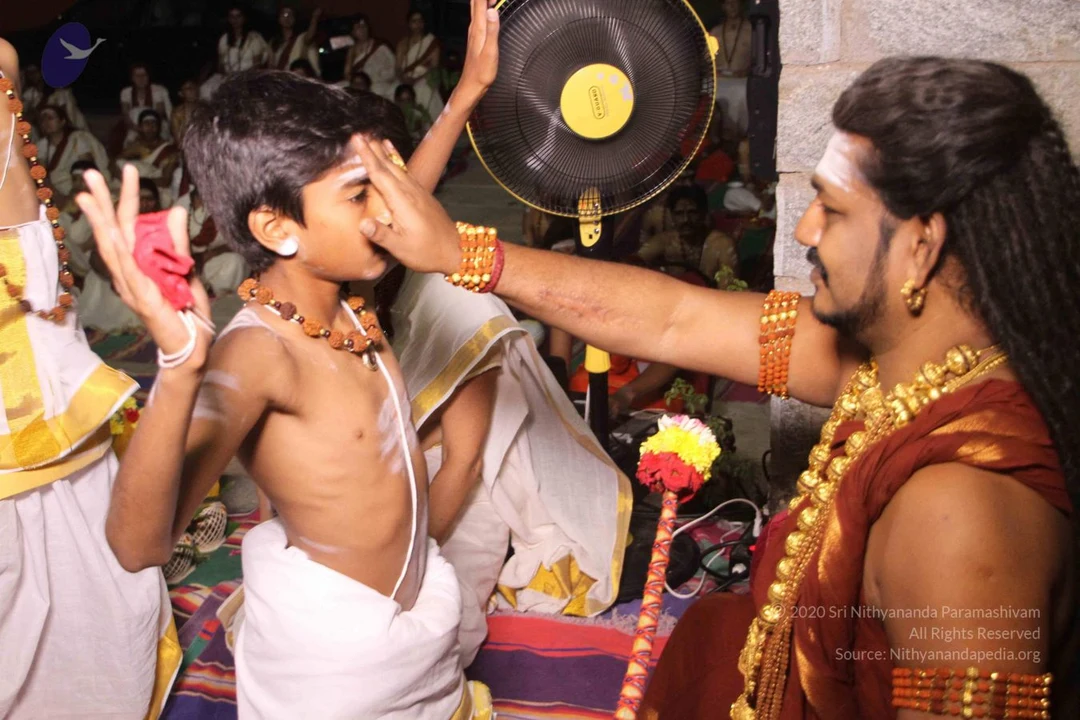
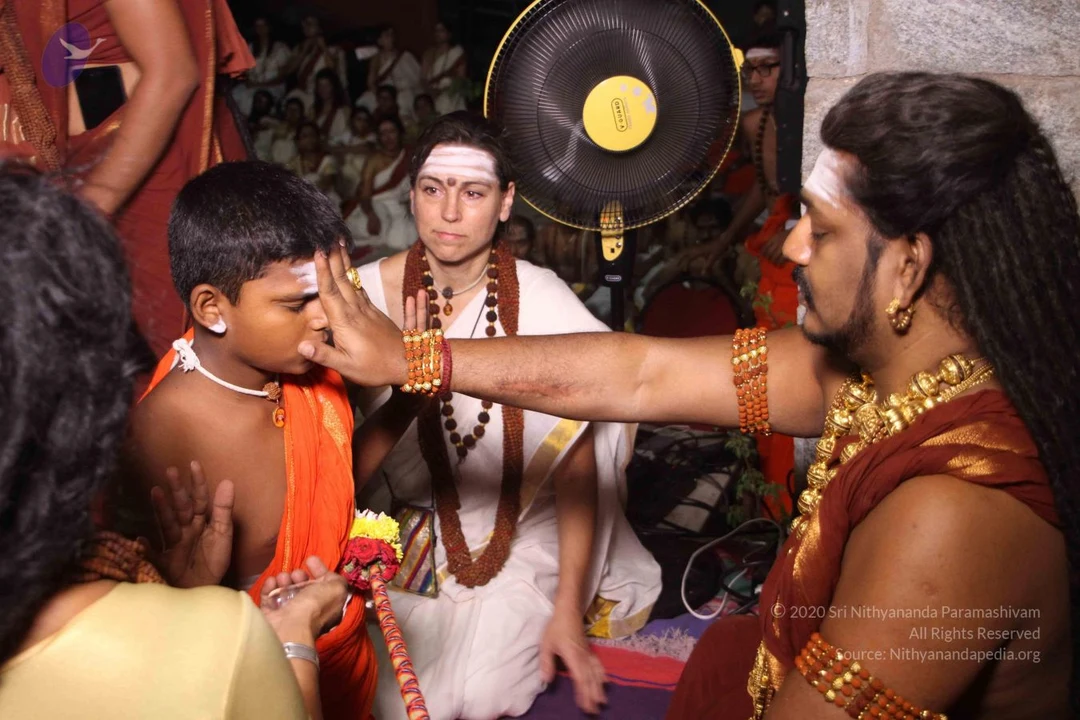
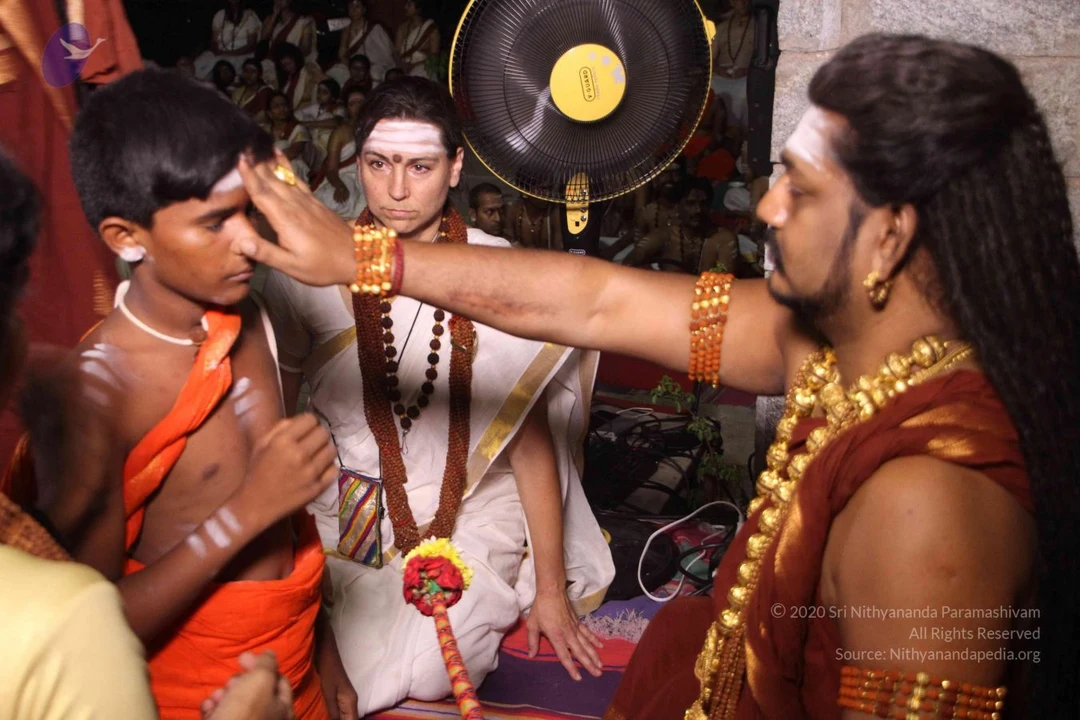
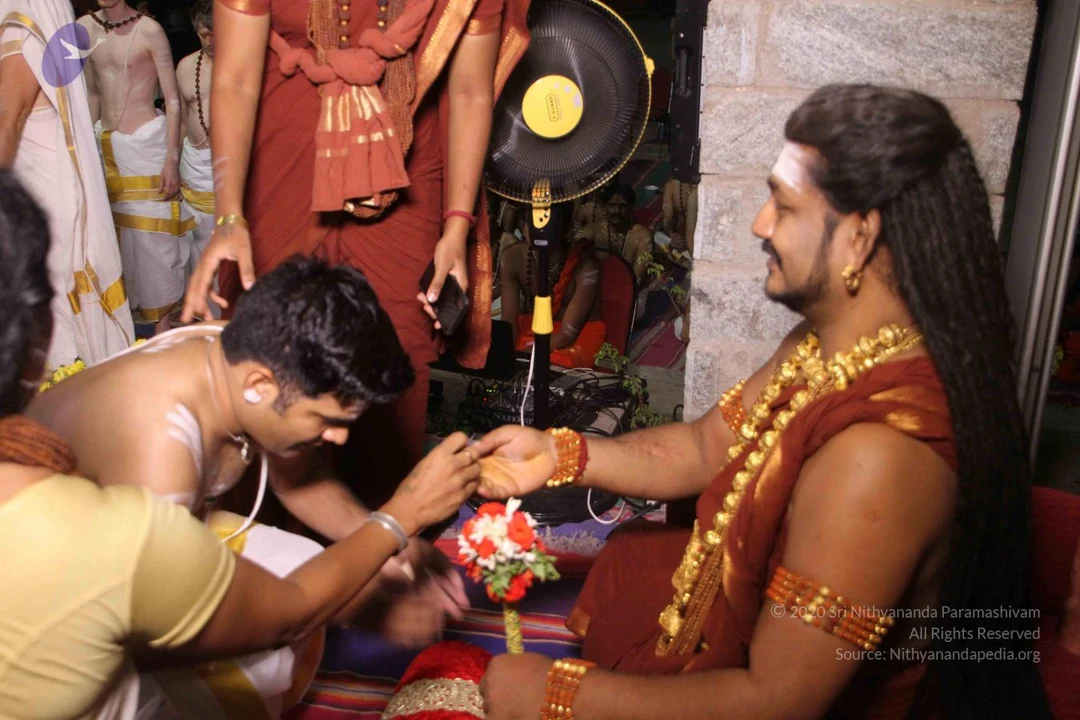
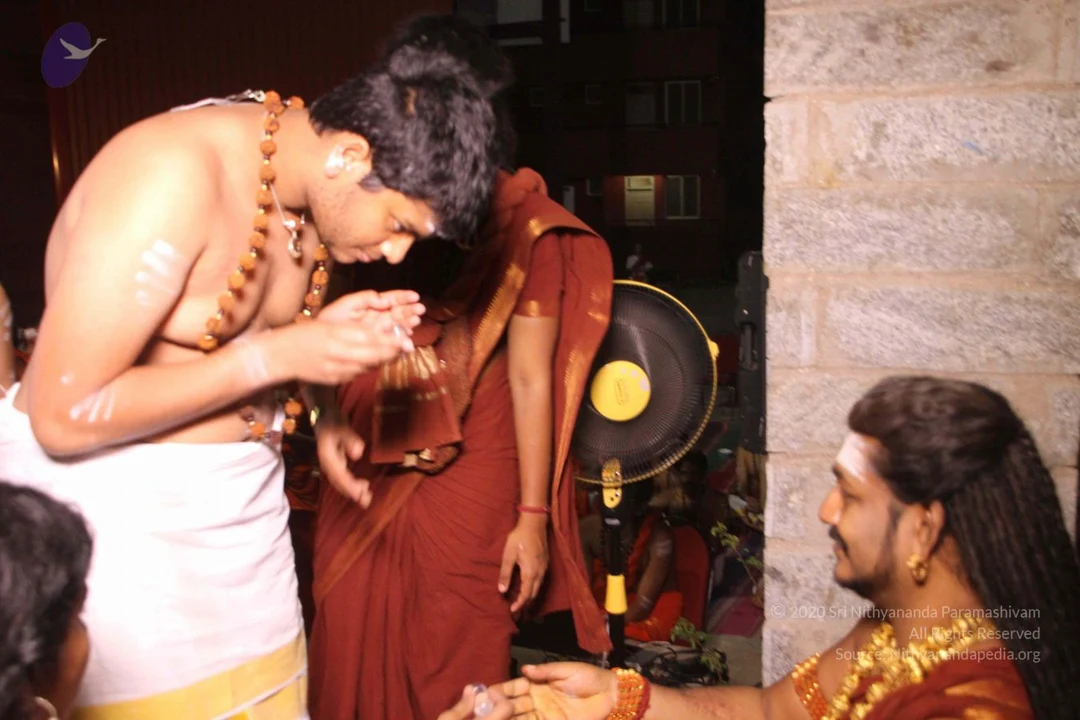
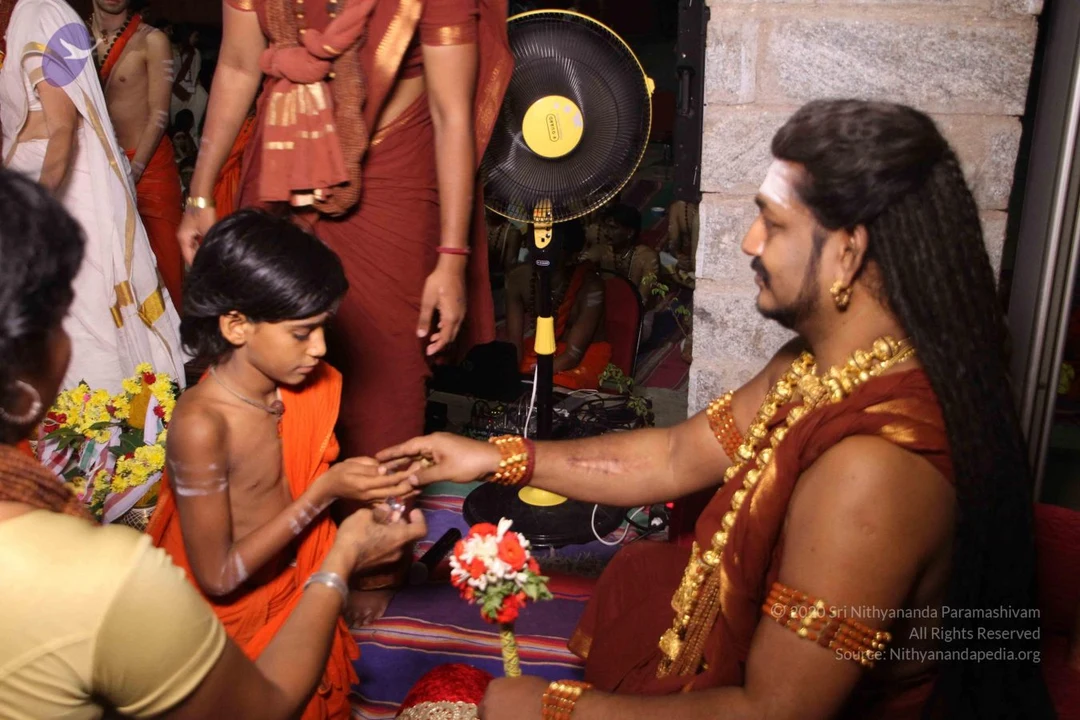
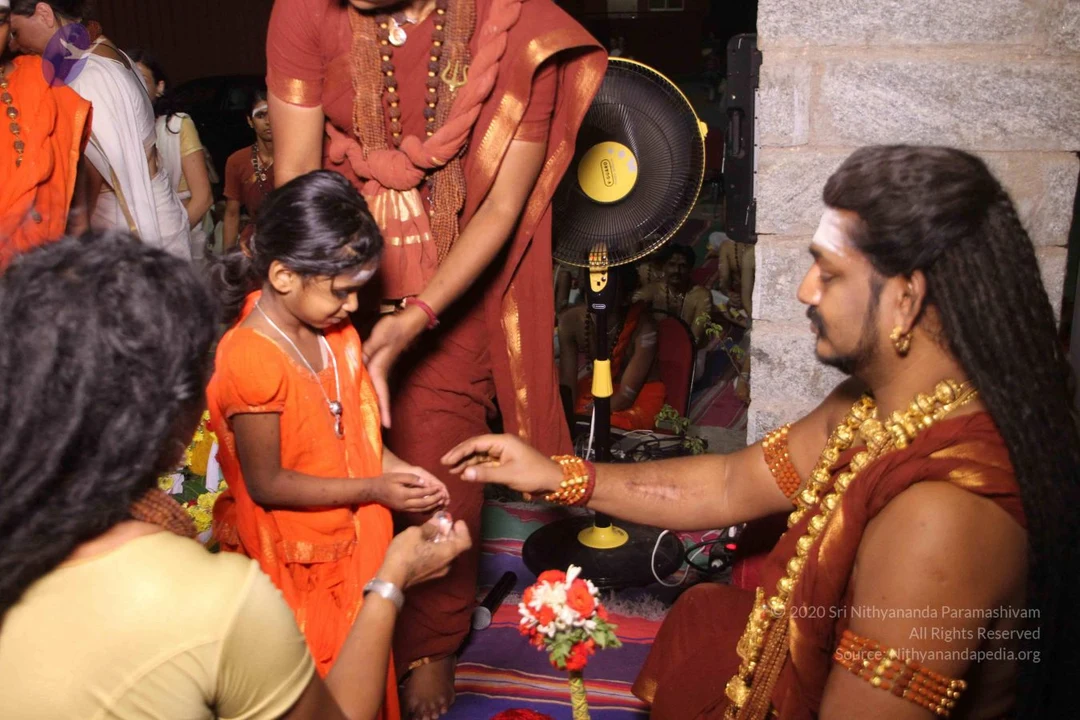
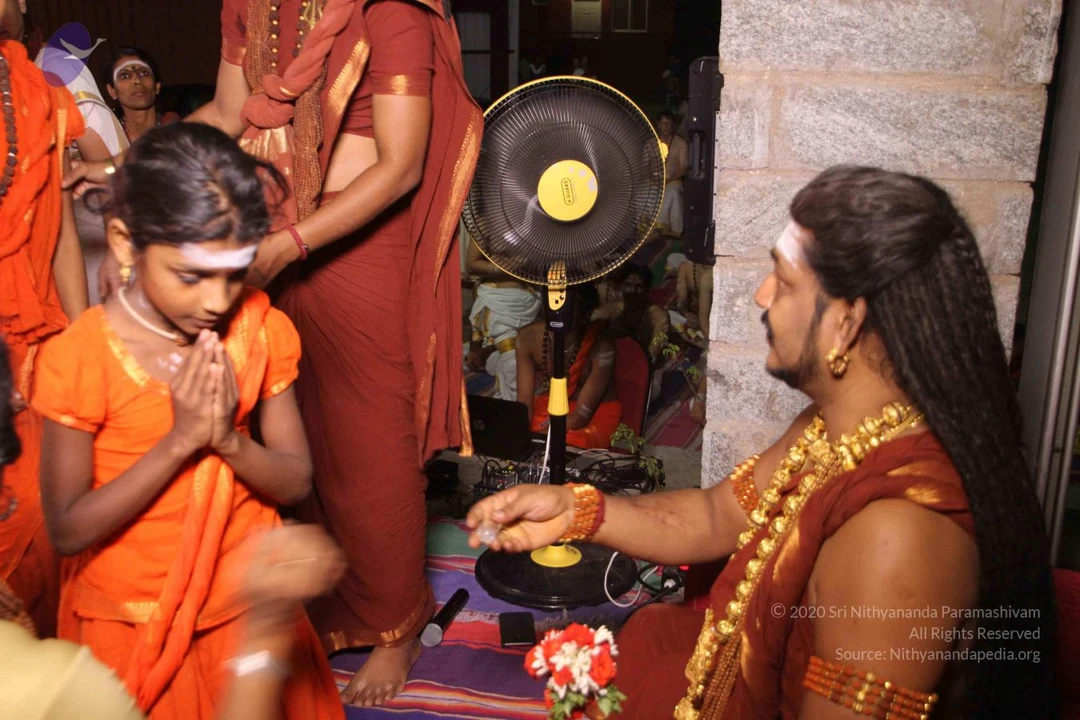
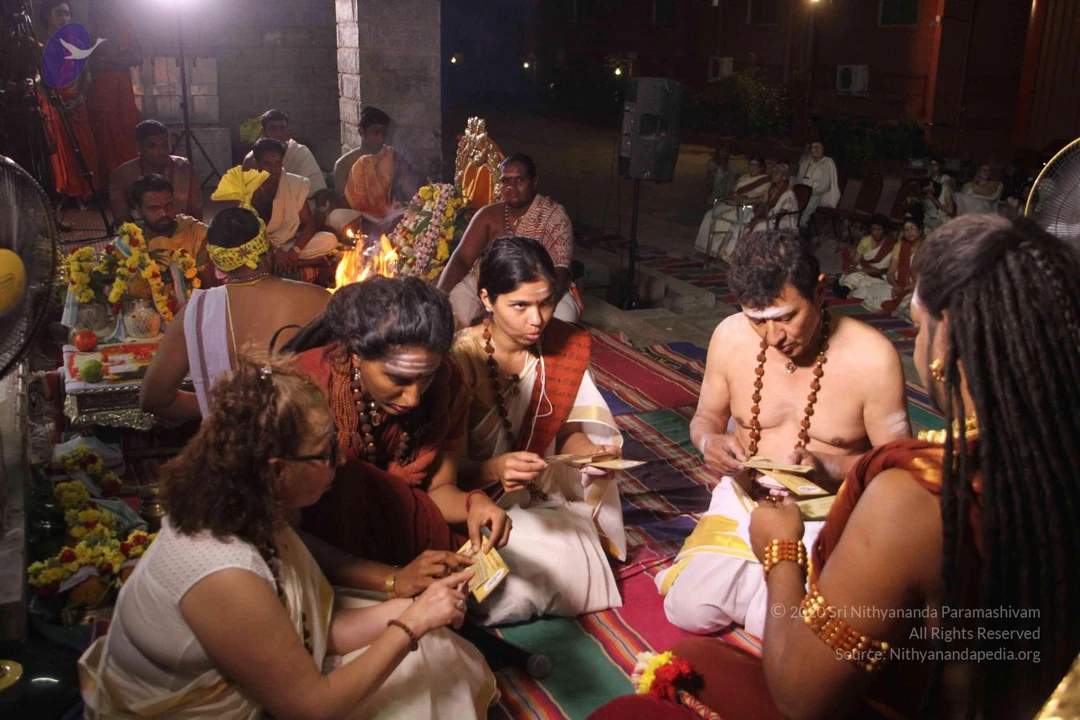
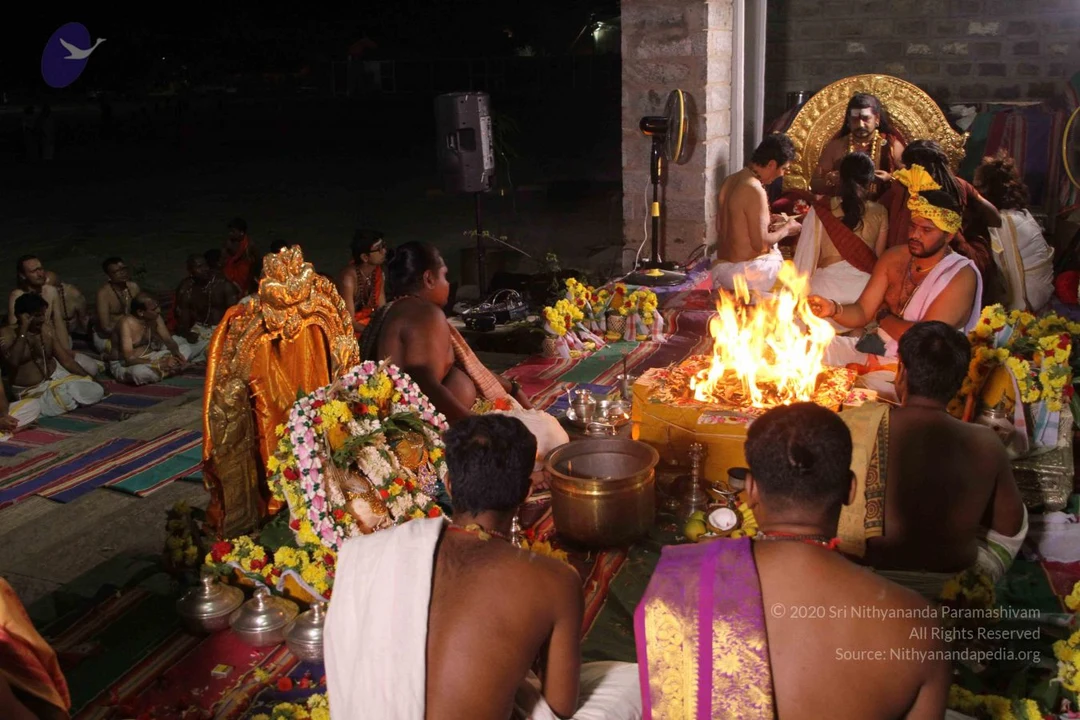
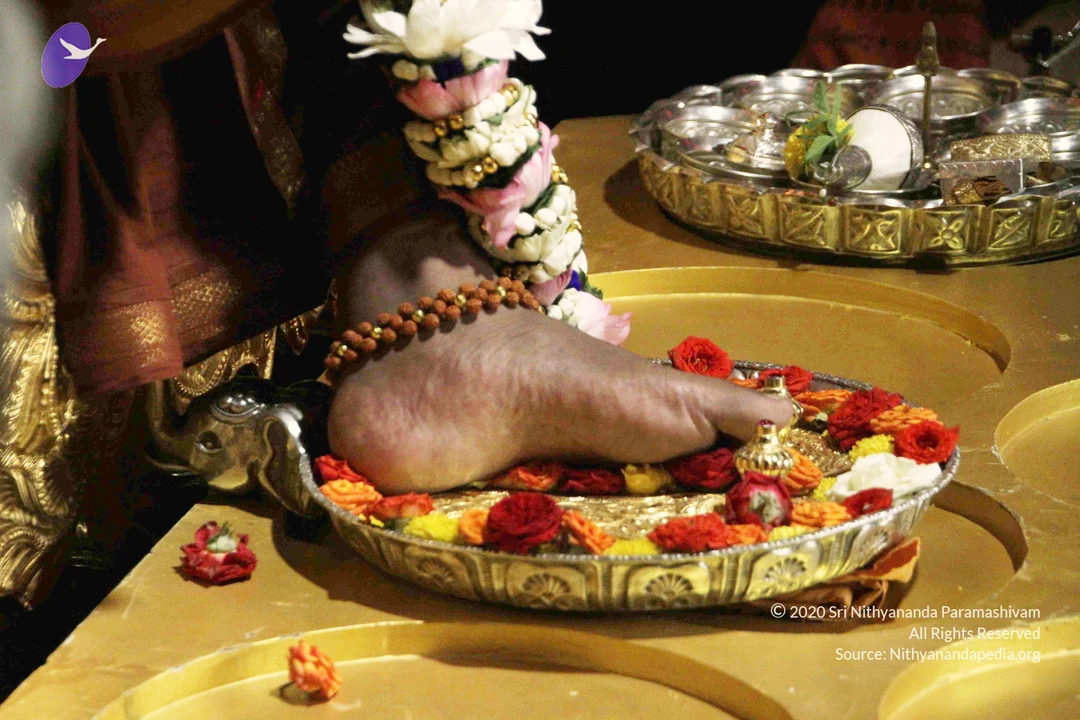
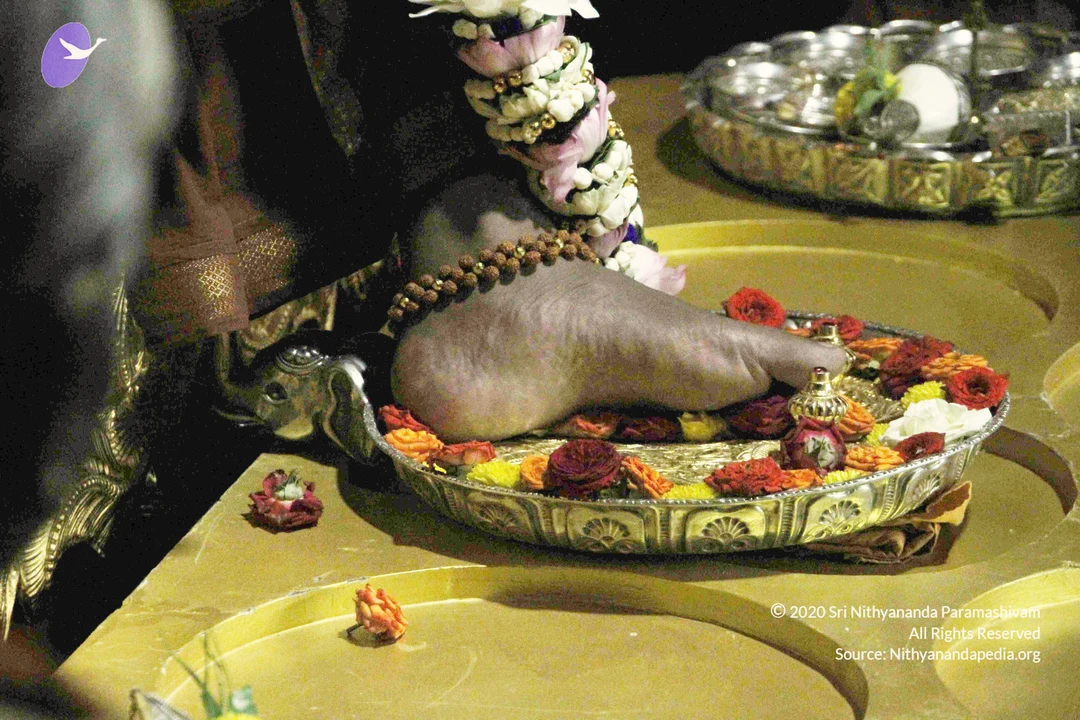
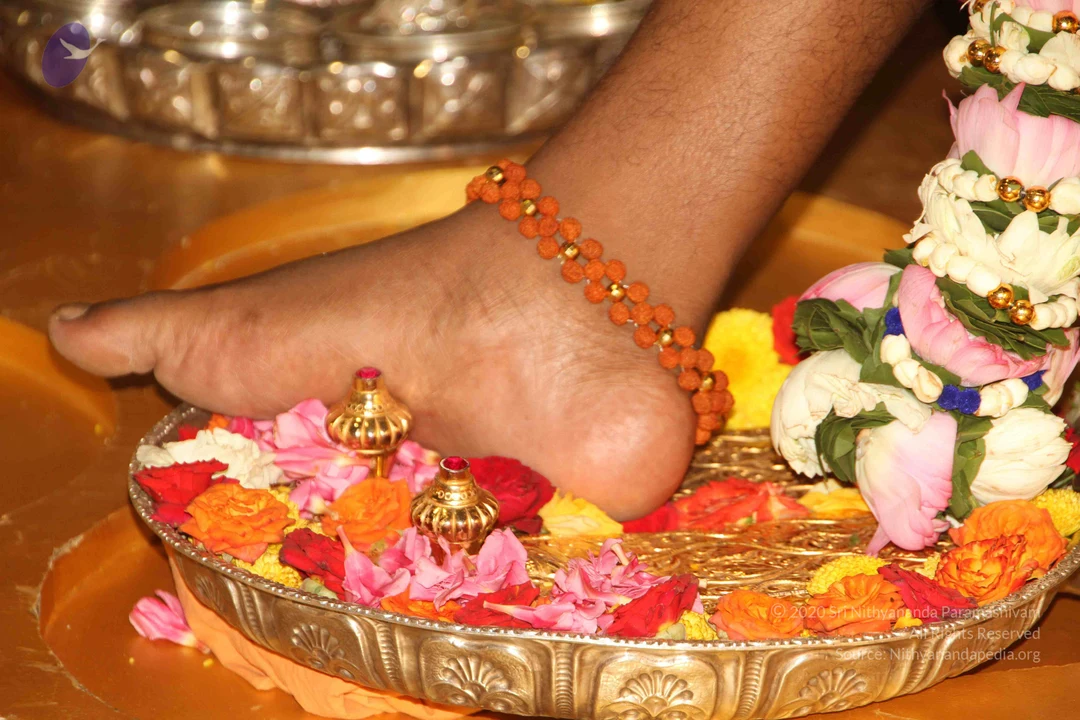
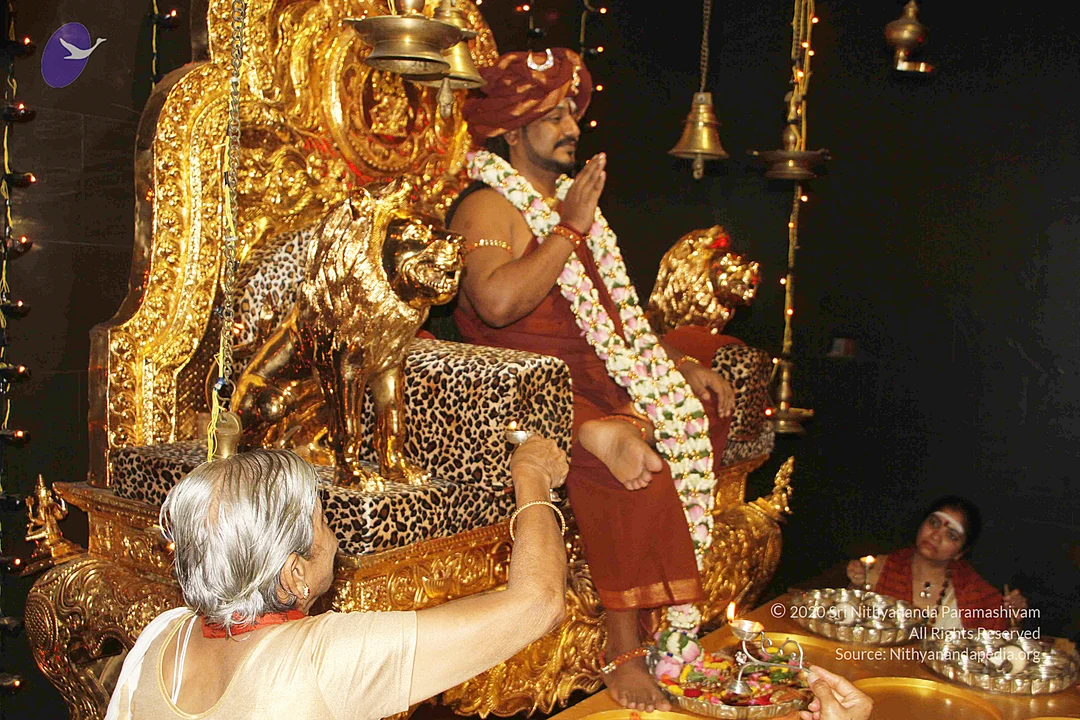
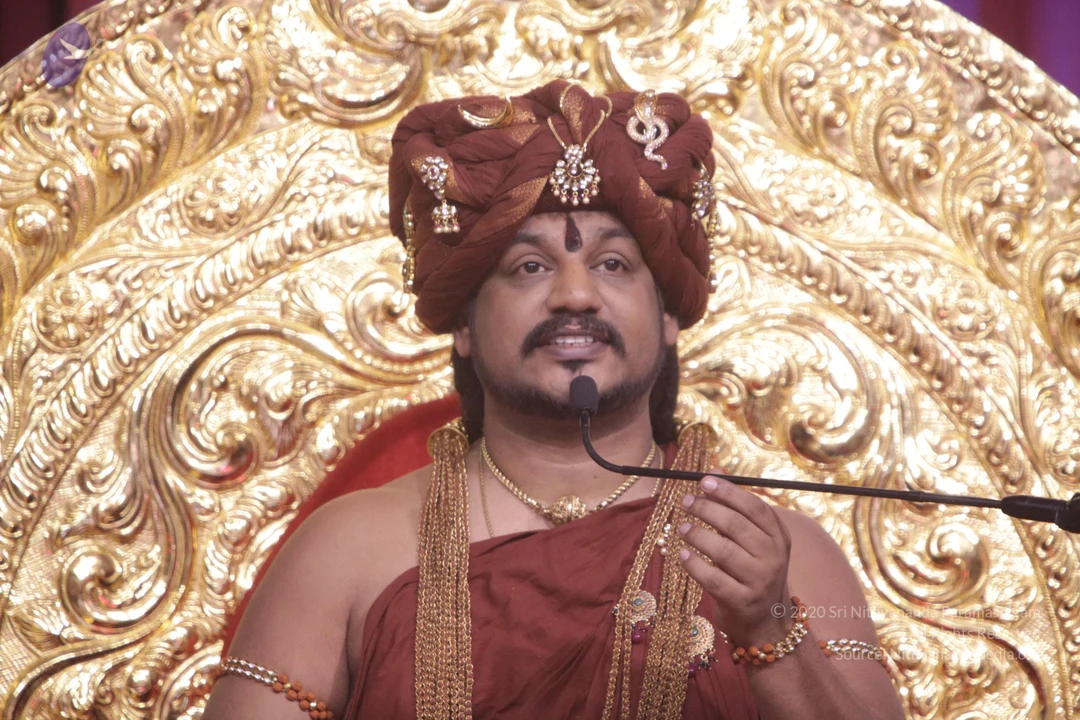
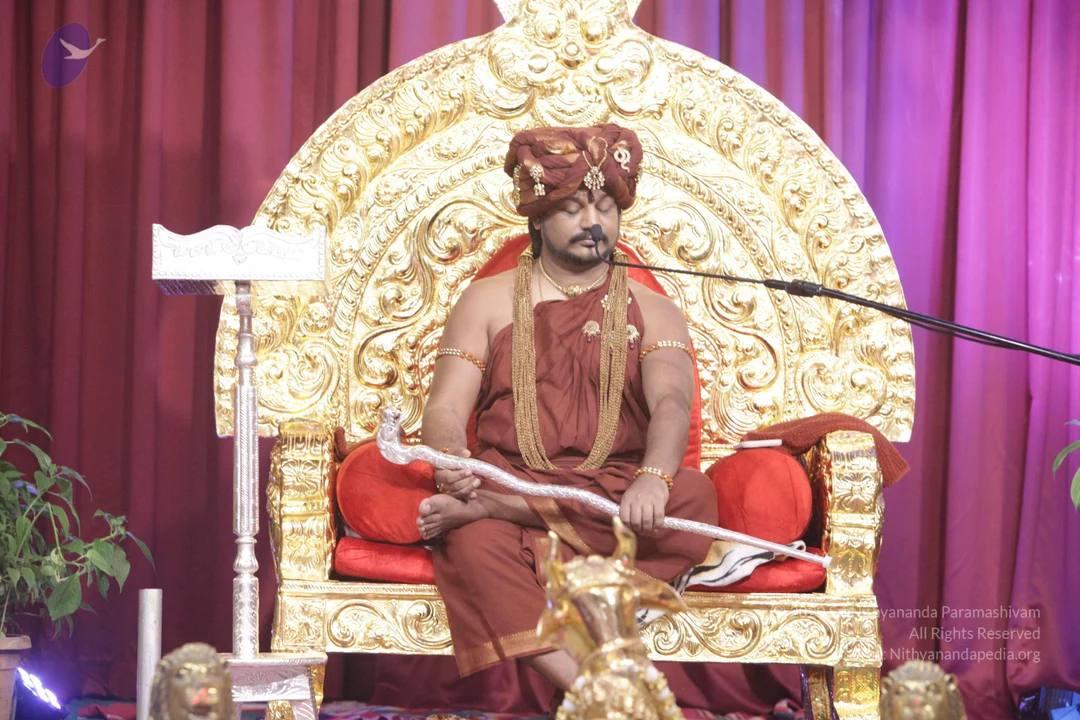
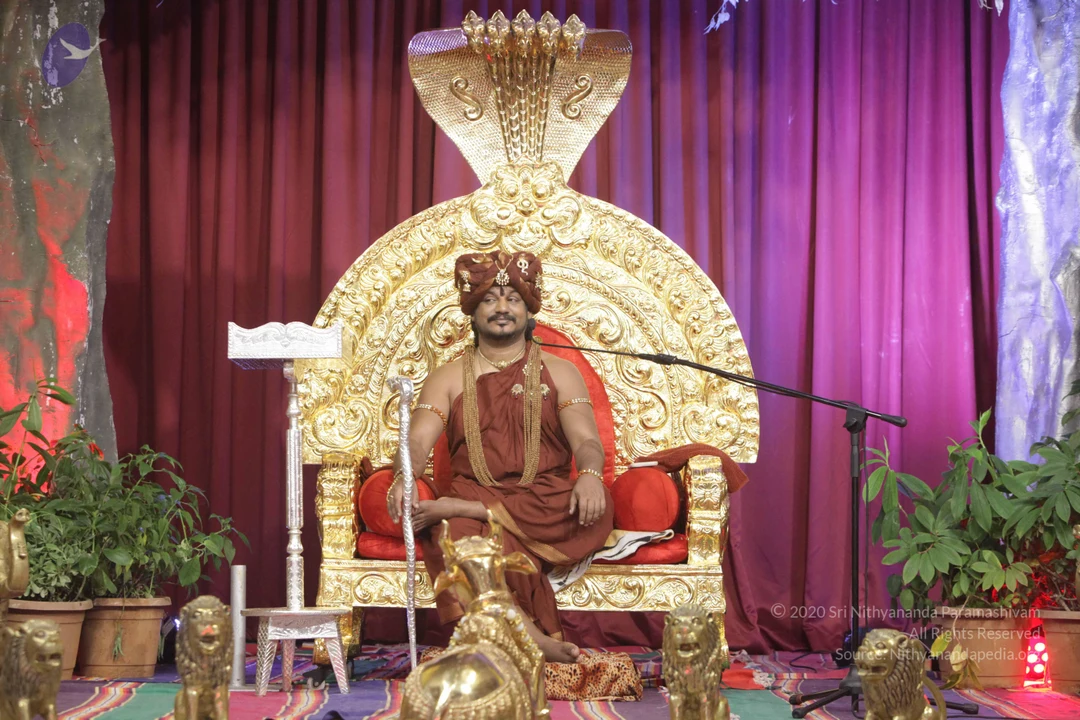
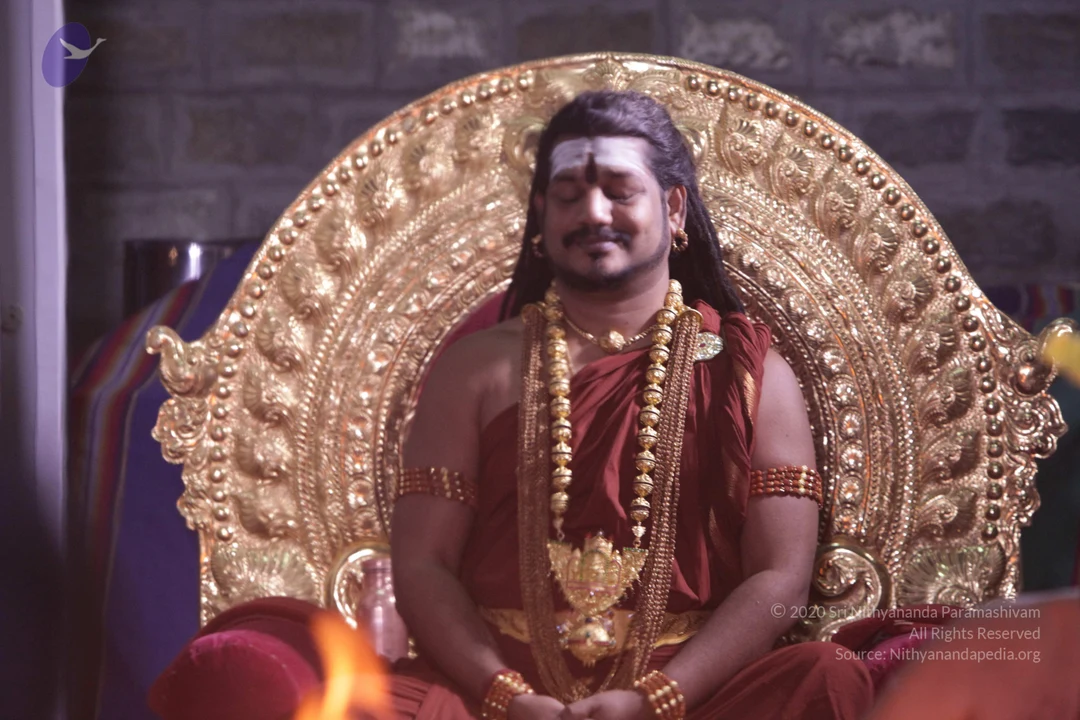
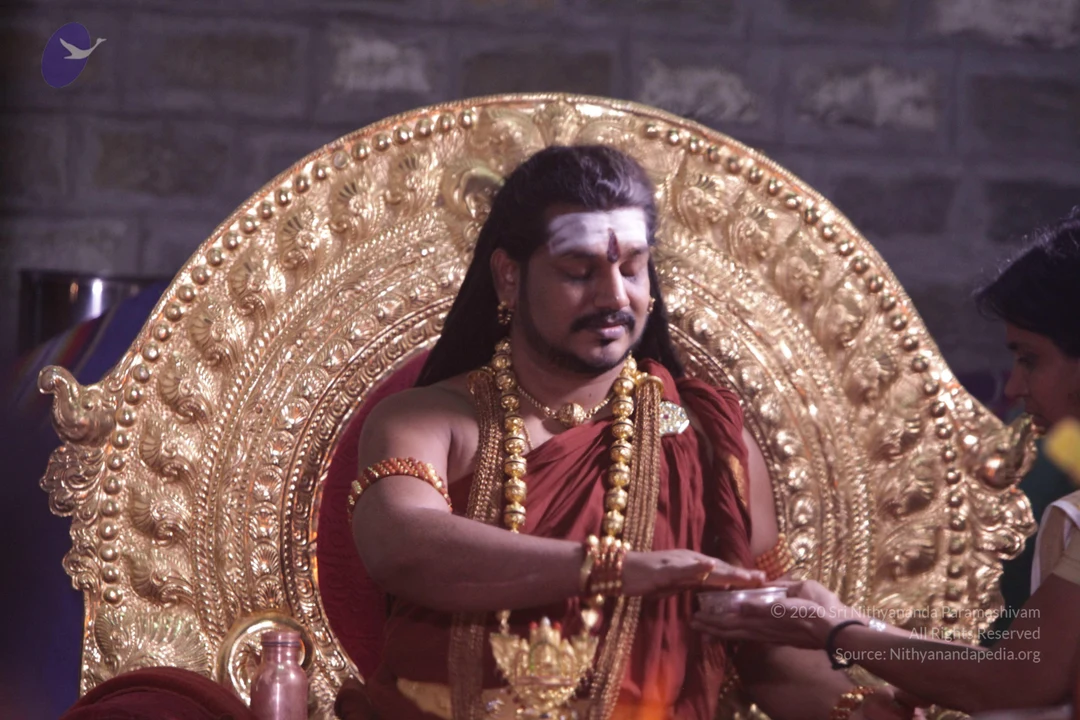
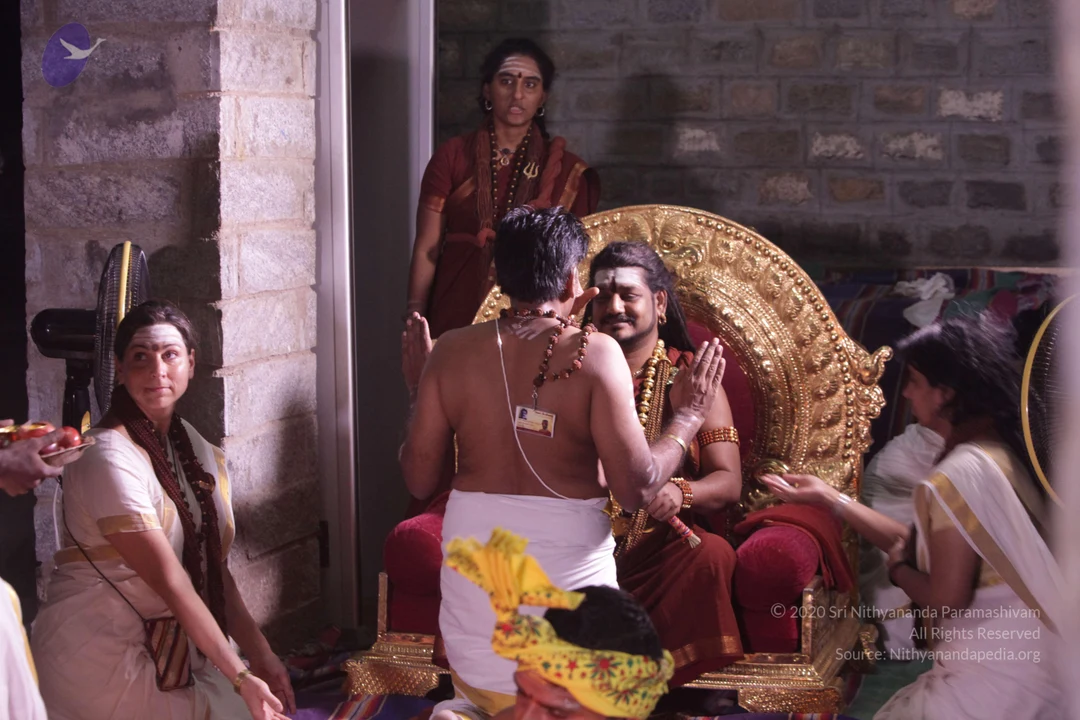
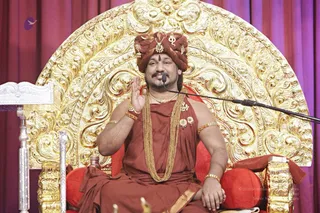
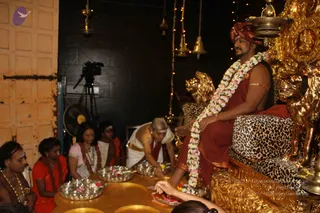
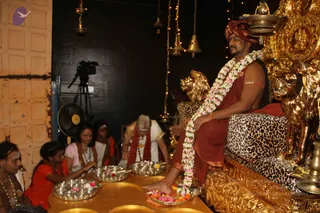
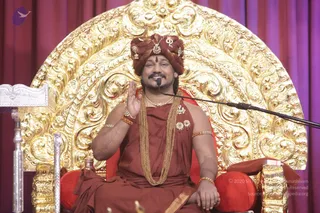
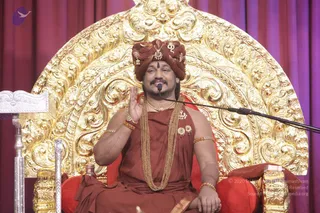
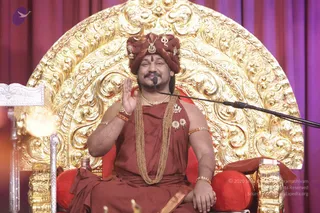
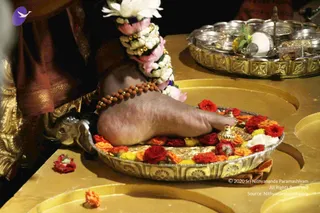
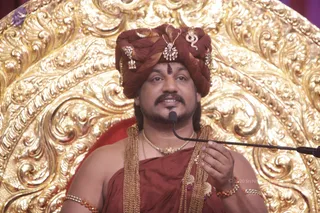
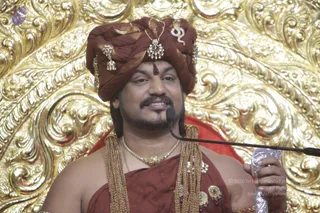
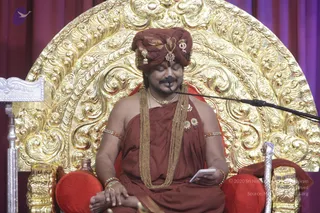
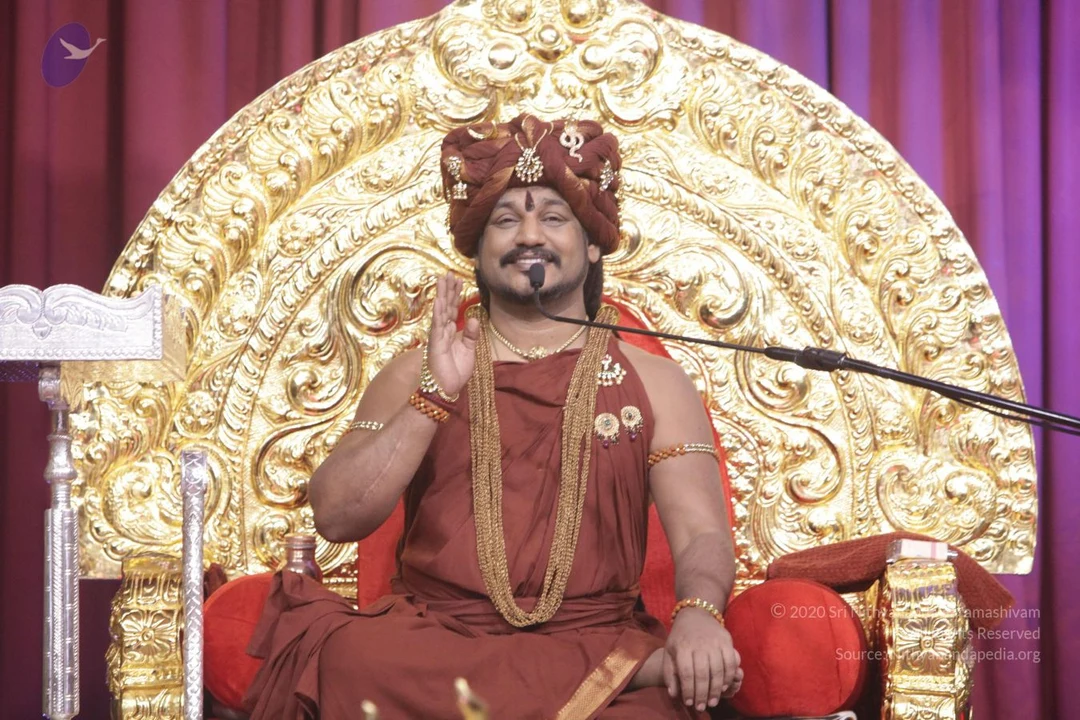
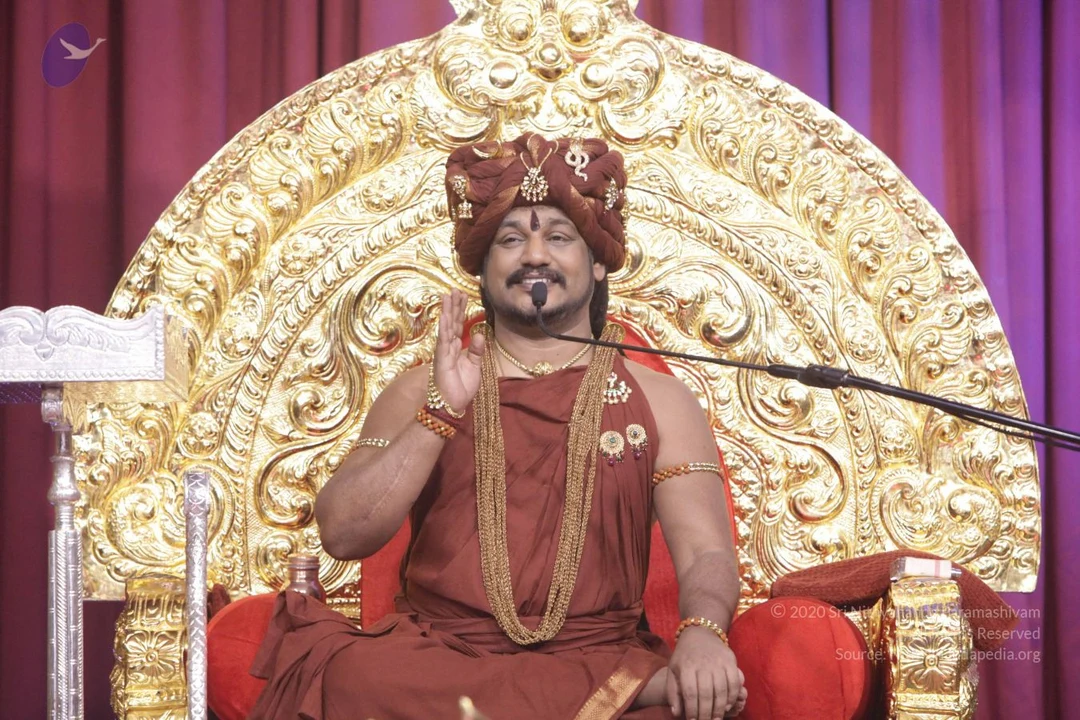
A close view of a bare foot resting on a large ornate brass tray filled with red, orange and yellow marigold petals and red roses, with a small golden ornament and a white flower. The foot belongs to a person wearing a long garland of white flowers, pink lotus blooms and gold beads, and a strand of rudraksha beads wraps the ankle. Behind the tray, a golden decorative edge and a silver elephant-shaped ornament are visible, and a second silver tray with cups and offerings sits on a golden table at the upper right. Scattered petals lie on the table. This appears to be a padapuja, the ritual washing and worship of the feet, with the feet offered on a flower-filled tray.A photograph of a shaved-headed, bare-chested man in a white dhoti with a gold border, wearing rudraksha mala necklaces and a flower garland with a ribbon at his chest, standing with raised hands while a person in orange and saffron clothing with a long swept-back hair, gold ornamental necklace, bangles and earrings places a hand on his forehead. Behind them a yellow-bladed fan, a partially visible seated figure in orange, and a second white-clad man with a rudraksha mala stand near a floral offering of marigolds and red flowers. Another white-clad man in the background holds a tray of fruit. The scene appears to be a blessing or initiation moment during a ritual gathering.A man seated on an ornate gilded throne with a large curved back carved in scrolls and floral motifs, before a purple draped backdrop. He wears a rust-brown turban with a gold ornament, a rust-brown wrap, a long gold bead necklace, a gold chain, gold bangles and an armlet, and a red-brown sash. He raises one hand in a blessing or teaching gesture while speaking into a microphone on a stand. A purple emblem appears in the upper left corner. The appearance cues of the seated speaker (turban, ornate gold necklaces, ceremonial throne) are consistent with Swamiji (probable), who is shown in person giving a discourse.

June 23 2017

Original wiki page
Contents

Title

First Step to Manifesting Powers: Shaktipada, Connecting to the Cosmic Source

Description

In this beautiful discourse from 23 June, 2017, His Holiness Paramahamsa Sri Nithyananda Swamiji explains how to manifest the Powers of Sadashiva by living in a state of Oneness with Him.

Link to Video:

VideoAudio

Transcript:

(0:23)

nithyānandeśvara sadāshiva samārambhām nithyānandeśvari adi shakti madhyamām | asmat āchārya paryantām vande guru paramparām ||

(0:50)

I welcome all of you with My love and respects. I welcome all the devotees, disciples, Samajis, Satsangis, Sri Mahants, Mahants, Thanedar, Kothari, Visitors, Viewers, sitting with us all over the world, through Nithyananda TV, Facebook Live on 100s of Aadheenavasis channels, YouTube Live and through 2-way Video Conferencing, having Nayana Deeksha. Cities sitting with us….a long list, so I welcome all of you with My love and respects.

(1:34)

Yes…from today till Guru Purnima, in Aadheenam Chalo Series, I’ll expand various nuances, the technical details of power manifestation. Anybody who has done Inner Awakening from 2008; I think 2008 I started Inner Awakening. From 2008 till this 43rd Inner Awakening which is going on now, anybody who has done any one Inner Awakening, if you are interested in manifesting next level of powers, I’ll be offering 7 days free program for you all!!! For all Inner Awakening Graduates. All the Inner Awakening Graduates, if you have done any one Inner Awakening or Shivoham or Nithyanandoham or Sadāshivoham, any Inner Awakening Program in this 43 Inner Awakening, you are welcome to join 1 week program, from July 1st to July 7th training – Shaktipata – to make you manifest next levels of powers. If you have already finished Third Eye, if you are able to manifest all the powers of Third Eye, you’ll be initiated into length, breadth, depth - Shaktipata for that. If you already able to manifest Third Eye and length, breadth, depth, then Asta Kanma. Next level, next level of power manifestation initiation from July 1st to 7. It’s only for Inner Awakening Grads; only for Inner Awakening Grads. From all over the world, you can come and participate. We also setting a world record on power manifestation on July 8th. July 9th is Guru Purnima. So have 7 days training, July 1st to 7th and then manifest powers and be part of the July 8th world record. And then July 9th - Guru Purnima.

(4:55)

Of course one thing, in power manifestation, only we have to break our record, no one!!!….because still now neither anybody has set a record, nor anybody is going to set a record or compete with us; it is just our own path. We set a record and we break the record and then we set a record and we break record, that’s all J It is no competition zone. No competition zone. So, we set a record on Yoga Day, we will break it on Guru Purnima Day. Again we set a record on Guru Purnima Day, we will break it on Vijayadashami Day and then again we set one more record on Vijayadashami Day and we will break it on My birthday, so…...this is the way it’s going to be going on. So, this July 8th we will set a next record on power manifestation.

(6:04)

So, from today, I’ll teach the nuances, means the deeper understandings you need to cognize and the Shaktipata you need to have for power manifestation. So July 1st to 7th, all of you are welcome to come and be here, have direct Shaktipata training. All Inner Awakening Grads, are welcome to come and attend this power manifestation training. And Guru Purnima Day, means one day before Guru Purnima, July 8th, we will be setting a world record and July 9th we will have Guru Purnima celebration.

I am looking at setting a world record of various powers manifestation. First, a team will manifest powers of Third Eye - blindfold reading, remote vision and body scanning and then a set of participants will manifest, the powers of length, then breadth, then depth, then consciousness over the matter, various powers. Then, materialization, teleportation, all this. I am looking at, at least 1008 participants will manifest various powers.

Come and be part of this grand happening. Come and be part of this grand happening. So from today, Aadheenavasis also start preparing for this. Preparing to manifest powers - one thing, and preparing the Campus to host this program. Preparing the Campus, to host this program, by cleaning it up, receiving plans and everything.

(9:02)

So, the first thing, power manifestation needs is Shaktipata. Shaktipata is, connecting with enlightened space, Chidambara - a conscious space. In the conscious space, nothing happens as a compulsive thought pattern or unconscious flow current. Listen carefully.

Thought or mood or ideas or incompletions, nothing moves unconsciously…. in the conscious inner space – Chidambara. If something is going on unconsciously in you without your knowledge, then it is not Chidambara. If it is pure Chidambara, it moves consciously; nothing moves unconsciously. So, understand, connecting with the Chidambara - who already achieved that space of Sadāshivatva, who is already manifesting Sadāshiva, connecting with that Being space, is what I call Shaktipata. The first step for manifesting Shaktis is Shaktipata.

(11:03)

One funny thing about Shaktipata is, you can’t speak - you can only do it. It is like how many hours you hear about swimming, it will not help you. You need to get into the water and start swimming. You need to get into the water and start the movements. Shaktipata, is also same, you need to get into that space and start living. Getting into that space and start living, in that high energy and enthusiasm, in the high spirit; maybe I will give one Shaktipata now, then try to expand.

Let Me start with this initiation, manifesting Shaktis, special program till Guru Purnima. You can start manifesting Shaktis, practicing sessions, through the in charge of Yogic Powers, Yogic Sciences team - Ma Mahayoga. There will be regular sessions and classes. So with this…...anybody wants to attend this manifesting Shaktis program, special program, from July1st to 9th, because 1stto 7th training, then 8th setting the world record and 9th Guru Purnima. You are welcome to come and be in Bengaluru Aadheenam and enjoy this free program, which is exclusively for Inner Awakening Graduates.

If you want to register, please send an email and register. Register in tinyurl.com/manifestshaktis.

(13:55)

So with this, I bless you all, let’s all radiate with Integrity, Authenticity, Responsibility, Enriching, Causing, Living Shuddhadvaita Saivam, Sadāshivoham, the Eternal Bliss - Nithyananda.

Thank you.

Be Blissful.

(14:19)

Photos:
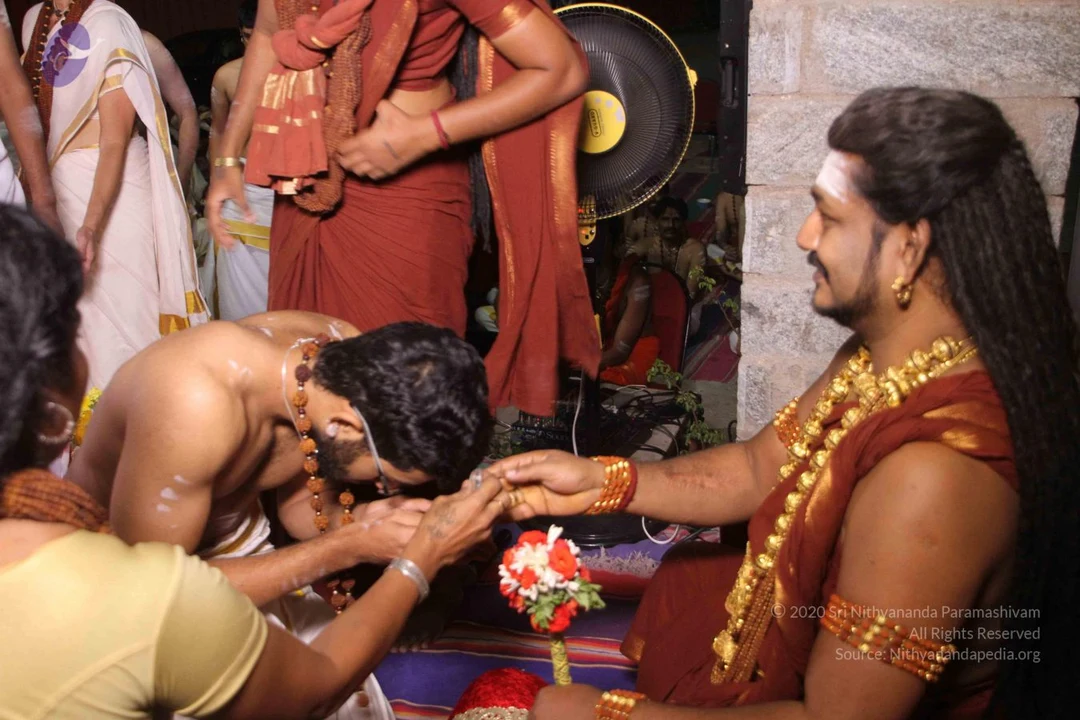
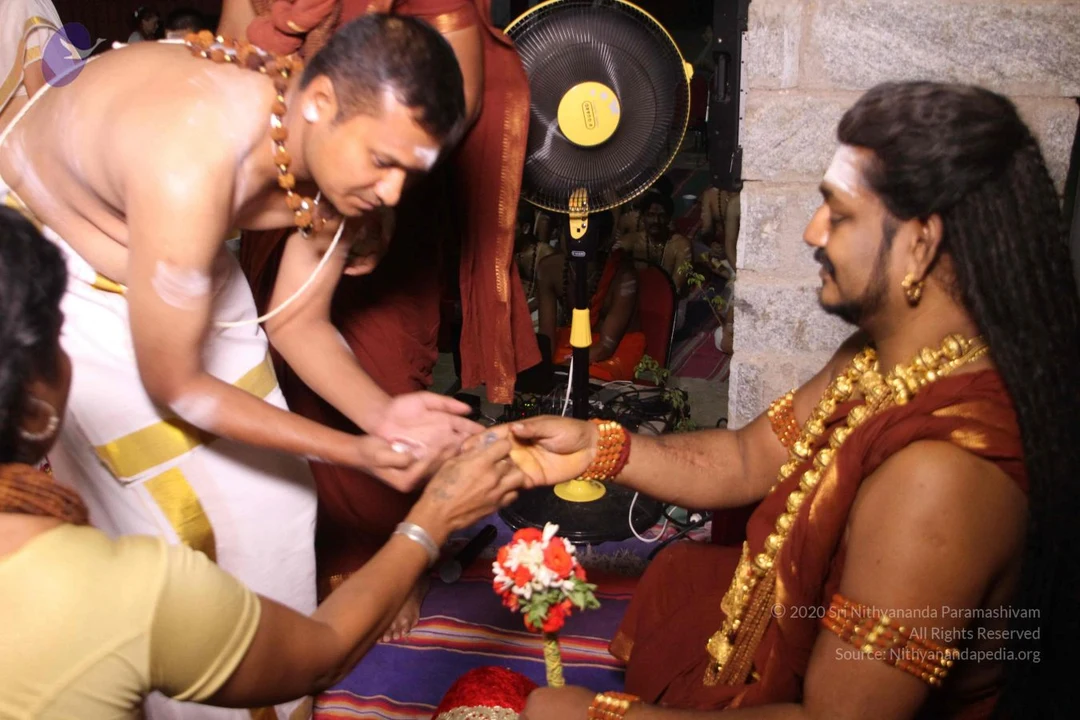
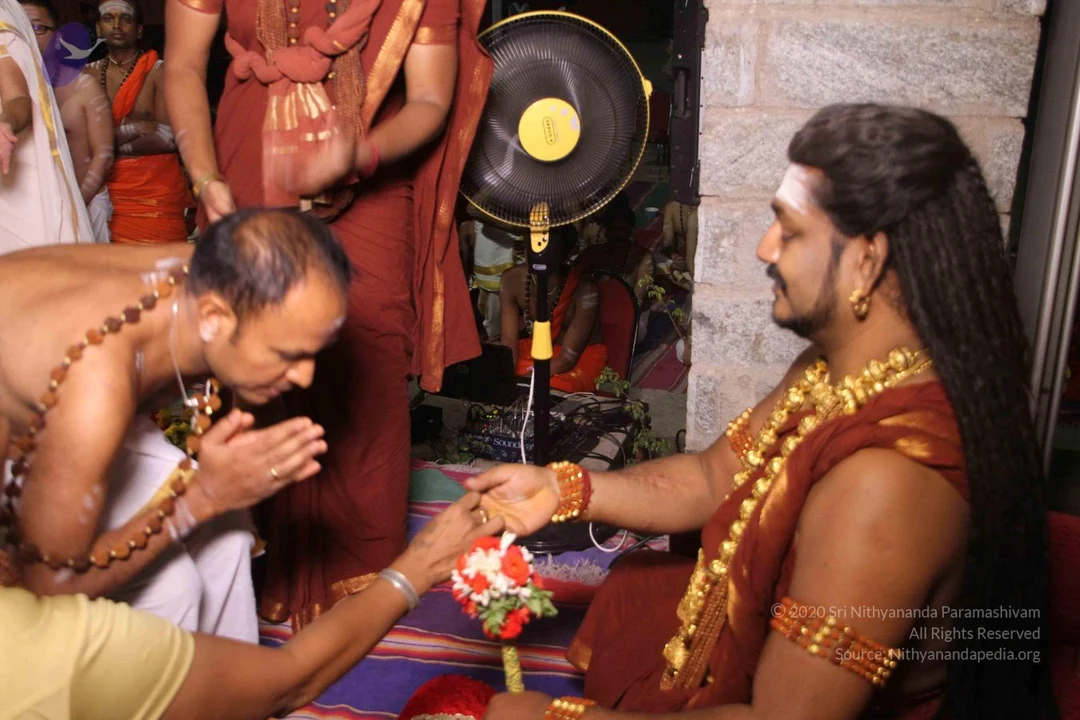
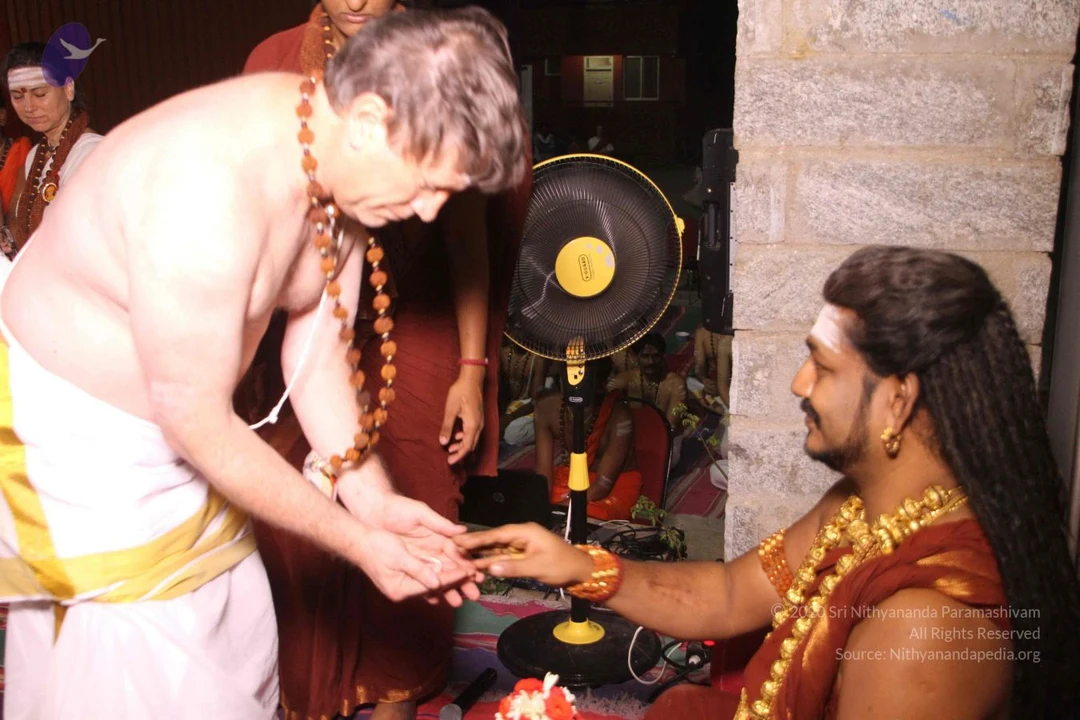
இந்து யுவ வாஹினி அமைப்பை சேர்ந்த திரு. டில்லி பாபு மாநில தலைவர் மற்றும் பாரத்ஹி ந்து மகா சபா மாநில தலைவர் சிவராமகிருஷ்ணன் ஆகியோர் இன்று திருவண்ணாமலை பவளக்குன்றிக்கு நேரடியாக வருகை தந்து, சிவலிங்க பாறையை தரிசனம் செய்து, பின் சிவலிங்க பாறைக்கு நடந்த அவதூறை தடுக்க வேண்டும் என்று திருவண்ணாமலை மாவட்ட ஆட்சித்தலைவரை சந்தித்து் மனு அளித்தனர்.

Link to Facebook Page:

https://www.facebook.com/srinithyananda.swami/posts/862910270530640

Tags:

Bhagavan Sri Nithyananda Paramashivam Paramahamsa Nithyananda, Nithyananda, Swamiji, Sadāshiva, aadheenam chalo series, power manifestation, Shaktipata explained, world record, initiation, compulsive thought pattern, Chidambara explained, conscious space, space of Sadāshivatva, manifesting Shaktis, powers, enlightened space, incompletions.

Photos Of The Day:

Pada-Puja
Nithya-Satsang
Vishesha-Deeksha

01-Pada-Puja

02-Nithya-Satsang

03-Vishesha-Deeksha

Photos from this day

View all 296 photos

Photos:

105 photosSource gallery
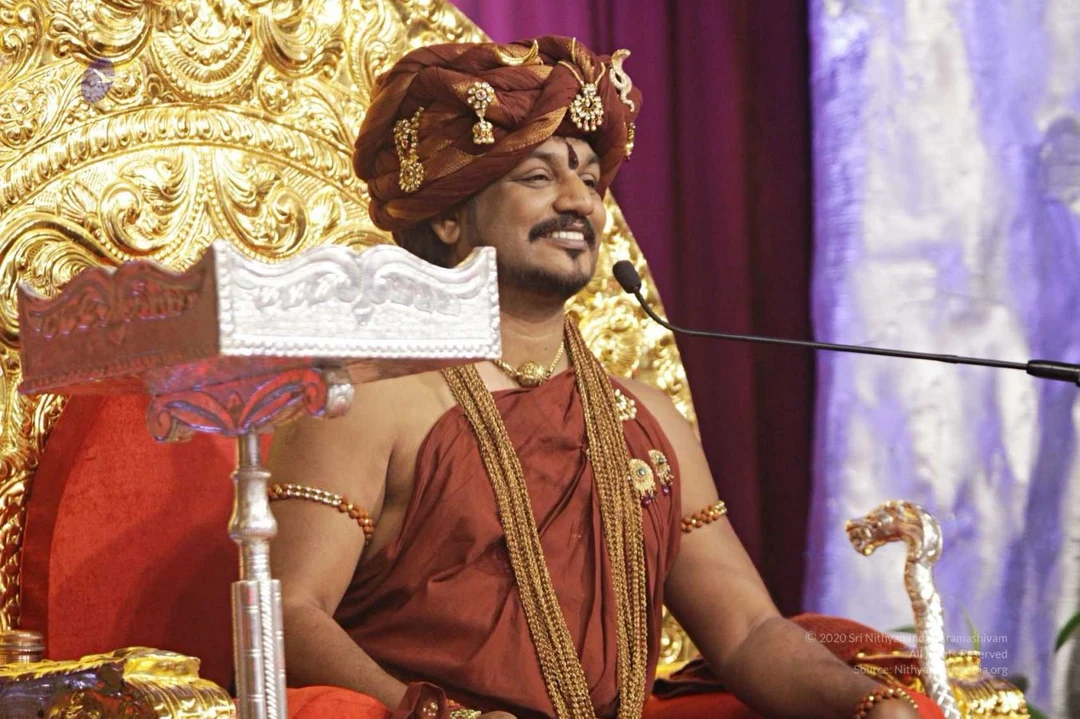
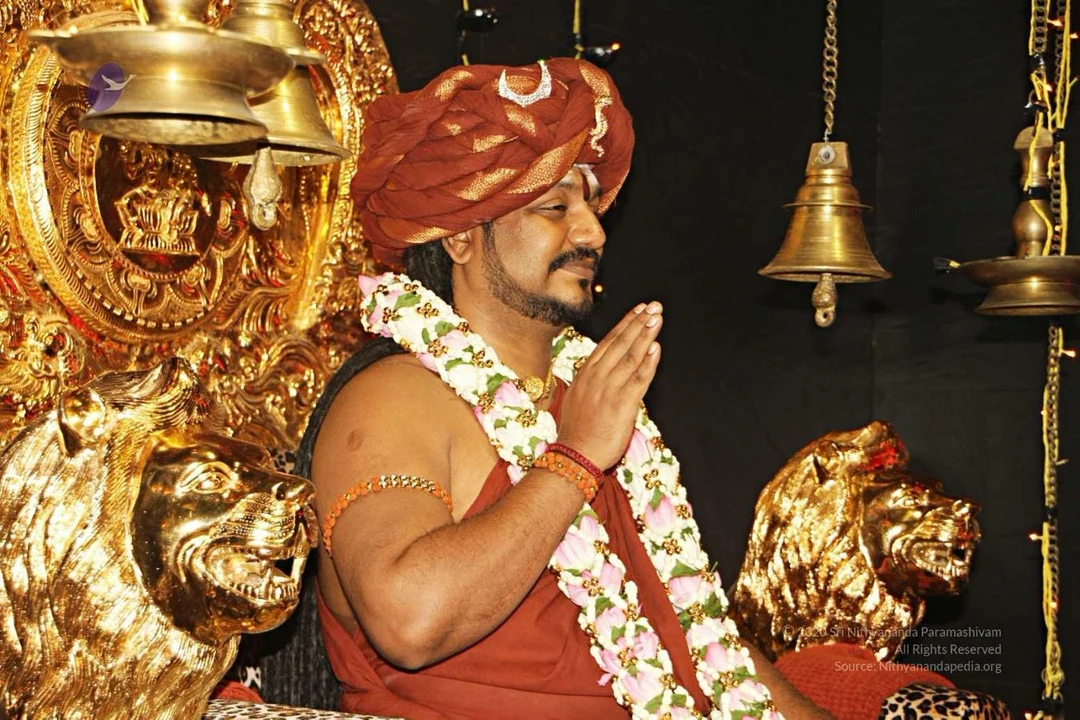
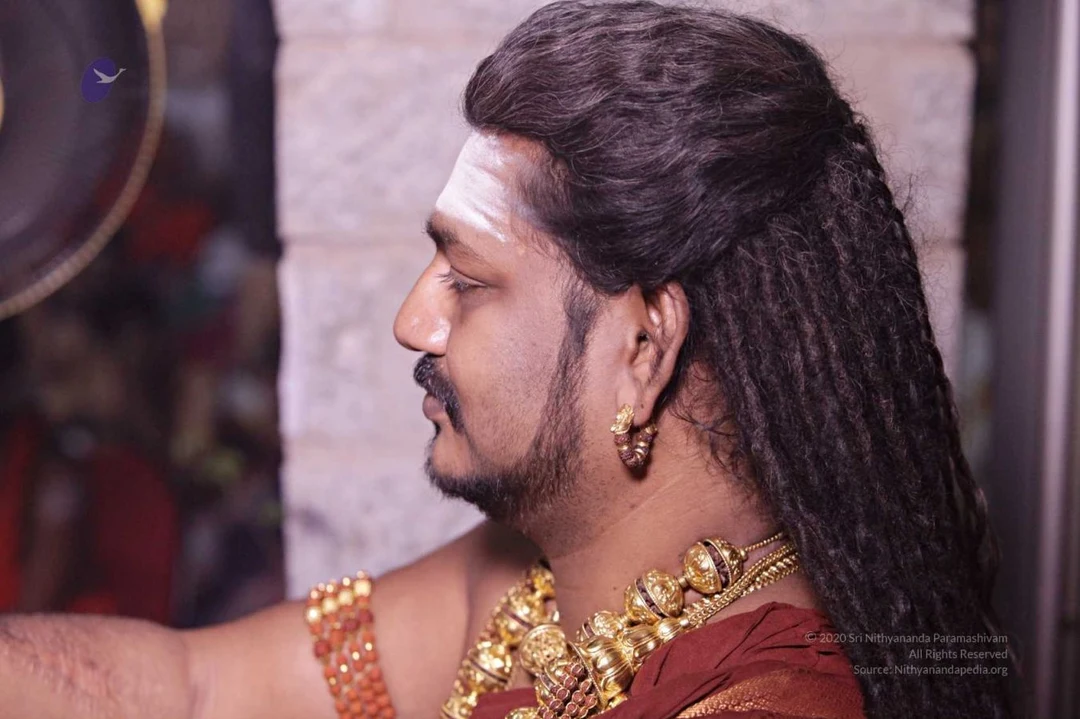
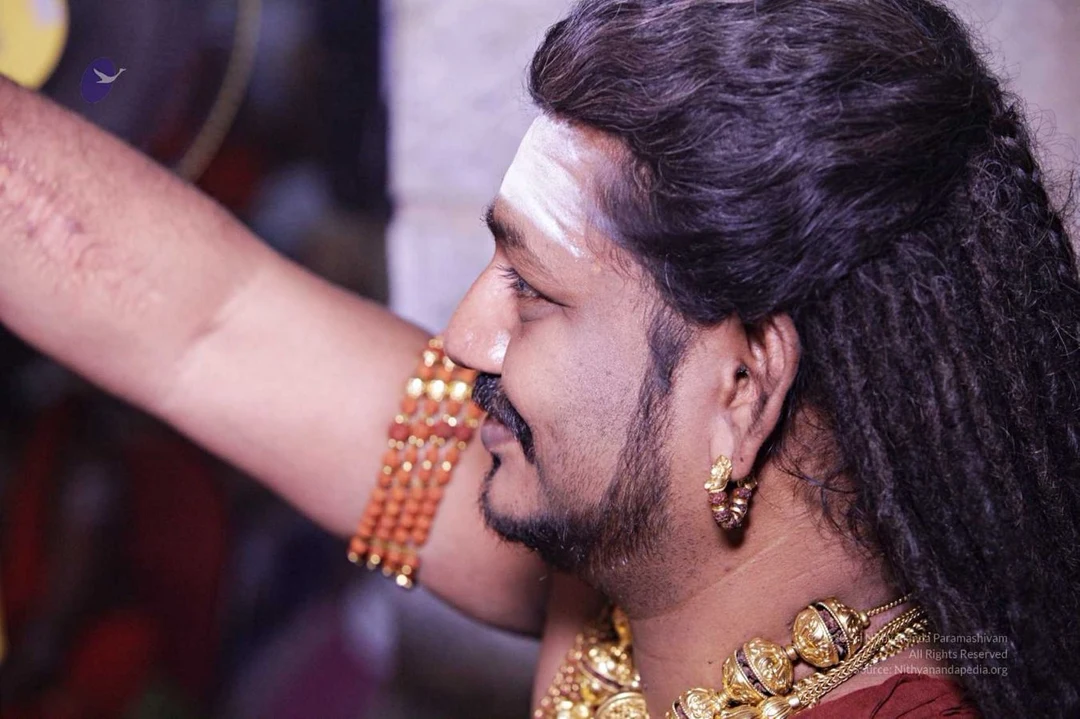
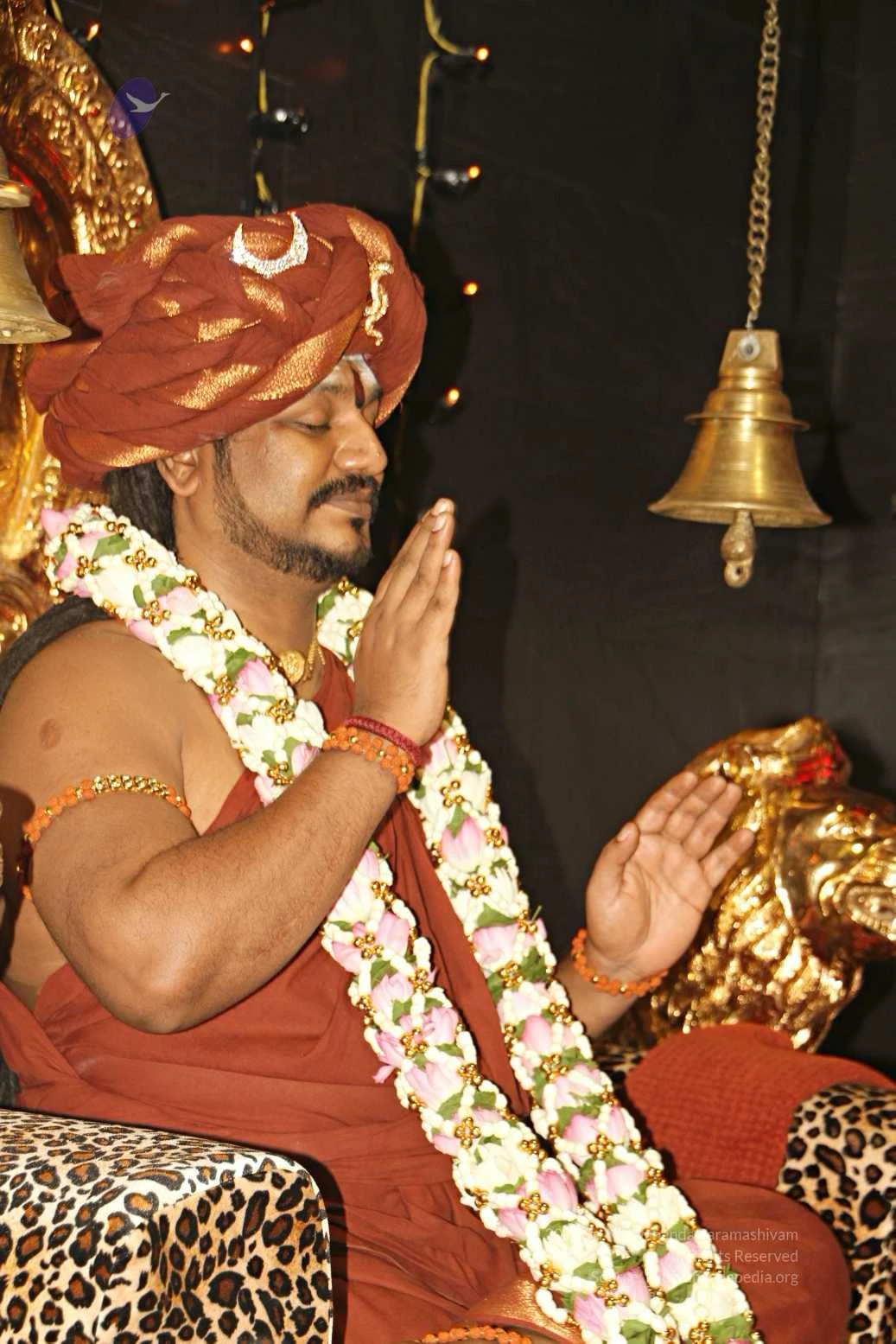
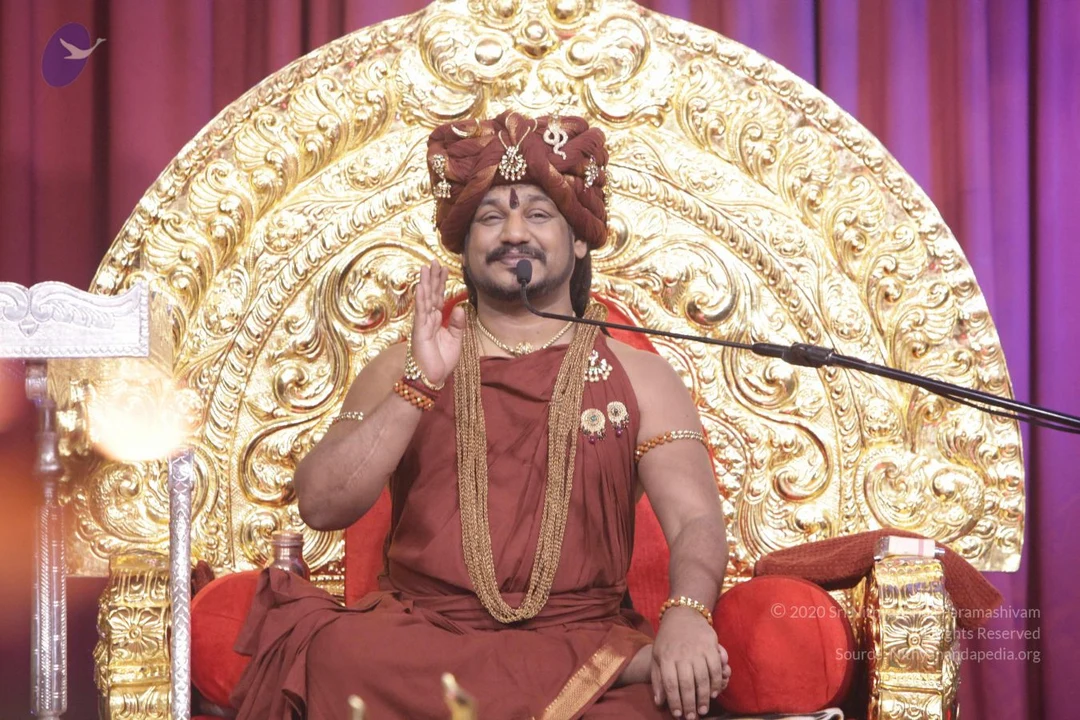
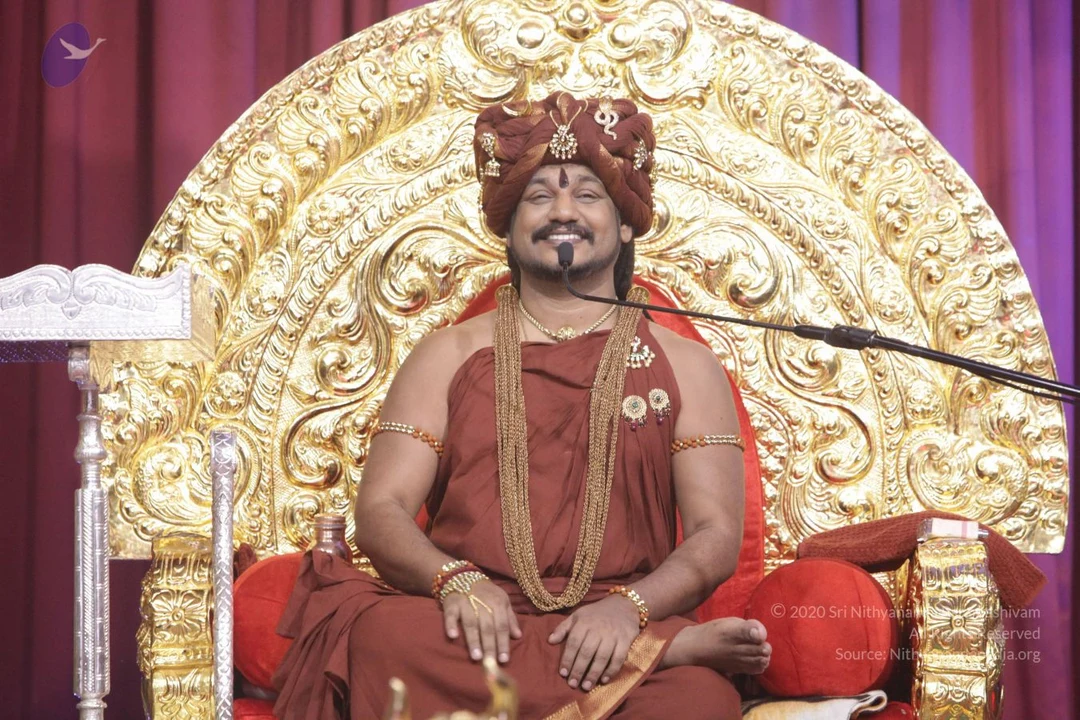
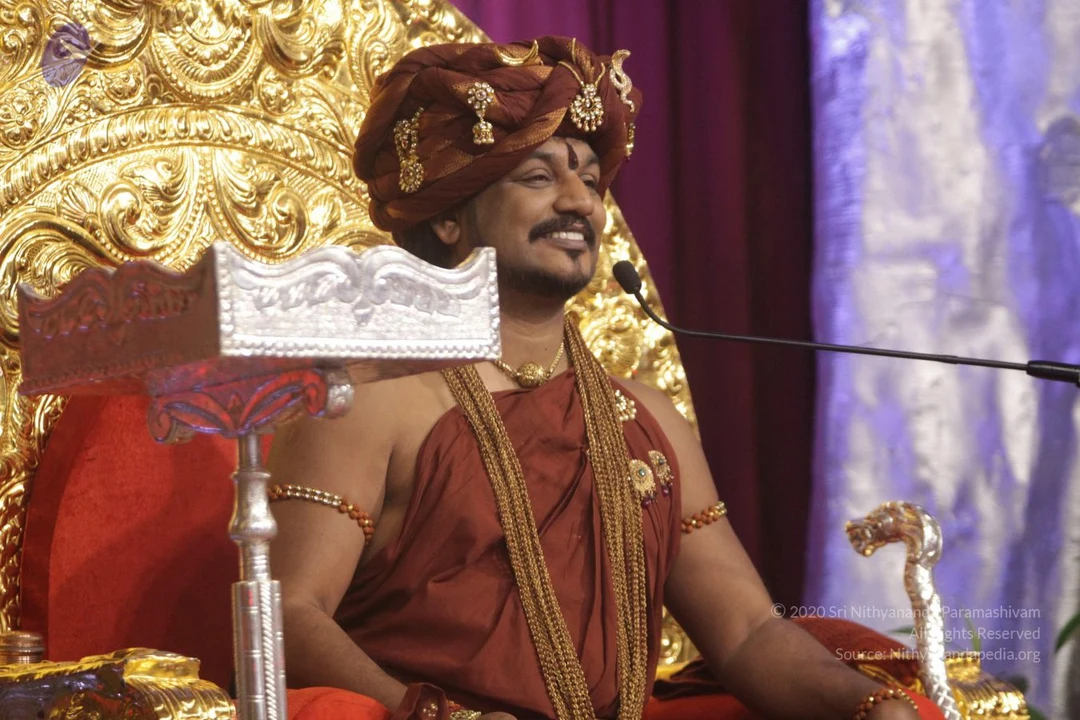
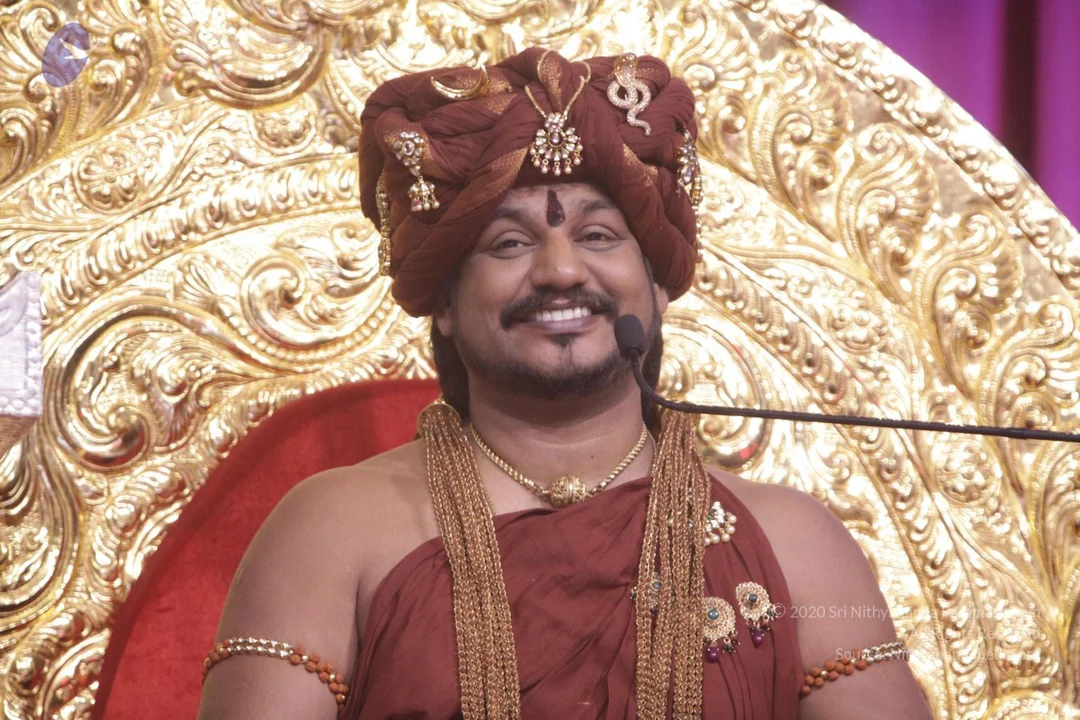
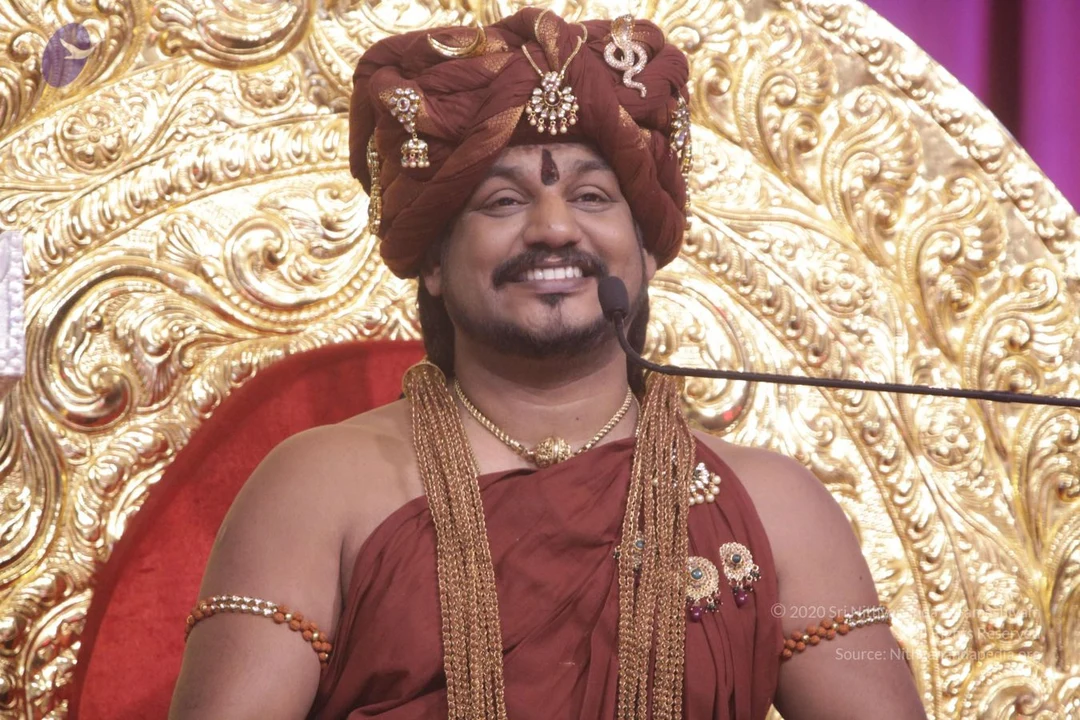
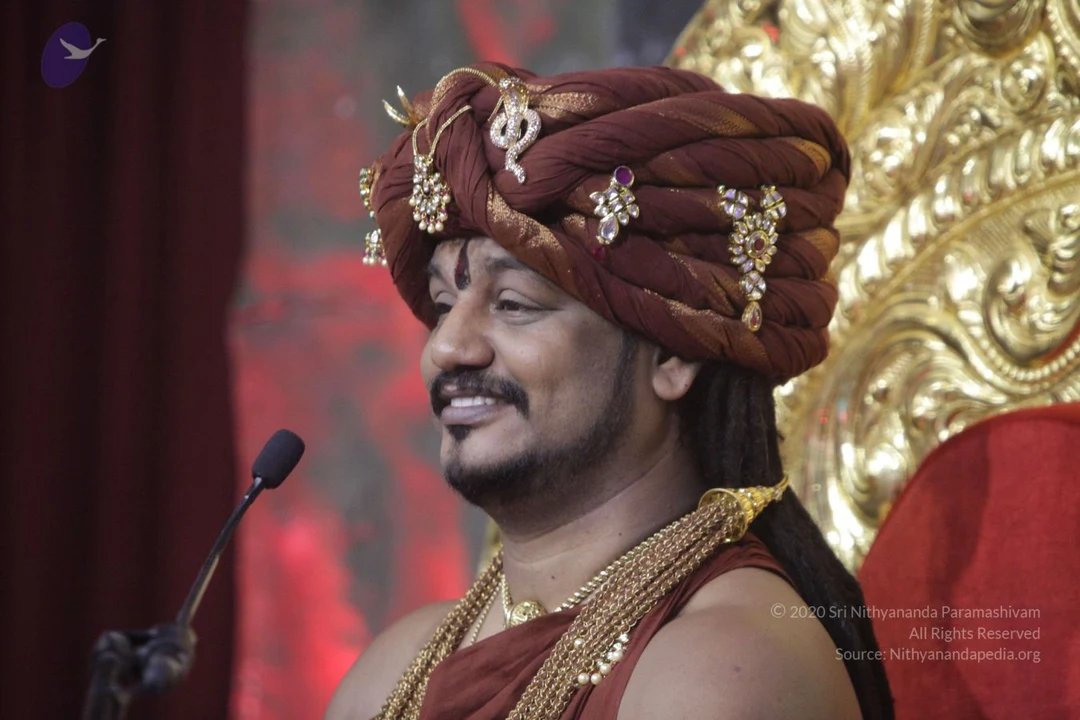
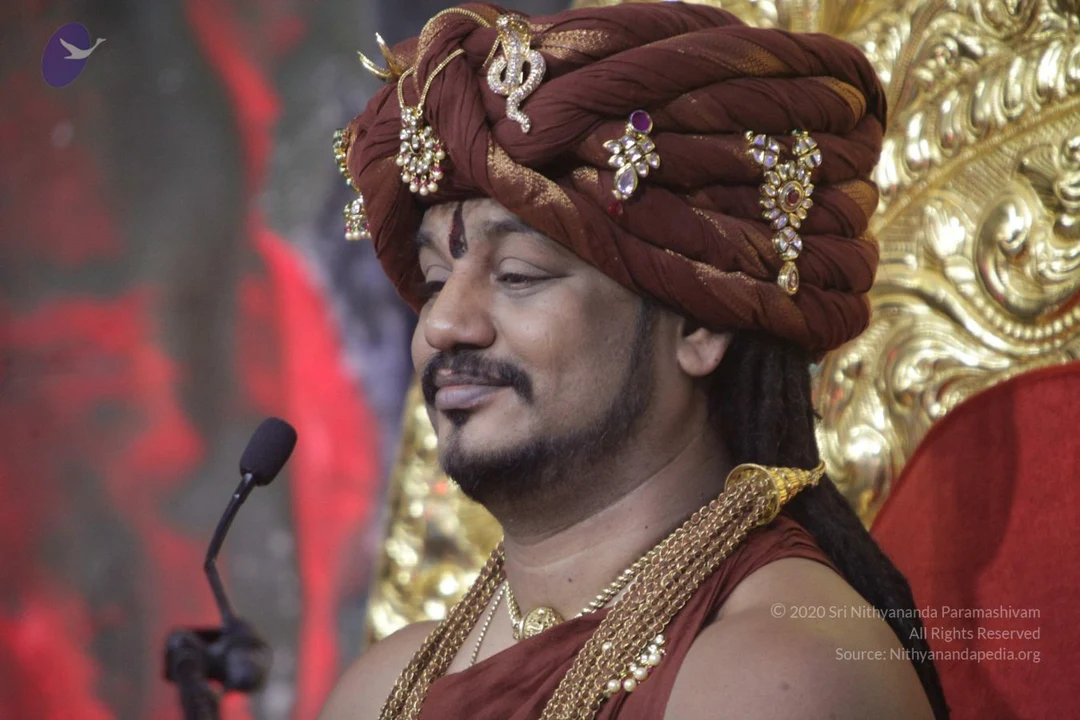
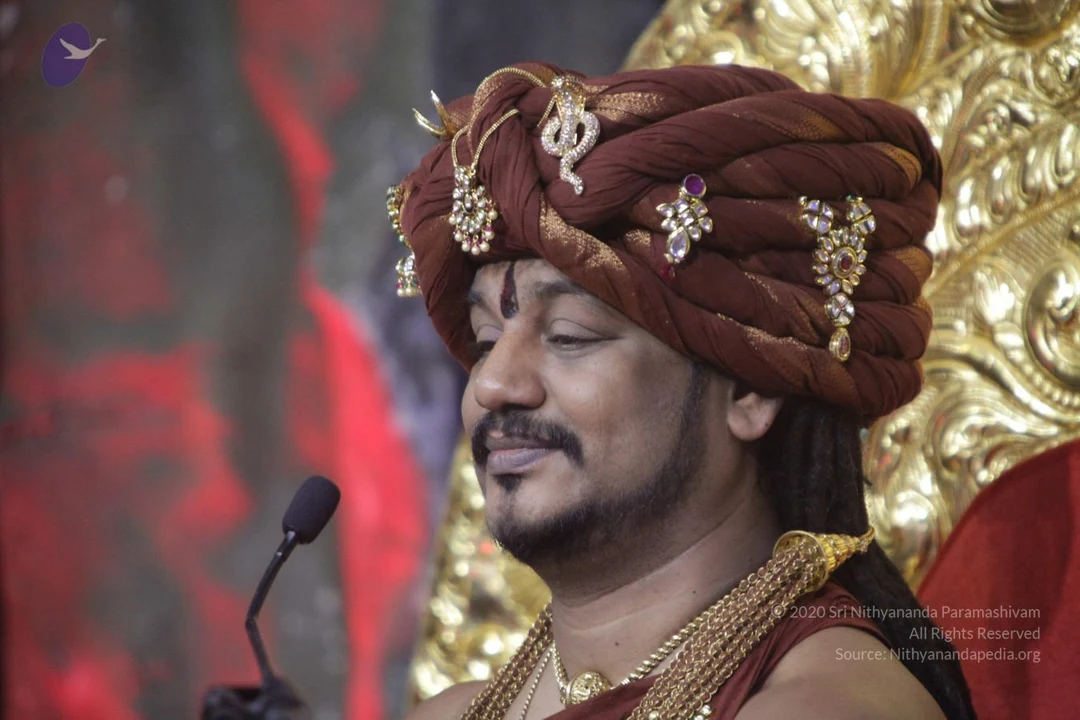
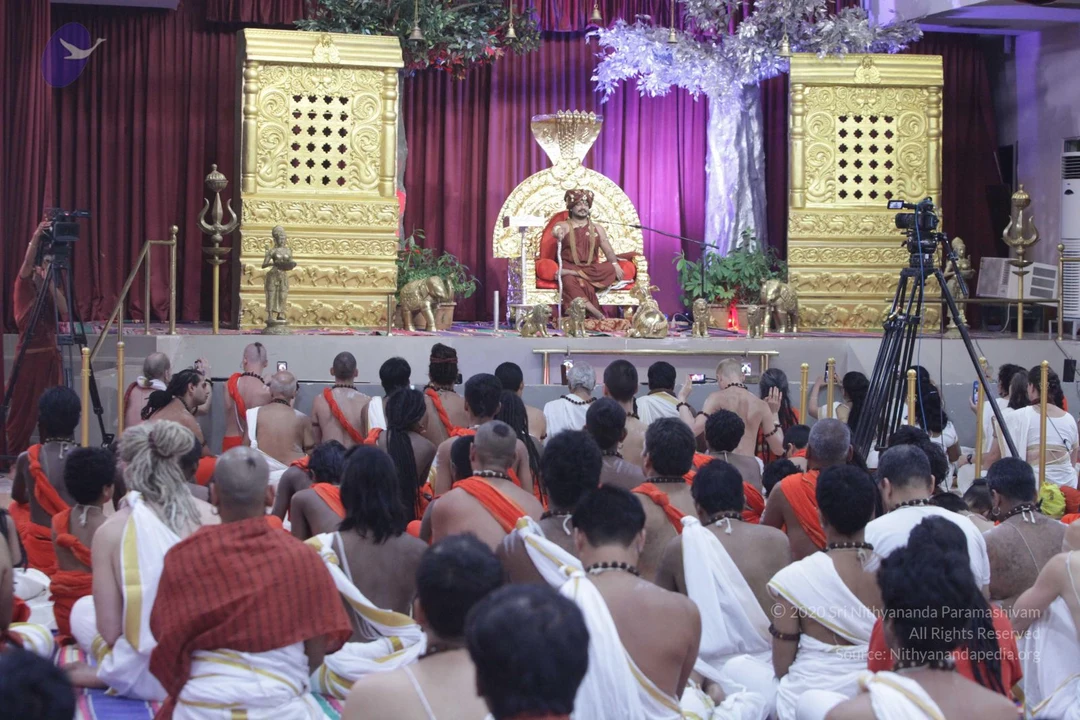
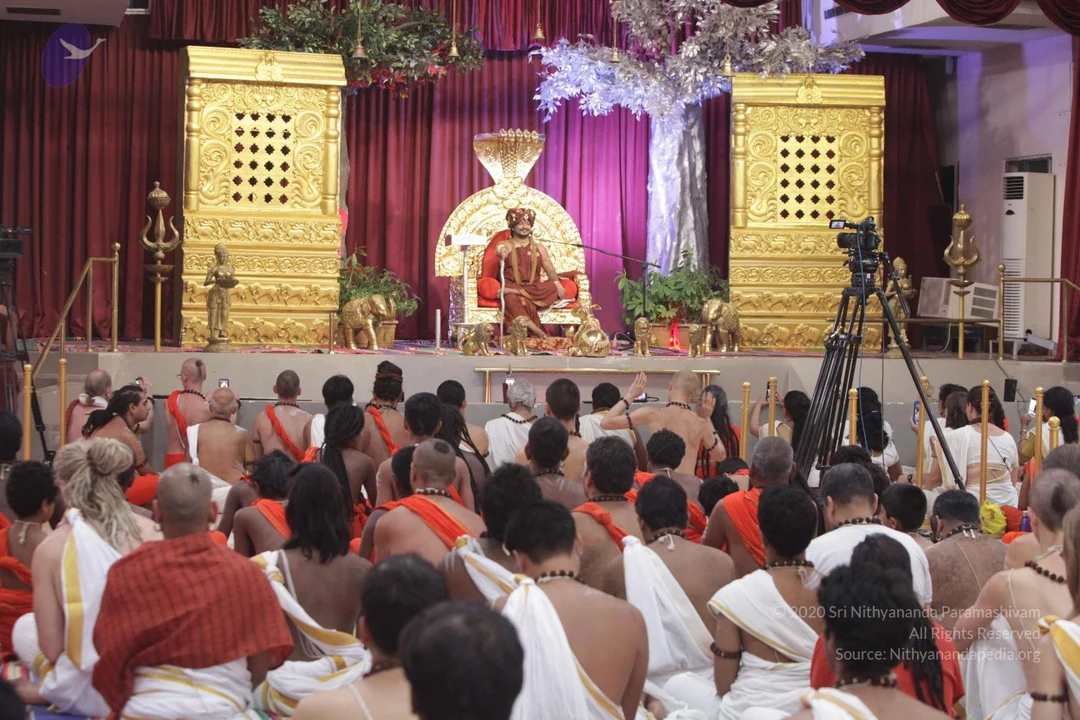
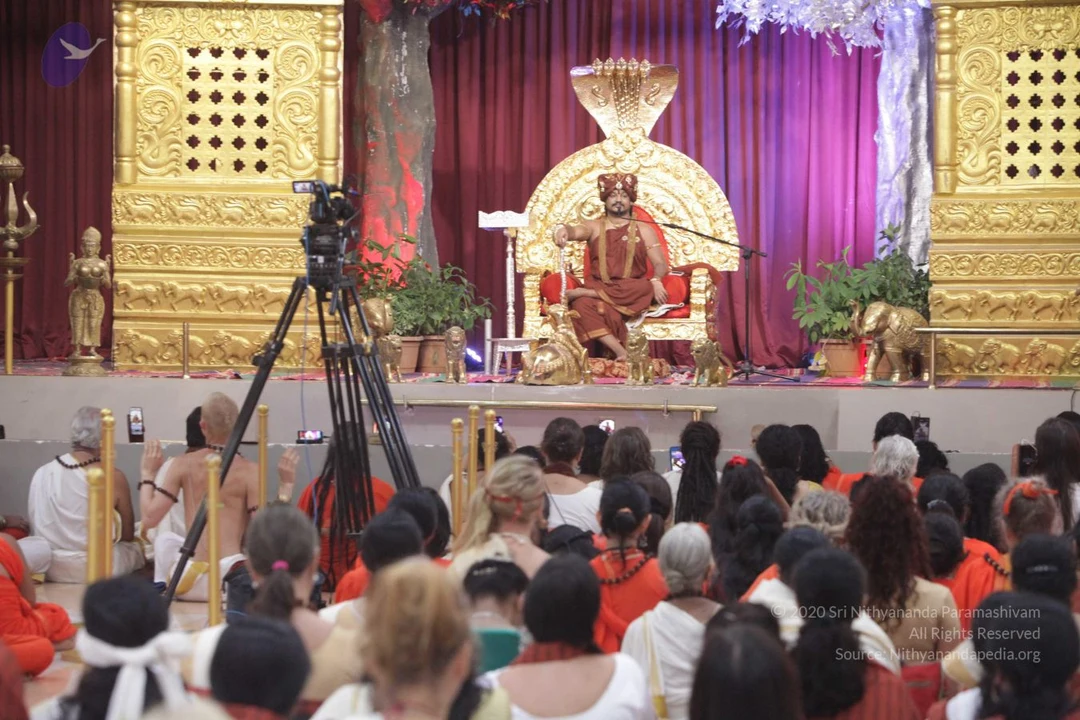
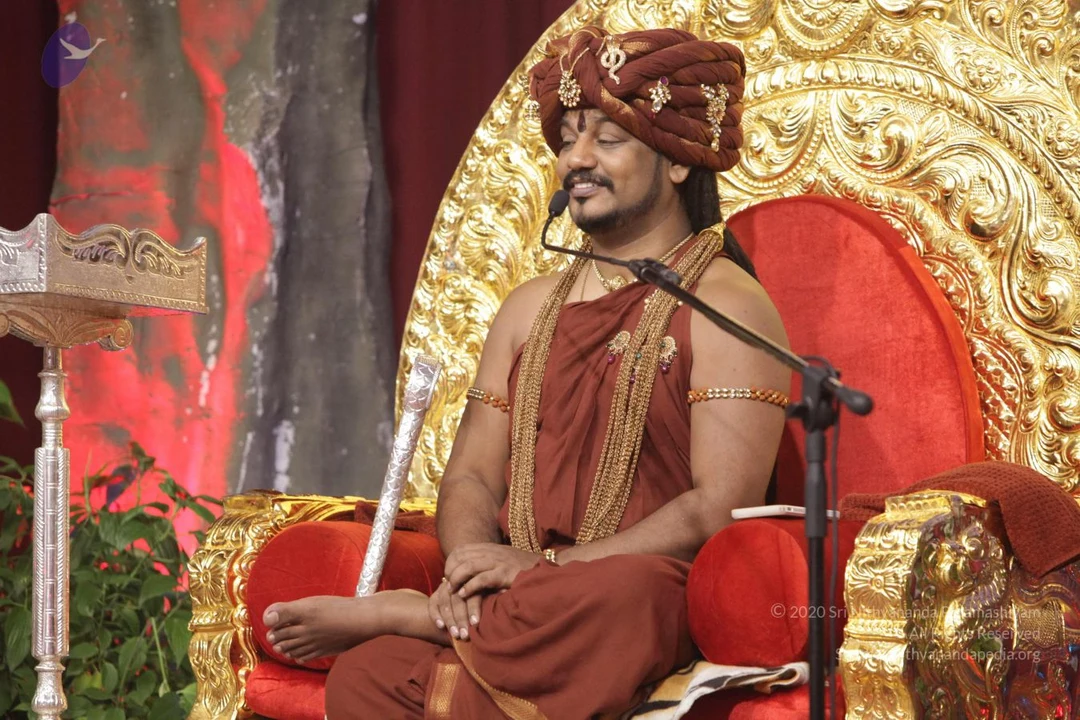
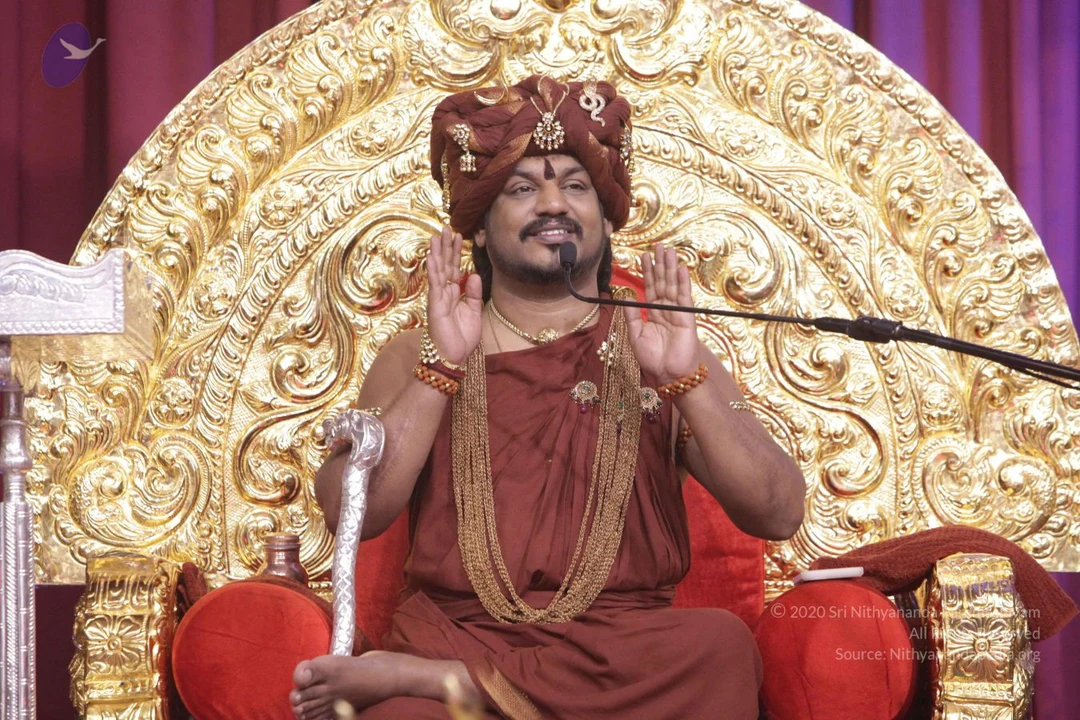
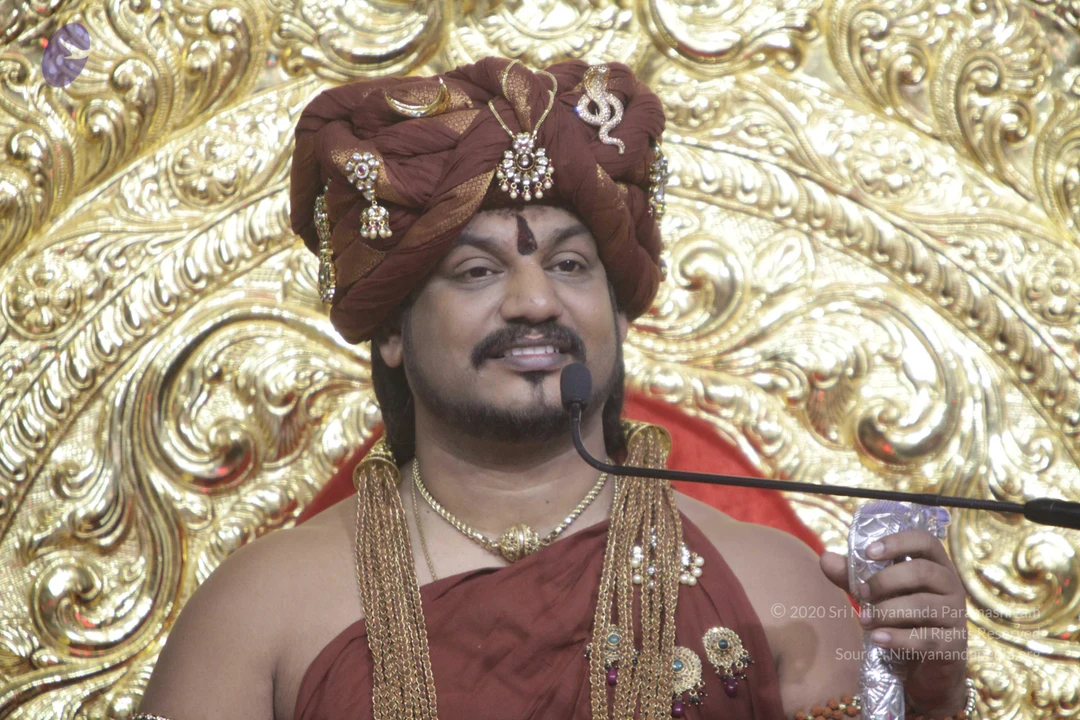
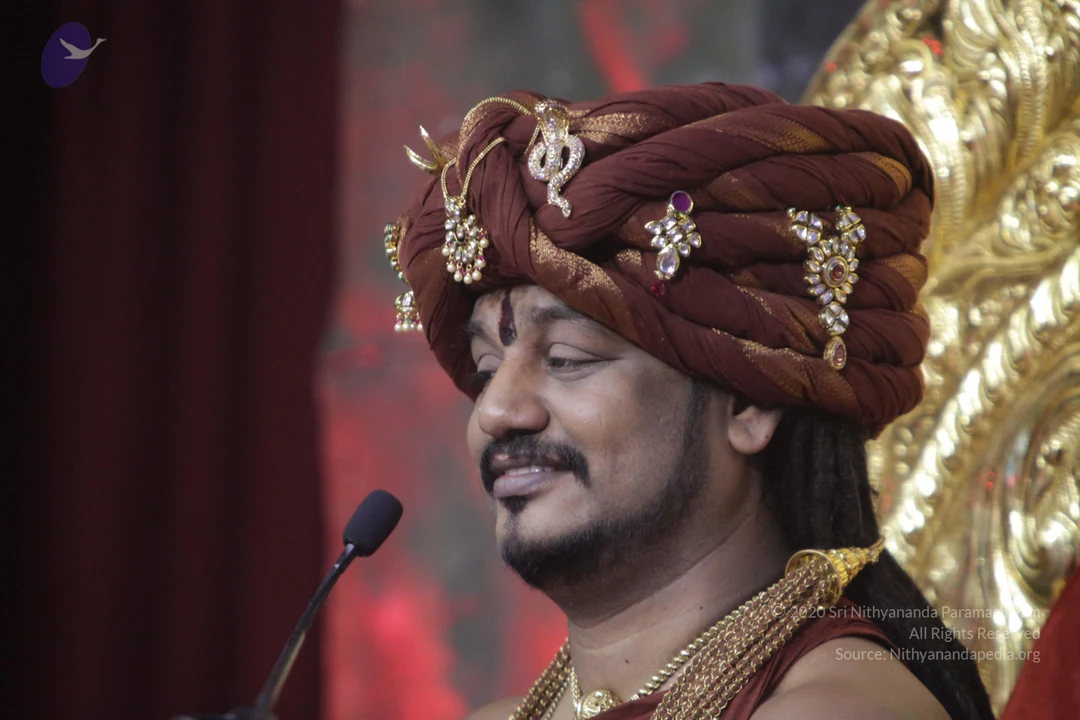
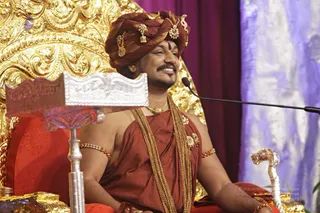
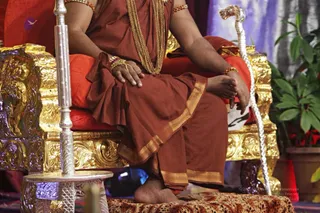
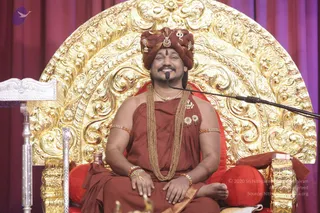
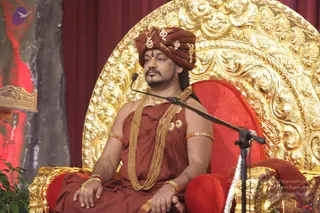
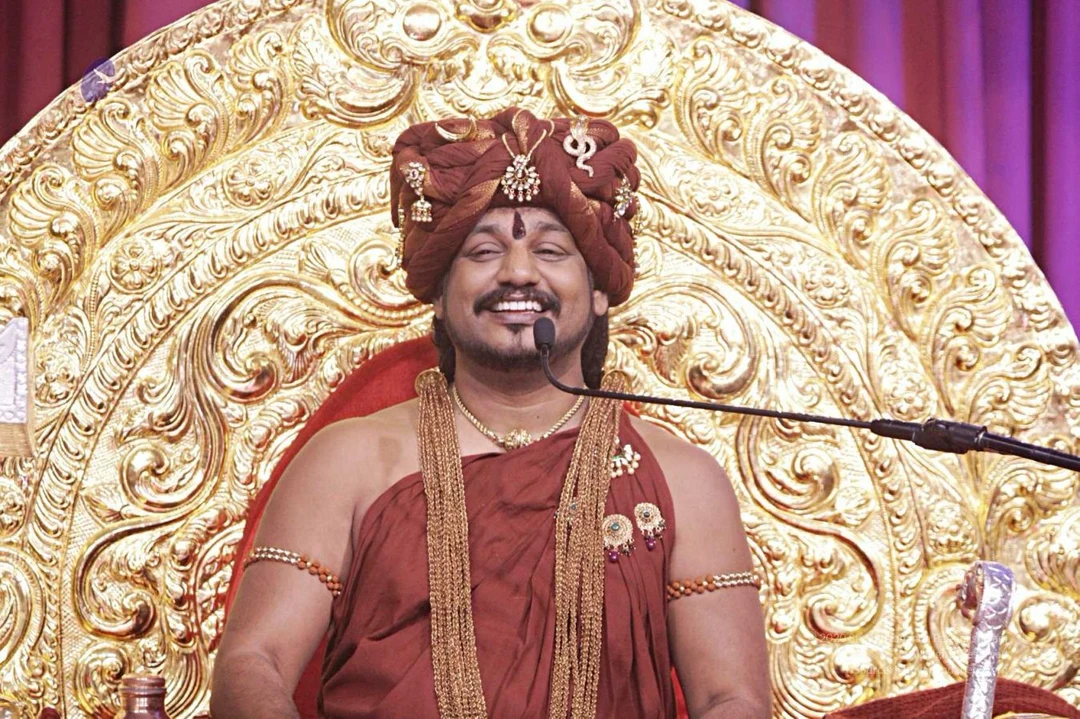
A seated man in a rust-red turban decorated with gold ornaments and a gold brooch smiles while speaking into a microphone on a stand. He wears a rust-red draped garment, a thick gold rope necklace, a rudraksha-style bead bracelet on the upper arm, and a red tilak on his forehead. He sits on an ornate gold throne with a red cushion, beside a silver lectern and a silver serpent-headed armrest. A purple and lavender drape hangs behind him. The setting suggests a discourse or satsang. Swamiji (probable): the long gold necklaces, ornate turban and rust-red ceremonial dress are consistent with the page's description of a discourse, but the face is not used for identification, so the label is appearance-based.Close crop of a seated figure on an ornate gold-and-red throne with a red cushion. The figure wears a rust-red robe with a gold-bordered hem, a long gold necklace of beads and multiple bracelets, and bare feet resting on a leopard-print cloth. A silver-topped staff with a carved animal-head handle leans beside the throne, and a silver candle stand stands in the foreground. A potted green plant with red flowers appears at right. The figure's face is not visible. The figure matches the a person candidate by presentation: rust-red robe, long beaded gold necklace and bracelets on a throne, though the face is cropped out.A man in a rust-orange turban and matching orange-brown robe sits on an ornate gold throne with a large gold-filigreed backrest, raising his right hand while speaking into a microphone on a stand. He wears long gold beaded necklaces, gold armbands and bangles, and a small bindi on his forehead. A red cushion and red drapery frame the scene. Swamiji (probable): the speaker wears a distinctive turban, layered gold necklaces and saffron-orange robes, consistent with the page's reference to a discourse. Watermarked archive image omitted.

Pada-Puja

21 photosSource gallery
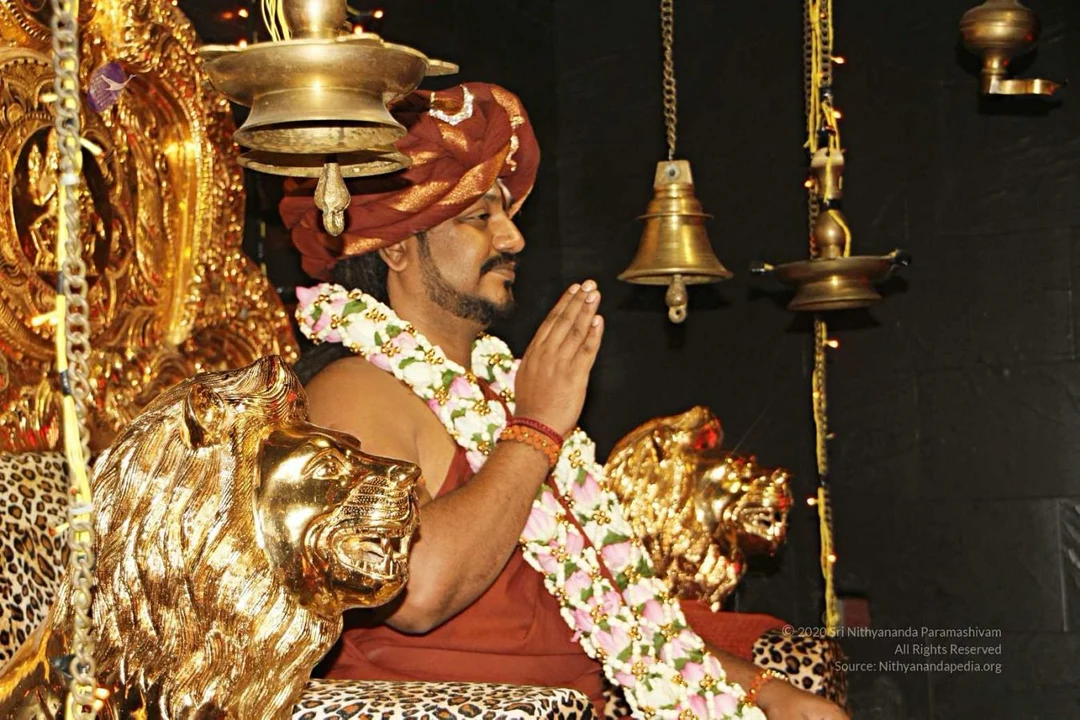
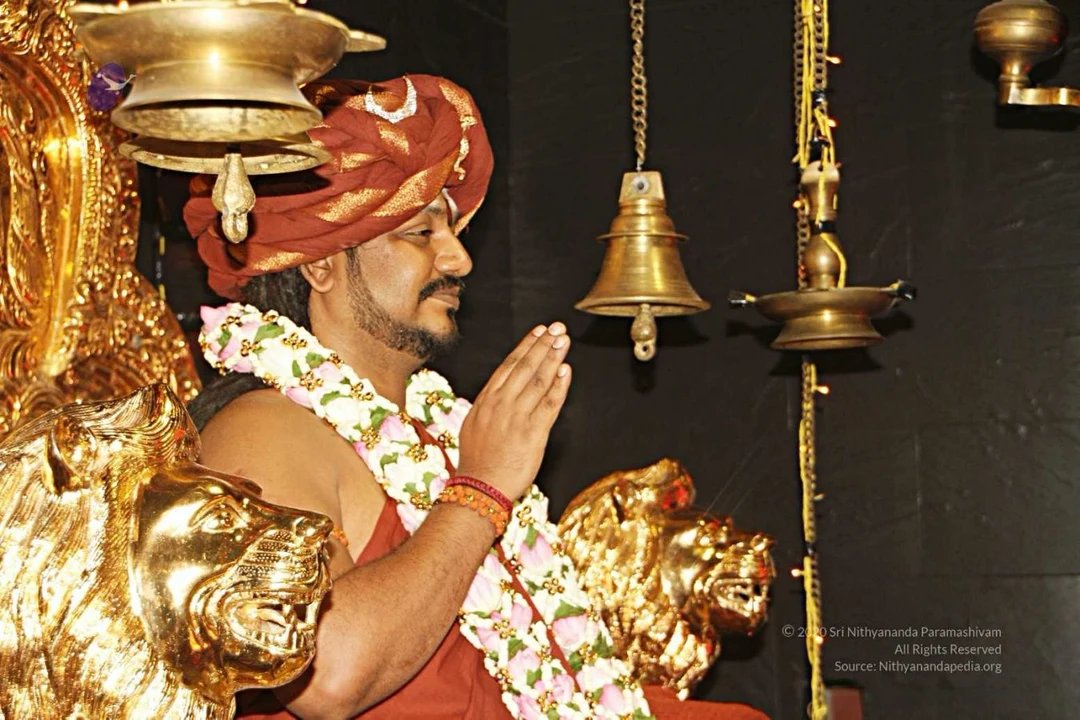
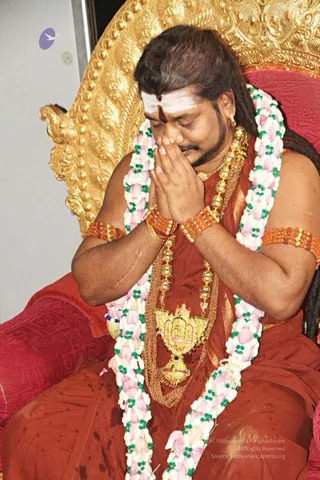
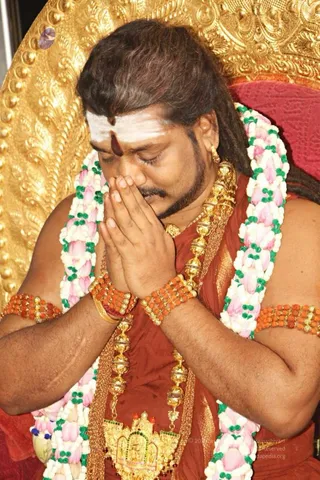
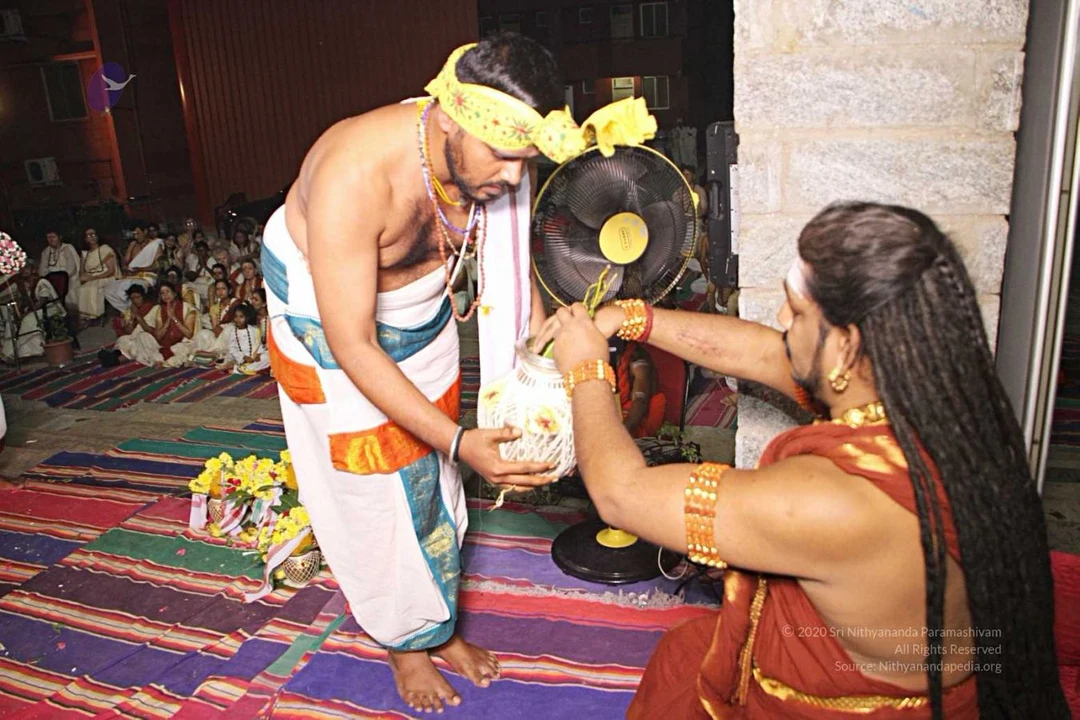
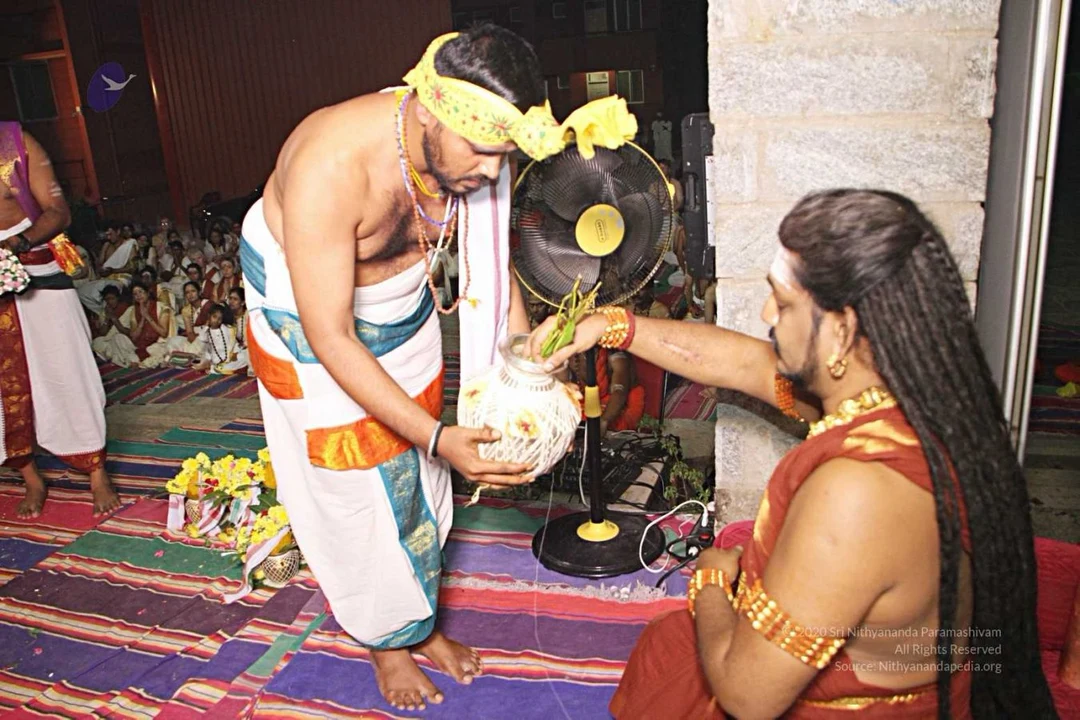
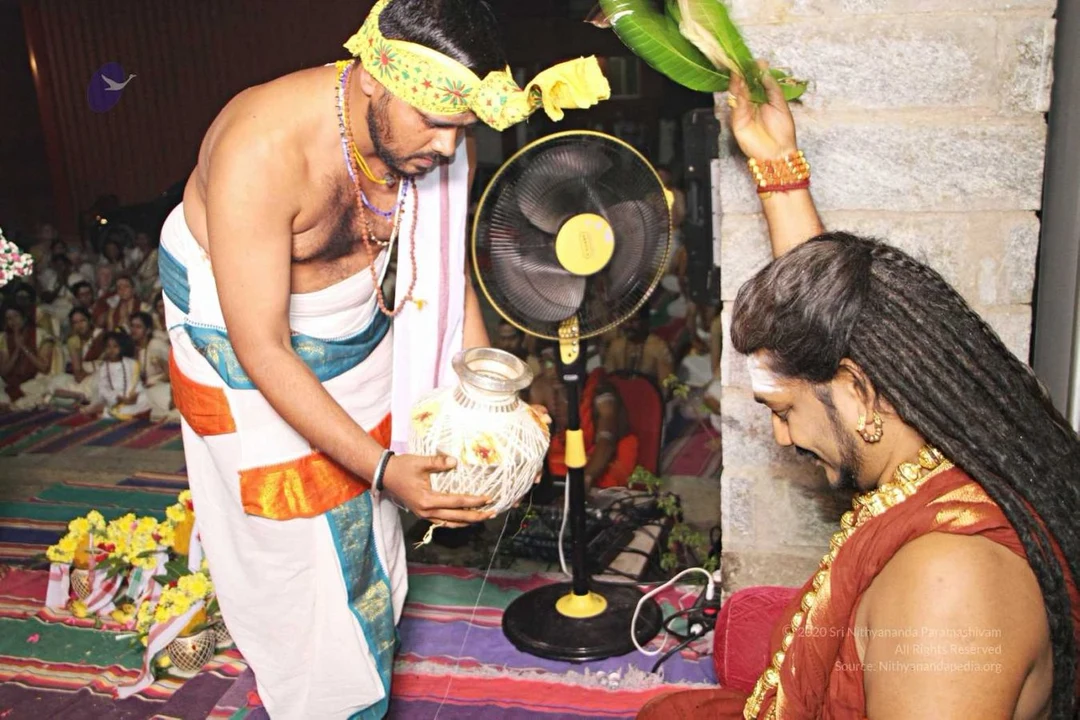
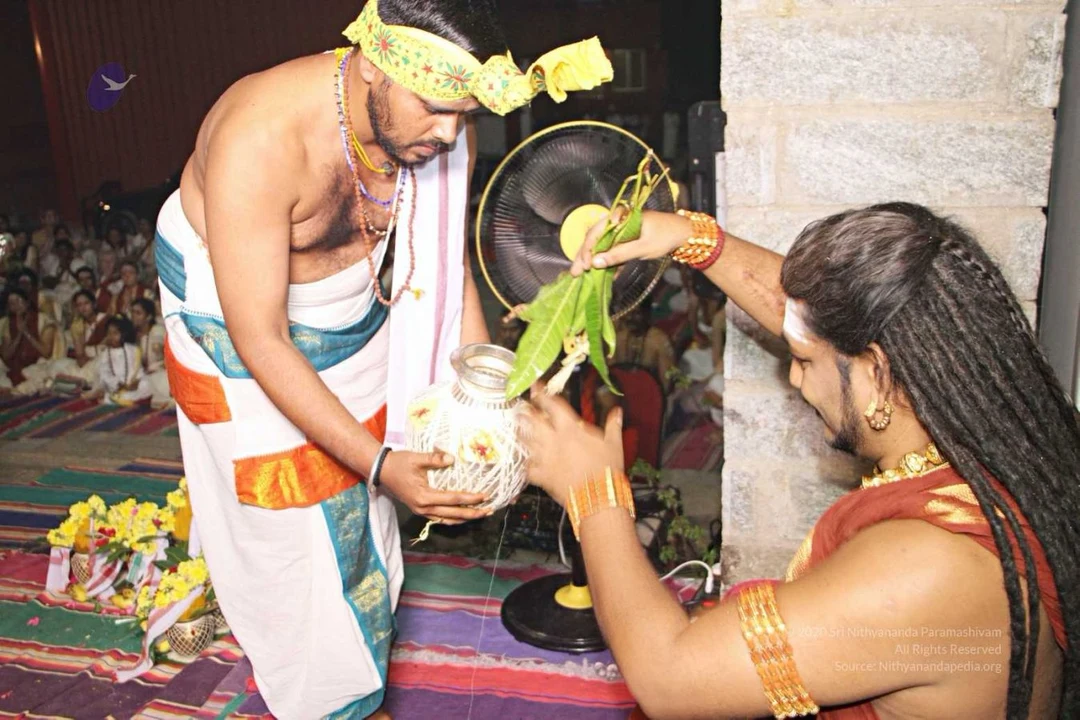
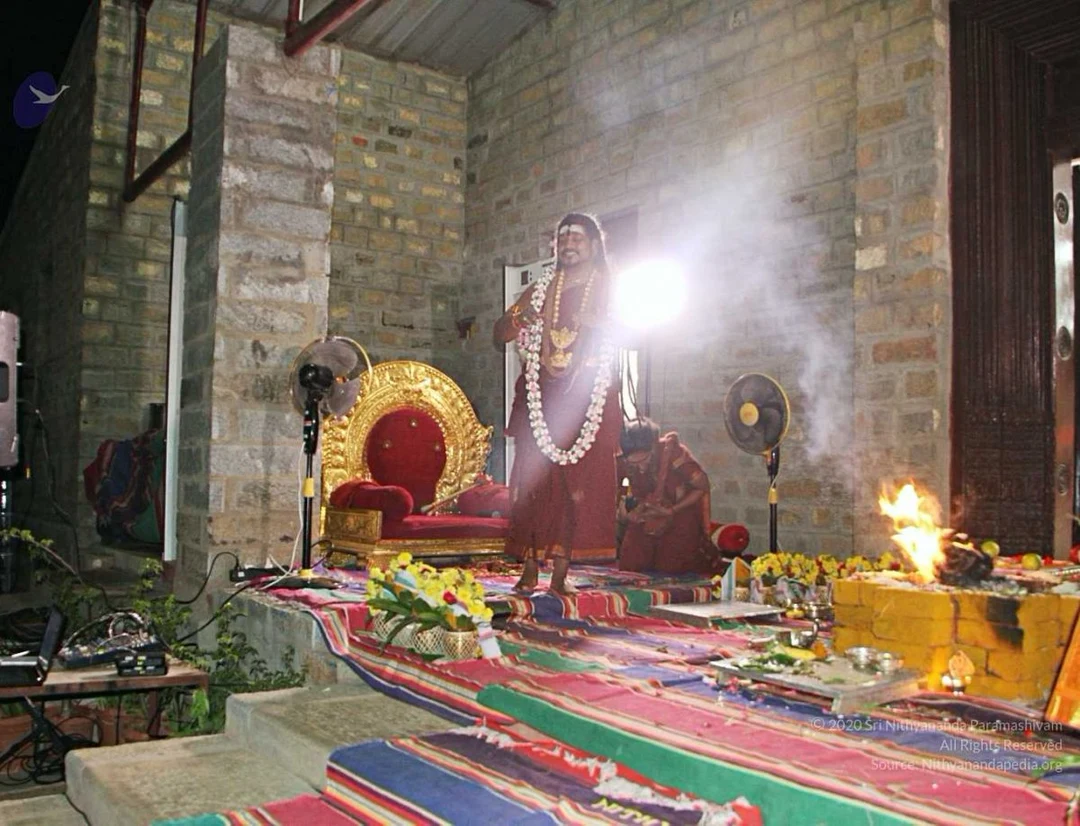
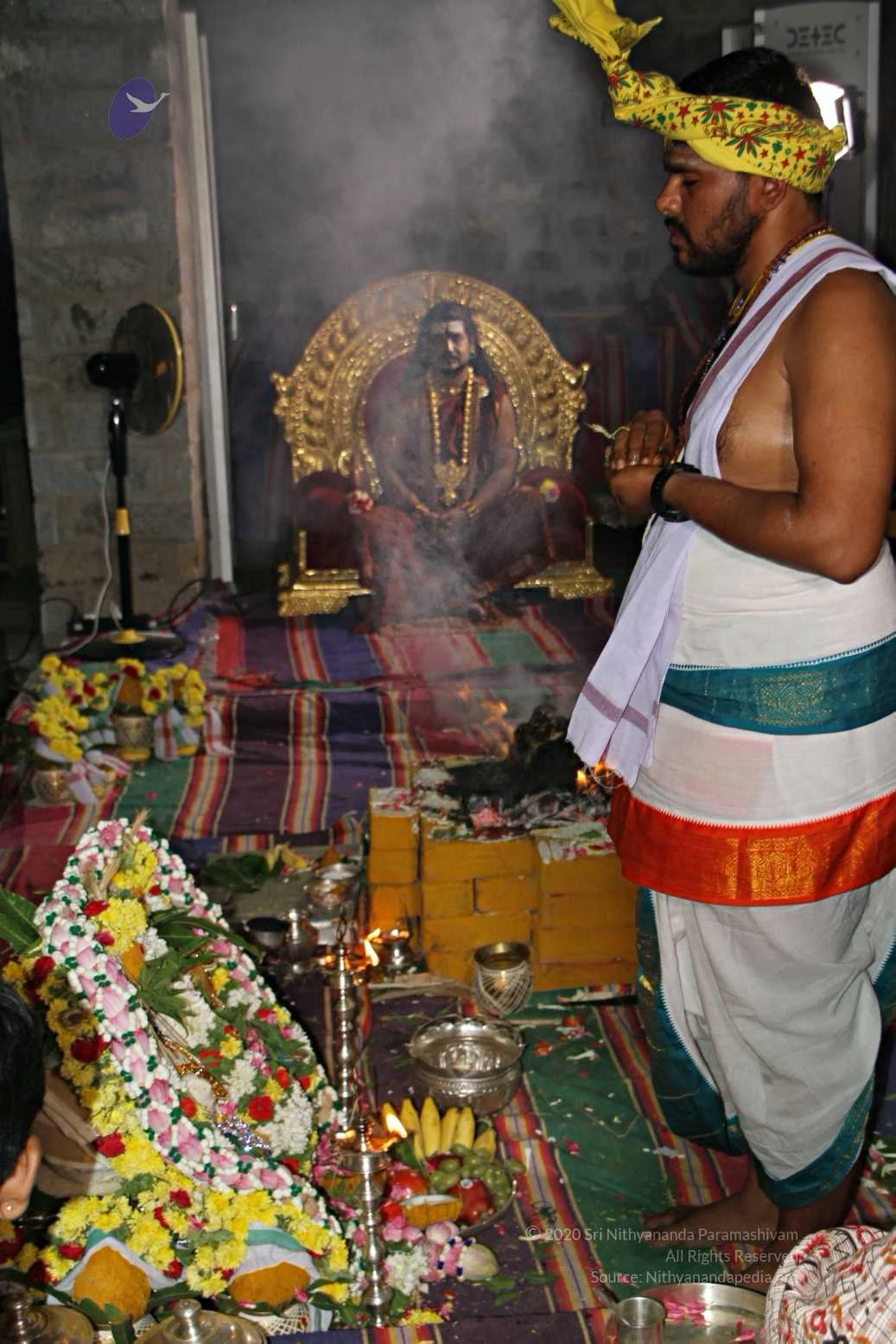
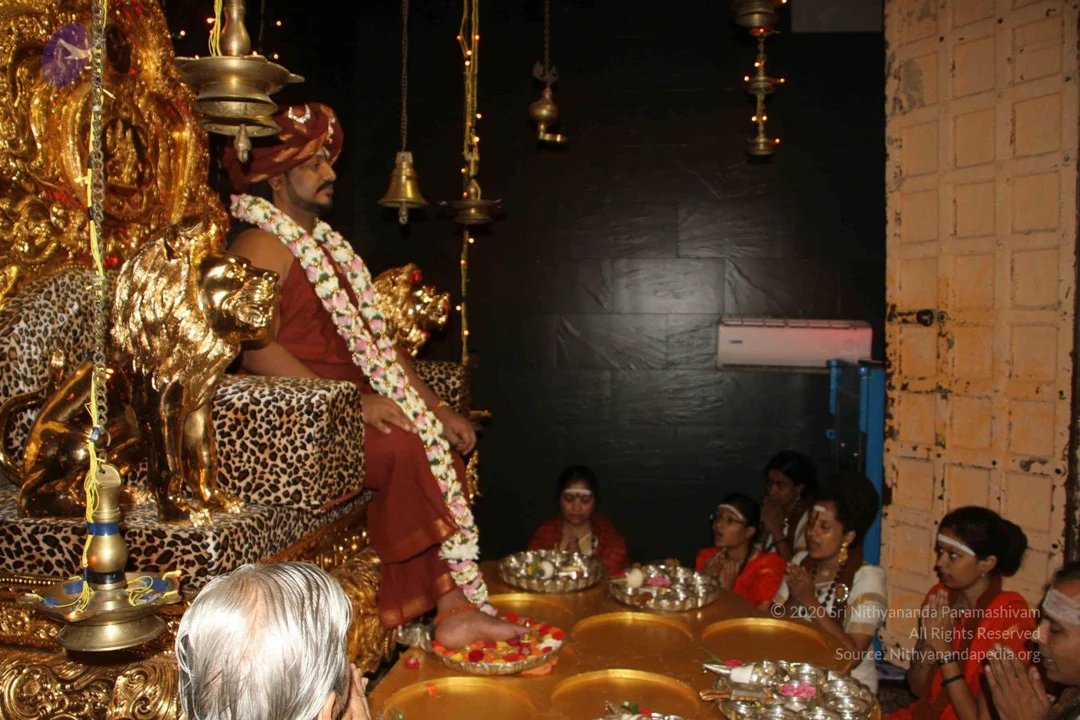
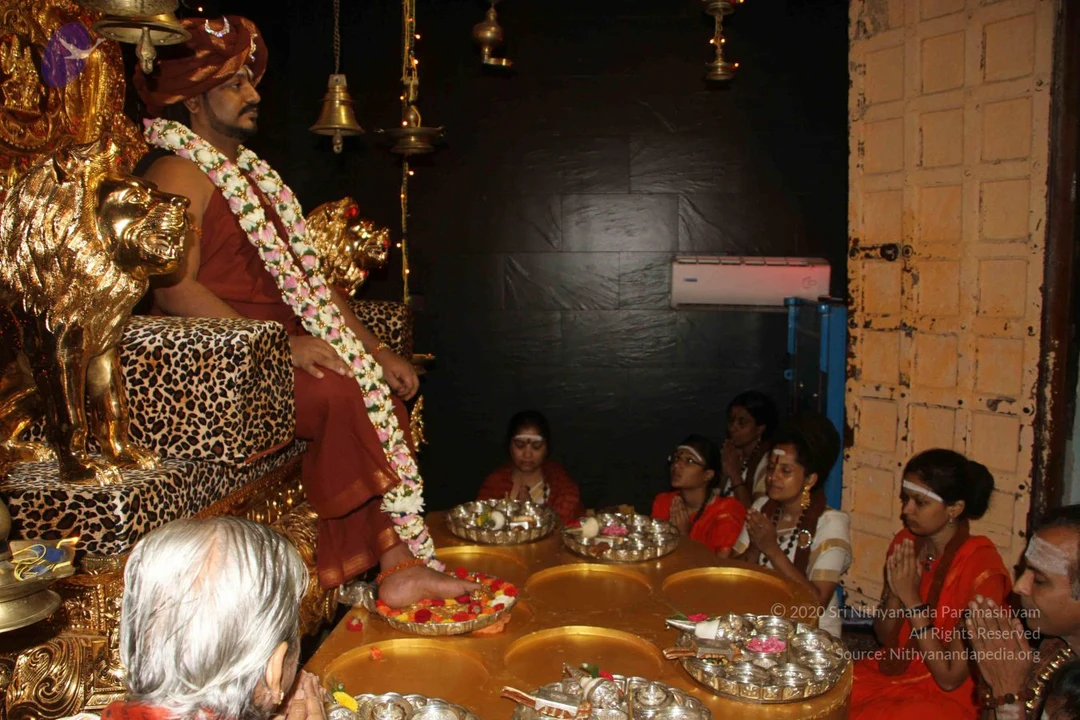
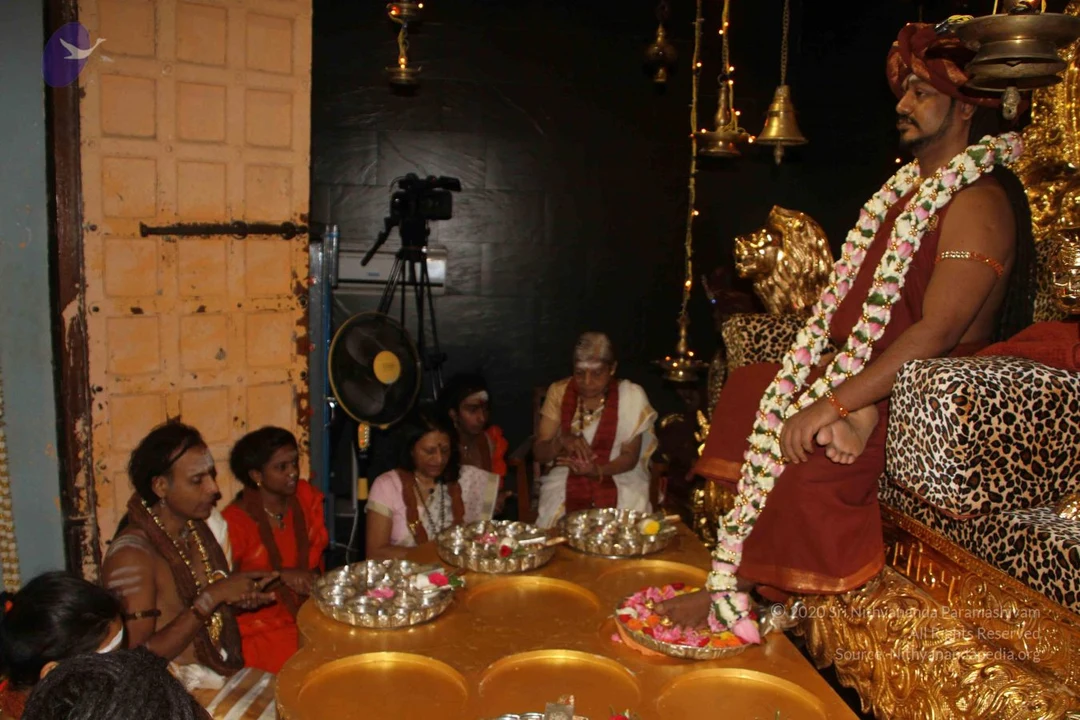
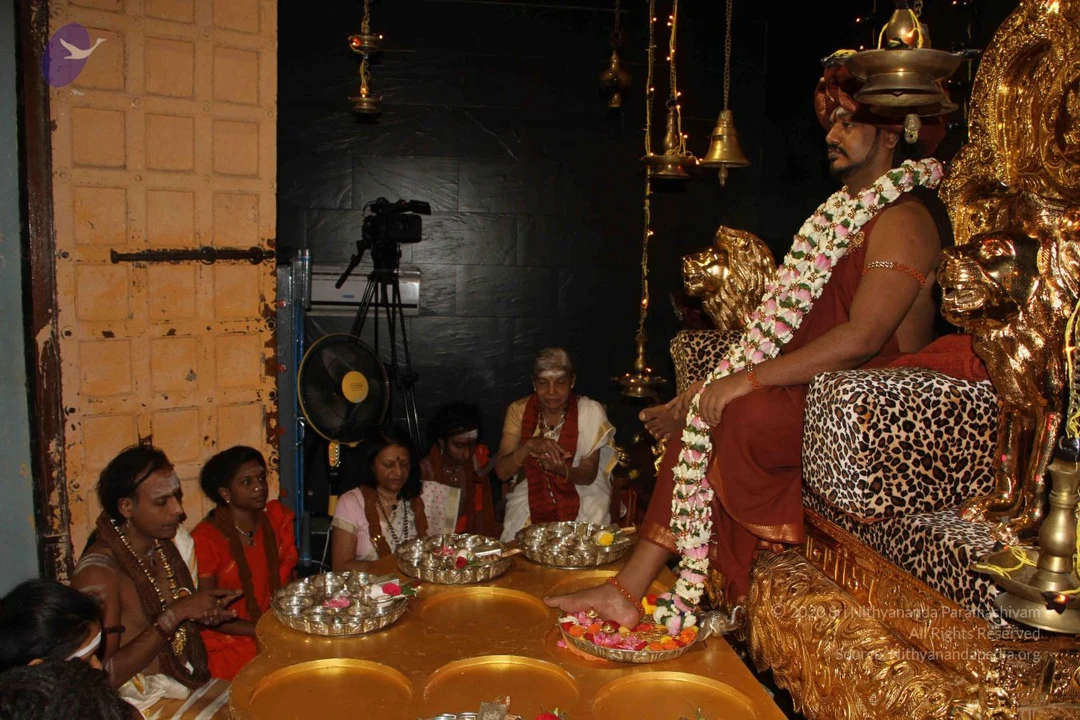
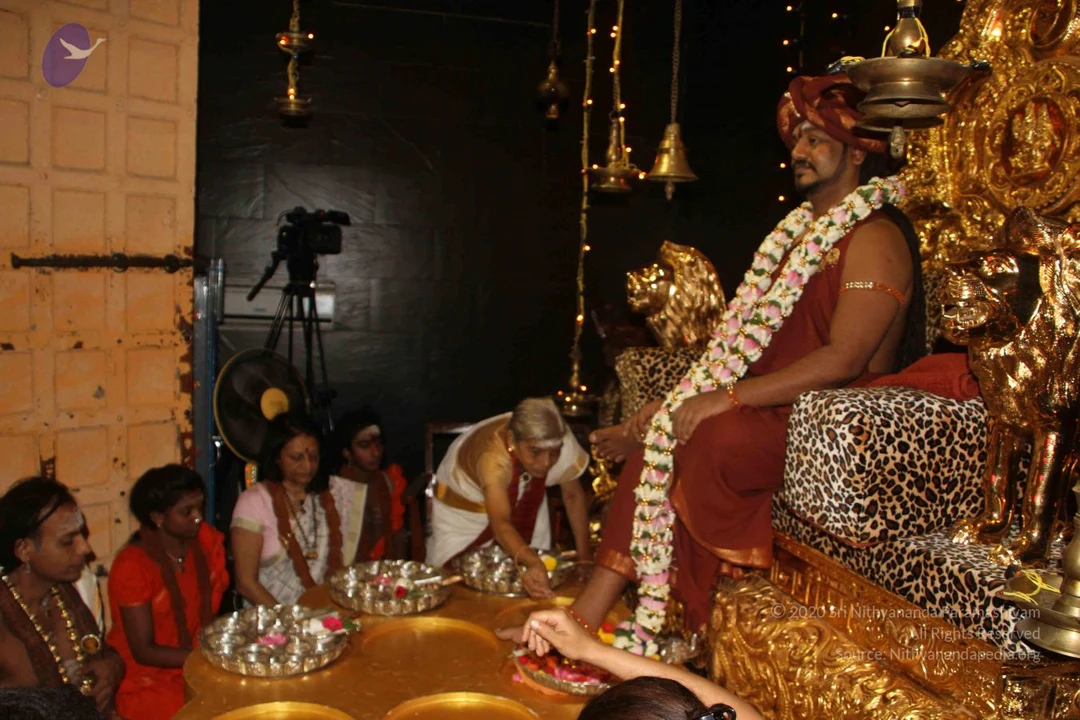
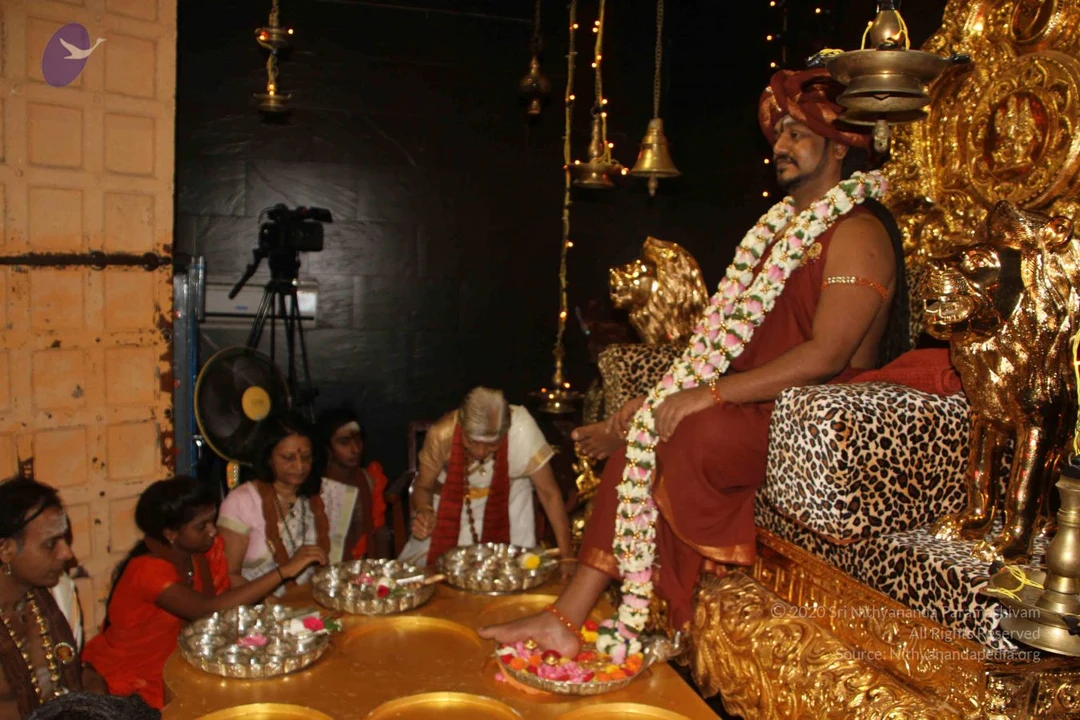
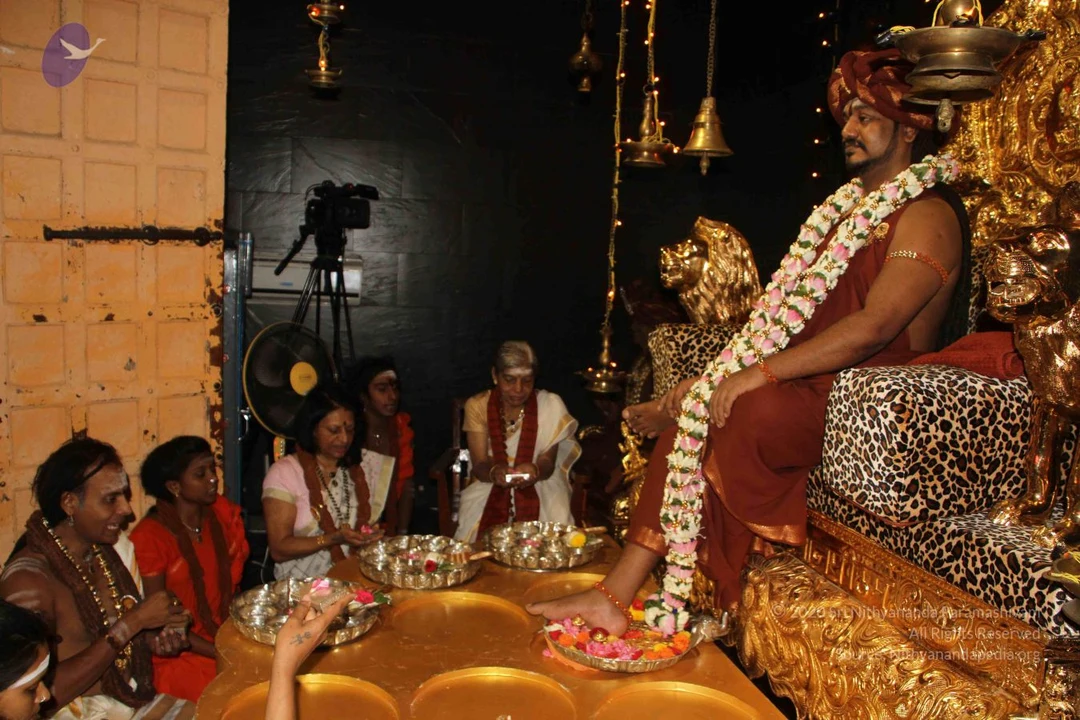
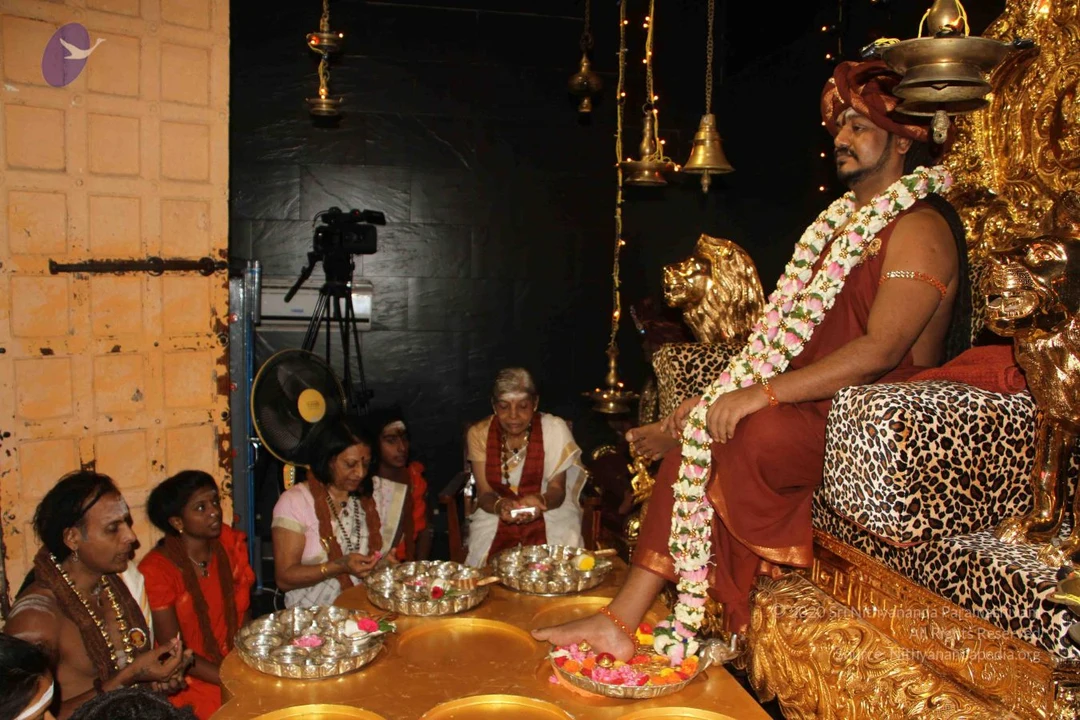
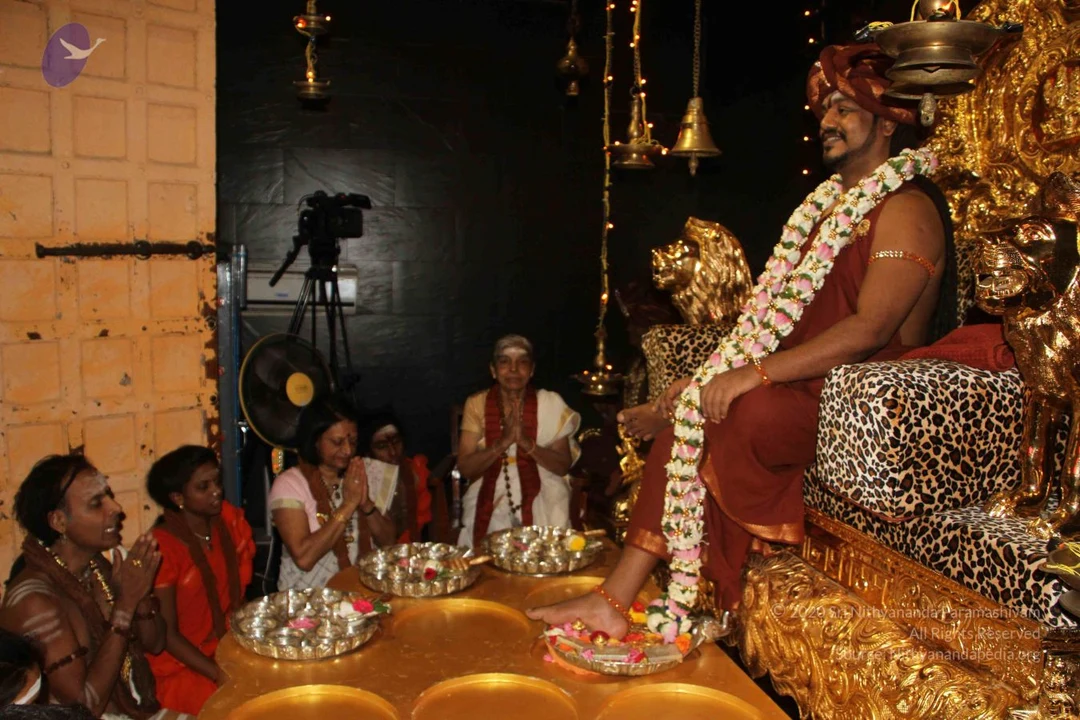
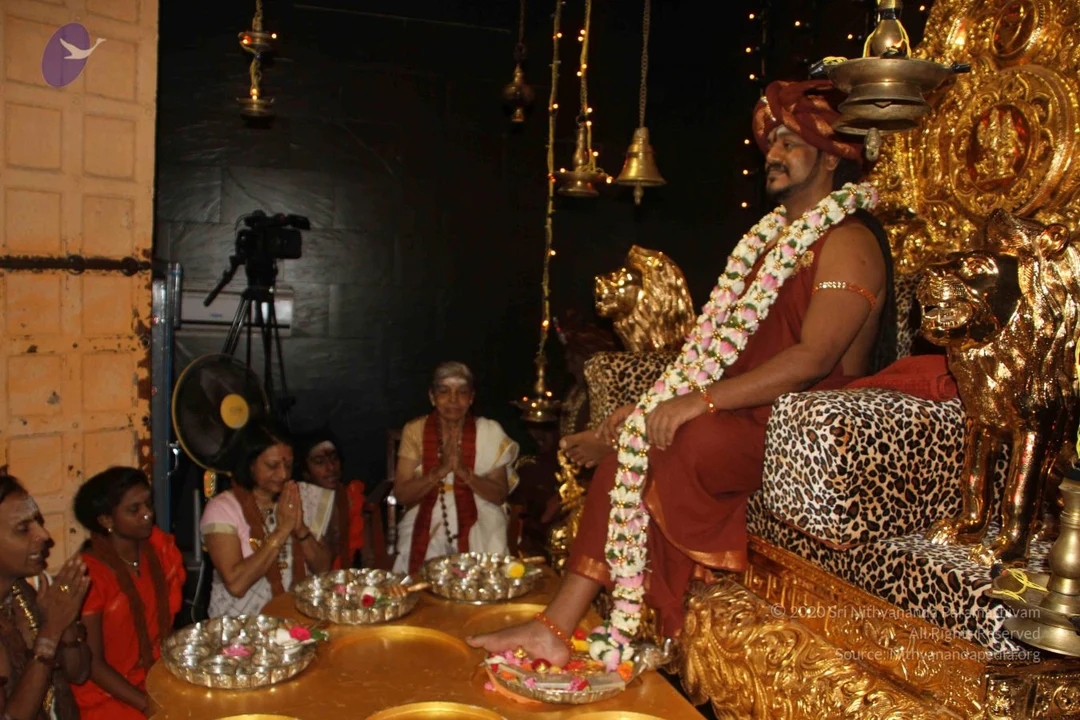
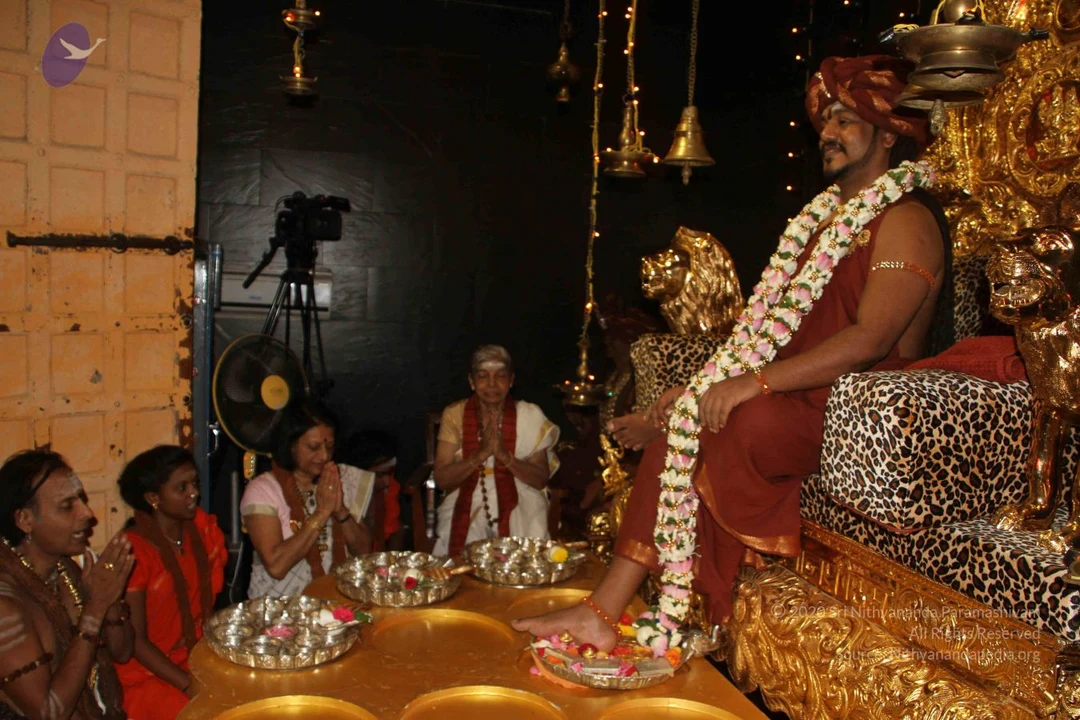
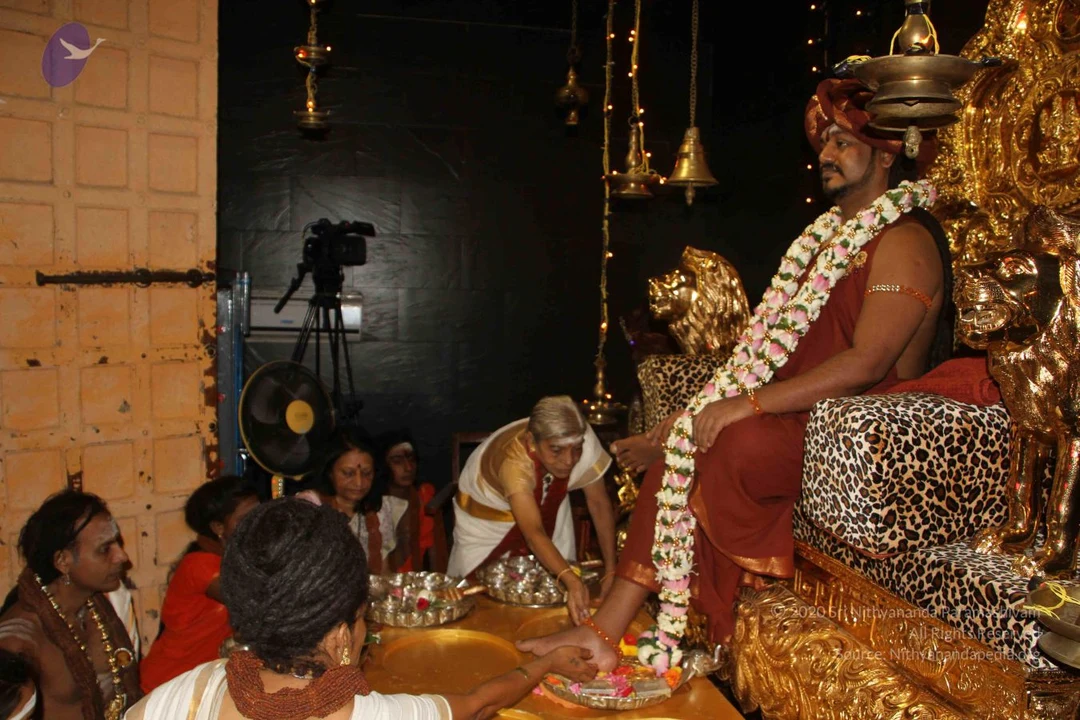
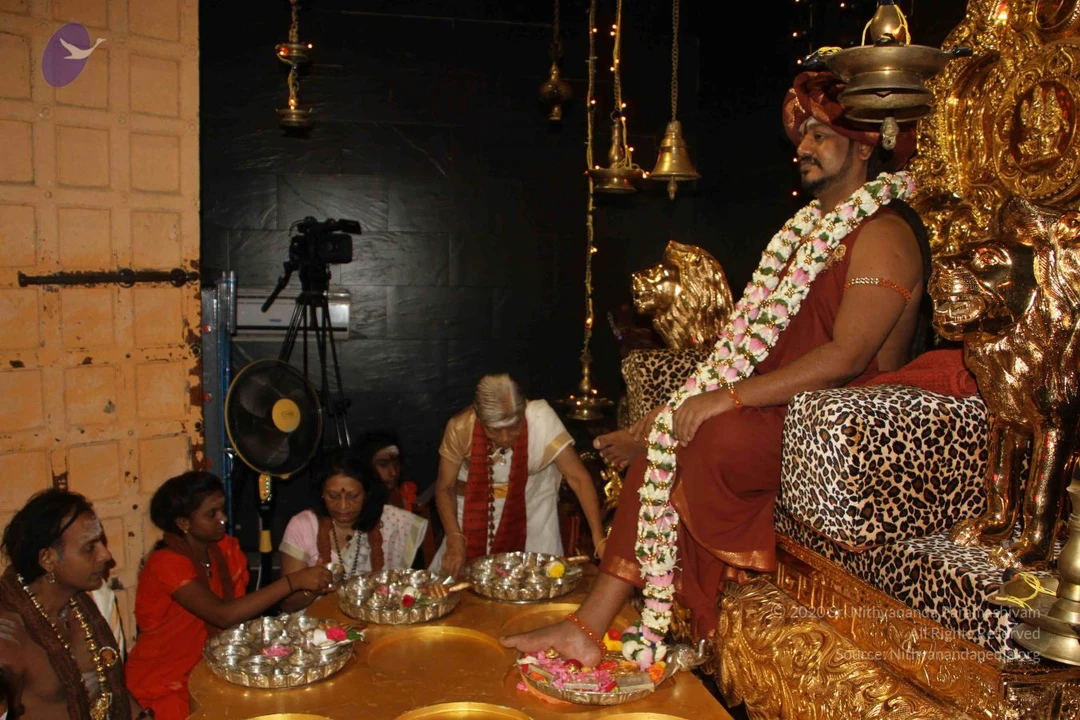
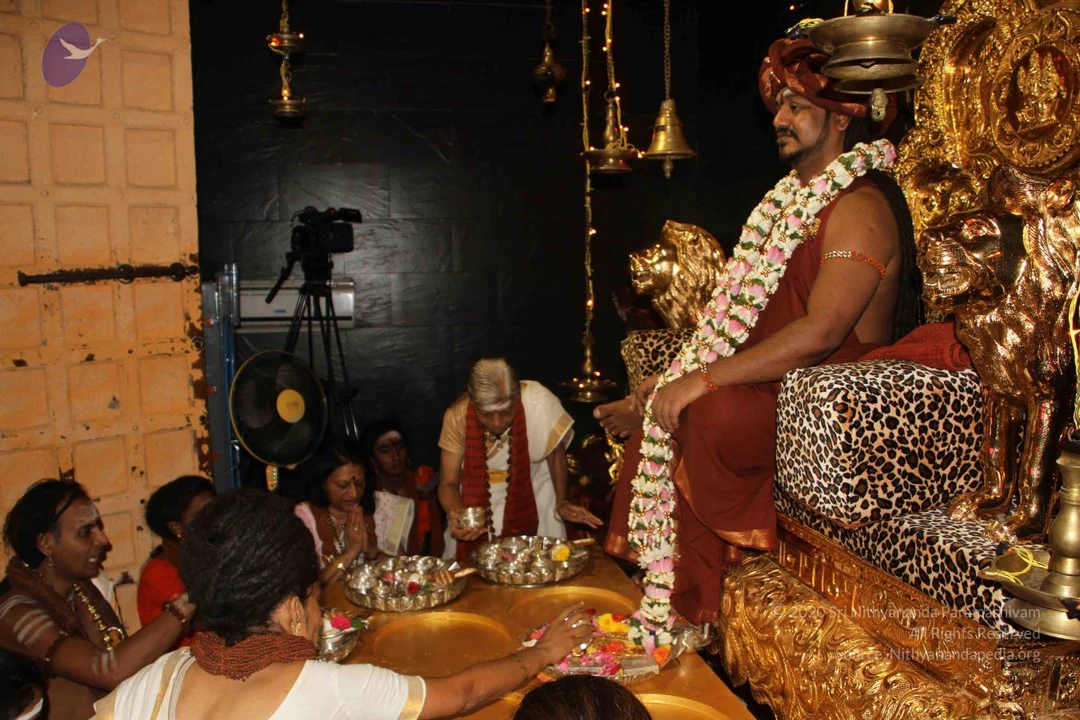
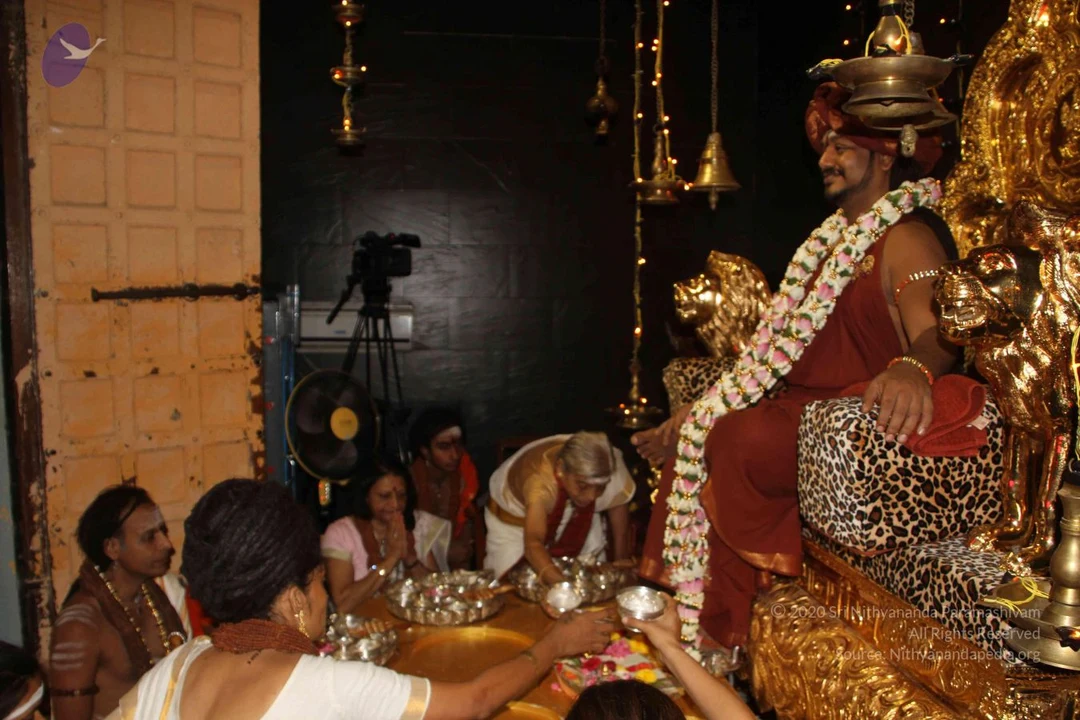
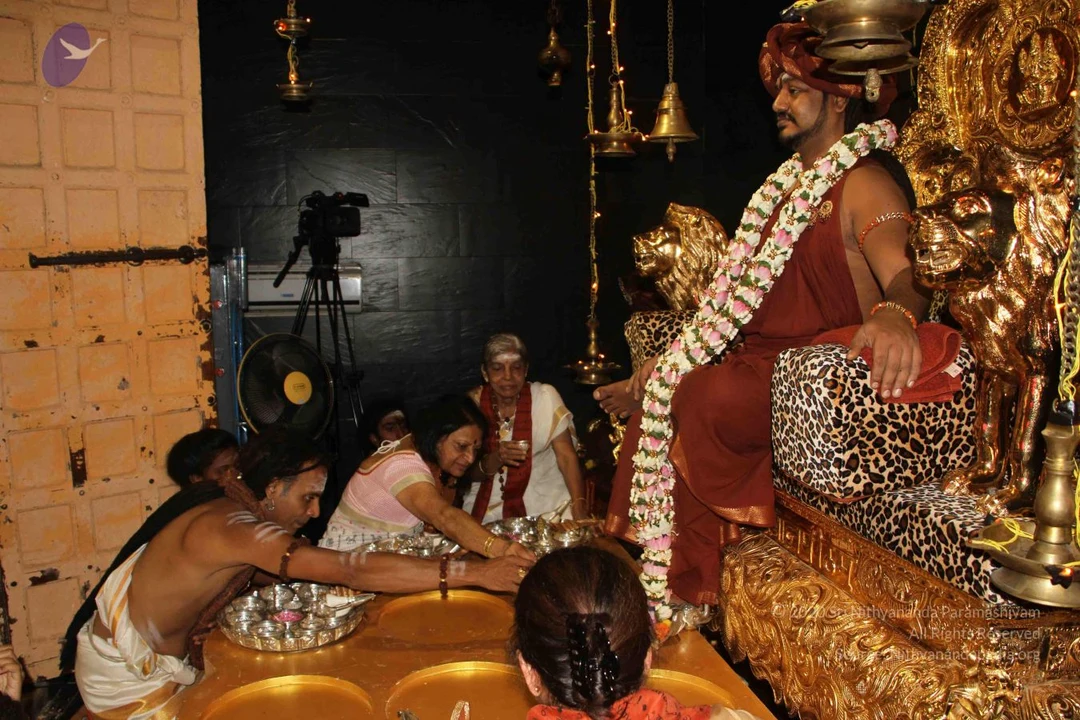
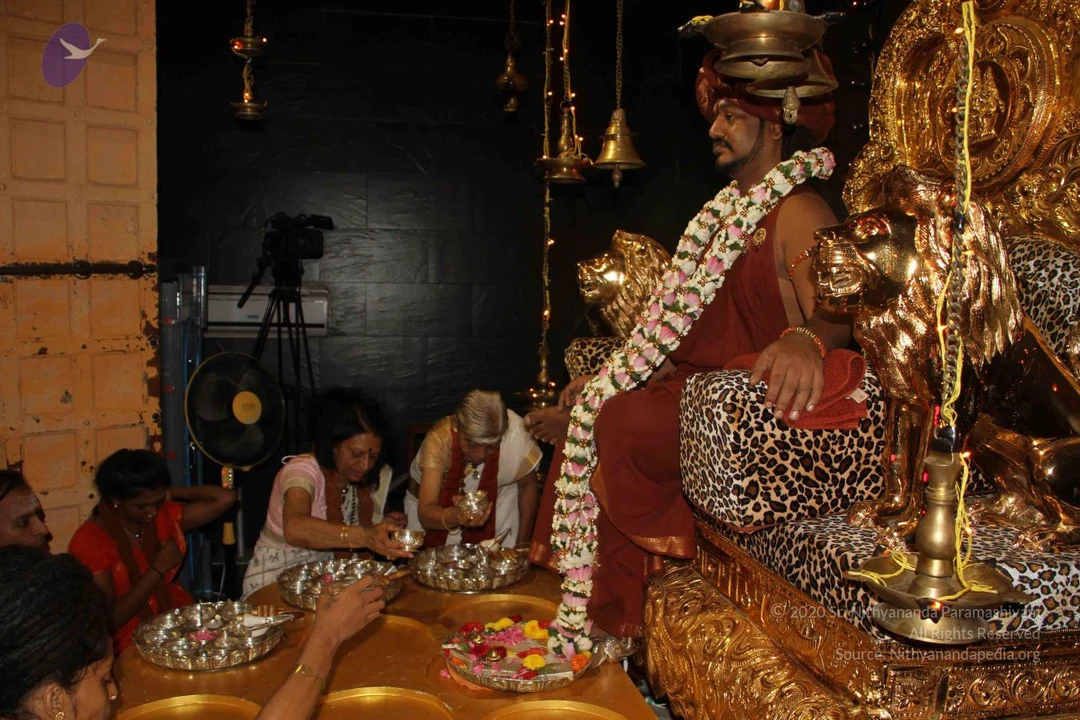
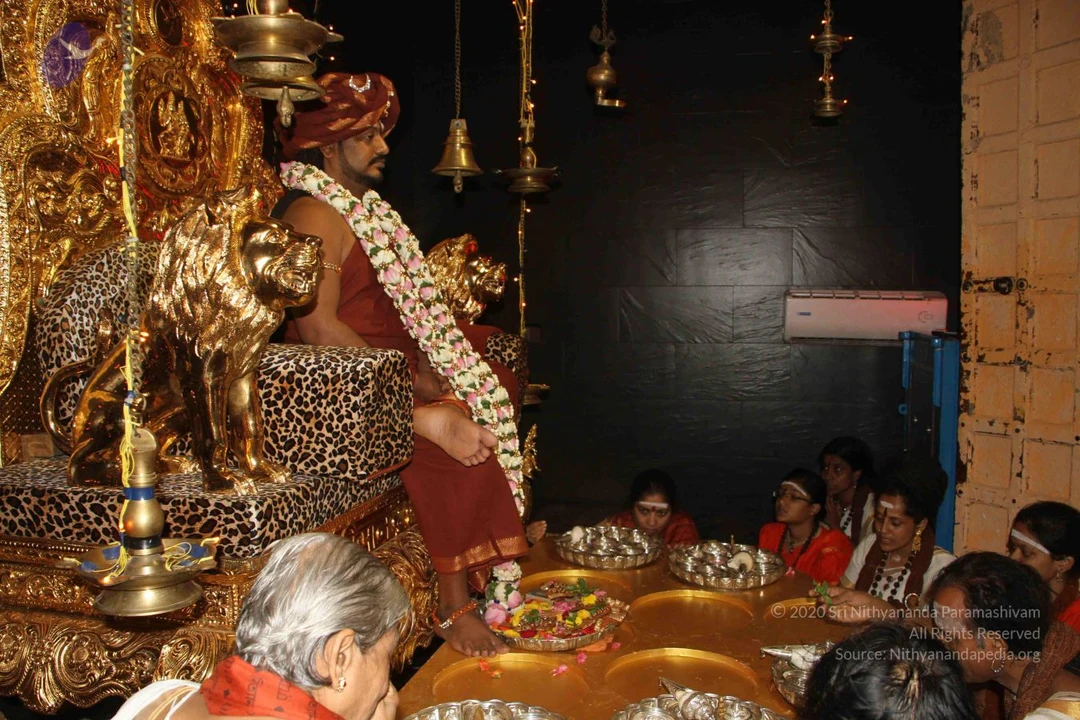
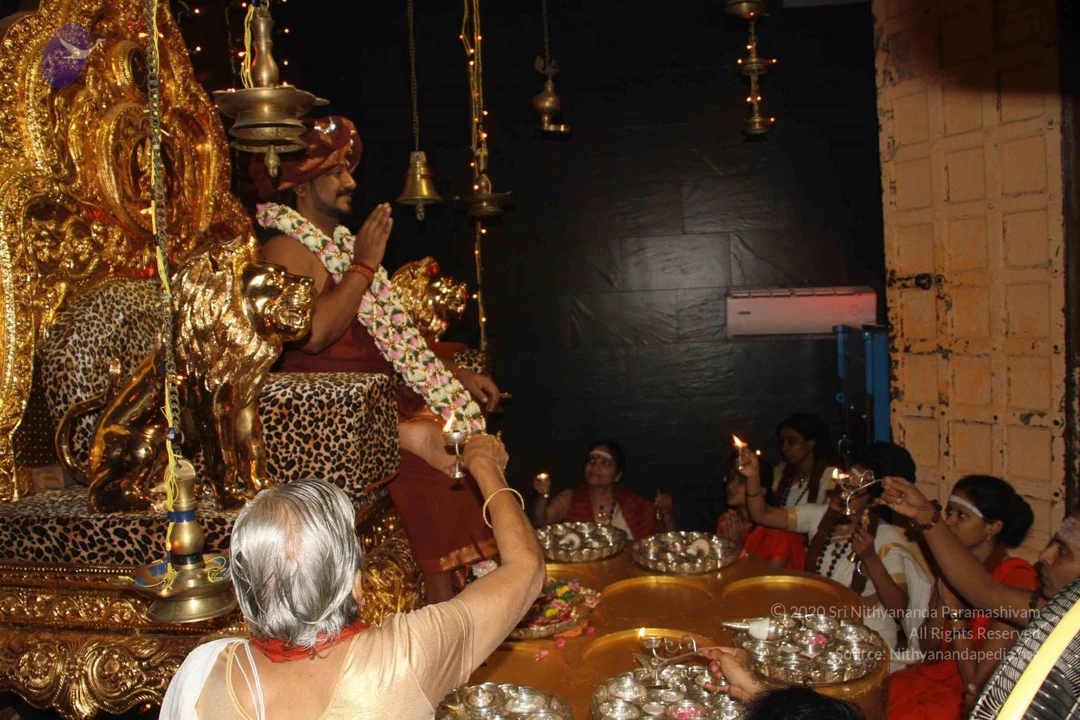
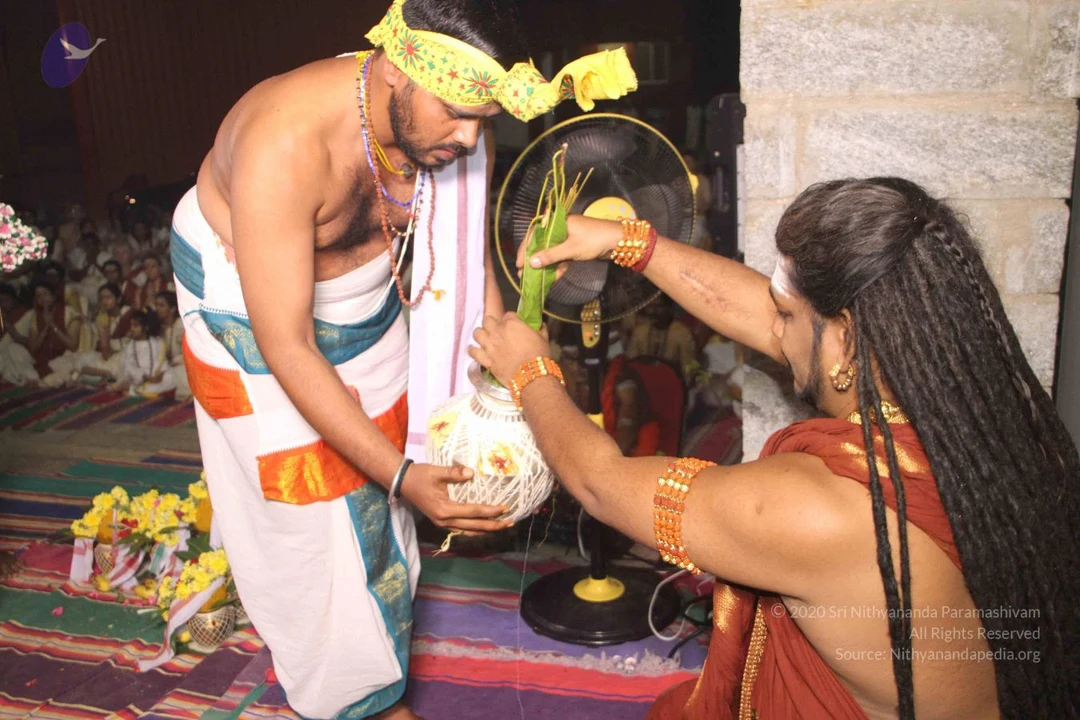
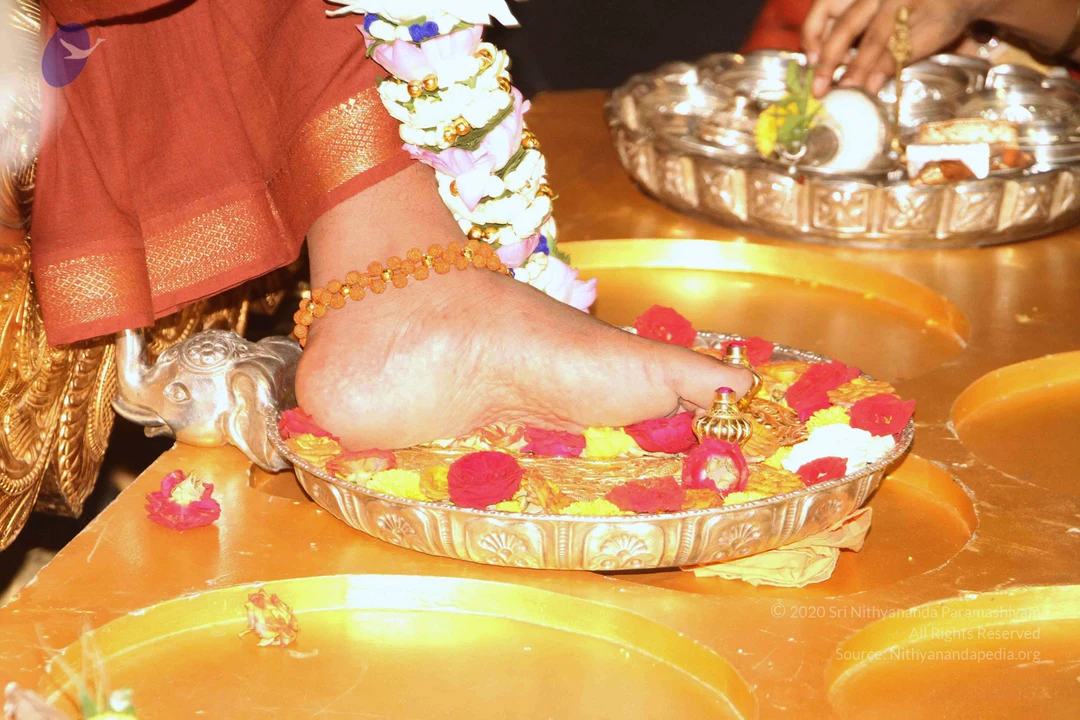
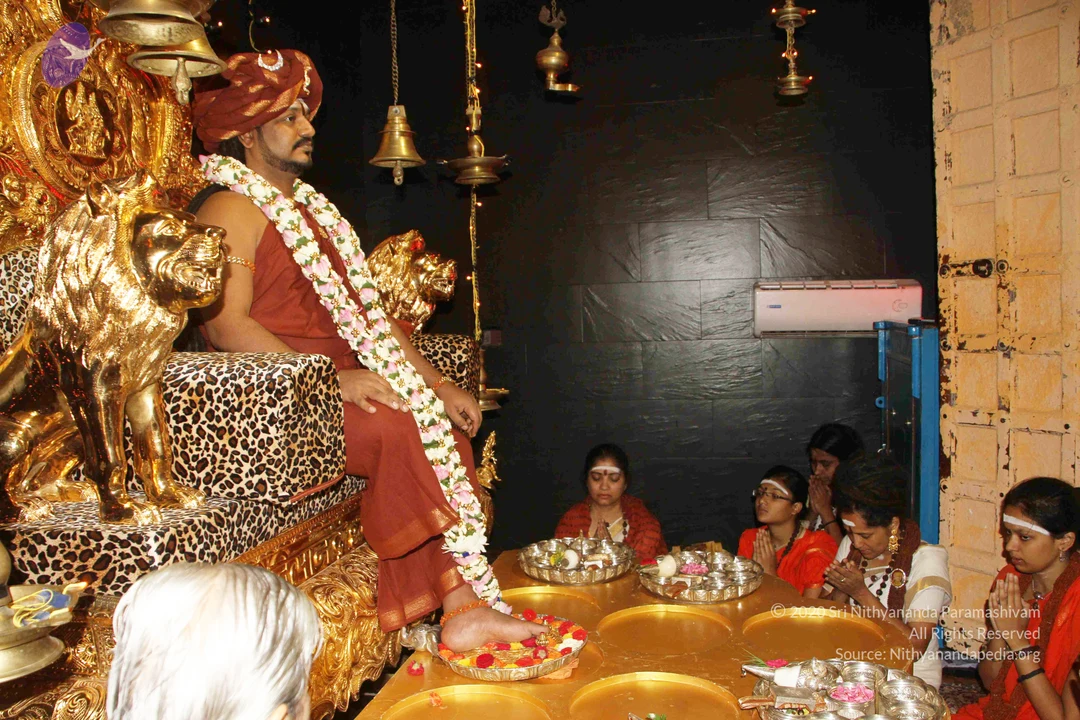
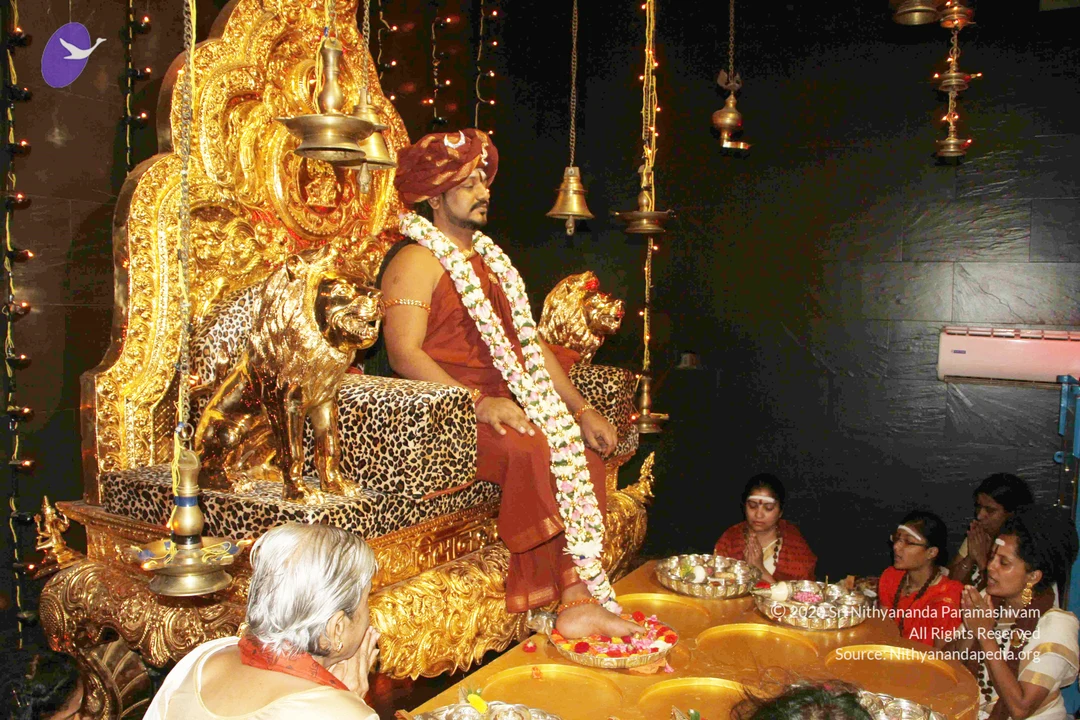
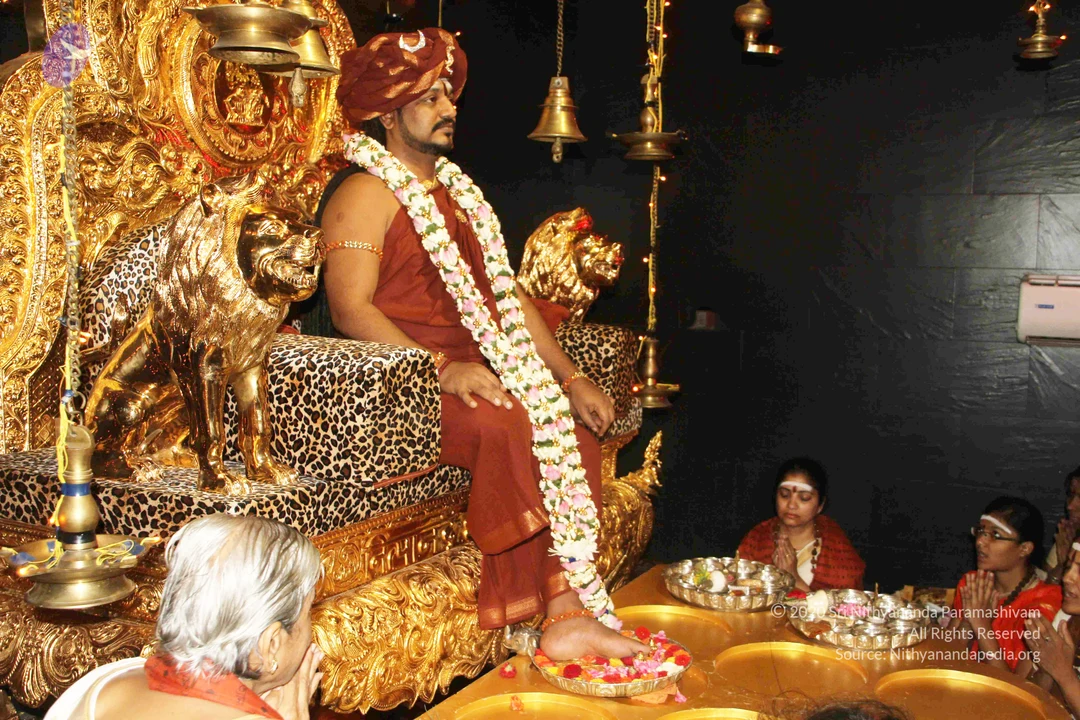
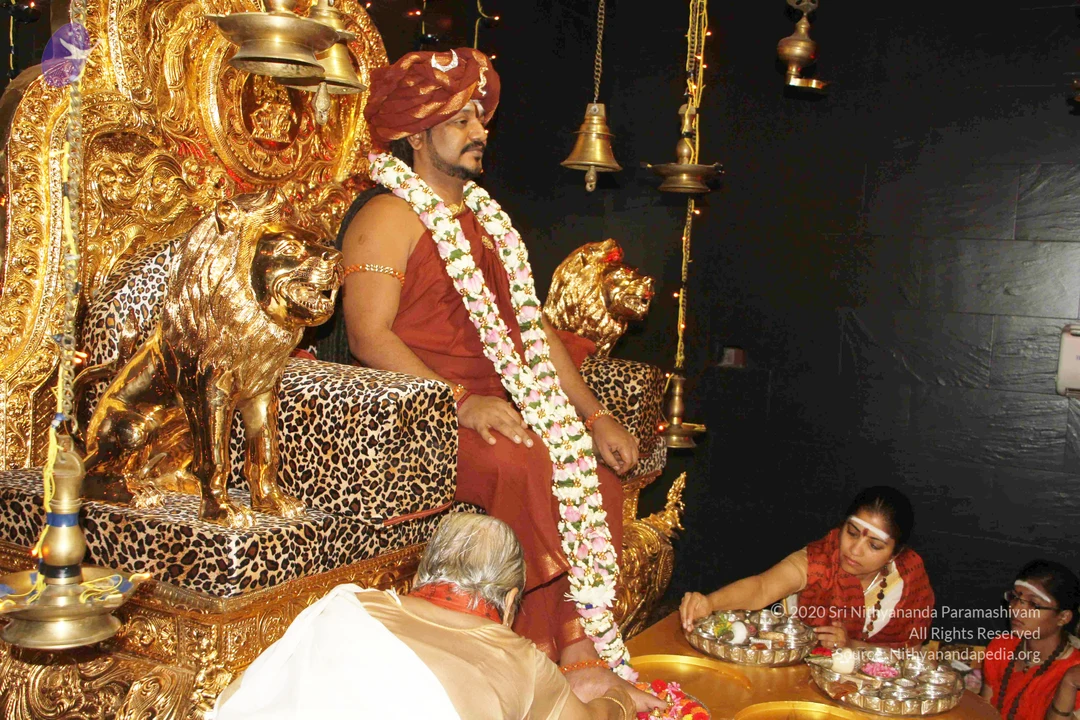
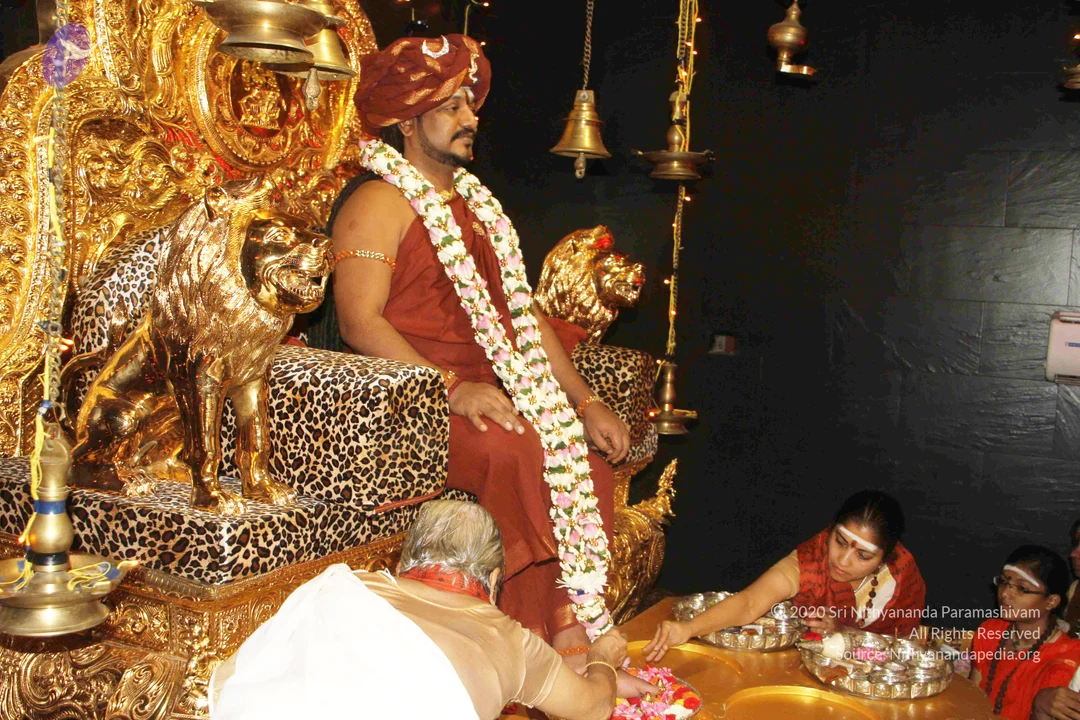
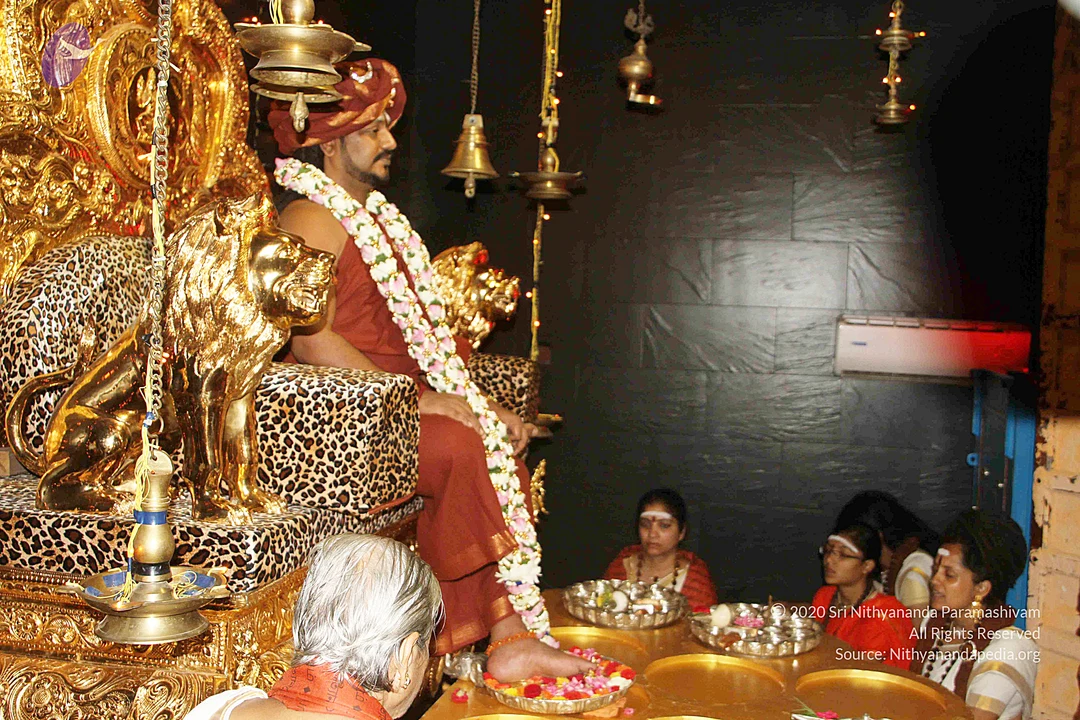
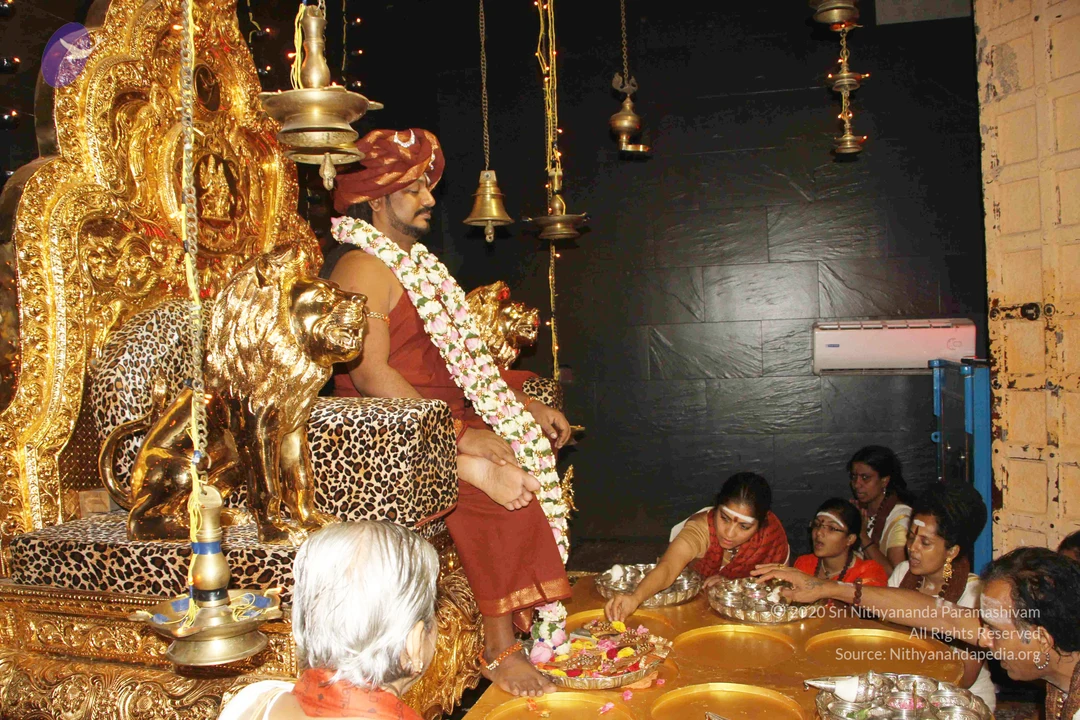
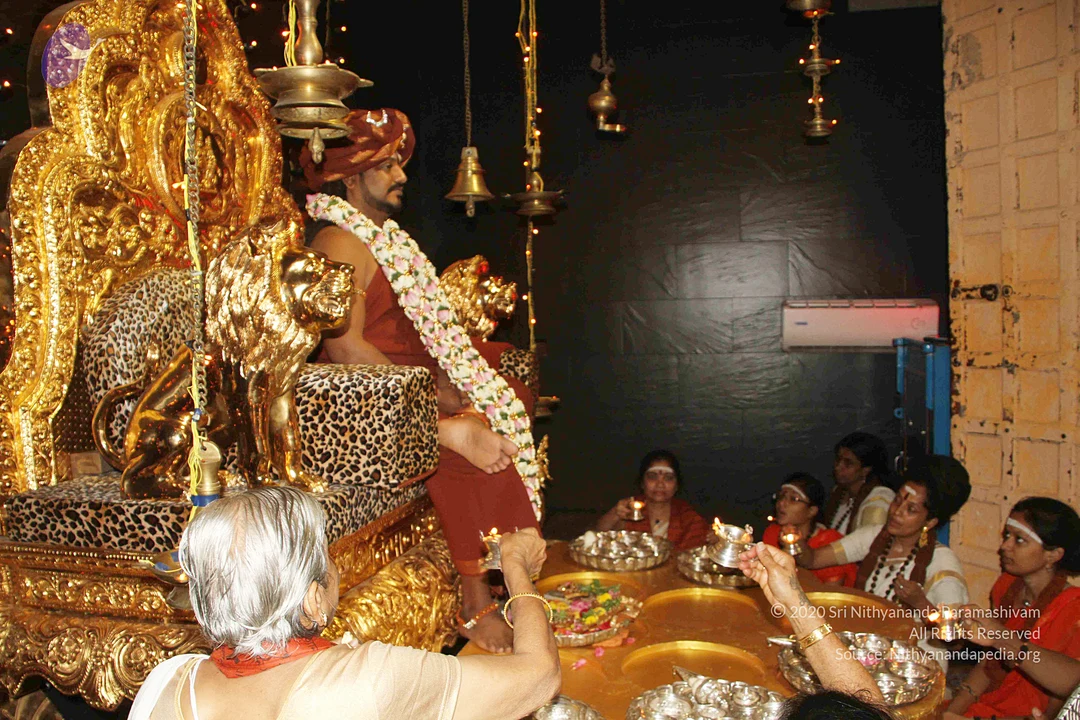
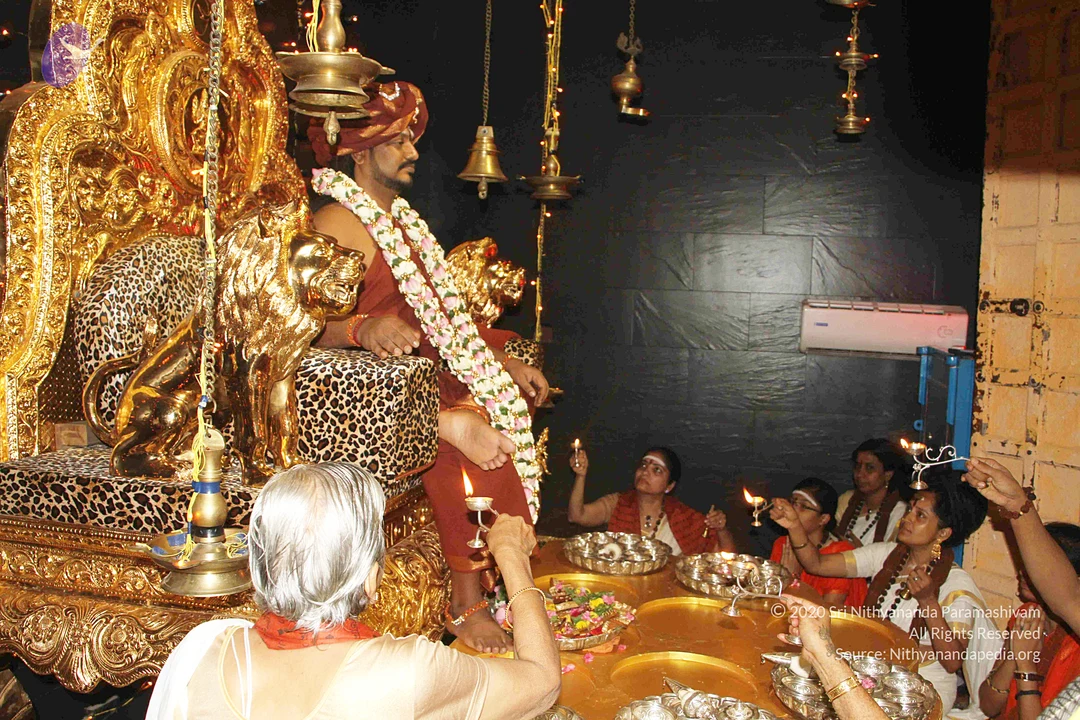
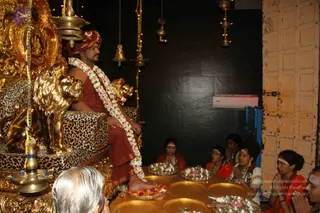
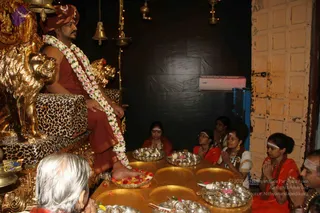
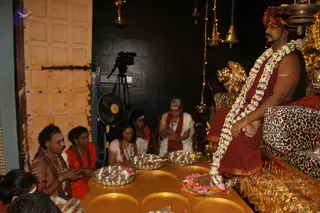
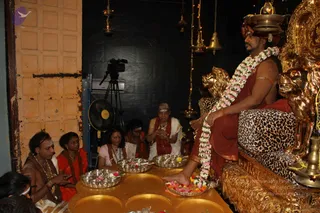
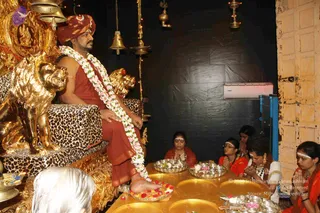
A photograph inside a temple-like room with black wall panels and a cream tiled wall. On the left, a seated man sits on an ornate gold throne with lion-head armrests and a leopard-print cushion, with a brass hanging oil lamp above. He wears a rust-red turban, a red-orange robe, and a long pink-and-white flower garland across his chest, and his right foot rests on a silver plate of flowers. Before him, a low gold-coloured table holds silver trays of petals and offerings. Five women in red and orange saris sit with hands pressed in anjali, some with white forehead markings. A bald elderly person's head is visible in the lower left foreground. Bells hang from the ceiling. The scene suggests a satsang or padapuja-style ritual. a person appearance is probable based on the turban, the garland and the throne.A photograph of a padapuja ritual in an ashram room. A man in an orange-red dhoti and wrap, wearing a white and pink flower garland, a red-orange turban and a horizontal white forehead mark, sits on a gold lion-armed throne with leopard-print cushions. His bare feet rest on a silver tray of red and yellow petals while a white-haired elderly devotee in a white garment bends forward with folded hands at the lower left. Behind the tray, several women in saffron-red and white clothes with forehead markings sit with folded hands, and a man at the right edge with a white forehead mark also joins hands. Brass and silver plates with flowers, offerings and a kalasha sit on a golden table. Gold lamps hang from the ceiling and a bell is visible. The throne figure's appearance matches the page's a person cues: a red-orange turban, flower garland and ornate gold throne, supporting a probable identification.A seated figure in a dark red garment with a maroon turban and a long floral garland of pink and white flowers sits on a gold throne draped with a leopard-print cushion, with a gold lion carving beside him. Before him a low golden table holds silver bowls of flower petals and offerings, and a man bare-chested with white body markings and gold necklaces, plus women in pink and red saris and a man in white dhoti sit with folded hands in a ritual setting. Hanging brass bells and a black wall with a camera on a tripod complete the scene.Photograph of a padapuja-style ritual in an indoor hall with dark walls. A man in a rust-red robe with a long pink-and-white flower garland sits on an ornate golden throne with lion-head armrests and a leopard-print cushion, one bare foot resting on a tray of flower petals while a devotee offers worship. To the left, seated devotees include a bare-chested man with rudraksha beads and a woman in red, and a woman in white and red sits near a tripod-mounted camera and a fan. Brass bowls with flowers and a brass oil lamp hang above, and golden bell-shaped lamps dangle from the ceiling. A wall-mounted tapestry and a brass lamp stand at the right edge.A seated man on a gilded throne with leopard-print cushions wears a saffron-red turban and a long red-orange garment, with a pink and white flower garland around his neck and a bangle on his upper arm. Several devotees kneel at a brass table in front, one woman in pink and white reaches to a brass plate of flowers while others in orange and white sit around it. Brass lamps hang above, a video camera on a tripod is pointed at the scene, and a hand holds a flower tray in the foreground. Gold lion figures flank the throne and the walls are dark with a yellow-tiled panel on the left. a person may appear here as the throned figure, but the appearance cues are not clear enough to confirm.A seated man in a maroon wrap and red-orange turban sits on a golden throne with a leopard-print cushion, a lei of white and pink flowers draped over him. His bare right foot rests on a silver tray of flower petals and offerings. Around him, devotees kneel at gold-coloured tables with silver plates of flowers and oil lamps. A kneeling woman in a pink sari with a red shawl and a man in white with a red shawl stand nearby, and a man at left wears tilak and beads. Brass hanging lamps and bells hang above, with a golden lion-shaped carving beside the throne and a video camera on a tripod at left. This is a foot-washing padapuja ritual.

Nithya-Satsang
53 photosSource gallery
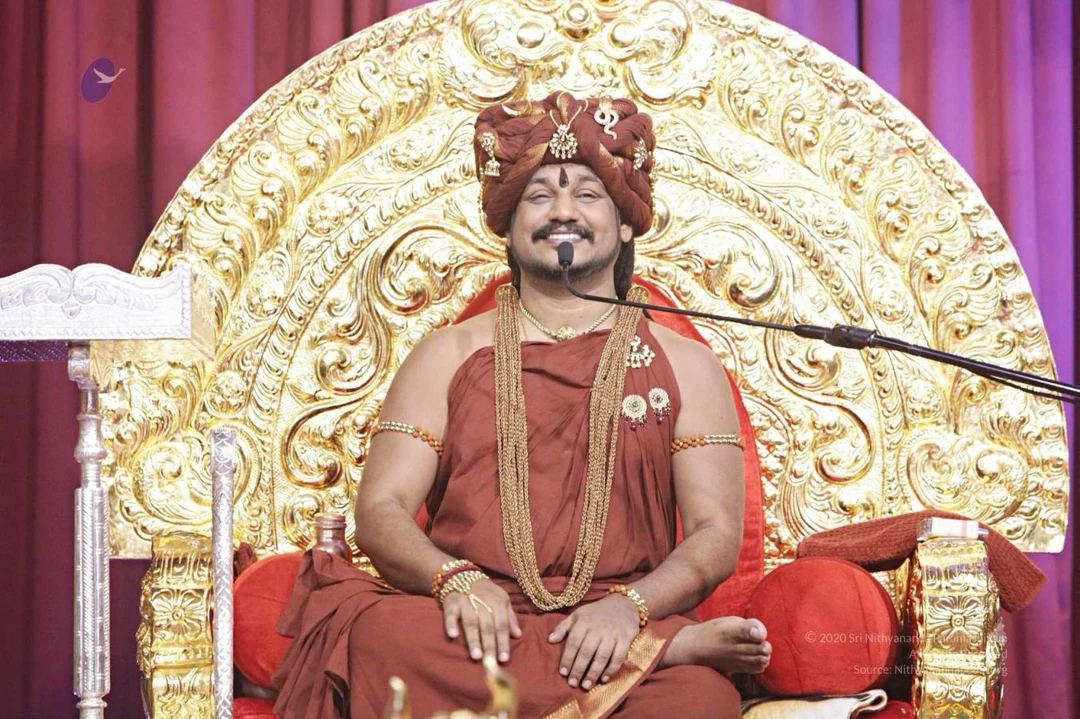
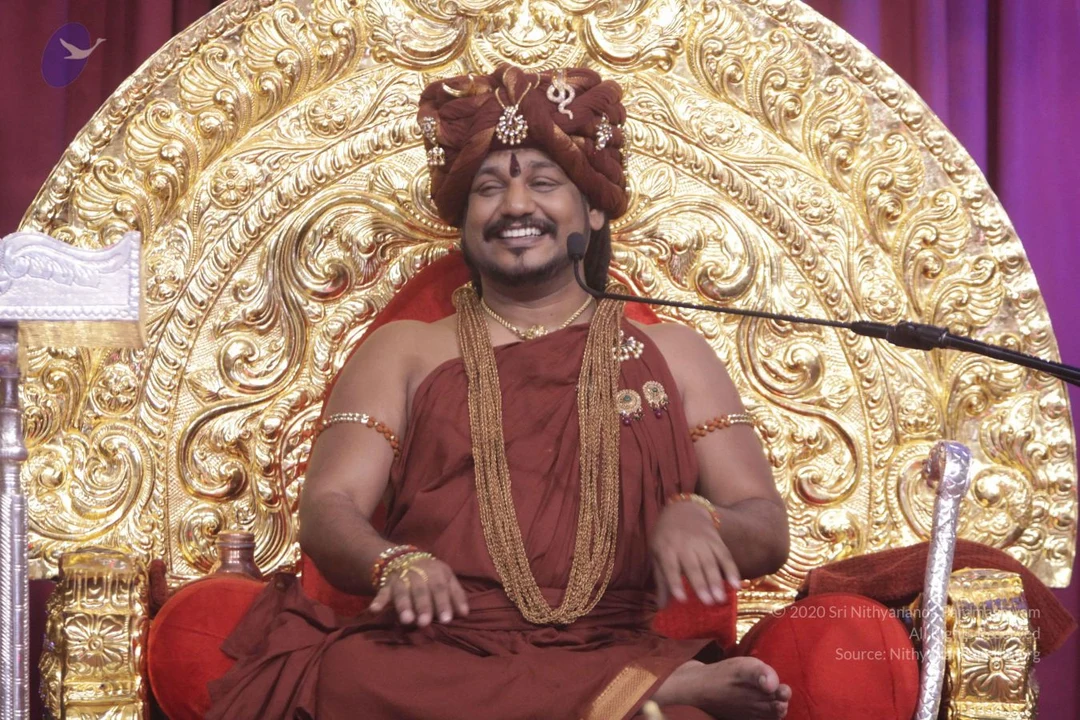
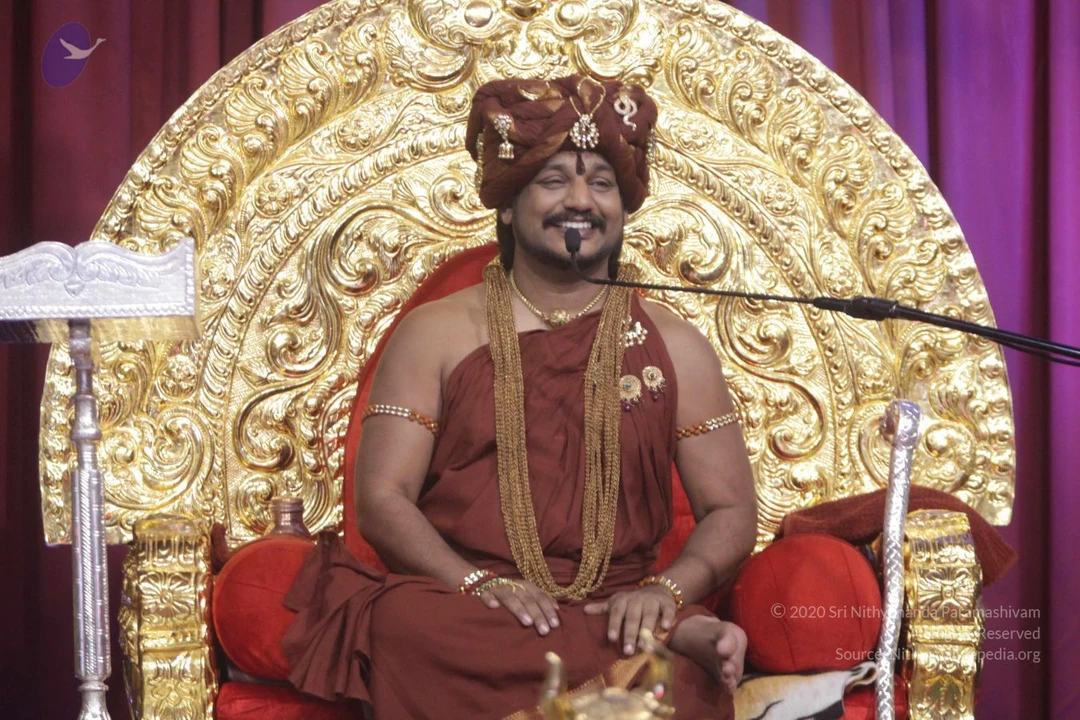
A seated man on a large gilded throne with ornately carved golden backrest and red cushions speaks into a microphone while raising one hand in a gesture of address. He wears a rust-red turban decorated with a gold ornament and a gold-coloured pendant, a rust-red robe, long multi-strand gold necklaces, a rudraksha-style bead mala and gold armbands with red bangles. A red tilak mark is on his forehead and he smiles. Purple curtains hang behind the throne and a silver-coloured stand is at the left edge.A seated man in a maroon-brown robe and matching turban decorated with gold ornaments sits on an ornate gold throne with a large, intricately carved gold backrest against magenta drapes. He wears heavy long gold chains, a gold necklace, gold armbands and a red-and-gold bangle, and raises his right hand mid-gesture while speaking into a microphone on a stand. Swamiji (probable): the figure has a turban, a long gold necklace and rudraksha-style ornaments, consistent with the page's description of a discourse, though the appearance cue is only moderately distinctive.A man seated on an ornate gilded throne with a large curved back carved in scrolls and floral motifs, before a purple draped backdrop. He wears a rust-brown turban with a gold ornament, a rust-brown wrap, a long gold bead necklace, a gold chain, gold bangles and an armlet, and a red-brown sash. He raises one hand in a blessing or teaching gesture while speaking into a microphone on a stand. A purple emblem appears in the upper left corner. The appearance cues of the seated speaker (turban, ornate gold necklaces, ceremonial throne) are consistent with Swamiji (probable), who is shown in person giving a discourse.A man seated on an ornate golden throne with a gold-embossed backrest, raising his right hand in a gesture of blessing while speaking into a microphone on a stand. He wears a rust-red turban decorated with gold ornaments, a rust-red robe, a long gold necklace of multiple strands, a gold pendant, beaded bracelets and gold armlets. A red tilak is visible on his forehead. Red cushions and a purple draped curtain form the backdrop. Probable Swamiji (long hair not visible; cues are the ornate turban, saffron-red ceremonial robe, multi-strand gold necklace and throne seating), seated as the discourse speaker.A photograph of a smiling man seated on an ornate golden throne with a large carved gold backrest and red cushions, in front of deep red draped curtains. He wears a maroon-red turban decorated with gold ornaments, a maroon-red robe, long gold beaded necklaces, rudraksha-style bead bracelets on his arms, and a gold-brooch ornament on his chest. A microphone stand is at his side and a silver armrest is visible at left. A purple logo appears in the upper left corner. Swamiji (probable): the seated figure has a long-cut face with a turban, ornate gold chest brooches and multiple rudraksha malas, consistent with a discourse setting.A seated man in a rust-red turban decorated with gold ornaments and a red-orange draped robe sits on an ornate gold-carved throne with a red cushion. He wears layered gold necklaces, rudraksha-style beads and gold armbands, and a microphone stand is positioned before him. The backdrop is deep red drapery with a red-lit wall at left.

Vishesha-Deeksha

81 photosSource gallery
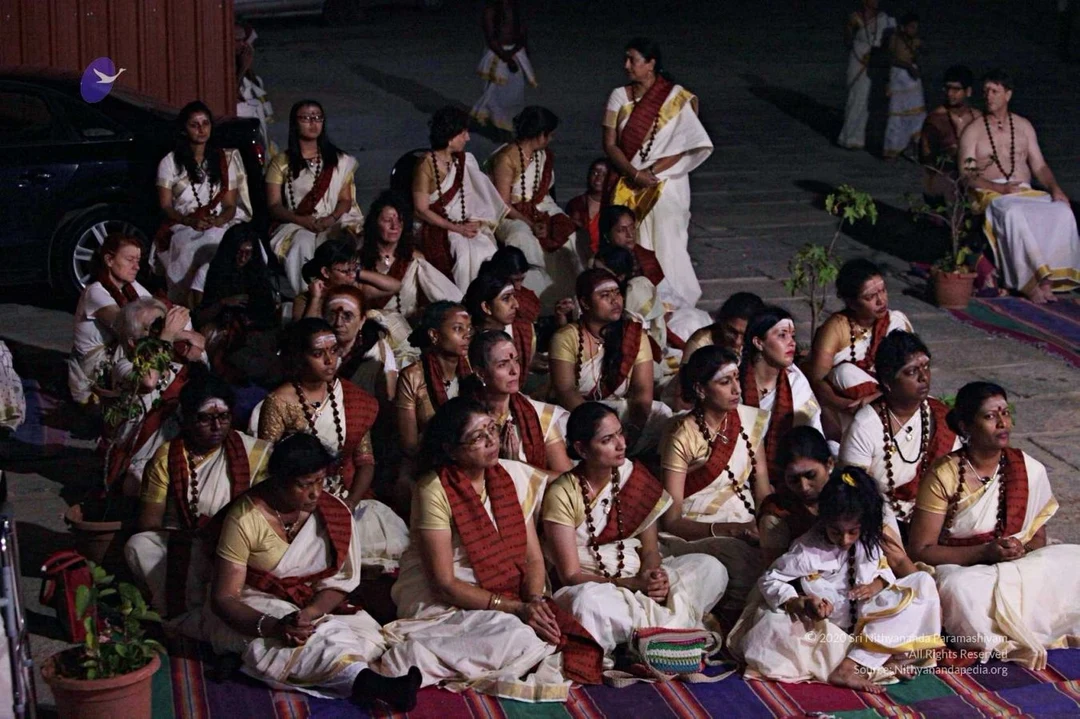
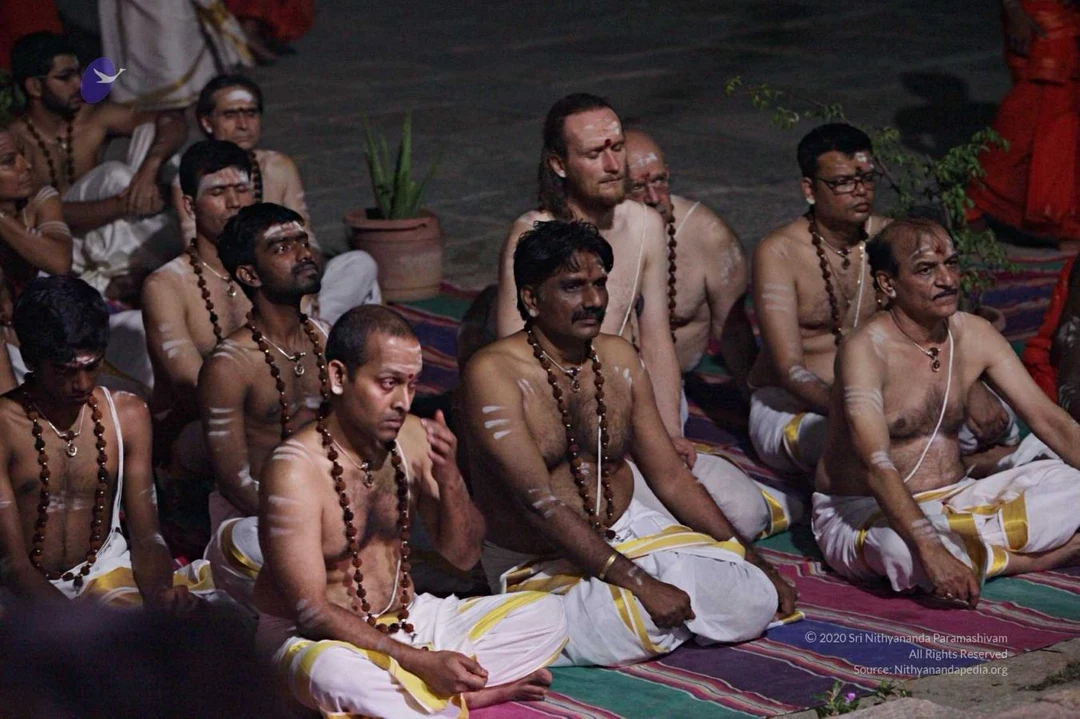
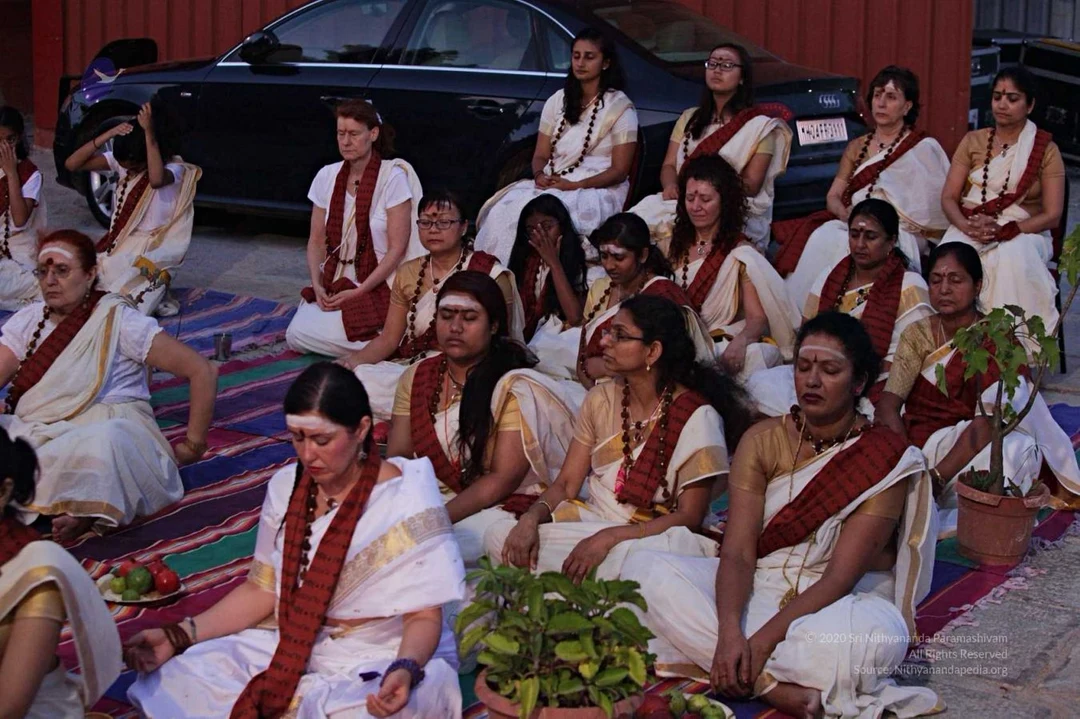
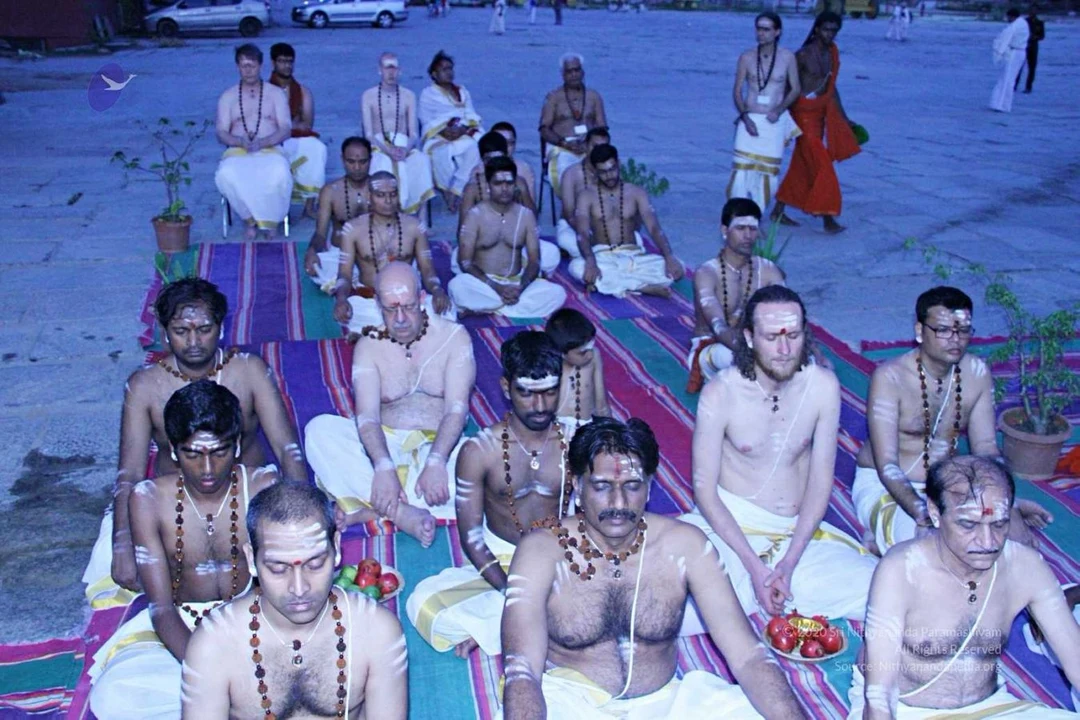
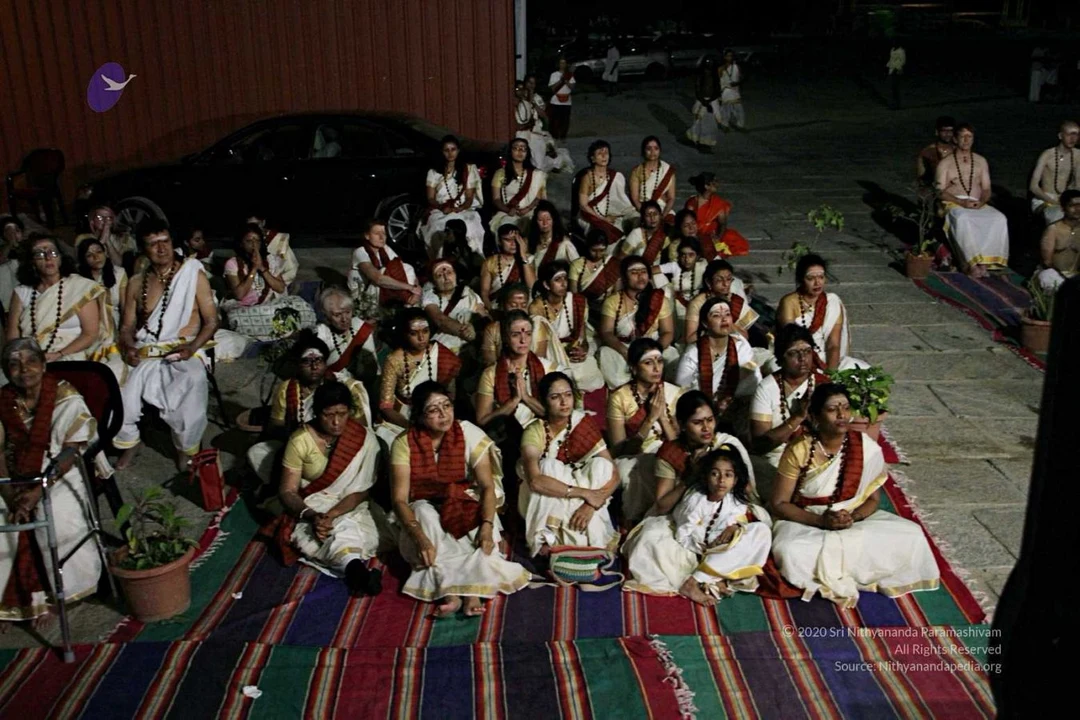
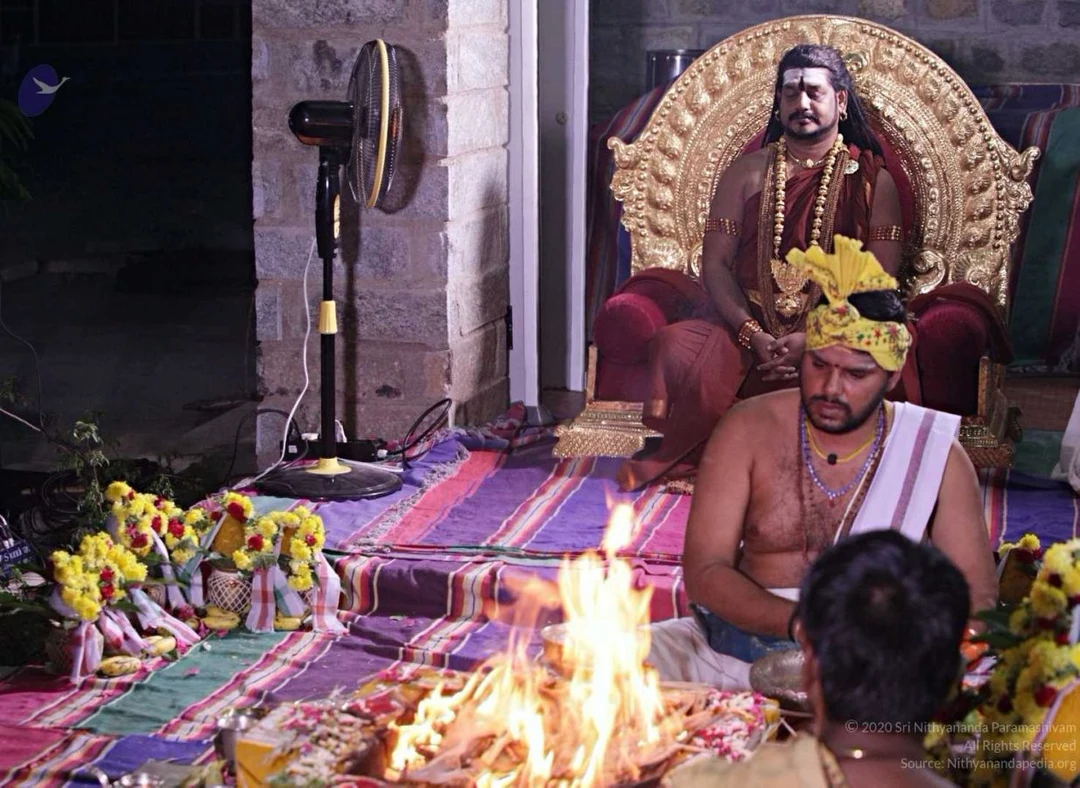
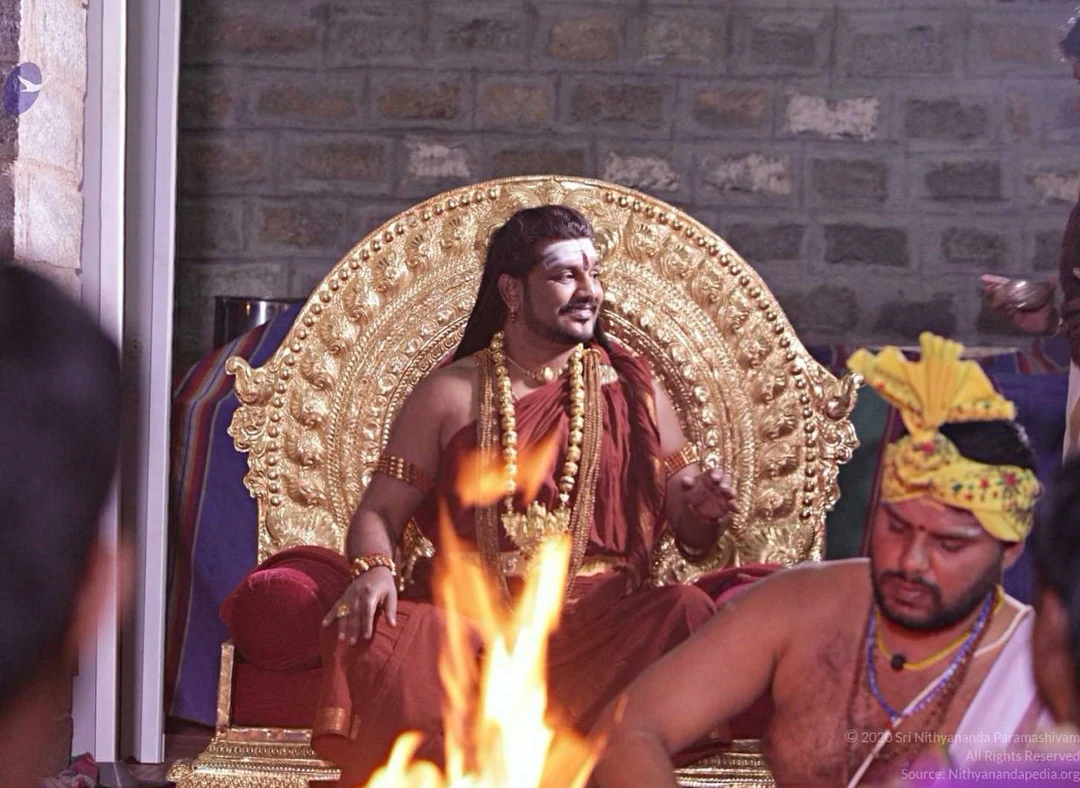
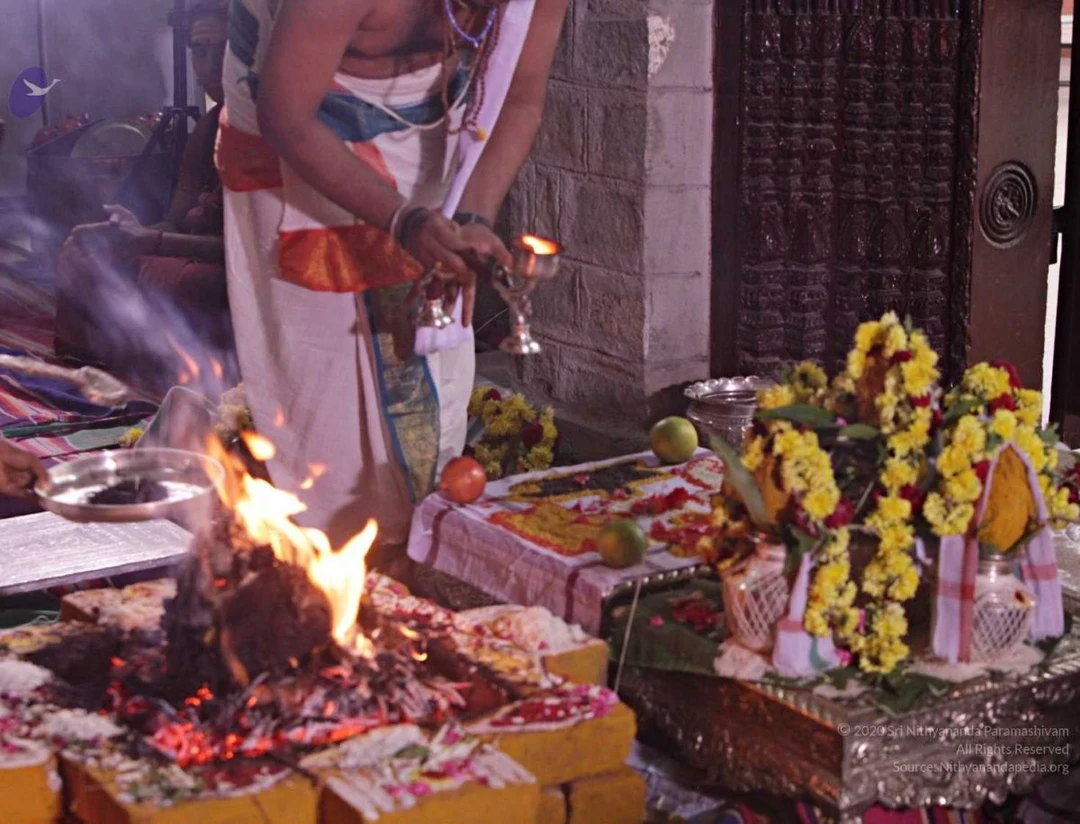
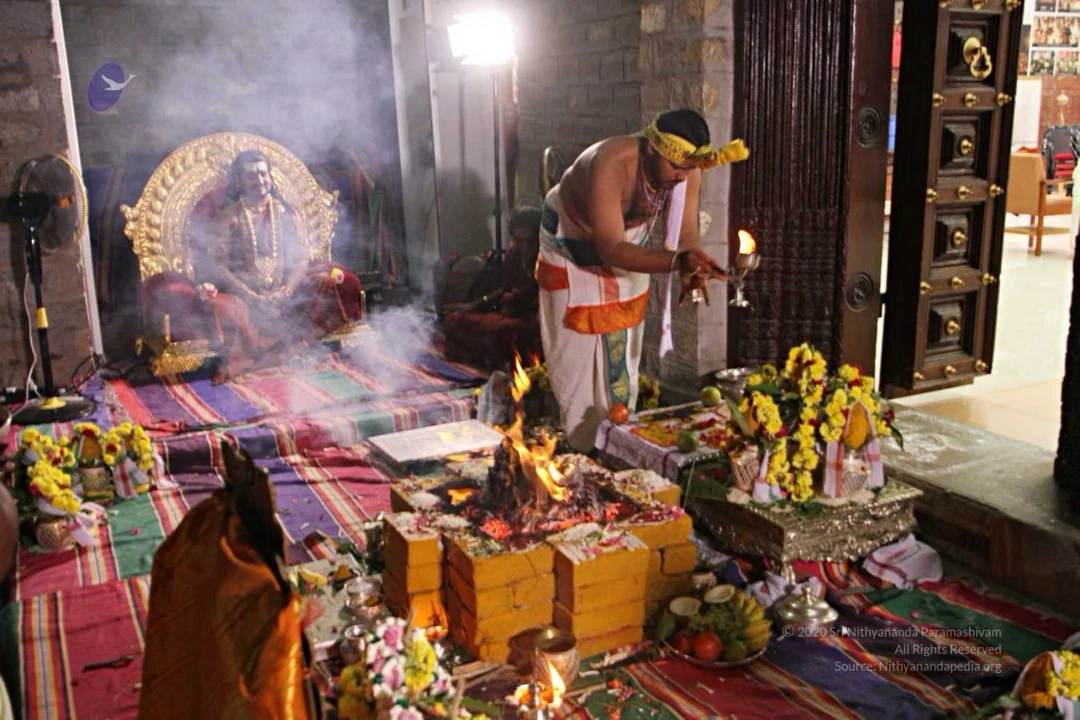
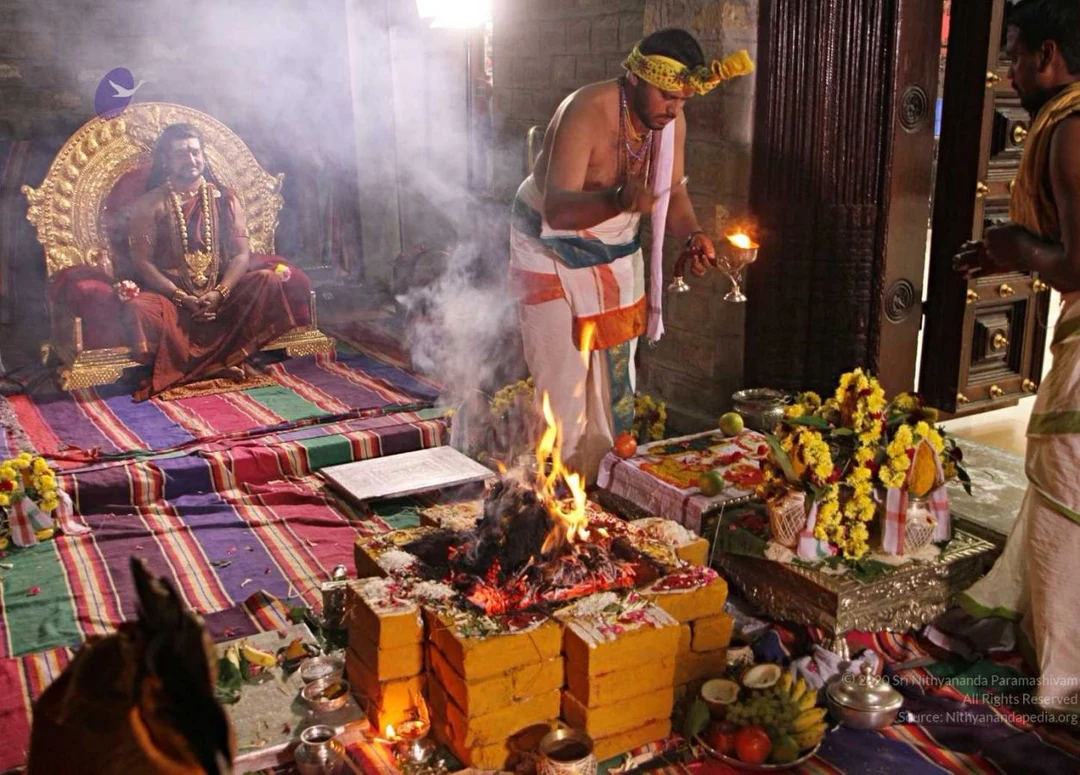
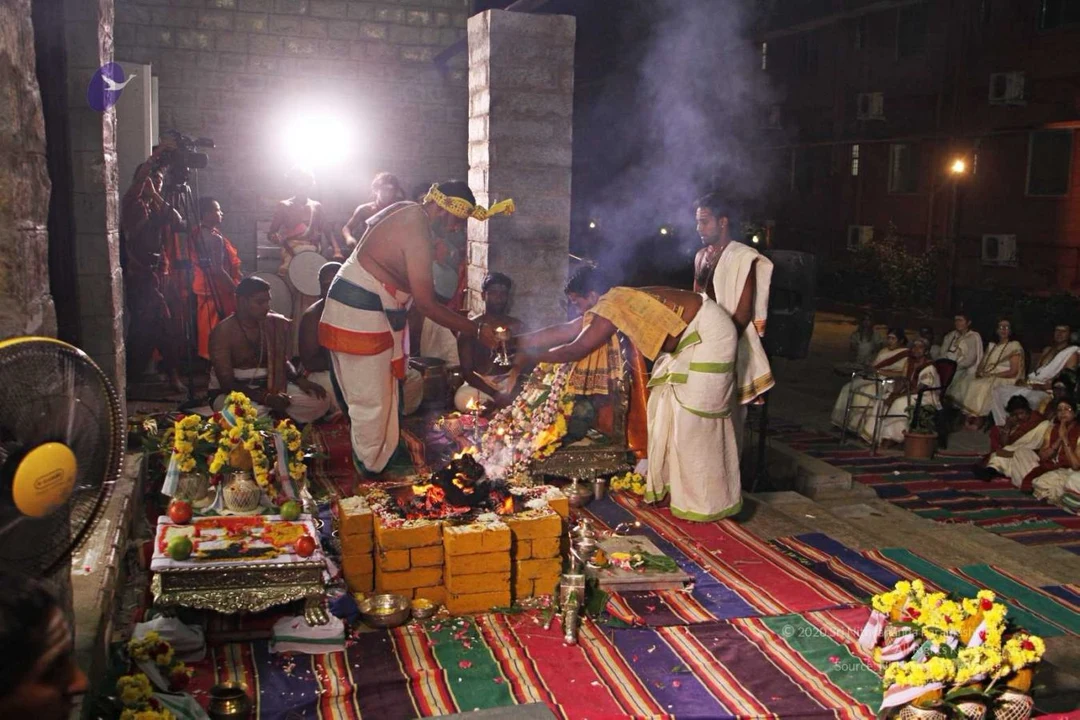
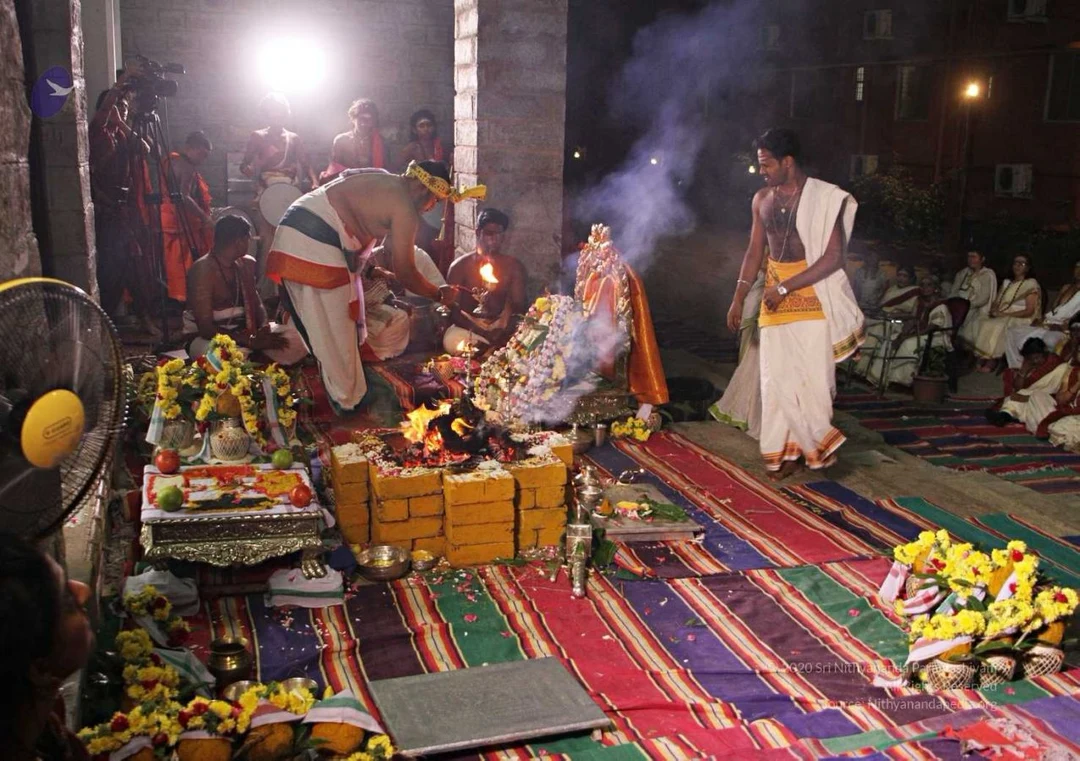
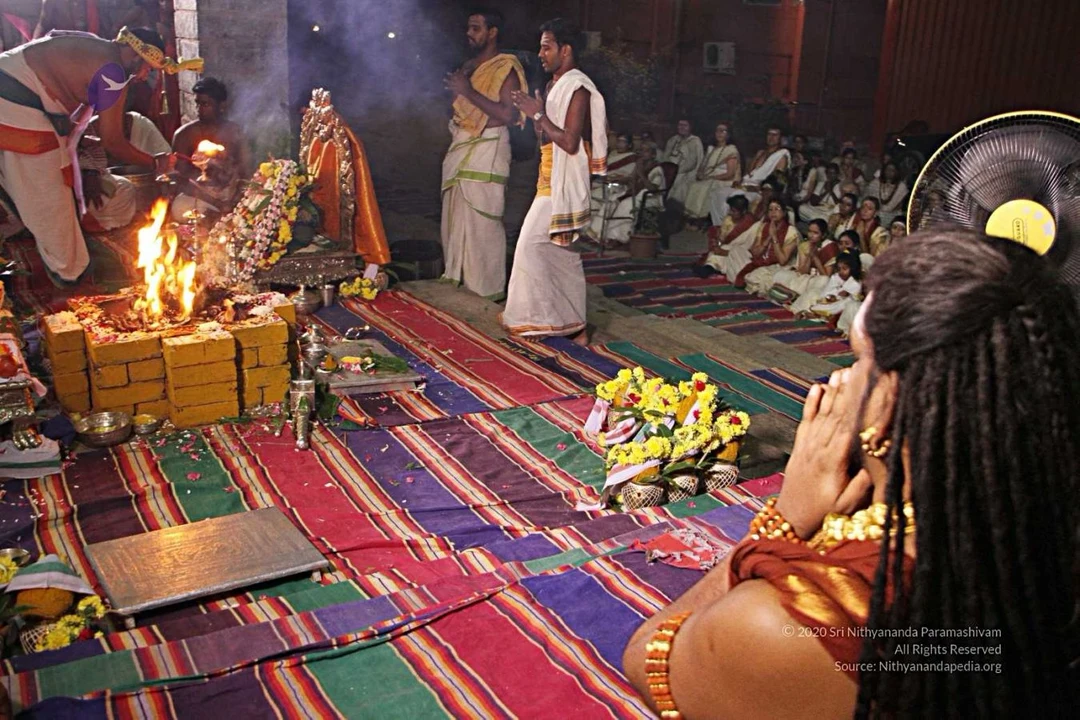
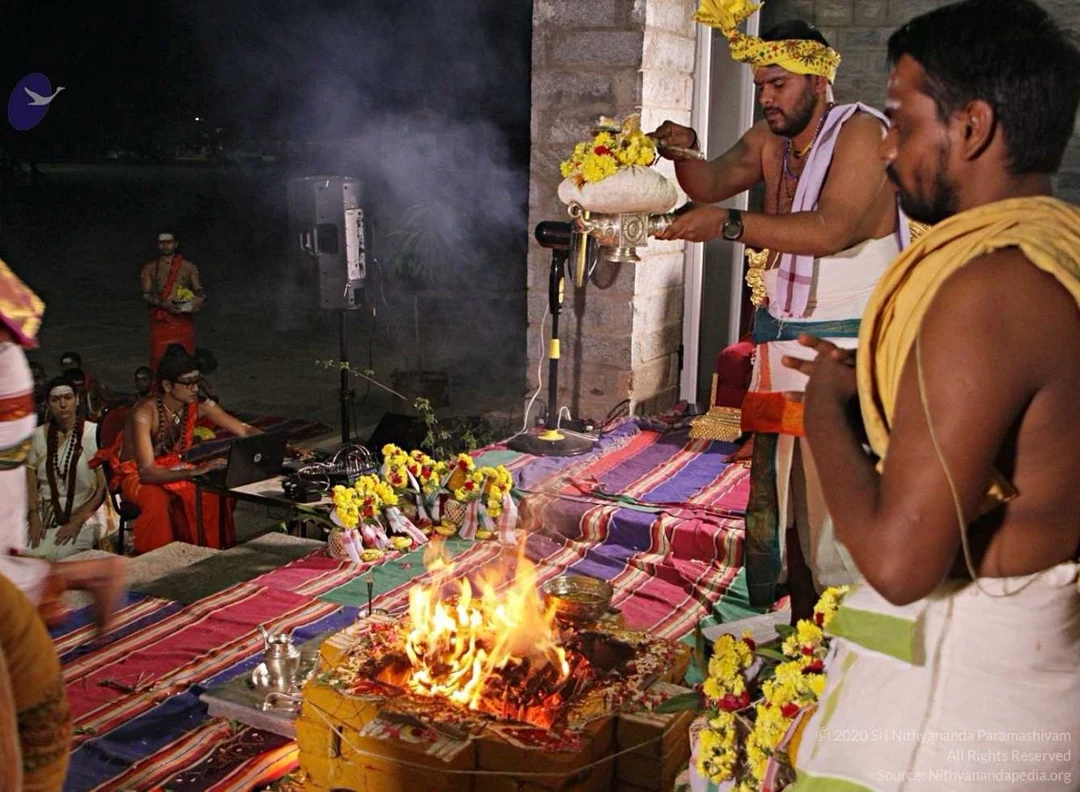
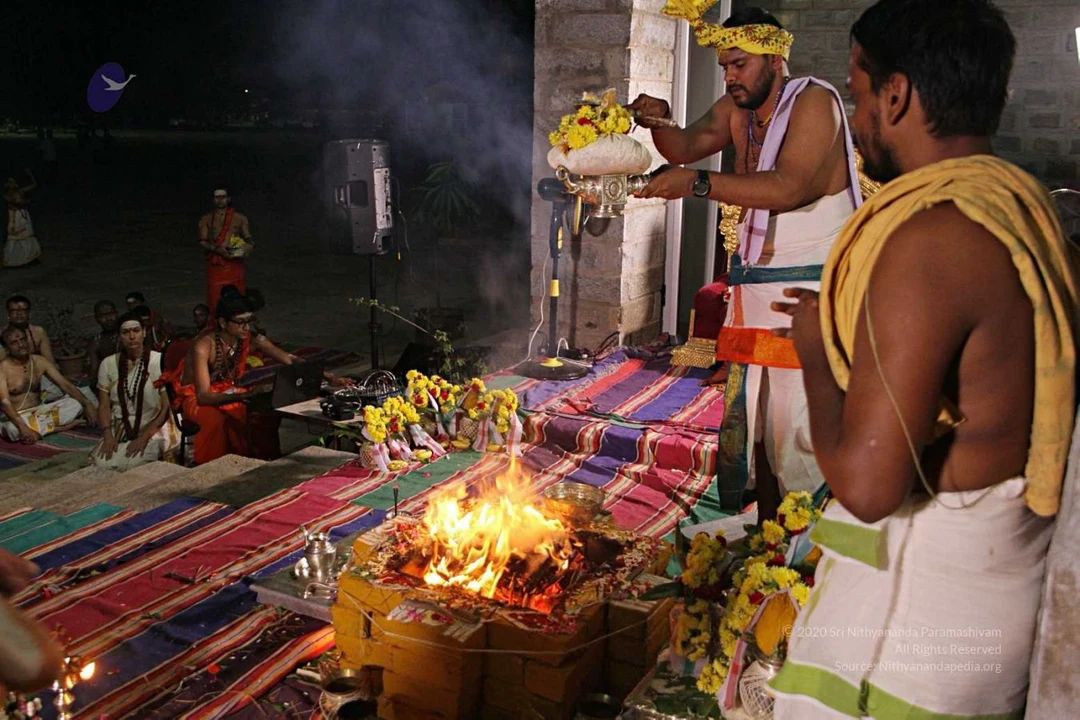
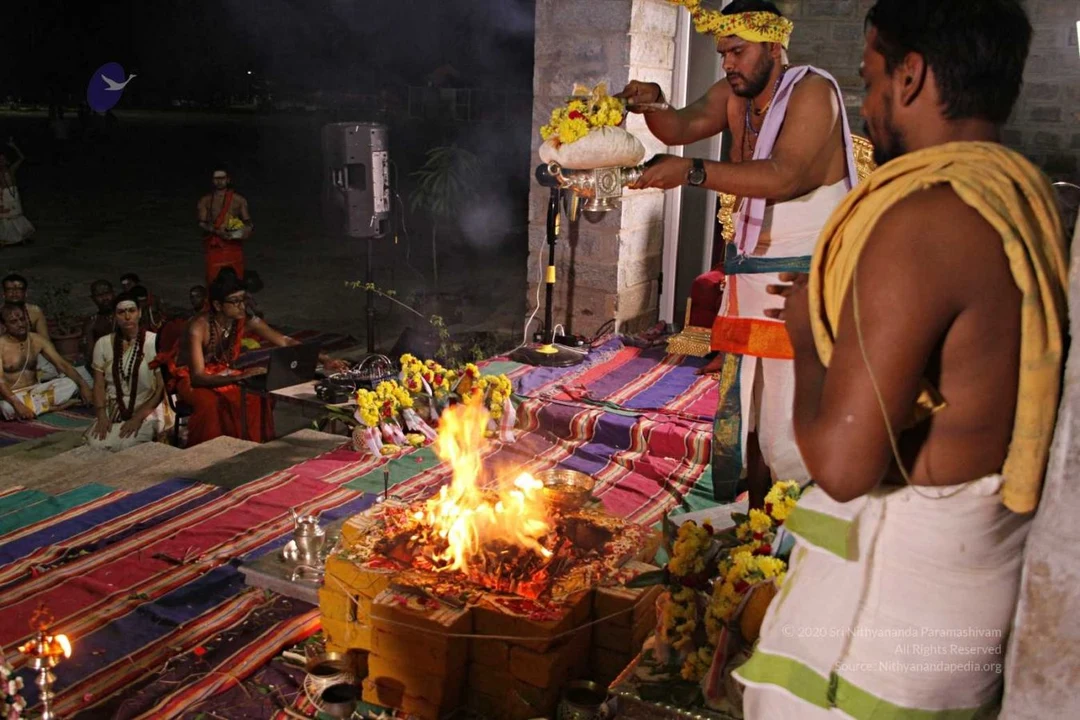
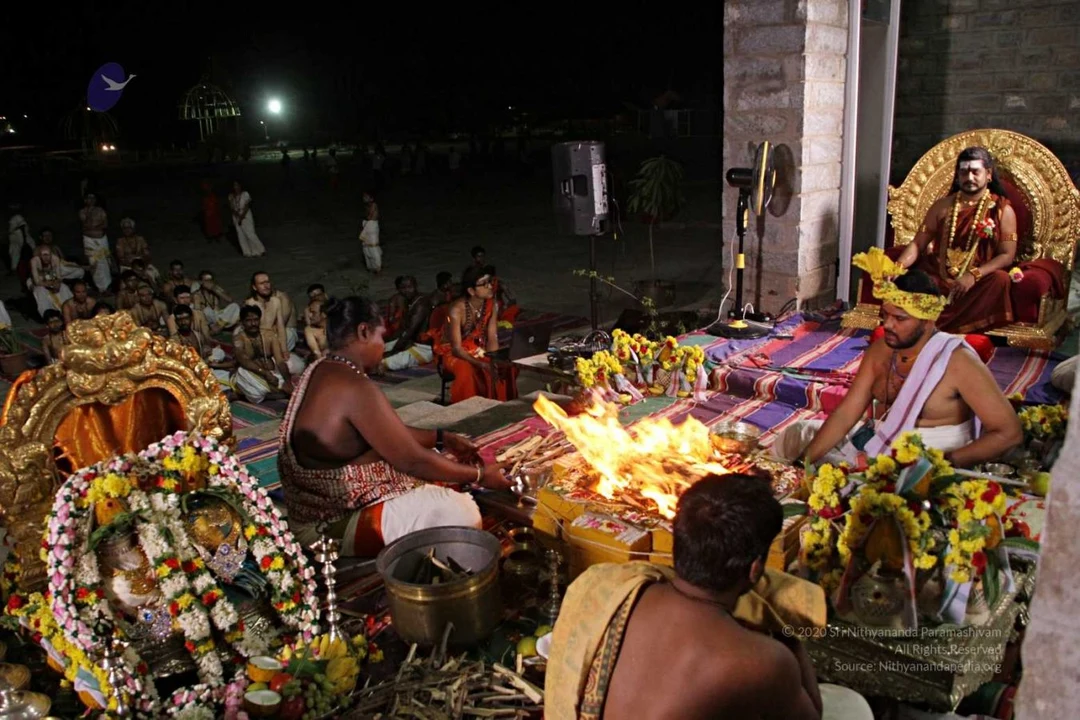
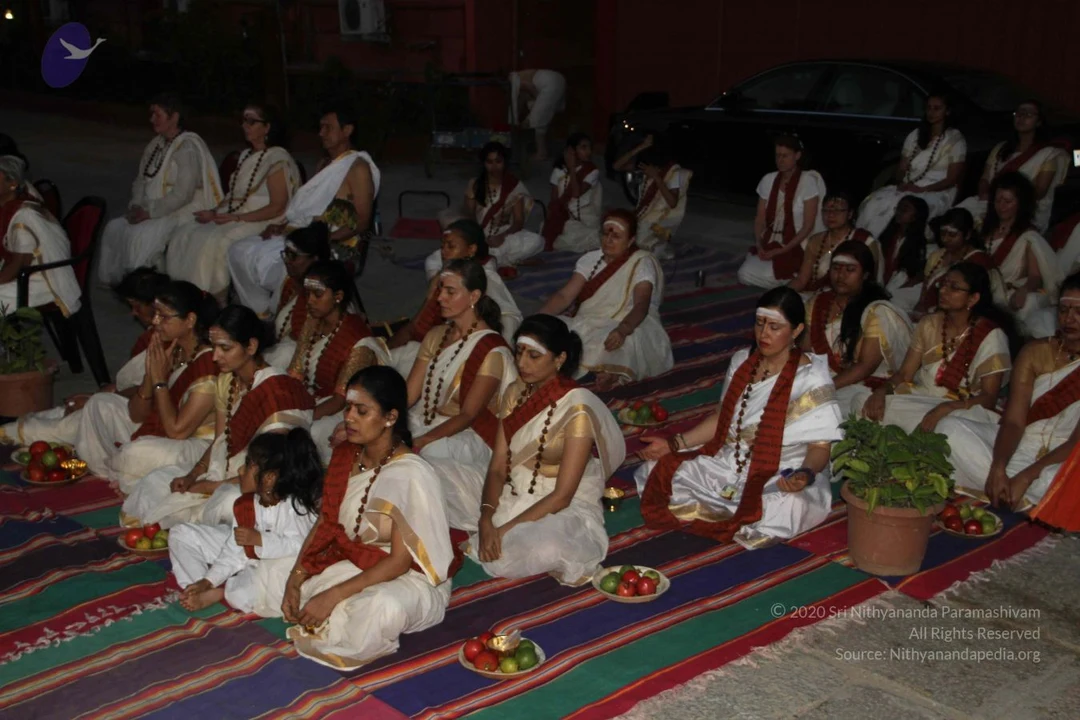
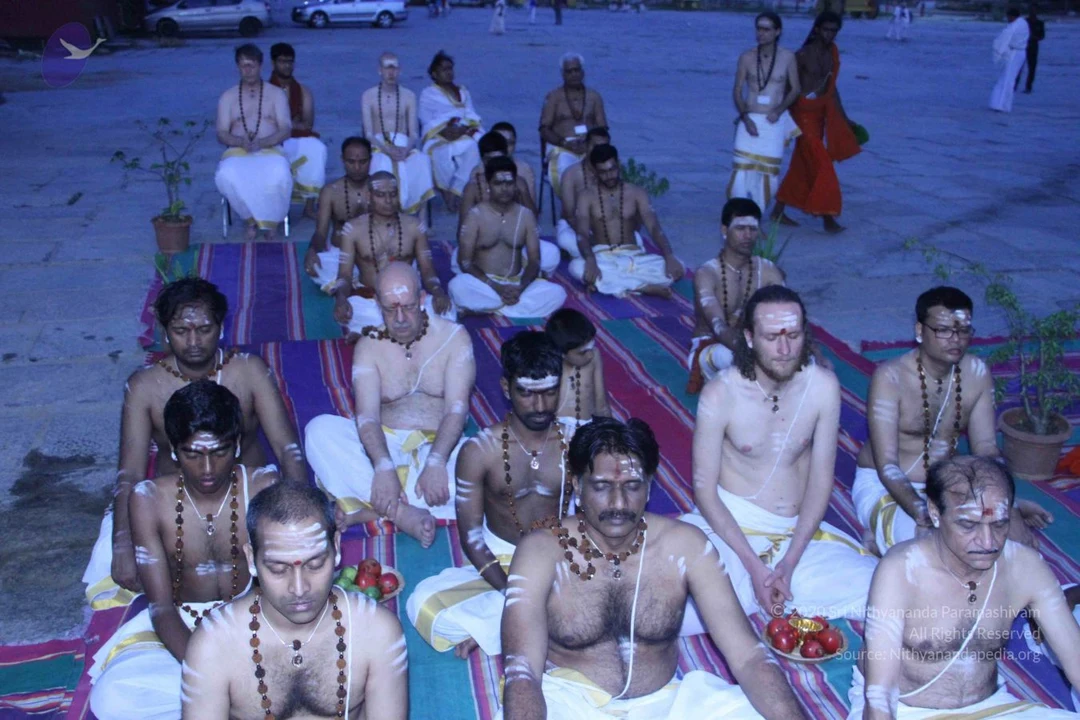
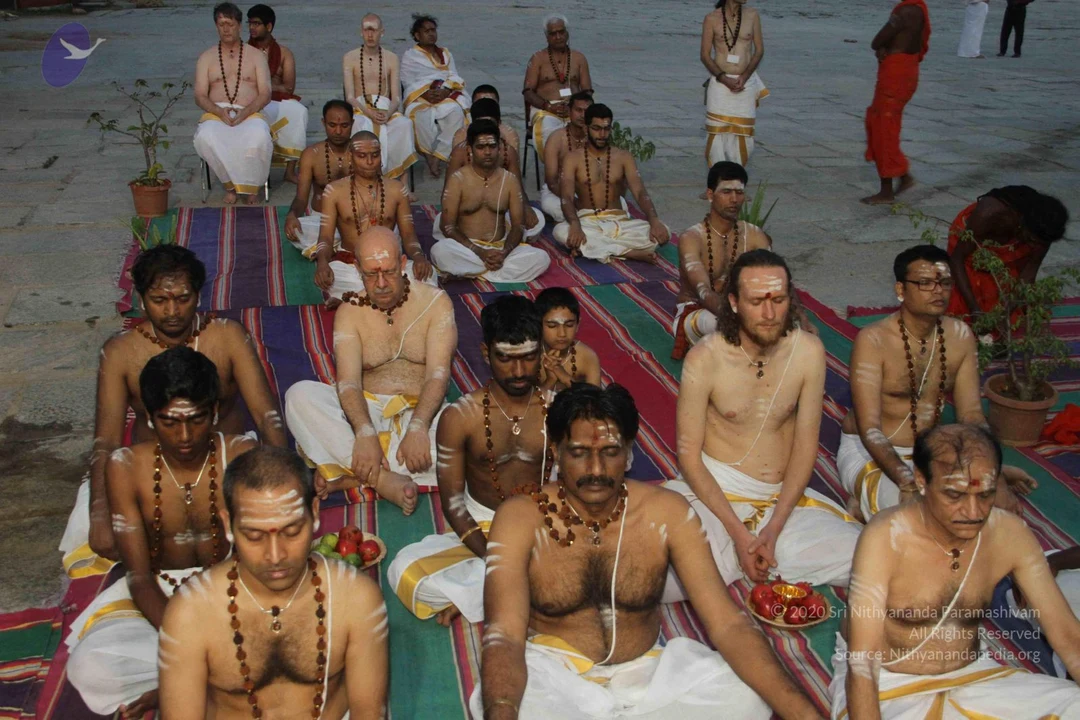
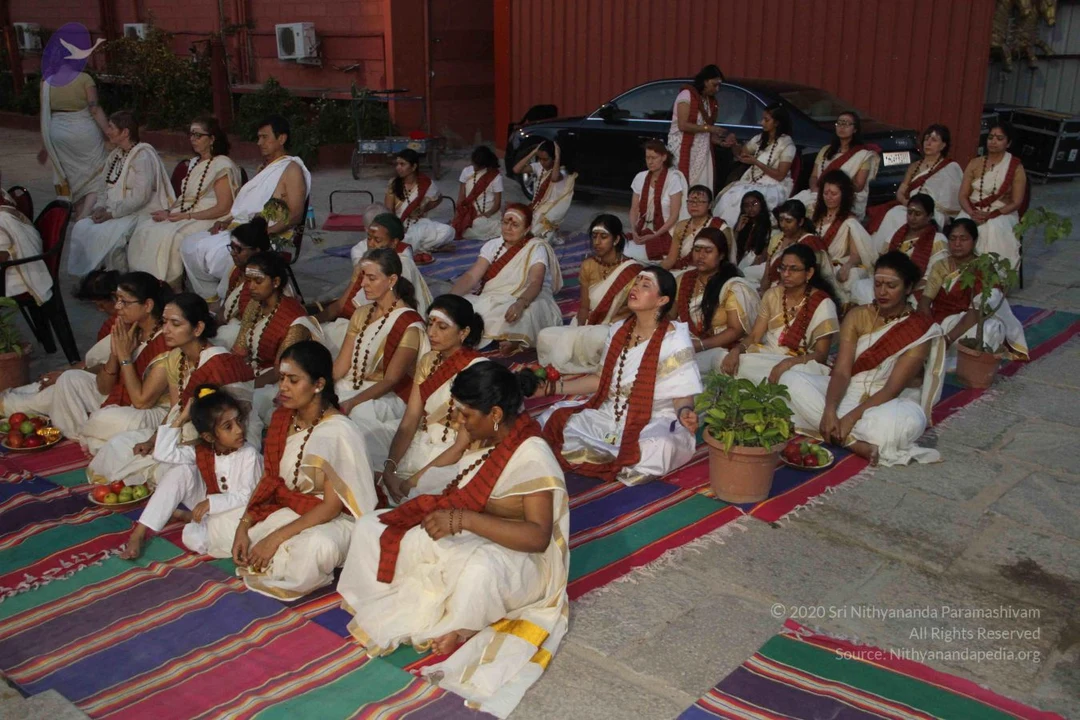
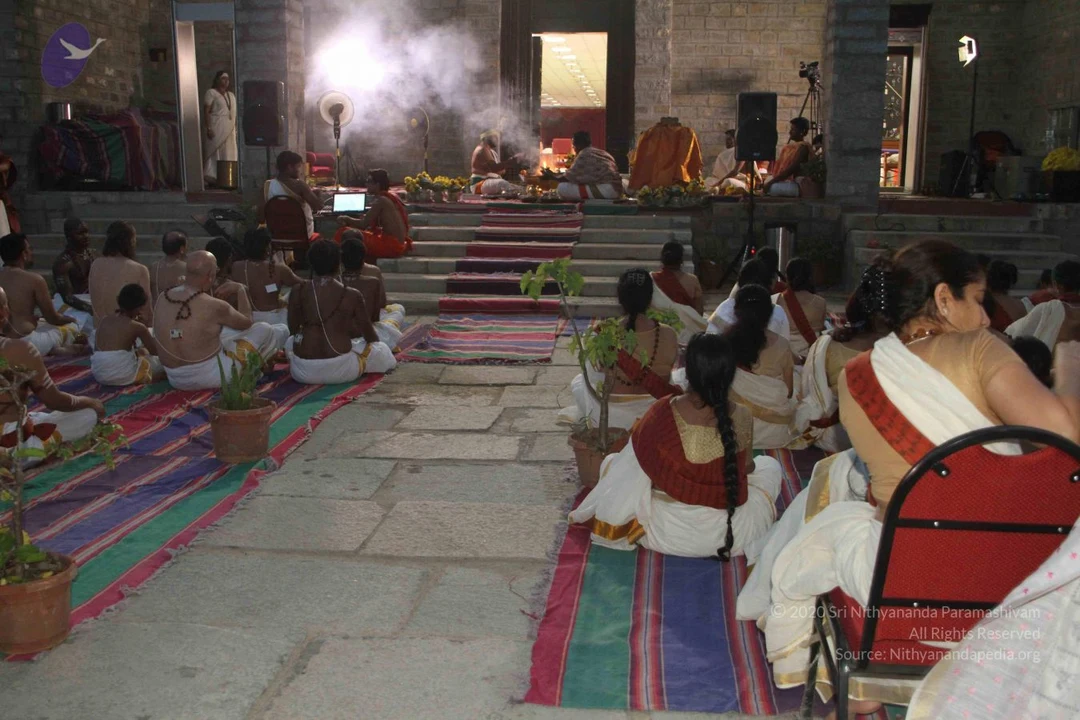
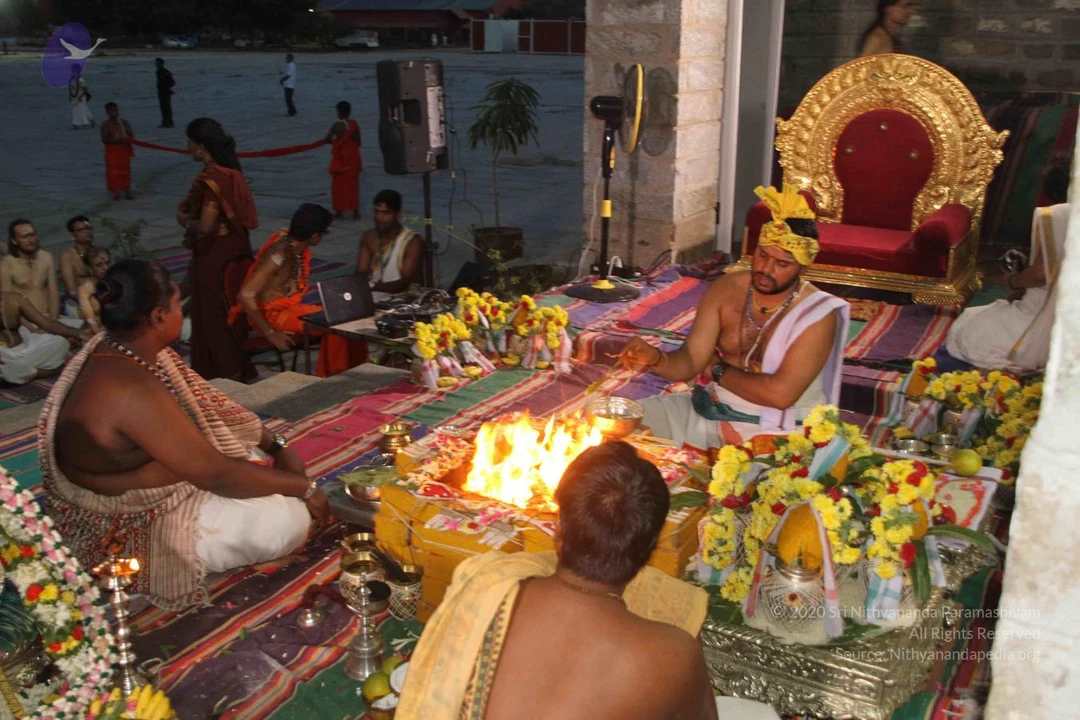
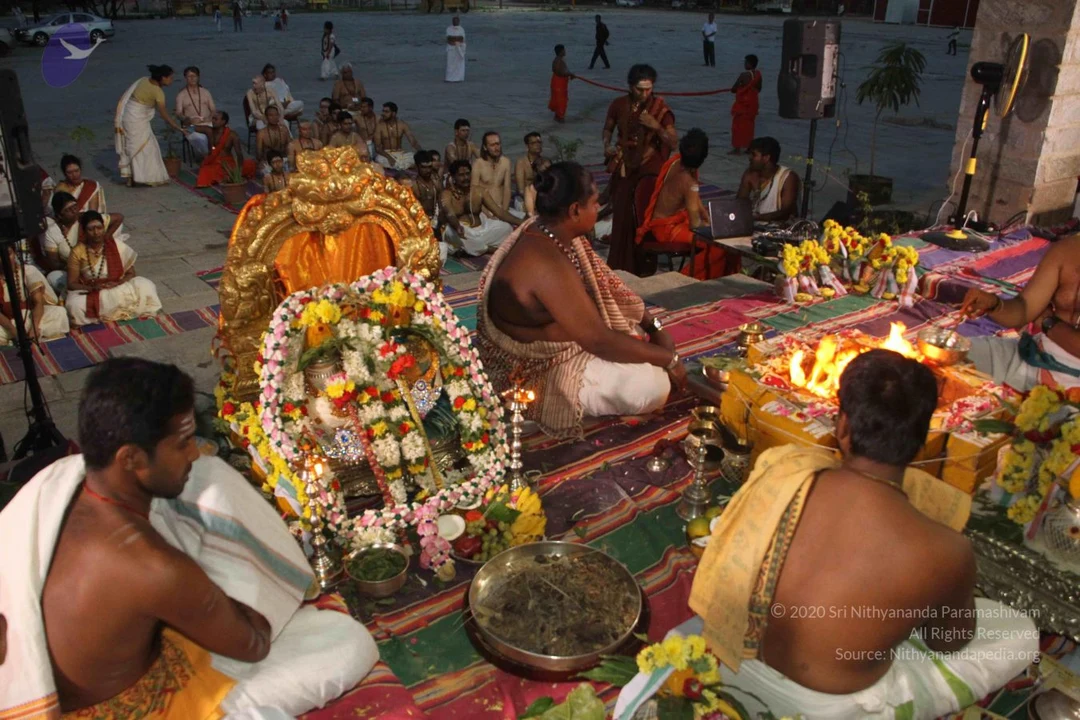
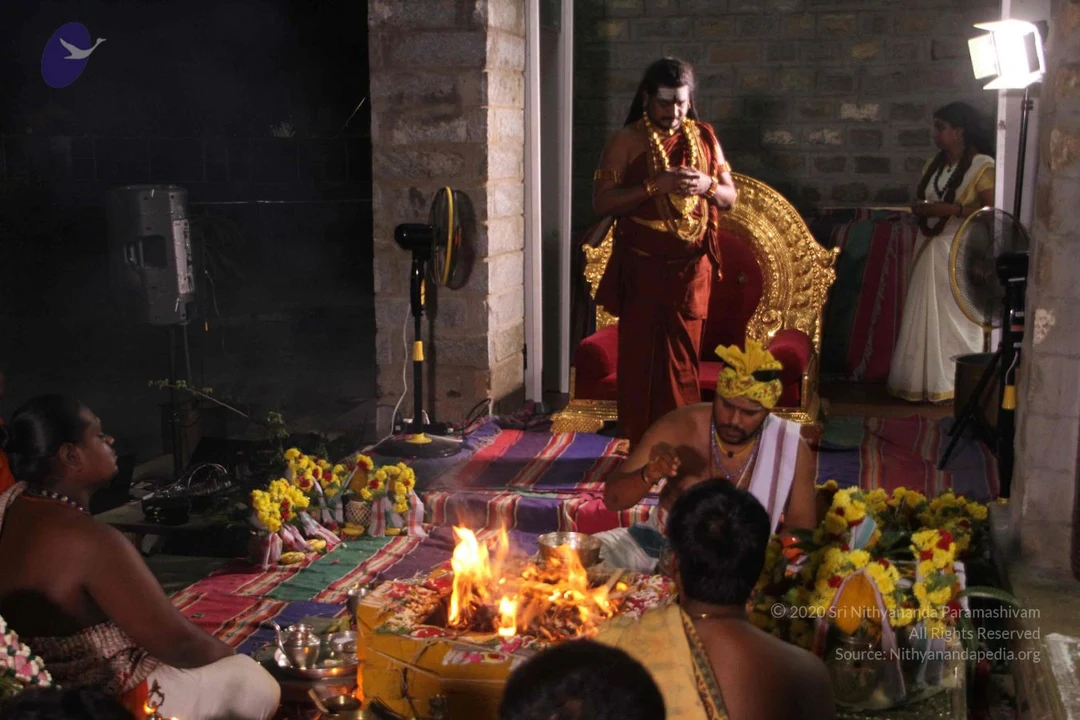
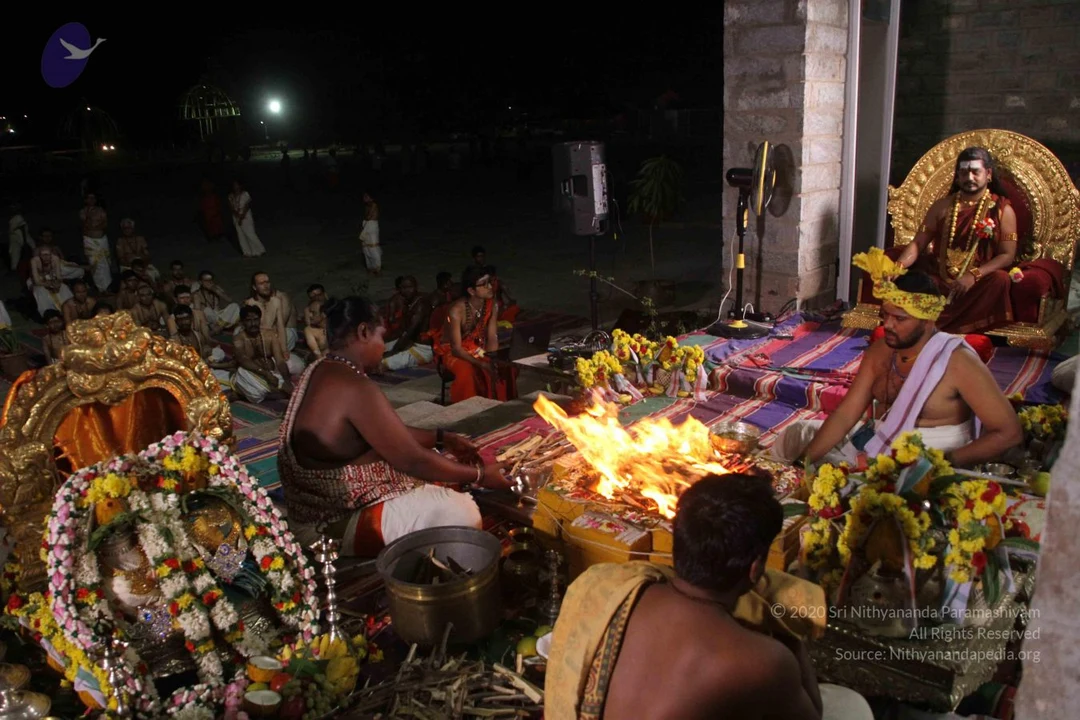
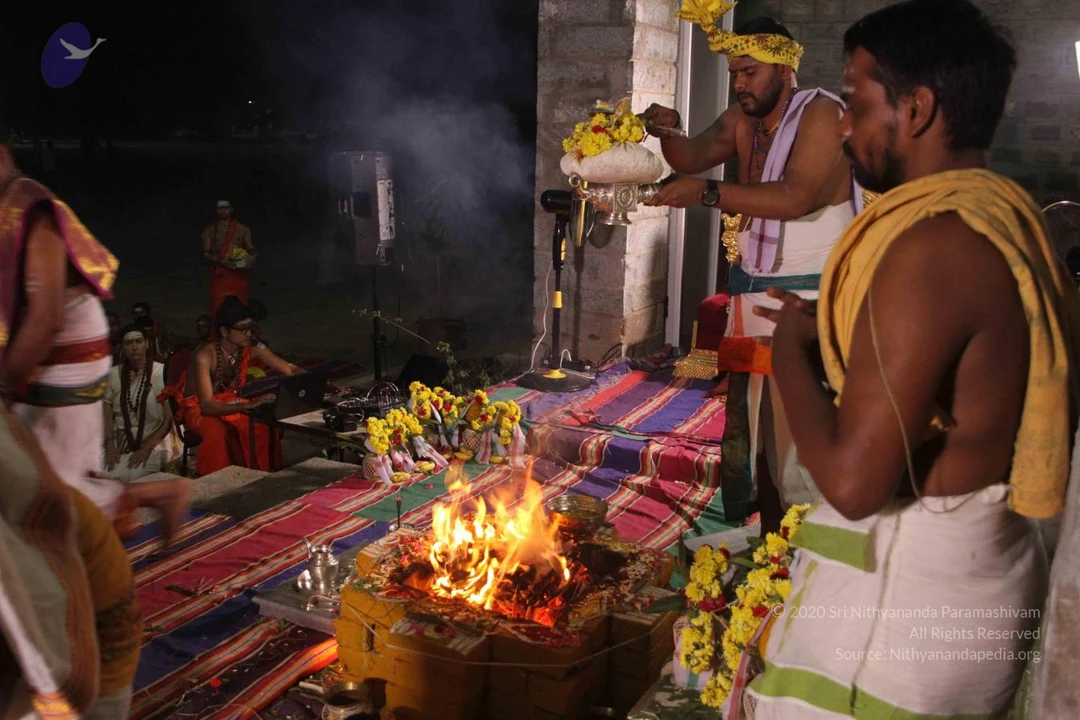
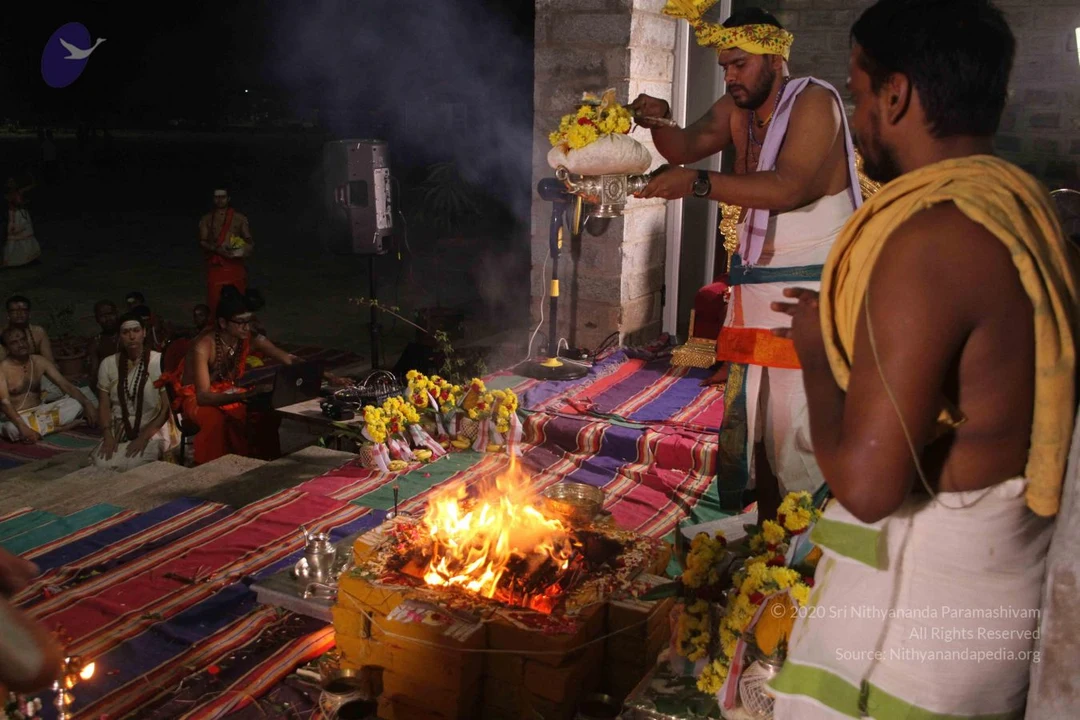
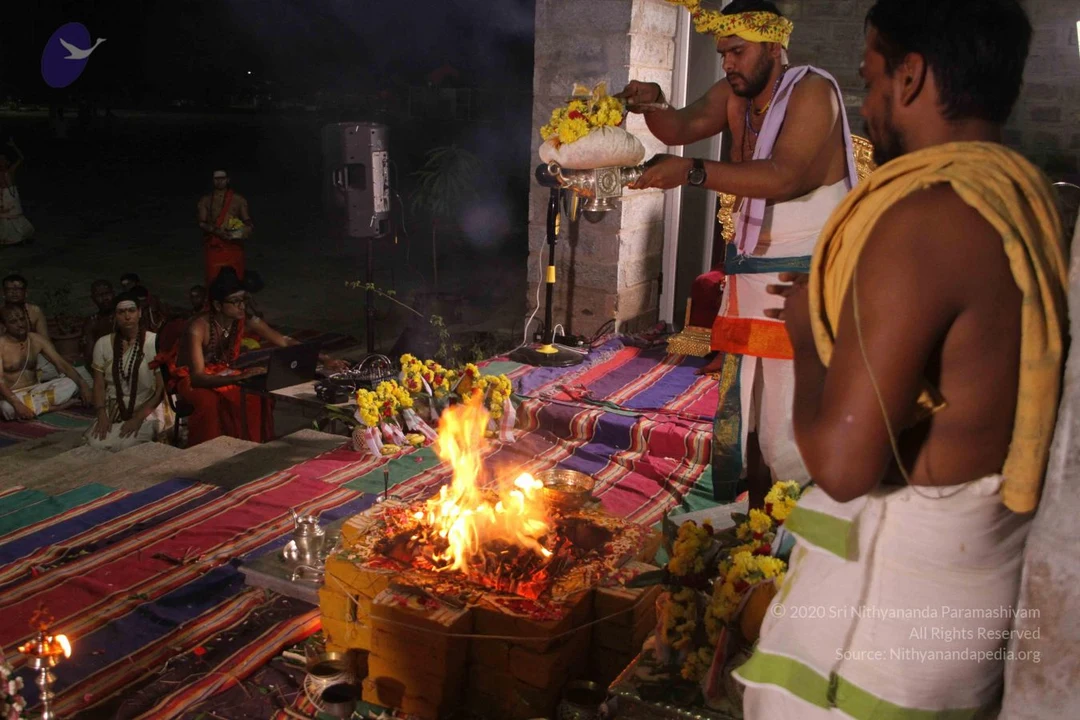
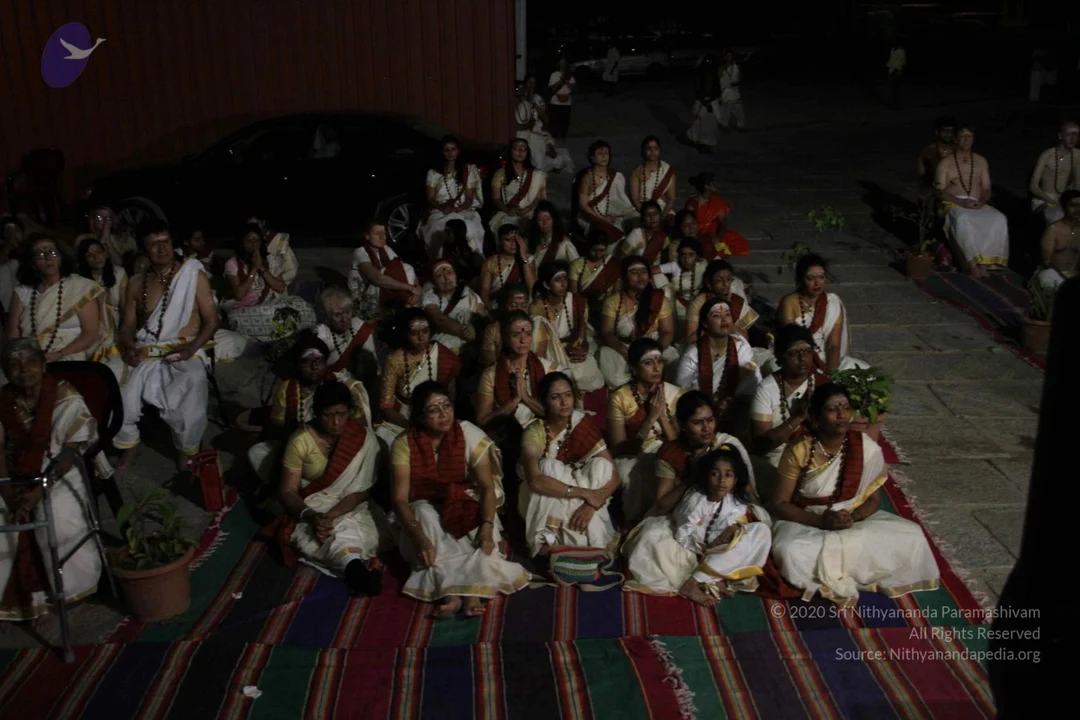
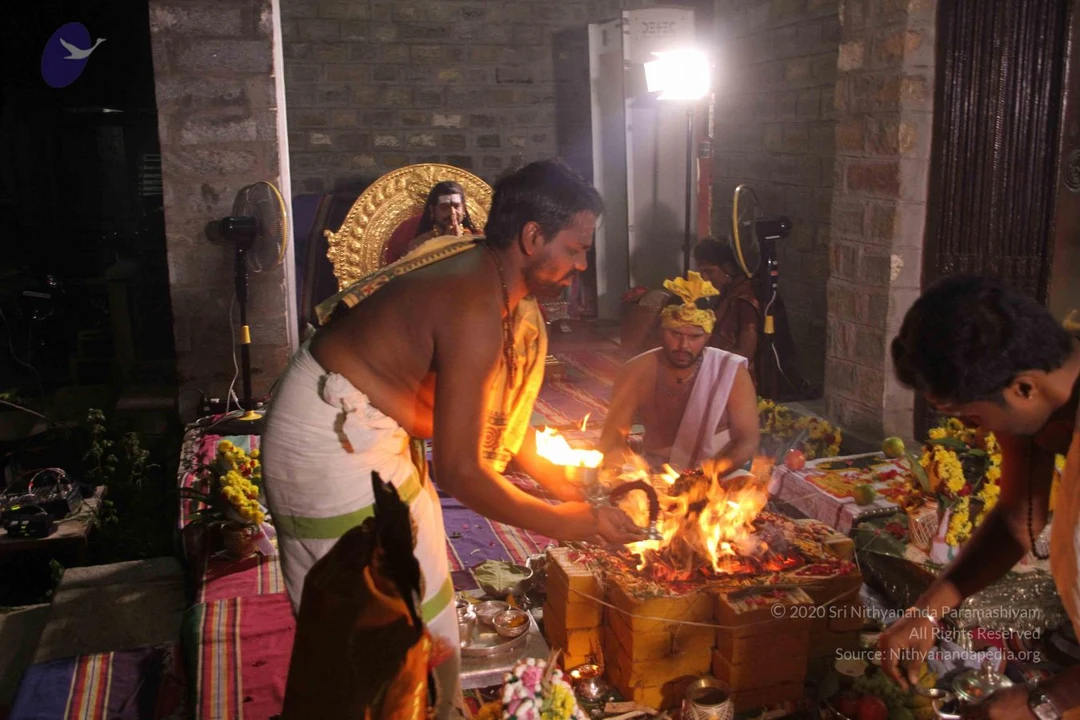
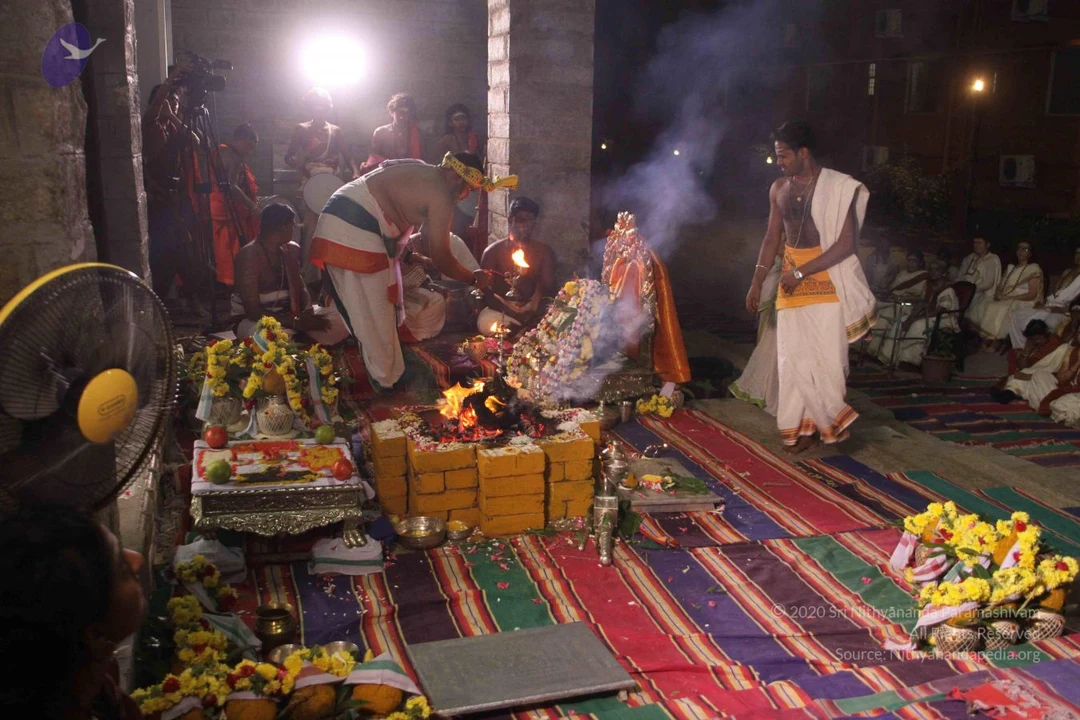
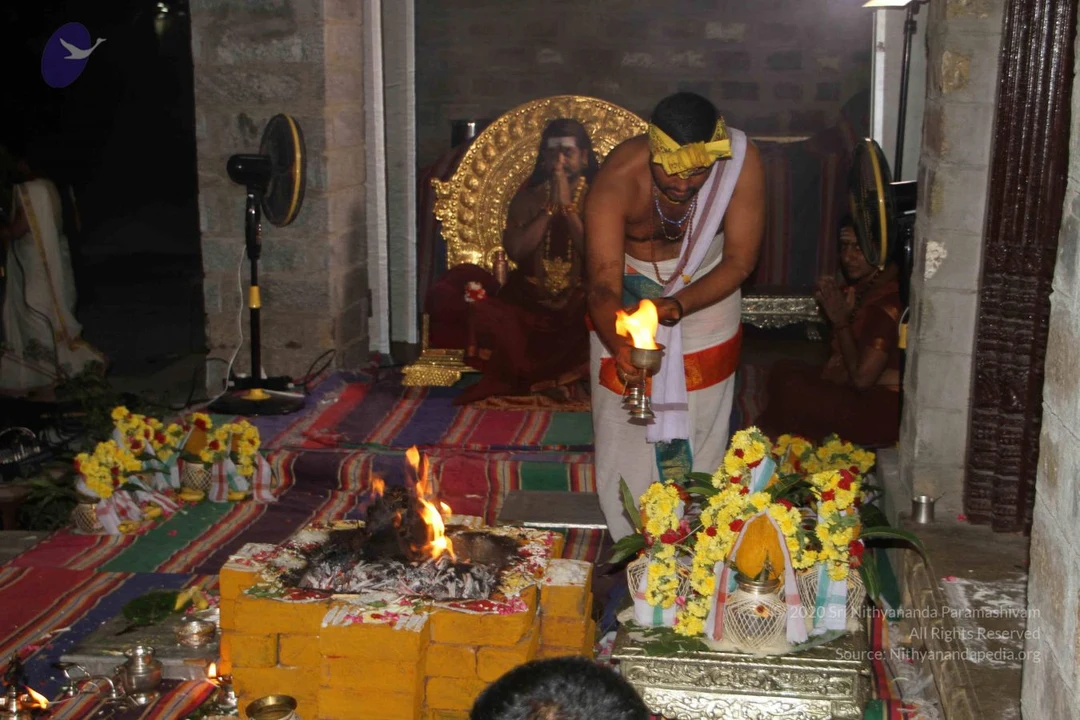
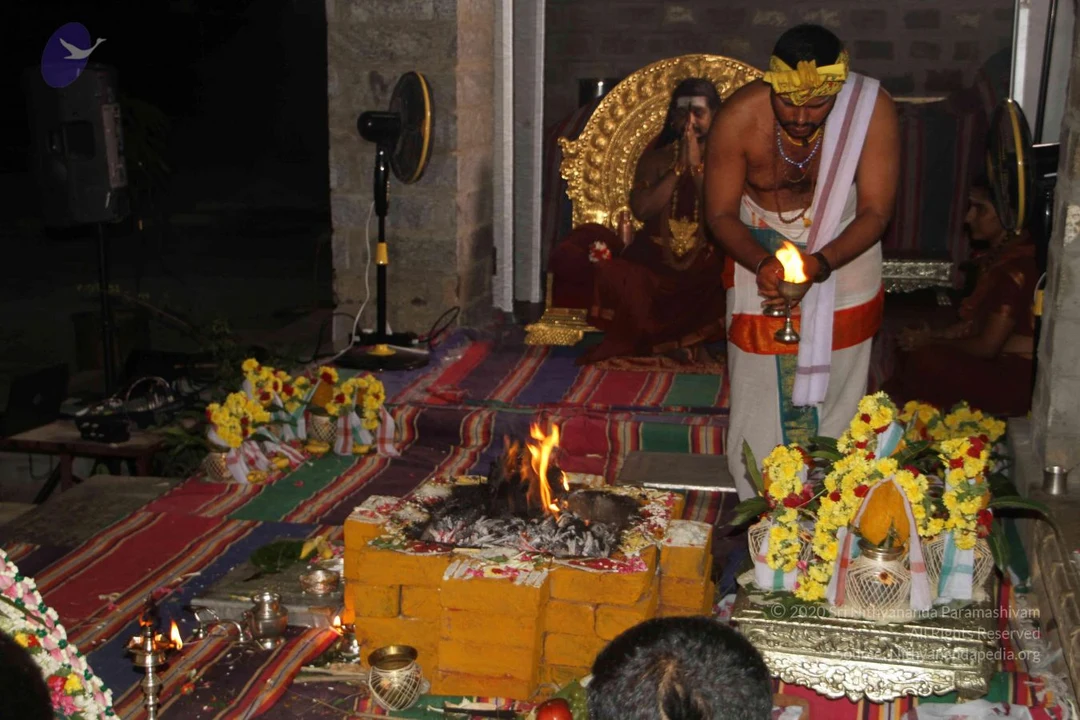
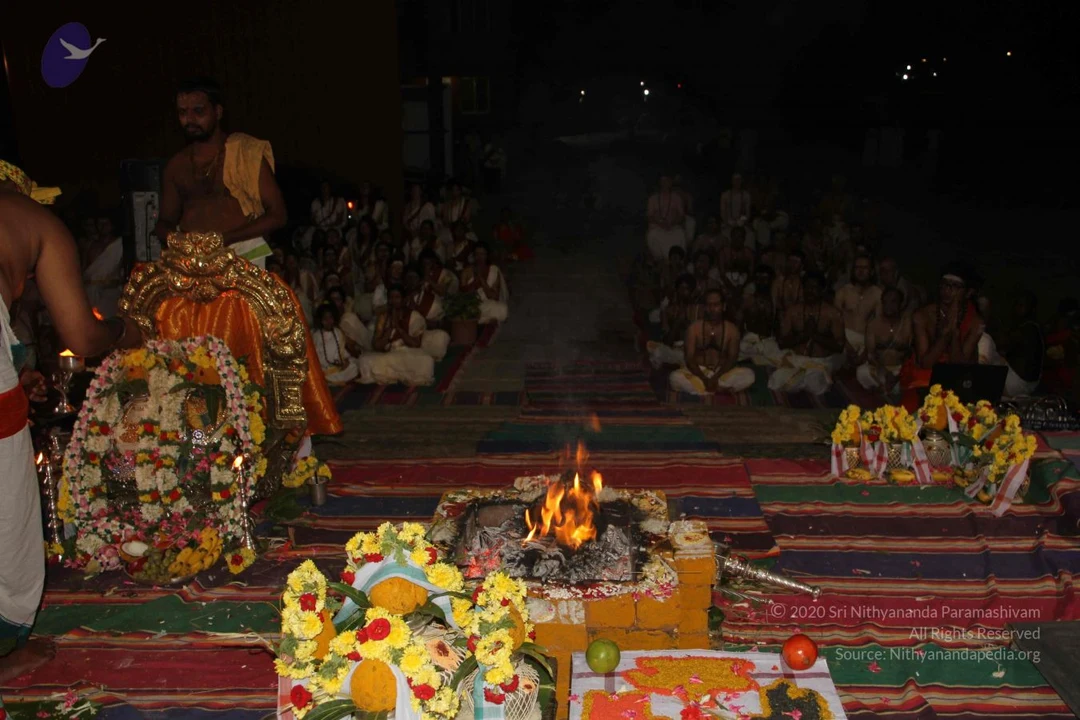
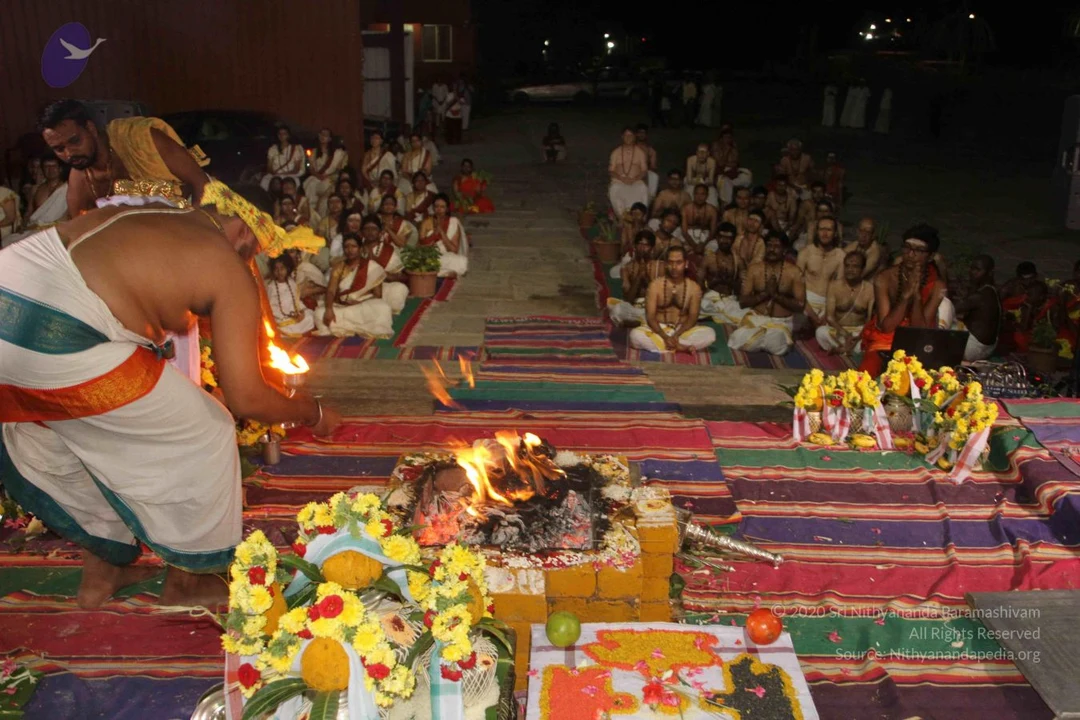
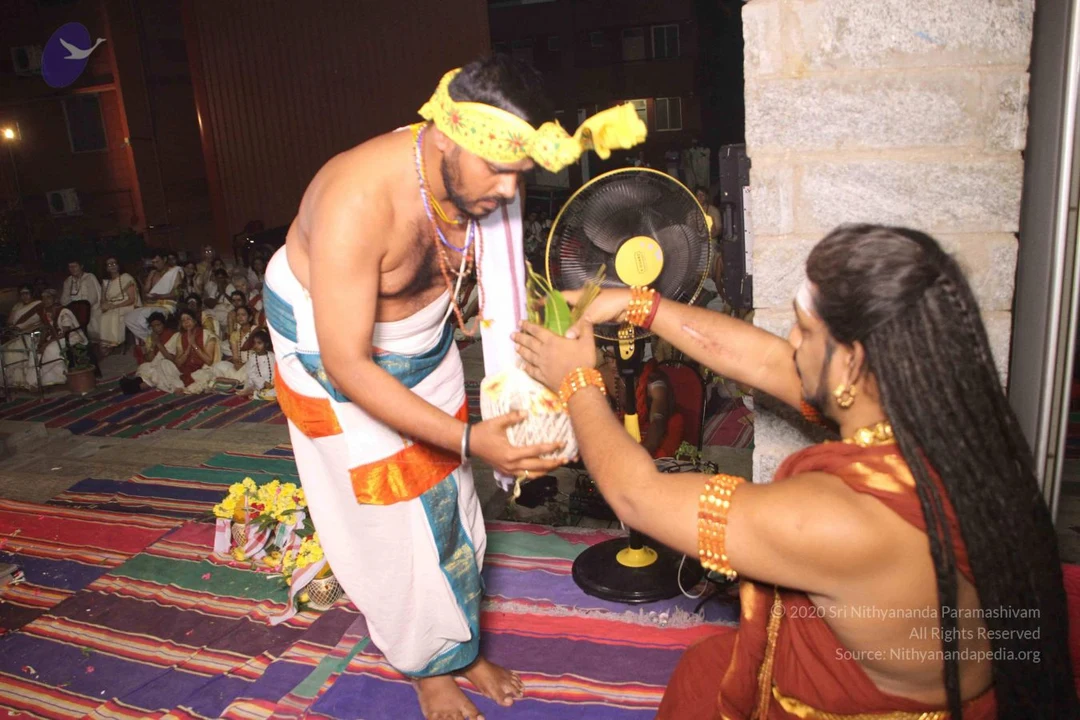
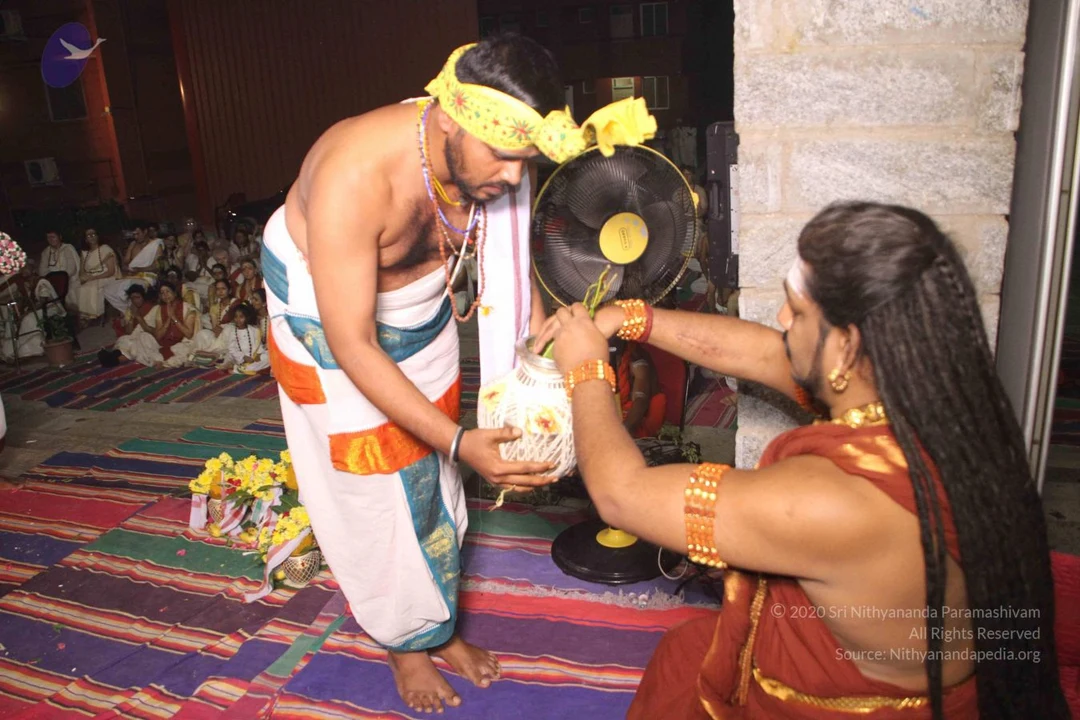
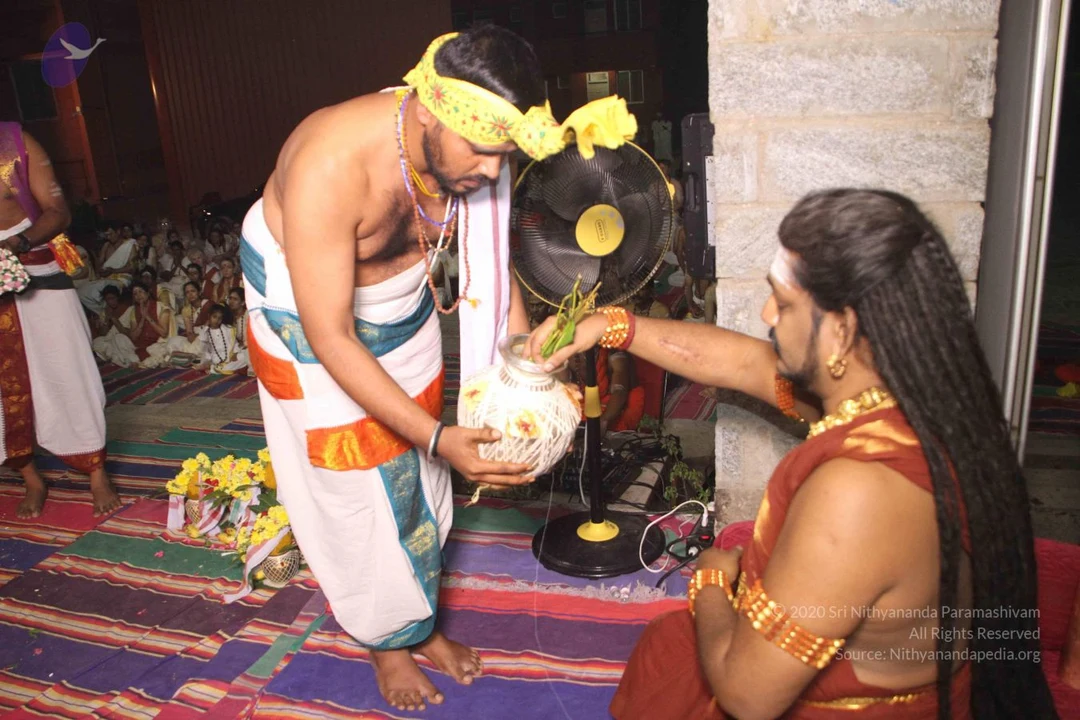
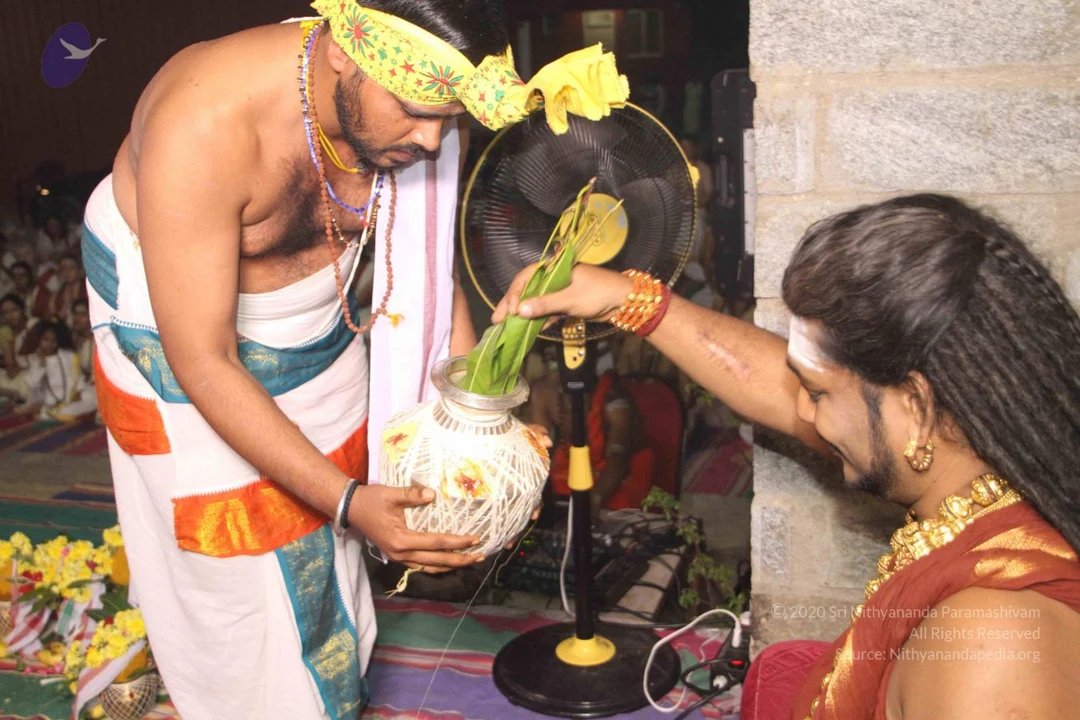
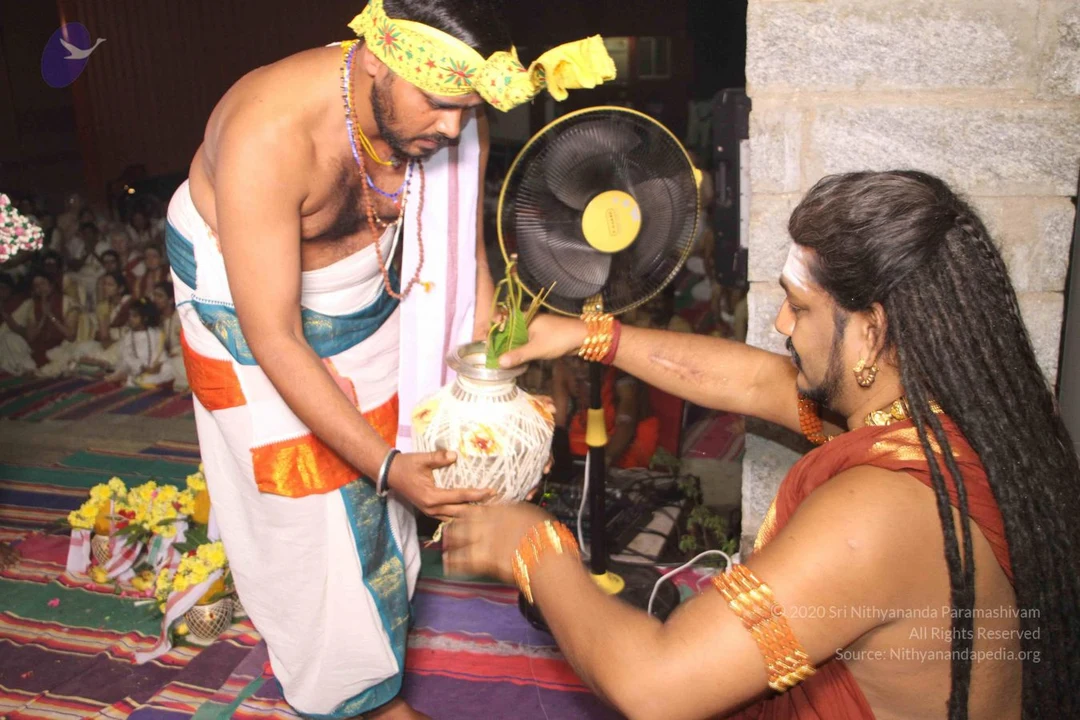
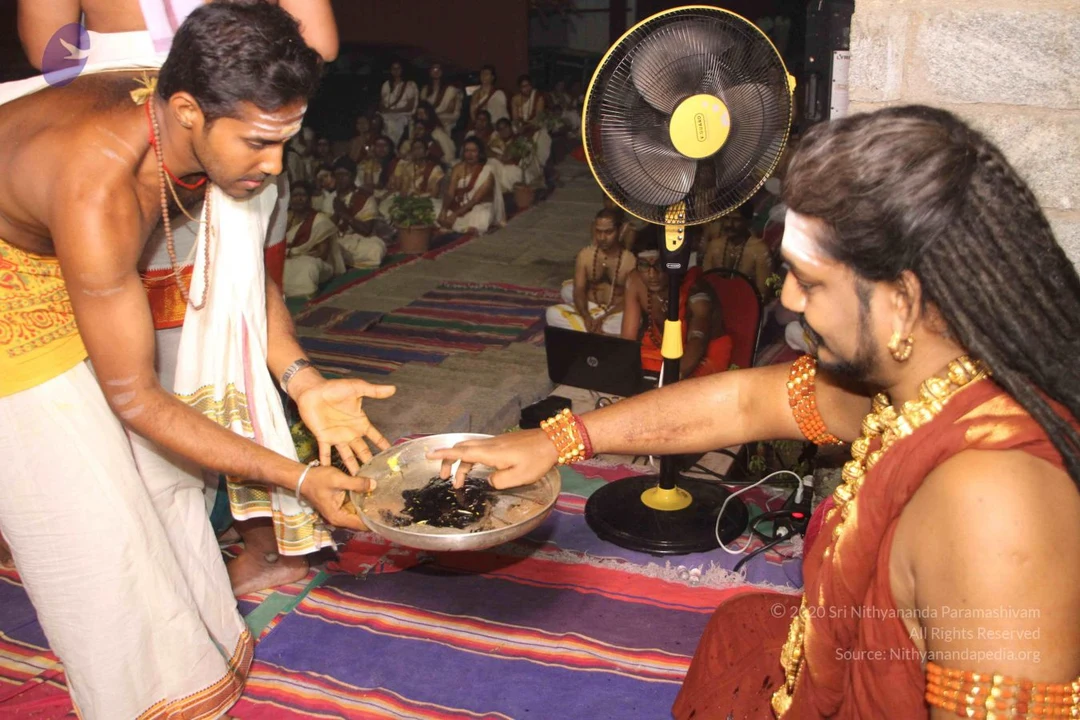
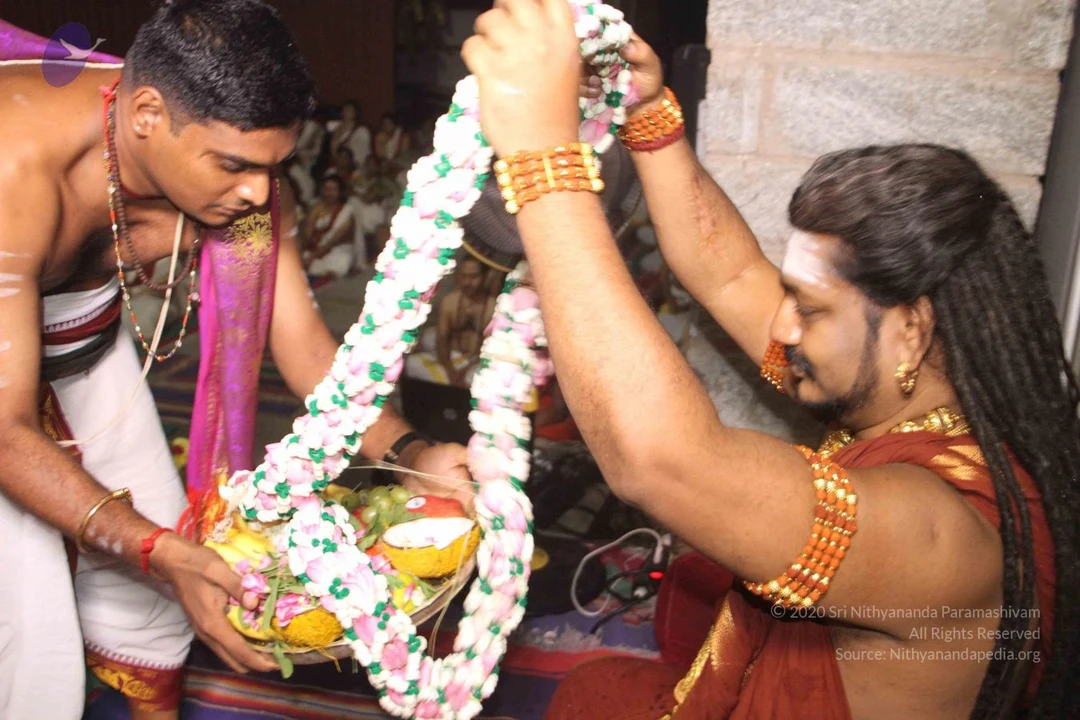
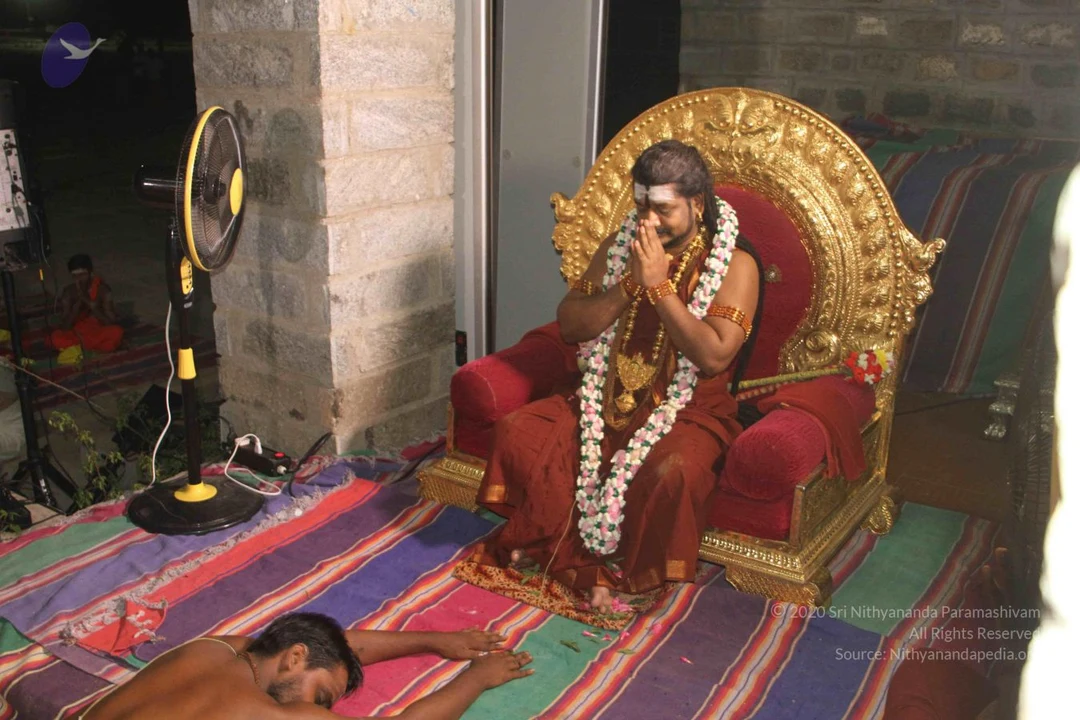
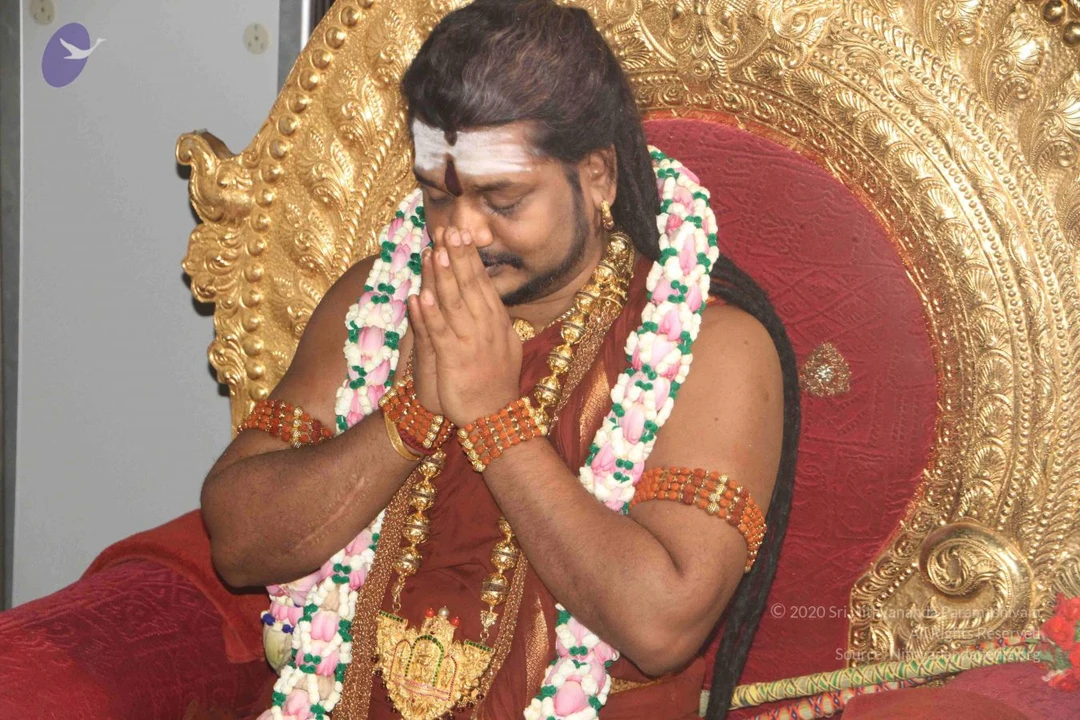
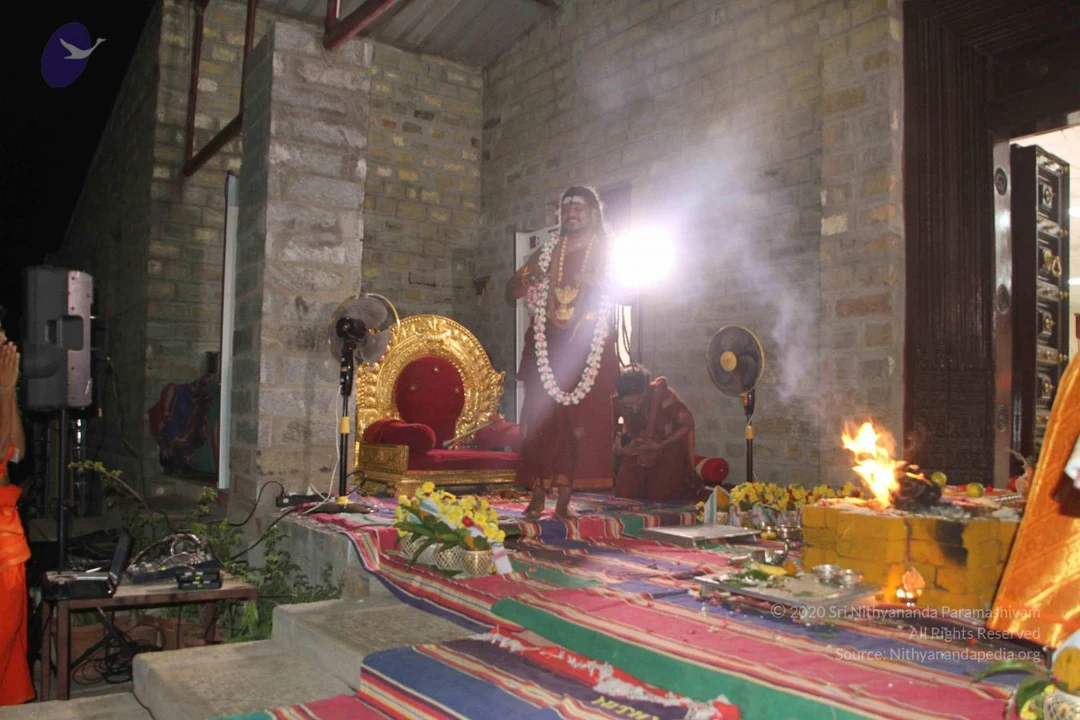
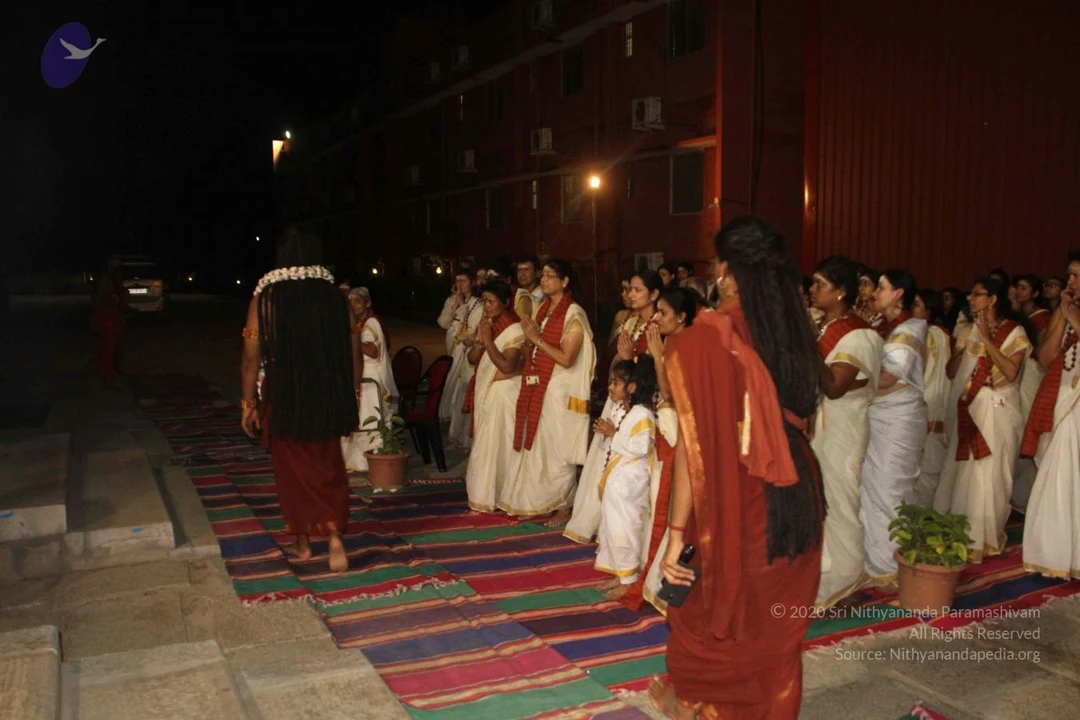
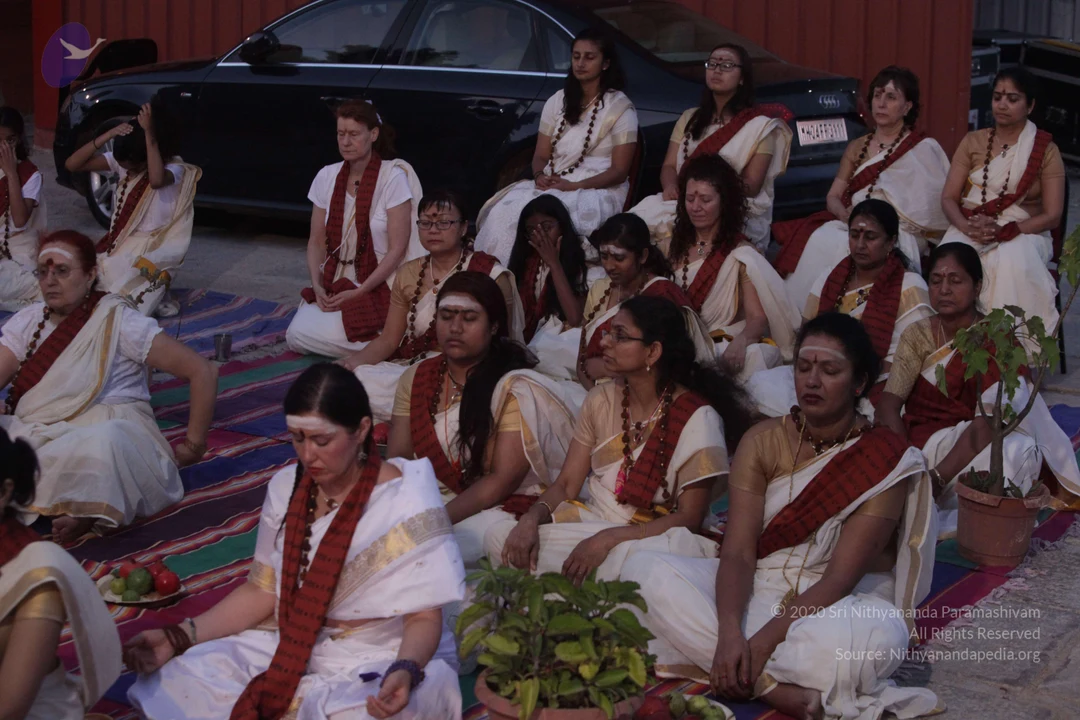
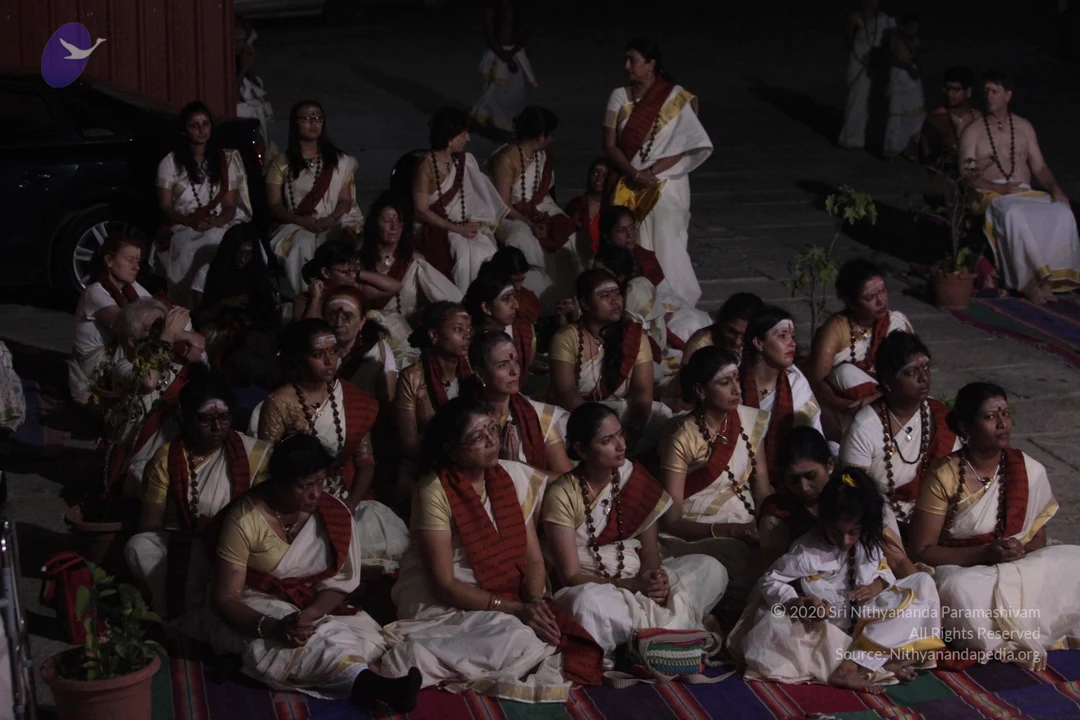
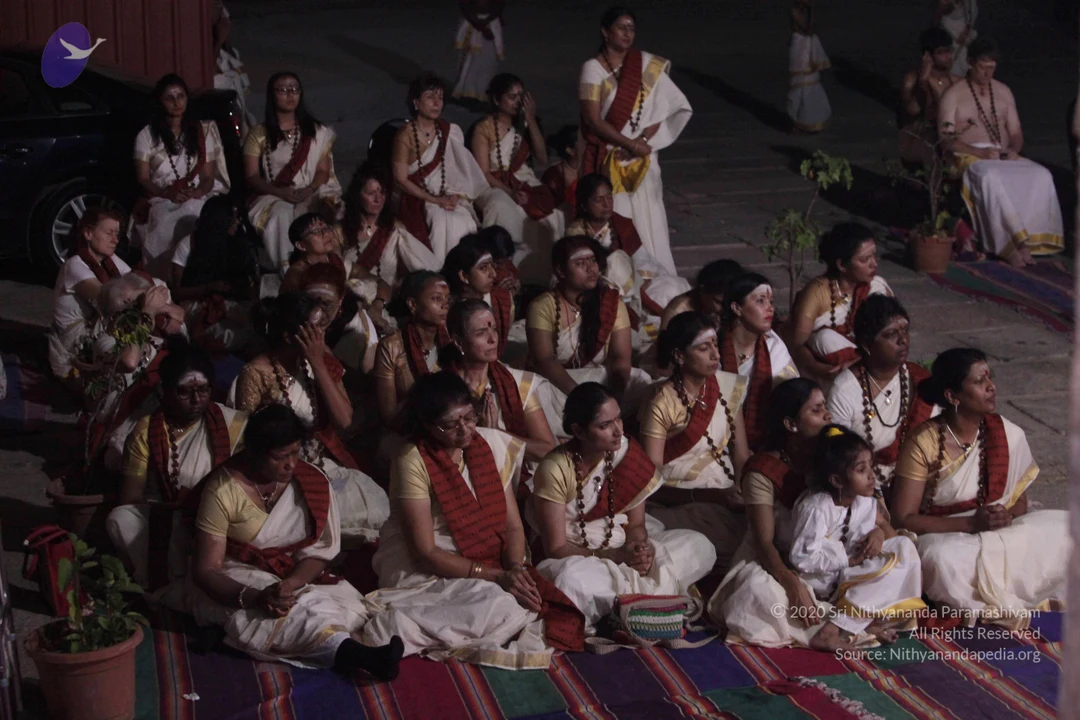
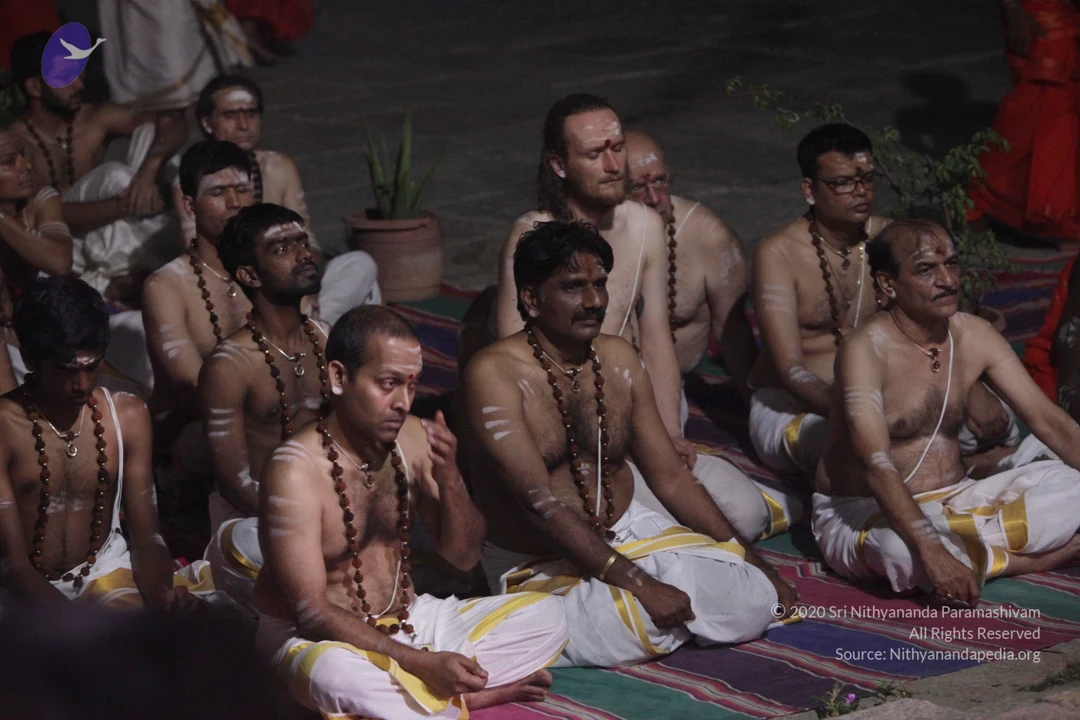
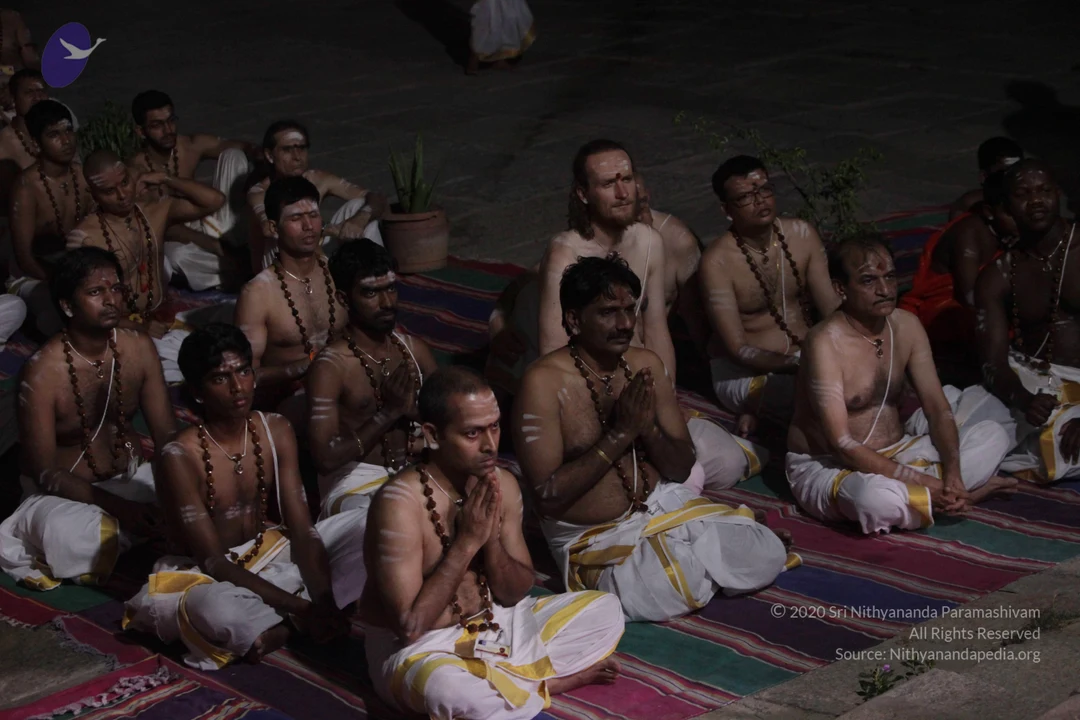
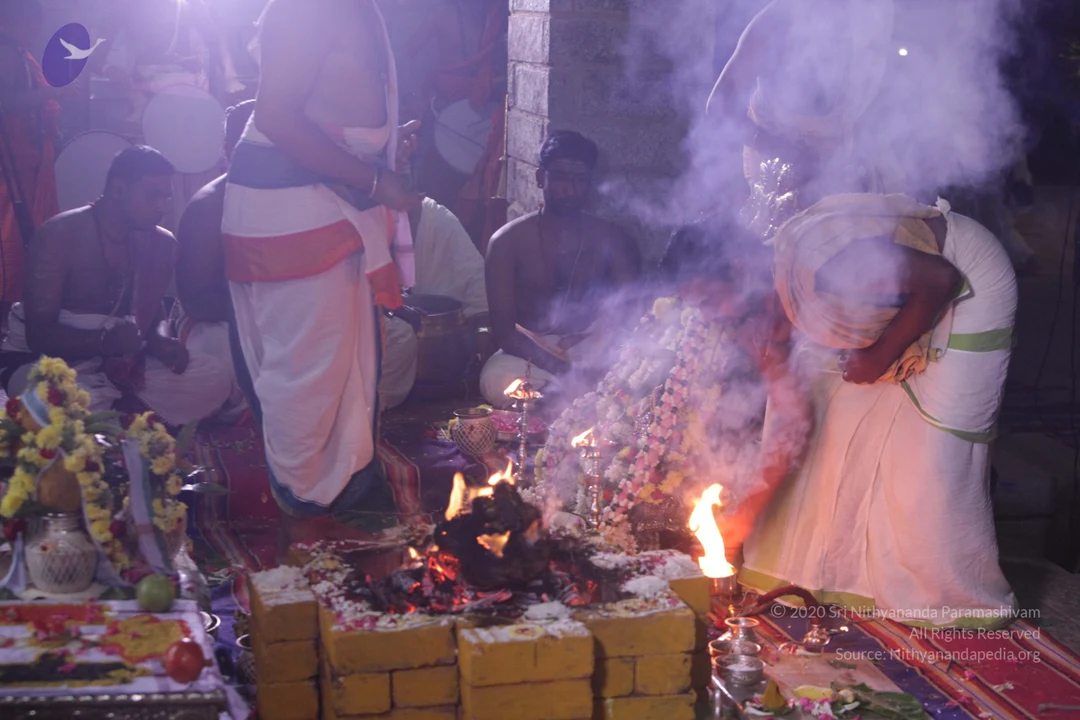
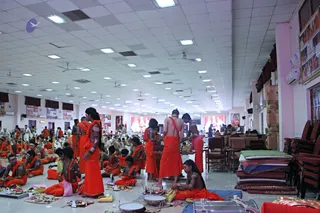
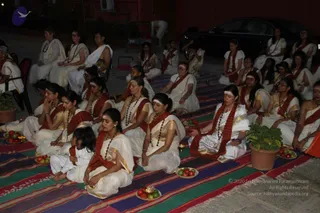
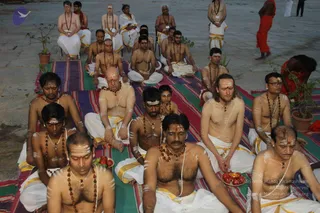
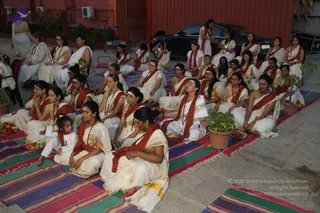
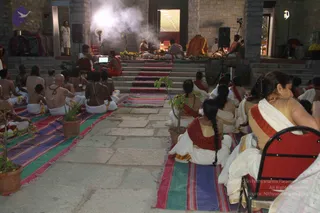
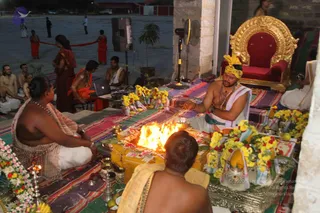
Evening outdoor gathering of many devotees seated on colourful striped woven mats in rows, eyes closed in meditation or prayer. Most wear white and cream traditional attire with red-and-gold borders and red shawls, rudraksha-style beaded necklaces, and white tilak marks on their foreheads. Several women sit with hands folded or palms together. Trays of fresh fruit such as apples, oranges and limes sit on the mats, and small oil lamps glow near some groups. A potted plant stands at right, with a dark car and a red building behind the seated rows. A young girl in white sits among the adults at lower left. About 40 people are visible in the scene.A group of about twenty men sit cross-legged on striped rugs in an open courtyard for a meditative ritual, bare-chested and wearing white dhotis with gold borders. Most wear rudraksha malas and have white sacred ash markings on their foreheads and bodies. Several sit in the front row with eyes closed; one holds a brass plate of red fruit near the bottom right, and another plate of fruit sits in the lower left. Potted plants stand among them, and a few people in saffron robes and white clothes stand or sit at the back. No individual is confidently identified as a person from appearance, so the scene is described by roles and garments.Outdoor photo of a seated group of devotees in white traditional dress with red-and-gold borders and red shawls, many wearing rudraksha malas. They sit on striped woven mats on a stone courtyard in front of a red wall, with fruit offerings and a potted plant nearby. Several women have their eyes closed or hands folded in prayer, and a small girl in white sits among them. A man in white stands at the rear beside a parked black car. No single person in the group is identifiable as a person in this image.Evening gathering in an open courtyard of an ashram with stone floor and brick walls, lit by warm lights. Smoke rises from a fire pit at the far end, where a robed figure in white sits before a ceremonial setup with flowers and offerings. Many devotees sit on colourful striped woven mats in rows; several men in white dhotis, some bare-chested with rudraksha malas, sit closest to the front, while women in white saris with red and gold borders sit in the foreground, one with a long braided plait. Potted plants flank the mats, and a saffron cloth hangs on a seat at the back. A video camera on a tripod and a laptop are visible, and a standing figure in white stands at the left edge.Outdoor evening homa at a fire pit on a striped cloth-covered mat. A bare-chested priest in a yellow head wrap and white dhoti, with rudraksha beads, tends the bright flames while seated before a gold-framed red throne. Marigold and yellow flower garlands decorate offering trays, brass lamps and kalasha-like vessels. Several other seated figures in saffron and white sit nearby, and a standing attendant in orange stands behind a red rope at the edge of the courtyard. Speakers and a laptop are visible at the side.Outdoor evening ritual on a paved courtyard. A fire burns in a homa pit at right, with brass pots, flower-decorated offerings and a kalasha set on striped mats. A golden ornate peetha/throne holds a deity murti decorated with a large garland of white and yellow flowers. A bare-chested man in white dhoti sits cross-legged before the fire, with a shawl and rudraksha beads. Men in white and saffron sit in rows on mats behind, and a man in saffron stands near a laptop on a table; a few other people in white and orange stand in the background. Oil lamps stand near the deity and the fire.

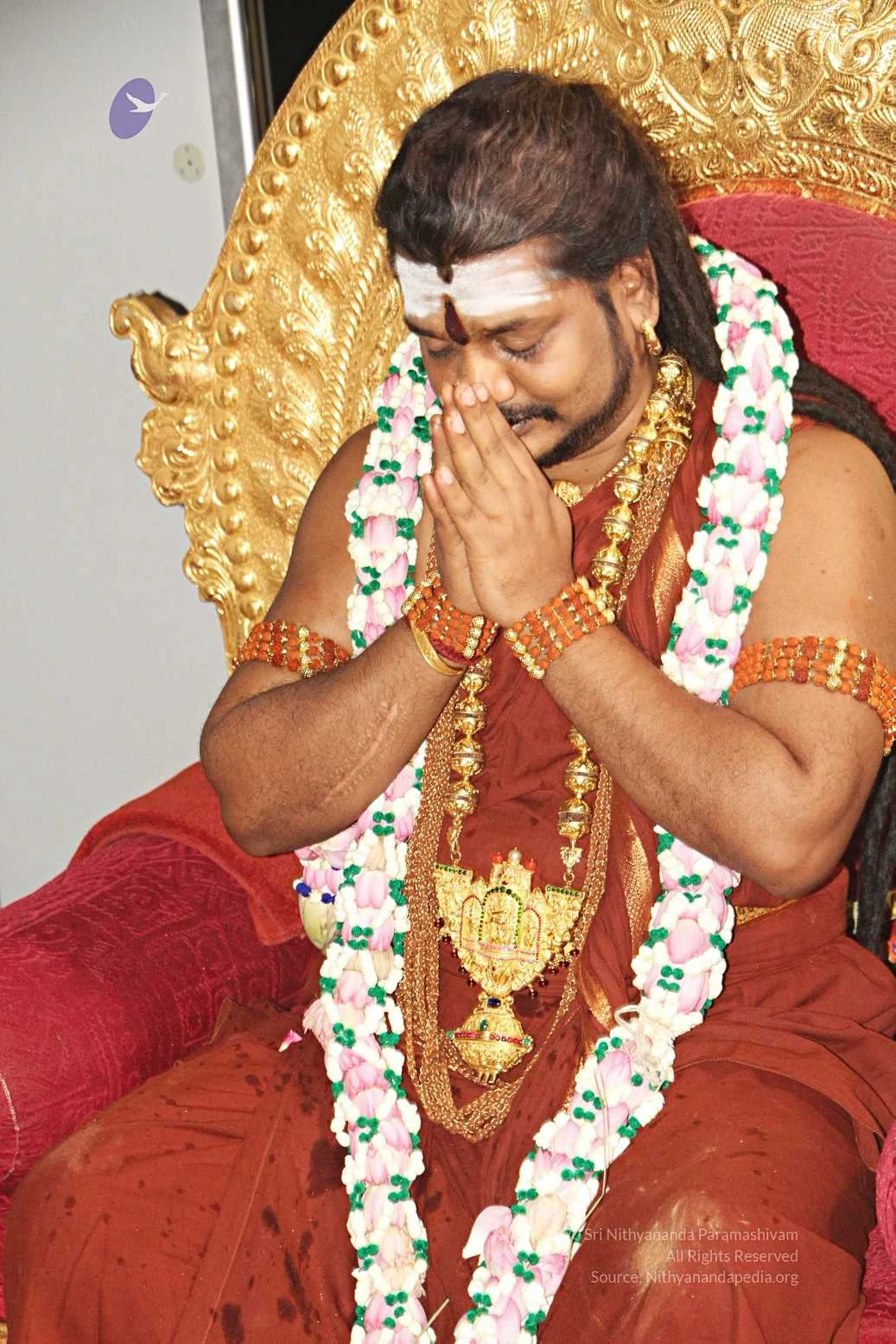
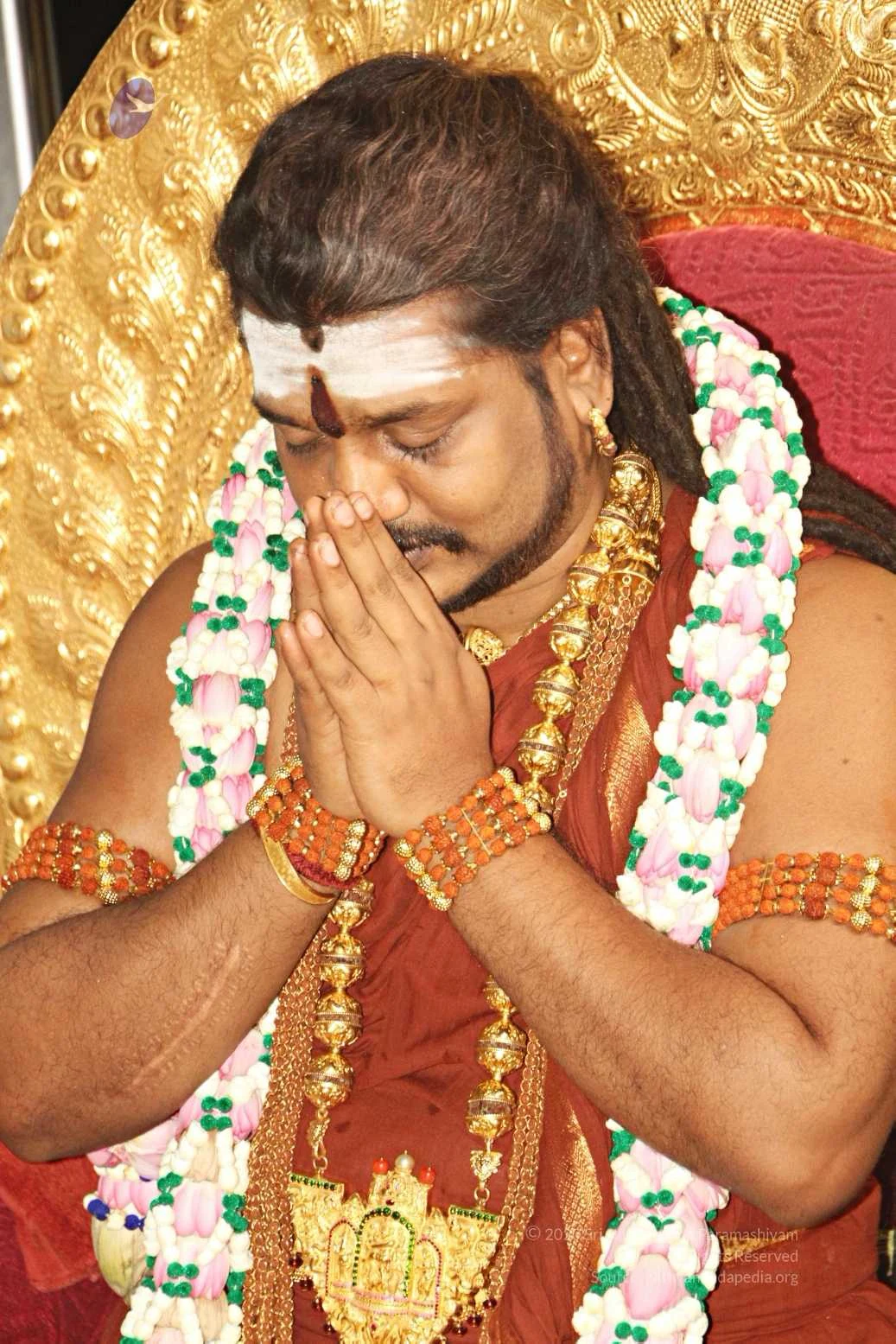
01-Pada-Puja

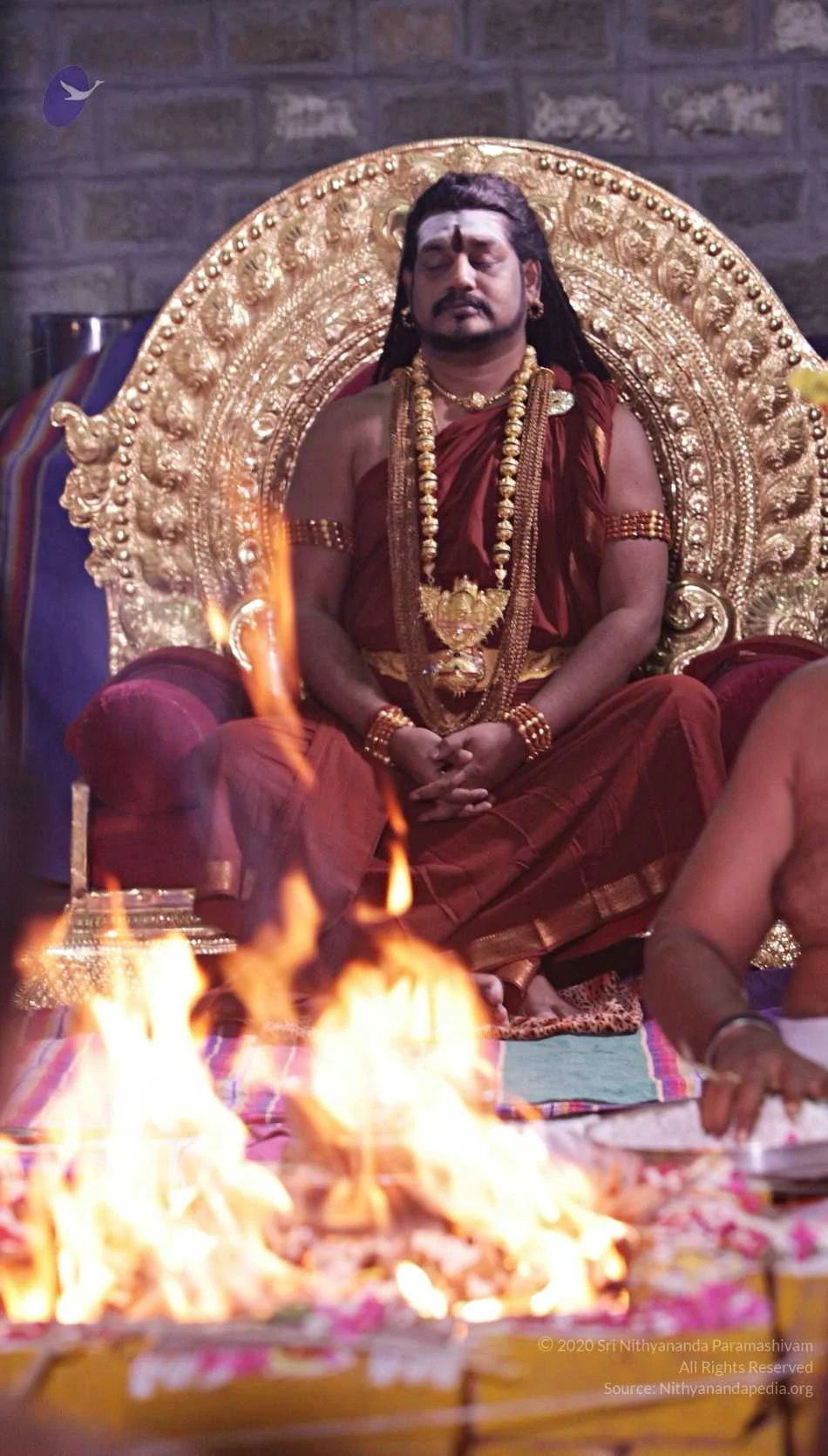
15 photosSource gallery
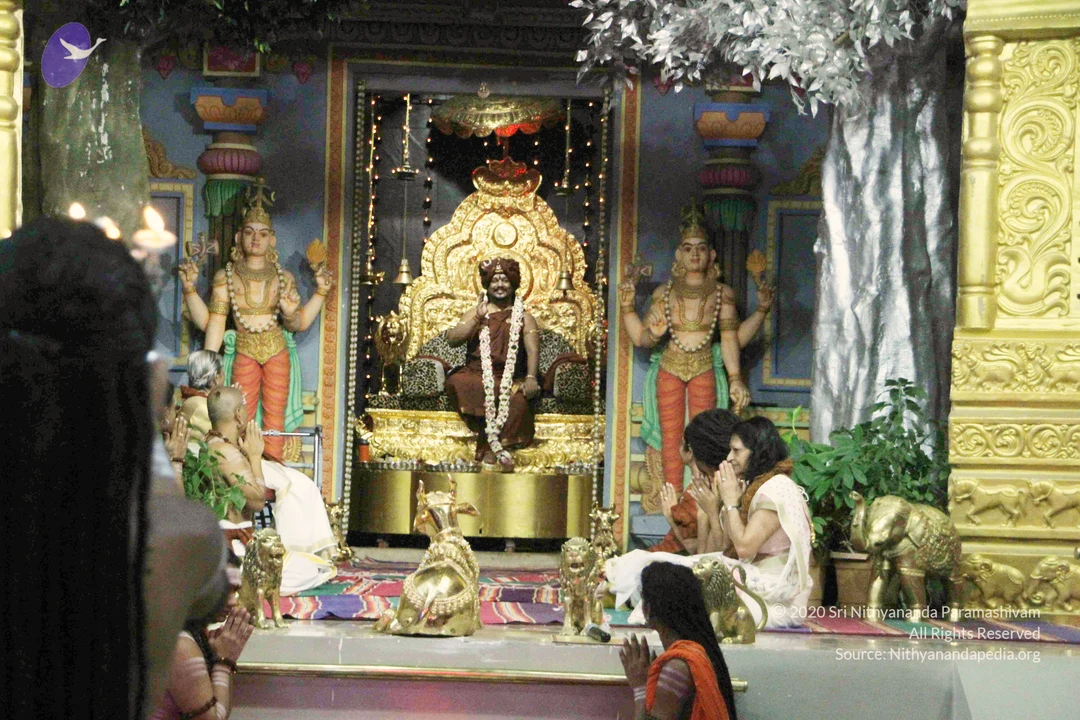
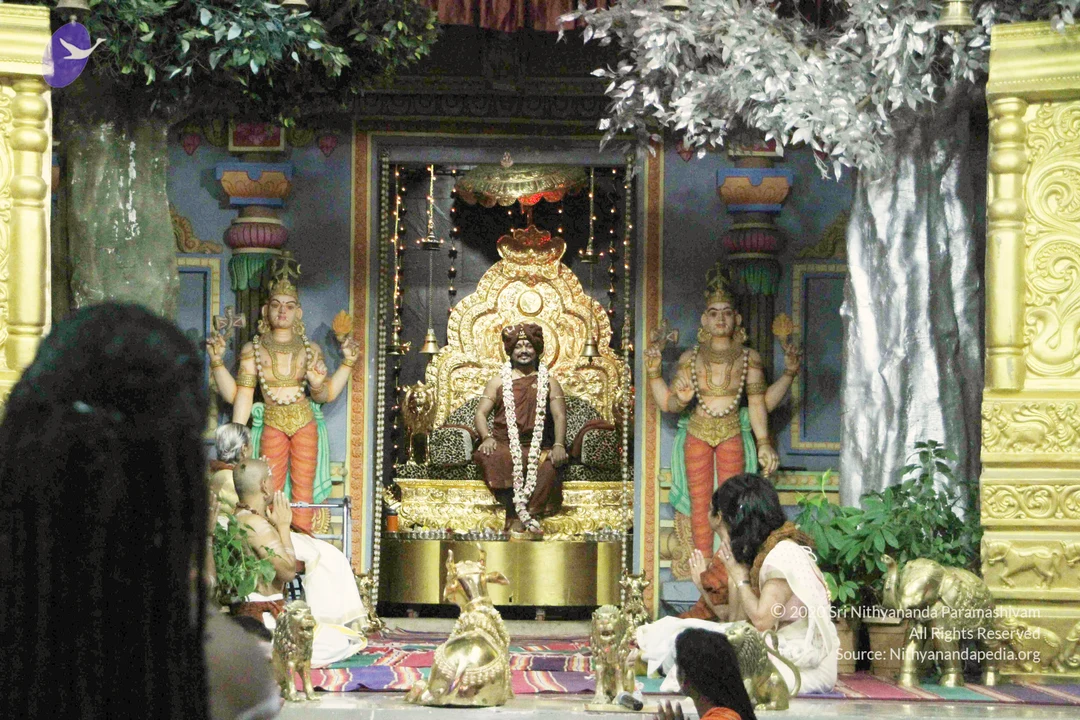
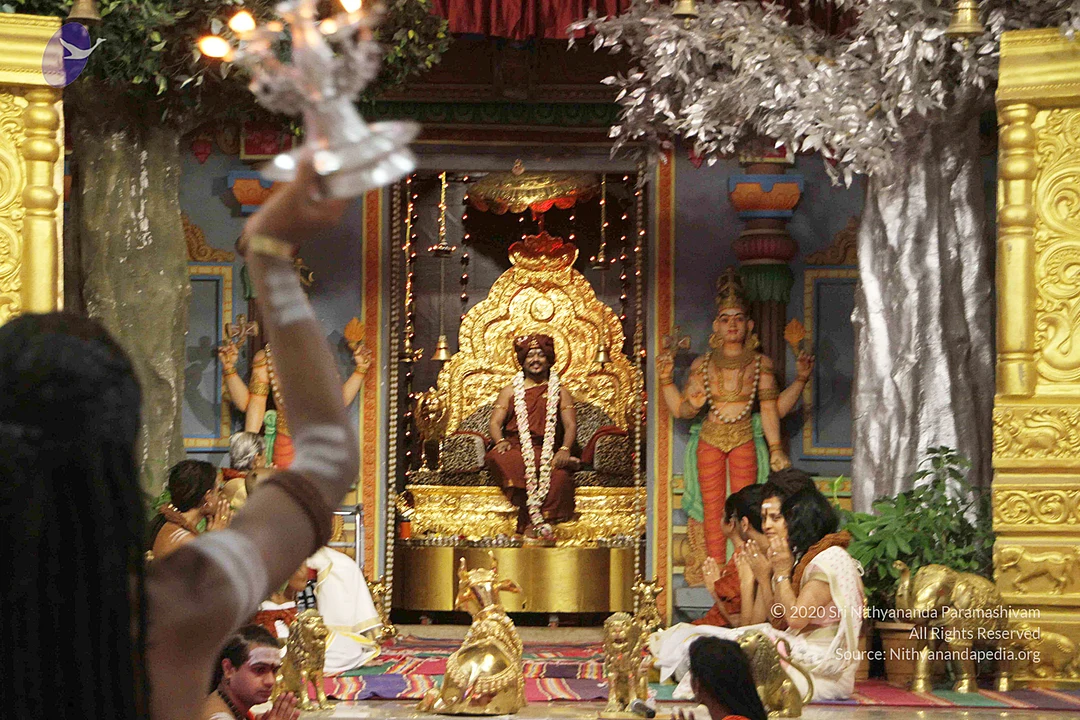
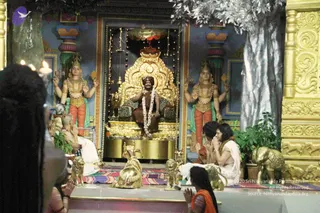
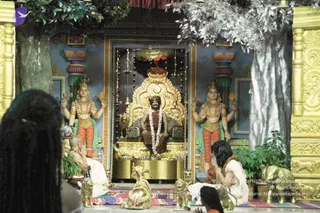
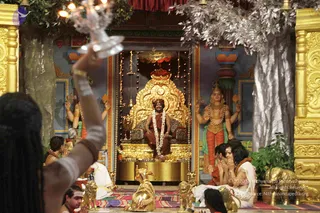
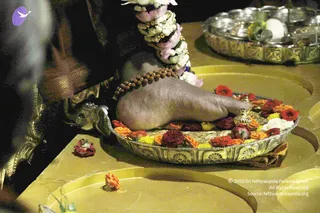
Photograph of a ceremonial pada puja inside a decorated shrine. A figure in a maroon robe with a red-and-gold head covering and a white garland sits on an ornate golden throne (peetha) under a golden canopy with string lights. Two gold-skinned attendant figures with multiple arms and orange-and-green dhotis flank the throne. Devotees in white saris and white garments kneel with folded hands on a colourful striped cloth; a woman in an orange robe bows at the bottom edge, and a shaved-headed man in white kneels at left. Golden lion and elephant sculptures, potted plants and an oil lamp are in the foreground, with a silver-leaf tree behind.A seated figure in a maroon-brown robe with a white flower garland sits on an ornate gold throne-like seat with a gilded canopy, centred in a temple-style stage. Two gold-skinned deity murti with multiple arms and red-orange dhotis flank the throne, and a silver-leafed tree hangs above. Gold lion and bull statues sit at the front, and bright cushions line the floor. Two seated devotees in white dhotis, one with palms pressed together, kneel on a striped rug at the lower right and left, and a dark-haired person is seen from behind in the foreground.Photograph of a ceremony in a temple-style hall with gold-framed doorways and a golden throne. A seated figure in saffron-brown robes and a white flower garland sits on the golden peetha beneath a golden canopy, with a golden lion at its base. Flanking figures in gold and orange stand on either side, and a silver tree stands behind. In the foreground, a priest in white raises a silver lamp toward the throne, while women in white saris and orange shawls sit with folded hands on a patterned rug, and a golden lion statue and gold elephant ornament sit nearby. a person: the seated figure on the throne wears saffron-brown robes and a white garland, with a crown-like ornament above; these cues are not sufficient to confirm identity. Priests and devotees in white and orange attend the lamp offering.A close photograph of a bare foot resting on a large brass tray filled with red, orange and yellow marigold petals and red roses, during a padapuja ritual. A tall white and pink flower garland with gold beads hangs over the foot, and a wooden rudraksha mala lies across the ankle. A small brass oil lamp sits on the tray beside the toes. Behind the tray, ornate brass ritual vessels and offering plates sit on a golden table, and a figure in a red-and-gold garment is partially visible at the left edge. Petals are scattered on the table. No face is visible in the frame, so the person whose foot is being worshipped cannot be confirmed from the image.Close-up photograph of a bare foot resting on a large ornate brass plate heaped with marigolds, red roses, pink lotus petals and a small brass lamp, during a padapuja ritual. A rudraksha mala is wrapped around the ankle and a floral garland with pink lotus and white blossoms hangs above. Beside the plate are a brass tray with silver bowls and a small table with a flower-decorated tray. The foot belongs to a person whose body is cut off by the frame; the figure wears dark clothing with gold brocade trim, and no face is visible. The yellow-gold table surface holds scattered marigold petals. Whether the foot belongs to a person cannot be determined from appearance.A seated man in a rust-red dhoti and wrap, wearing a red-and-cream turban and a long multicolour flower garland, has his bare right foot placed in a round tray of flowers and kumkum on a golden seat carved with lions and draped in leopard-print cushions. Beside him, a white-haired devotee in white bends over the foot. At a long wooden table, several women in red and white saris sit with palms pressed together in prayer, with brass plates of offerings, flowers and vessels in front of them. Hanging brass bells and oil lamps are above, and a dark wall and a wall-mounted air conditioner are behind. This appears to be a padapuja, foot-worship ritual, with the seated man as a person (wearing a turban and flower garland on an ornate golden throne).

02-Nithya-Satsang
8 photosSource gallery
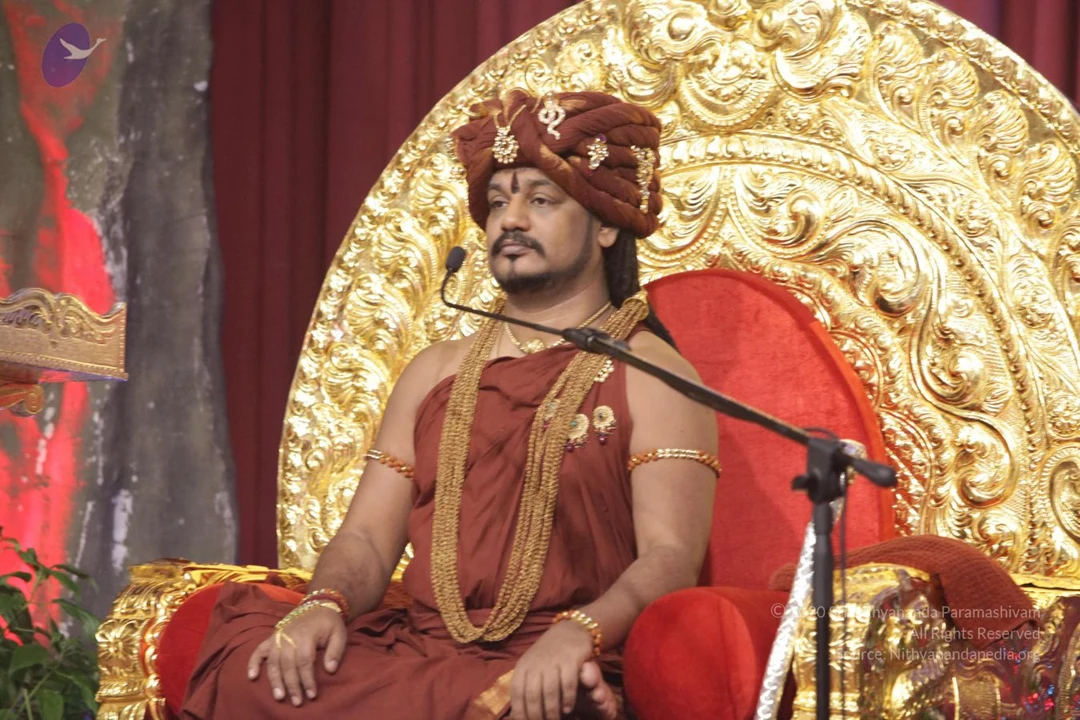
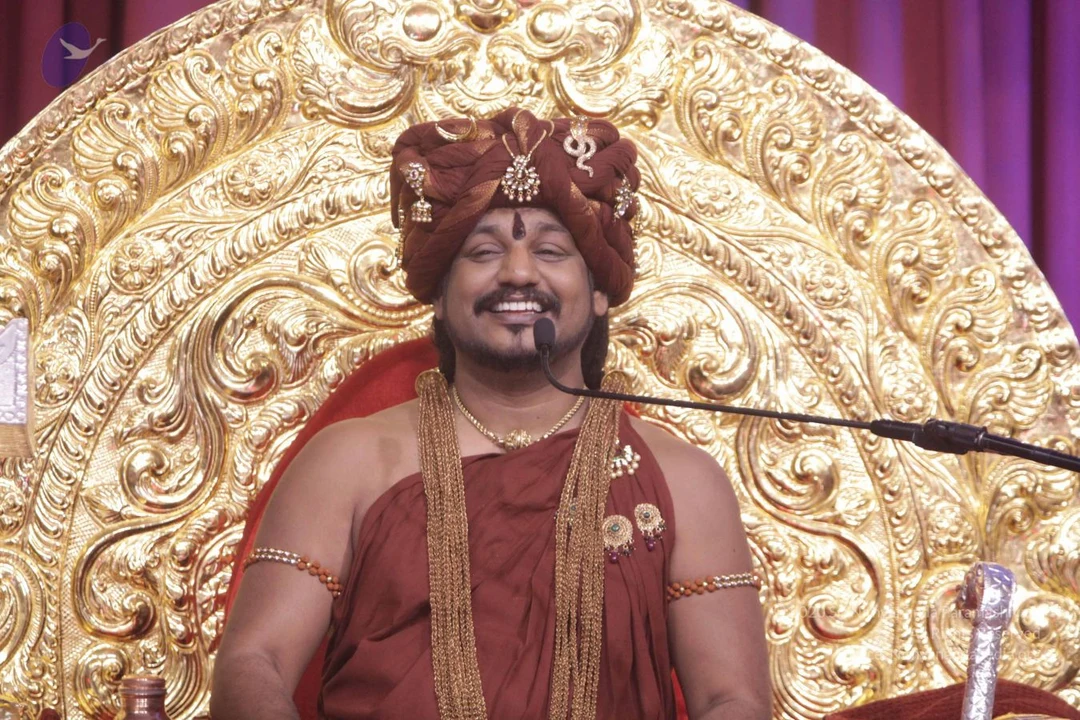
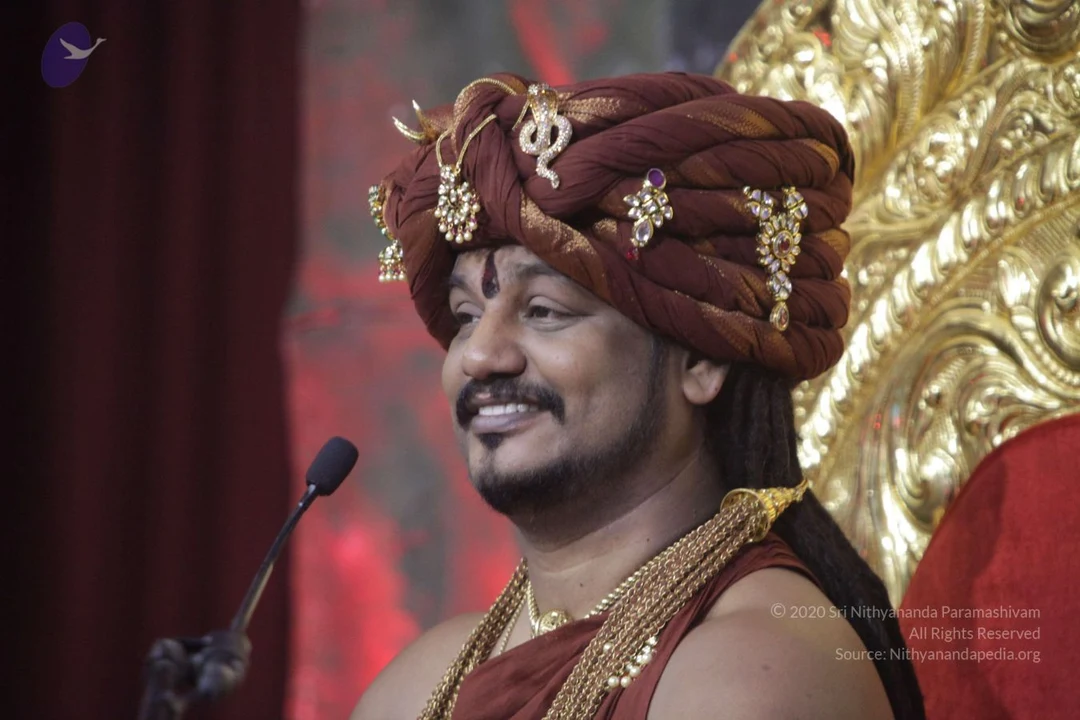
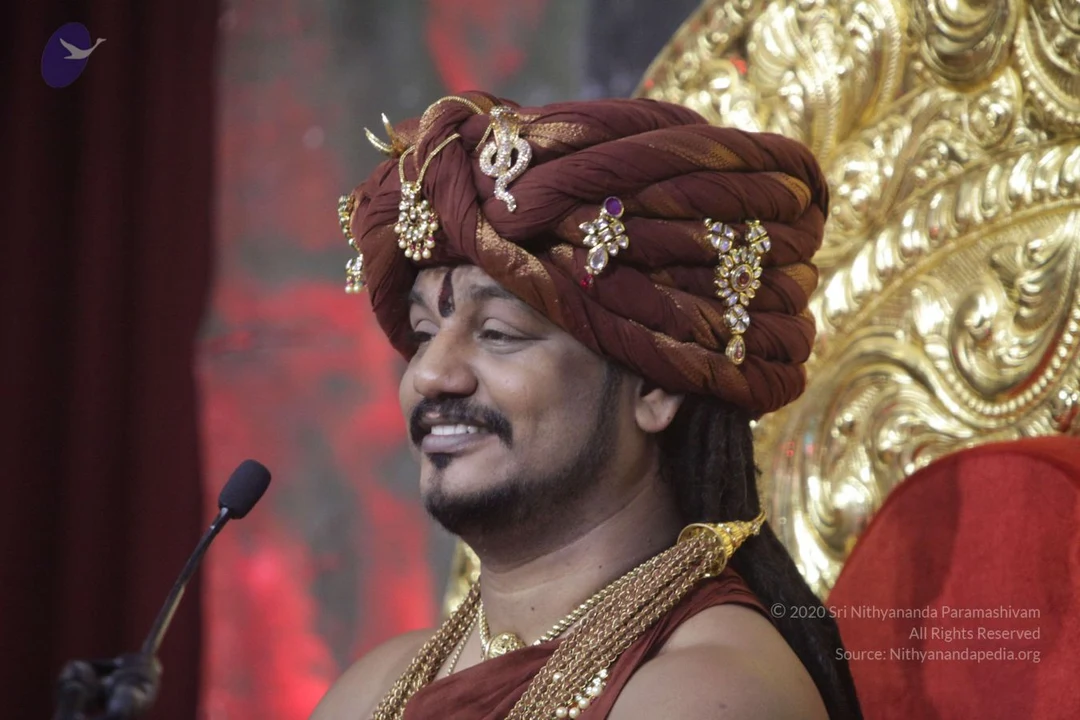
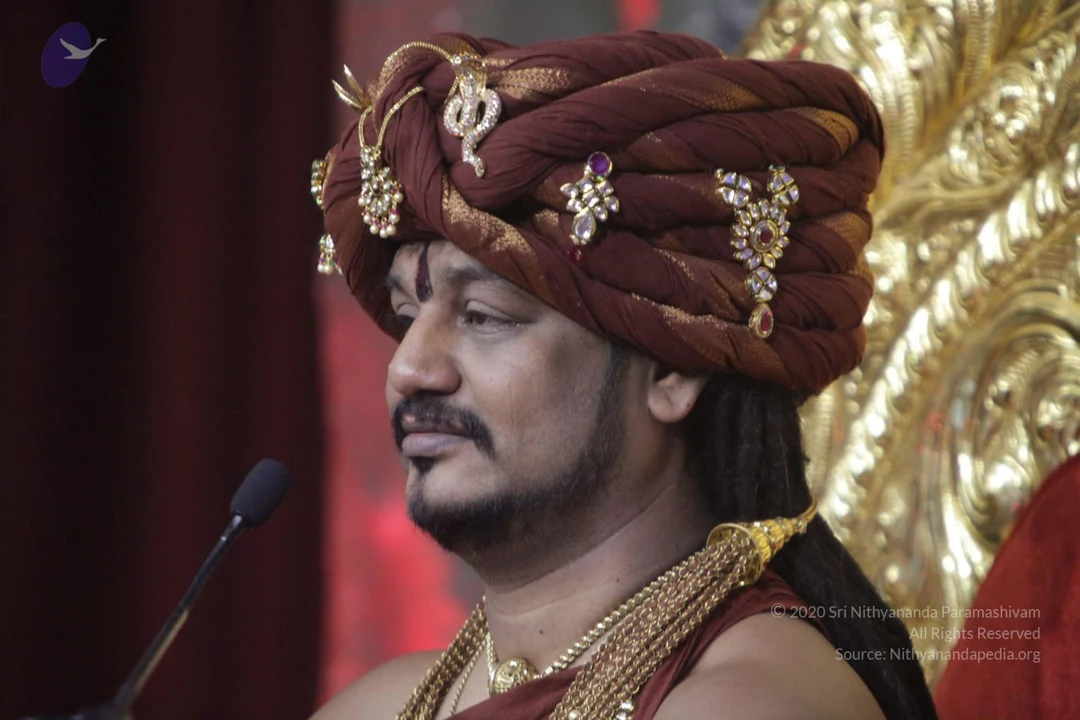
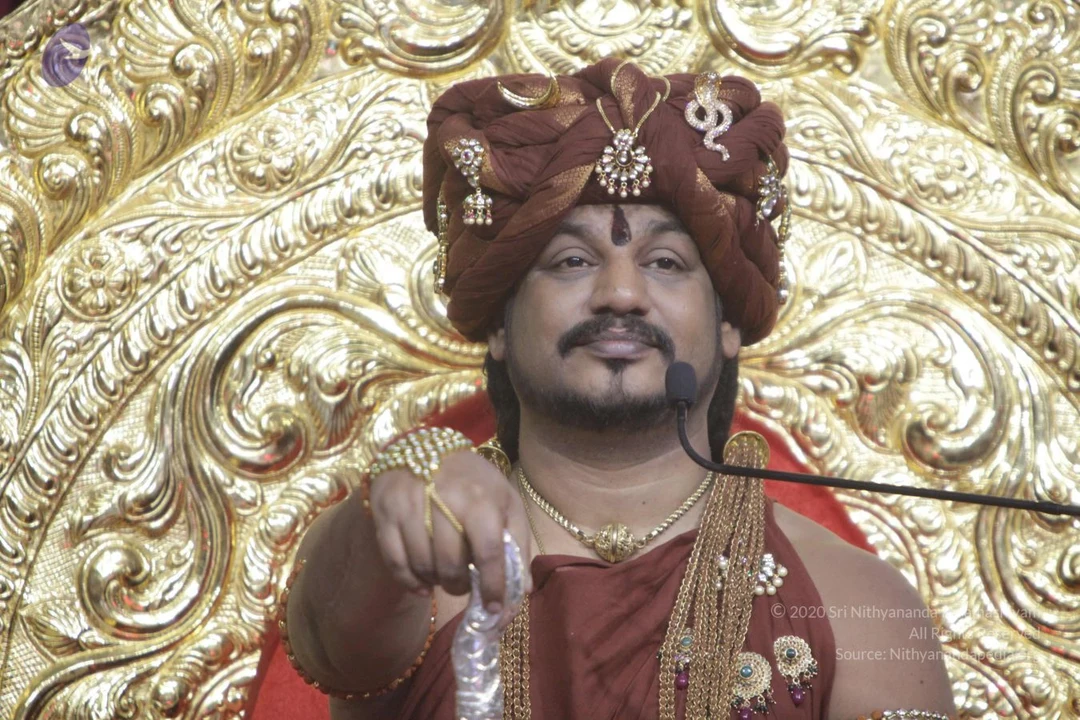
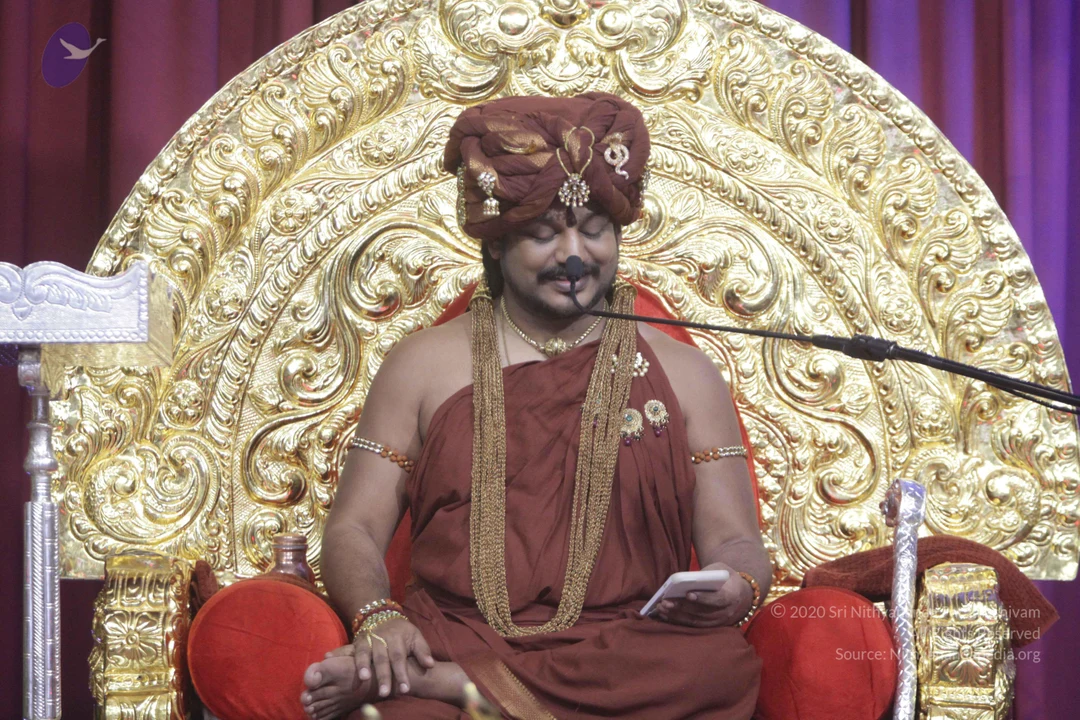
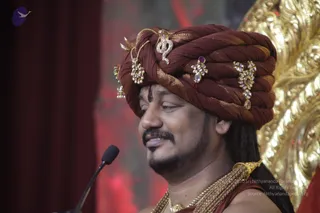
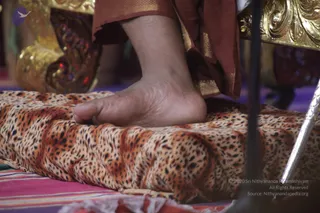
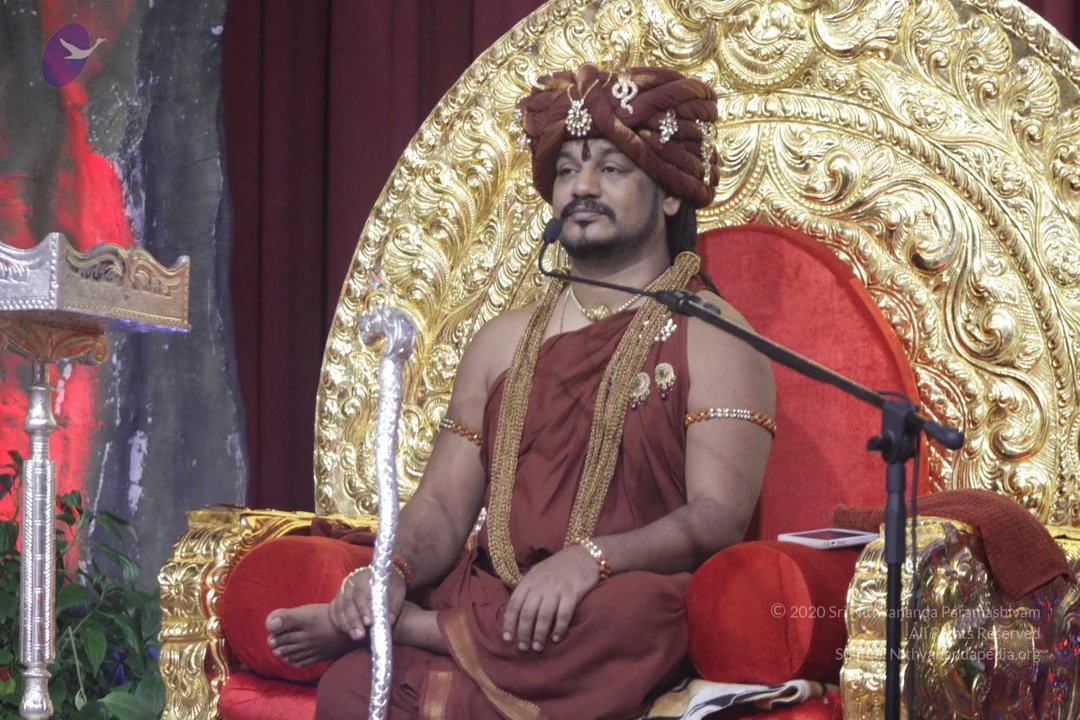
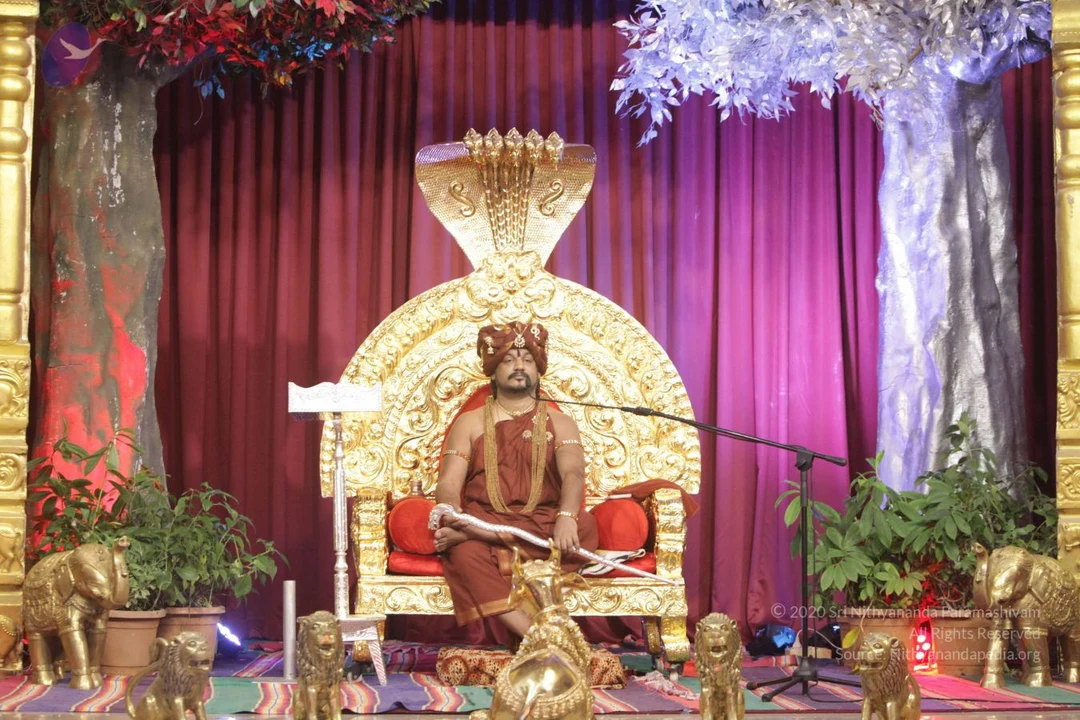
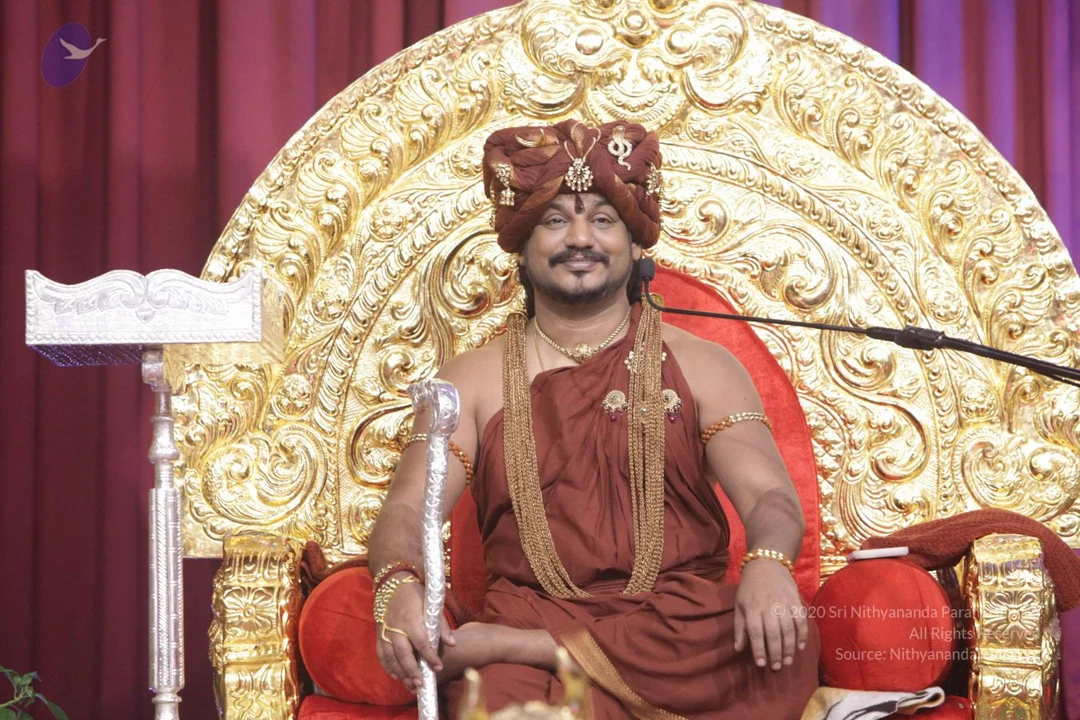
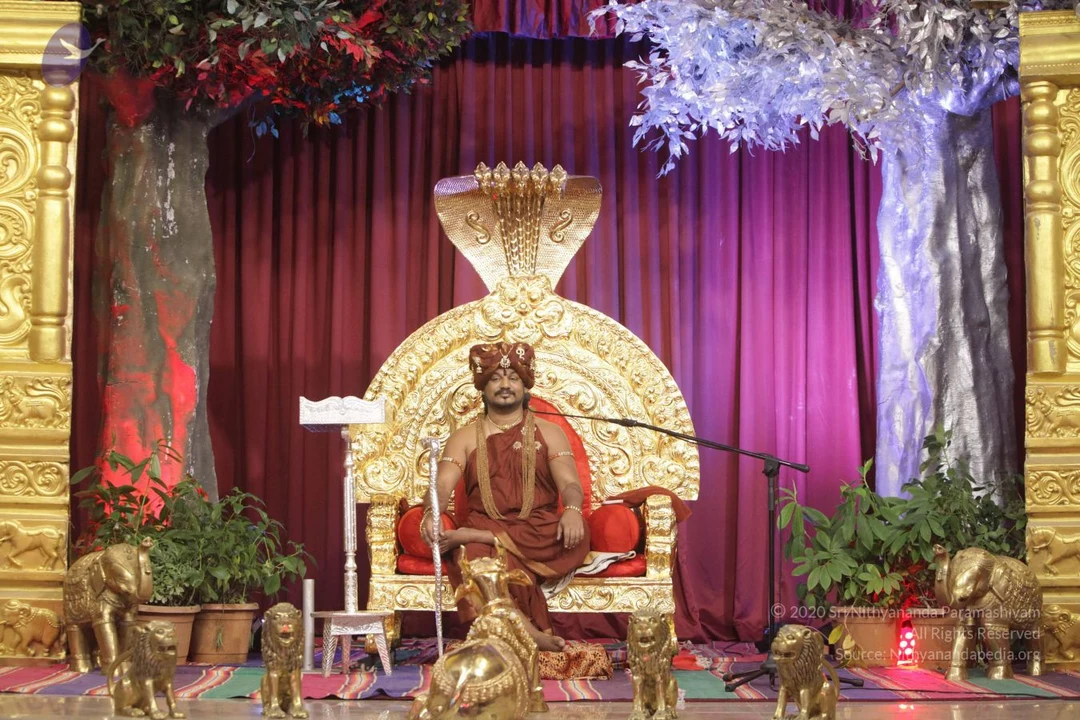
A man seated before an ornate gold repoussé backdrop speaks into a microphone while gesturing with his right hand. He wears a maroon-red turban decorated with gold jewelled ornaments and a small serpent motif, a red-brown dhoti-style wrap draped over bare shoulders, a gold chain with a gold pendant, long gold necklaces, and rudraksha-style beaded bracelets.A photograph of a man seated before an ornate gold repoussé backdrop, speaking into a microphone on a stand. He wears a dark red-brown turban adorned with a jeweled brooch and gold pendants, a red-brown wrap over the shoulders, multiple long gold chains and a gold necklace with a central pendant. He has a red tilak on his forehead and holds a small silver-wrapped object in his right hand while gesturing. The setting suggests a satsang discourse.A man seated on an ornate gold throne with a large gold-filigree backrest and red cushions, speaking into a microphone on a boom stand. He wears a maroon-red turban with gold ornaments, a maroon-red robe, a long gold chain necklace, gold bangles on his upper arms and wrists, and a multi-strand gold necklace. He holds a white mobile phone or card in one hand and his eyes are lowered. Behind him hang purple and magenta drapes. Swamiji (probable): the seated figure's turban, ornate gold chains and ceremonial throne match the page's Swamiji cues. A silver-toned stand and a red cushion sit at the edges of the frame.Close photo of a man speaking into a black microphone at left, seated before an ornate gold carved throne at right. He wears a brown-maroon turban wrapped with gold-toned braid and adorned with a jewelled gold ornament, a jewelled pin and a gold clasp, plus a red bindi on his forehead. He wears layered gold chain necklaces over a reddish-brown garment, and his long hair falls behind his shoulder. A red-lit background and dark red curtain complete the setting. Swamiji (probable): the turban, jewelled headpiece, gold necklaces and throne are consistent with the page's description of a discourse by Paramahamsa Nithyananda.Close-up photograph of a bare foot resting on a leopard-print cushion on a raised seat. The foot belongs to a person wearing a rust-orange cloth, and gold-coloured ornate carved fittings of a throne or seat are visible behind. A striped cloth lies beneath the cushion. No face is visible, so the person is only a partial figure; the foot and clothing are the visible subject of this discourse setting.Close-up photograph of a bare foot resting on a leopard-print cloth draped over a seat. The foot belongs to a person wearing a maroon garment with a gold-bordered hem. Behind it, an ornately carved gold-and-red throne or seat is partially visible. A striped pink and blue mat lies beneath the cloth. No face or full figure is visible, so the wearer cannot be identified from this frame.
03-Vishesha-Deeksha
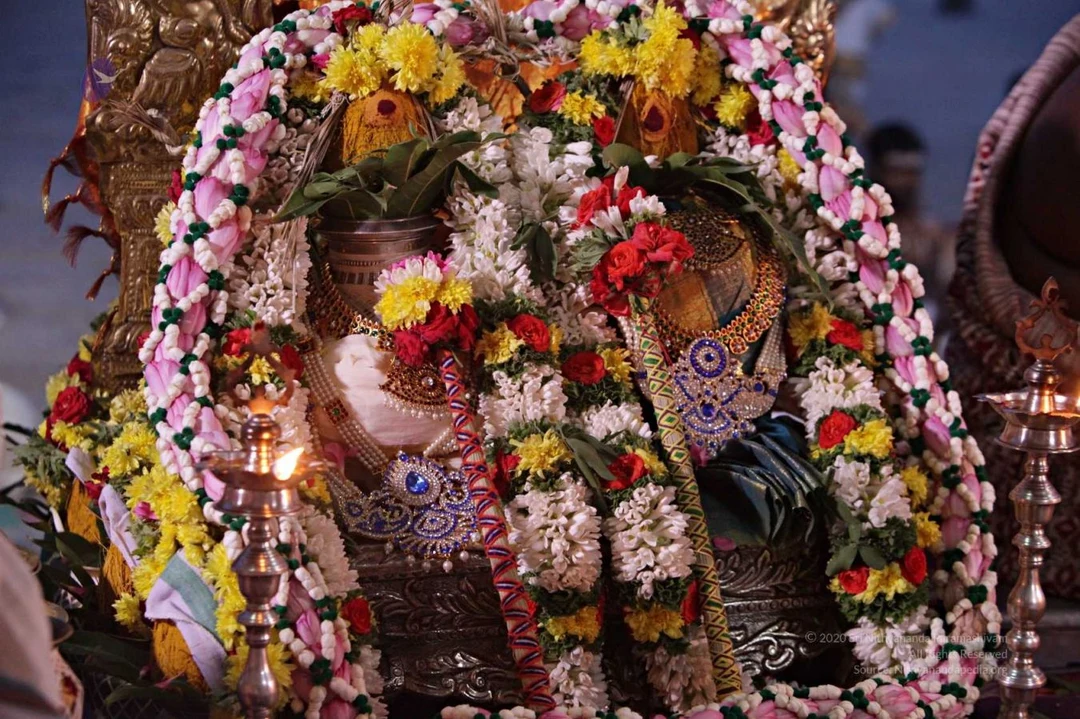
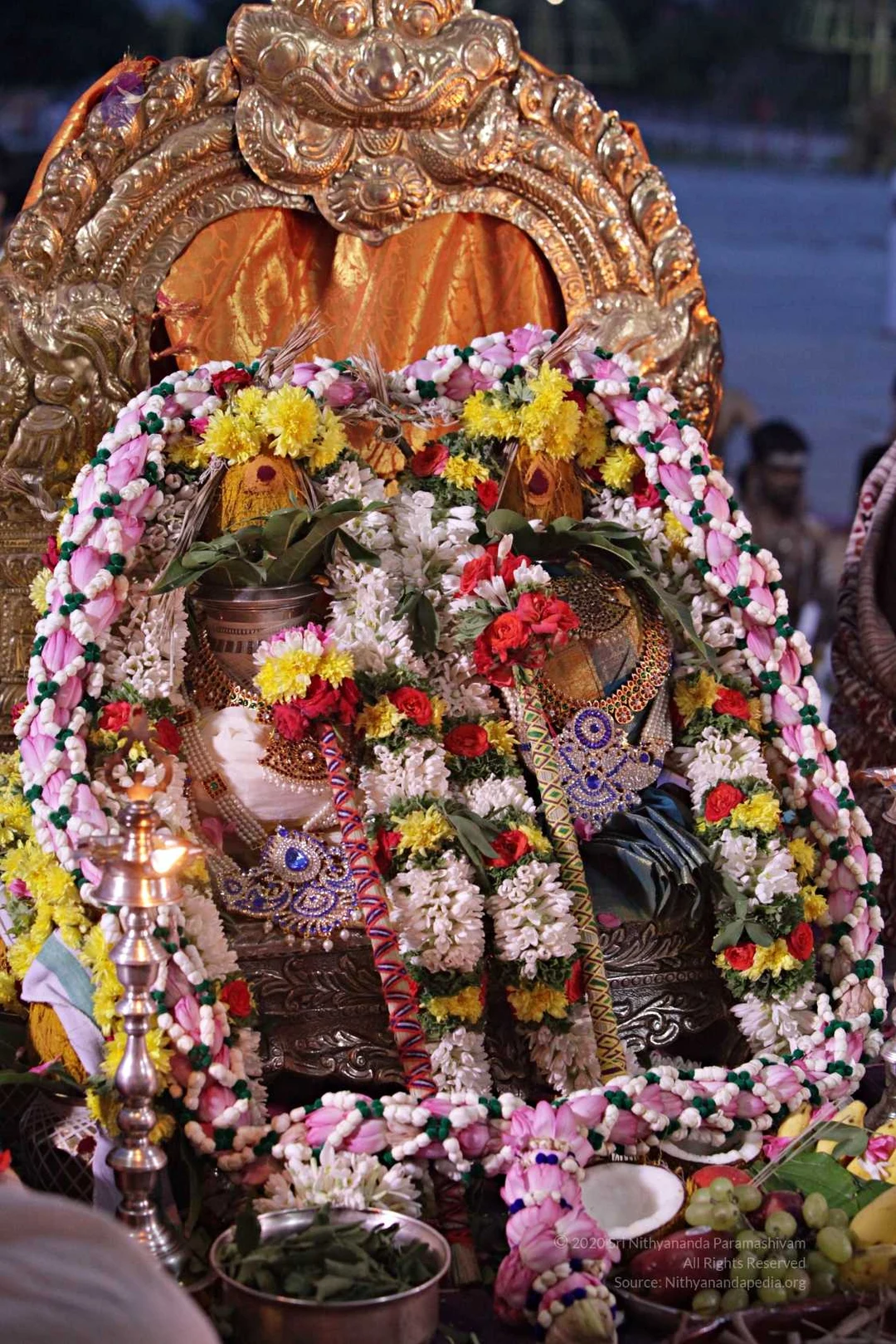
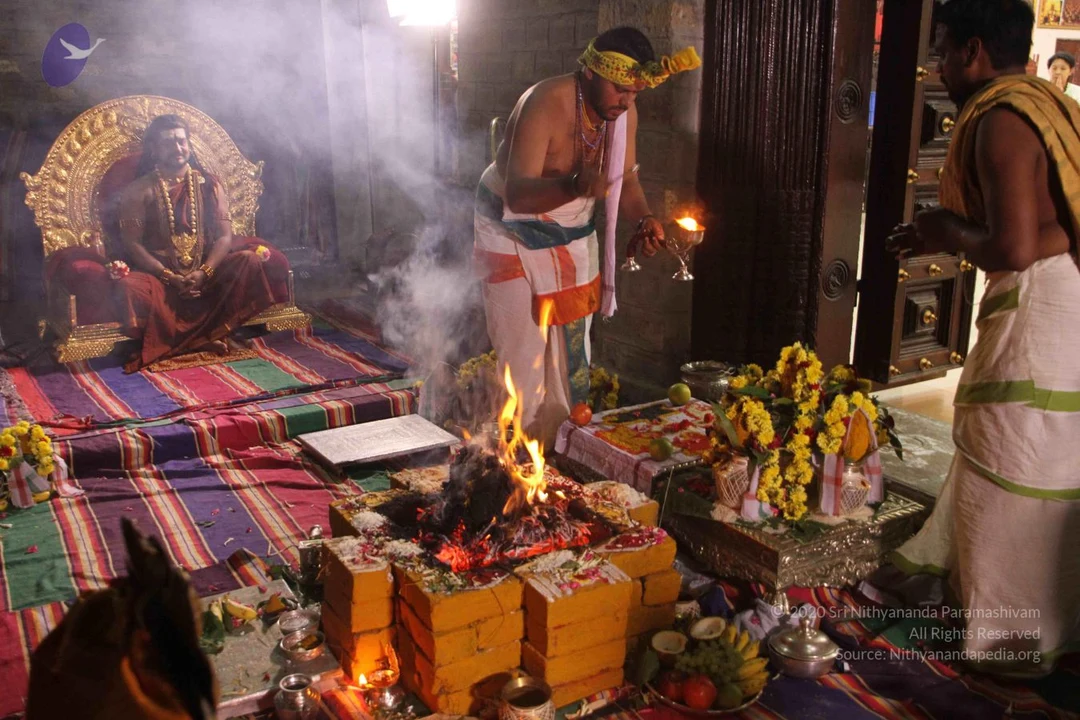
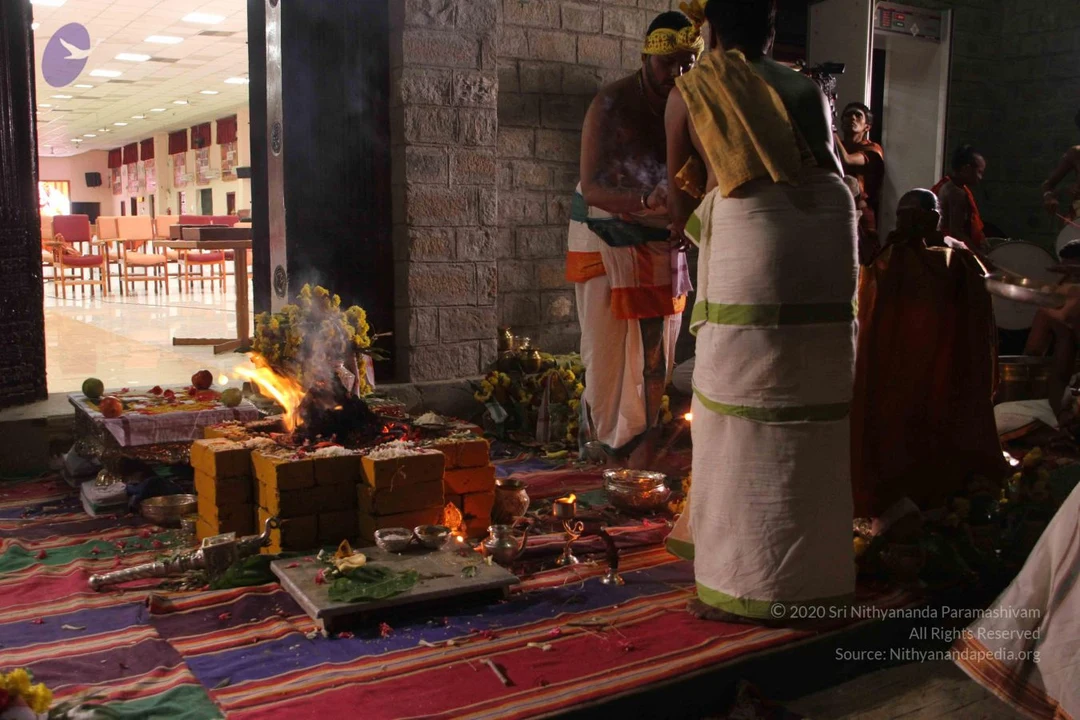
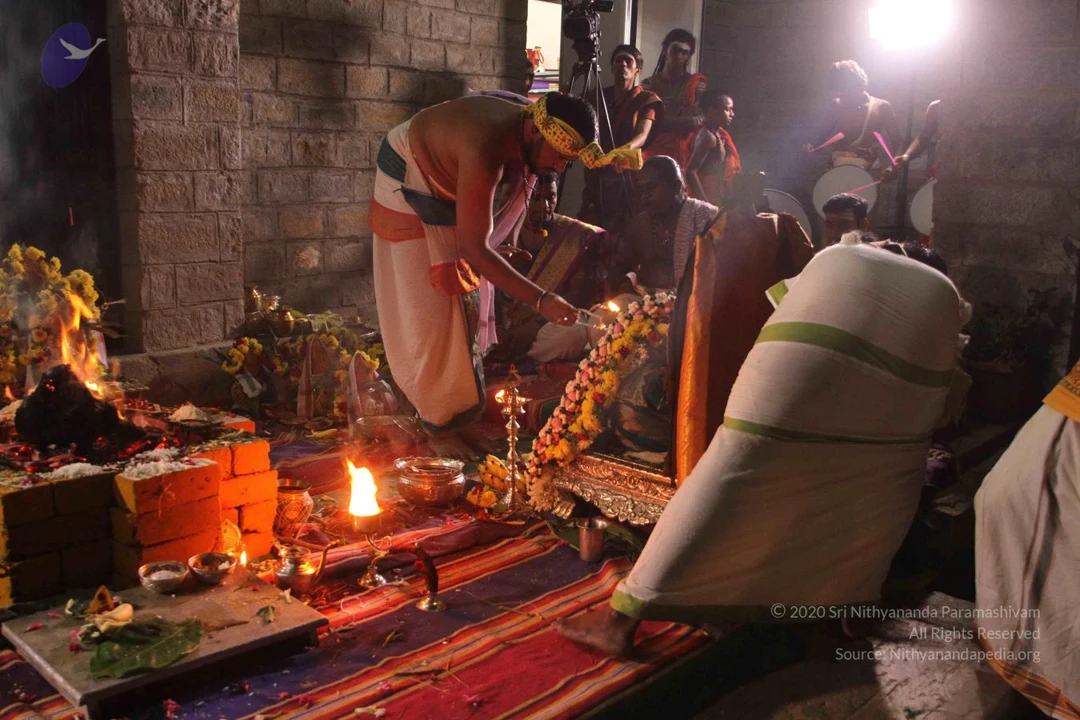
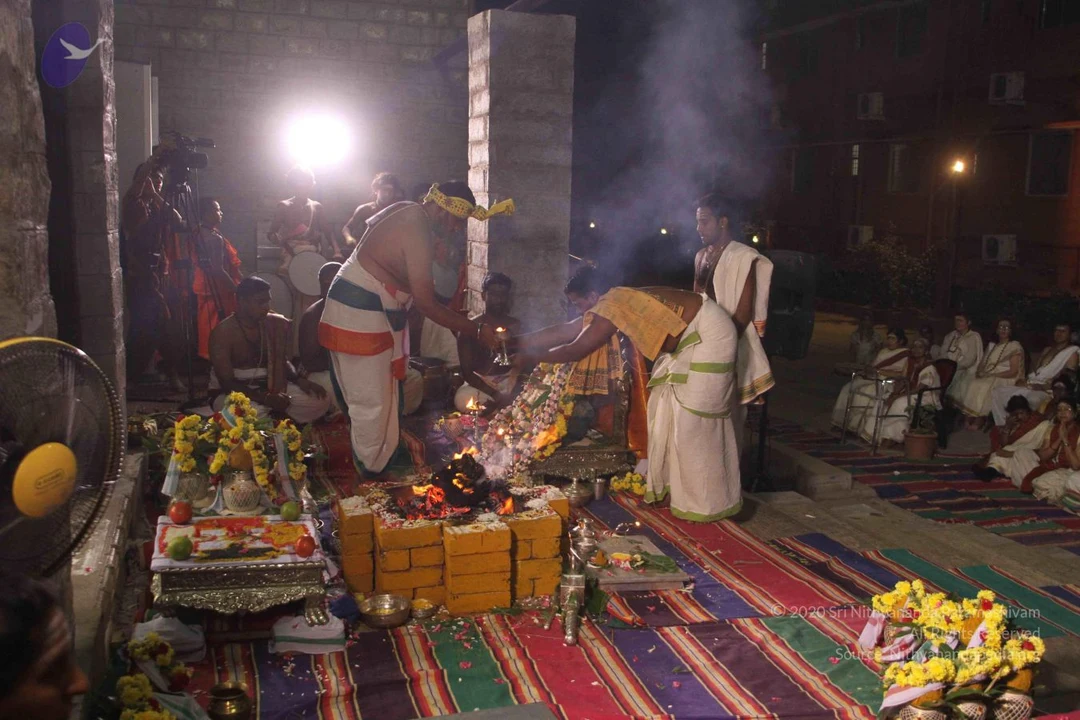
13 photosSource gallery
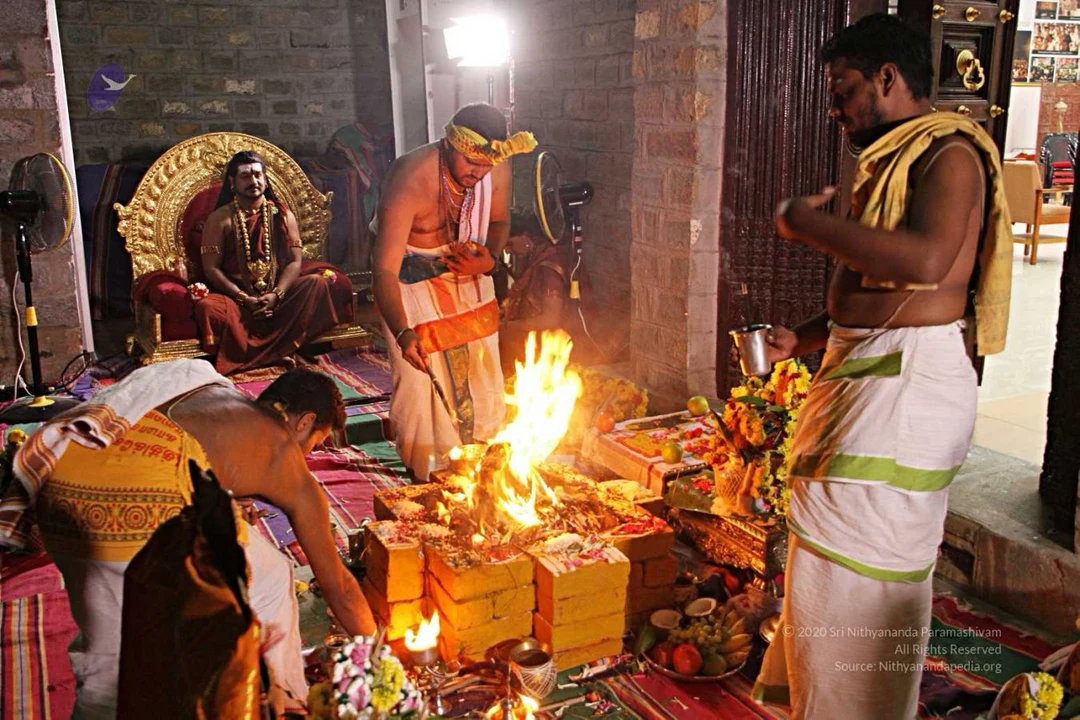
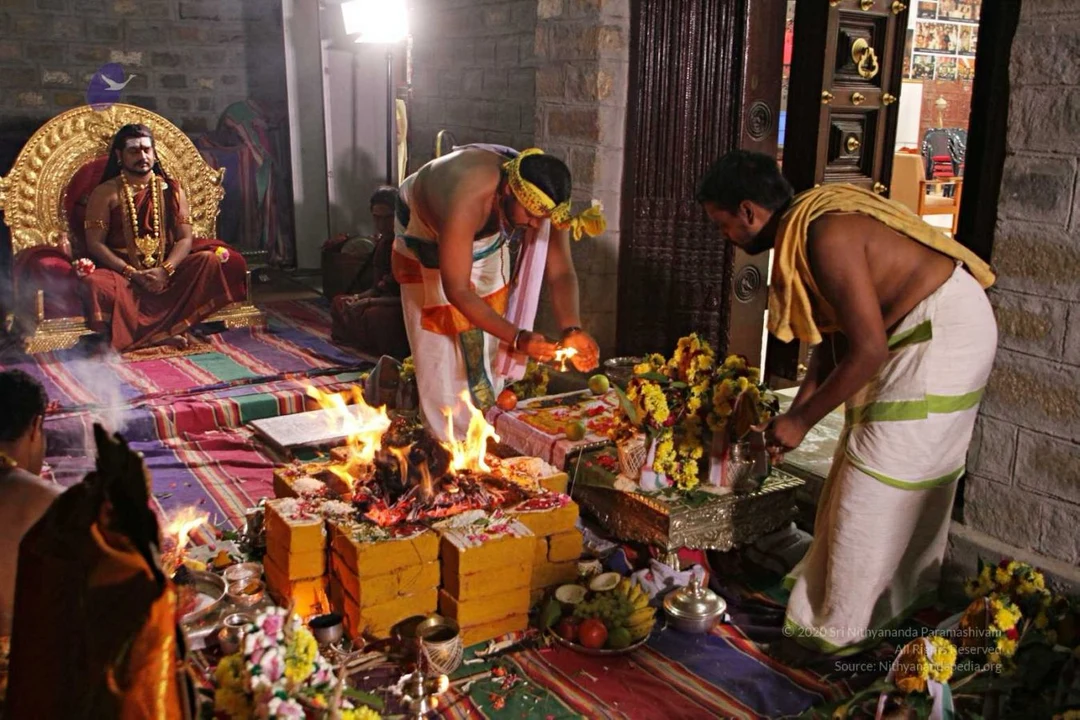
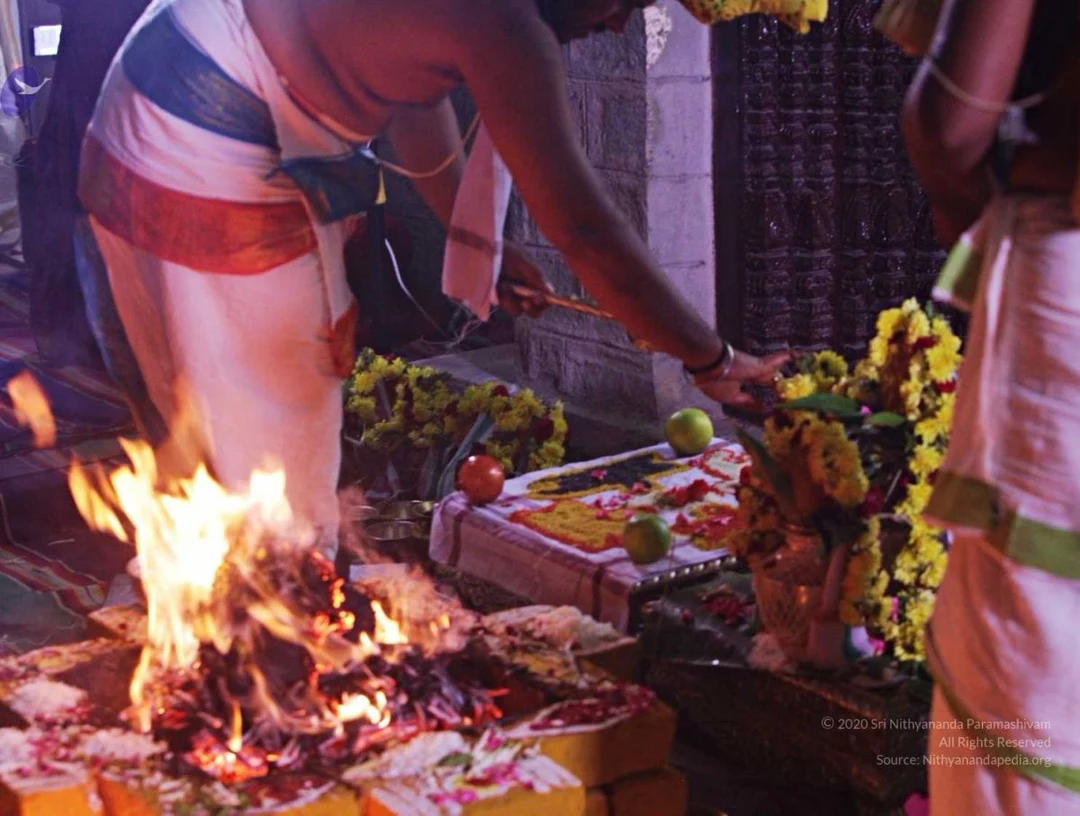
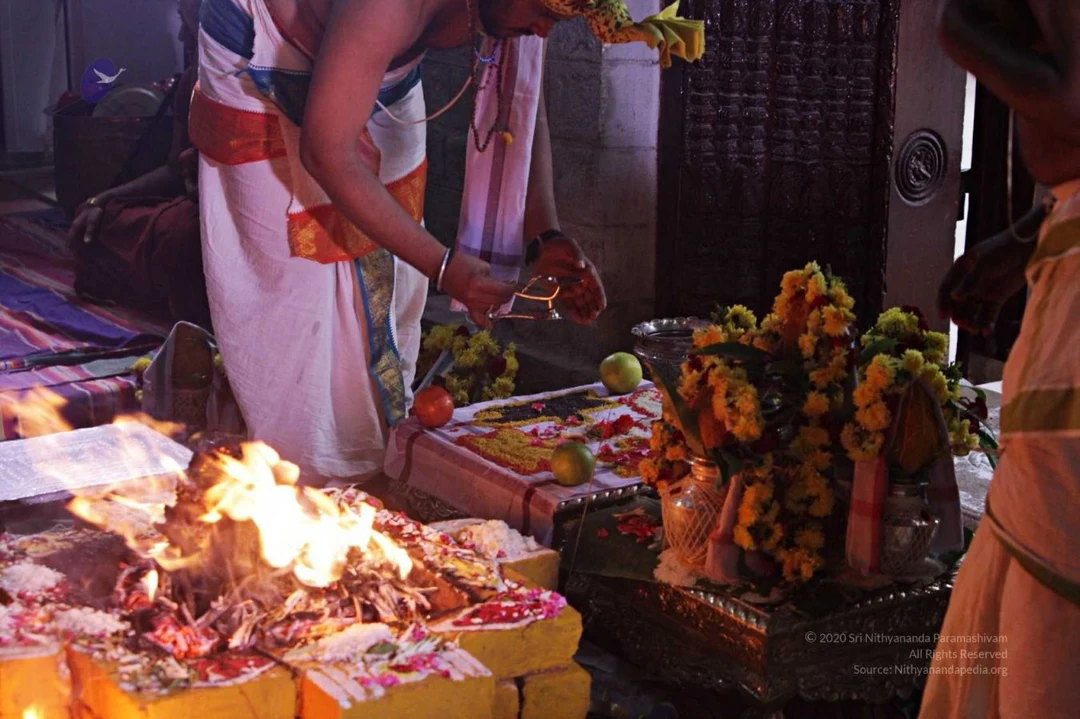
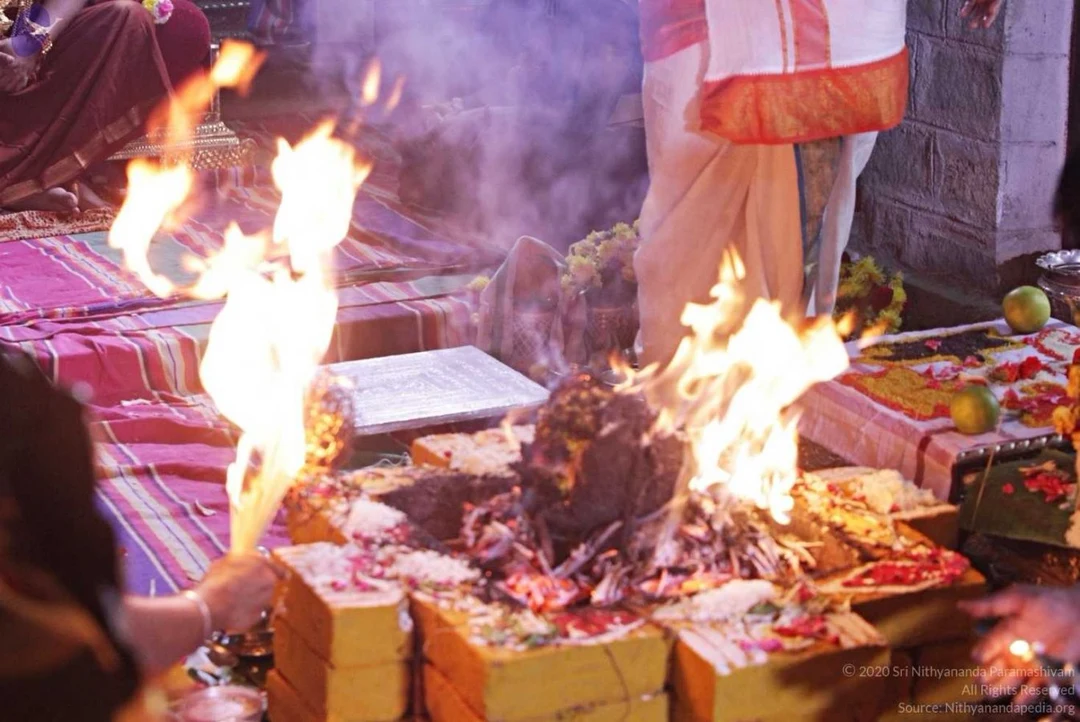
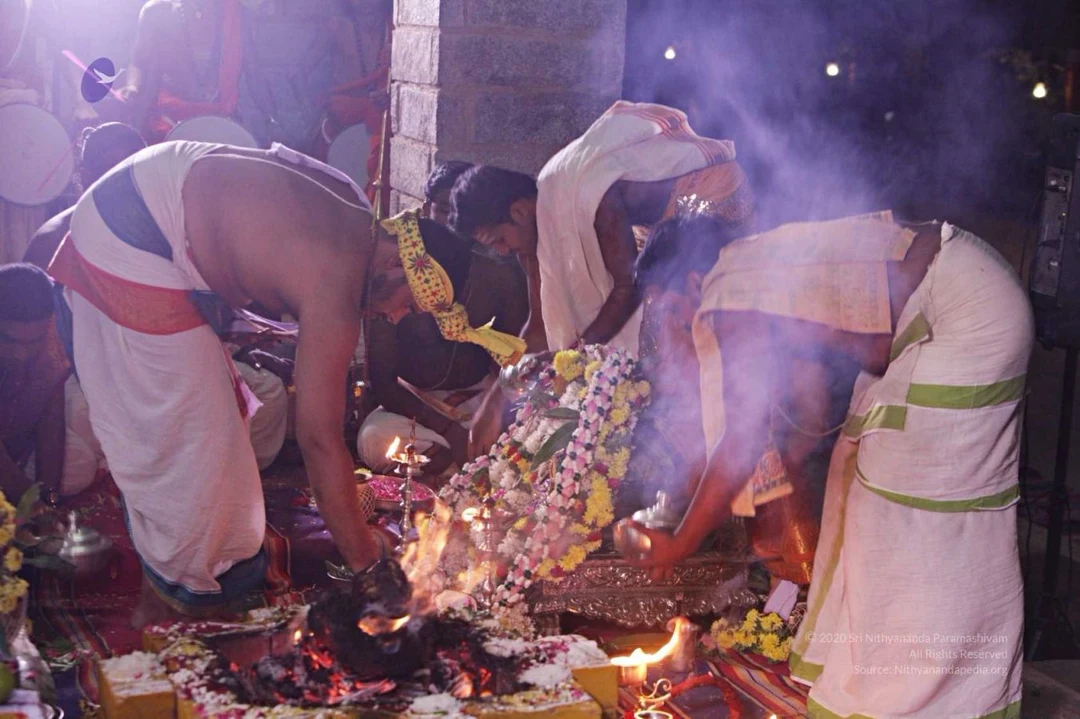
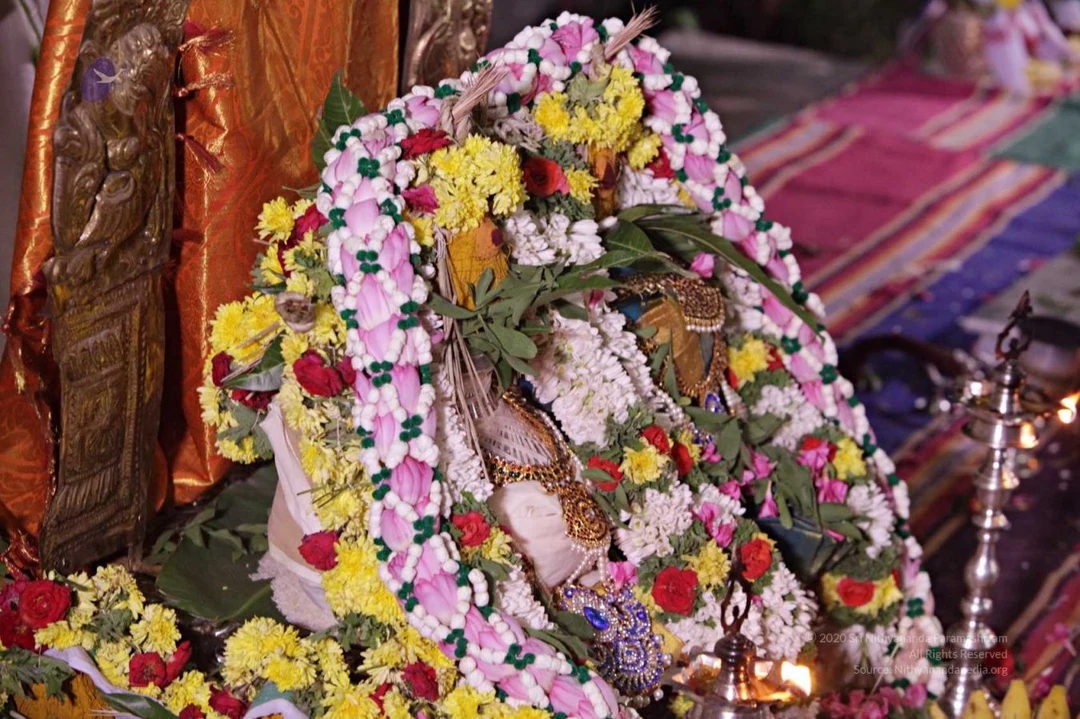
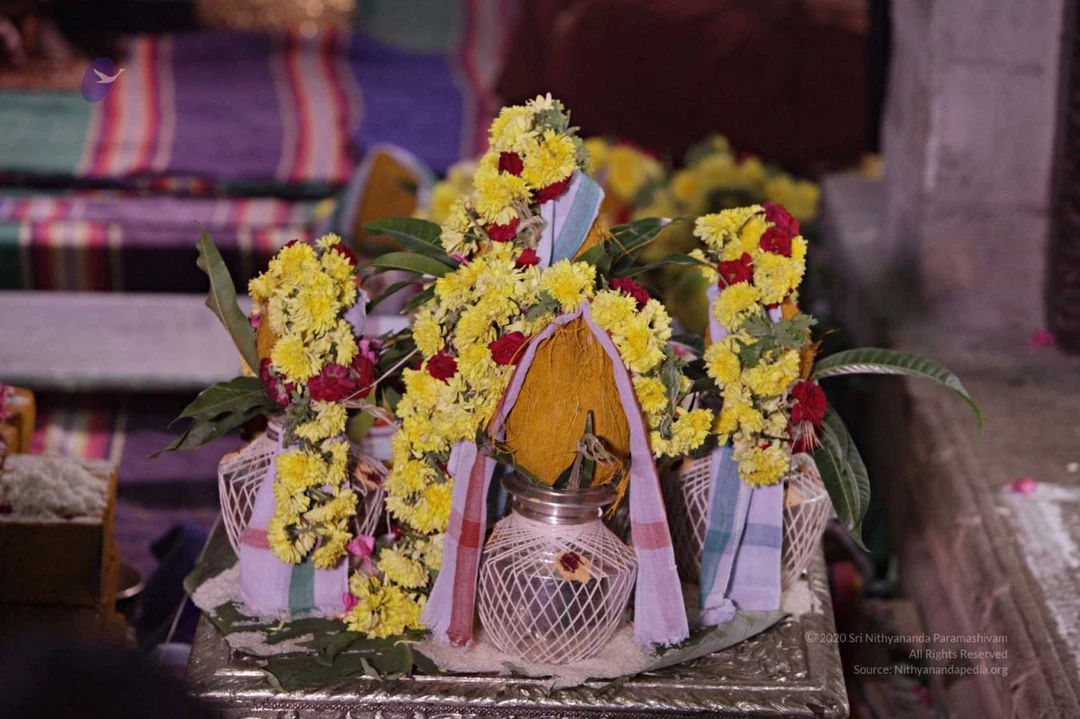
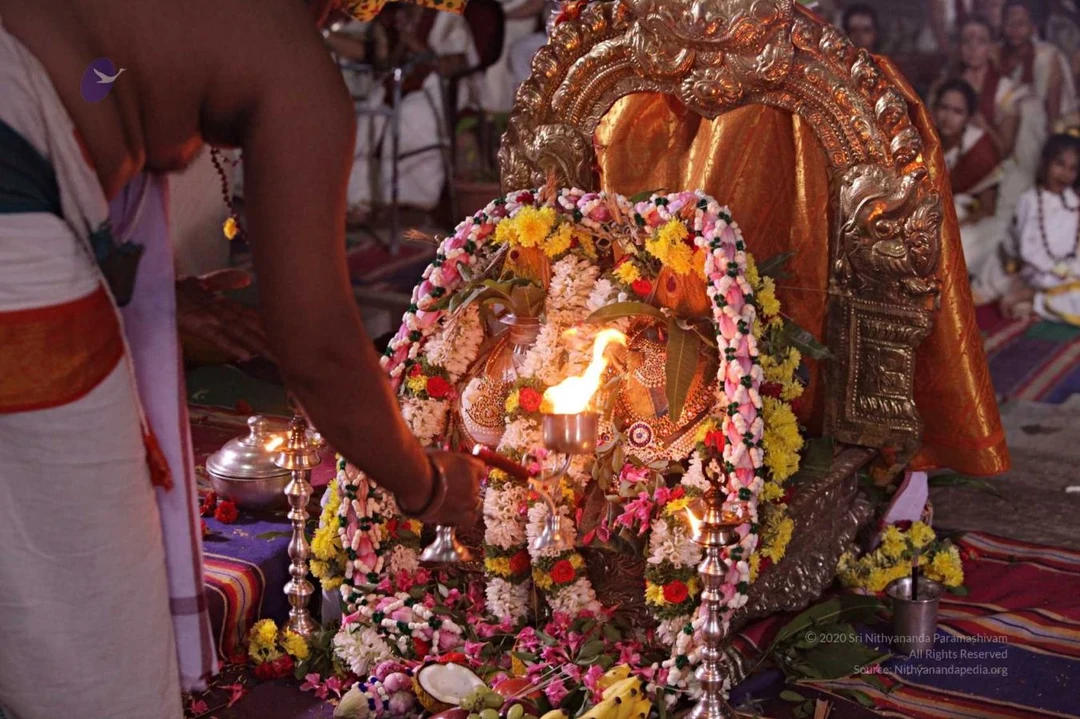
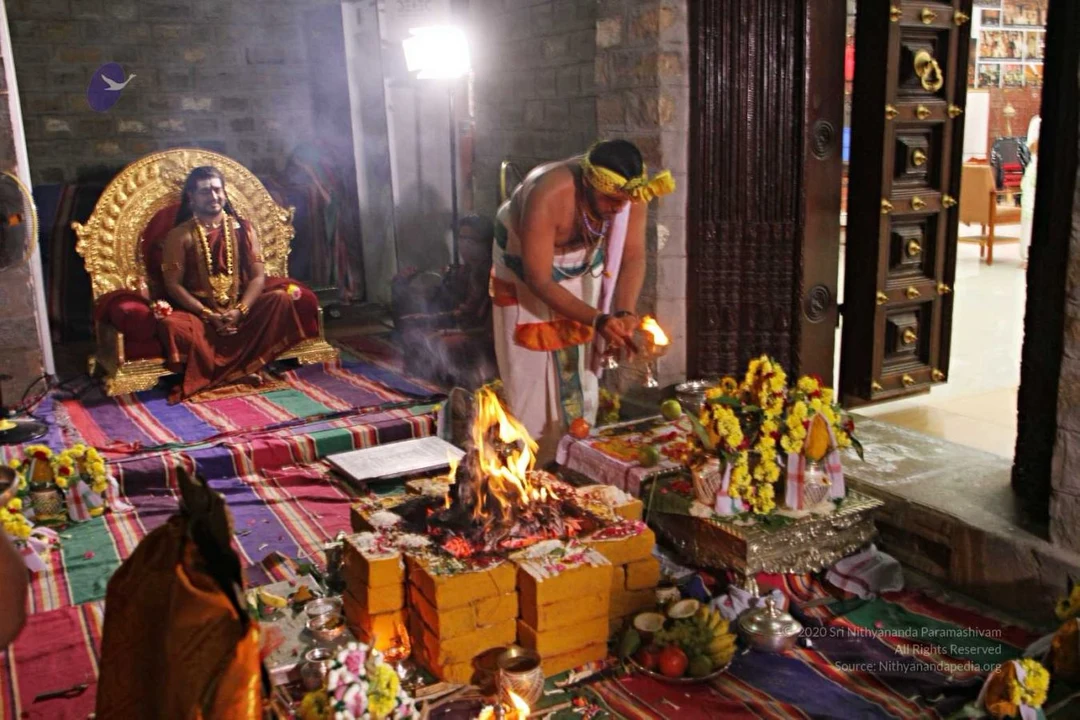
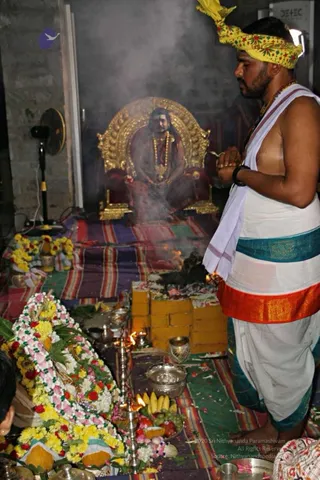
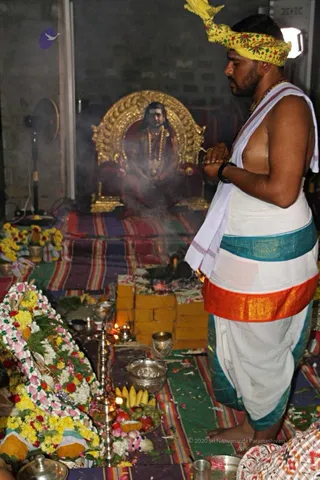
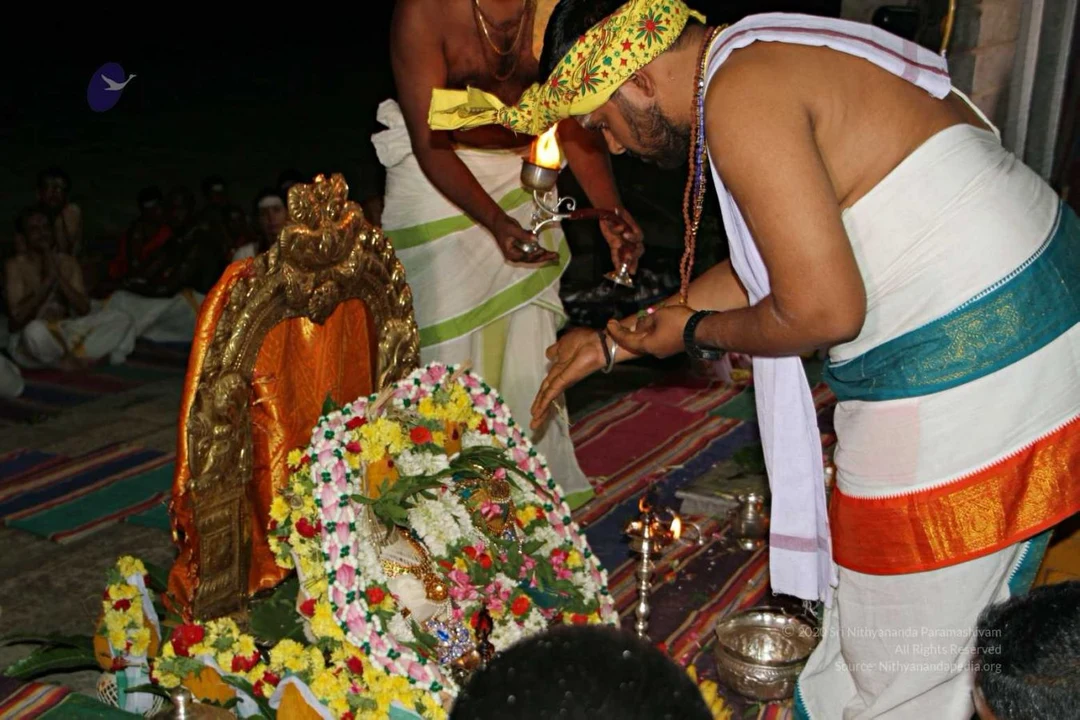
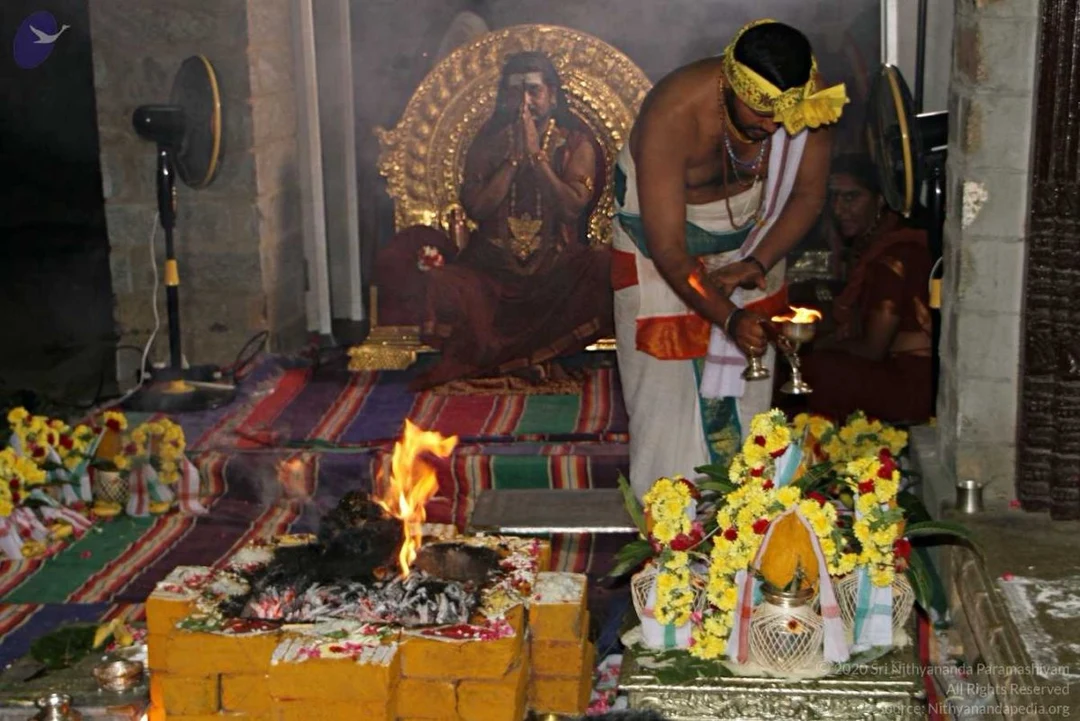
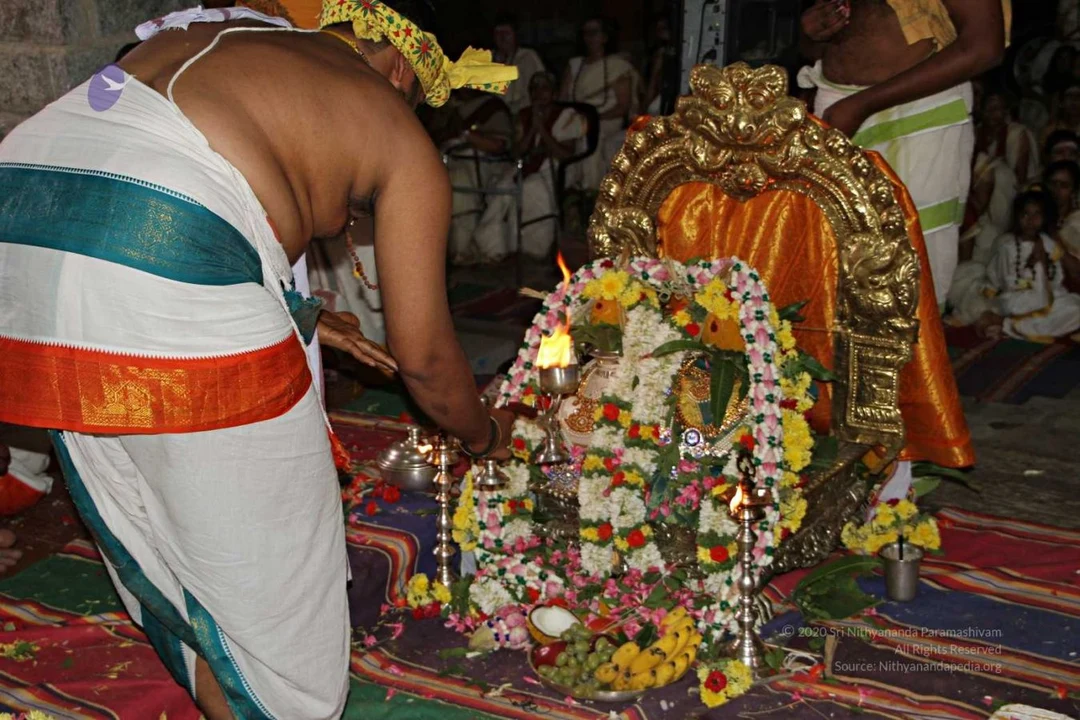
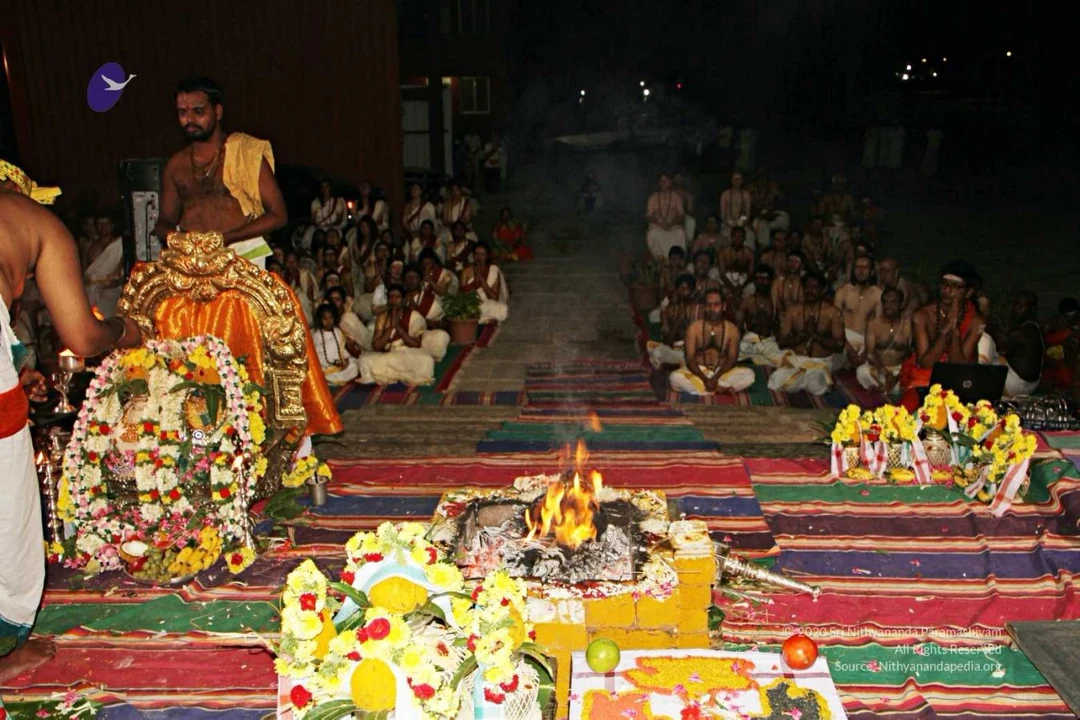
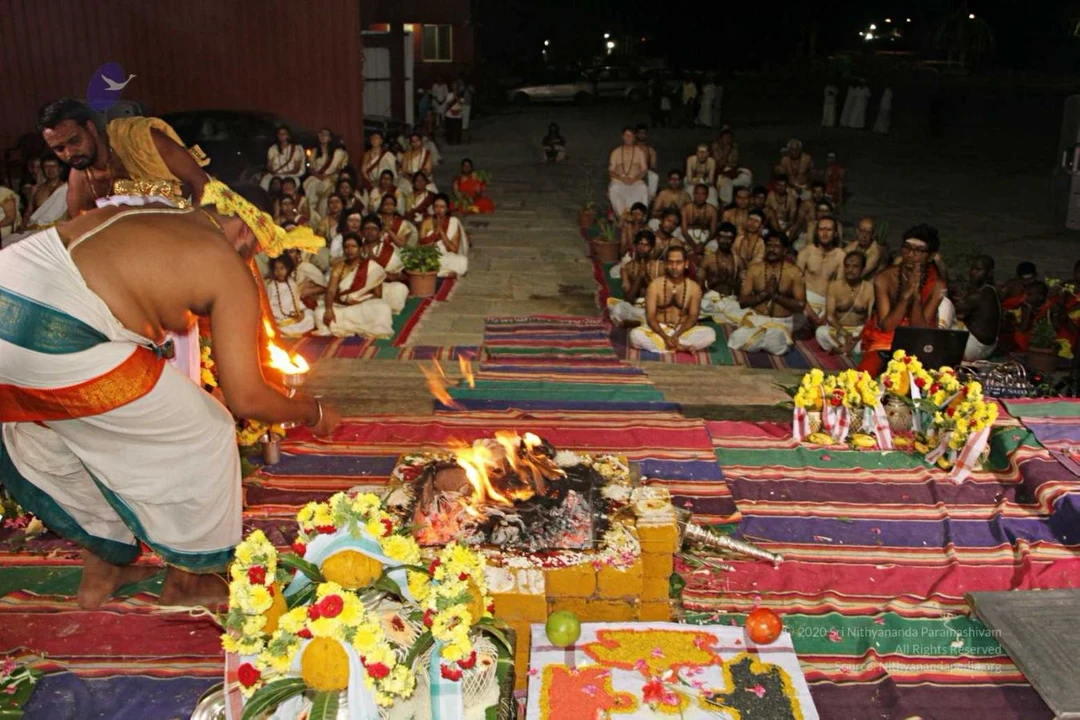
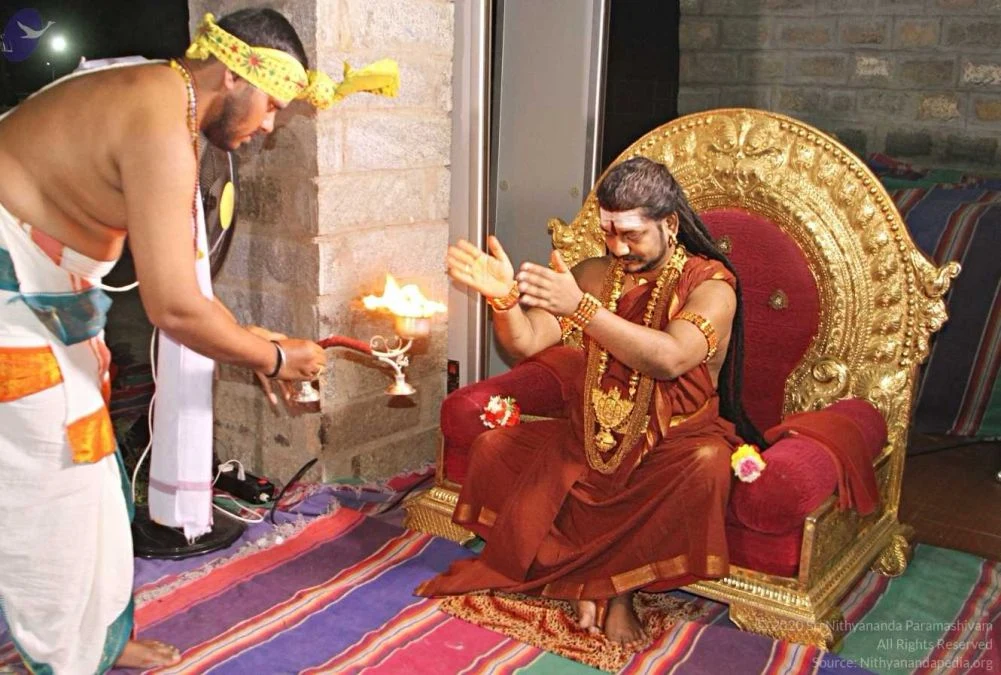
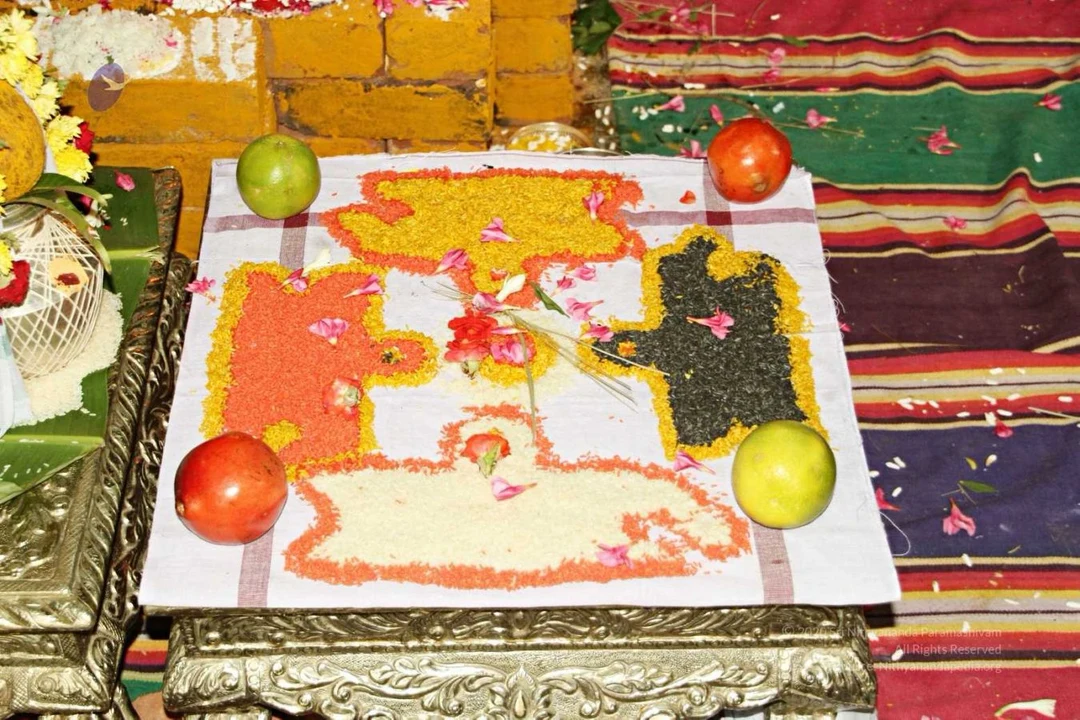
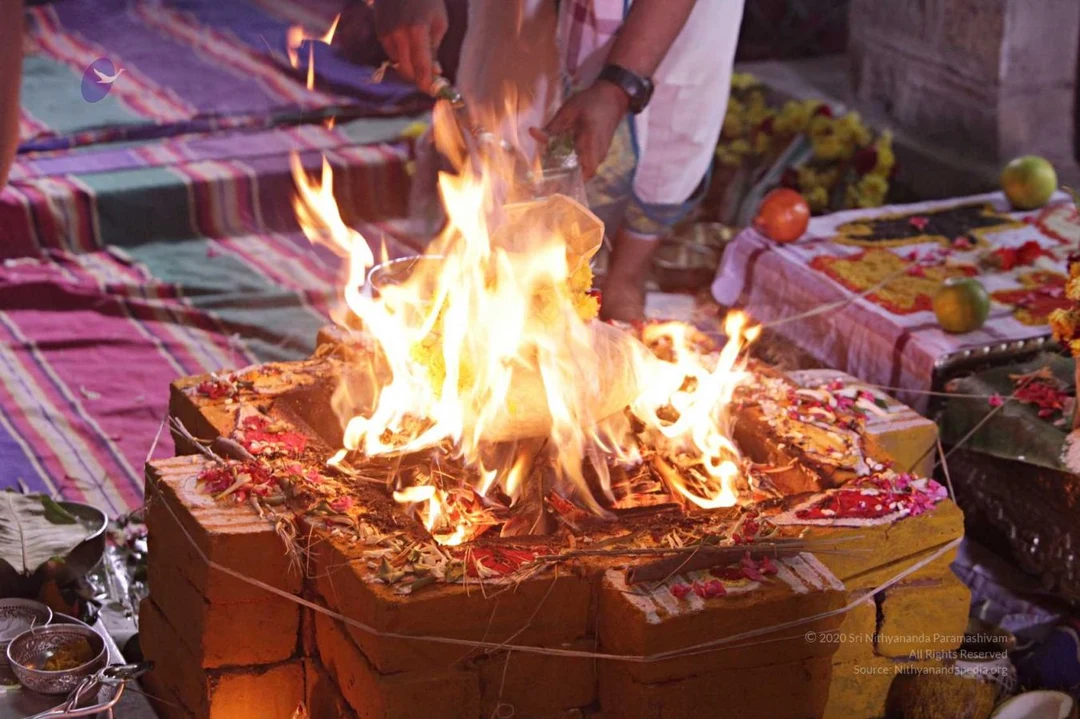
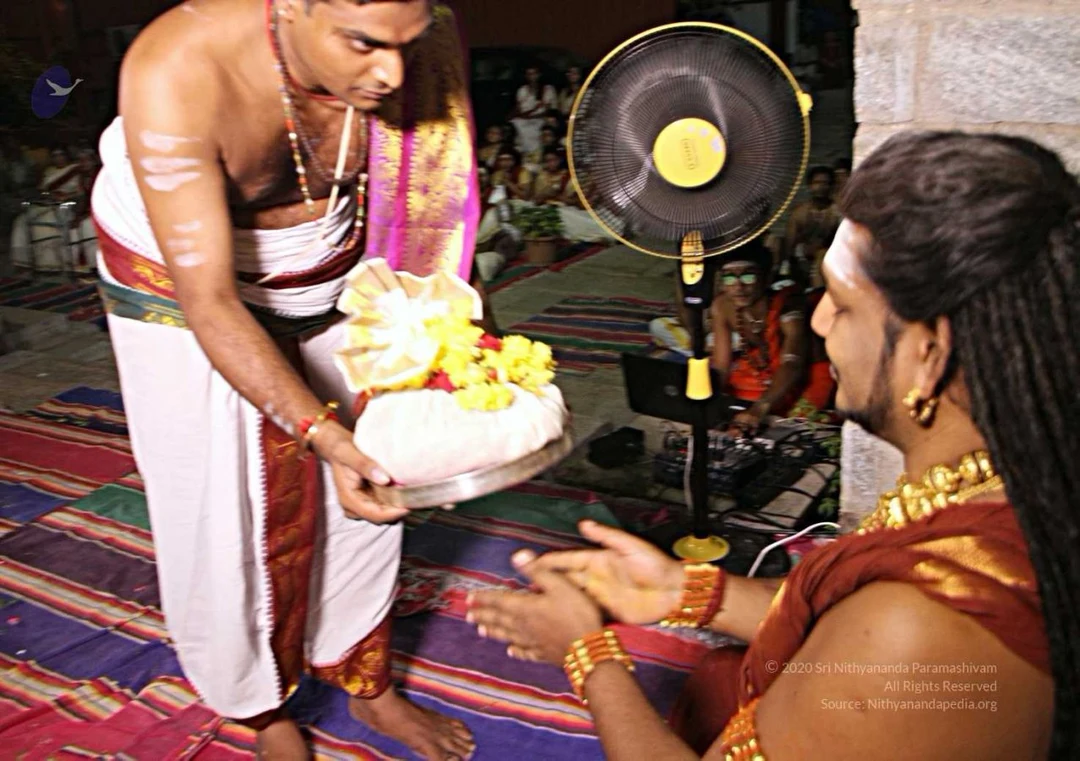
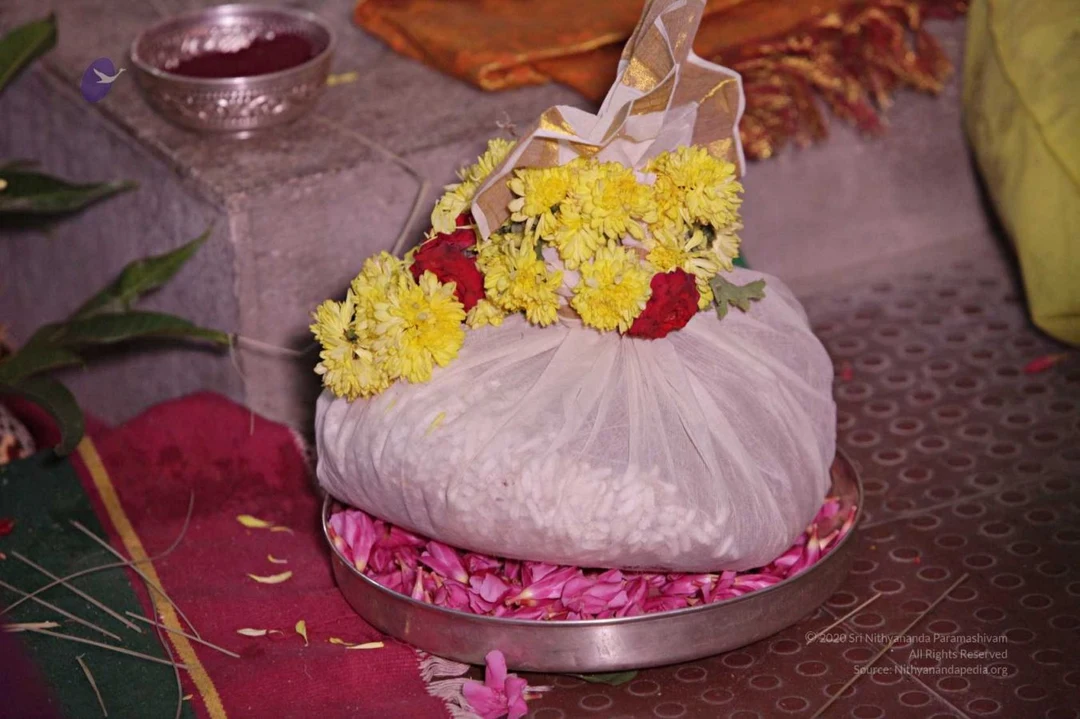
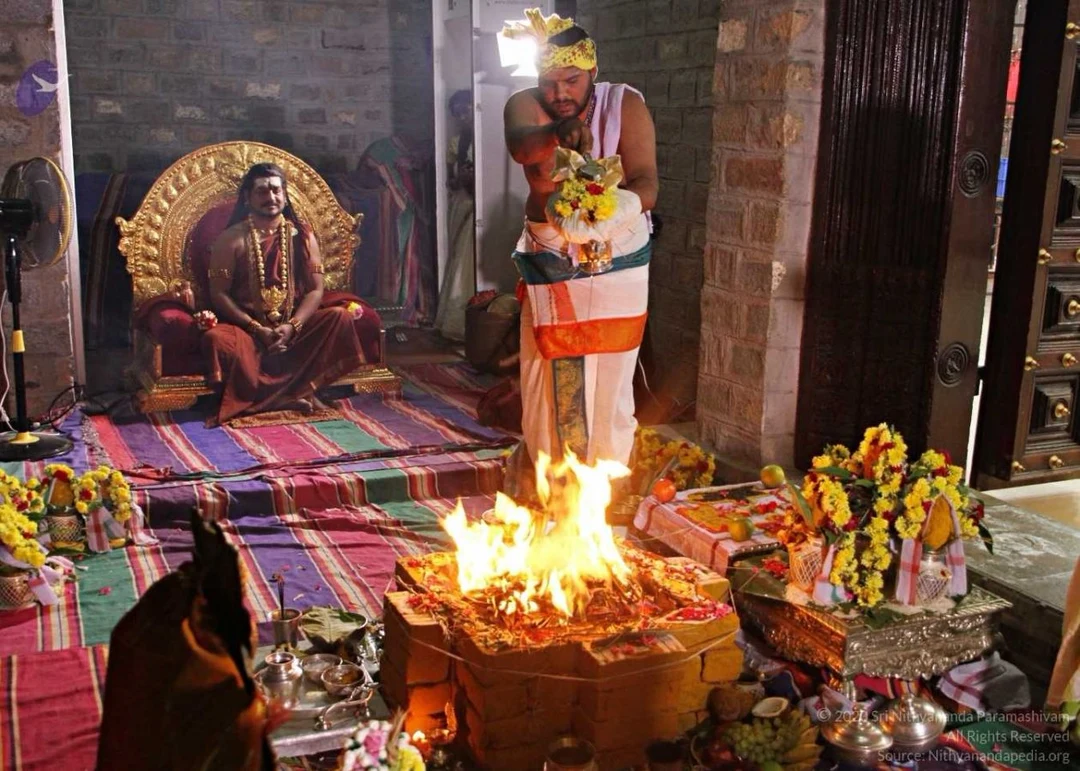
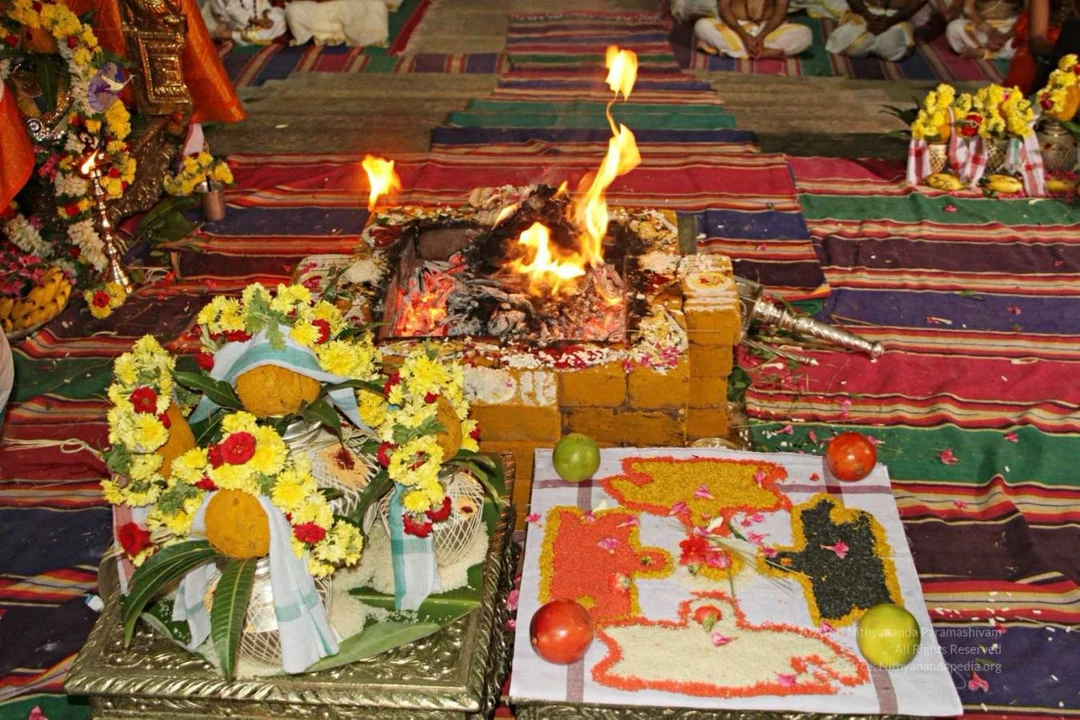
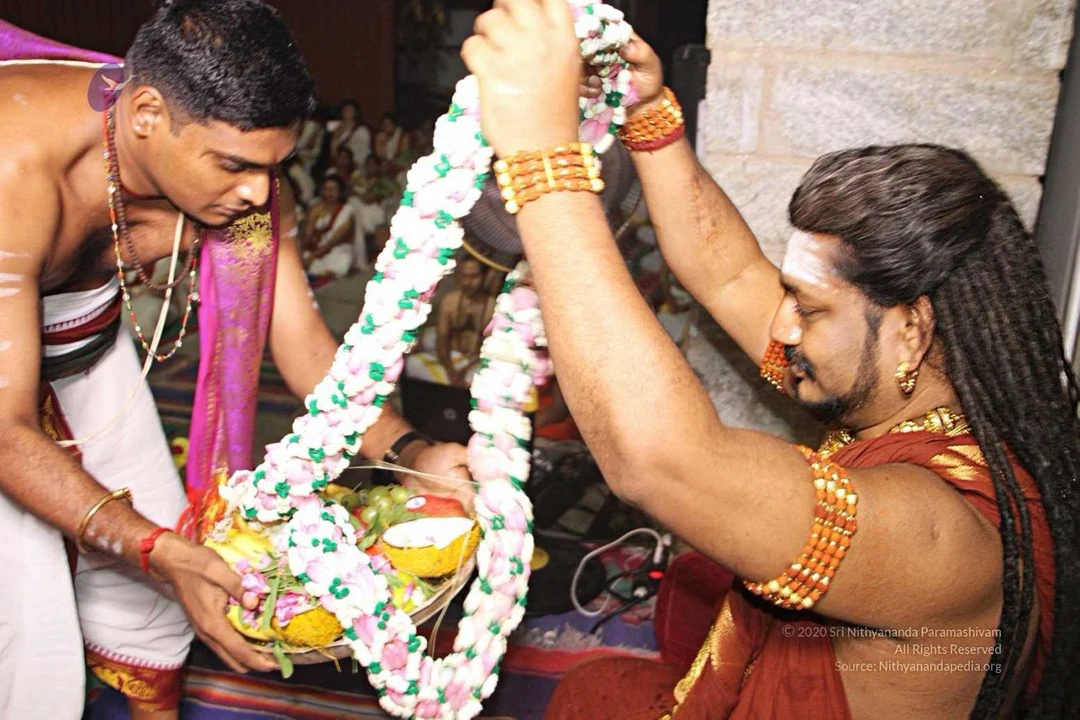
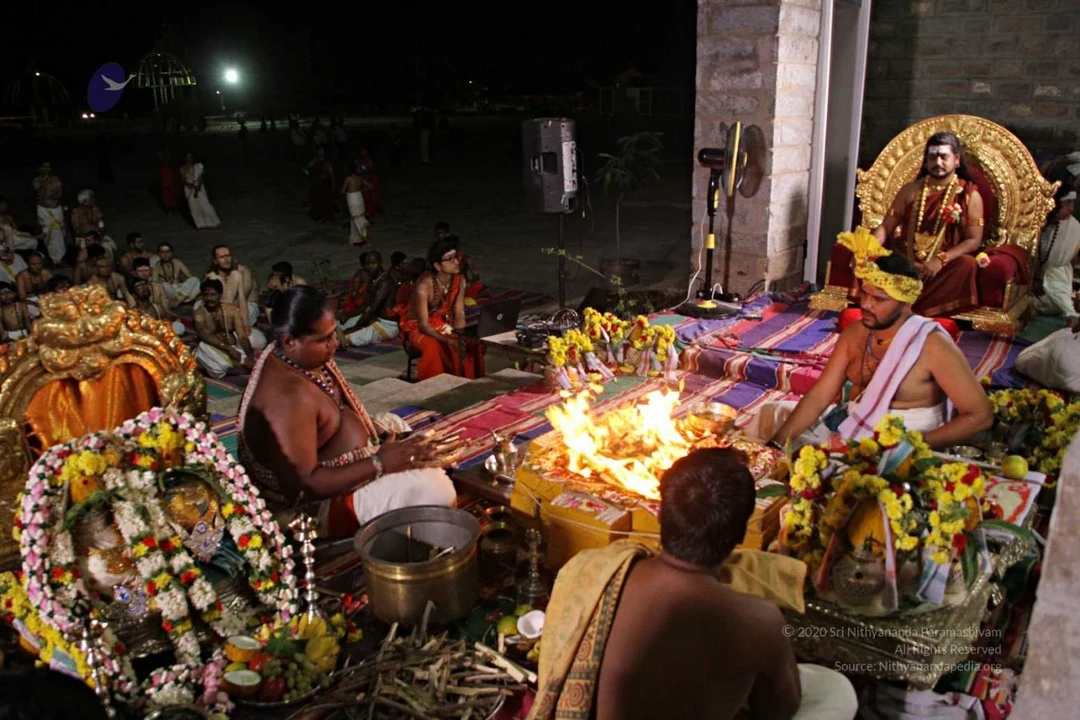
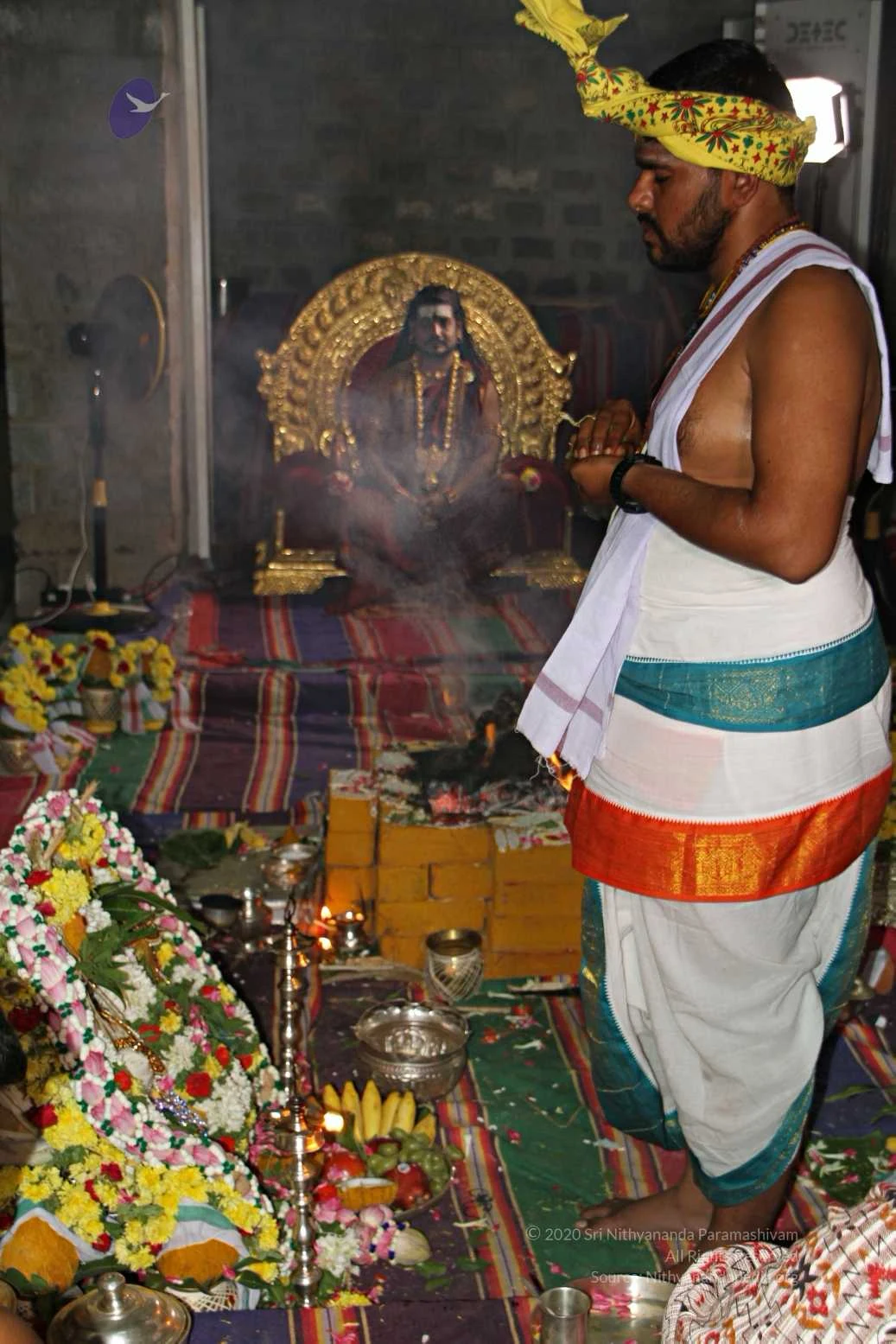
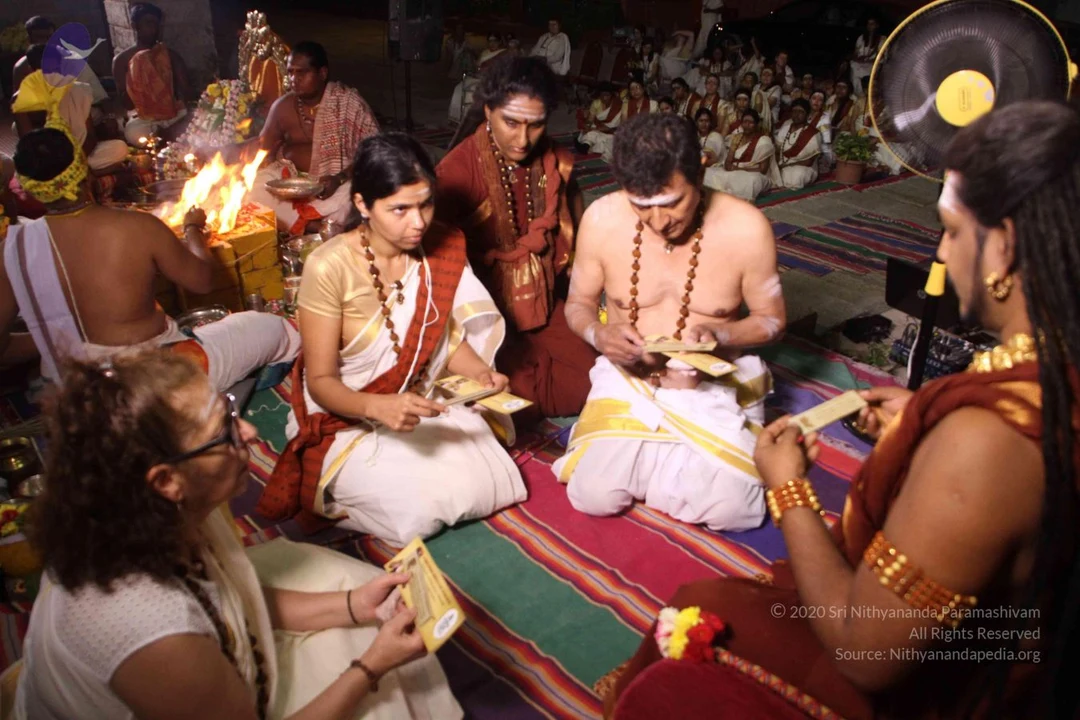
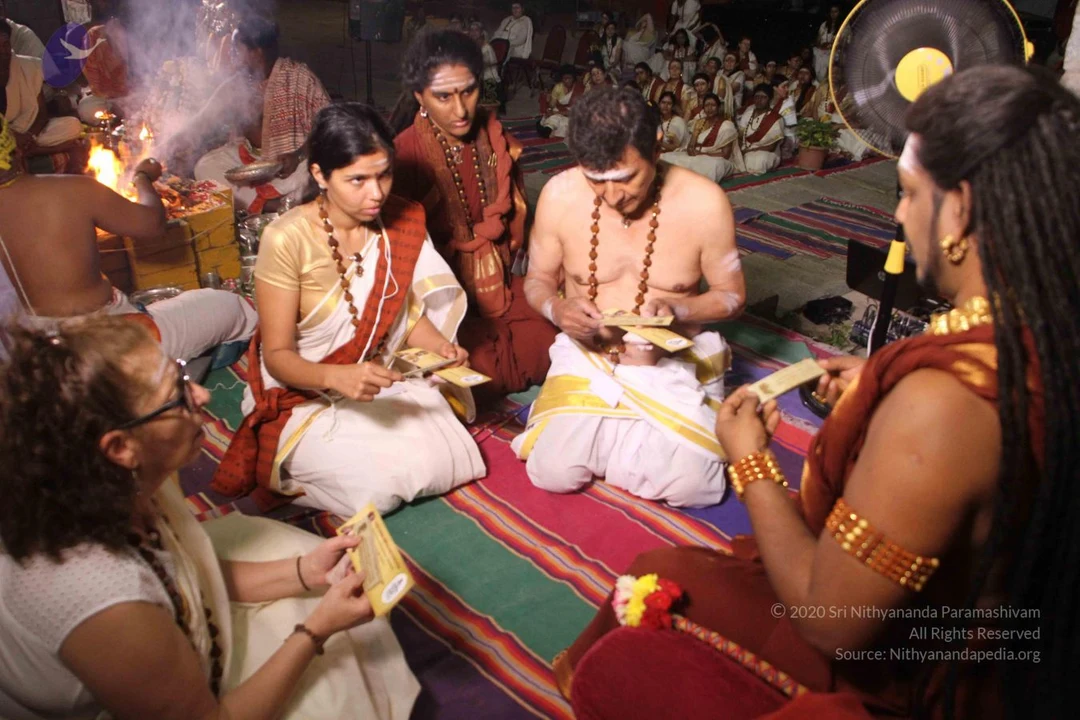
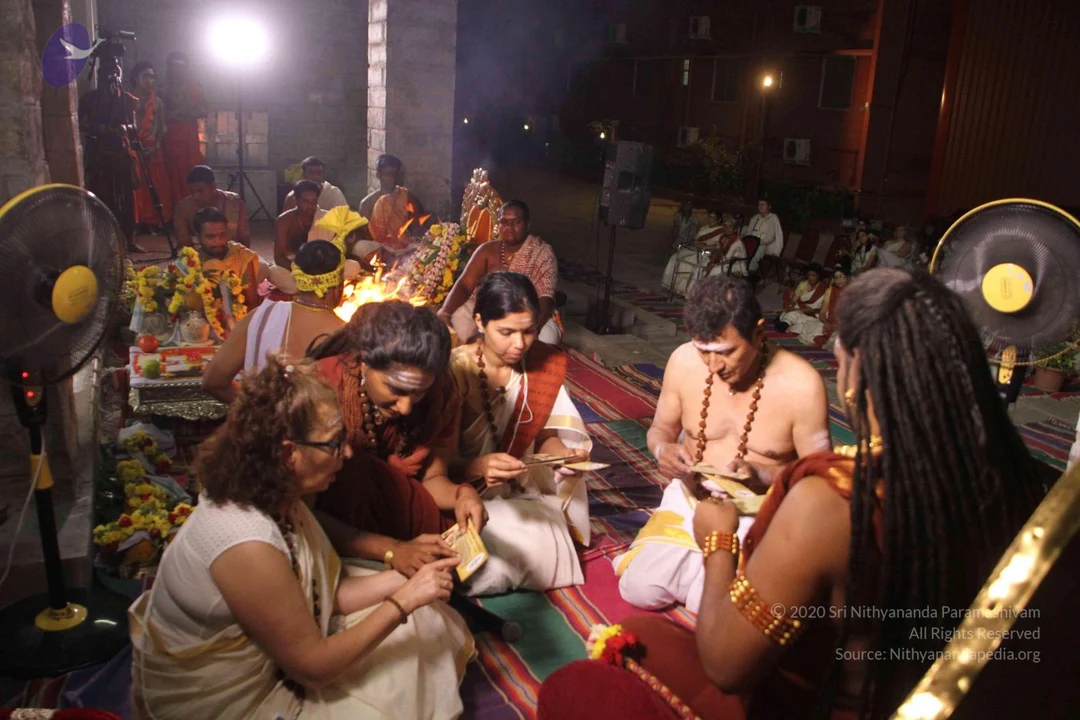
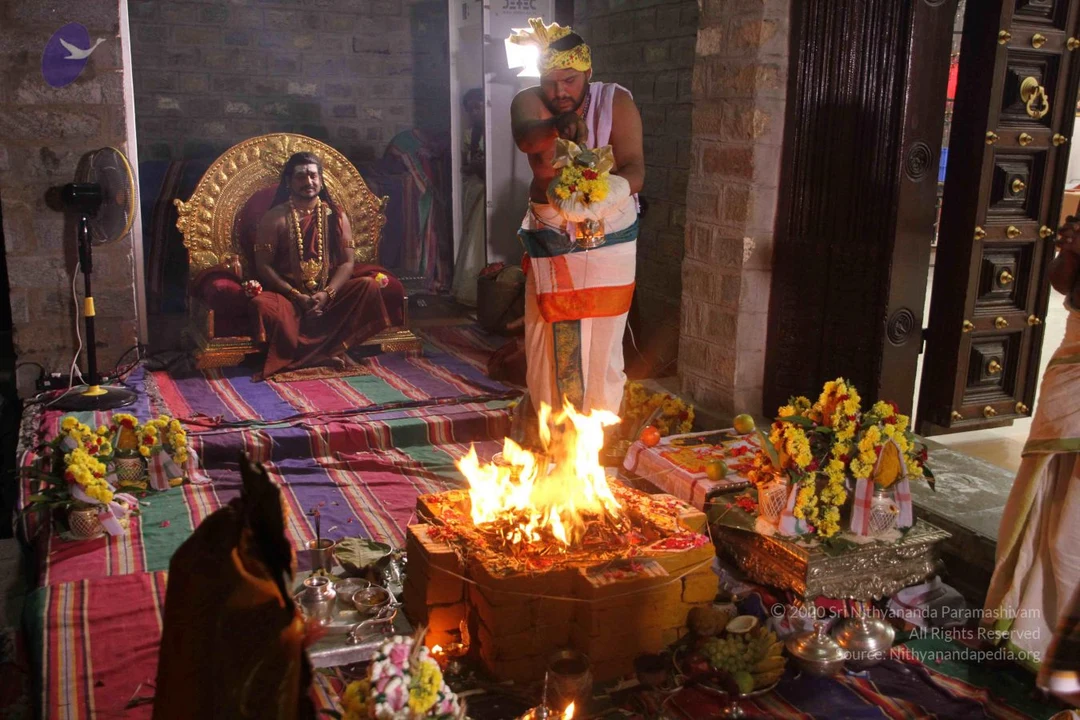
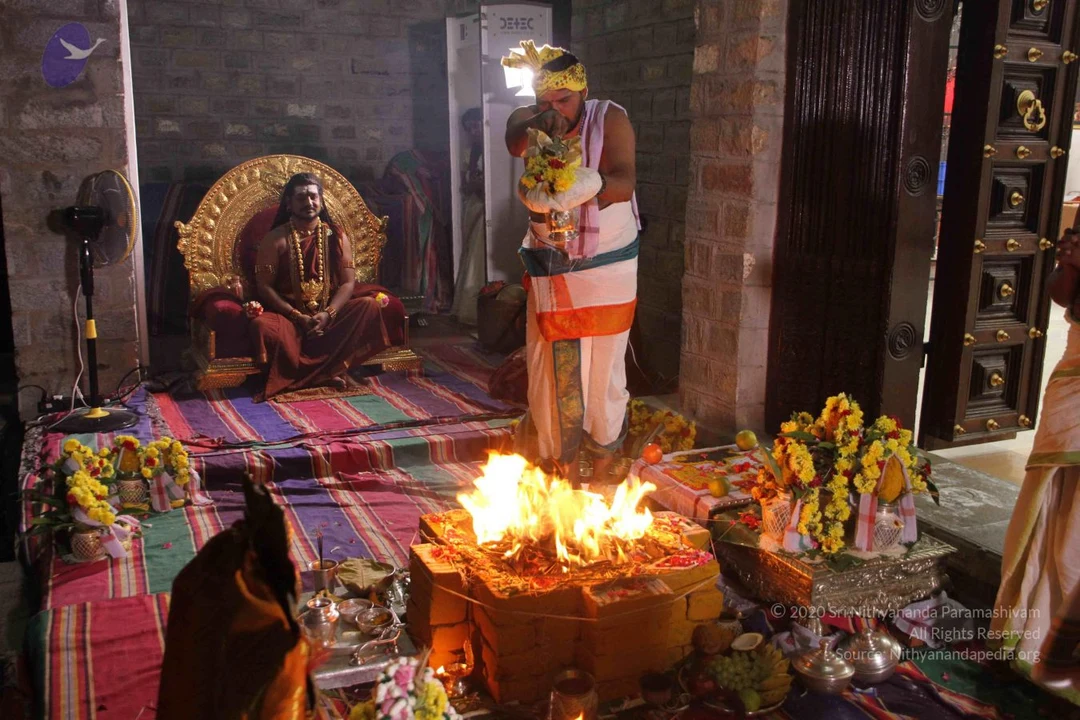
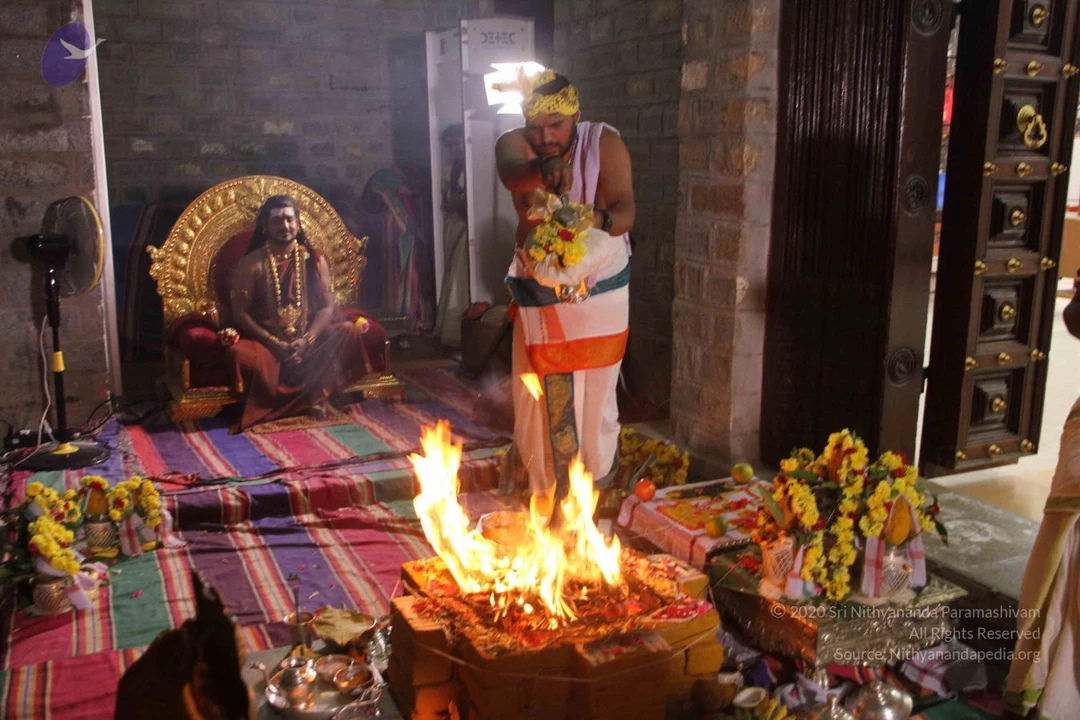
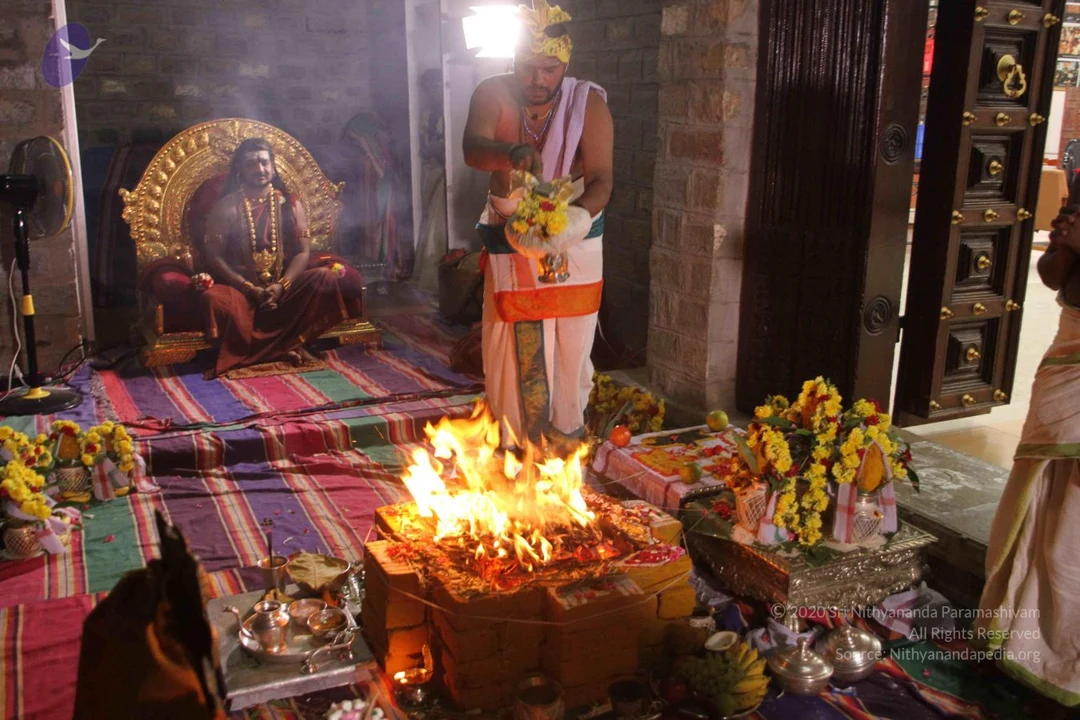
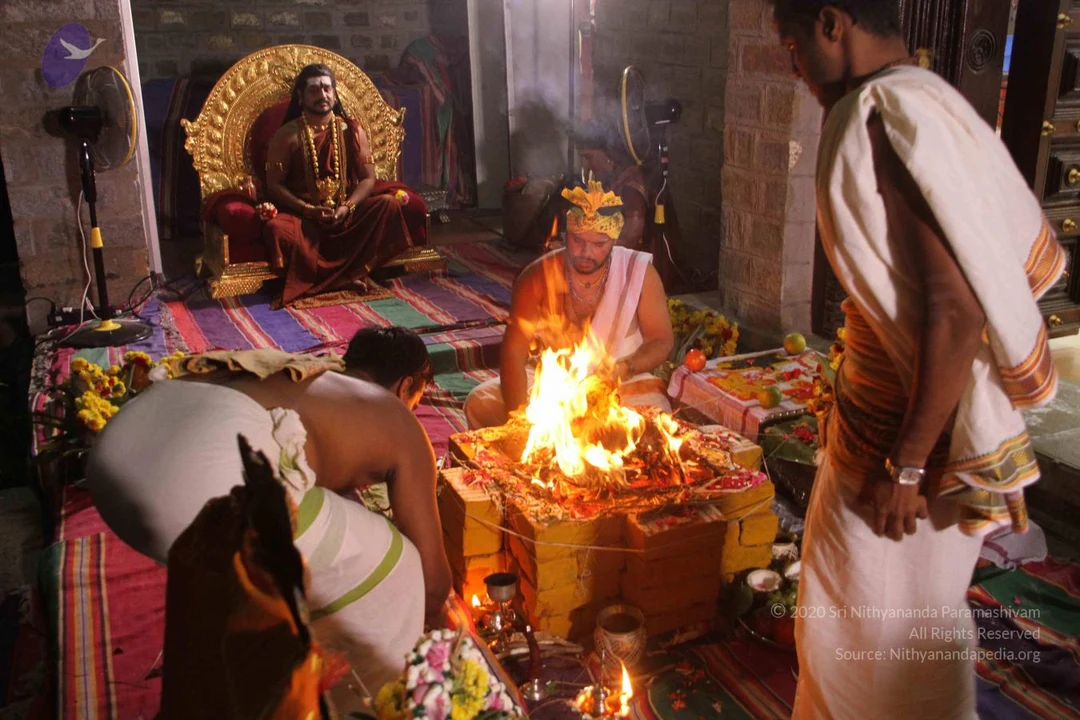
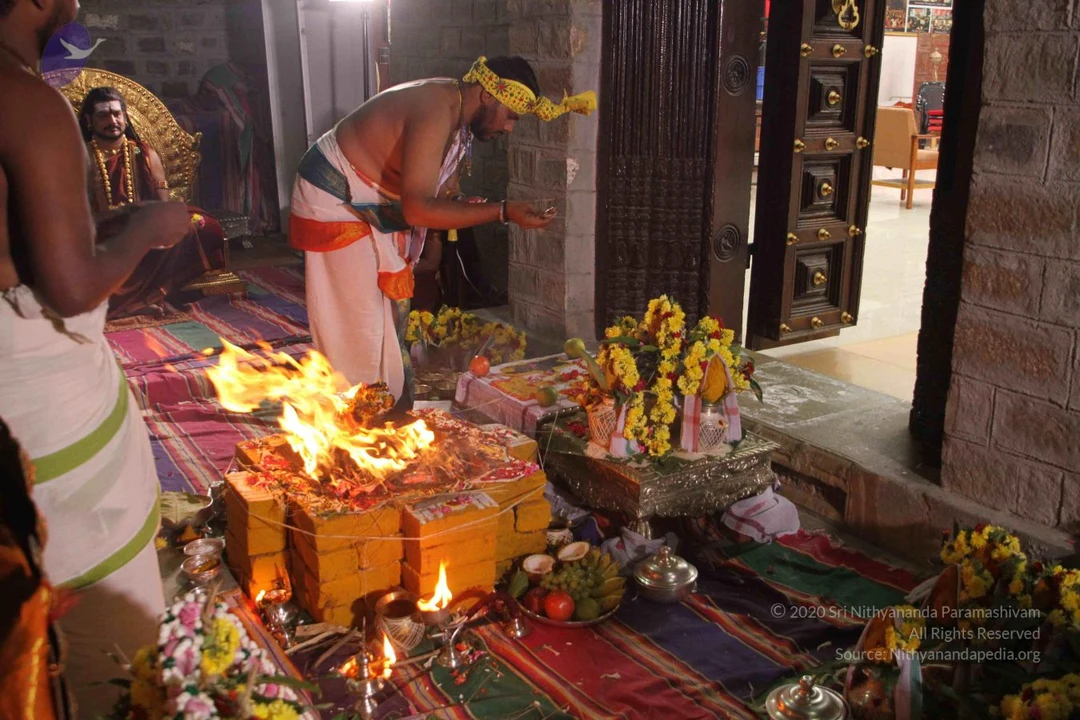
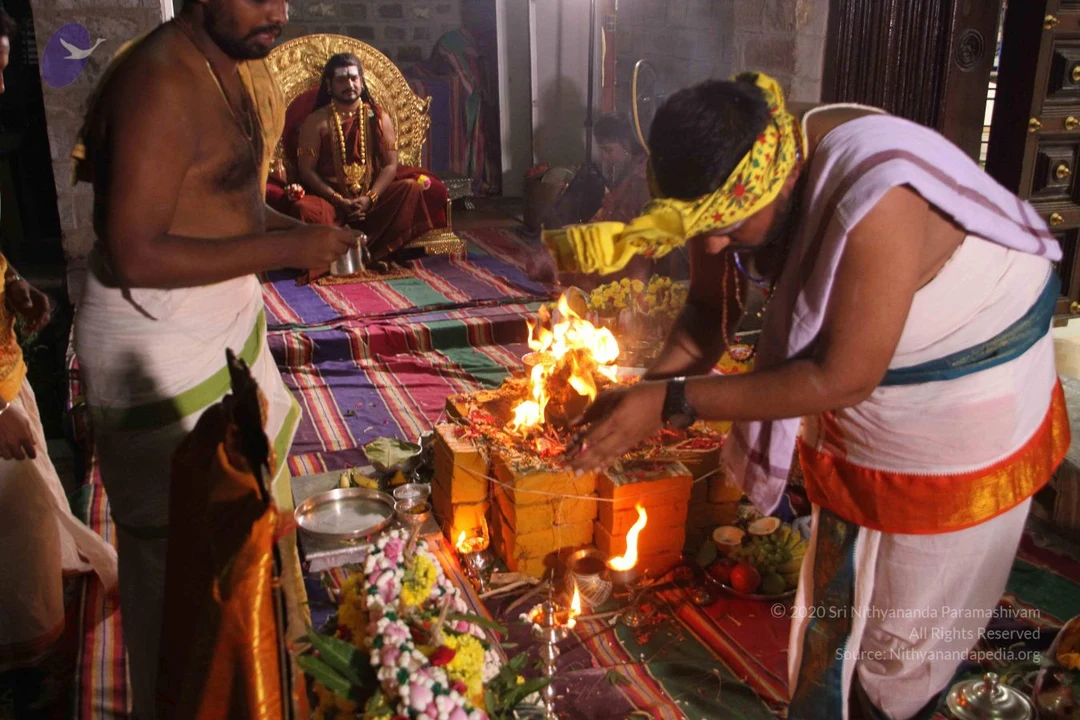
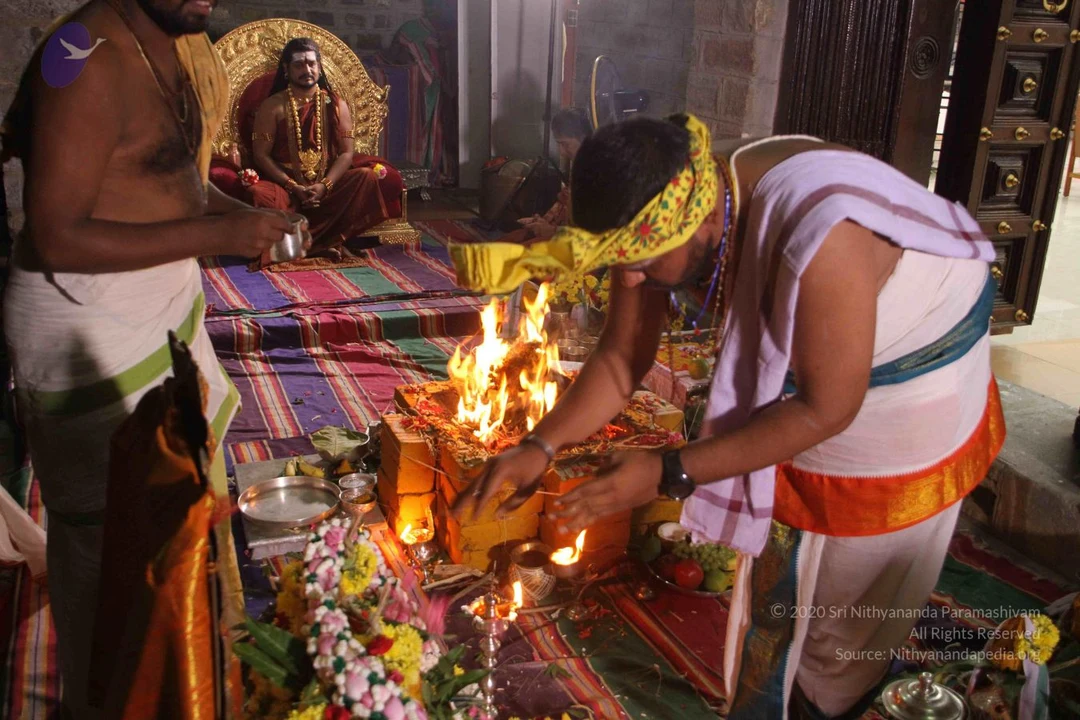
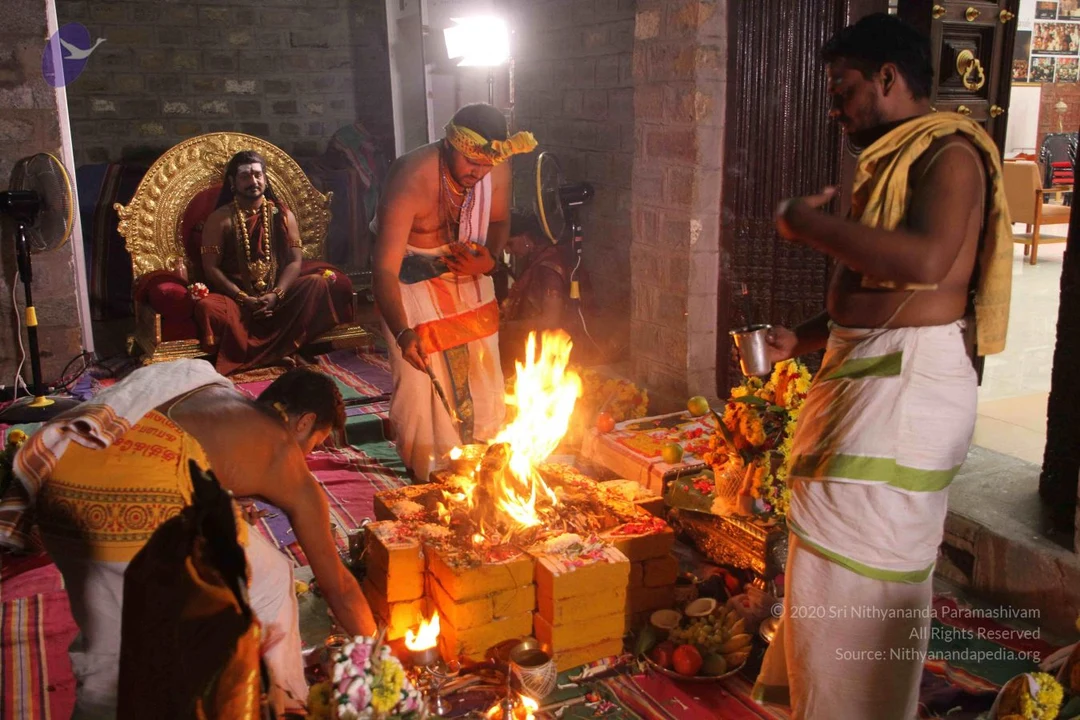
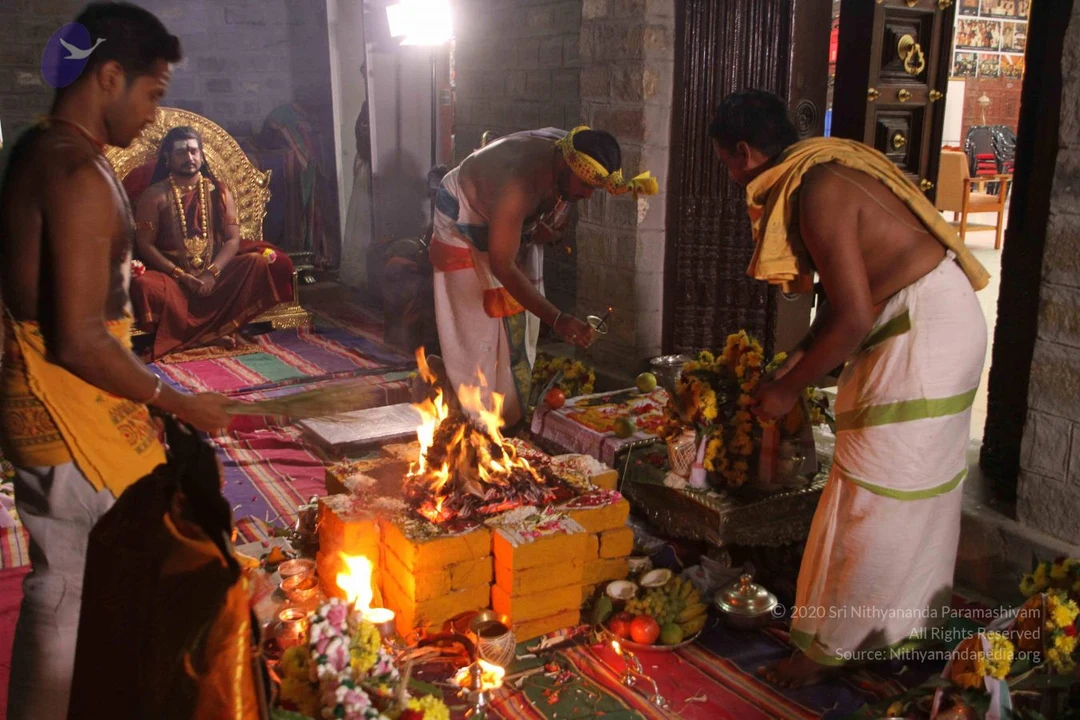
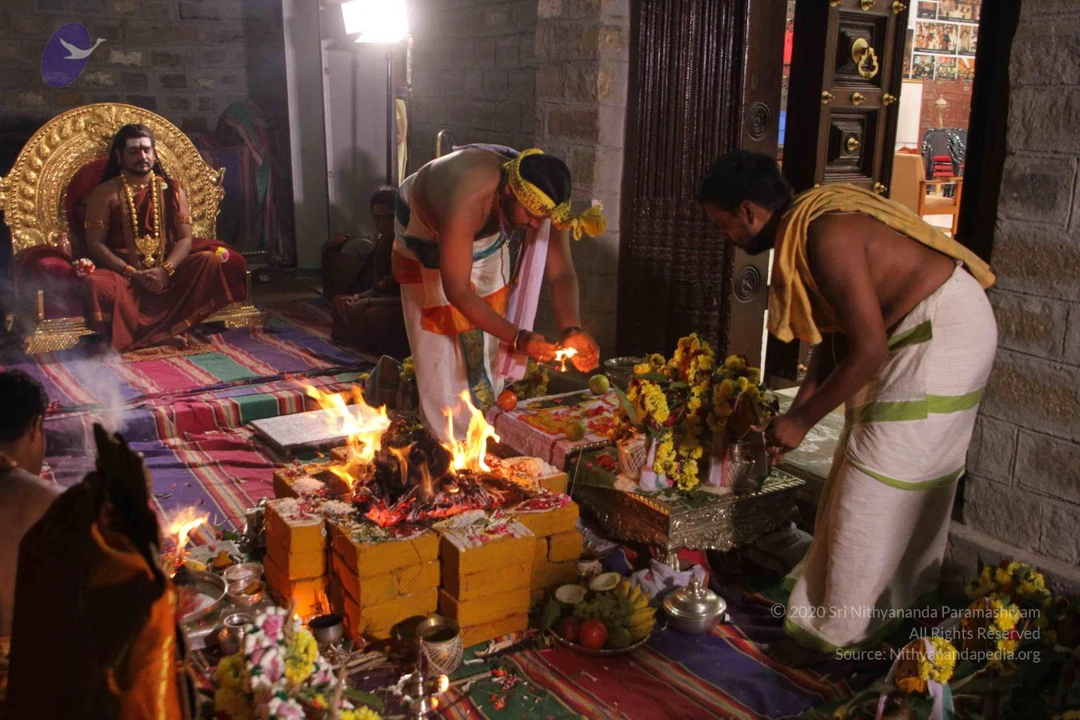
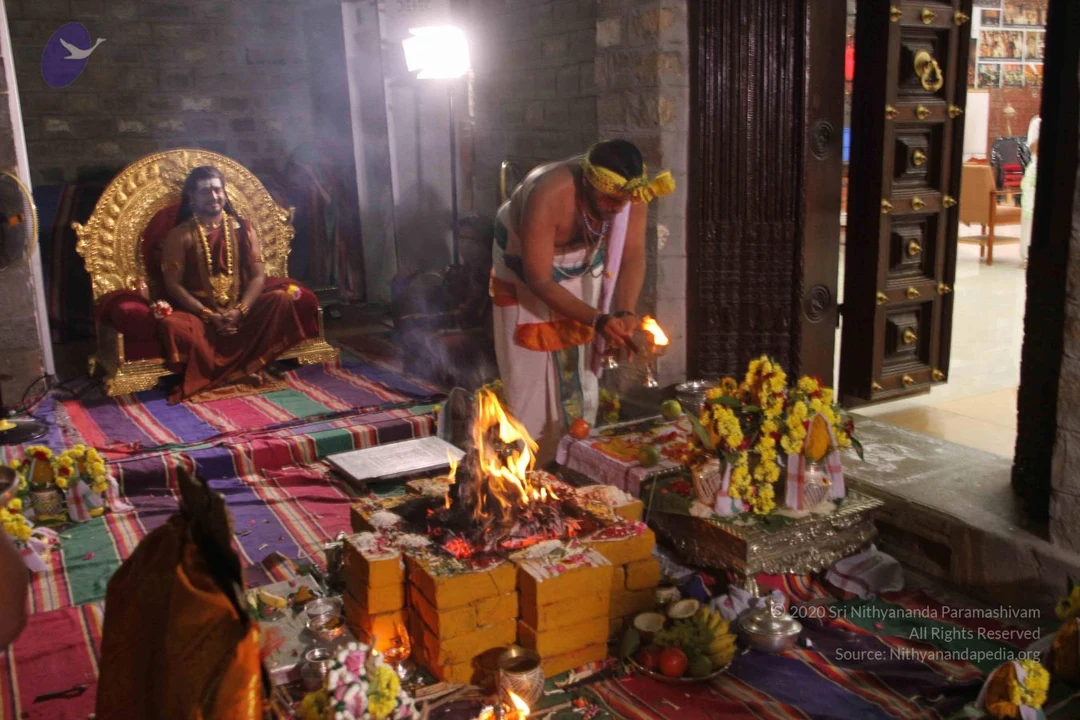
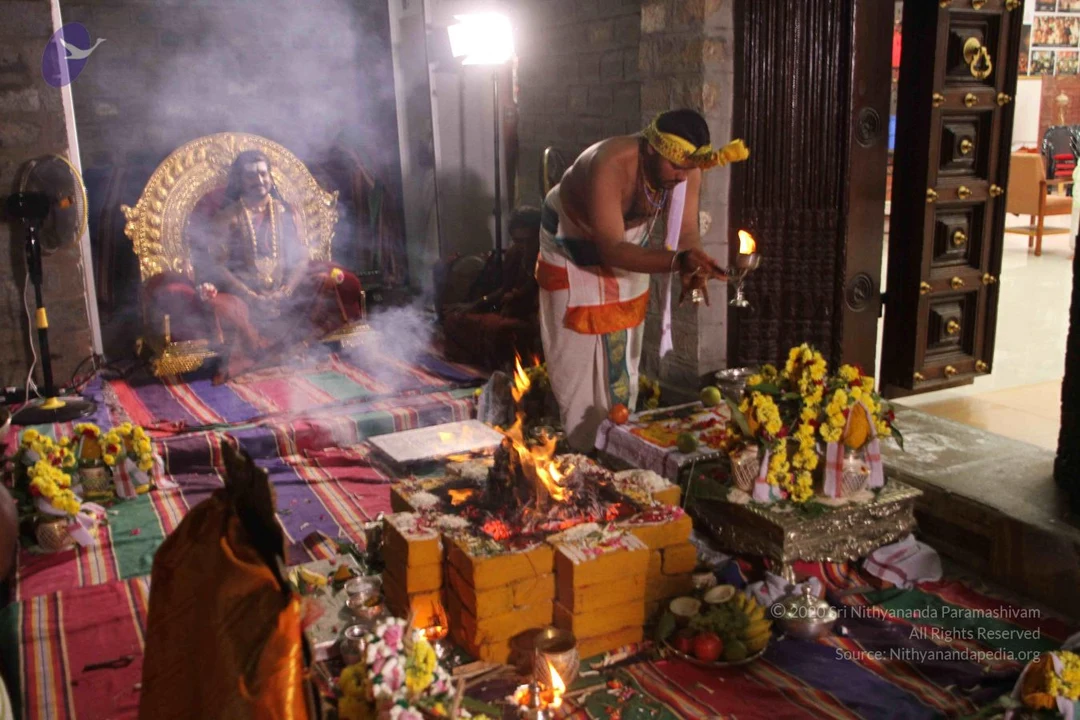
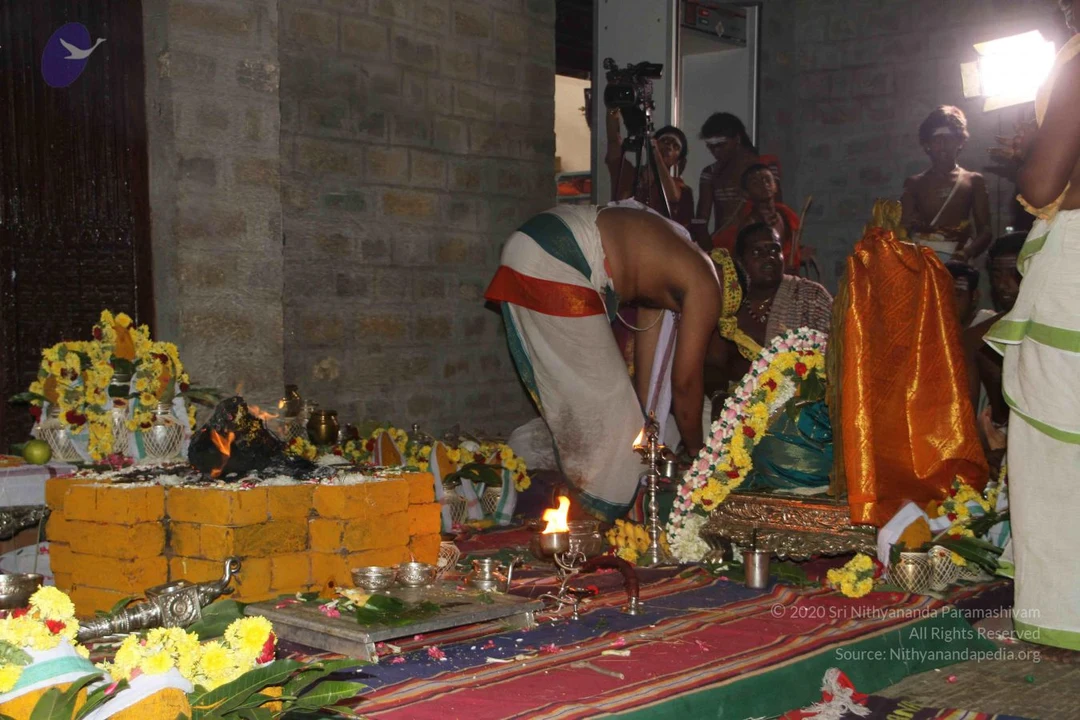
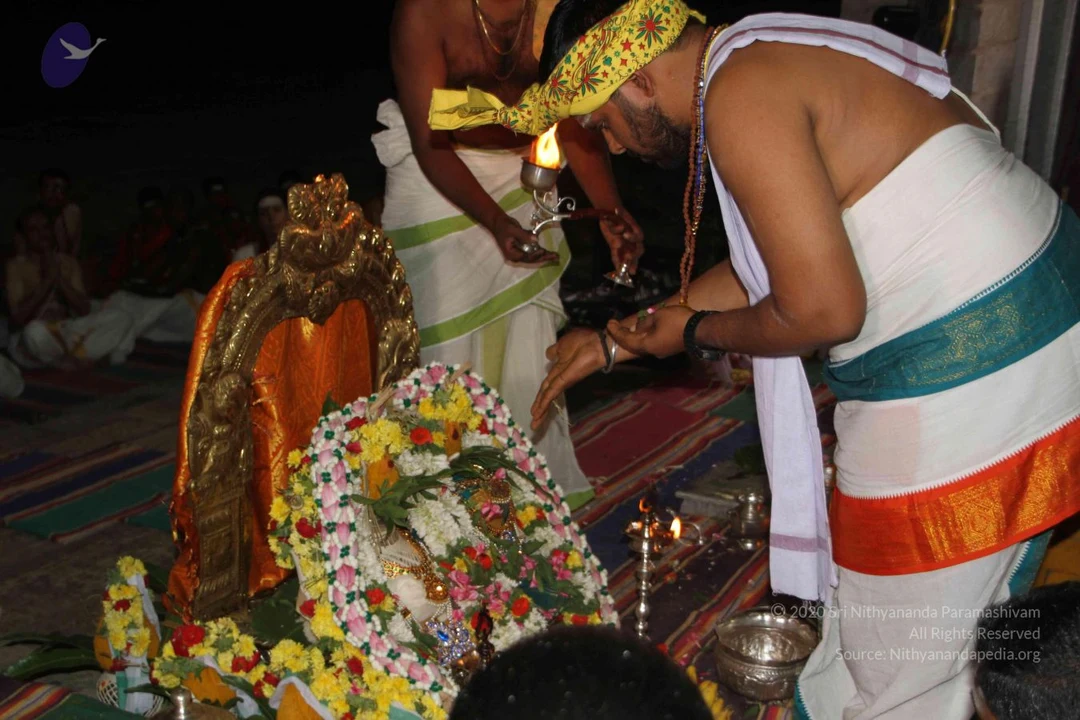
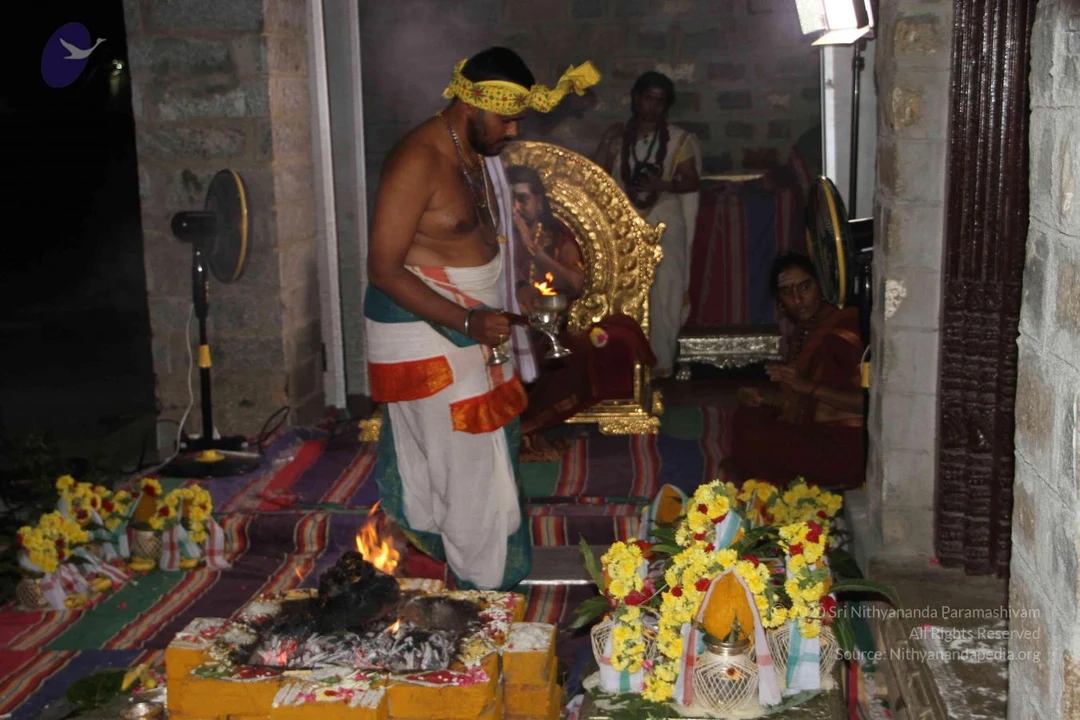
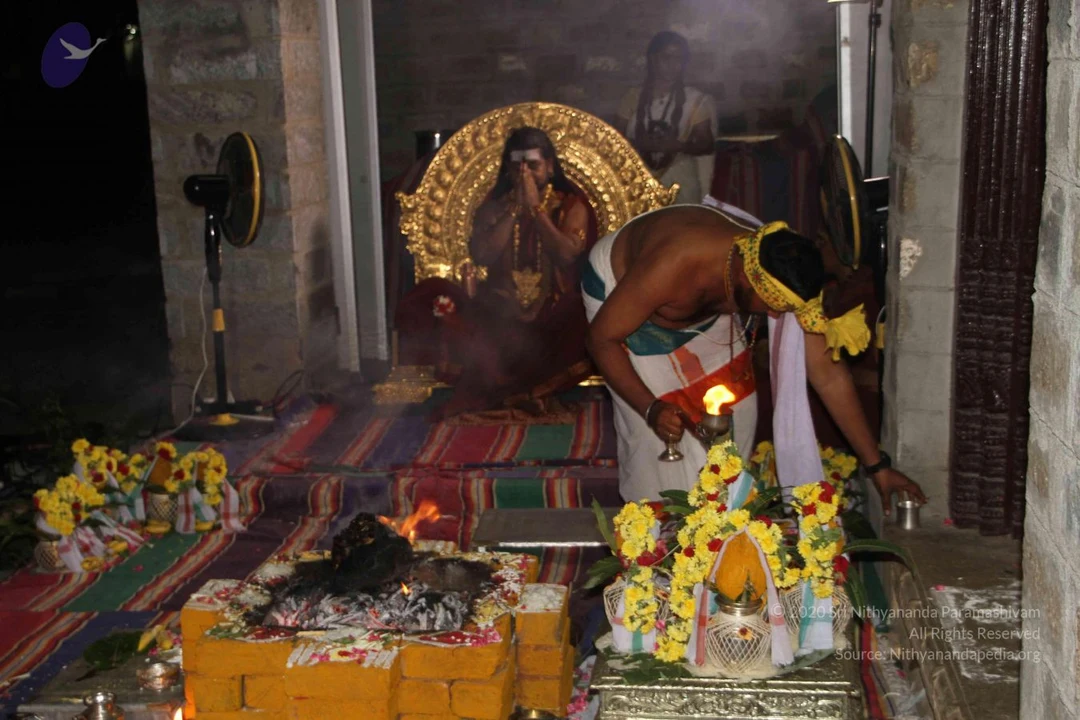
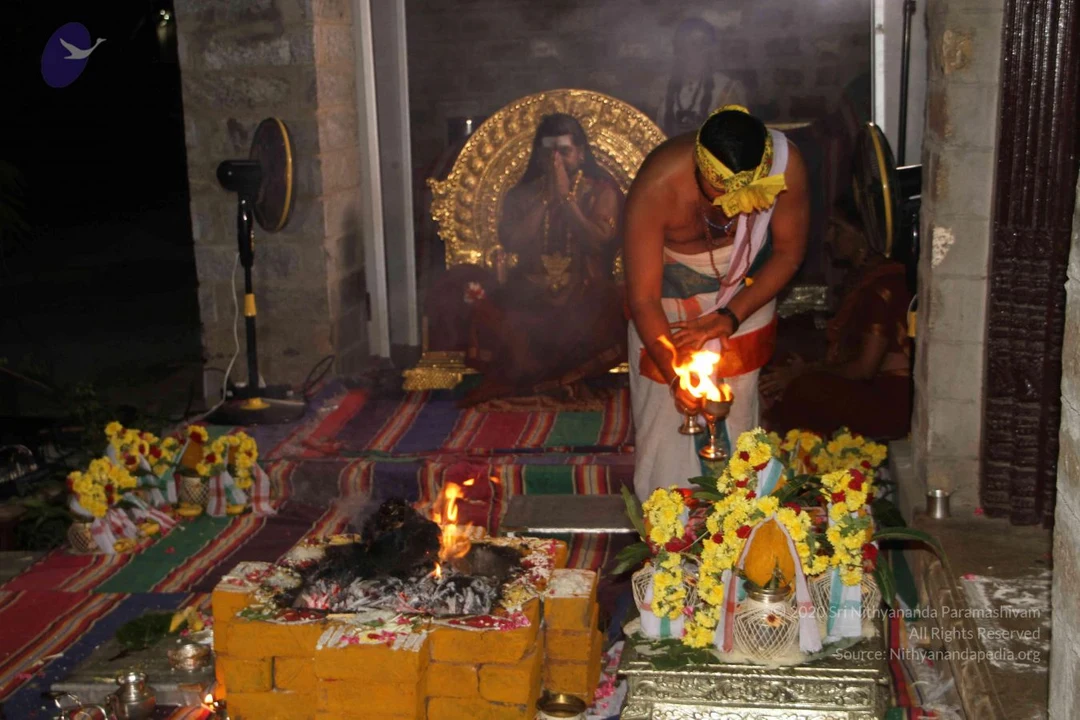
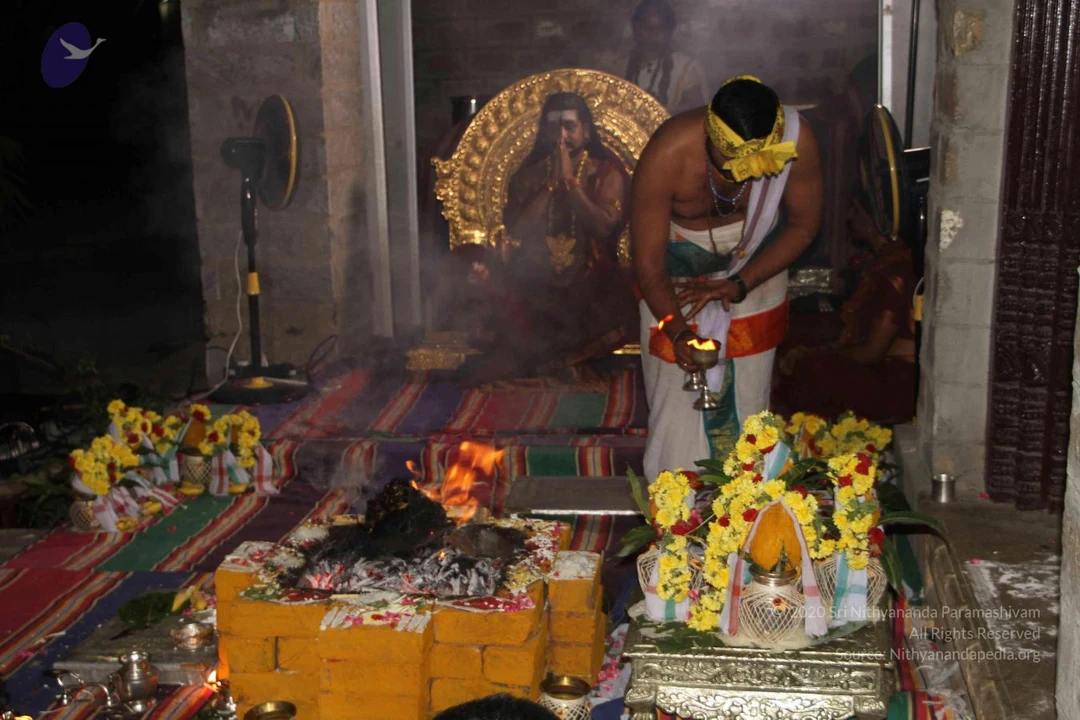
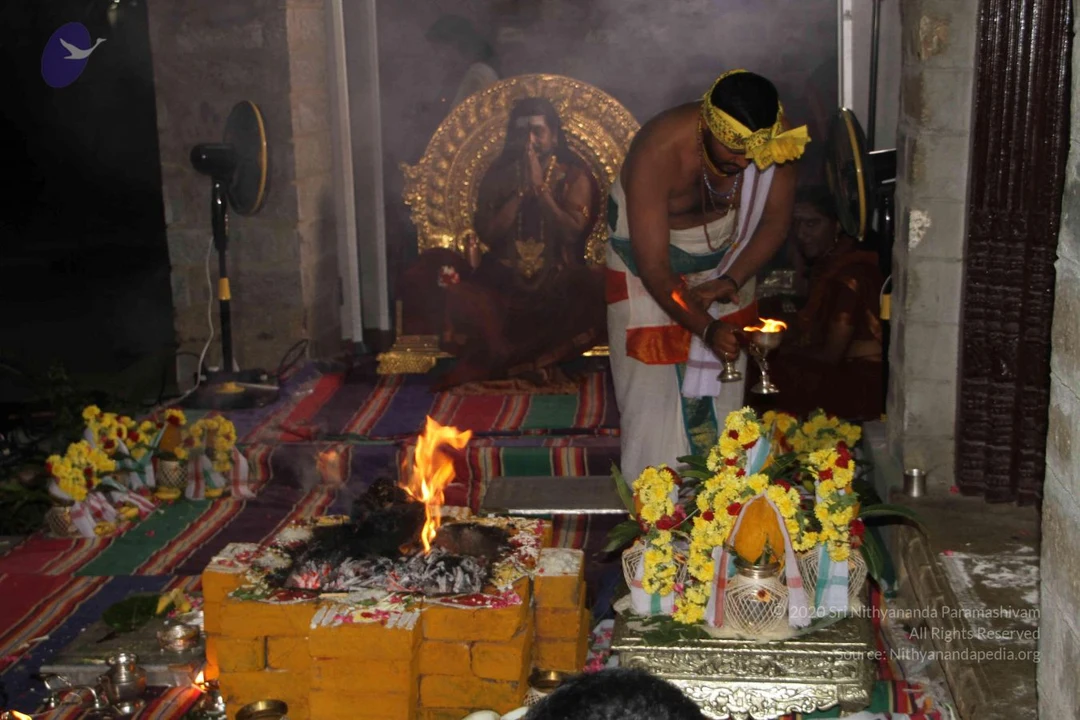
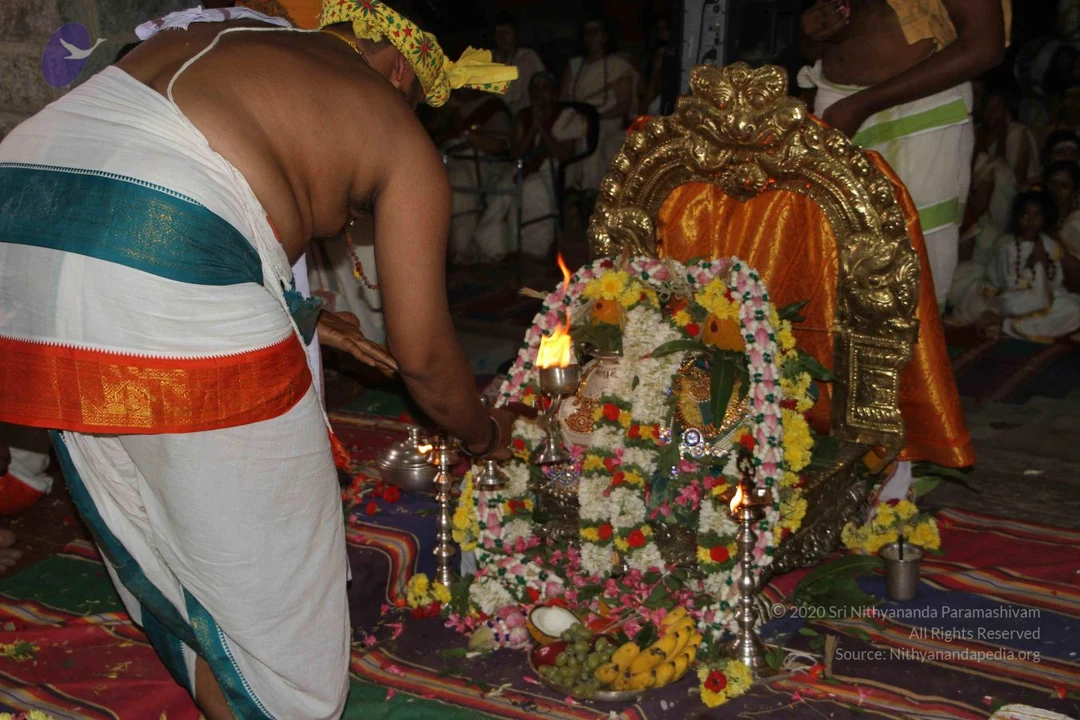
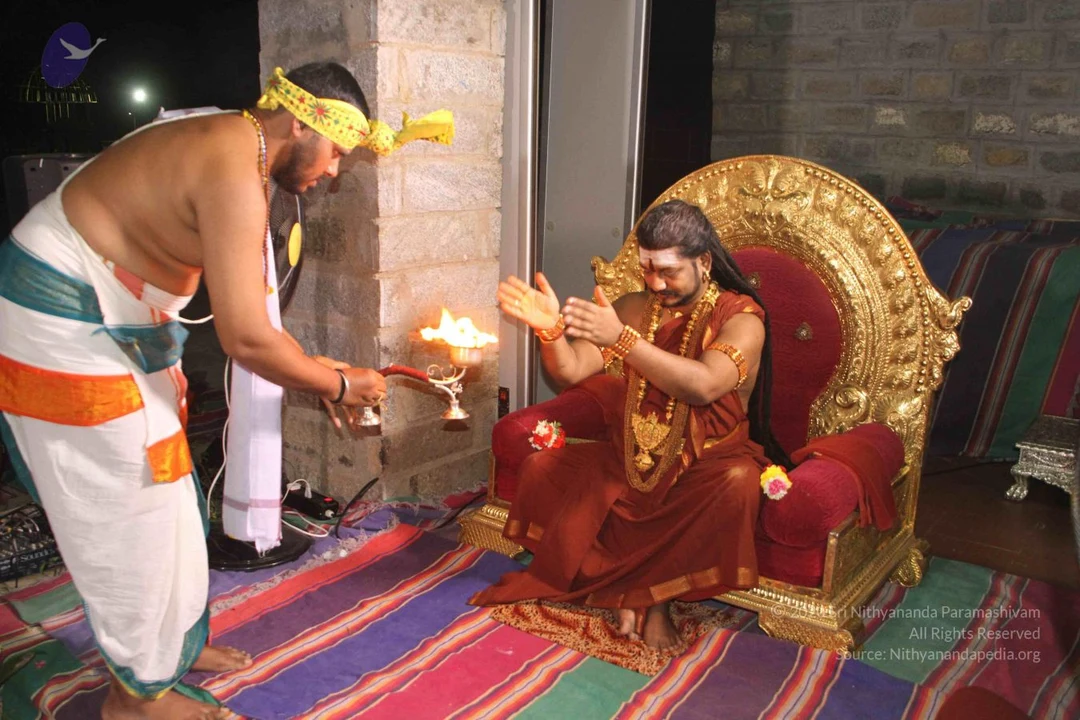
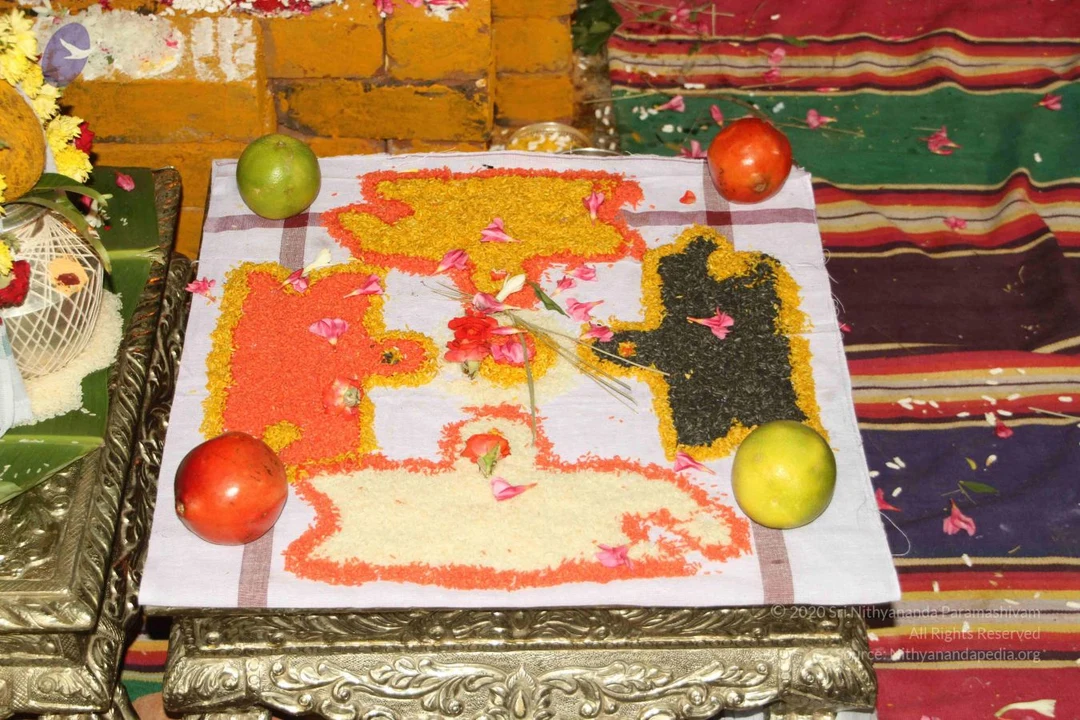
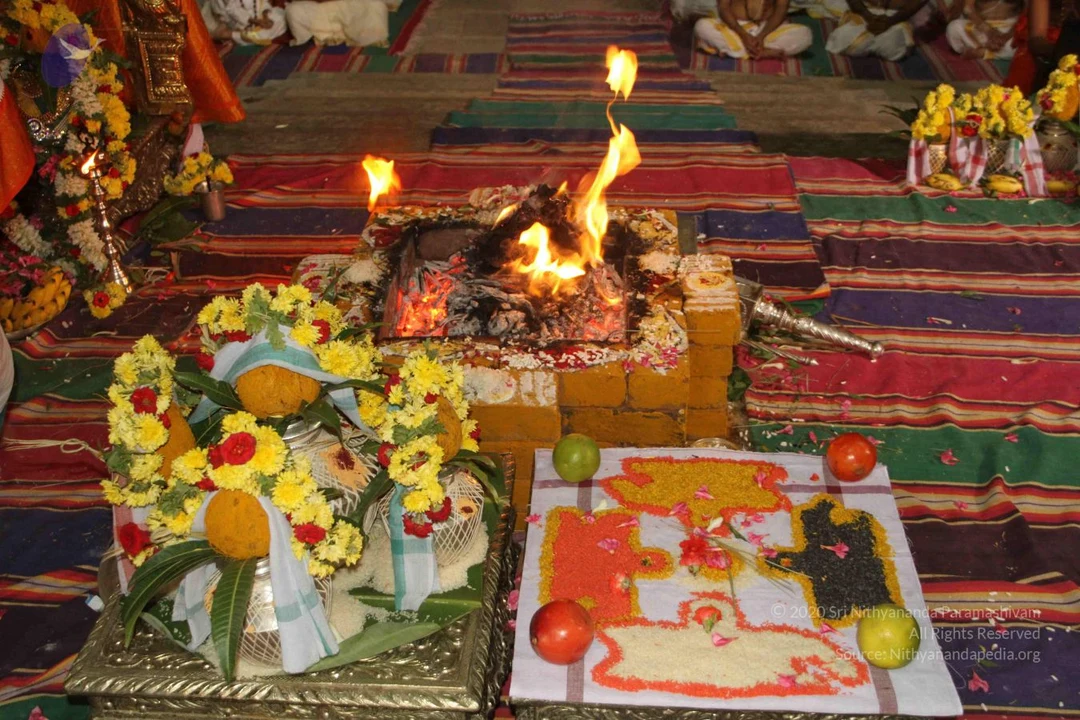
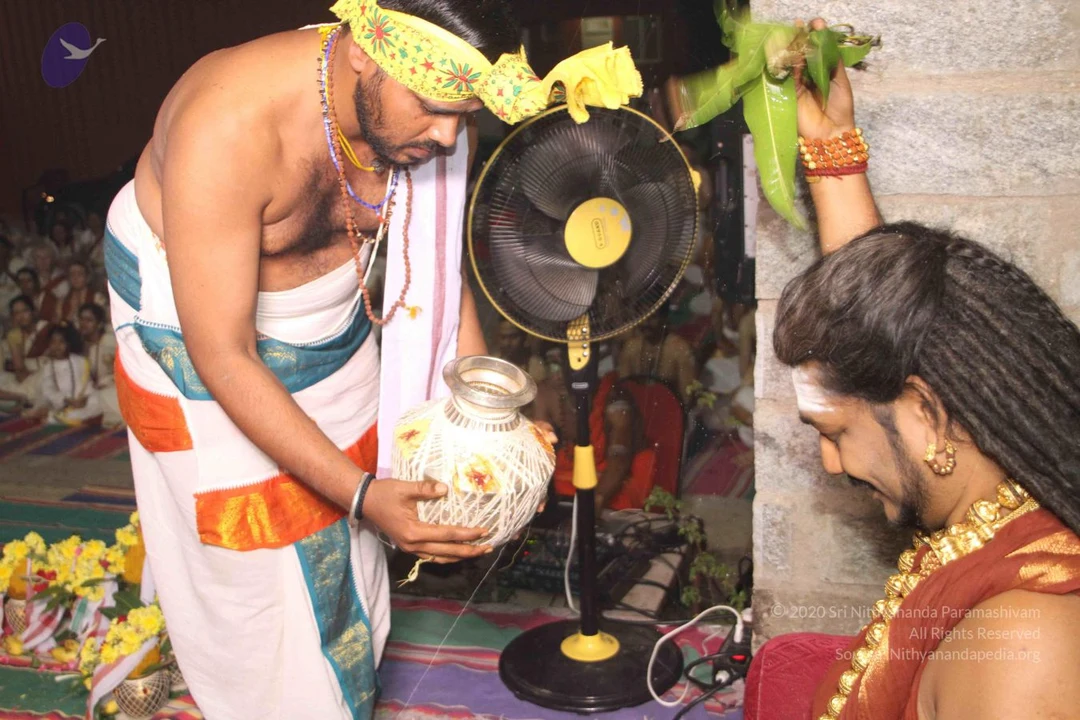
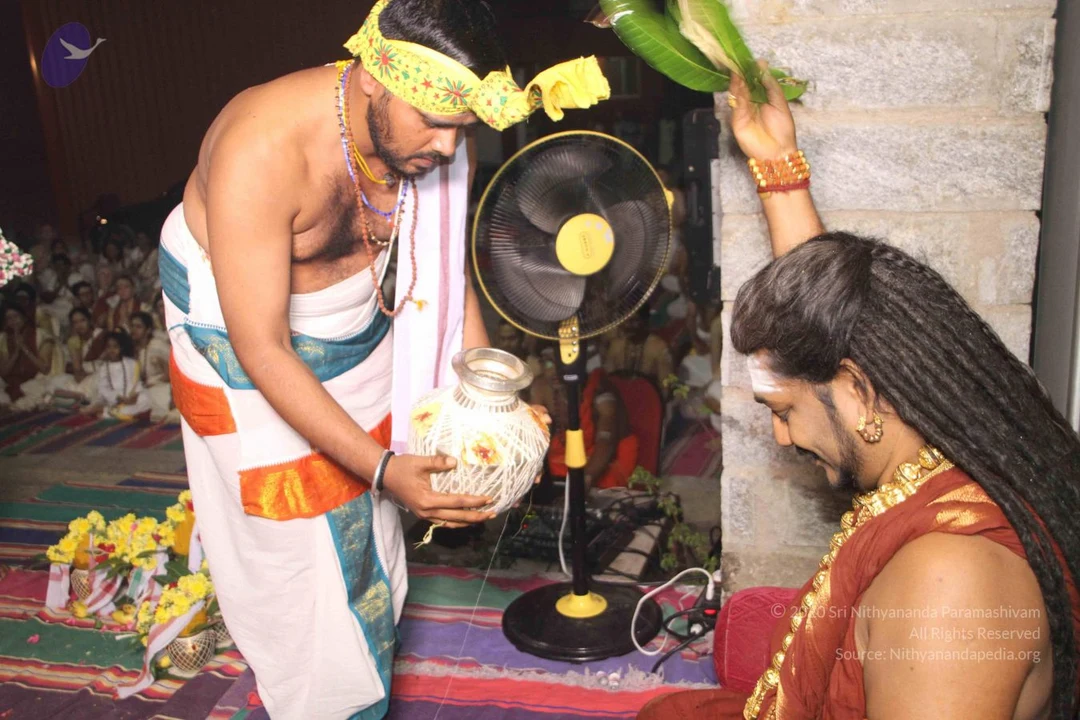
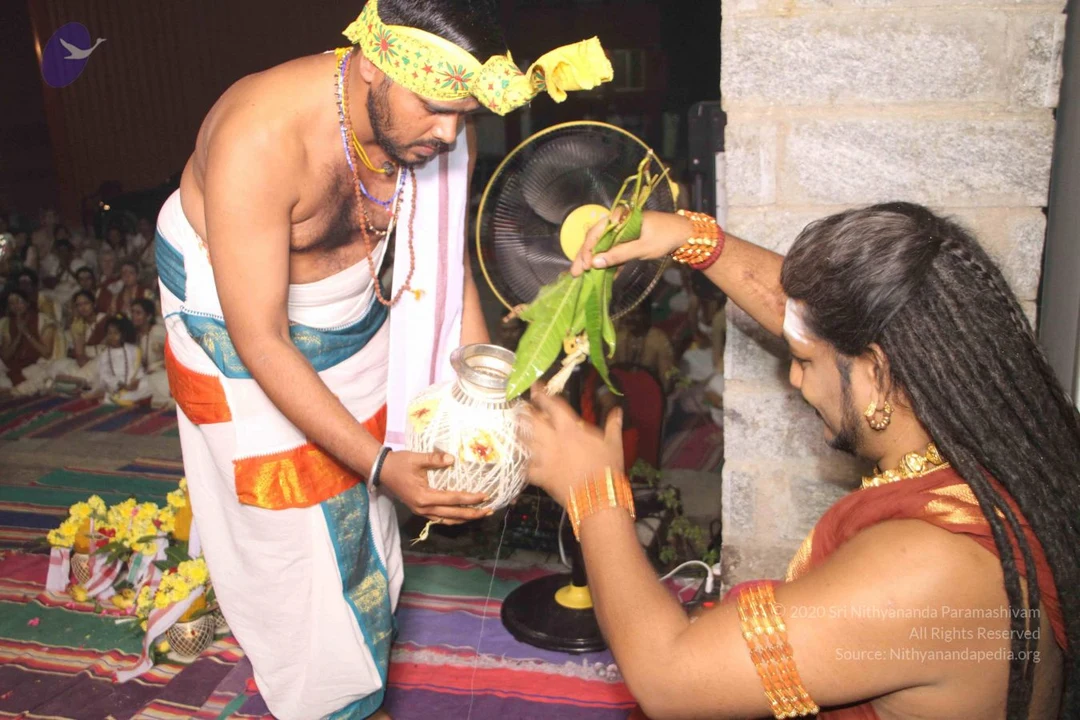
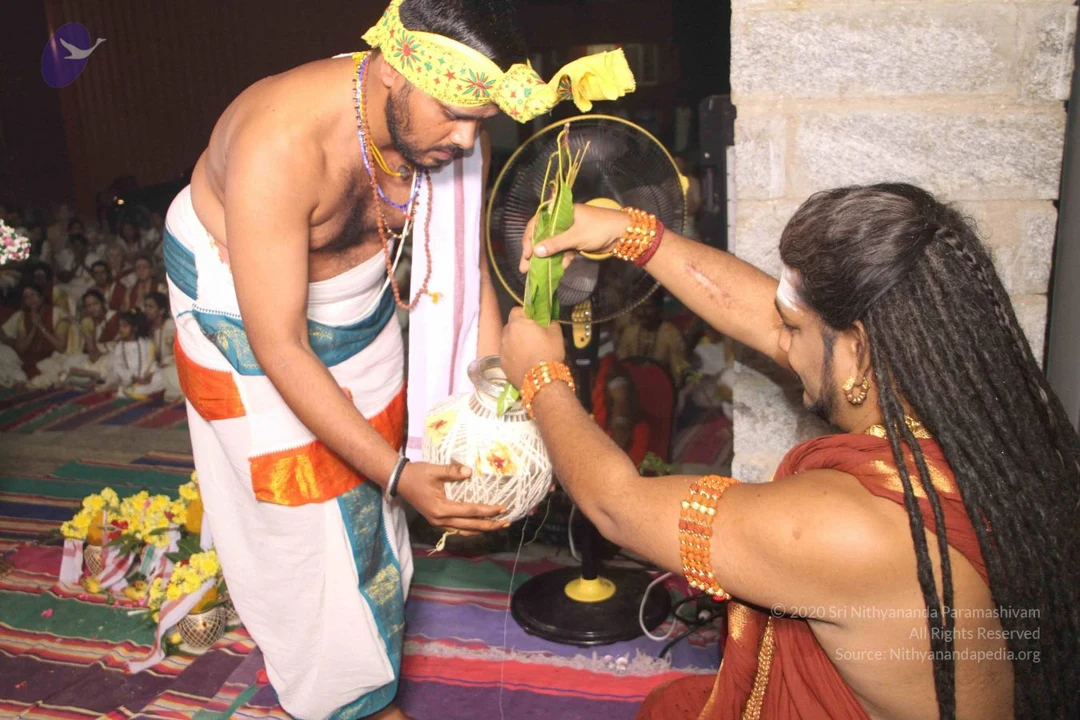
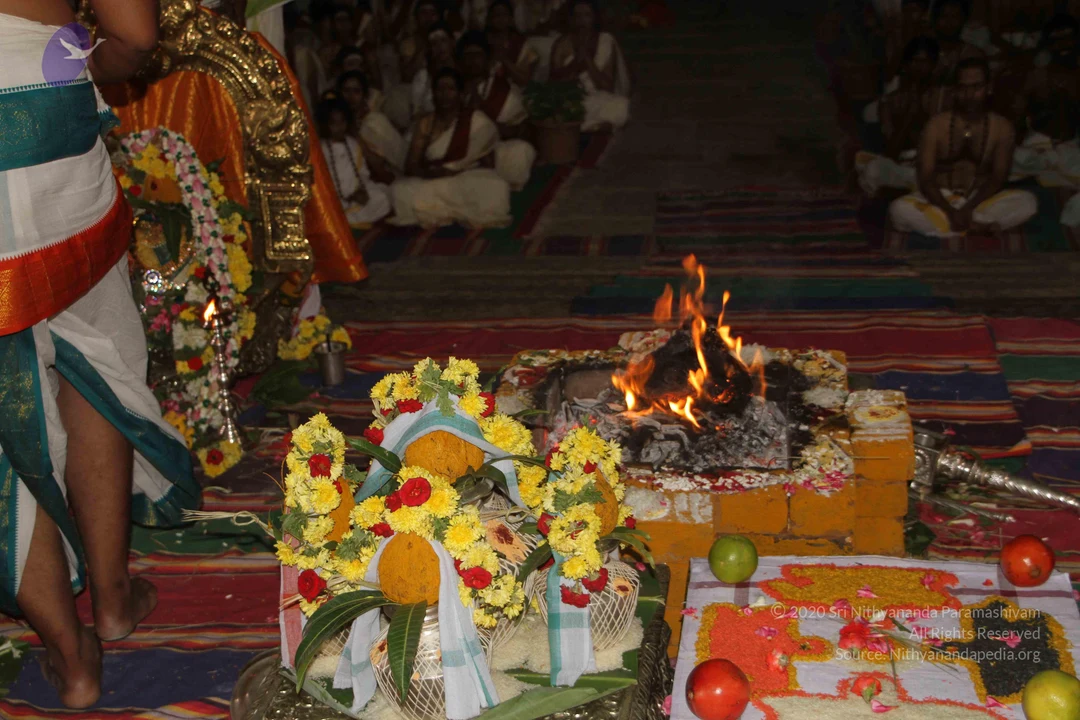
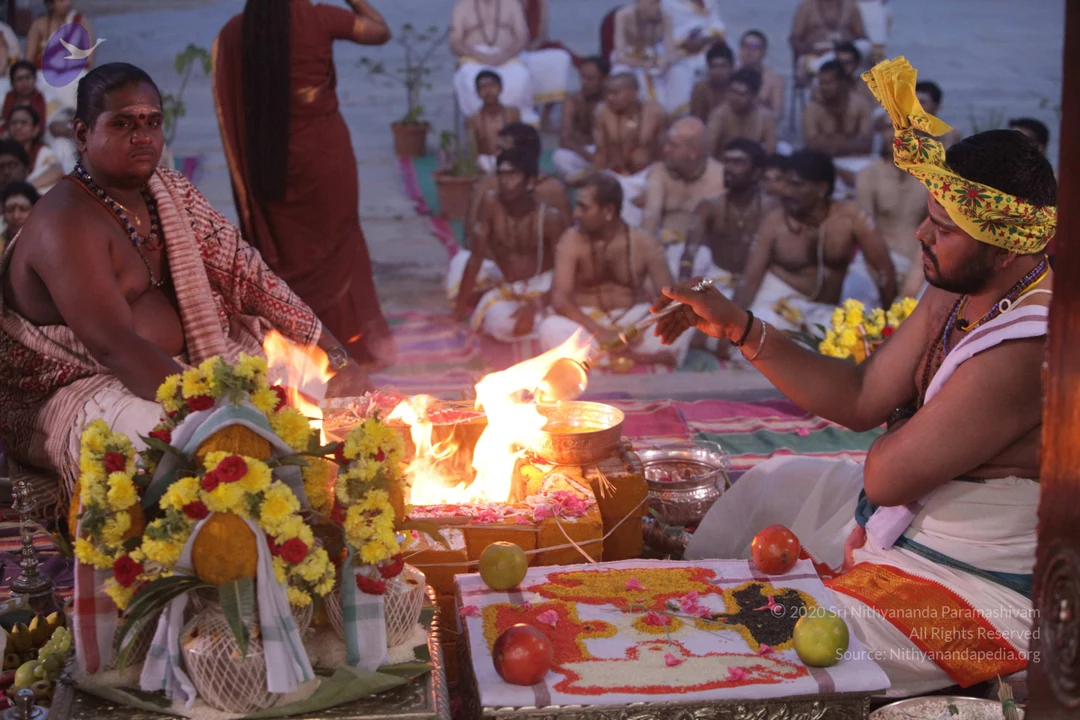
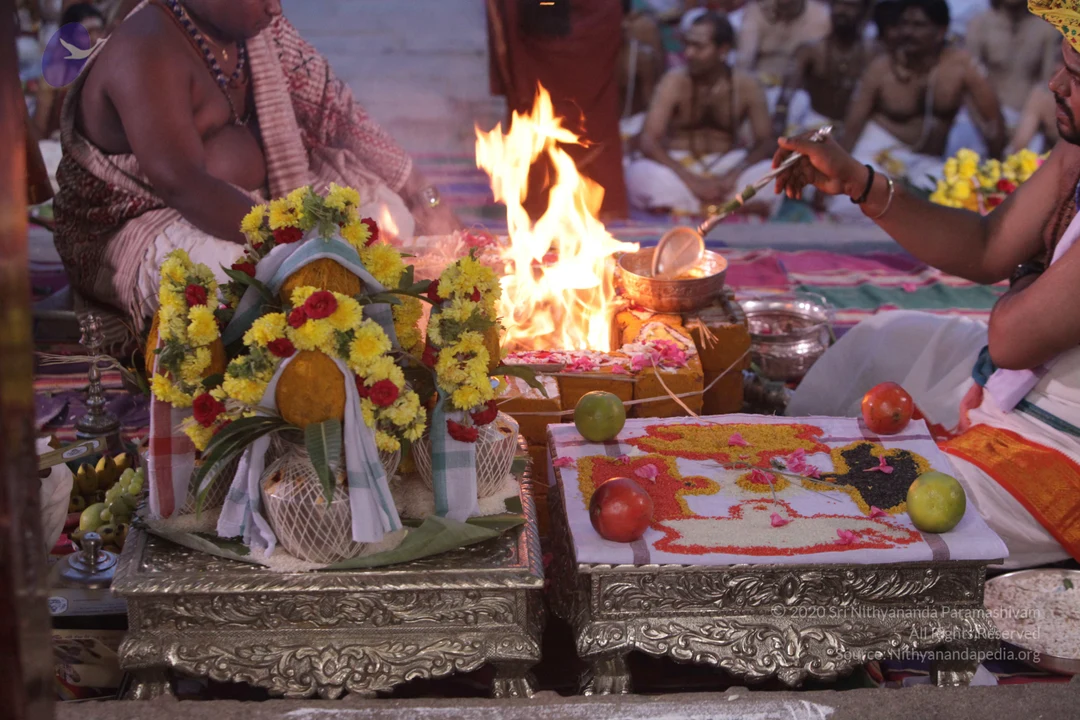
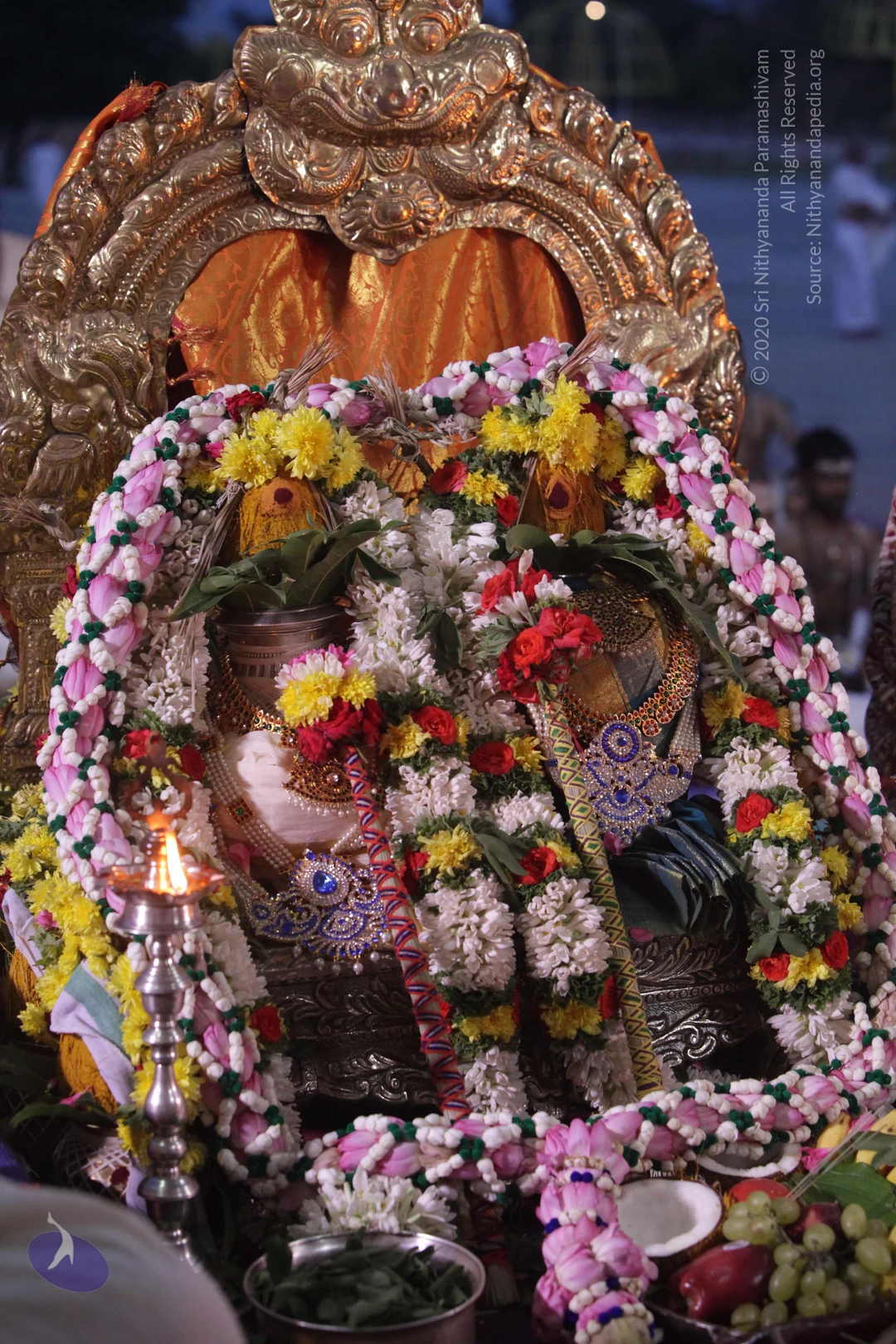
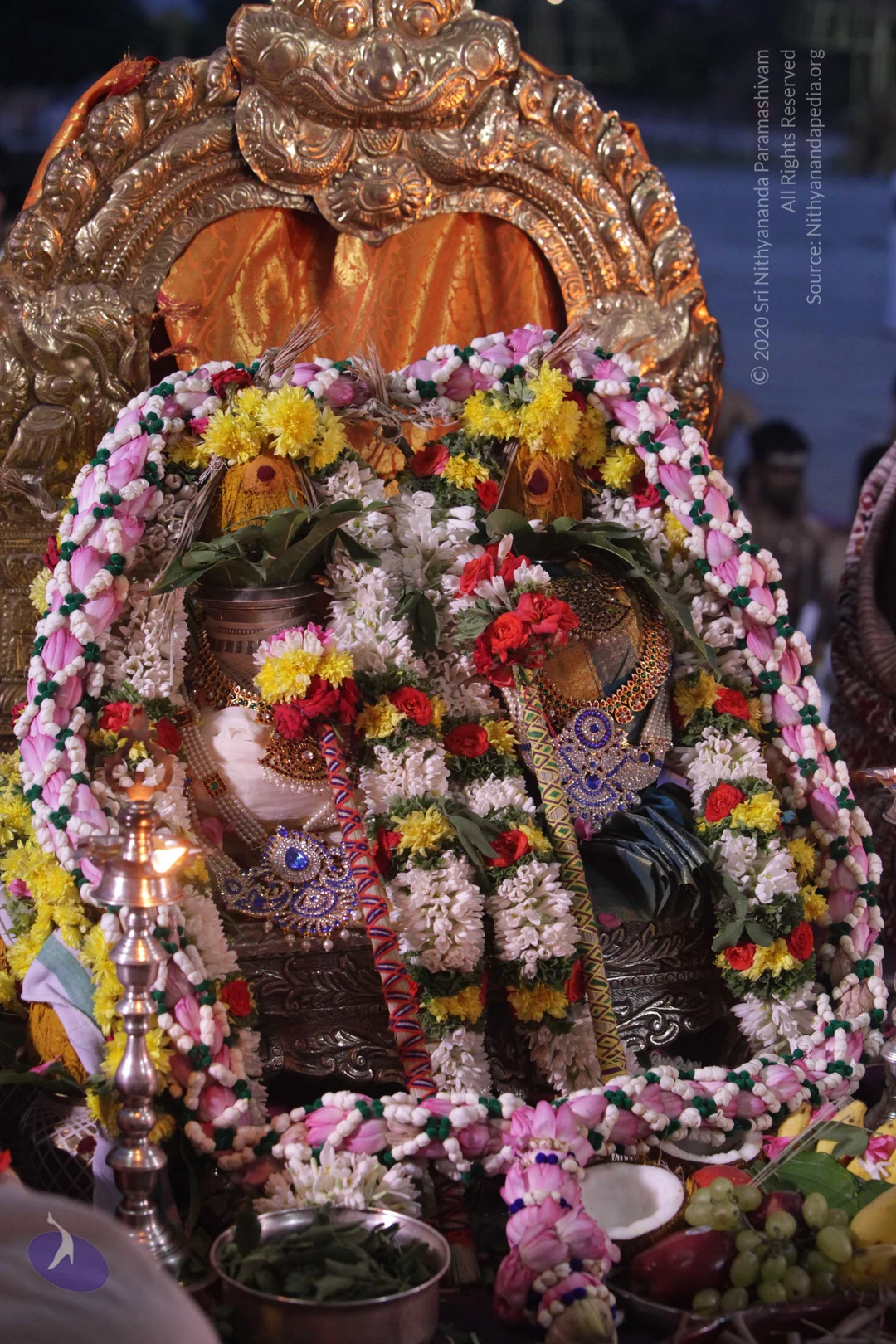
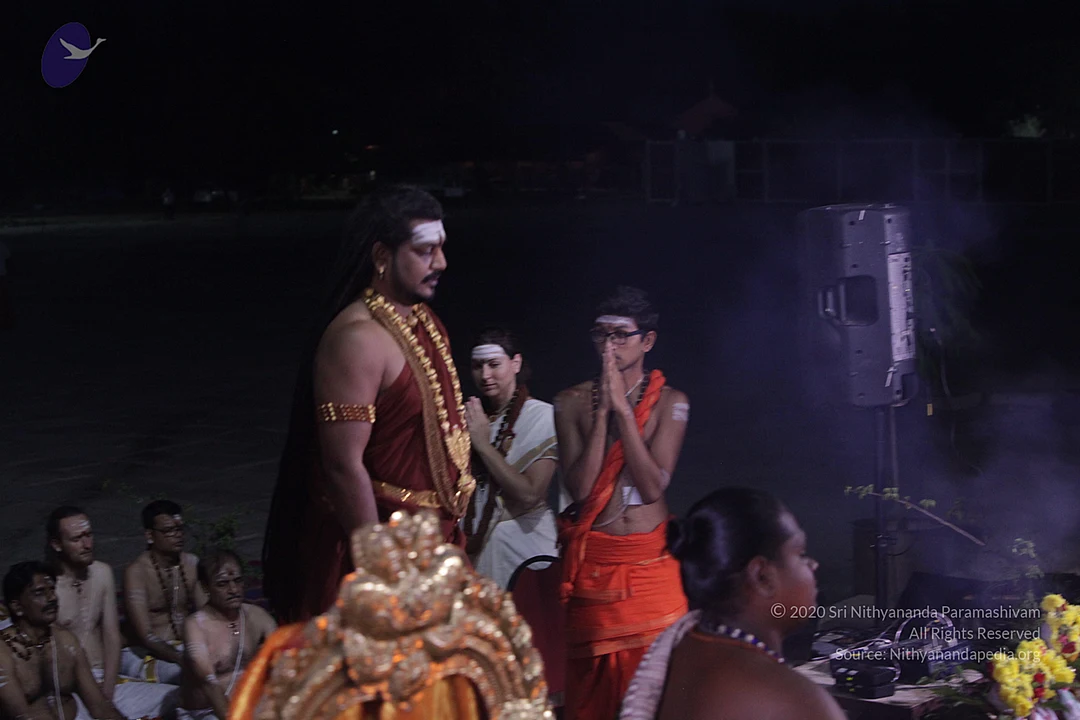
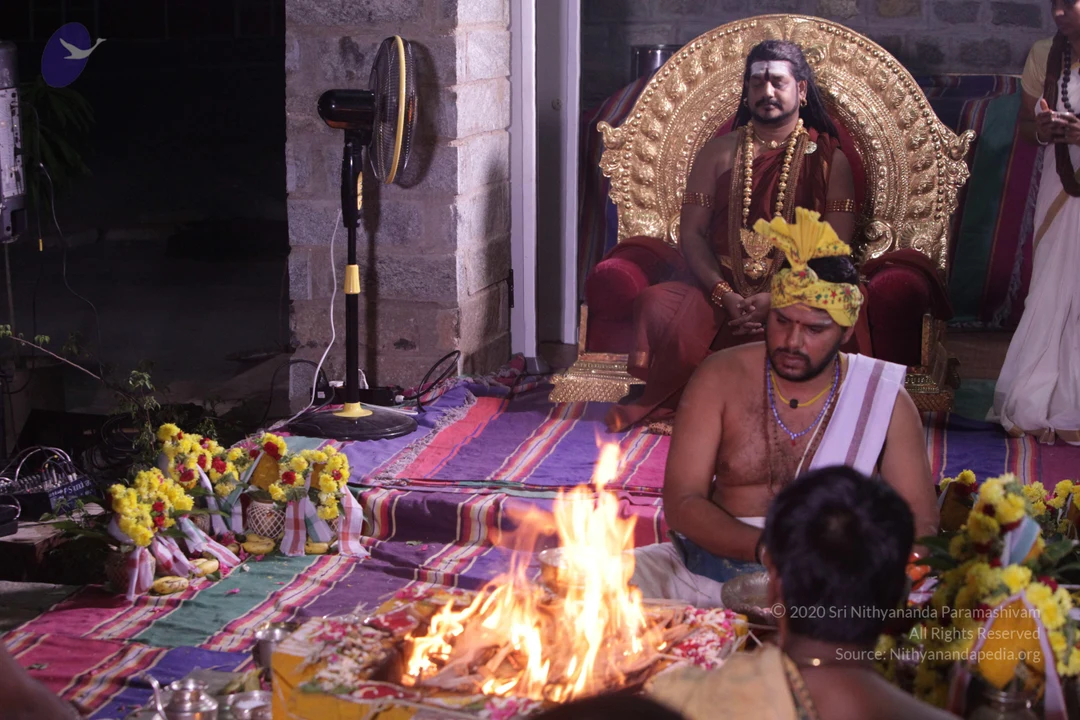
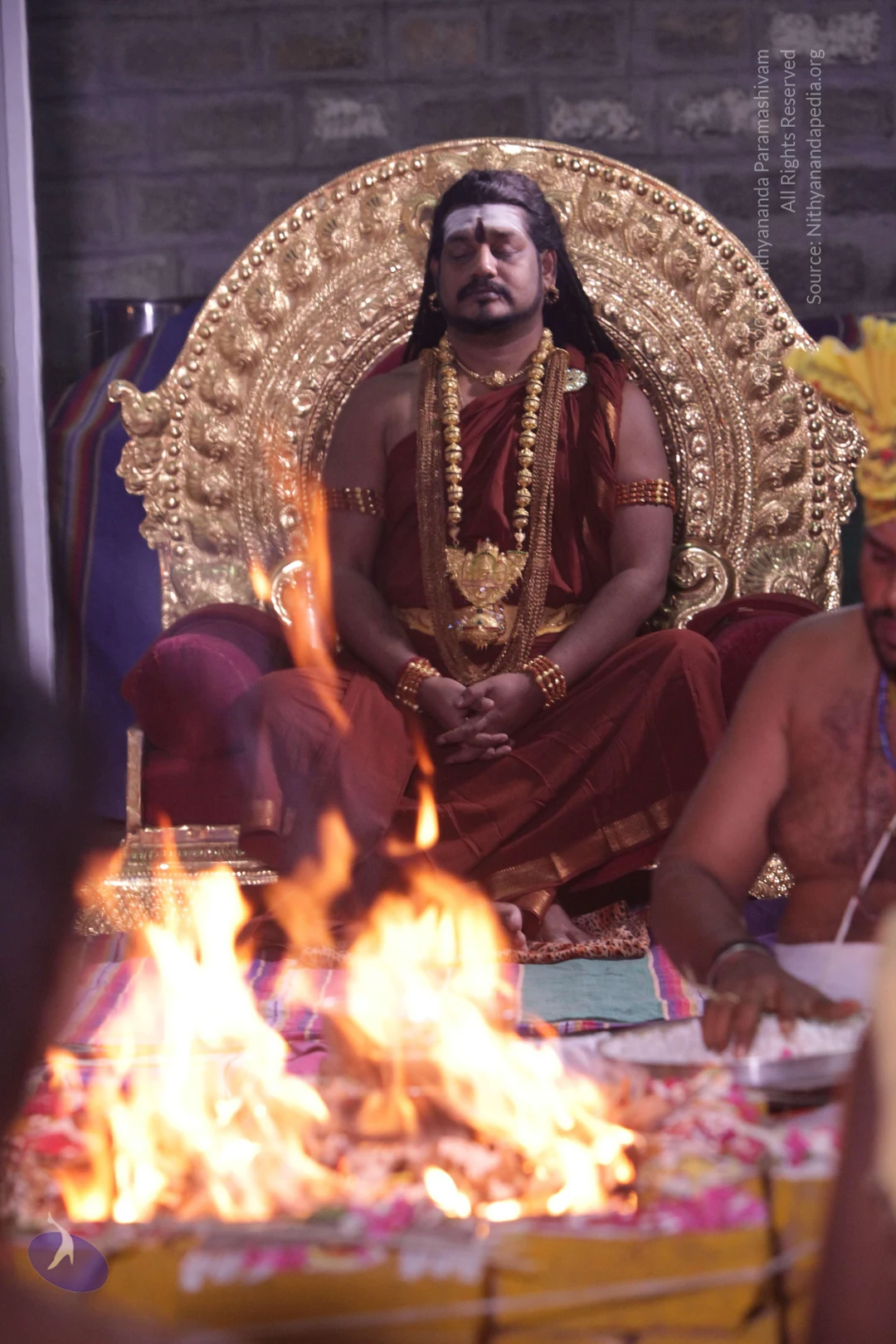
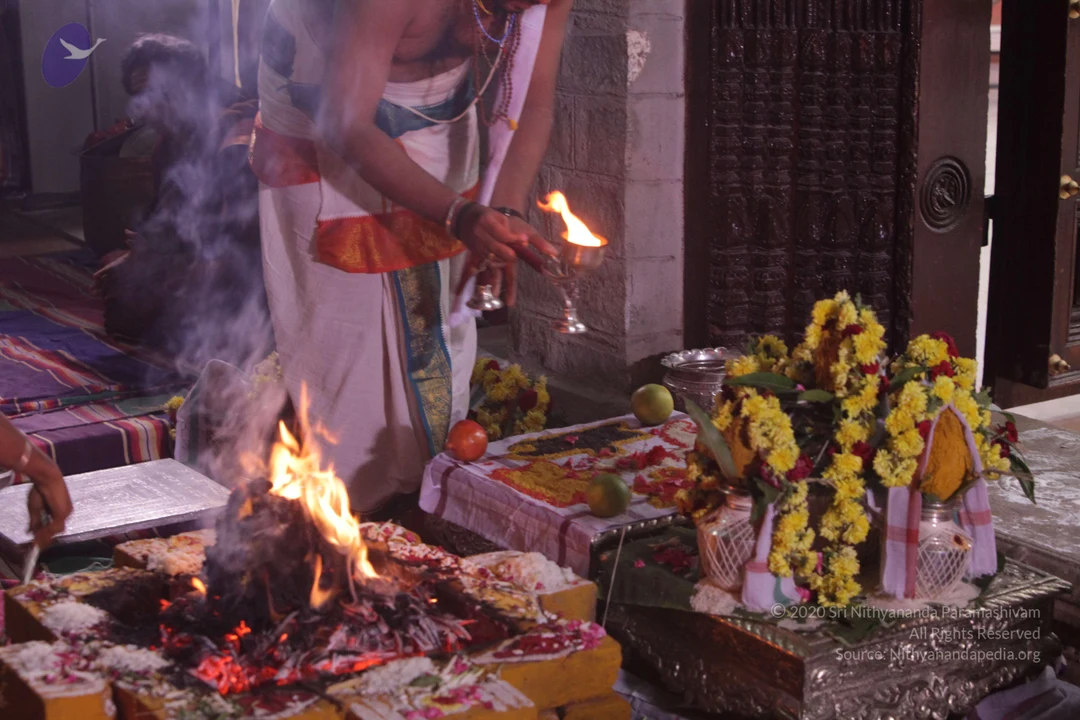
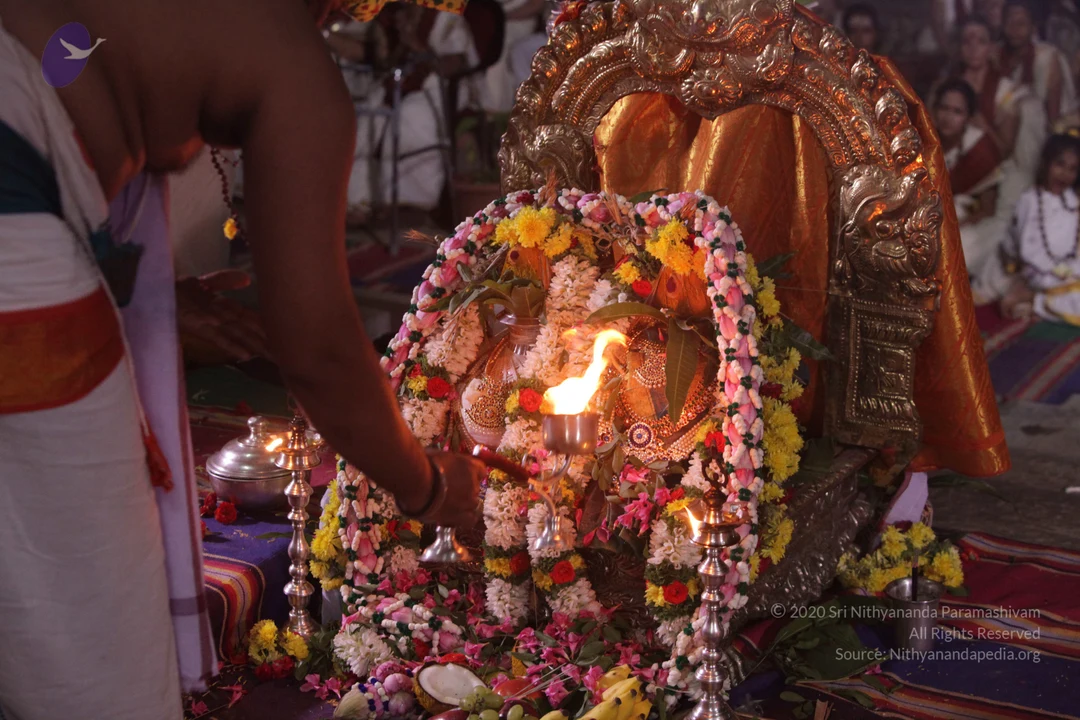
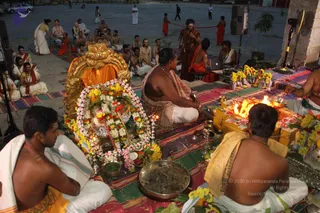
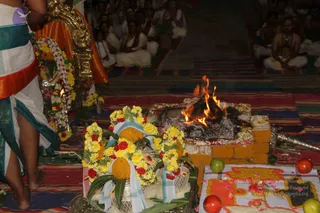
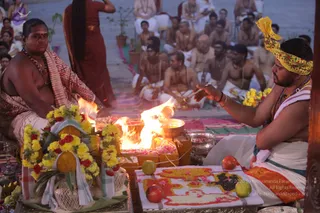
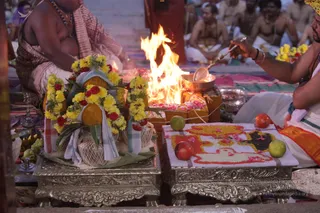
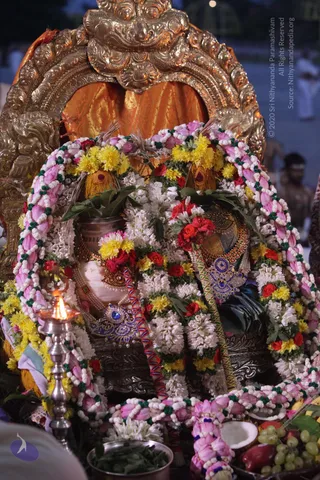
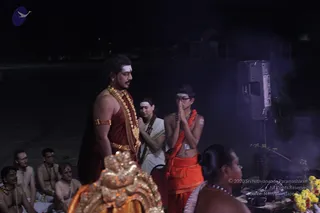
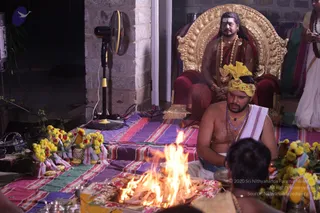
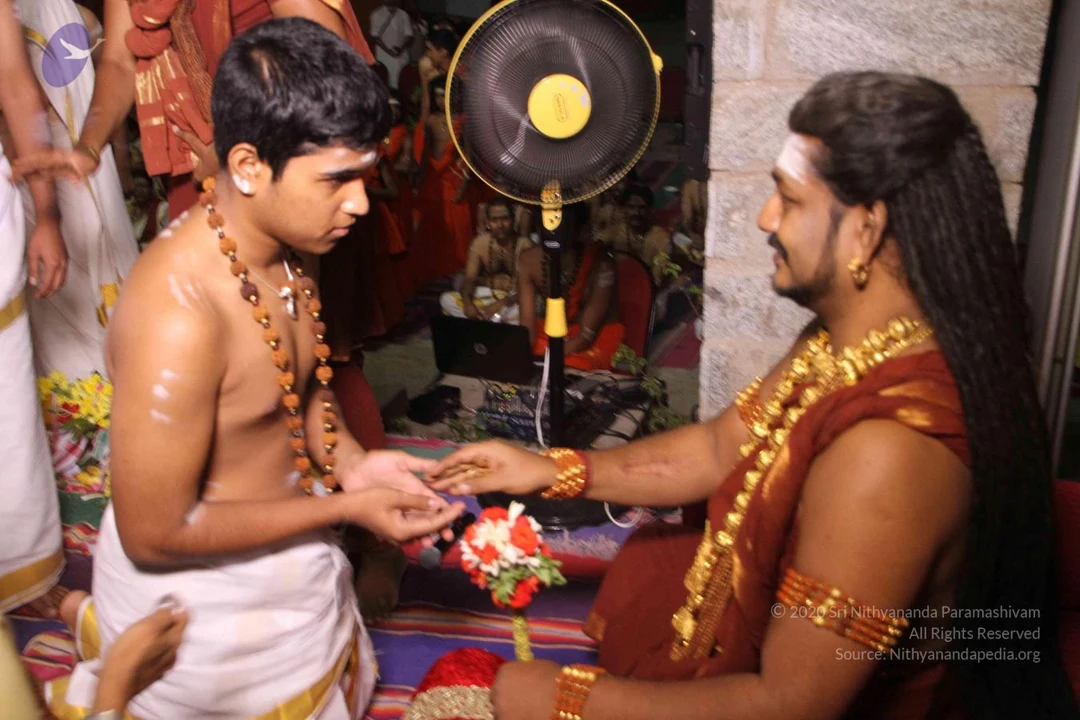
A homa fire burns in a brick-lined fire pit on a striped woven mat, with a fire pit and offerings in the foreground. Two coconuts wrapped in white cloth and ringed with yellow marigolds and red roses sit on a metal tray in front of the pit, and red and green apples lie on a decorated kolam of coloured powders and flowers. A priest in a white dhoti with a teal and red-bordered cloth walks at the left edge, partially cut off, beside a gold-framed chair draped in orange cloth and a garlanded lamp stand. In the background, several seated people in white clothes sit on mats, with a few visible devotees, and the scene is lit warmly by the flames.A photograph of an outdoor homa fire ceremony on a terrace. In the foreground a seated man with bare upper body, rudraksha beads and a striped shawl sits behind a homa fire, with garlands of yellow and red flowers and fruit offerings before him. A second bare-chested man in white dhoti with a yellow headband and rudraksha mala pours offerings into the flames with his right hand. Behind them, a row of seated men in white dhotis sit on colourful mats, and a woman in a red sari stands at left. Brass vessels, red and green apples, and a flower-decorated cloth sit on the floor. Several dozen people are visible in the background.Outdoor homa ritual at dusk: a bright fire burns in the centre, with a copper vessel holding a ladle beside it. In the foreground, two decorated kalasha-style pots wrapped with cloth and garlanded with yellow and red flowers stand on silver pedestals, with fruit and a rangoli-like floral pattern in red, yellow and orange on a white cloth. A robed priest in an orange-bordered dhoti holds a ladle at right. Seated devotees, mostly bare-chested in white dhotis, sit on mats in the background. No clearly identifiable a person figure is visible.A decorated deity murti, possibly a figure of a person's guru-lineage form, seated within an ornate gilded arch with orange silk backdrop. The murti is heavily adorned with garlands of pink lotus buds, white jasmine strands, yellow marigolds and red roses, with gold and jewelled ornaments and a pearl necklace. A brass oil lamp with a lit flame stands at left, and a bowl of green leaves, fruit and a split coconut sit in the foreground. Two faint background figures are partly visible at right. The scene suggests a ritual abhishekam or aarti setting.A night-time outdoor ritual photograph. A man with long dark hair, a white forehead band and a gold ceremonial necklace stands in a deep red garment with a gold armlet, hands at his sides. Beside him, a woman in a white sari with a white forehead band and a beaded necklace stands with palms pressed together in anjali. To the right, a young man in orange wrap clothing and glasses also holds anjali, and a woman with hair in a bun sits at the lower right near flower garlands. In the foreground a gold ornate object, possibly a ritual vessel or decorative base, stands near a seated group of men with bare upper bodies, white forehead marks and rudraksha-style beads at the lower left. Purple haze hangs in the air and a speaker stands to the right.A photograph of an evening homa at an outdoor-style ashram space with a brick wall and a standing fan. A shirtless man with a yellow and green head cloth and a rudraksha-style bead necklace sits cross-legged on a striped mat before a blazing fire pit, with a brass vessel and offerings beside it. Behind him, a figure in a red-orange garment, long swept-back hair, a crown-like headpiece, ornate gold necklaces and gold bangles sits on a large golden throne with red cushions; the figure matches the presentation of the page's Swamiji reference, so this is a probable Swamiji depiction seated in person. Marigold garlands and banana bunches decorate the mat edges, and a partly visible white-clad attendant stands at right. Count of visible people is four.