Skip to content
Thursday

9 May 2013

Dated photos
517
Source pages
1
Media
3
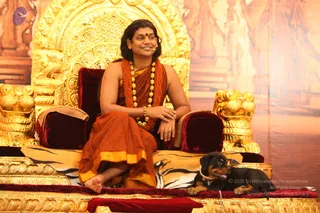
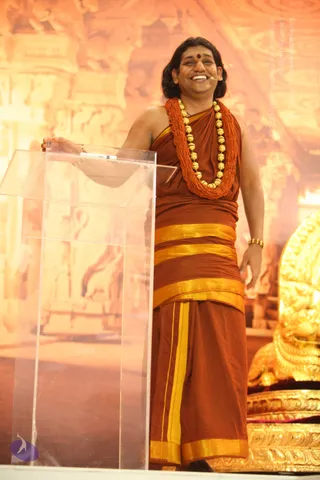
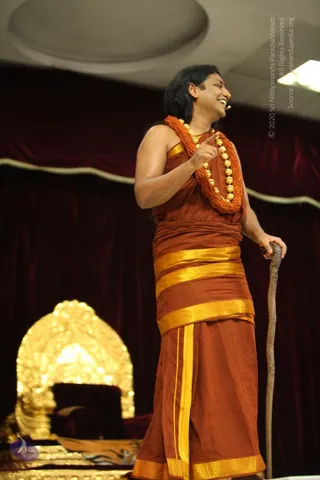
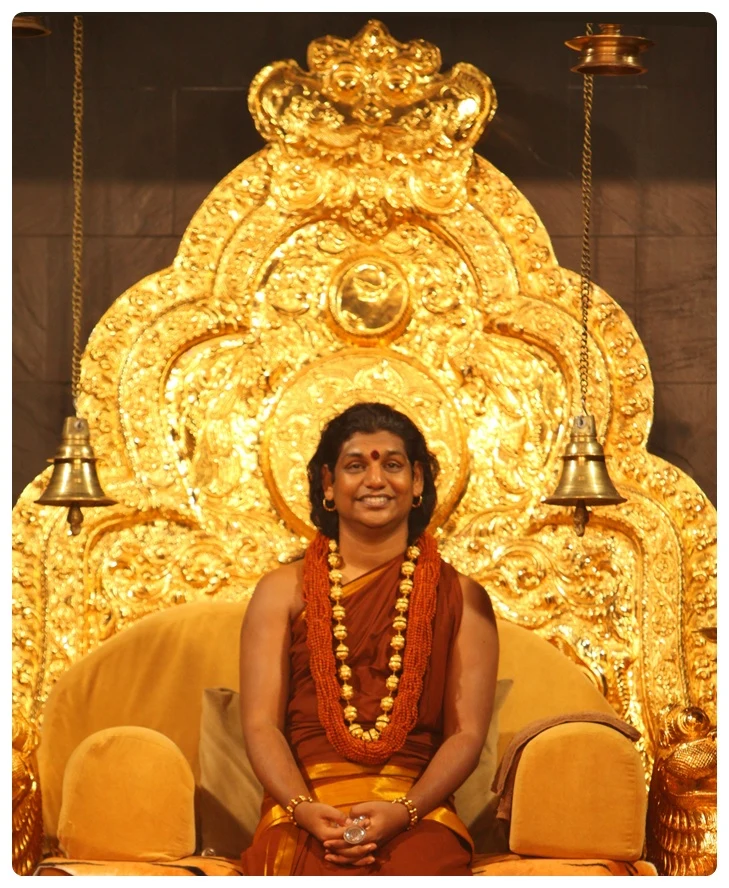
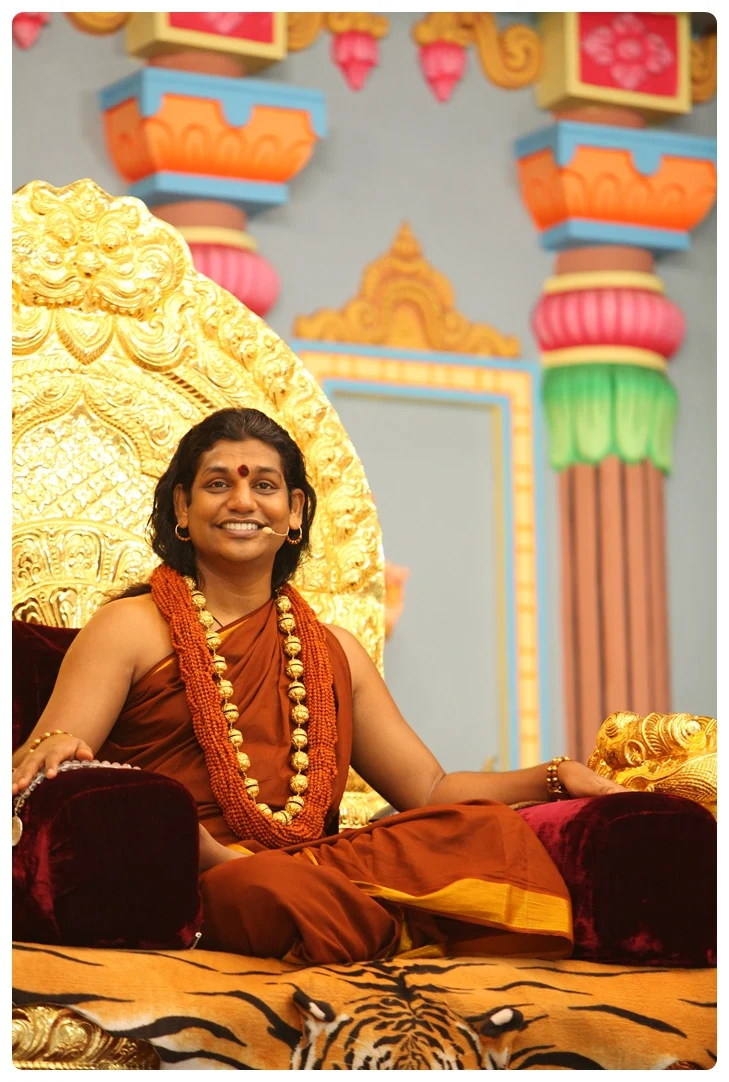
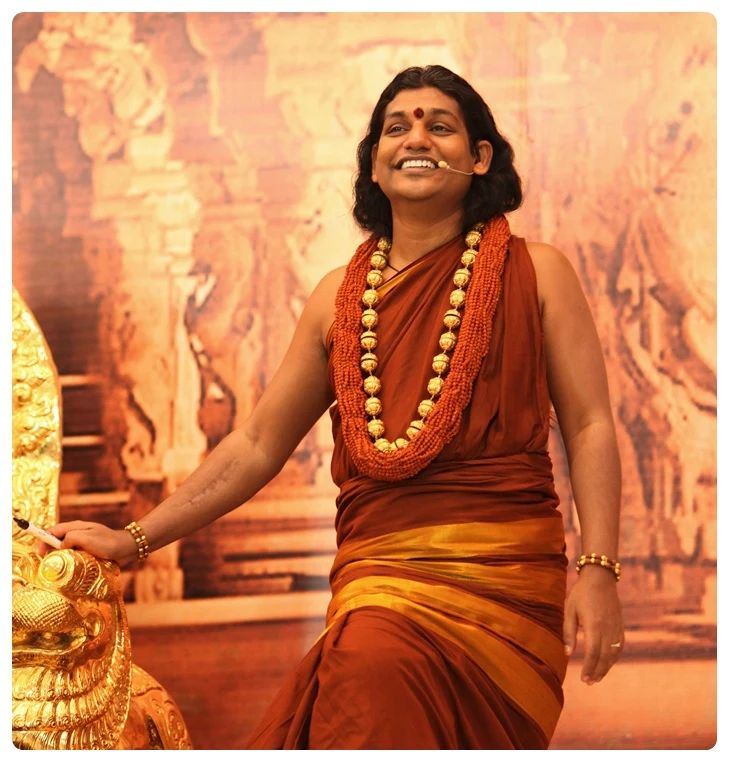
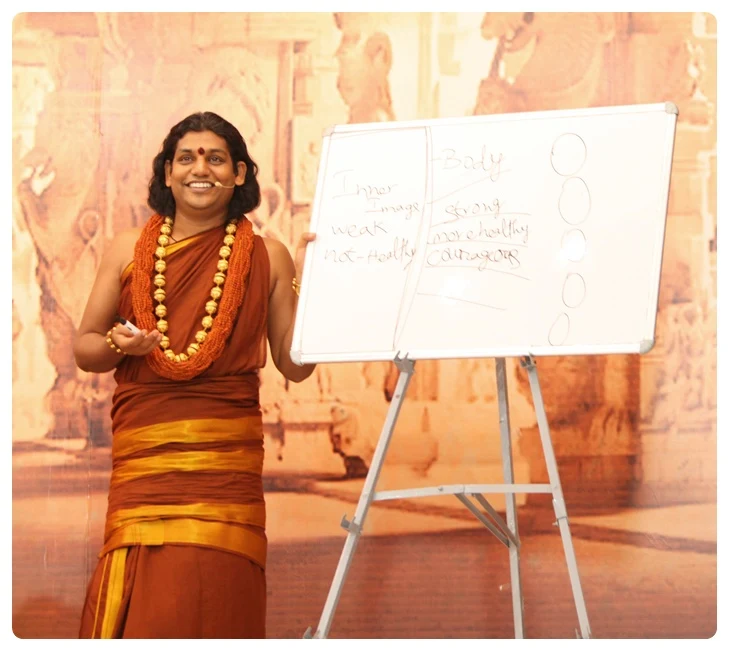
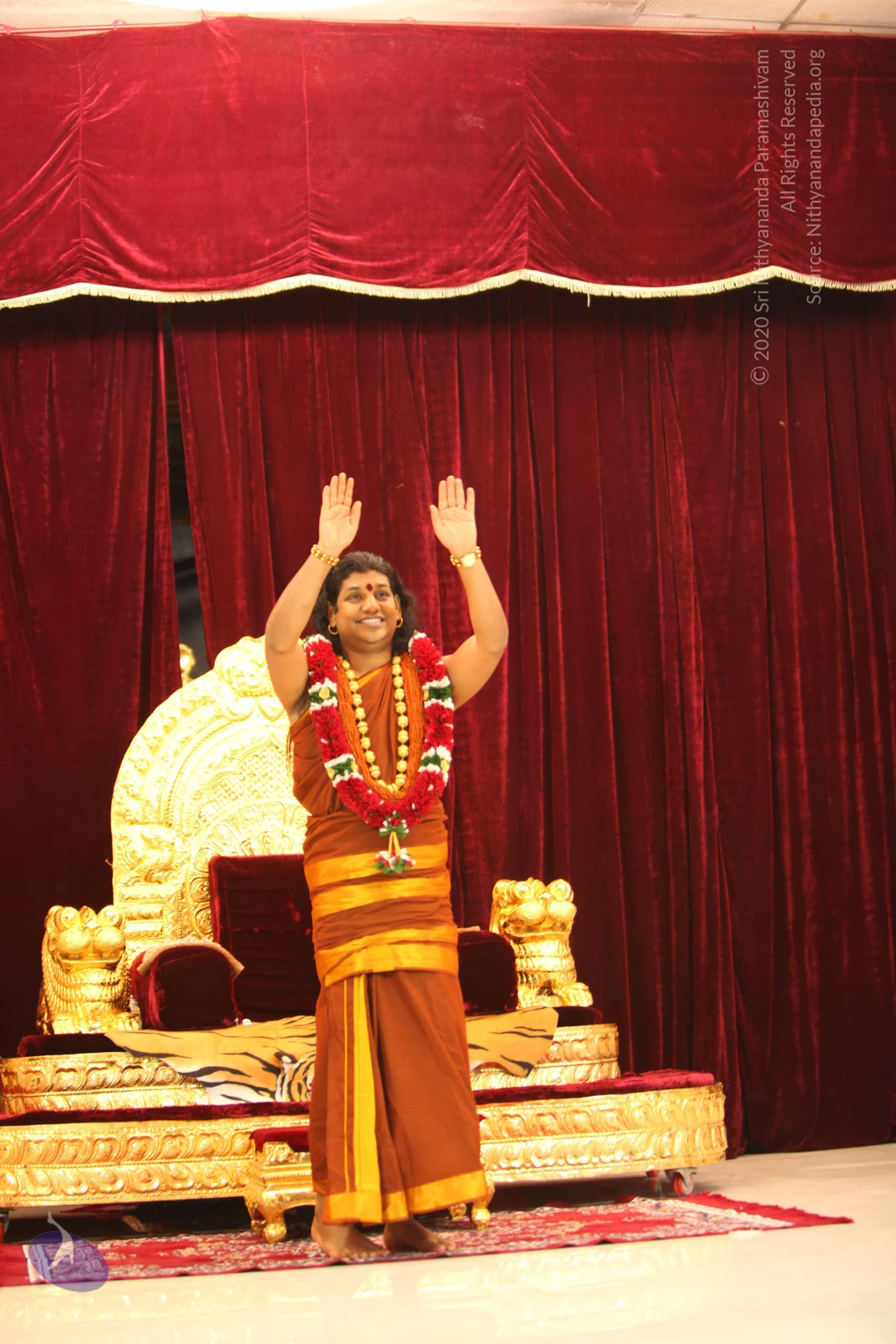
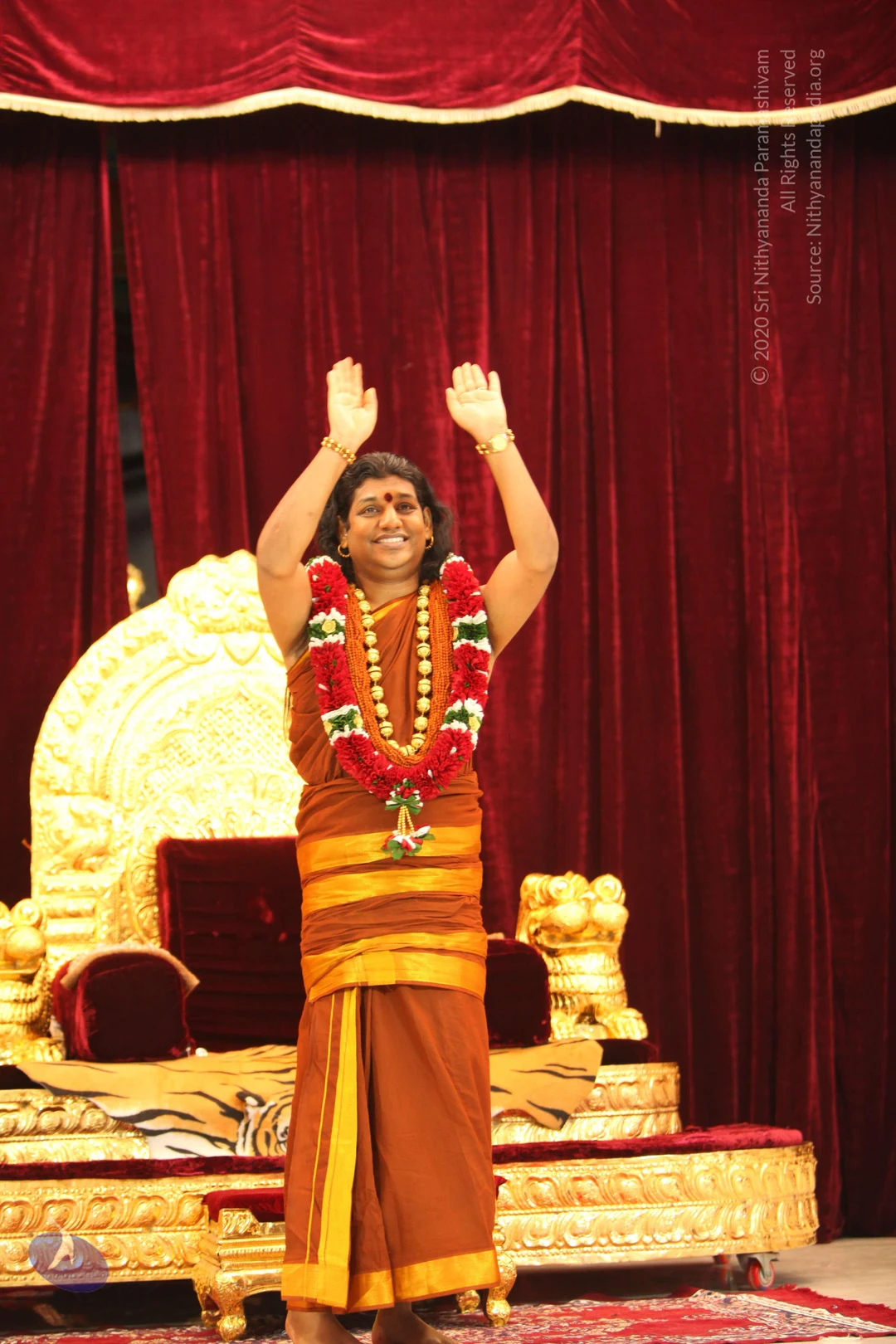
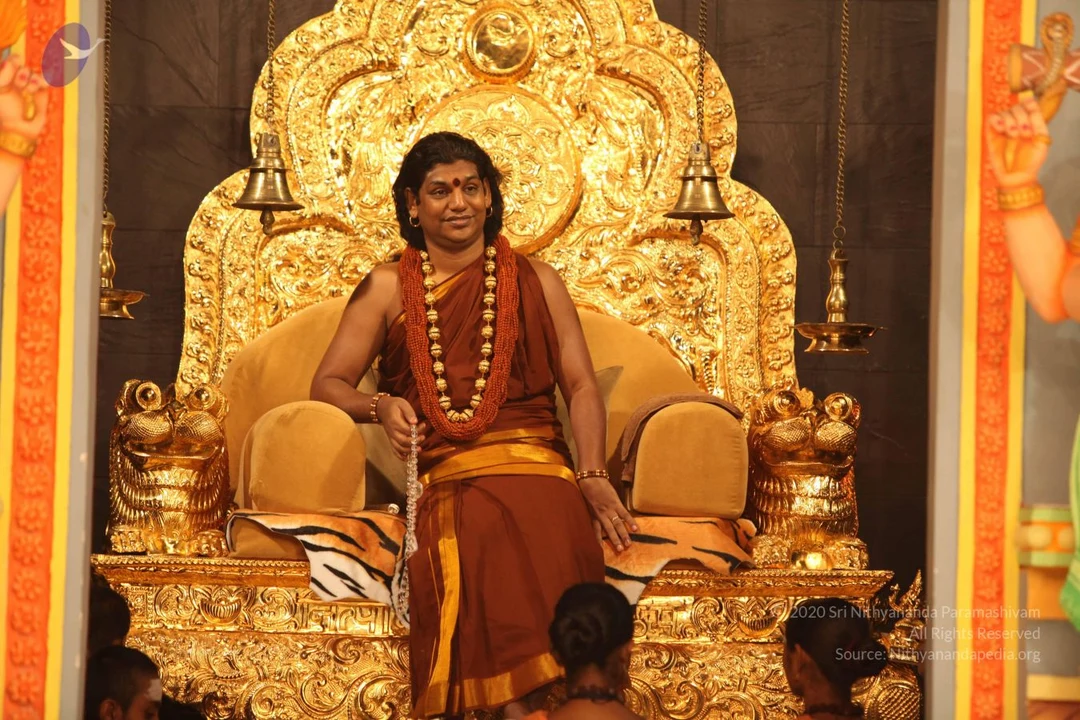
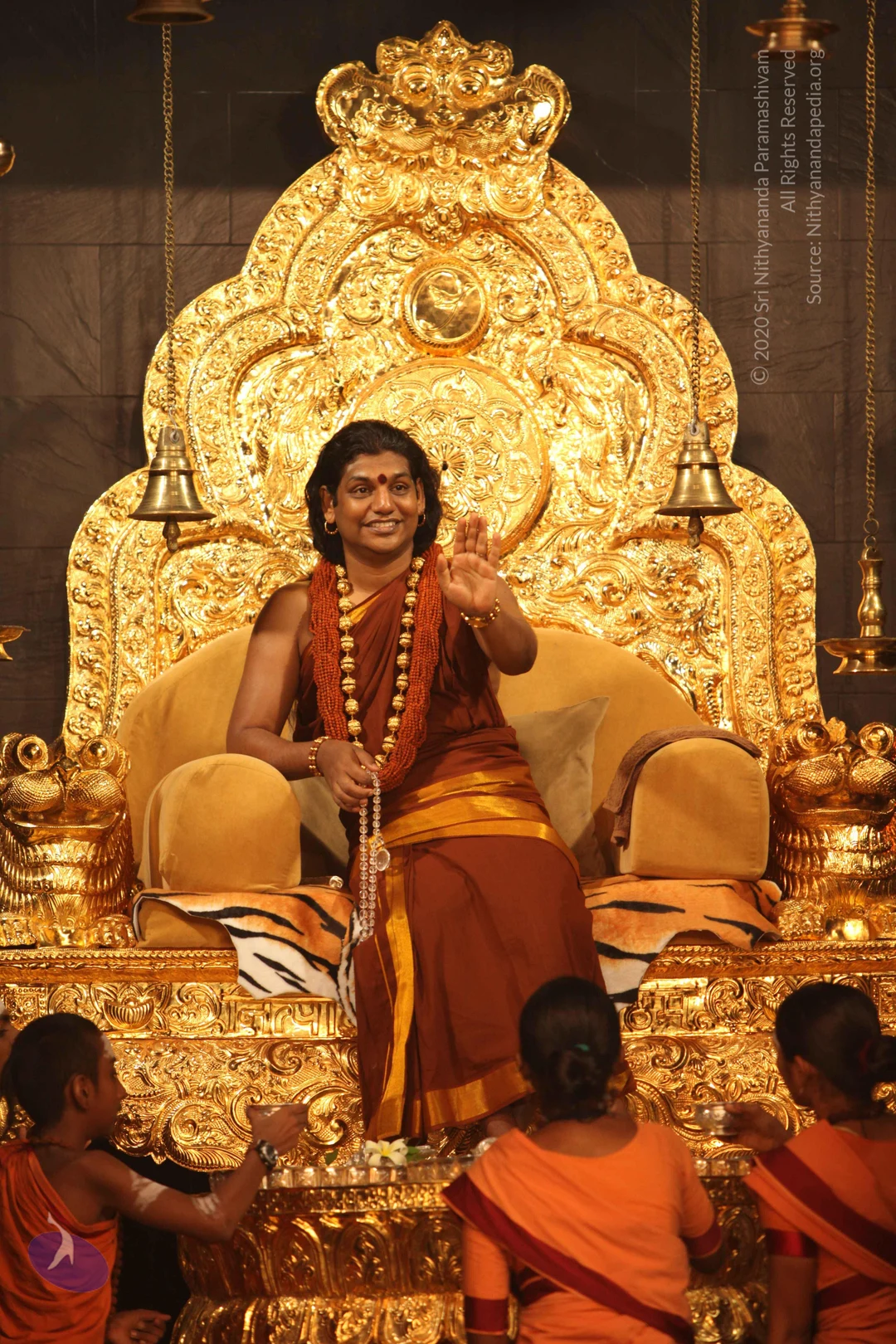
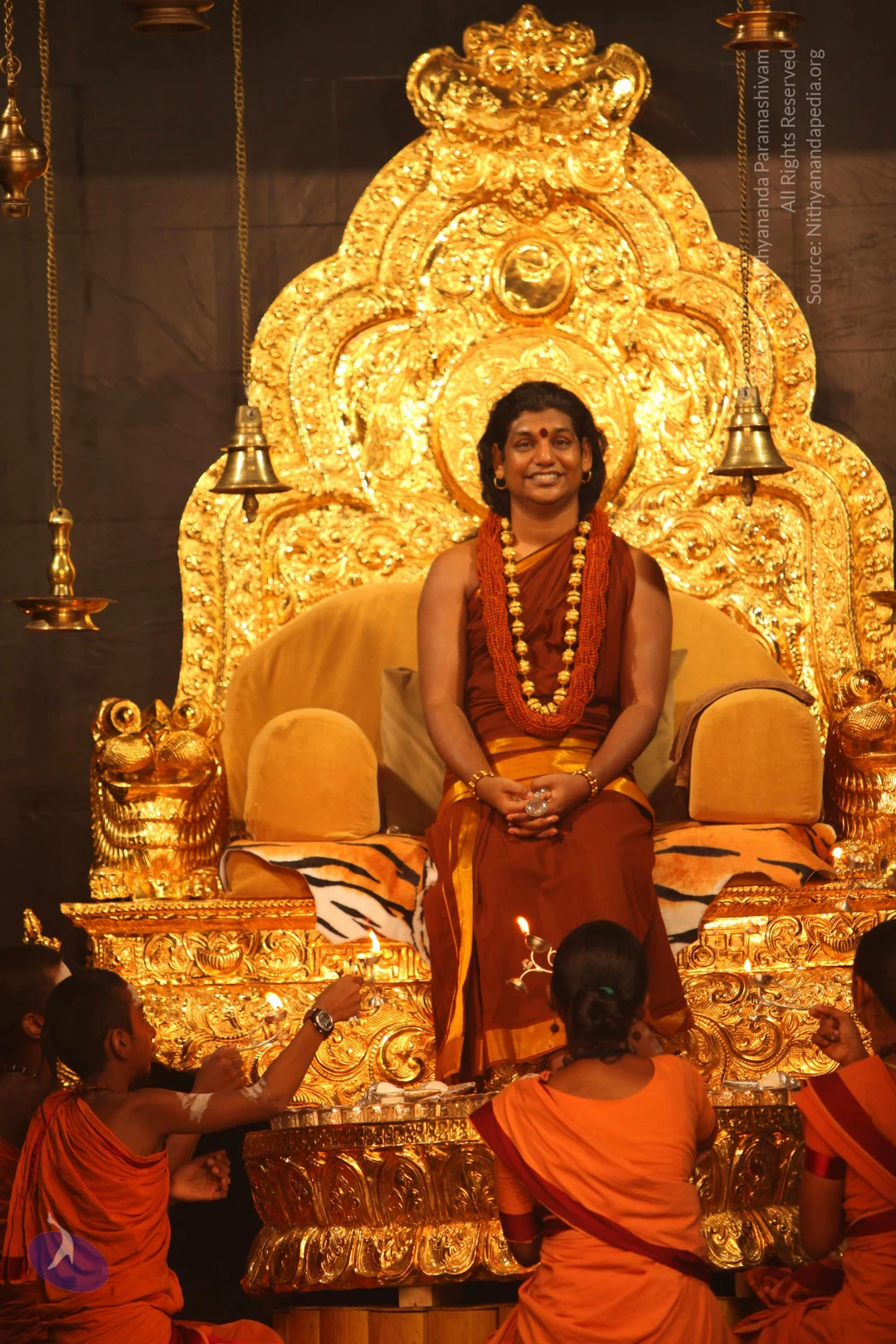
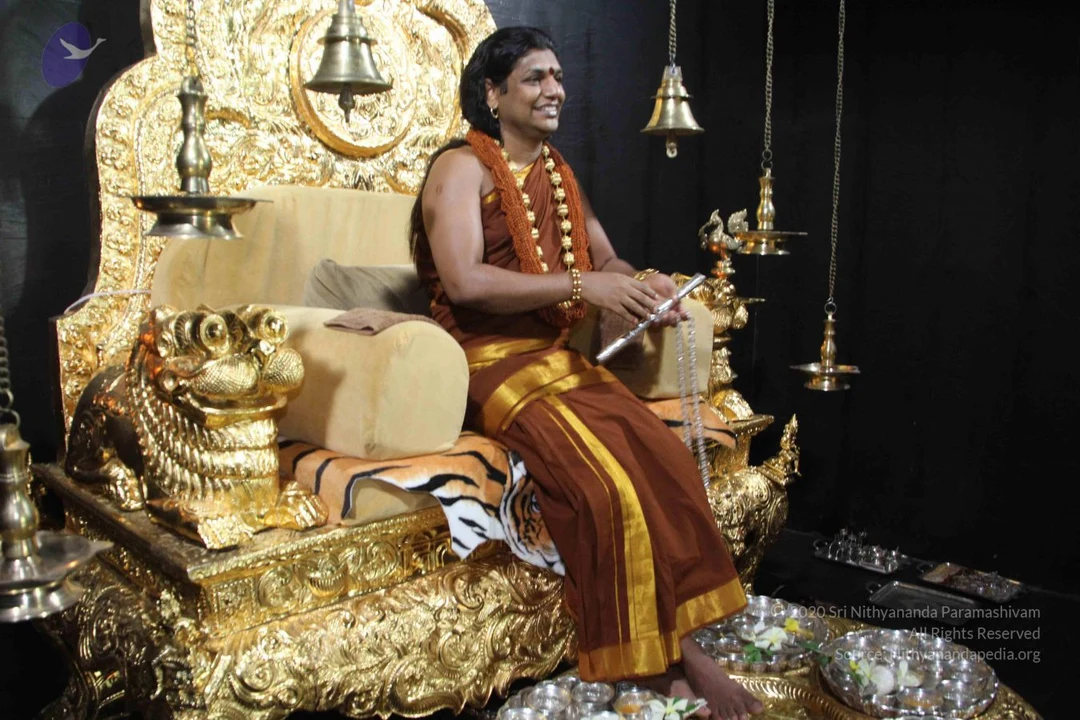
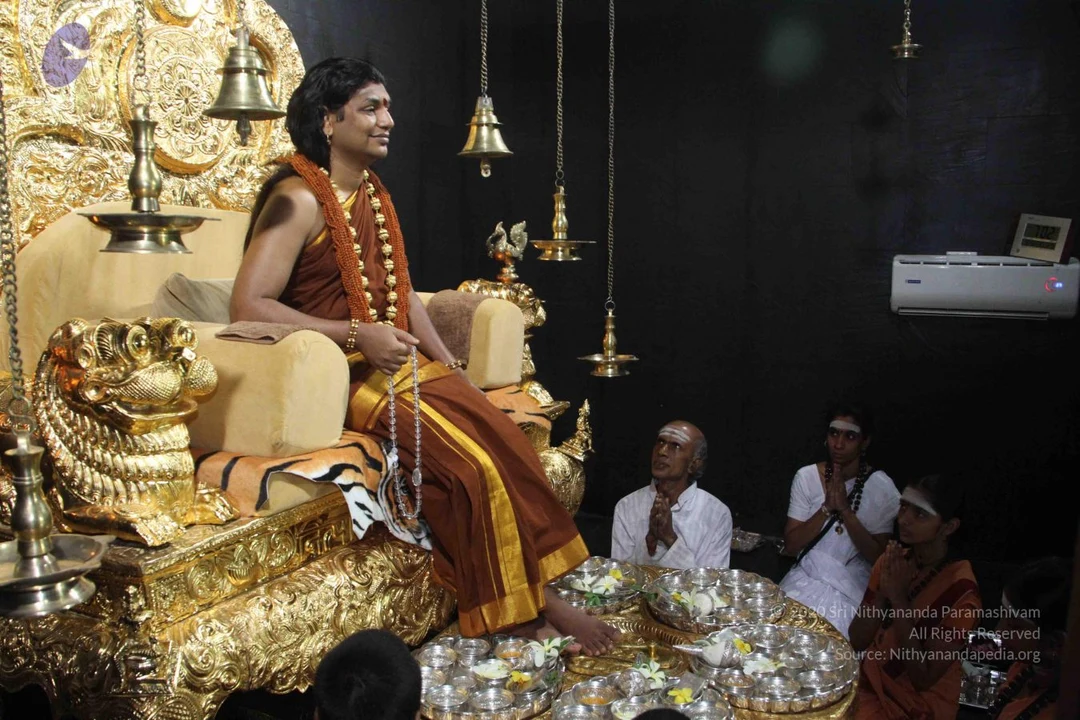
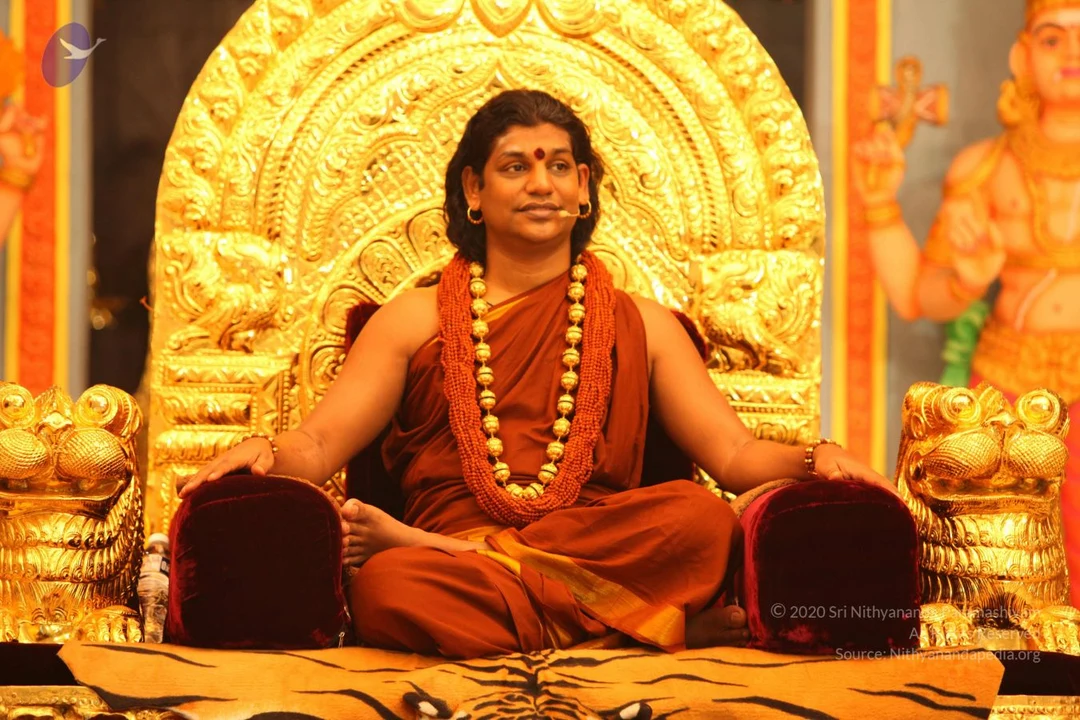
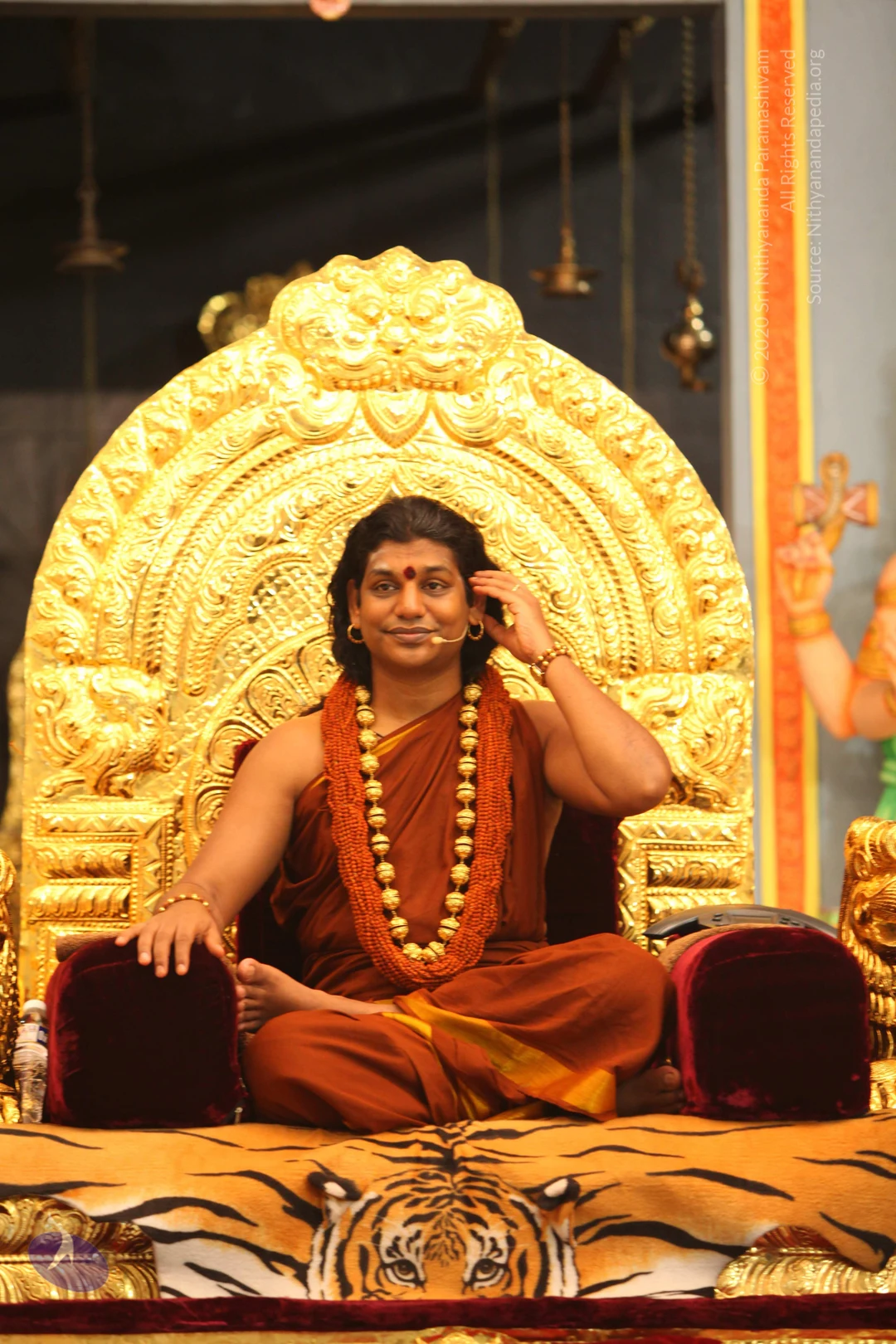
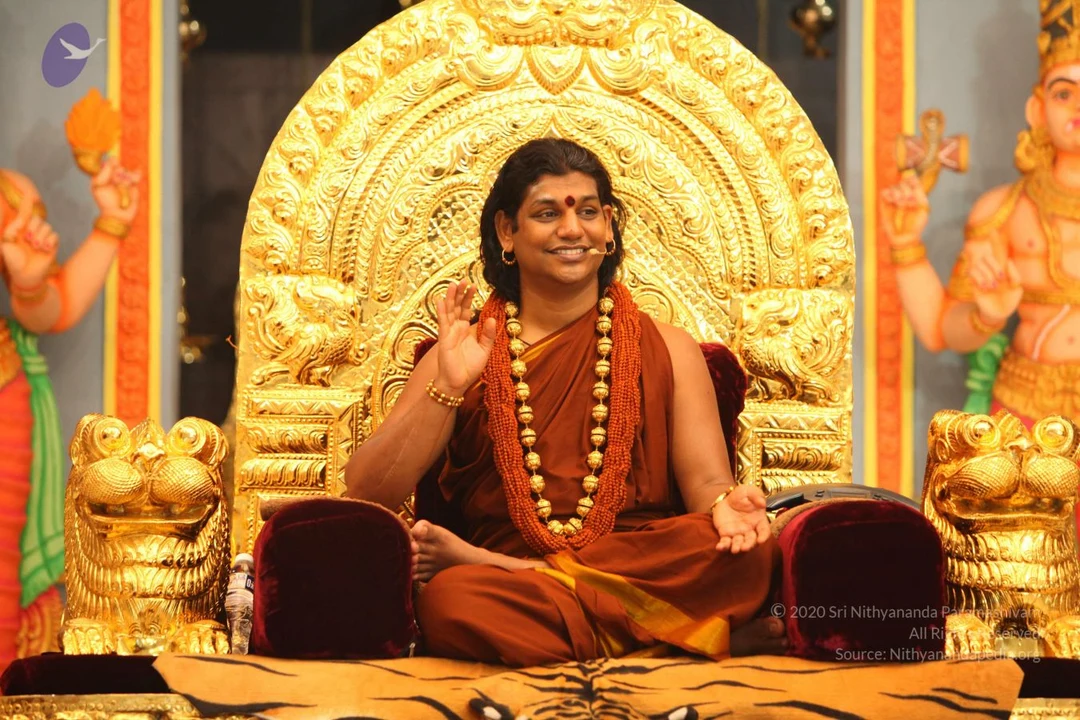
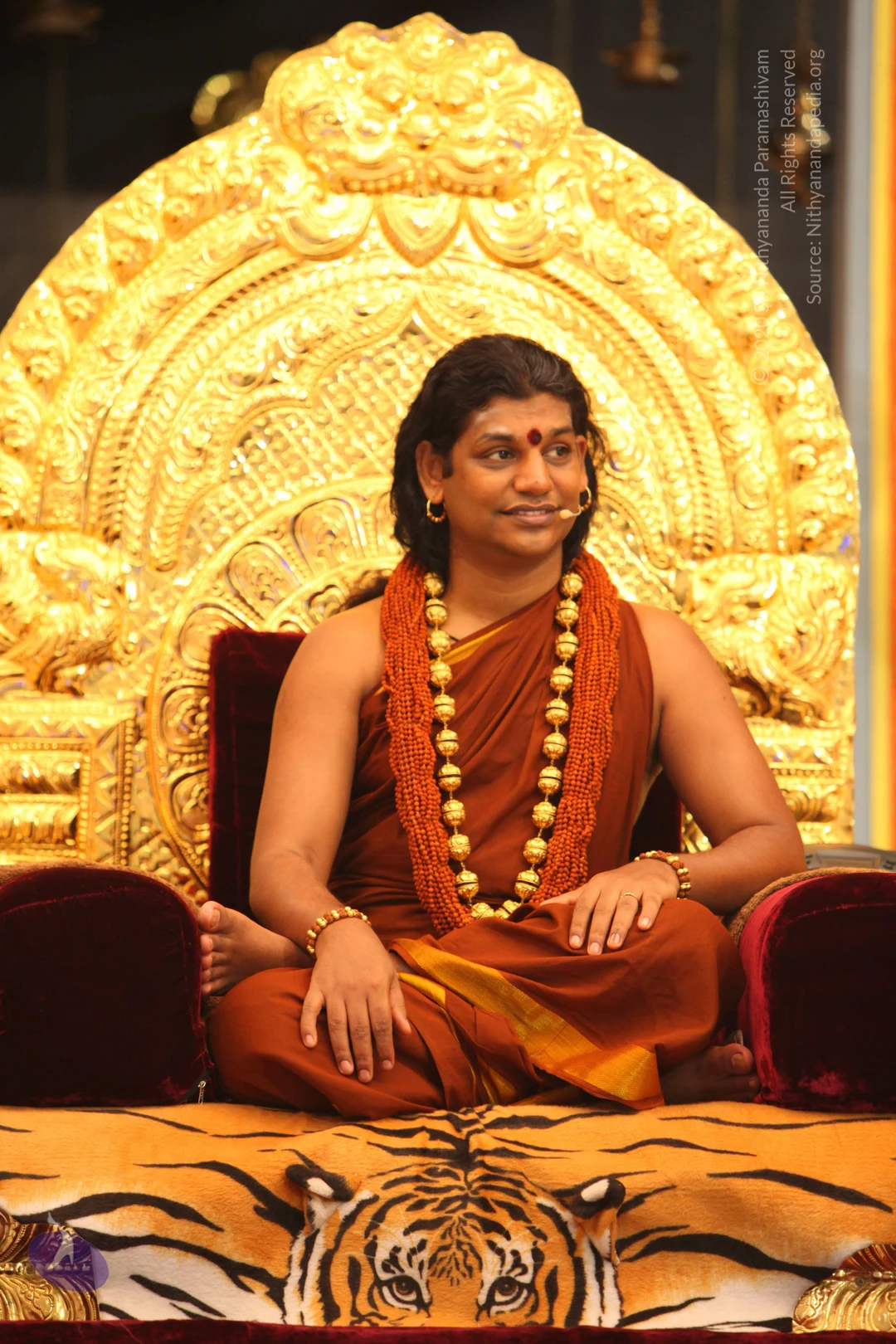
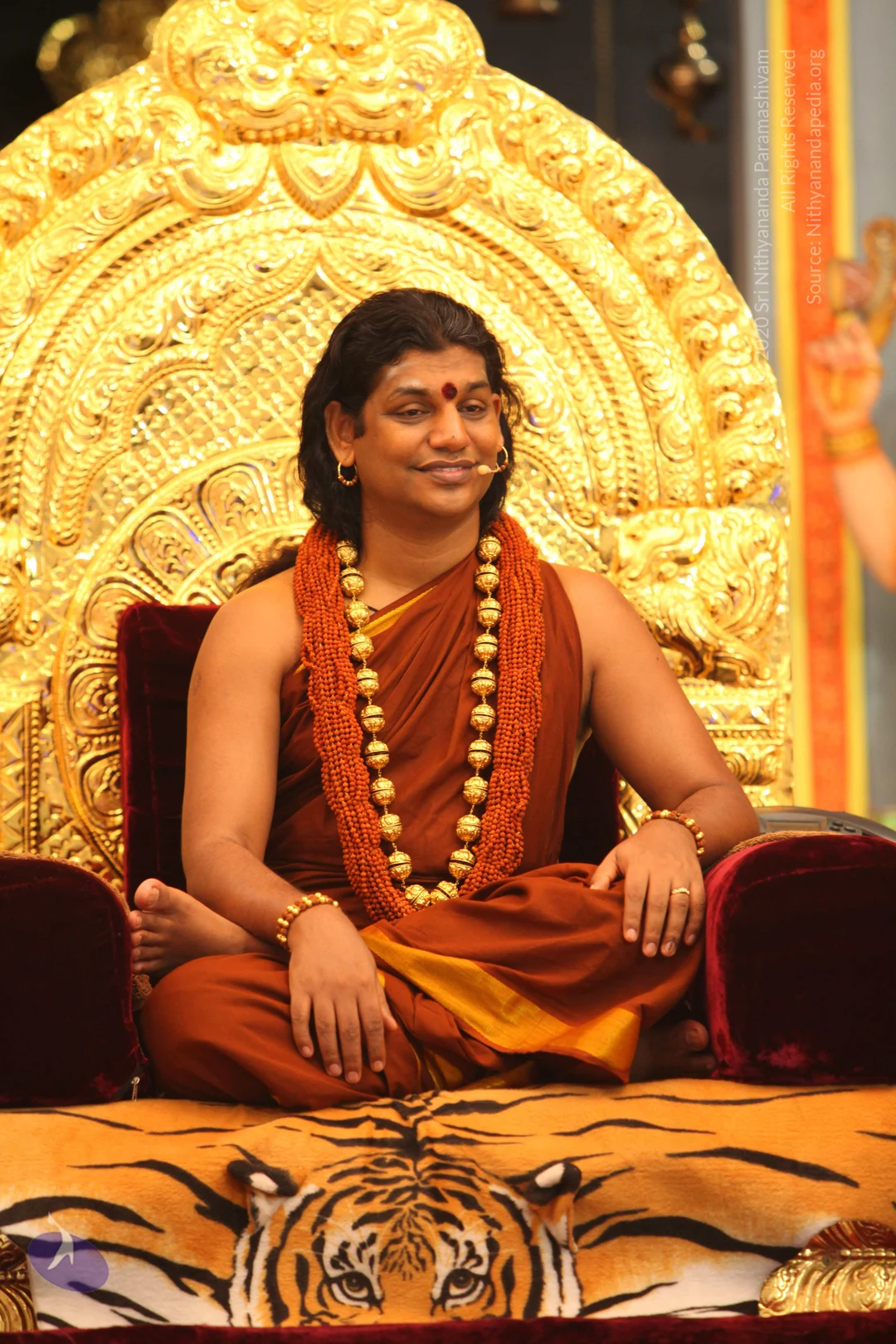
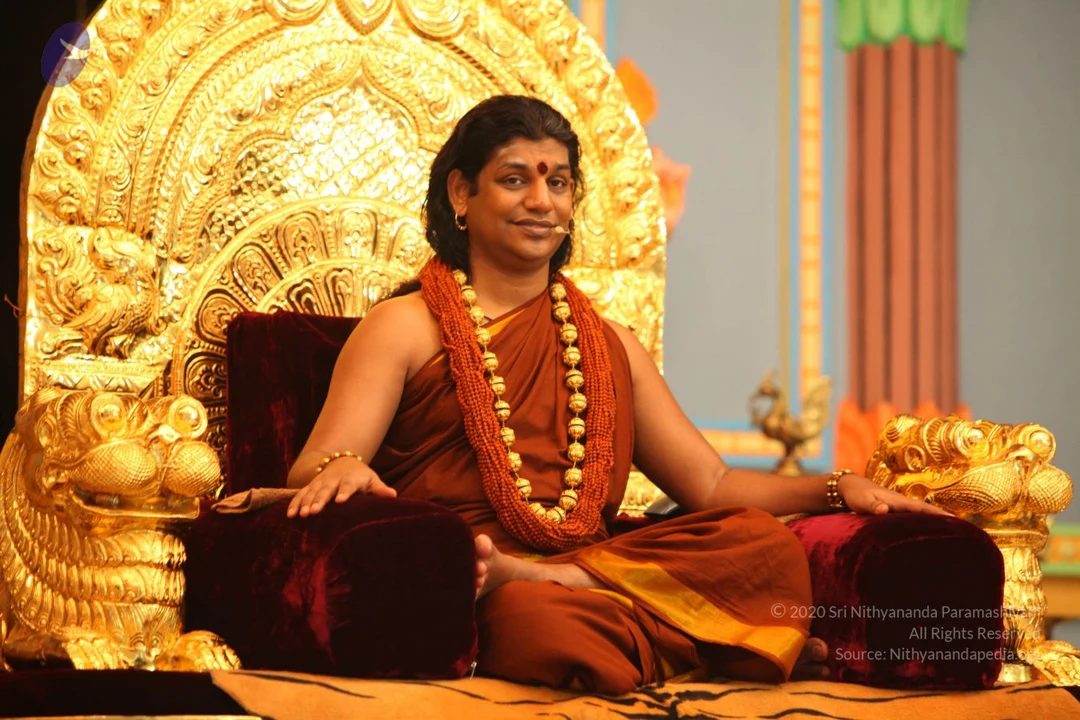
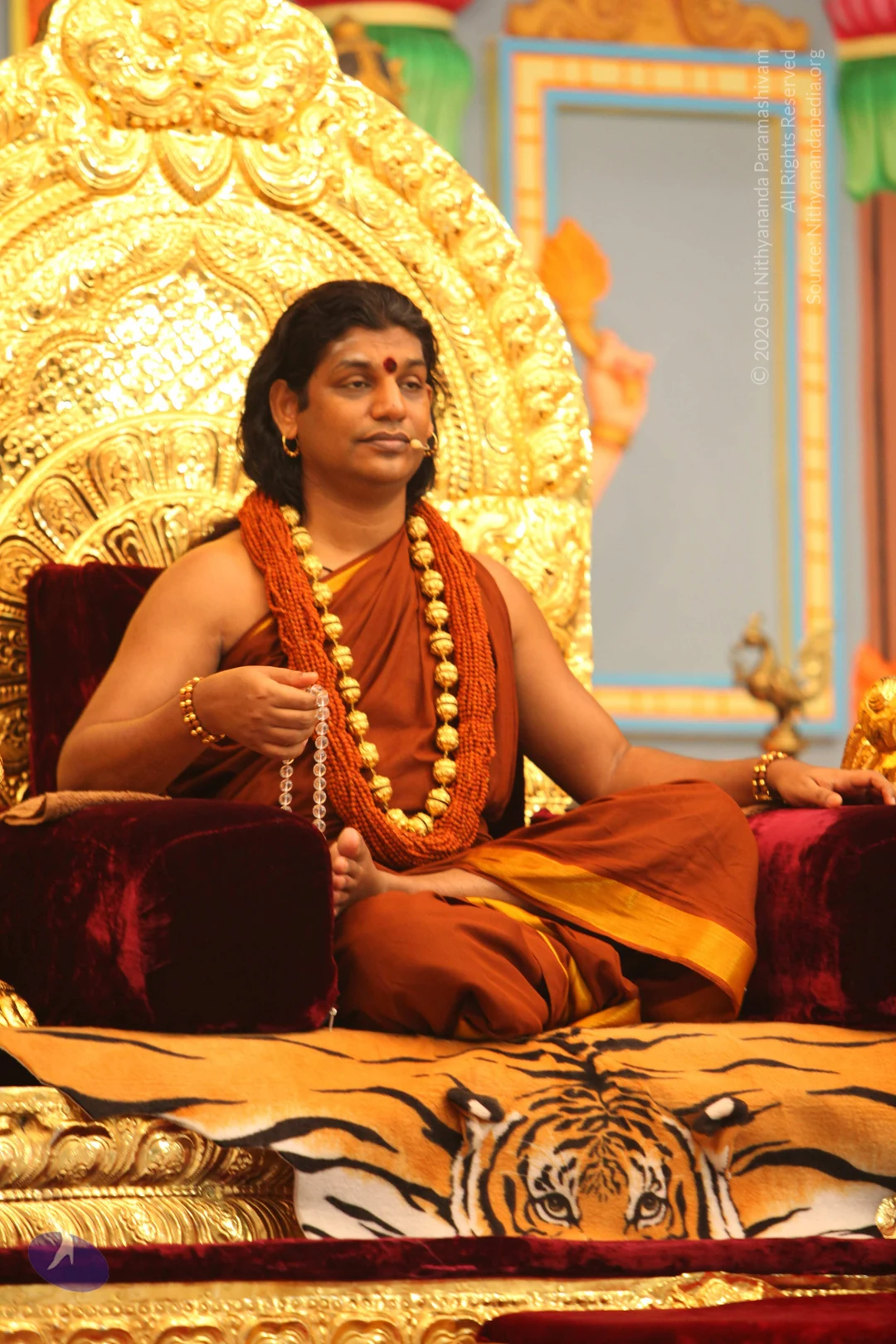
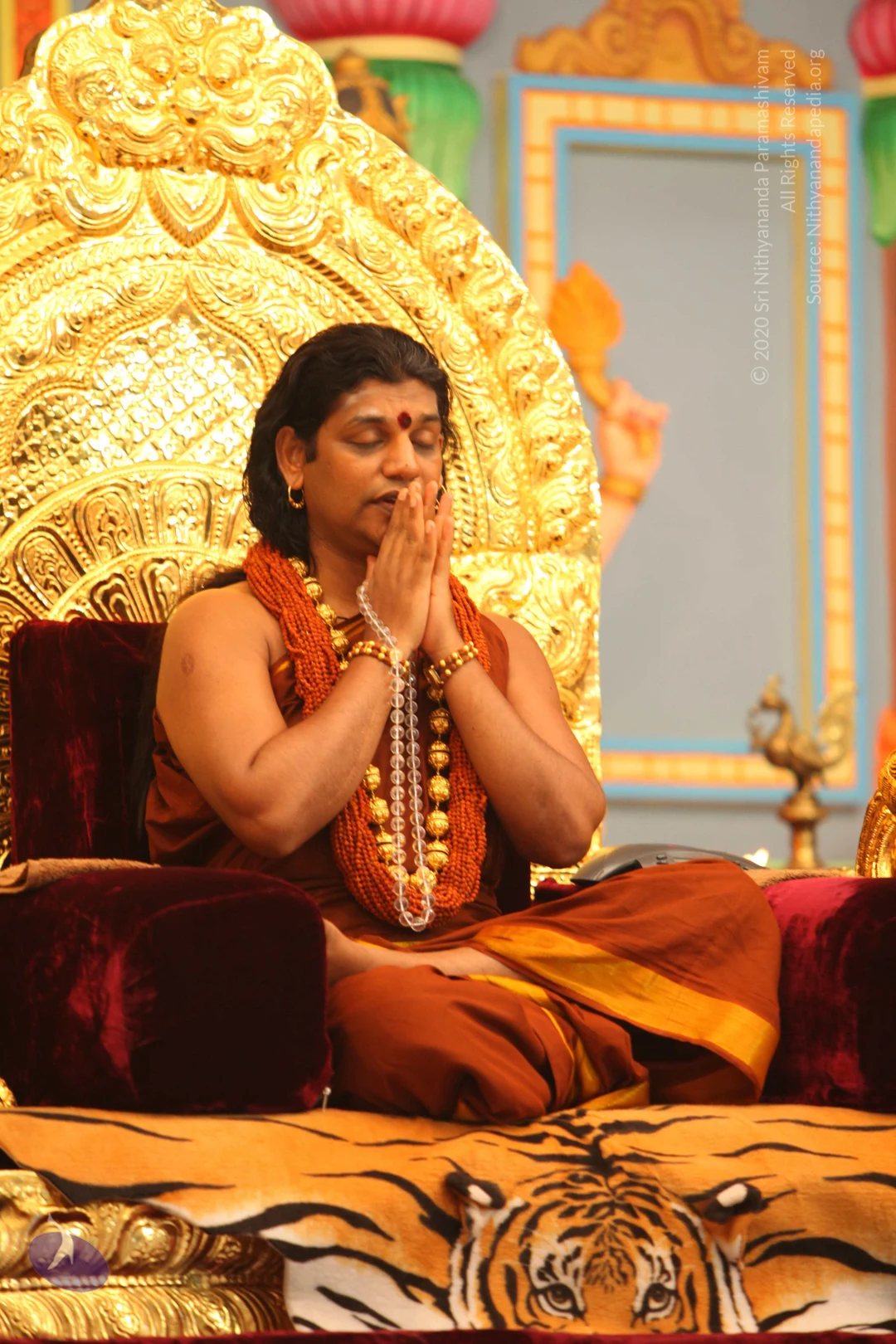
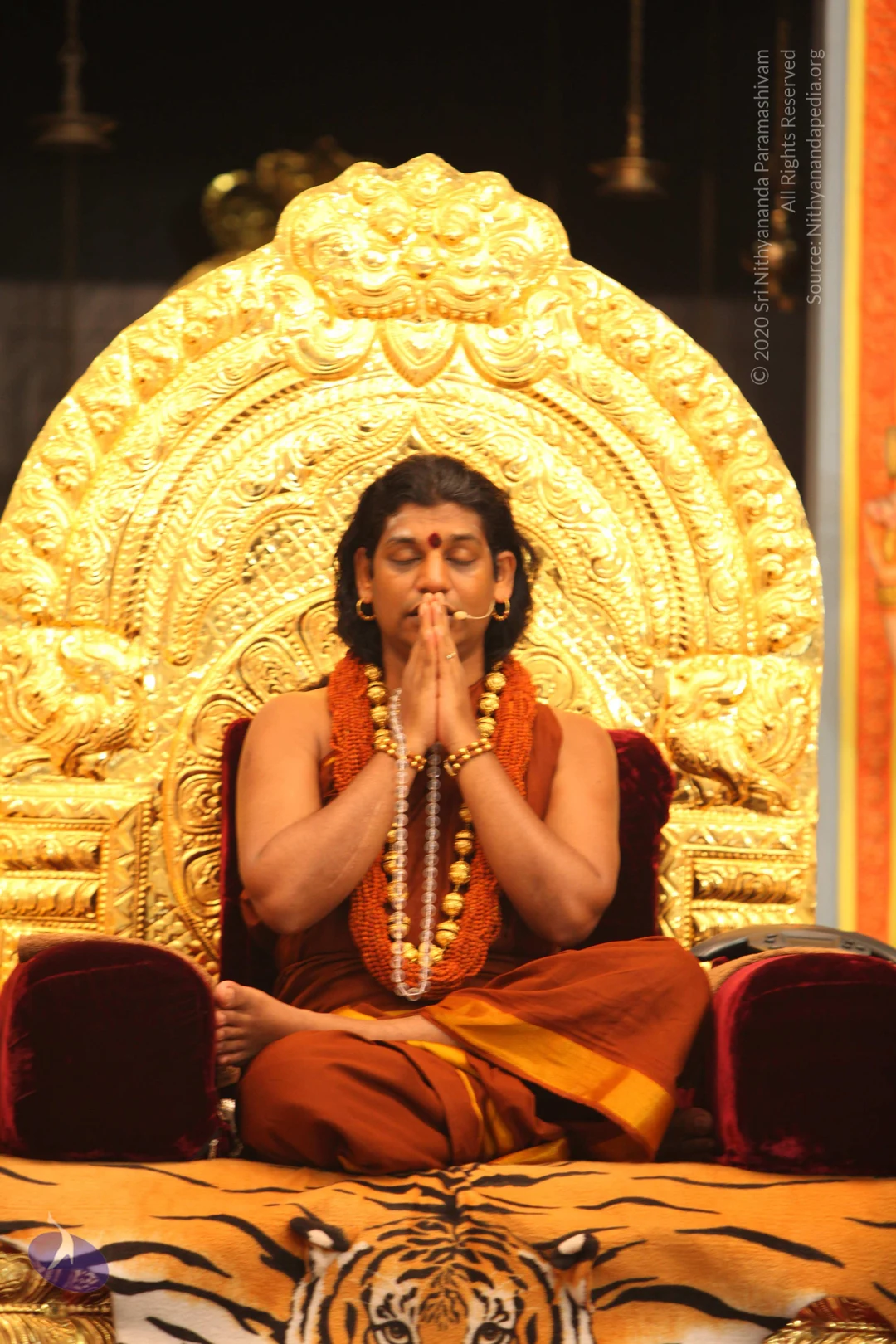
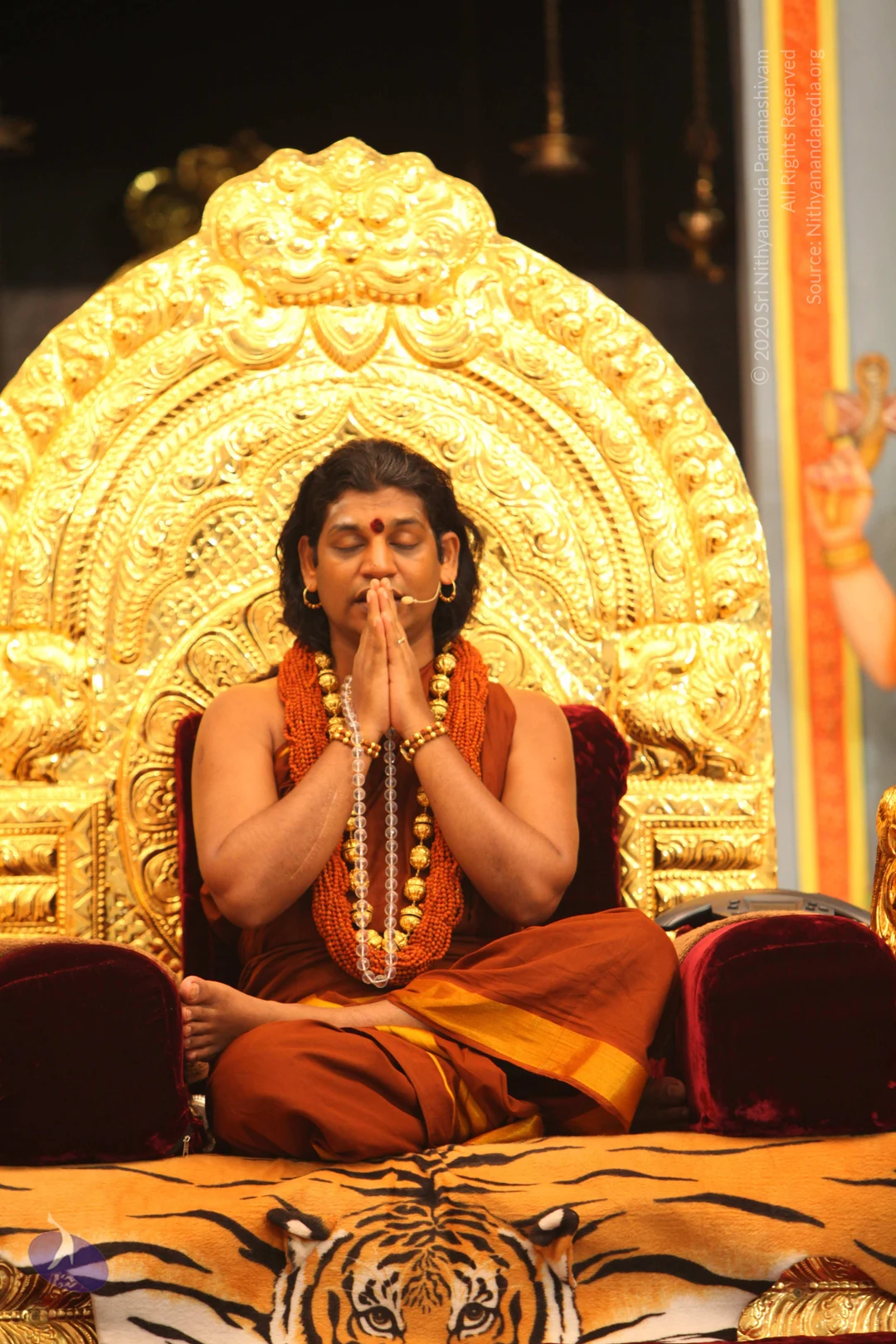
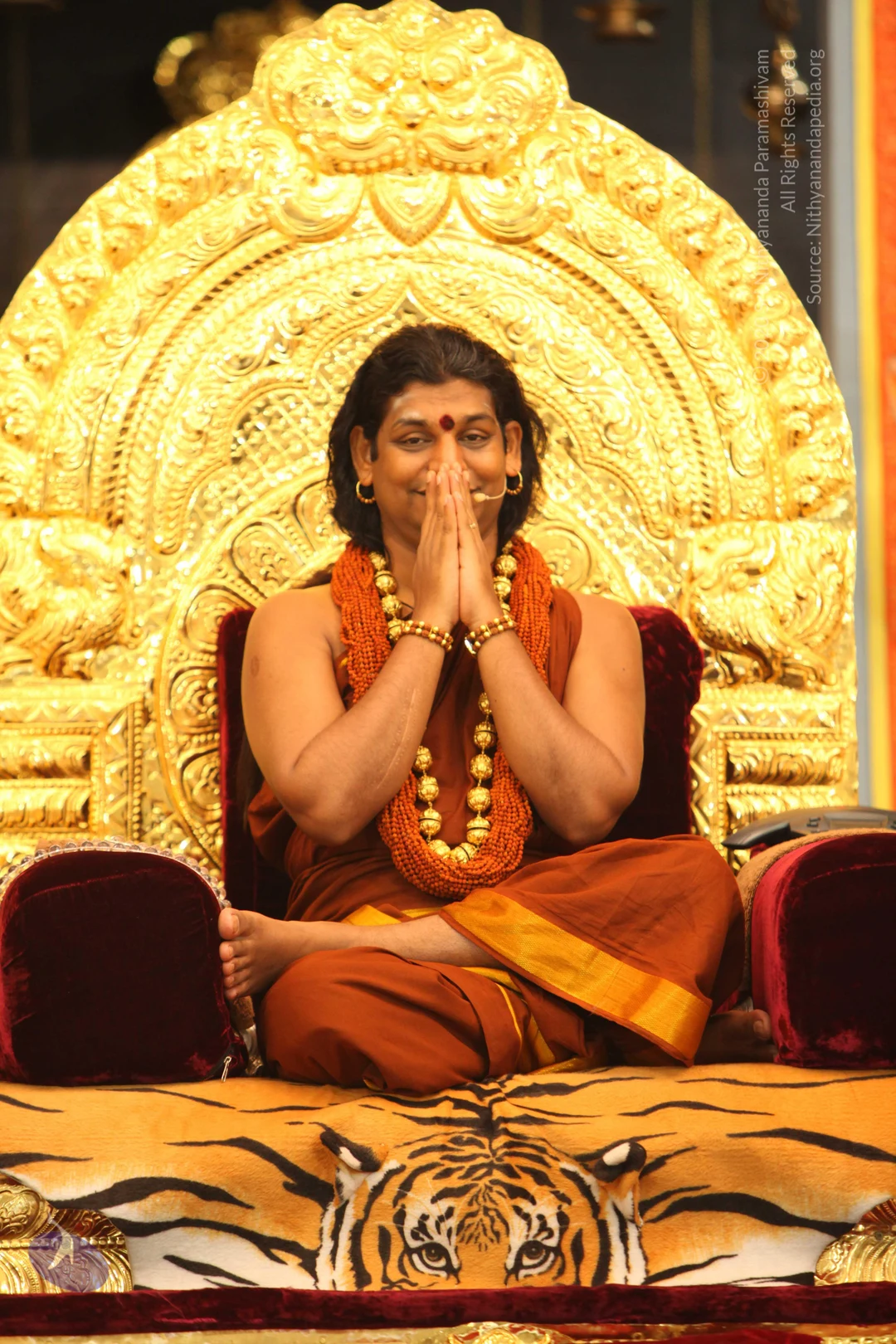
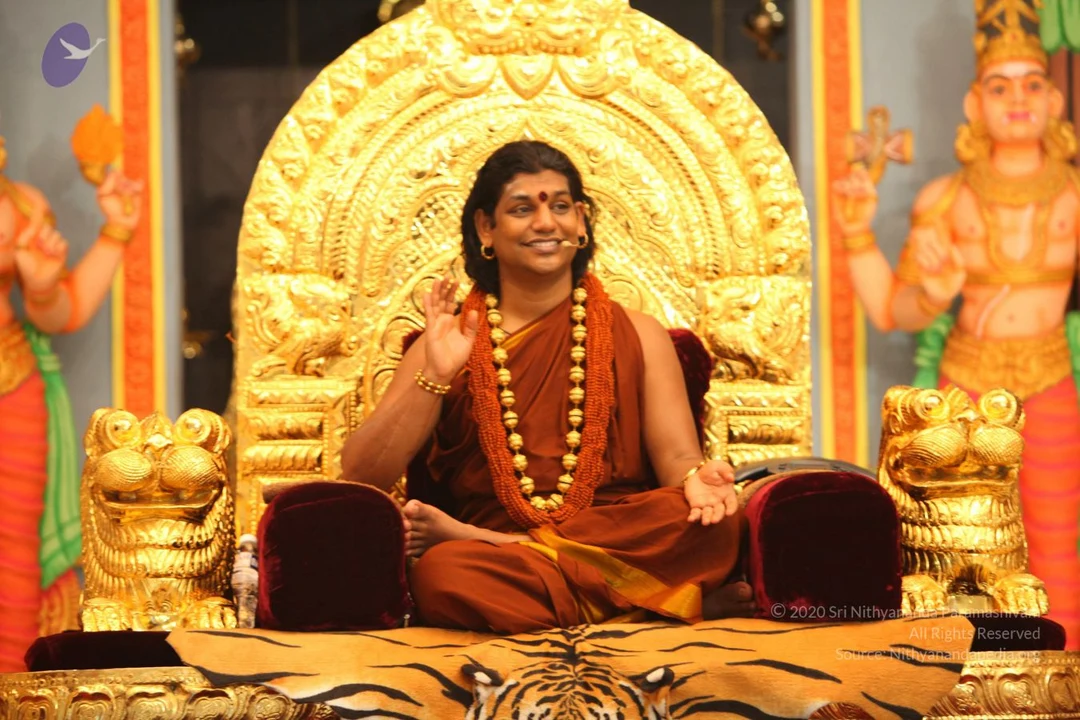
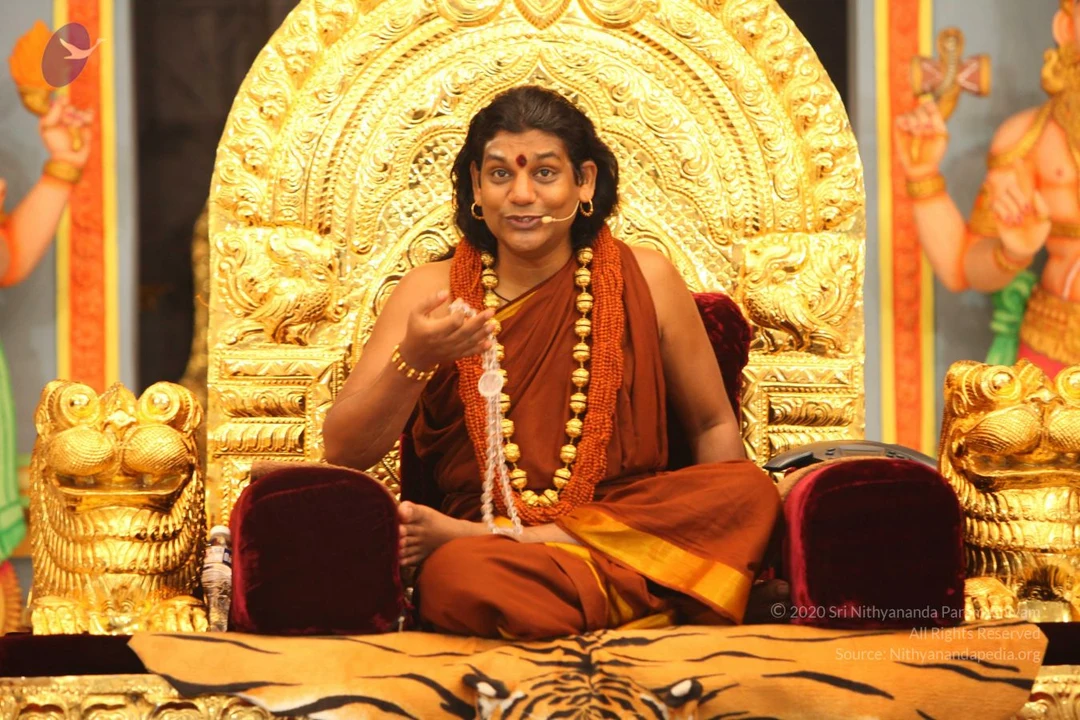
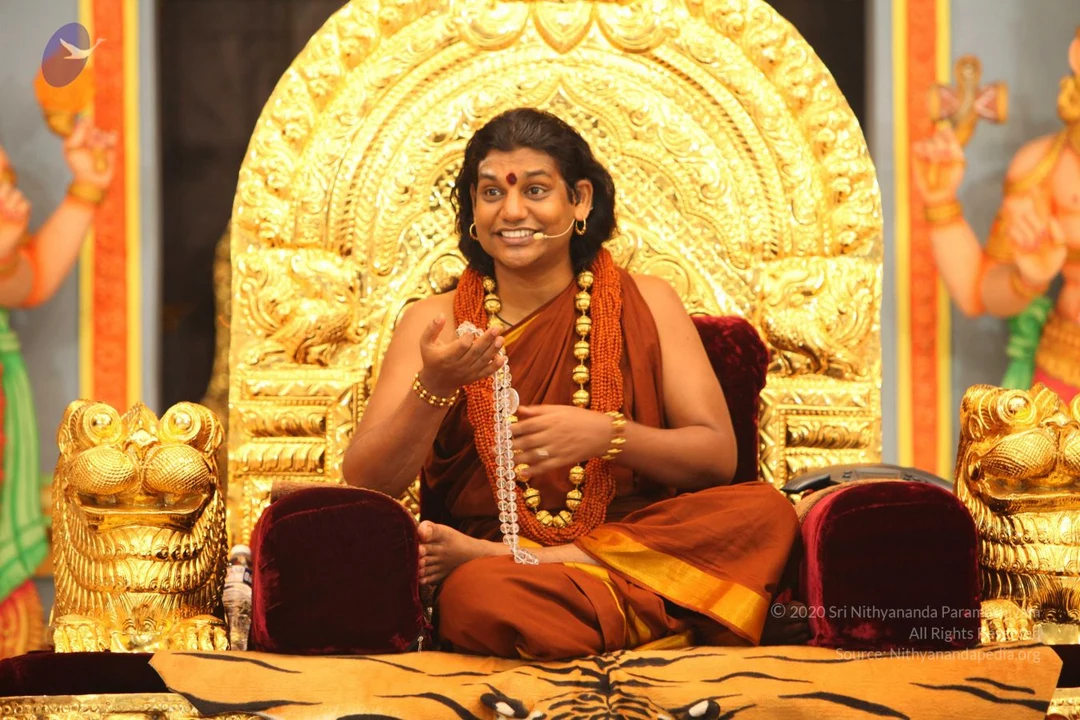
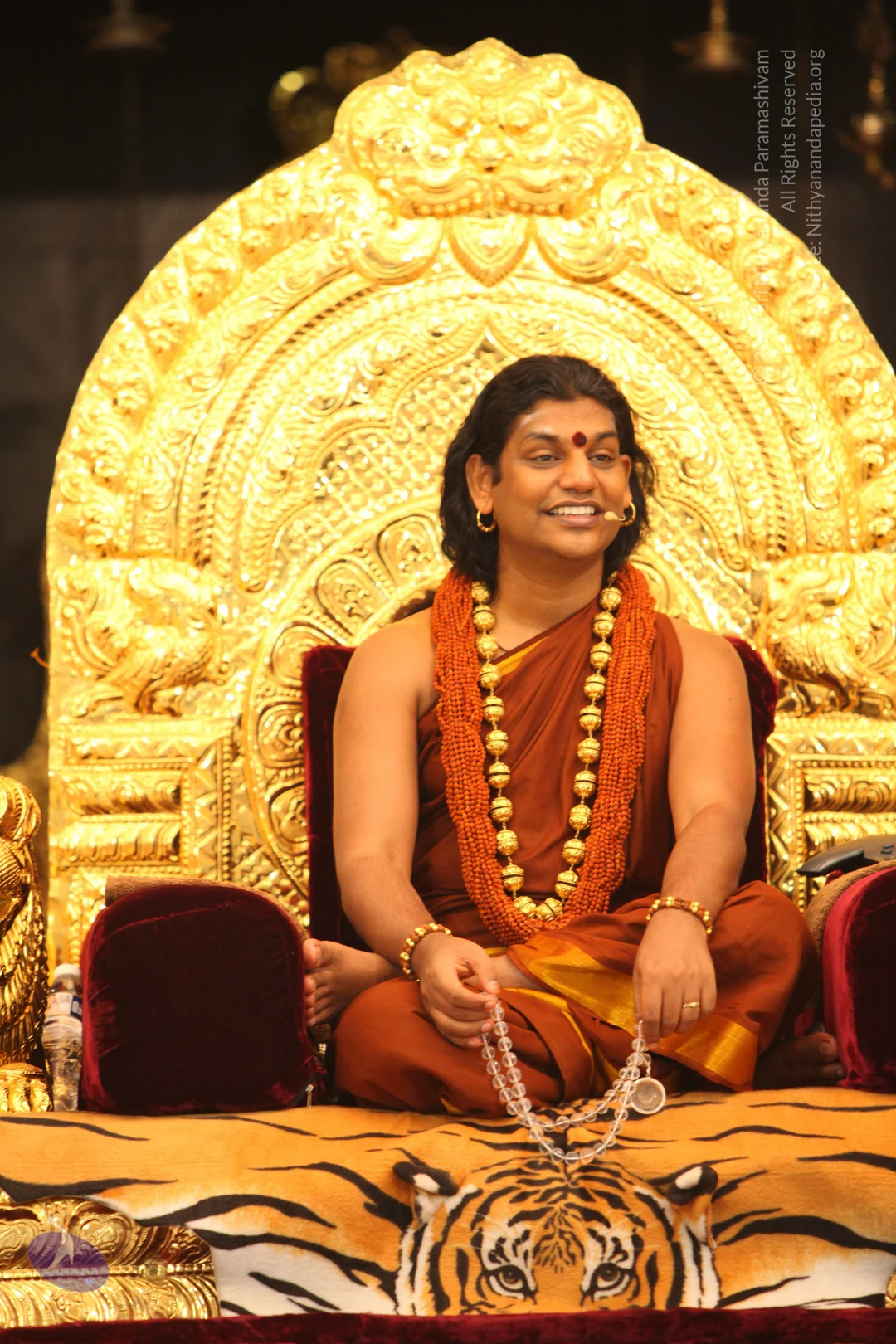
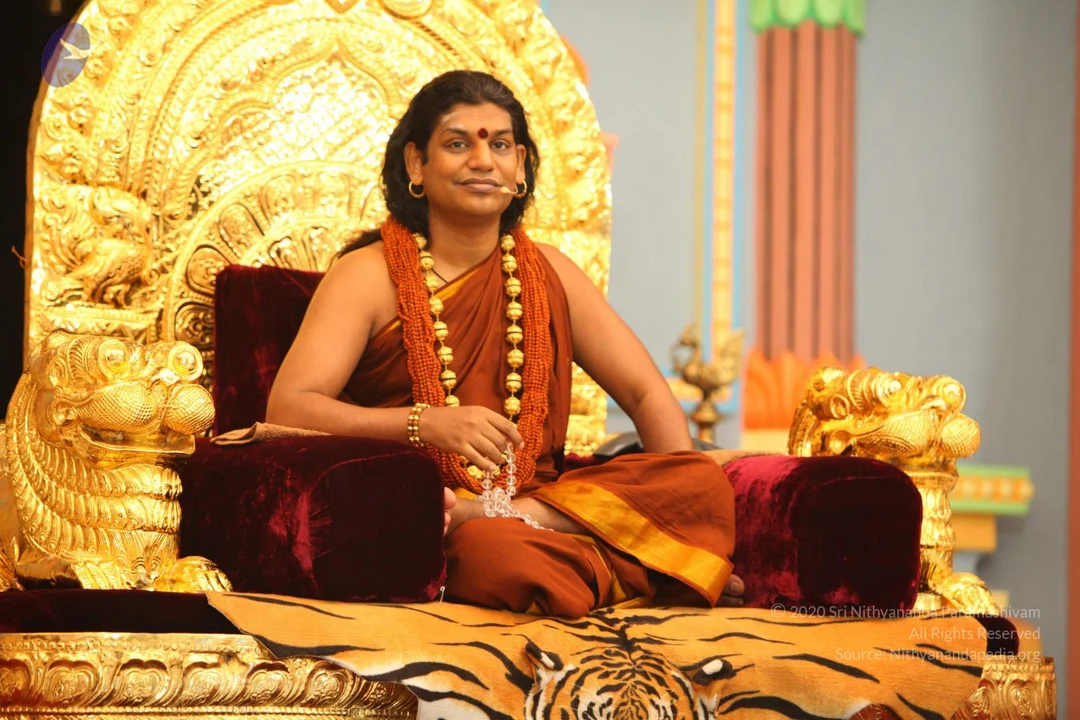
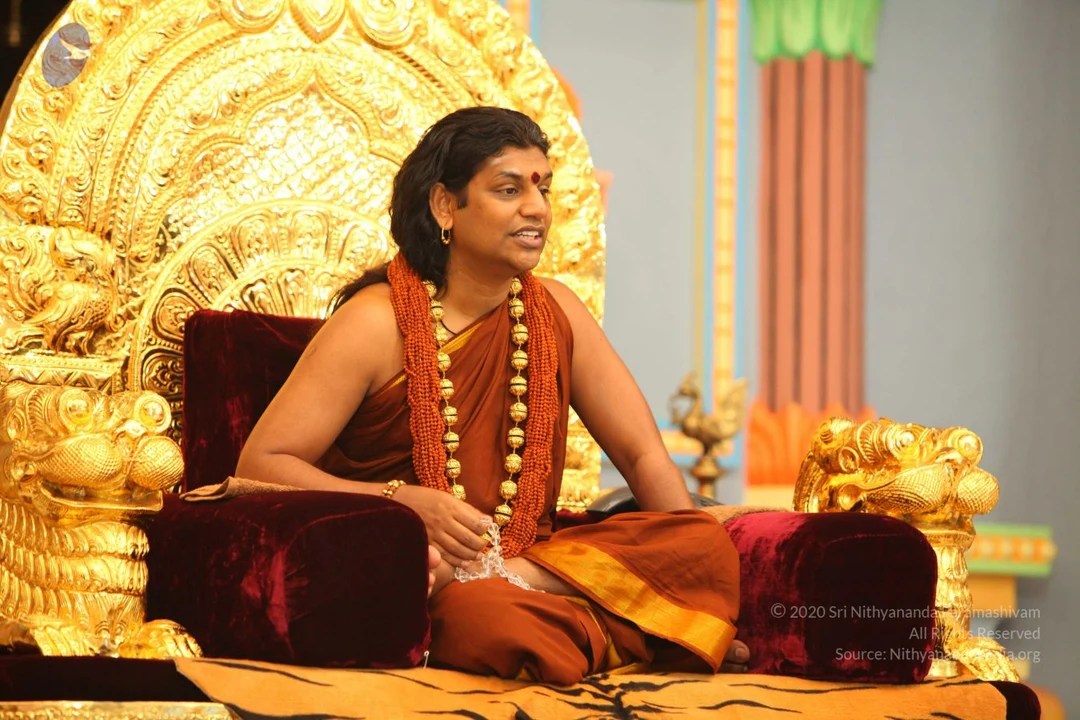
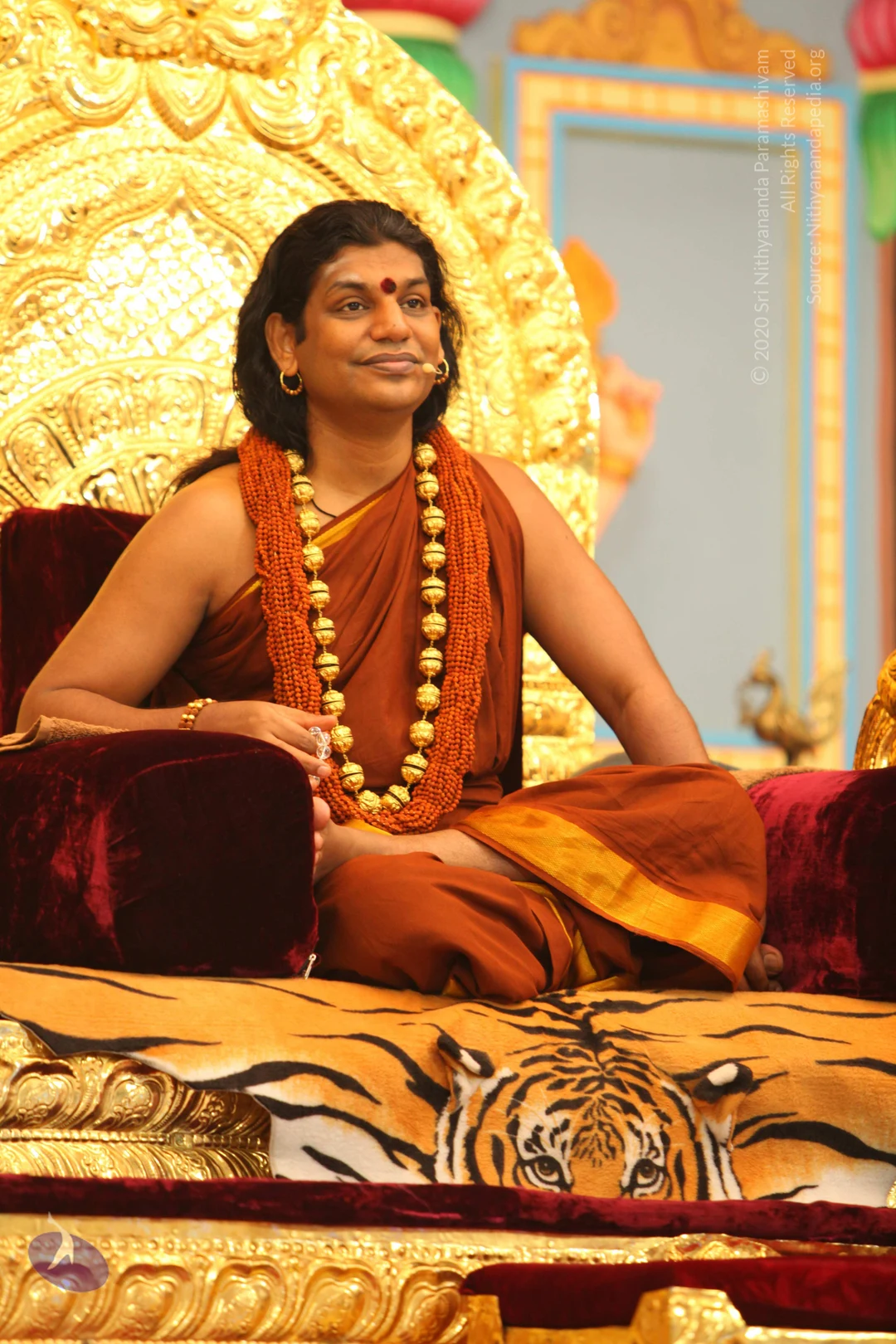
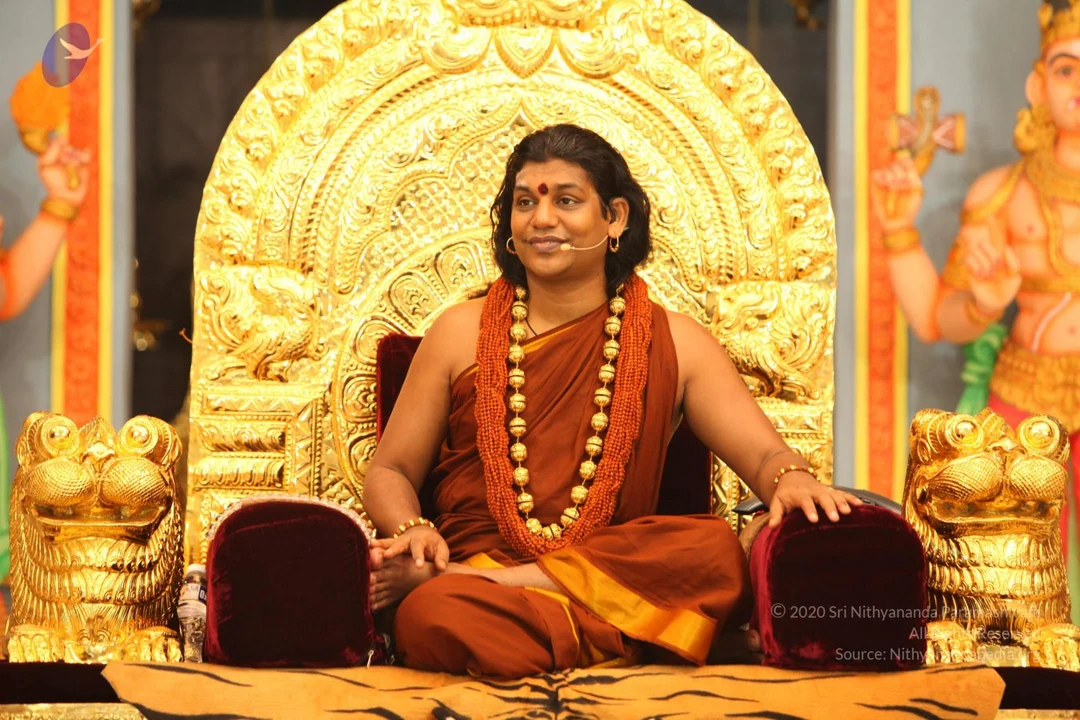
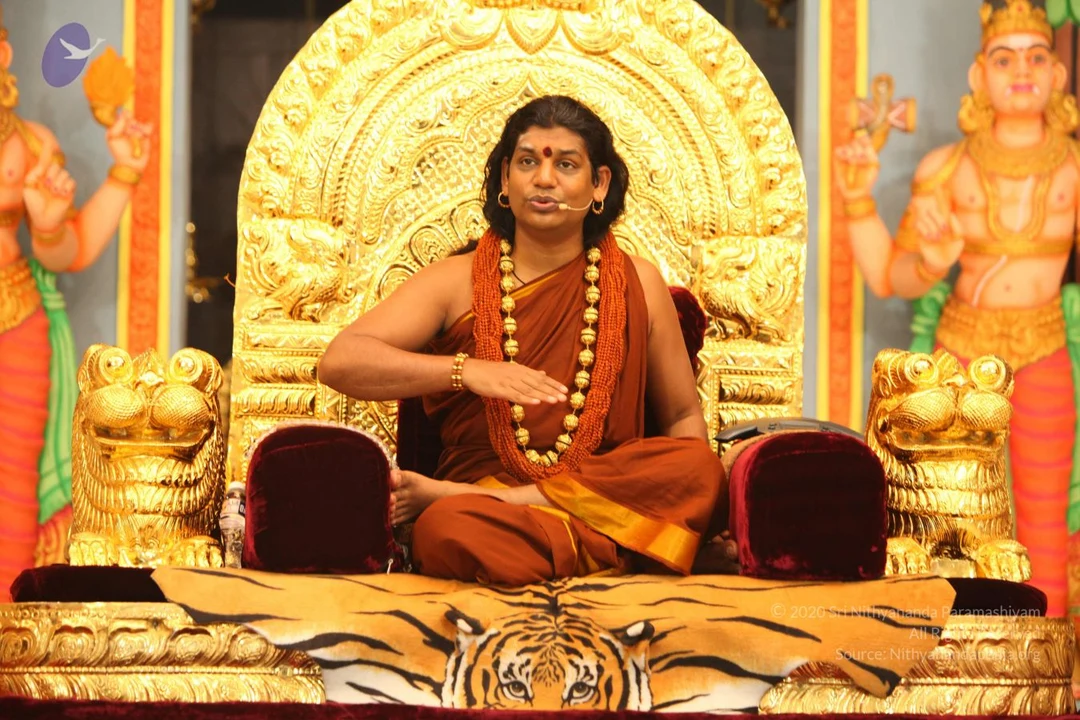
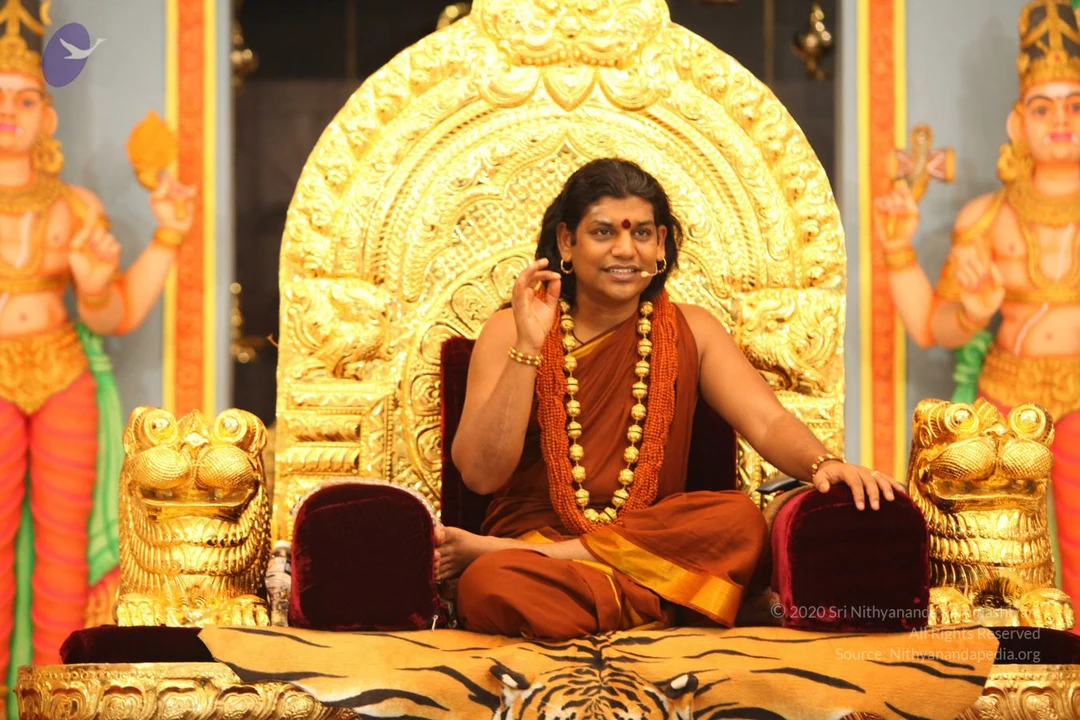
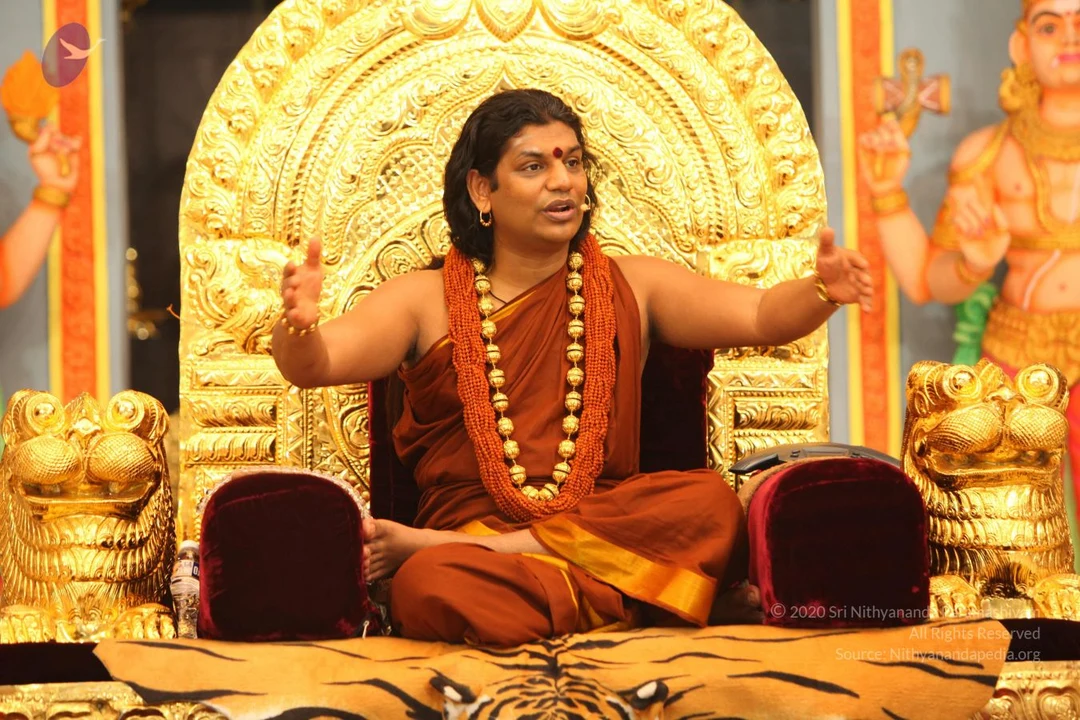
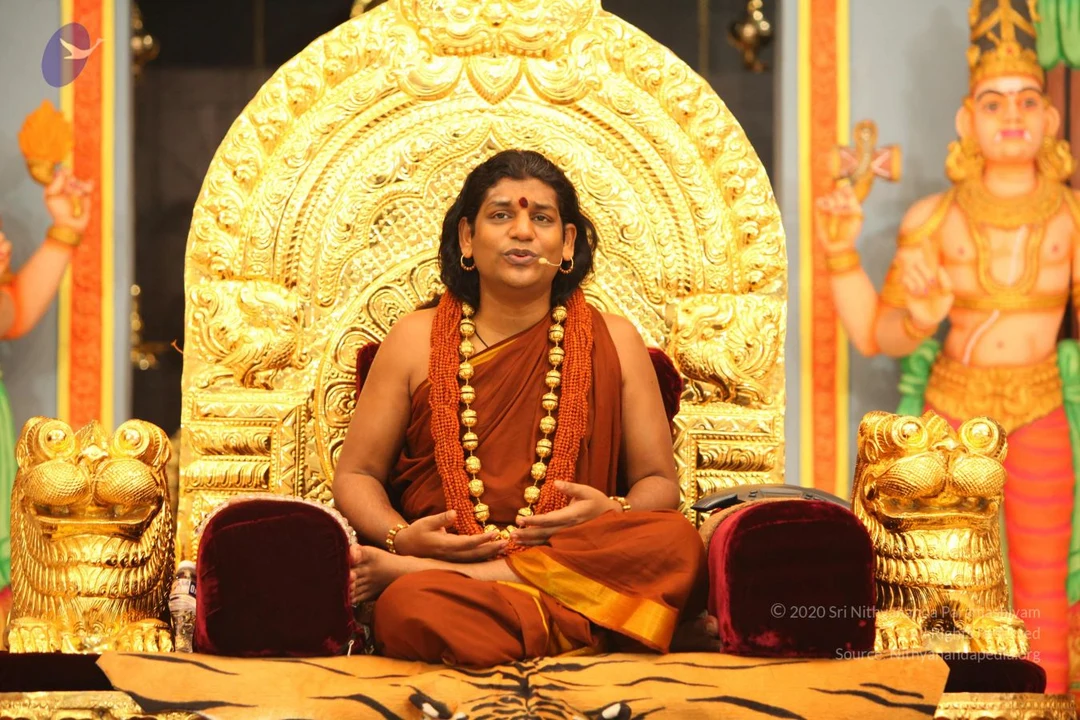
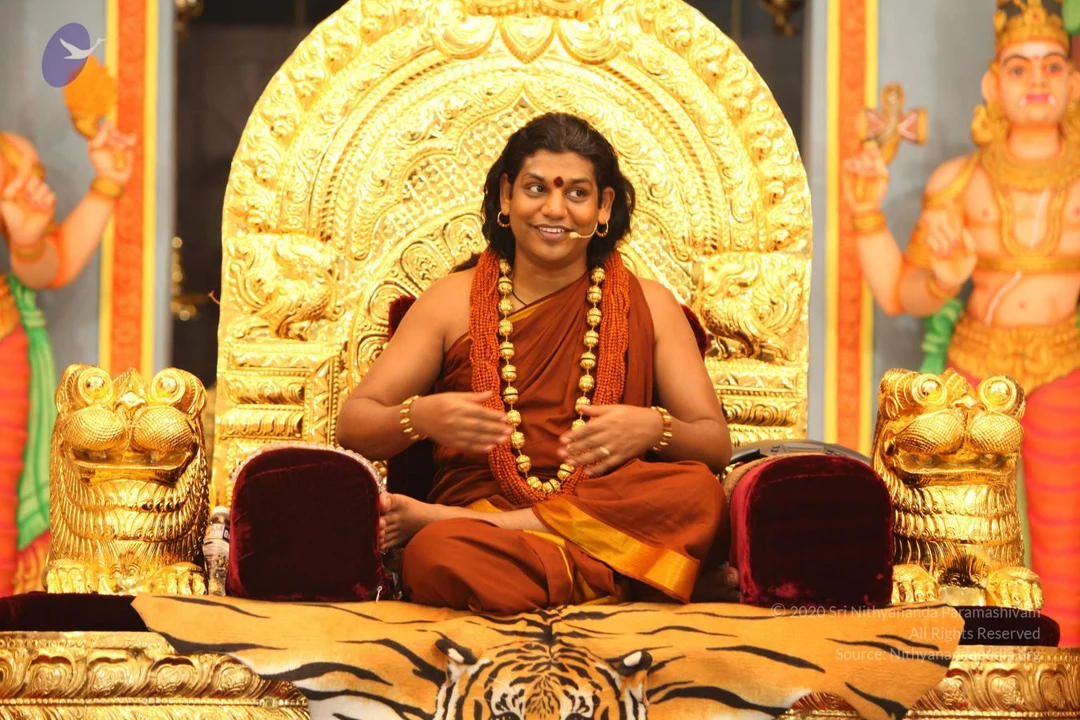
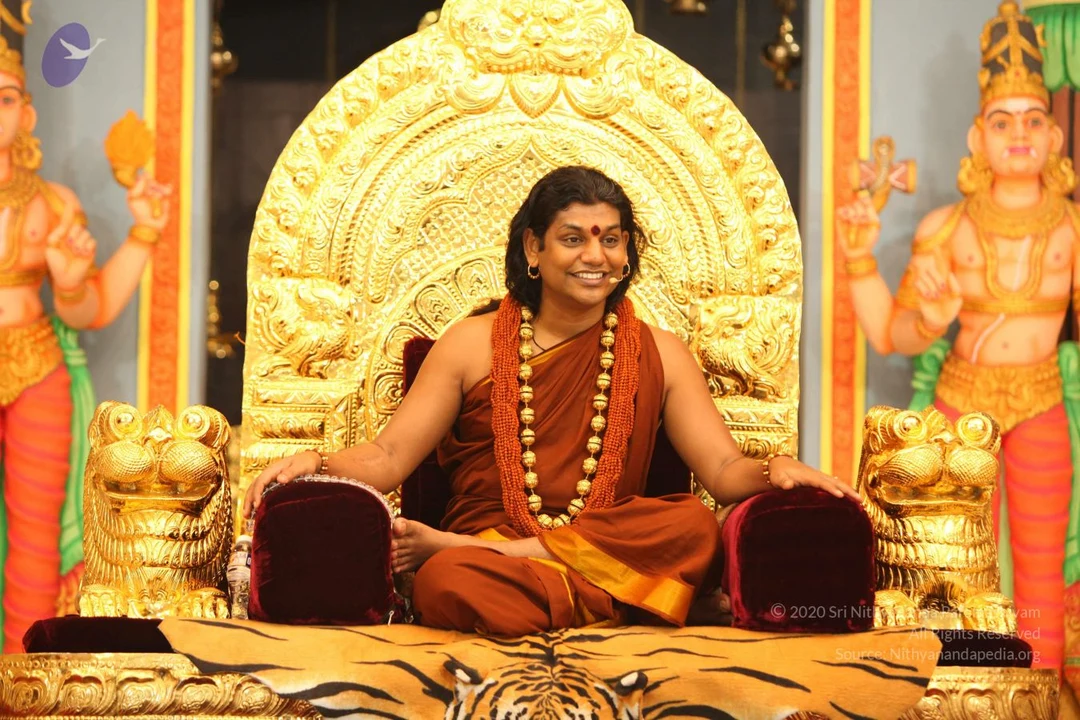
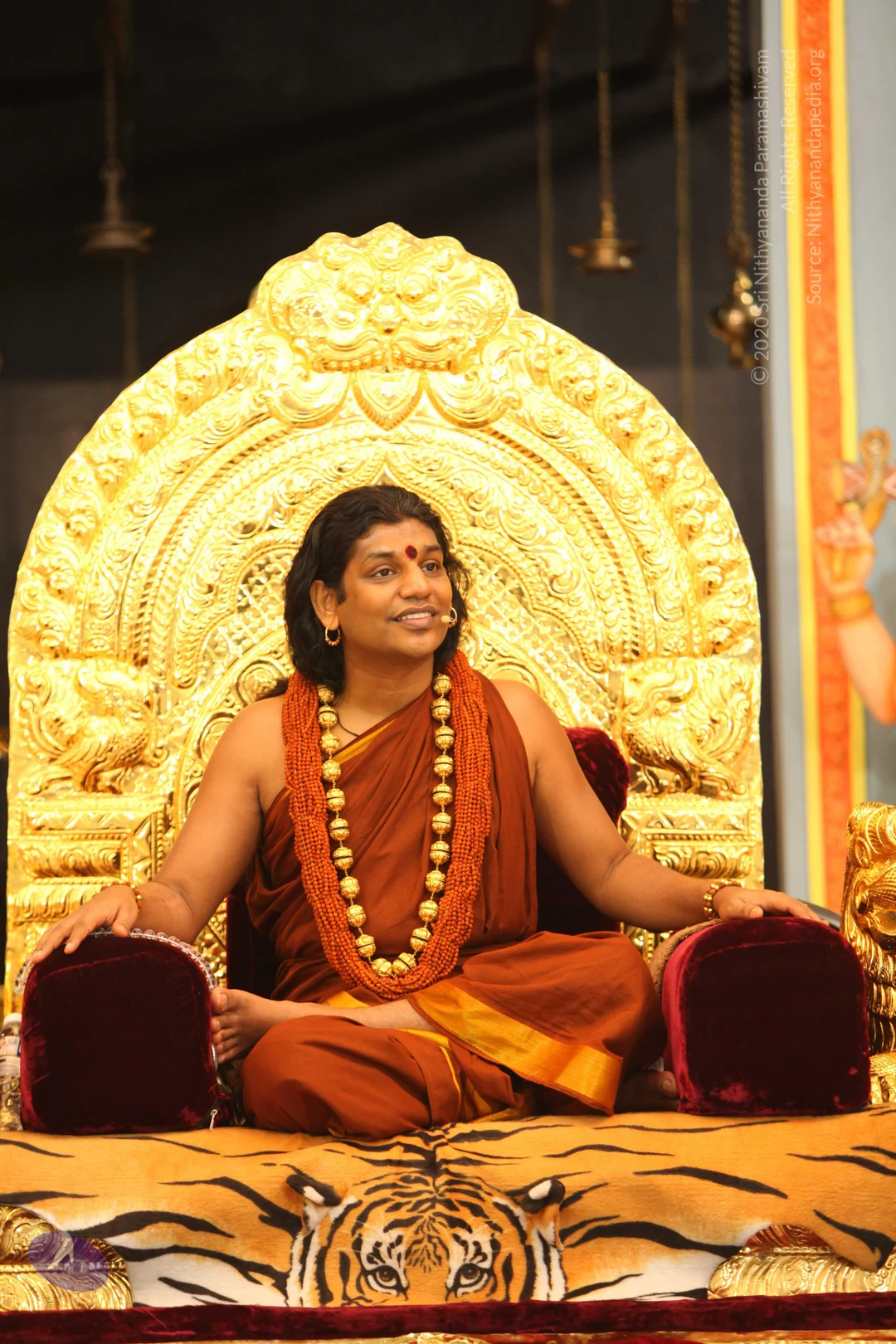
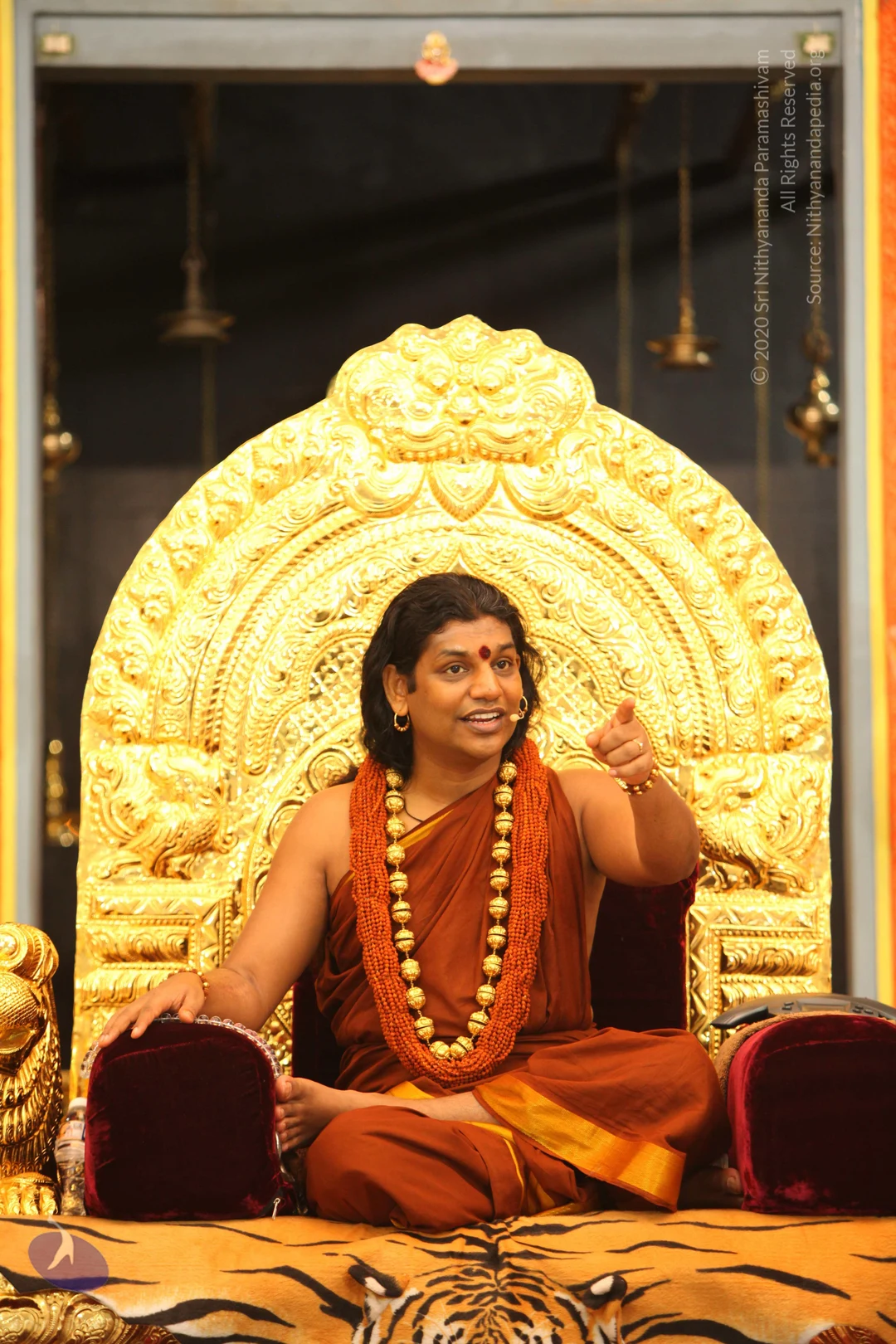
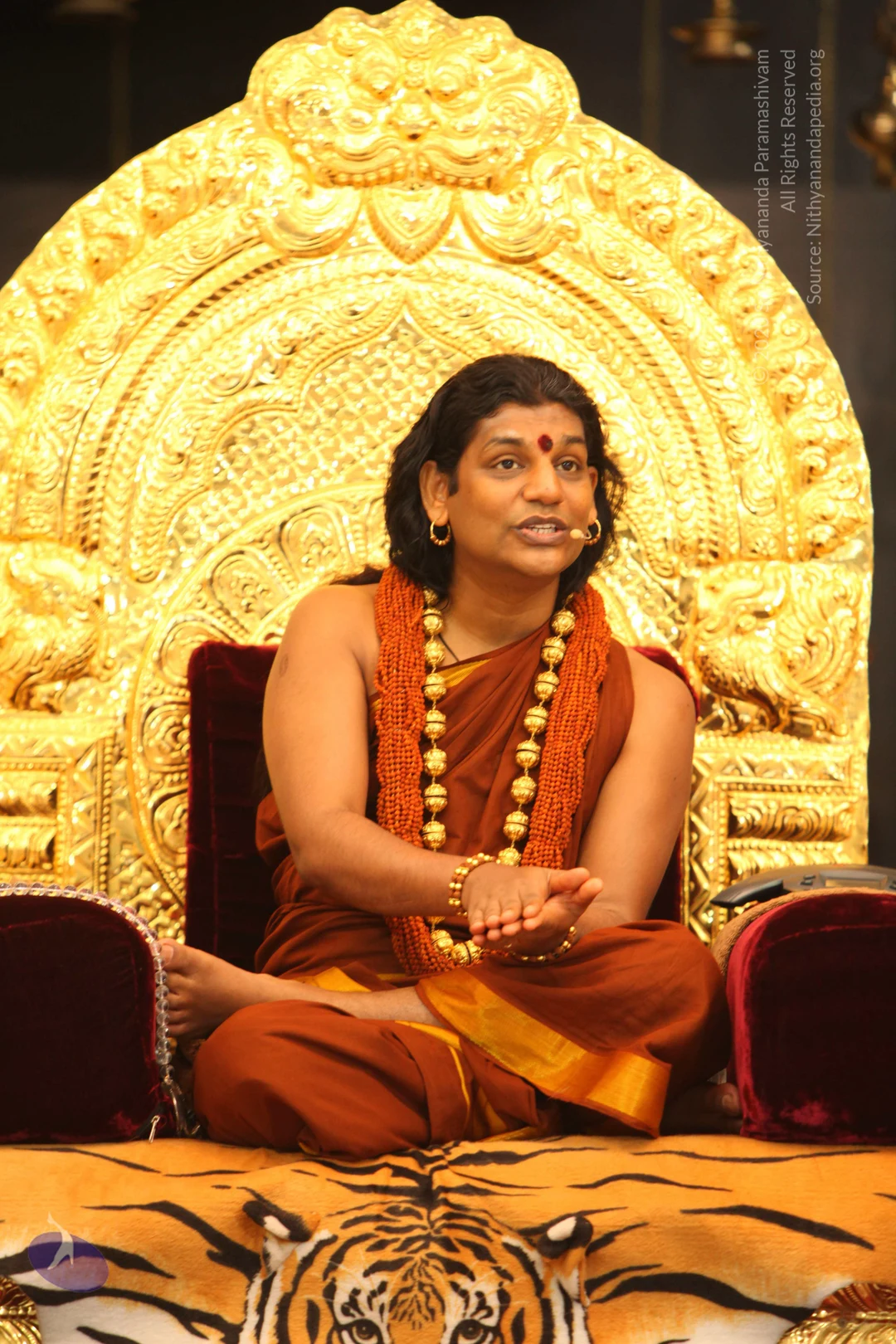
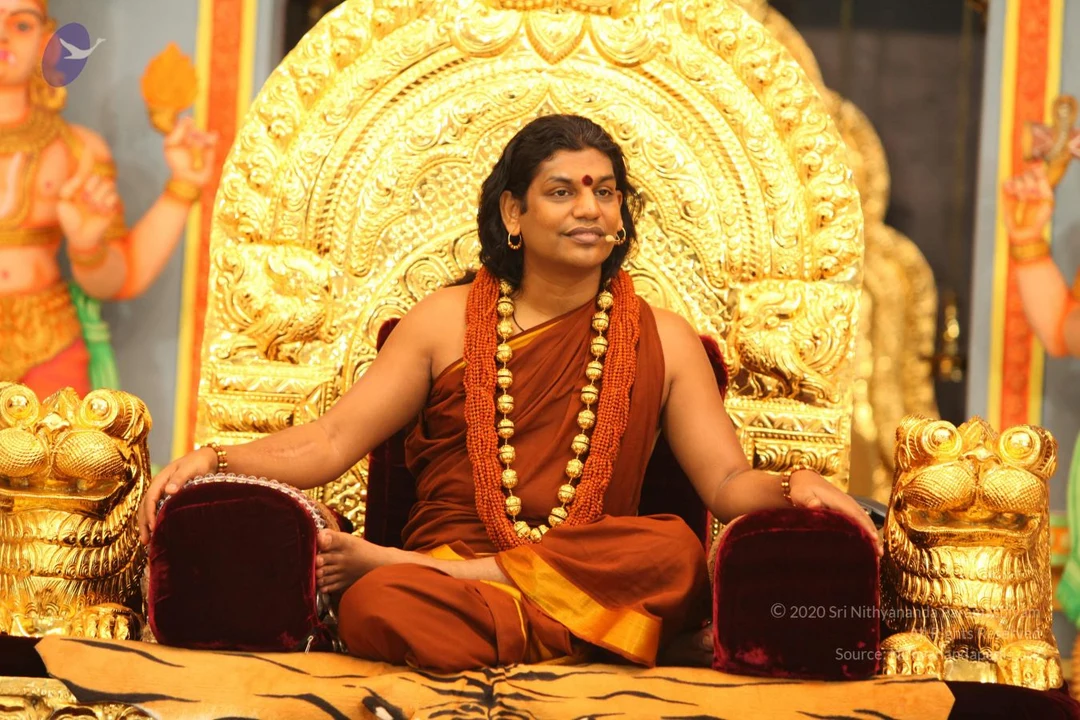
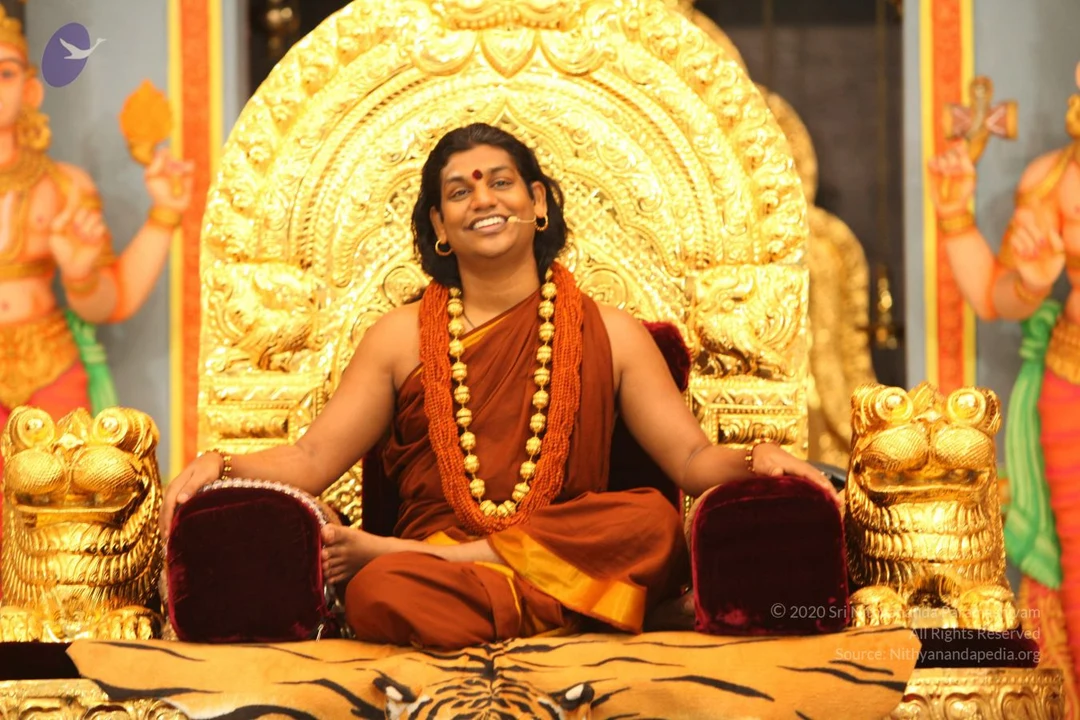
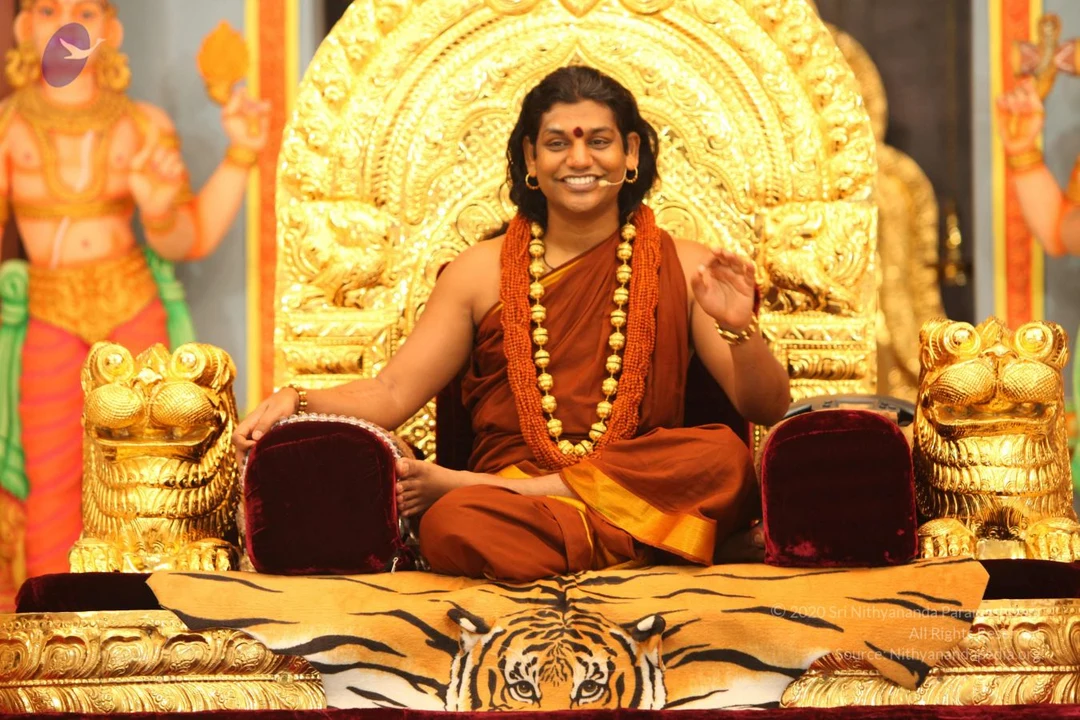
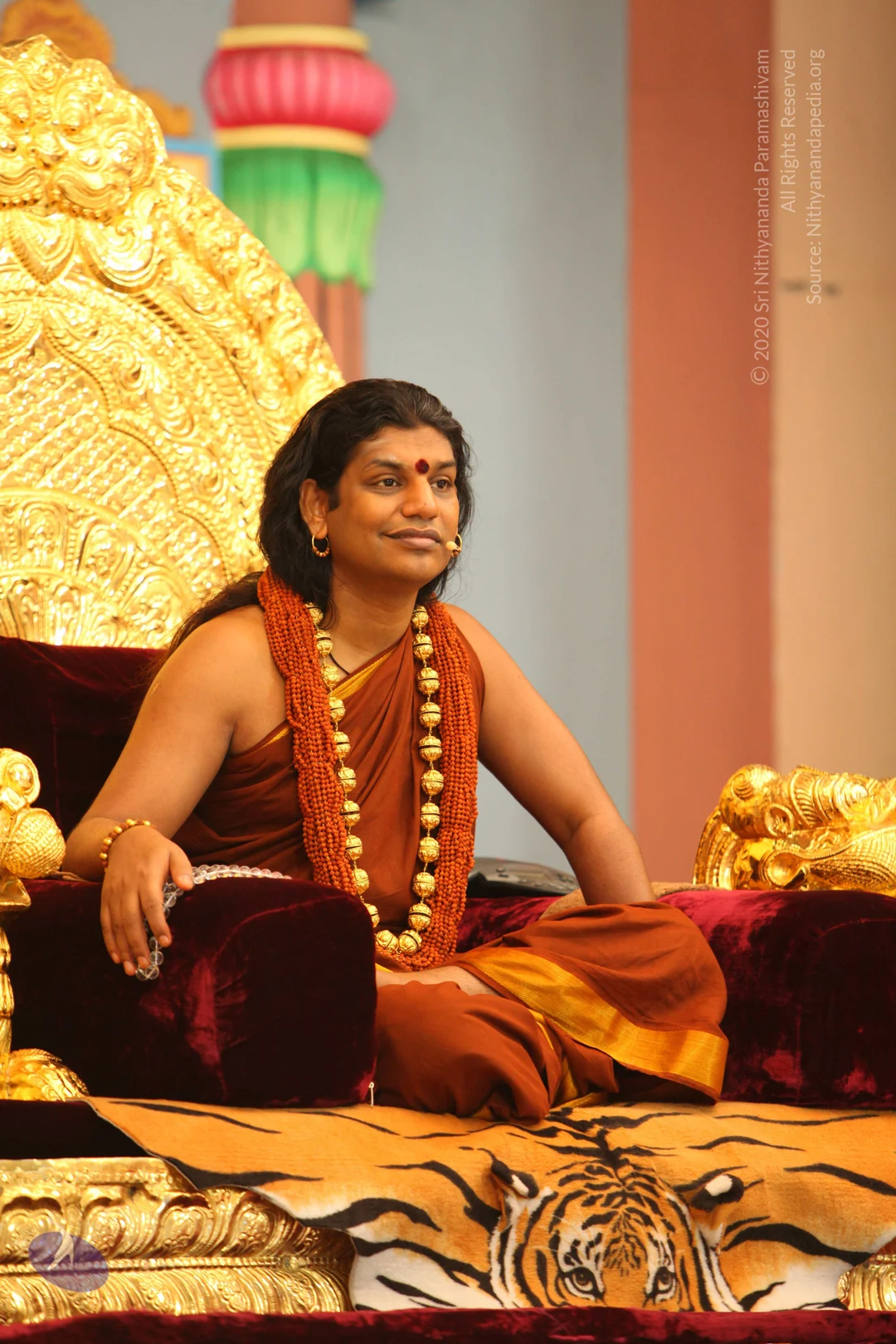
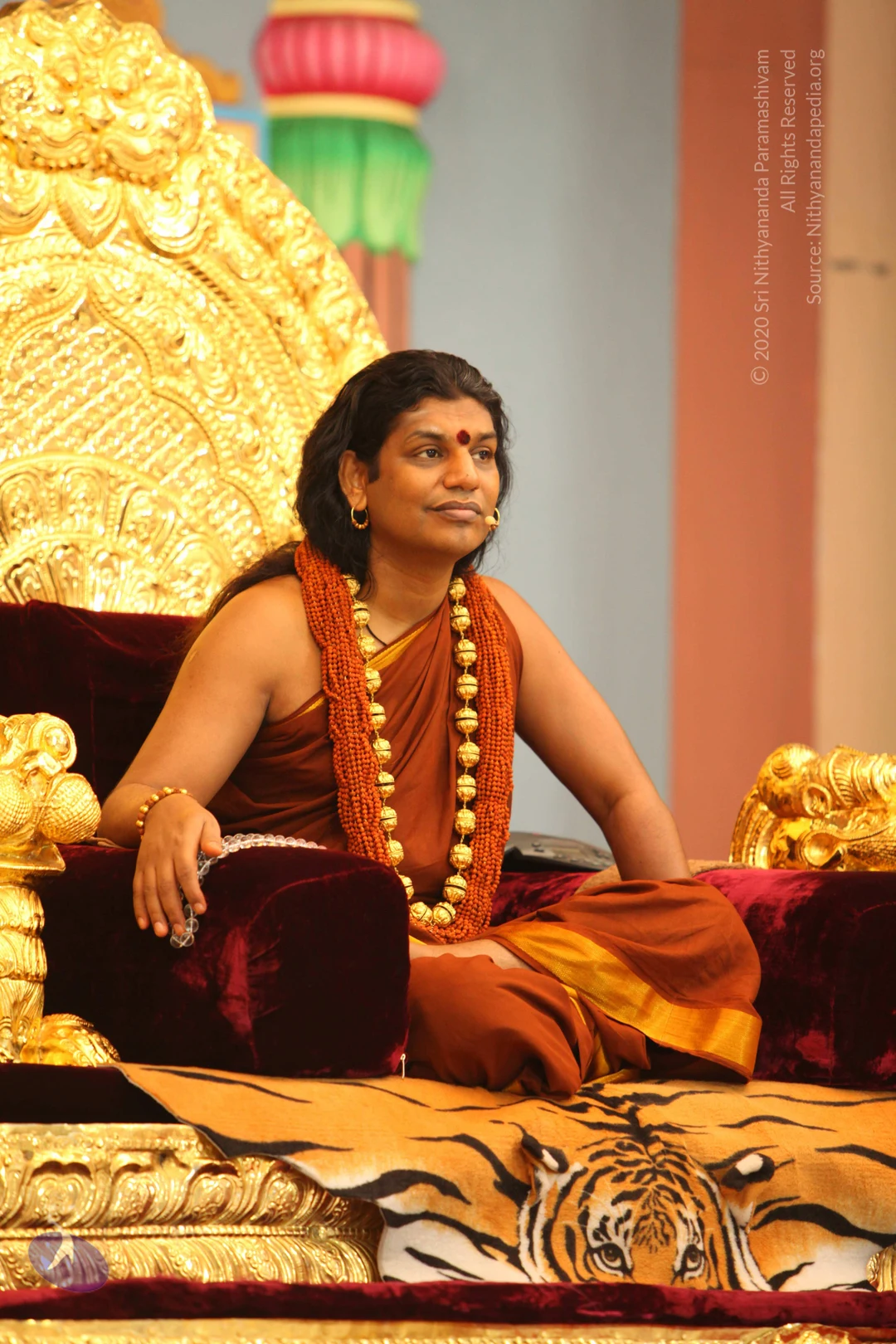
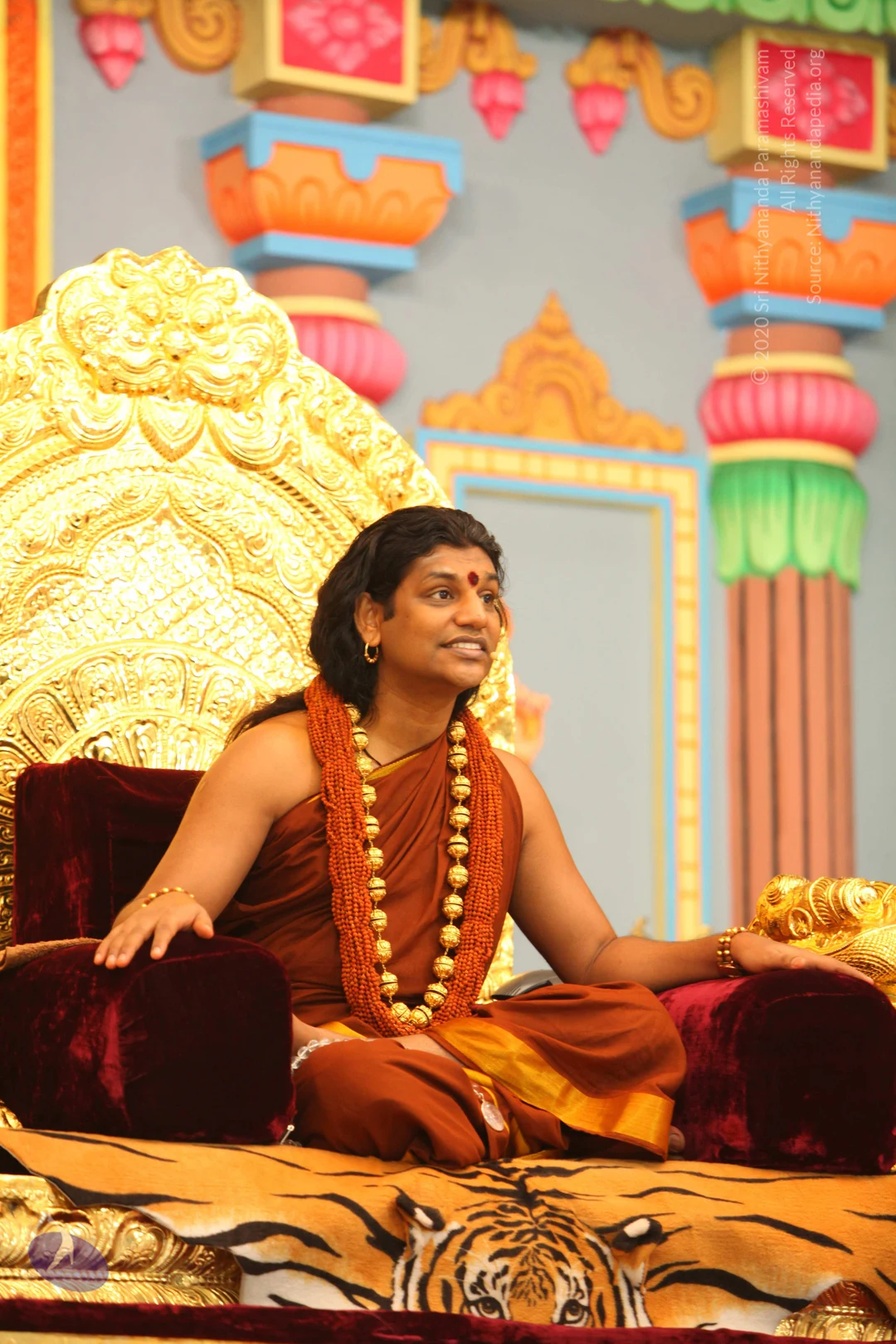
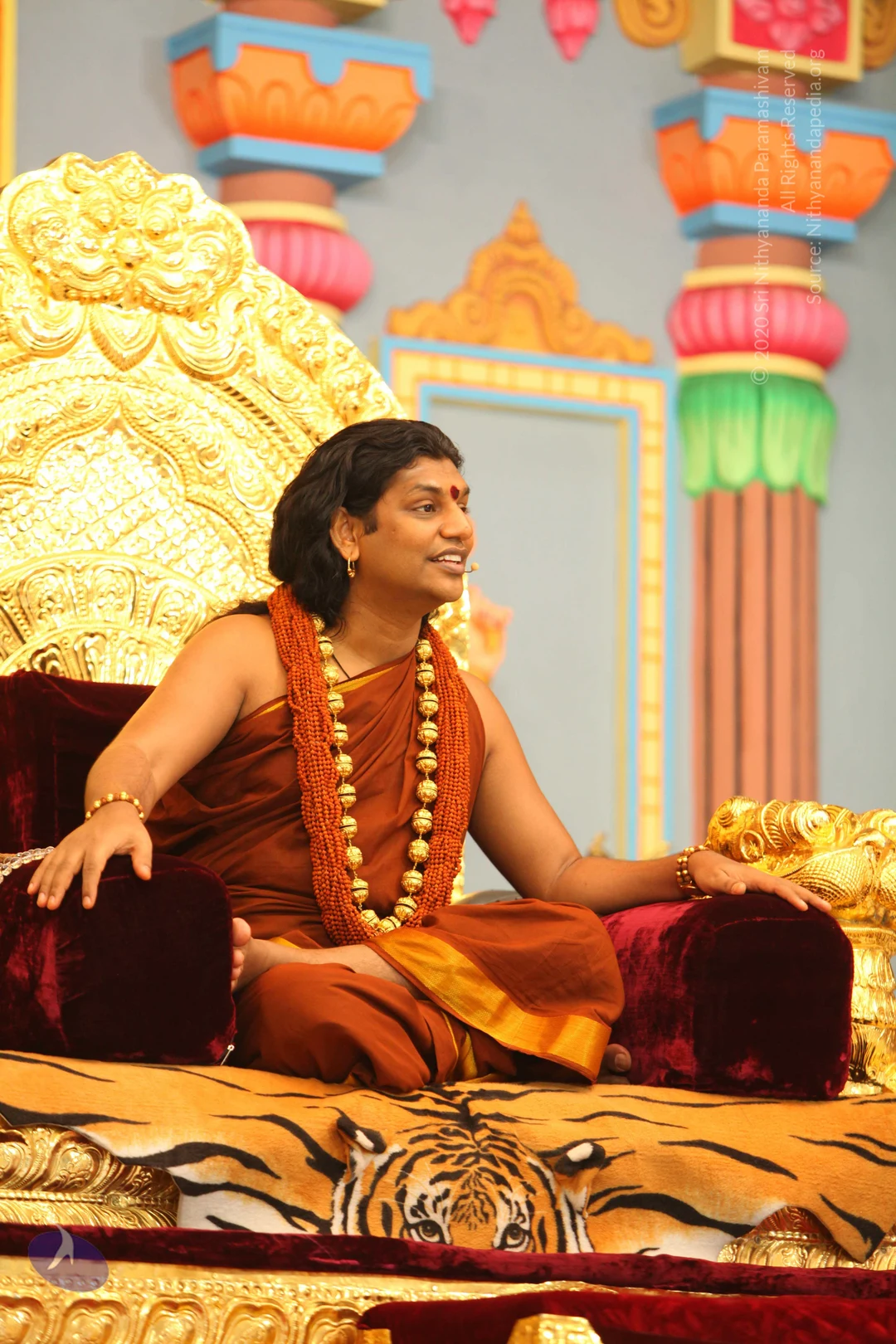
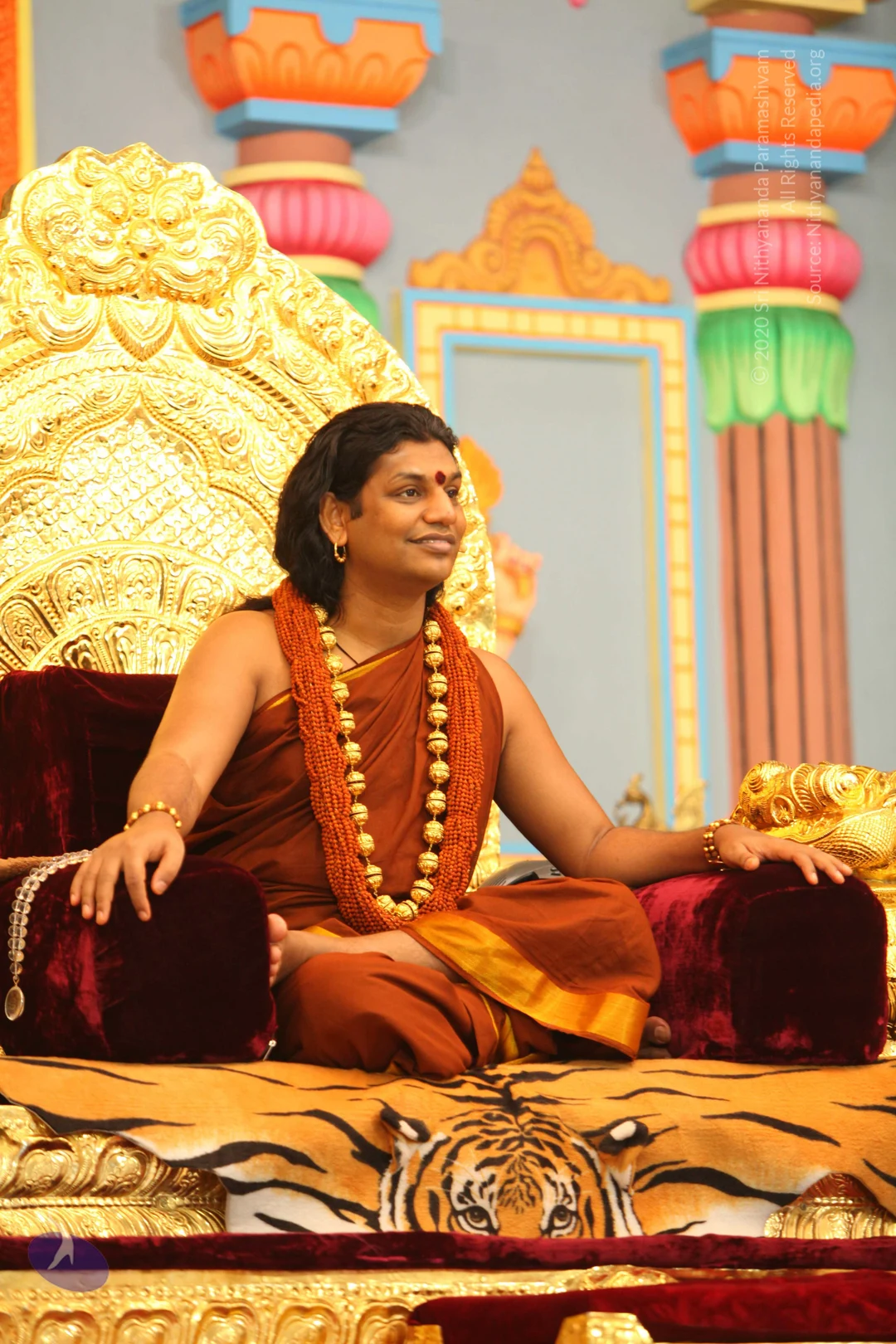
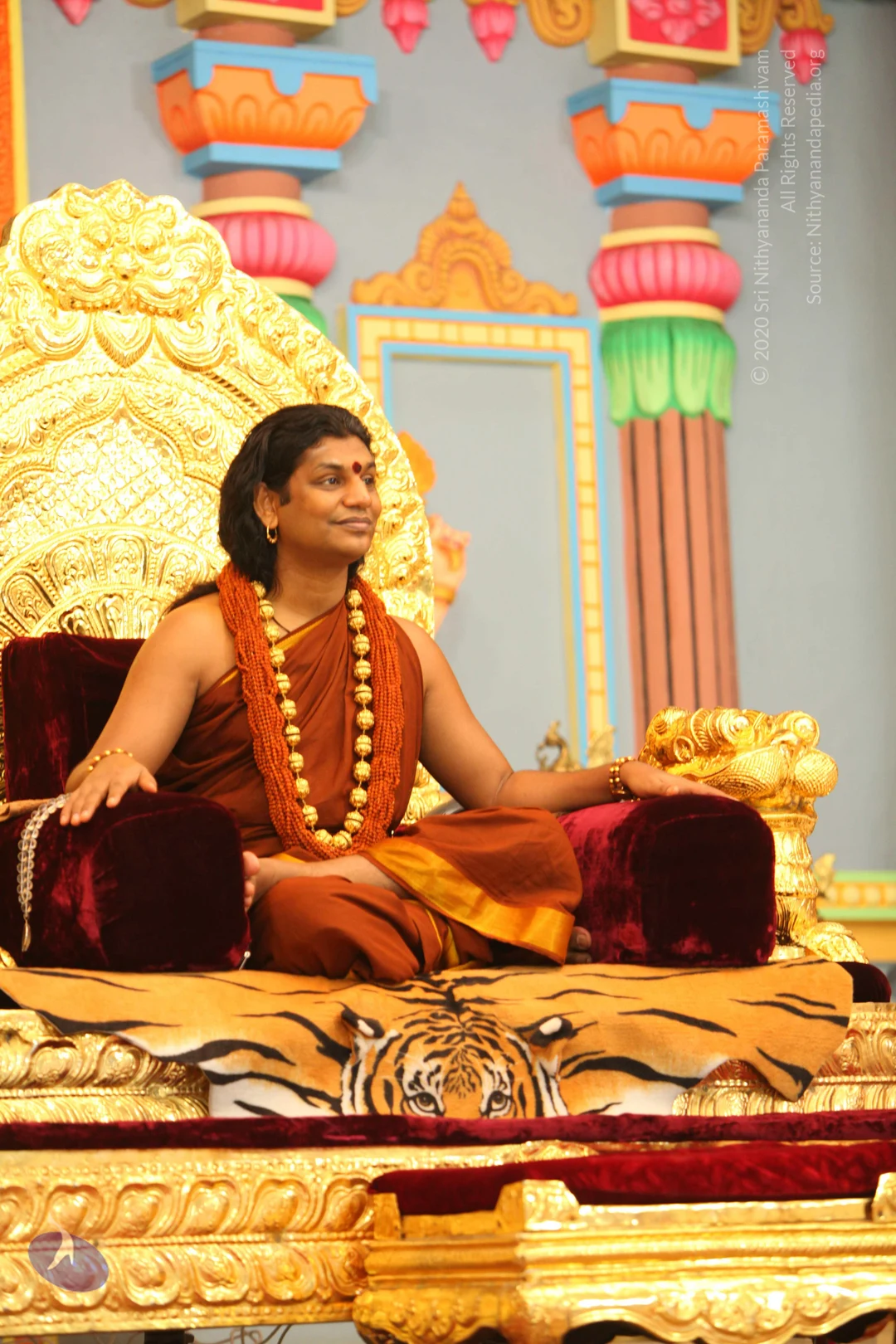
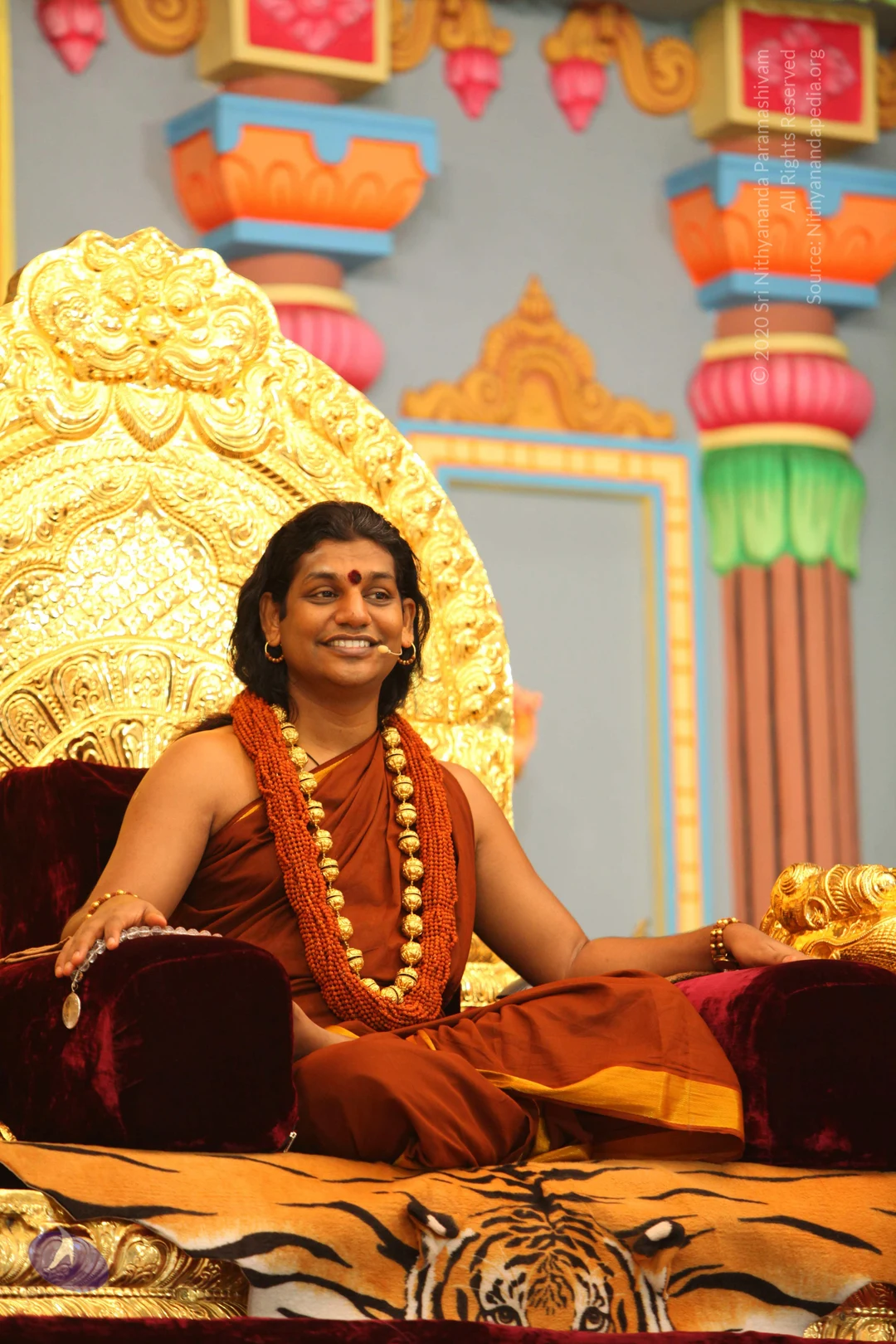
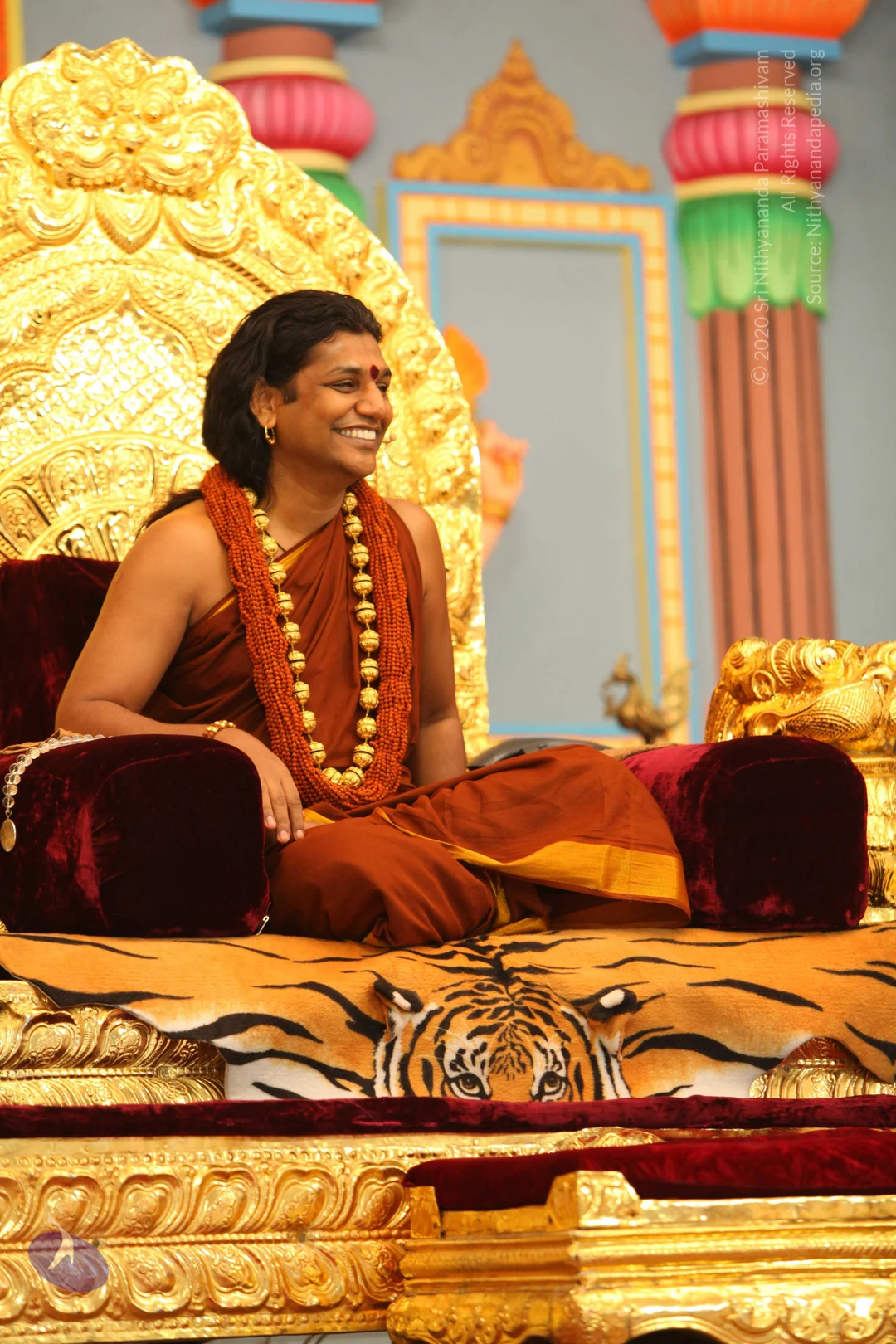
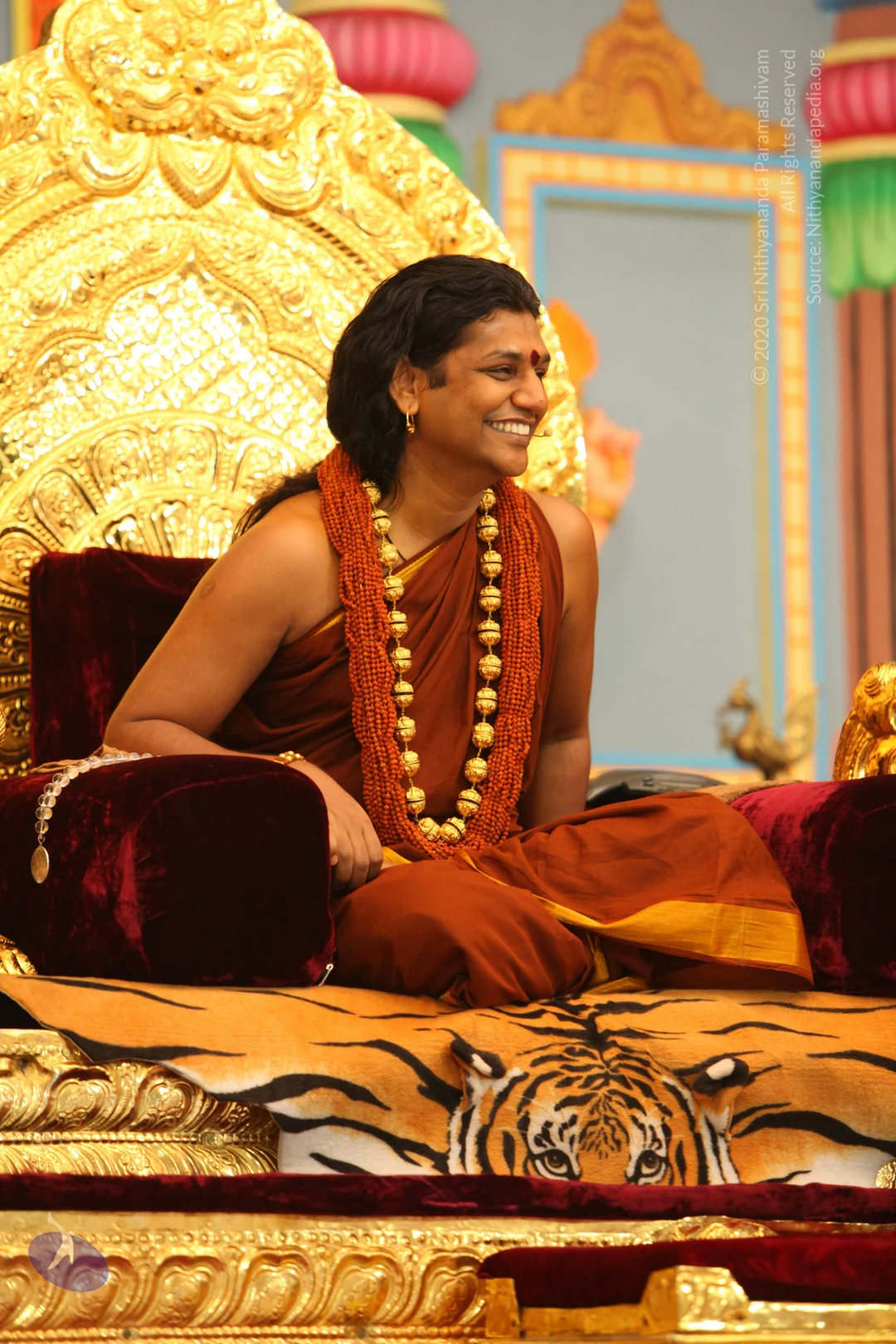
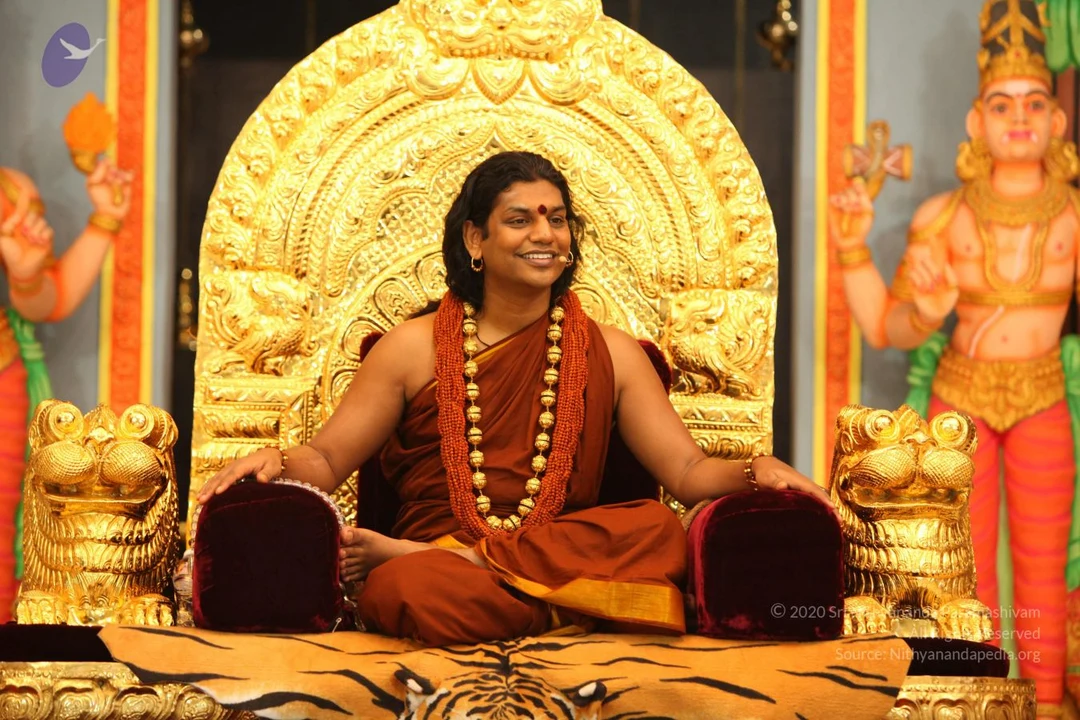
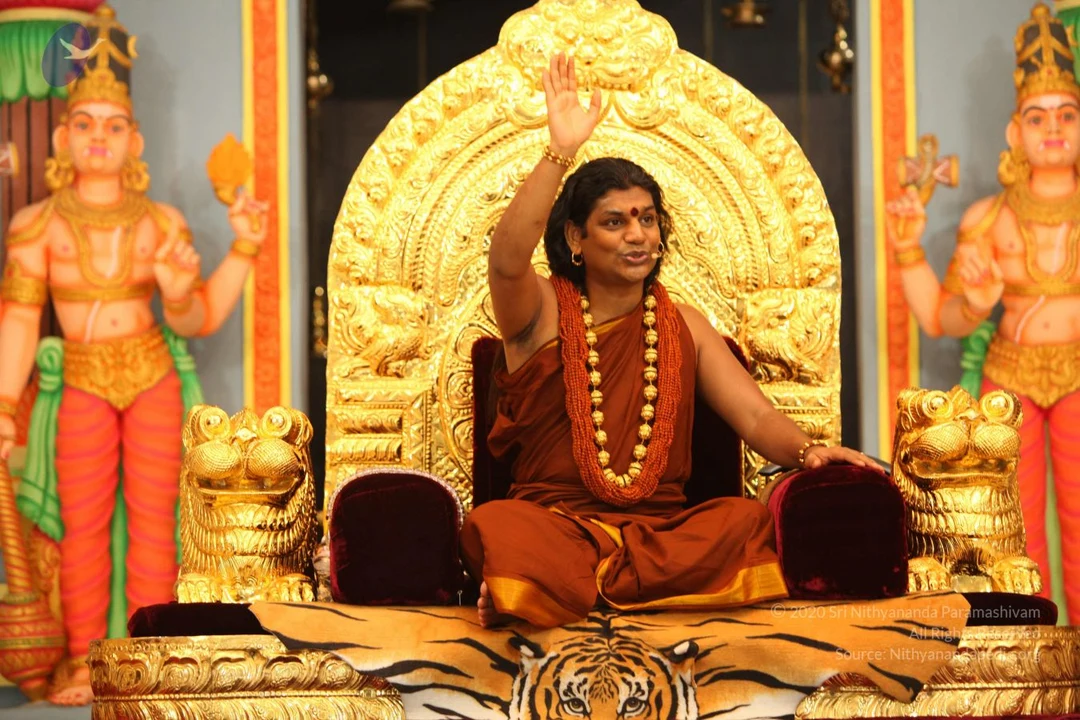
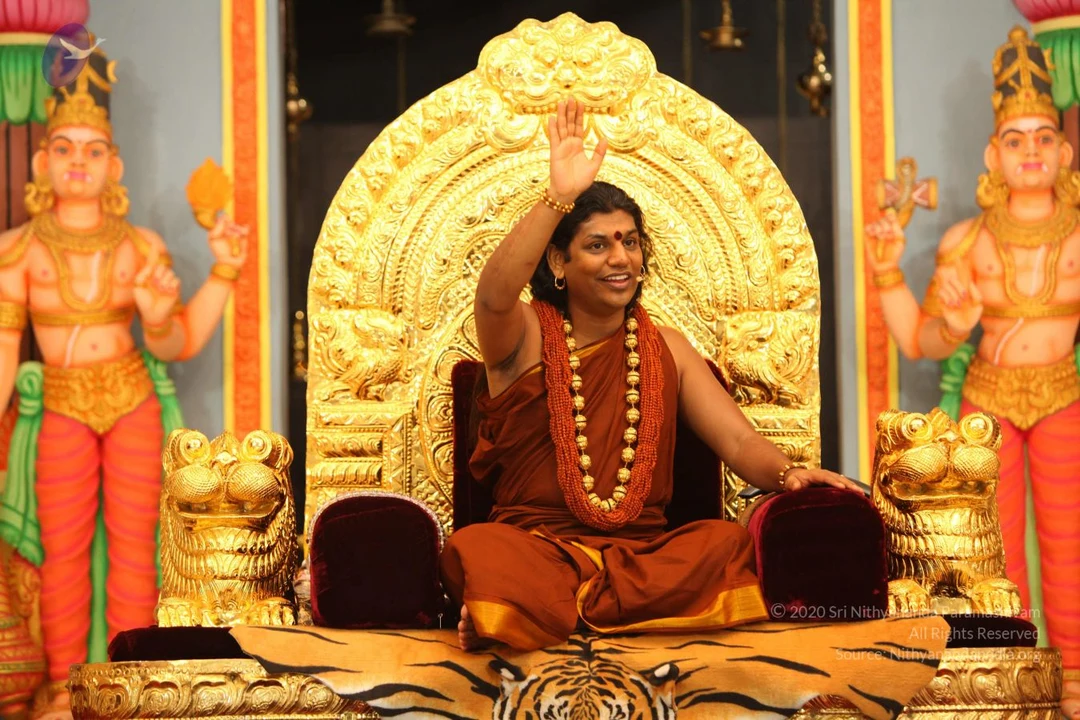
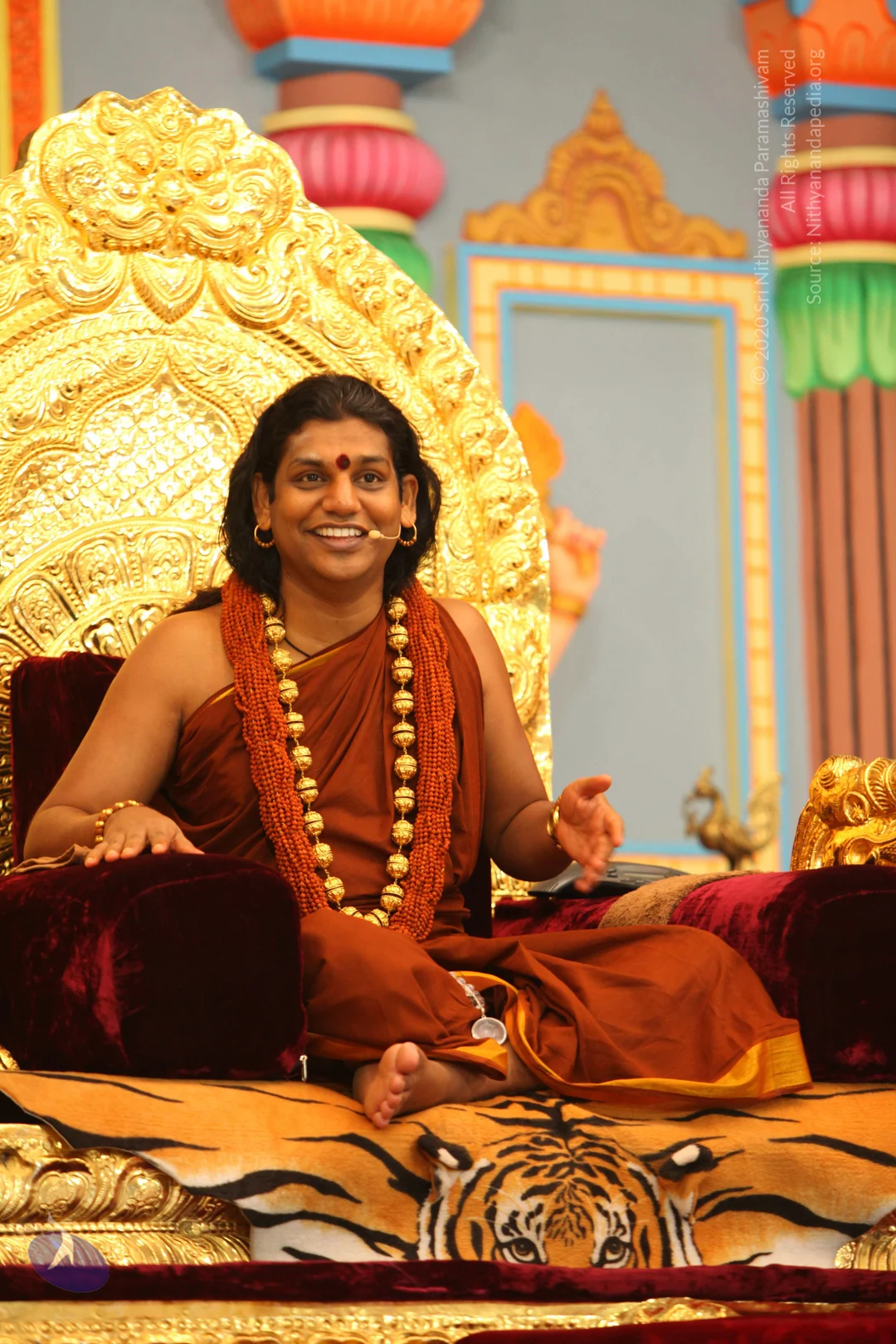
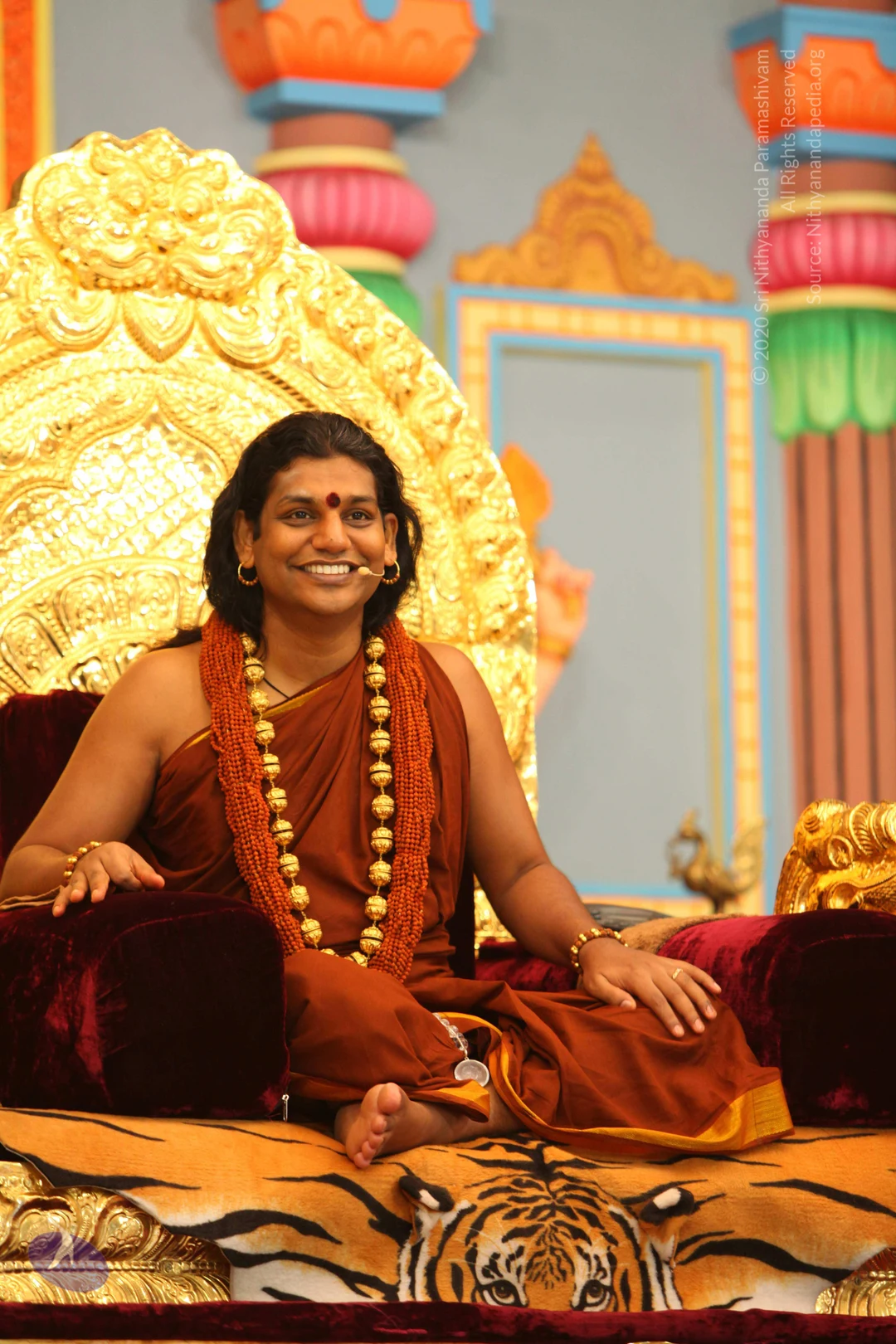
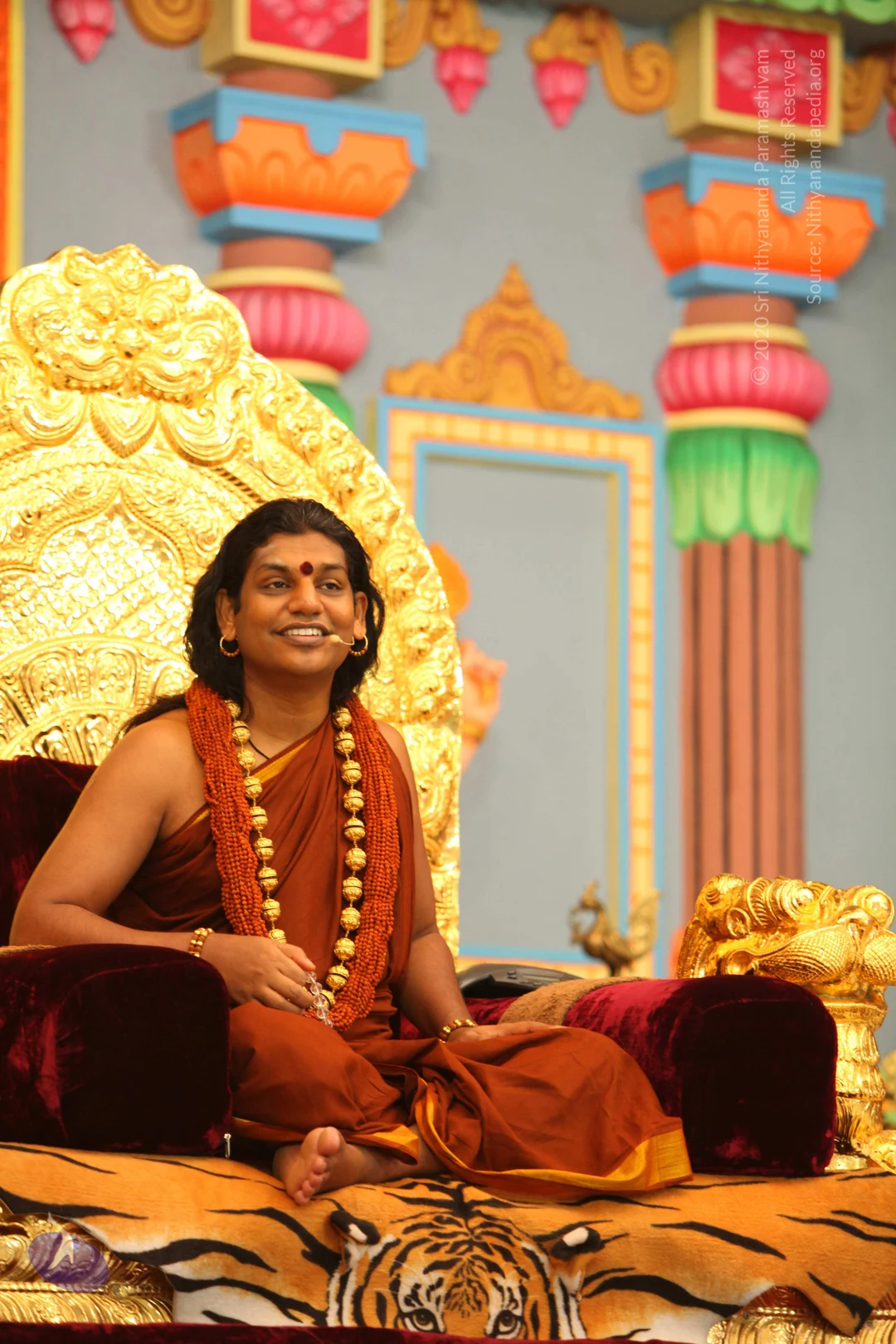
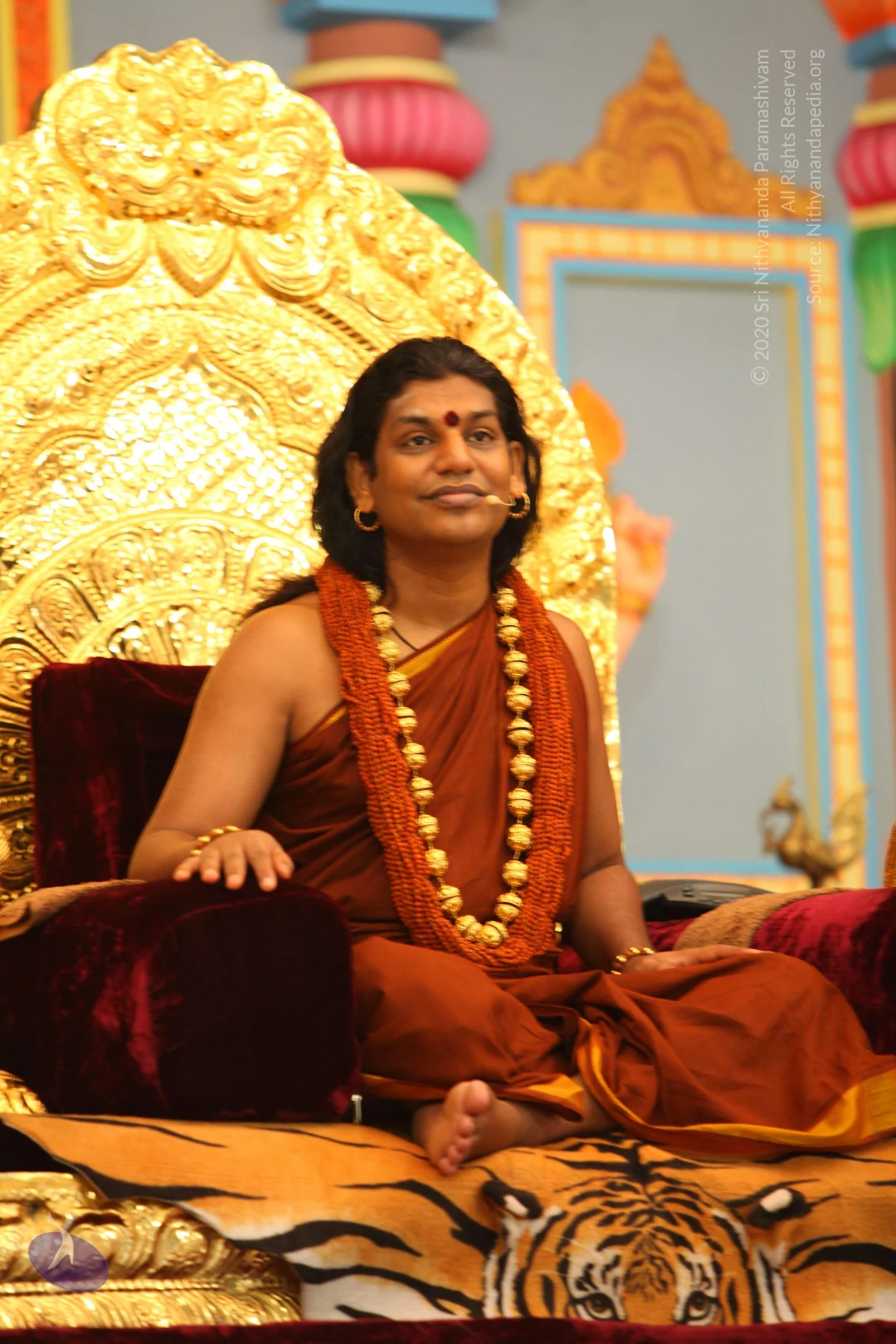
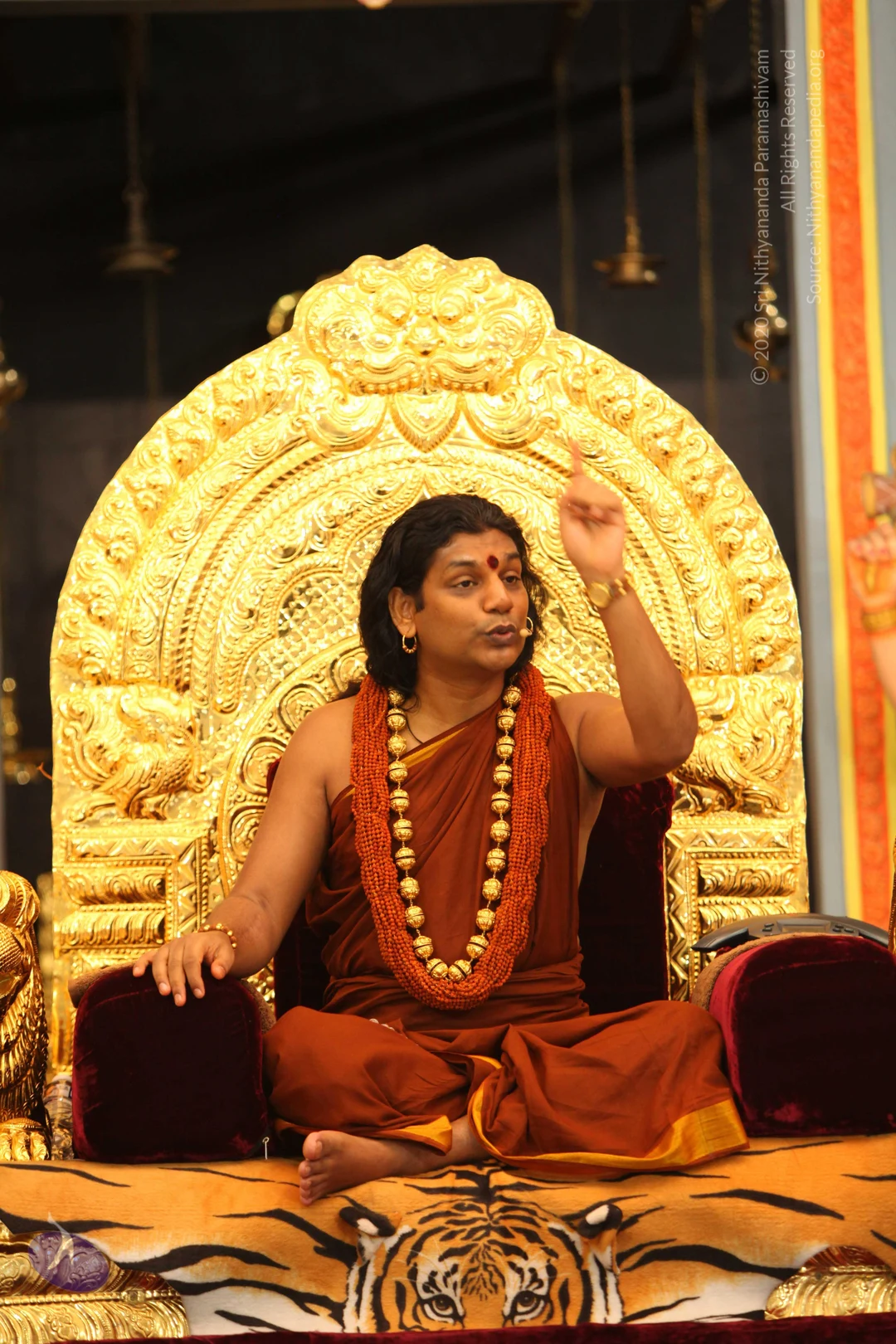
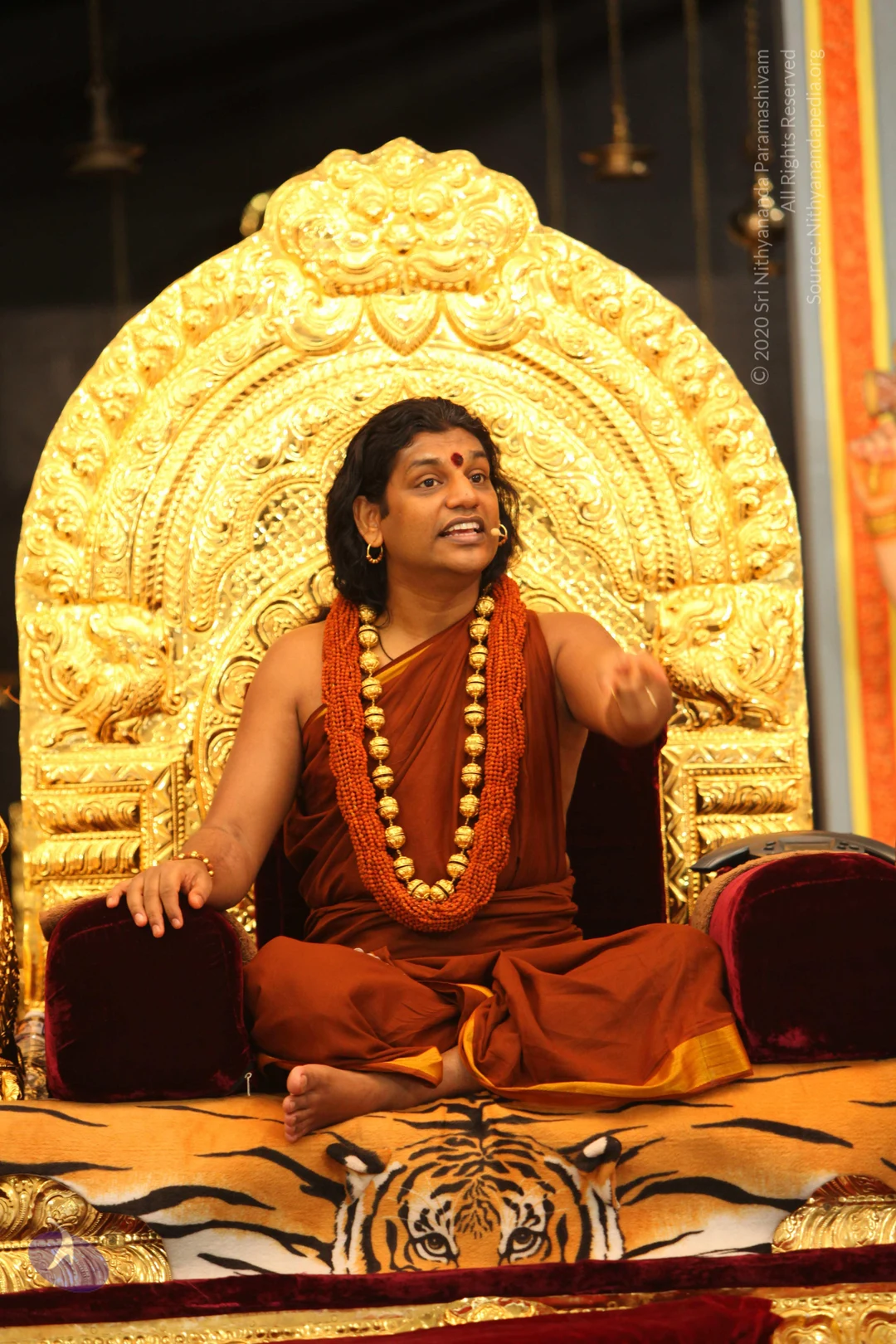
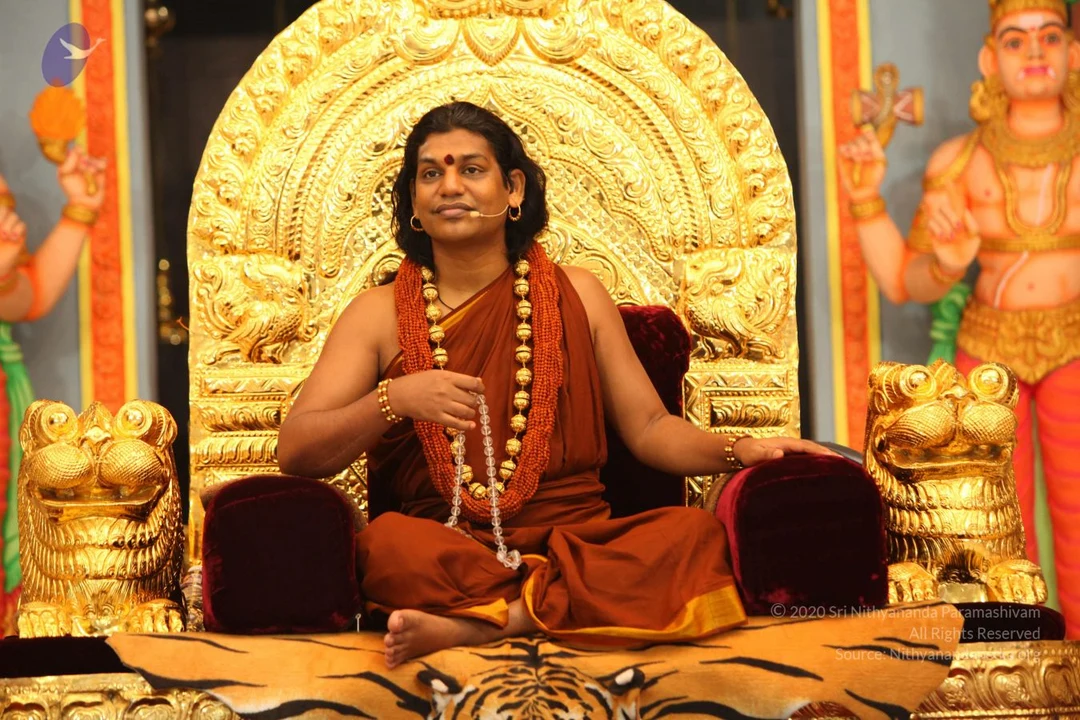
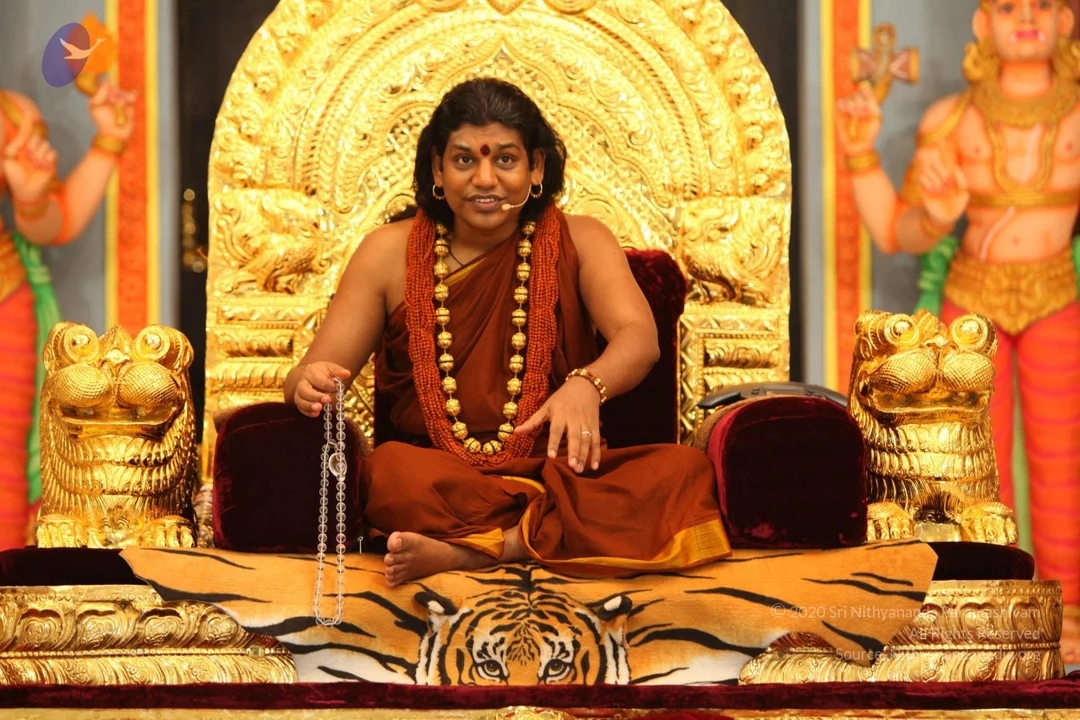
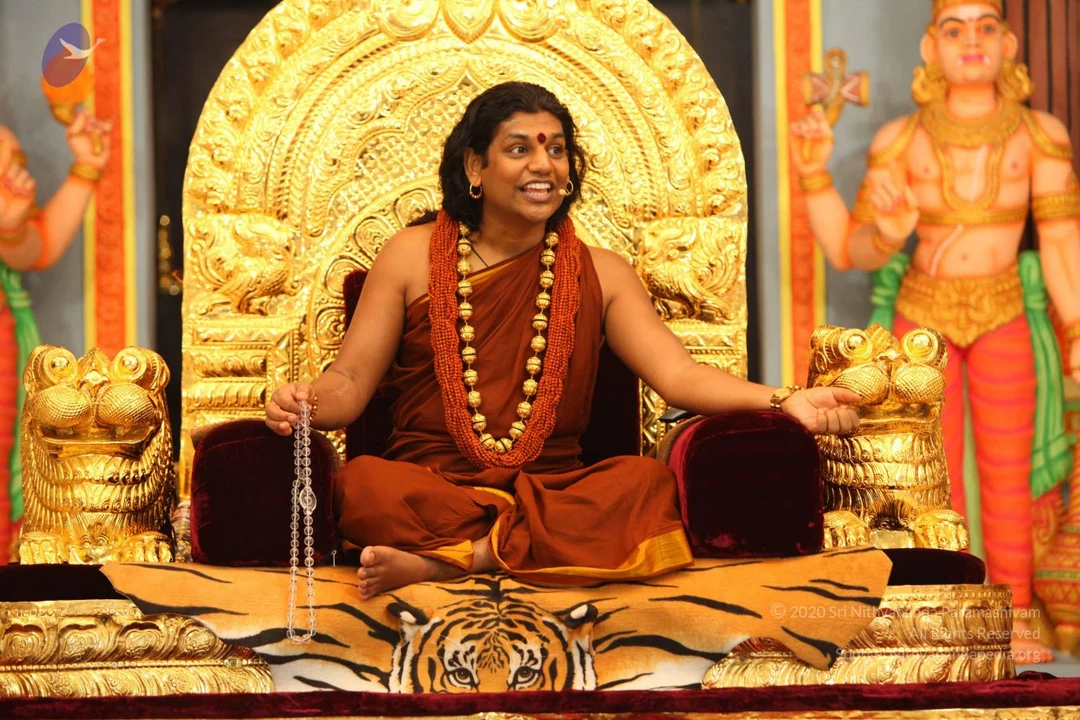
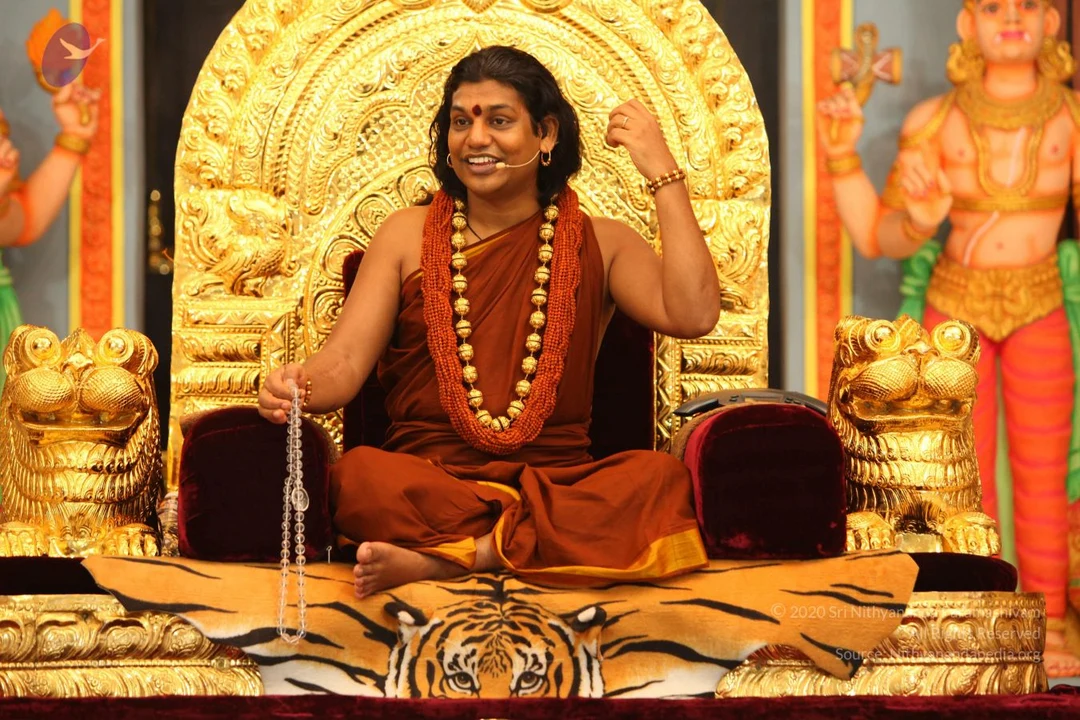
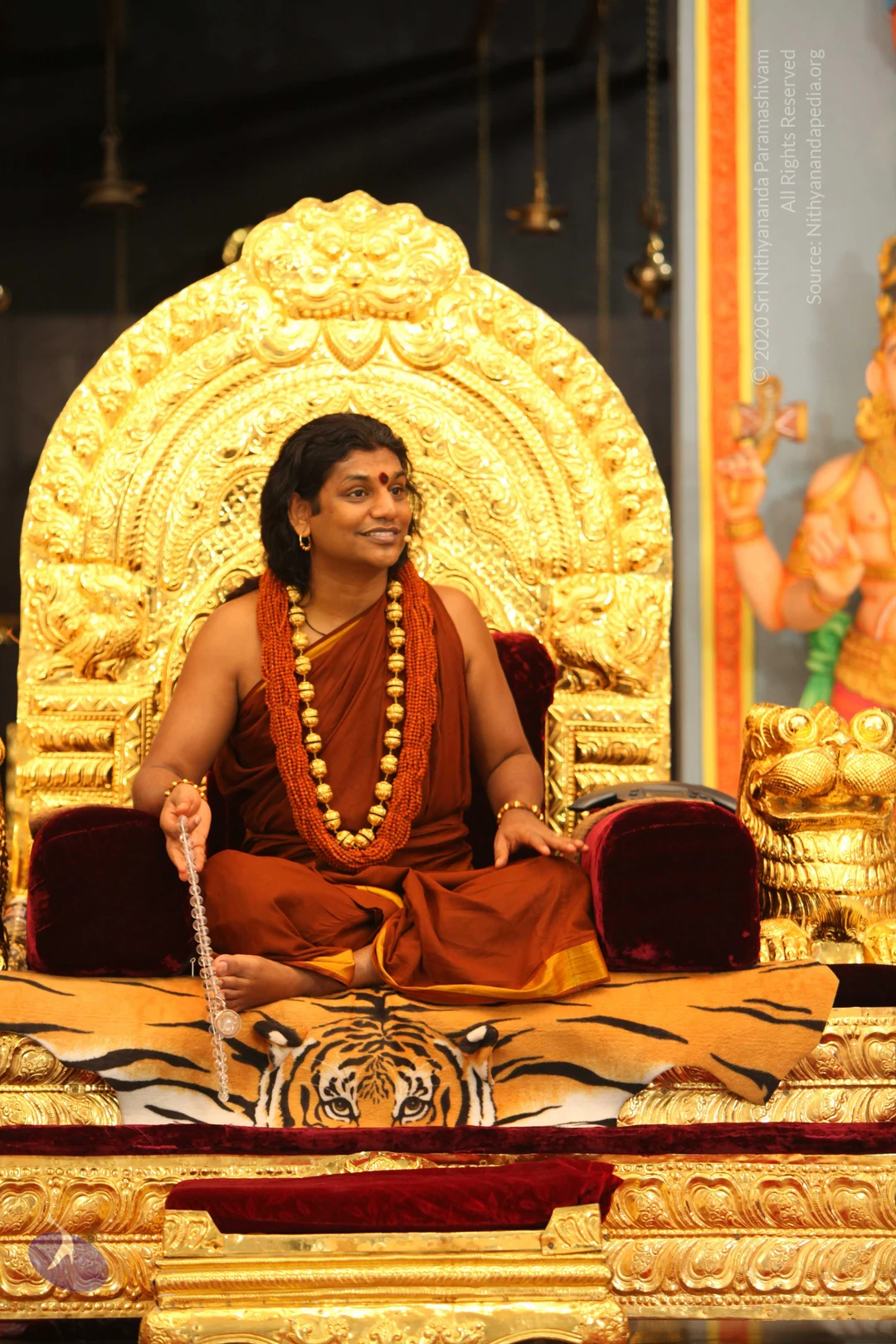
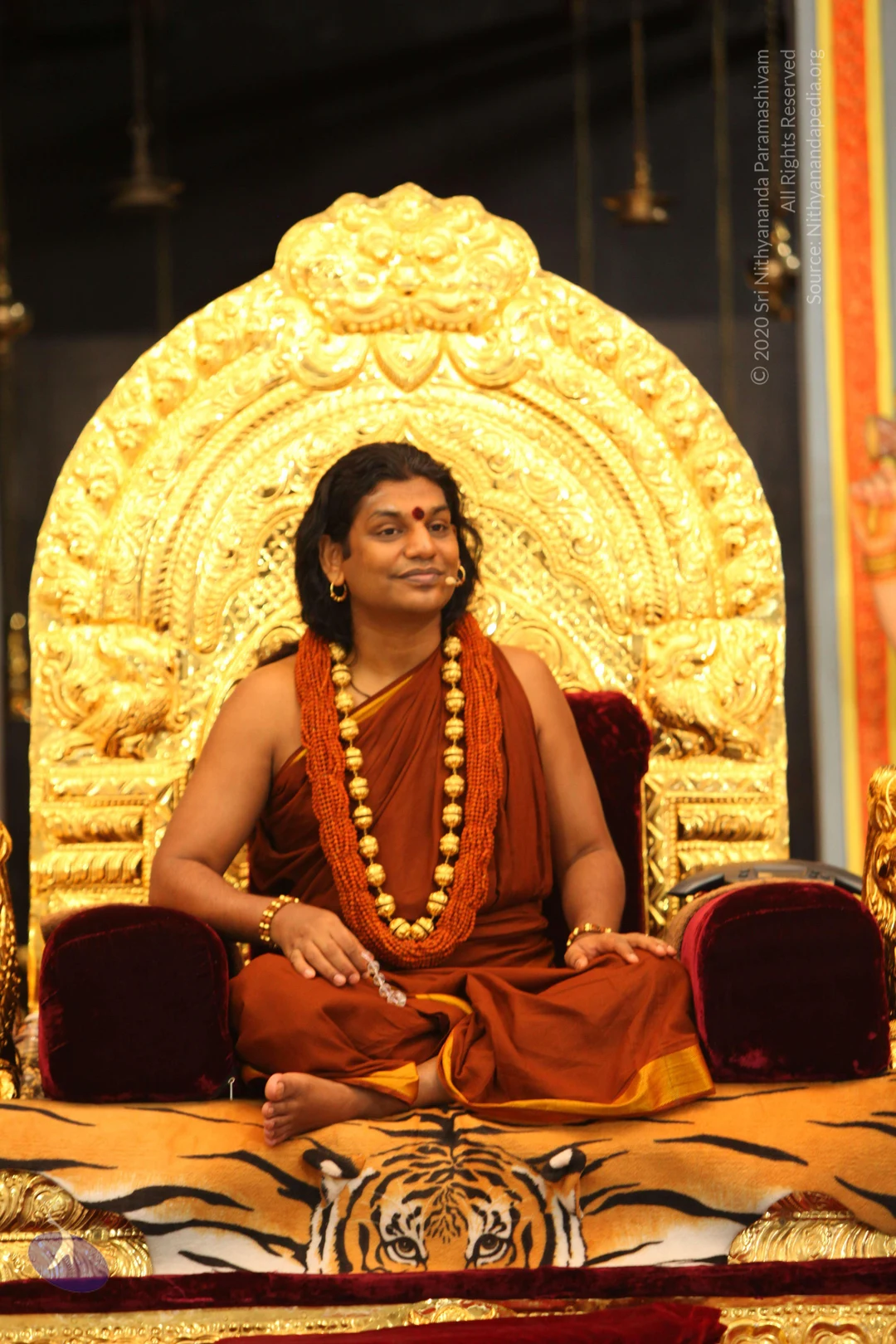
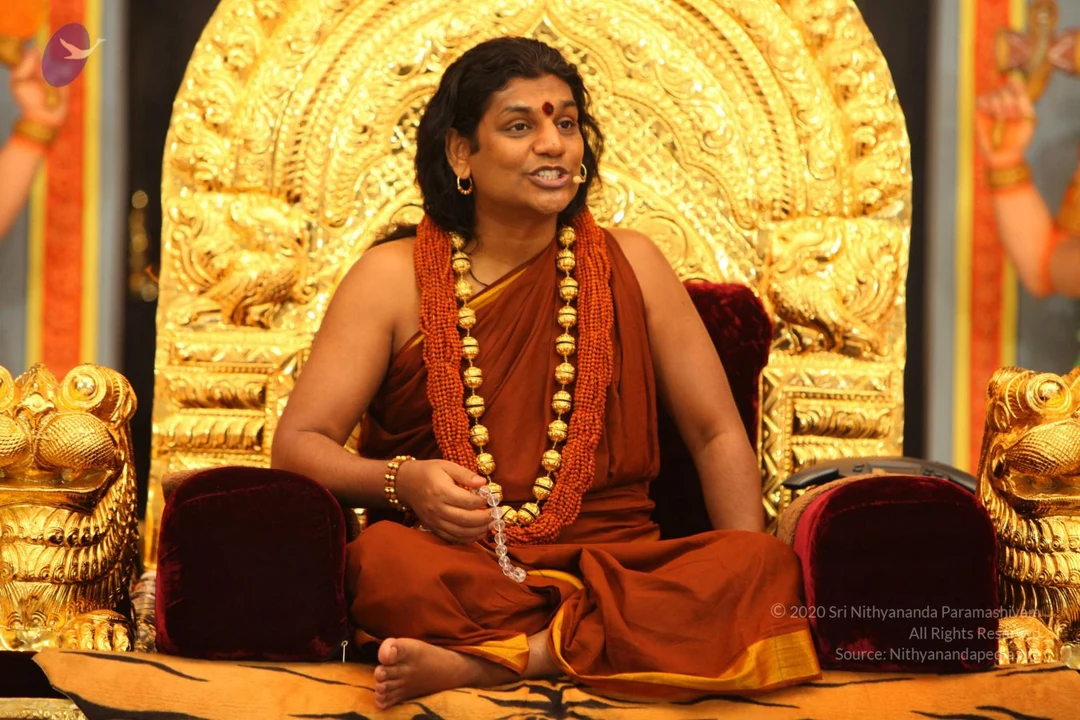
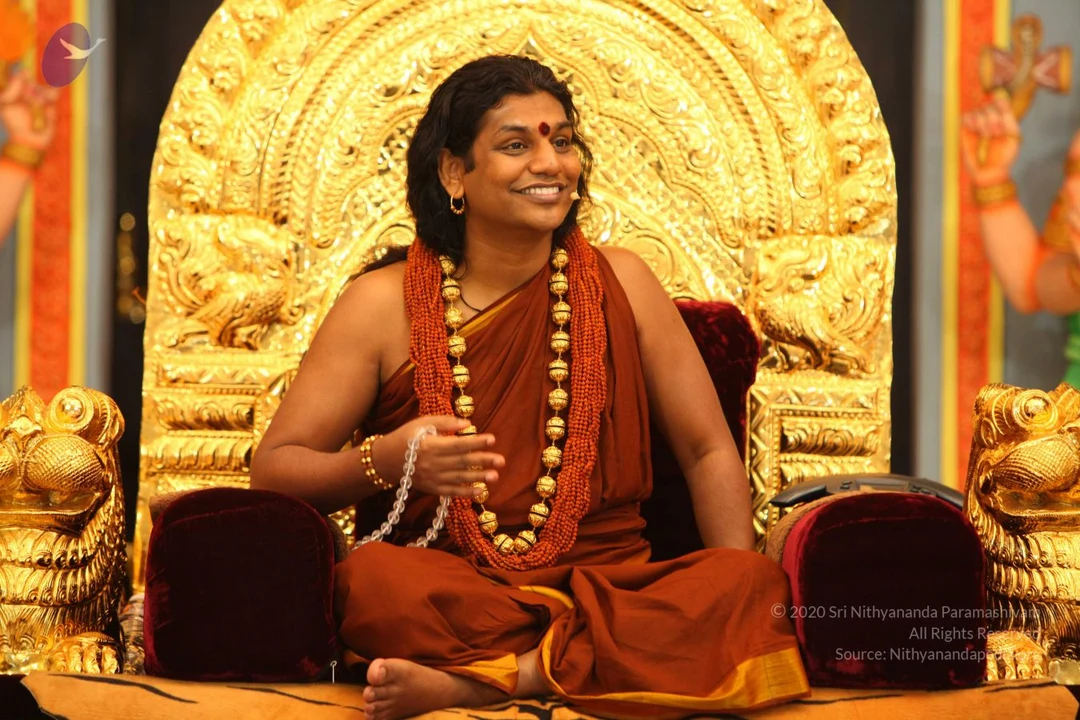
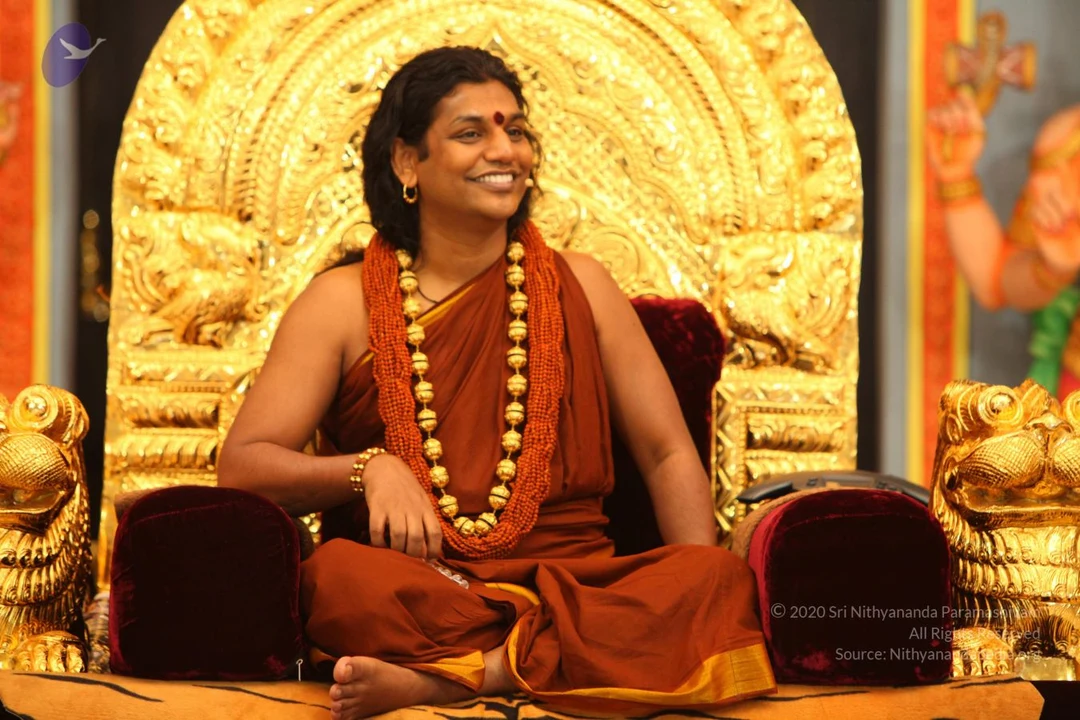
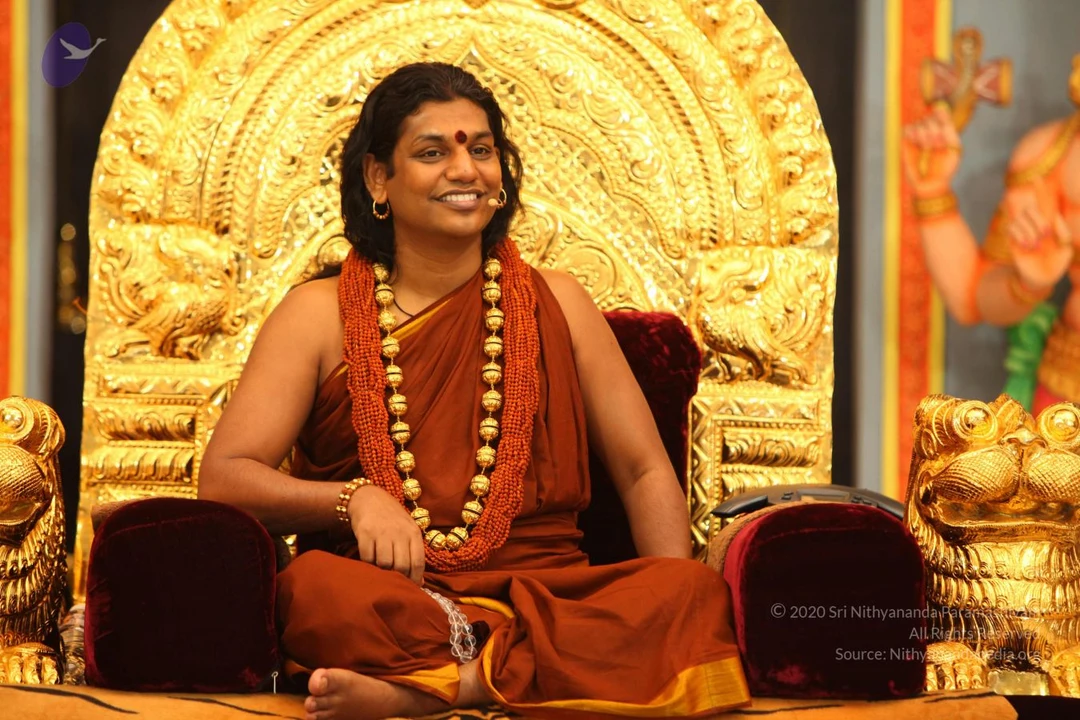
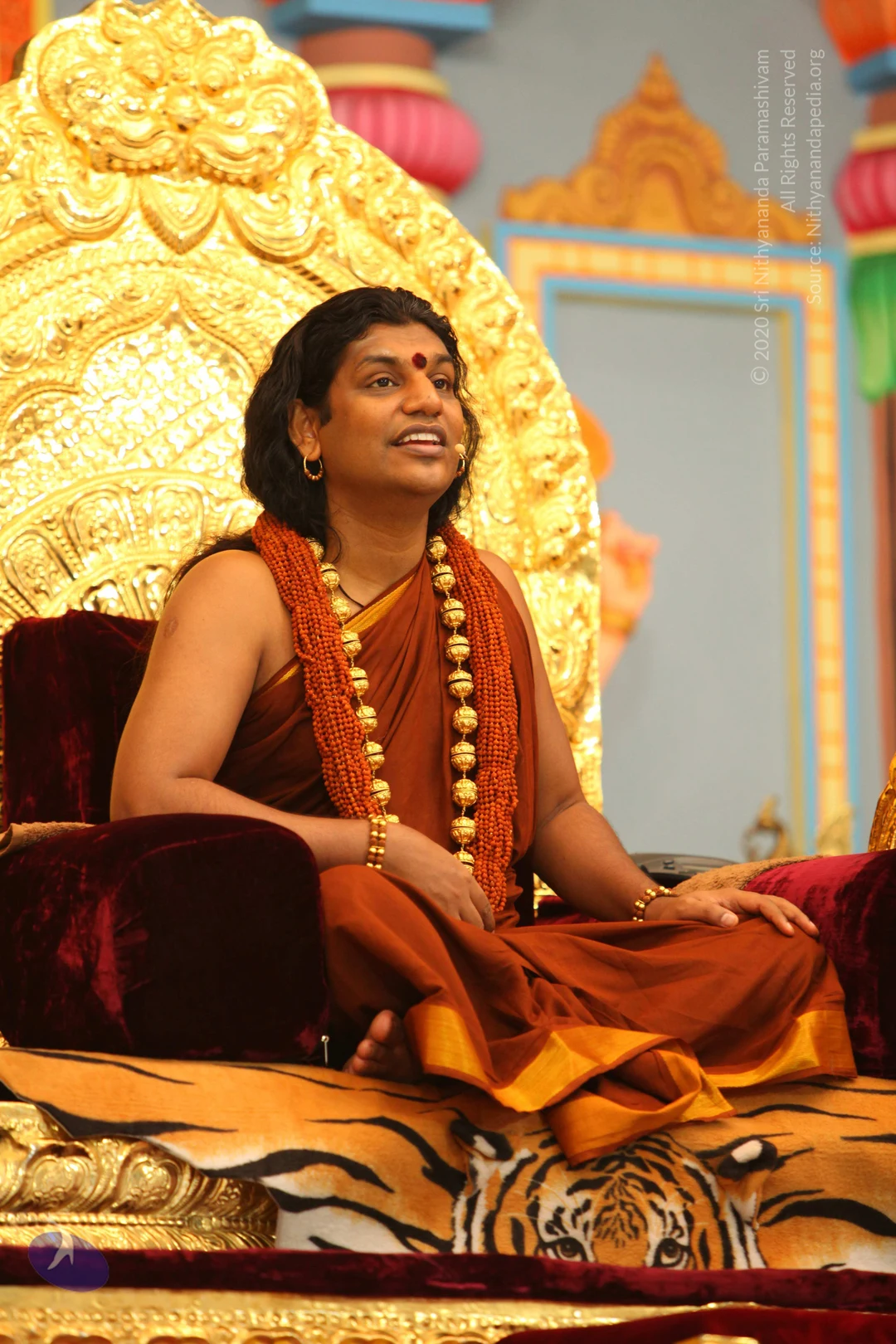
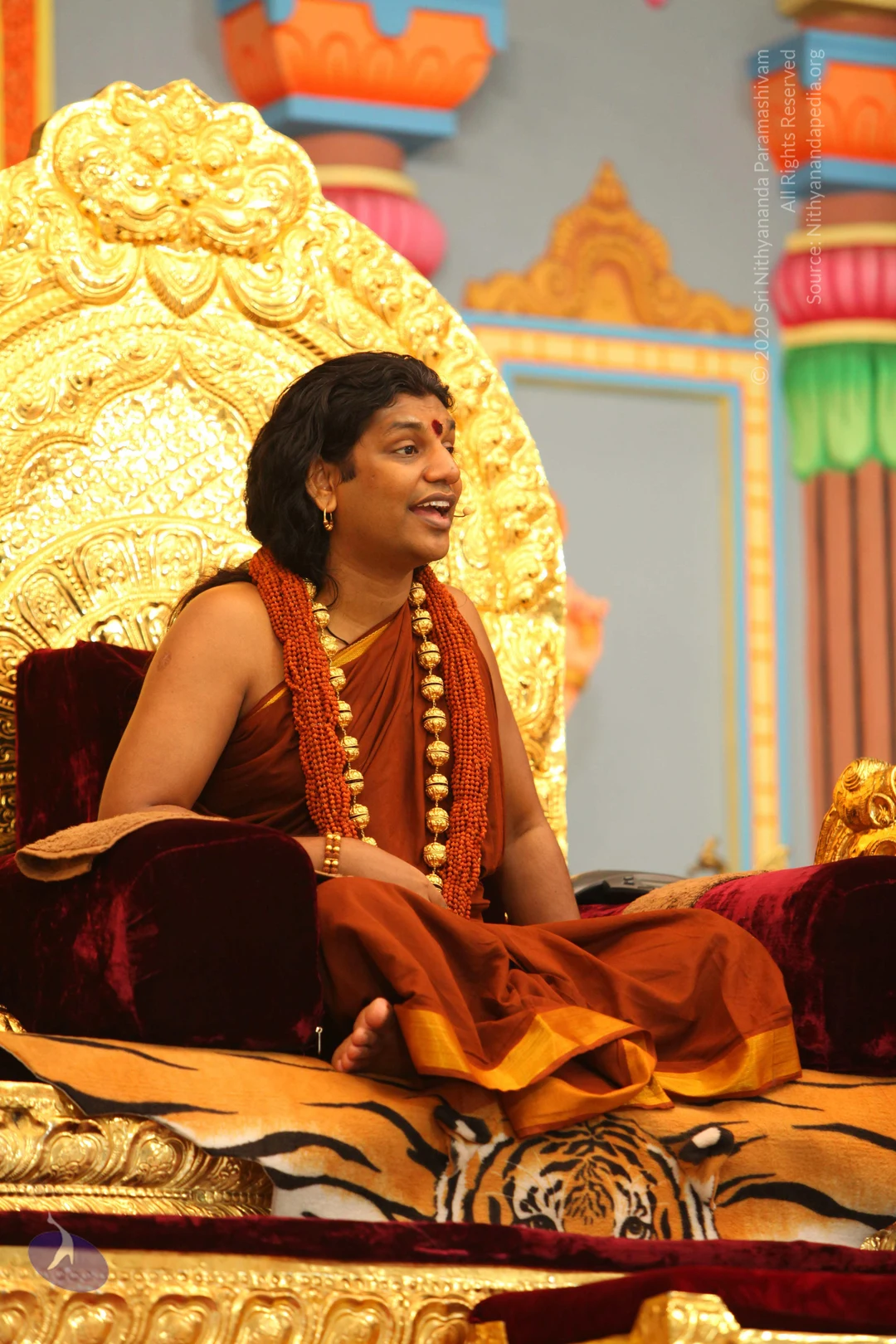
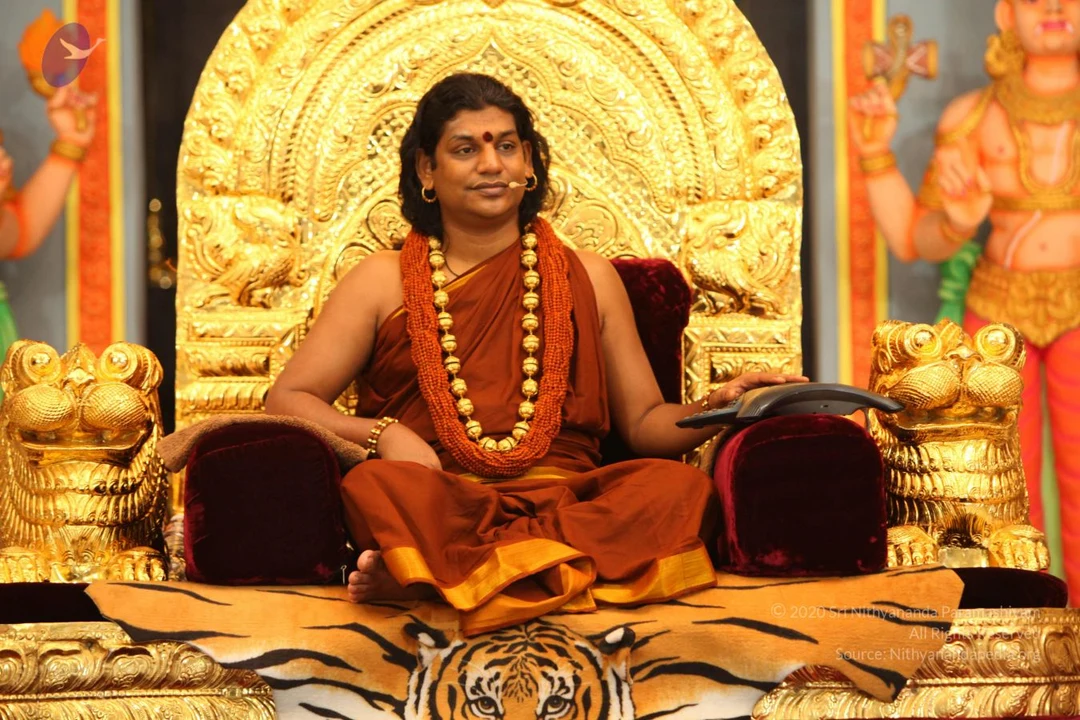
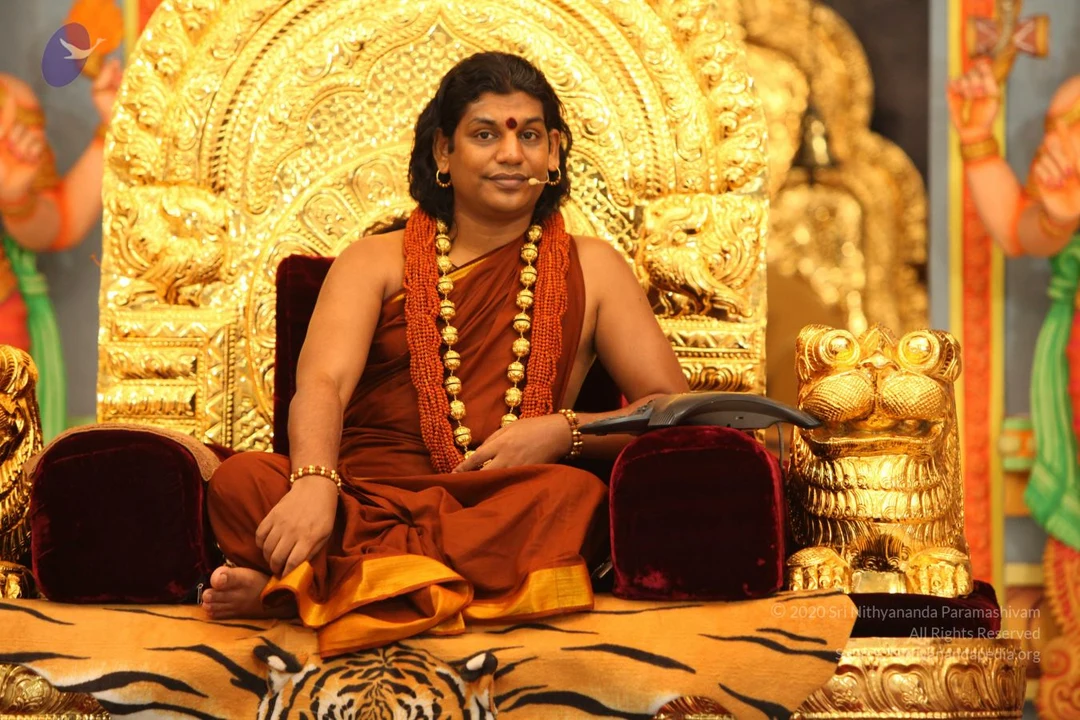
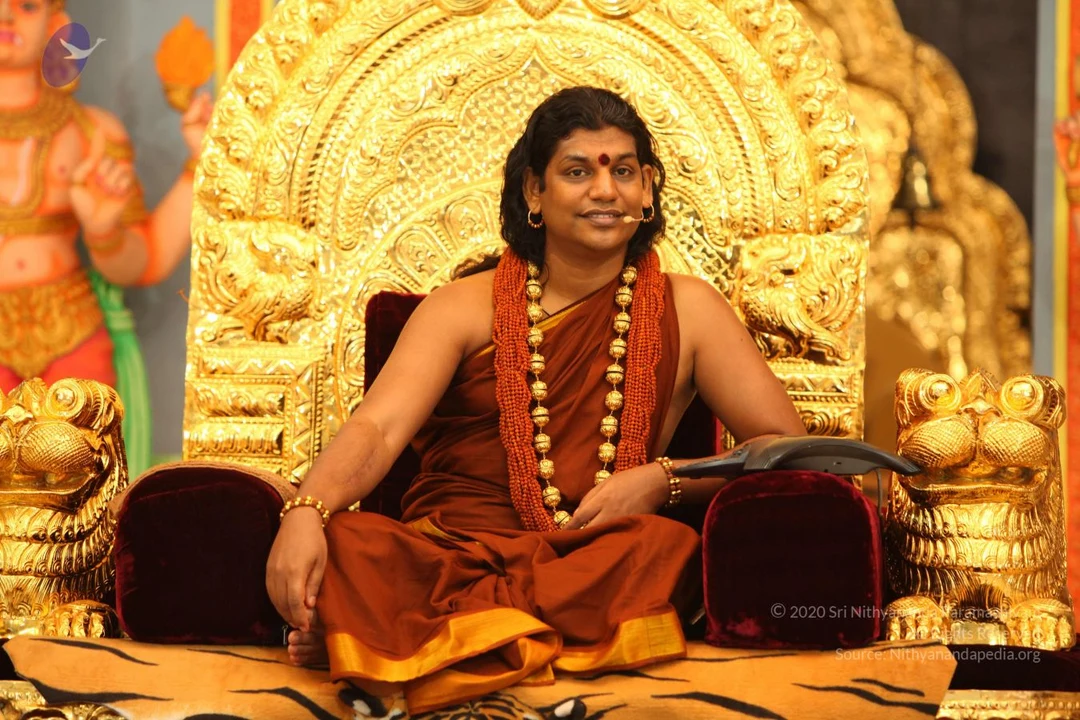
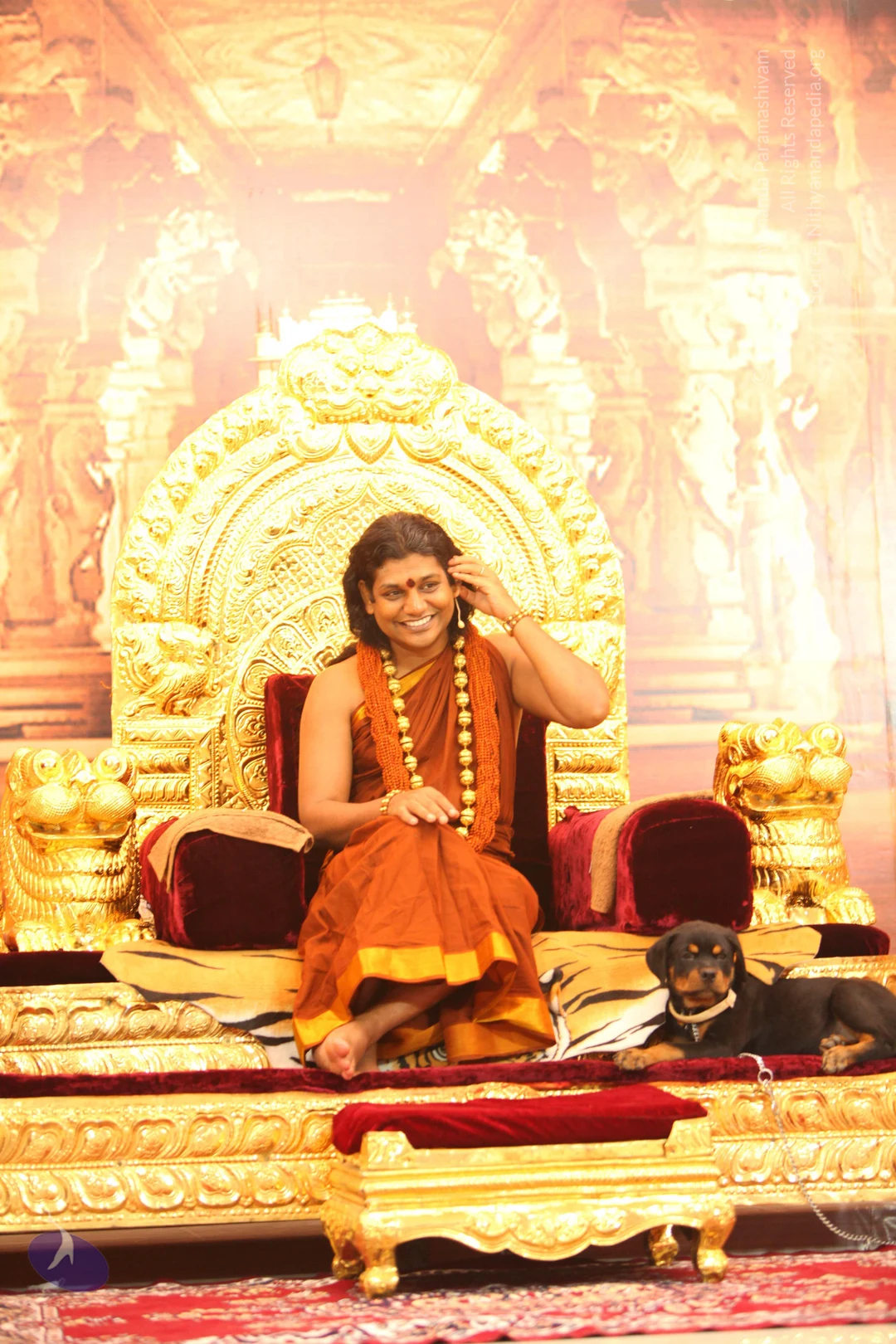
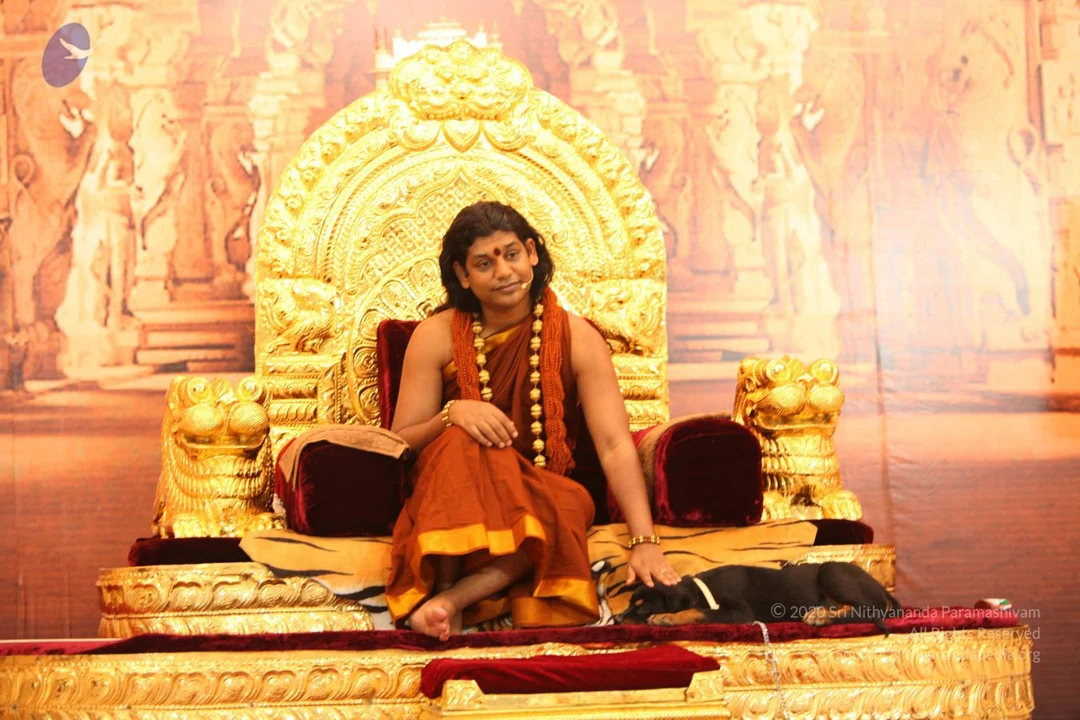
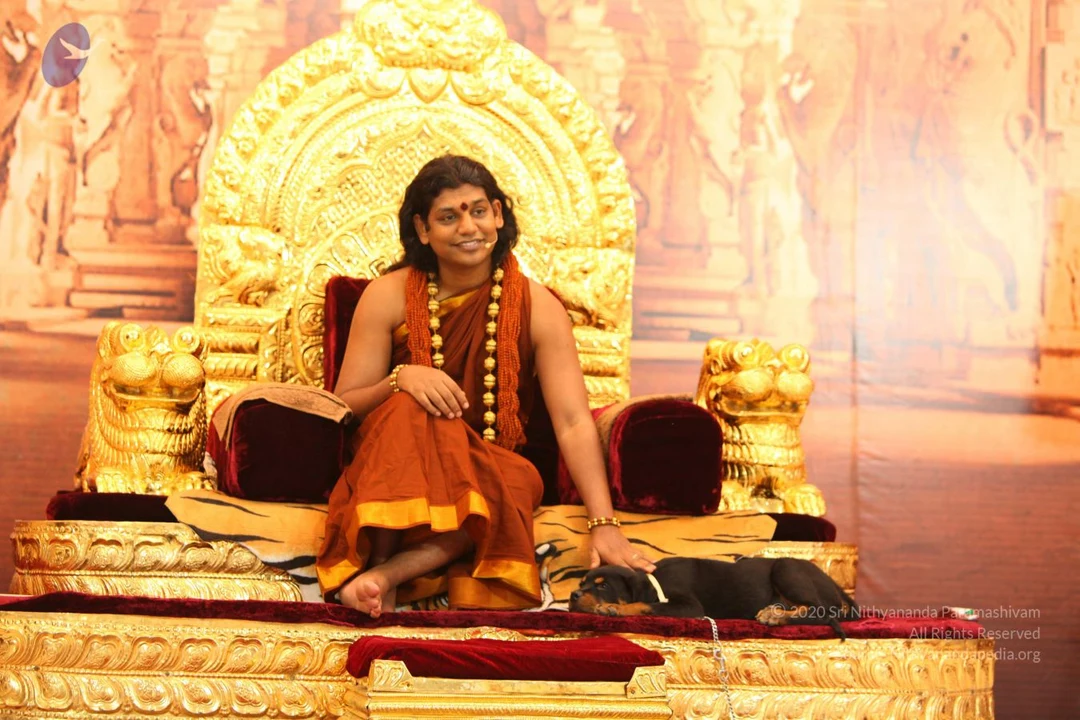
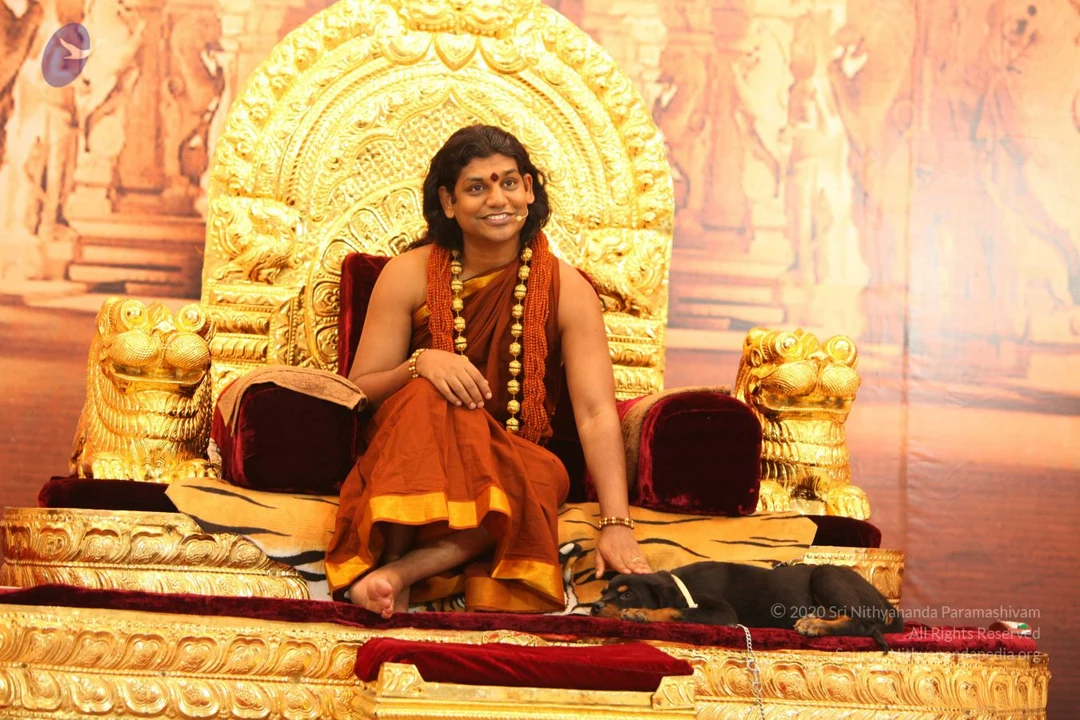
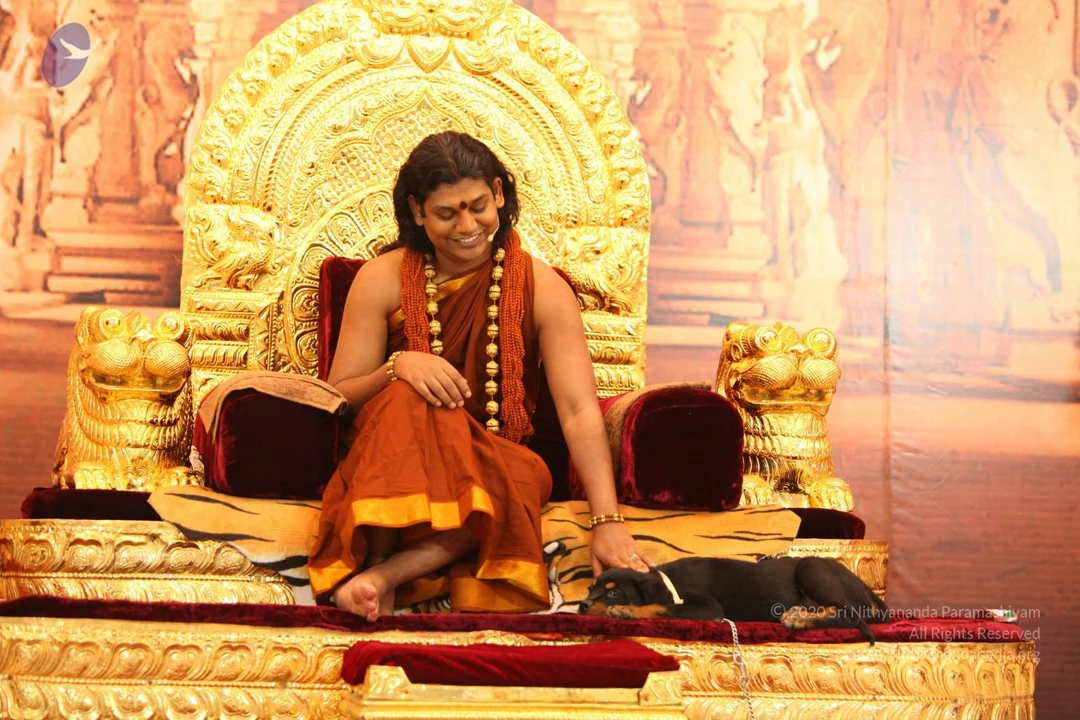
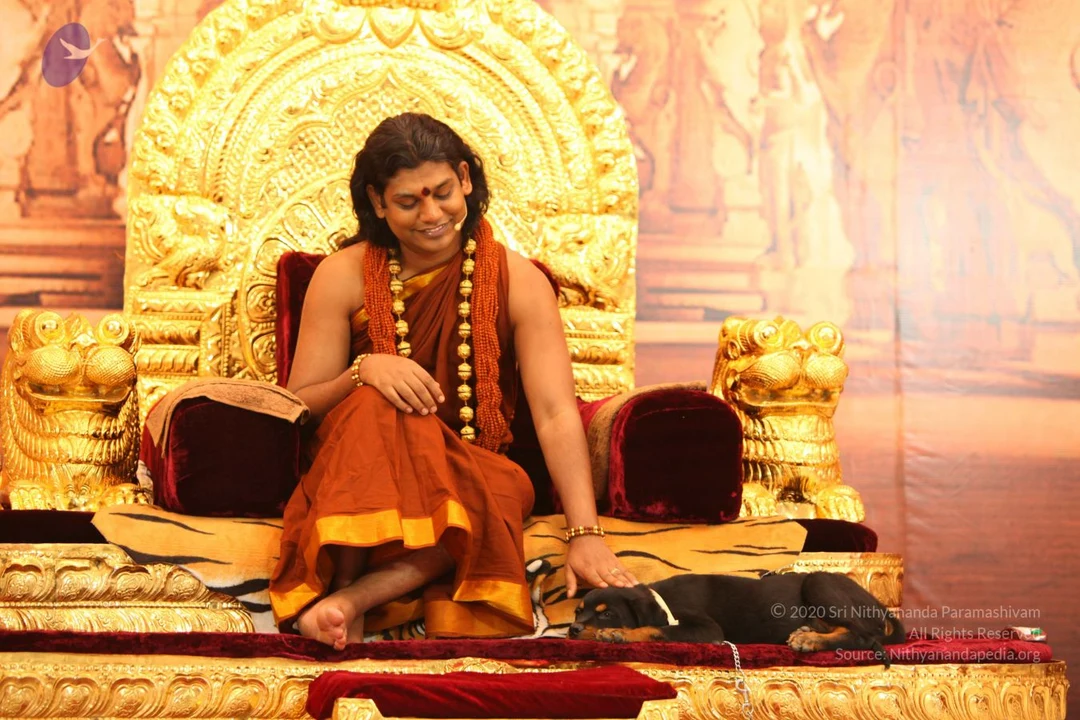
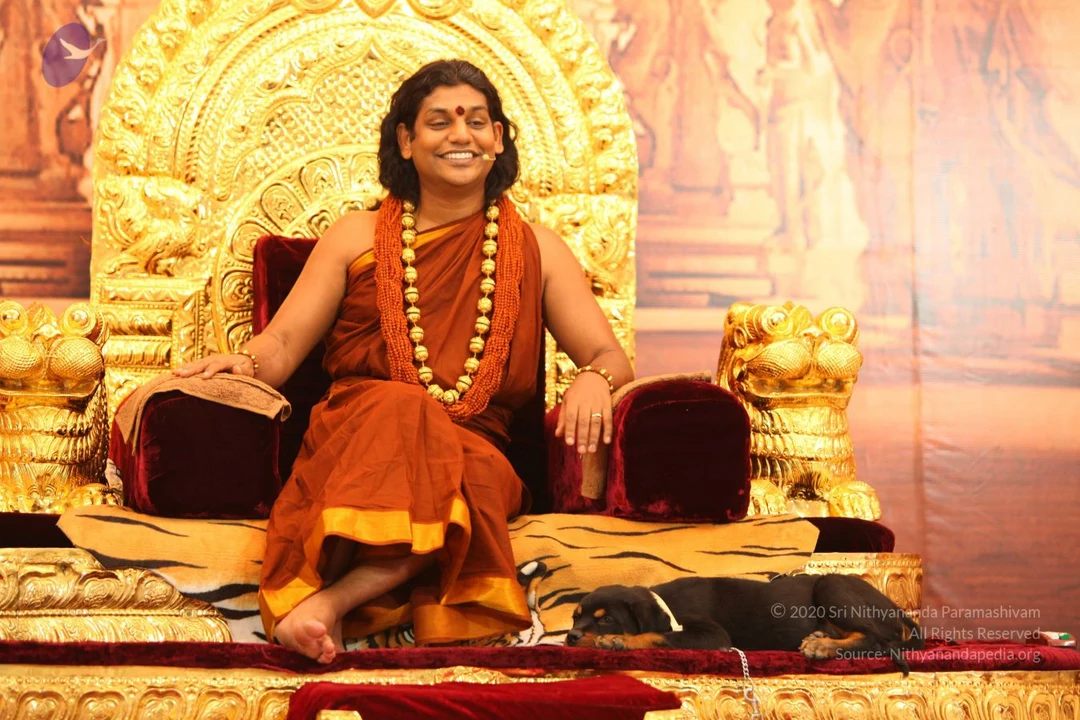
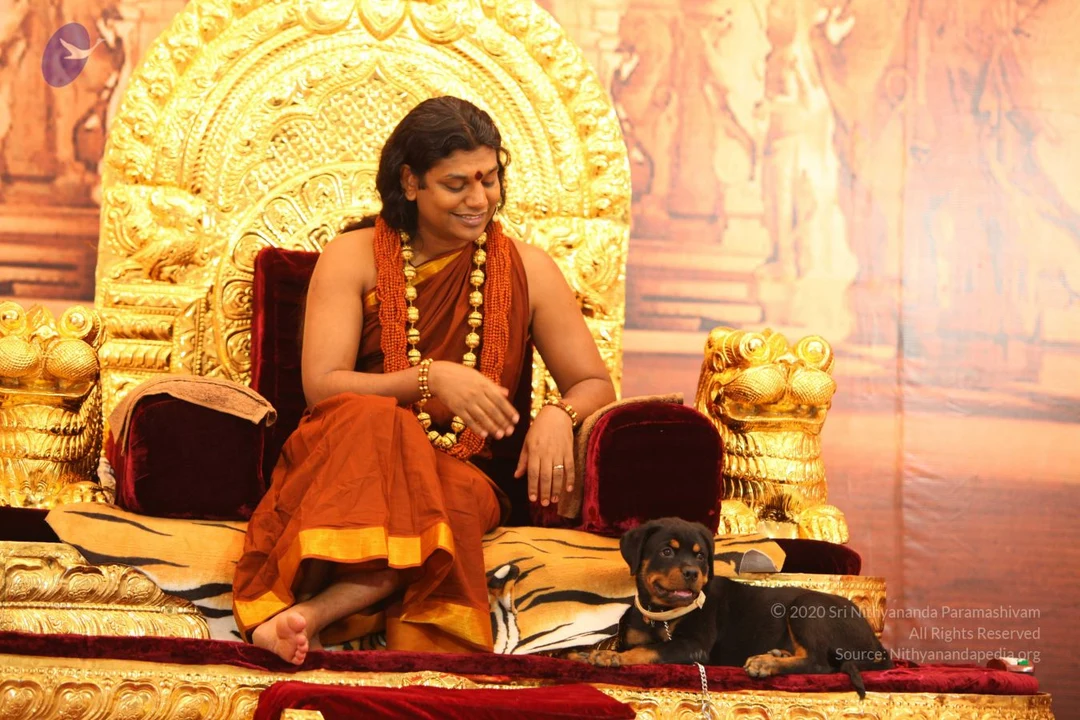
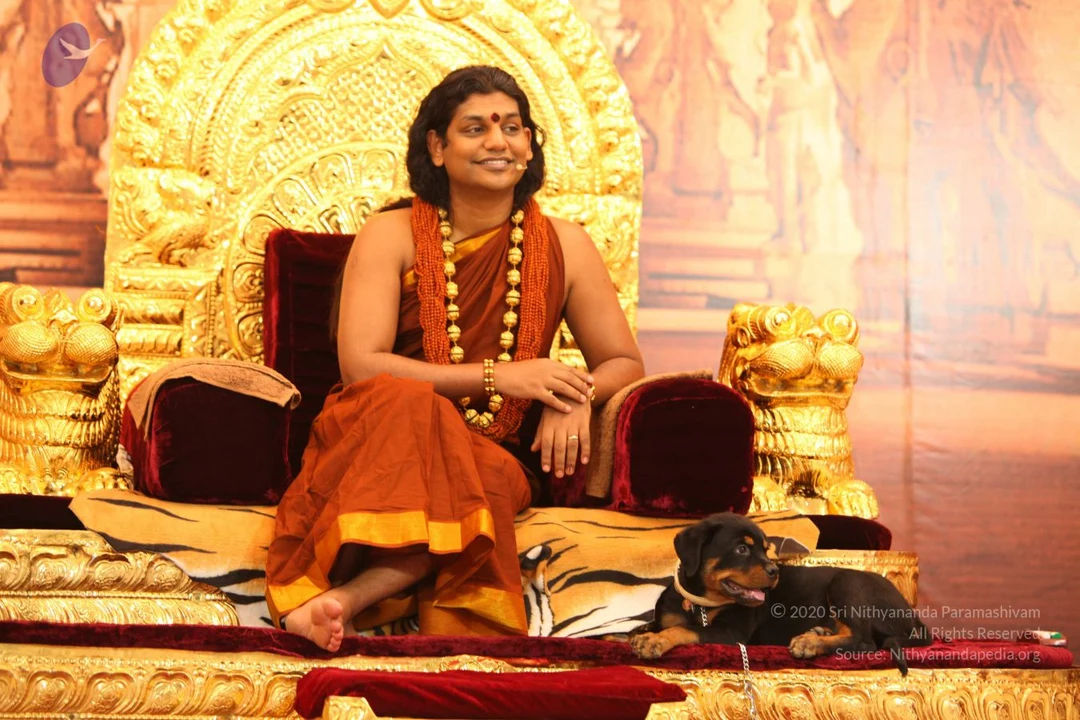
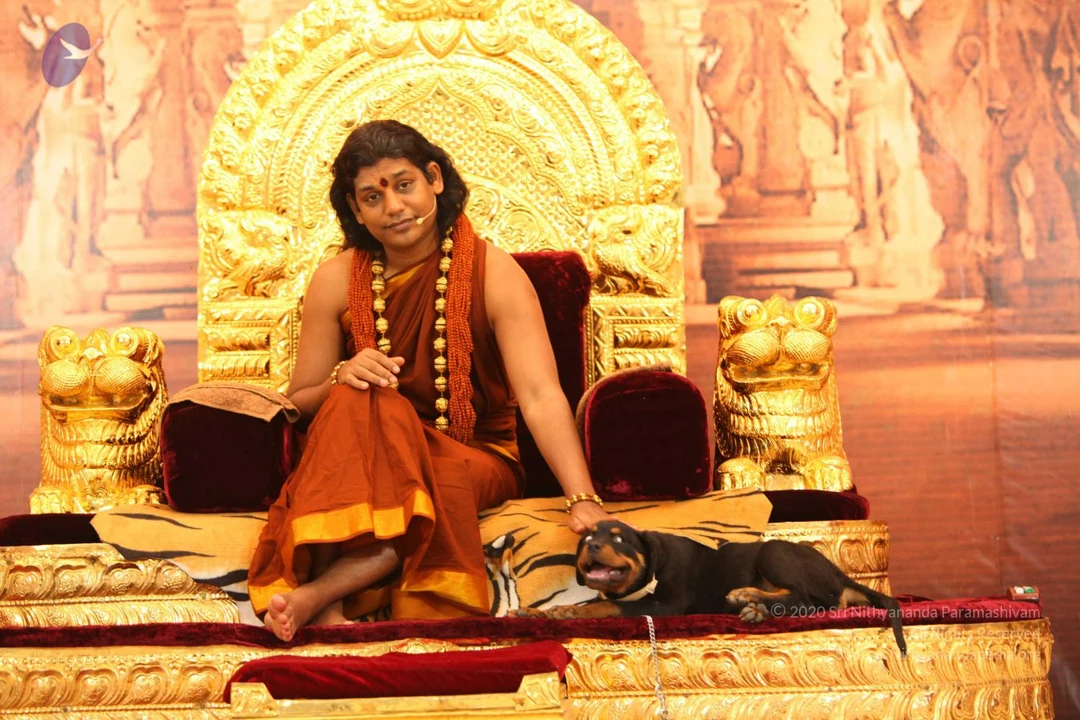
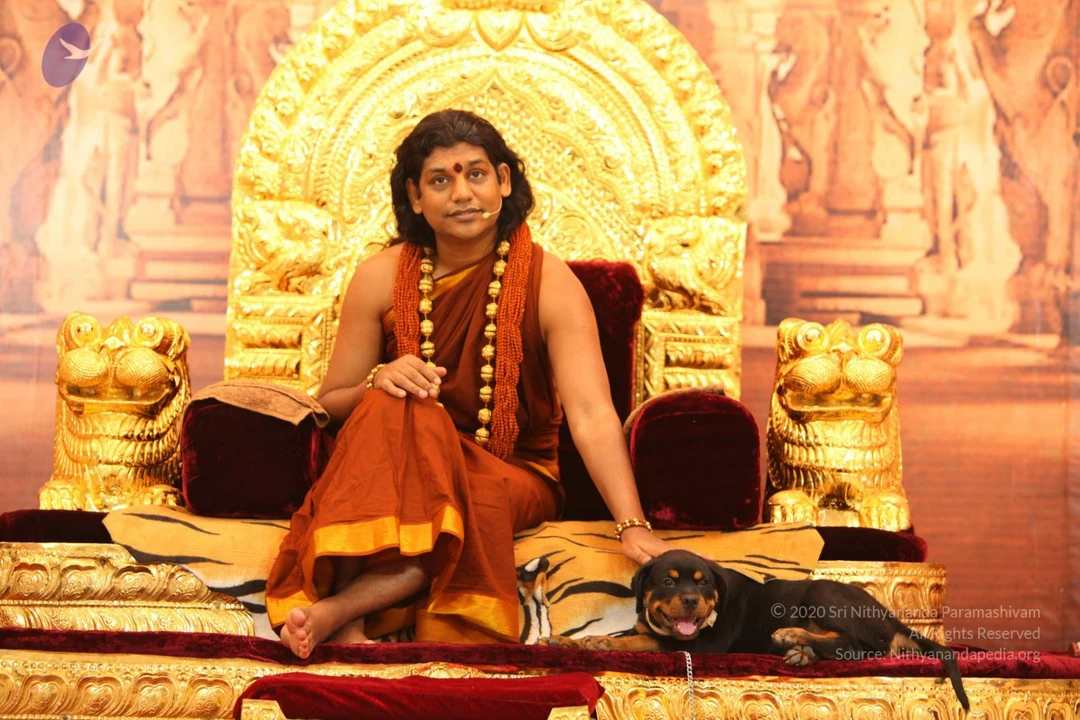
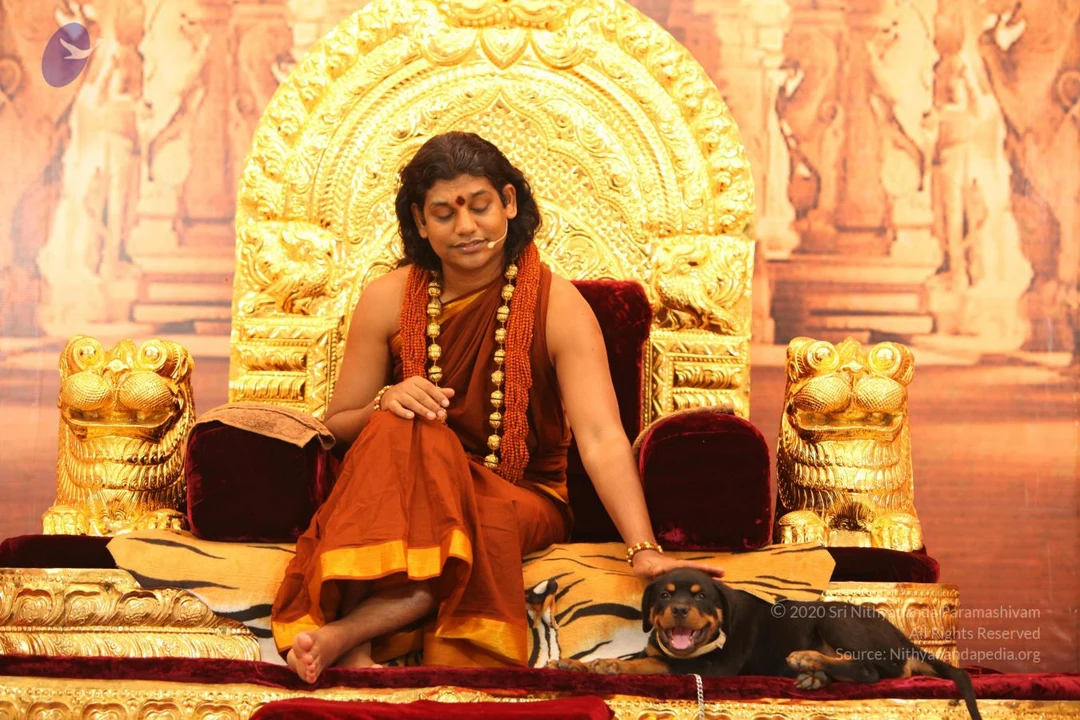
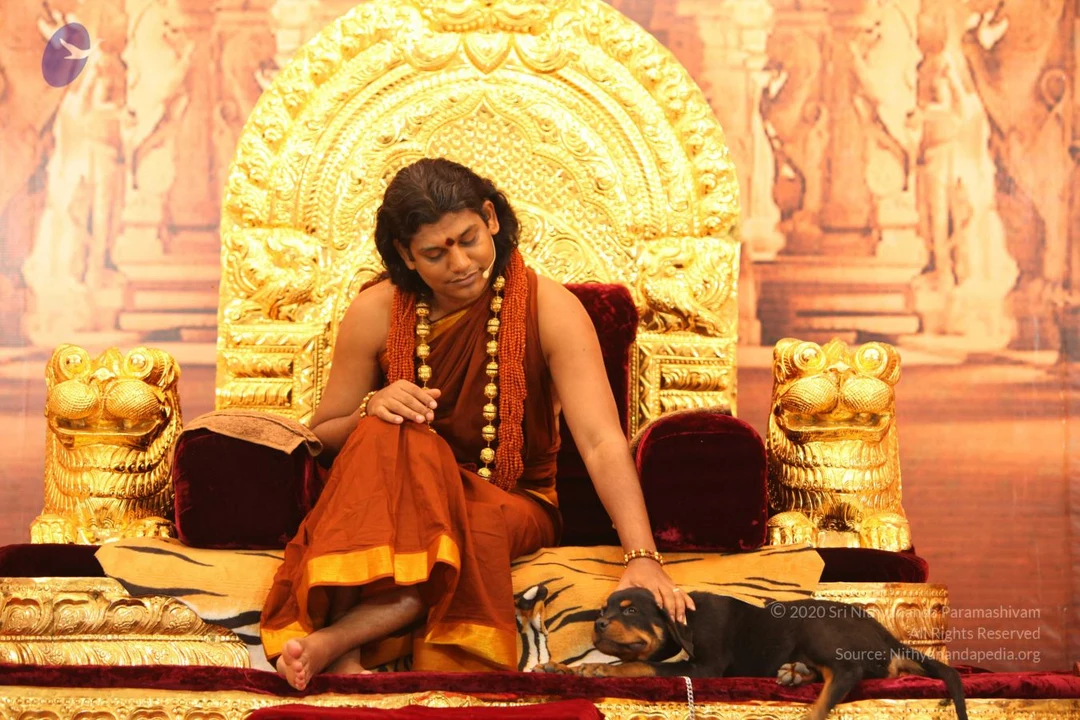
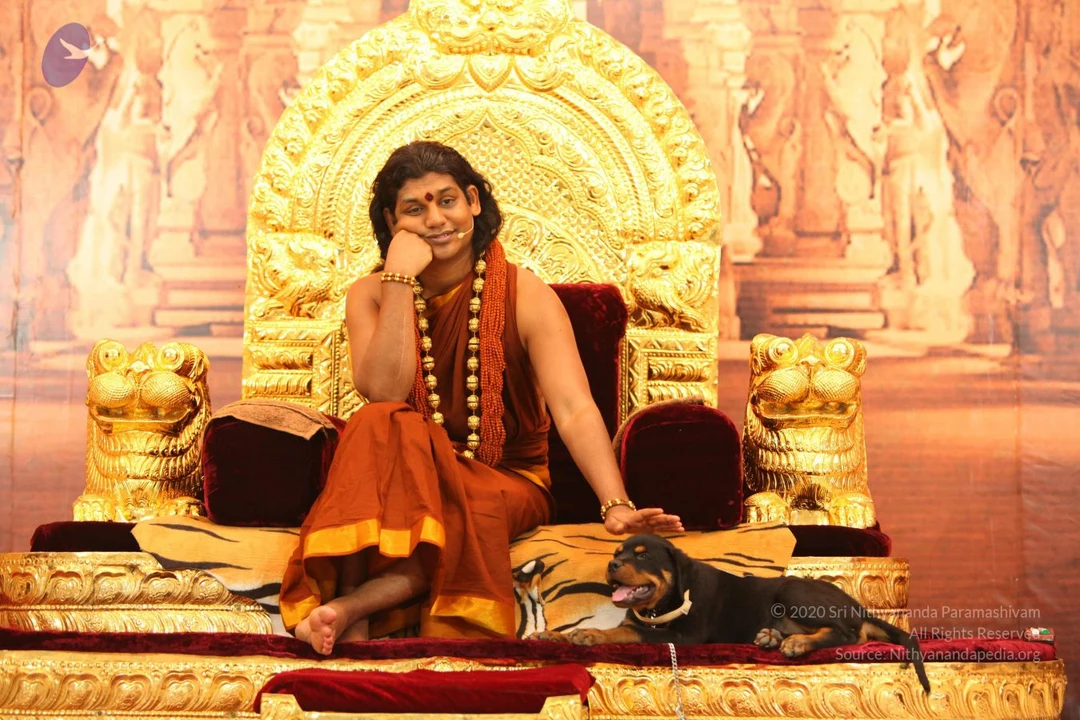
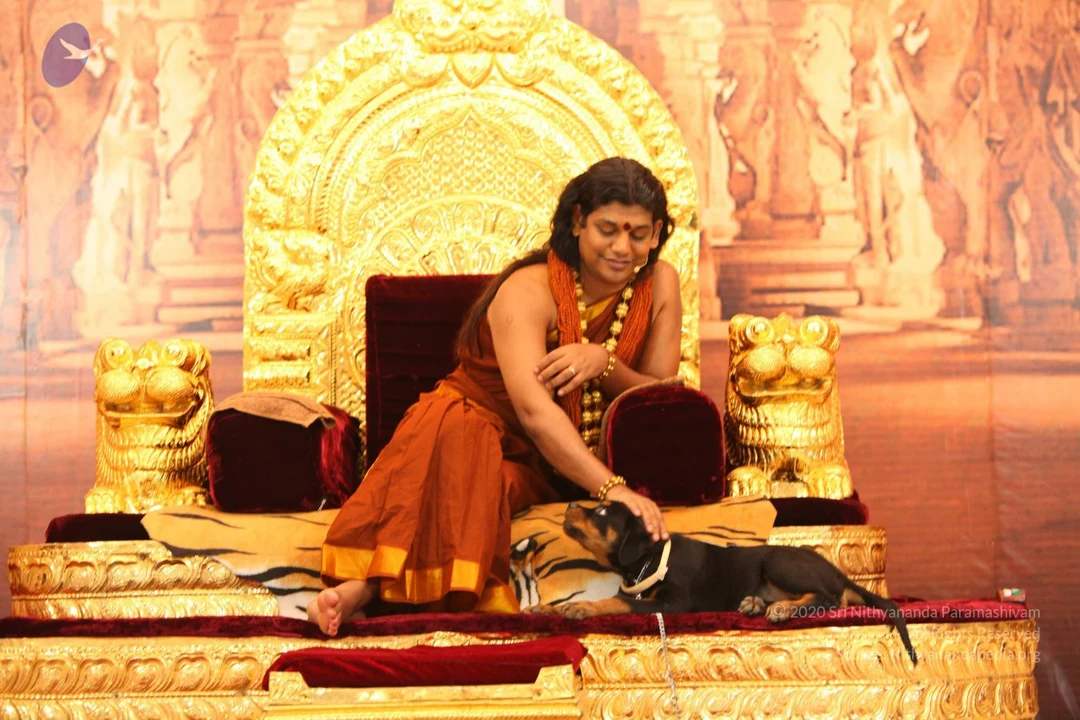
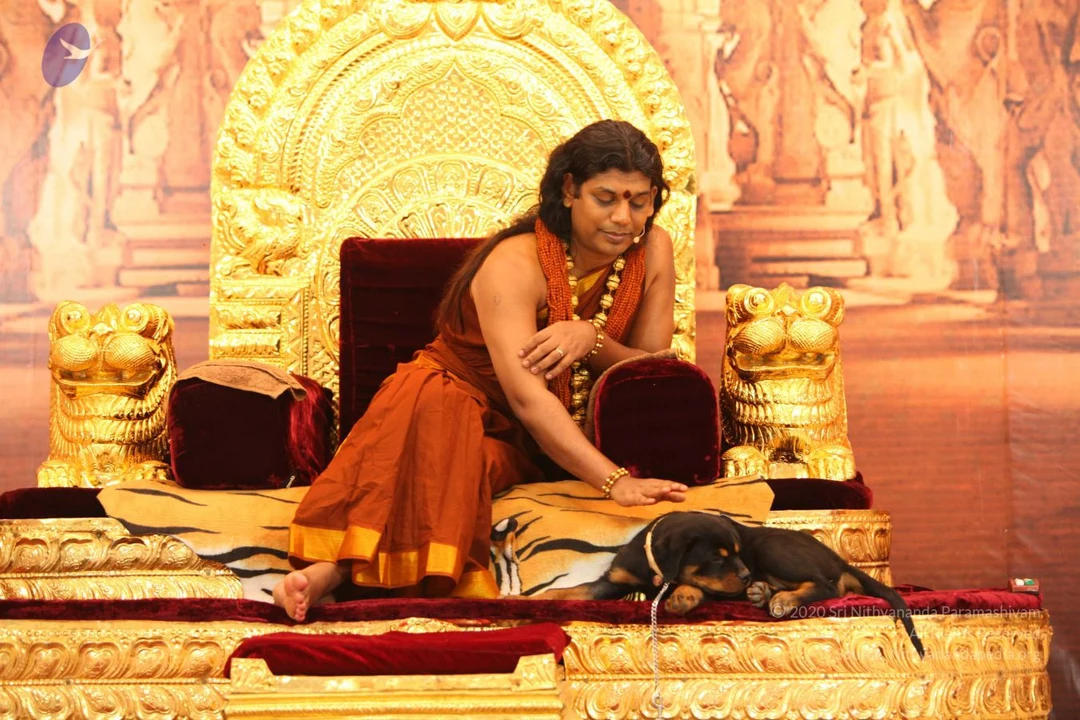
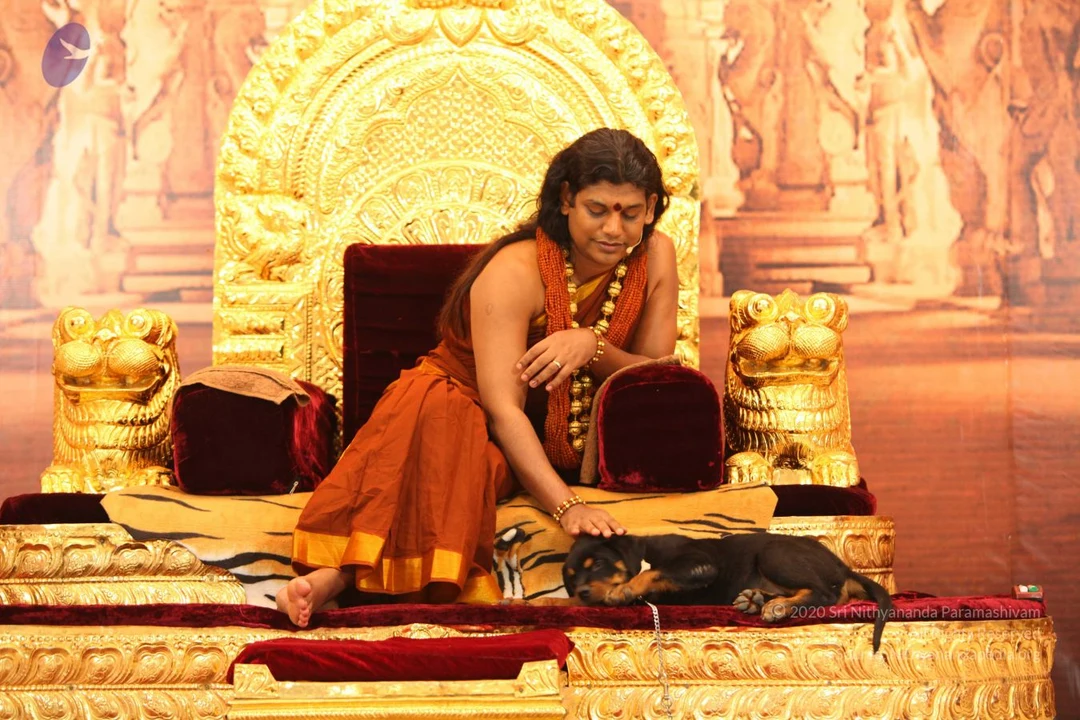
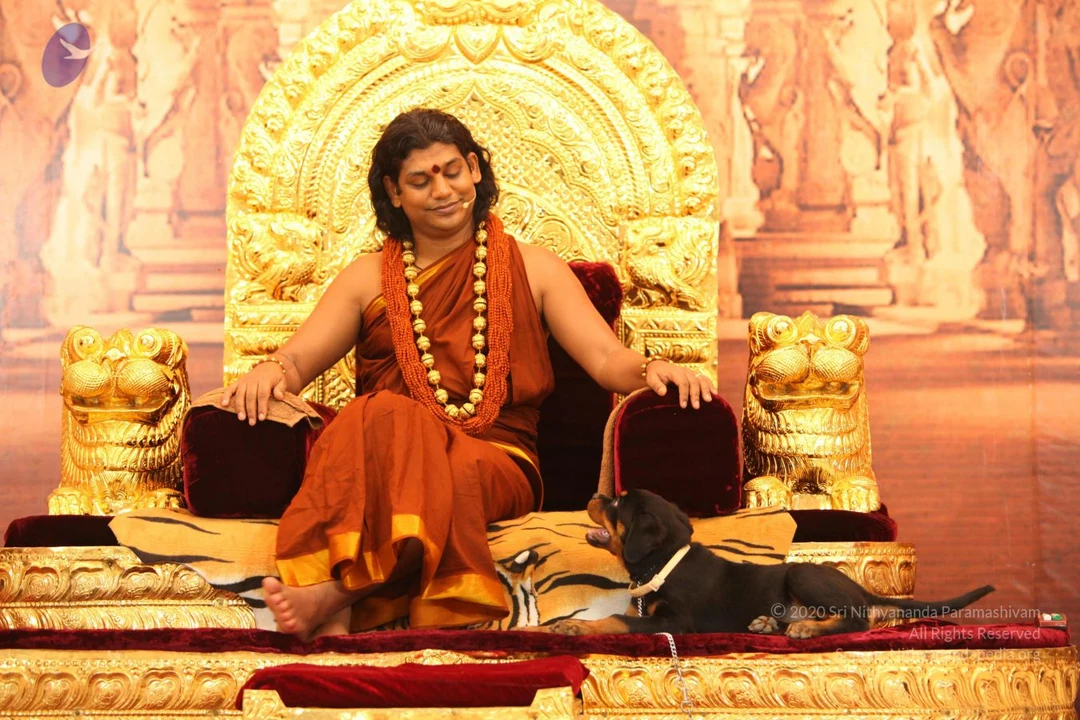
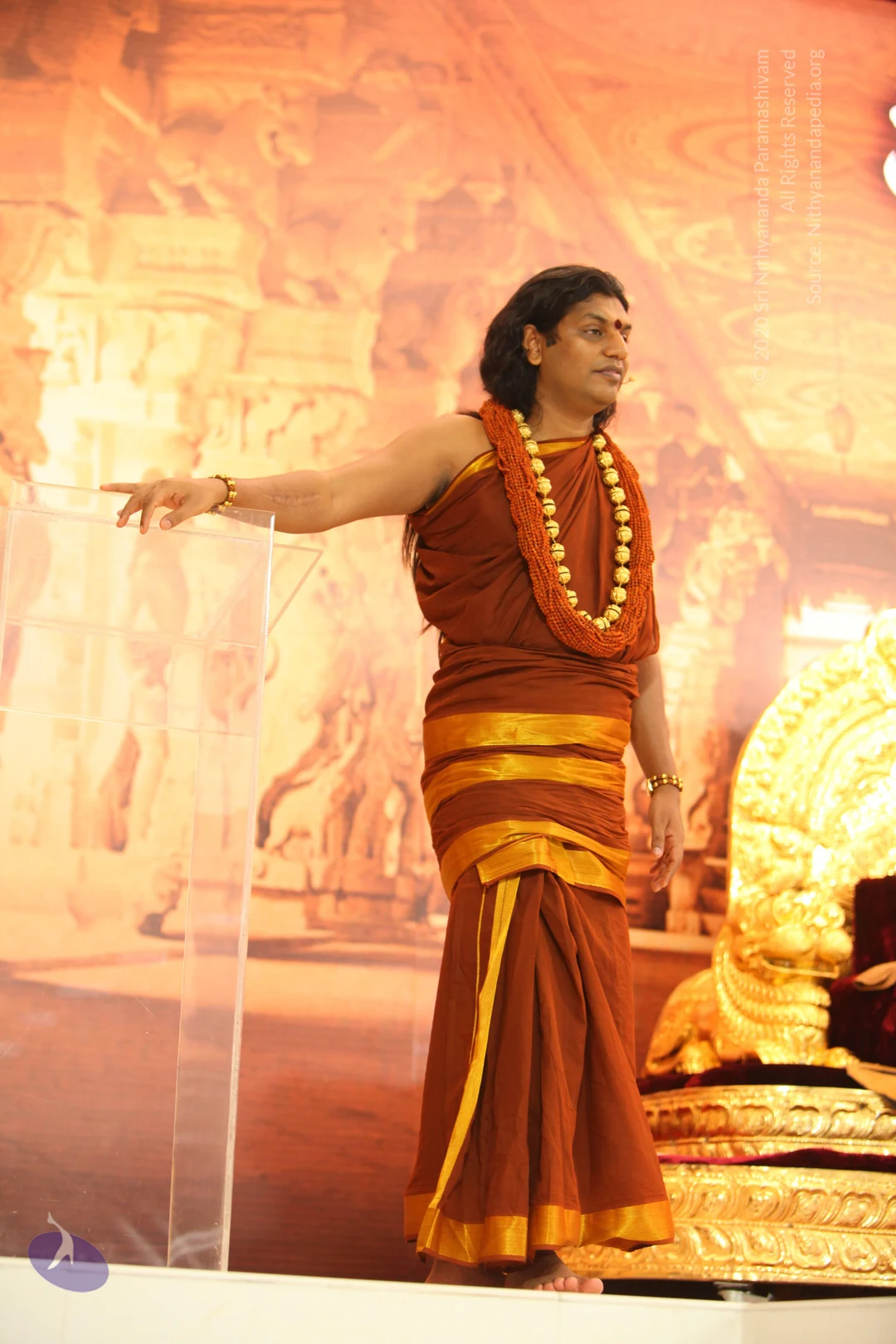
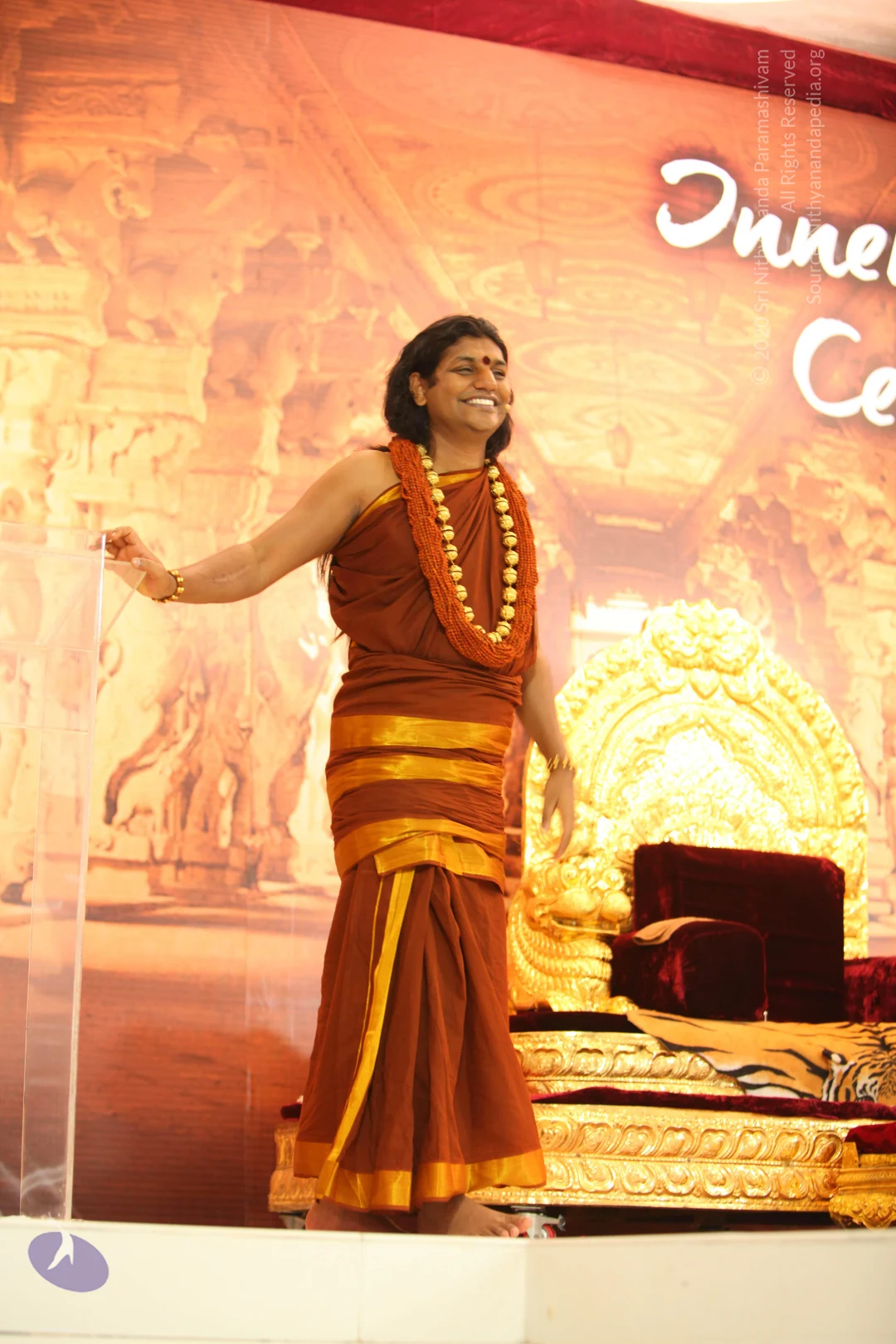
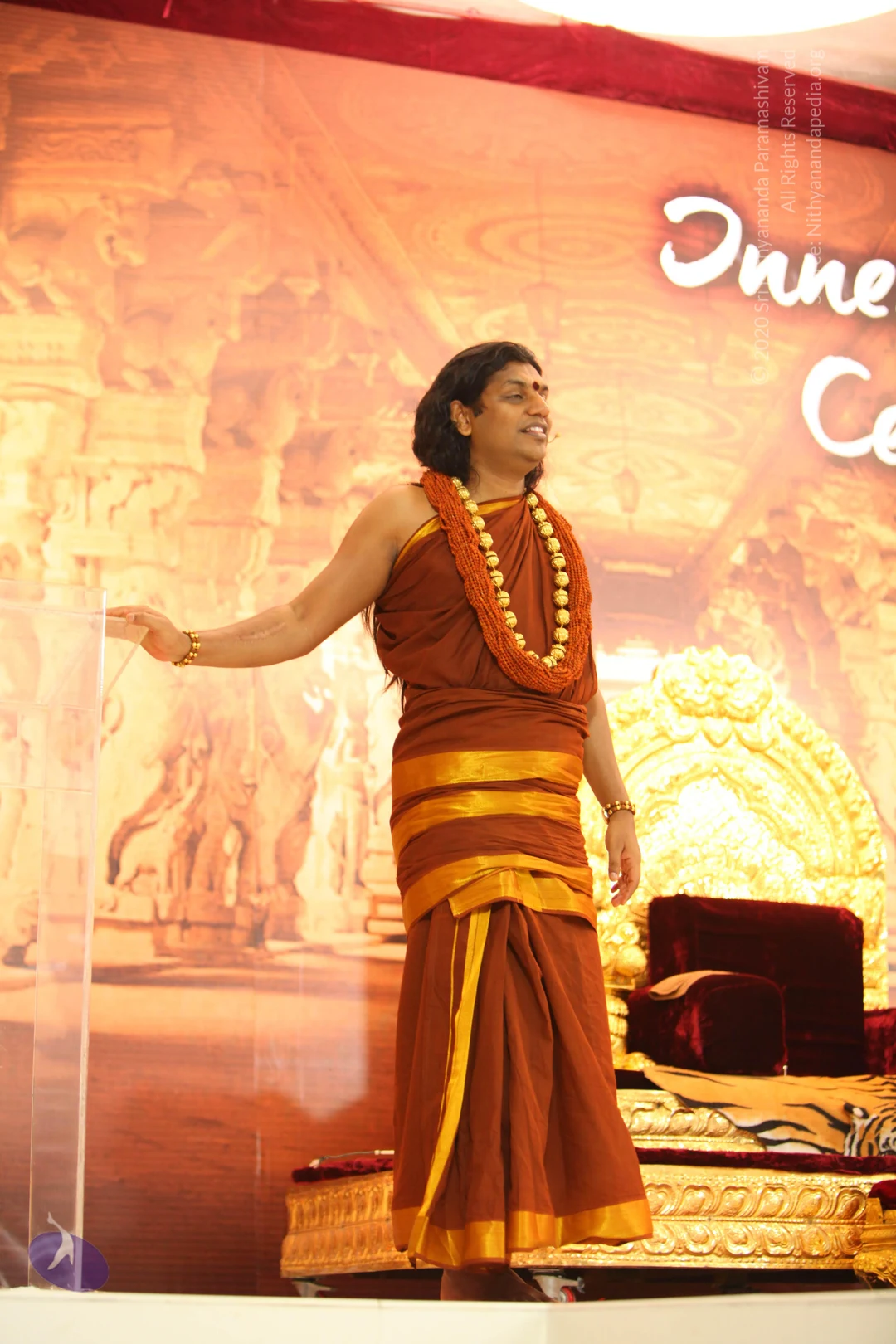
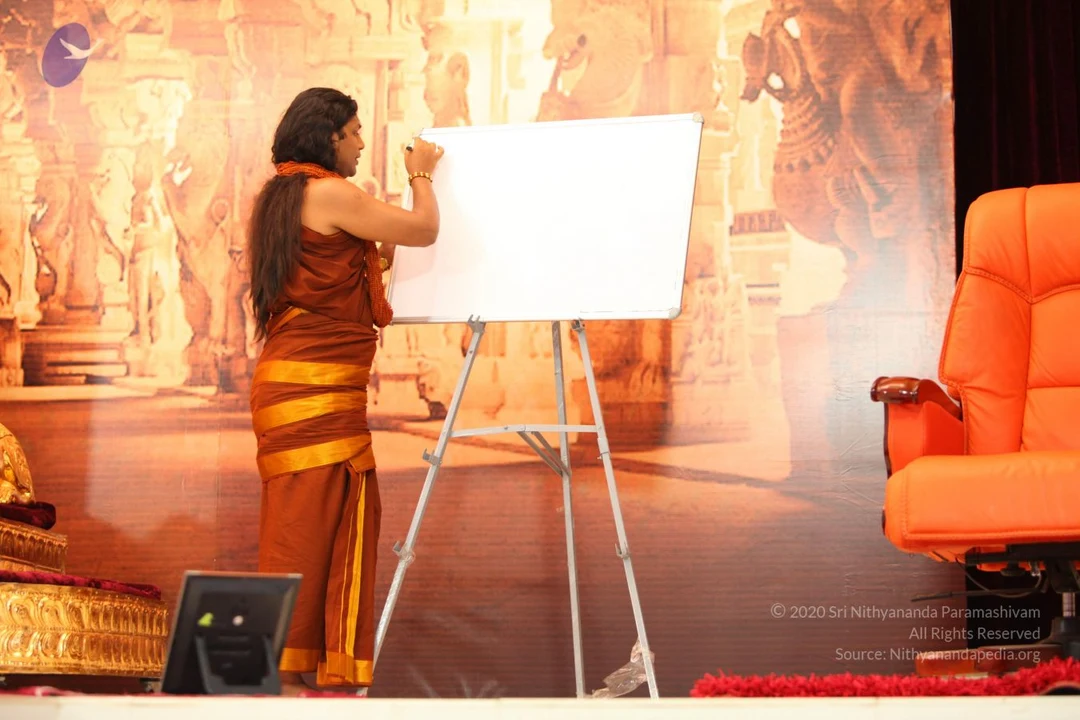
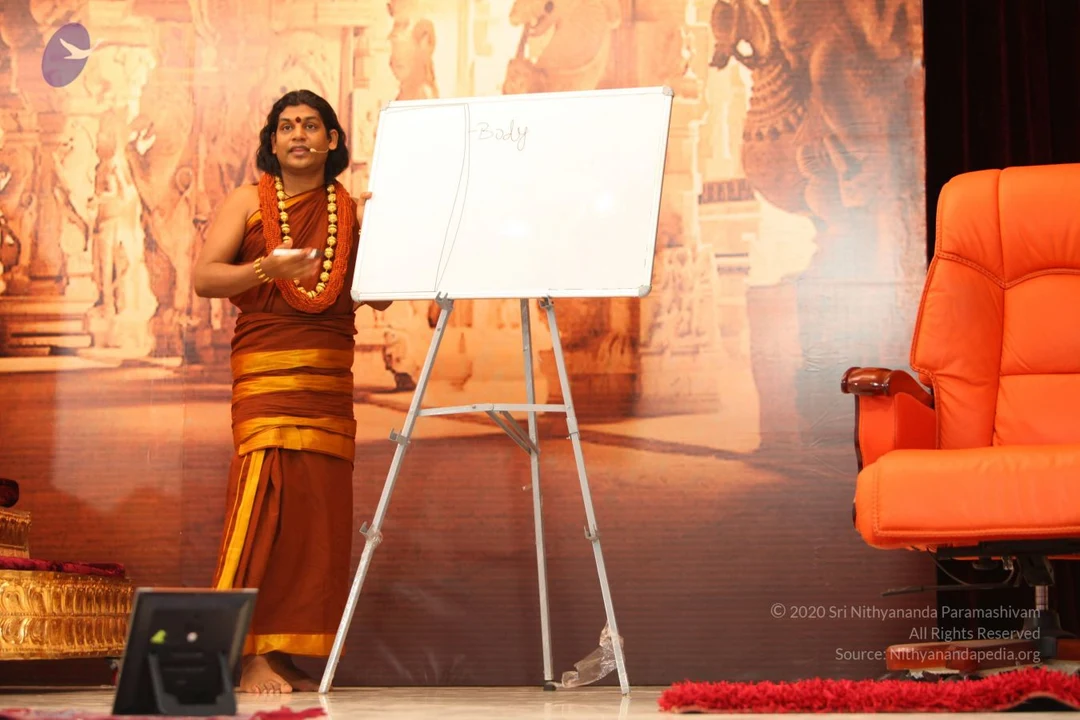
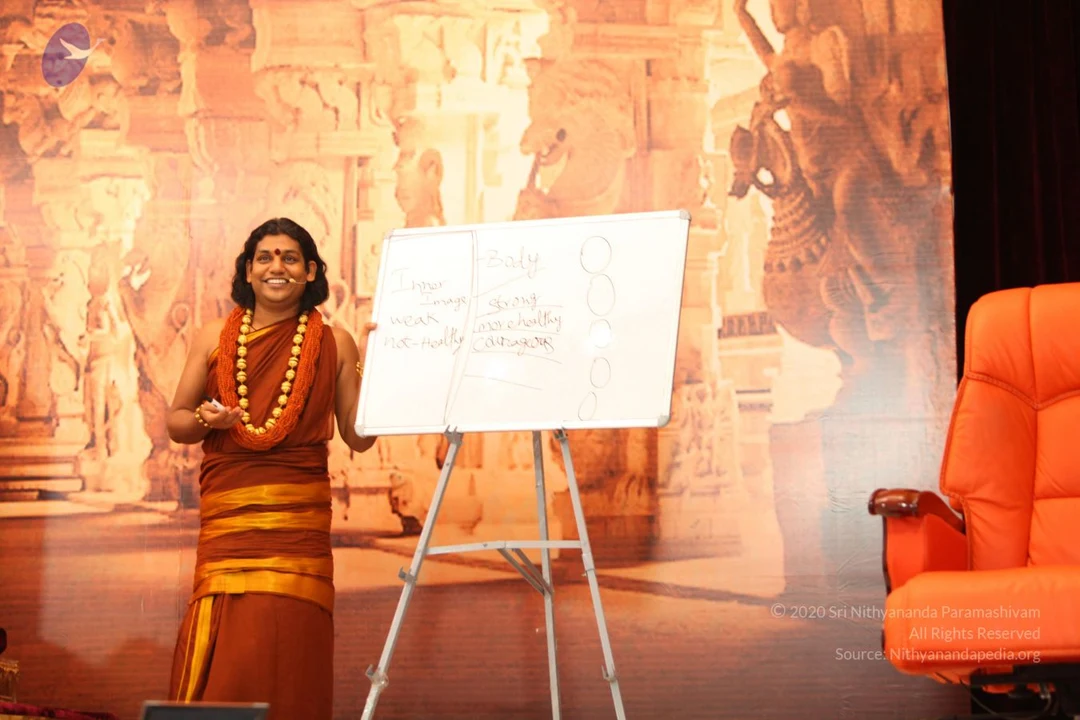
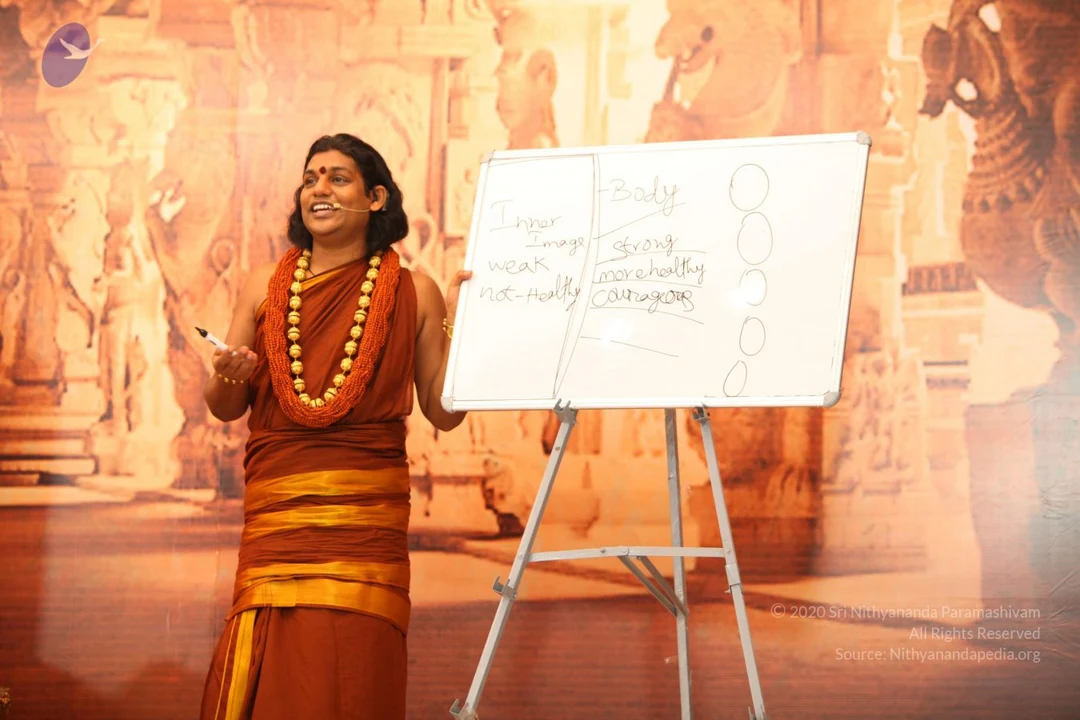
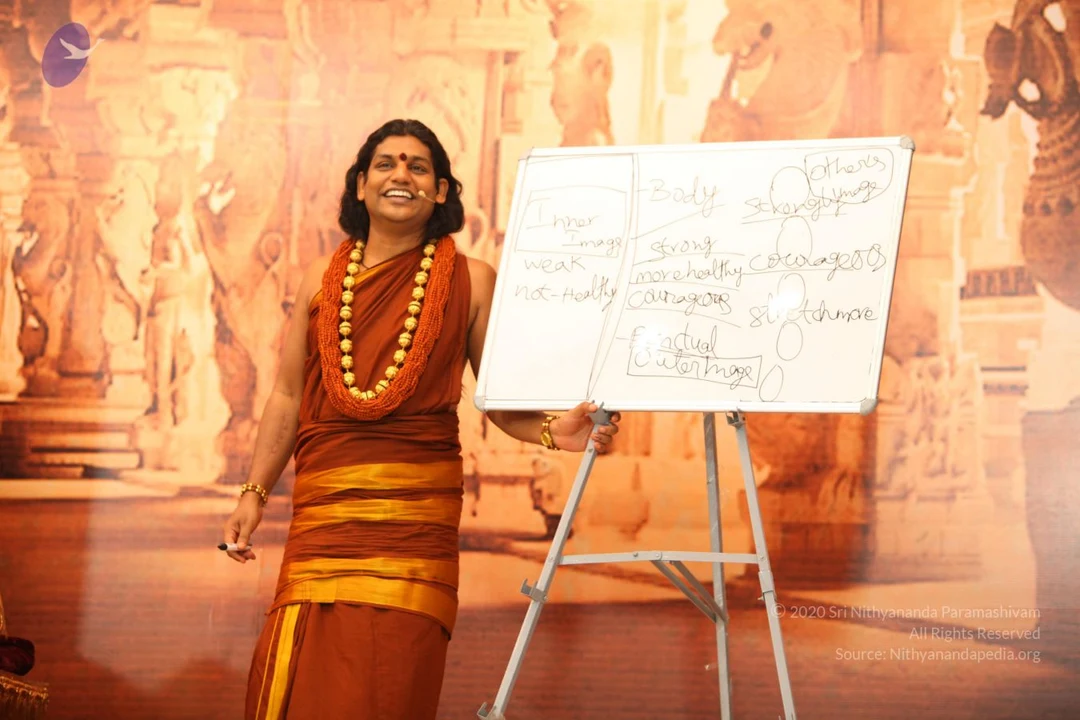
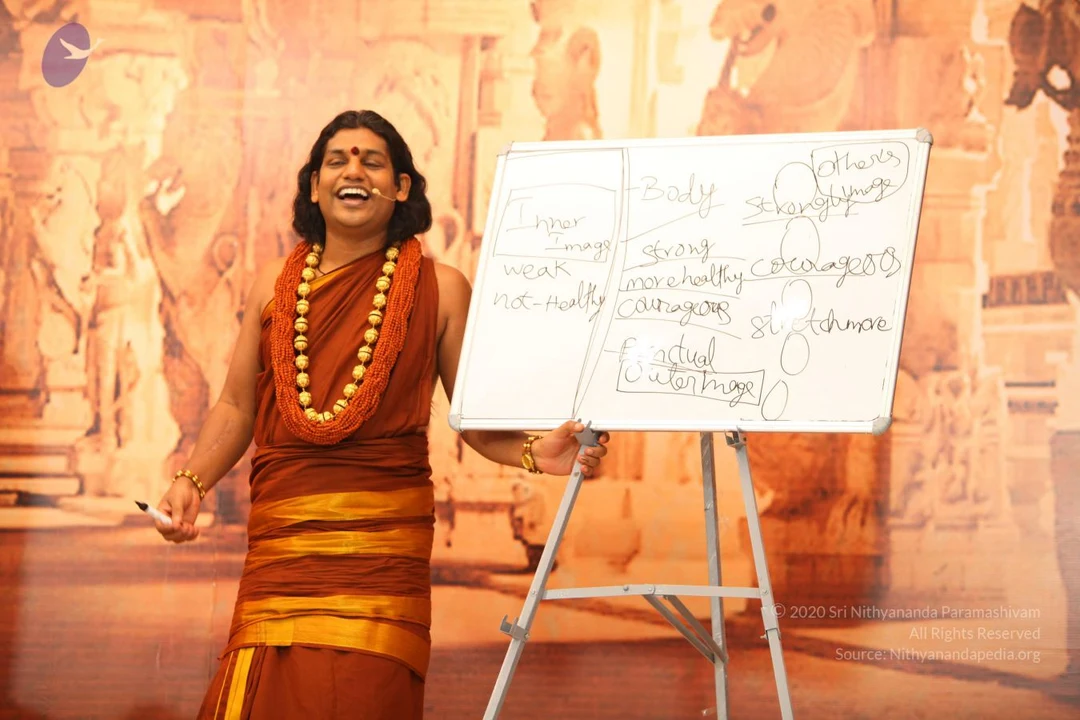
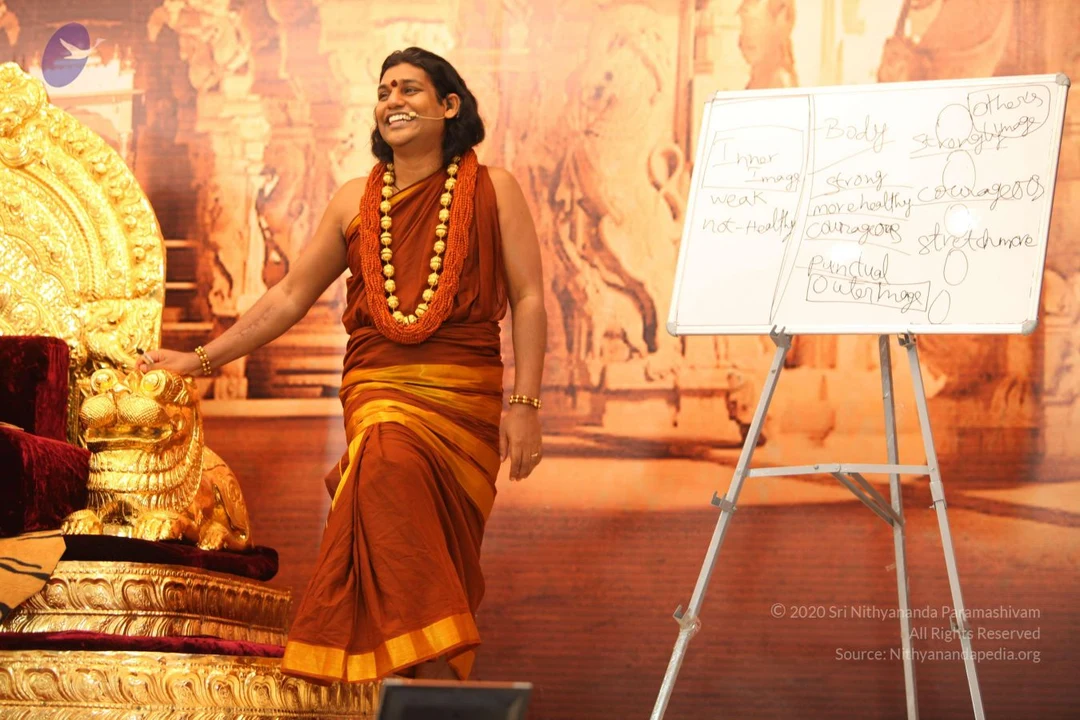
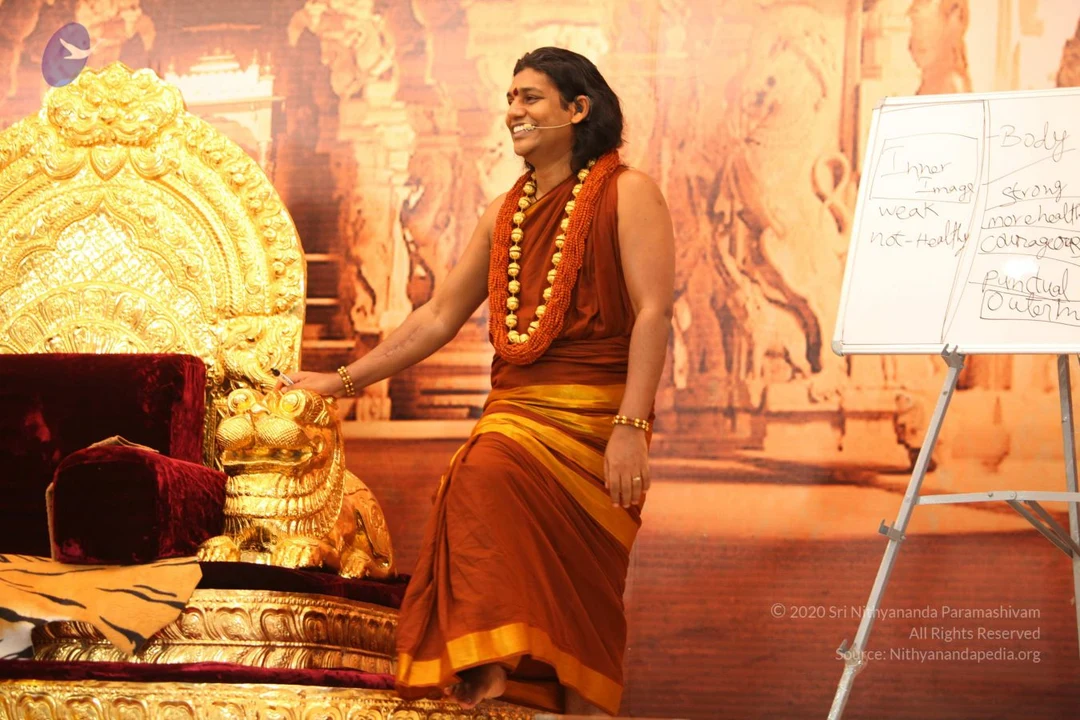
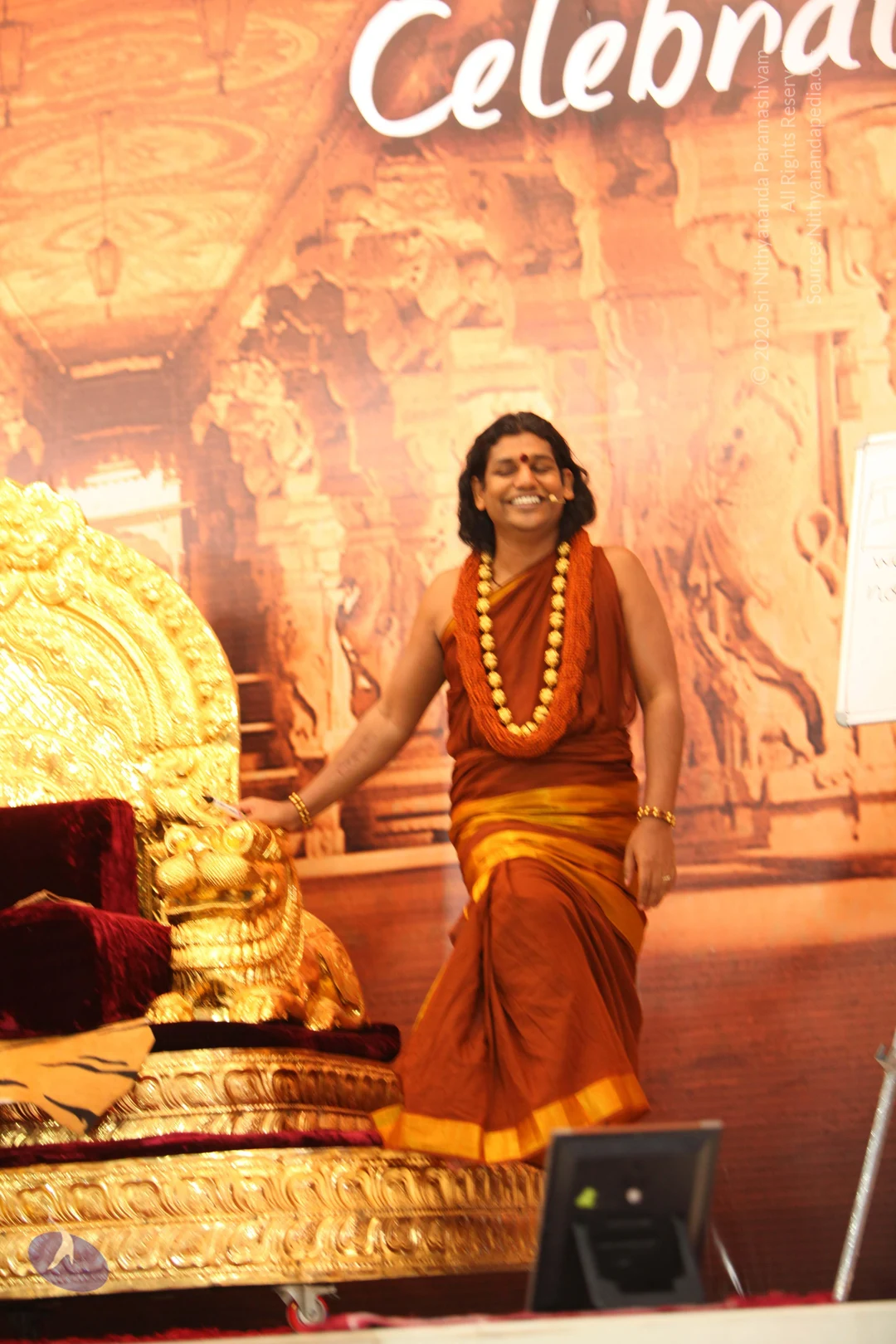
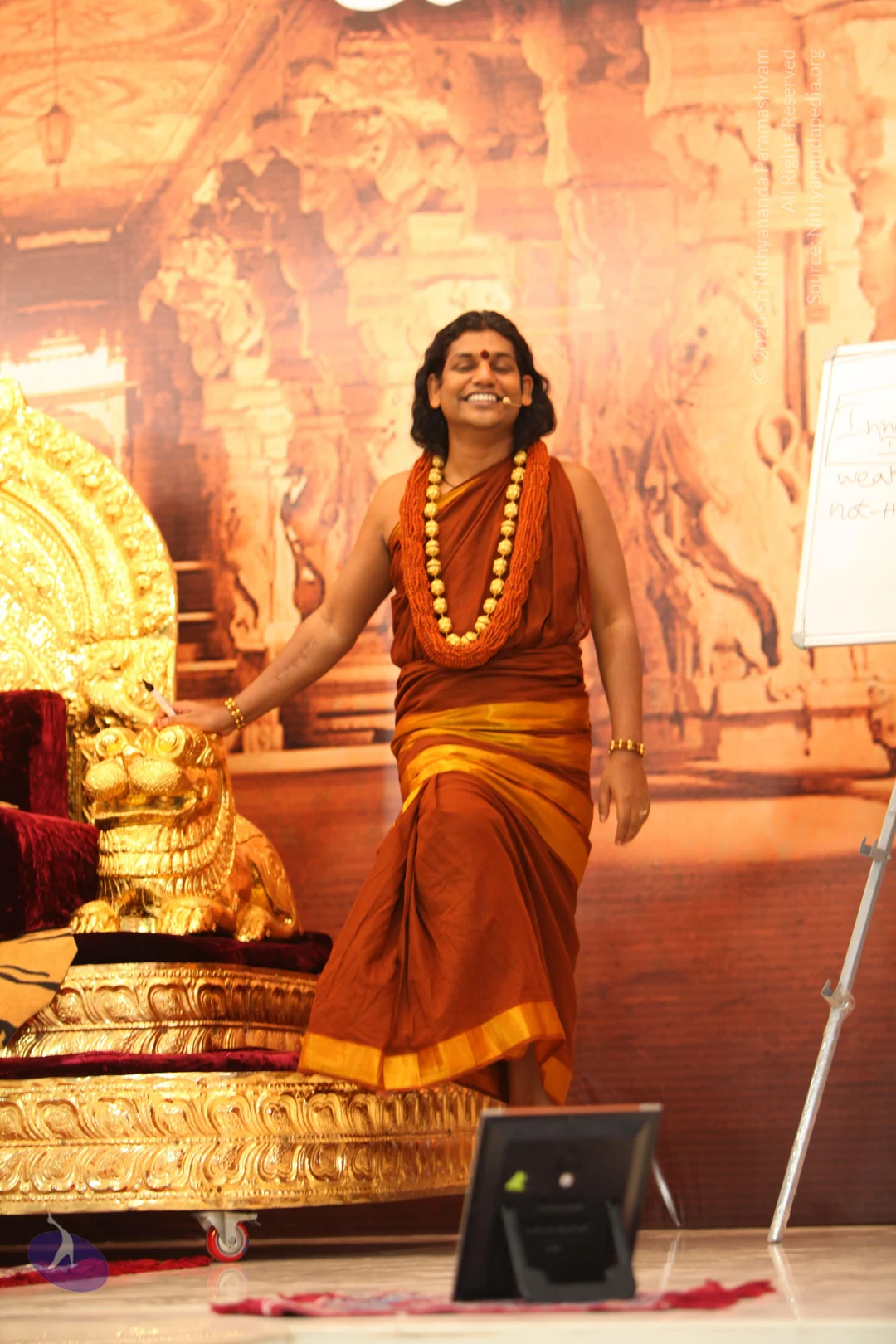
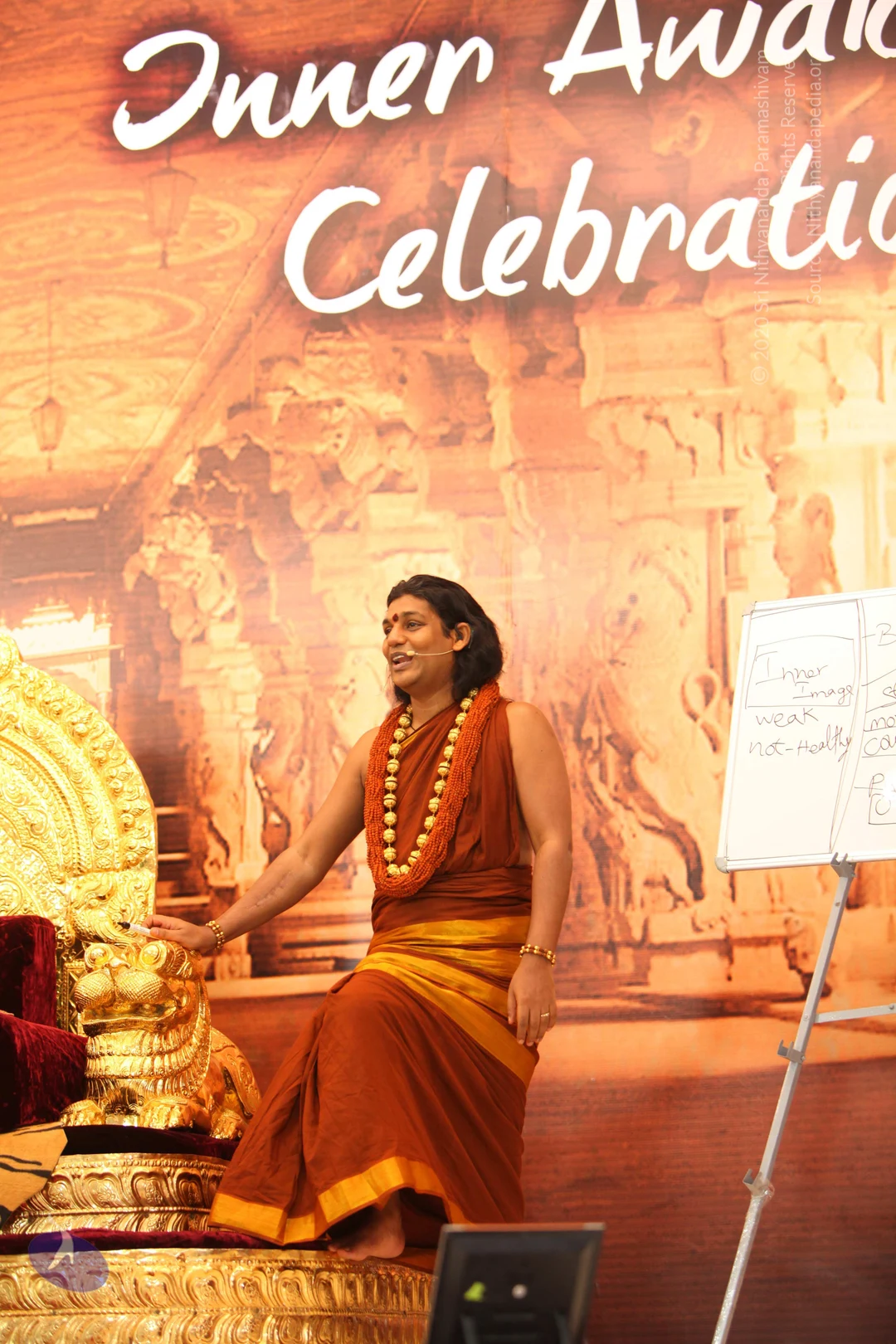
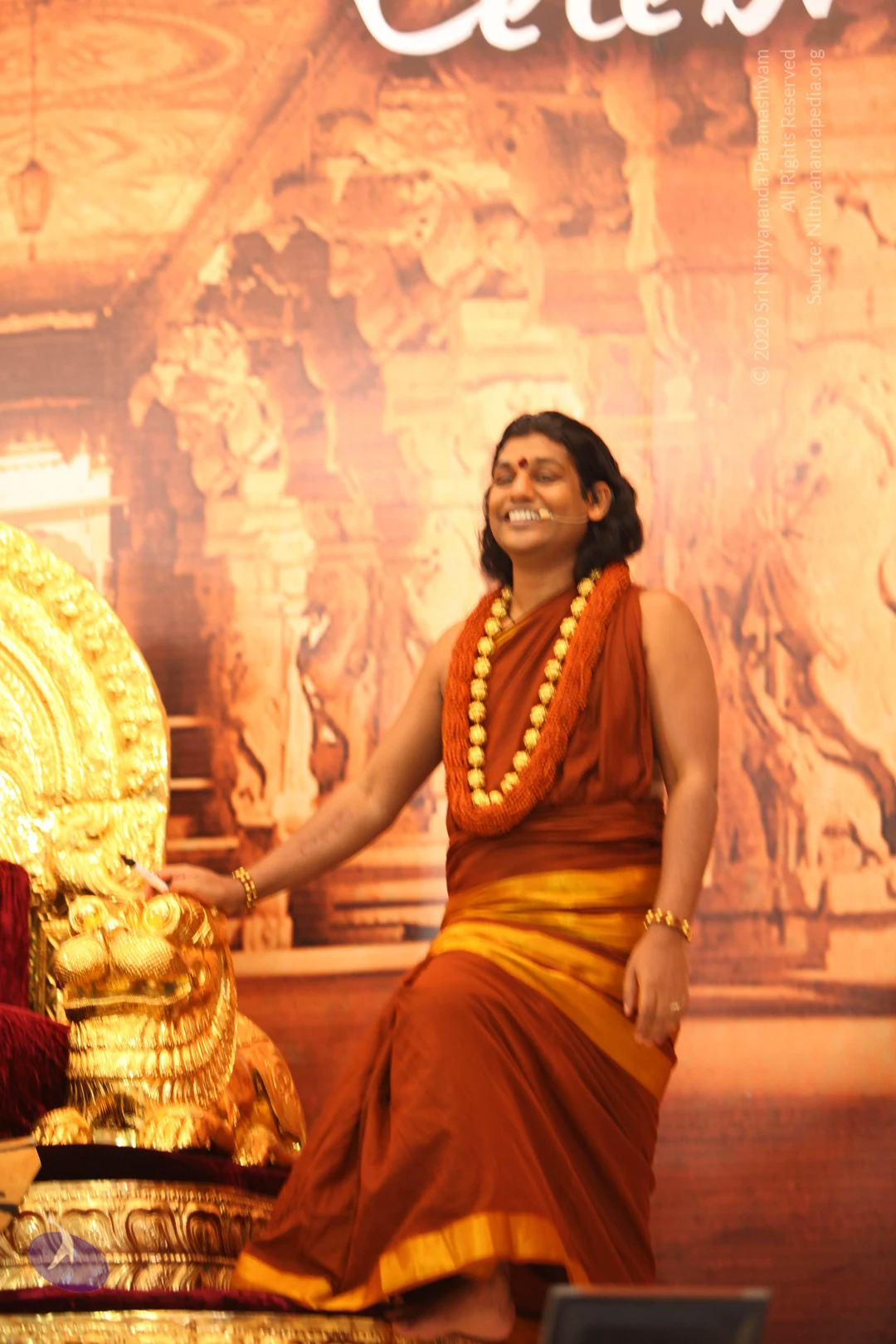
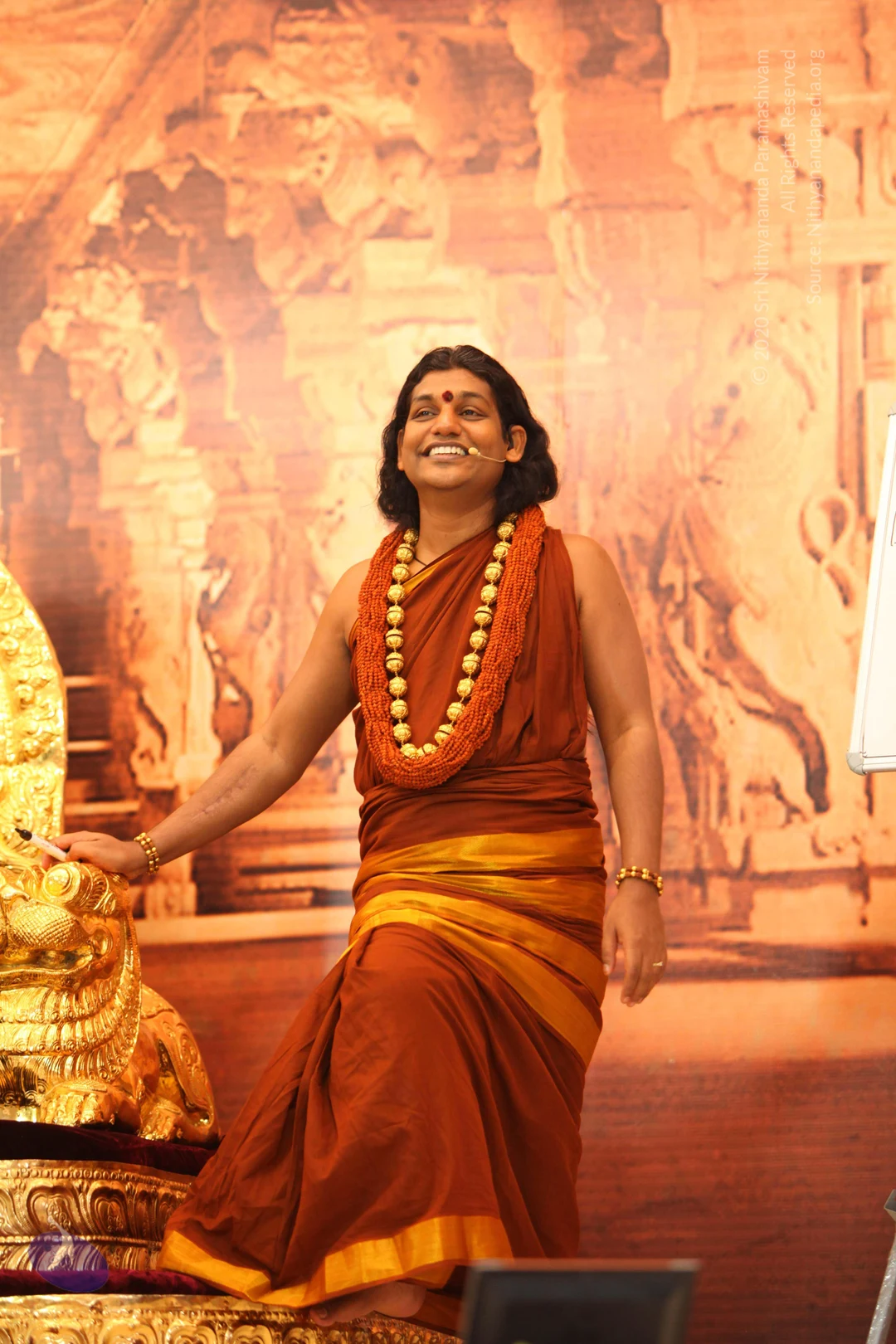
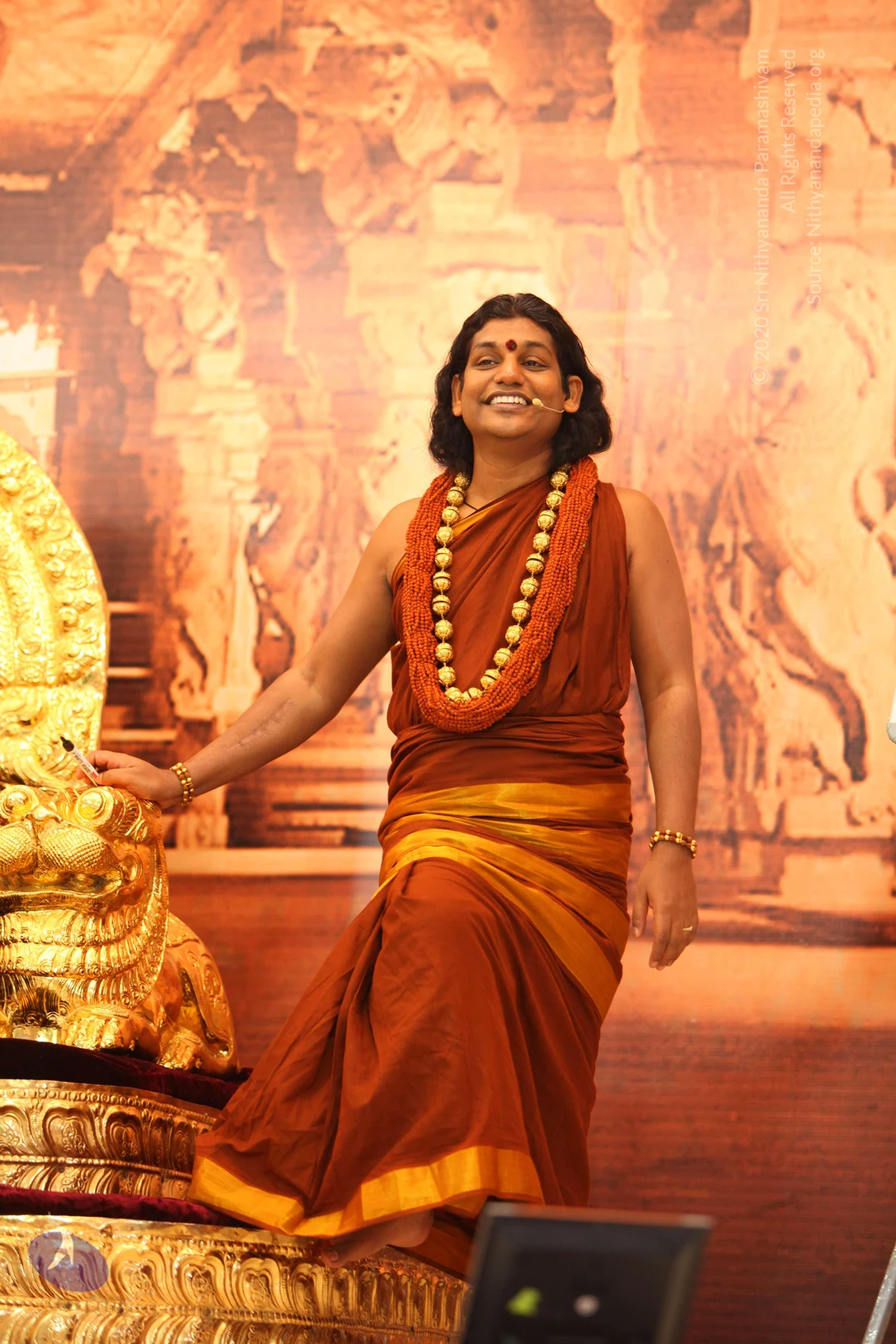
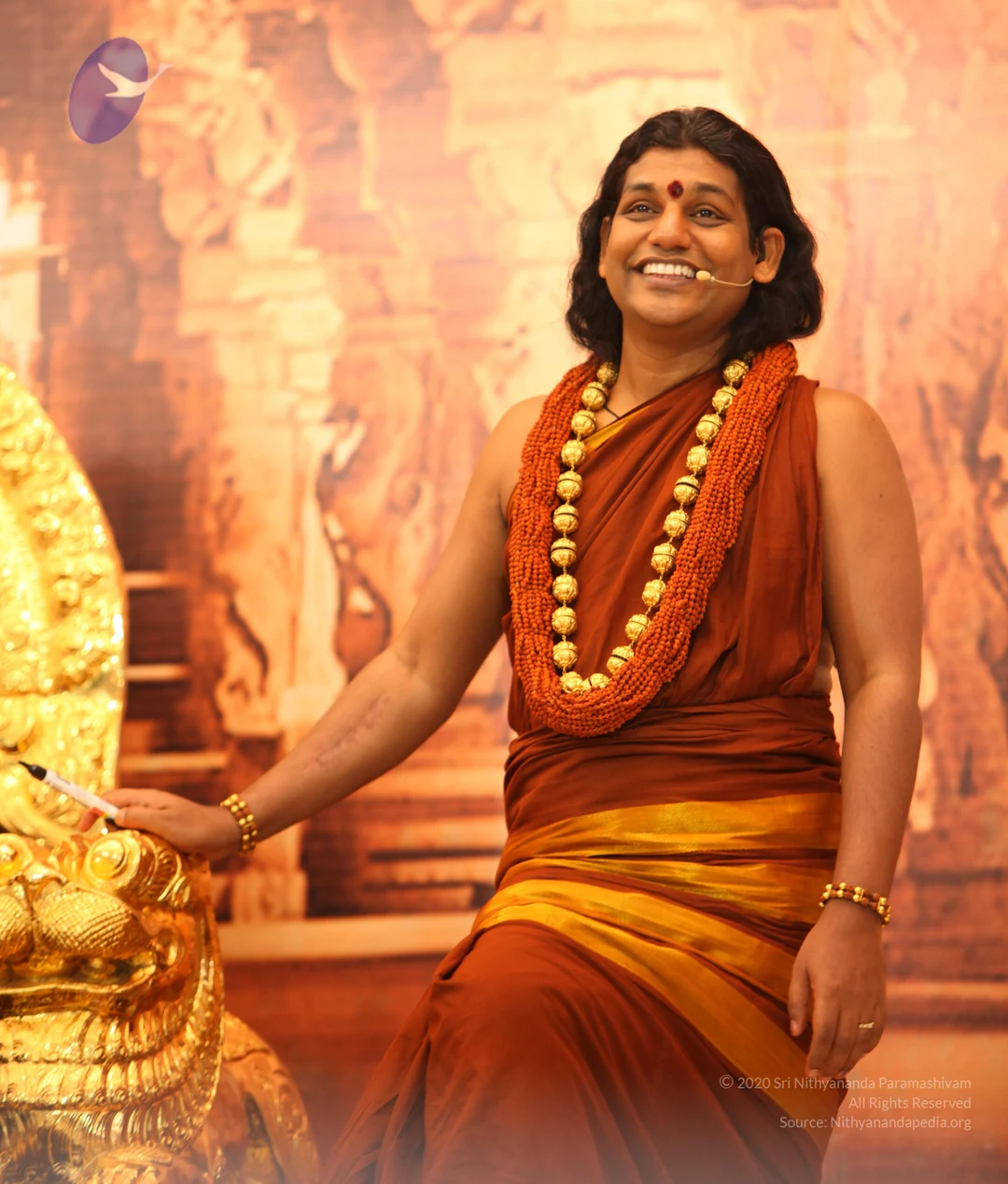
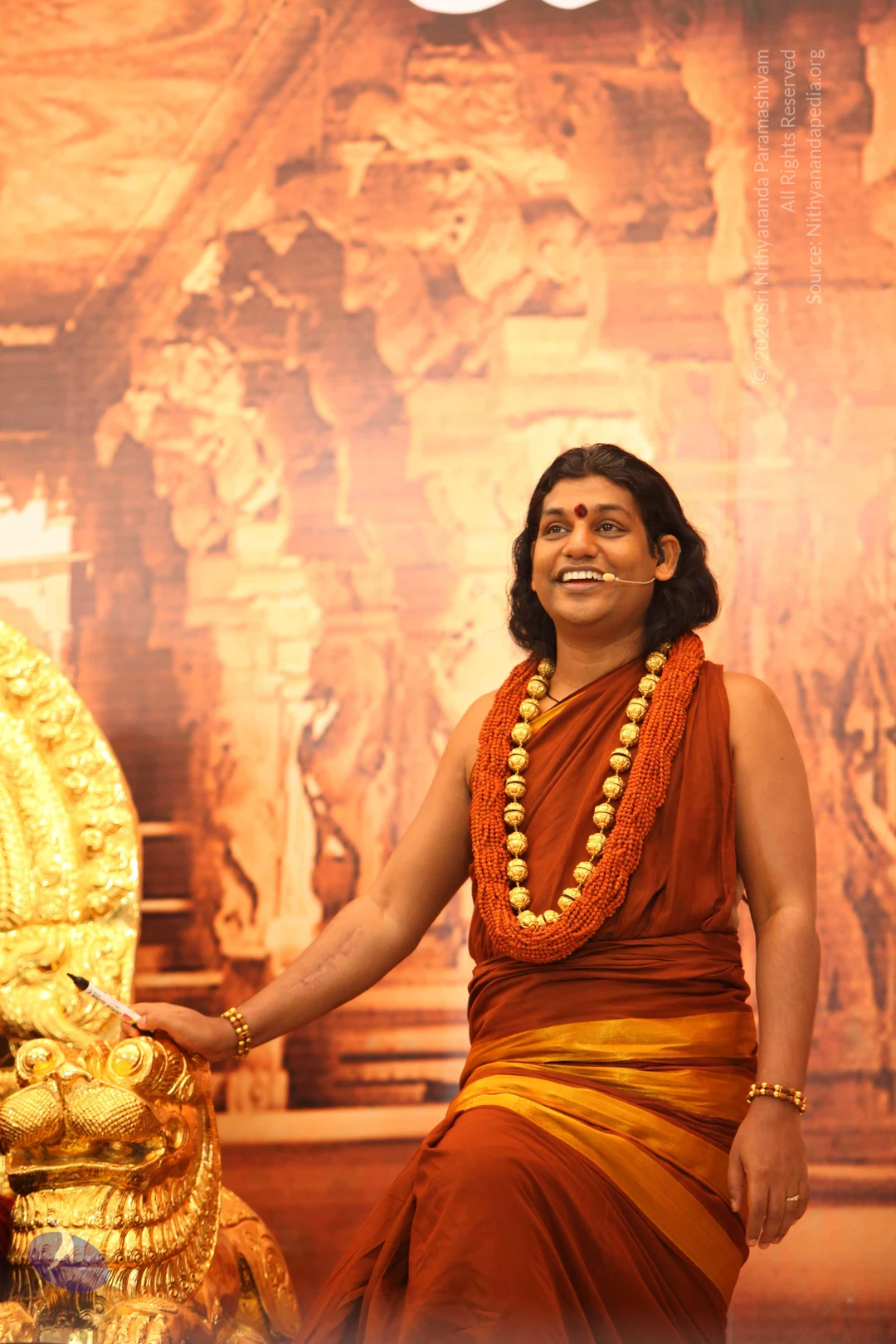
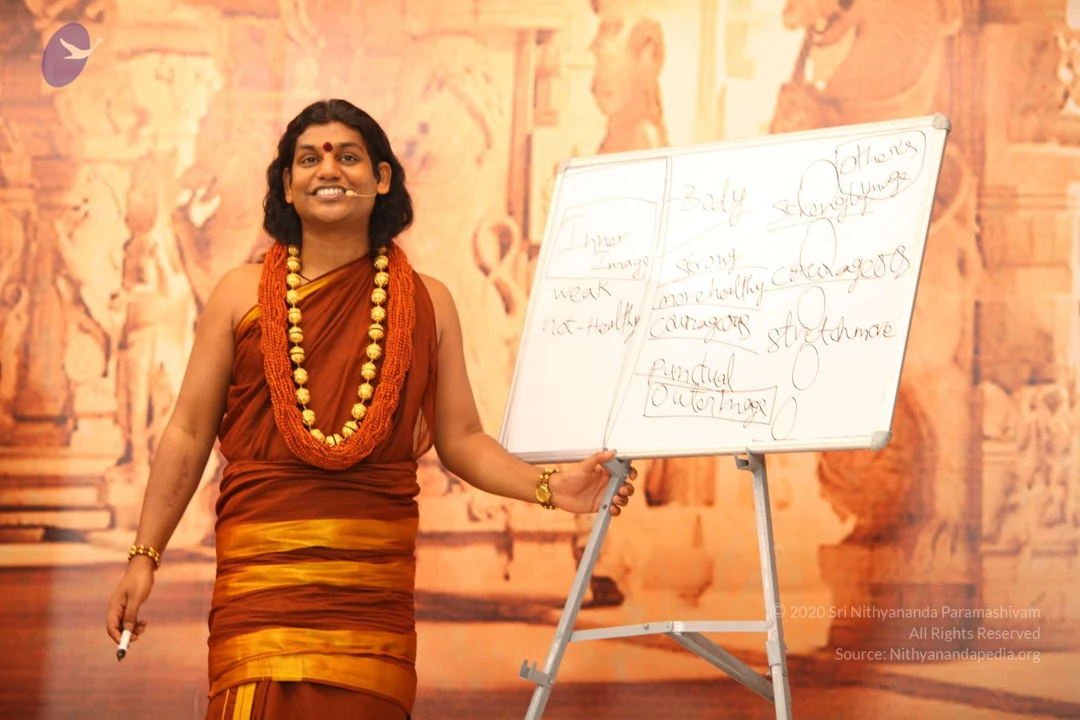
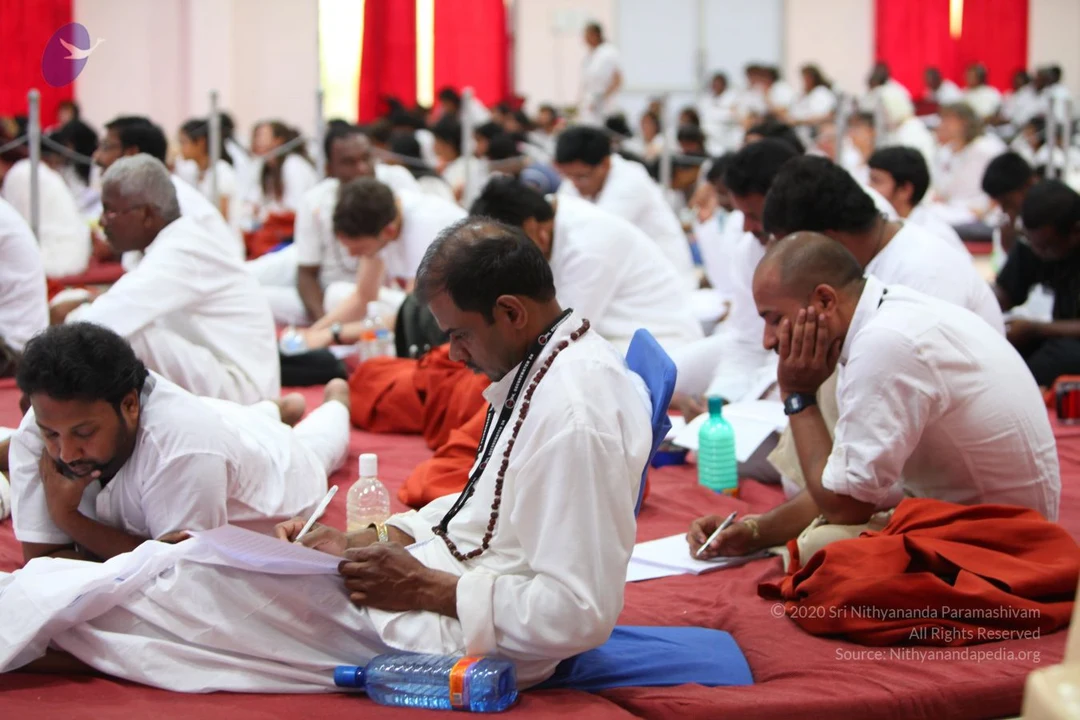
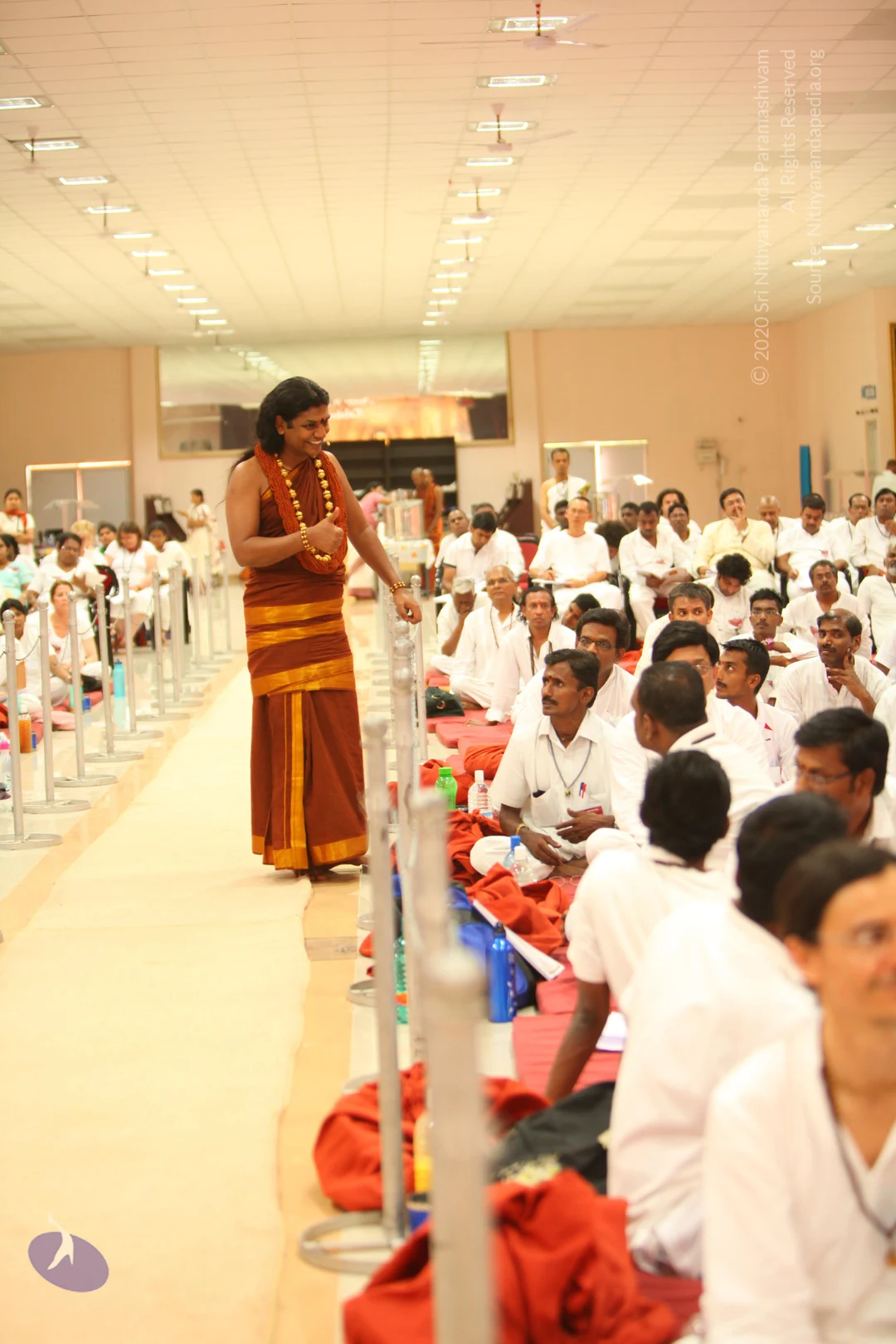
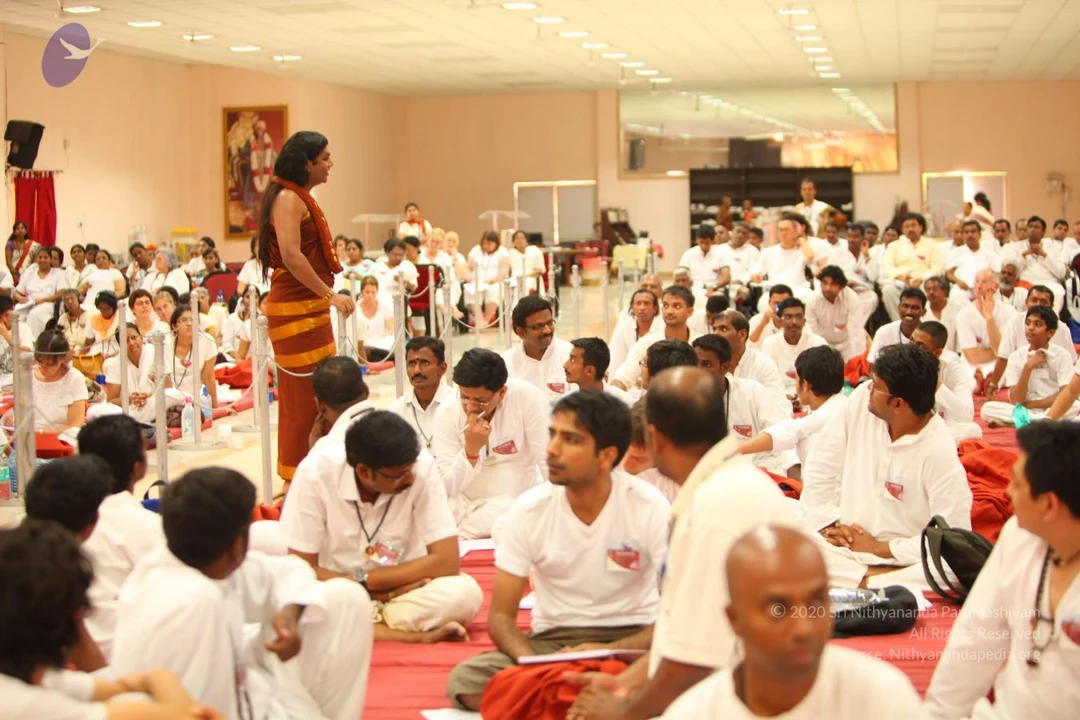
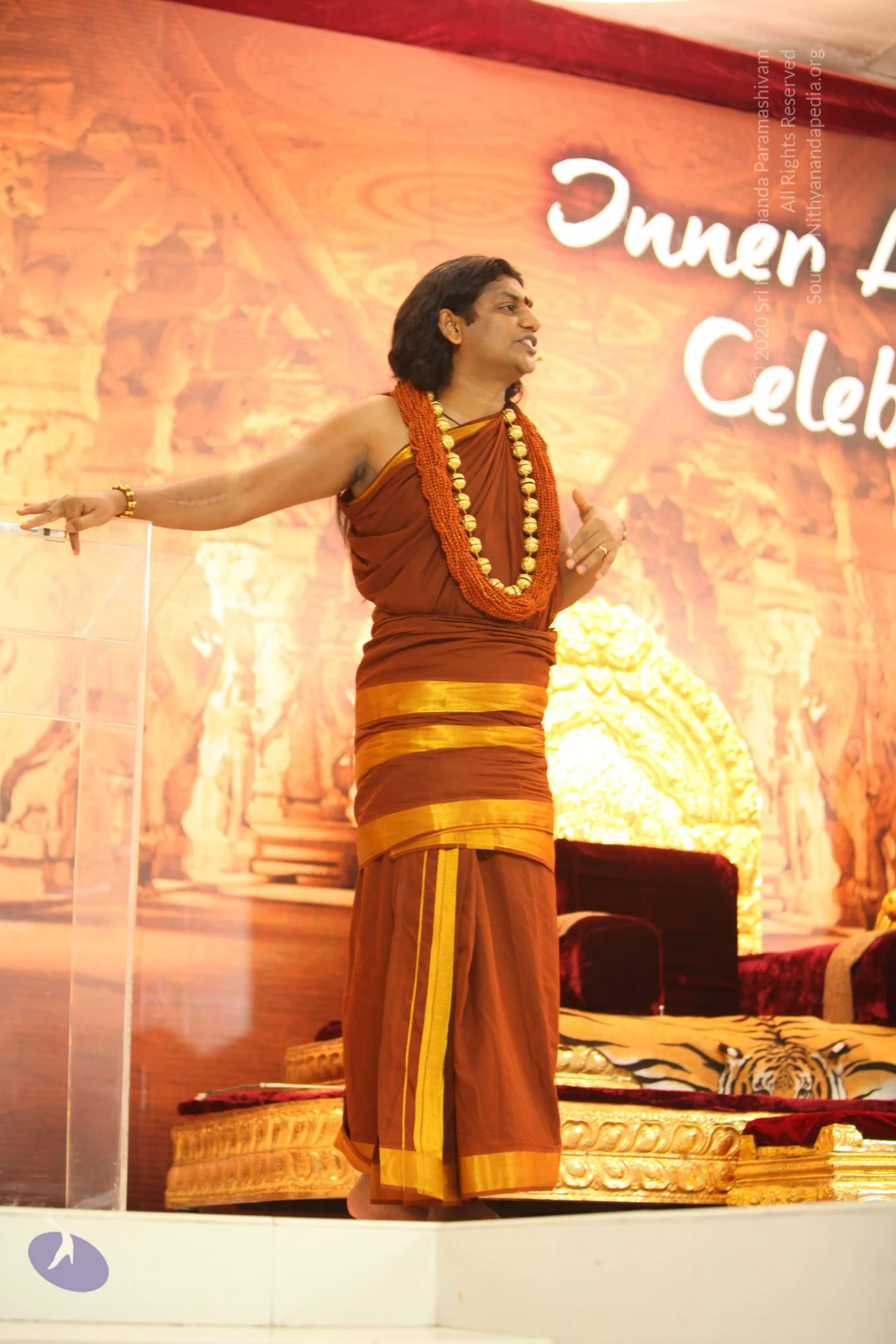
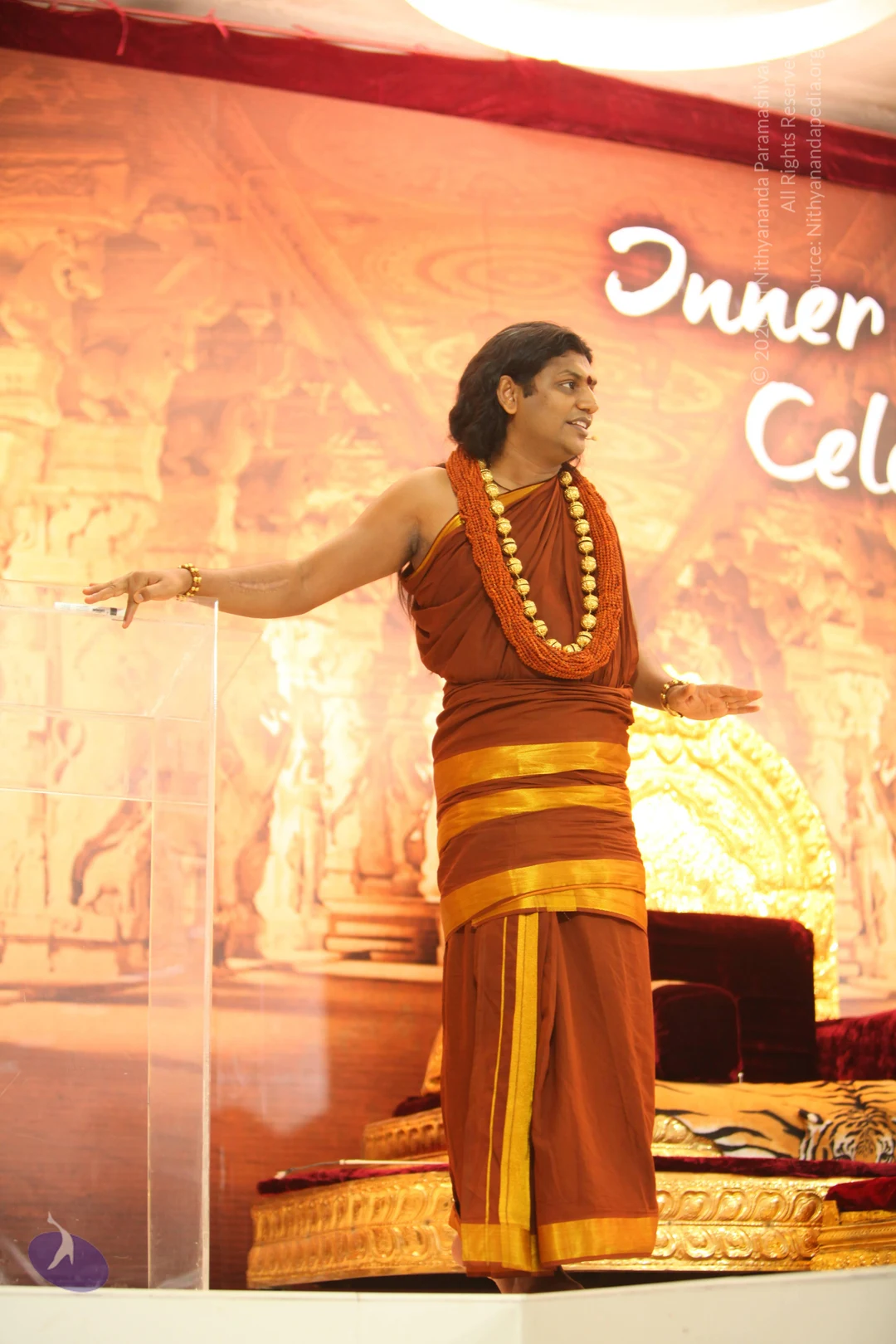
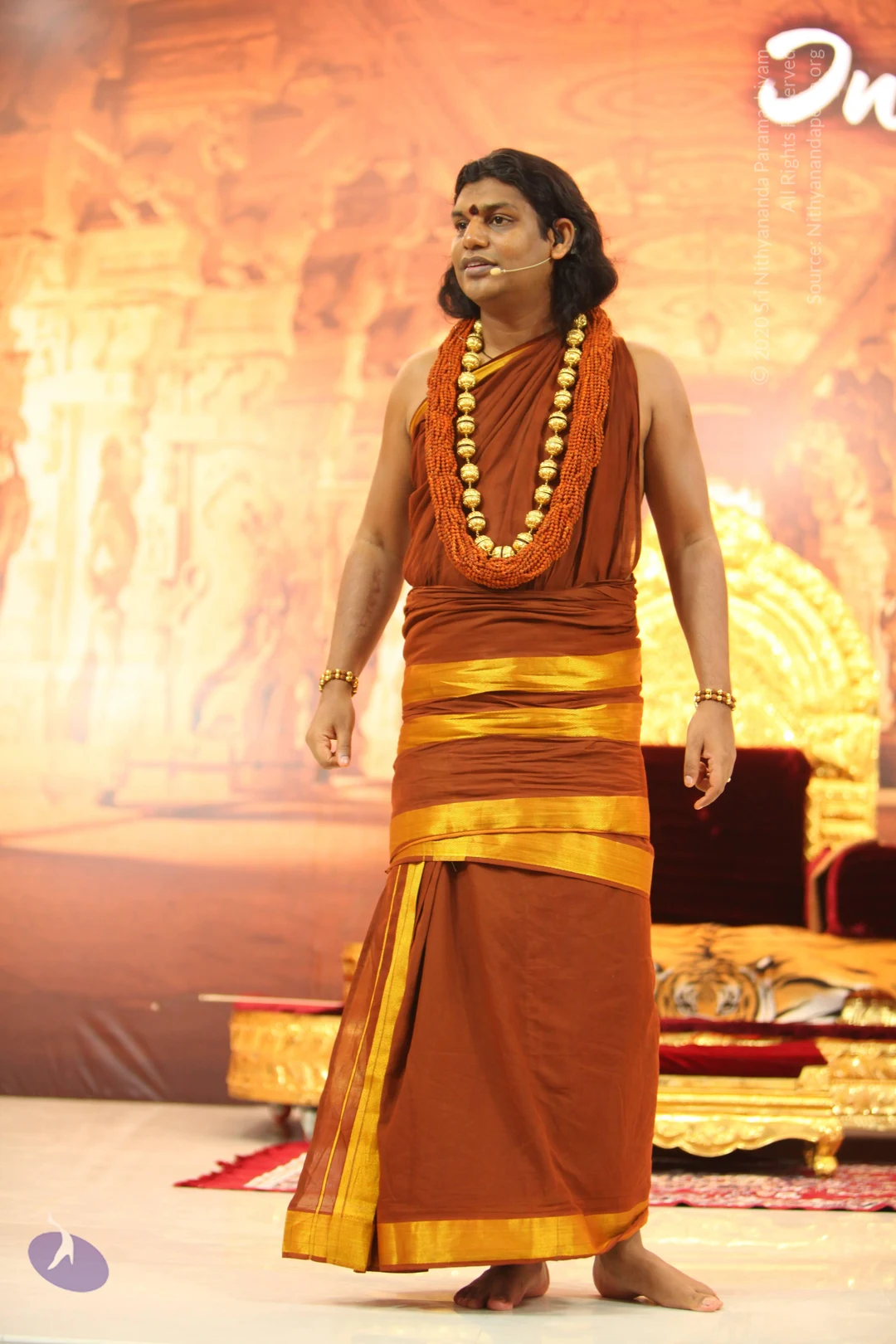
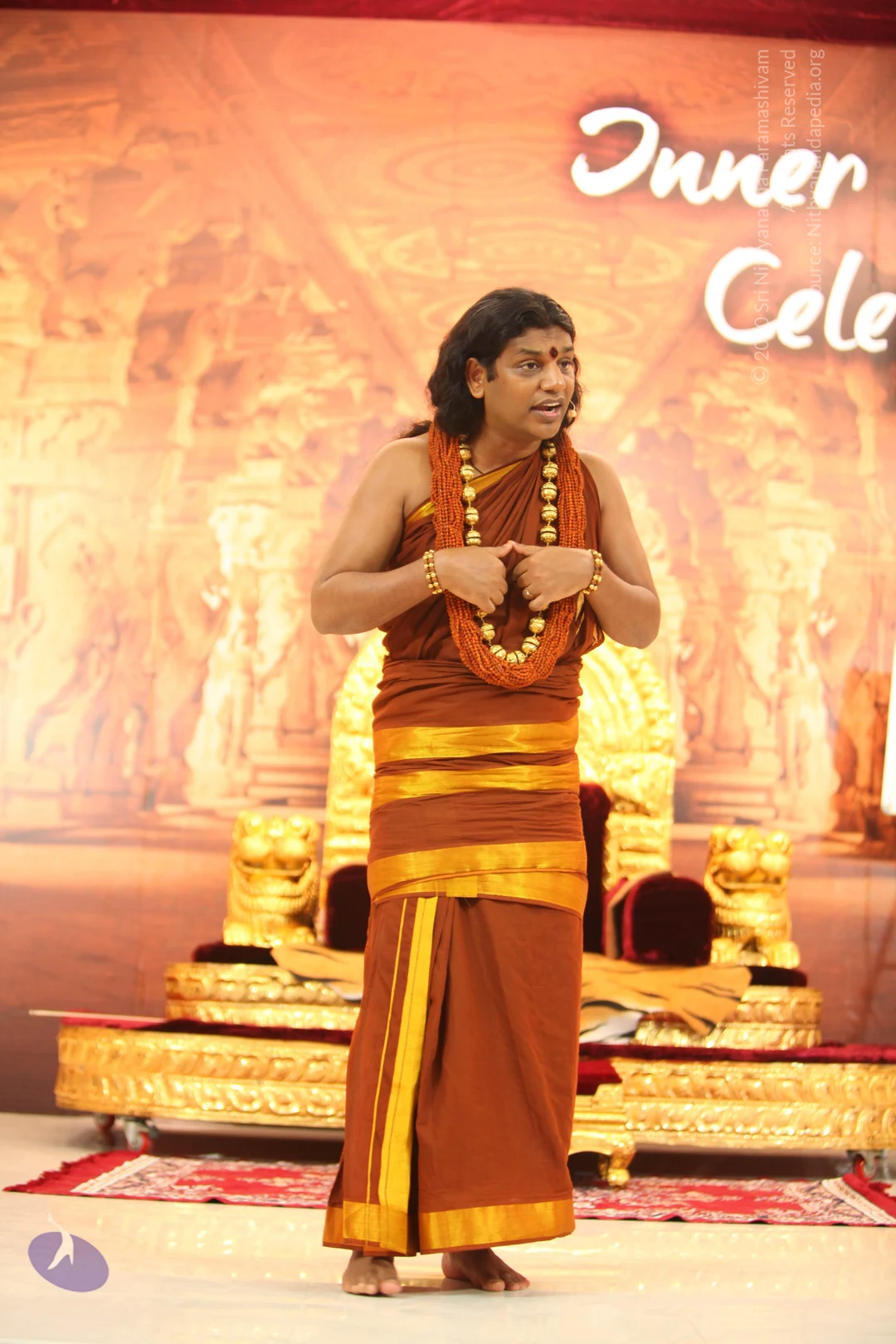
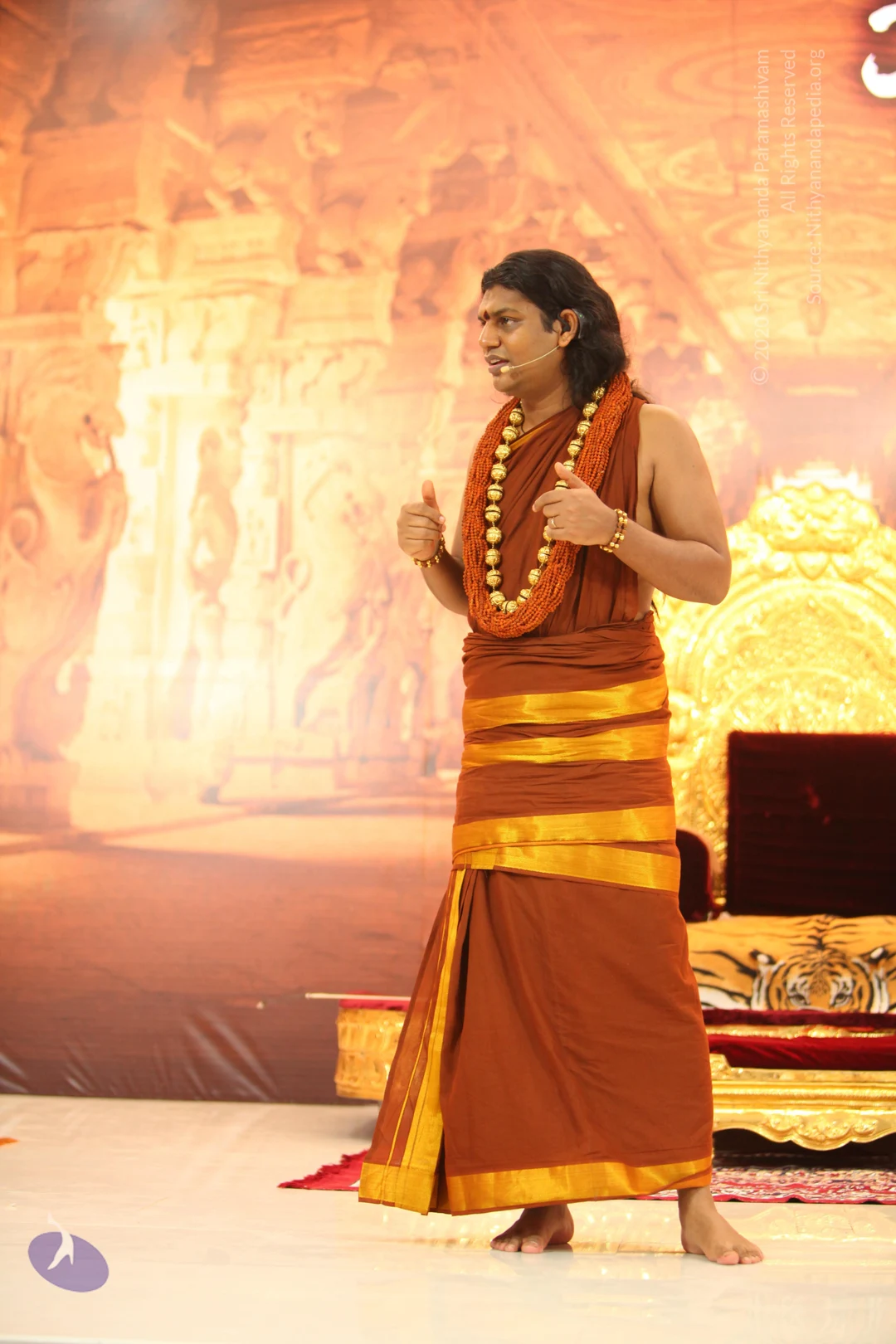
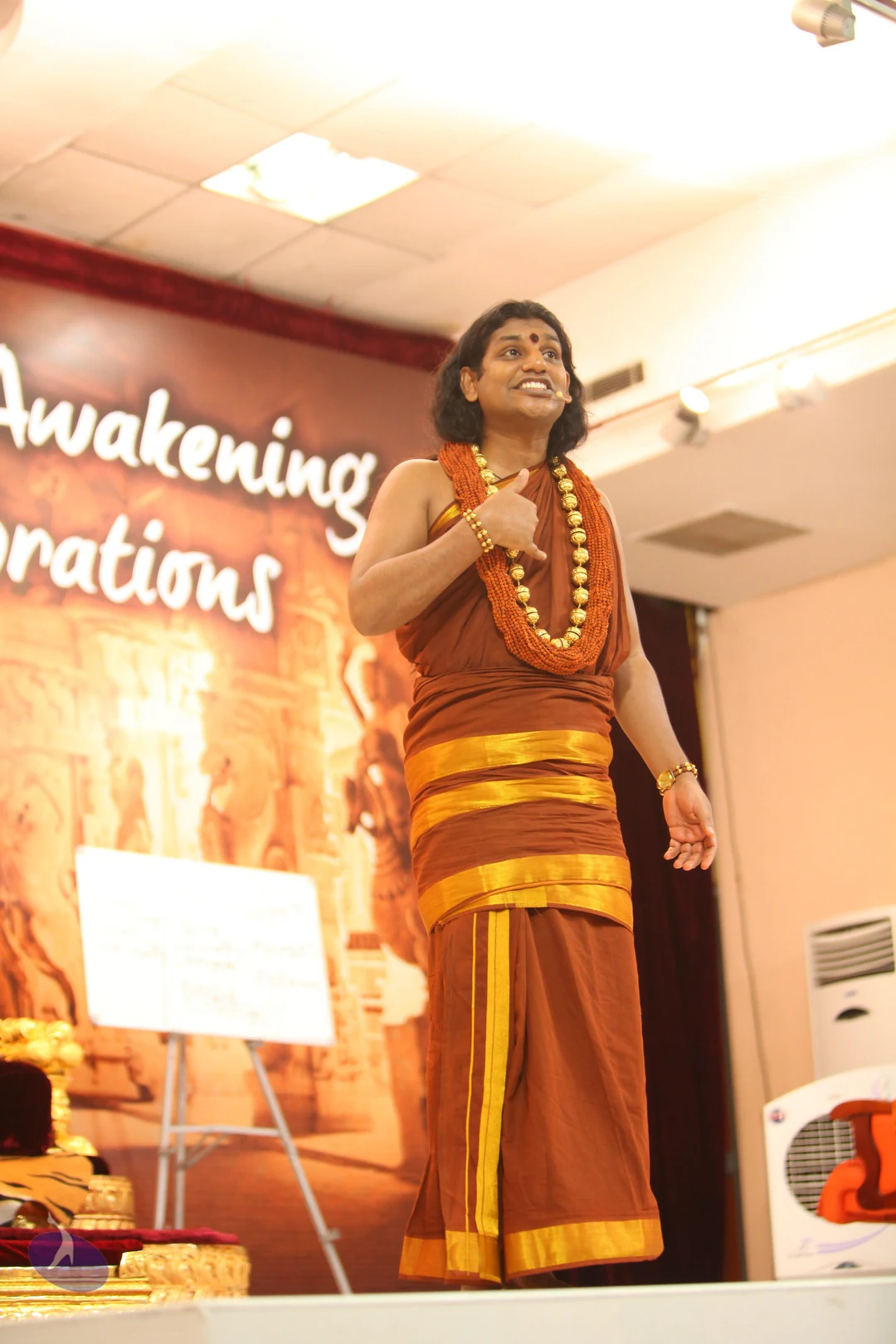
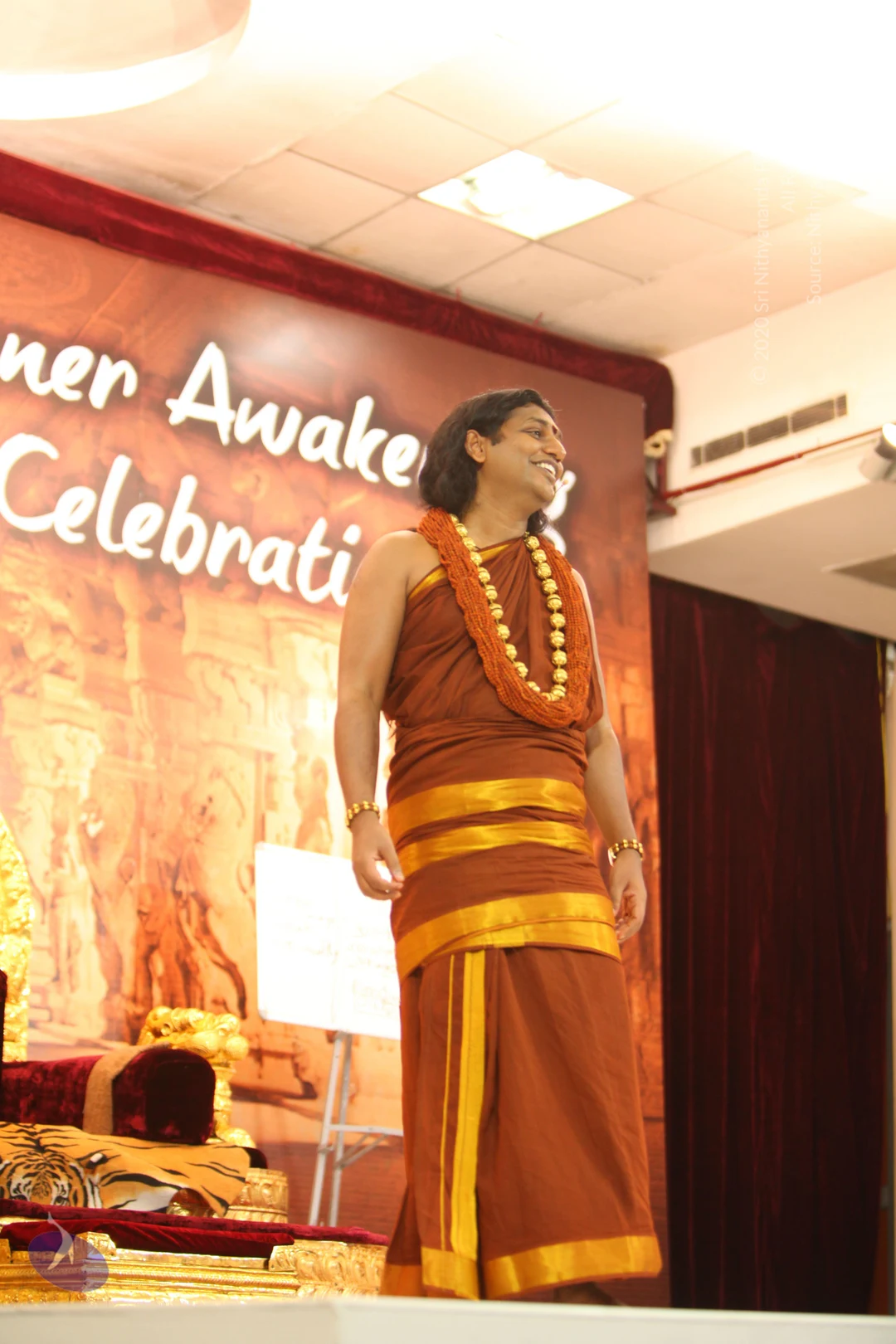
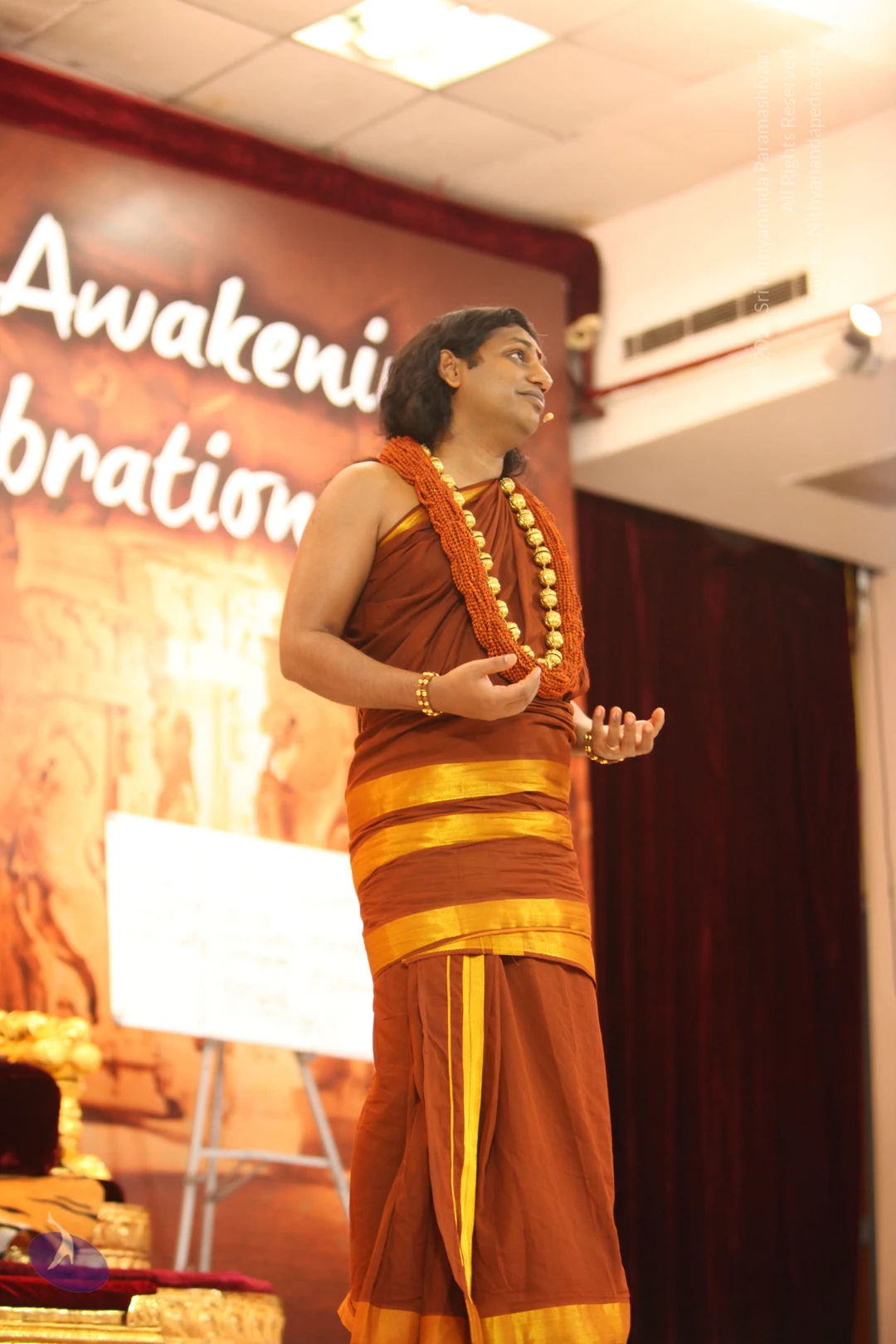
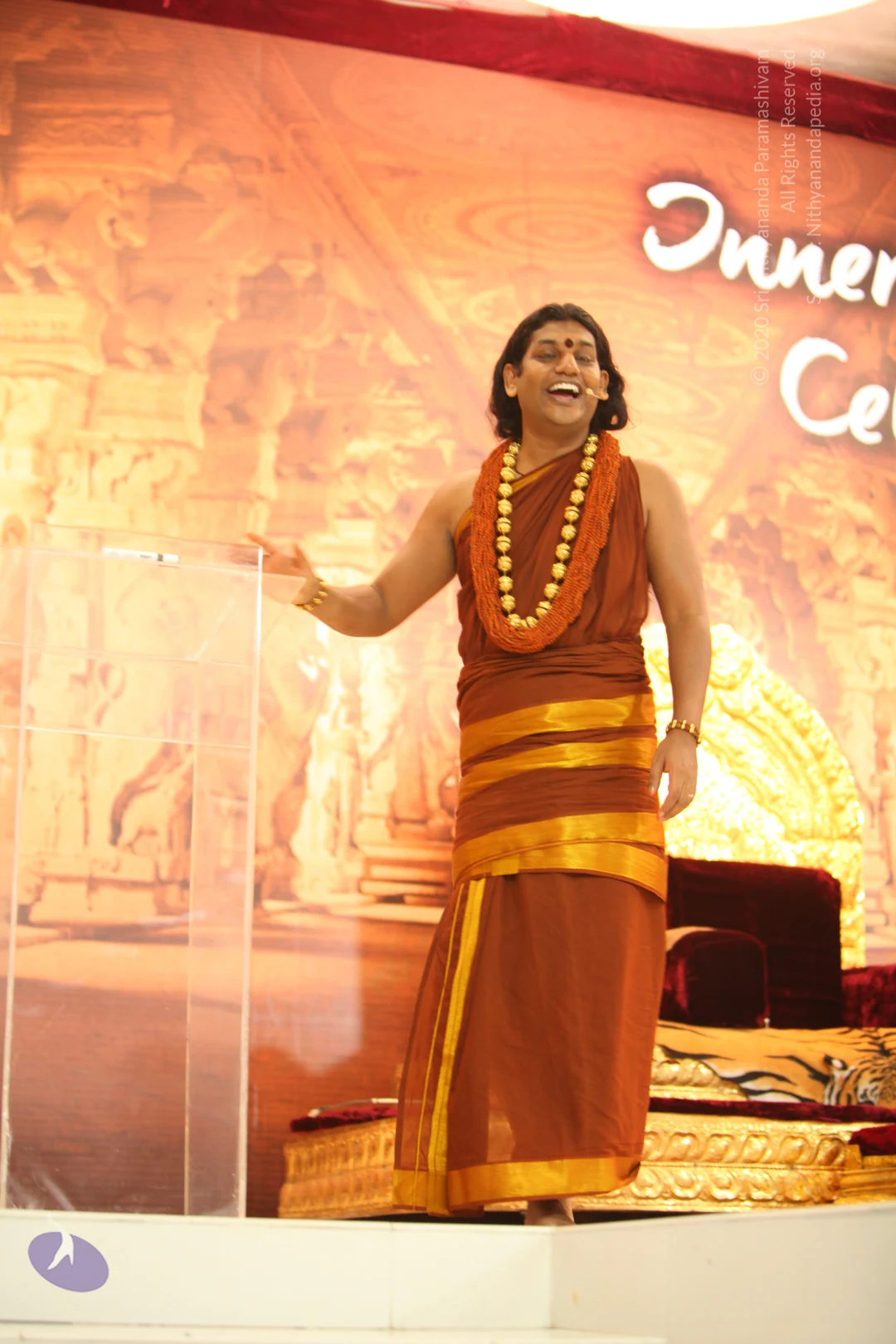
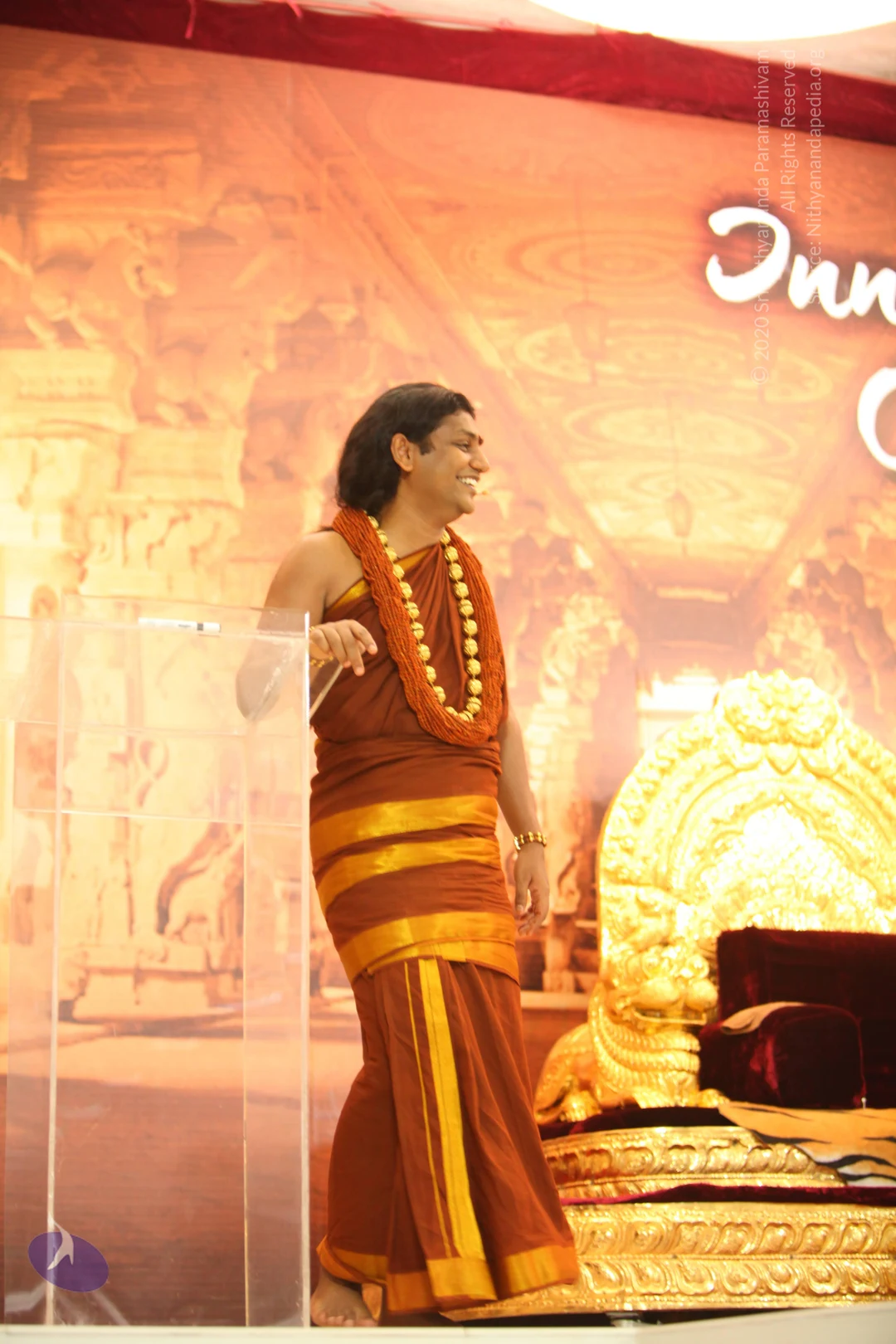
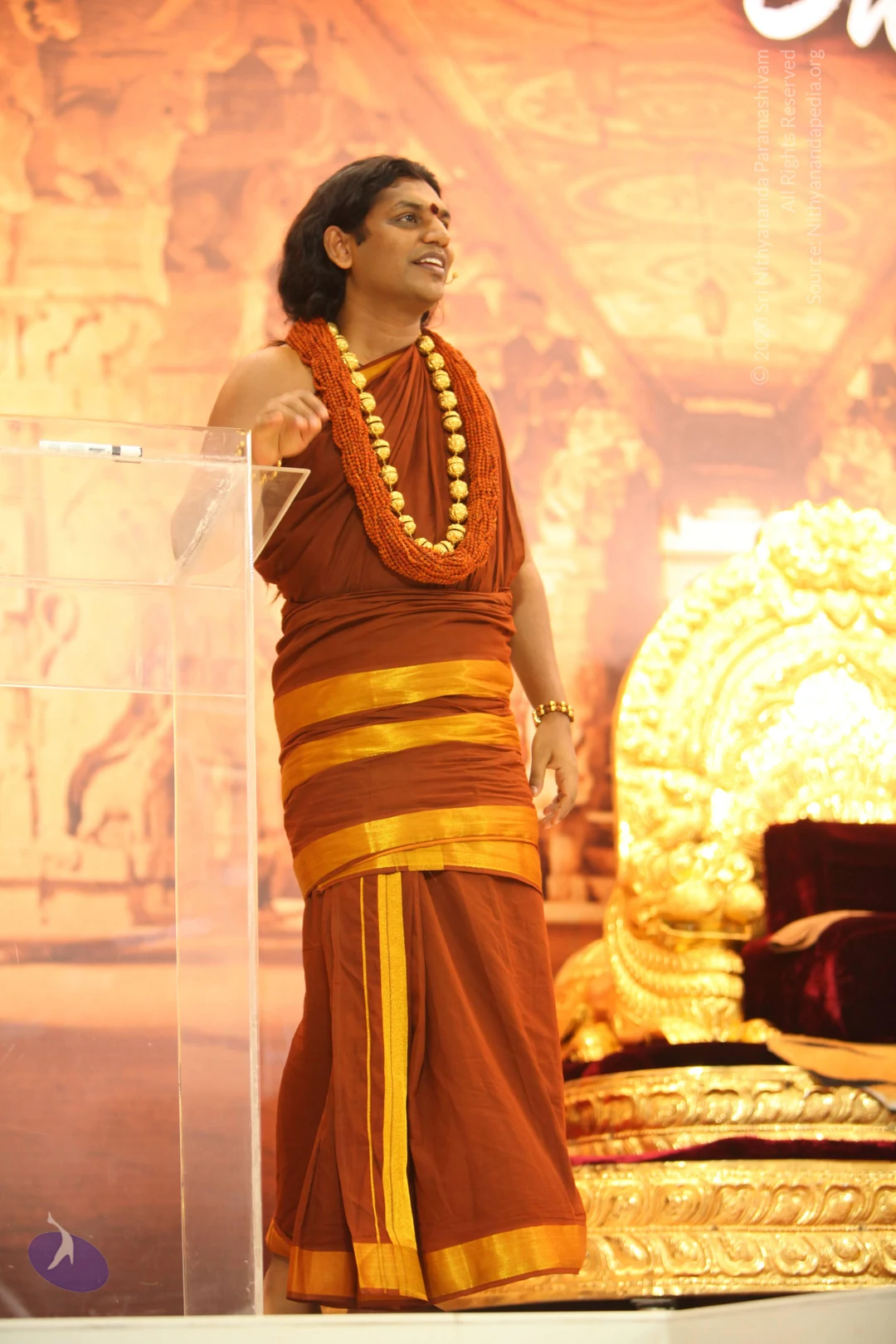
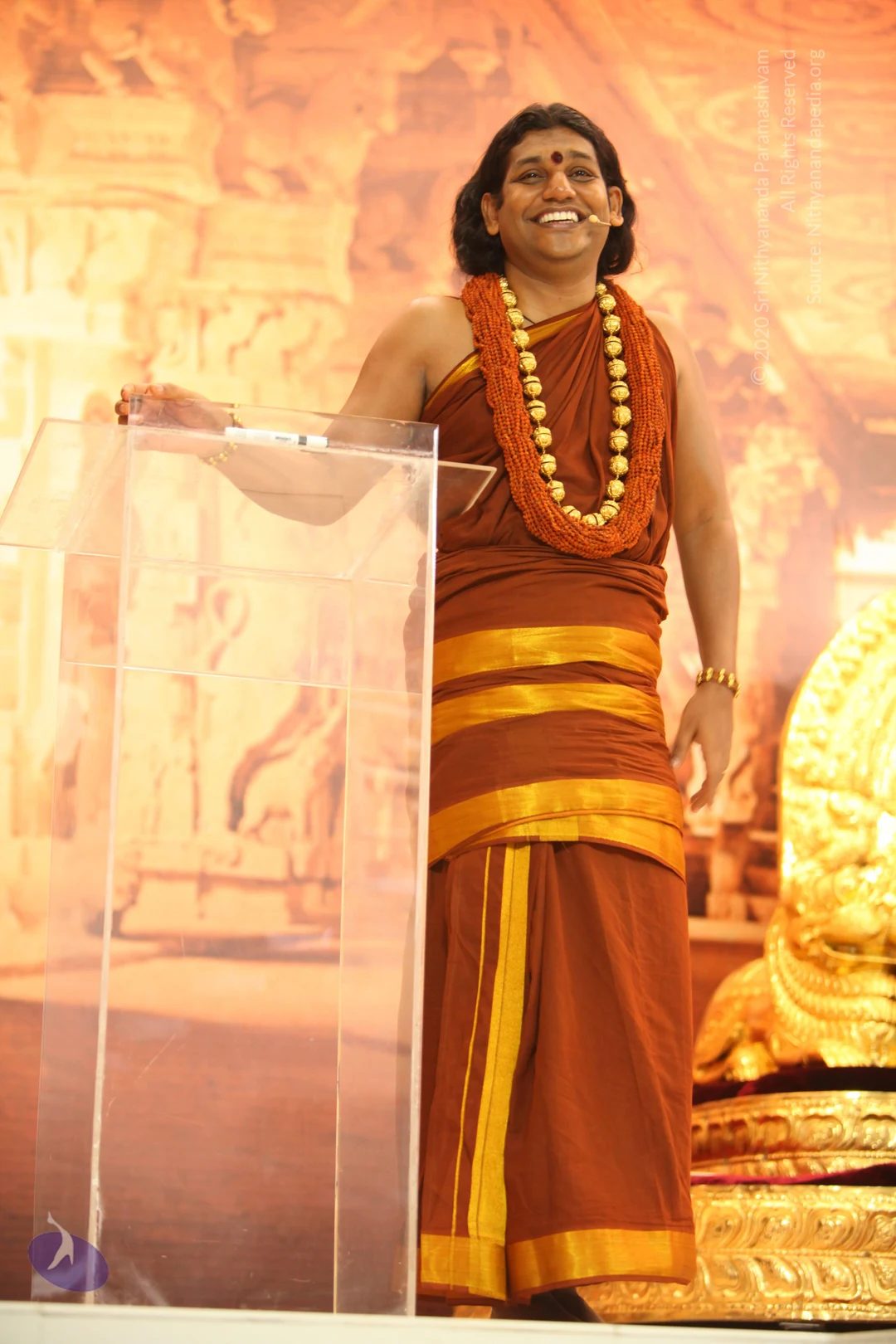
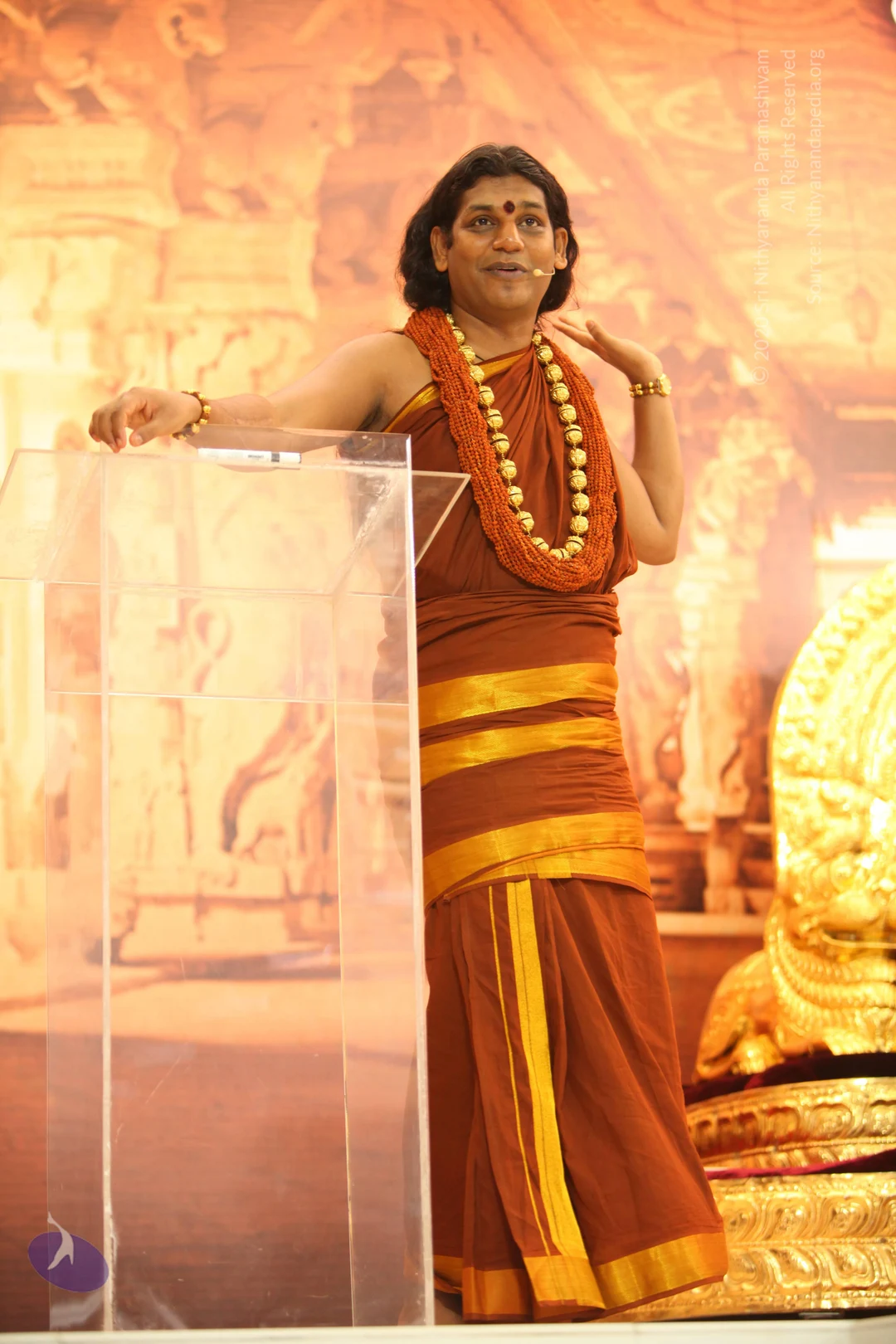
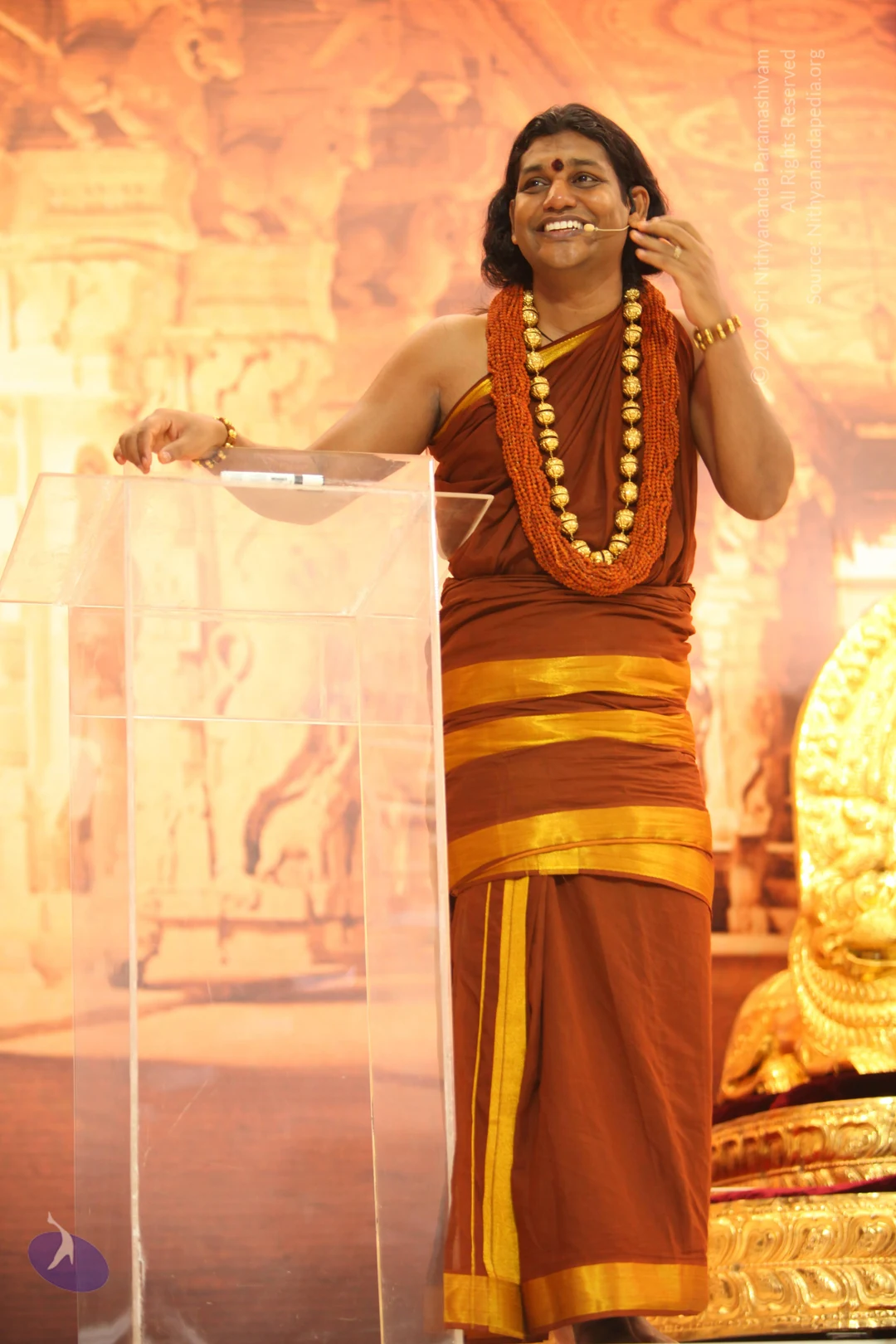
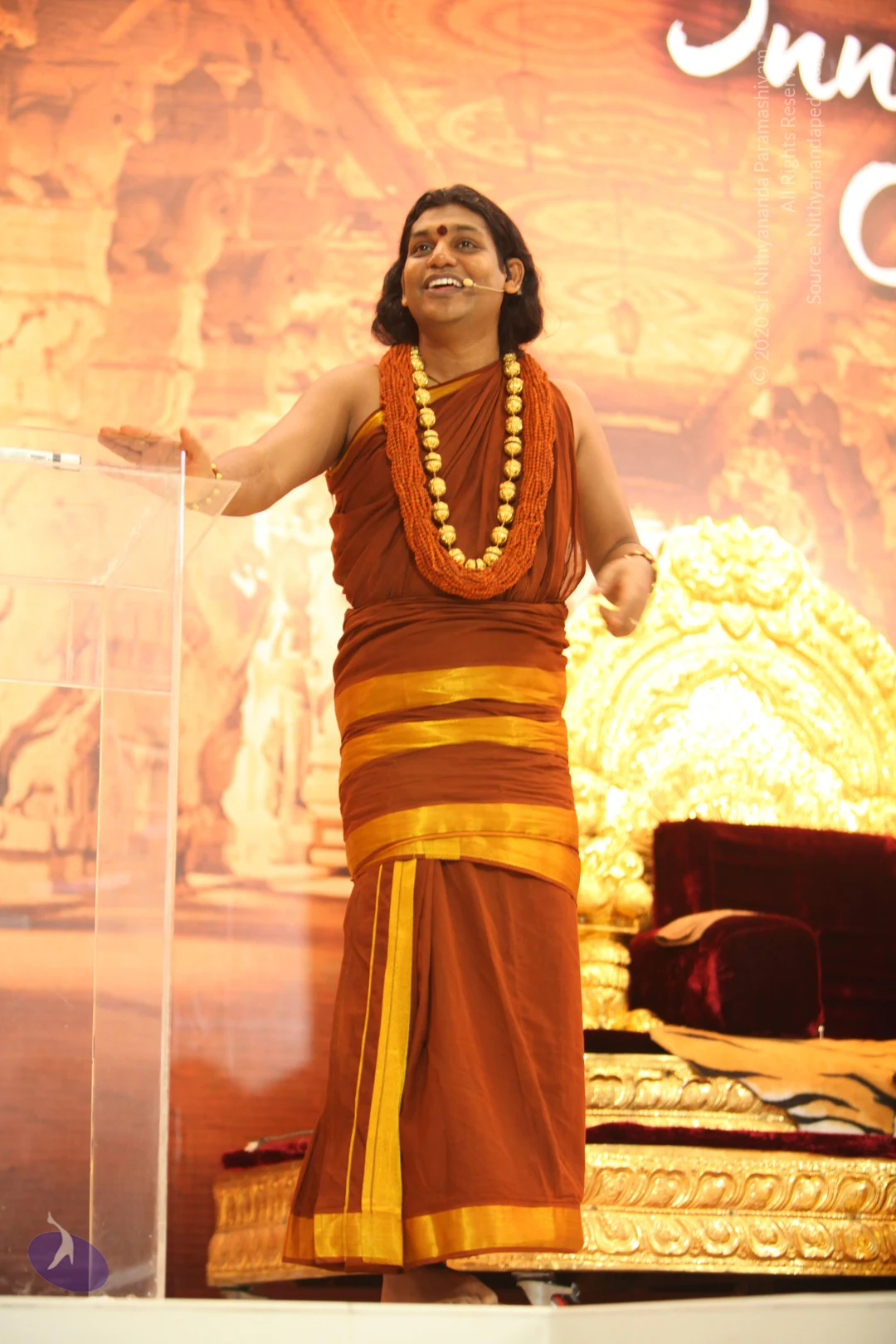
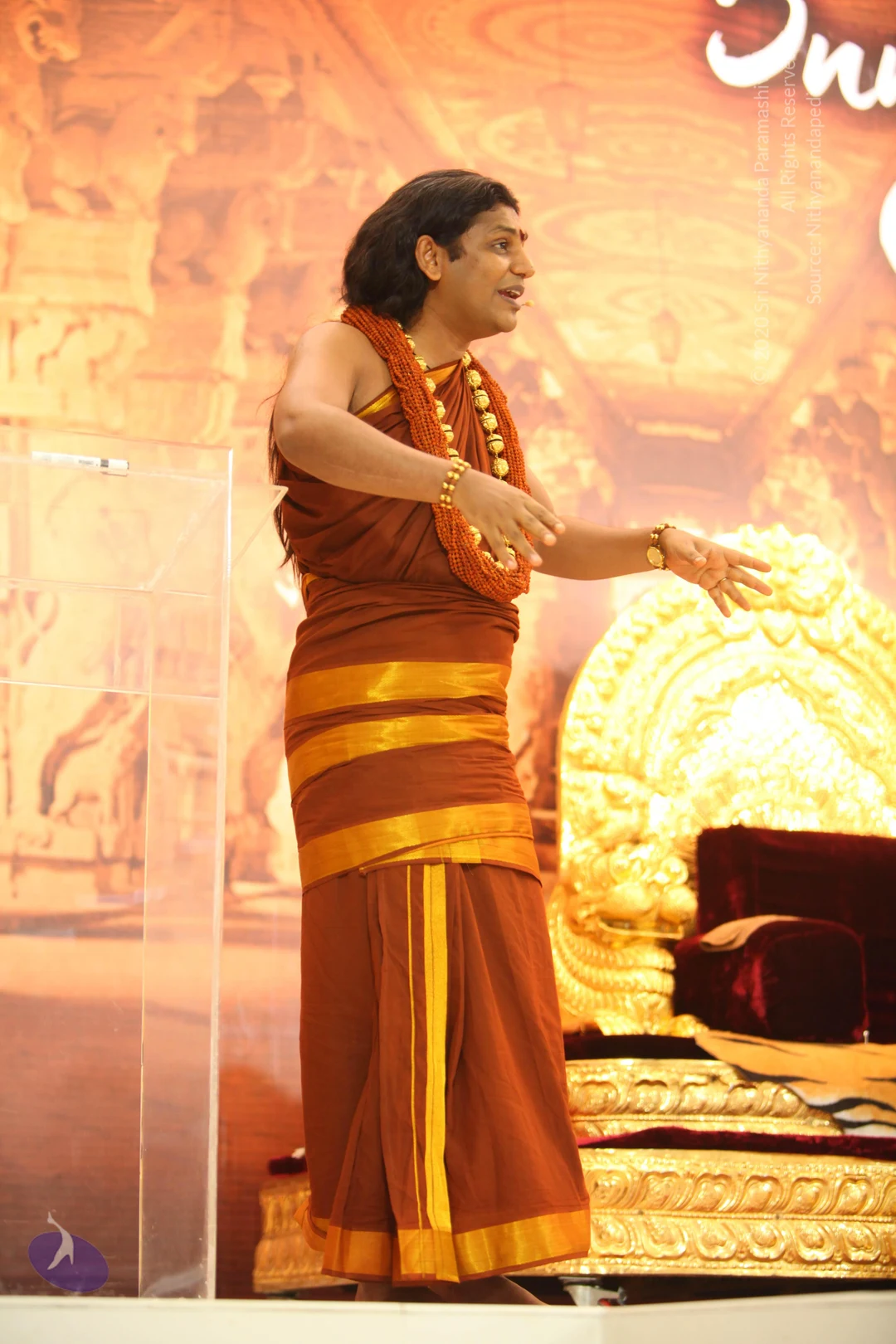
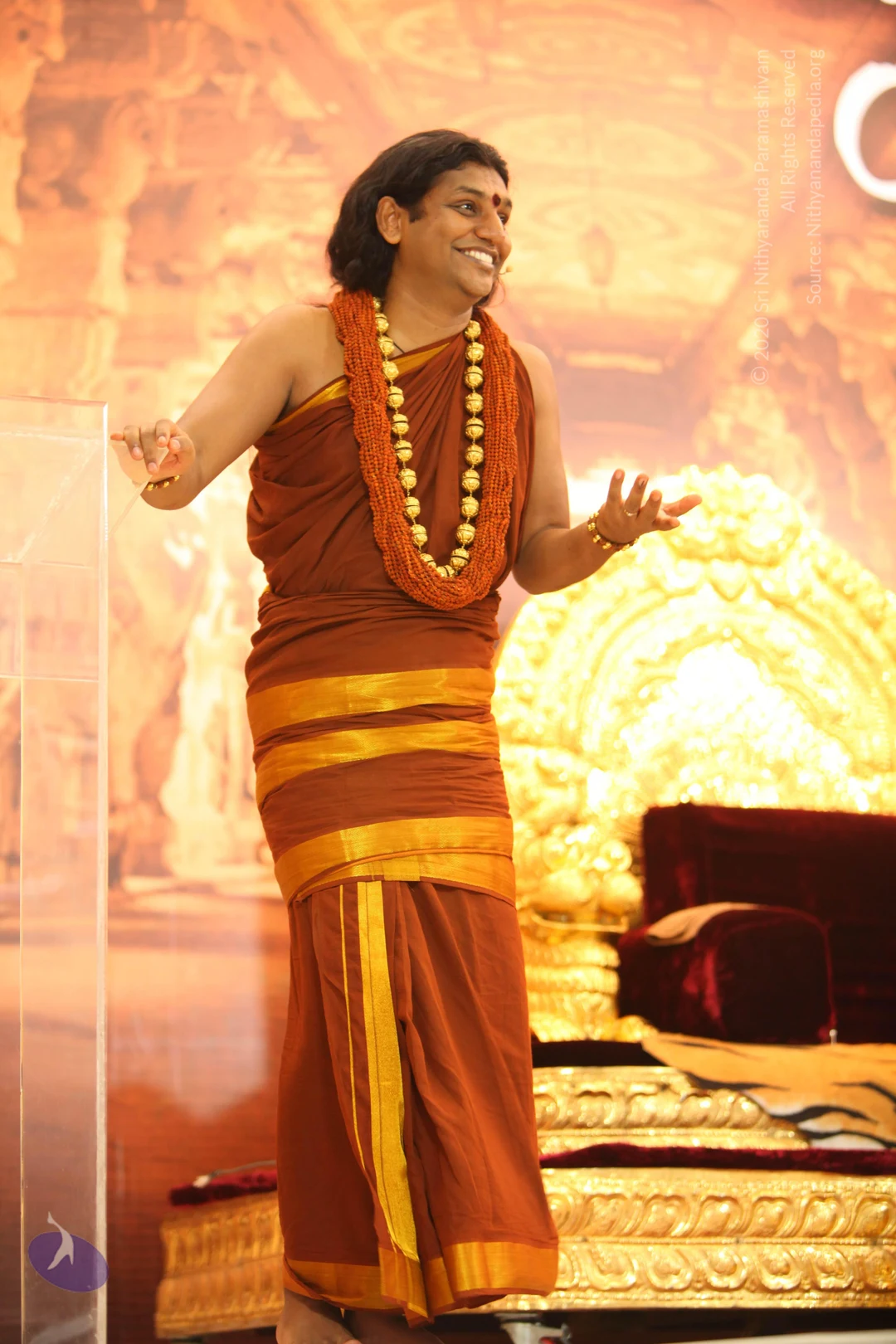
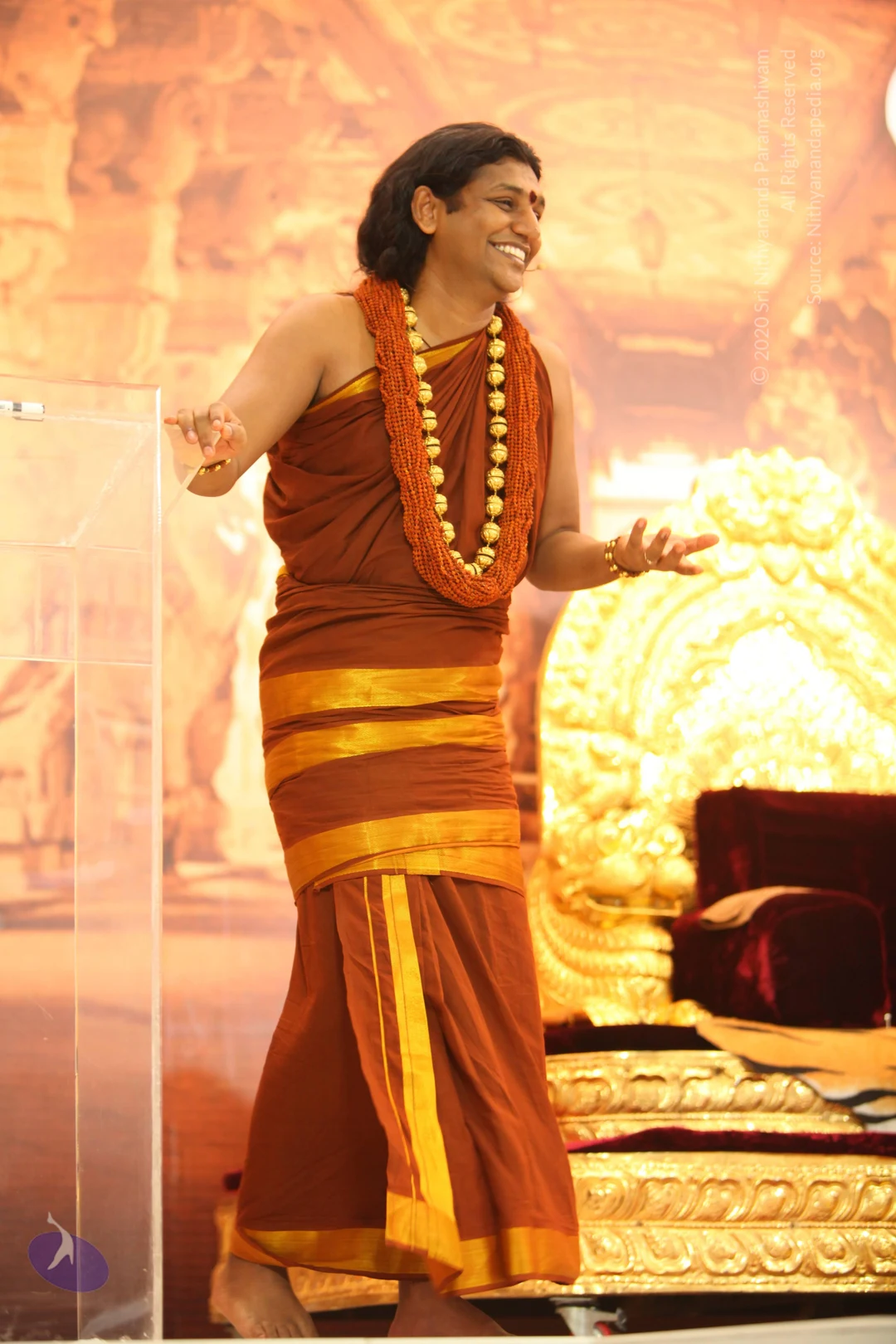
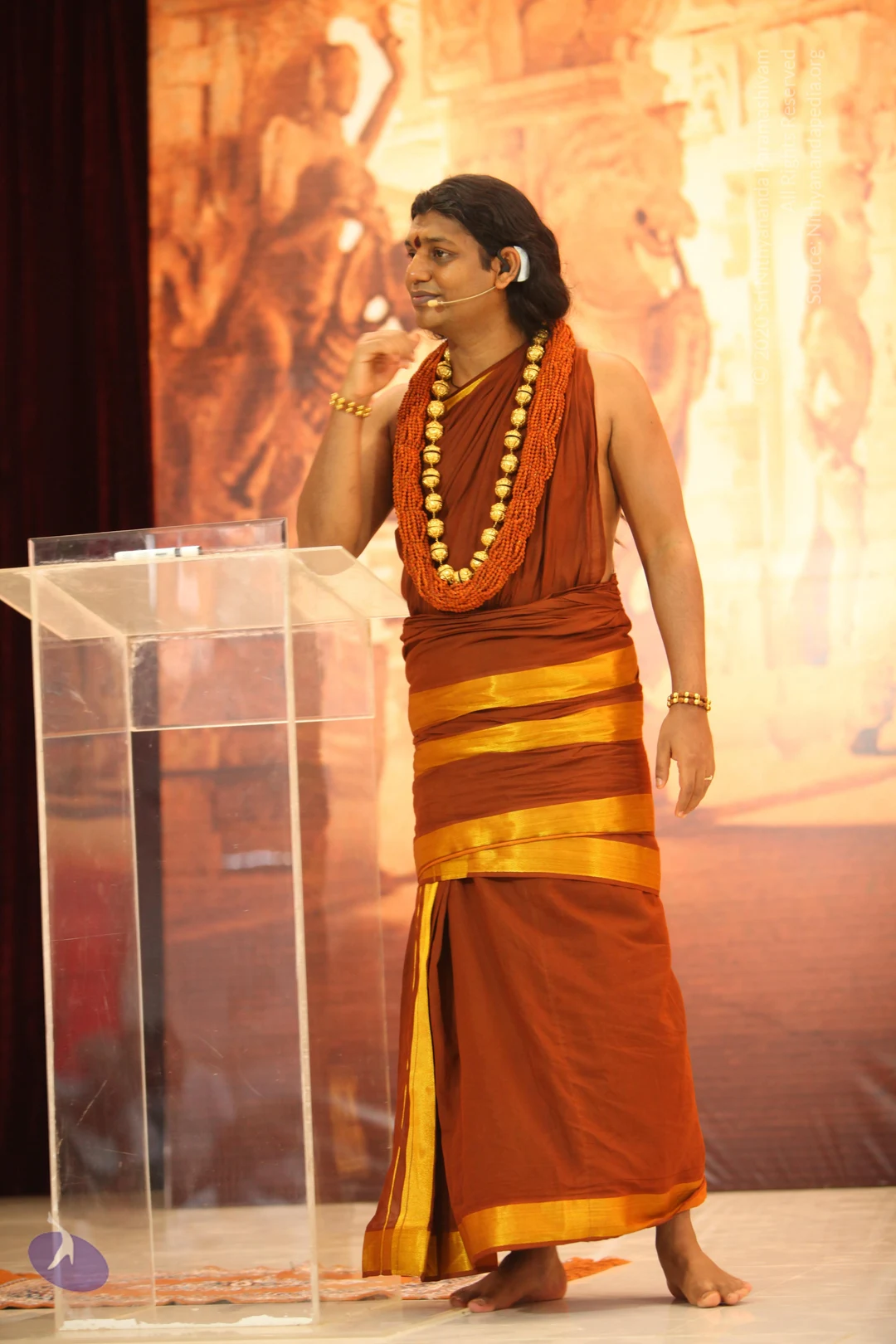
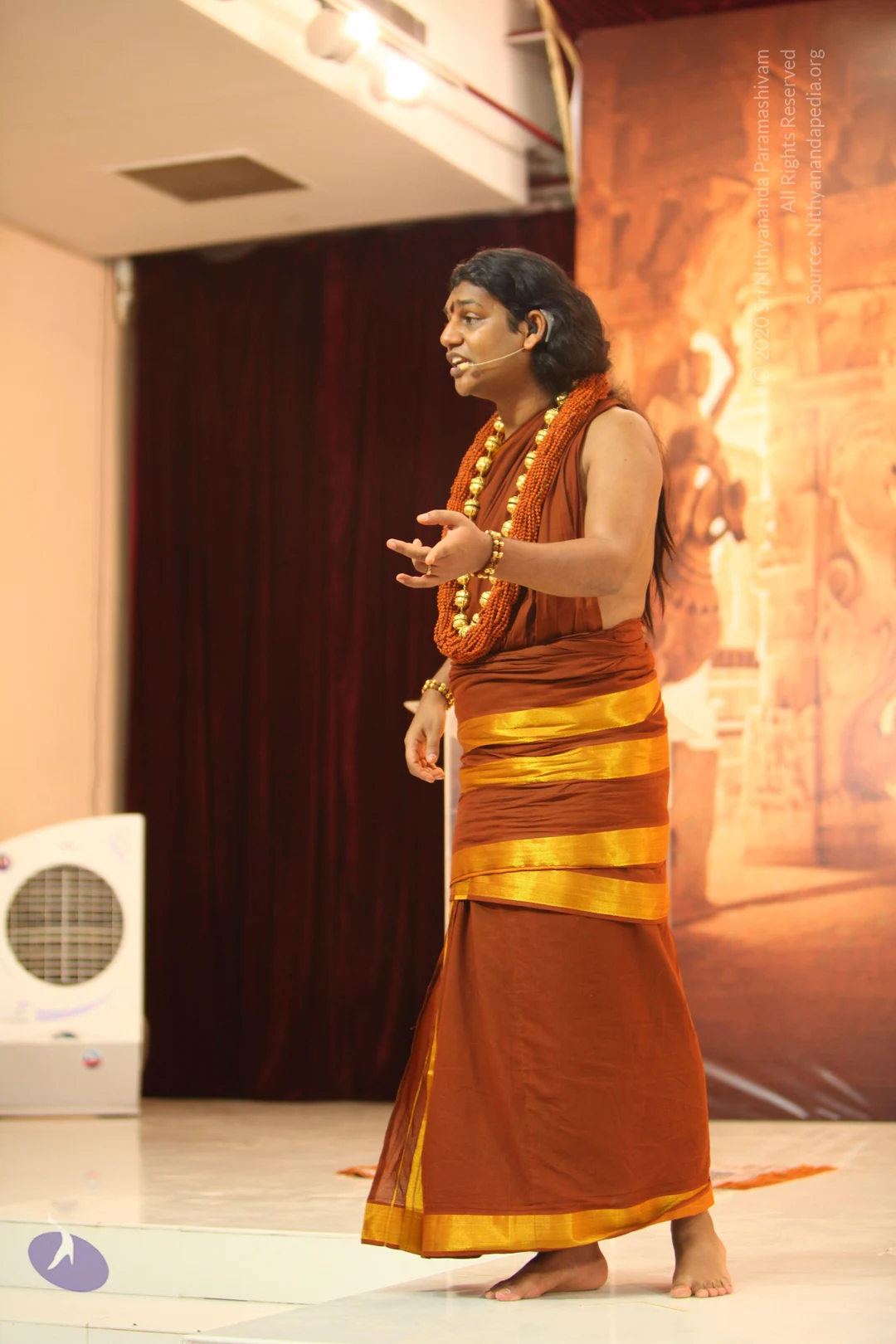
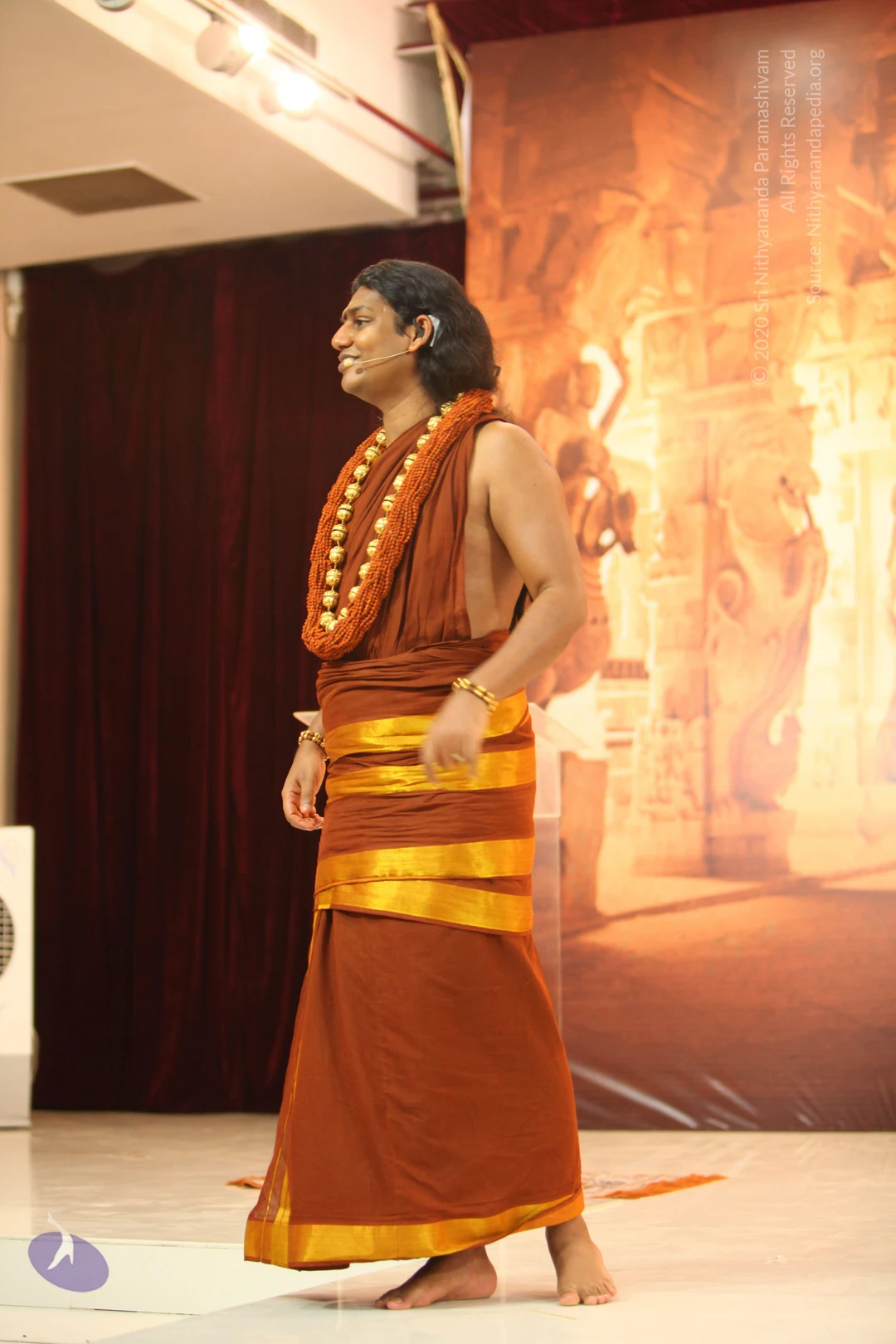
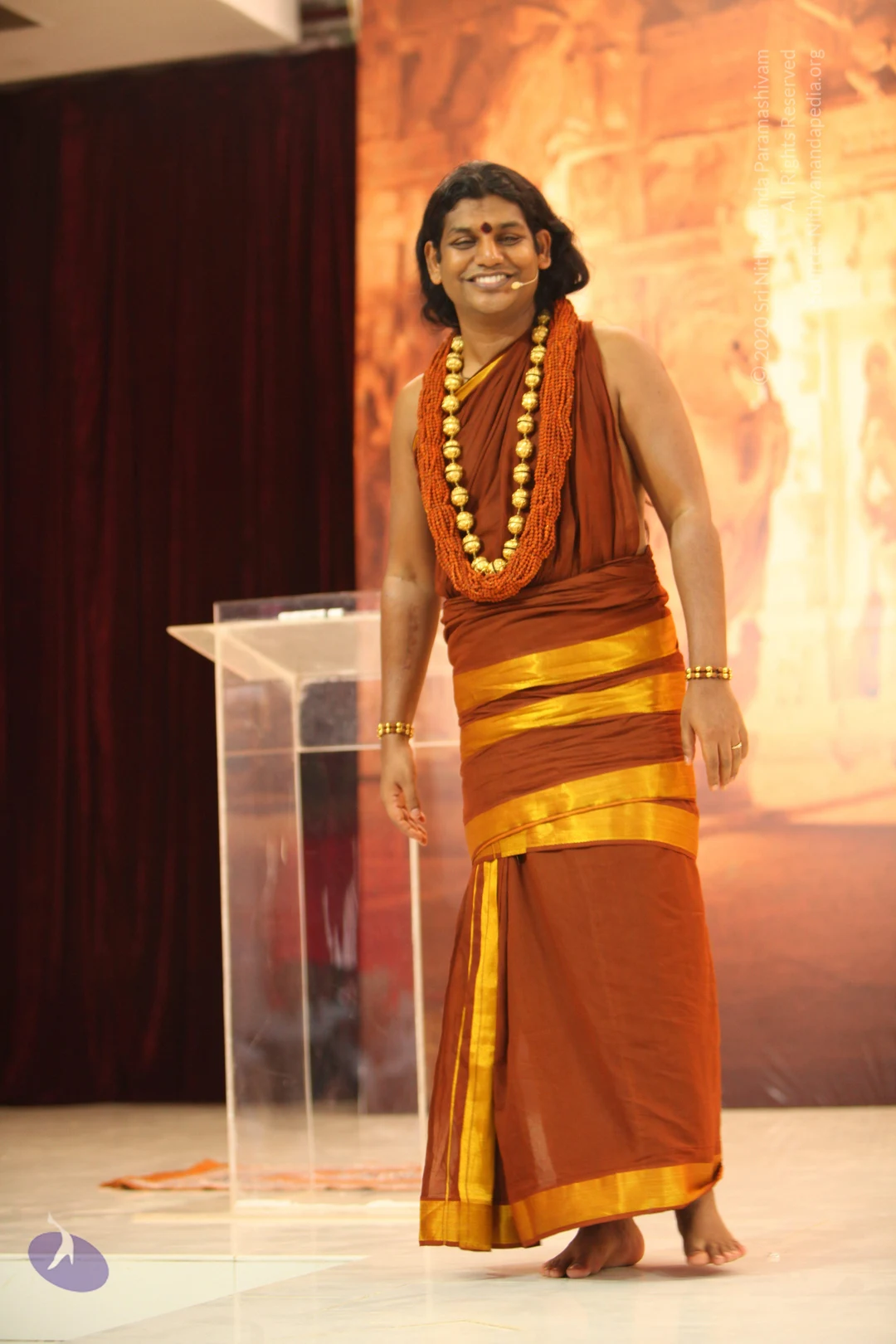
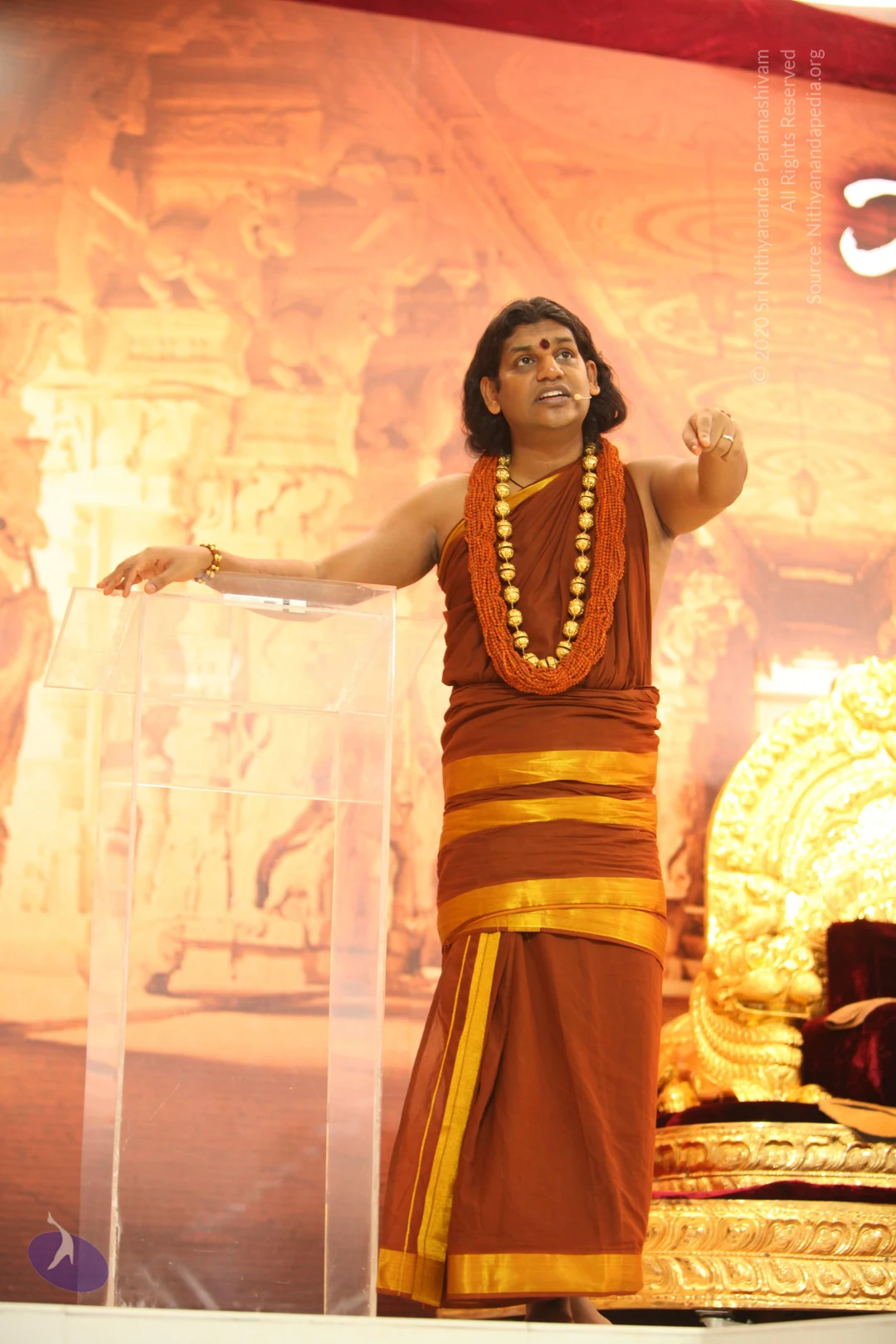
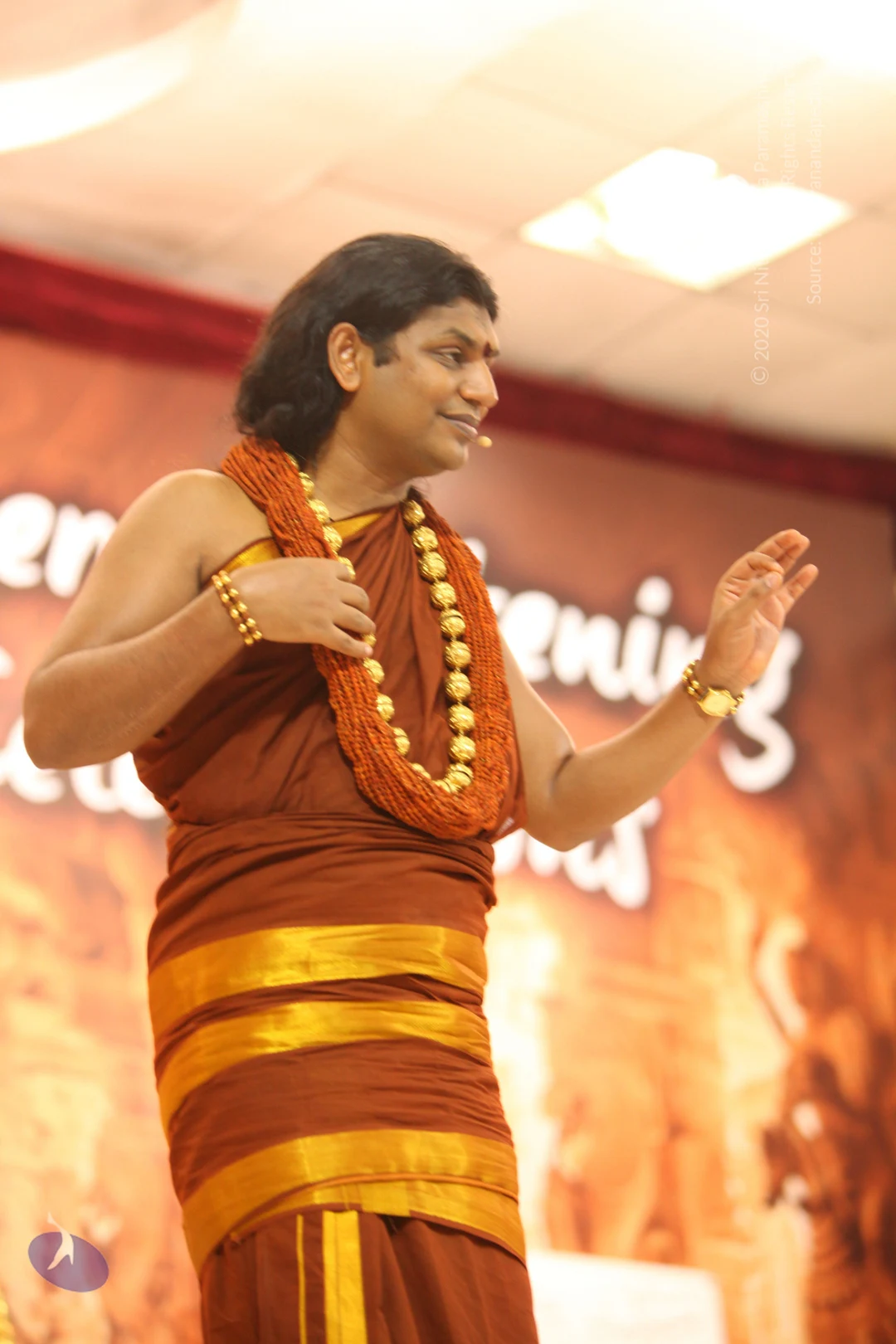
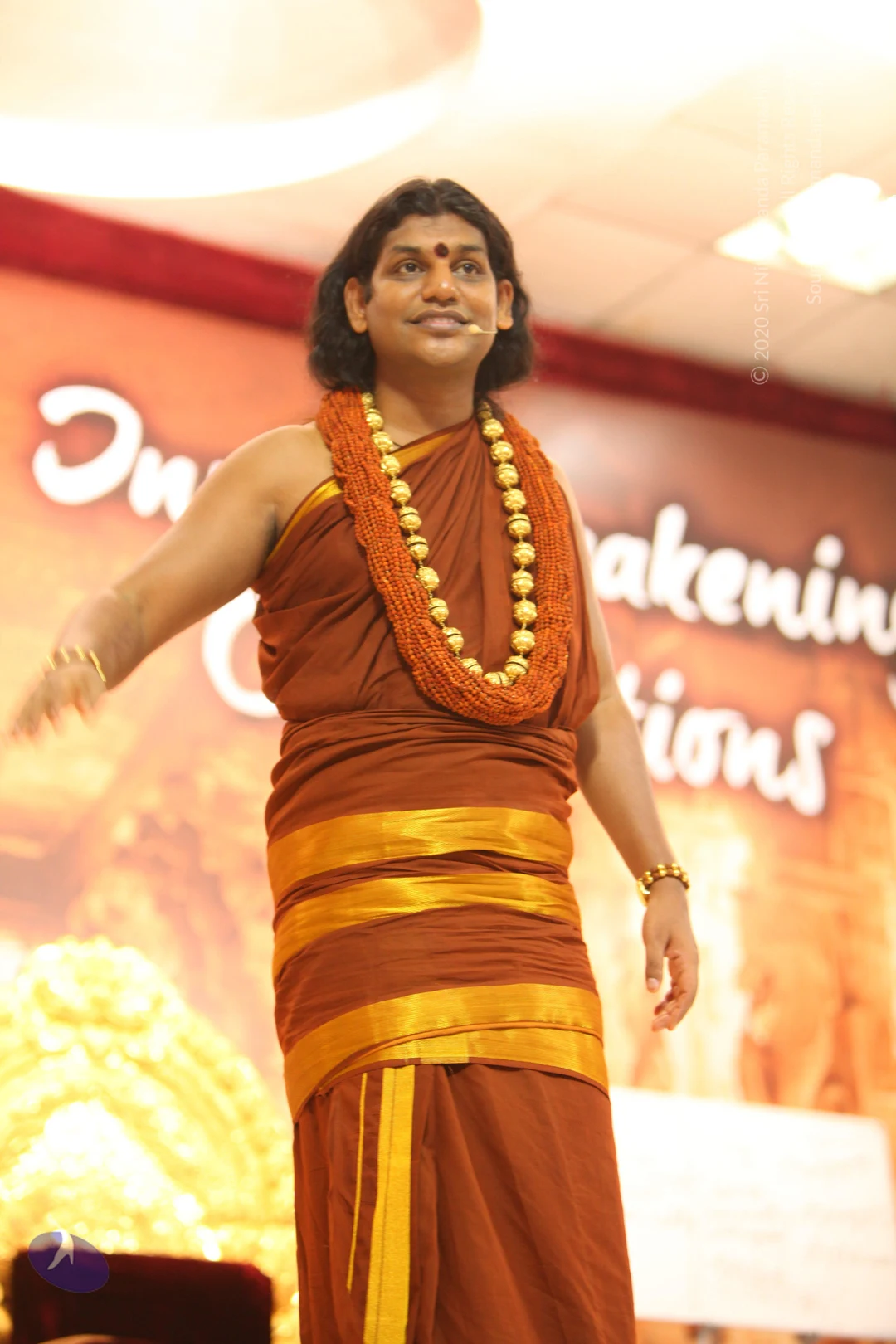
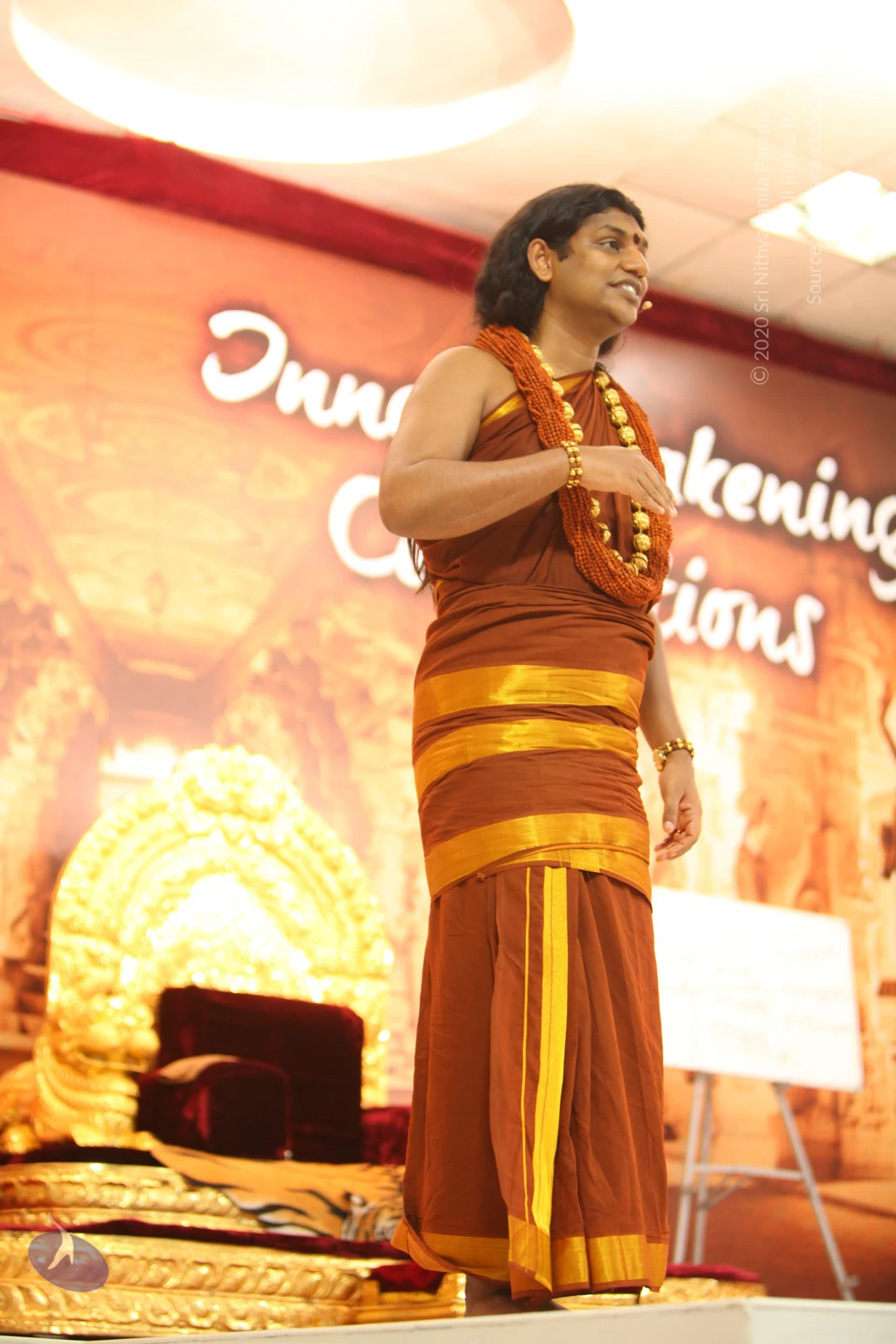
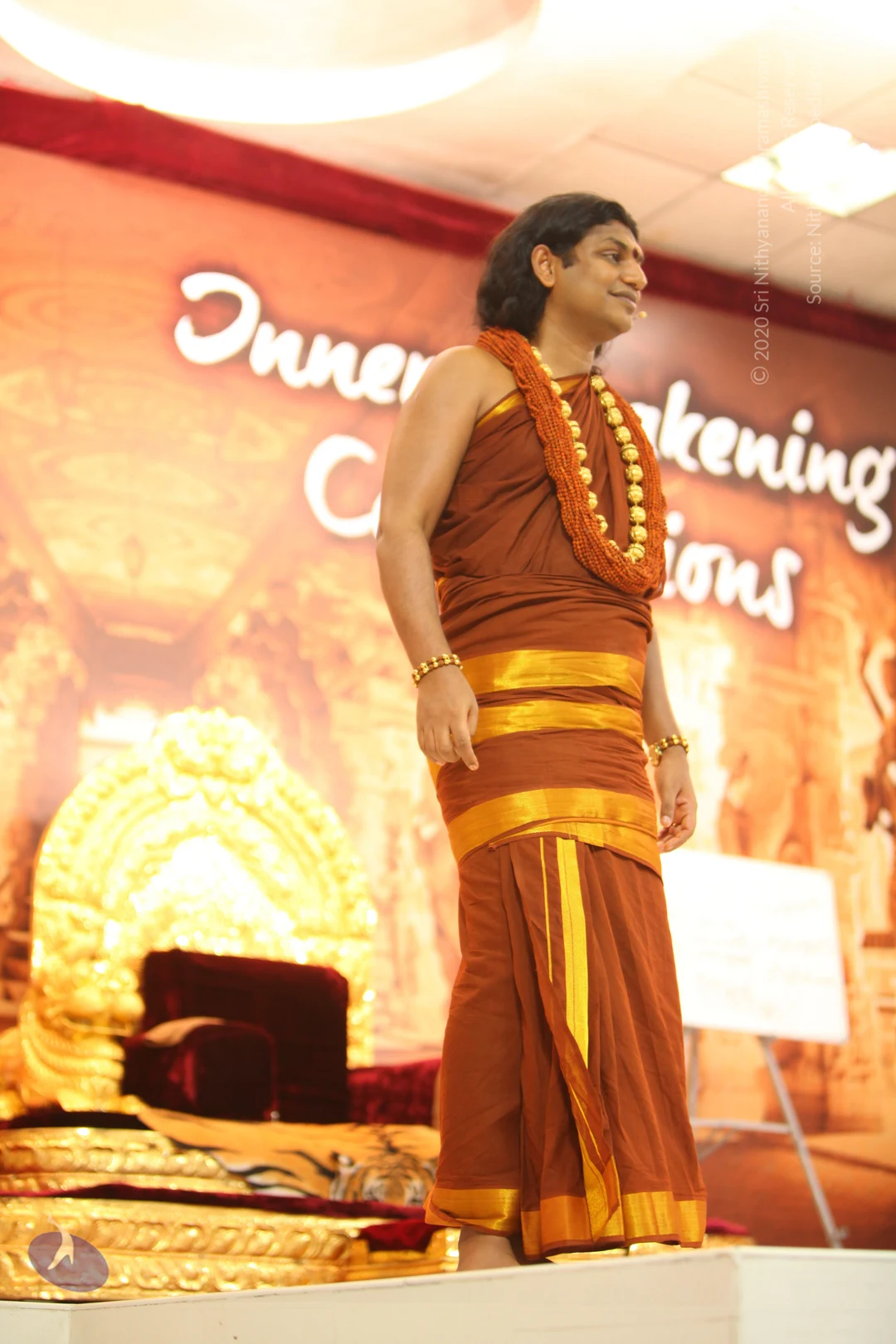
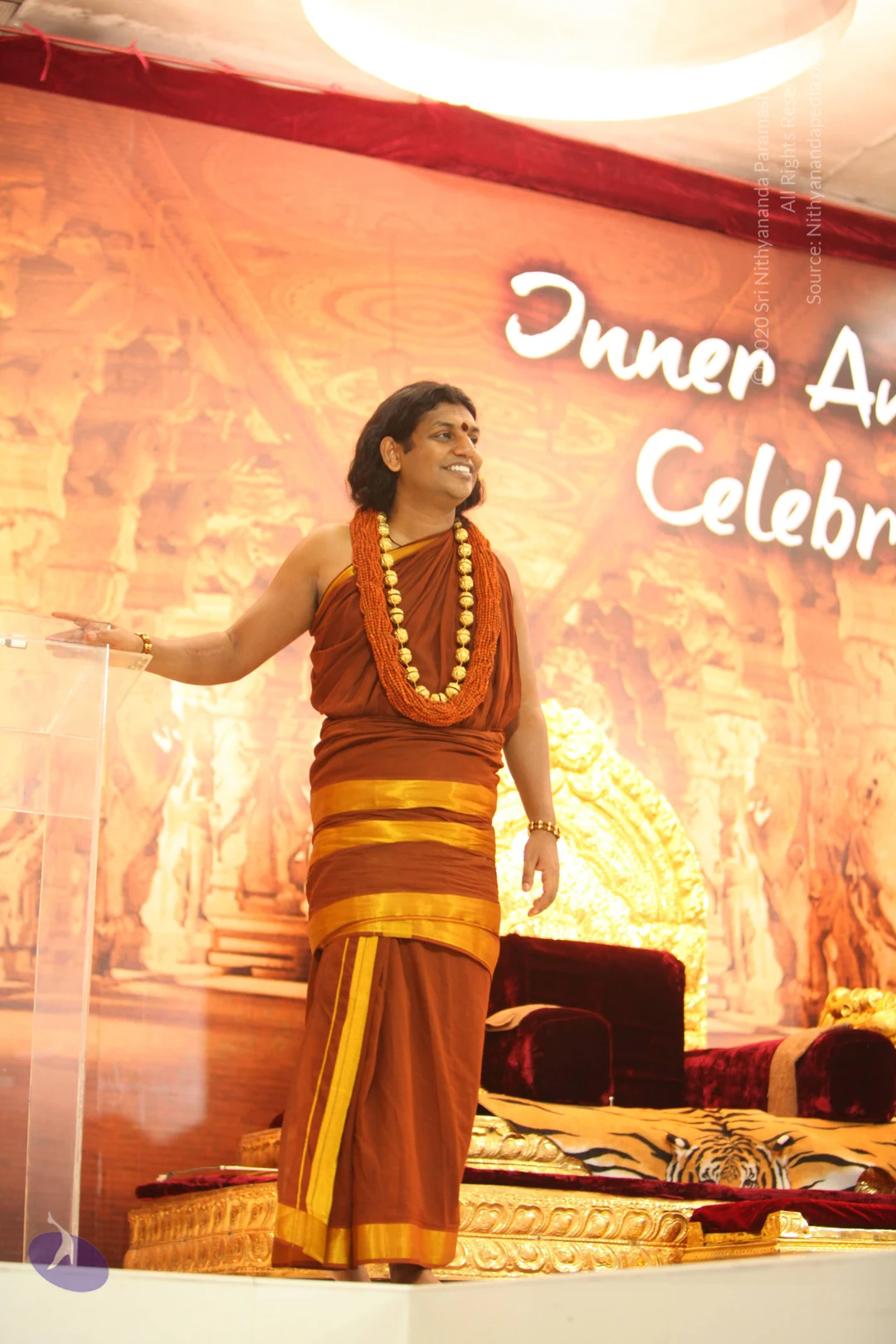
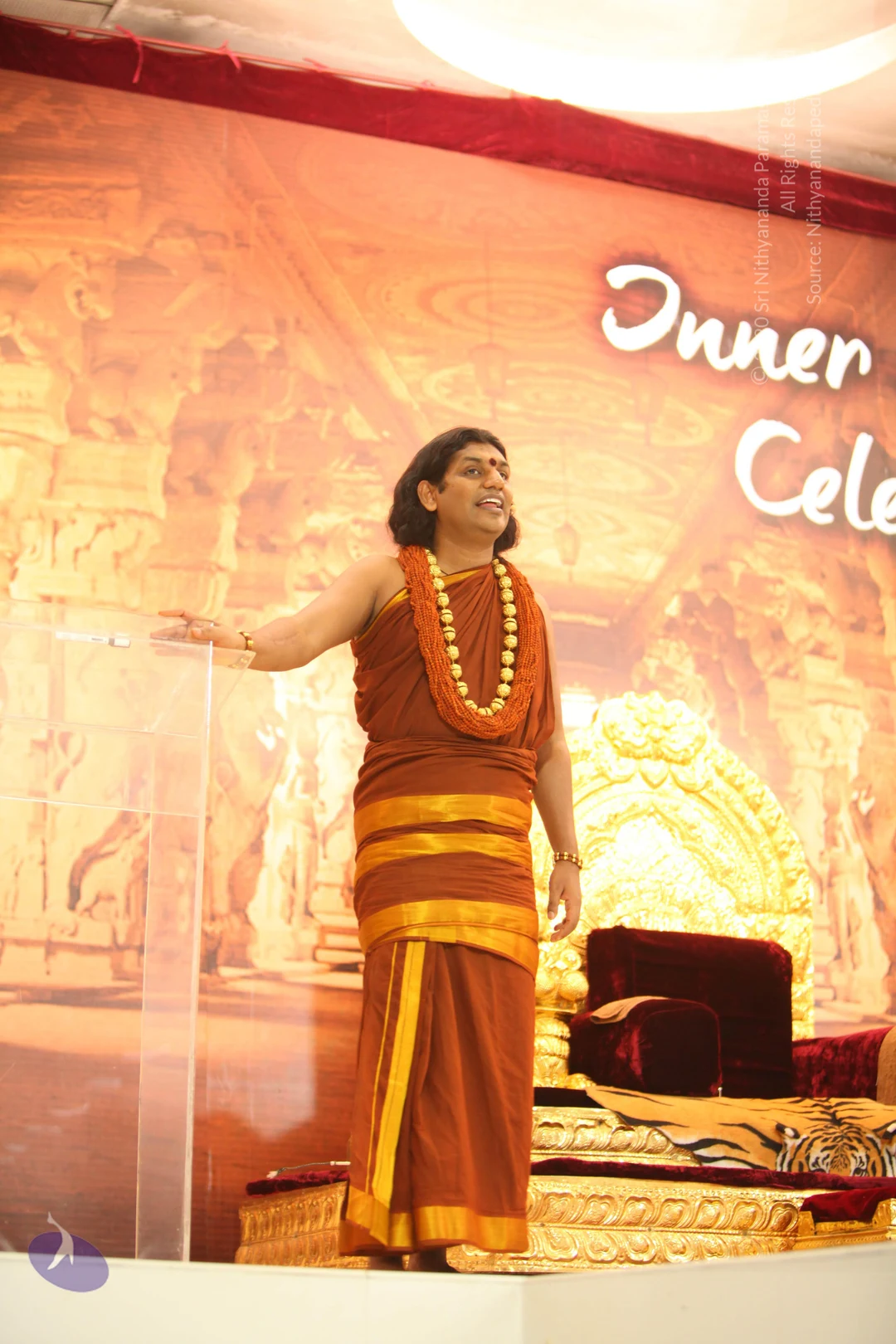
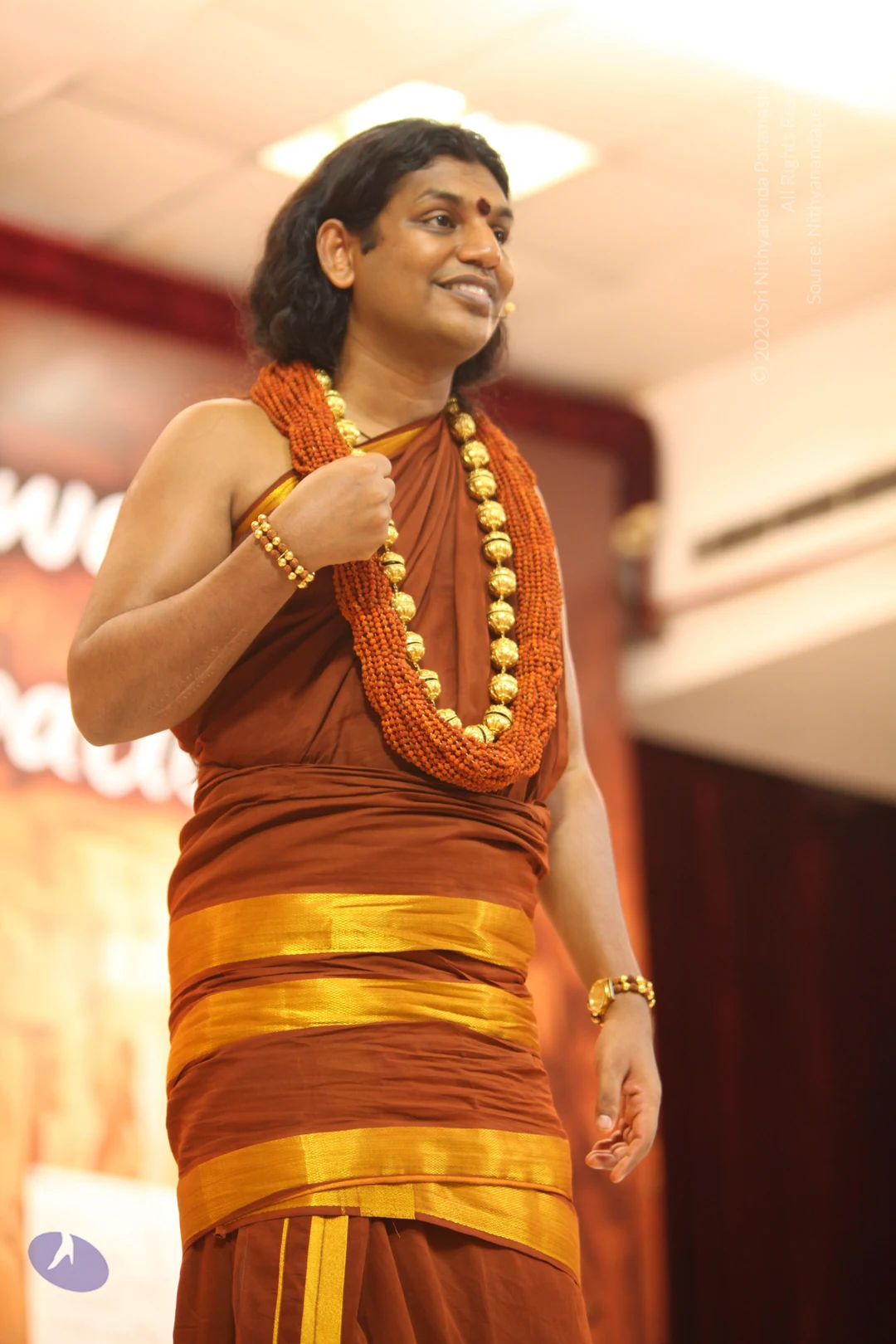
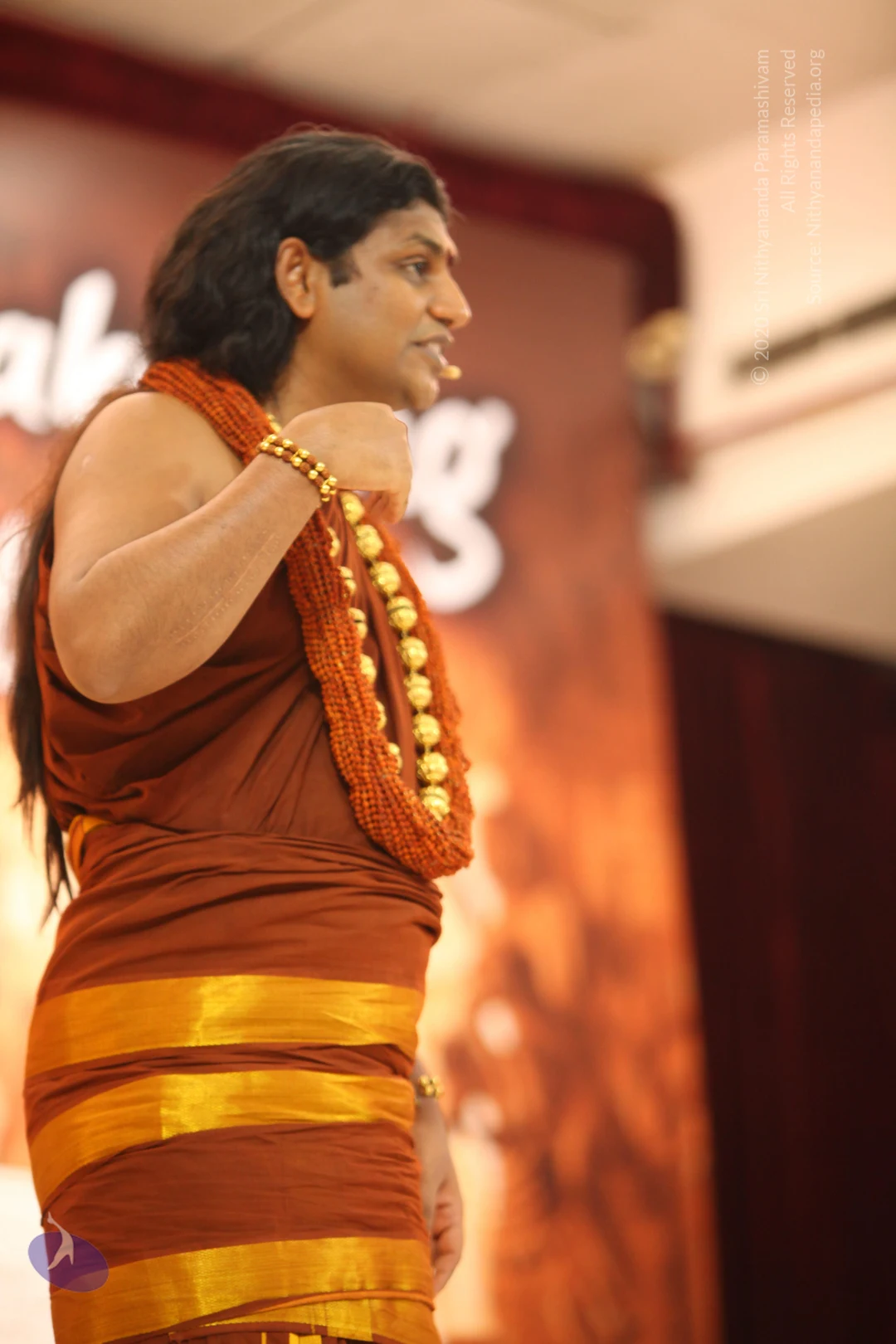
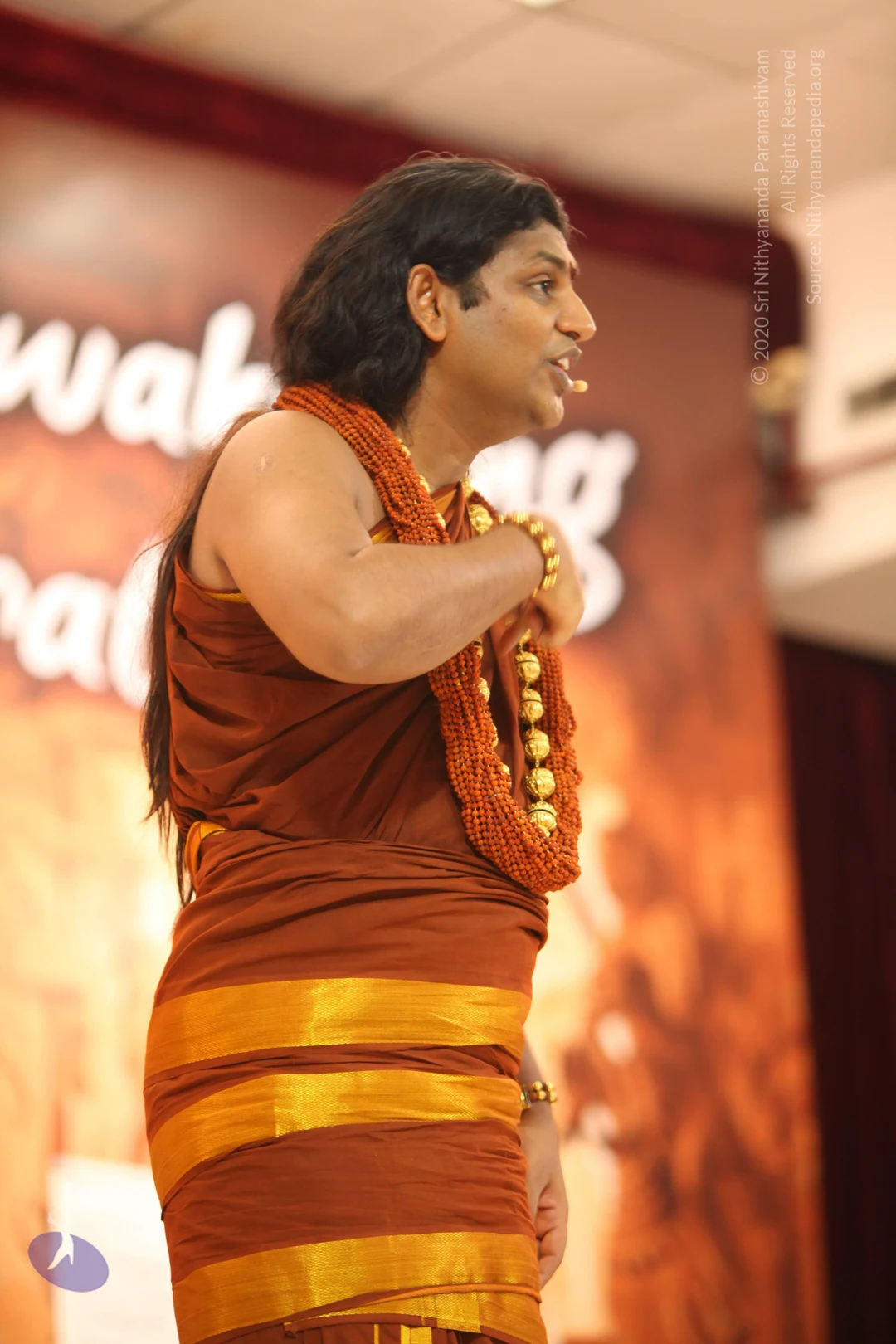
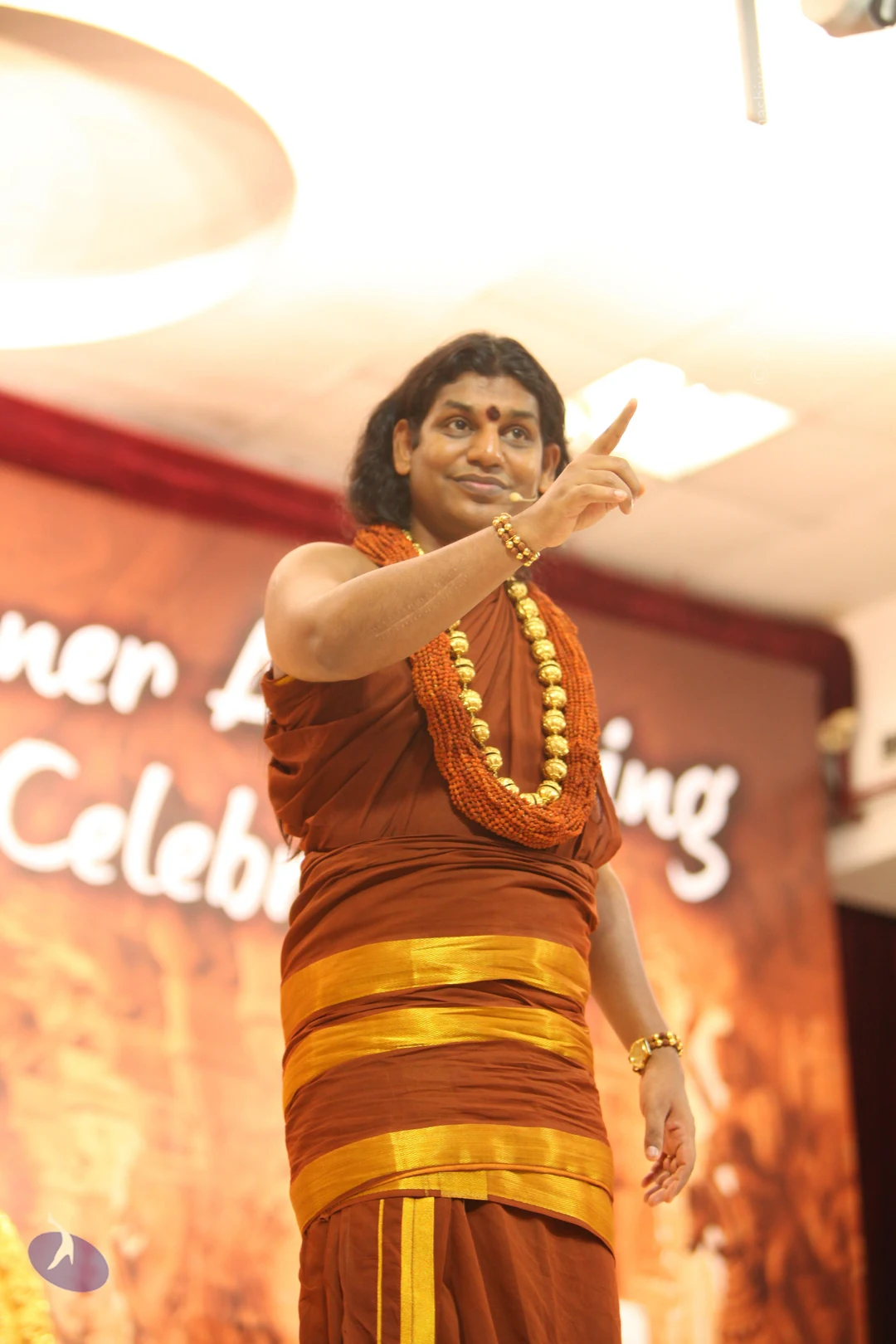
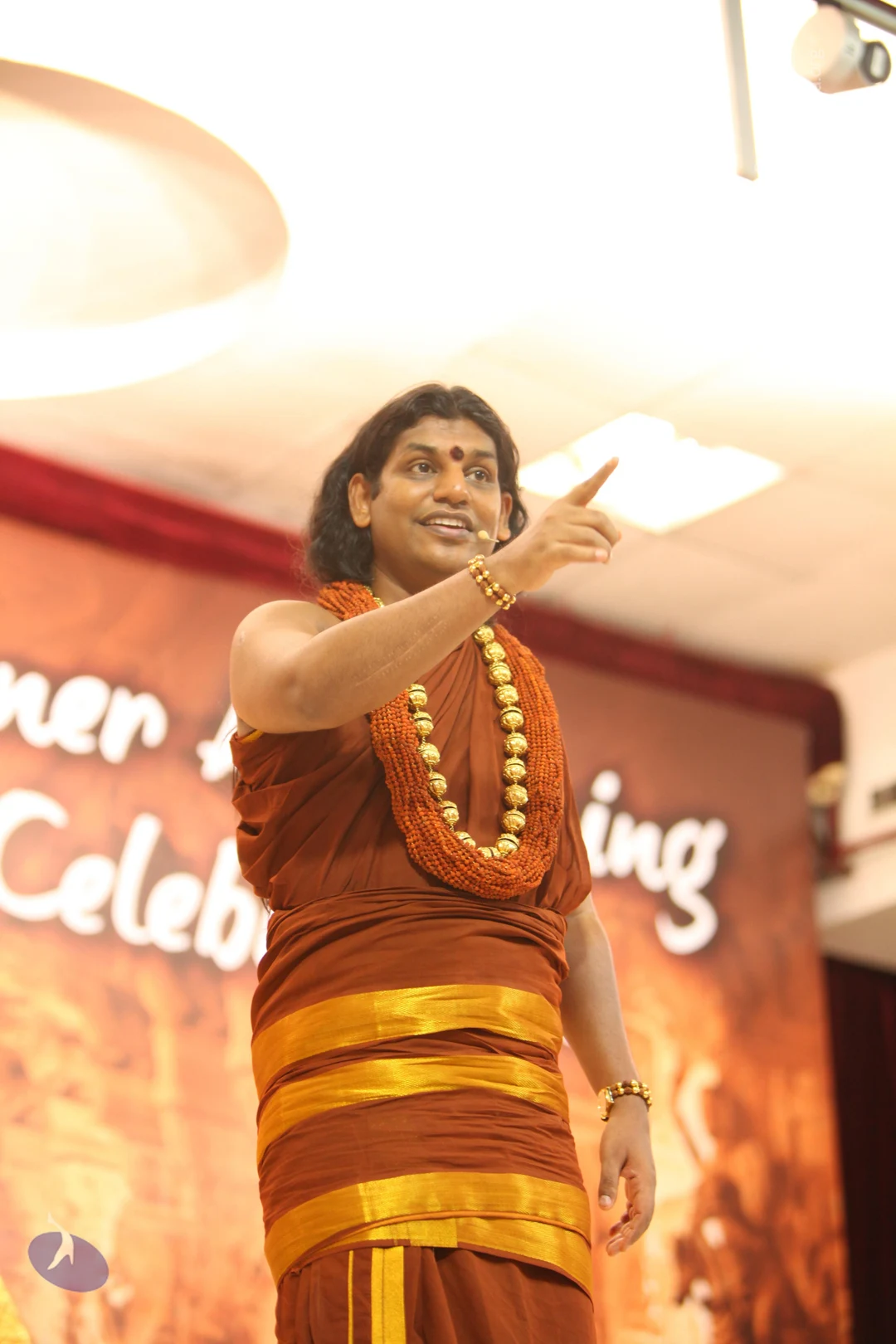
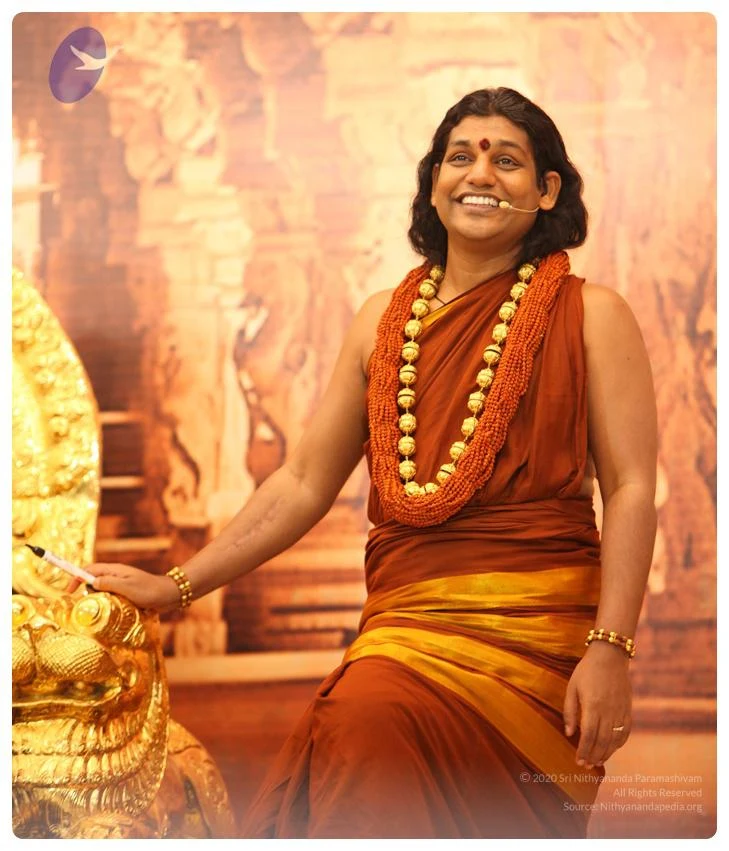
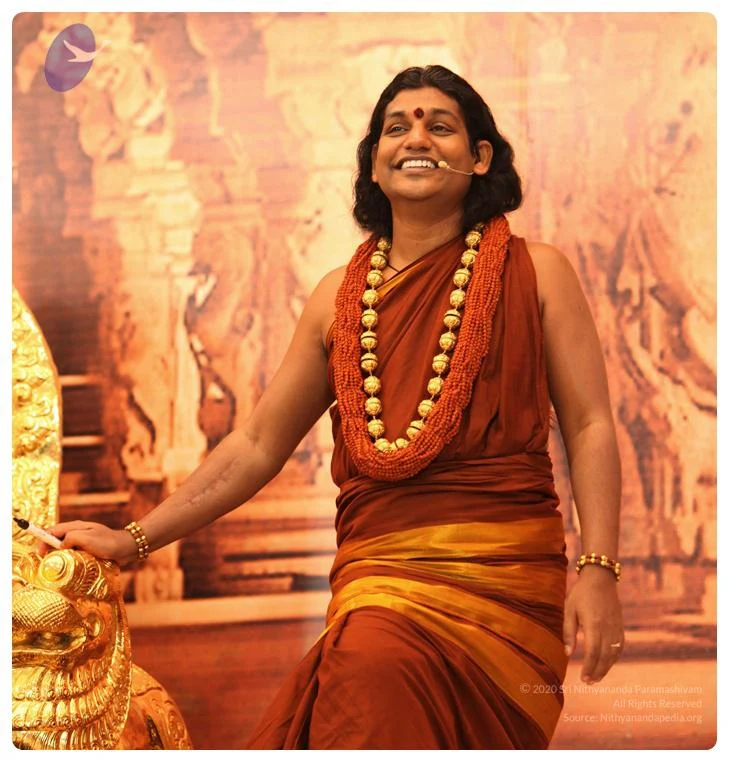
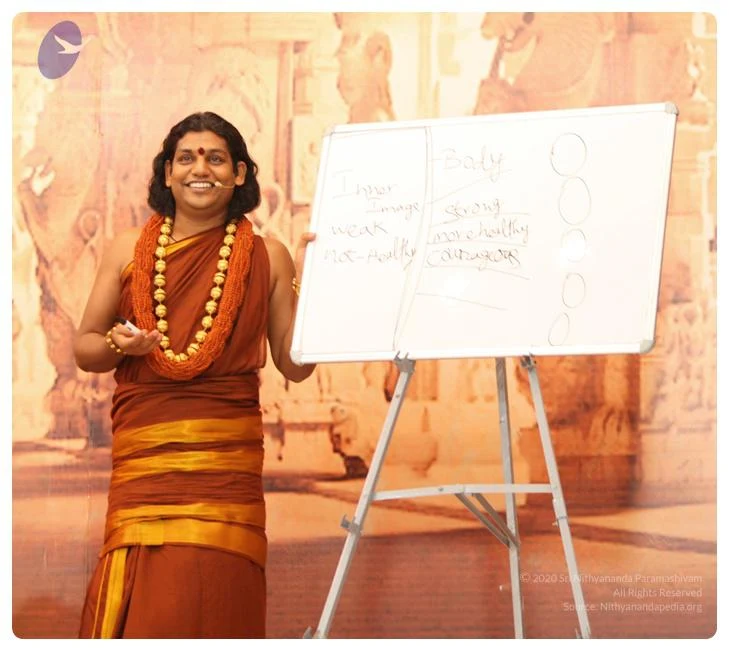
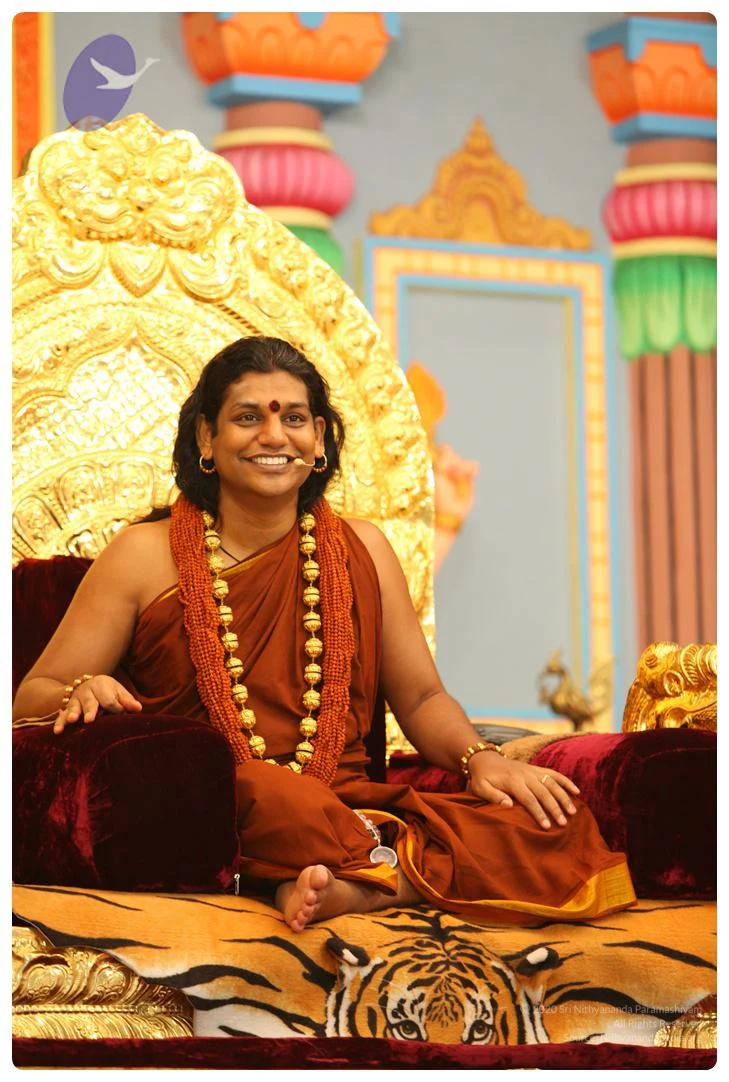
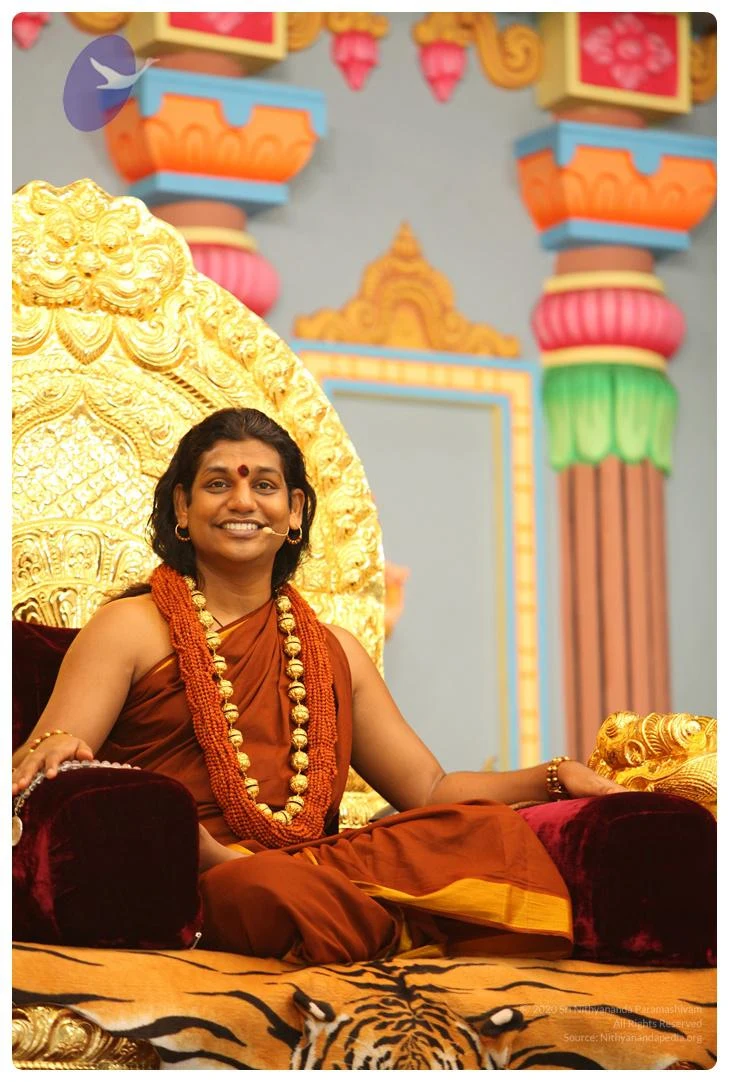
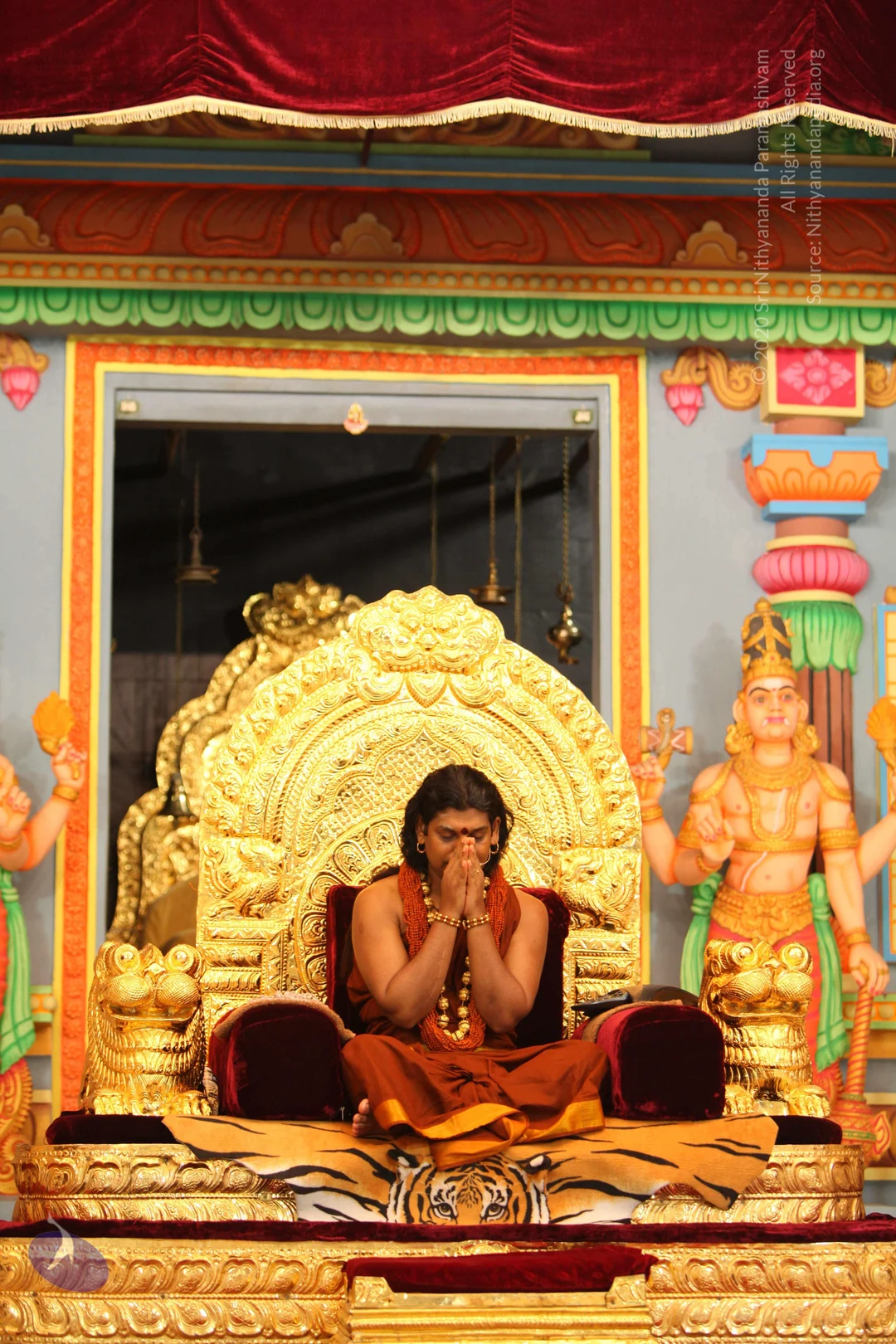
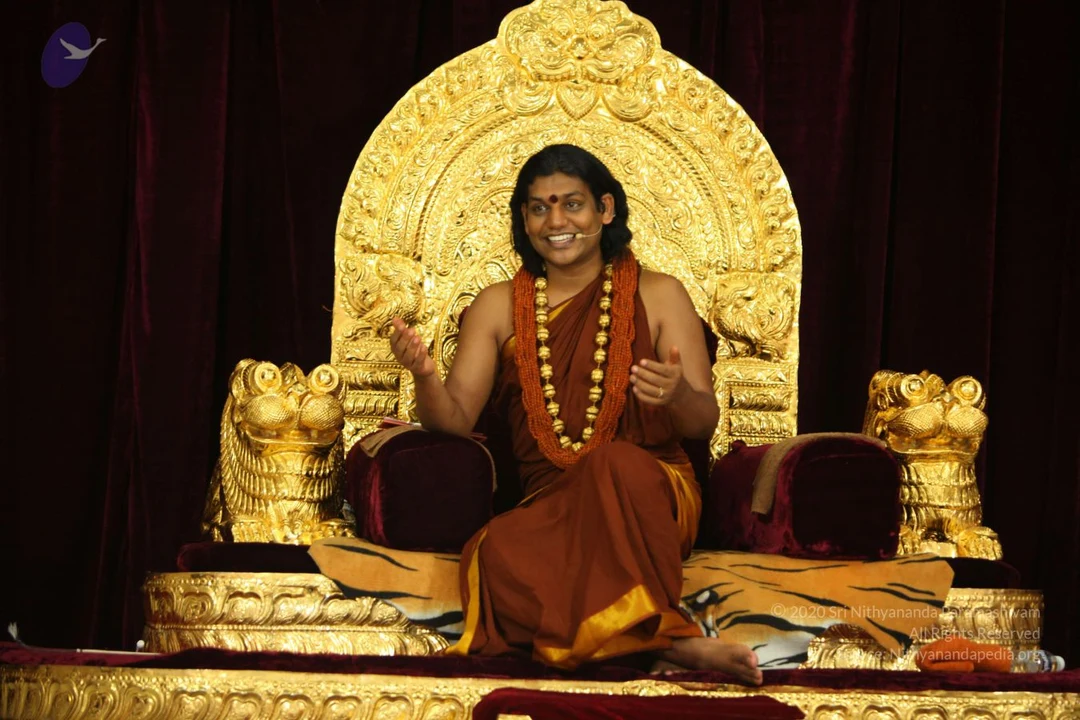
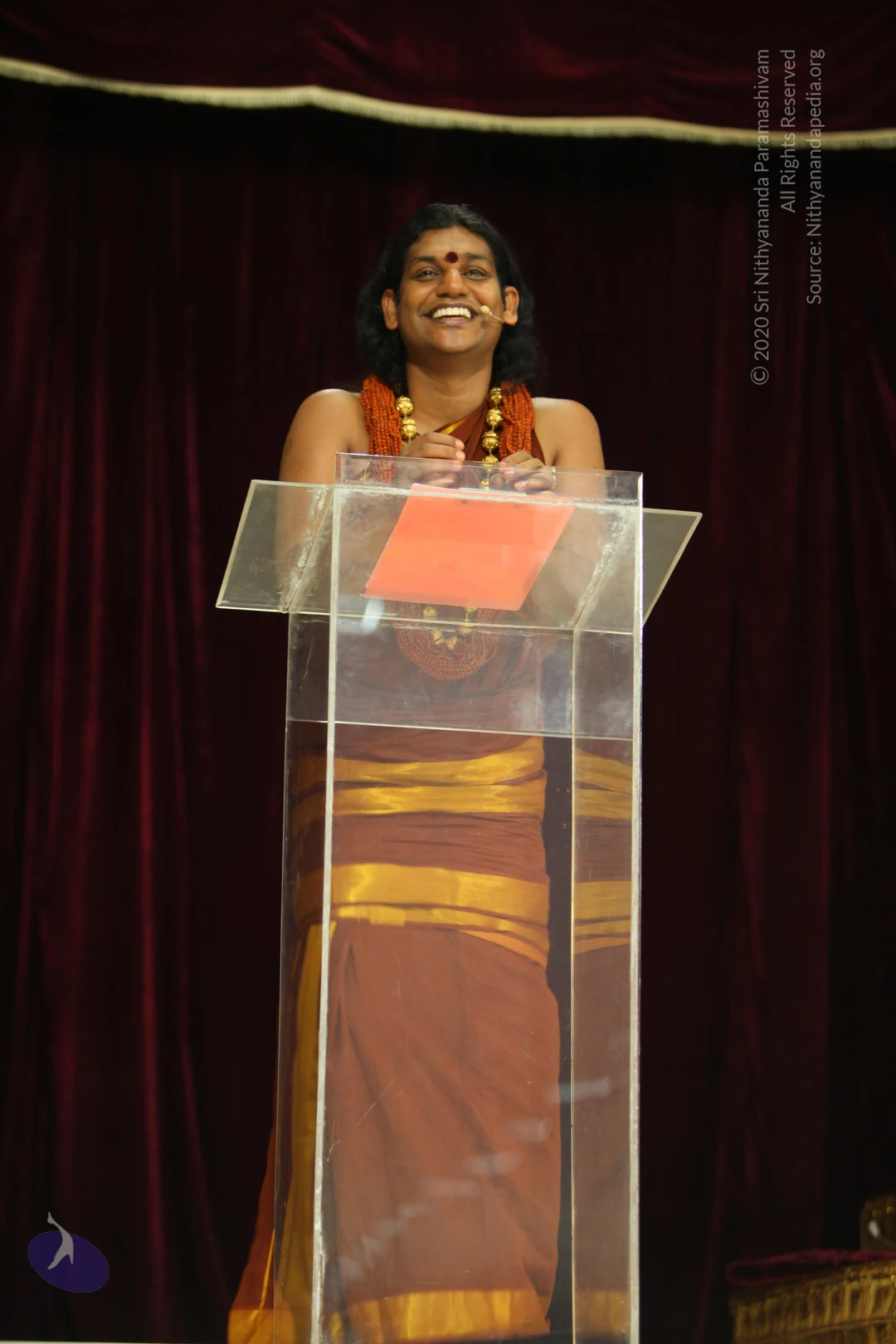
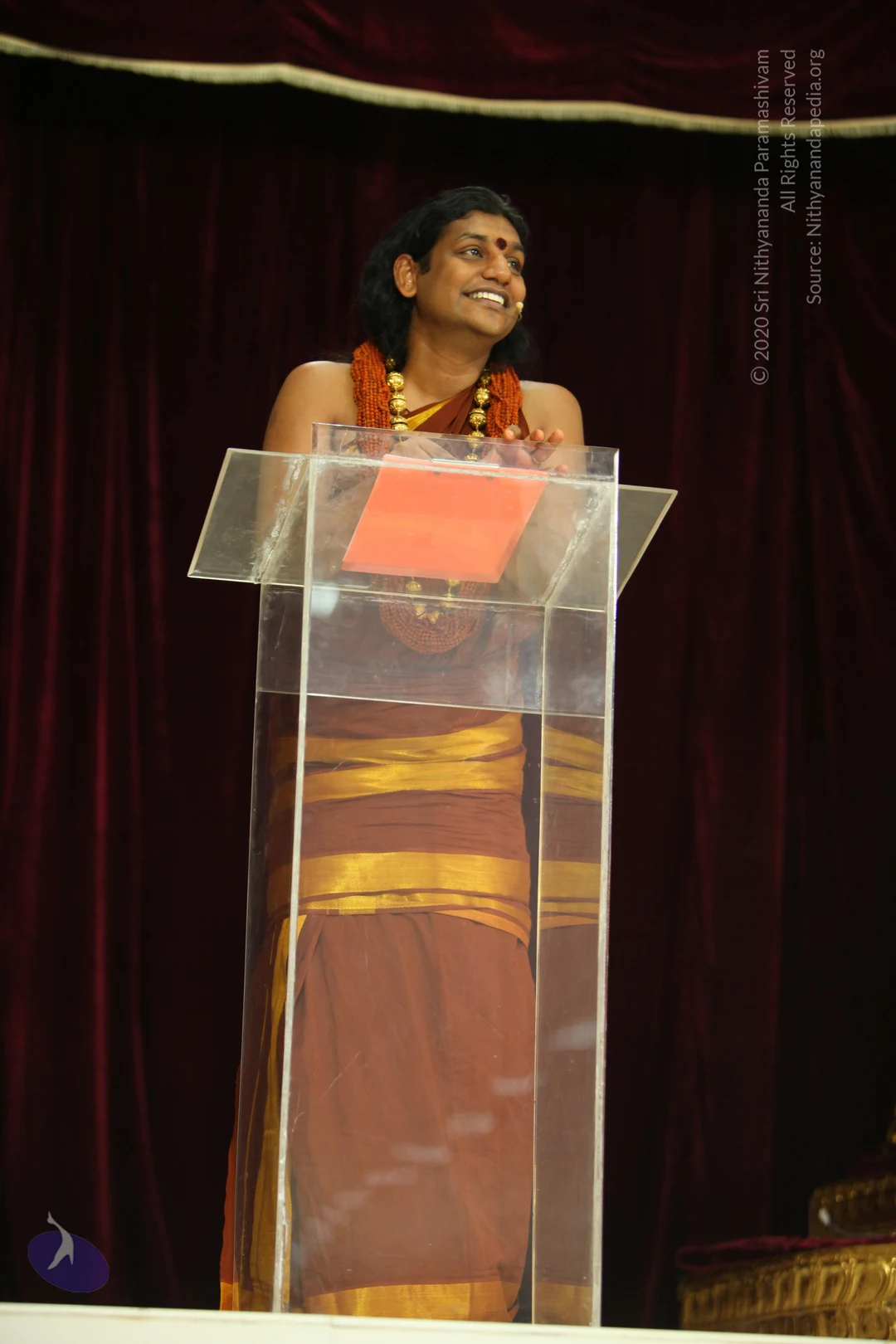
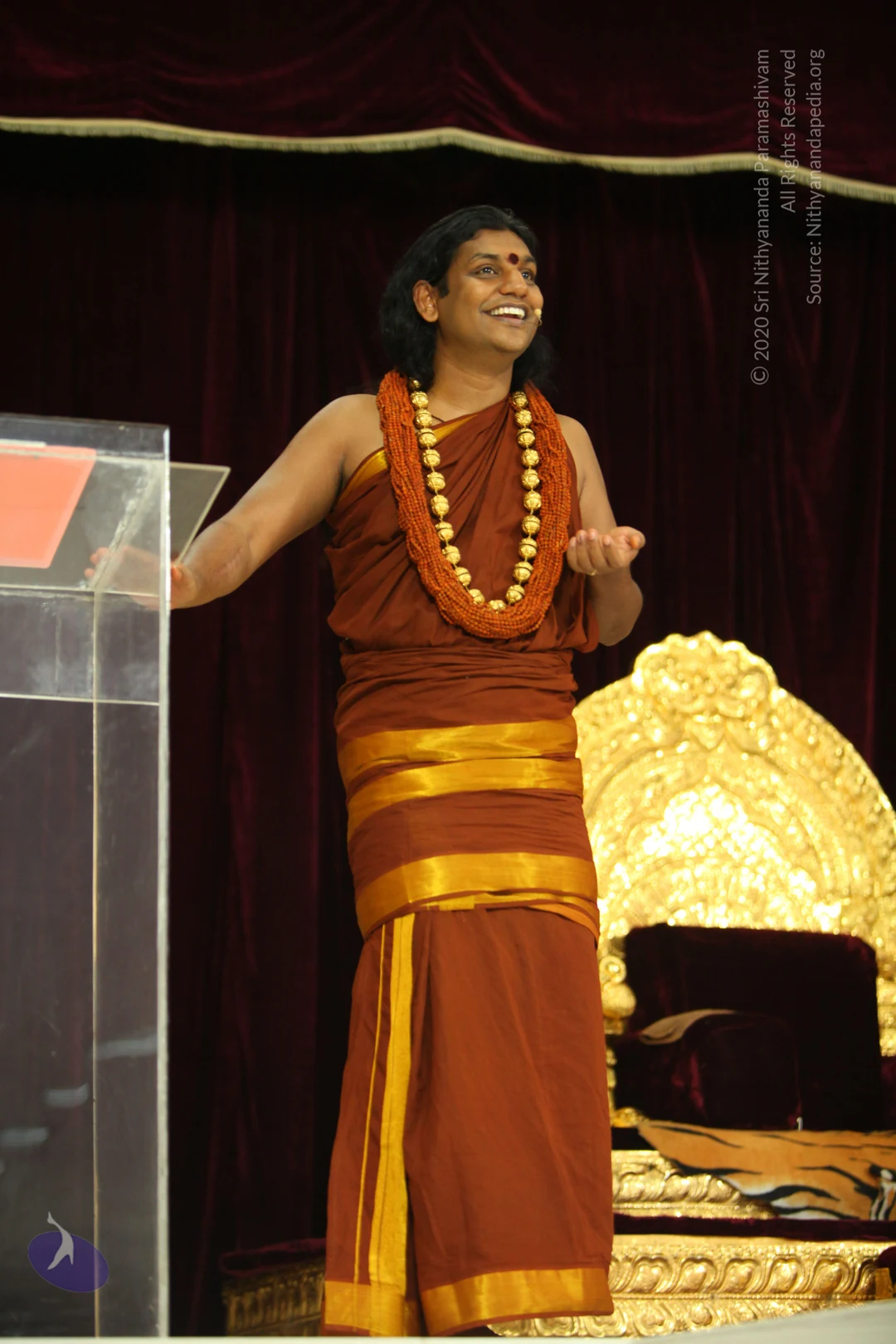
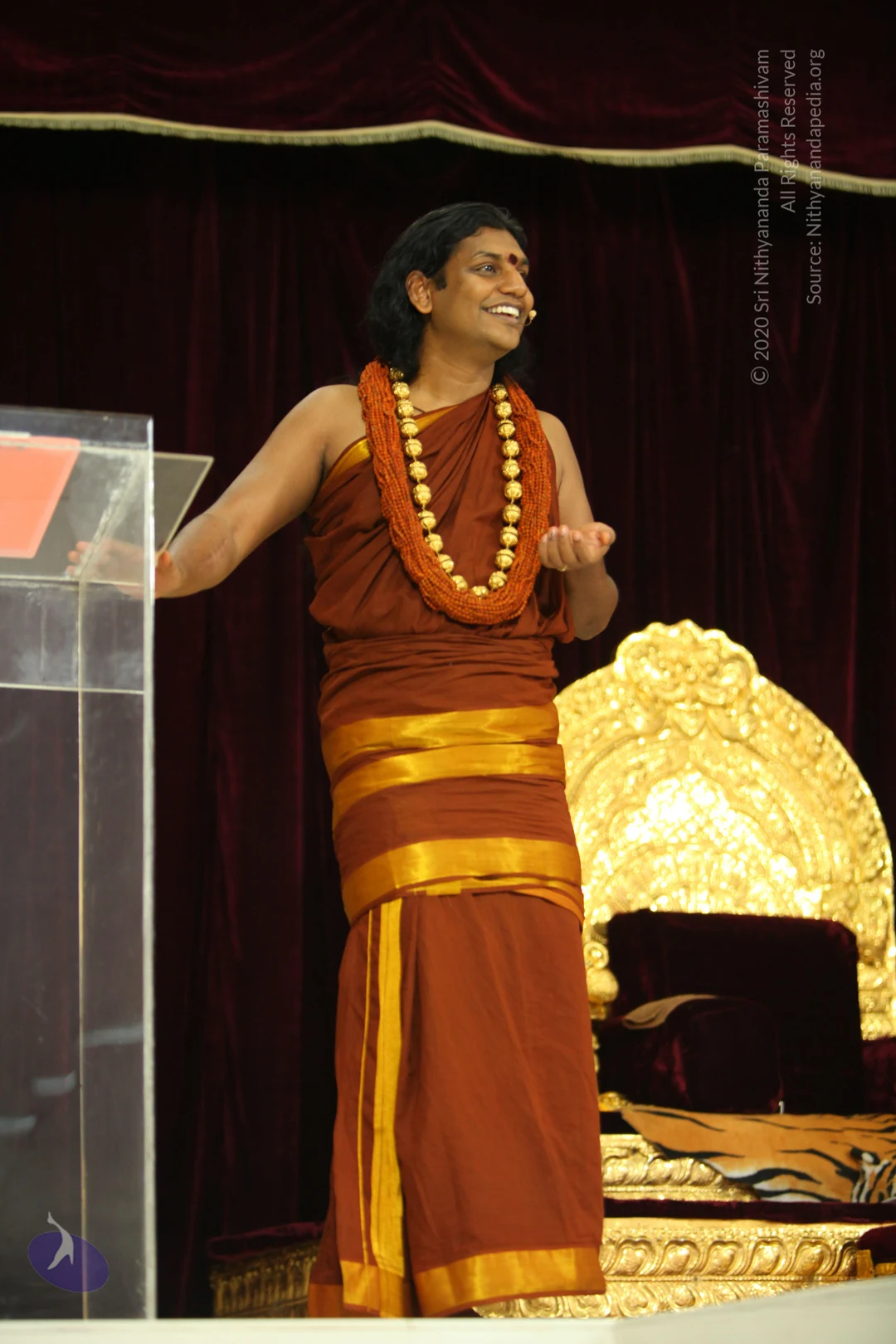
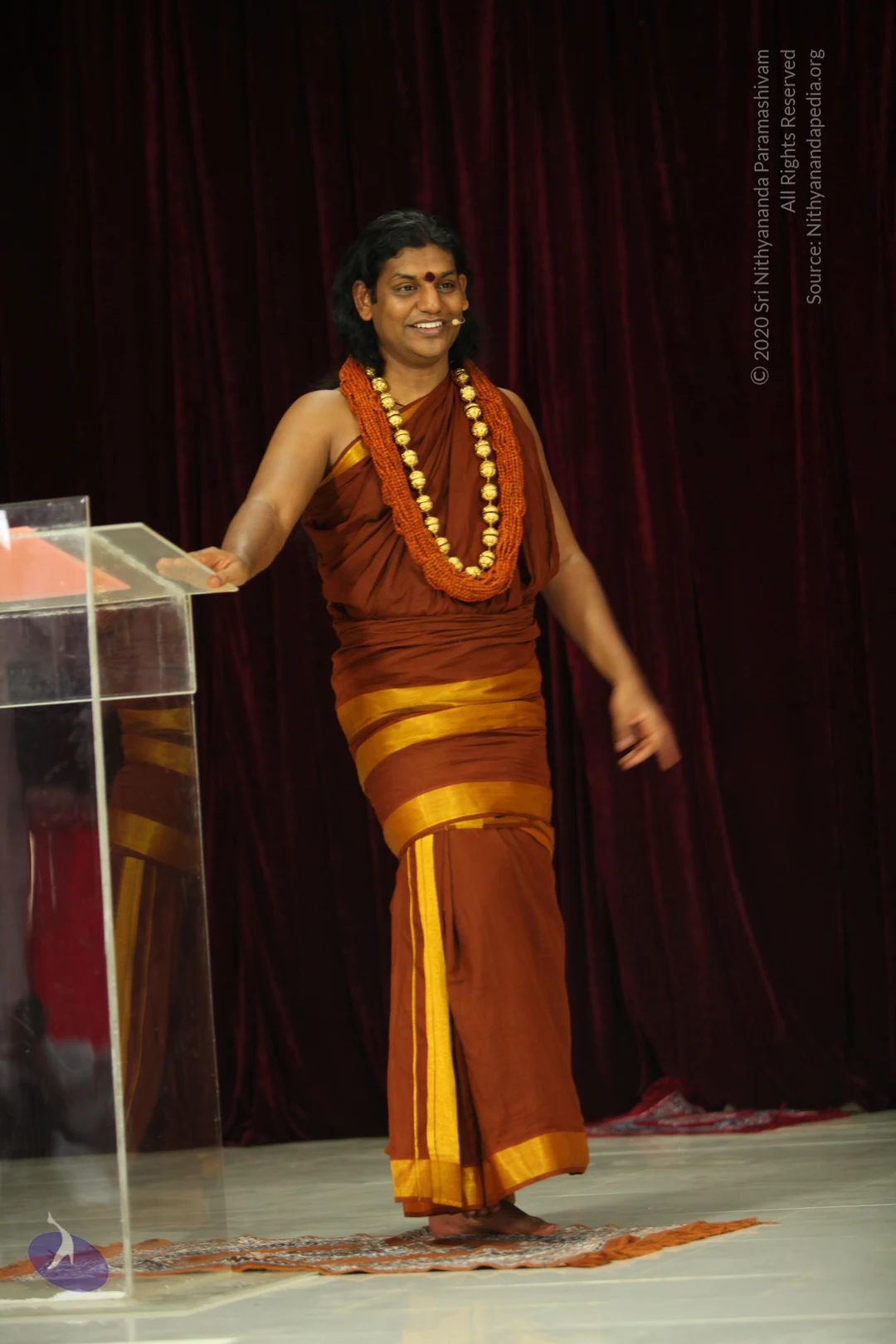
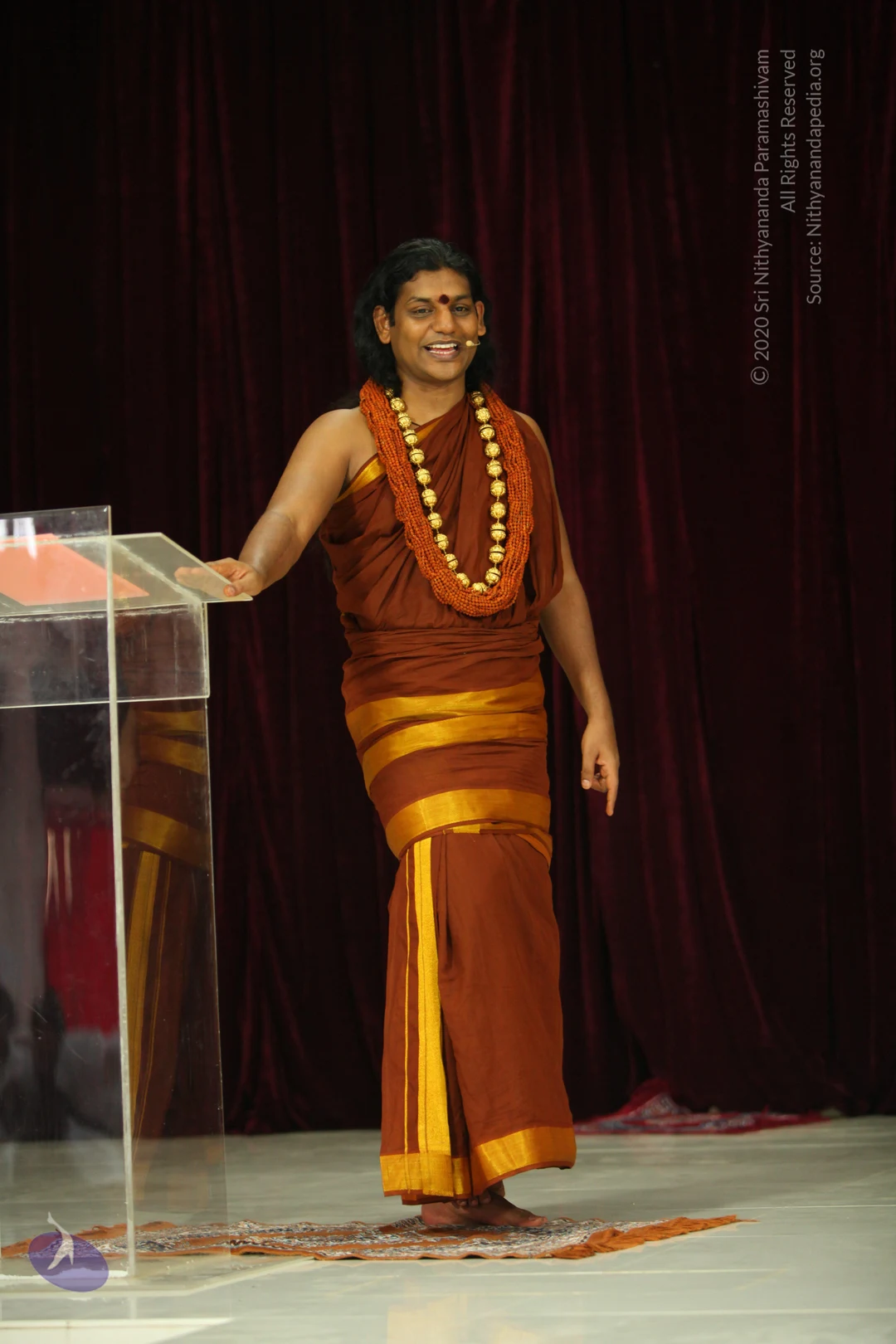
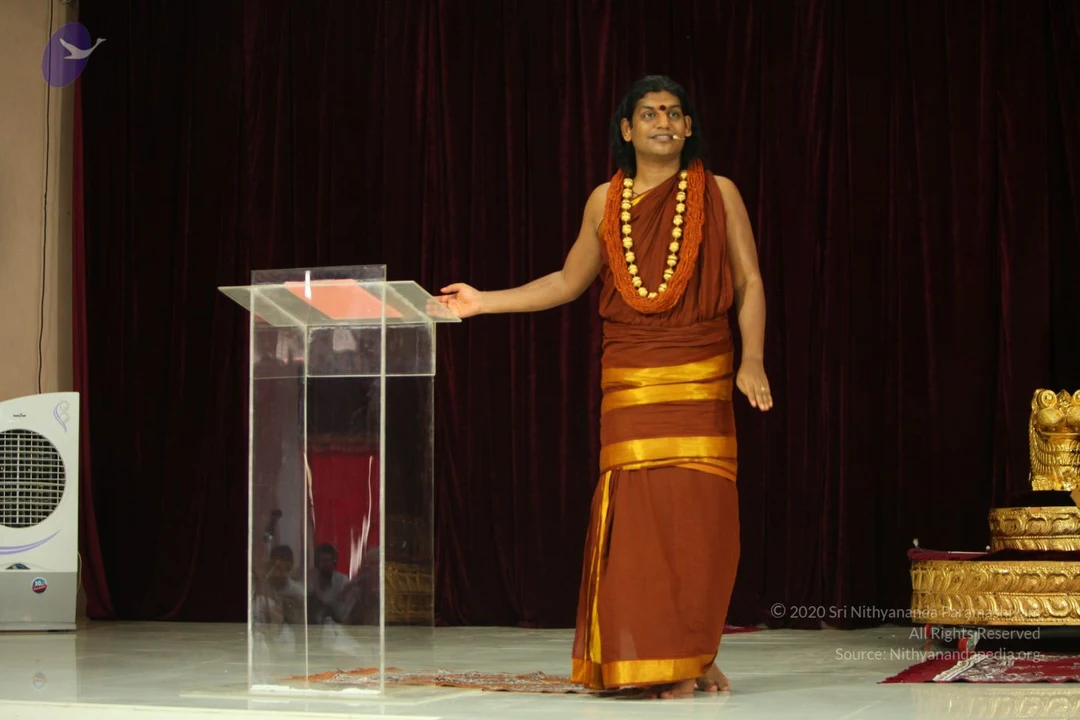
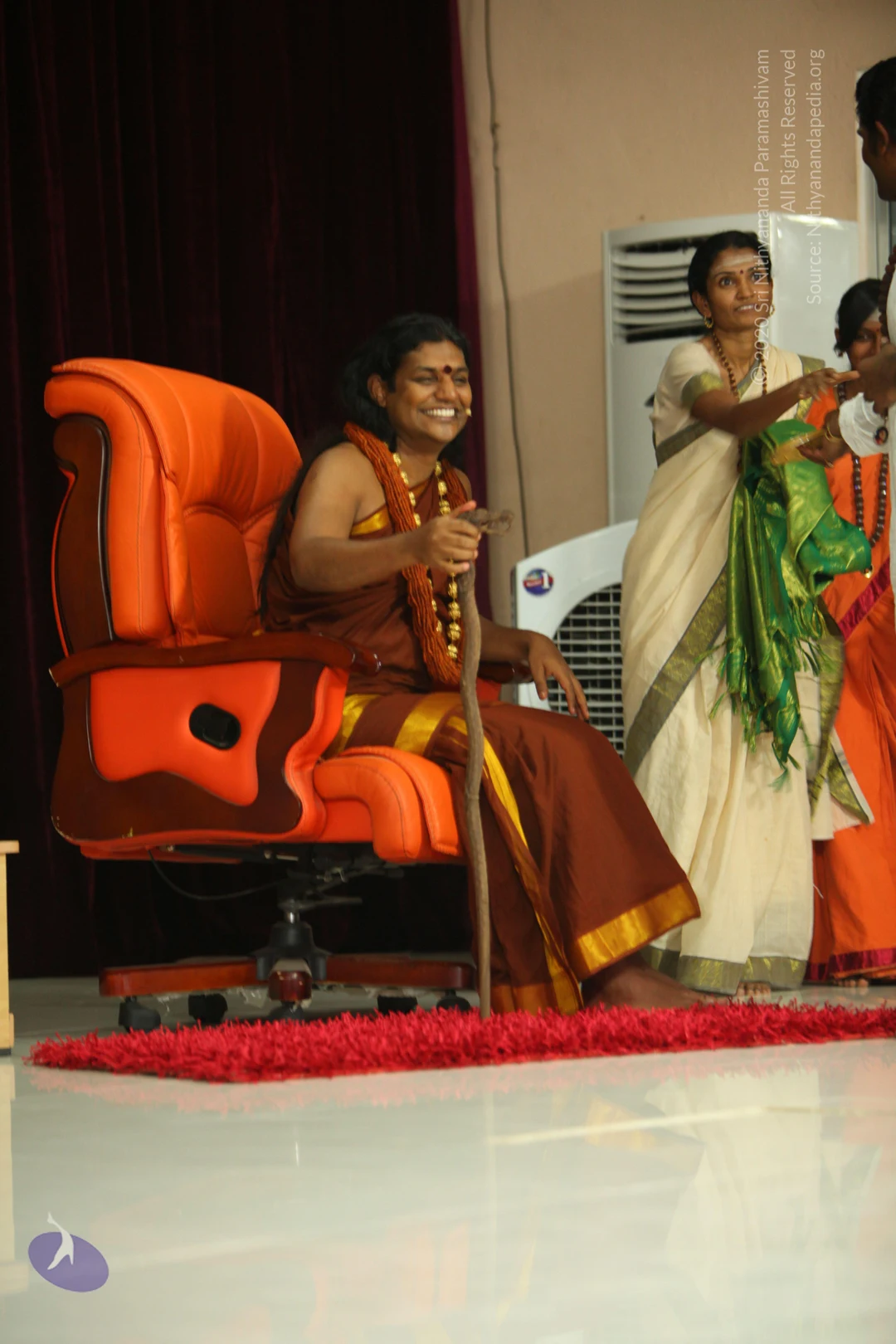
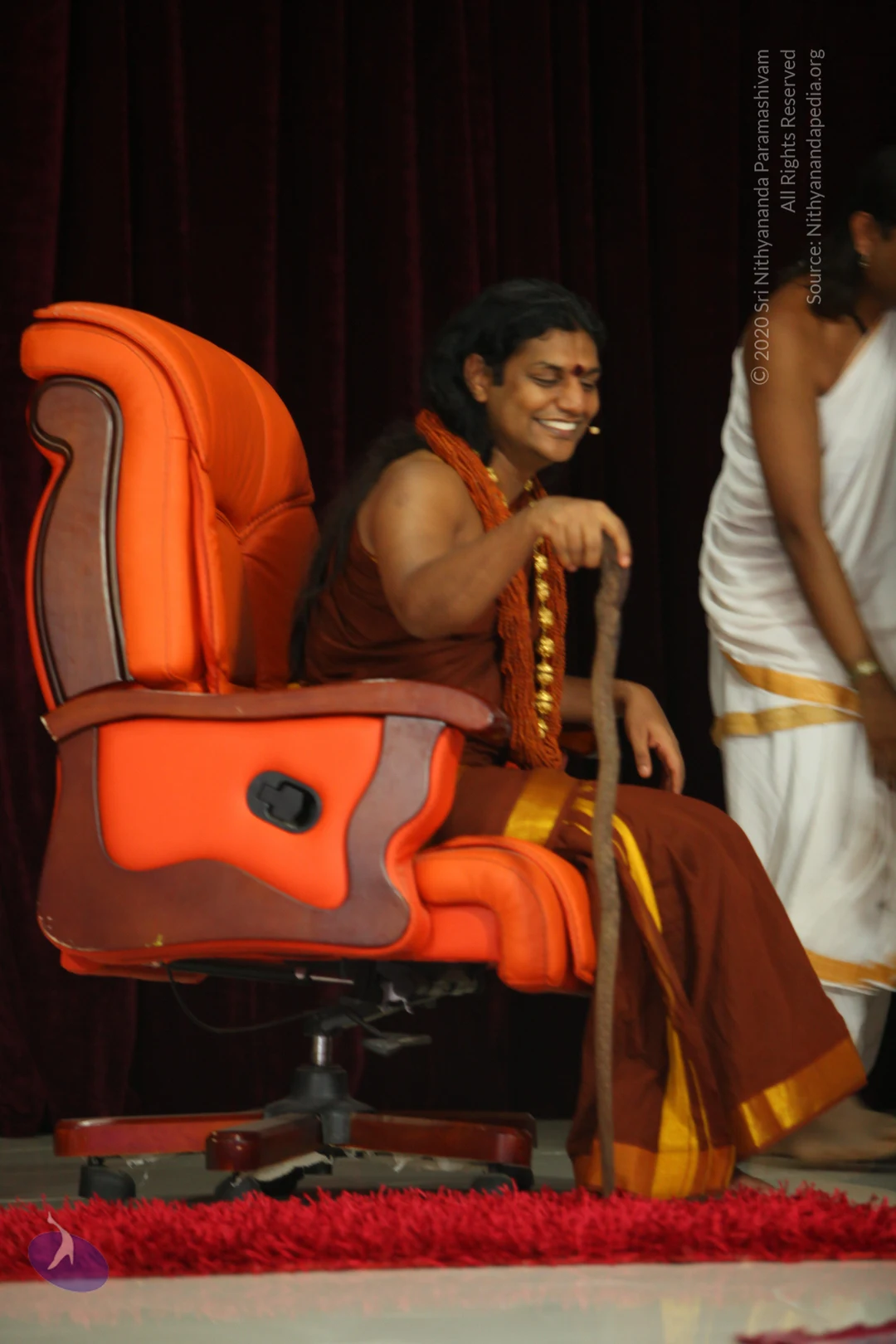
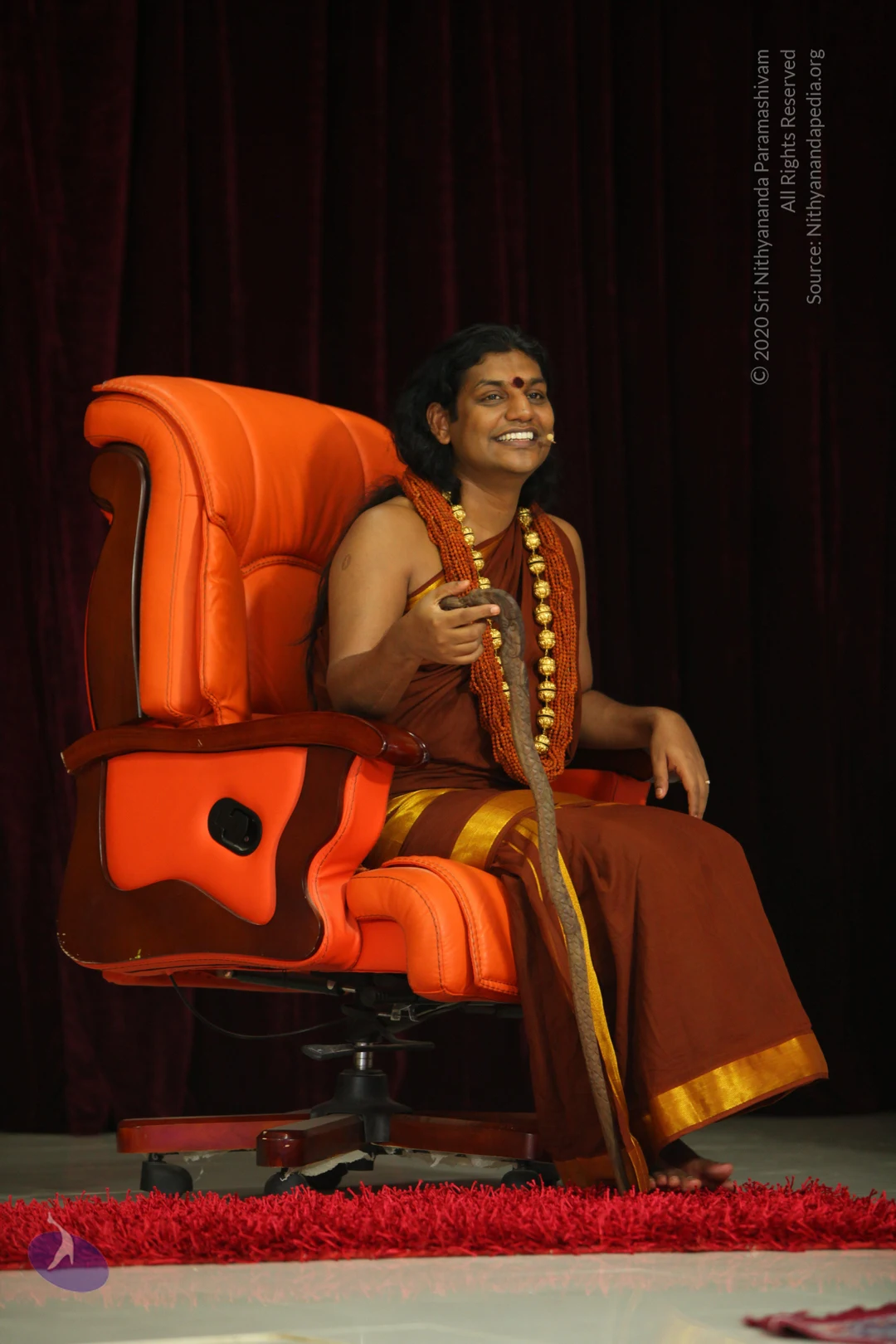
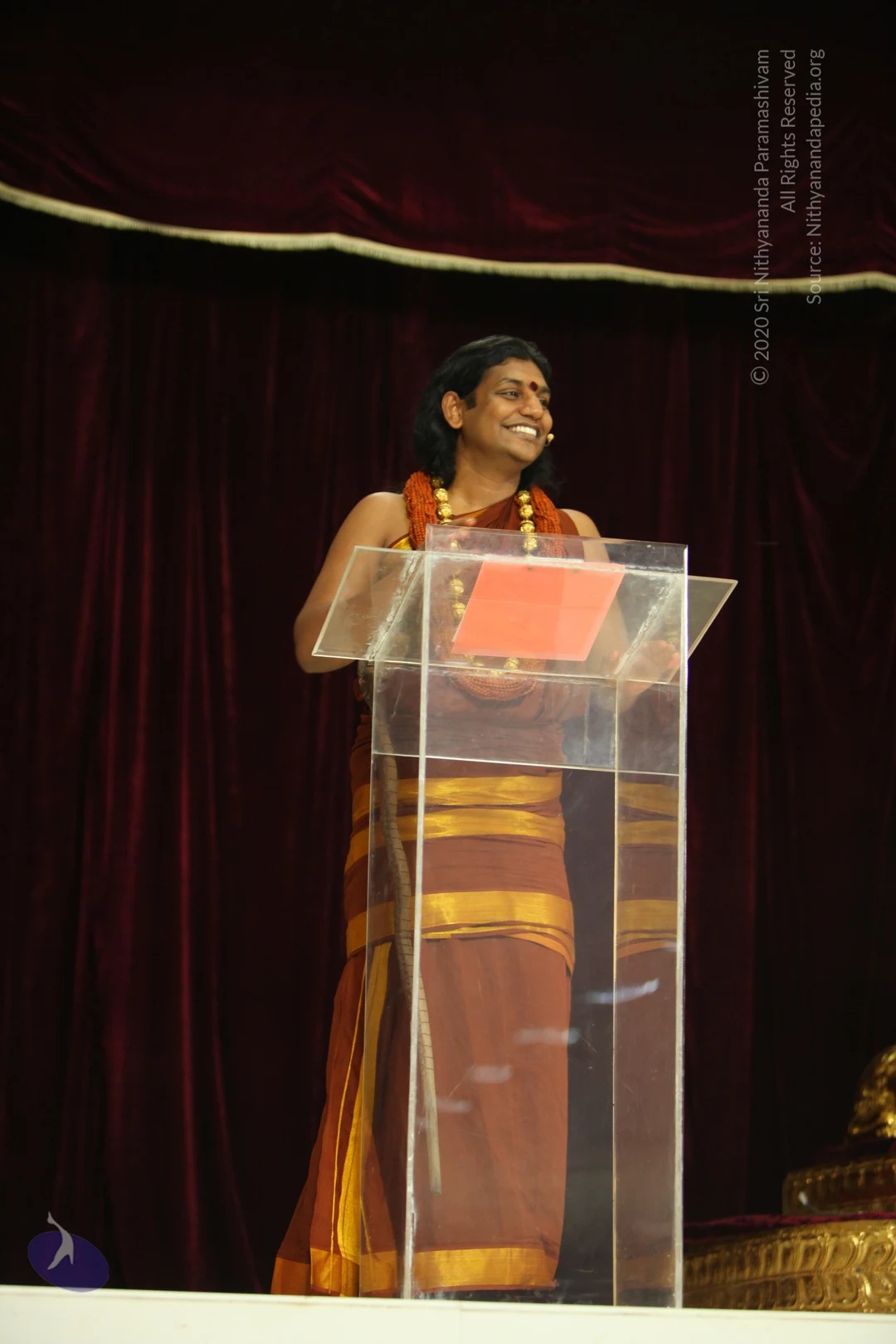
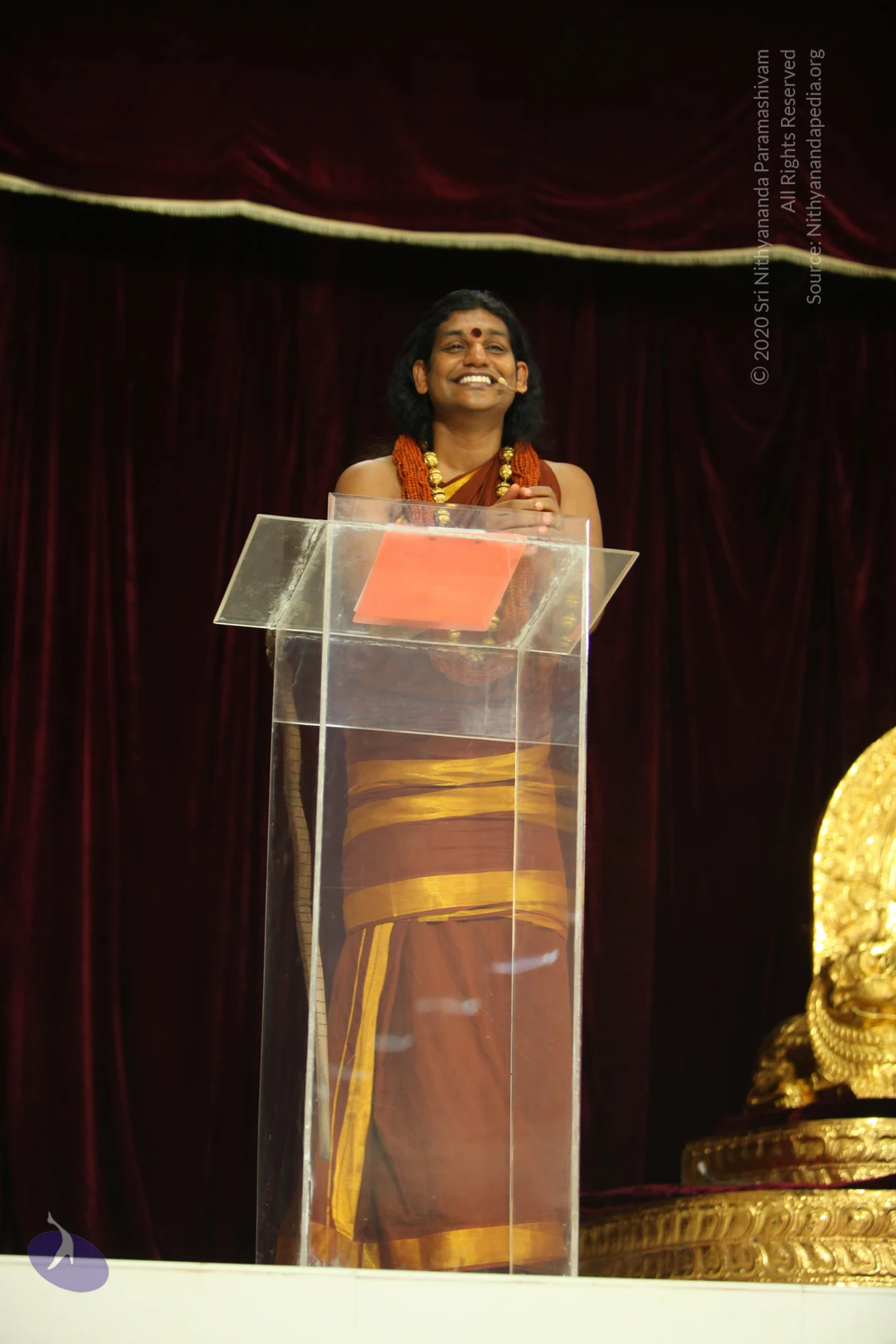
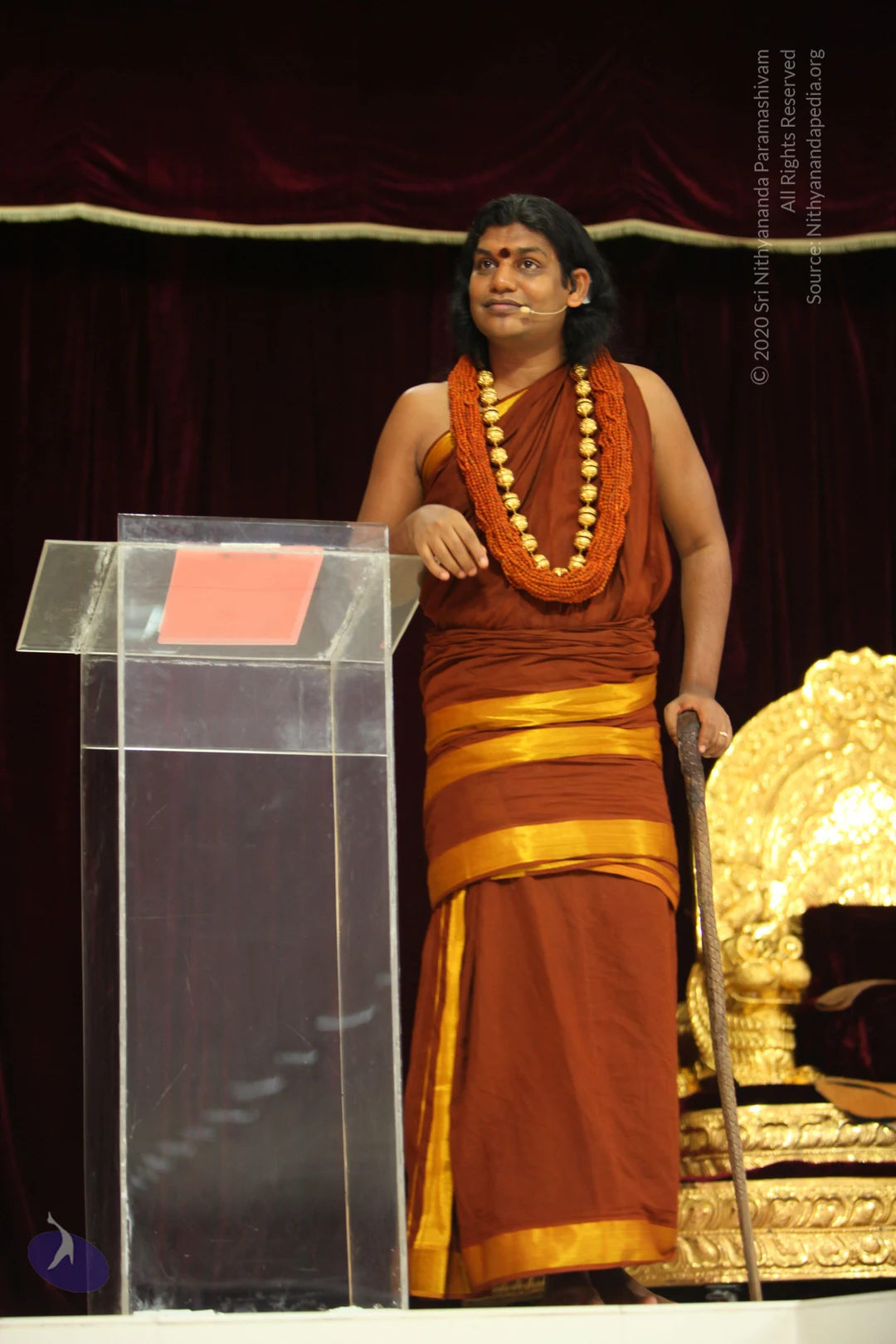
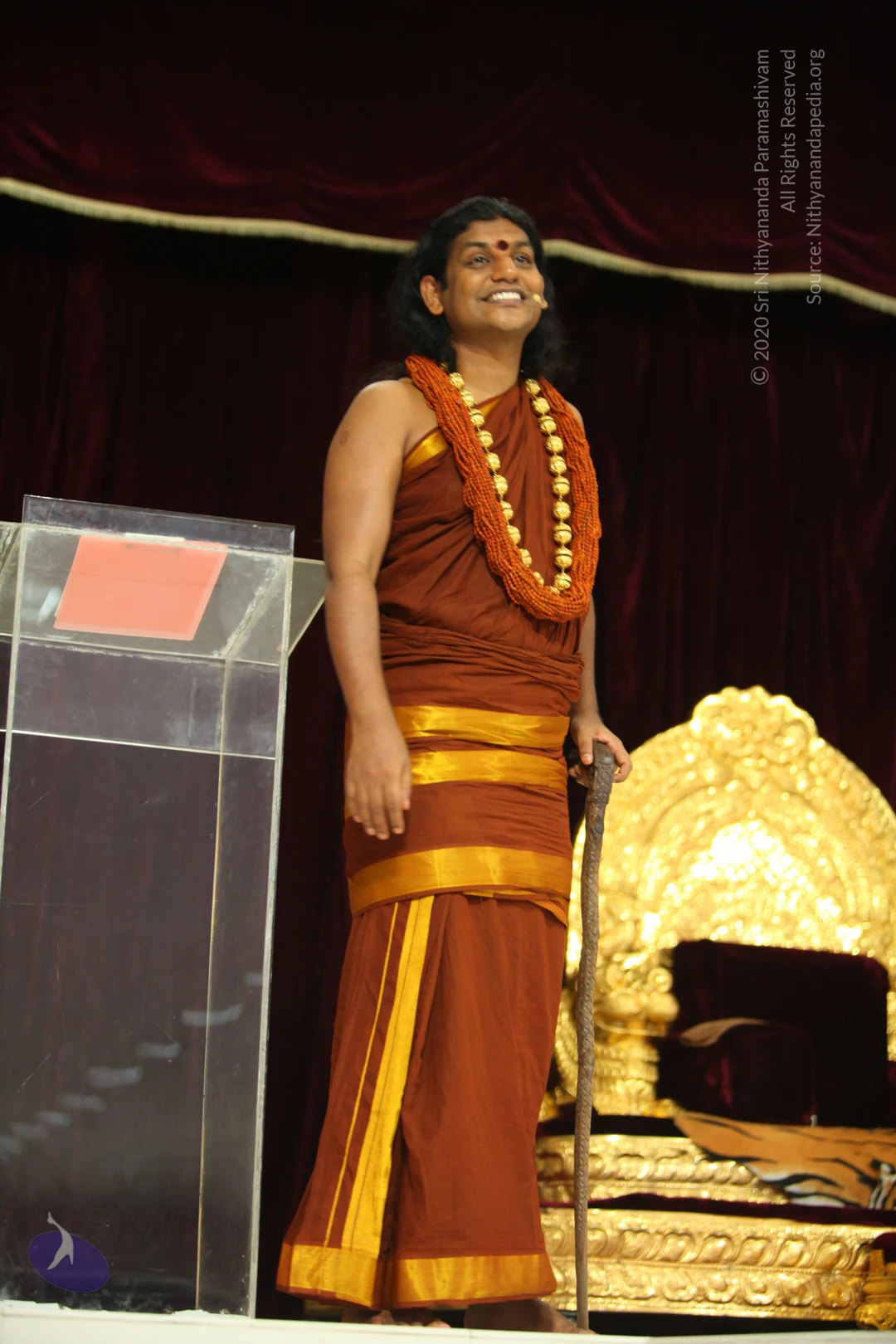
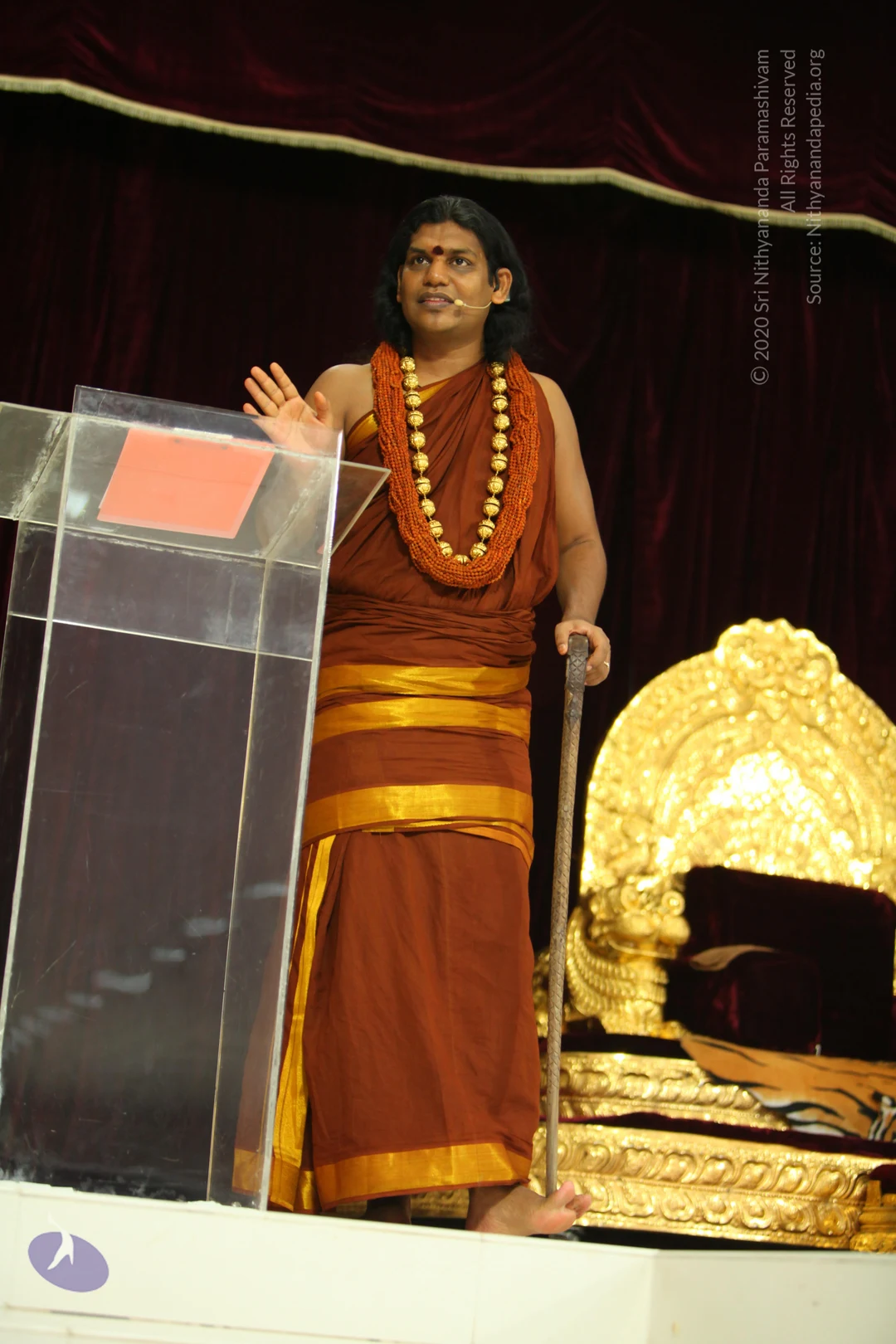
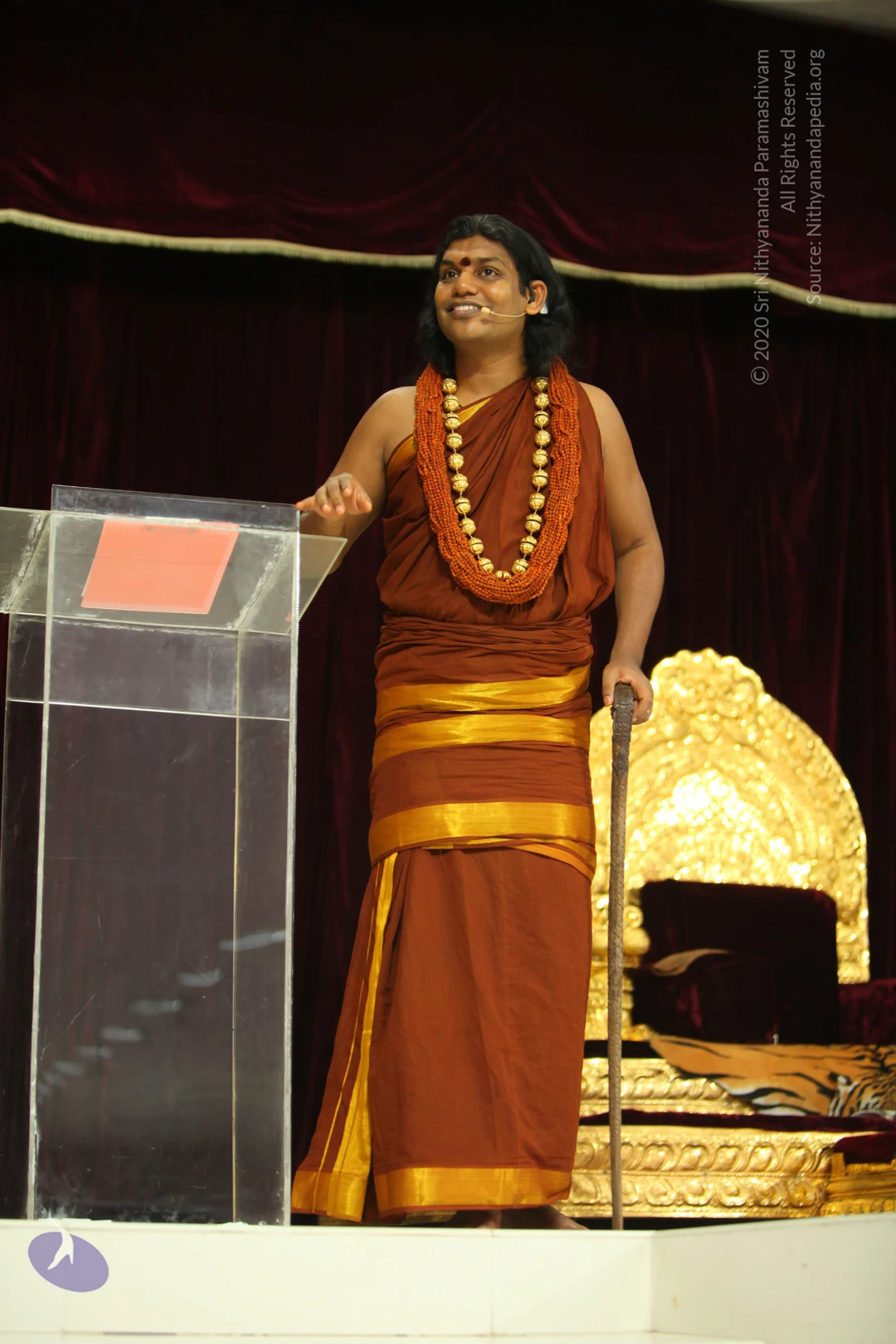
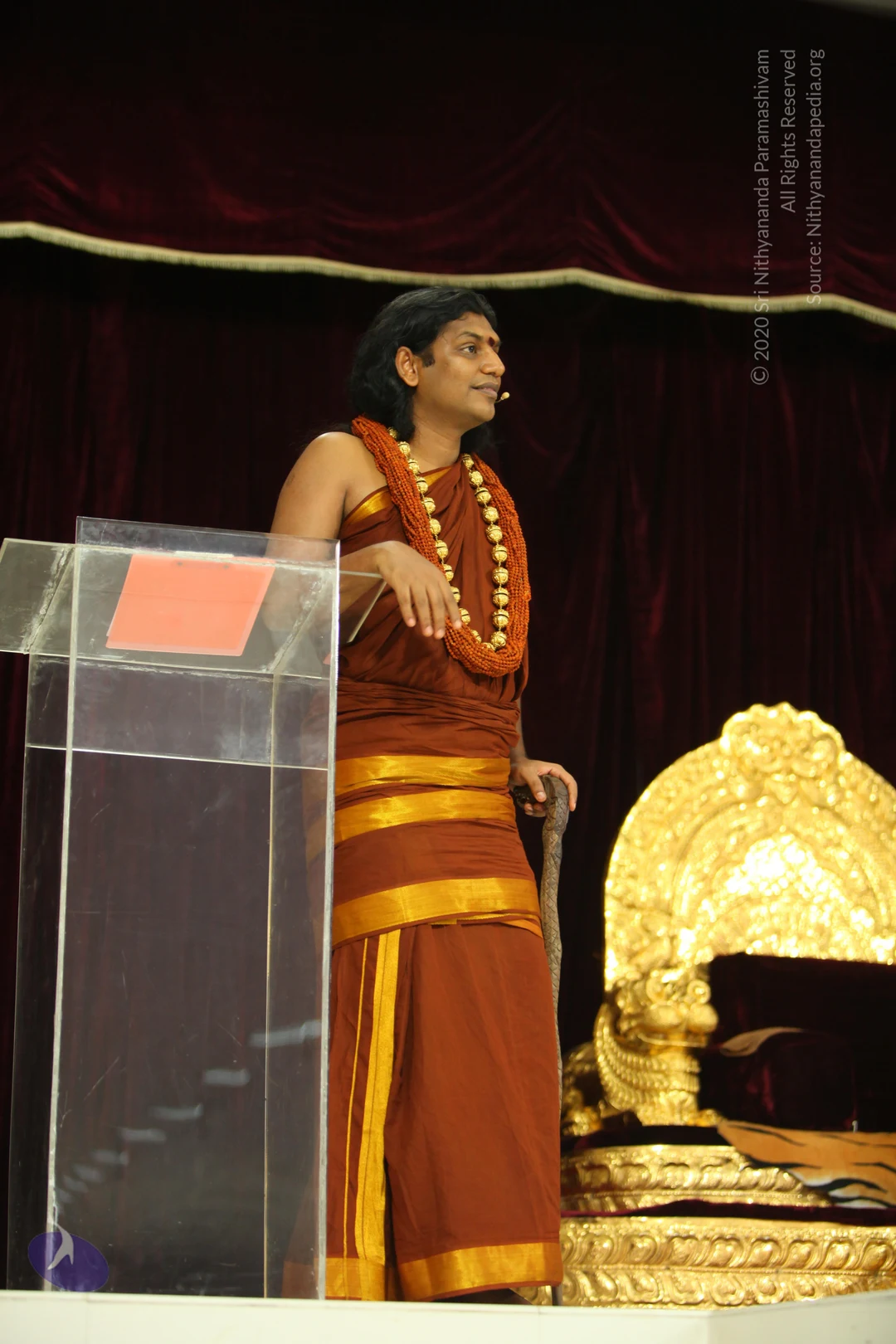
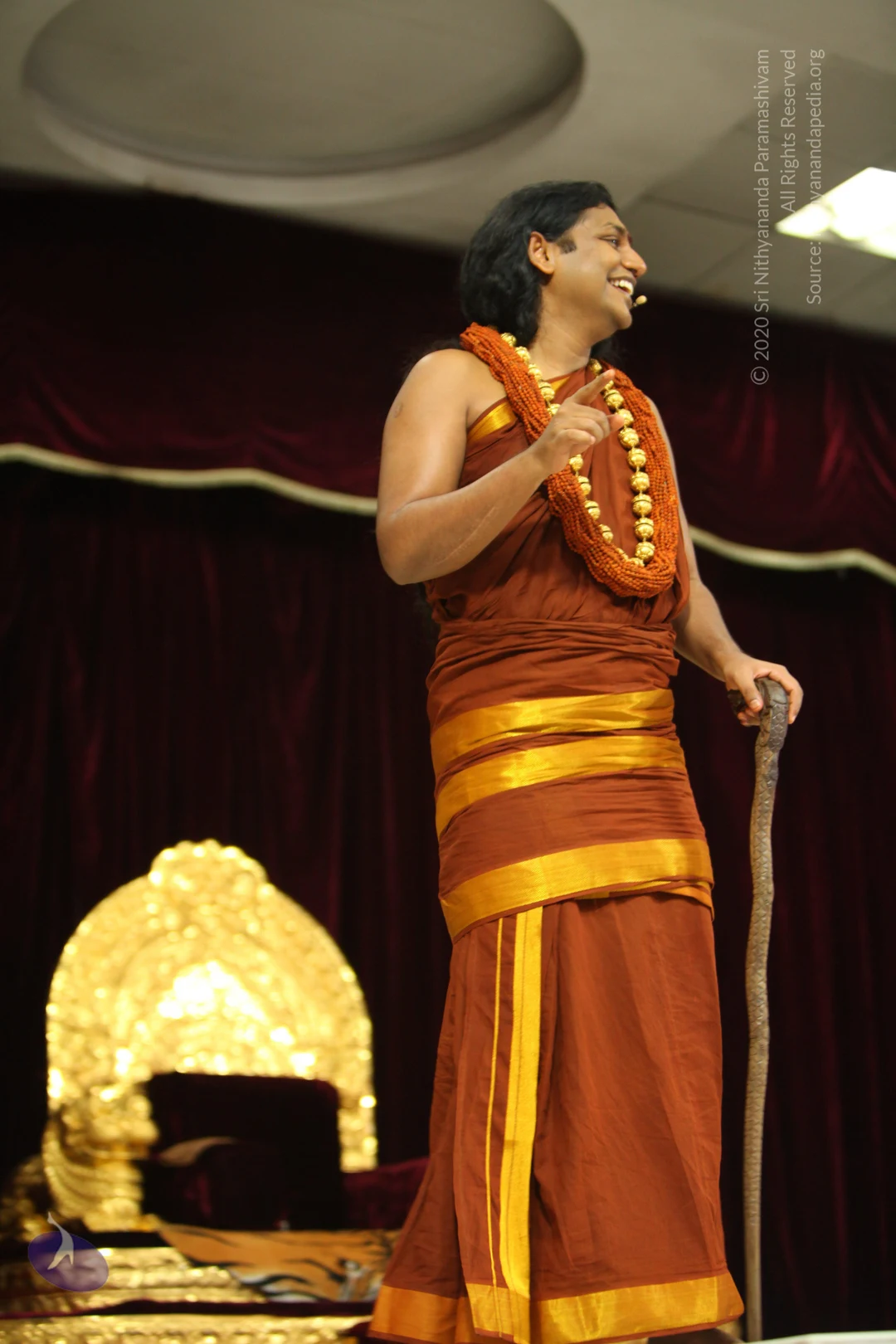
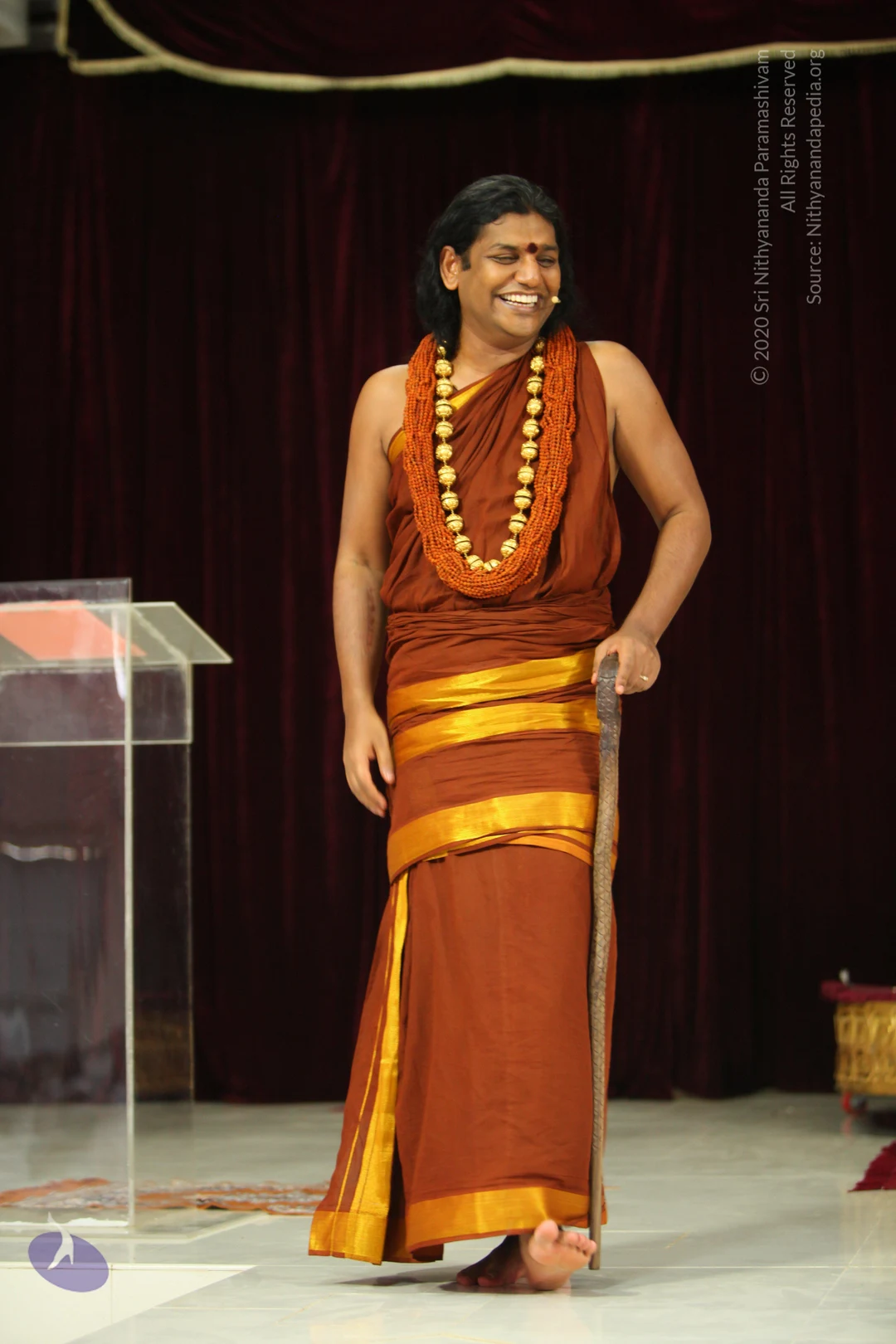
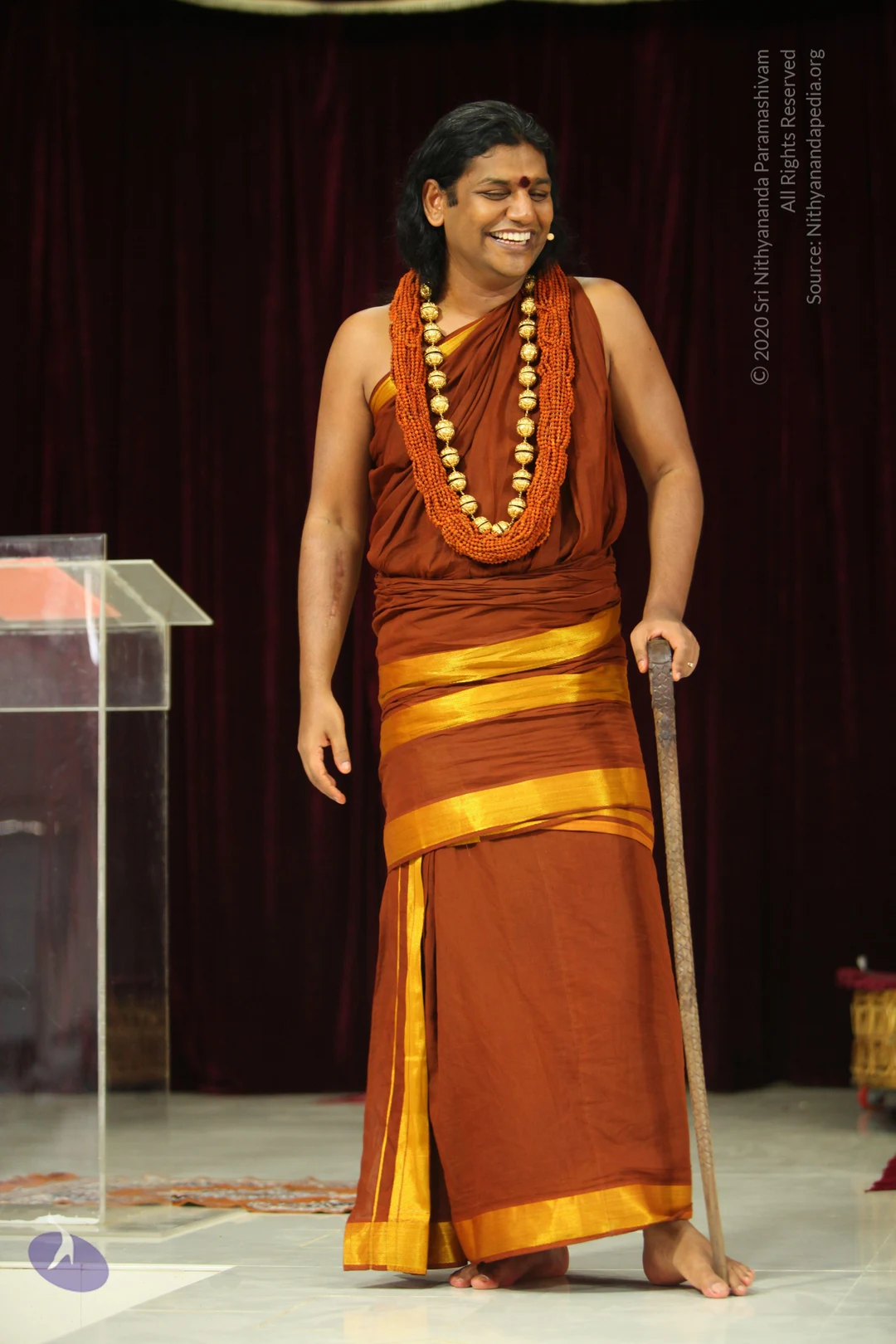
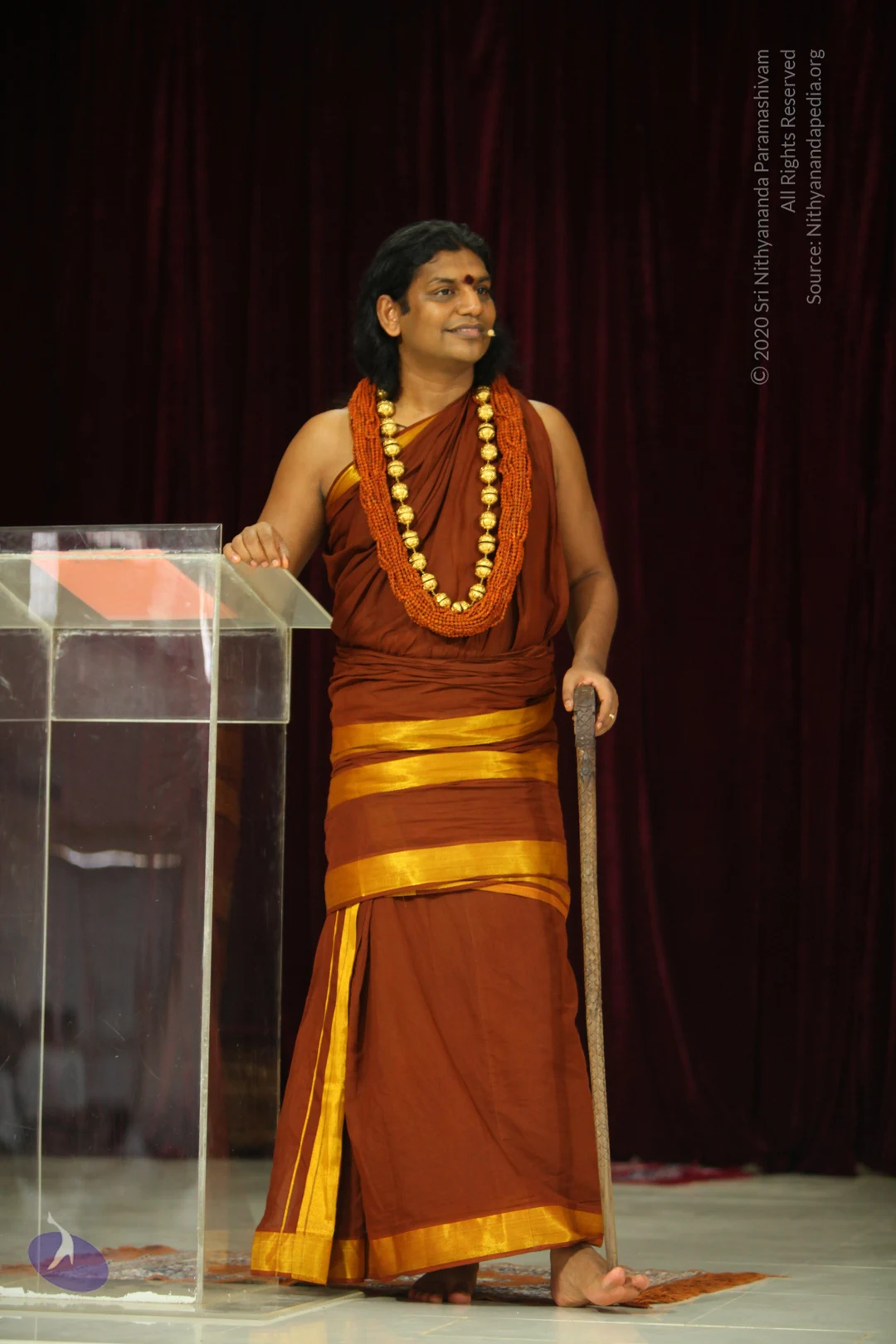
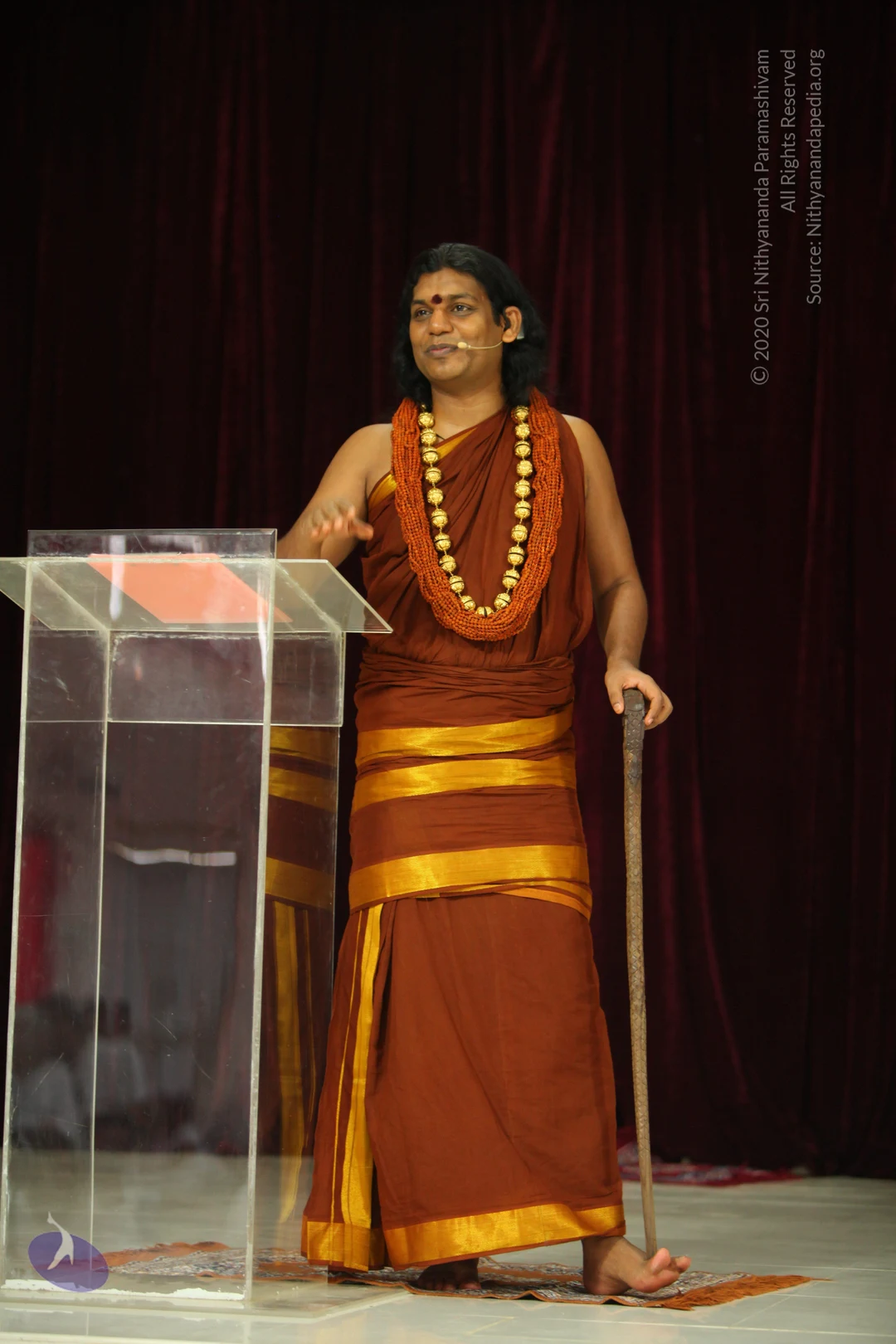
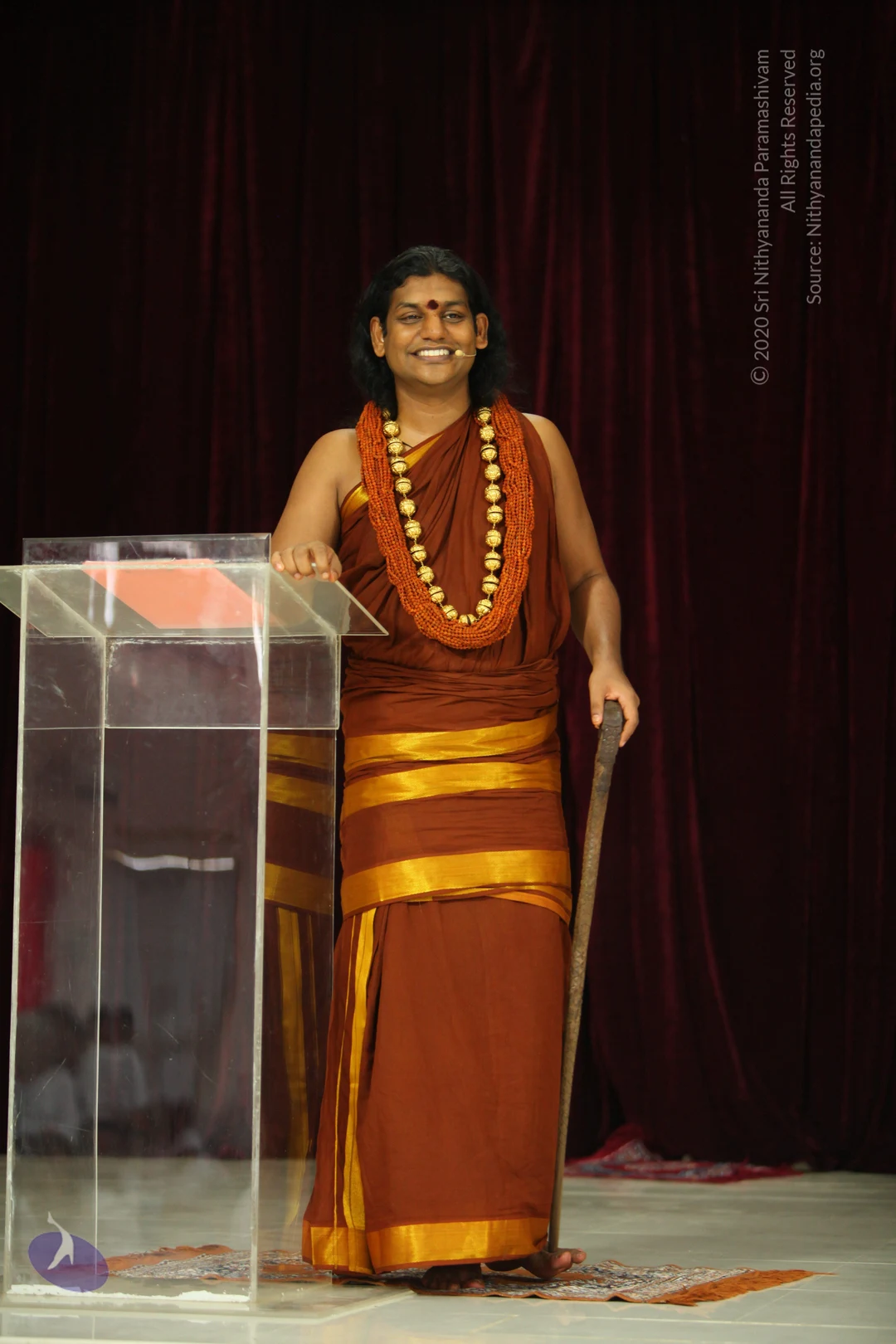
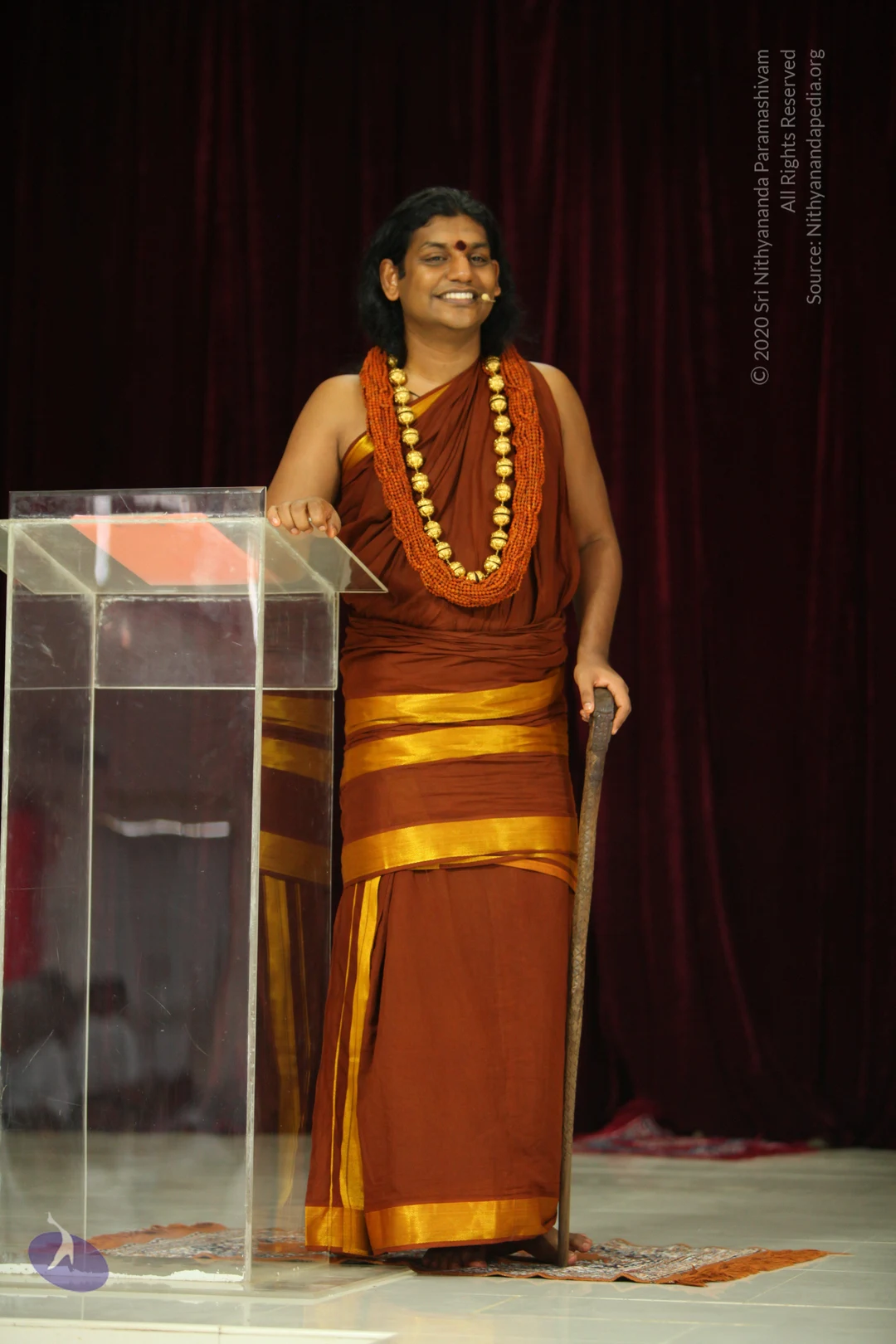
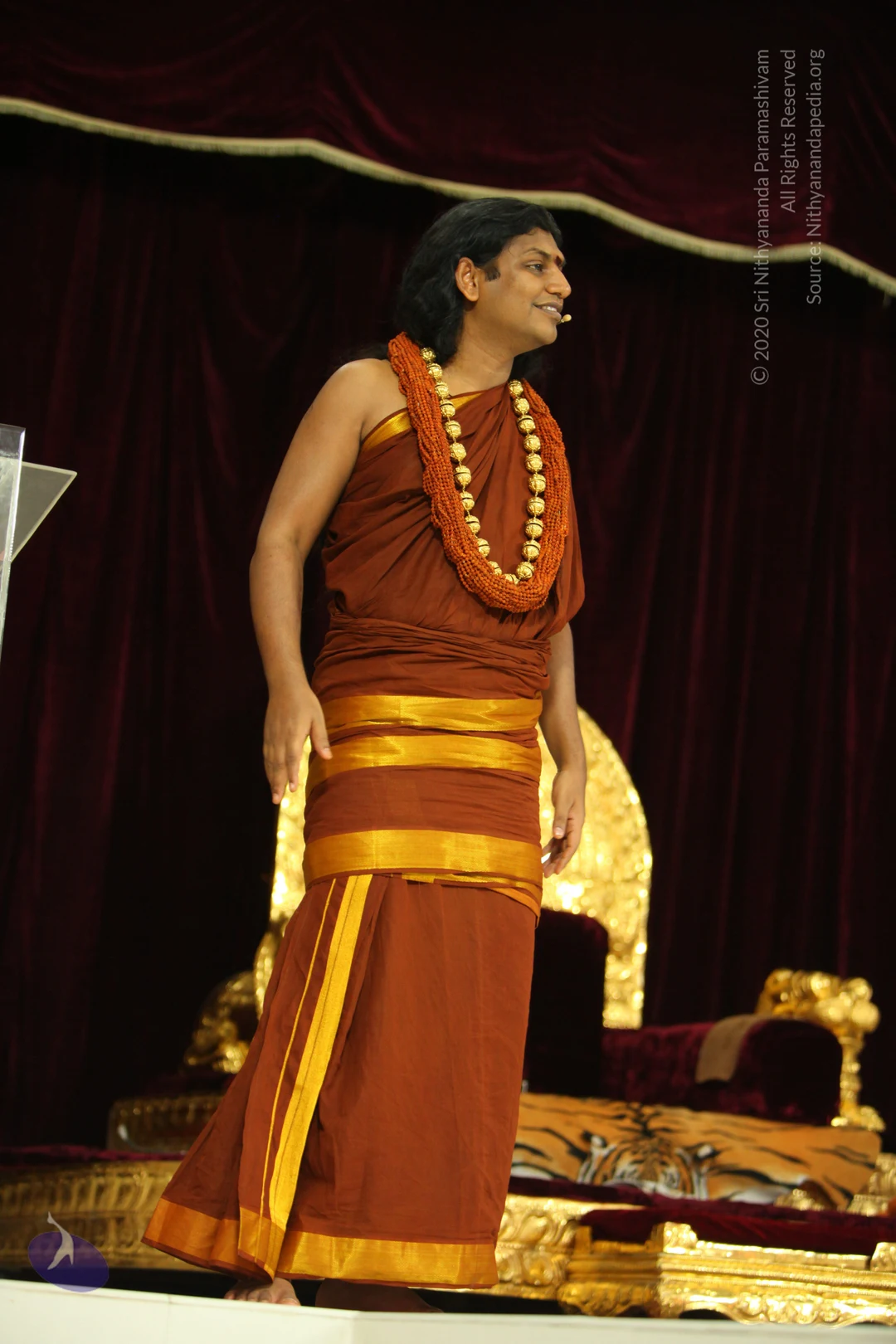
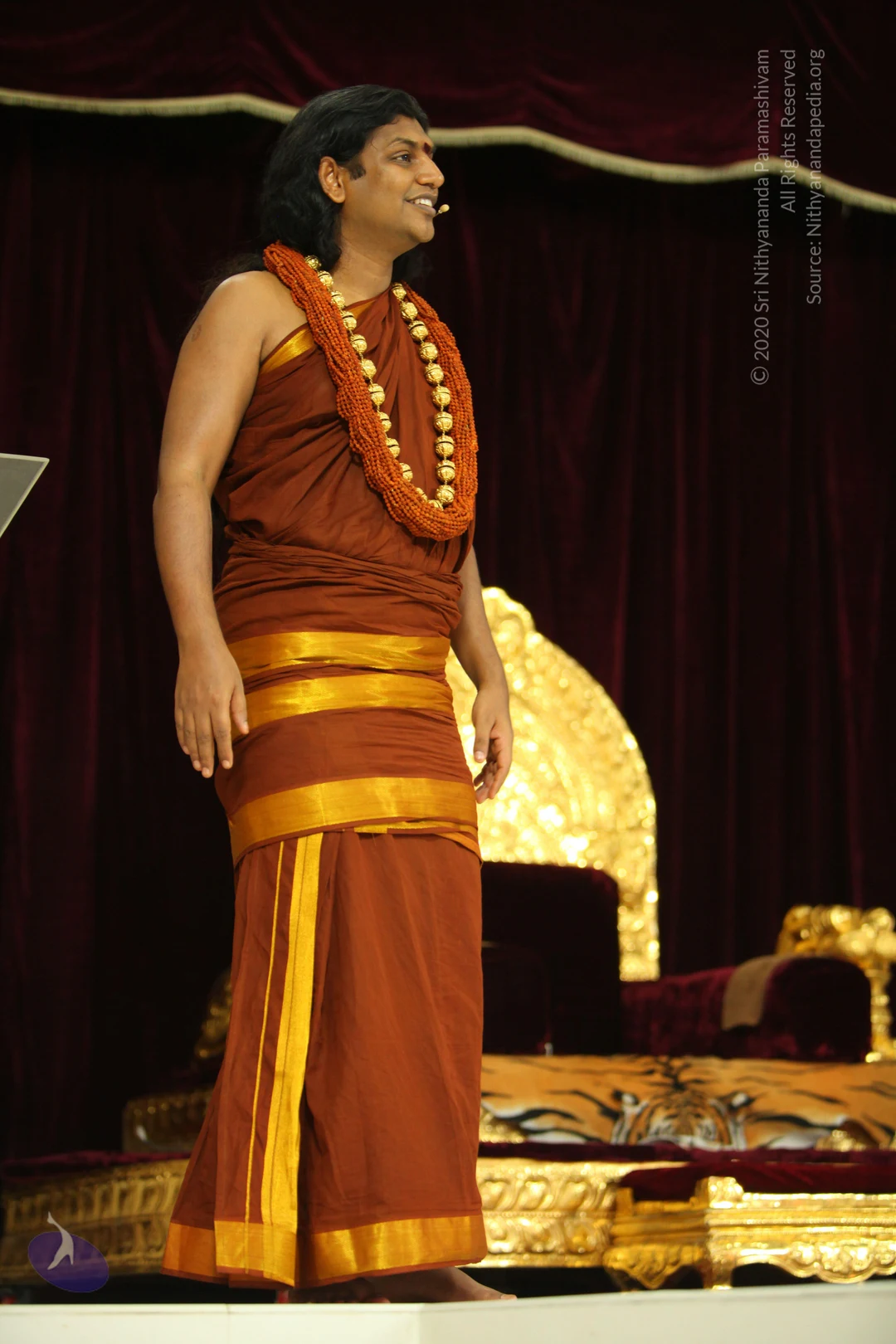
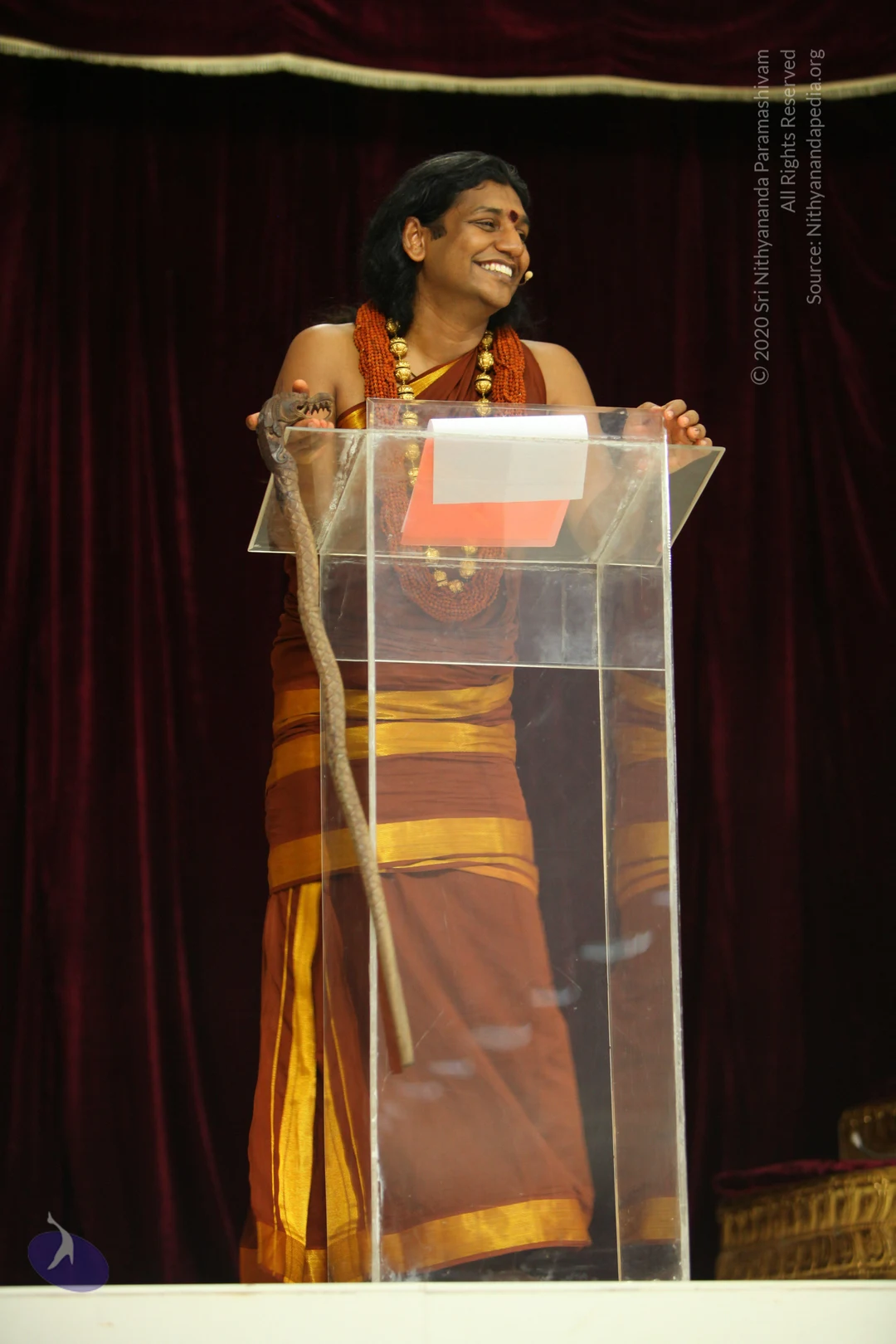
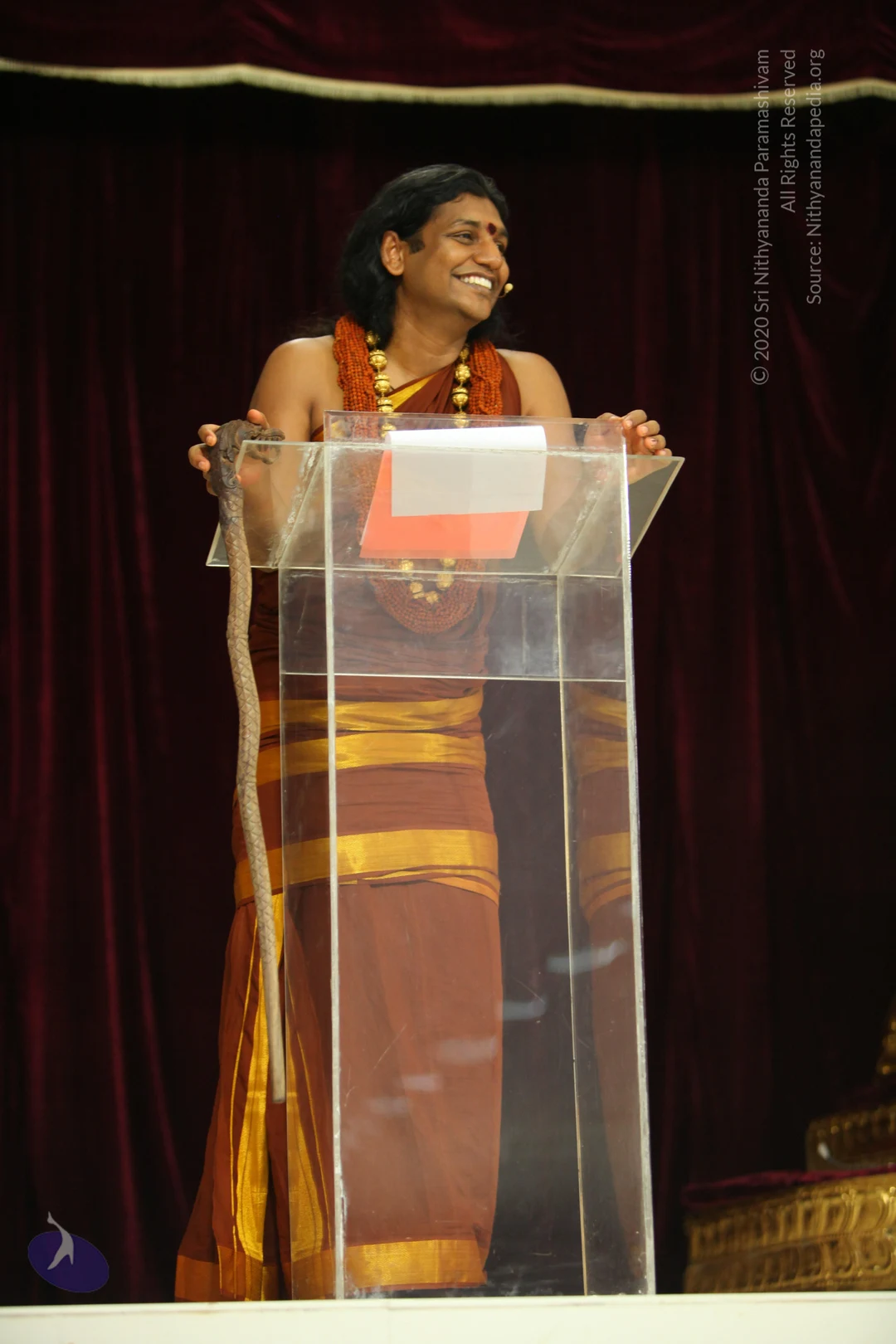
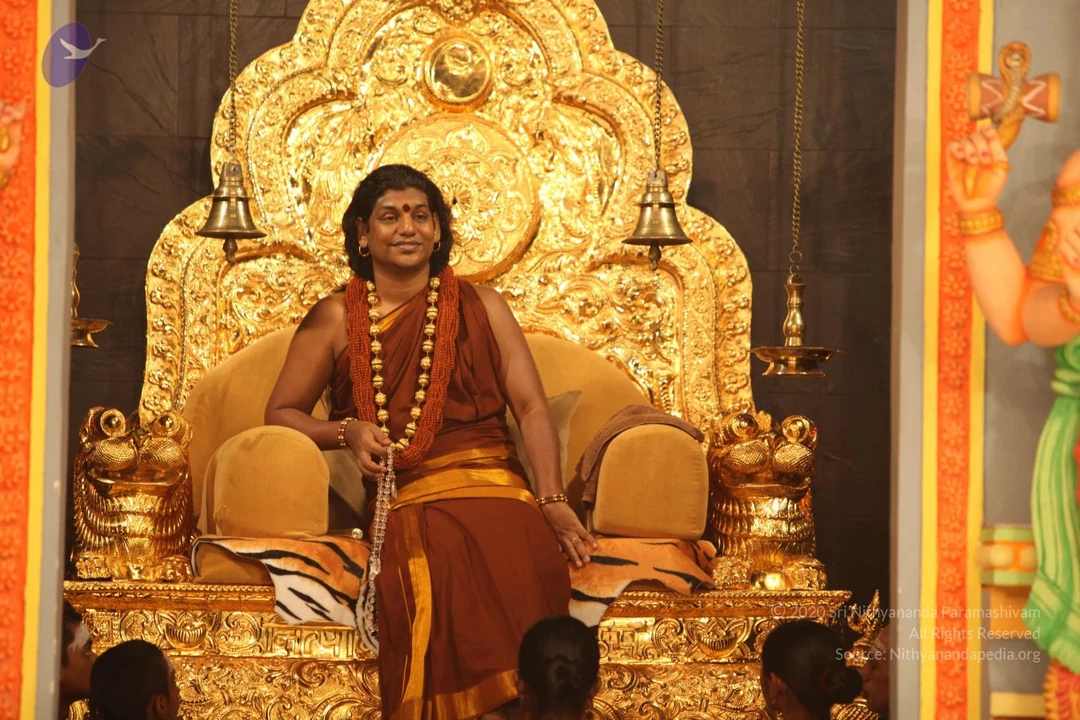
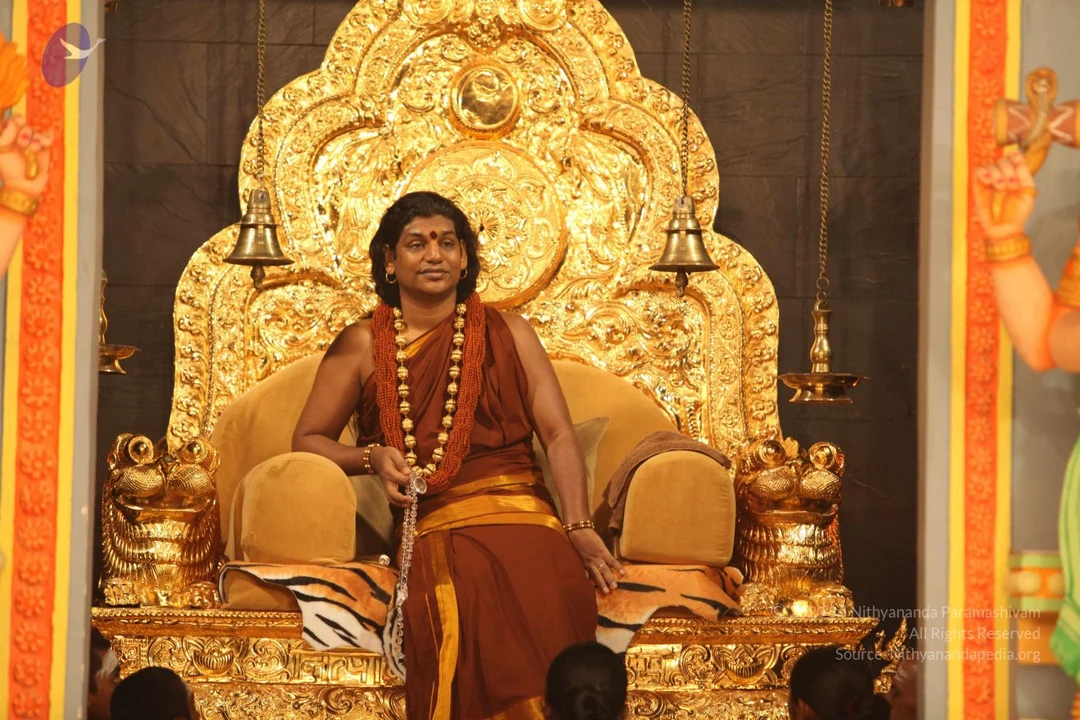
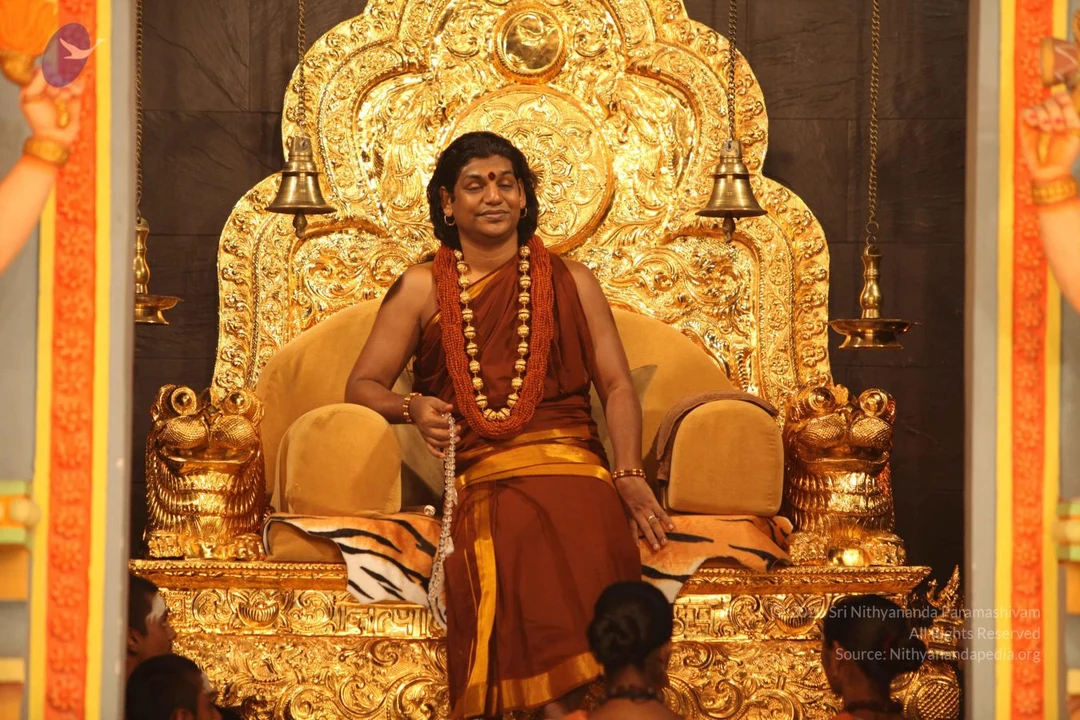
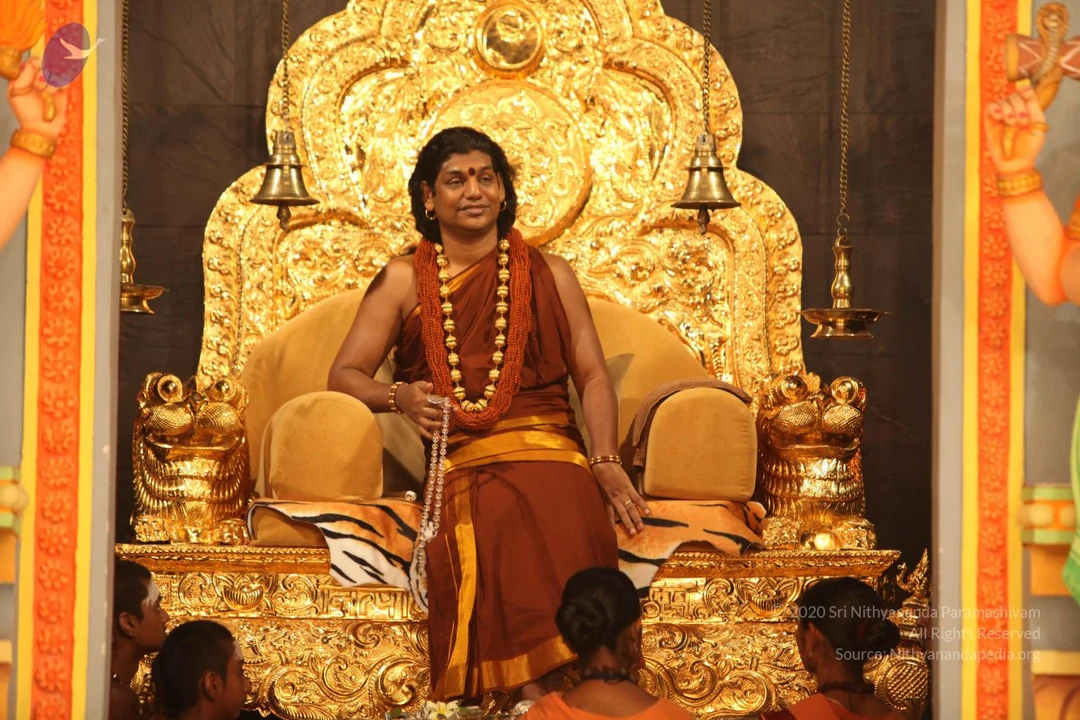
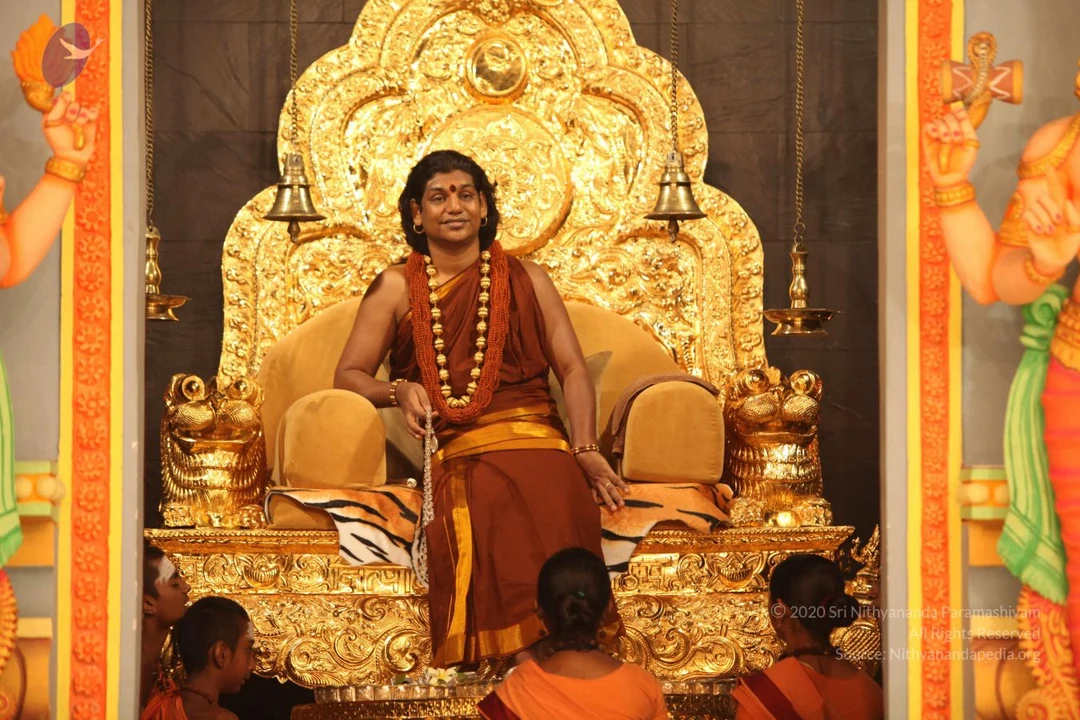
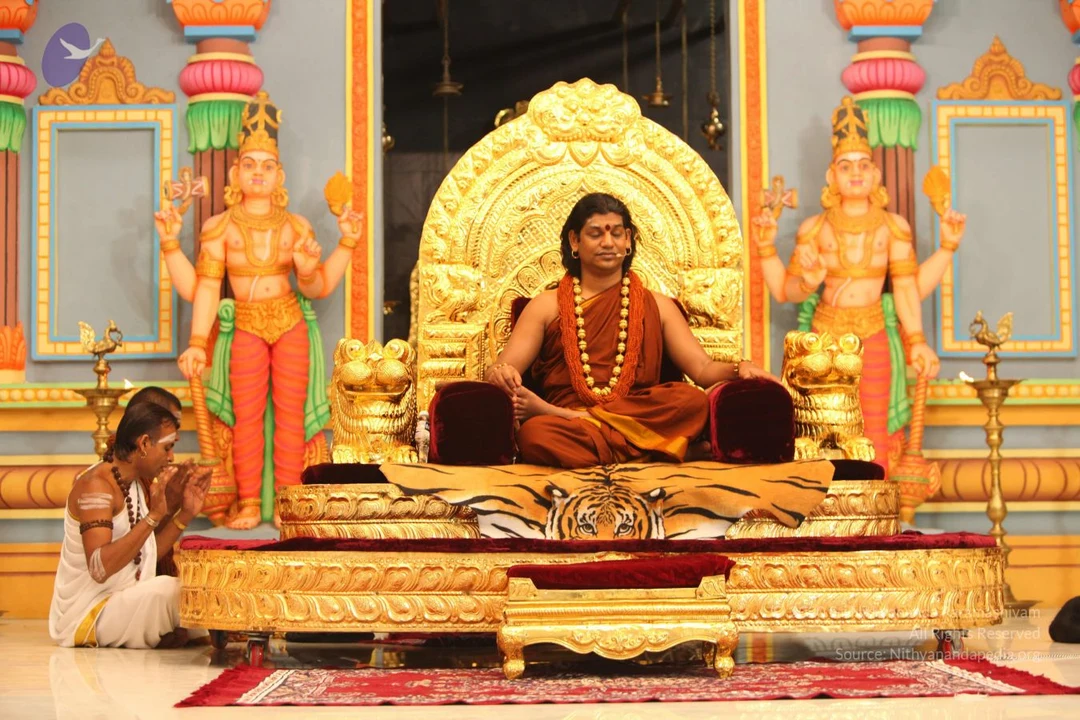
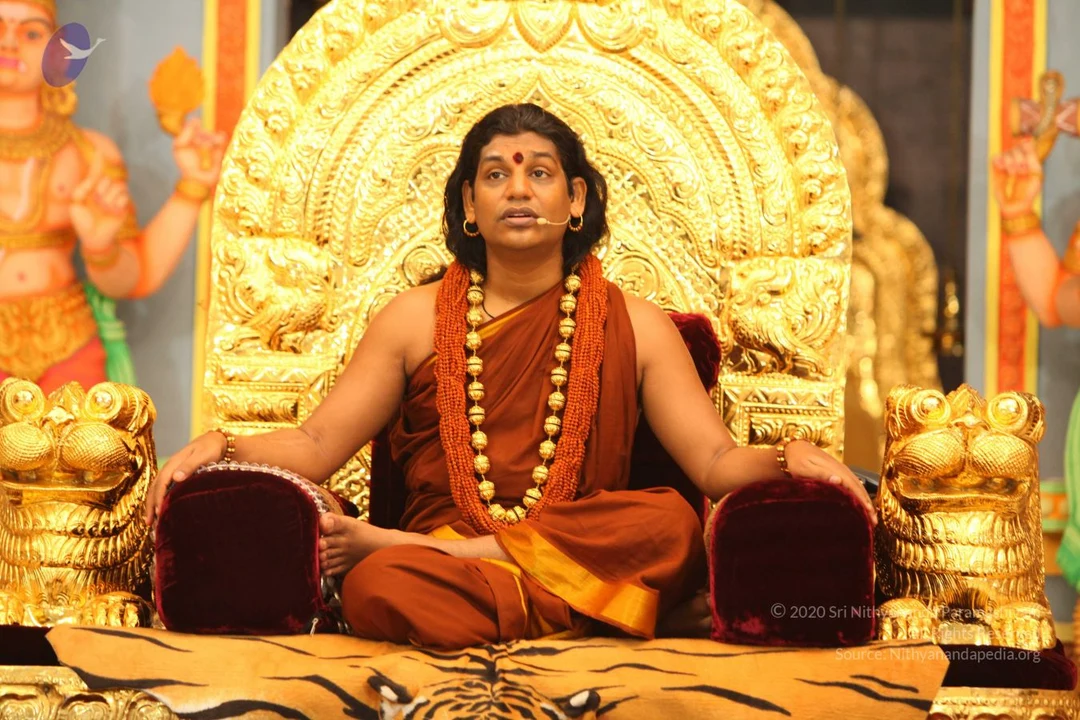
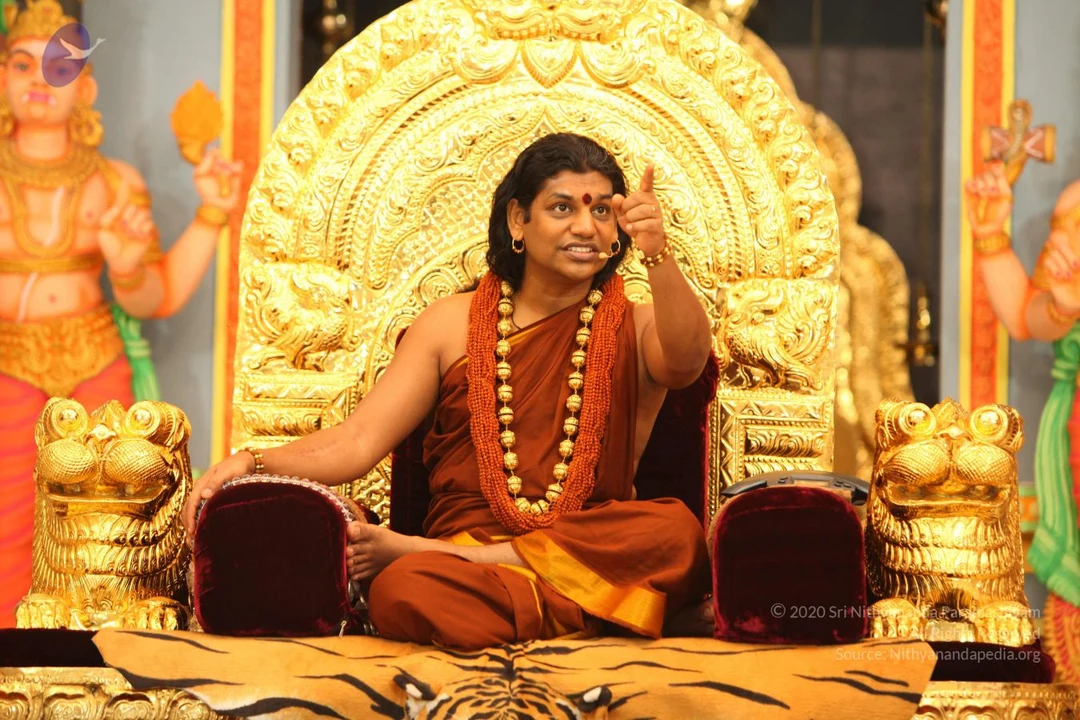
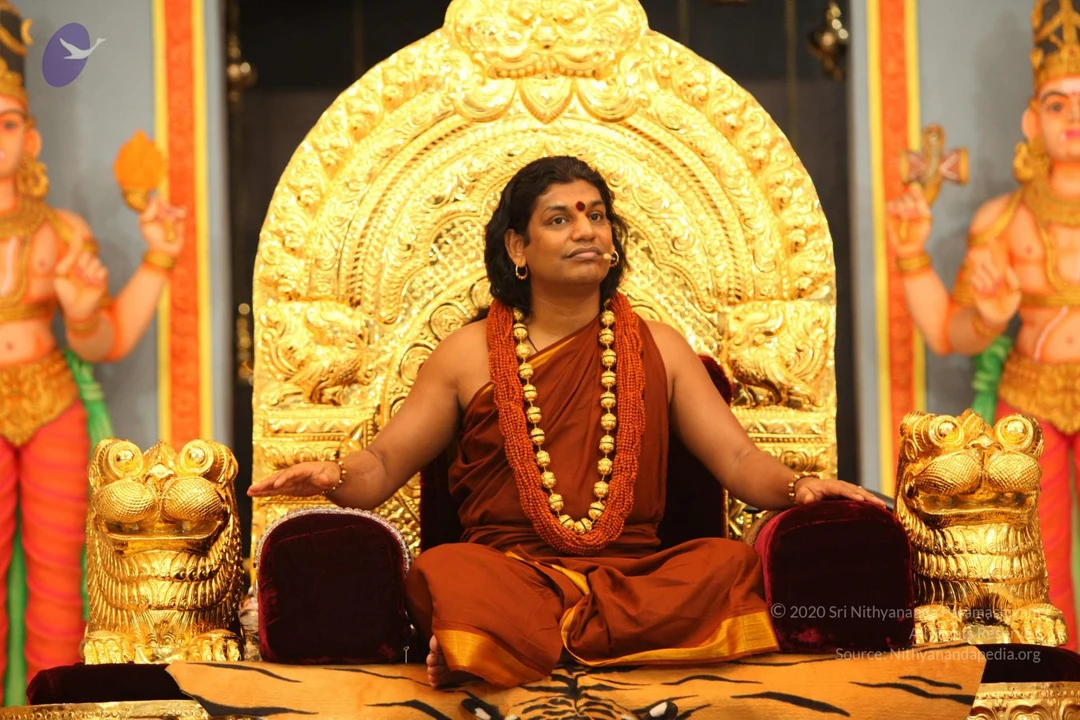
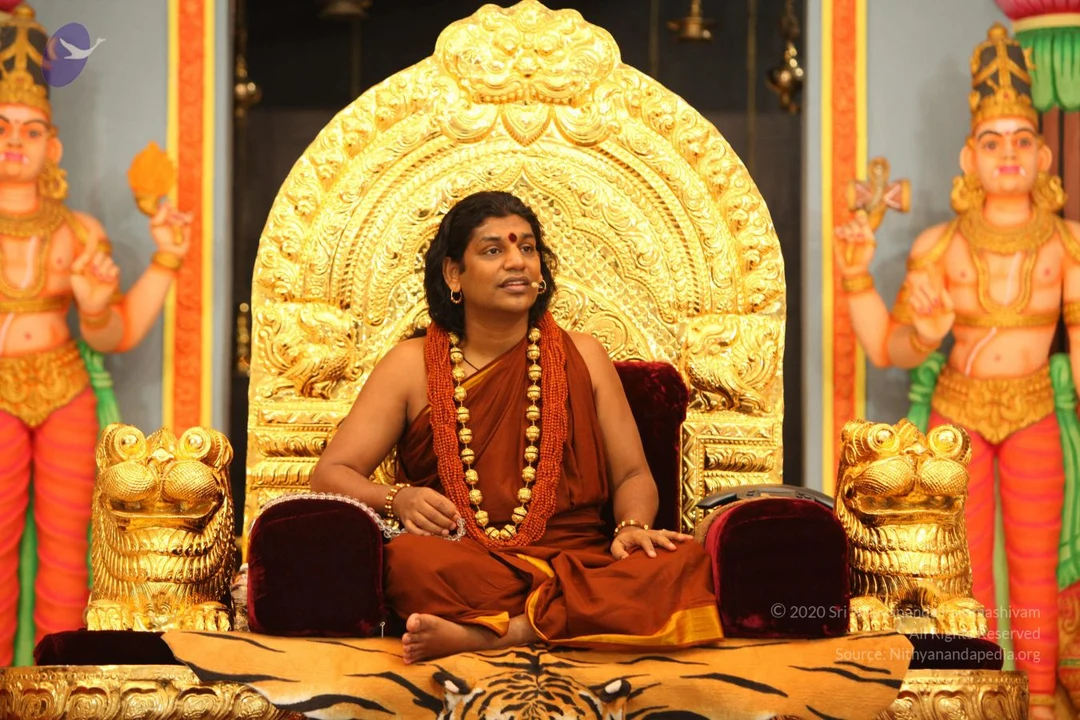
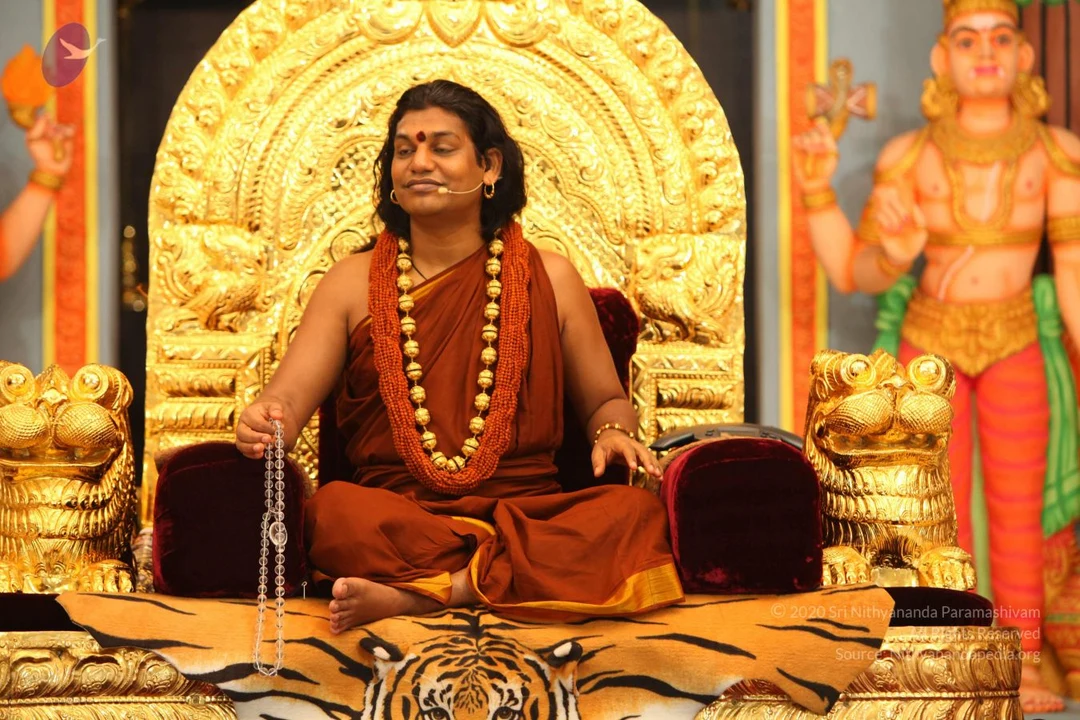
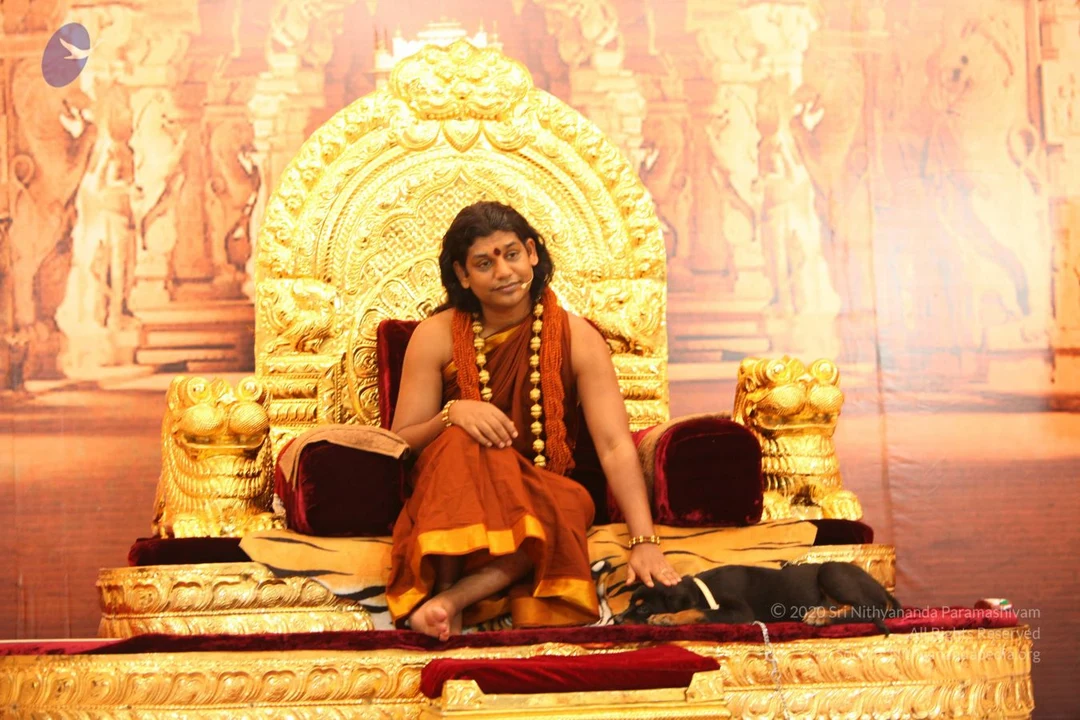
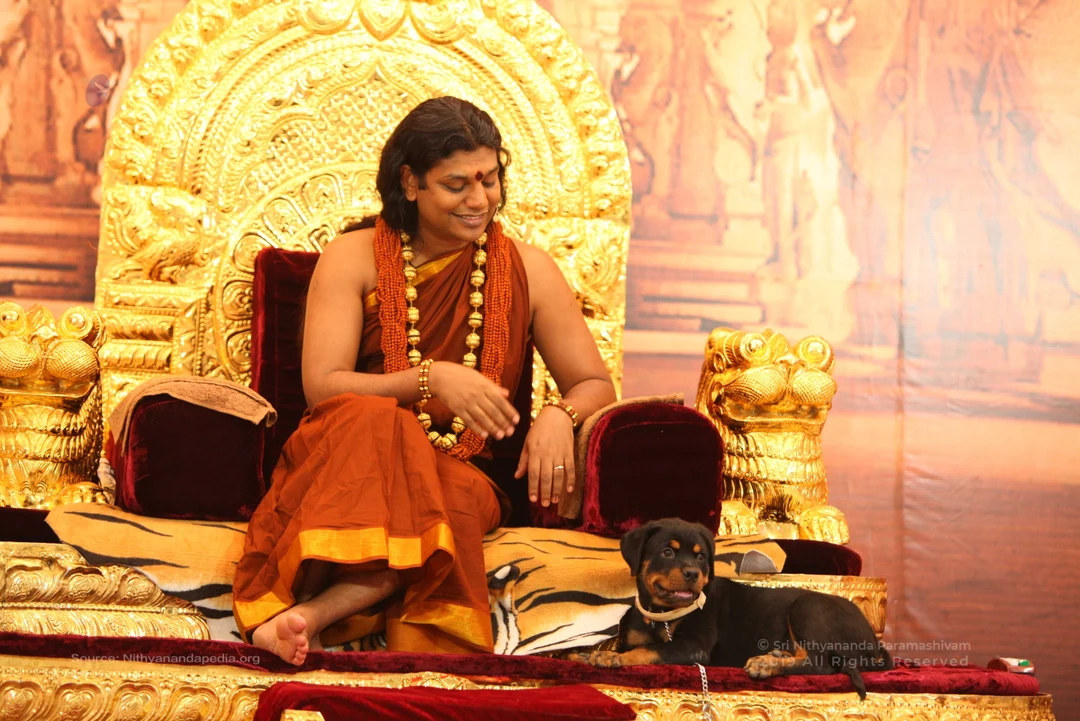
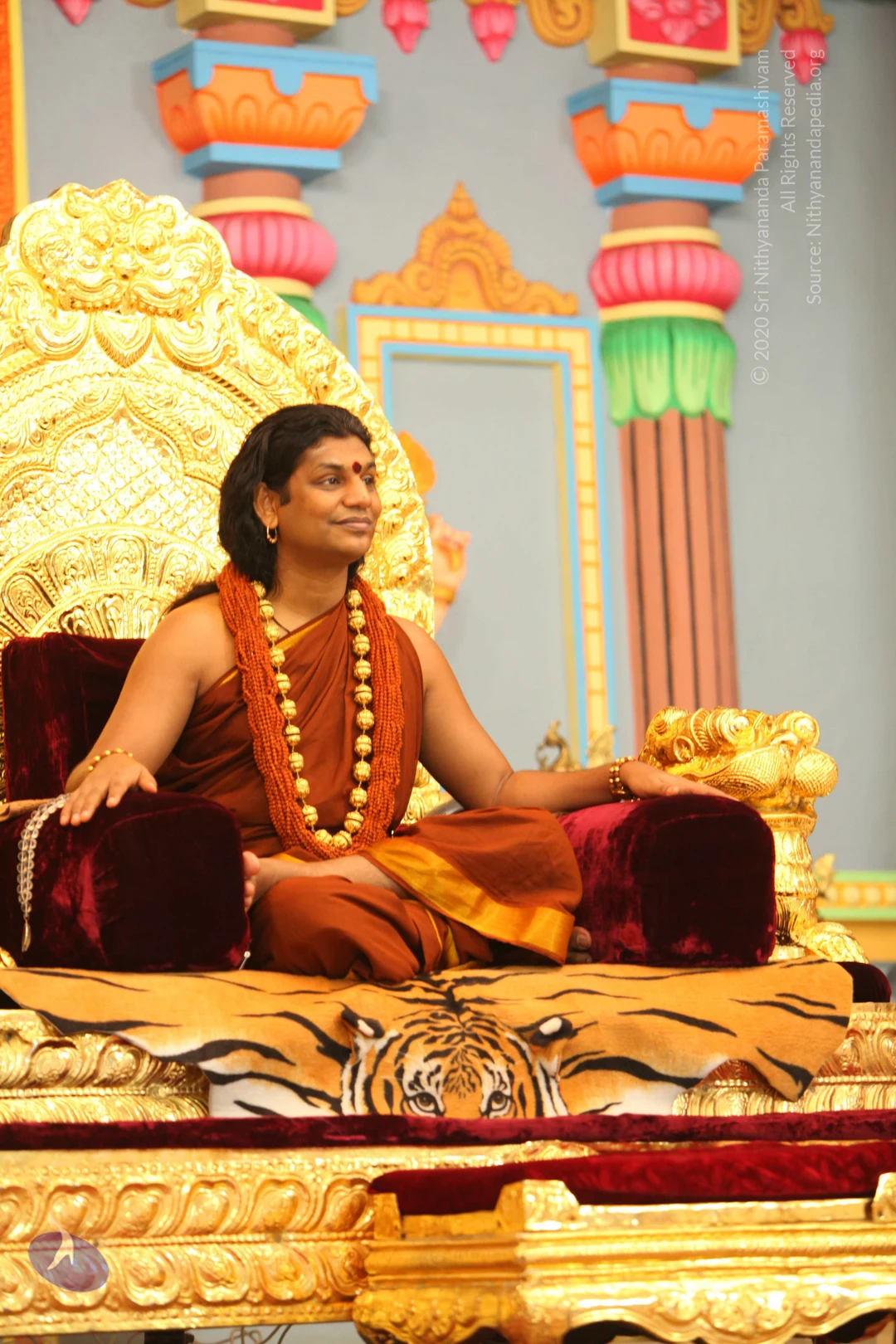
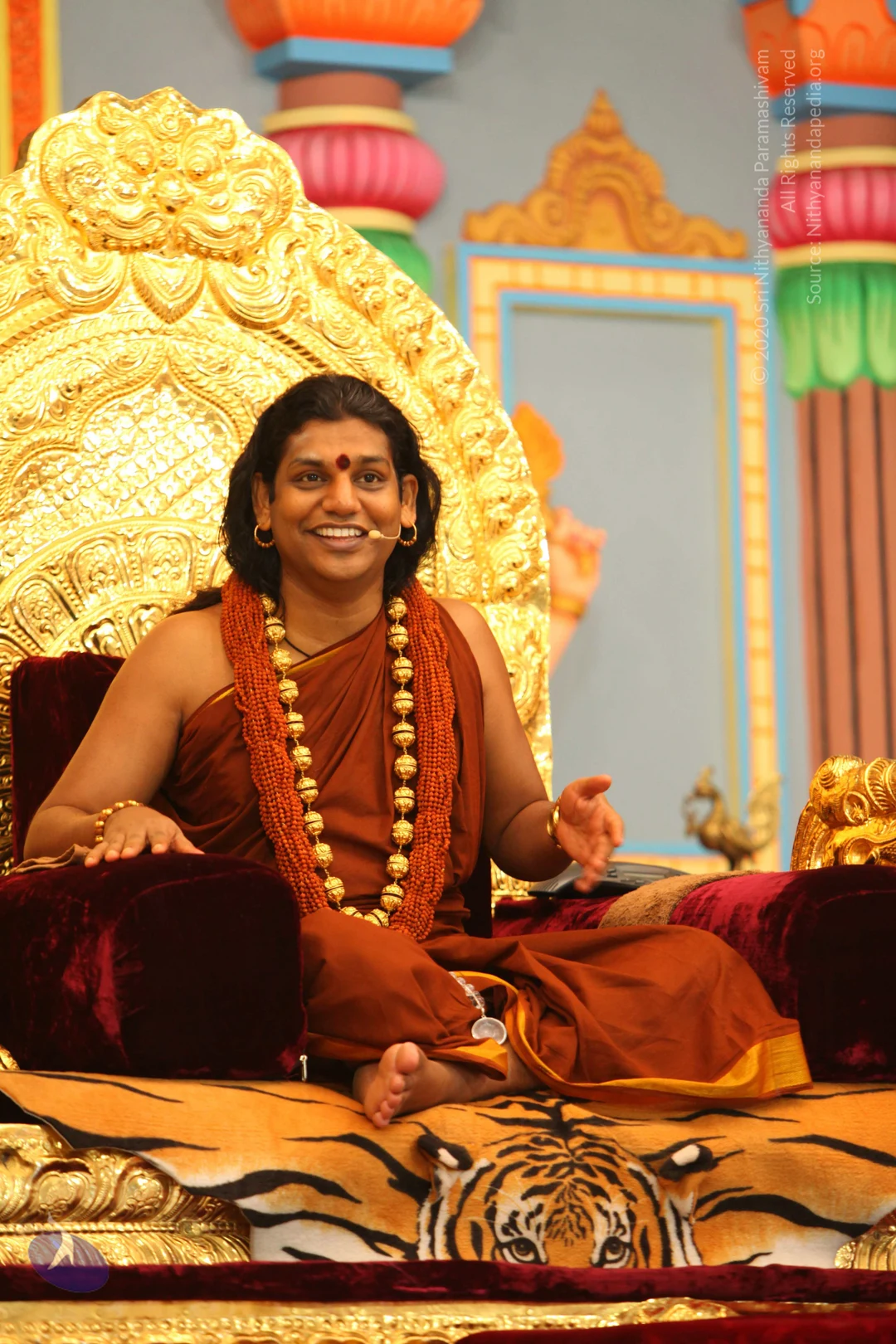
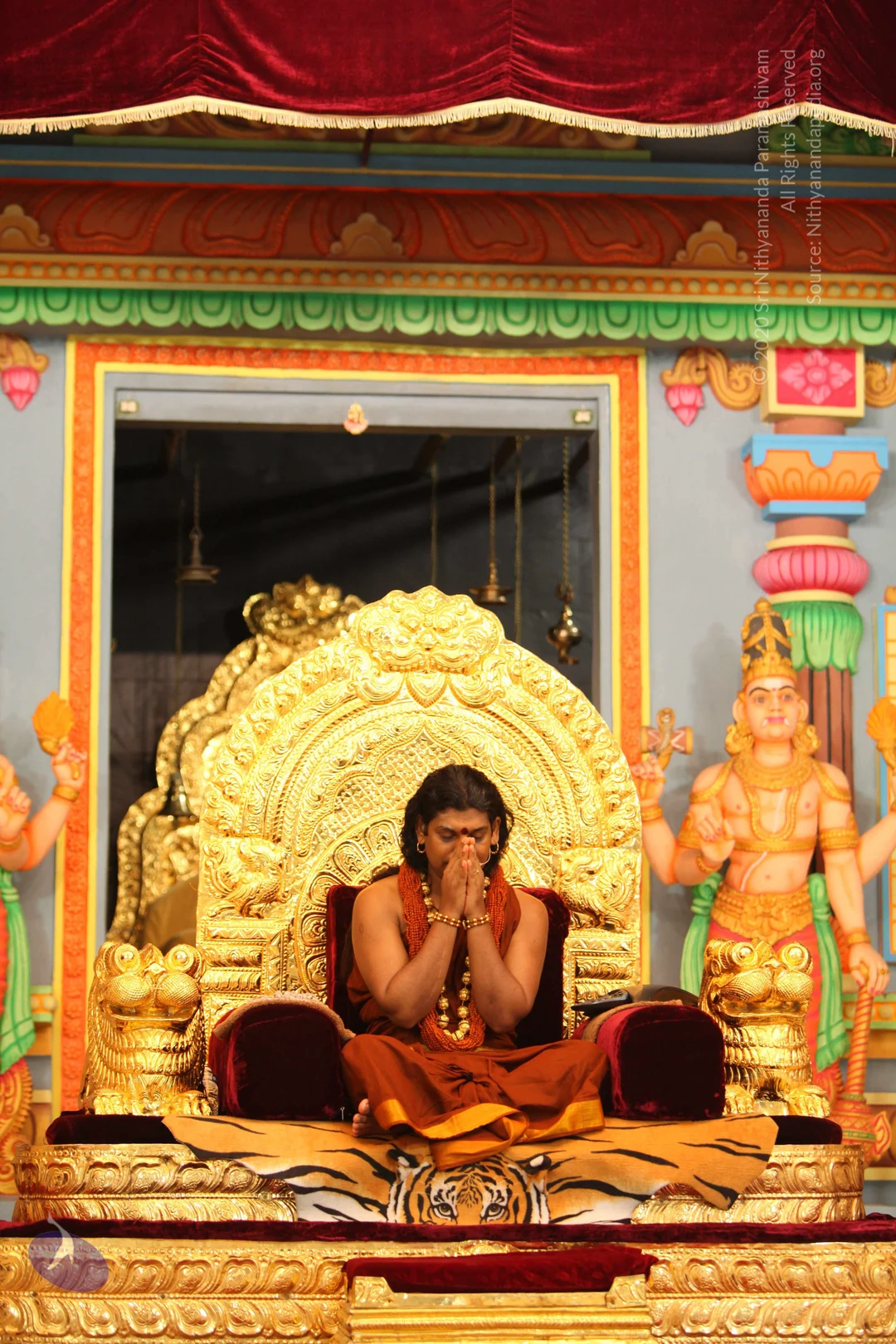
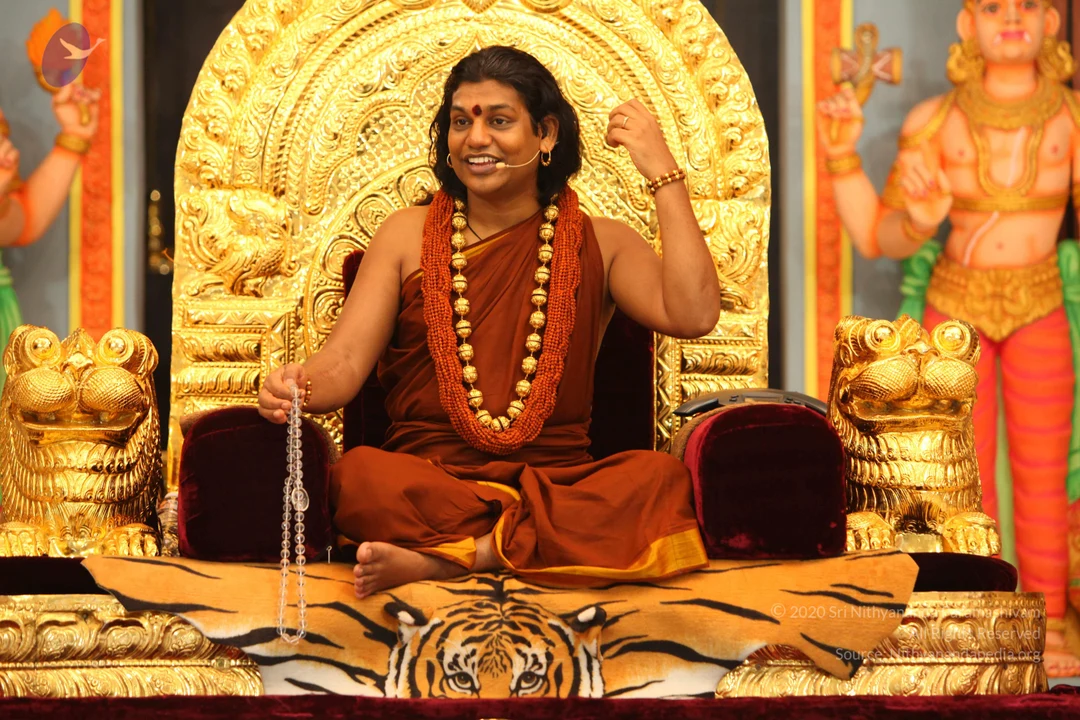
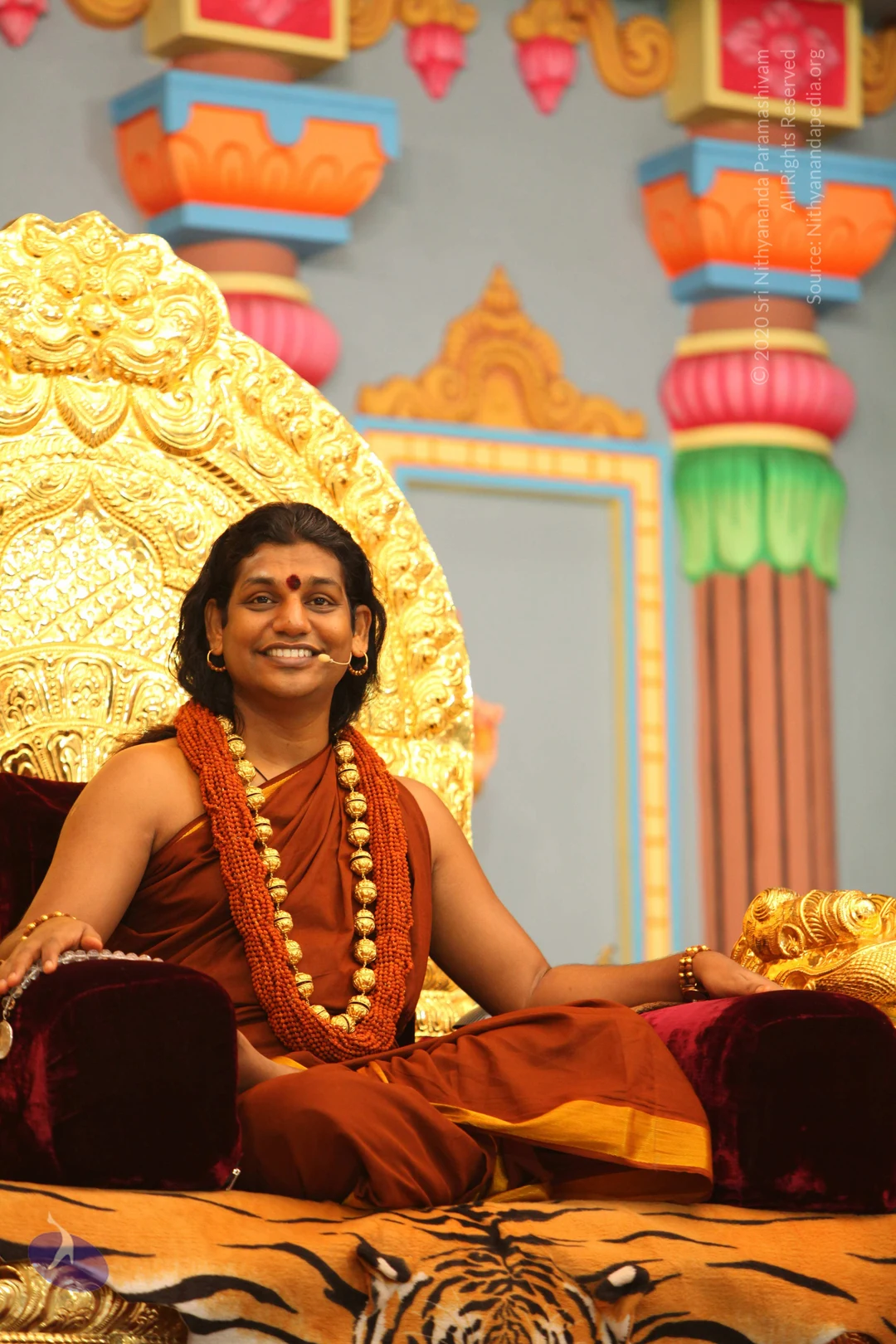
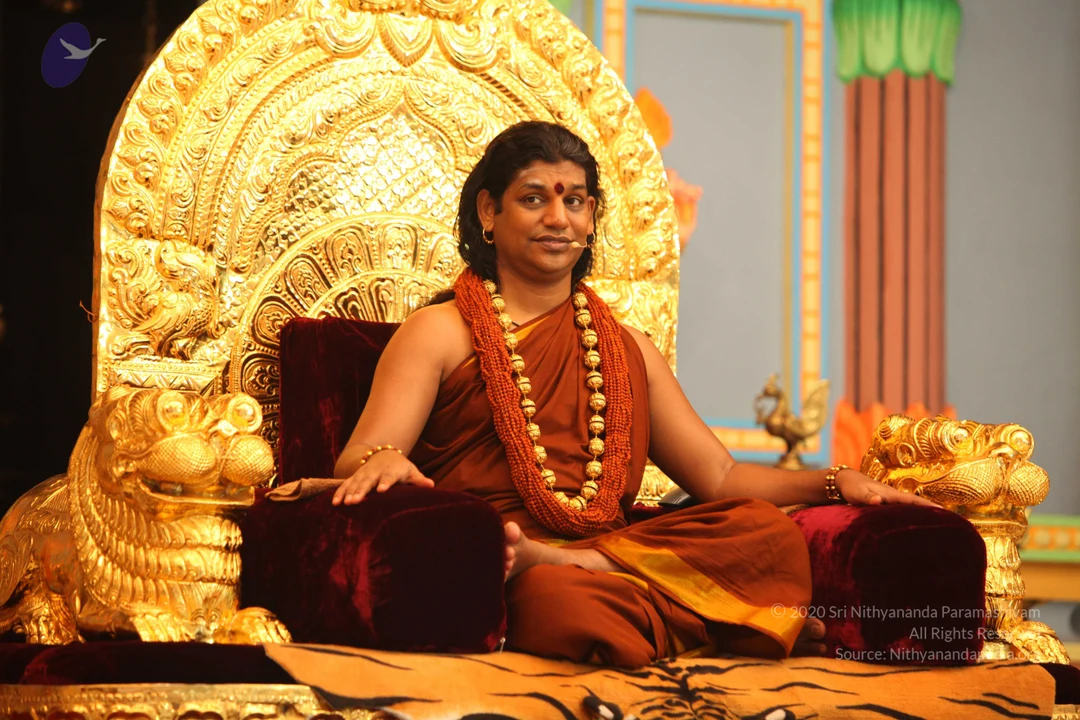
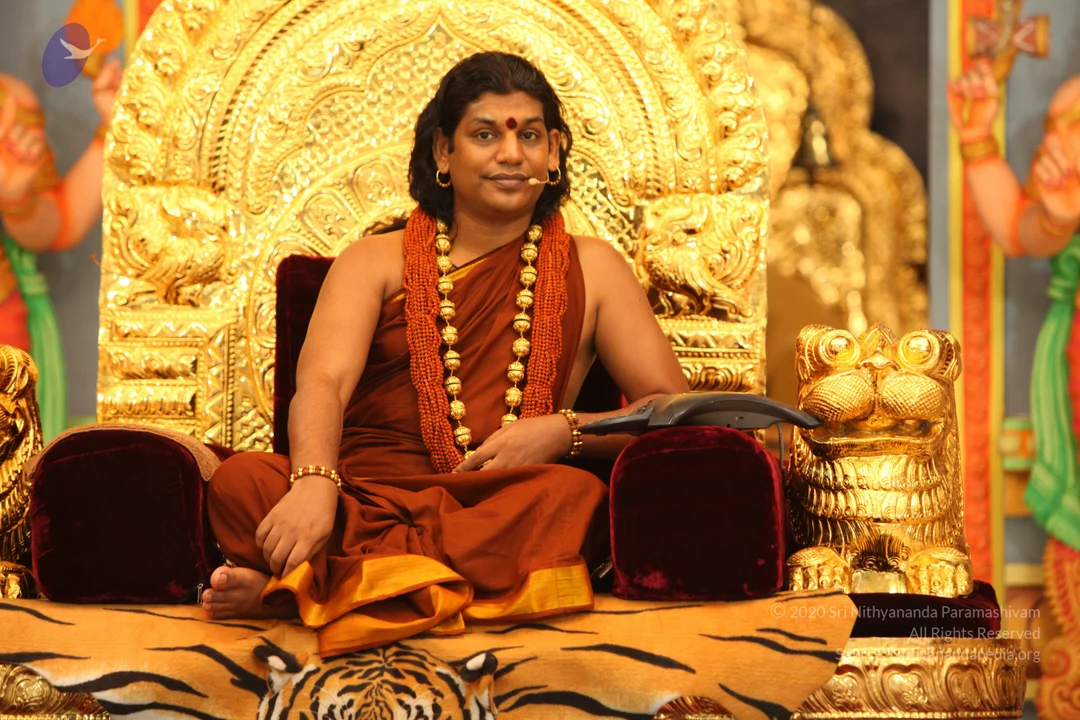
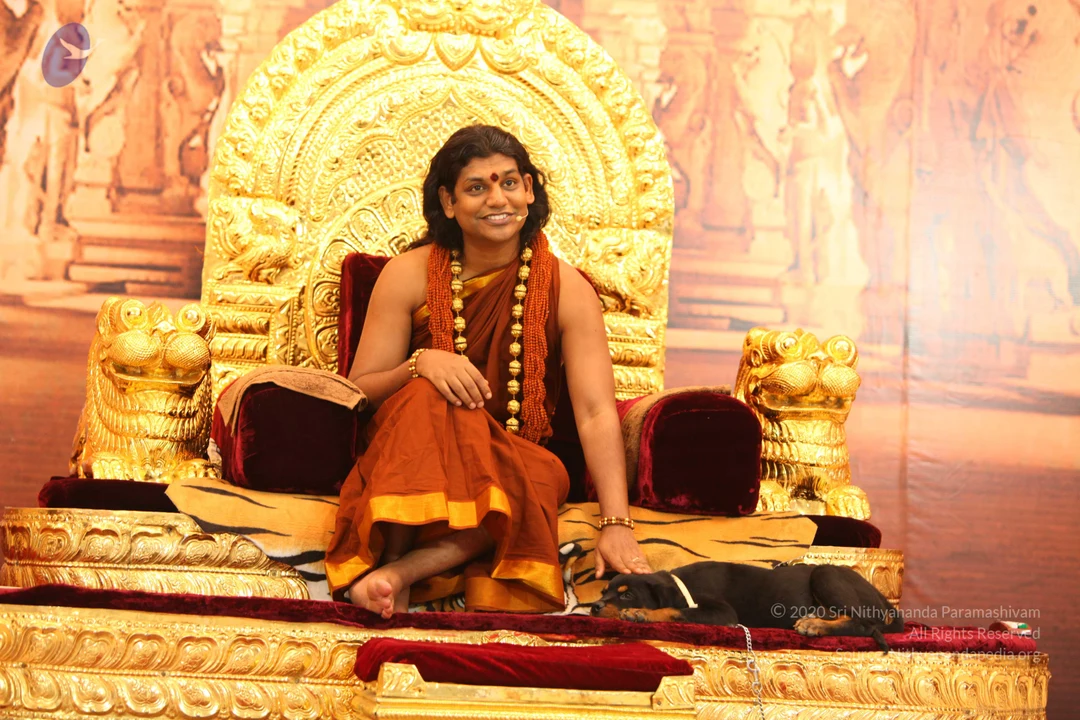
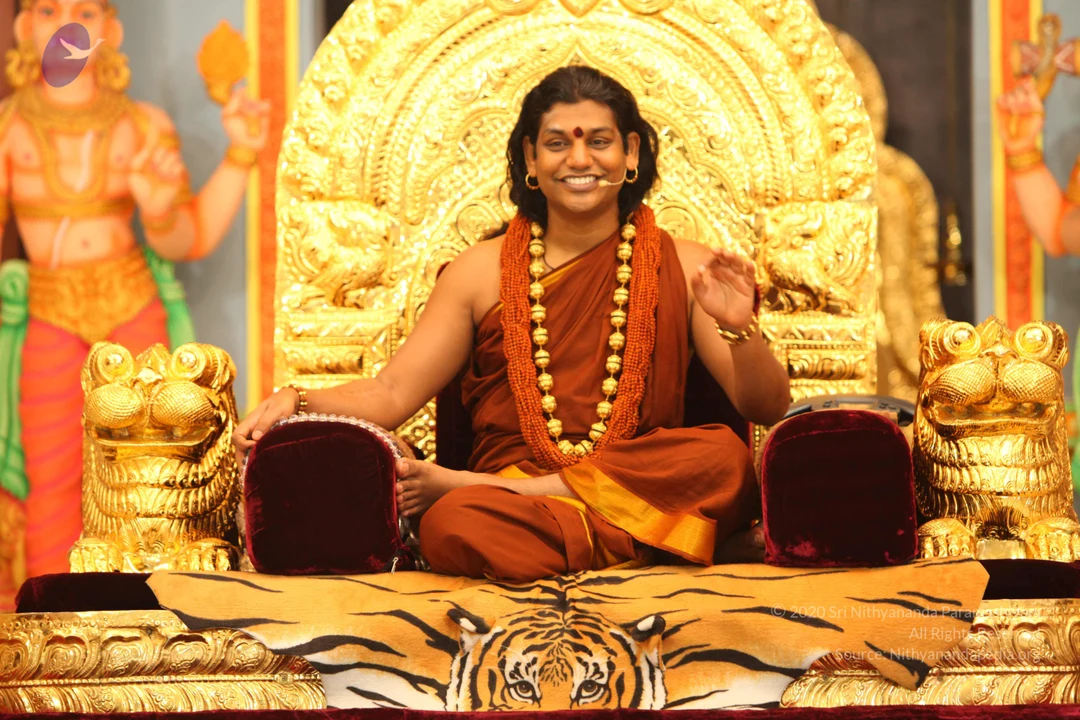
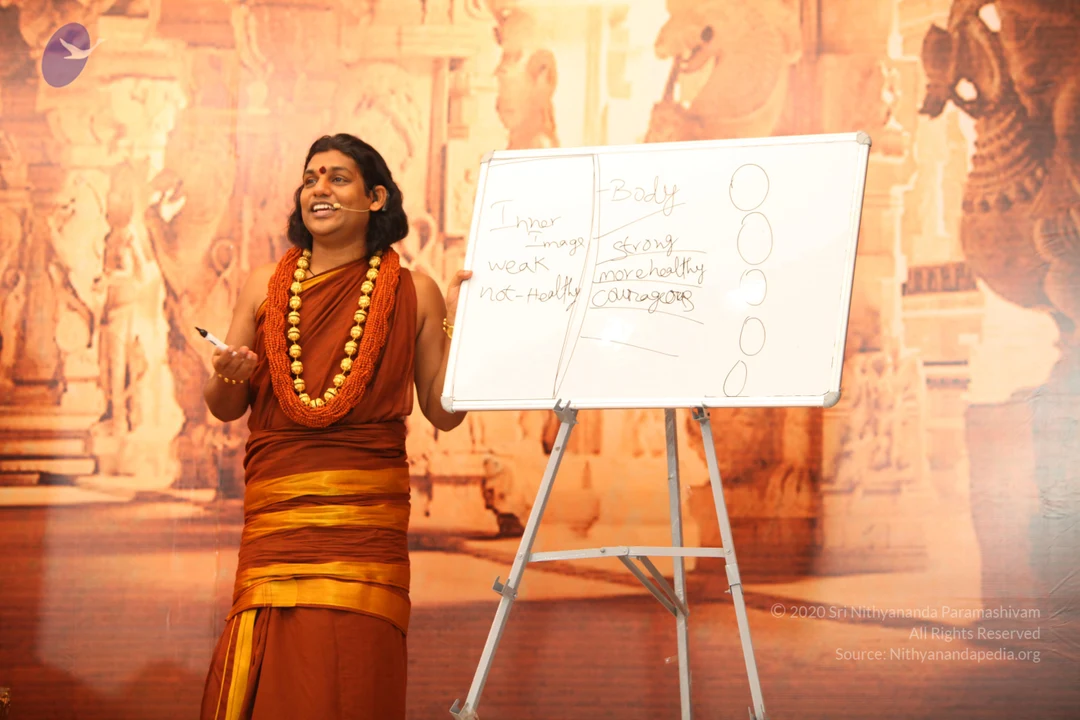
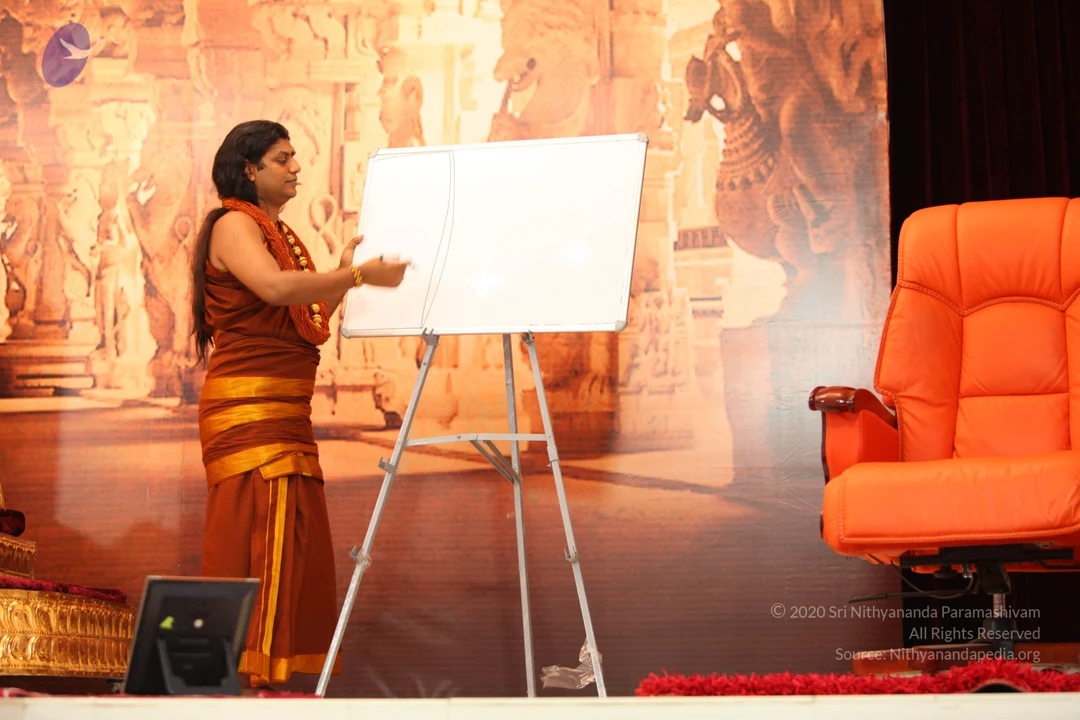
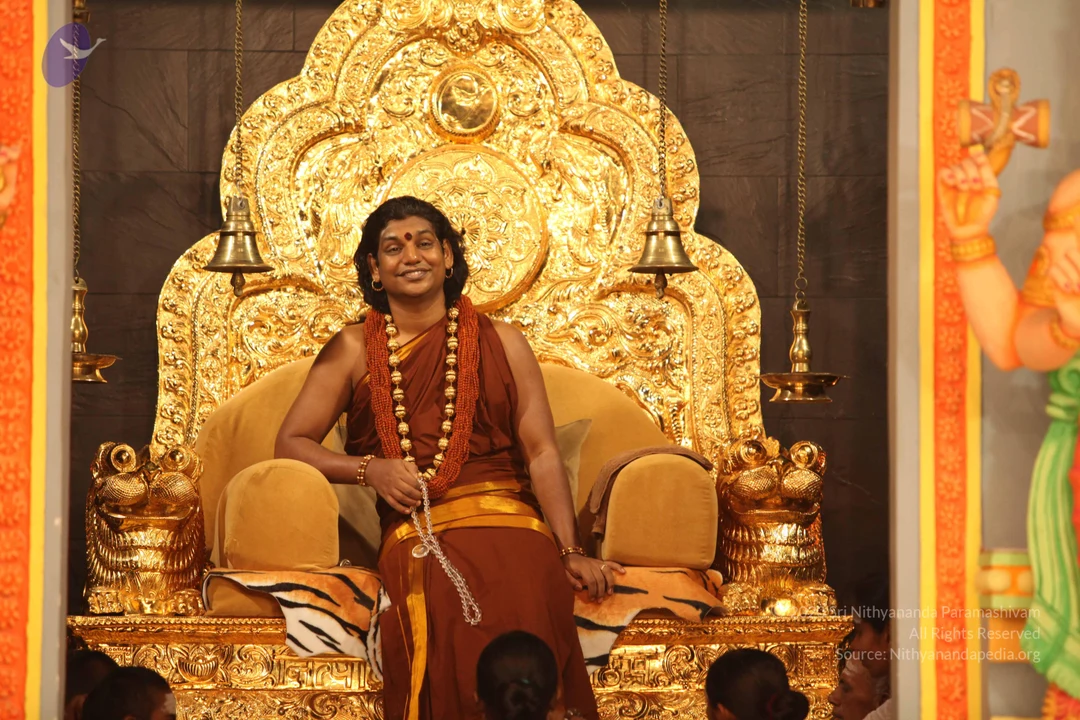
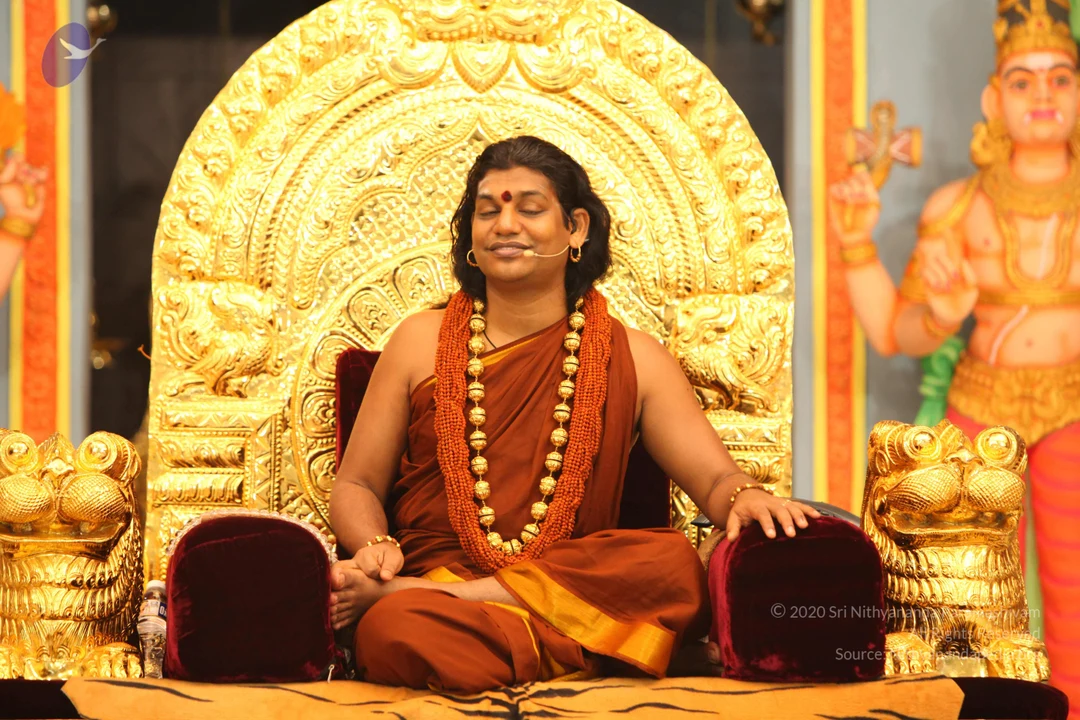
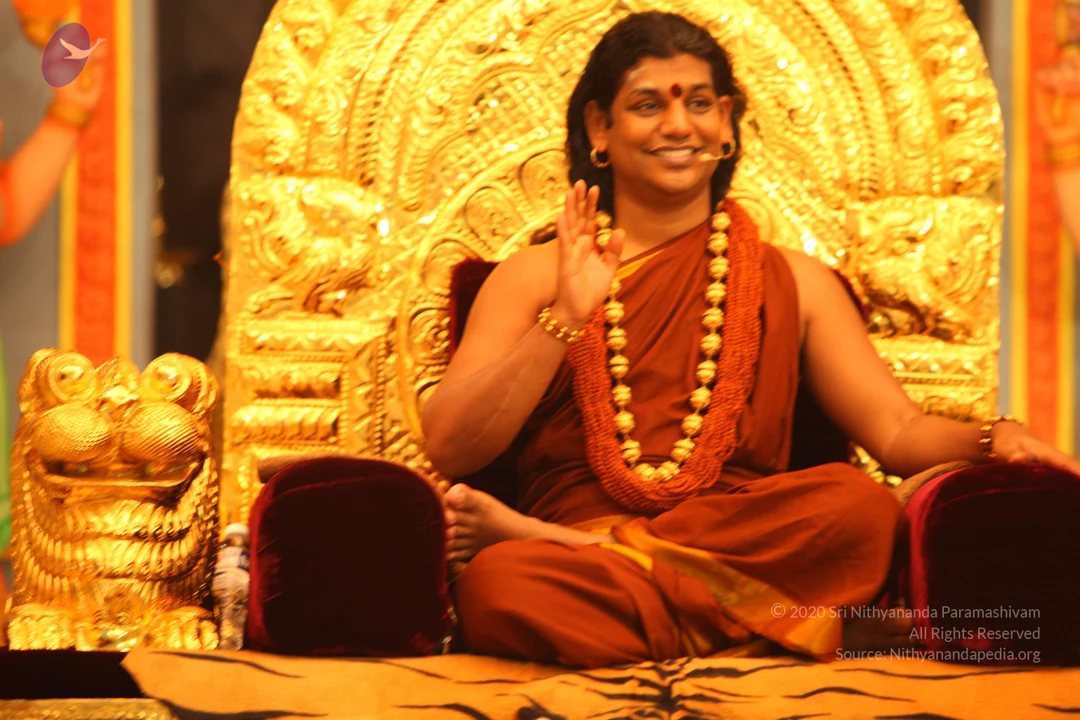
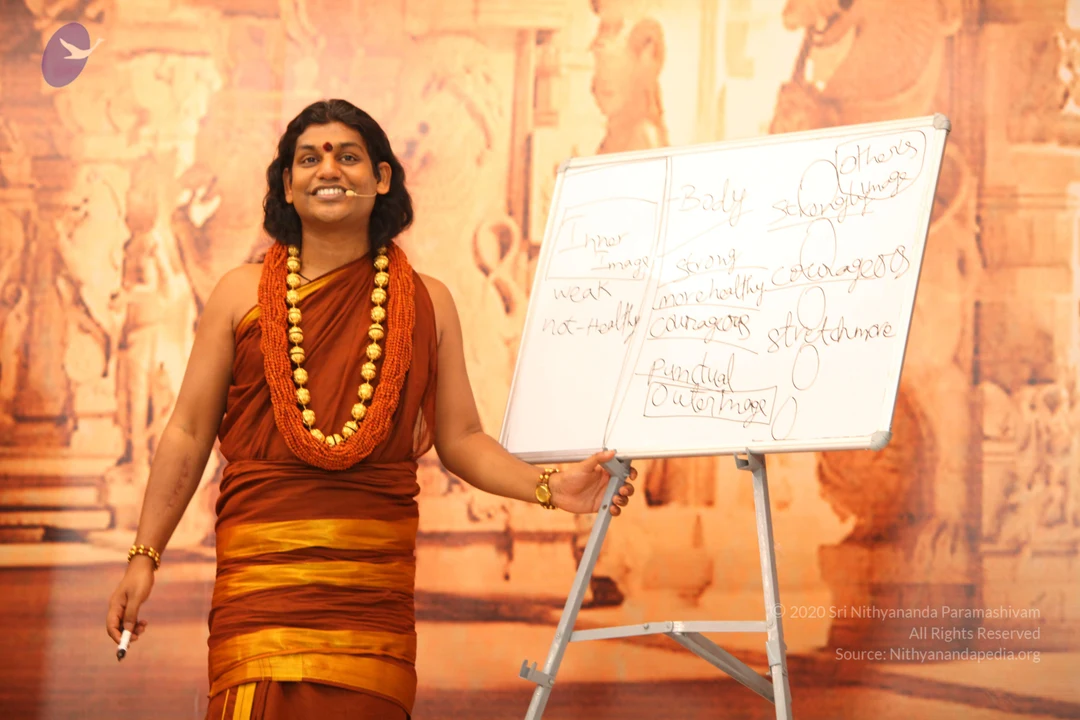
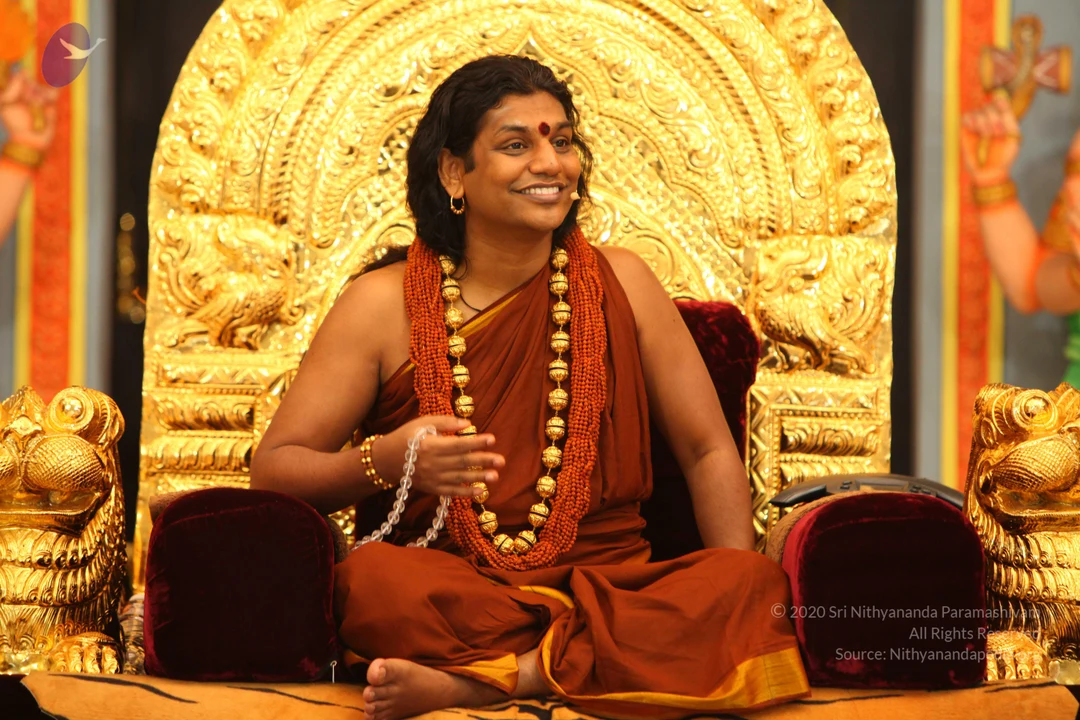
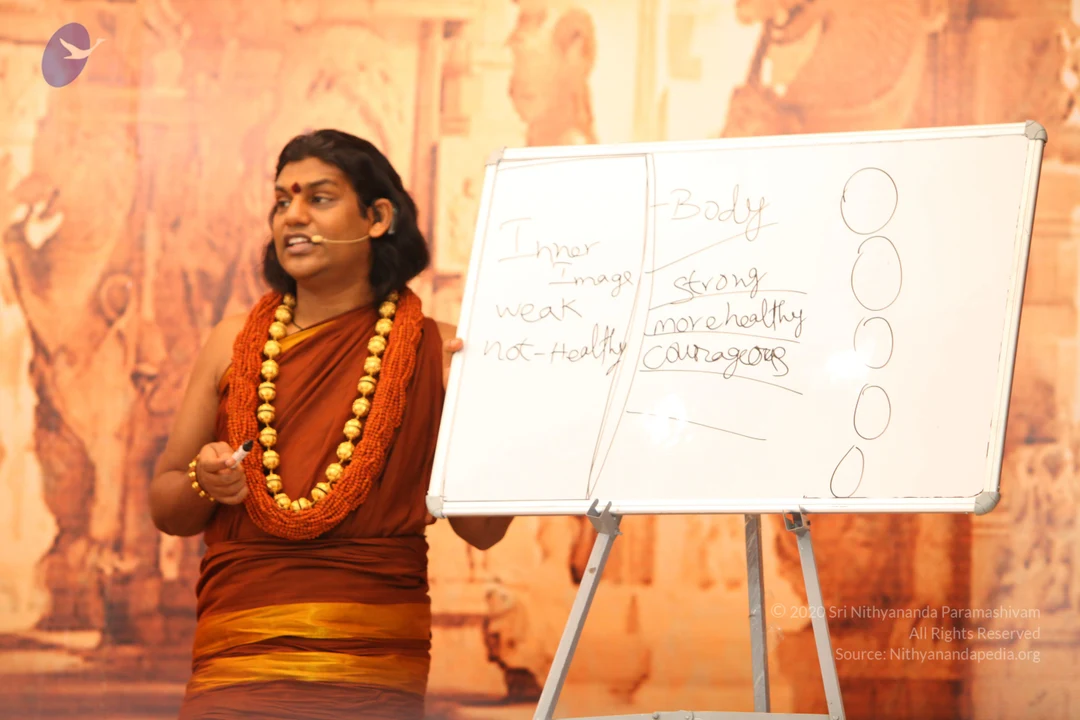
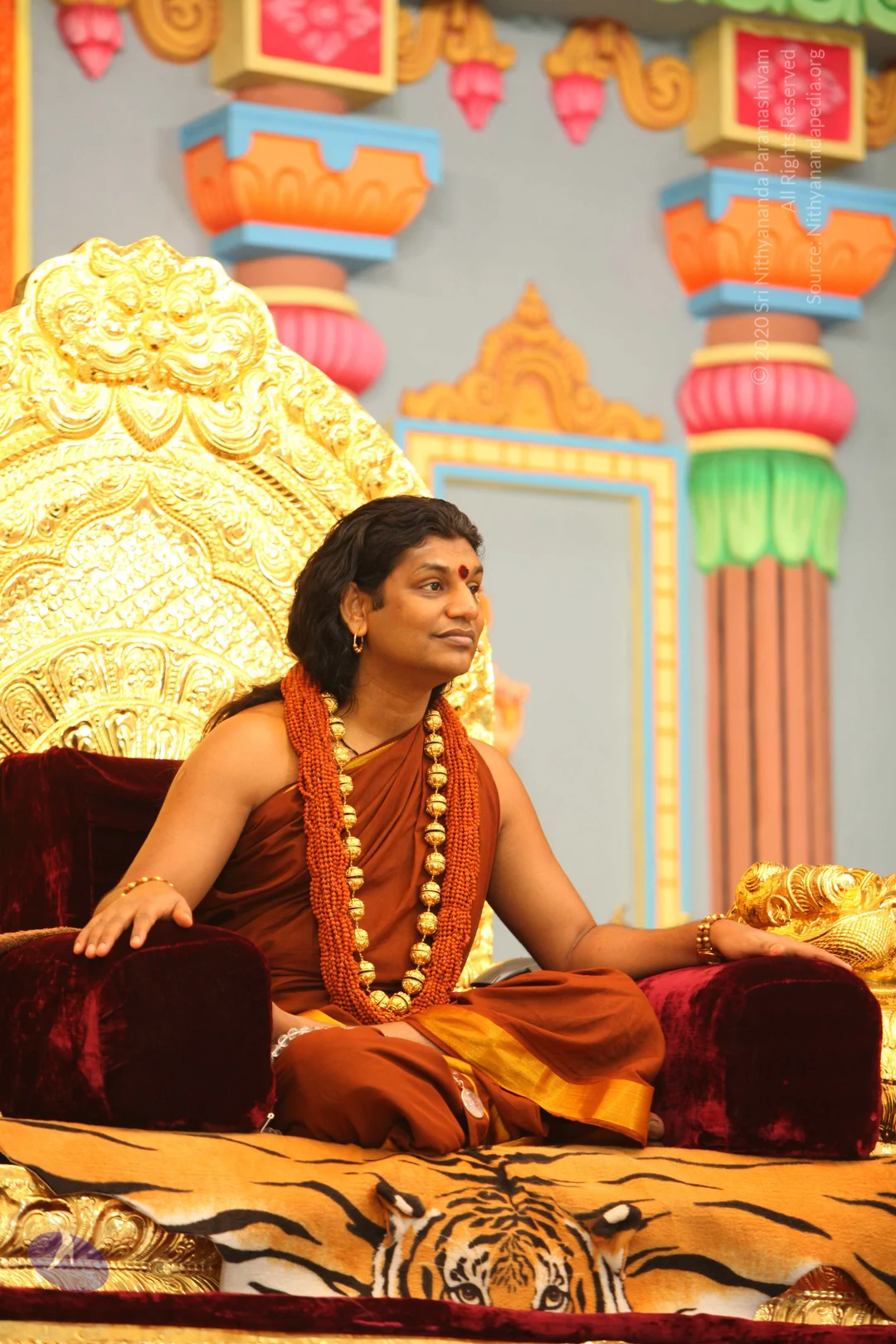
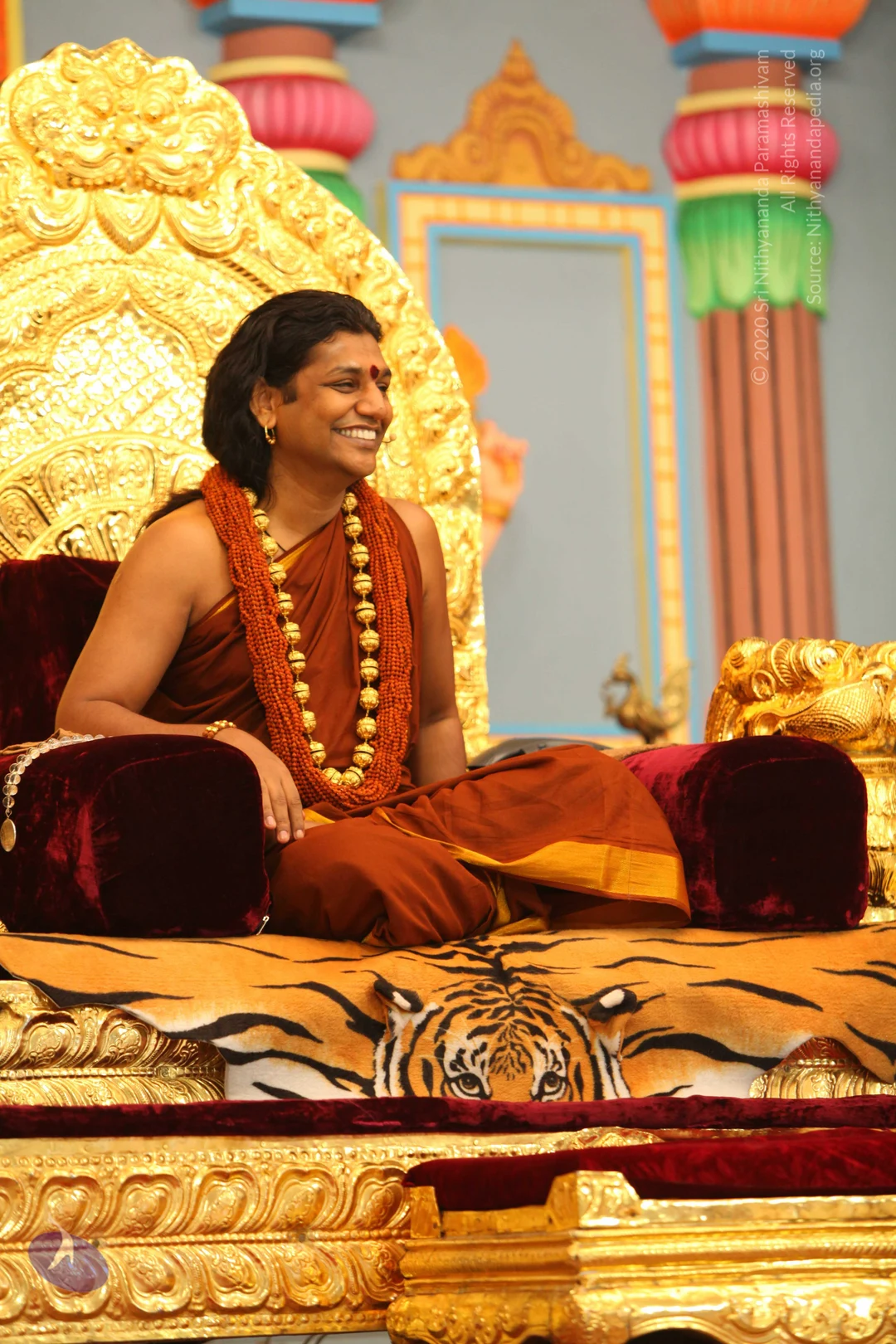
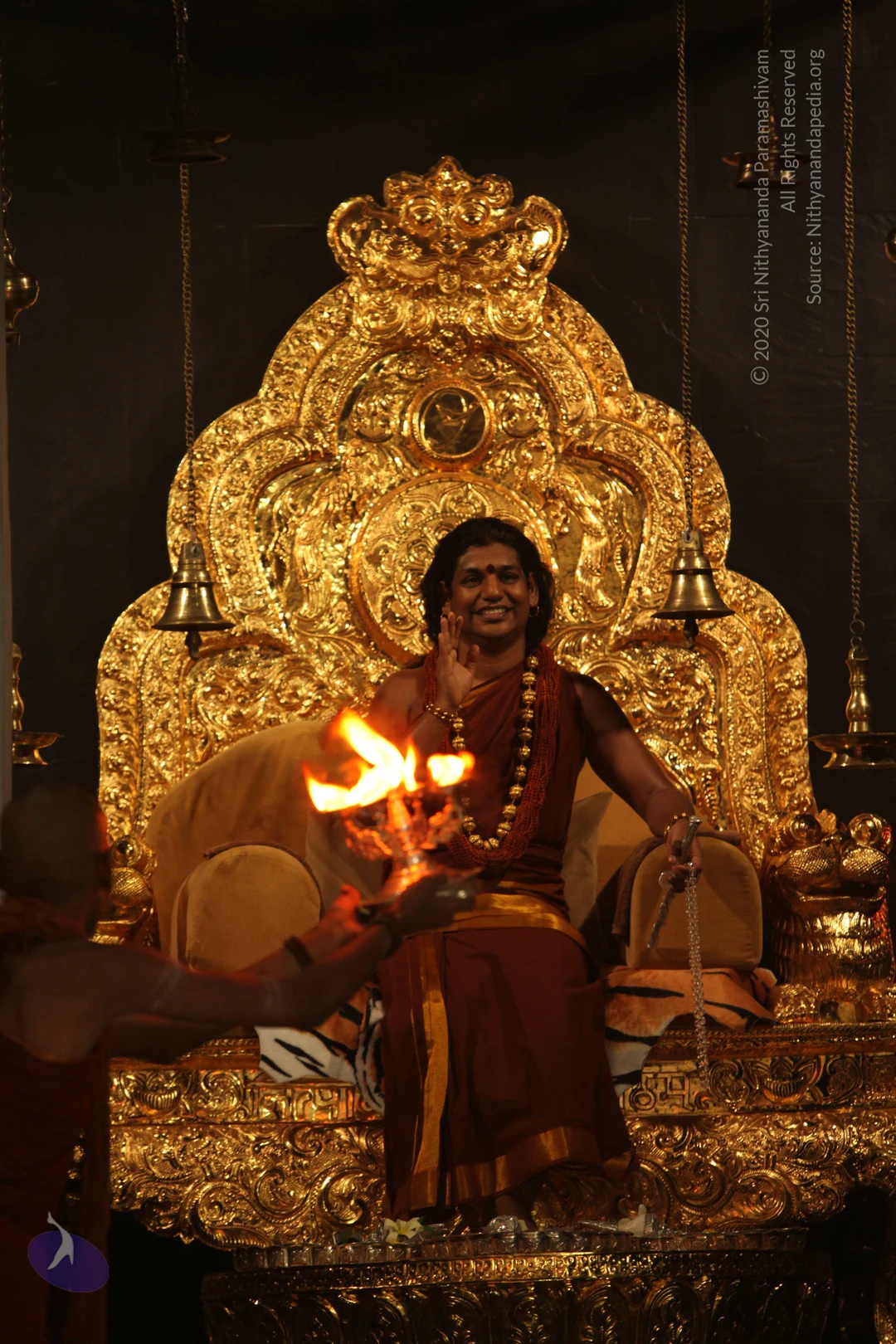
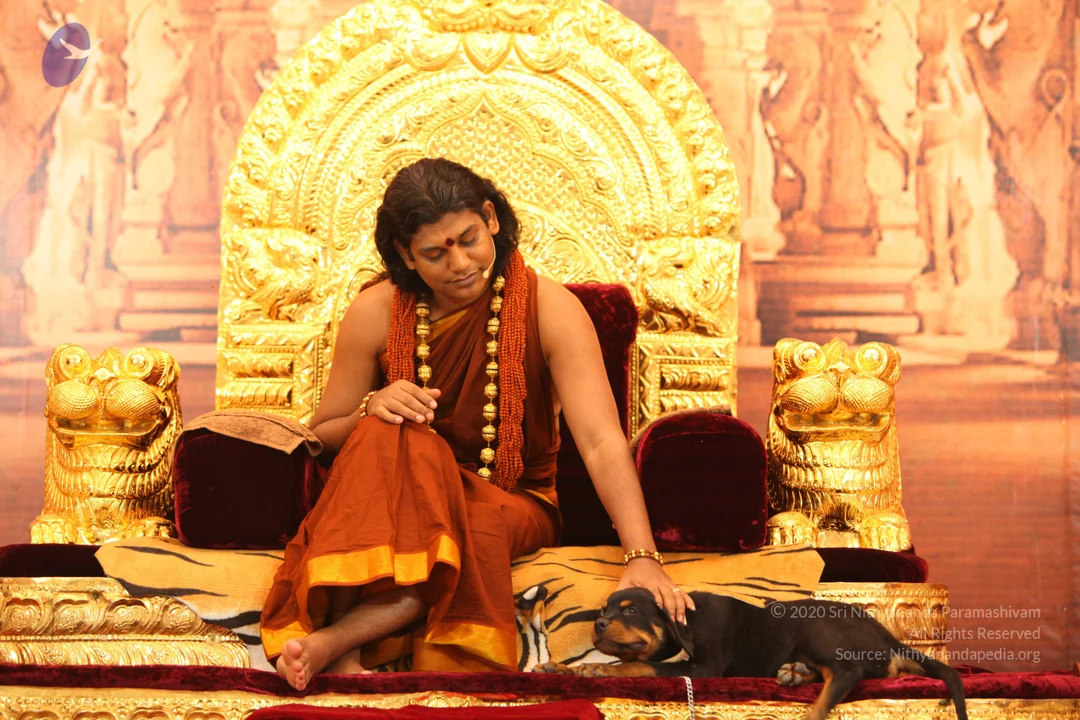
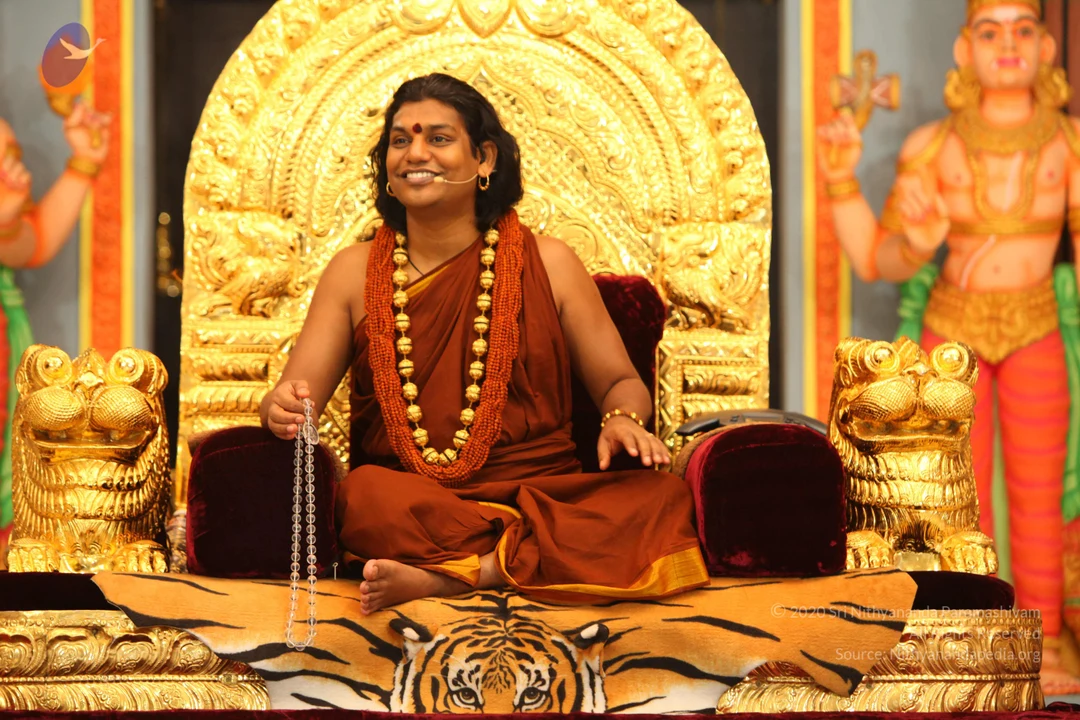
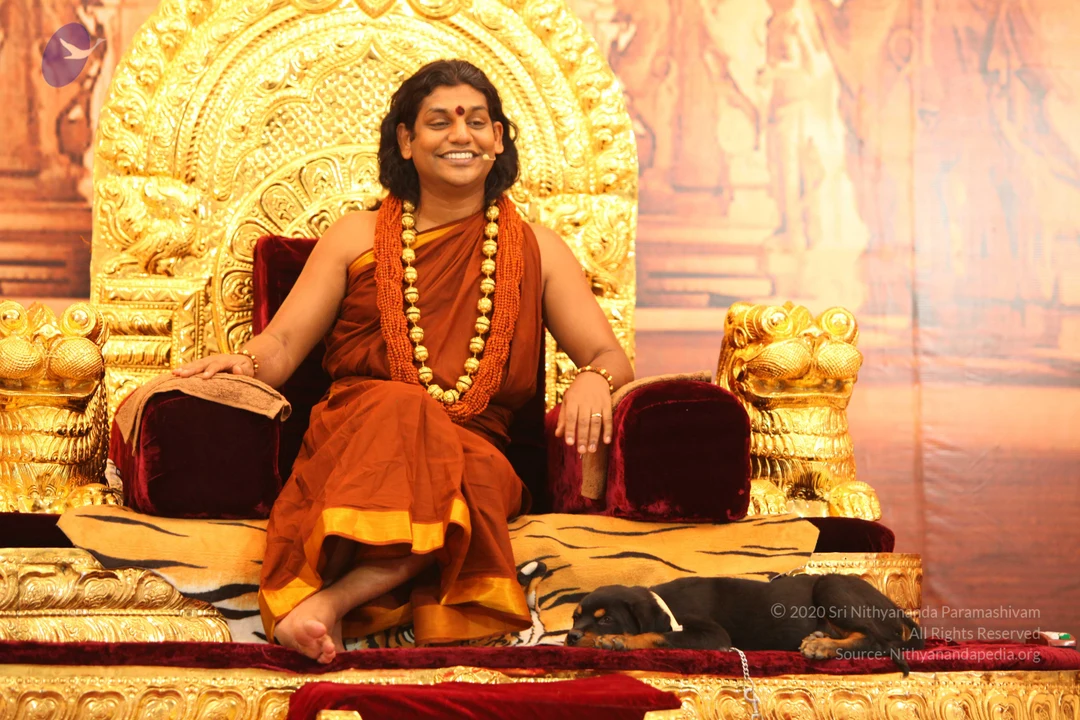
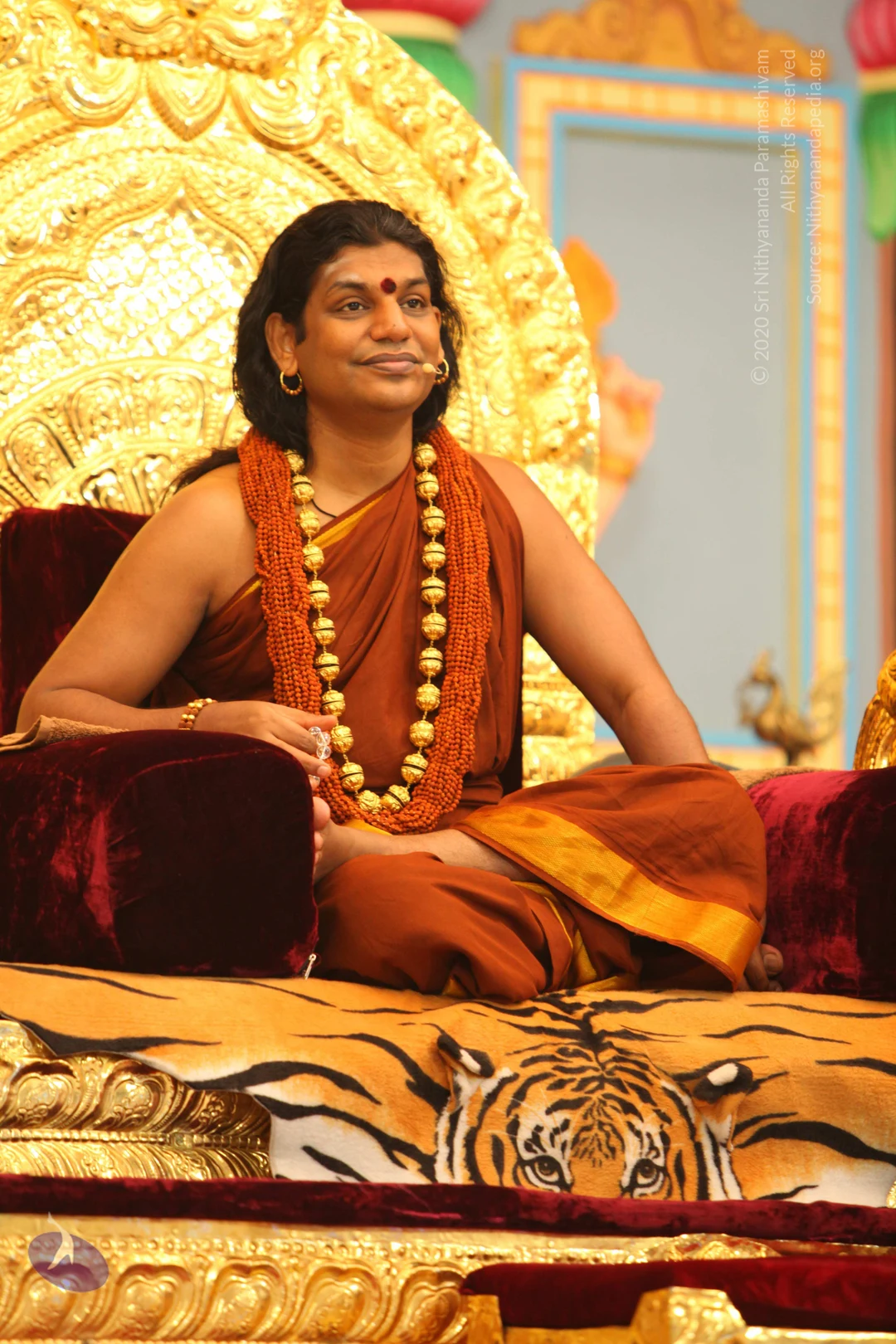
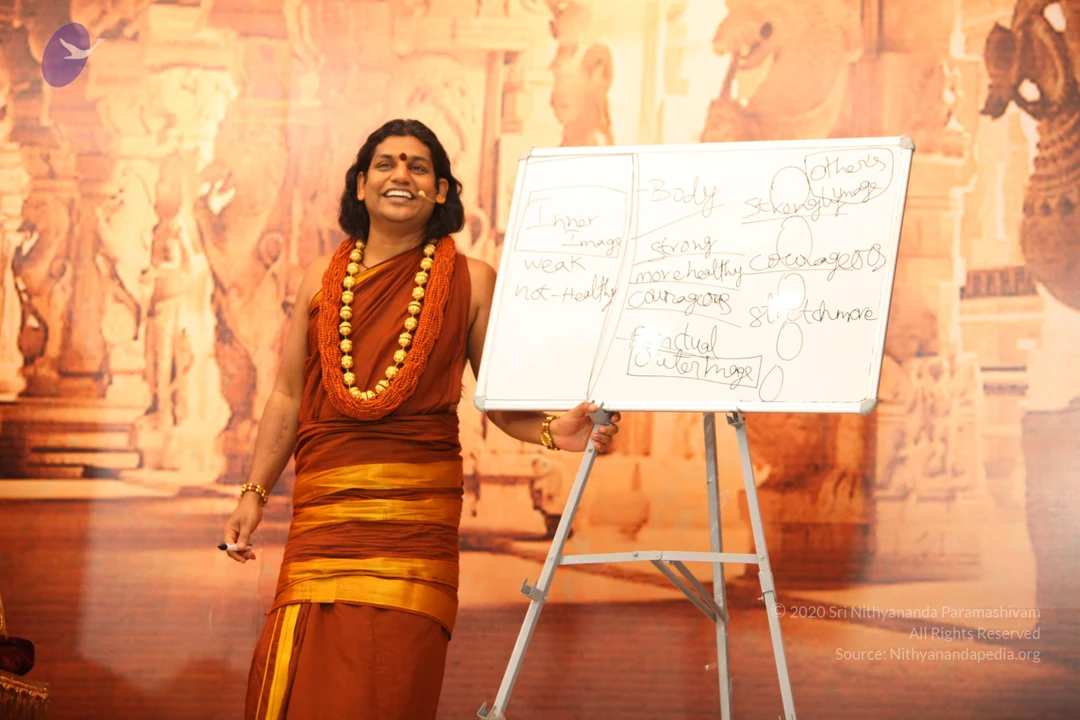
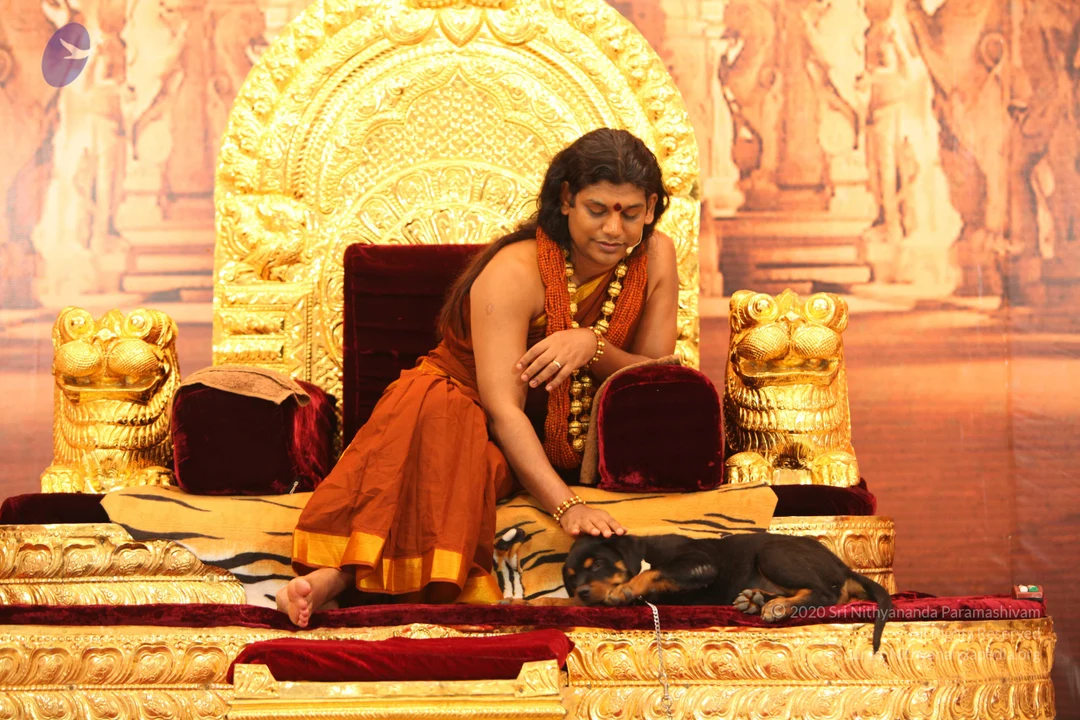
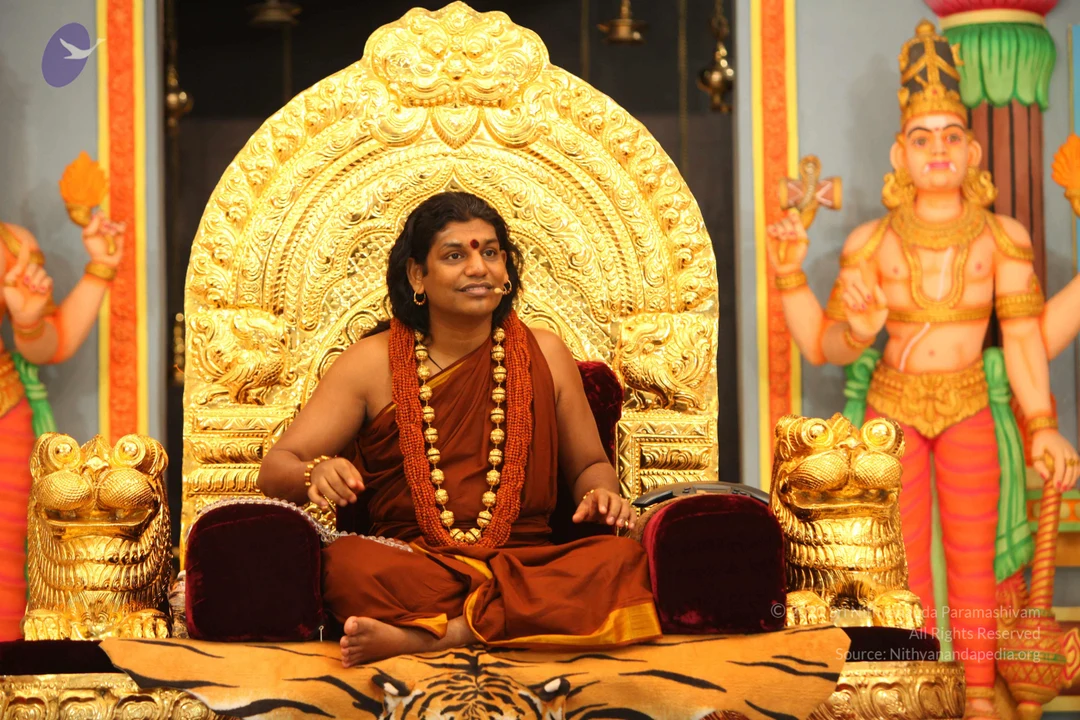
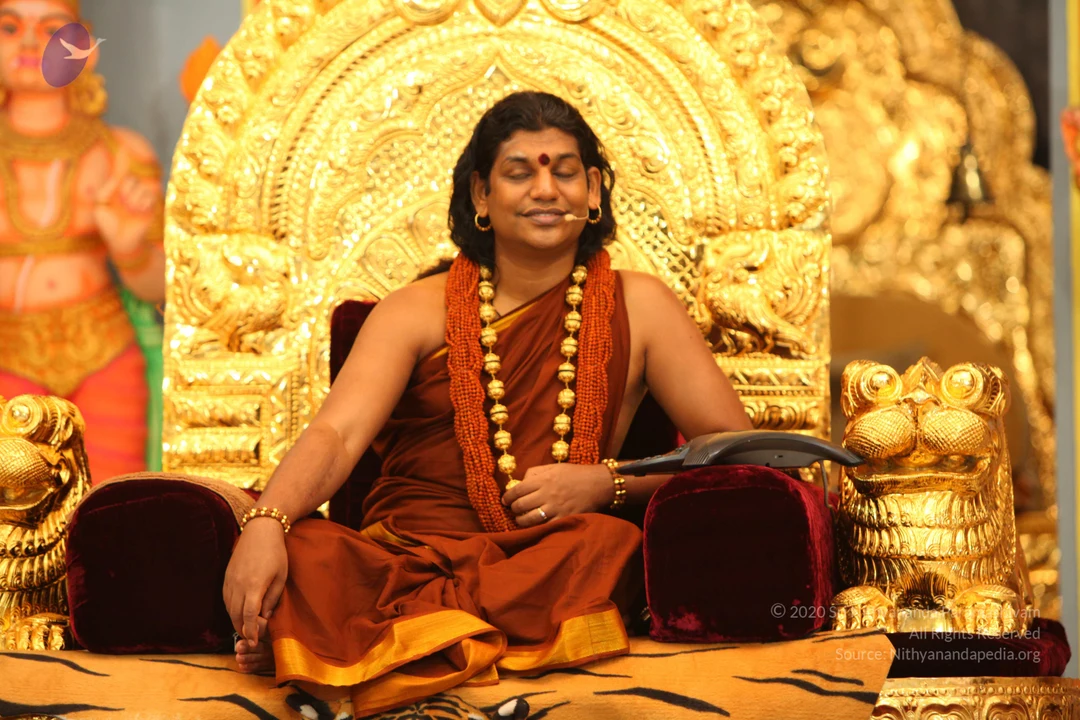
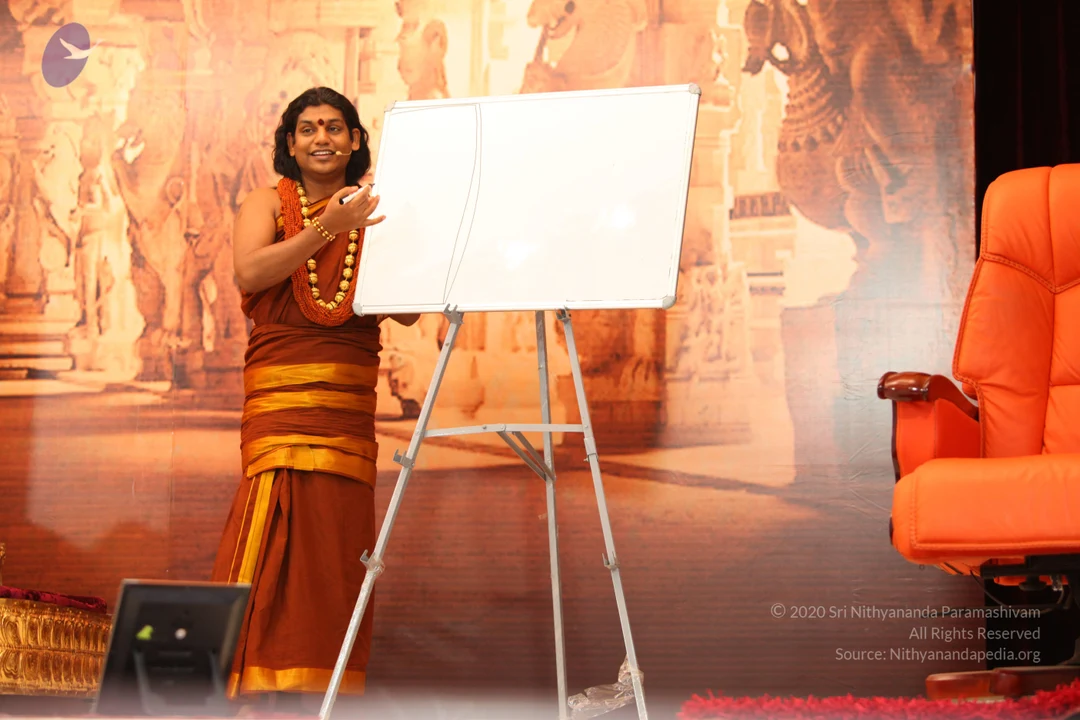
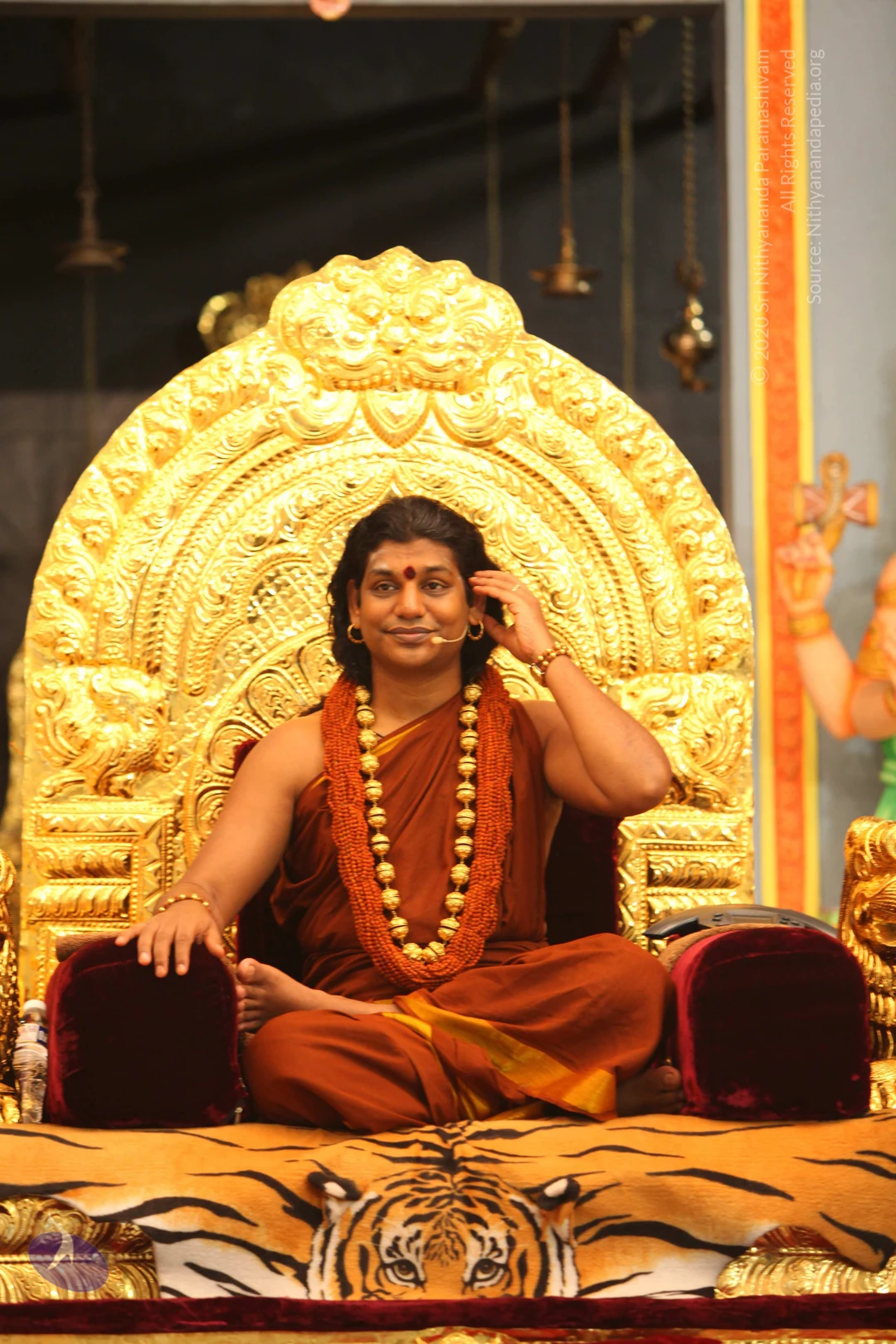
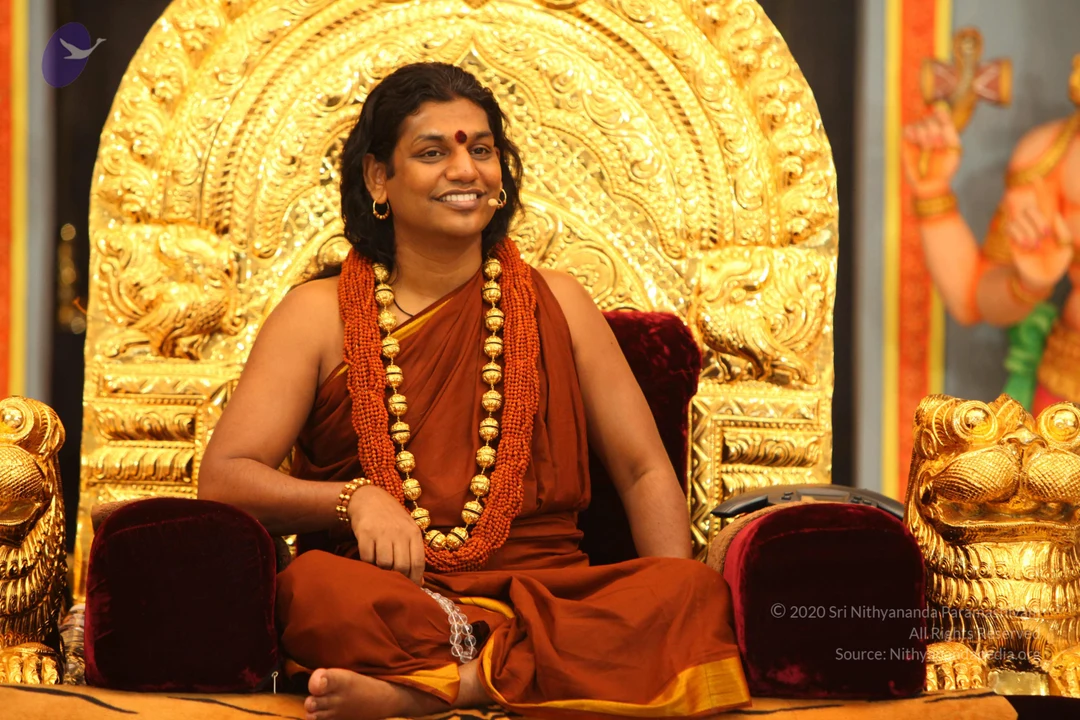
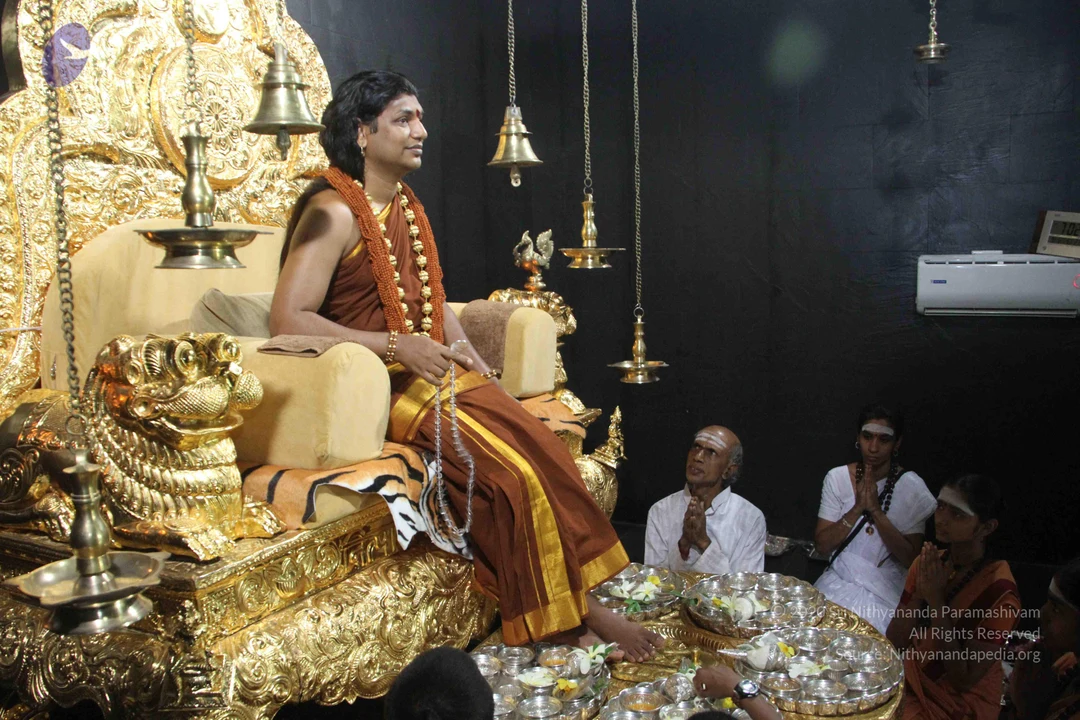
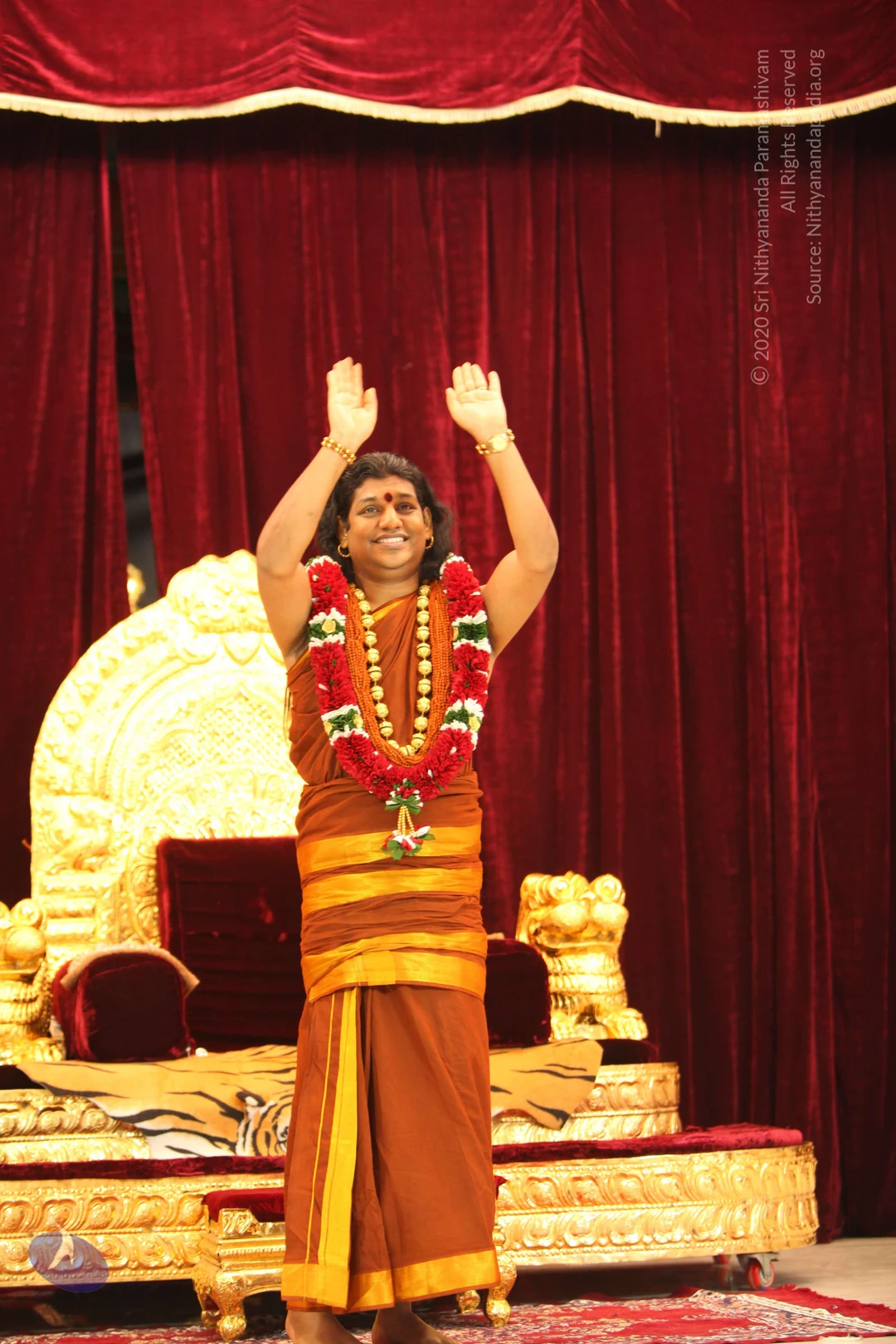
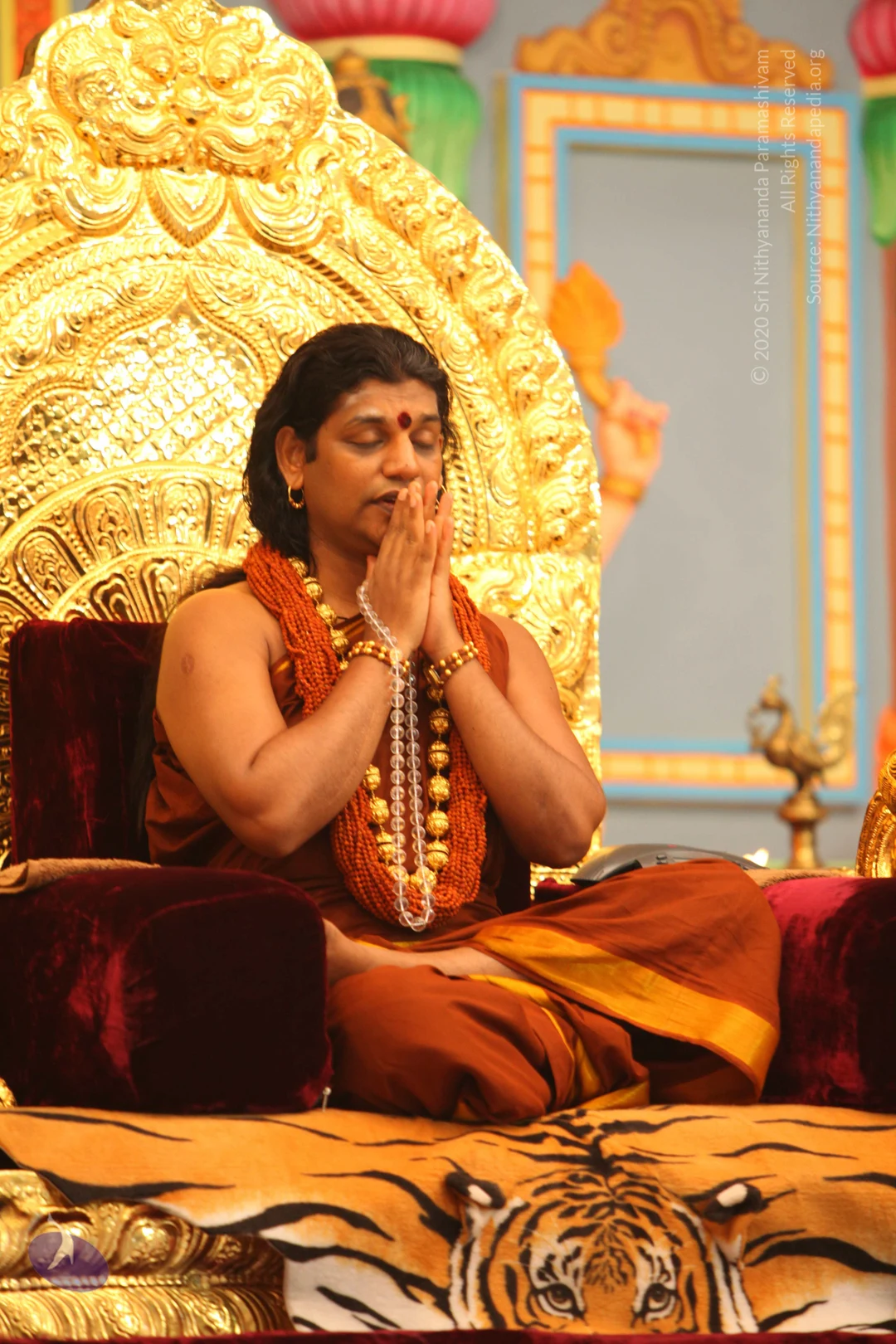
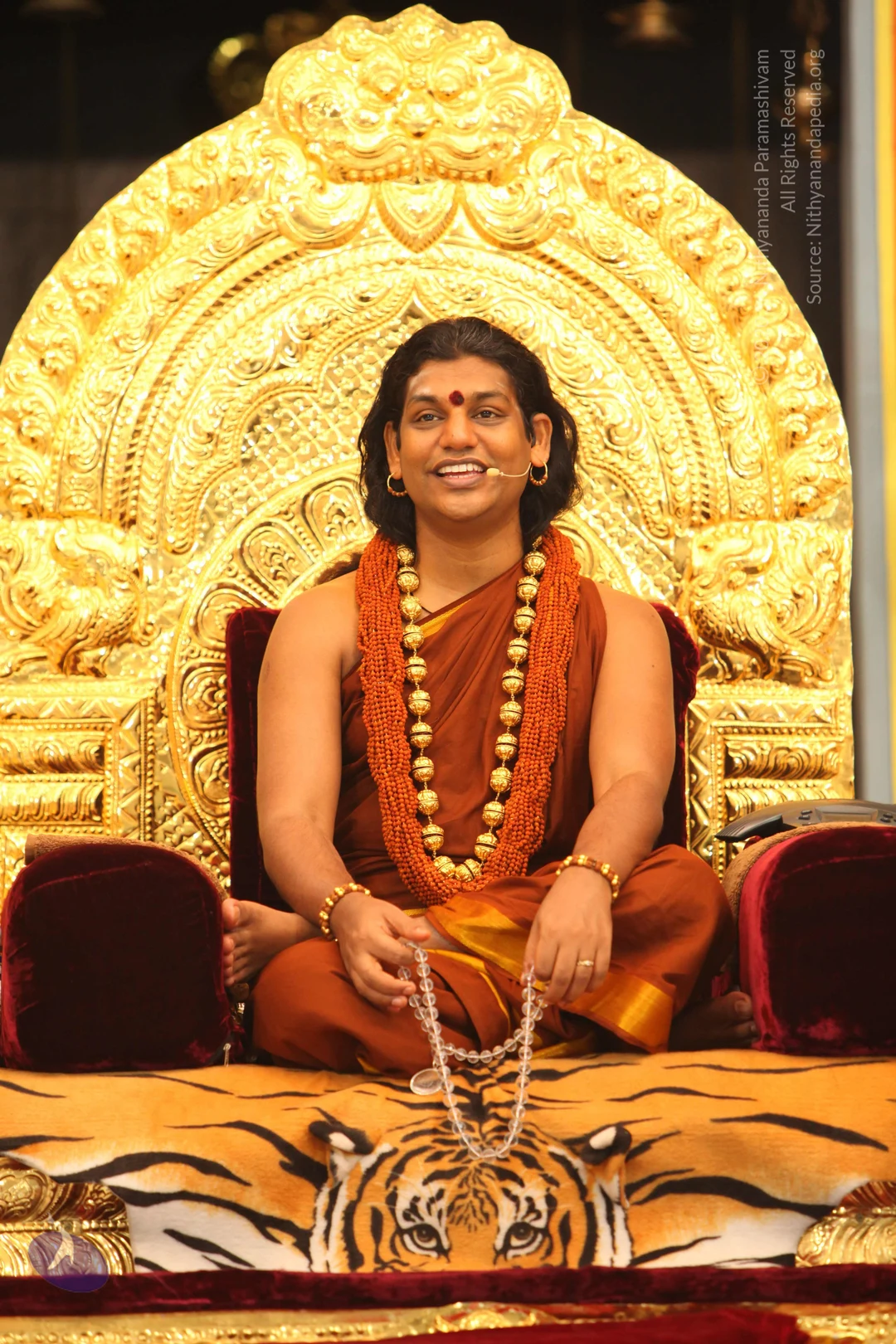
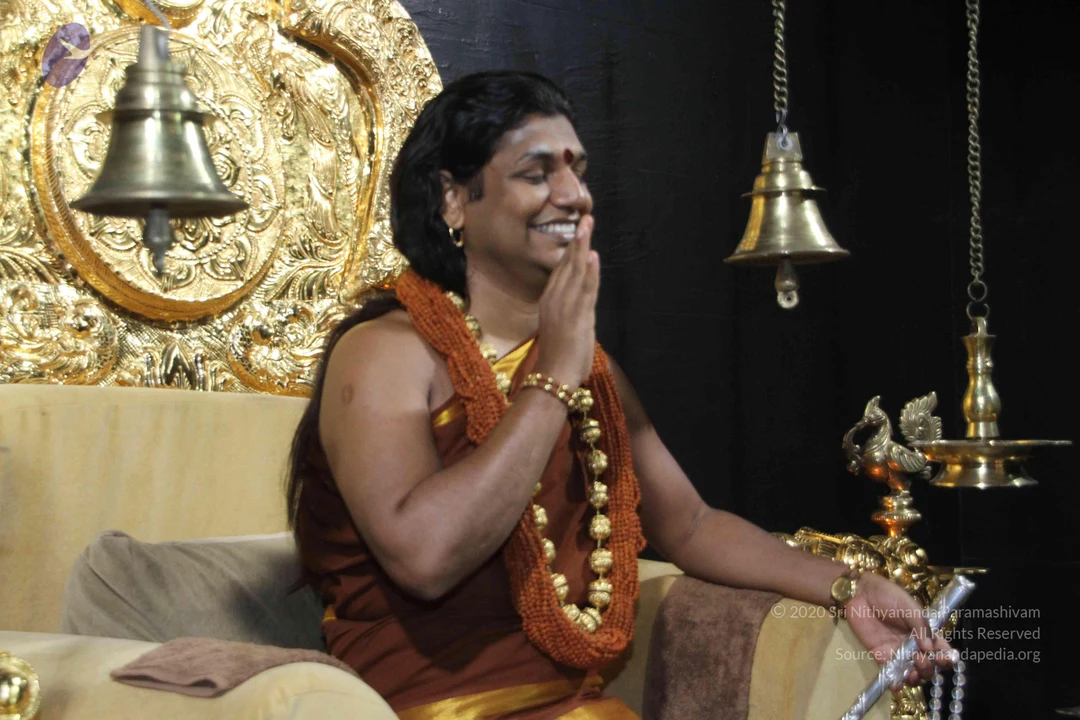
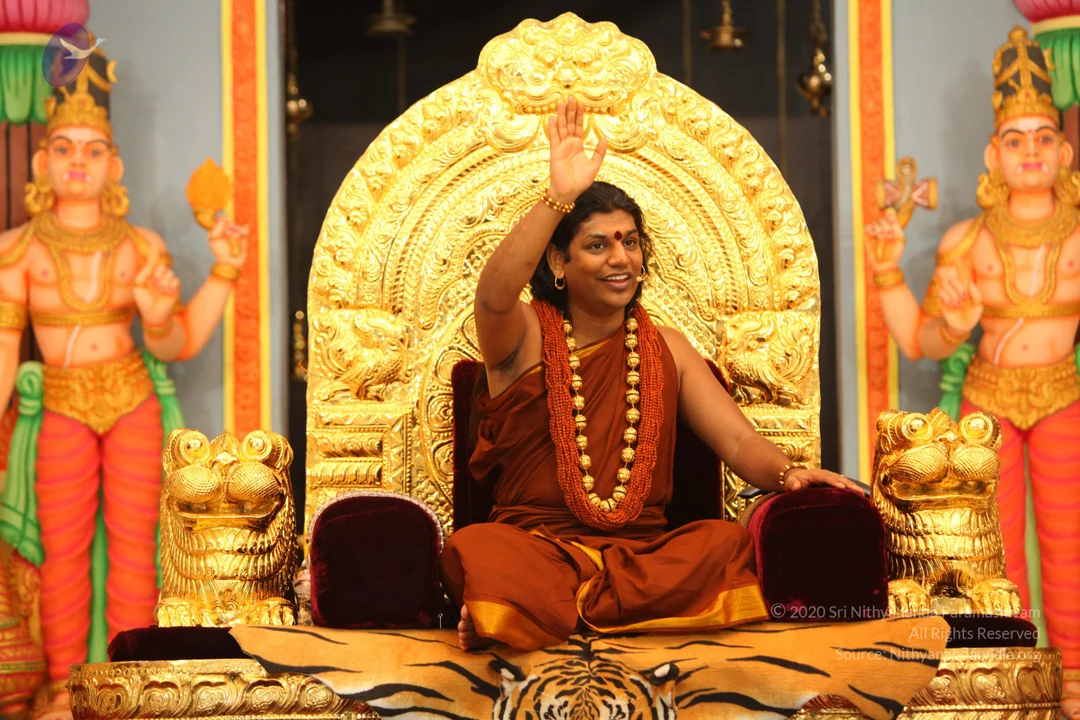
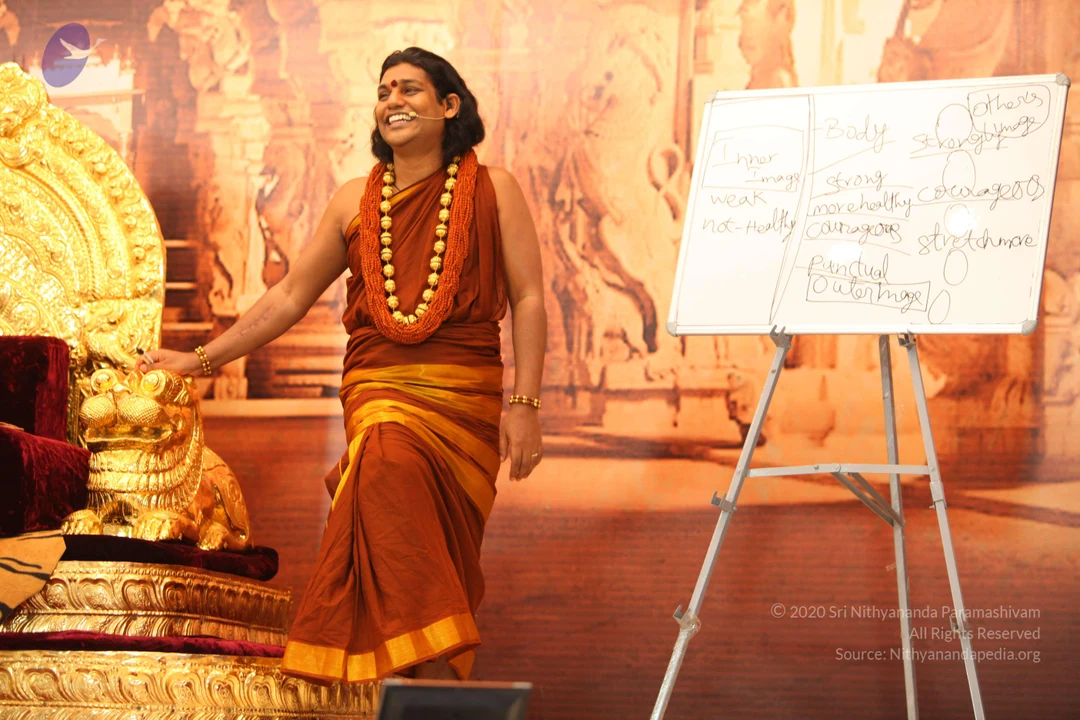
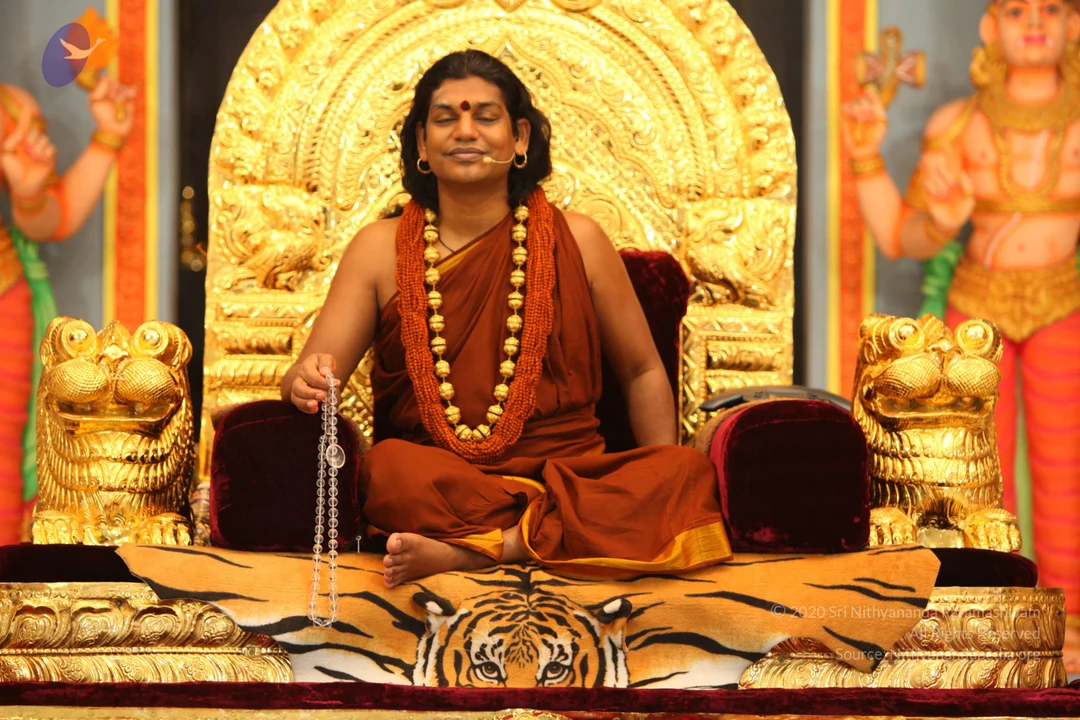
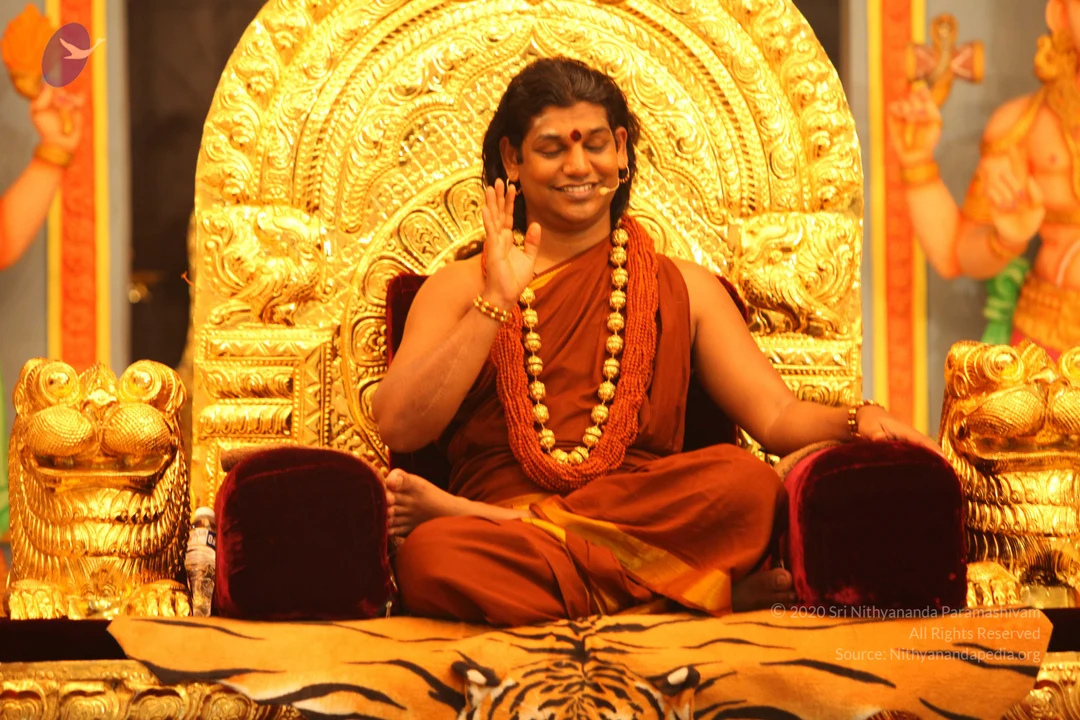
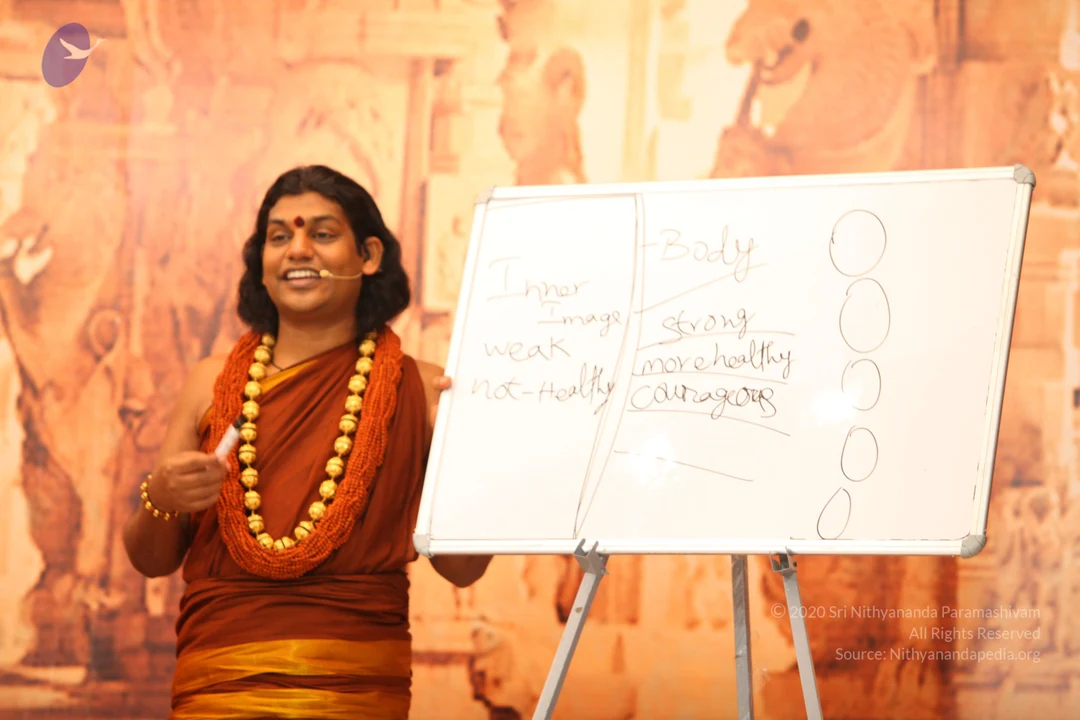
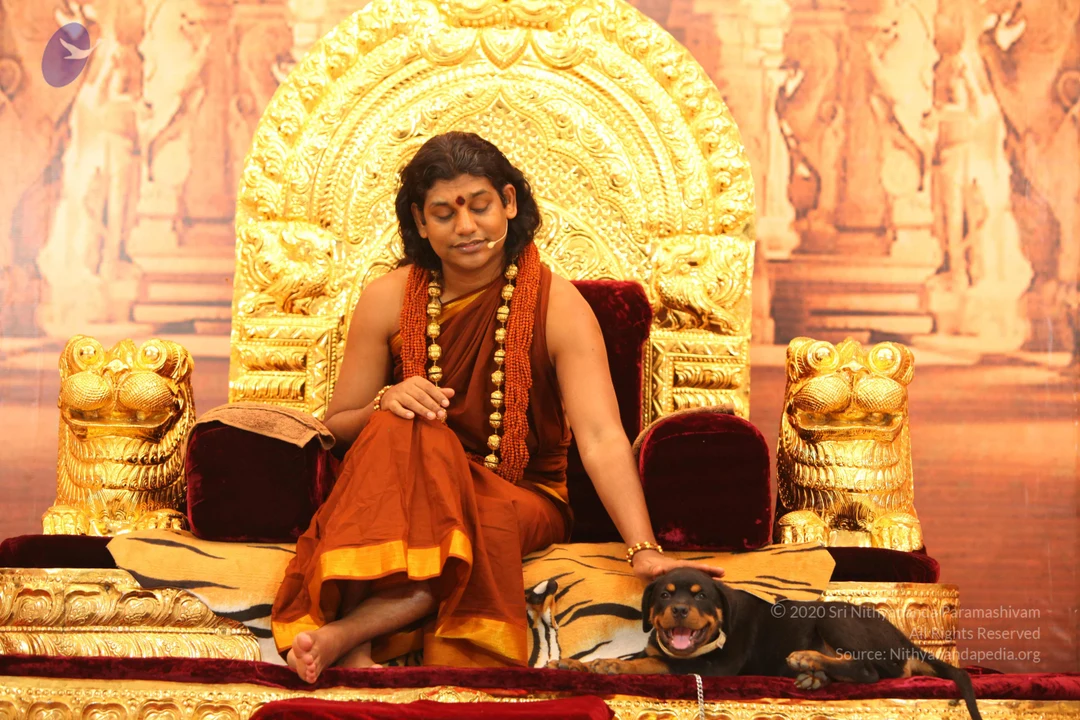
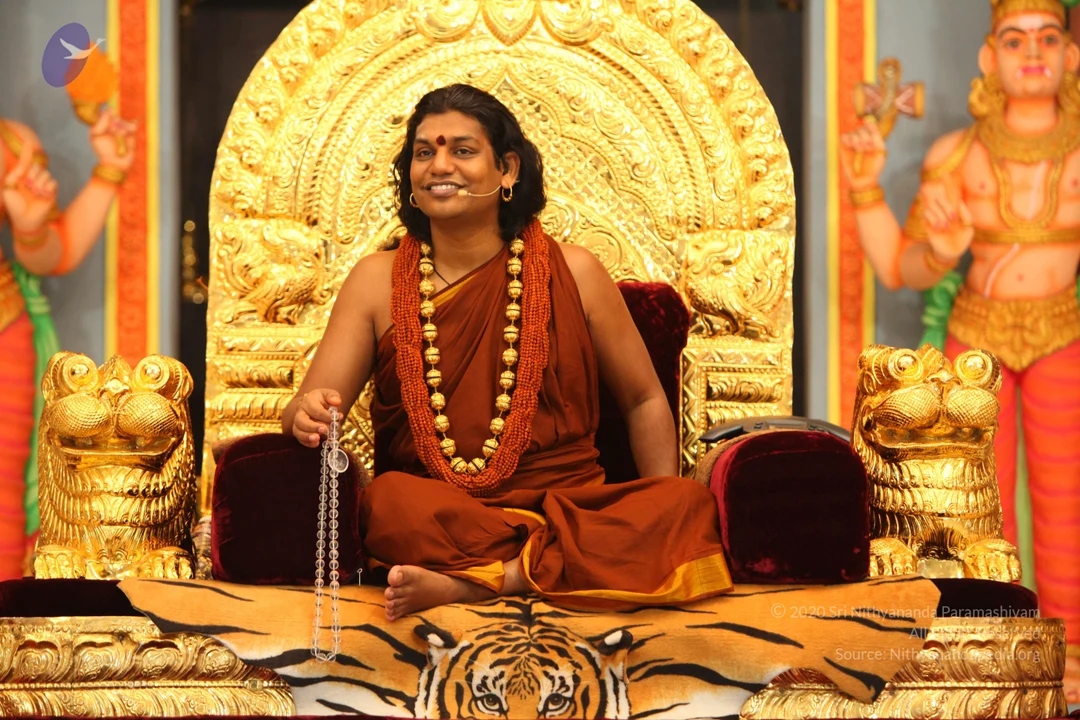
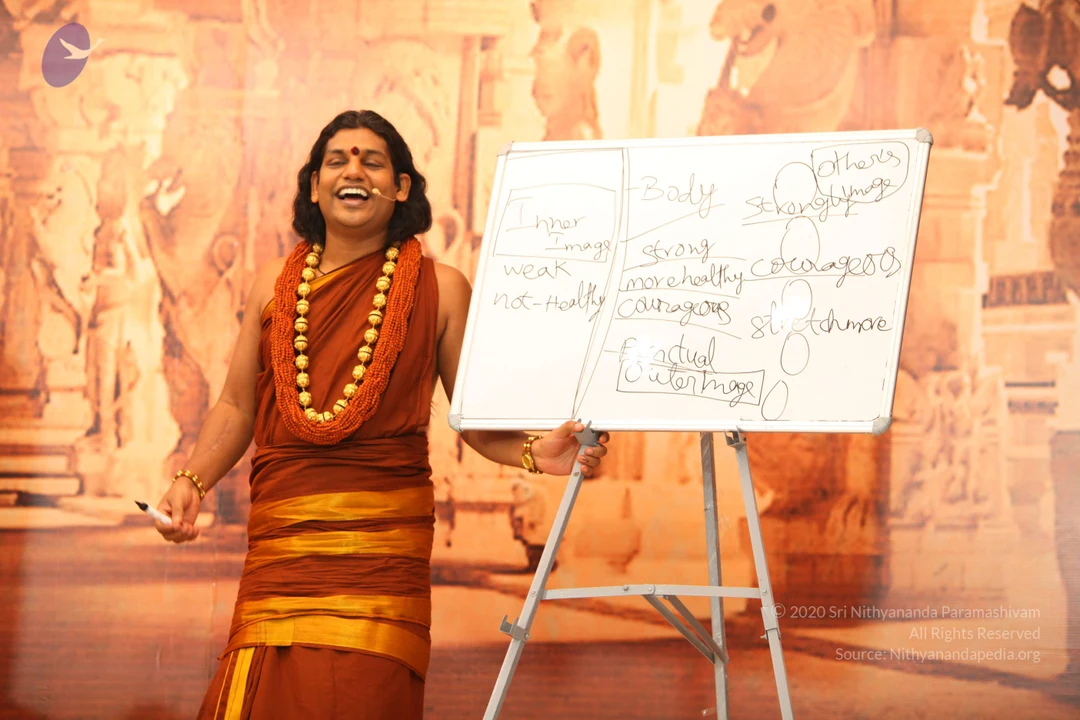
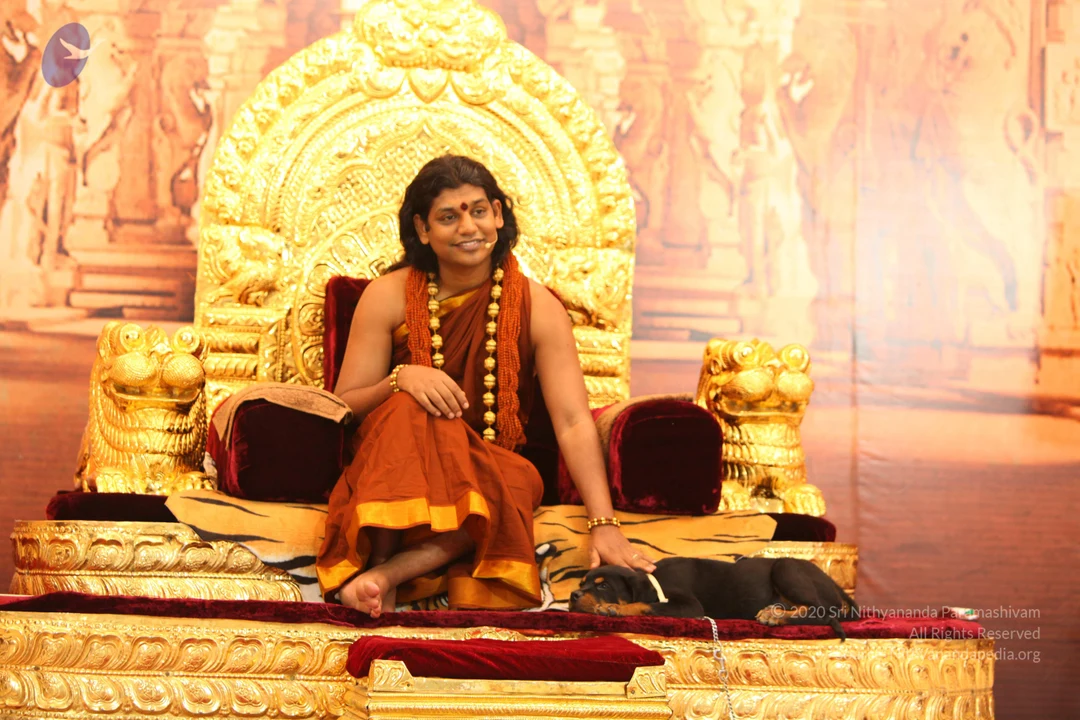
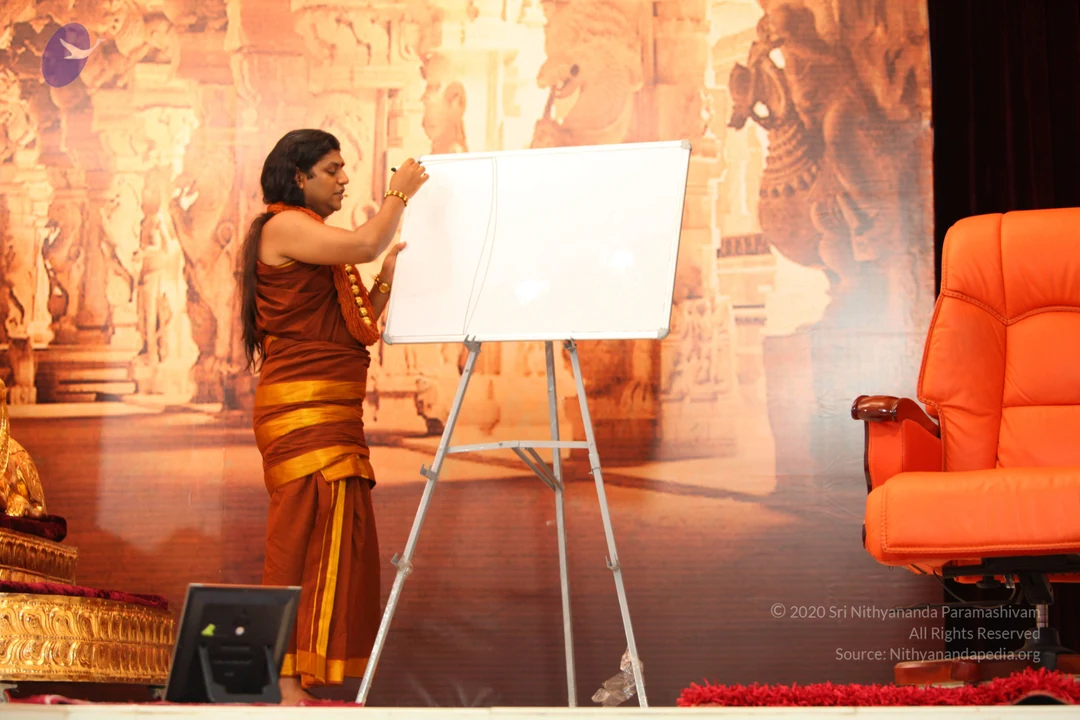
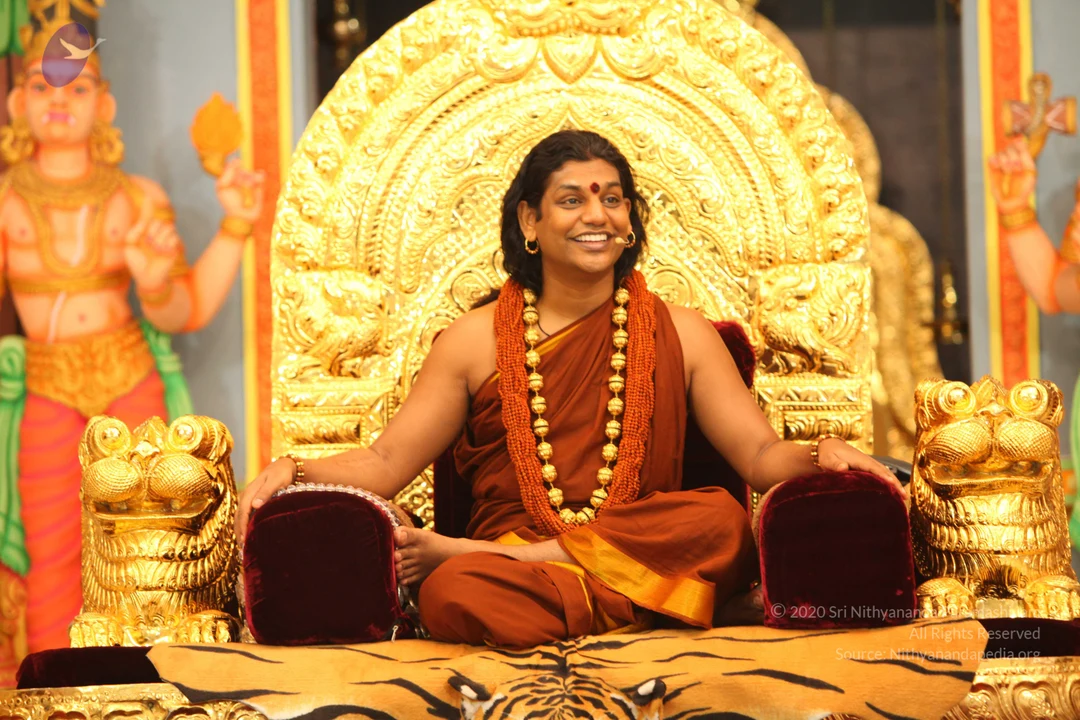
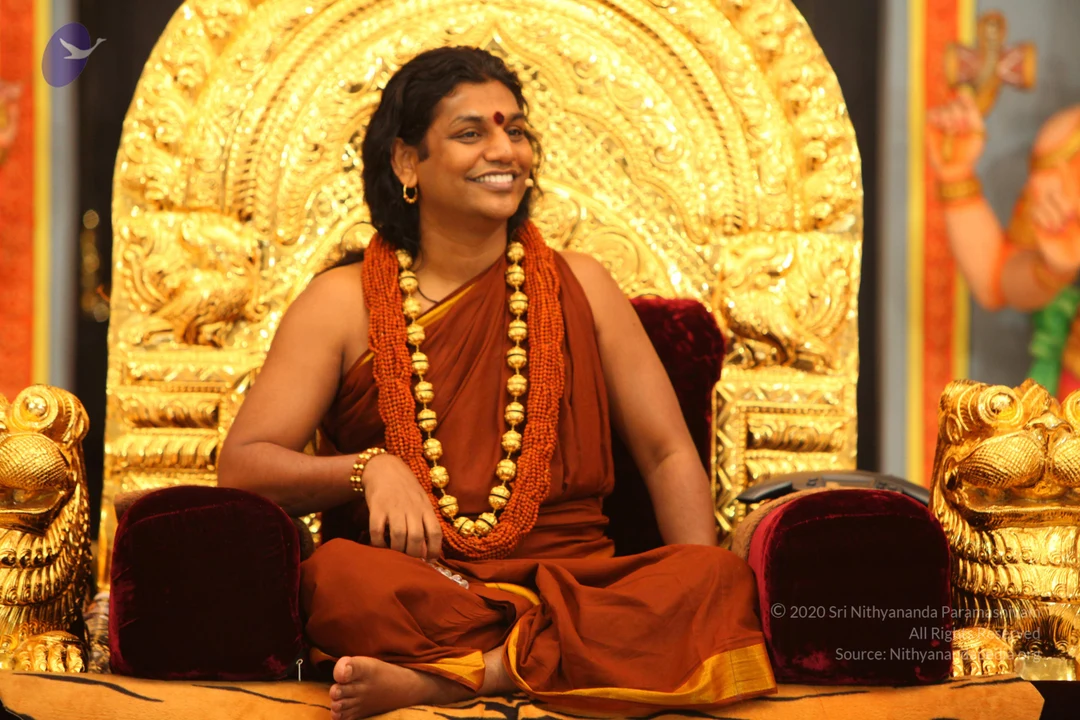
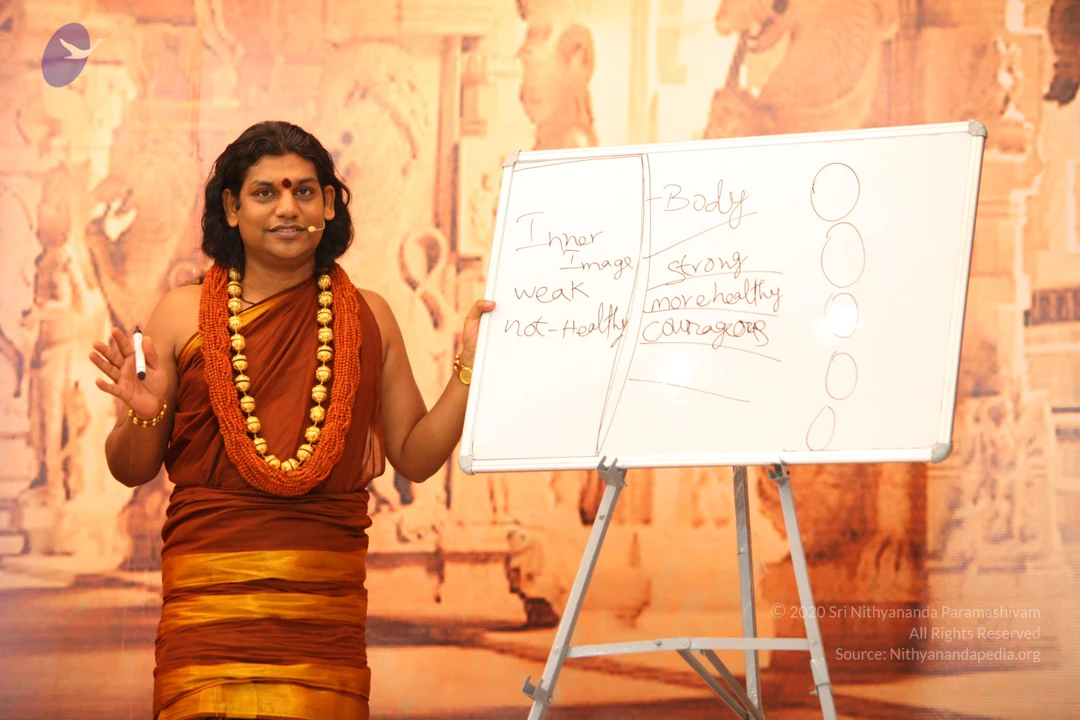
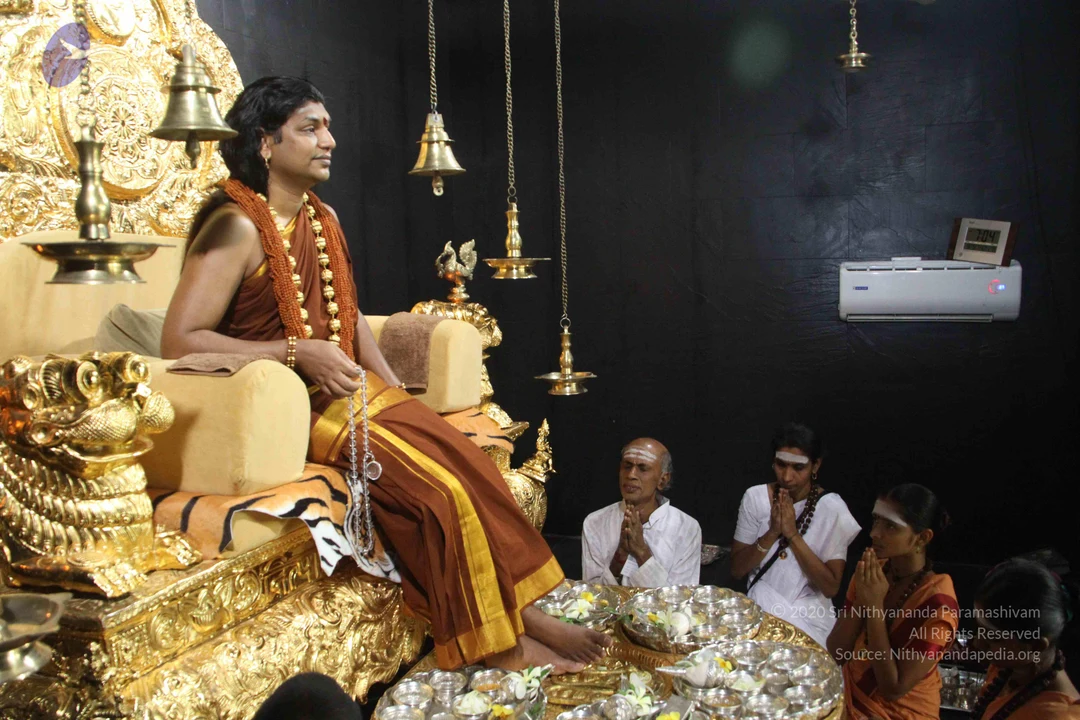
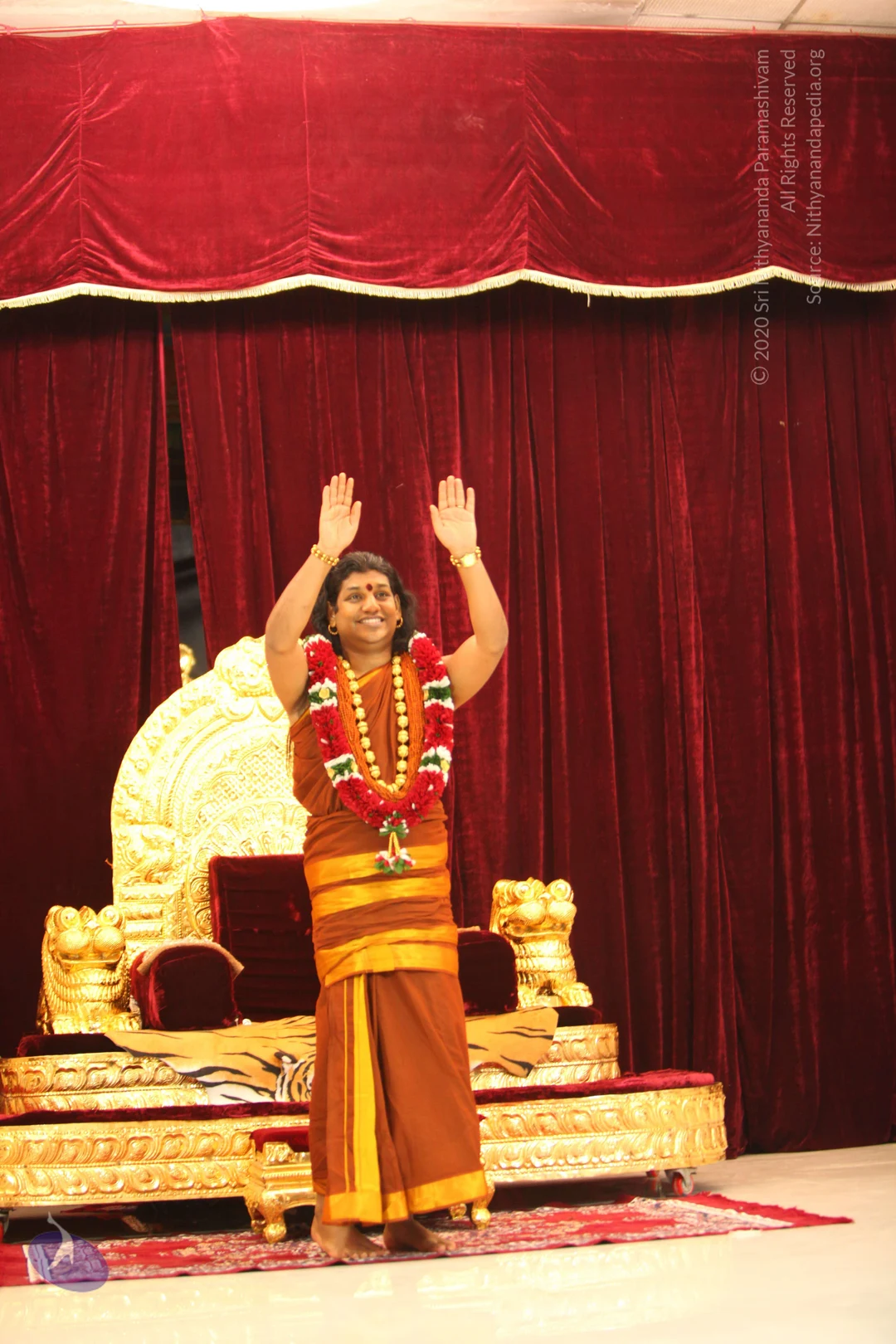
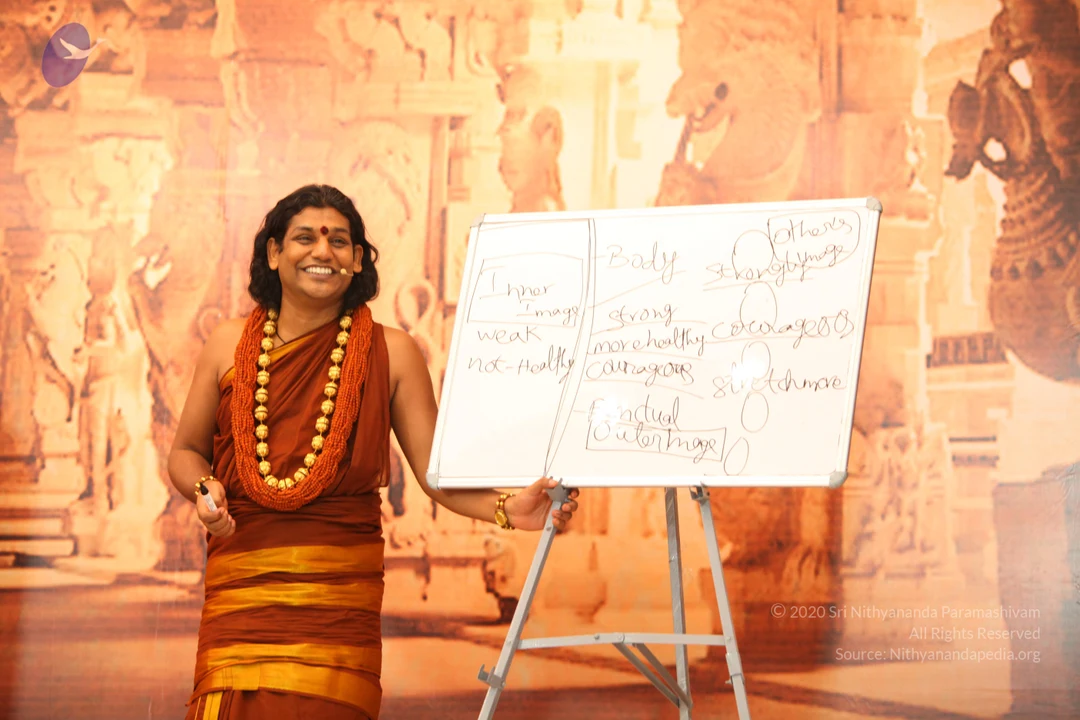
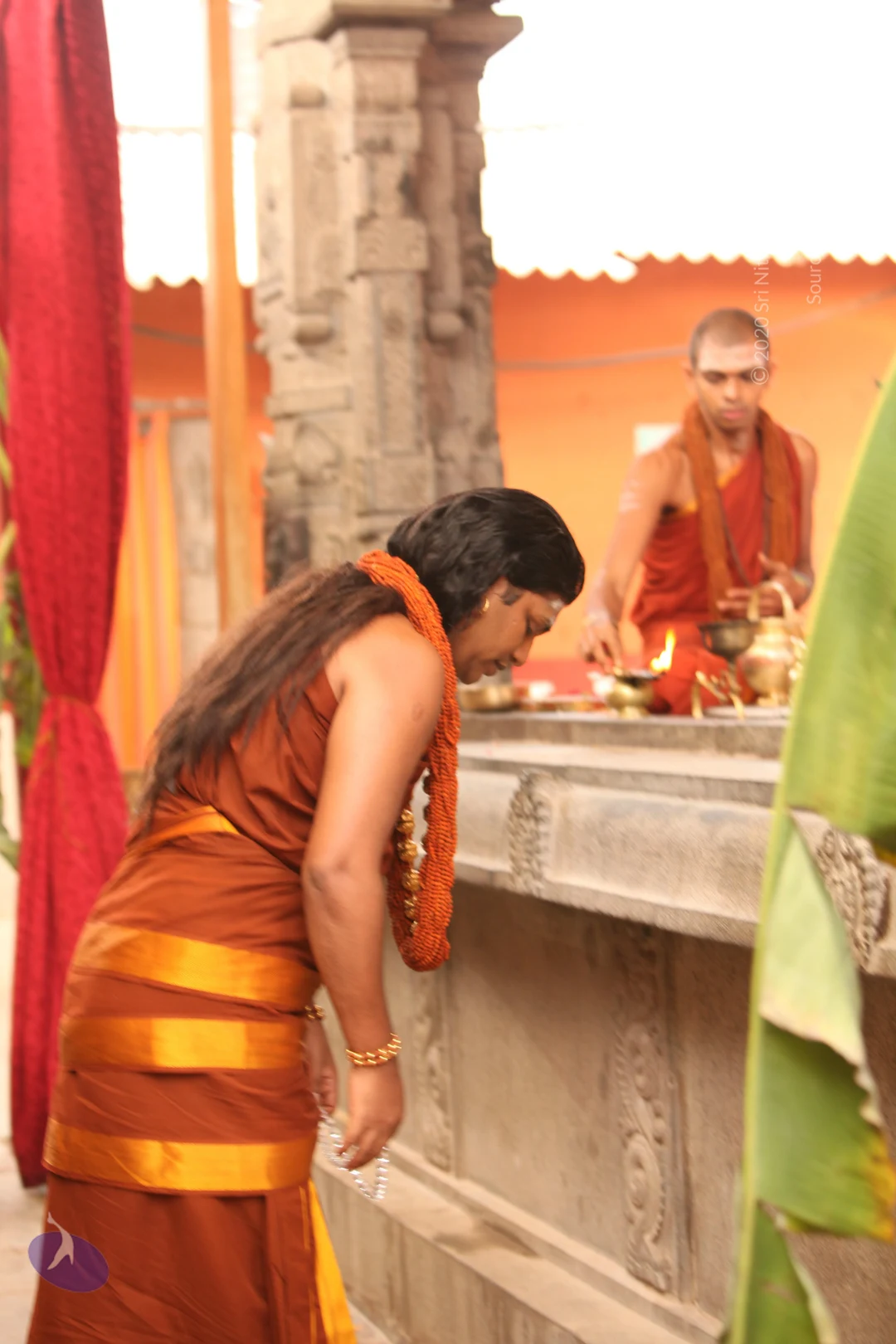
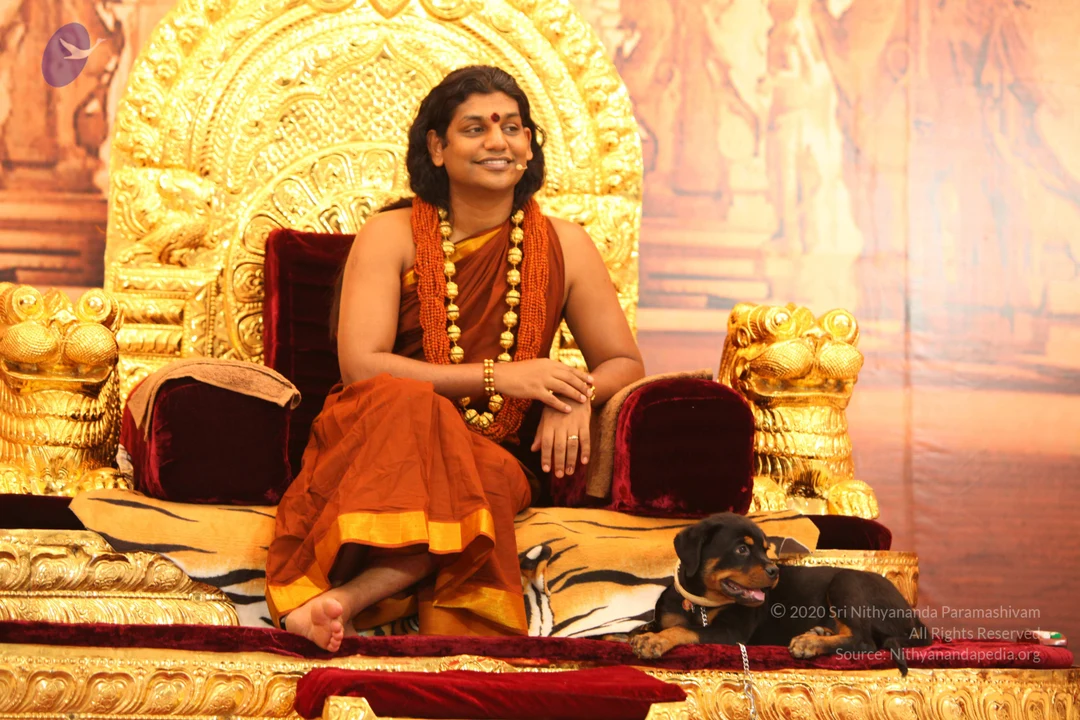
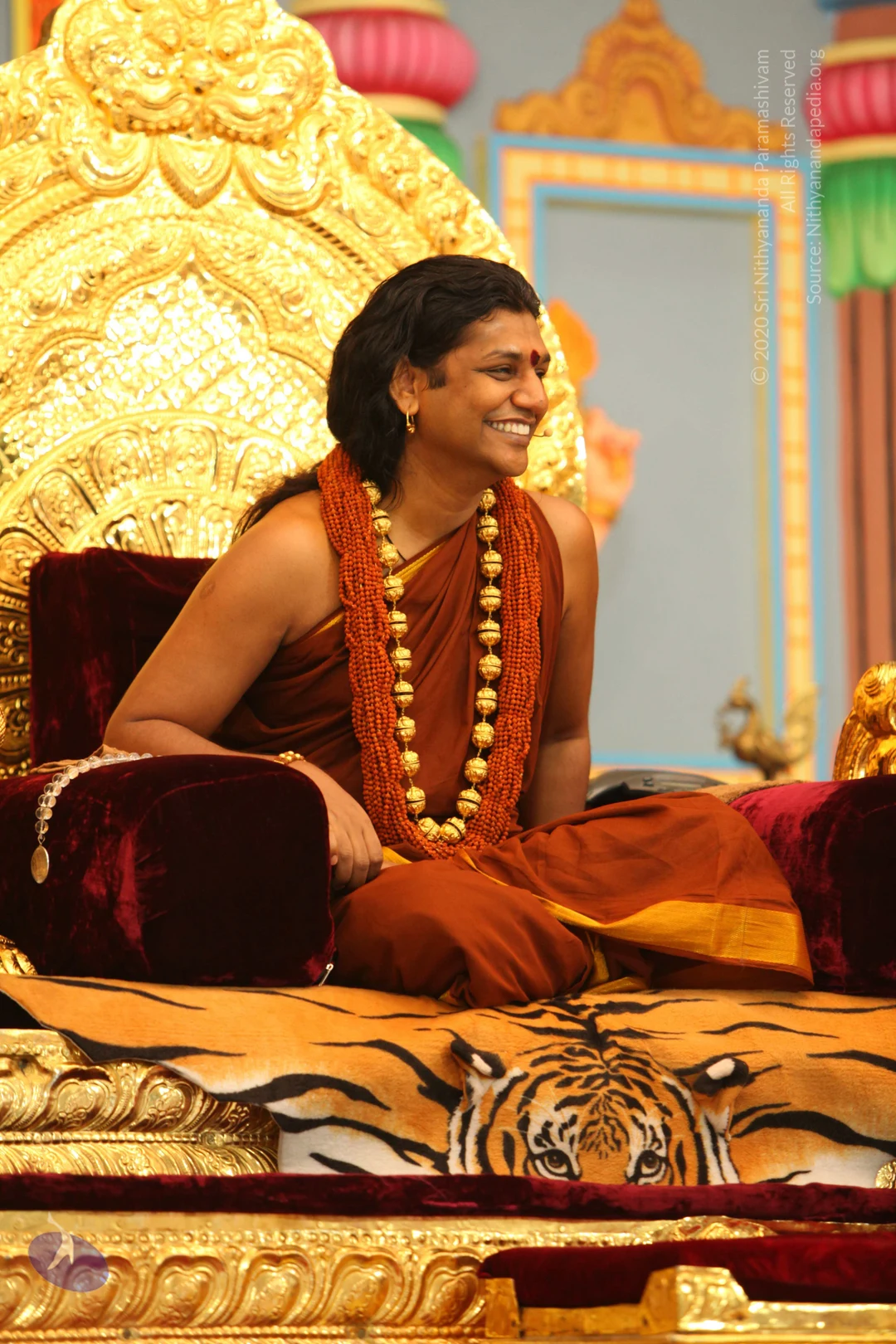
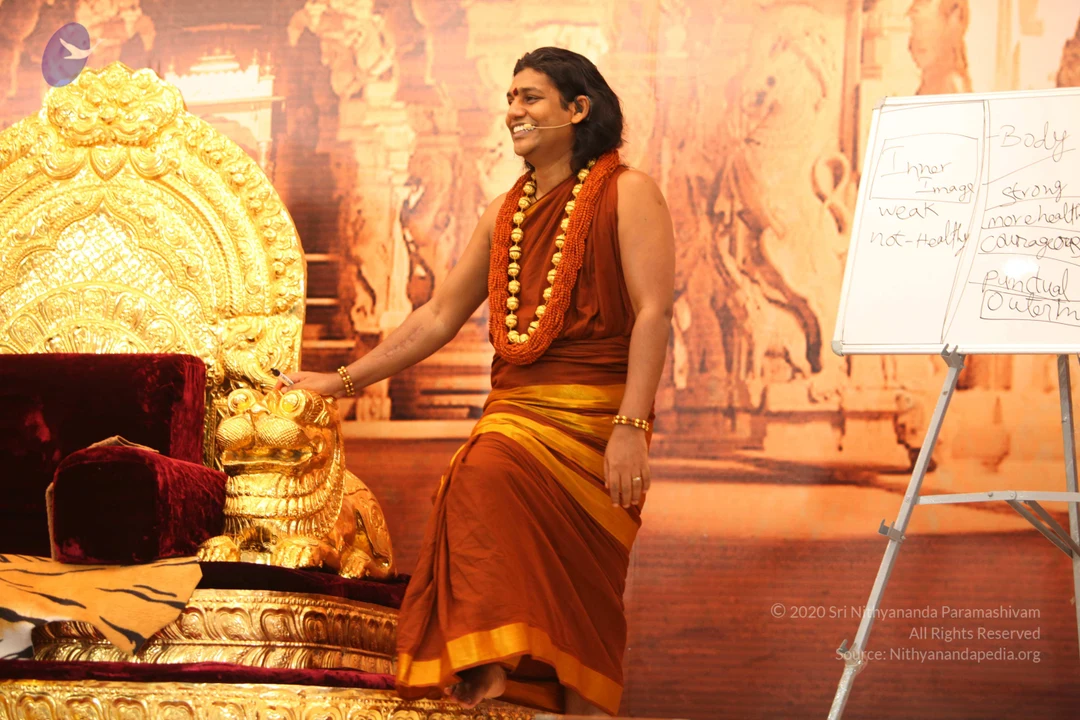
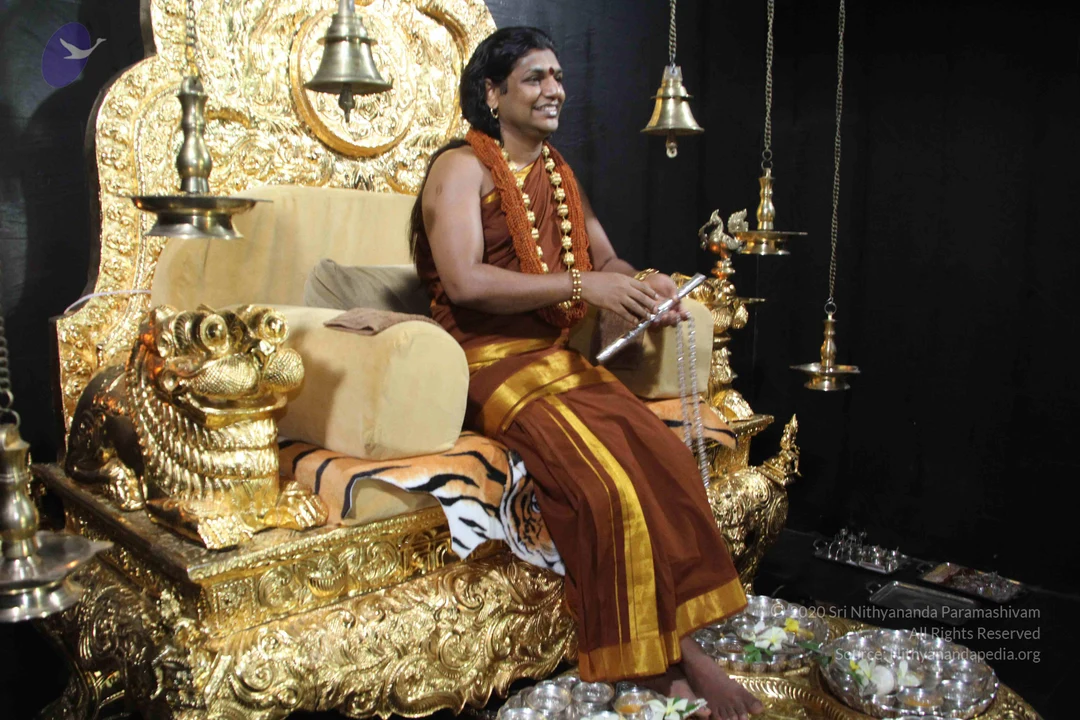
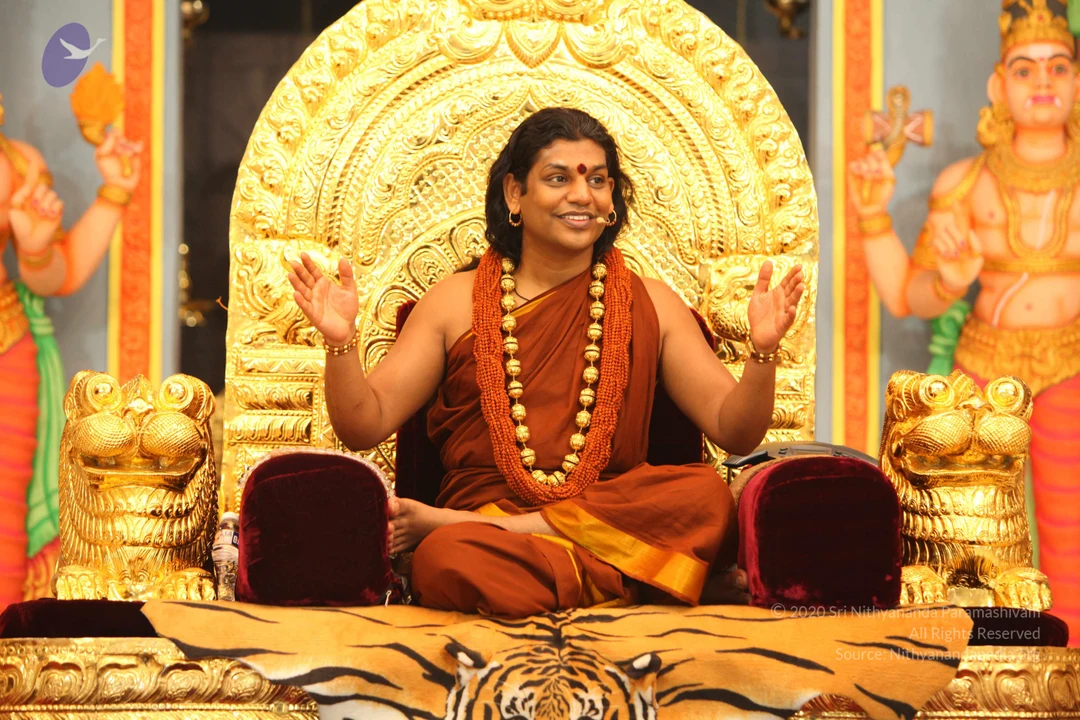
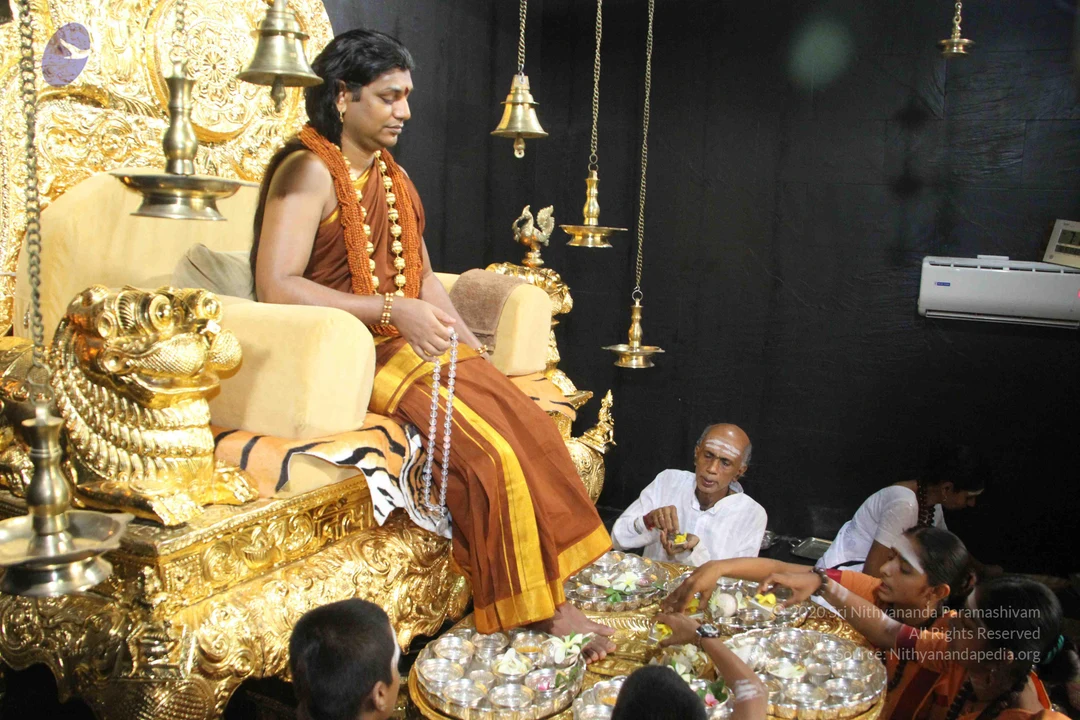
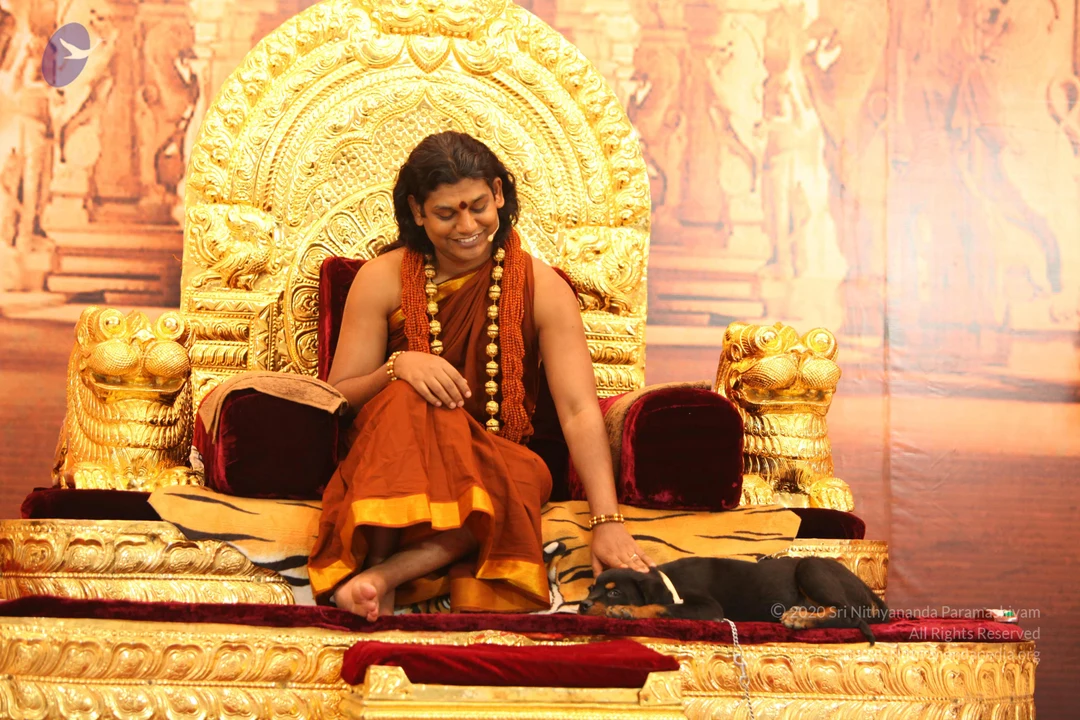
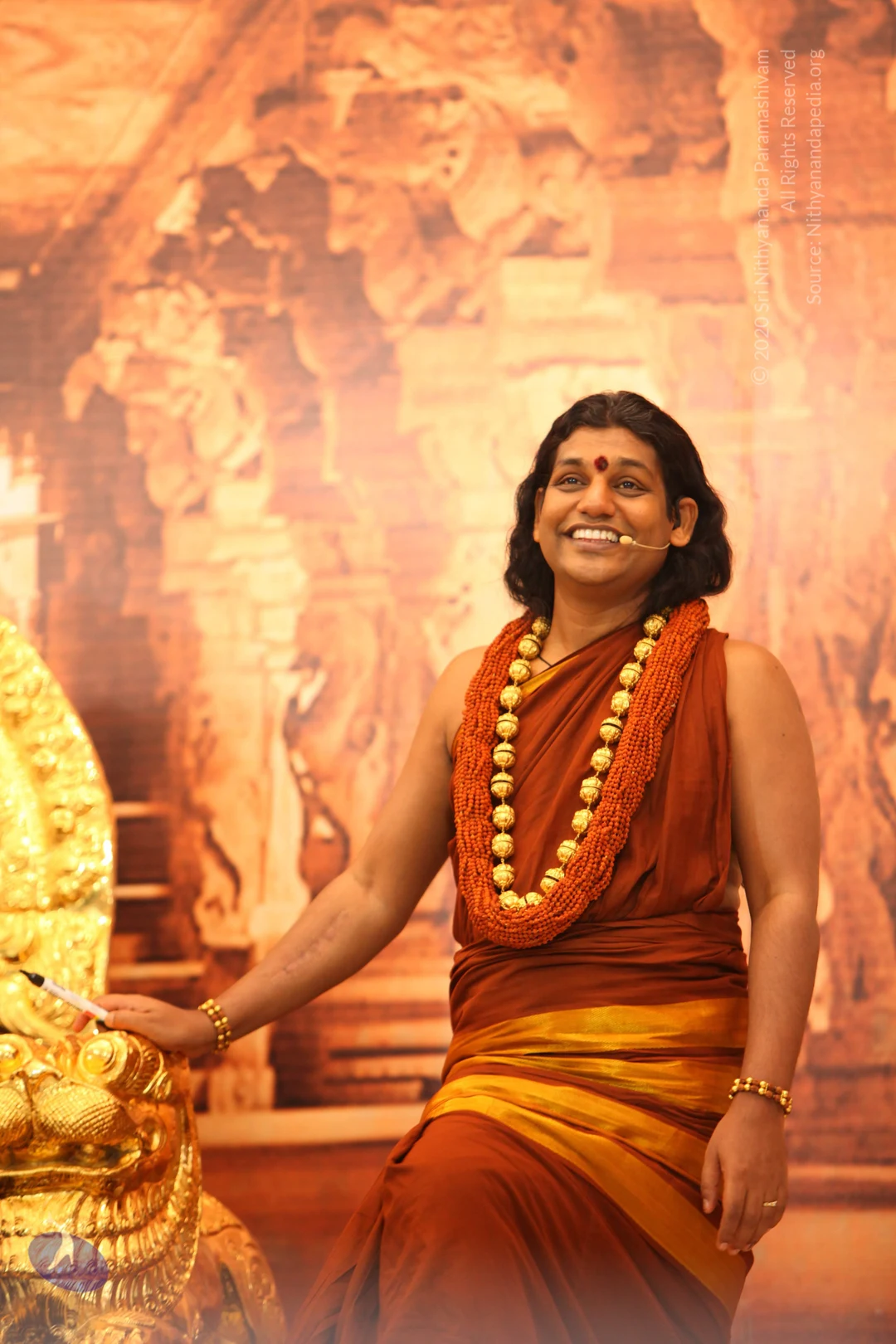
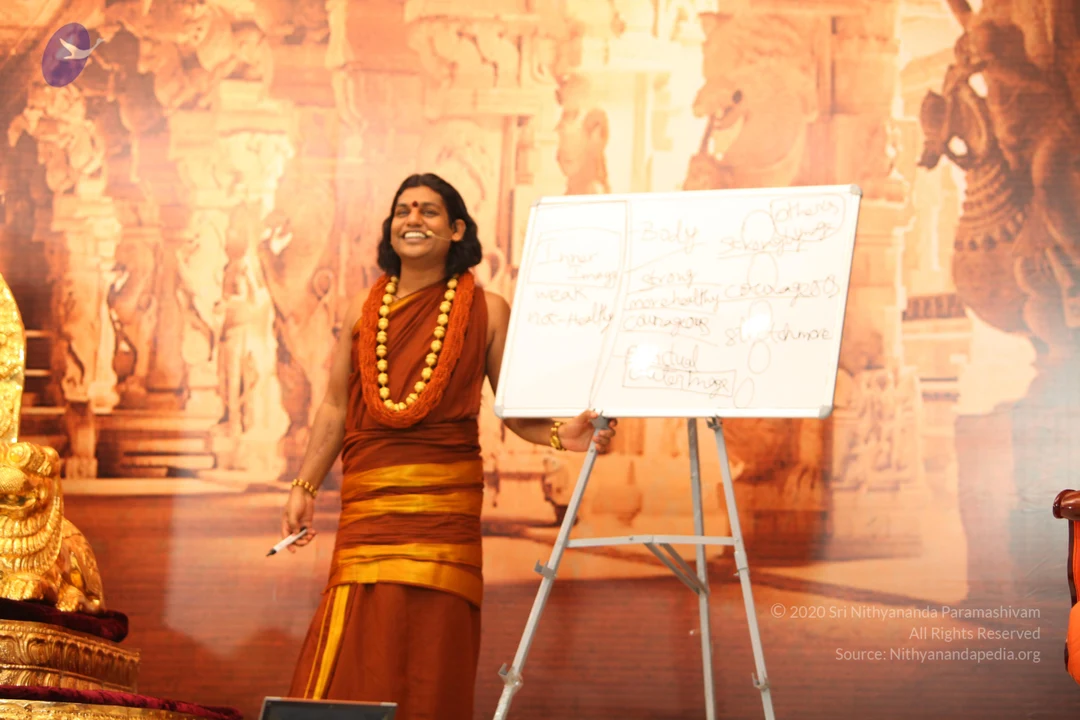
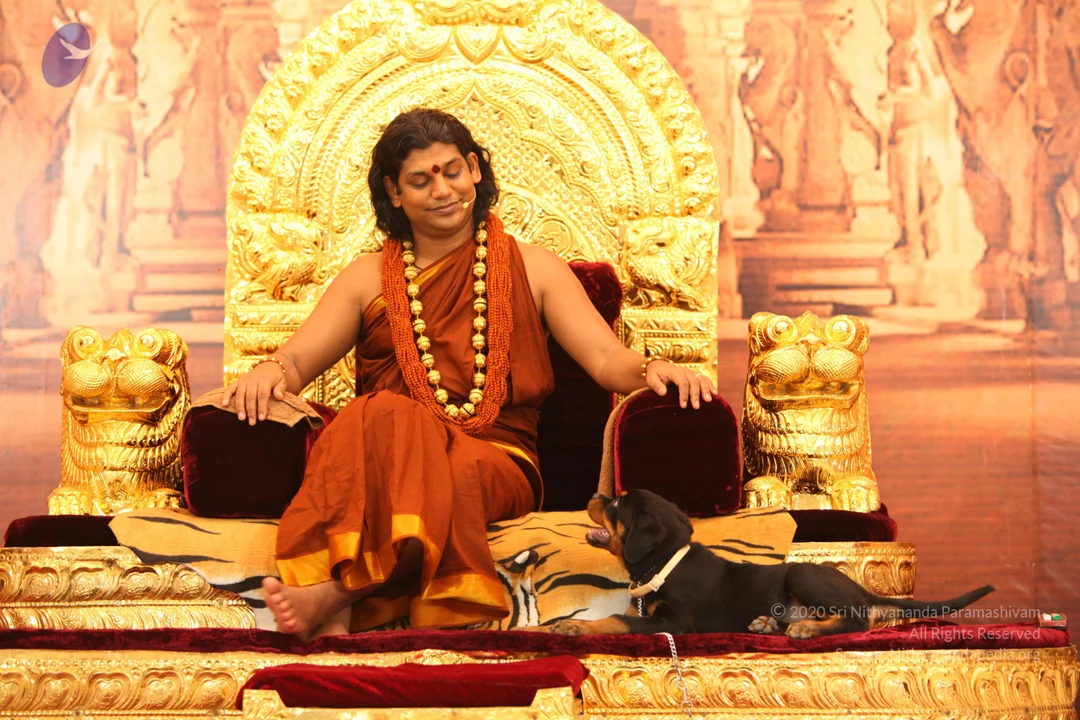
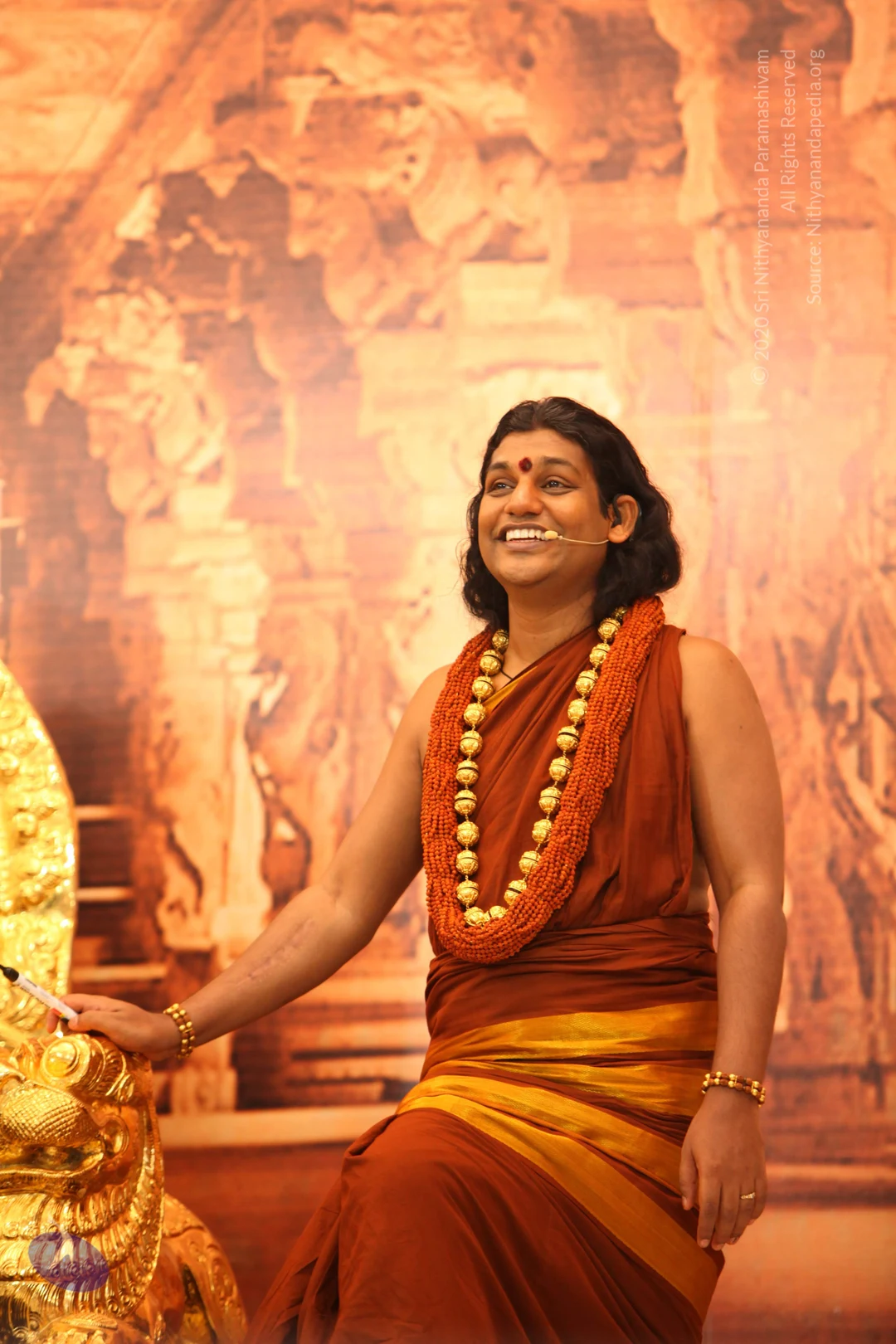
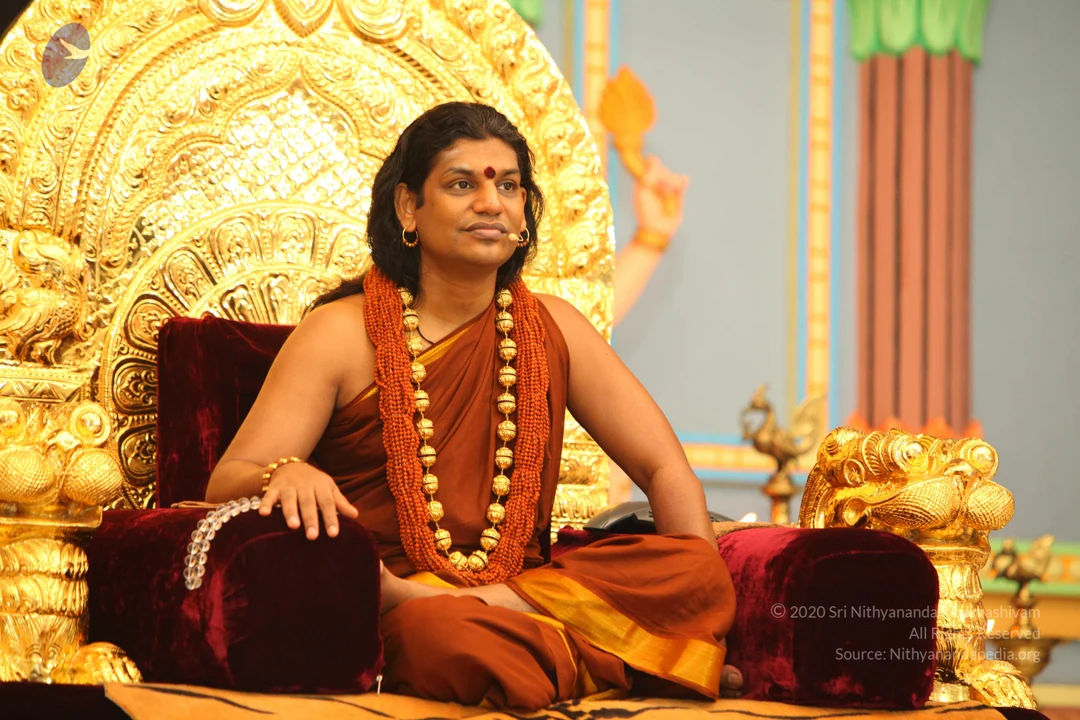
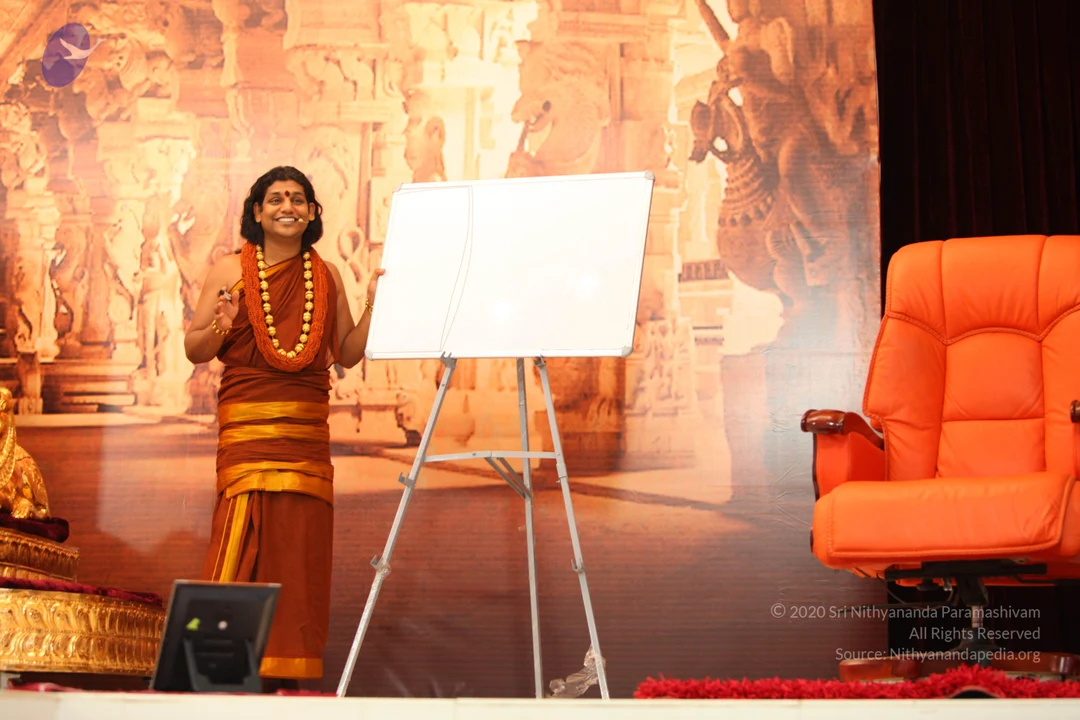
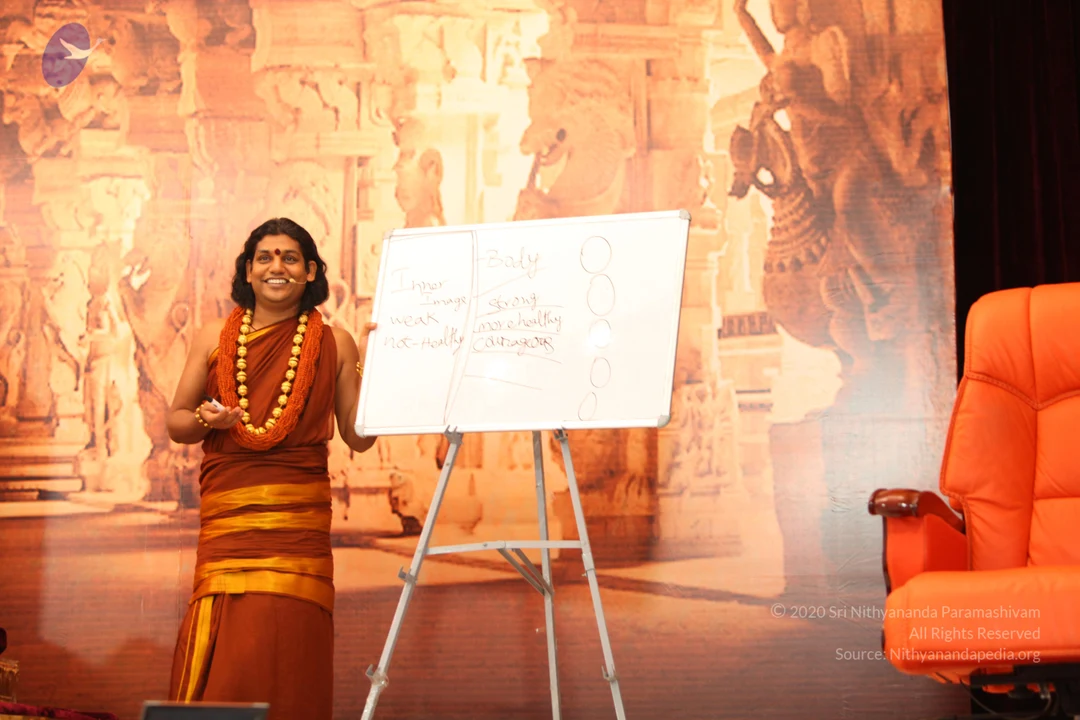
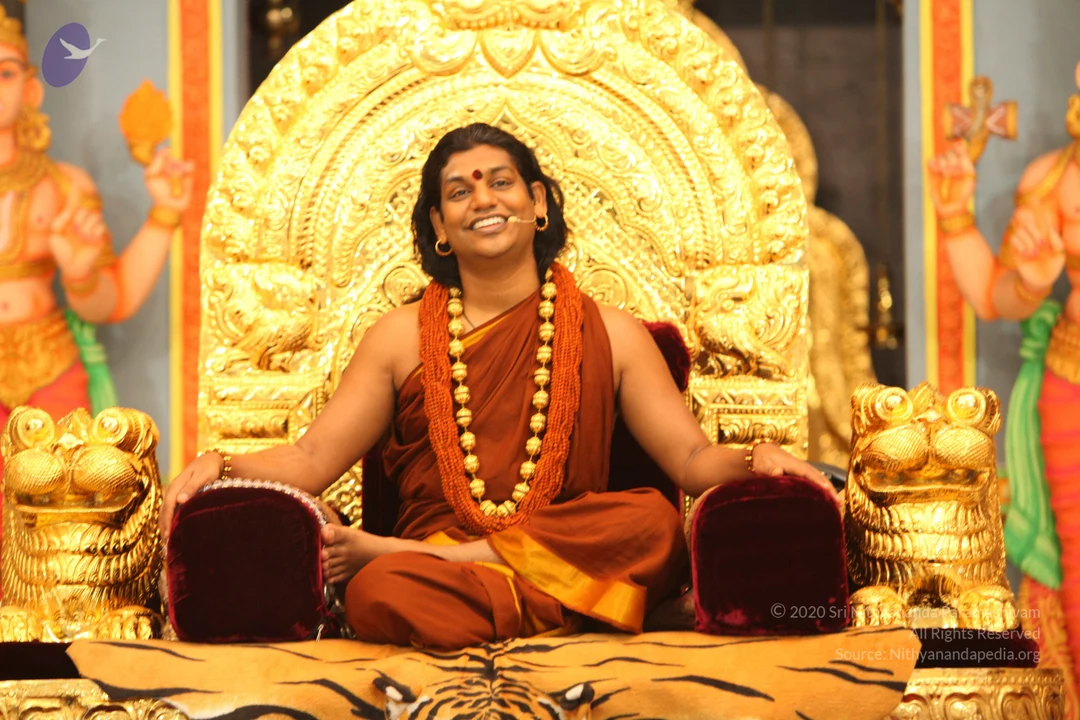
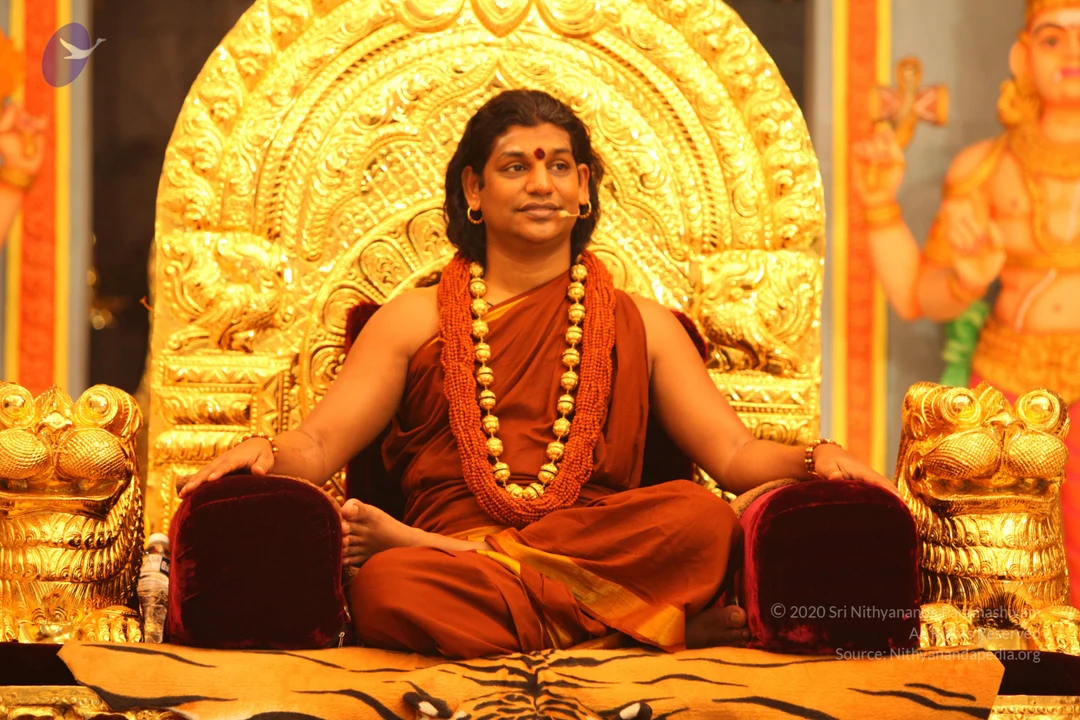
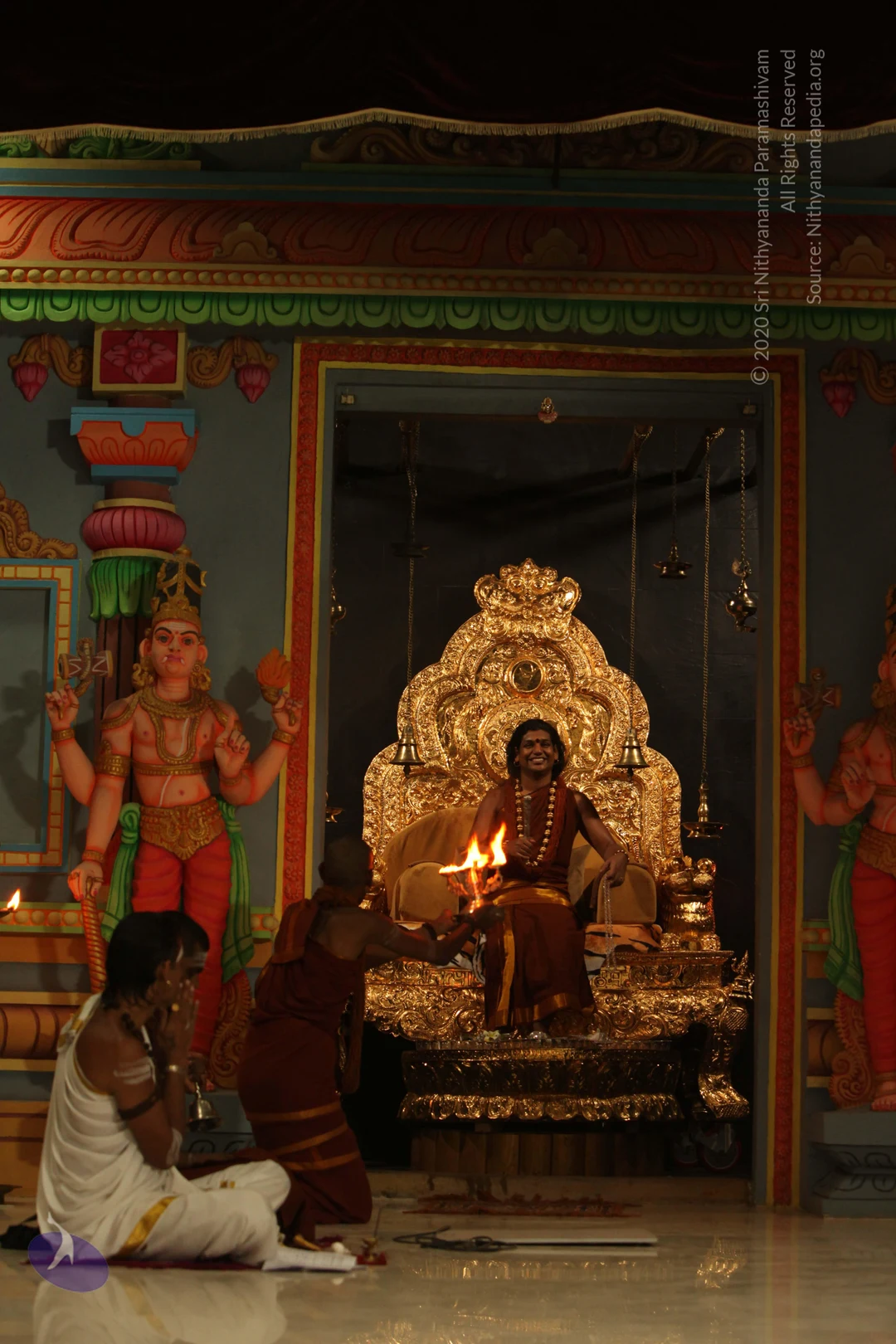
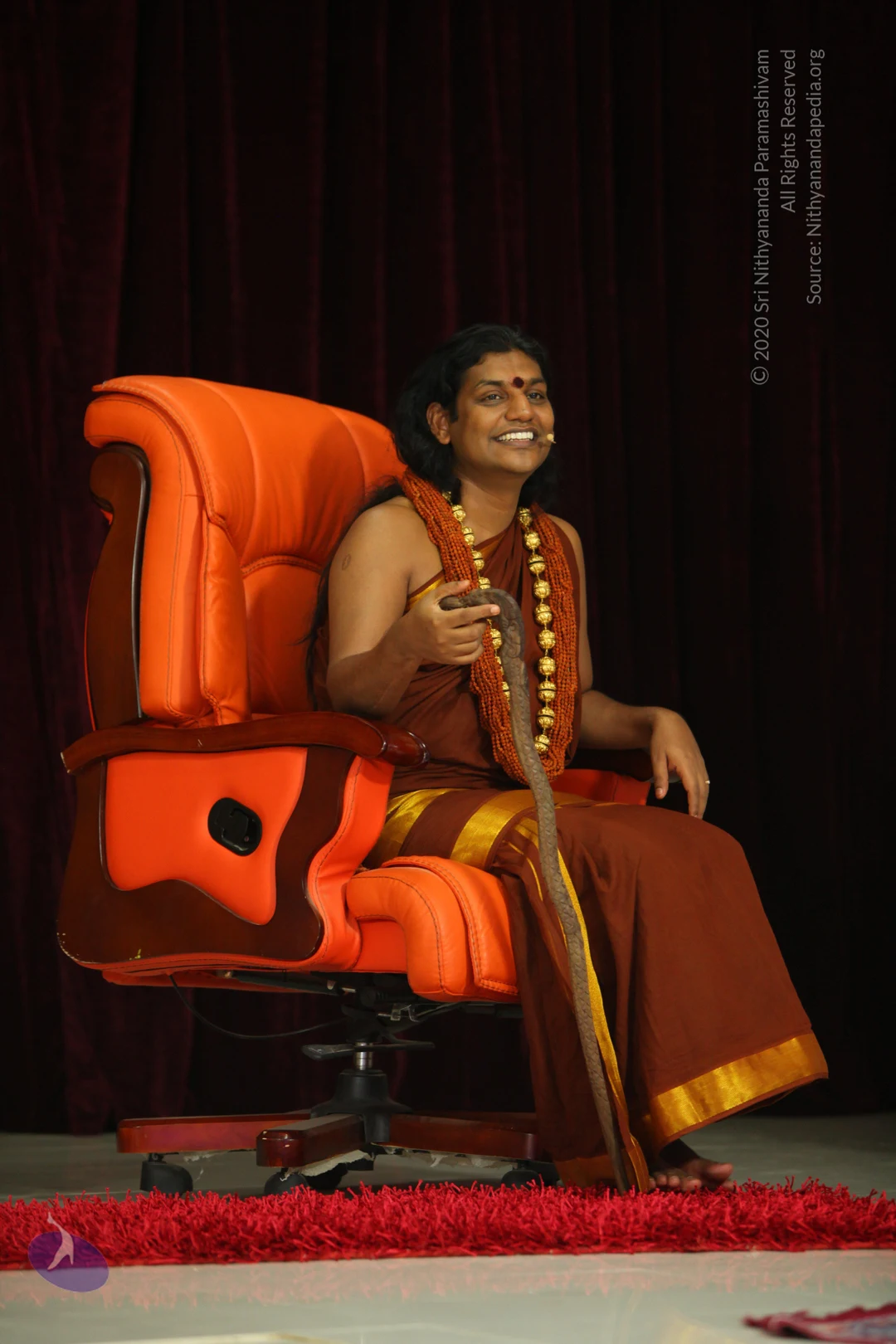
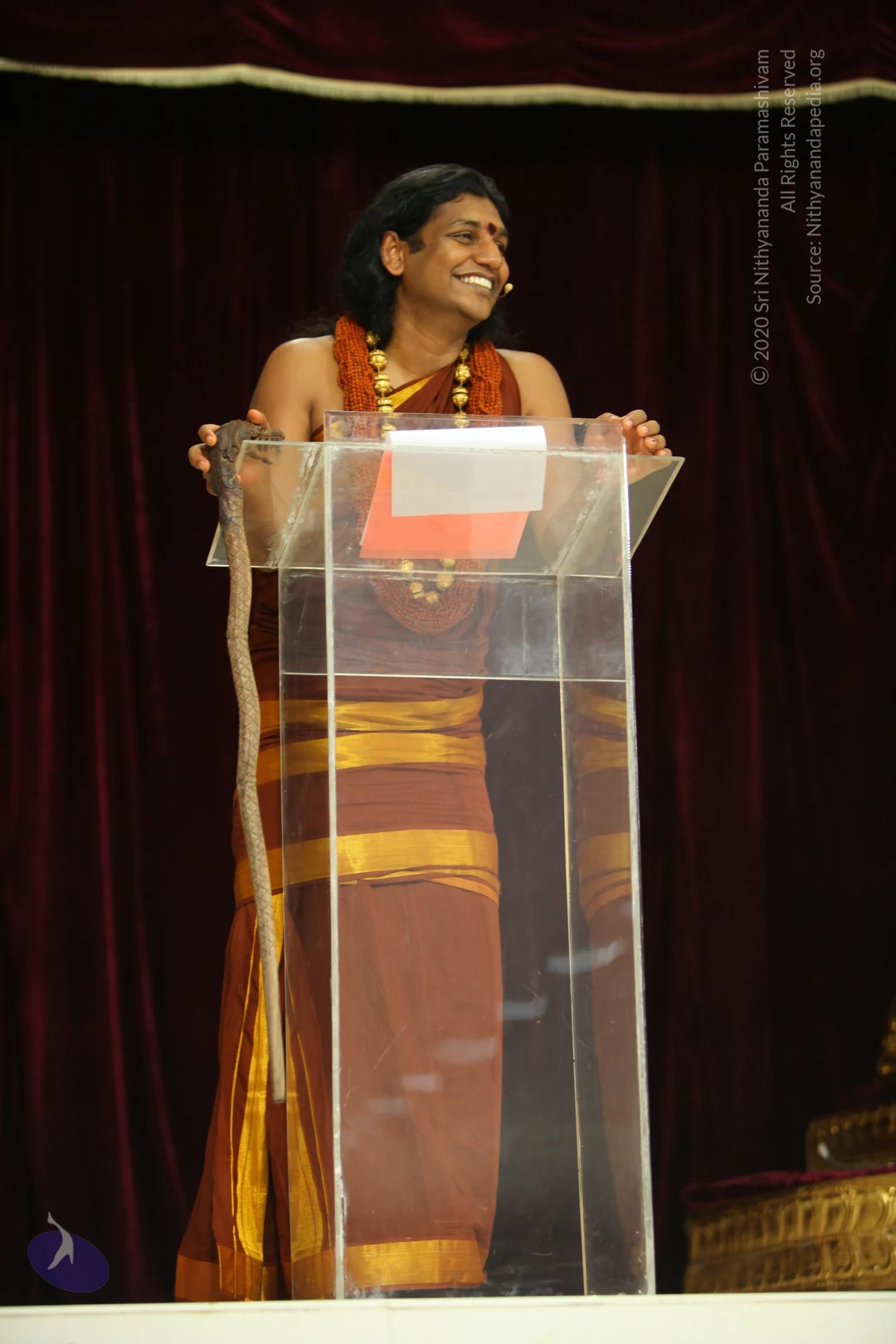
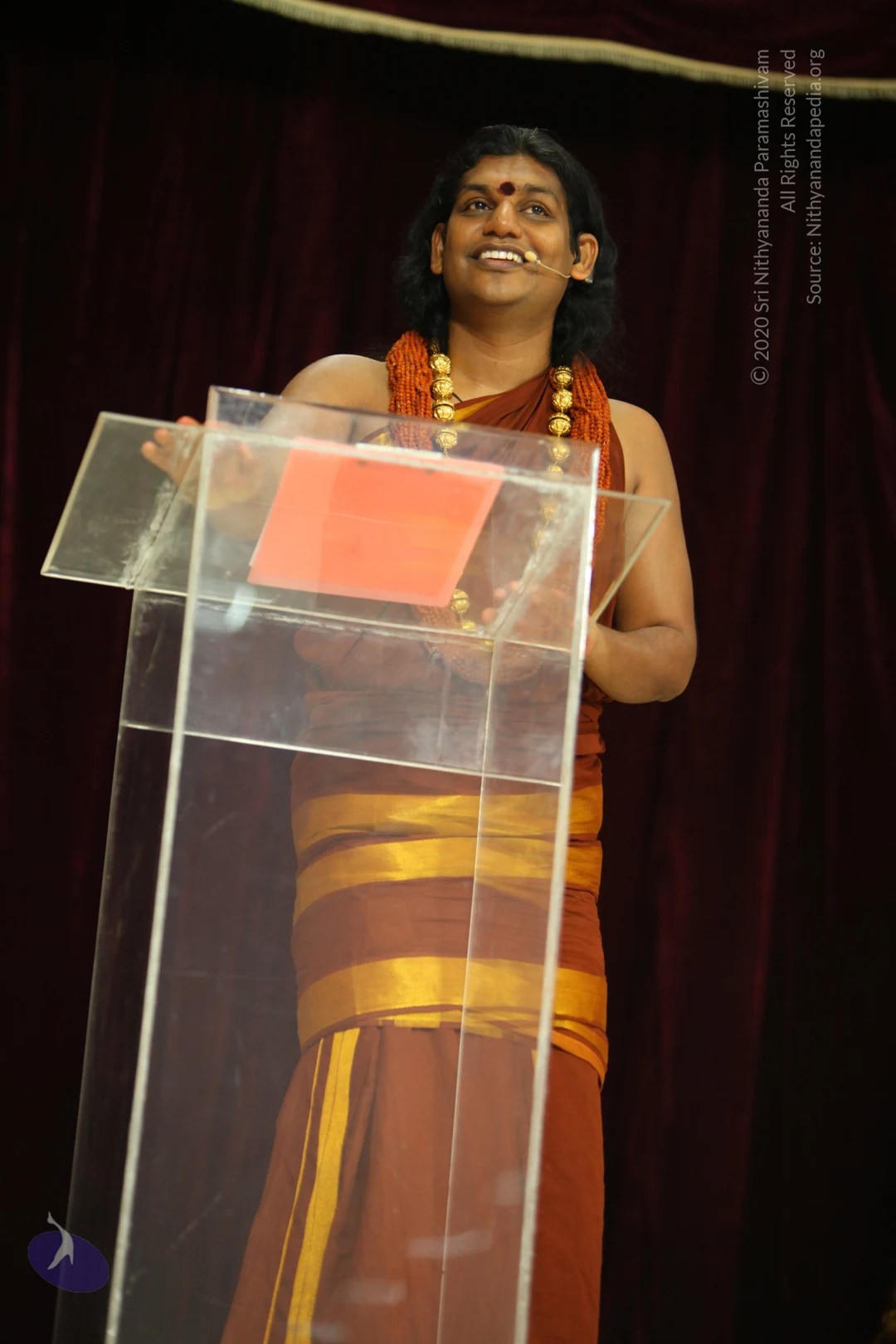
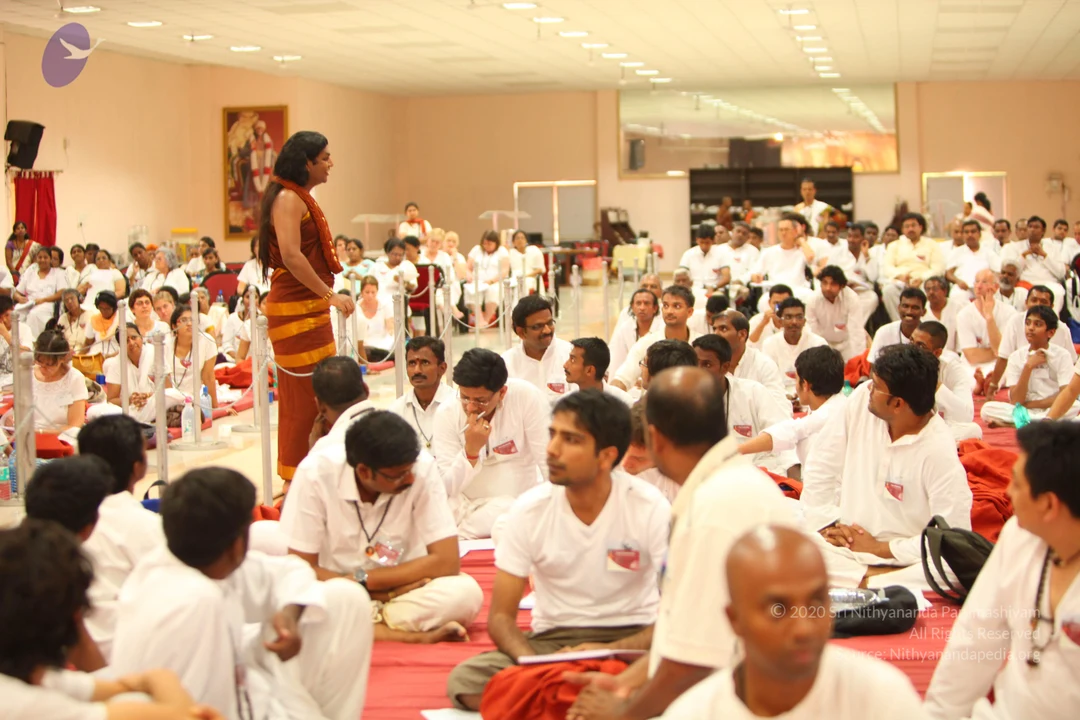
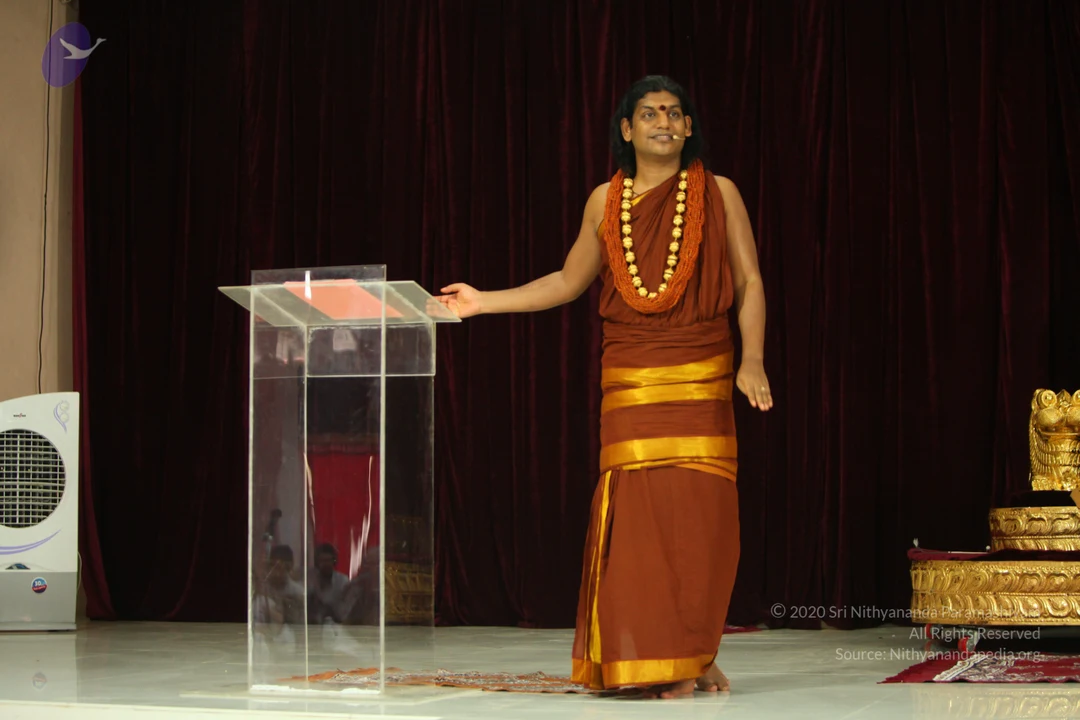
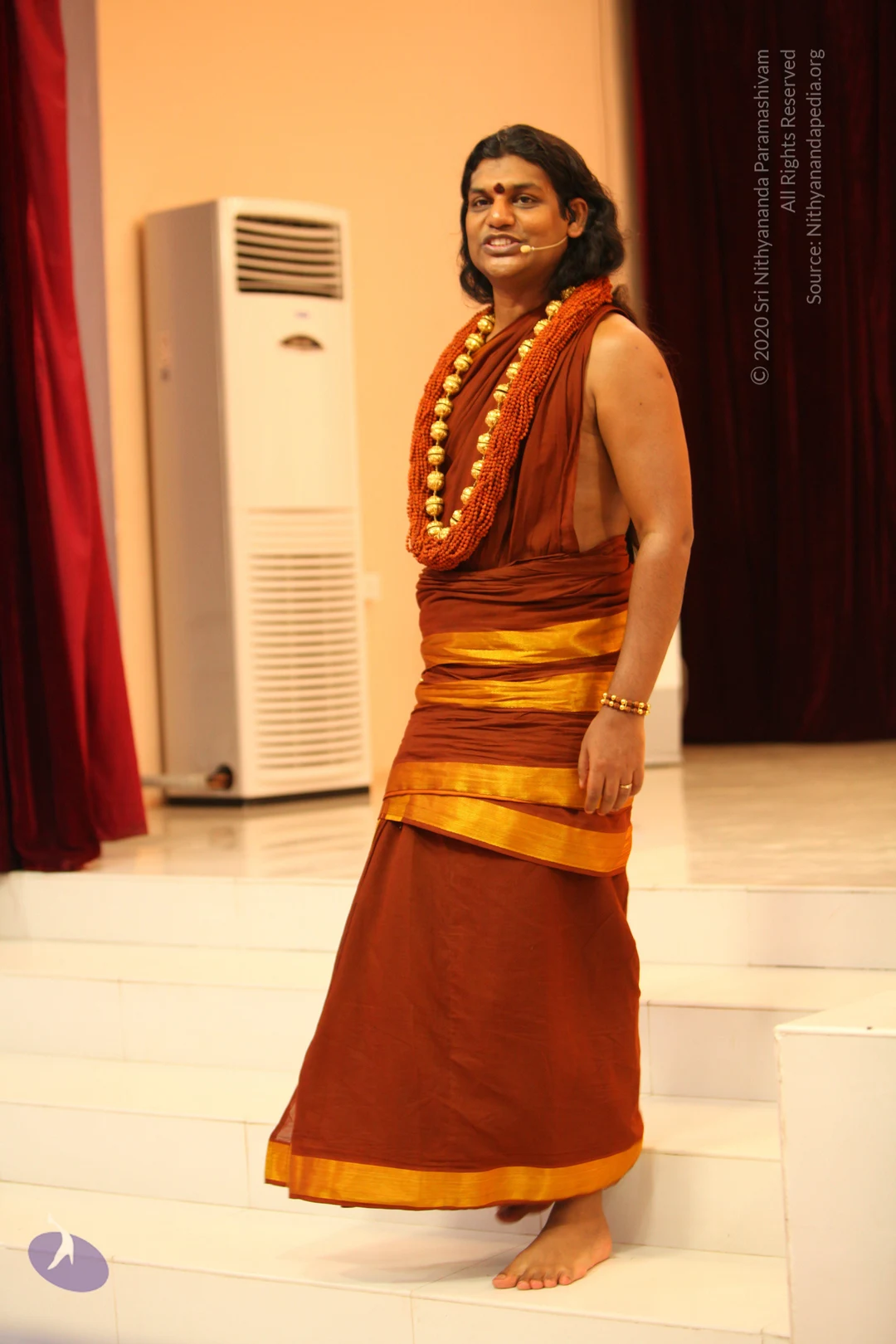
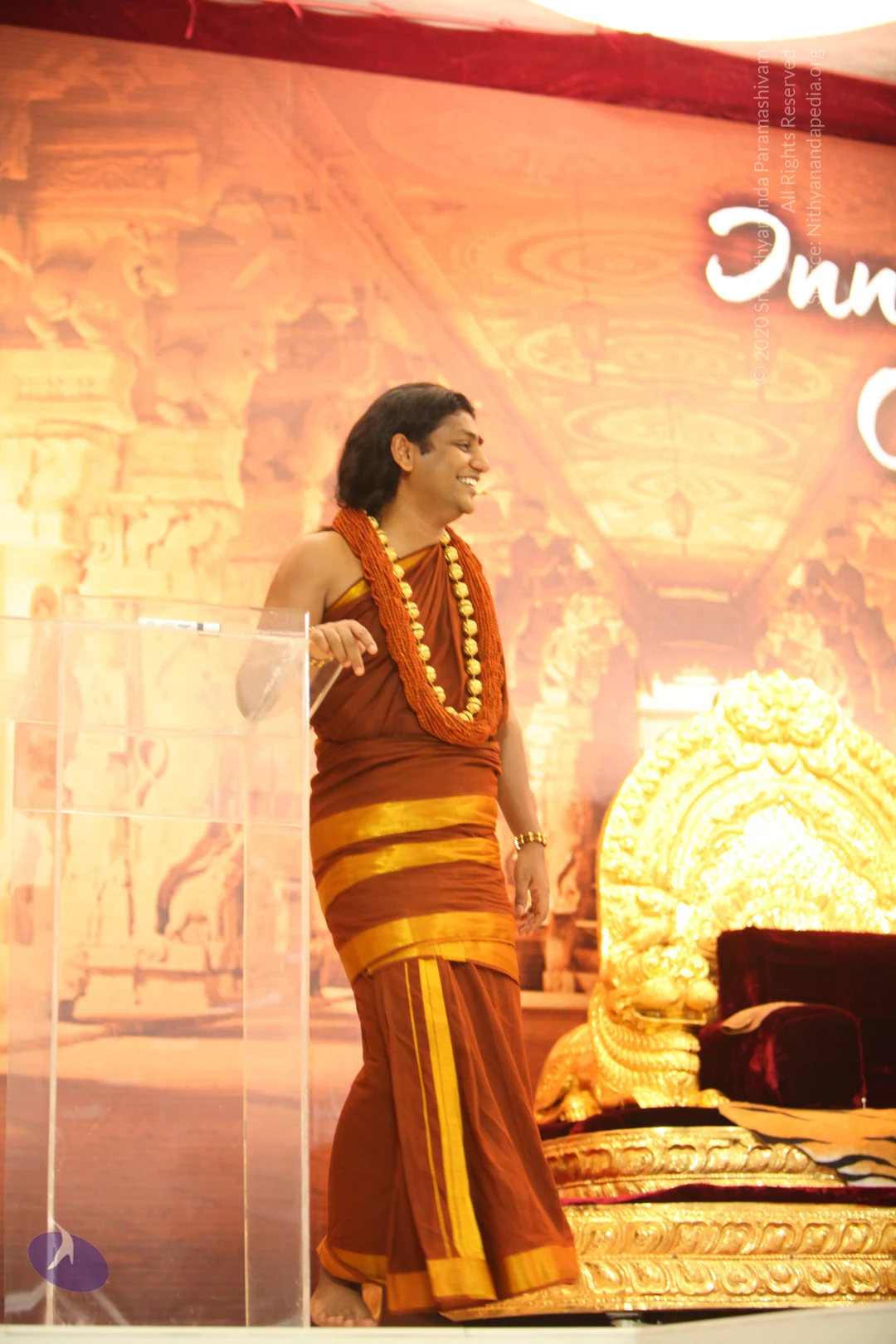
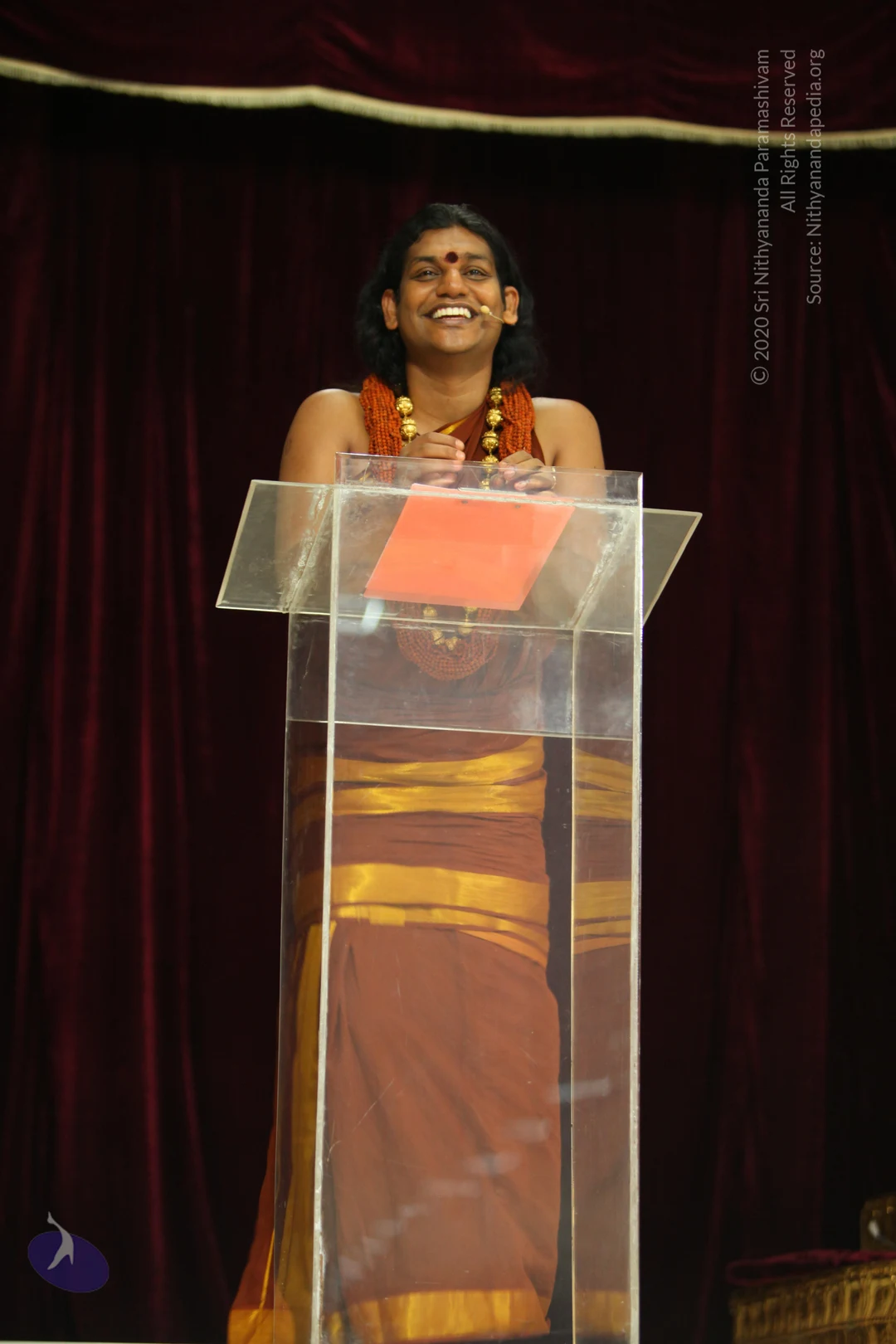
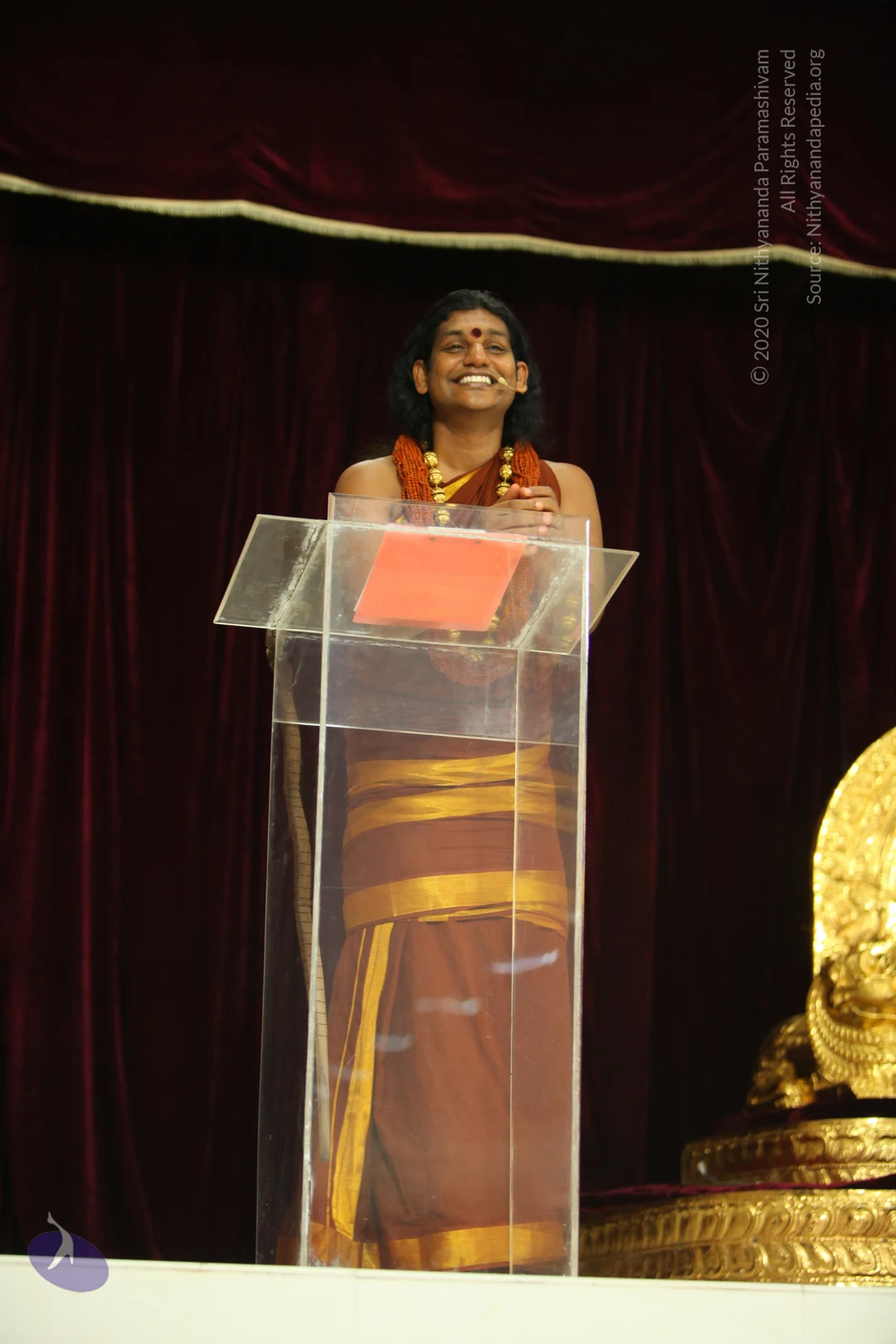
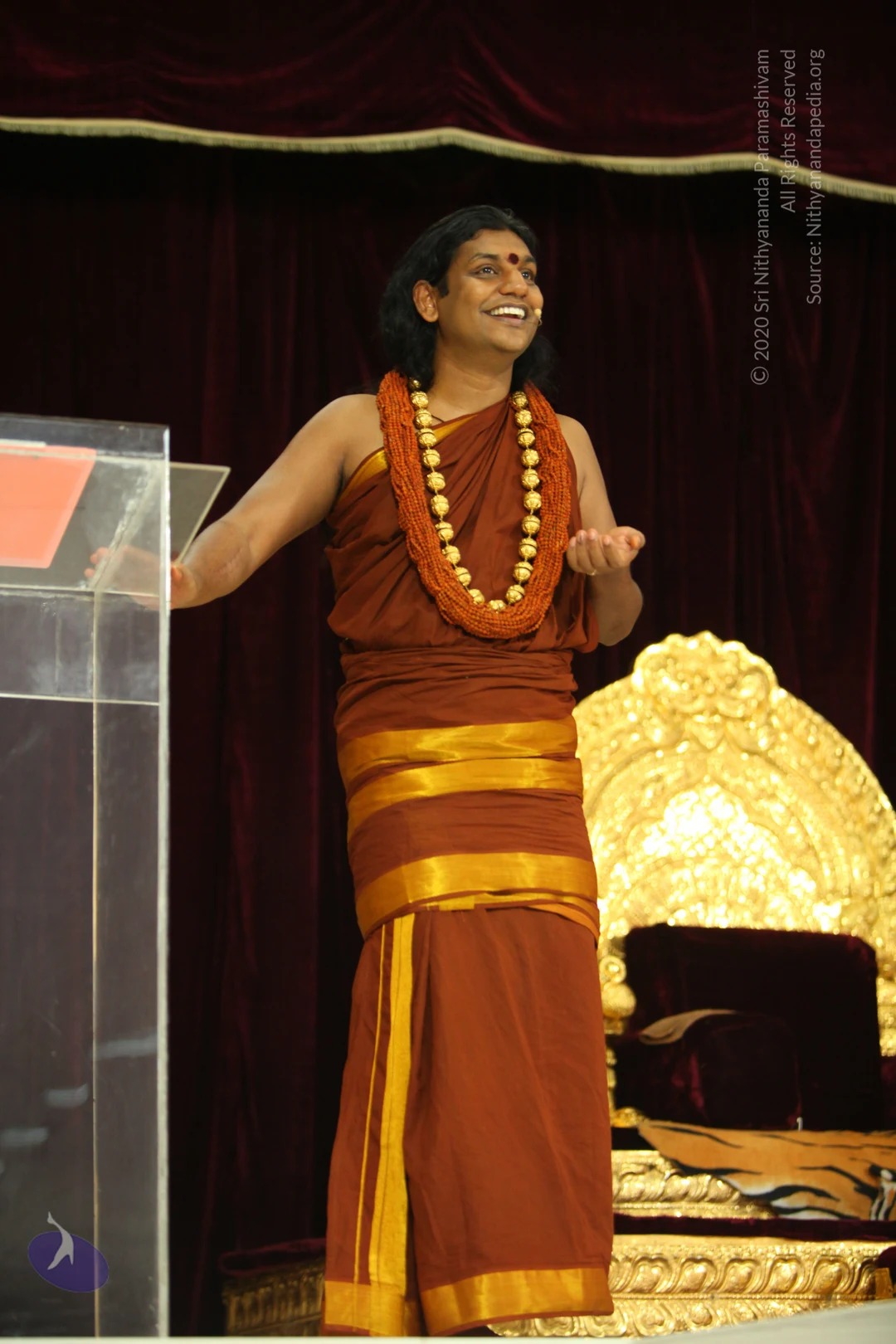
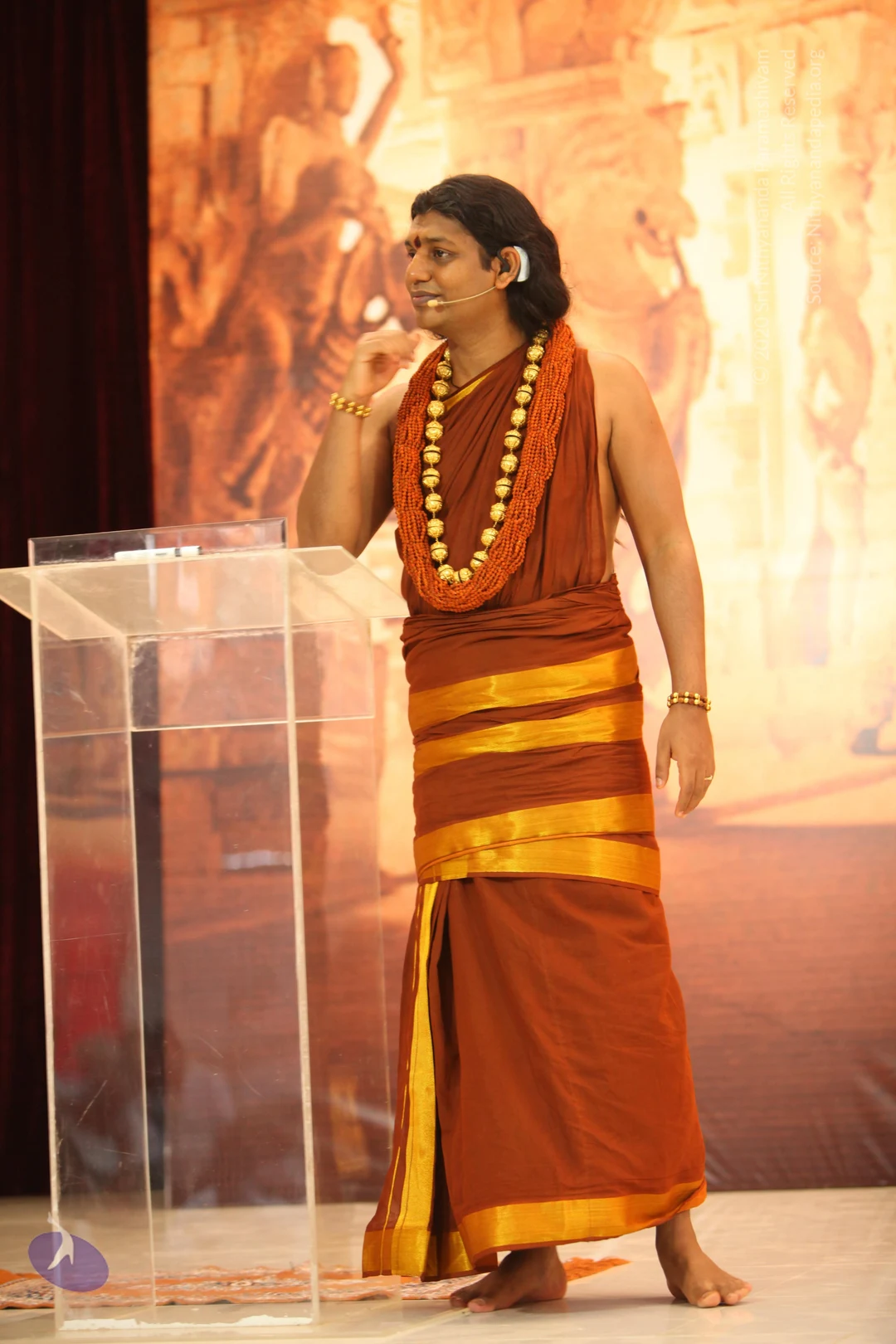
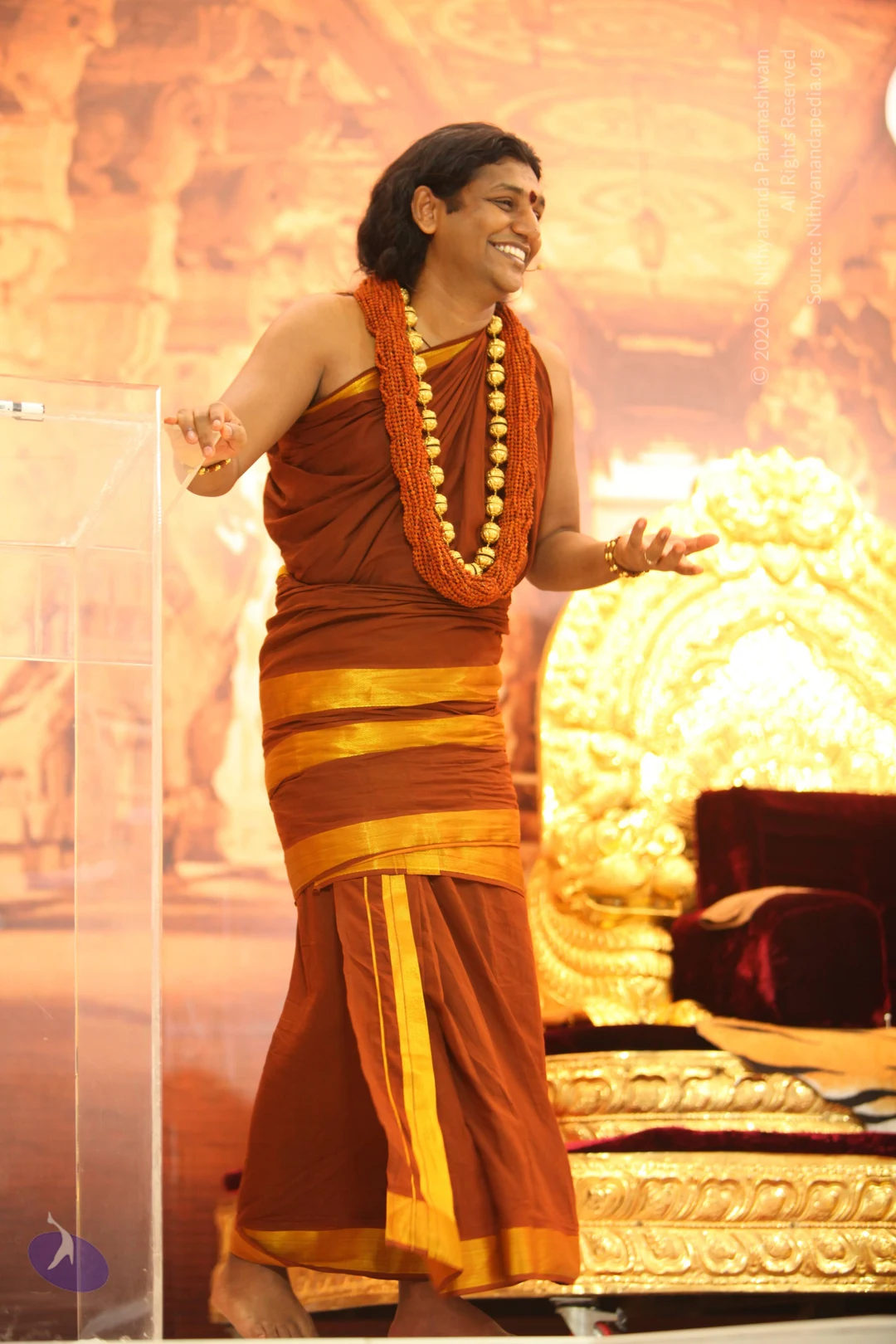
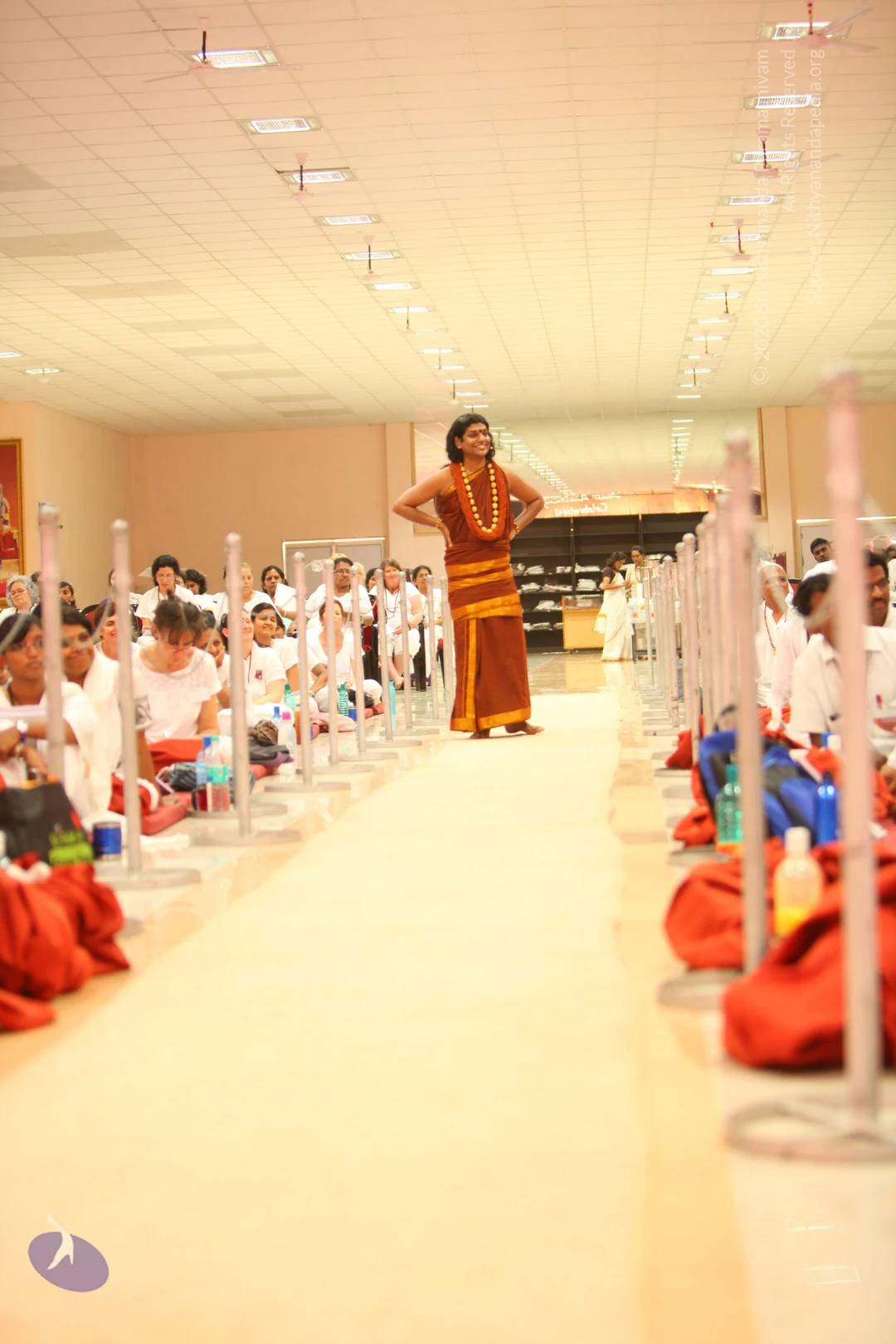
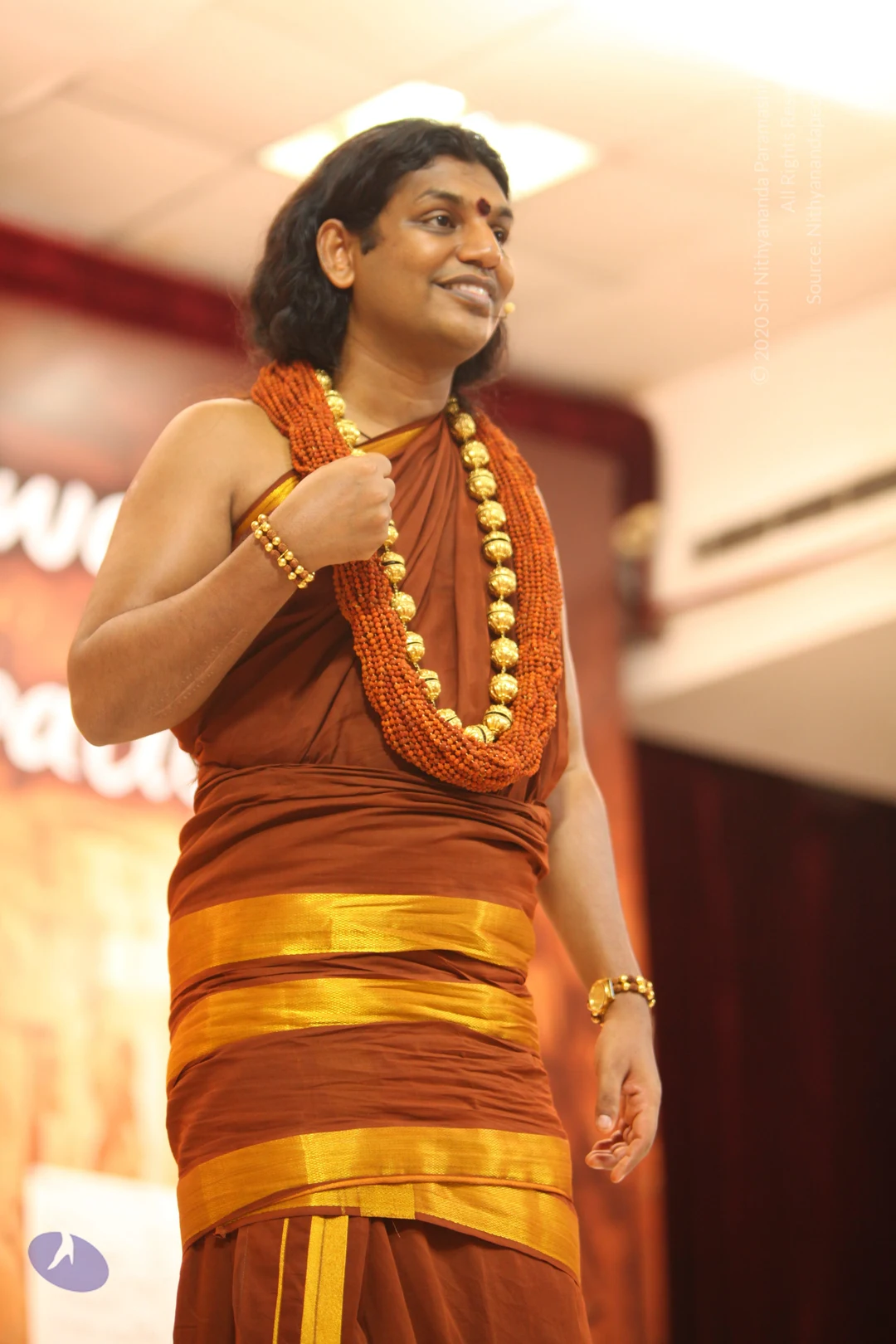
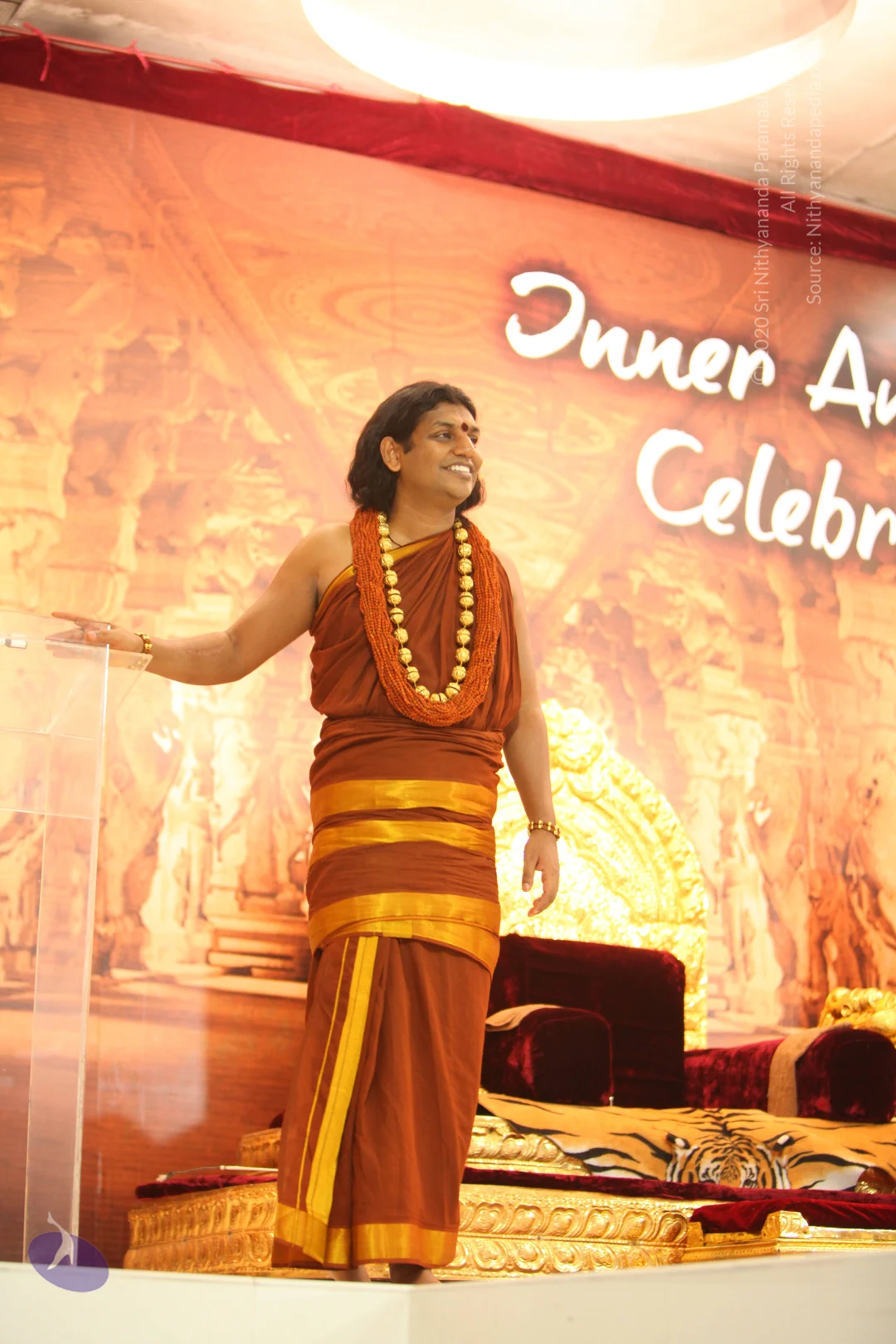
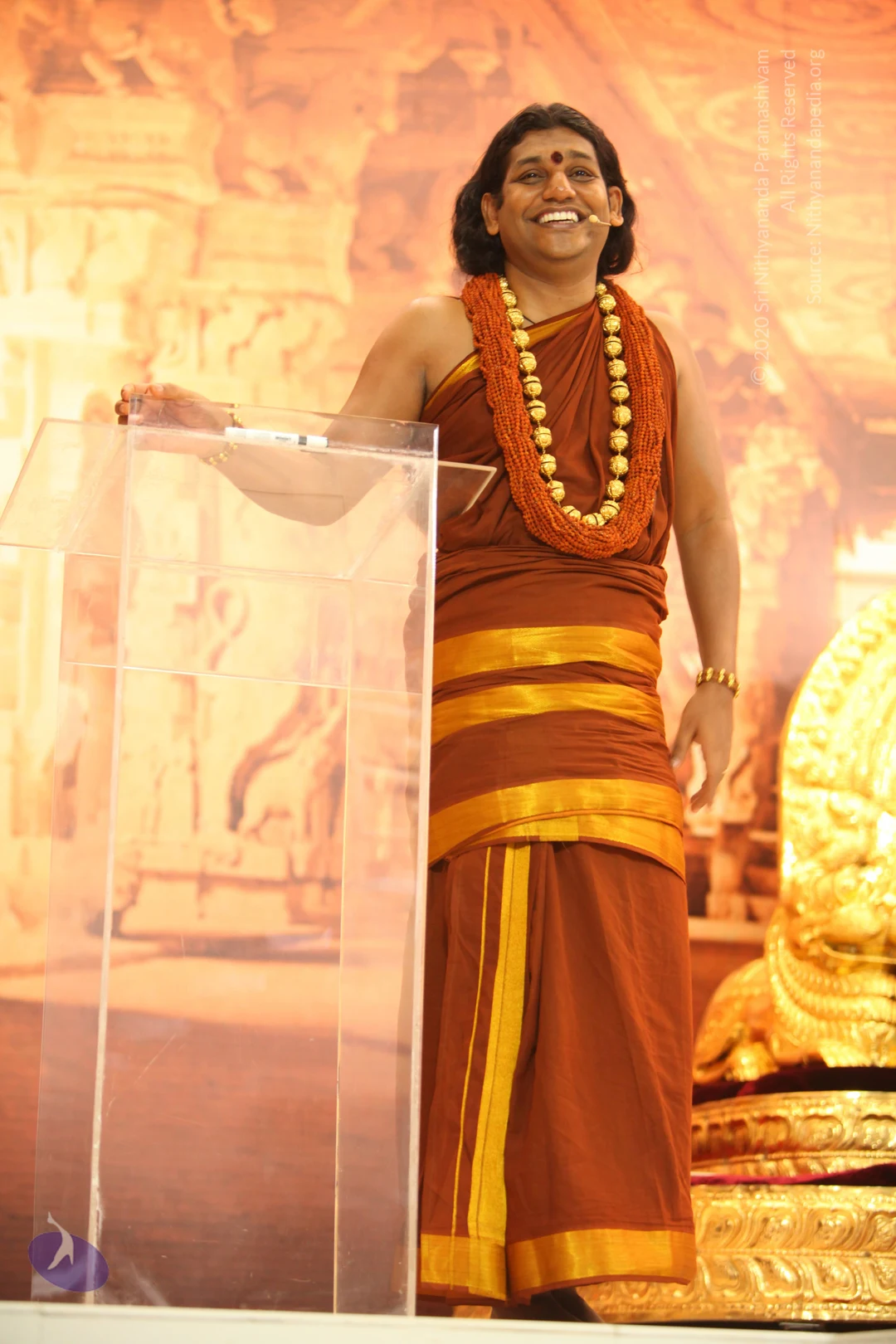
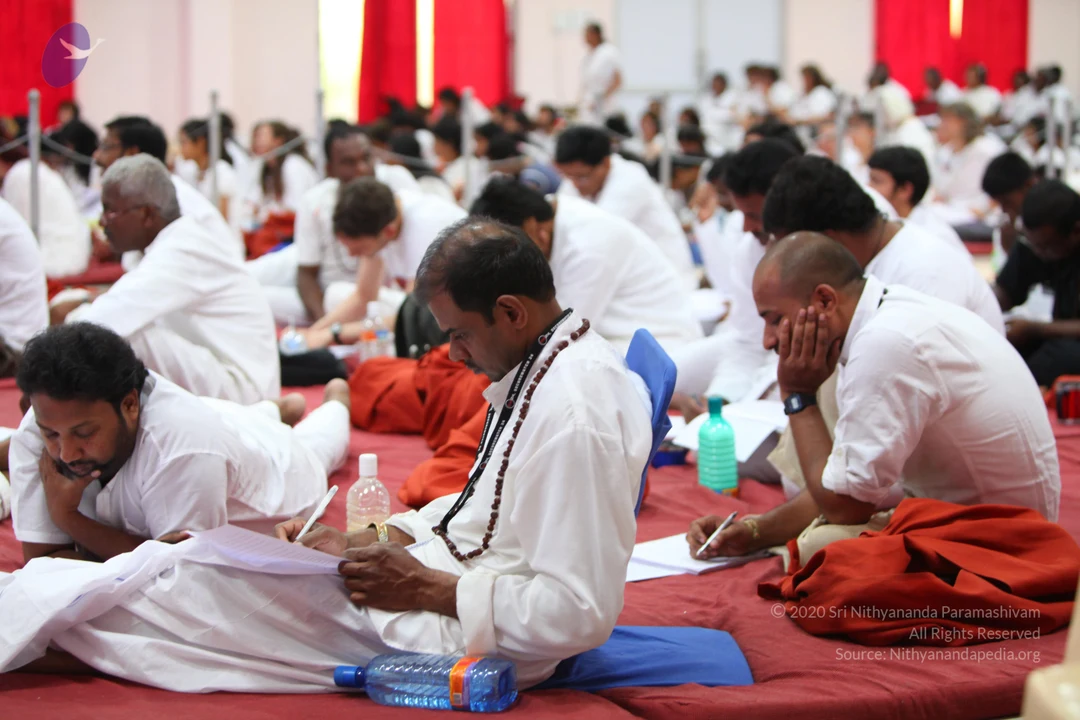
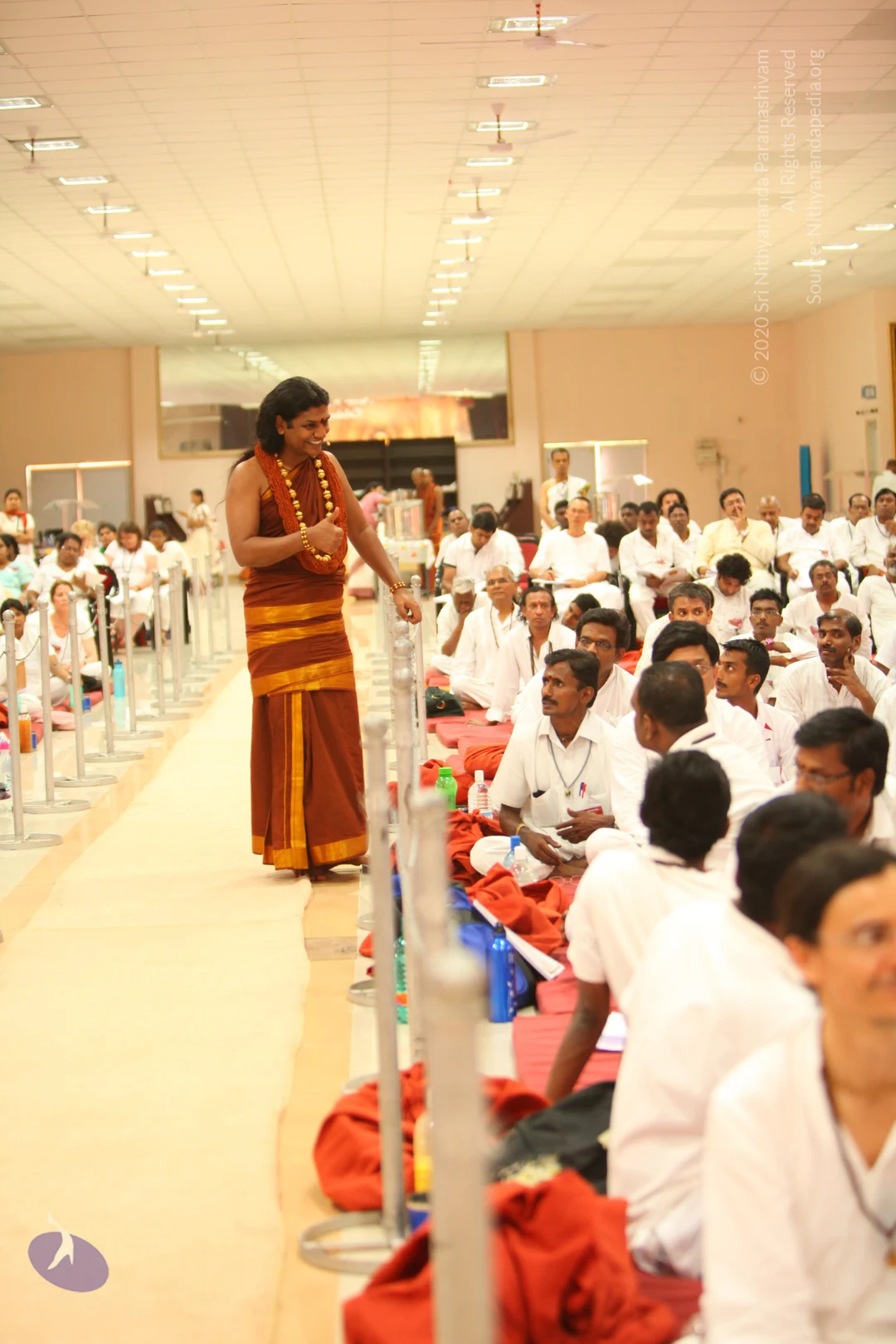
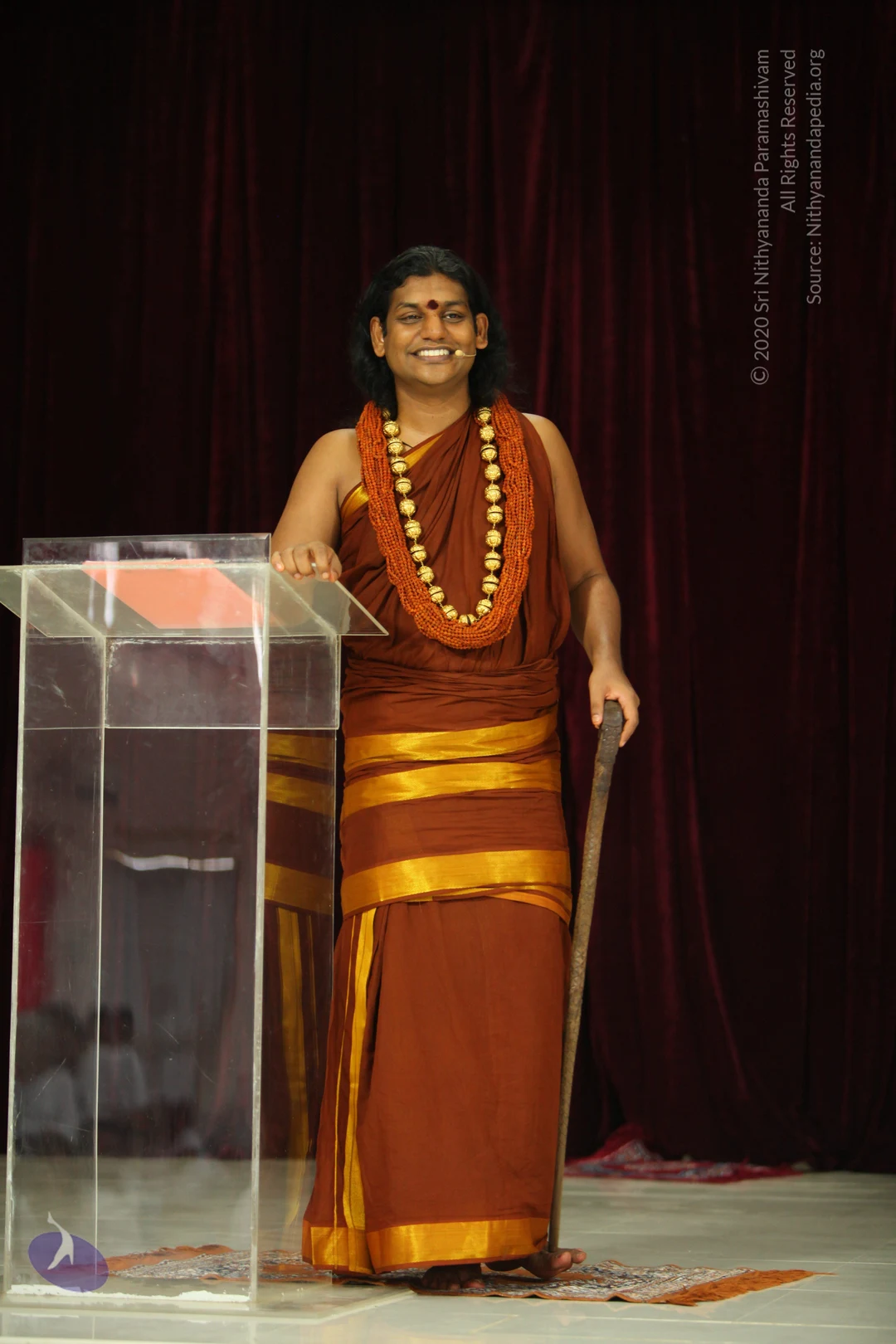
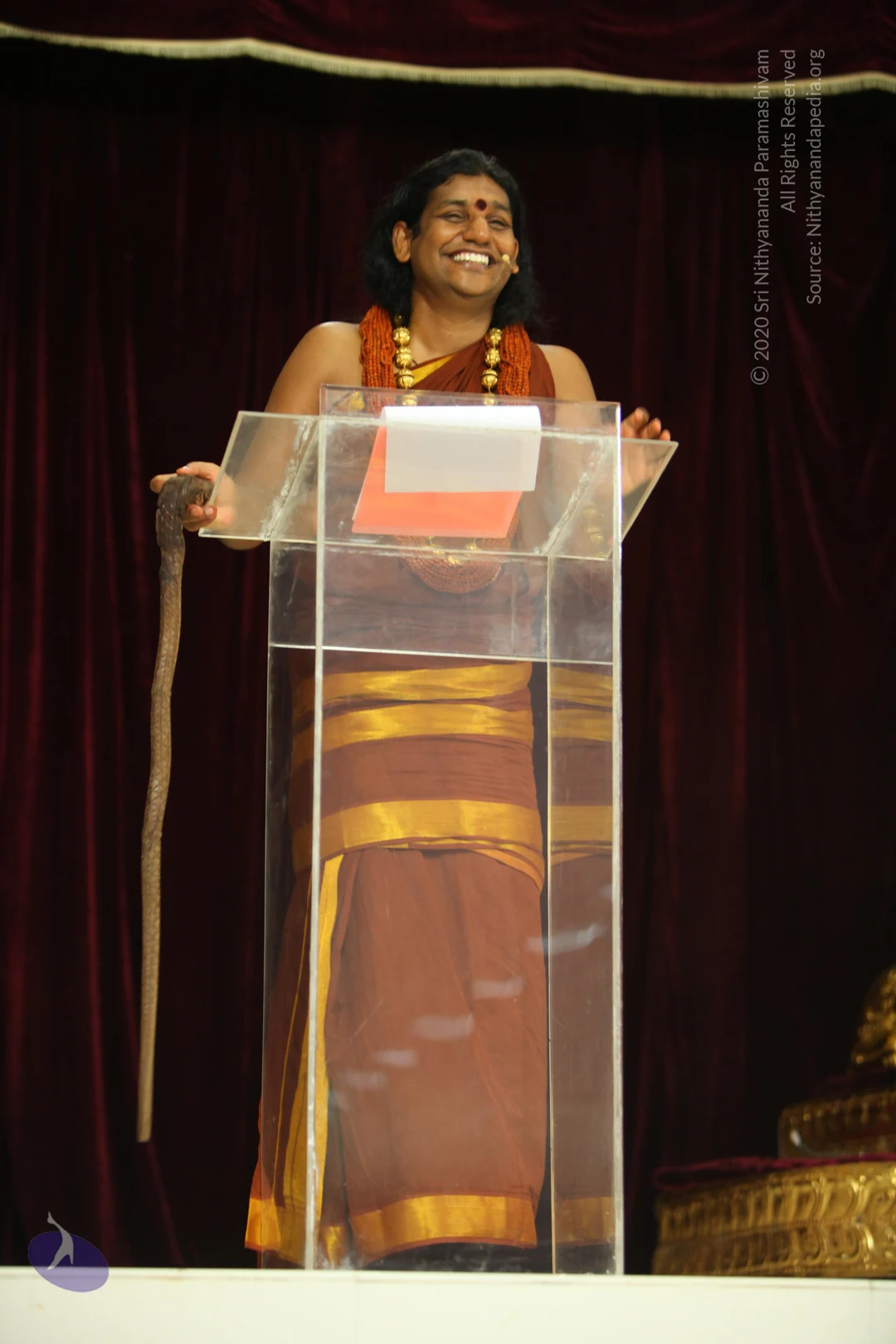
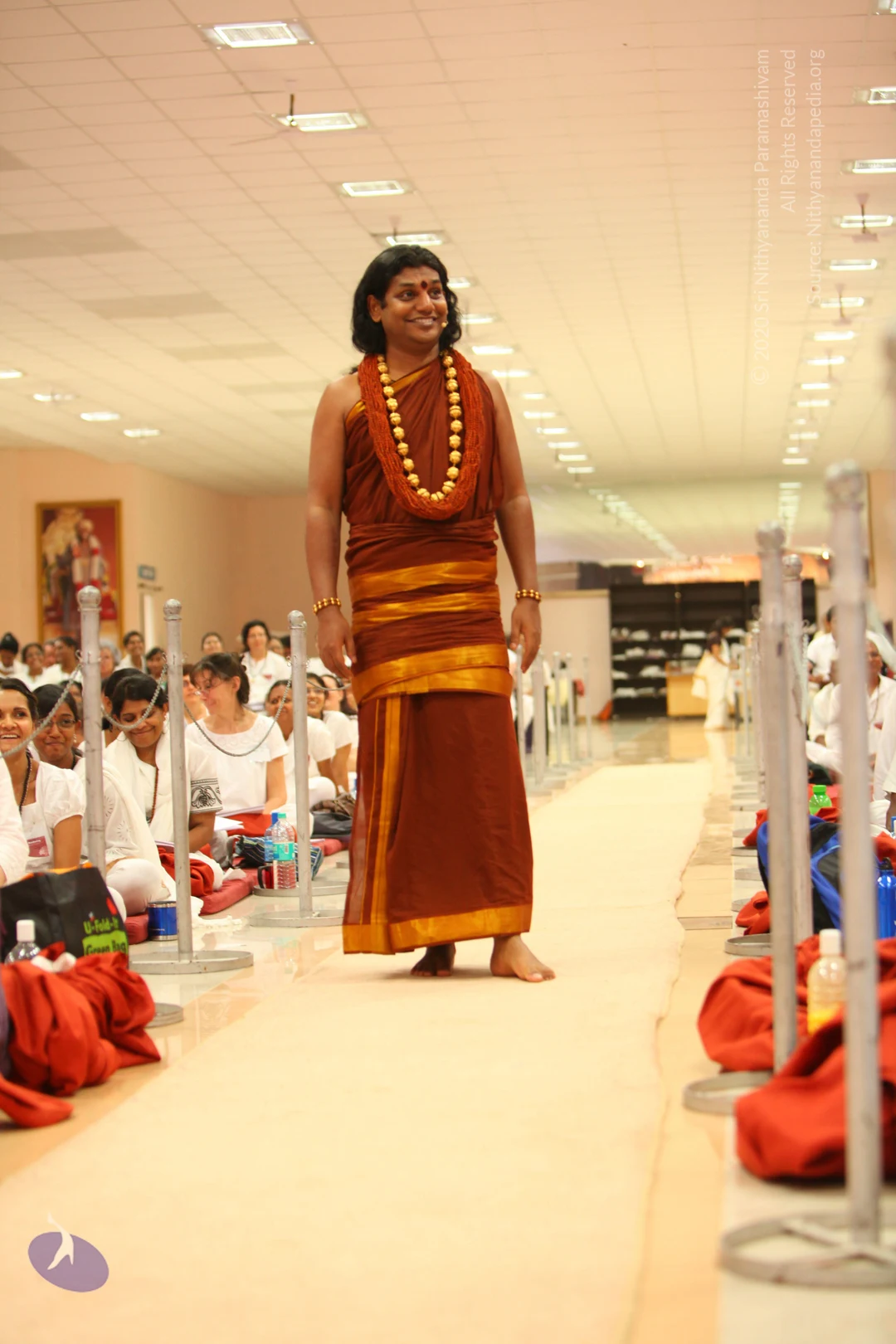
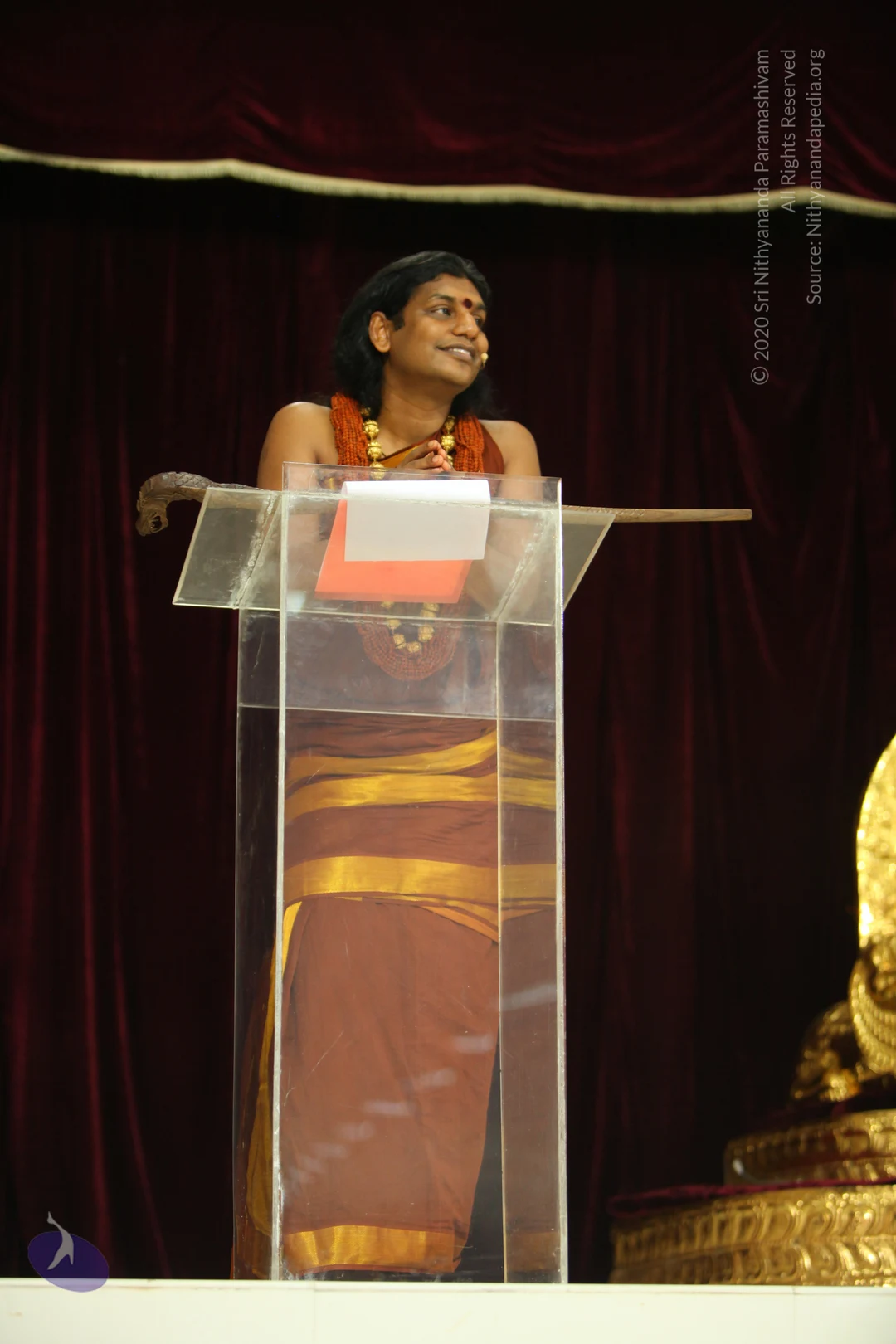
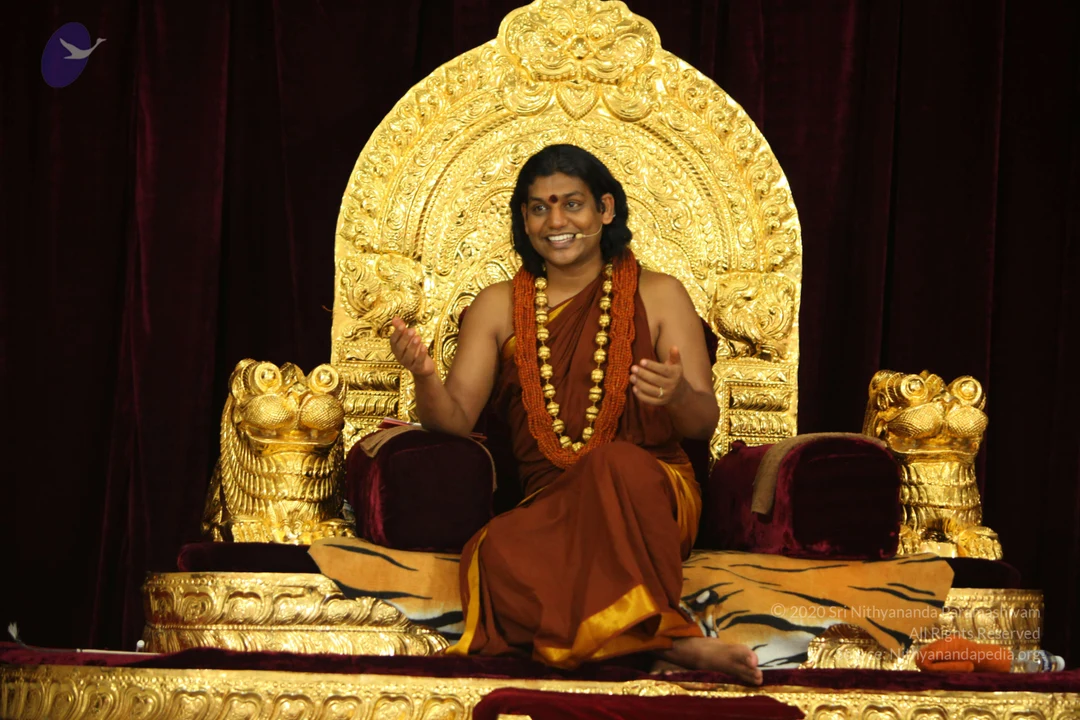
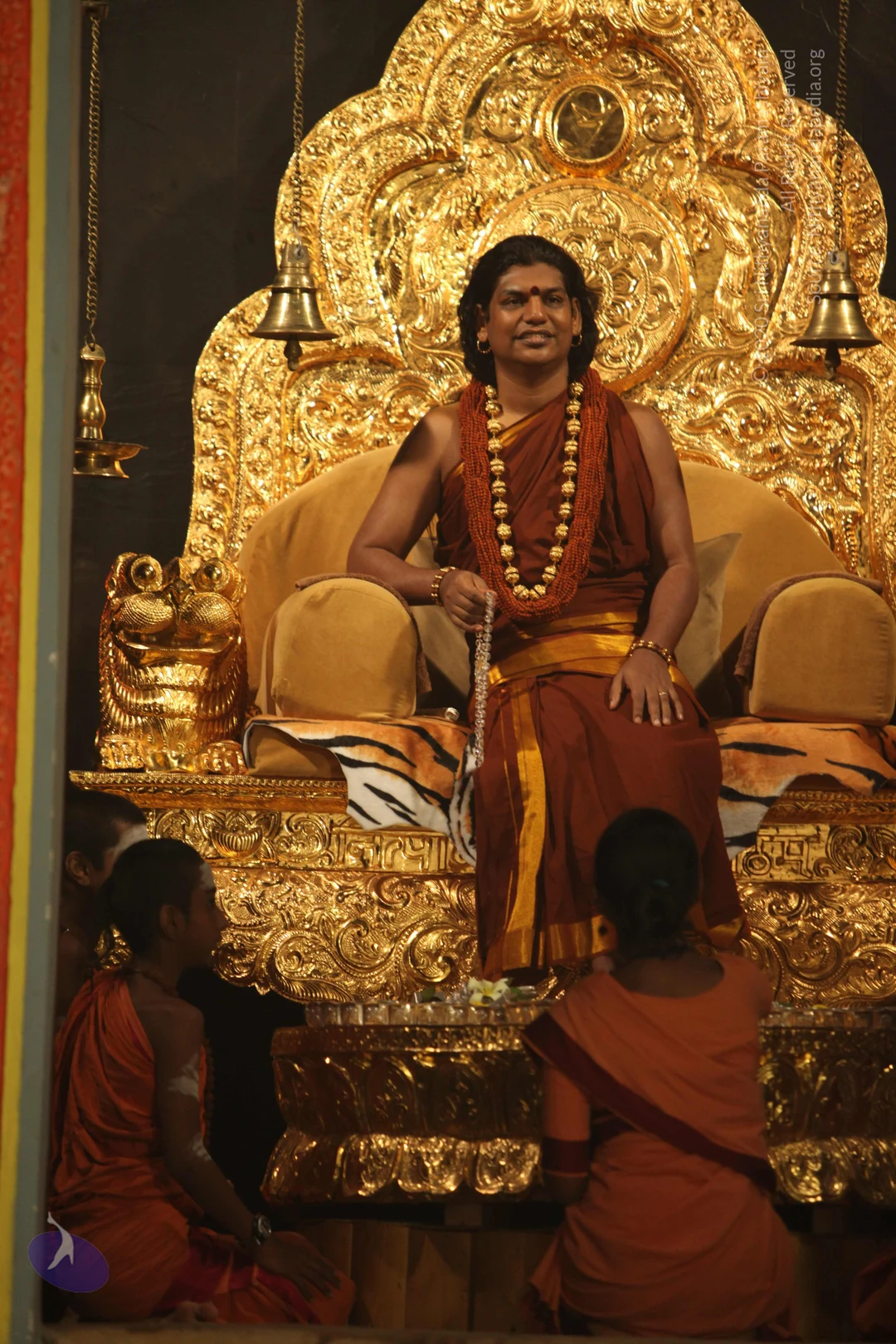
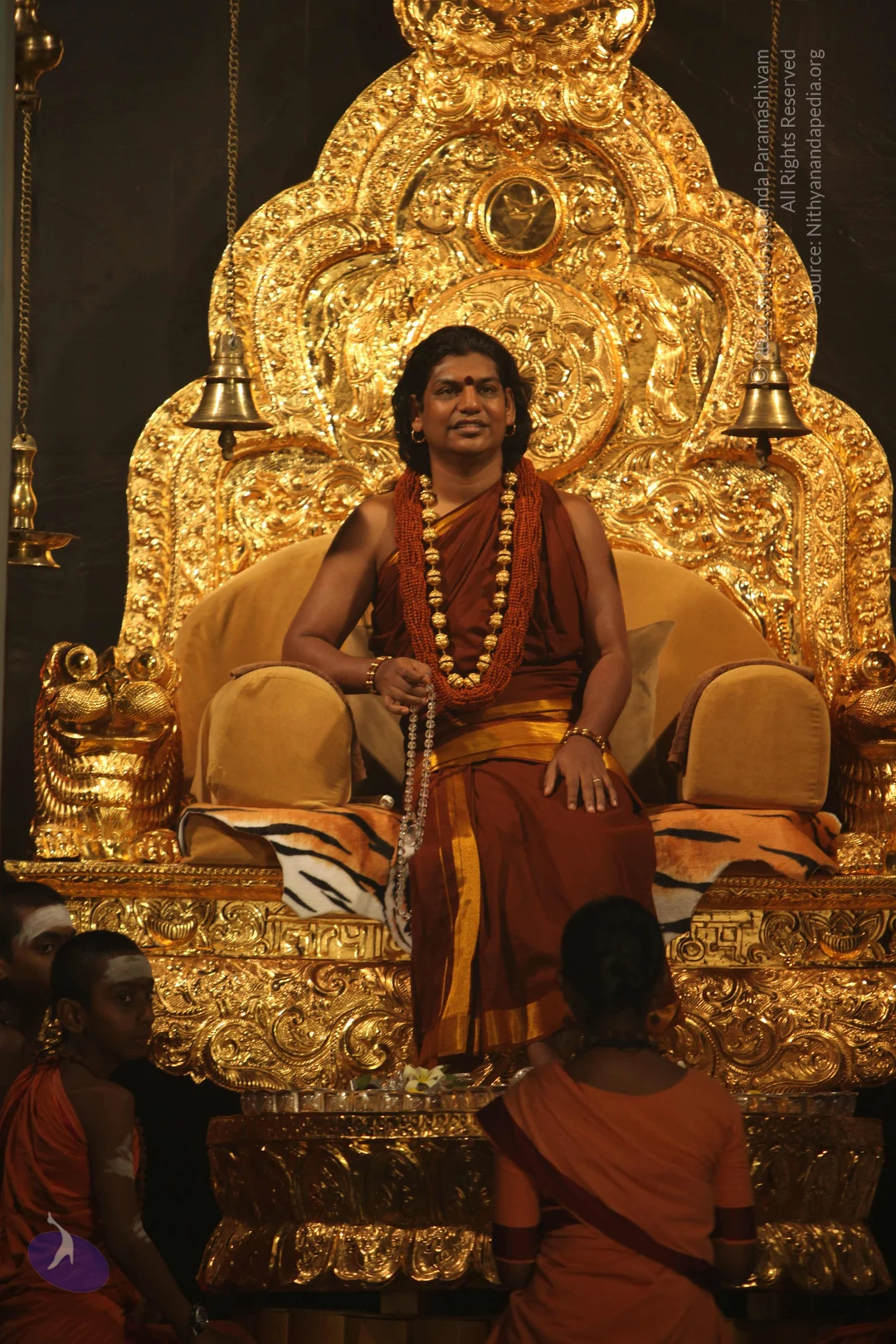
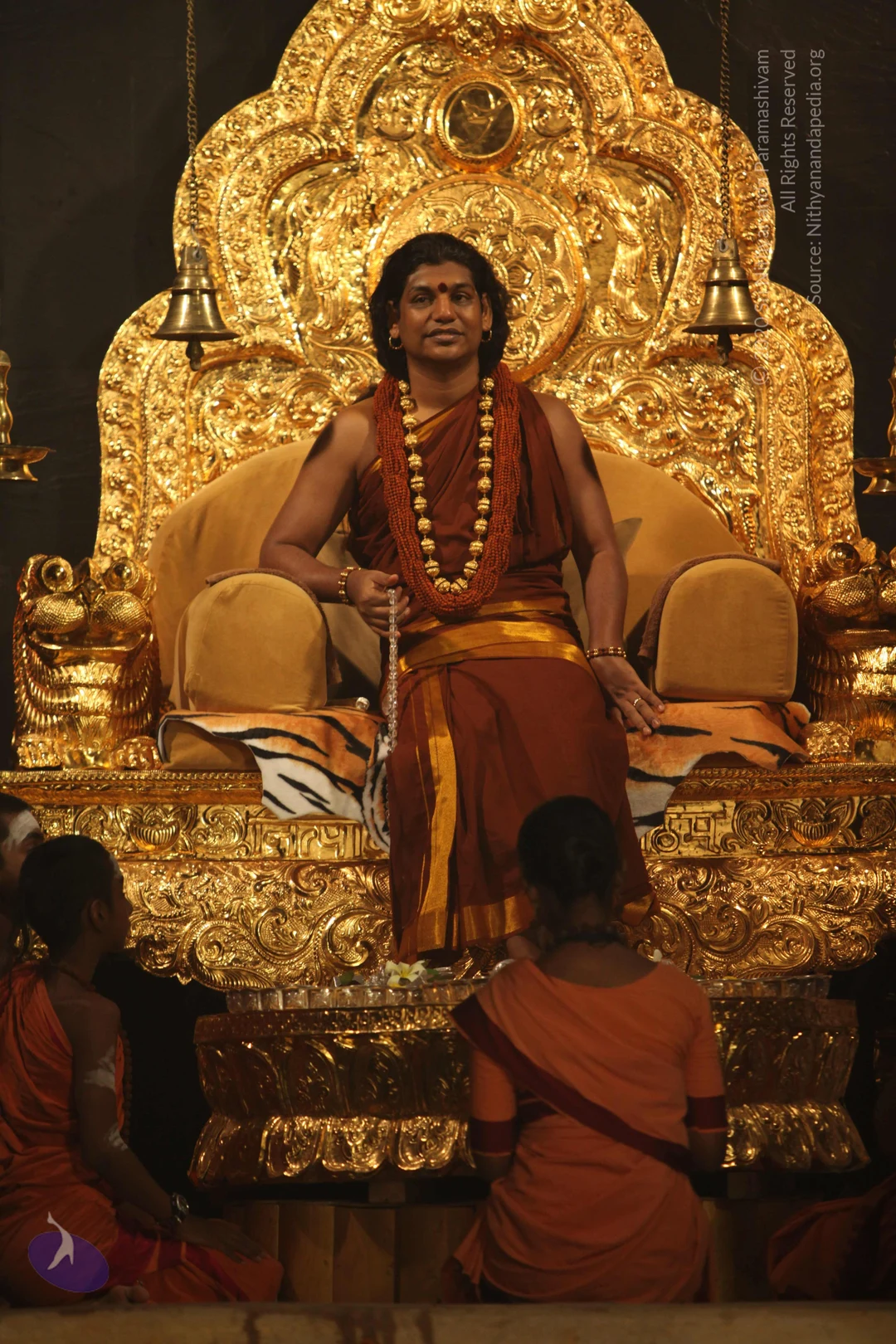
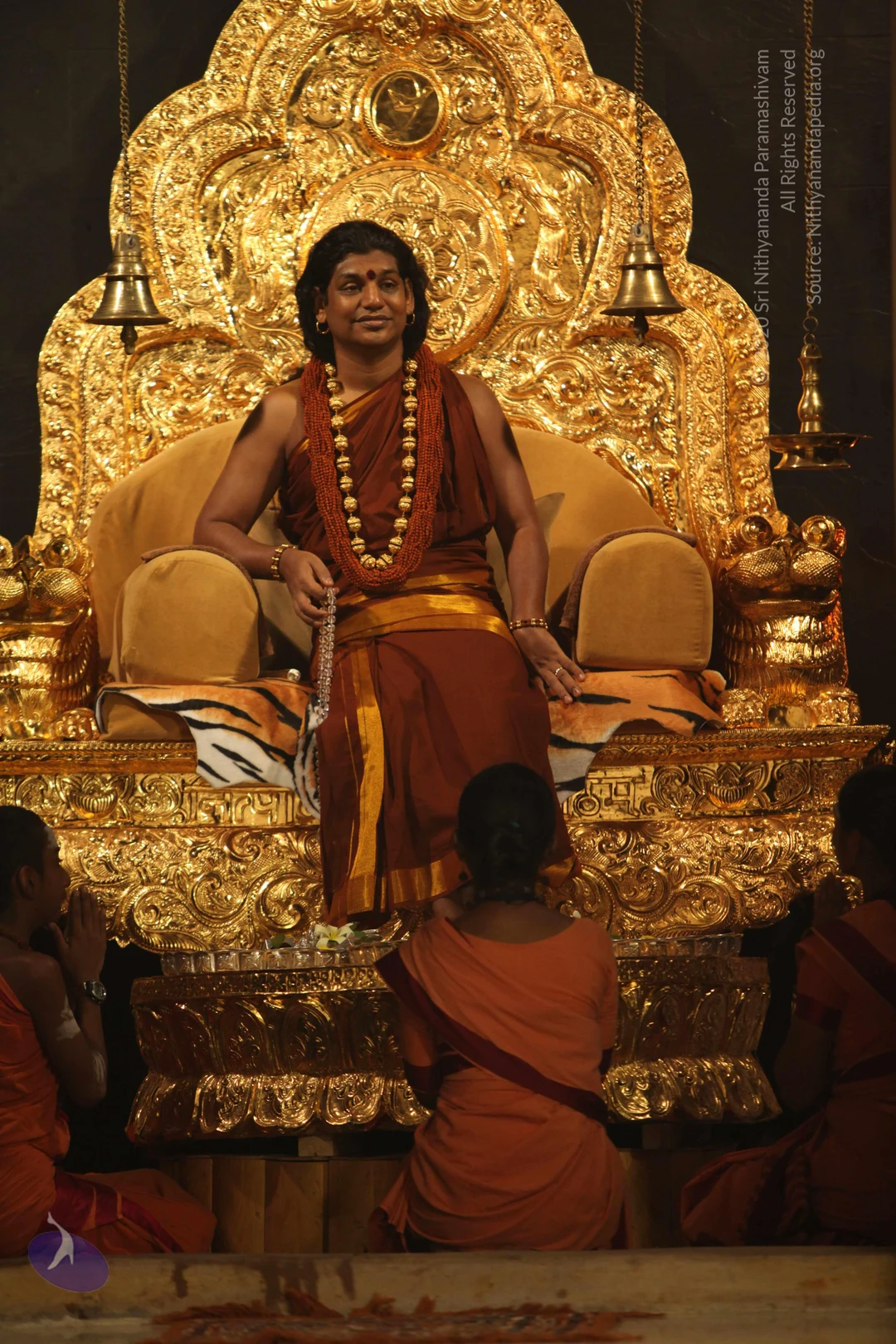
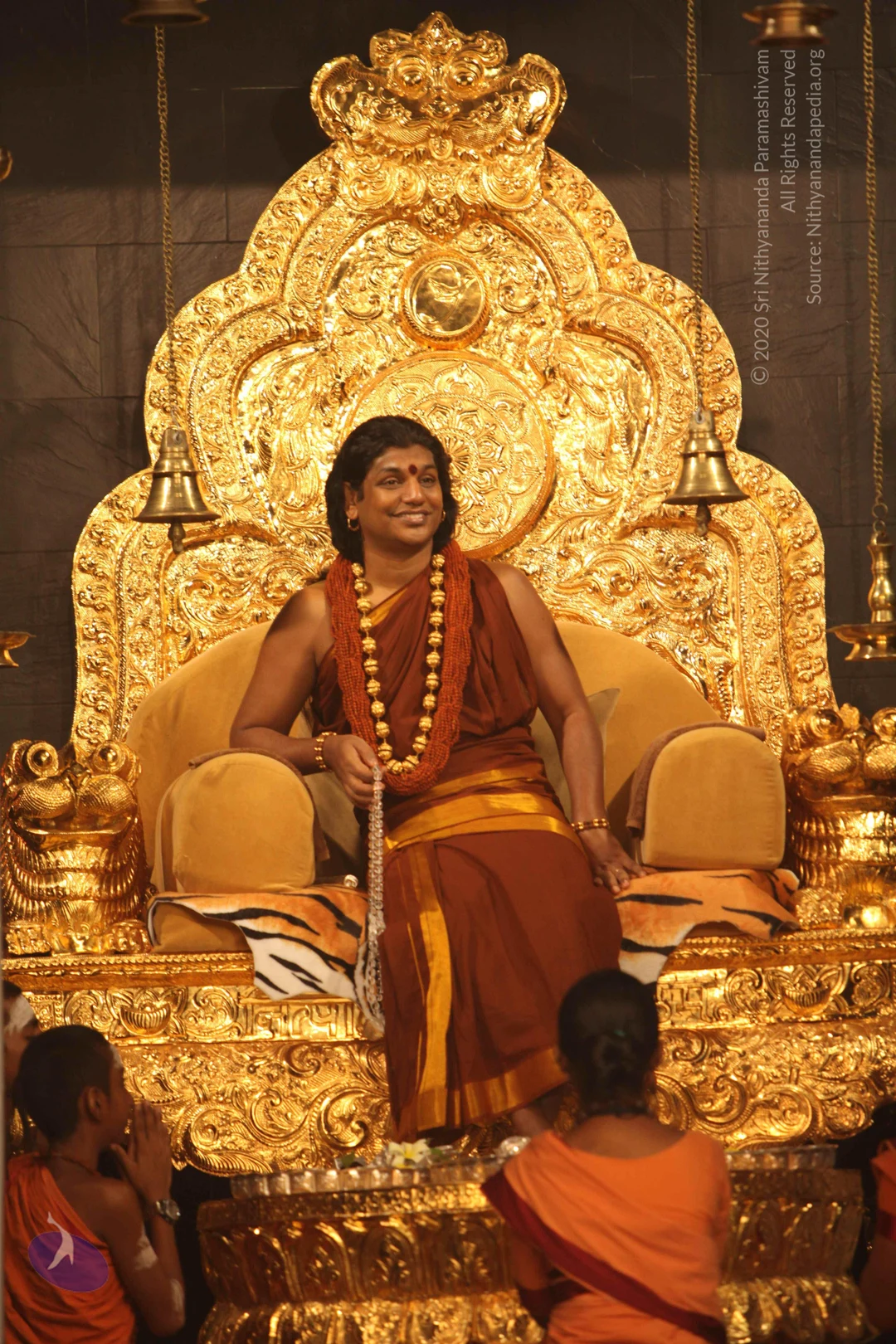
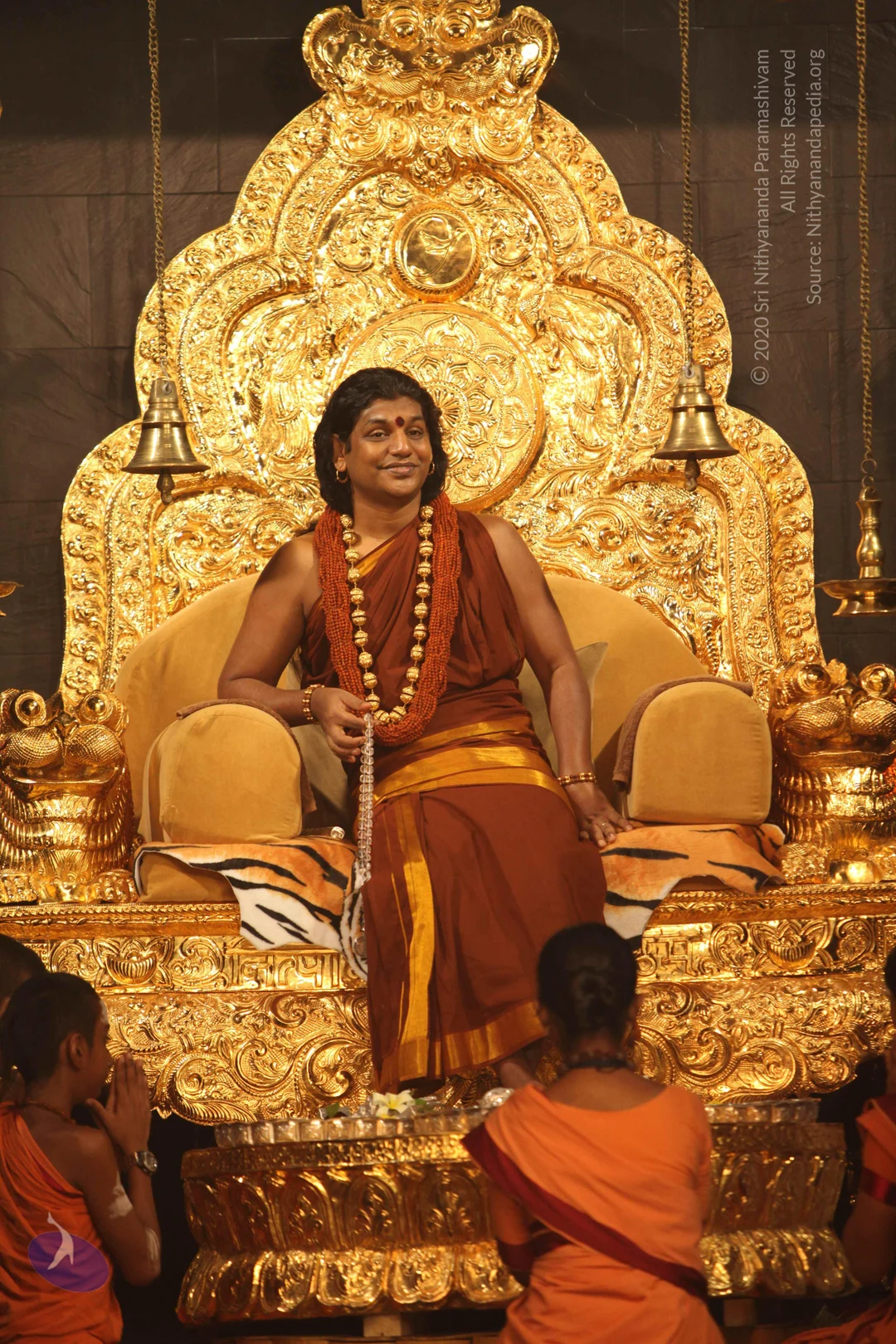
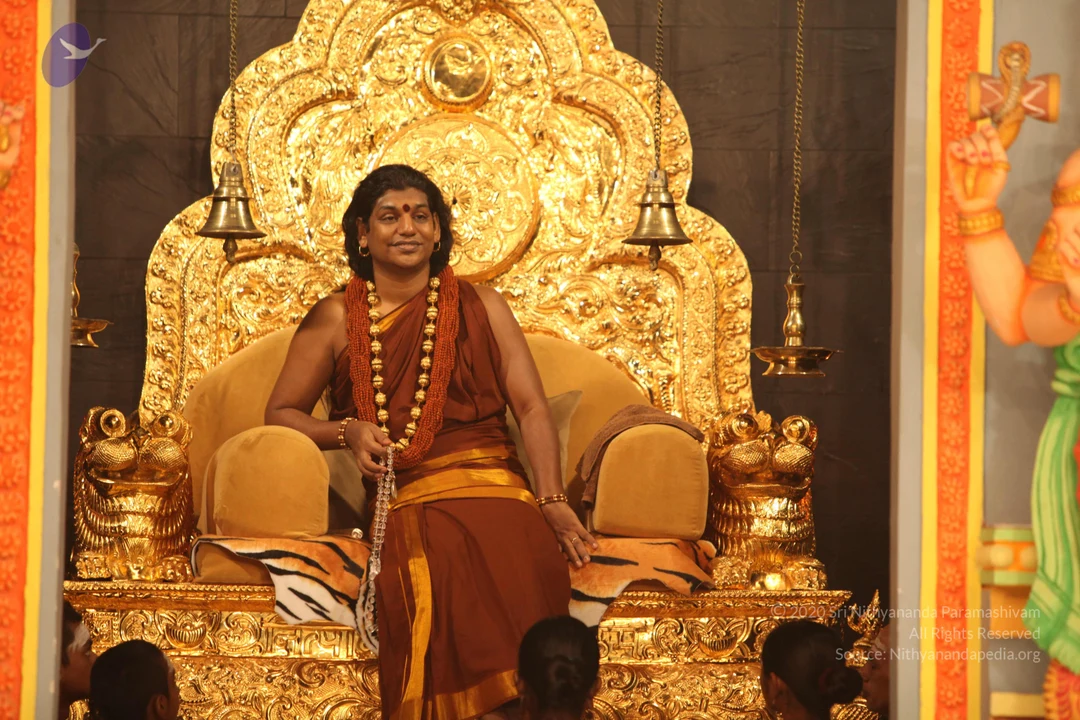
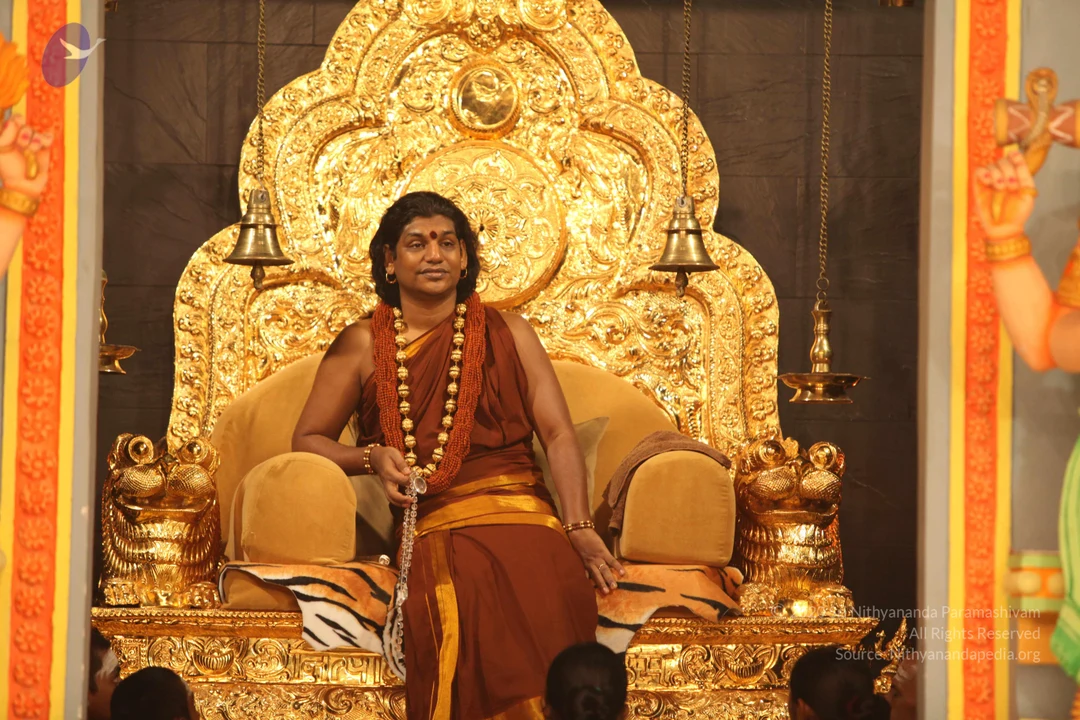
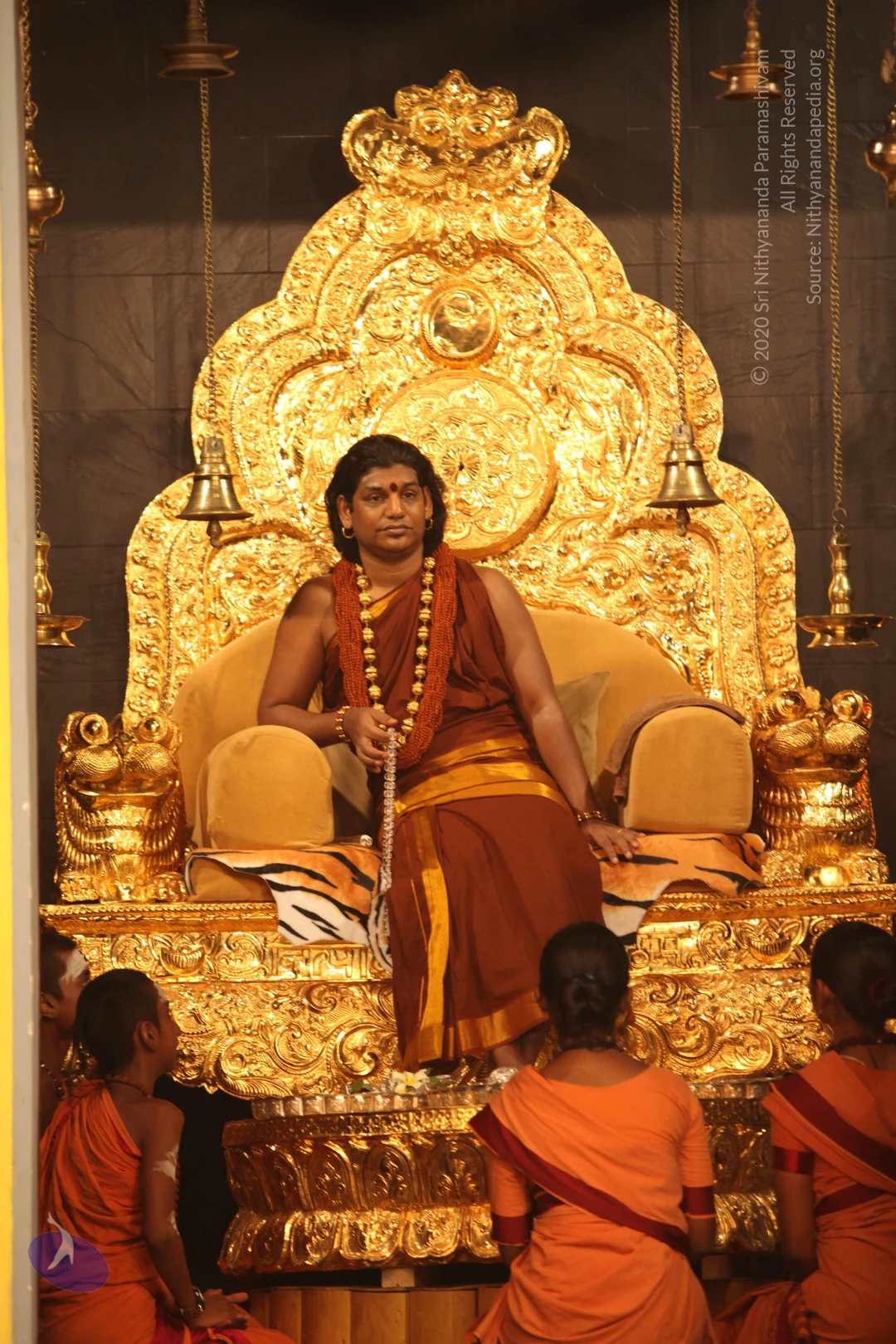
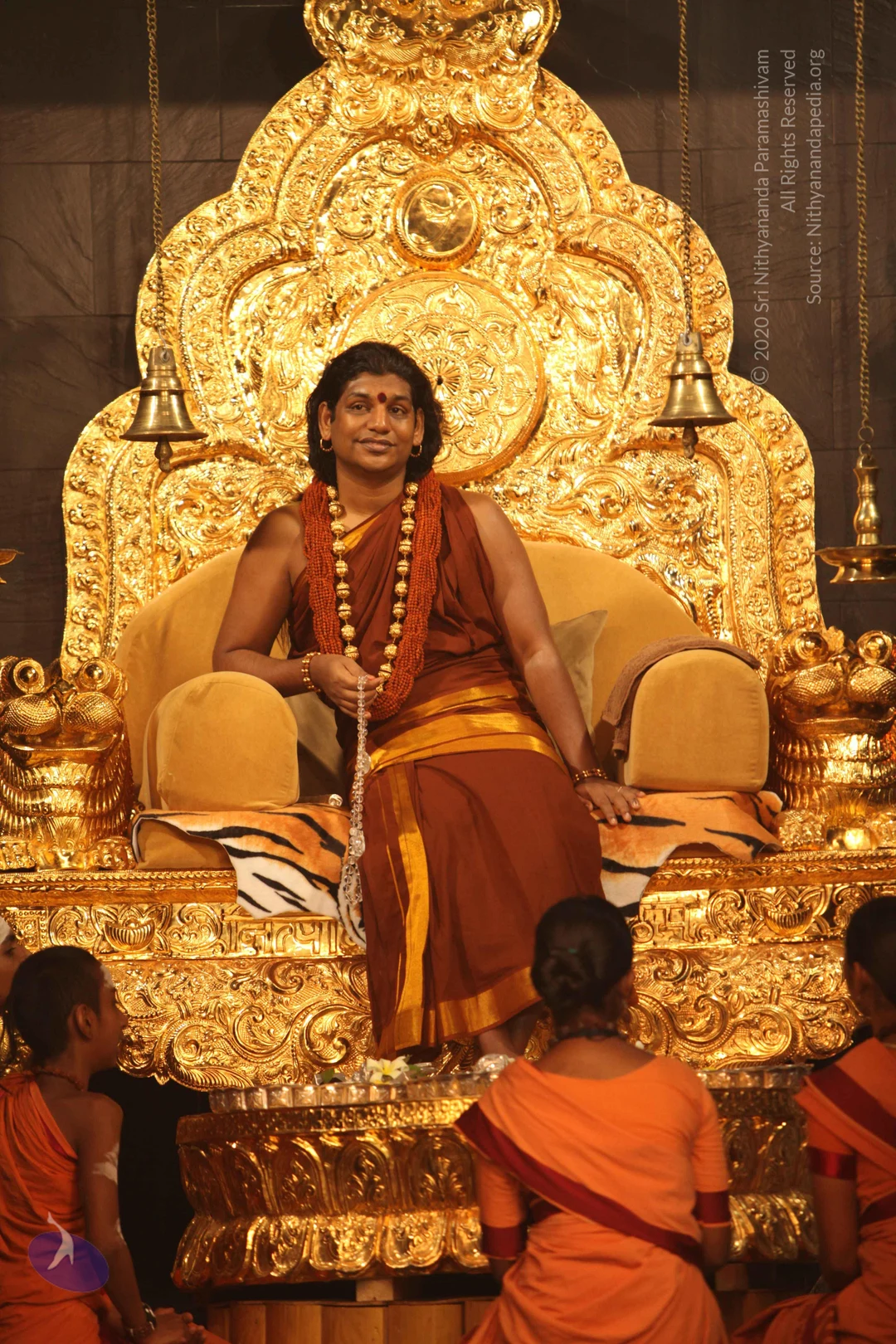
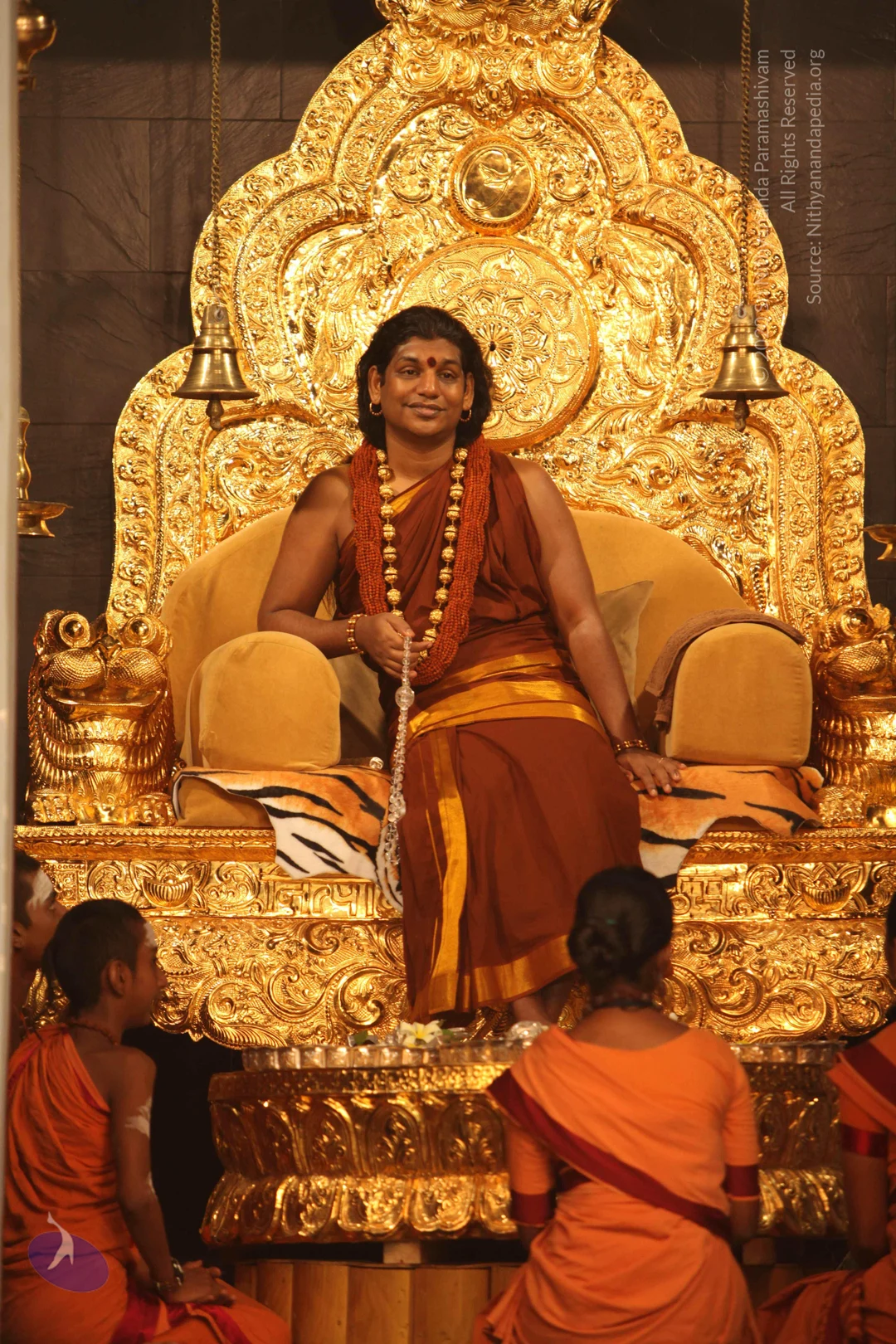
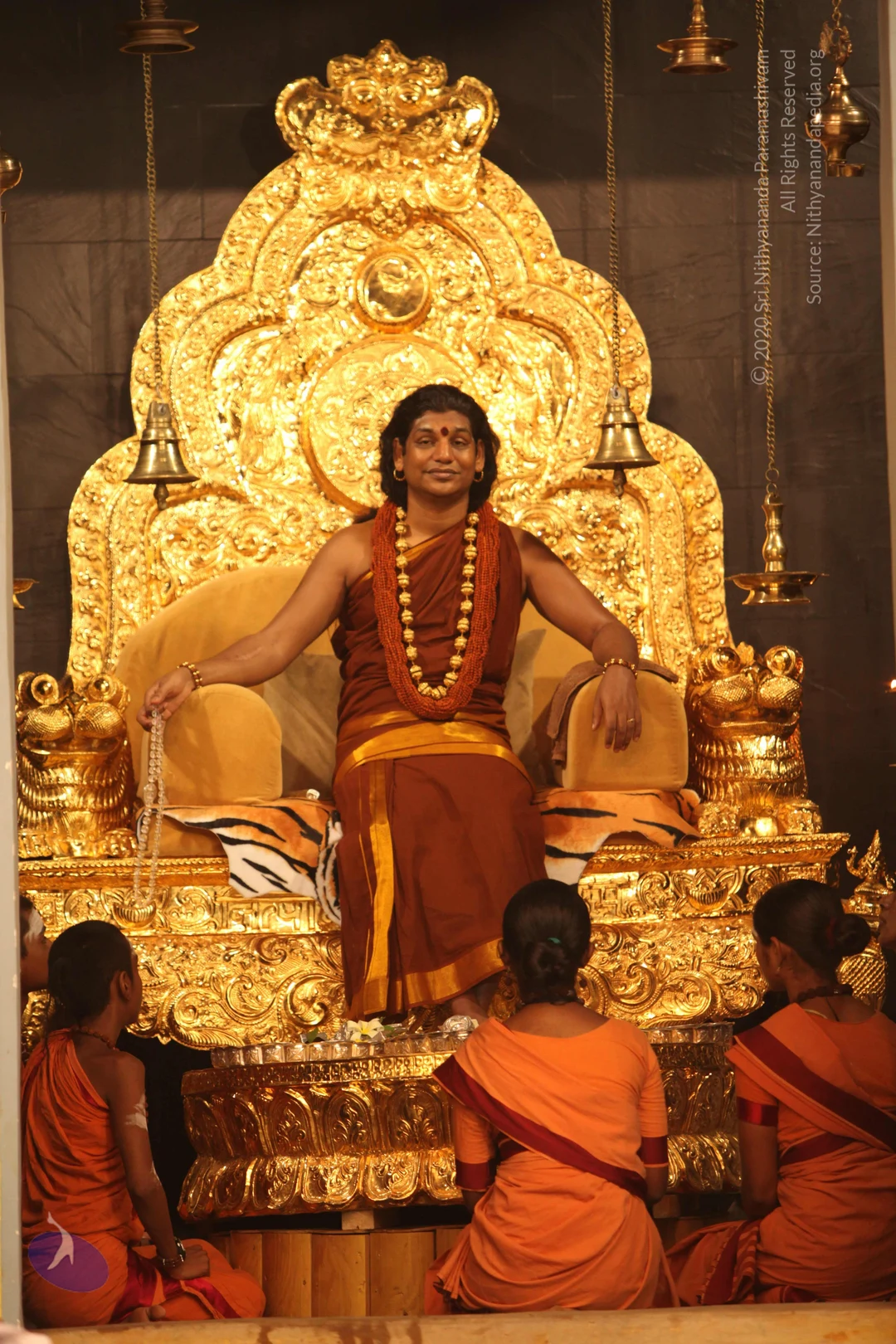
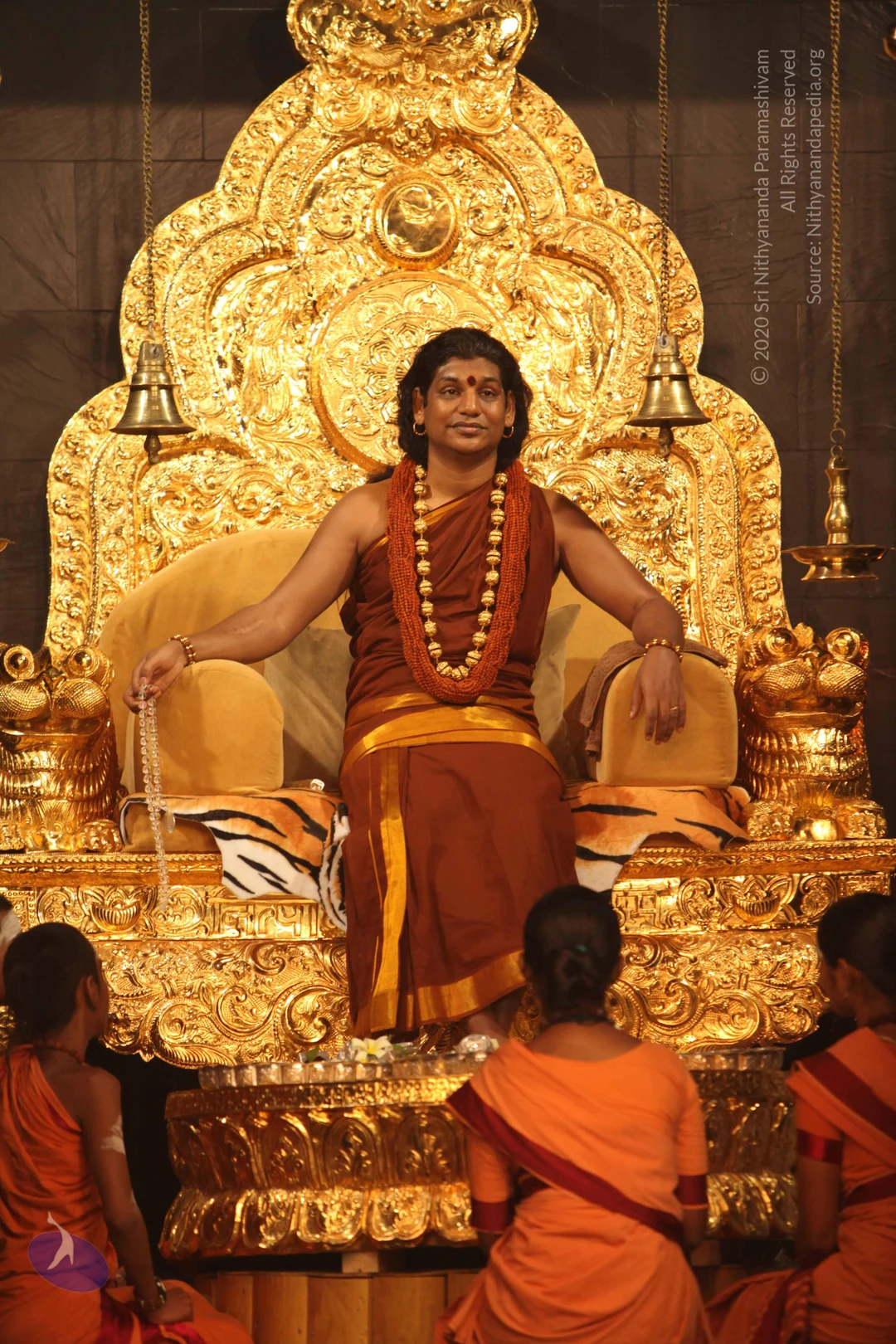
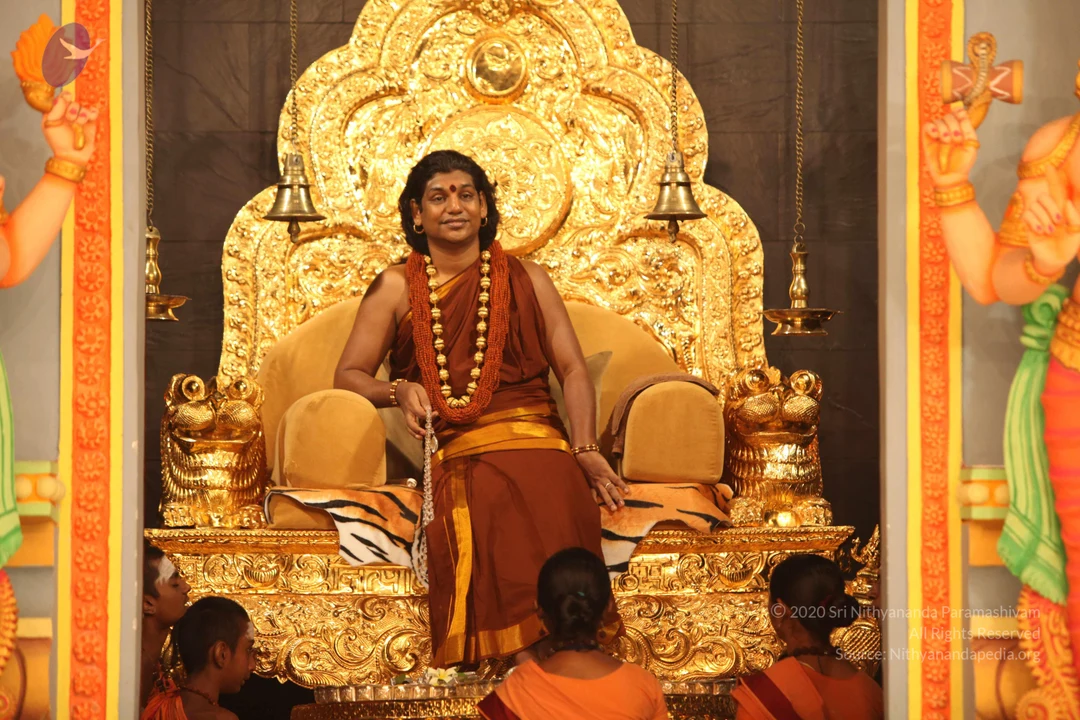
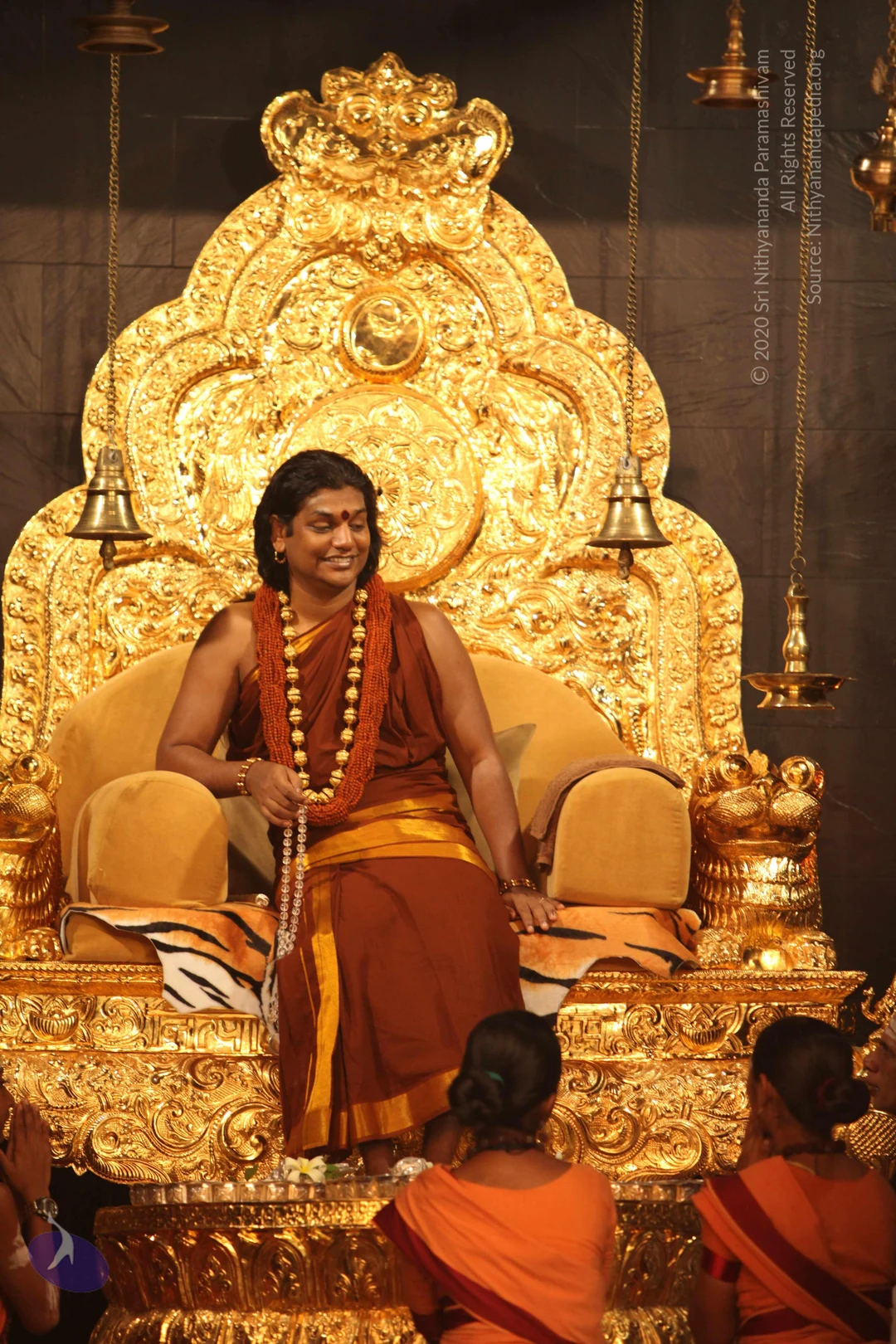
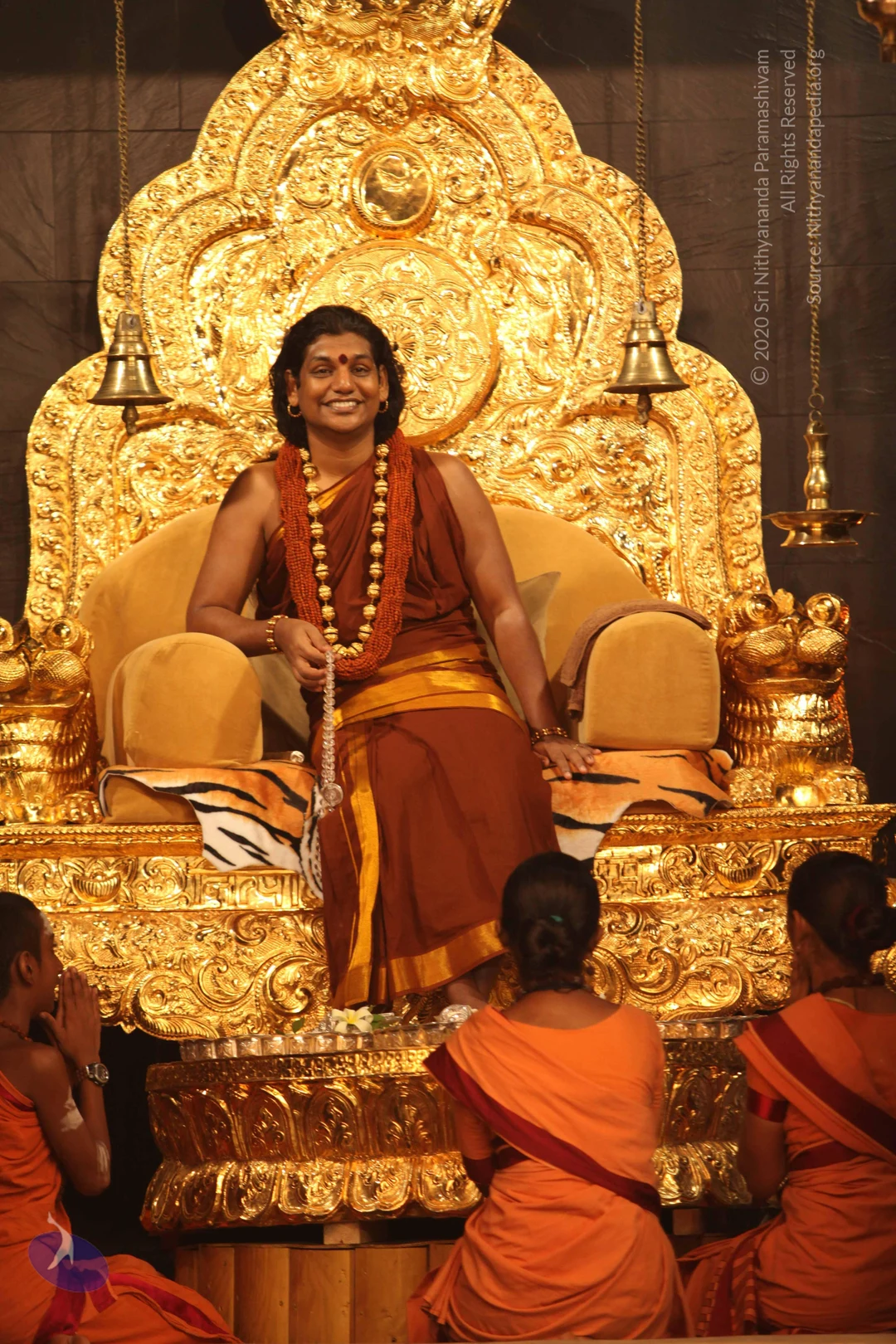
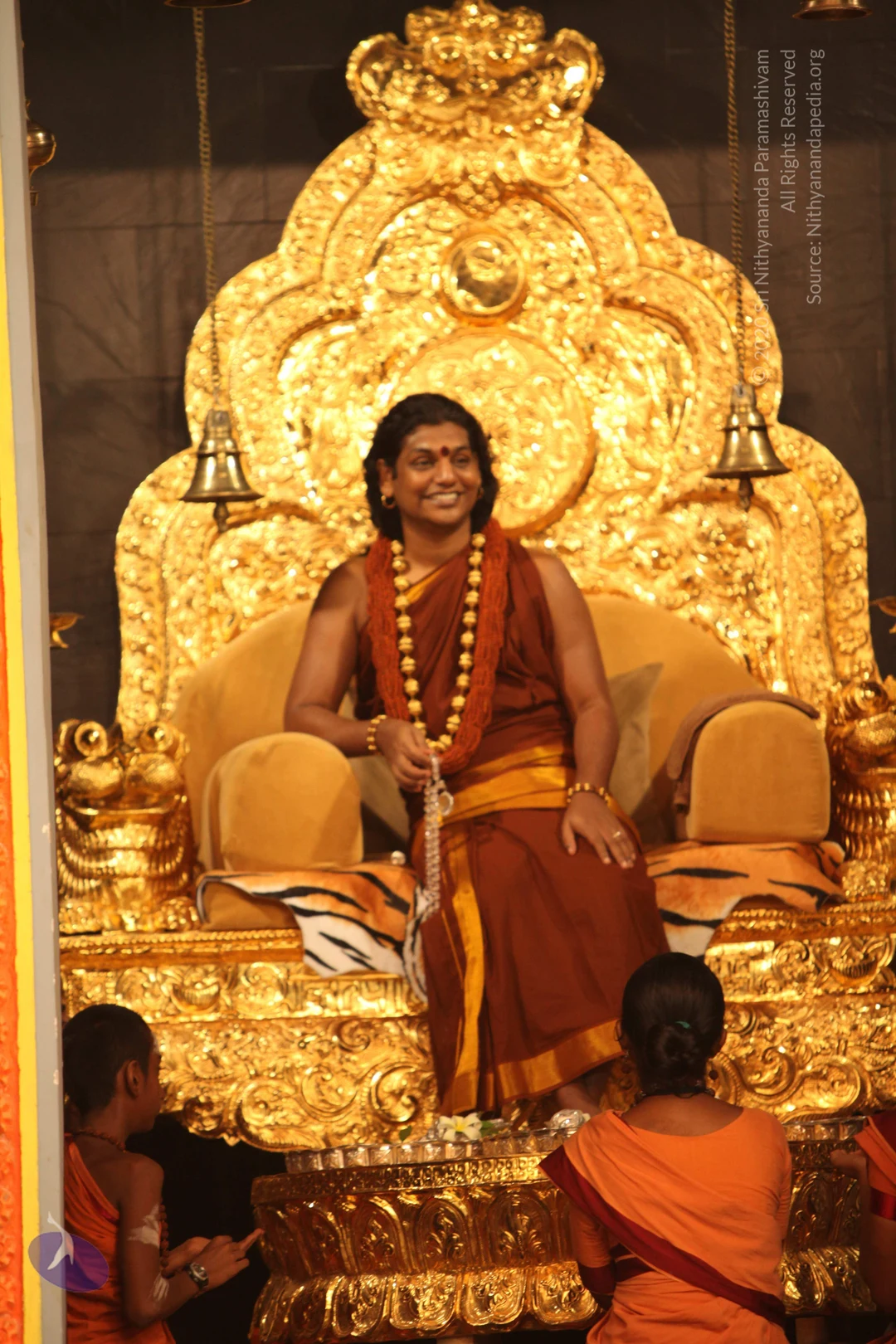
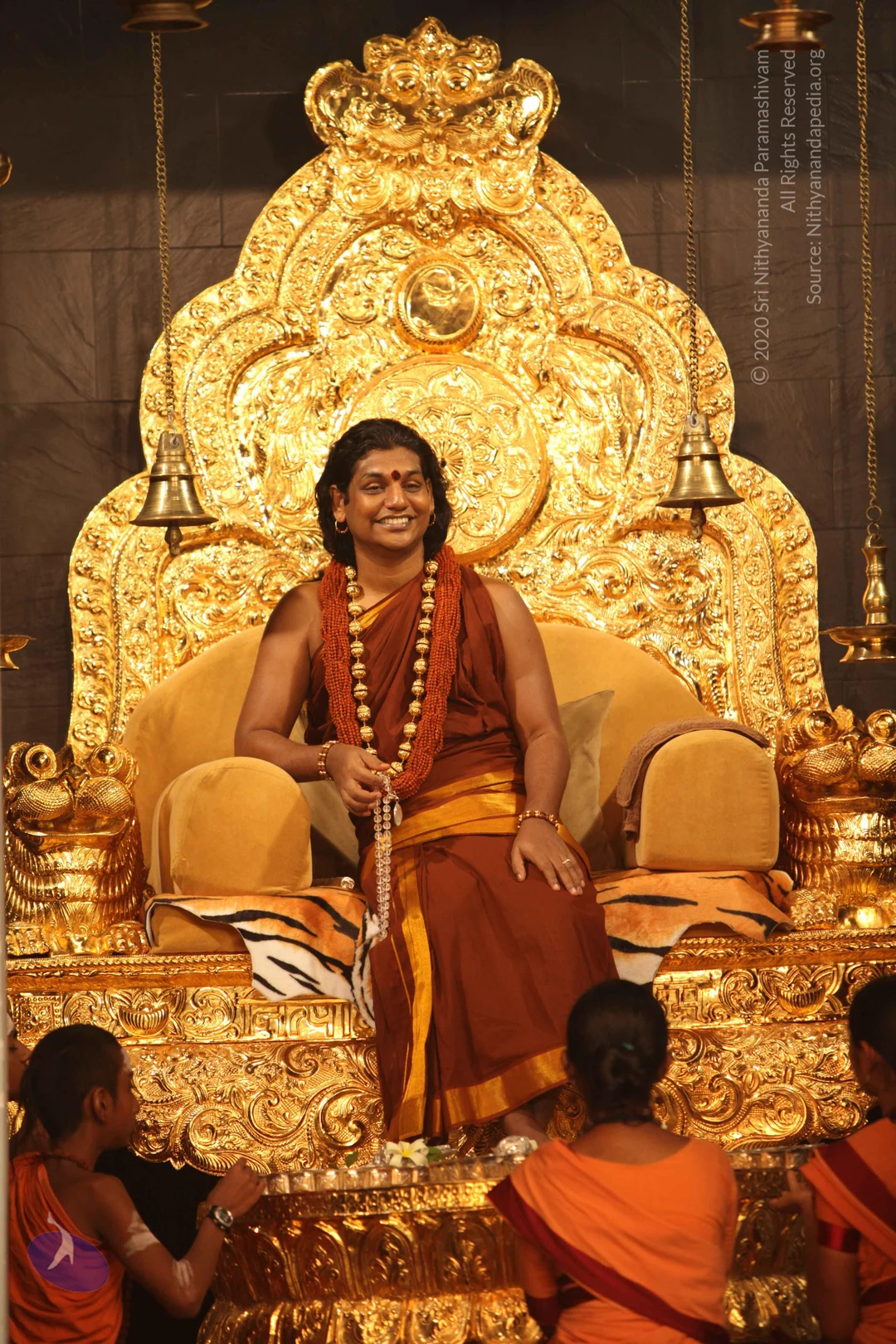
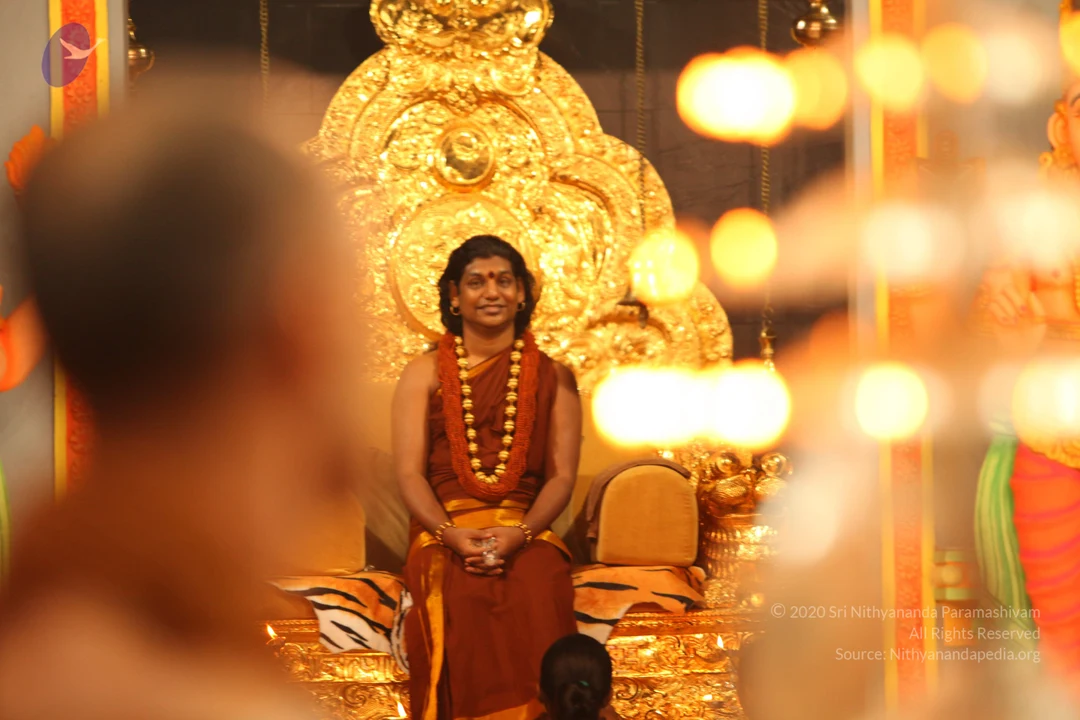
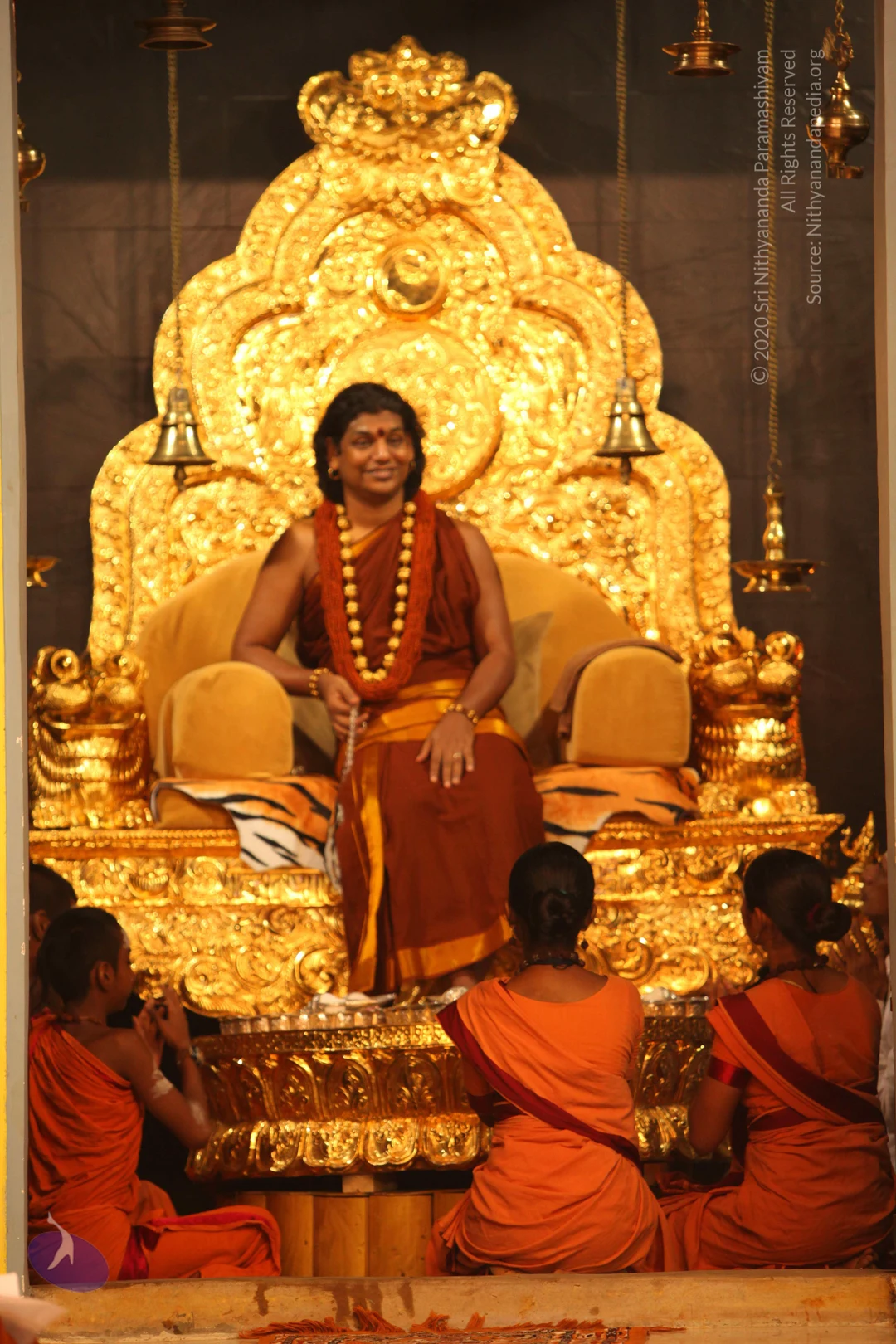
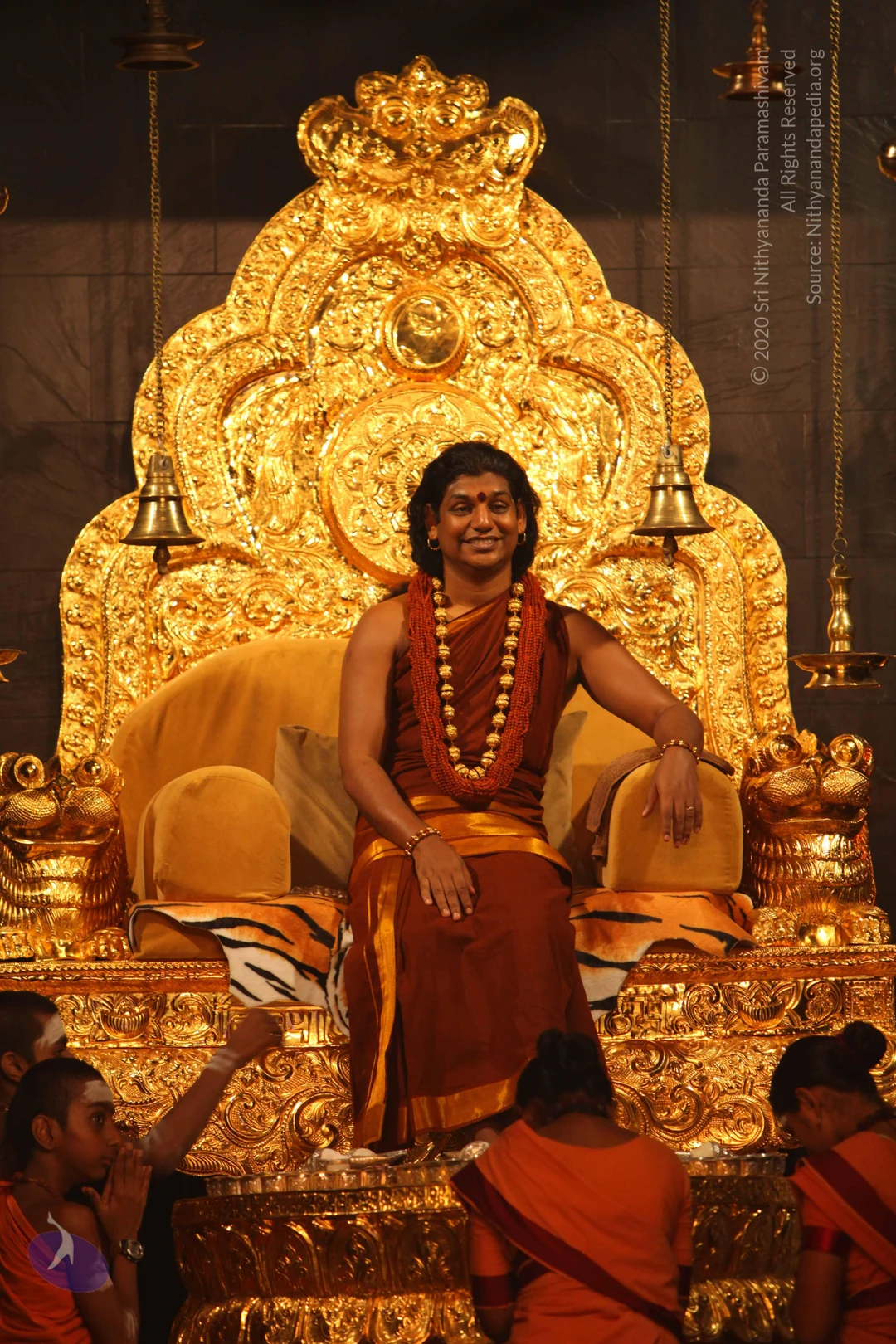
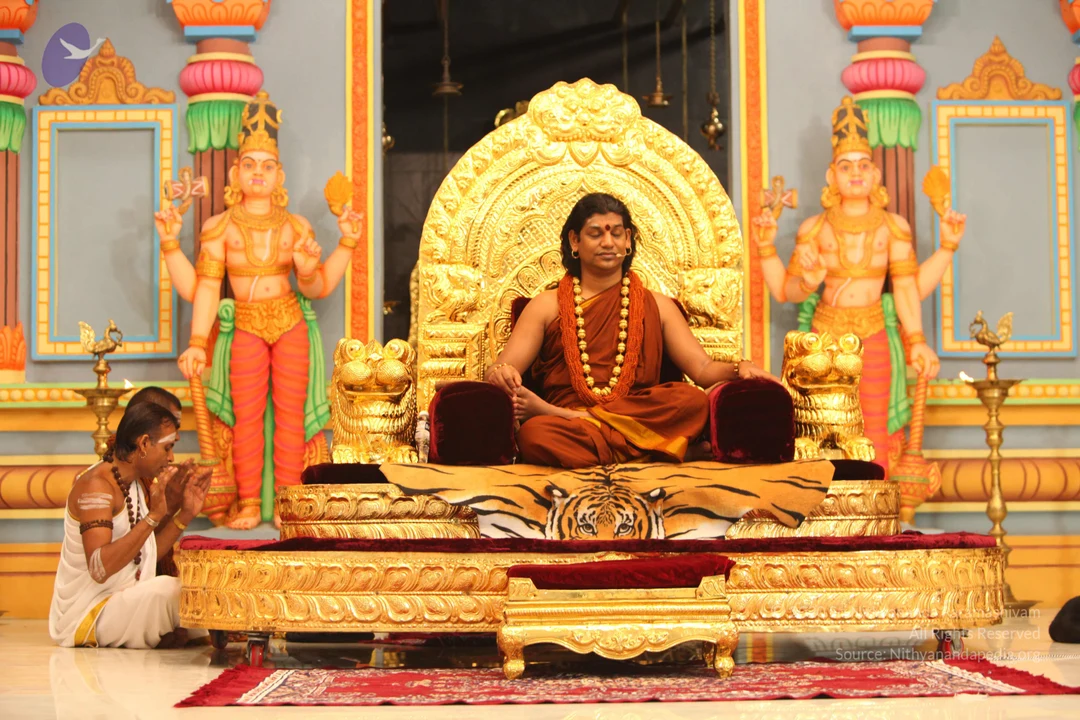
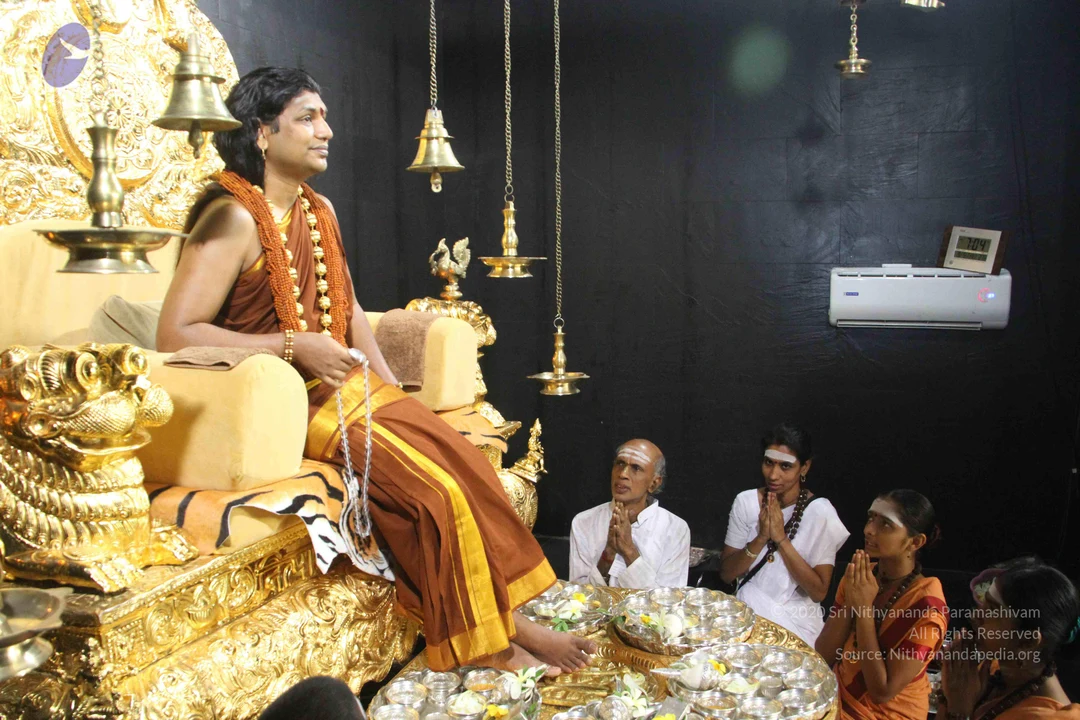
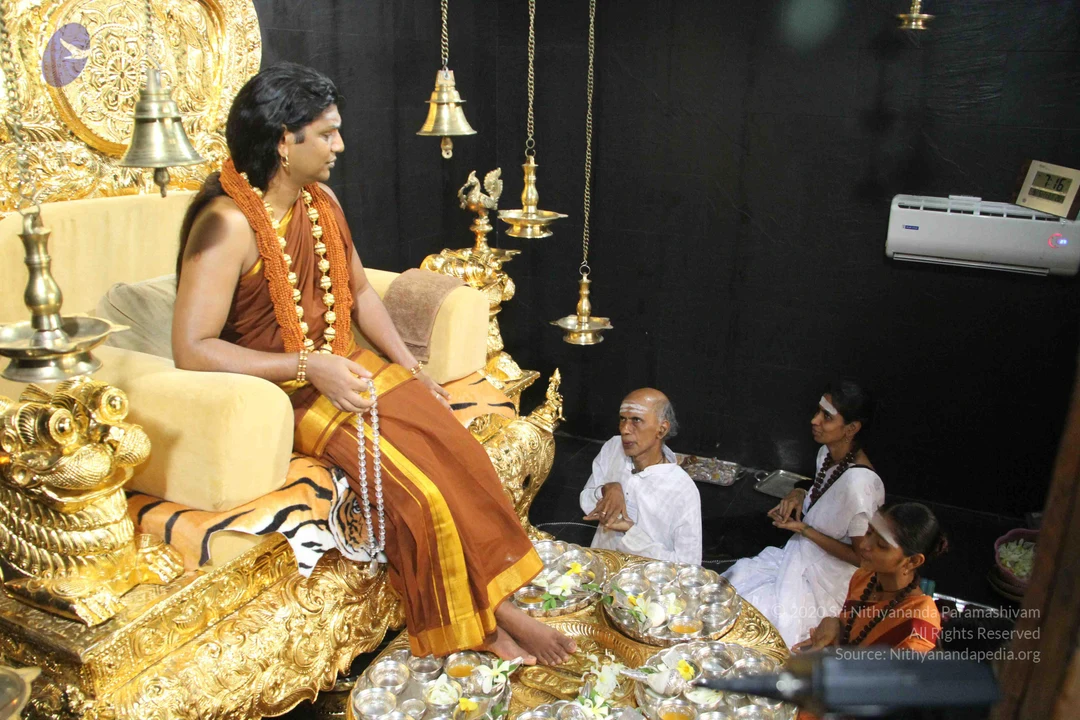
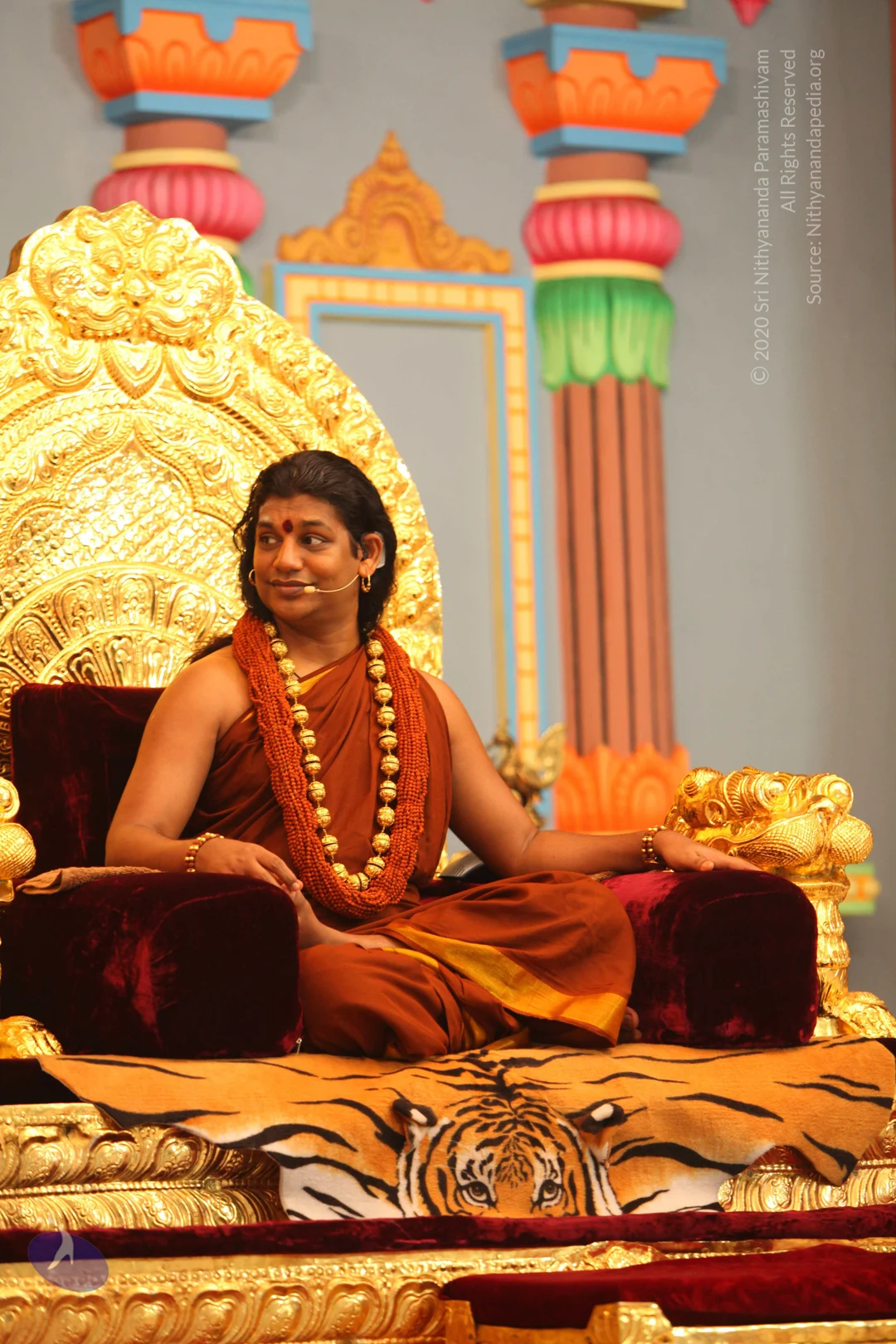
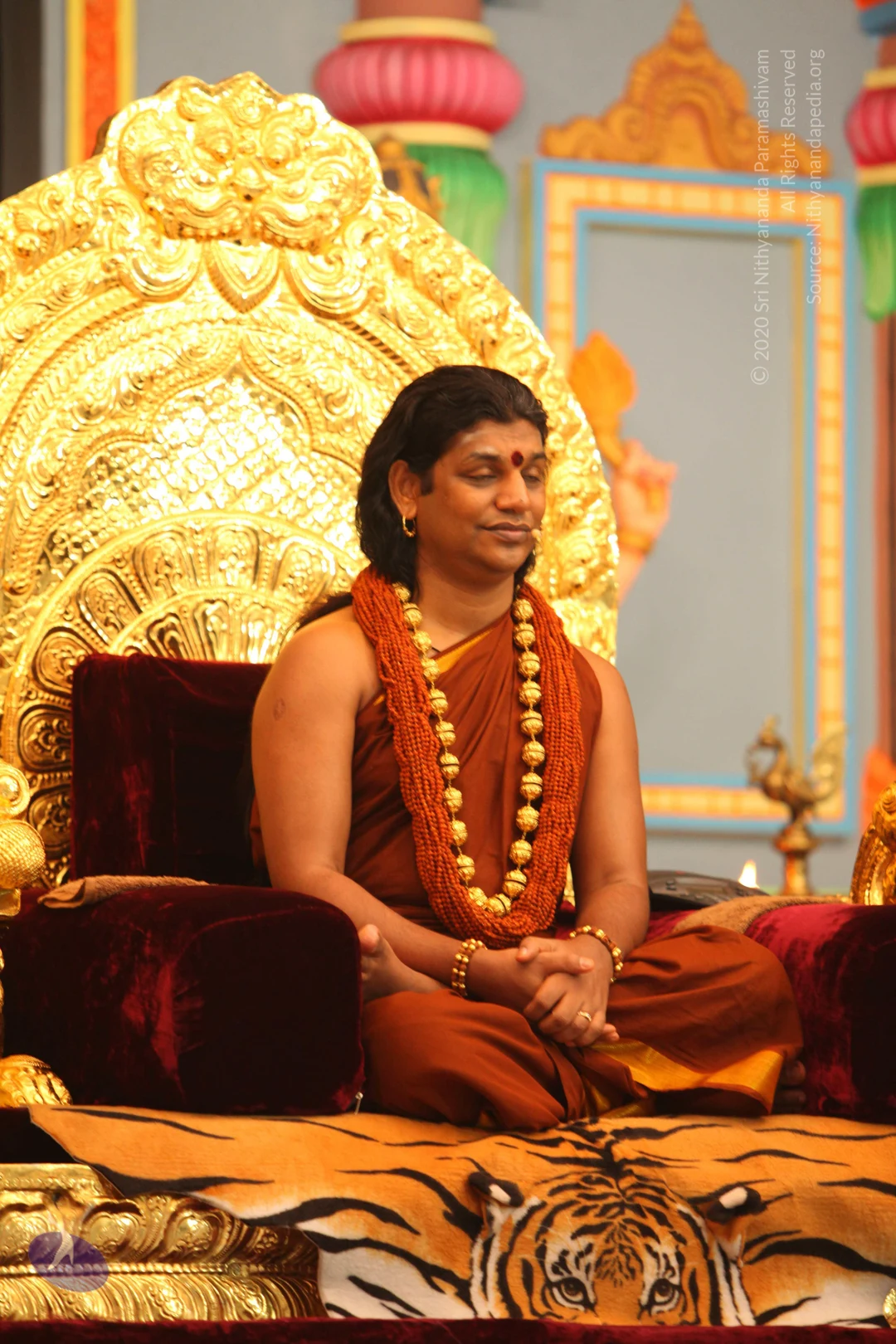
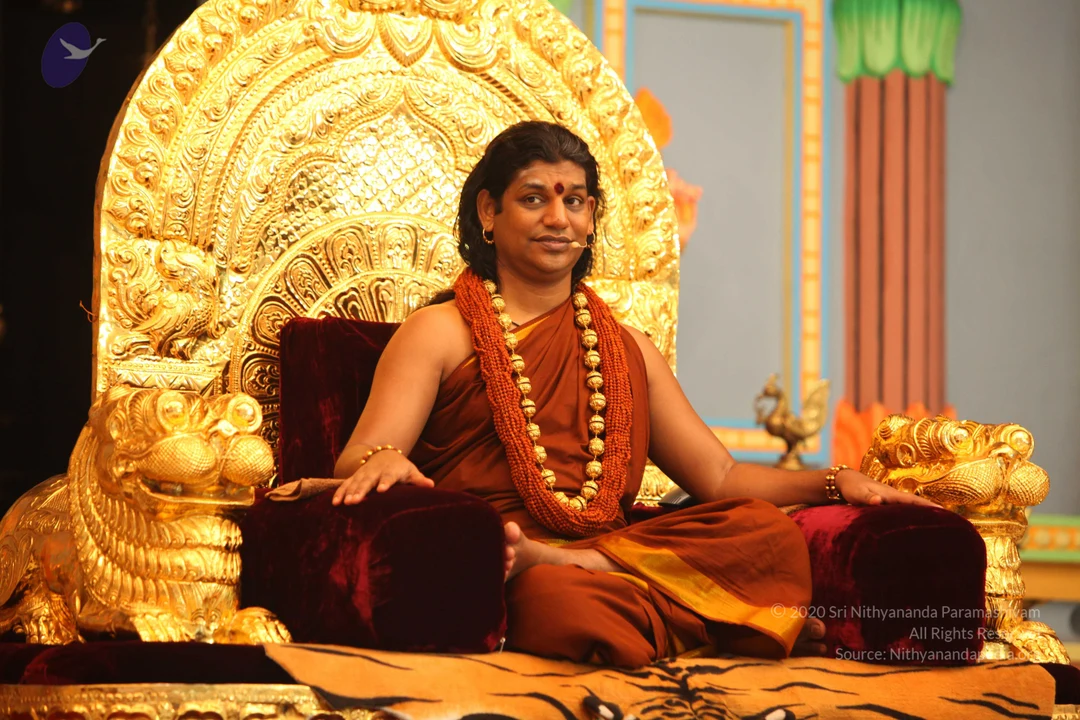
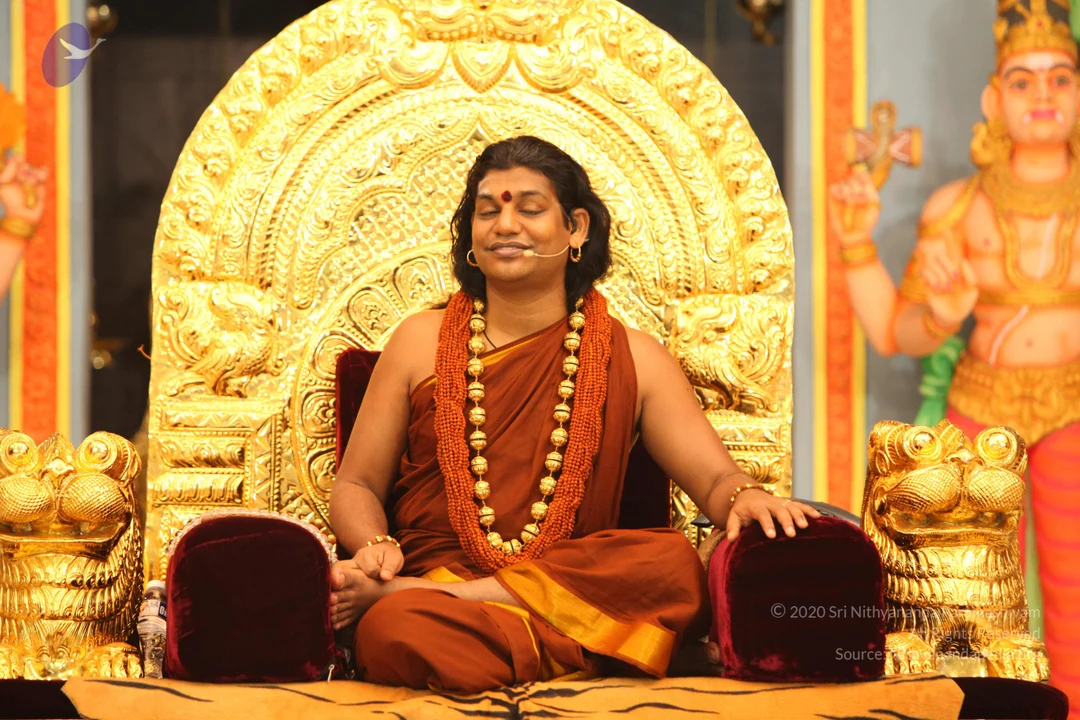
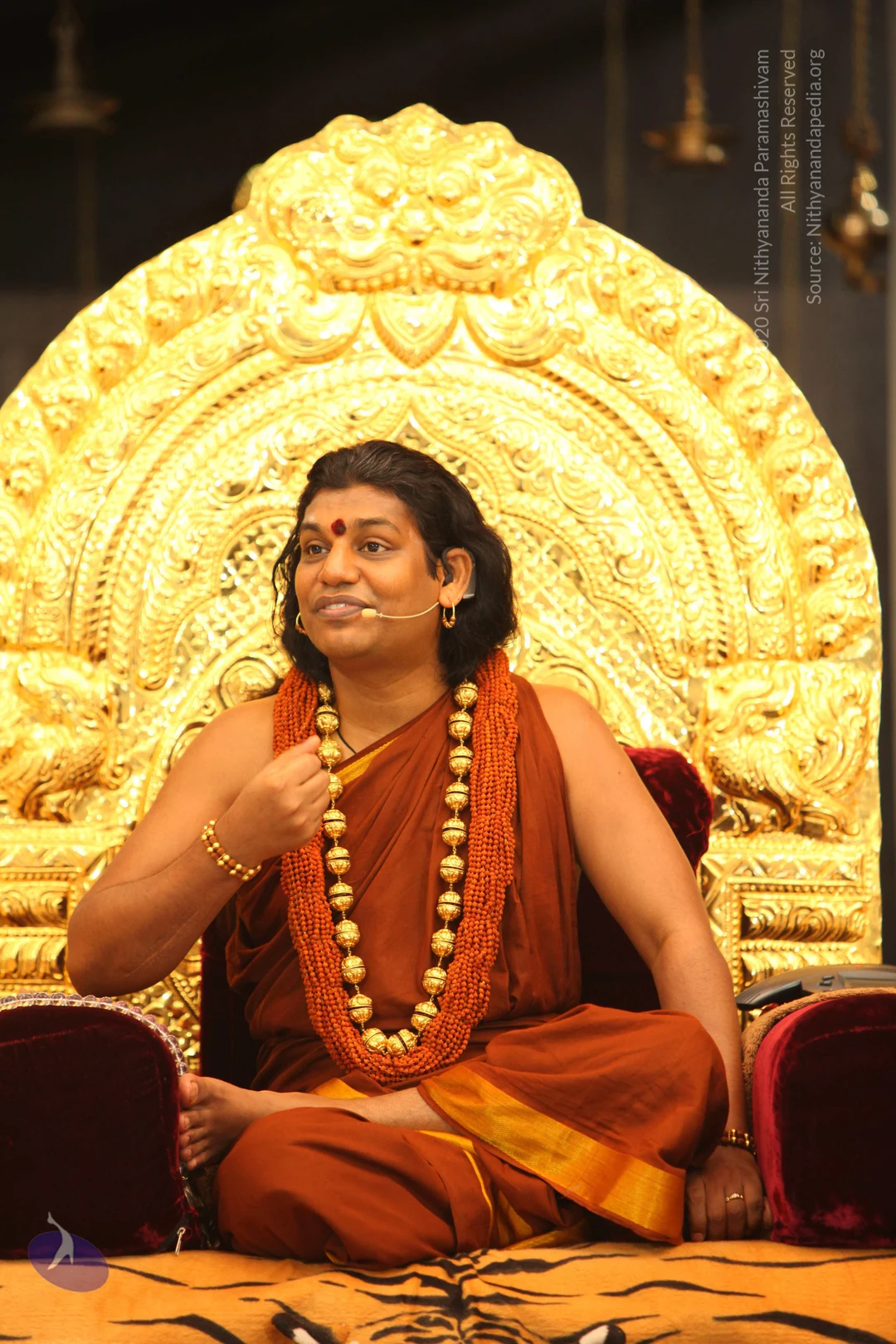
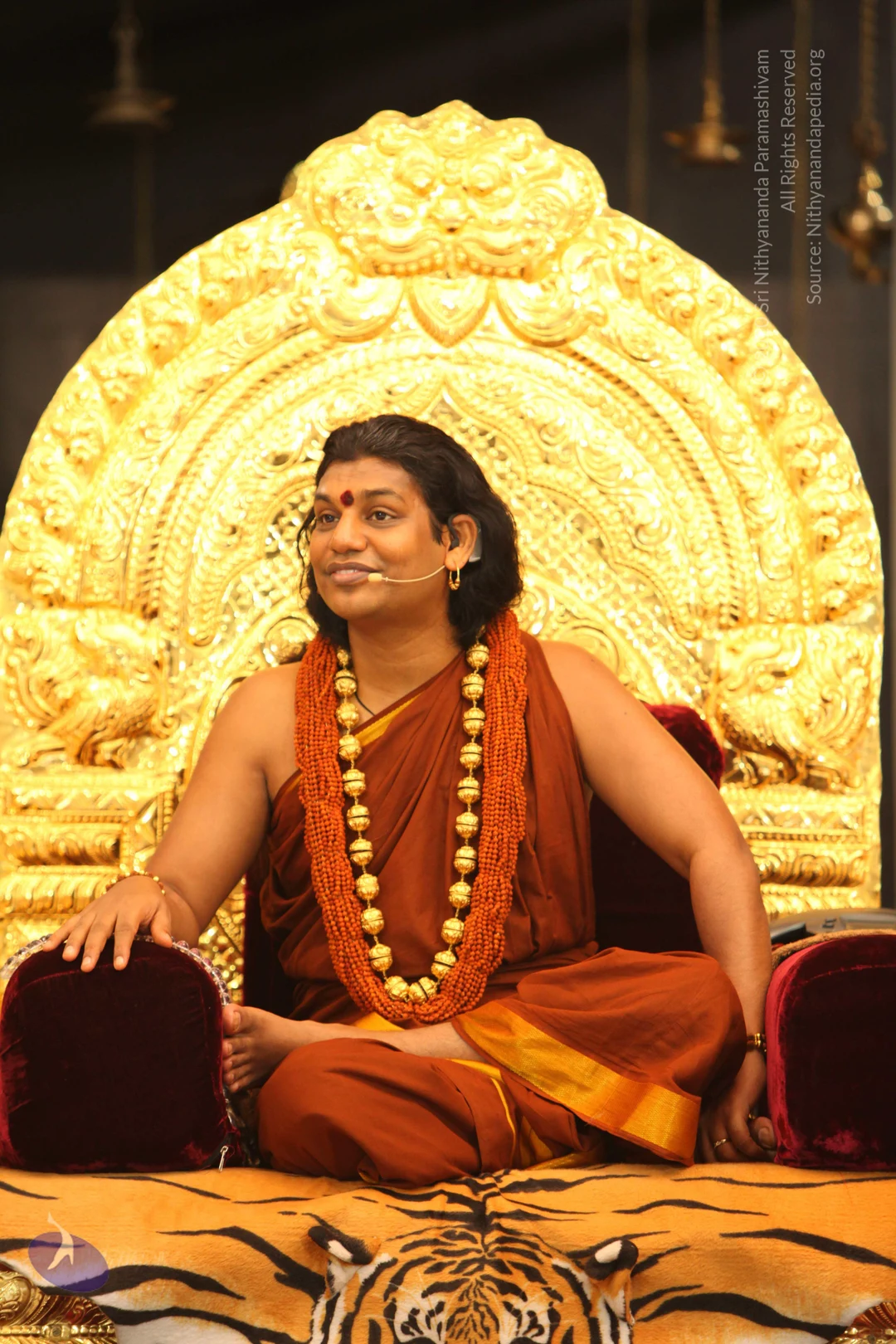
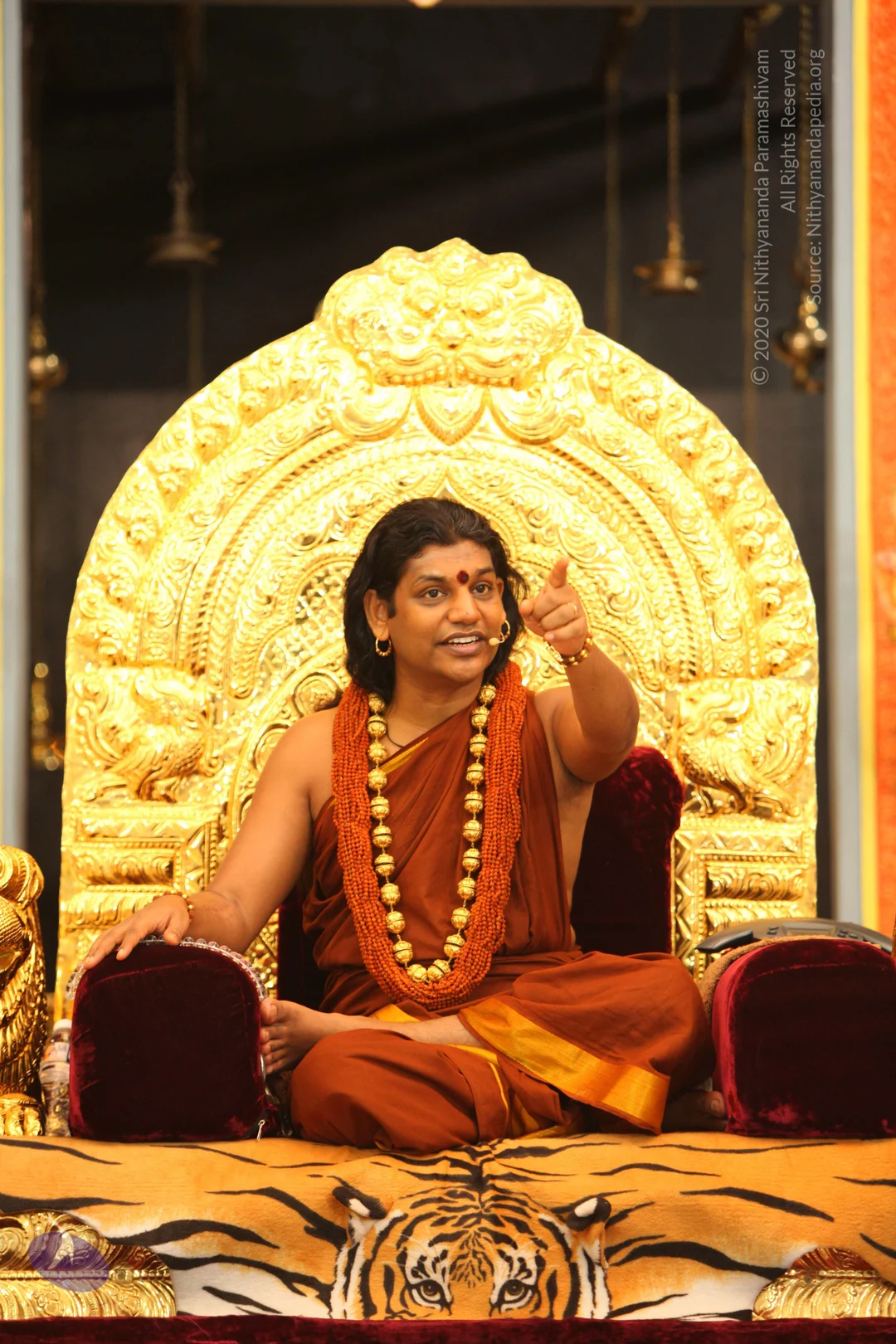
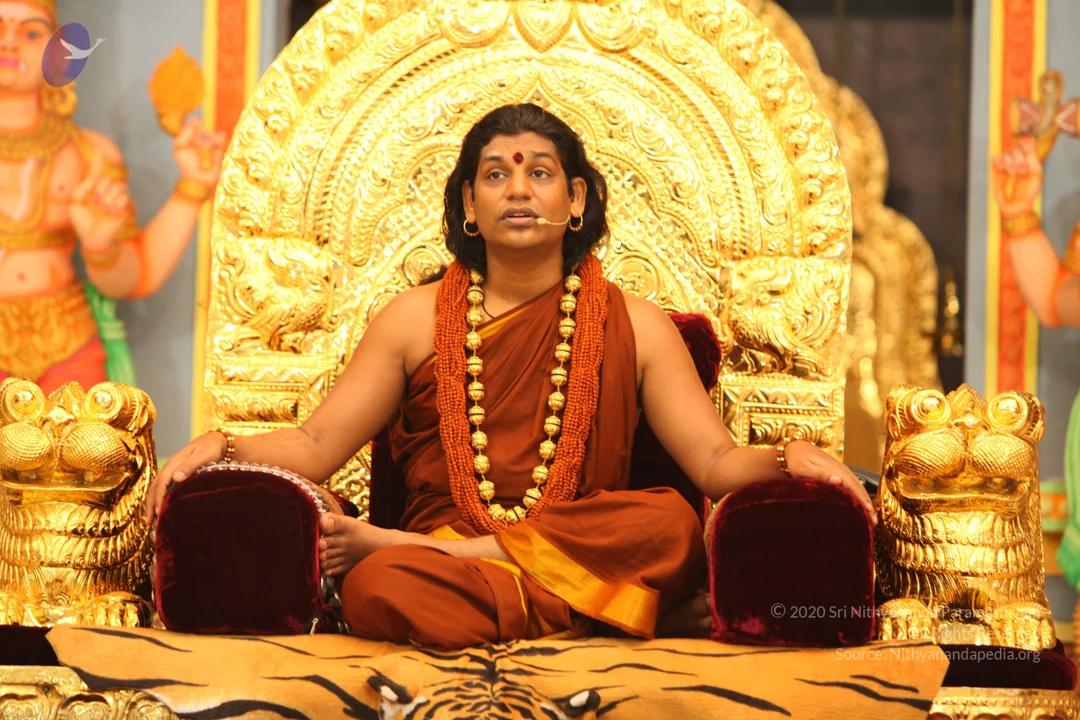
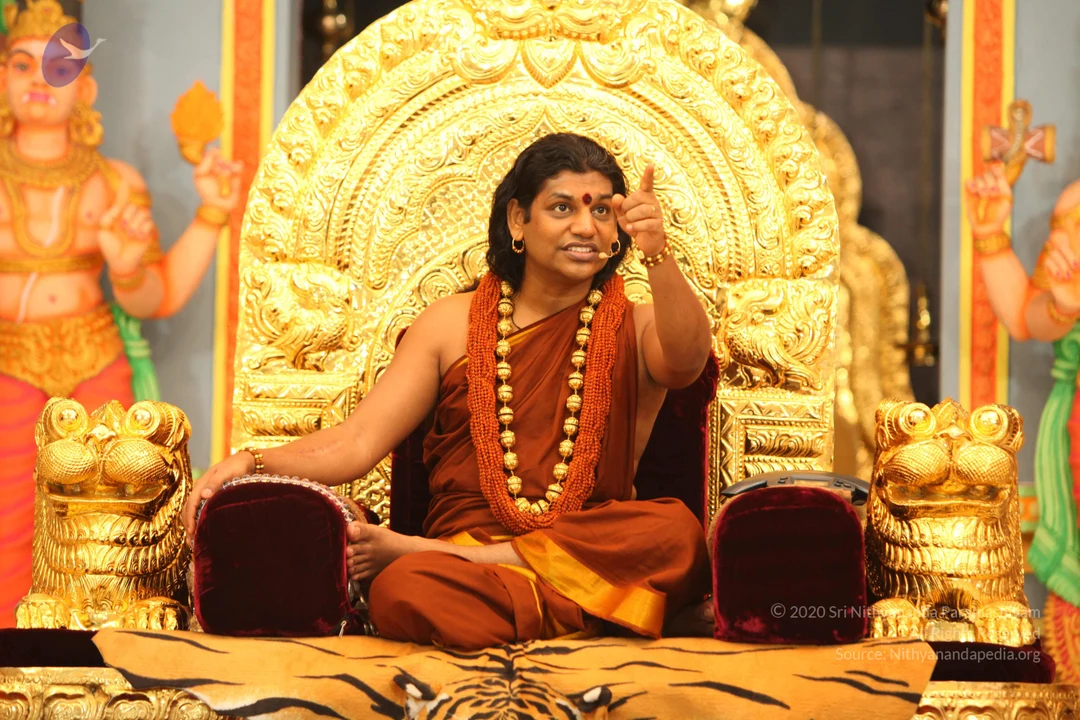
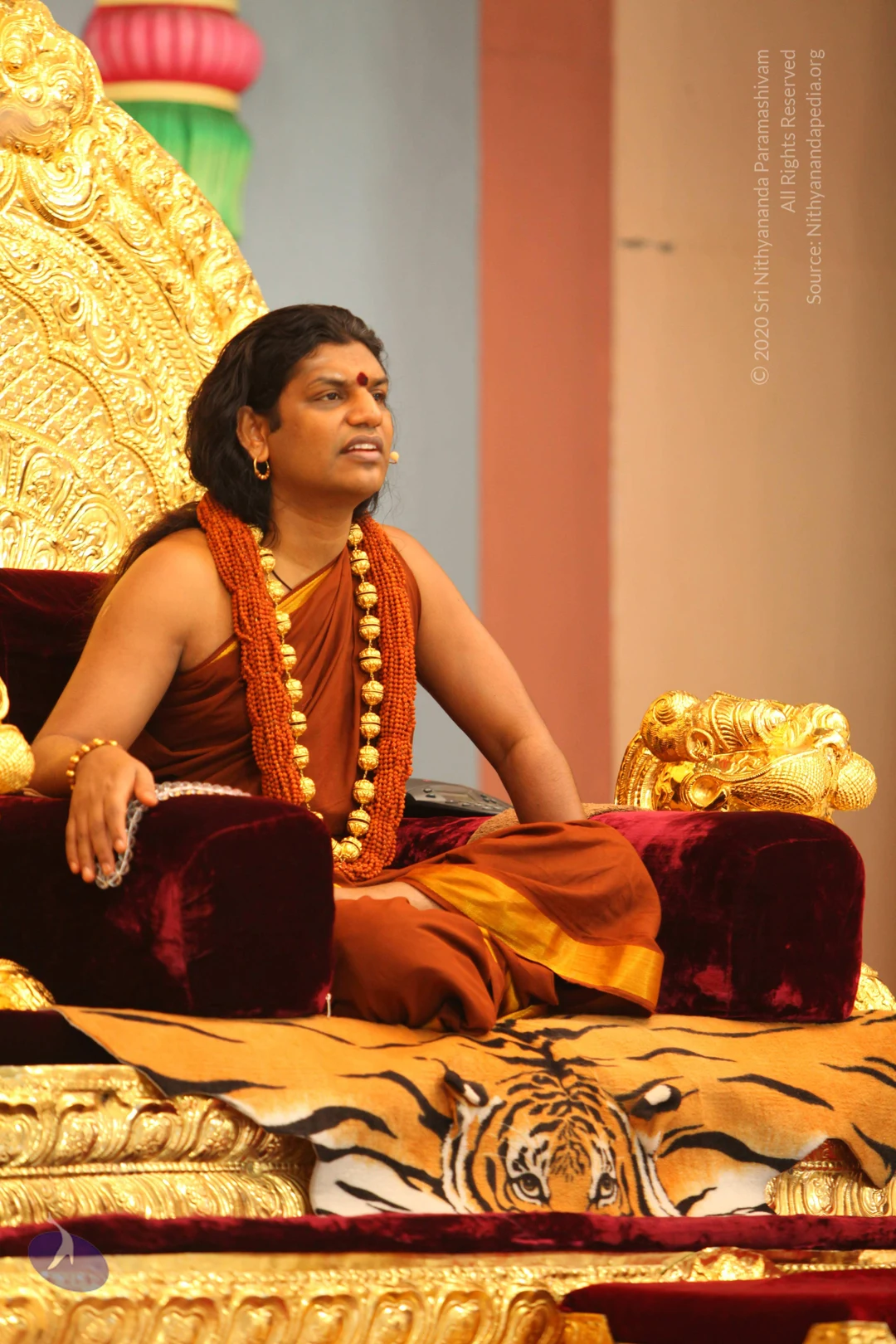
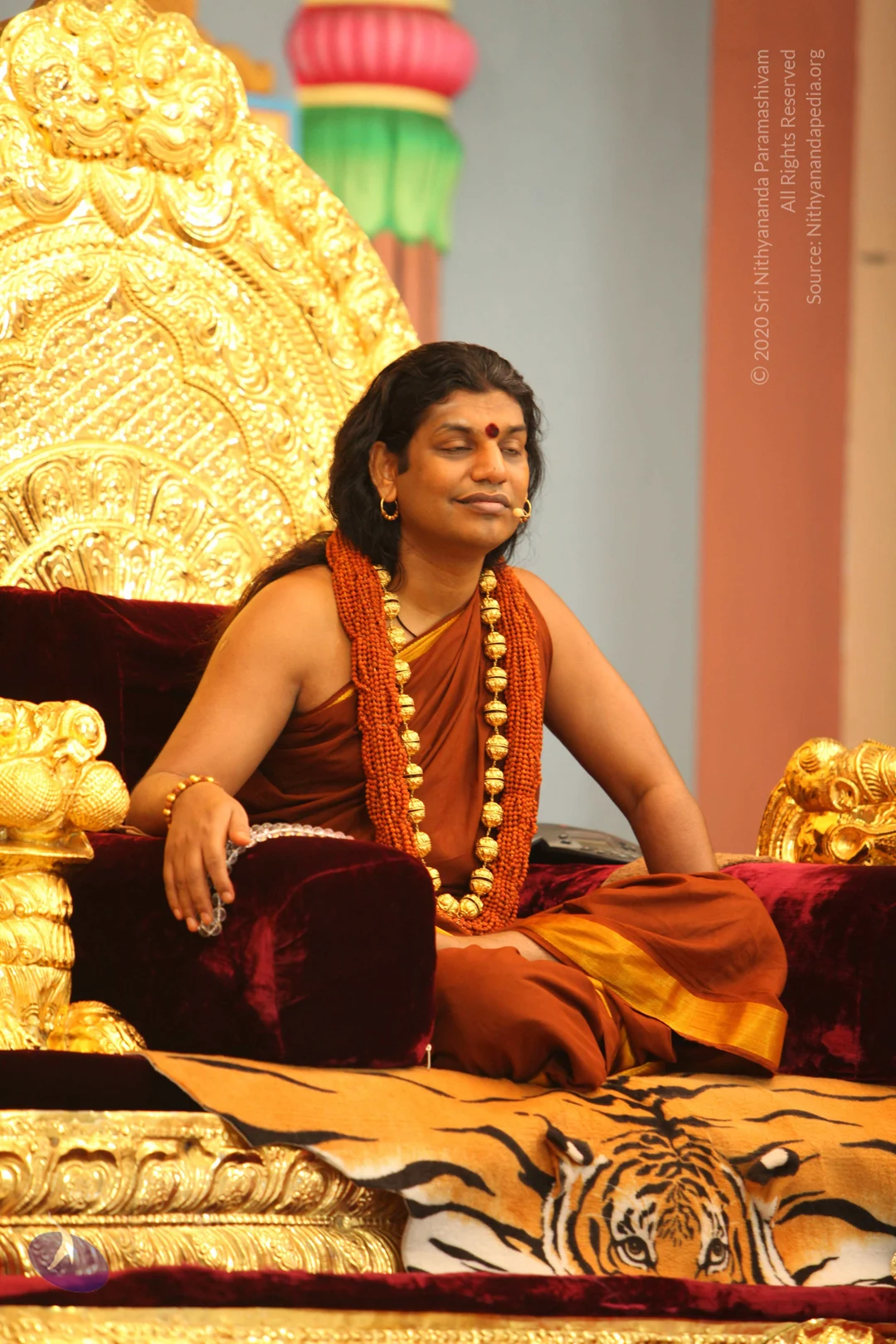
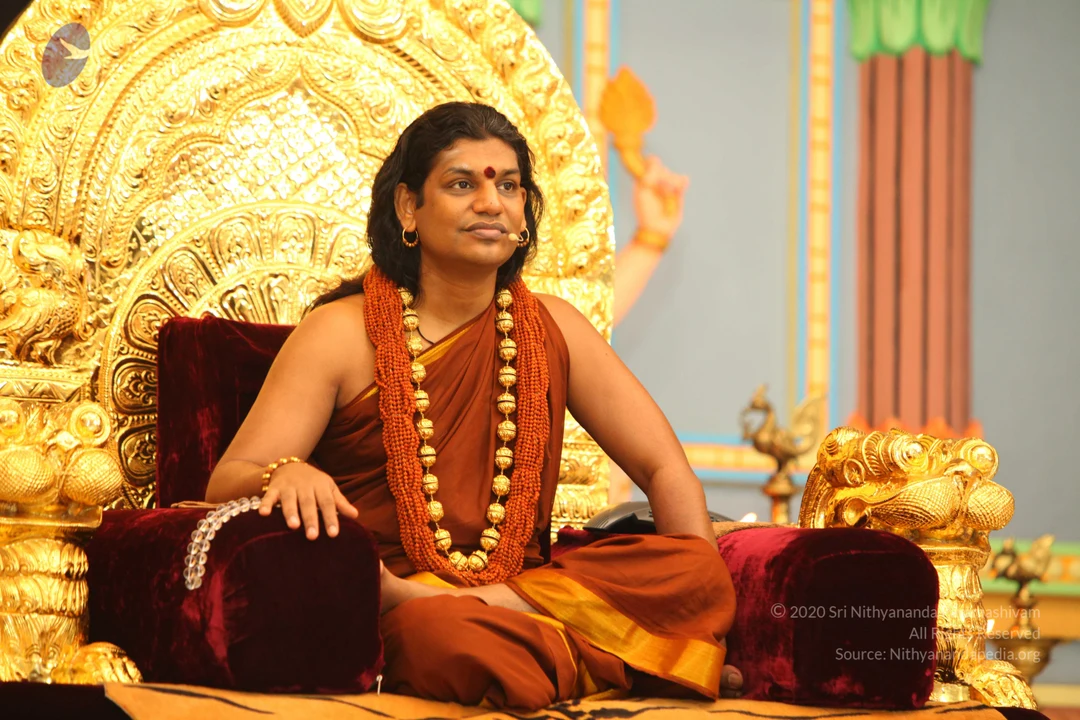
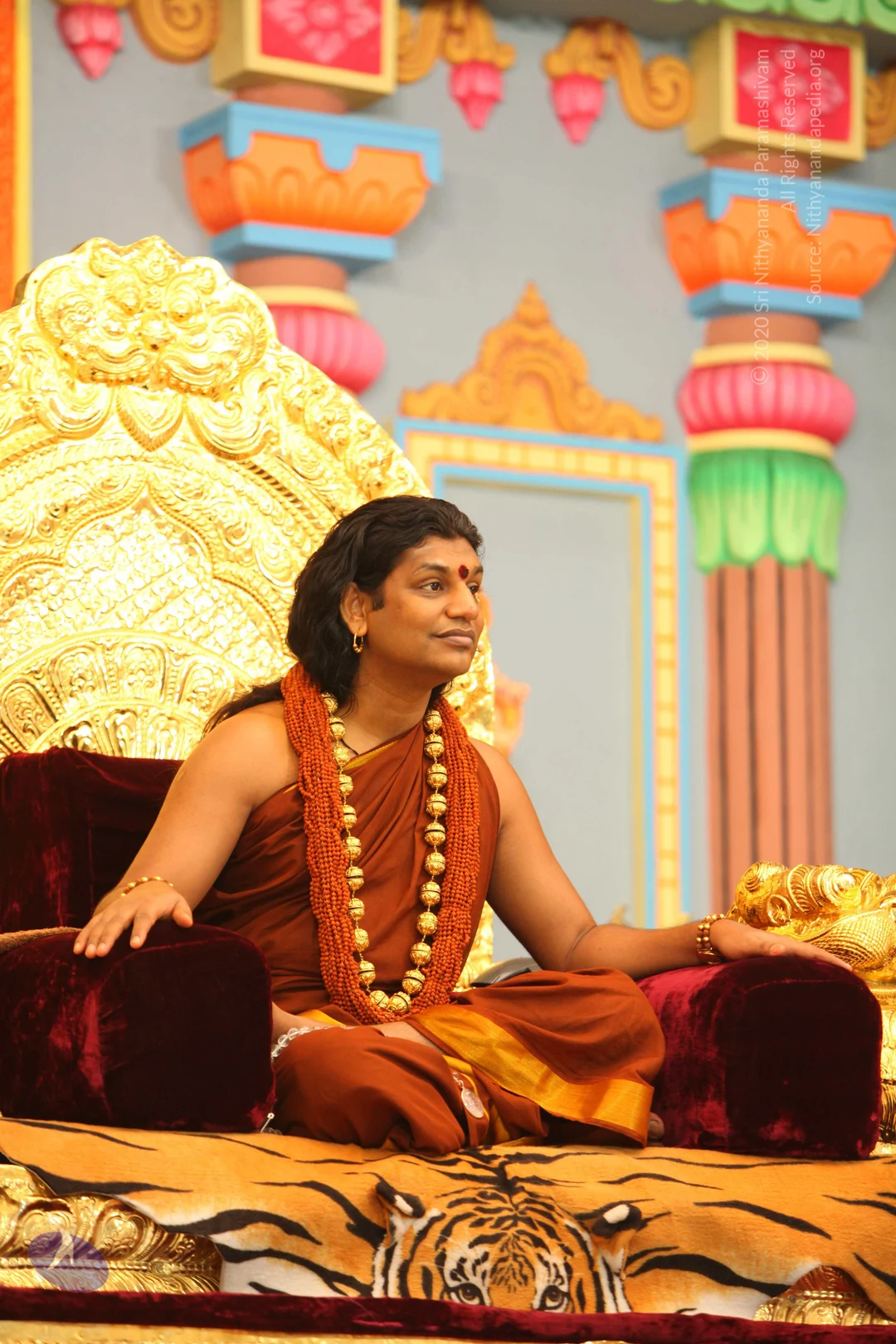
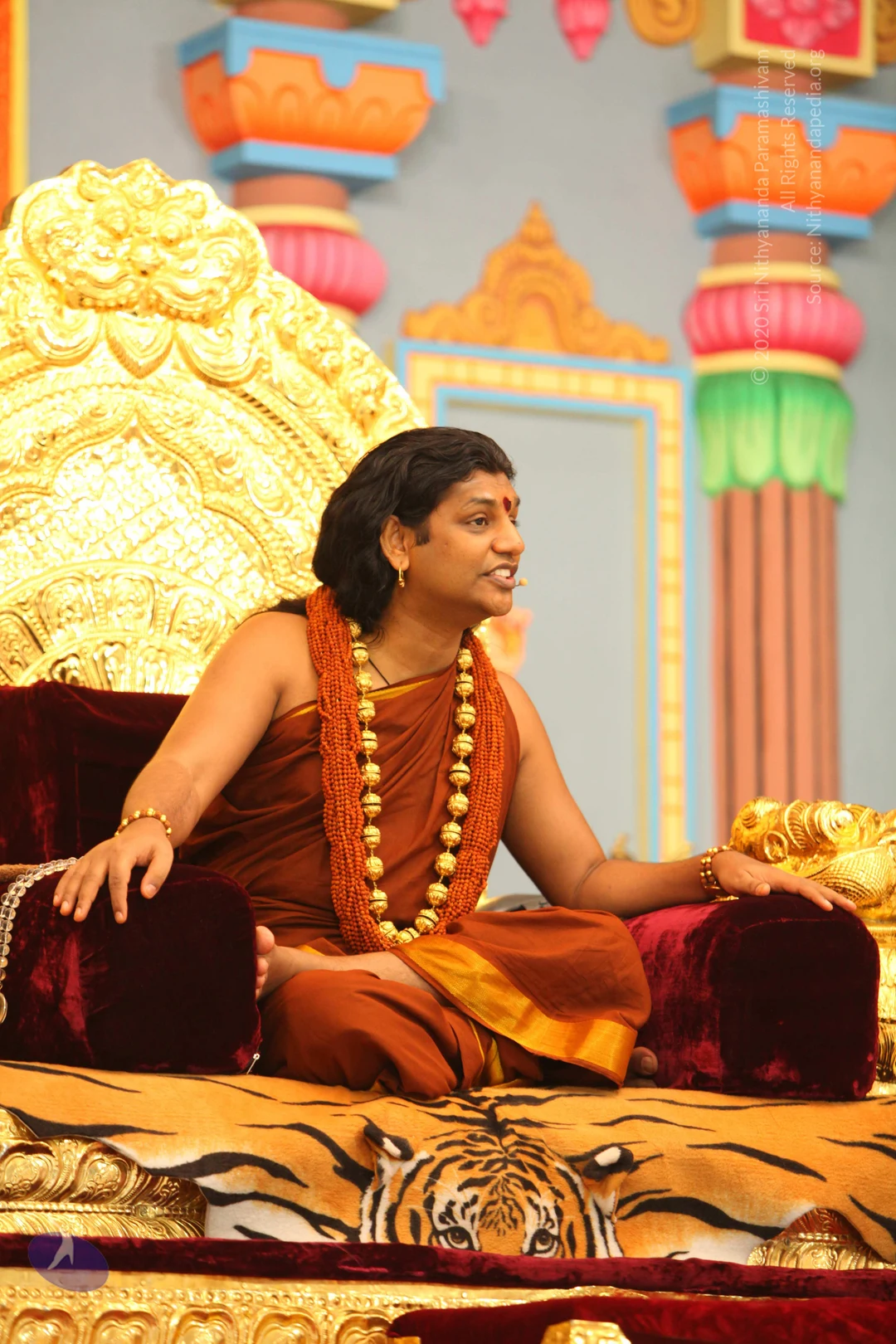
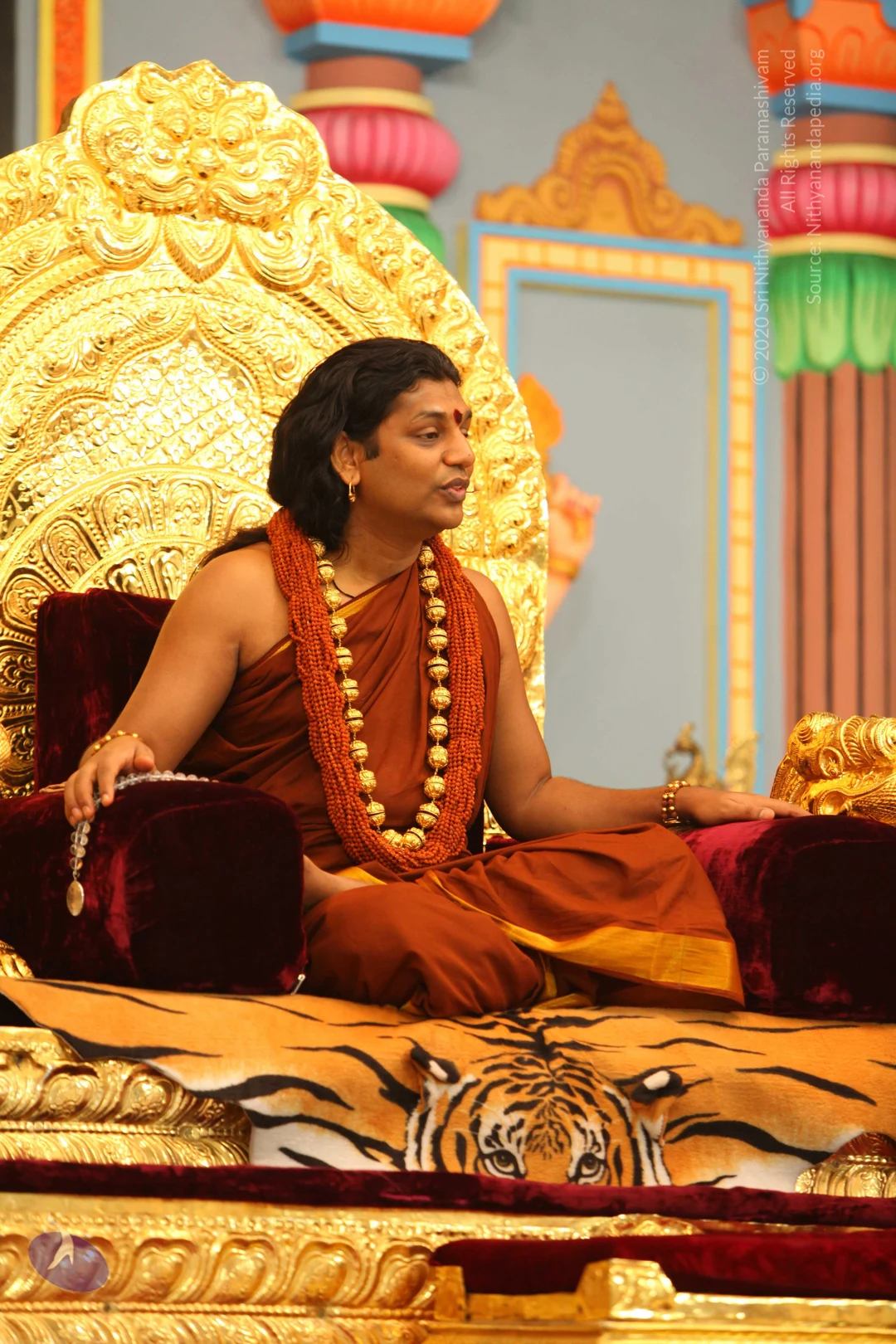
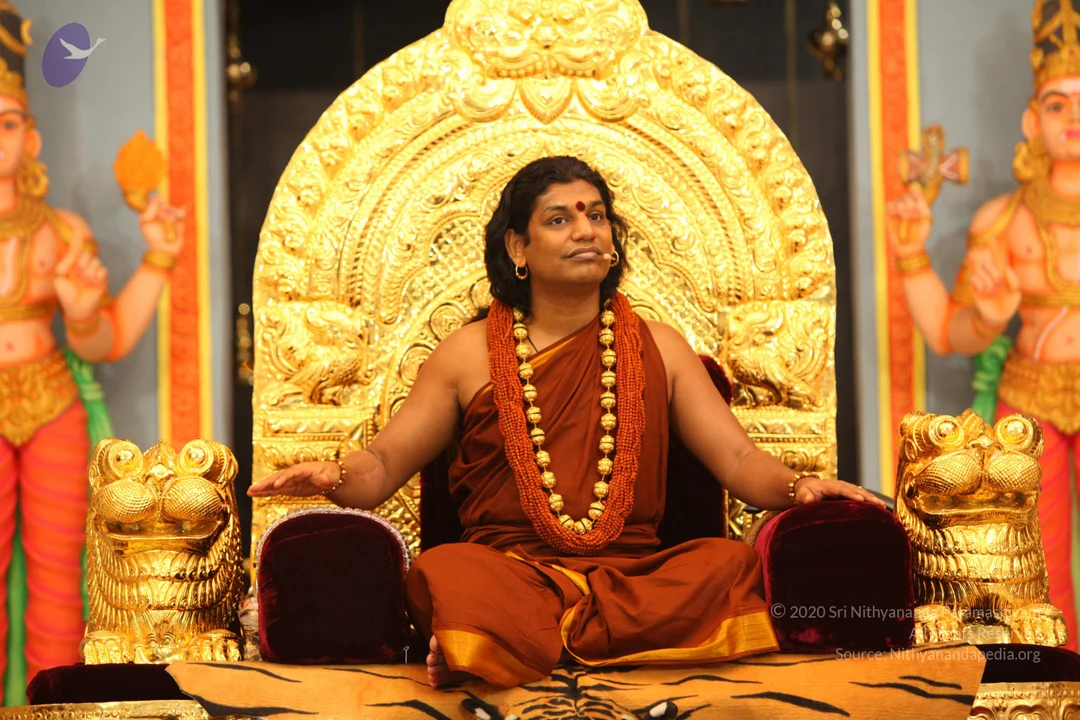
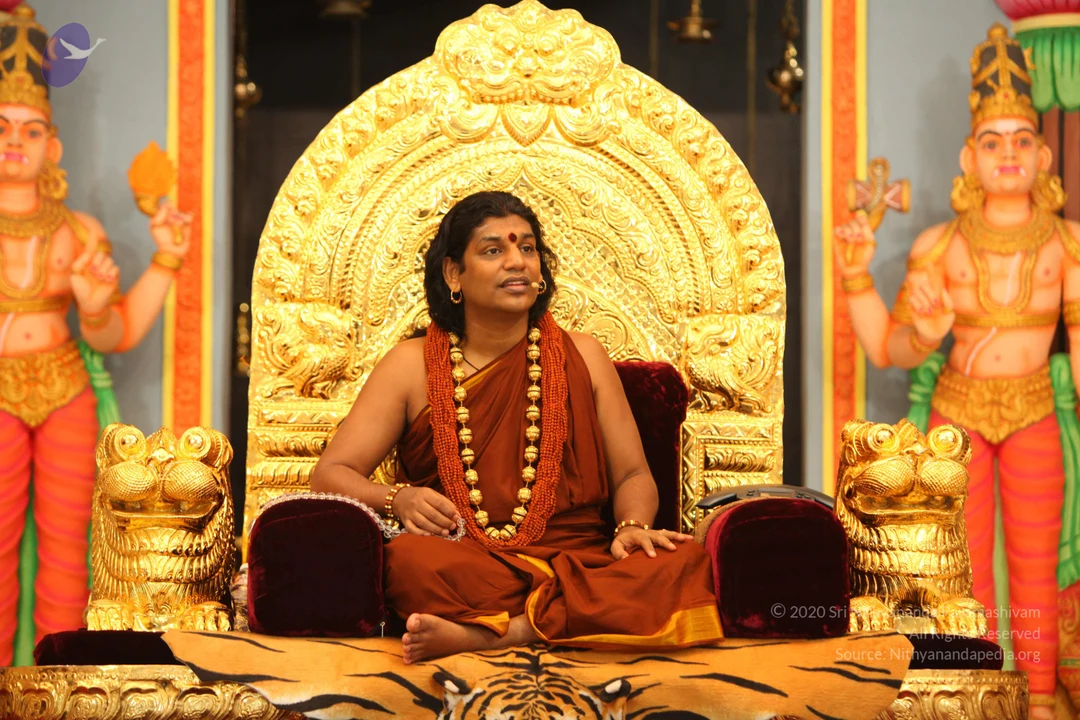
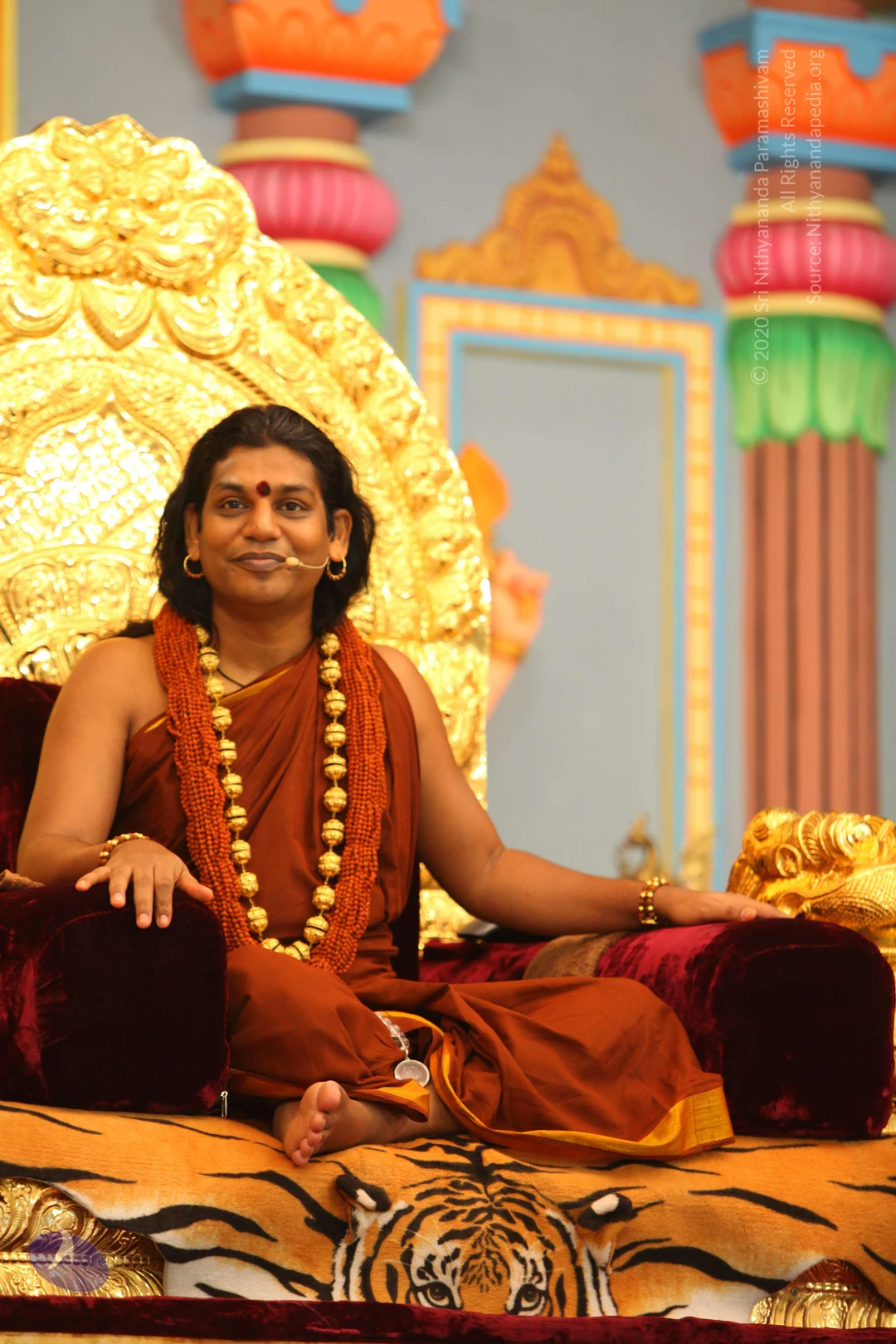
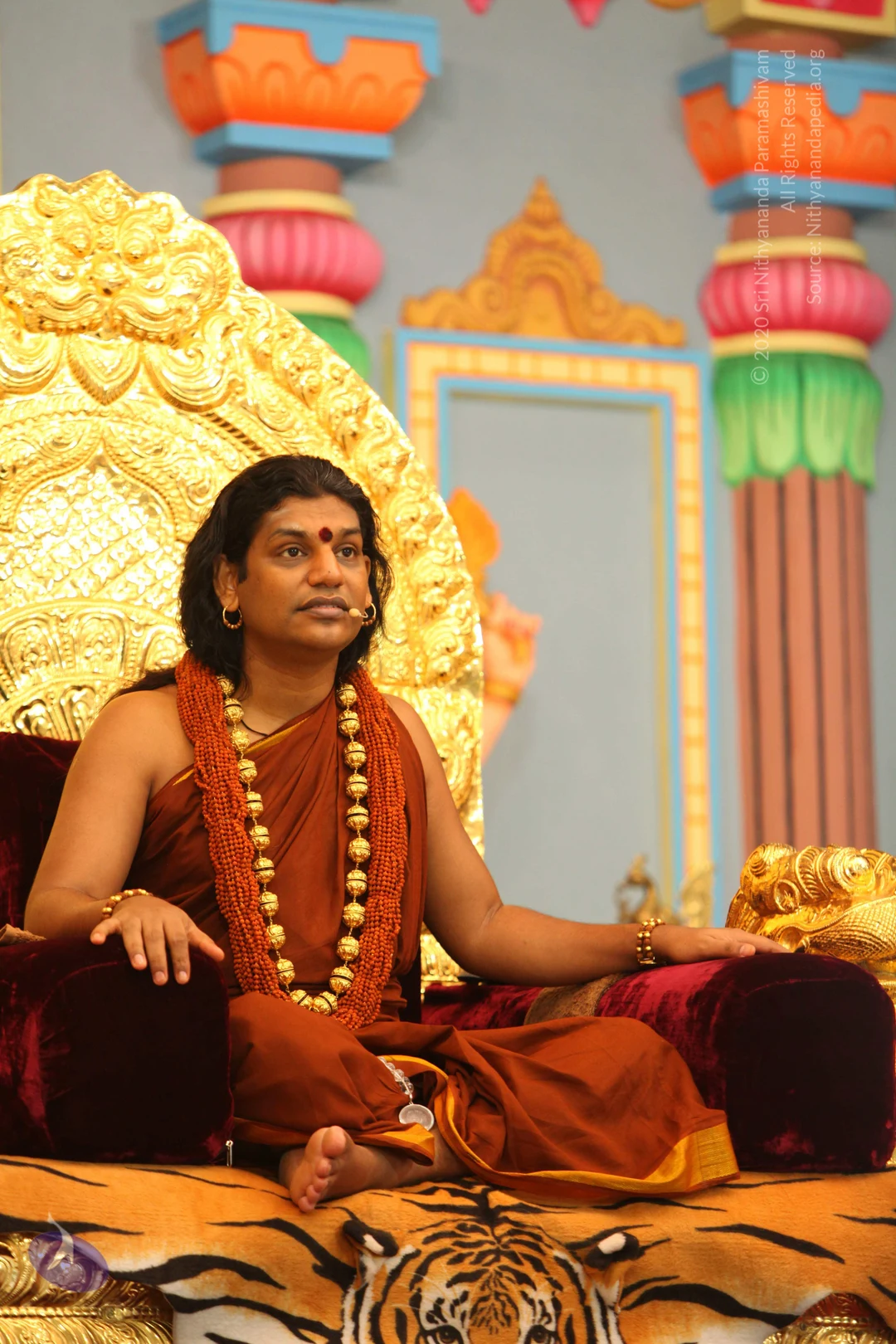
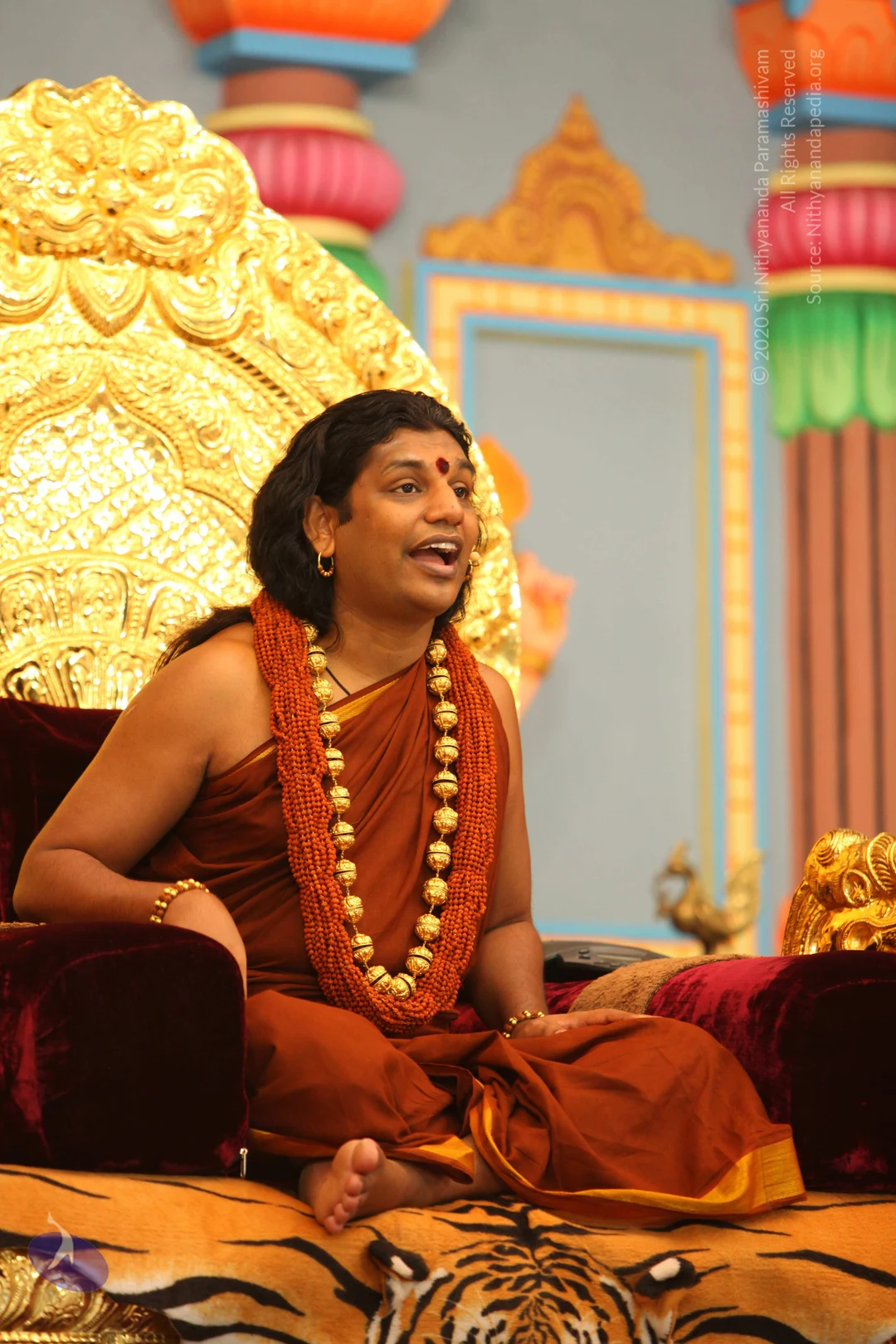
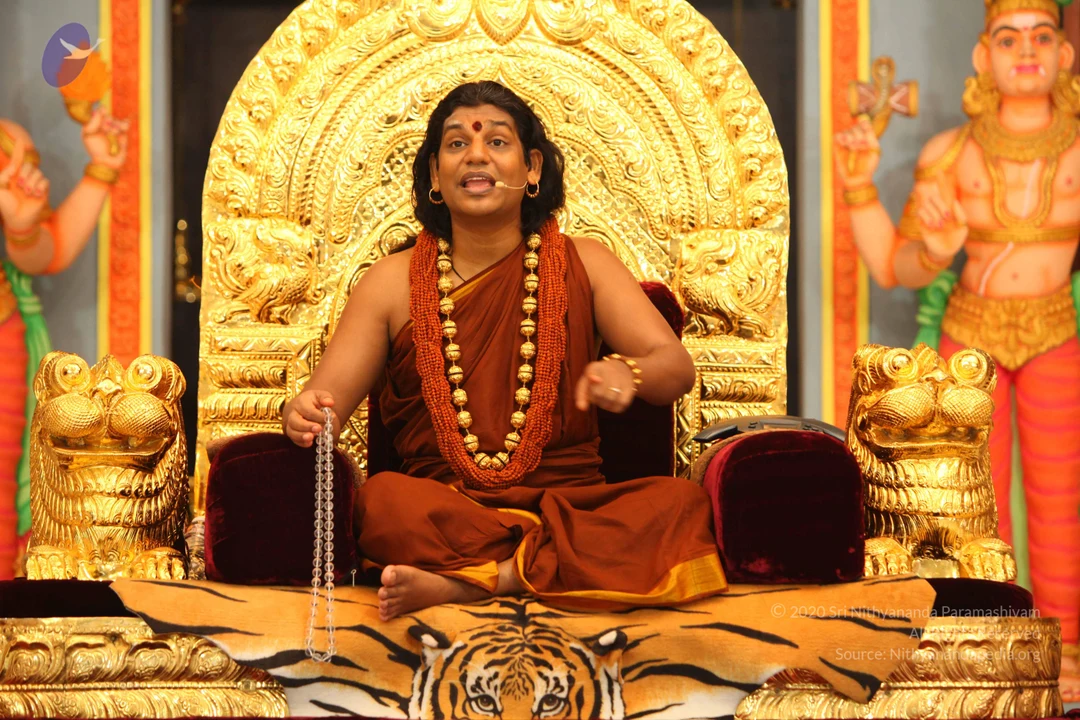
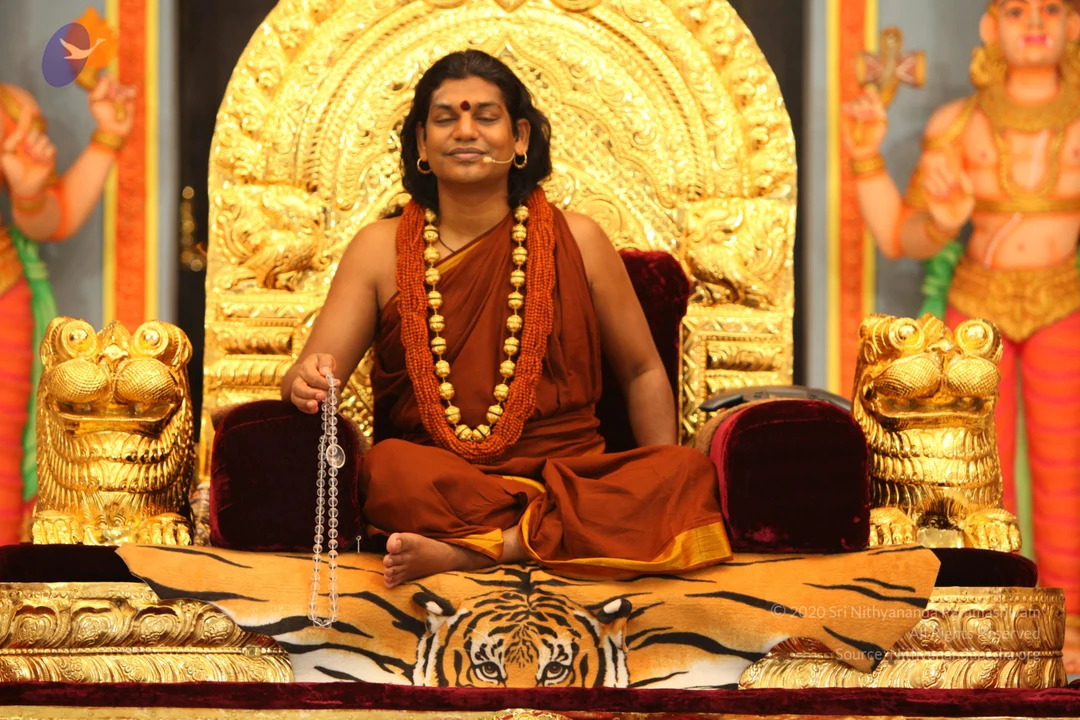
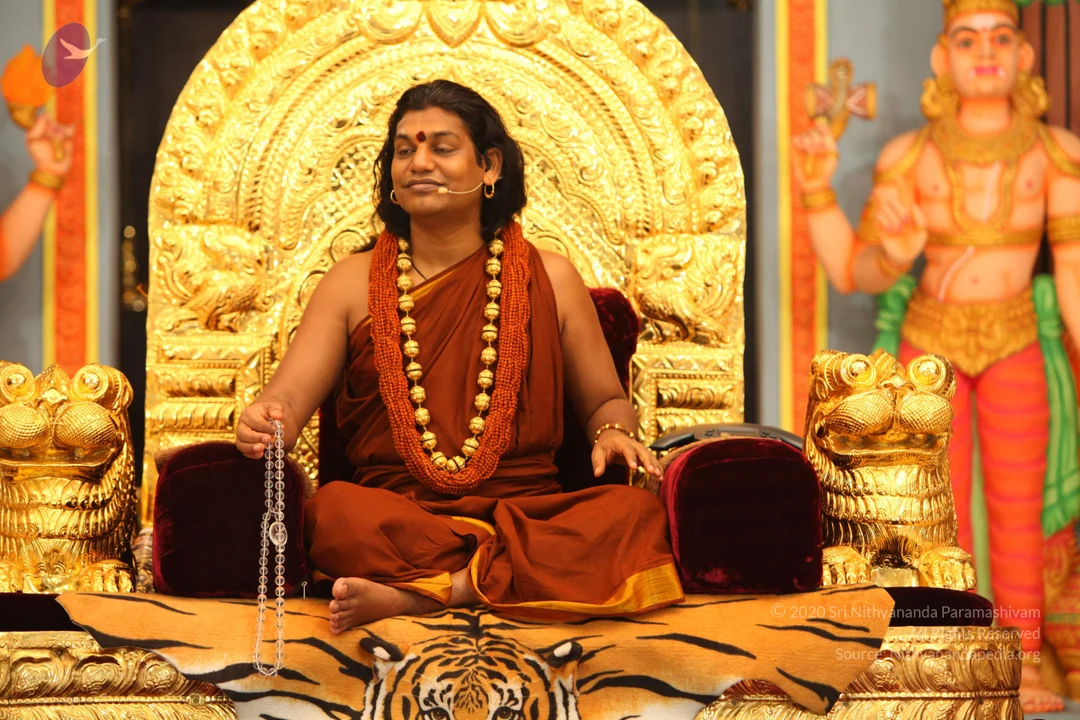
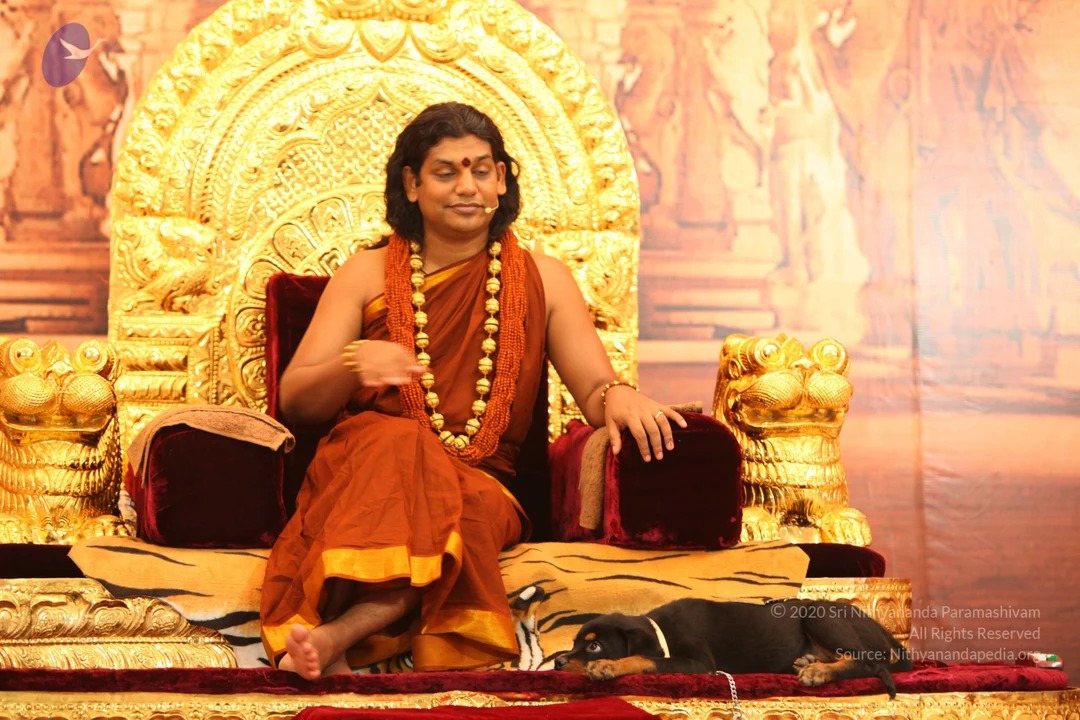
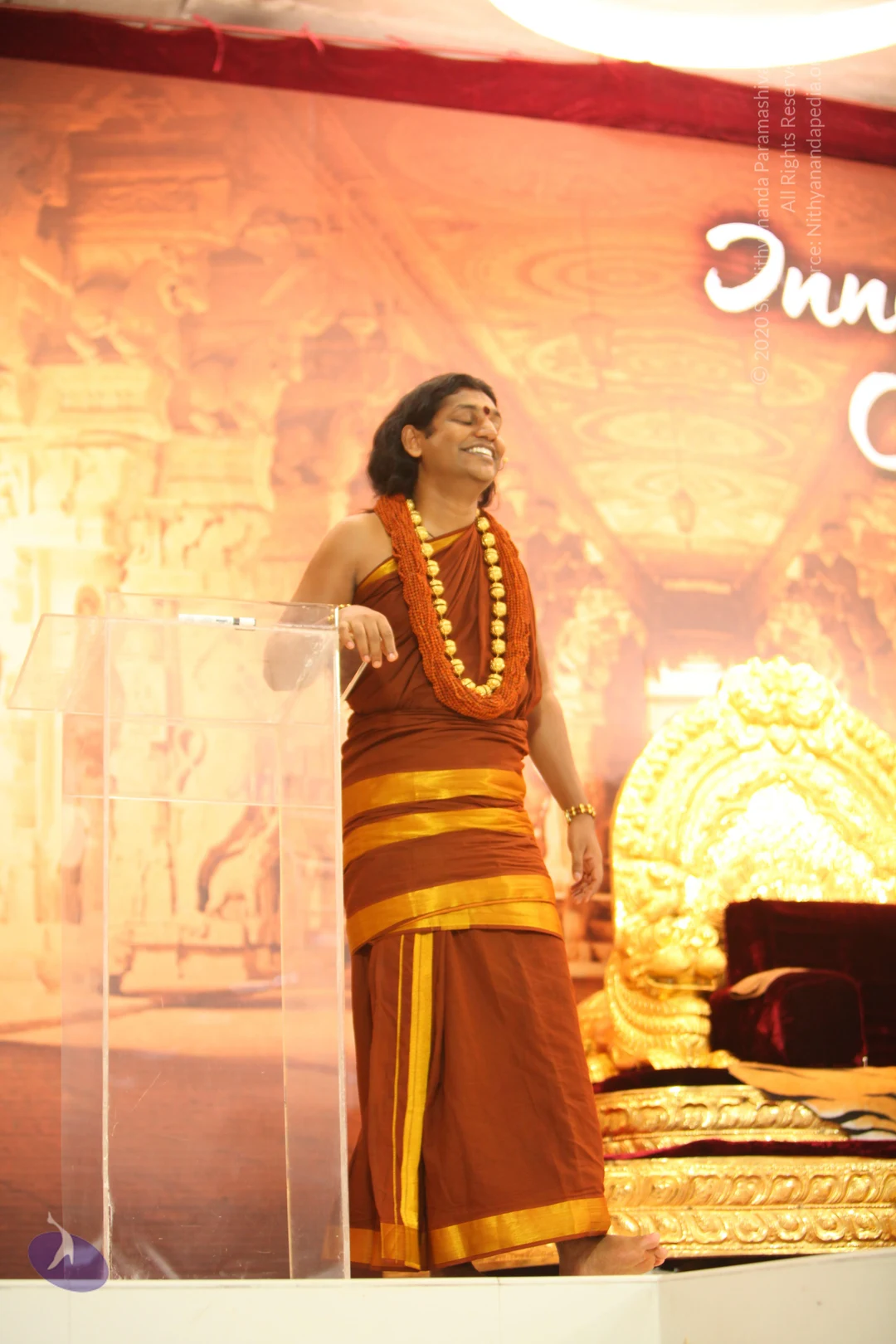
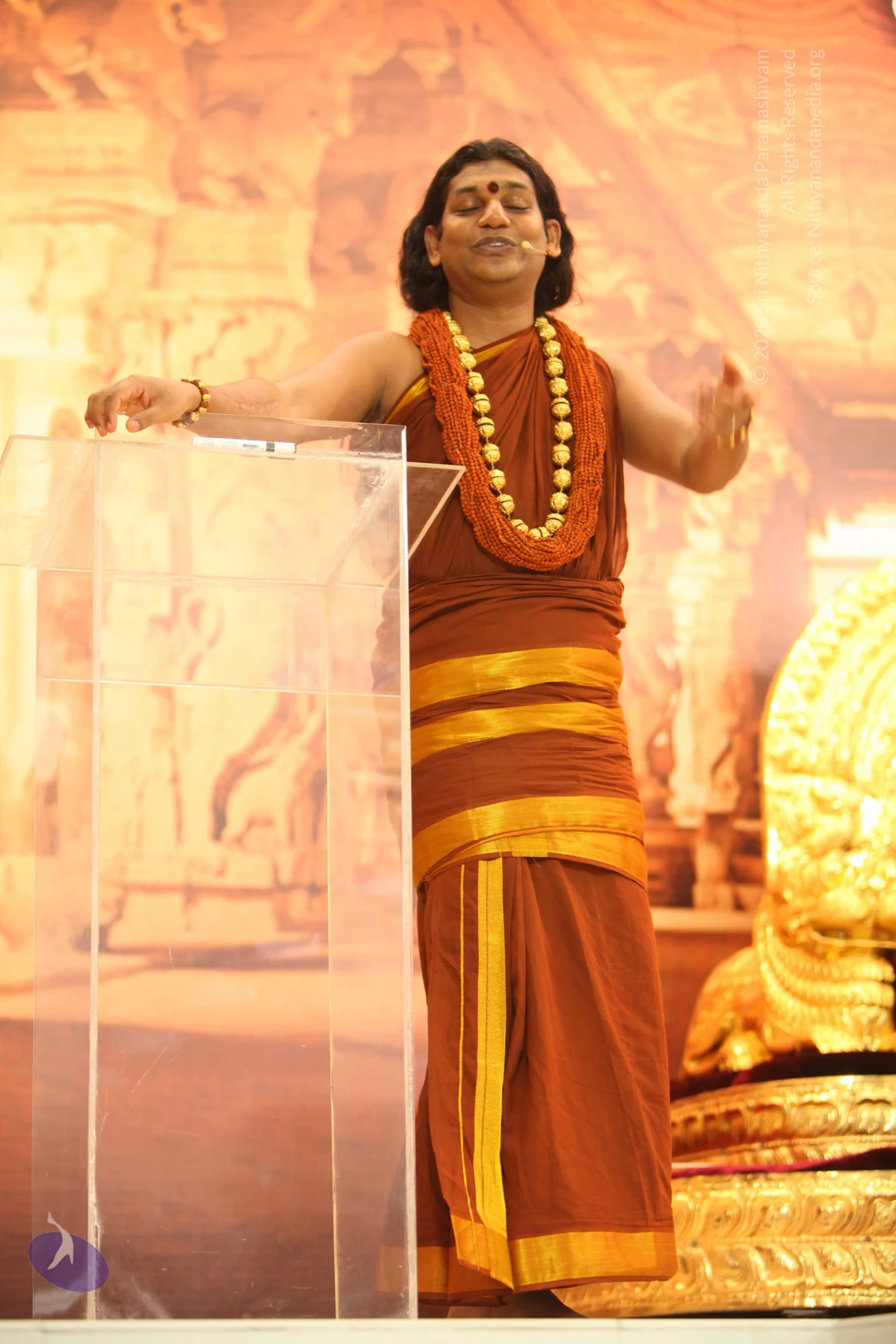
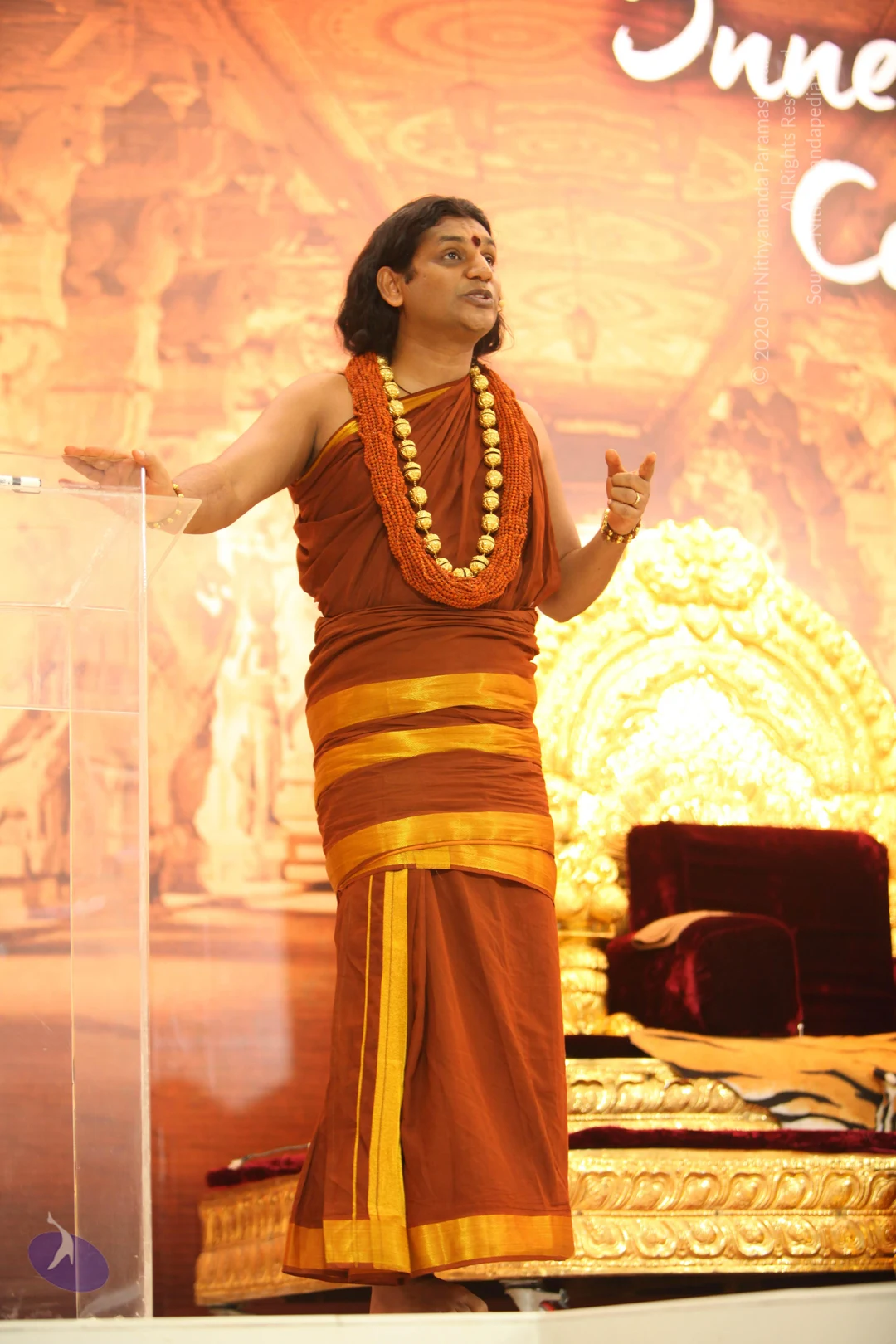
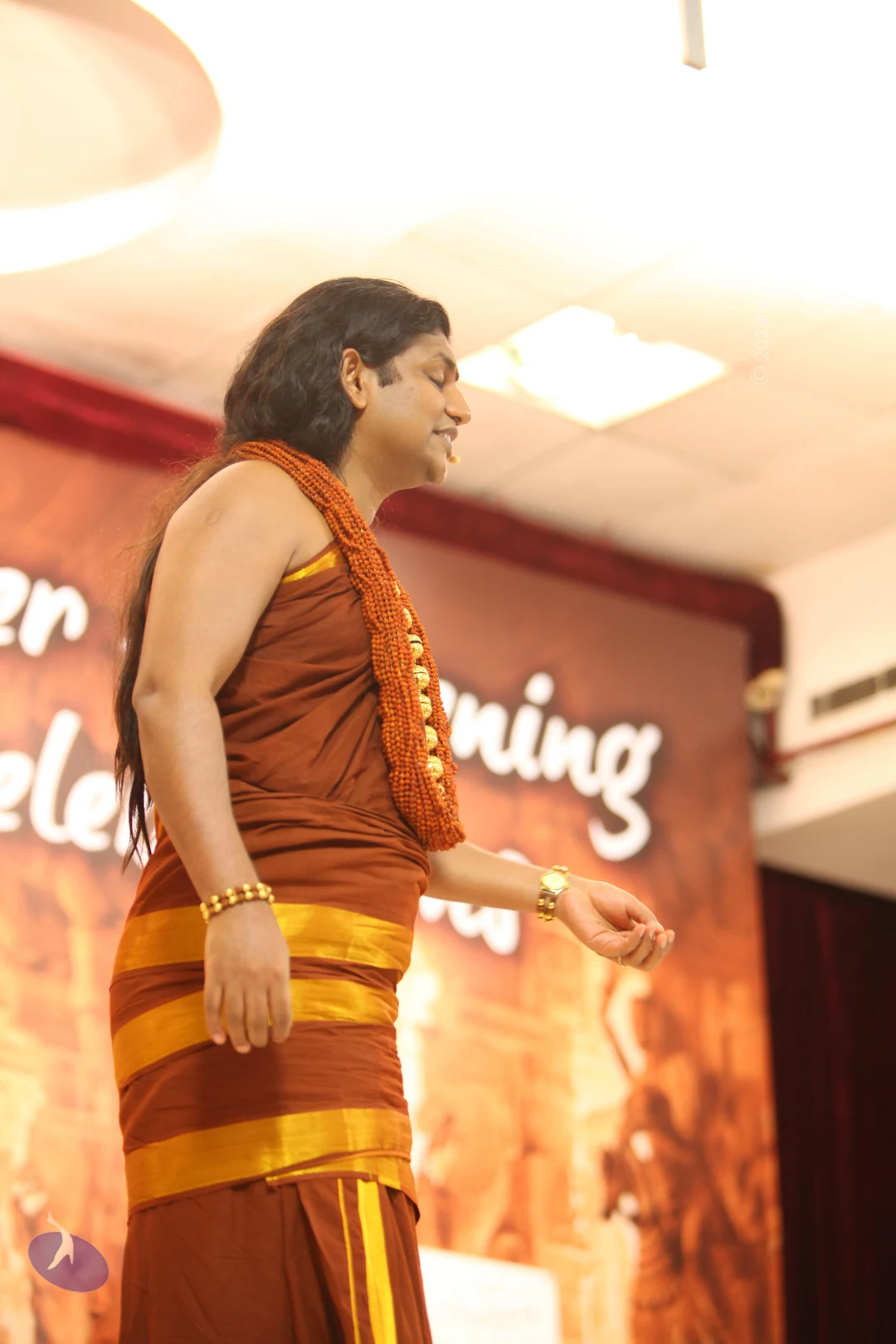
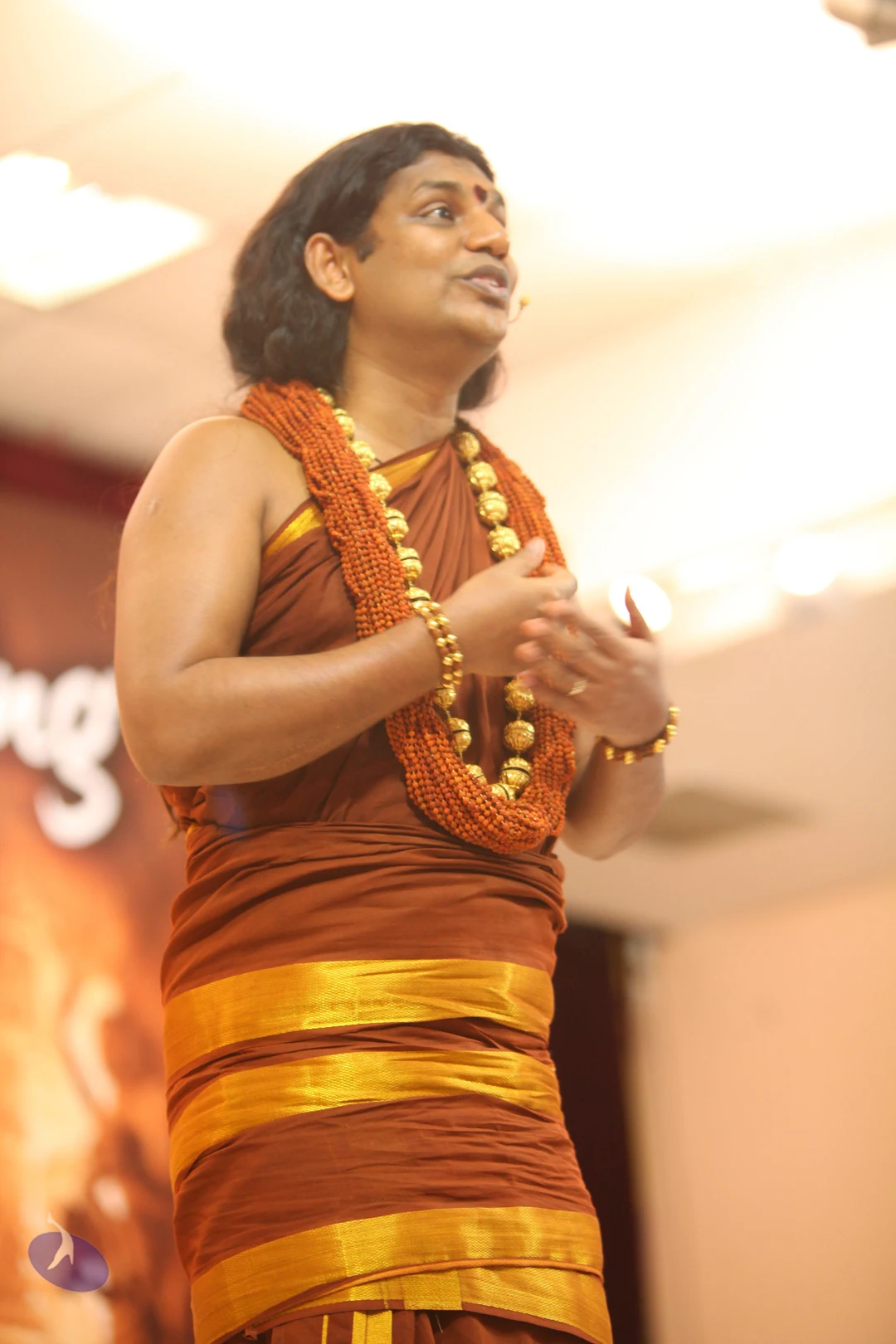
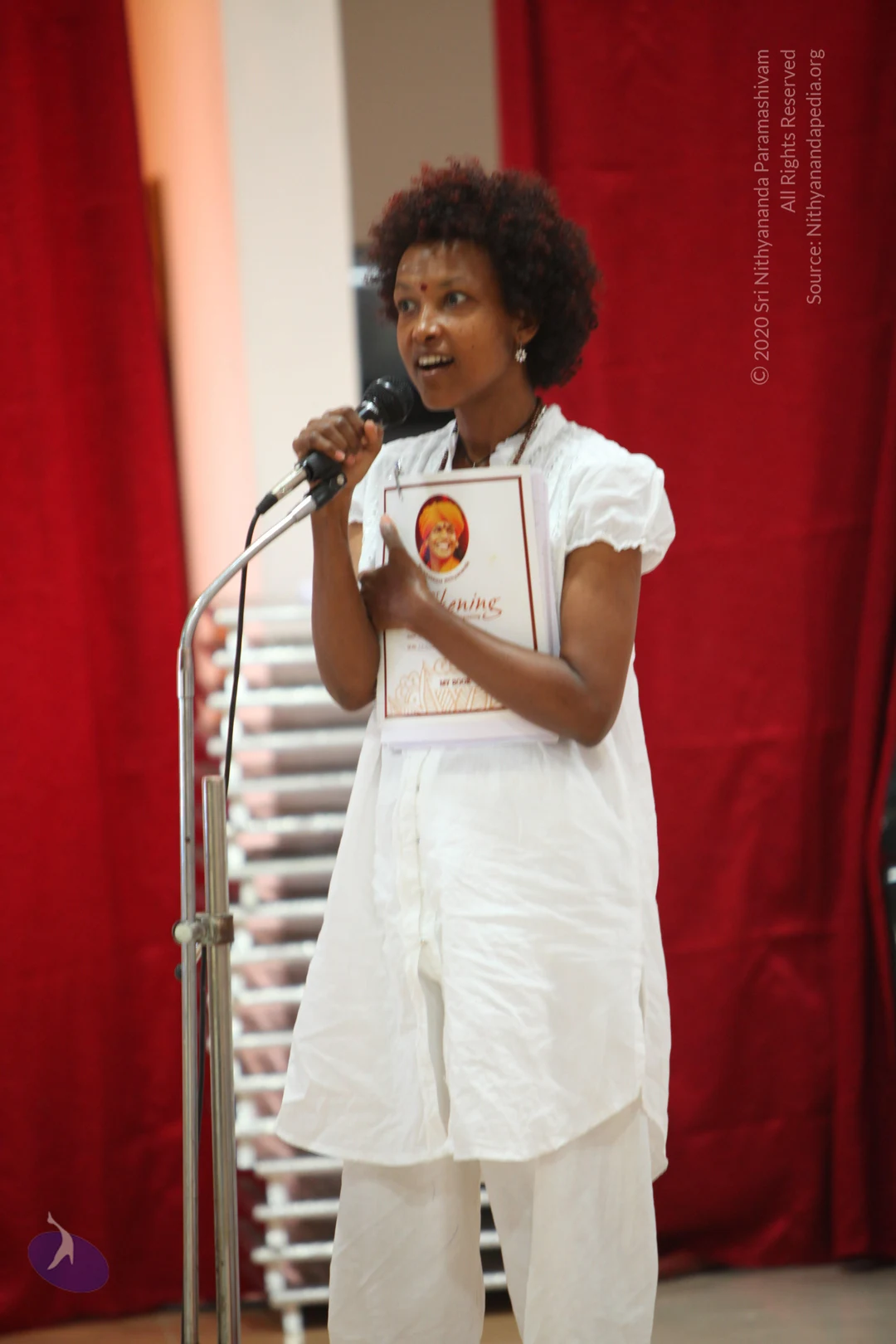
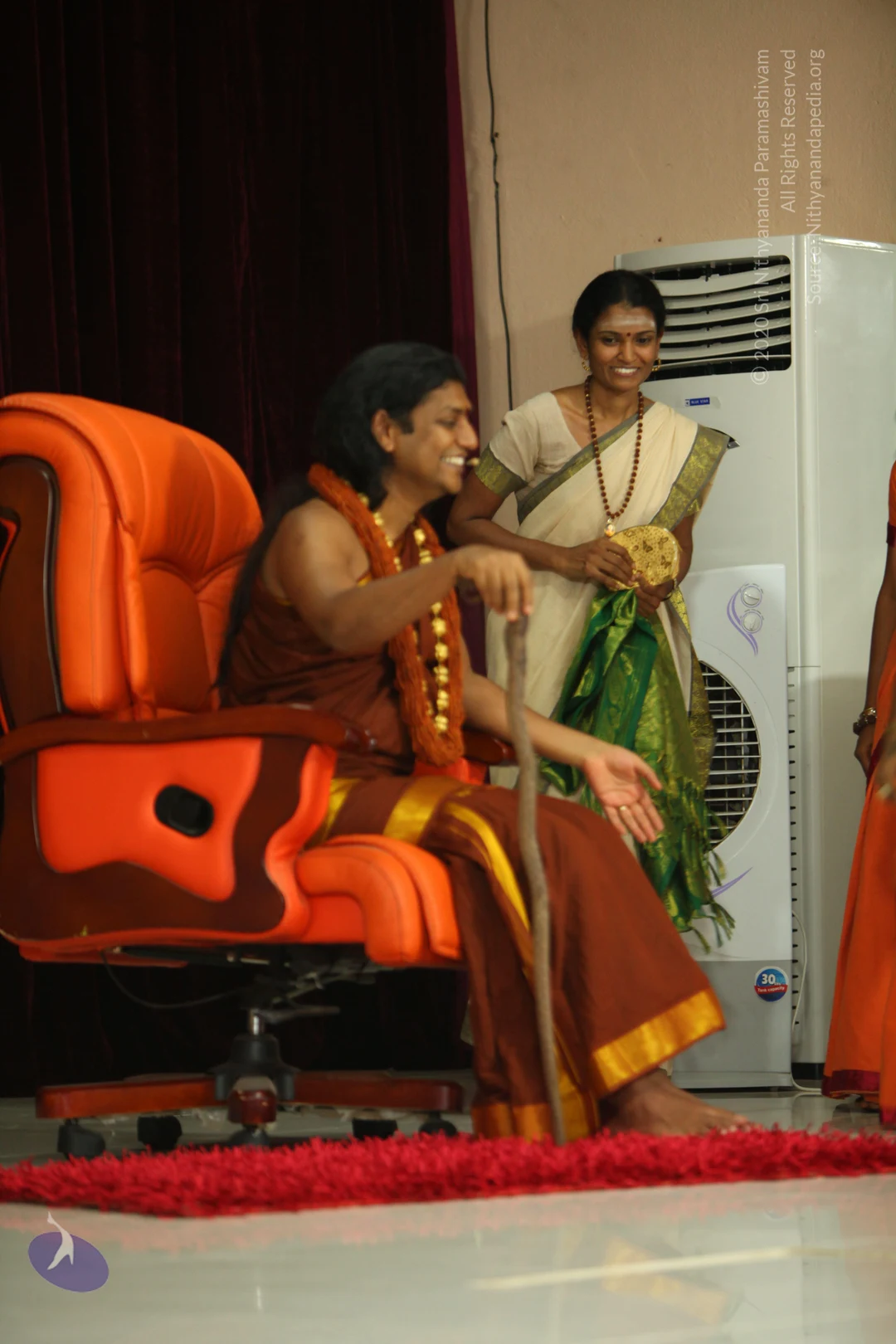
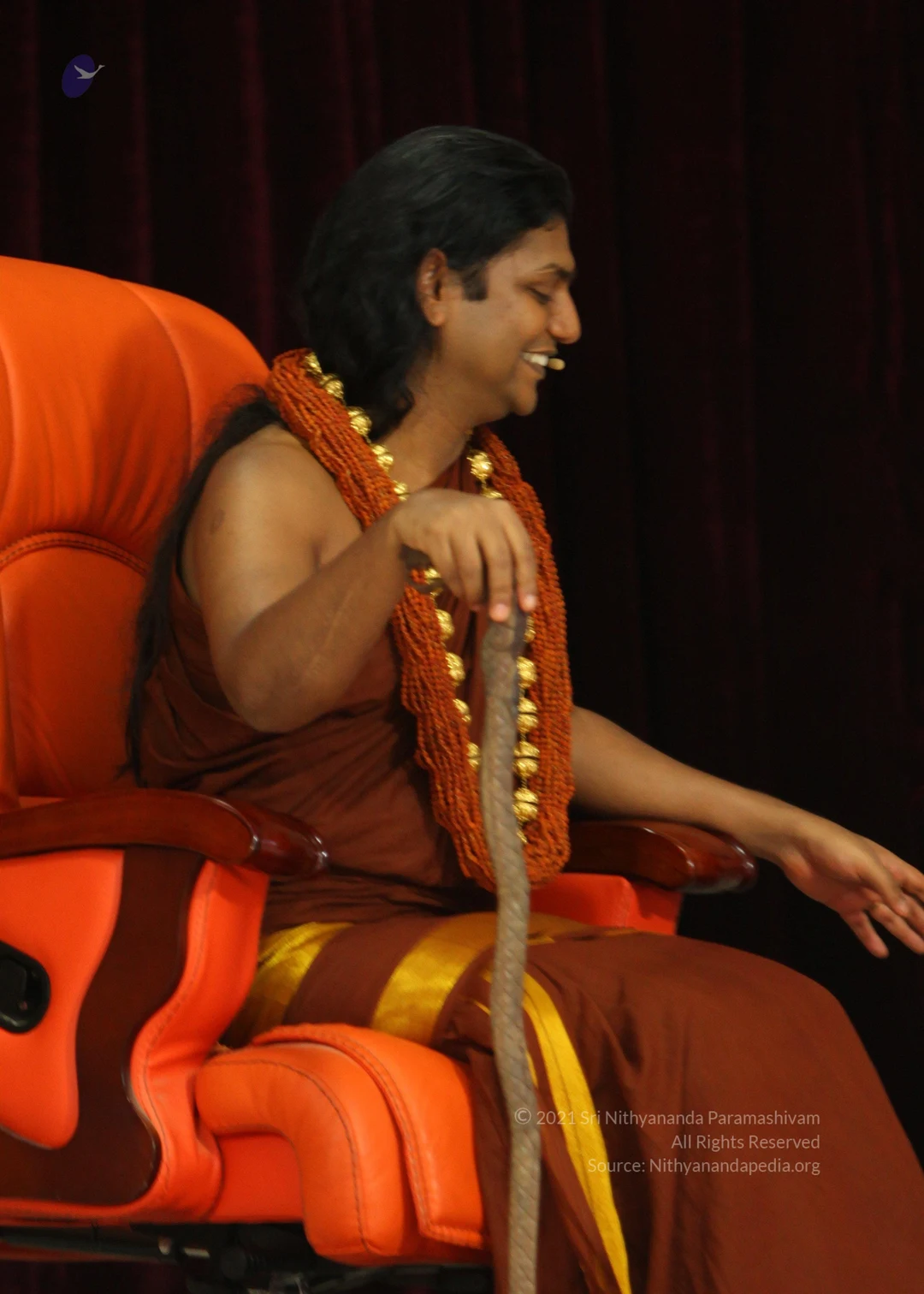
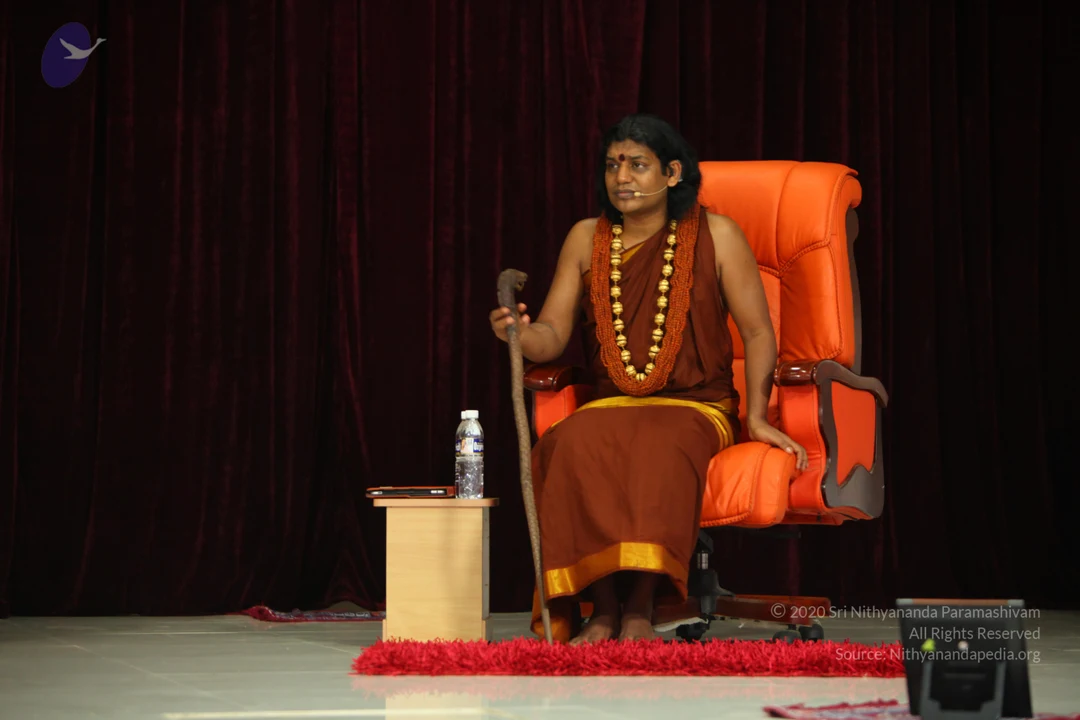
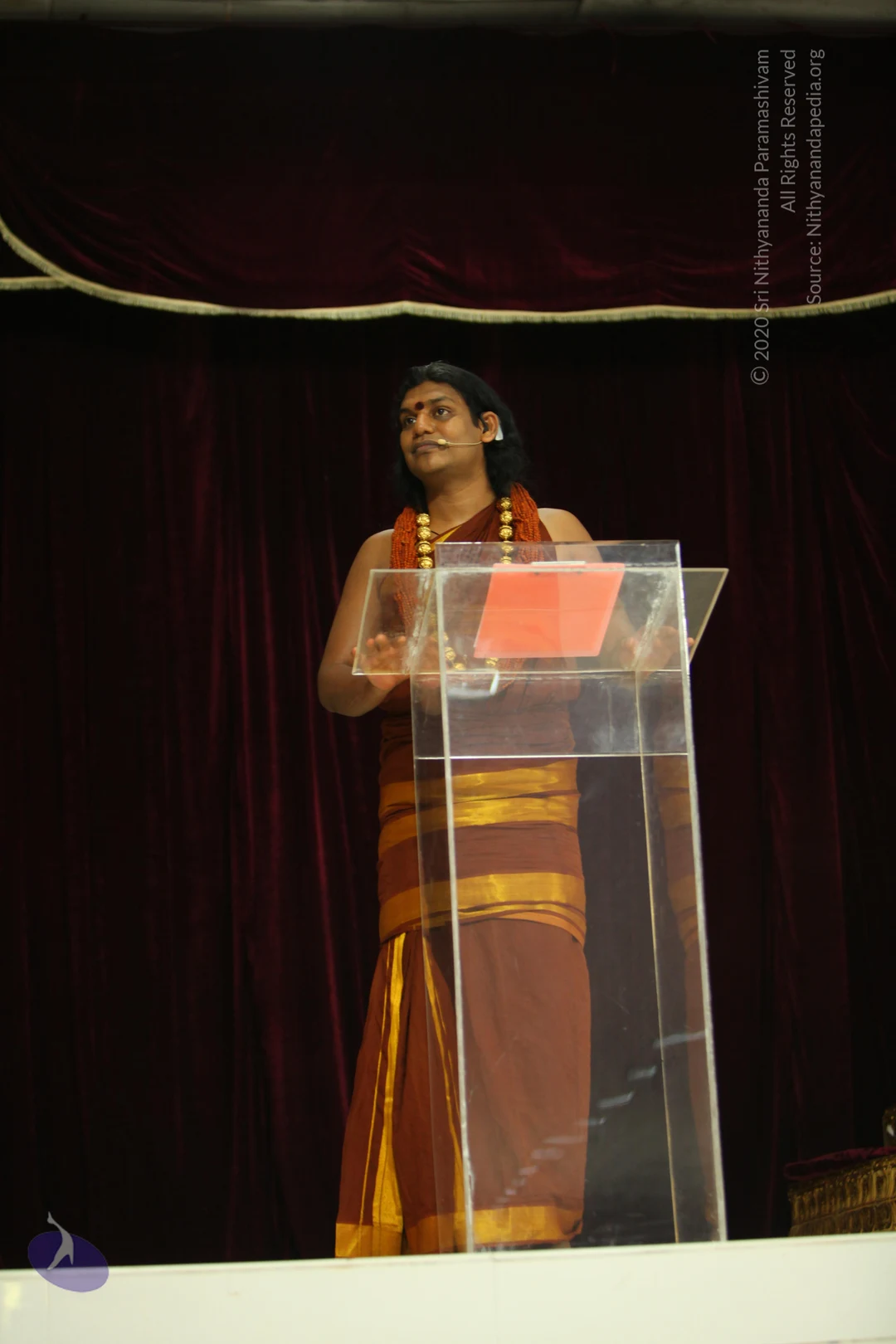
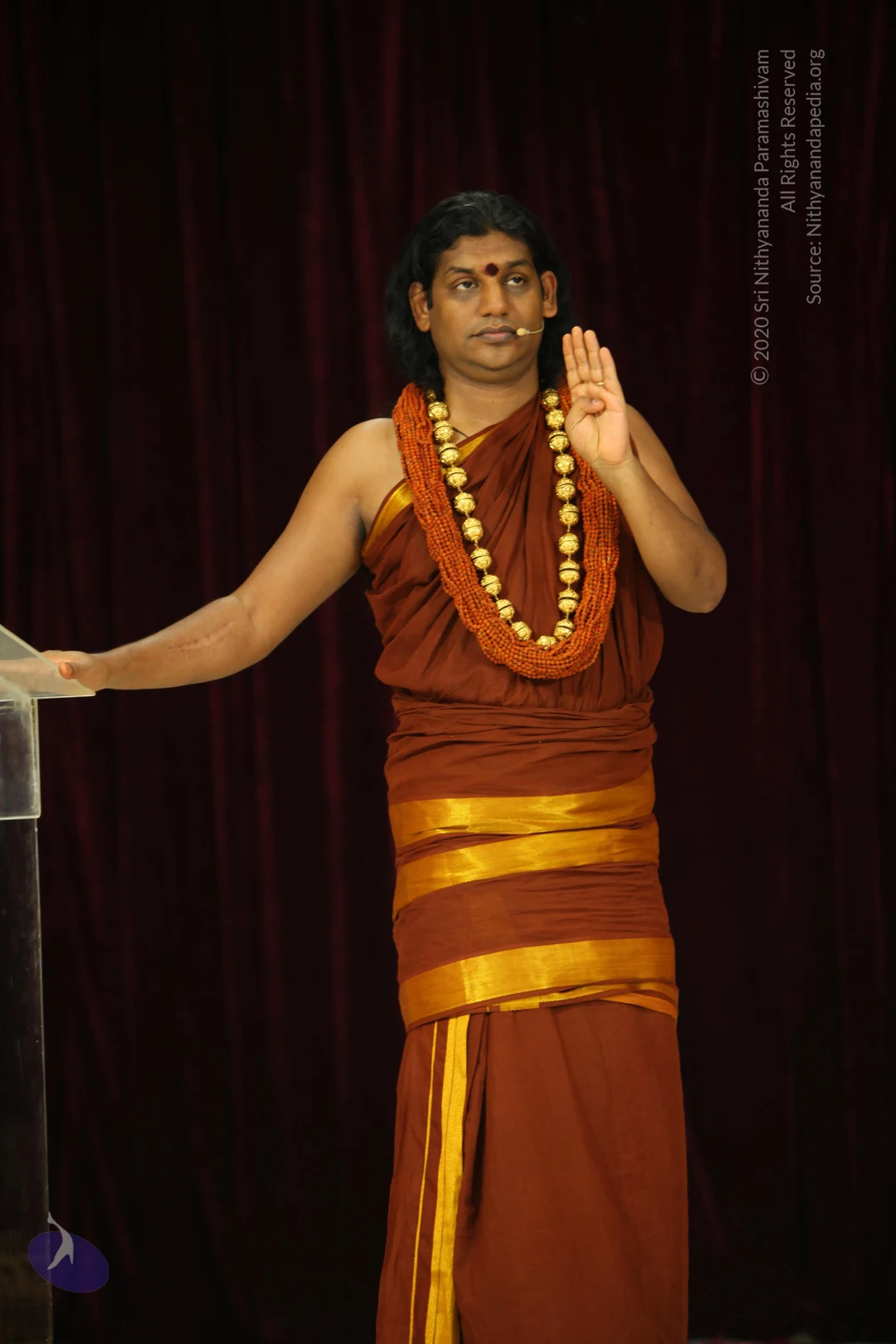
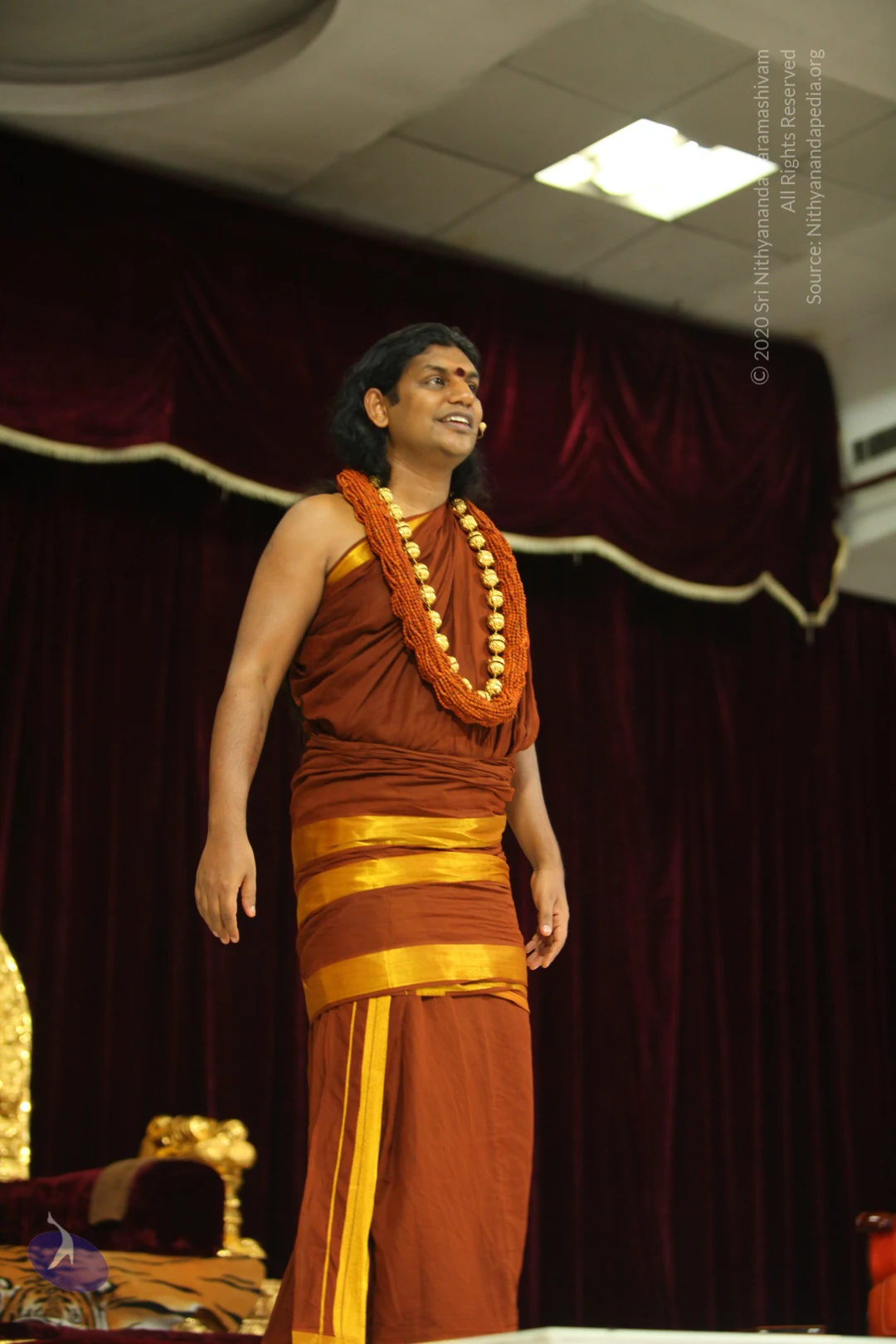
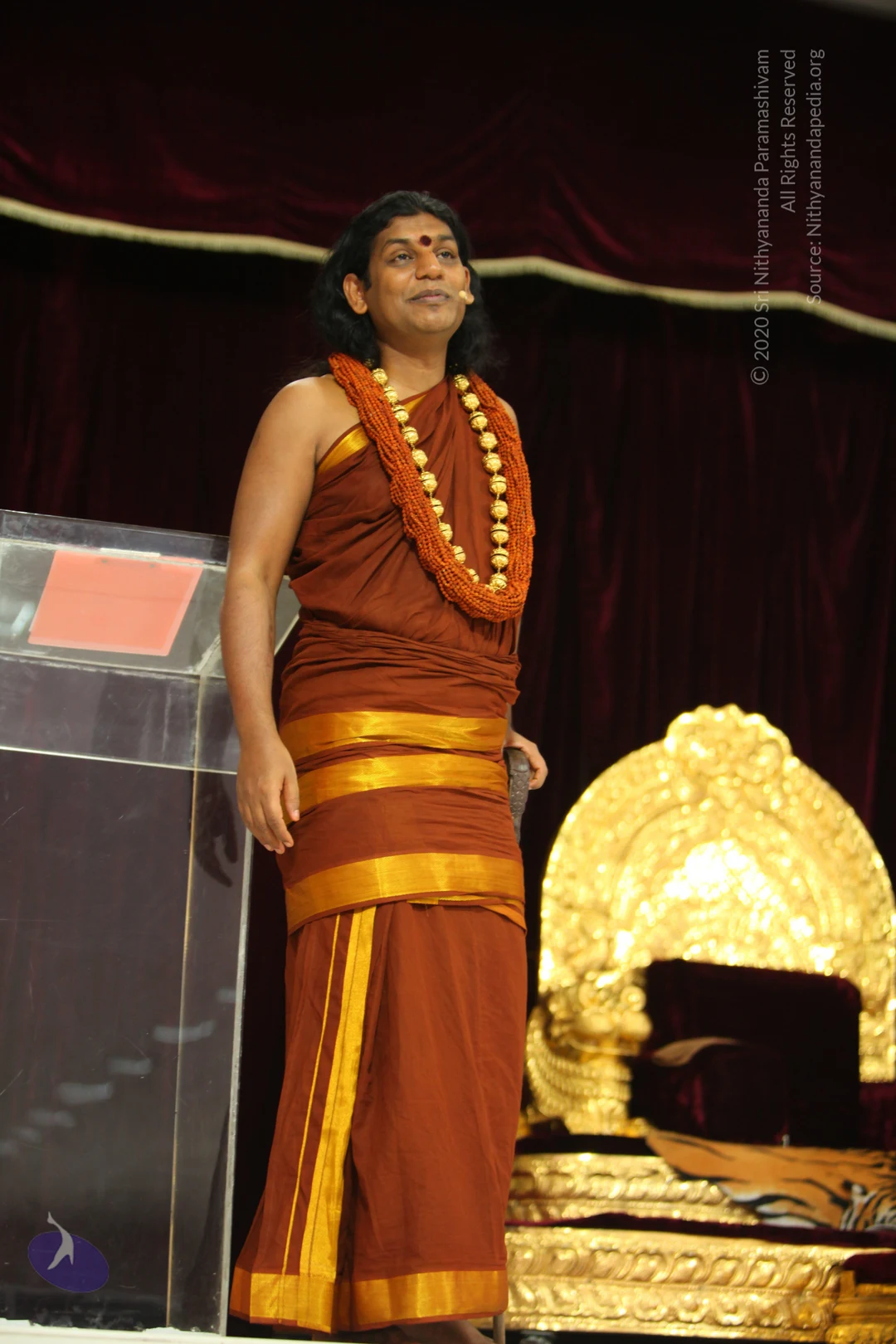
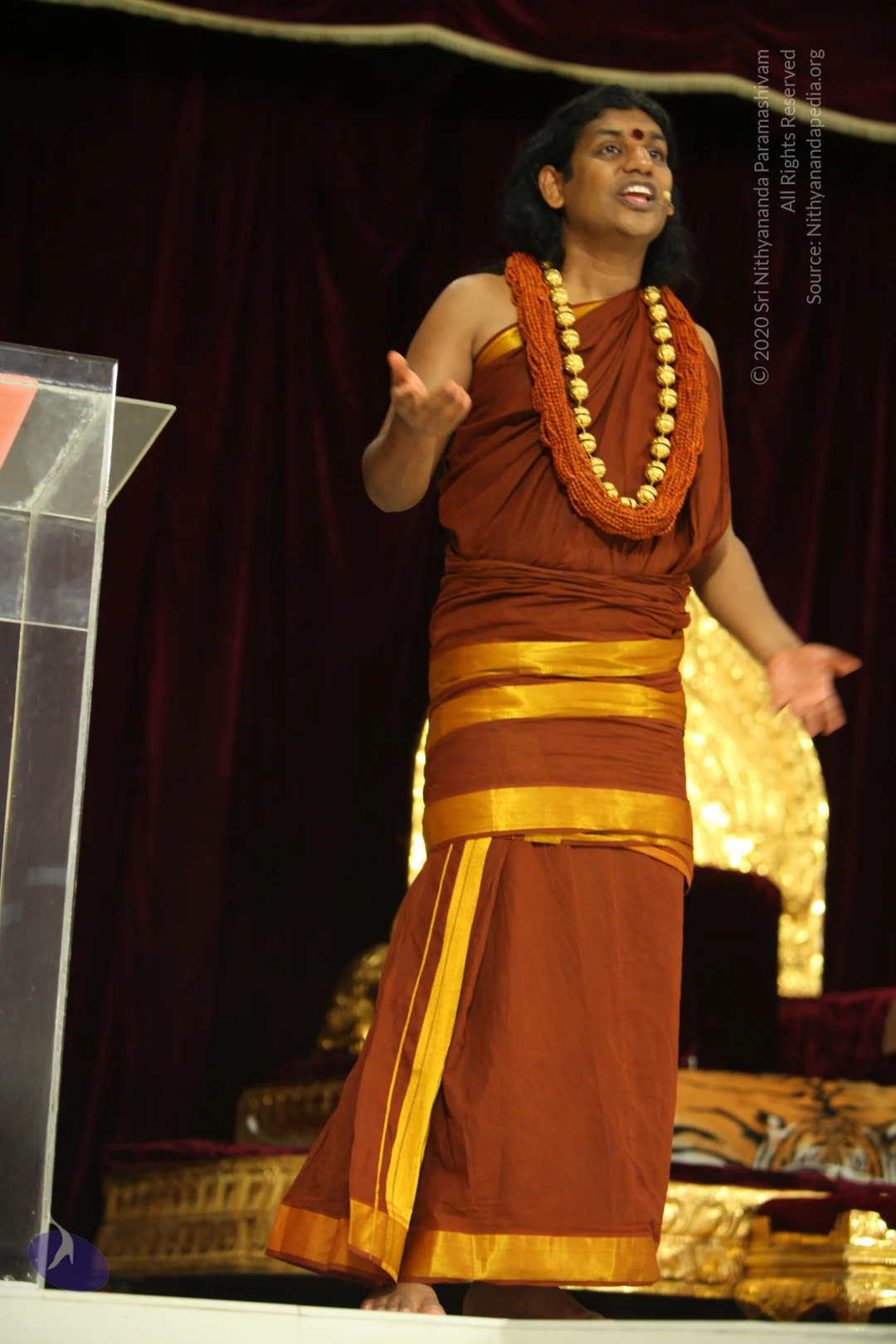
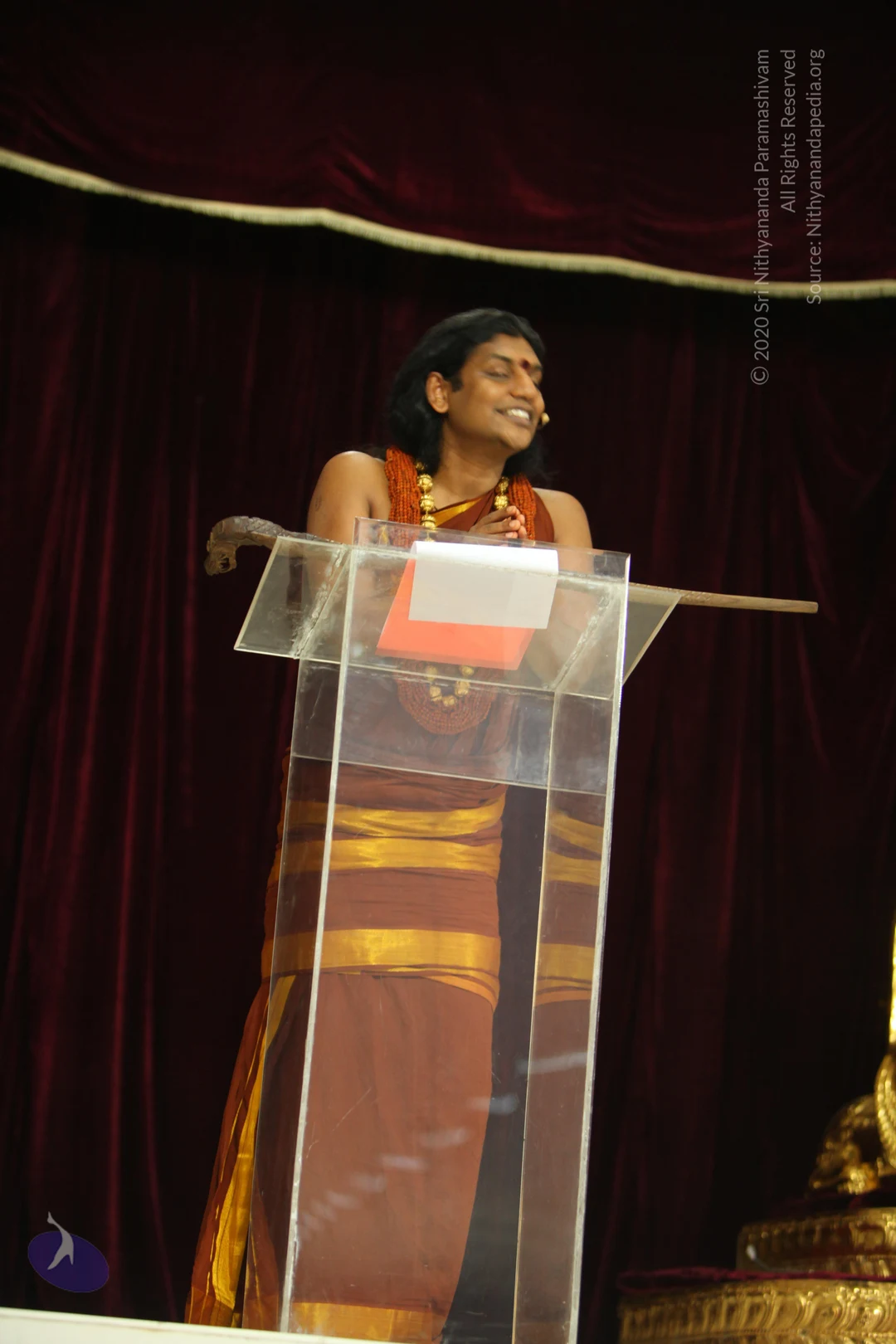
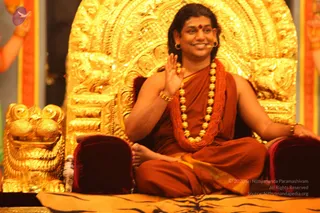
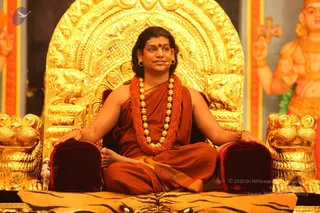
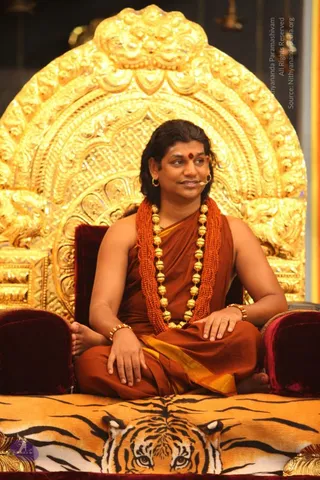
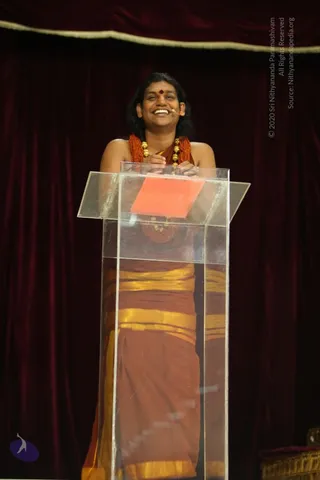
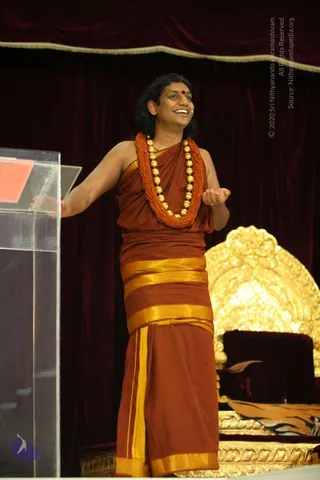
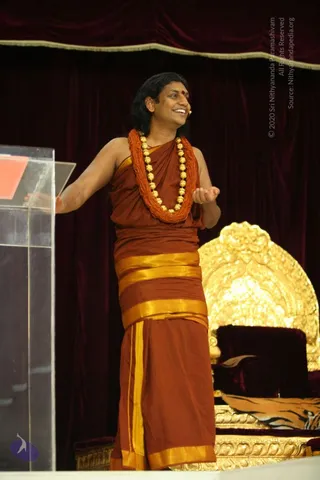
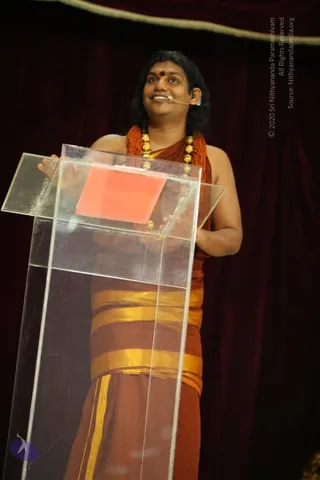
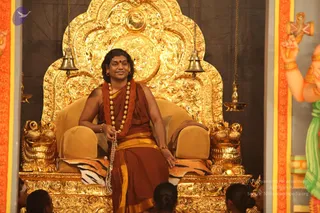
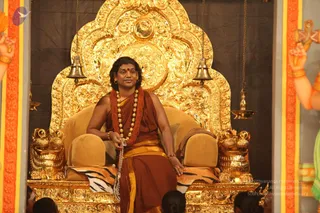
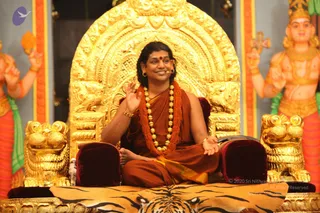
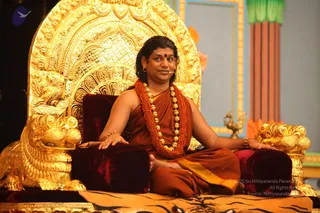
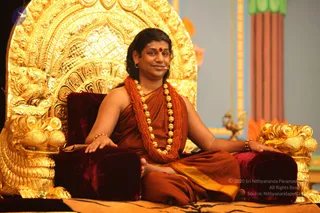
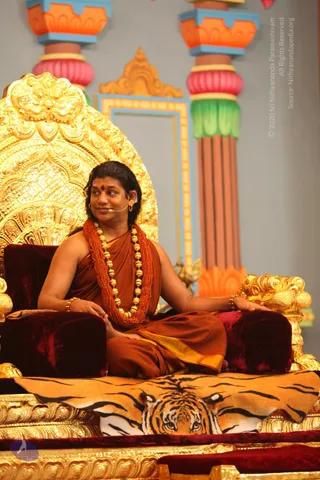
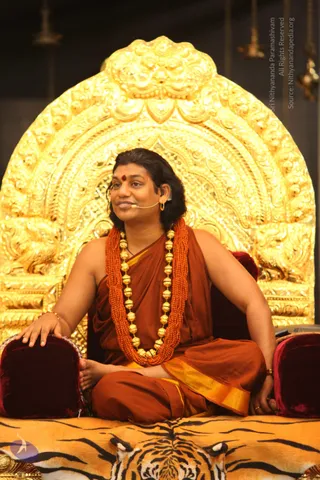
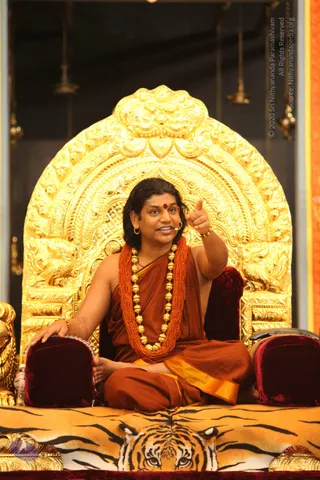
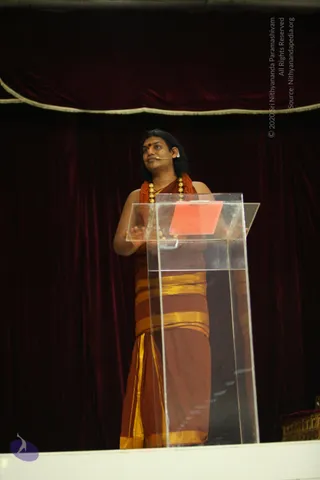
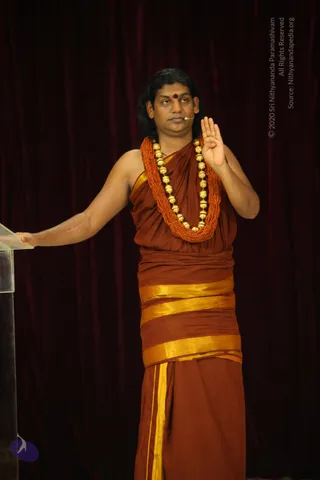
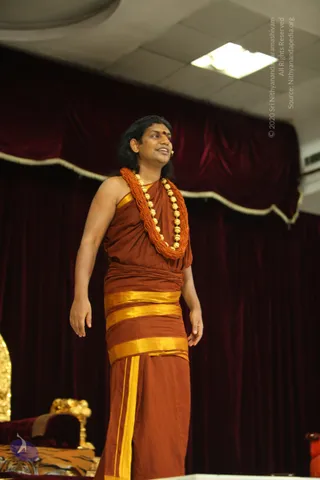
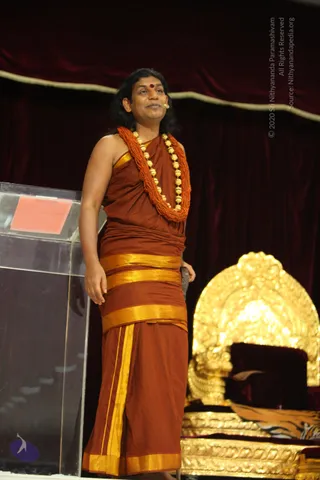
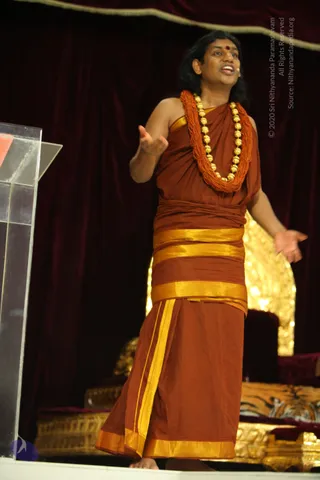
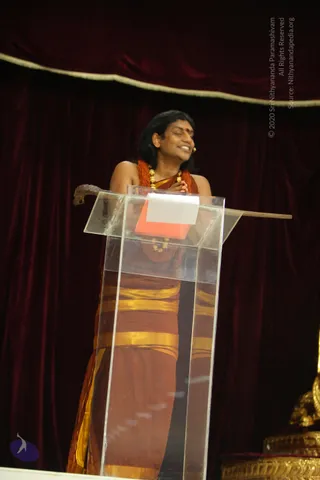
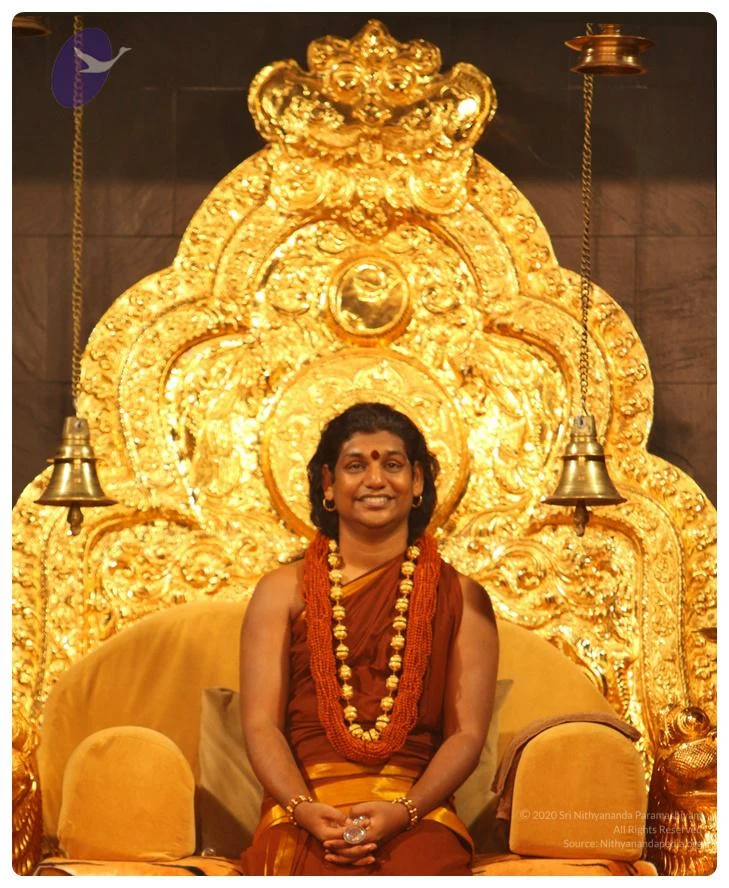
A seated person sits on an ornate gold throne with carved lion-head armrests and dark red velvet cushions, draped with a striped tiger-skin cloth. The person wears an orange-saffron cloth wrap with gold border, layered red-orange and gold beaded necklaces, gold bracelets, and a red bindi, with long dark swept-back hair, and smiles while looking to the side with a small microphone visible. A black and tan Rottweiler puppy lies on the lower red velvet platform at right. Behind is a painted backdrop of temple-style architecture in gold and beige tones. The person's flagged identity is unverified; the appearance cues are a saffron wrap, layered ornate beads and swept-back hair seated on a throne, so the candidate is an appearance-based probable match.A smiling man in a rust-orange and gold-bordered dhoti and shawl stands beside a clear acrylic lectern, one hand resting on its top, wearing a small headset microphone. He wears a long orange rudraksha mala with large gold beads and a gold bracelet. Behind him is a warm orange backdrop carved with temple sculpture, and a large gold-plated deity murti or ornate gold seat sits at the right edge. Swamiji (probable) is present in appearance-based terms: long swept-back hair, a red bindi, orange ornate clothing and a rudraksha mala with gold beads, speaking as a satsang discourse speaker at a lectern.A man stands on a stage speaking into a headset microphone, smiling and gesturing with his right index finger raised. He has long dark hair swept back and wears a rust-orange sannyasi-style wrap with broad gold borders, a gold-bordered dhoti, and a multi-strand orange rudraksha-style mala with gold beads around his neck. He holds a tall wooden staff in his left hand. Behind him is a deep maroon velvet drape, and to the left a large gold-covered ornate throne or peetha glows under stage lights. a person is shown speaking in the role of a teacher giving a satsang discourse. The photo was taken from the side at an angle.

May 09 2013

Original wiki page
Contents

Title

Break the Pattern of "Not Possible"

Description:

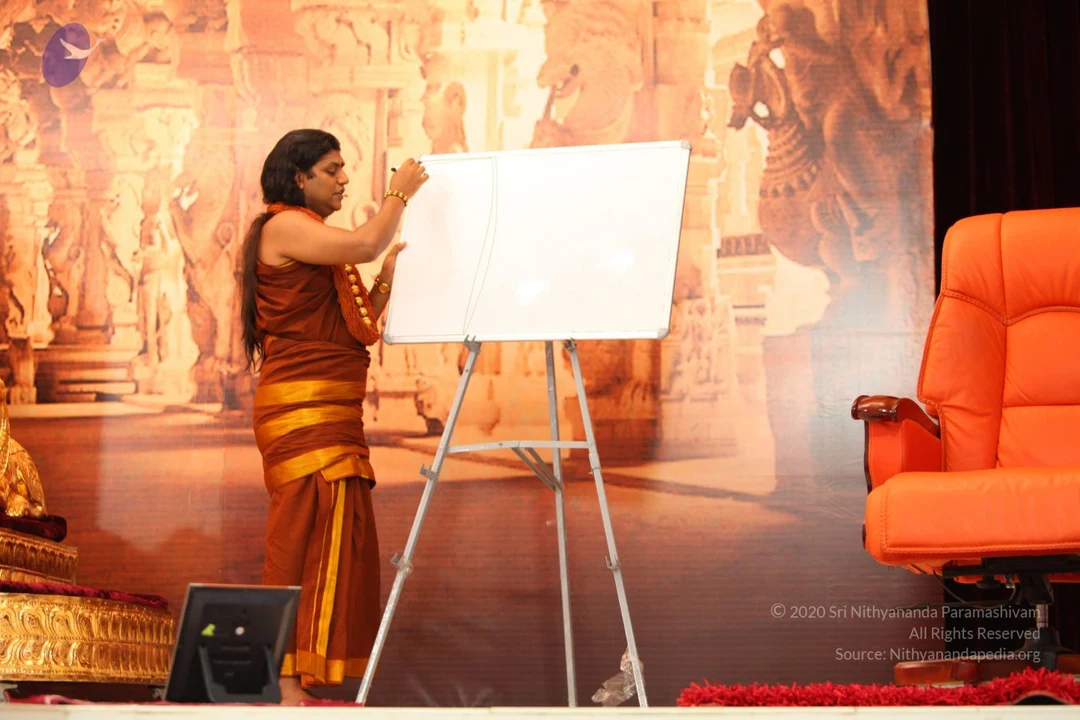
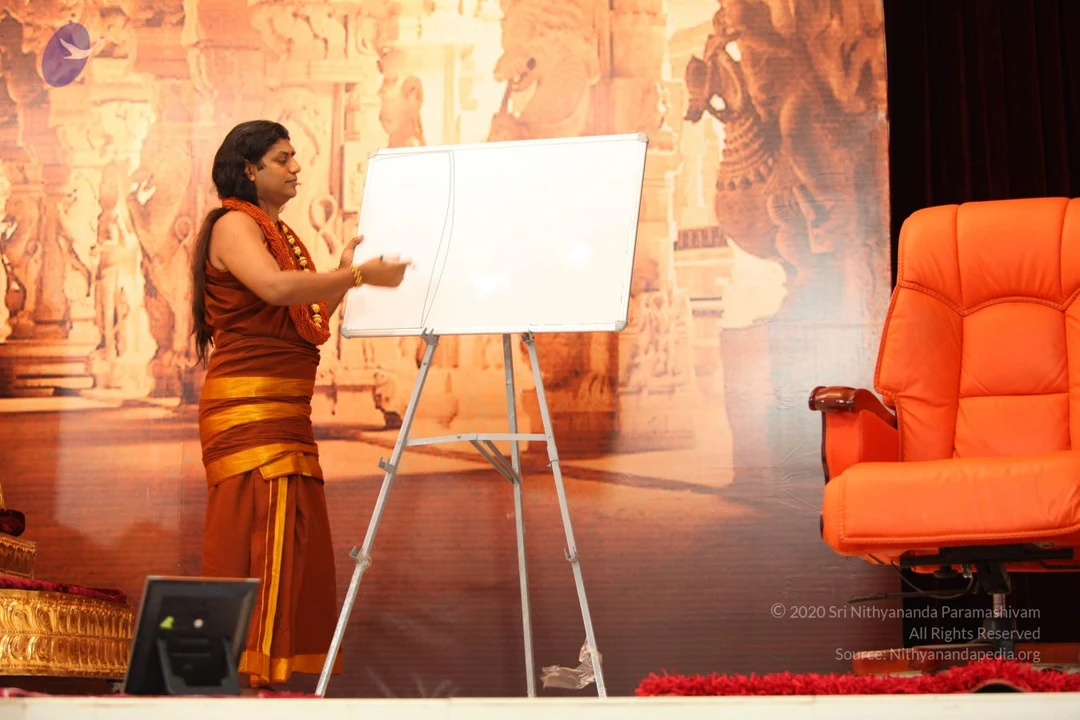
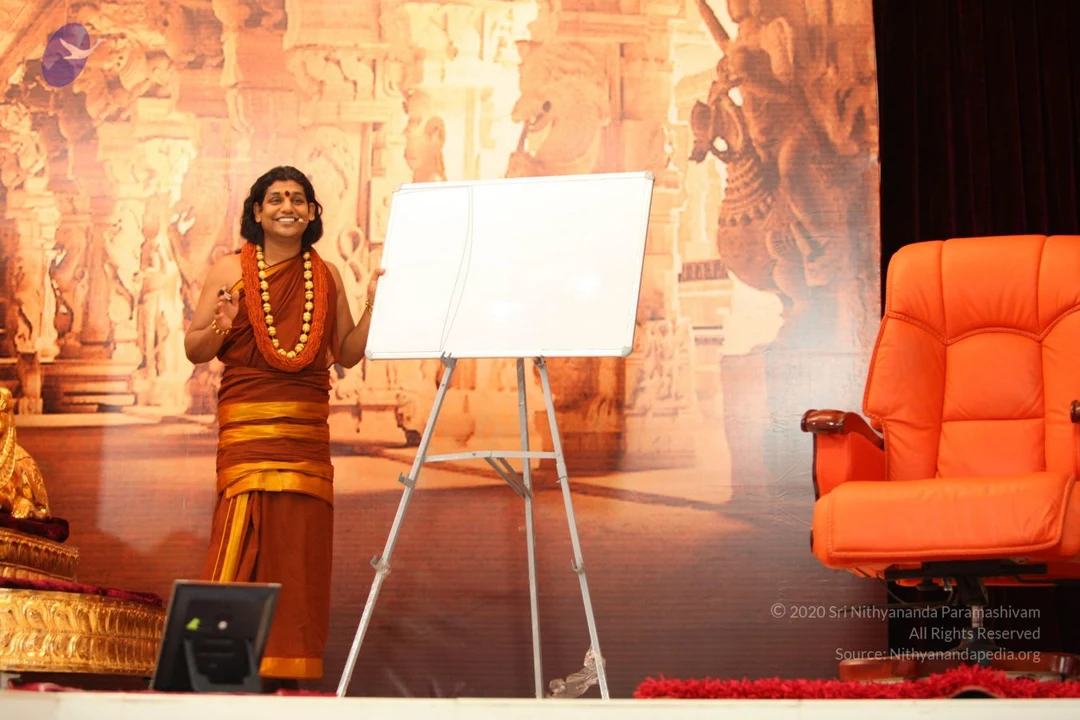
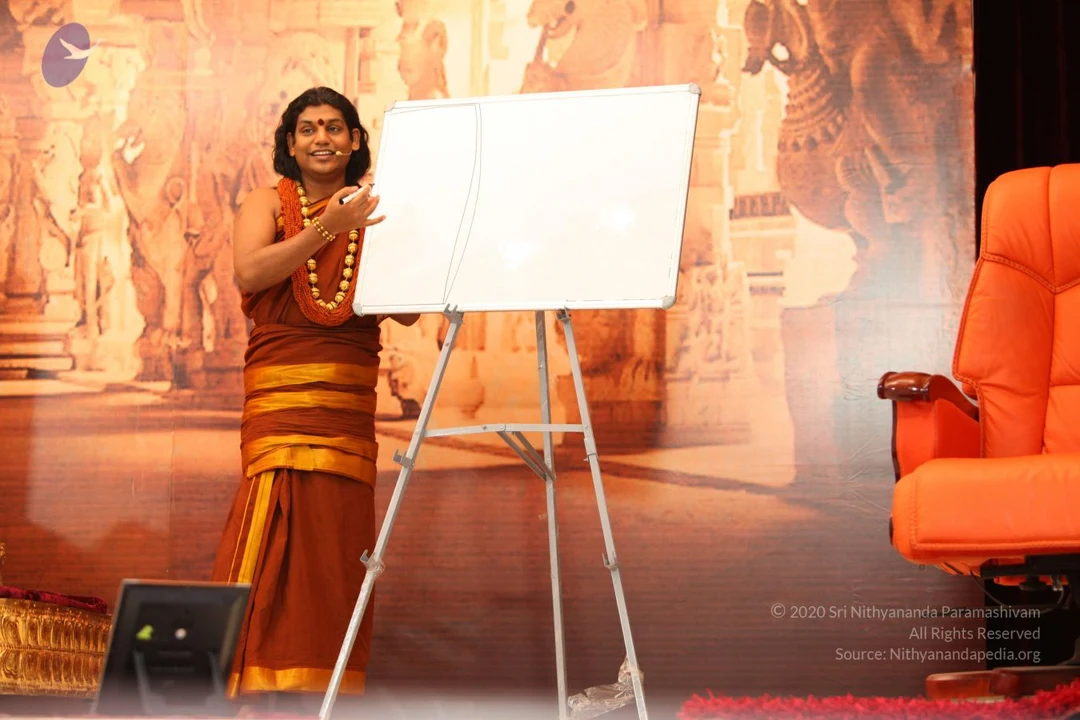
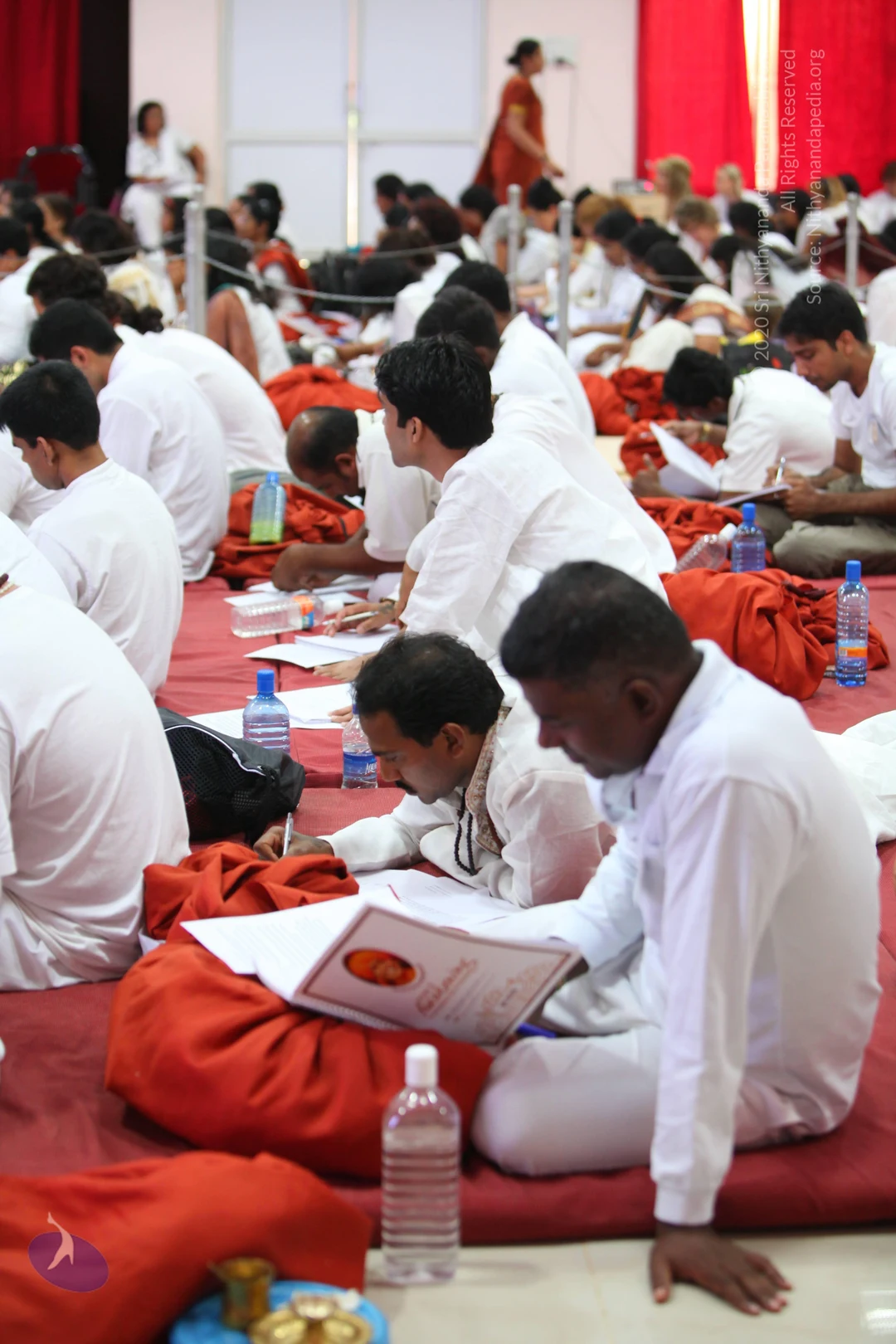
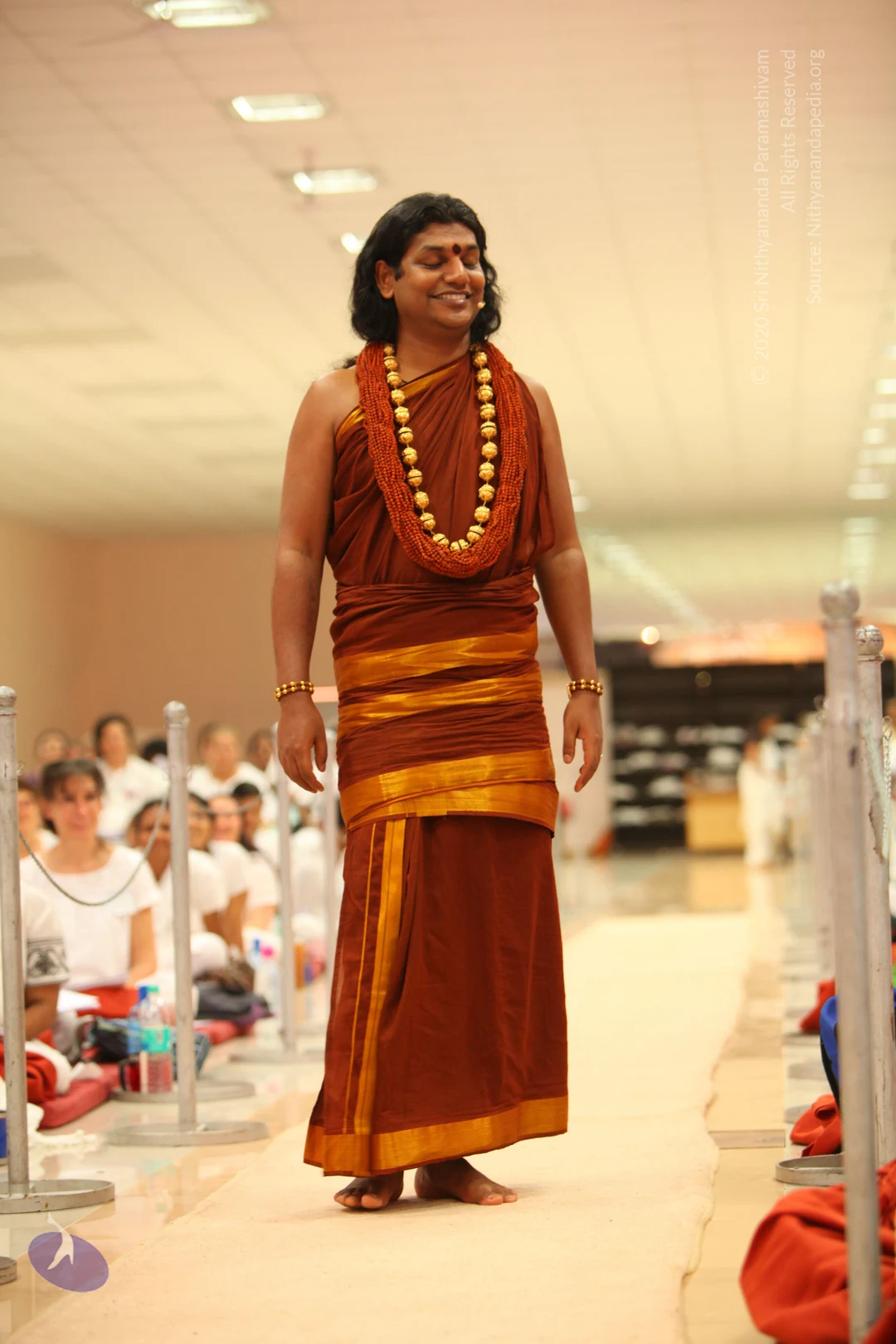
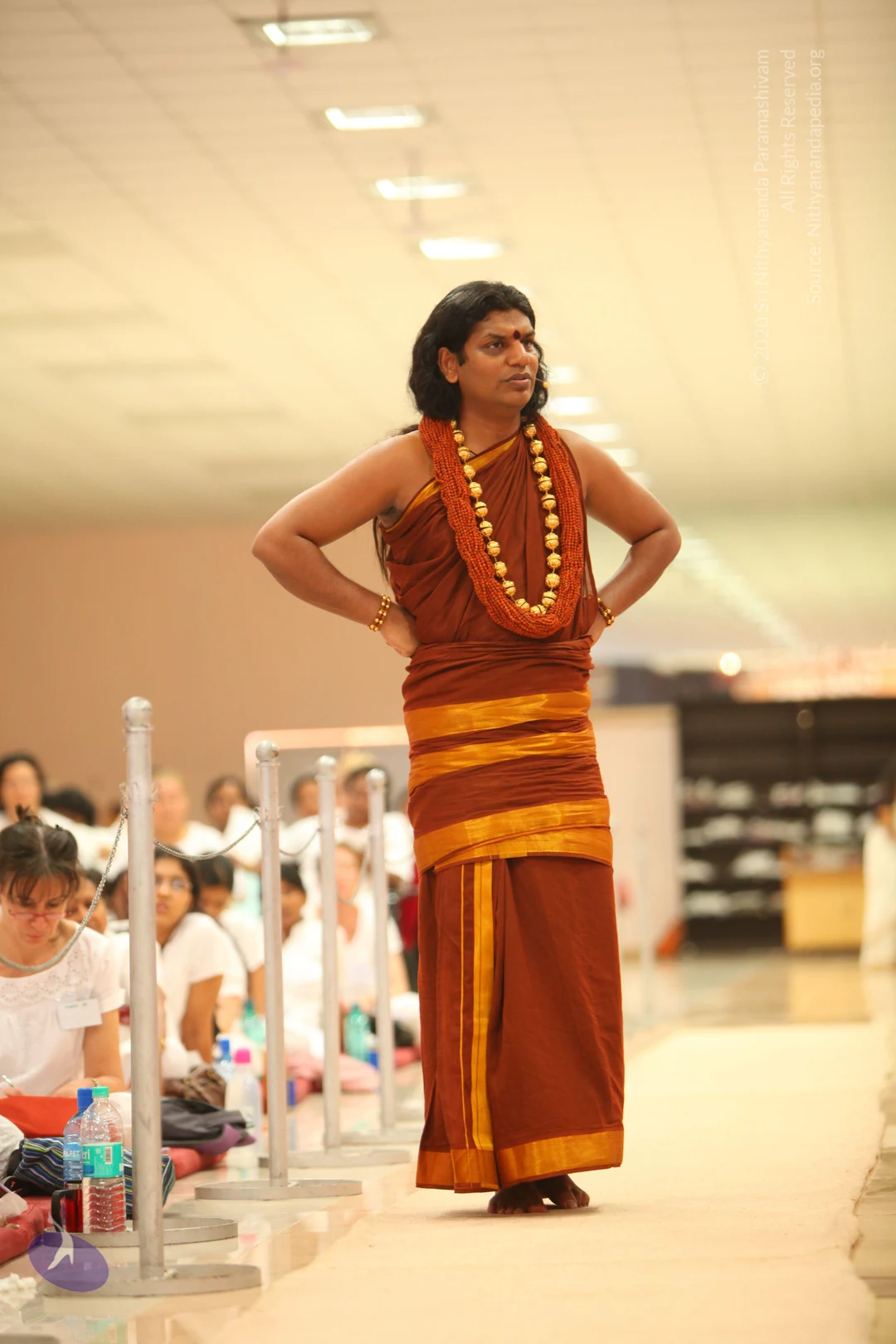
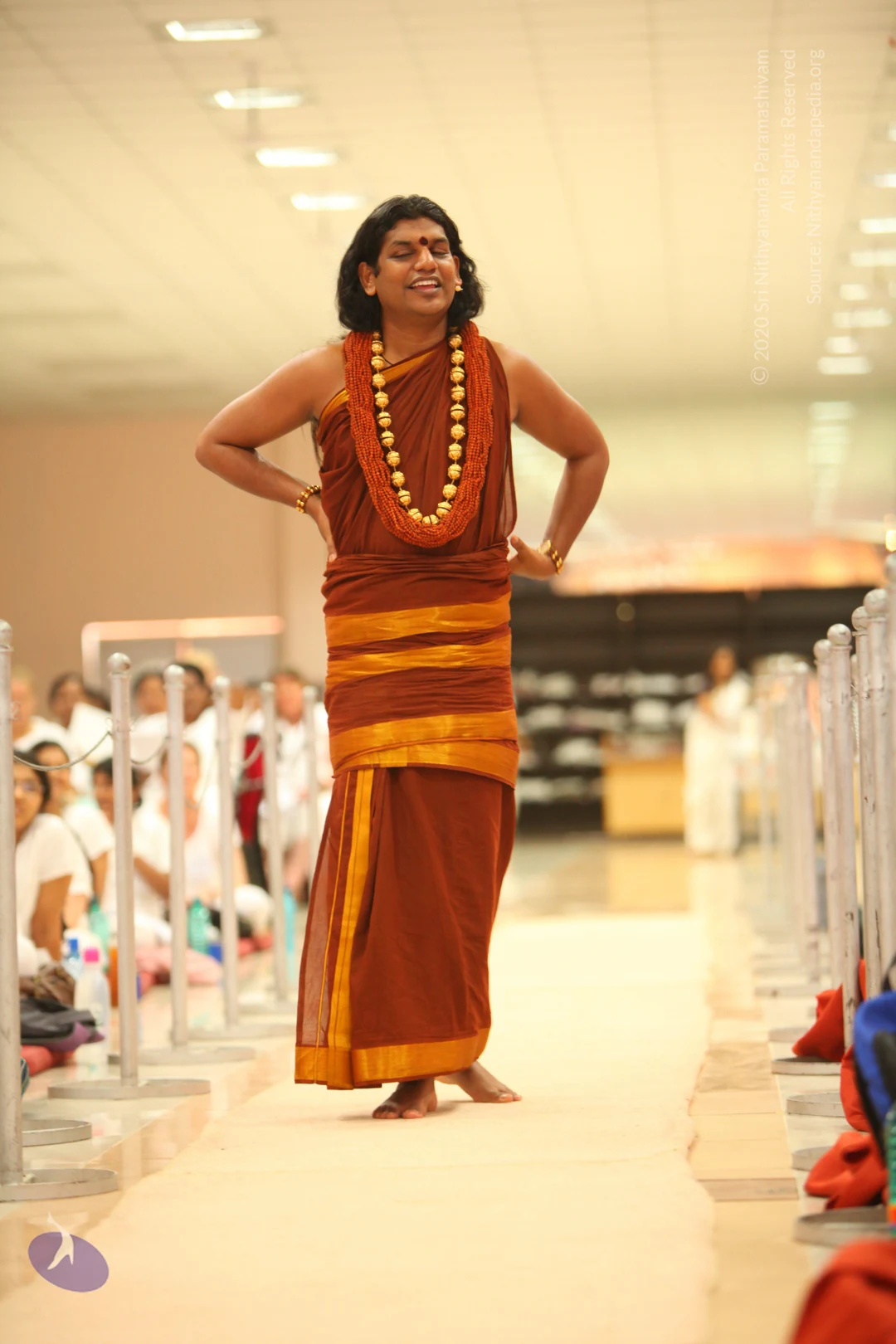
In today’s morning satsang, Paramahamsa Nithyananda speaks on the famous phrase from Chapter 2, Verse 47 of Bhagavad Gita, Yogahah Karmasu Kaushalam. It has been rendered from Sanskrit by many sages. Today Nithyananda reveals a new translation: Yoga is Authenticity in Action. To achieve authenticity we must break our root patterns. The fundamental collective root pattern we all carry is the belief that many things are impossible. Nithyananda tells us emphatically that nothing is impossible. For the next year He enjoins us to push against any action or thought of impossibility, to understand that everything is possible! This is Yoga – authenticity in action.

VideoAudio

Transcript:

0:19

SCIENCE OF LIVING ENLIGHTENMENT – I will expand on this subject, SCIENCE OF LIVING ENLIGHTENMENT.

Please understand, first I wanted you to understand this one word:

“Yogaha Karmasu Kaushalam”

“Yoga is Authenticity in action”

“Yogaha Karmasu Kaushalam”, I am translating as “Yoga is Authenticity in action”. Not just “perfection in action”; “Authenticity in action”.

Listen! Authenticity in your thinking - means, raising you to the peak. Raising you, again and again, higher and higher, expanding you more and more.

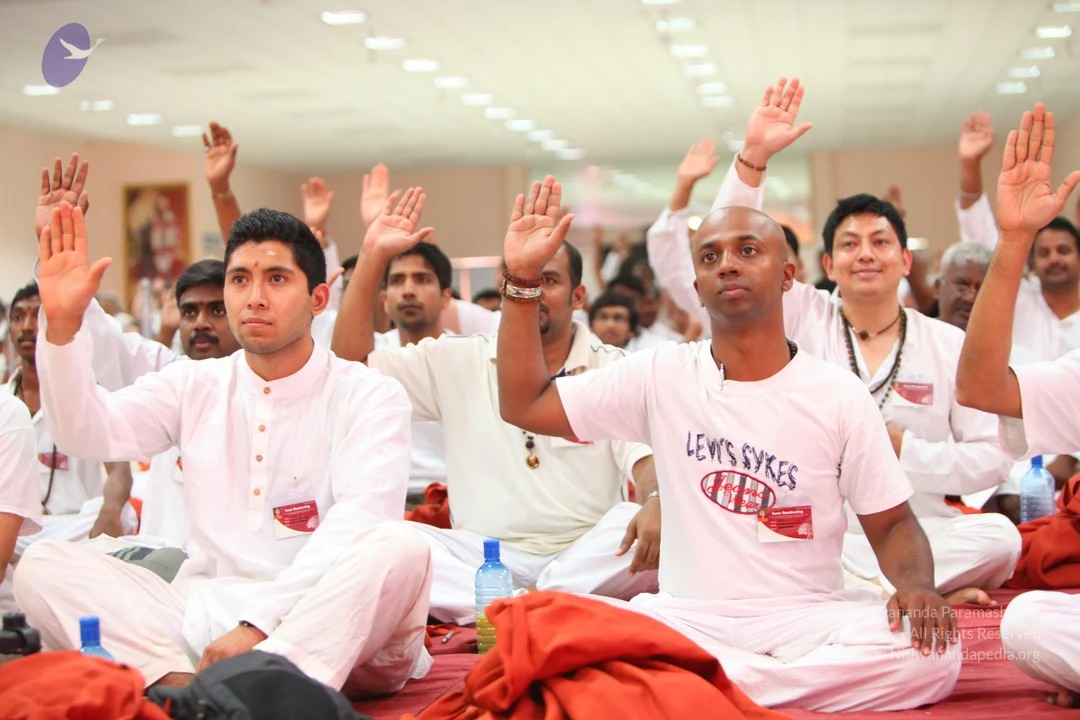
Listen, the moment I say ‘expanding you more and more, continuously’, how many of you feel, ‘Oh, God! Then it is unending process! It can never end at all! I will never be able to rest at all! It is unending process!’ How many of you feel? Raise your hand! You are all death-oriented! Understand! First thing you need to do is break that pattern. See, how many of you desire you should live forever? You desire you should live forever, but when I give the process, you don’t want to do! See, the contradiction! If you feel ‘Oh, God, Authenticity is a unending process! I have to expand, expand, expand! I am not going to retire at all! I will never be allowed to retire at all’, if you have that feeling, then commit suicide! Now! You are retired NOW! You can rest now once for all! But that is not solution. Committing suicide is not solution. If that is solution, then all of us could have committed suicide. No!

Life is expansion. Life is expansion. Life is expansion. Listen! Come to the space of listening! Life is expansion. Whoever cherishes that idea, ‘Continuous expansion? Then I will never have rest! It will never end!’ you are entertaining death in your heart! So, don’t blame if you get the diseases, killer diseases in your life, because you invited! The idea you entertain in your life invites different happenings of life. When you feel ‘Wow, I am going to expand, expand, expand! Authenticity is the best principle!’, then understand, you are entering into Akshardham, eternal life!

5:09

Break the pattern, “I am never going to rest or what”. Why do you need rest? Increasing the speed of running is rest! Increase the speed of running. Make it into flying! It is rest! Reduce the friction. You see, in the road when you drive, when you run, there is friction; because two things are contacting each other. If you want bliss, joy, peace, don’t reduce the speed. Reduce the friction. Just take off! Your body, mind, inner space, consciousness, whatever you feel about you, go on expanding, expanding, expanding! That is the only way life can continue to ooze in you, overflow in you.

If you say, ‘No, I can expand; See, now I do two hours of work. I will make it into four hours; not more than that. Then I will rest.’ No! No! Make it into twenty-four hours and few minutes extra! And penetrate into time! Whenever you need more time, whenever you need to do more work, stop the time, complete the work, and allow time to move! You can do!

An ordinary Indian housewife, Savithri, did it! She is not a Rishi, Saint, Sadhu, Mahatma, Siddha, Yogi. No! Ordinary housewife in India! She did it! She told the Sun, ‘Don’t rise till I get my husband back!’ Power of Authenticity! God! Listen, Sun listened! Sun listened! It is possible! Don’t think only it is possible for Savithri. Because she made it possible, she became Savithri! If you make it possible, you will become Savithri! There is no such thing as ‘It is possible only for Savithri!’ Because she made it possible, she is Savithri!

Listen,You always say, ‘No! No! That is only for Savithri!’ I have seen! I have seen many, many, many times, ordinary people making it happen. Making it happen! And I have seen many times even great sadhus missing it!

9:26

I know! One organization, religious organization, whole organization strongly believes no one can achieve the space of their founder. They feel, ‘No! That is all over! Now nobody else can become Paramahamsa!’ Authenticity of the organization is lost! I tell you, I give this as command; Nithyananda Sangha should go on producing Paramahamsas and incarnations! You will continue to believe and work and succeed in producing millions of Nithyanandas! Nithyanandas more qualified than the original Nithyananda! Nithyanandas more expanded, radiating than the original mould! The product which comes out of the mould can be polished more! You will not die along with me. Understand?

There are some religions organizations – not “some”, many; they believe their master’s caliber person can never happen again! Ramakrishna Mission believes never again the caliber of Ramakrishna’s personality can happen! ISKCON believes never again the caliber of Prabhupada can happen! Chinmanaya Mission believes never again the caliber of personality level of Chinmayananda can happen! Swaminarayan organization believes never ever again the caliber of personality like Swaminarayan can happen!

I command and declare; Nithyananda Sangha not only should believe, should work and be successful creating millions of people more qualified than Nithyananda!

A Sangha needs to be alive with the collective Authenticity. The moment you believe you cannot create more Nithyanandas, your collective Authenticity is dead! Sangha has to be alive, and a Master lives in the form of Sangha after he leaves the body! After I leave the body, I continue to be available to the world in the form of this Sangha! So the Sangha has to keep itself alive through the collective Authenticity.

13:05

(HINDI)

When you lose your individual Authenticity, you become “atheist”.

When you lose collective Authenticity, you become “bunch of atheists”, which is dangerous!

Don’t die with my dead body! First of all, my body itself is not going to die!

Understand, ‘unending expansion’! The word ‘ending’ is also negative. Continuous expansion! Continuous expansive expansion is life! That is life! That is life! O, the Sons of Immortality! Disciples of Nithyananda! Listen! You are all Sons of Immortality! Amrutasya Putraaha! Break all the root-patterns which makes you feel continuous expansion is not possible or not necessary. Continuous expansion is life! Authenticity is life!

(HINDI)

15:48

Life is a continuous expansion. All the listeners listen! If your body is ready to live now just with liquid diet, don’t think you achieved something big! Move to the next level. Make the body more Authentic to live on pure air! Move to the next level. Make the body more Authentic to breathe through the leg! It is possible! It is possible! It is possible!

(HINDI)

Authenticity only begins; never ends! Incompletion has only ending; it has no beginning! Authenticity has only beginning; no ending! All incompletions has only ending; no beginning! You don’t know when it started. May be it would have started before the Time started! Authenticity has only beginning and no end!

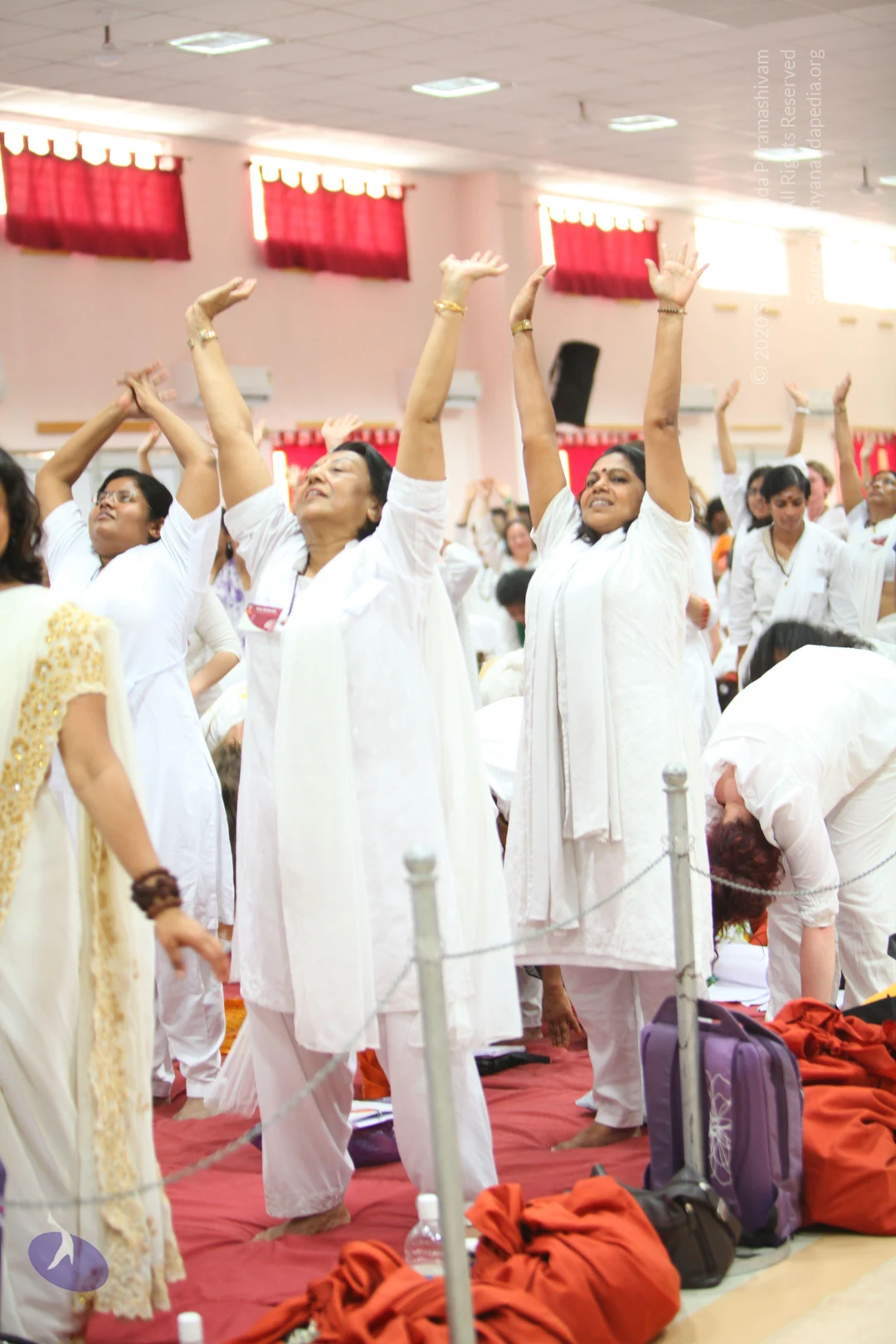
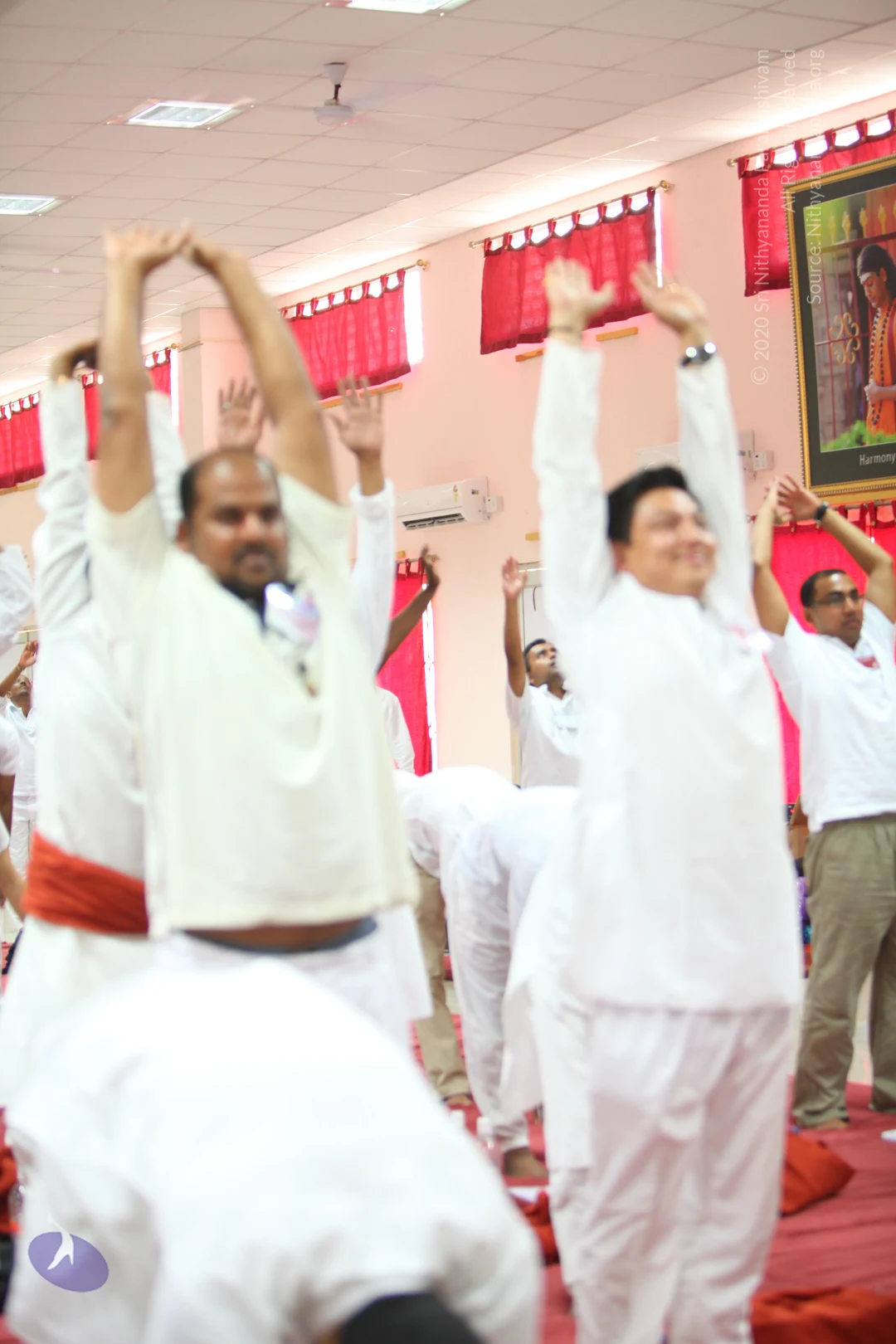
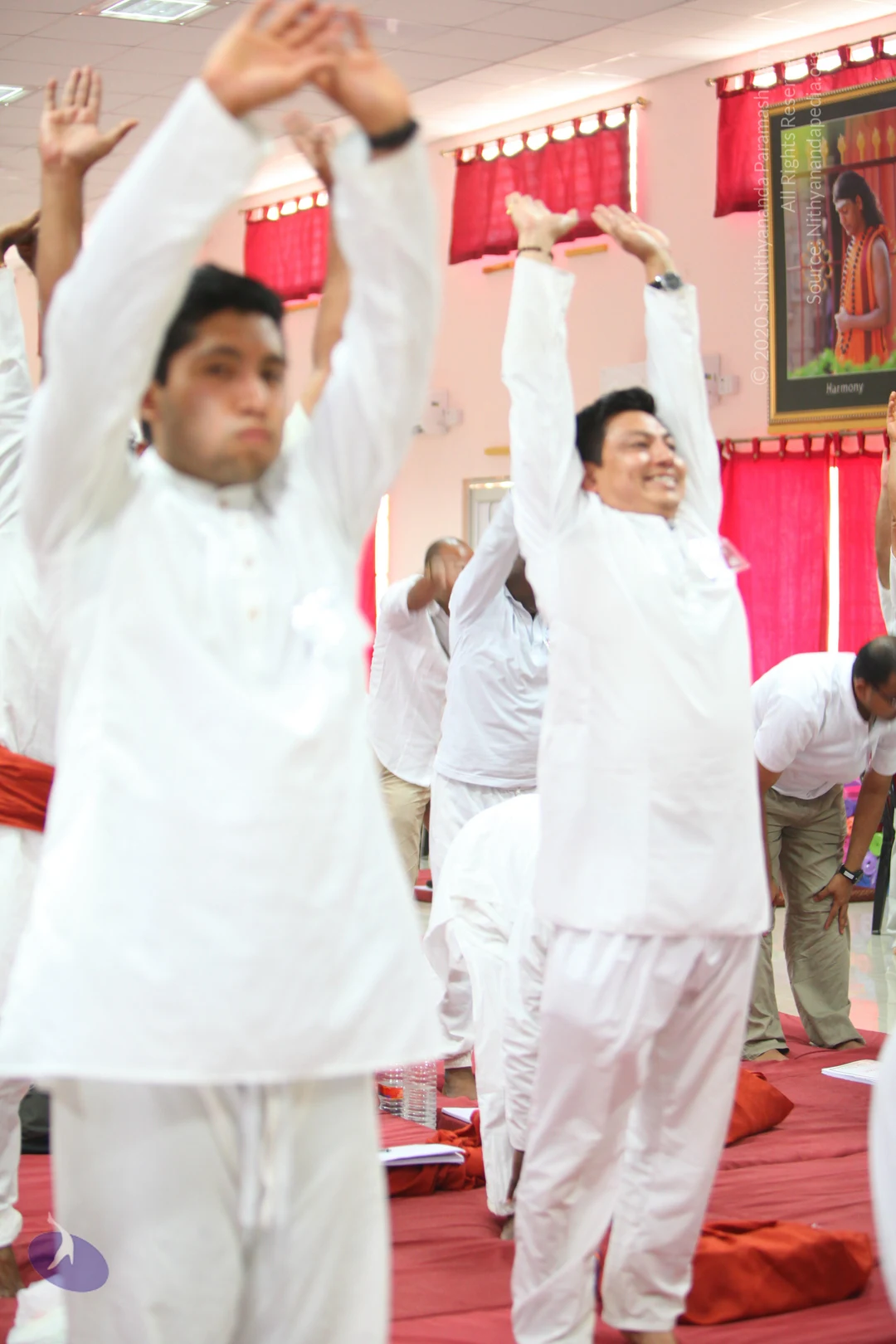
Understand! In every action, bring Authenticity. If you are breathing up to your chest, if your inhaling and exhaling is happening up to the chest level, bring Authenticity. Make it up to the Muladhara! Then bring more Authenticity, make it up to knee level! If you can do six Suryanamaskars, bring Authenticity, make it into twelve! If you are able to handle 5 kg dumbbells, bring Authenticity, make it into 8. You are not going to die, by making 5 into 8! Anybody thinks you are going to die? If you think, because you think you may die; not because of the dumbbell! Because of your thinking you may die, not because of the dumbbell itself!

Expand! Expand! Expand!

19:41

People ask, ‘What is the safe way of expanding, Swamiji?’

Do it WILDLY! That is the safe way of expanding! I am talking with the responsibility that I am talking in the national television. I am talking to you as a responsible teacher! I am teaching you the science! I am teaching you the Science of Life, not some superstition! I am not a atheist to teach superstition to you! When you seal the possibility, you are “atheist”. Atheists also have “Dial-a-Prayer” service. You can call up that number, and it rings, rings, rings……nobody answers! If you know the other side of the phone somebody is going to attend, you will see somebody WILL be attending! If you think there is nobody to attend the other side, it will NOT be attended!

Atheists try to call, and say, ‘Nobody picked up! God is not there!’

Indians try to dial, and say, ‘Yes, it is a STD (“Subscriber Trunk Dialling” – national long-distance call) call, but he attends!

Keralites dial and say, ‘Oh It’s a local call, but he attends!’

Bidadi people dial and say, ‘He attends! It’s intercom!’

He attends! Understand! He is continuously attending!

It is the possibility! Space of Possibility! Continuously living in the space of Possibility!

23:00

I tell you, only till you break the patterns, it is impossible. You are not that demonish that you are living with millions of pattern! Even Ravana had only two pattern! So, you are not worse than Ravana! Don’t worry! You may be having only few patterns! Till you break that patterns only it is a little difficult. Not after that! Not after that!

I tell you, whenever, wherever your mind or body tells you, ‘Oh, that’s all! I cannot expand!’ break that pattern. Break that pattern. For one year, tell yourself very clearly, ‘I am not going to show any pseudo-sympathy to me. I am only going to show the real sympathy to me.’ Means, practicing Integrity! Take this as a one-year exercise. ‘One year I will not listen to any of the boundaries I am told of!’ ‘I can’t!’ Break that ‘I can’t’ for the next one year; physically, mentally, in Responsibility.

I have some of the ashramites who are working with me. He can’t think. Yesterday, I gave him some work. Seven hours he sat and comes back with me! And when I asked him, he stands like a frightened kid! One of my Rishi, I gave him few work. Evening he comes back. When I ask him, he says, he stares at me! No! It is such a strong pattern living in him: ‘Nothing is possible!’ Just exact anti of me! Just one year, go on breaking the pattern of ‘NO!’ Break the pattern of ‘Not Possible!’ Decide, six months Completion; one year Authenticity! Just for practicing Authenticity one year, six months you have to spend in Completion; completing with every person in your life. One year practice Authenticity. I tell you, after that, the word “Impossible” would have disappeared from you!

26:23

There is nothing ‘Impossible’! Listen! The border you create! Actually what separates you from the Cosmos? The skin and the identity you are only up to your skin! What separates your mind from the Cosmic Mind? Just the borders you made: ‘I can do only this much!’ ‘Impossible’ is the border you built inside the cosmic mind to separate your mind! Like boat jetties! In the ocean where they keep all the small boats, they will have a huge stone wall built, so that there will be less waves; the boats are protected. Just like that wall separates the ocean from the boat jetty, your ‘Impossible’ separates your individual mind from the Cosmic Mind! Break that wall! After that anything happens in your individual mind, the Cosmic Mind will say ‘Tathaasthu’ – ‘So be it’! Because of that wall ‘Impossible’, you do not allow the vibration happening in the individual mind to pass it to the Cosmic Mind. If there is a wall, anything happens in that boat jetty will never reach the ocean.

‘Impossible’ is not reality. It is a pattern! Please listen! Please understand! All the miracles I continue to perform is not to show off or demonstrate or my pride. It is just to tell you one statement: ‘Impossible’ is only pattern; not reality! If you think something is impossible by you, it is only a pattern; it is not truth!

29:15

I am going to learn first and do it. Then I am going to tell all the ashramites to do it! Sannyas initiation only after they complete Pole Yoga! No! It is possible! It is possible!

Somebody sent me a YouTube video. Eighty-three-year-old lady is doing gymnastics! I was shocked! Oh, God! She is not a yogi. She has not learned Authenticity from an incarnation! When she can do, why not you; claiming the children of an Incarnation?

(HINDI)

Listen! Our whole Sangha woke up when I declared we will be enriching thousand lives on May Inner Awakening! Whole Sangha woke up! We will do in August! It is not that we have given up on ourselves and others. No. We will enrich thousand lives in August! But the benefit happened in the May is we woke up! And this is the largest program we are conducting after the persecution. Yesterday I made a statement this is the largest program in the land. I was thinking the cruise was the larger. No! Just yesterday I was told this is the largest program after the religious persecution! Three years of slumber, tiredness, laziness, given up on ourselves and others! The whole Sangha woke up just by the one declaration! Now we will start flying! Now we will start flying! First I made the whole Sangha believe they can stand up again. Now only I can see, people feel, ‘Yes, we can stand up again!’ Man who can give this push when people fall is a Leader! I can see the confidence in the eyes of my Swamis, my volunteers, my organizers, my devotees, my disciples, even in the eyes of the participants! What is the number of lives enriched in the last Inner Awakening? It is only two digit. That much I can be sure. Two digit. And only fifty-three days gap! Ma tell me the number and the gap; number of days. The whole Sangha woke up! And, I tell you, August we will be enriching more than thousand lives, because we already broke the pattern of ‘Impossible’!

33:50

Any weight crushes you, if you stand up that itself becomes strength for you, because you lifted that weight! If you allow it to crush, you are crushed! If you lift it, it becomes your strength! The pattern ‘Impossible’ can either crush you or it can become strength for you! It can strengthen you! For example, 10 kg dumbbells is kept in the hand. Now it is literally crushing your hand. If you lift it, that same 10 kg now adds strength to your muscle! If you allow it to crush you, over!

This persecution was the collective ‘Impossibility’ put on us. The Haalahaala poison put on us! Collective negativity put on us! Mahadeva just by keeping, swallowing the whole thing and finishing off in the throat, he declared victory! Understand the meaning of “Haalahaala swallowed in the throat and declared victory”; means, just by the declaration of a word, Mahadeva crossed the Haalahaala poison! Just when I declared we will be enriching thousand lives through May Inner Awakening, I already swallowed the whole Haalahaala poison of ‘Impossible’ and finished it off, destroyed it! The Poison has lost its quality of killing anymore! It doesn’t have the quality of killing anymore! When poison becomes part of the Mahadeva’s body, naturally it becomes nectar!

36:27

March, forty-two lives were attending, getting enriched. Only thirty-three days gap! Sixty days before, we declared 1,000 lives we will be enriching for May. In sixty days, the whole Sangha woke up! Now we know how to break the pattern of ‘Impossible’! We will continue to break the pattern of ‘Impossible’! We stood up! We will now start flying!

Yoga is Authenticity in action!

||Yogaha Karmasu Kaushalam||

Earlier we had the translation as “Yoga is perfection in action”. I request all the devotees to update. Many of you would have put this statement in your office, house, based on my request. Now update. “Yoga is Authenticity in action”.

||Yogasya Prathamam Dwaaram Vaang Nirodhaha||

First step in Yoga is reduction in the words you utter. Means, first step of Yoga is reduction in words due to practice of Integrity.

And ||Yogaha Karmasu Kaushalam|| Yoga is Authenticity in action. When Authenticity is in action, it is Yoga. ||Yogaha Karmasu Kaushalam||

(HINDI)

40:29

Bring Authenticity in every level. The way you do business, the way you maintain relationships, the way you take responsibility, The way you think, The way you cognize the world, The way you respond to the world, The way you act, The way you feel, The way you behave with you, And the way you behave with others, The way you behave with your body, The way you behave with your mind; With everything, bring Authenticity. The way you behave with your boss; if you are irritated just by seeing the boss, extend it. You will not get irritated at least for five minutes. If you are agitated the moment you go to the office, extend it. For two hours you will be in peace without getting agitation.

What is agitation? Not taking the responsibility for what you mean to others is agitation. When you don’t take responsibility for your commitments to others, you get agitated. You get irritated. If you take the responsibility for your commitments, you will not be agitated. You will not be irritated. First thing you need to do, any root pattern in you which does not allow the cognition of constant expansion, break that first. Complete with that pattern first, Complete with that pattern first. Get out of that pattern first.

(HINDI)

Don’t show pseudo-sympathy towards you. Because, if you show the pseudo-sympathy, you are not showing sympathy to you, you are showing sympathy to your root-patterns which will flourish and grow and destroy you more. I have seen people even forgot moving their hands while walking!

44:09

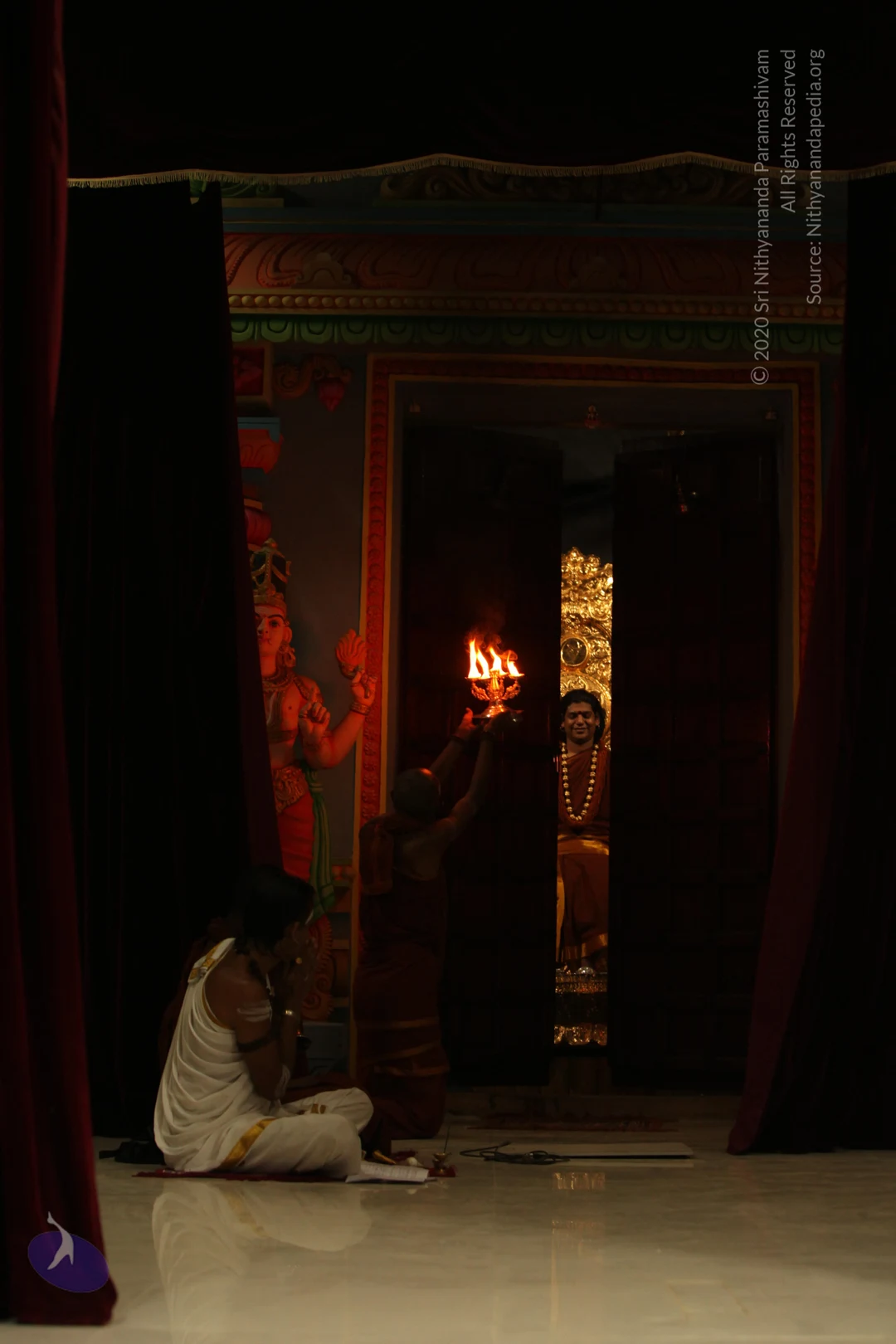
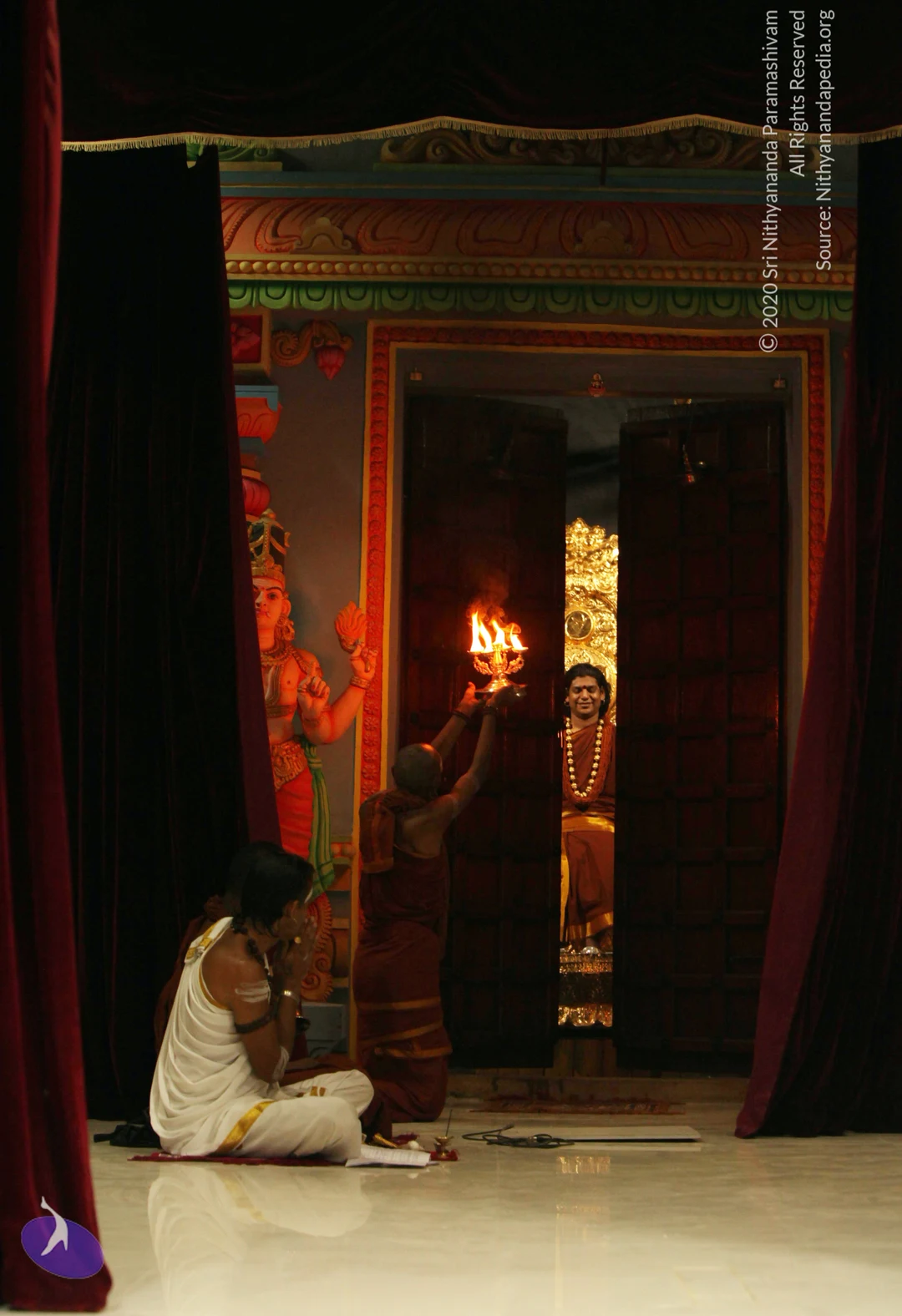
One priest, temple priest, came to see my pooja once. I myself was doing arathi. He was shocked and he said, ‘Only after seeing your arathi, I realized we all forgot even to raise the hand fully when we do arathi! We just do (shows without raising the hand fully). The whole hand should move. Arathi should fly in the air. Fire should fly in the air.

Authenticity is Life! Authenticity is life! Authenticity is life! Break all the patterns of inauthenticity. First break the root-pattern of ‘Impossible’ in your life.

(HINDI)

Today’s satsangs essence is

(HINDI)

Photos
Photos Of The Day:

Temple
Darshan

Pada-Puja

Inner-Awakening-Session-1

Inner-Awakening-Session-2

Panch-Kriya

Photos Of The Day:

Temple
Pada Pooja

IA Session

Pancha Kriya

Photos Of The Day:

Temple
Darshan

Pada-Puja

Inner-Awakening-Session-1

Inner-Awakening-Session-2

Panch-Kriya

Inner Awakening

Pancha Kriya Demo Session 5.30.am to 6.30.am

Pada Puja and Satsang

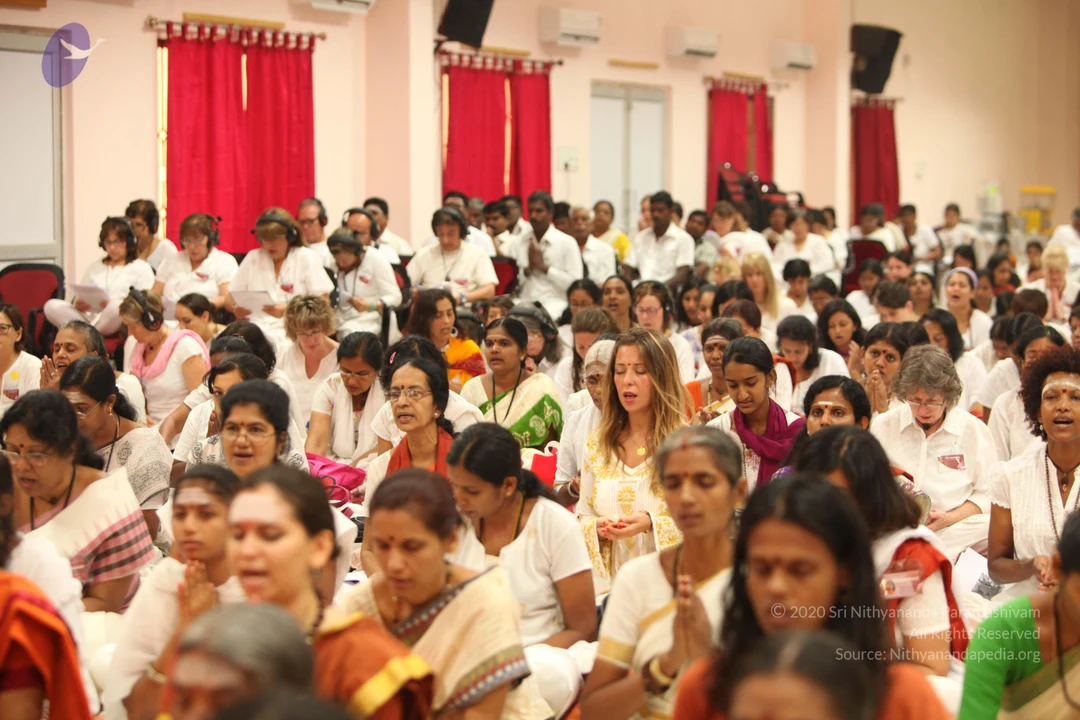
IA Day Session and

20130509_Photo_1029_IMG_2368_CMP_WM

===

1-Pancha-Kriya-Demo-Session-5.30am-to-6.30am

===

2-Pada-Puja-and-Satsang

3-IA-Day2-Session-1-and-2

01-Temple

02-Pada-Puja

03-Inner-Awakening-Session-1

04-Inner-Awakening-Session-2

05- Darshan

20130509_Photo_1000_IMG_2274_CMP_WM

Photos from this day

View all 517 photos

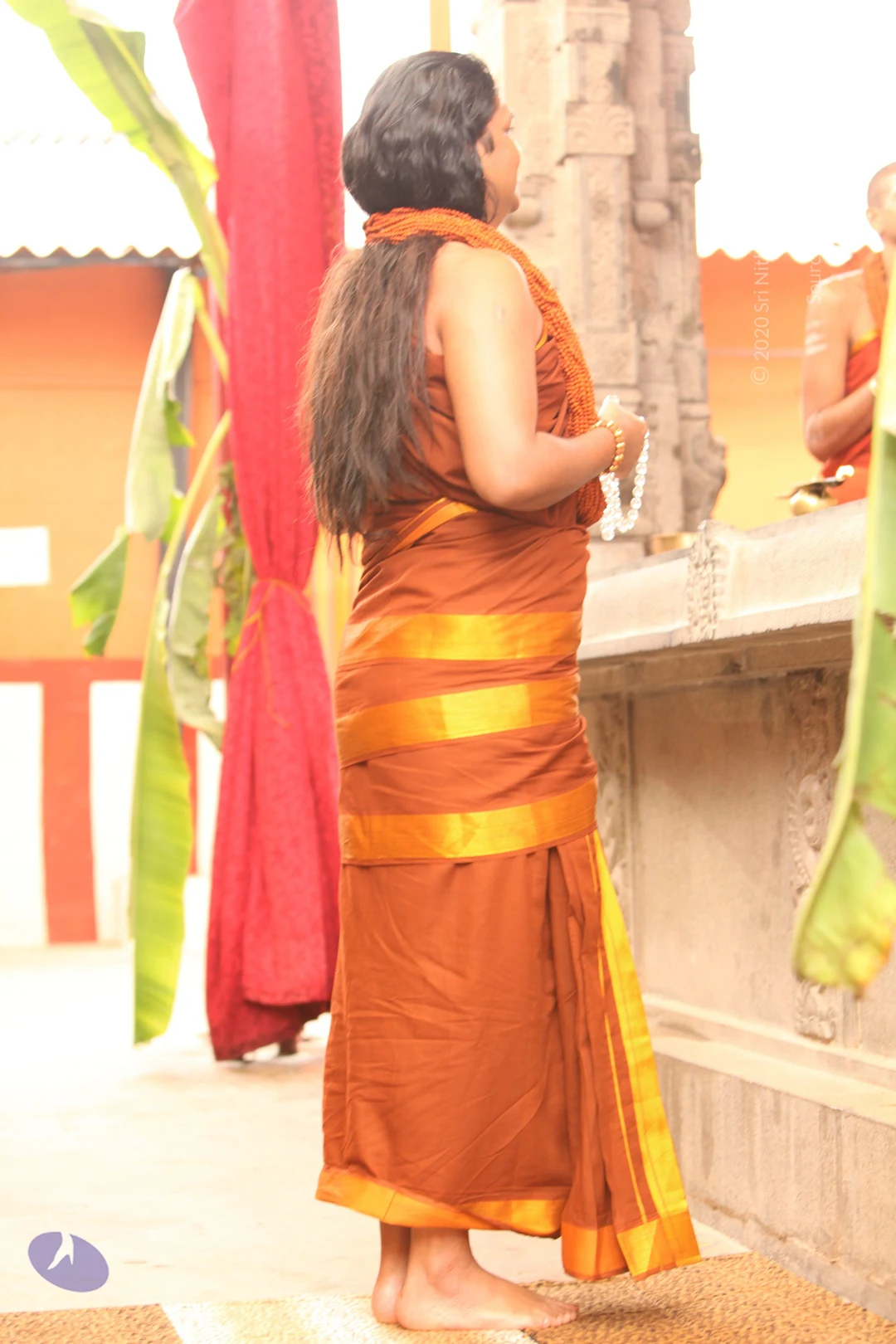
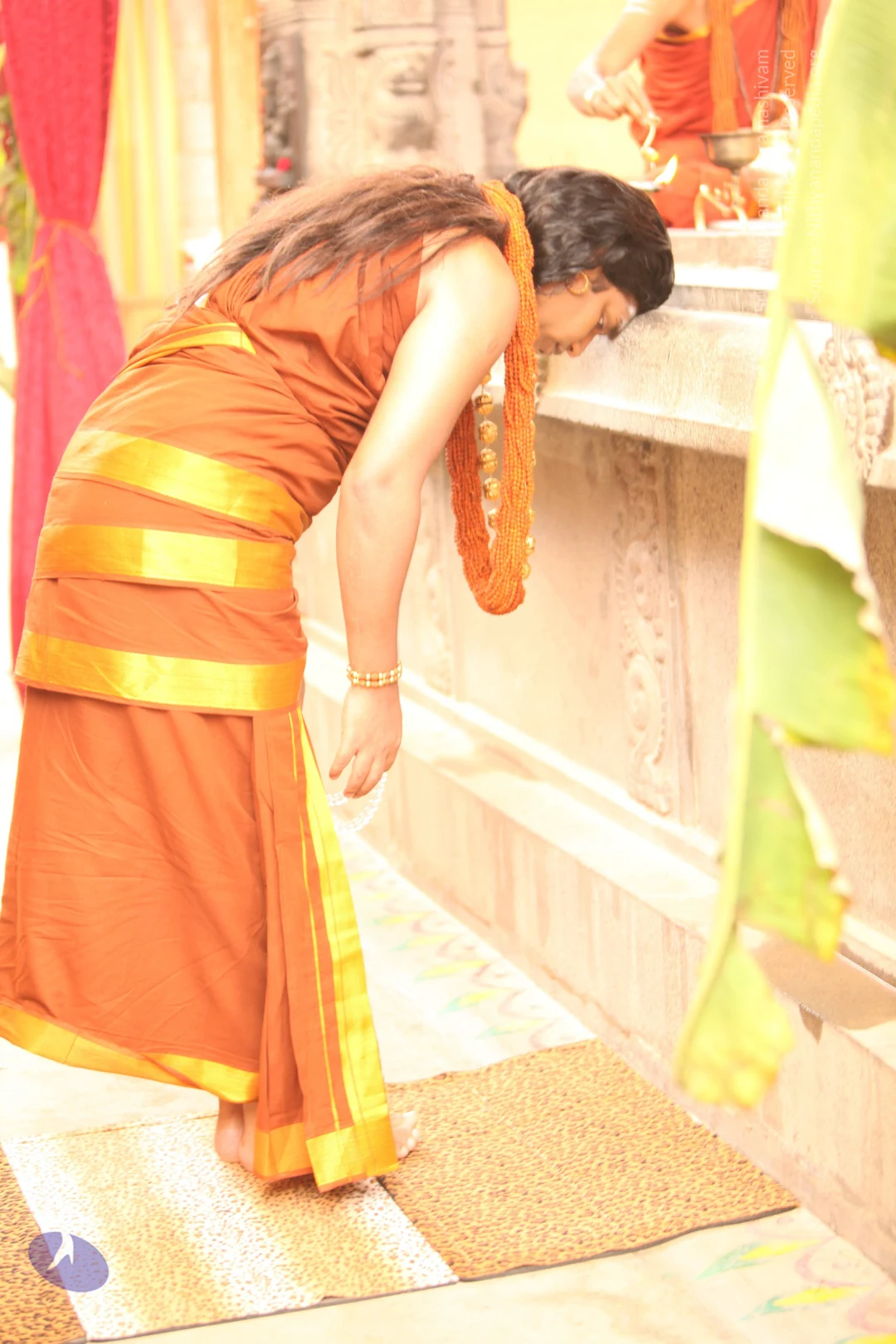
Temple
42 photosSource gallery
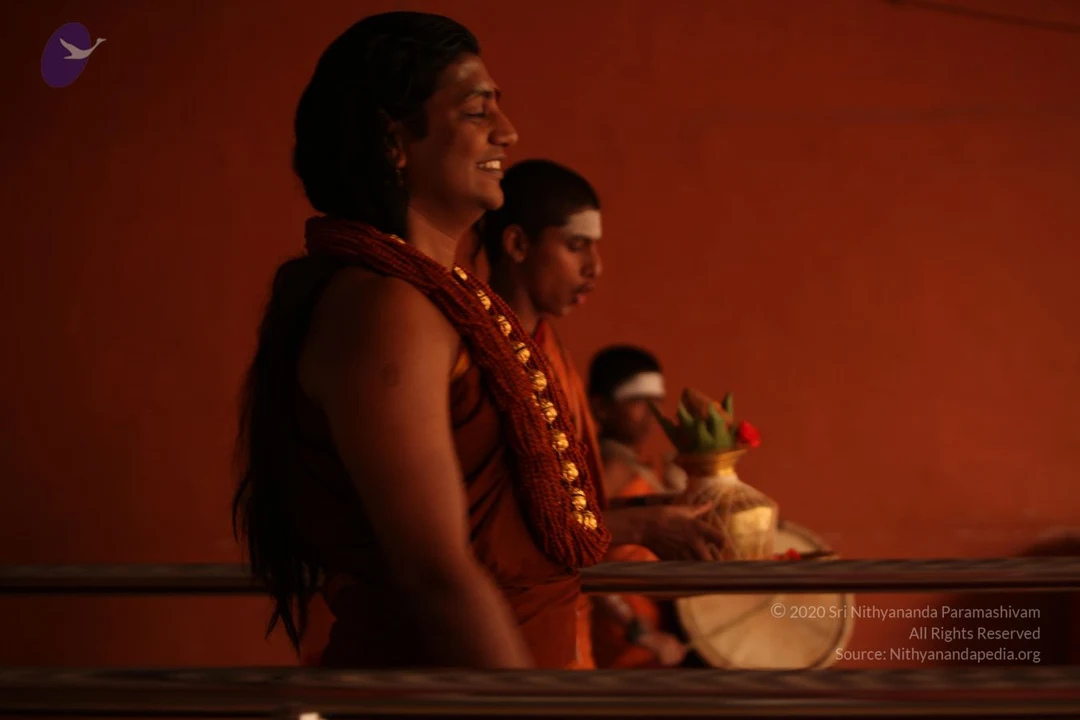
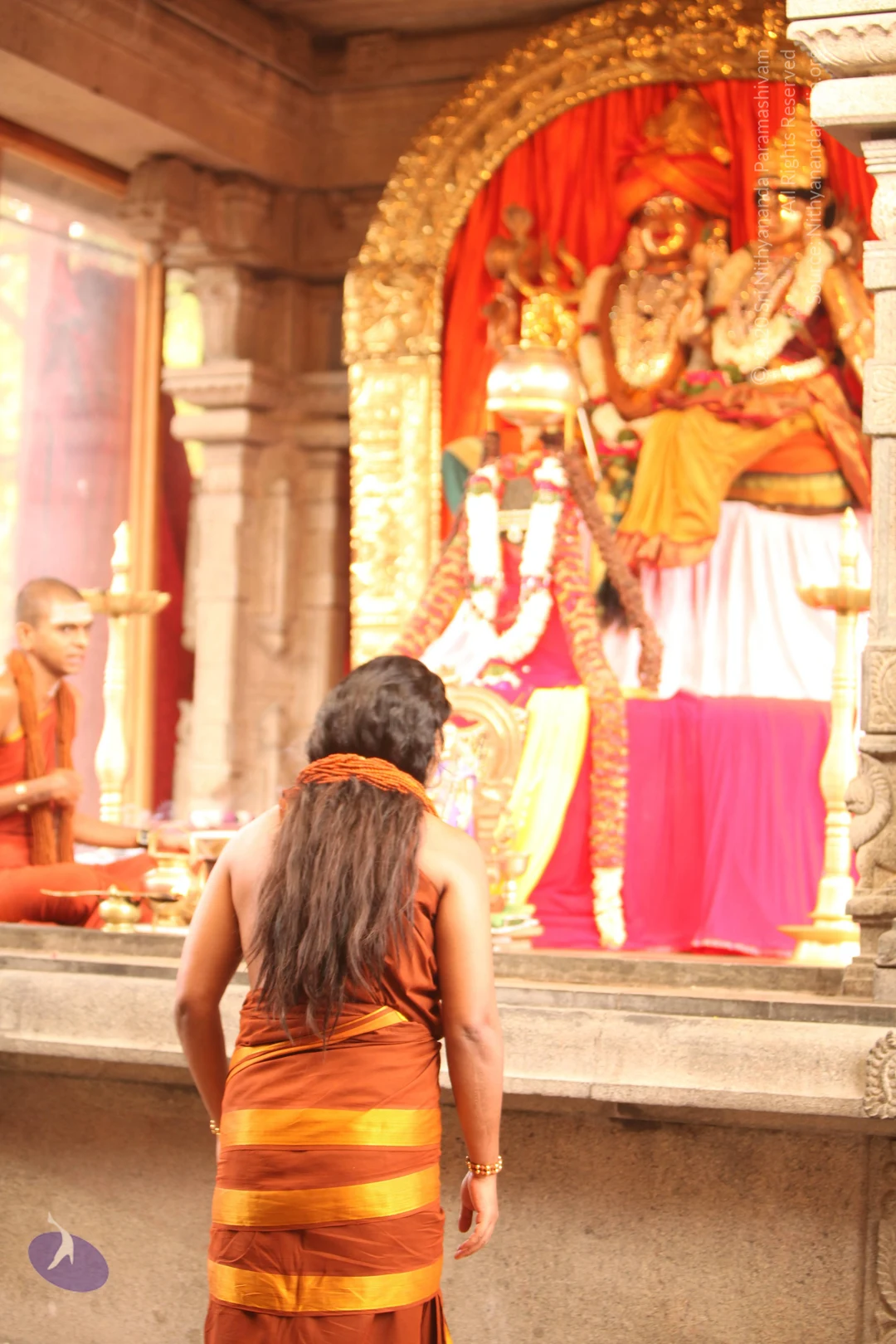
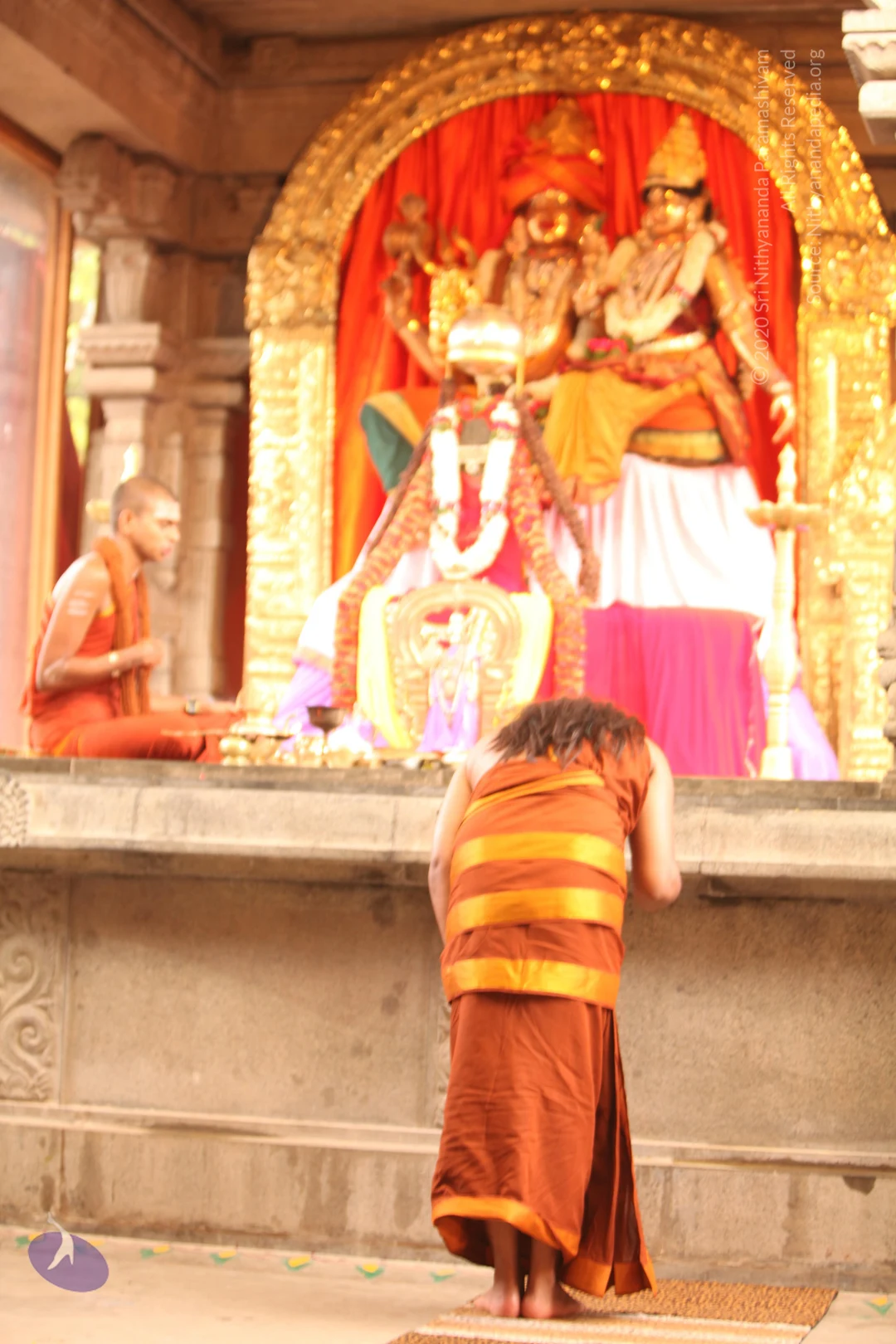
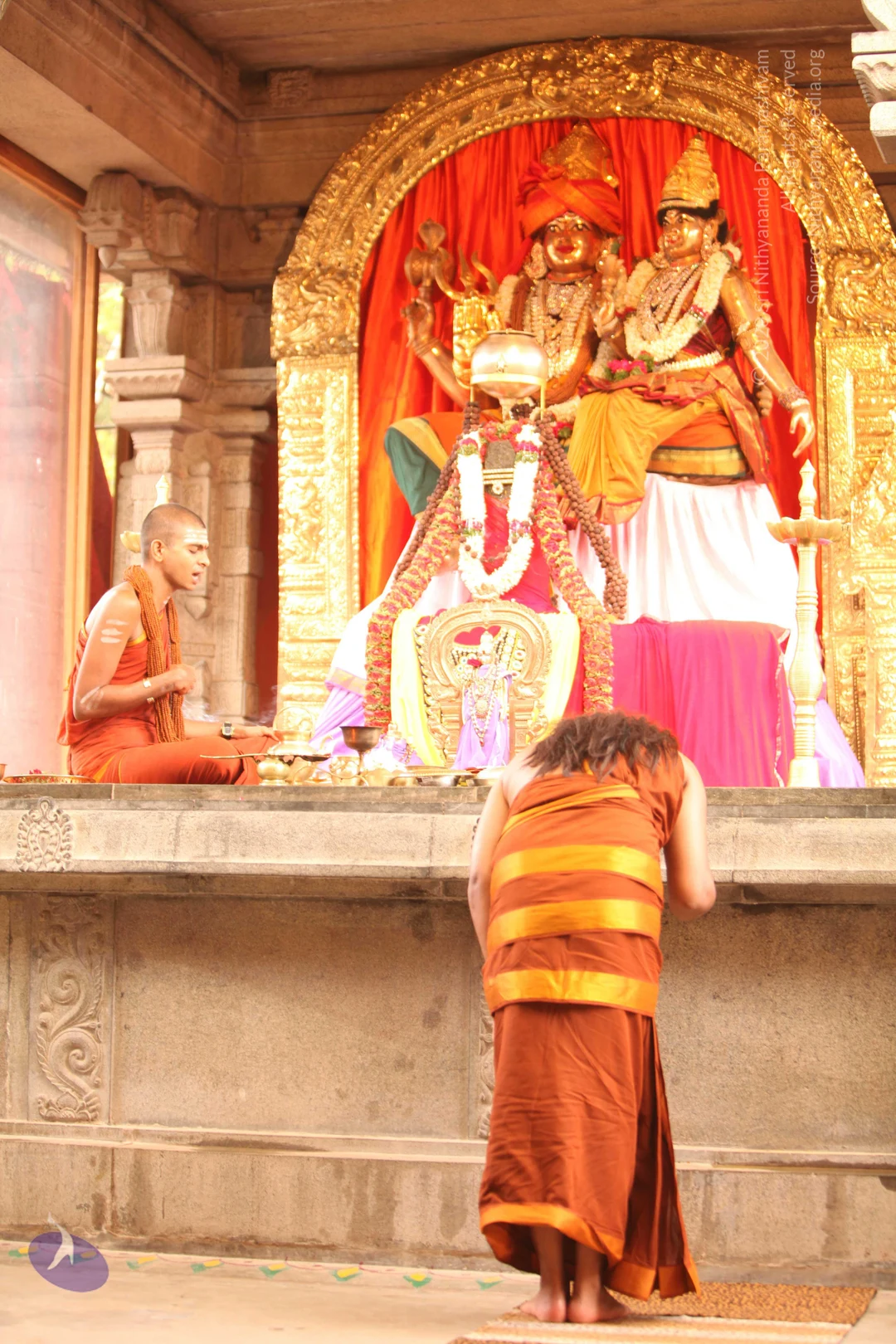
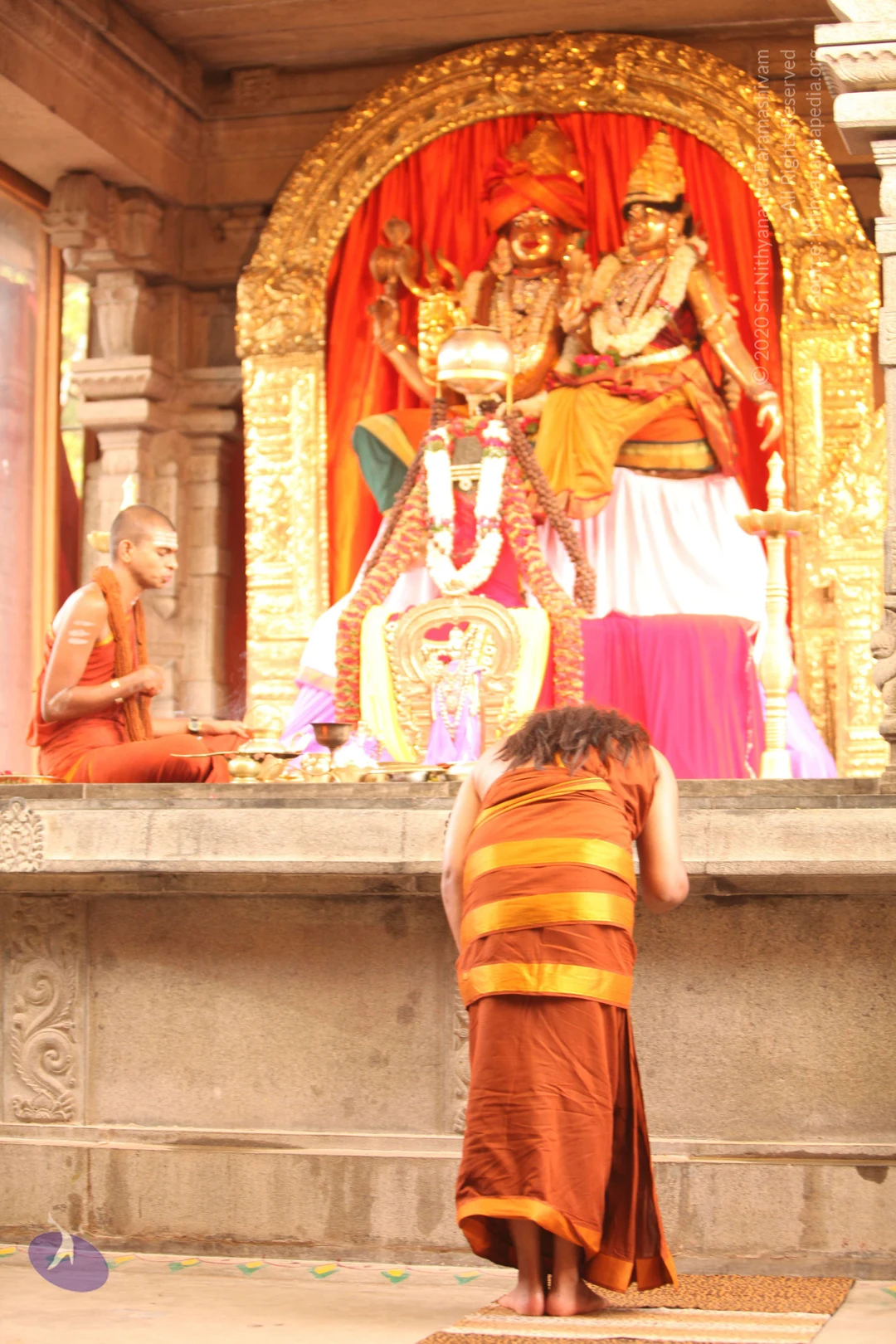
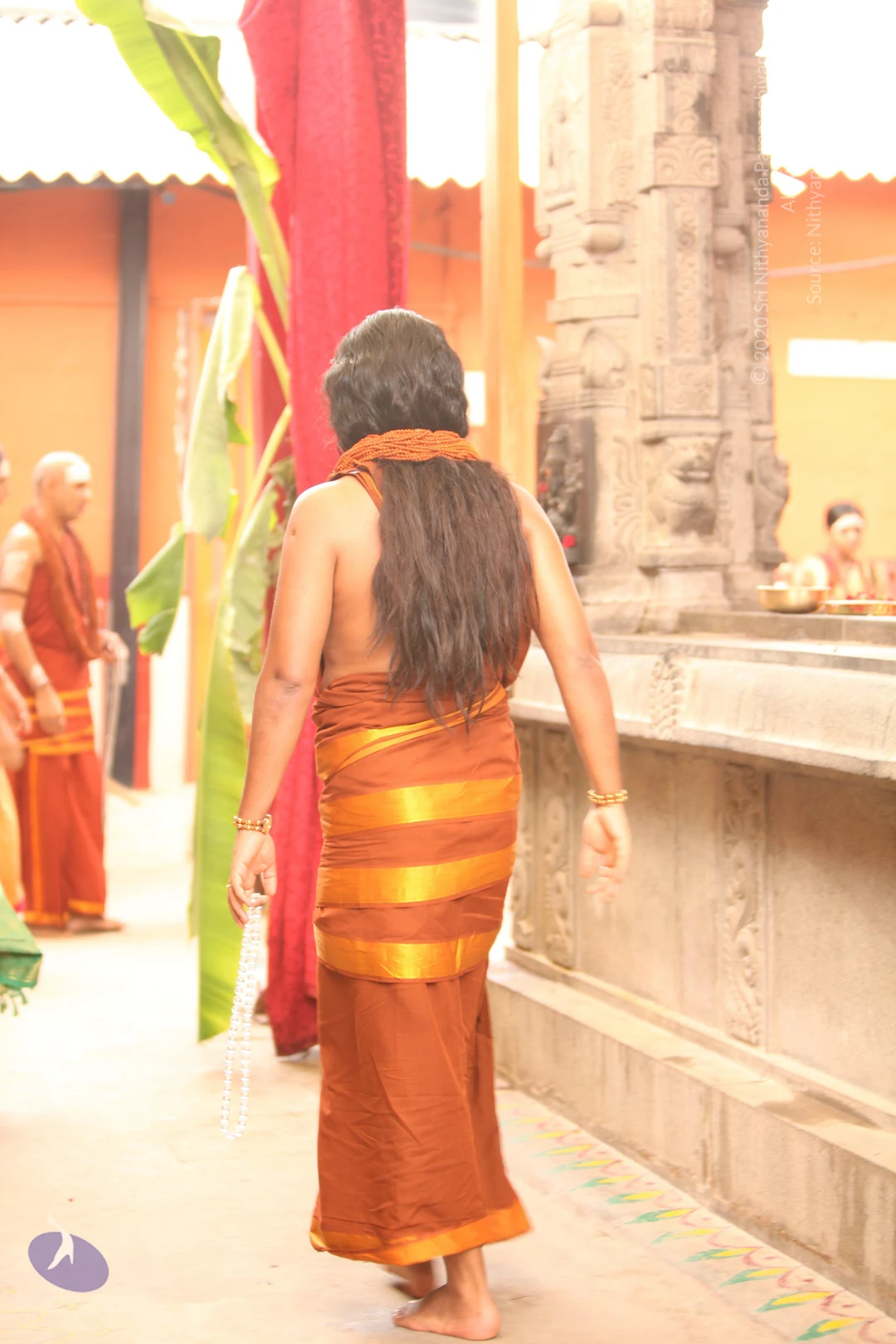
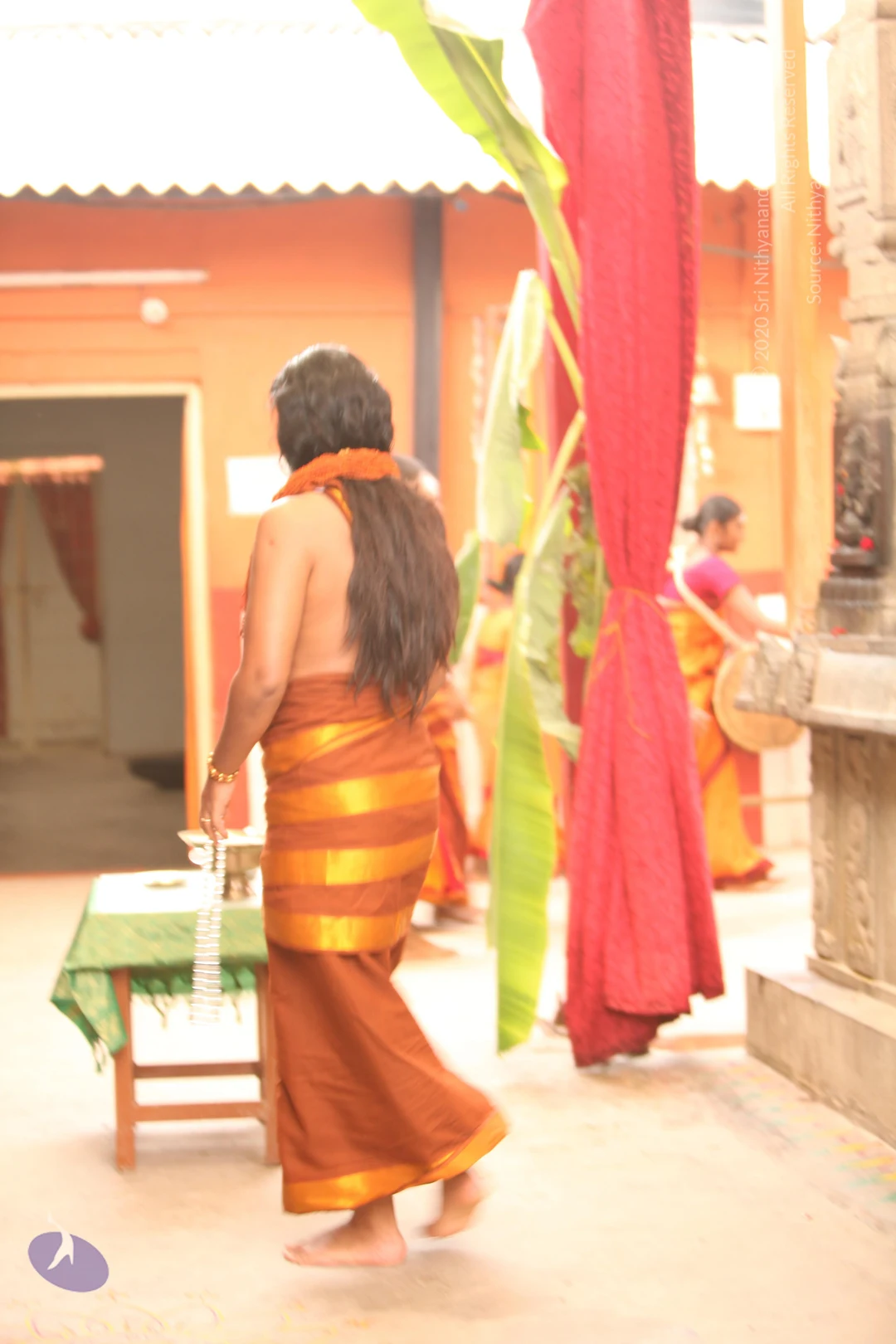
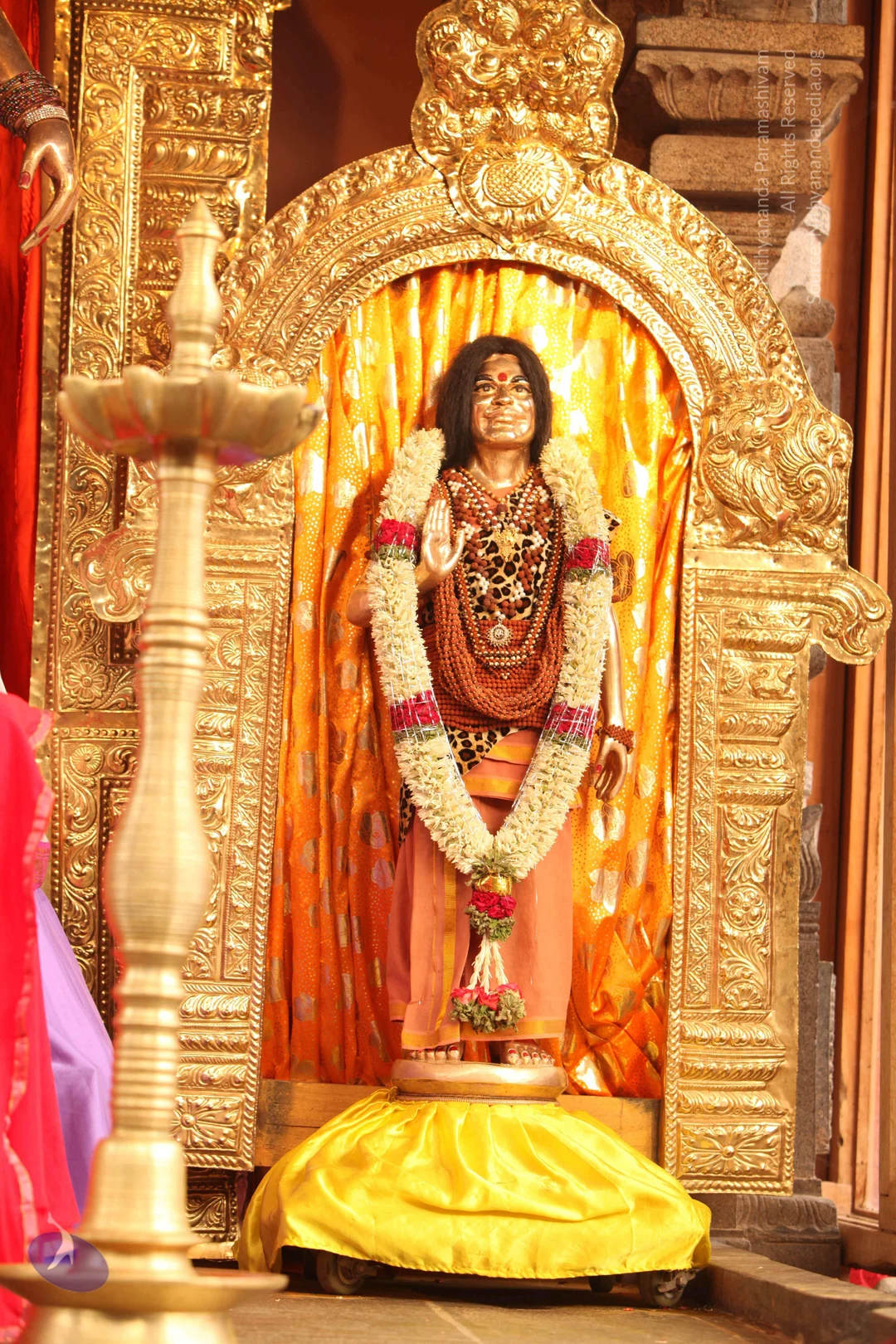
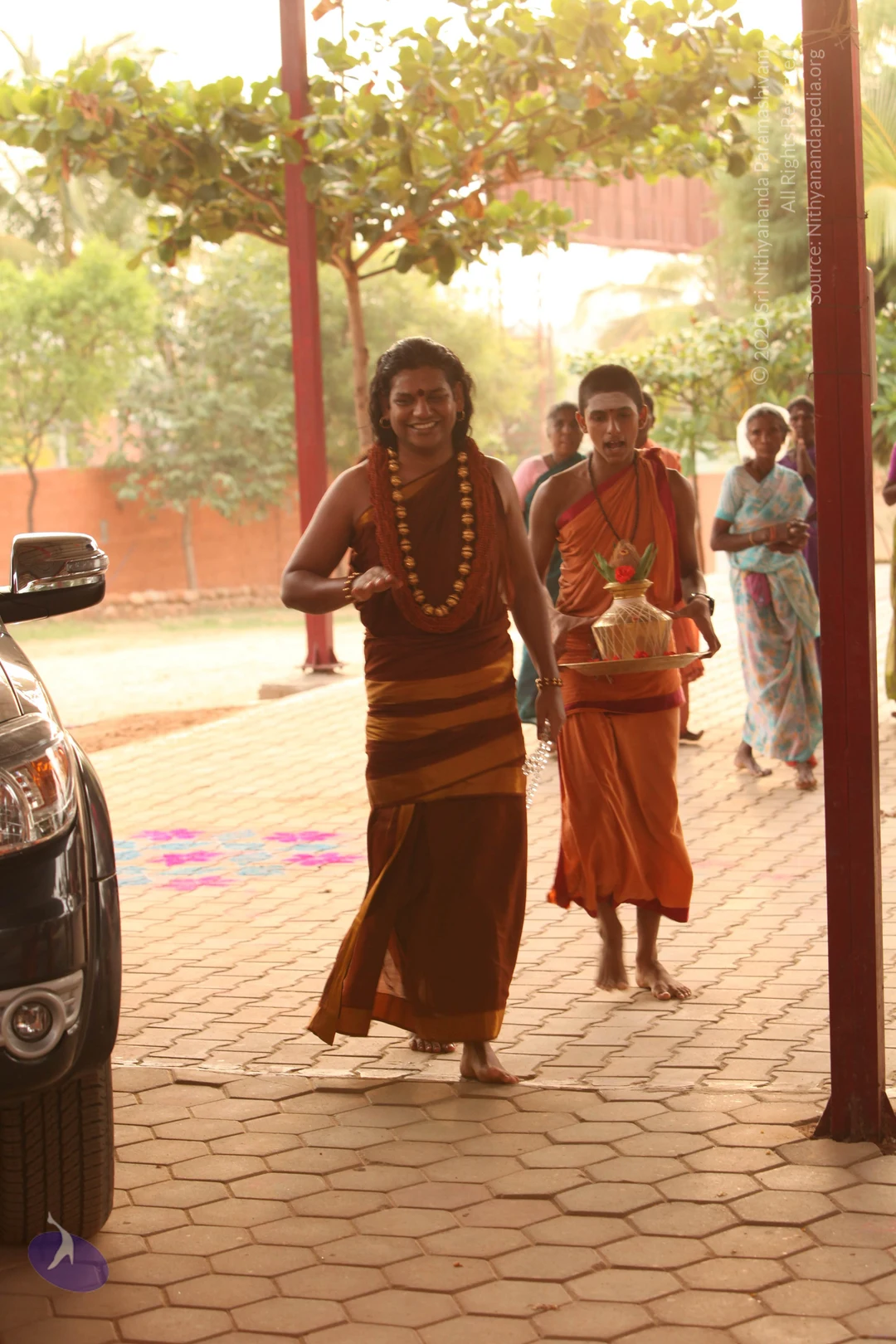
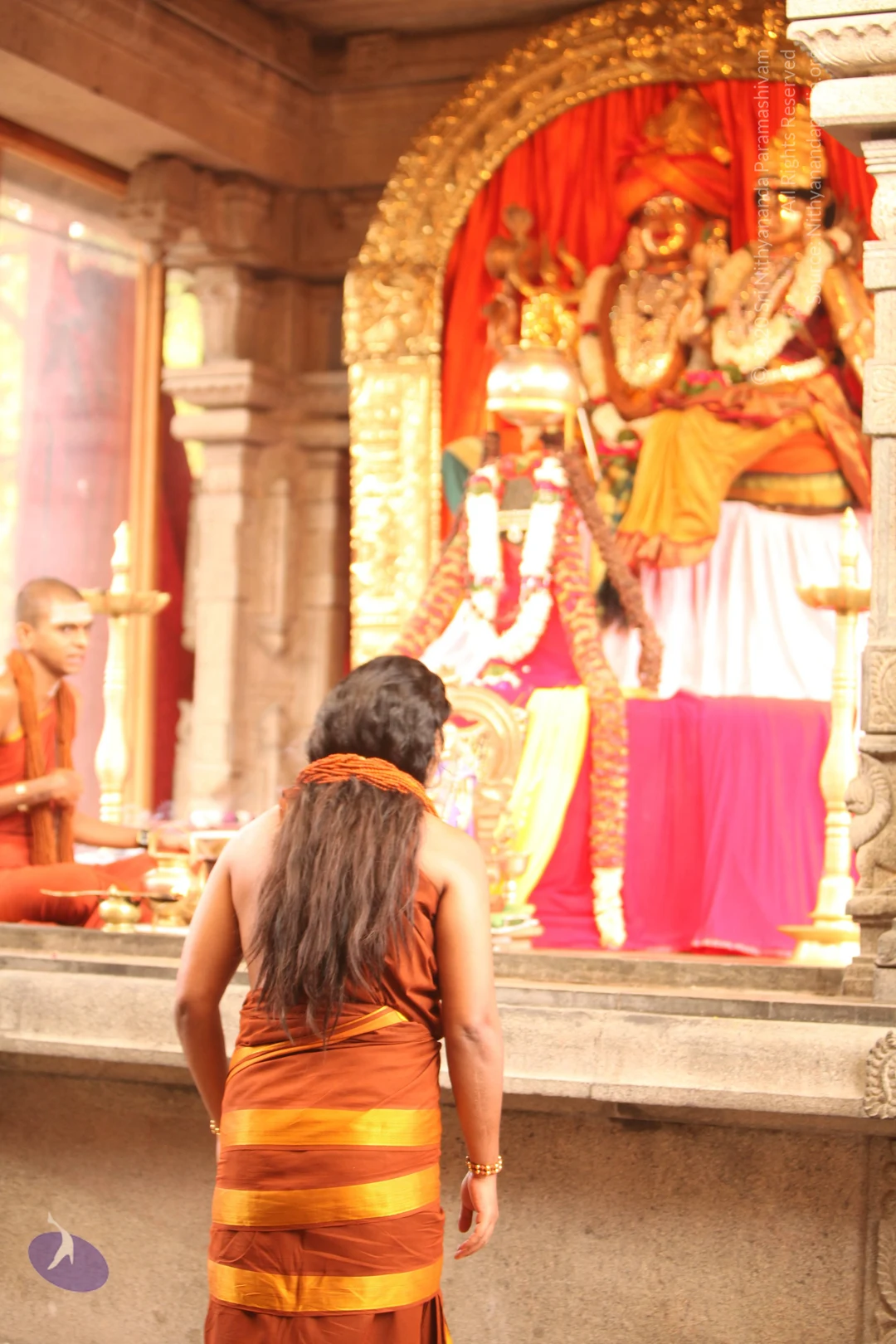
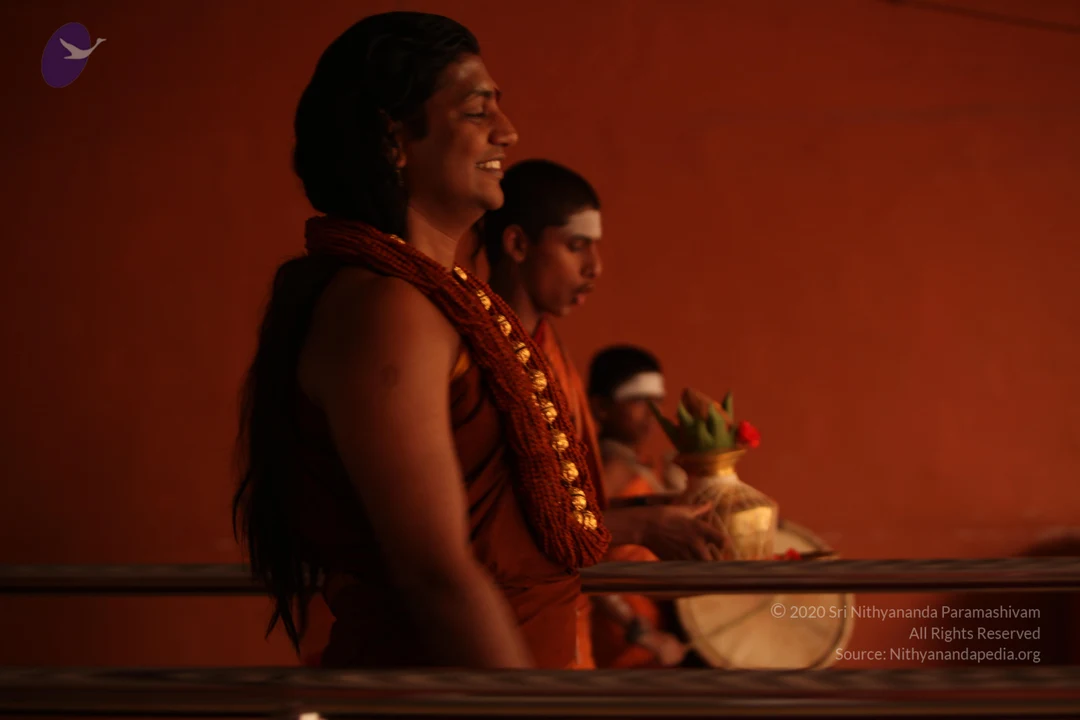
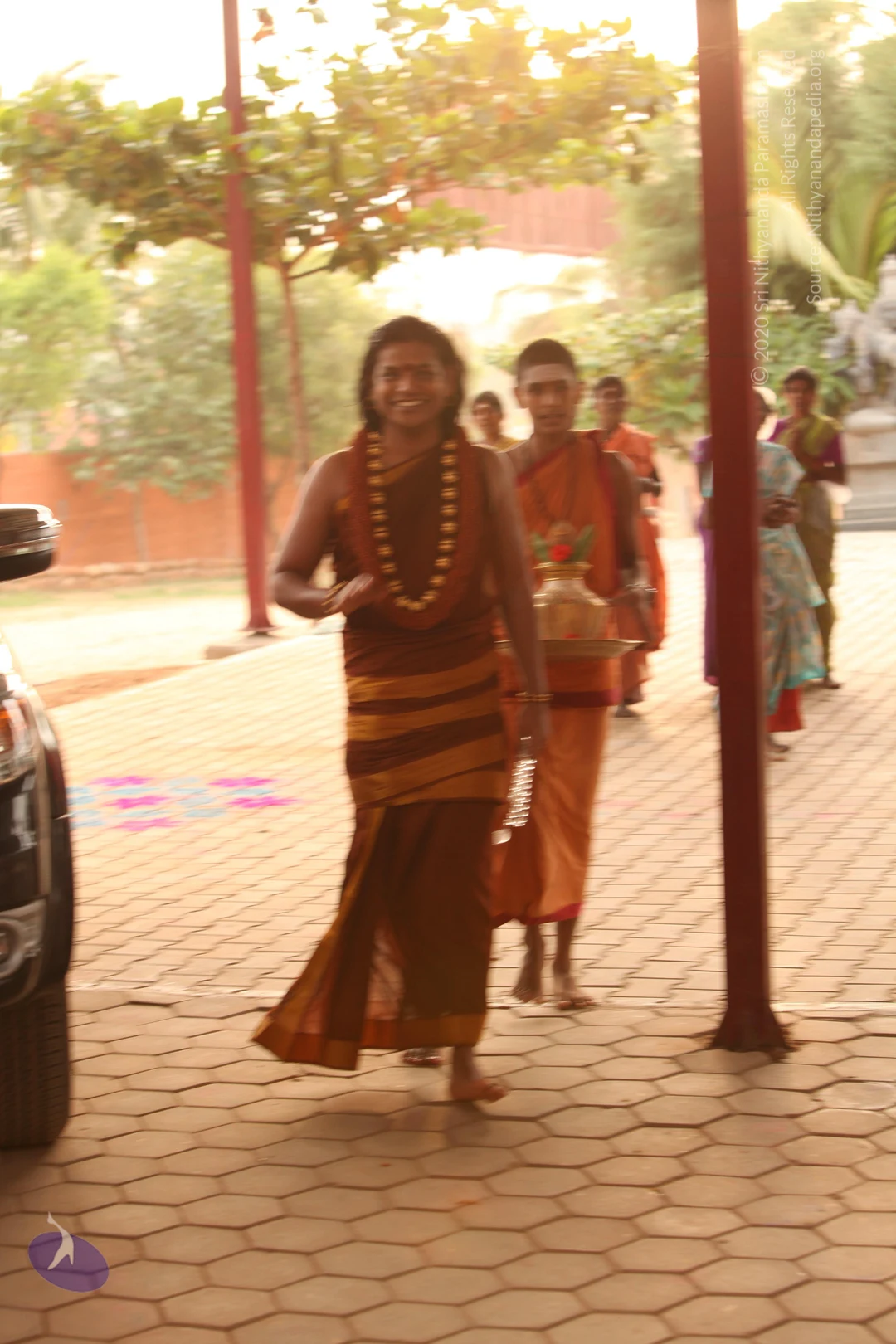
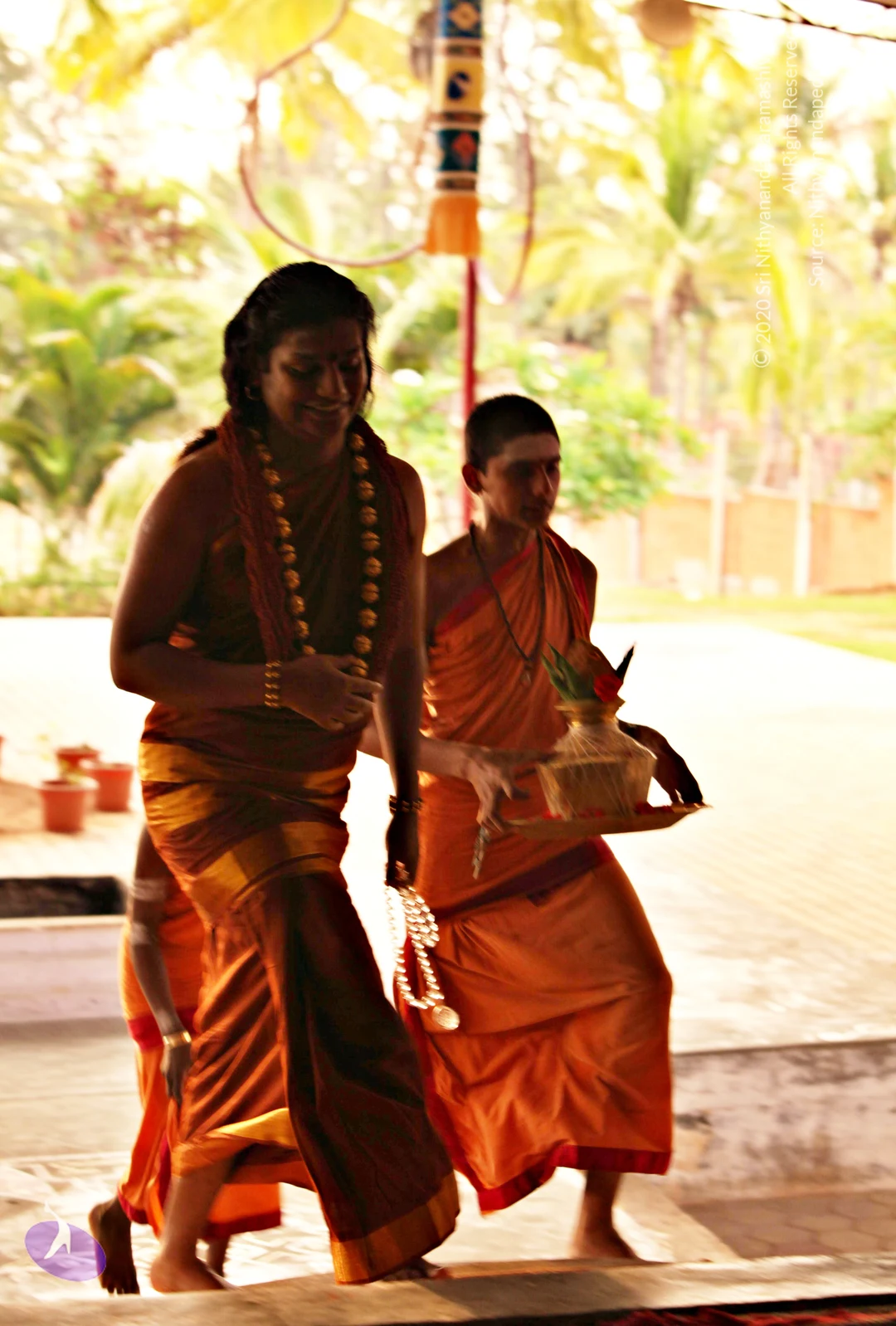
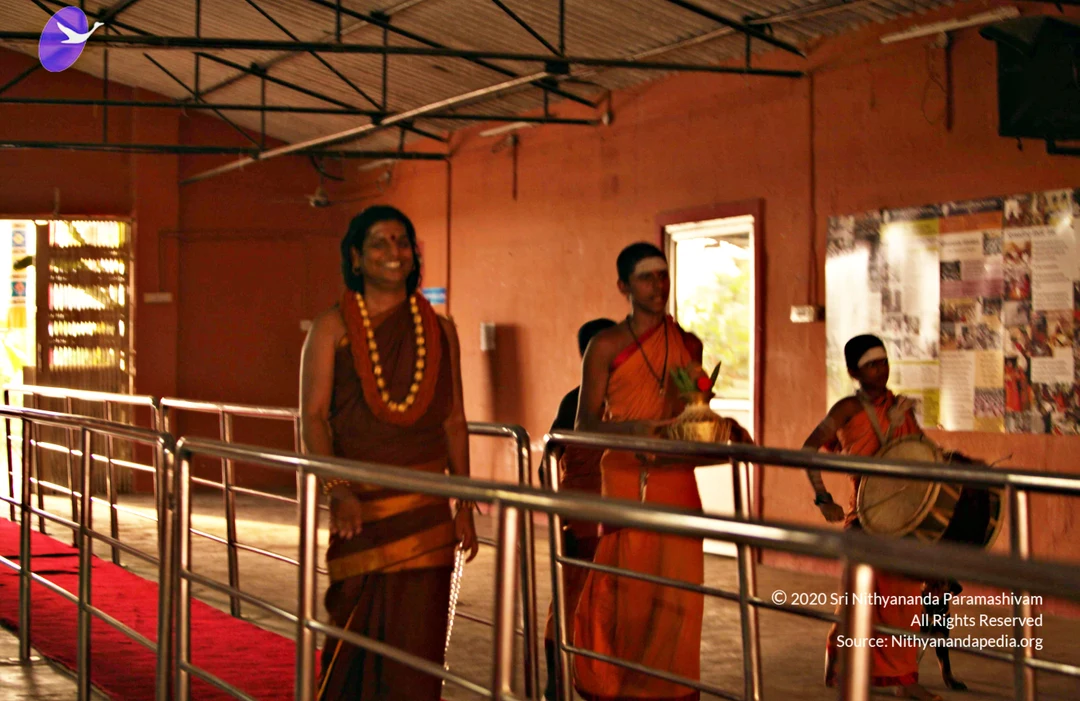
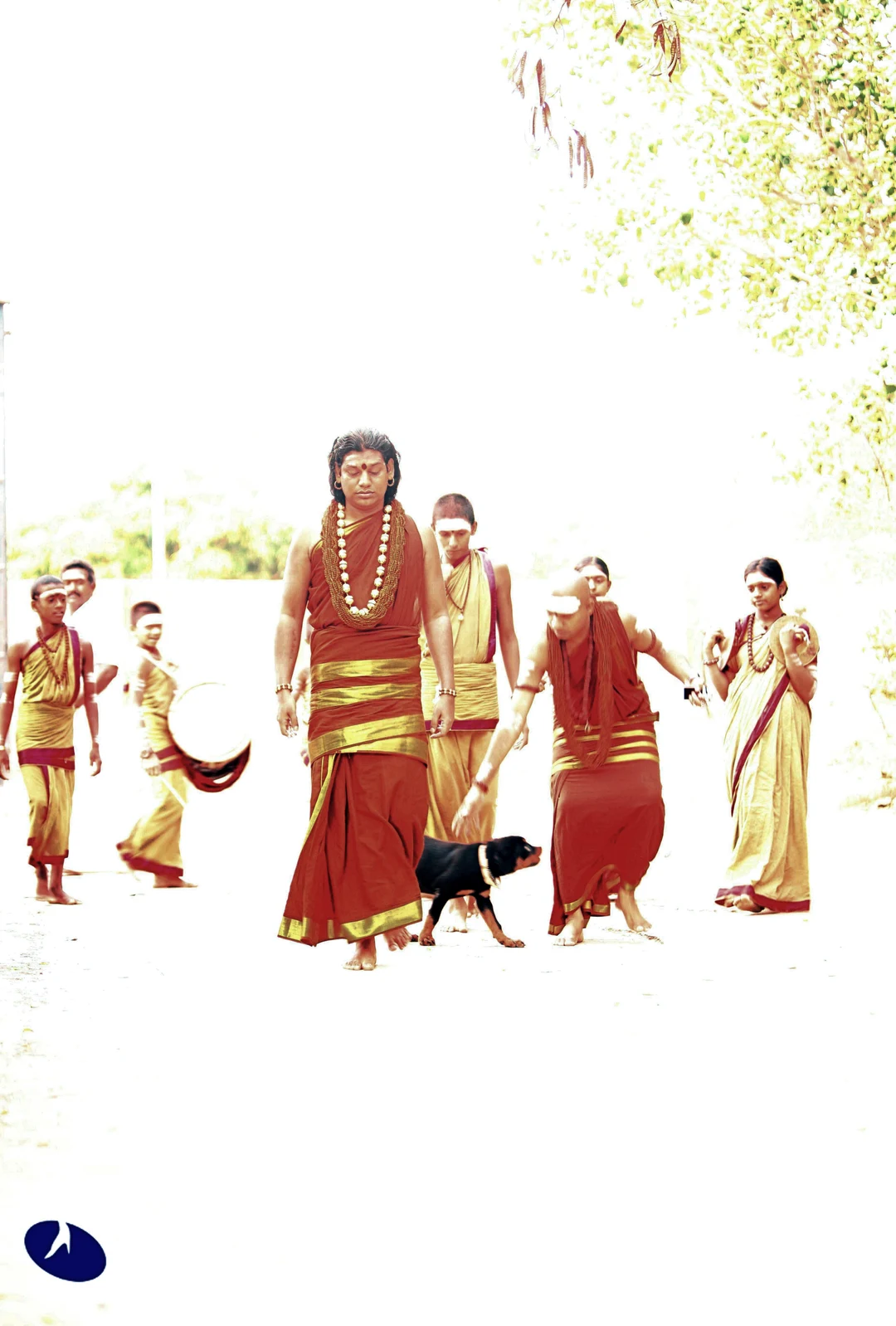
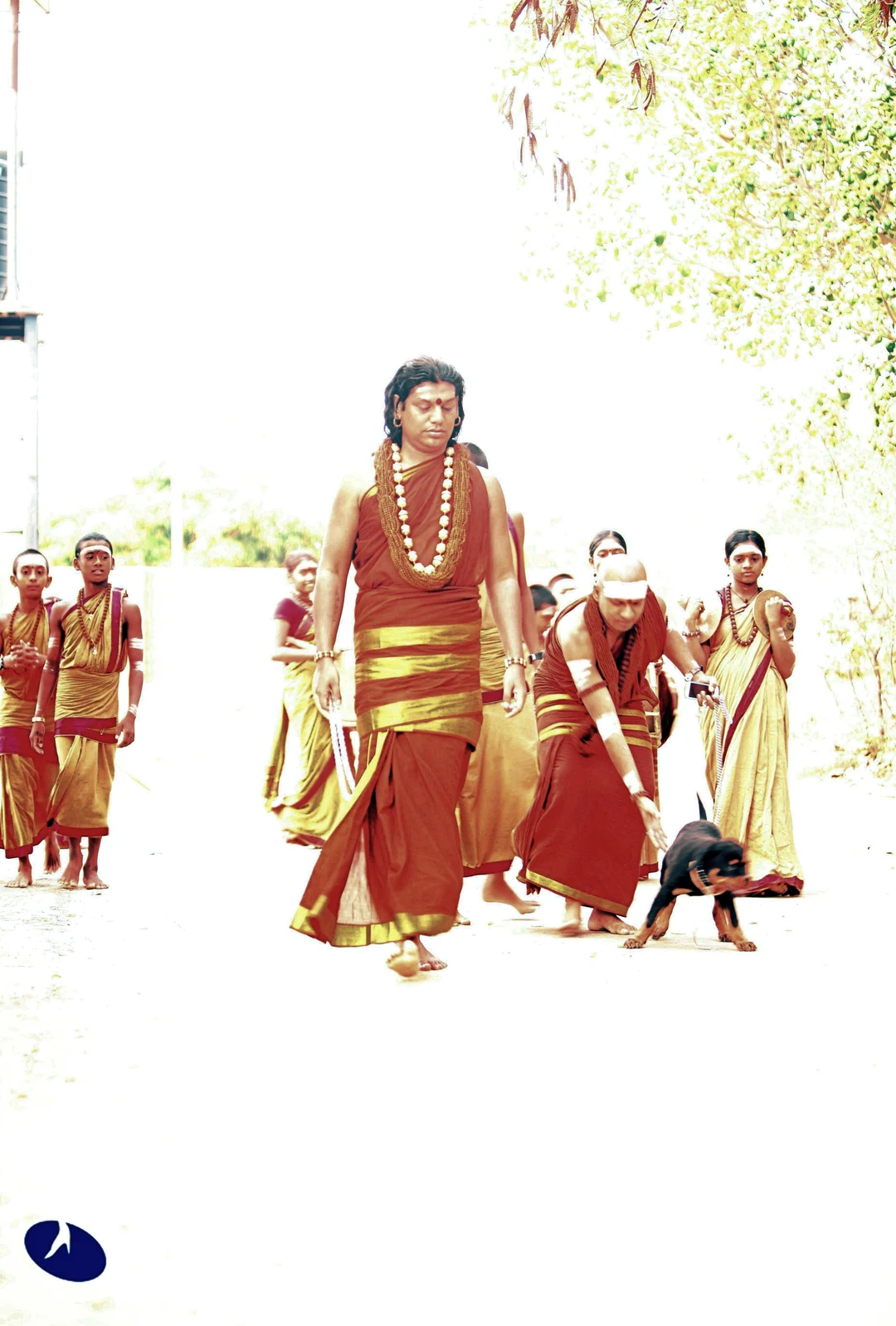
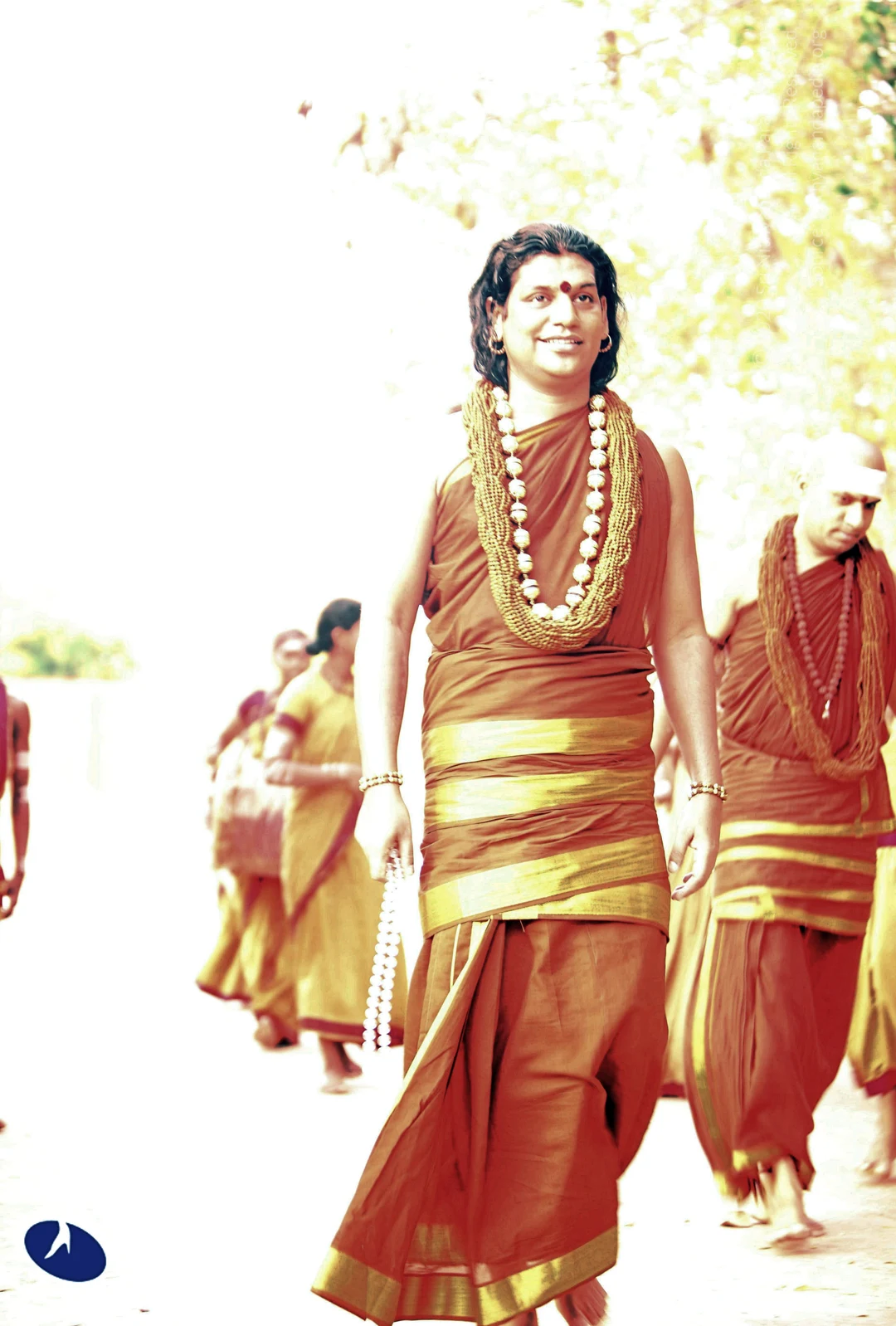
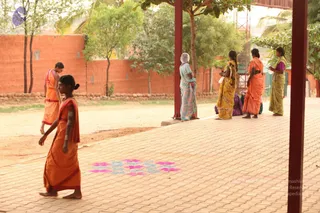
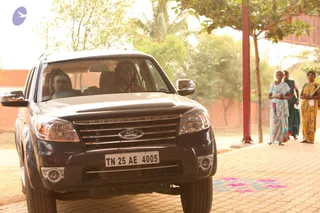
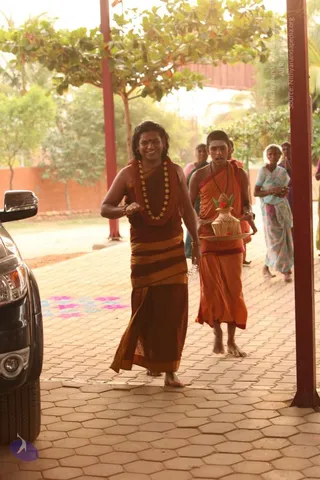
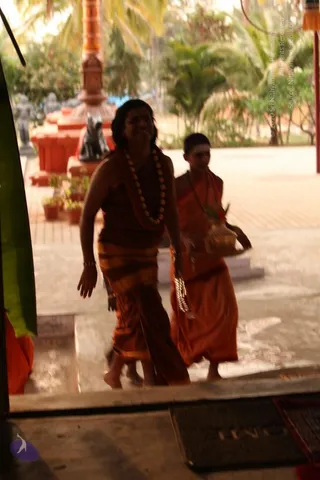
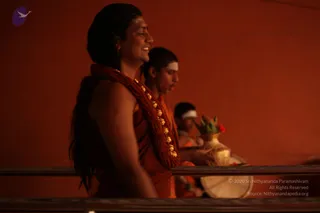
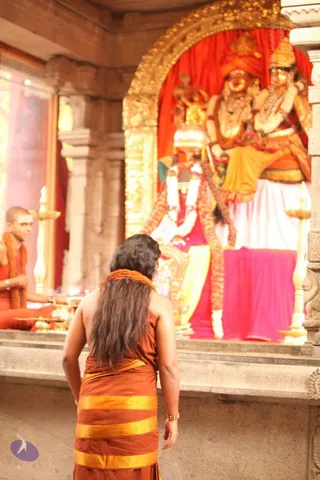
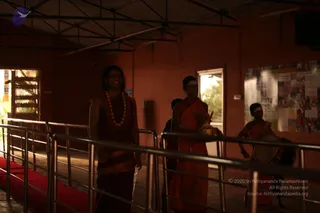
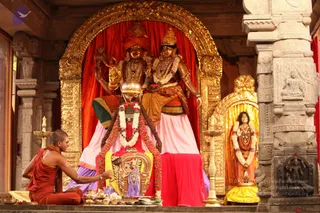
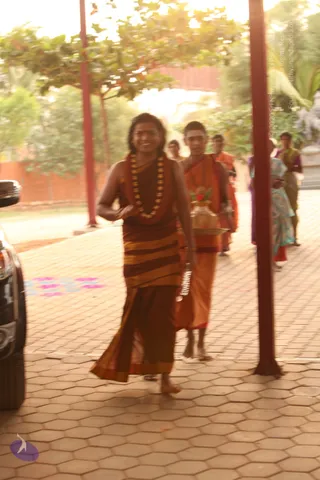
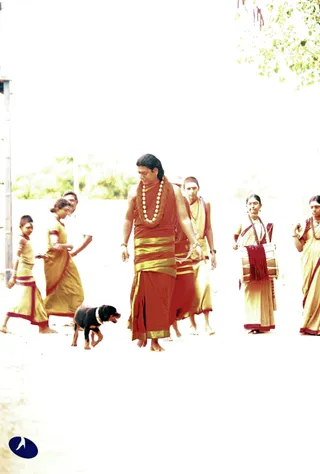
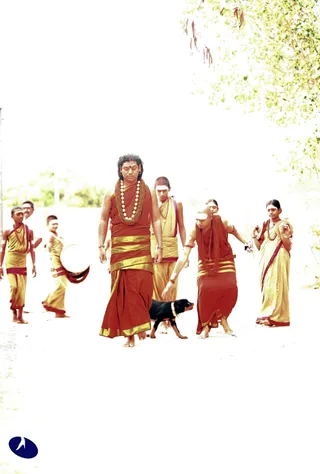
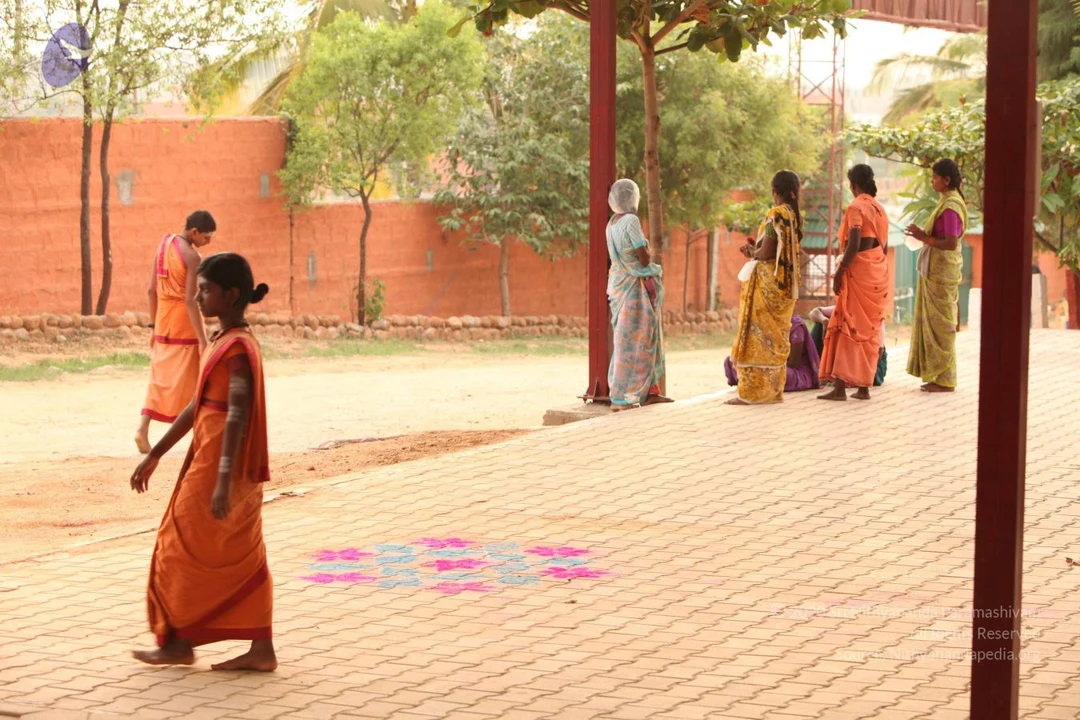
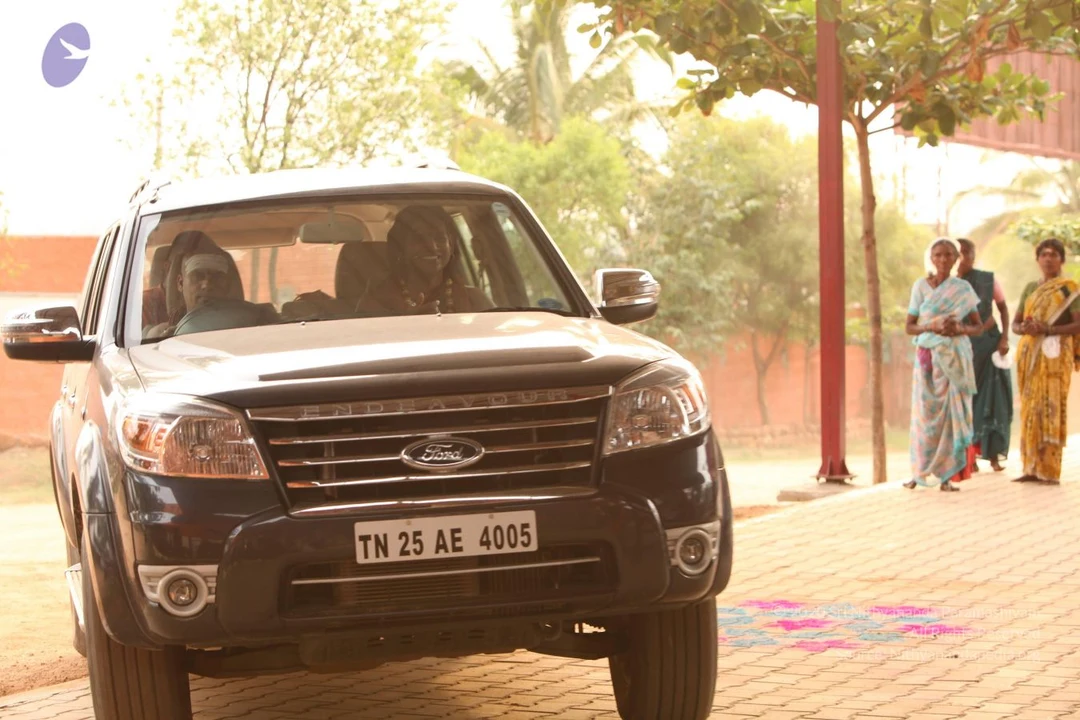
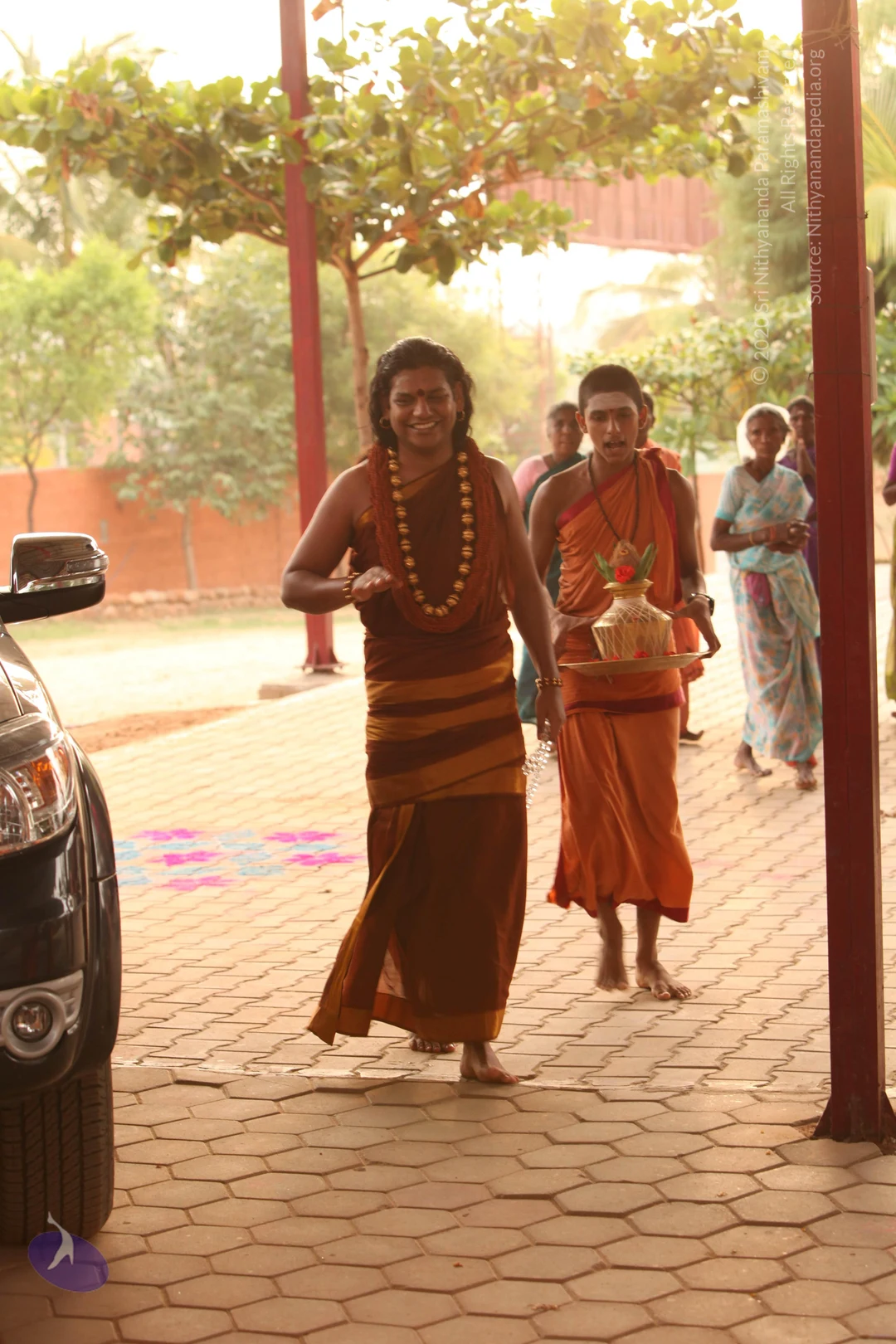
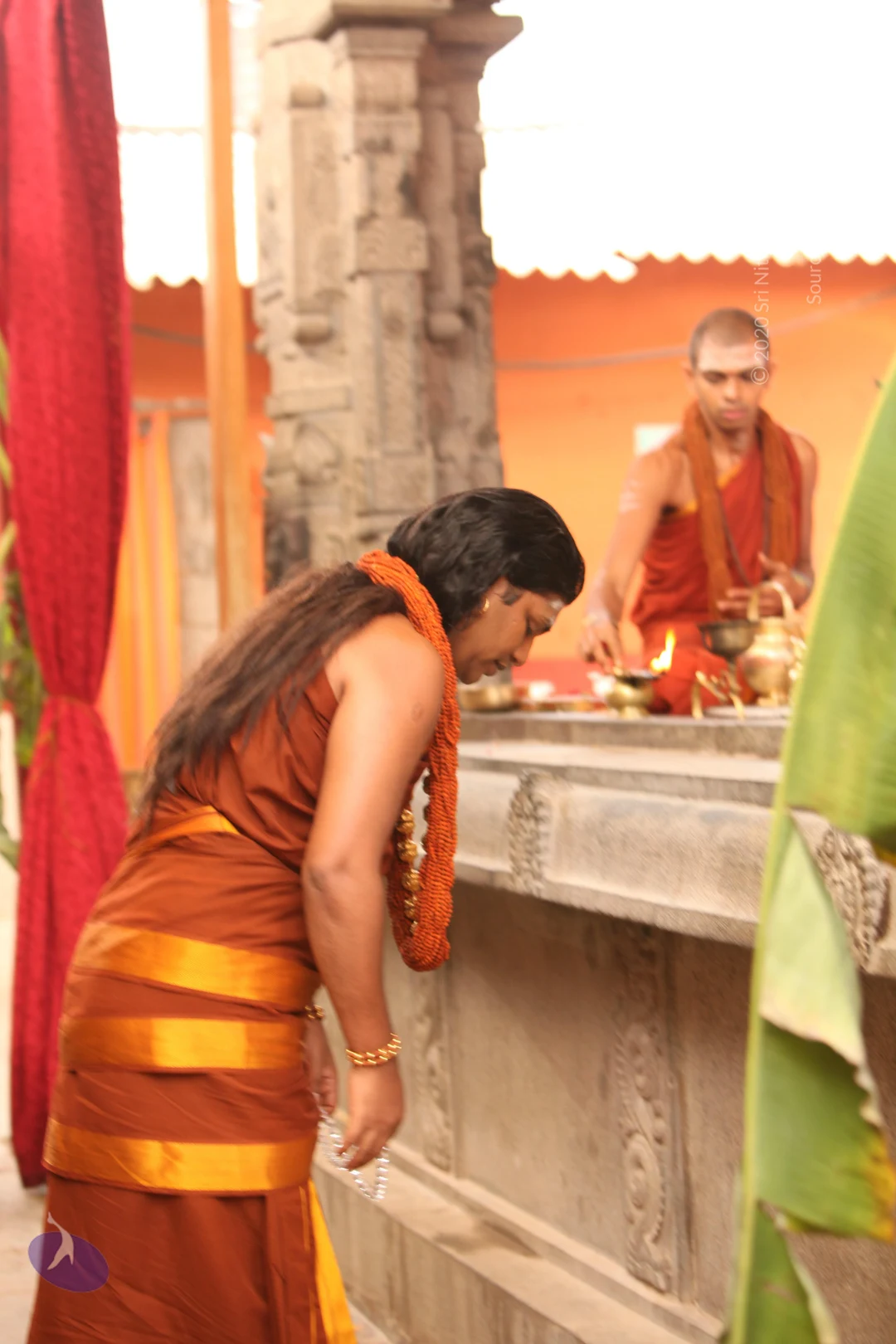
Outdoor courtyard scene at an ashram with a red-brick boundary wall and young trees. A young woman in an orange sari walks barefoot across the paved walkway in the foreground, while a young man in orange robes walks at left. Several women stand under a red-pillared open pavilion: one in a pale blue sari and white head covering, one in a yellow sari, one in an orange sari, and one in a green sari. Pink and light blue floor rangoli-style flower patterns decorate the pavement. No a person candidate is visible.A dark blue Ford SUV with the number plate TN 25 AE 4005 drives toward the camera along a brick-paved courtyard in warm late-afternoon light. Two people sit in the front seats, a driver and a passenger wearing a head covering, and a figure is visible in the rear. Along the right edge, three women in colourful saris walk past a red-painted pillar; one wears a pale blue sari with pink border, another a teal sari and the third a yellow sari, one carrying a bundle on her head. Green trees and a red brick wall form the background, and a faint pink and blue floor design lies on the pavement. No a person candidate can be confidently identified from appearance.A photograph of a covered outdoor walkway with a paved, hexagonal-tiled floor and red pillars. In the foreground, a barefoot person in a brown and gold striped dhoti and wrap, with a gold bead necklace and a red-brown shawl, smiles and walks past a black car at left. Behind them, a younger person in an orange robe with a red border carries a brass tray holding a decorated pot with flowers and greenery. Several women in pastel saris stand or walk in the background, and a pink and blue floor decoration is visible on the ground. The foreground figure has long dark hair, a red forehead mark and bangles, and the scene is warm and sunlit.A blurred photograph taken through a doorway, looking out onto a temple courtyard lined with palm trees and potted plants. A woman with long dark hair, a vermilion forehead mark, a white flower garland and a rust-brown shawl over a dark-striped dhoti walks toward the camera, smiling. Behind her, a younger person in an orange-saffron robe carries an offering tray with flowers and fruit. Orange-painted stone pillars and a black bull statue stand in the background, with a small statue of a figure visible on the left.A photograph of a person with long dark hair wearing an orange-red shawl with a rudraksha-style necklace of golden beads, standing at a railing in a warm orange-red lit room with an orange wall. Behind them, another person in orange clothing and a white forehead band plays a drum, and a brass kalasha with green leaves and a red flower sits nearby. The figure in front is smiling. a person cues are long hair, a bead mala with gold ornaments and an orange wrap, but identity is uncertain from appearance alone; the figure is one of the main people shown, with others behind in orange clothing.A temple shrine with a golden arched niche framing a deity murti draped in orange and red cloth and garlanded with white flowers. In the foreground a man with long dark hair and a rudraksha mala around his neck stands with his back to the camera, wearing a brown-orange garment with gold border stripes and a gold bangle. To the left a seated priest in orange robes with a white forehead mark sits beside a brass oil lamp and offering vessel. Golden lamp stands and a kalasha-topped shrine decorate the scene.

Darshan

12 photosSource gallery
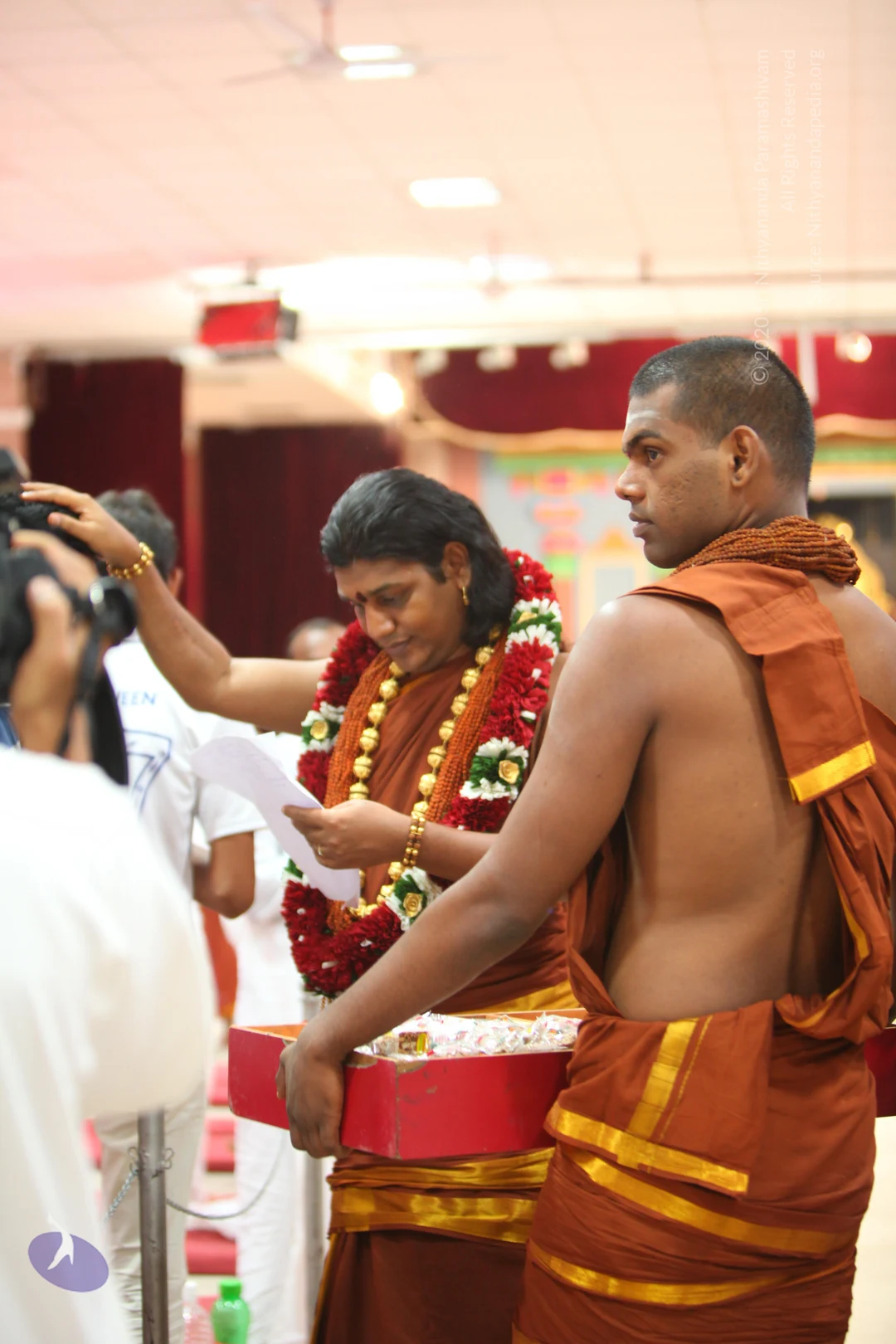
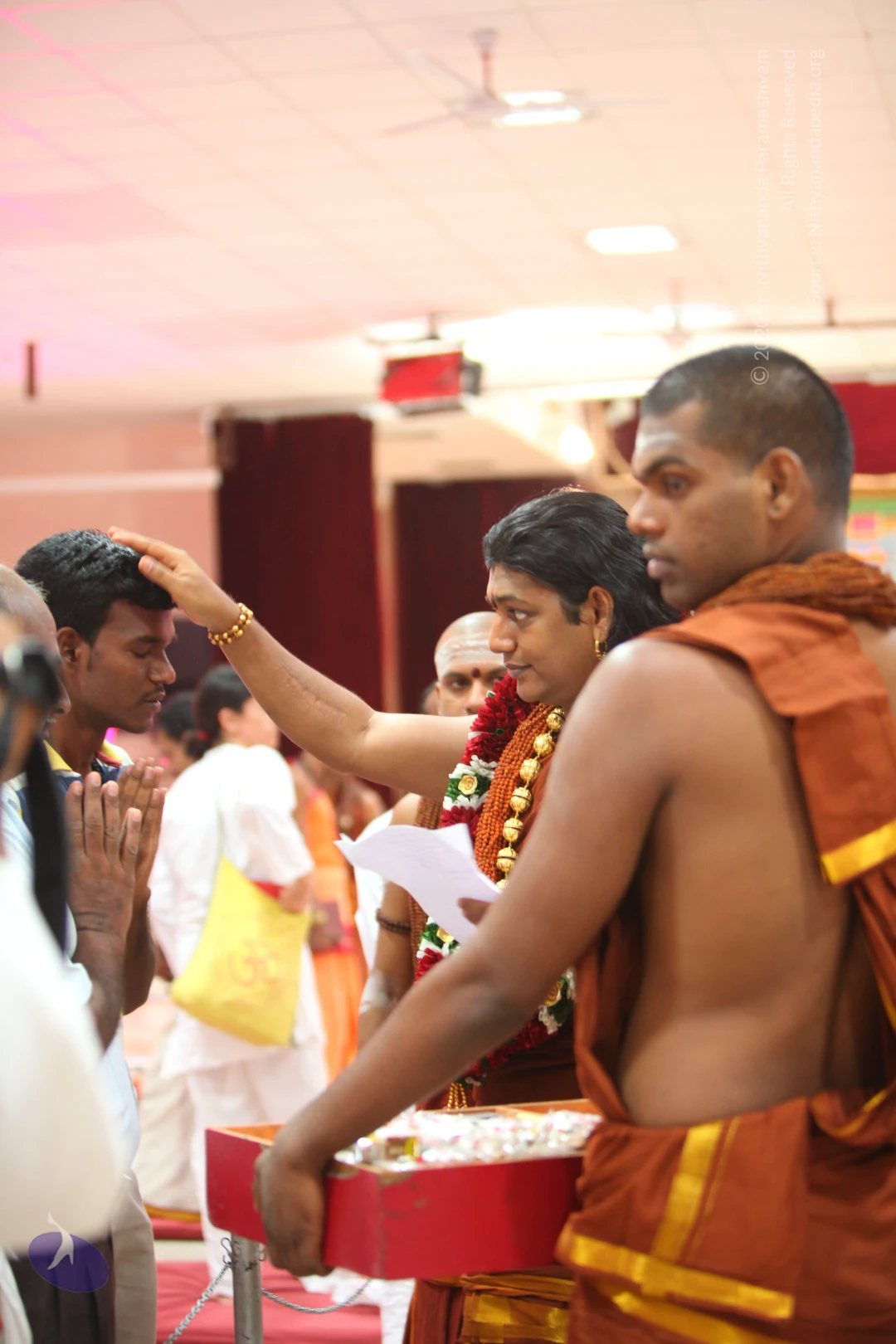
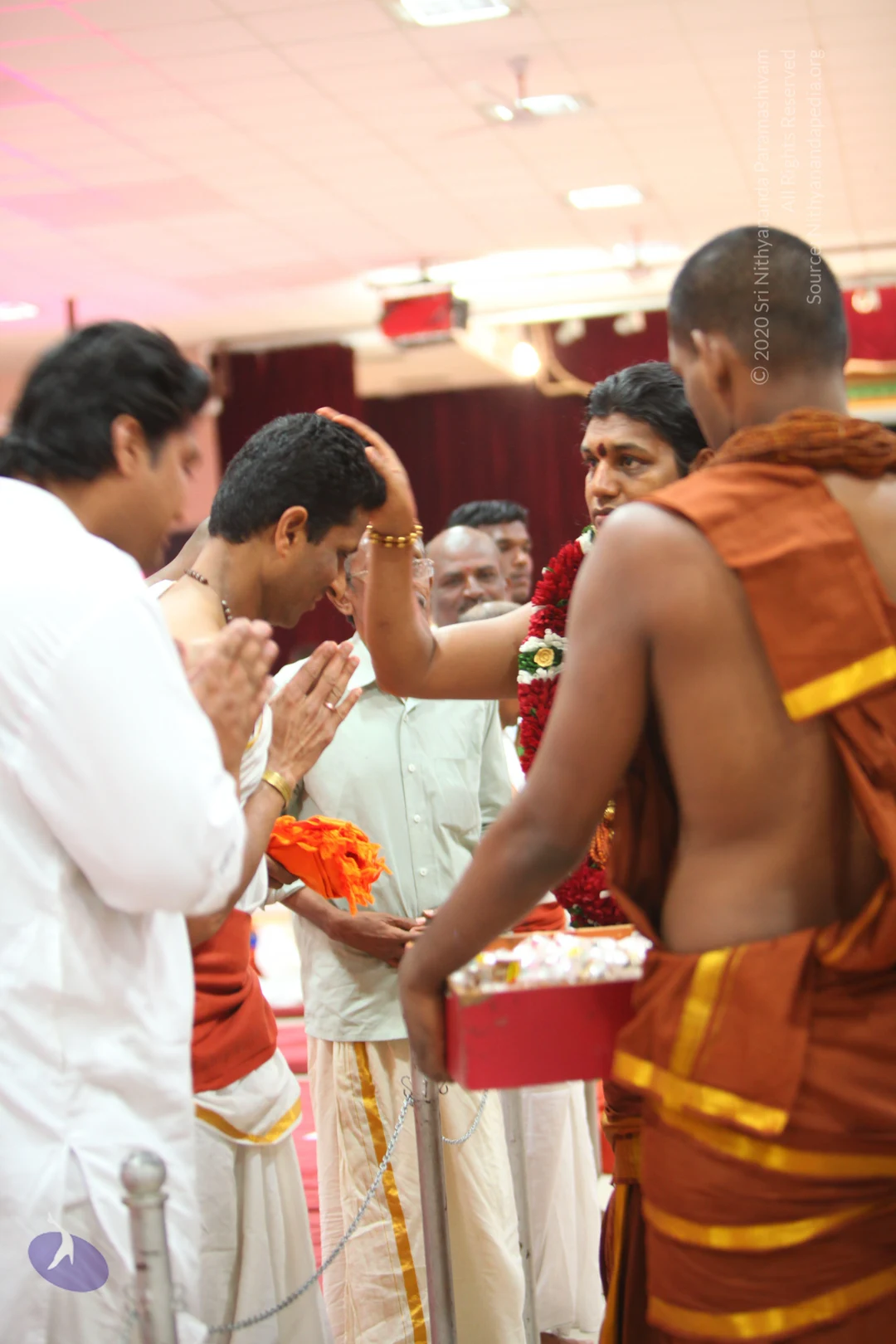
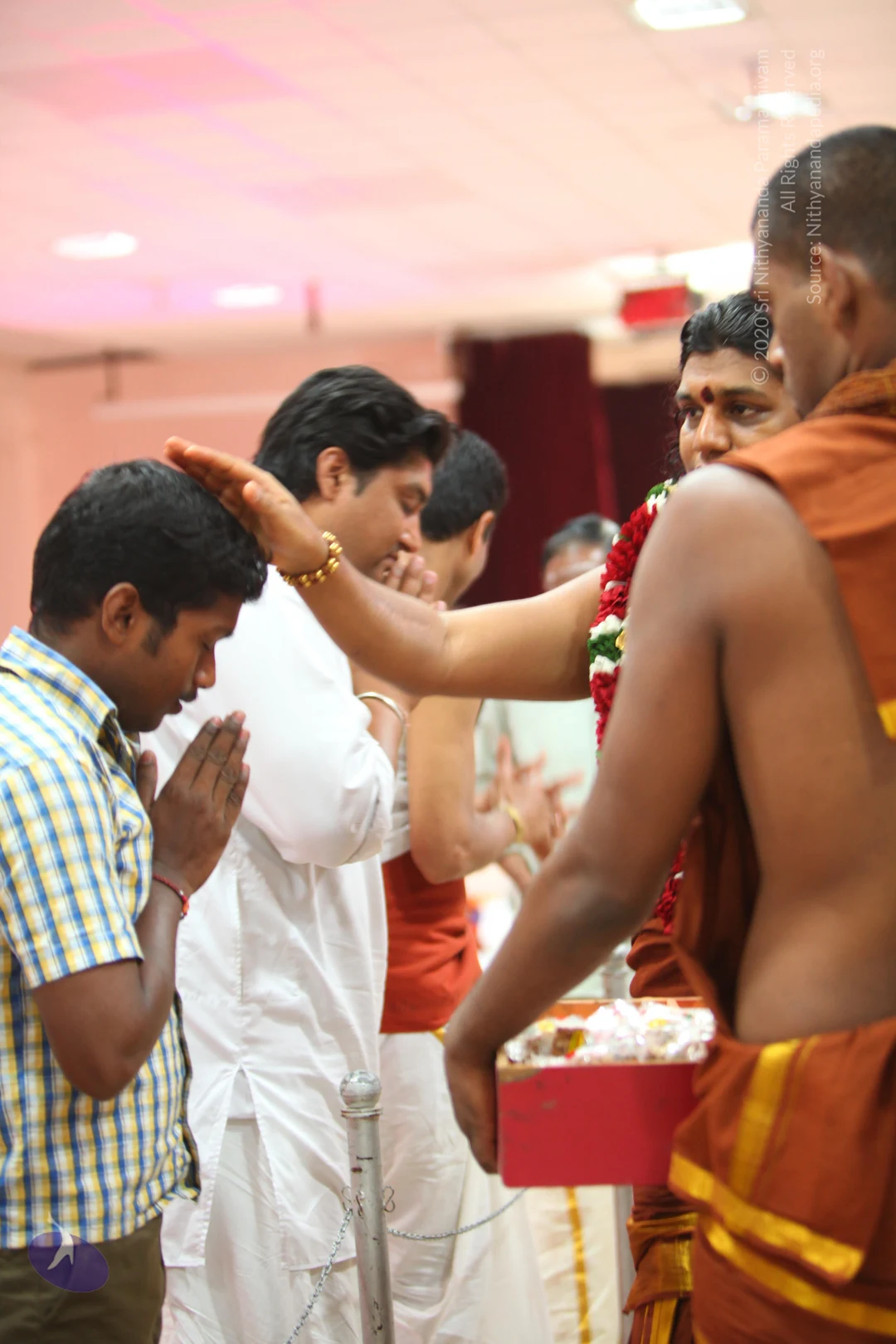
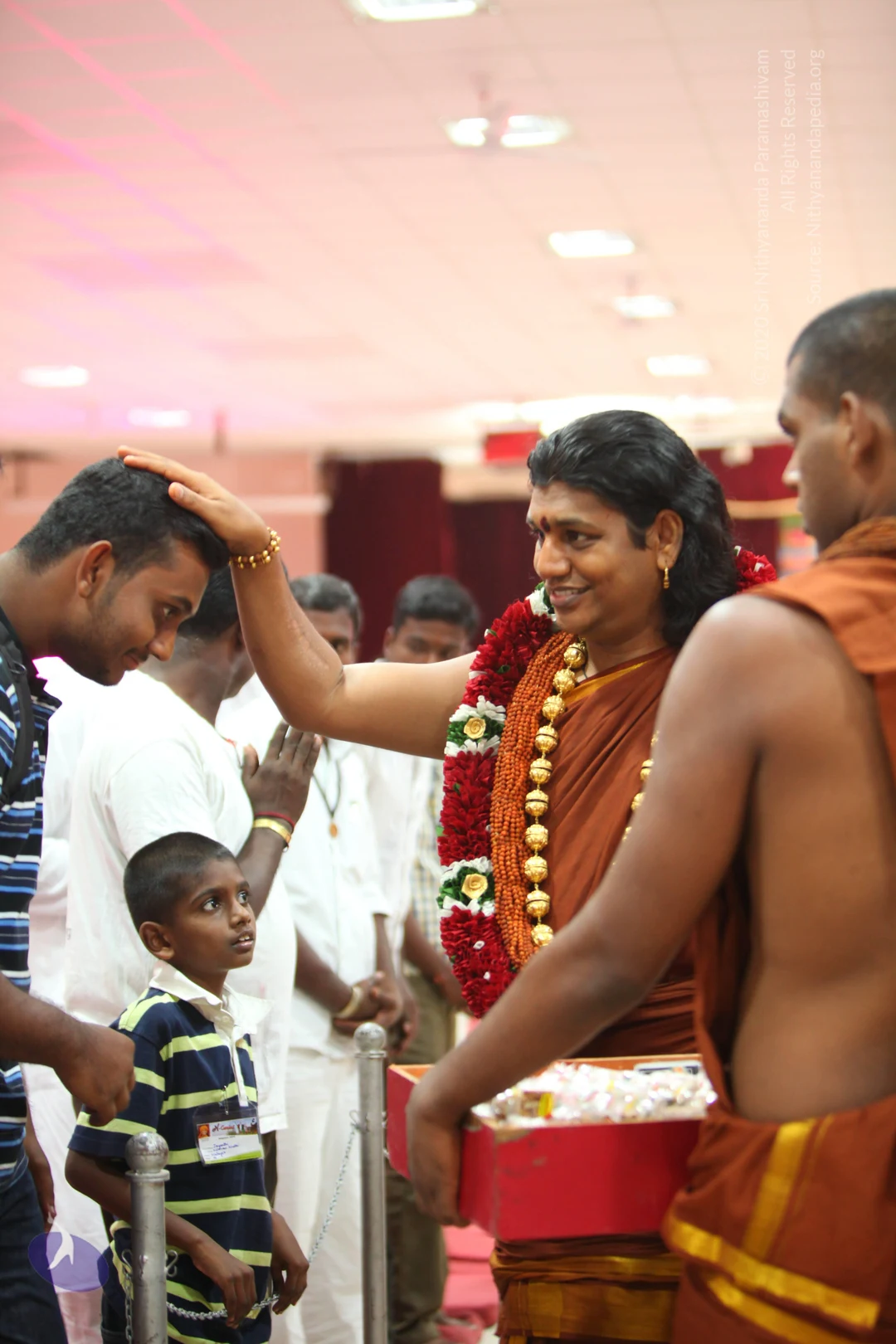
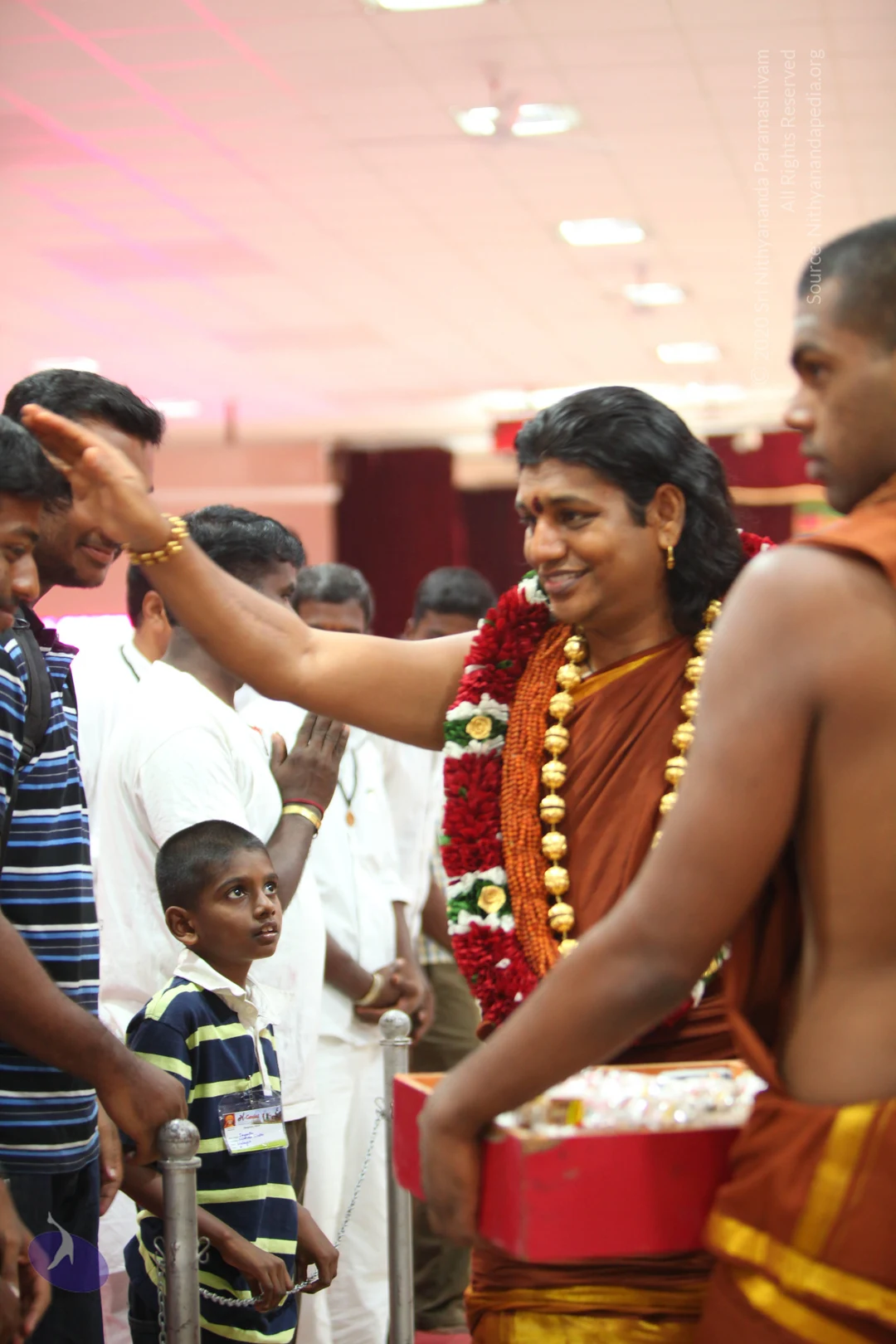
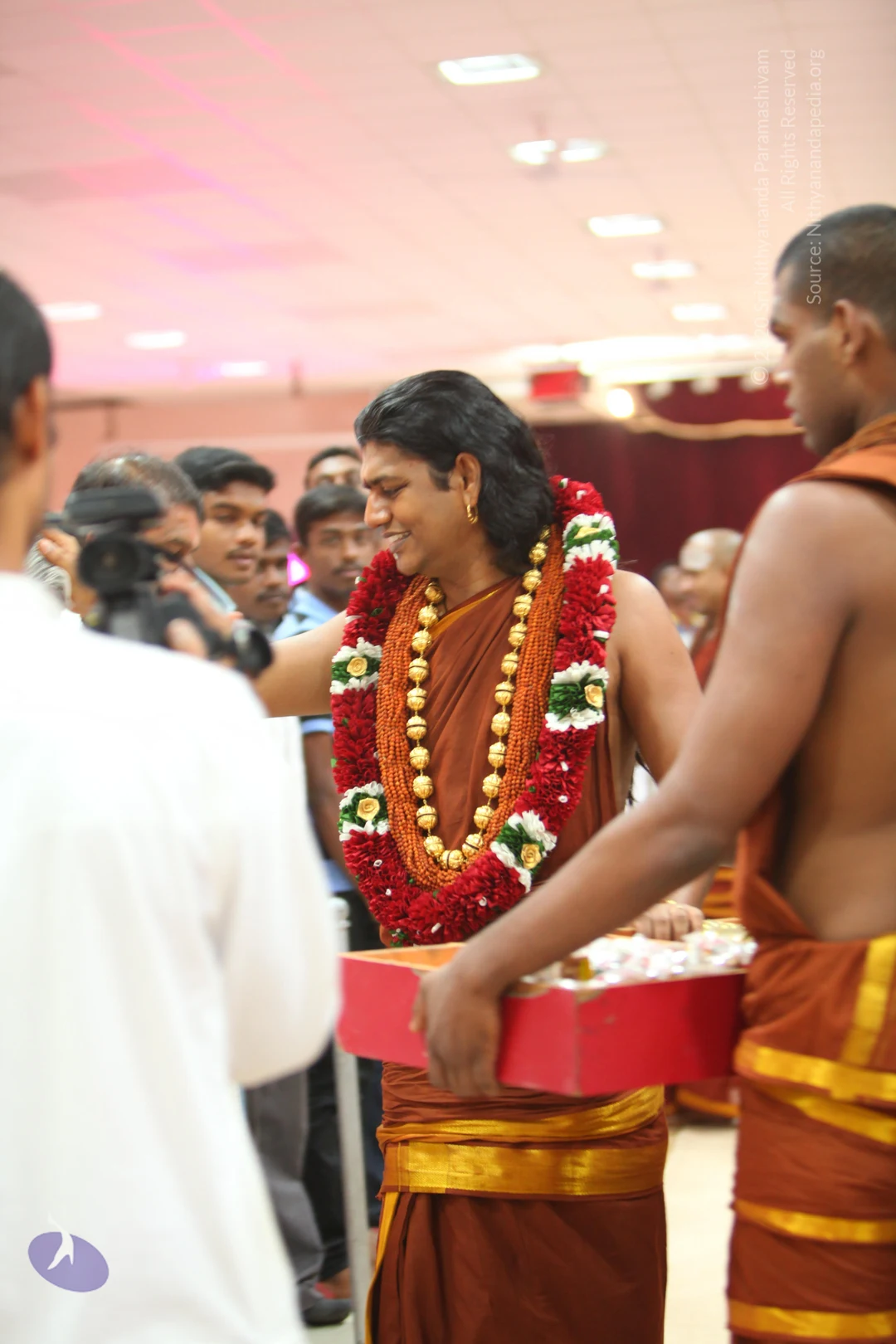
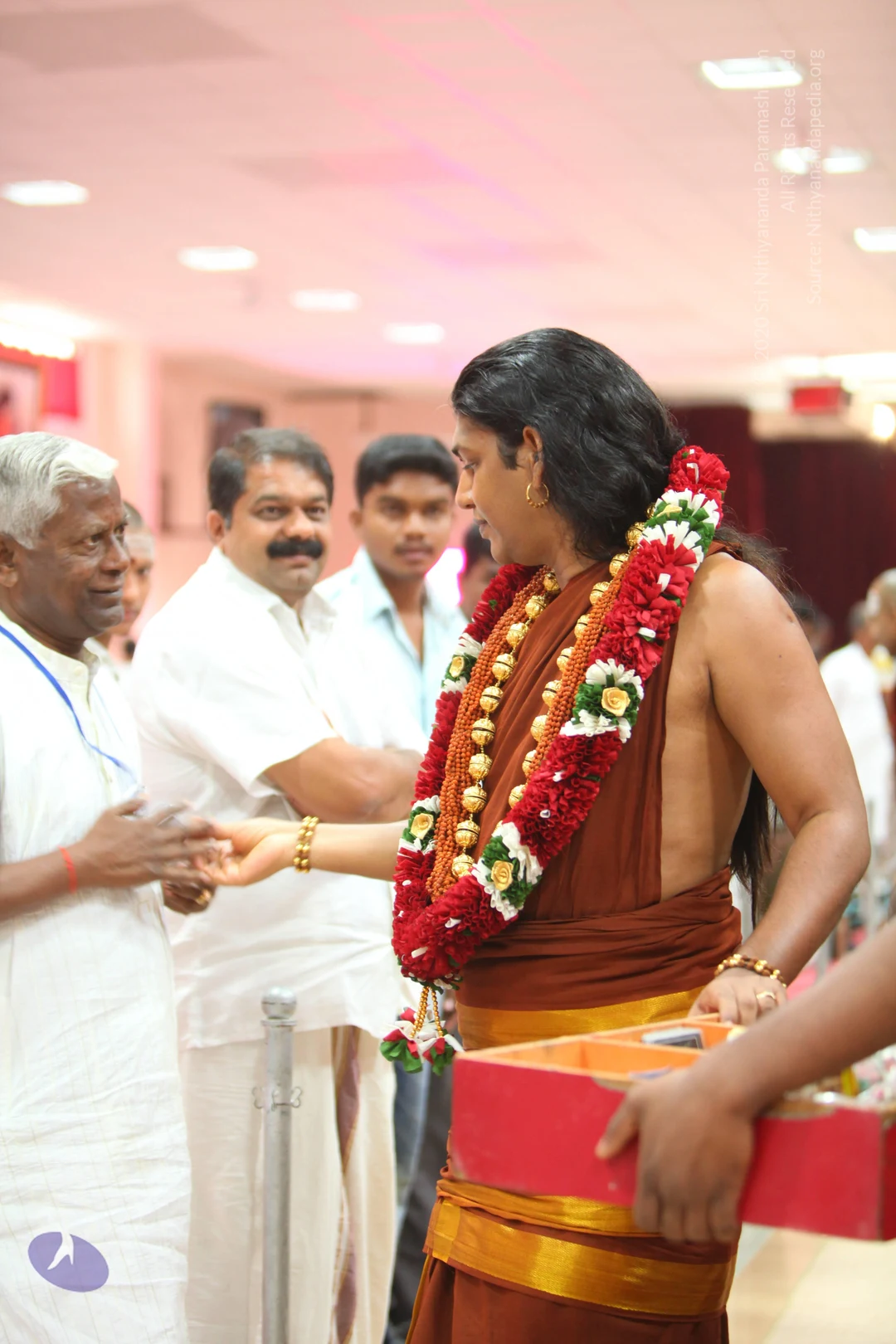
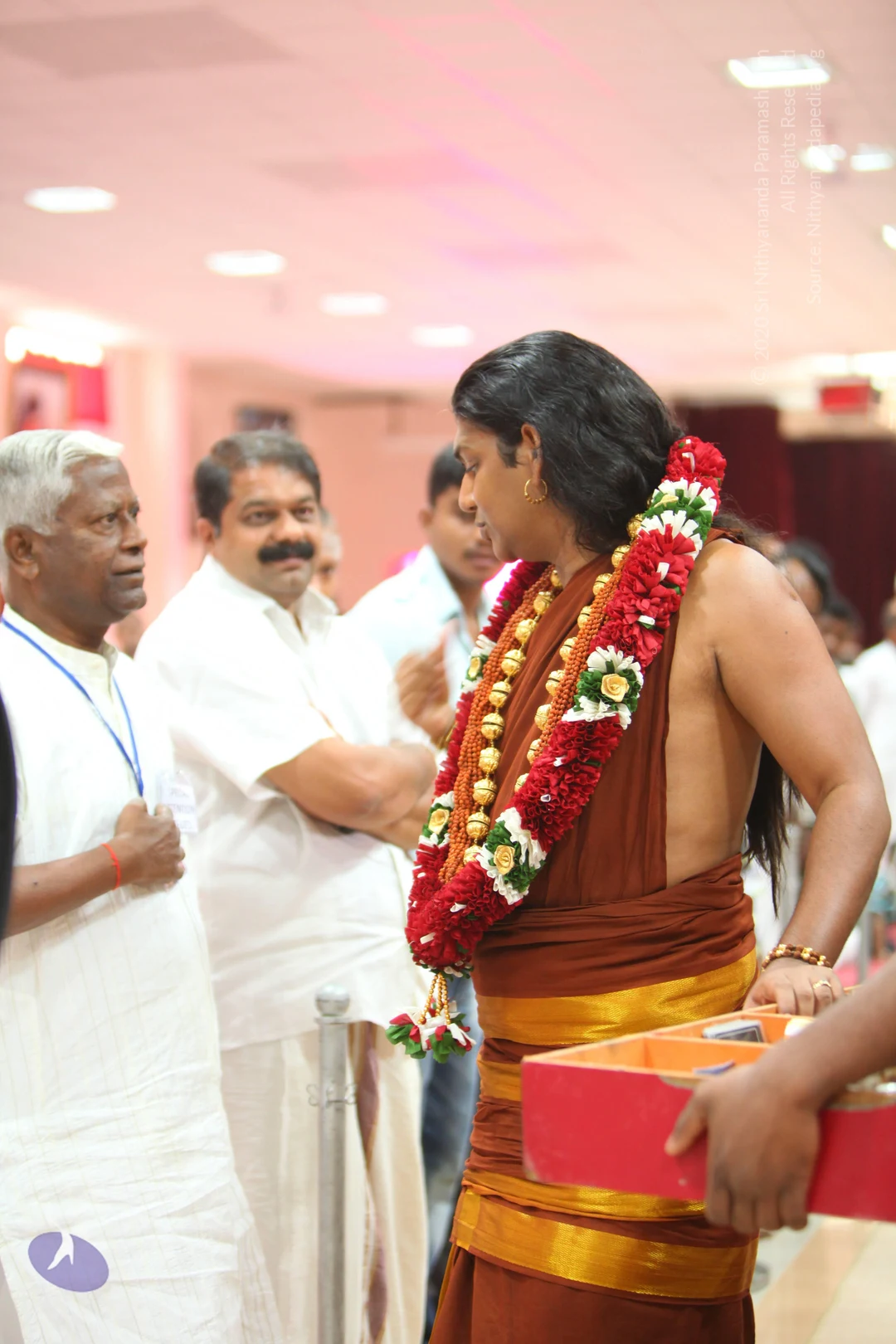
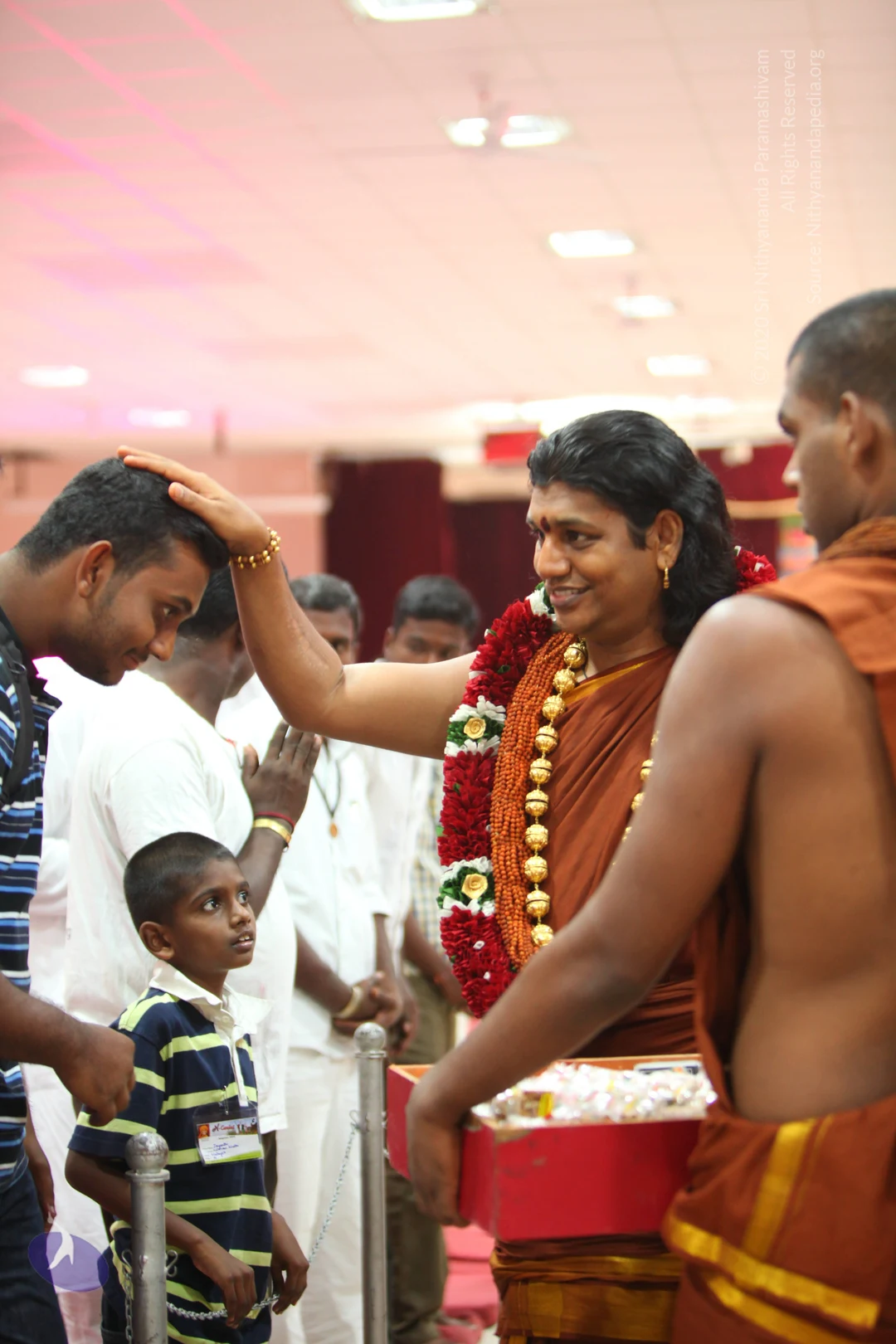
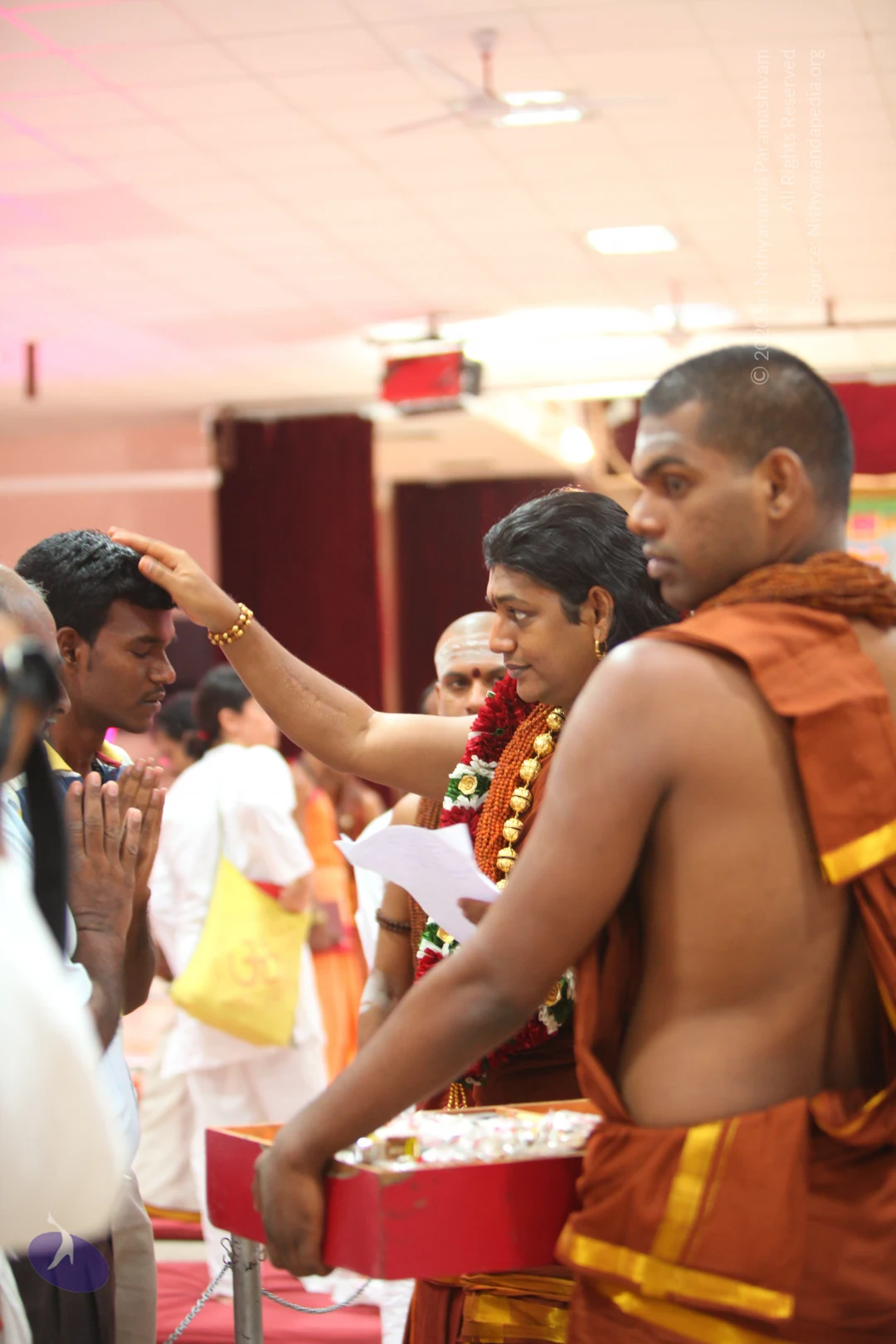
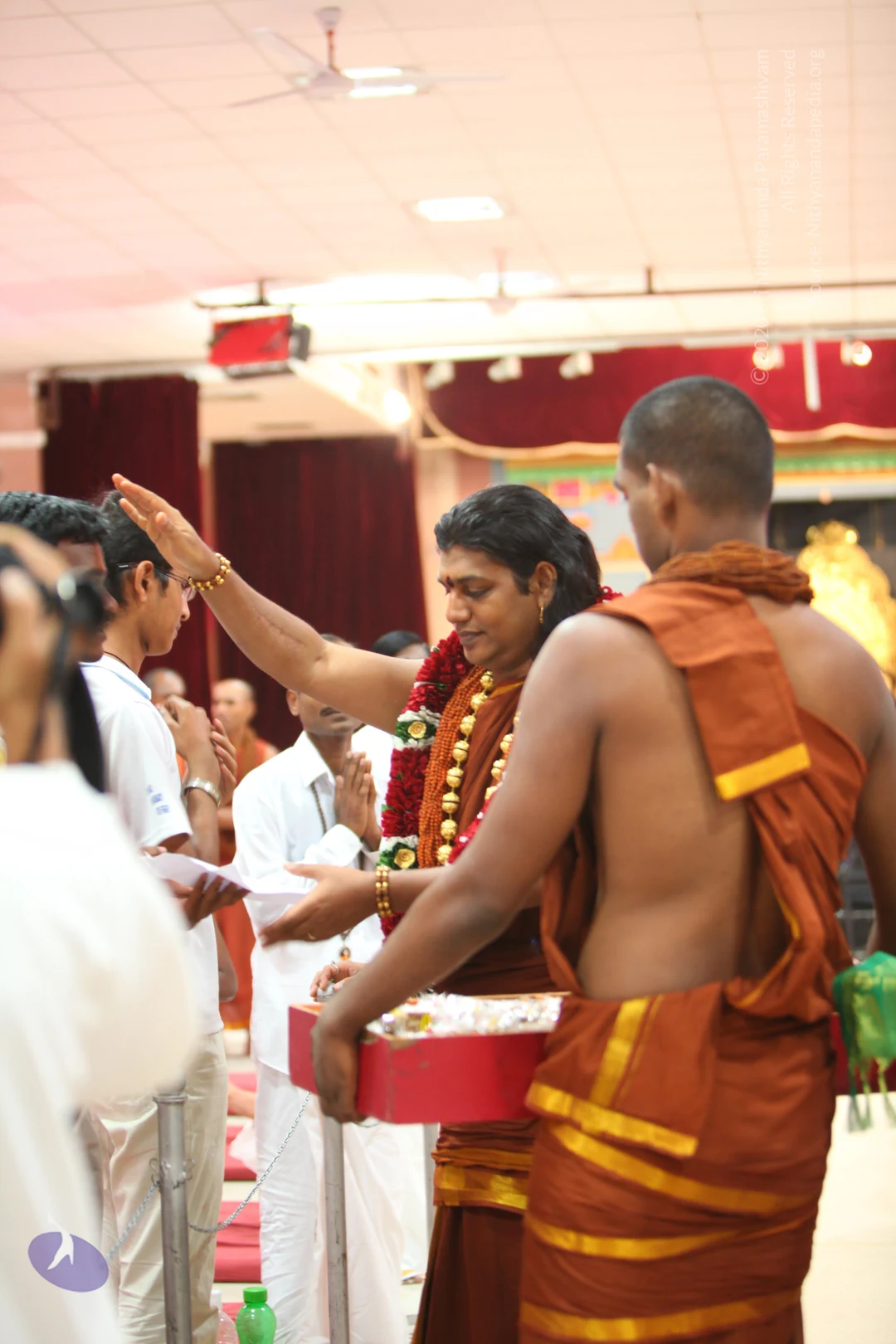
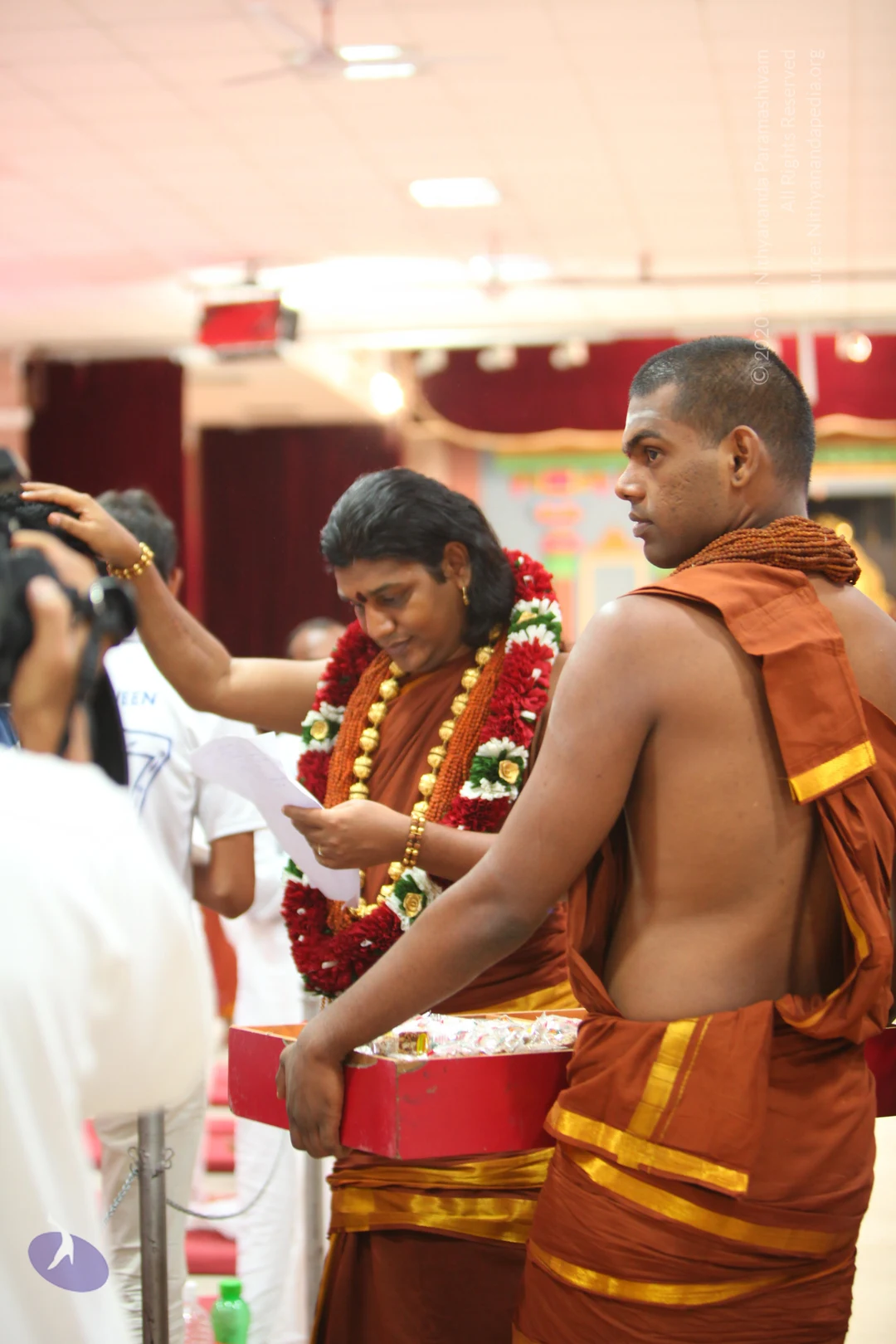
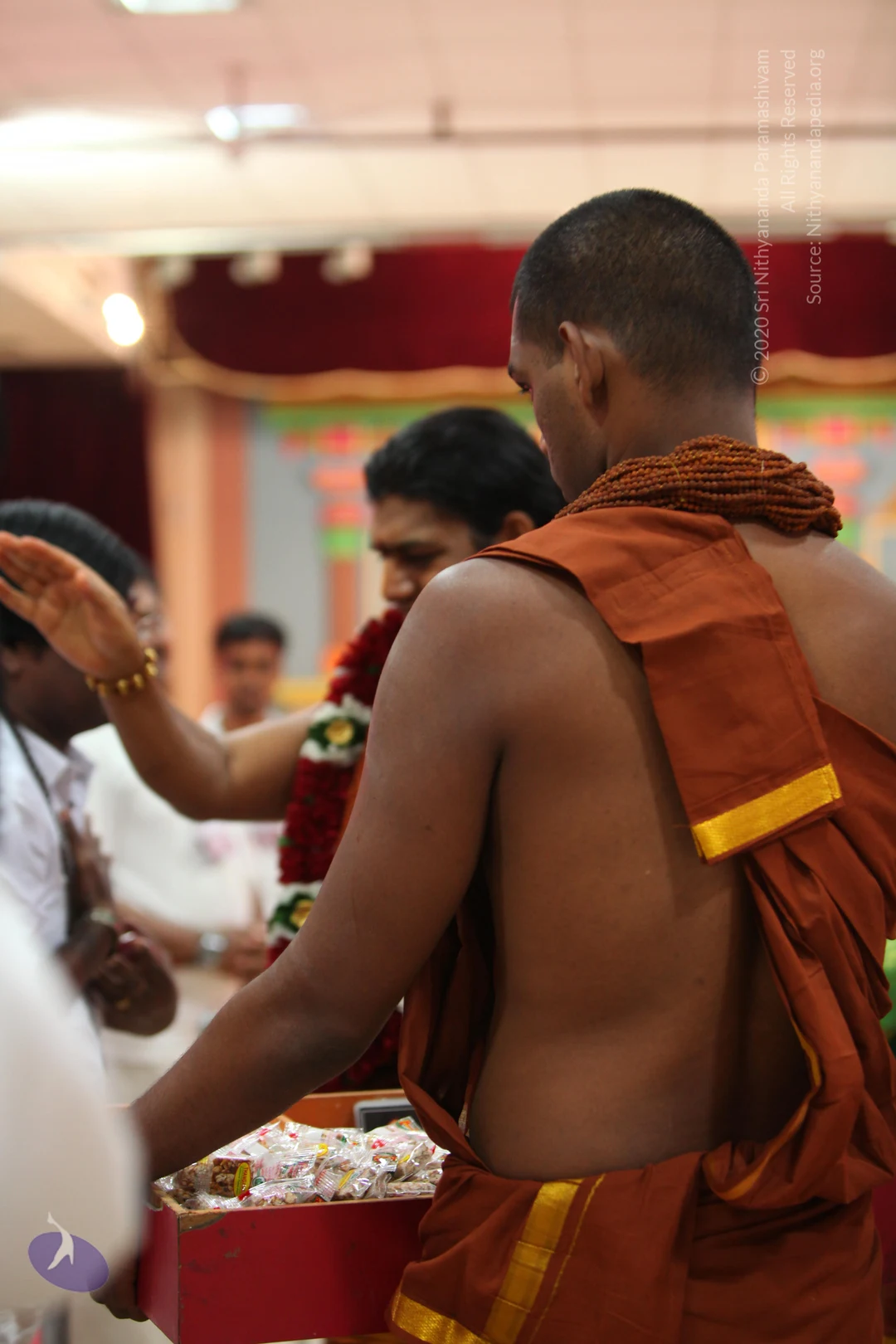
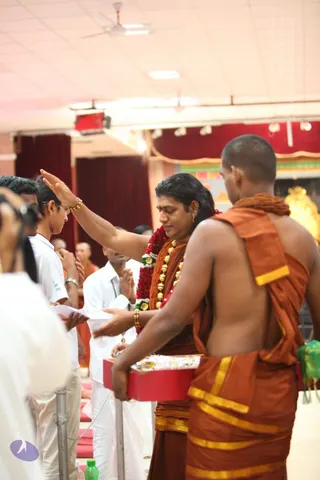
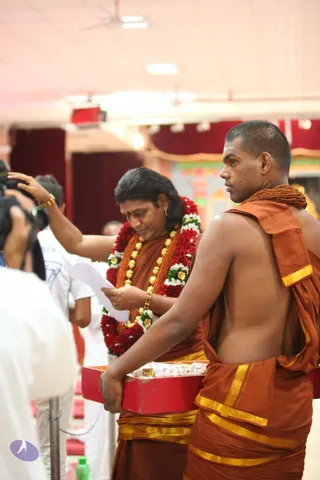
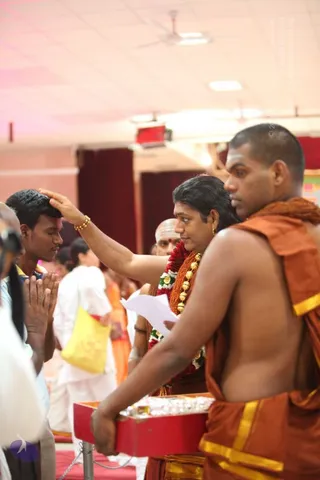
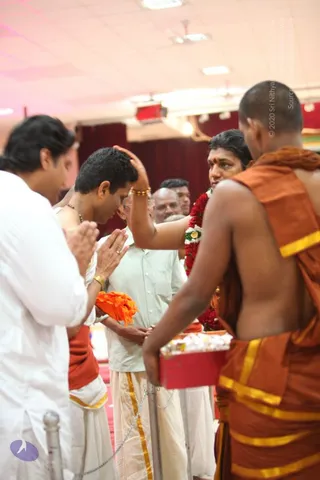
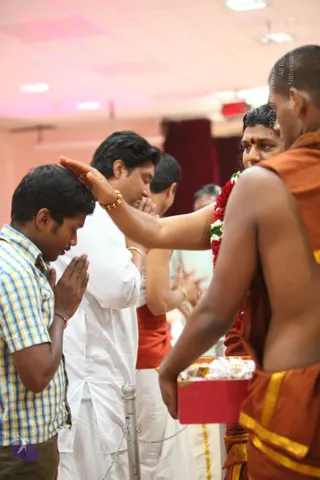
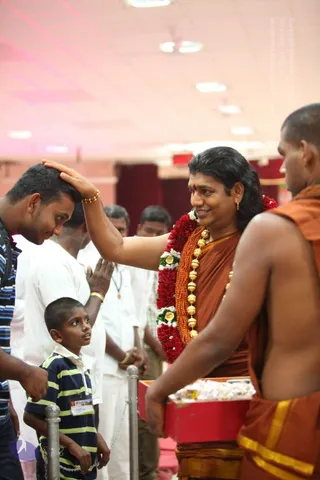
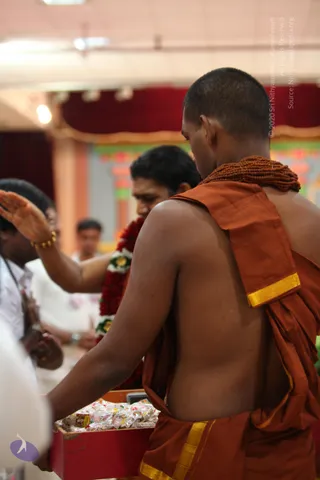
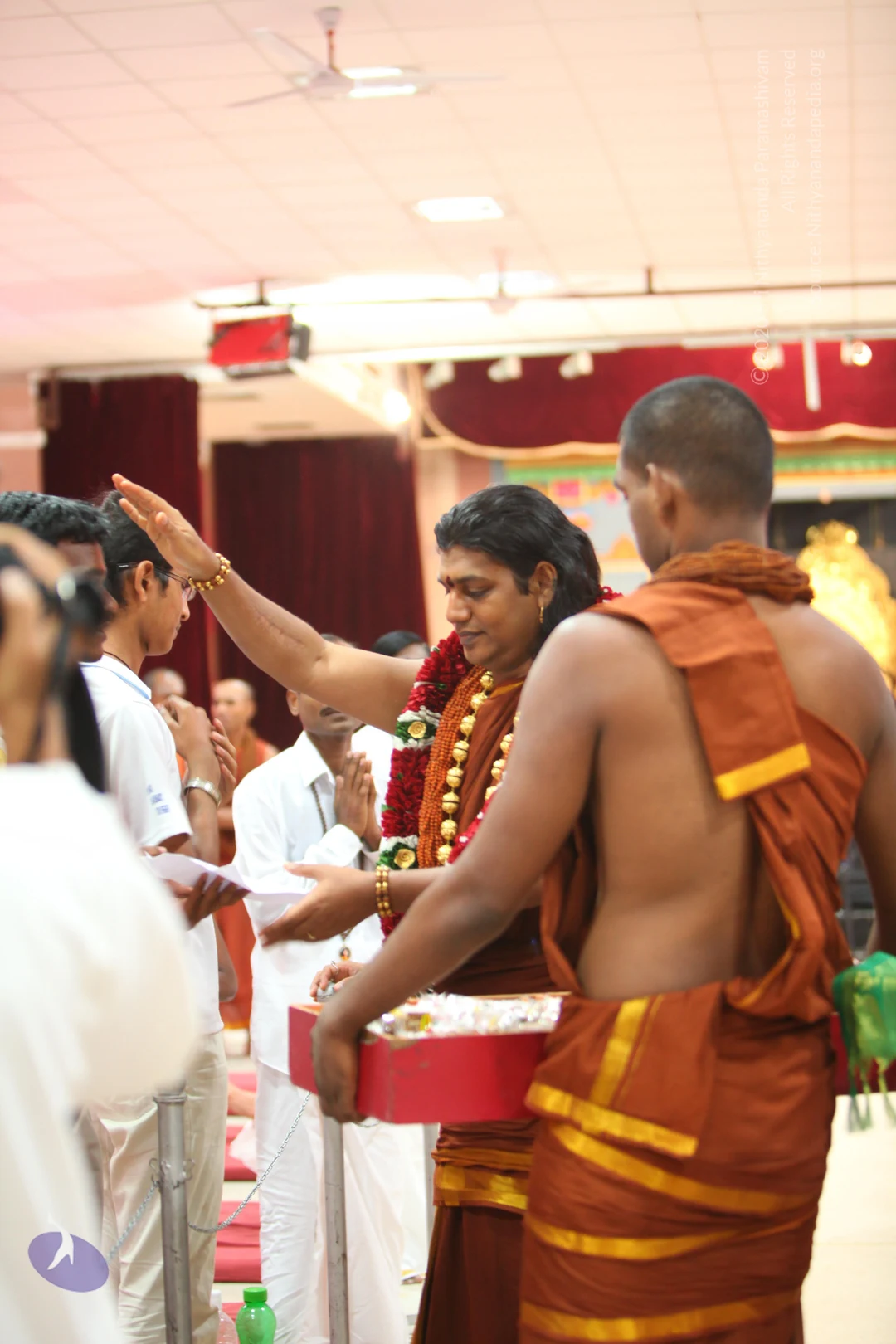
A photograph inside a hall with pink ceiling tiles, ceiling fan, and red velvet drapes. A figure with long swept-back dark hair, red and white flower garland, rudraksha mala and gold beaded necklace, wearing an orange-brown robe, raises one hand in blessing toward a man in white shirt with glasses who is leaning in with a paper in hand. Behind, a bare-shouldered monastic in orange robe with gold border holds a red tray of items. Around them, devotees in white stand with palms joined, and a green water bottle sits on the floor.A photograph of two men in saffron-orange robes inside a hall with pink ceiling and red drapes. The central figure has long, swept-back dark hair, wears a red and white flower garland, a gold necklace and rudraksha mala, and reads from a sheet of white paper while holding it in one hand. Behind him a bare-shouldered man with a shaved head, orange shawl with gold border and rudraksha beads on his shoulder holds a red box of sweets. A cameraman in the left foreground films the scene. Fits the page's a person appearance cues, with long swept-back hair, rudraksha and gold ornaments.A photograph of a temple-style hall with a pink ceiling and red curtains. A woman with long dark hair, wearing a red and white flower garland, gold-bead necklace and gold bangles, places her hand on the head of a young man with closed eyes and palms pressed together. A shaven-headed priest in a saffron-orange wrap with gold borders stands in the foreground holding a red tray of offerings. Another man with a white vibhuti mark stands behind, and a woman in white carries a yellow bag printed with Om. The scene suggests a blessing or darshan line.Photo of a ritual blessing in an indoor hall with red curtains and pink-tinted ceiling lights. A bare-chested priest in an orange-brown dhoti-style garment with gold borders stands at right, holding a red tray of offerings. A woman with a red garland and a vermilion mark on her forehead gently places her hand on the head of a man with folded palms who bows forward. Beside them a bald older man in a pale green shirt and white dhoti with gold border holds an orange cloth, and a man in a white shirt stands at left with hands joined in prayer.A photograph of a temple-style ritual in a pink-walled hall. A bare-chested priest in orange-and-gold dhoti and shawl, seen from behind, places his right palm on the head of a bowing man in a white kurta and dhoti, who has his hands pressed together. A young man in a yellow-and-blue checked shirt stands at left with palms joined in prayer, and a woman with a red bindi wears a red-and-white flower garland. The priest holds a red tray of offerings, and a metal stanchion and chain are visible. No figure is clearly identifiable as a person from appearance, so no candidate is marked.Indoor hall with pink ceiling lights and maroon curtains. A figure with long swept-back dark hair, saffron-orange robe, red and white flower garland, orange rudraksha mala and gold beaded necklace places a hand on the head of a young man in a striped shirt, blessing him. A shaved-headed monk in saffron robe holds a red box of offerings beside. A boy in a striped shirt with an event badge watches, and white-clad devotees stand behind. a person cues: long hair, saffron robe, rudraksha mala and gold necklace, performing a blessing.

Pada-Puja

52 photosSource gallery
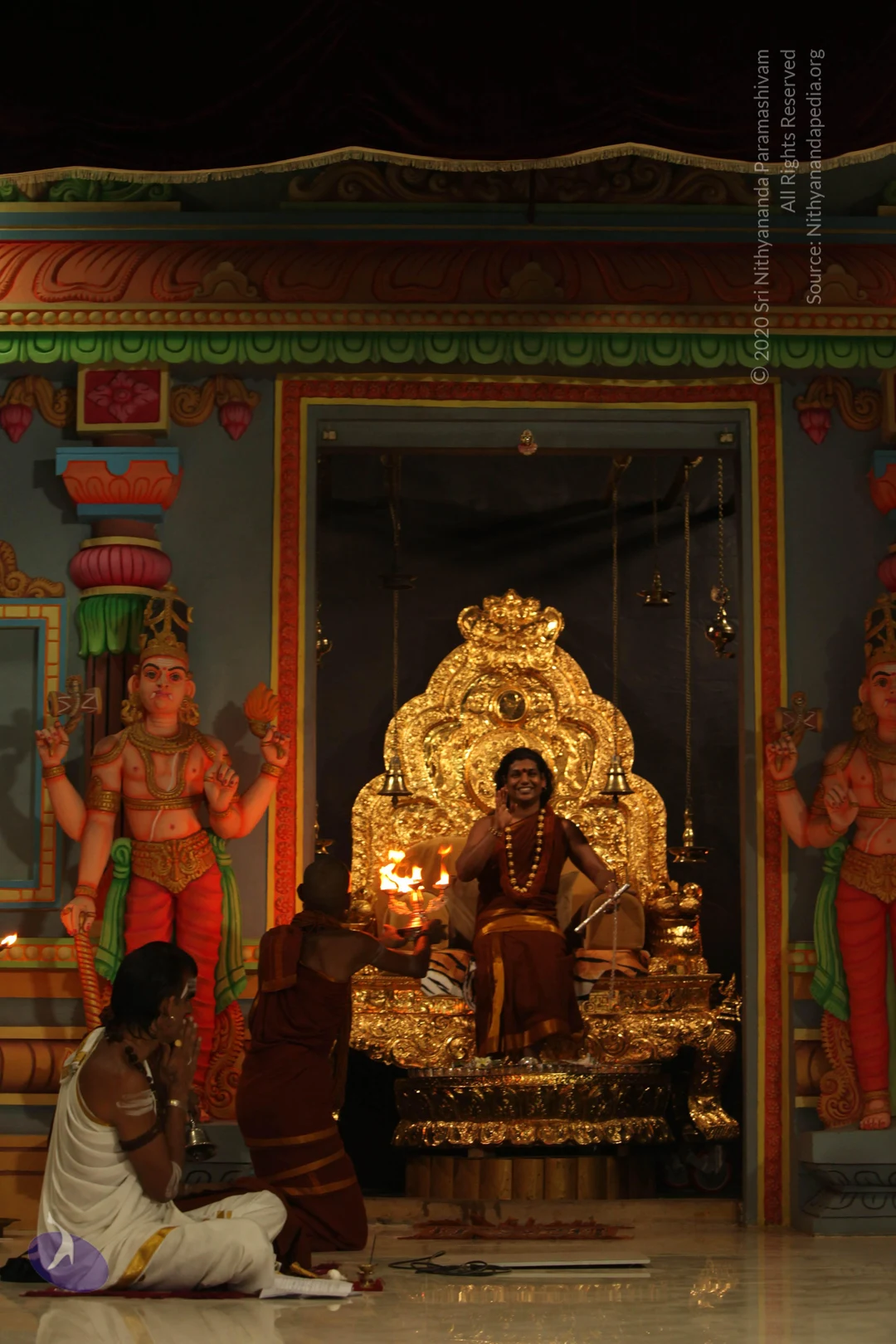
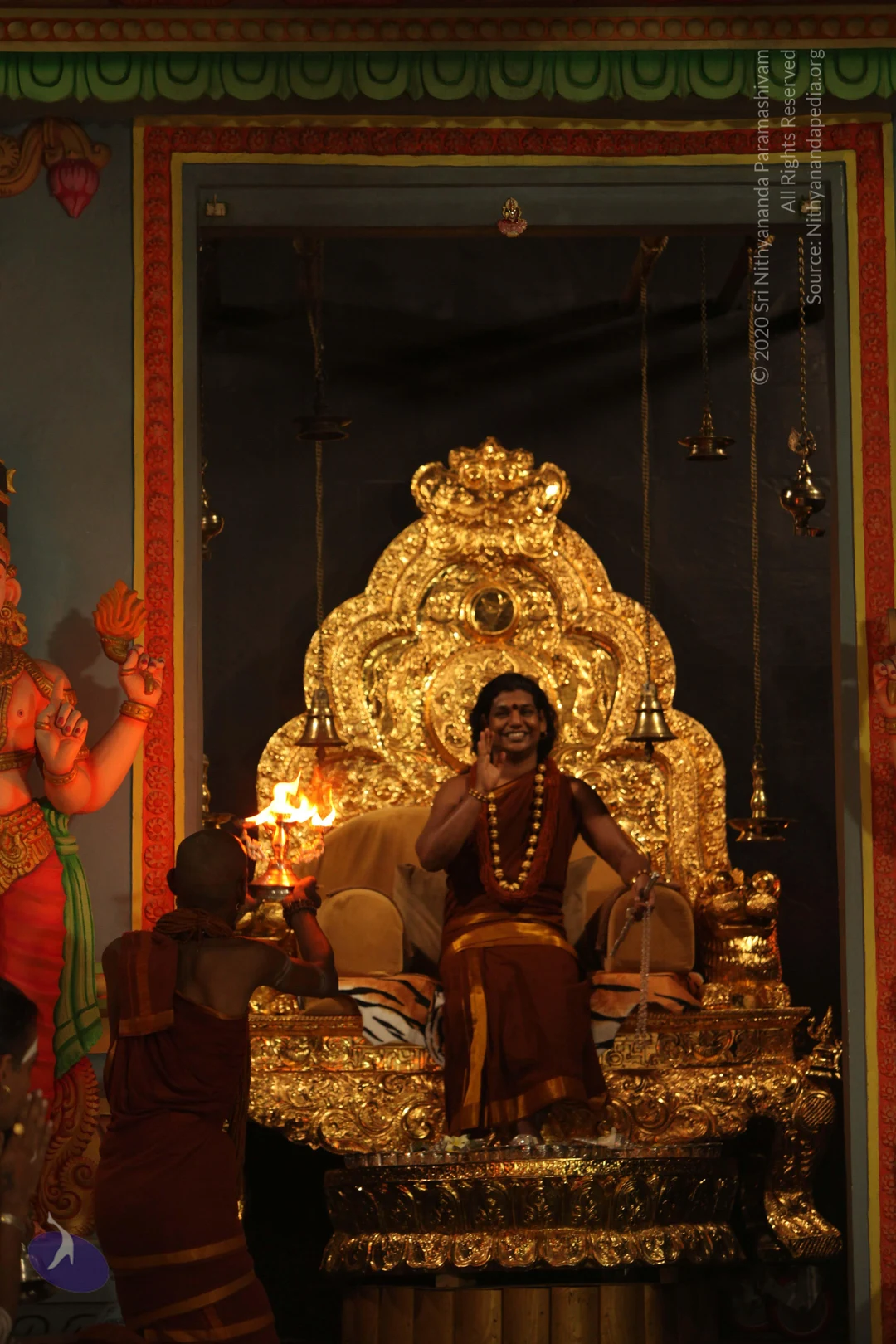
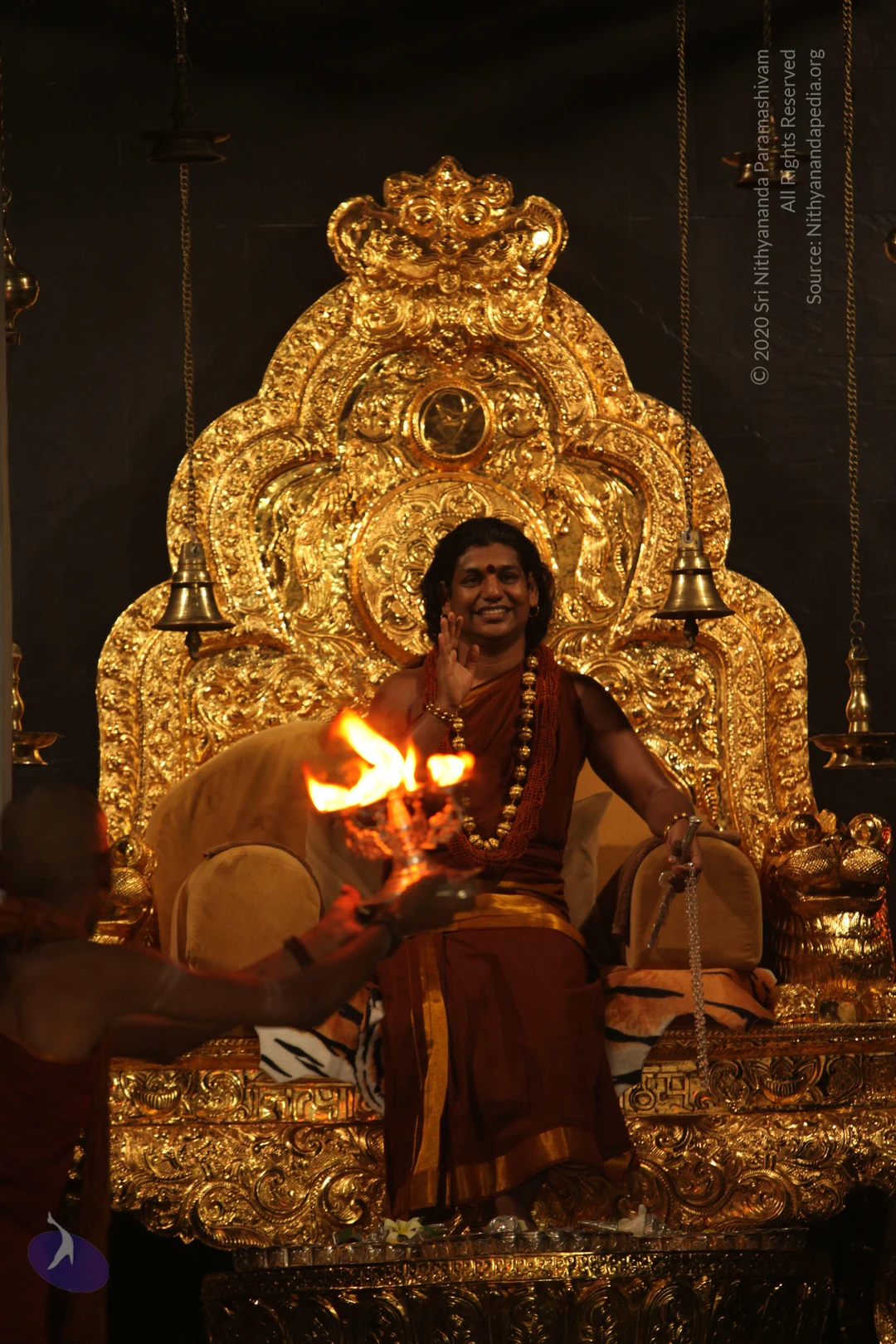
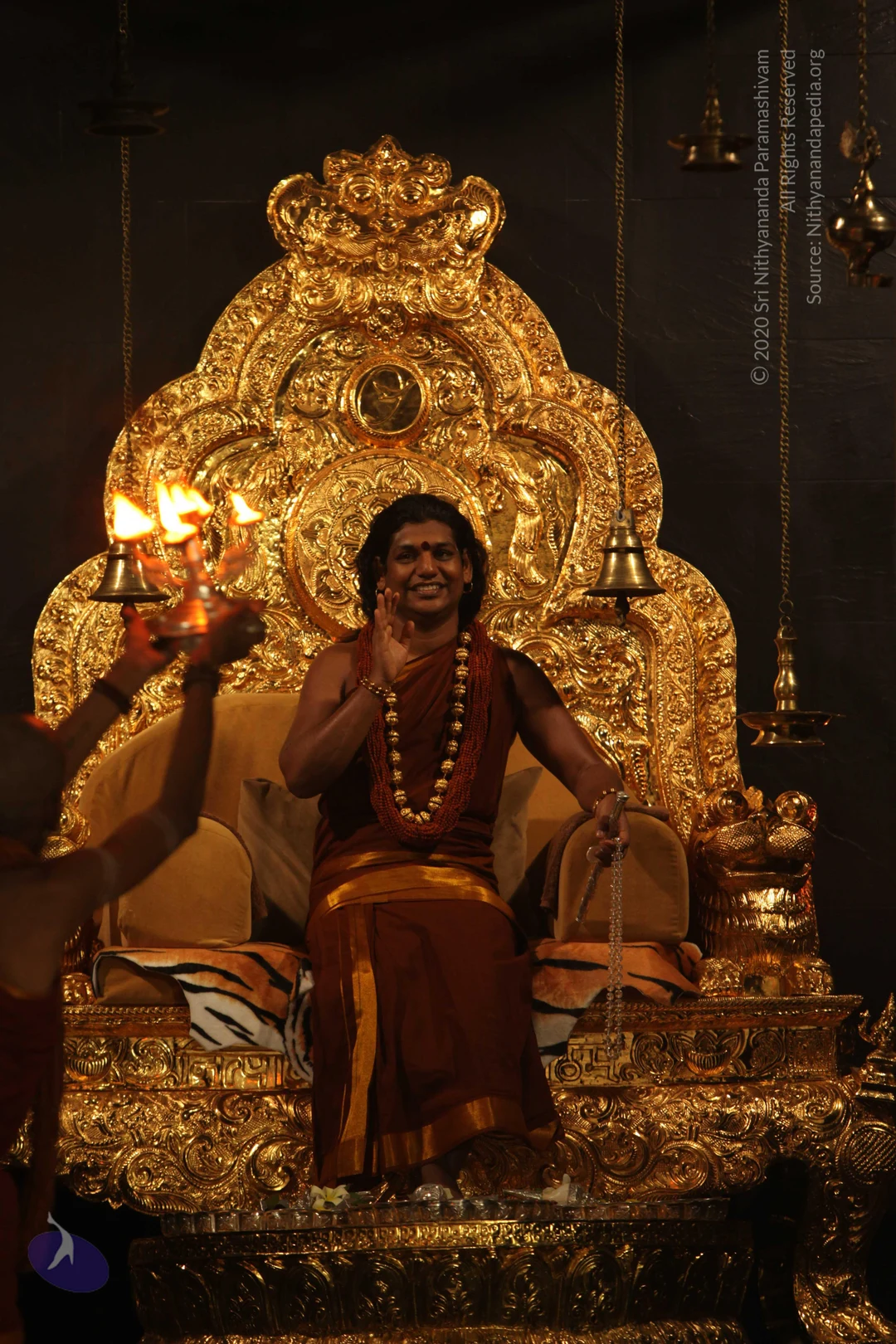
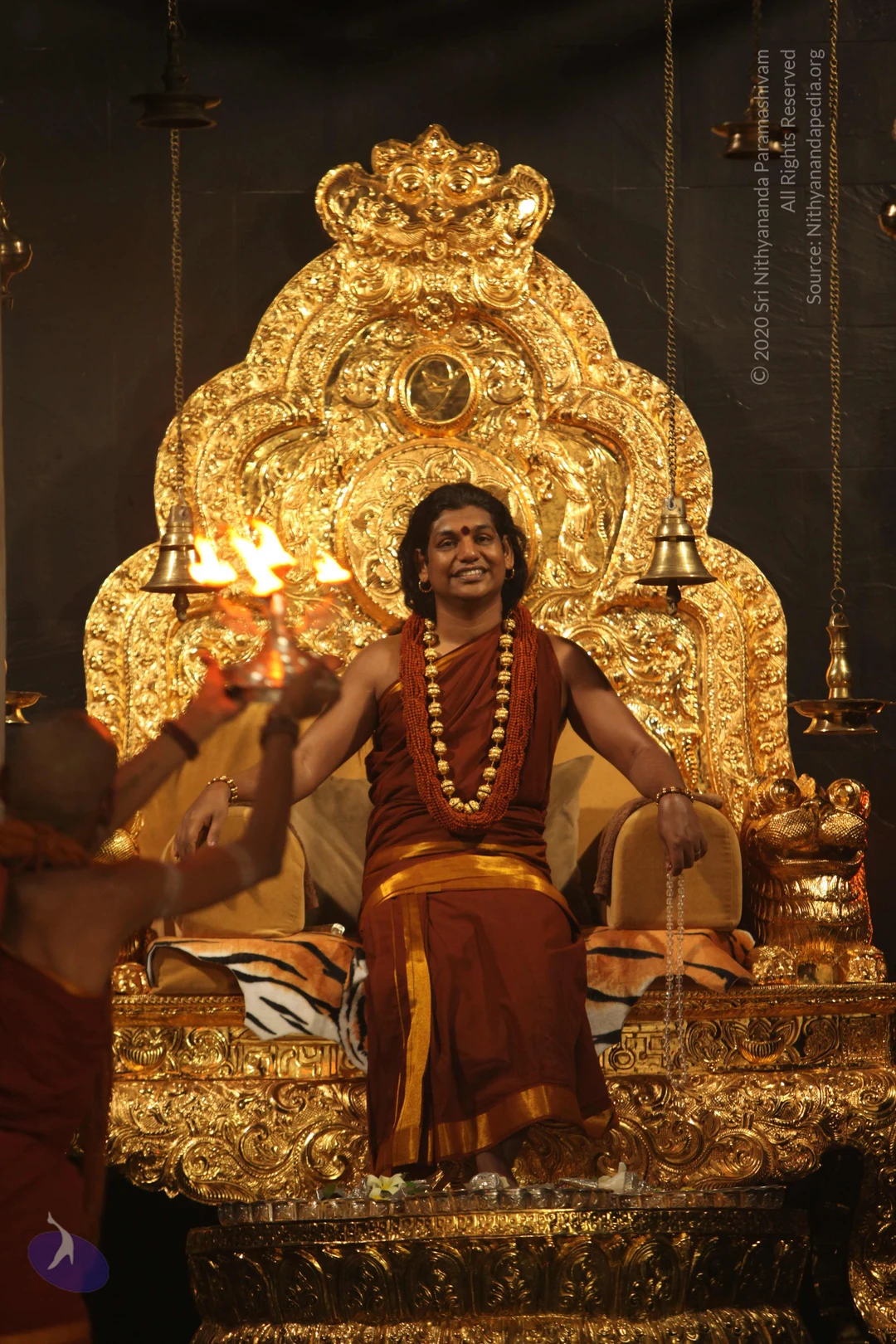
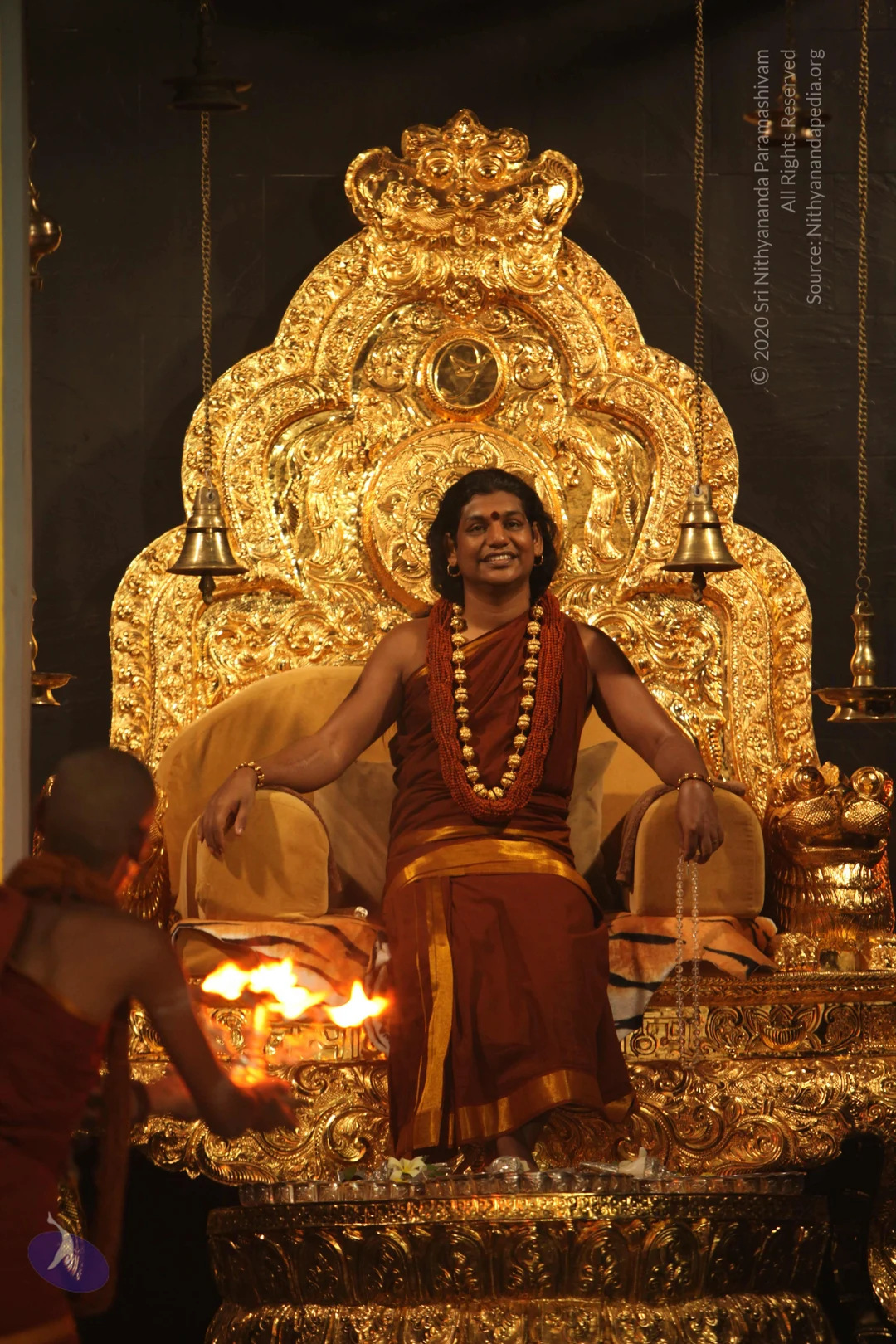
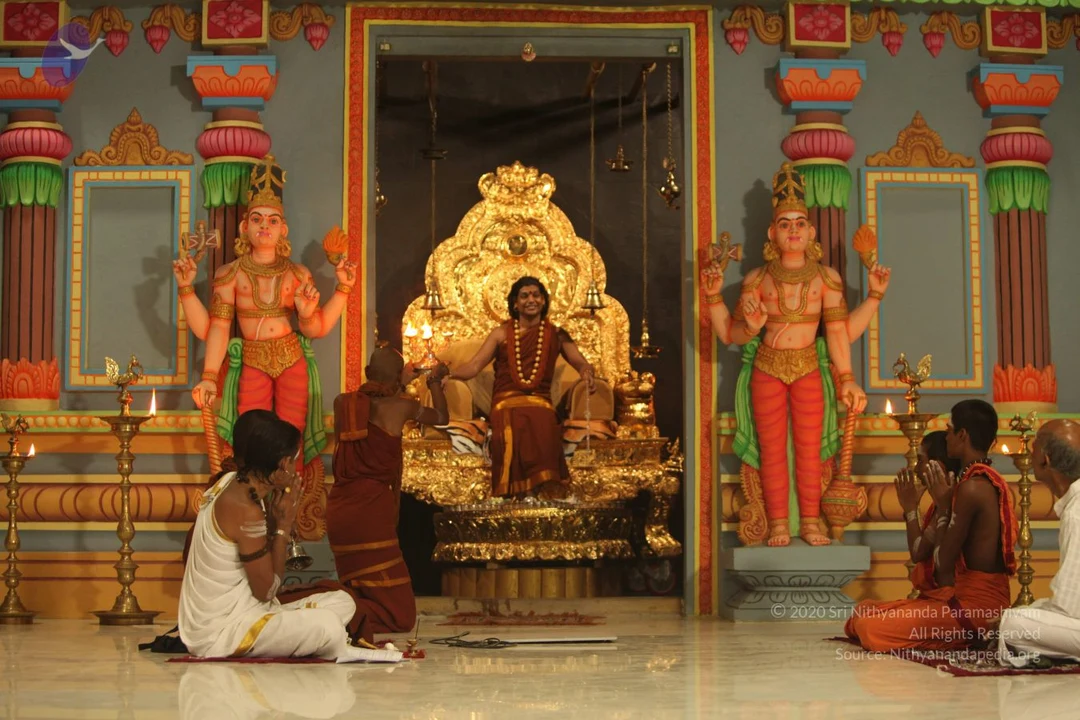
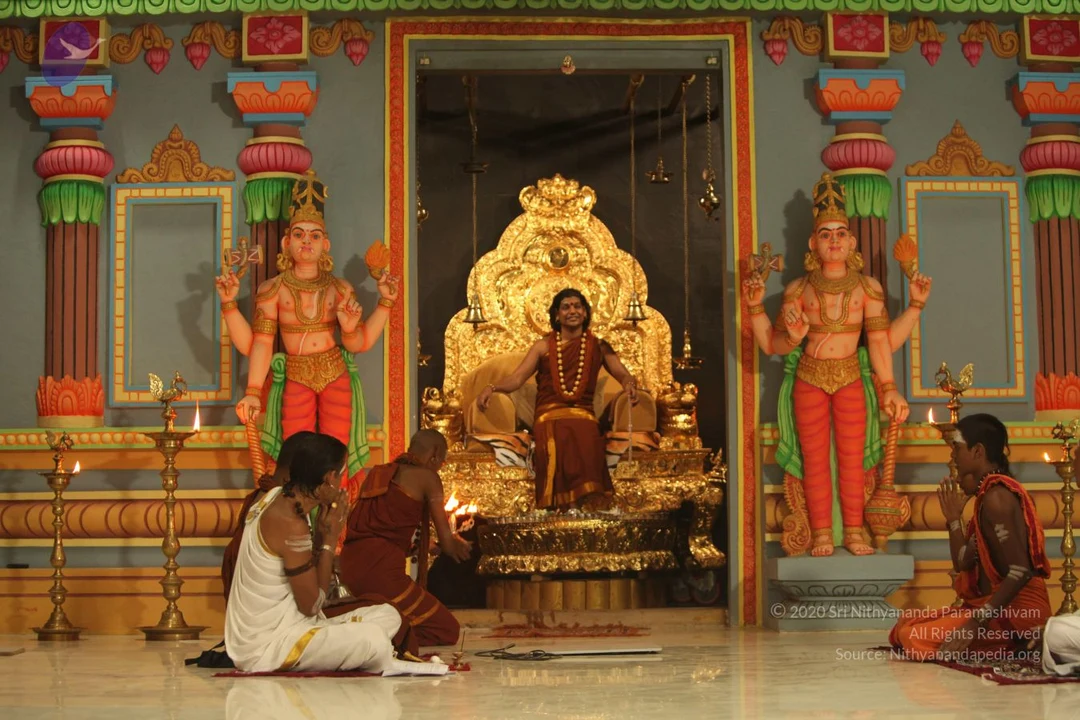
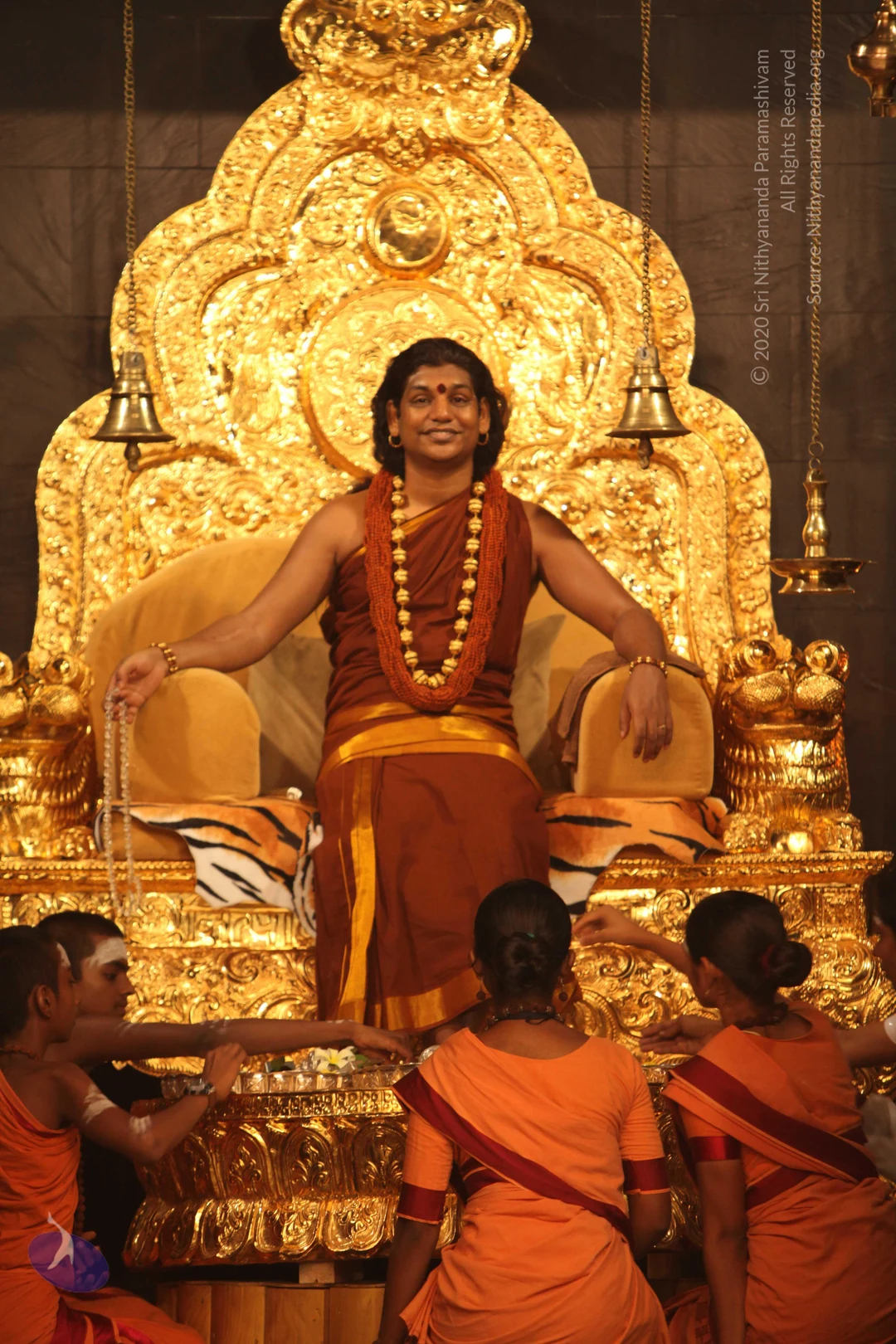
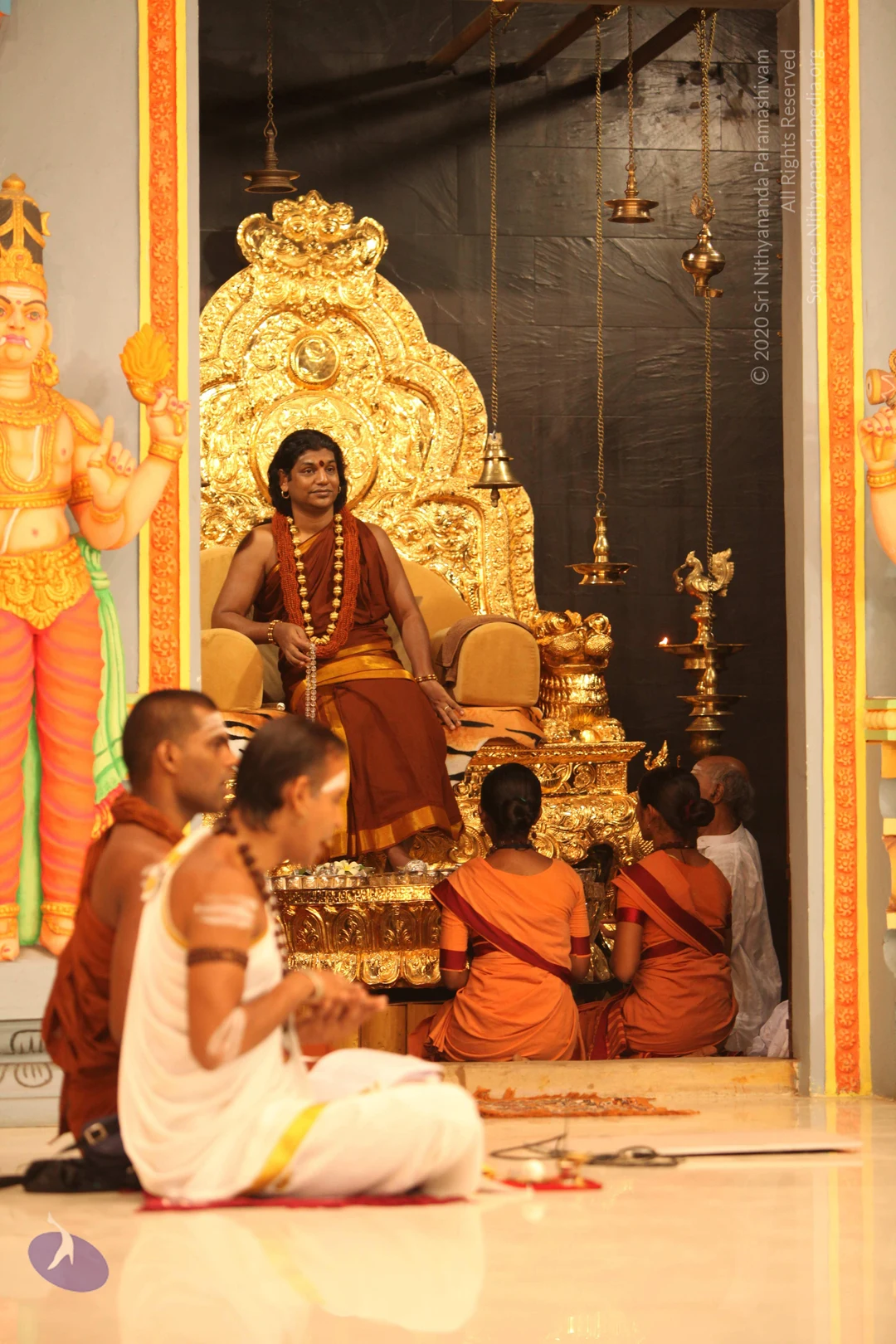
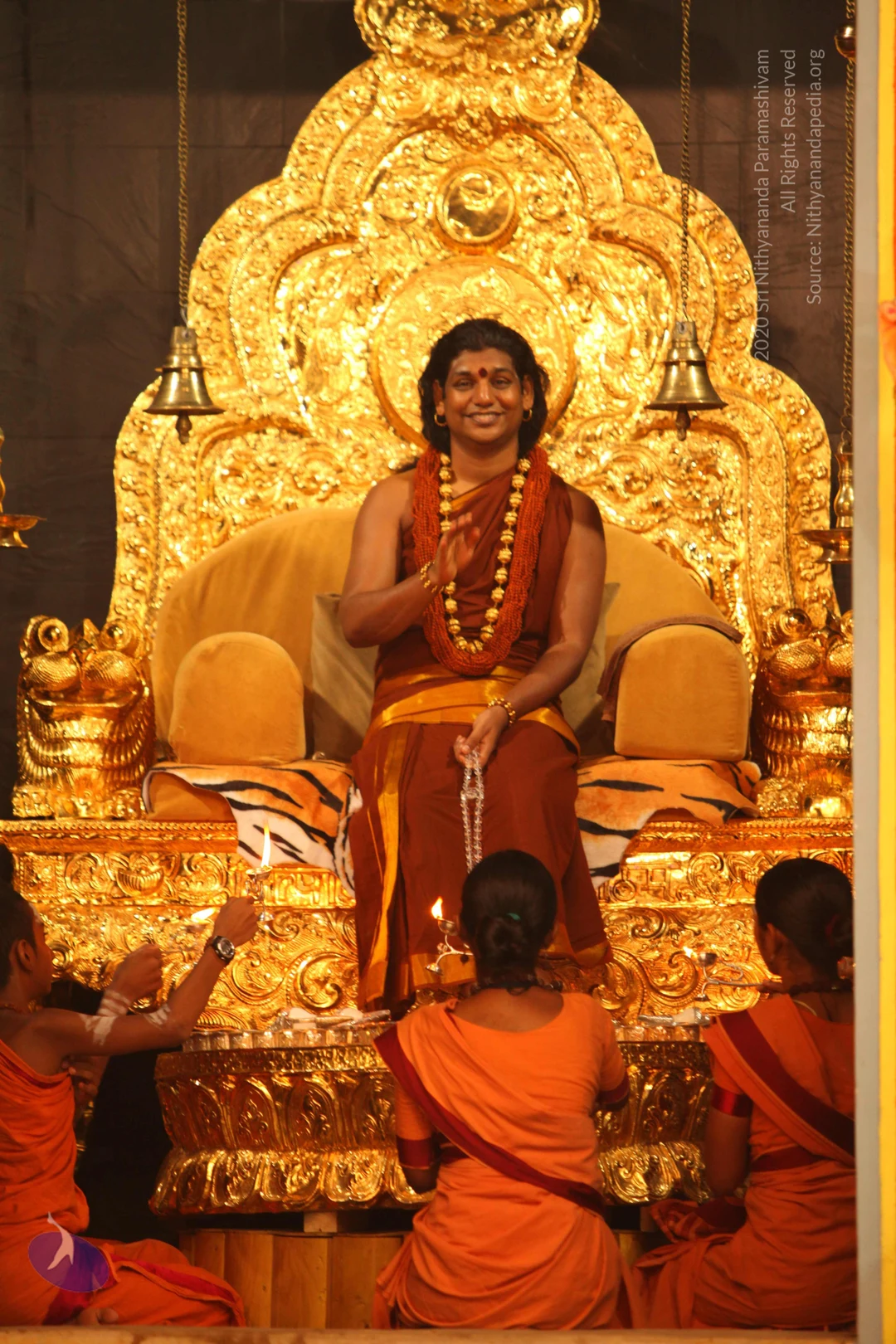
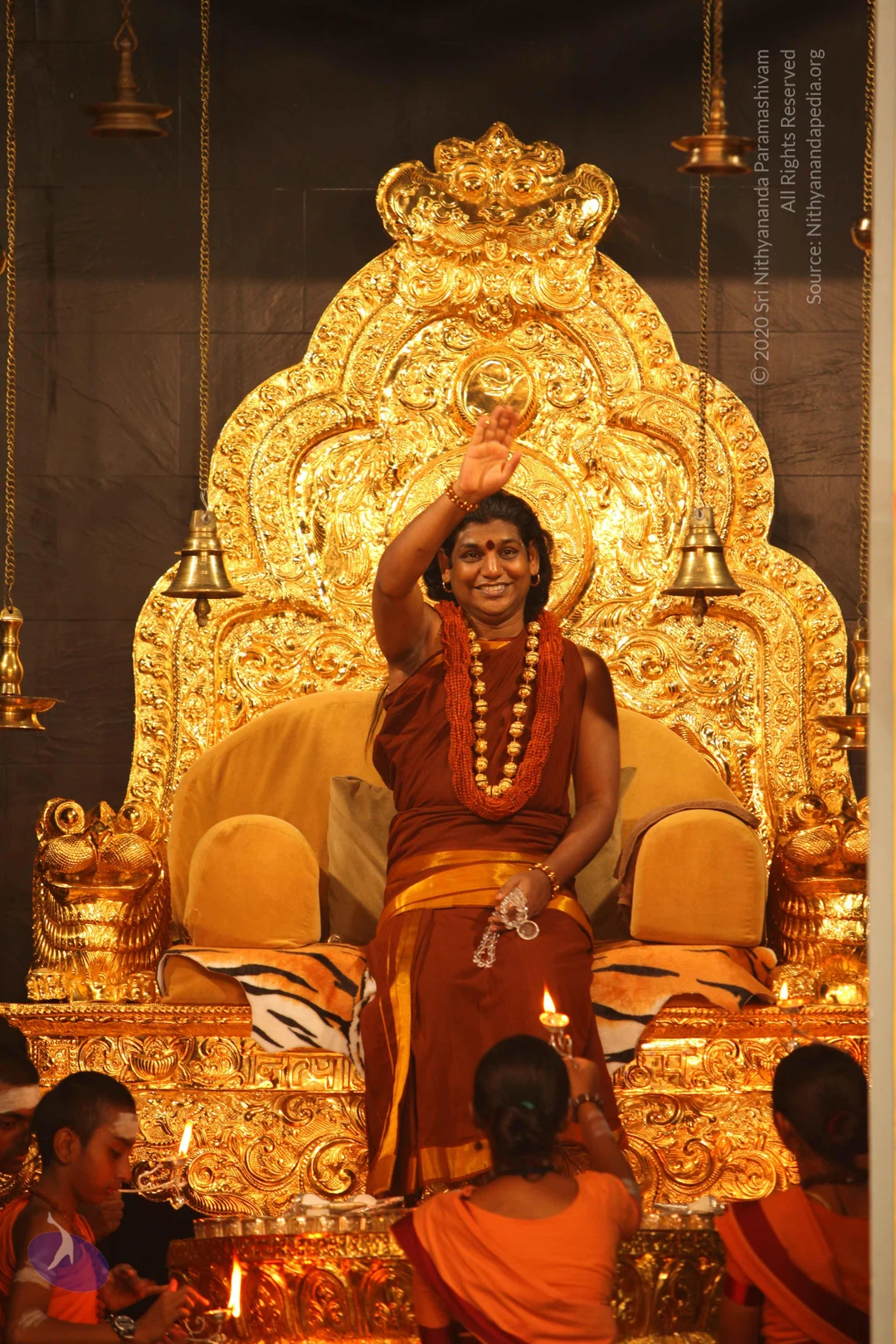
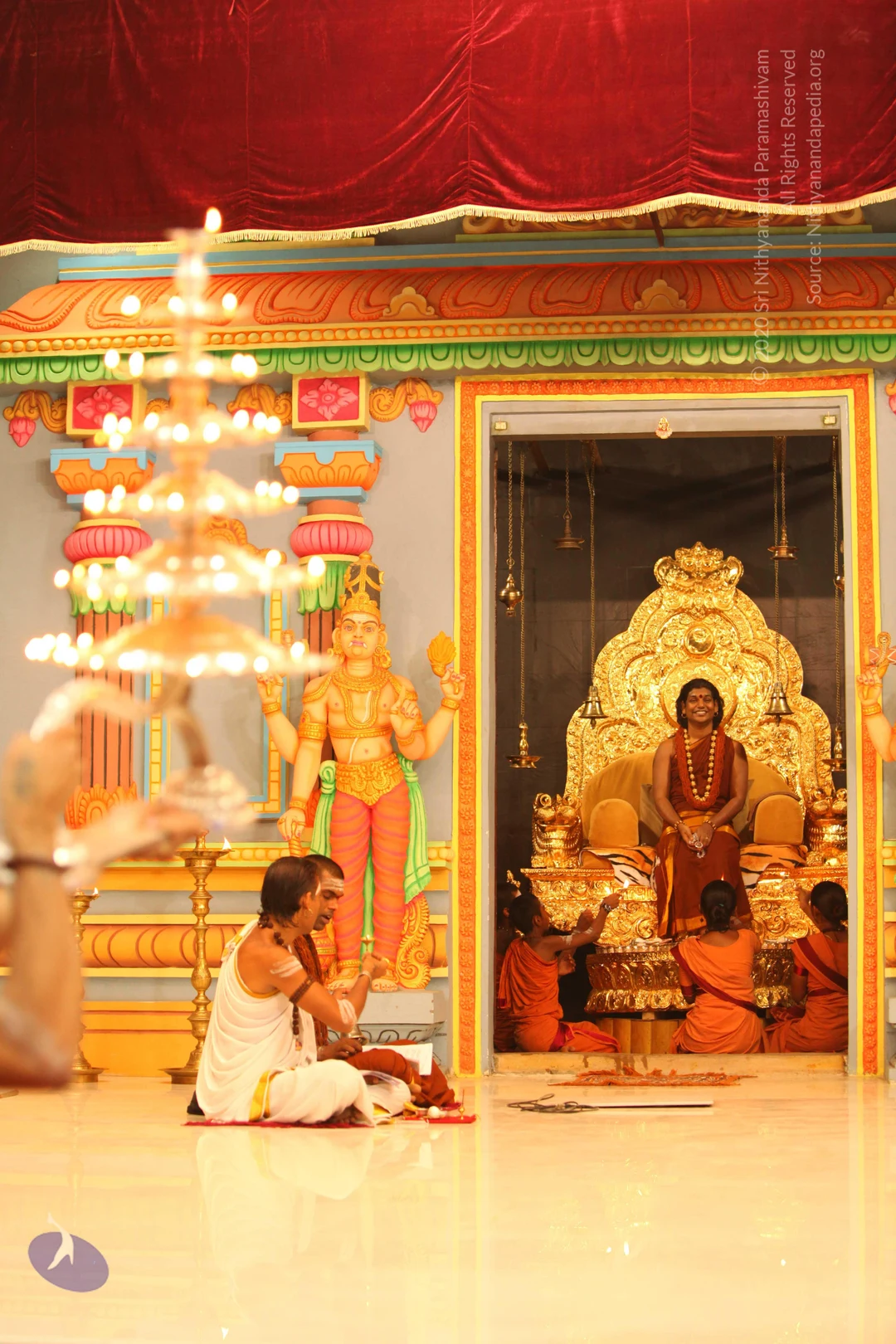
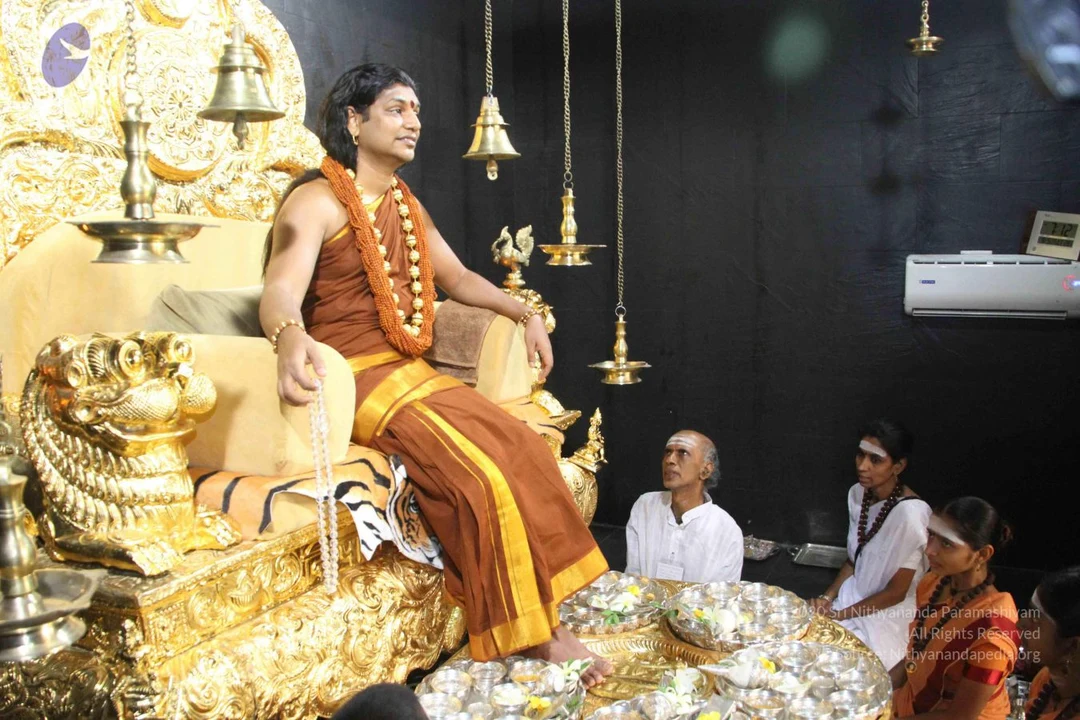
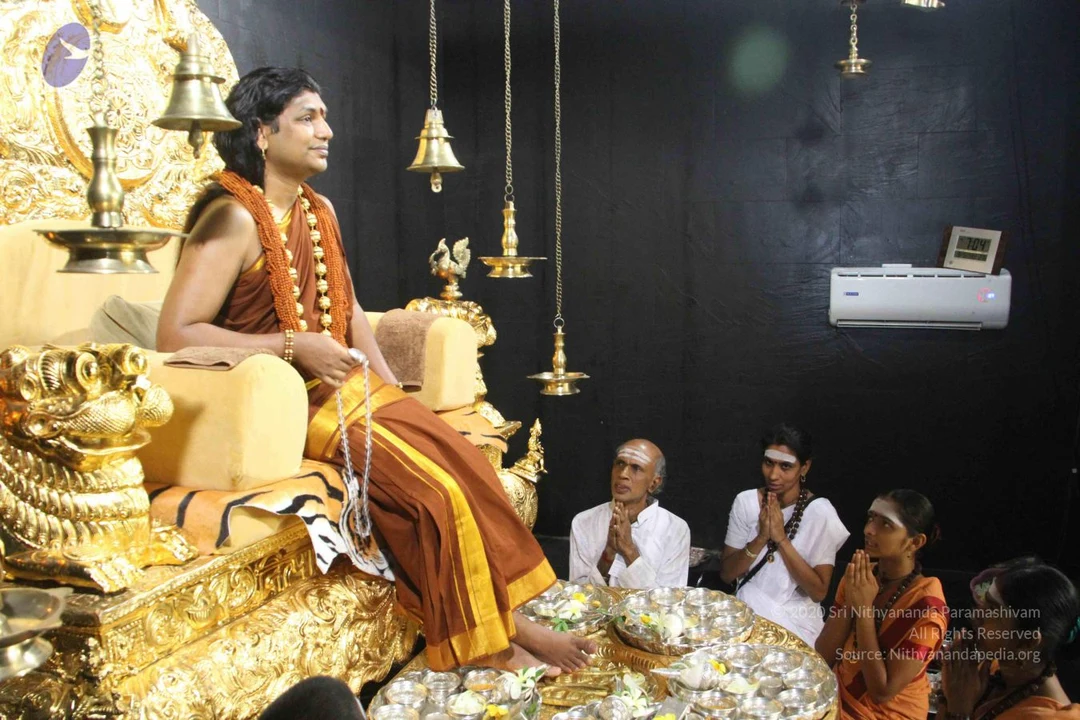
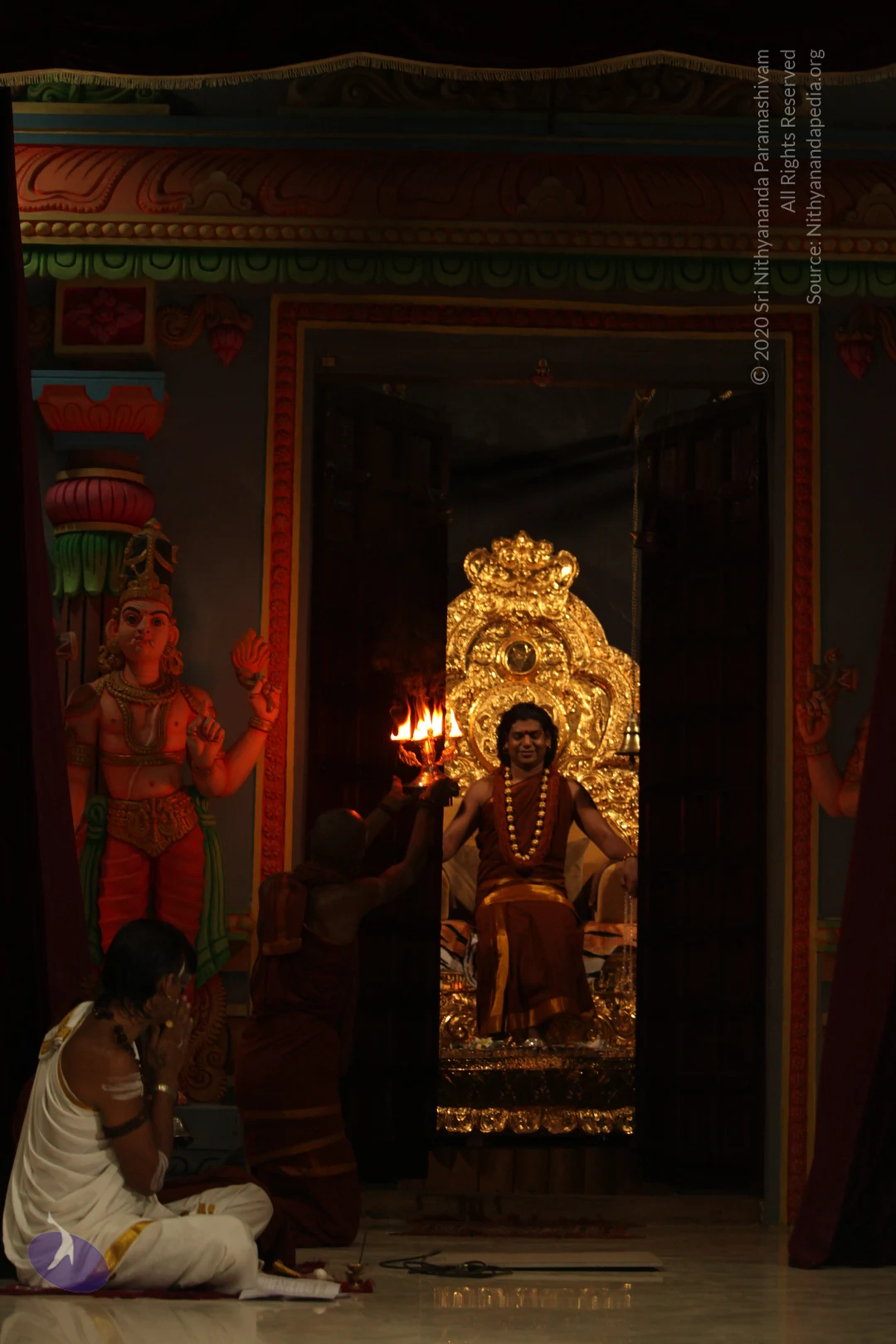
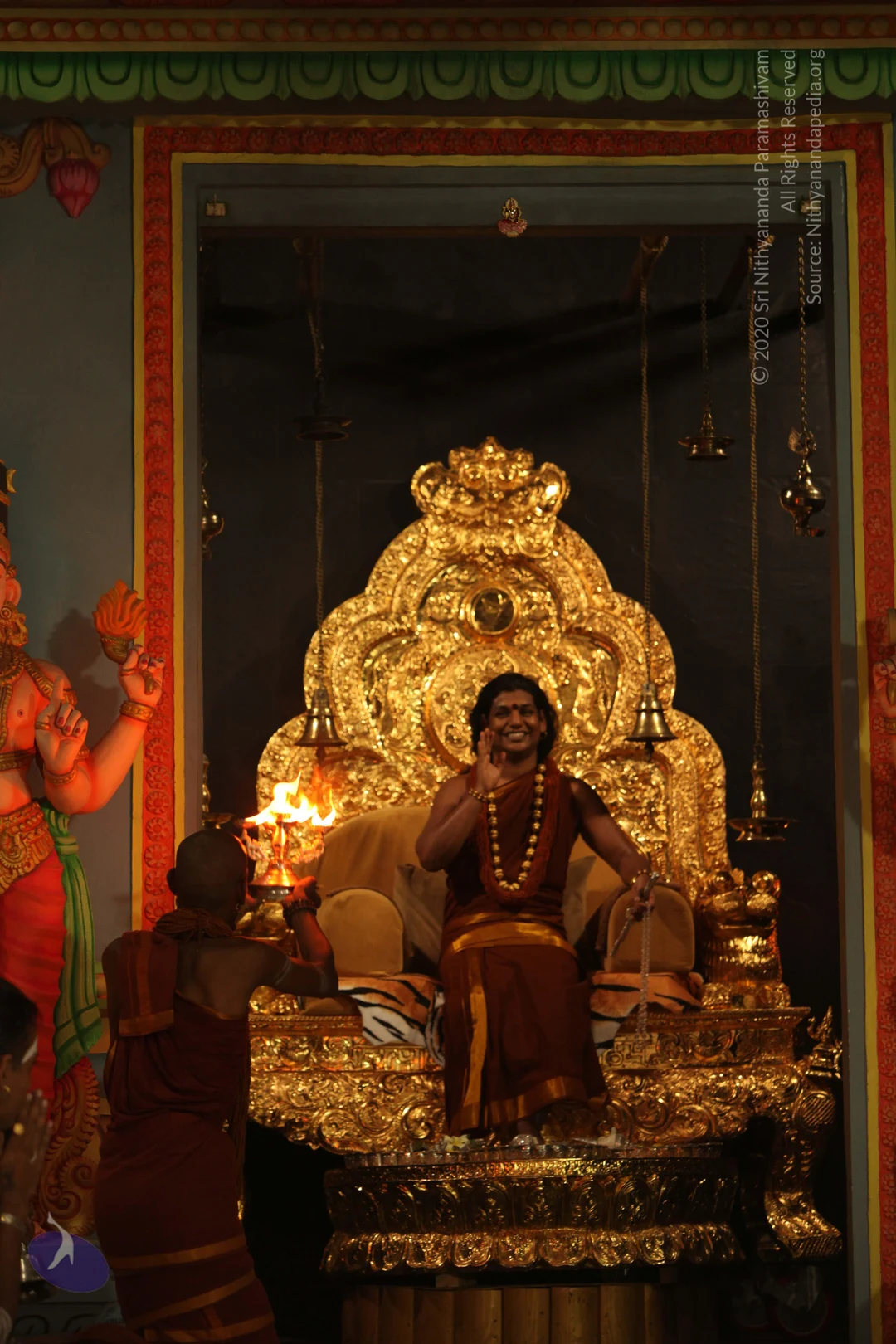
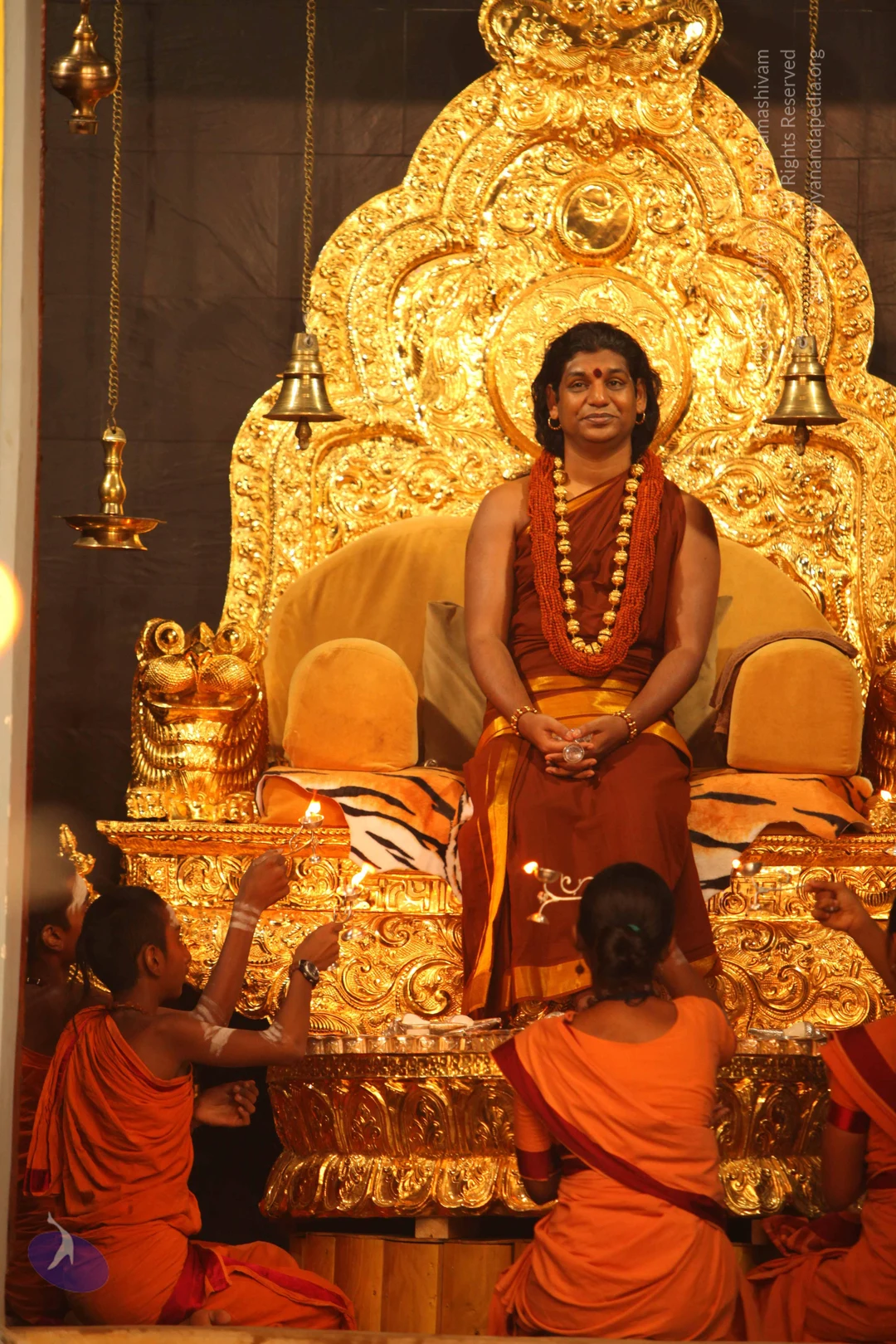
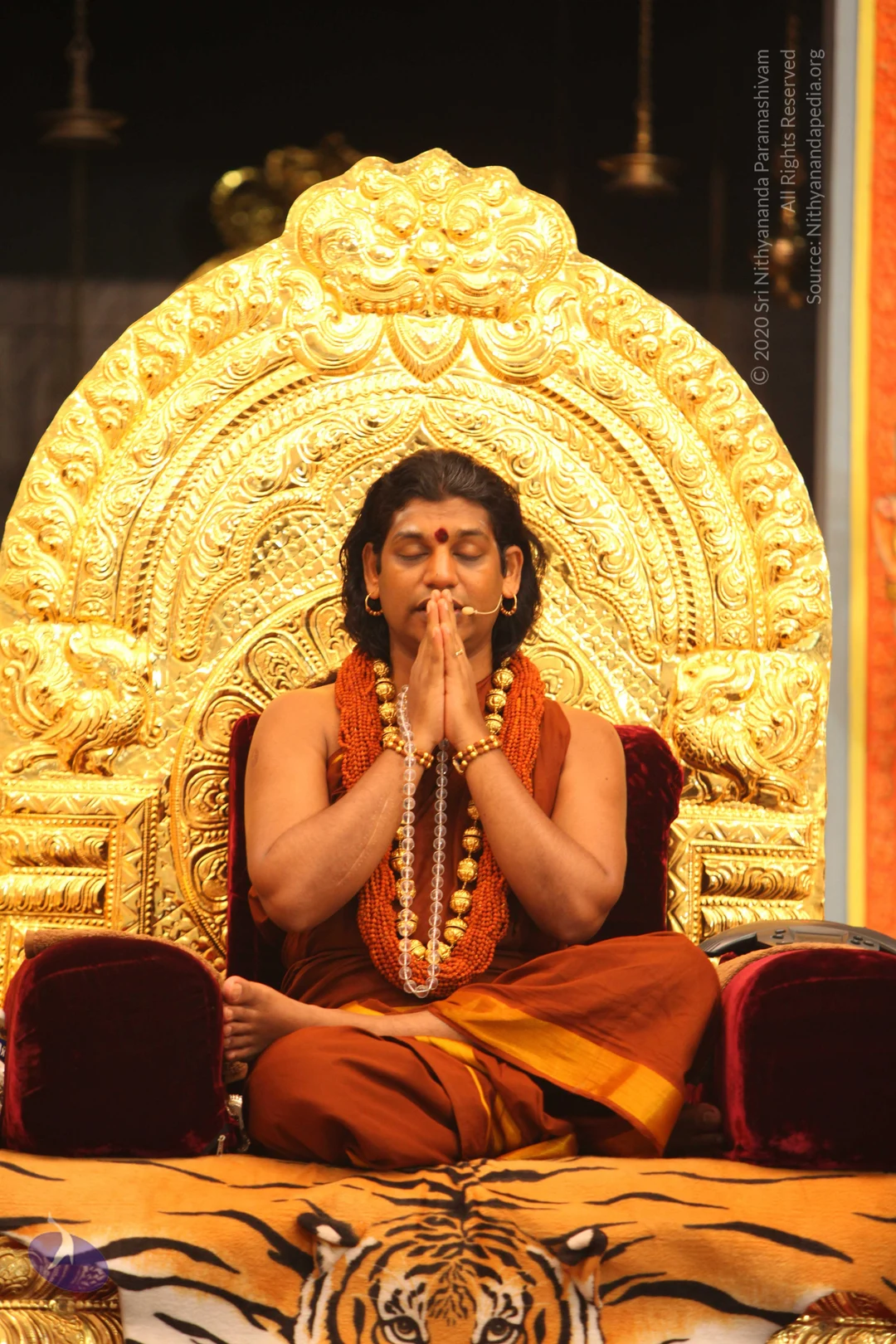
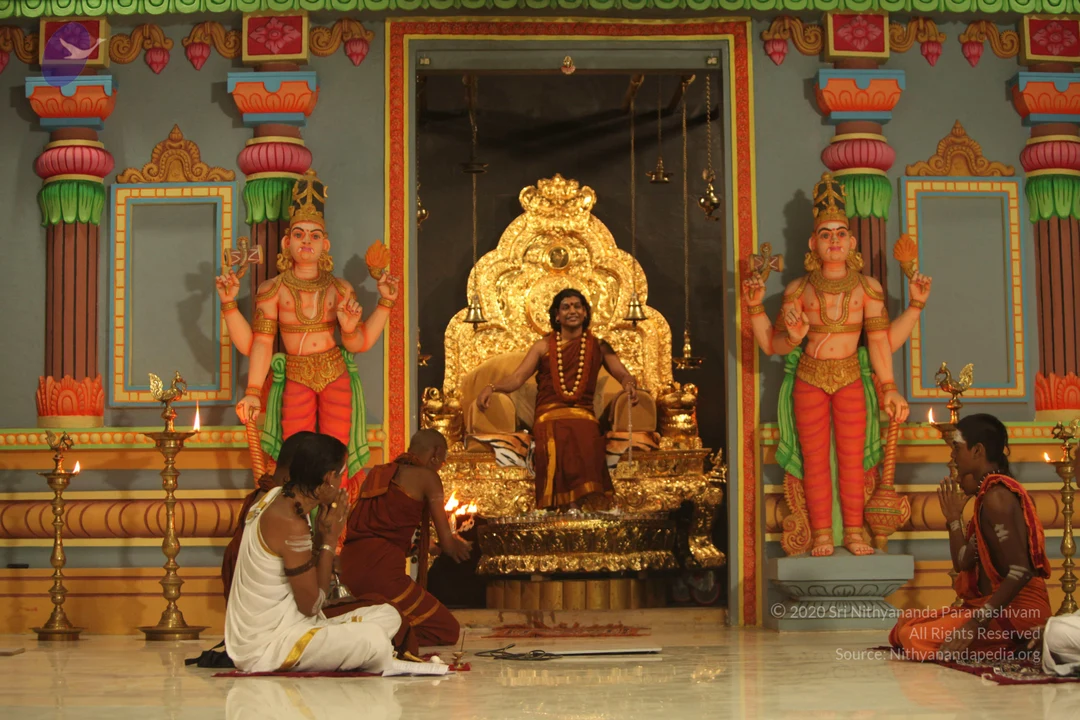
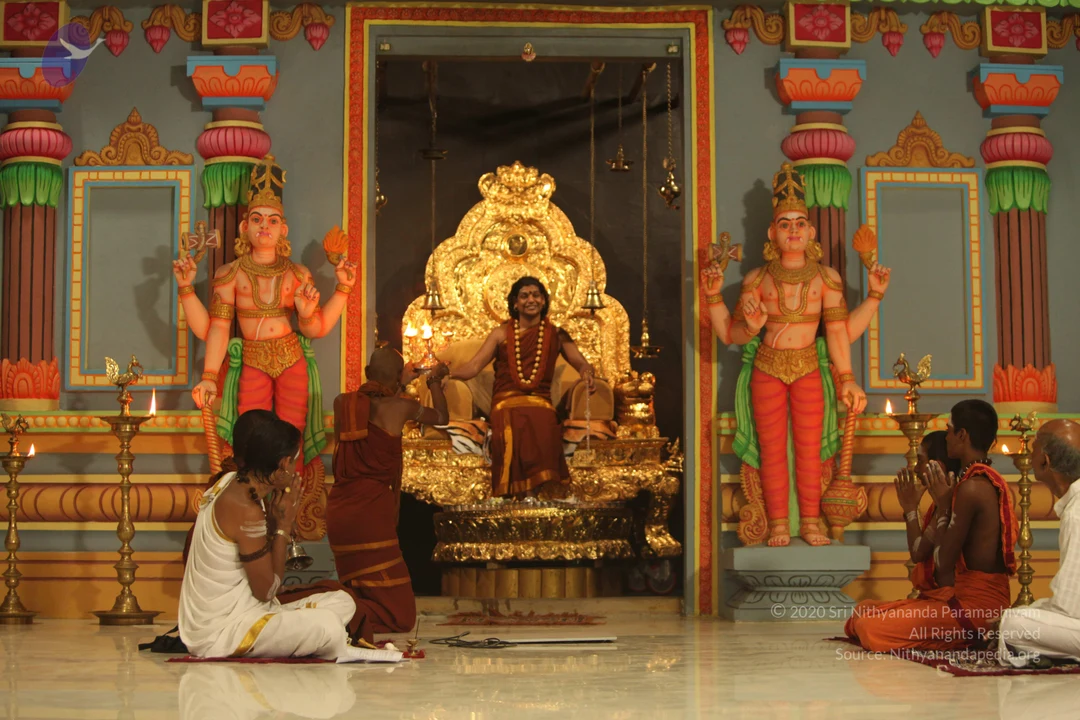
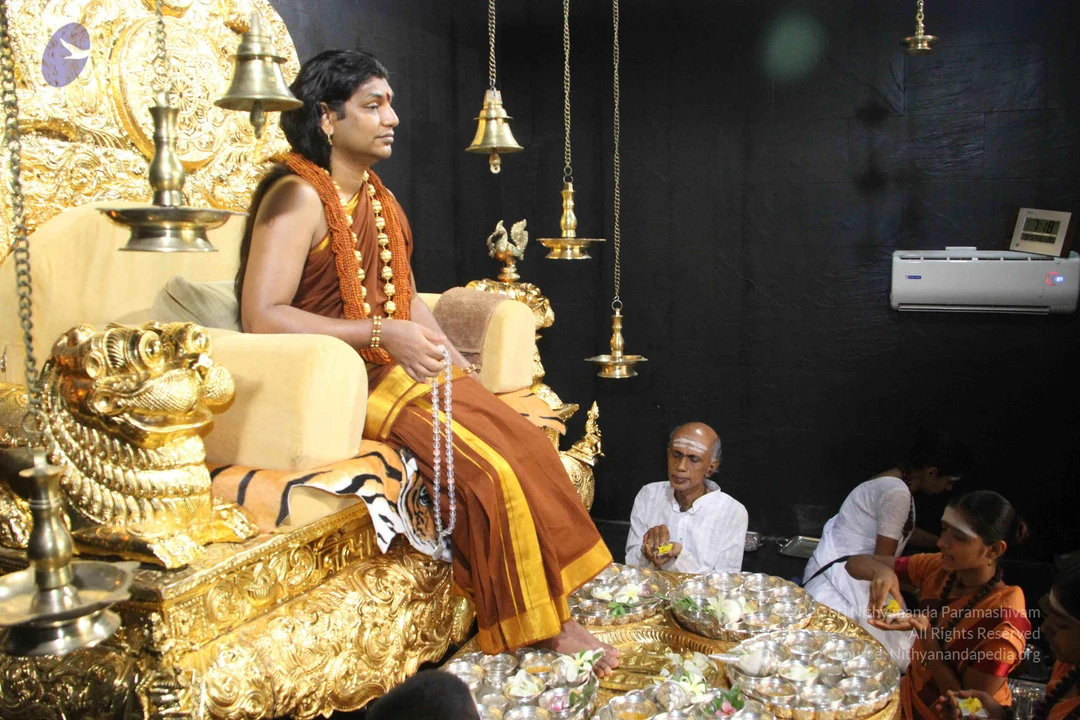
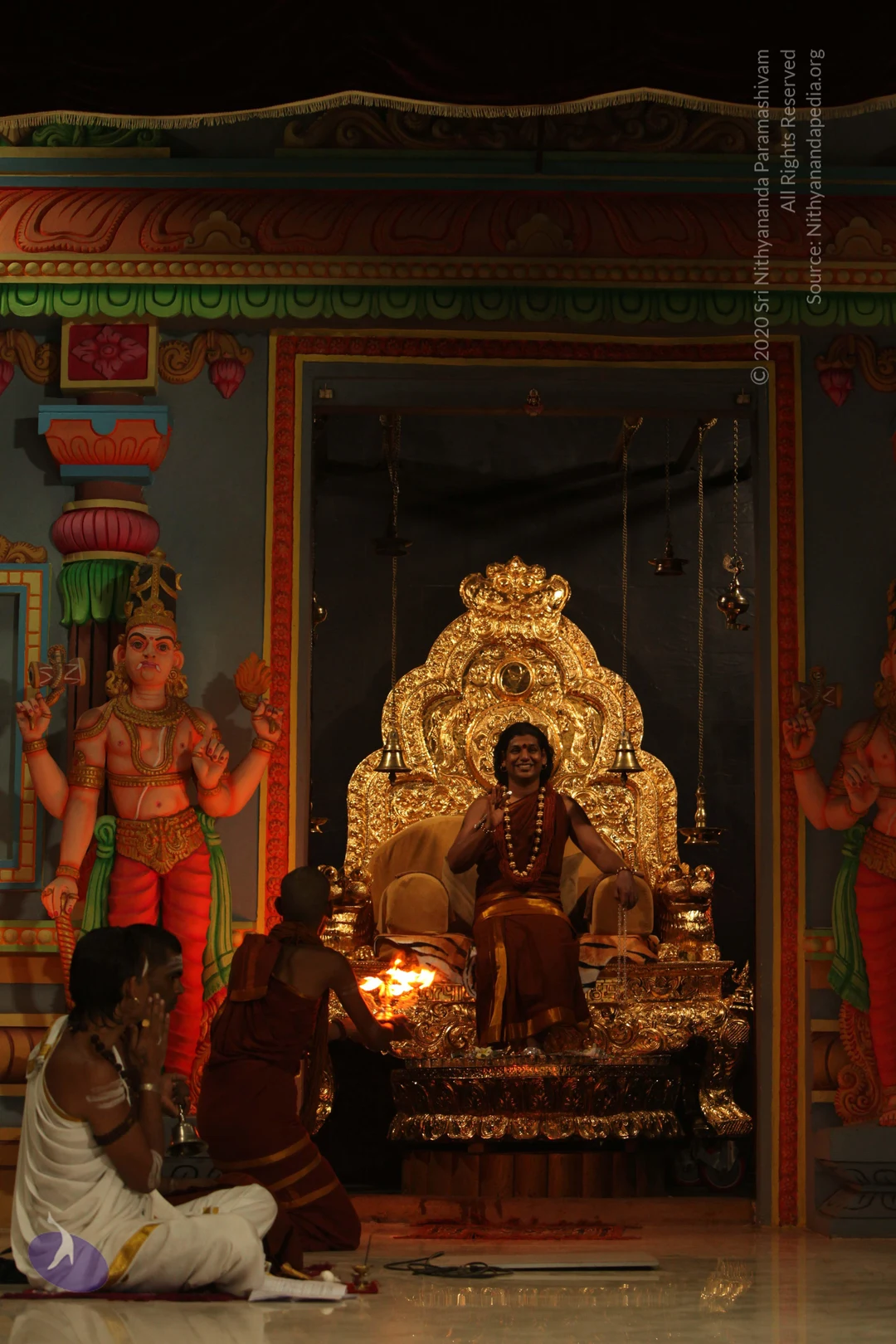
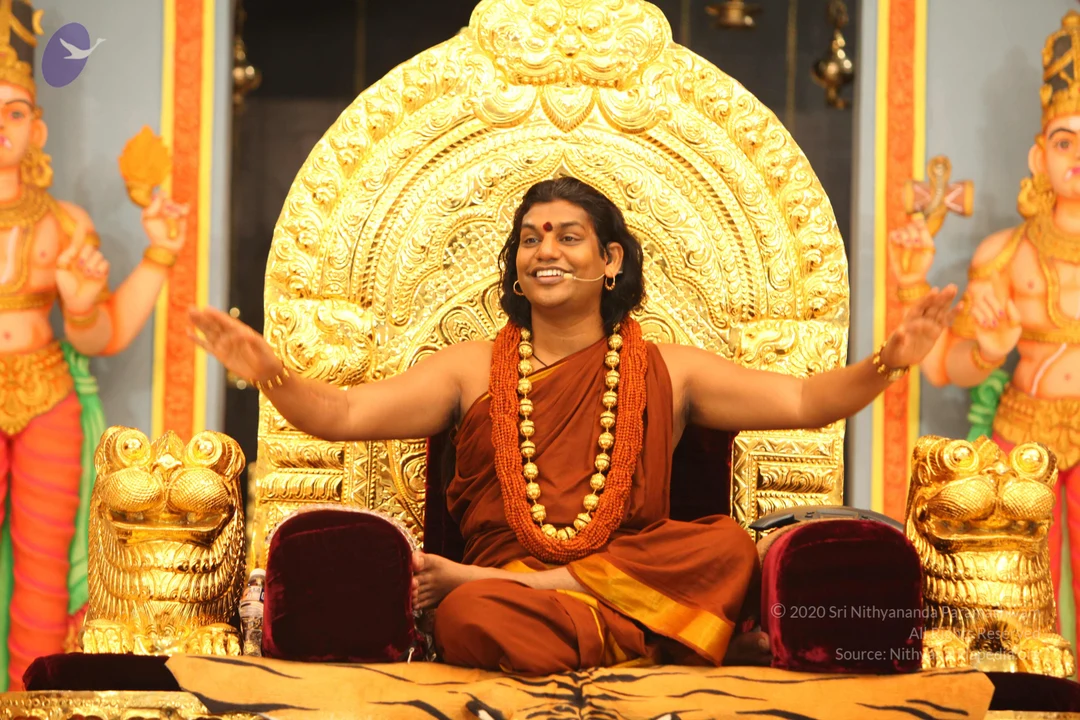
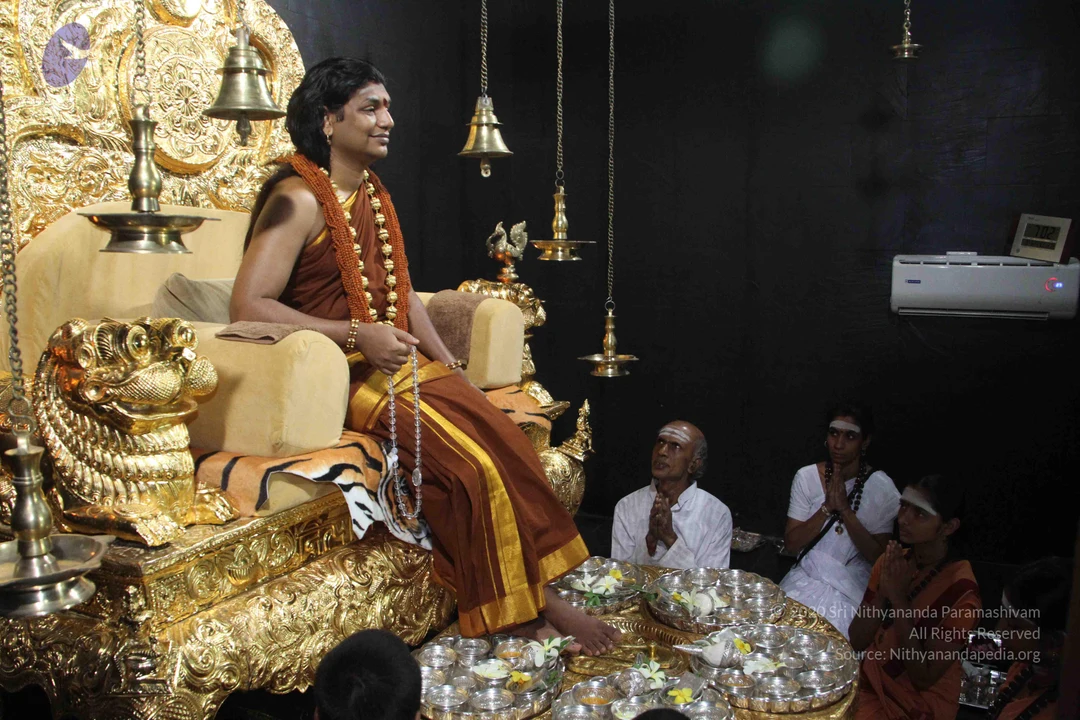
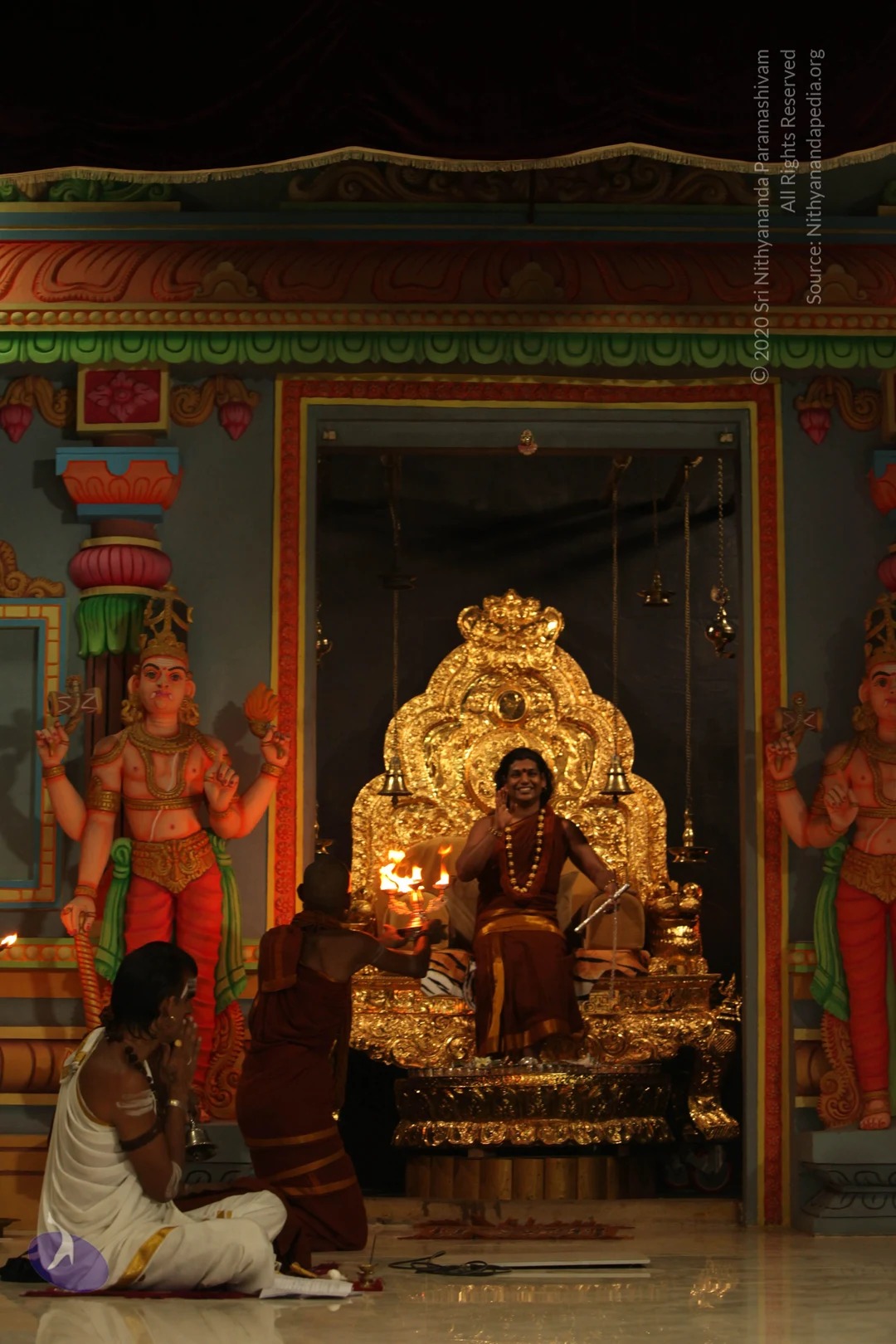
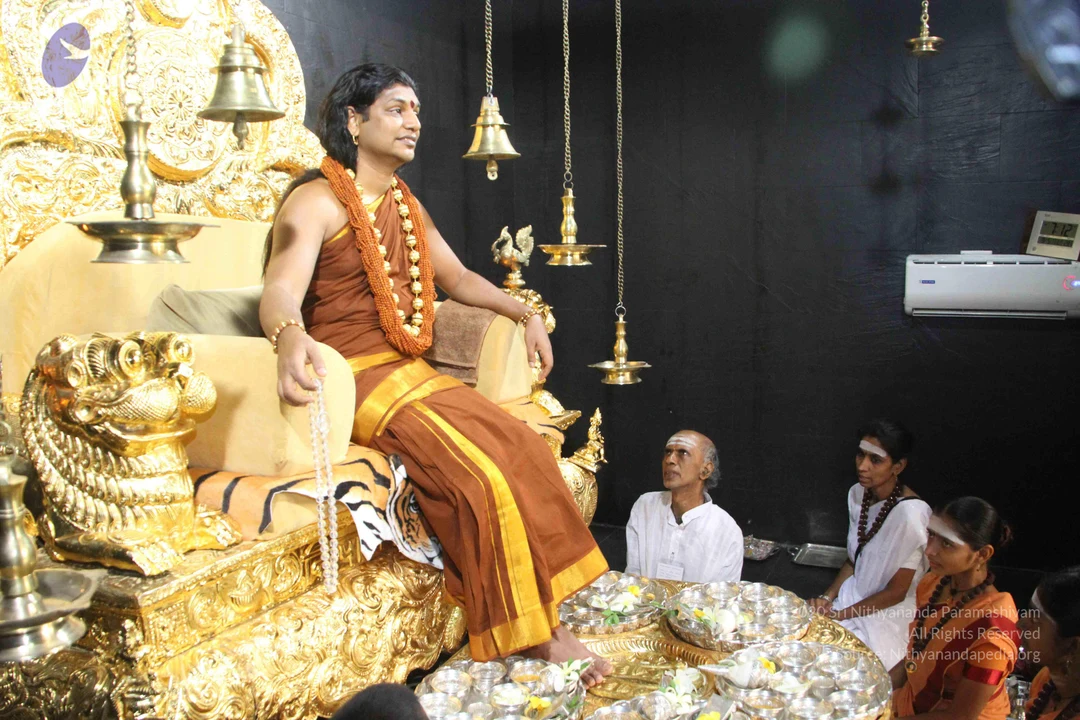
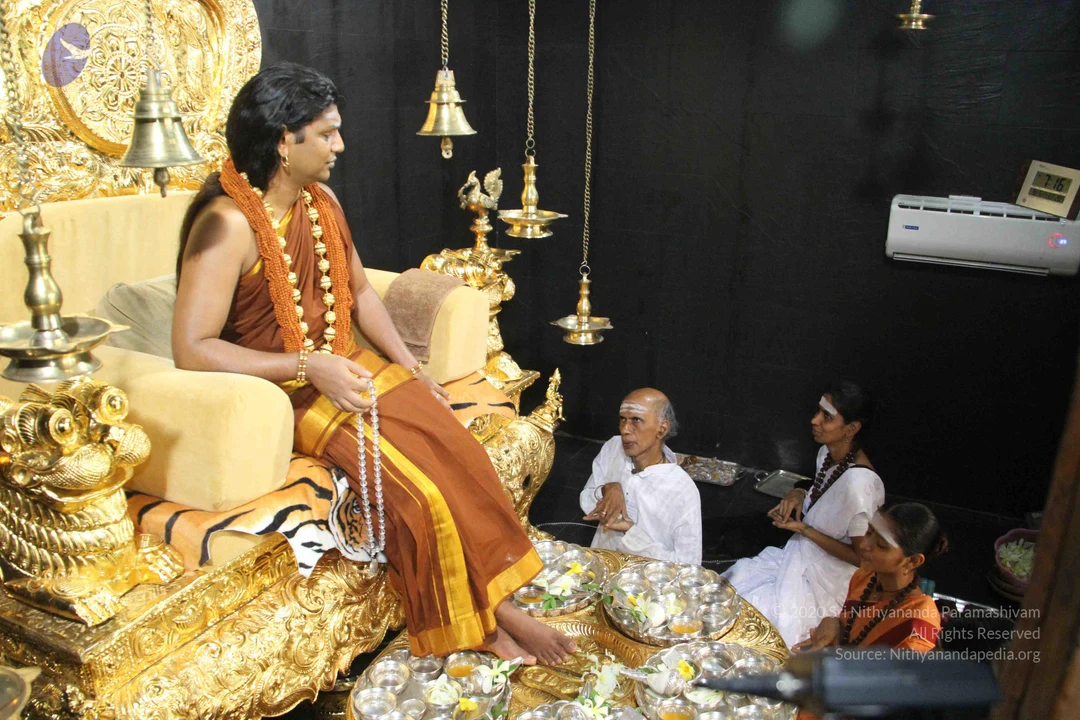
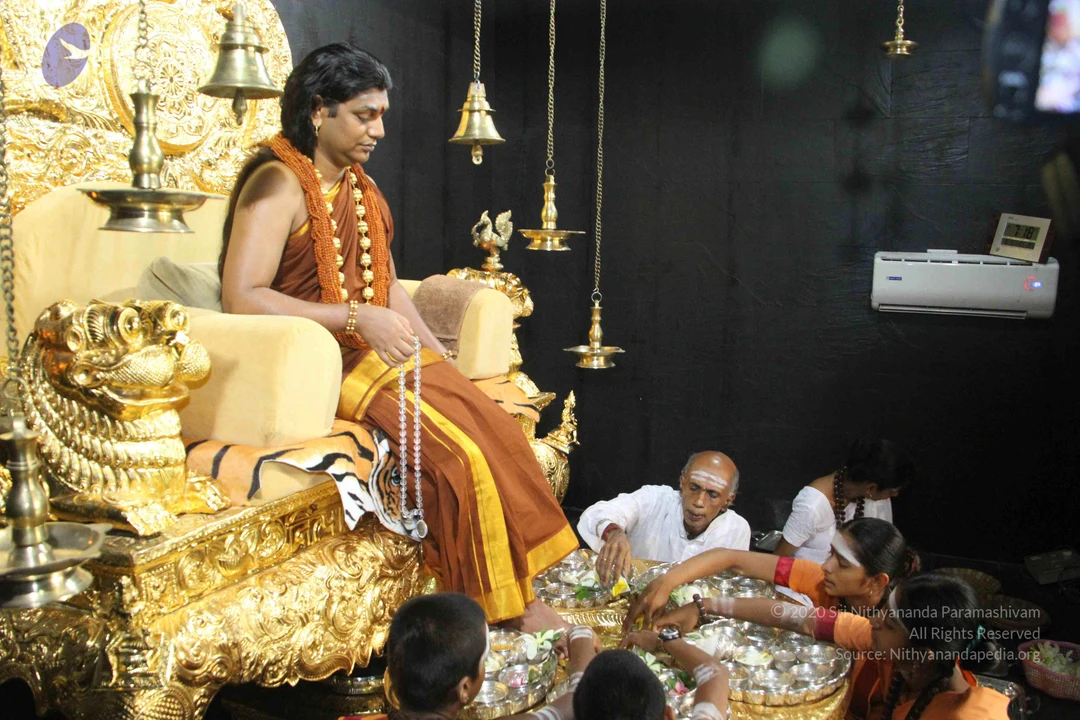
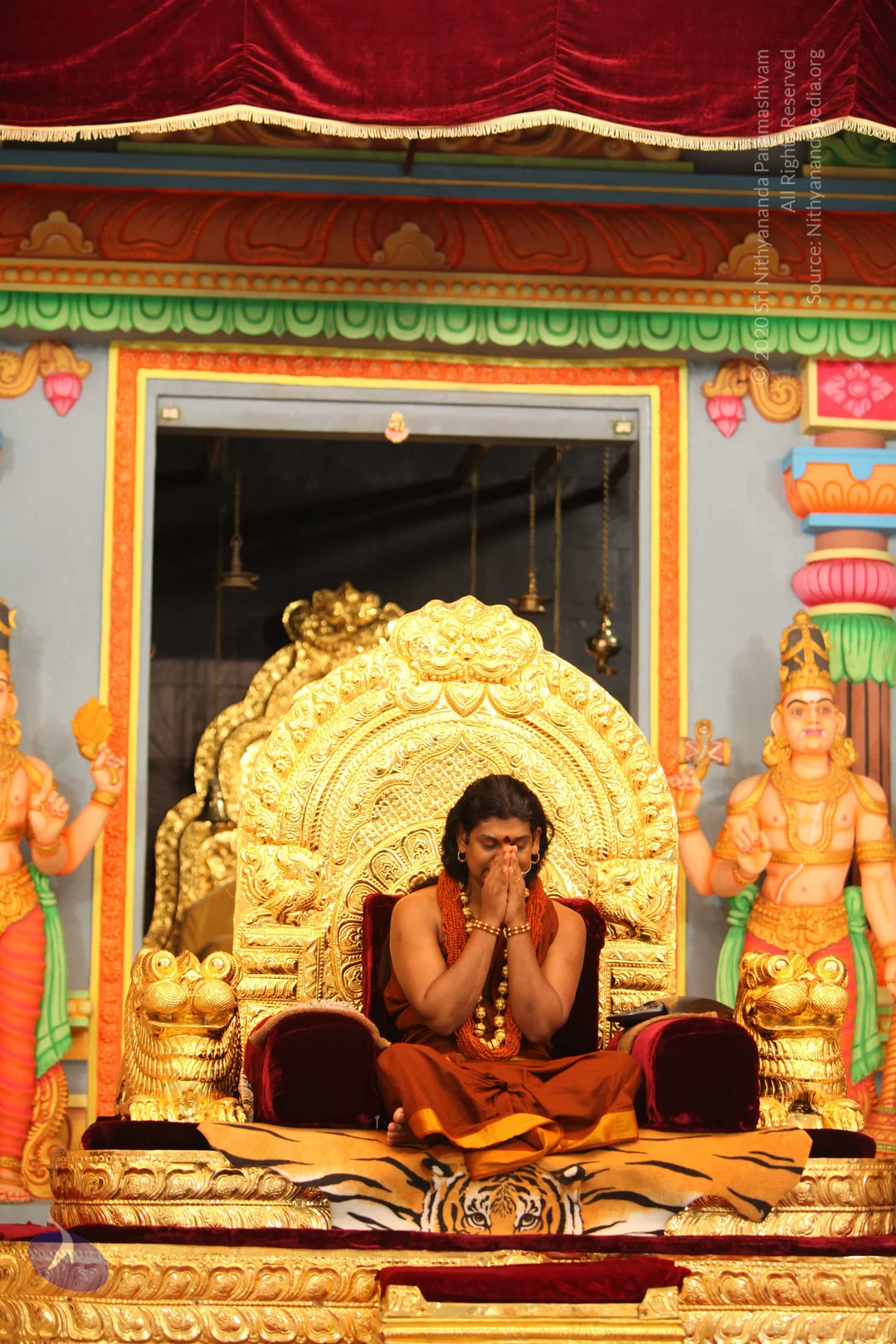
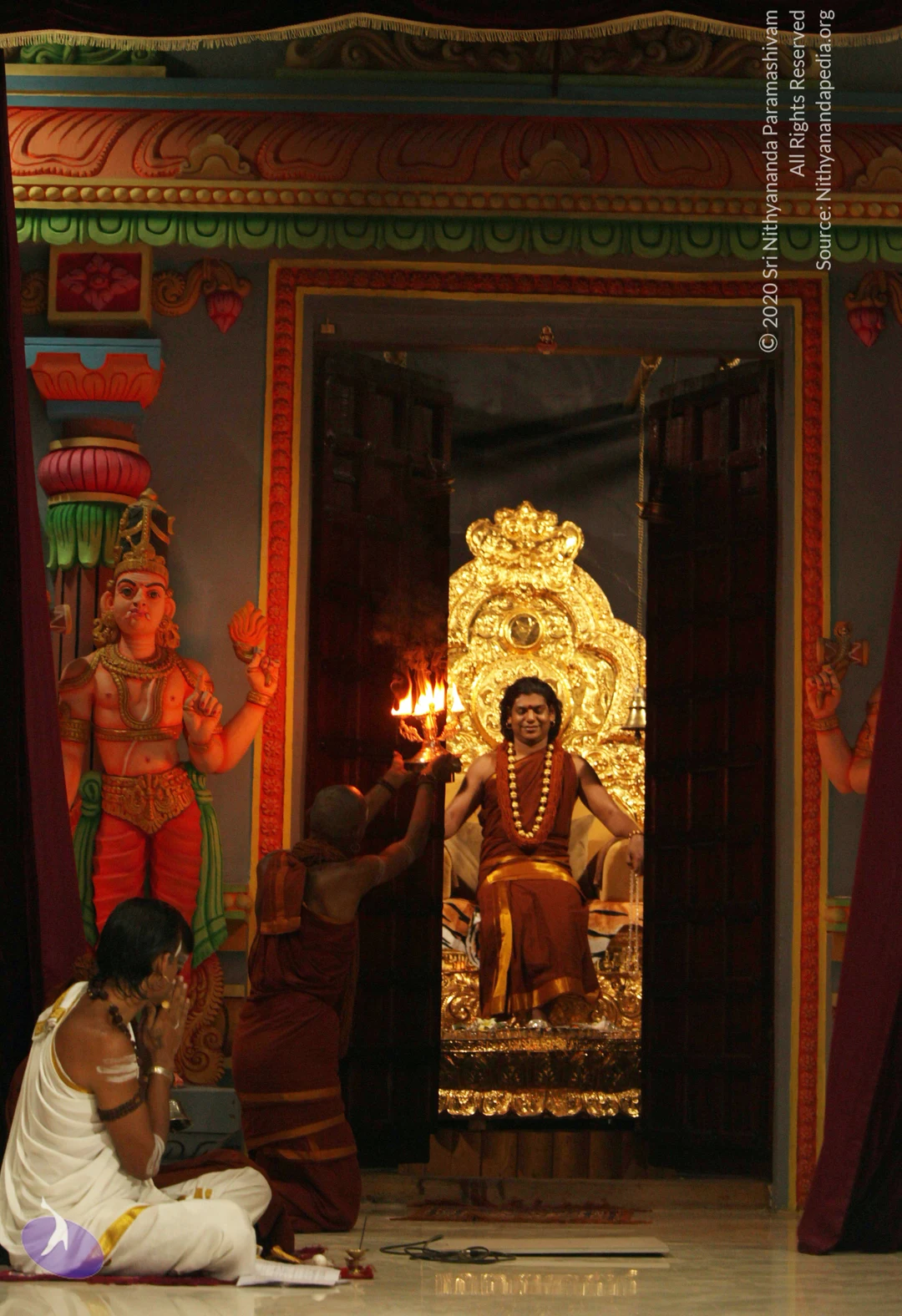
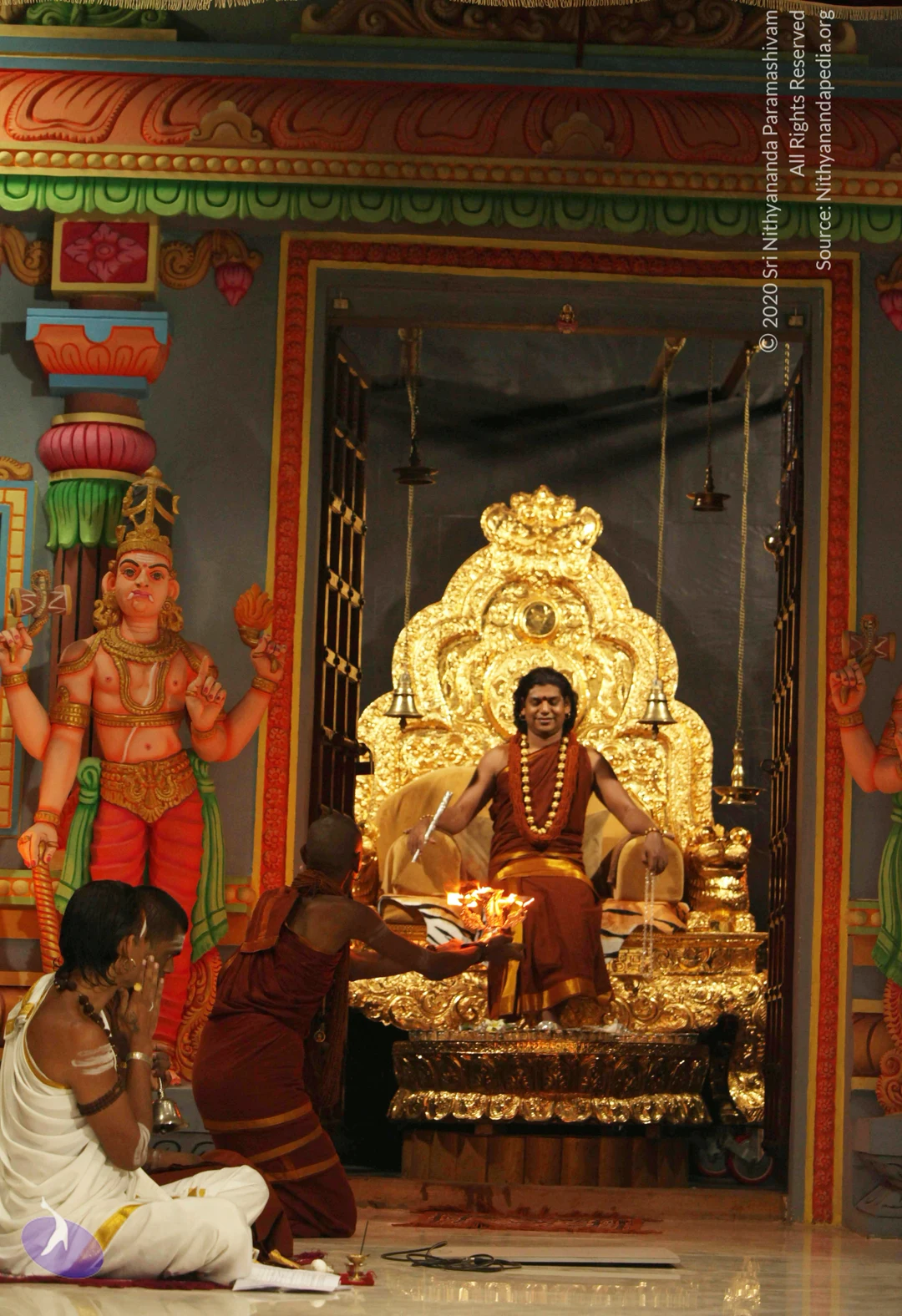
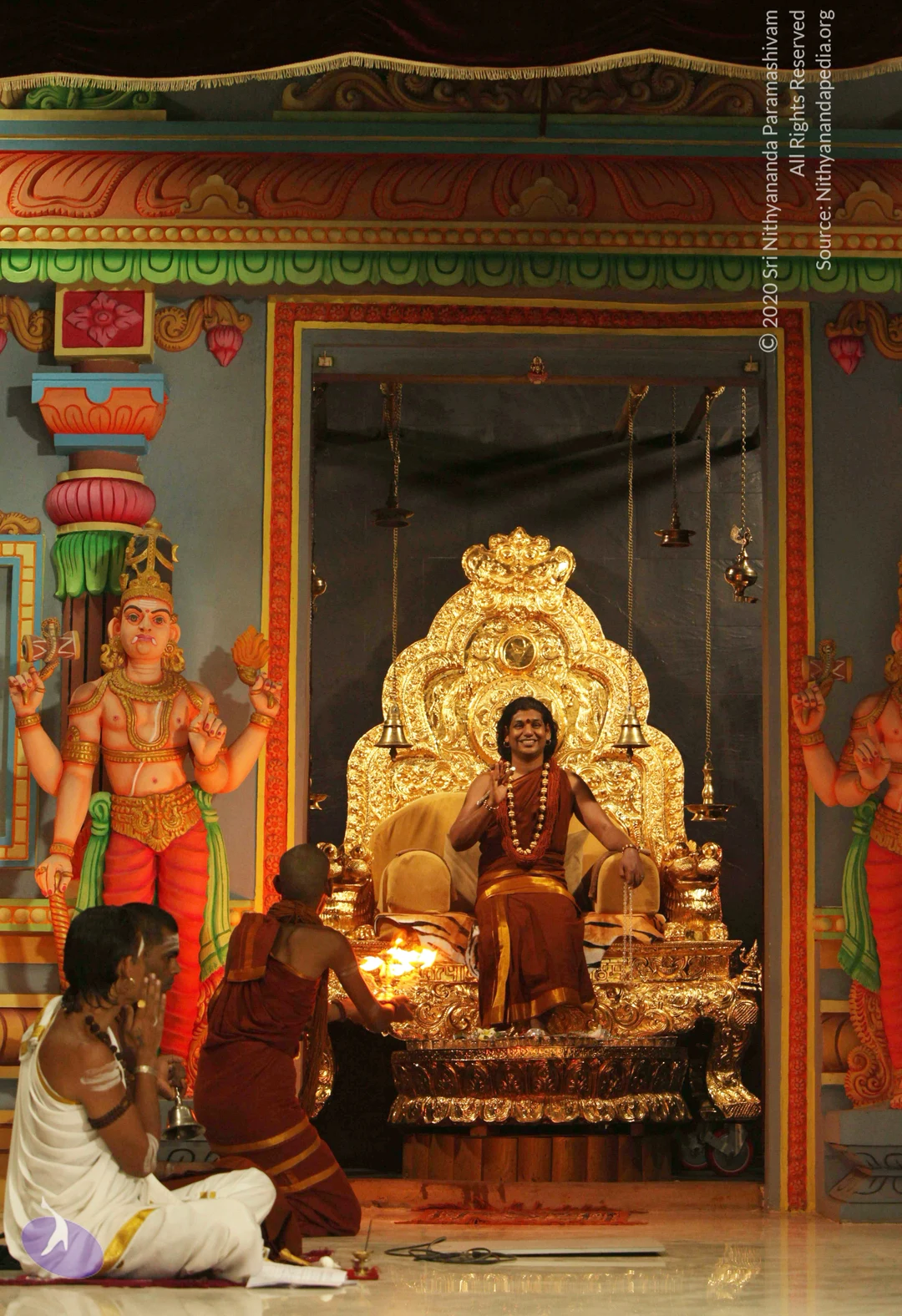
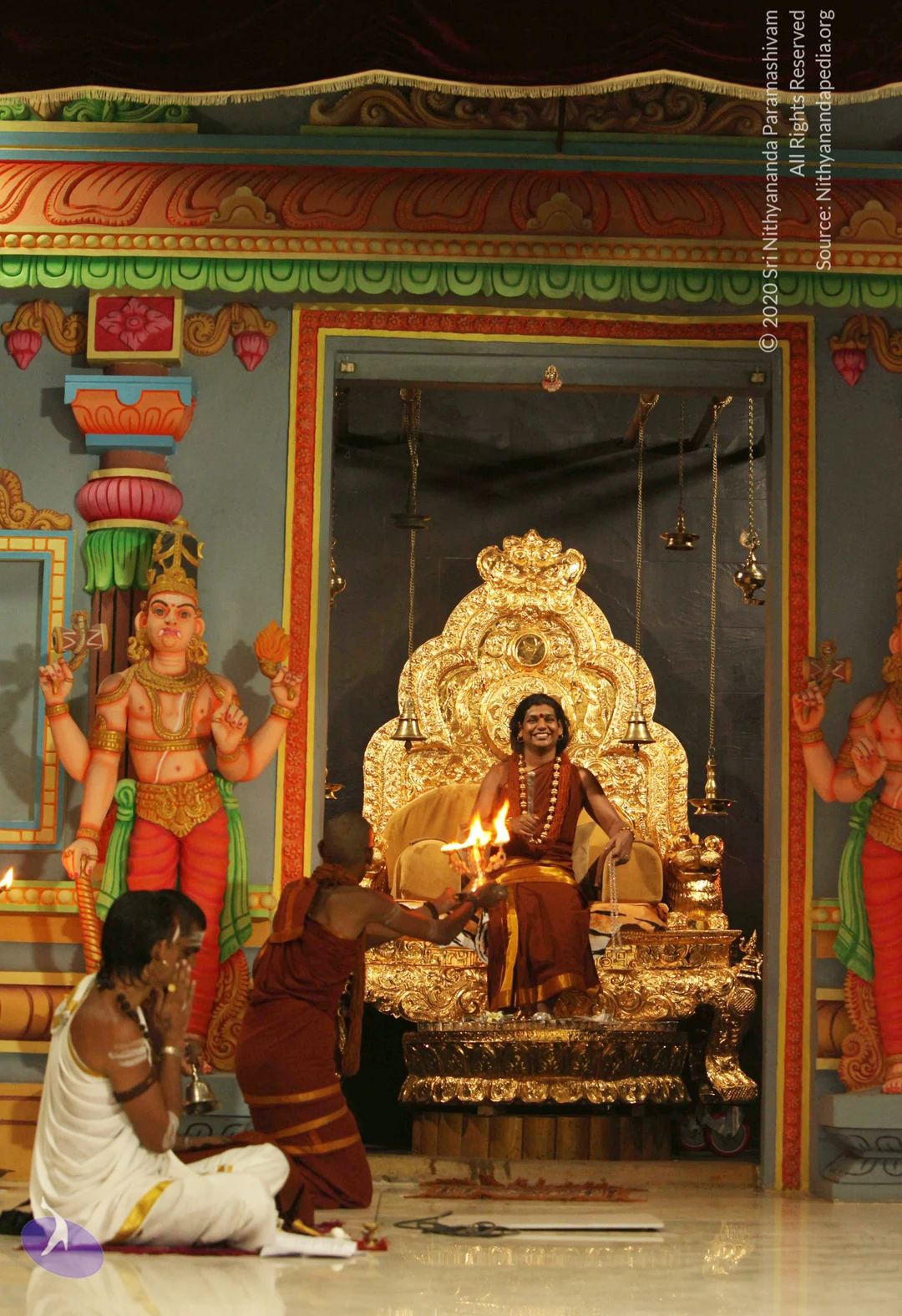
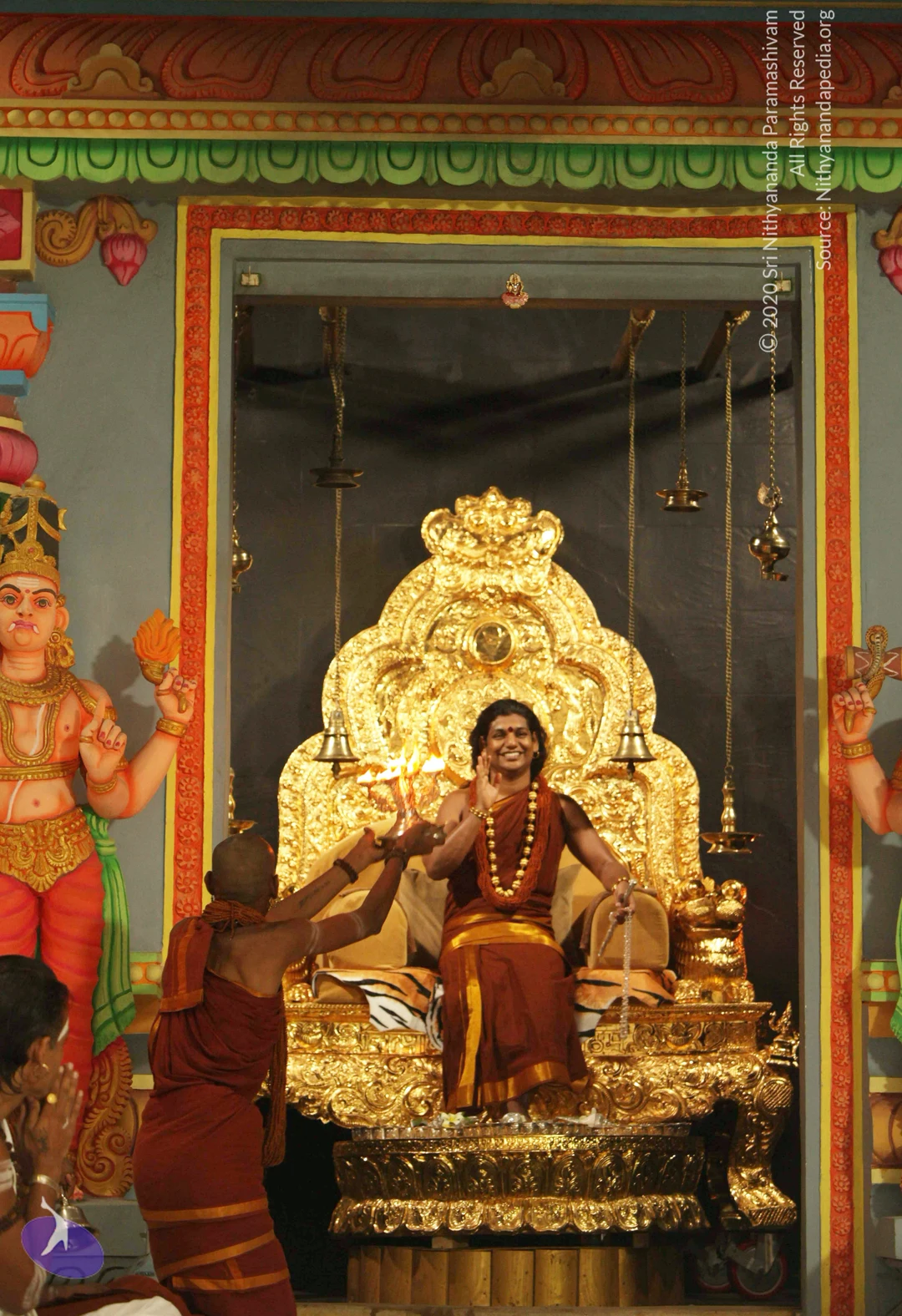
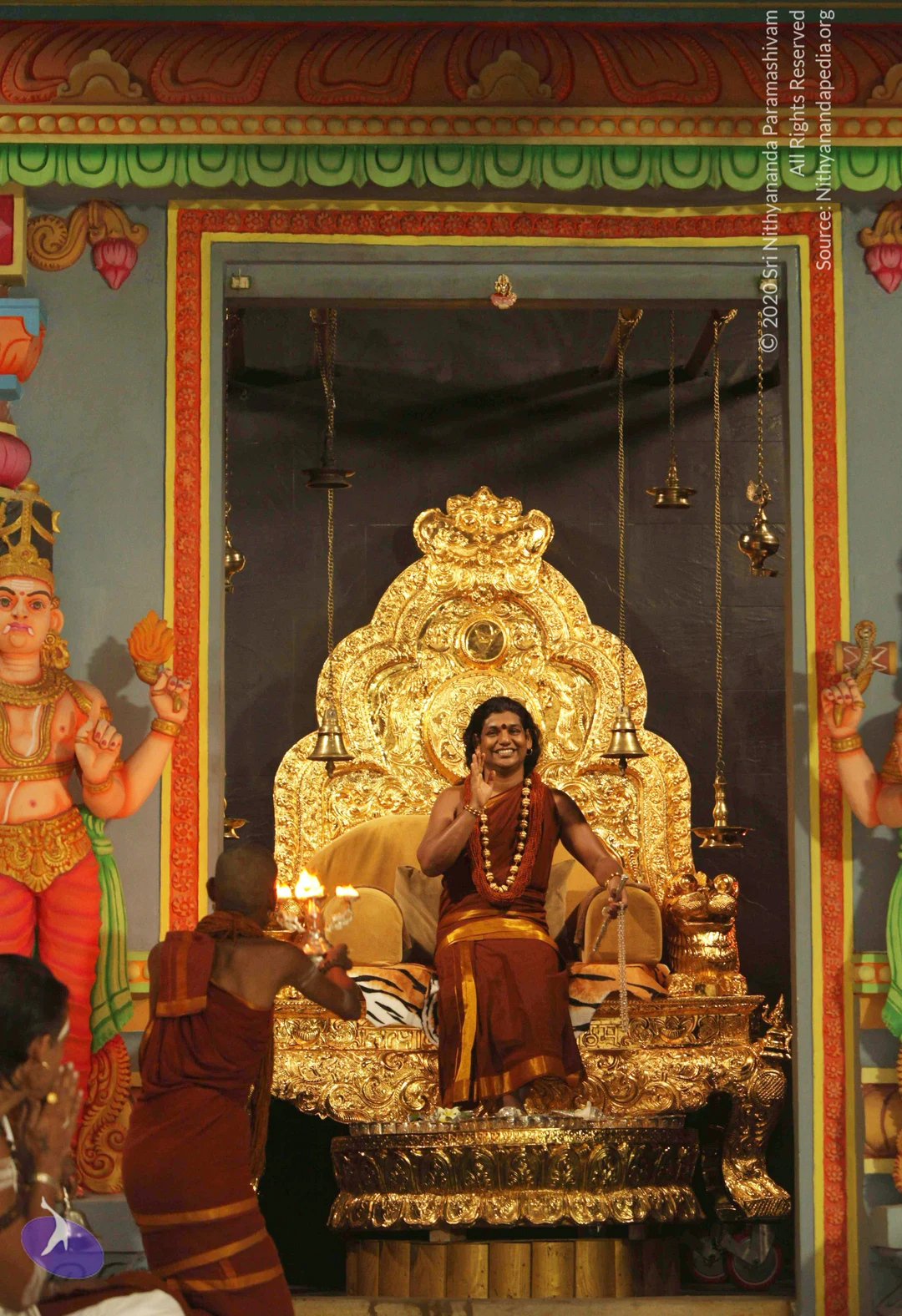
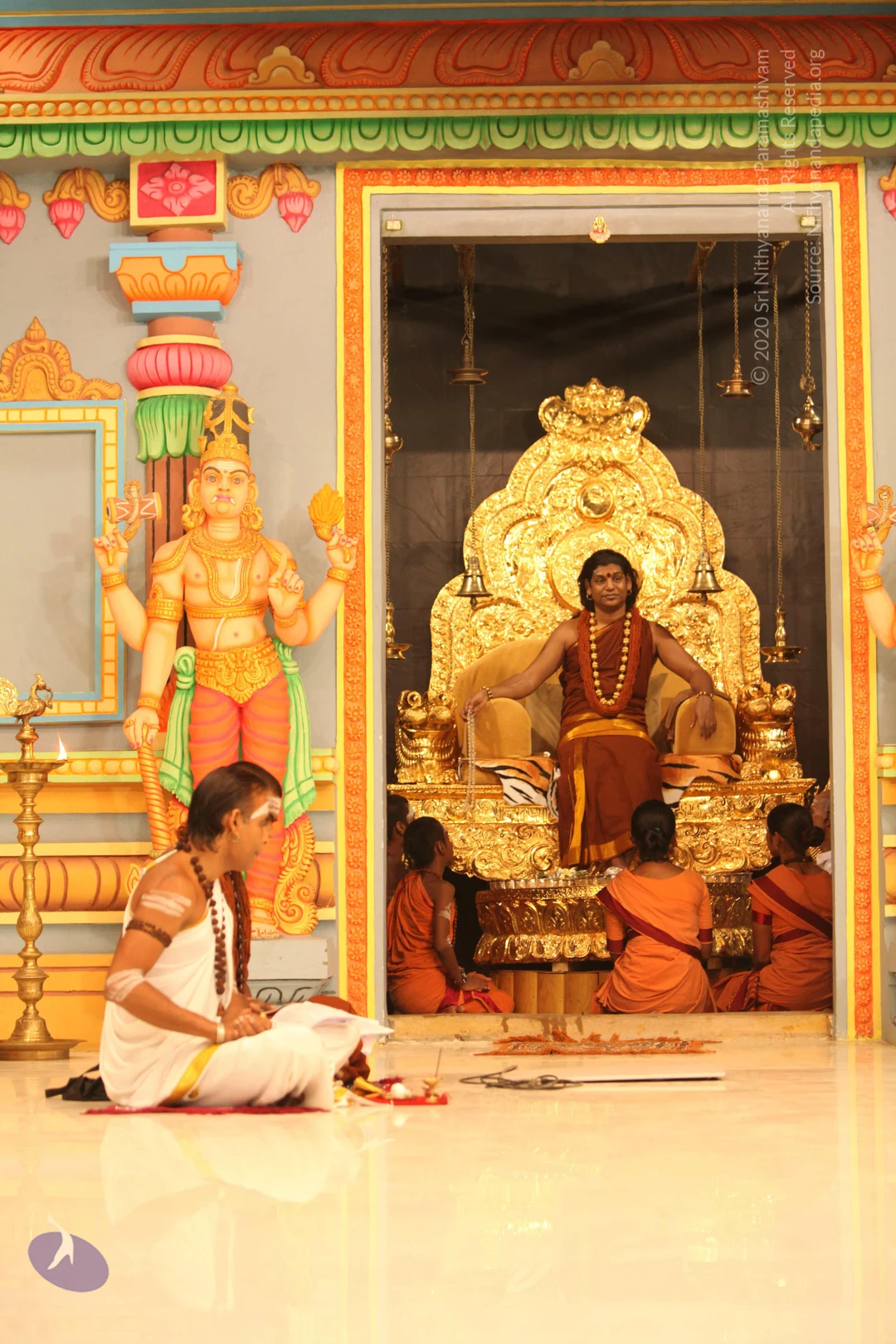
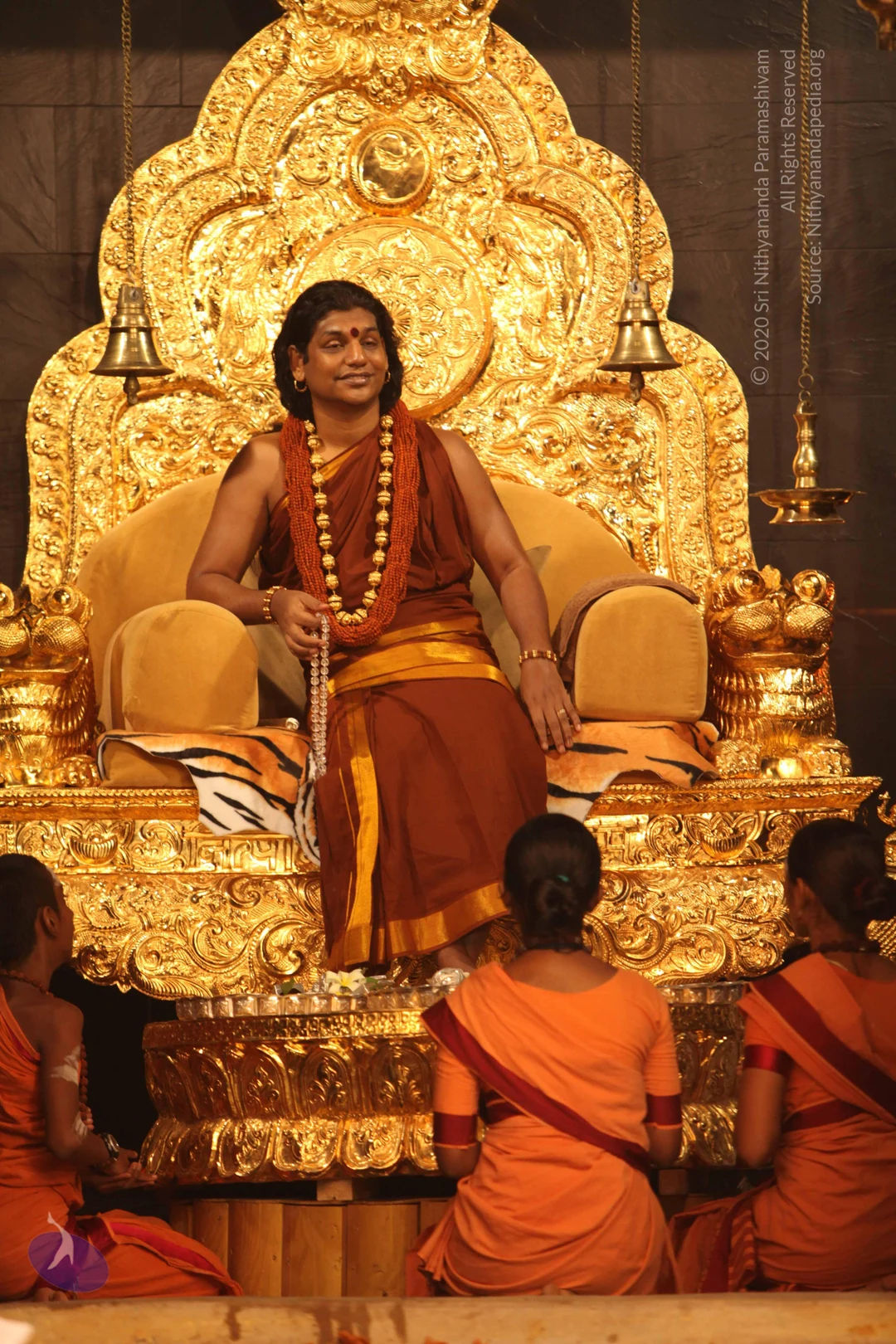
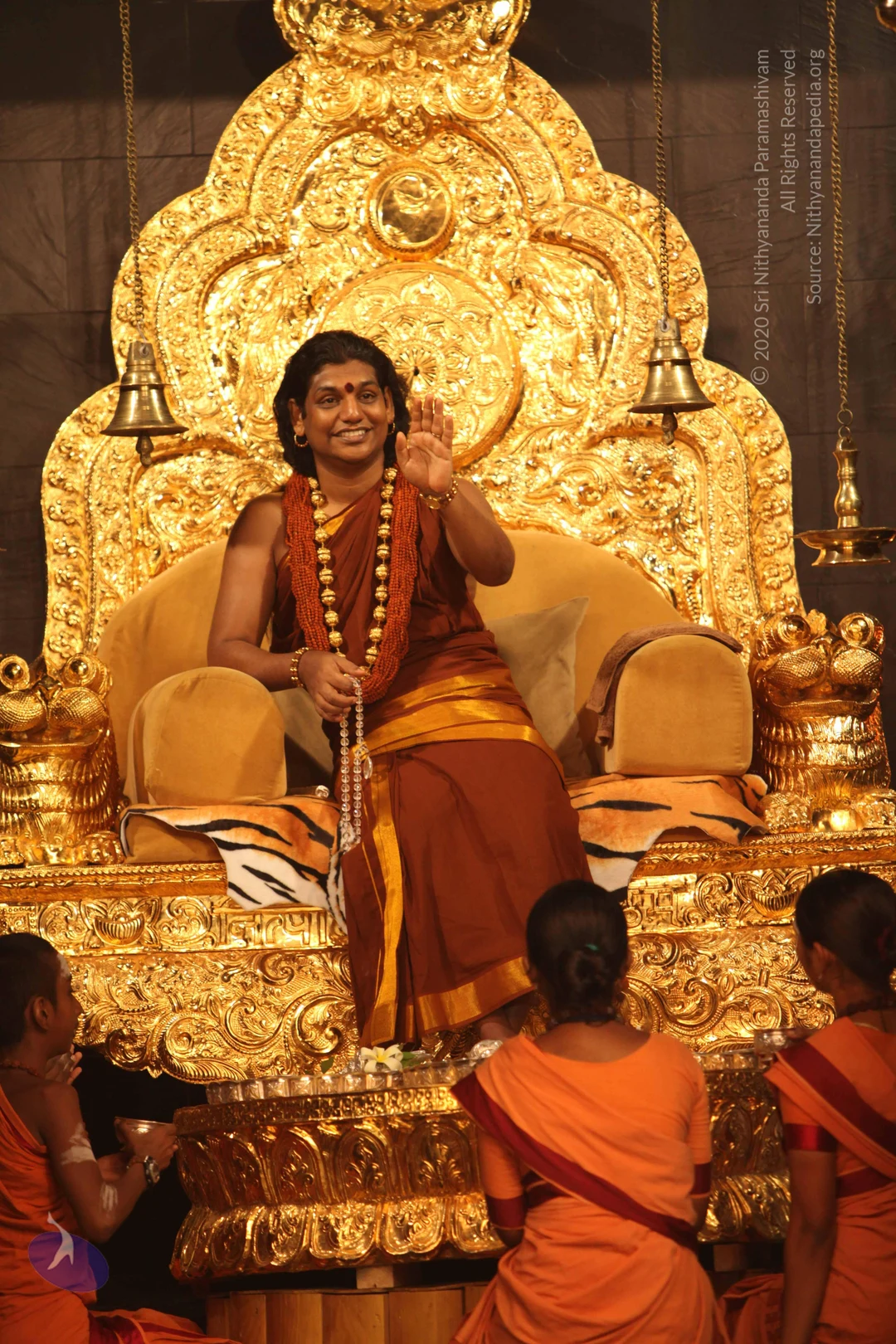
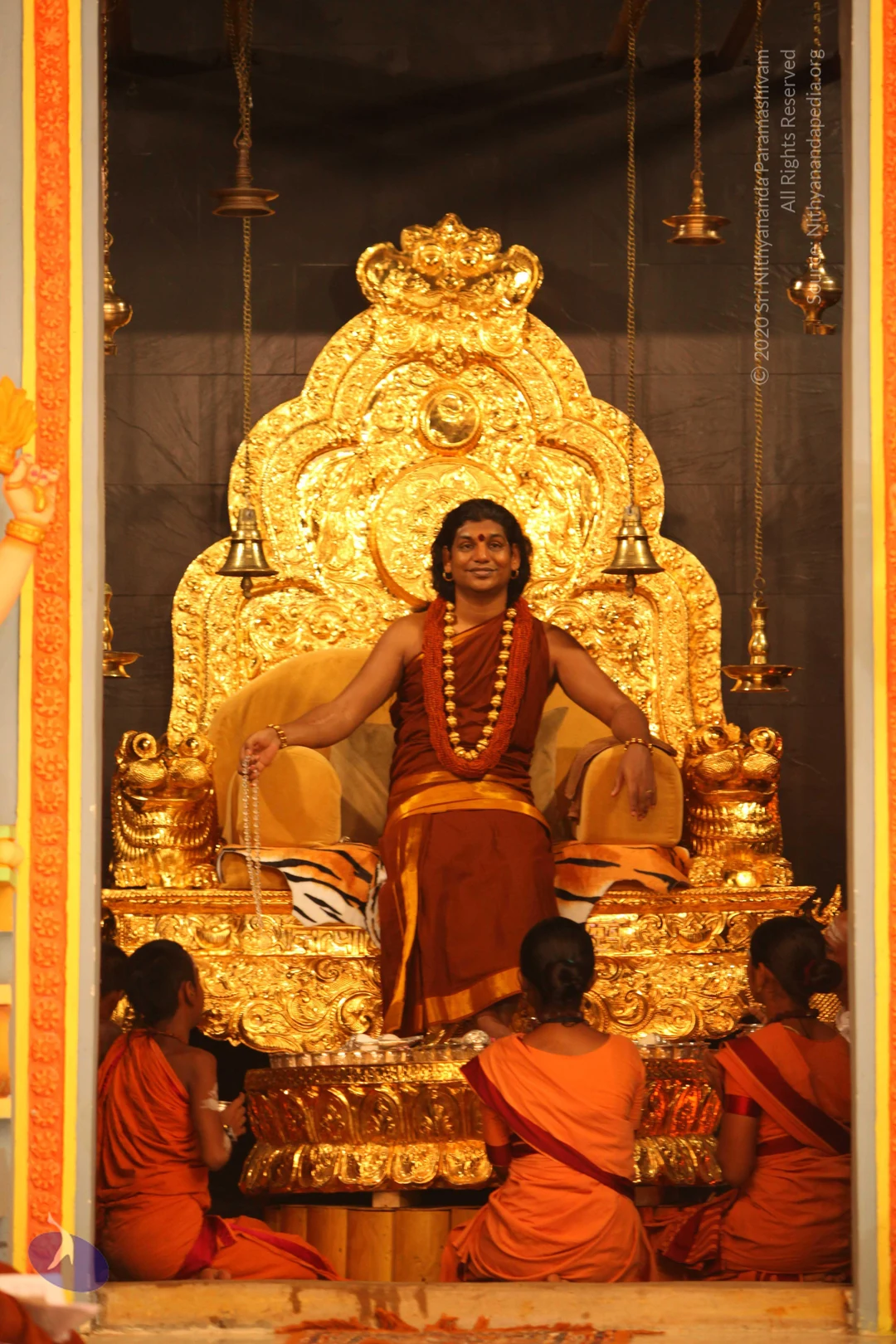
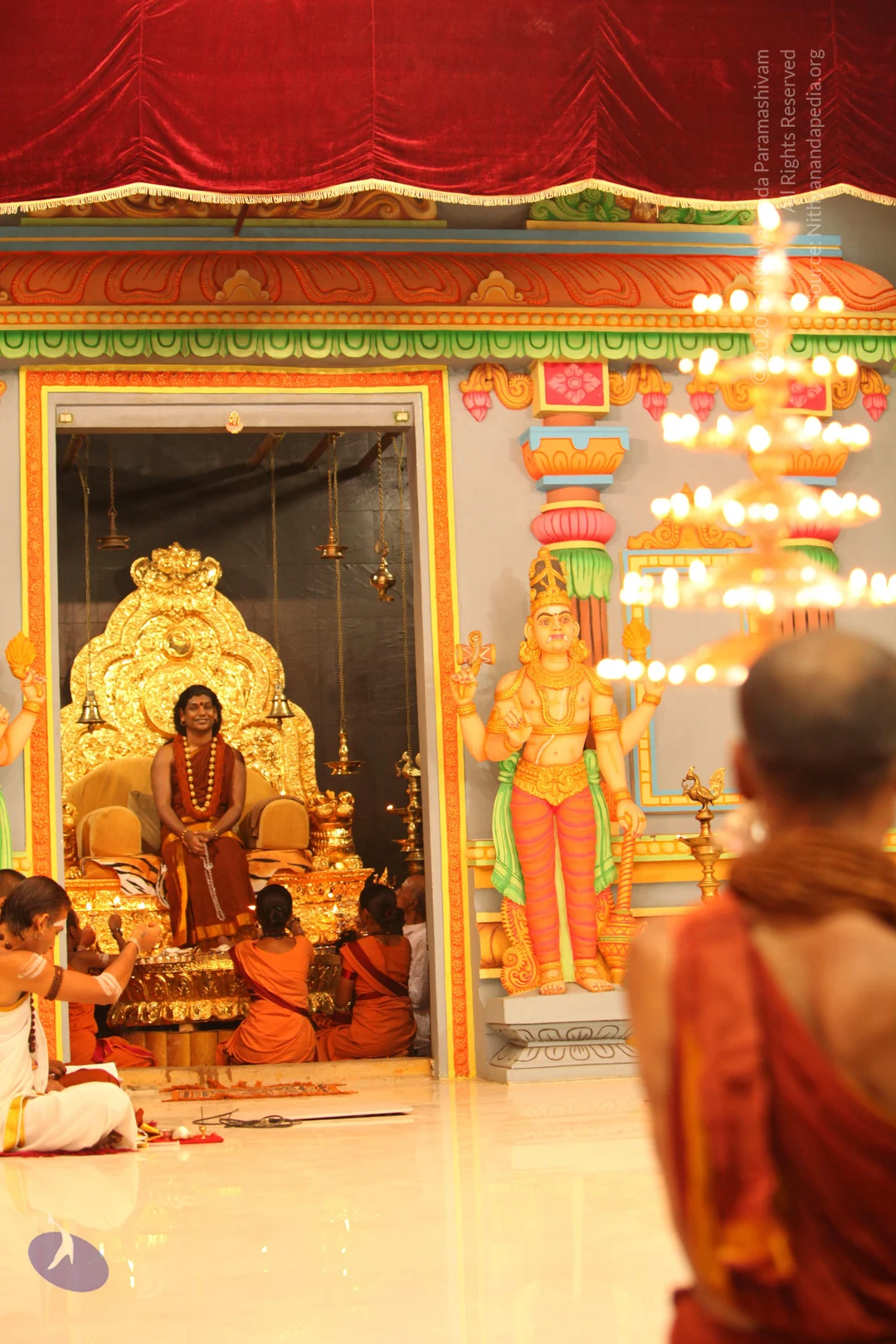
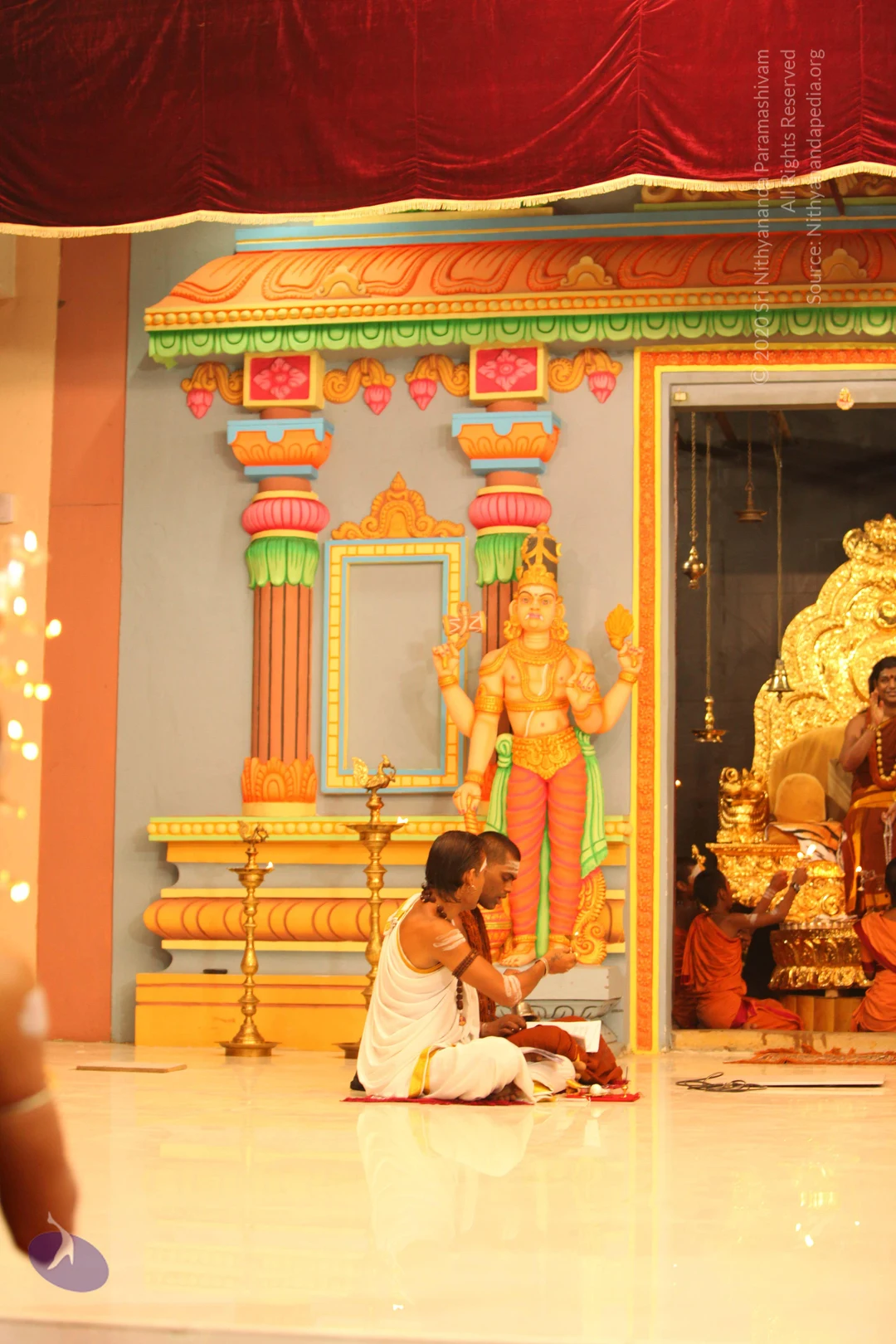
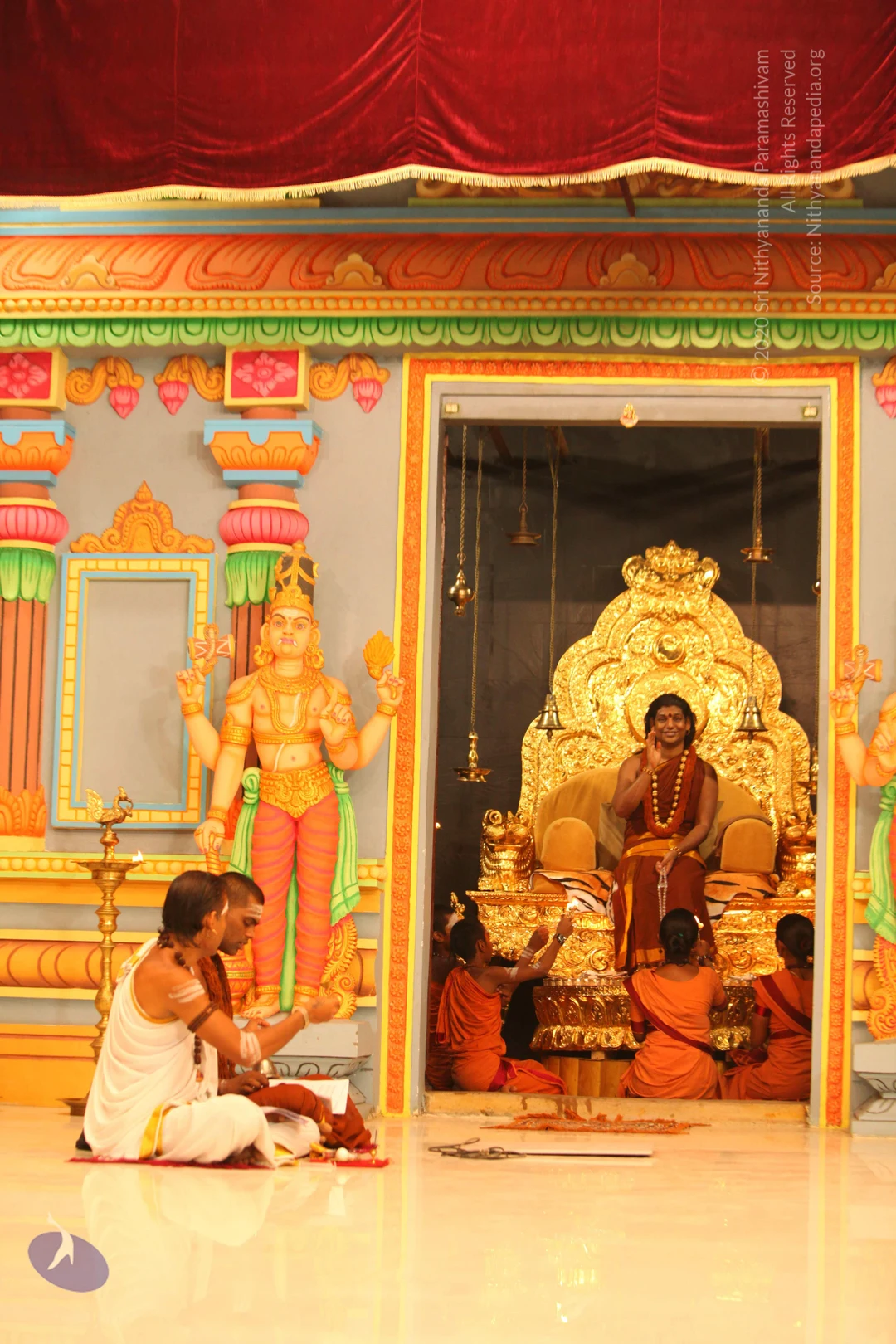
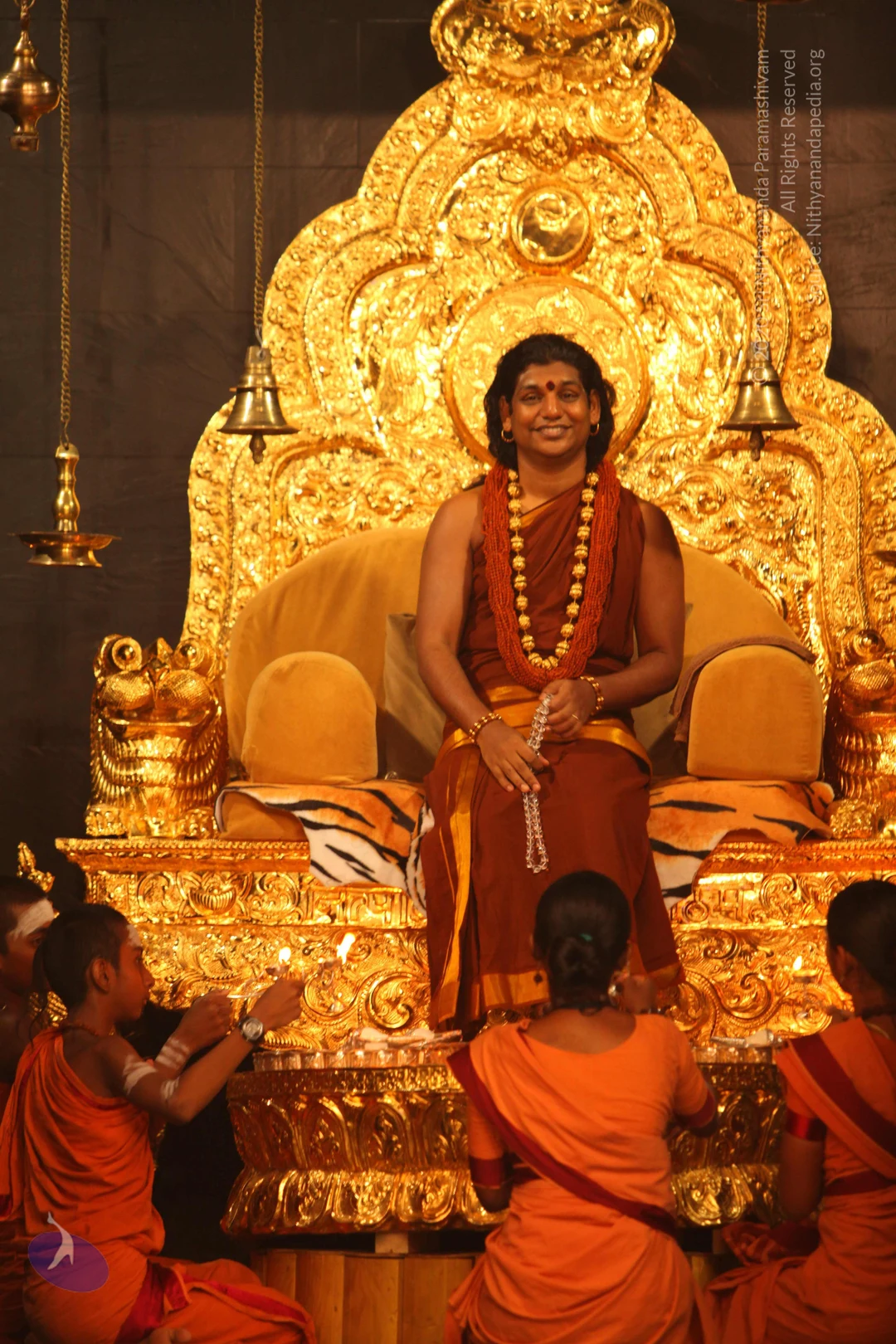
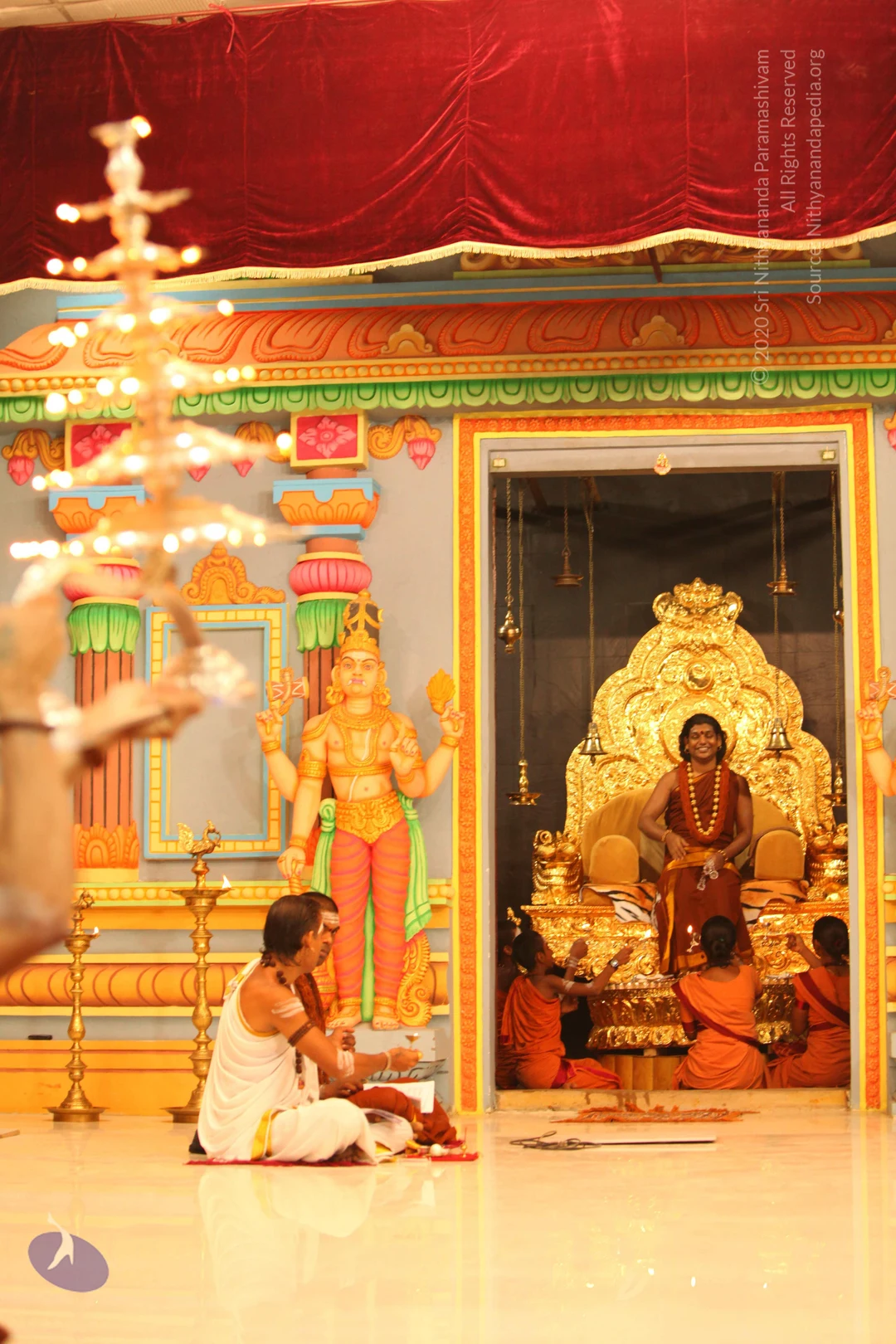
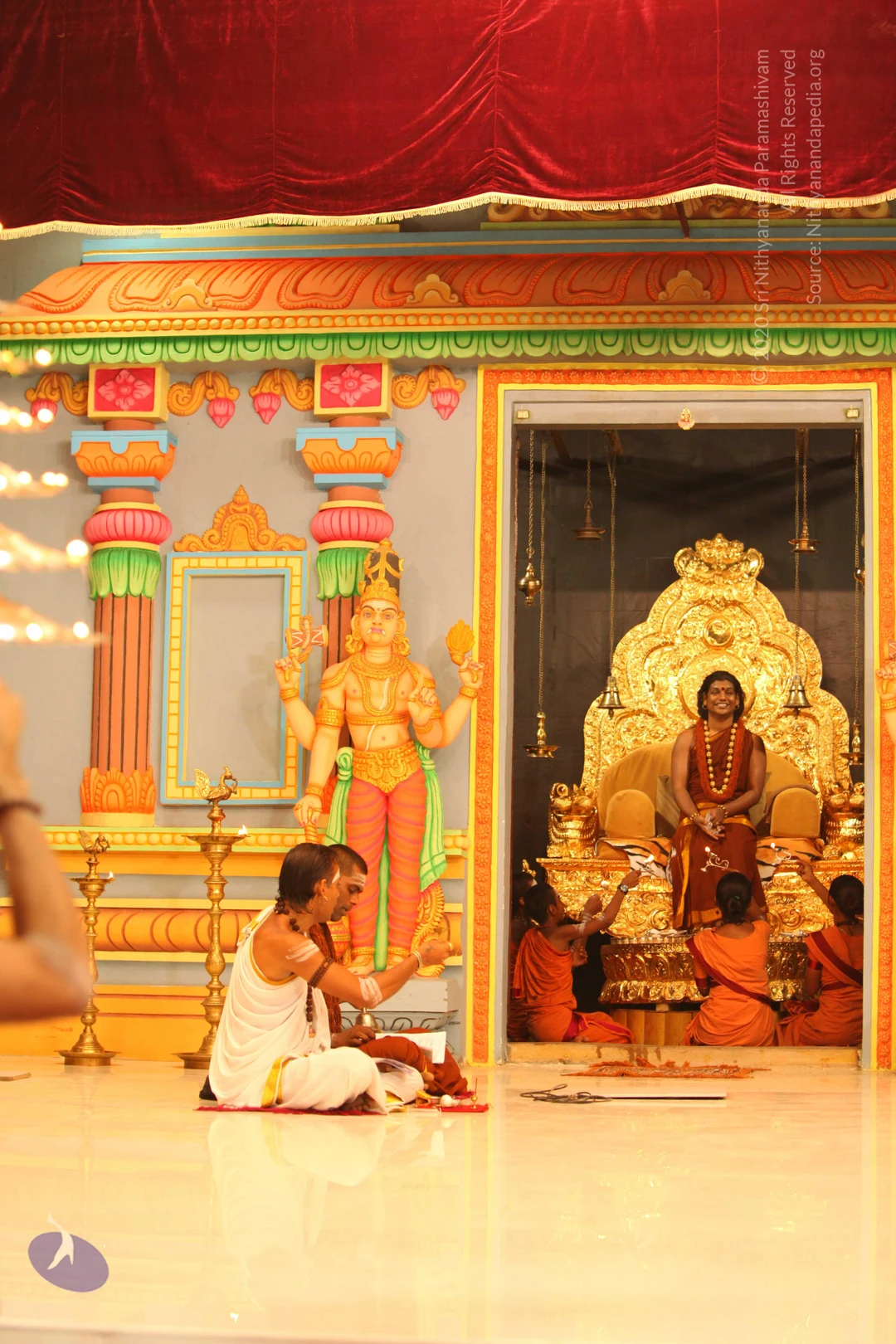
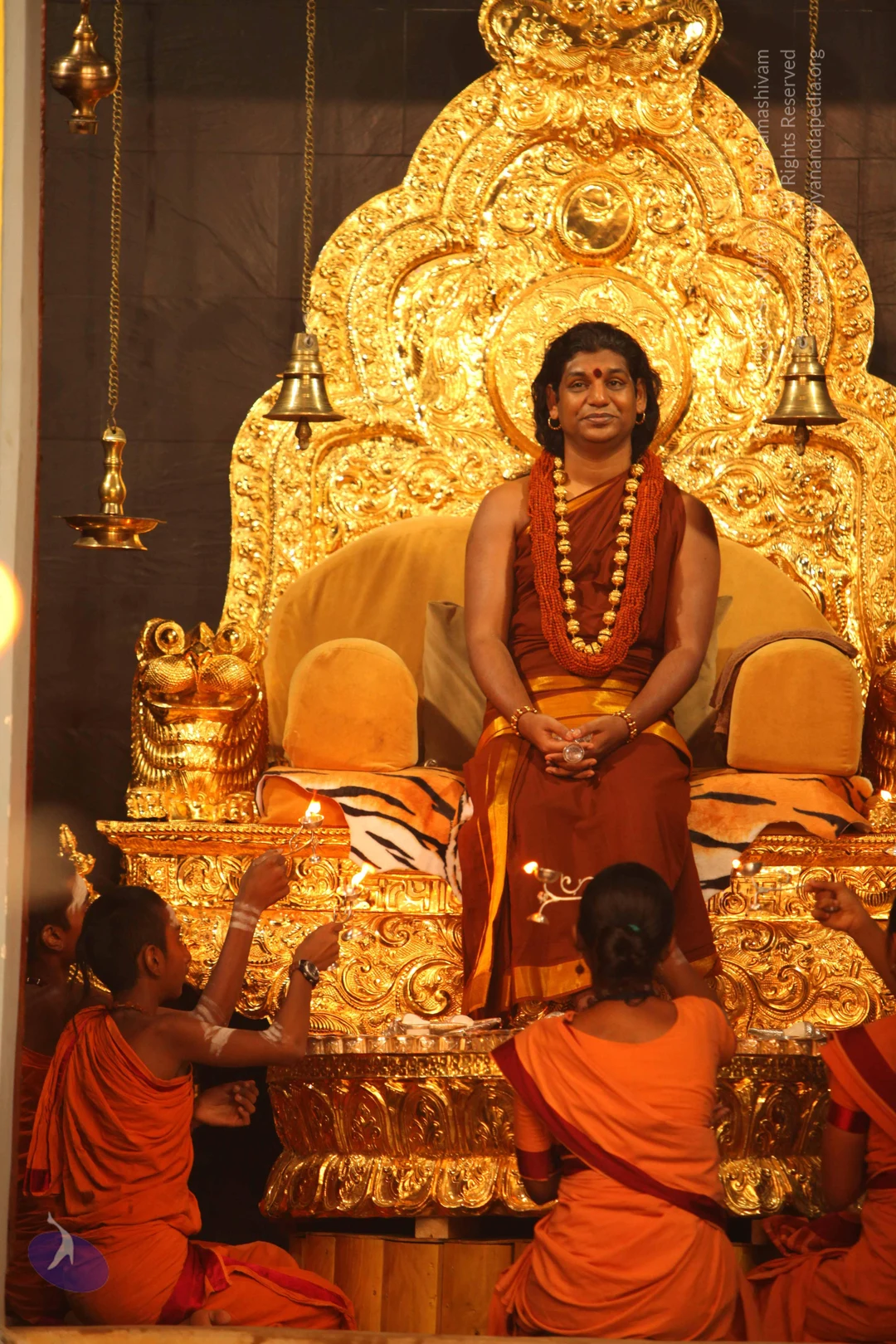
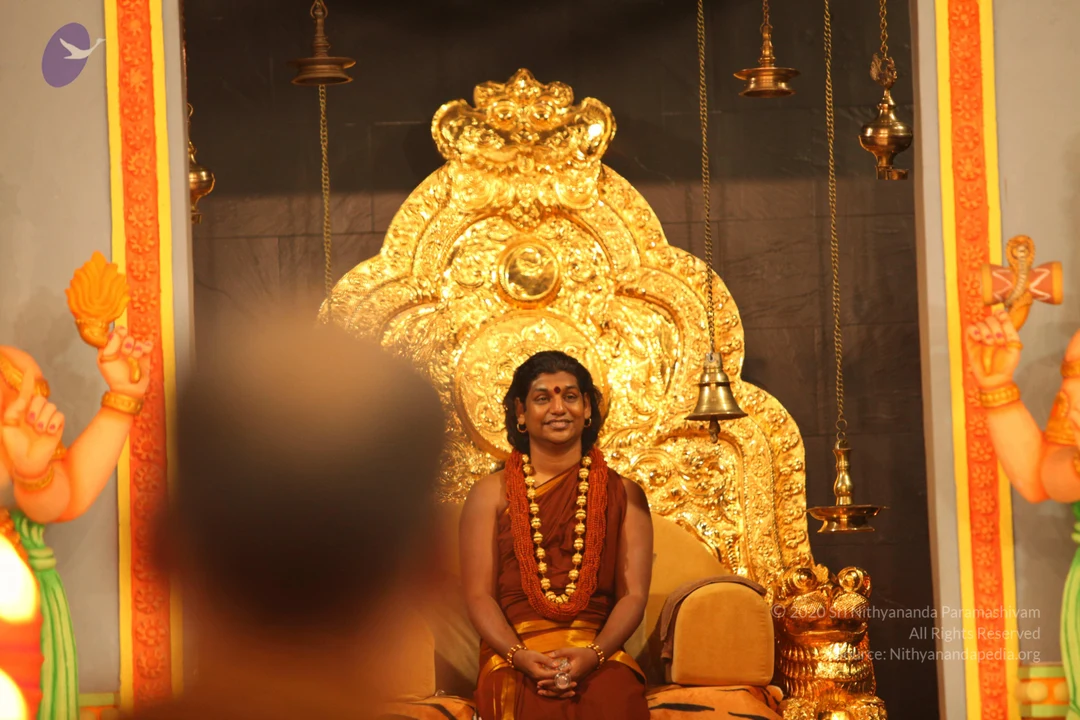
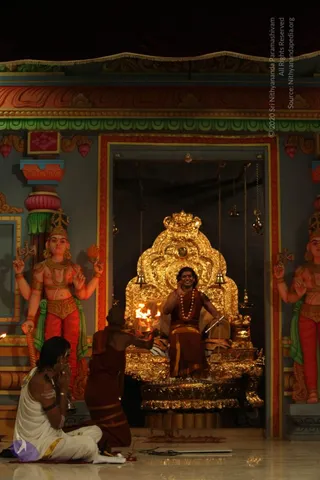
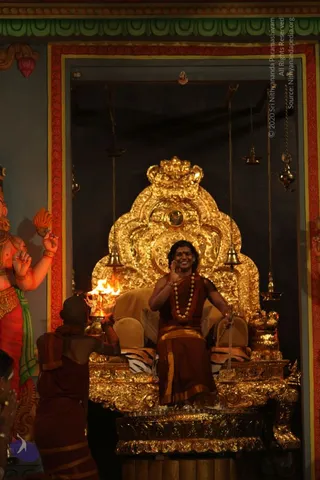
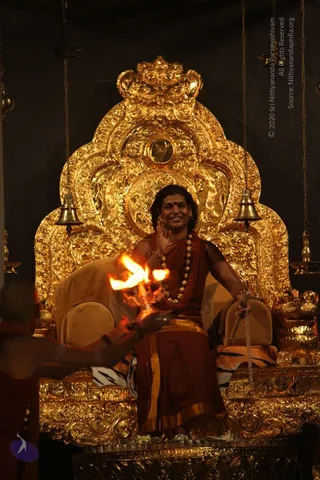
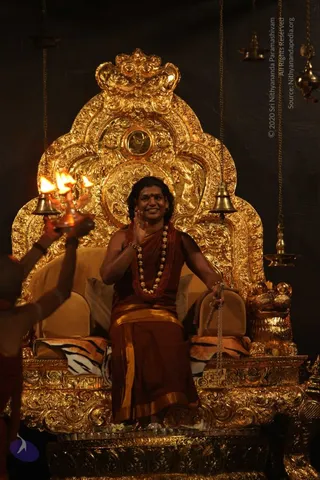
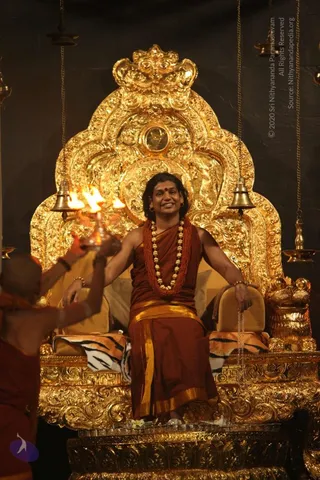
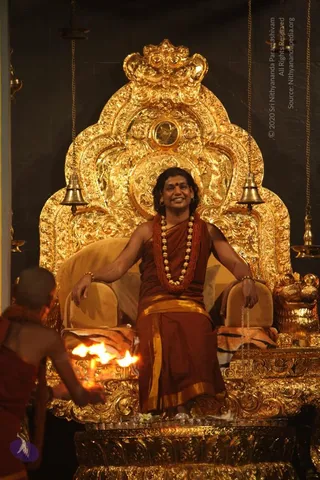
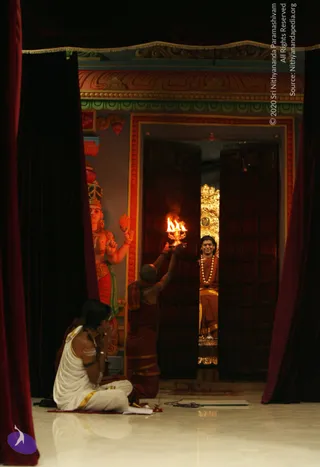
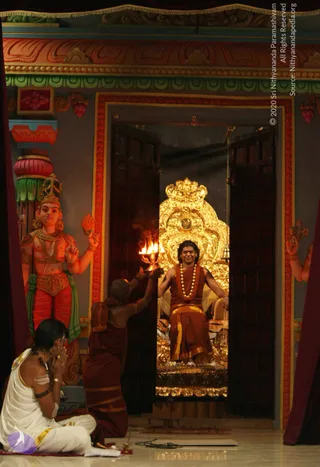
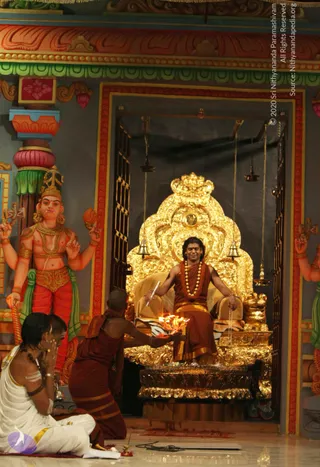
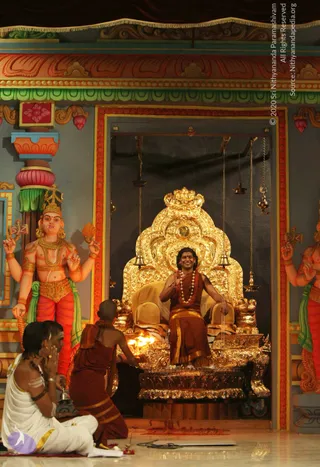
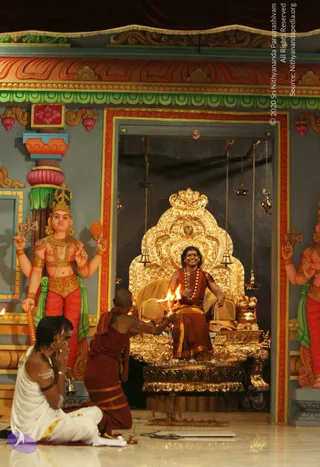
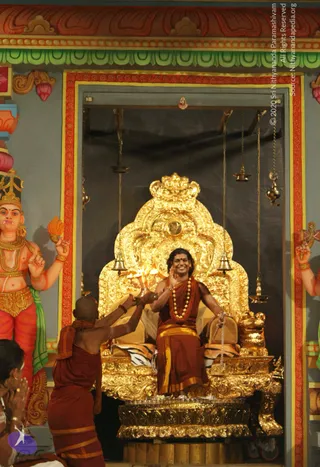
A photograph inside an ornately painted temple hall with two large colourful guardian statues flanking a gilded throne-like peetha seat. A man in saffron-orange robes with a rudraksha mala sits on the golden throne, one hand raised in a teaching gesture. In front of him a robed priest in orange kneels offering a flame from an oil lamp, and a seated devotee in white dhoti with white markings presses palms together at lower left. Hanging bells and lamps decorate the dark archway behind the throne.A photograph inside a temple hall shows a man with long dark hair and a red bindi, wearing an orange-brown robe with a gold border and a rudraksha-style bead necklace, seated on an ornate gold throne with a tiger-striped cloth draped over it. He raises one hand in greeting while smiling and holding a chain. In front, a second man in a reddish-brown robe with bare shoulders holds a lit oil lamp flame toward him. A painted deity figure with multiple arms stands to the left, and hanging brass lamps and bells hang from the ceiling above the golden throne backdrop.Ornate gilded throne with a large repoussé backrest dominates a dark stage. A man with long dark hair and a red bindi sits smiling, raising one hand, wearing a rust-red robe with a gold border and a red rudraksha mala with ceremonial gold beads. A second person in red-brown clothing at left holds a lit flame over an oil lamp toward him. Hanging brass bells and lamps hang above. a person appearance with long hair, ornate gold seat, rudraksha mala and saffron-red robes; role is seated figure receiving aarti.A man with shoulder-length dark hair and a red bindi sits on an ornate gold throne with a carved lion-headed armrest, draped in a tiger-striped cushion. He wears a rust-orange wrap with a gold border, a red coral mala and a gold bead necklace, and raises one hand in blessing while holding a white beaded mala in the other. On the left, a hand holds a brass aarti lamp with a bright flame, and brass hanging lamps and a bell hang behind the throne against a dark wall. a person is seated in the centre, appearing as the presiding teacher during an evening aarti. The image is a photo.A photograph of a seated man in a rust-red sannyasi wrap with a gold-bordered dhoti, wearing a long rudraksha mala and a gold bead necklace, with a red tilak and long swept-back dark hair. He sits on an ornate gilded throne with a gold lion-head armrest and a tiger-striped cloth draped over the seat, while a devotee in a red robe at left holds a lit lamp (aarti) toward him. Hanging brass bells and lamps surround the golden throne backdrop. Hanging brass lamps and a flame indicate an aarti ceremony.A man with shoulder-length dark hair and a red bindi sits smiling on an ornate gilded throne with a carved lion-head armrest and a large gold-embossed backrest. He wears a rust-red sleeveless garment with a gold border, a red-and-gold rudraksha mala and a gold bead necklace, and gold bracelets. A bell hangs from a chain on each side, and a lamp burns at the left edge where a person in rust-red robes, seen from behind, tends a fire. Flowers rest on the golden pedestal. The setting appears to be a ceremonial satsang stage with a dark backdrop.

Inner-Awakening-Session-1

216 photosSource gallery
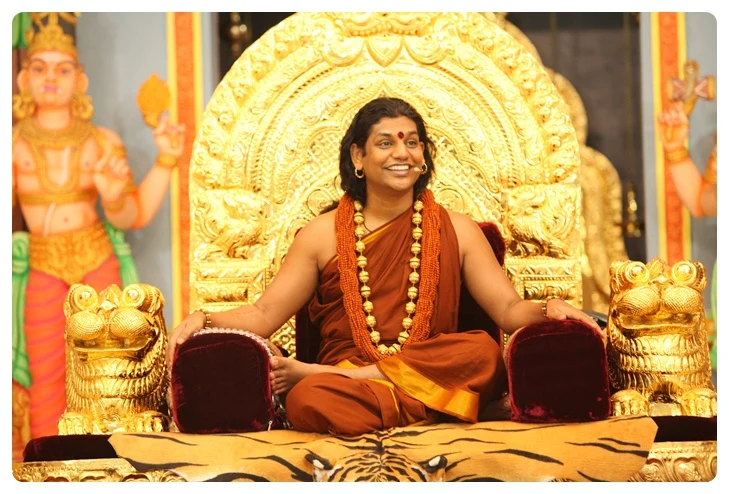
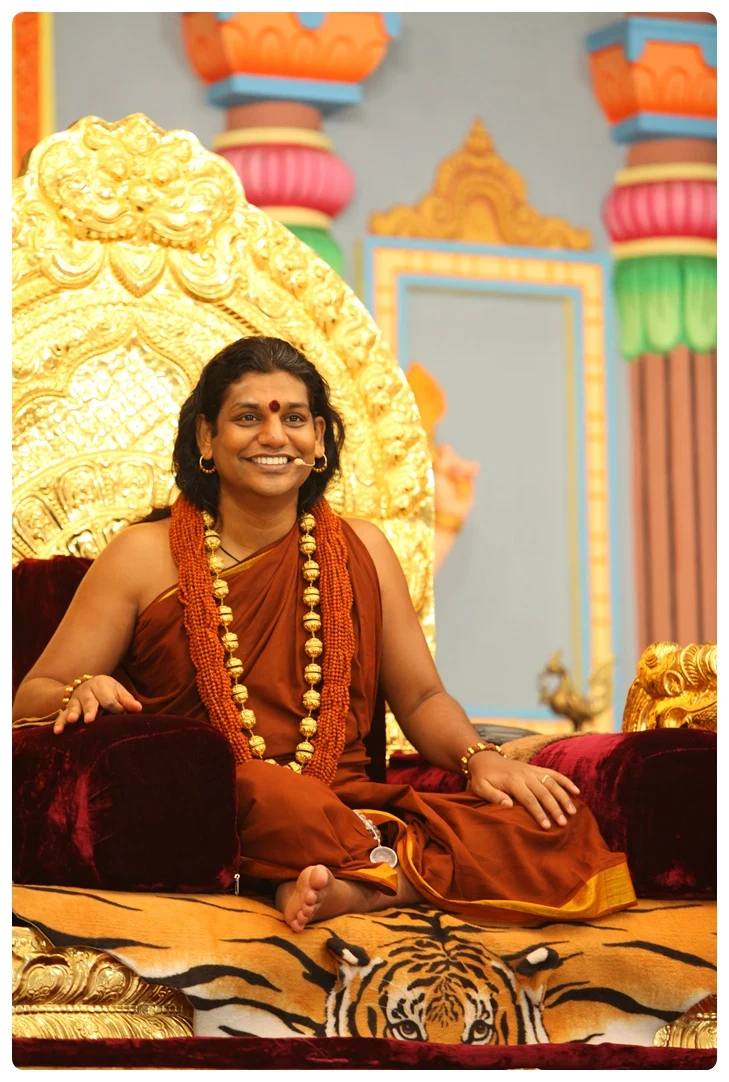
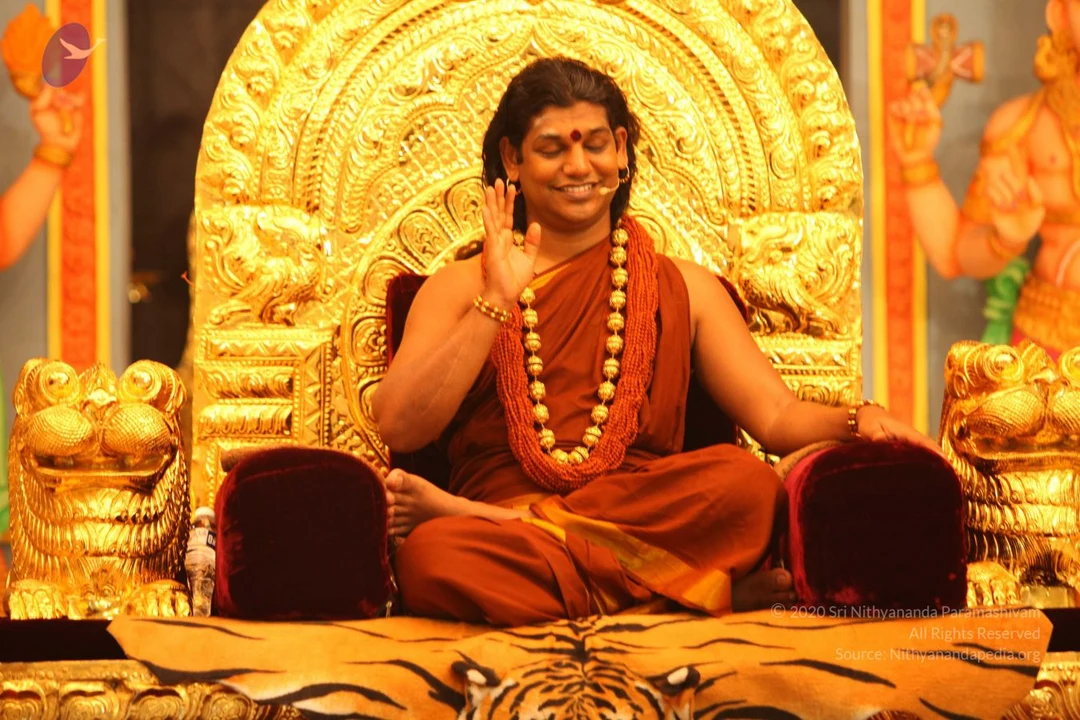
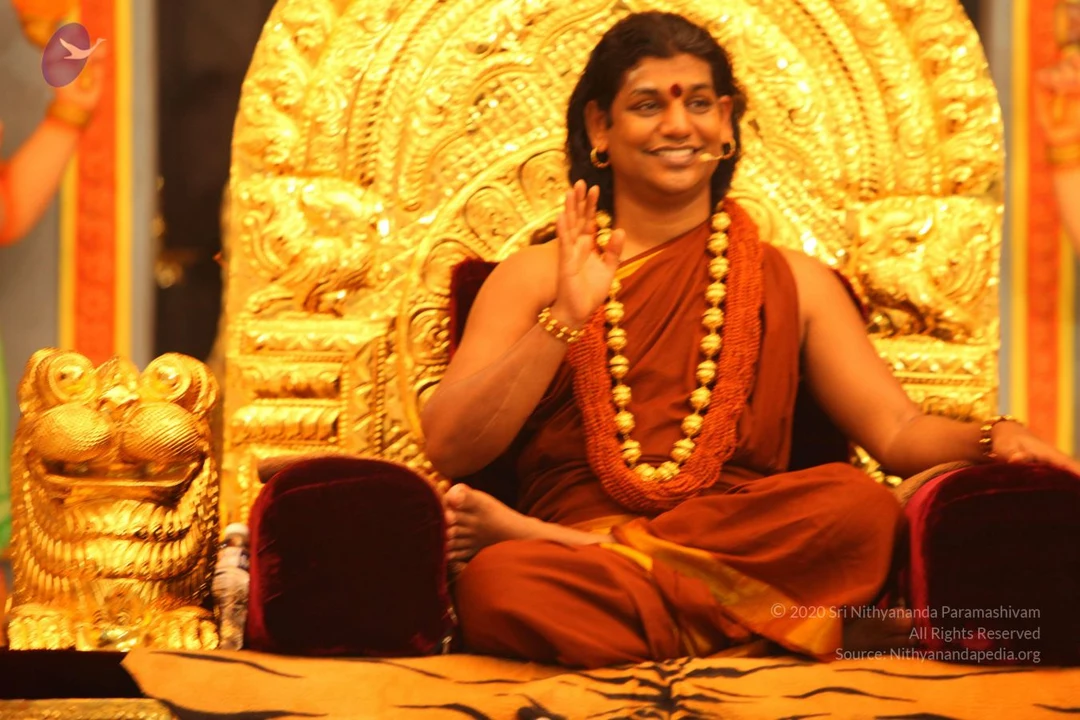
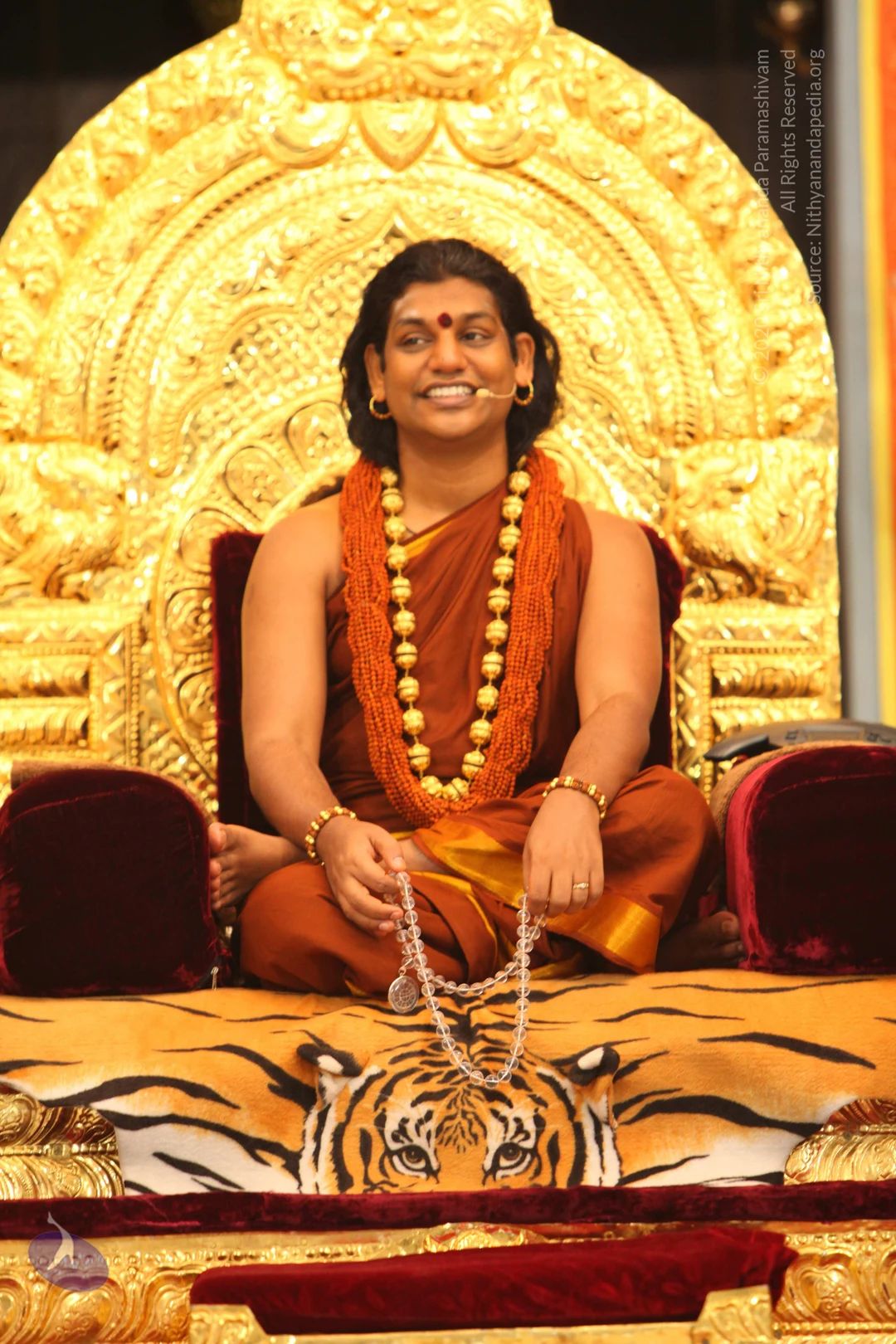
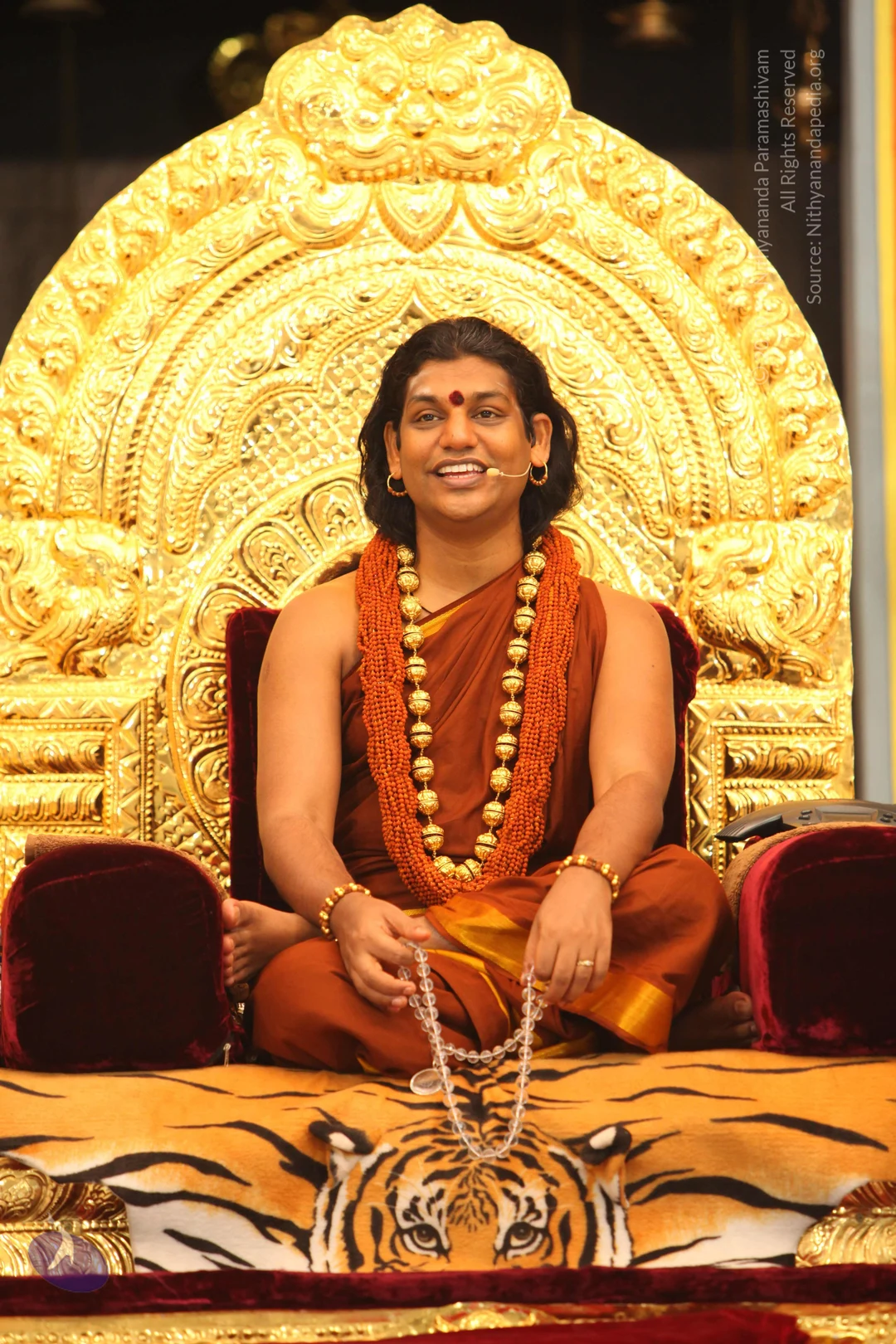
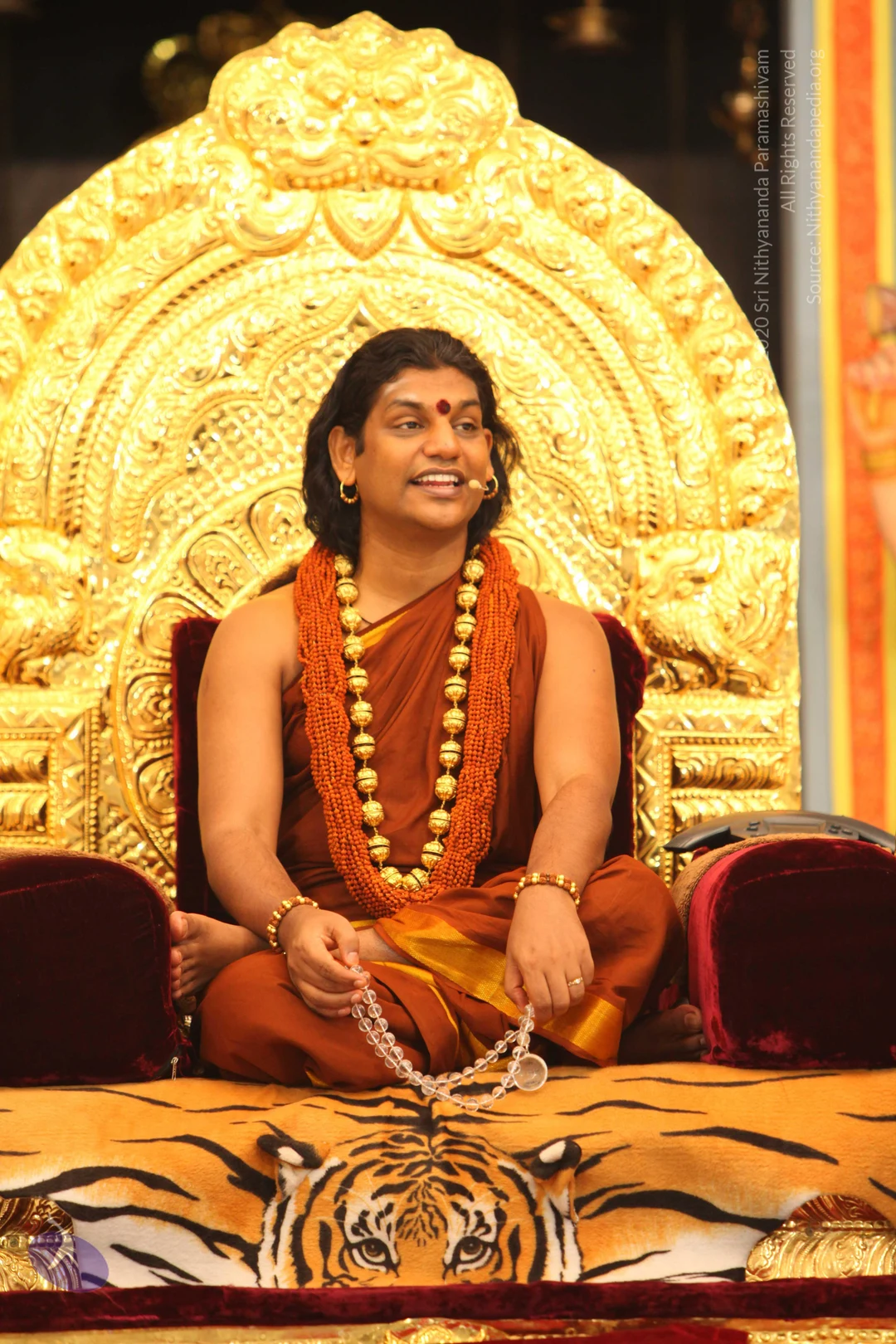
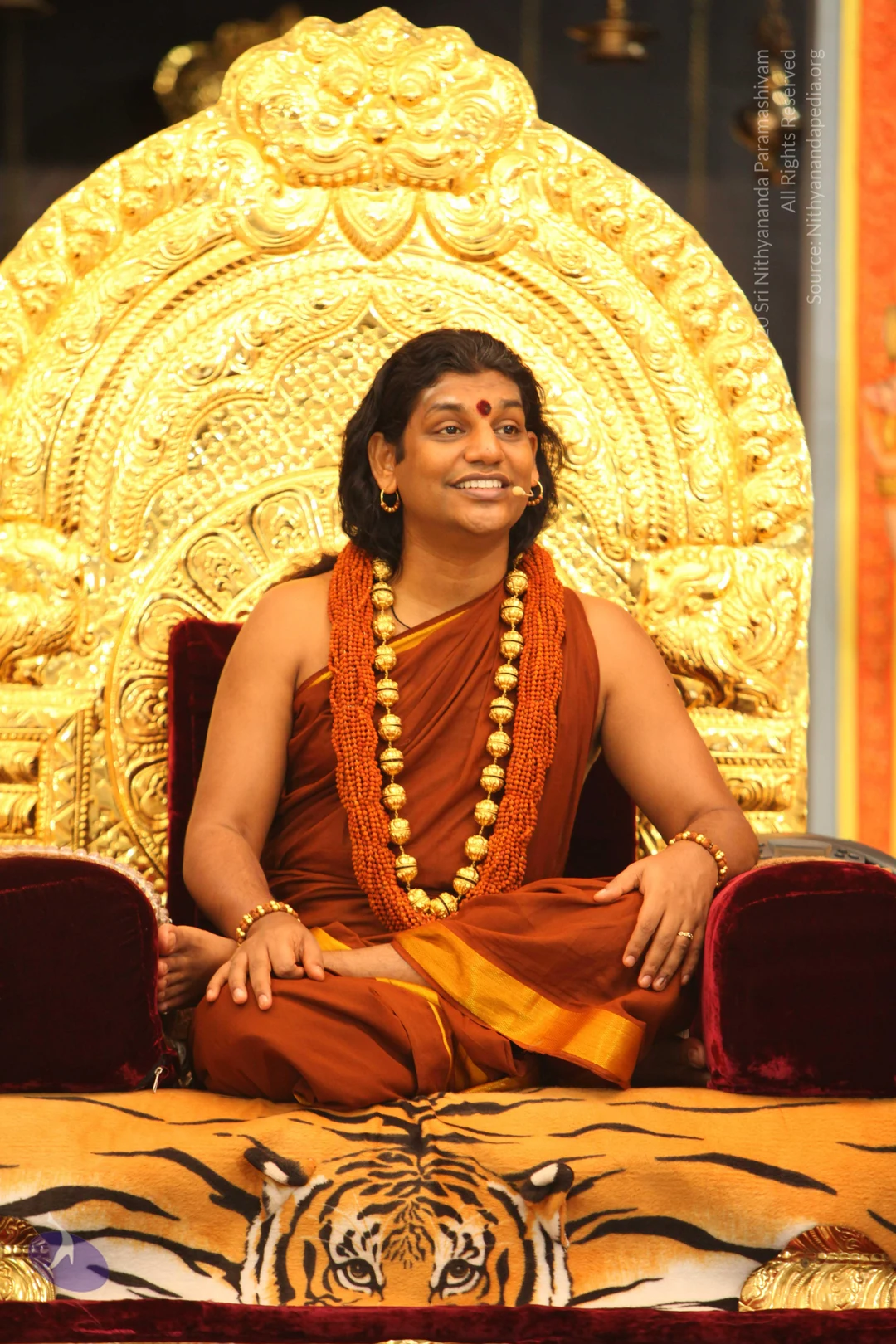
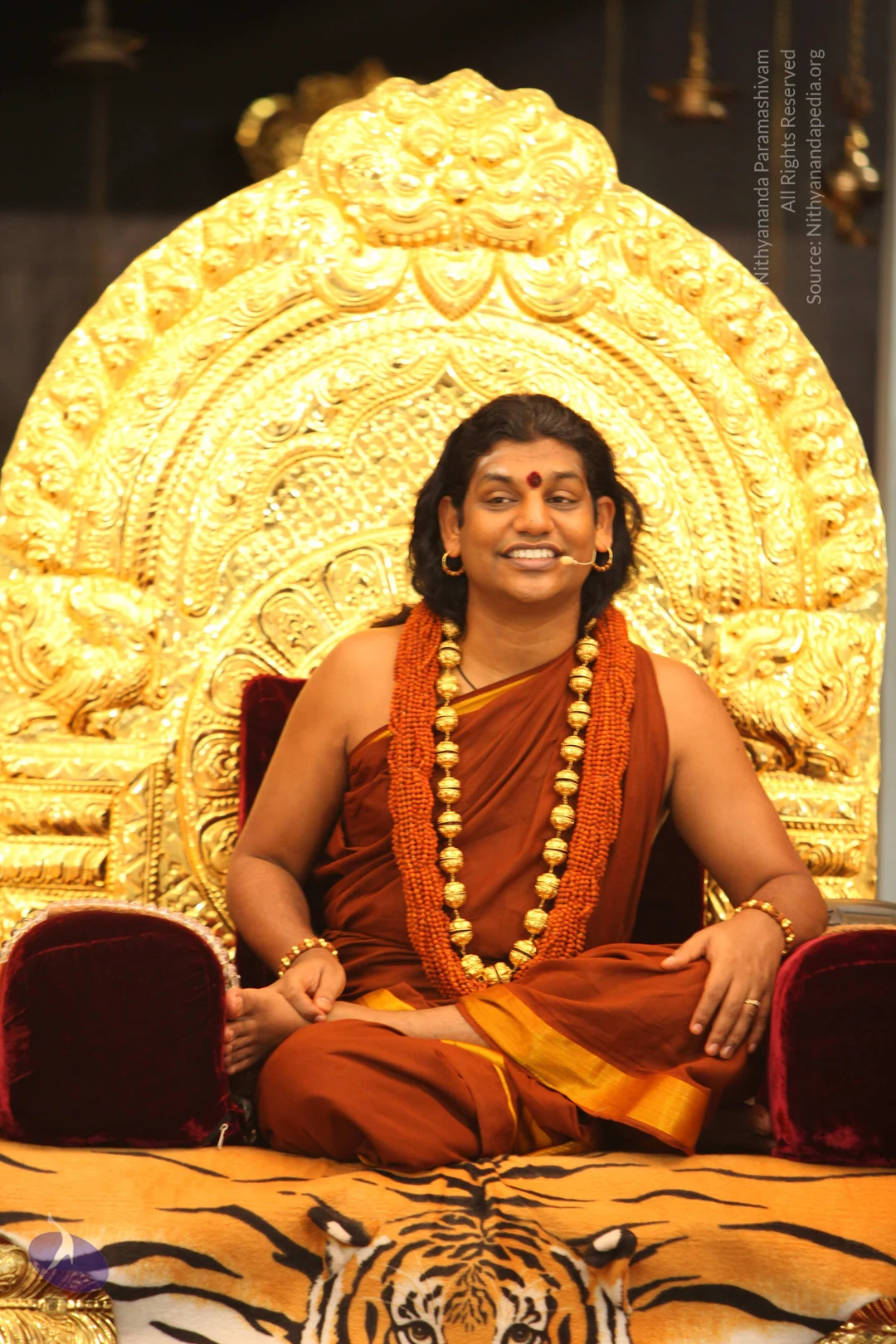
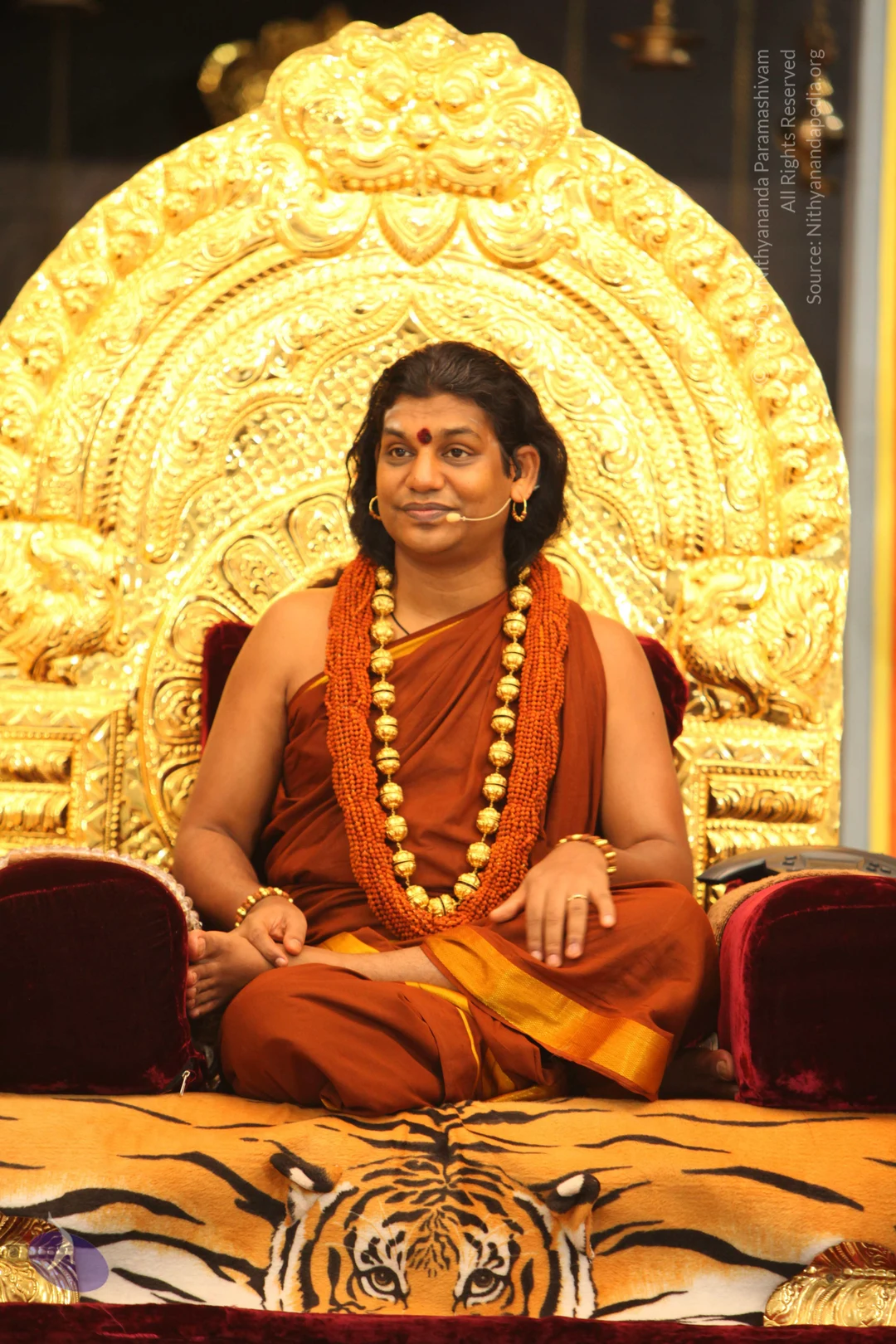
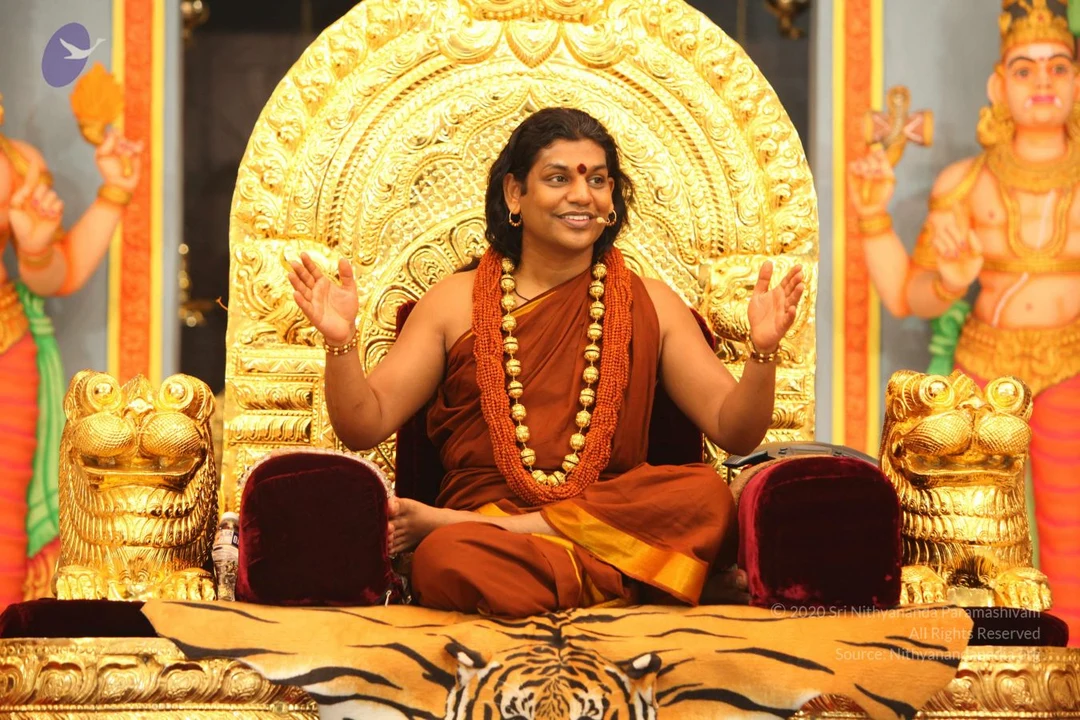
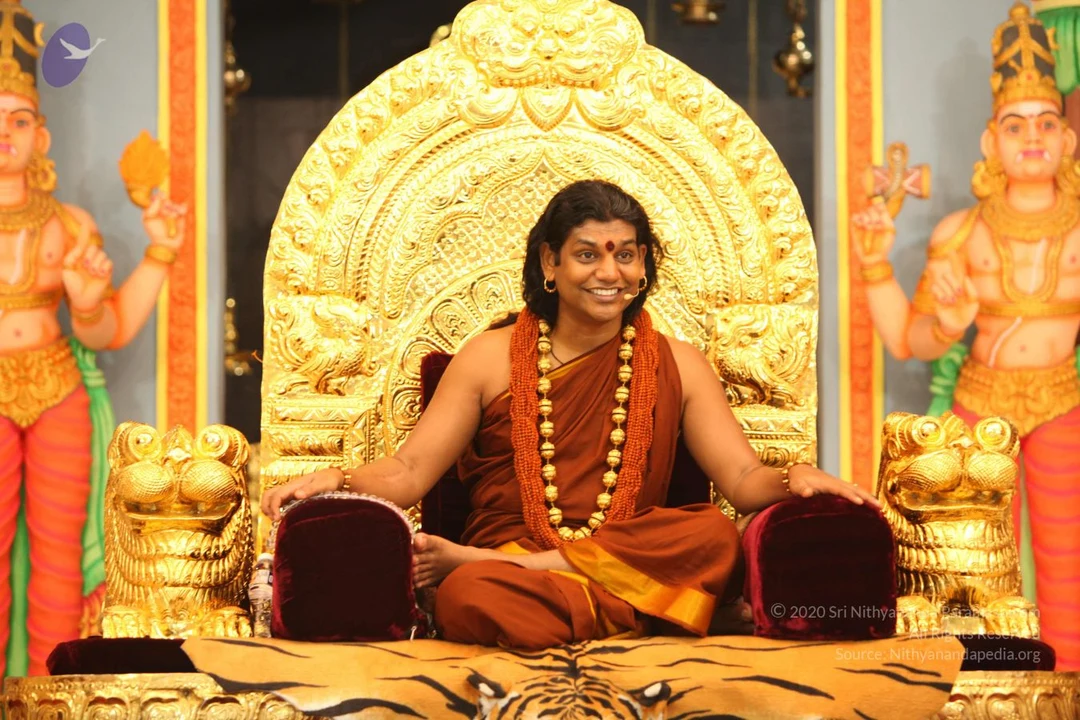
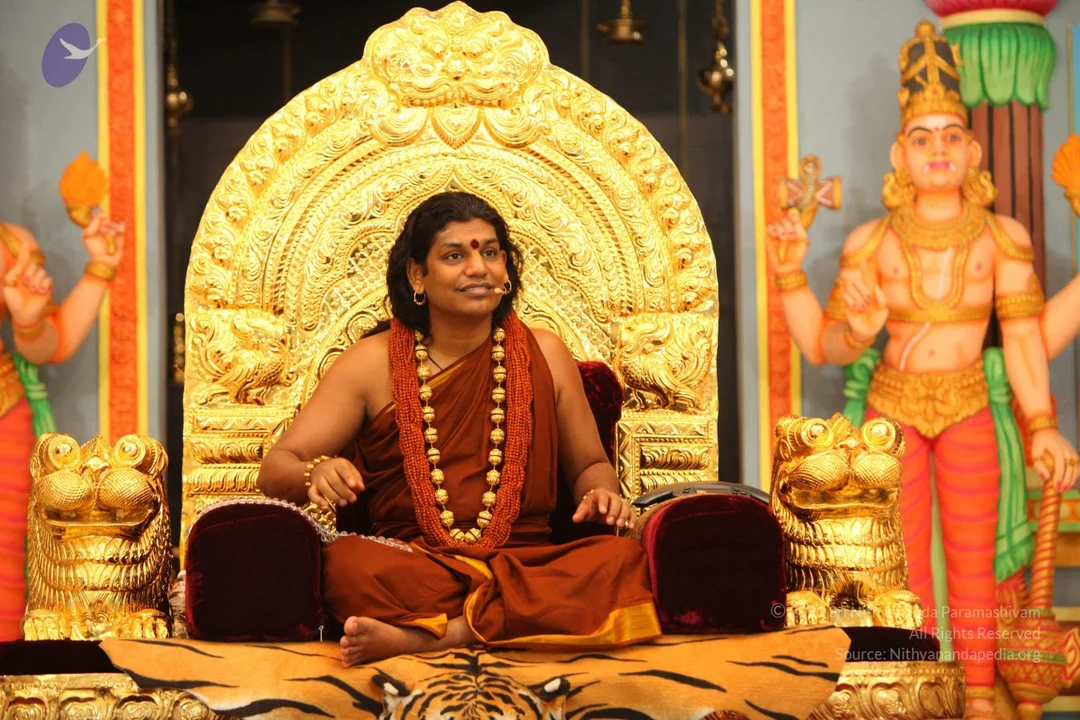
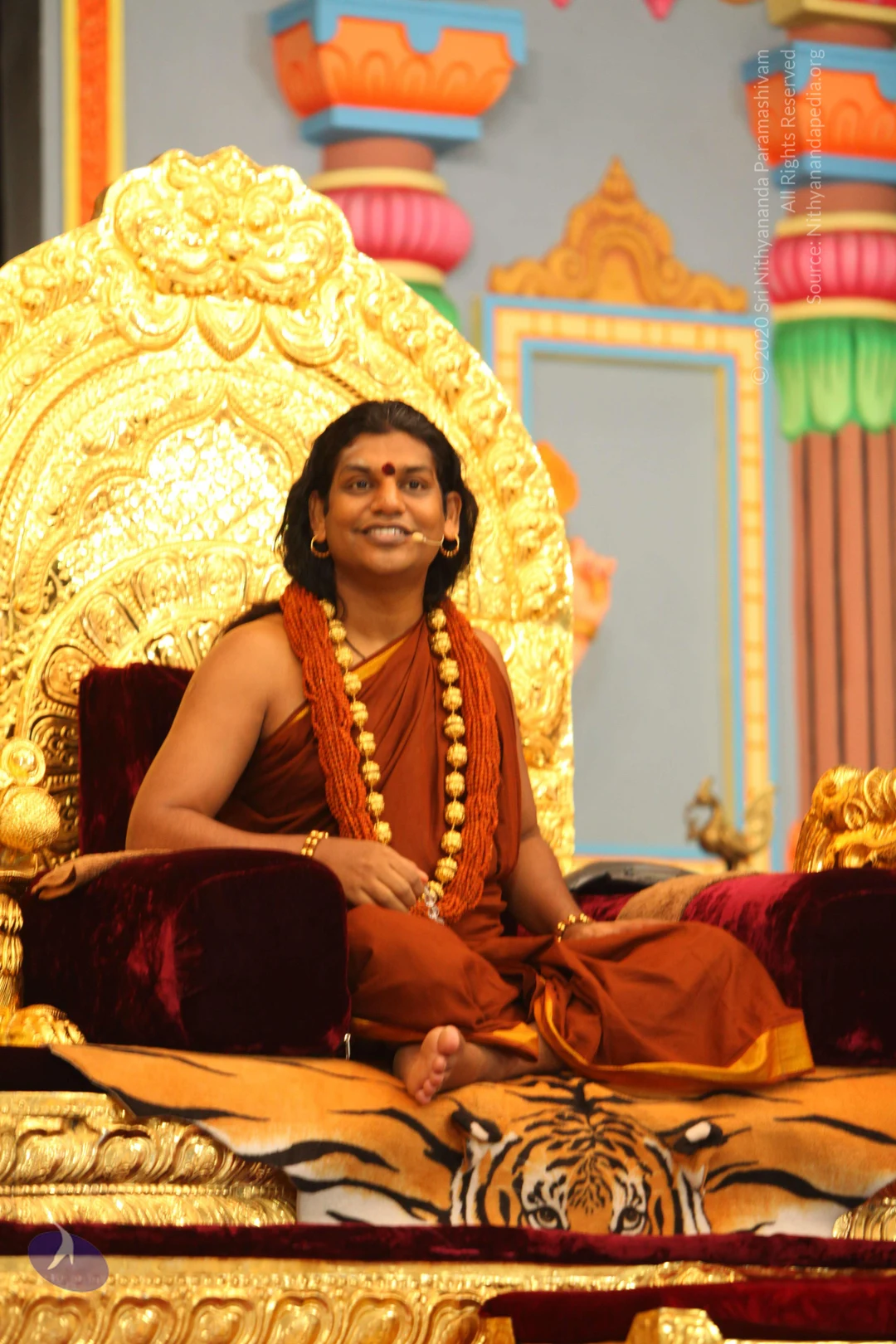
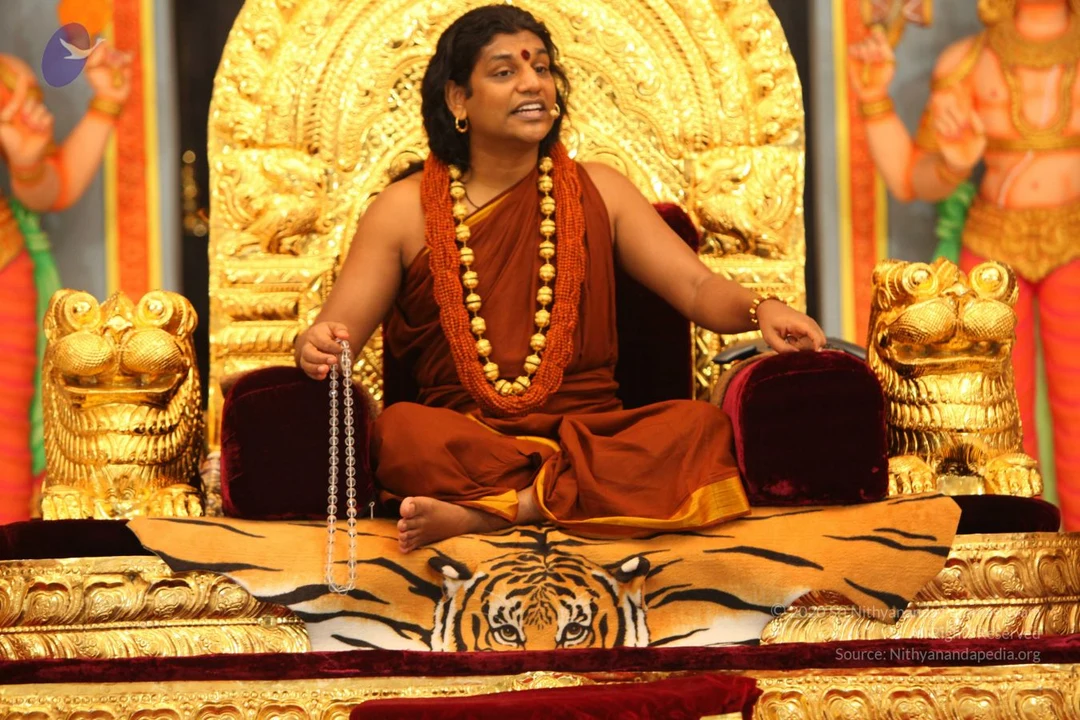
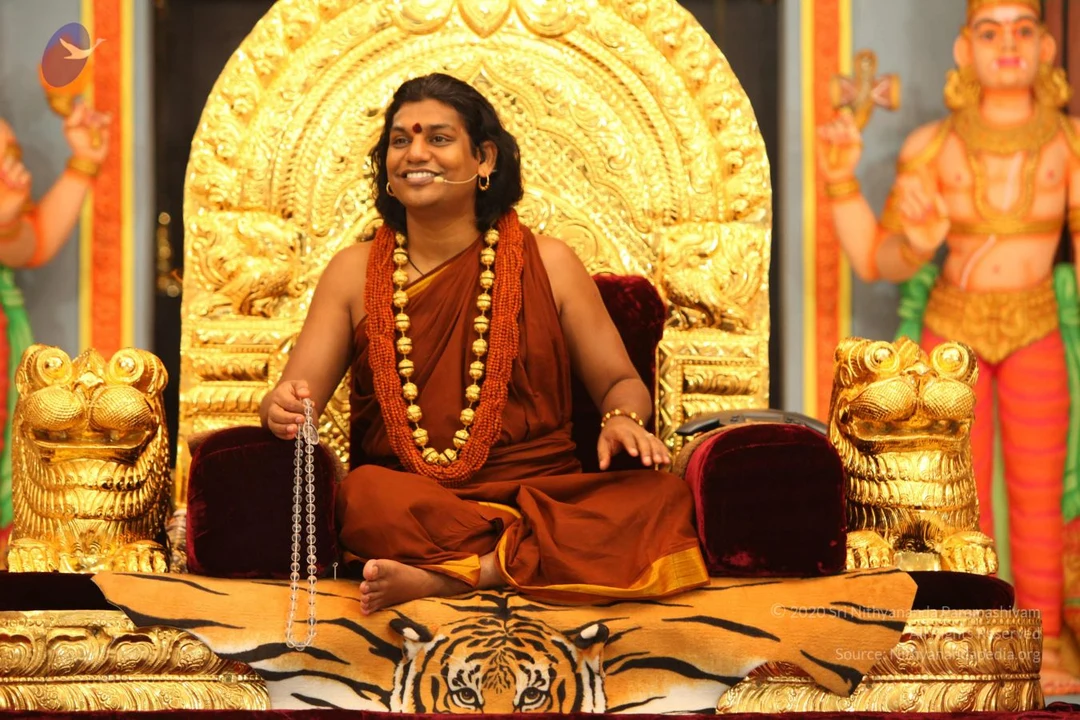
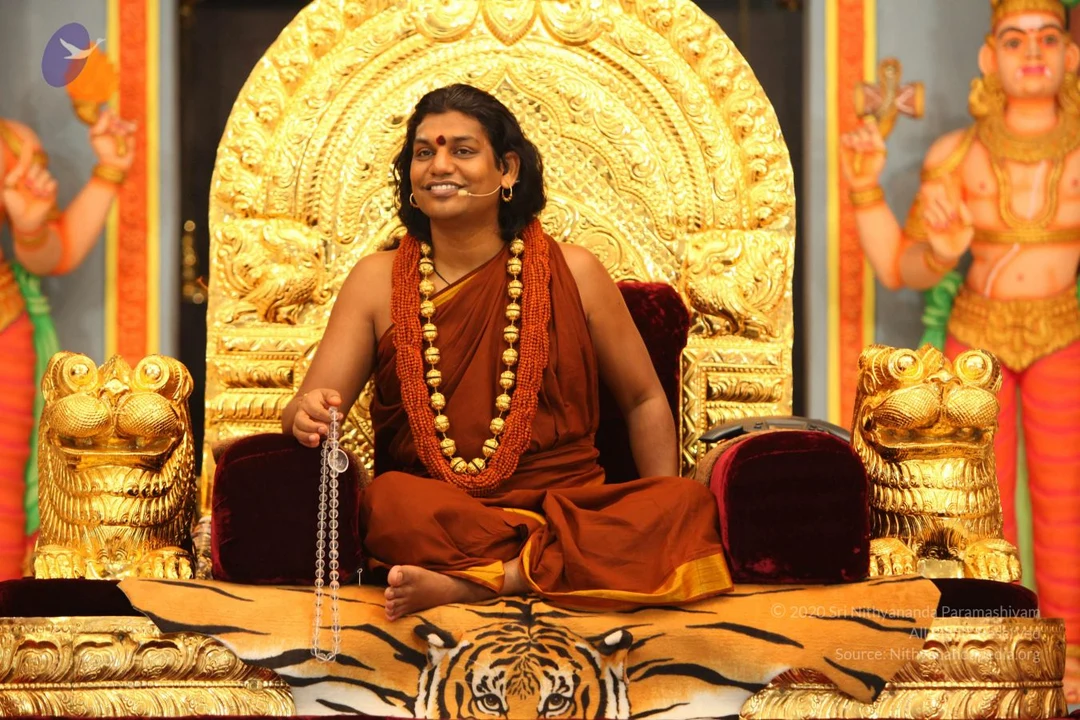
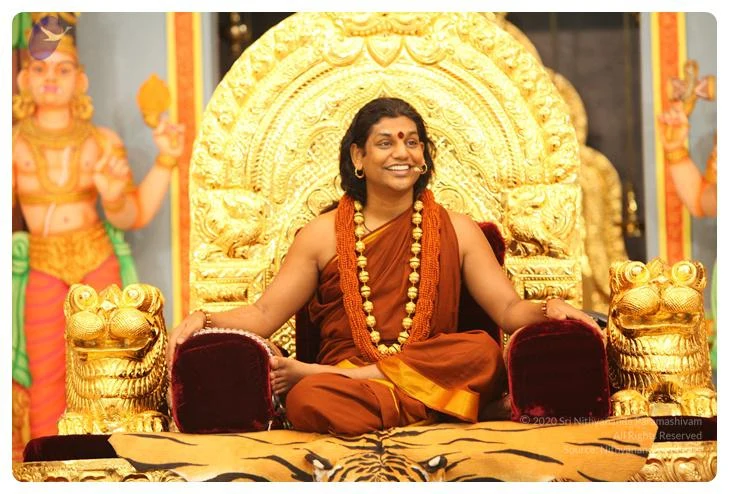
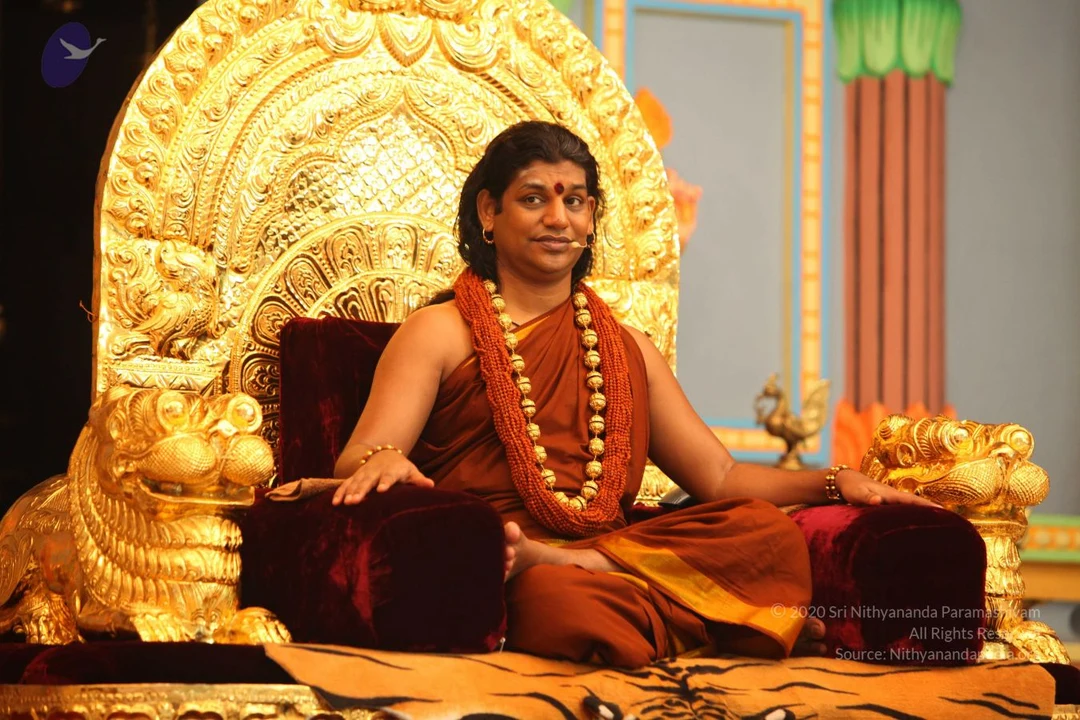
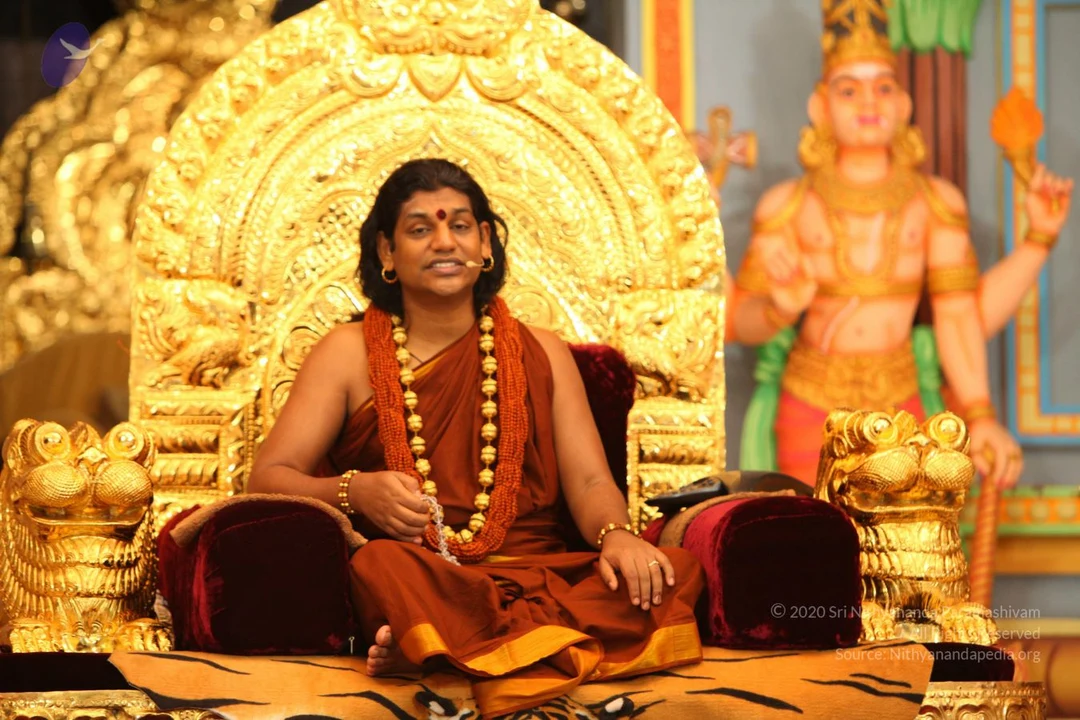
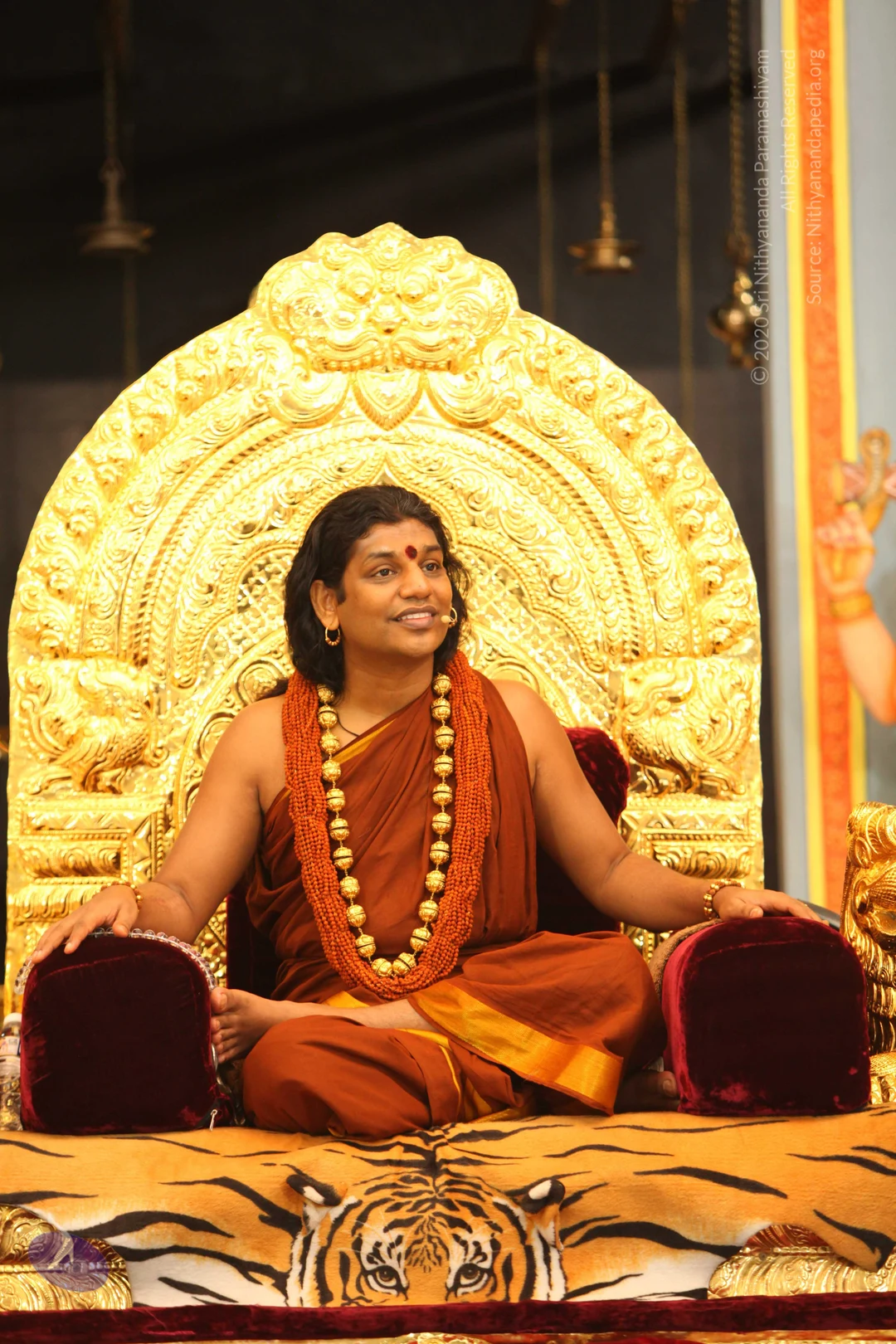
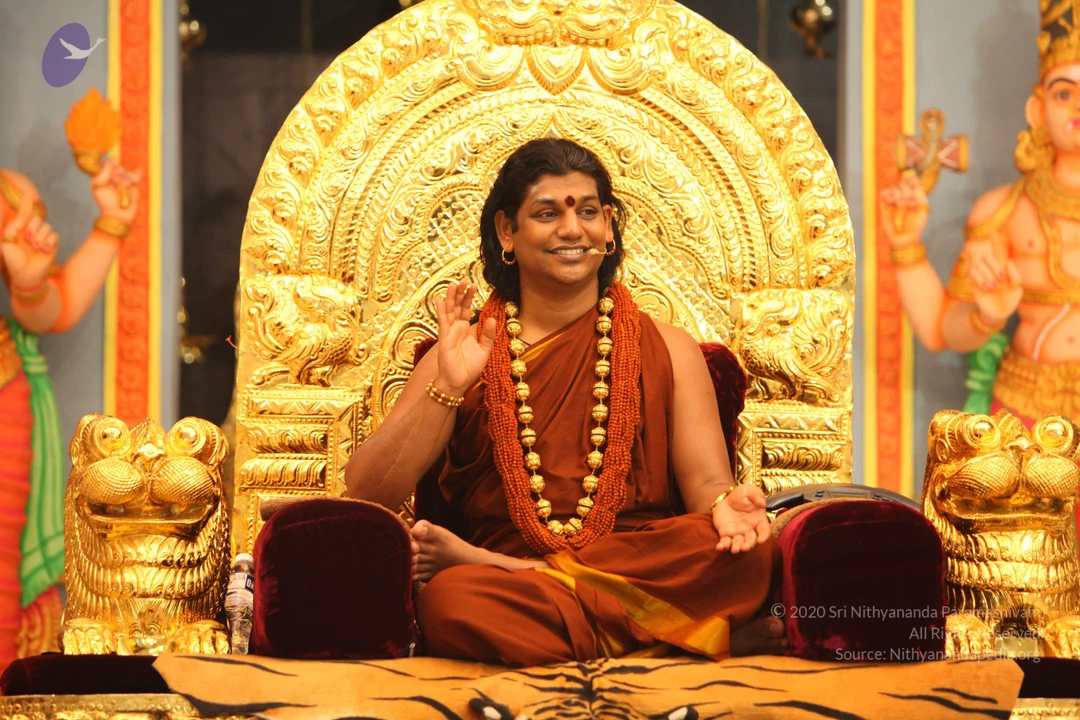
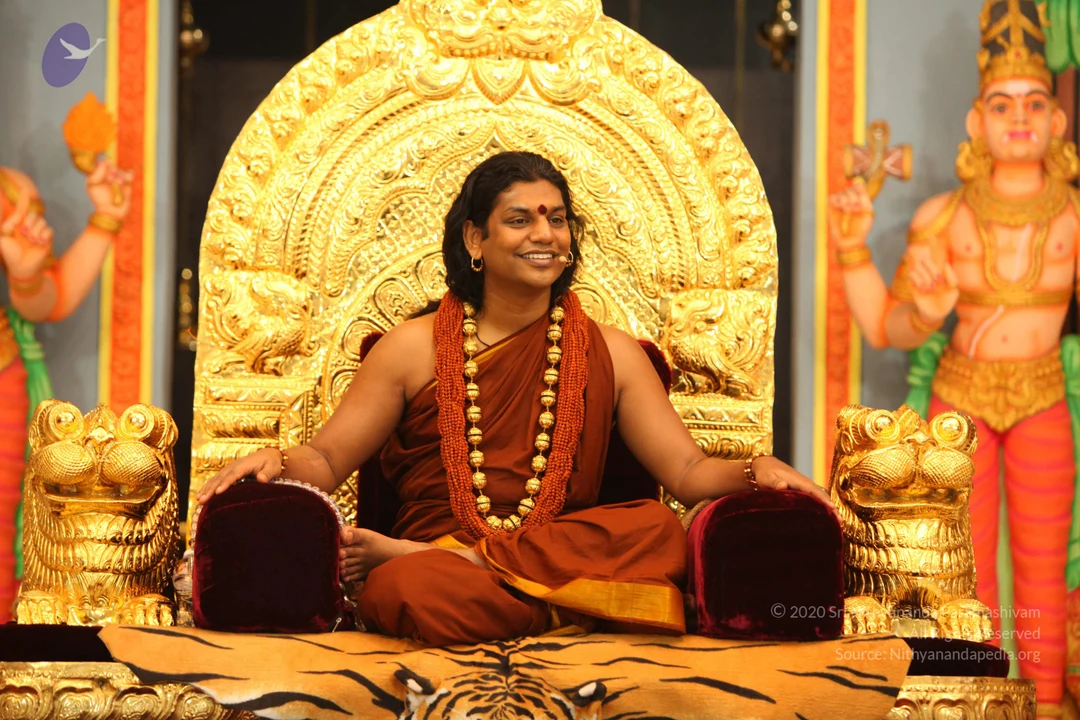
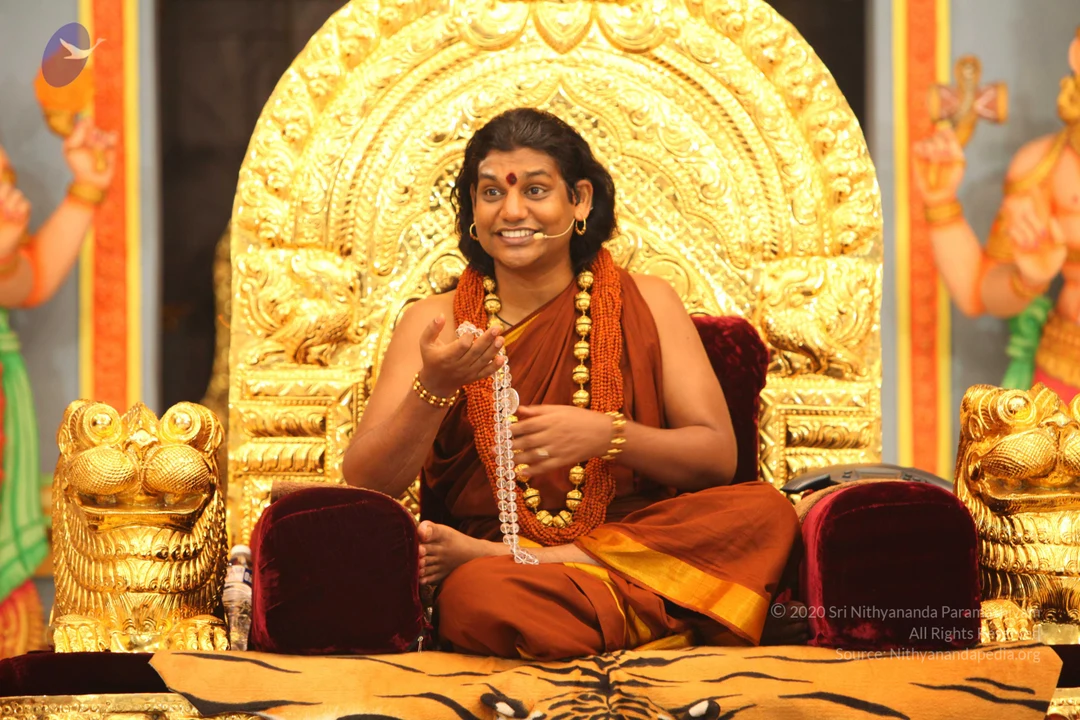
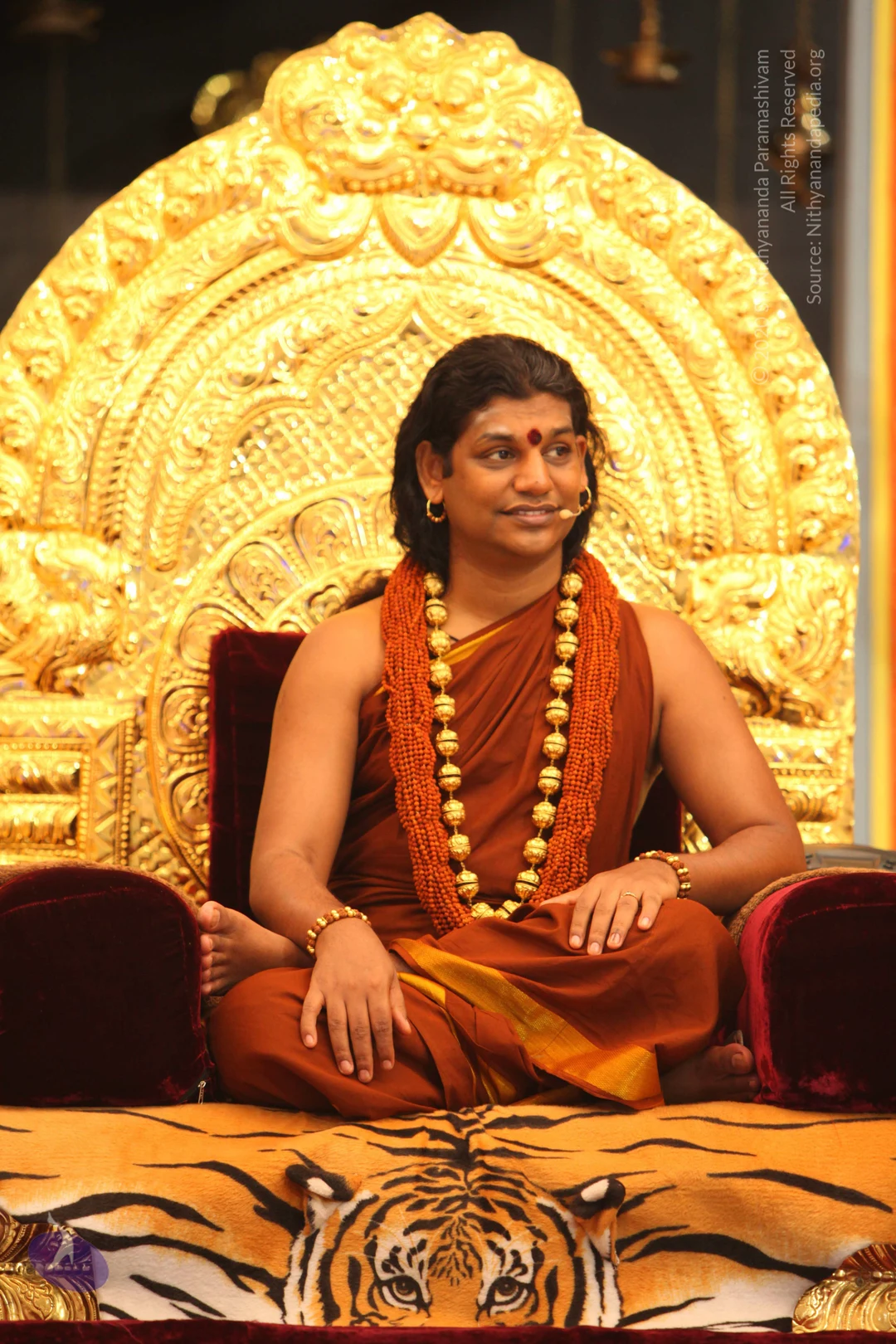
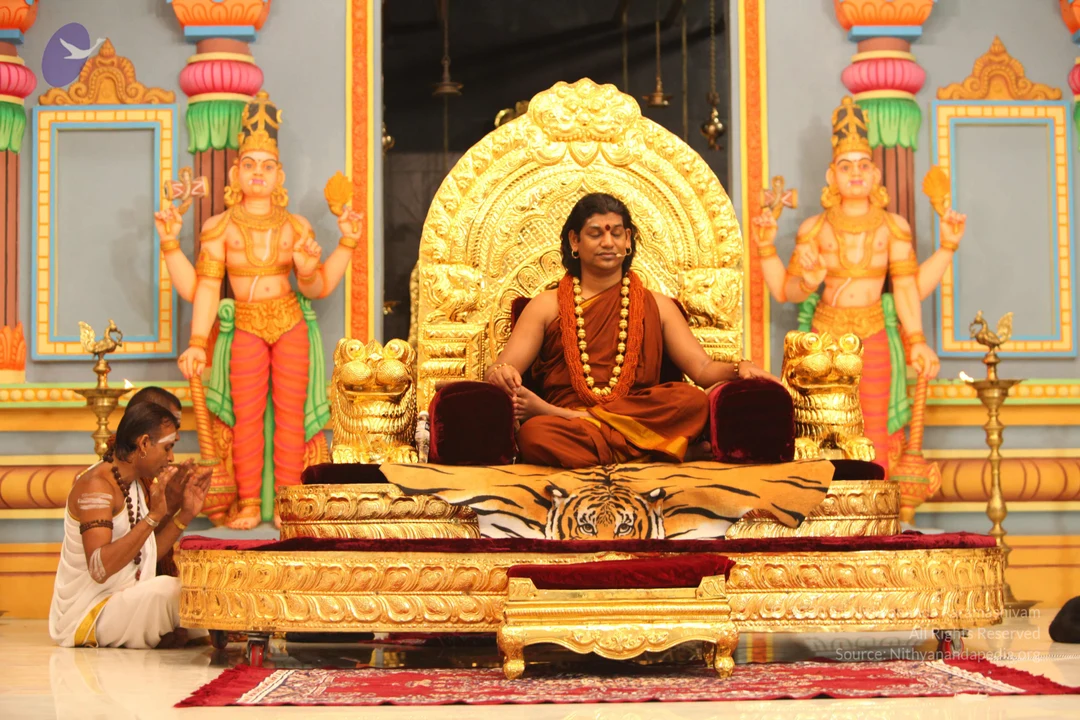
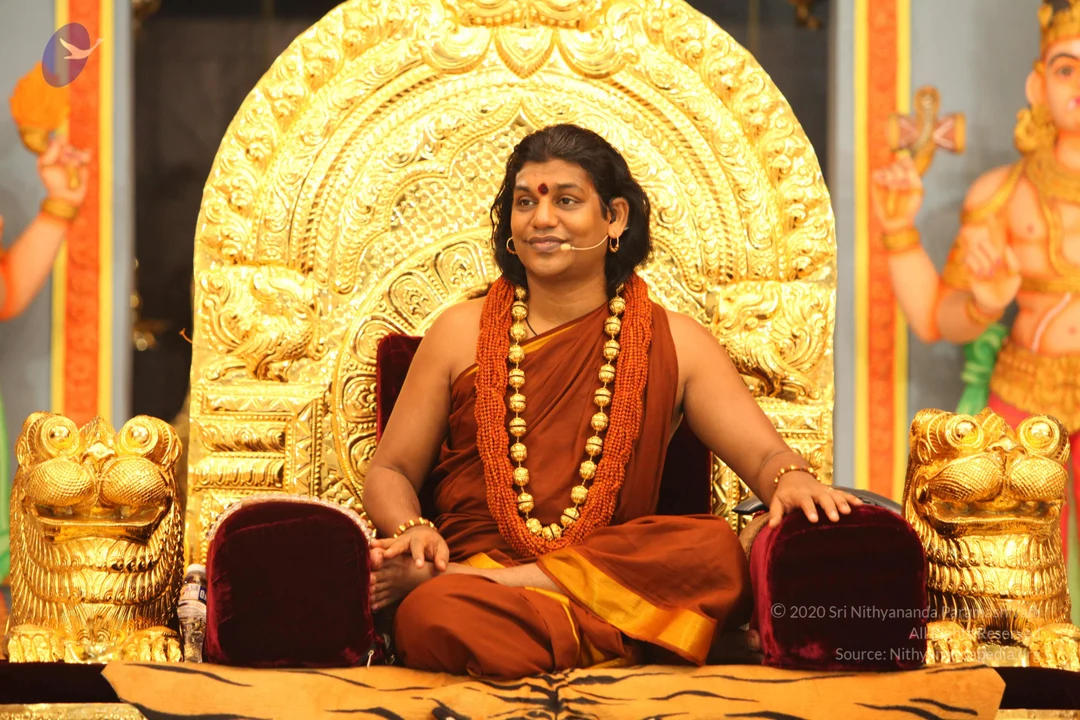
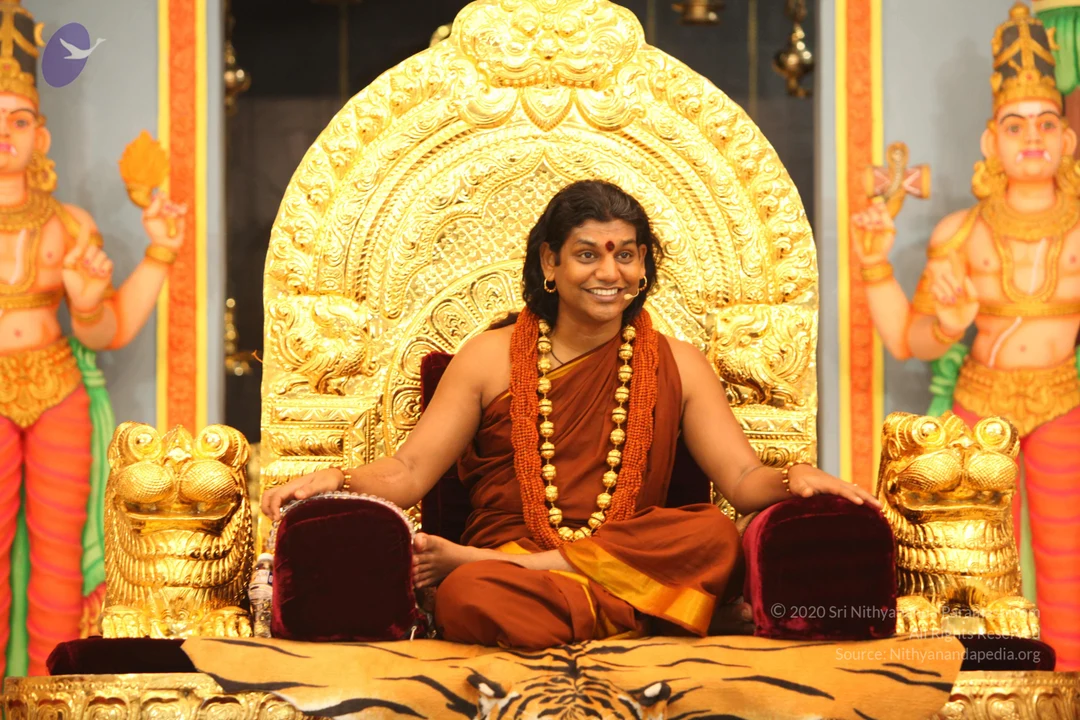
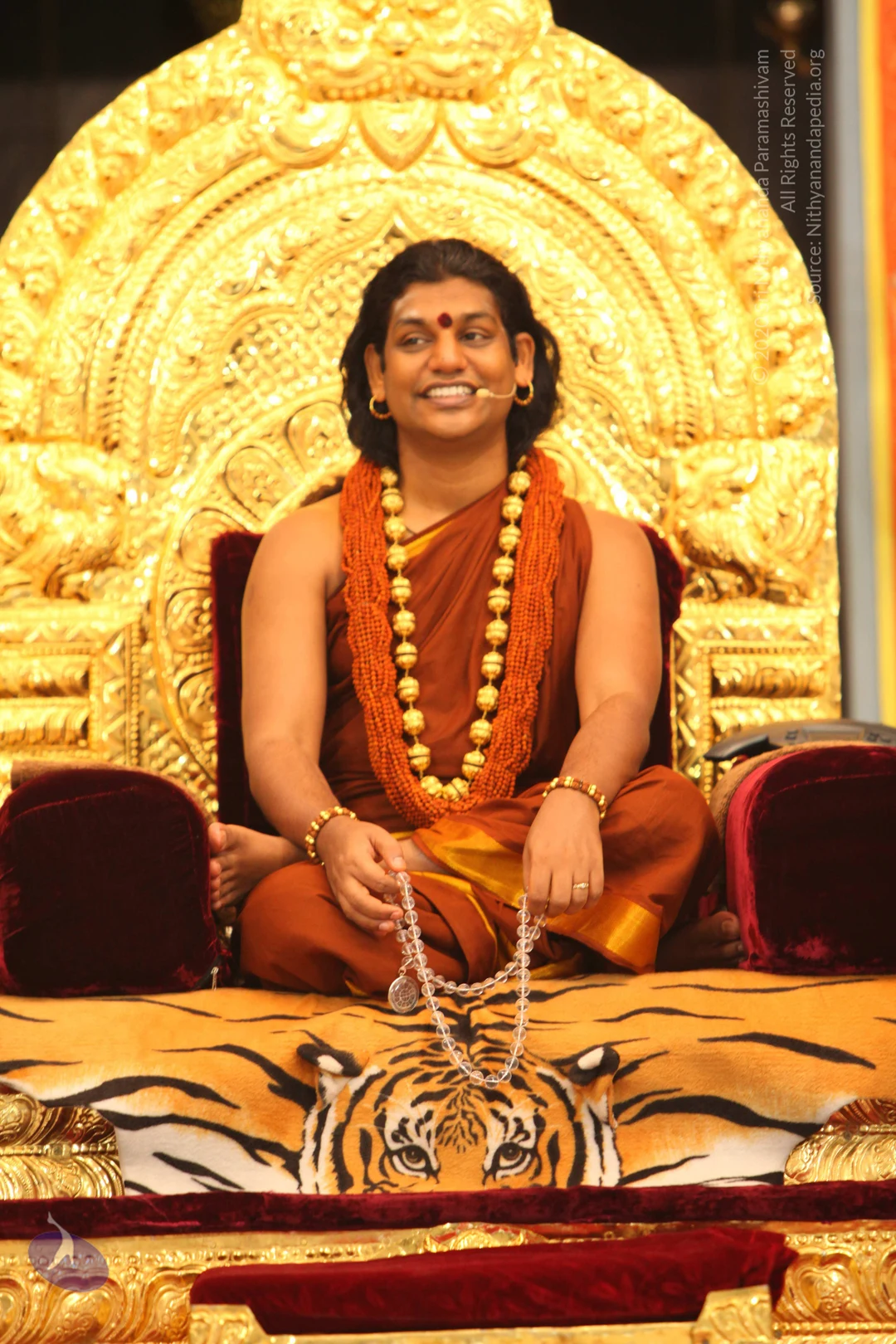
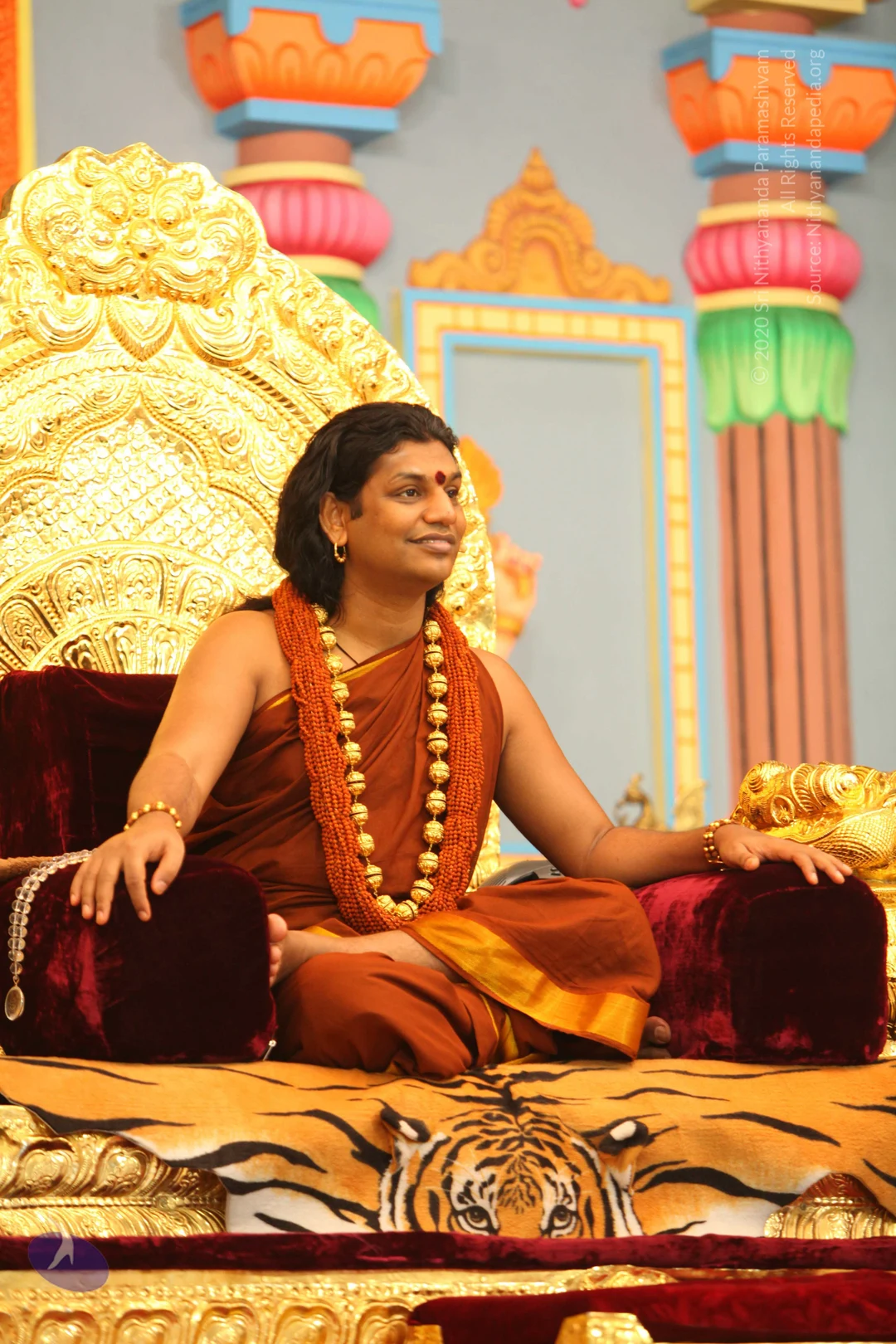
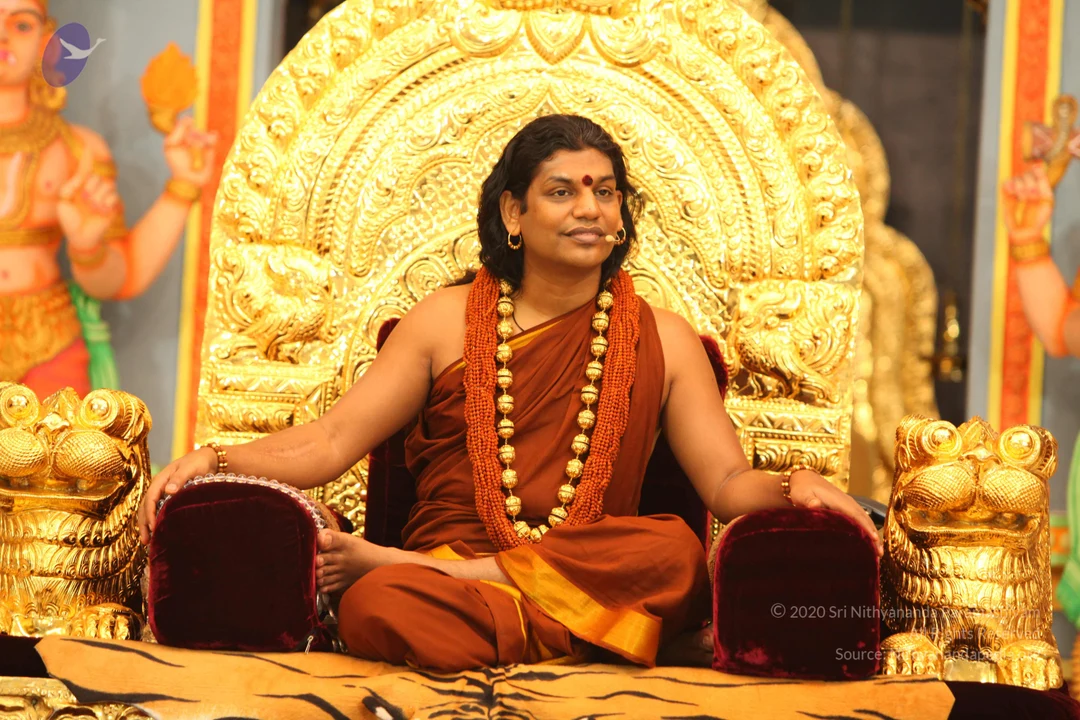
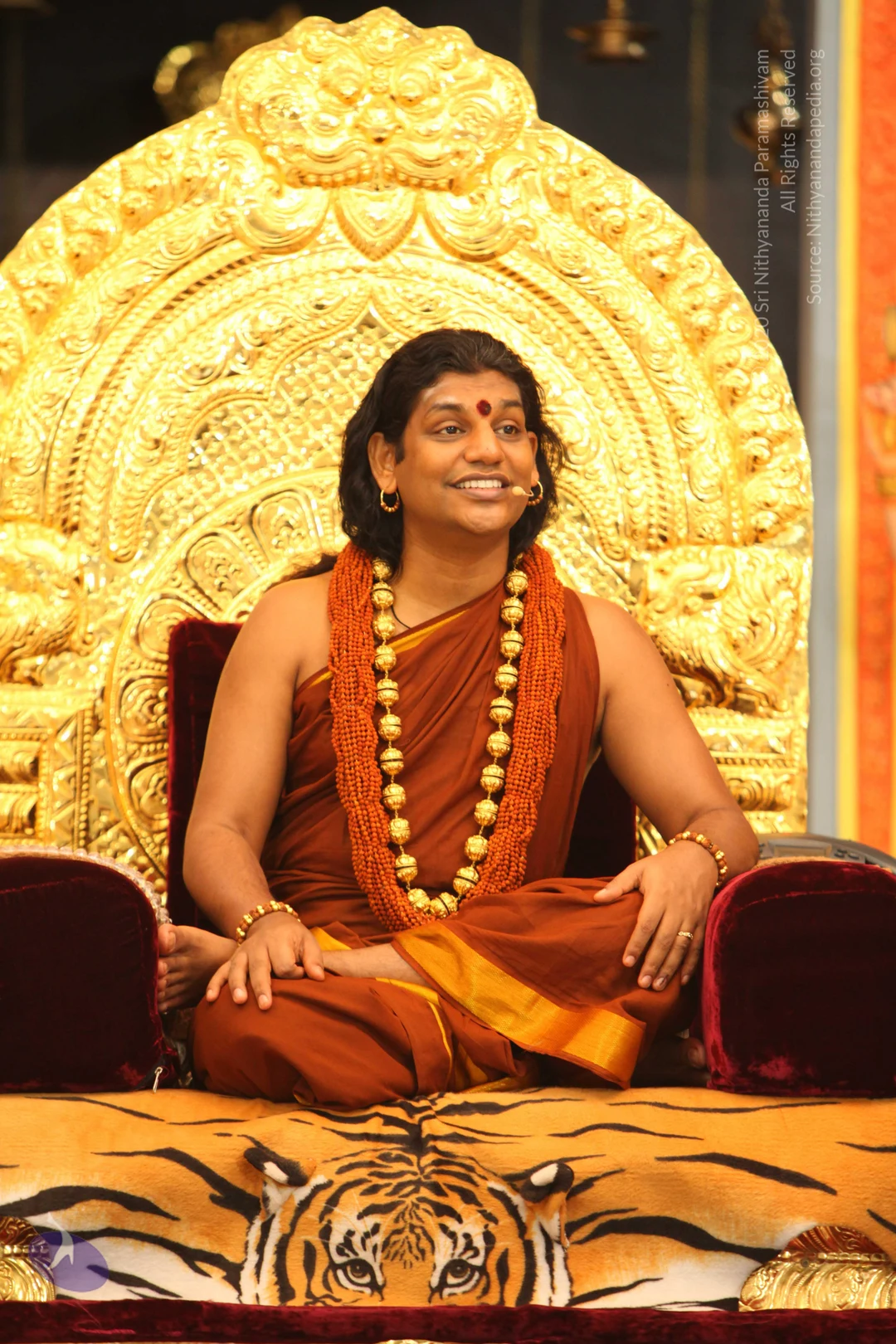
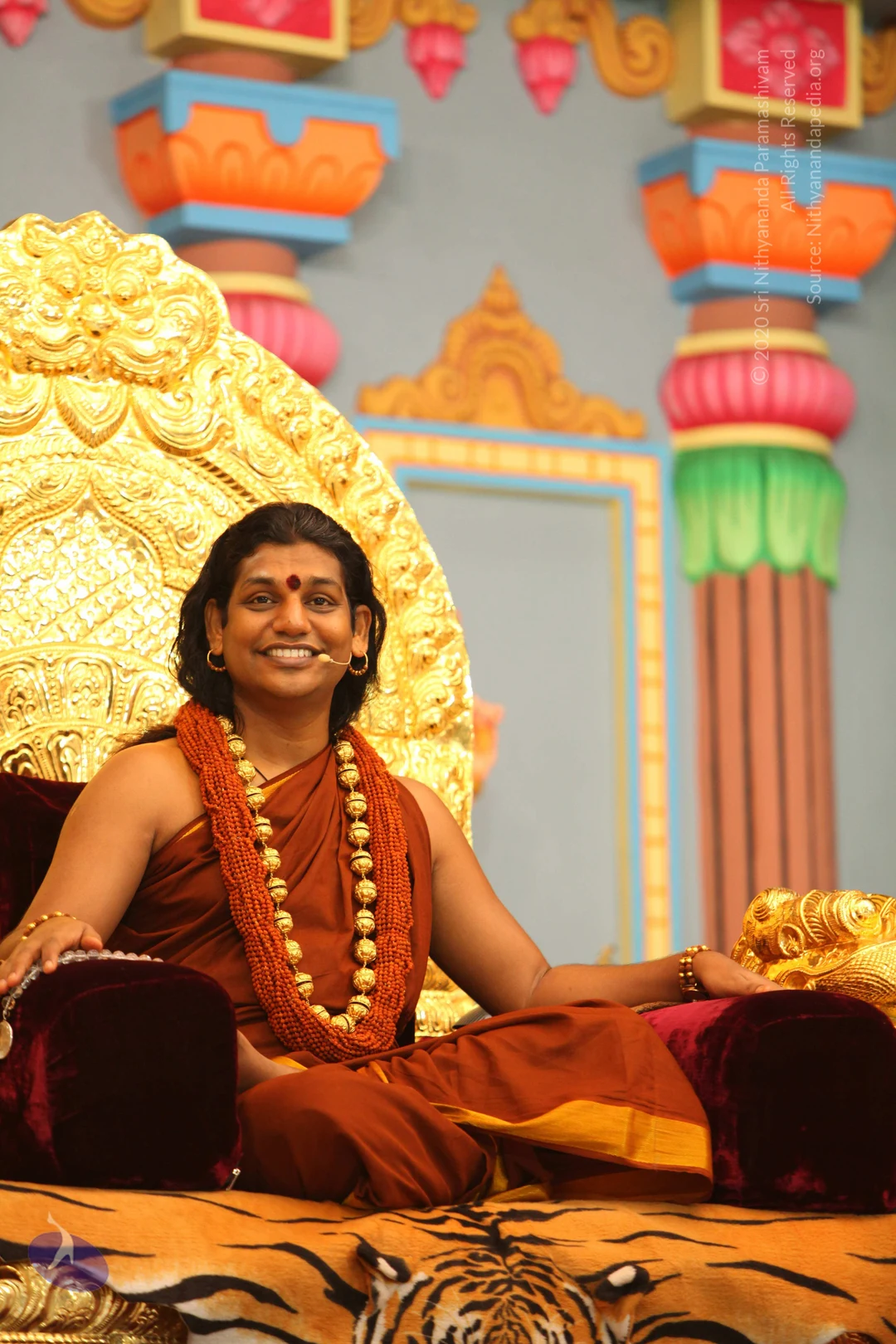
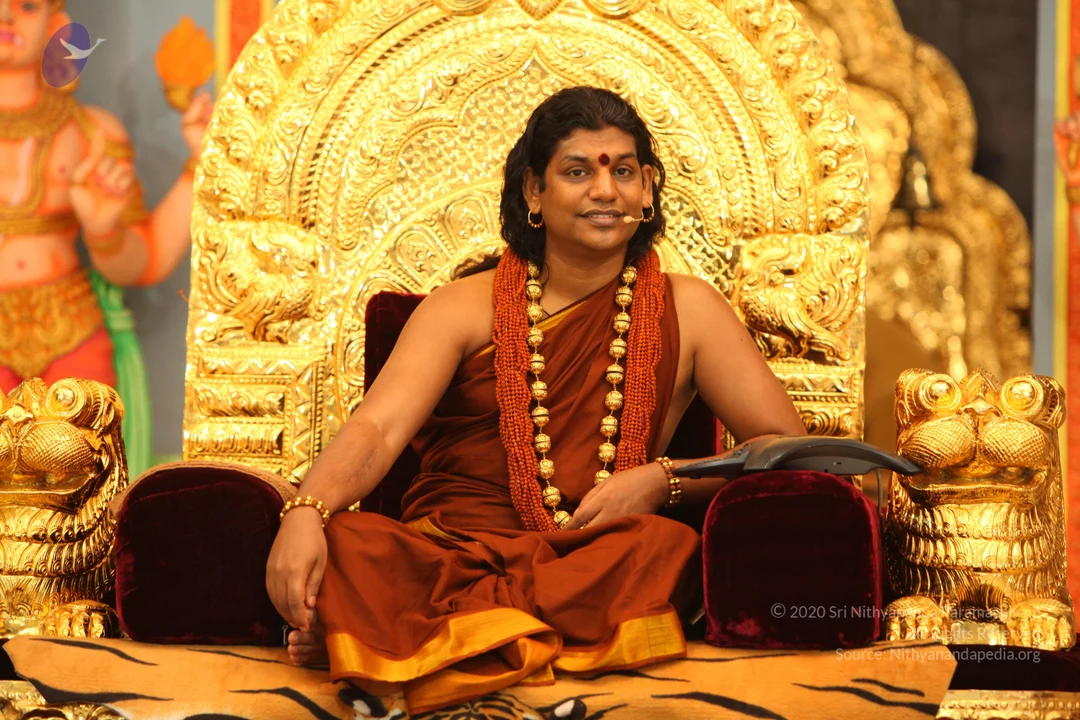
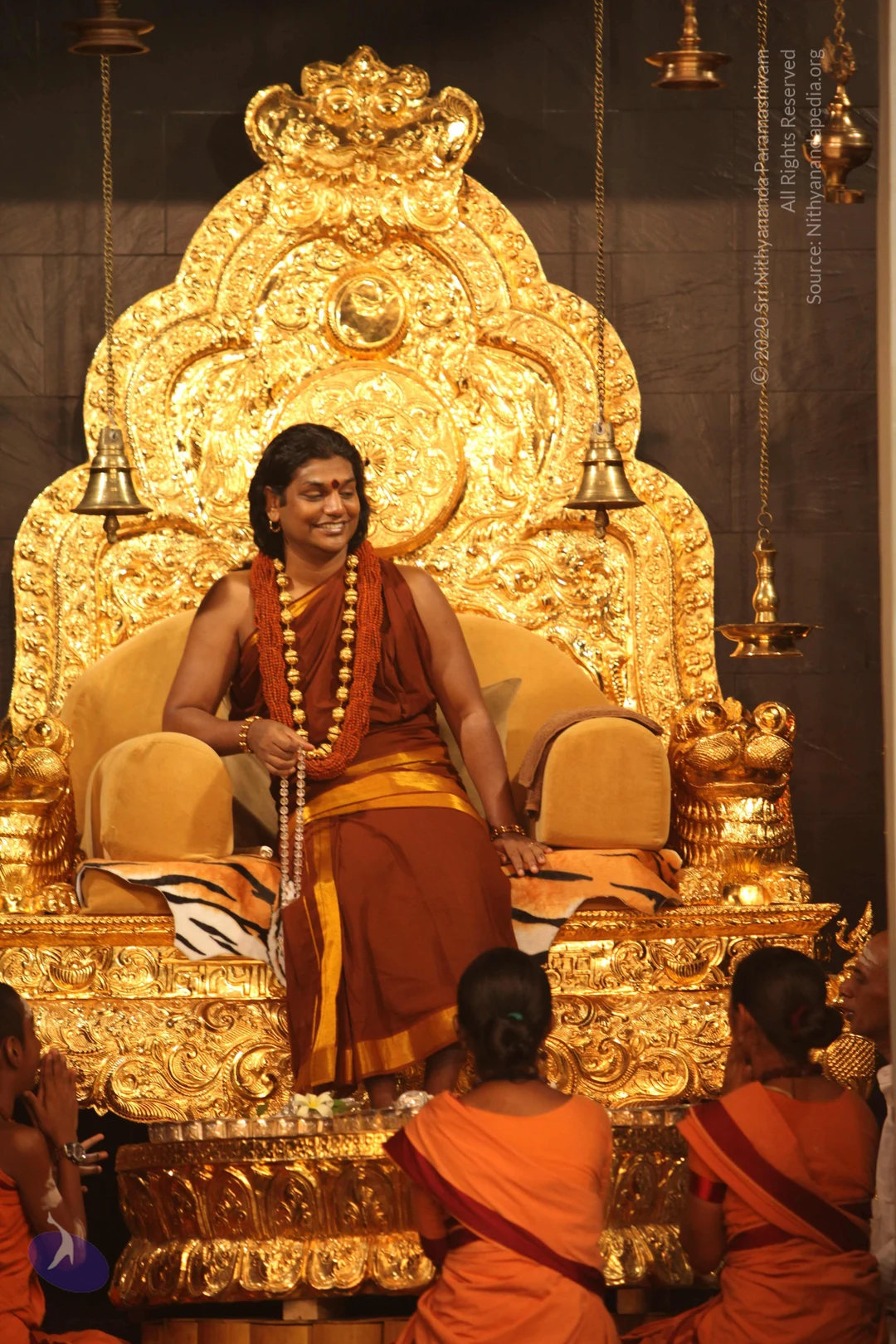
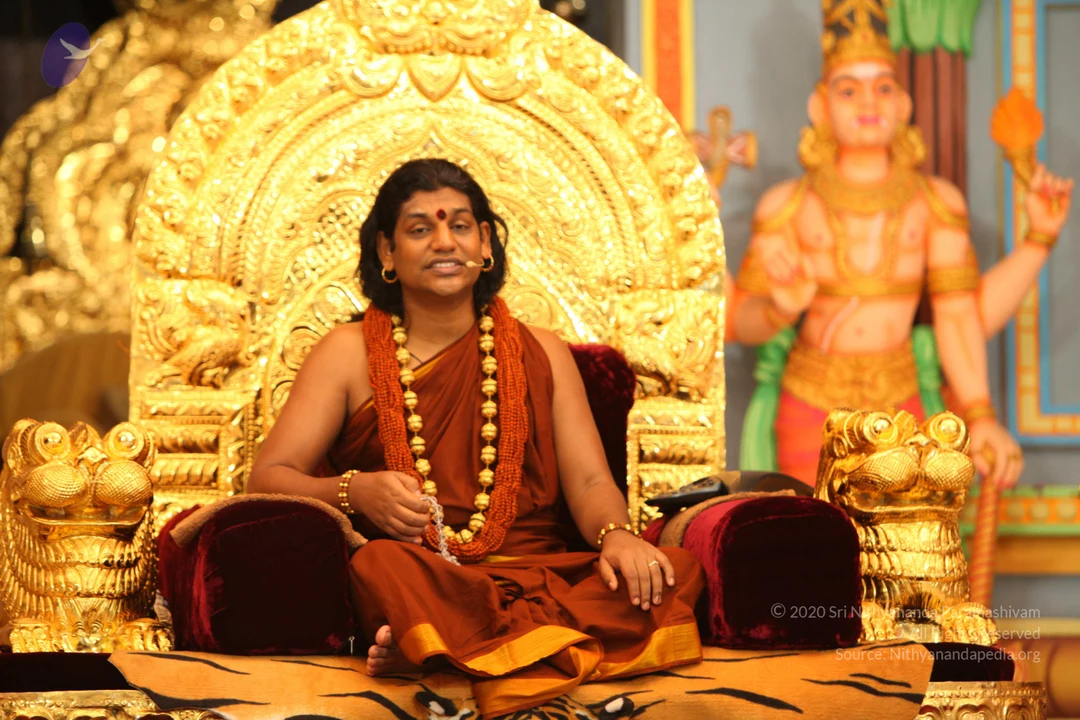
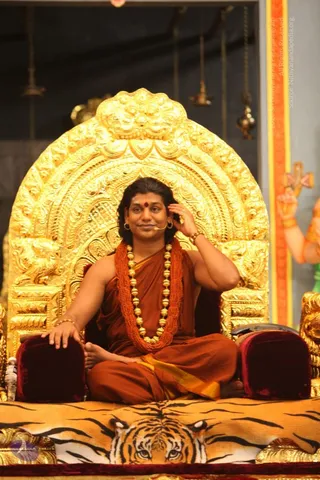
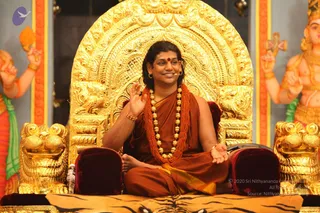
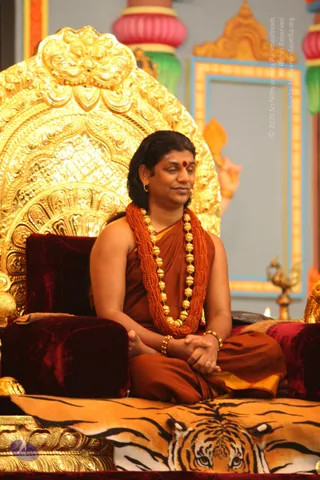
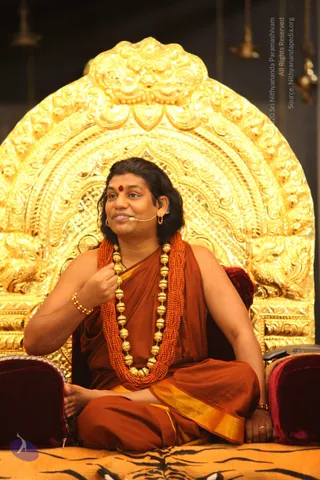
A seated man in an ornate golden throne with lion-carved armrests sits on a tiger-skin rug, eyes closed and smiling while raising his right hand in blessing. He wears a saffron-orange robe with a gold-bordered wrap, a red-orange beaded mala, a long gold bead necklace, gold bangles and a red bindi, with long dark hair. Behind the throne stand large colourful deity statues with orange and red bodies and raised hands.A seated man in a saffron-orange robe sits on an ornate golden throne carved with lion and floral motifs, with a golden lion sculpture to the left and a tiger-striped cloth beneath. He wears a rudraksha mala with gold beads, gold bangles and earrings, and a red bindi, and raises his right hand in a blessing gesture while smiling. The setting appears to be a satsang stage with a red and gold backdrop. Swamiji (probable): his long dark hair, ornate golden throne and saffron robes with rudraksha and gold necklaces match the cues for the page's named teacher, though the identification is appearance-based.A photograph of a man seated cross-legged on an ornate golden throne with lion-head armrests draped in maroon cushions, resting his hands on the armrests. He wears saffron-orange robes with a yellow border, a red-and-gold rudraksha mala and a ceremonial gold bead necklace, a red bindi on his forehead and gold earrings. A tiger-striped cloth covers the dais. Behind him, gilded arches and a colourful painted deity figure with gold jewellery are visible. Swamiji (probable): the saffron robes, long swept-back hair, rudraksha mala and gold necklace on the throne match the candidate's cues.A seated man in a long-haired, shaved-free appearance sits cross-legged on a golden ornate throne with an arched gilded back carved with scrollwork and lion motifs. He wears saffron-orange robes, a thick orange-red rudraksha-style mala and a ceremonial gold bead necklace, with a red bindi on his forehead and a small headset microphone. His right hand rests at his ear while his left rests on a red velvet armrest. The throne is draped with a tiger-striped cloth. Behind him hang brass oil lamps on chains, and a painted deity figure with raised hands is visible at the right edge. A printed caption on the image reads as a source credit, not a name for the seated figure.A man seated cross-legged on an ornate gold throne with carved lion-head armrests and a tiger-skin covered dais, speaking with one hand raised in a gesture of teaching. He wears a saffron-orange robe, a red-orange beaded rudraksha mala and a heavy ceremonial gold bead necklace, with a red dot on his forehead and a small clip-on microphone. Gold-painted deity figures with multiple arms flank the throne on both sides. Swamiji (probable) is shown in the in-person satsang setting, with his long swept-back hair, saffron clothing and rudraksha mala as the qualifying cues, seated as the teacher on the dais.A seated man in an ornate golden throne with a large gilded arched backrest and dark red velvet armrests sits cross-legged on a tiger-striped rug. He wears rust-orange robes with a gold-bordered wrap, multiple strands of orange rudraksha beads, and heavy gold bead necklaces, with a red bindi on his forehead, gold hoop earrings, and a headset microphone. He smiles and looks to the side as if speaking.

Inner-Awakening-Session-2

38 photosSource gallery
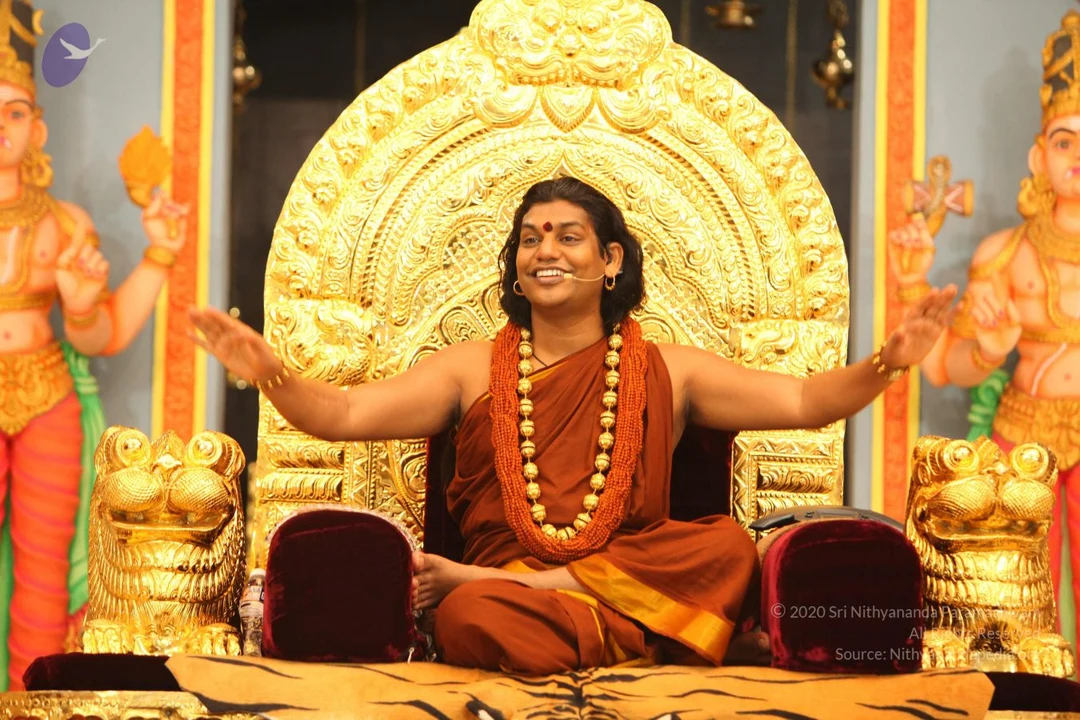
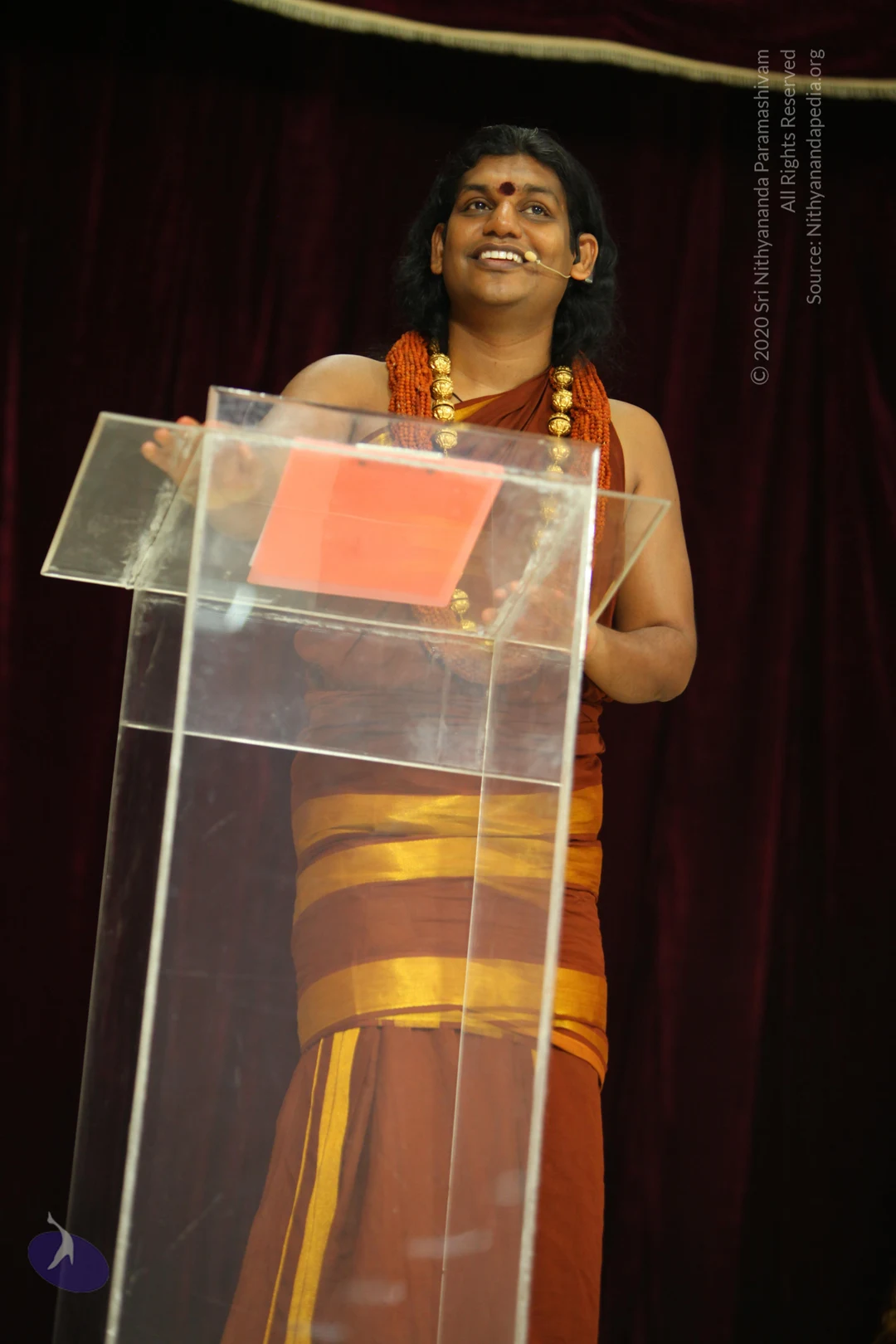
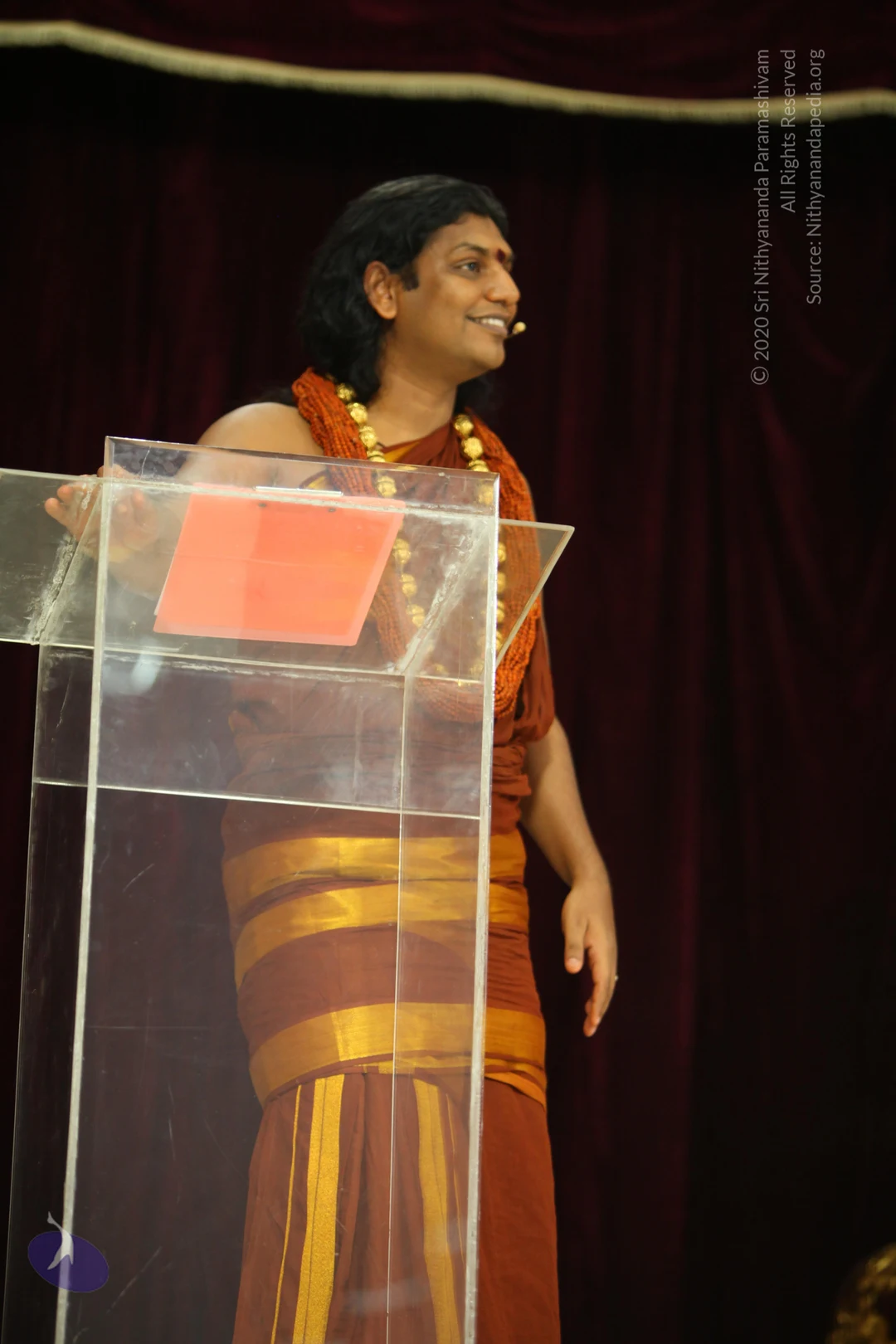
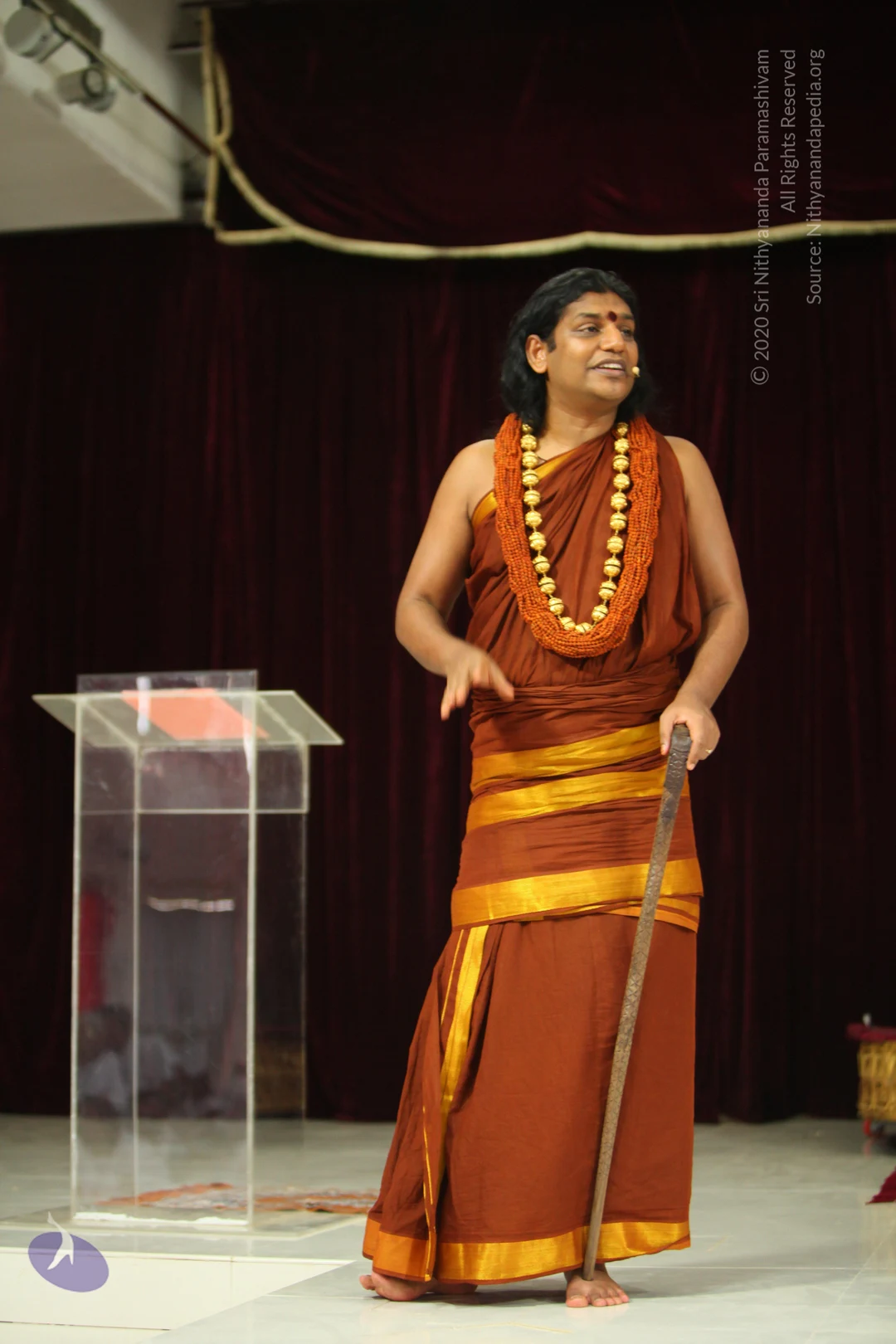
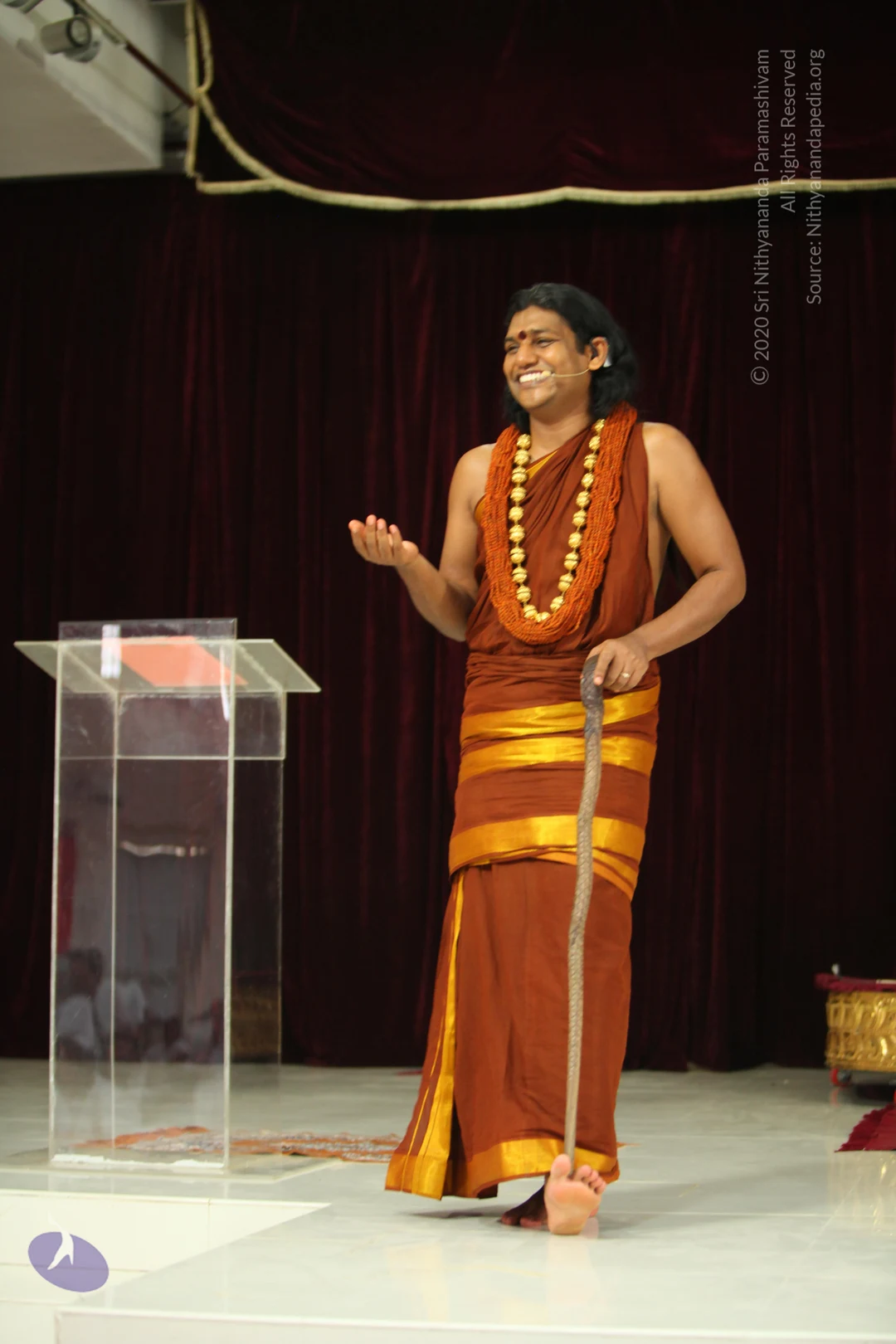
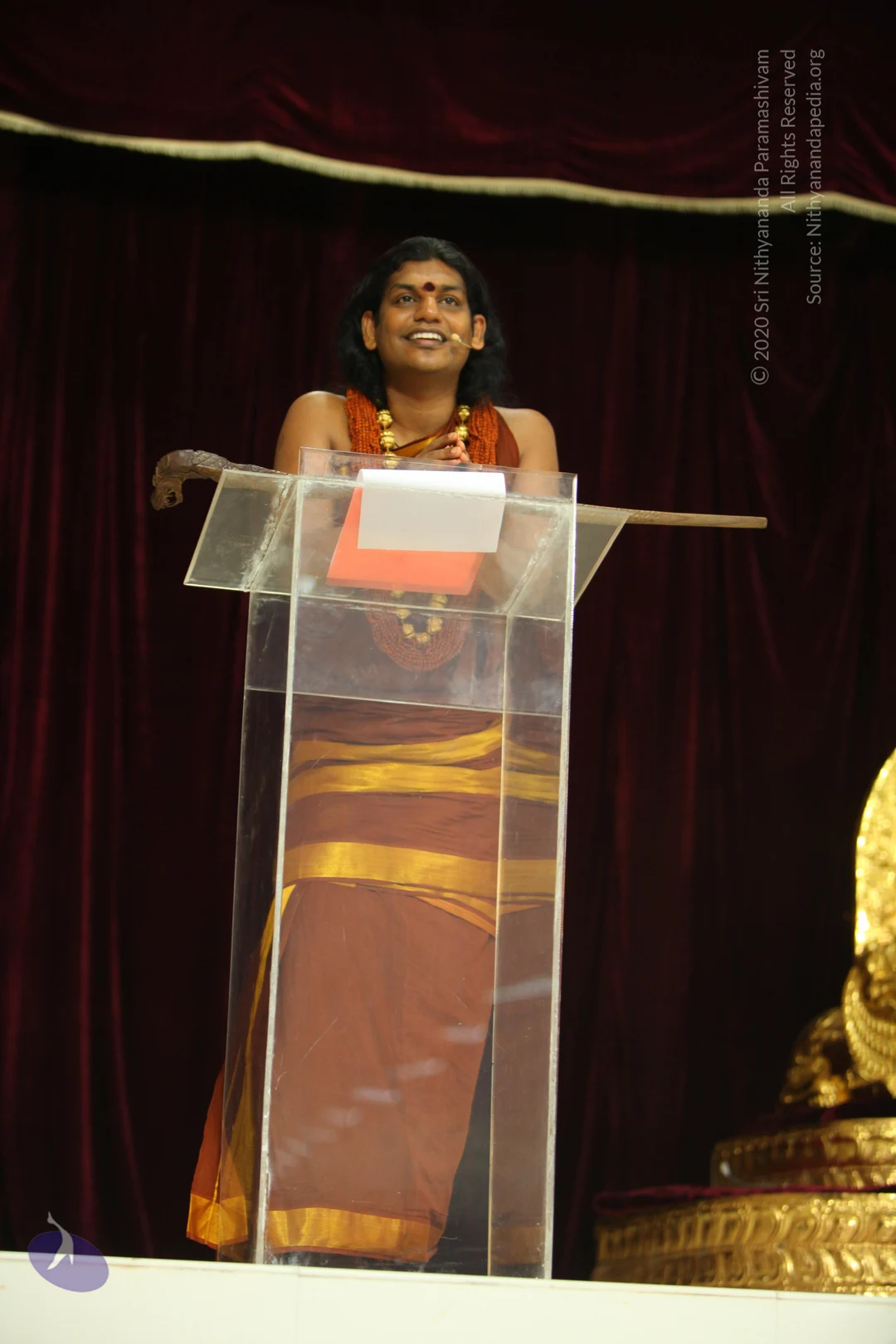
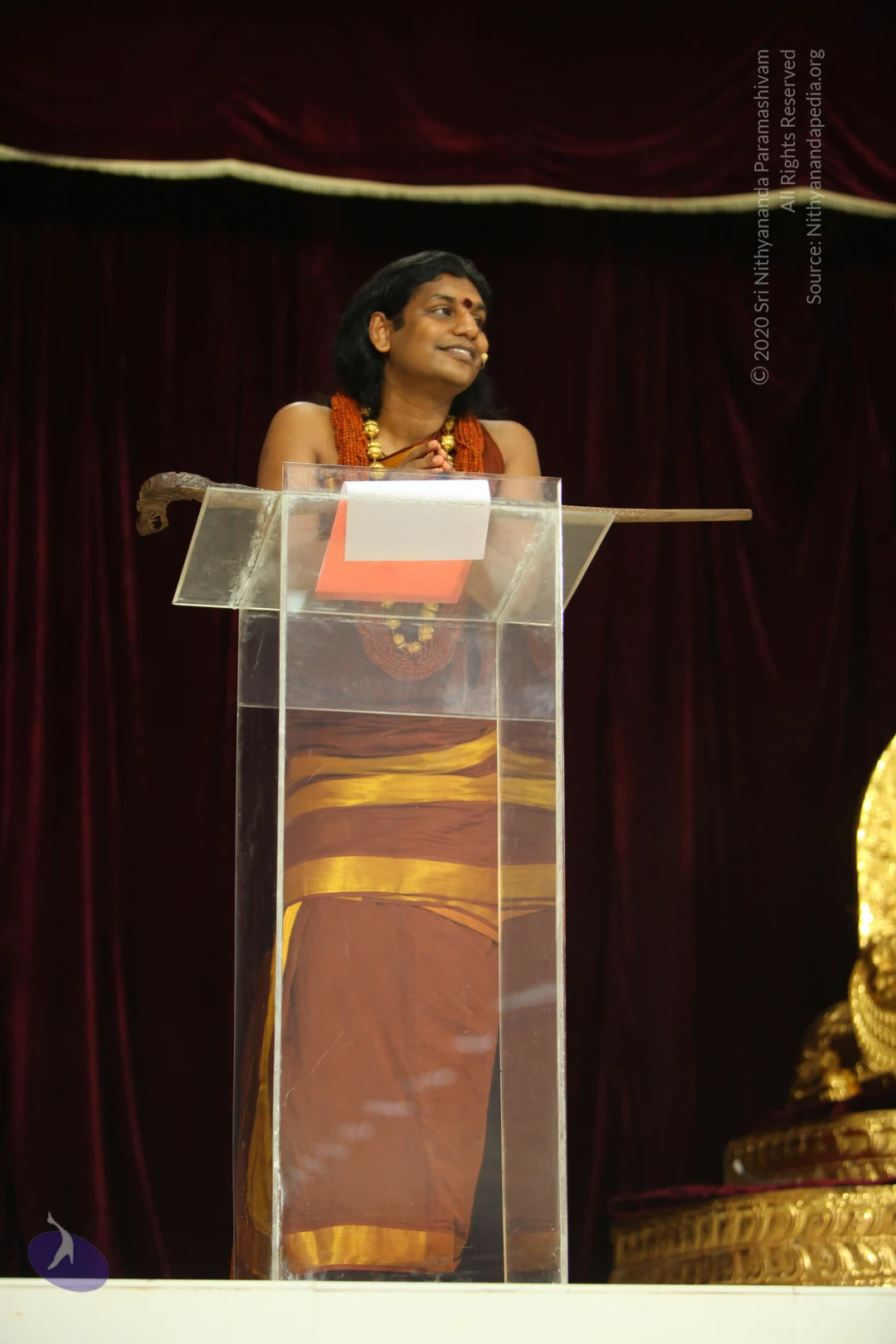
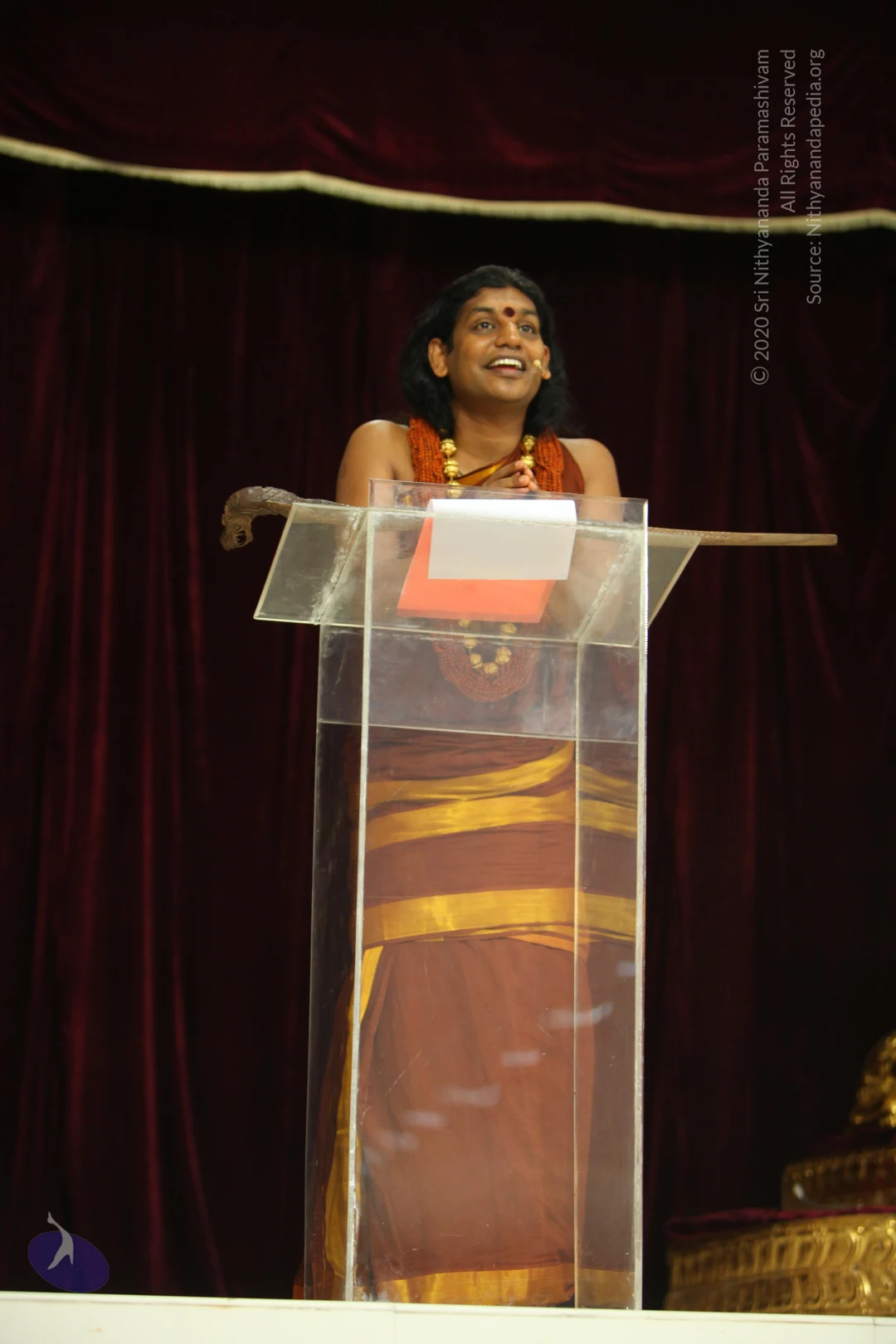
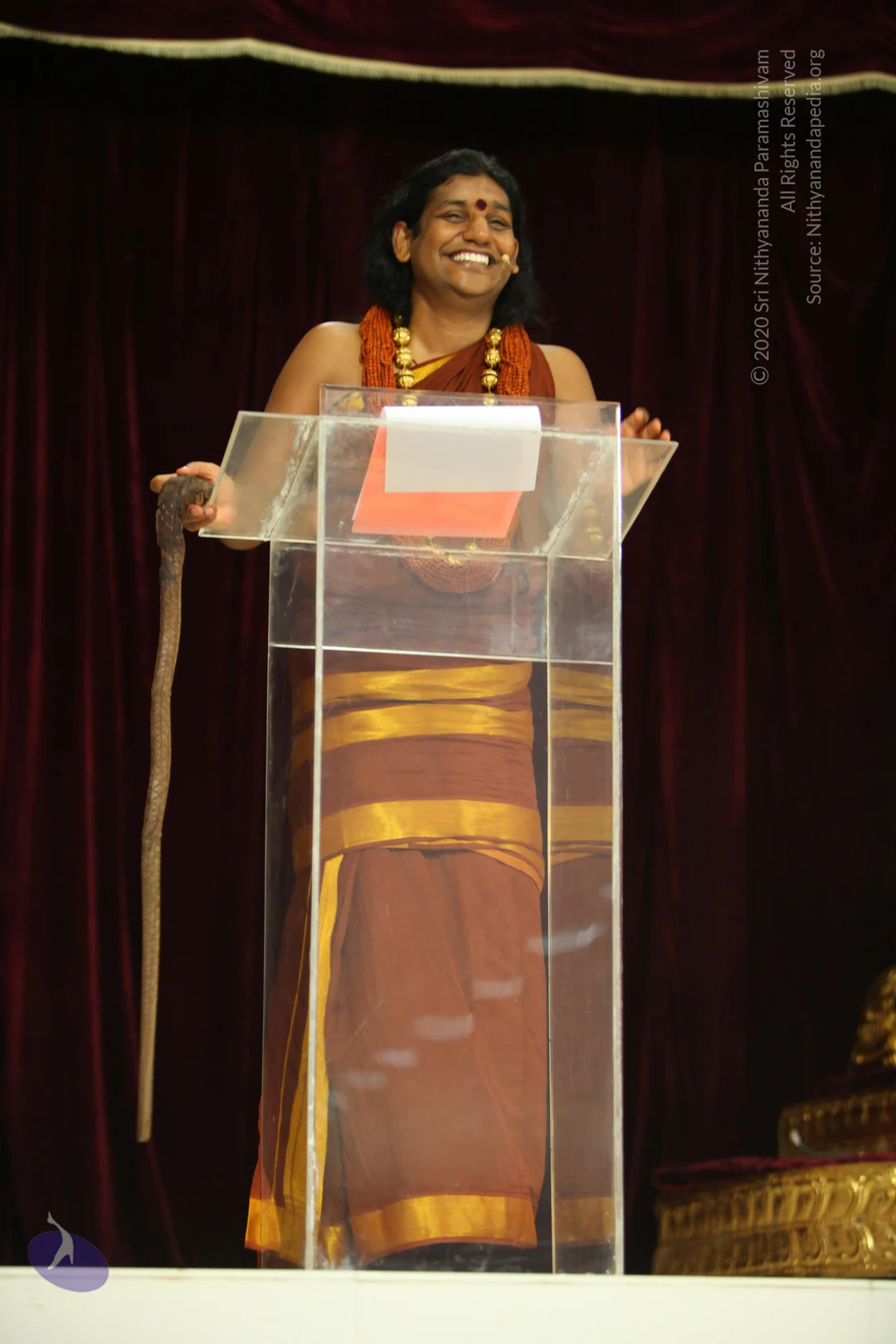
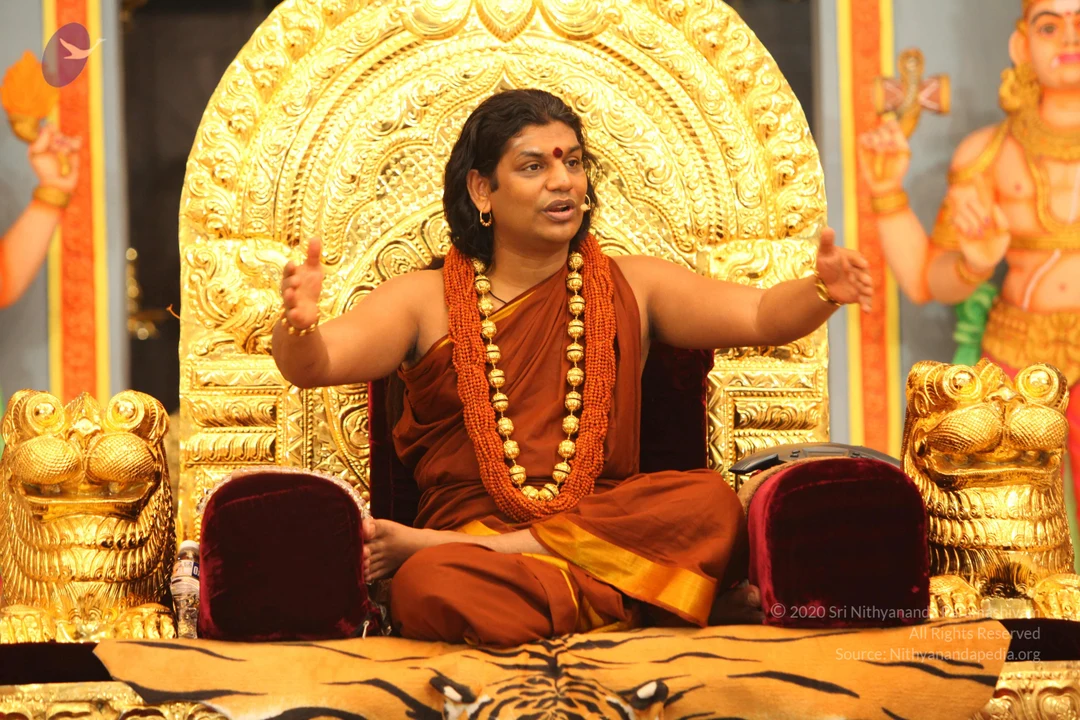
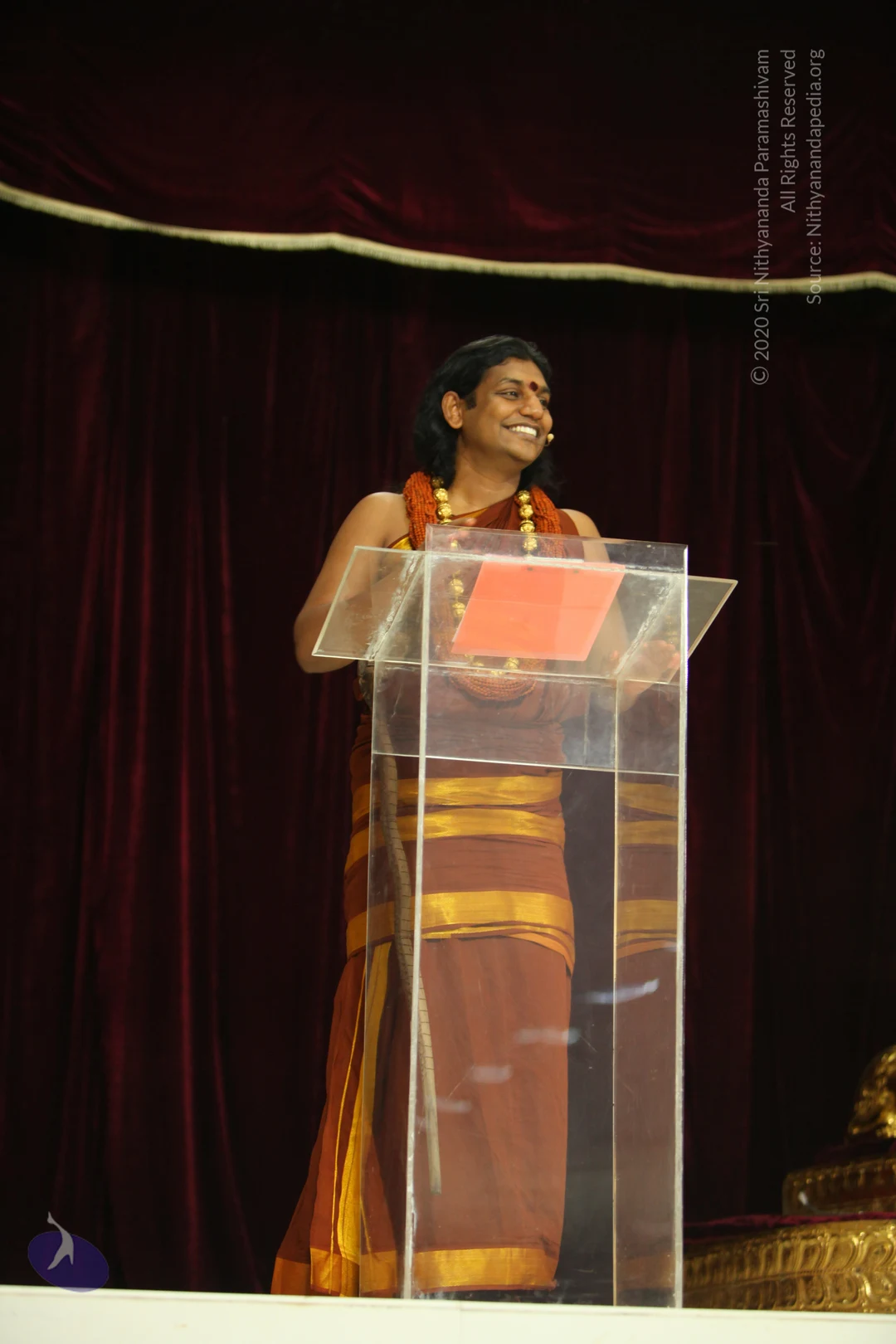
A seated man speaks in front of a deep red velvet backdrop. He sits on an ornate gold throne with a large arched back carved with floral and scroll patterns and lion-head armrests, draped with orange tiger-striped and burgundy velvet cushions. He wears a rust-orange robe with a gold-yellow edge, a long rudraksha mala with ceremonial gold beads, and a small red bindi, and gestures with both hands while smiling; a small headset microphone is visible. The man is an appearance-based probable Swamiji candidate: long swept-back dark hair, rudraksha mala and gold beads, and saffron-orange clothing, seated on a throne during a discourse.A smiling man with swept-back dark hair and a red bindi stands behind a clear acrylic lectern on a stage draped in deep maroon velvet curtains with gold fringe. He wears a rust-brown garment with a wide gold border, a red-orange rudraksha mala and a gold ceremonial necklace, and his bare upper body is partly visible. A small red sheet rests on the lectern, and a headset microphone is clipped near his face. The pose suggests a satsang discourse. Only one person is visible.A man with long dark hair stands bare-shouldered behind a clear acrylic lectern on a stage with dark red velvet drapes, speaking and smiling upward. He wears a rust-brown dhoti-style cloth with gold-bordered panels, a multi-strand red rudraksha-style bead mala and gold ceremonial beads, and a small red bindi on his forehead, with a headset microphone visible near his ear. A red card sits on the lectern. A gilded edge of a seat or throne appears at the lower right. Appearance-based candidate: Swamiji (probable), shown in person giving a satsang discourse, with the qualifying cues of long hair, rudraksha mala, ornate gold beads and ochre clothing.A man stands on a stage beside a clear acrylic lectern, smiling and gesturing with one open hand while the other rests on the lectern. He wears a rust-brown draped robe with broad gold borders, a red-orange beaded mala with large gold beads around his neck, and a small red dot on his forehead. Behind him, a gold ornate throne with a dark velvet seat and a tiger-striped cloth stands before deep maroon velvet drapes. Swamiji (probable): his long swept-back hair, ceremonial gold-bead necklace and saffron-orange robe match the cues for the figure, so the speaker is identified as Swamiji with appearance-based confidence, giving a satsang discourse setting.A man in a maroon-brown dhoti-style robe with gold-yellow borders stands at a clear acrylic lectern on a stage in front of deep maroon velvet drapery. He wears a multi-strand red rudraksha mala with gold beads around his neck and a red bindi on his forehead, with long swept-back dark hair, and gestures with his open hands while smiling. Behind him is an ornate gold throne with a dark velvet seat and a tiger-striped cushion. No other people are visible.A man with long swept-back dark hair and a red bindi stands at a clear acrylic lectern, speaking into a headset microphone. He wears a rust-brown garment with a gold-bordered wrap, and a thick rust-red rudraksha mala with gold beads hangs around his neck. He looks upward with a smile, hands resting on the lectern beside a red card. A dark maroon velvet curtain forms the backdrop. Swamiji (probable), speaking at a satsang discourse, is identified by his long hair, rudraksha mala, gold beads and saffron-toned clothing.

Panch-Kriya

5 photosSource gallery
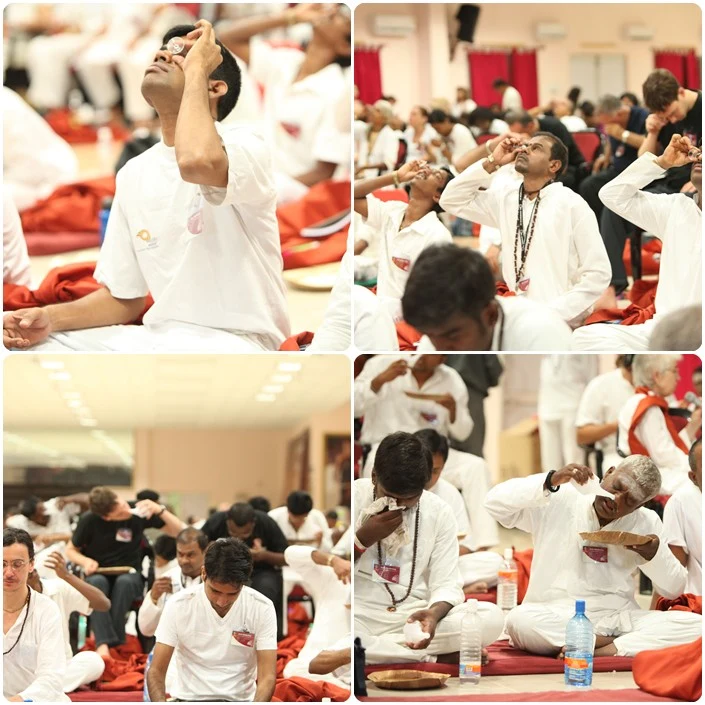
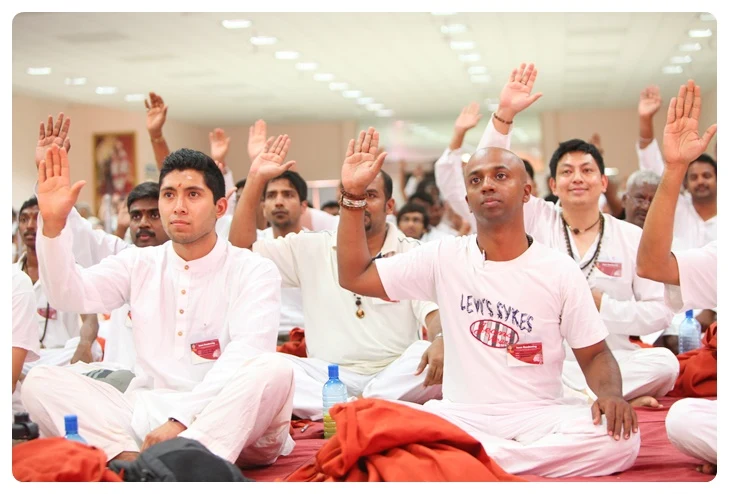
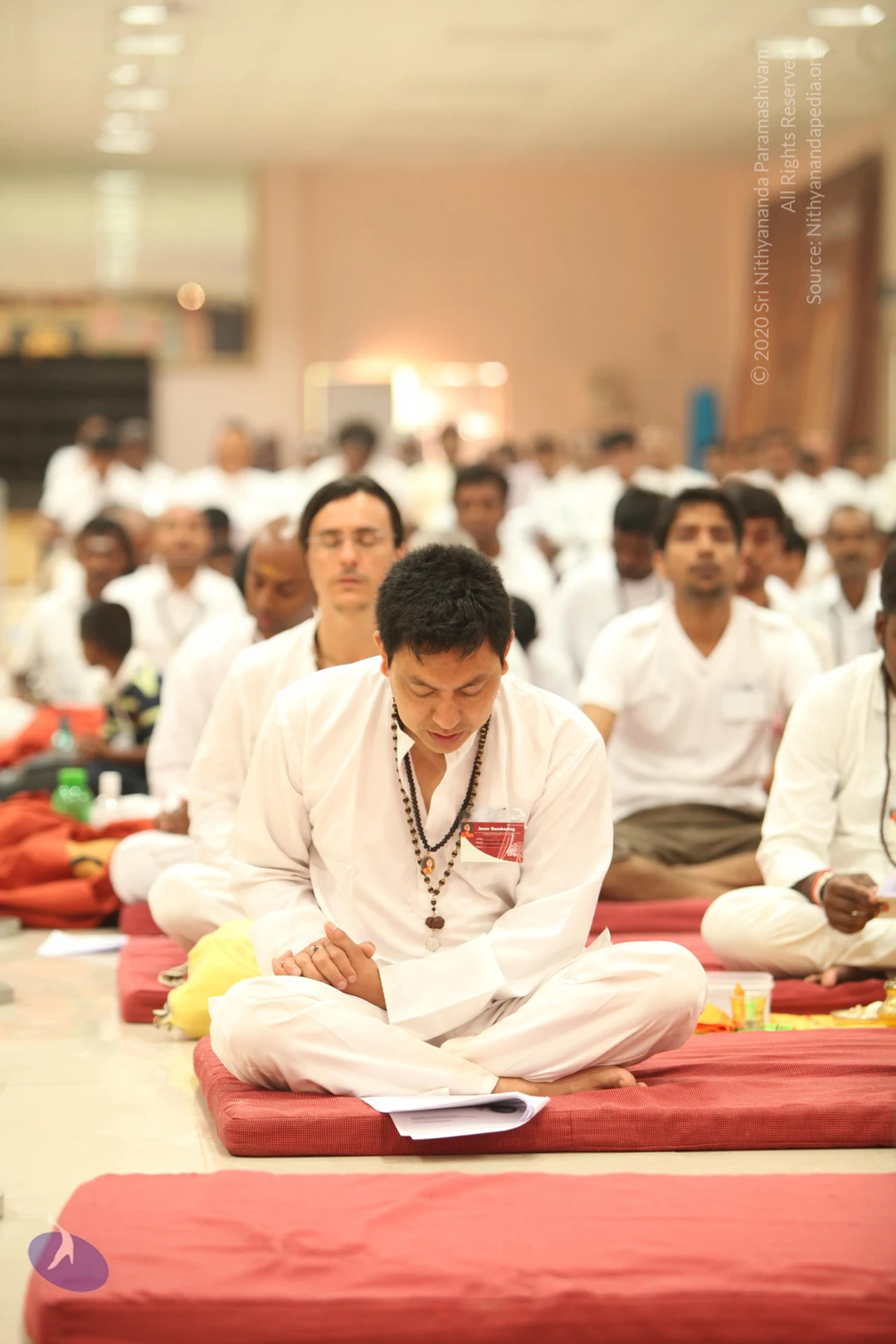
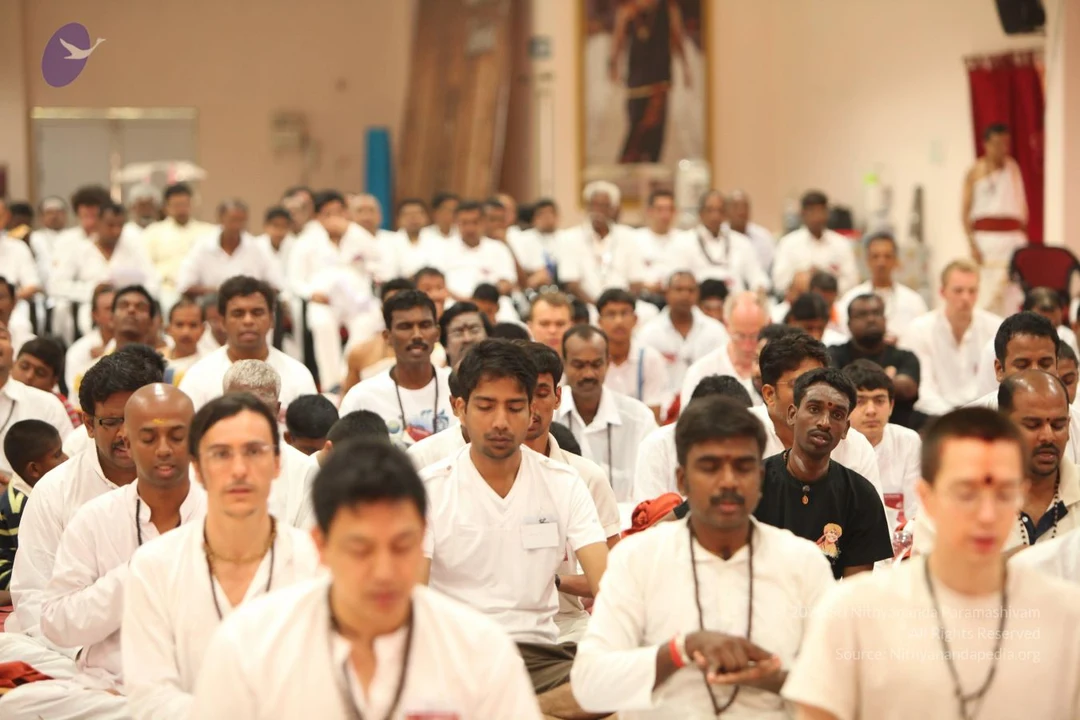
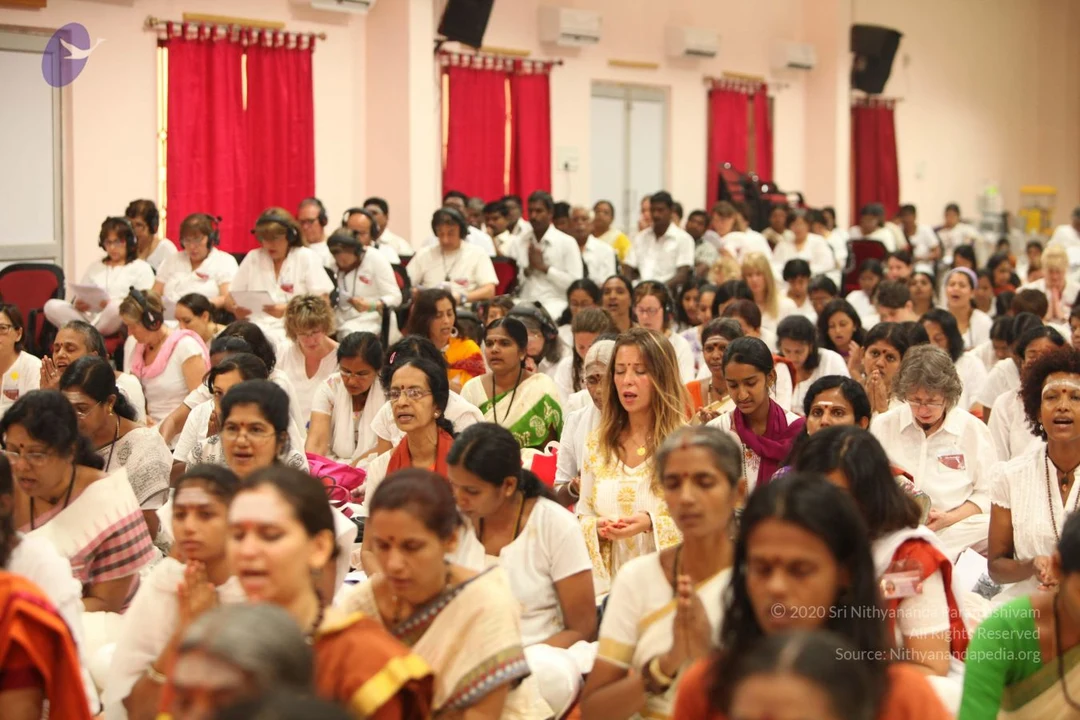
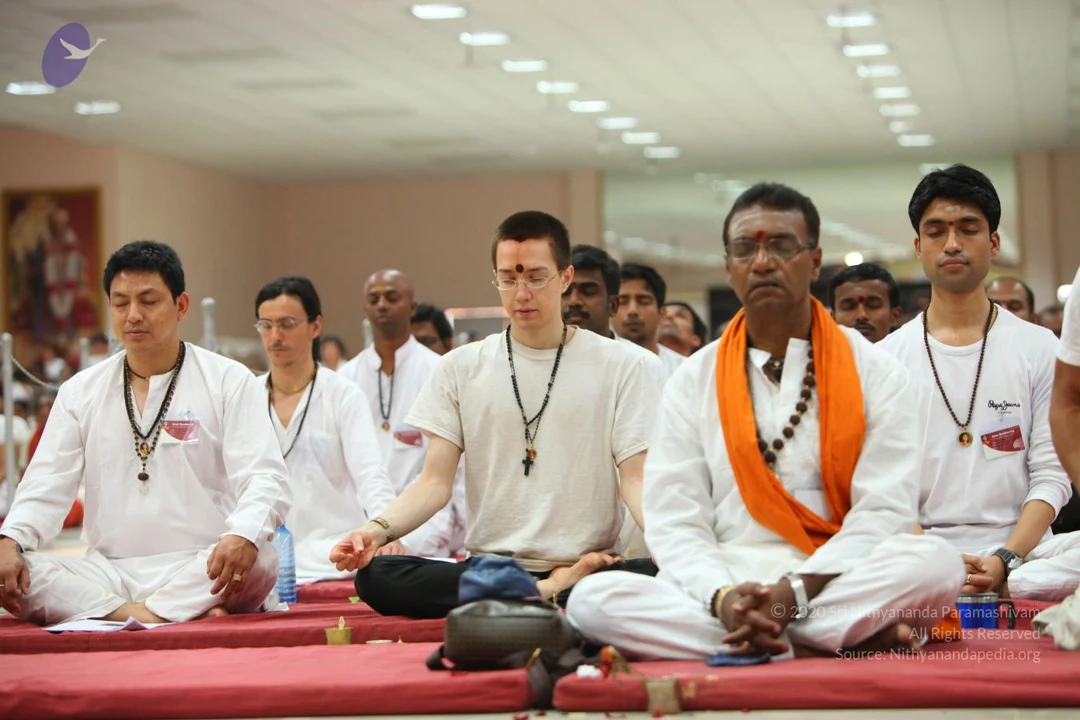
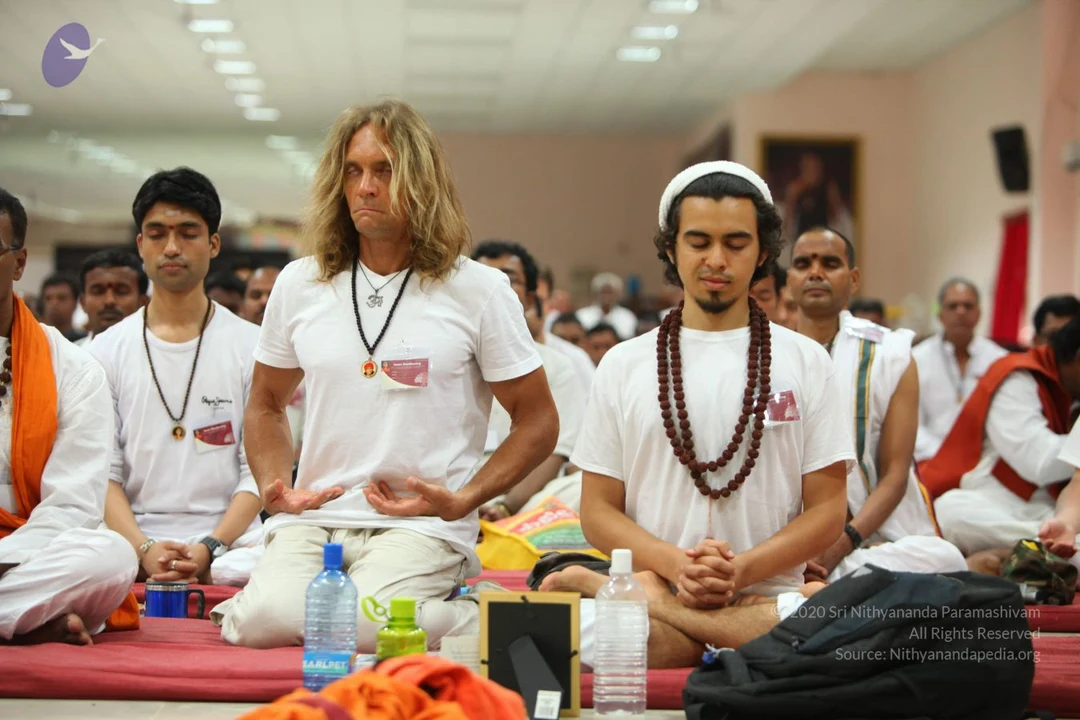
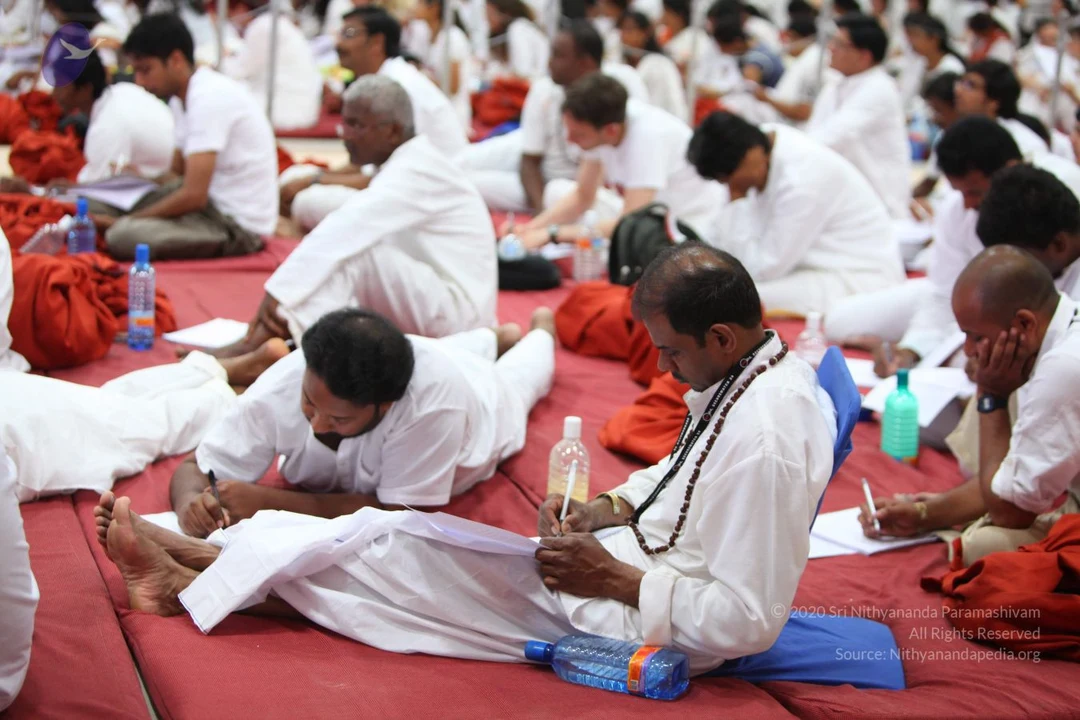
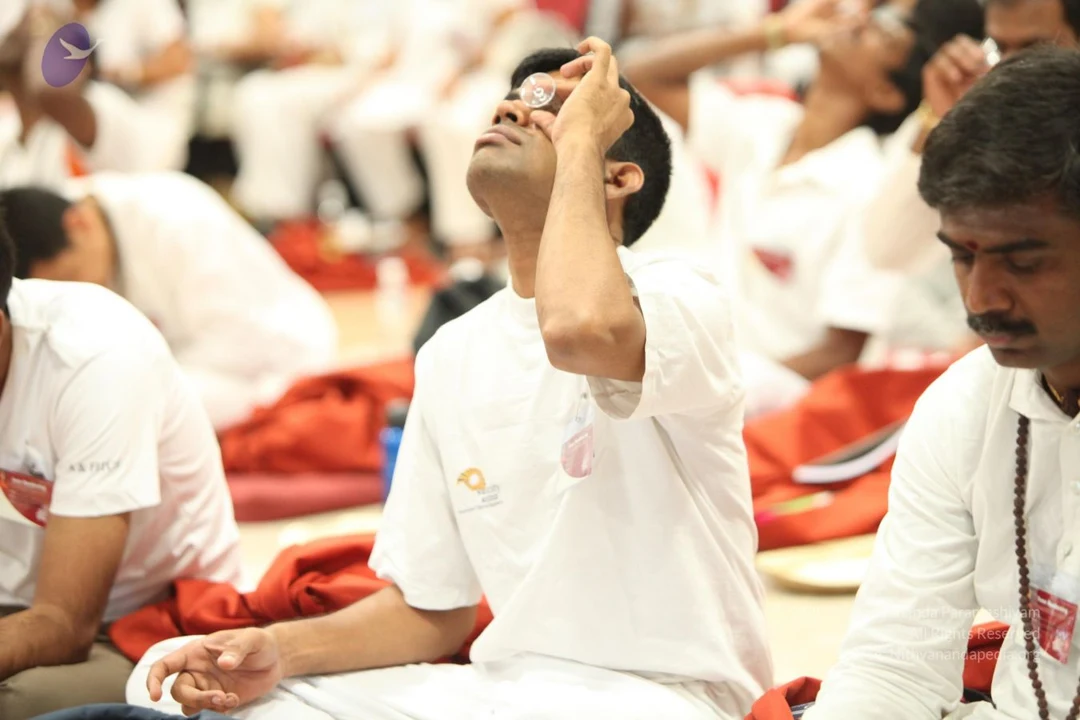
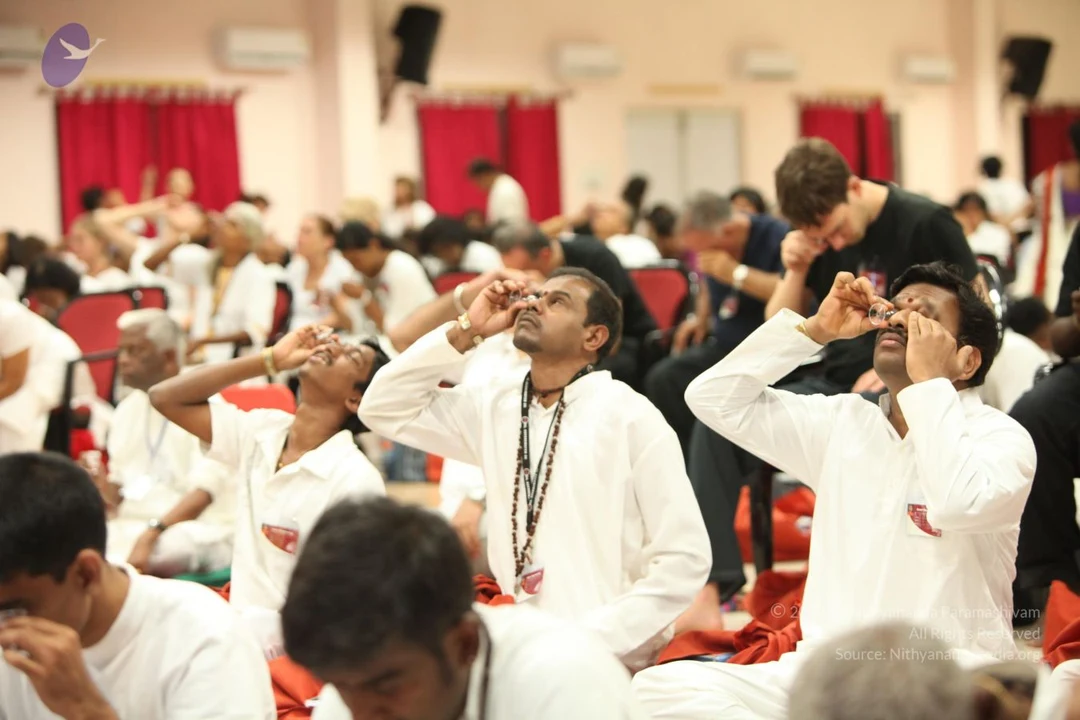
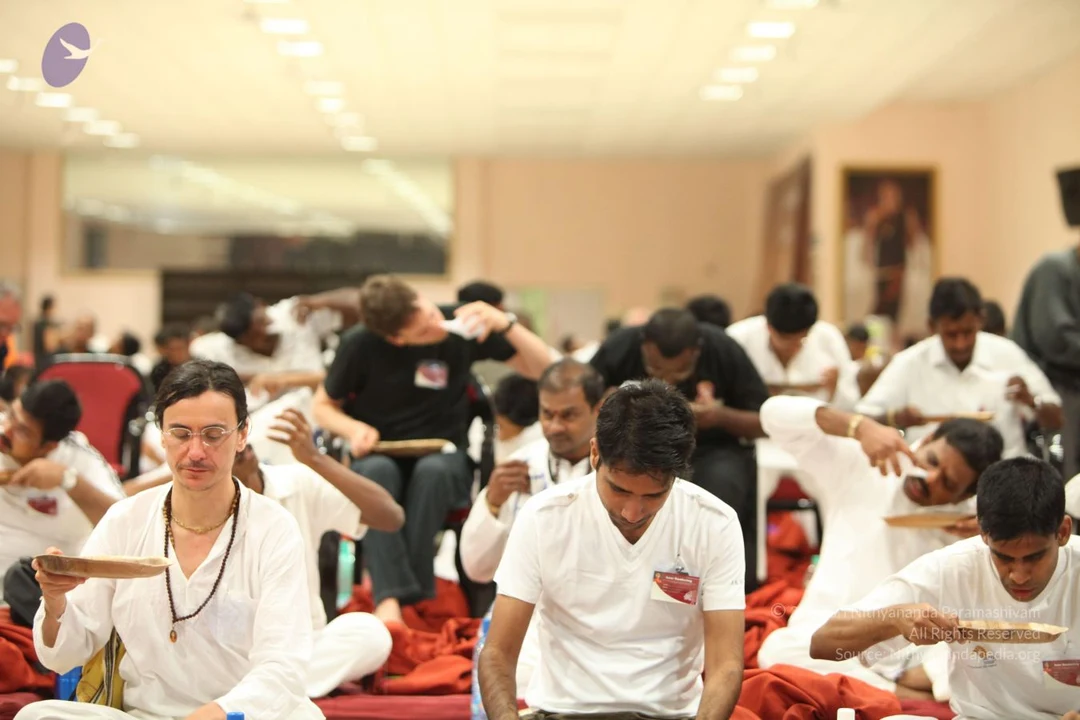
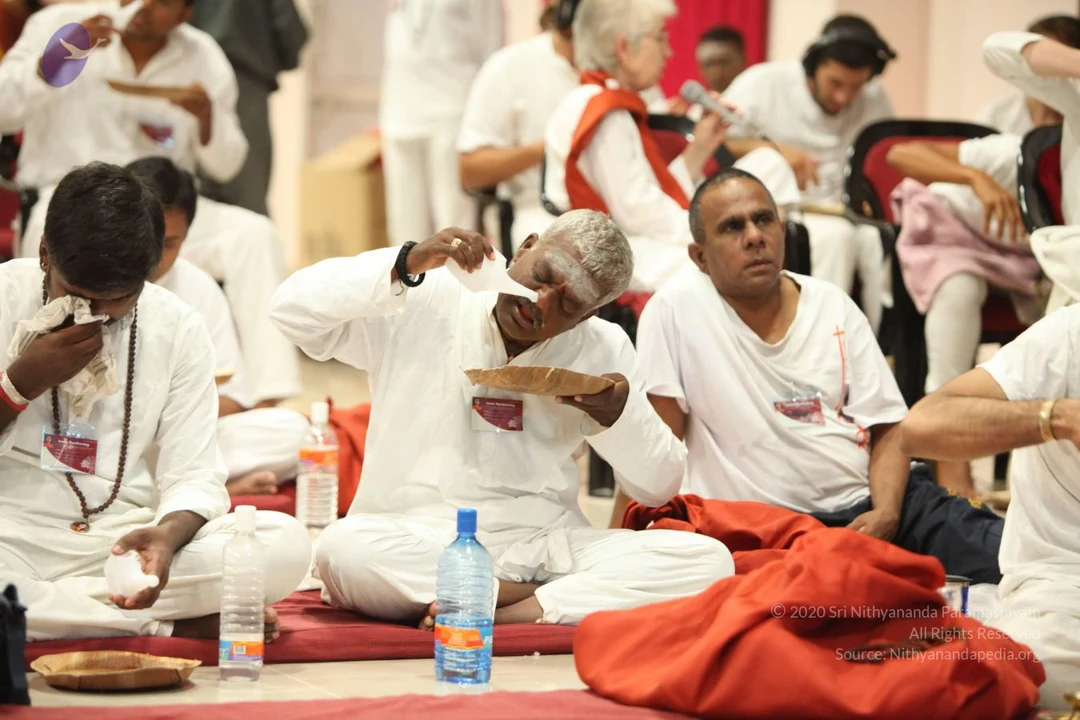
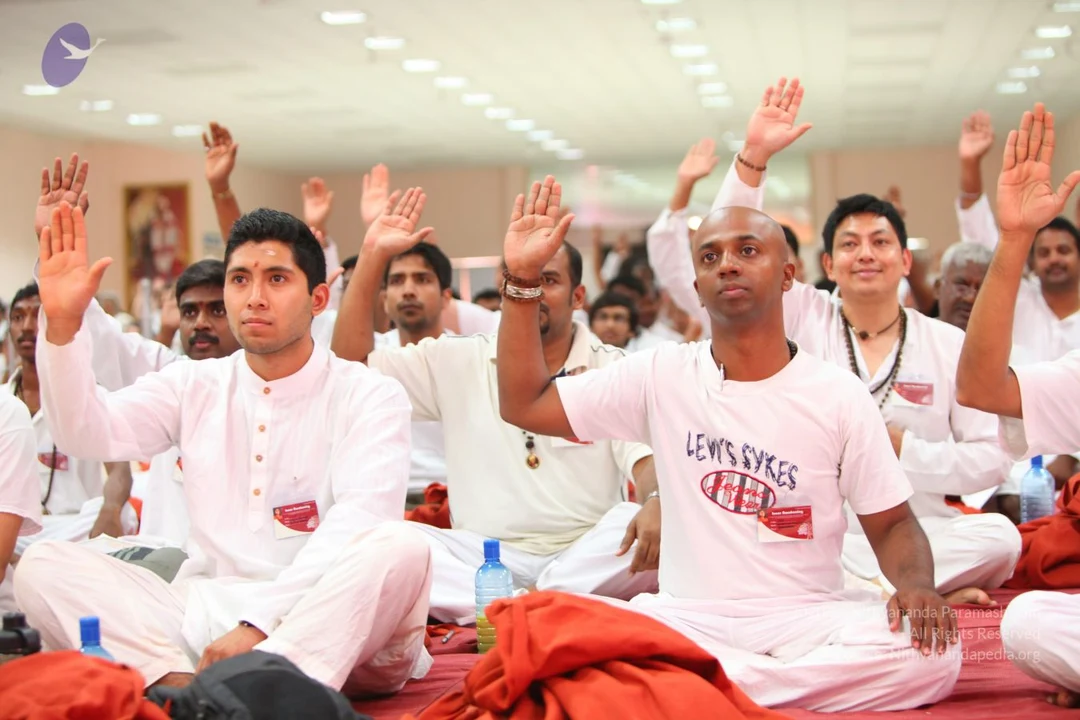
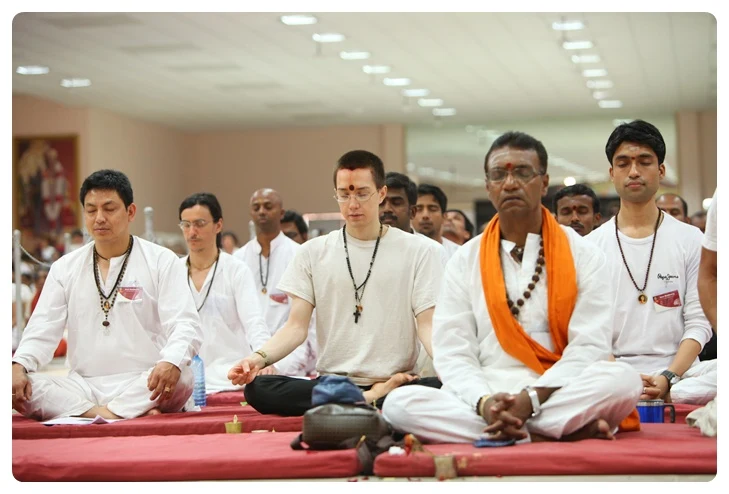
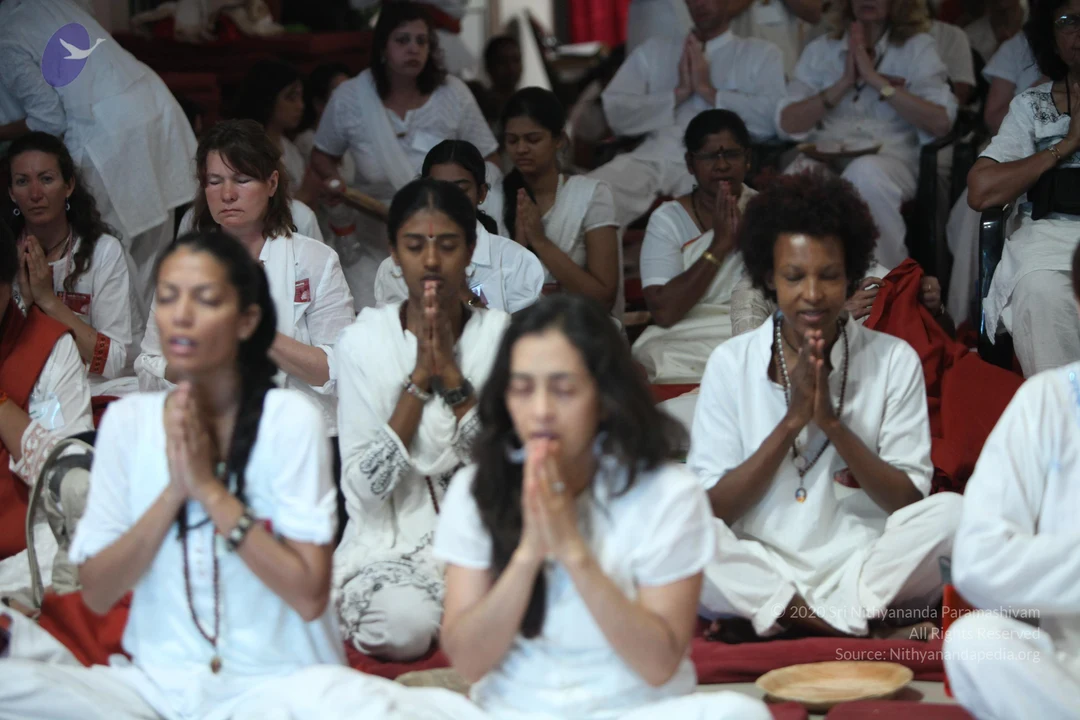
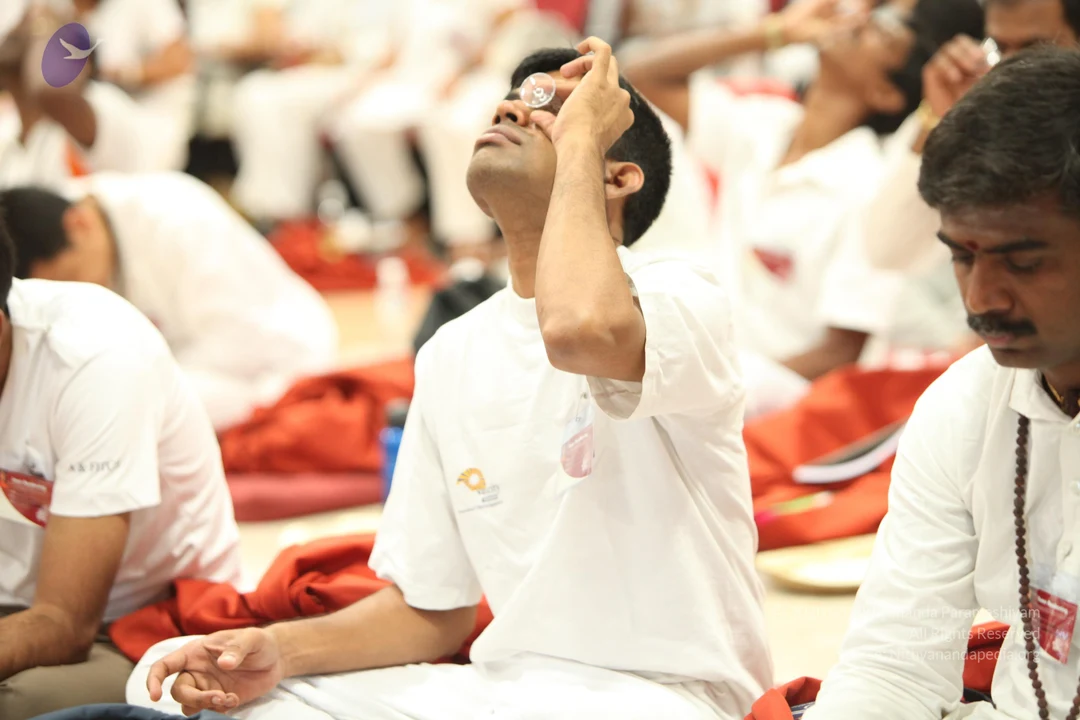
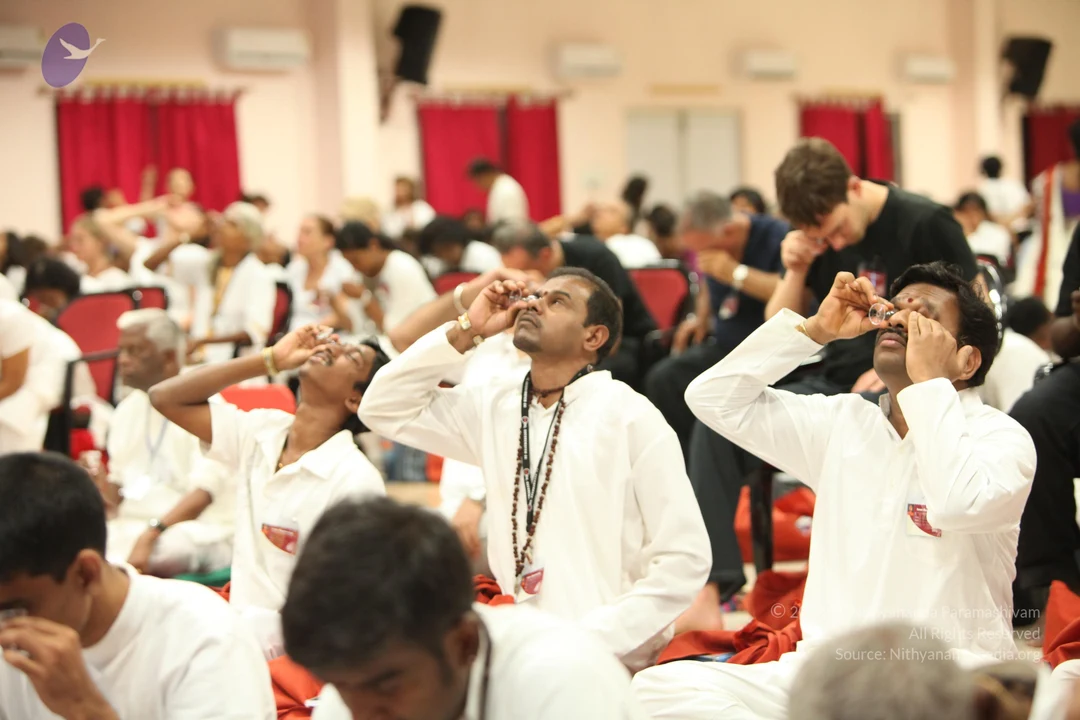
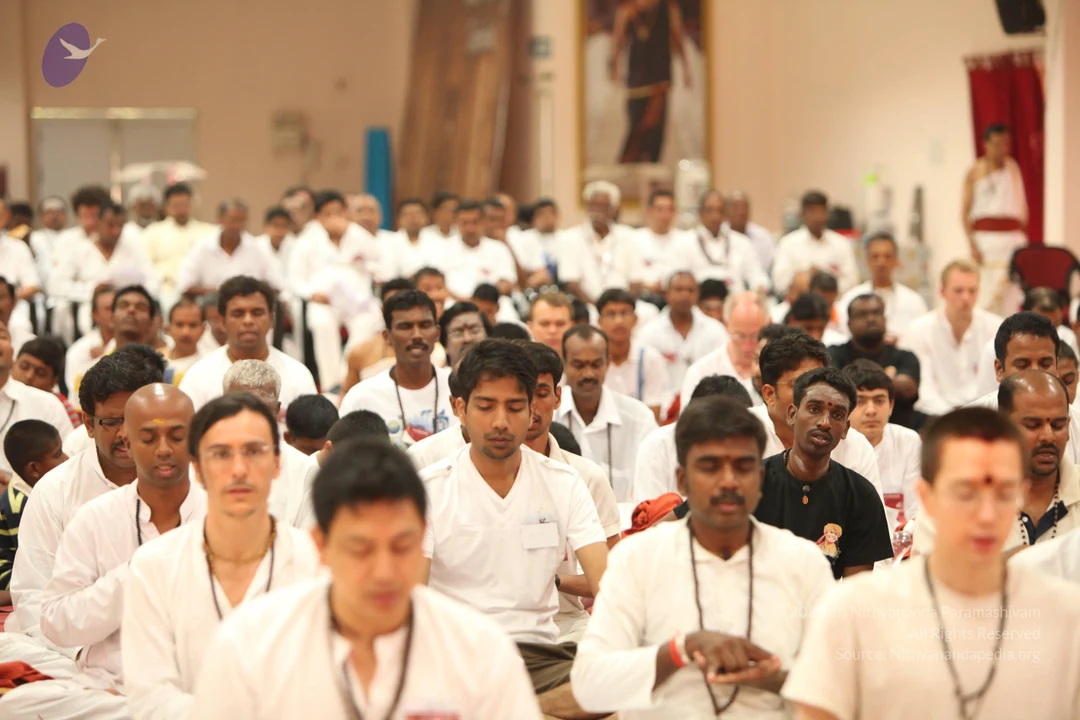
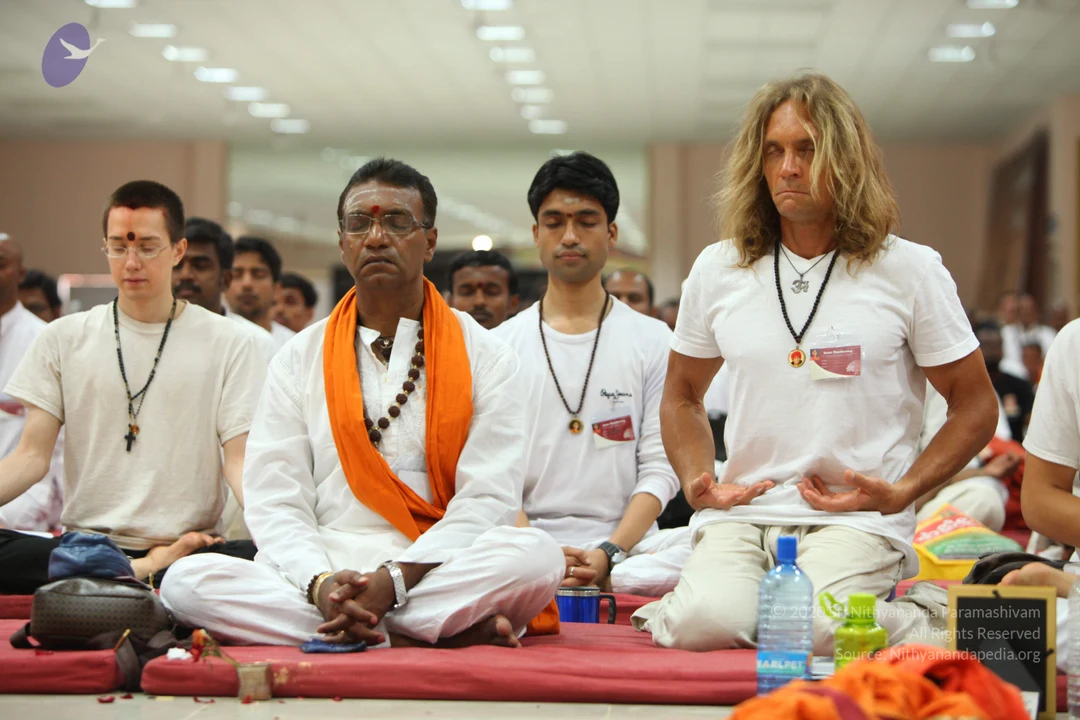
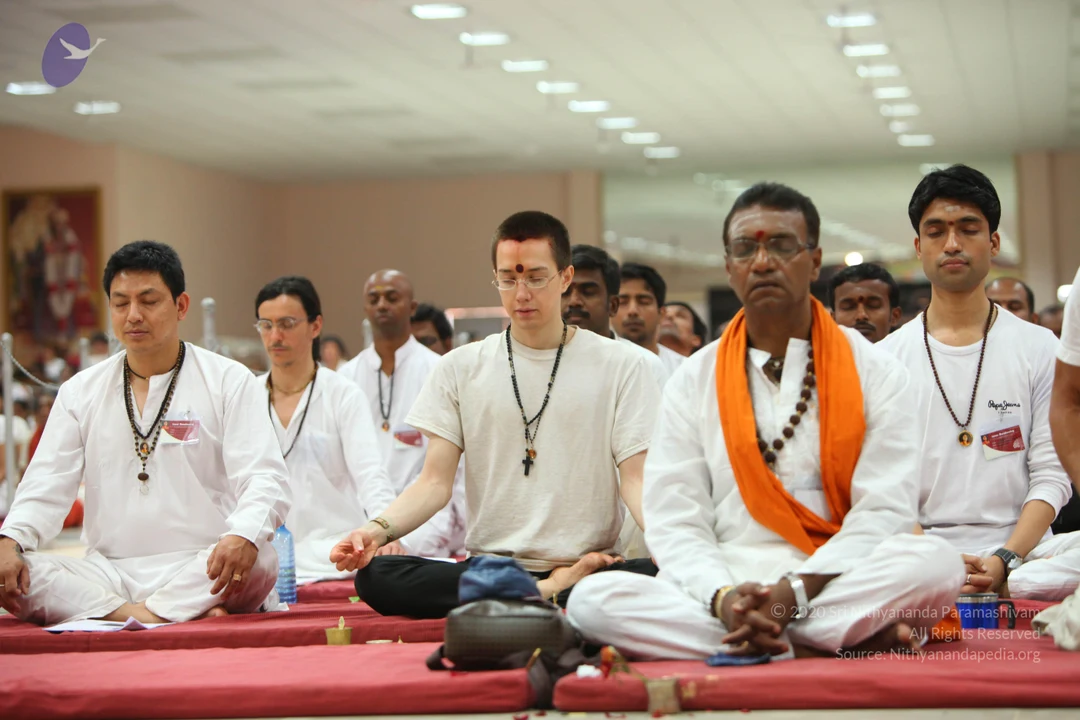
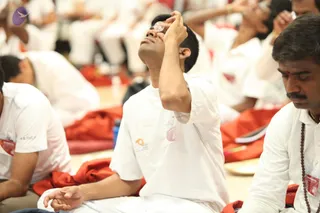
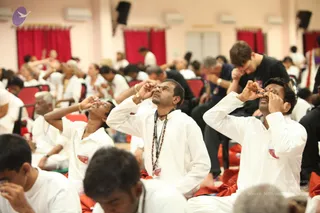
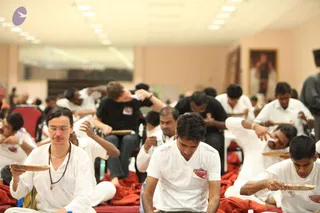
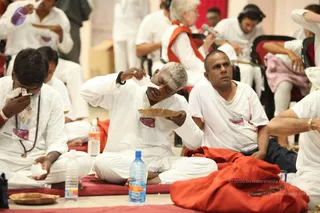
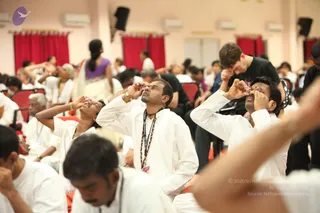
Photograph of a large seated group of devotees in white clothes on red cushions at a satsang or meditation session. In the foreground a young man in a white shirt and white dhoti sits cross-legged with his head tilted back and eyes closed, one hand raised to his forehead holding a small round pink-and-white object over his eye. To his right a man in white with a rudraksha mala and a small red mark on his forehead sits with eyes lowered. Behind them many others in white sit in similar postures, some with heads bowed.A seated satsang hall full of devotees dressed mostly in white, many with hands raised to their eyes as if holding small objects, apparently in a guided eye-focusing practice. In the foreground, two men in white kurtas with red-and-white name badges, one wearing a rudraksha mala, hold small objects to their eyes while looking upward. Red curtains line the back wall, with rows of red chairs and red mats, and a few people in dark clothing are visible. Overall, a crowded meditation session in a large meeting hall.A large hall with cream walls and recessed ceiling lights shows many seated men in white kurta-style clothes eating from wooden leaf plates held in their hands, sitting on red and orange cloths on the floor. In the foreground, a bespectacled man in white with a rudraksha mala holds a plate, while a man in a white shirt with a red name badge eats nearby. Several people in black t-shirts and white clothes sit among them, and a framed portrait hangs on the far right wall. The scene appears to be a communal meal in an ashram-style gathering.A photograph of a seated group at an indoor satsang hall with red-cushioned chairs and mats. Several people in white clothing sit on red mats eating from leaf plates; one older man in white with grey hair holds a small leaf plate to his mouth. Another man in a white t-shirt with a name badge sits nearby, and a young man in white wearing a rudraksha mala and a wristband wipes his face with a white cloth. Plastic water bottles, a red shawl and orange-red fabric lie on the floor. A woman in white with a red shawl and a man holding a microphone are visible in the background. No identifiable a person candidate is clearly present.

Temple
13 photosSource gallery
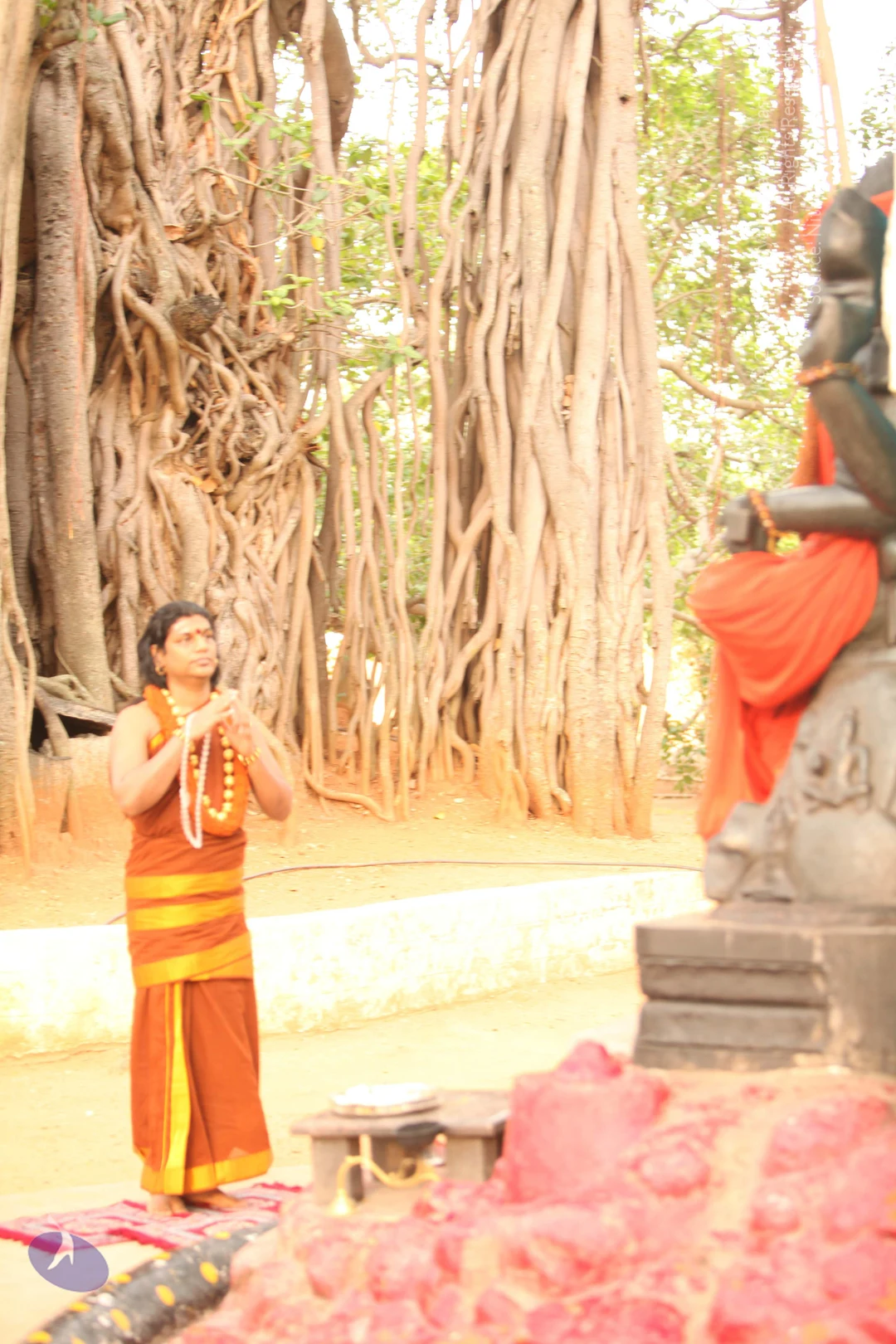
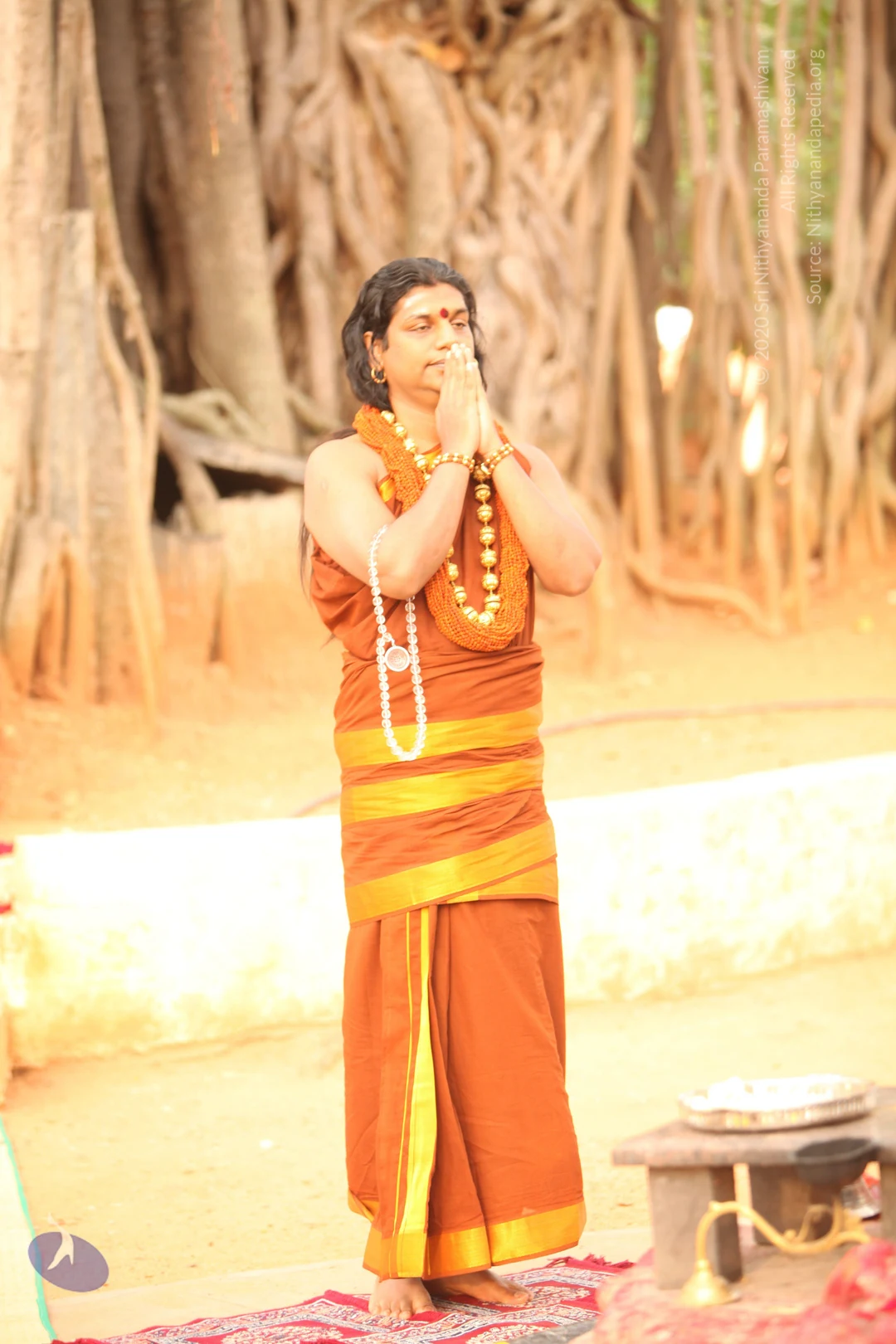
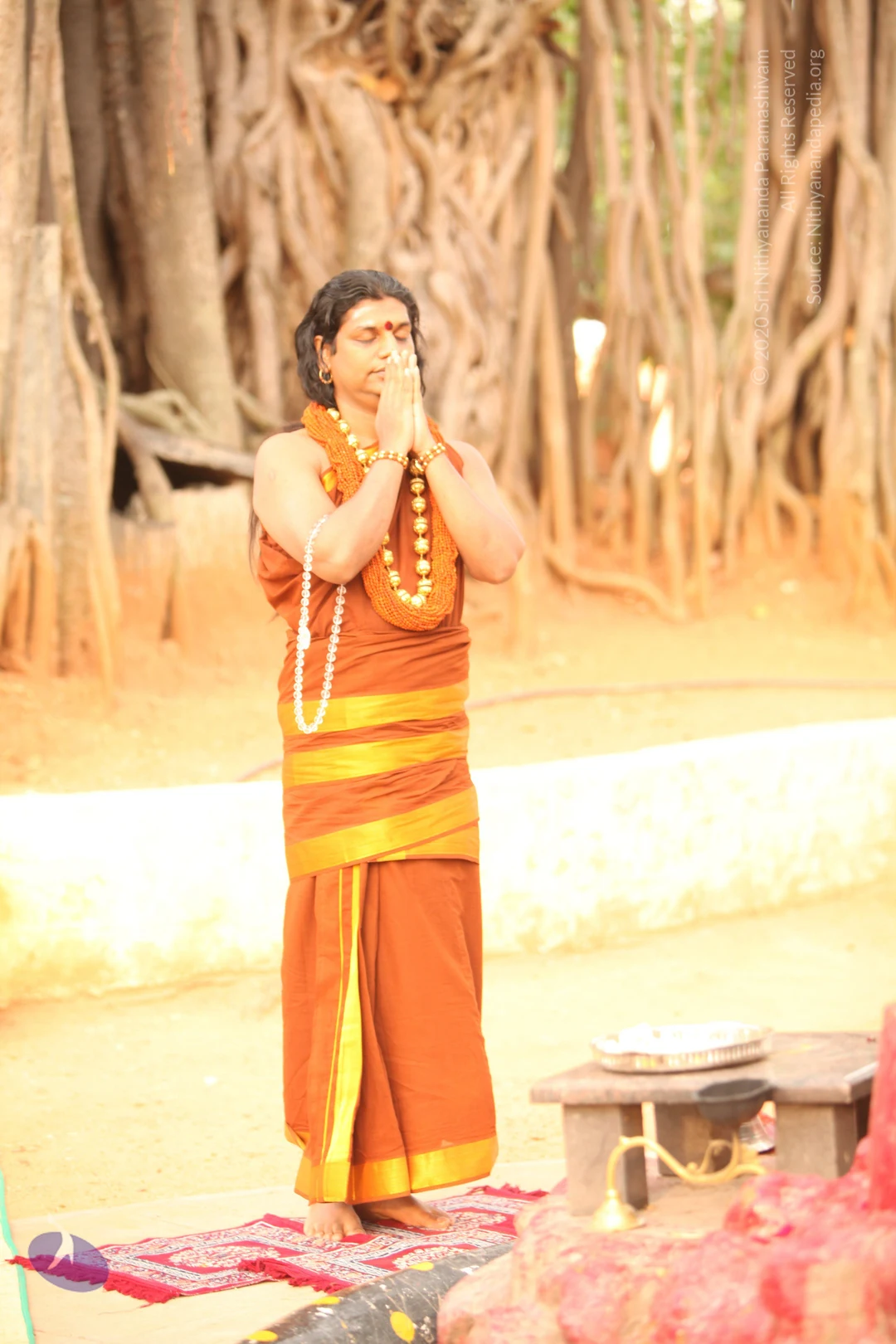
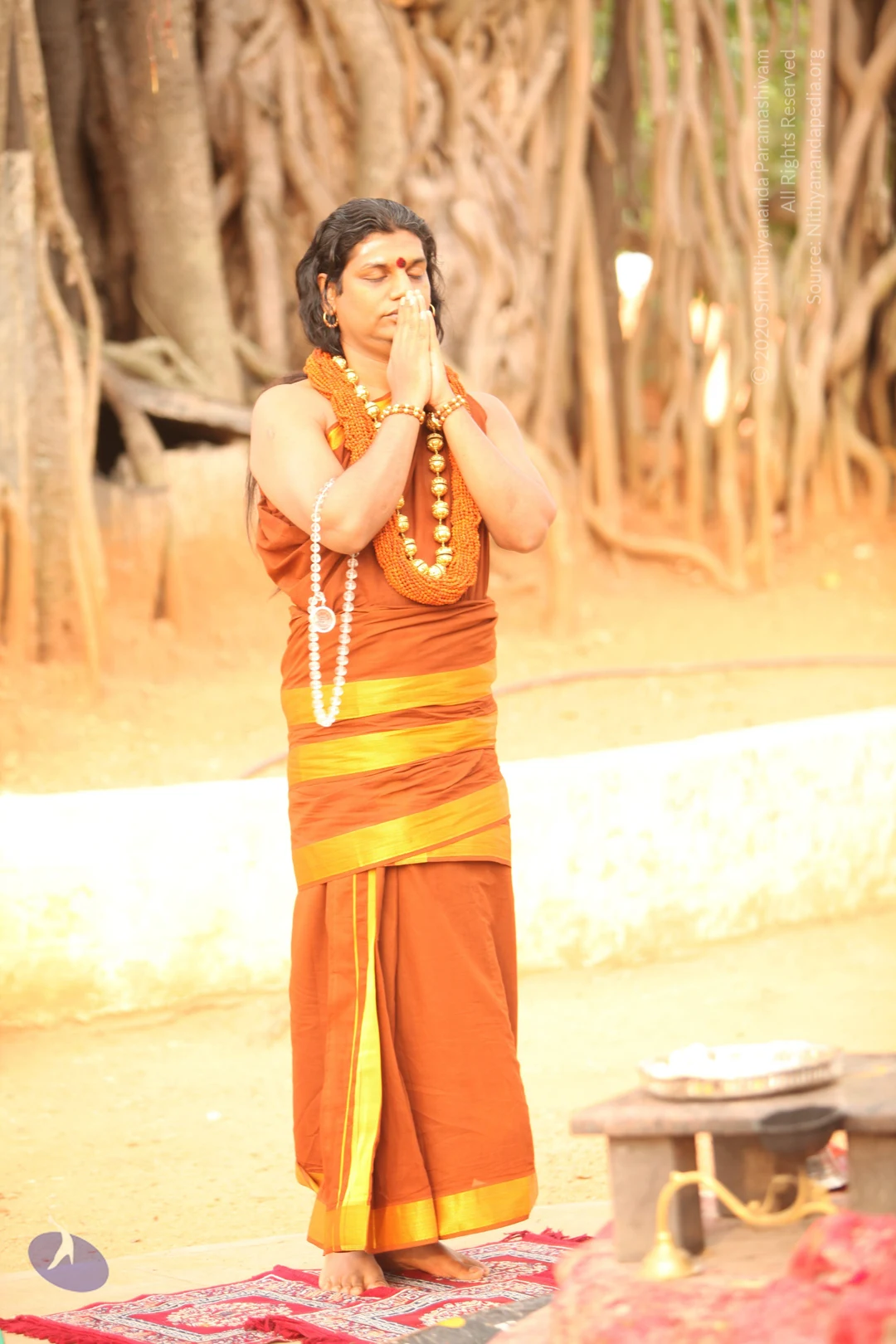
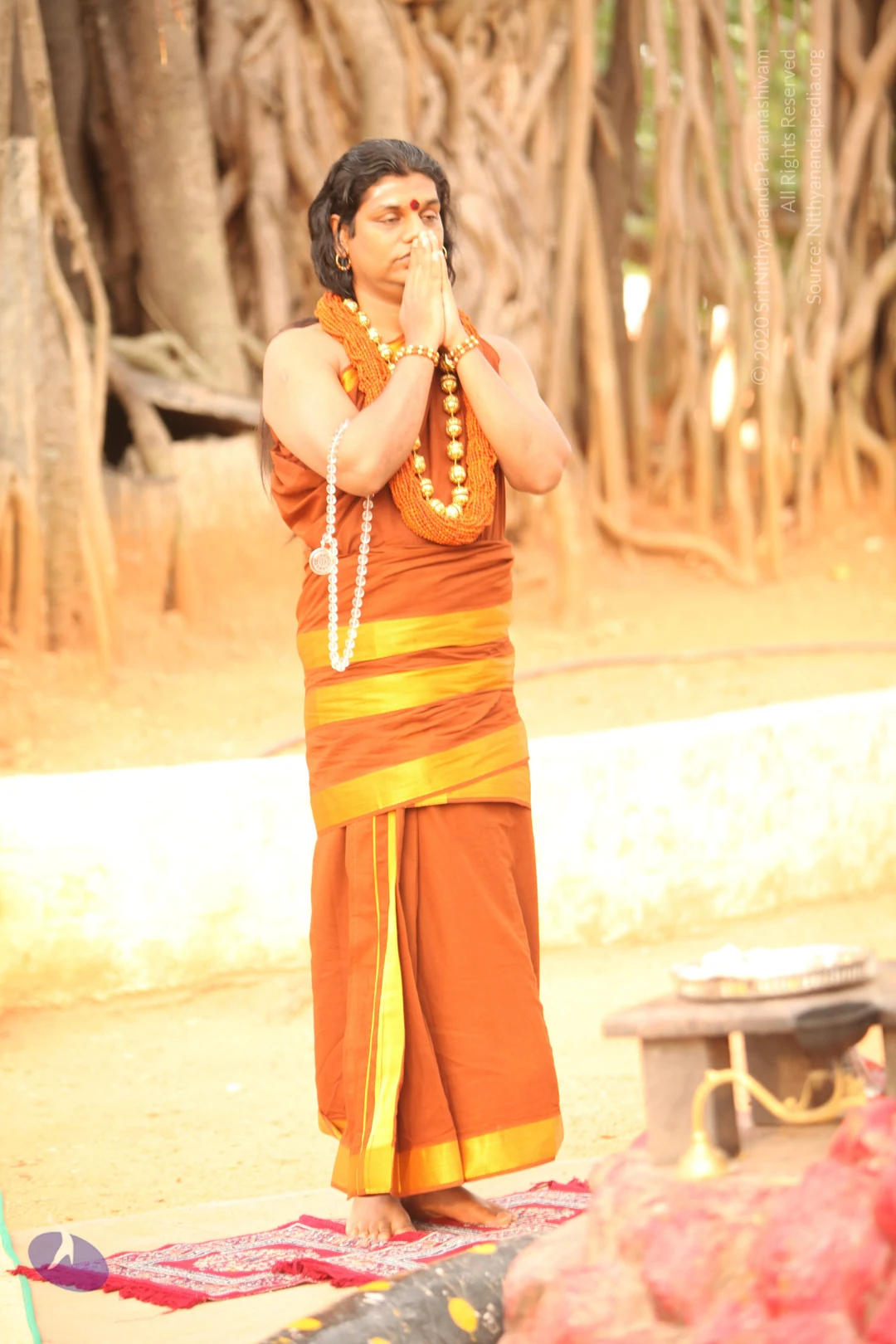
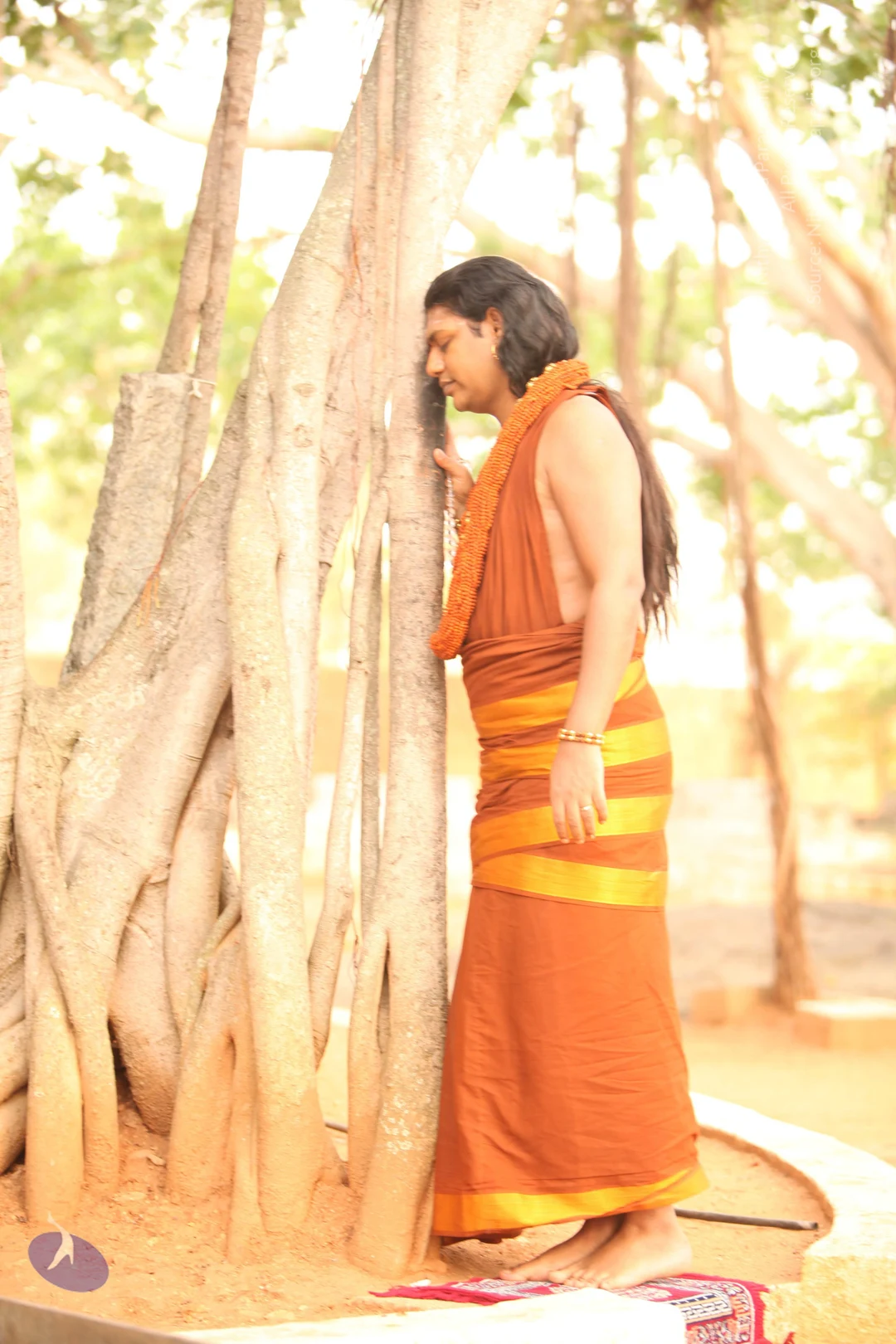
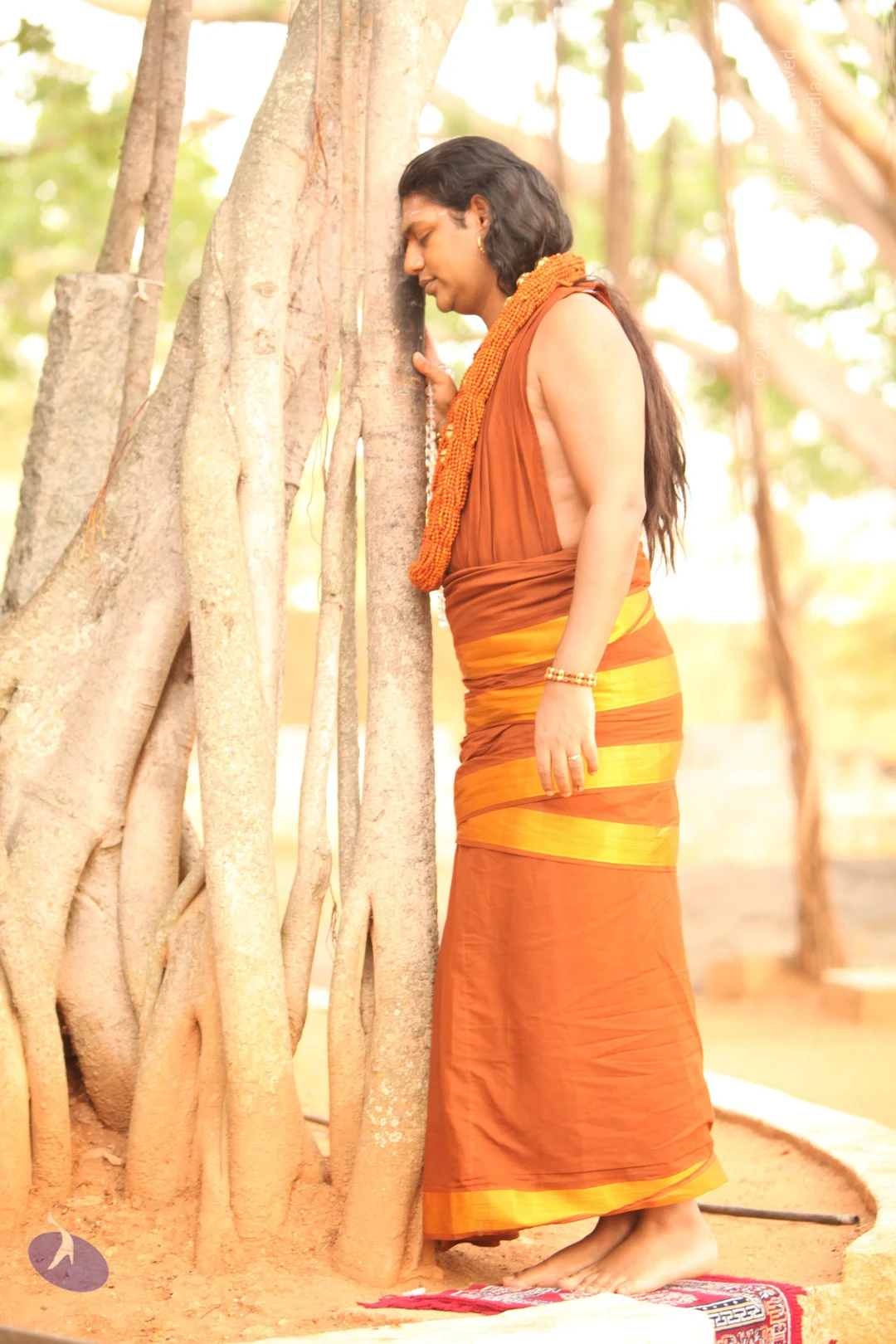
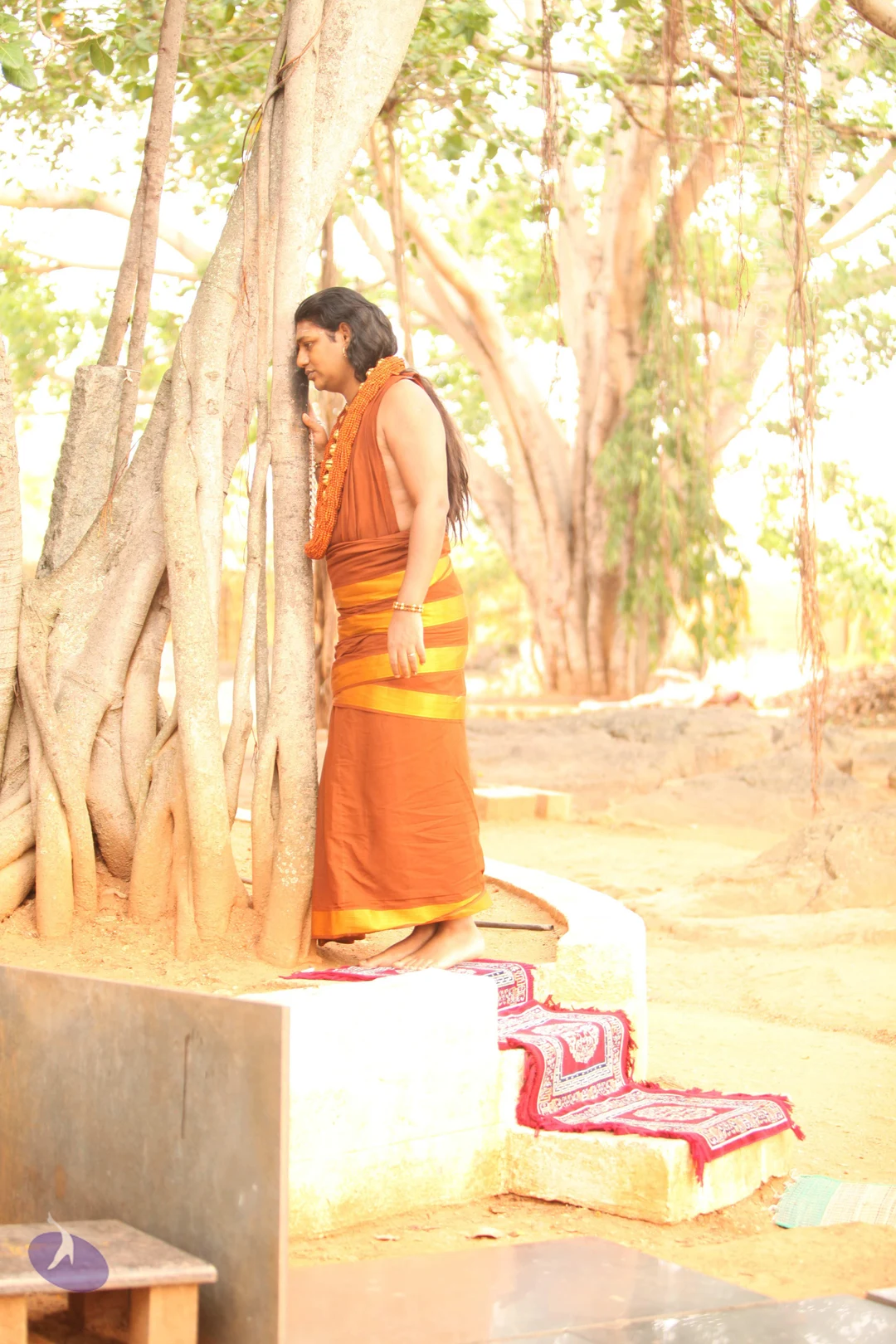
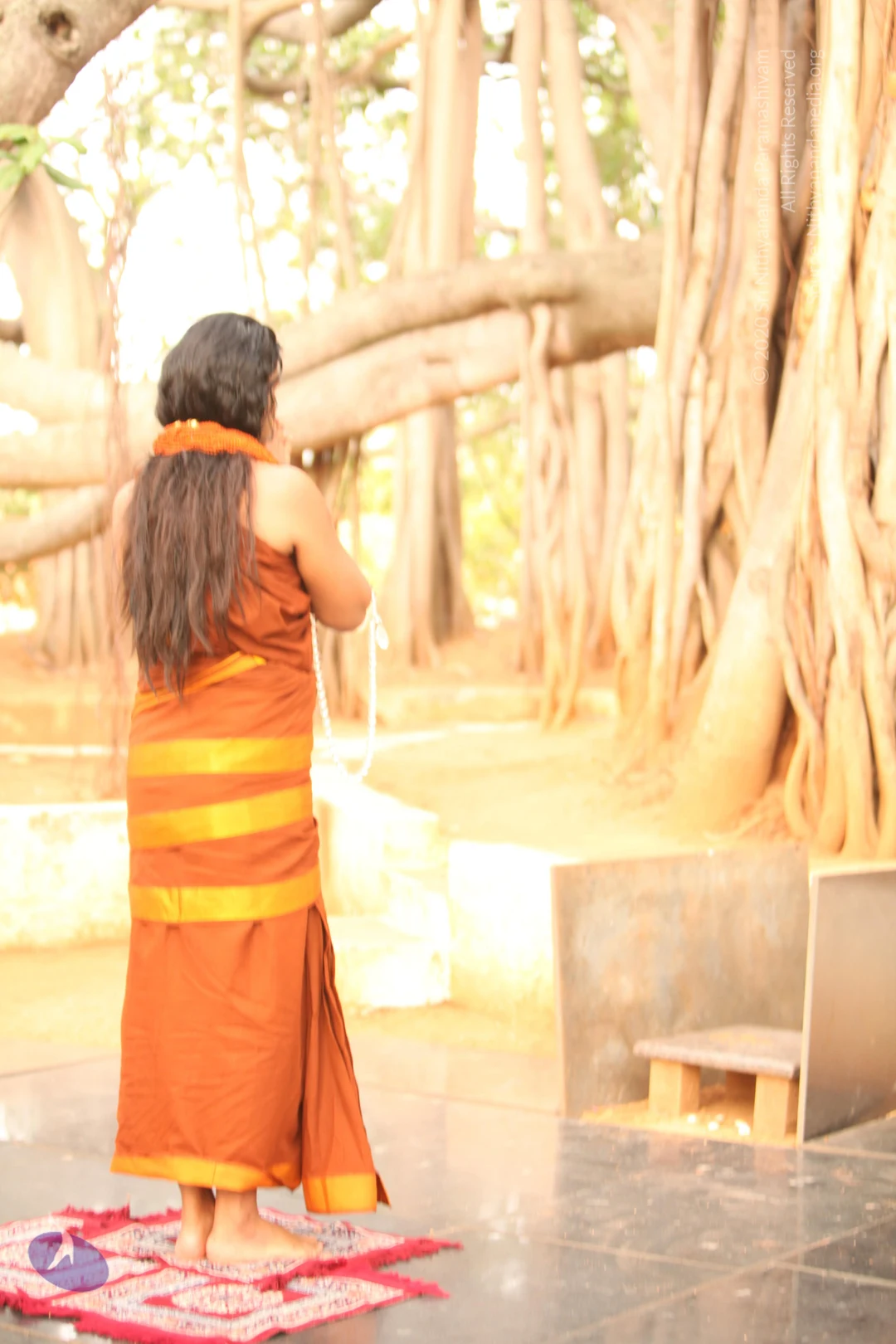
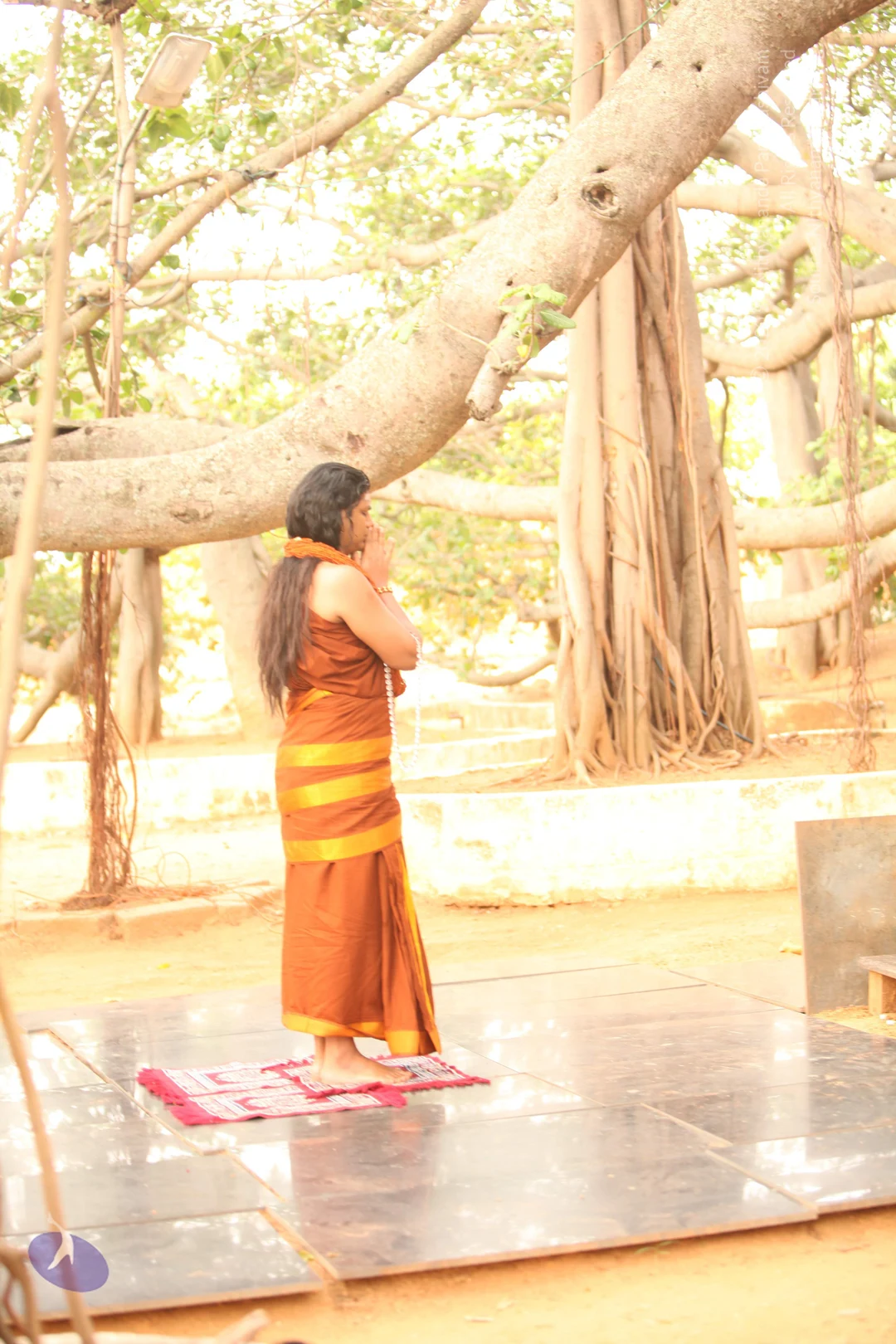
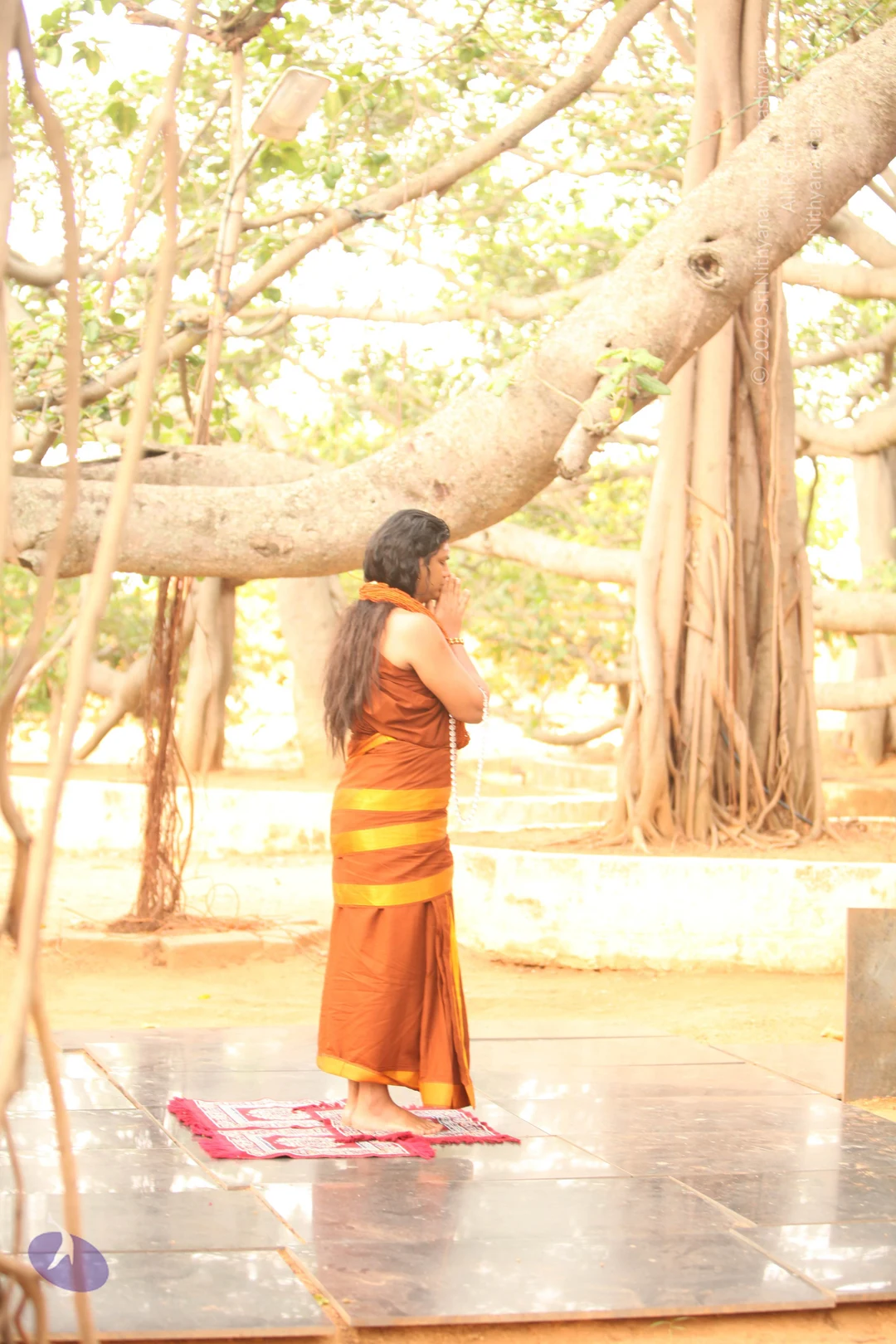
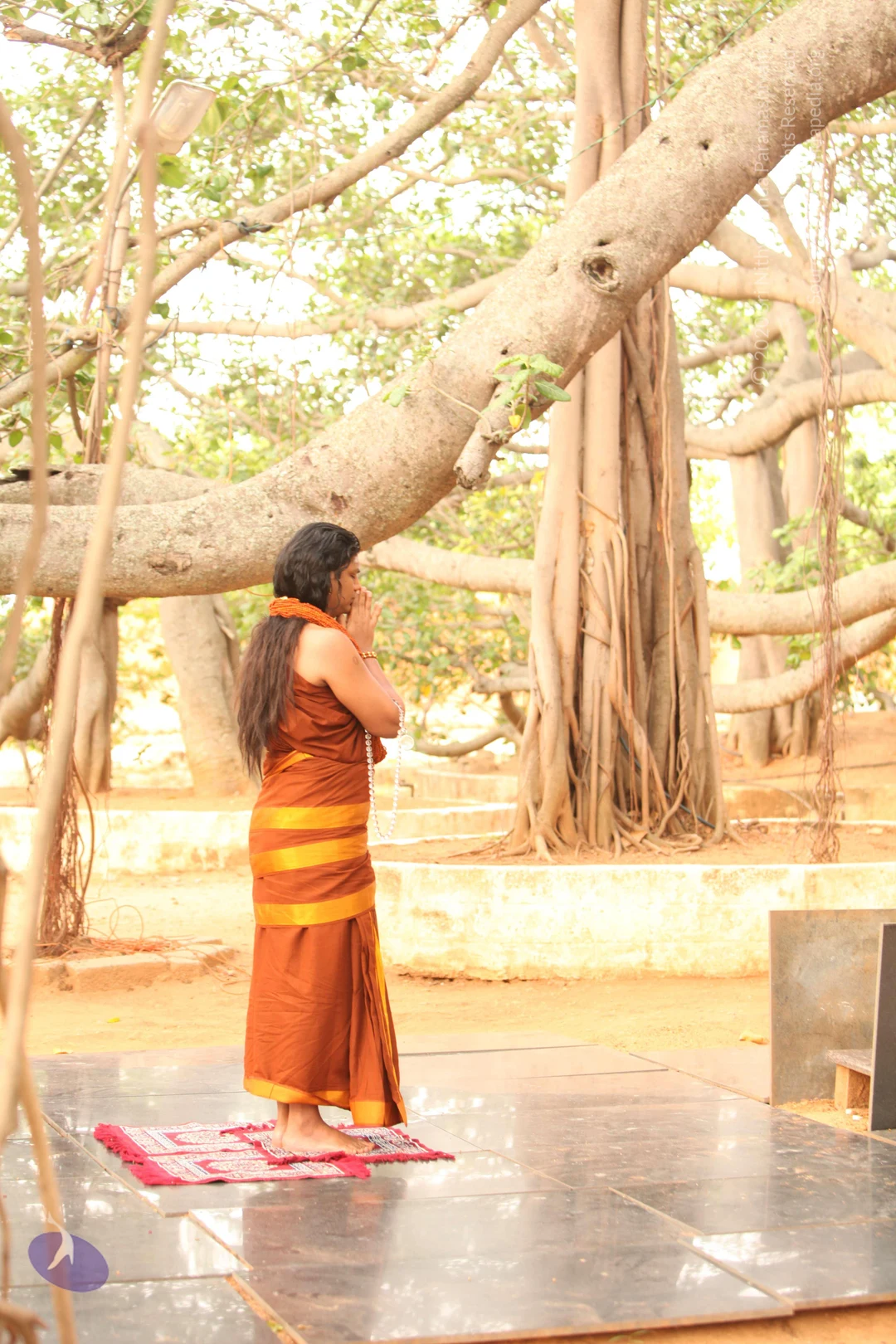
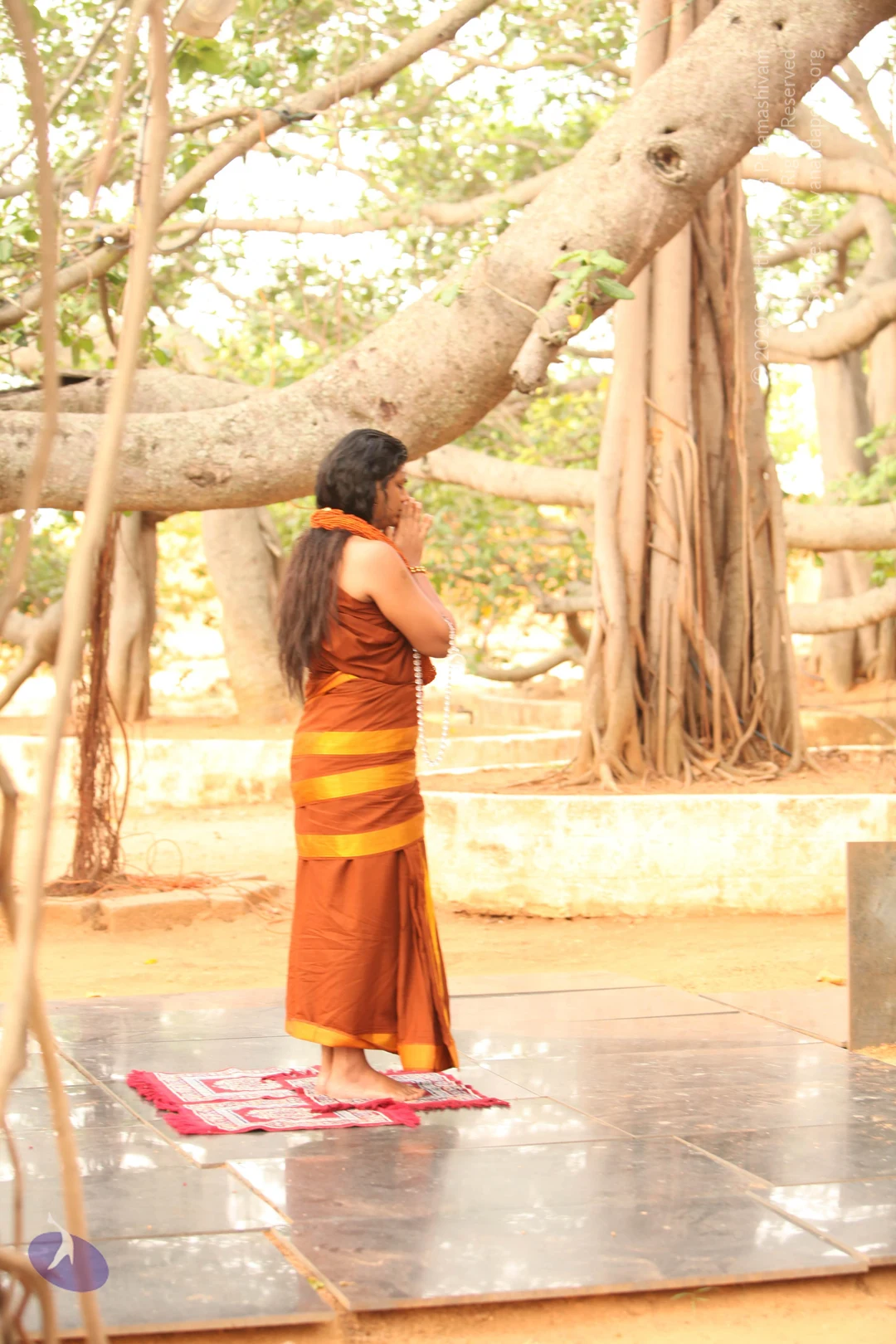
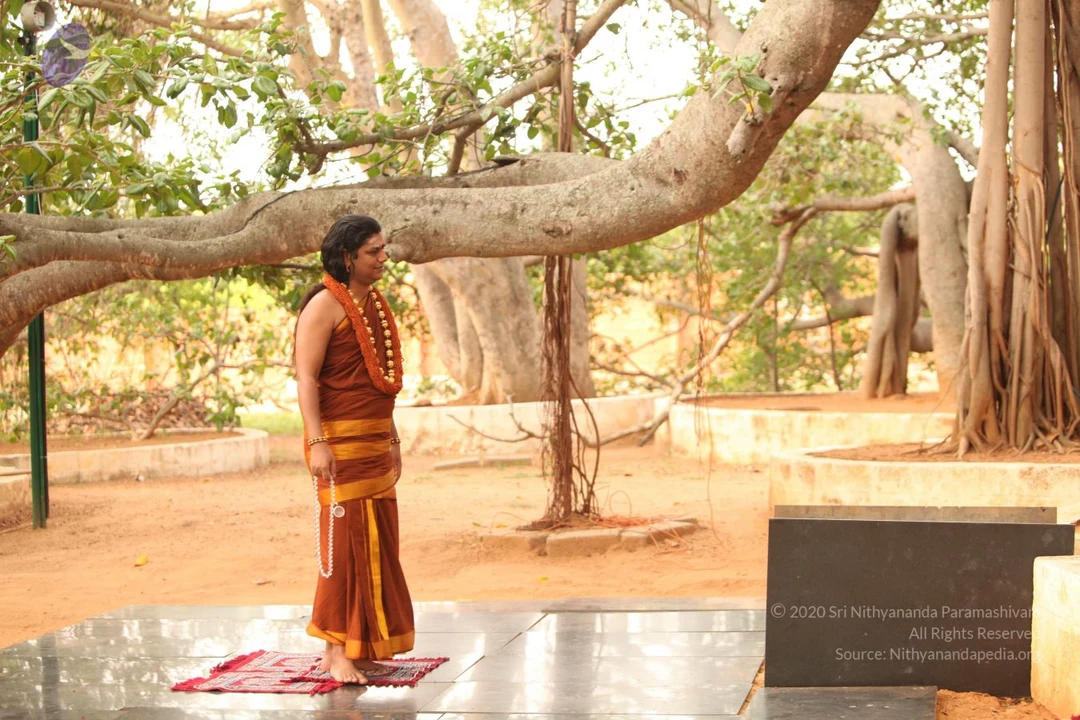
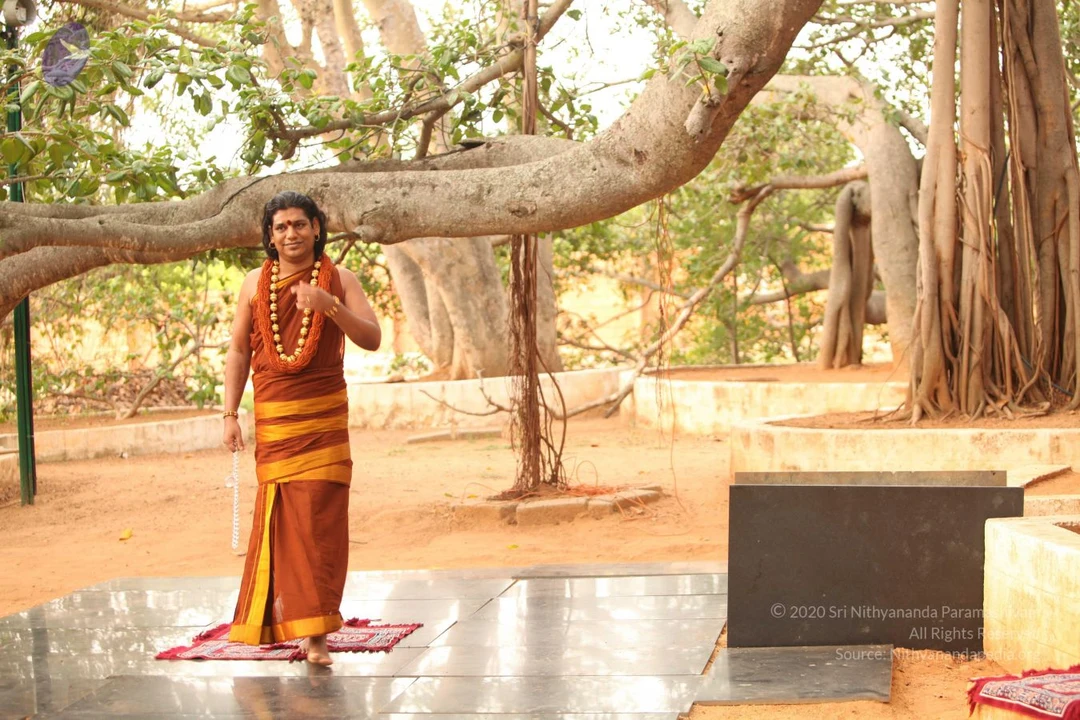
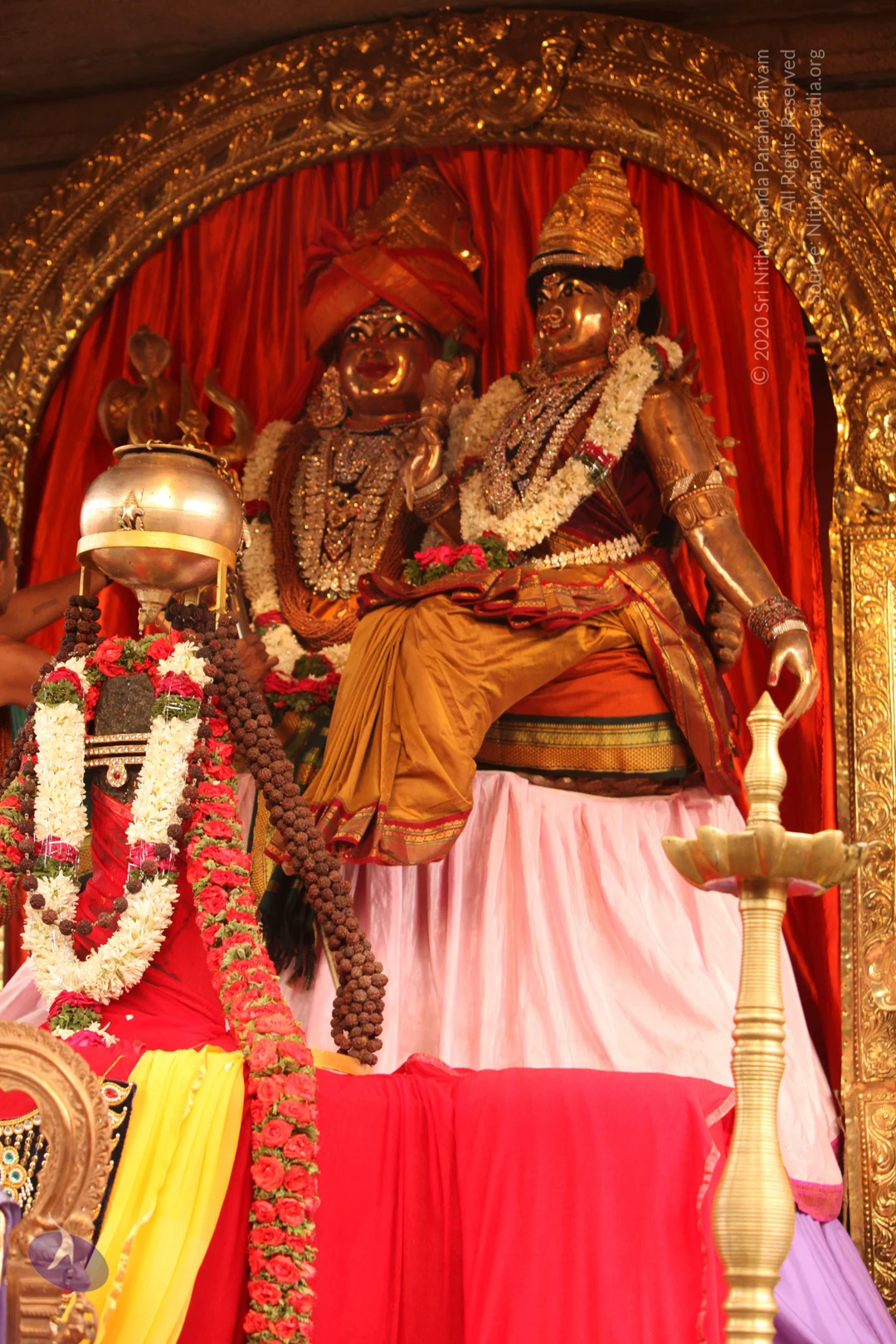
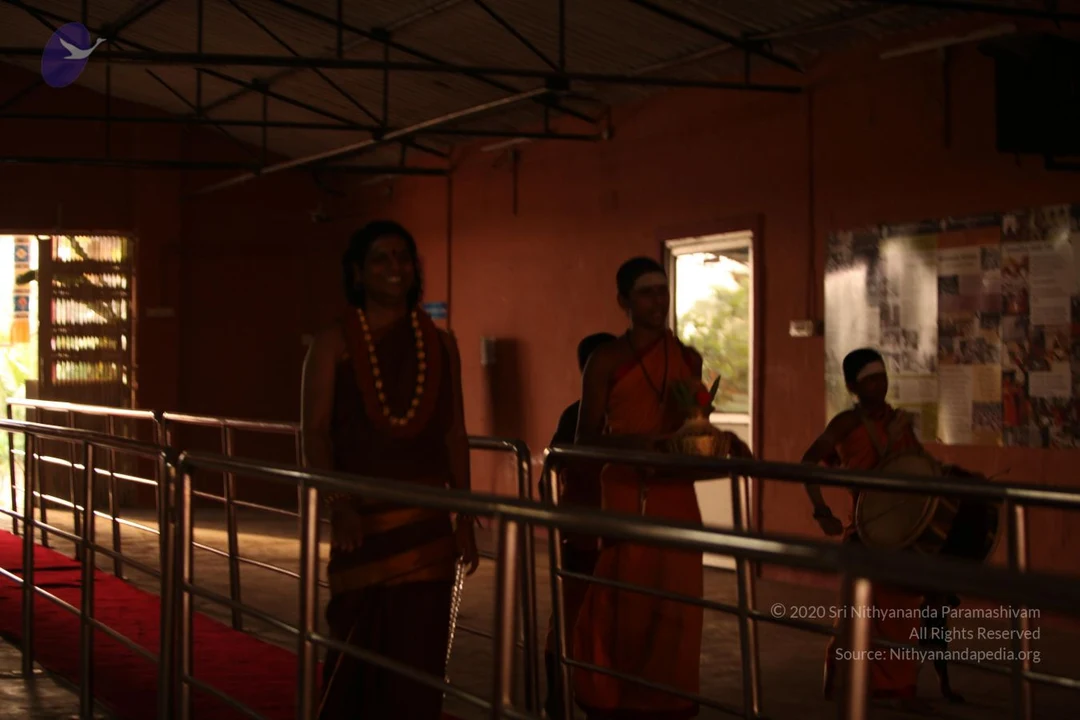
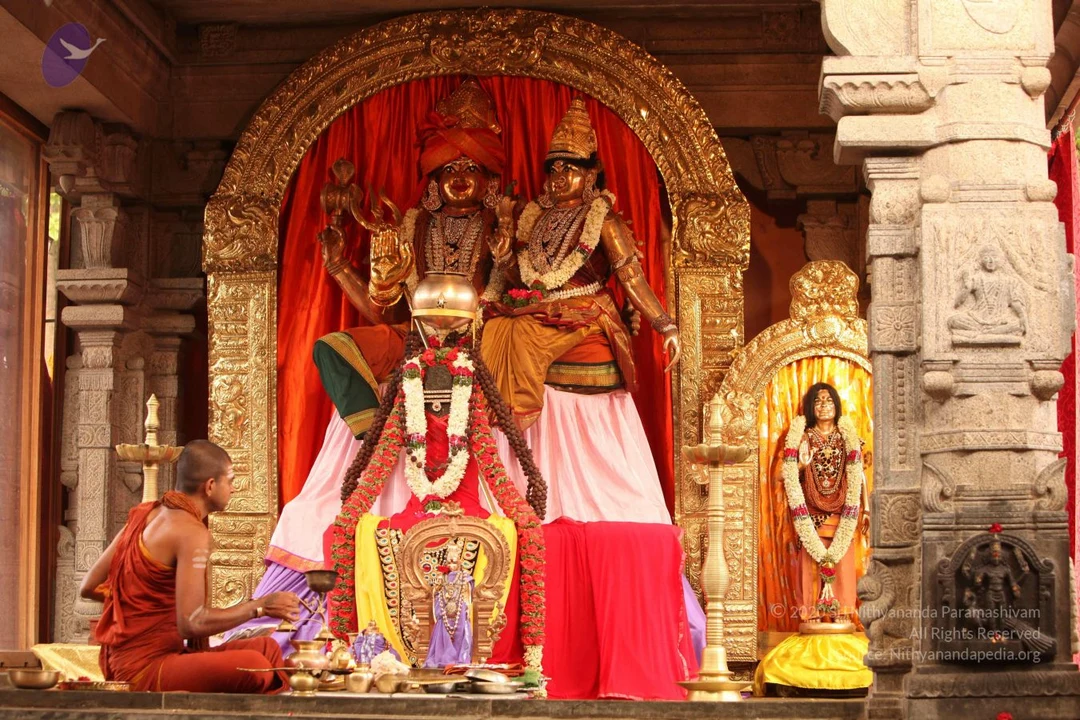
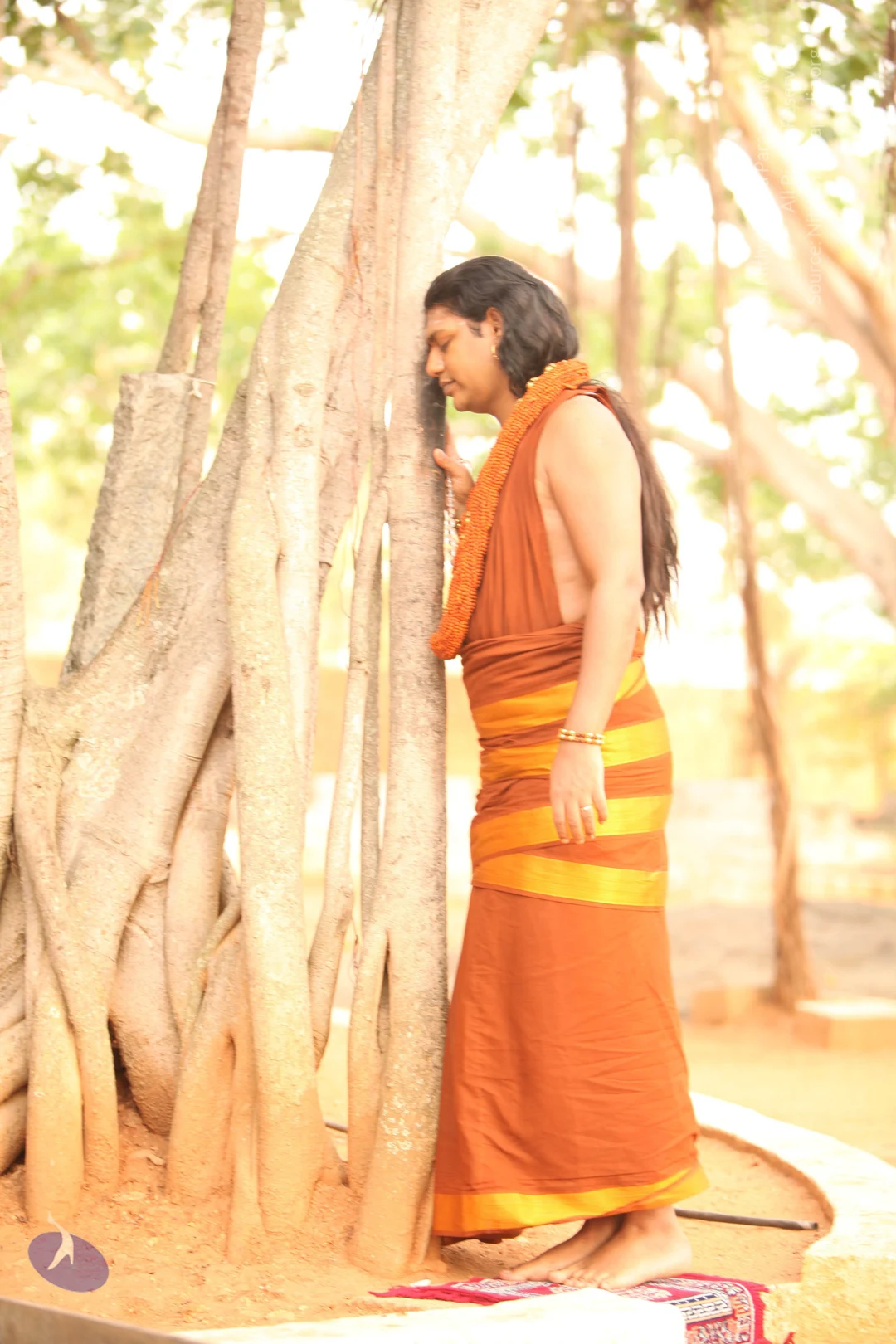
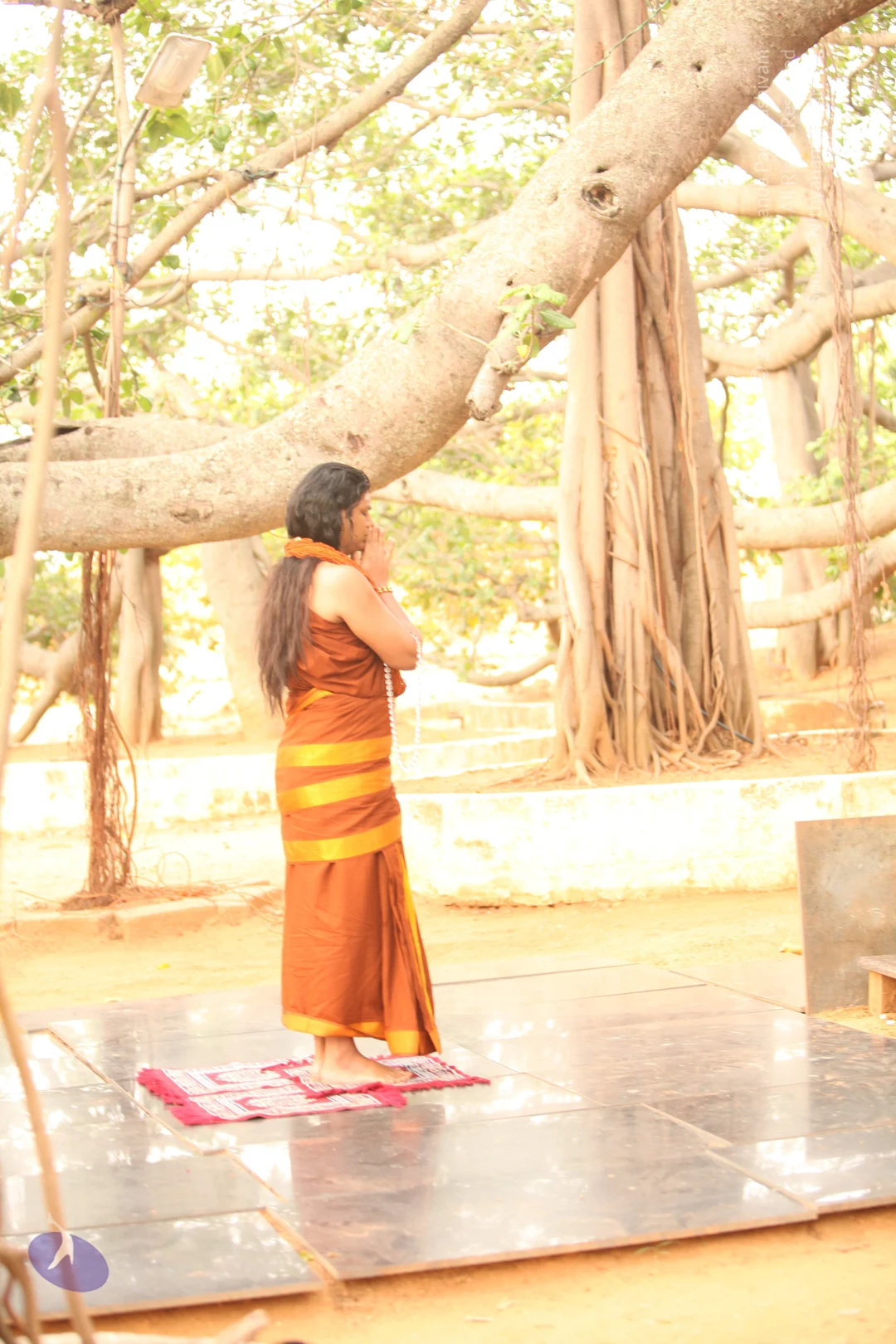
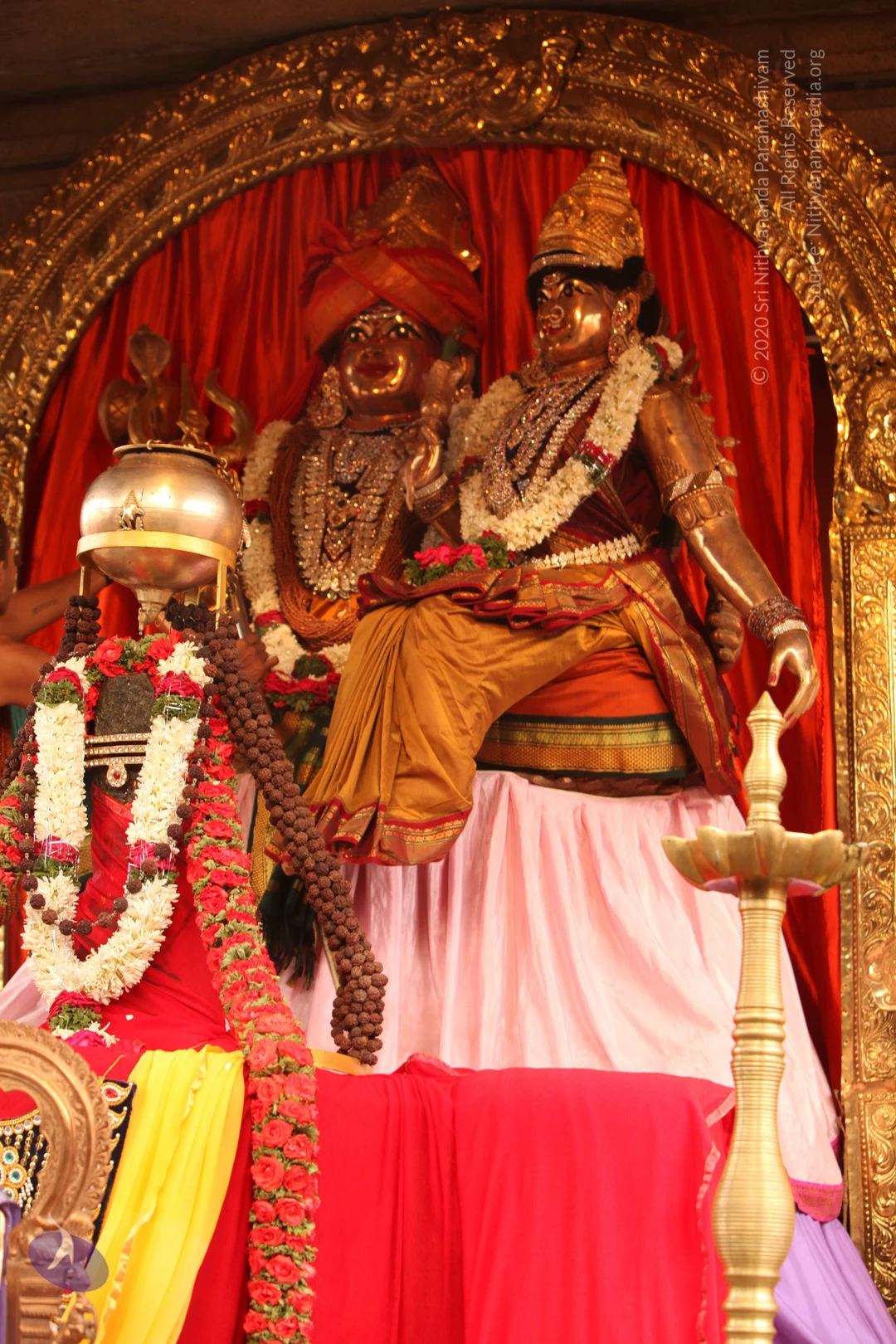
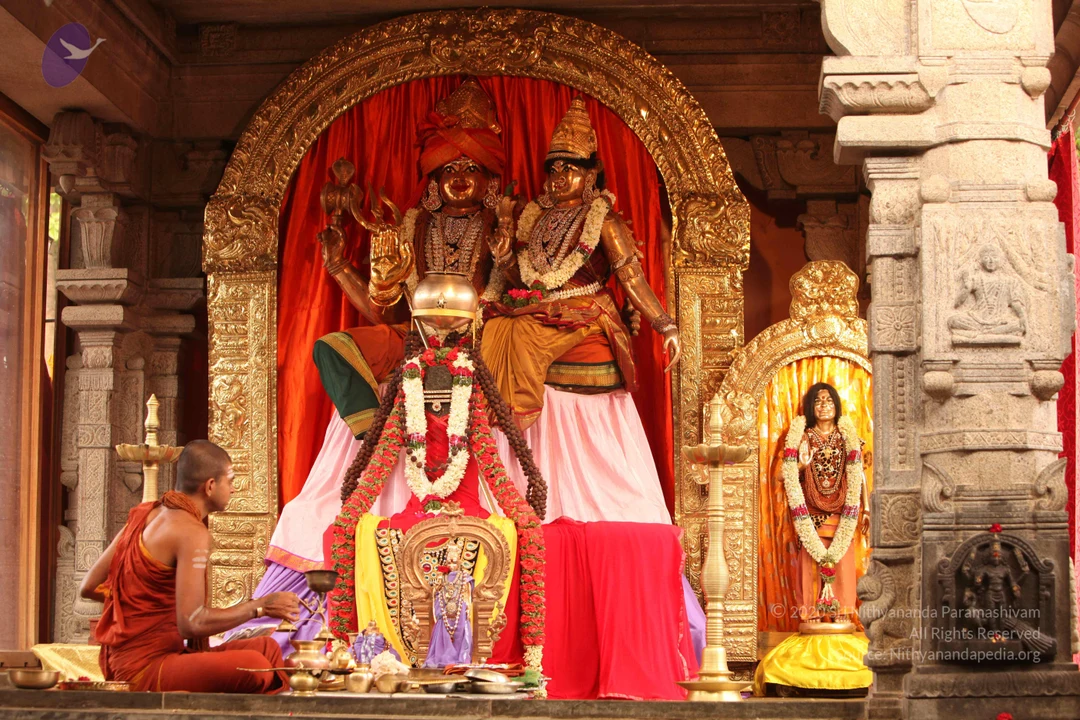
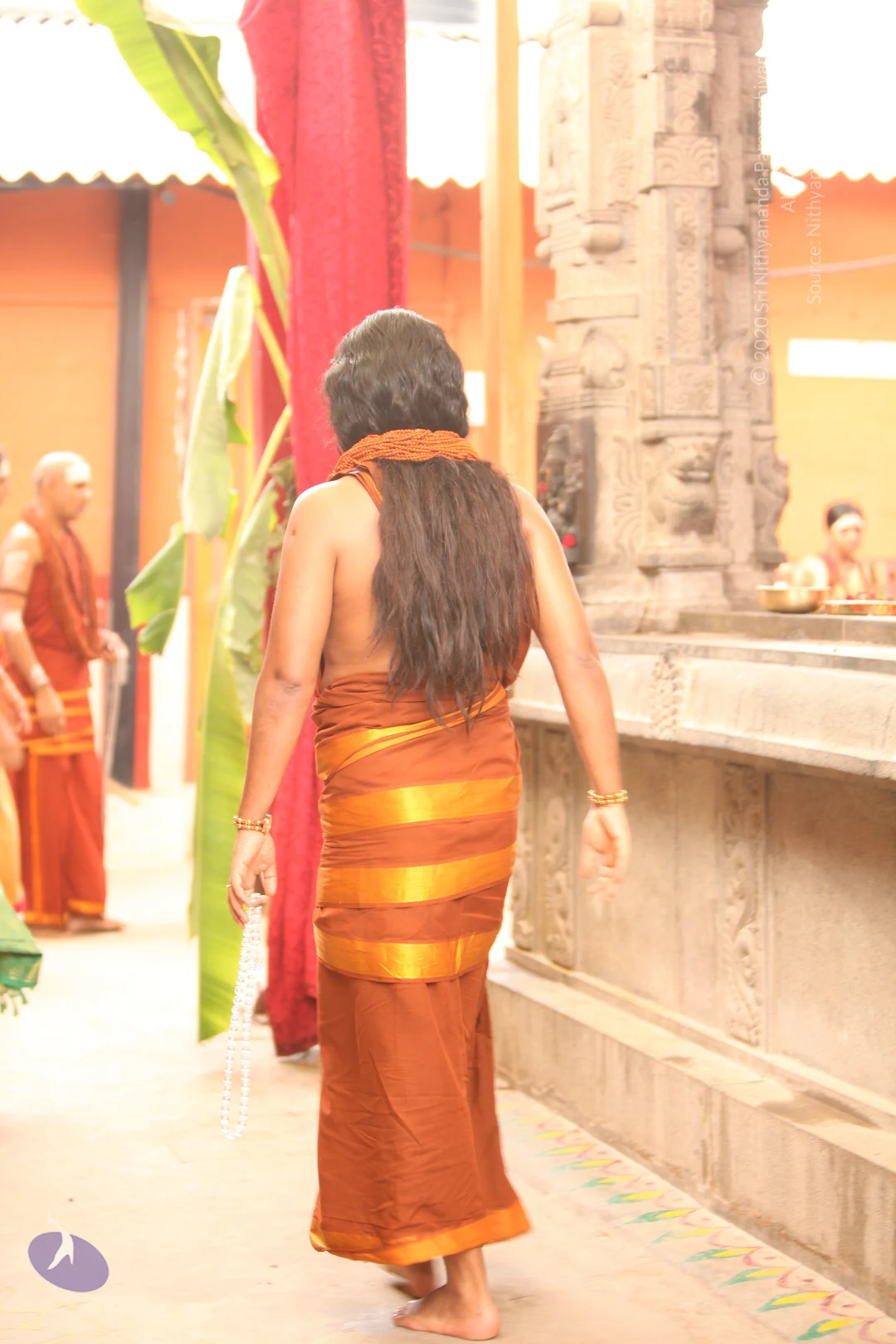
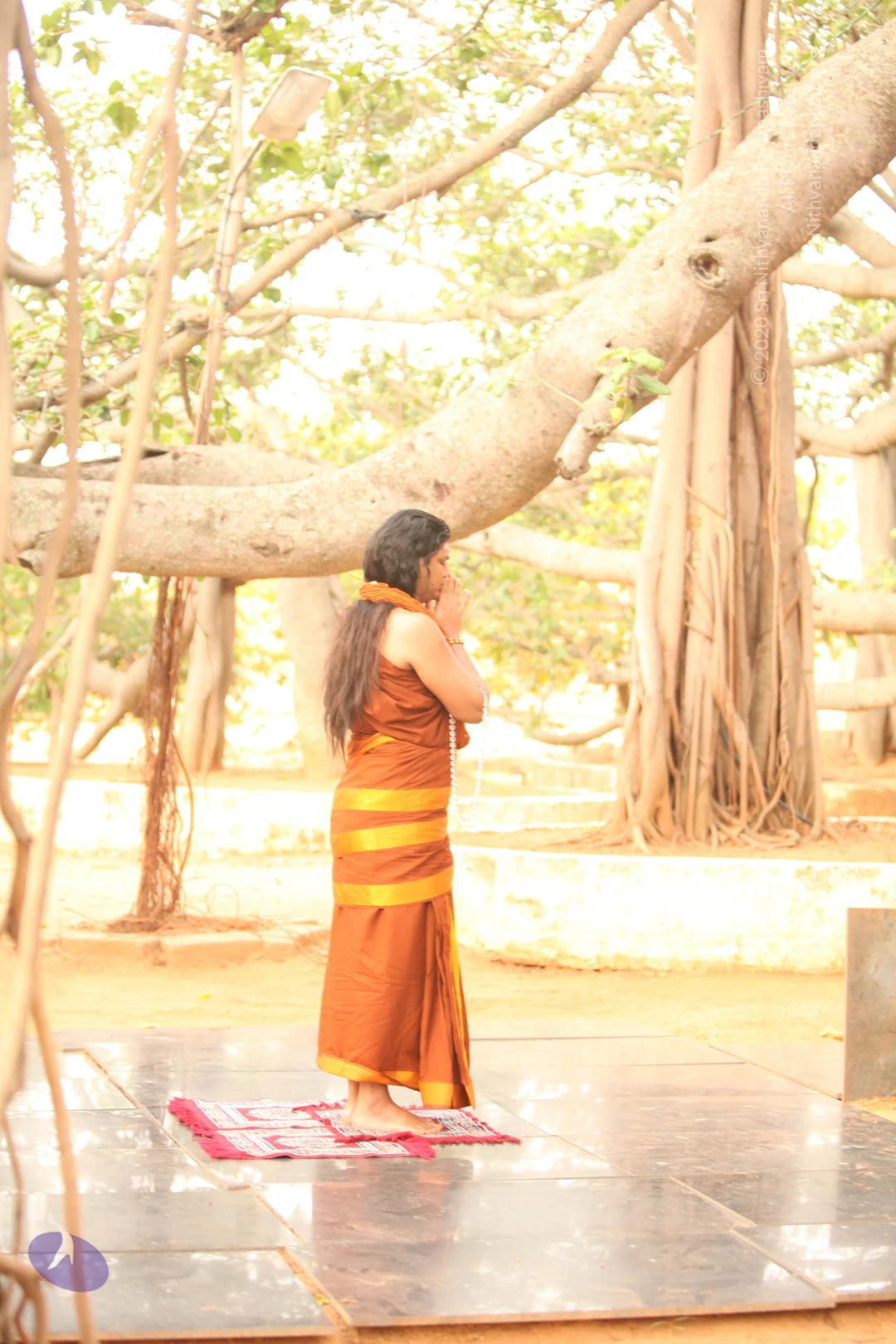
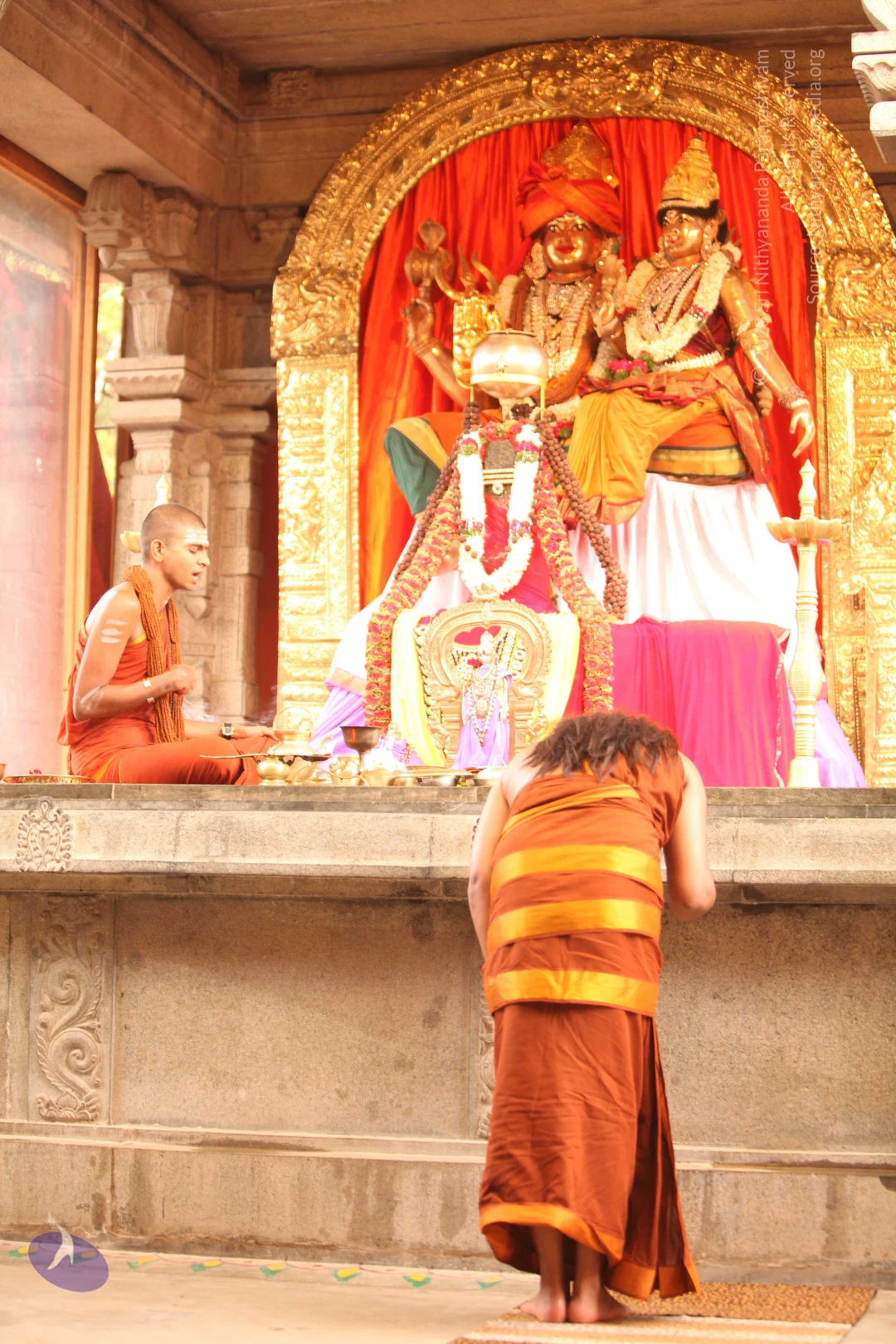
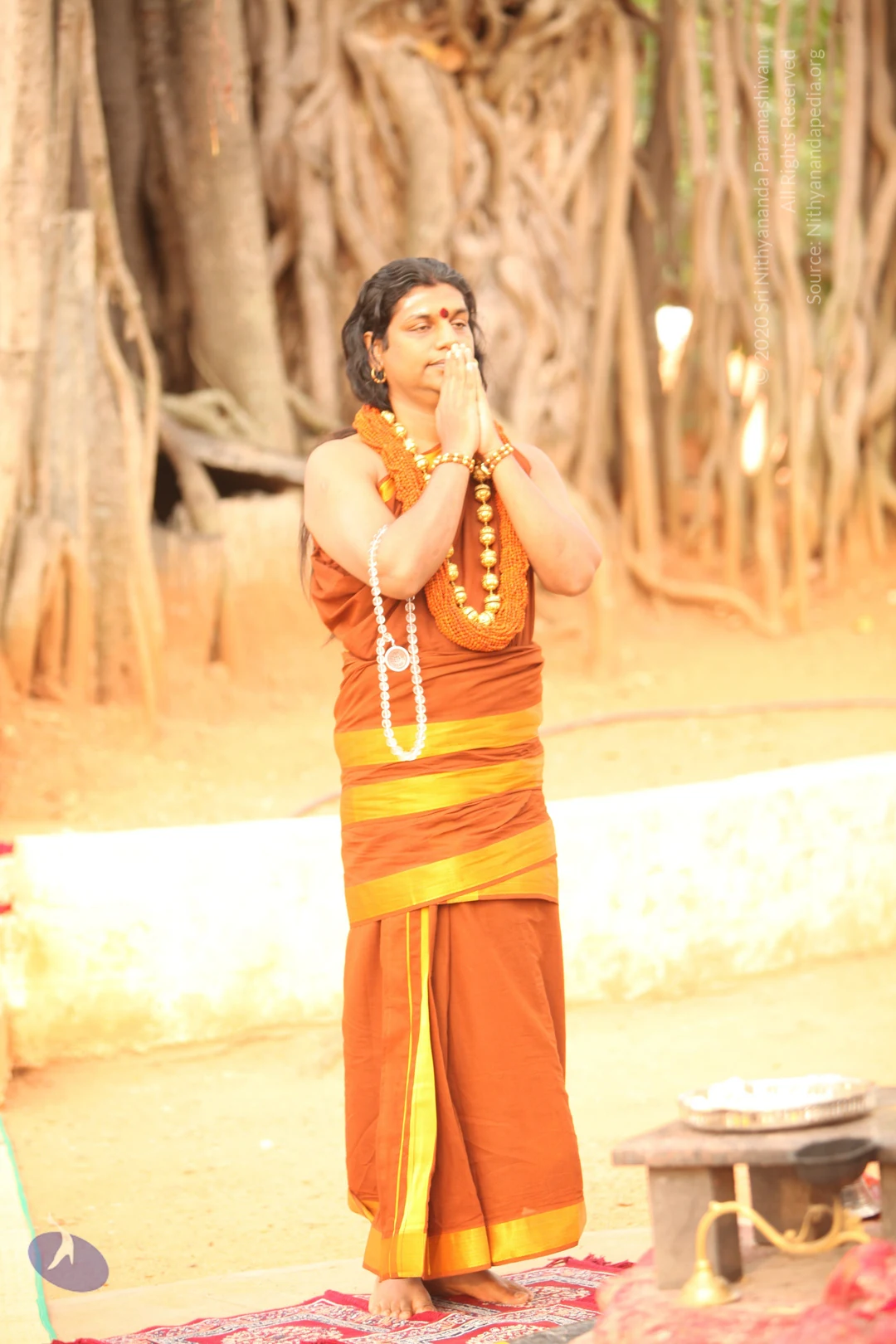
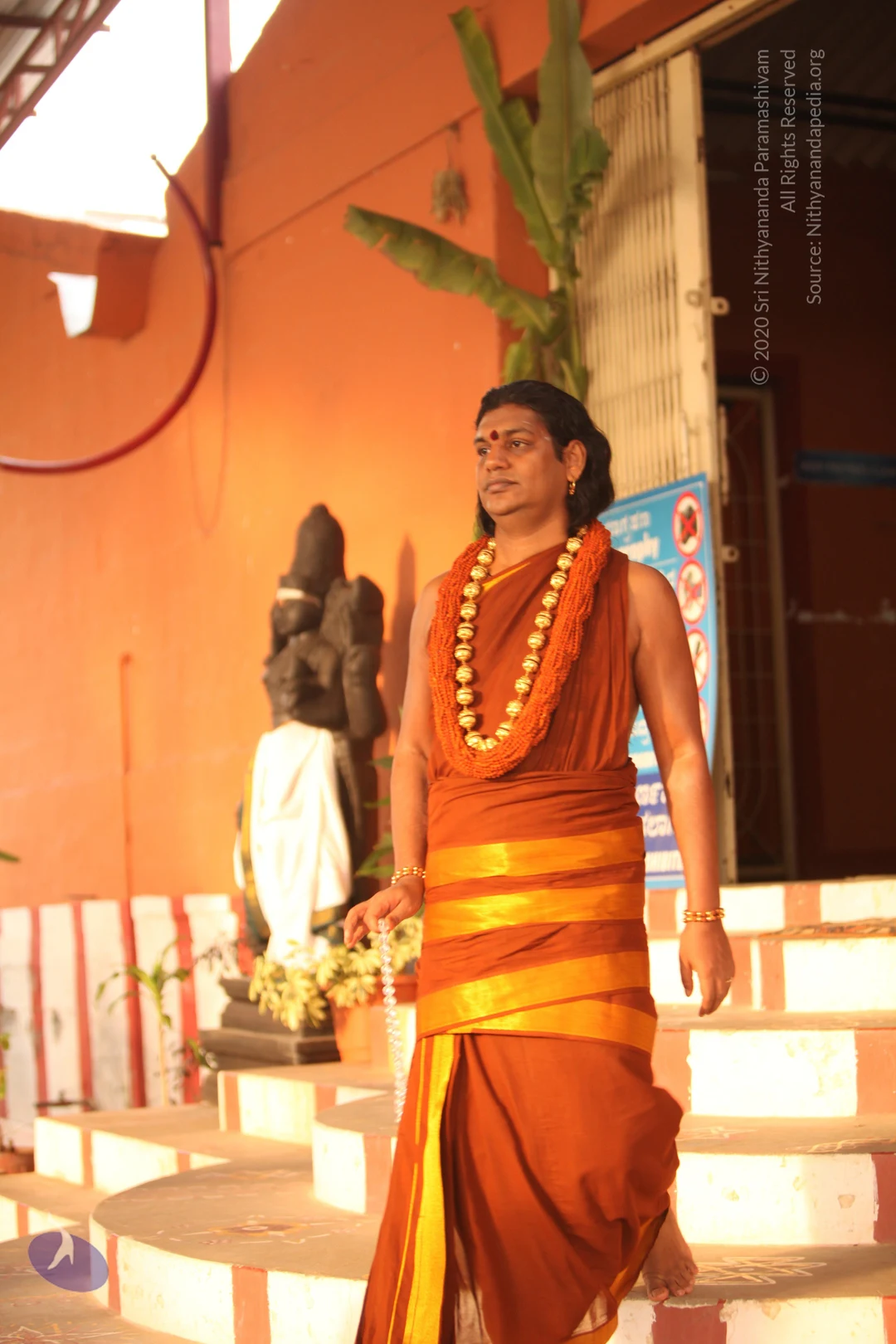
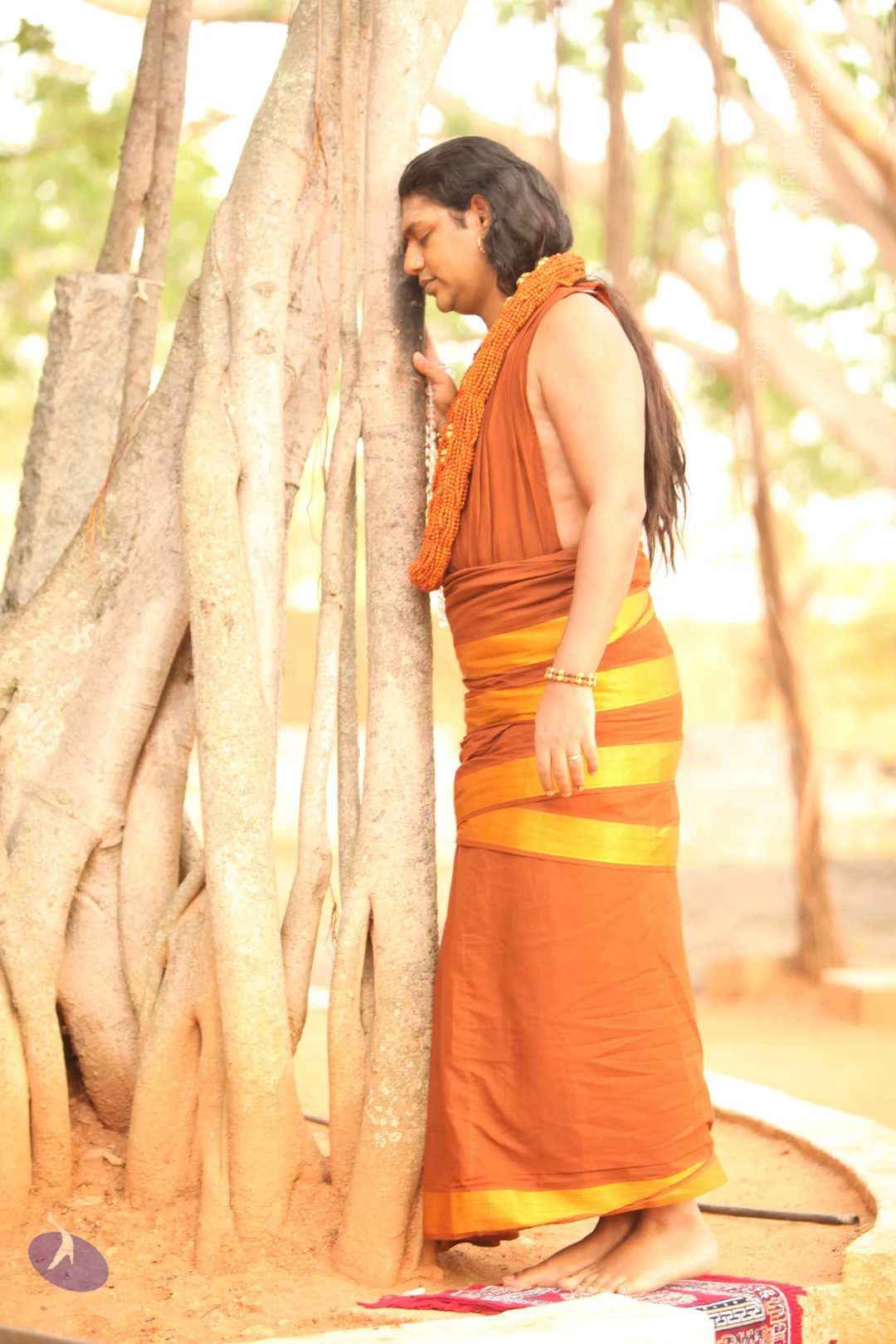
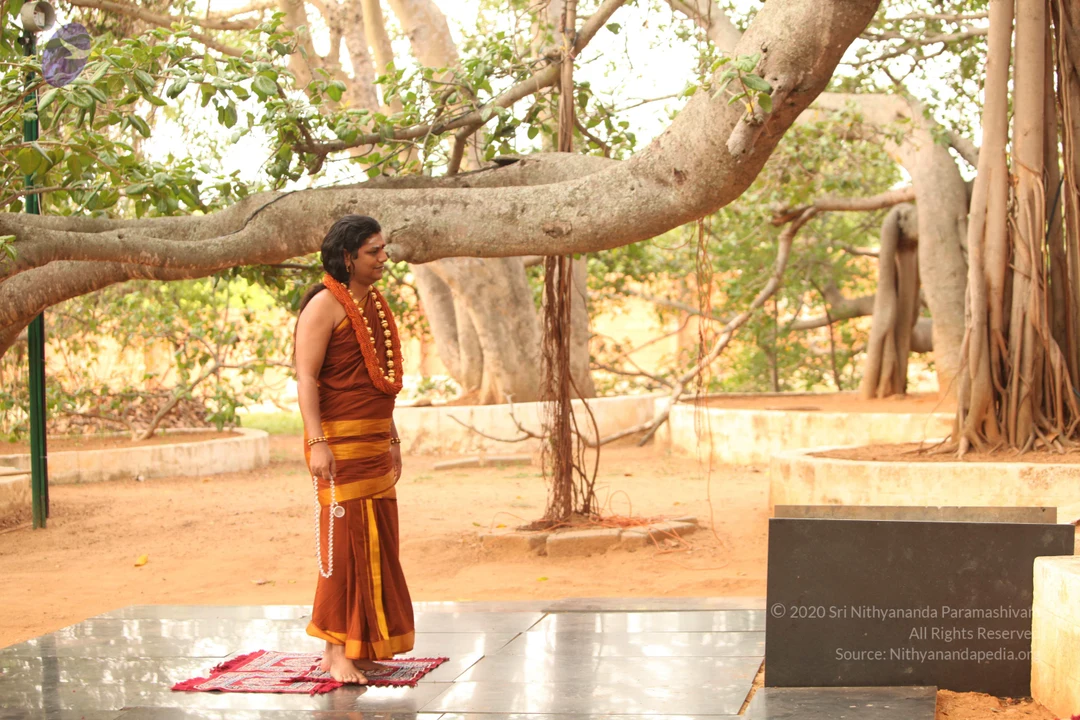
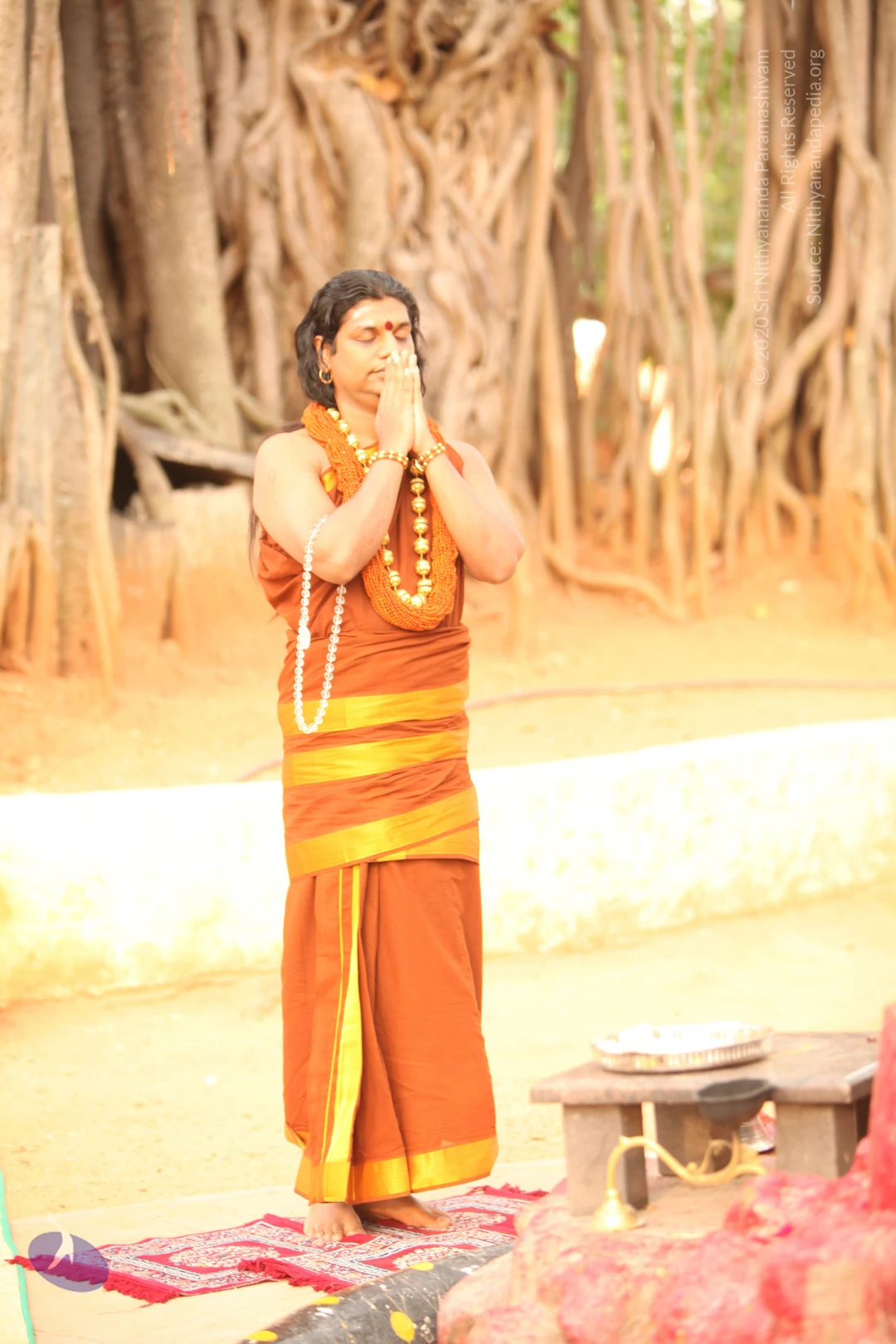
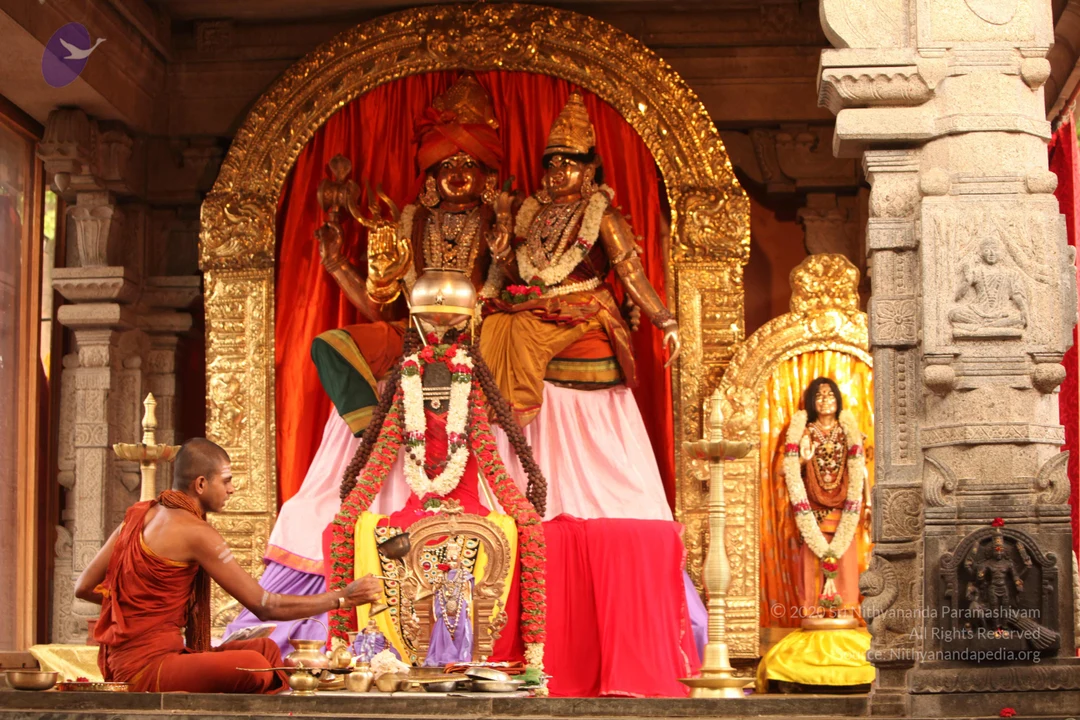
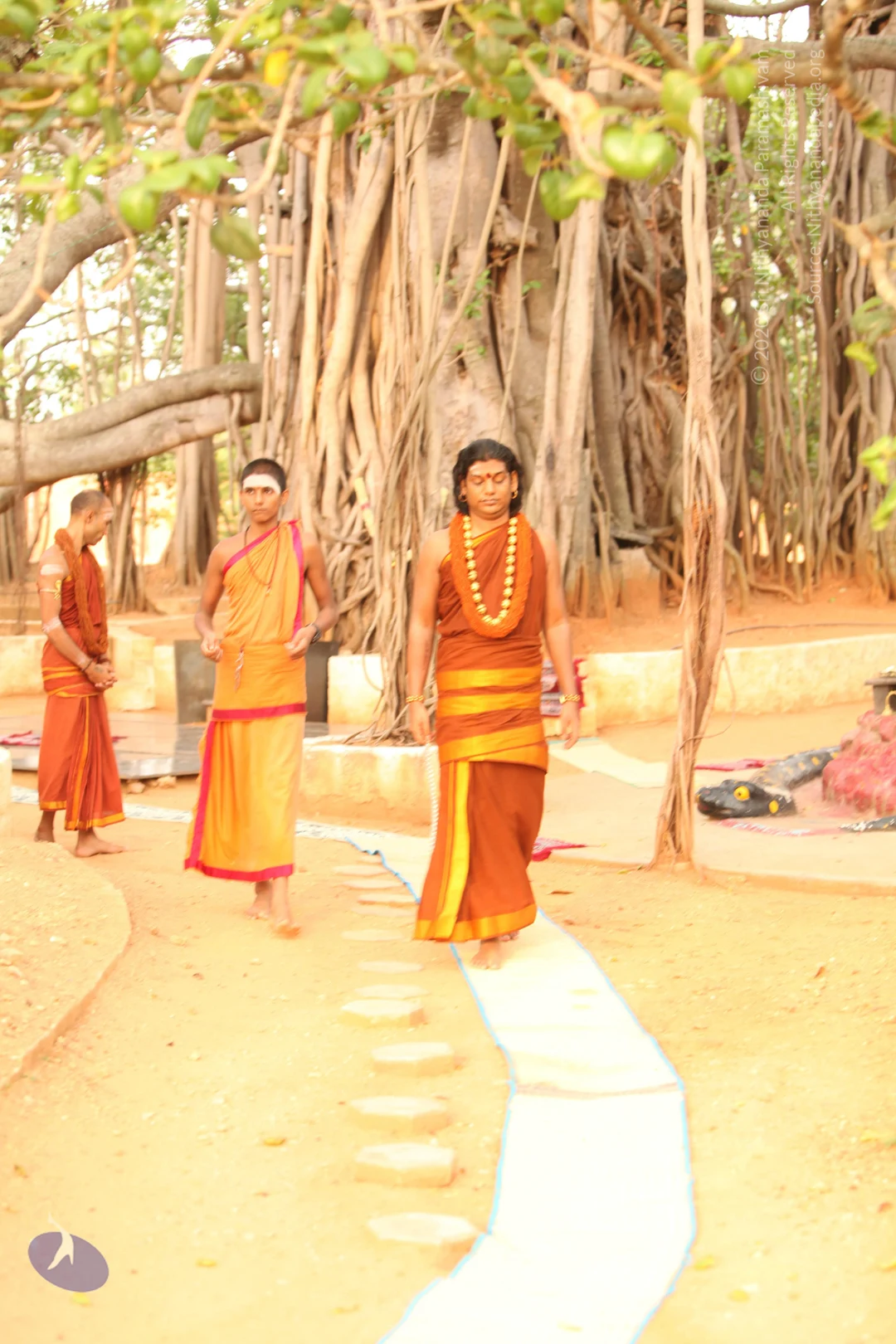
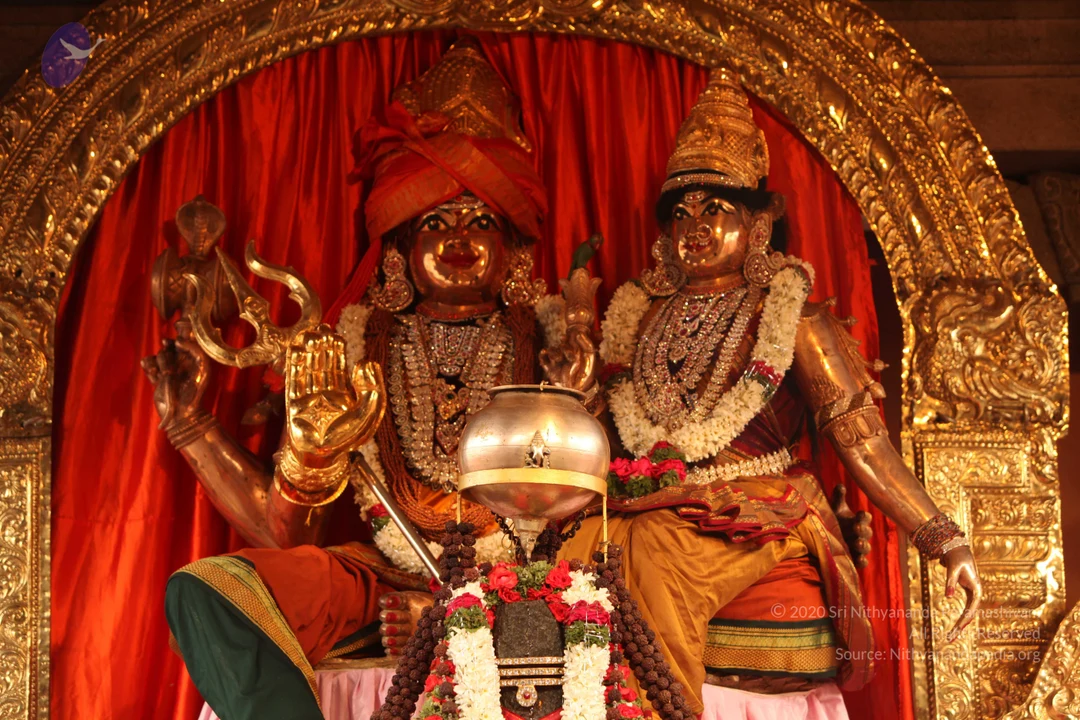
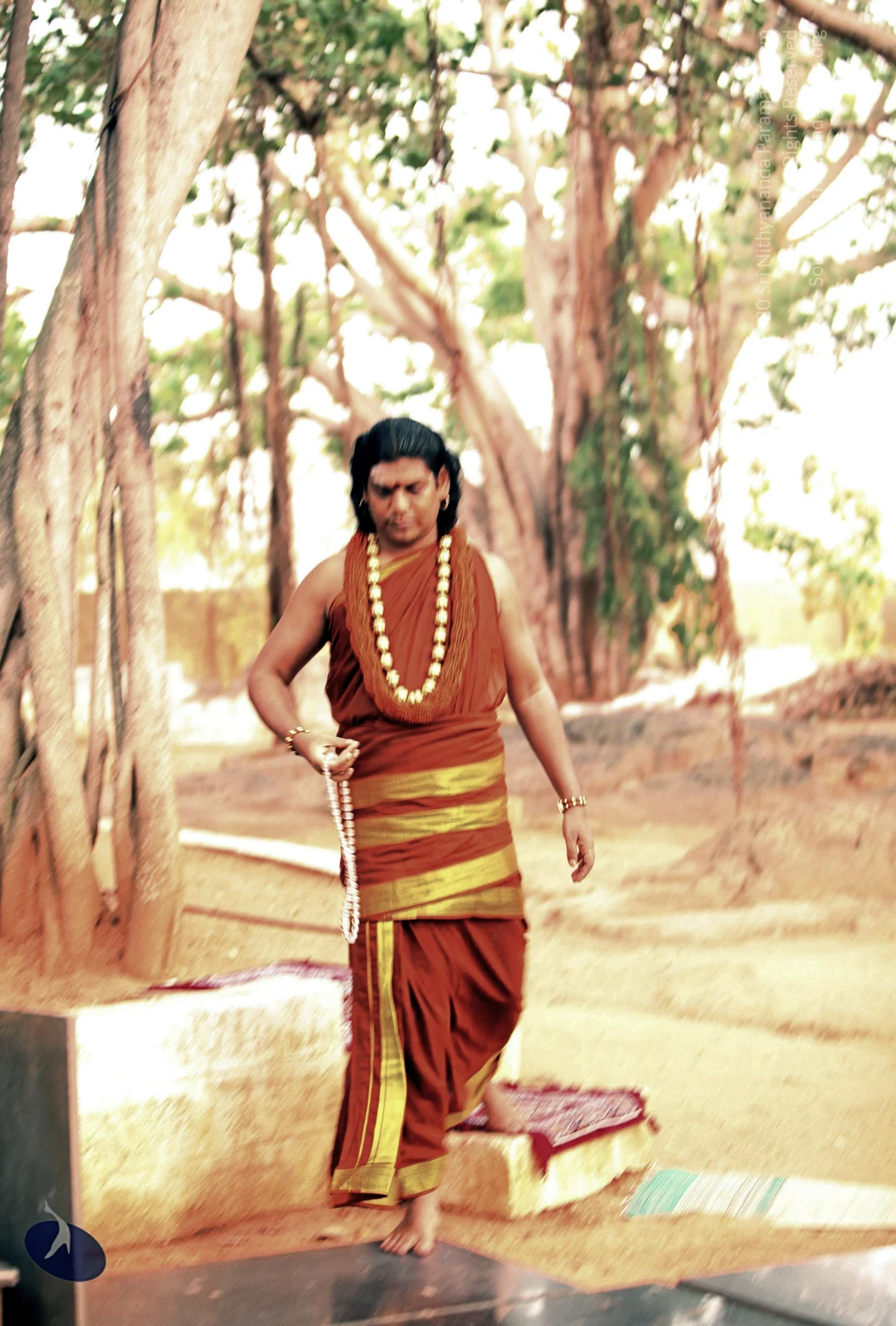
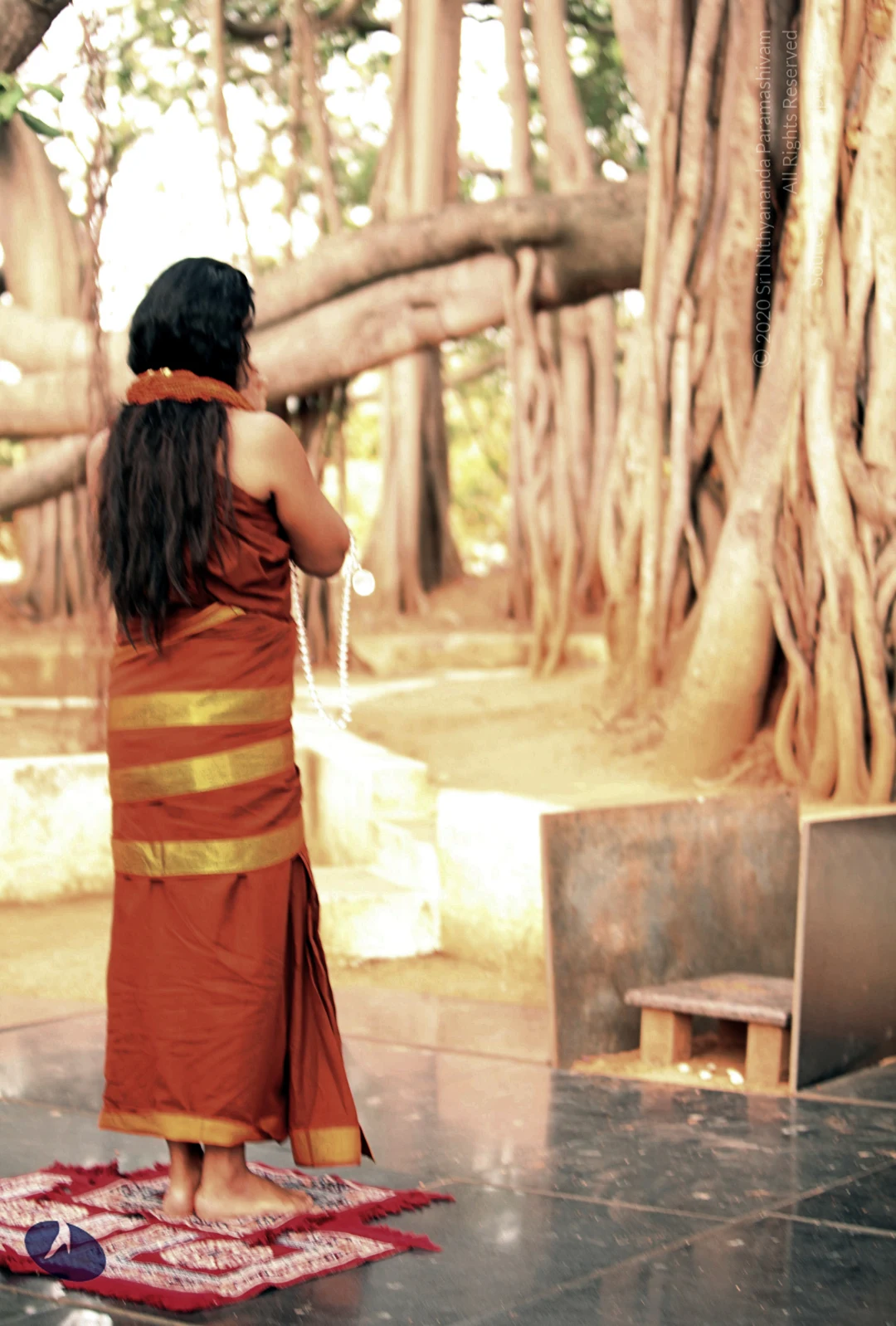
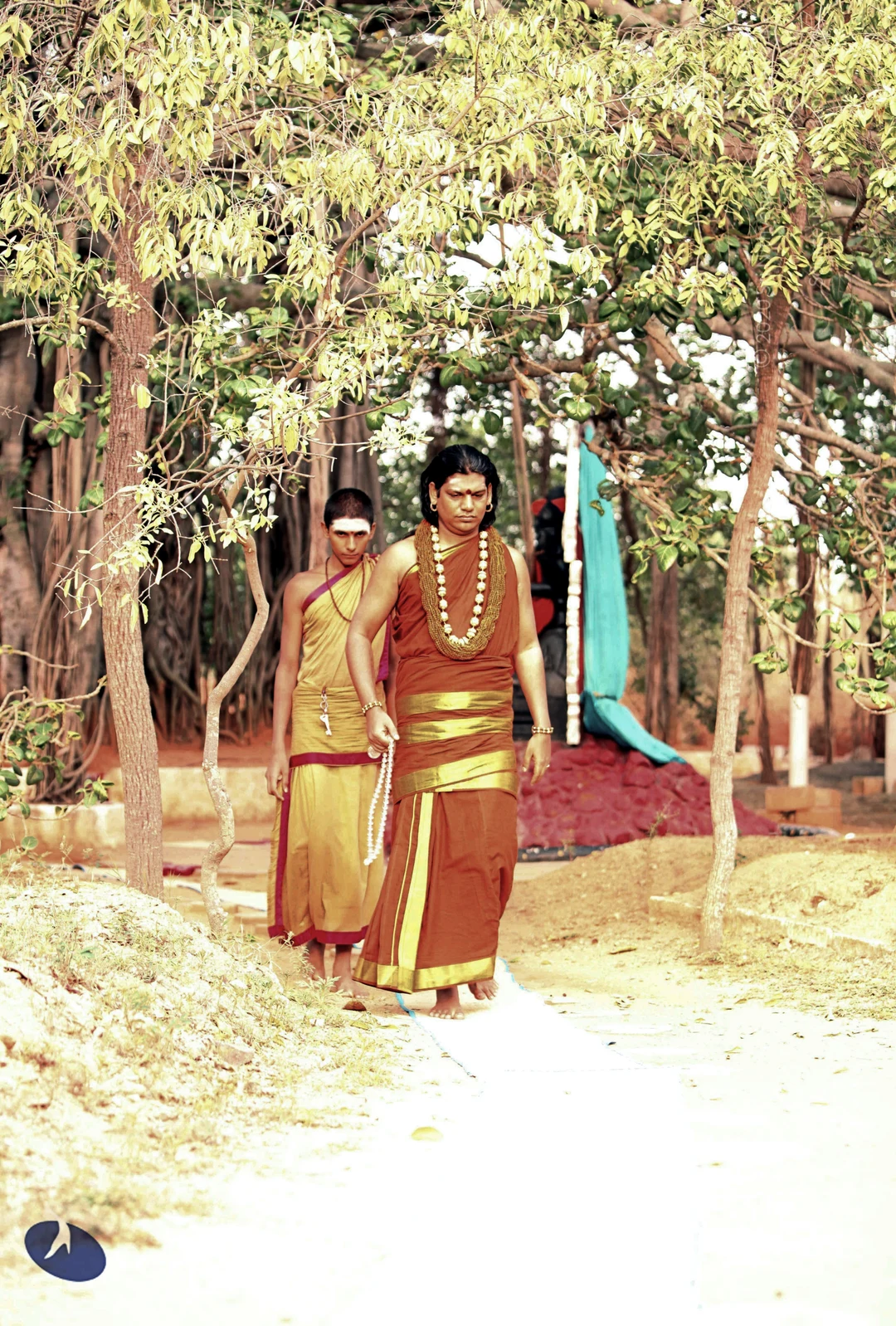
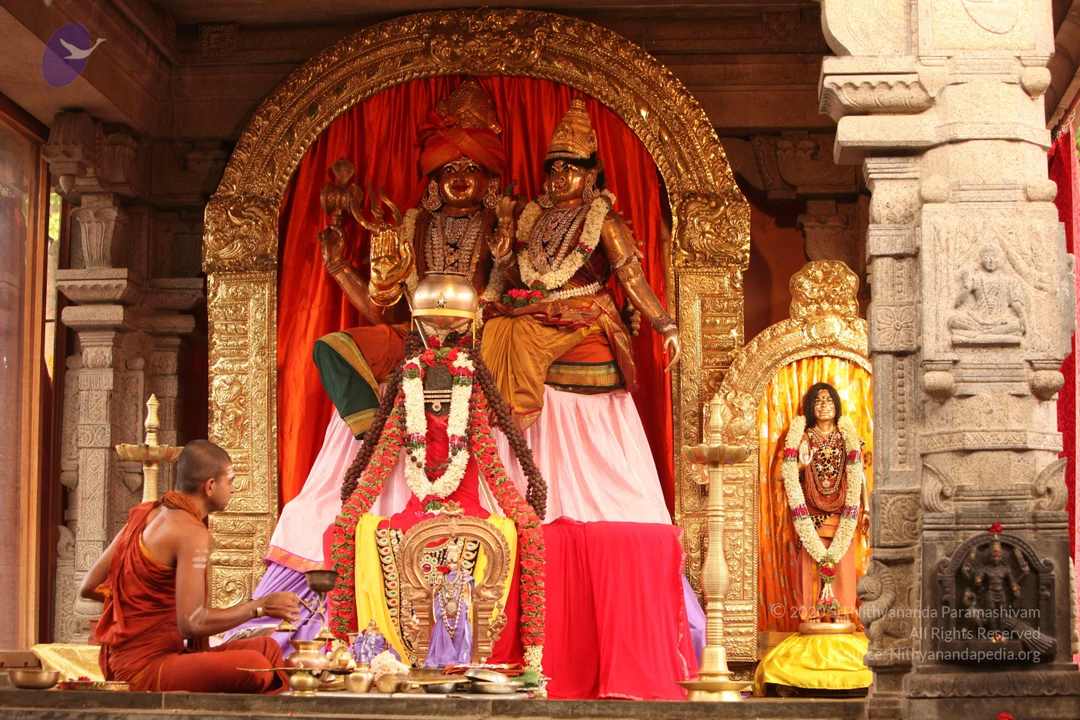
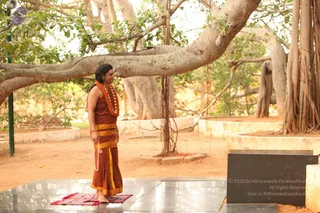
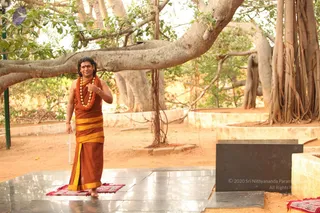
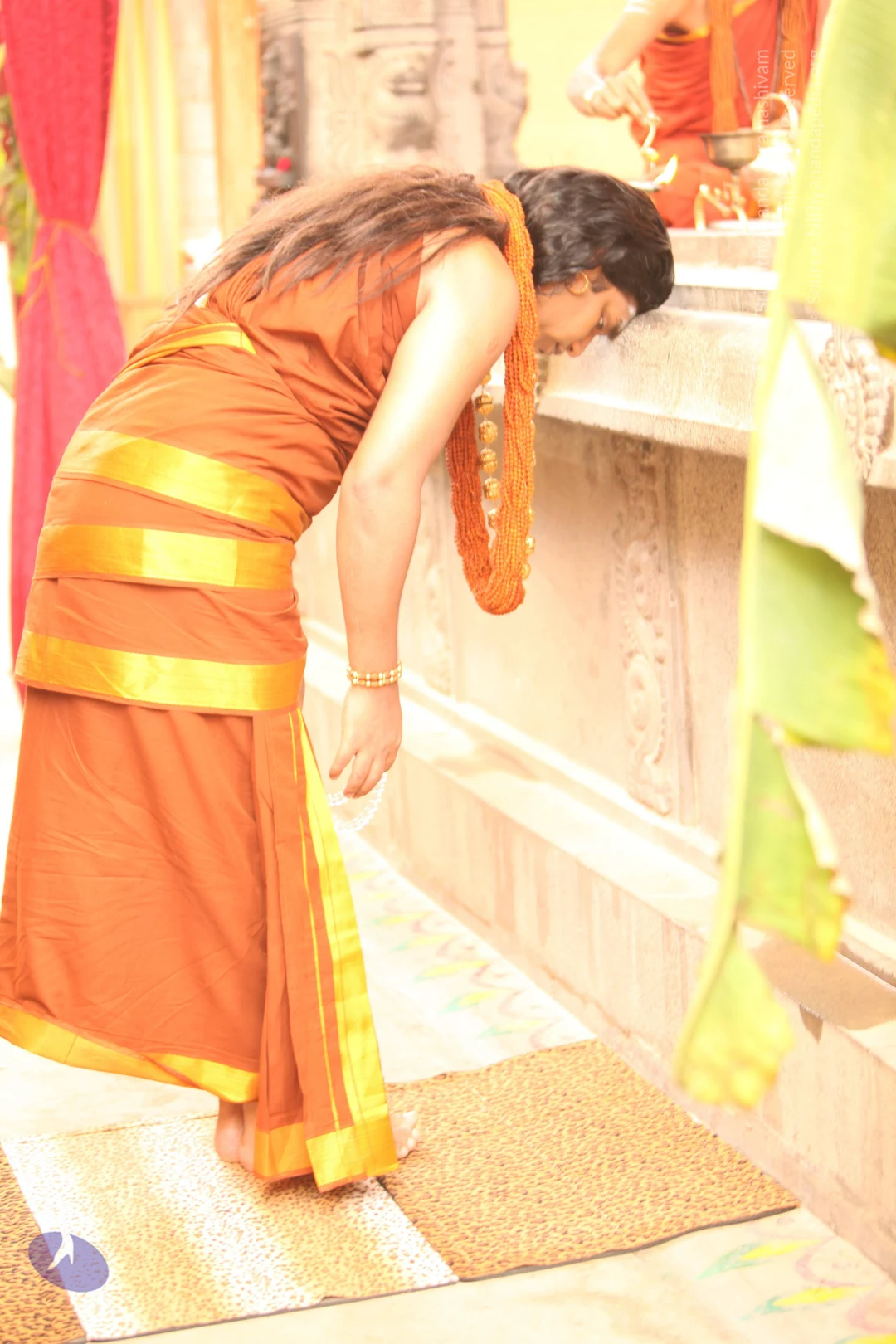
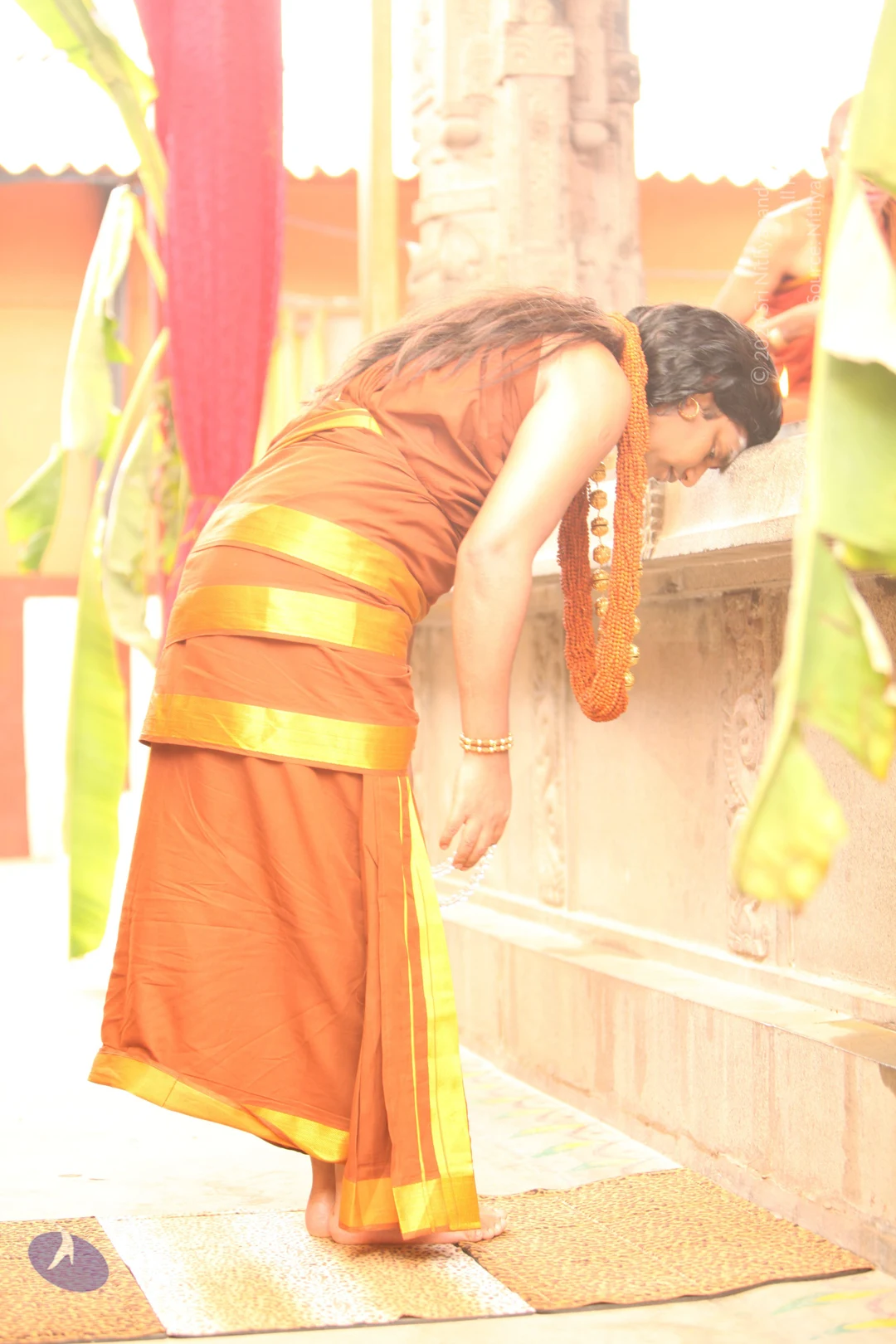
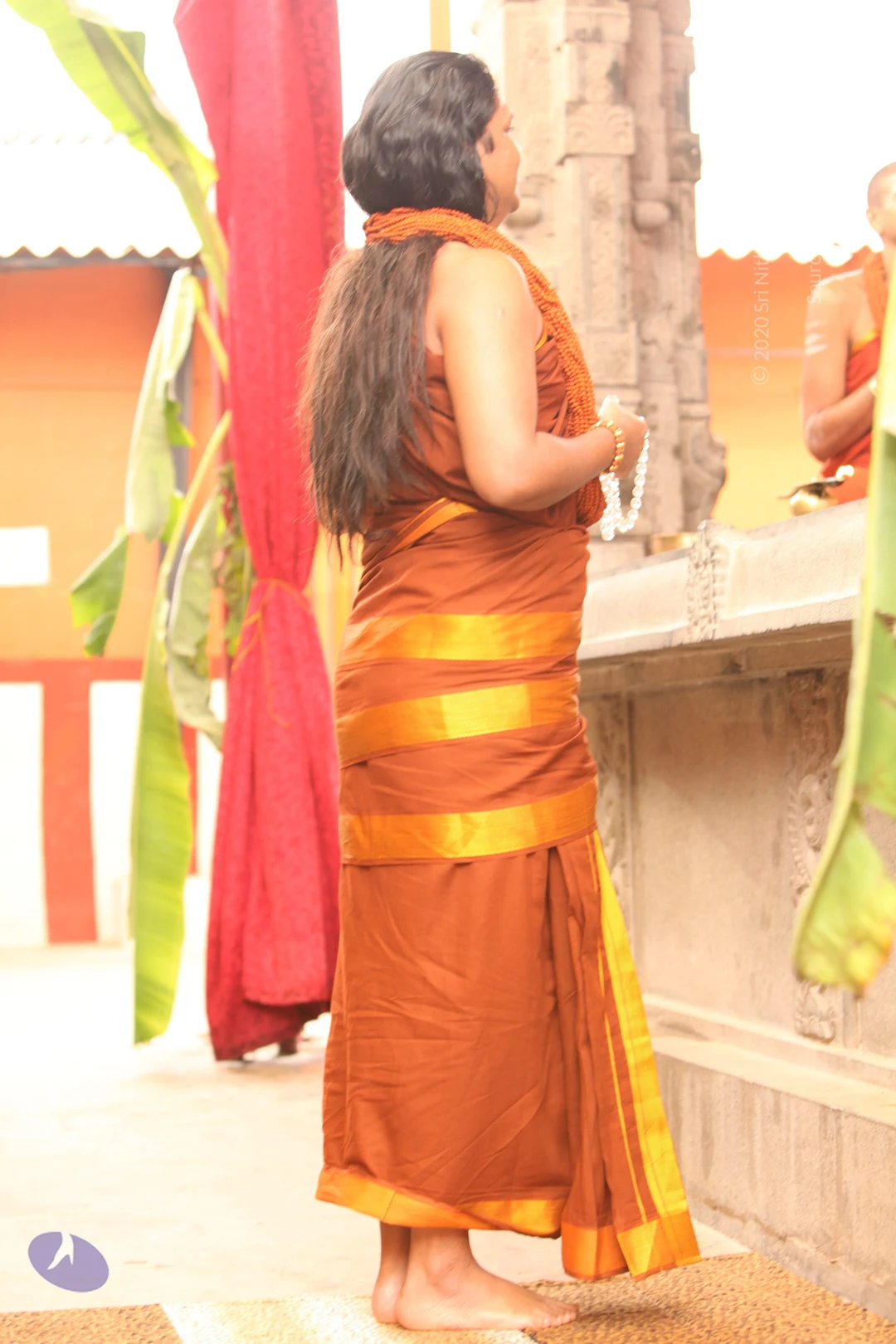
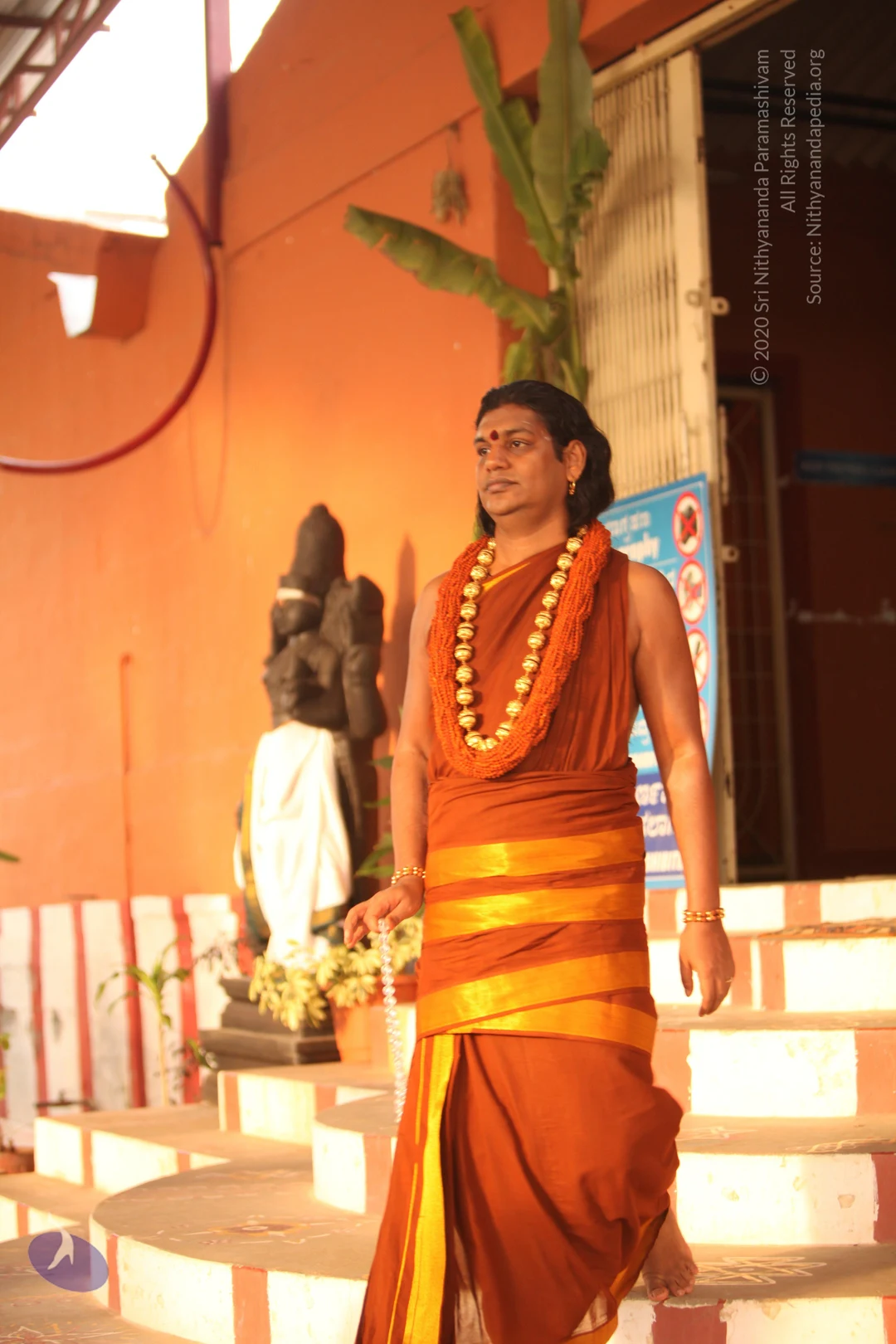
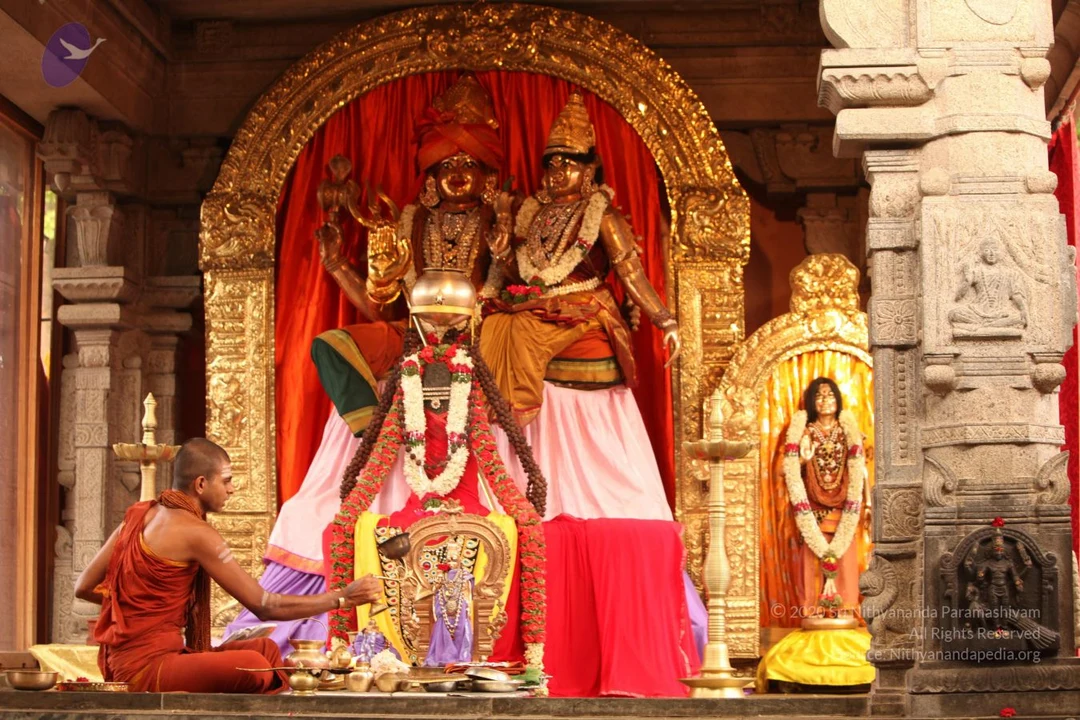
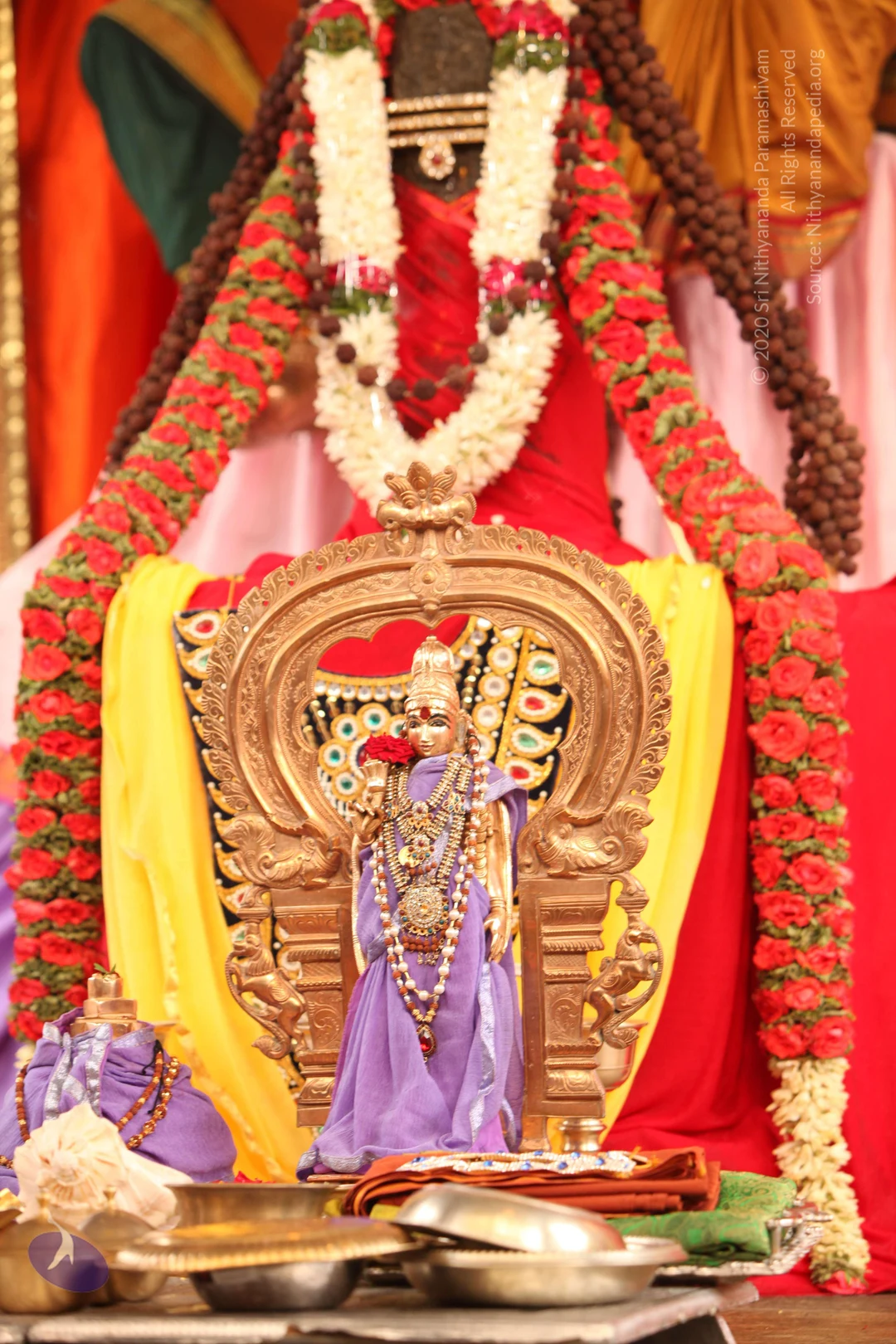
A dark blue Ford SUV with the number plate TN 25 AE 4005 drives toward the camera along a brick-paved courtyard in warm late-afternoon light. Two people sit in the front seats, a driver and a passenger wearing a head covering, and a figure is visible in the rear. Along the right edge, three women in colourful saris walk past a red-painted pillar; one wears a pale blue sari with pink border, another a teal sari and the third a yellow sari, one carrying a bundle on her head. Green trees and a red brick wall form the background, and a faint pink and blue floor design lies on the pavement. No a person candidate can be confidently identified from appearance.A dim indoor hall with reddish-orange walls and a corrugated metal ceiling, a red carpet runner on the left and metal railings. A smiling woman with long dark hair in a maroon garment with a gold-bordered cloth and a multi-strand beaded necklace walks forward, with a mala-like cord hanging at her side. Behind her, a person in saffron-orange robes carries an offering or ritual item, and a drummer in orange clothing plays a large drum. A corkboard with photographs and notices hangs on the wall at right. Three people are visible.A photograph of a person with long dark hair wearing an orange-red shawl with a rudraksha-style necklace of golden beads, standing at a railing in a warm orange-red lit room with an orange wall. Behind them, another person in orange clothing and a white forehead band plays a drum, and a brass kalasha with green leaves and a red flower sits nearby. The figure in front is smiling. a person cues are long hair, a bead mala with gold ornaments and an orange wrap, but identity is uncertain from appearance alone; the figure is one of the main people shown, with others behind in orange clothing.Outdoor photo of a single figure standing barefoot on a dark polished stone platform beneath a large spreading banyan tree with aerial roots. The figure has long dark hair swept back, wears a rust-brown dhoti-style garment with a gold-bordered yellow waistband and a matching brown shawl wrap, and an orange-red flower garland with white beads around the neck. A white mala hangs from the right hand. A small red-and-white patterned mat lies on the stone. A dark stone slab stands to the right on a sandy ground with low planters. The figure's appearance is consistent with the page's a person reference, though the identification is uncertain, so the description records only the visible cues of clothing, garland and mala.A photograph of a single man standing barefoot on a dark grey stone platform beneath a large spreading banyan tree with aerial roots and a green metal pole at left. He wears a rust-orange and saffron cloth wrapped around his body with a broad gold-banded border, and a large orange-and-cream bead mala with a red shawl-like drape over the chest. A white beaded strand hangs from his left wrist area, and his right hand is raised in a gesture while he speaks. A red-and-white patterned mat lies on the platform, with a dark stone slab and a low concrete ledge nearby. The sanctified setting suggests a teaching moment outdoors. a person is visible: long dark swept-back hair, rudraksha-style bead mala and ochre saffron clothing mark the presentation, though the appearance is only partly clear.A temple shrine with a gilded arch framing a large Shiva-Parvati deity murti pair, the male form holding a trident and wearing an orange turban, the female form in gold ornaments and a white flower garland, set against a red drape. A shaven-headed priest in an orange cloth sits at lower left, pouring offerings near a red-and-gold lingam decorated with garlands. Brass lamps, bowls and a kalasha stand on the stone platform, and a smaller gilded shrine on the right holds a standing deity murti with a garland. Stone pillars carved with figures frame the scene.
Pada Pooja

35 photosSource gallery
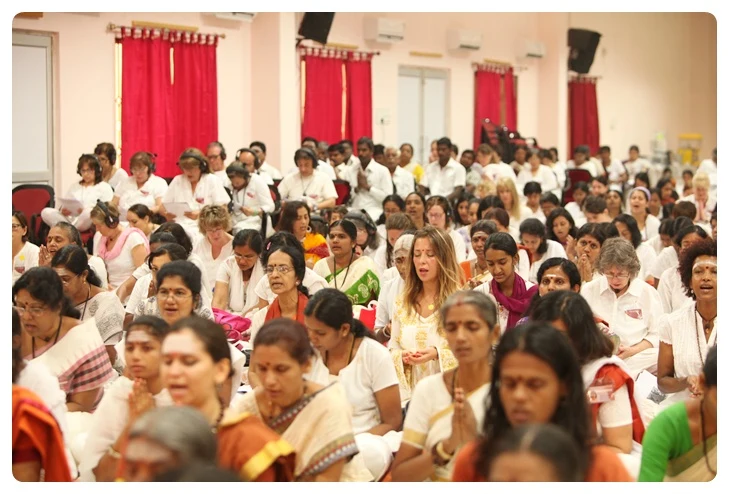
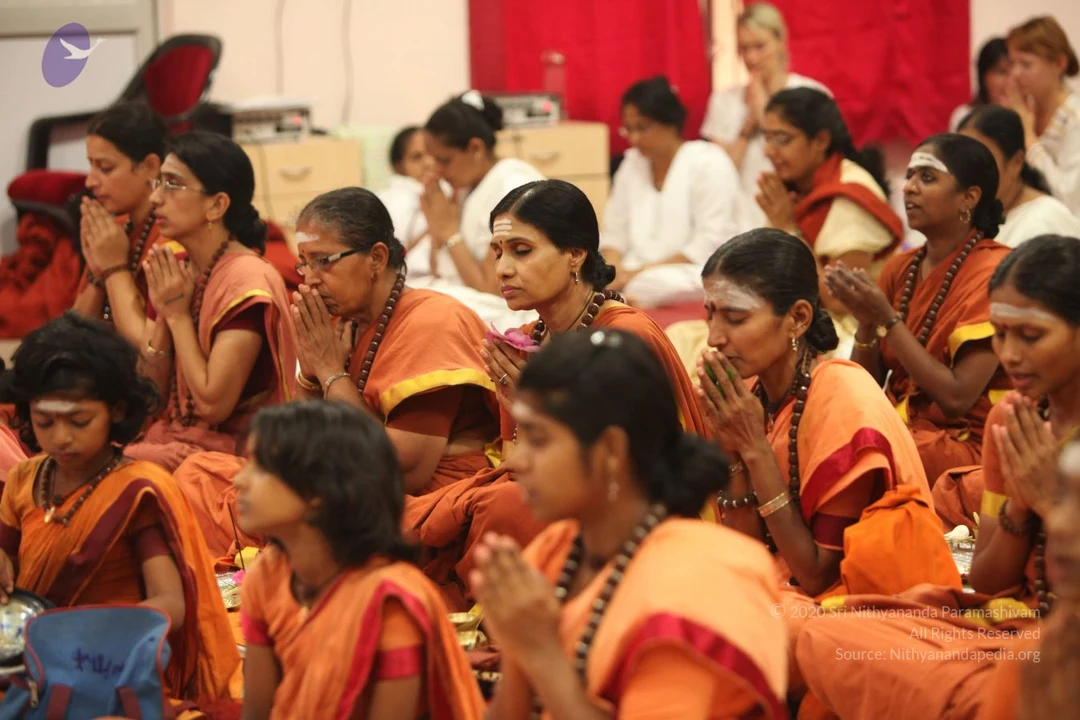
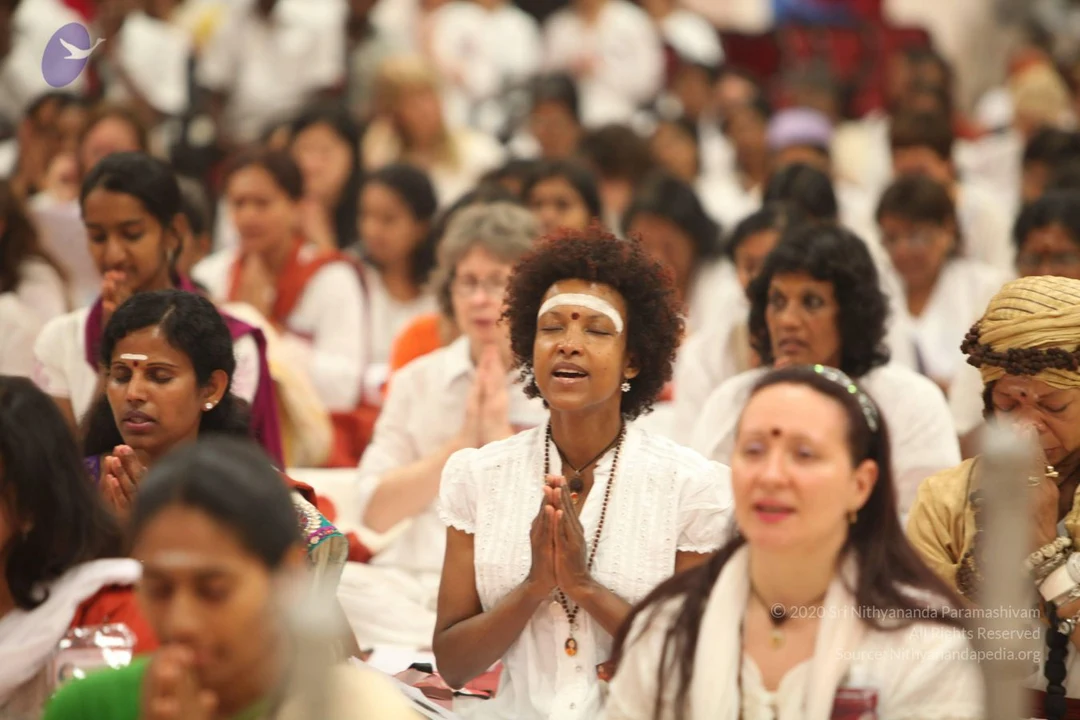
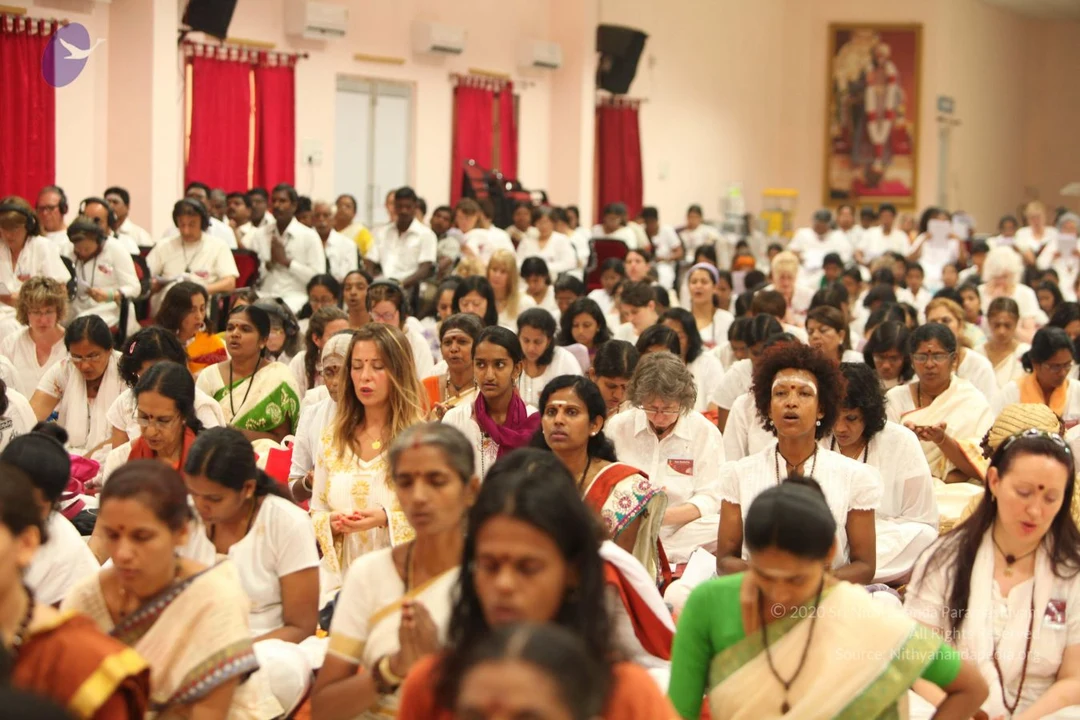
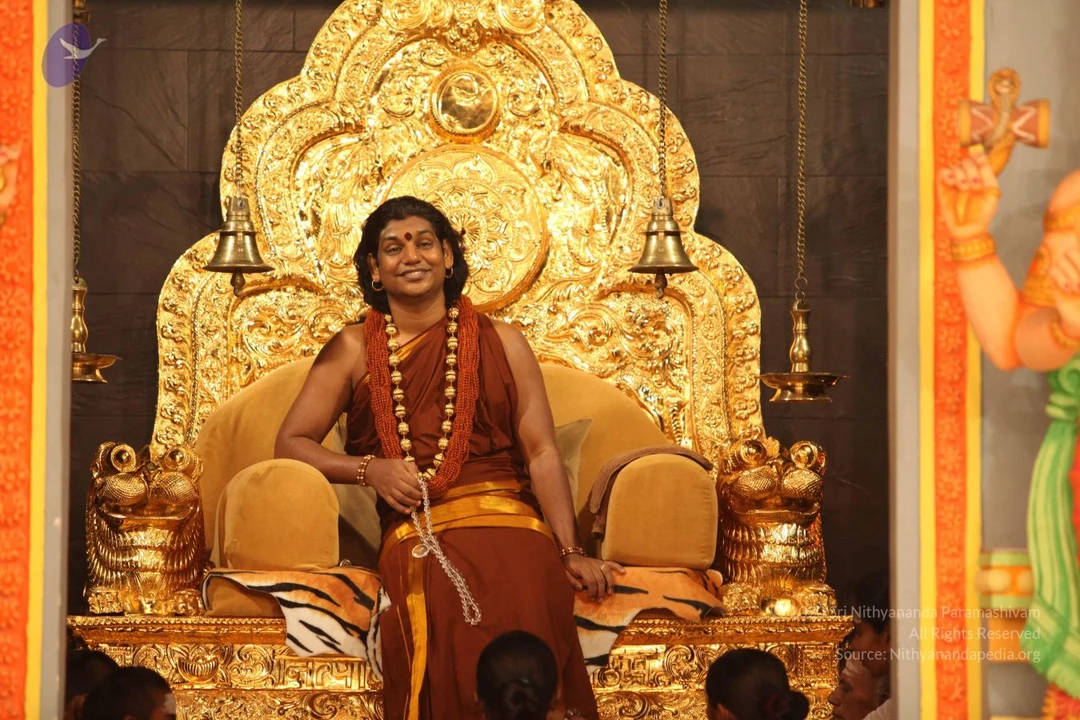
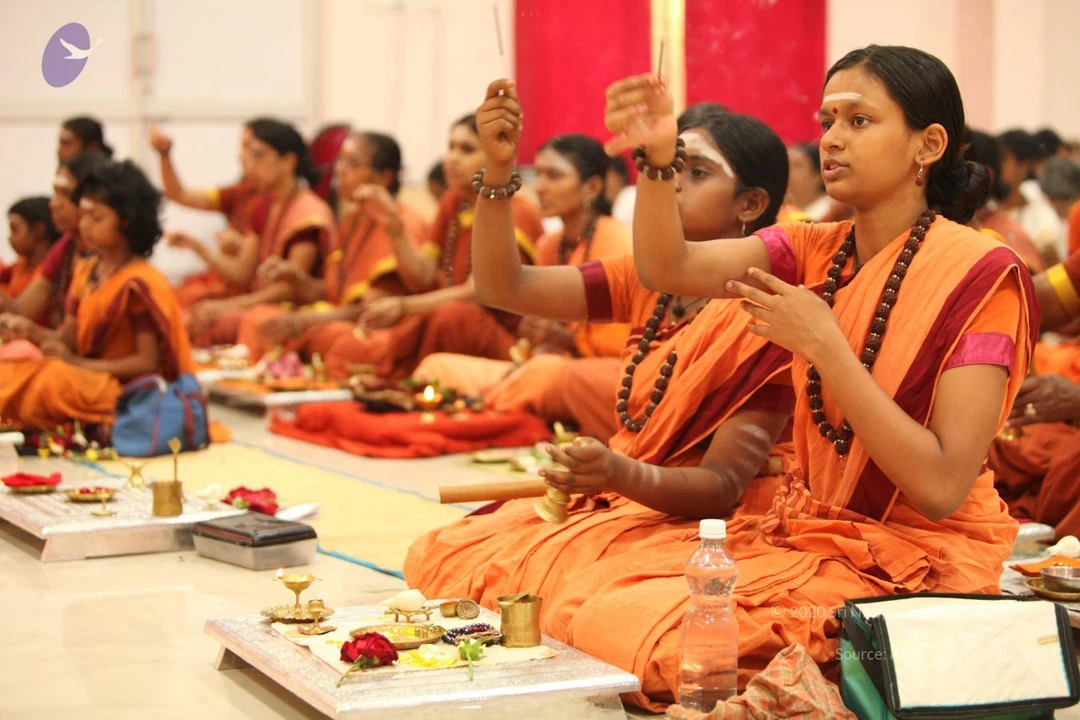
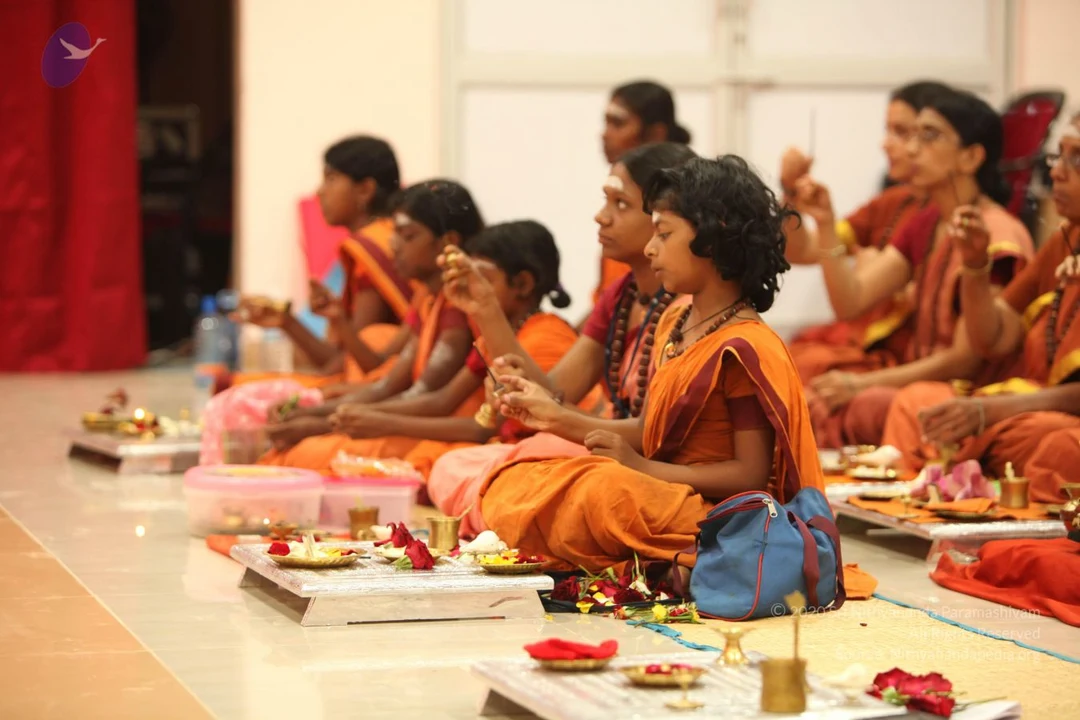
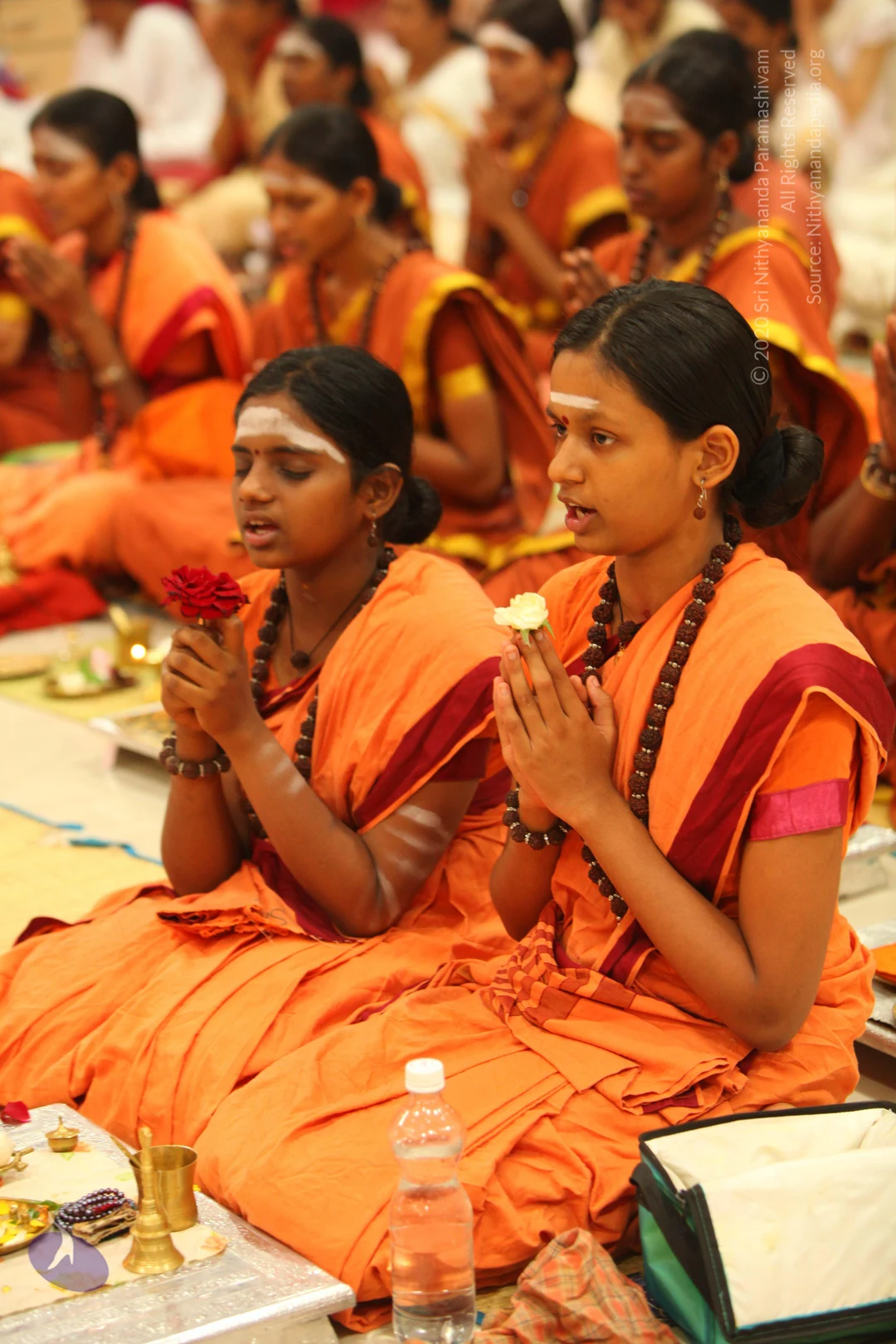
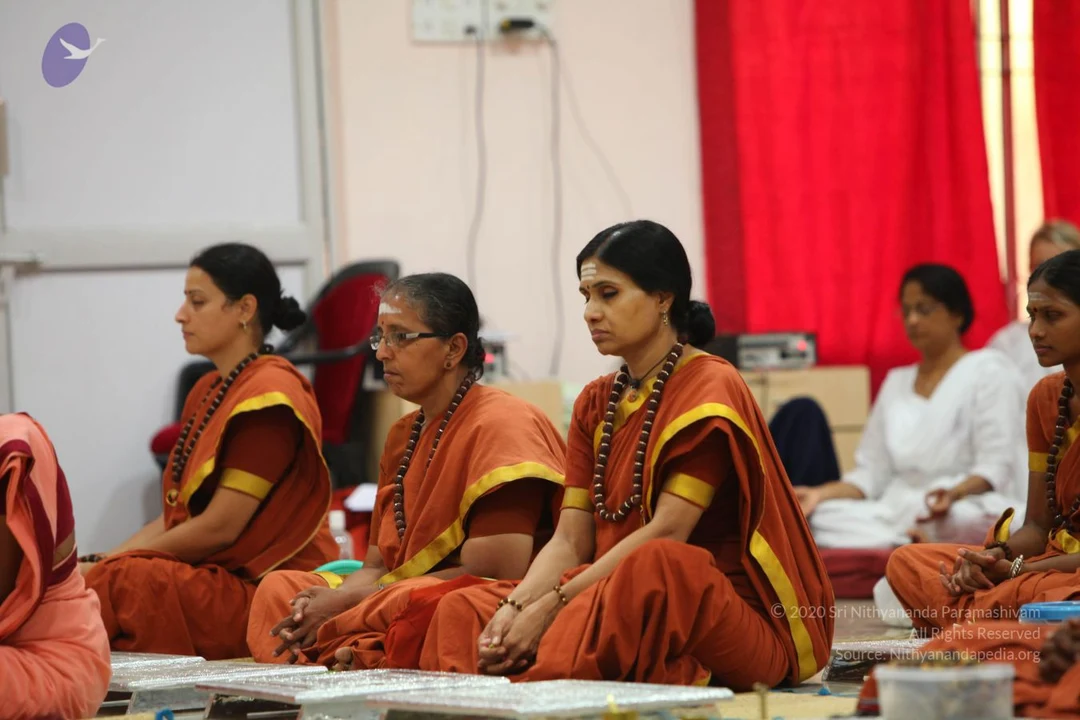
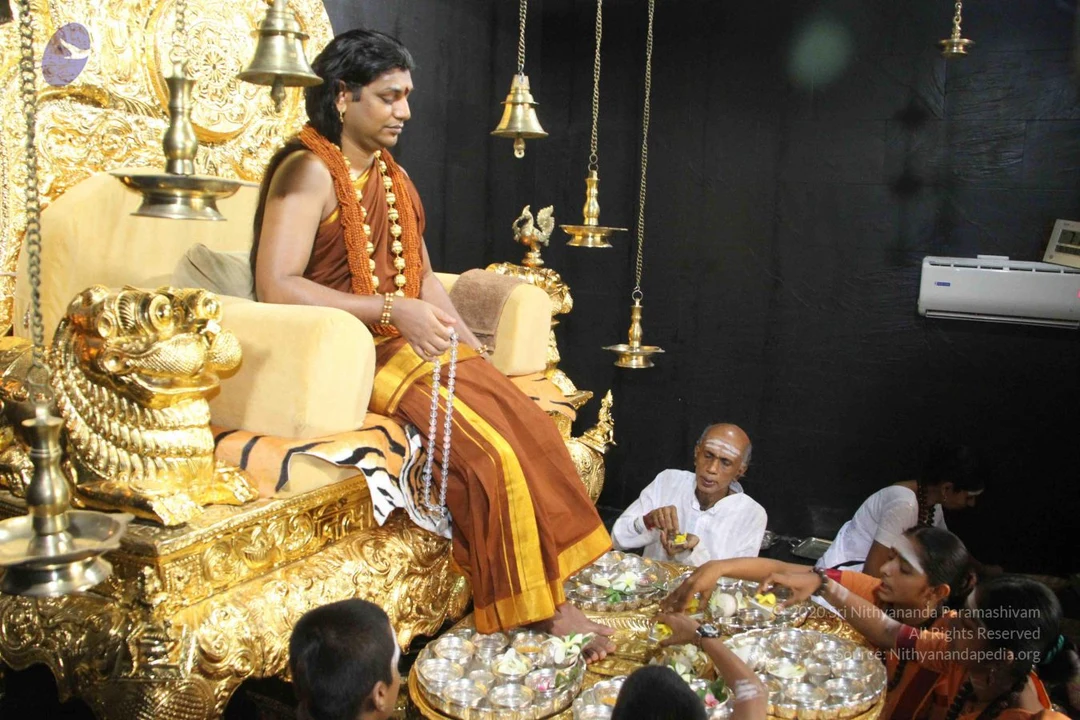
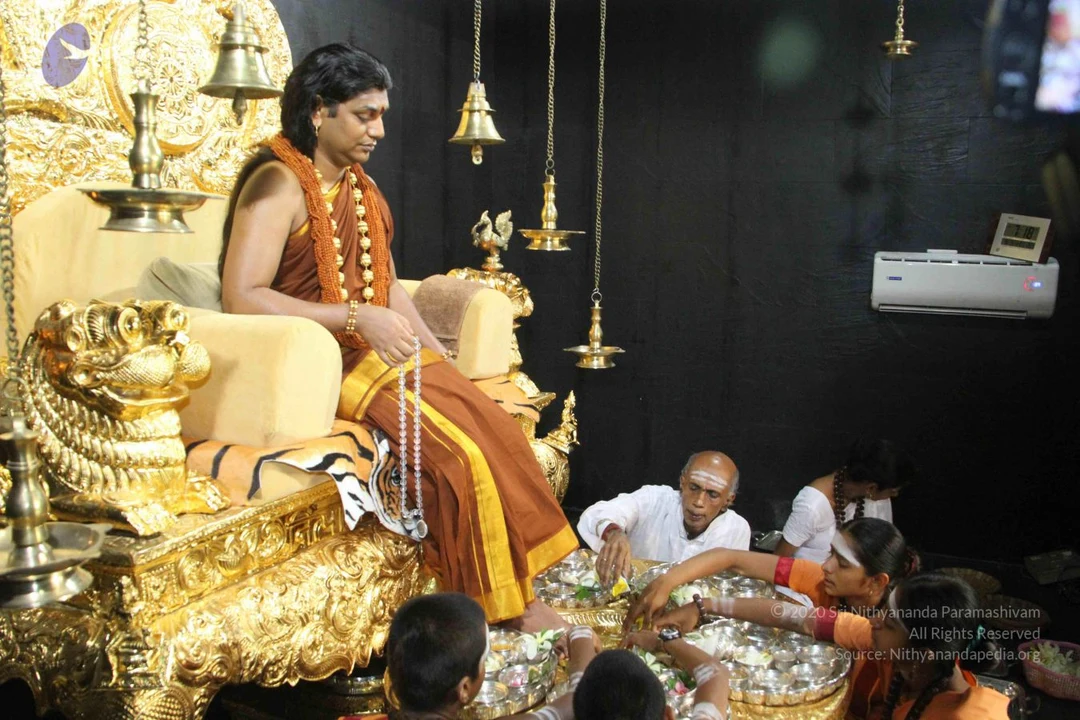
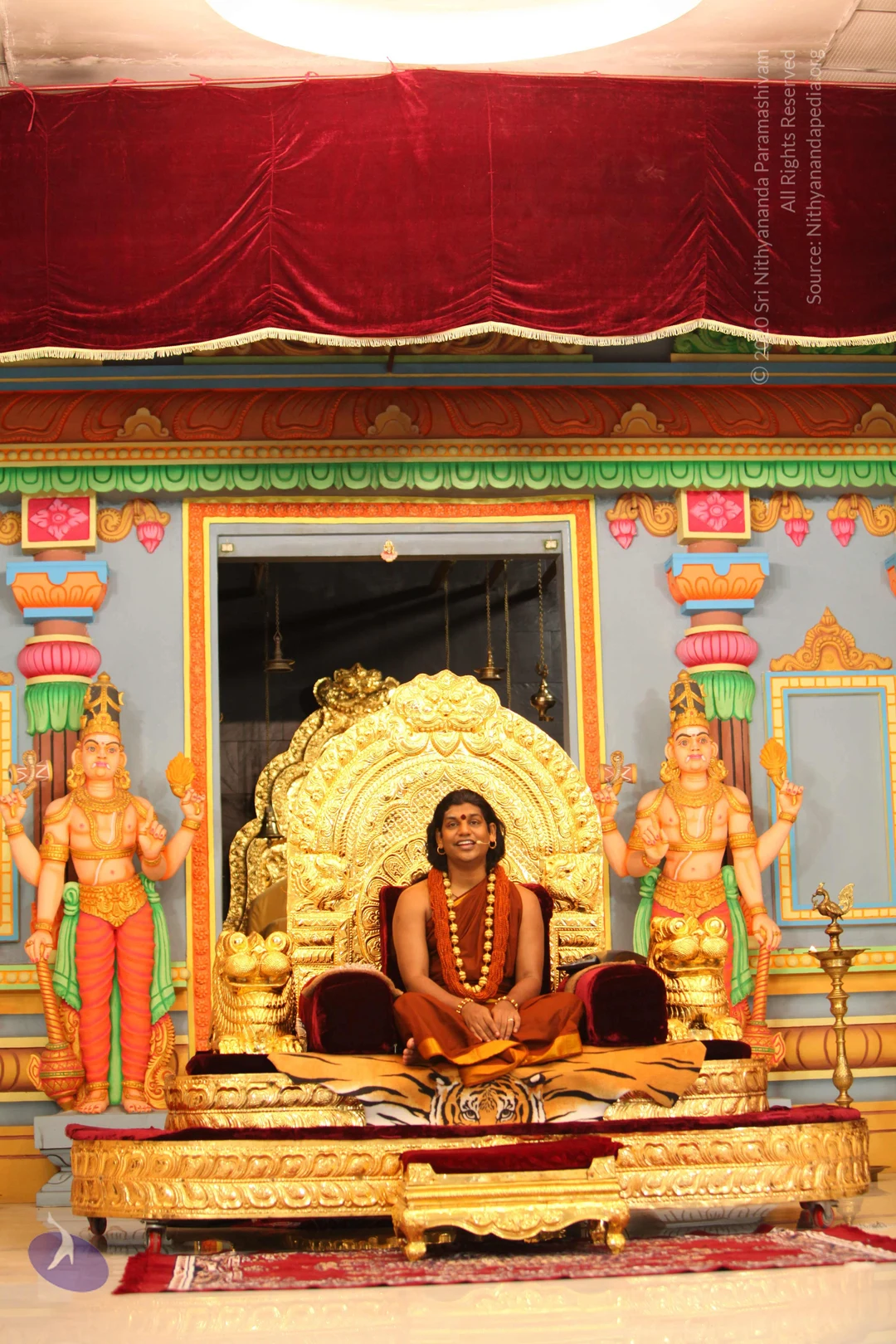
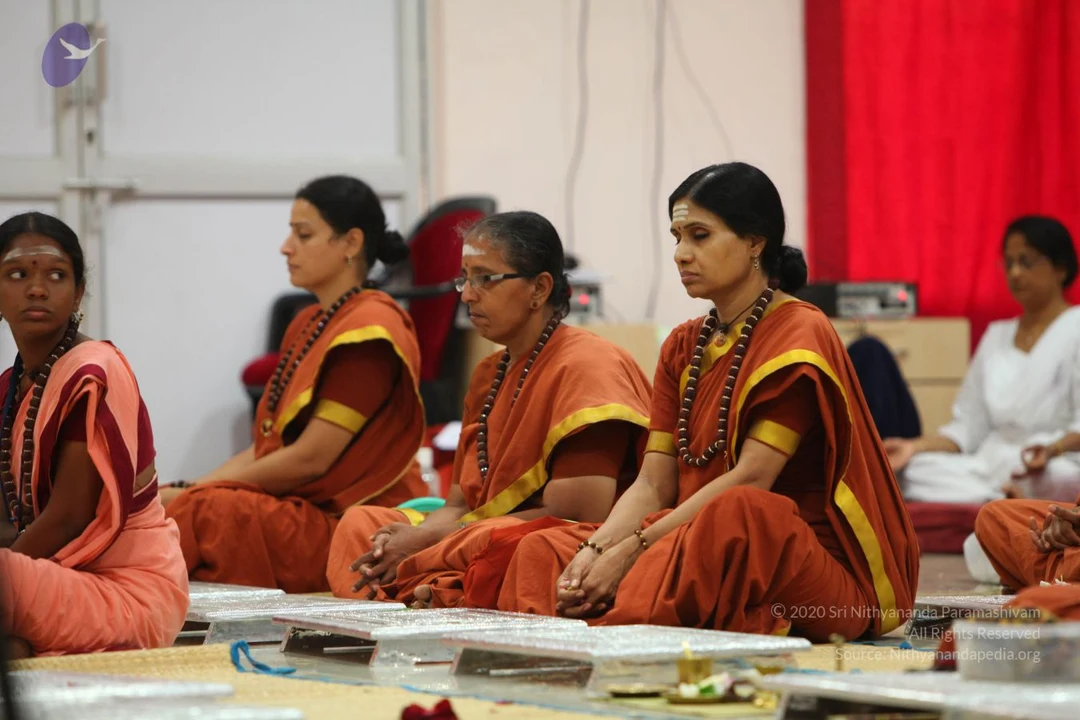
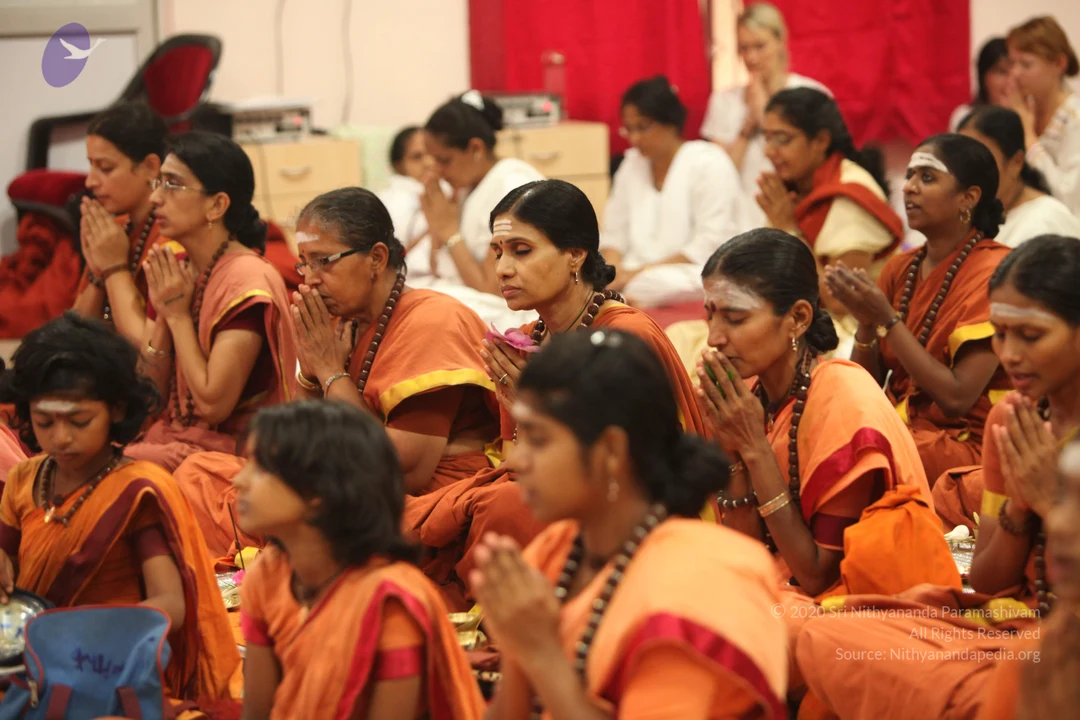
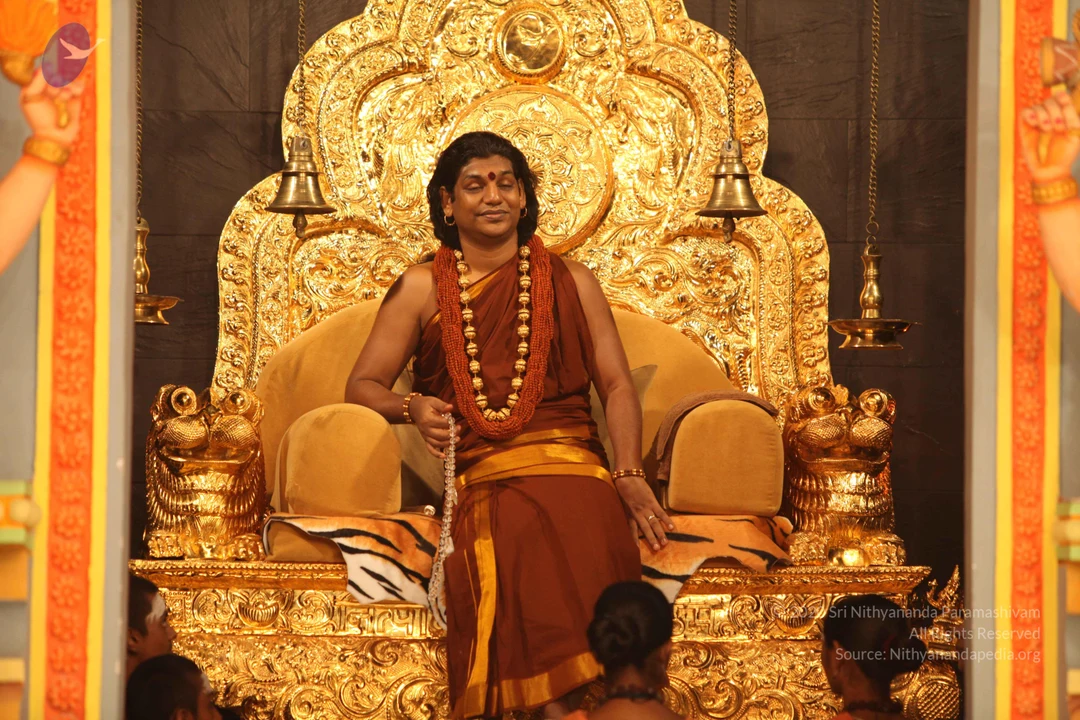
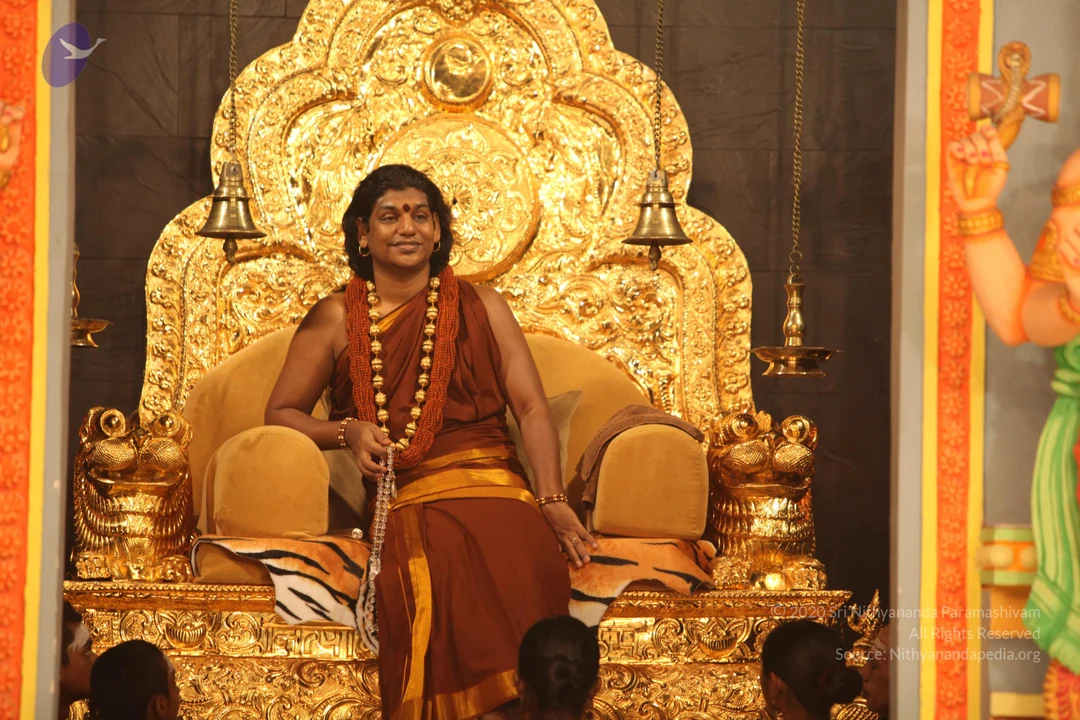
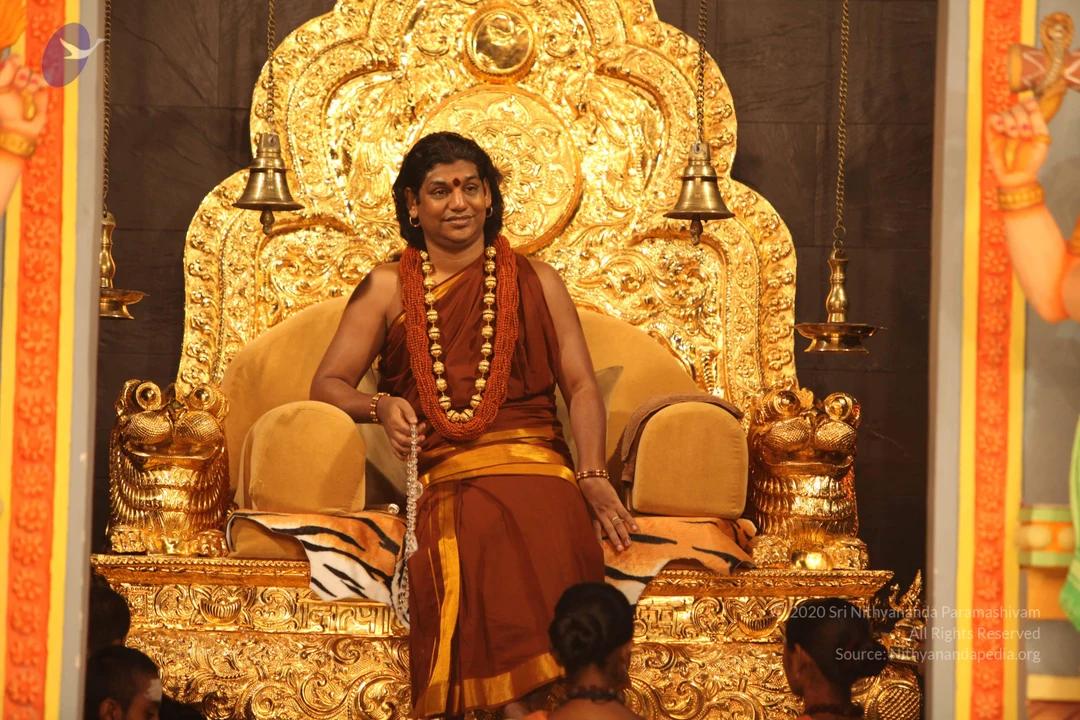
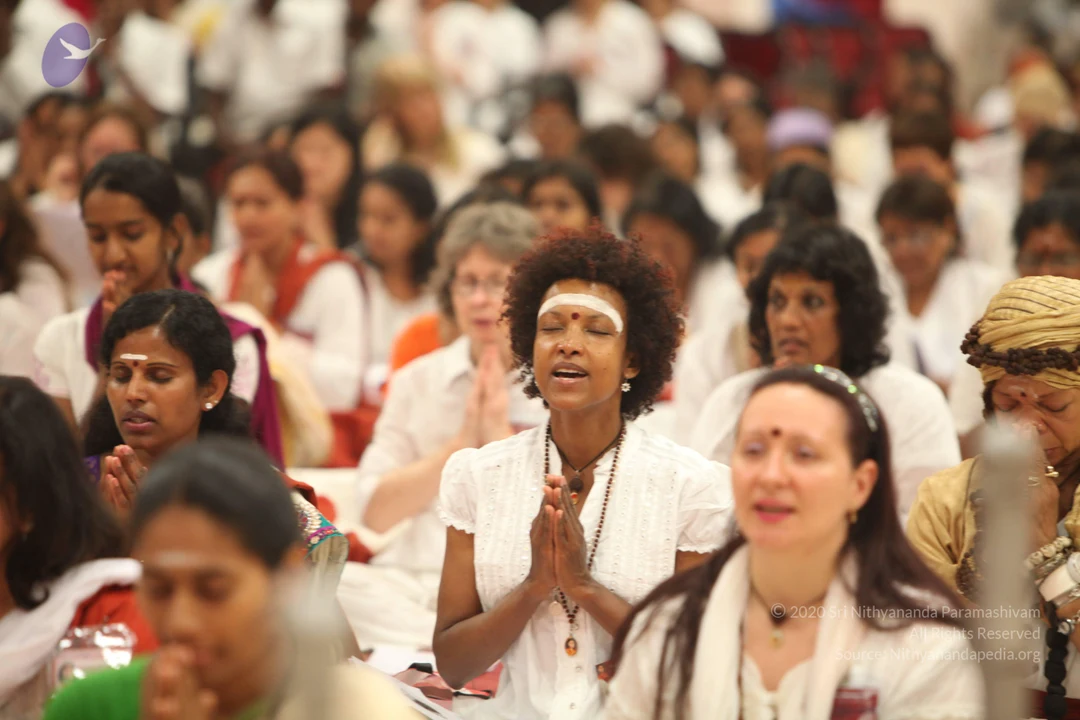
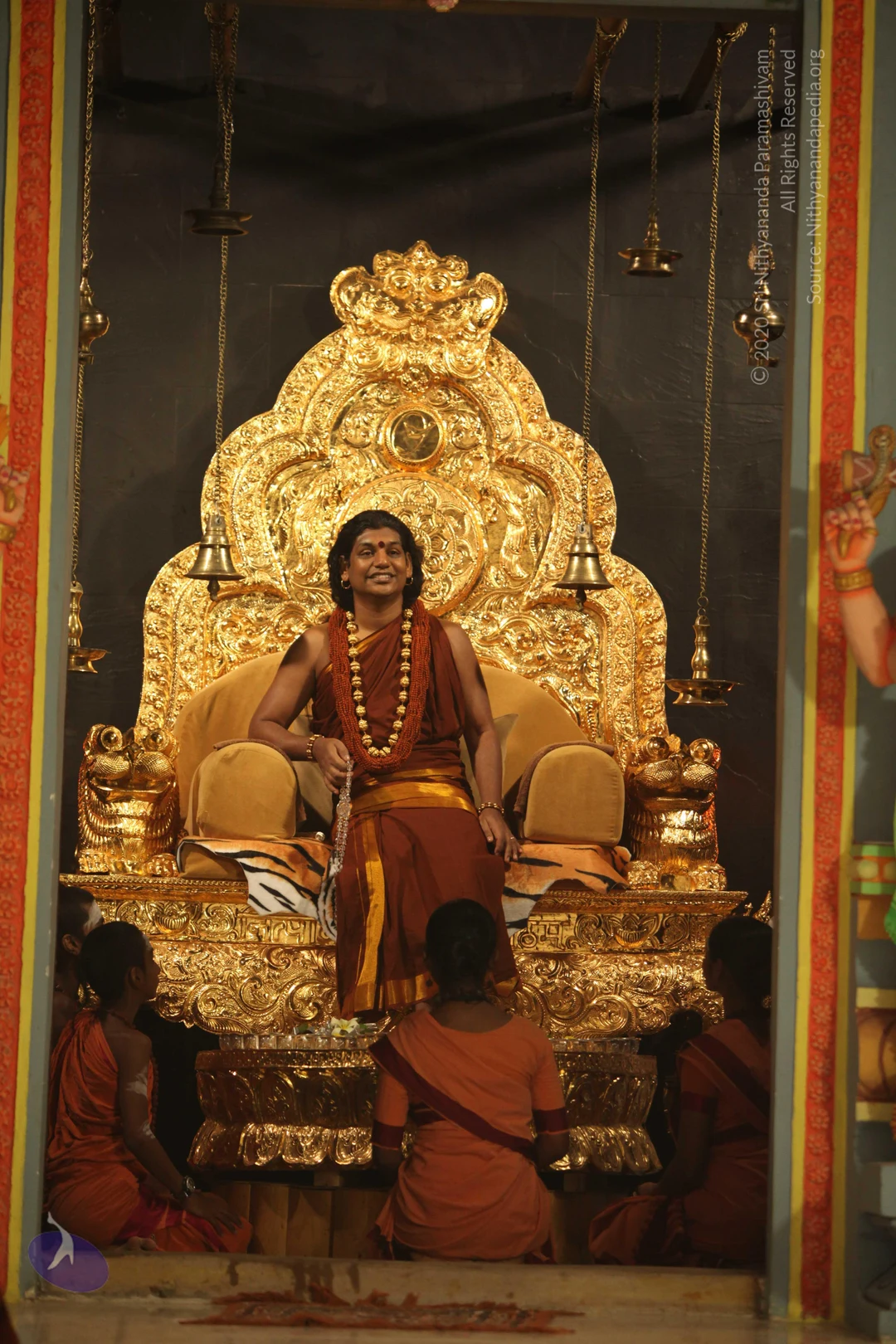
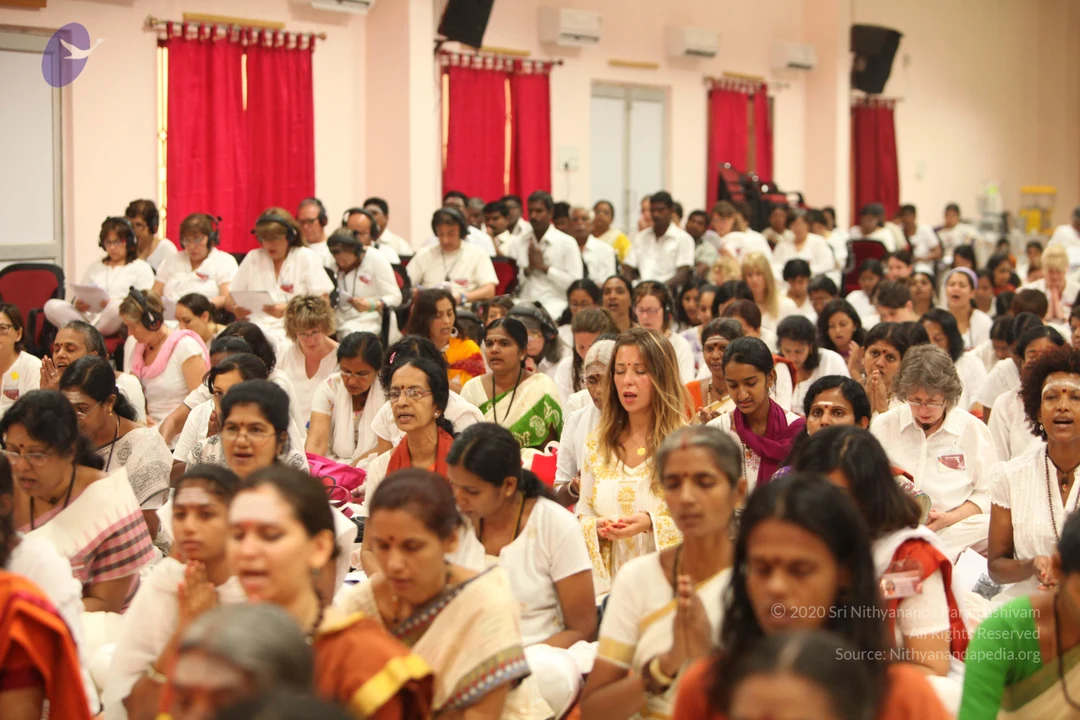
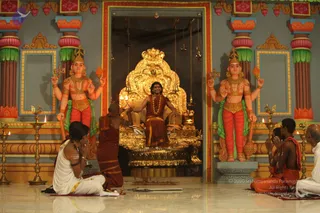
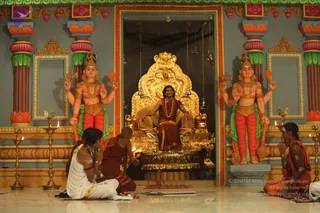
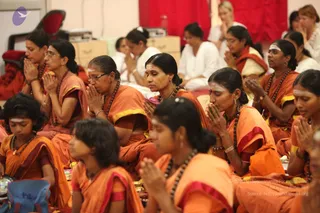
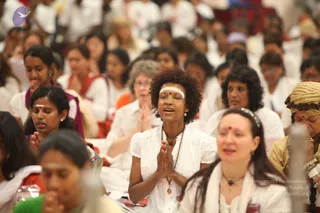
A temple sanctum with a seated figure on an ornate gilded throne at centre, wearing an orange-brown robe and a long rudraksha mala, with hair swept back. Two tall painted dvarapala-style guardian statues flank the throne, each with four arms, orange dhoti and green sash. A man in a maroon robe stands before the throne performing a ritual, while devotees in white and orange sit on the floor with folded hands. Brass oil lamps with lit wicks stand along the marble floor. The seated figure has distinctive long hair, a rudraksha mala and orange robe, though the appearance is only partly clear, so identity is uncertain.Ornate temple hall with a golden throne (simhasana) at centre holding a seated figure in a rust-red robe with a rudraksha mala, flanked by two tall painted deity murti with multiple arms, holding lotus flowers and conch-like objects, in pink, orange and green. Brass oil lamps (deepa) with lit flames stand on the marble floor. In front, a robed priest in saffron-orange kneels tending the lamps at the throne, while a man in white dhoti with white markings sits with hands folded and another person in orange kneels at right with palms joined in prayer. Appearance-based label: the seated figure on the throne has long hair and a rudraksha mala, a probable Swamiji depiction, and this is a ceremonial satsang setting.Indoor satsang scene where a row of women in saffron and orange saris with red and yellow borders sit with palms pressed together in namaste, many wearing rudraksha malas, bangles and white forehead markings. Some have tilak or vibhuti on their foreheads. Behind them, devotees in white clothes sit on mats near a red curtain and a small wooden cabinet, and a child in orange sits at the left edge. The atmosphere is one of prayerful attentiveness.A photograph of a large seated congregation during a satsang, with many devotees in white clothing with hands joined in anjali mudra and eyes closed. In the centre, a woman with curly reddish-brown hair wears a white blouse, a rudraksha mala and a white forehead band, palms pressed together. Around her, women in white, saffron and green garments, some with white forehead marks, sit close together. A woman at right wears a gold-toned headwrap and gold bangles. The a person candidate criterion is not met: no figure with distinctive presentation cues is shown, so no a person candidate is identified.A seated person sits on an ornate gold throne with lion-head armrests draped in a striped tiger-skin cloth, under hanging brass bells and oil lamps. The figure wears a rust-brown robe with a gold-bordered cloth, a long red rudraksha mala, and a gold bead necklace, with a red bindi on the forehead and a bracelet on the wrist. Beside the throne stands a large painted deity statue with green garments, a raised hand holding a trident-like implement, and gold ornaments. Several partially visible heads of seated attendees are in the foreground. The orange and red decorated pillars frame the scene. The throne figure has long swept-back hair and distinctive rudraksha and gold cues consistent with Swamiji (probable), seated in a satsang setting.A seated man in a rust-orange robe and saffron-toned dhoti sits on an ornate gold throne with a carved, fan-shaped back and lion-head armrests, draped with a striped tiger-skin cloth. He wears a long red-orange rudraksha mala and a gold beaded necklace, a red bindi on his forehead and bangles on his wrist, and holds a mala in his hand. Behind him are brass hanging bells and oil lamps, with painted deity murti panels at the sides. Several devotees' heads are visible in the lower foreground, indicating a satsang setting. a person is seated on the throne, identified by the distinctive rudraksha and gold adornment and ceremonial orange clothing.
IA Session

93 photosSource gallery
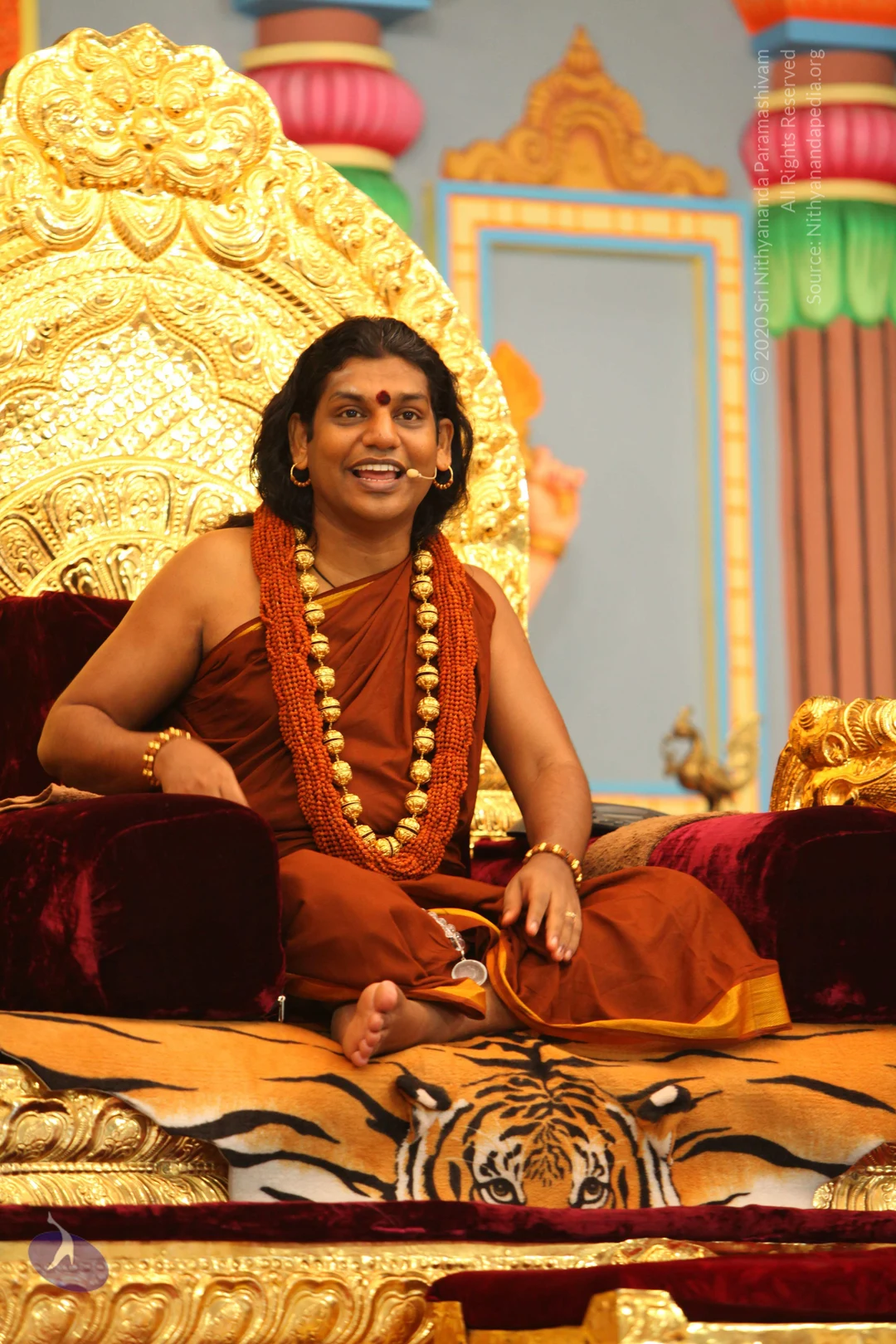
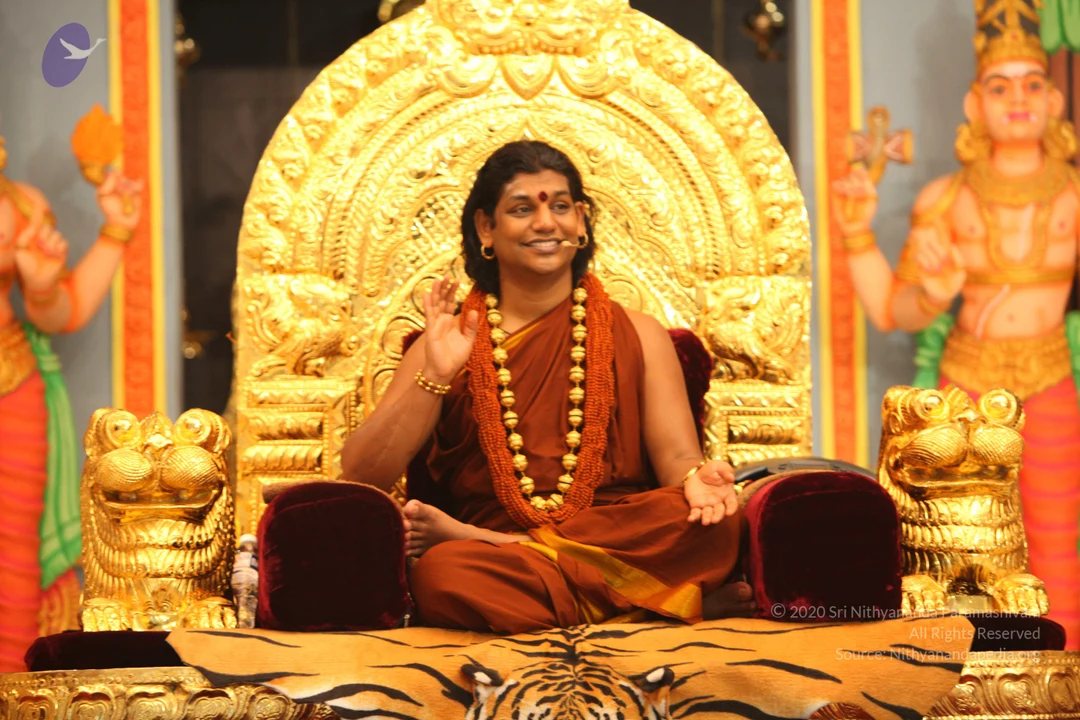
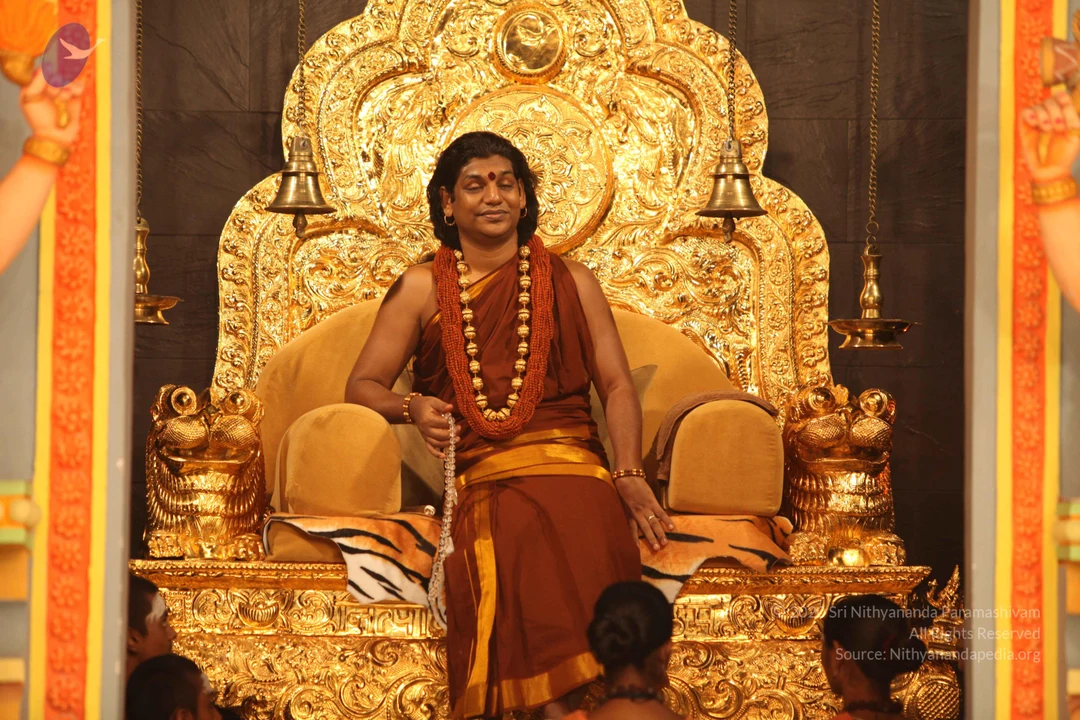
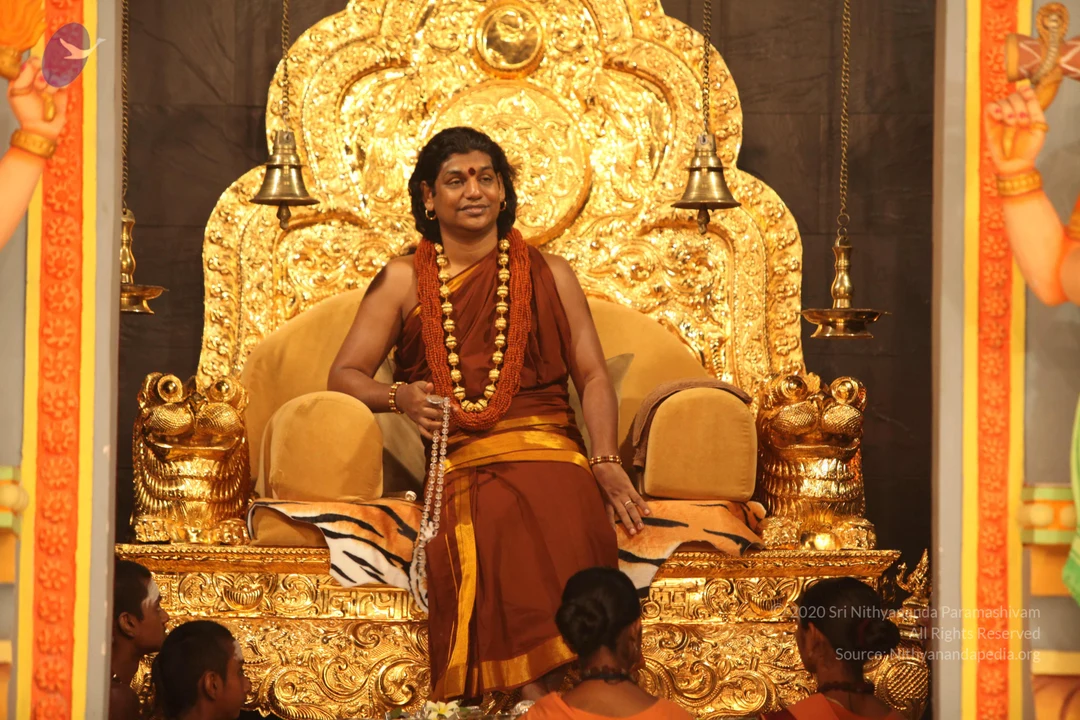
A seated man in a saffron-orange robe sits on an ornate golden throne carved with lion and floral motifs, with a golden lion sculpture to the left and a tiger-striped cloth beneath. He wears a rudraksha mala with gold beads, gold bangles and earrings, and a red bindi, and raises his right hand in a blessing gesture while smiling. The setting appears to be a satsang stage with a red and gold backdrop. Swamiji (probable): his long dark hair, ornate golden throne and saffron robes with rudraksha and gold necklaces match the cues for the page's named teacher, though the identification is appearance-based.A photograph of a man seated cross-legged on an ornate golden throne with lion-head armrests draped in maroon cushions, resting his hands on the armrests. He wears saffron-orange robes with a yellow border, a red-and-gold rudraksha mala and a ceremonial gold bead necklace, a red bindi on his forehead and gold earrings. A tiger-striped cloth covers the dais. Behind him, gilded arches and a colourful painted deity figure with gold jewellery are visible. Swamiji (probable): the saffron robes, long swept-back hair, rudraksha mala and gold necklace on the throne match the candidate's cues.A seated man in saffron-orange robes and a red-orange rudraksha mala gives a discourse on an ornate golden throne with a tiger-skin cushion. He wears gold bangles, earrings and a red bindi, raises one hand in an open gesture and smiles while speaking. Two painted deity statues stand on either side of the throne, one in green and red garments and the other bare-chested with gold ornaments. The throne is decorated with golden lion heads. a person appearance: long swept hair, saffron robes and rudraksha mala on the throne, matching the page.A man seated cross-legged on an ornate gold throne with carved lion-head armrests and a tiger-skin covered dais, speaking with one hand raised in a gesture of teaching. He wears a saffron-orange robe, a red-orange beaded rudraksha mala and a heavy ceremonial gold bead necklace, with a red dot on his forehead and a small clip-on microphone. Gold-painted deity figures with multiple arms flank the throne on both sides. Swamiji (probable) is shown in the in-person satsang setting, with his long swept-back hair, saffron clothing and rudraksha mala as the qualifying cues, seated as the teacher on the dais.A man with long swept-back dark hair and a red bindi sits cross-legged on an ornate gold throne with carved lion-head armrests and maroon velvet cushions, on a tiger-striped rug. He wears an orange-saffron shawl over his shoulder, a yellow-gold border cloth, a thick red rudraksha mala and a ceremonial gold bead necklace, with a small microphone clipped near his face. He rests his hands on the armrests and looks toward the camera. Behind him are a gilded arch, a painted blue-and-orange backdrop and a small gold bird figurine. A man in a saffron shawl seated on a gilded throne with distinctive rudraksha malas and long hair matches the a person description, though his identity is uncertain from appearance alone.A seated man sits cross-legged on an ornate gold throne with carved lion-head armrests and maroon velvet cushions. He wears an orange-saffron robe with a yellow-gold border, a long rudraksha mala with gold beads, bangles and a red bindi, and has long swept-back hair with a small earpiece. A gold-coated decorative backdrop and a golden bird figure appear behind him. Swamiji (probable): the saffron robe, long hair, rudraksha and gold mala, and ornate throne match the page's named presence, so this is treated as an appearance-based candidate.

Pancha Kriya

5 photosSource gallery
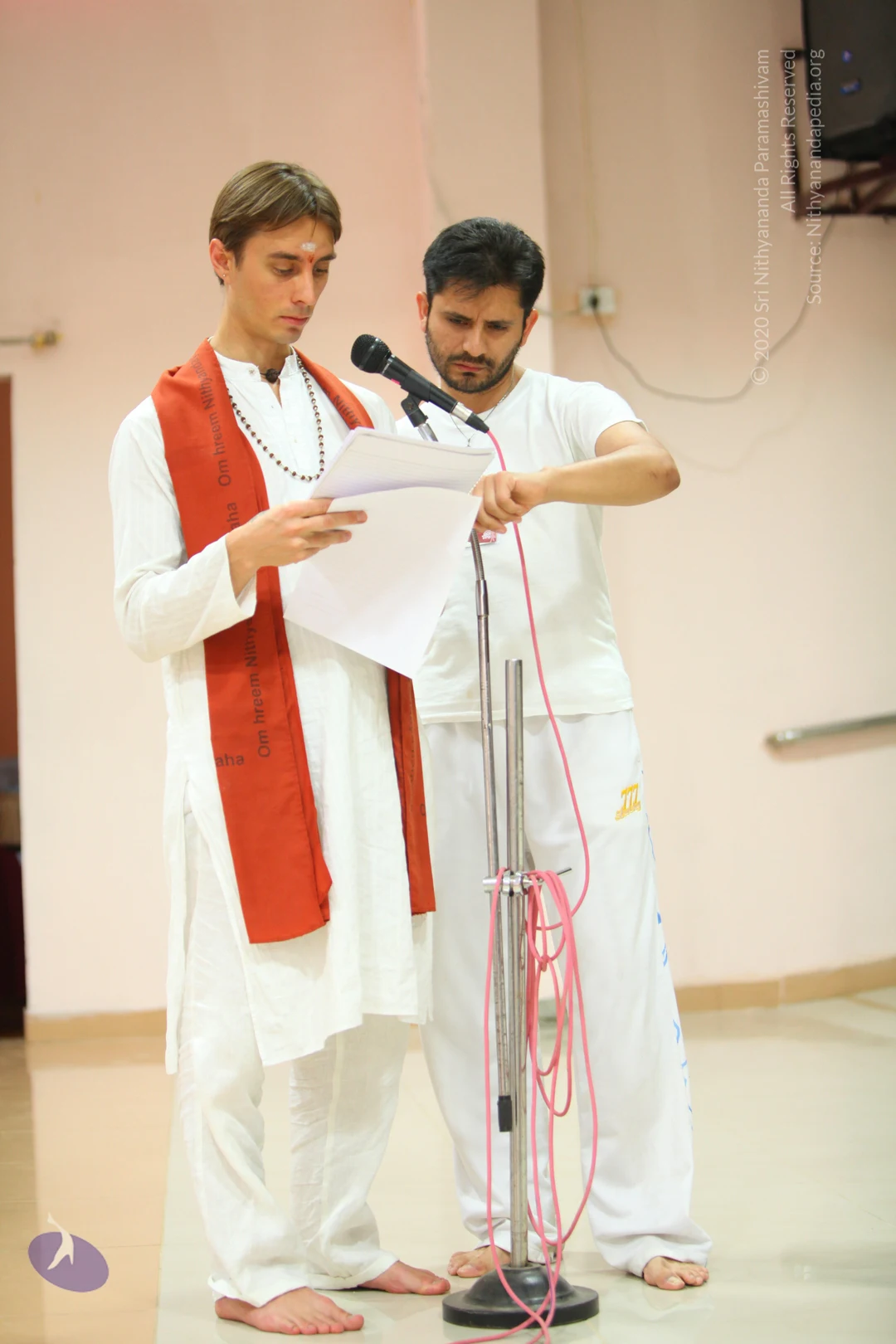
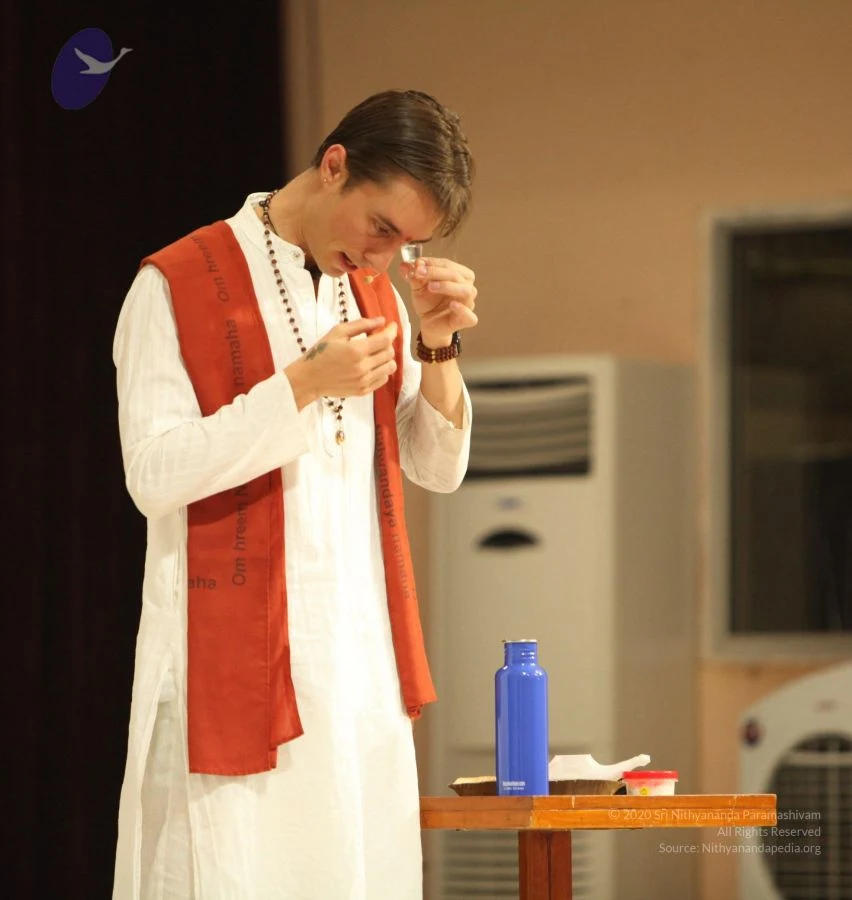
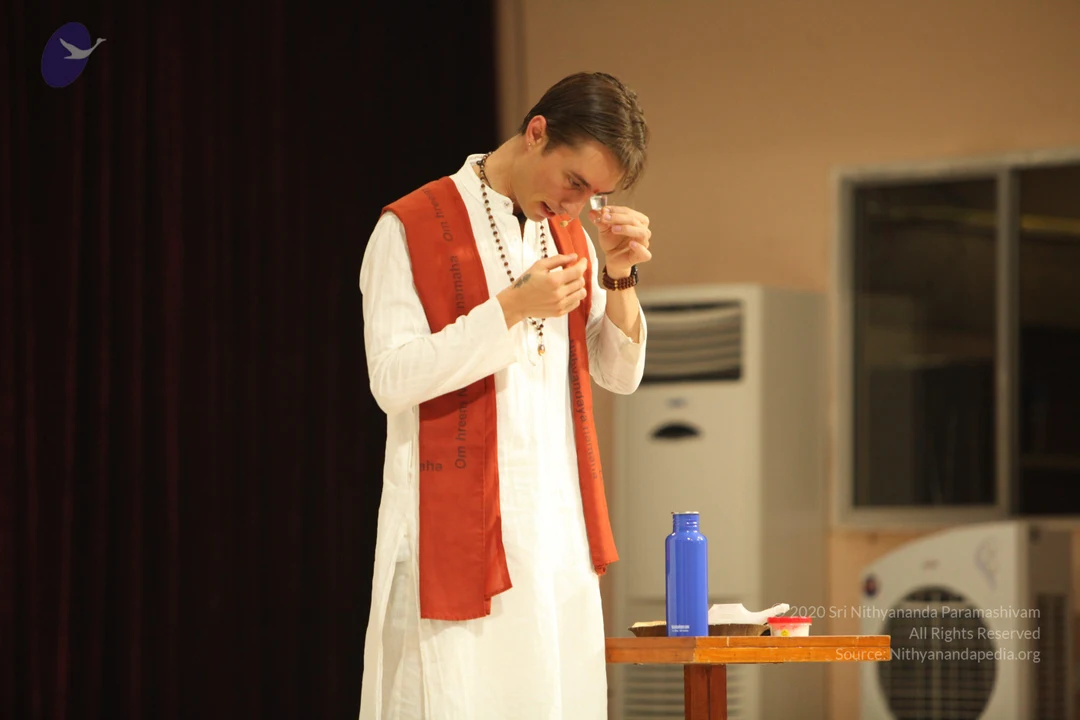
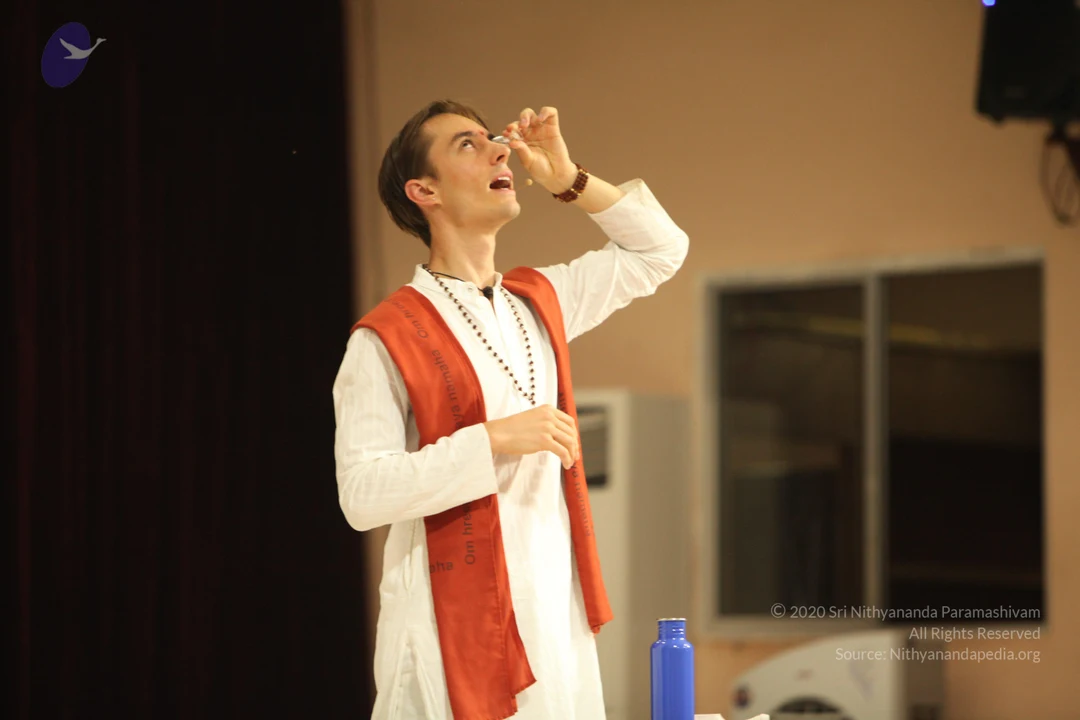
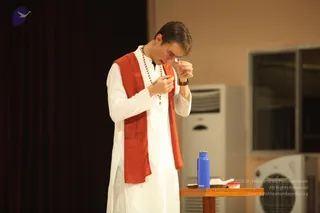
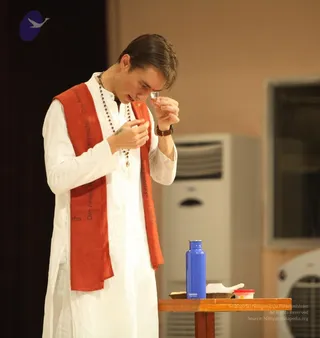
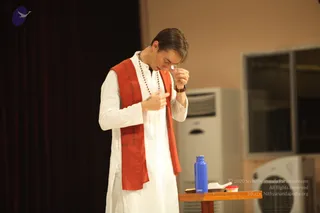
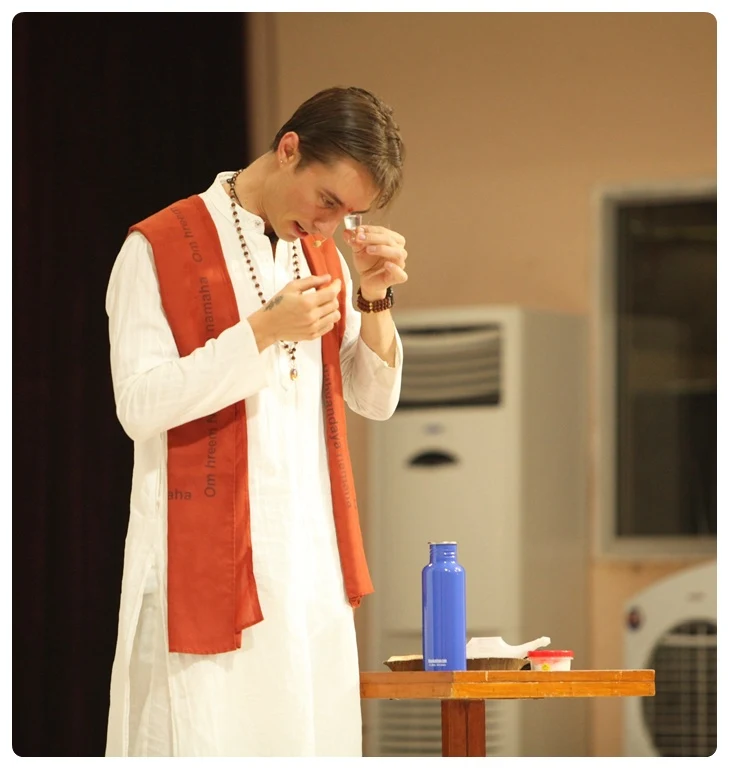
A young man with swept-back hair stands on a stage in a white kurta, wearing a red-orange shawl printed with mantra text and a dark rudraksha-style mala necklace. He holds a small clear glass to his mouth with one hand while his other hand rests at his chest. A wooden table in front holds a blue metal water bottle, a folded white cloth and a small red container. Behind him are a beige wall and a floor-standing air conditioner. The swami identity cannot be confirmed from appearance, so no identity is claimed.Photograph of a large seated group of devotees in white clothes on red cushions at a satsang or meditation session. In the foreground a young man in a white shirt and white dhoti sits cross-legged with his head tilted back and eyes closed, one hand raised to his forehead holding a small round pink-and-white object over his eye. To his right a man in white with a rudraksha mala and a small red mark on his forehead sits with eyes lowered. Behind them many others in white sit in similar postures, some with heads bowed.A seated satsang hall full of devotees dressed mostly in white, many with hands raised to their eyes as if holding small objects, apparently in a guided eye-focusing practice. In the foreground, two men in white kurtas with red-and-white name badges, one wearing a rudraksha mala, hold small objects to their eyes while looking upward. Red curtains line the back wall, with rows of red chairs and red mats, and a few people in dark clothing are visible. Overall, a crowded meditation session in a large meeting hall.A large hall with cream walls and recessed ceiling lights shows many seated men in white kurta-style clothes eating from wooden leaf plates held in their hands, sitting on red and orange cloths on the floor. In the foreground, a bespectacled man in white with a rudraksha mala holds a plate, while a man in a white shirt with a red name badge eats nearby. Several people in black t-shirts and white clothes sit among them, and a framed portrait hangs on the far right wall. The scene appears to be a communal meal in an ashram-style gathering.A photograph of a seated group at an indoor satsang hall with red-cushioned chairs and mats. Several people in white clothing sit on red mats eating from leaf plates; one older man in white with grey hair holds a small leaf plate to his mouth. Another man in a white t-shirt with a name badge sits nearby, and a young man in white wearing a rudraksha mala and a wristband wipes his face with a white cloth. Plastic water bottles, a red shawl and orange-red fabric lie on the floor. A woman in white with a red shawl and a man holding a microphone are visible in the background. No identifiable a person candidate is clearly present.

Temple

42 photosSource gallery
Outdoor courtyard scene at an ashram with a red-brick boundary wall and young trees. A young woman in an orange sari walks barefoot across the paved walkway in the foreground, while a young man in orange robes walks at left. Several women stand under a red-pillared open pavilion: one in a pale blue sari and white head covering, one in a yellow sari, one in an orange sari, and one in a green sari. Pink and light blue floor rangoli-style flower patterns decorate the pavement. No a person candidate is visible.A dark blue Ford SUV with the number plate TN 25 AE 4005 drives toward the camera along a brick-paved courtyard in warm late-afternoon light. Two people sit in the front seats, a driver and a passenger wearing a head covering, and a figure is visible in the rear. Along the right edge, three women in colourful saris walk past a red-painted pillar; one wears a pale blue sari with pink border, another a teal sari and the third a yellow sari, one carrying a bundle on her head. Green trees and a red brick wall form the background, and a faint pink and blue floor design lies on the pavement. No a person candidate can be confidently identified from appearance.A photograph of a covered outdoor walkway with a paved, hexagonal-tiled floor and red pillars. In the foreground, a barefoot person in a brown and gold striped dhoti and wrap, with a gold bead necklace and a red-brown shawl, smiles and walks past a black car at left. Behind them, a younger person in an orange robe with a red border carries a brass tray holding a decorated pot with flowers and greenery. Several women in pastel saris stand or walk in the background, and a pink and blue floor decoration is visible on the ground. The foreground figure has long dark hair, a red forehead mark and bangles, and the scene is warm and sunlit.A blurred photograph taken through a doorway, looking out onto a temple courtyard lined with palm trees and potted plants. A woman with long dark hair, a vermilion forehead mark, a white flower garland and a rust-brown shawl over a dark-striped dhoti walks toward the camera, smiling. Behind her, a younger person in an orange-saffron robe carries an offering tray with flowers and fruit. Orange-painted stone pillars and a black bull statue stand in the background, with a small statue of a figure visible on the left.A photograph of a person with long dark hair wearing an orange-red shawl with a rudraksha-style necklace of golden beads, standing at a railing in a warm orange-red lit room with an orange wall. Behind them, another person in orange clothing and a white forehead band plays a drum, and a brass kalasha with green leaves and a red flower sits nearby. The figure in front is smiling. a person cues are long hair, a bead mala with gold ornaments and an orange wrap, but identity is uncertain from appearance alone; the figure is one of the main people shown, with others behind in orange clothing.A temple shrine with a golden arched niche framing a deity murti draped in orange and red cloth and garlanded with white flowers. In the foreground a man with long dark hair and a rudraksha mala around his neck stands with his back to the camera, wearing a brown-orange garment with gold border stripes and a gold bangle. To the left a seated priest in orange robes with a white forehead mark sits beside a brass oil lamp and offering vessel. Golden lamp stands and a kalasha-topped shrine decorate the scene.

Darshan
12 photosSource gallery
A photograph inside a hall with pink ceiling tiles, ceiling fan, and red velvet drapes. A figure with long swept-back dark hair, red and white flower garland, rudraksha mala and gold beaded necklace, wearing an orange-brown robe, raises one hand in blessing toward a man in white shirt with glasses who is leaning in with a paper in hand. Behind, a bare-shouldered monastic in orange robe with gold border holds a red tray of items. Around them, devotees in white stand with palms joined, and a green water bottle sits on the floor.A photograph of two men in saffron-orange robes inside a hall with pink ceiling and red drapes. The central figure has long, swept-back dark hair, wears a red and white flower garland, a gold necklace and rudraksha mala, and reads from a sheet of white paper while holding it in one hand. Behind him a bare-shouldered man with a shaved head, orange shawl with gold border and rudraksha beads on his shoulder holds a red box of sweets. A cameraman in the left foreground films the scene. Fits the page's a person appearance cues, with long swept-back hair, rudraksha and gold ornaments.A photograph of a temple-style hall with a pink ceiling and red curtains. A woman with long dark hair, wearing a red and white flower garland, gold-bead necklace and gold bangles, places her hand on the head of a young man with closed eyes and palms pressed together. A shaven-headed priest in a saffron-orange wrap with gold borders stands in the foreground holding a red tray of offerings. Another man with a white vibhuti mark stands behind, and a woman in white carries a yellow bag printed with Om. The scene suggests a blessing or darshan line.Photo of a ritual blessing in an indoor hall with red curtains and pink-tinted ceiling lights. A bare-chested priest in an orange-brown dhoti-style garment with gold borders stands at right, holding a red tray of offerings. A woman with a red garland and a vermilion mark on her forehead gently places her hand on the head of a man with folded palms who bows forward. Beside them a bald older man in a pale green shirt and white dhoti with gold border holds an orange cloth, and a man in a white shirt stands at left with hands joined in prayer.A photograph of a temple-style ritual in a pink-walled hall. A bare-chested priest in orange-and-gold dhoti and shawl, seen from behind, places his right palm on the head of a bowing man in a white kurta and dhoti, who has his hands pressed together. A young man in a yellow-and-blue checked shirt stands at left with palms joined in prayer, and a woman with a red bindi wears a red-and-white flower garland. The priest holds a red tray of offerings, and a metal stanchion and chain are visible. No figure is clearly identifiable as a person from appearance, so no candidate is marked.Indoor hall with pink ceiling lights and maroon curtains. A figure with long swept-back dark hair, saffron-orange robe, red and white flower garland, orange rudraksha mala and gold beaded necklace places a hand on the head of a young man in a striped shirt, blessing him. A shaved-headed monk in saffron robe holds a red box of offerings beside. A boy in a striped shirt with an event badge watches, and white-clad devotees stand behind. a person cues: long hair, saffron robe, rudraksha mala and gold necklace, performing a blessing.

Pada-Puja
52 photosSource gallery
A photograph inside an ornately painted temple hall with two large colourful guardian statues flanking a gilded throne-like peetha seat. A man in saffron-orange robes with a rudraksha mala sits on the golden throne, one hand raised in a teaching gesture. In front of him a robed priest in orange kneels offering a flame from an oil lamp, and a seated devotee in white dhoti with white markings presses palms together at lower left. Hanging bells and lamps decorate the dark archway behind the throne.A photograph inside a temple hall shows a man with long dark hair and a red bindi, wearing an orange-brown robe with a gold border and a rudraksha-style bead necklace, seated on an ornate gold throne with a tiger-striped cloth draped over it. He raises one hand in greeting while smiling and holding a chain. In front, a second man in a reddish-brown robe with bare shoulders holds a lit oil lamp flame toward him. A painted deity figure with multiple arms stands to the left, and hanging brass lamps and bells hang from the ceiling above the golden throne backdrop.Ornate gilded throne with a large repoussé backrest dominates a dark stage. A man with long dark hair and a red bindi sits smiling, raising one hand, wearing a rust-red robe with a gold border and a red rudraksha mala with ceremonial gold beads. A second person in red-brown clothing at left holds a lit flame over an oil lamp toward him. Hanging brass bells and lamps hang above. a person appearance with long hair, ornate gold seat, rudraksha mala and saffron-red robes; role is seated figure receiving aarti.A man with shoulder-length dark hair and a red bindi sits on an ornate gold throne with a carved lion-headed armrest, draped in a tiger-striped cushion. He wears a rust-orange wrap with a gold border, a red coral mala and a gold bead necklace, and raises one hand in blessing while holding a white beaded mala in the other. On the left, a hand holds a brass aarti lamp with a bright flame, and brass hanging lamps and a bell hang behind the throne against a dark wall. a person is seated in the centre, appearing as the presiding teacher during an evening aarti. The image is a photo.A photograph of a seated man in a rust-red sannyasi wrap with a gold-bordered dhoti, wearing a long rudraksha mala and a gold bead necklace, with a red tilak and long swept-back dark hair. He sits on an ornate gilded throne with a gold lion-head armrest and a tiger-striped cloth draped over the seat, while a devotee in a red robe at left holds a lit lamp (aarti) toward him. Hanging brass bells and lamps surround the golden throne backdrop. Hanging brass lamps and a flame indicate an aarti ceremony.A man with shoulder-length dark hair and a red bindi sits smiling on an ornate gilded throne with a carved lion-head armrest and a large gold-embossed backrest. He wears a rust-red sleeveless garment with a gold border, a red-and-gold rudraksha mala and a gold bead necklace, and gold bracelets. A bell hangs from a chain on each side, and a lamp burns at the left edge where a person in rust-red robes, seen from behind, tends a fire. Flowers rest on the golden pedestal. The setting appears to be a ceremonial satsang stage with a dark backdrop.

Inner-Awakening-Session-1

216 photosSource gallery
A seated man in an ornate golden throne with lion-carved armrests sits on a tiger-skin rug, eyes closed and smiling while raising his right hand in blessing. He wears a saffron-orange robe with a gold-bordered wrap, a red-orange beaded mala, a long gold bead necklace, gold bangles and a red bindi, with long dark hair. Behind the throne stand large colourful deity statues with orange and red bodies and raised hands.A seated man in a saffron-orange robe sits on an ornate golden throne carved with lion and floral motifs, with a golden lion sculpture to the left and a tiger-striped cloth beneath. He wears a rudraksha mala with gold beads, gold bangles and earrings, and a red bindi, and raises his right hand in a blessing gesture while smiling. The setting appears to be a satsang stage with a red and gold backdrop. Swamiji (probable): his long dark hair, ornate golden throne and saffron robes with rudraksha and gold necklaces match the cues for the page's named teacher, though the identification is appearance-based.A photograph of a man seated cross-legged on an ornate golden throne with lion-head armrests draped in maroon cushions, resting his hands on the armrests. He wears saffron-orange robes with a yellow border, a red-and-gold rudraksha mala and a ceremonial gold bead necklace, a red bindi on his forehead and gold earrings. A tiger-striped cloth covers the dais. Behind him, gilded arches and a colourful painted deity figure with gold jewellery are visible. Swamiji (probable): the saffron robes, long swept-back hair, rudraksha mala and gold necklace on the throne match the candidate's cues.A seated man in a long-haired, shaved-free appearance sits cross-legged on a golden ornate throne with an arched gilded back carved with scrollwork and lion motifs. He wears saffron-orange robes, a thick orange-red rudraksha-style mala and a ceremonial gold bead necklace, with a red bindi on his forehead and a small headset microphone. His right hand rests at his ear while his left rests on a red velvet armrest. The throne is draped with a tiger-striped cloth. Behind him hang brass oil lamps on chains, and a painted deity figure with raised hands is visible at the right edge. A printed caption on the image reads as a source credit, not a name for the seated figure.A man seated cross-legged on an ornate gold throne with carved lion-head armrests and a tiger-skin covered dais, speaking with one hand raised in a gesture of teaching. He wears a saffron-orange robe, a red-orange beaded rudraksha mala and a heavy ceremonial gold bead necklace, with a red dot on his forehead and a small clip-on microphone. Gold-painted deity figures with multiple arms flank the throne on both sides. Swamiji (probable) is shown in the in-person satsang setting, with his long swept-back hair, saffron clothing and rudraksha mala as the qualifying cues, seated as the teacher on the dais.A seated man in an ornate golden throne with a large gilded arched backrest and dark red velvet armrests sits cross-legged on a tiger-striped rug. He wears rust-orange robes with a gold-bordered wrap, multiple strands of orange rudraksha beads, and heavy gold bead necklaces, with a red bindi on his forehead, gold hoop earrings, and a headset microphone. He smiles and looks to the side as if speaking.

Inner-Awakening-Session-2

38 photosSource gallery
A seated man speaks in front of a deep red velvet backdrop. He sits on an ornate gold throne with a large arched back carved with floral and scroll patterns and lion-head armrests, draped with orange tiger-striped and burgundy velvet cushions. He wears a rust-orange robe with a gold-yellow edge, a long rudraksha mala with ceremonial gold beads, and a small red bindi, and gestures with both hands while smiling; a small headset microphone is visible. The man is an appearance-based probable Swamiji candidate: long swept-back dark hair, rudraksha mala and gold beads, and saffron-orange clothing, seated on a throne during a discourse.A smiling man with swept-back dark hair and a red bindi stands behind a clear acrylic lectern on a stage draped in deep maroon velvet curtains with gold fringe. He wears a rust-brown garment with a wide gold border, a red-orange rudraksha mala and a gold ceremonial necklace, and his bare upper body is partly visible. A small red sheet rests on the lectern, and a headset microphone is clipped near his face. The pose suggests a satsang discourse. Only one person is visible.A man with long dark hair stands bare-shouldered behind a clear acrylic lectern on a stage with dark red velvet drapes, speaking and smiling upward. He wears a rust-brown dhoti-style cloth with gold-bordered panels, a multi-strand red rudraksha-style bead mala and gold ceremonial beads, and a small red bindi on his forehead, with a headset microphone visible near his ear. A red card sits on the lectern. A gilded edge of a seat or throne appears at the lower right. Appearance-based candidate: Swamiji (probable), shown in person giving a satsang discourse, with the qualifying cues of long hair, rudraksha mala, ornate gold beads and ochre clothing.A man stands on a stage beside a clear acrylic lectern, smiling and gesturing with one open hand while the other rests on the lectern. He wears a rust-brown draped robe with broad gold borders, a red-orange beaded mala with large gold beads around his neck, and a small red dot on his forehead. Behind him, a gold ornate throne with a dark velvet seat and a tiger-striped cloth stands before deep maroon velvet drapes. Swamiji (probable): his long swept-back hair, ceremonial gold-bead necklace and saffron-orange robe match the cues for the figure, so the speaker is identified as Swamiji with appearance-based confidence, giving a satsang discourse setting.A man in a maroon-brown dhoti-style robe with gold-yellow borders stands at a clear acrylic lectern on a stage in front of deep maroon velvet drapery. He wears a multi-strand red rudraksha mala with gold beads around his neck and a red bindi on his forehead, with long swept-back dark hair, and gestures with his open hands while smiling. Behind him is an ornate gold throne with a dark velvet seat and a tiger-striped cushion. No other people are visible.A man with long swept-back dark hair and a red bindi stands at a clear acrylic lectern, speaking into a headset microphone. He wears a rust-brown garment with a gold-bordered wrap, and a thick rust-red rudraksha mala with gold beads hangs around his neck. He looks upward with a smile, hands resting on the lectern beside a red card. A dark maroon velvet curtain forms the backdrop. Swamiji (probable), speaking at a satsang discourse, is identified by his long hair, rudraksha mala, gold beads and saffron-toned clothing.

Panch-Kriya

5 photosSource gallery
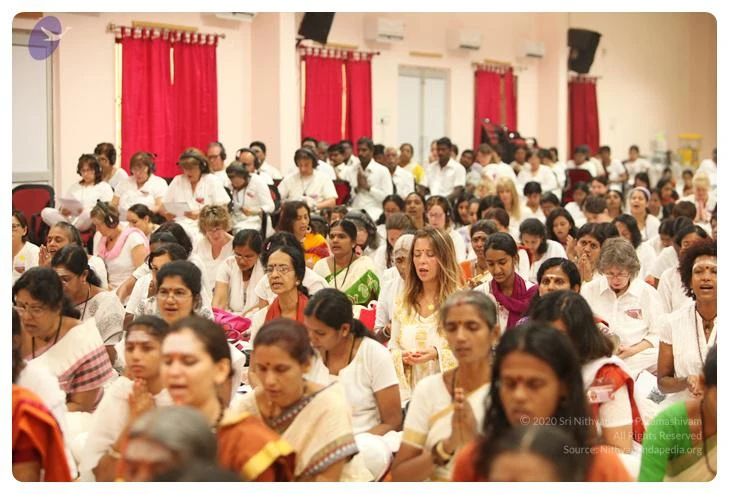
Photograph of a large seated group of devotees in white clothes on red cushions at a satsang or meditation session. In the foreground a young man in a white shirt and white dhoti sits cross-legged with his head tilted back and eyes closed, one hand raised to his forehead holding a small round pink-and-white object over his eye. To his right a man in white with a rudraksha mala and a small red mark on his forehead sits with eyes lowered. Behind them many others in white sit in similar postures, some with heads bowed.A seated satsang hall full of devotees dressed mostly in white, many with hands raised to their eyes as if holding small objects, apparently in a guided eye-focusing practice. In the foreground, two men in white kurtas with red-and-white name badges, one wearing a rudraksha mala, hold small objects to their eyes while looking upward. Red curtains line the back wall, with rows of red chairs and red mats, and a few people in dark clothing are visible. Overall, a crowded meditation session in a large meeting hall.A large hall with cream walls and recessed ceiling lights shows many seated men in white kurta-style clothes eating from wooden leaf plates held in their hands, sitting on red and orange cloths on the floor. In the foreground, a bespectacled man in white with a rudraksha mala holds a plate, while a man in a white shirt with a red name badge eats nearby. Several people in black t-shirts and white clothes sit among them, and a framed portrait hangs on the far right wall. The scene appears to be a communal meal in an ashram-style gathering.A photograph of a seated group at an indoor satsang hall with red-cushioned chairs and mats. Several people in white clothing sit on red mats eating from leaf plates; one older man in white with grey hair holds a small leaf plate to his mouth. Another man in a white t-shirt with a name badge sits nearby, and a young man in white wearing a rudraksha mala and a wristband wipes his face with a white cloth. Plastic water bottles, a red shawl and orange-red fabric lie on the floor. A woman in white with a red shawl and a man holding a microphone are visible in the background. No identifiable a person candidate is clearly present.

Pancha Kriya Demo Session 5.30.am to 6.30.am

6 photosSource gallery
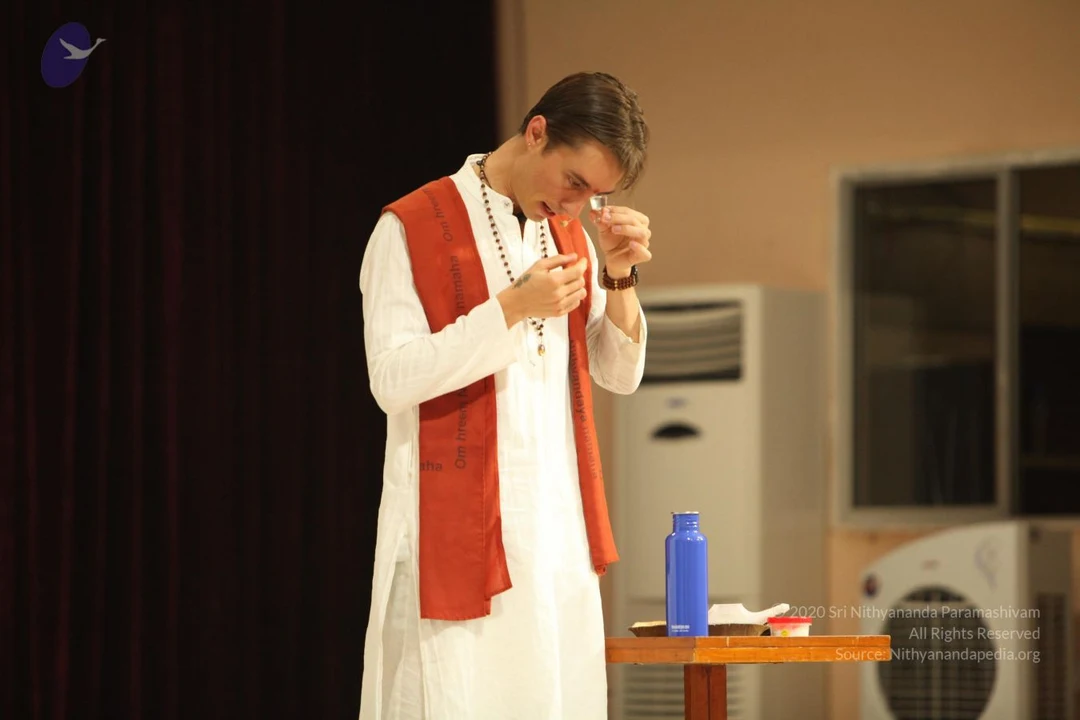
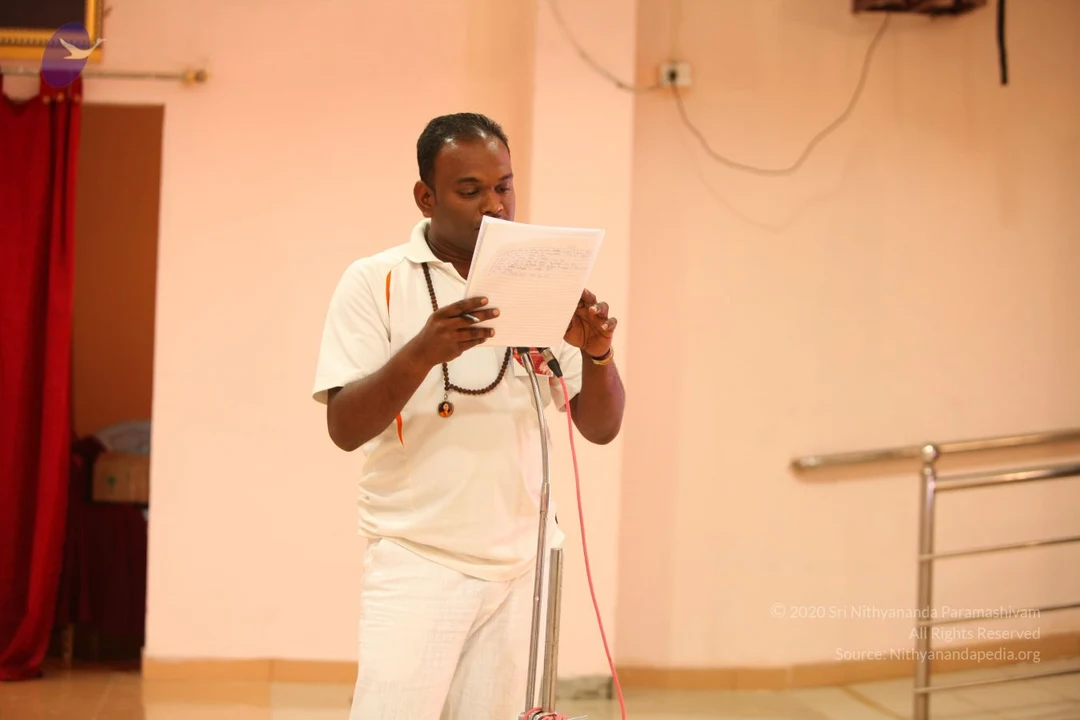
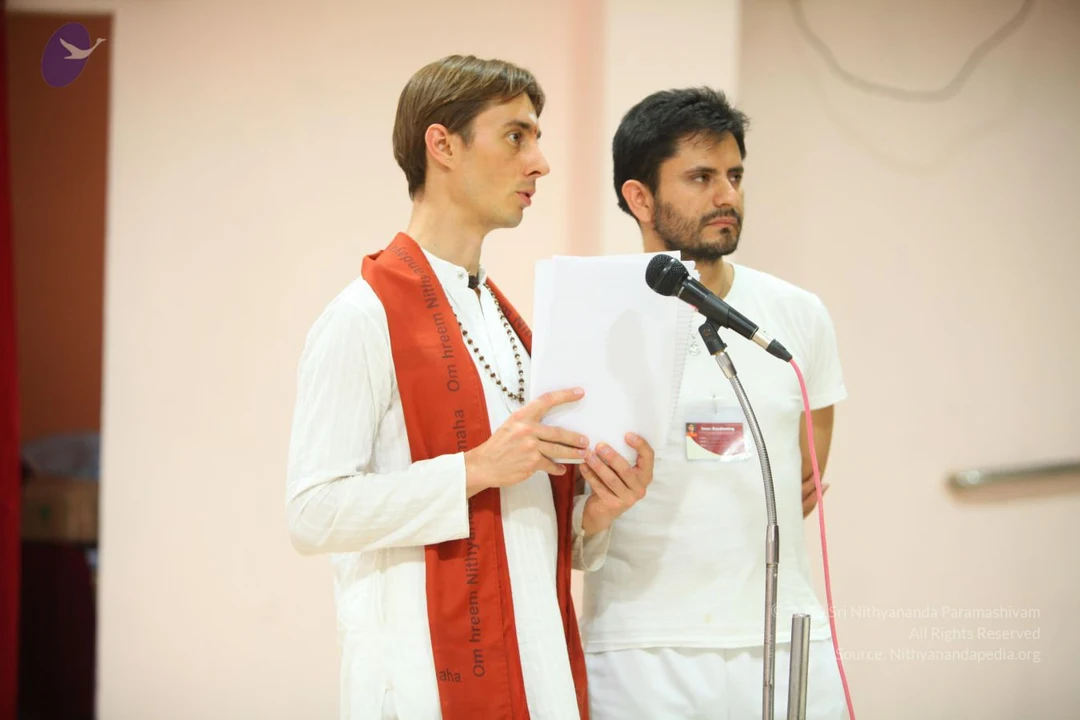
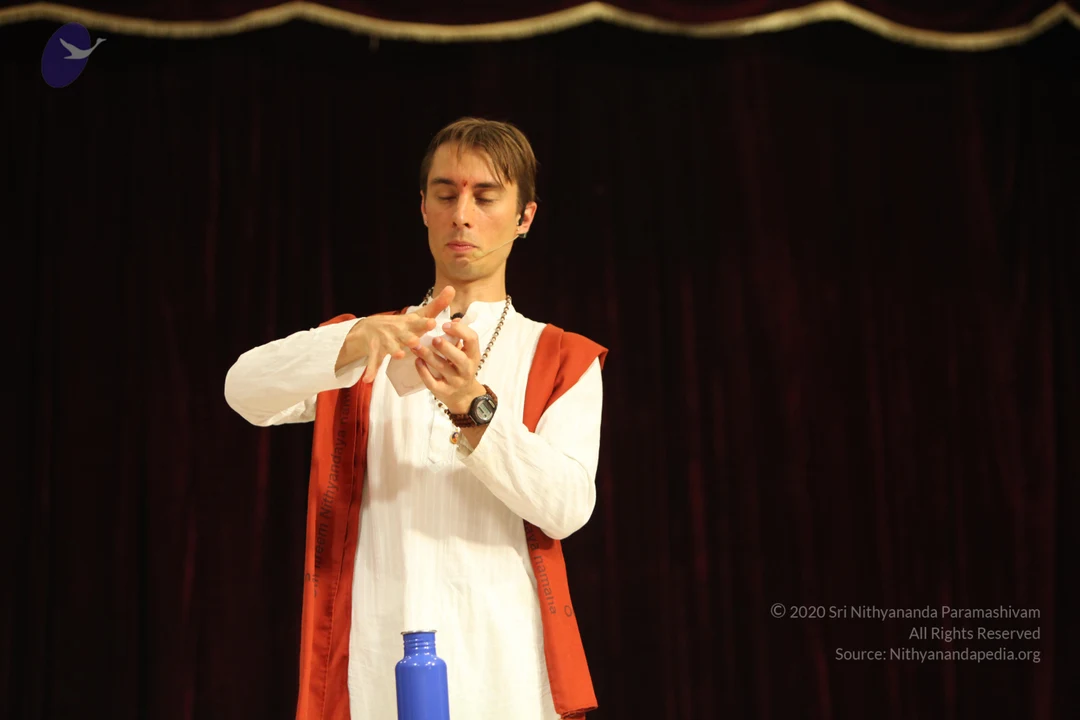
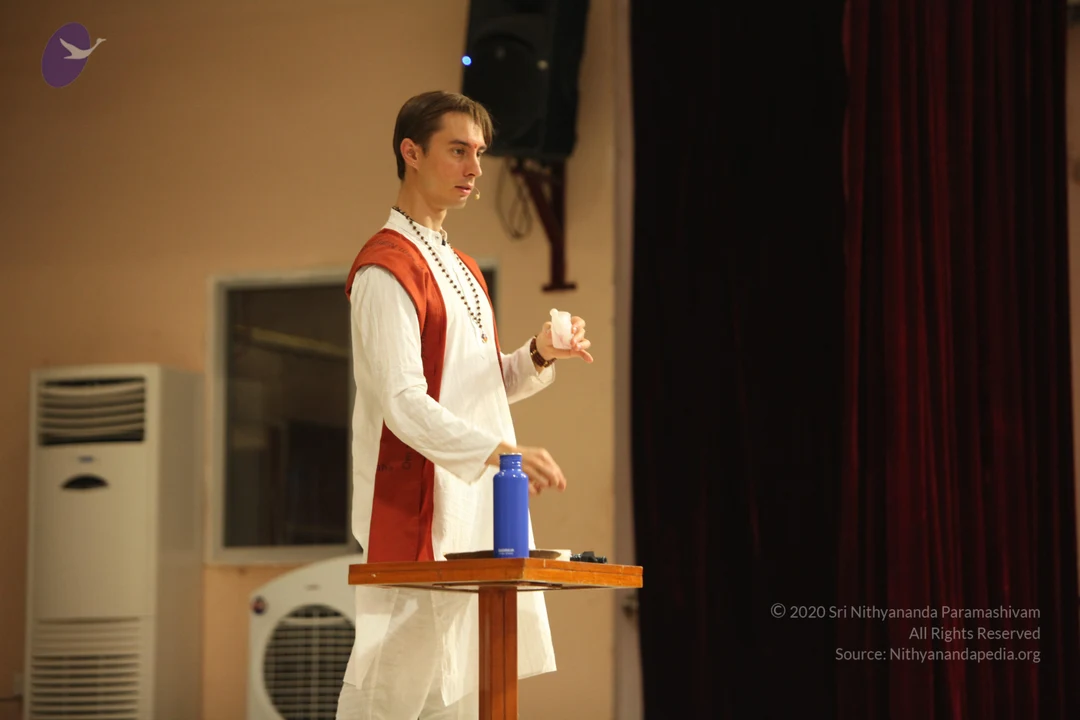
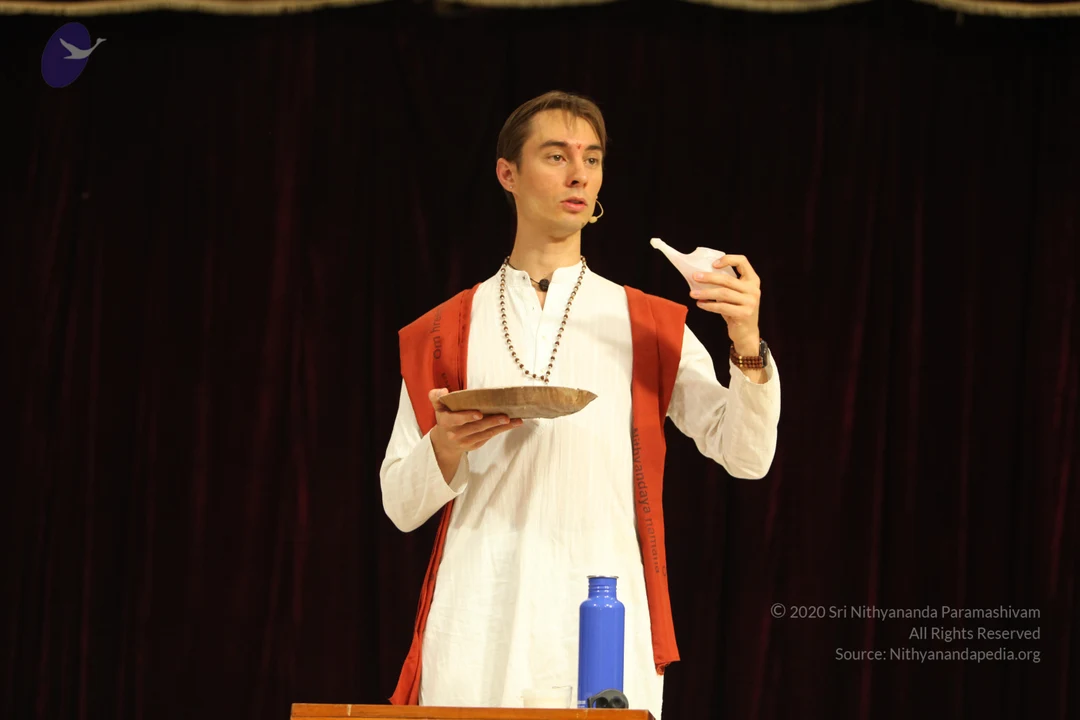
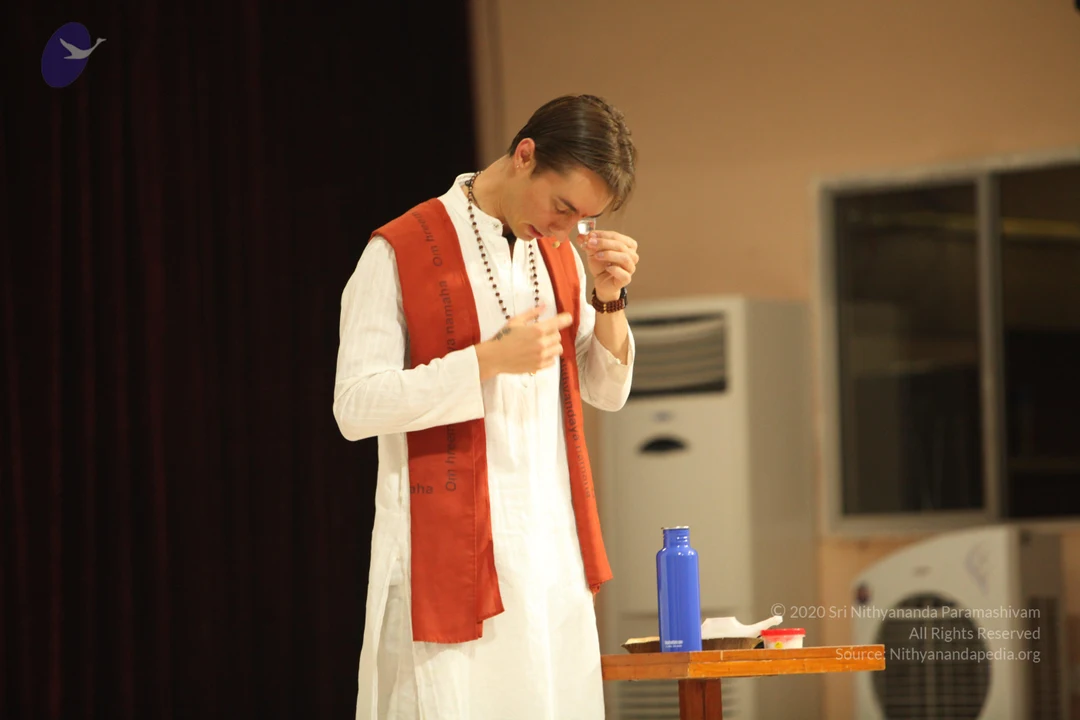
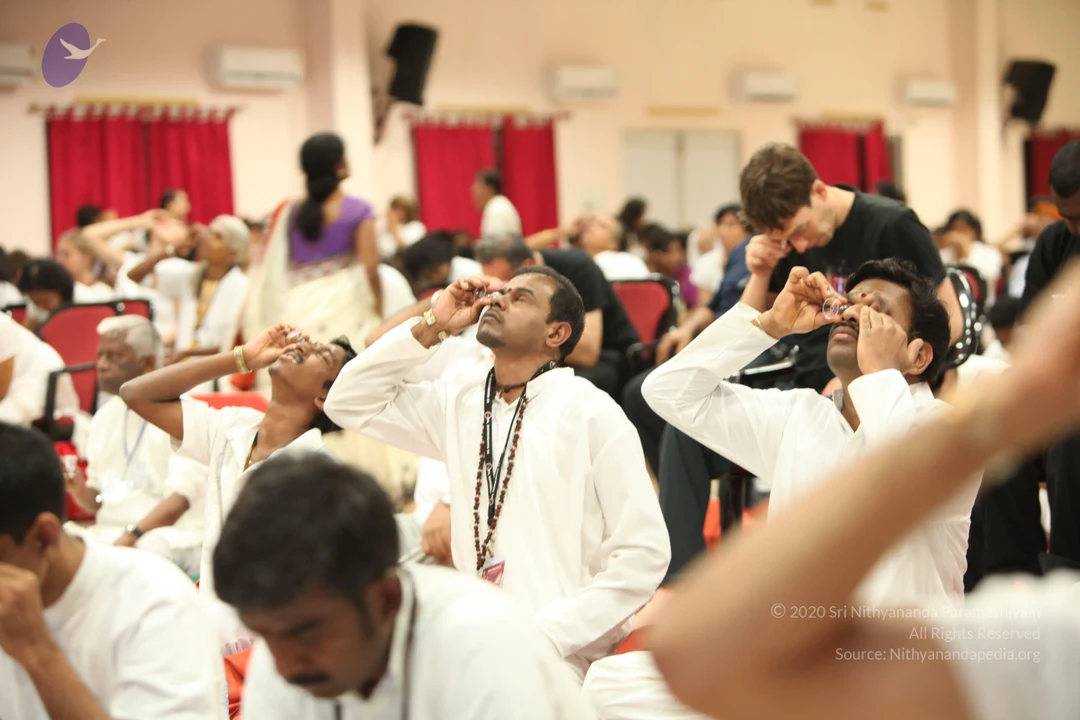
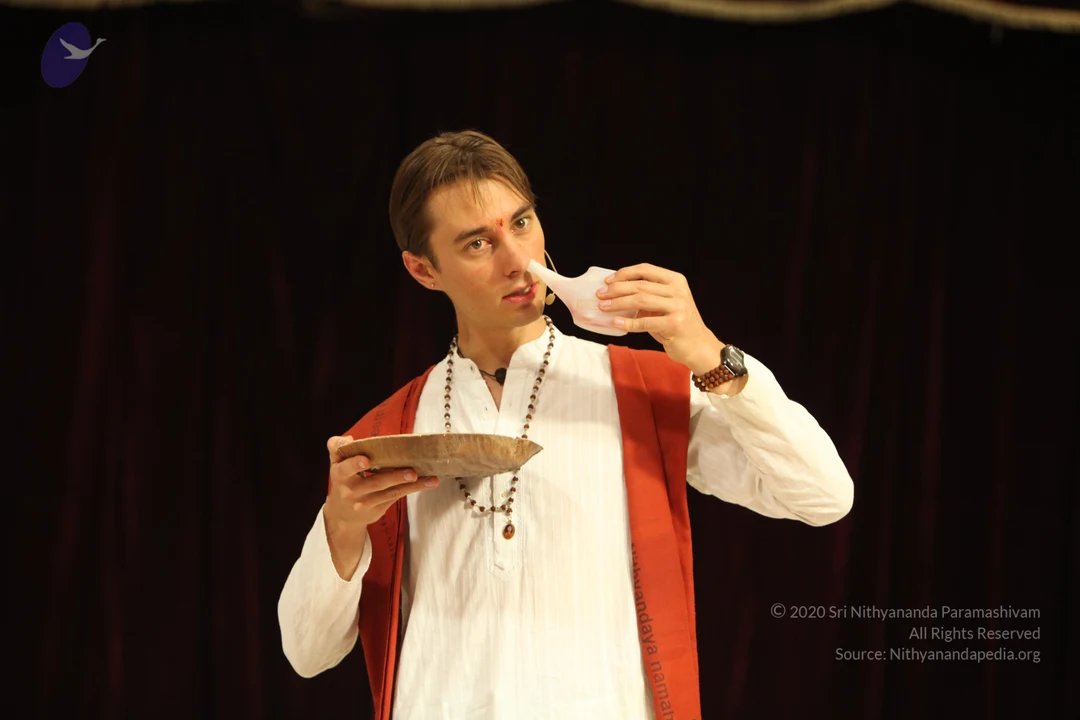
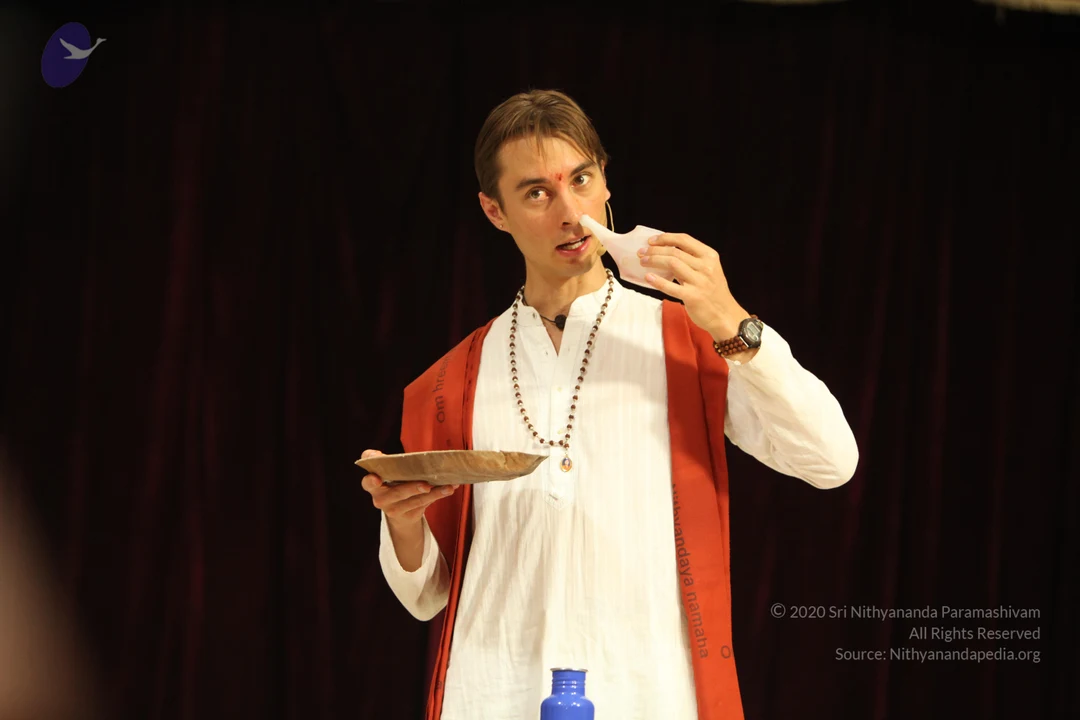
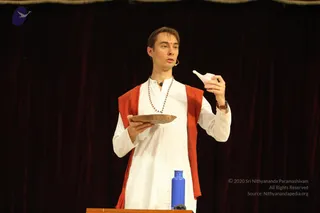
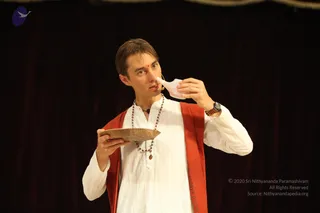
A man stands alone on a stage before dark maroon velvet drapes with a gold fringe valance at top. He wears a white kurta, an orange-red shawl draped over his shoulders and a rudraksha-style necklace, with a red tilak on his forehead and a small earpiece microphone. His eyes are closed as he holds his hands together in front of his chest.A man in a white kurta and red sleeveless vest stands beside a wooden lectern on a stage, holding a small pink cup in one hand while gesturing with the other. A blue water bottle and a small plate sit on the lectern. A dark red curtain hangs at right, and a wall-mounted air conditioner is visible at left. He wears a dark beaded rudraksha-style mala and a small headset microphone. Whether this man is a person cannot be determined from appearance, so he is described by role only as a speaker at a satsang-style talk.A man stands at a wooden lectern on stage in front of a dark maroon velvet curtain, speaking into a headset microphone. He wears a white kurta with a long rudraksha mala, a red-orange sleeveless vest with black lettering, and a small red tilak on his forehead. In his left hand he holds a wooden bowl, and in his right a small white cup or vessel. A blue water bottle stands on the lectern. The setting suggests a satsang discourse.A man in a white kurta stands on a stage before a dark curtain, holding a small clear glass cup near his face and looking down at it. He wears an orange-red shawl printed with script, a beaded rudraksha-style mala necklace, and a wristwatch. On a small wooden table beside him sit a blue bottle, a small red container and a folded white cloth. Behind him are beige walls, a wall-mounted air conditioning unit and a window. The setting suggests a satsang or discourse, with the man performing a small ritual sip from the cup.A large indoor hall with pink walls and red curtains shows a crowd of mostly seated participants in white clothes performing a Pancha Kriya-style practice. In the centre, a man in a white kurta with a rudraksha mala and wristwatch presses two fingers to his eyes while looking upward. Beside him, a man in white with a black mala does the same, and a bearded man in a black t-shirt stands behind them, bending forward. Other seated people in white, a woman in a purple blouse and white sari, and a few people in black and grey shirts fill the background, with red chairs visible. No figure is clearly identifiable as a person from appearance cues.A man stands against a dark maroon curtain holding a shallow wooden bowl in his left hand while his right hand raises a small white pot to his nose, as in a neti or nasal cleansing demonstration. He wears a white kurta with a red-orange shawl draped over one shoulder, a wooden rudraksha-style mala necklace, a red tilak on his forehead, a wristwatch and a small lapel microphone. The shawl carries a repeated printed inscription. Setting appears to be a stage or demonstration space.

Pada Puja and Satsang

1 photoSource gallery
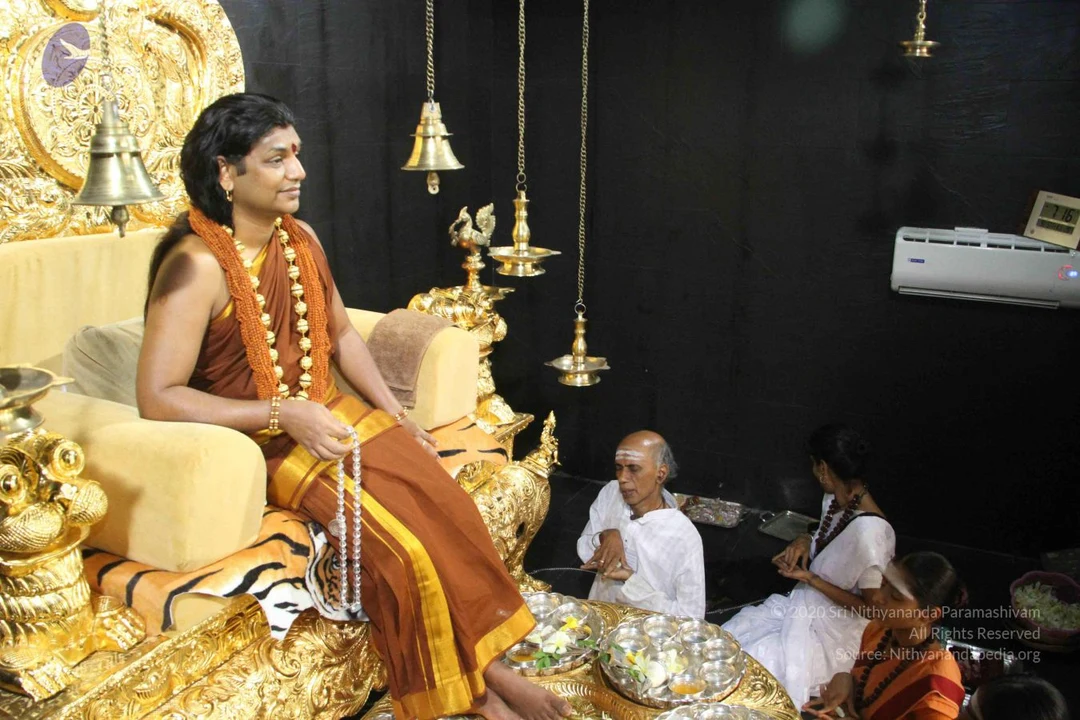
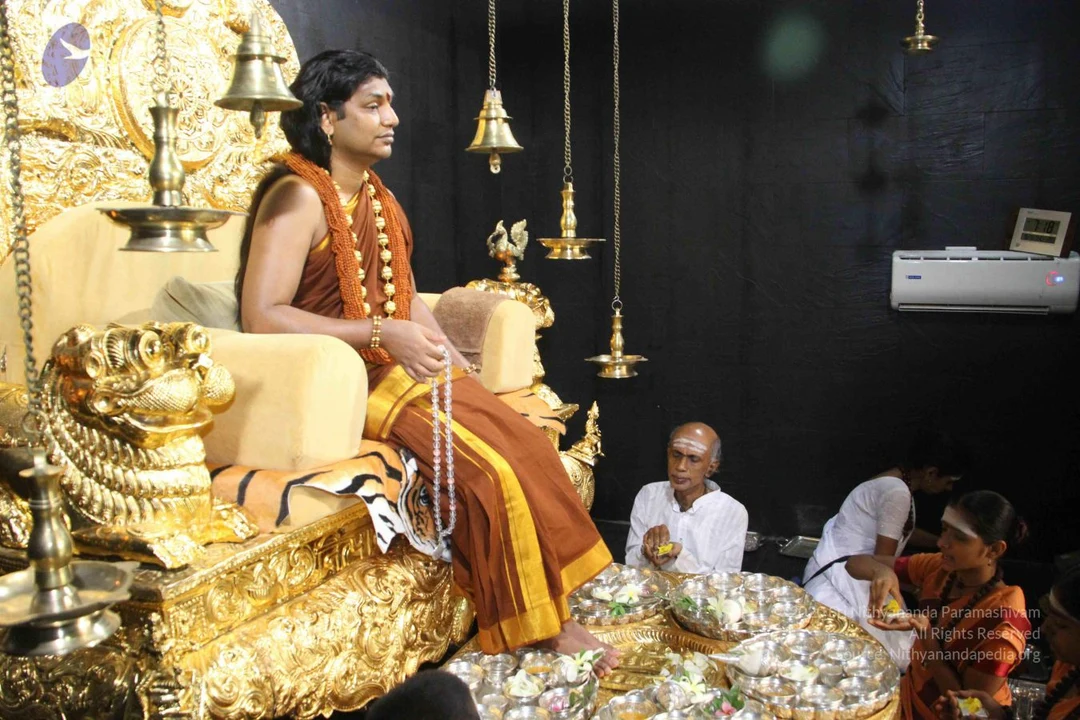
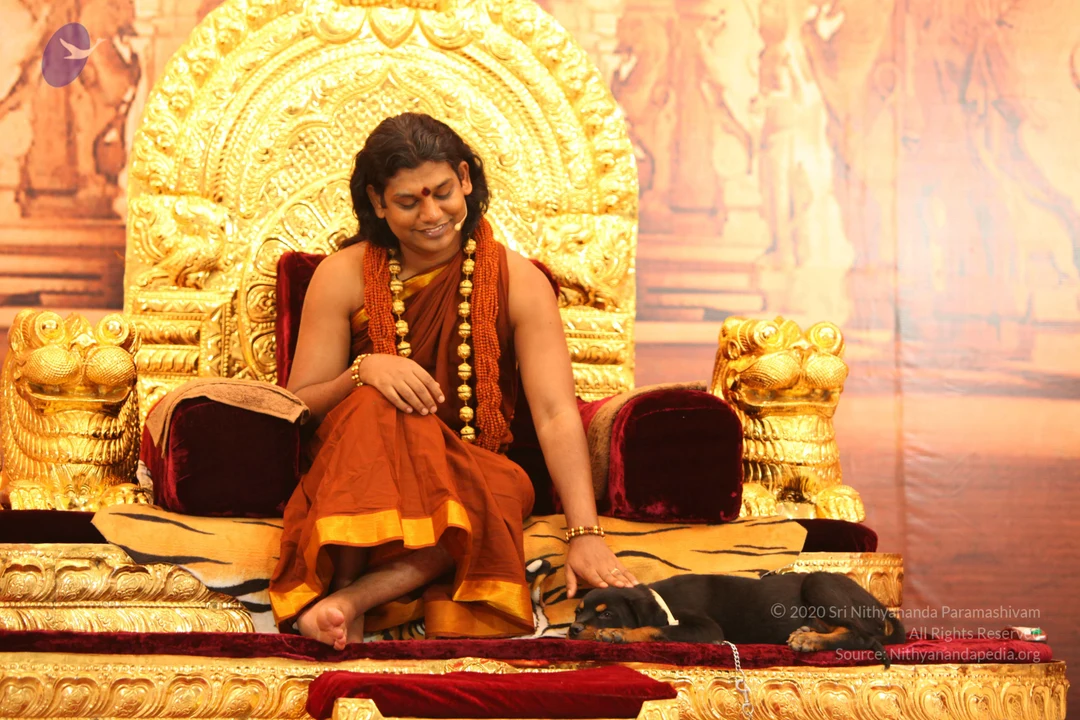
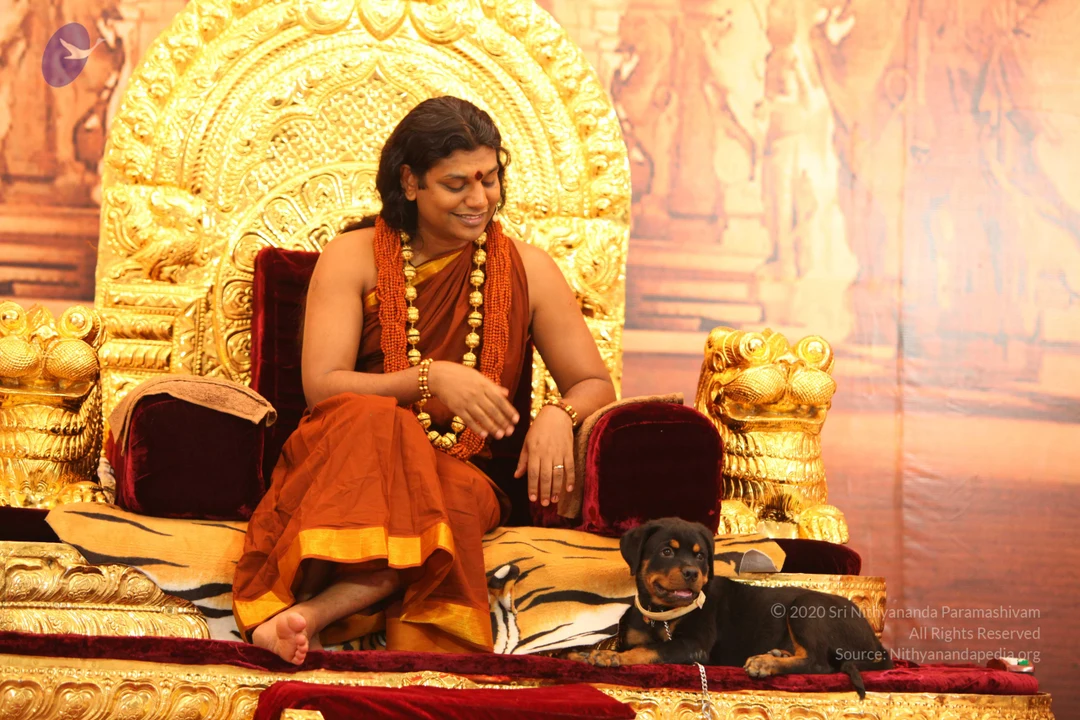
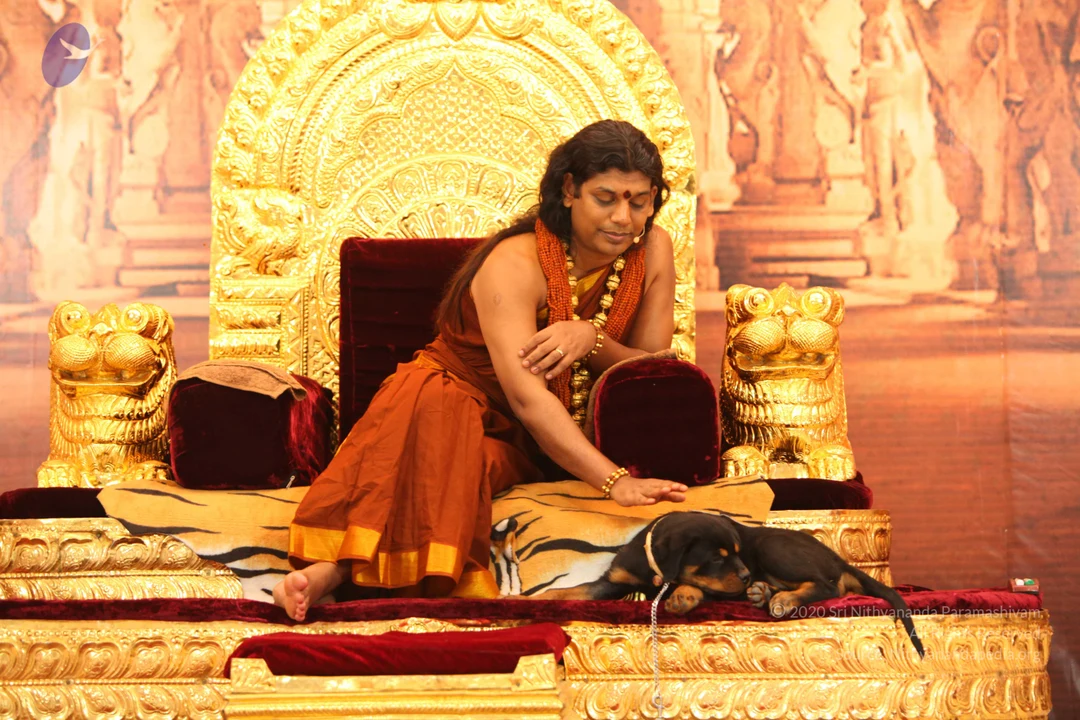
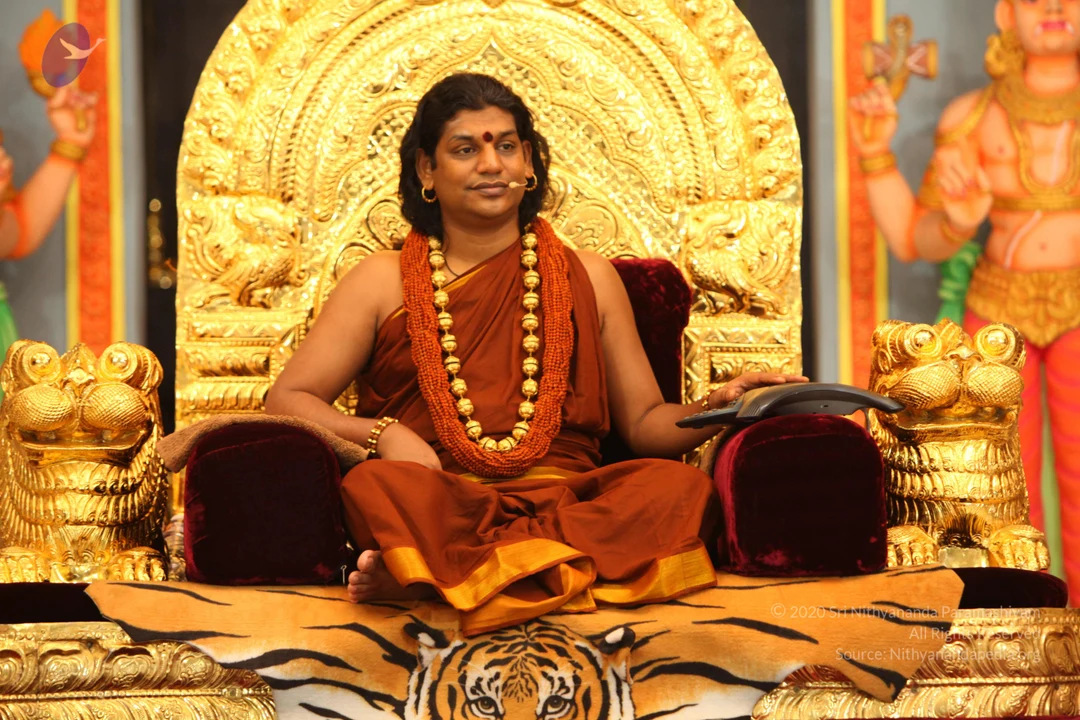
A seated person sits on an ornate gold throne with carved lion-head armrests and dark red velvet cushions, draped with a striped tiger-skin cloth. The person wears an orange-saffron cloth wrap with gold border, layered red-orange and gold beaded necklaces, gold bracelets, and a red bindi, with long dark swept-back hair, and smiles while looking to the side with a small microphone visible. A black and tan Rottweiler puppy lies on the lower red velvet platform at right. Behind is a painted backdrop of temple-style architecture in gold and beige tones. The person's flagged identity is unverified; the appearance cues are a saffron wrap, layered ornate beads and swept-back hair seated on a throne, so the candidate is an appearance-based probable match.

IA Day Session and

1 photoSource gallery
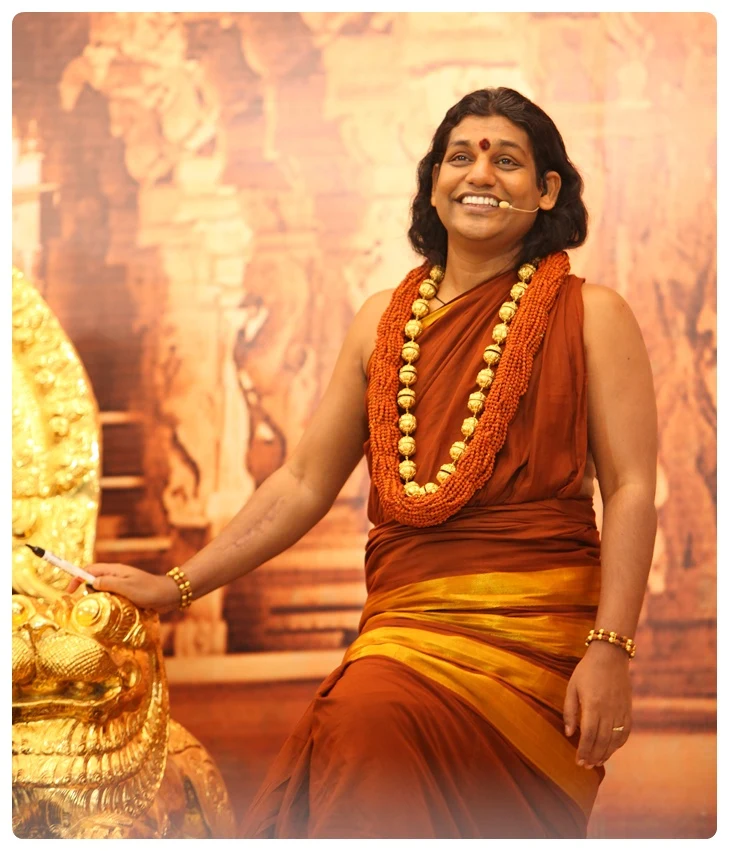
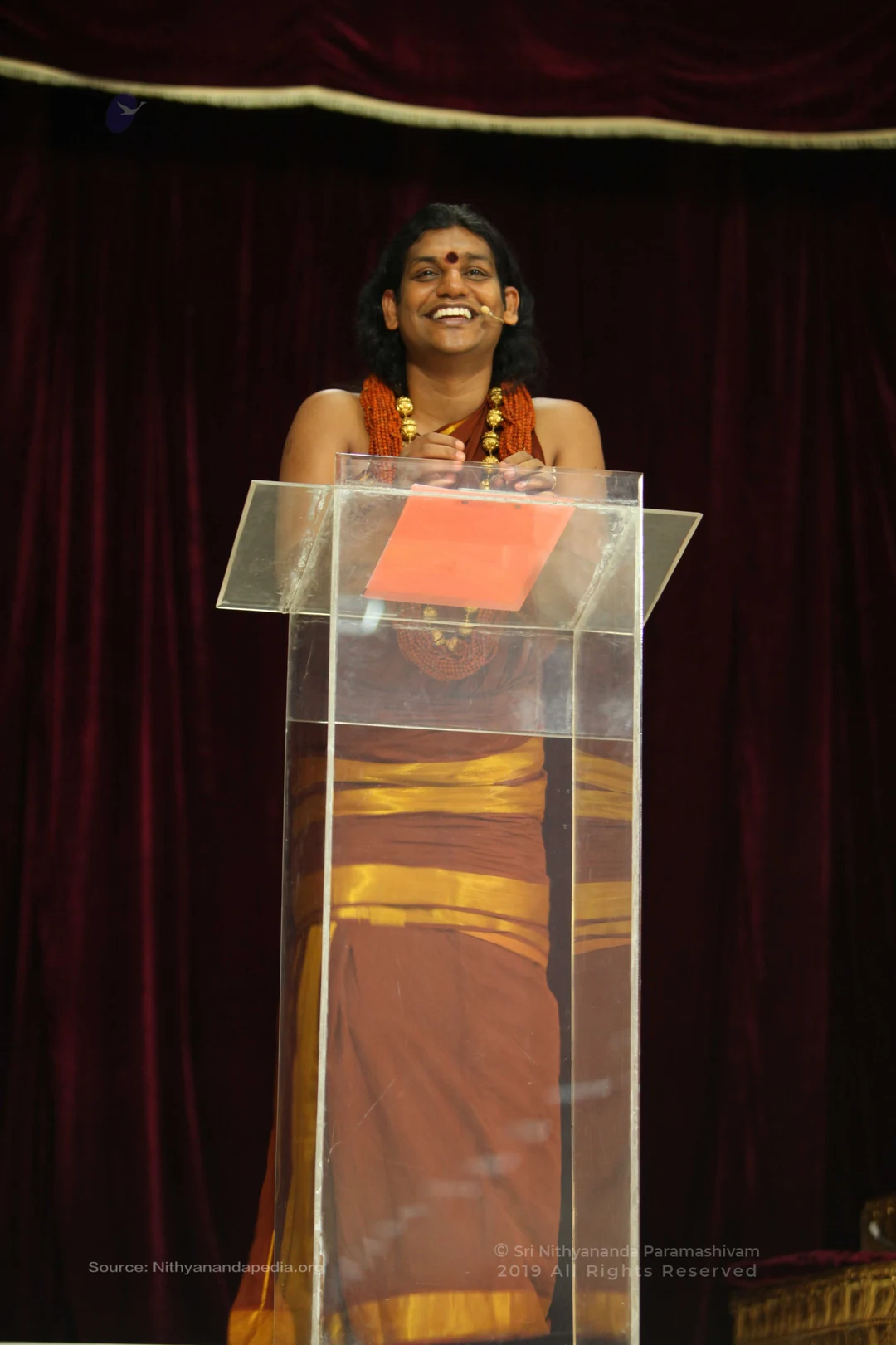
A smiling man in a rust-orange and gold-bordered dhoti and shawl stands beside a clear acrylic lectern, one hand resting on its top, wearing a small headset microphone. He wears a long orange rudraksha mala with large gold beads and a gold bracelet. Behind him is a warm orange backdrop carved with temple sculpture, and a large gold-plated deity murti or ornate gold seat sits at the right edge. Swamiji (probable) is present in appearance-based terms: long swept-back hair, a red bindi, orange ornate clothing and a rudraksha mala with gold beads, speaking as a satsang discourse speaker at a lectern.

IA Day Session and

6 photosSource gallery
A man stands alone on a stage before dark maroon velvet drapes with a gold fringe valance at top. He wears a white kurta, an orange-red shawl draped over his shoulders and a rudraksha-style necklace, with a red tilak on his forehead and a small earpiece microphone. His eyes are closed as he holds his hands together in front of his chest.A man in a white kurta and red sleeveless vest stands beside a wooden lectern on a stage, holding a small pink cup in one hand while gesturing with the other. A blue water bottle and a small plate sit on the lectern. A dark red curtain hangs at right, and a wall-mounted air conditioner is visible at left. He wears a dark beaded rudraksha-style mala and a small headset microphone. Whether this man is a person cannot be determined from appearance, so he is described by role only as a speaker at a satsang-style talk.A man stands at a wooden lectern on stage in front of a dark maroon velvet curtain, speaking into a headset microphone. He wears a white kurta with a long rudraksha mala, a red-orange sleeveless vest with black lettering, and a small red tilak on his forehead. In his left hand he holds a wooden bowl, and in his right a small white cup or vessel. A blue water bottle stands on the lectern. The setting suggests a satsang discourse.A man in a white kurta stands on a stage before a dark curtain, holding a small clear glass cup near his face and looking down at it. He wears an orange-red shawl printed with script, a beaded rudraksha-style mala necklace, and a wristwatch. On a small wooden table beside him sit a blue bottle, a small red container and a folded white cloth. Behind him are beige walls, a wall-mounted air conditioning unit and a window. The setting suggests a satsang or discourse, with the man performing a small ritual sip from the cup.A large indoor hall with pink walls and red curtains shows a crowd of mostly seated participants in white clothes performing a Pancha Kriya-style practice. In the centre, a man in a white kurta with a rudraksha mala and wristwatch presses two fingers to his eyes while looking upward. Beside him, a man in white with a black mala does the same, and a bearded man in a black t-shirt stands behind them, bending forward. Other seated people in white, a woman in a purple blouse and white sari, and a few people in black and grey shirts fill the background, with red chairs visible. No figure is clearly identifiable as a person from appearance cues.A man stands against a dark maroon curtain holding a shallow wooden bowl in his left hand while his right hand raises a small white pot to his nose, as in a neti or nasal cleansing demonstration. He wears a white kurta with a red-orange shawl draped over one shoulder, a wooden rudraksha-style mala necklace, a red tilak on his forehead, a wristwatch and a small lapel microphone. The shawl carries a repeated printed inscription. Setting appears to be a stage or demonstration space.

2-Pada-Puja-and-Satsang

1 photoSource gallery
A seated person sits on an ornate gold throne with carved lion-head armrests and dark red velvet cushions, draped with a striped tiger-skin cloth. The person wears an orange-saffron cloth wrap with gold border, layered red-orange and gold beaded necklaces, gold bracelets, and a red bindi, with long dark swept-back hair, and smiles while looking to the side with a small microphone visible. A black and tan Rottweiler puppy lies on the lower red velvet platform at right. Behind is a painted backdrop of temple-style architecture in gold and beige tones. The person's flagged identity is unverified; the appearance cues are a saffron wrap, layered ornate beads and swept-back hair seated on a throne, so the candidate is an appearance-based probable match.

3-IA-Day2-Session-1-and-2

1 photoSource gallery
A smiling man in a rust-orange and gold-bordered dhoti and shawl stands beside a clear acrylic lectern, one hand resting on its top, wearing a small headset microphone. He wears a long orange rudraksha mala with large gold beads and a gold bracelet. Behind him is a warm orange backdrop carved with temple sculpture, and a large gold-plated deity murti or ornate gold seat sits at the right edge. Swamiji (probable) is present in appearance-based terms: long swept-back hair, a red bindi, orange ornate clothing and a rudraksha mala with gold beads, speaking as a satsang discourse speaker at a lectern.

01-Temple

14 photosSource gallery
Outdoor photo of a procession on a hexagonal paved walkway beneath a red-pillared covered area. In front, a smiling young person with long hair and a red-brown wrap in brown and gold stripes wears a beaded gold-and-rudraksha style necklace and walks barefoot. Behind, a young man in saffron-orange robes carries a brass pot with red flowers on a tray. Several more people in saffron and in colourful saris stand or walk in the background, near trees and a black vehicle at left.Warm, backlit photograph of a woman in a dark maroon sari with a golden border, wearing a long gold bead necklace and a red-brown shawl over her shoulders, walking forward and smiling. Beside her a shaved-headed attendant in orange-saffron robes carries a brass tray holding a kalasha-style vessel with green leaves and a red flower. A third figure in orange follows in the background. A tall painted pole with a tassel hangs overhead among palm trees, and small terracotta pots sit on the paved floor.A warmly lit hall with orange-red walls and a corrugated roof, with a red carpet on the left and steel railings. A smiling woman in a brown sari with a gold border and an orange-yellow marigold garland walks forward on the left. Behind her, a young man in orange robes carries a brass vessel with flowers and fruit, and another in orange clothing with a white headband plays a drum on his shoulder. A noticeboard of photographs hangs on the right wall. Three people are visible in the procession, with a partially hidden figure behind them.Outdoor photograph of a man in a saffron-red dhoti and shawl with gold borders and a long rudraksha-style bead necklace with a gold pendant, walking barefoot on a pale sandy path beside a red metal gate. A black-and-tan dog walks at his feet on a leash. Behind him a bald man in red clothing stands near another man. On the right, two women in cream and gold saris with red borders stand facing the path, one holding an object. A black water tank sits on a raised platform at upper left, with green trees overhead.Outdoor photograph of a procession on bare ground under a pale sky with leafy trees at the top edge. A central man with long swept-back hair wears a rust-red dhoti and sleeveless top with broad gold borders, a large cream and gold bead garland and an orange-brown beaded necklace, walking barefoot beside a black and tan dog on a light collar. Around him, several women and young people wear gold and maroon saris and beaded necklaces; one woman at right holds a red-fringed drum. a person: the central figure shows long swept-back hair, rust-red and gold ceremonial dress and a large bead garland, so he is marked as a probable in-person candidate.A bright, washed-out outdoor photograph of a procession on a pale dirt path under a tree. In the centre, a man with long dark swept-back hair, a red bindi and a thick white and gold beaded mala walks barefoot in a rust-red dhoti and shawl with gold borders, eyes lowered. Around him, several young people in gold-and-maroon saris and dhotis walk in step; one woman on the right holds a small cymbal-like instrument, and a figure in a red shawl stands near a small black-and-tan dog. A round drum or tambourine is visible on the left. Trees and bright sky fill the background.

02-Pada-Puja
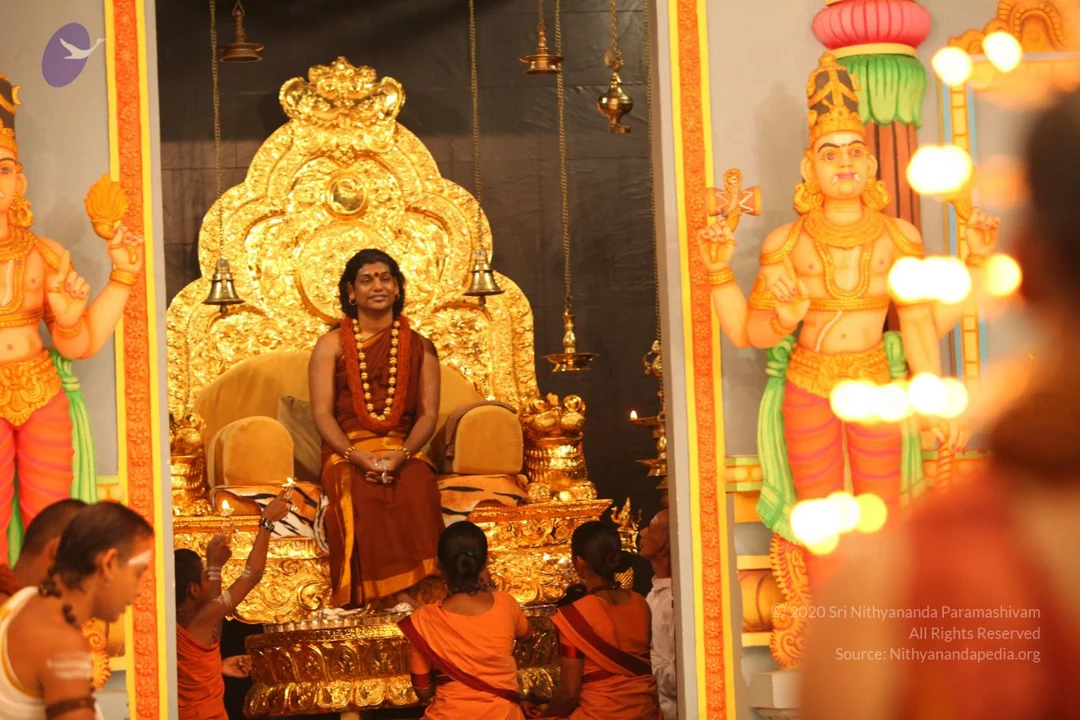
40 photosSource gallery
Photograph of a temple-style inner sanctum framed by deep red velvet curtains. In the foreground, a shaved-headed man in a white dhoti and white shawl sits cross-legged on the floor with his hands pressed together in prayer. Beside him, a man in rust-orange robes kneels and raises a lit brass oil lamp with a large flame toward the open wooden doors. Behind the doors, a seated figure in orange robes and a white garland sits before a gold-leaf throne-like backdrop. A painted, multi-armed deity mural in red, orange and green decorates the wall to the left.A photograph inside an ornate temple-like hall with painted pillars and a red-and-gold doorway framing a gilded throne. A man in a rust-orange robe and gold-bordered dhoti, with a white flower garland and rudraksha-style beads, sits on the golden throne with hands resting on its arms and eyes closed. In front, a priest in a rust-coloured dhoti kneels and raises a lit oil lamp toward him. At lower left, a man in white ritual clothes with white sandalwood markings sits with palms pressed together in prayer. Flanking the doorway are painted multi-armed deity murtis with gold ornaments, and red curtains hang at the sides. The scene suggests an aarti being offered during a puja.Photograph of a ceremonial temple-hall scene. A seated man on an ornate gold throne (peetha) wears saffron-orange robes and a long beaded mala, with his hands open and a flower-like object in one hand. Before him, a man in a deep orange robe kneels and holds a lit oil lamp (aarti) toward him, while a bare-chested devotee in white dhoti with white sacred ash marks sits at lower left with palms pressed together. Behind them stands a painted deity murti with four arms, a crown and a trident, flanked by painted pillars in red, green and blue. Gold hanging lamps and bells hang above the throne.A photograph inside a colourful temple hall with painted pillars showing four-armed deity murti holding a trident and a flower. A man in saffron-orange robes and a rudraksha mala sits on an ornate gold throne with a crown-shaped back, smiling and raising one hand, with water being poured from a small vessel. In front of the throne, a shaved-headed attendant in rust-red robes tends a fire lamp, and a seated man in white dhoti with white markings on his forehead and arms joins his palms in prayer. Hanging brass lamps and bells decorate the canopy above.A photograph of a golden ornate throne set before a painted temple wall with colourful panels and two painted multi-armed deity figures flanking it. A smiling man with long hair and a rudraksha mala sits on the throne wearing a saffron-red robe. A second man in a red-brown robe kneels in front of the throne, holding a flaming oil lamp aarti toward him. A third man in white ritual clothing with a gold border sits cross-legged on the floor at left, hands folded in prayer. Brass bells and hanging lamps hang above the throne. The scene suggests a pada puja ceremony. a person appears seated on the throne with rudraksha mala and saffron-red robes.A seated man on an ornate gold throne in a temple-style hall, wearing a saffron-orange dhoti and shawl with a red bindi, a rudraksha-style bead garland and a mala in his hand. He smiles and raises one hand in blessing. A priest in an orange-red dhoti stands at left, holding a lit oil lamp or camphor flame toward him. Painted deity figures flank the throne, one holding a flame. Hanging brass lamps and bells decorate the arch, and a tiger-skin cloth covers the seat. Two people with folded hands are partly visible at lower left.
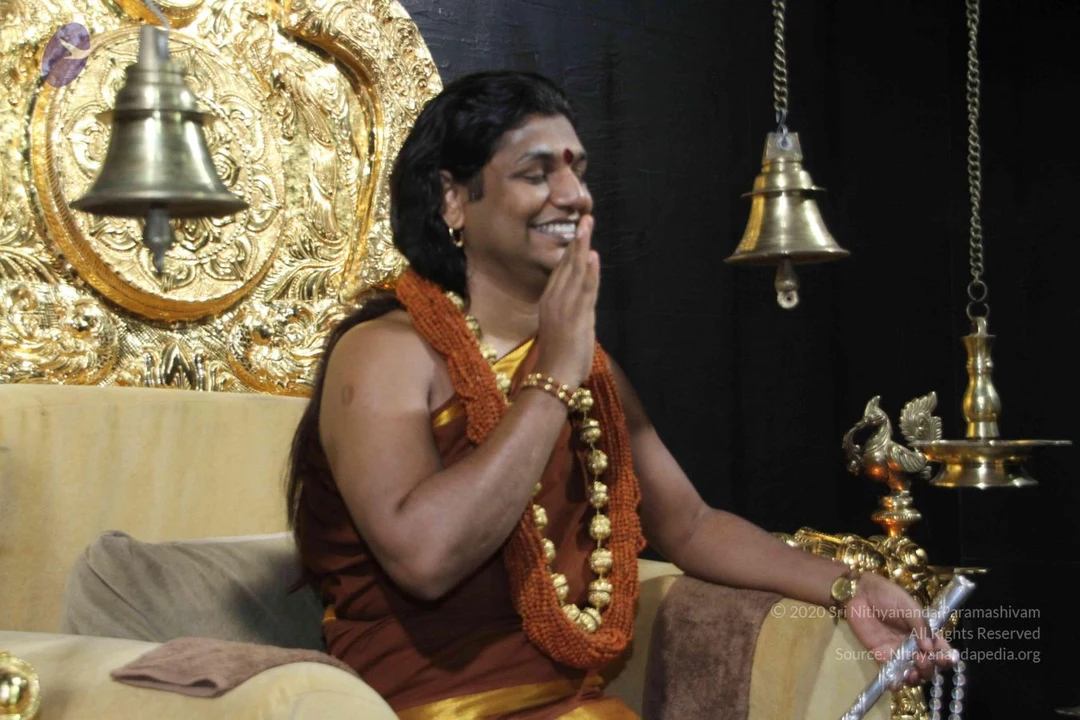
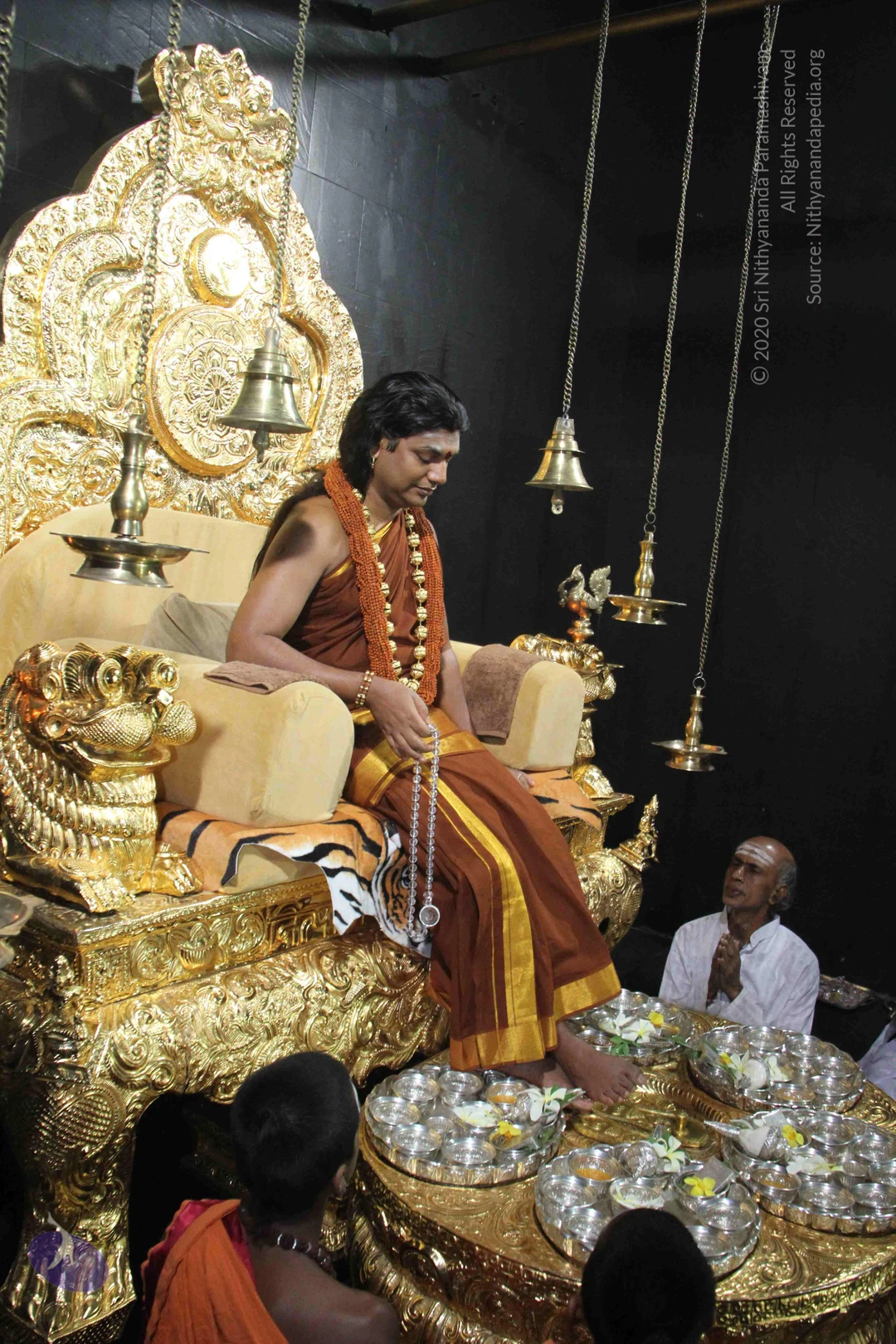
03-Inner-Awakening-Session-1
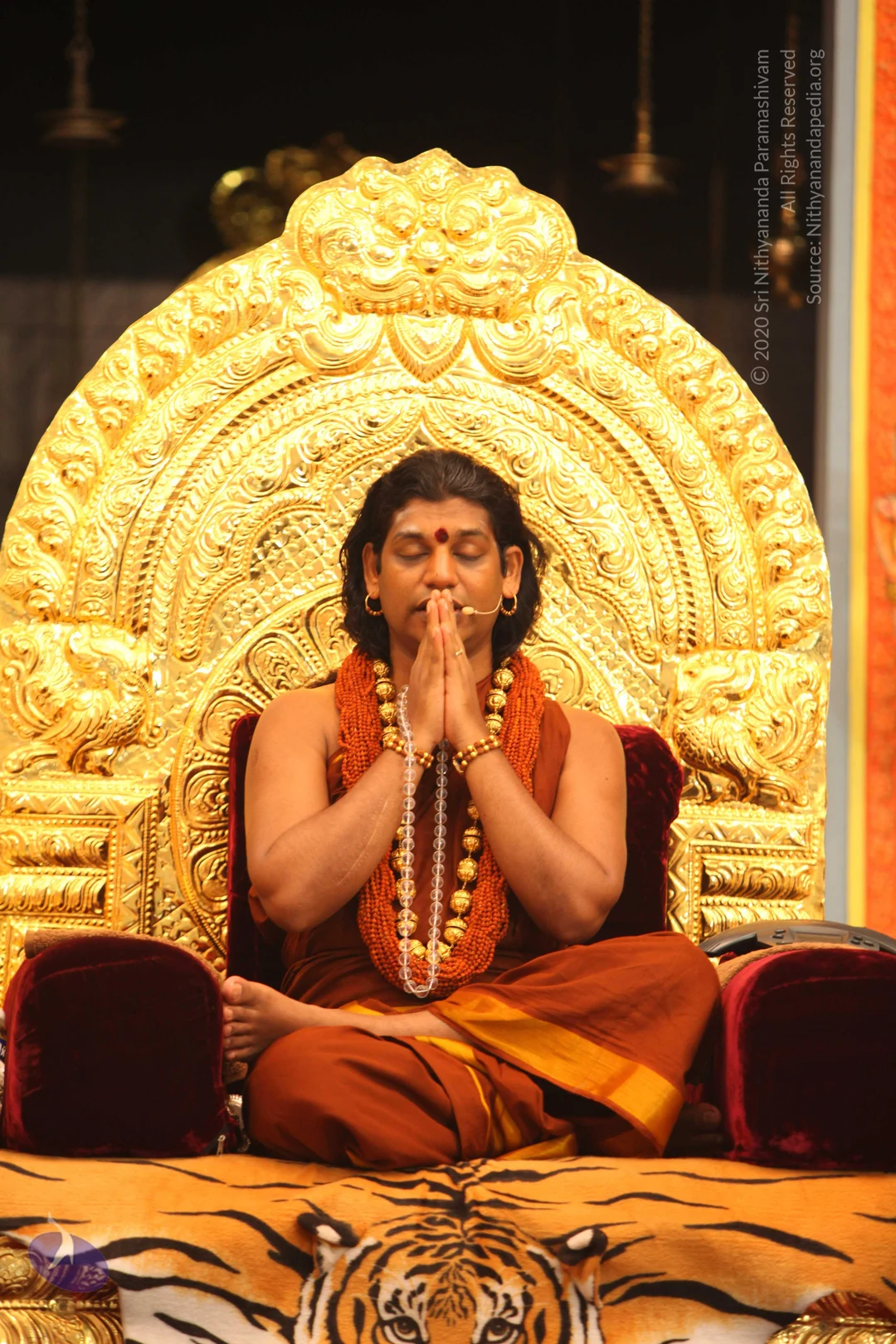
34 photosSource gallery
A seated man in a saffron-orange robe with a gold-thread border sits on an ornate gilded throne with burgundy velvet cushions and a tiger-skin rug at its base. He wears a long orange-red beaded mala with gold spacer beads, gold bangles and a small red bindi, and a headset microphone is visible at his cheek. He faces to the side, mid-discourse. Behind him are painted pillars in pink, green and orange and a grey wall with a gilded arch motif. Swamiji (probable): the saffron robe, long hair, red mala and gold ornaments on a throne match the page's Swamiji claim.A seated man in an ornate golden throne with a dark red velvet cushion sits cross-legged on a tiger-skin rug, eyes closed in meditation. He wears a rust-orange sleeveless robe, a long multi-strand rudraksha mala with gold bead spacers, gold bangles and a red tilak on his forehead. Behind him stand pink, green and gold decorative pillars and a golden oil lamp.A seated man in saffron-orange robes with a gold-bordered dhoti sits cross-legged in meditation on an ornate gold throne with carved lion-head armrests and a tiger-striped cloth beneath. He wears a long red rudraksha mala and a heavy gold bead necklace, has a red bindi on his forehead, eyes closed and a faint smile, with a small clip-on microphone at his face. Behind him stand gilded deity statues with raised arms and gold jewellery. A water bottle sits at the left edge. A man with long swept-back hair and rudraksha malas, seated on a throne, fits the appearance cues for Swamiji (probable), seated in a satsang setting.A seated man in orange-saffron robes speaks during a satsang, seated cross-legged on a tiger-striped rug before an ornate gold throne with a large carved arched backrest. He wears a long-haired, swept-back style, a red bindi, a headset microphone, a thick orange rudraksha mala with large gold beads, gold bangles and gold earrings, and is gesturing with one hand toward the mala. Hanging brass lamps are visible at the top of the frame. Swamiji (probable): the figure has long swept-back hair, saffron clothing, a rudraksha mala and ceremonial gold beads, with the throne and satsang setting consistent with the page.A seated man in an ornate golden throne with a large gilded arch carved with lion motifs. He wears an orange-saffron dhoti and shawl with a gold border, a long orange rudraksha mala and a heavy gold bead necklace, a red bindi on his forehead, and a small headset microphone. He sits cross-legged on a tiger-skin rug draped over the throne platform, with maroon velvet cushions at his side, and appears to be speaking. Long dark hair falls to his shoulders. The visible cues of long hair, saffron clothing, rudraksha and gold beads match the page's Swamiji reference, so this is a probable identification. No other people are visible.A seated man in saffron-orange draped robes and a long rust-coloured rudraksha mala with gold beads sits in lotus-style posture on a tiger-skin covered dais before an ornate gold throne with a carved arched back. He wears gold hoop earrings, a red bindi and a small headset microphone, and points his right index finger forward while speaking. Hanging brass lamps are visible above in the background. A matching gold-carved side panel and a red velvet armrest frame the scene. Hair is long and swept back, and the figure's appearance with saffron robes, rudraksha mala and ceremonial gold ornaments on a throne is consistent with the a person candidate, so this is an appearance-based probable identification from cues, not a confirmed one.

04-Inner-Awakening-Session-2

7 photosSource gallery
A man stands at a clear acrylic lectern on a stage in front of dark maroon velvet drapes with a gold fringe. He wears a rust-brown and gold-bordered dhoti-style wrap, a red-orange beaded mala with gold bead accents, and a small red bindi, and has a headset microphone. He stands with hands joined near the lectern and looks upward while speaking. A small red card sits on the lectern. The scene appears to be a satsang discourse. Swamiji (probable): long dark hair, ornate gold-and-rudraksha style necklace and saffron-orange garments indicate the speaker is the presenter.A man stands at a clear acrylic lectern on a stage before a dark maroon velvet curtain, speaking into a headset microphone and raising his right hand in a teaching gesture. He wears a rust-brown draped robe with broad gold-bordered bands wrapped at the waist and a multi-strand red-orange rudraksha mala with gold beads around his neck, plus a red bindi on his forehead. His long dark hair falls past his shoulders, and his left hand rests on the lectern. Printed vertical text on the right edge reads copyright and source credits.A man stands on a stage before deep maroon velvet drapes with a gold fringe, looking upward and smiling. He wears a rust-orange draped garment with broad gold borders, a gold-bordered dhoti, and a layered orange rudraksha mala with gold bead ornaments around his neck. He has long swept-back dark hair and a small red bindi, and a microphone is visible near his face. To the lower left, a gold-trimmed throne with a tiger-striped cloth sits beside him. Swamiji (probable): the long hair, orange and gold ornate clothing, and rudraksha mala match the cues for this figure, and the page identifies him as present at this satsang.A standing man in a rust-brown sannyasi-style wrap with gold-bordered dhoti and a long coral rudraksha mala with gold beads around his neck, a red bindi on his forehead, and long dark hair, stands on a stage before a clear acrylic lectern. Behind him a large ornate gold throne with a dark velvet seat sits before deep maroon drapes. He looks upward and to the side while speaking.A man stands barefoot on a raised stage speaking expressively with his right hand open, beside a clear acrylic lectern on the left. He wears a rust-brown unstitched wrap with wide gold-bordered bands at the waist and a gold-bordered dhoti, and a red-orange rudraksha mala with gold beads around his neck. He has long dark wavy hair and a red bindi on his forehead. Behind him hang deep maroon velvet drapes and a gold ornate throne with tiger-striped upholstery. Appearance-based probable Swamiji, a satsang speaker, with the qualifying cues of long hair, rudraksha mala and ceremonial gold necklace-style beads and saffron-toned ornate clothing. No other people are visible.A person stands behind a clear acrylic lectern on a stage with deep maroon velvet drapes edged with gold trim. The speaker, with long dark hair swept back, wears a rust-red and gold-bordered cloth wrapped around the body, a red rudraksha mala with gold beads, and a red bindi, with bare shoulders. Hands are pressed together at the chest as the speaker smiles and looks up while speaking into a headset microphone. A white card sits on the lectern beside a red sheet. At the lower right, a golden deity murti with an ornate base is partly visible. Probable Swamiji on stage in the stated role of discourse speaker, based on the long hair, rudraksha mala and saffron-toned clothing.
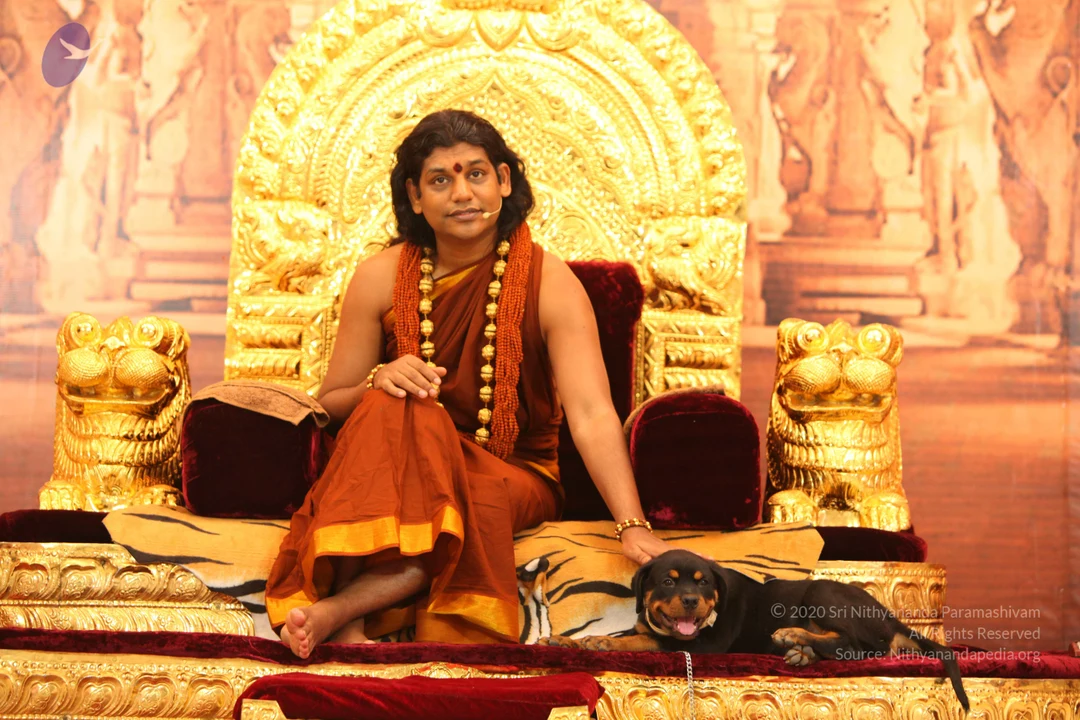
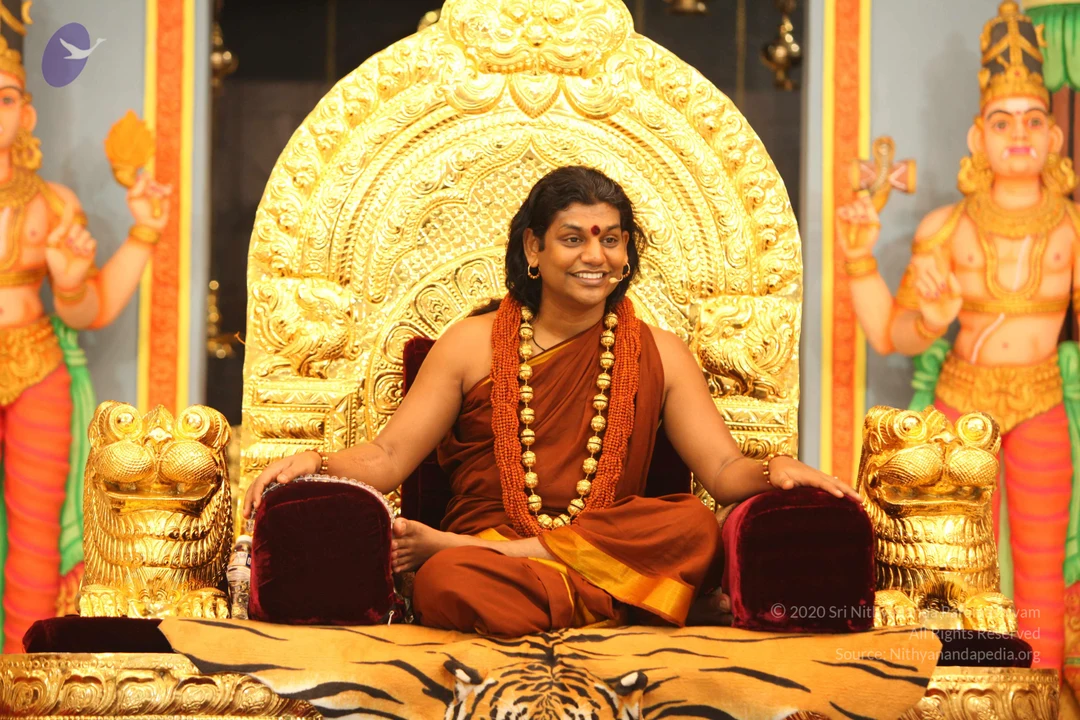
May 09 2013

18 photosView all
Photograph from an indoor satsang hall with a red and gold draped backdrop. In the foreground, a shaven-headed young man in saffron-orange robes with gold borders and a rudraksha mala around his neck, shown from behind and bare-shouldered, carries a red tray of individually wrapped sweets and snacks. Beside him, another person in white holds up a palm and wears a red-and-white flower garland. Further back a few people are blurred in the hall, and a second person in white stands near the right edge. The setting suggests a prasad distribution during an event.