Skip to content
Wednesday

8 May 2013

Dated photos
291
Source pages
1
Media
3
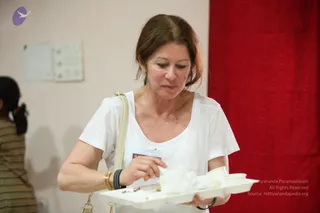
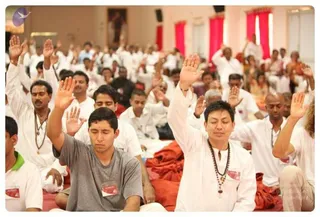
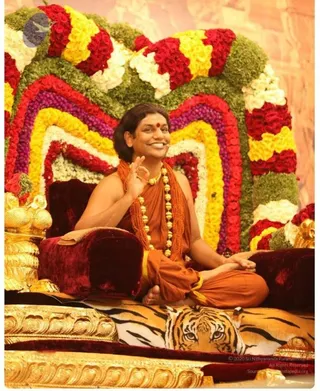
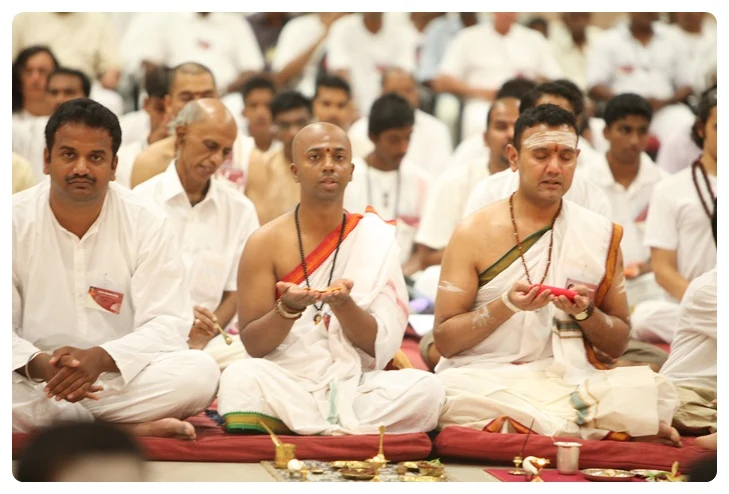
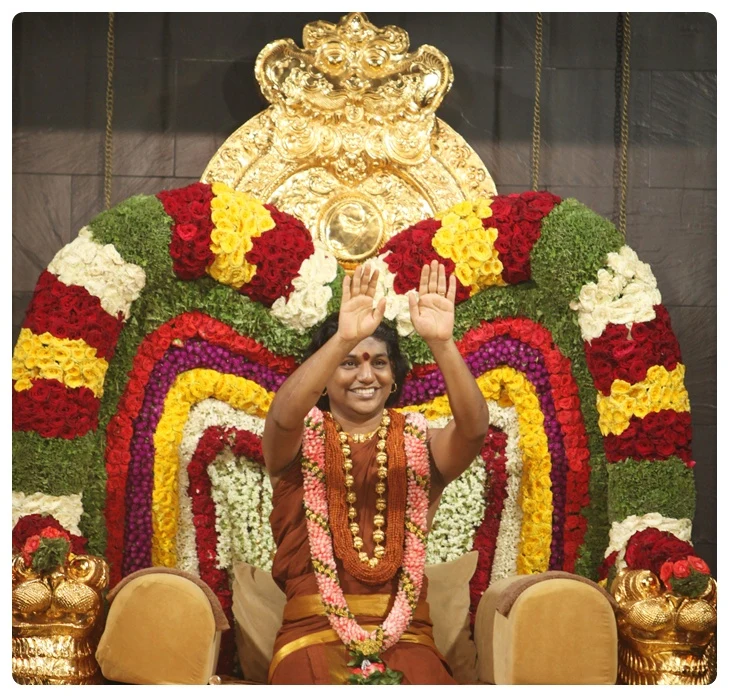
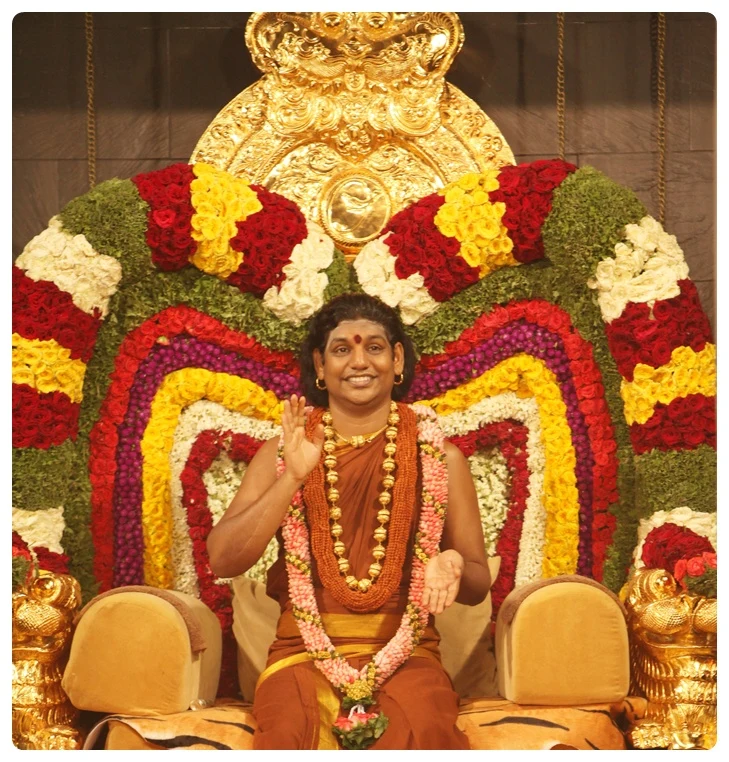
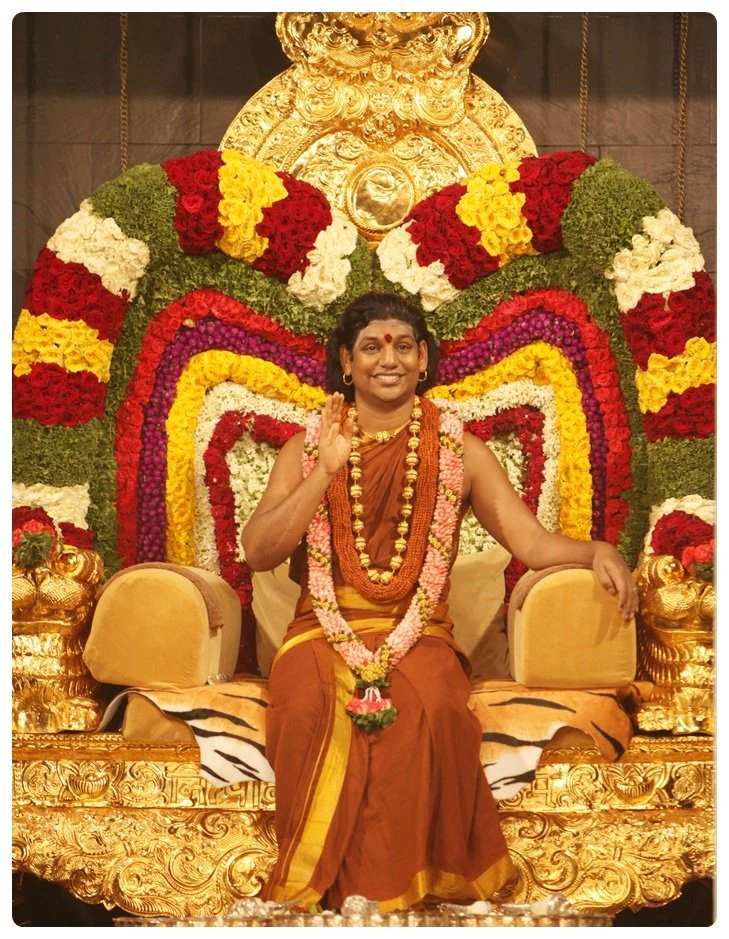
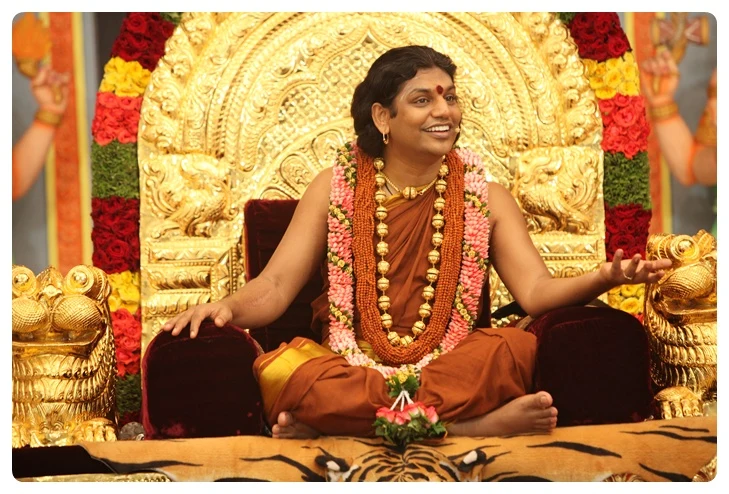
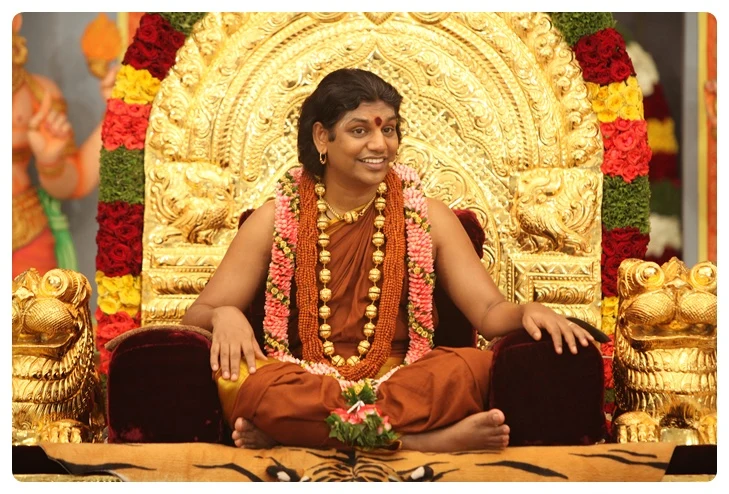
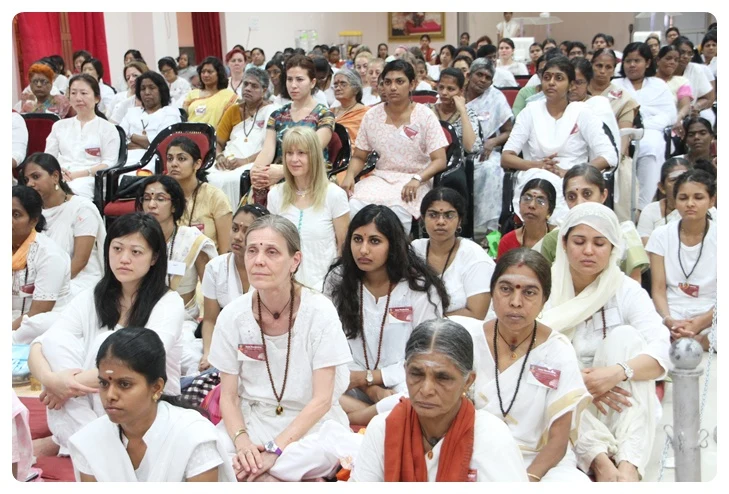
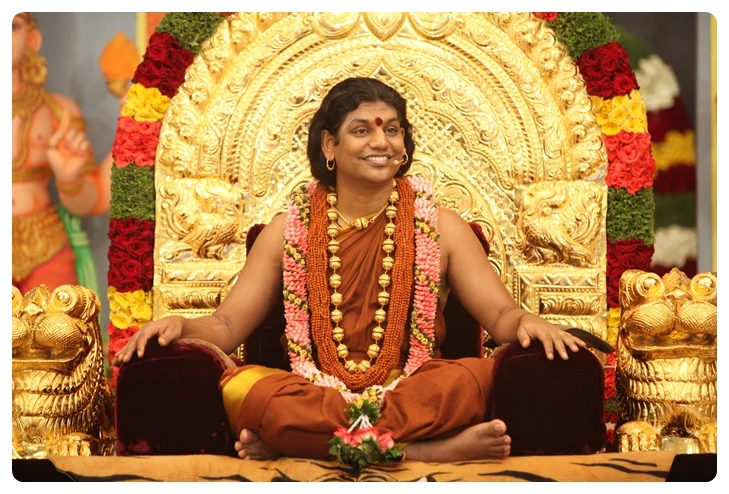
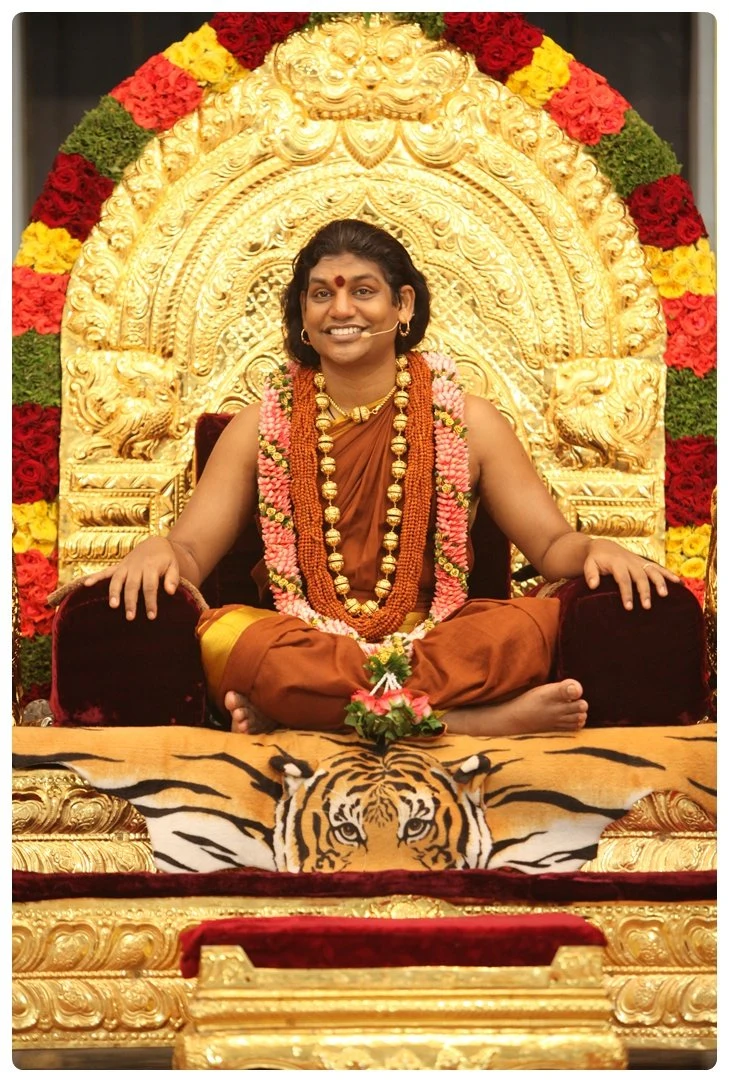
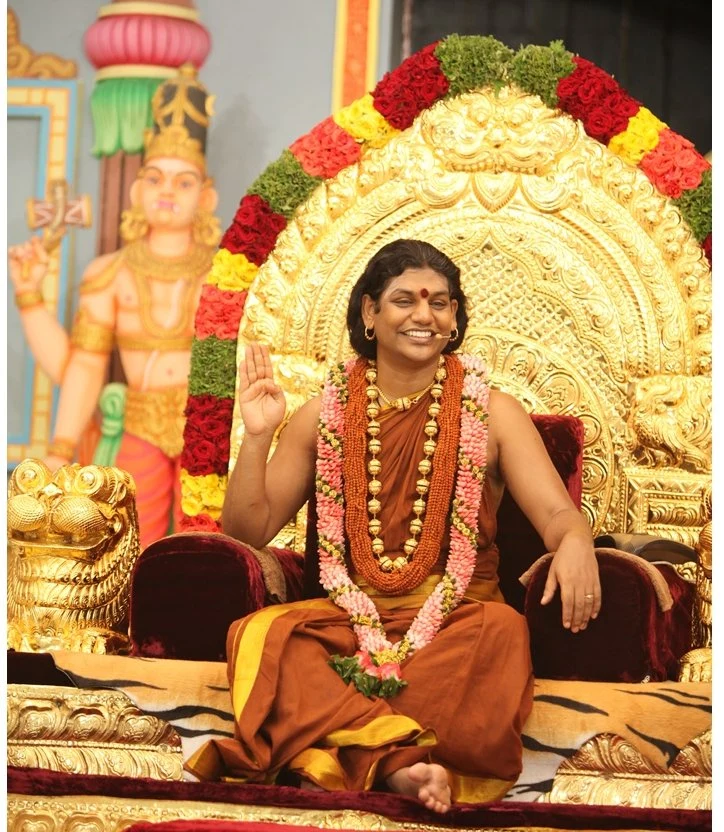
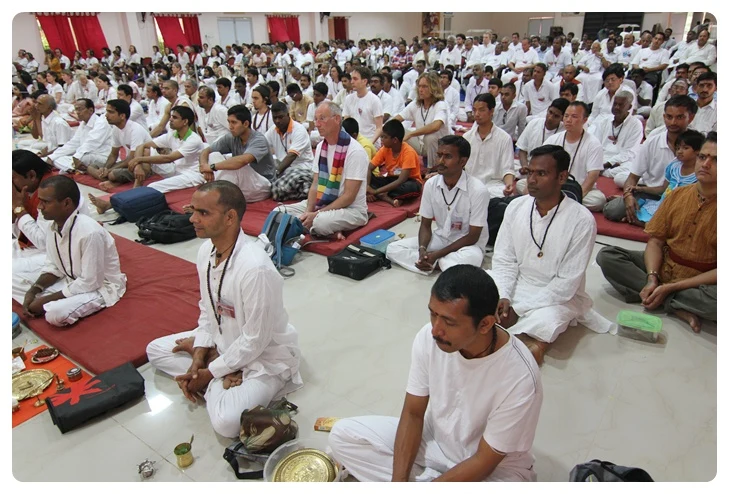
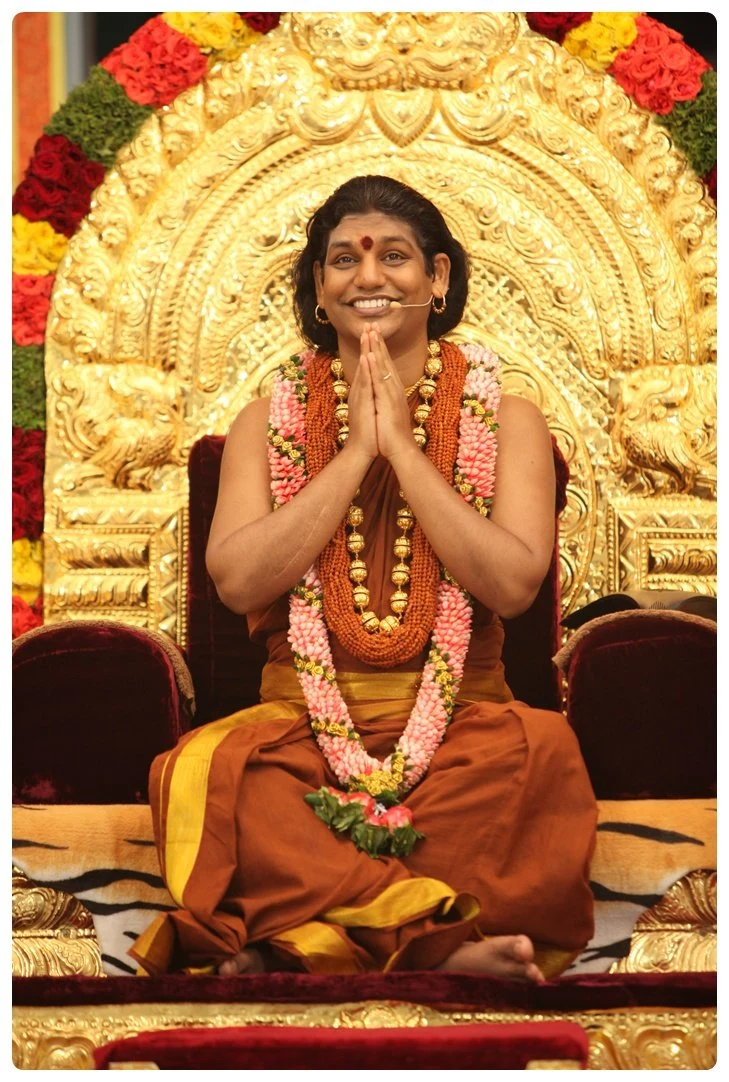
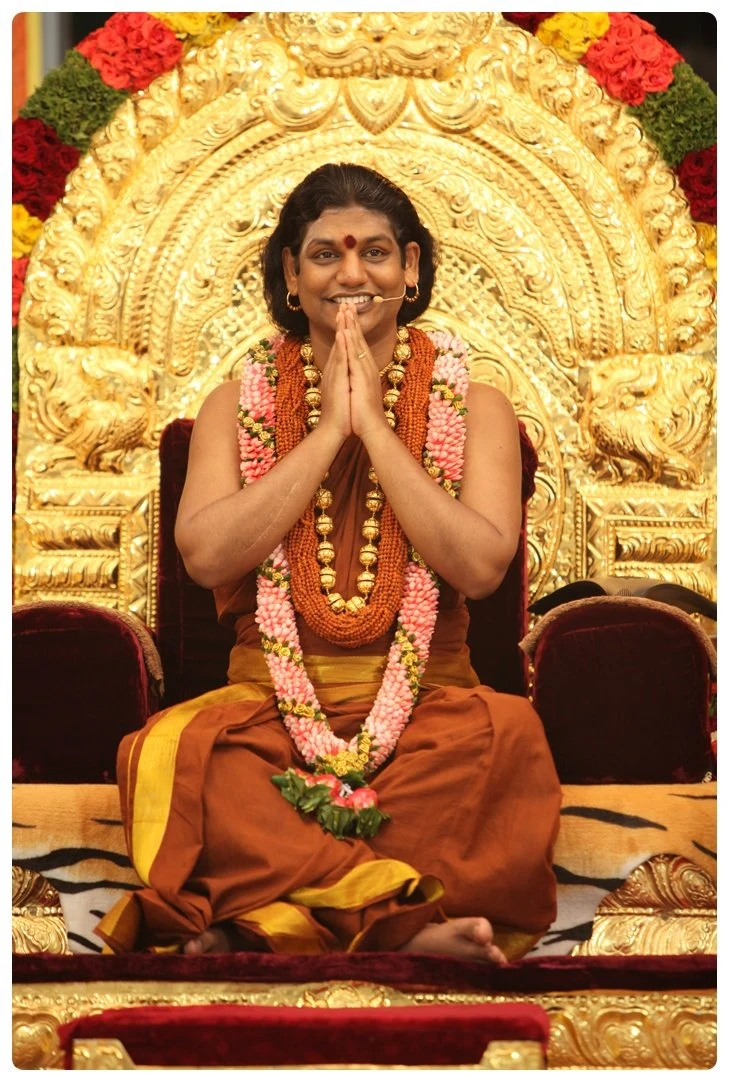
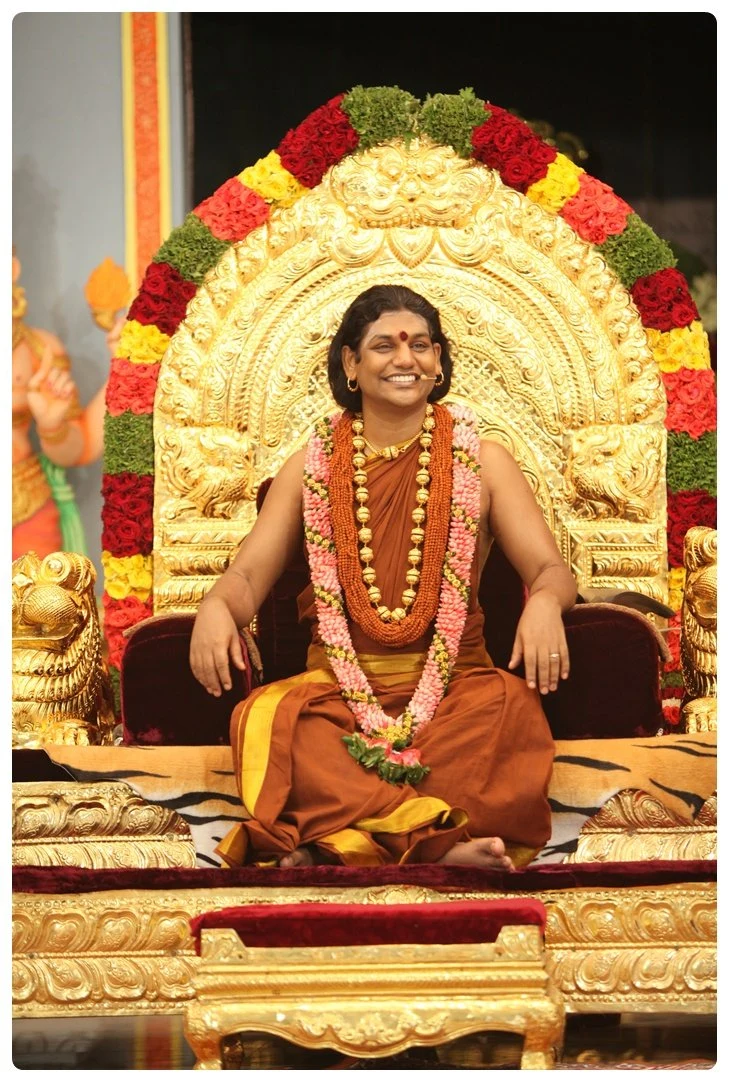
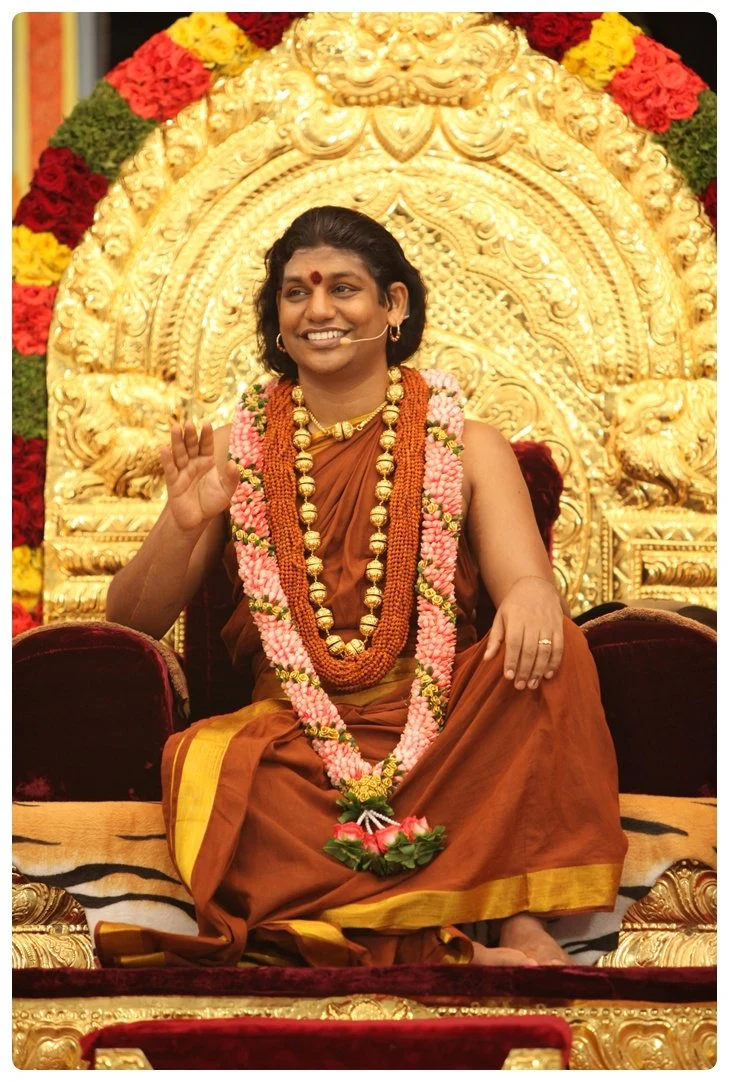
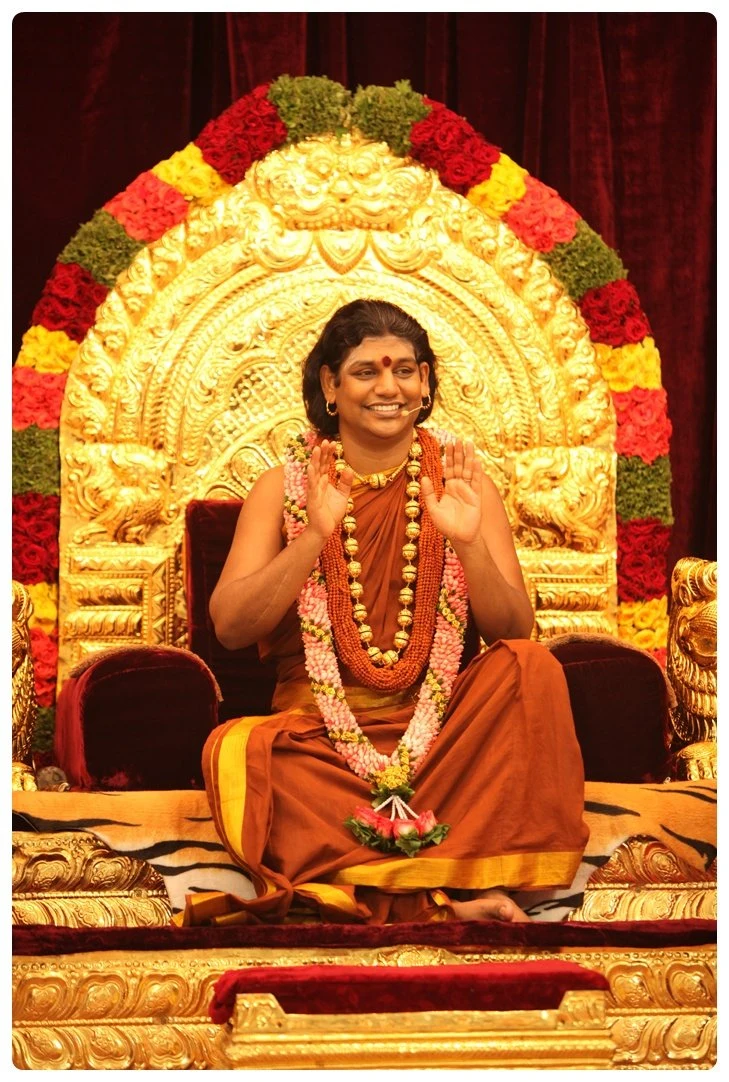
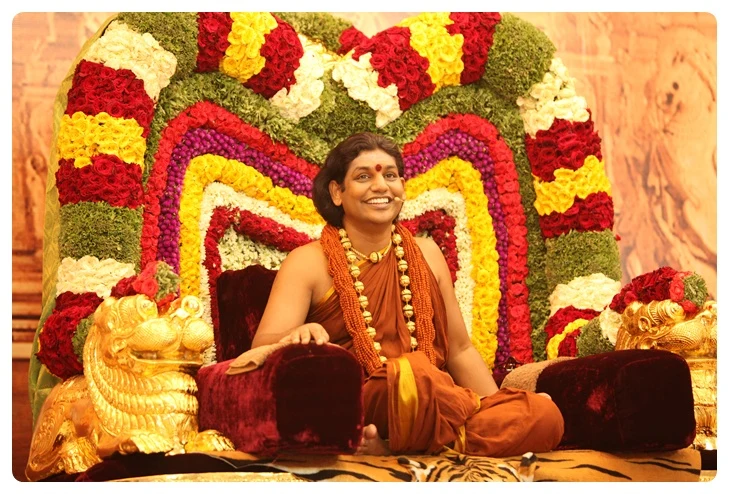
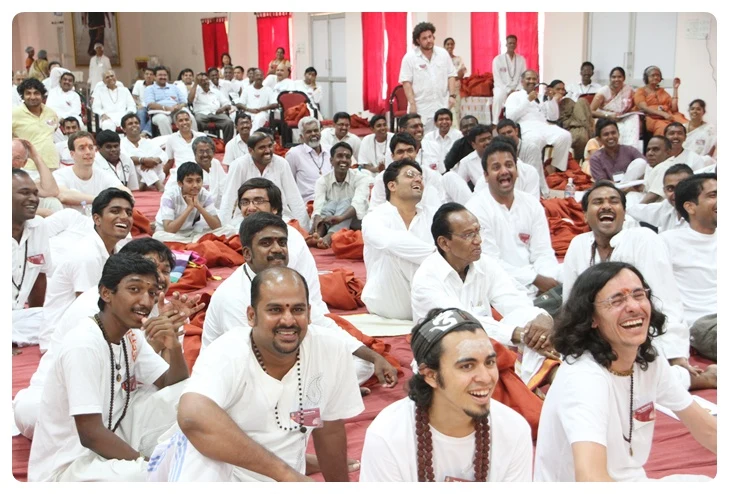
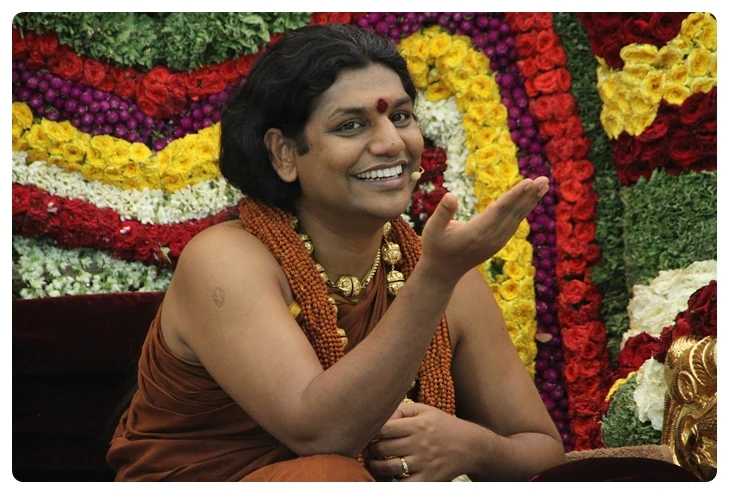
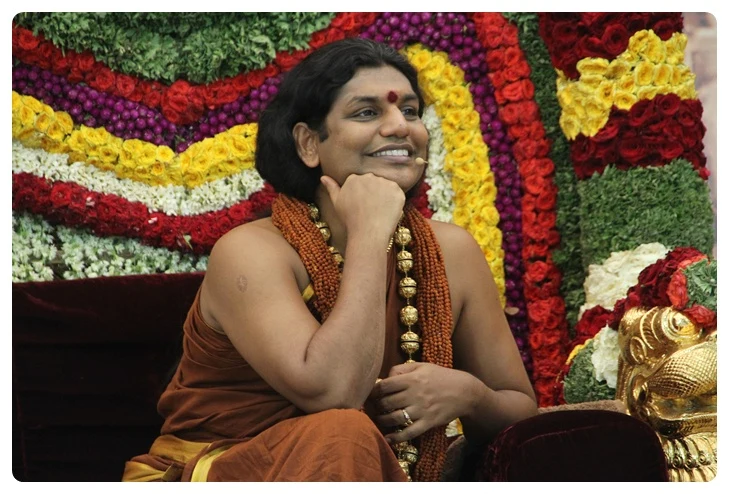
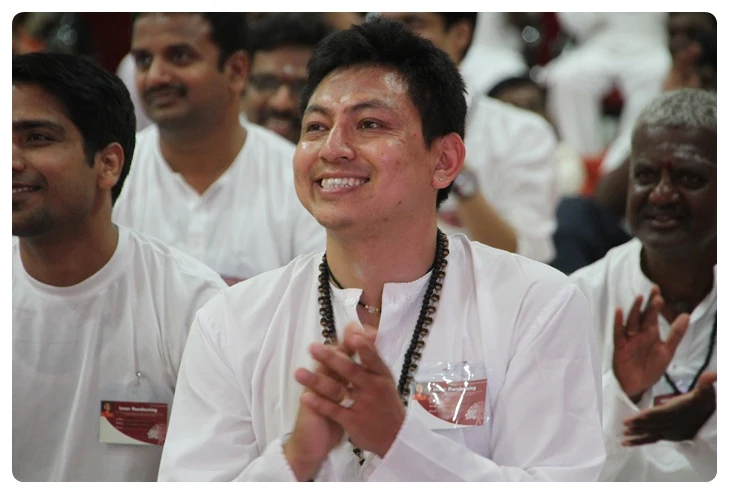
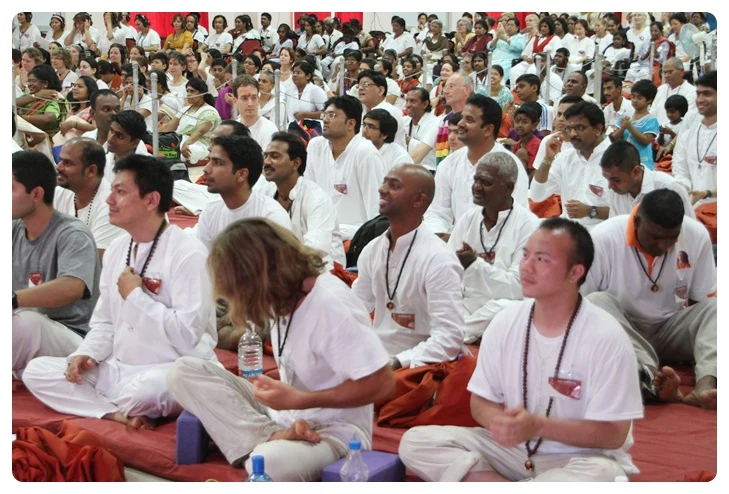
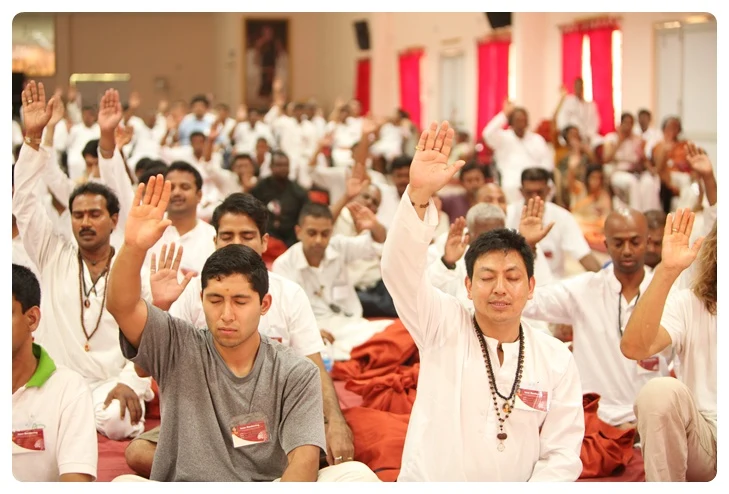
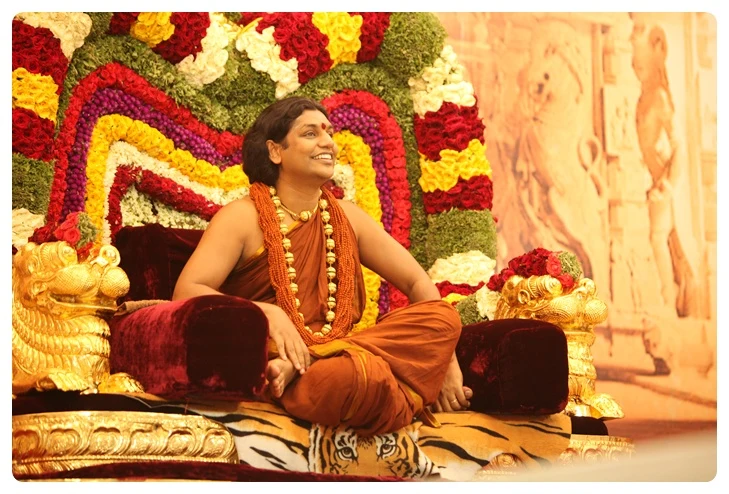
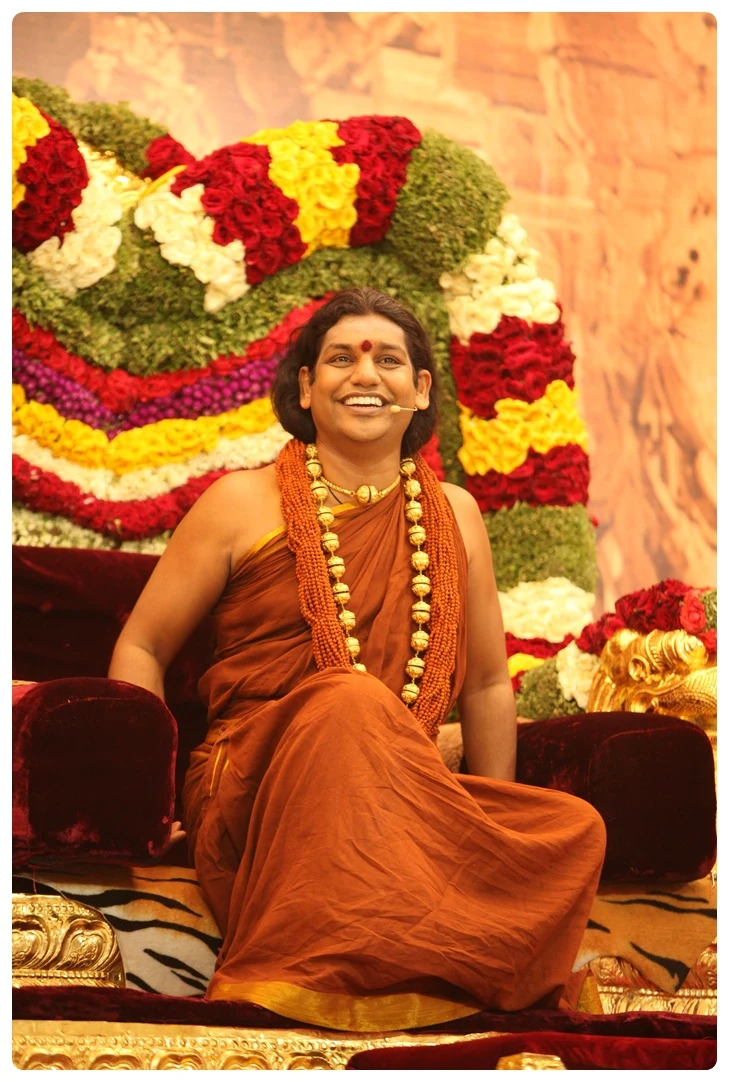
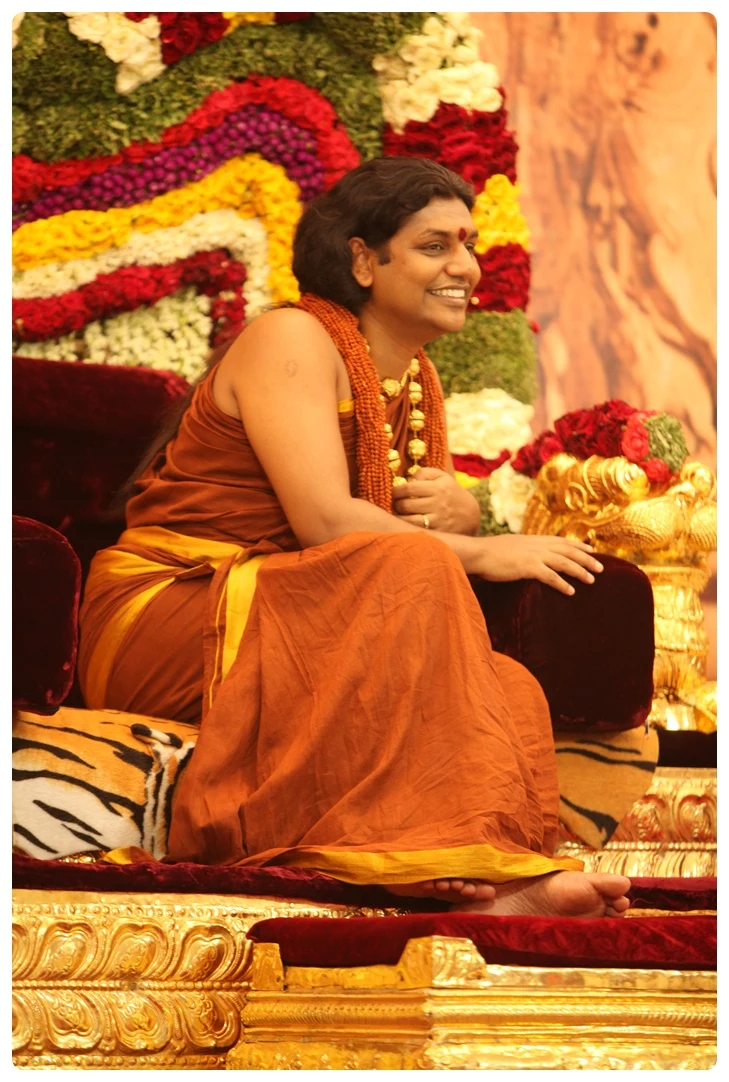
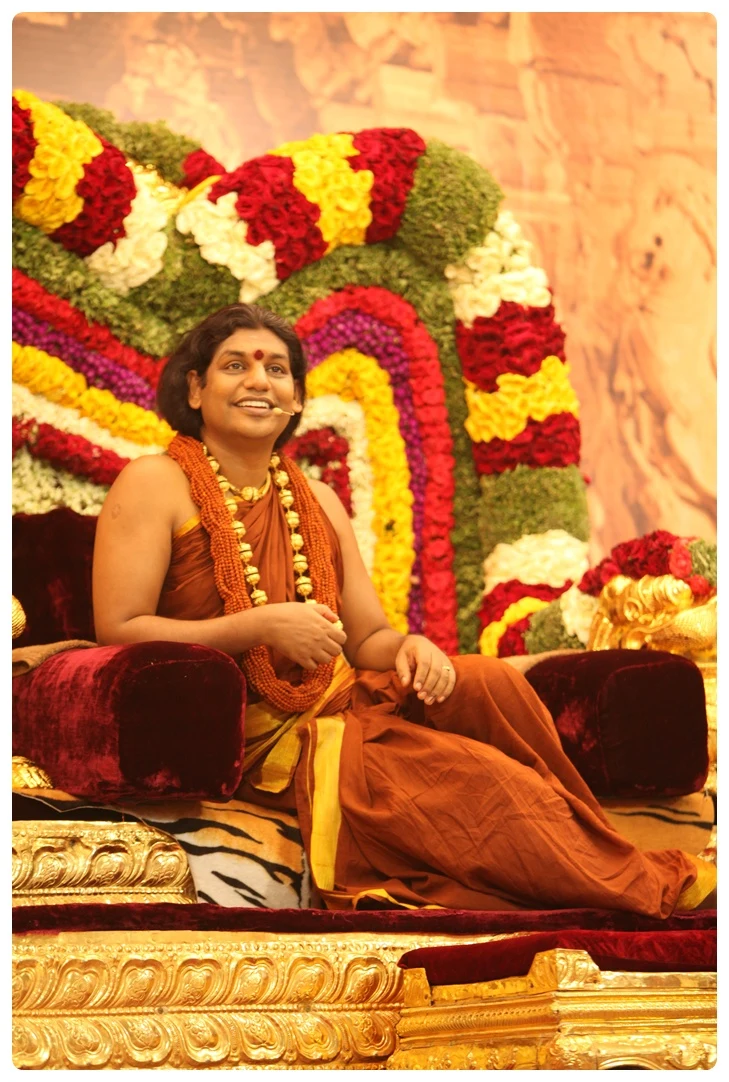
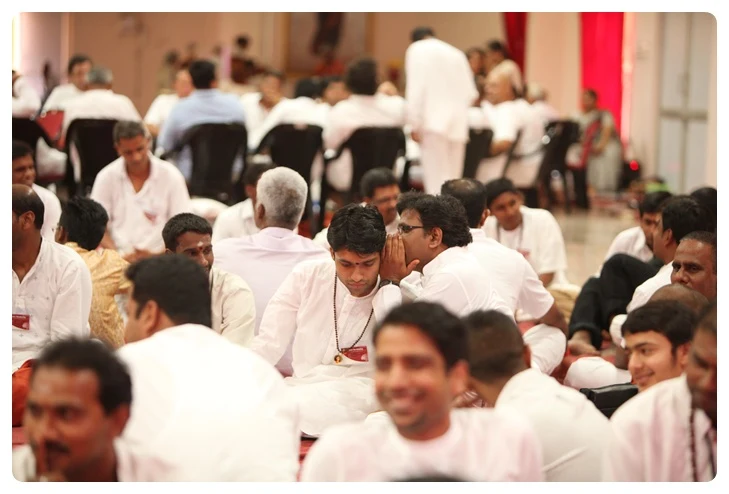
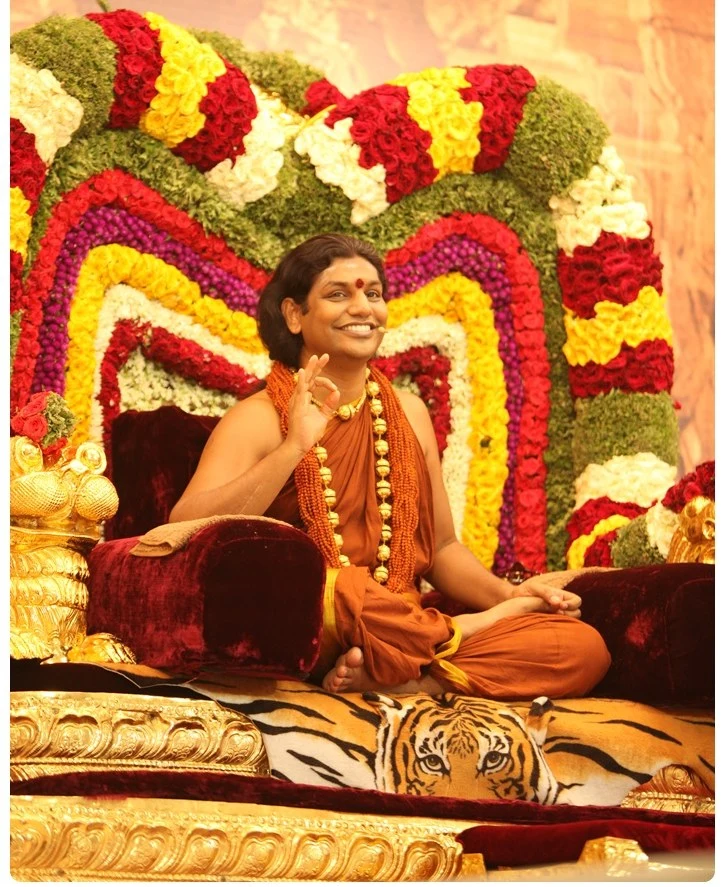
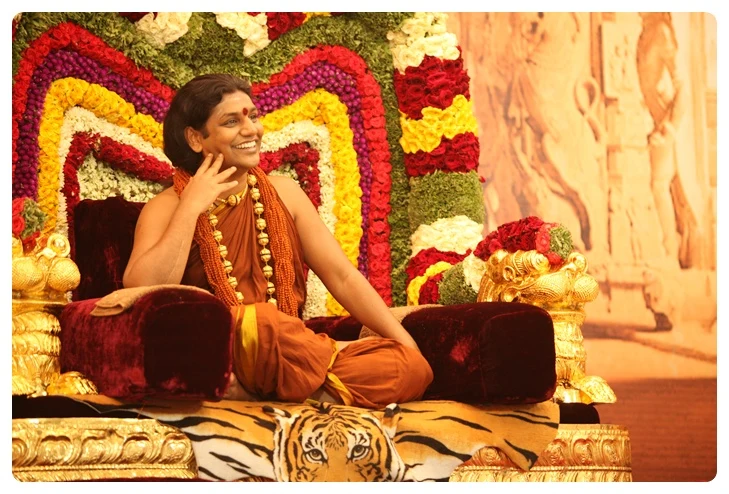
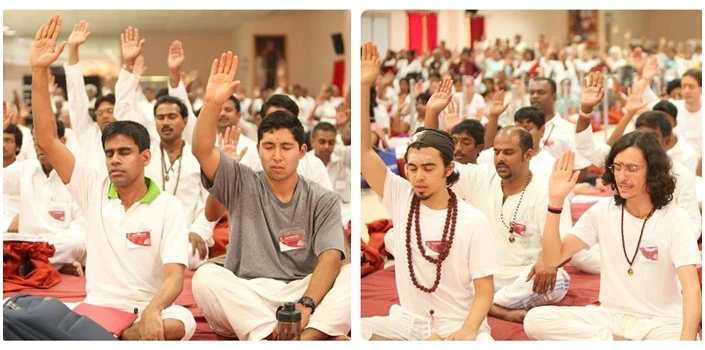
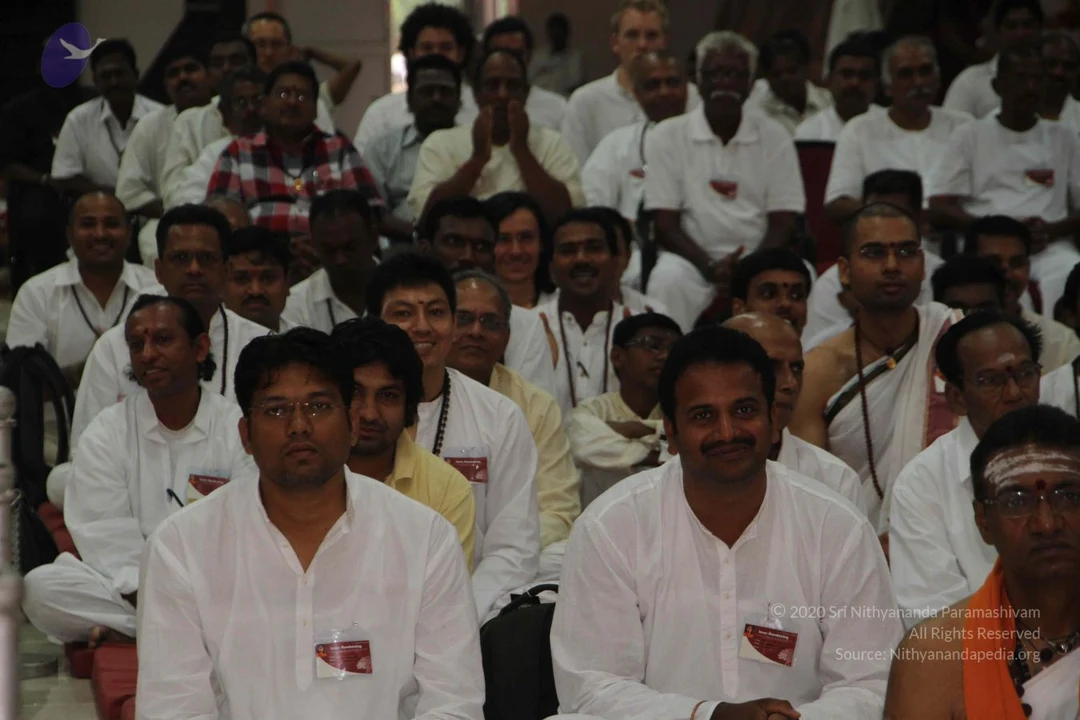
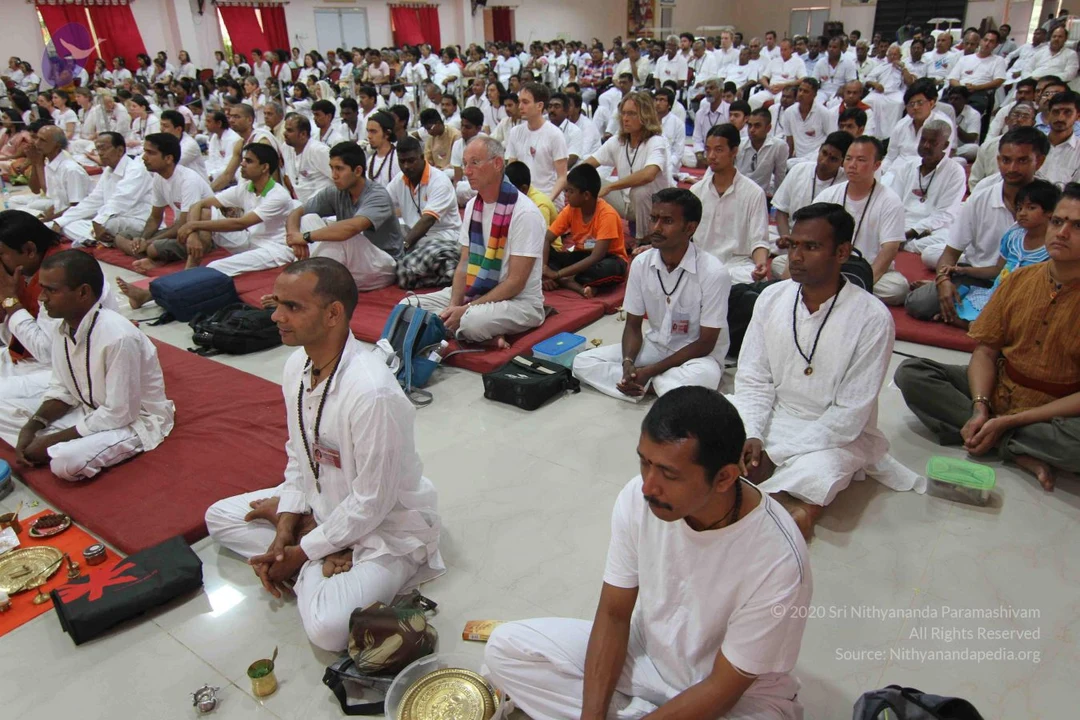
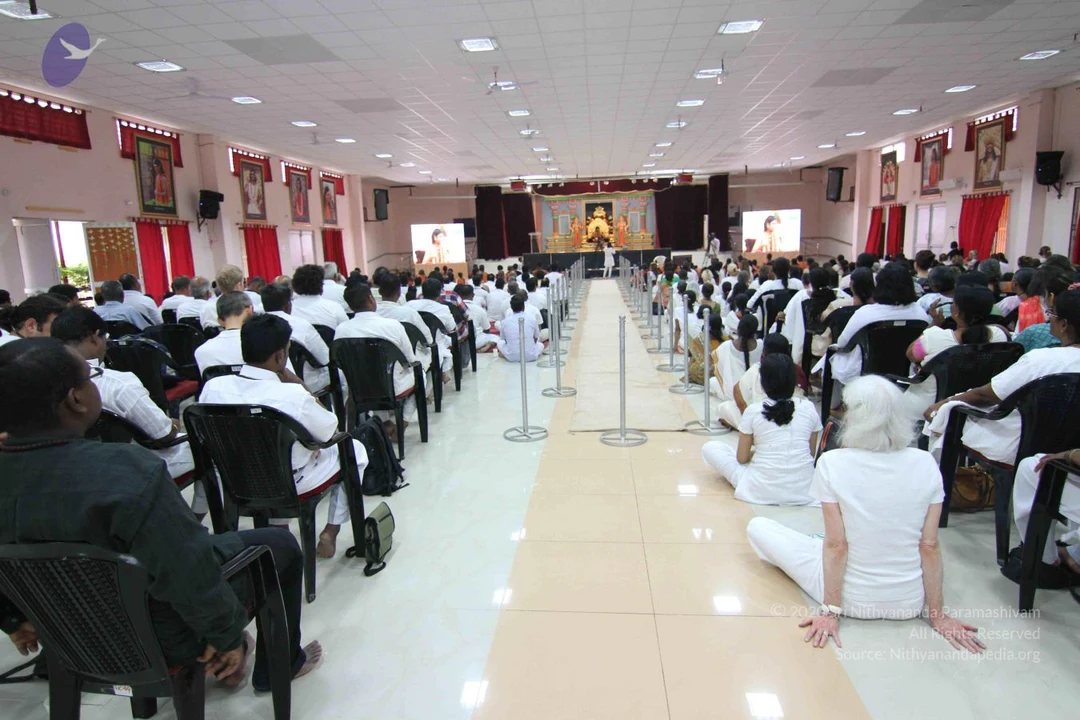
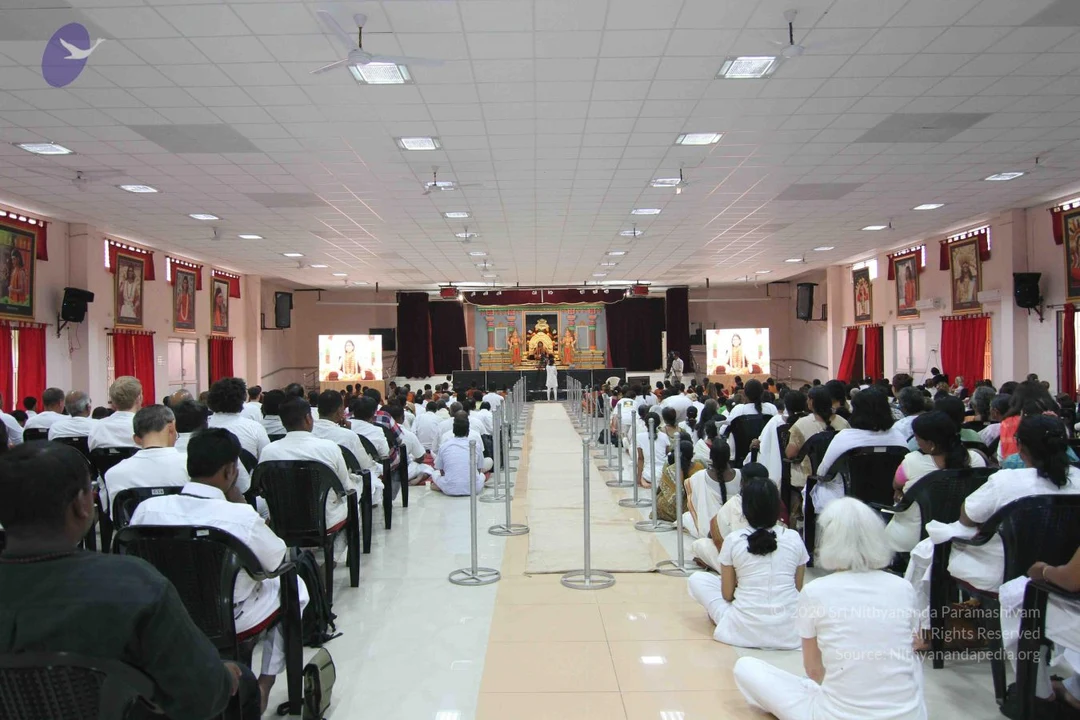
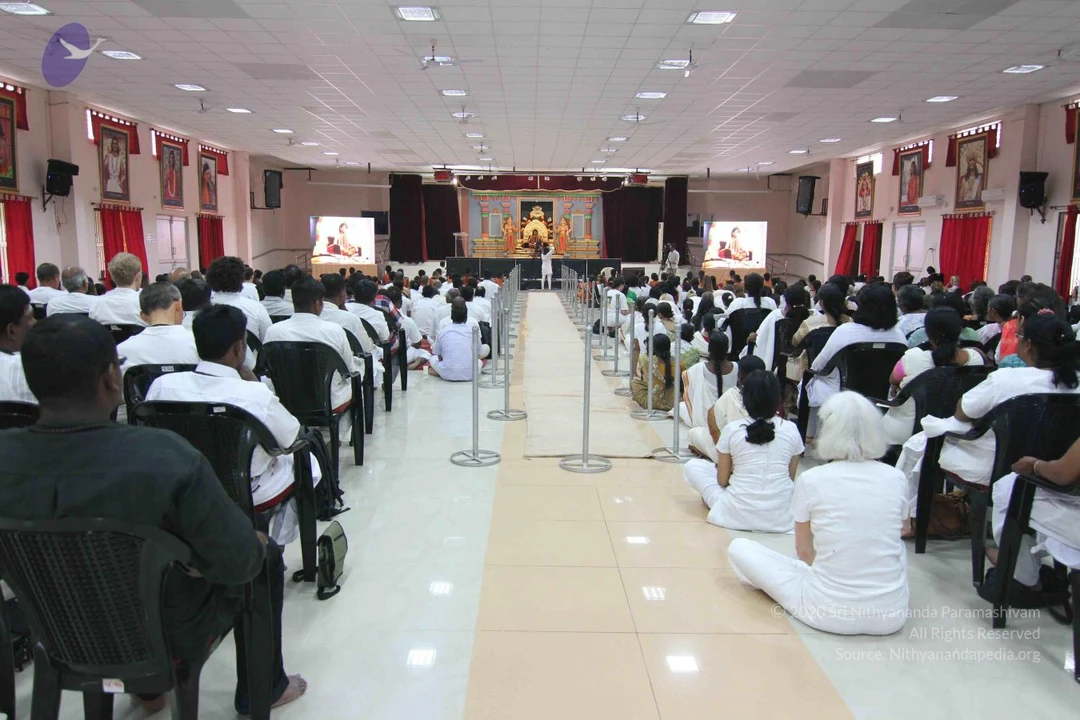
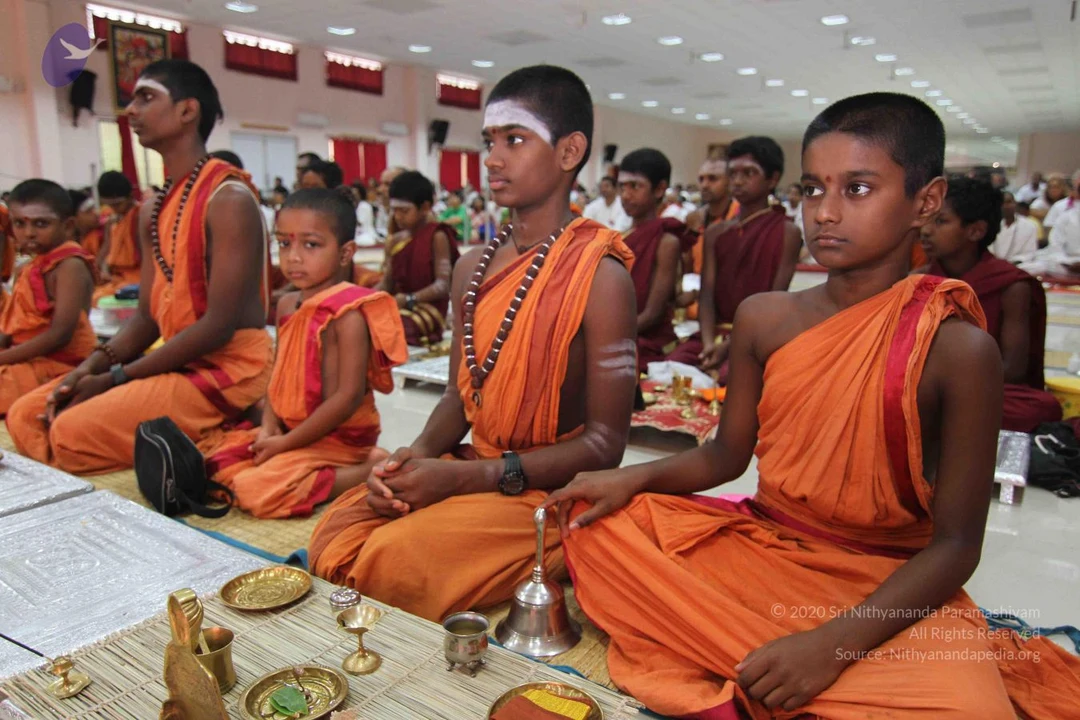
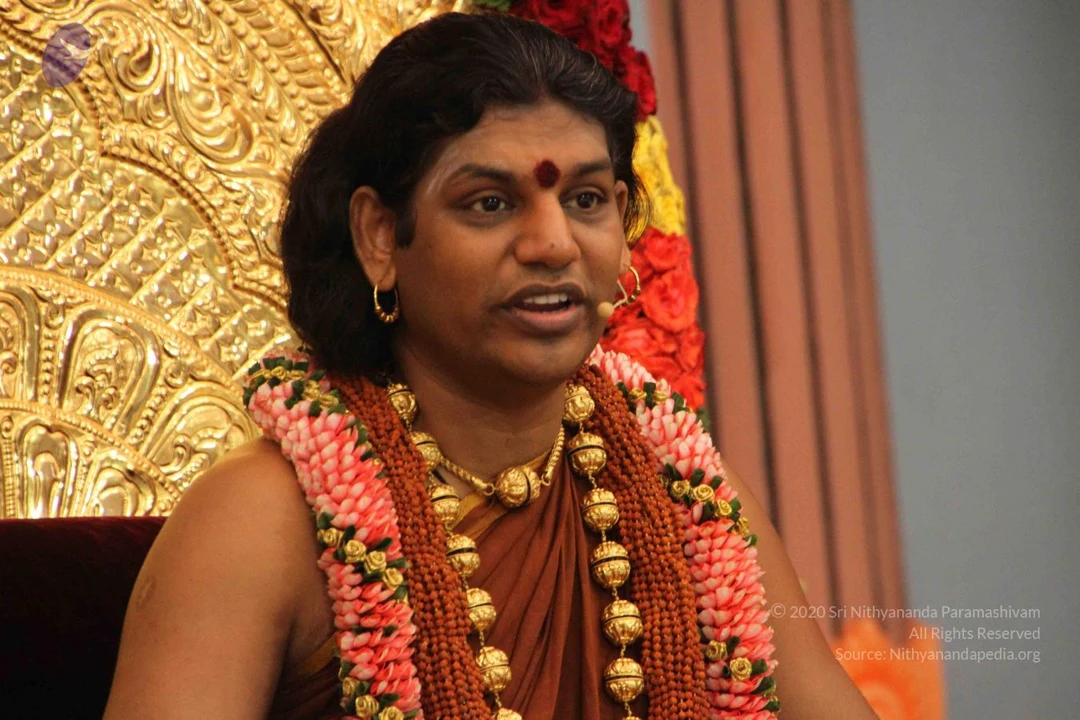
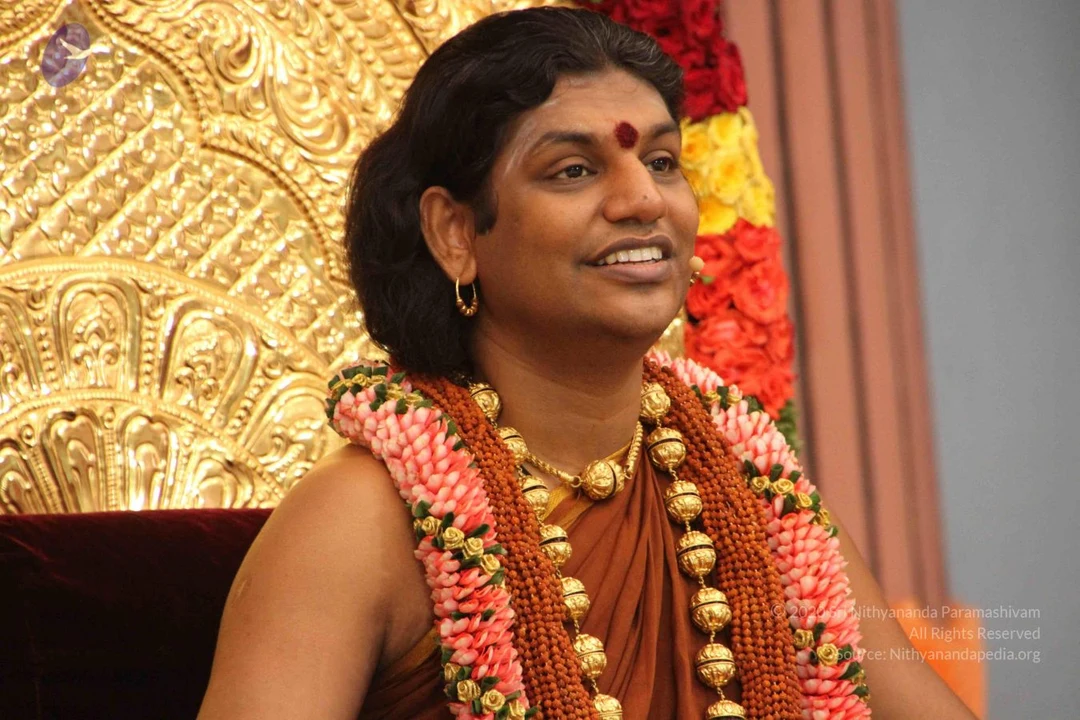
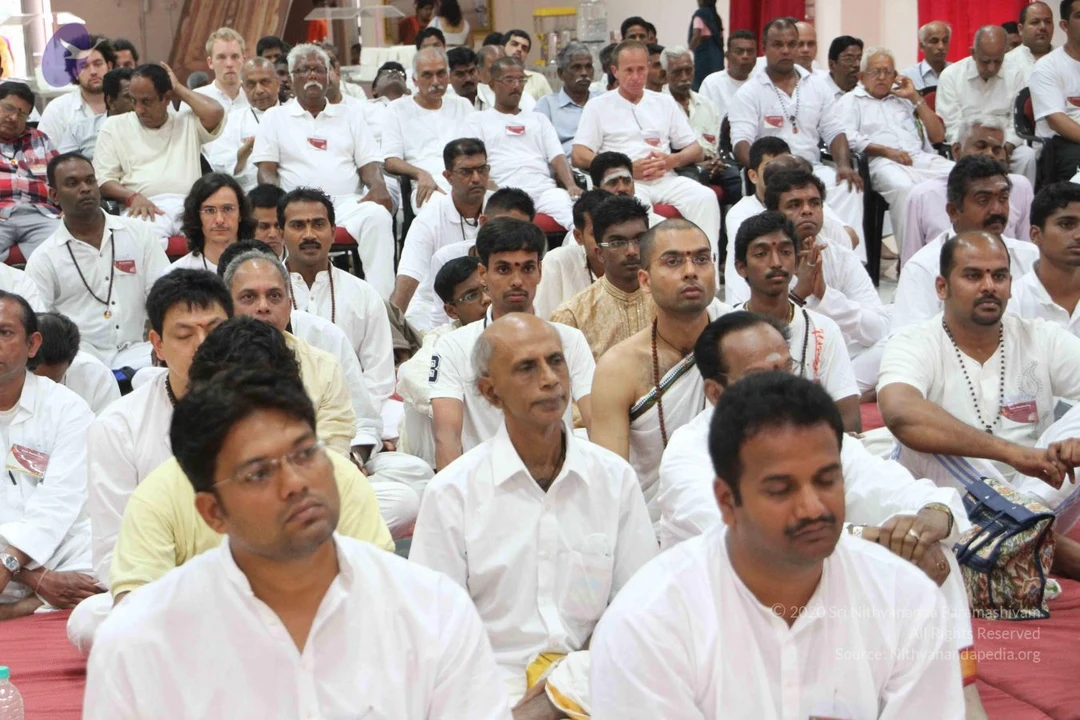
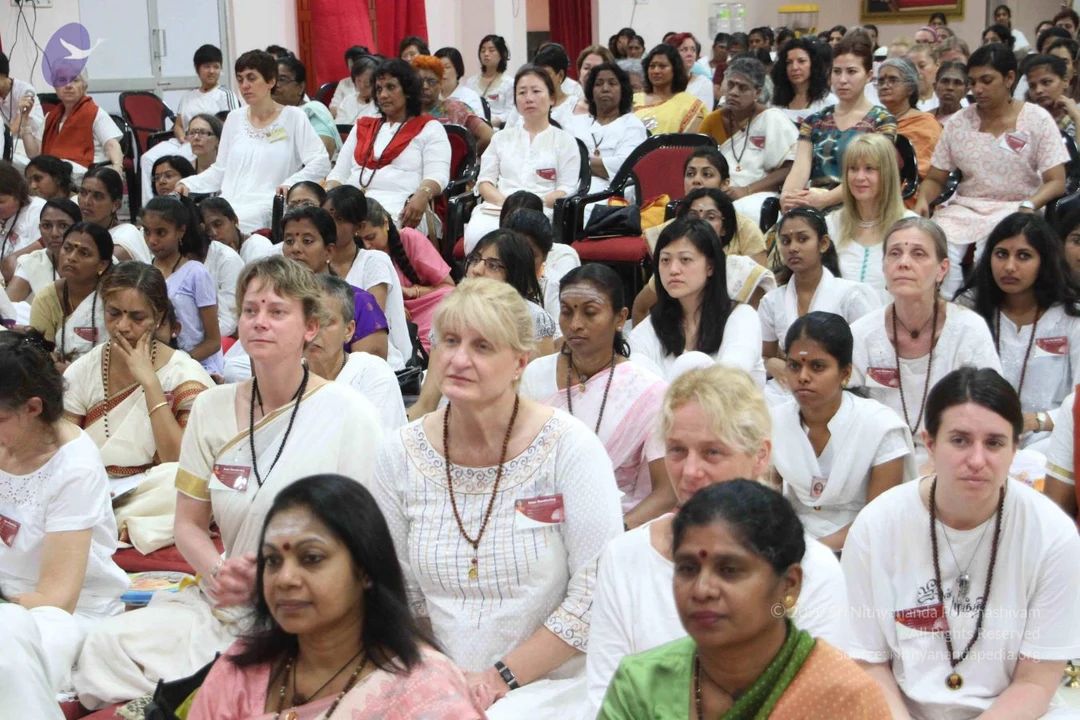
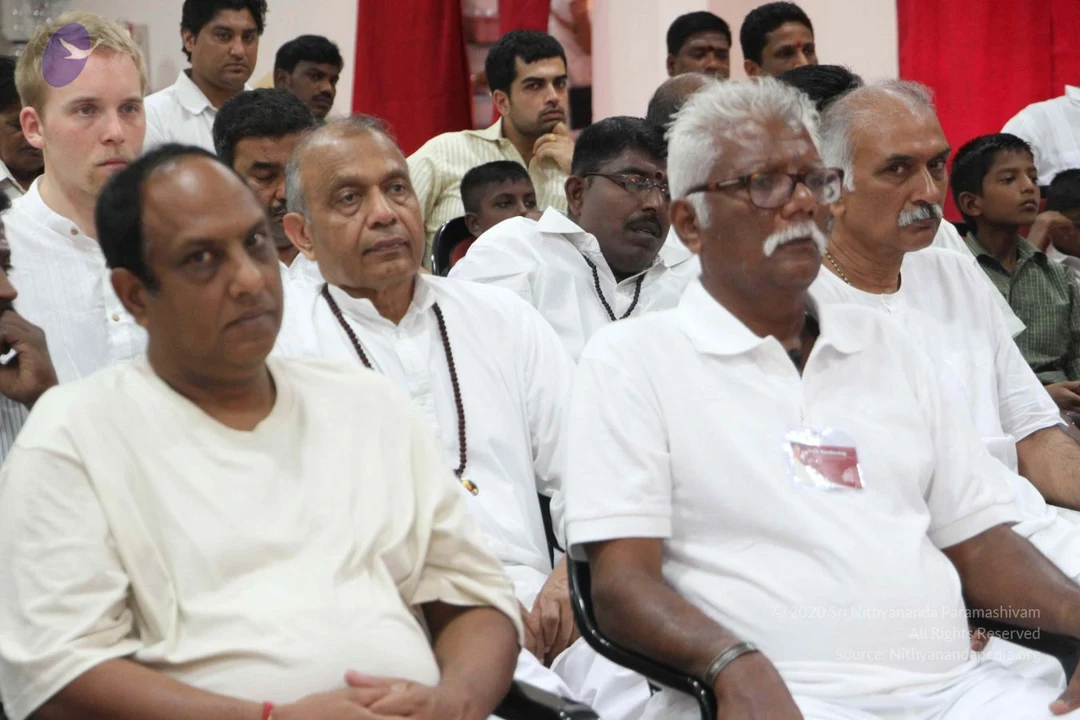
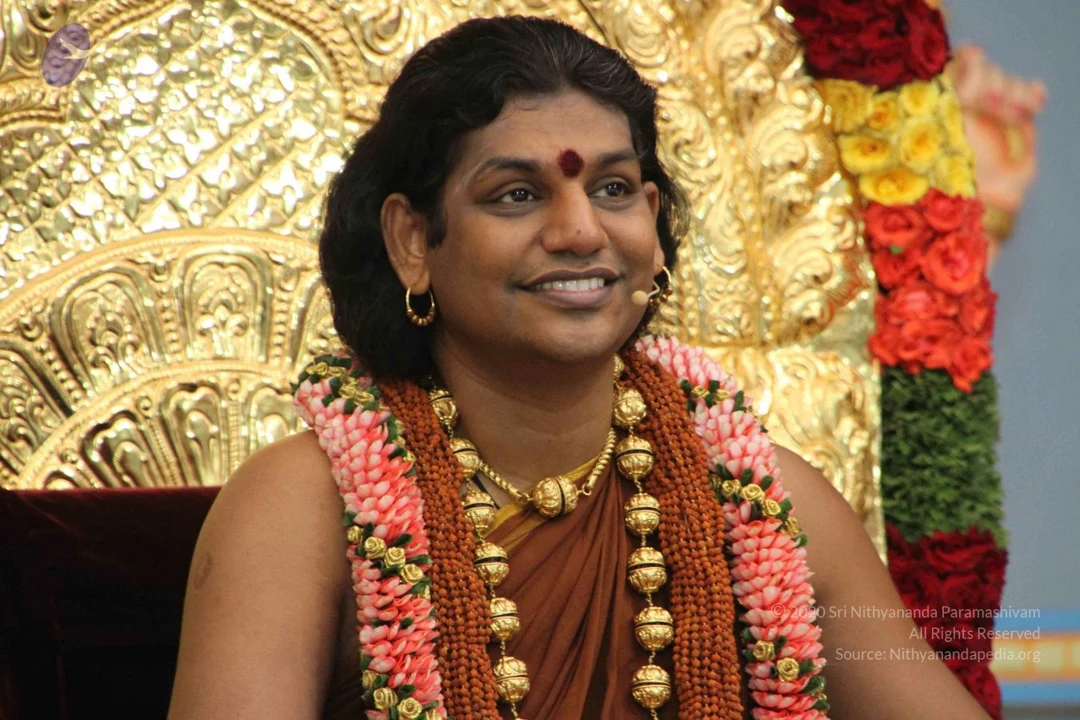
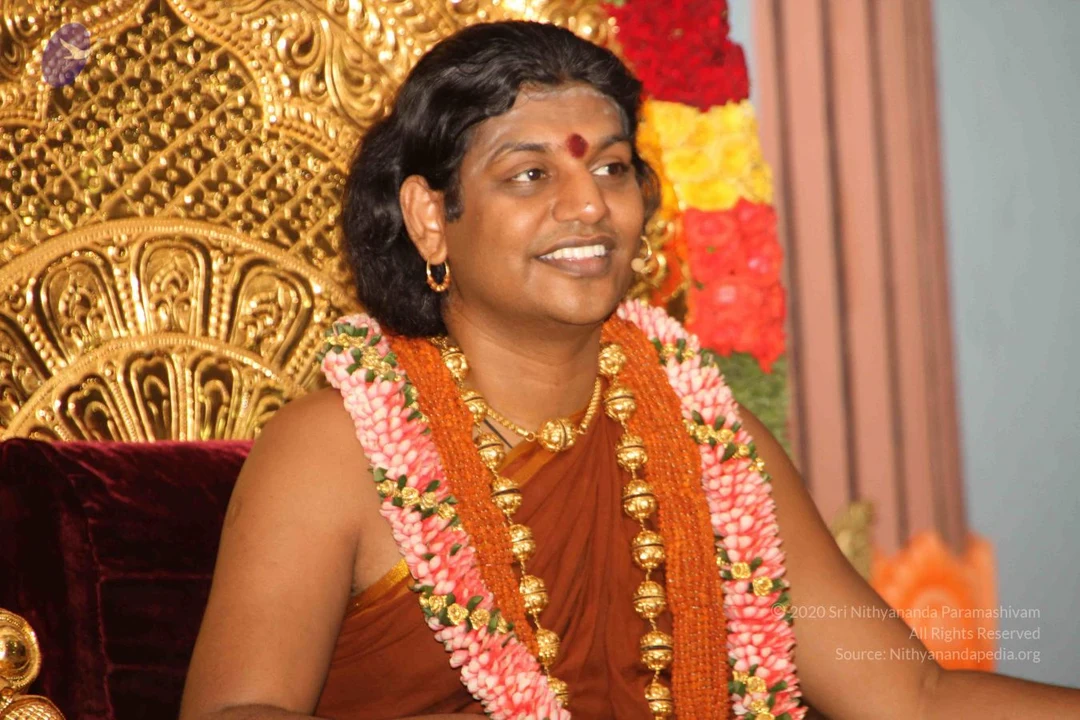
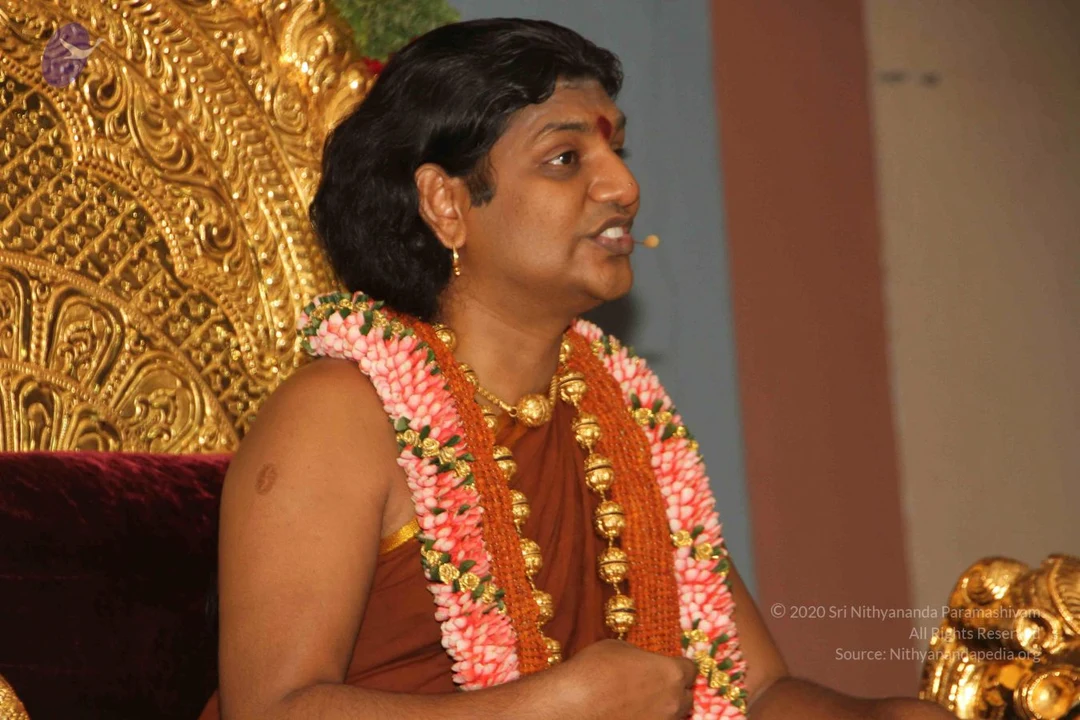
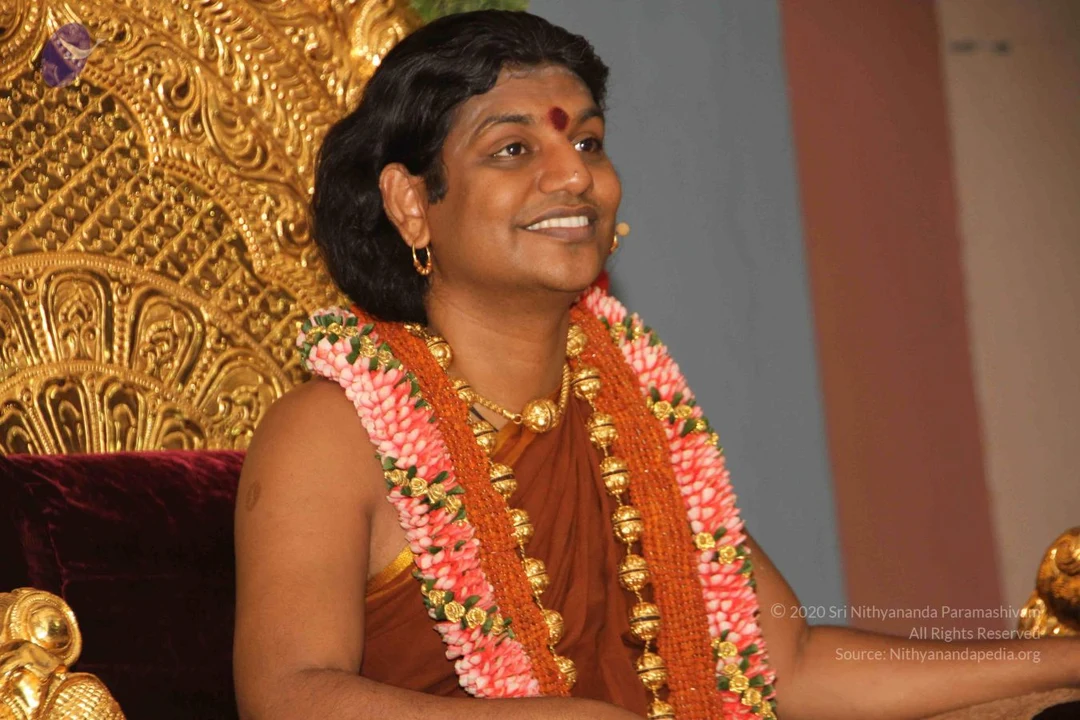
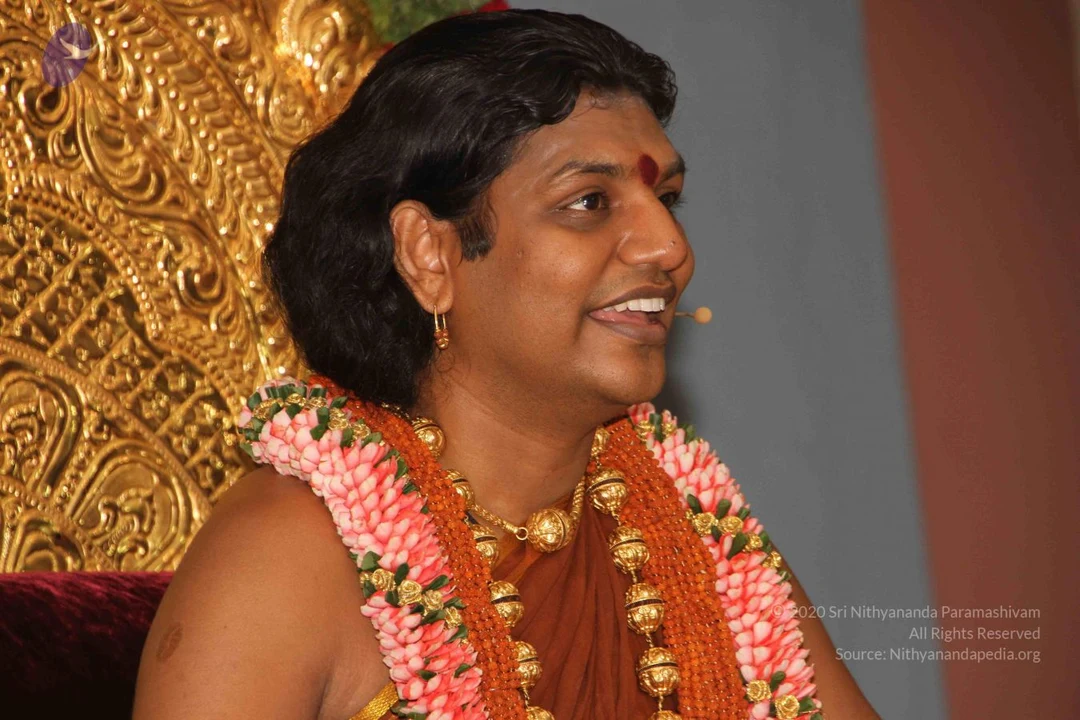
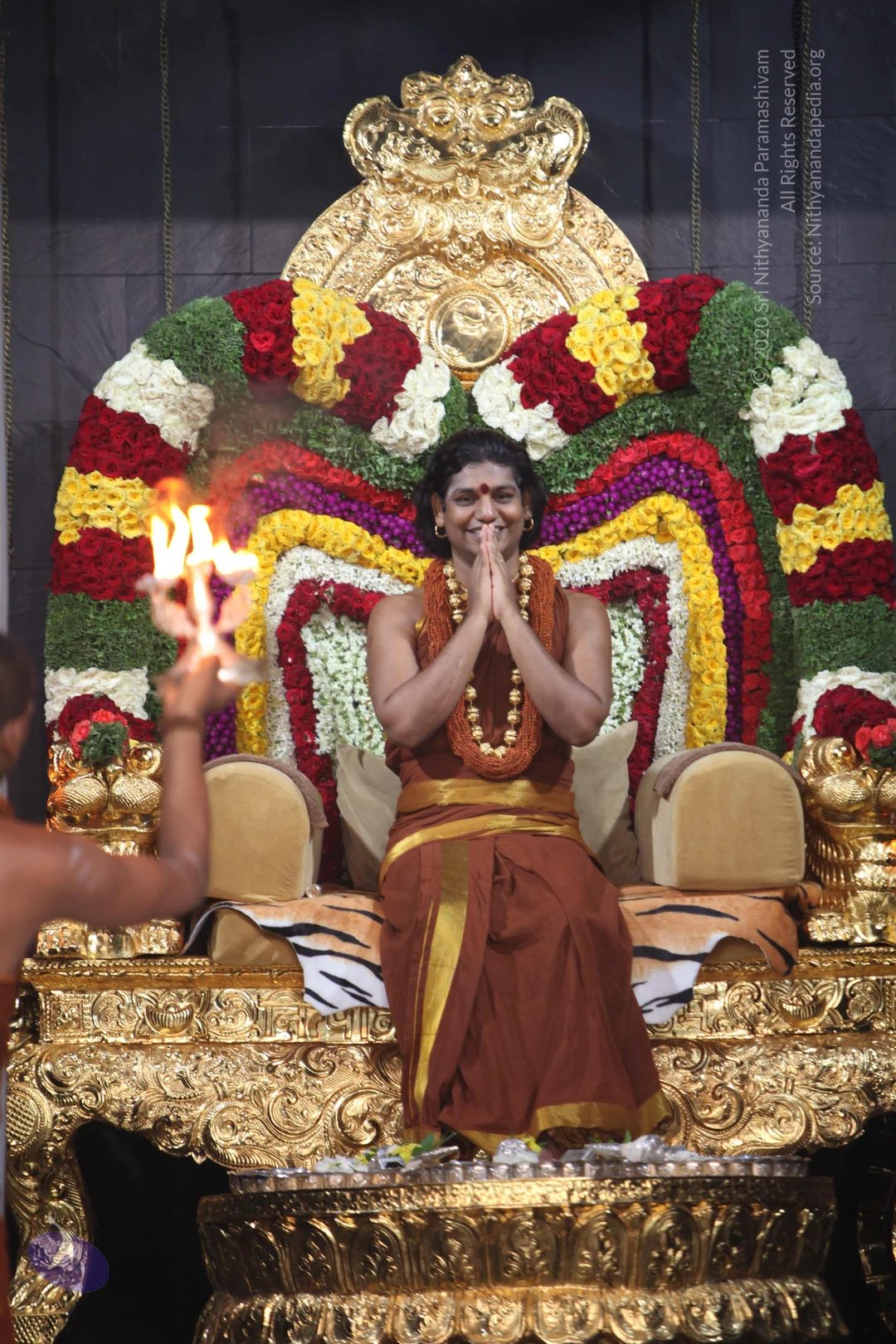
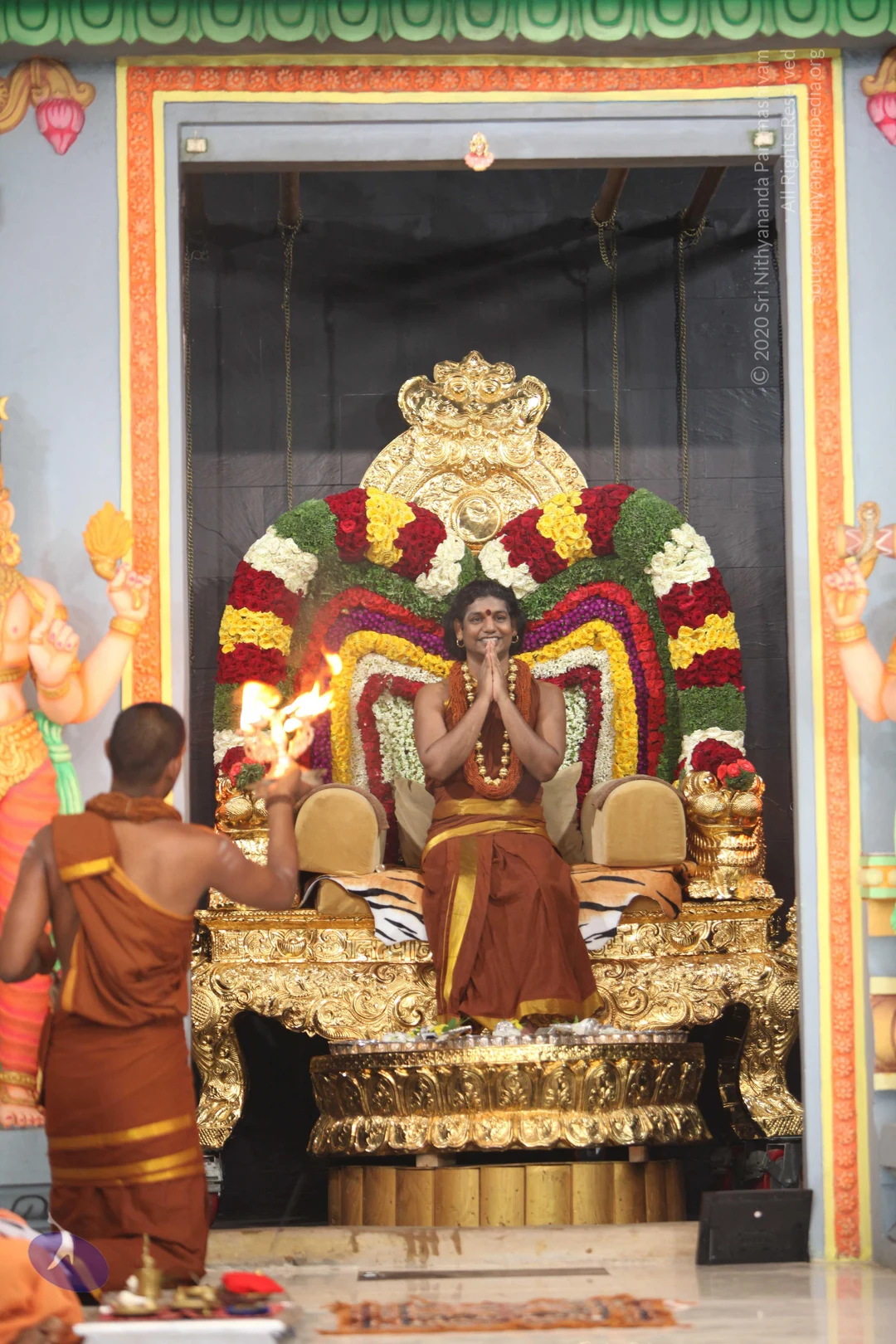
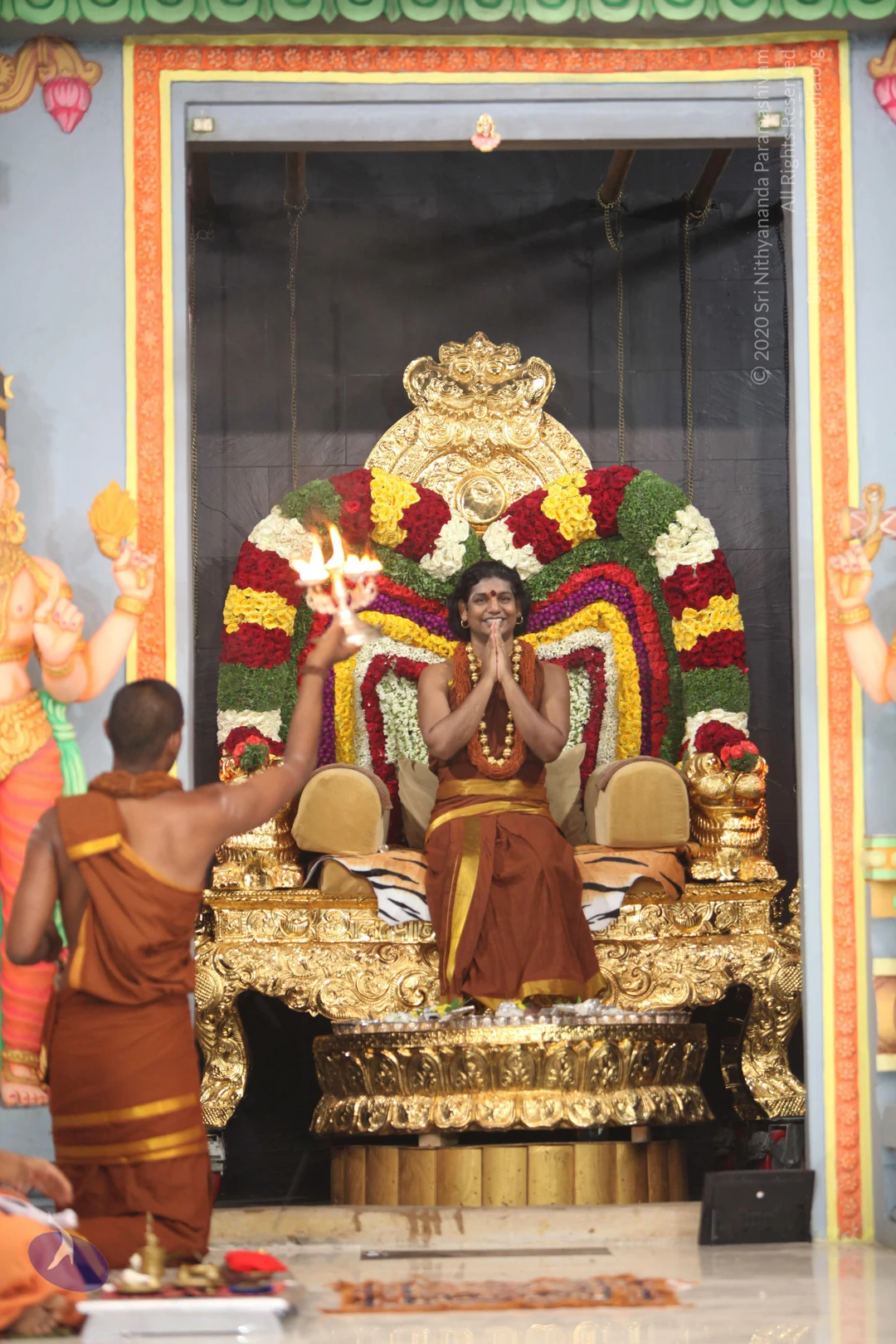
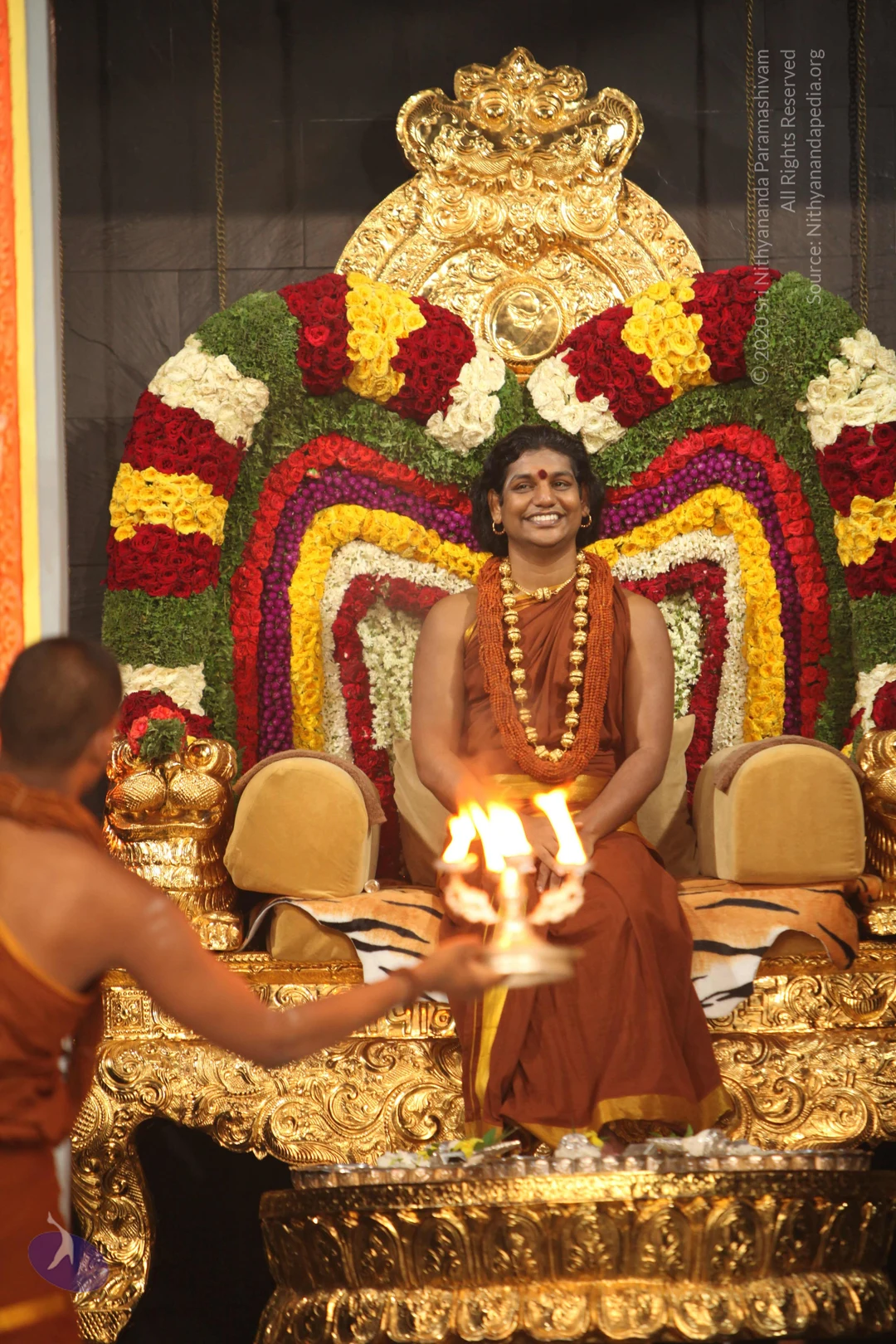
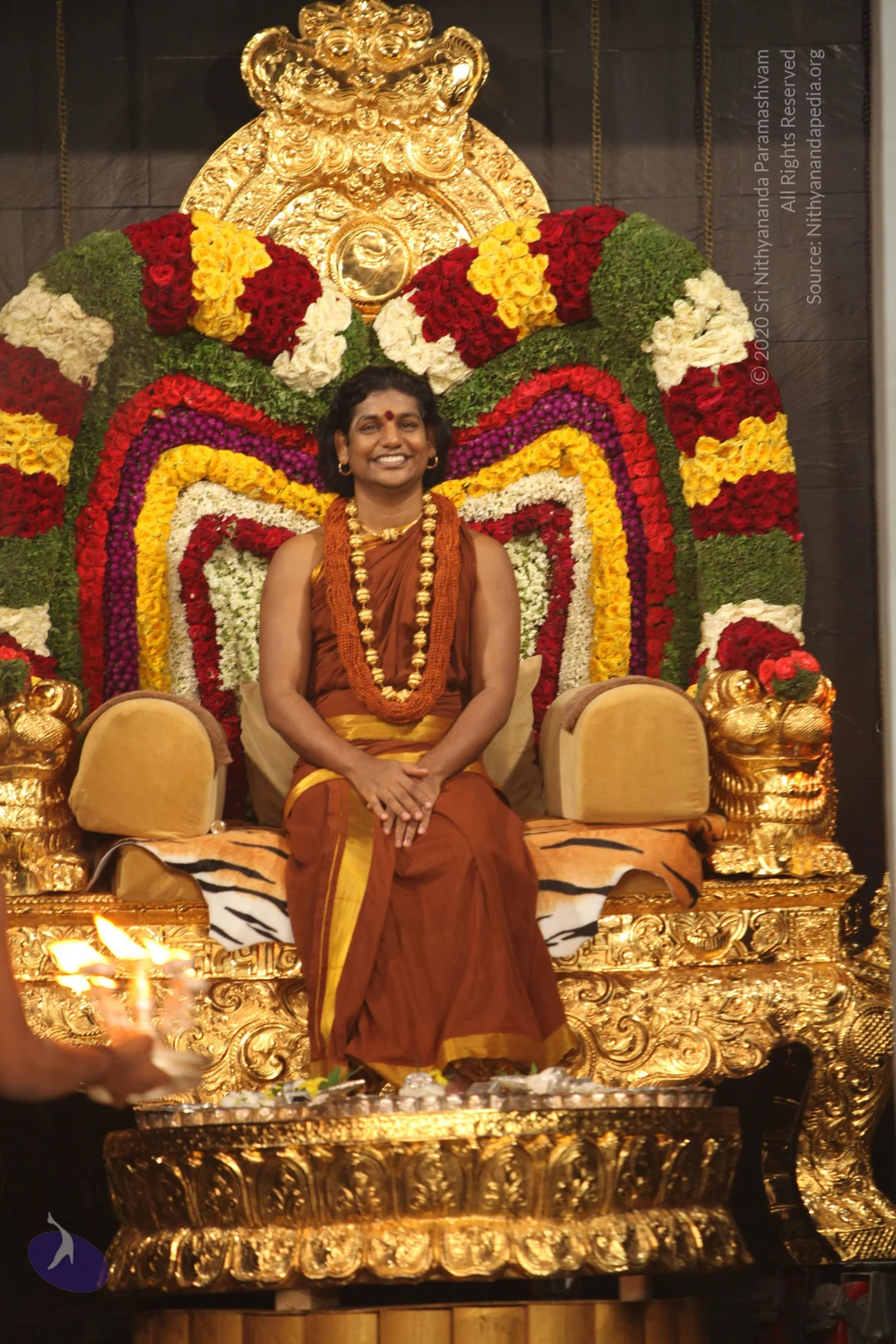
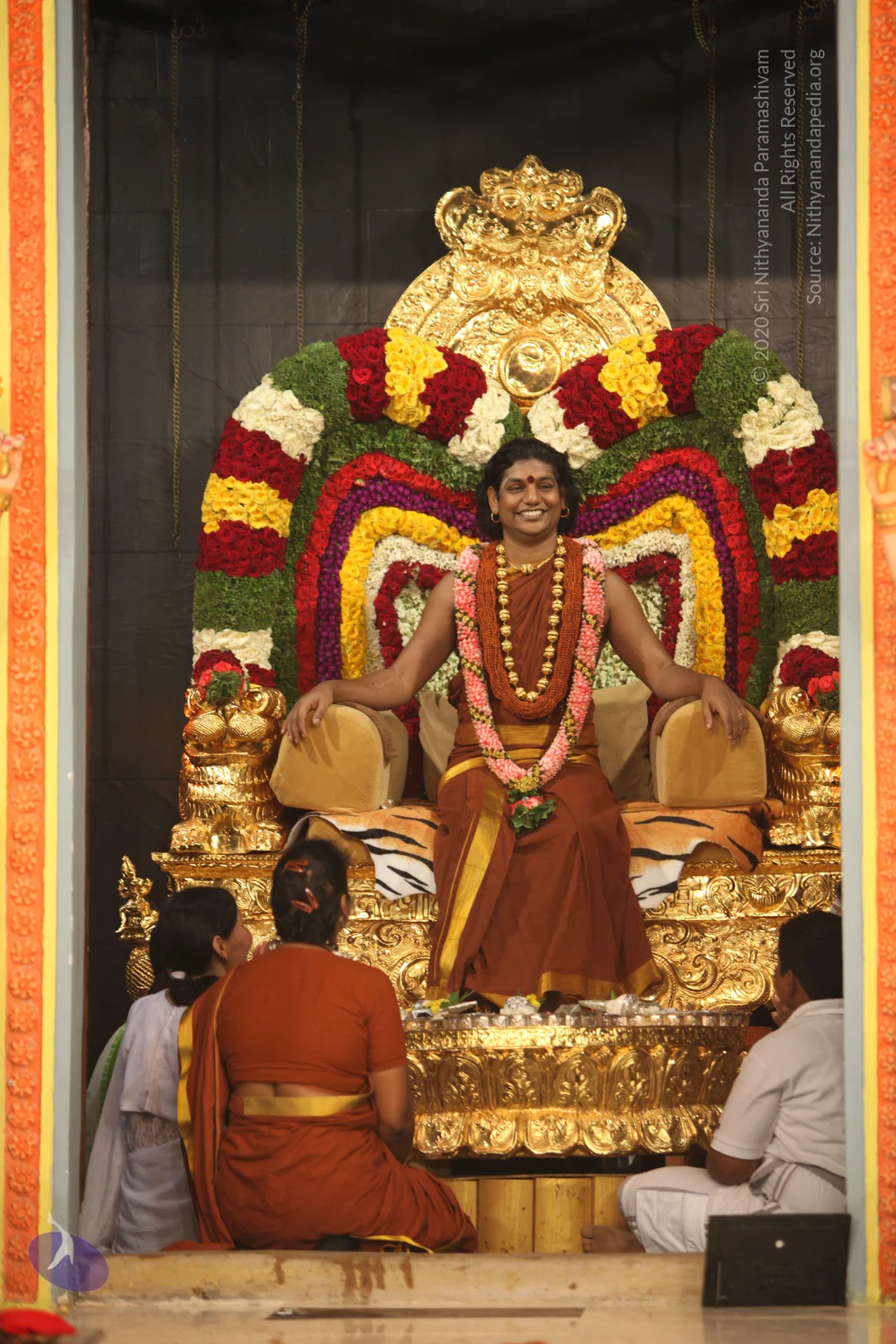
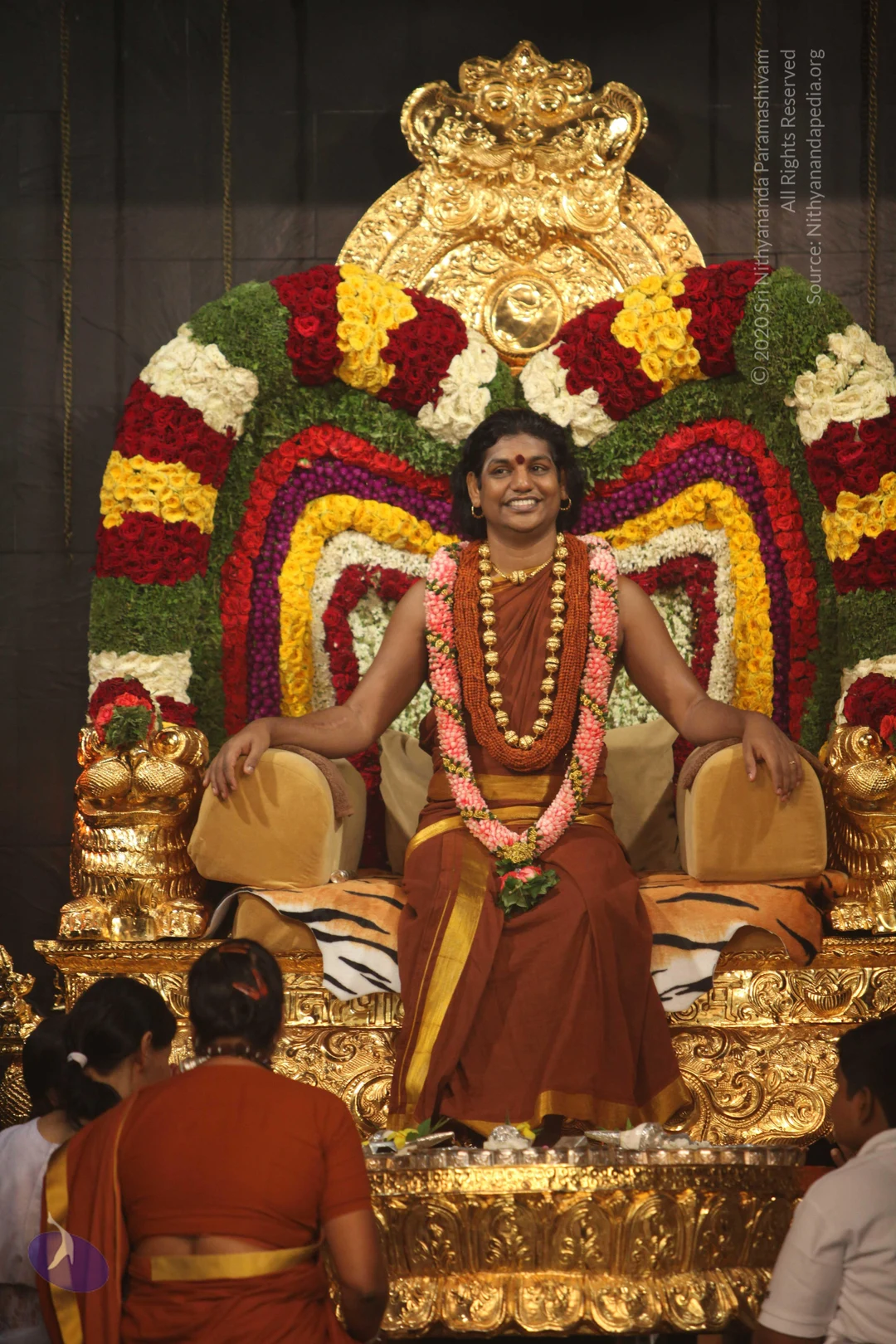
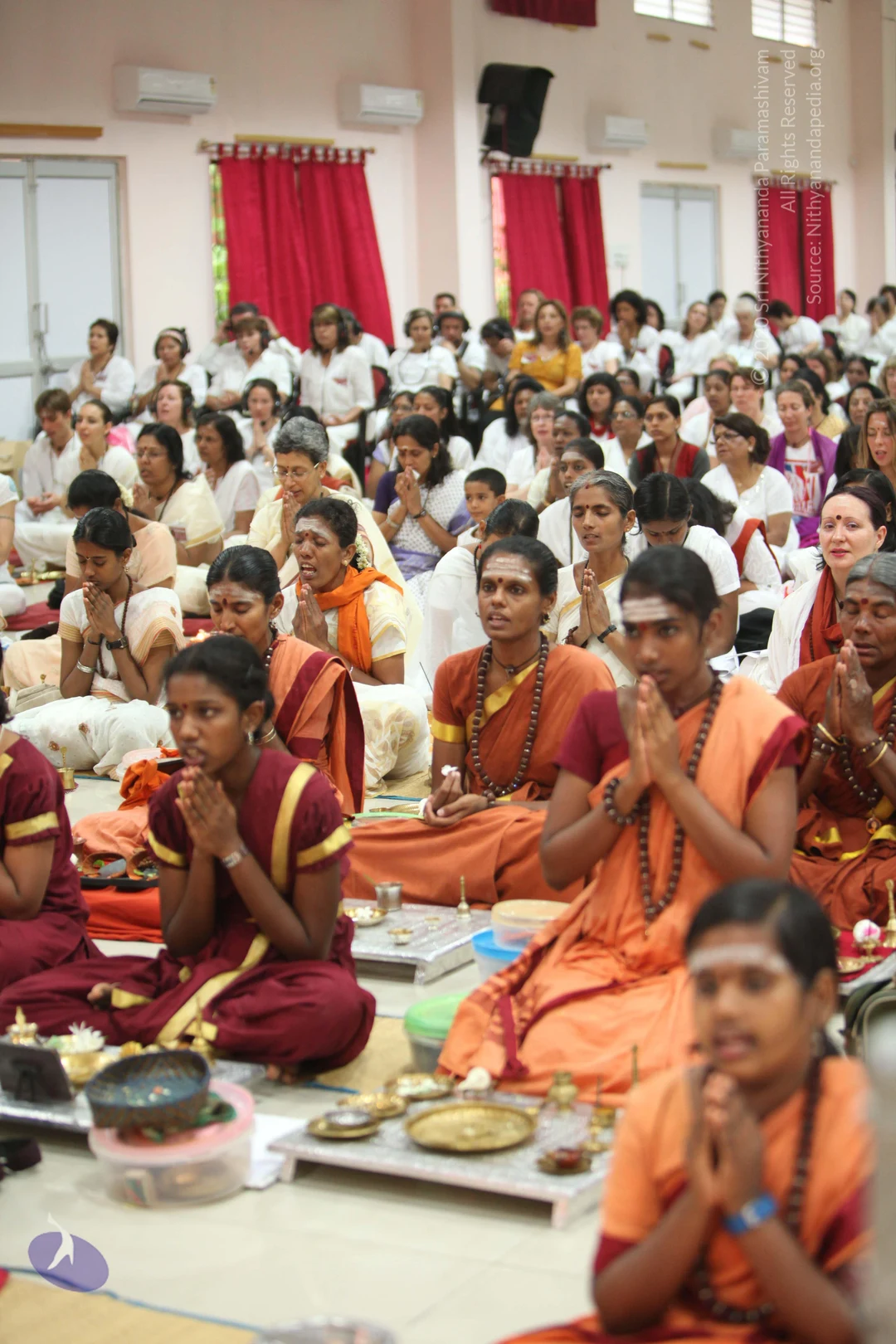
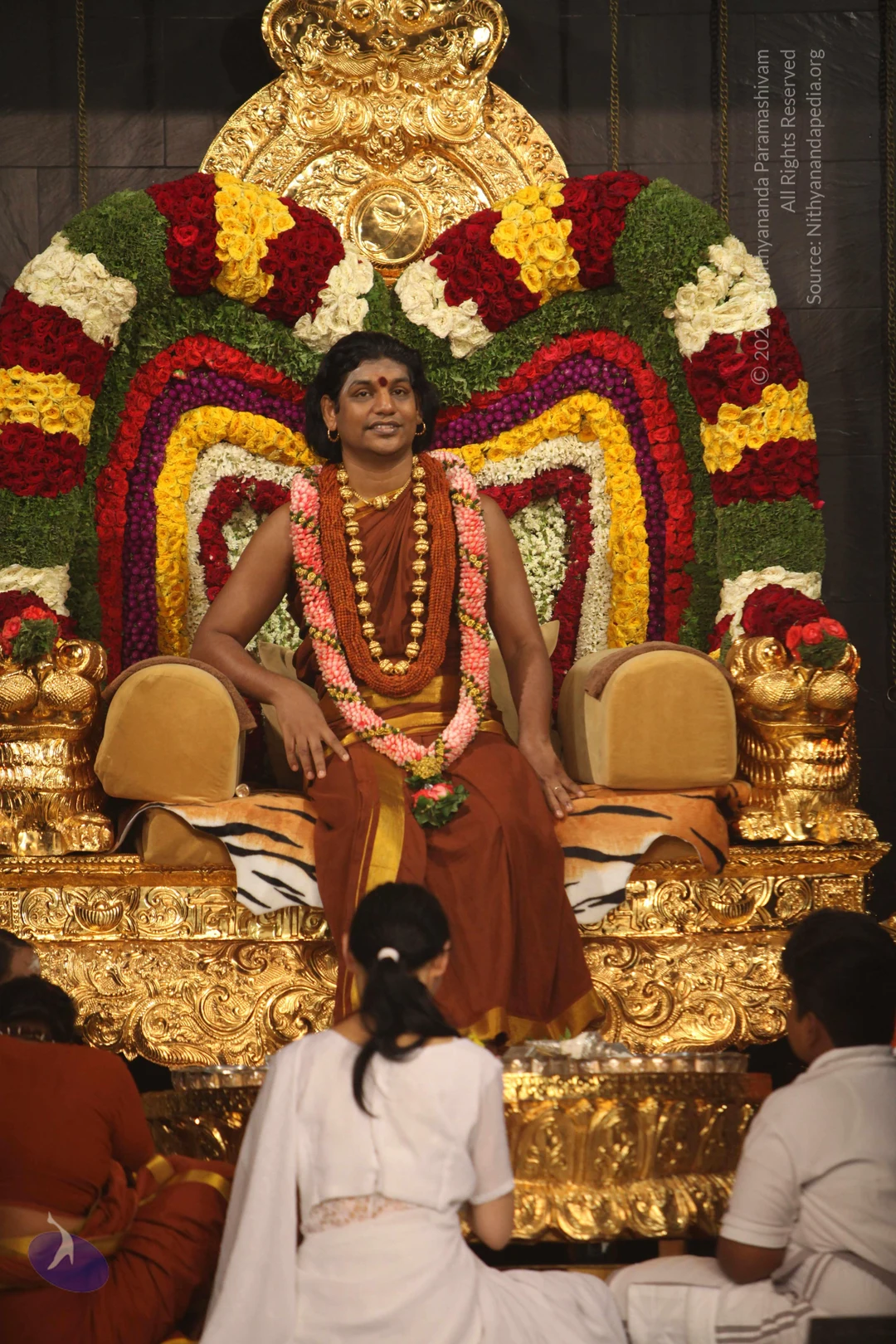
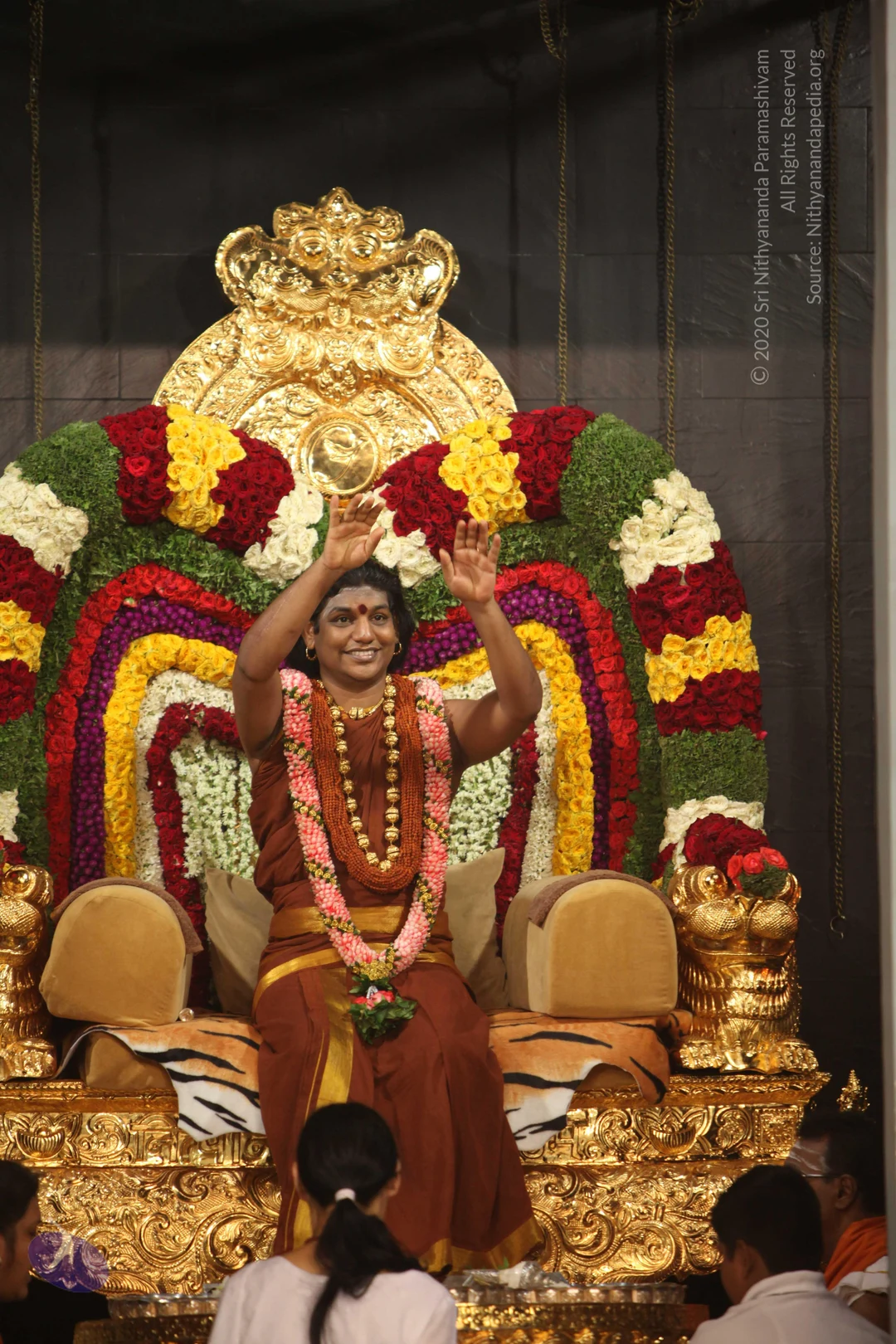
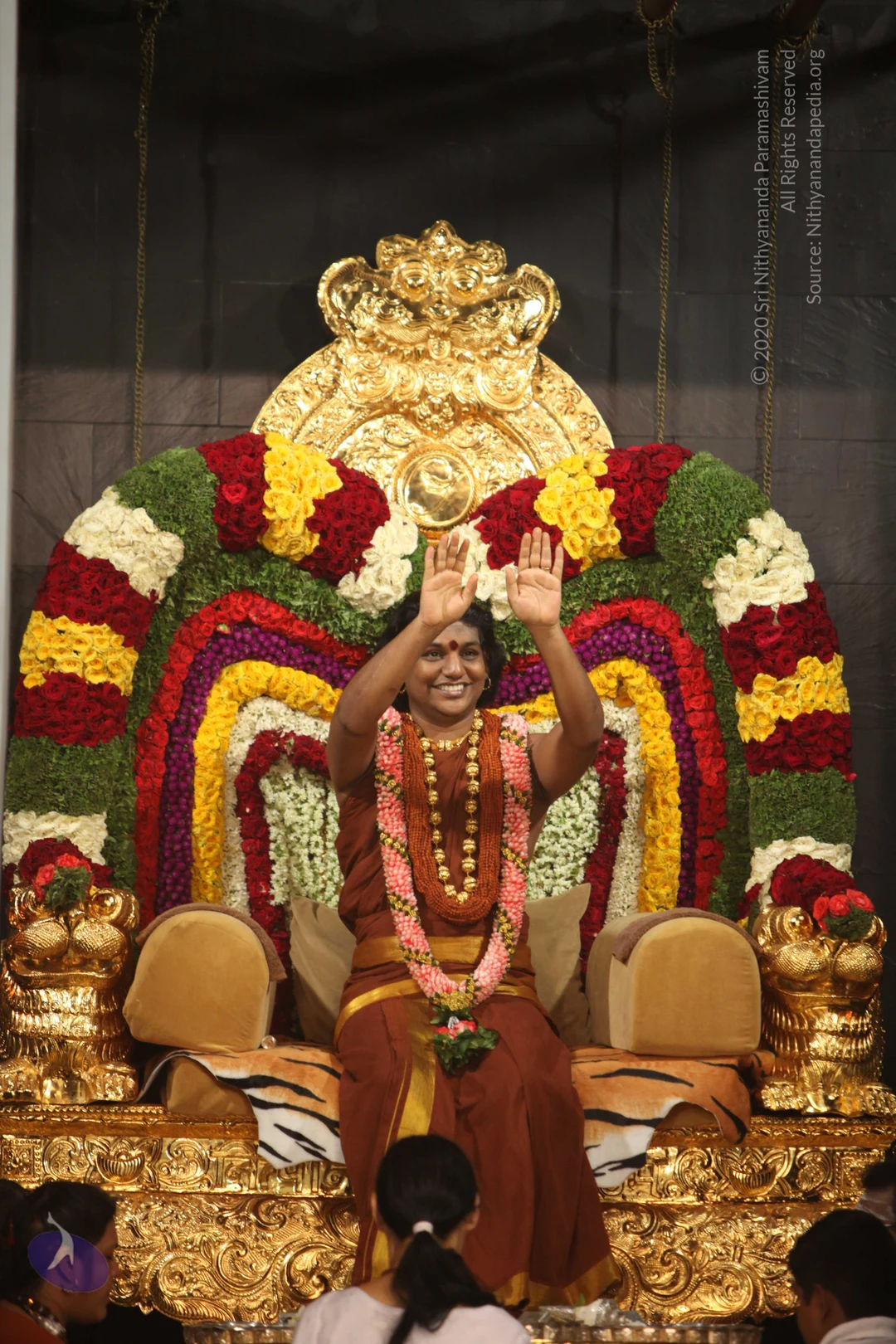
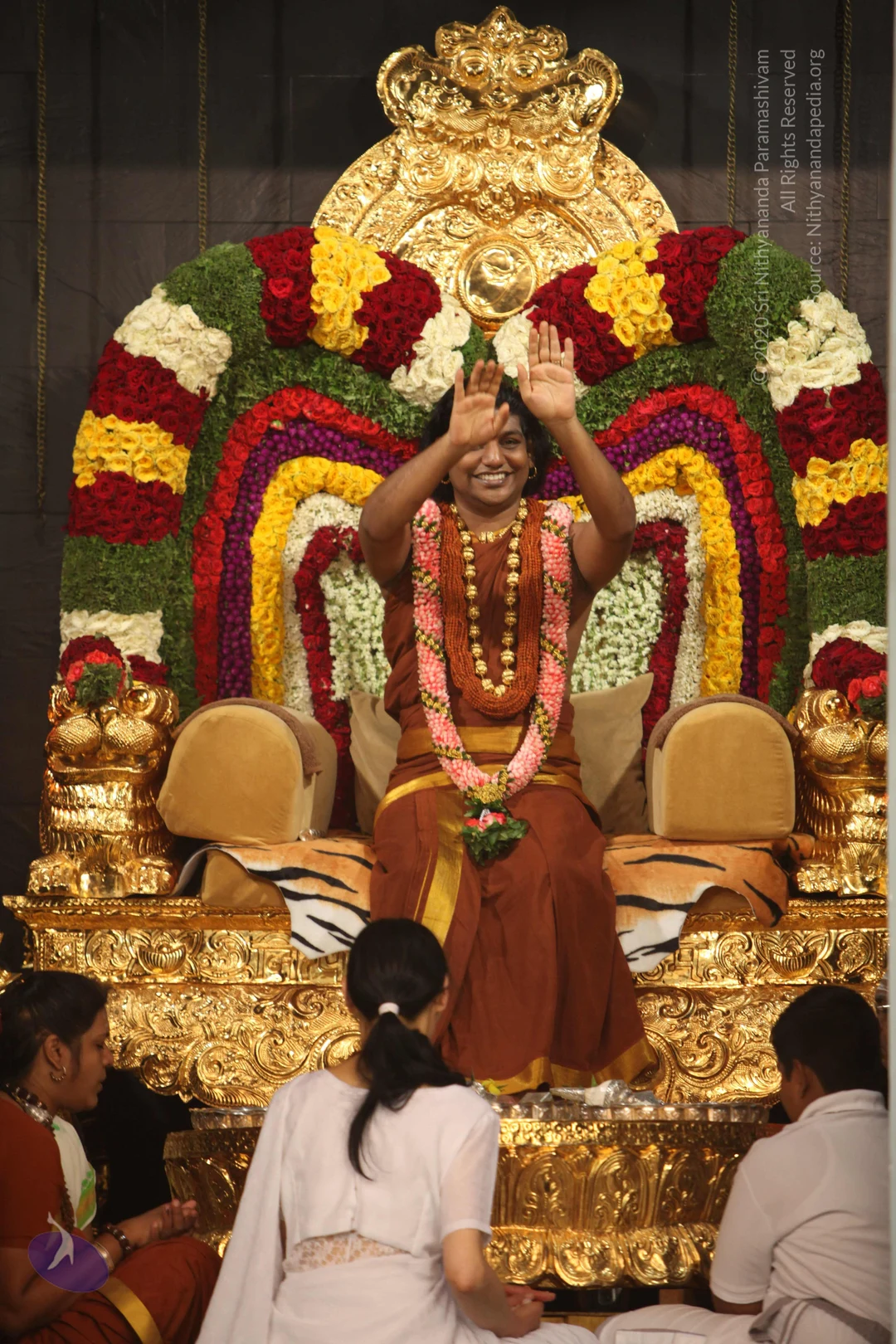
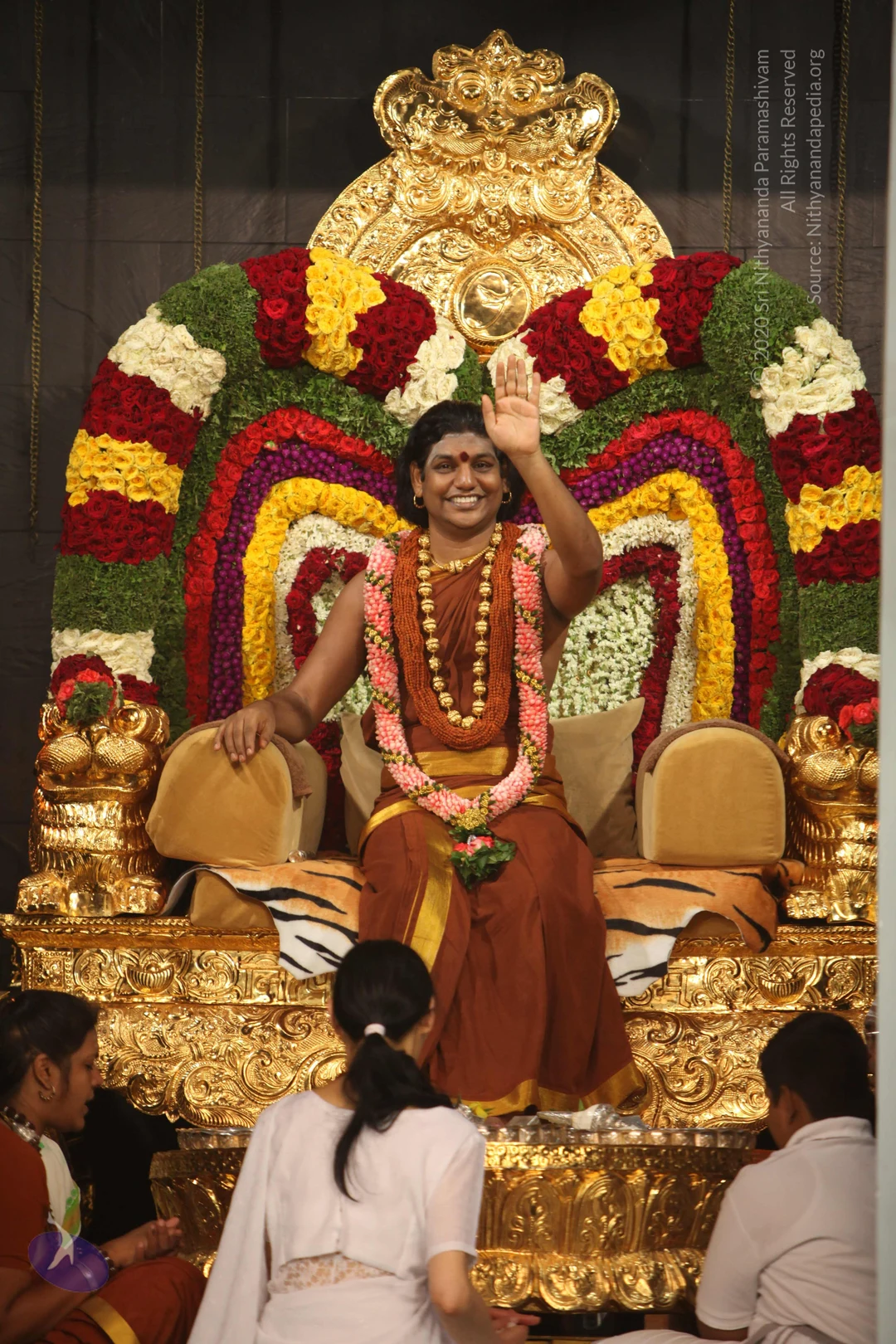
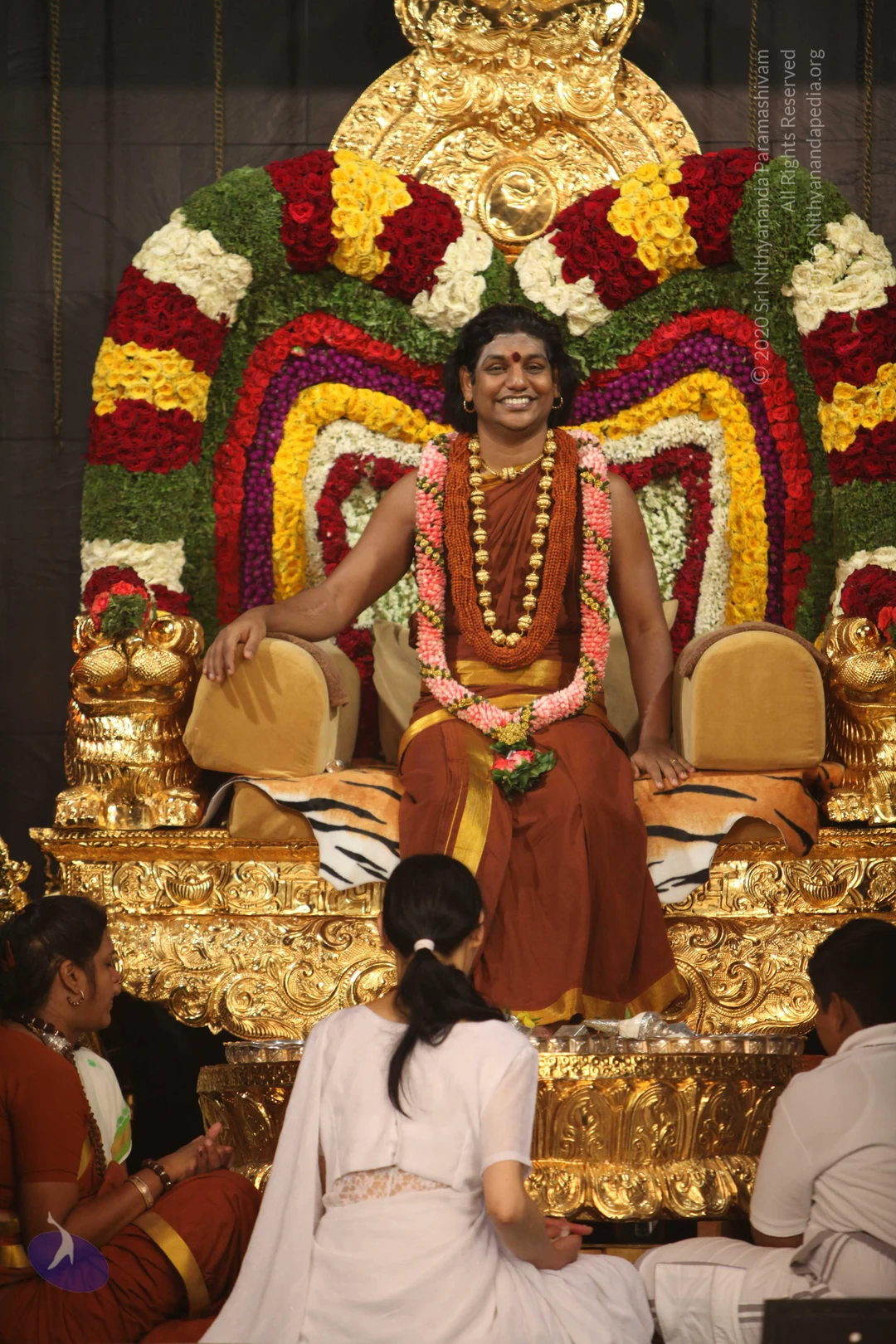
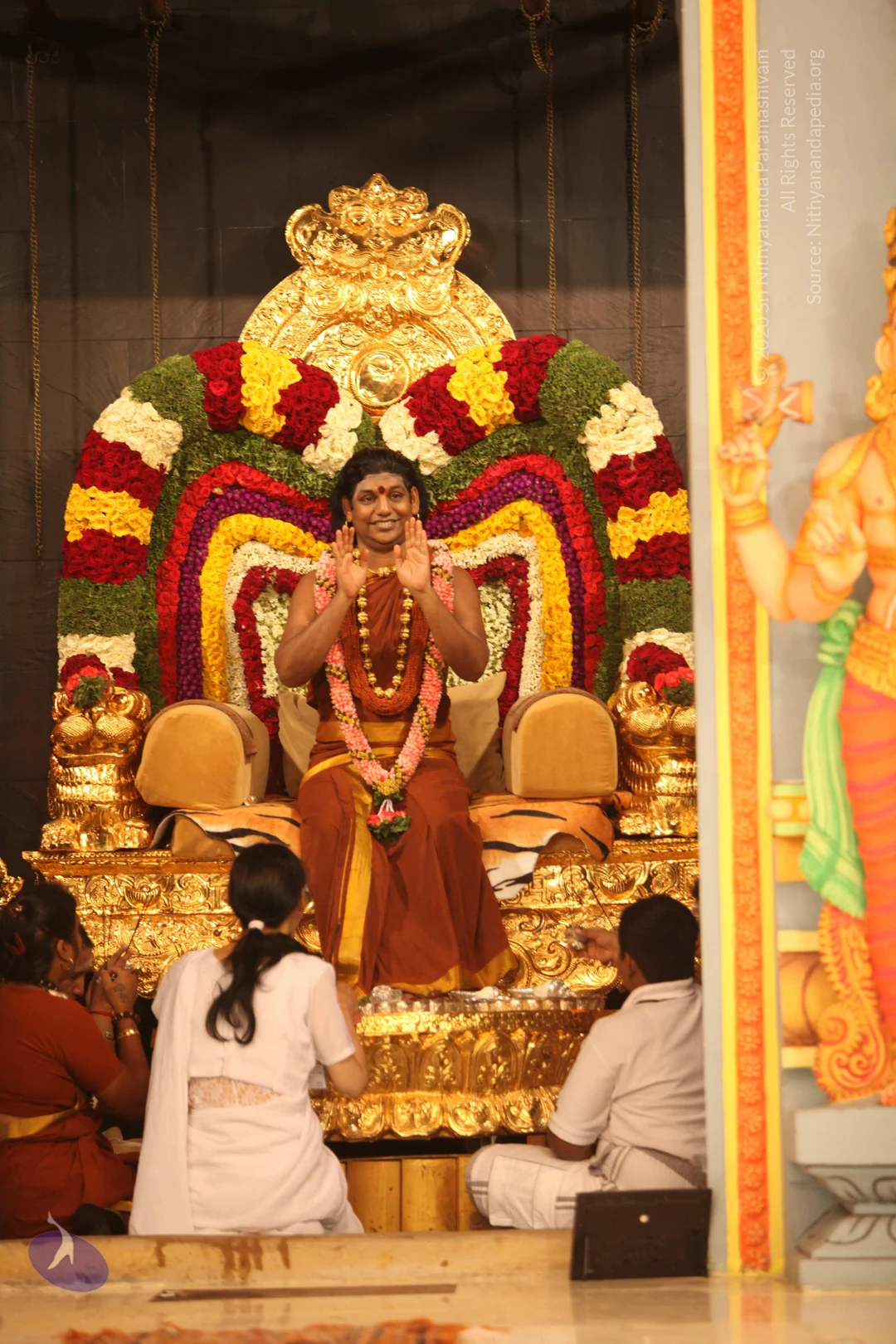
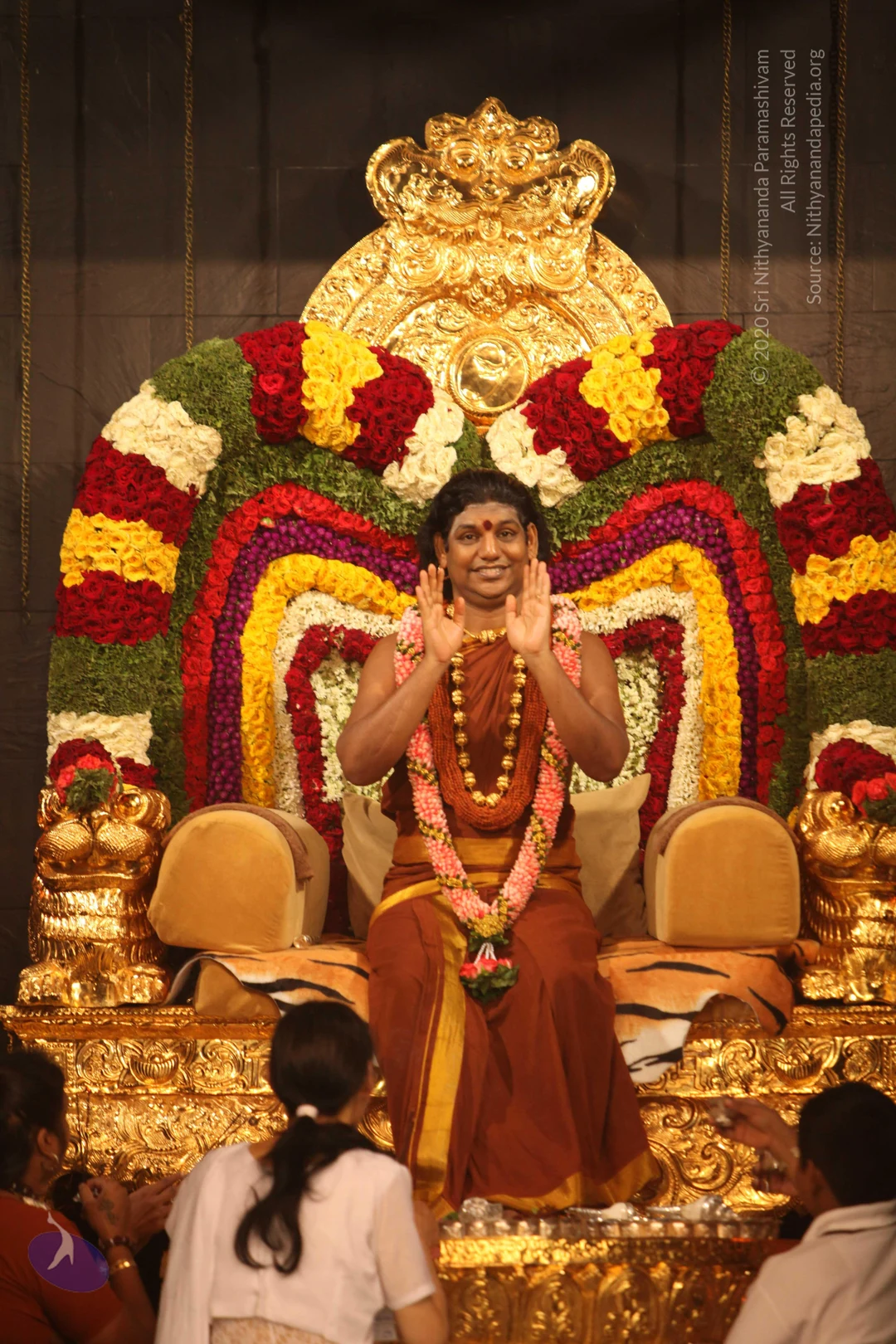
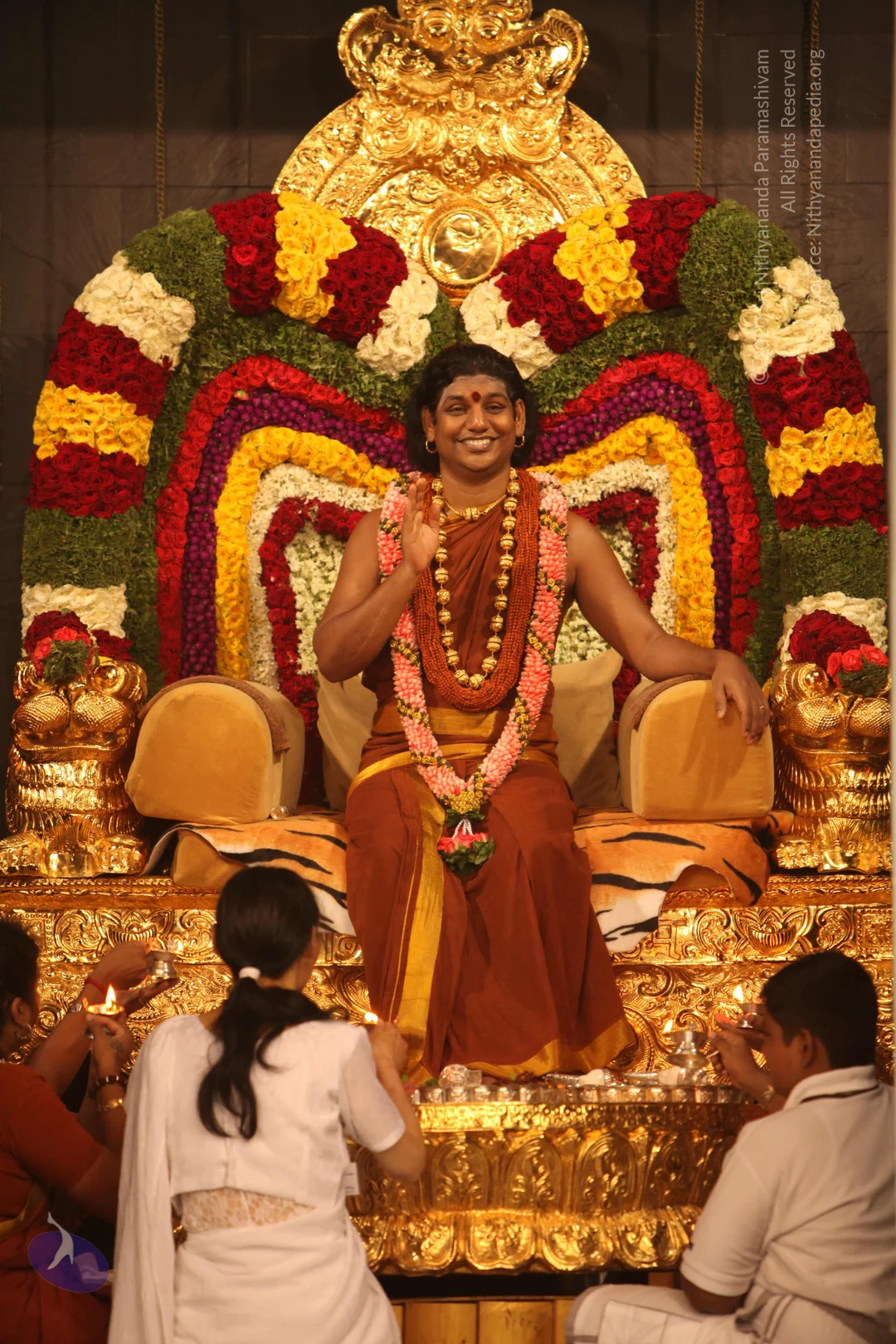
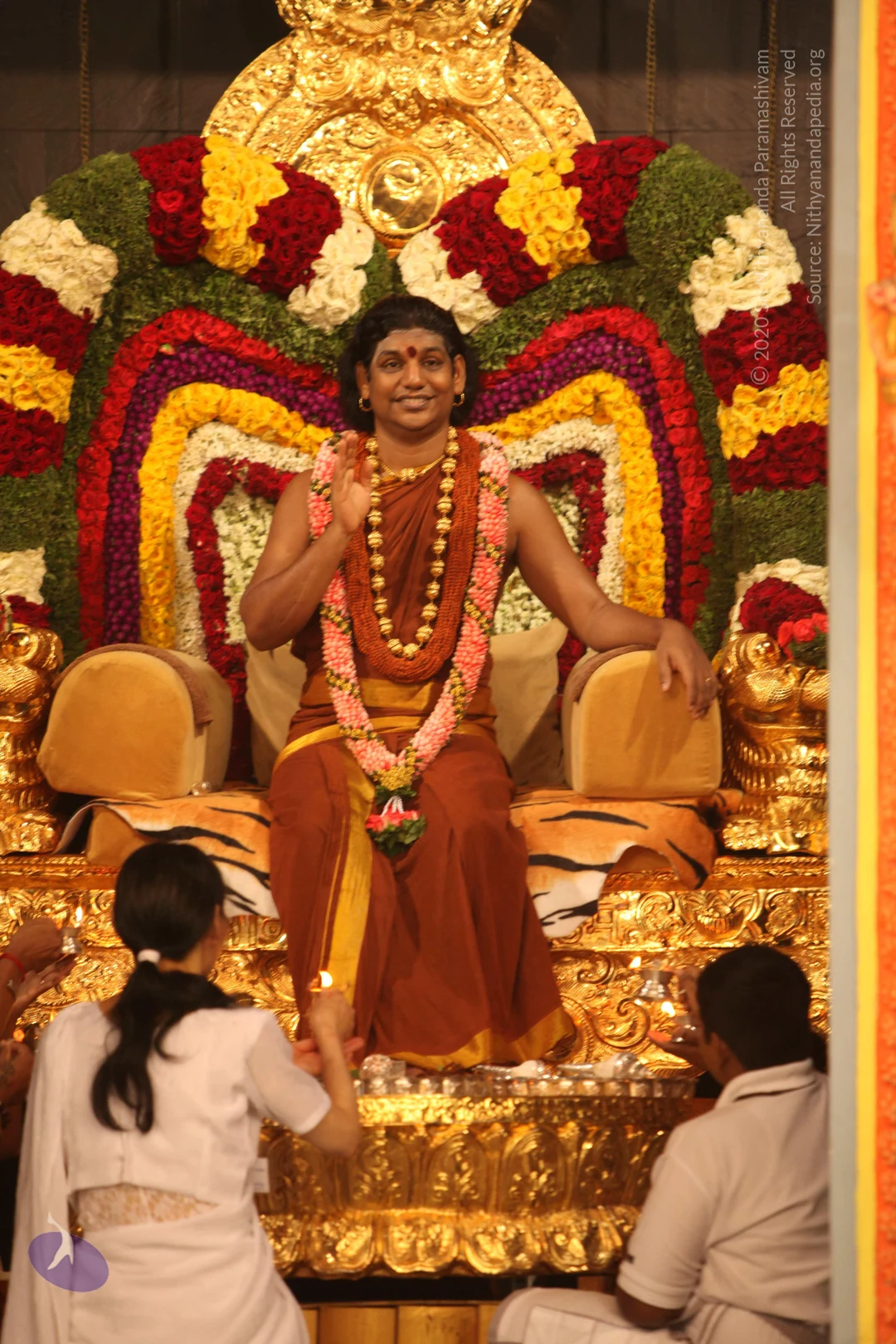
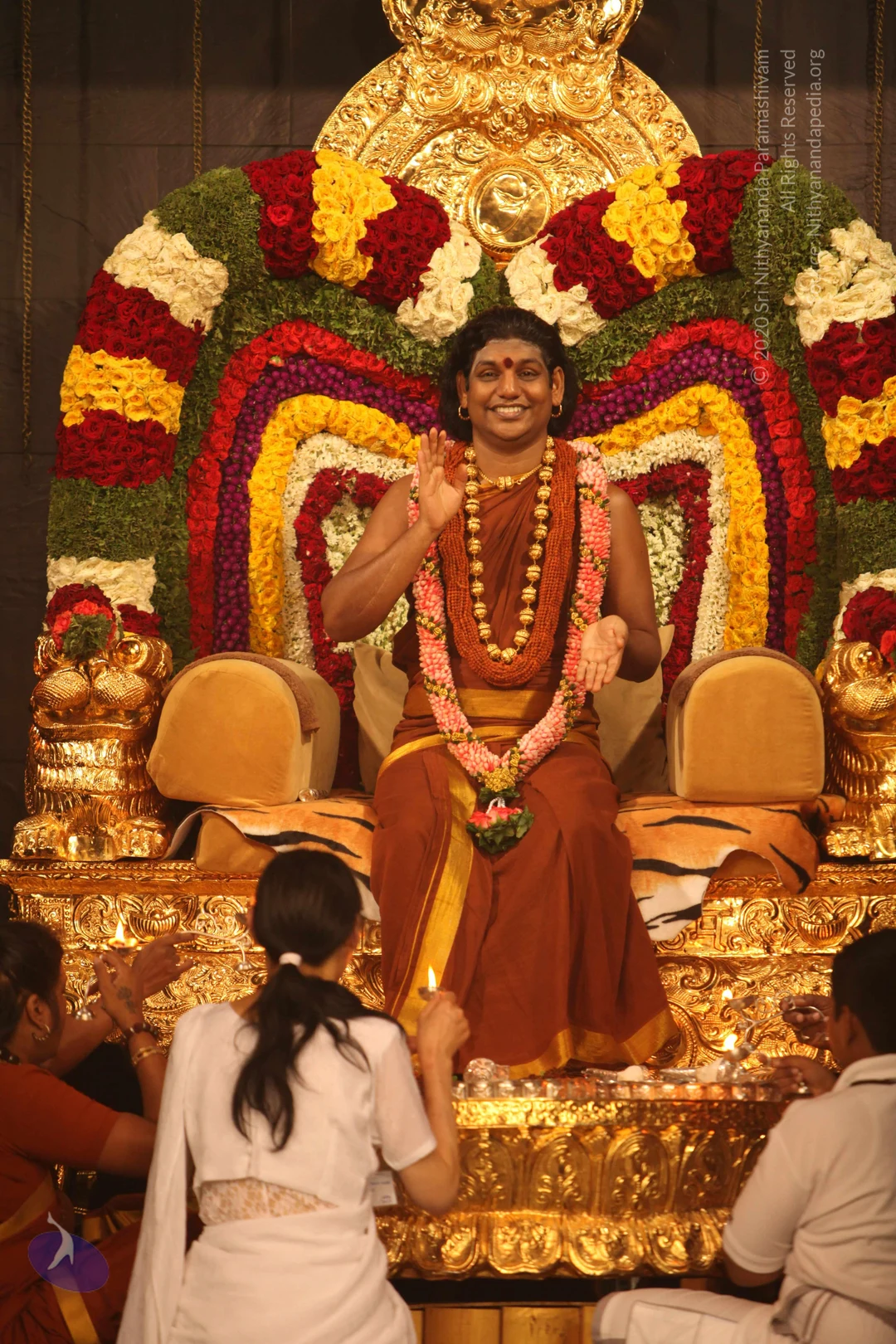
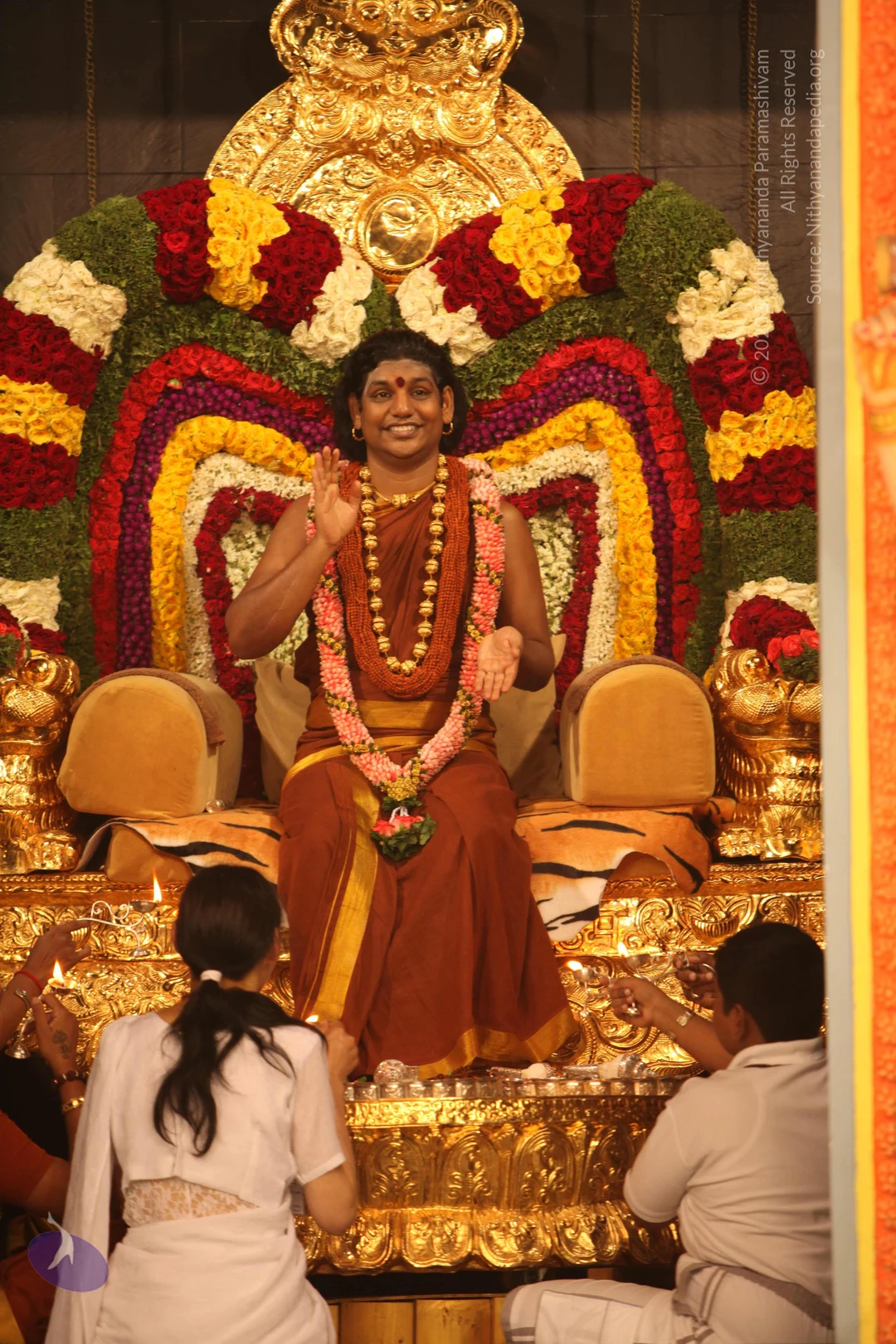
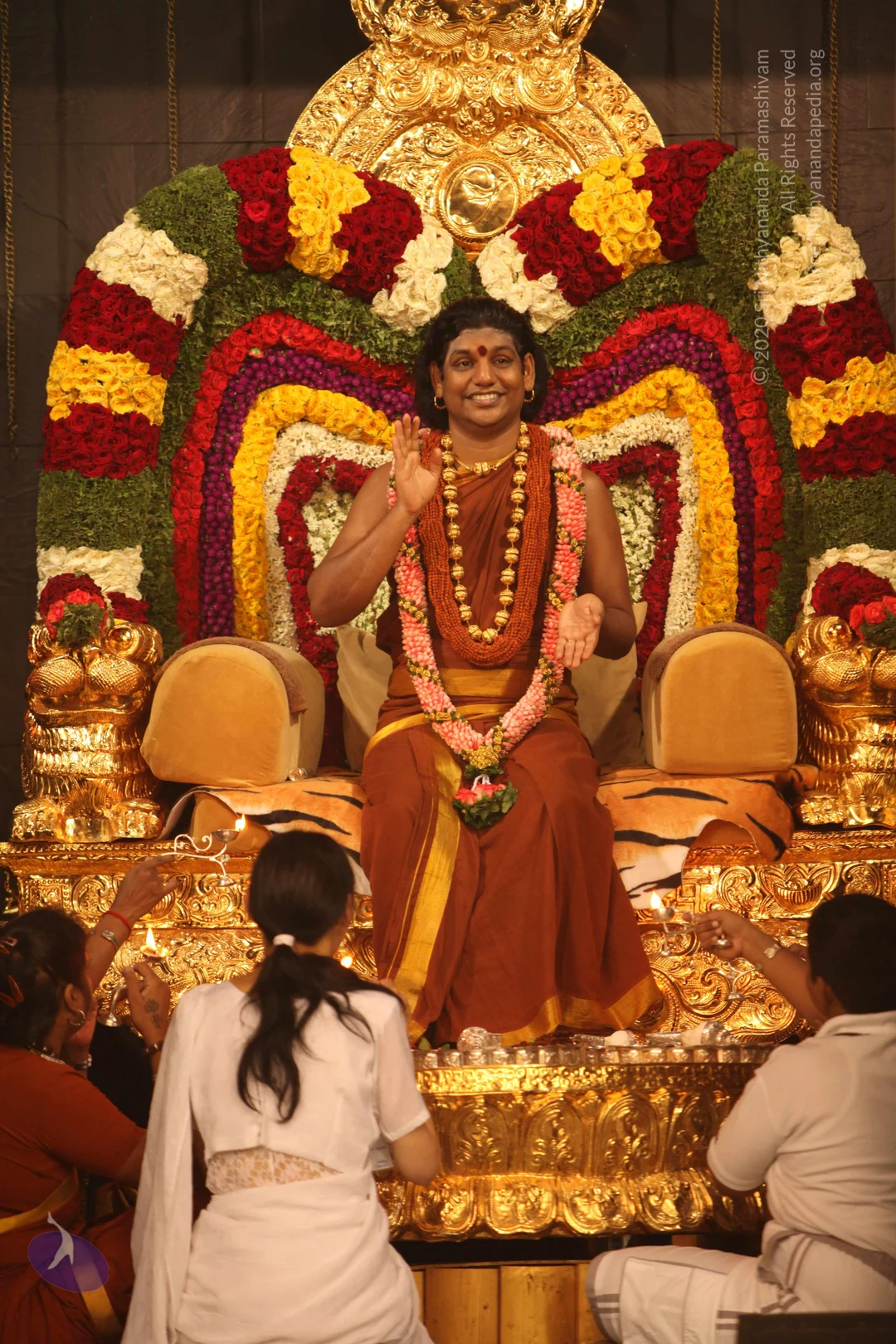
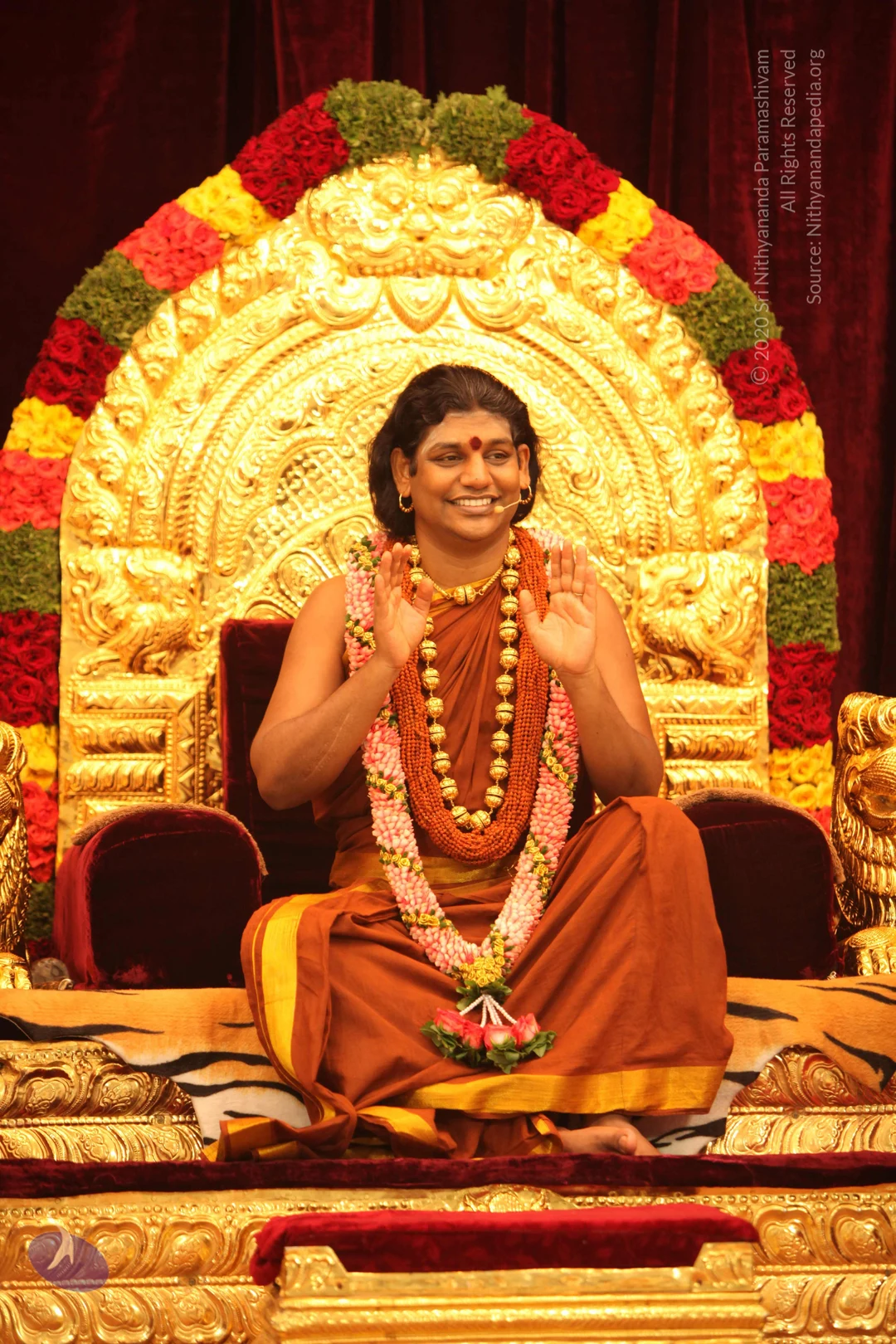
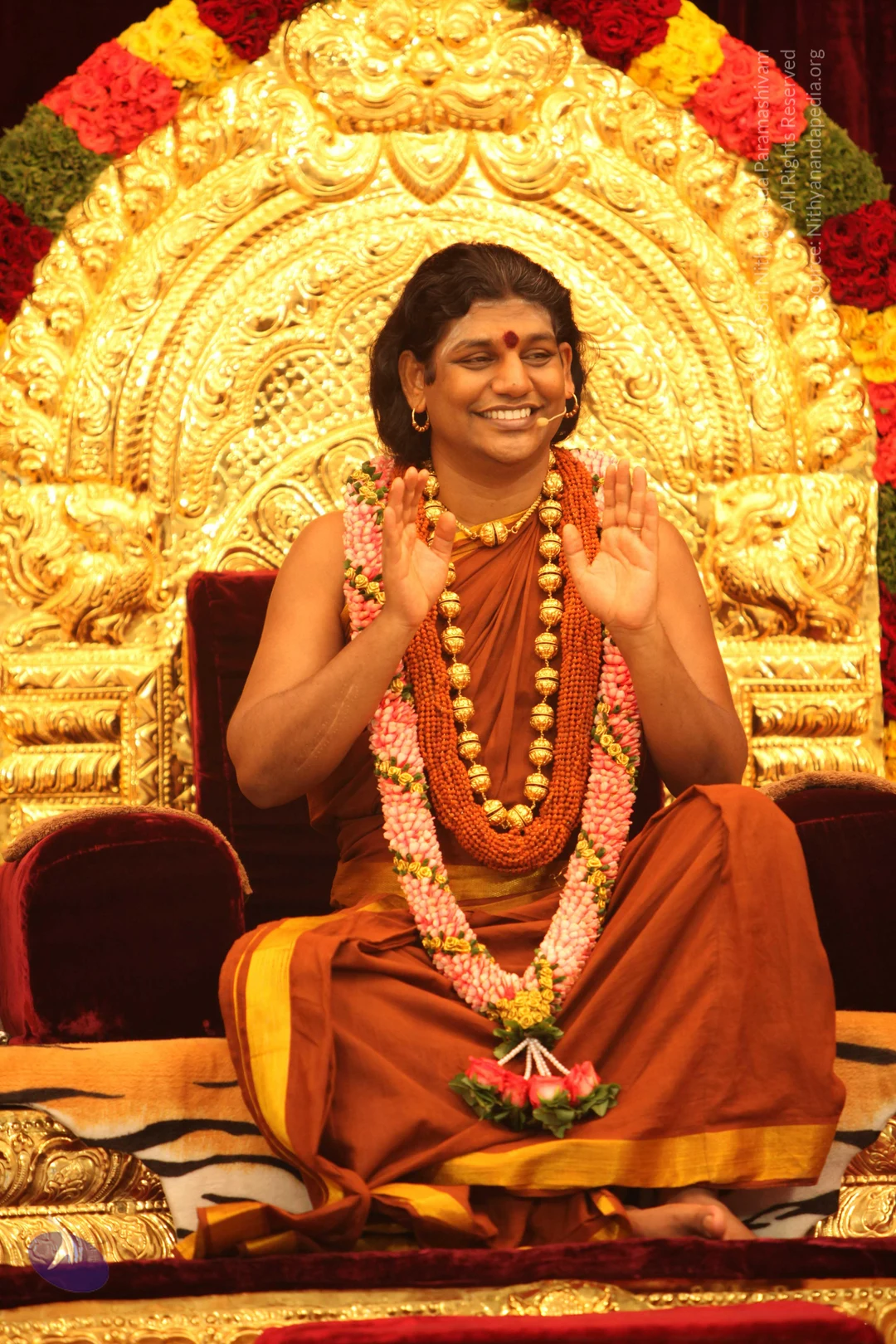
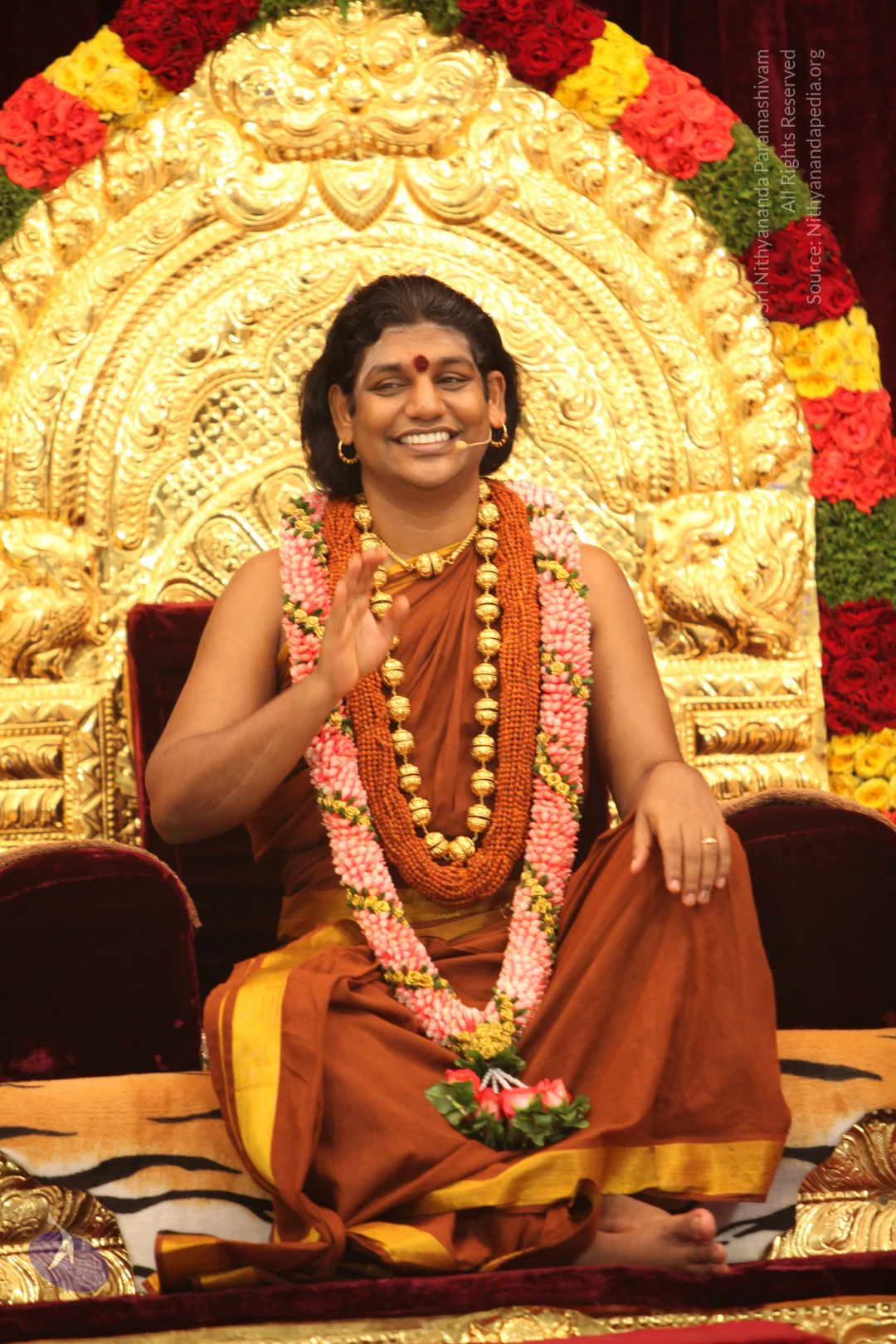
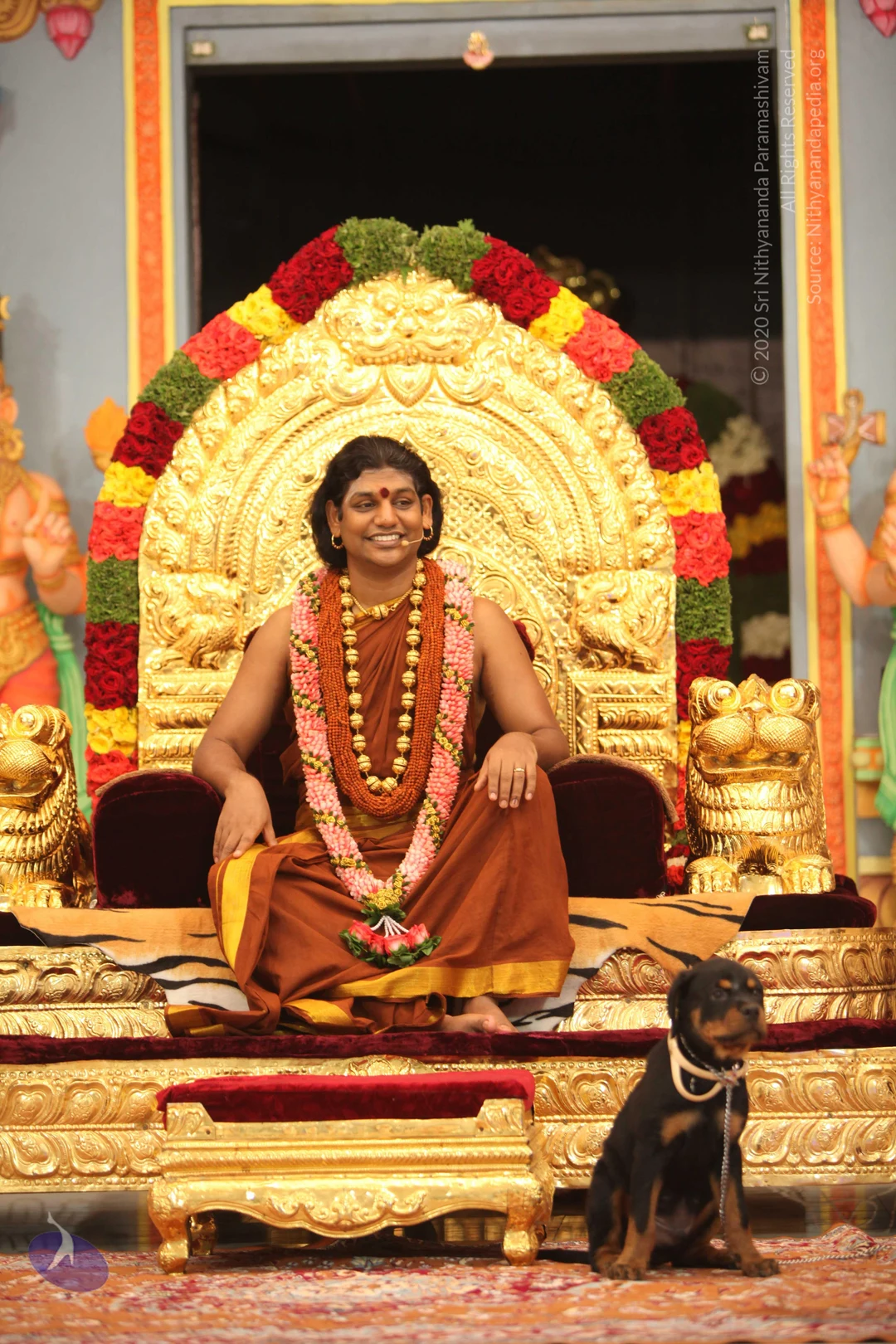
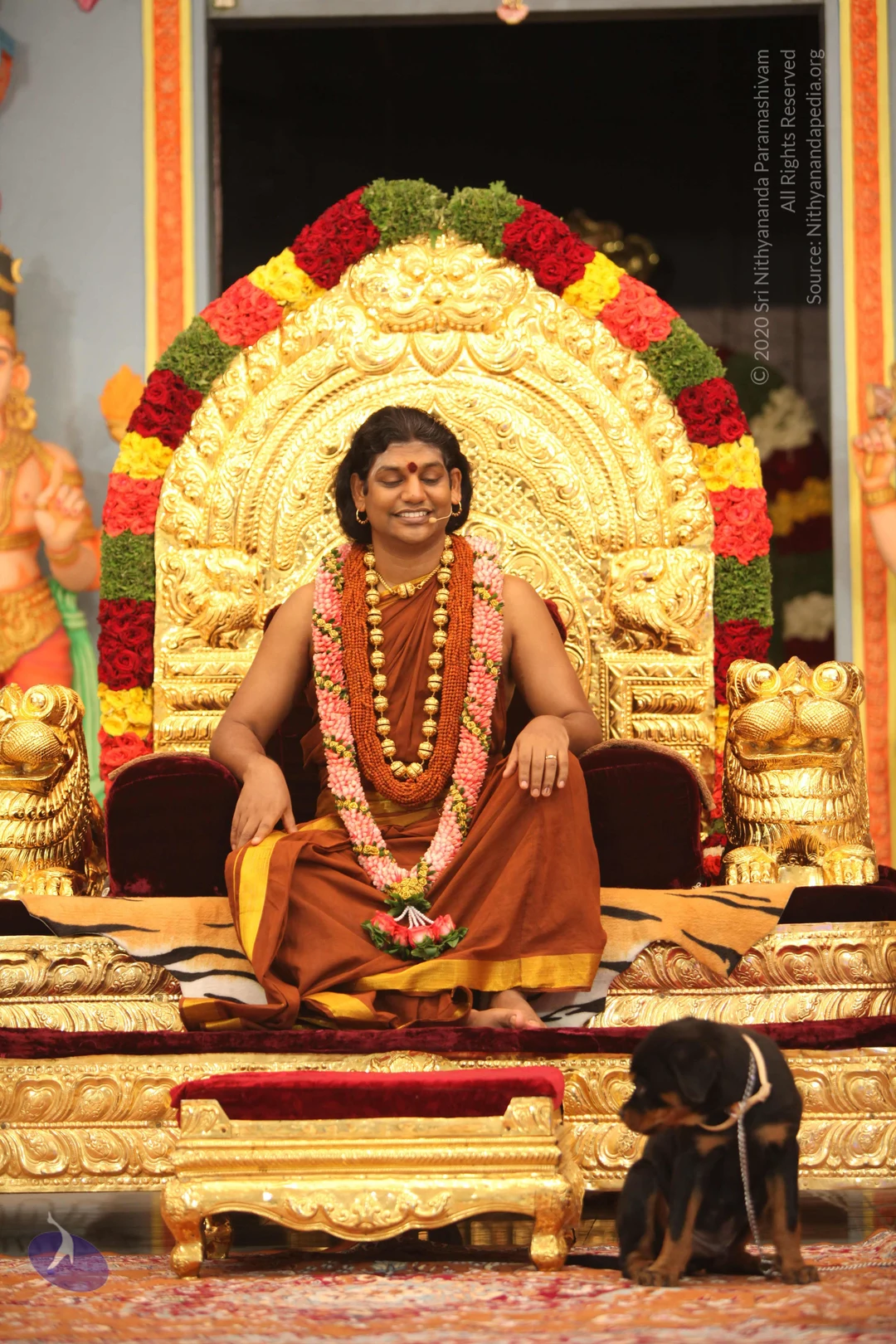
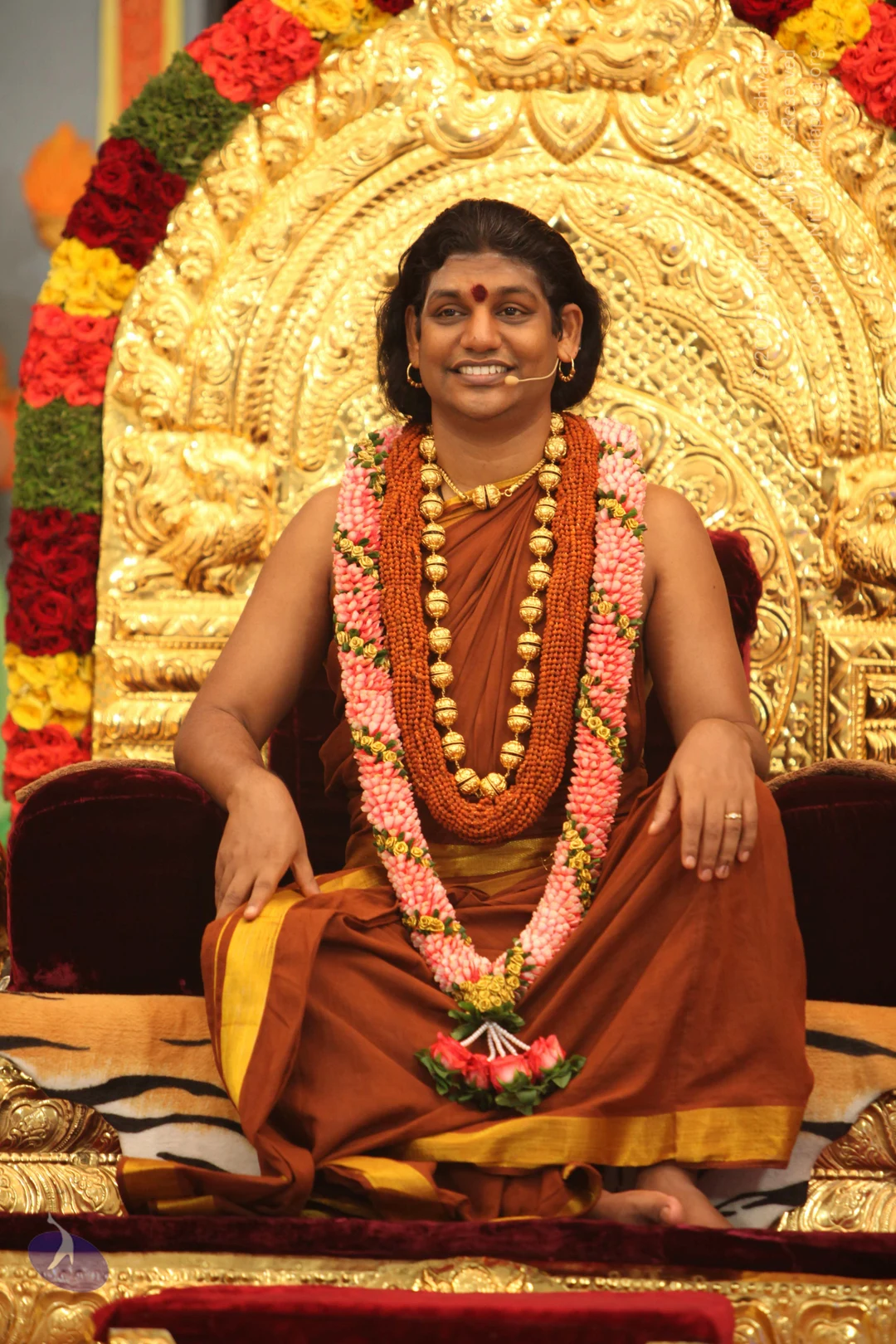
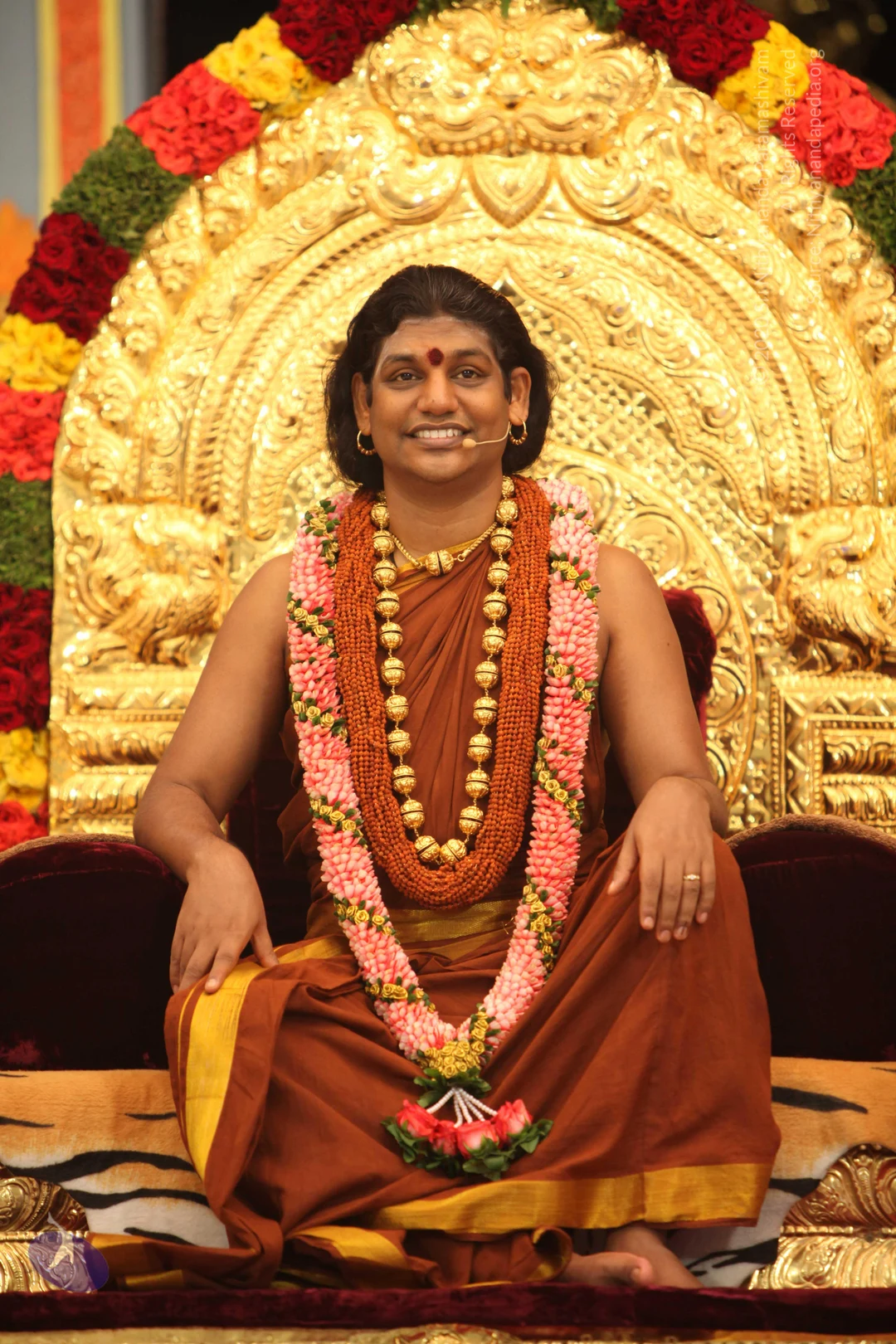
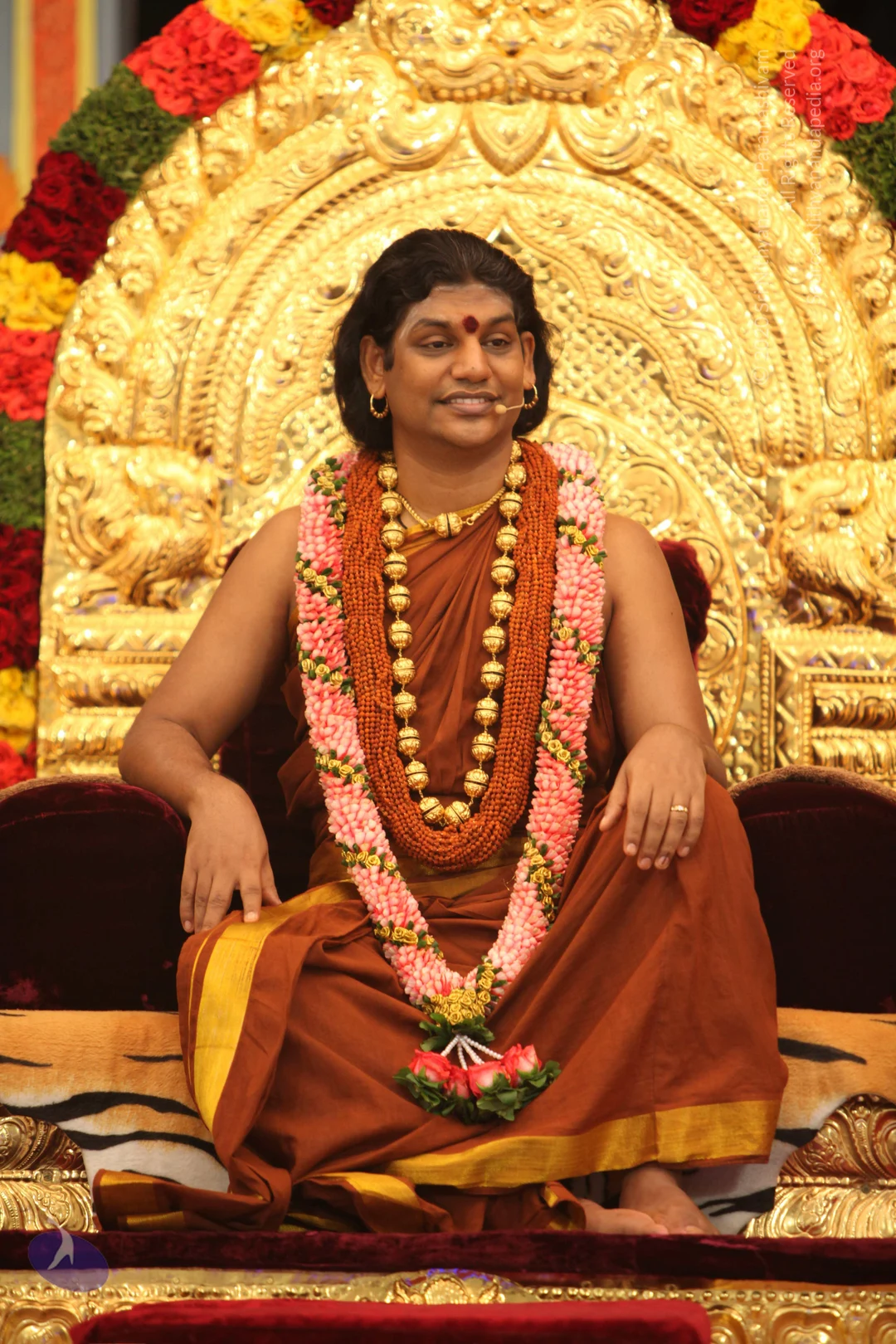
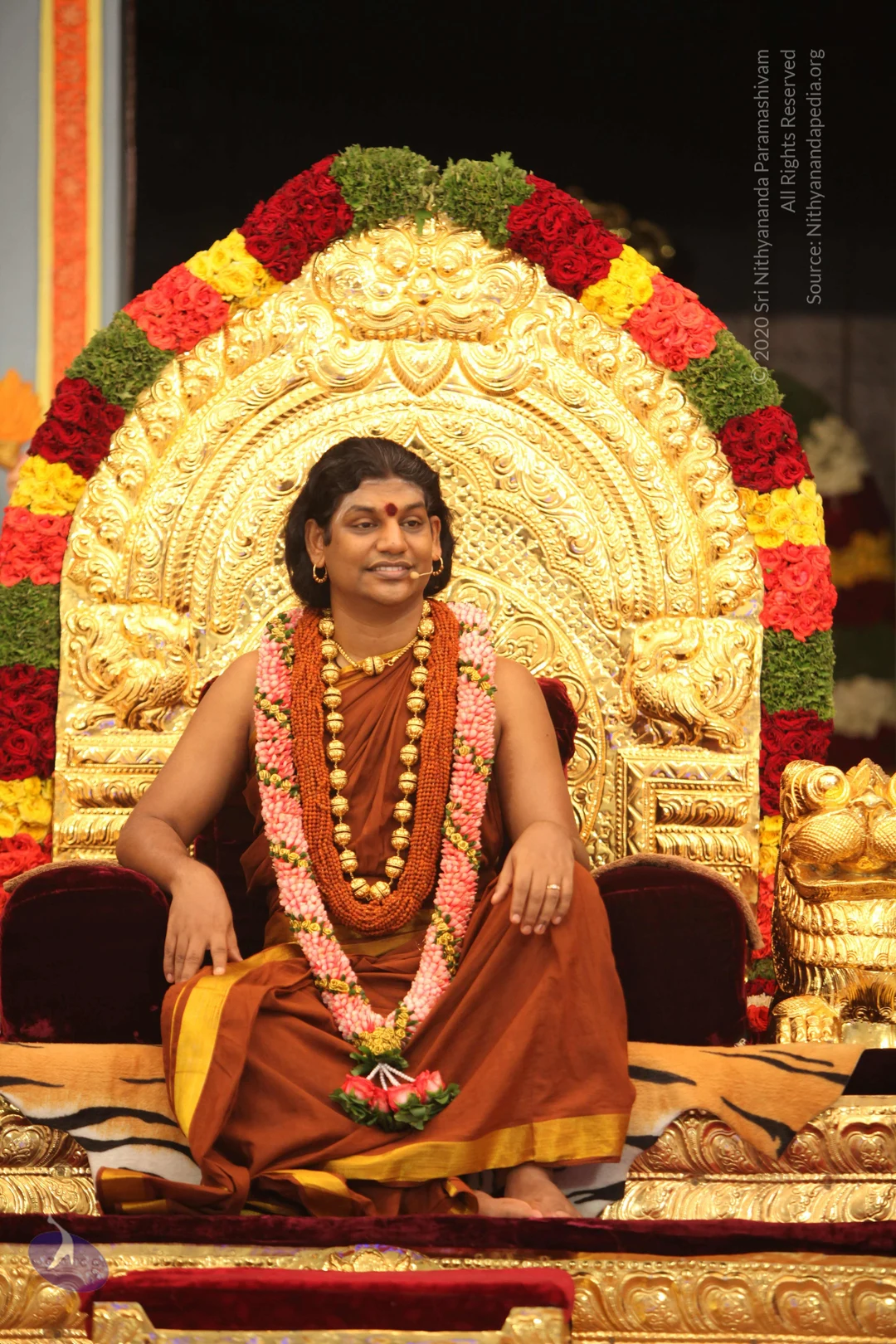
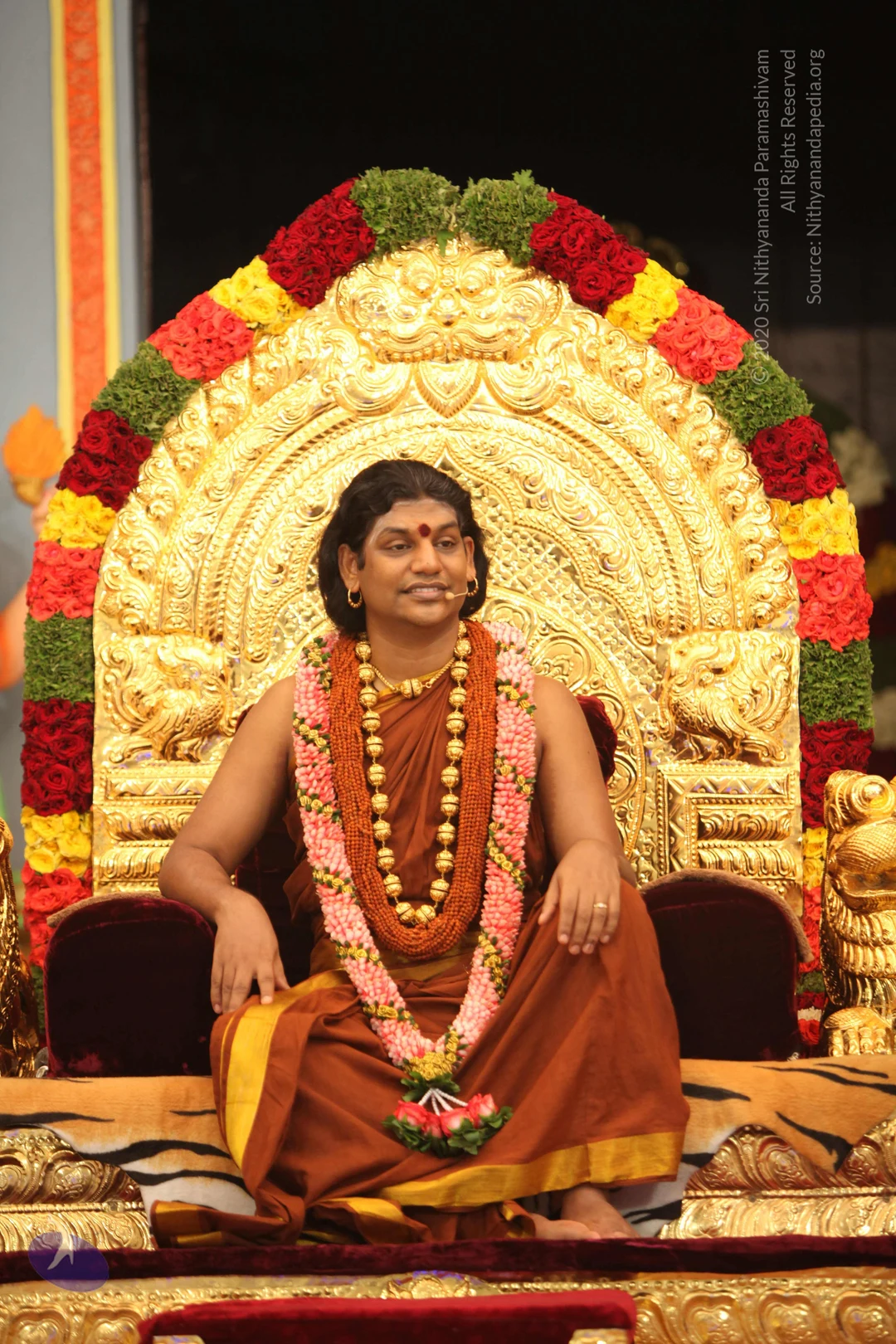
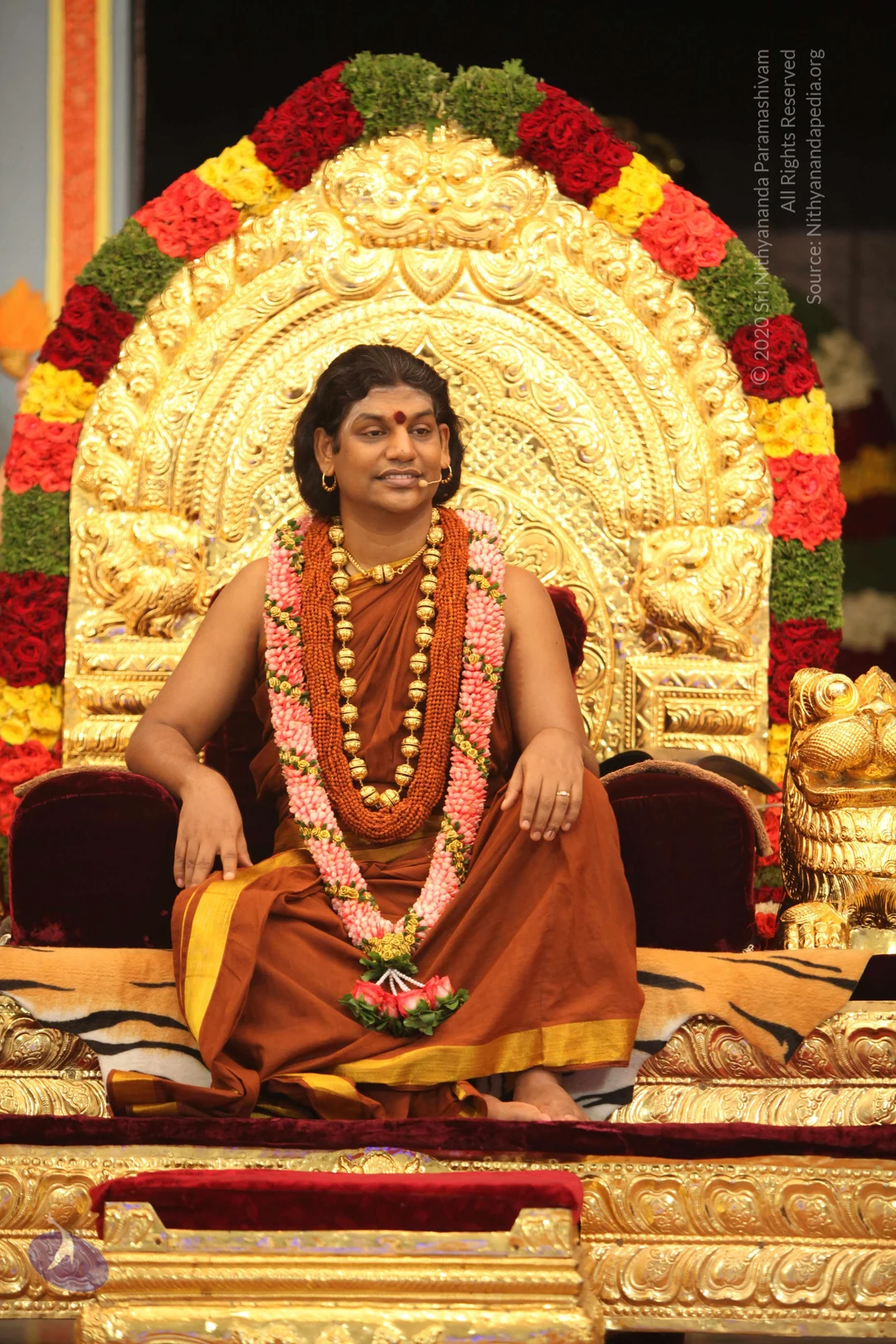
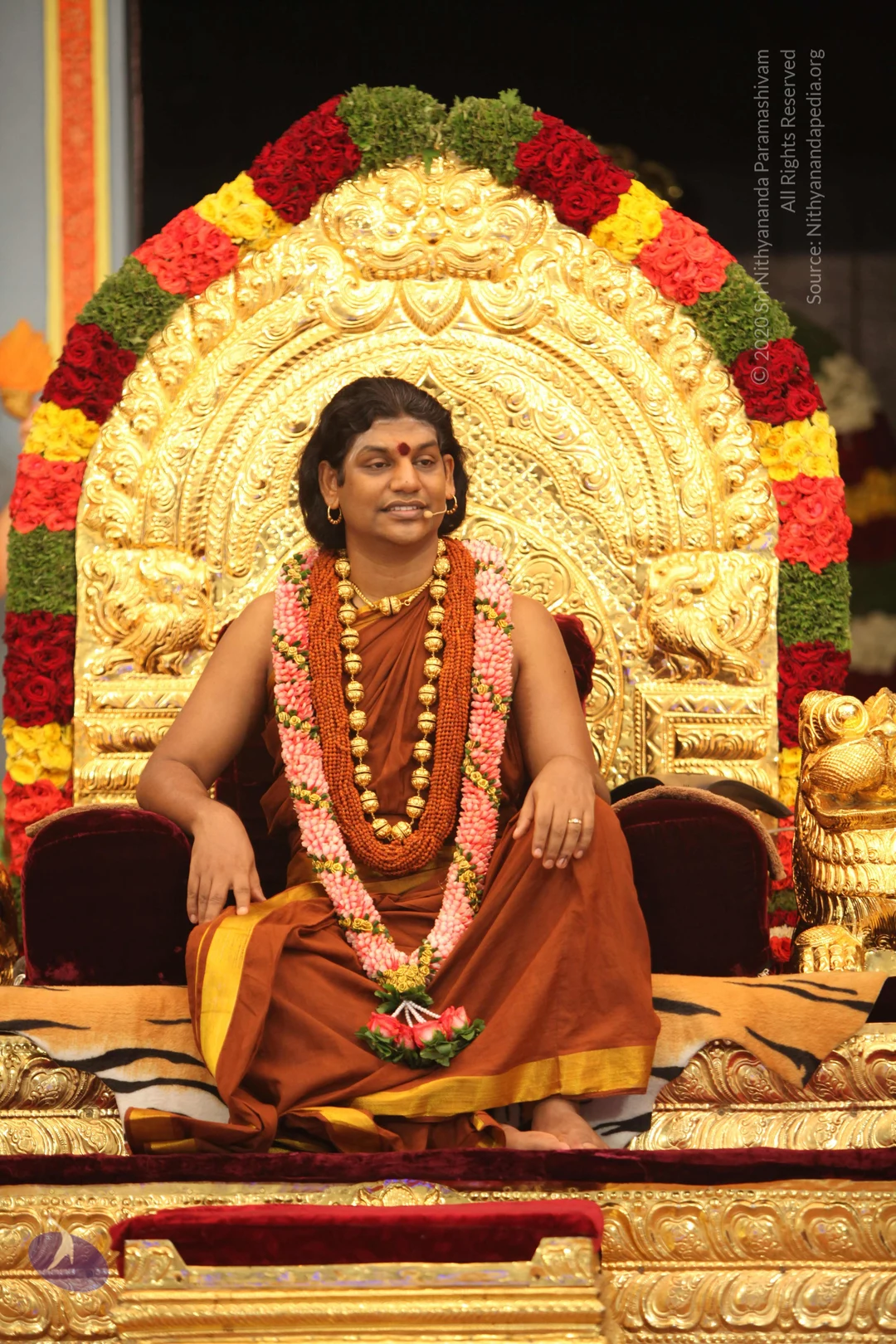
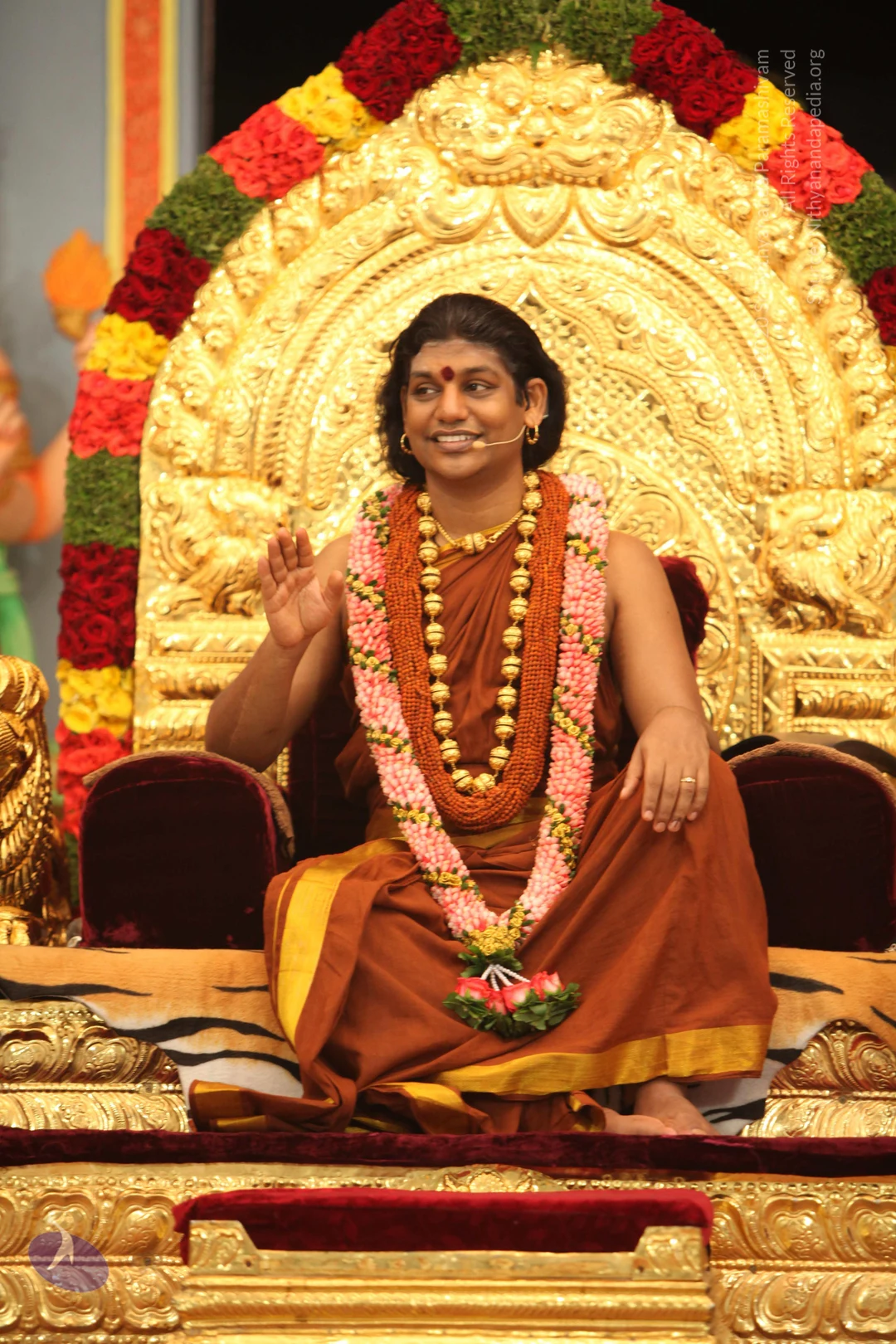
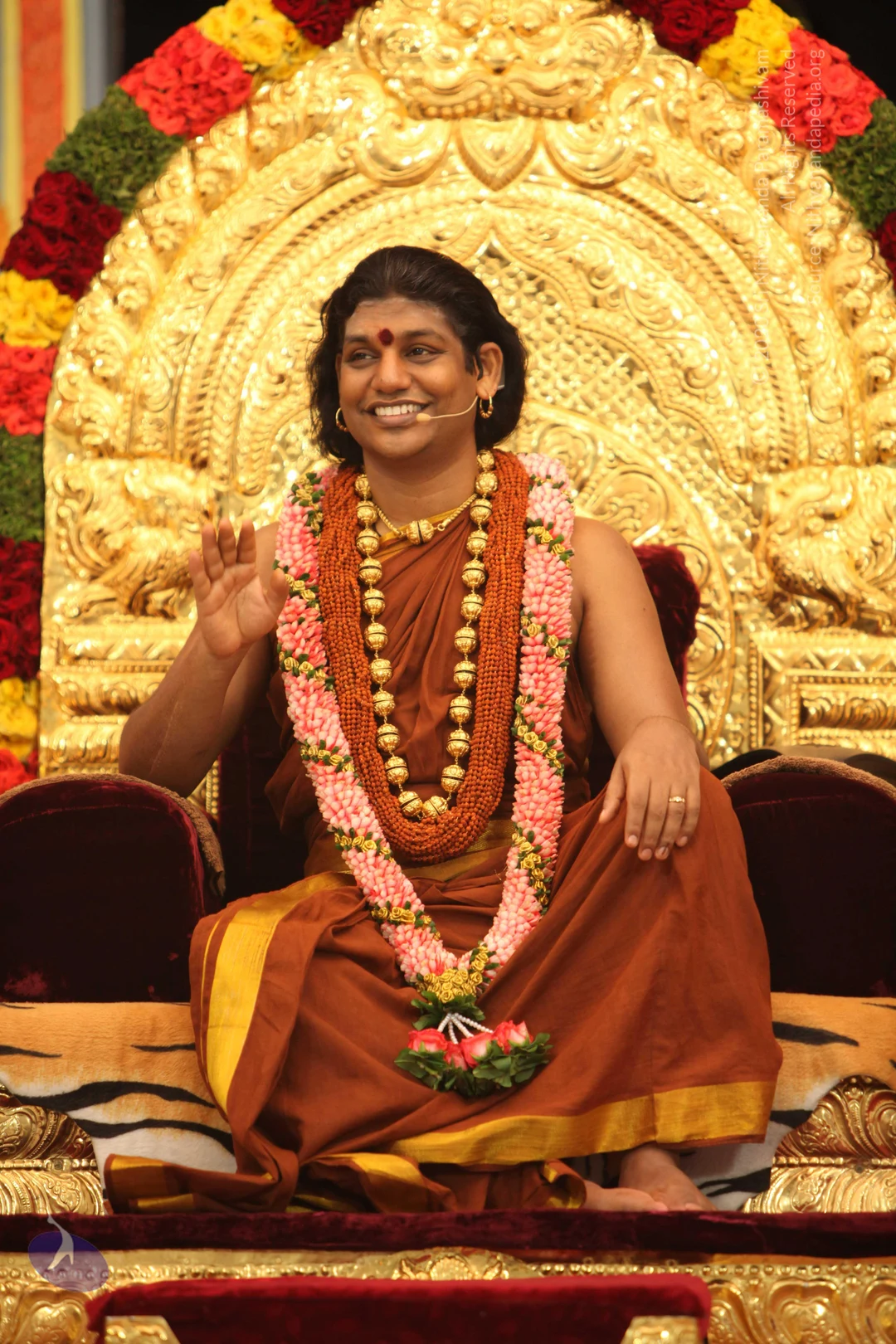
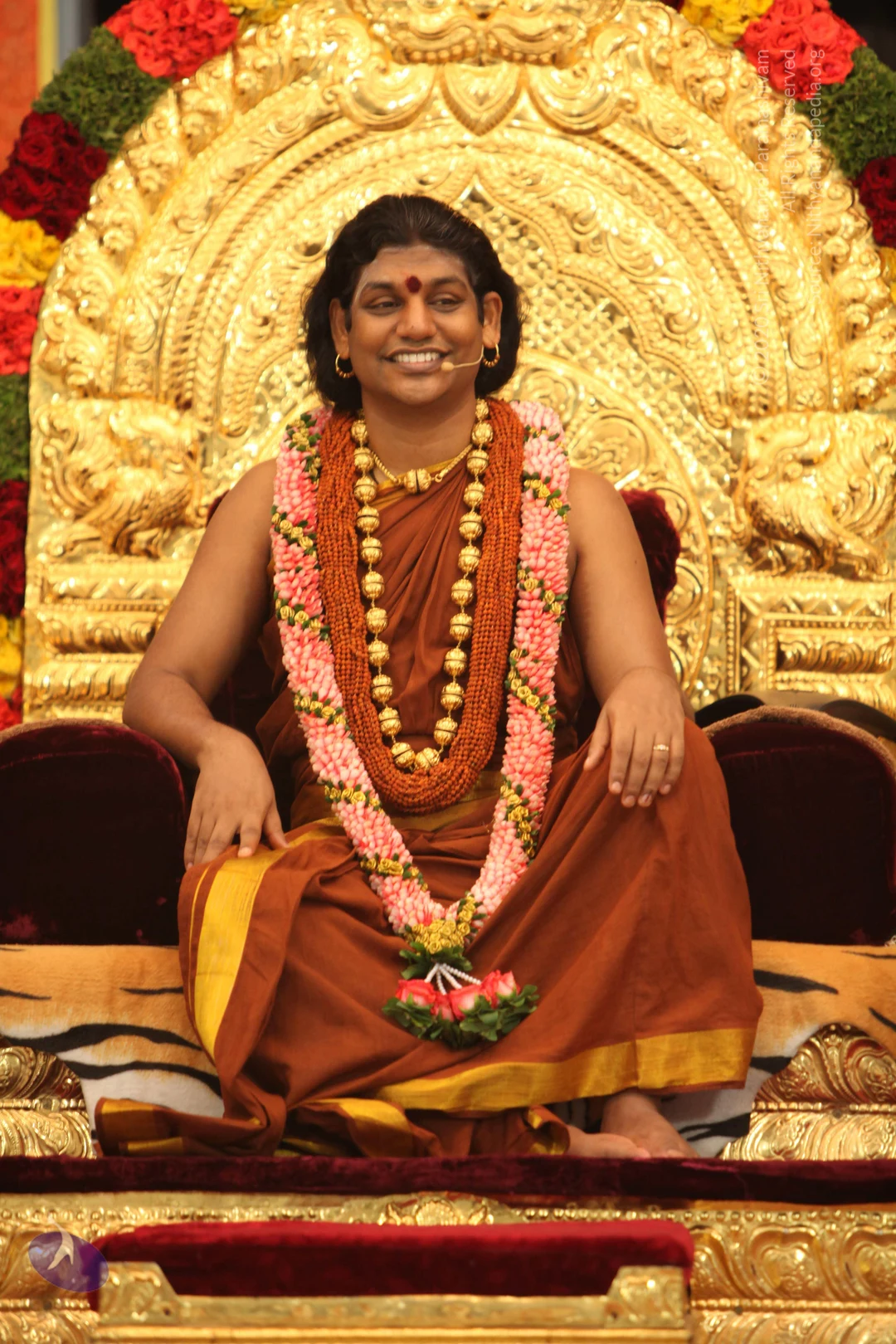
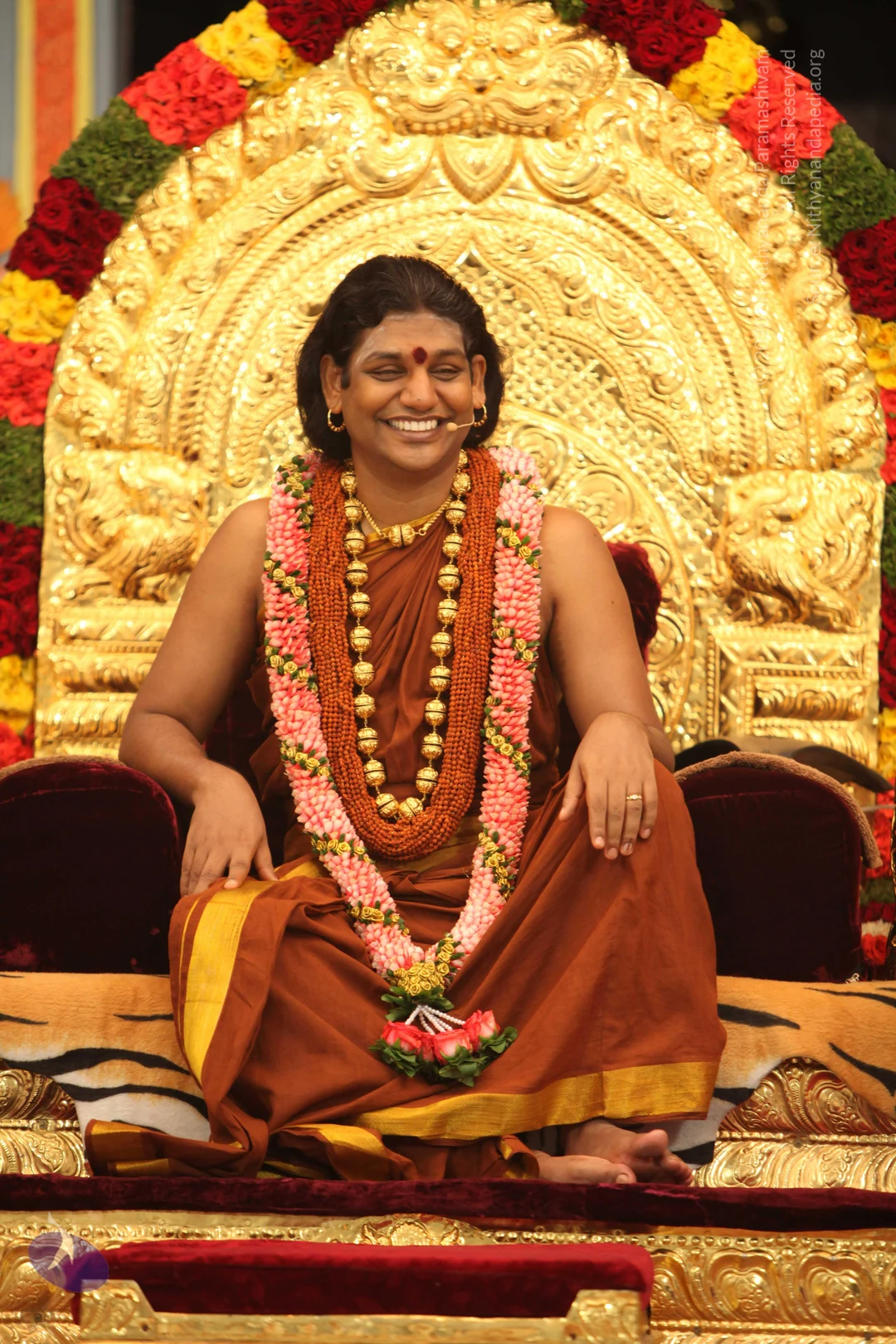
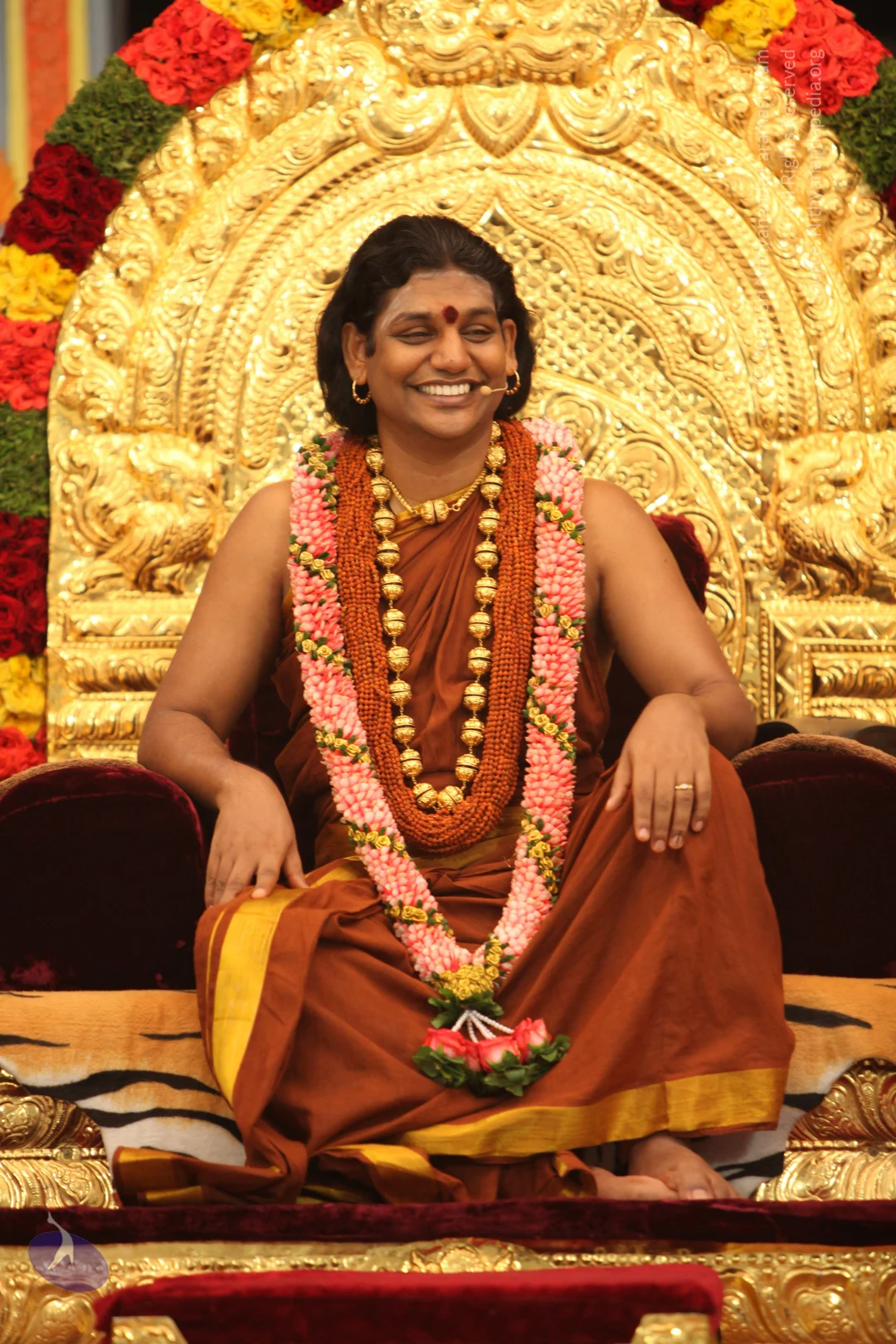
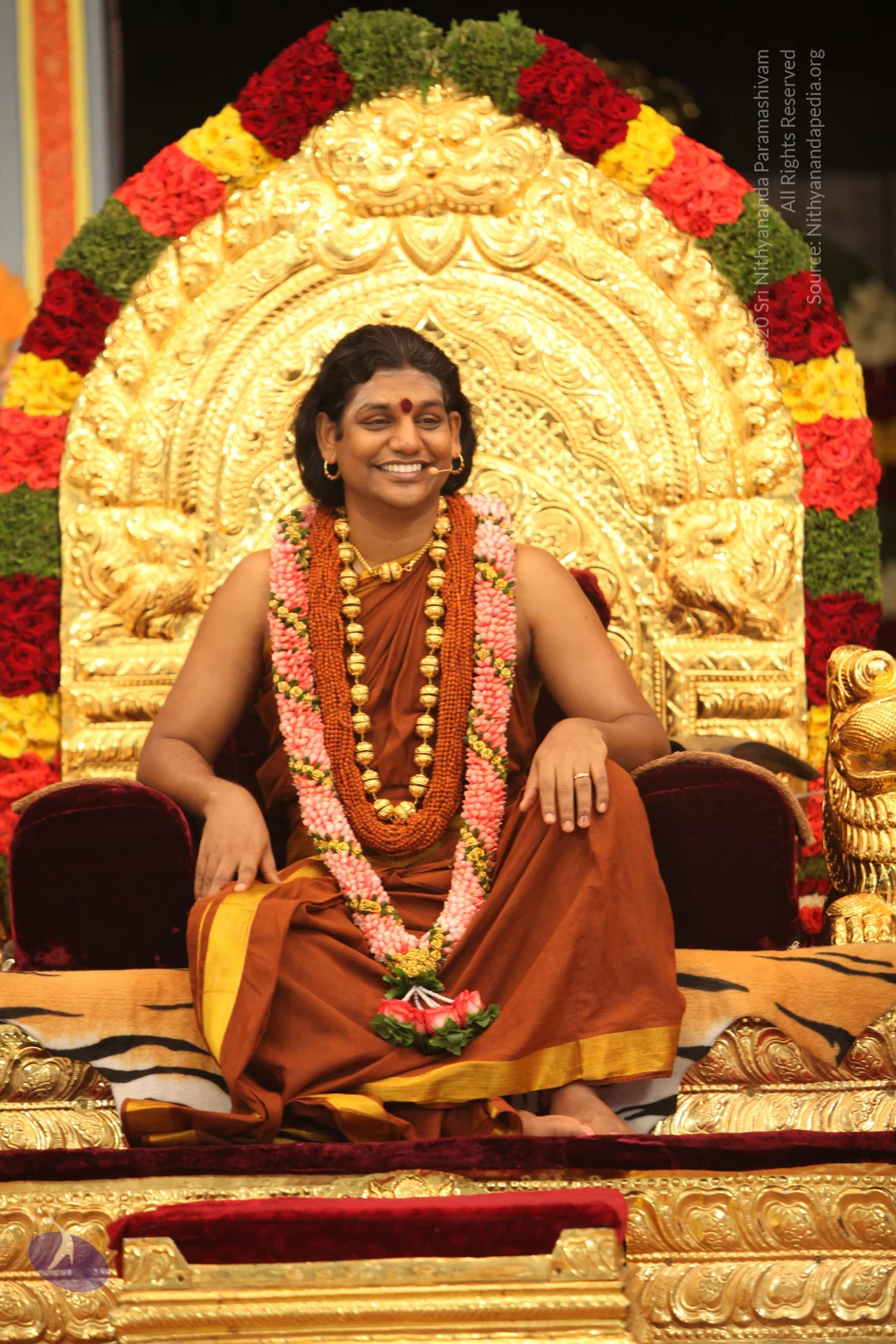
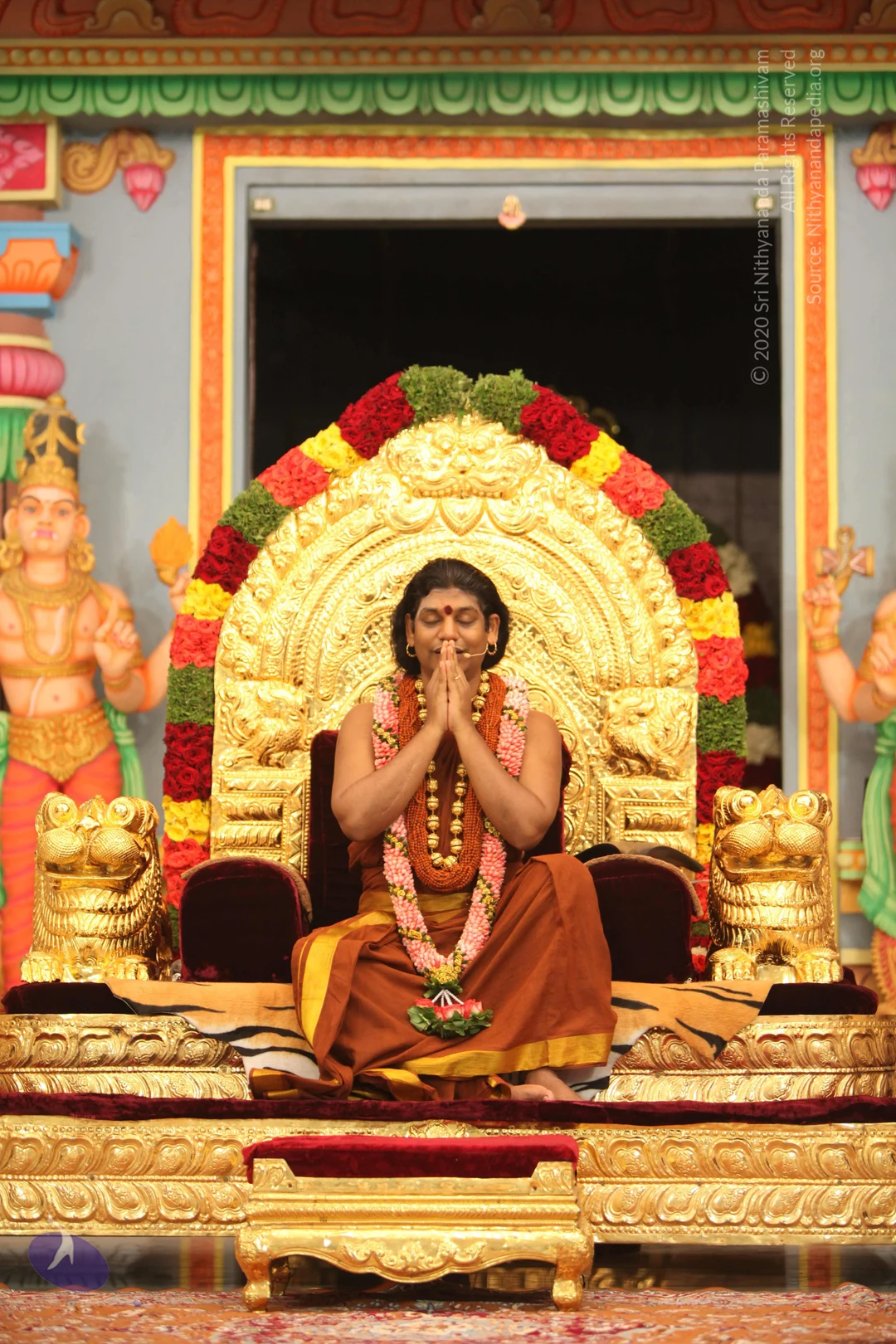
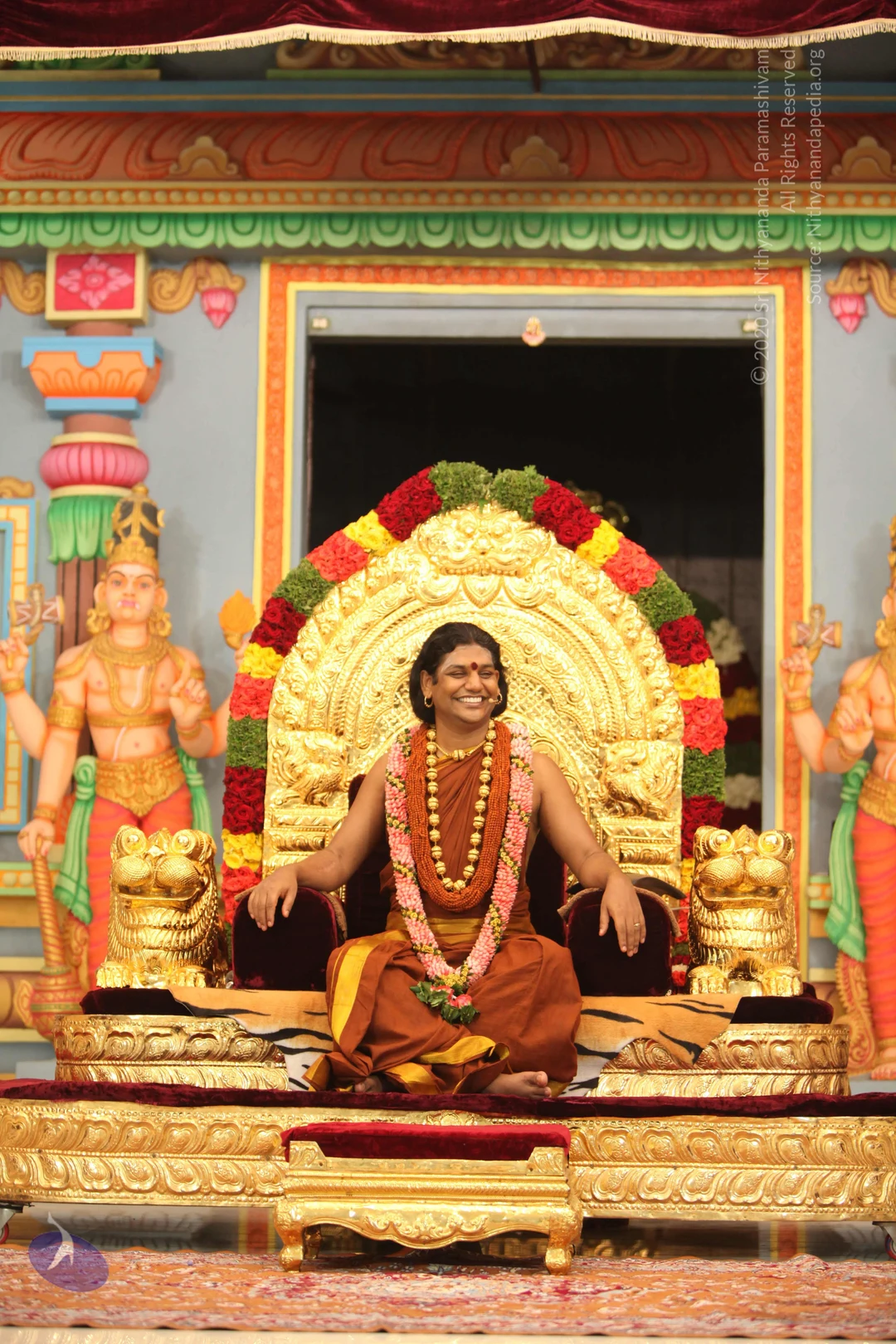
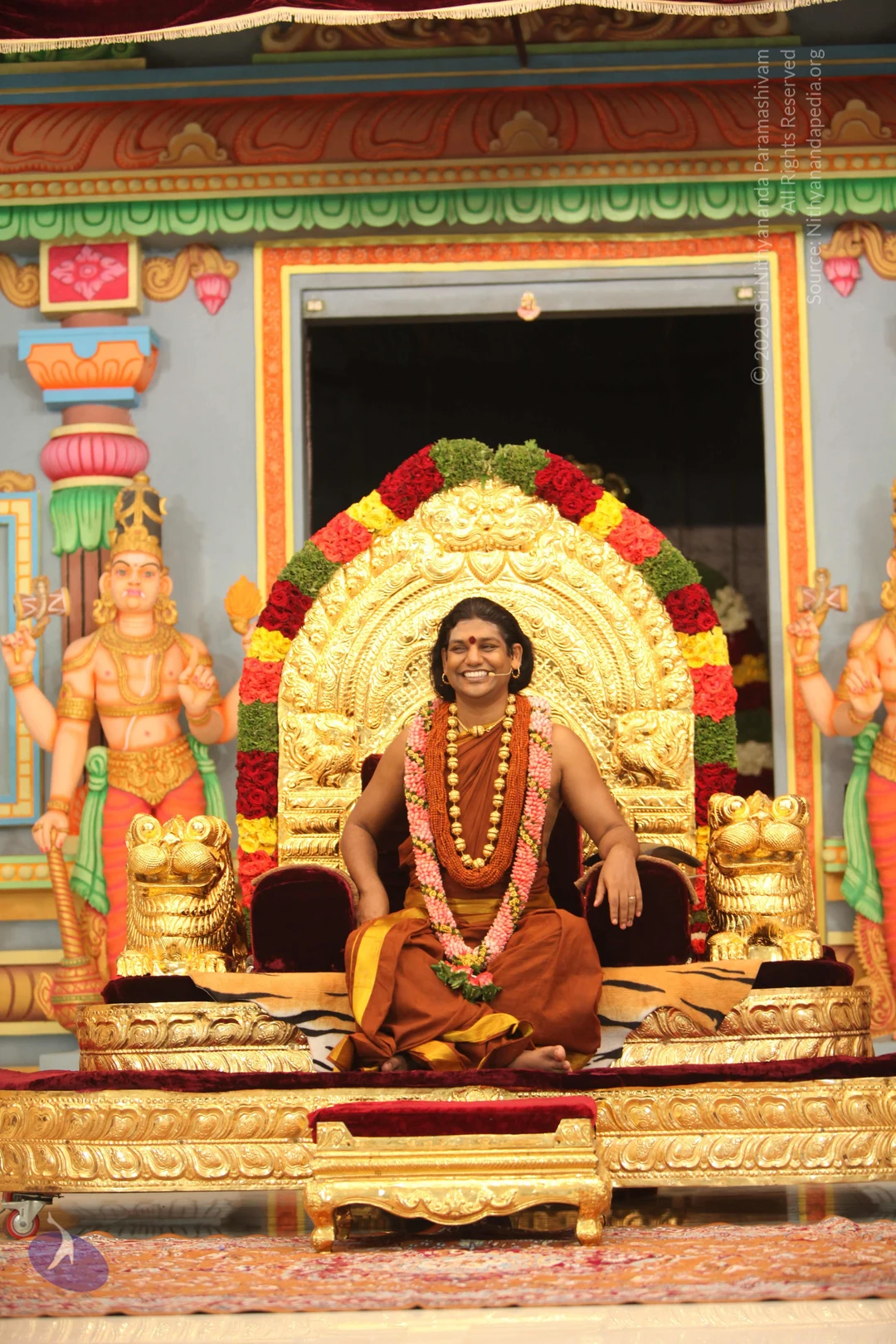
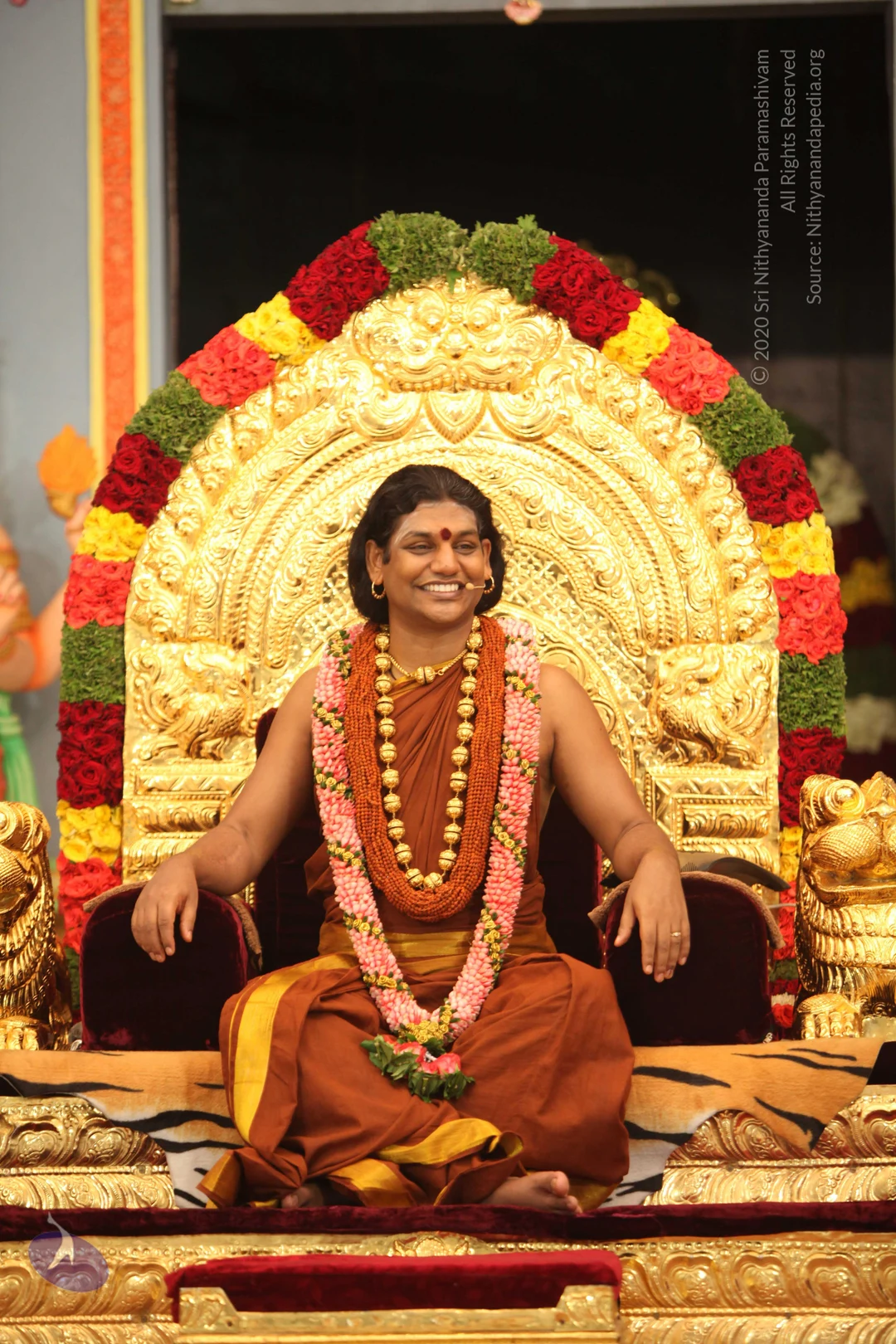
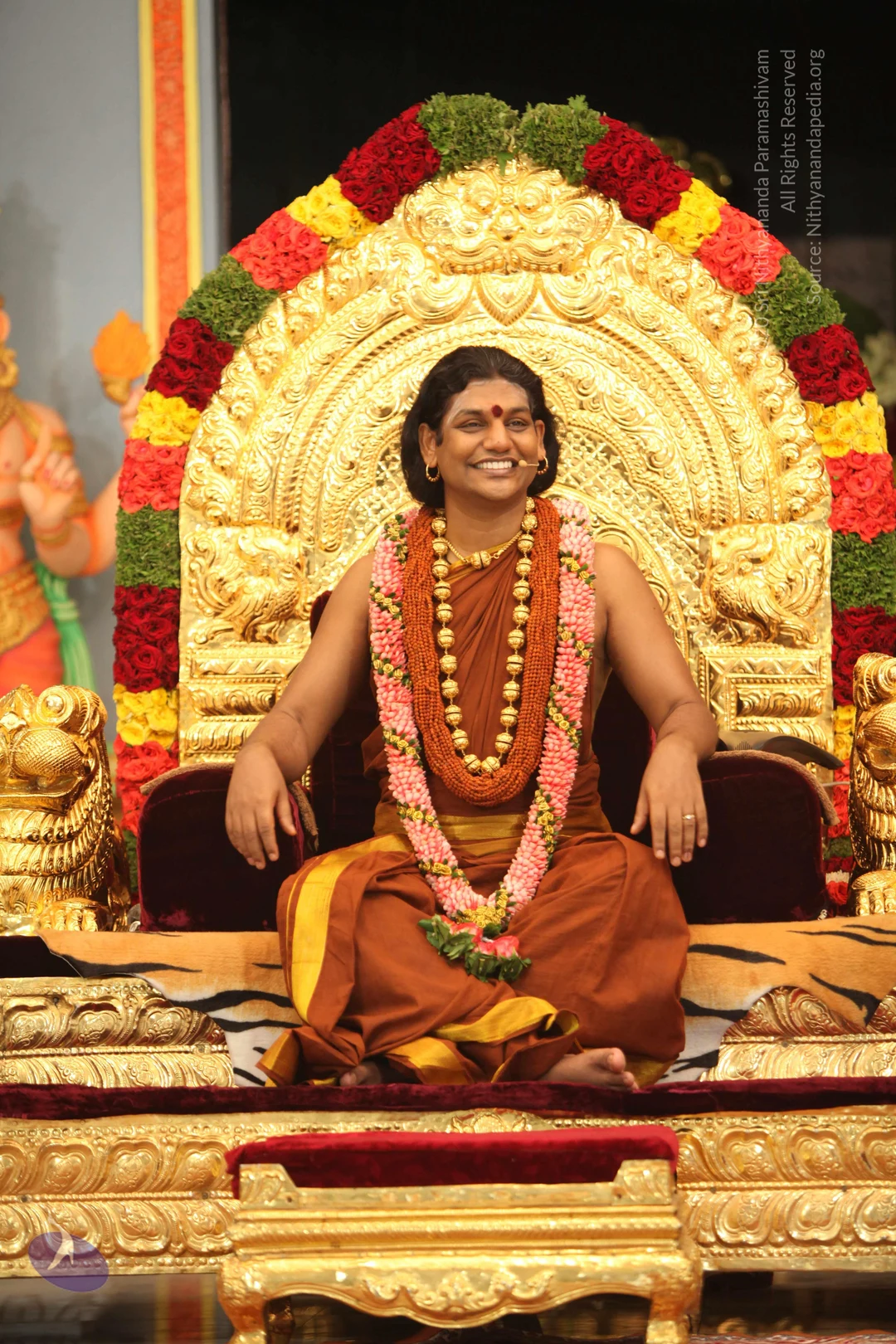
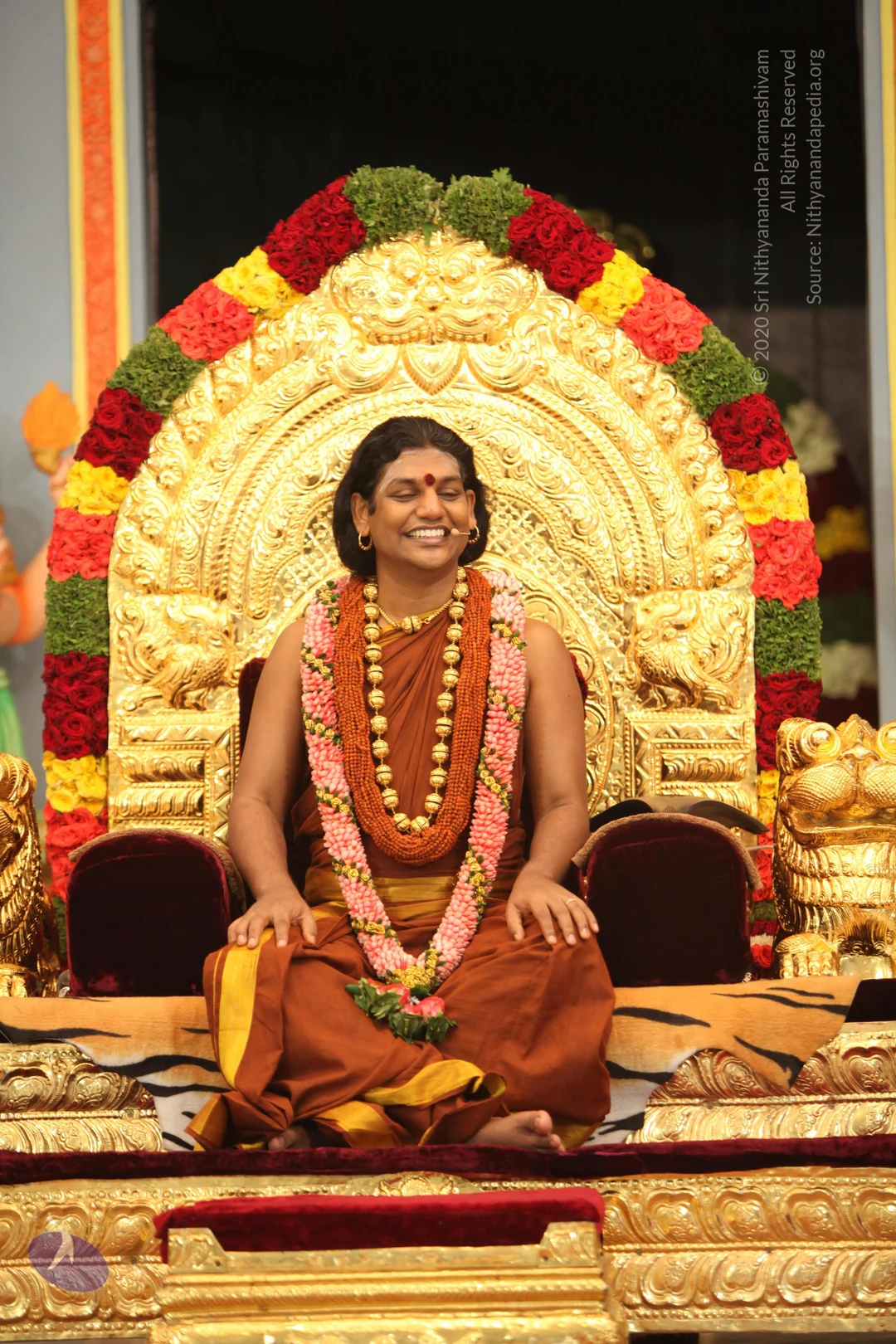
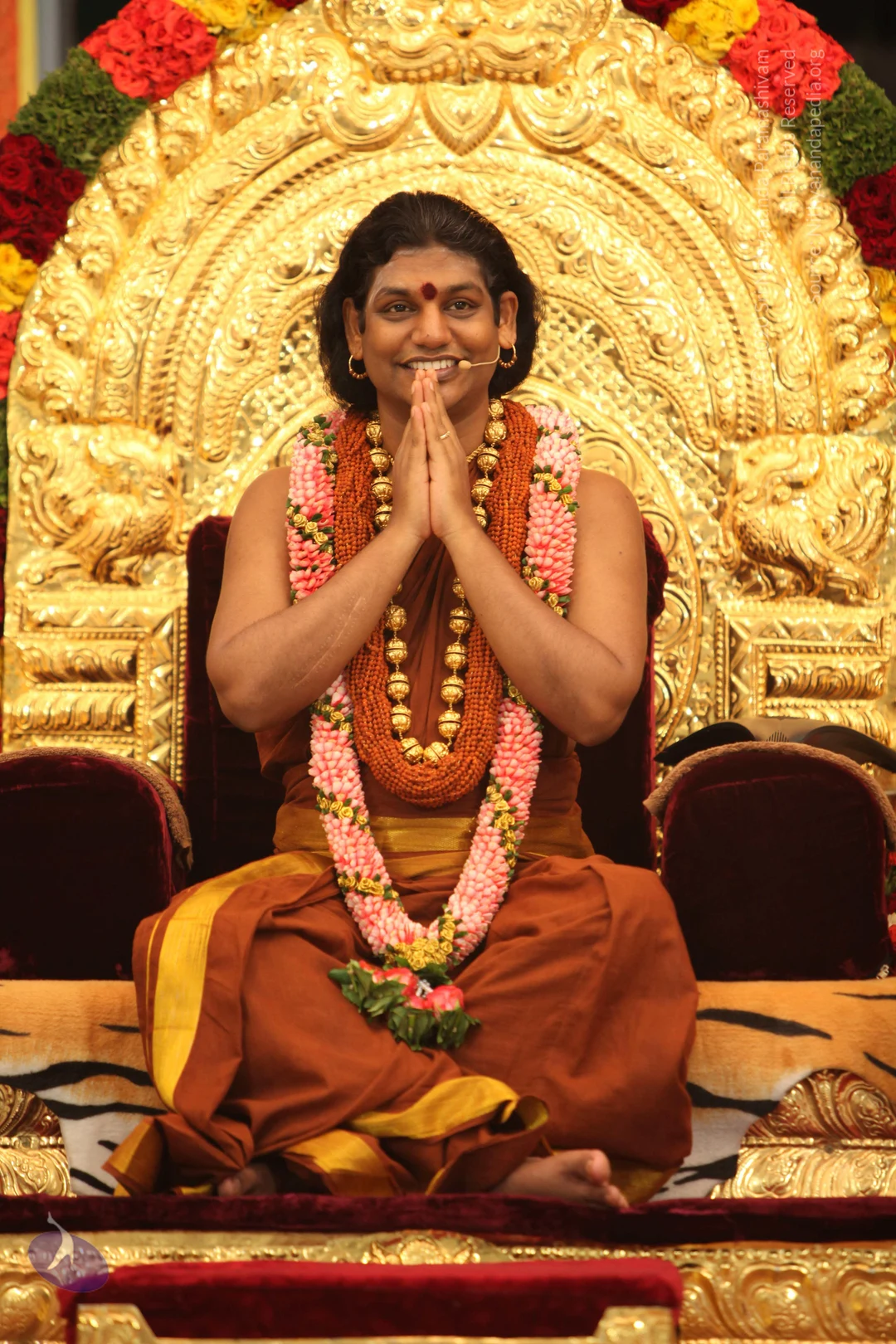
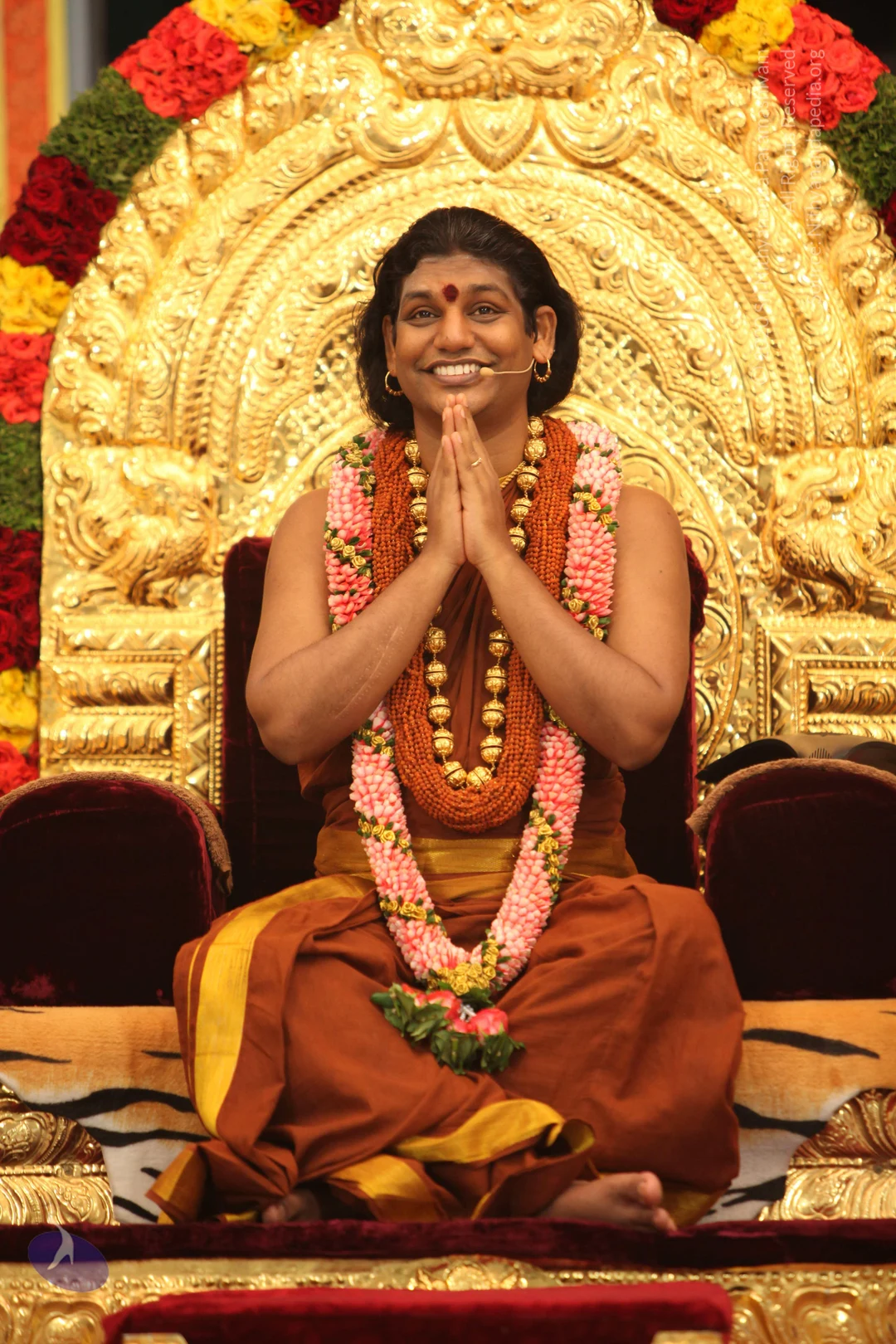
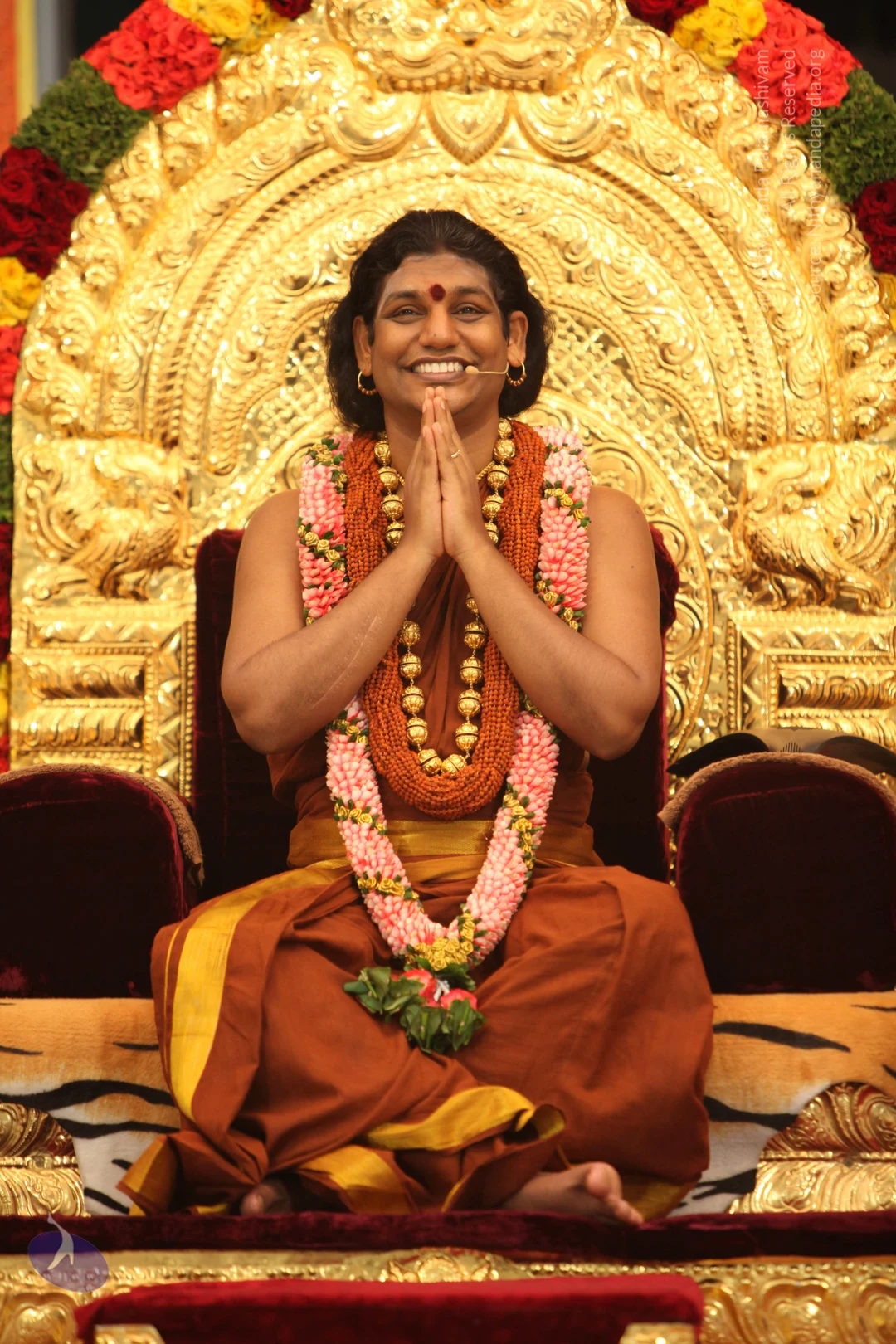
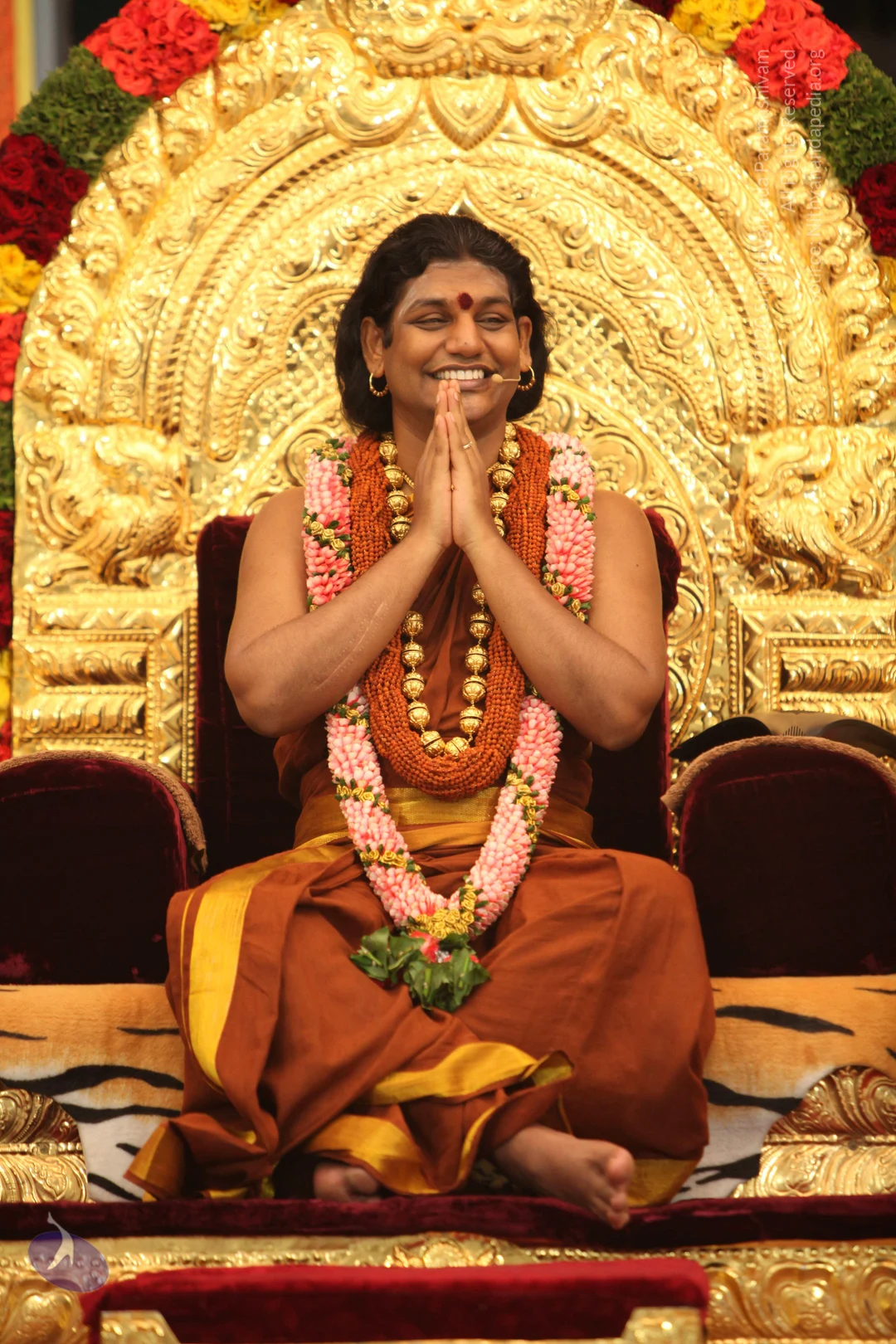
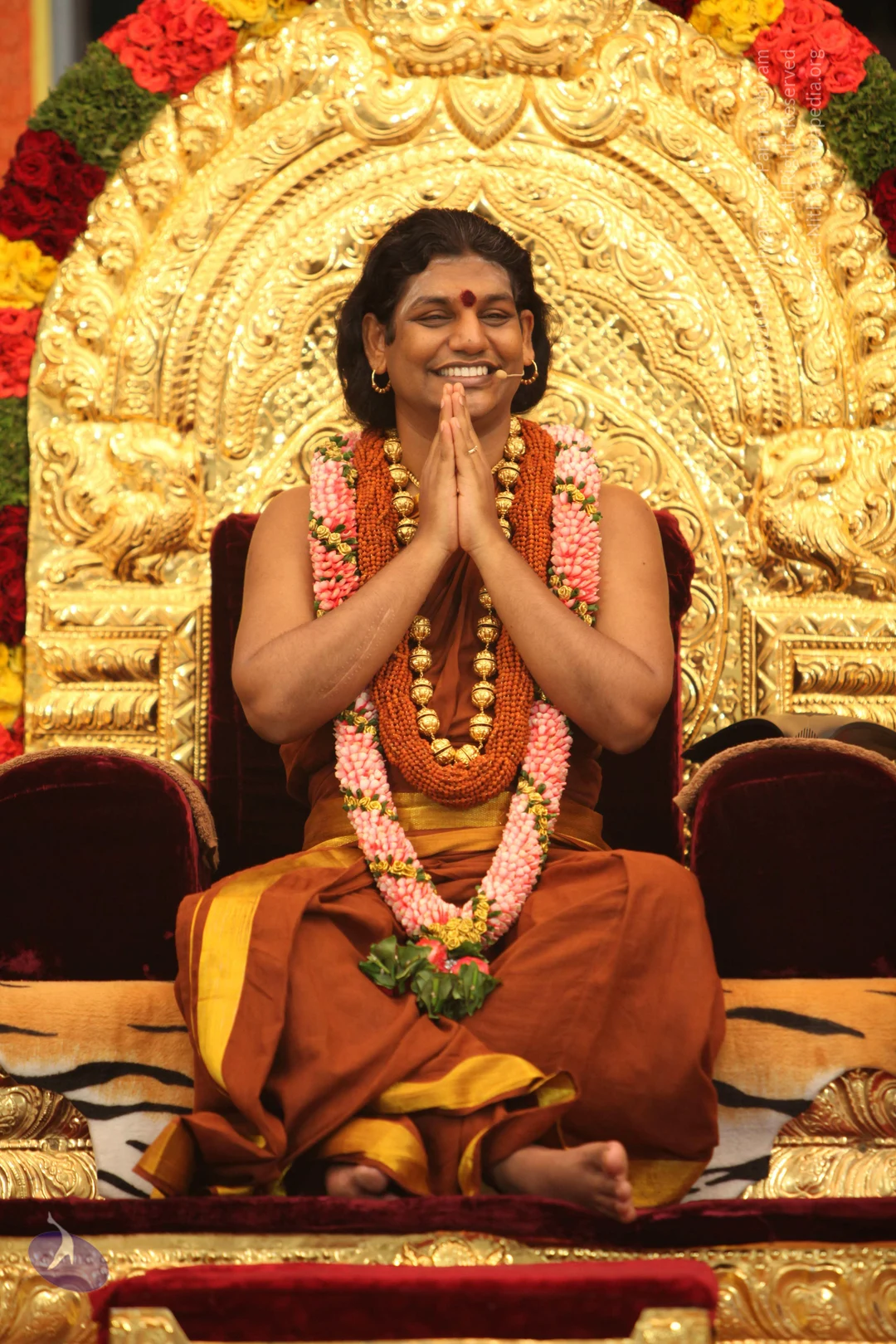
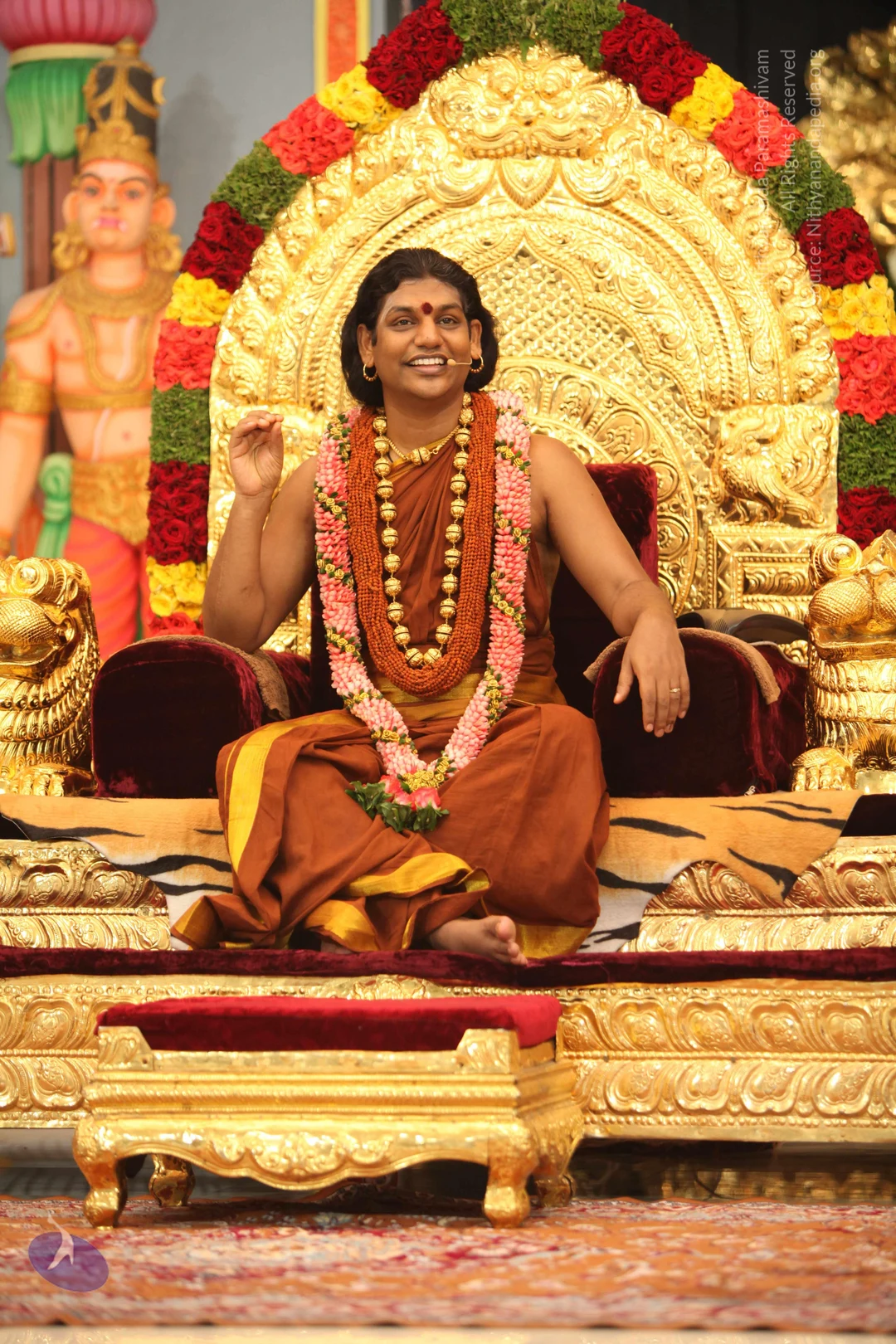
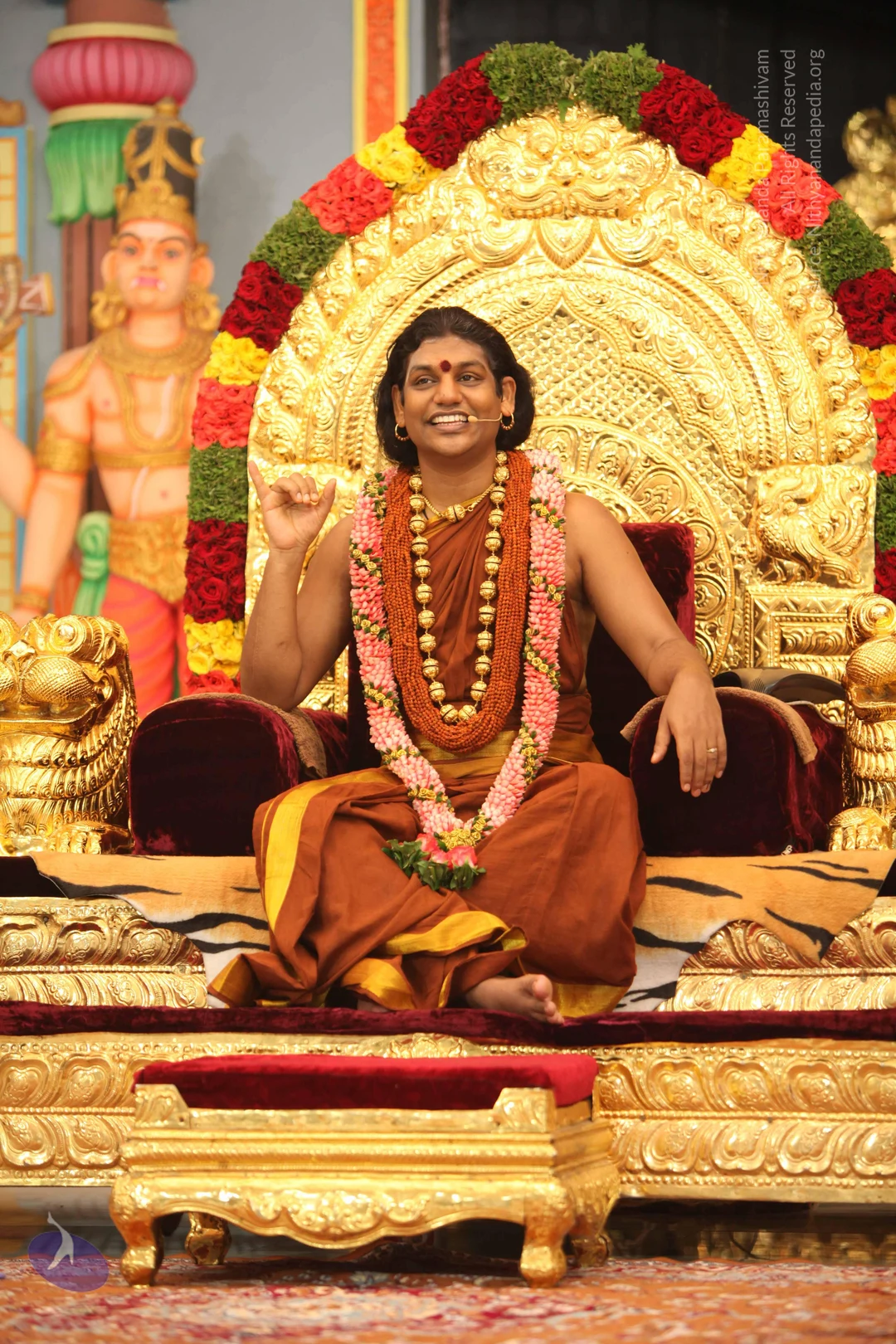
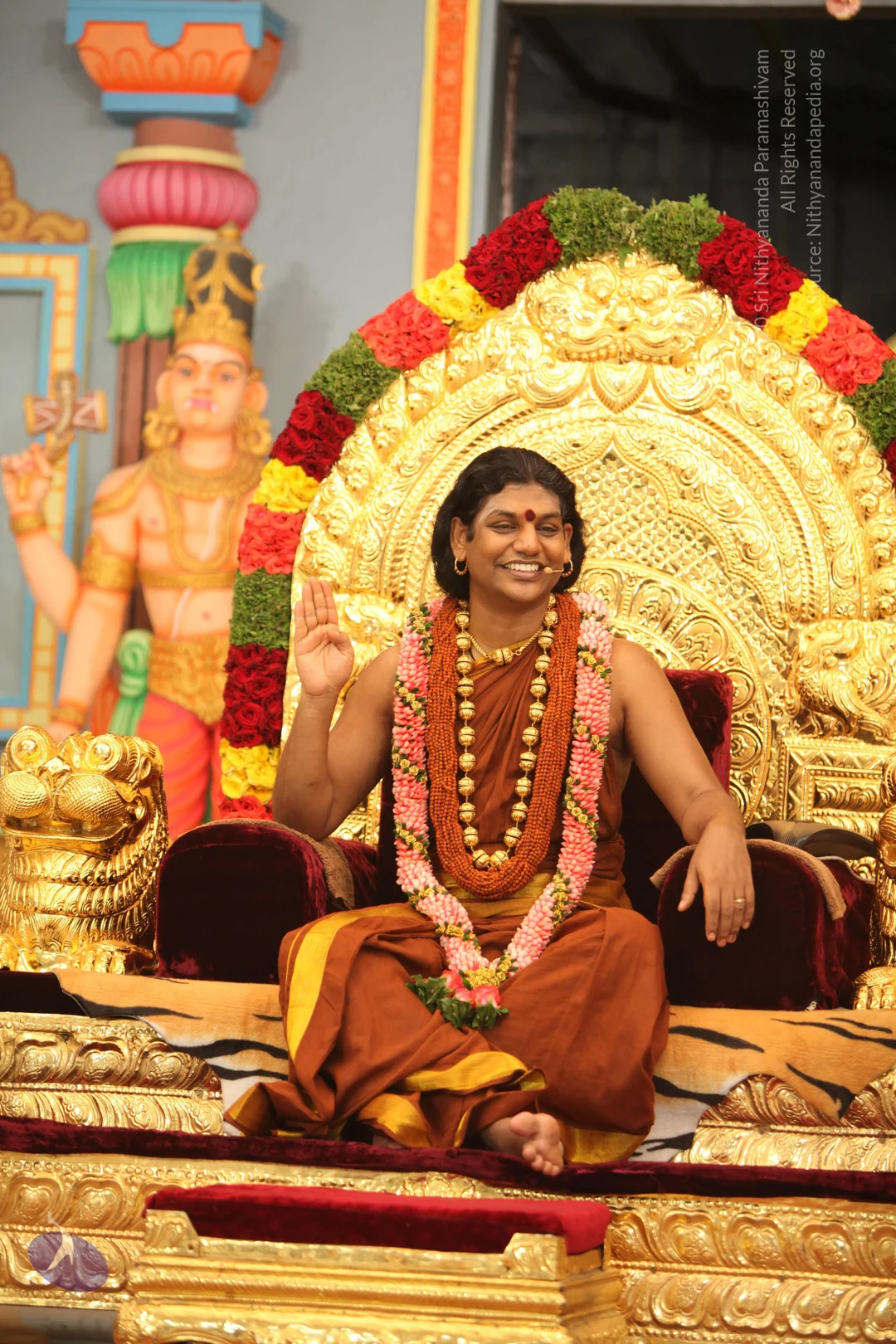
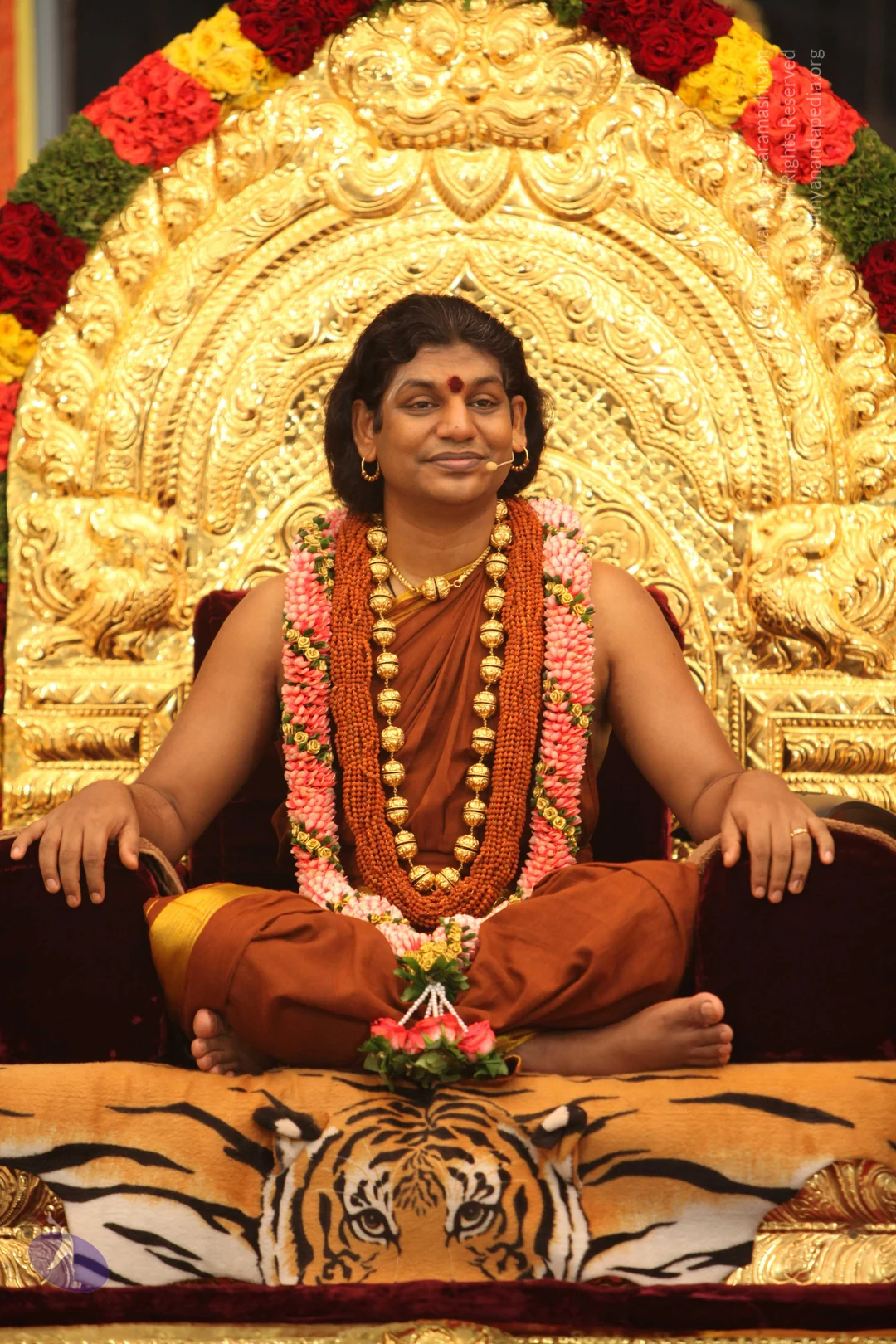
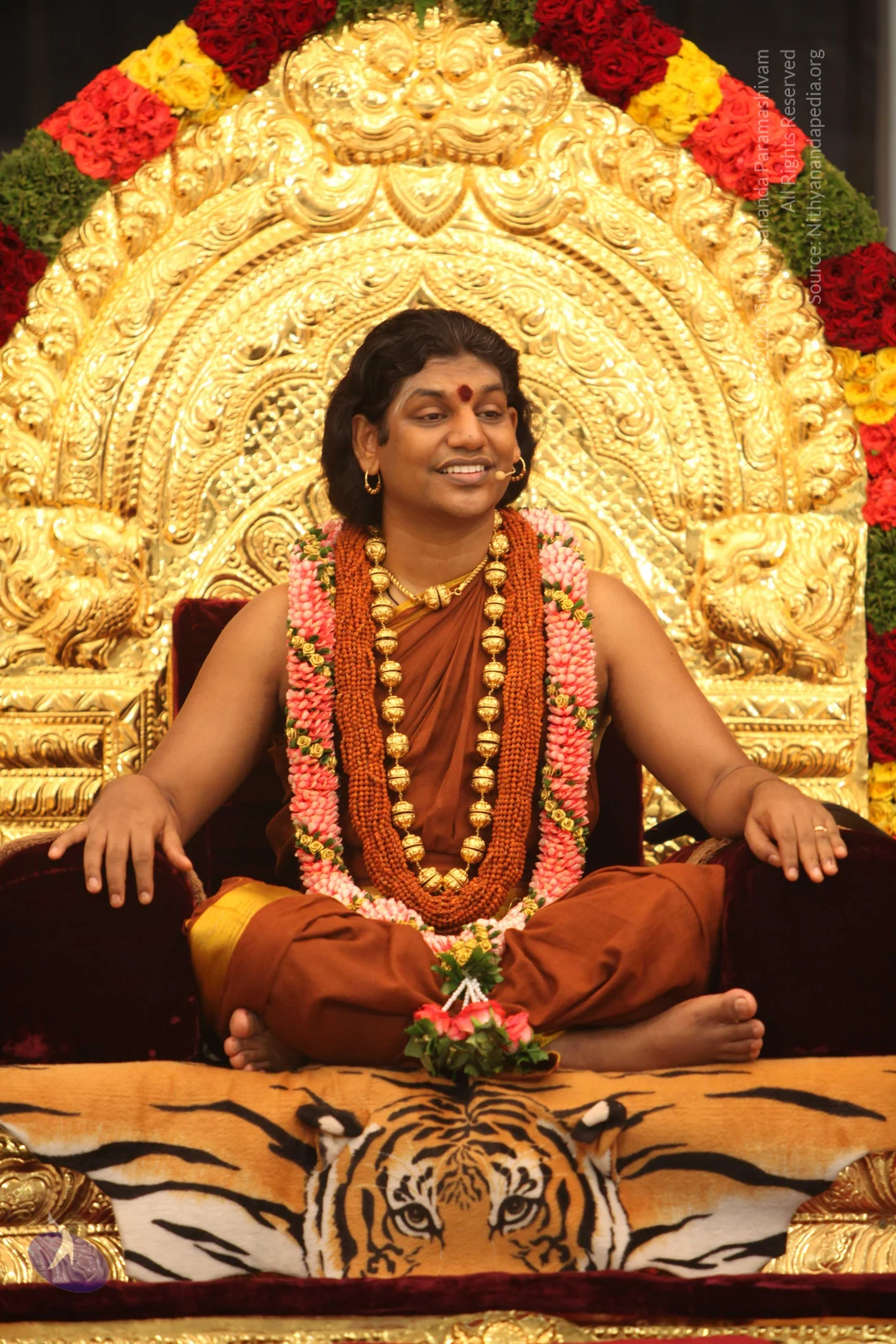
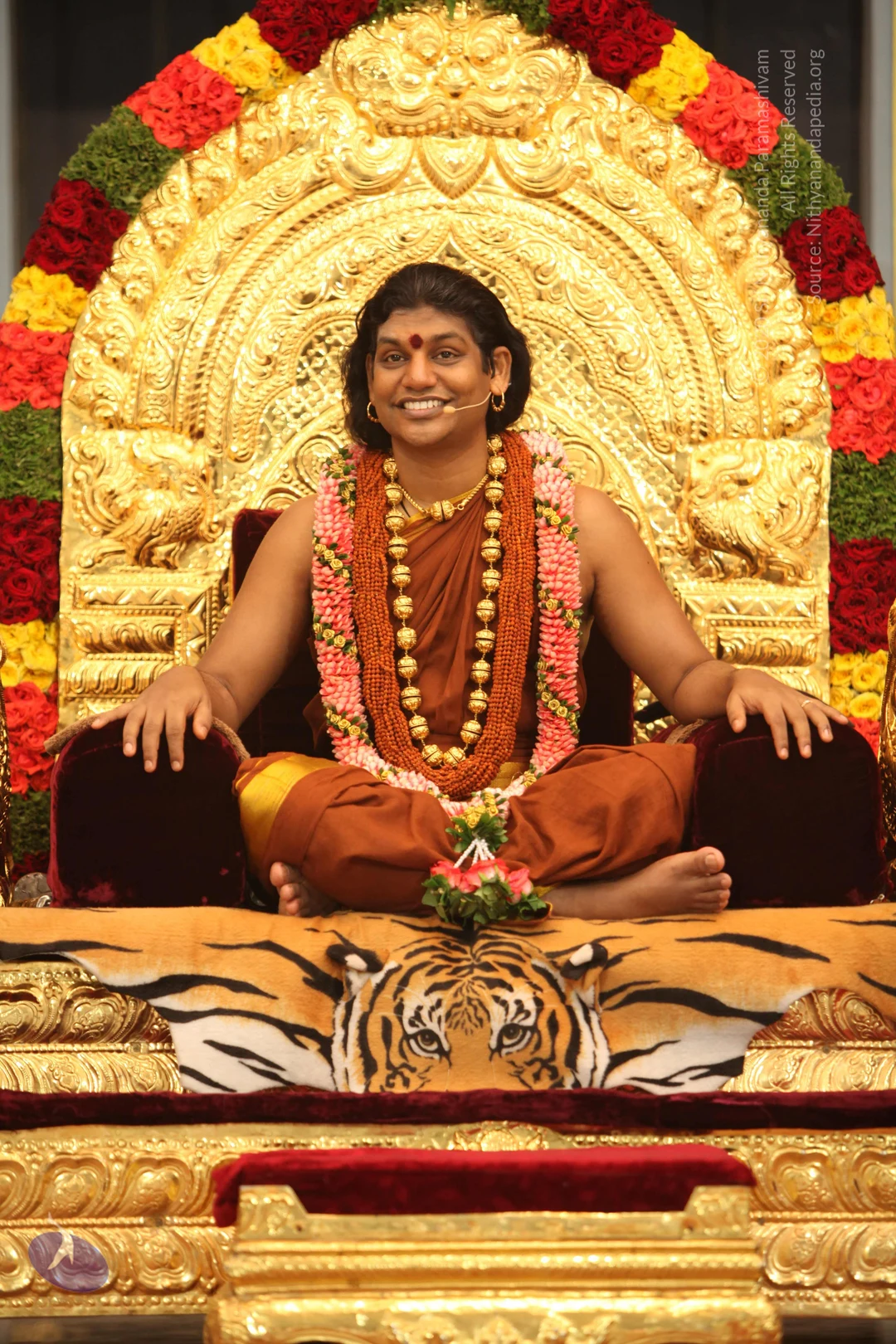
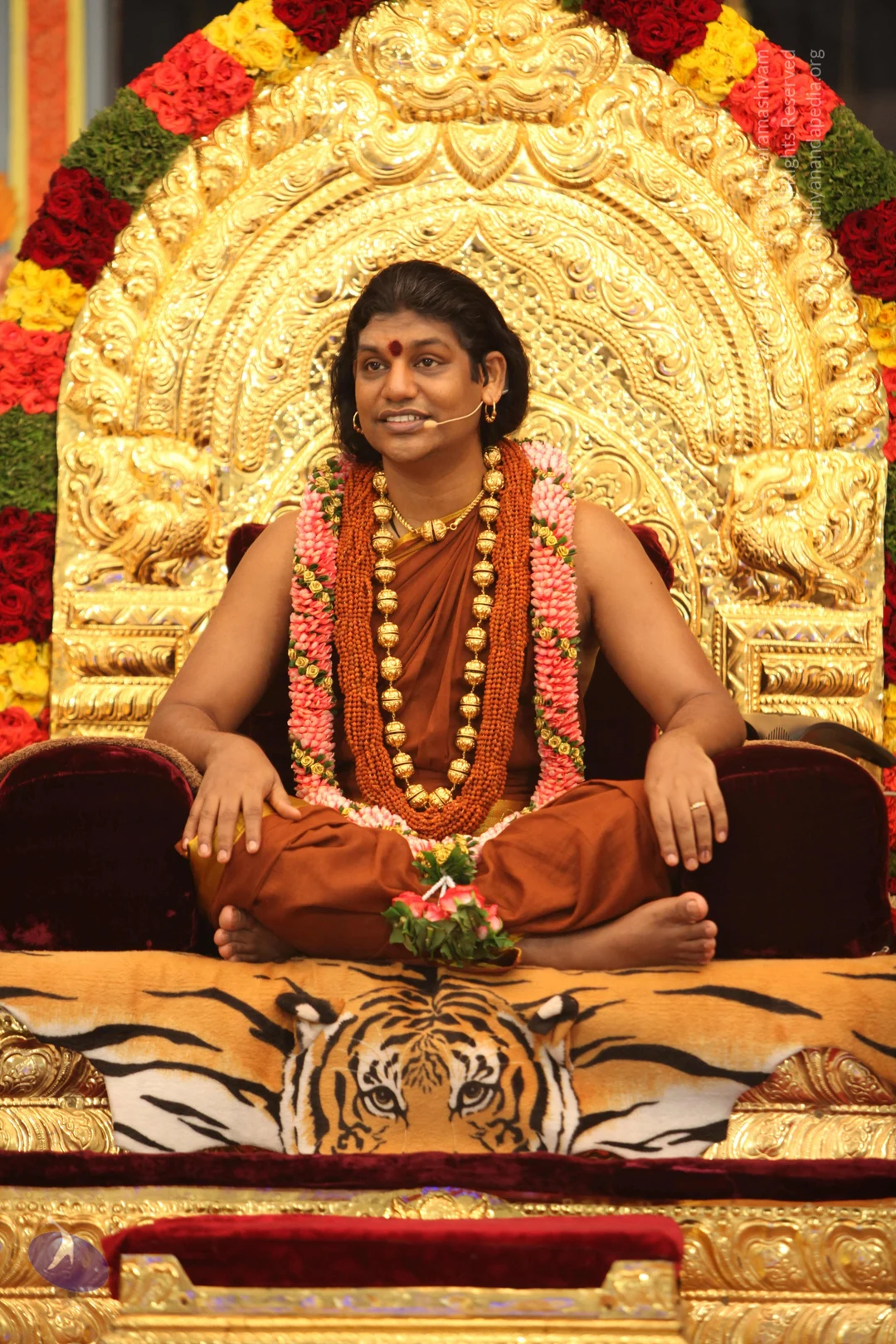
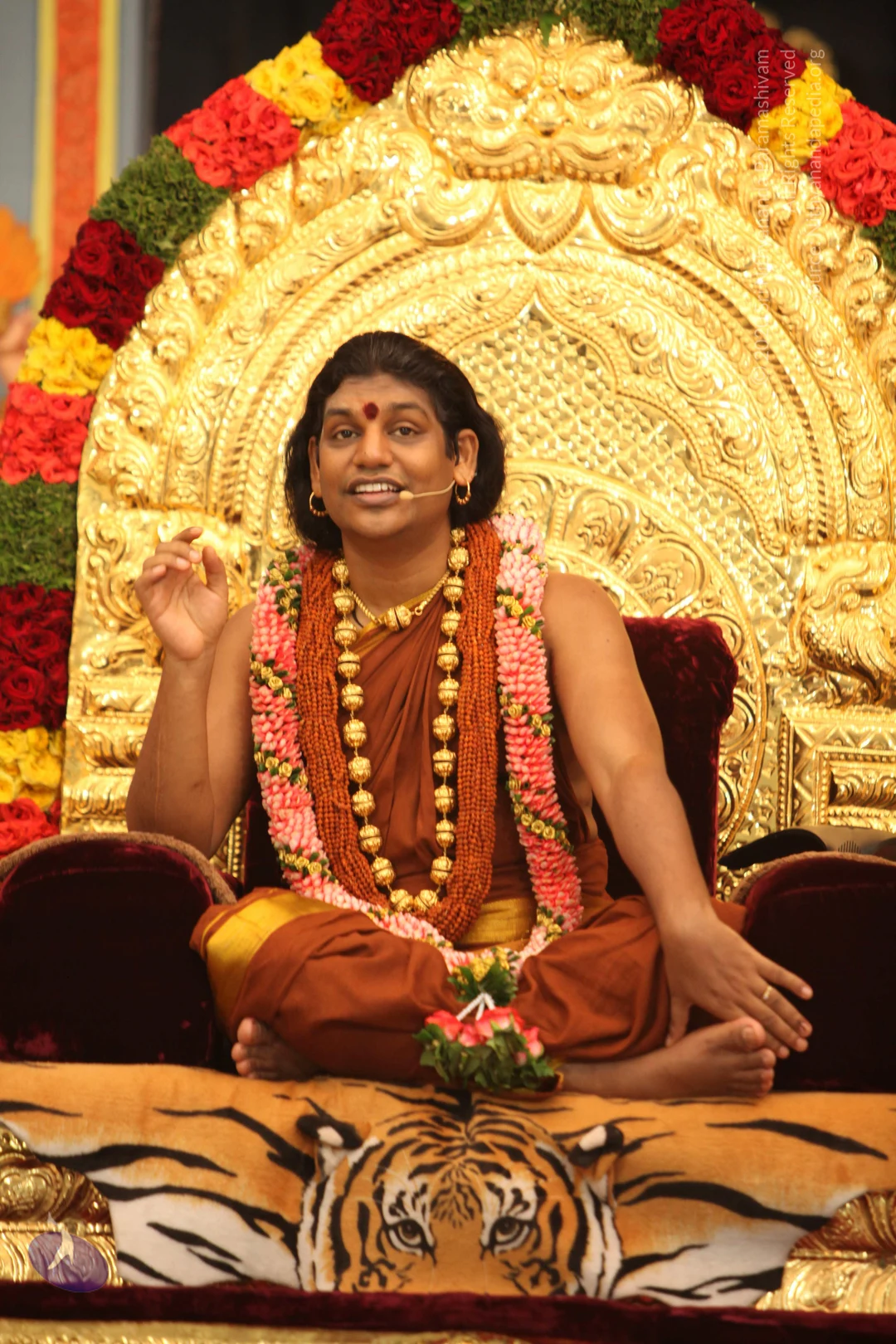
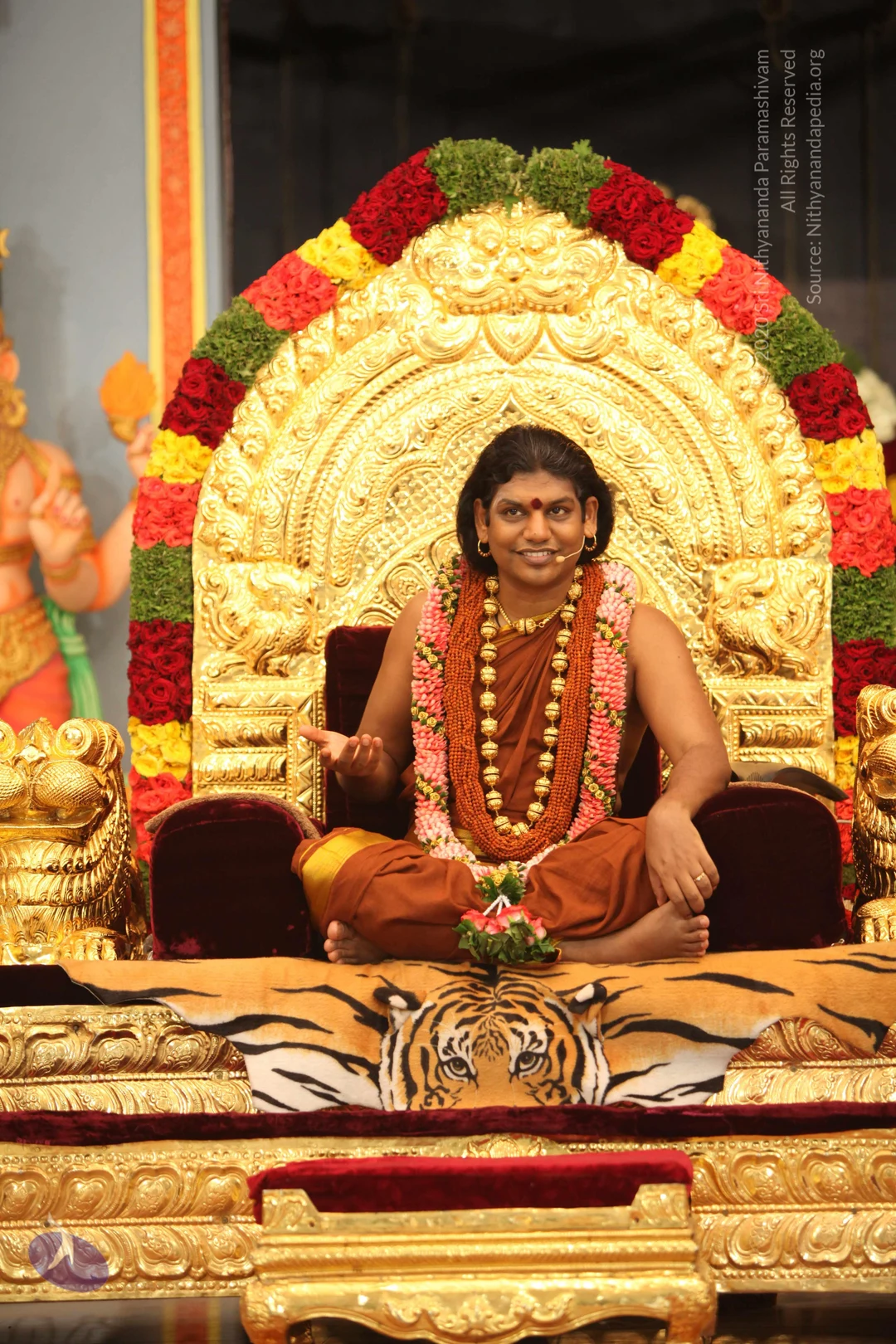
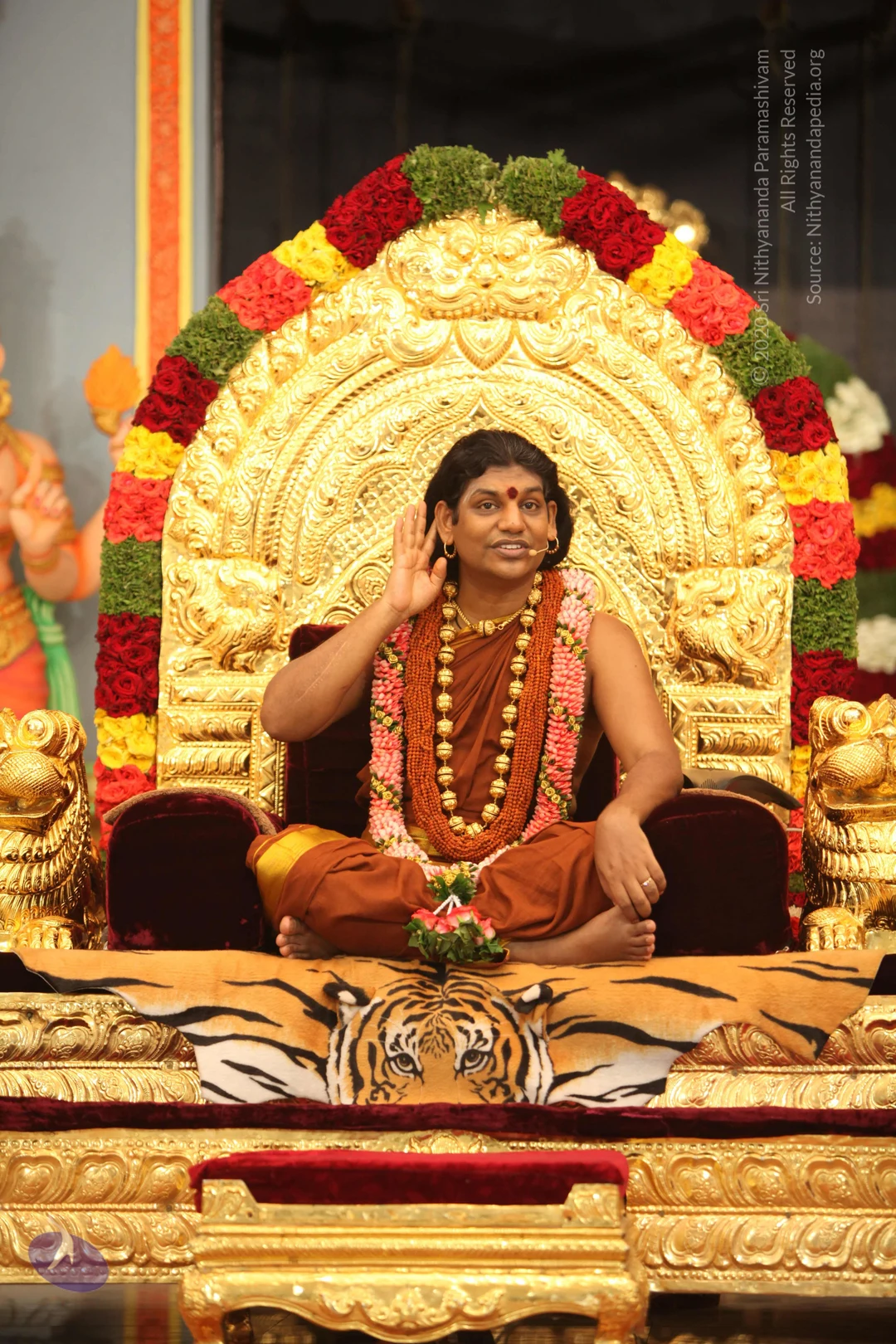
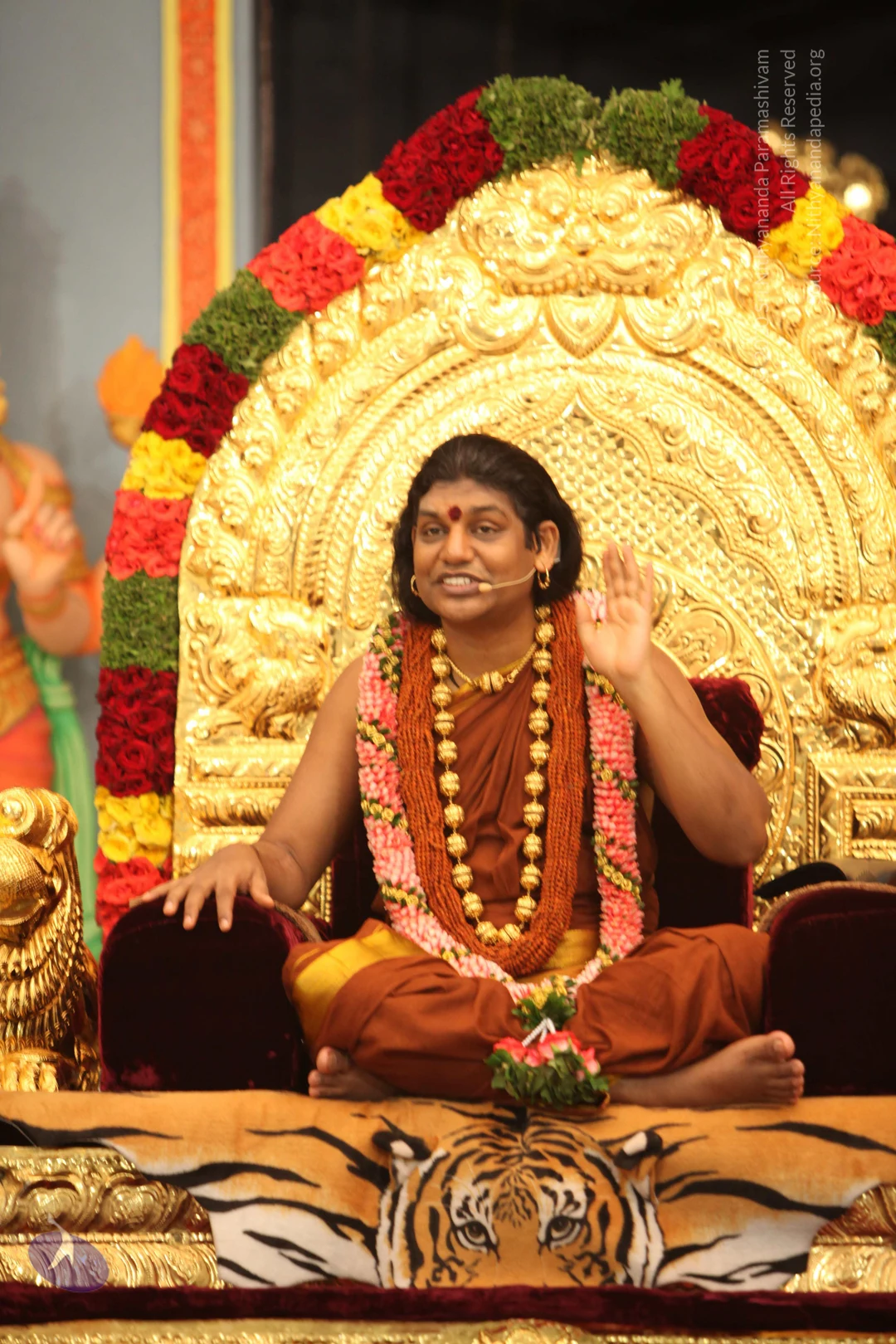
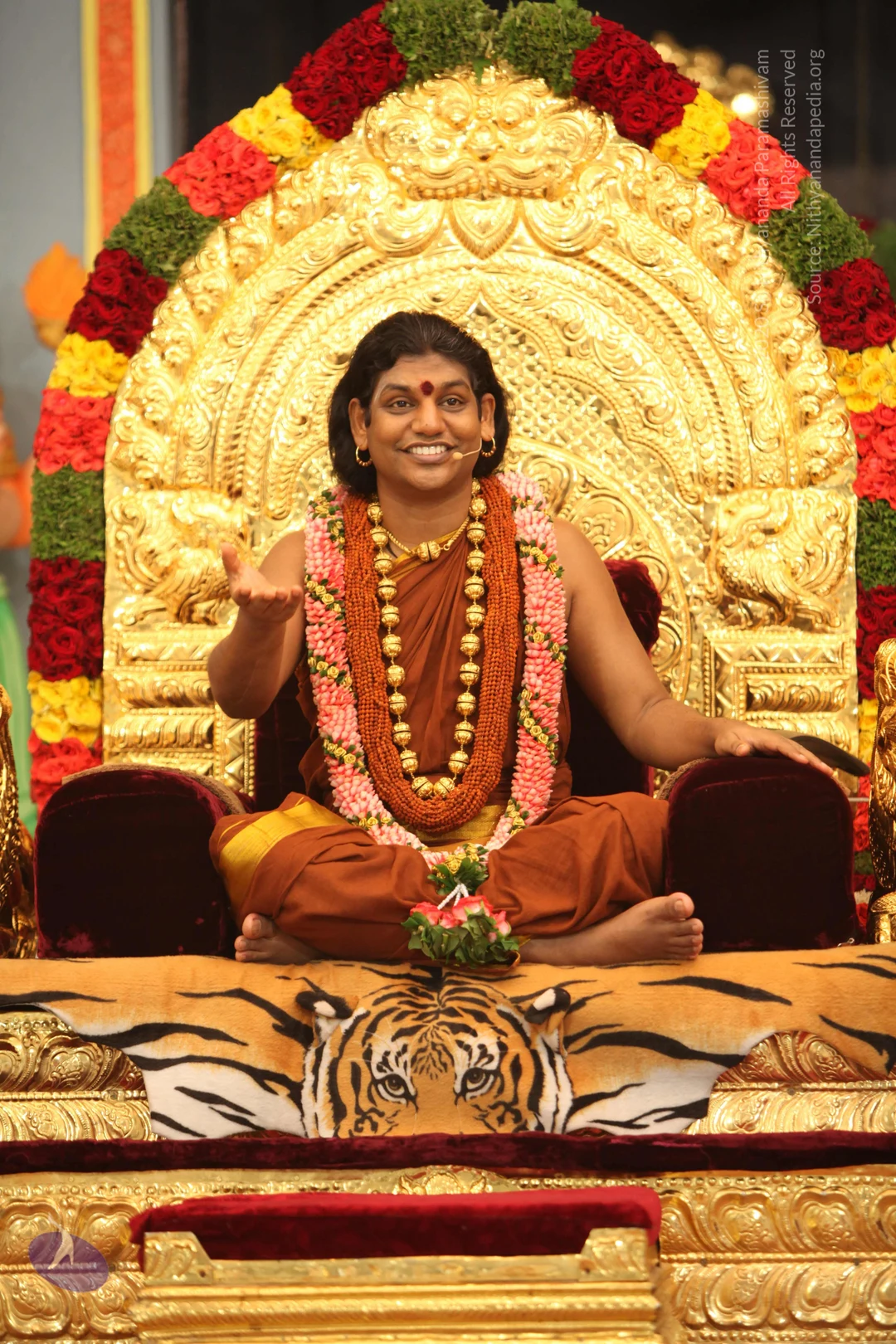
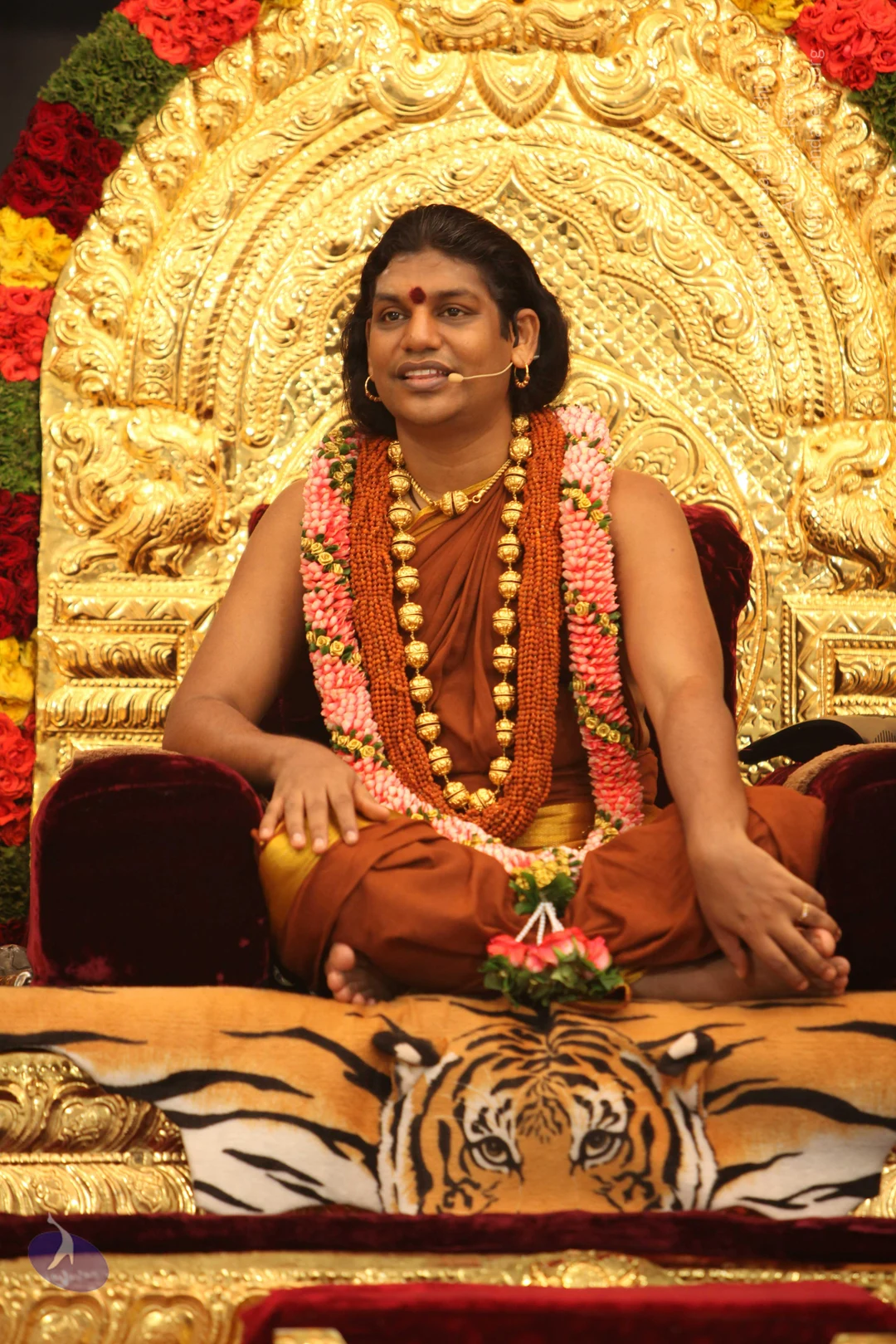
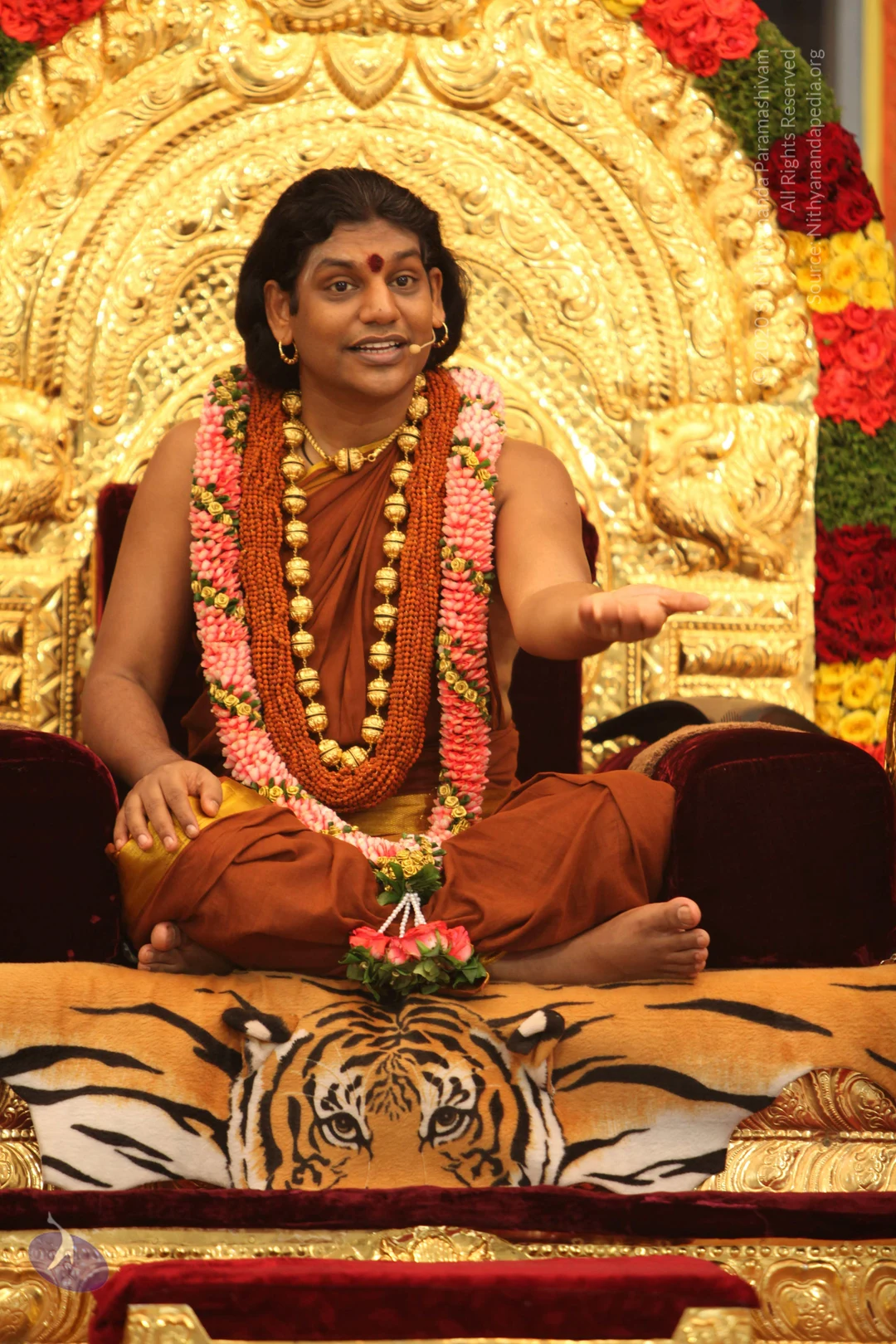
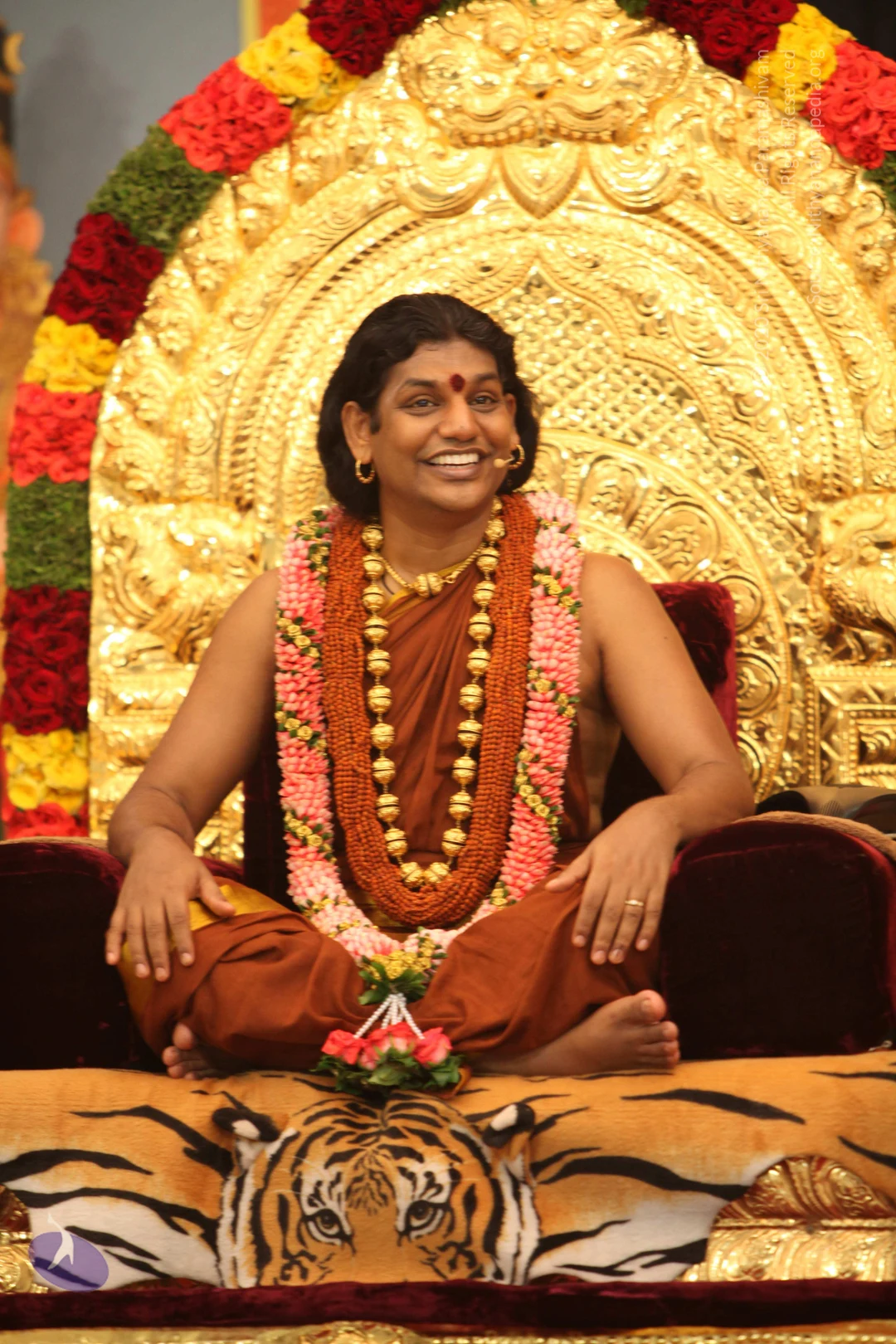
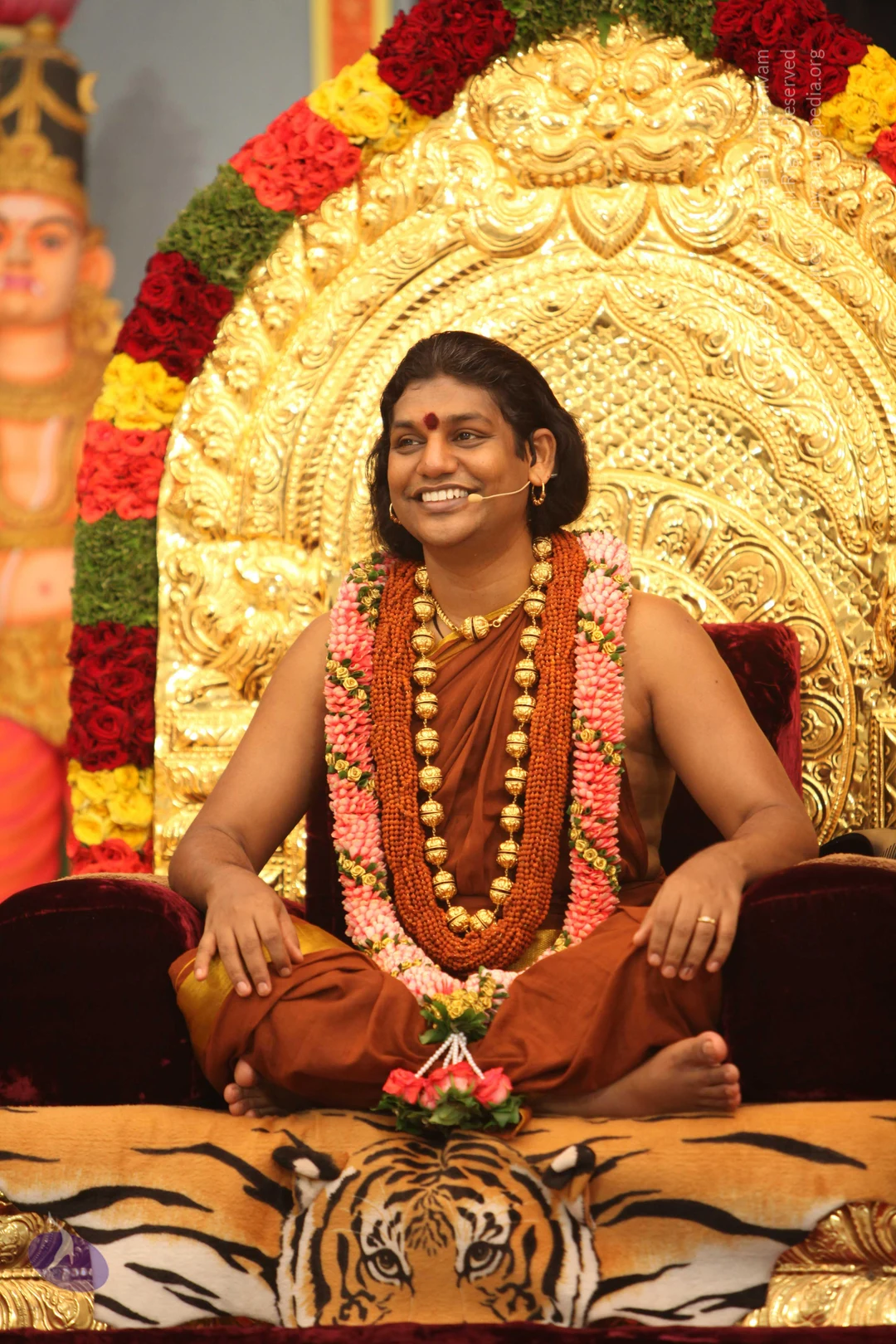
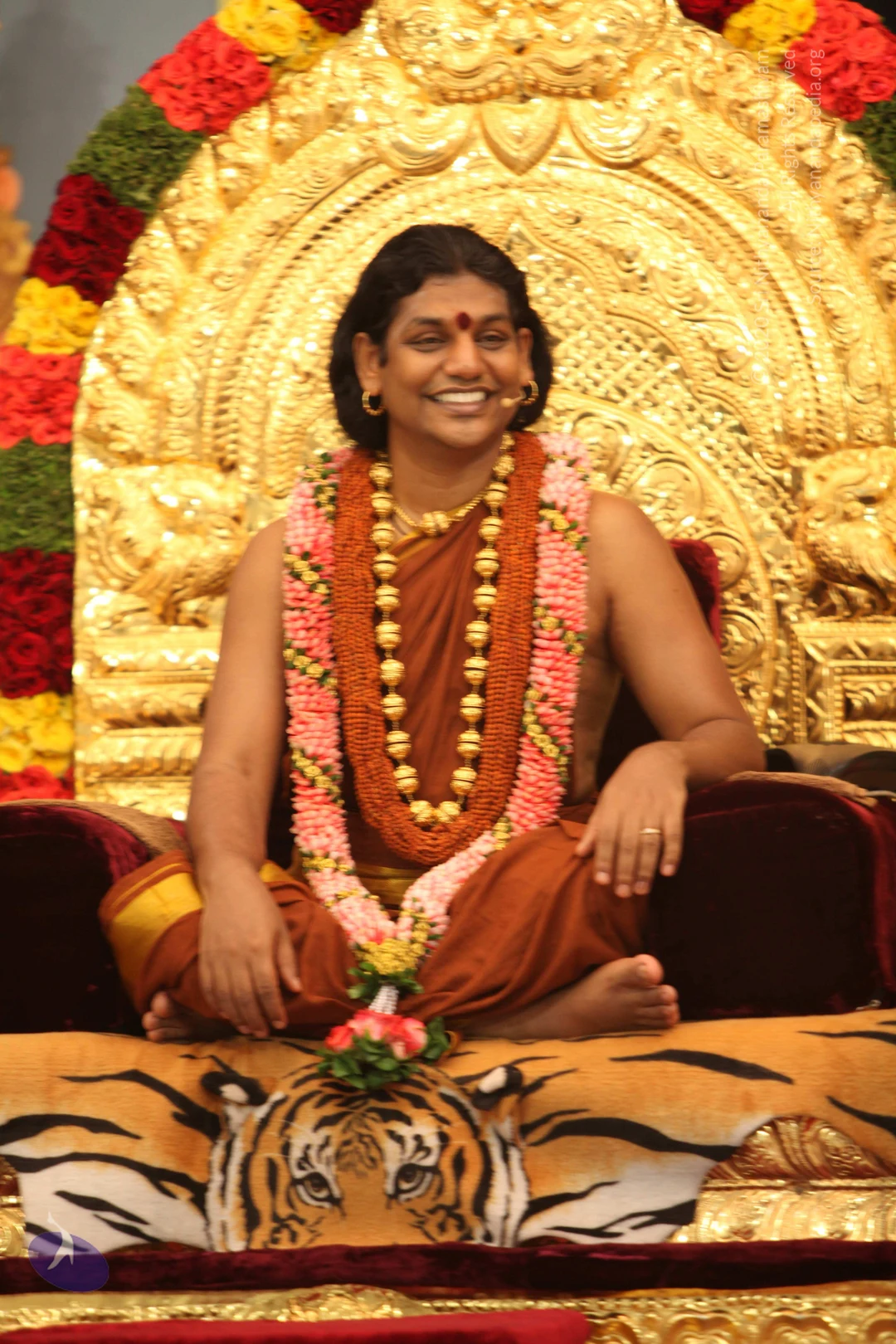
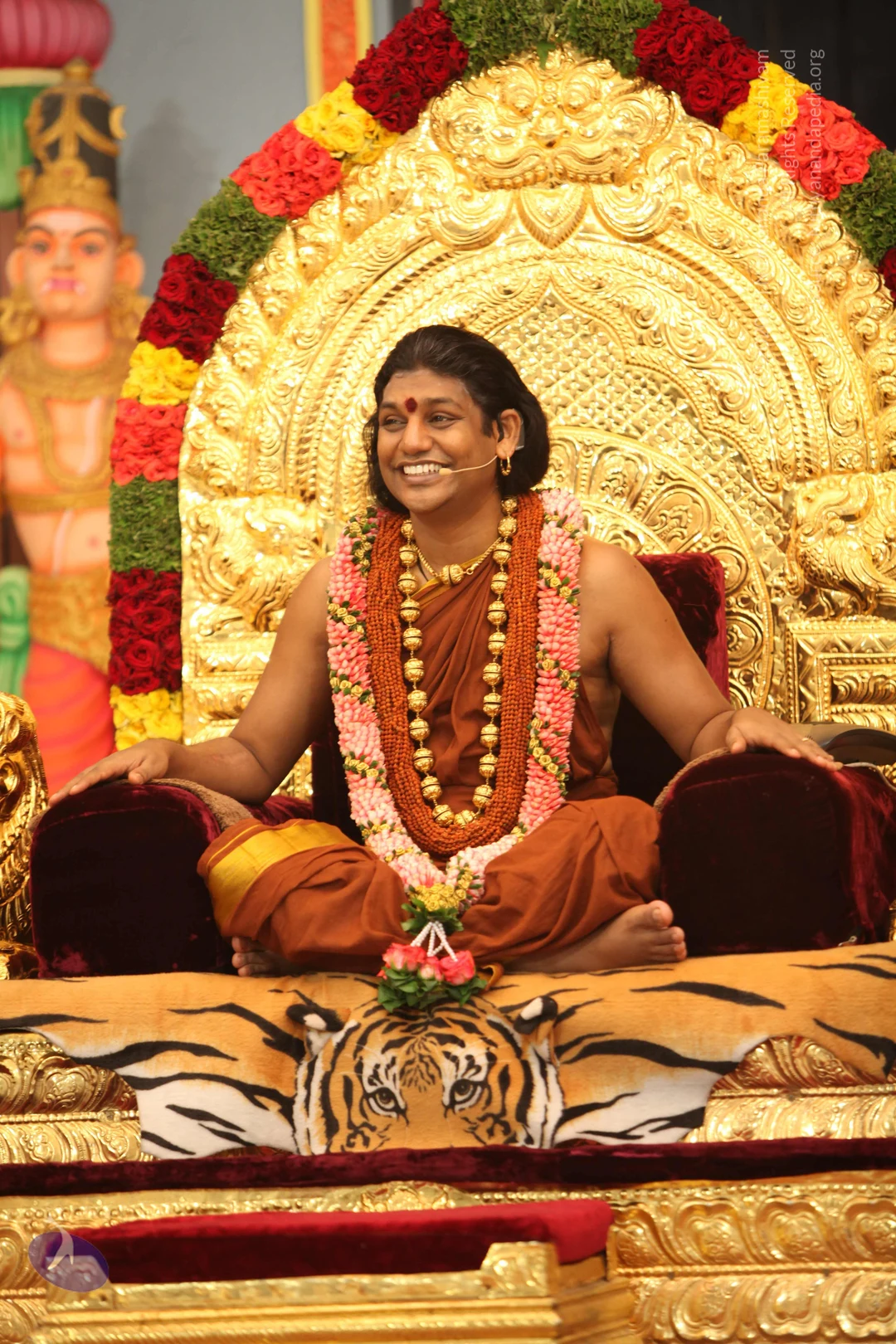
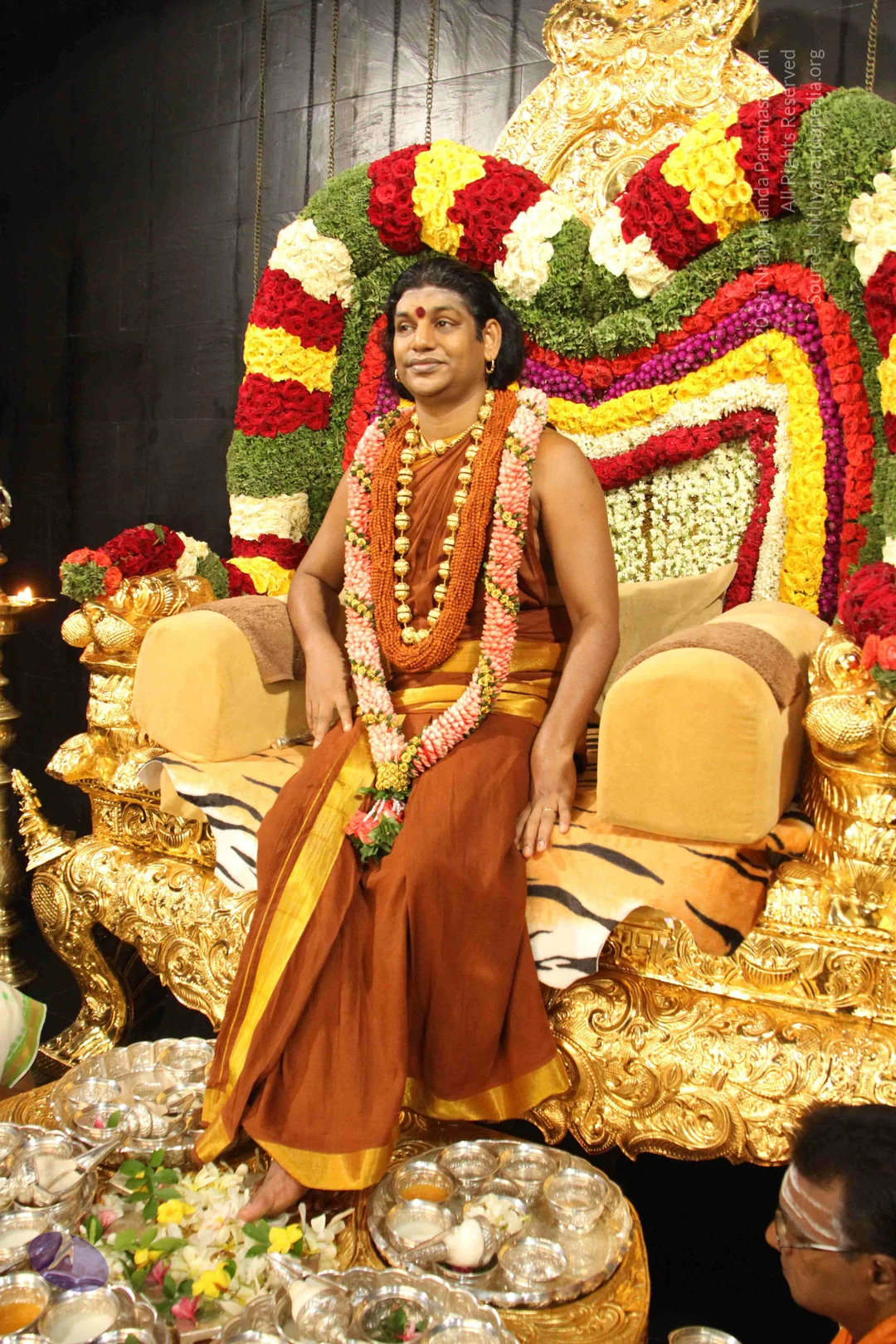
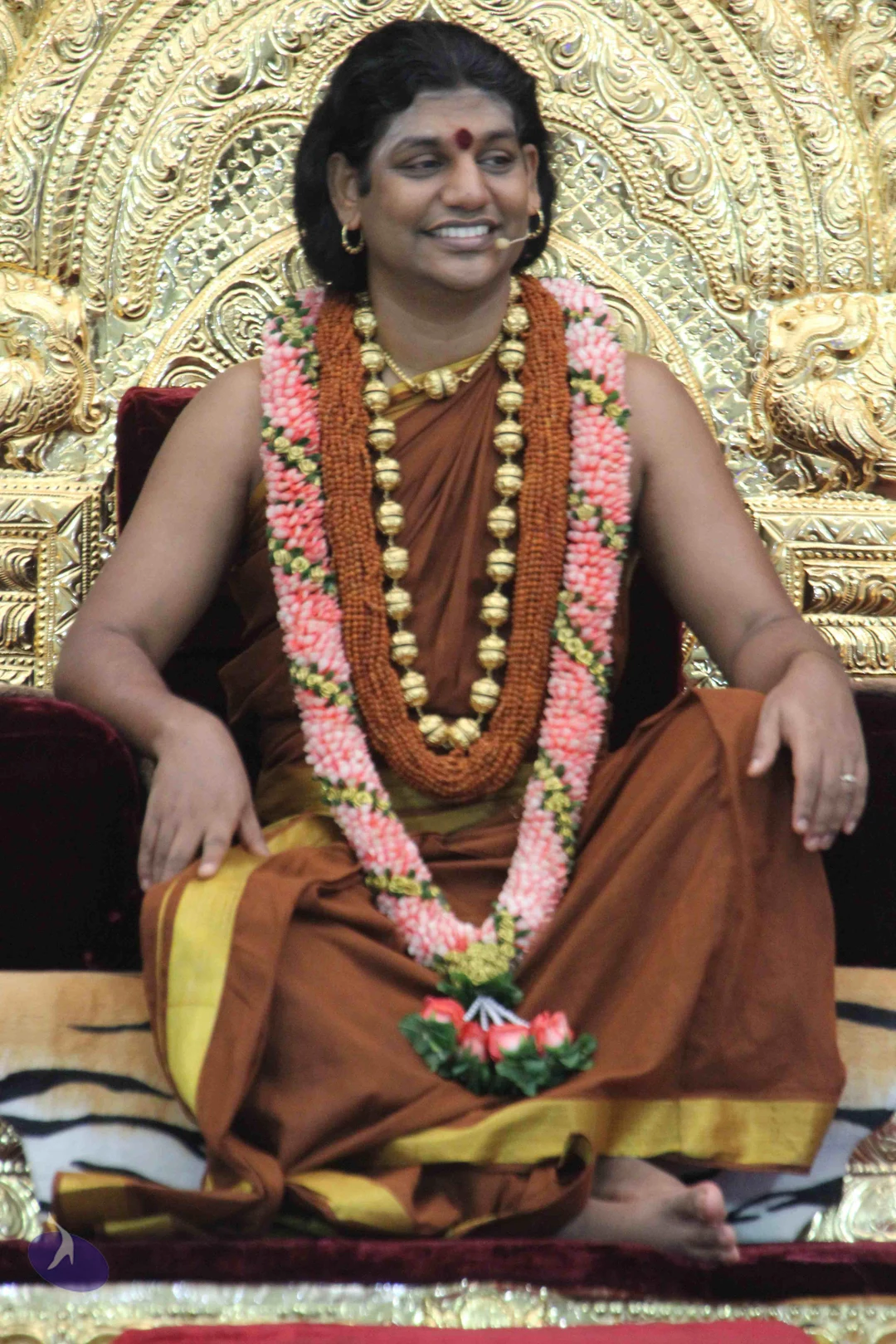
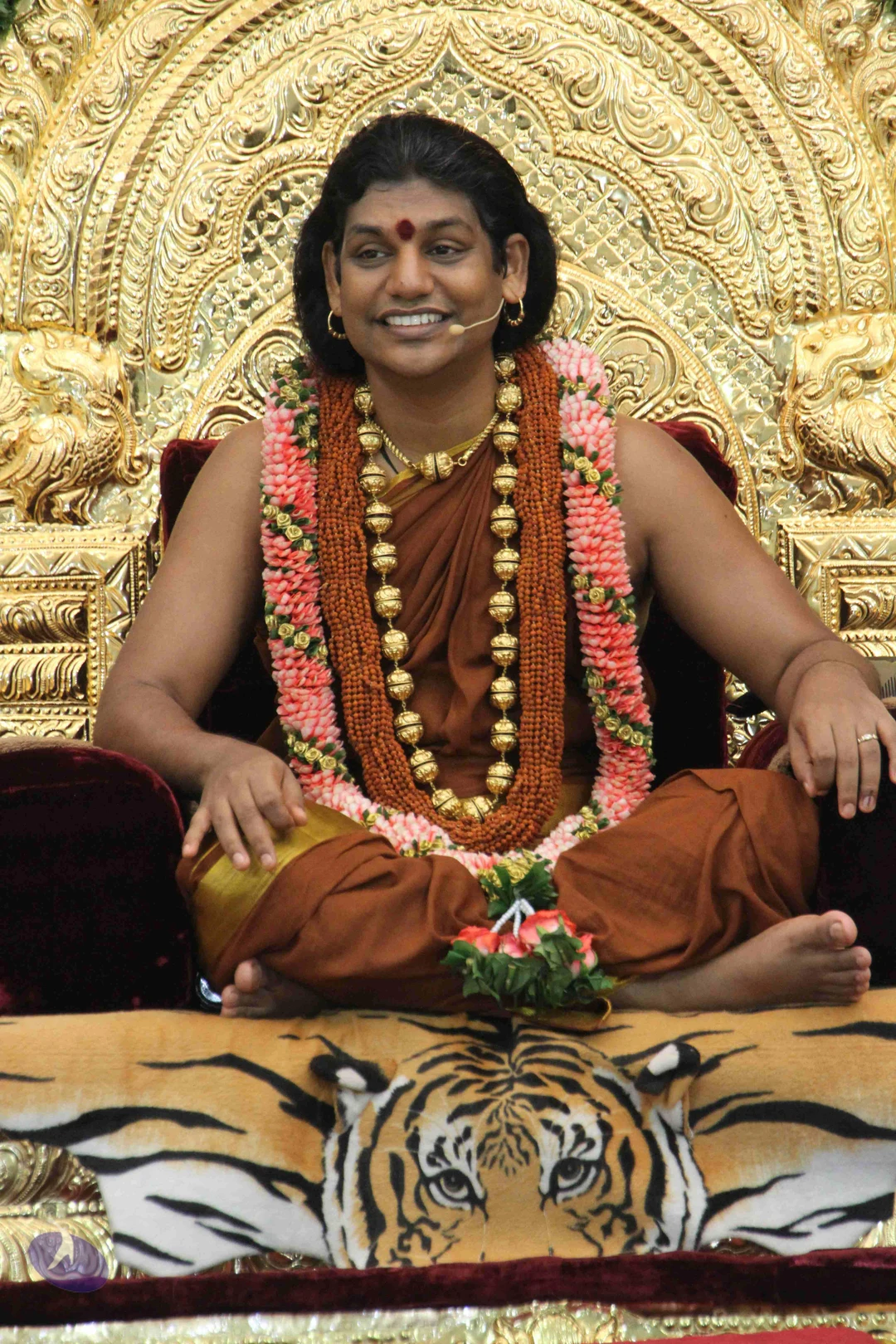
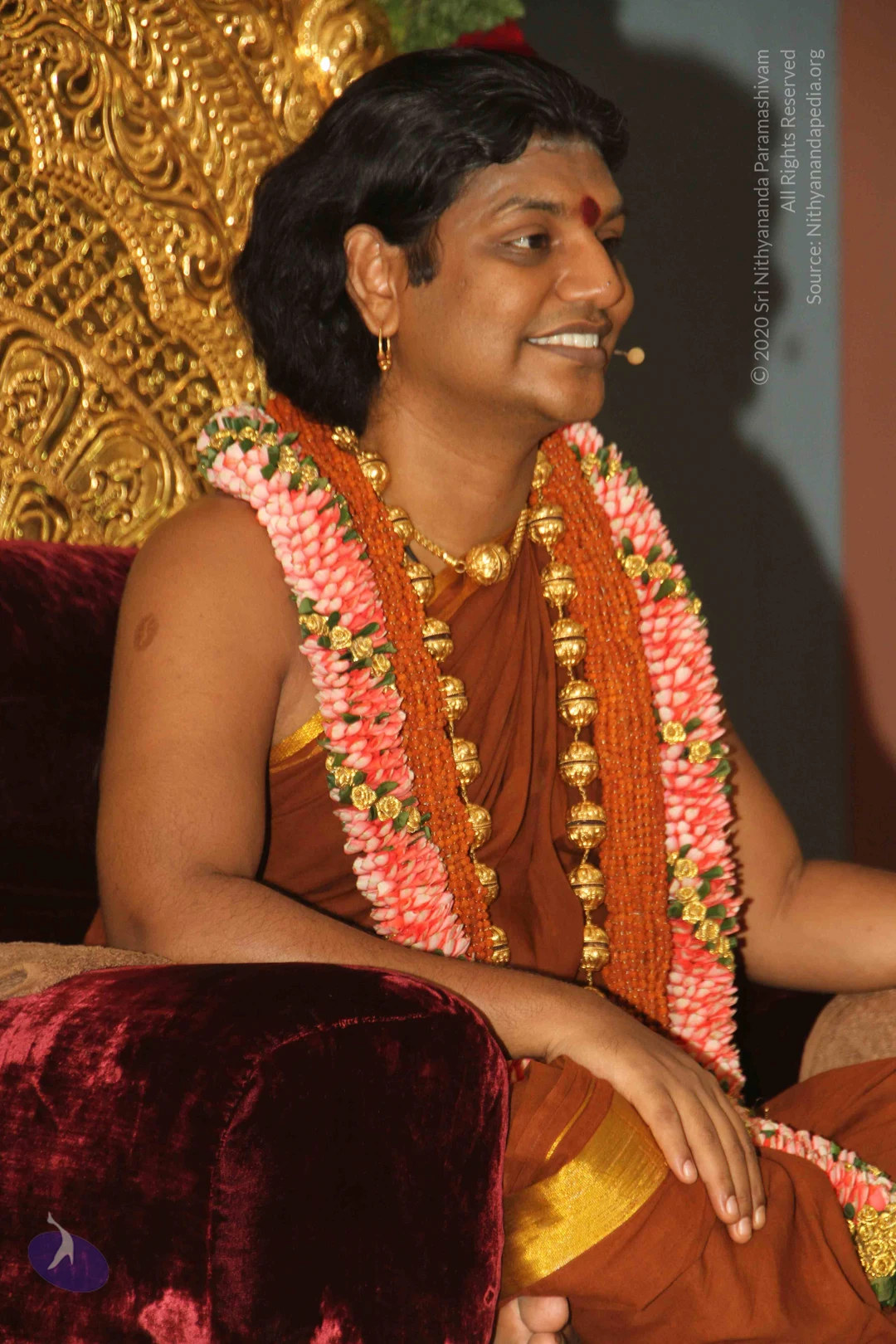
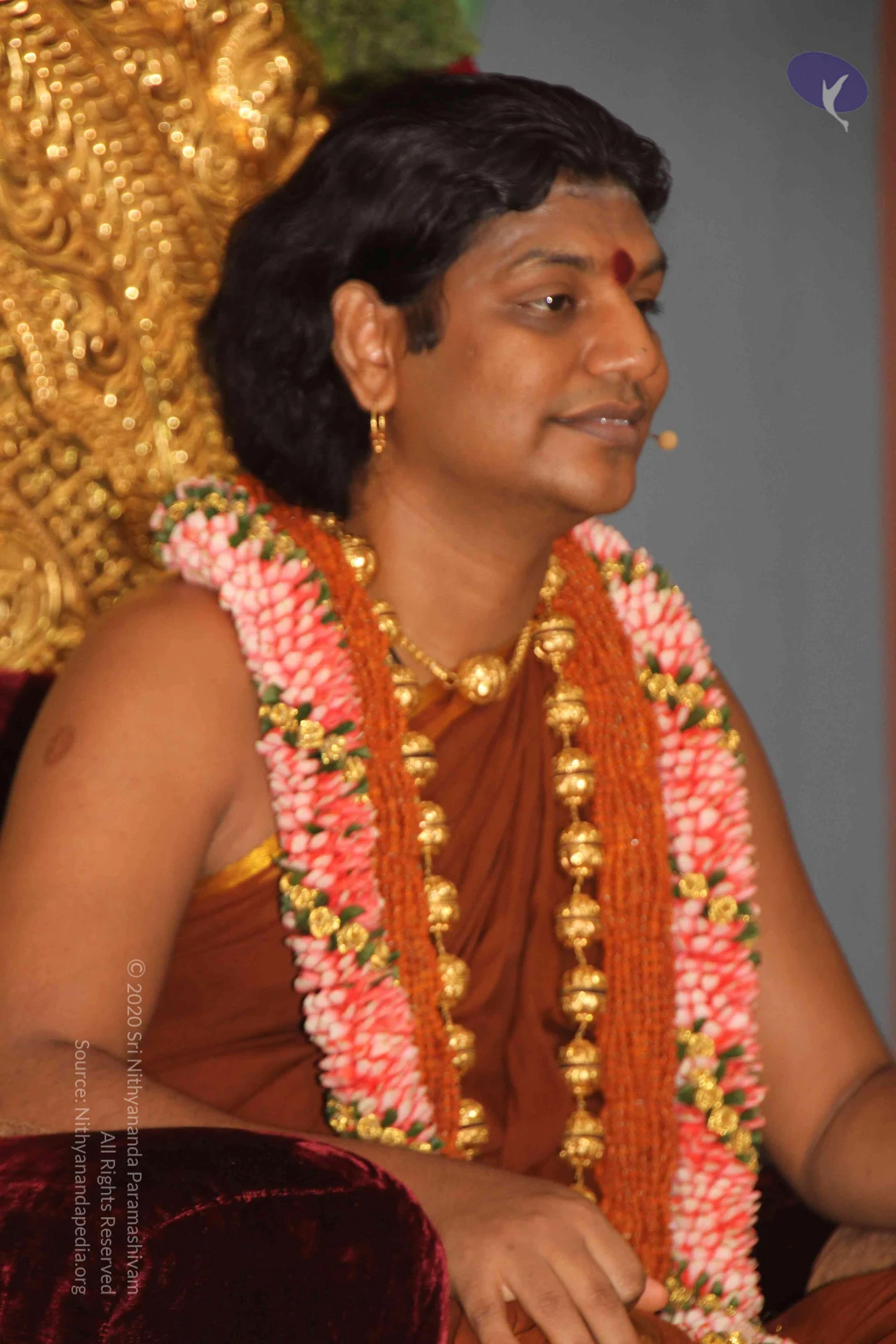
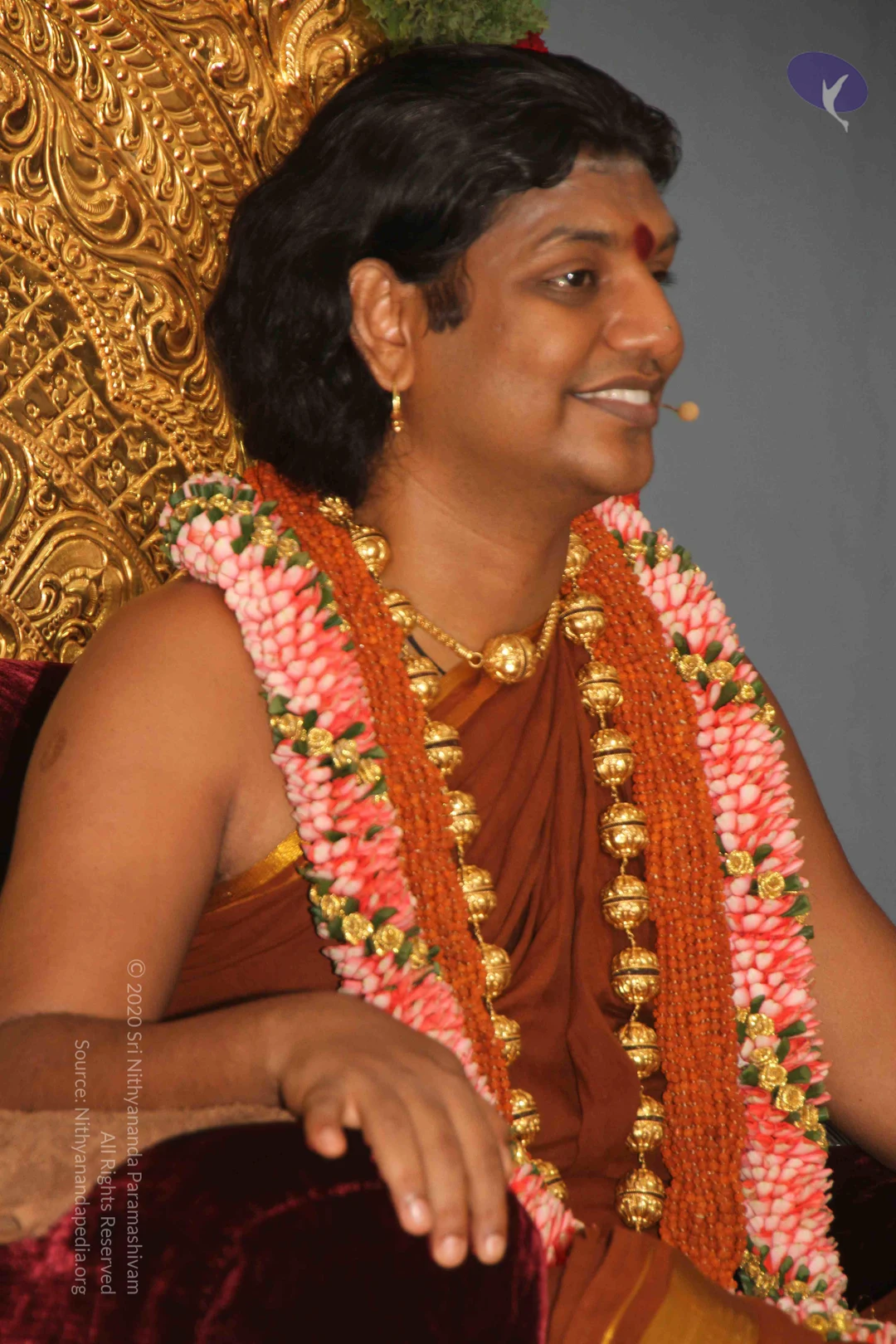
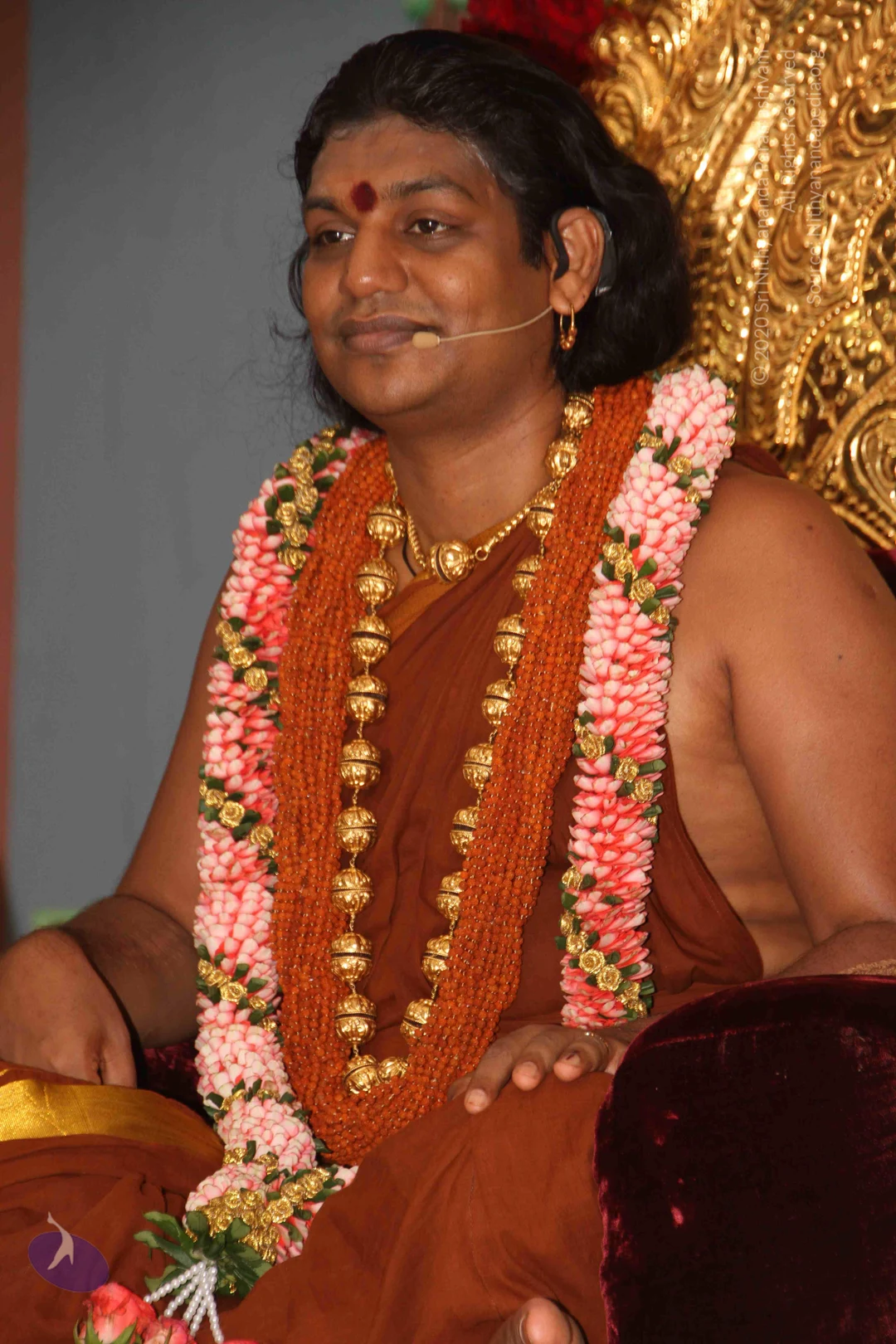
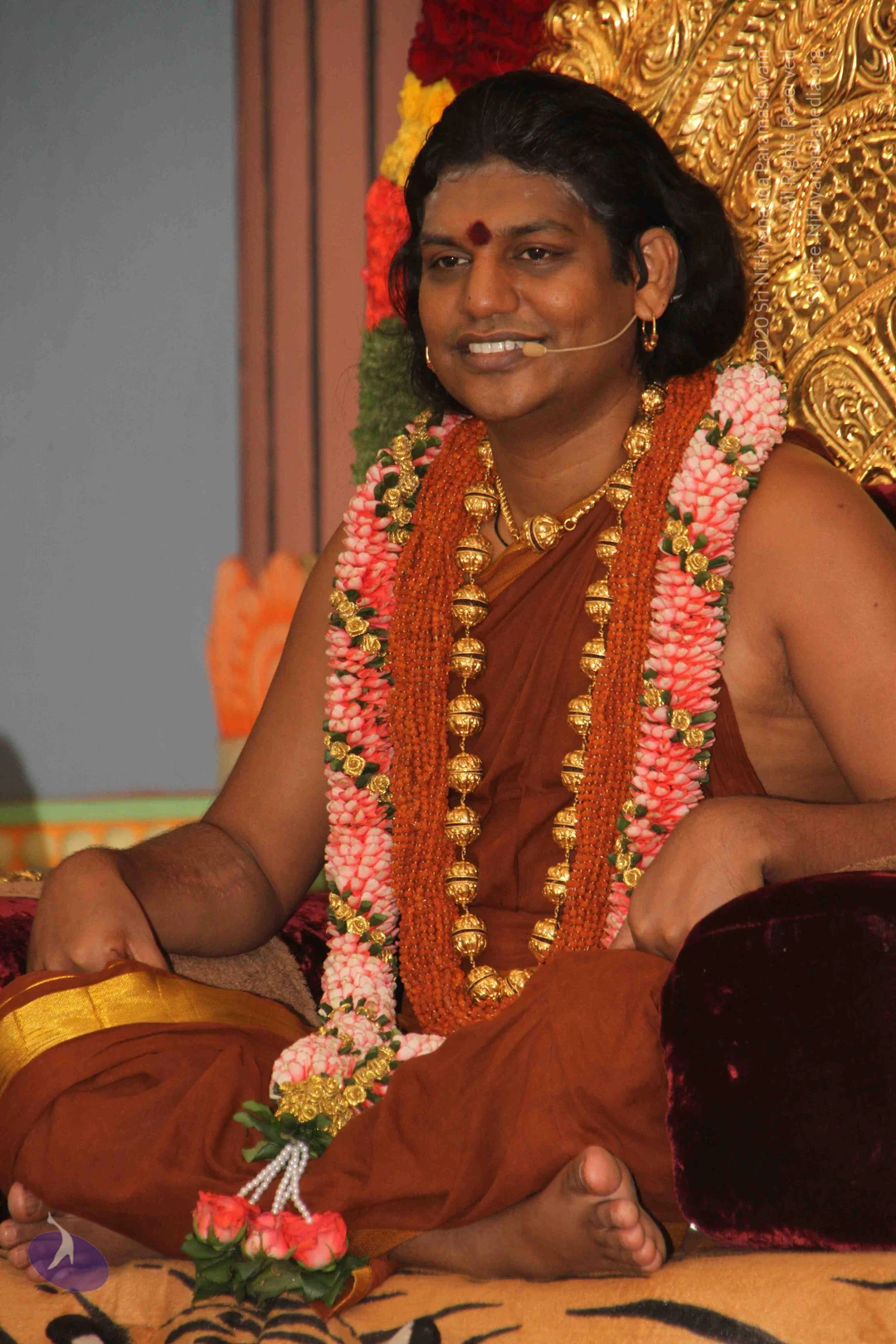
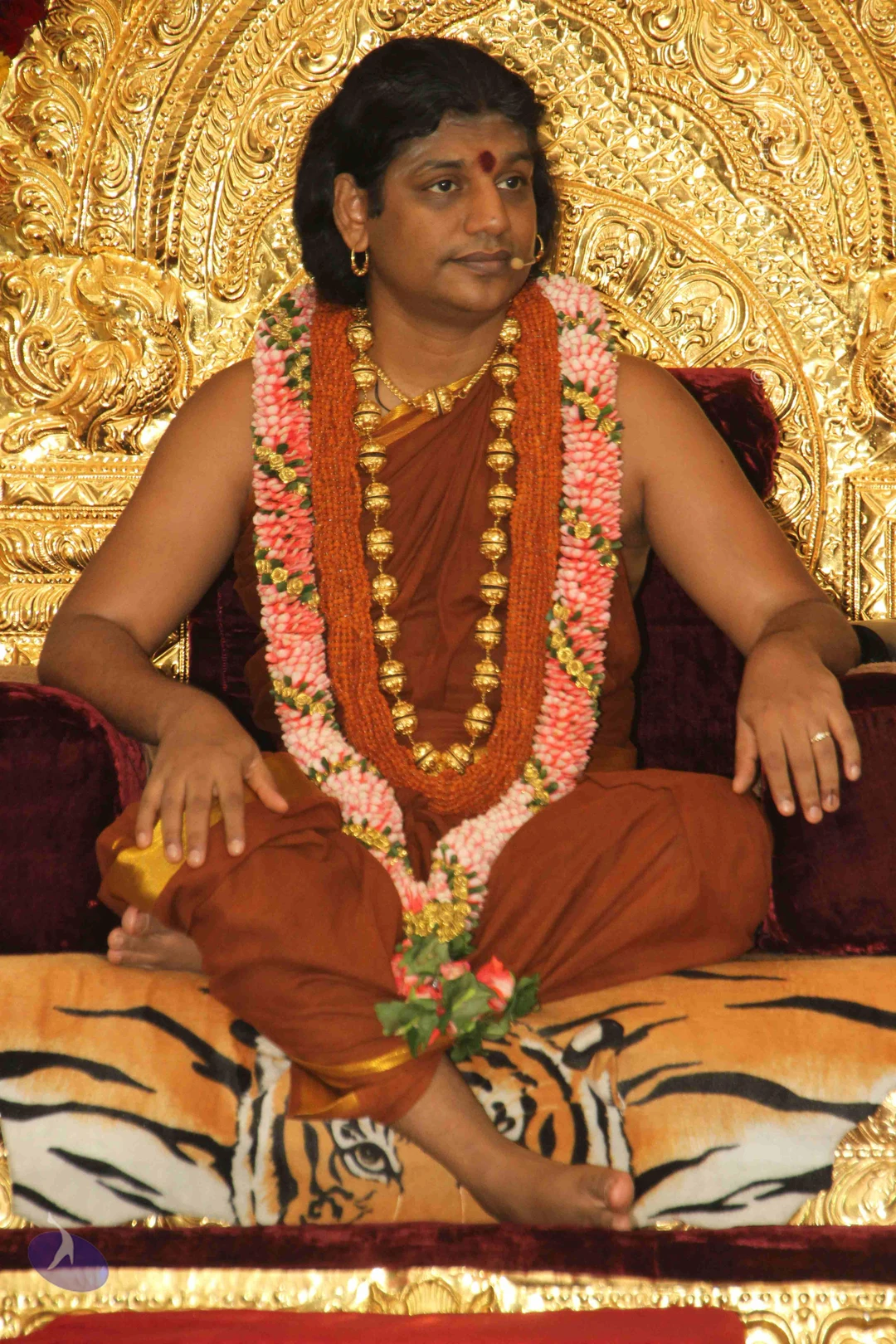
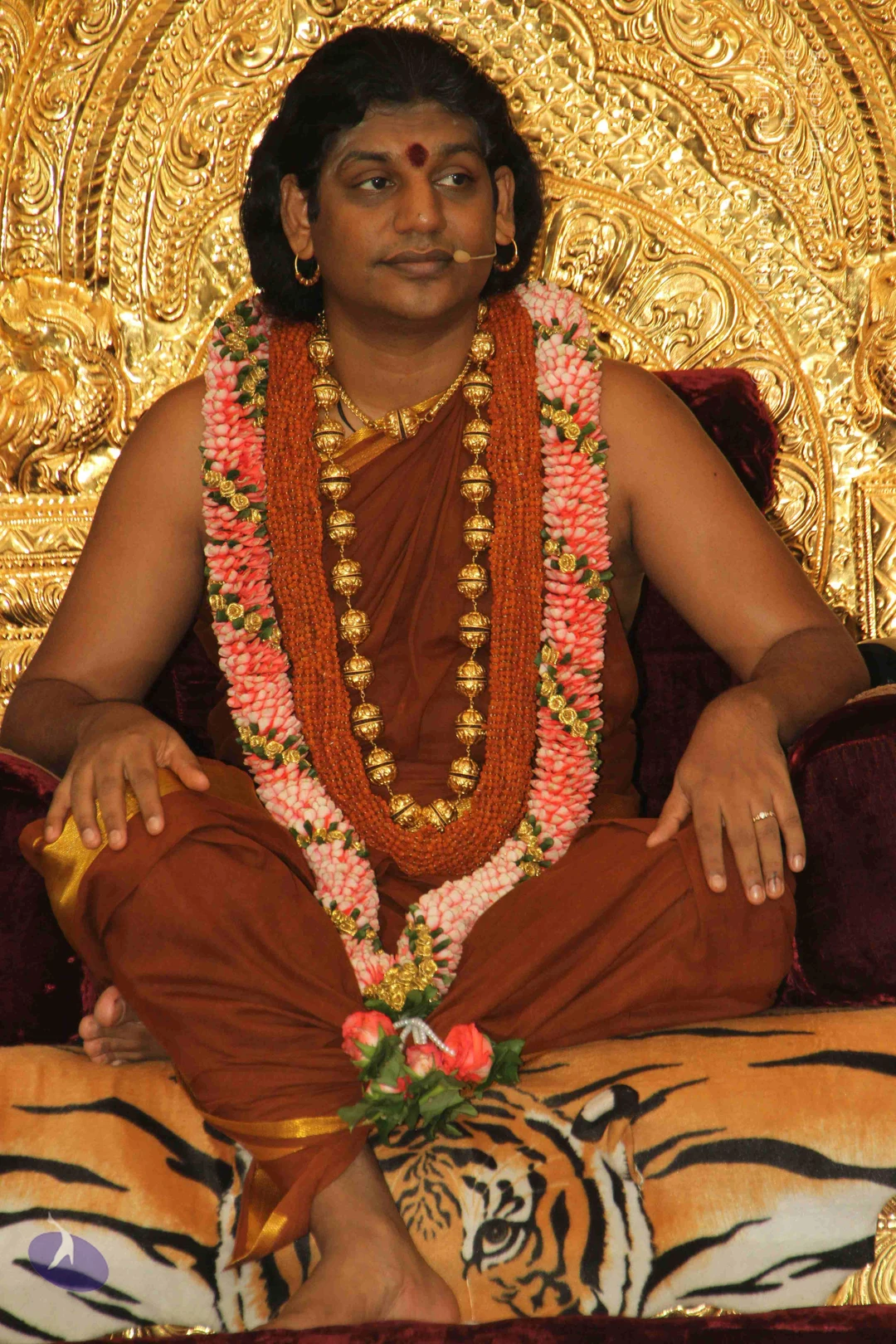
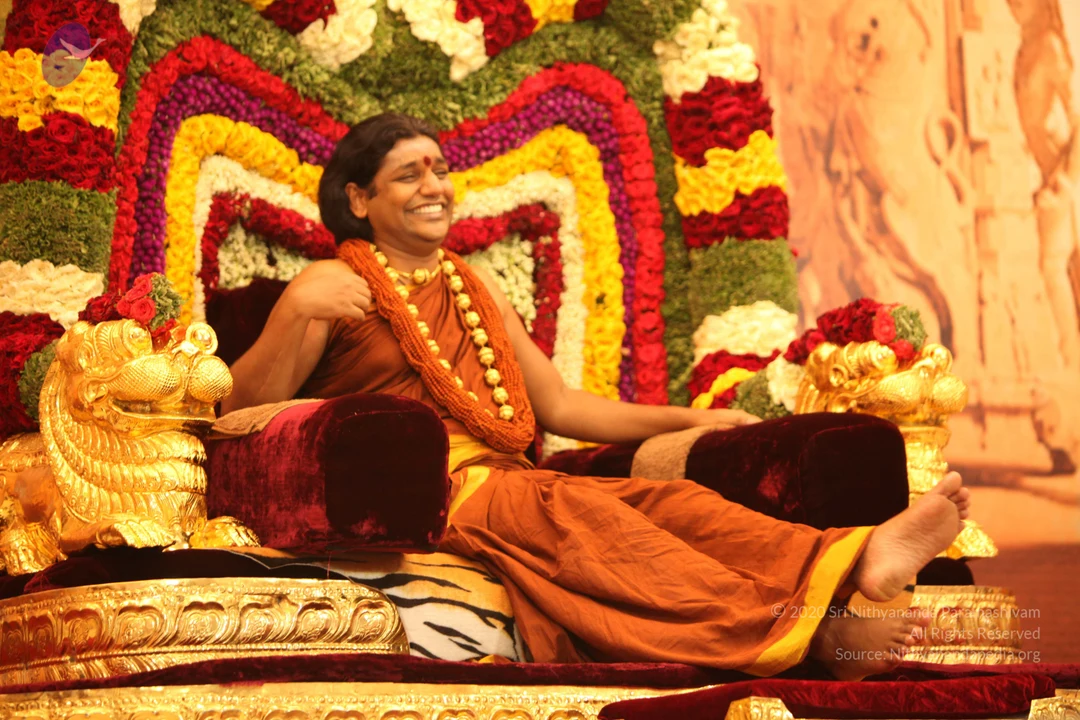
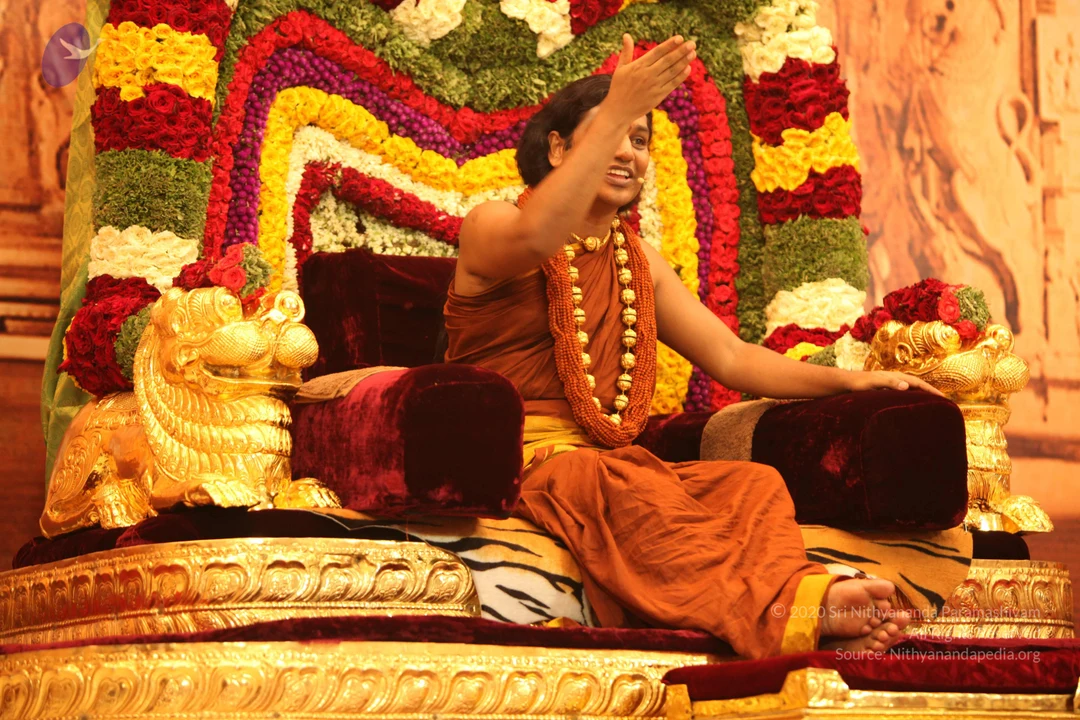
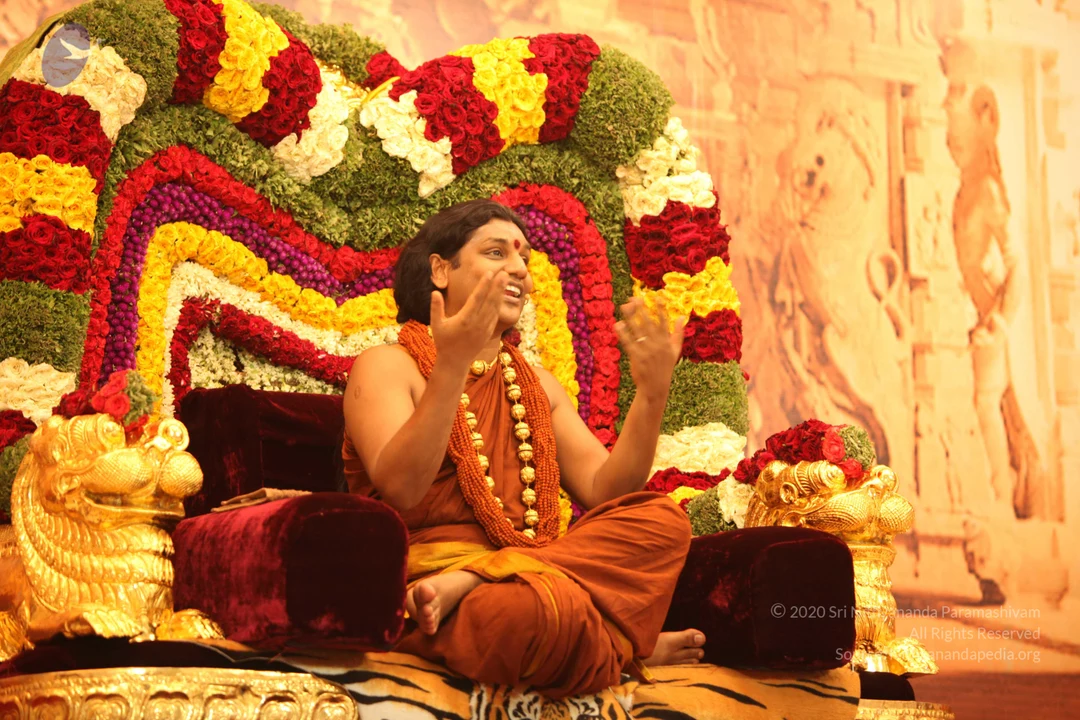
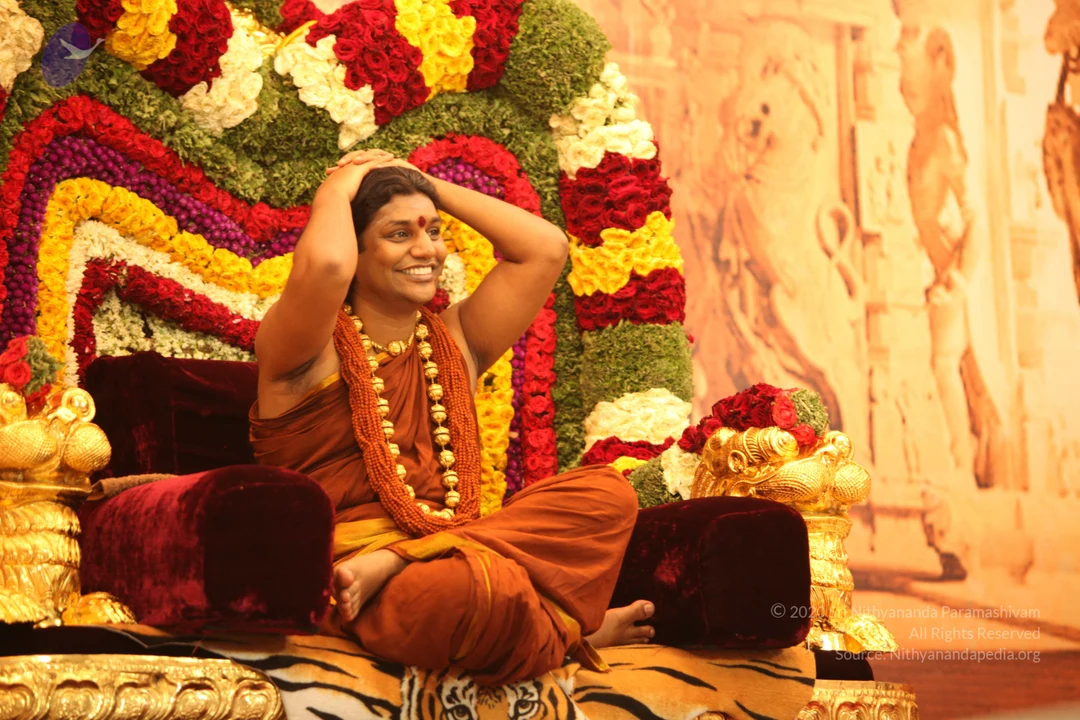
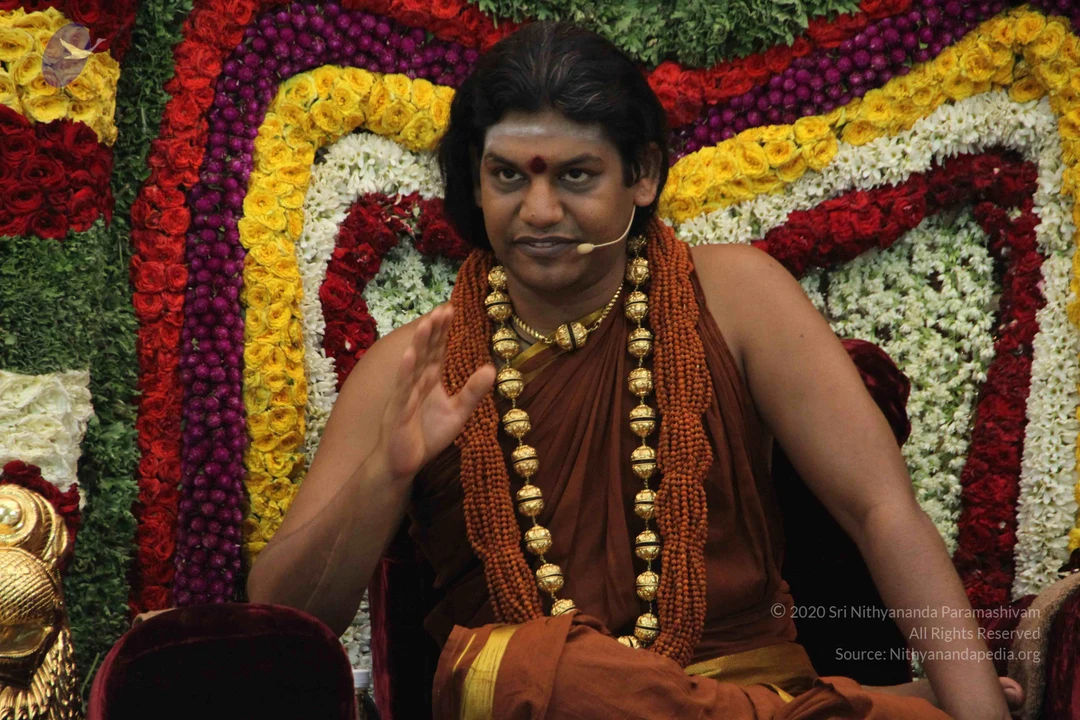
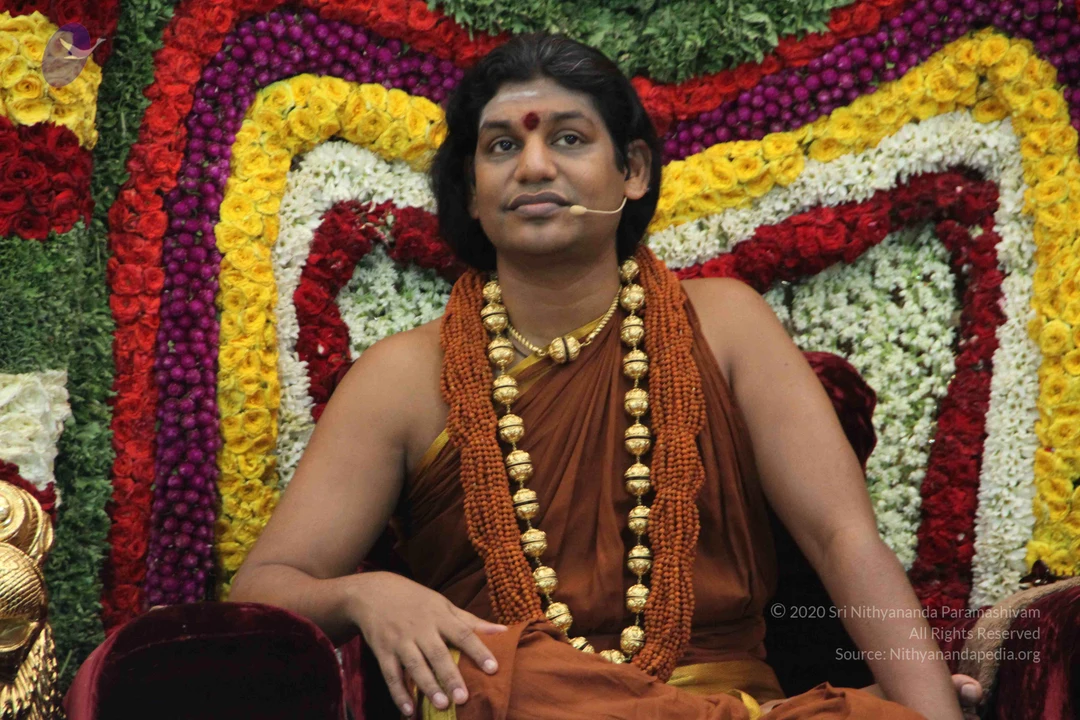
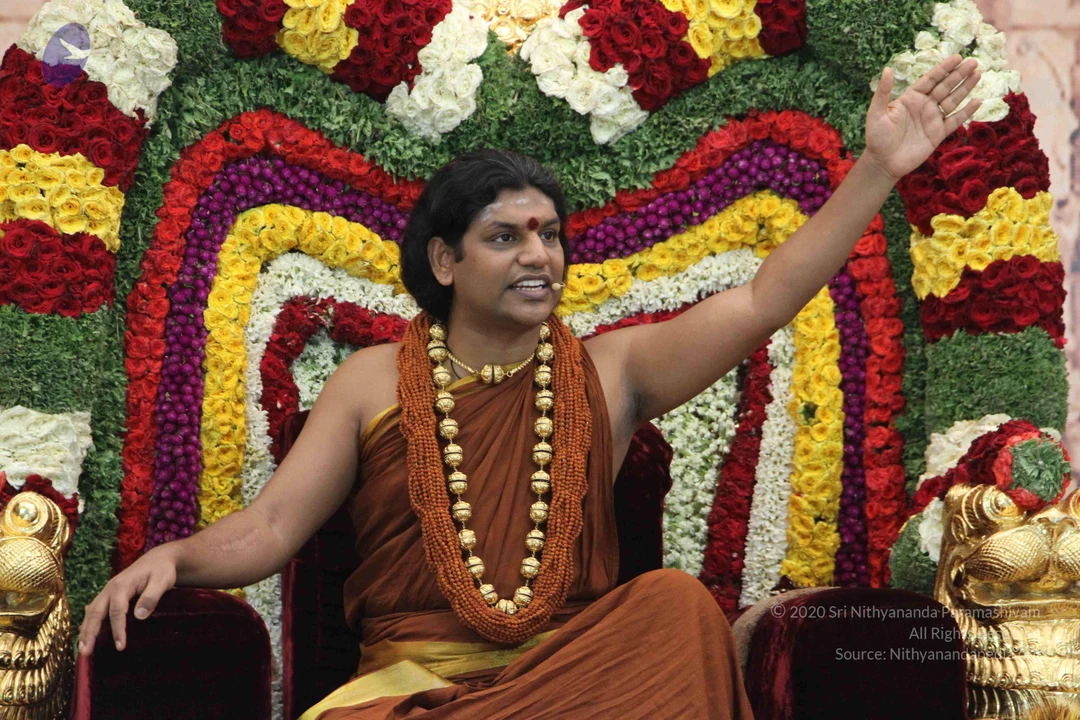
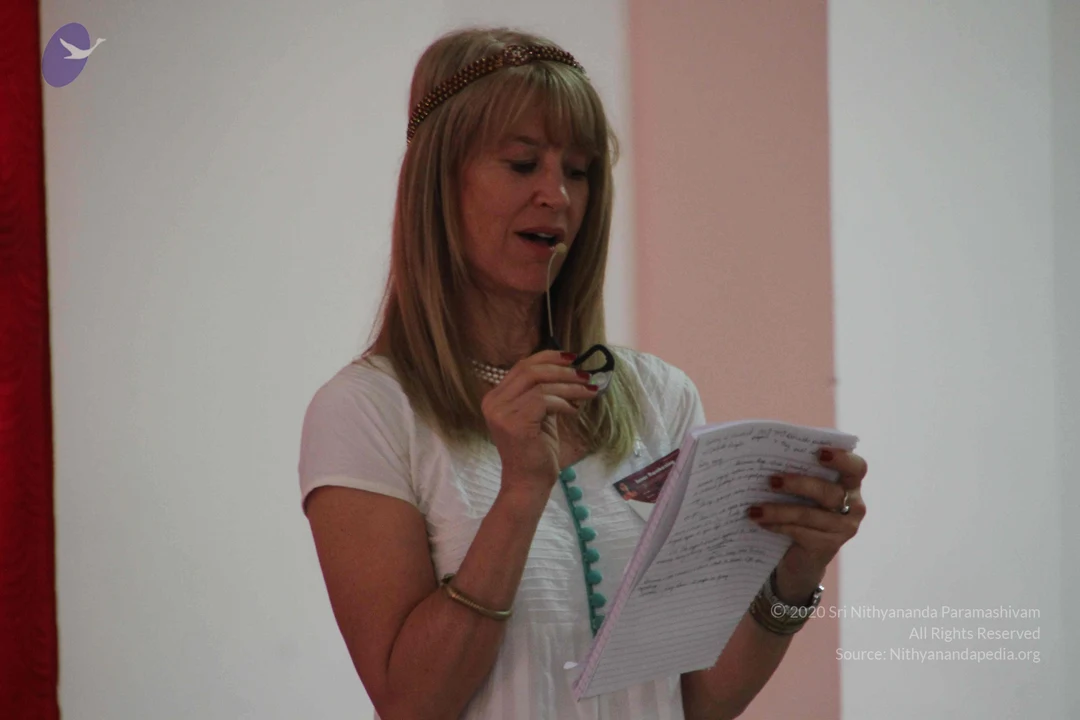
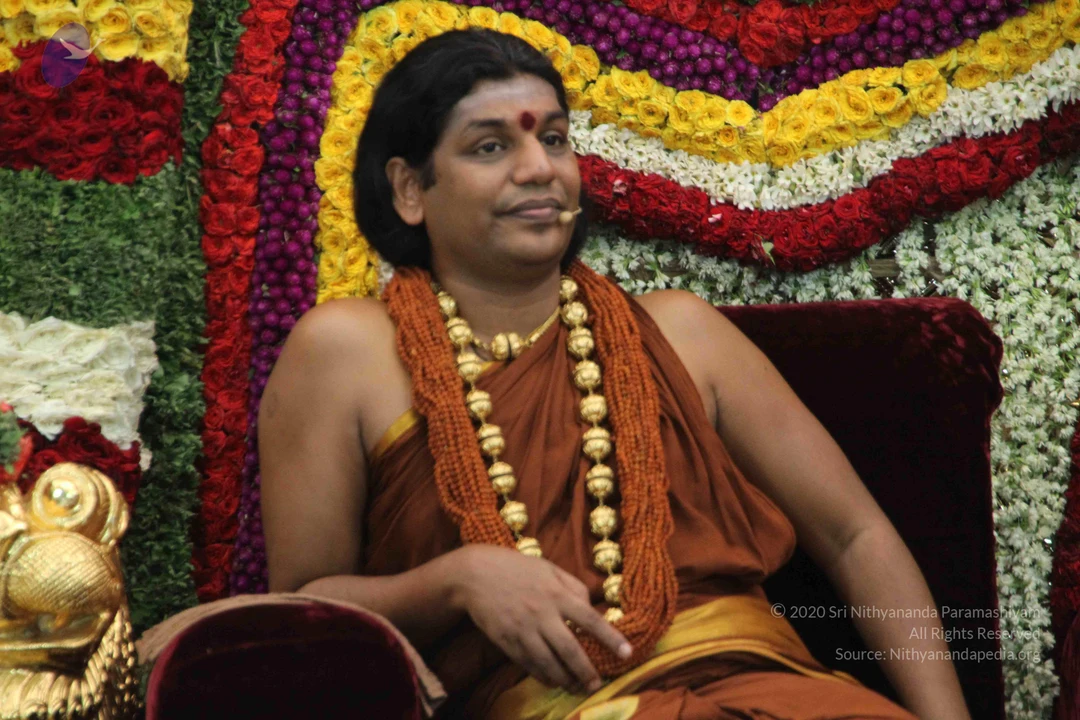
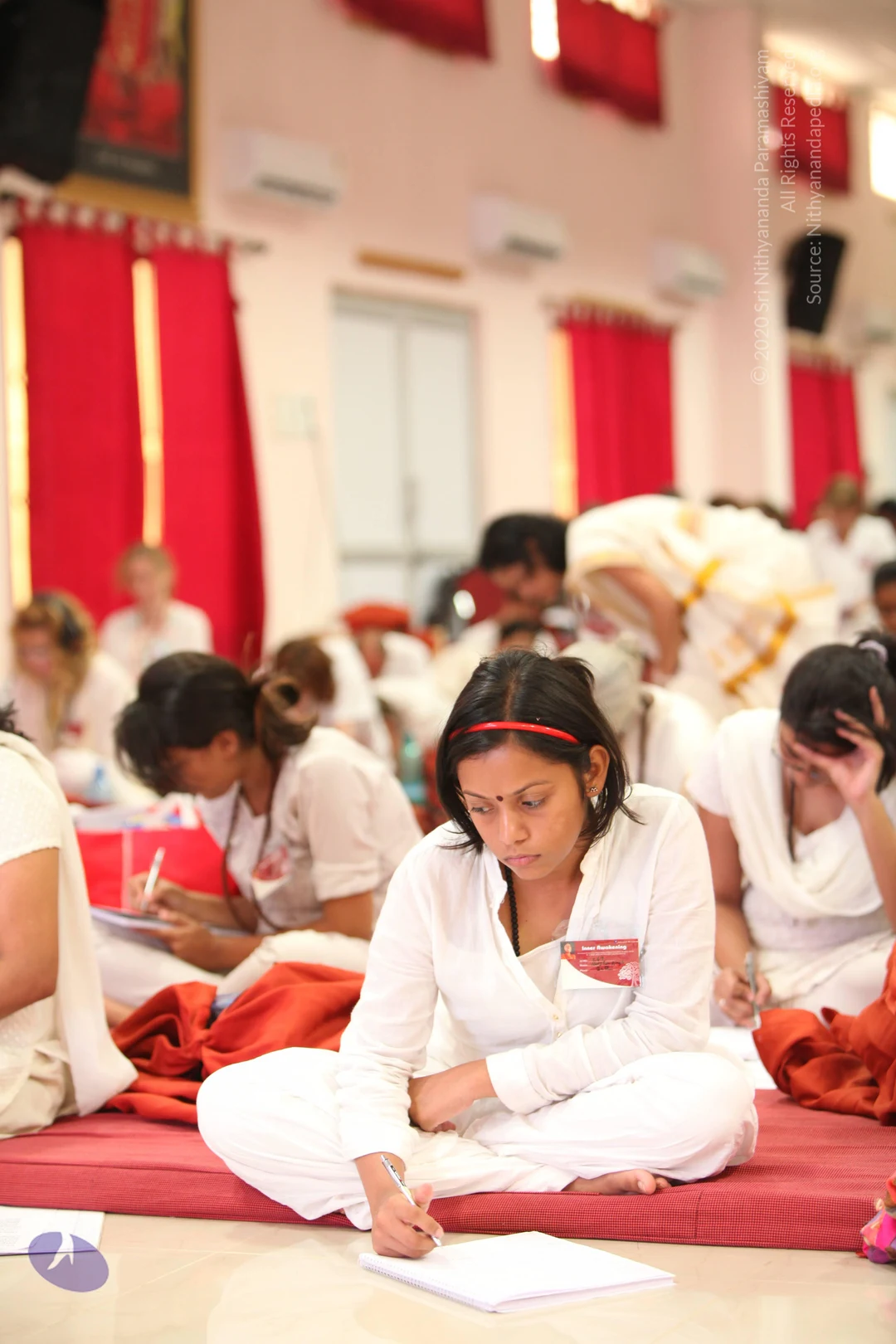
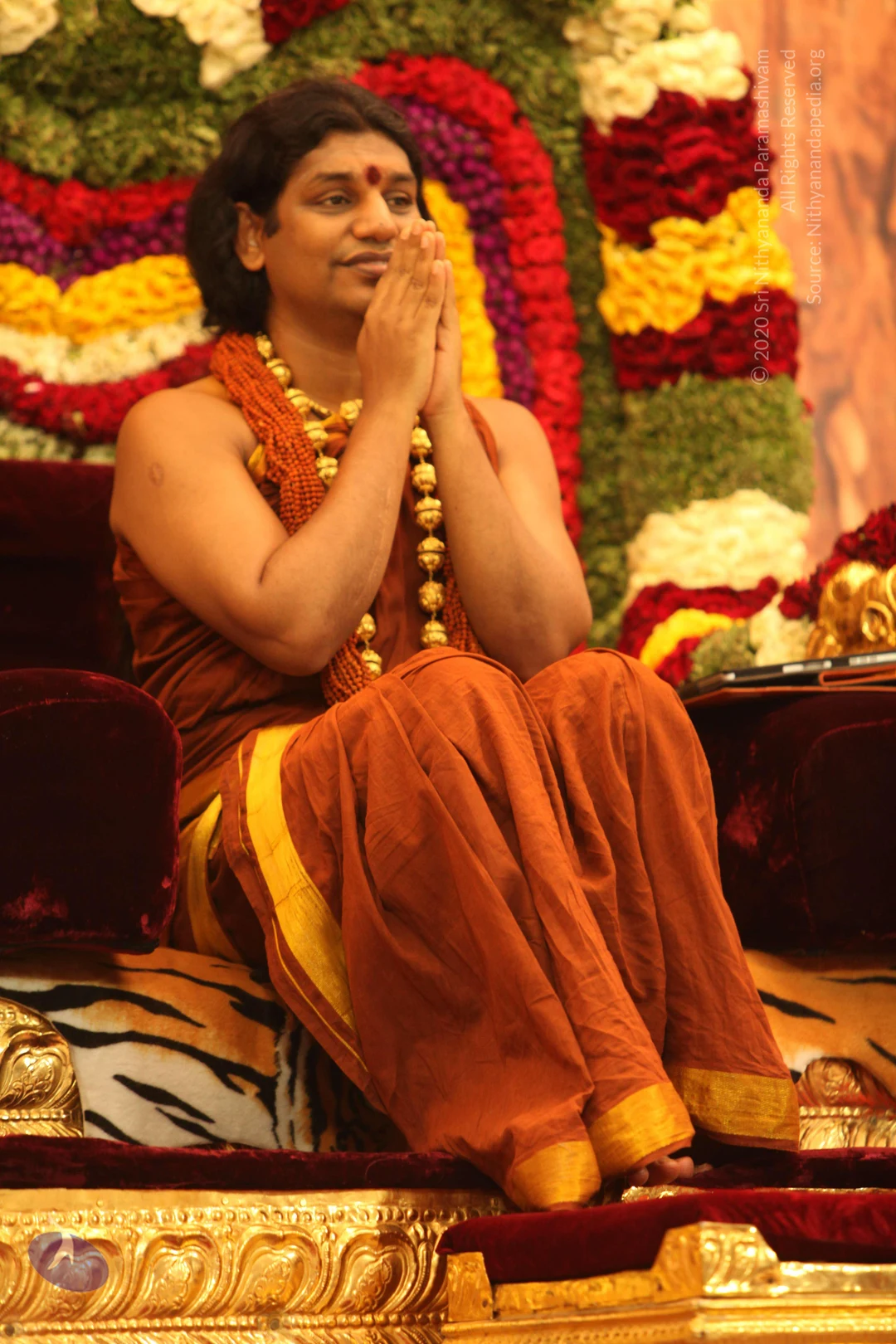
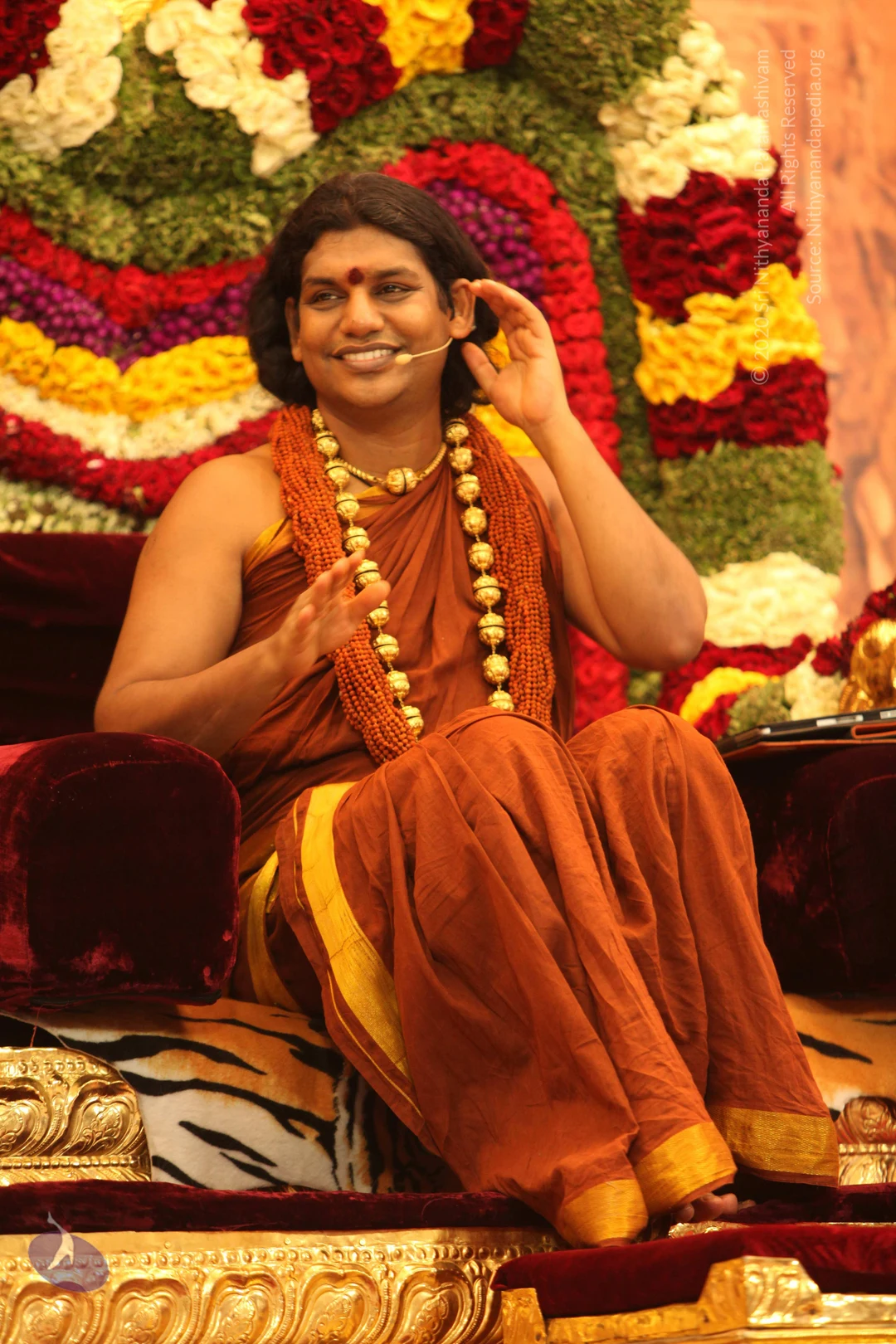
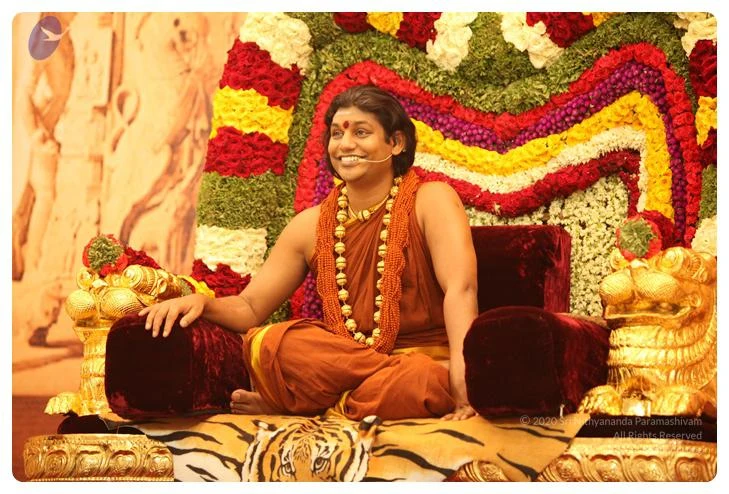
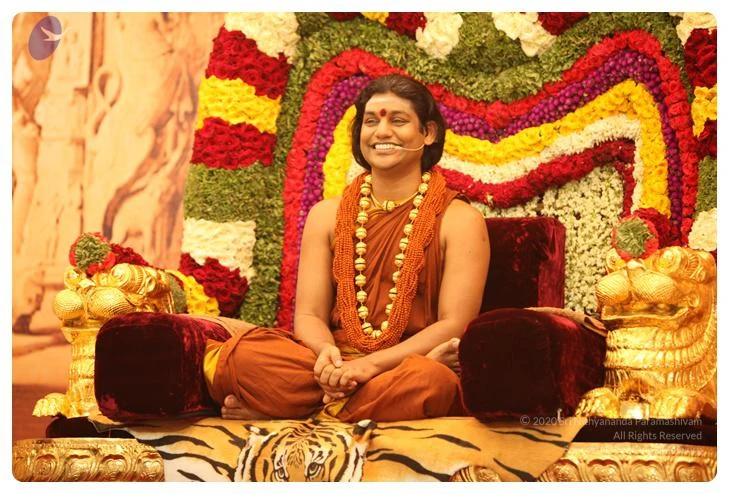
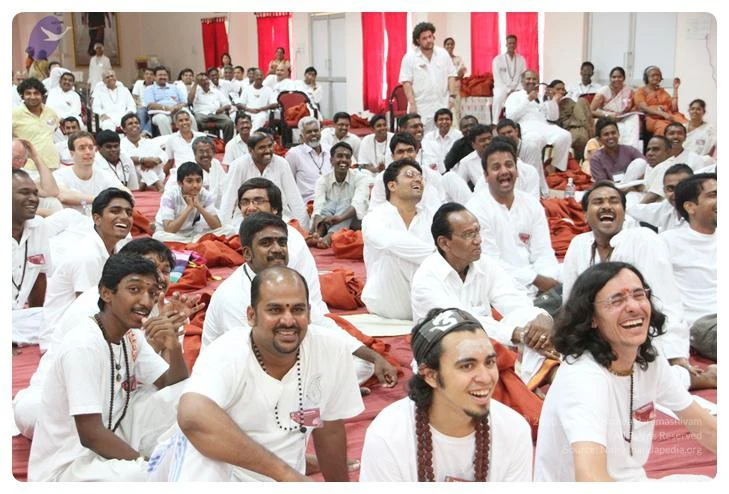
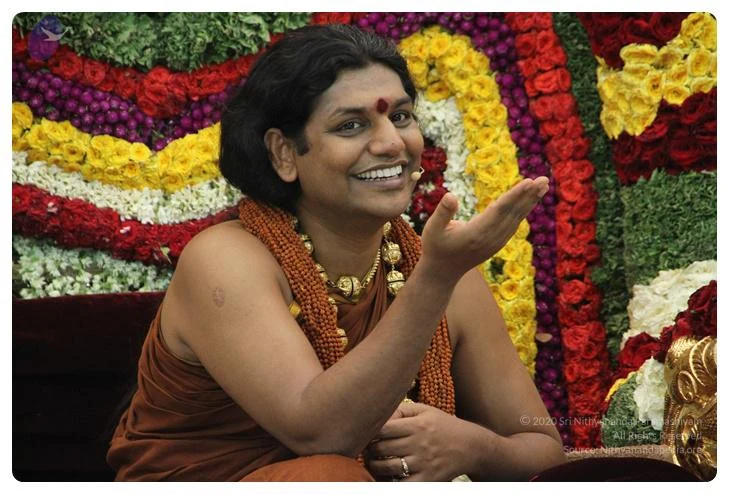
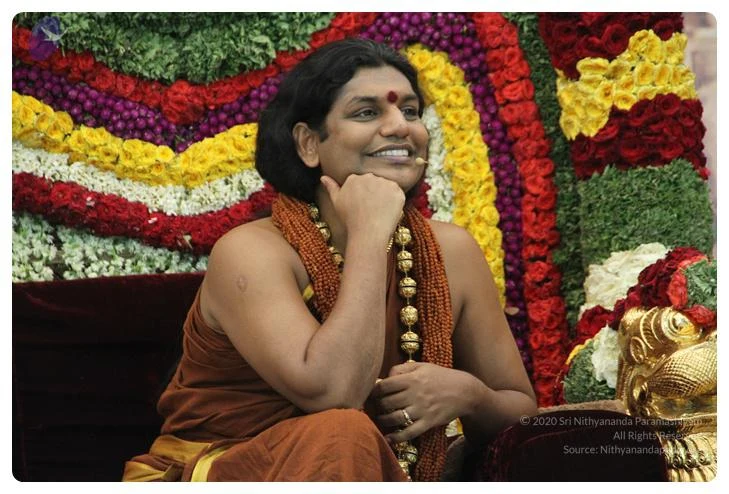
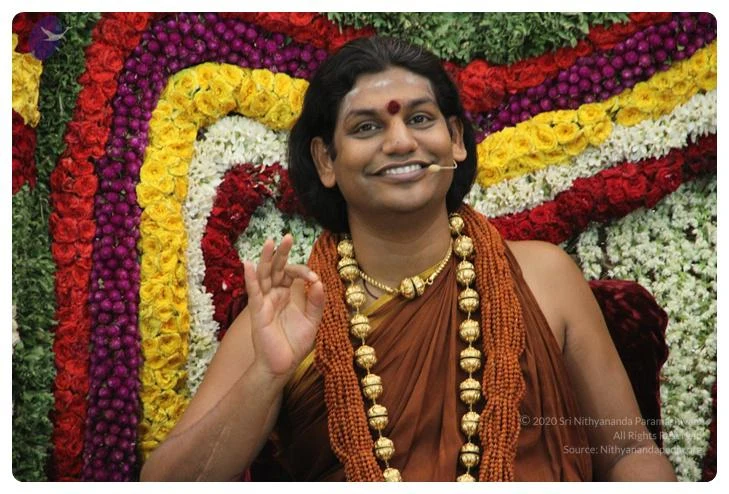
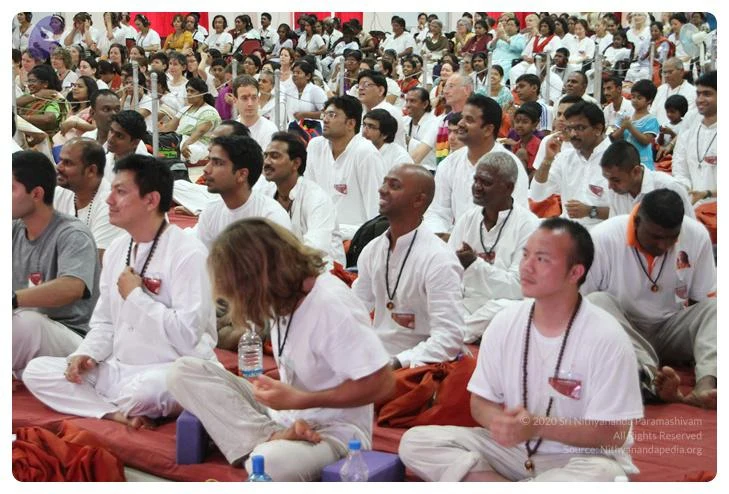
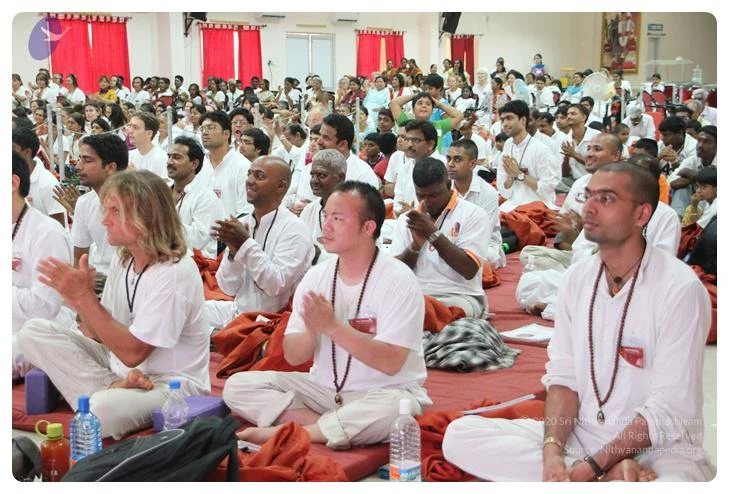
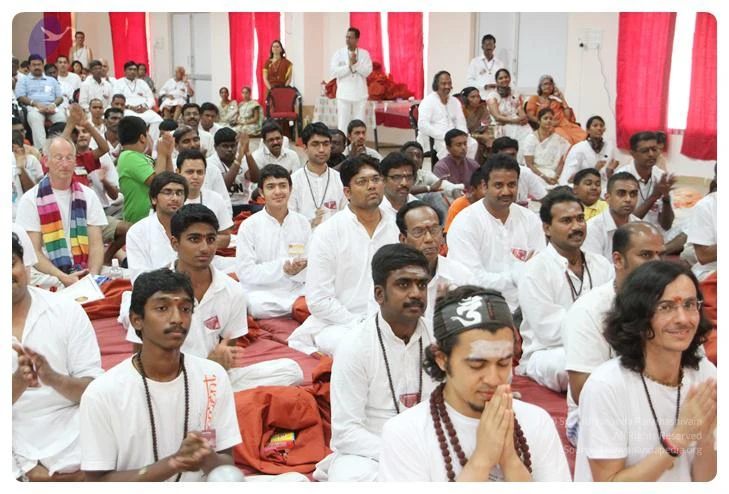
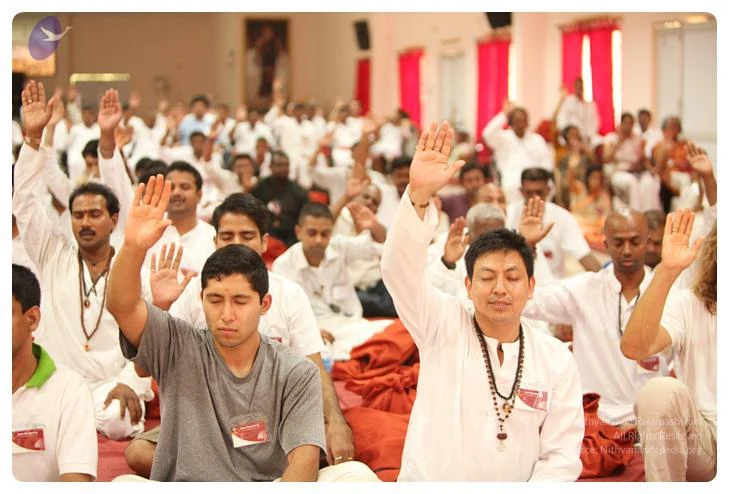
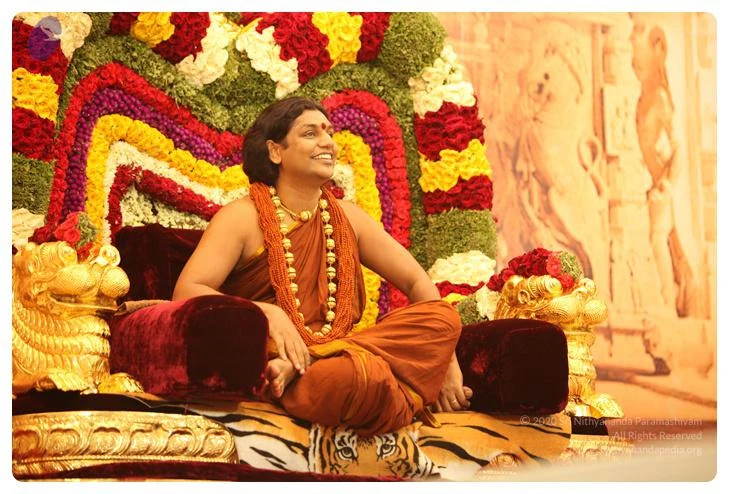
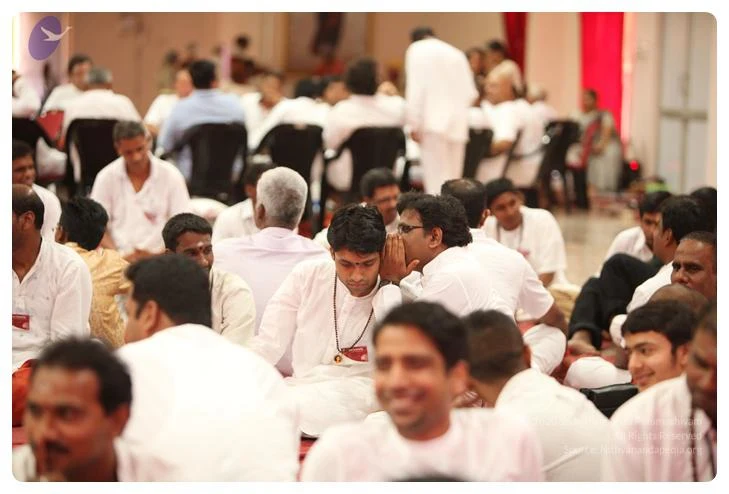
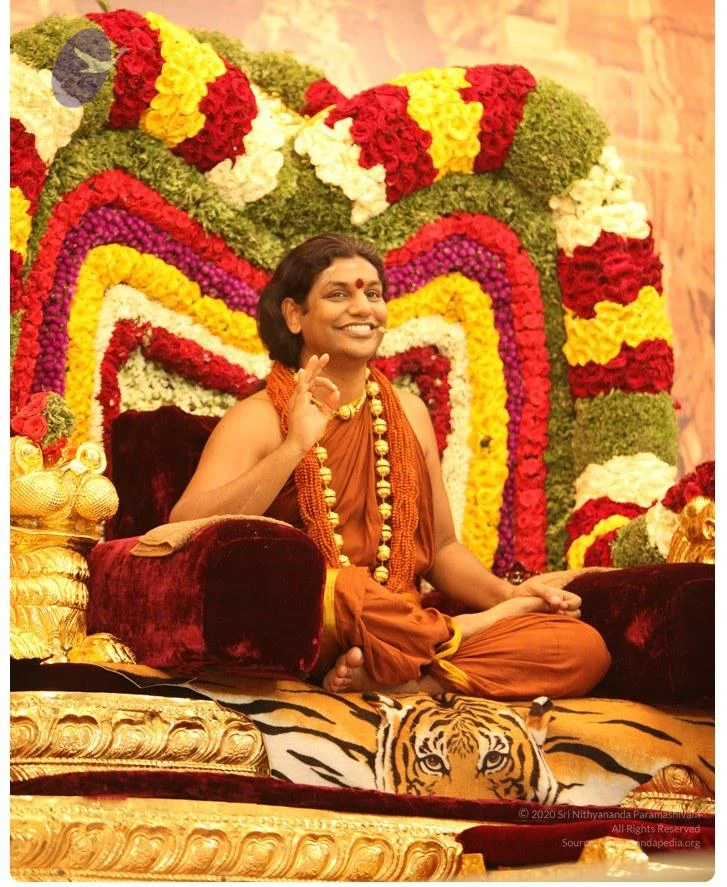
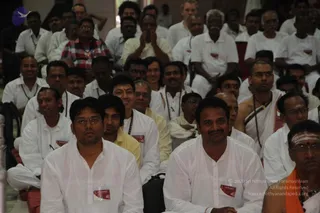
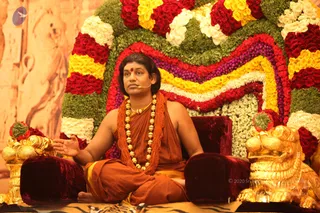
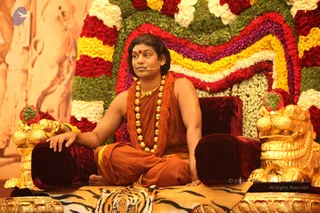
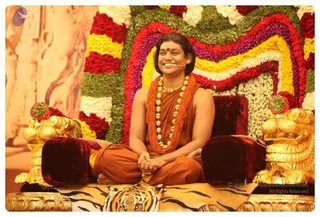
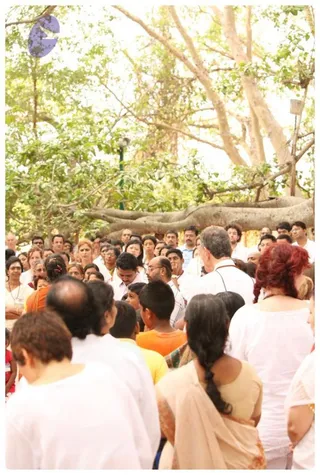
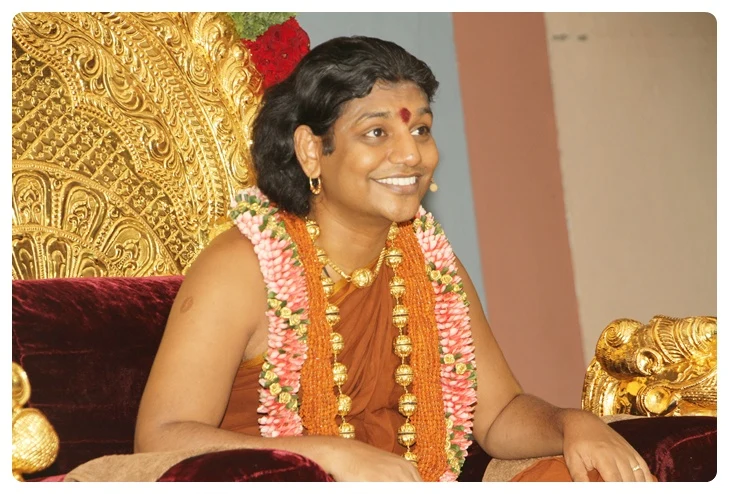
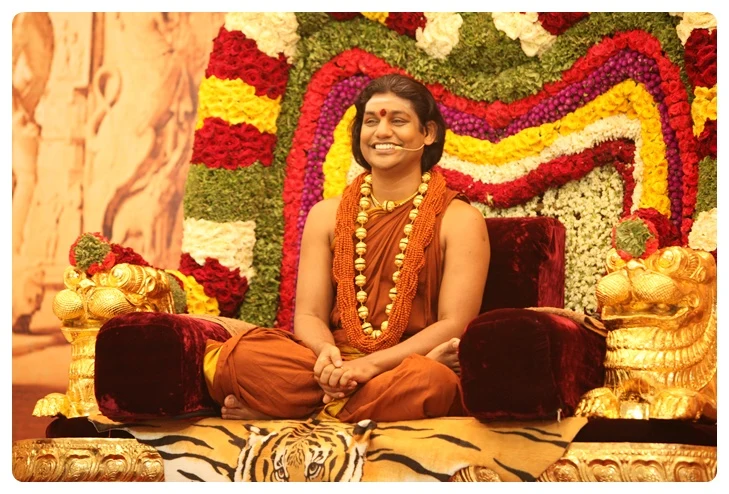
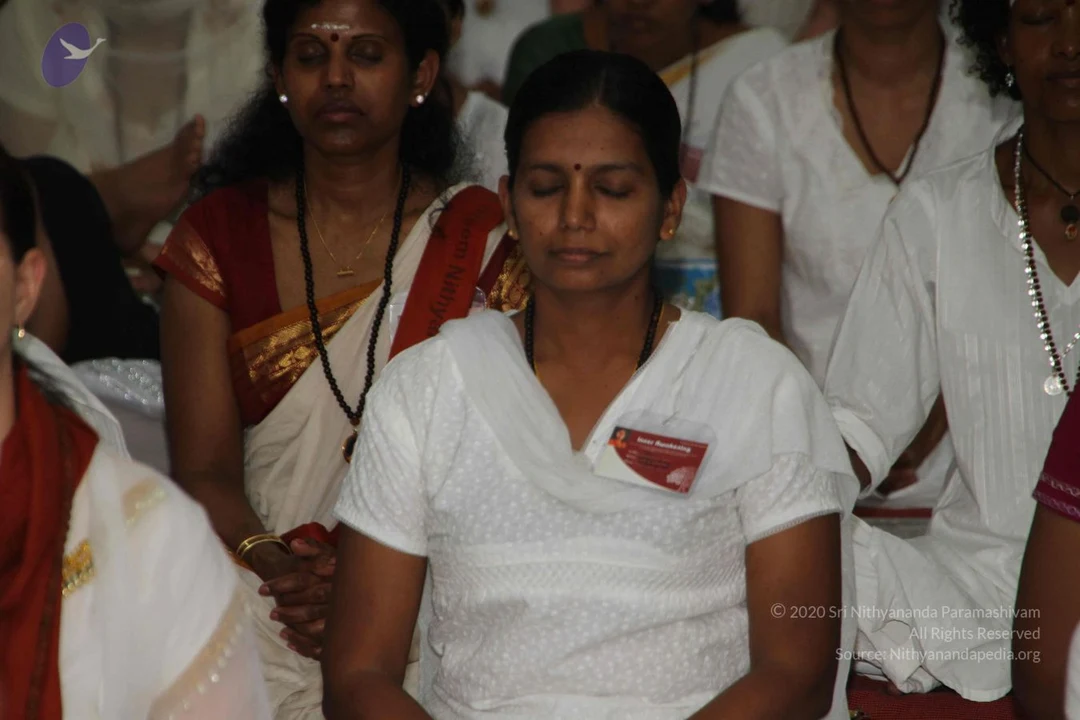
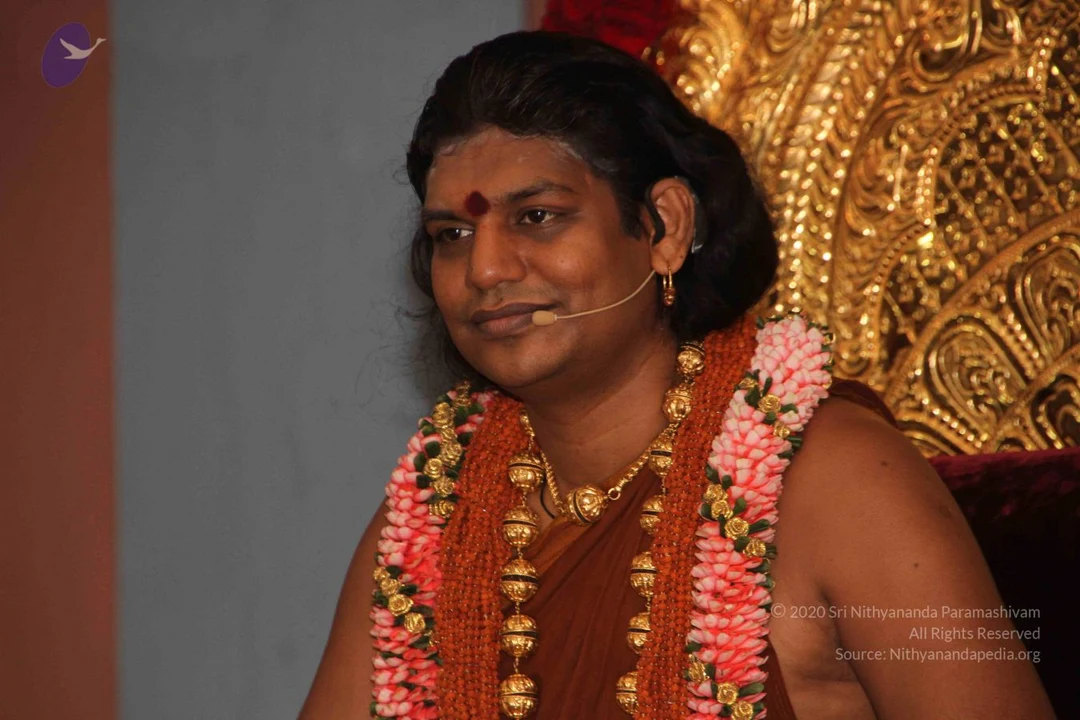
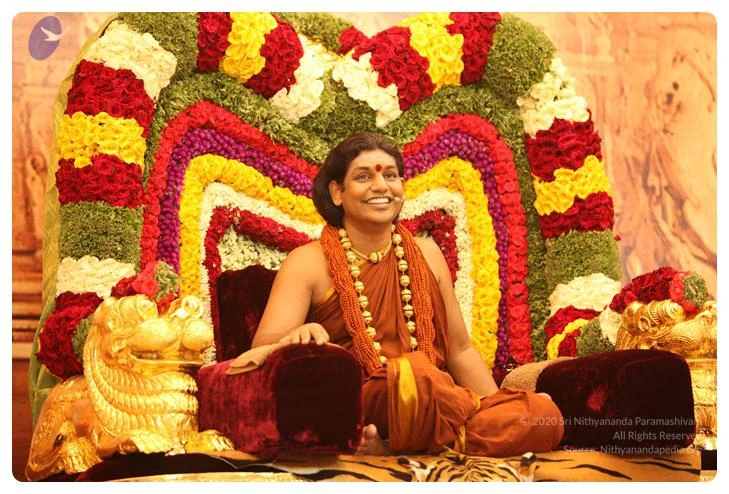
A woman with shoulder-length reddish-brown hair stands in a room with a red curtain on the right and a pale wall on the left. She wears a white short-sleeved top, a cream shoulder bag strap, a gold bangle and dark beaded bracelets, and a small name badge on her chest. She holds a white foam tray with paper napkins, a small cup and food scraps, and appears to be picking up or sorting items from it. A partially visible person with dark hair in a striped top stands at the far left edge. A small paper notice is pinned to the wall behind her.A large seated satsang gathering in a bright hall with red curtains and white walls. Many devotees in white clothing sit on red cushions with hands raised palms-forward in a blessing gesture, some with eyes closed. In the foreground a young man in a grey t-shirt sits with eyes closed and hands raised, beside a man in white wearing a rudraksha mala. Several attendees wear red name badges. A small framed portrait hangs on the wall behind the crowd. The scene conveys an Inner Awakening satsang at an ashram.A seated man in saffron-orange robes sits cross-legged on a dark maroon cushioned throne with gold carved armrests and a tiger-skin rug in front. Behind him is a tiered arch of red, yellow, purple and white flower garlands. He wears a long rudraksha-style bead mala and a gold necklace, has a red bindi, and smiles while making a mudra with his right hand. Swamiji (probable): the saffron robes, long swept-back hair, ornate gold necklace and beaded mala are the appearance cues, shown in a throne seat during a satsang-style setting.

May 08 2013

Original wiki page
Contents

Title

Listening Awakens your Intuition

Description:

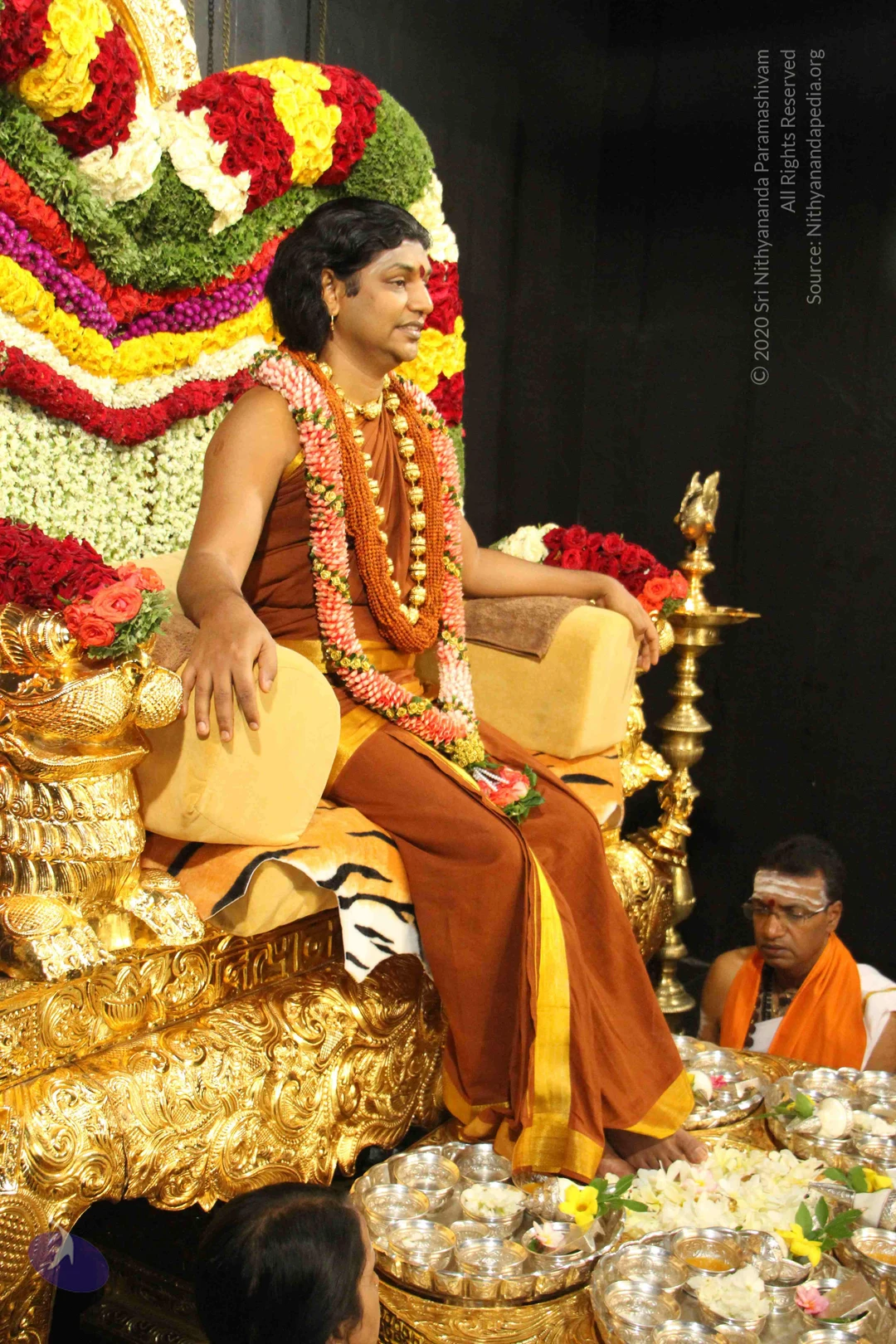
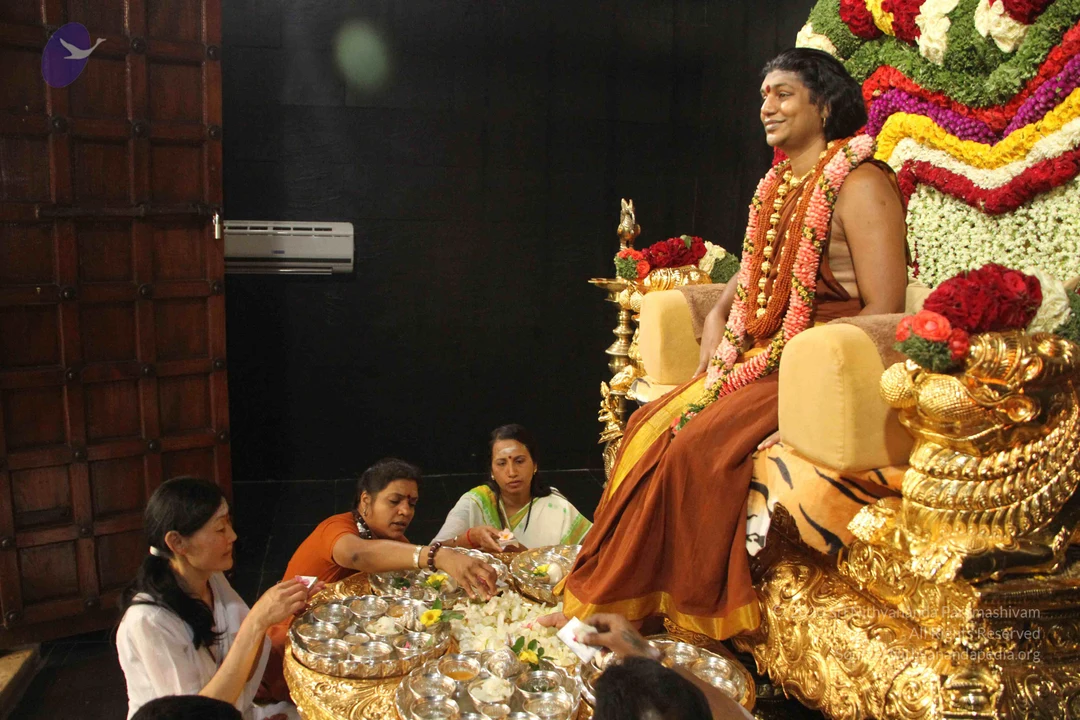
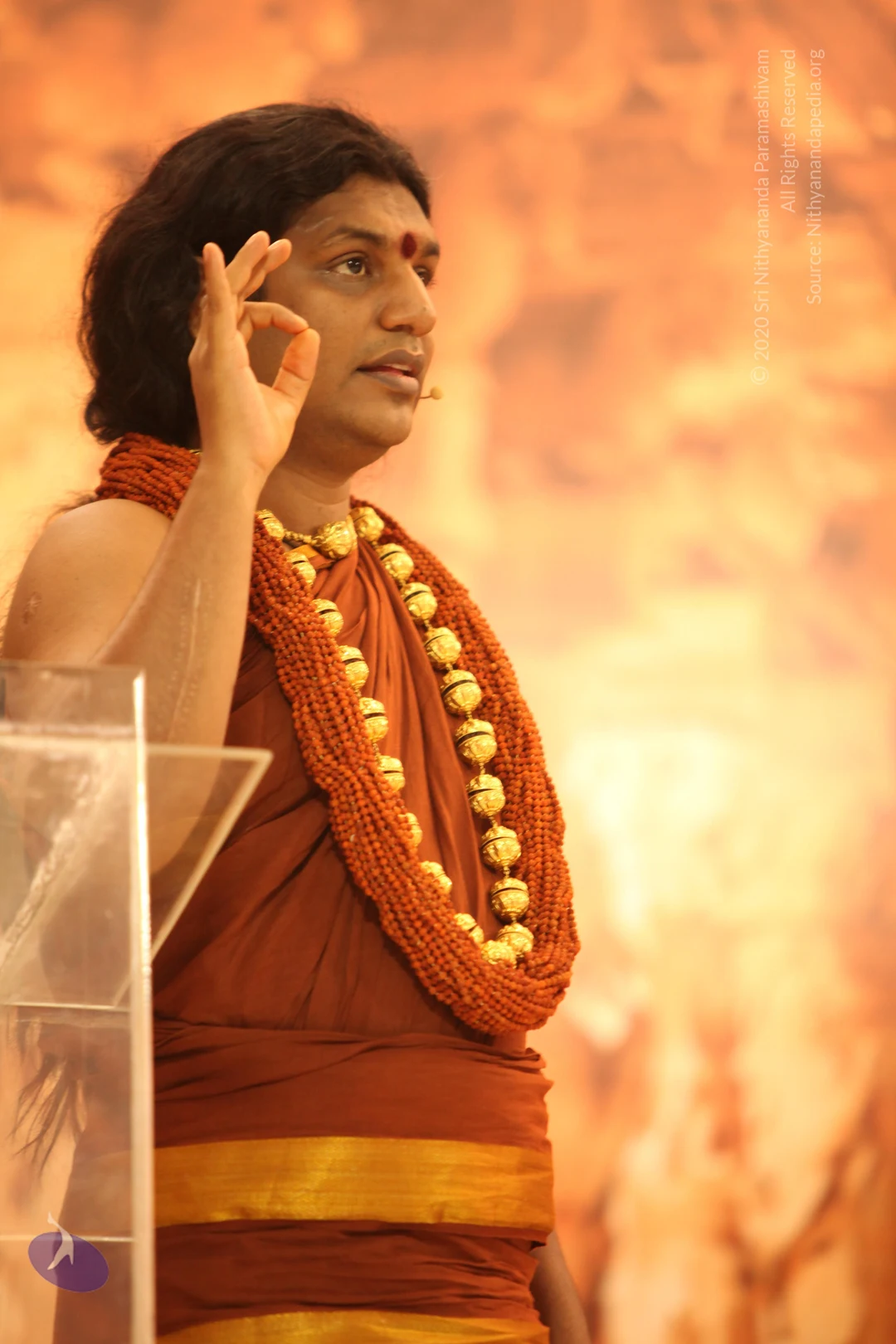
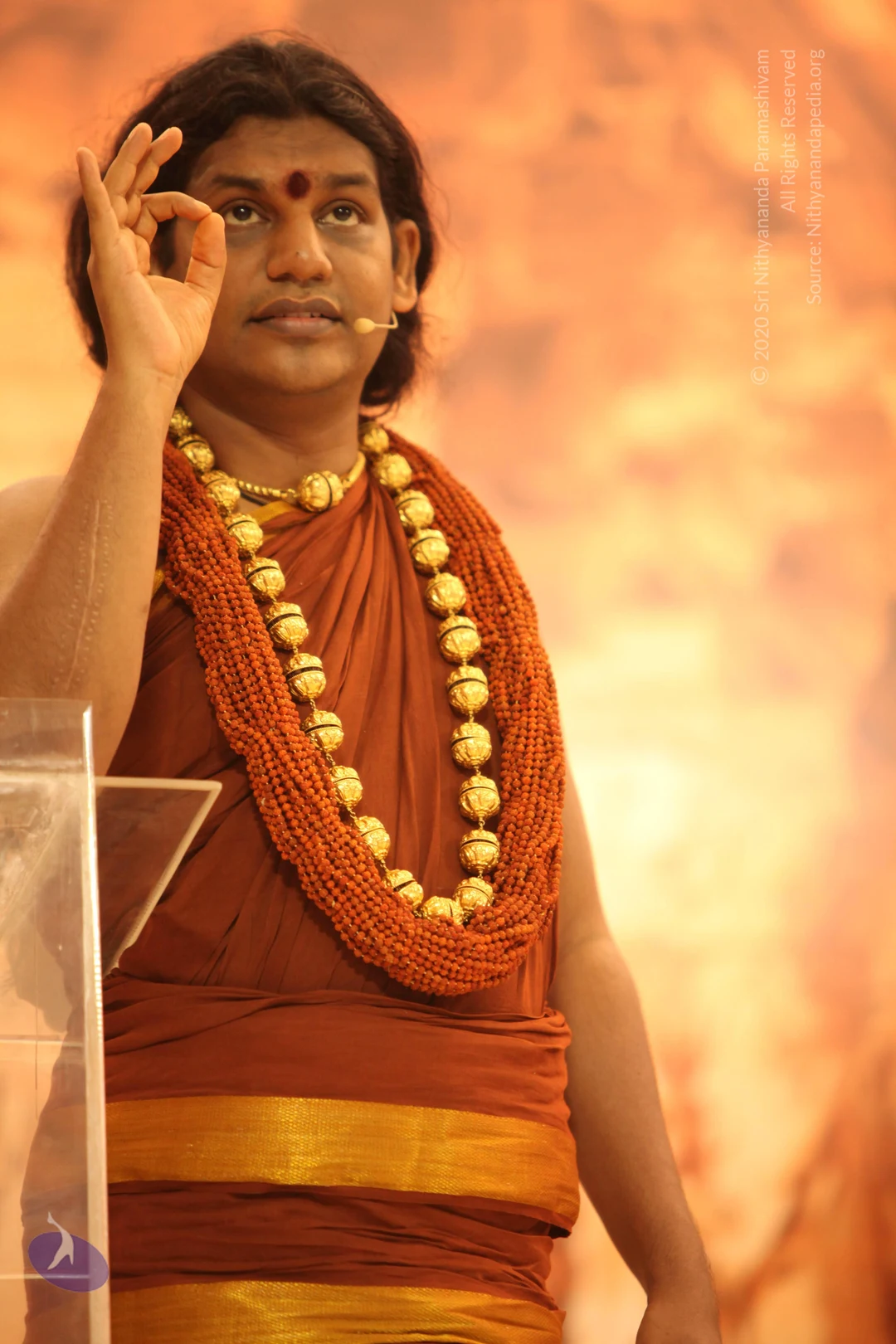
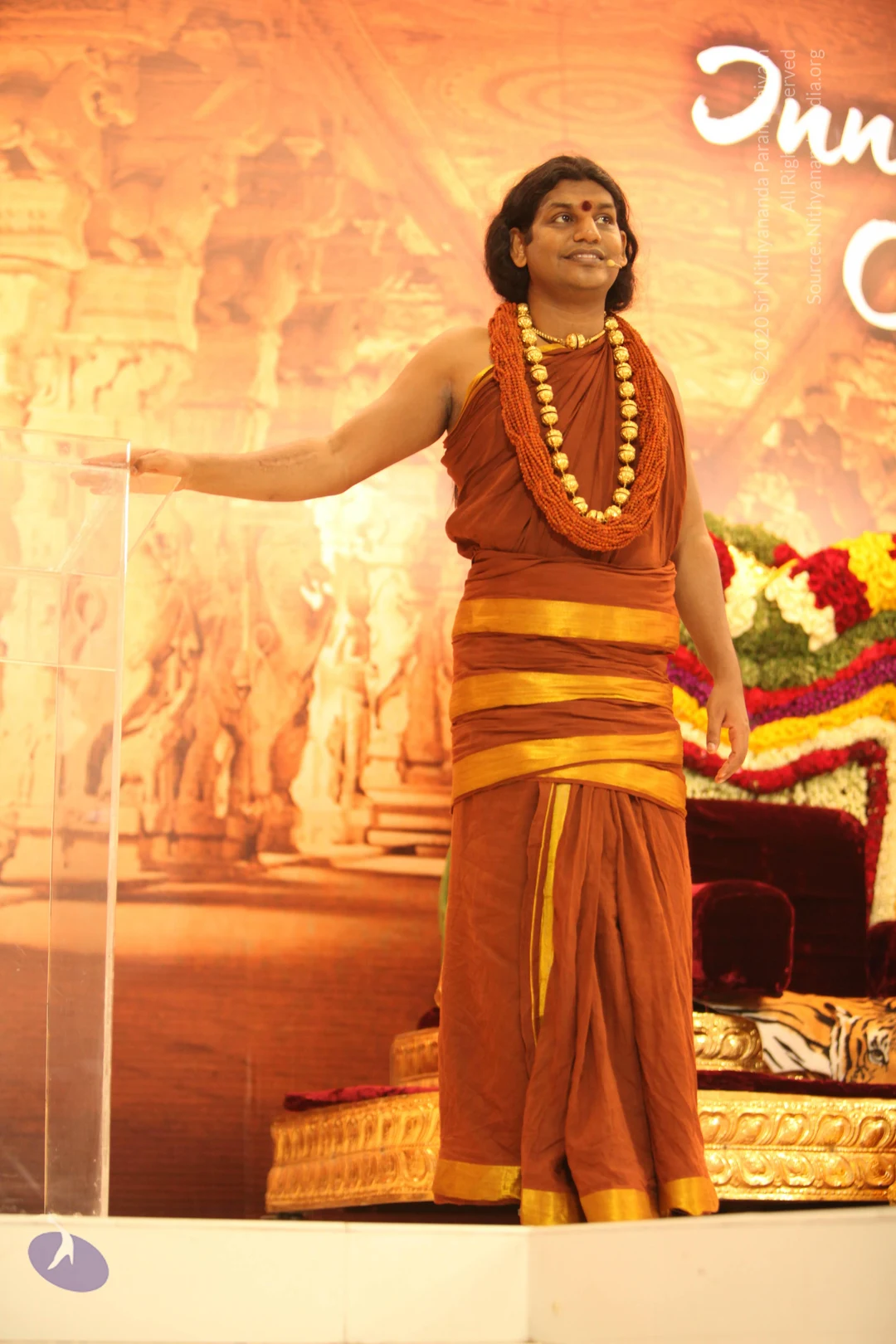
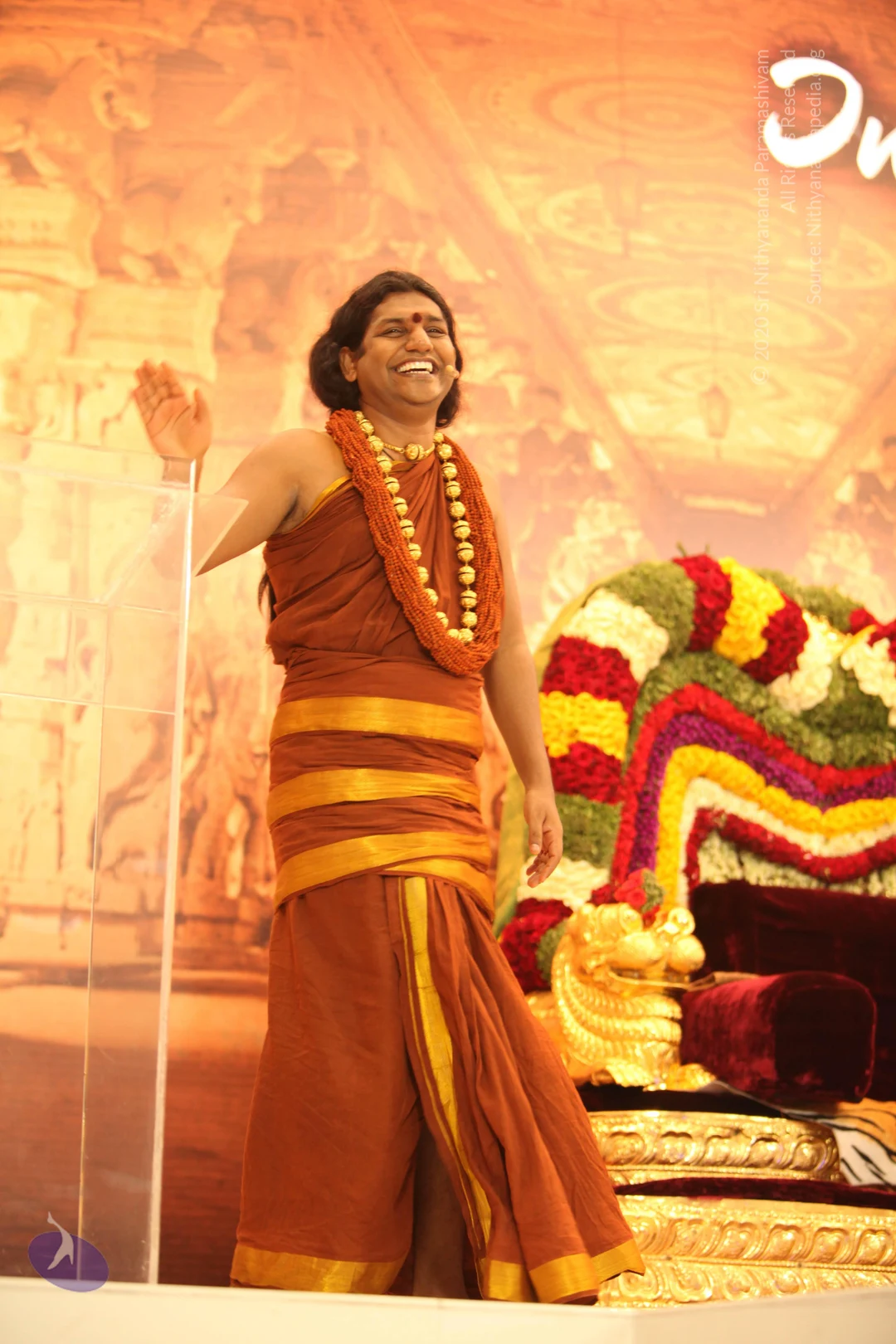
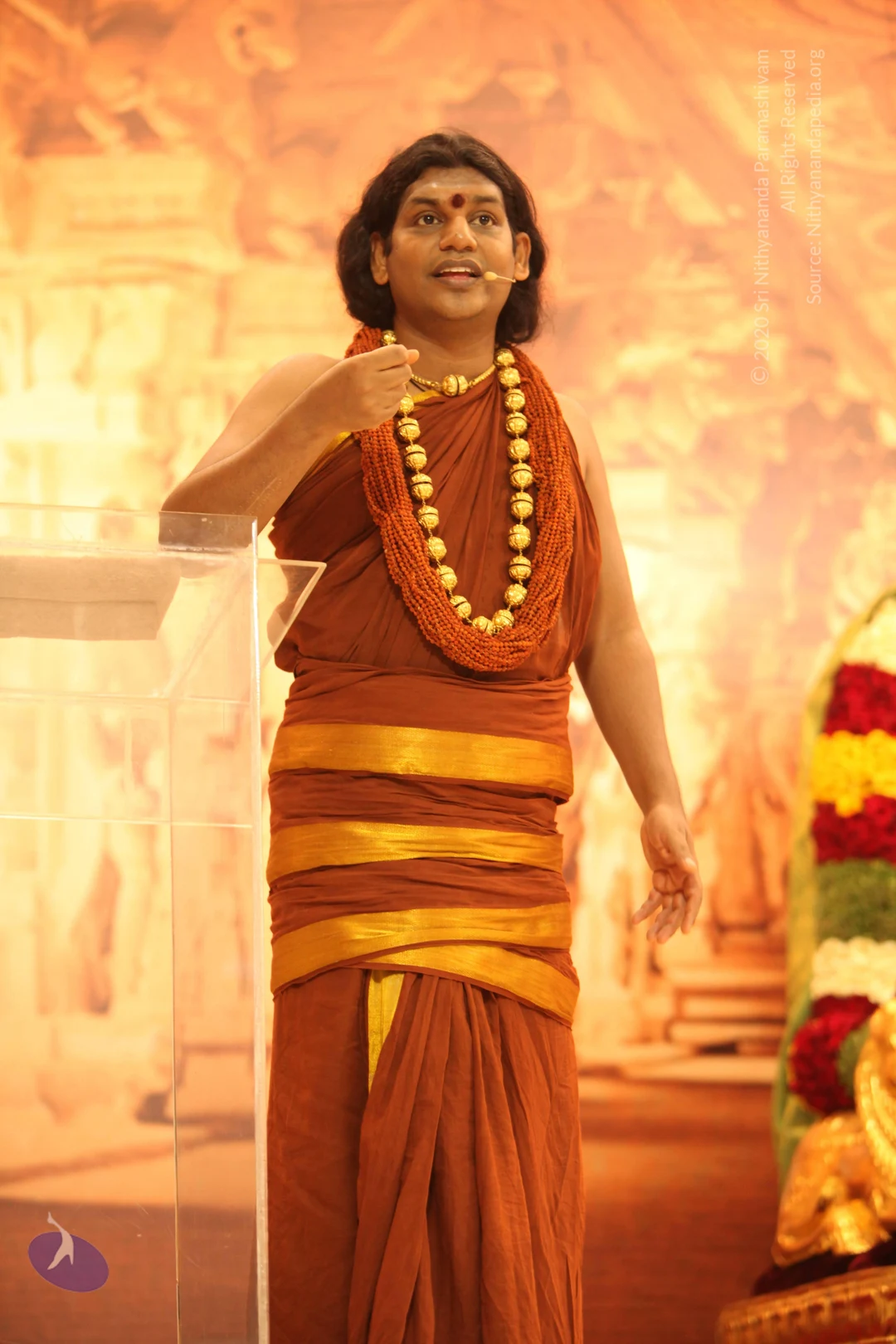
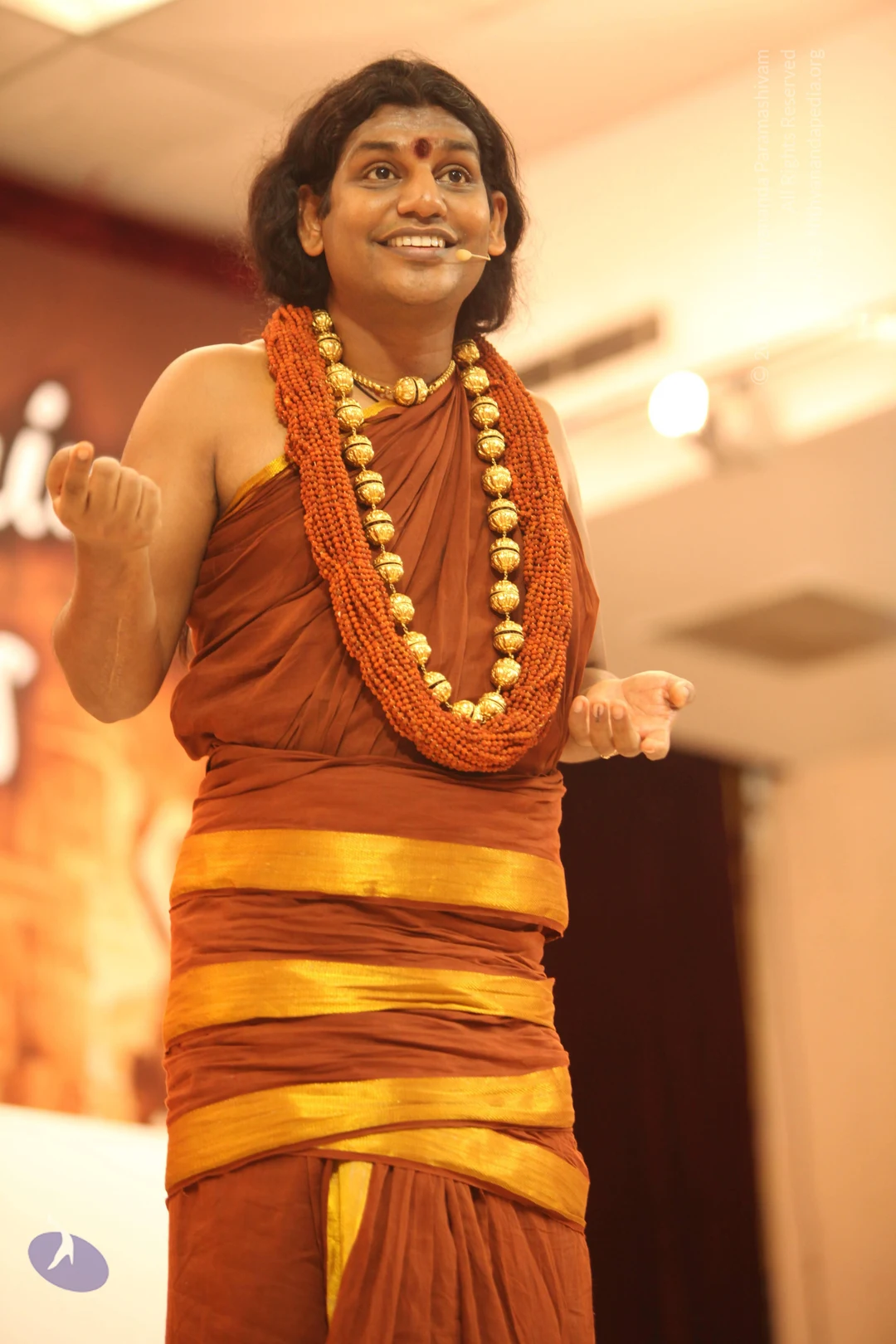
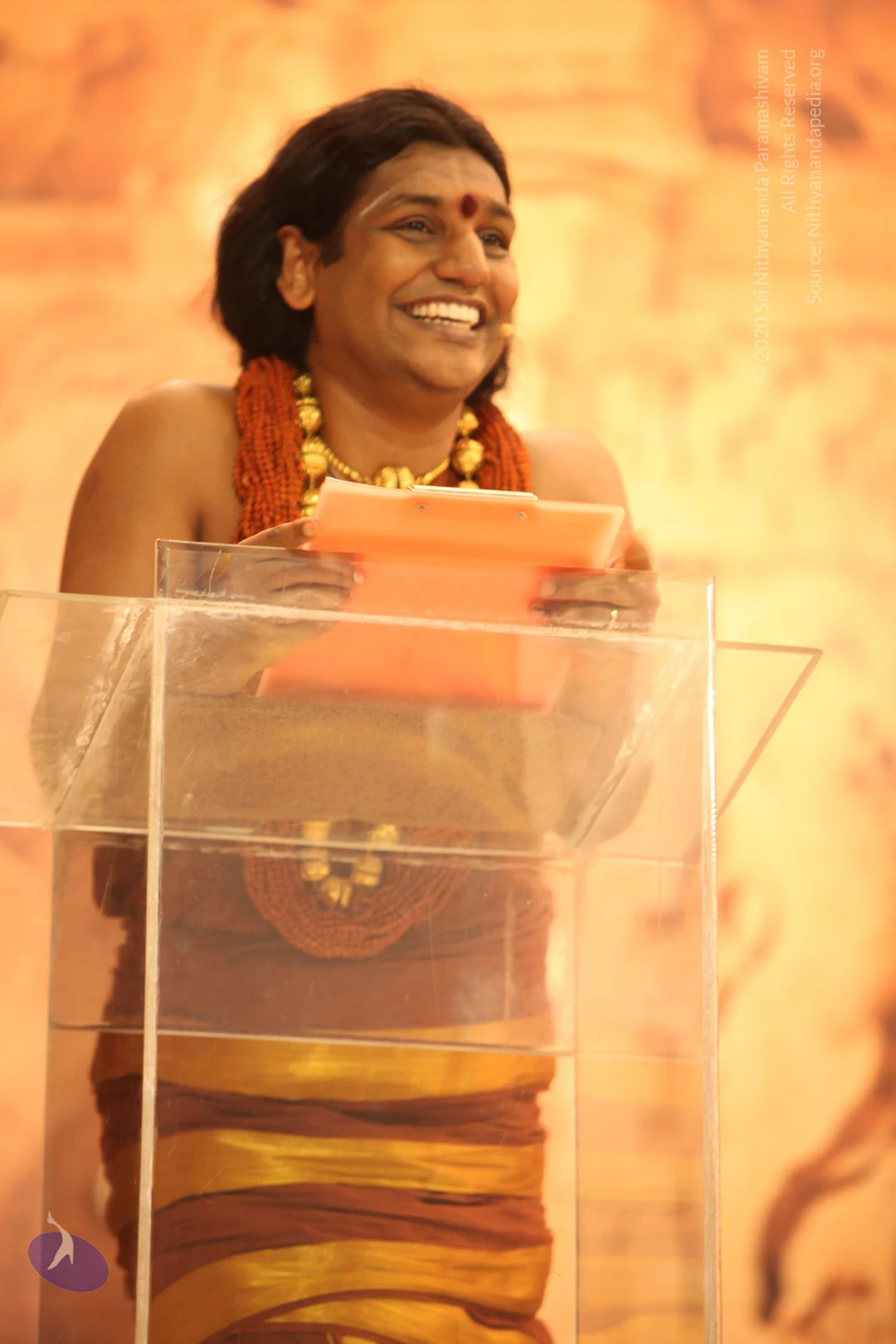
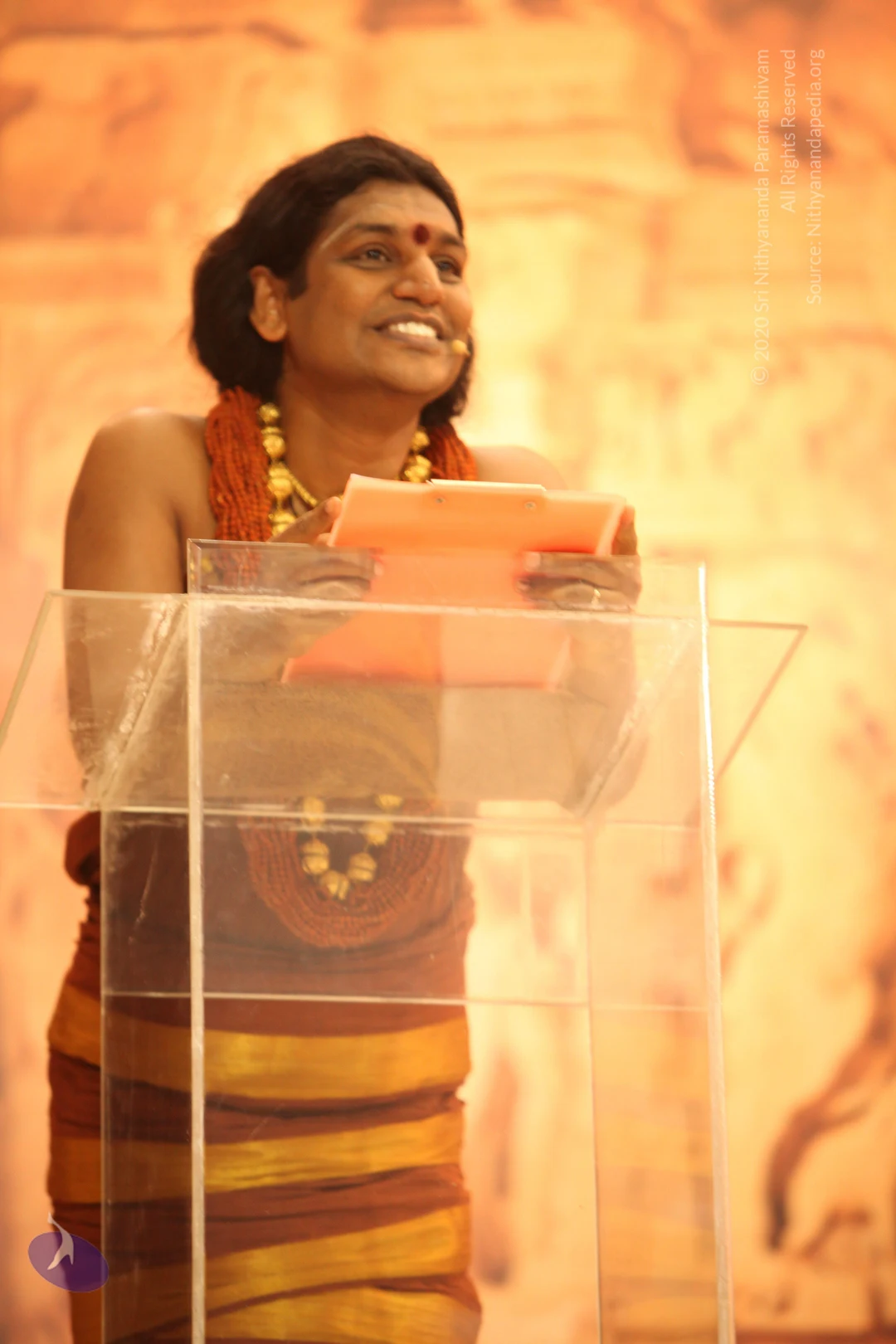
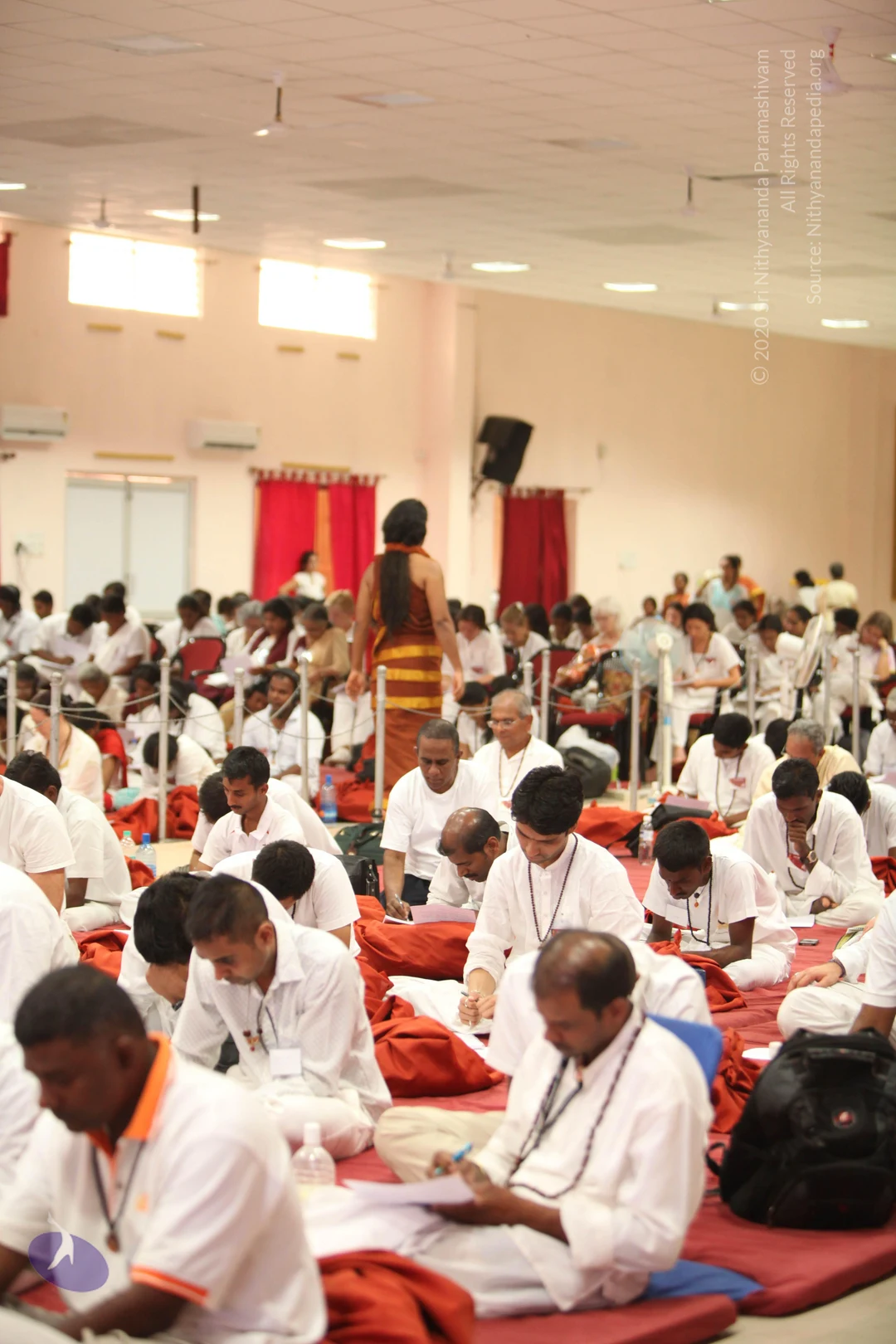
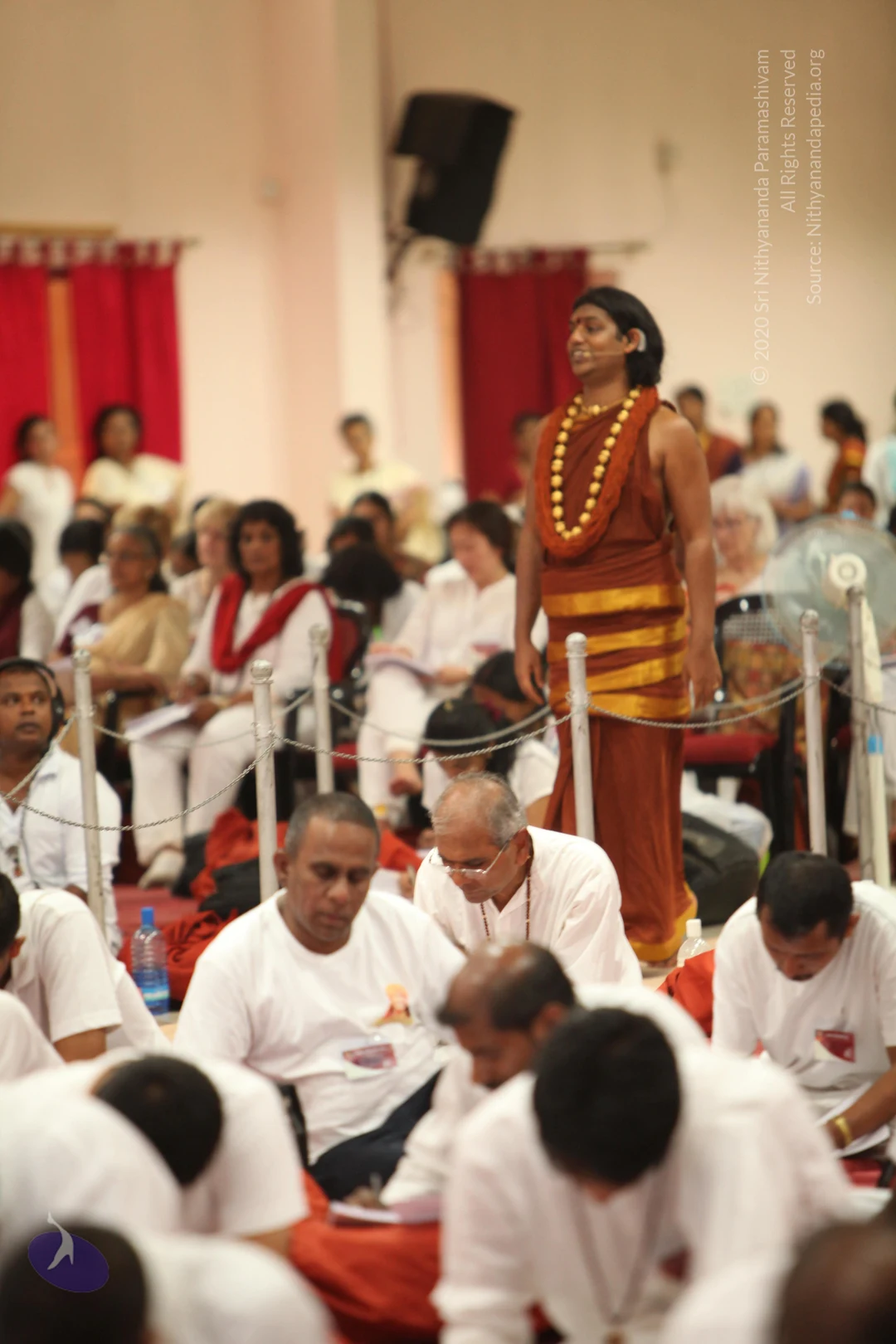
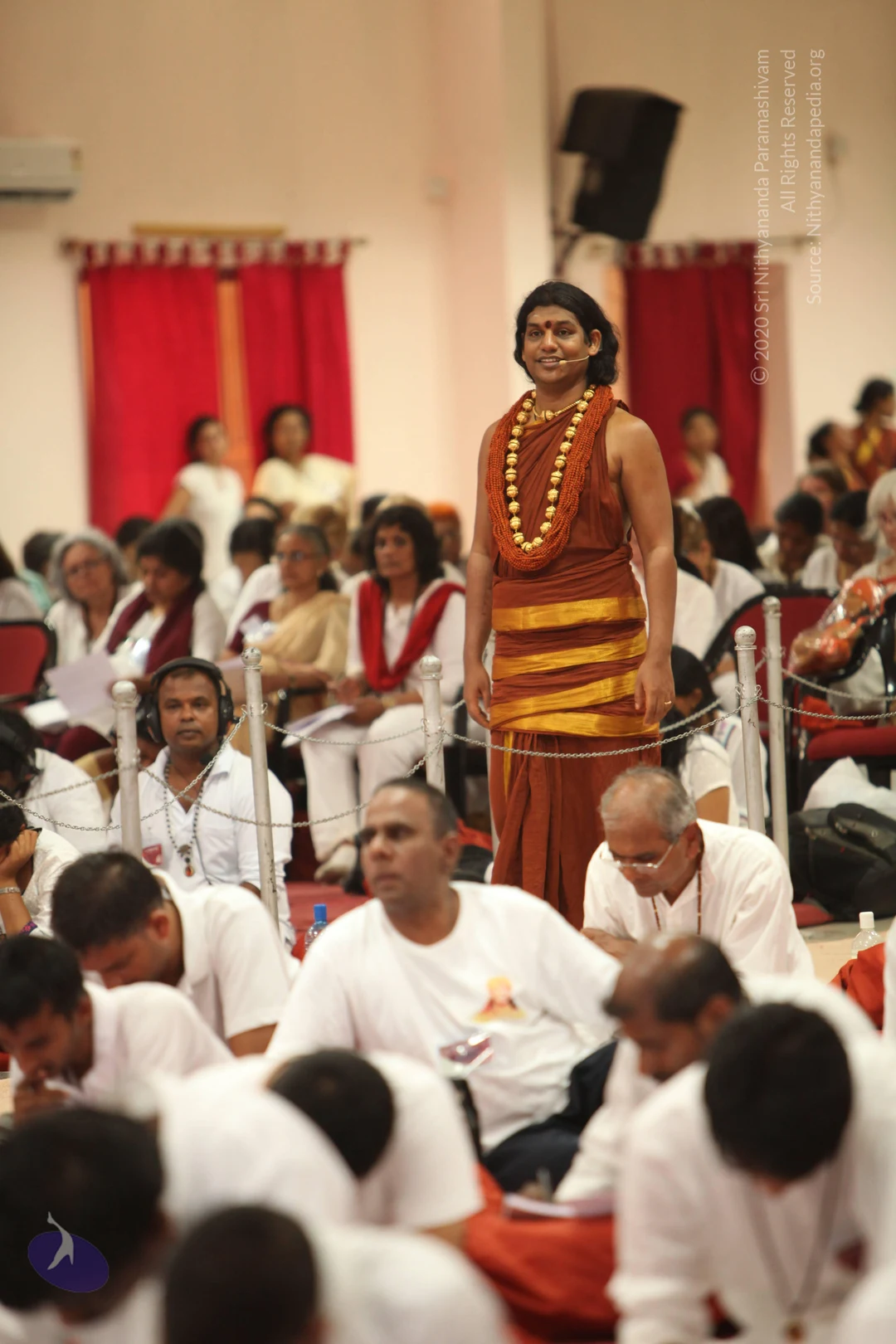
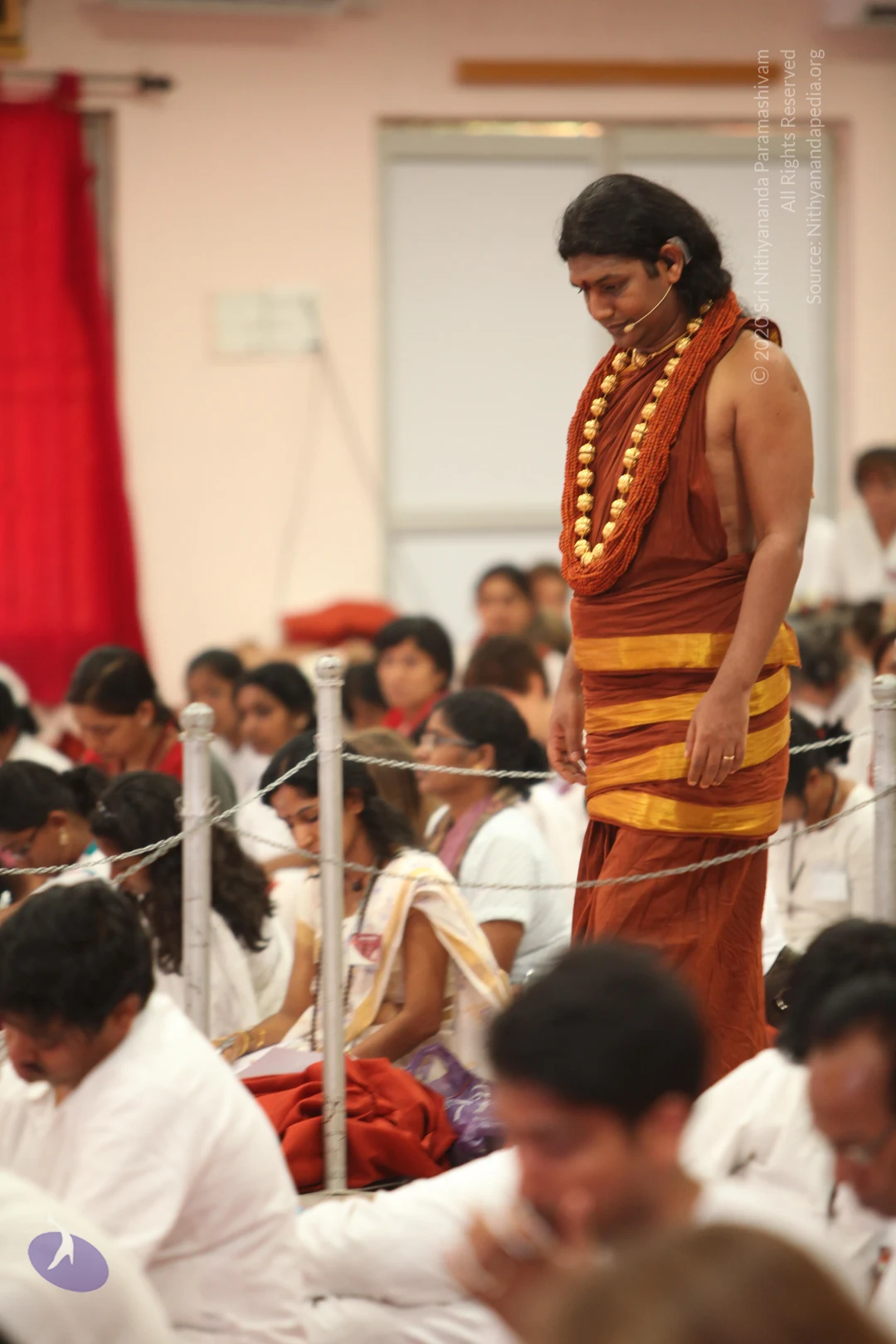
In today’s morning satsang, Paramahamsa Nithyananda inaugurates the 17th Inner Awakening at His Bidadi ashram. He launches His program with a special talk on the mystical dimensions of listening. When our inner space is filled with incompleted concerns we cannot listen to anyone, even to ourselves. Once we declare with intention to be complete, true listening begins. Through our new awareness and attention, our senses sharpen and our intuition awakens. We discover deeper truths beyond audible sounds and achieve nirogya – the state of well-being beyond simple health.

VideoAudio

Transcript:

0:19

Today’s subject for the Nithya Satsangh is: LISTENING AND SAMADHI. How ‘listening’ can directly enter into your system and make you experience Samadhi.

Listen! When you are completely authentic to who you are; Let me describe Authenticity.

You have three parts in your life:

· One, what you feel as you;

· How you project yourself to others; and

· How others feel about you.

List all the three separate, separate:

· Column 1: How I feel about me.

· Column 2: How I project me to you, to the world.

· Column 3: How the world wants me.

This is the three column.

In this three, pick up the peaks and make it into reality. That is Authenticity.

Understand, in this three column of qualities, how you feel about you, how you project yourself to others, and how others expect you; please understand, when you define with integrity how you feel about you, the qualities you feel about you, you use to define you, and the qualities you use to project to others, and the qualities others expect from you, when you list out all these three separate, separate, you will know which one is your peak. Bring yourself to the peak. That is Authenticity. Understand, that is “Authenticity”.

You need to understand, when you are in Authenticity, when you are practicing Authenticity authentically, your whole inner space will be so alive! Just listening, you will reach to the depth of you; you will experience the depth of you! Just by listening! Even now look inside you. Find, is there any incompletions? Is there any restlessness? If there is a restlessness inside you, incompletions inside you now, you will not be able to listen.

5:09

(HINDI)

Whenever you listen to you, you listen to others! When you don’t listen to others, you don’t listen to you also! Get it! Get it! When you don’t listen to you, you don’t listen to others! When you don’t listen to others, you don’t listen to you! Listen to you and listen to others. Only when you listen to you now first and see, you are in completion, you are complete, you can listen to others. If there is incompletions inside – ‘I have not done this’, ‘I have not done that’, ‘This has not happened’, ‘That has not happened’, ‘I am restless’ – if you have incompletions inside, be very clear, you will not listen to me! You may be sitting here out of compulsion, some other reason; but you will not listen to me! When you don’t listen, more and more incompletions happen.

Listen! It is like now because you are incomplete, you don’t listen. Because you are here and don’t listen, this satsang becomes one more incompletion in you! But if you start listening, this very satsang will lead you to ultimate completion! What do you need for completion? Listen to yourself! If your inner space tells you, you are in completion or incompletion, restless, whatever, tell yourself, ‘I declare completion now! If there is some incompletion, I will come and handle you after the satsang. Please wait where I left my shoes! Now I am complete! I am going to listen! I am going to listen!’

8:15

How many of you are cognizing what I am saying? How many of you are ready to declare now that you are complete? Alright!

Now close your eyes, tell yourself, ‘I am complete! I drop all the incompletions once for all! I keep them all out of my inner space!’ Declare completion! ‘I am complete! I am listening! Listening! Listening!’

You can open your eyes. Decide to LISTEN!

(HINDI)

11:16

Continuously listening! When you listen authentically, you do not need separate meditation practice, kriya, anything for enlightenment. Why do you need any kriya? Just to change the words you utter towards you. You constantly utter, “I am bound! I am bound! I am powerless! I am bound! I am powerless!” All kriya, all sadhana, all spiritual practice is just to break that and make you tell “I am free! I am powerful! I am enlightened!” That’s all!

If you listen, especially words coming out of completion, you will suddenly see, that very words go and change, just change your inner space! If you listen completely, even if the other person is in incompletion, you will find that out! Your space of completion will find it! ‘Hey, this guy is in incompletion! His space is in incompletion!’ And you will know how to help him to be complete!

In Zen tradition, Vedic tradition, Tantric traditions, these three traditions use the power of sound. Vedic tradition, Vedic chanting is nothing but just by declarations becoming it! Every morning you declare, ‘Aham Brahmasmi! Aham Brahmasmi! Aham Brahmasmi! Shivoham! Shivoham! Shivoham!’ Just the declaration! Such powerful declarations! Especially collective declaration! You are there in that space!

14:06

If India gets back to the style of Vedic chanting every day, at least every morning, I tell you, India will be free from poverty, free from diseases, free from everything inauspicious! It is not too late! O, India! I am giving you my clarion call! Wake up! Enough of your Hindu abusal mentality! Just these declarations are enough! Because the space from which you act is responsible for the place you create. I wanted every village to have their temple from where every morning the Vedic mantras are chanted, the loud collective declarations are uttered and the whole village gives those declarations and supports it by Tathaasthu! Of course, temples are there, but these declarations; let me first do in Bidadi campus.

Every morning, of course, we have these declarations: Loka samastha sukhino bhavanthu! During pada puja we have these declarations and bless the world. But I feel it should be done in the morning also when you wake up. When you wake up!

(HINDI)

17:50

Understand, I am not promoting Vedic chanting as a faith or as a religious practice, or as a religious sentiment. NO. I am promoting Vedic chanting as a scientific method for prosperity, scientific method for awakening, scientific method for success!

Listen! With Integrity and Authenticity, look in, cognize and raise your hand, after the declaration that you are complete. Just now, immediately after the declaration, how many of you felt you are really complete? That is the power of completion! Understand. That is the power of completion!

This is the power of declaration! Your mind is not your enemy. It is just untrained child. Have the right attitude towards your mind. Your mind is not your enemy. It is just untrained child.

I have a pet; somebody gifted me. He is not my enemy if he doesn’t listen to what I say; he is just untrained. I don’t need to kill him, attack him. I just need to train him. But, with your mind, you always have that enmity: ‘I told you two times! You did not listen!’ But don’t you see, unconsciously you are telling him ten times to do what he wants? You are misguiding him! It is like if I tell my pet, ‘Come! Come!’ But in the body language, if I say, ‘Come, come, come, come’ the fellow will be completely confused, because the hands are showing, ‘Go! Go!’, words are coming, ‘Come! Come!’ What will happen to that poor fellow? That is what you are doing to your mind!

21:10

One side unconsciously you are showing the hand like this (Go! Go!) and consciously trying to tell, ‘Come! Come! Come! Come! Come! Come! Come! Come!’ What will happen to that poor fellow? It is like Indian drivers. They will put the left indicator, show the right hand signal, and drive straight! And the fellow who is coming behind does not know what to do! Are you taking left? Are you taking right? Are you going straight? In confusion! You, you, you are responsible! You need to take the responsibility! You are responsible and you need to take the responsibility!

Listening, listening makes your inner space cognize right declarations. When you listen, you will find out two things:

· How you miss many time what is told.

· Sometime you will find out how the speaker is missing links of what he is uttering. Of course, not with me!

Usually, if you are listening to a being who is already in completion, you can’t find a single disconnect from the flow of the thoughts. I may be unclutched, but I am never disconnected. But when you speak with ordinary people who are already in incompletion, you will find it very clearly. You will find very clearly!

24:18

Listening awakens your intuition. Listening awakens your intuition! Understand! Understand, listening awakens your intuition!

(HINDI)

Listening awakens your innermost intelligence. Listening awakens your innermost intelligence! Catch it! Catch the truth! Get the truth! So many things are said even during the break; understand, even during the gap! Even during the gap, during every silent moment, so many things are said!

(HINDI)

27:16

For a person who wants to begin the life, the first thing he needs to learn is “LISTENING”! That is why I keep this as a first lesson in our Gurukul. This should be the first lesson. Kids should be taught to sit straight without restlessness, without moving the body, first ten days. Even in the eN-Genius program, the first lesson, at least first full day, they should be taught, again and again, to sit straight without restlessness, LISTENING! If somehow the listening starts in you, every sense, every sense will become so alive, awakened! I tell you, once the listening starts, your eyes will become sharp!

Learn listening; you will not need spectacles! I am talking to you with the responsibility I am talking in a national television! I am not promising any false miracle cures! Try, you will see! You will see! Try, you will see! Try! Inside you, listen even during the gaps, listen to the absence! When there are words, listen to the presence of the sound! When there are no words, listen to the absence of the sound! When you listen, when you listen, your smell, smelling capability will become sharp! Your listening will become sharp! Your seeing will become sharp! Your ability to receive the touch will become sharp!

Listen, when you can see sharply, when you can smell sharply, when you can feel the touch sharply, you will be so alive, so alive, you will be healthy, beyond diseaselessness! Not just “aarogya”, I am coining a new word, ‘nirogya”! Niroga! You know “roga” and “arogya”; you do not know “nirogya”! “Nirogya” is “wellness beyond health”! Understand, “wellness beyond health”! Listening can do so much!

32:37

(HINDI)

These gaps I give is the moments I listen to you actually! Because, in the gaps, I know, based on your body language, whether you are restless or restful! Are you listening? Or are you just arguing inside you? Sometimes people argue with themself constantly inside them! Non-listening! Non-listening is Death! Listening is Life!

(HINDI)

36:14

By “hearing”, understand, by “hearing” you won’t understand me. Only by “listening” you can understand me. People who listen, they understand what I am saying, even without any introduction to any spiritual philosophy. People who don’t listen, they do not understand.

(HINDI)

Listening, when you start listening, your Kundalini straight shoots the Crown Center. Your Kundalini is straight awakened! You need to catch, catch the truth. Only people with listening will even be interested to listen to my satsangs, because I am giving enough of gaps between every word. Usually, the professional speakers don’t give gap, because if they give gap your mind will go away somewhere. It won’t come back. So, professional speakers are always trained to “blah, blah, blah, blah”. It is more like a catharsis. Their incompletion they vomit on you! And you grab that incompletion and vomit on somebody else! I am not professional speaker. I am professional listener! Before I start speaking, in the silence I listen to you. Every time when I give a break between words, I listen to you. I speak what will make you listen. That is why my listening ends up as your listening! As I am a listener, I make you listen! I end up in making you listen!

(HINDI)

40:21

Today is dedicated to “LISTENING”, because from there life starts! Don’t be in a hurry to cognize what I am speaking, because your cognition is so much filled with judgments, opinions, attitudes, personal beliefs, attributes. No! Don’t be in a hurry to cognize. Don’t be in a hurry to classify, ‘I know it already! I have done Inner Awakening already! I have heard the morning satsangs every day!’ No! If you already heard even once, I will not repeat it again! Anything you listen from me, understand you are listening NOW, FIRST TIME! If you already listened, I will make sure the words does not fall in your ears second time, because I won’t waste your time or my time! I am Kaala!

(HINDI)

The essence of today’s satsang is: “LISTEN”!

Photos From The Day:
Nithyananda Times

Photos Of The Day:

Morning-Message

01-Morning-Message

02-IA-Session 2

03-IA-Day1-Session2

Glimpses from the day

Photos from this day

View all 291 photos

Photos From The Day:
37 photosSource gallery
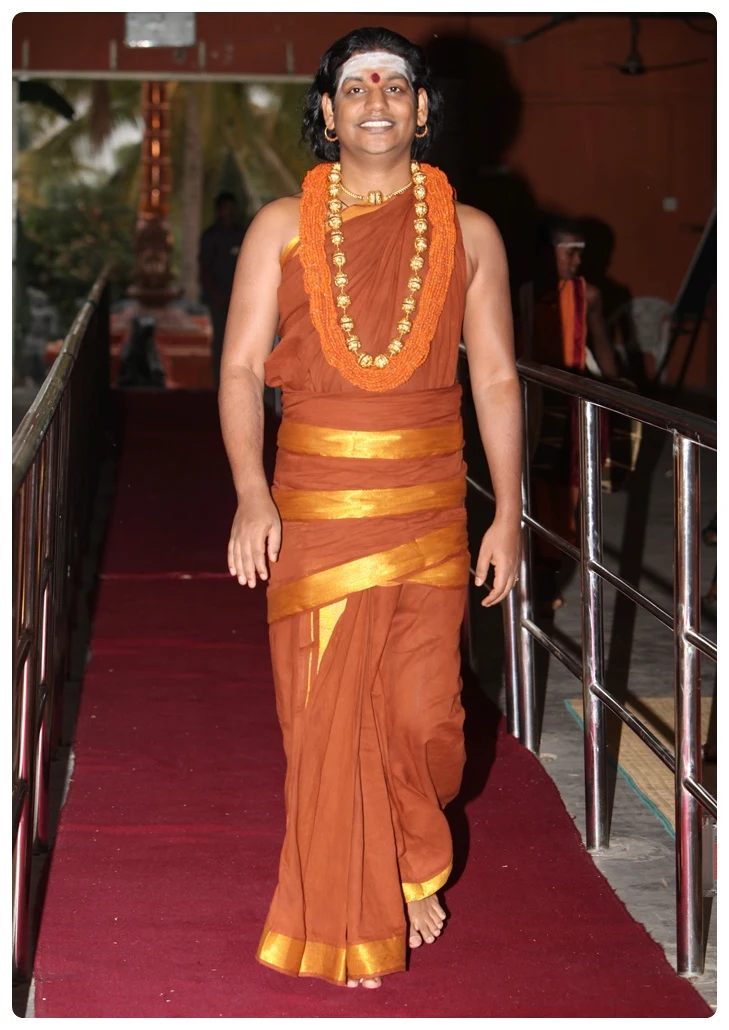
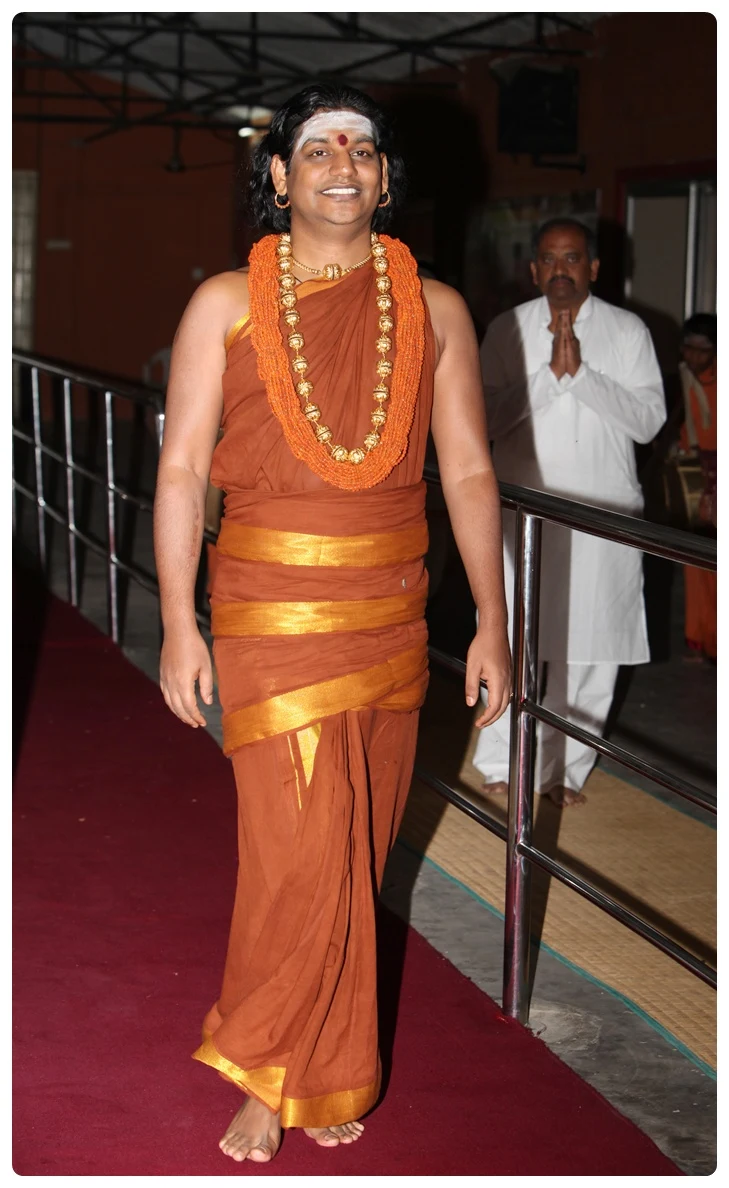
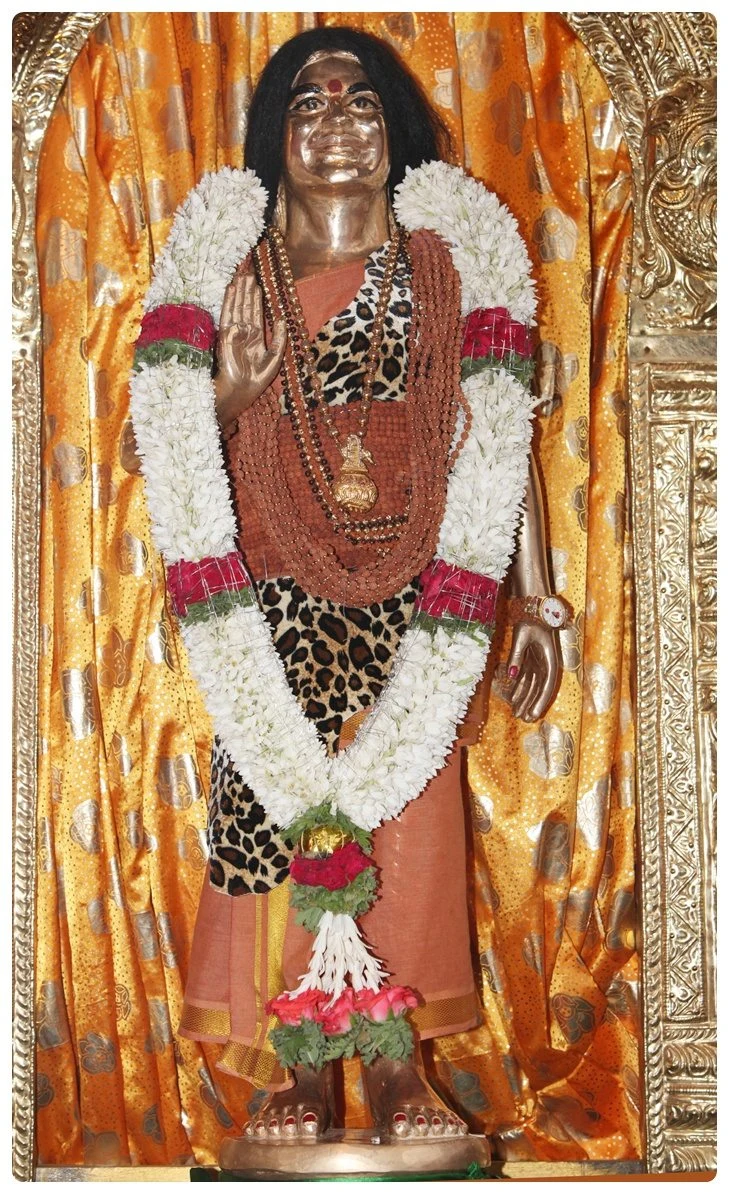
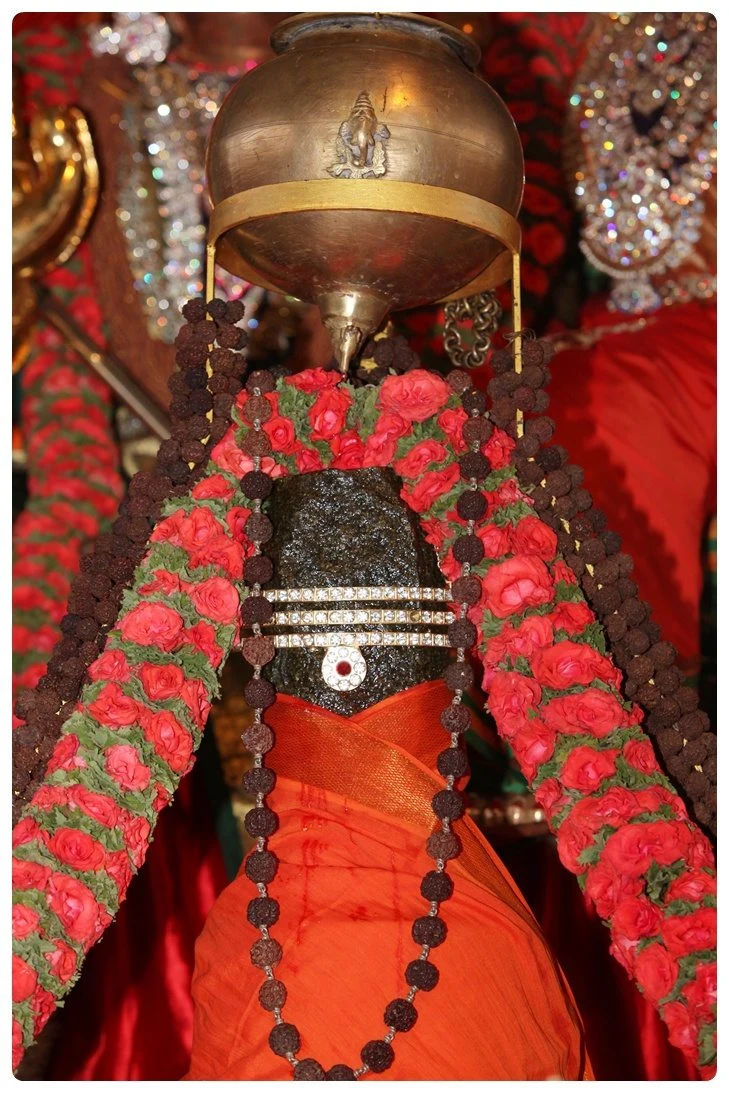
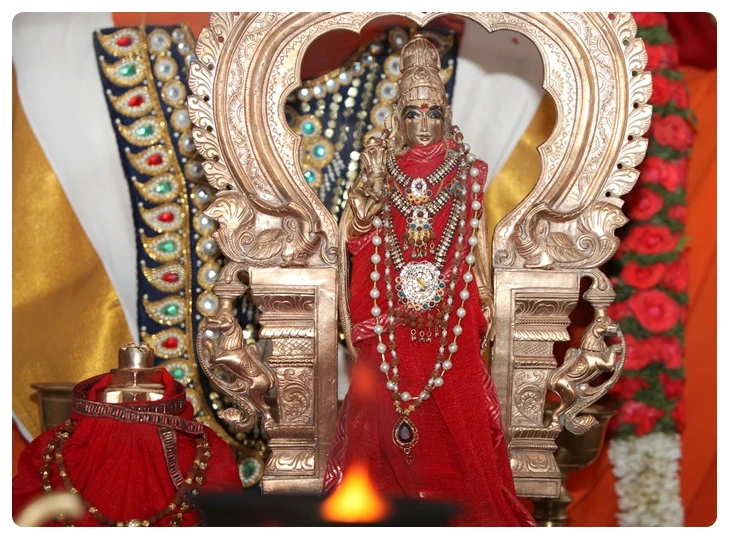
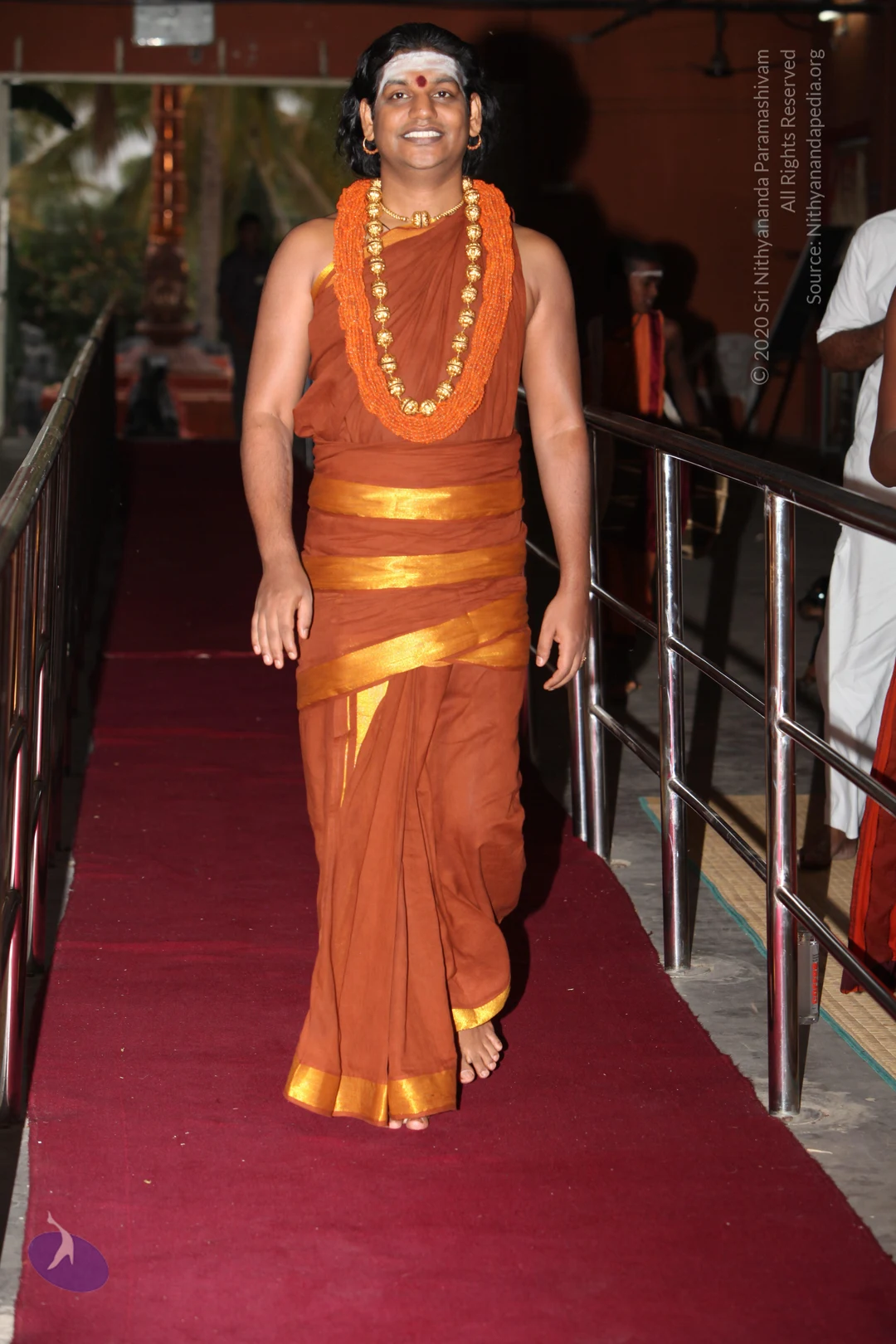
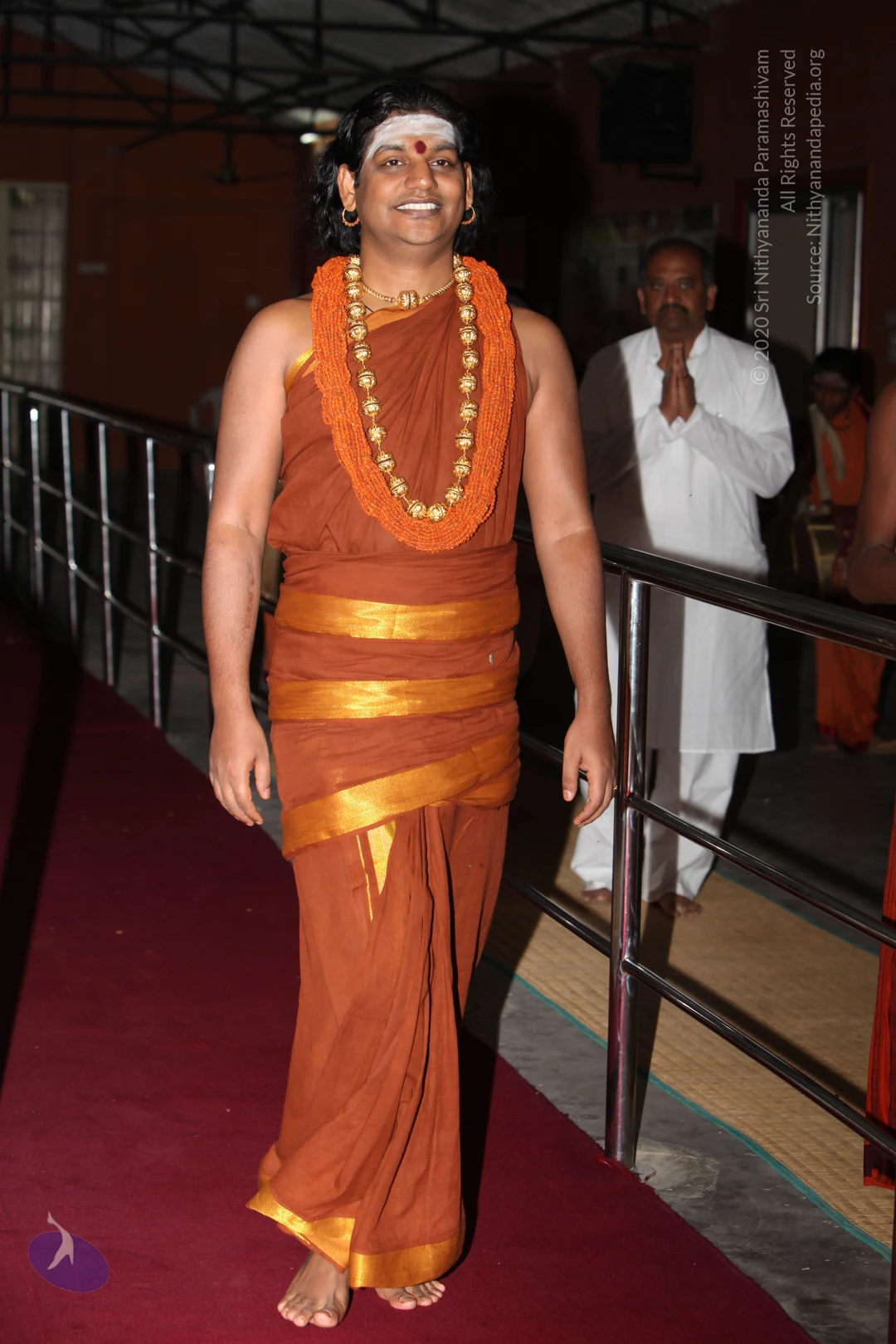
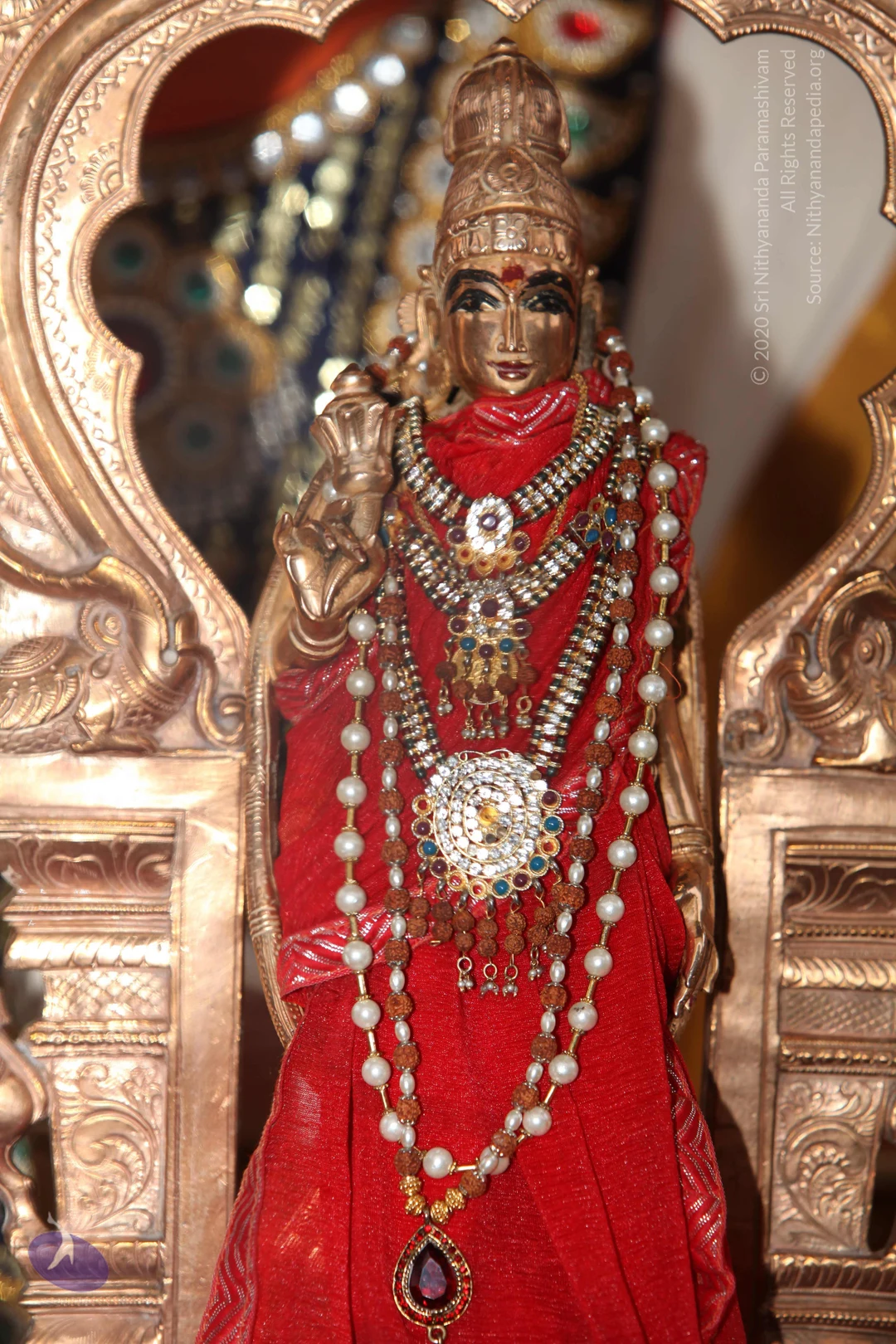
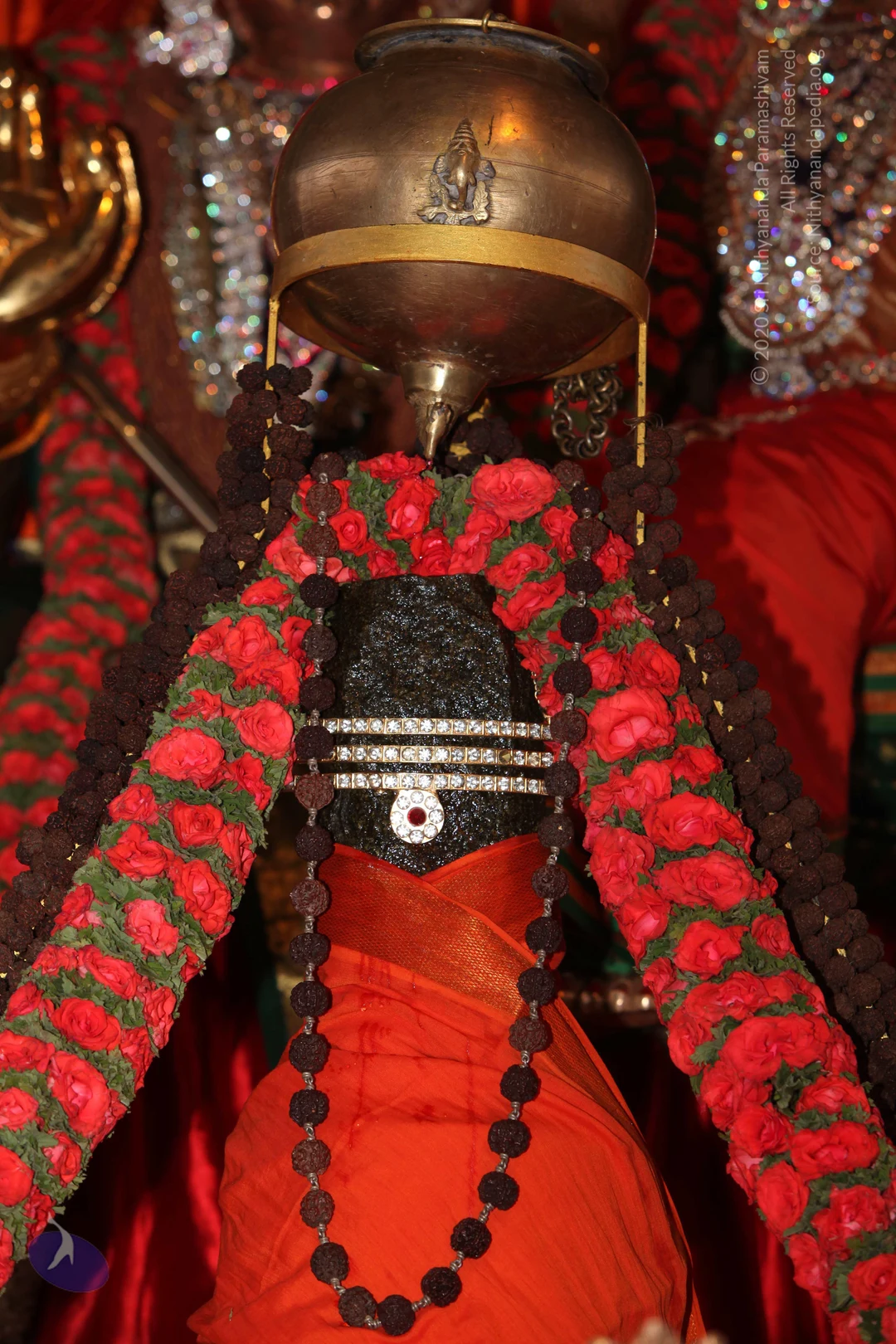
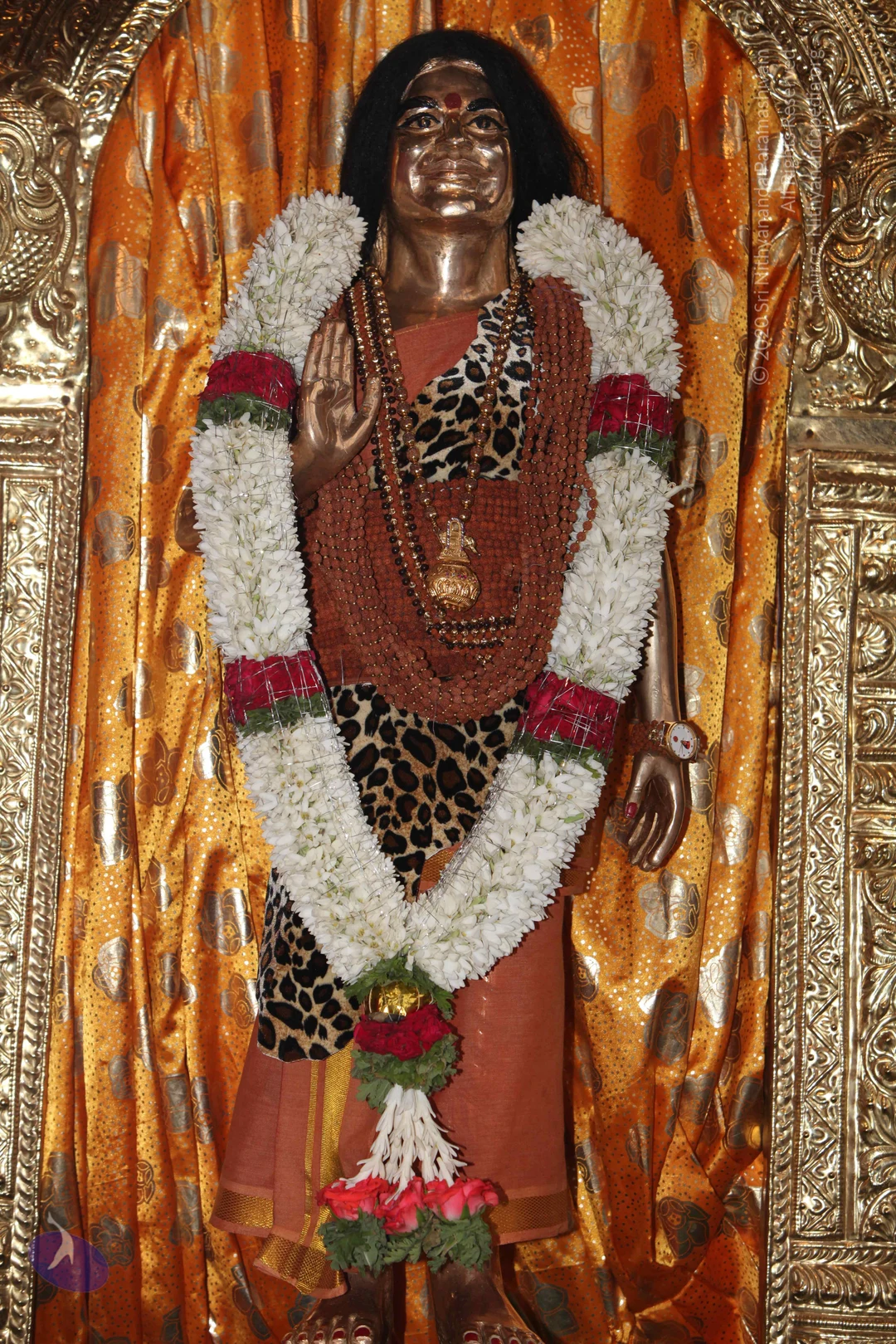
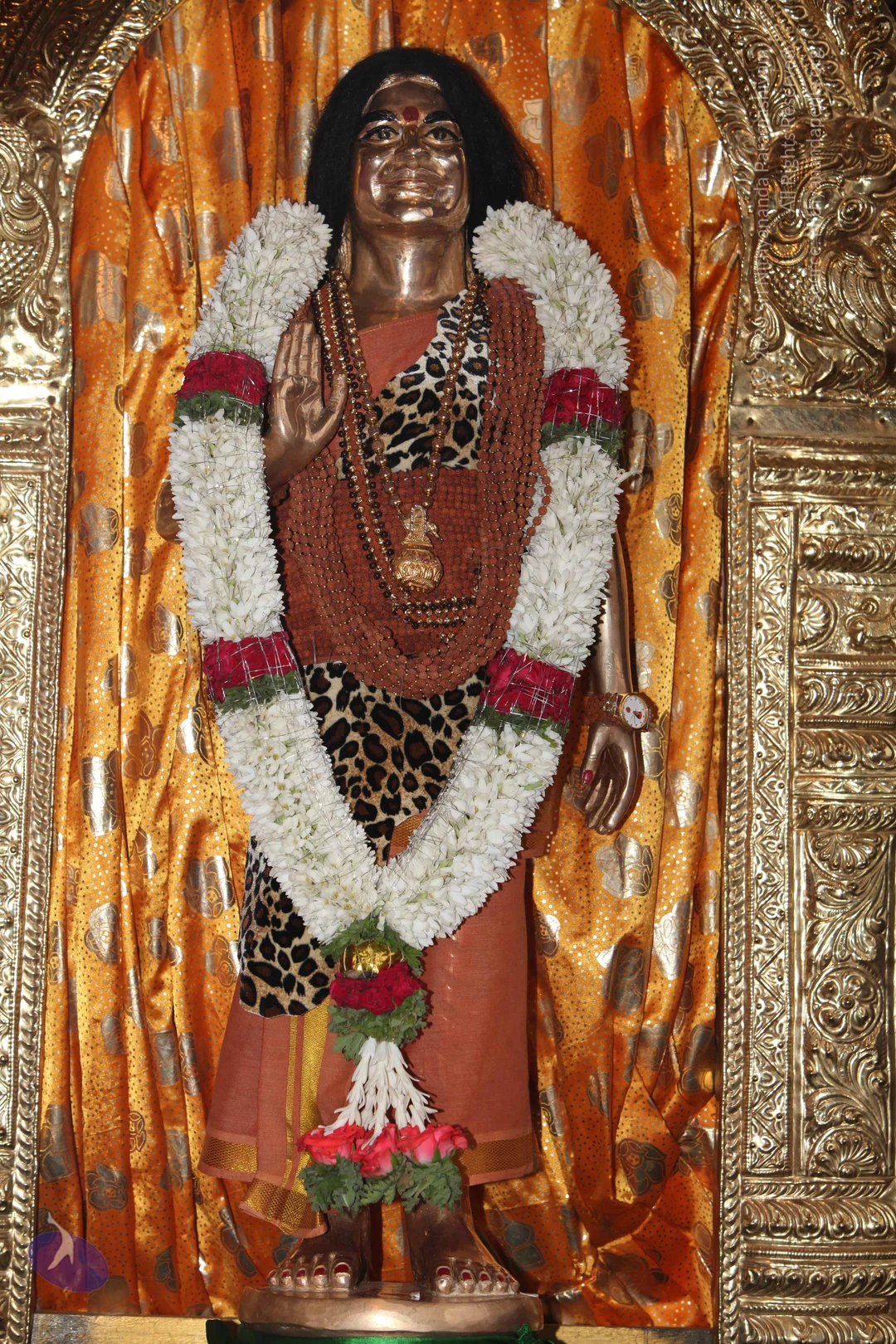
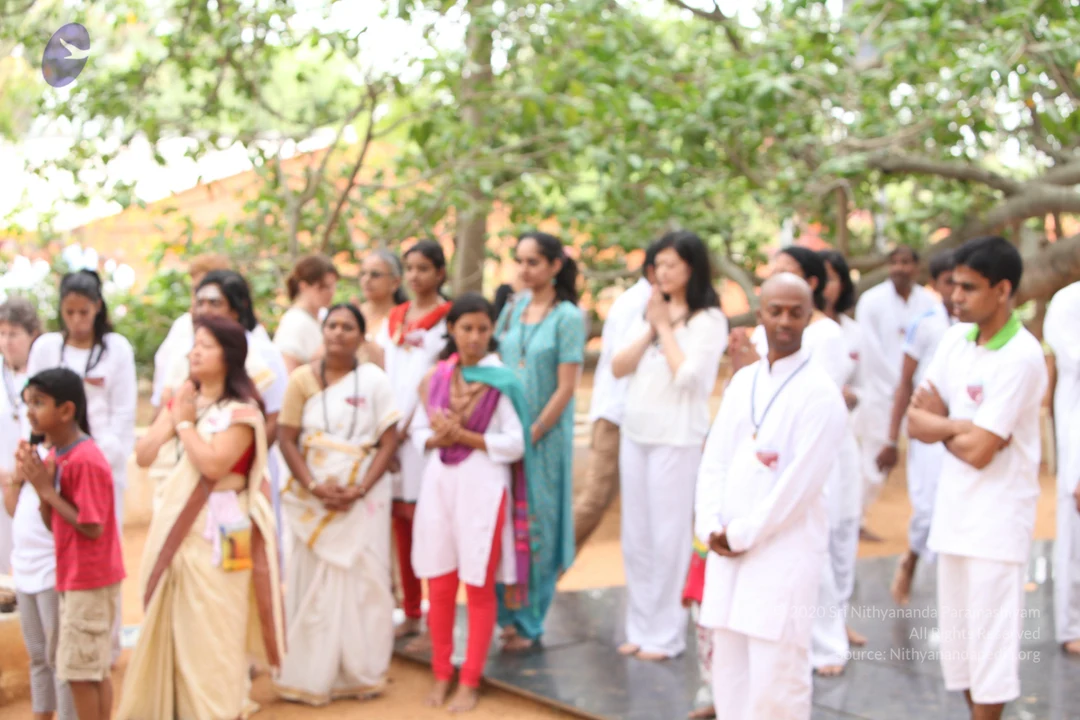
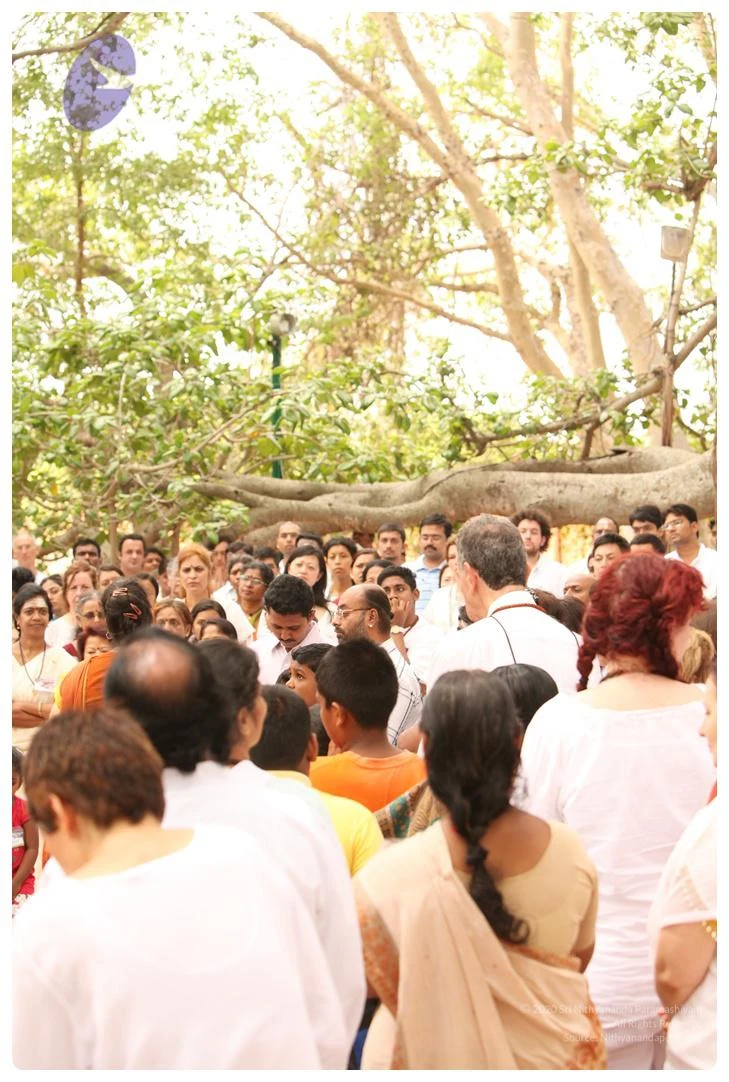
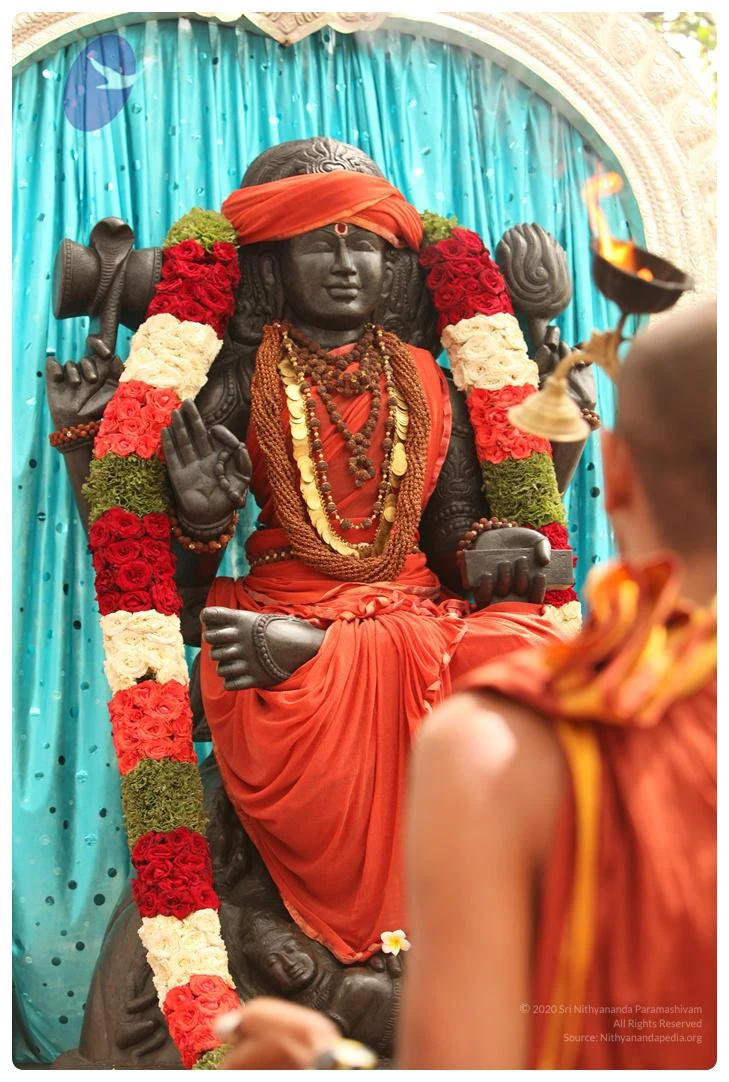
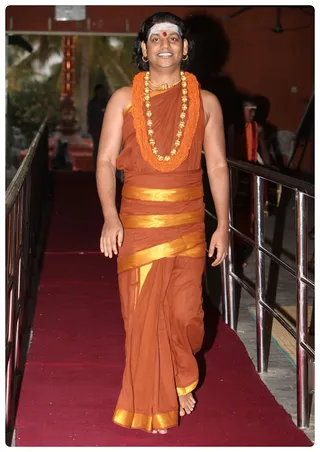
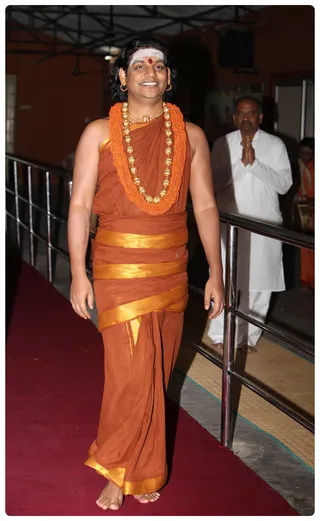
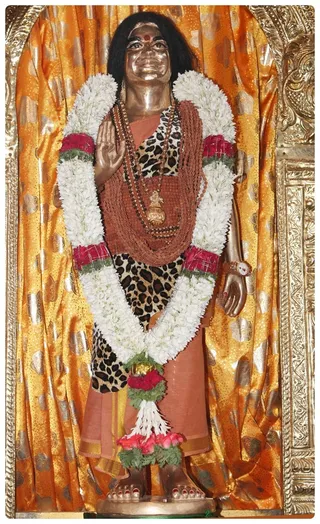
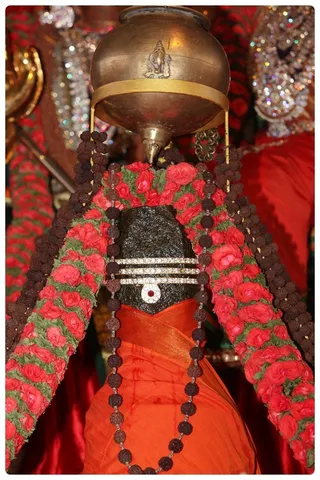
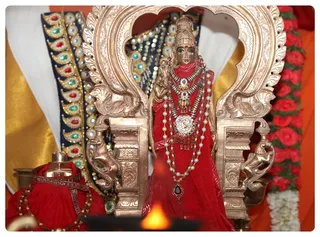
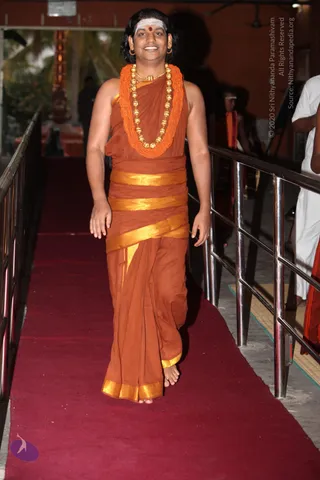
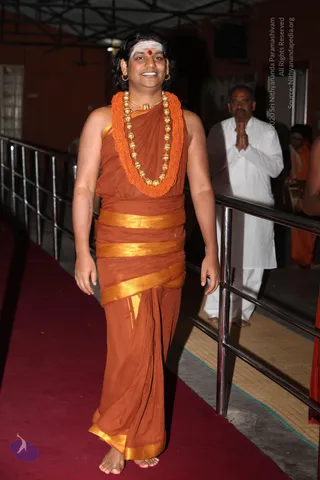
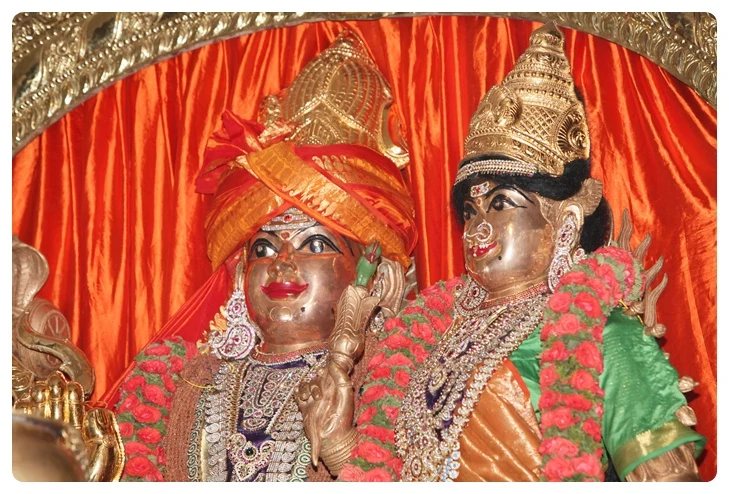
Two painted metal deity murti stand side by side against a bright orange-red draped cloth framed by a gold arch. The figure on the left wears an orange and red turban and a silver-embroidered blue garment with a gold tilaka on the forehead, holding a green stalk or flower. The figure on the right wears a gold crown, a green and gold blouse and an orange sari, with a red bindi, nose ring and layered gold necklaces. Both are adorned with red rose garlands and jewelled ornaments. No living people are visible.A smiling man with swept-back dark hair walks barefoot down a red carpet between silver metal railings. He wears a rust-orange cloth wrapped around the body with gold-bordered bands at the waist and a sleeveless drape over the shoulders. A thick orange beaded mala with a large gold bead necklace hangs at his chest, and he has a white tilak with a red dot on his forehead and gold hoop earrings. Behind him, a second person in orange robes stands near a dark wooden pillar in an open hall with palm trees visible outside. Probable Swamiji (in_person): the long hair, orange-gold clothing, rudraksha-style mala and ceremonial gold necklace match the page's claim, though his face is not used for identification.A smiling man with swept-back dark hair, a white vibhuti line with a red kumkum dot on his forehead, and gold hoop earrings walks barefoot on a red carpet. He wears a rust-orange dhoti-style wrap with broad gold borders and a large orange rudraksha mala with gold beads. Behind him, an older man in white dhoti and shirt stands with palms pressed together in anjali. A metal railing and a wooden-floored corridor with an orange-painted wall are visible. Swamiji (probable) appearance cues include the long swept-back hair, saffron-orange robe, rudraksha mala and ceremonial gold necklace, and he appears to be walking in a procession or ceremonial arrival.A bronze-toned statue of a standing male figure with long dark hair, a red bindi and a rudraksha mala with ceremonial gold pendant, wearing a leopard-print blouse under a terracotta-coloured wrap. White jasmine garlands with red ribbon bands drape the statue, with a red and white flower cluster at the feet. The statue stands in front of a gold and orange brocade backdrop with ornate gold frame edges, its right hand raised in blessing and a wristwatch on the left wrist.Close view of a black stone Shivalinga adorned for worship. A brass kalasha pot with a Ganesha relief sits atop it, with a copper-toned spout dripping above. The linga wears a red and green rose garland, a dark rudraksha mala draped down its front, and a diamond-studded tripundra with a red central stone, plus an orange cloth wrapped around its base. Glittering jewelled decorations and a red fabric backdrop fill the frame edges. No people are visible; this is a photograph of a deity murti during abhishekam-style decoration.A brass or bronze deity murti stands in a carved golden arch with lion-like supports, dressed in a red sari-like cloth and adorned with layered pearl necklaces, jewelled pendants and a large central medallion. A red velvet cloth with gold trim sits in the foreground, a lit oil lamp flame glows at the bottom edge, and a garland of red flowers and white jasmine hangs on the right against a gold and navy embroidered backdrop. No physical people are visible.
Morning-Message
28 photosSource gallery
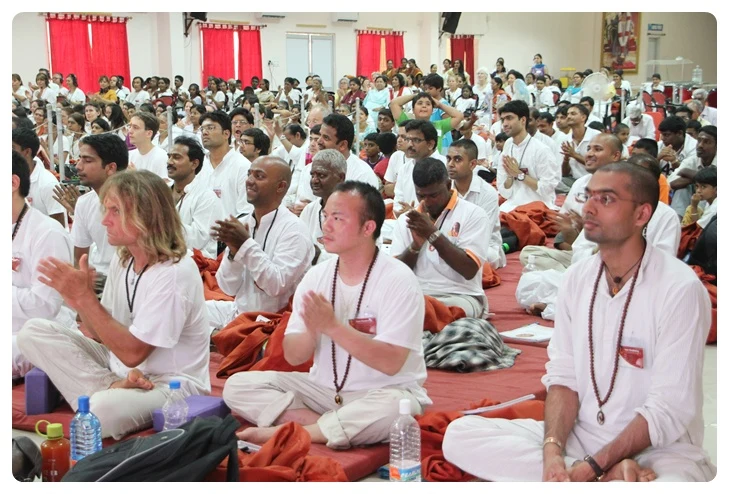
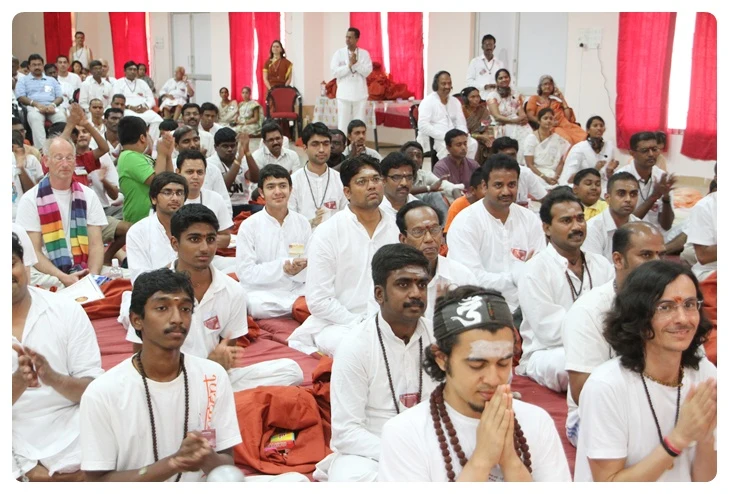
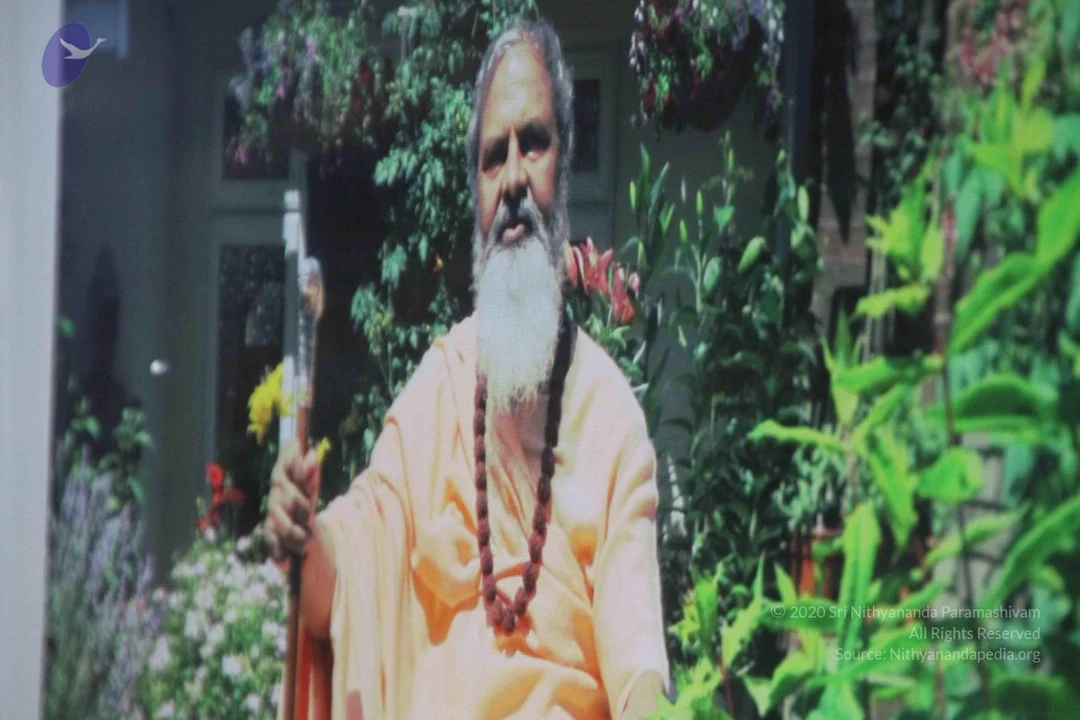
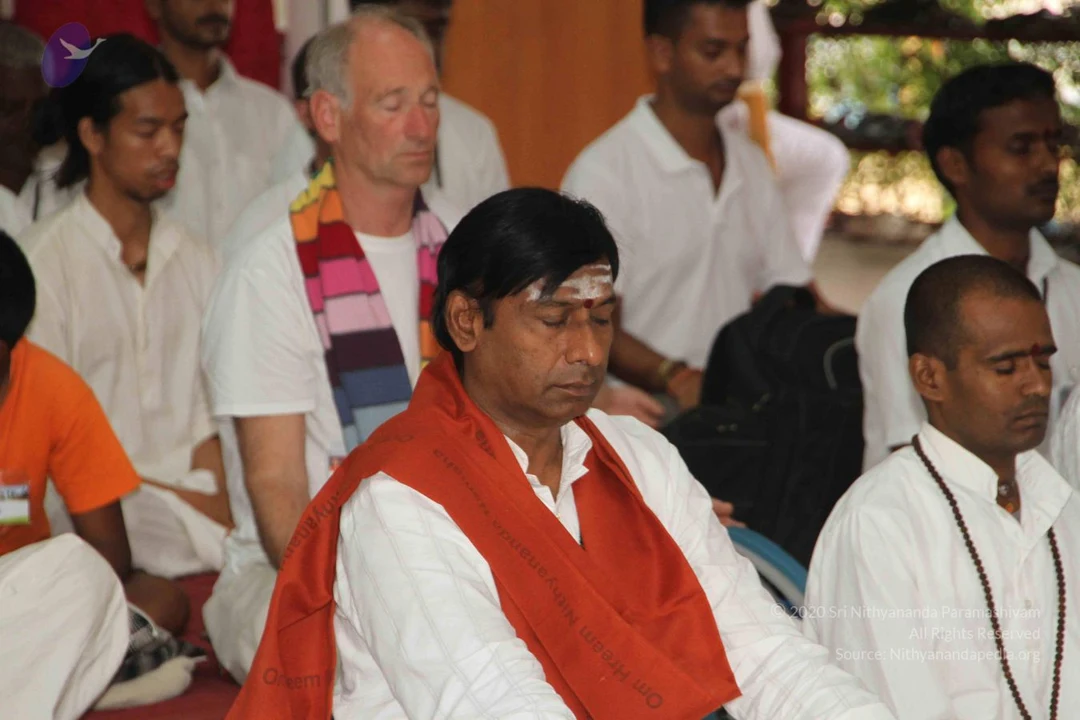
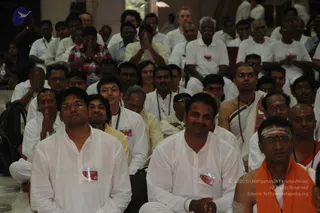
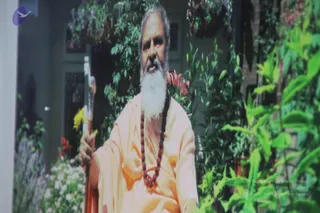
Photograph looking up at a tall ceremonial copper structure against a pale sky. The top shows a tiered copper superstructure with scalloped wooden-brown panels, small hanging bells, and two finial tops with feathery plumes. A red-orange cloth is draped over the lower tier, and a copper and brass base column with embossed floral patterns supports it, with ropes hanging from the side. No people are visible.A woman with shoulder-length reddish-brown hair stands in a room with a red curtain on the right and a pale wall on the left. She wears a white short-sleeved top, a cream shoulder bag strap, a gold bangle and dark beaded bracelets, and a small name badge on her chest. She holds a white foam tray with paper napkins, a small cup and food scraps, and appears to be picking up or sorting items from it. A partially visible person with dark hair in a striped top stands at the far left edge. A small paper notice is pinned to the wall behind her.Close-up photograph of a puja tray during a ritual. A hand wrapped in a saffron-orange cloth with a broad gold border rests near a heap of white and yellow flower petals and a silver conical vessel with a white cone and green leaves. Silver bowls with repoussé patterns hold orange-yellow liquid and more petals. The lower corners show more silver vessels and a tilted floral arrangement. The scene conveys ritual service rather than any identifiable person.A seated audience of devotees fills the frame at a satsang hall, most dressed in white kurta-style clothes with name badges clipped to their chests. Several have palms pressed together in namaskar and eyes closed, while others sit with hands folded. In the lower right, a man with white tilak markings on his forehead wears an orange shawl over white clothing and a rudraksha mala. A bald man in a white dhoti with a sacred thread and mala sits at the right edge. No person can be confidently identified as a person; the page indicates his presence, but the visible figures show only devotees and no clear appearance cues for him.A seated audience of men in white kurtas and white dhotis fills a hall at a satsang, many wearing red-and-white name badges on their chests. Several are smiling, and one man in the foreground at right wears a tilak and orange cloth. In the upper rows a man in the middle claps his hands. Rudraksha malas are visible on some necks. No speaker is visible in the frame, and no one is seated in a clearly elevated position. The room has pale walls and a white railing edge at left.A large projected image on a screen shows an elderly bearded man in a saffron-orange robe draped over his shoulders, wearing a long rudraksha mala around his neck and holding a tall wooden staff with a yellow flower tied near the top. Behind him, green leafy plants, pink and white flowers and a hanging planter fill a garden setting in front of a building with windows. The man appears on a screen rather than physically present, so this is a depiction. Appearance cues include long white beard, swept grey hair, saffron clothing and rudraksha beads, consistent with a person. The screen image carries a and a Nithyanandapedia source credit, which are omitted from the description

01-Morning-Message
127 photosSource gallery
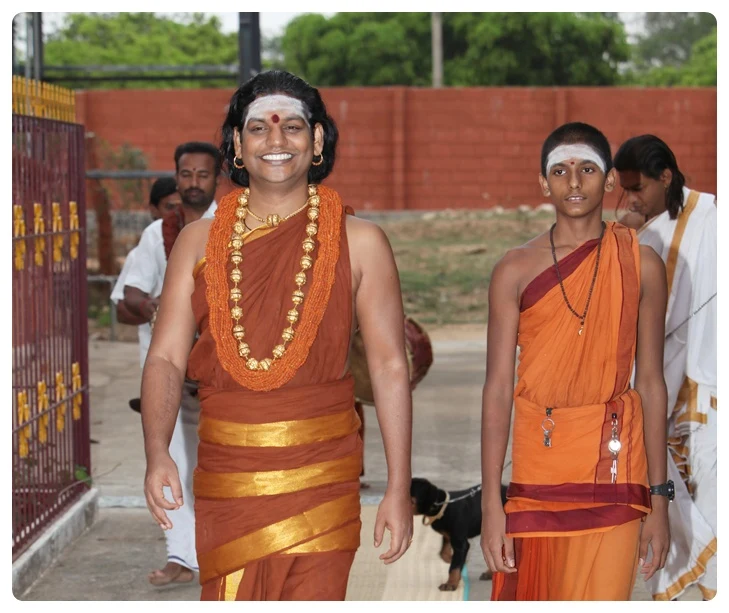
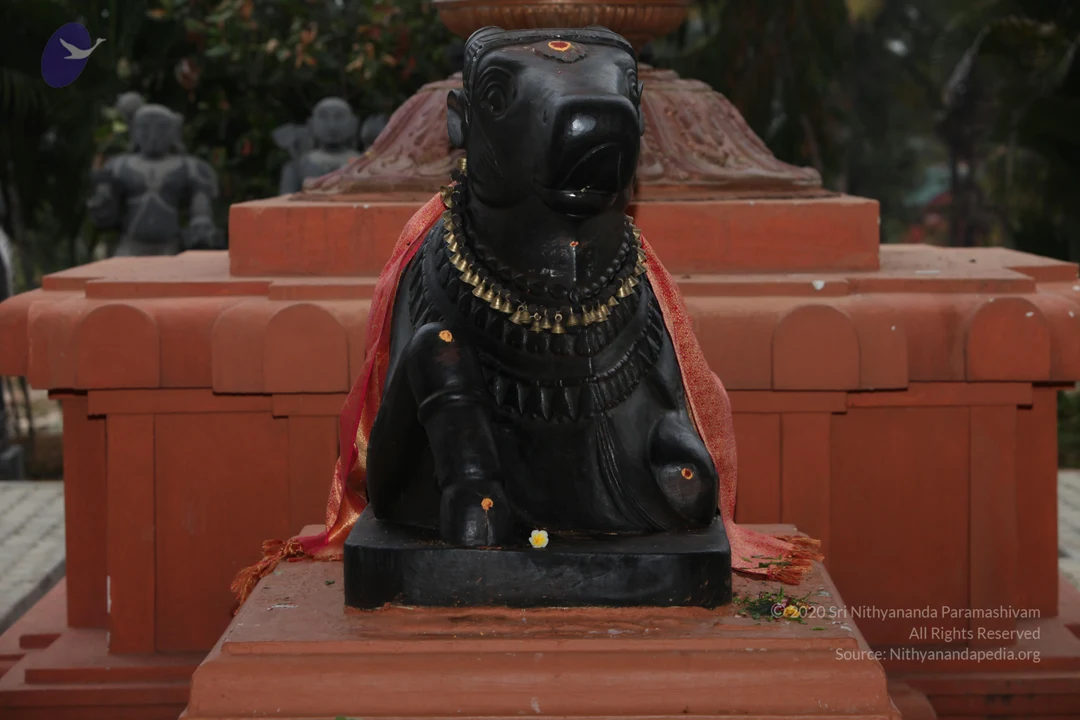
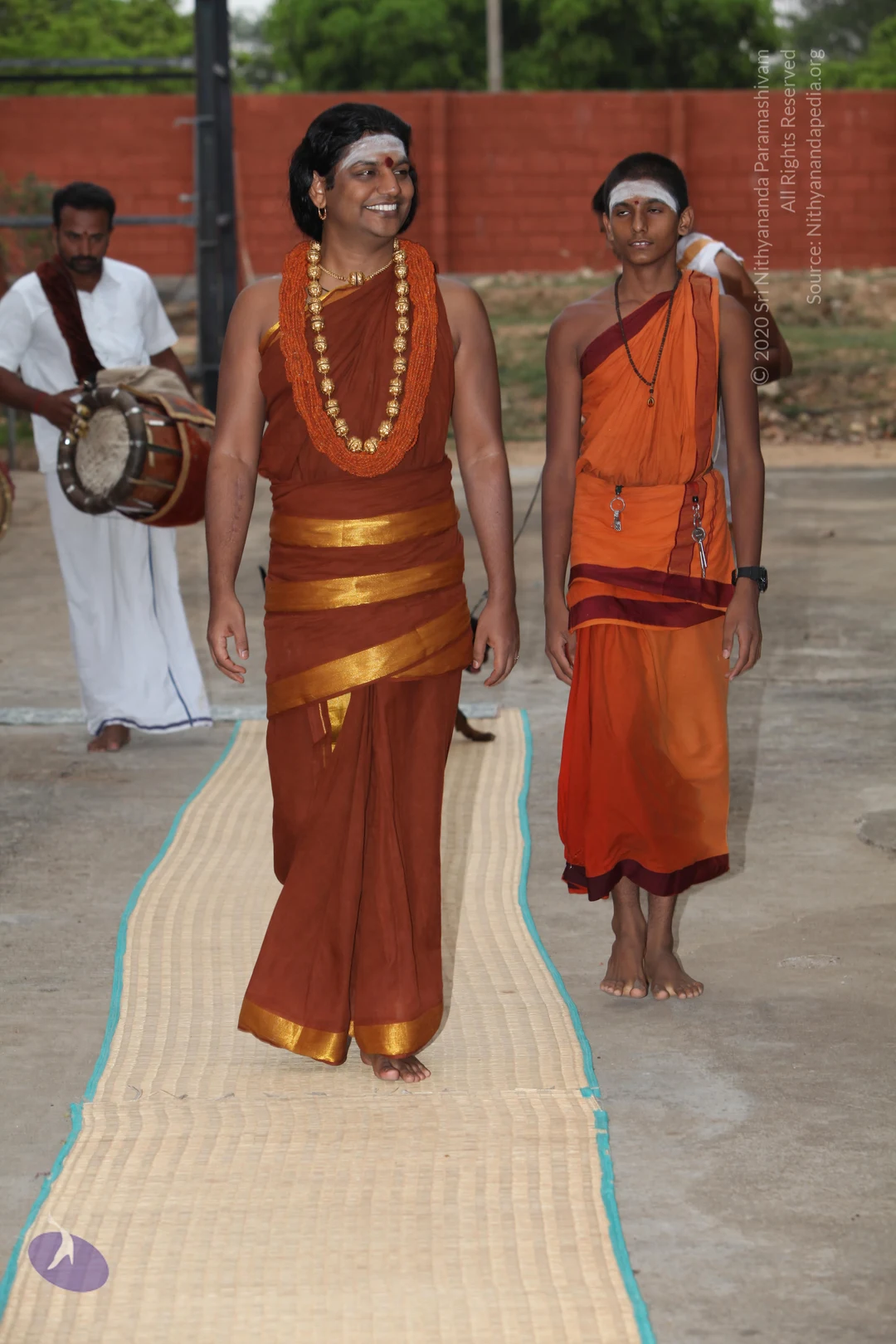
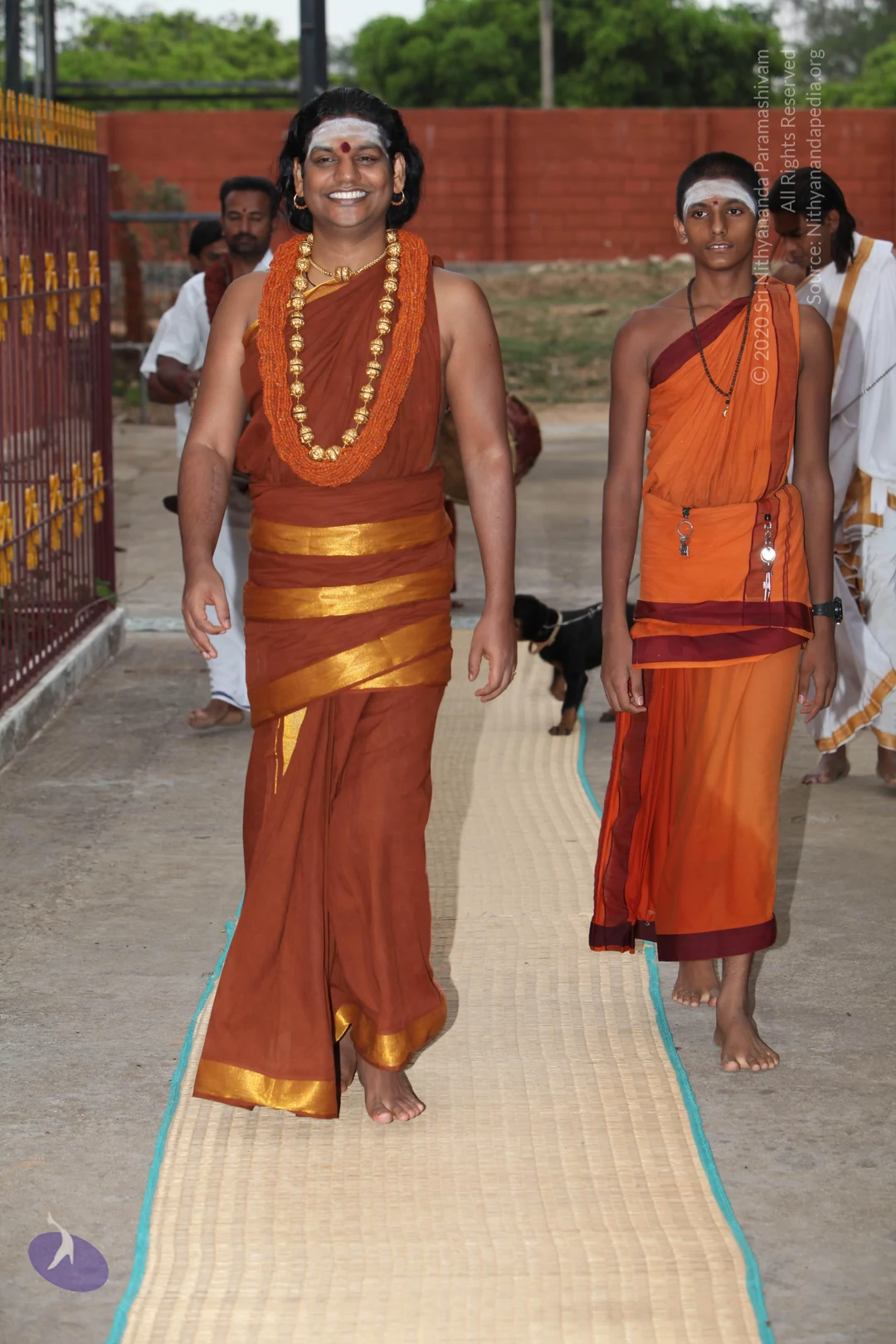
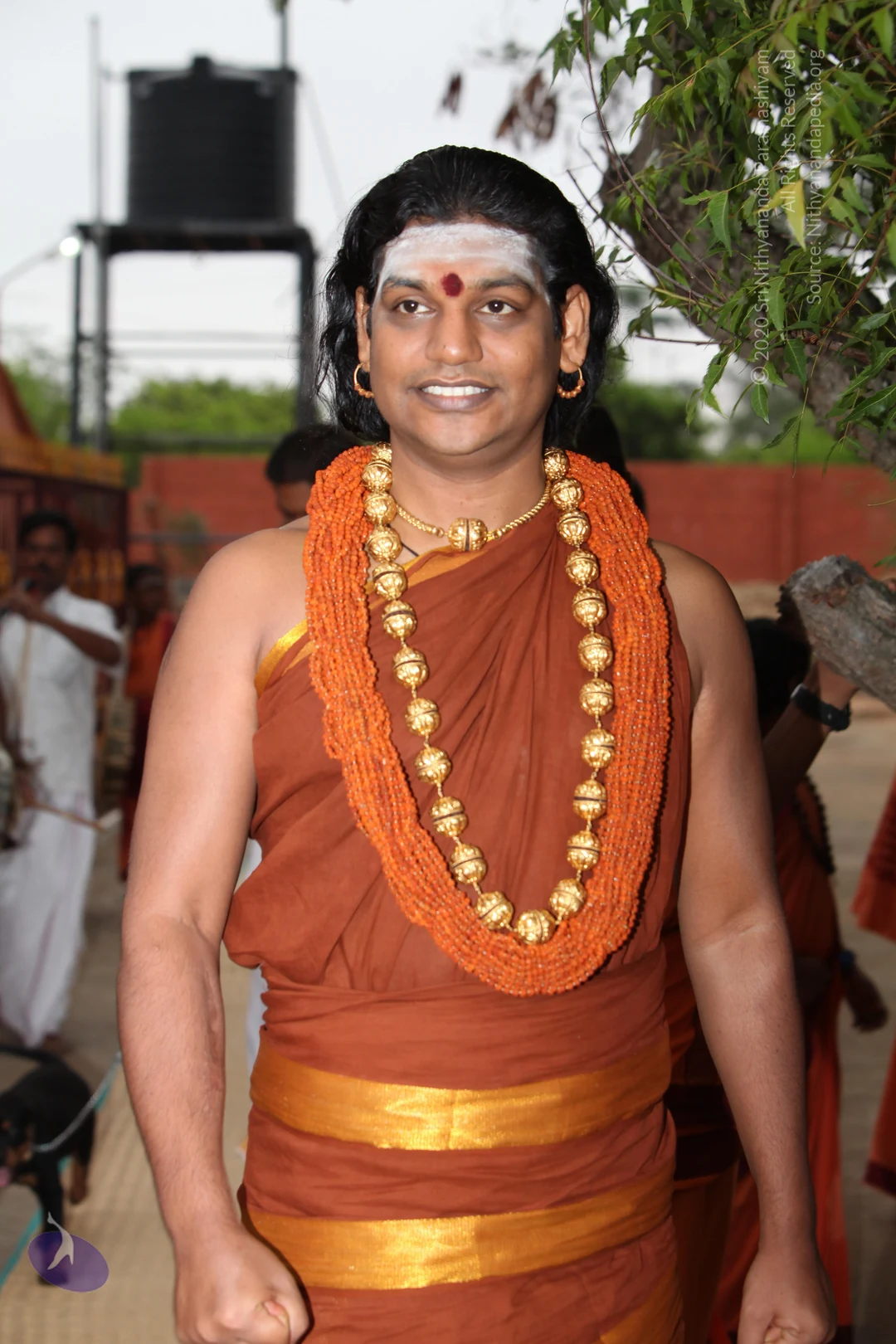
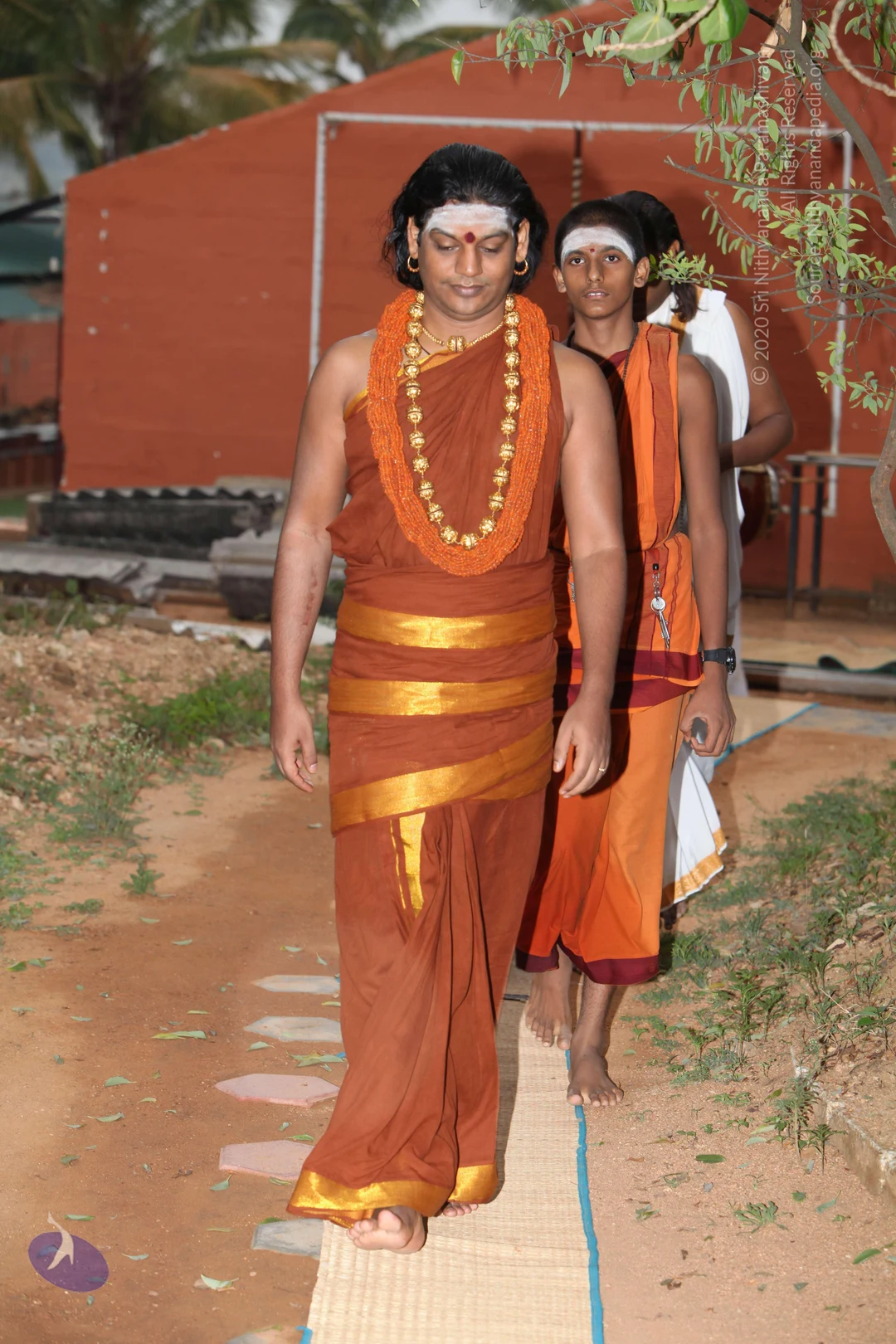
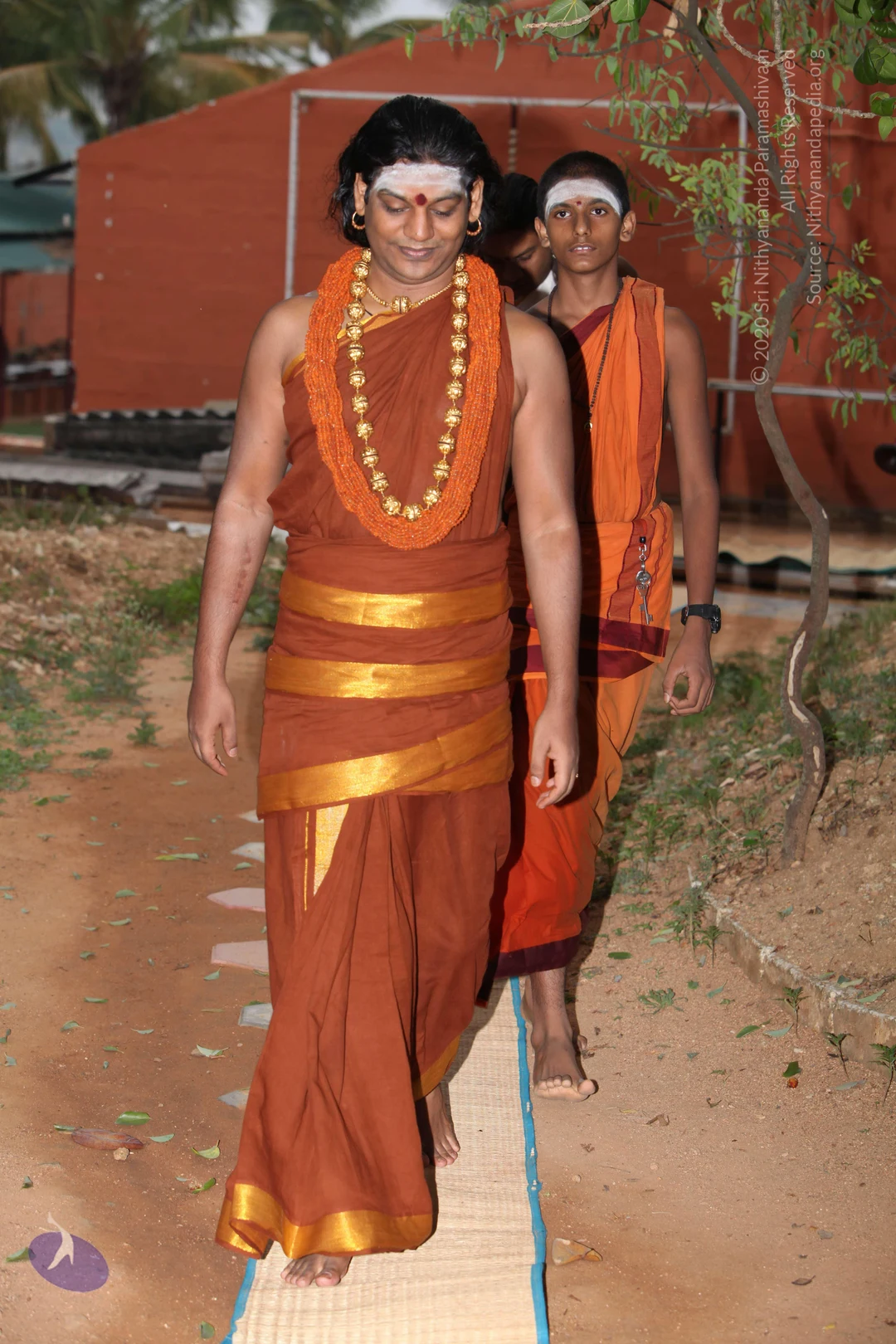
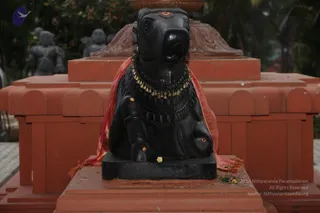
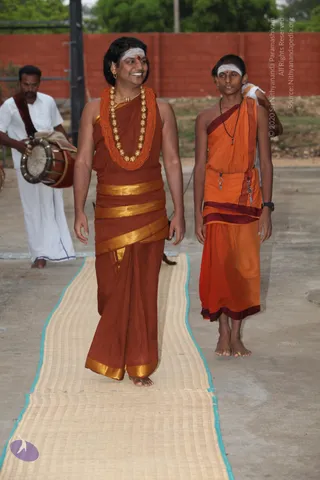
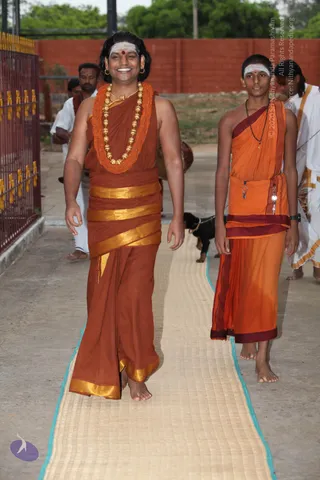
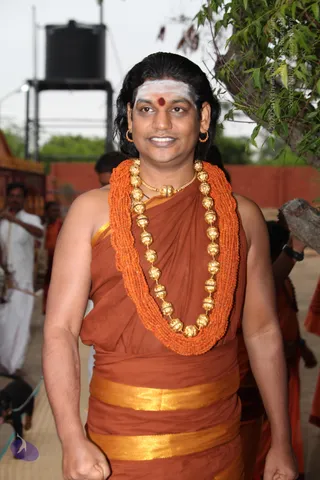
A photograph of a black stone Nandi bull statue seated on a dark square plinth in an outdoor temple courtyard. The Nandi wears a gold-toned necklace with small bells, a dark beaded collar, and a thin red-and-gold cloth draped over its back. A small white flower lies at its base and a red tilak mark is on its forehead. Behind it stand a red sandstone tiered platform and blurred grey statues among green foliage. No people are visible.A smiling man with shoulder-length dark hair walks barefoot down a red carpet between silver handrails in an indoor hall. He wears a rust-orange unstitched robe with wide gold-bordered wrapping bands at the waist and a fringed gold-edged hem, plus a thick orange beaded mala with large gold bead ornaments and a gold chain. A white vertical tilak with a red dot marks his forehead, and gold hoop earrings are visible. Behind him, a figure in orange and a person in white stand near a pillar and palm-filled doorway. The man's appearance matches the presentation cues of the page's named subject with several distinctive markers (long hair, saffron-orange robe, rudraksha-style mala, ceremonial gold ornaments), so he is identified as Swamiji (probable) walking in procession or entering the satsang hall.A smiling man with swept-back dark hair walks barefoot along a red carpet in an indoor hall. He wears a rust-orange sleeveless wrap with broad gold borders, a red-orange beaded mala with a gold bead necklace, a white vibhuti band with a red kumkum dot on his forehead, and gold hoop earrings. Behind him on the right, an older man in white kurta and dhoti stands with palms pressed together in anjali. Another person in orange cloth is partly visible at the far right edge. Steel railings line the carpet. Swamiji (probable) is walking in the center, showing swept-back hair, rudraksha-style orange mala, ceremonial gold necklace and ornate saffron-orange wrap.Outdoor photograph of a man in a rust-brown dhoti-style garment with gold-coloured borders and a bare upper body, wearing a thick orange-red beaded necklace with large gold beads and a small red bindi, walking barefoot along a woven straw mat laid on concrete. He has swept-back dark hair and a white forehead band and smiles. Beside him, a younger boy in saffron-orange robes with maroon borders and a rudraksha-style mala walks barefoot with a white forehead band. Behind them, a drummer in a white dhoti plays a drum, and a red brick wall stands in the background.Swamiji (probable), a smiling man with long swept-back dark hair, white vertical tilak and red bindi, wearing a rust-brown robe with gold border and an orange-red beaded necklace with large gold beads, walks barefoot along a woven straw mat laid on a concrete path. Beside him a younger boy in saffron-orange robes with maroon border, white forehead marking and a black rudraksha mala walks in step. Behind them stand white-clad attendants and a black dog, with a red brick wall and yellow-flowered gate in the background.A smiling man with long swept-back dark hair, white vertical tilak with a red dot on his forehead, and gold hoop earrings stands outdoors in a rust-orange sannyasi wrap with gold-bordered sash and a long orange rudraksha mala with gold beads. a person is visible in person, wearing ceremonial gold necklace and saffron-orange clothing. Behind him, a dark water tank, green leaves and a red wall; a man in white dhoti and others in orange robes stand in the background.

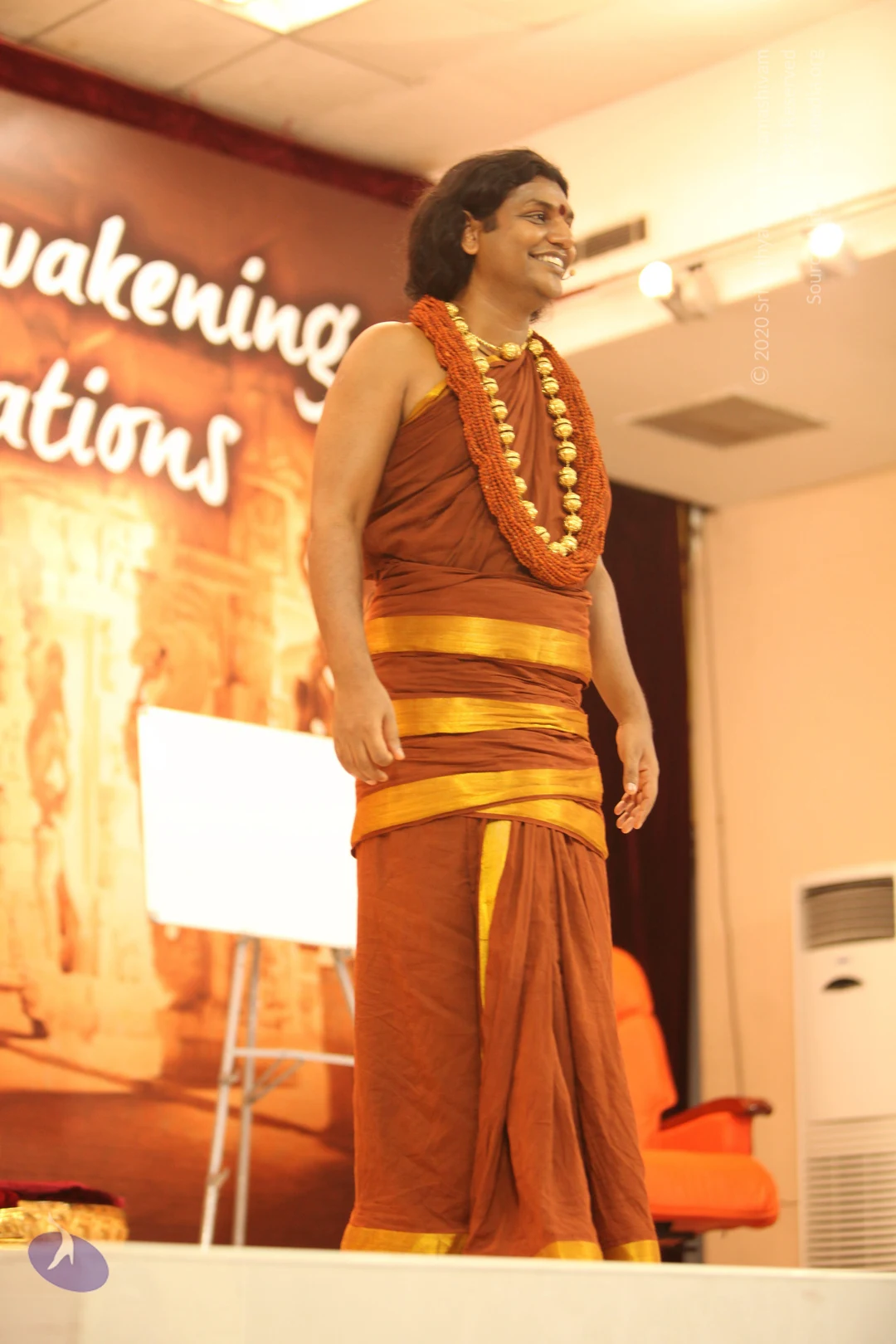
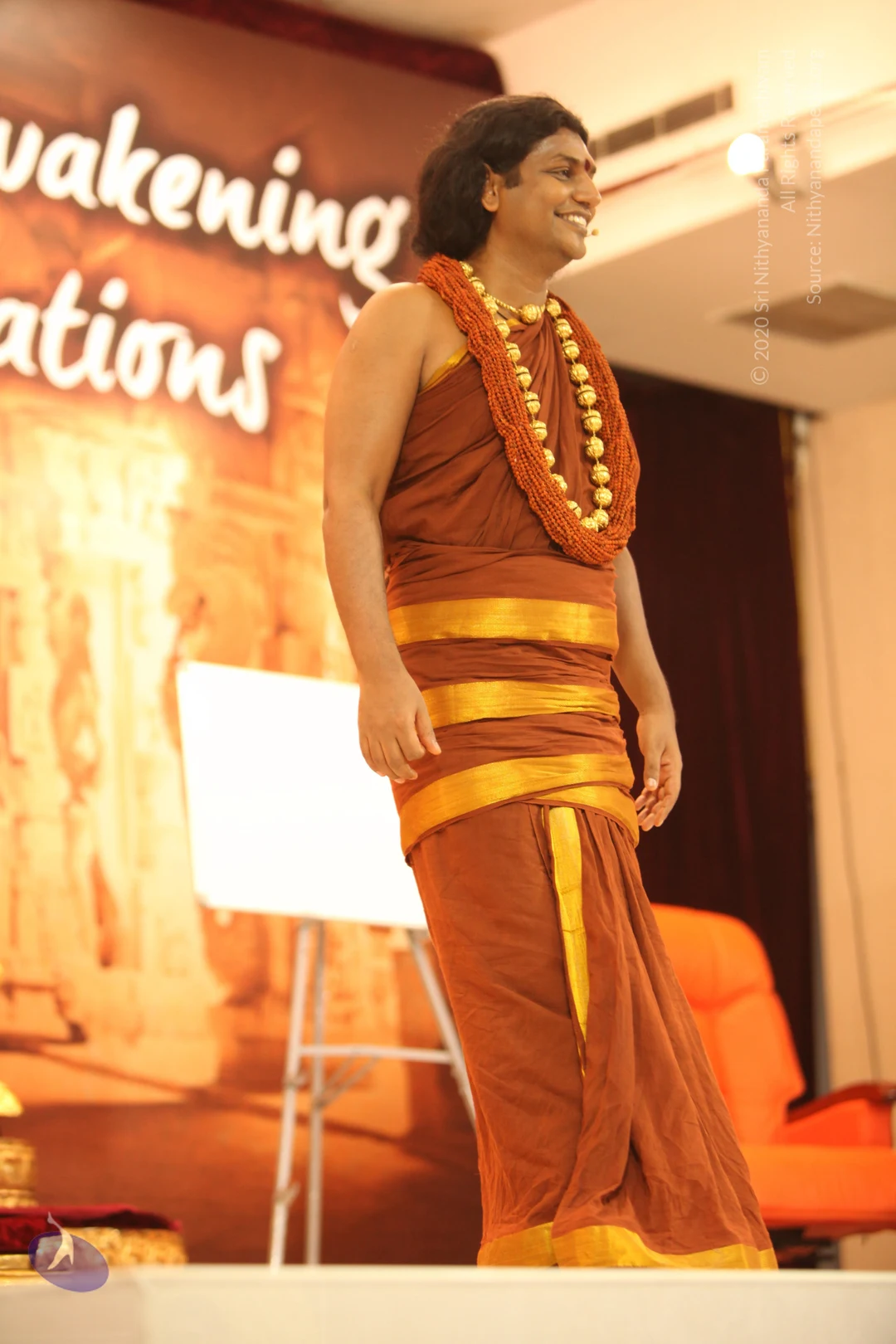
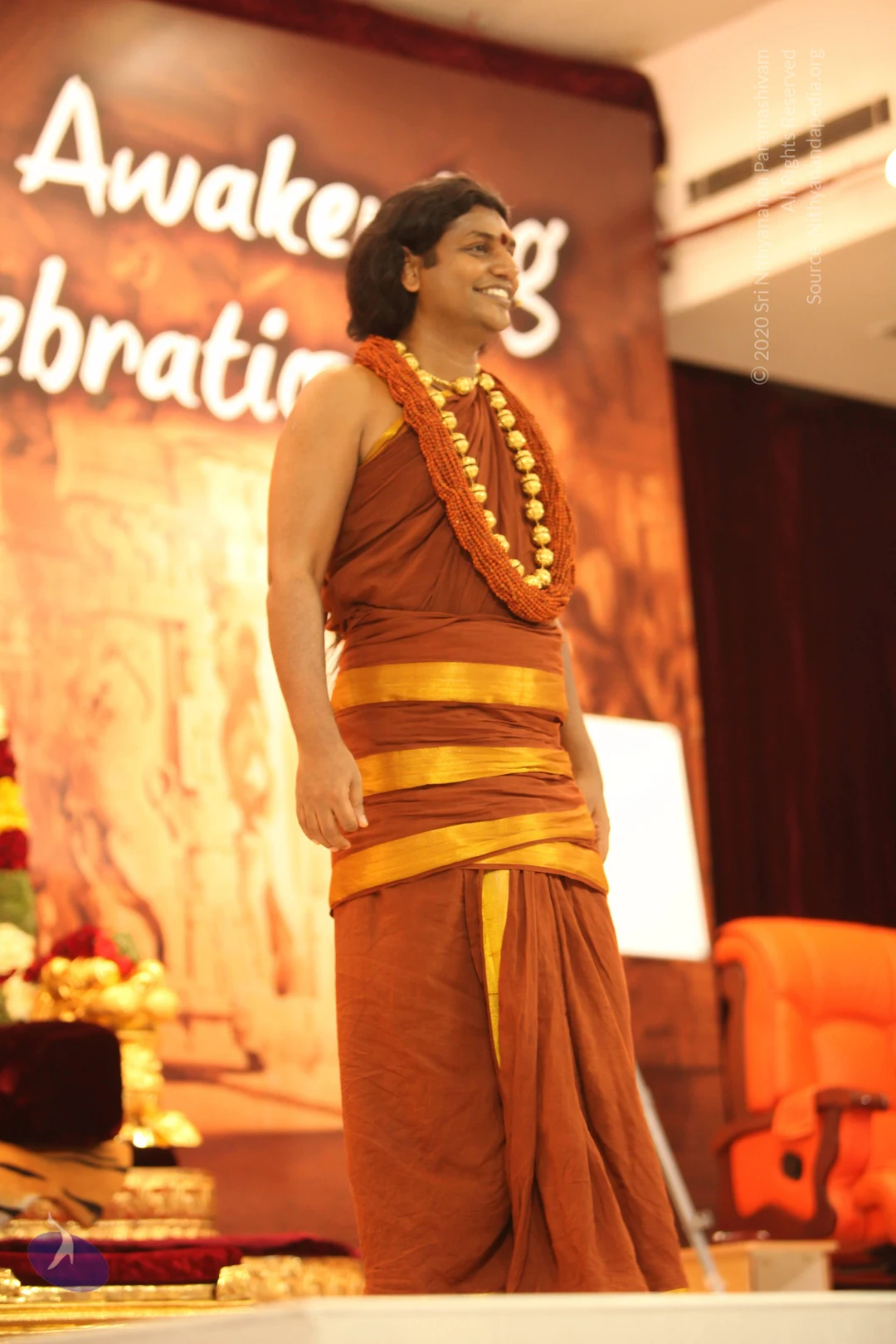
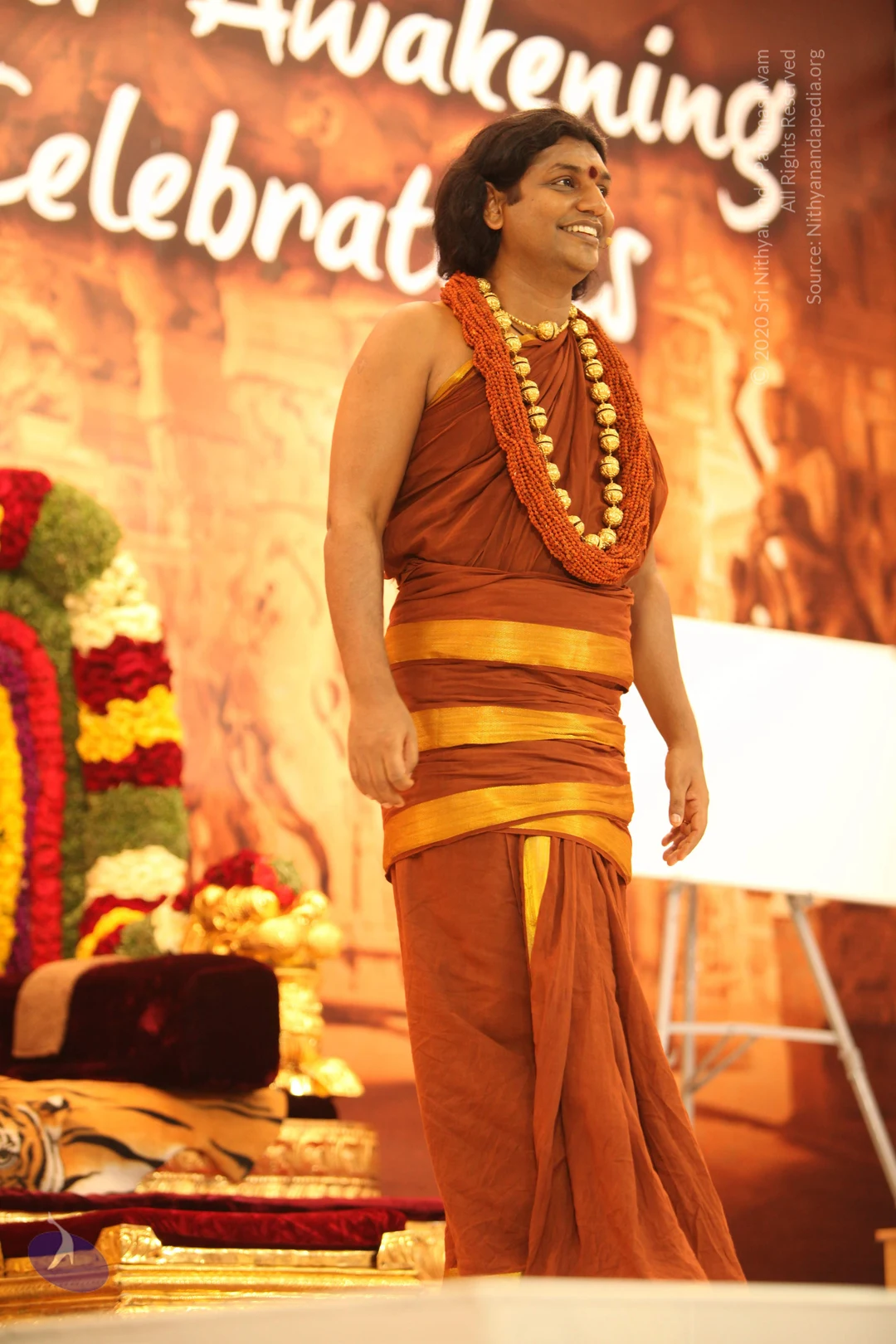
02-IA-Session 2

19 photosSource gallery
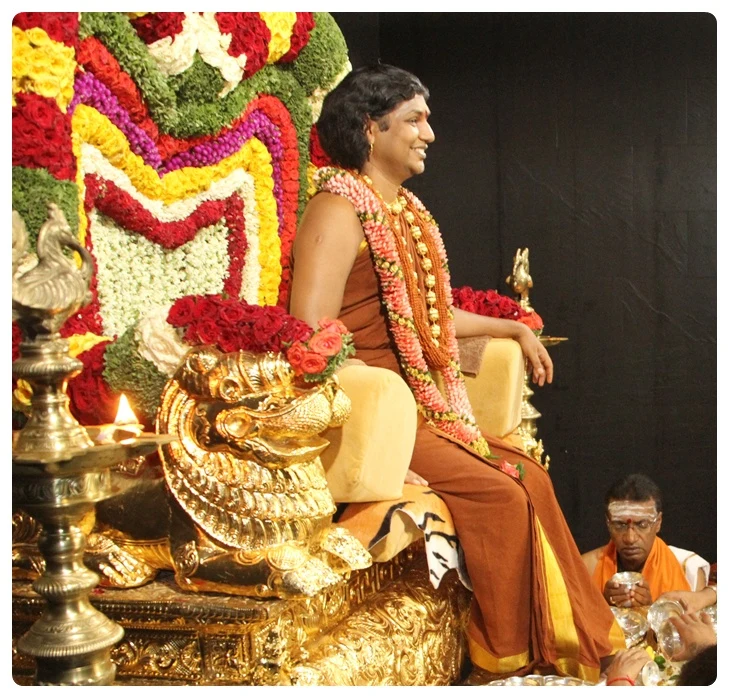
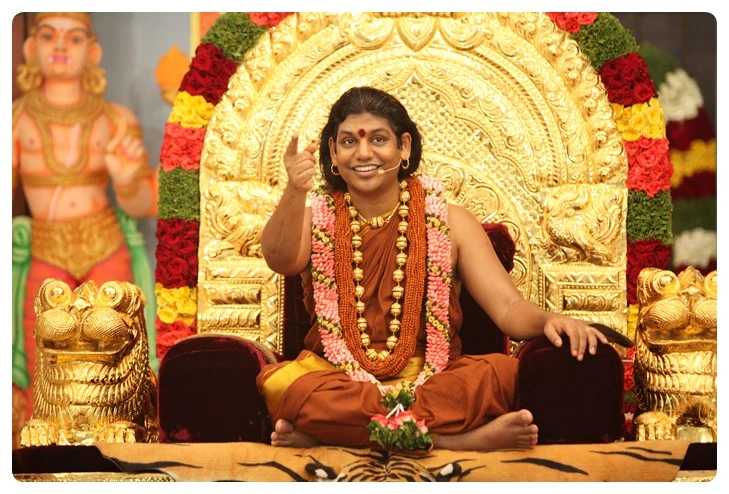
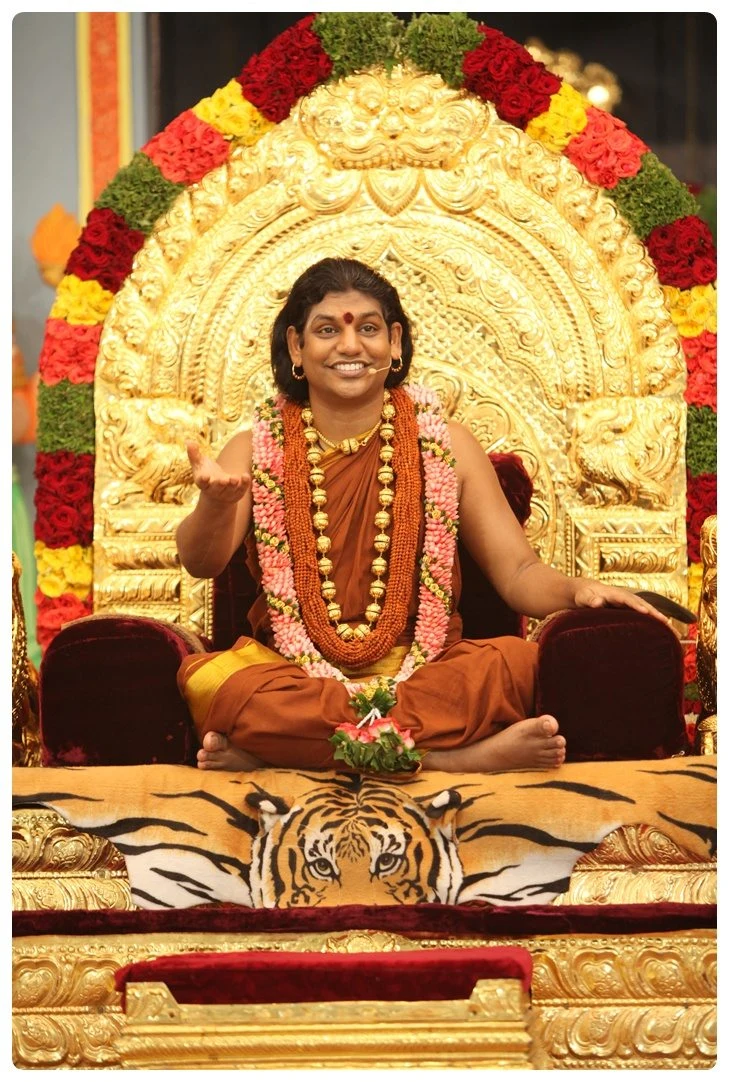
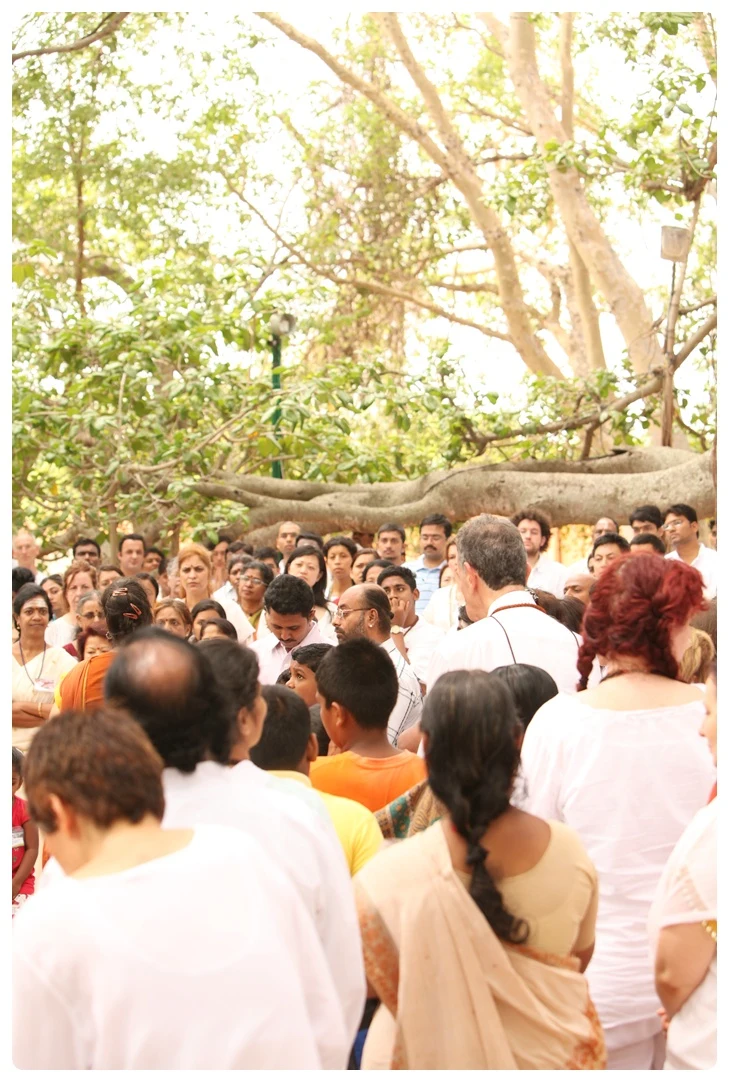
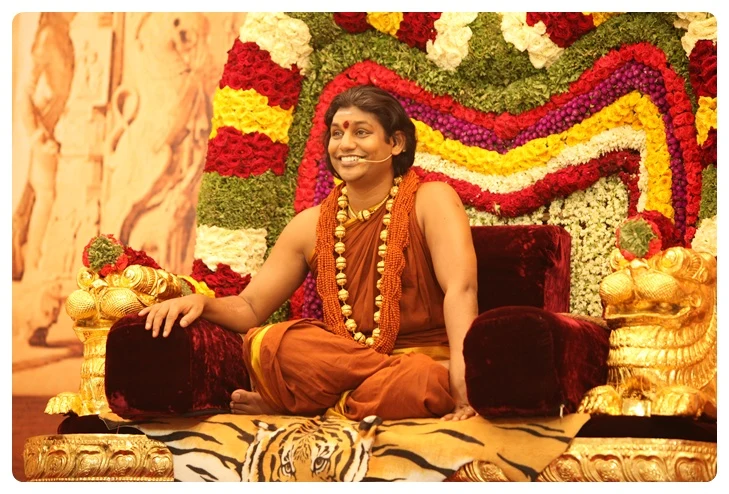
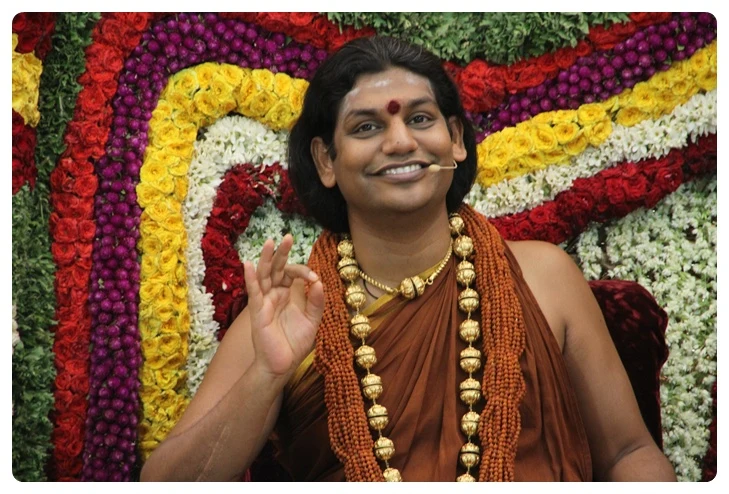
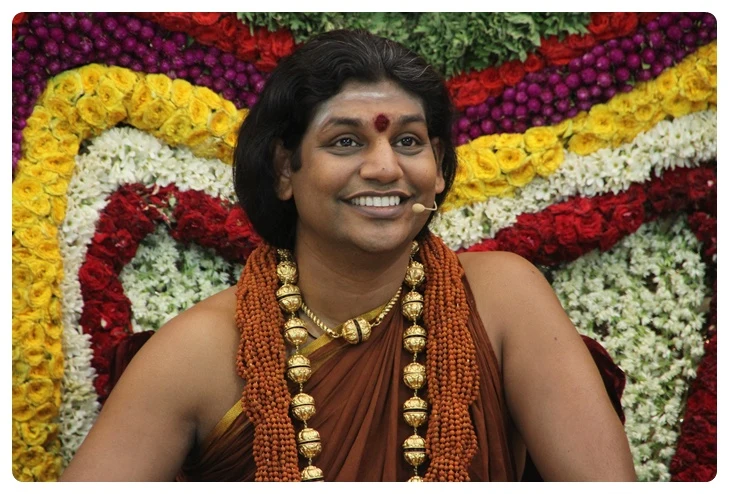
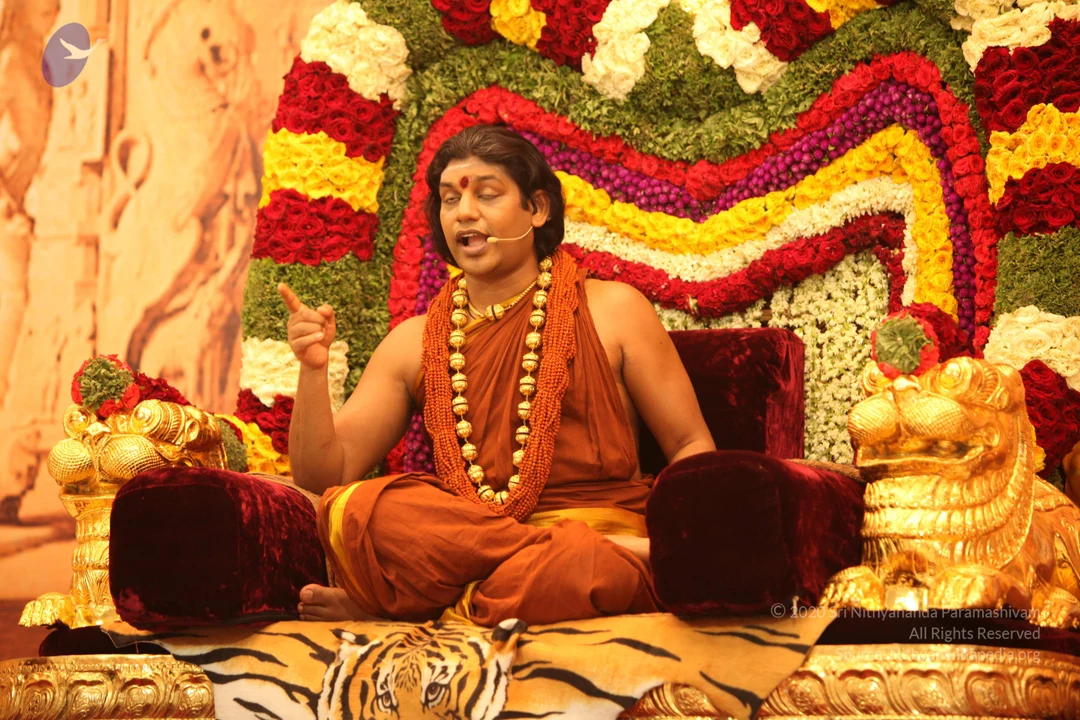
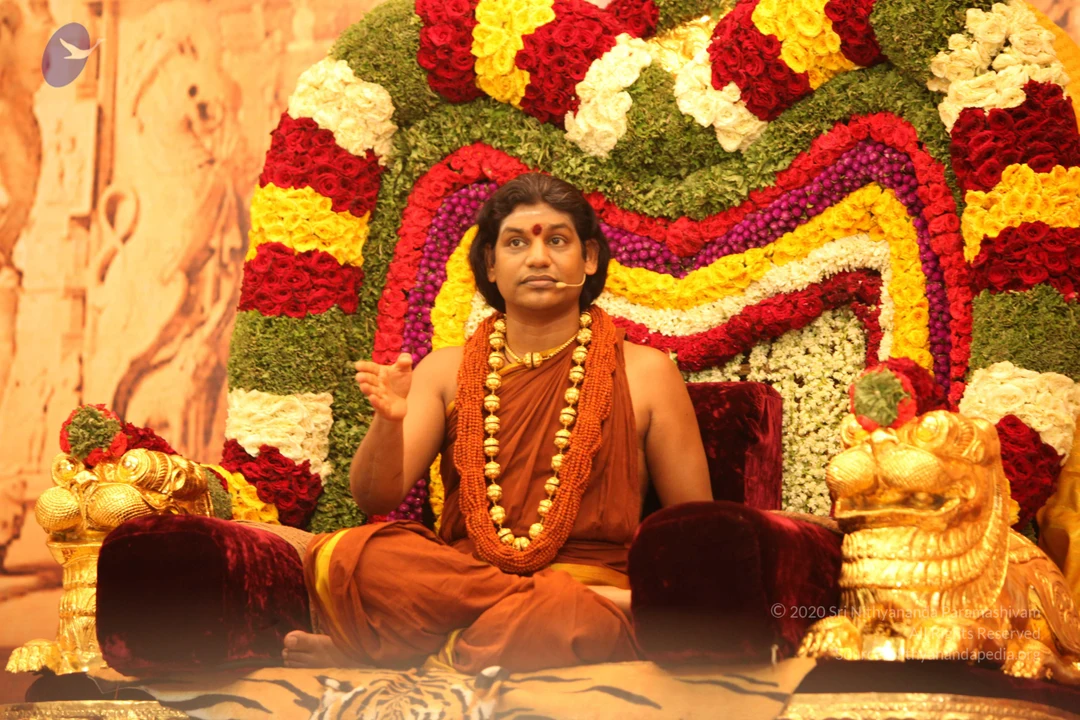
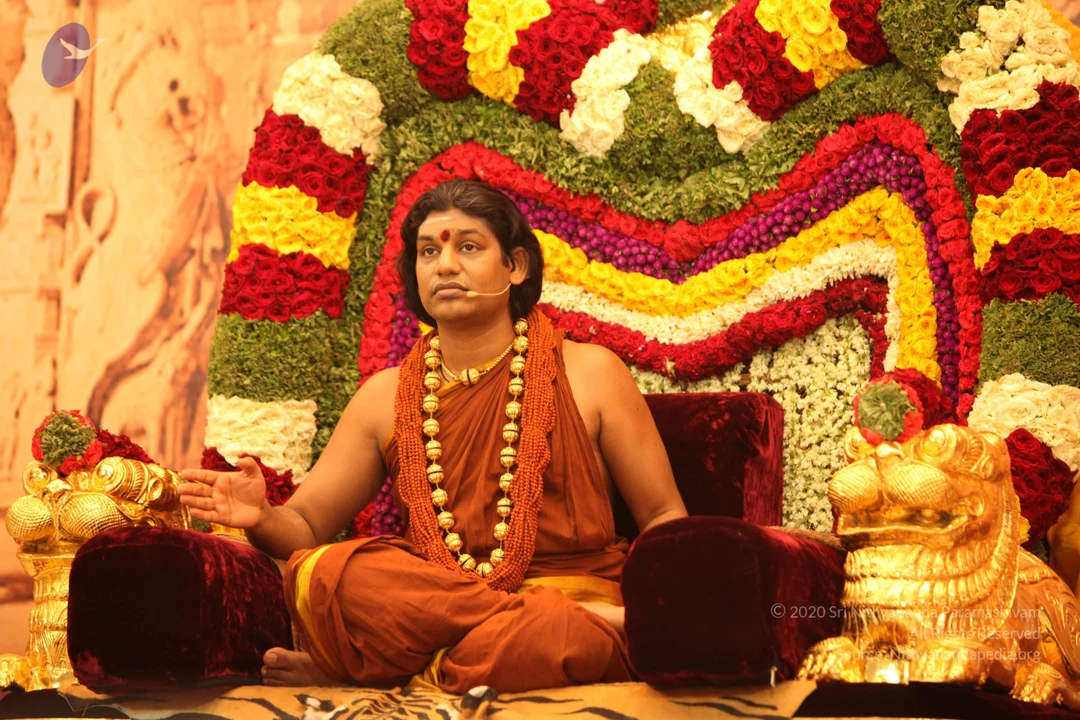
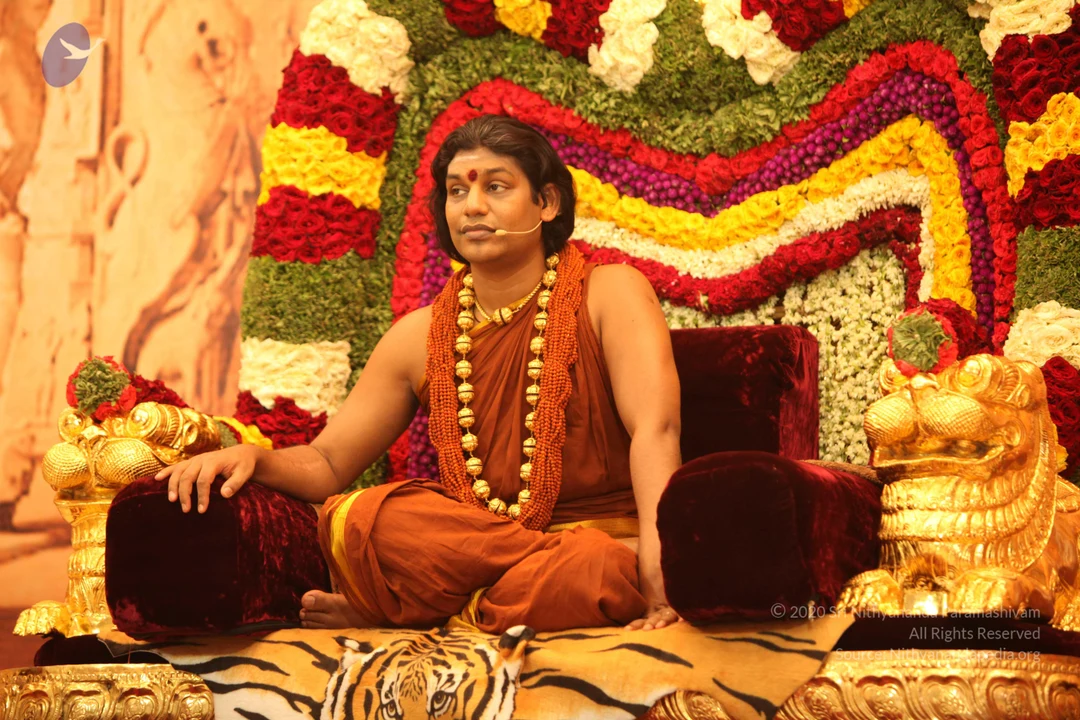
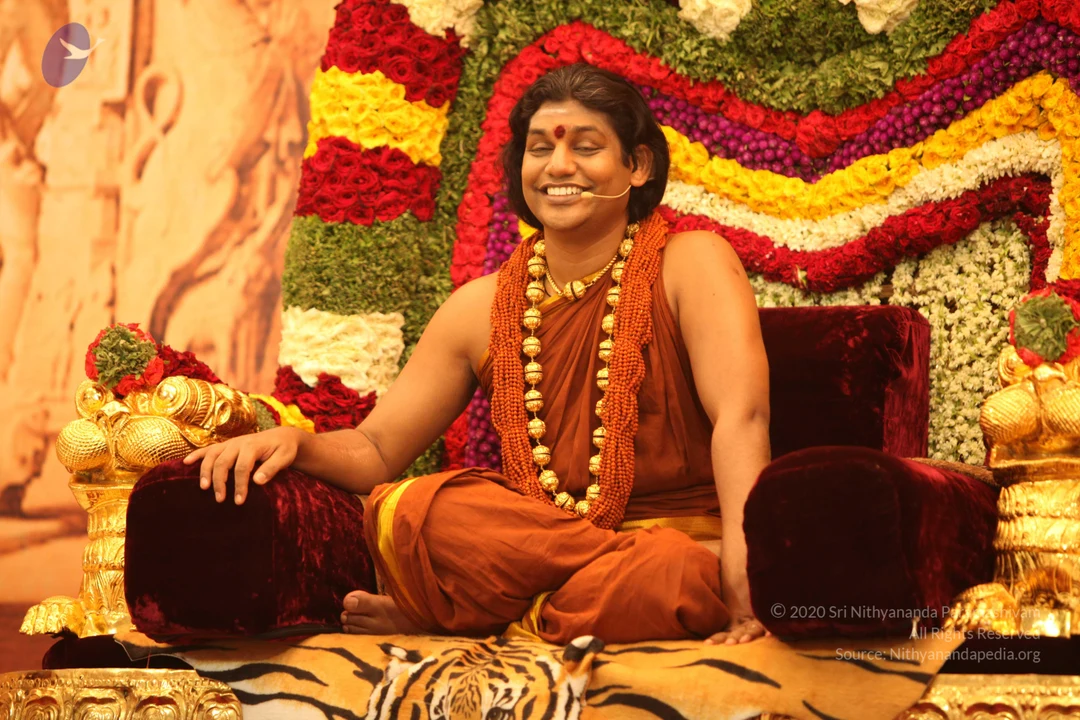
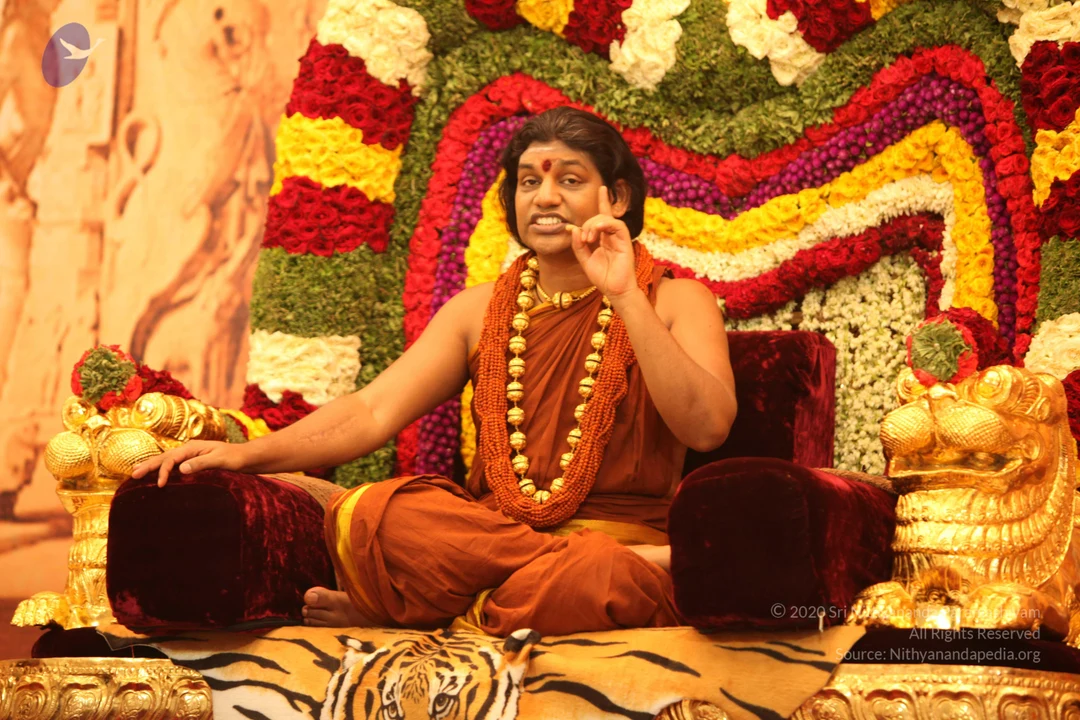
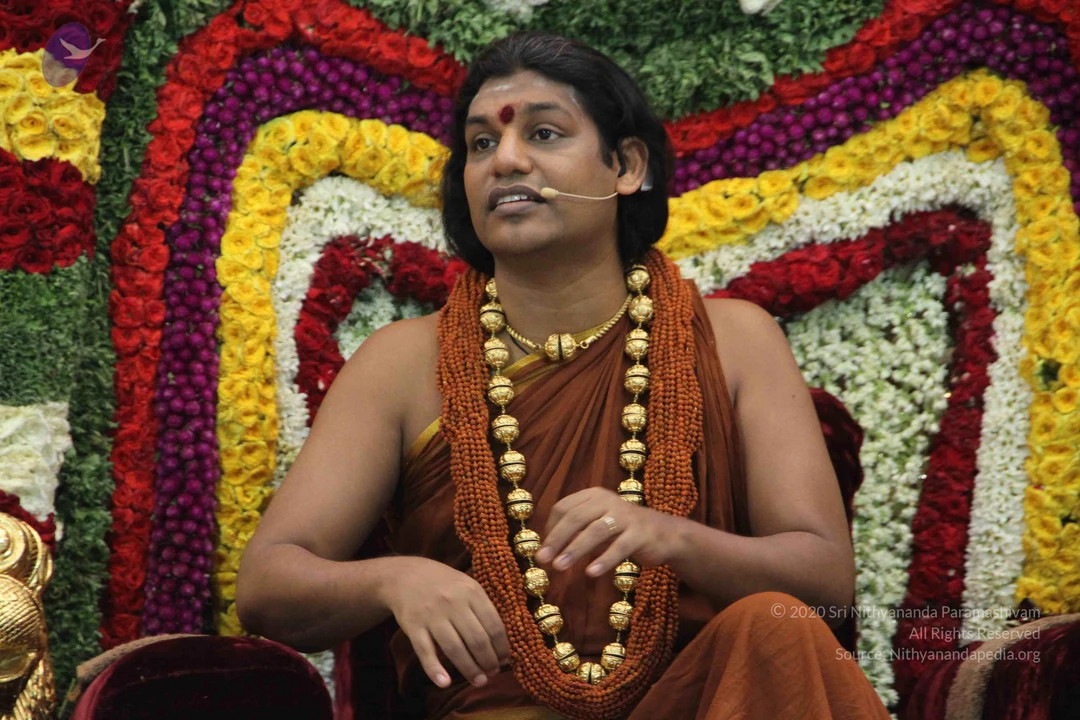
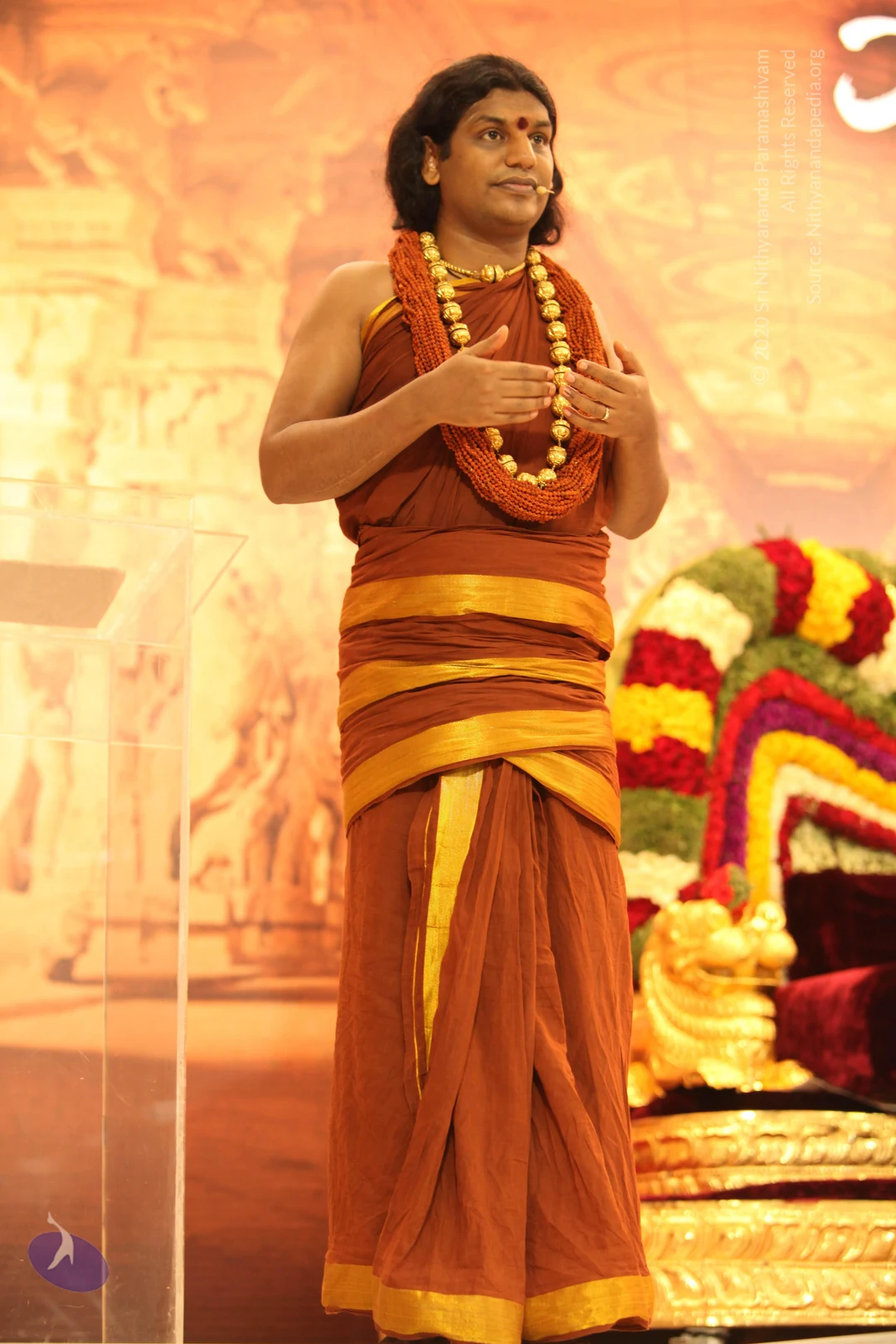
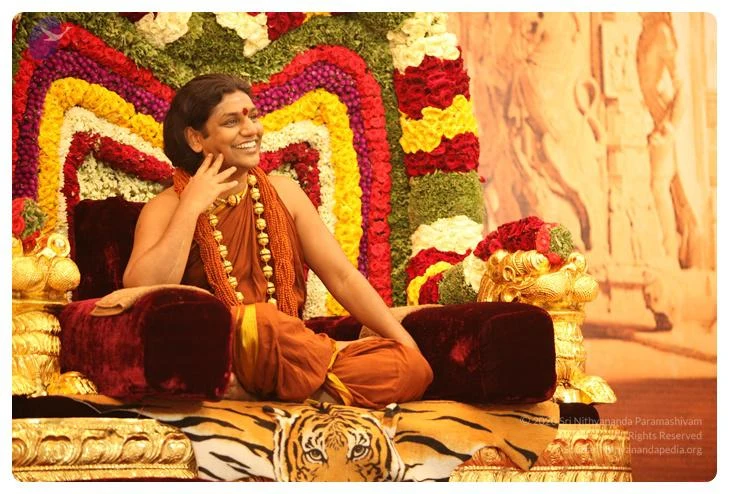
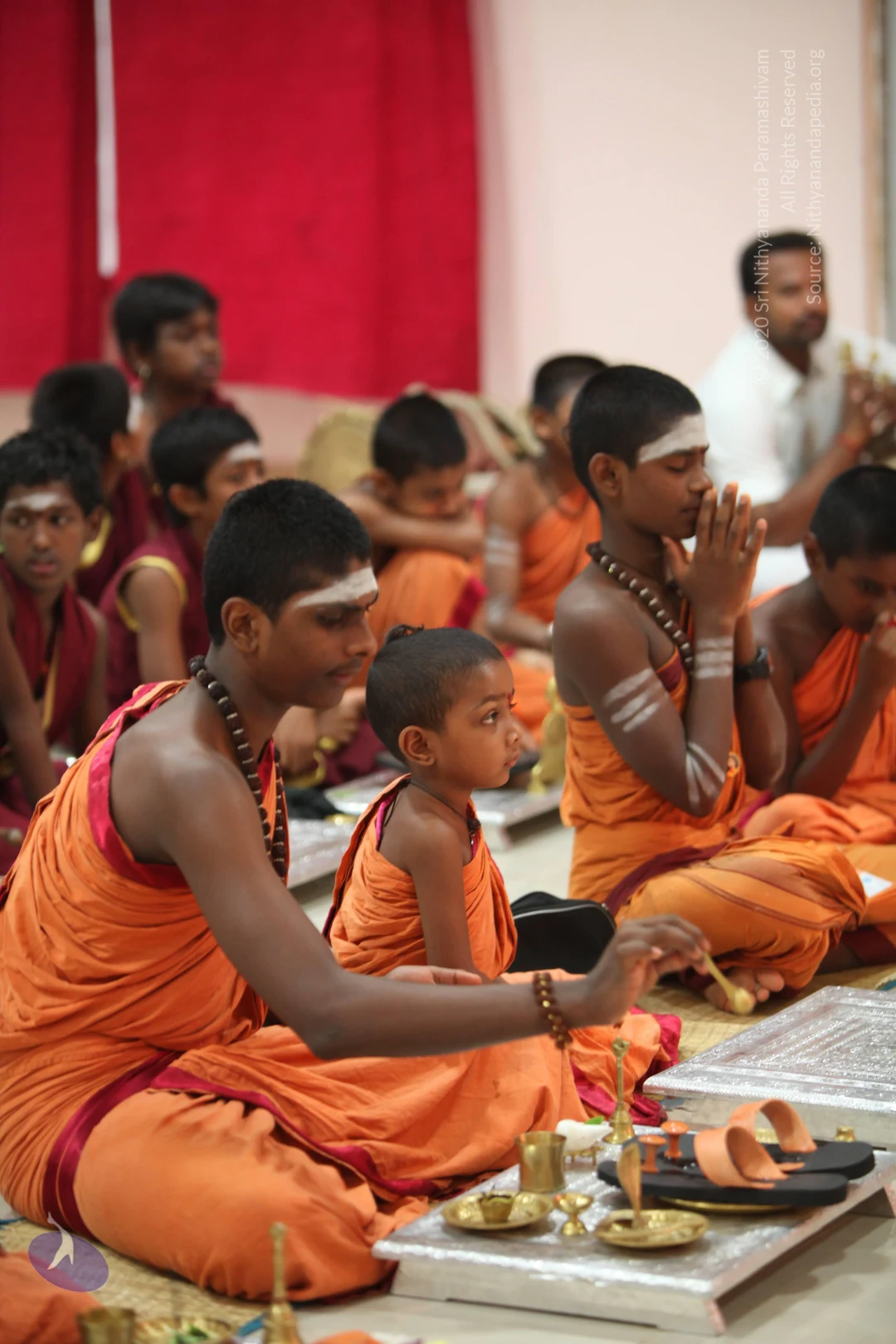
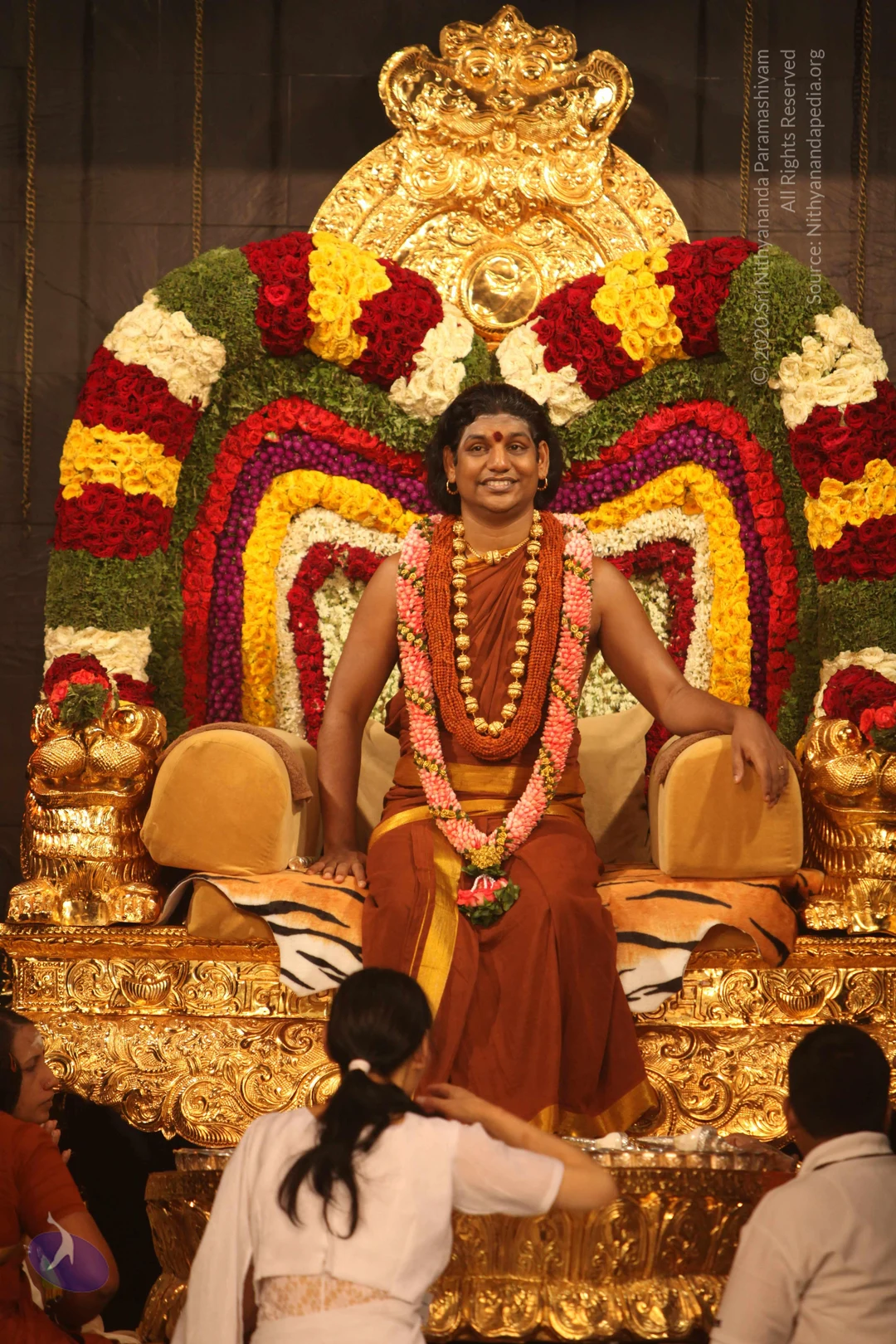
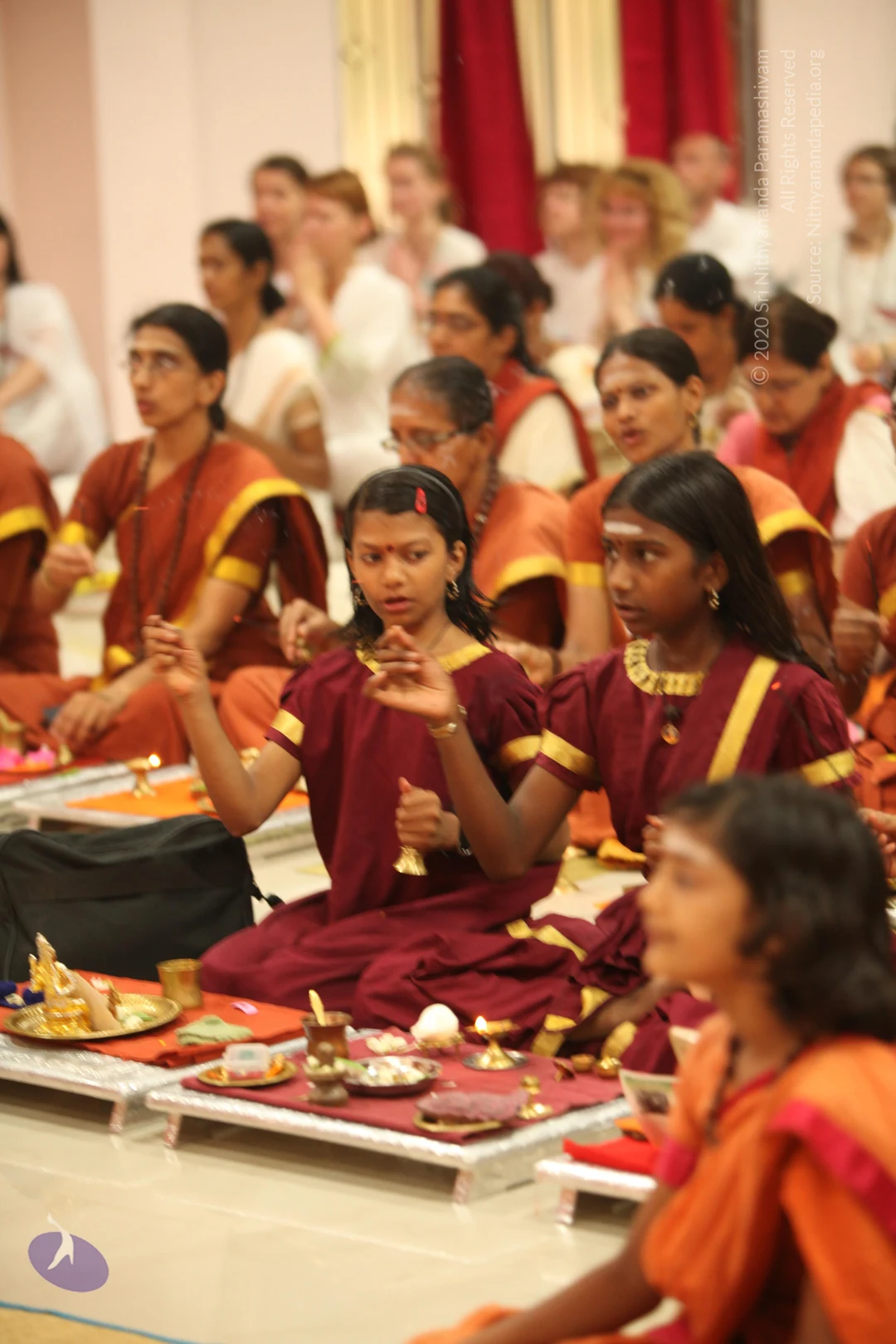
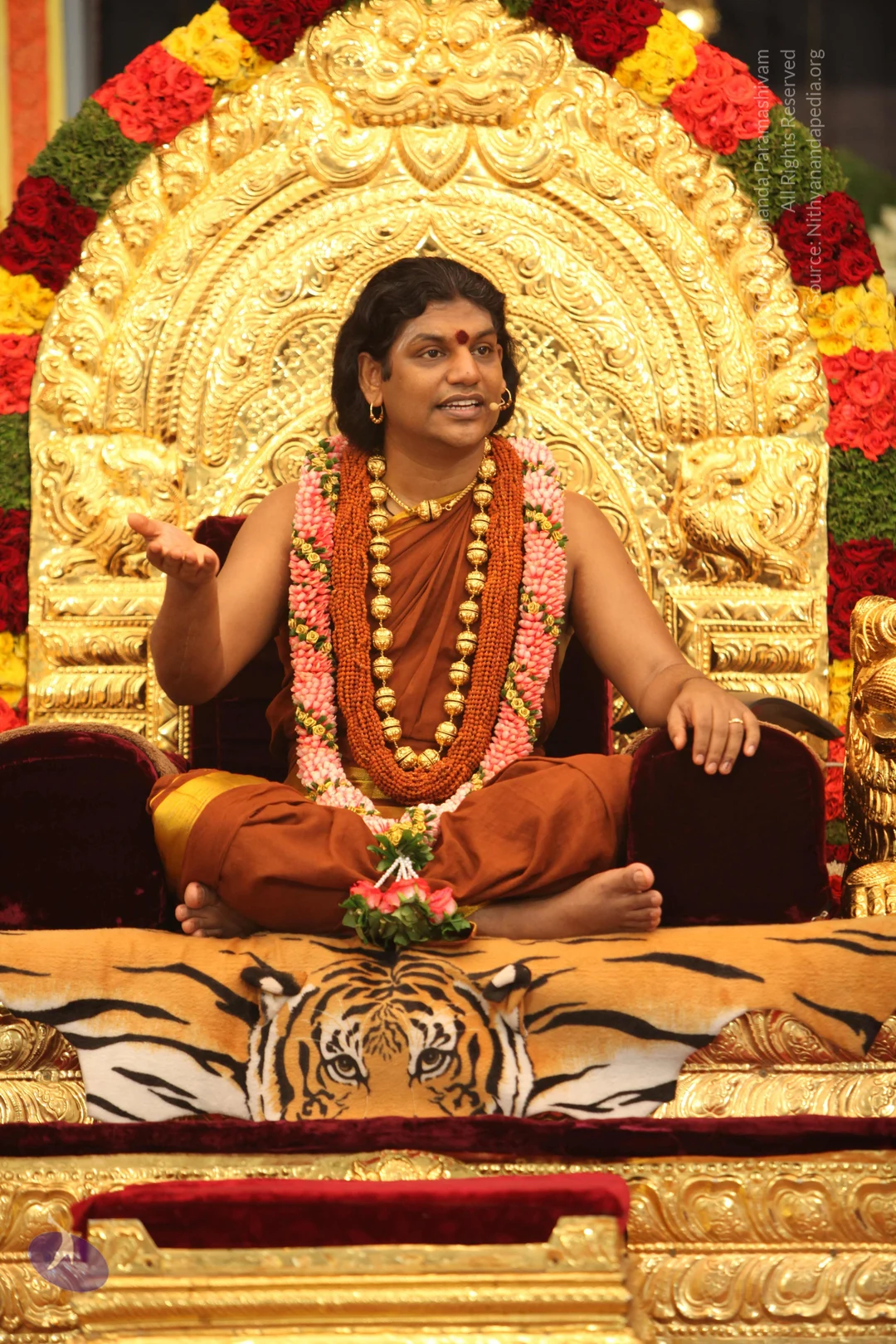
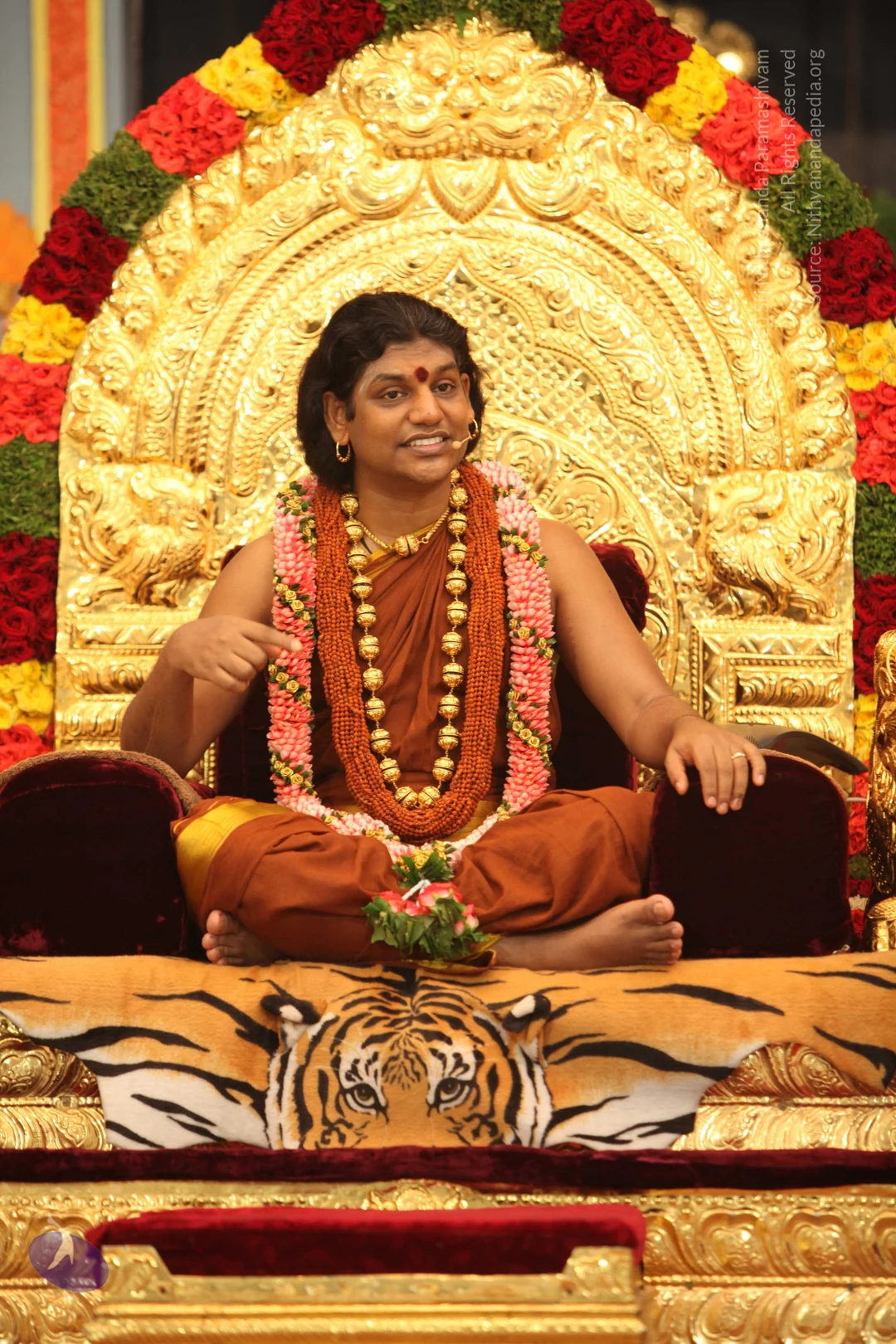
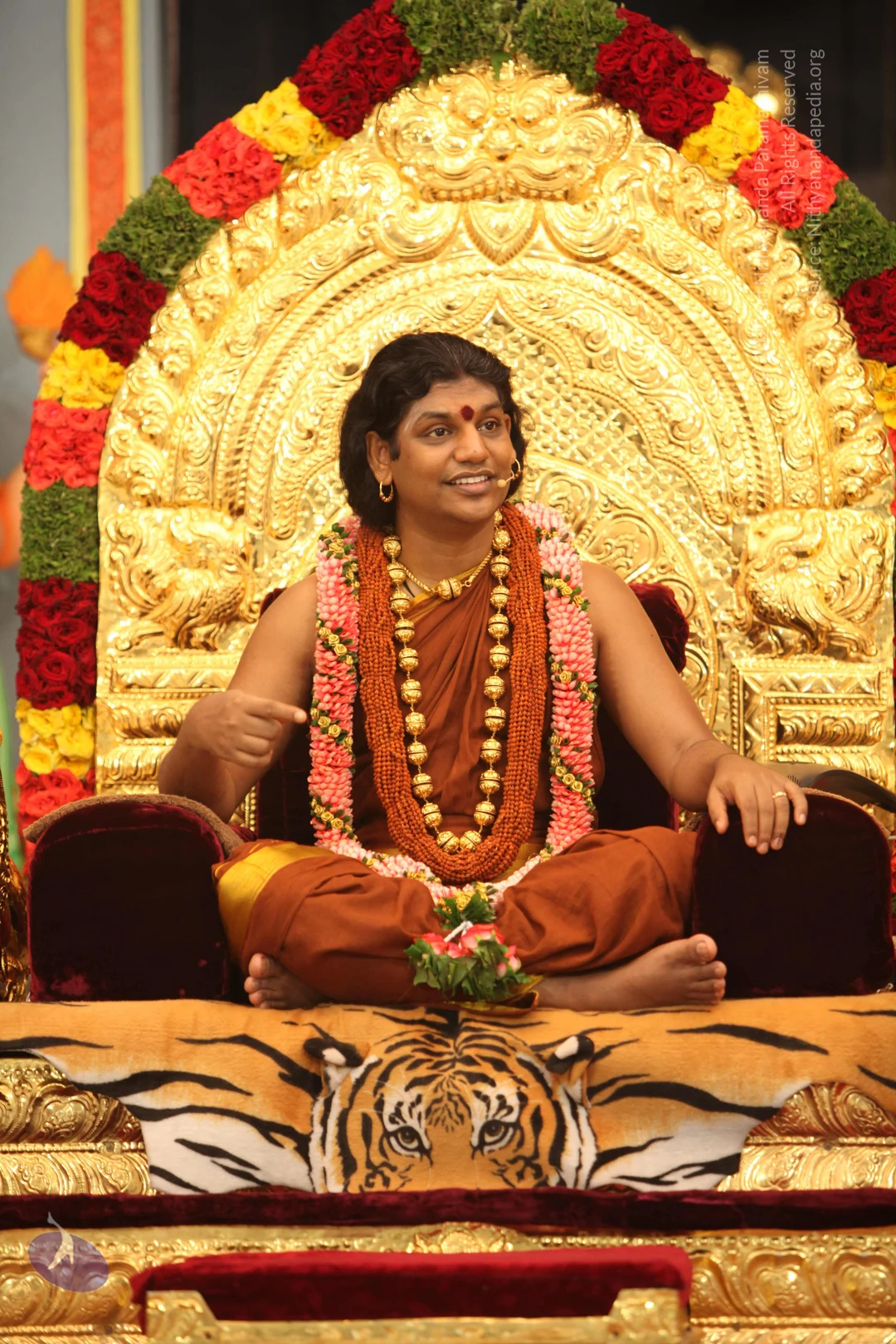
A blurred, overexposed photograph of a shaved-headed man in an orange-red garment with a yellow border, standing with his back partly to the camera at a stone altar or ledge. He holds his hands over brass lamps and small silver vessels, with a white floral garland on his neck and a bangle on his wrist. Behind him are pink pillars and carved stone walls. He appears to be a priest or devotee performing a ritual offering; the image gives no clear appearance cues for an identifiable person.A photograph of a large outdoor gathering of devotees standing under a leafy tree at an ashram. Many people wear white ritual clothing, with some in cream and gold saris and a woman in a teal kurta. Several have palms pressed together in anjali or hands folded in prayer, eyes closed or lowered. In the right foreground a bald man in an all-white kurta and pants wears a white lanyard with a small pink badge and stands with hands folded. A young boy in a red shirt and khaki shorts stands at left with hands pressed together. Dark stone paving and a sandy path lie beneath the group, with a tree trunk and dappled green foliage behind them.A man seated cross-legged on a plush maroon velvet throne with gold lion-head armrests, draped over a striped tiger skin, speaks into a head microphone while raising his right index finger. He wears an orange-saffron dhoti and shawl, a red-orange rudraksha mala and a long multi-strand gold bead necklace, with a red bindi on his forehead. Behind him is a tall backdrop of red, yellow, purple and white flowers arranged in wavy bands, with a golden painted wall at left. a person: the seated speaker wears saffron clothing, a rudraksha mala and ceremonial gold beads on a throne, with the page indicating his presence at this satsang.A seated man in saffron-orange robes sits on a throne draped in deep red velvet cushions, with a golden lion-head armrest at the right. He wears a long rudraksha mala and ceremonial gold beads, and a small red tilak on his forehead, with a headset microphone near his face. His right hand is raised in an explanatory gesture while he speaks. Behind him a large arch of red, yellow, white and purple flower garlands frames the throne against a warm painted backdrop. a person appears to be the person seated, based on the saffron robes, rudraksha mala and ceremonial gold cues, with the satsang setting matching the page. A tiger-skin cloth lies at the base of the seat.A photograph of a seated man on a flower-decorated throne at a satsang. He sits cross-legged on a deep red velvet seat, wearing an orange-saffron dhoti and shawl, multiple strands of rudraksha-style beads and a gold necklace, with a red bindi on his forehead and a small lapel microphone. His right hand is extended outward in a gesture of speaking. The throne backdrop is covered in bands of red and yellow roses, white flowers and green foliage, and golden lion figures flank the seat on a tiger-striped rug.A seated man in saffron-orange robes sits cross-legged on a throne with gold lion-head armrests and a tiger-skin cushion beneath him. He wears a long rudraksha mala, multiple gold bead necklaces and a red bindi, and a small headset microphone is clipped near his face. Behind him the throne backdrop is decorated with bands of red, yellow, purple and white flowers and green leaves. A stylised ancient carving is visible at the left edge. The appearance matches the a person candidate through distinctive saffron clothing, rudraksha and gold ornaments, and he is shown in person speaking at a satsang-style event.
03-IA-Day1-Session2
57 photosSource gallery
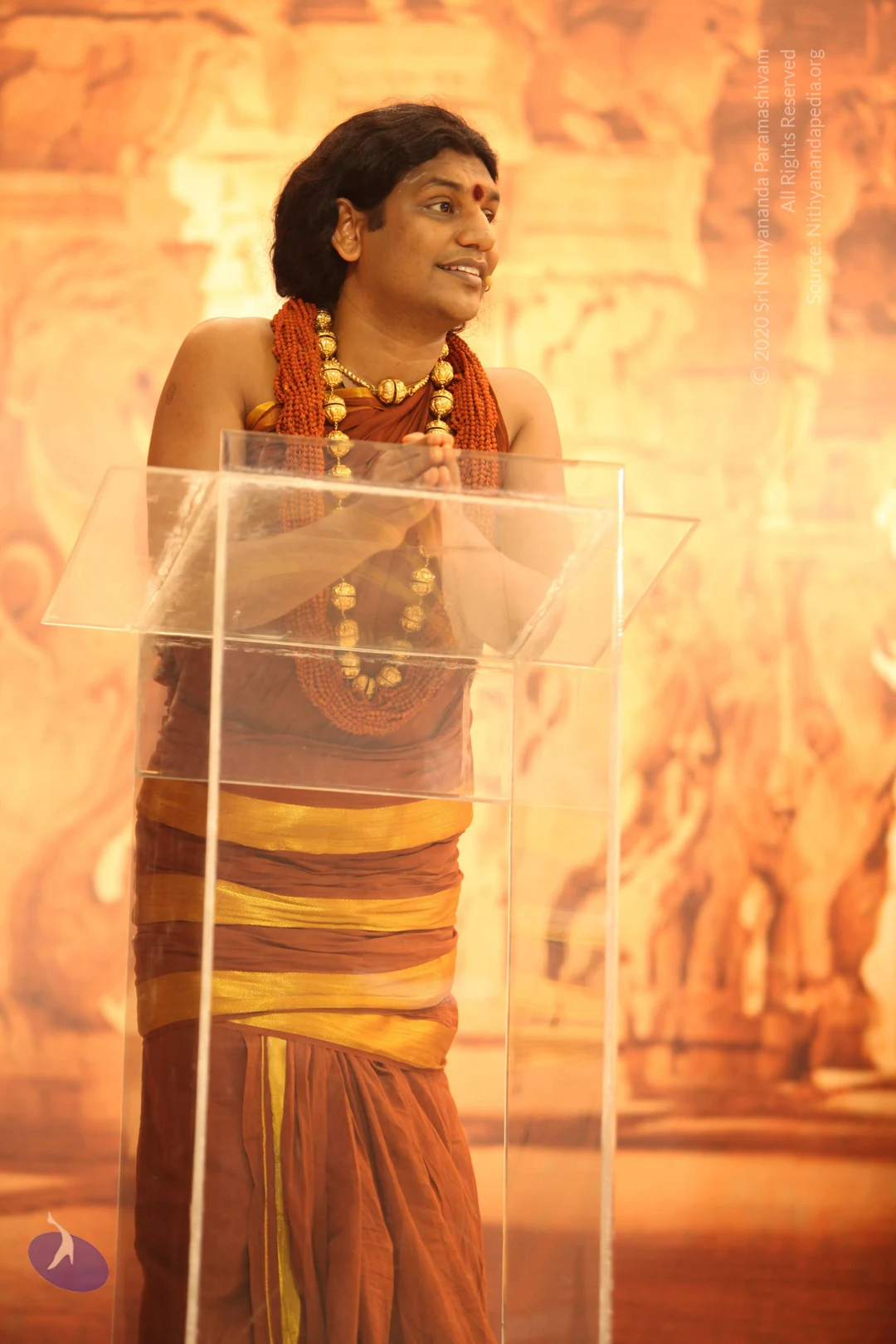
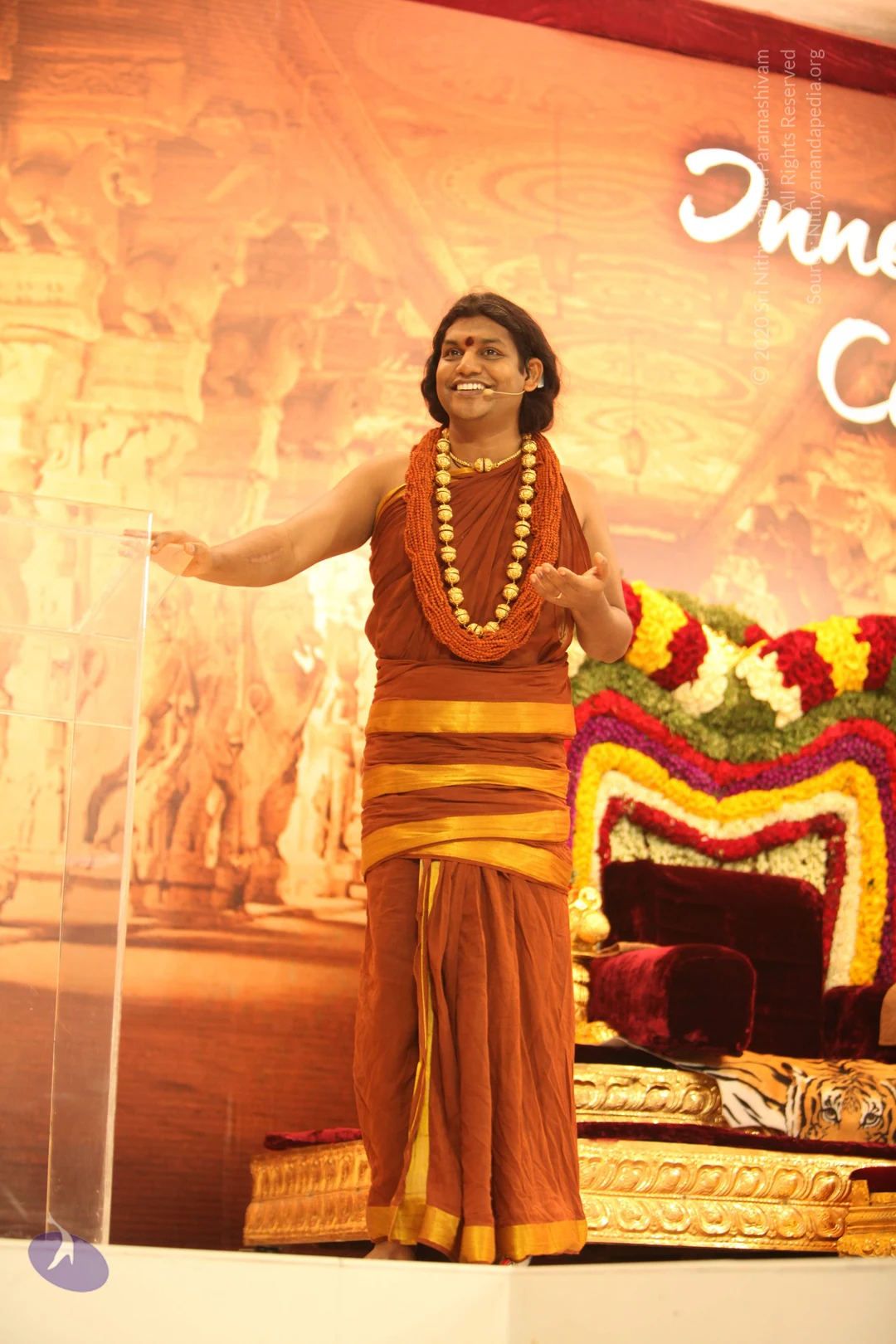
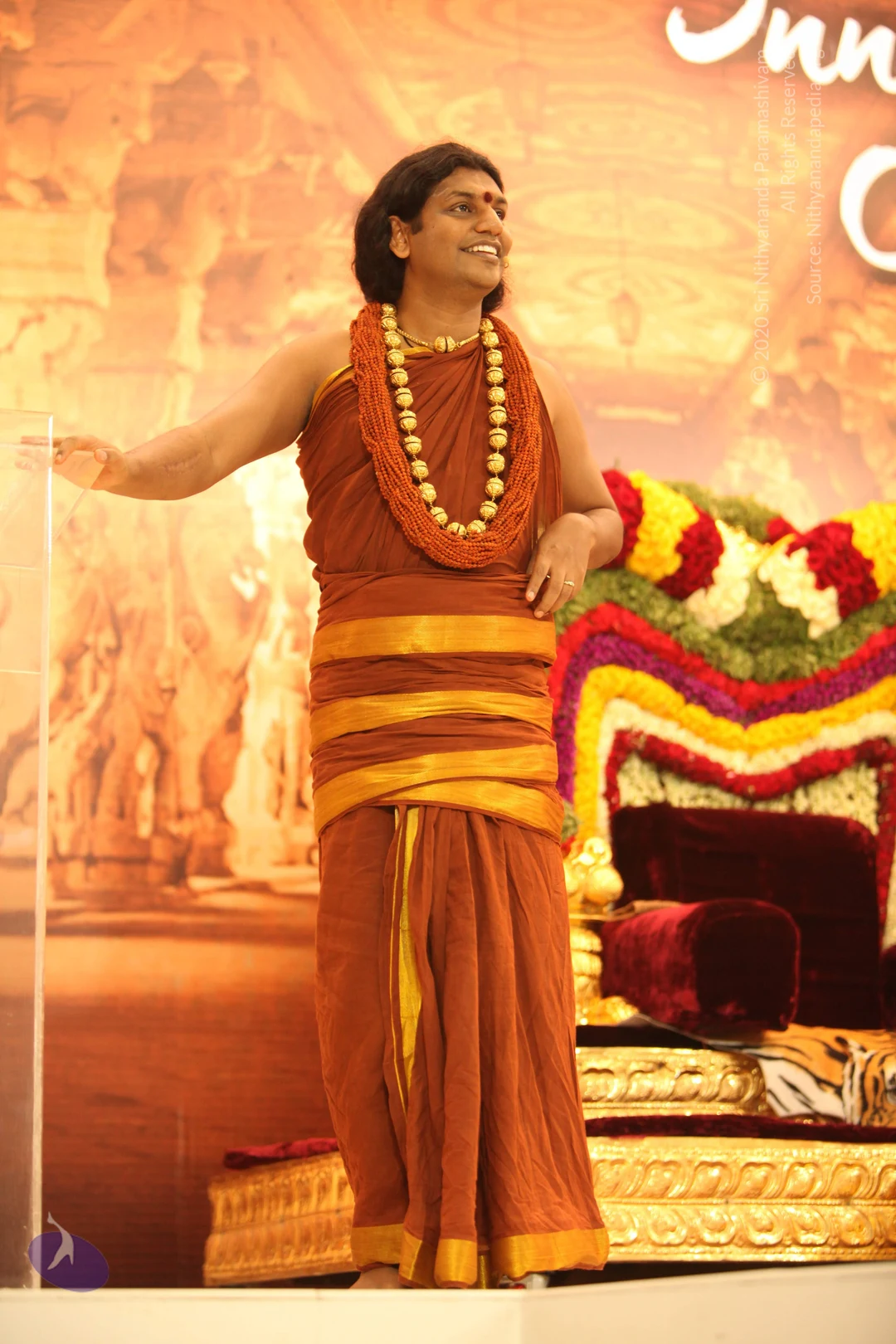
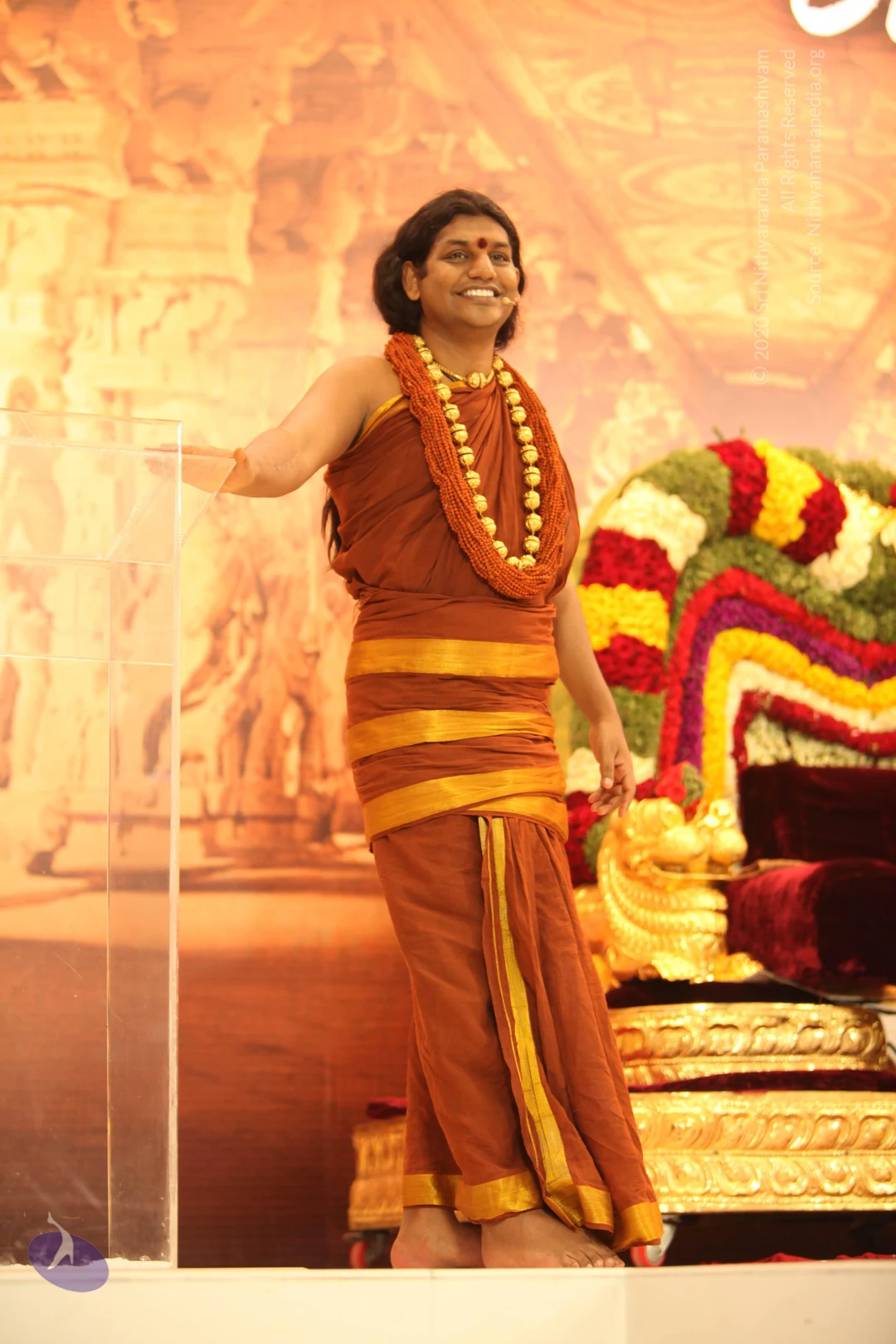
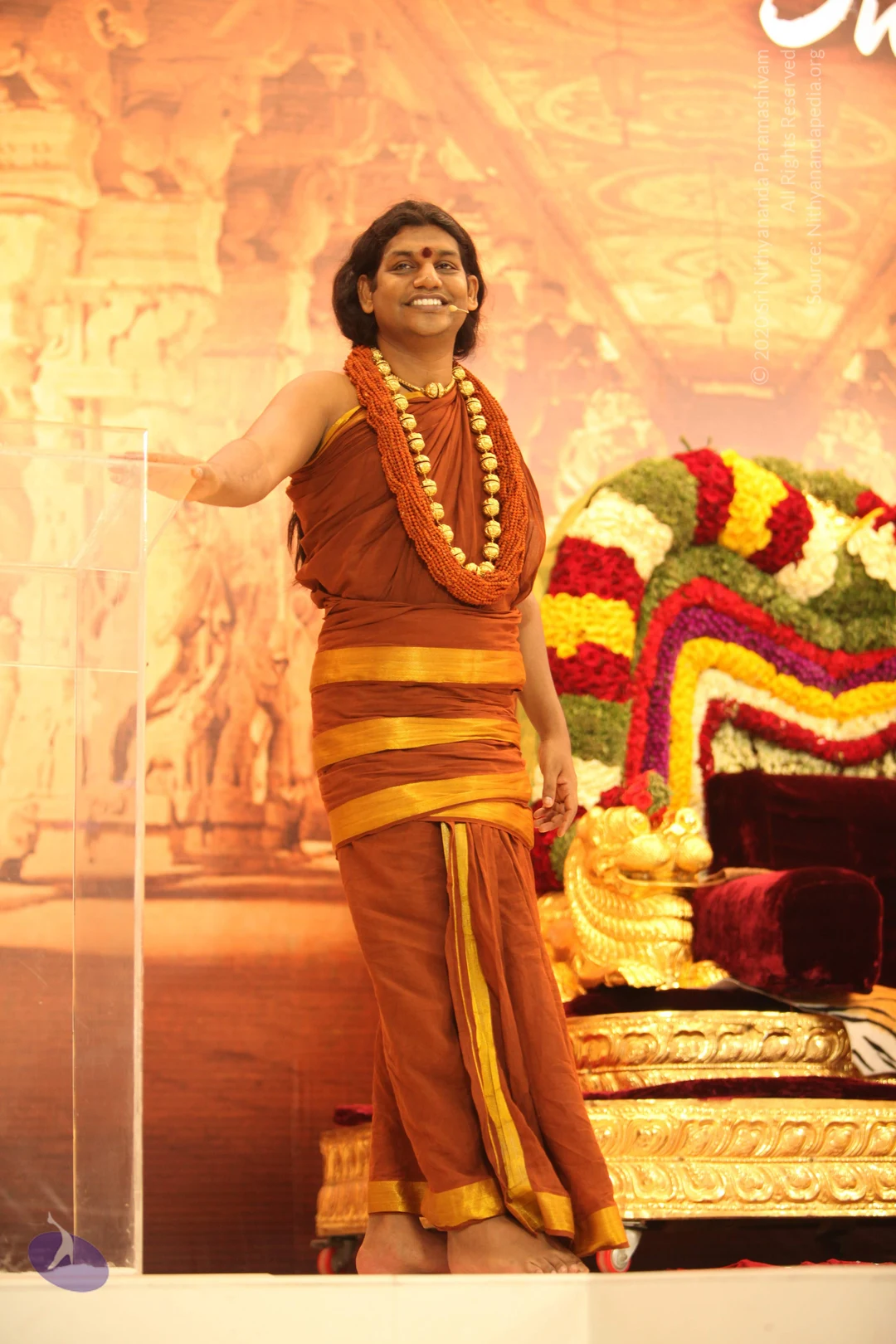
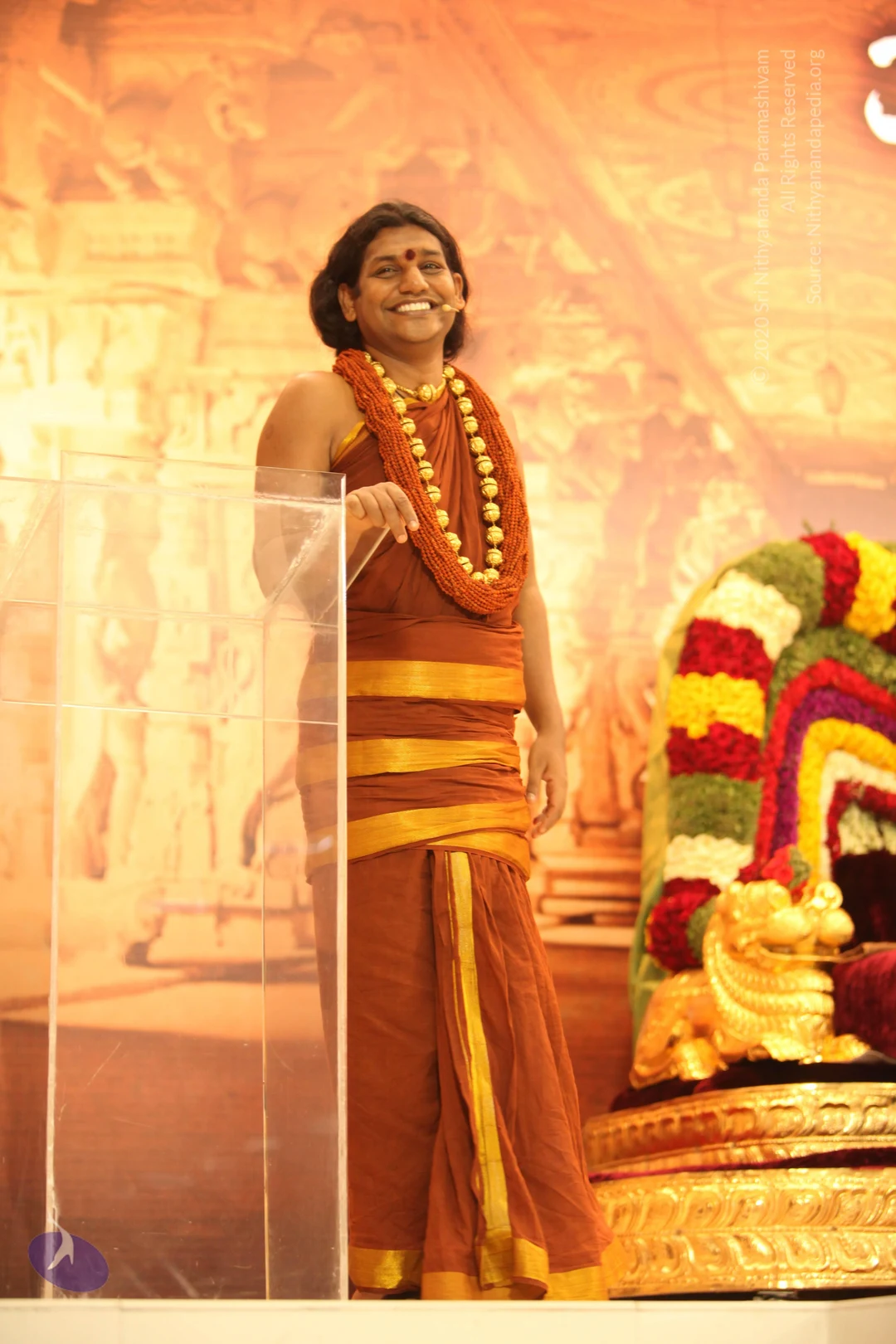
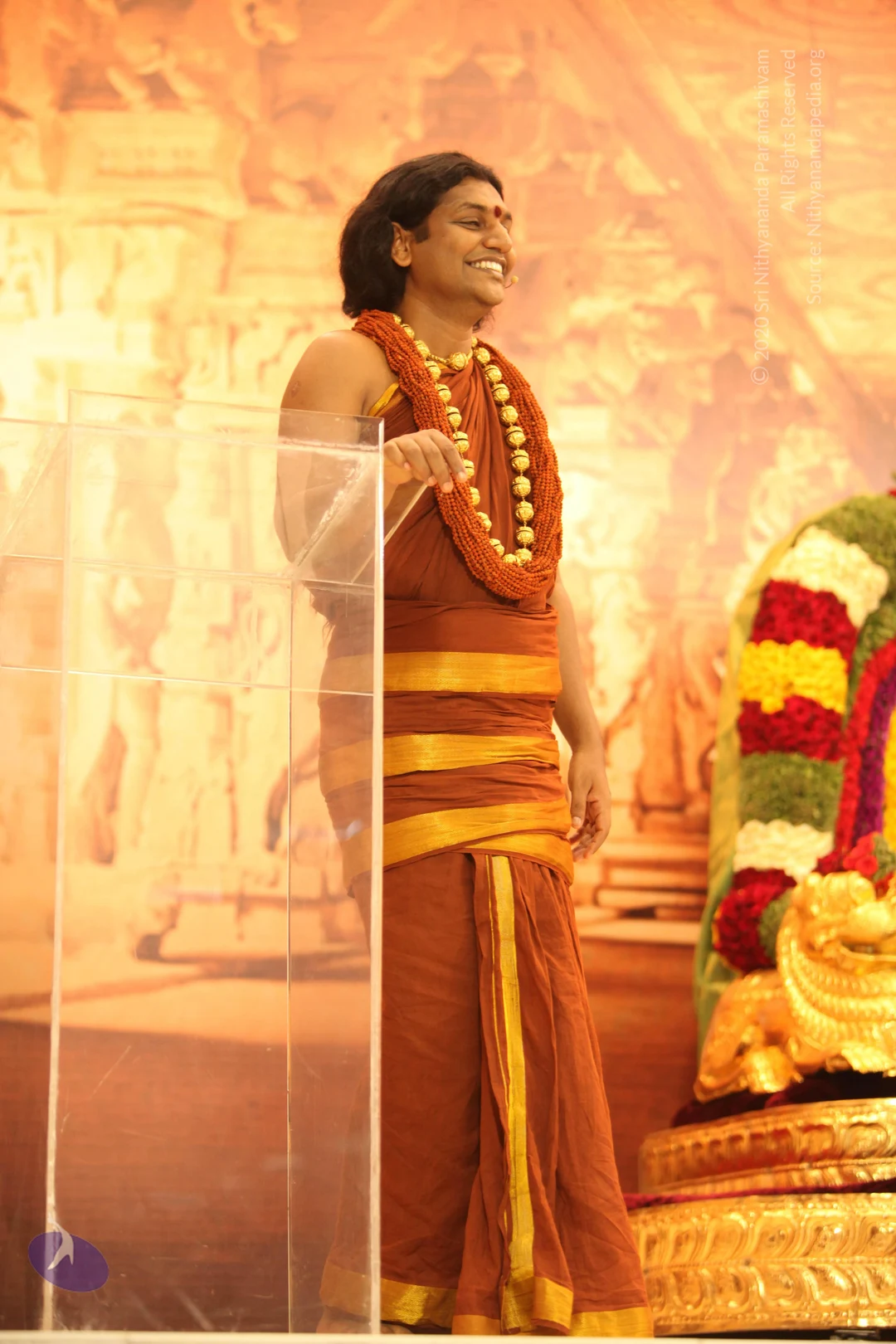
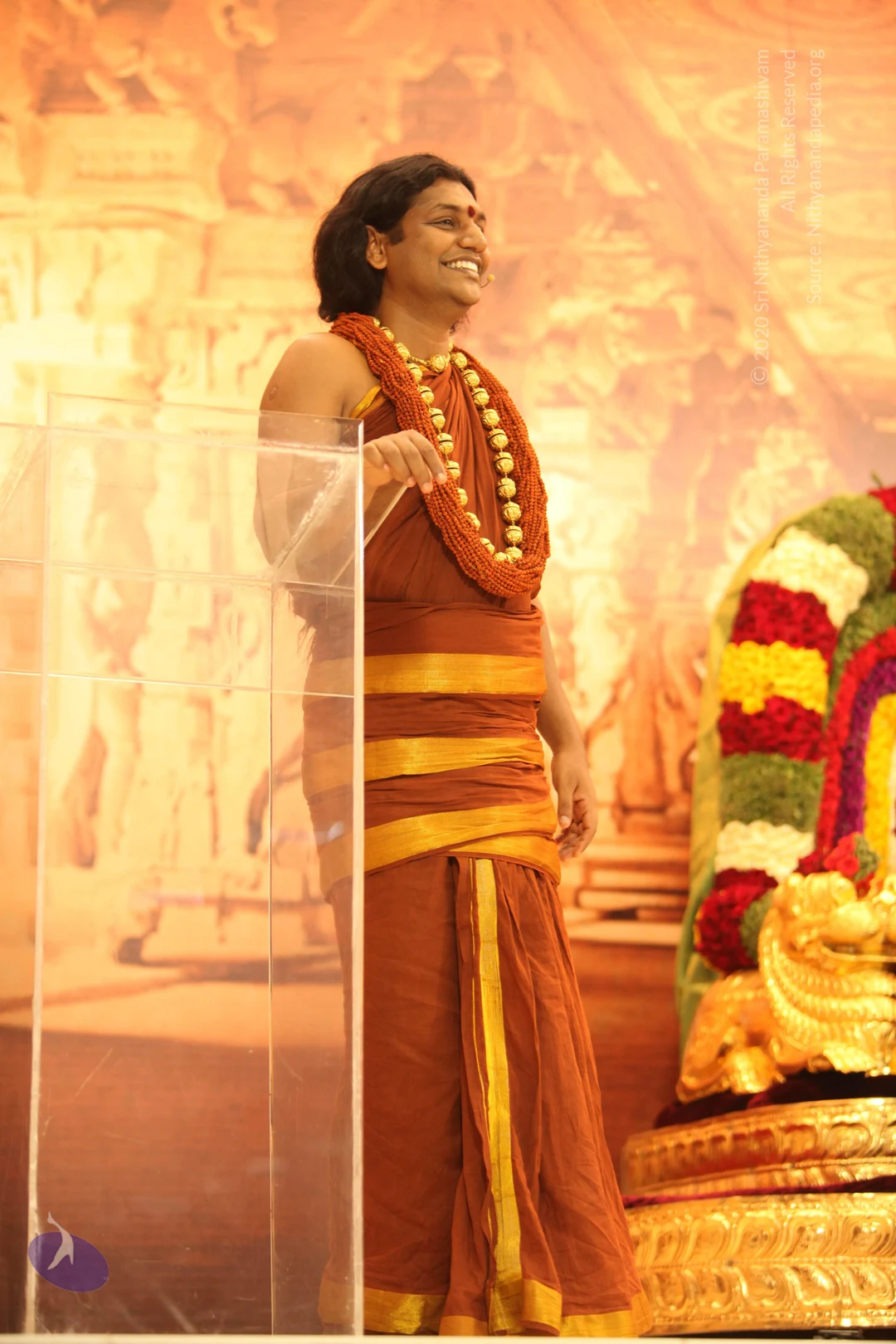
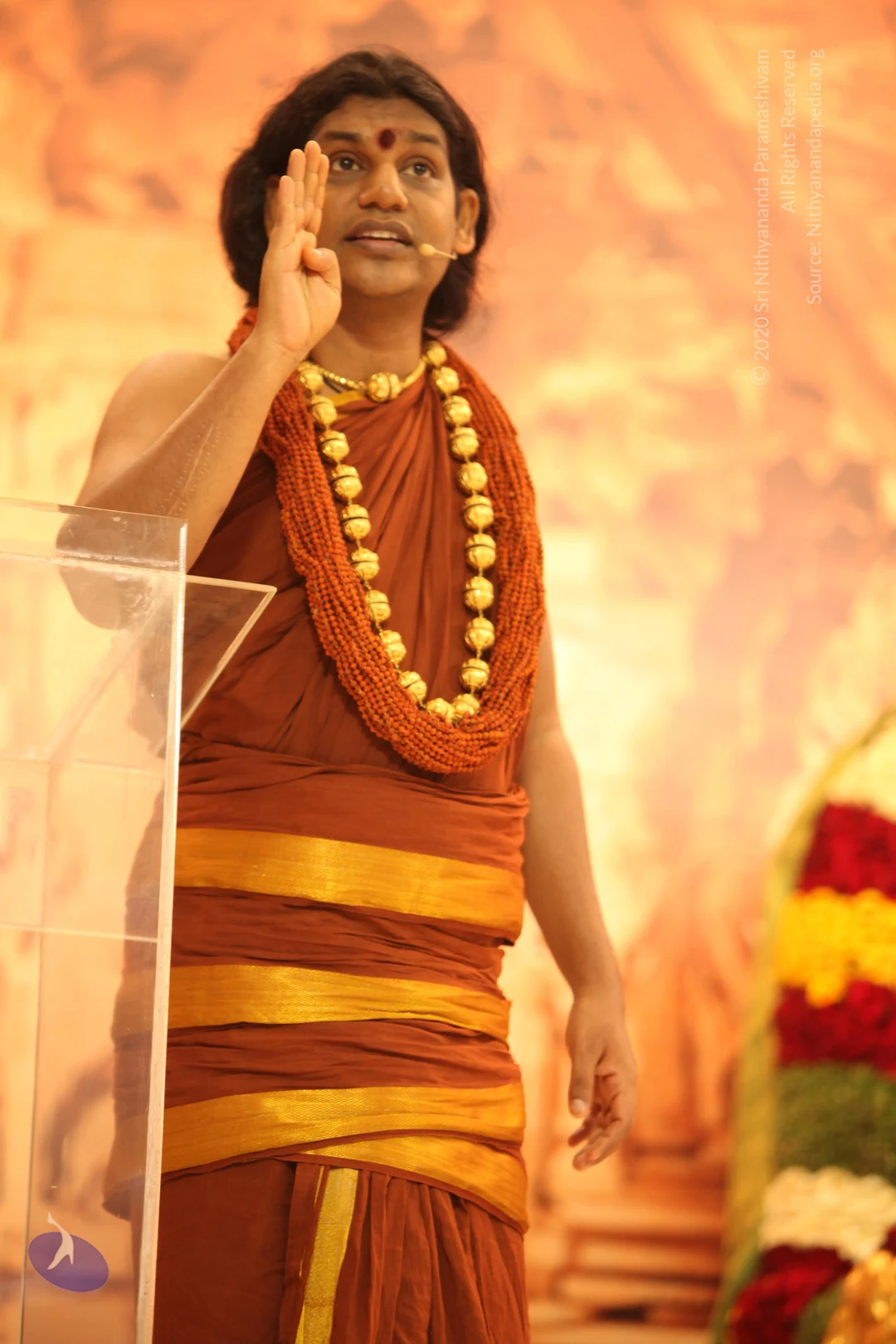
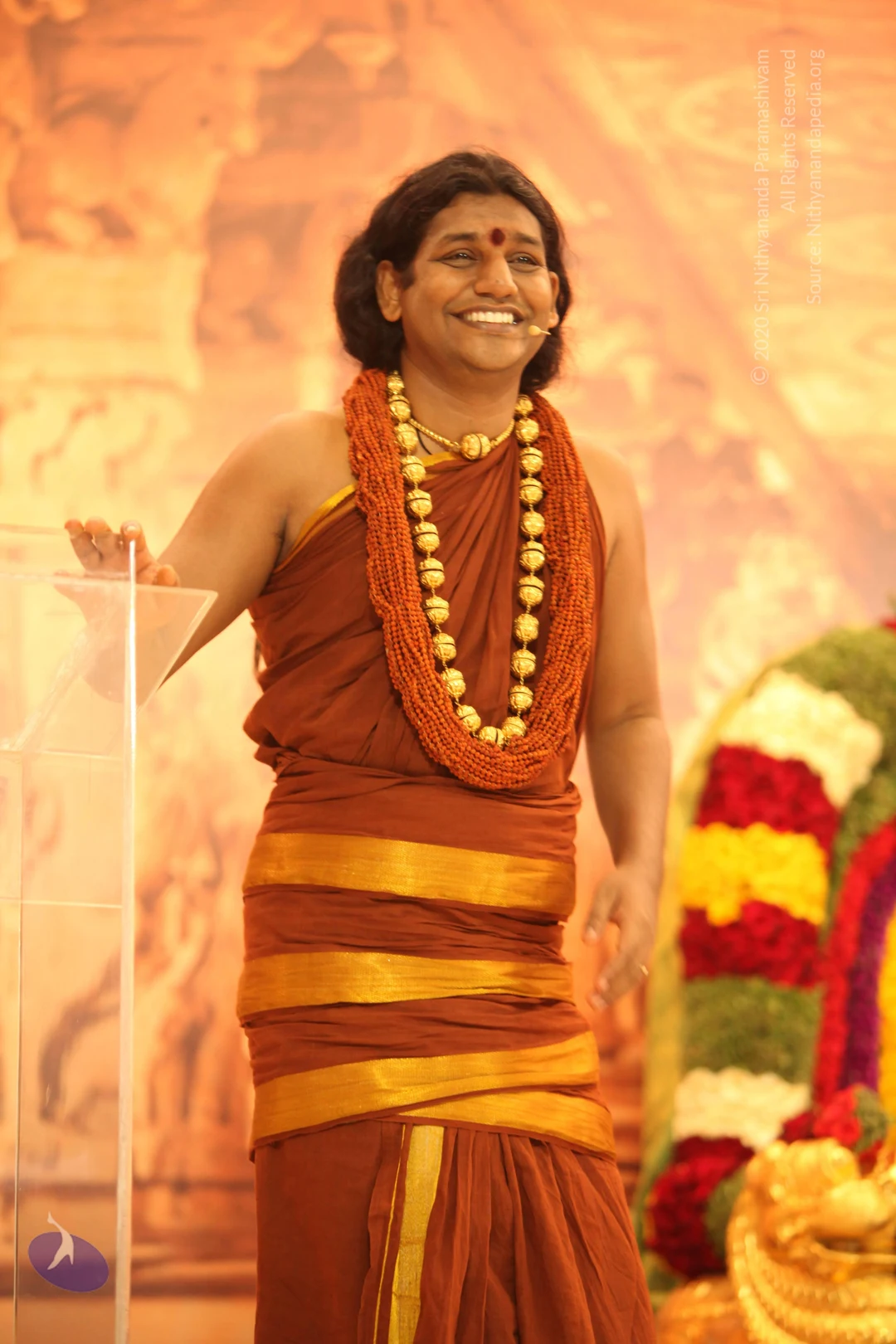
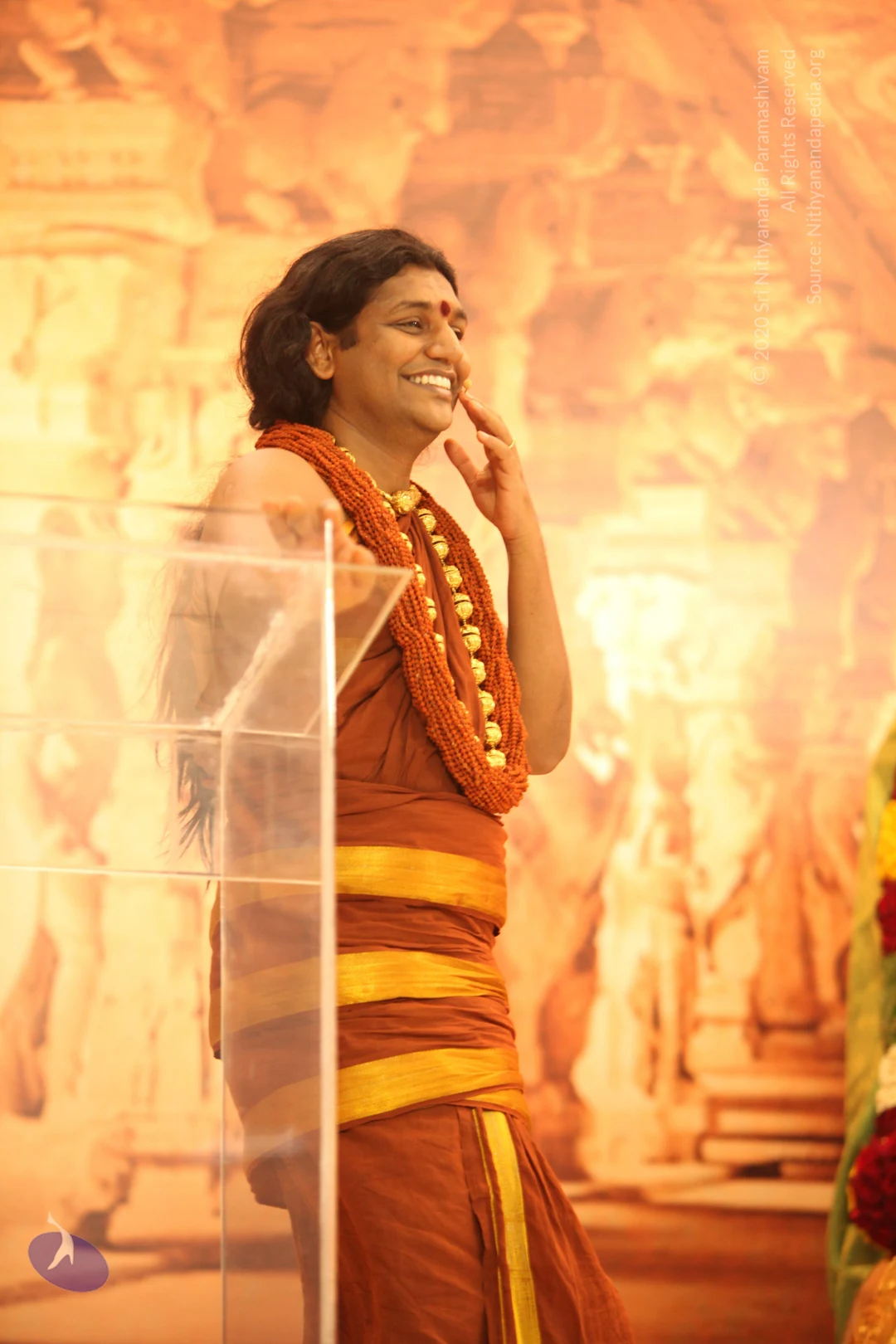
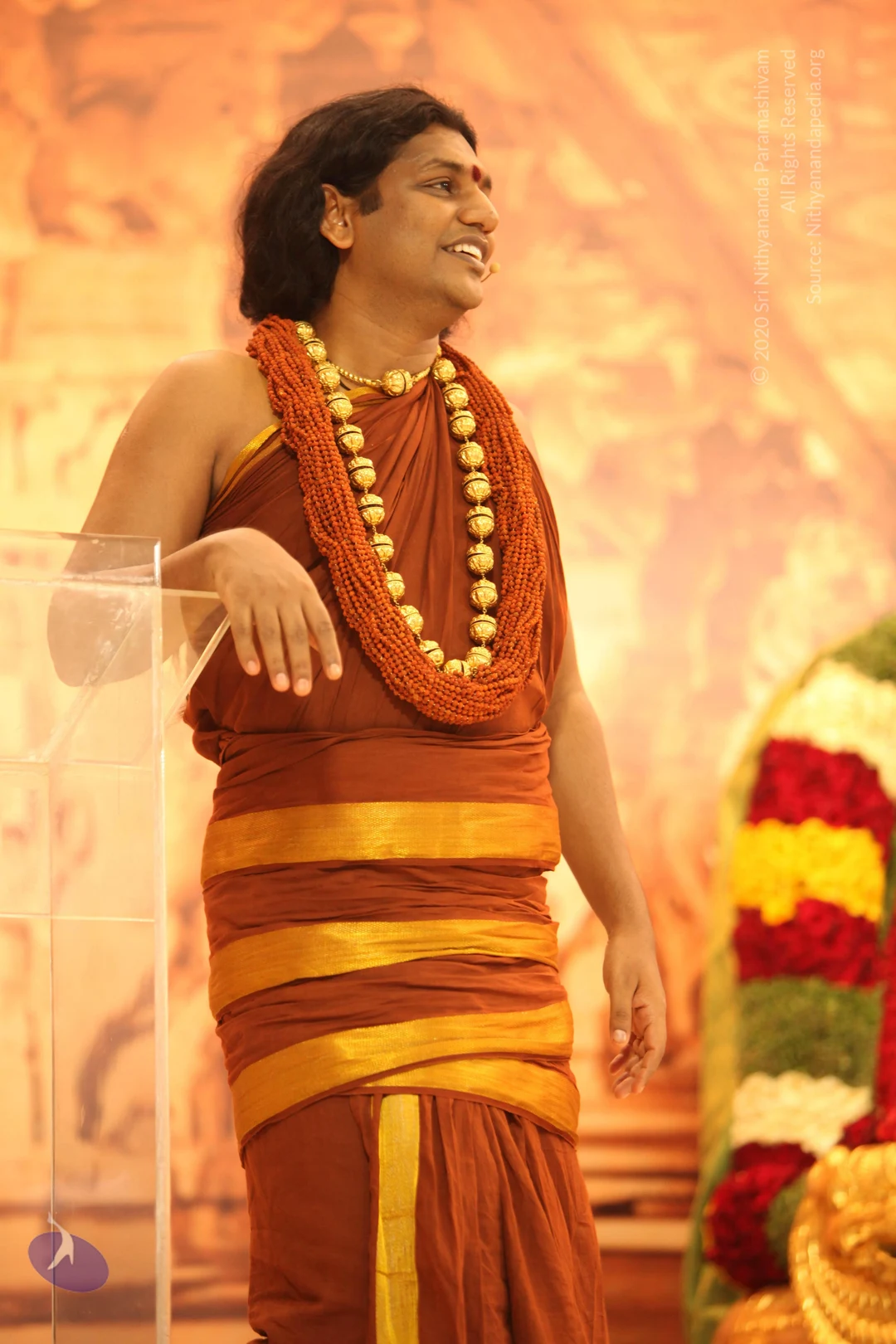
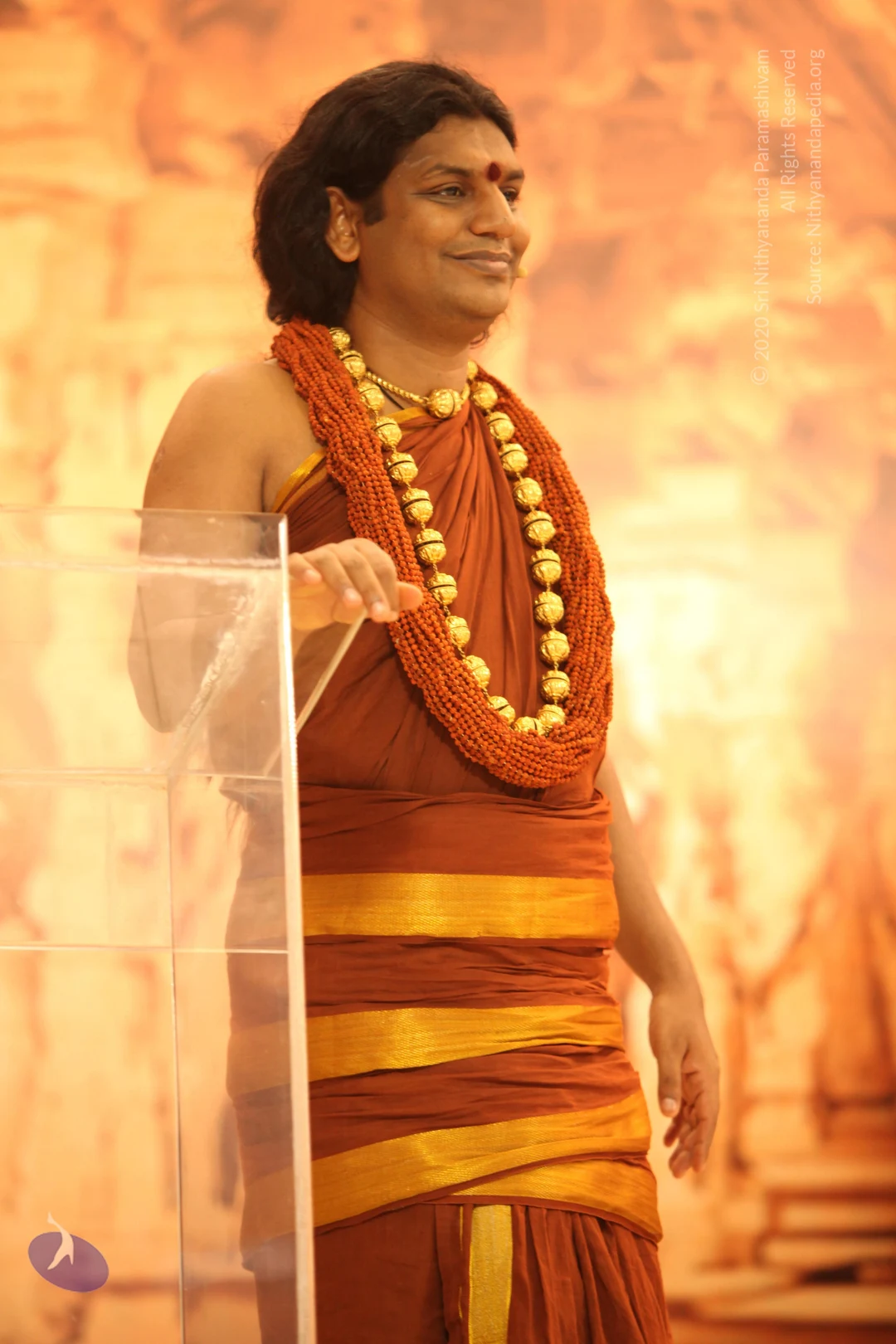
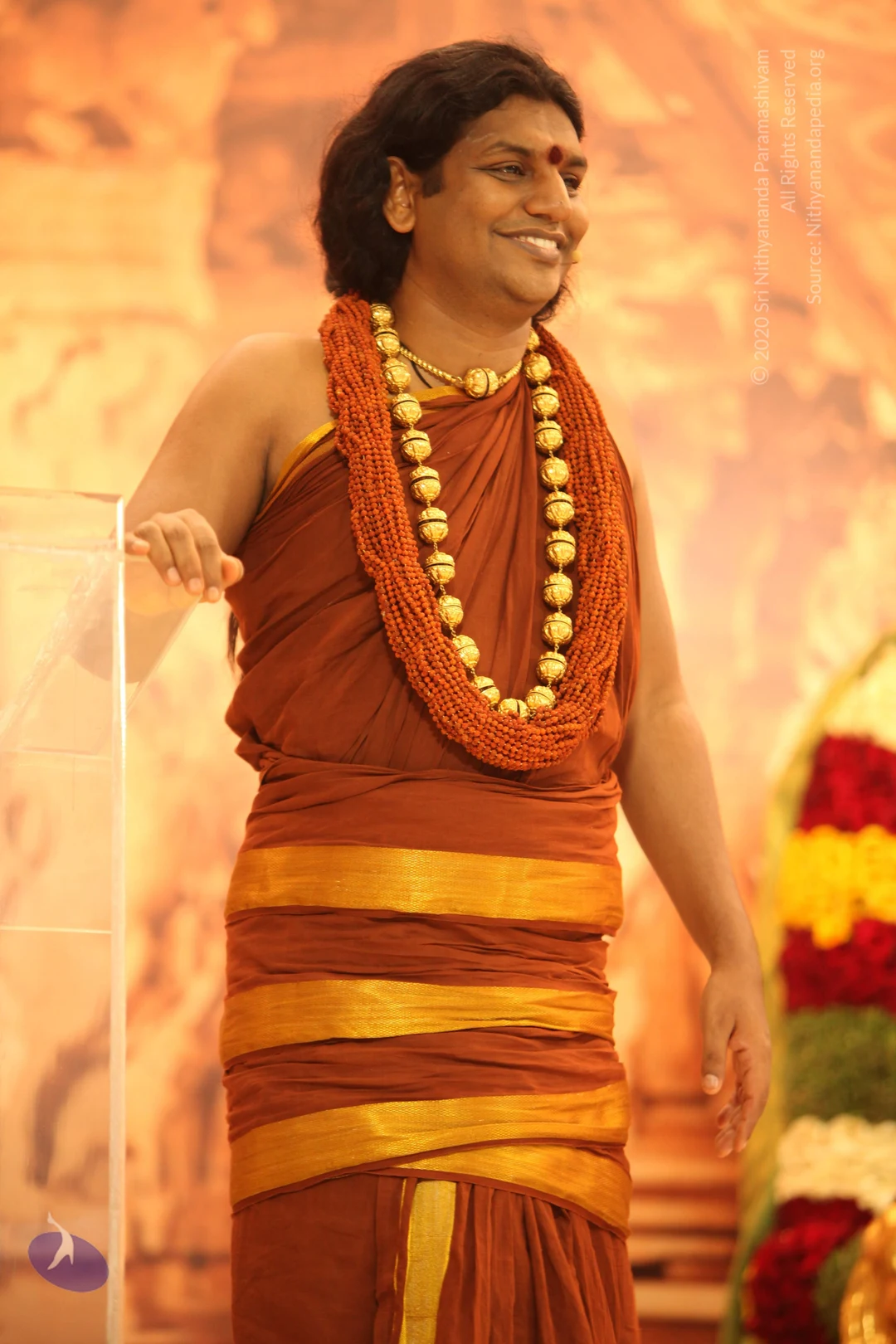
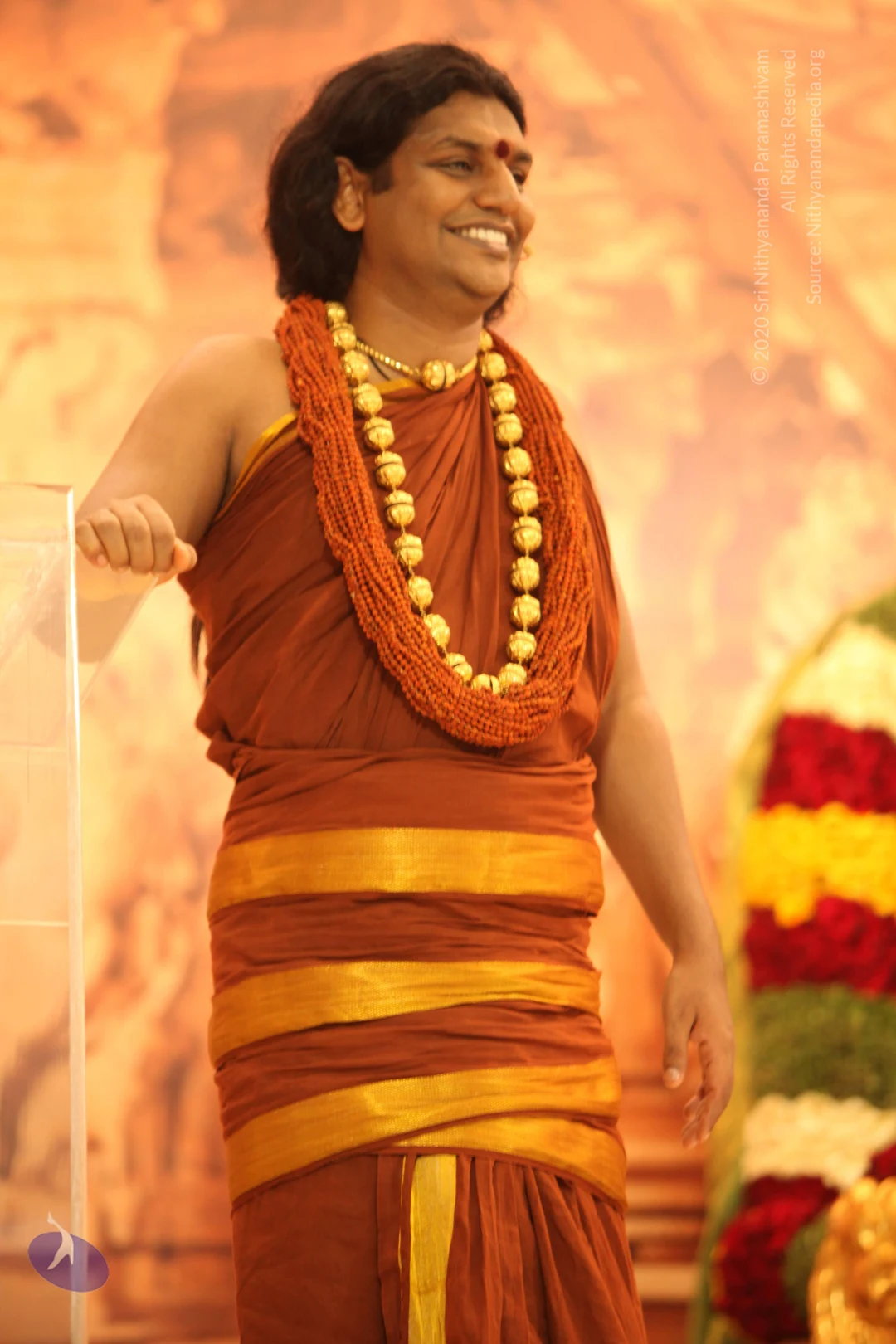
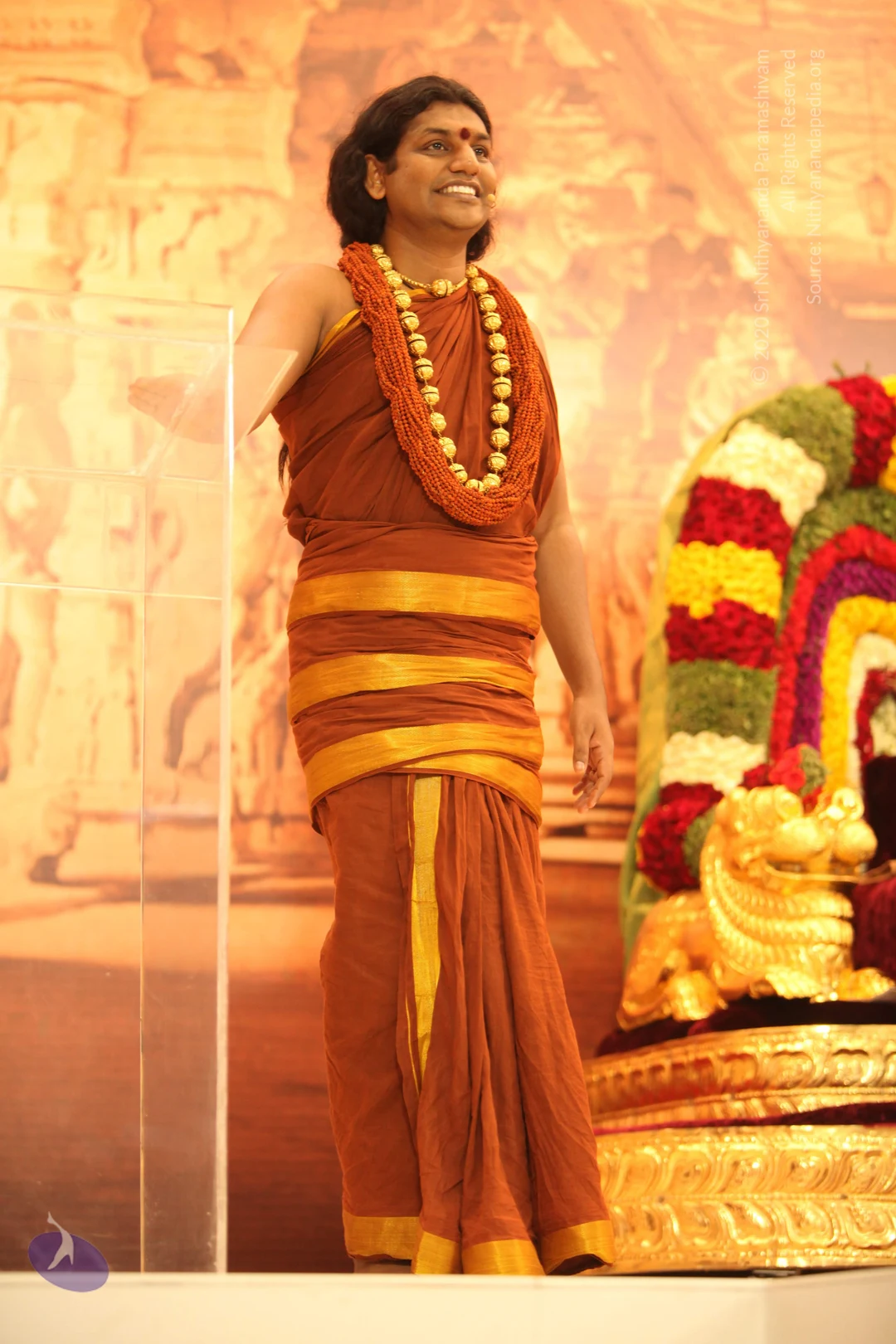
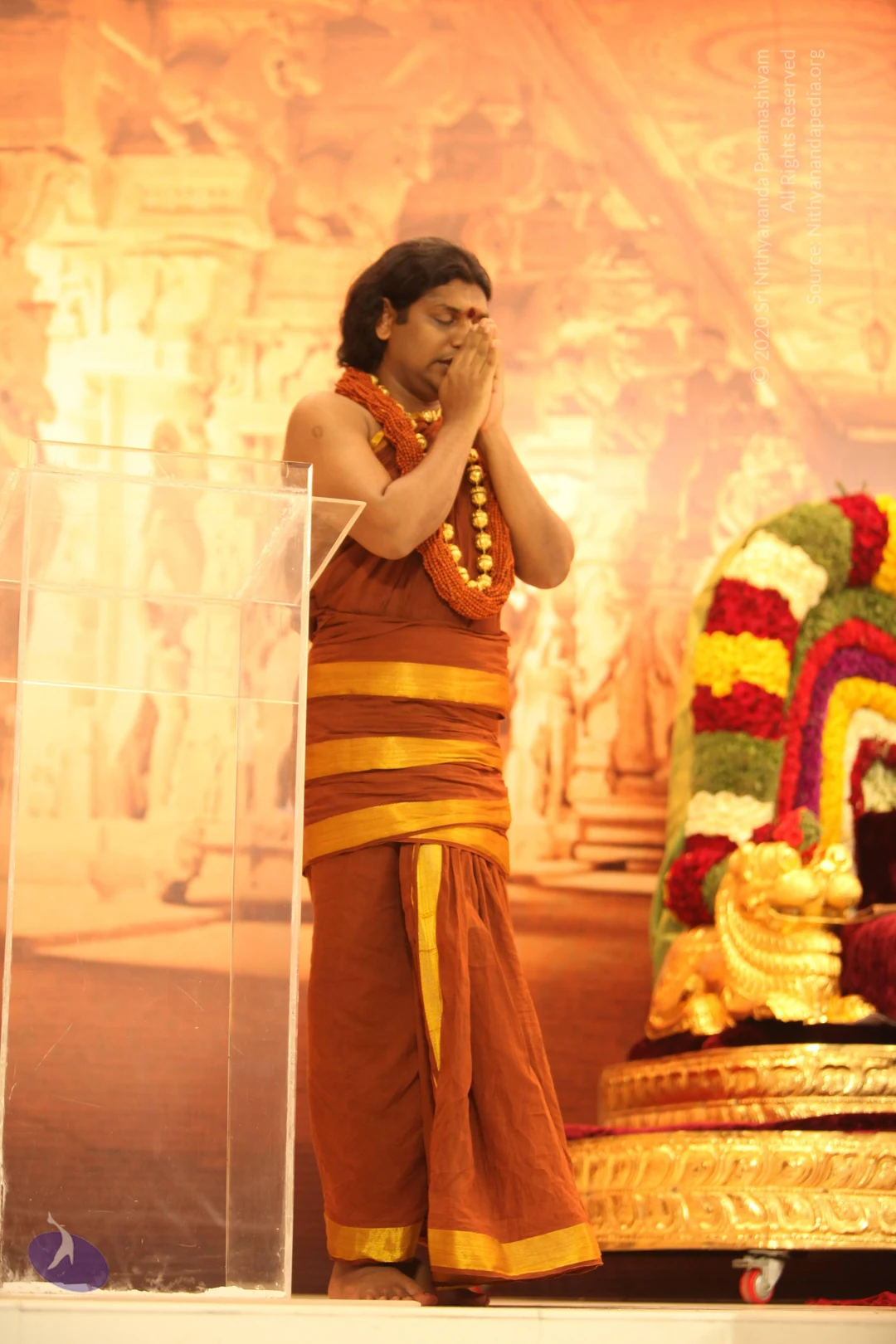
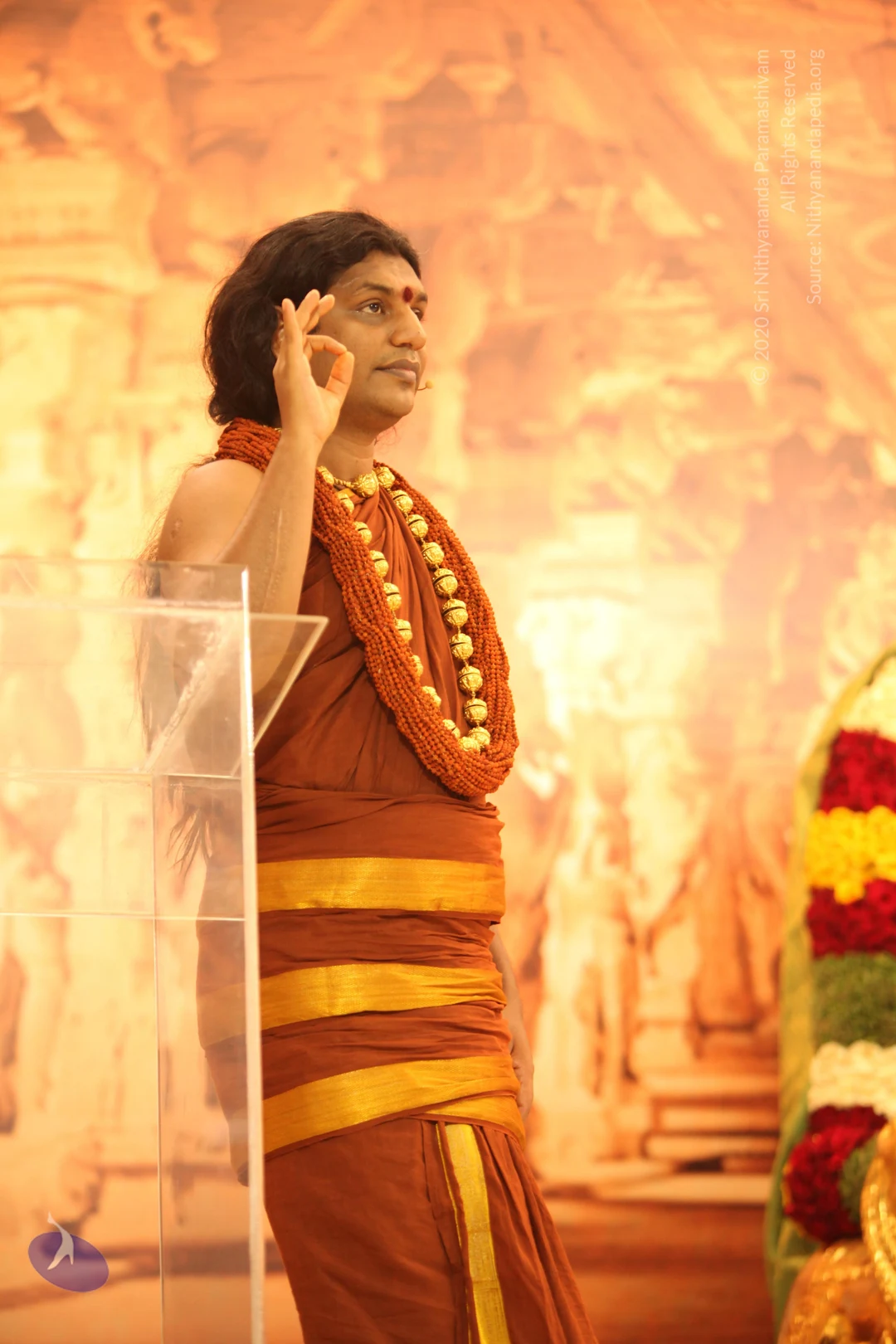
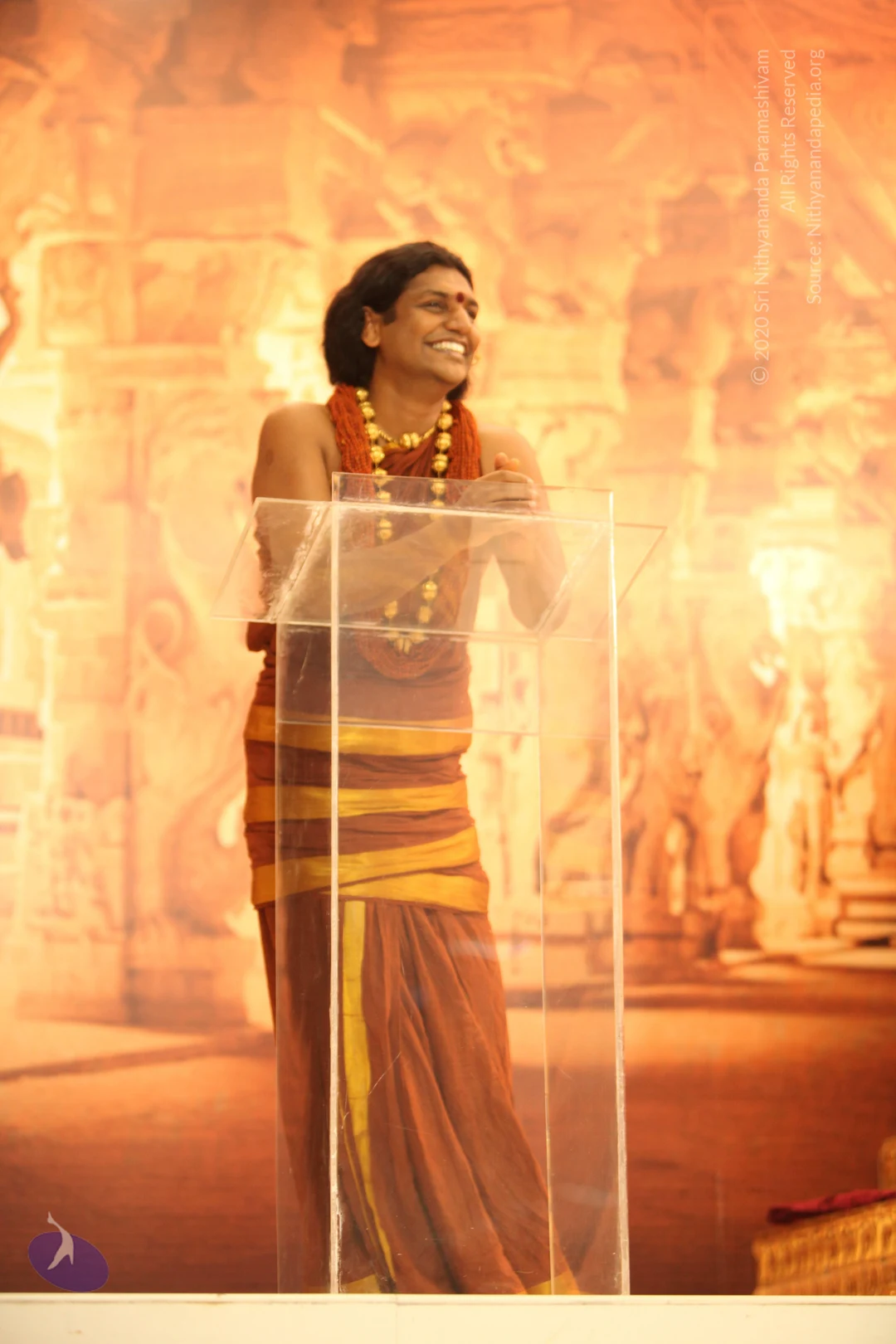
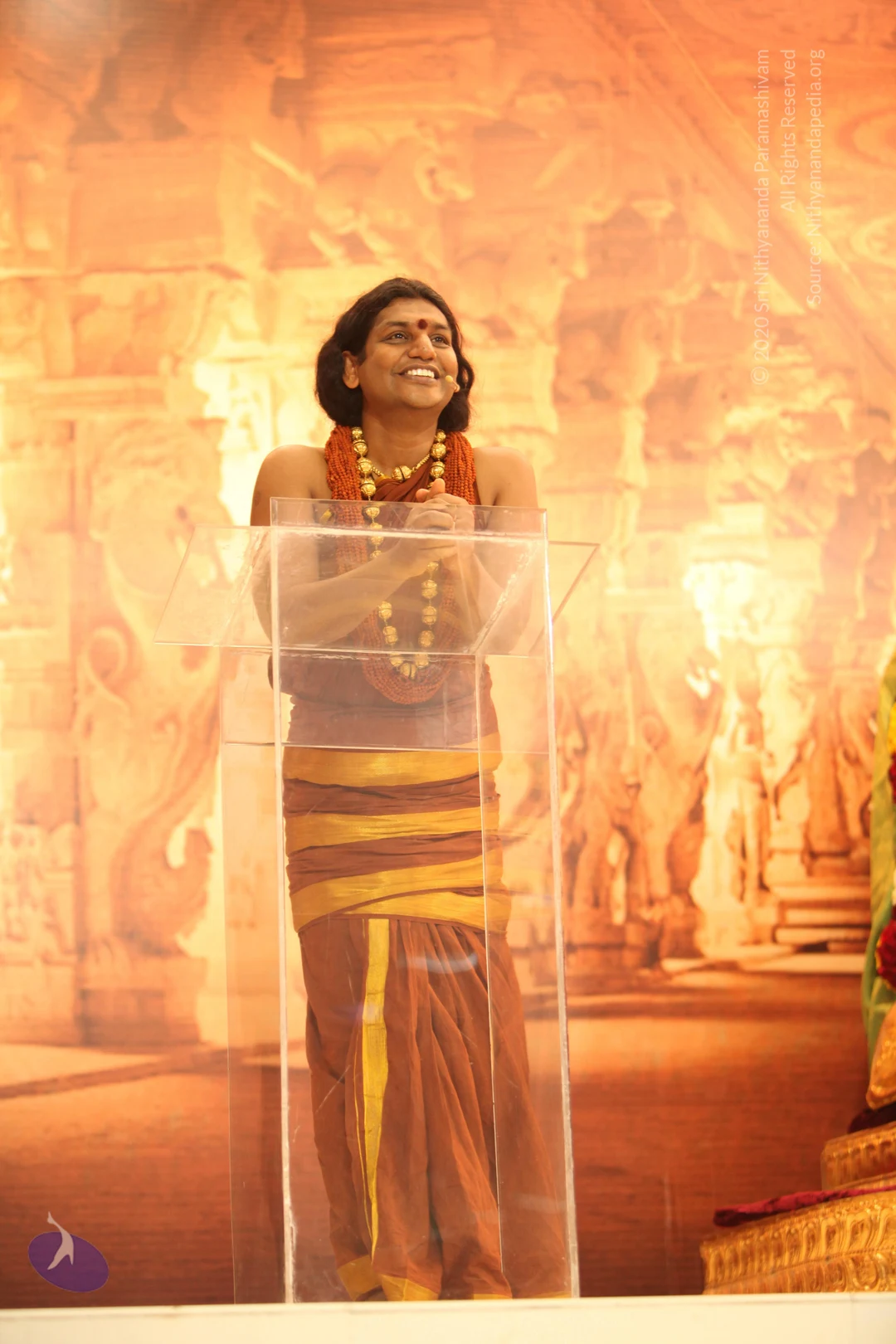
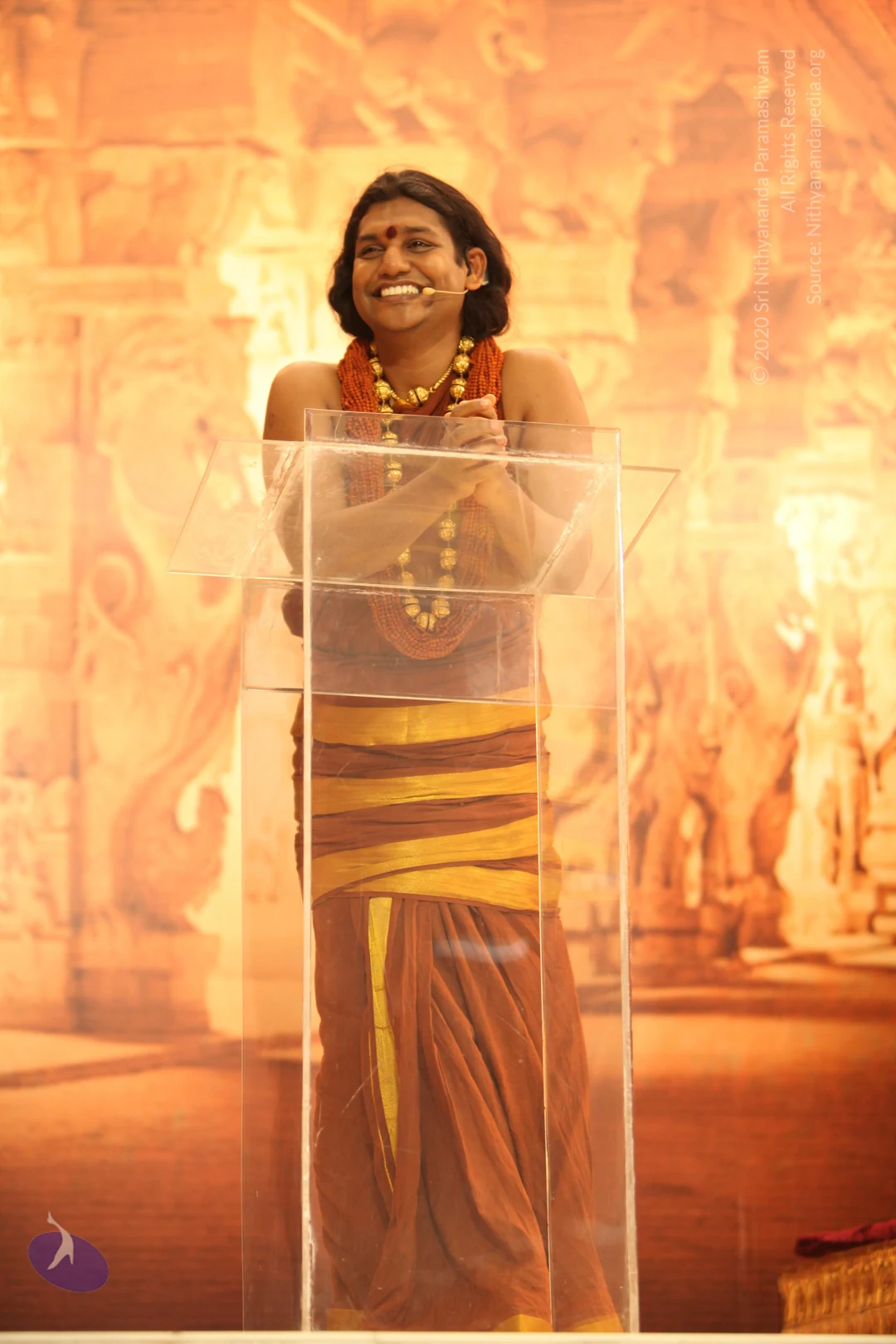
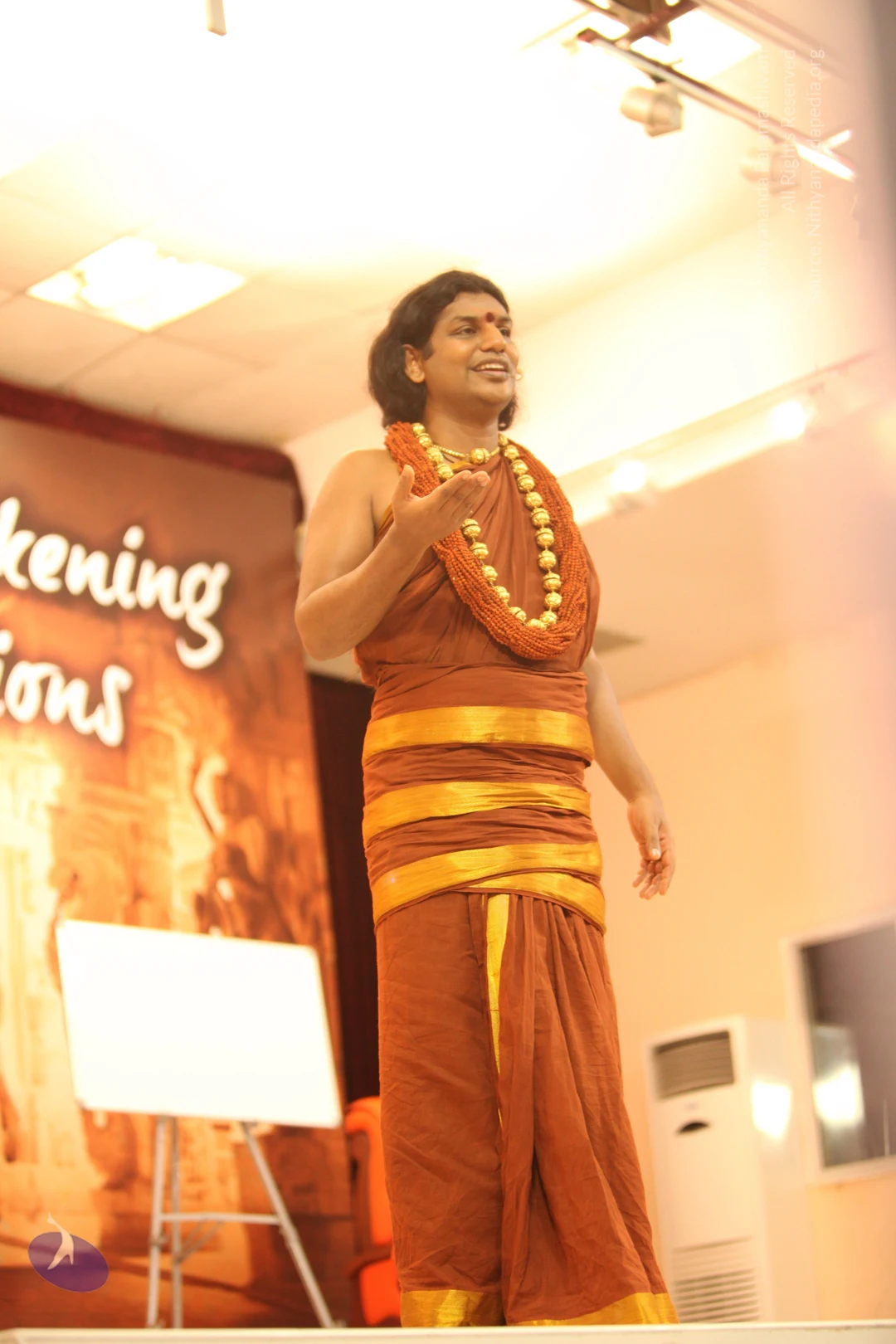
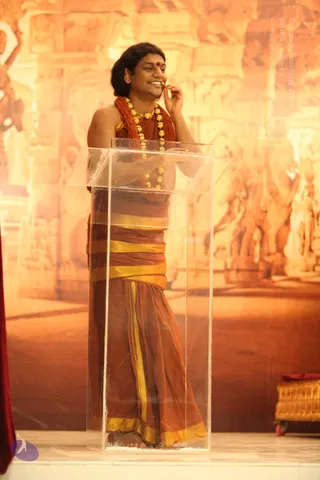
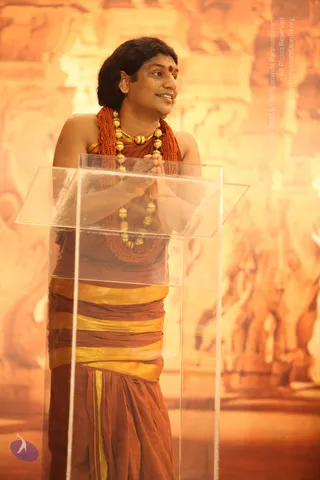
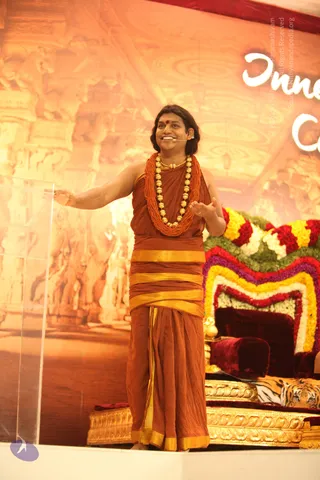
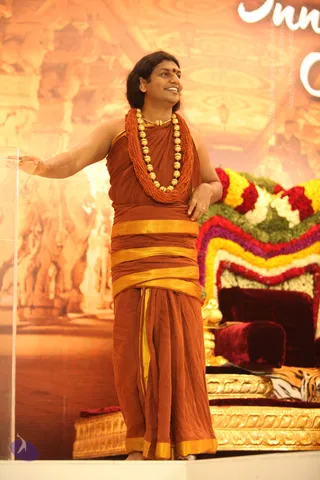
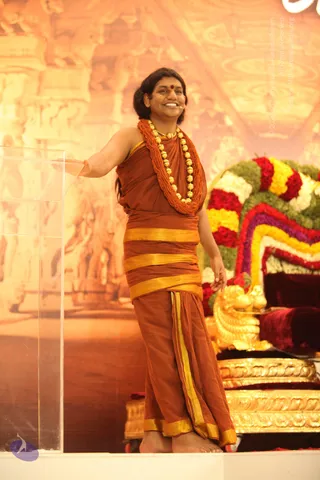
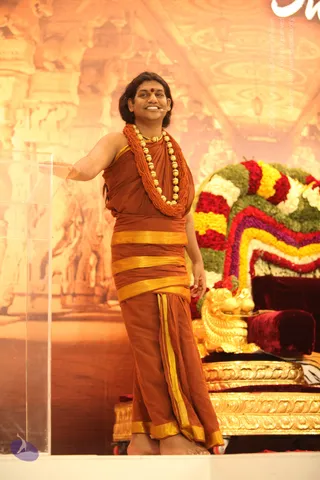
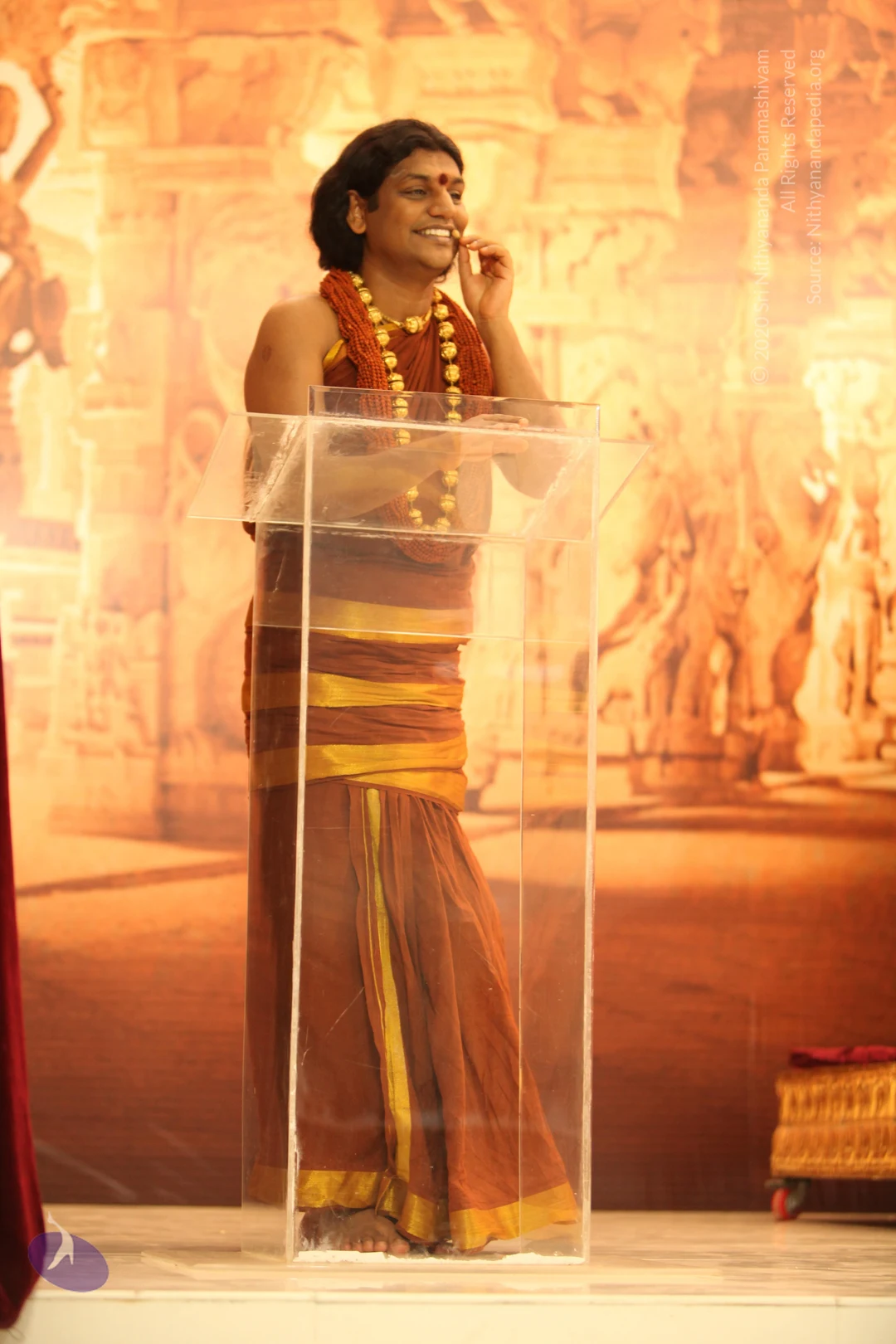
A man with short dark hair and a red bindi stands behind a clear acrylic lectern on a stage, smiling and touching his cheek with one hand. He wears a rust-brown and gold-bordered draped garment with a bare shoulder and a wide-beaded red rudraksha mala with gold bead ornaments. Behind him is a large backdrop of ornate sandstone temple carvings in warm orange tones, with a wicker-covered seat or chest and a red cloth at the right edge. a person: his long-ish swept hair, red rudraksha mala and ceremonial gold beads fit the visible cues, and the page places a person at this satsang event.A man with shoulder-length swept-back dark hair and a red bindi stands behind a clear acrylic lectern, palms pressed together in anjali, smiling and looking to the side. He wears a rust-brown and gold-bordered draped garment with a bare upper body and multiple strands of orange-red beaded necklaces with large gold beads. Behind him is a warm orange carved temple-style backdrop of figures. Swamiji (probable): long swept-back hair, ornate red-orange beads and gold necklaces, and a saffron-toned draped garment; he is speaking at a satsang lectern.A man in a saffron-brown sleeveless robe with gold-bordered wrap stands on a raised stage beside a clear acrylic lectern, gesturing with his right arm outstretched and hands open while smiling and speaking. He wears a headset microphone, a red rudraksha mala over multiple gold bead necklaces, and a small red bindi. Behind him is a backdrop of carved temple-style sculpture, with a red velvet throne draped in yellow, red and white flower garlands and a tiger-skin cushion on a gold base. A large white stage banner is partly visible.A man with long, swept-back dark hair and a red bindi stands on a stage in a rust-orange garment wrapped with gold-bordered bands, wearing a thick rudraksha mala and a ceremonial gold bead necklace. He smiles and extends one arm toward a clear lectern. Behind him is a carved golden backdrop and a throne-like seat draped in red velvet, tiger-print cloth and red, yellow and white flower garlands. a person is shown with the rudraksha mala and gold necklace cues, presenting a talk at the Inner Awakening programme.A man with shoulder-length dark hair and a red bindi stands barefoot on a raised stage beside a clear acrylic lectern, smiling and gesturing with one arm. He wears a rust-orange draped garment wrapped with gold-bordered cloth and a long multi-strand orange rudraksha-style mala with golden beads around his neck. Behind him is a gilded throne with red velvet cushions and a large arrangement of red, yellow, white and green flower garlands. The backdrop shows ornate sandstone-style carvings. A small microphone is visible near his face. The stage setting suggests a satsang discourse.A man stands barefoot on a stage beside a clear acrylic lectern, smiling and extending one arm toward the audience. He wears a rust-orange unstitched cloth wrapped over one shoulder with gold-bordered striped drapes around the waist and legs, and a red-orange rudraksha mala with a gold bead necklace. A red bindi marks his forehead and a small headset microphone is clipped near his face. Behind him stands a gold-embossed throne draped with a red velvet cushion and garlanded with red, yellow, white and purple flower strings, against a sepia temple-carving backdrop. a person on stage delivering satsang, with the rudraksha mala, orange-saffron robes and gold necklace as the visible cues.

Glimpses from the day
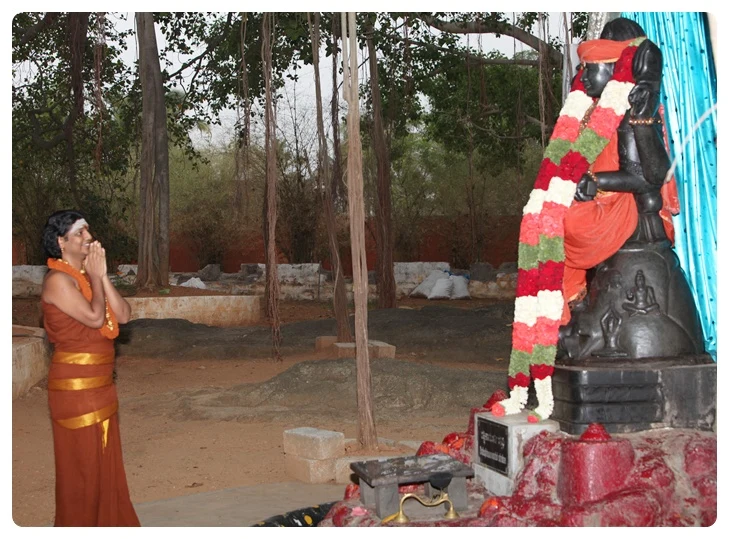
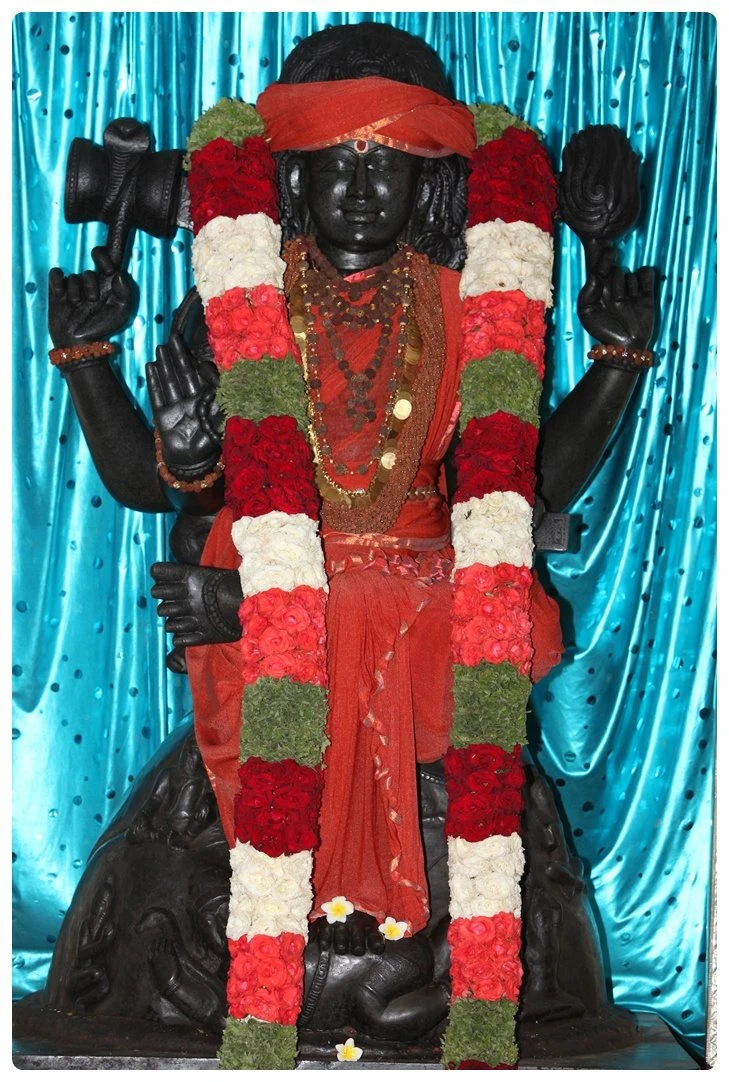
23 photosSource gallery
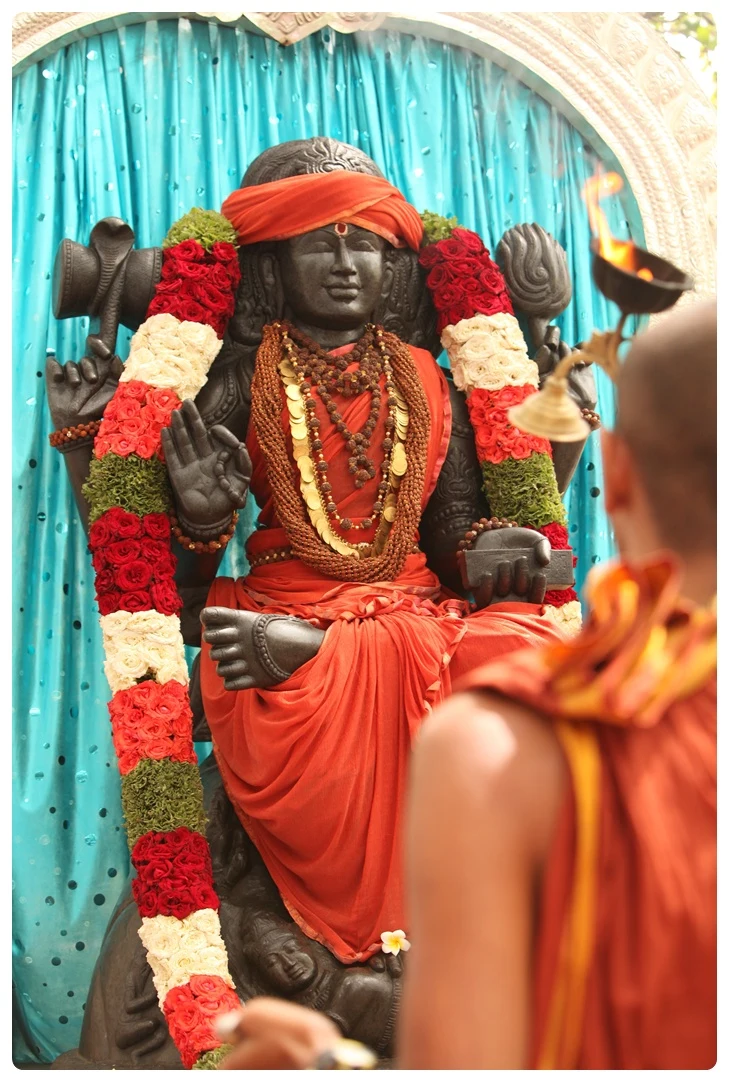
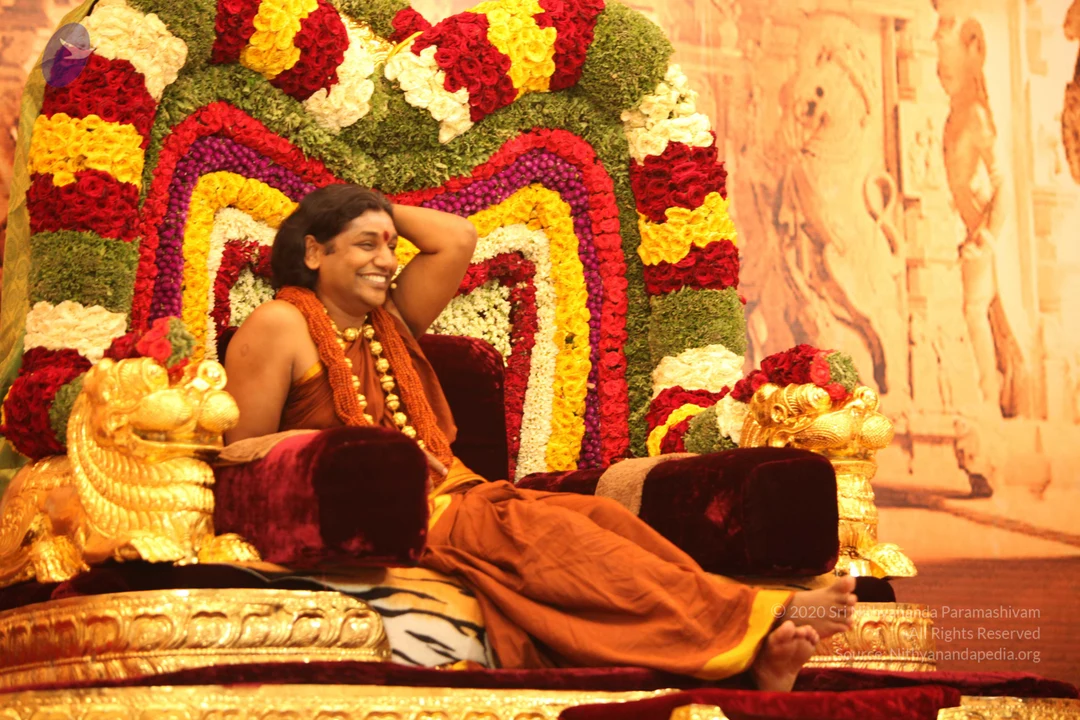
A smiling man in saffron-orange robes sits cross-legged on an ornate throne covered with bands of red, yellow, white and purple flower garlands. He wears a long multi-strand rudraksha mala with gold beads, a gold-toned chain and a red bindi on his forehead. Golden lion-head armrests flank the seat, and a tiger skin lies beneath. A single person is visible in a marble-walled hall. Appearance-based a person seated on a flower-decorated throne with saffron robes, a rudraksha mala and ornate gold armrests.A smiling man with long swept-back dark hair and a red bindi sits cross-legged on a tiger-skin rug in front of a deep red velvet throne flanked by golden lion-head armrests. He wears an orange-saffron dhoti and shawl, a long rudraksha mala with a large ceremonial gold necklace, and a headset microphone. Behind him is a backdrop of red, yellow, green and white flower garlands in wave-like rows, with a painted wall panel at left. Probable Swamiji: long swept-back hair, saffron clothing, rudraksha mala and ceremonial gold necklace, seated on a throne during satsang.A seated man in a maroon-orange garment sits cross-legged on a plush maroon cushioned throne with gold lion-head armrests, resting on a tiger-striped cloth. He smiles with hands folded in his lap, wearing a long orange-red mala of beads around his neck and a red bindi on his forehead. Behind him is a tall backdrop of red, yellow, purple and white flowers arranged in wave patterns. Swamiji (probable): long swept-back hair, saffron clothing and a rudraksha mala match the satsang context on the page.A photograph of a dense outdoor crowd gathered under a large spreading tree with pale green foliage and a street lamp on a pole. Most people wear white clothing, including a man with grey hair in a white shirt at centre-right, a woman with bright red curly hair in a white top at right, and a woman in a cream sari with a long side braid in the foreground. A boy in an orange shirt and a child in yellow stand among them. No clearly identifiable a person figure is visible in the frame, so the scene shows devotees and attendees gathered outdoors.A two-panel collage of a satsang gathering in a bright hall. Participants seated on red mats wear white clothing and white caps, and many raise their right hands high. In the left panel a young man in a grey t-shirt with a red lanyard raises his hand, and the right panel shows a young man with long hair wearing a red-and-white beaded necklace with his hand raised. Behind them the crowd sits in rows with a few stage fixtures visible. A longer audience of white-clad devotees fills the frame.A dark stone statue of a seated deity in saffron-orange drapery and a saffron turban, adorned with rudraksha beads, gold coin necklaces and a braided cord, wreathed with red roses, white flowers and green foliage garlands. Its hands hold objects and form a mudra. In the foreground, a person in saffron robes with a shaved head faces the statue, holding a brass lamp with a flickering flame and a bell. A turquoise draped backdrop with a white arched frame sits behind the statue, and a single white flower lies on the ground. The statue is a depiction, not a living person, so no identifiable physical figure is shown beyond the foreground devotee.