Skip to content
Friday

9 May 2014

Dated photos
243
Source pages
1
Media
2
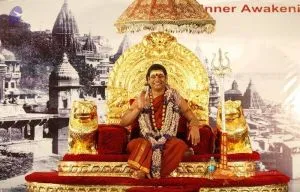
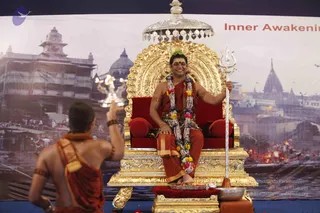
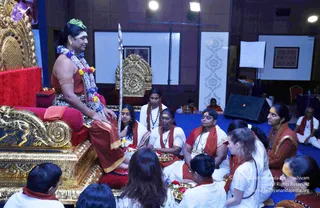
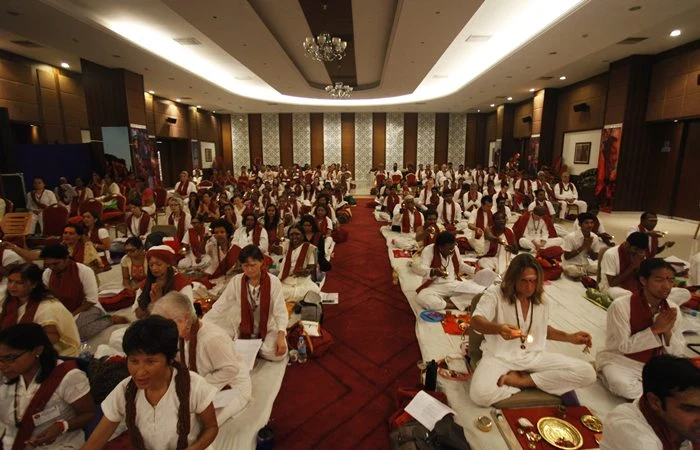
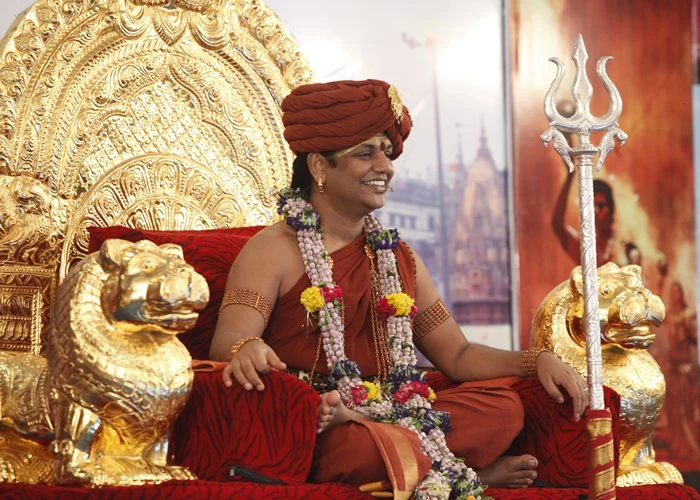
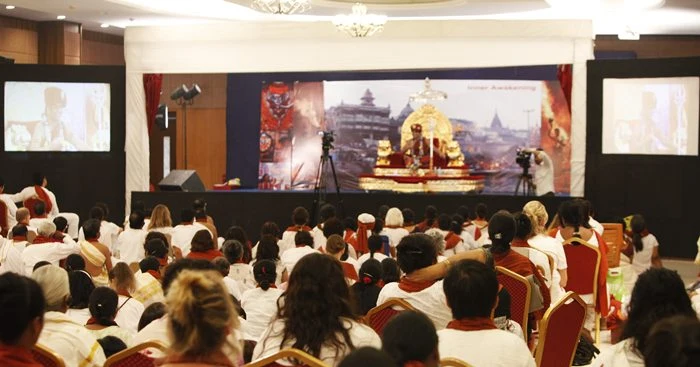
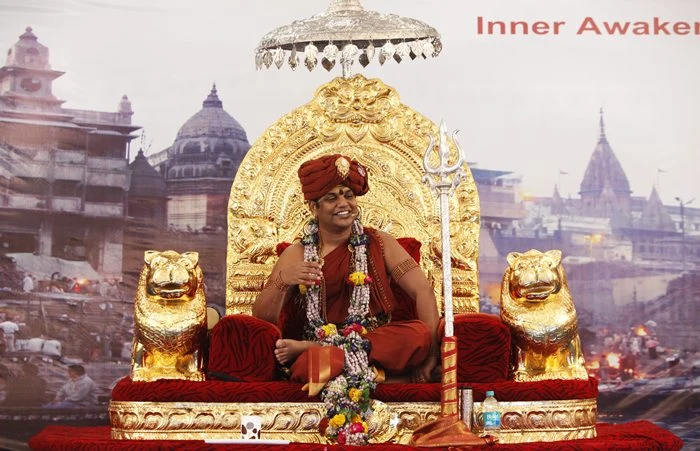
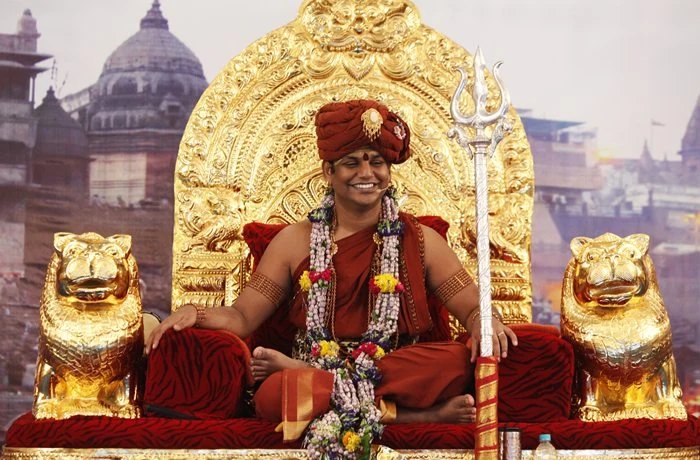
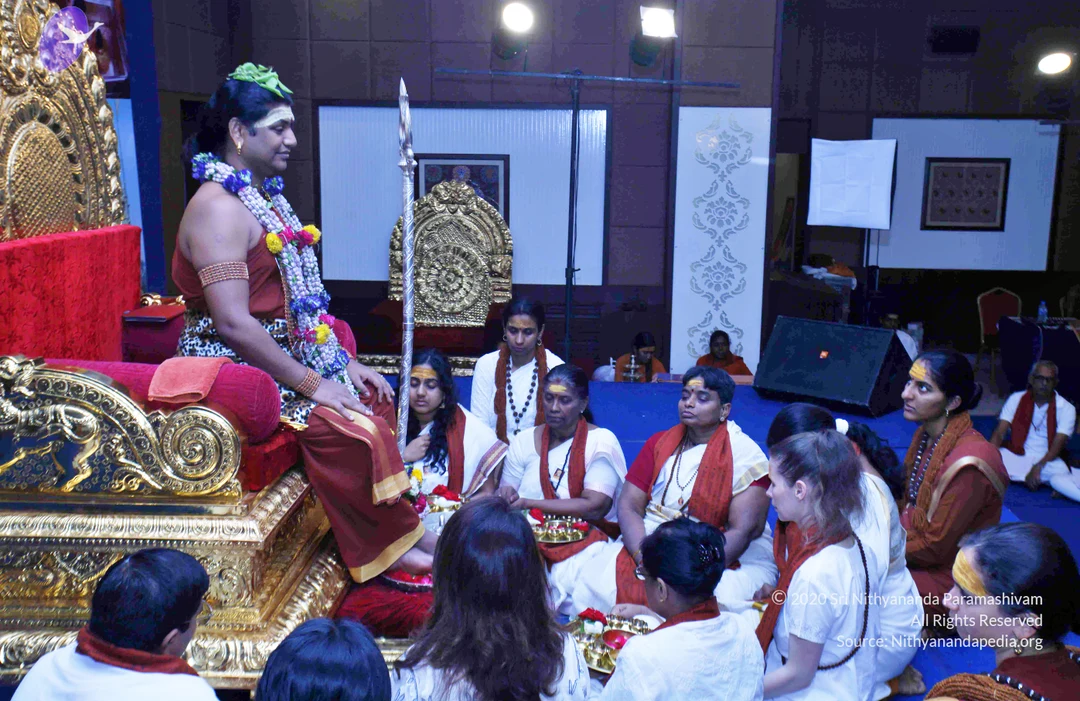
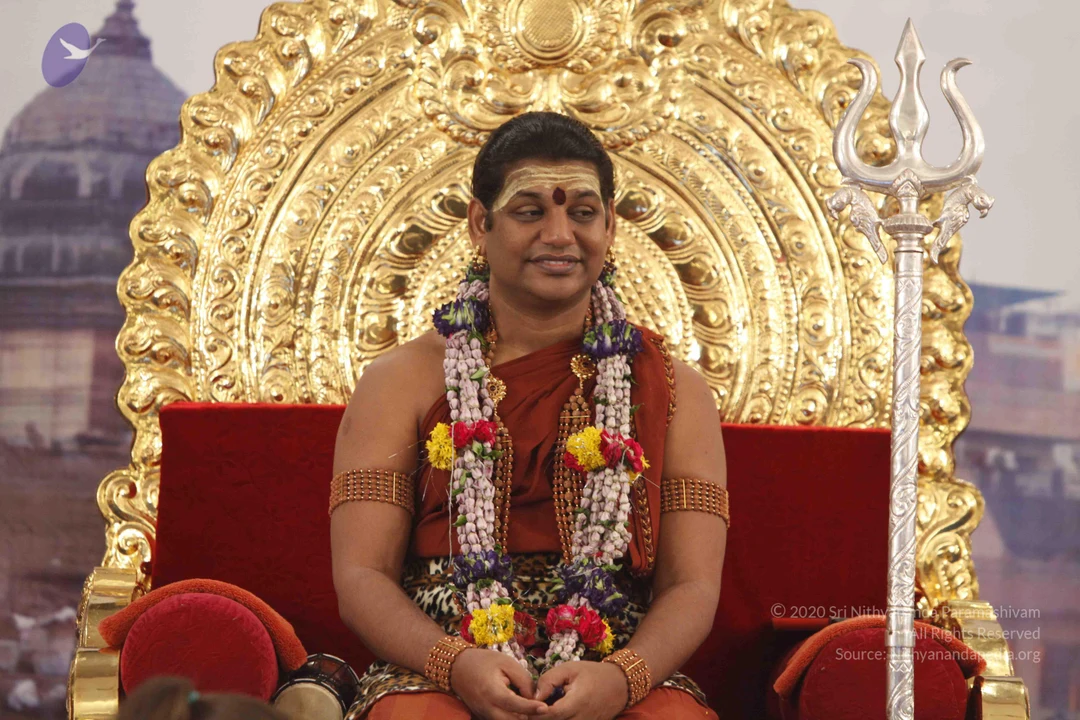
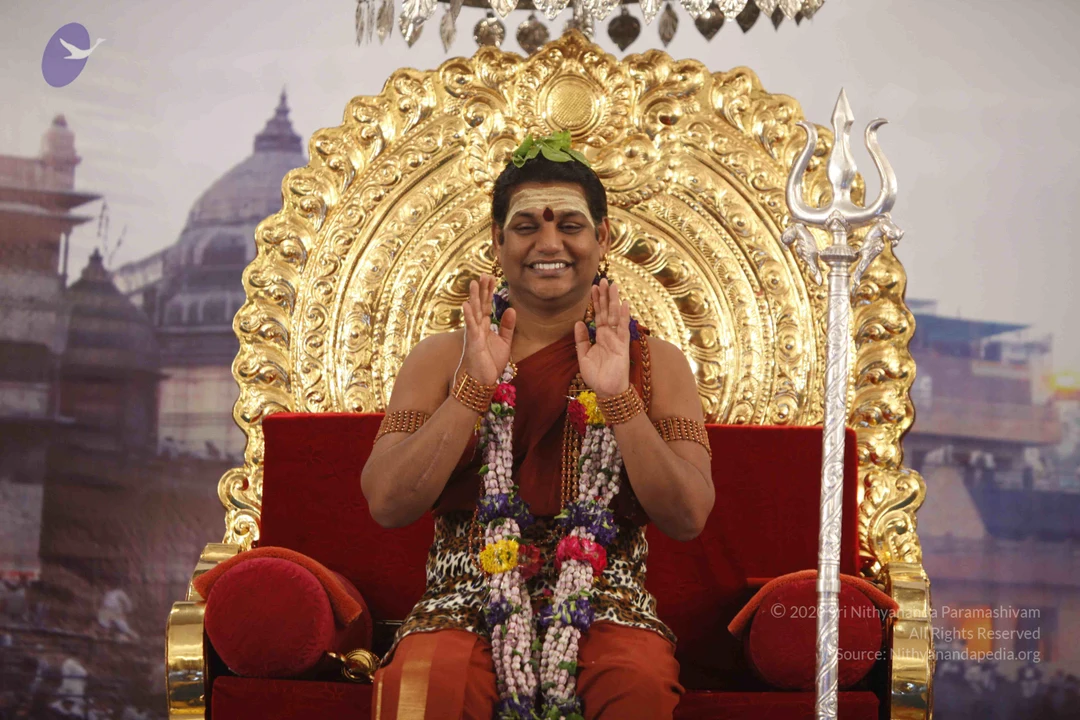
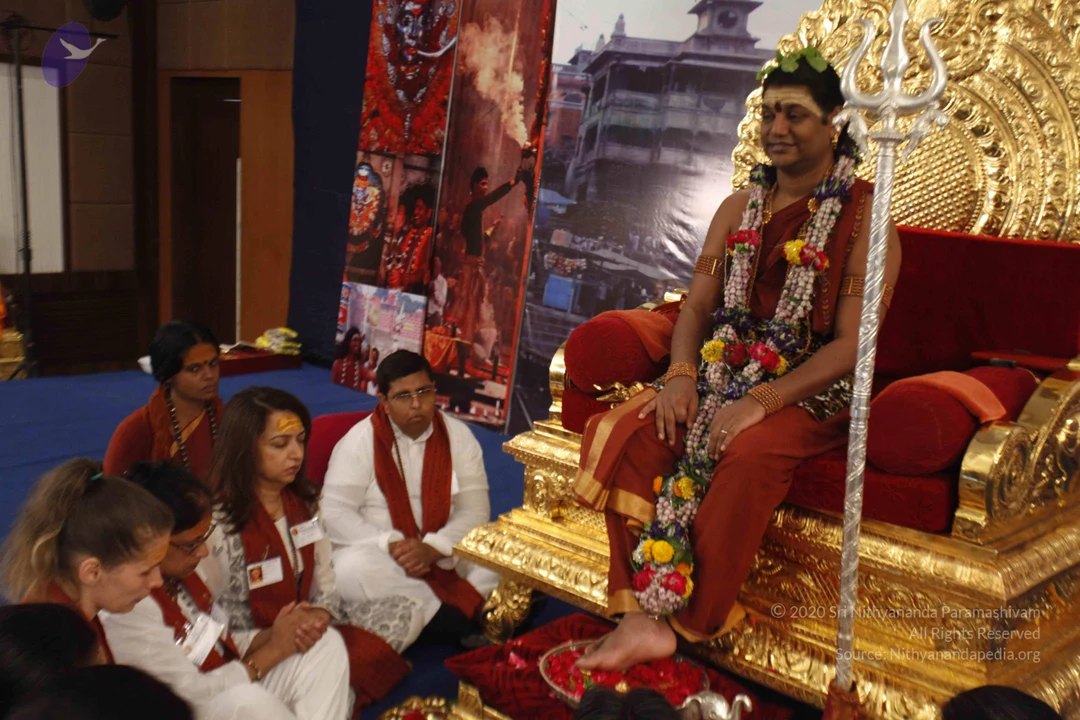
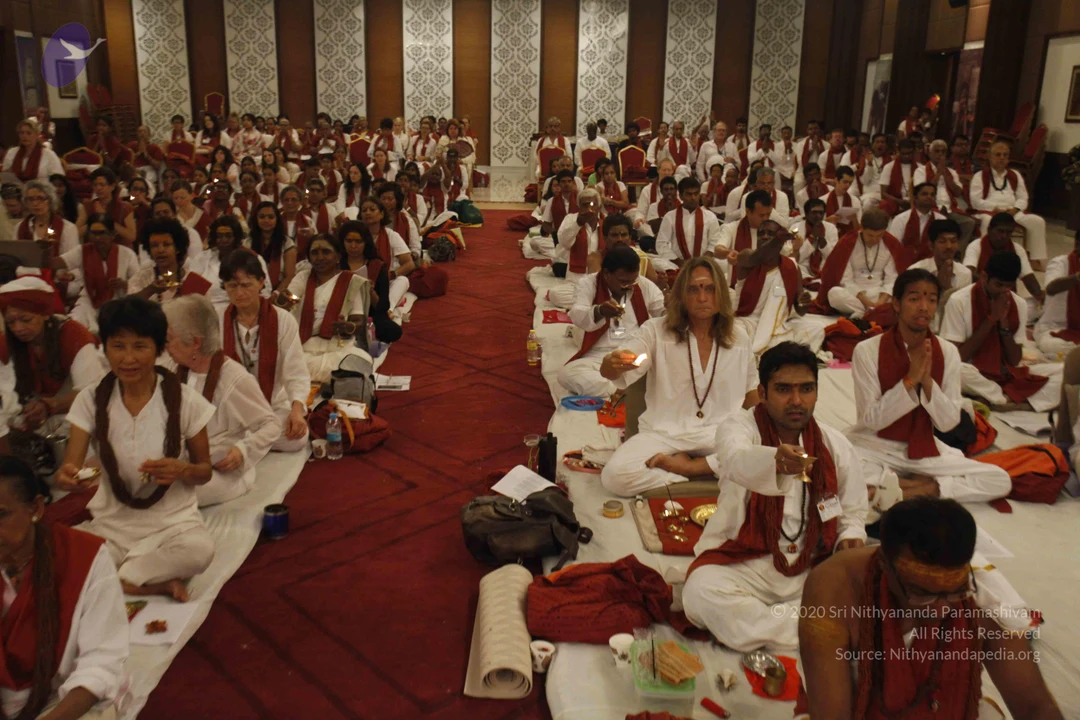
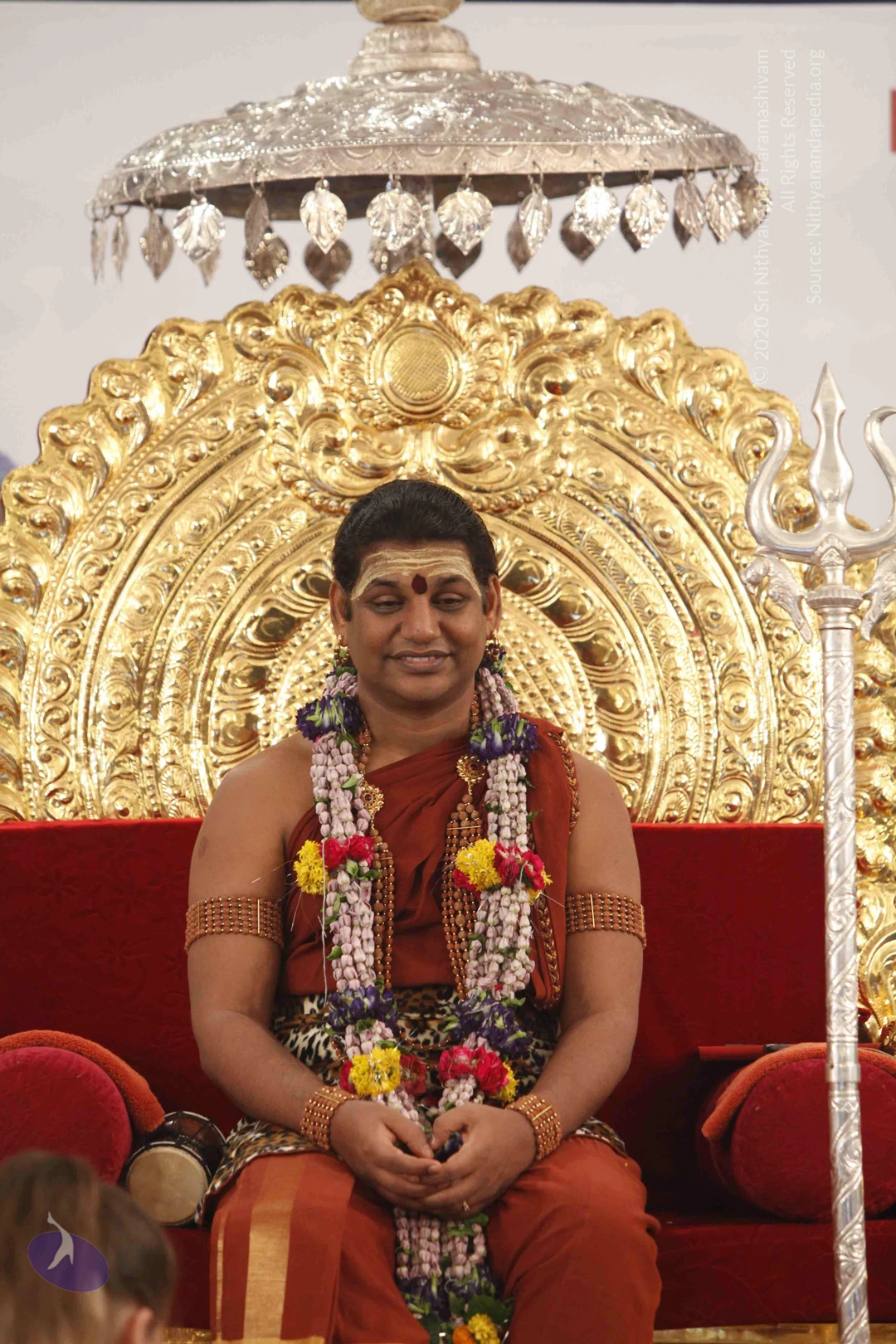
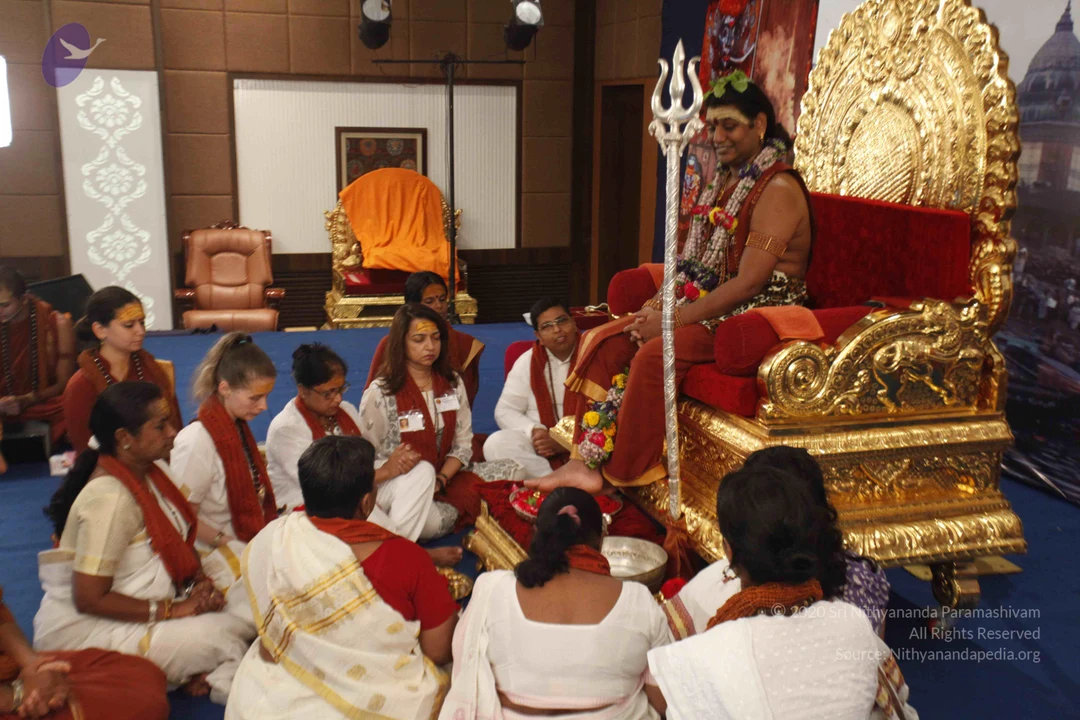
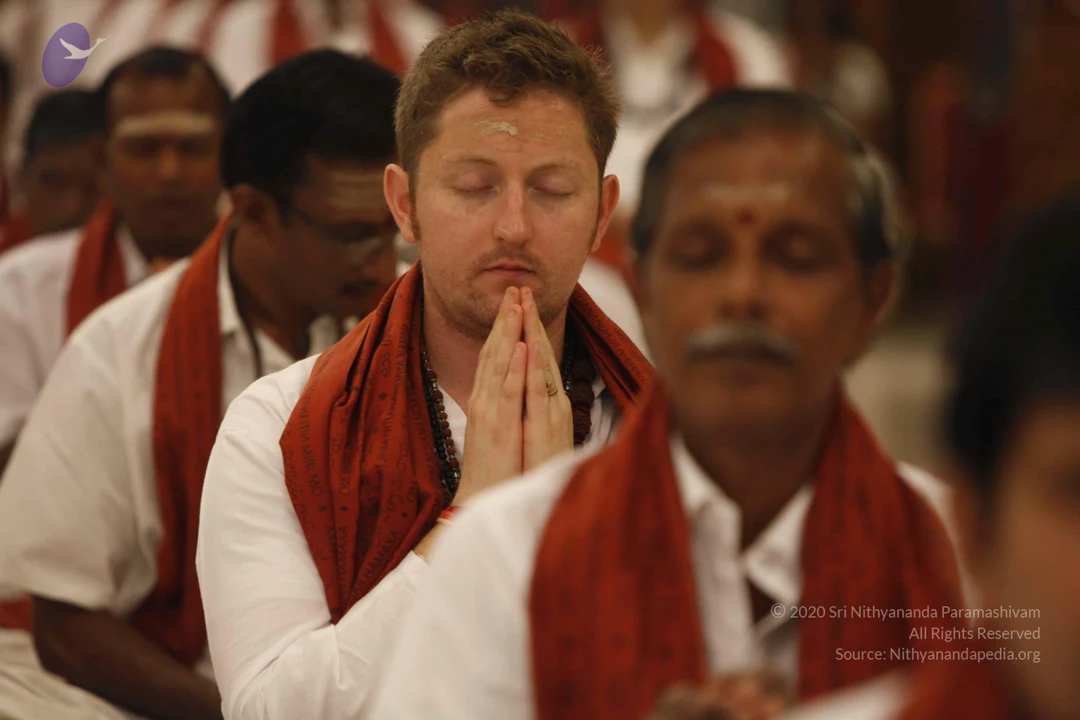
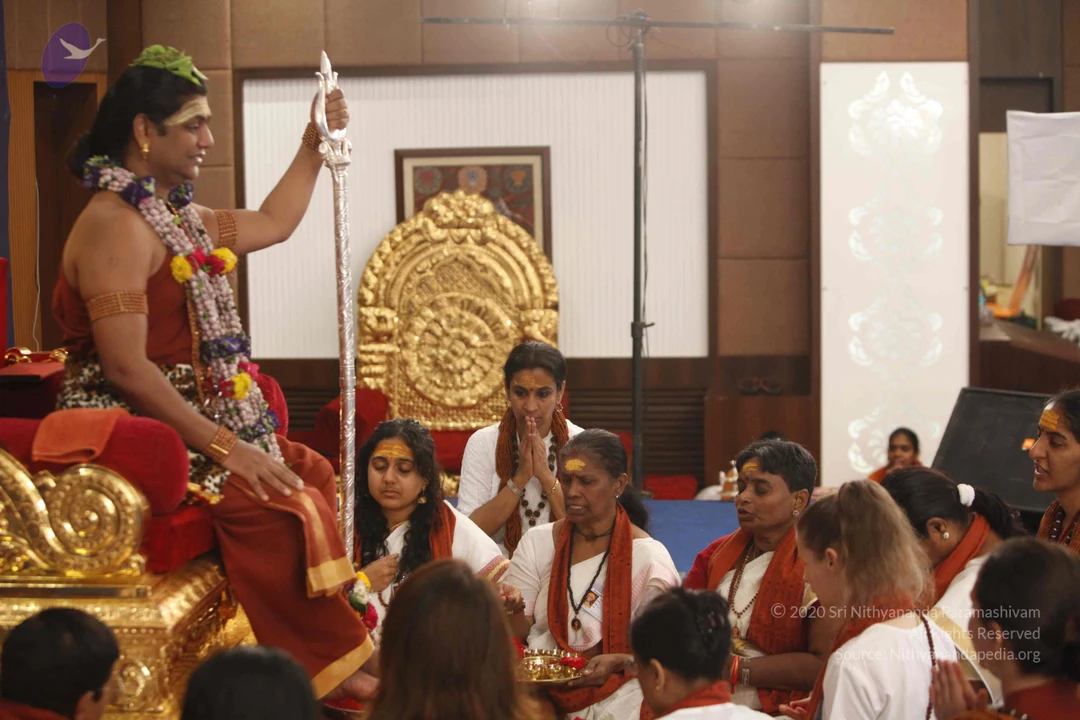
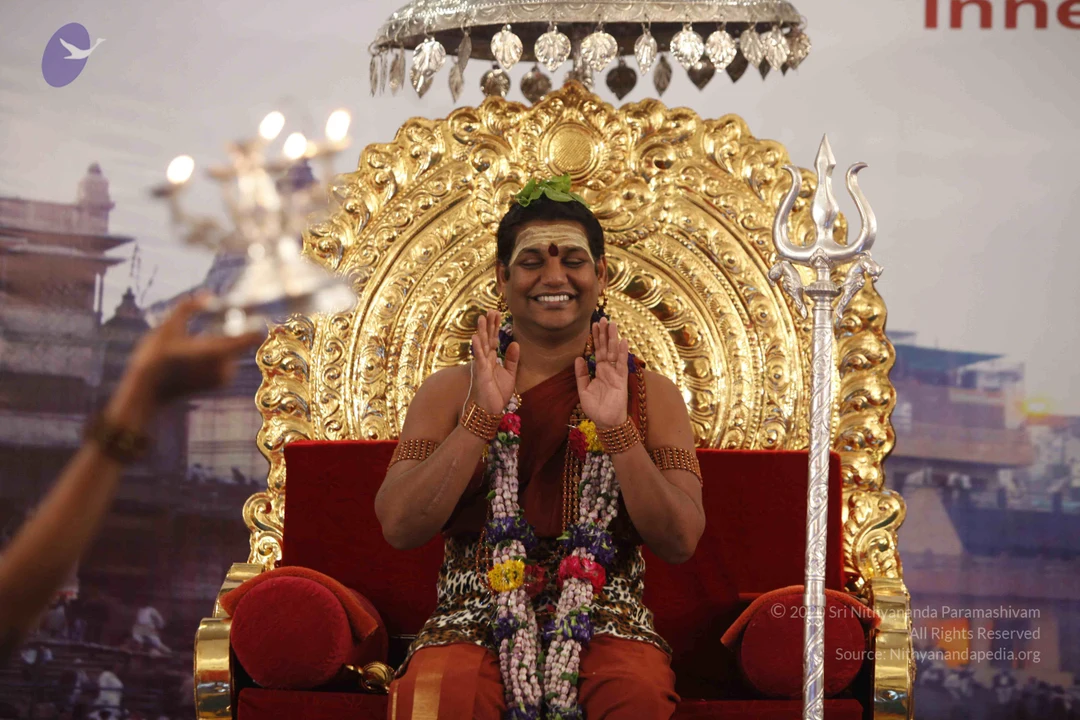
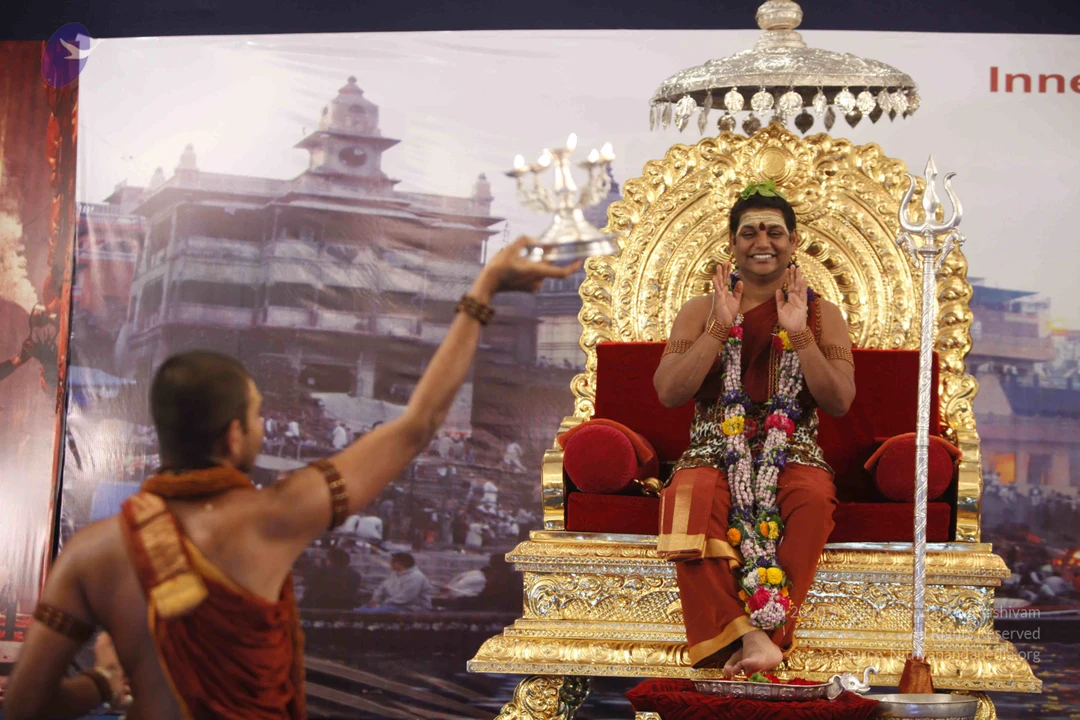
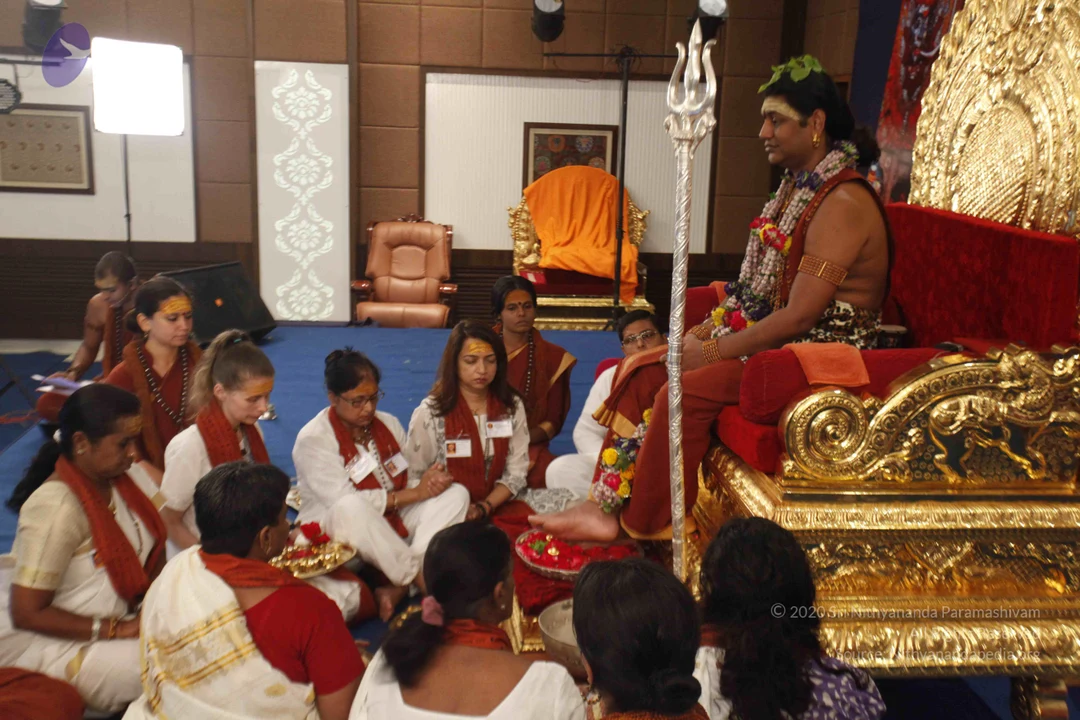
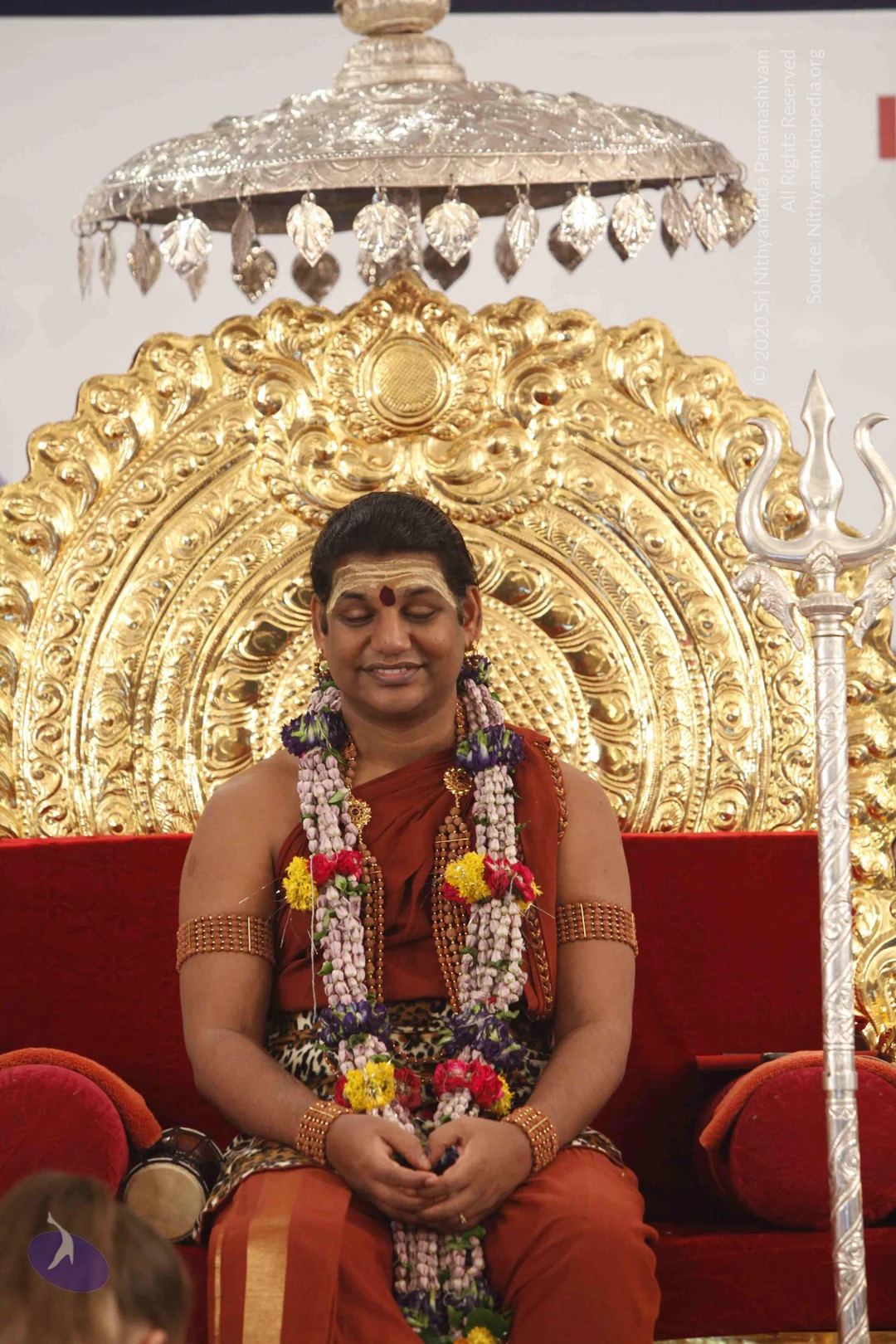
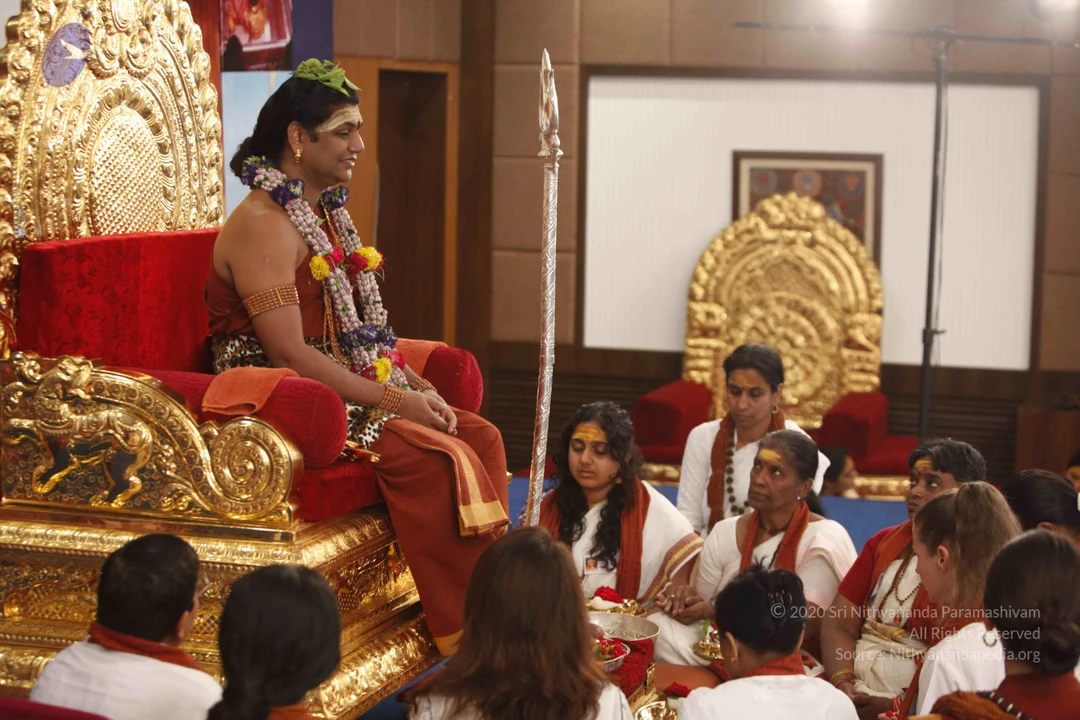
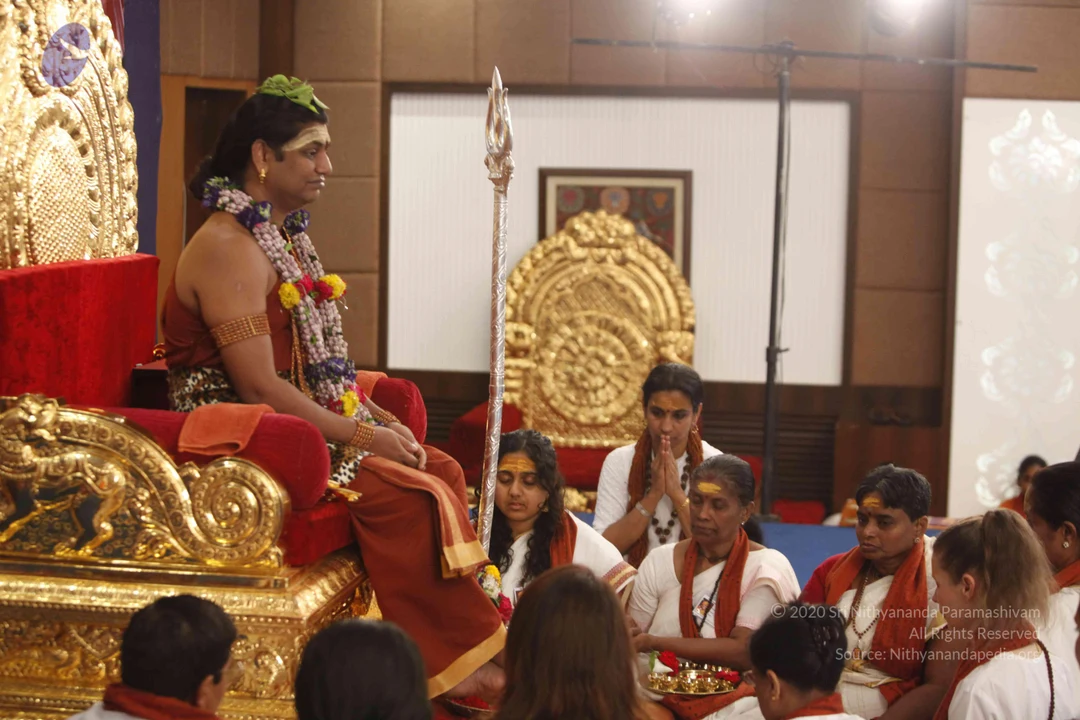
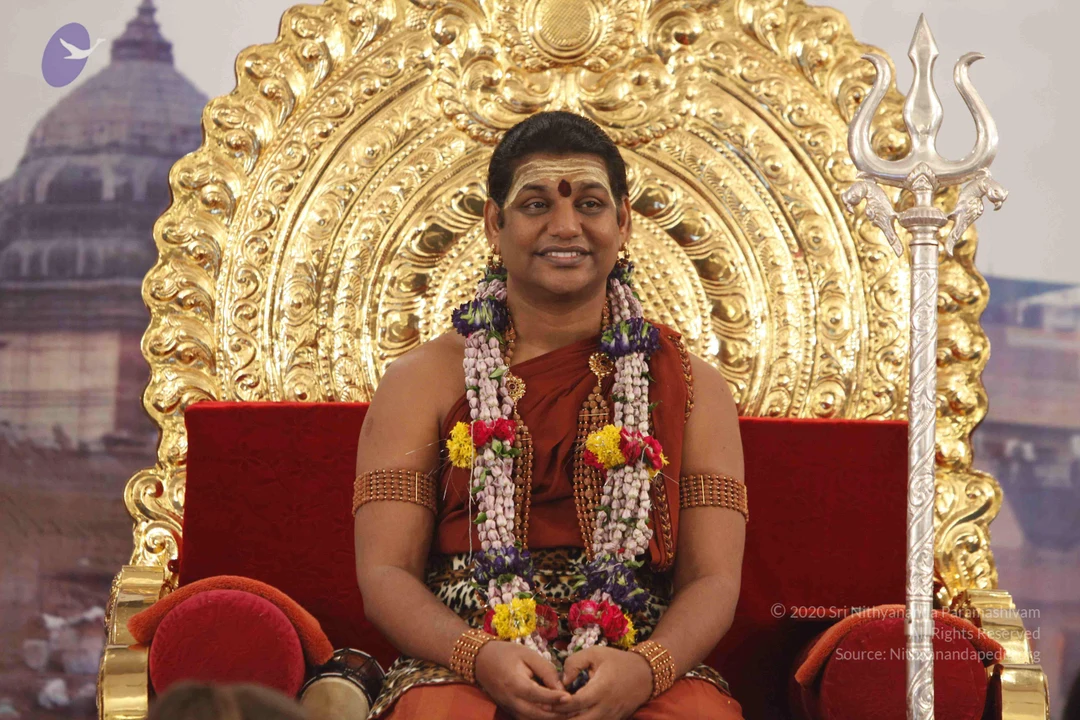
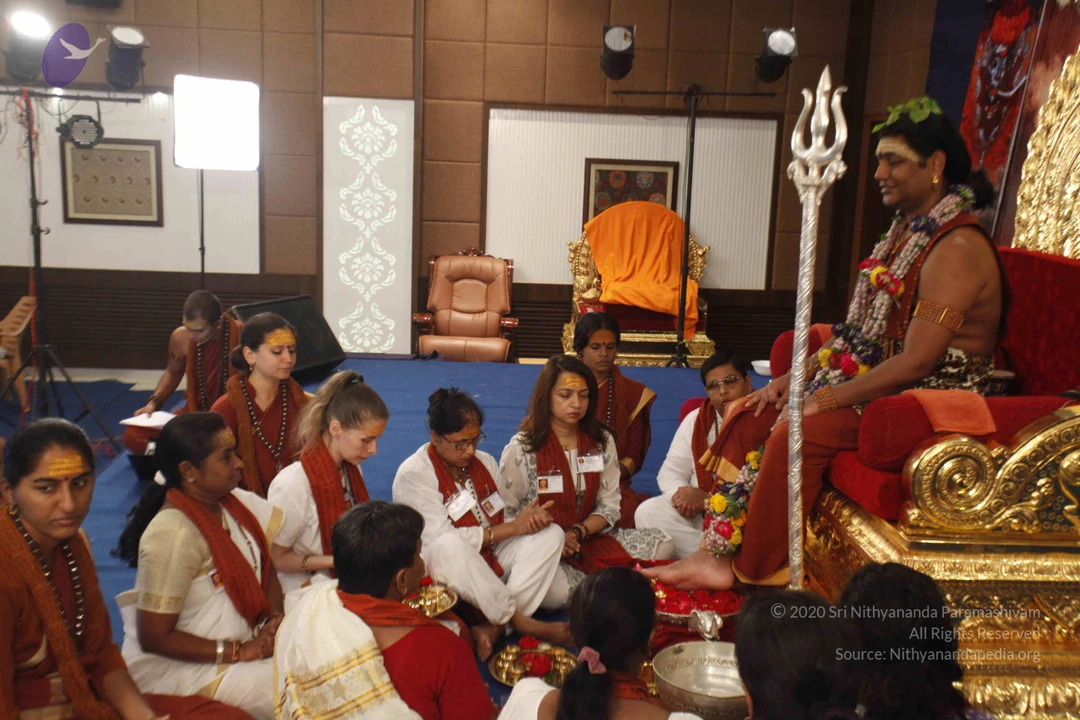
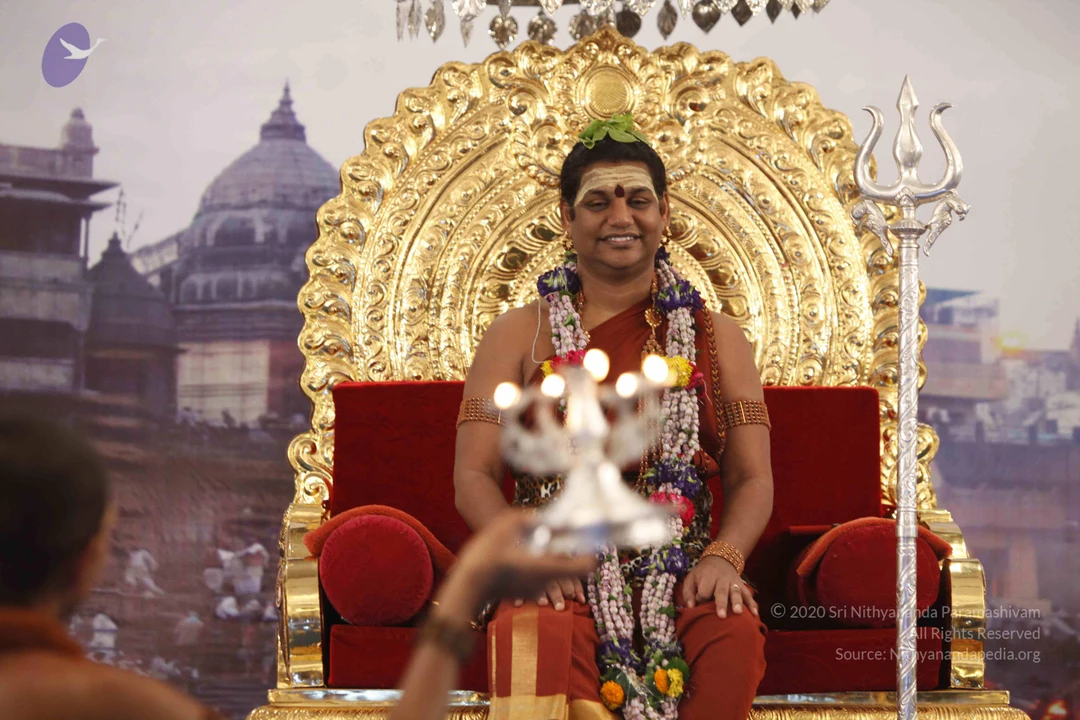
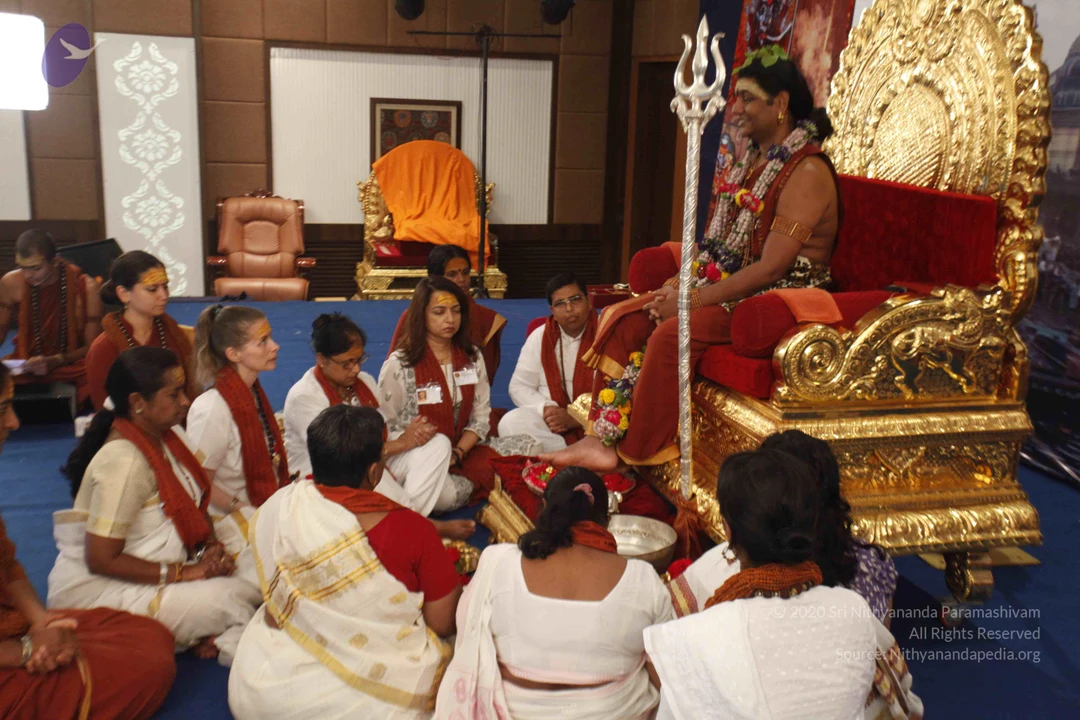
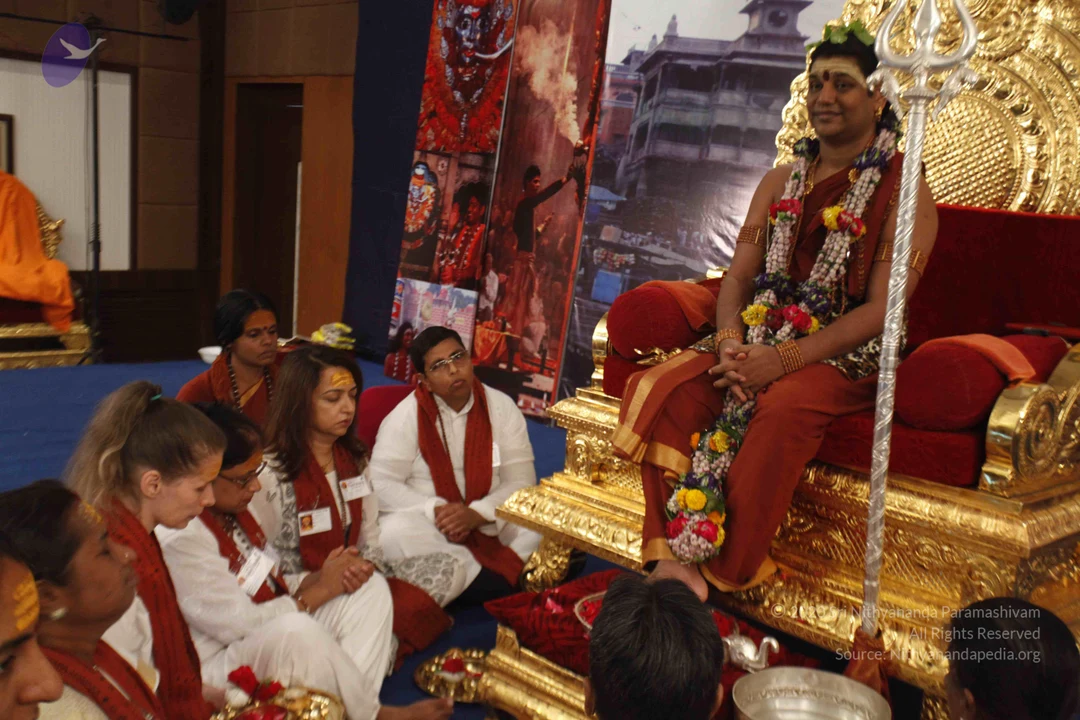
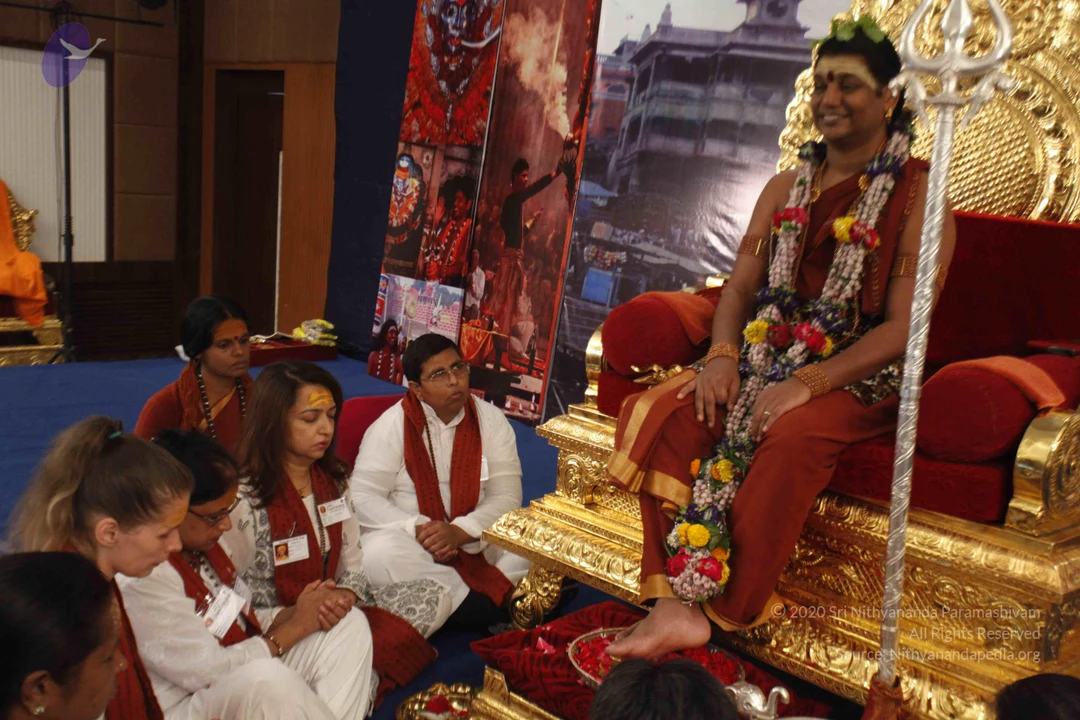
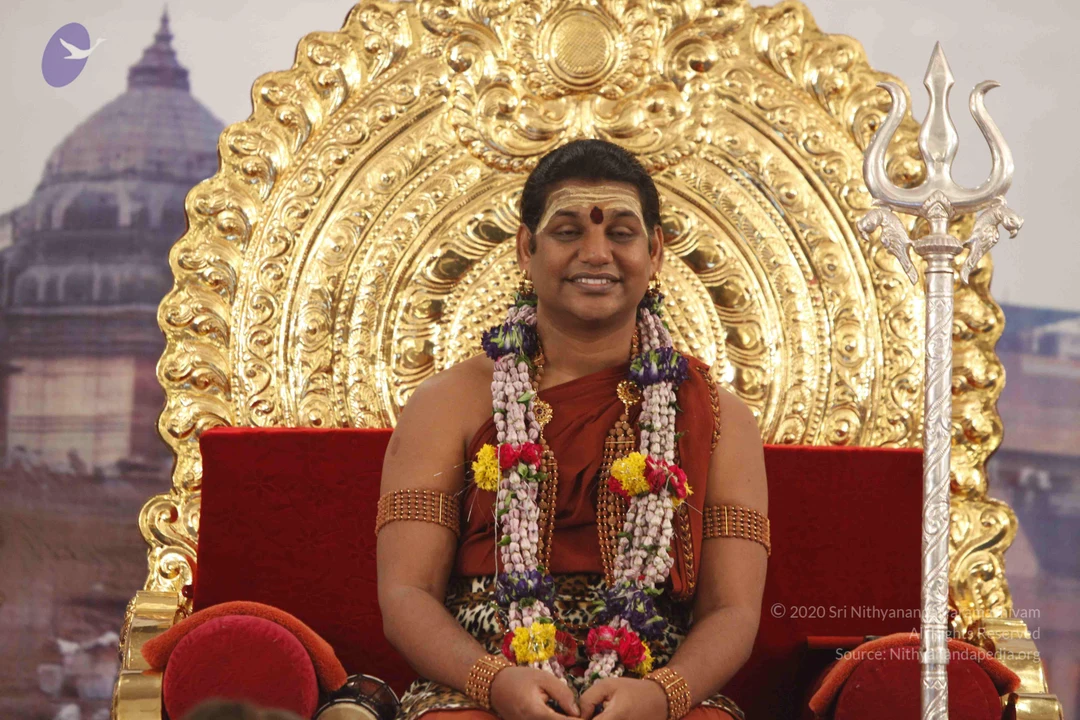
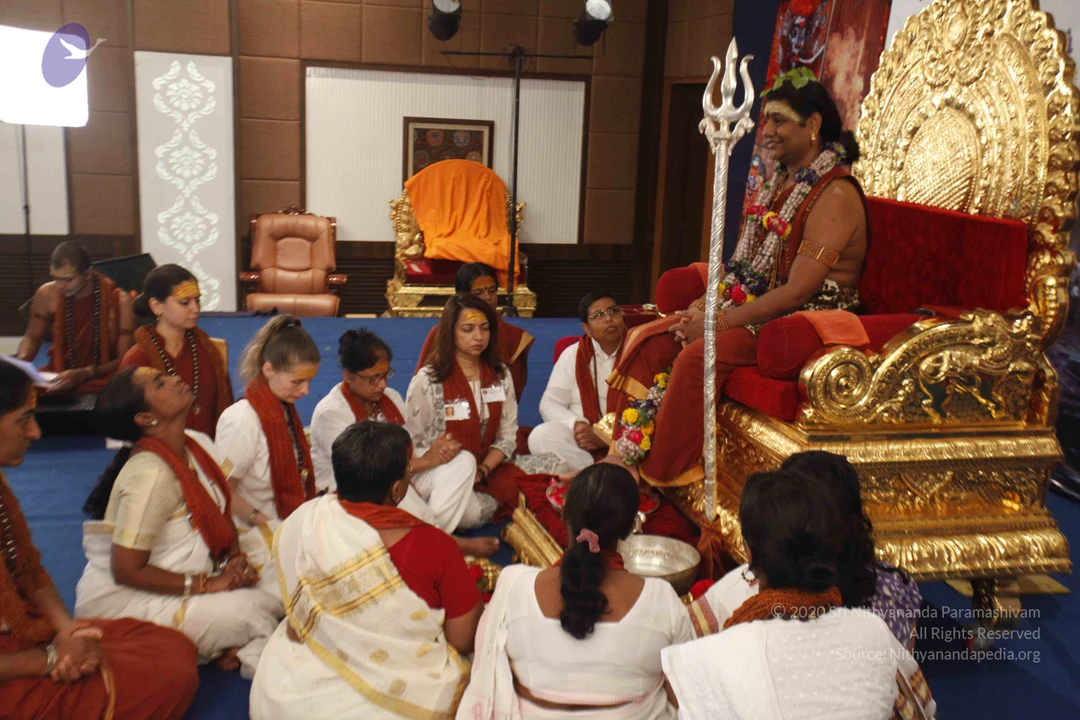
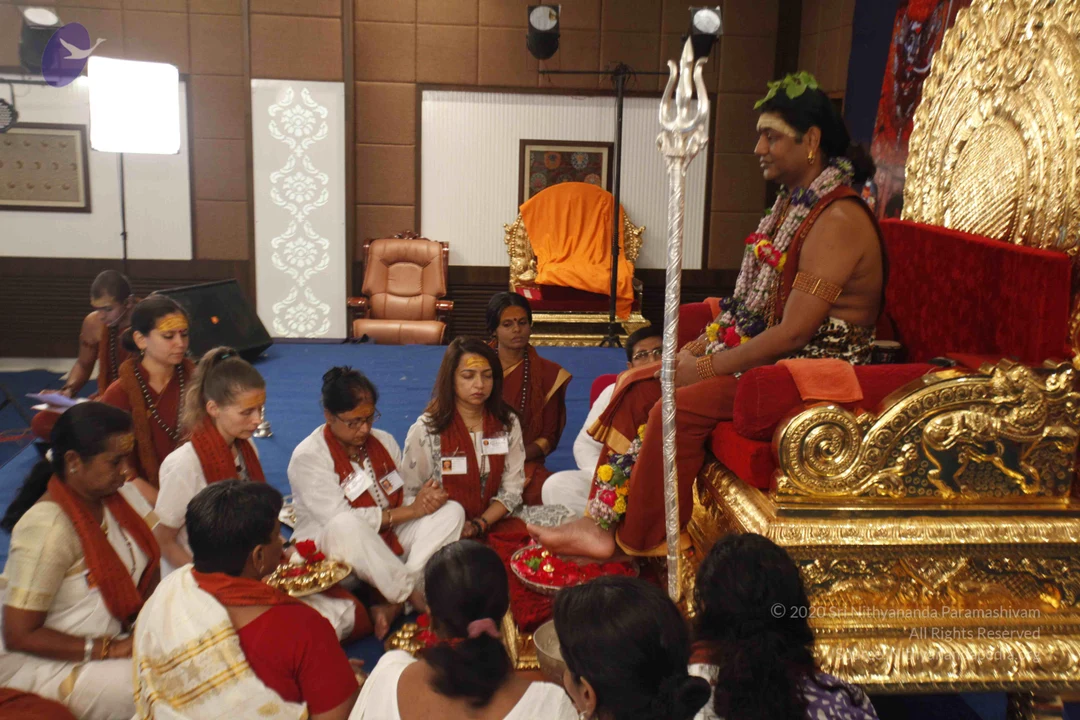
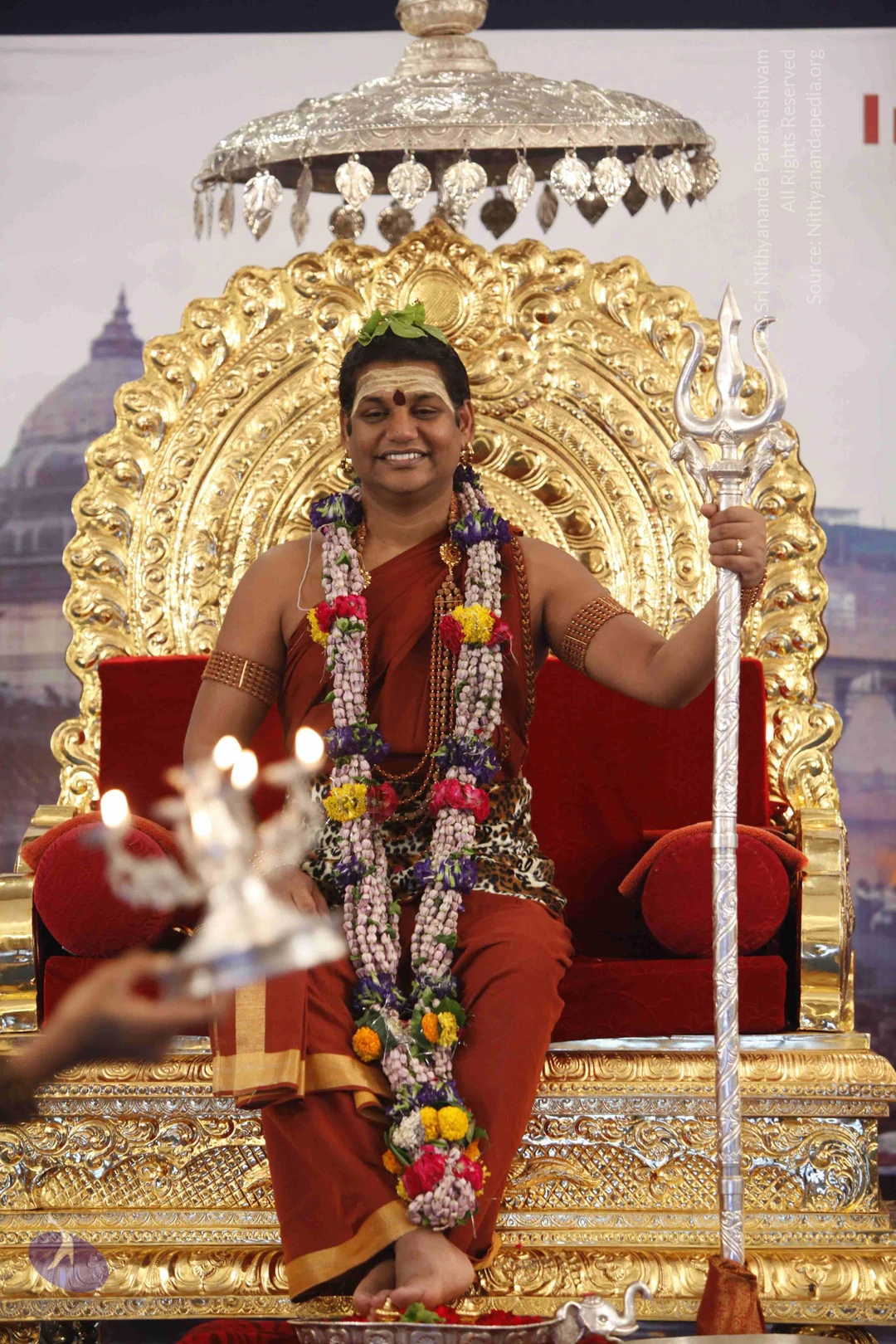
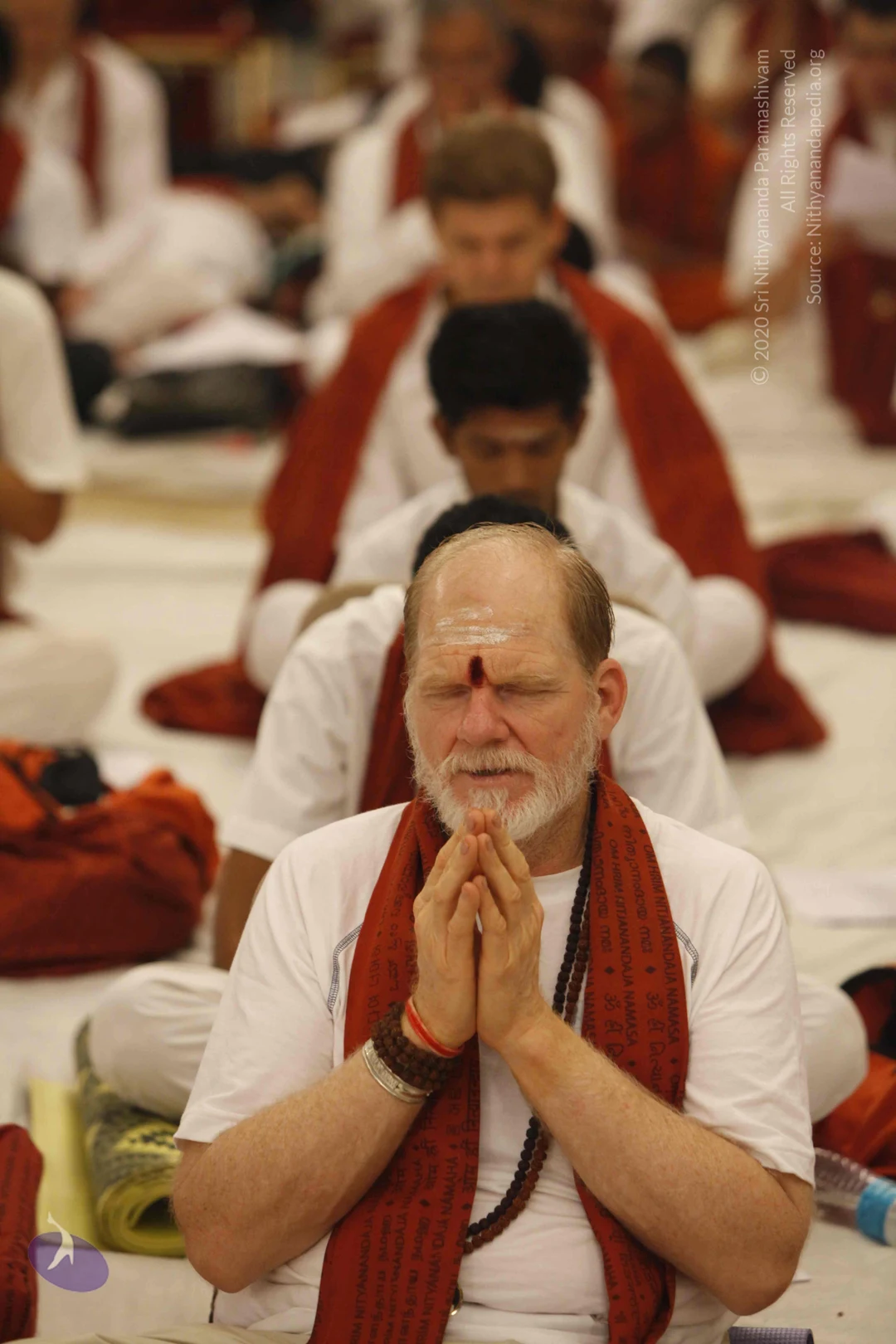
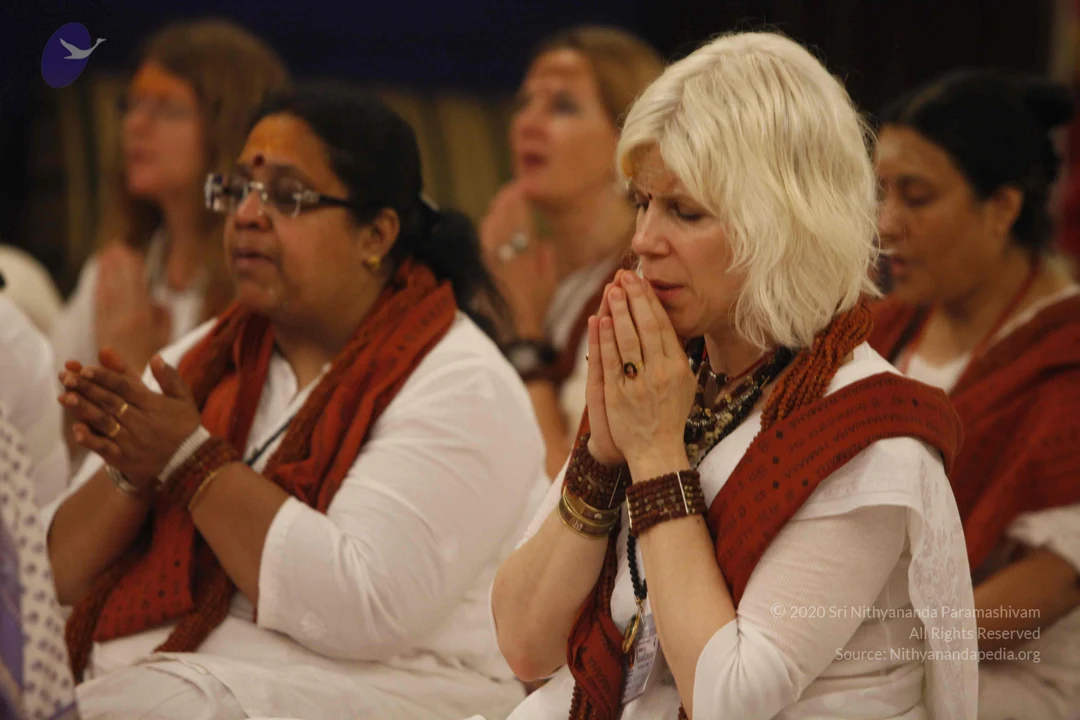
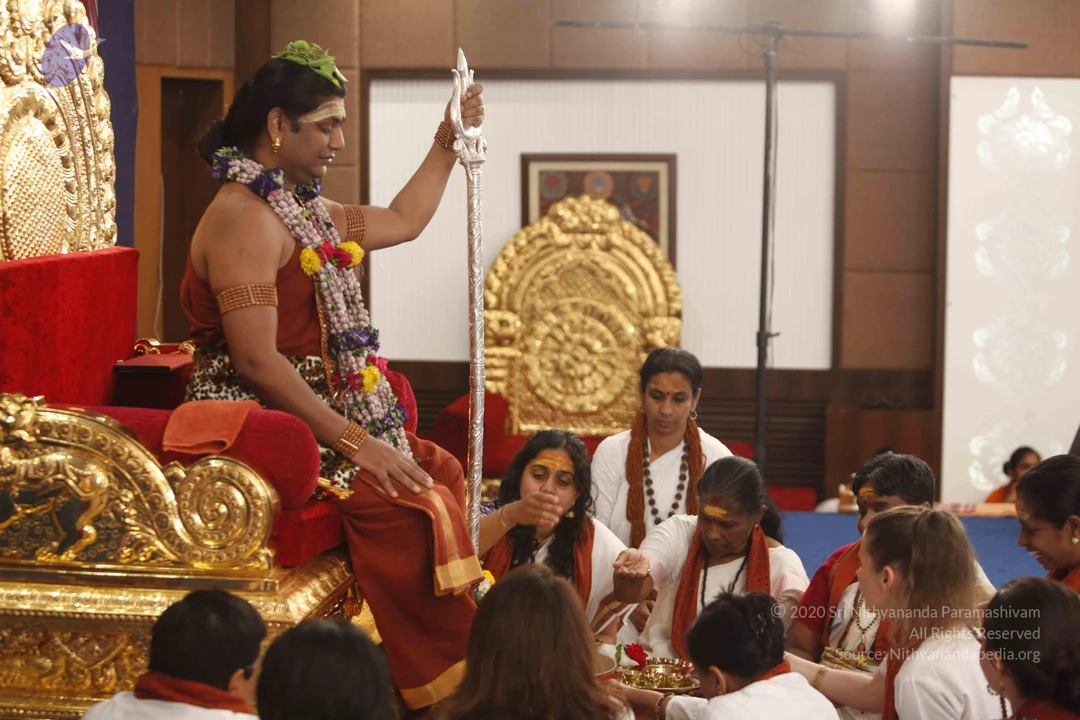
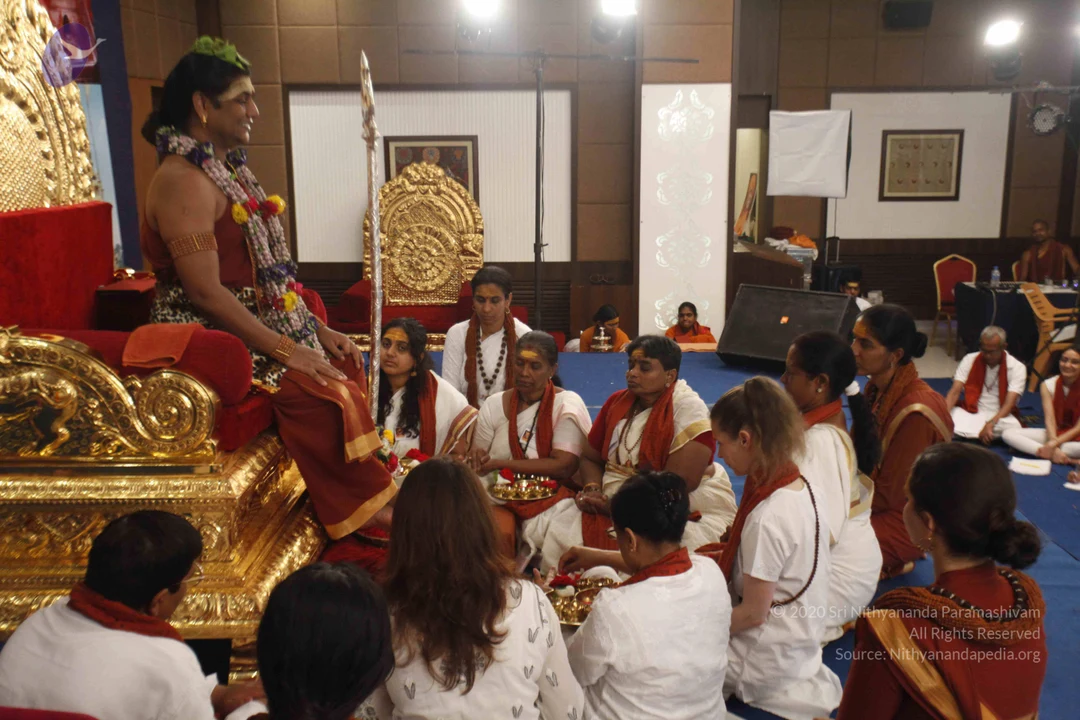
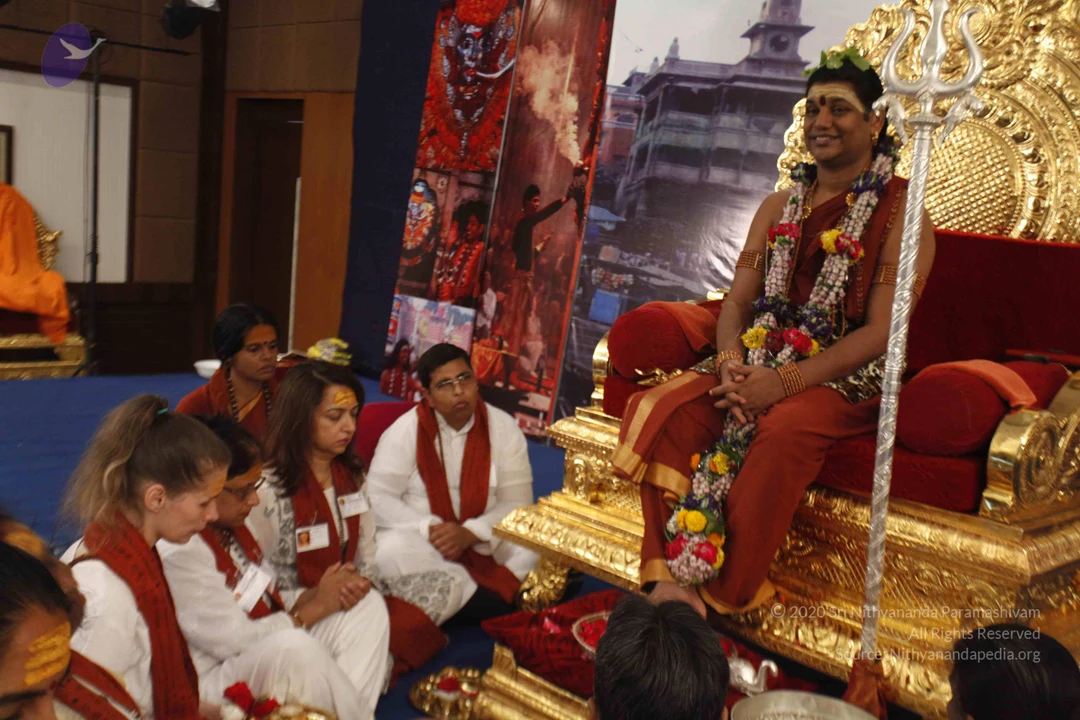
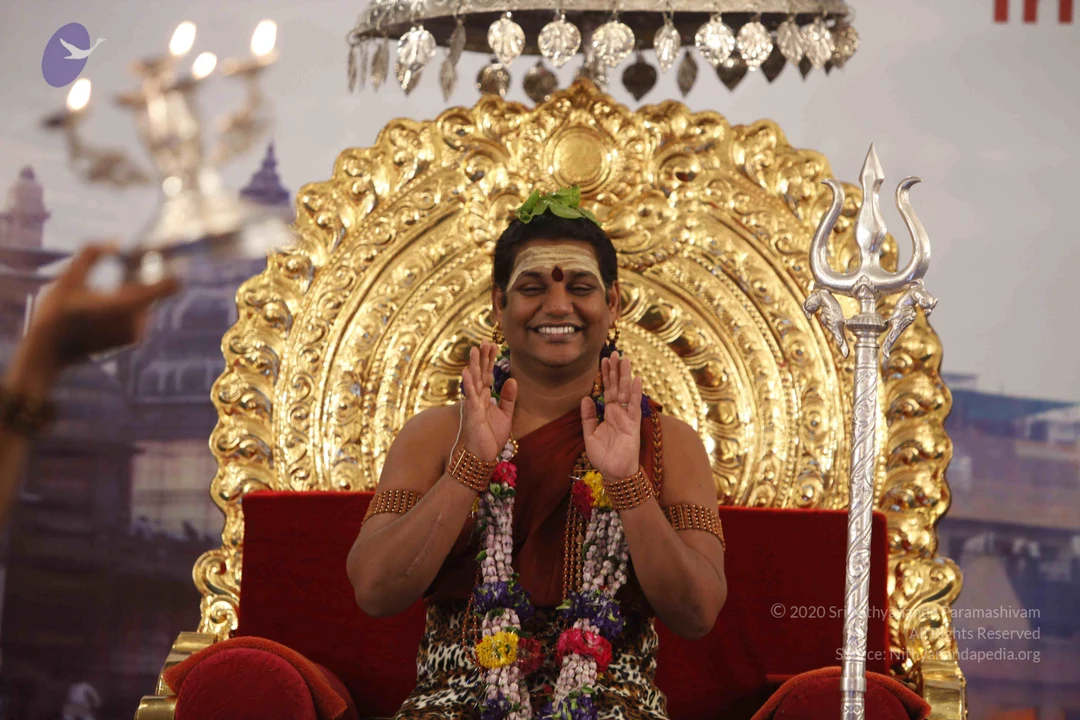
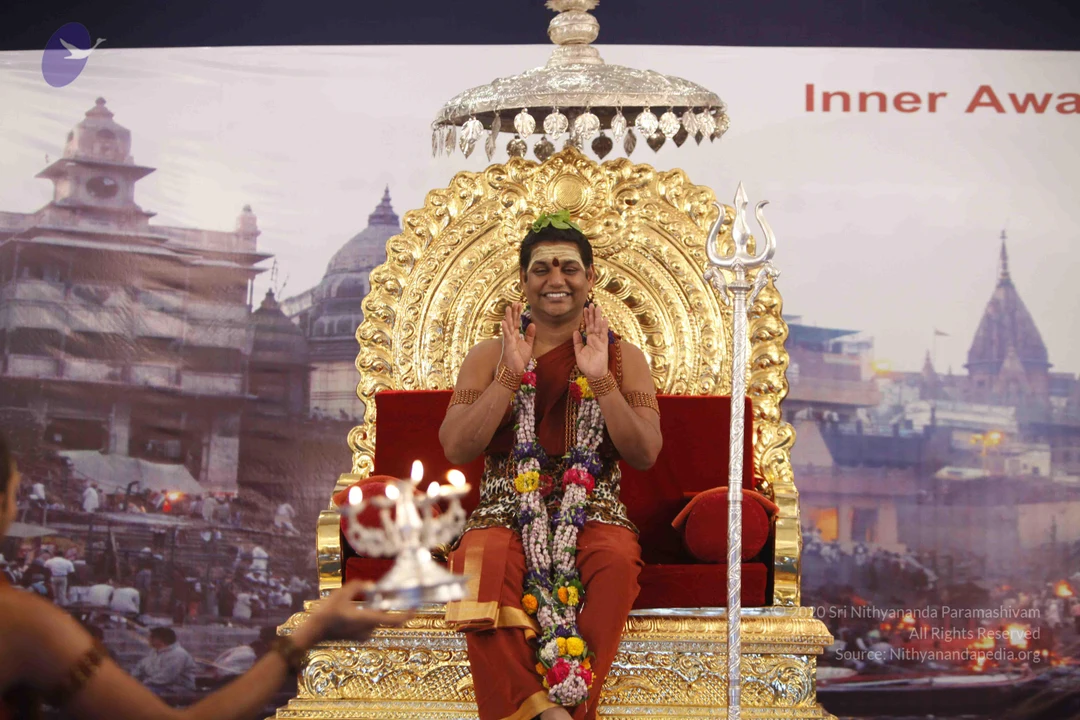
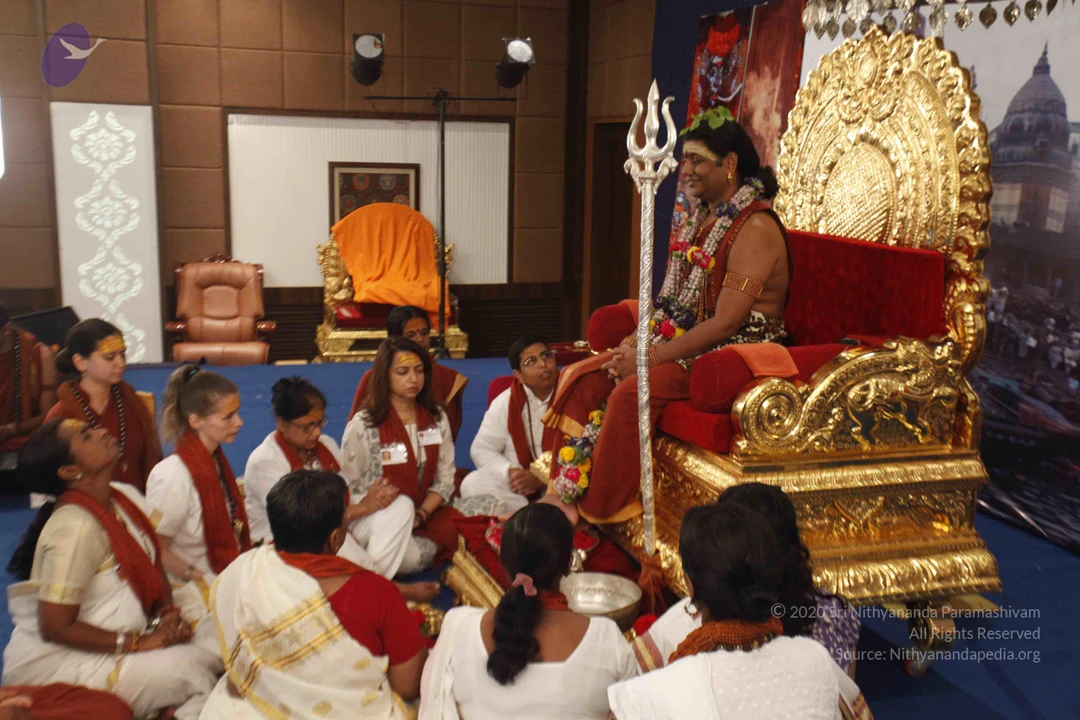
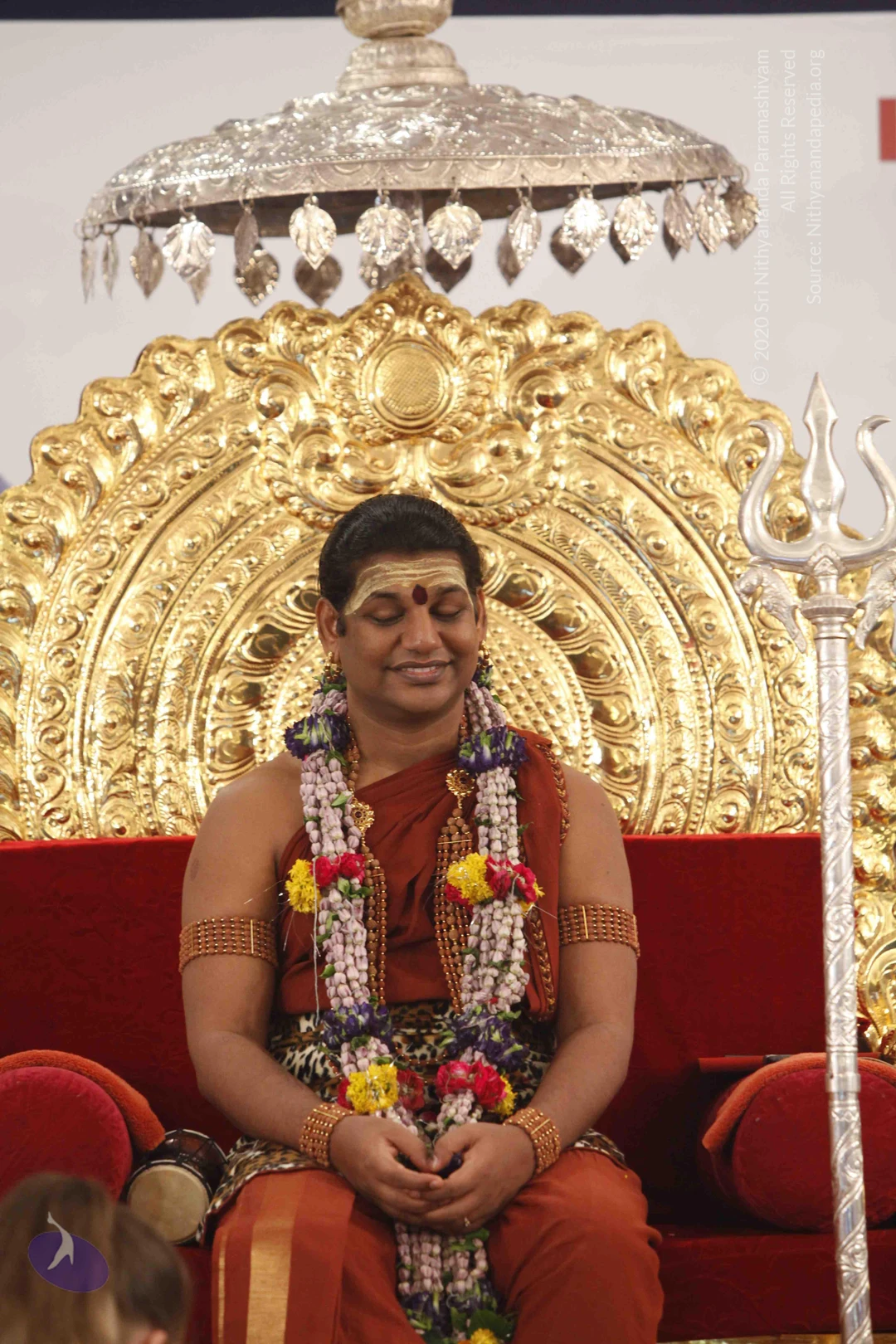
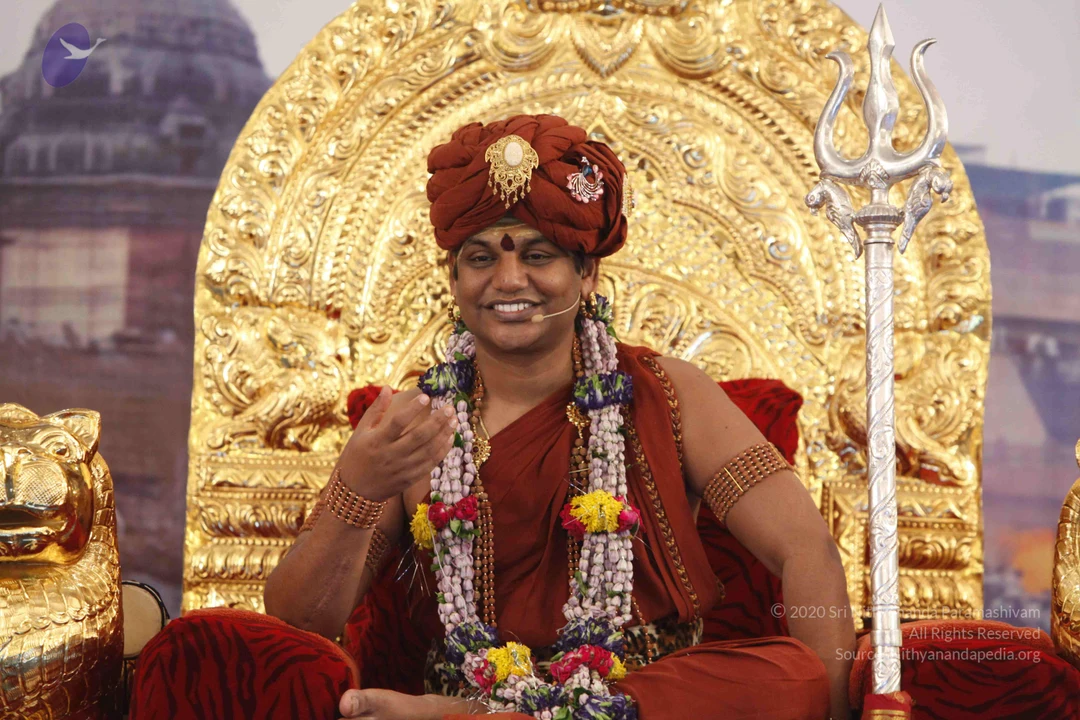
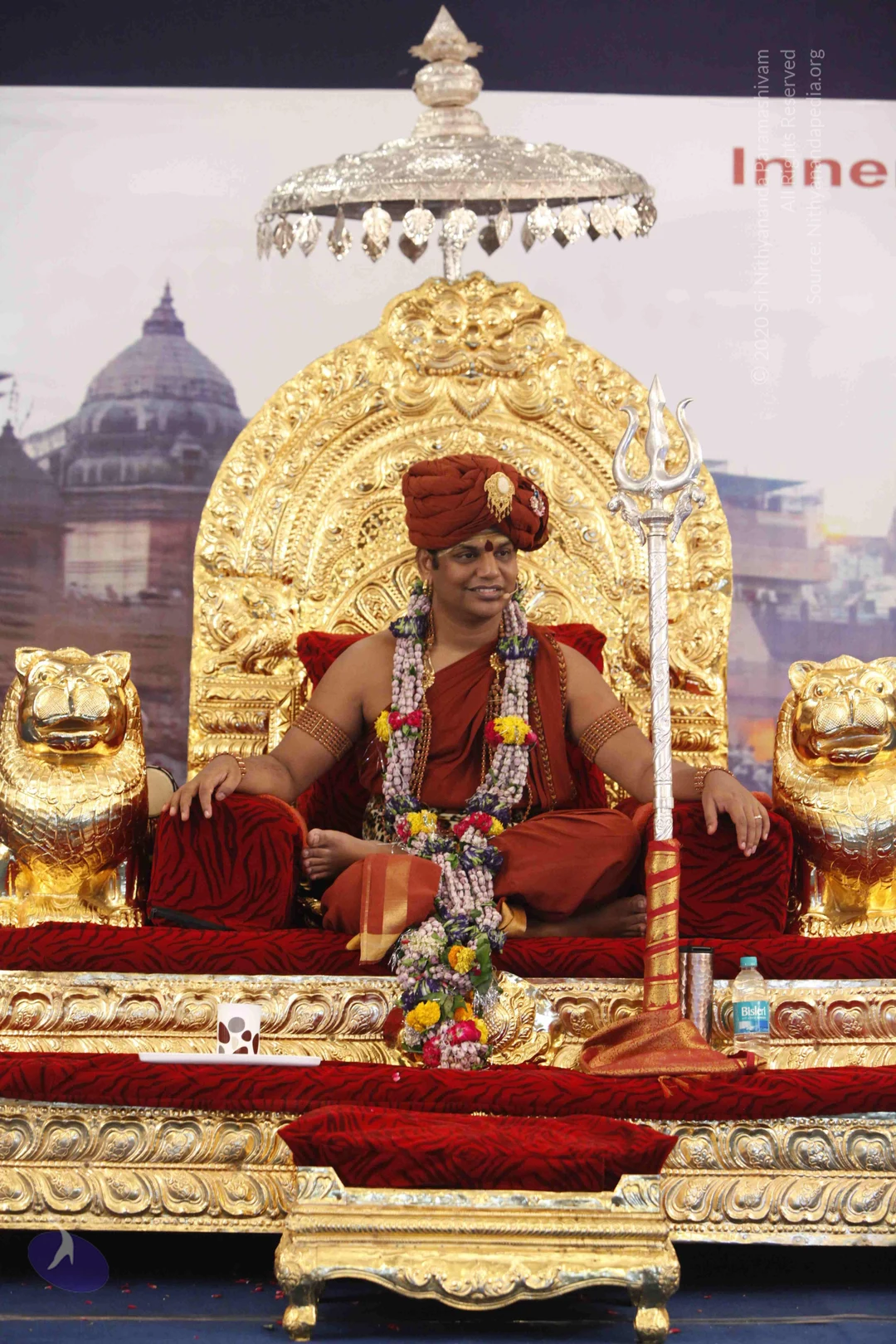
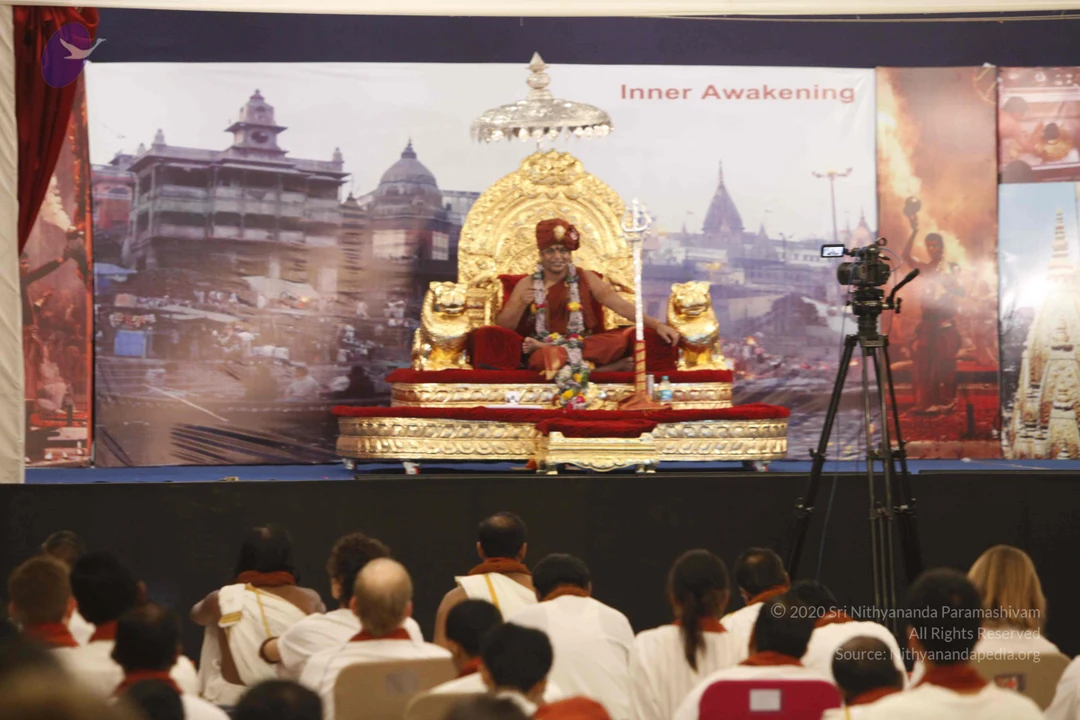
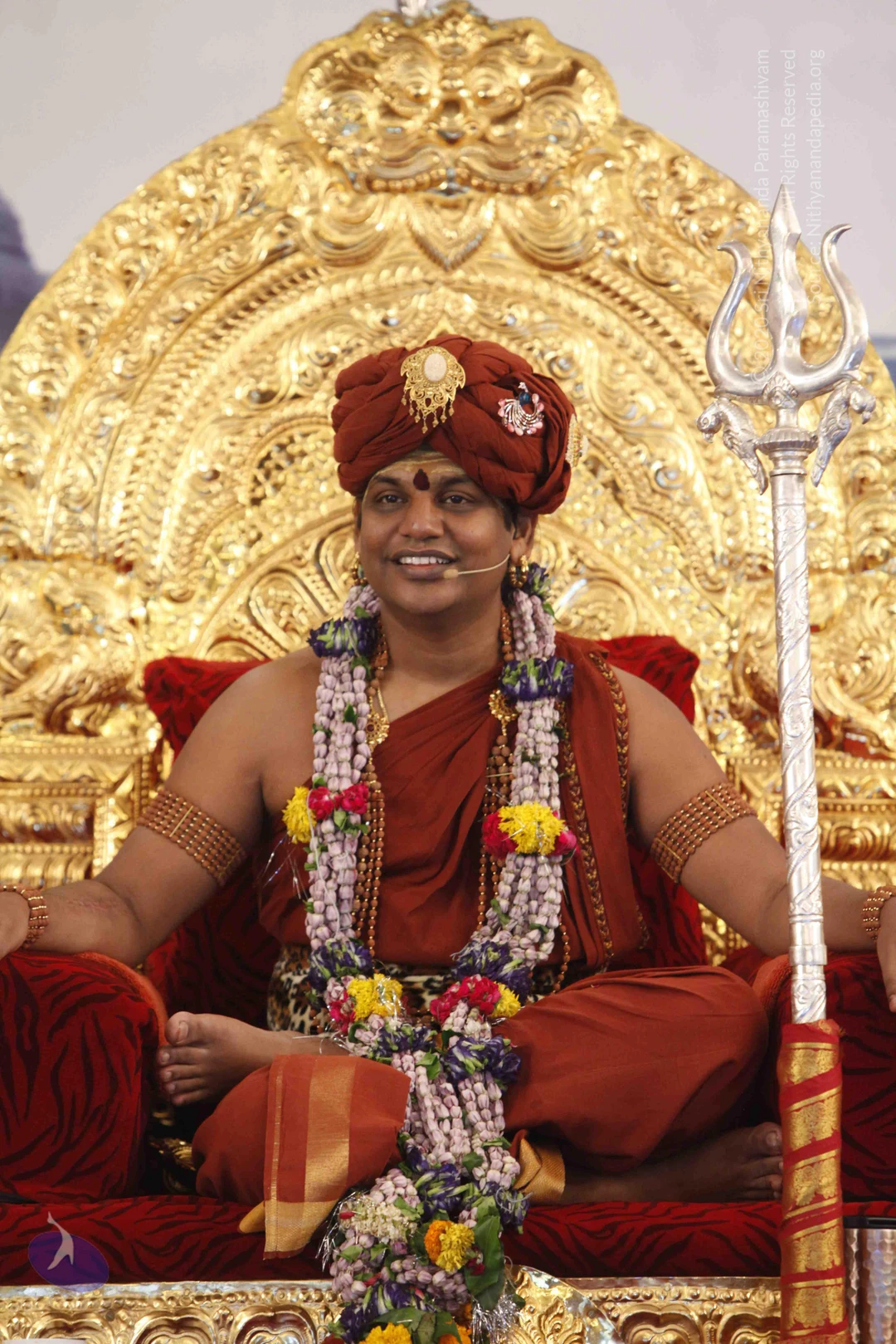
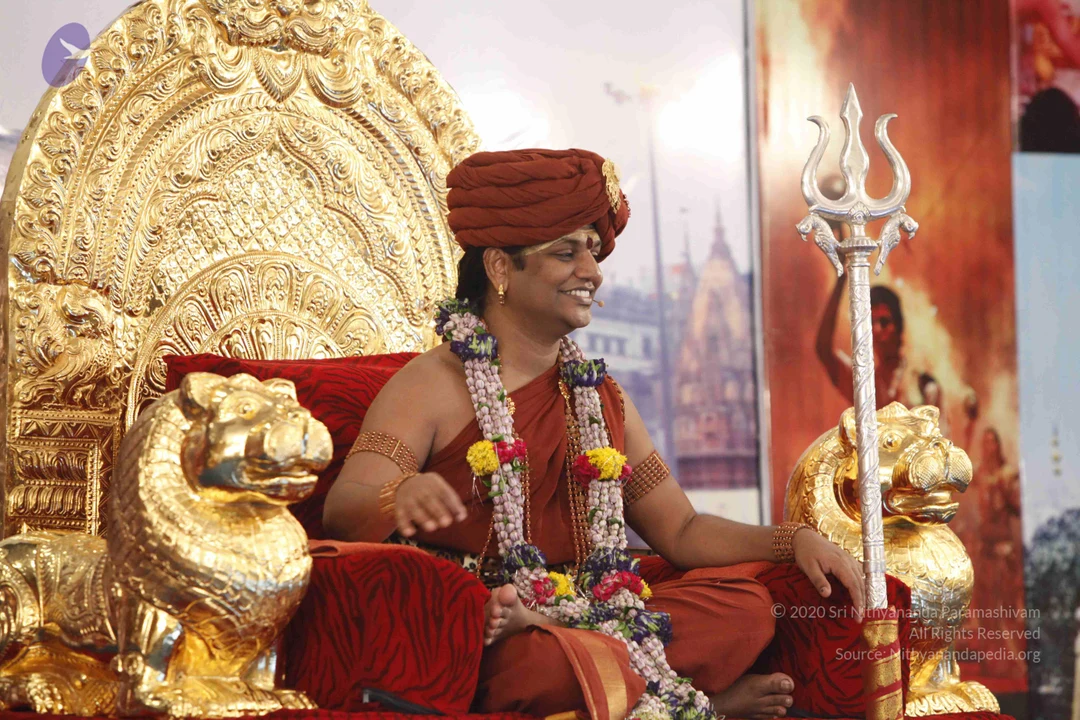
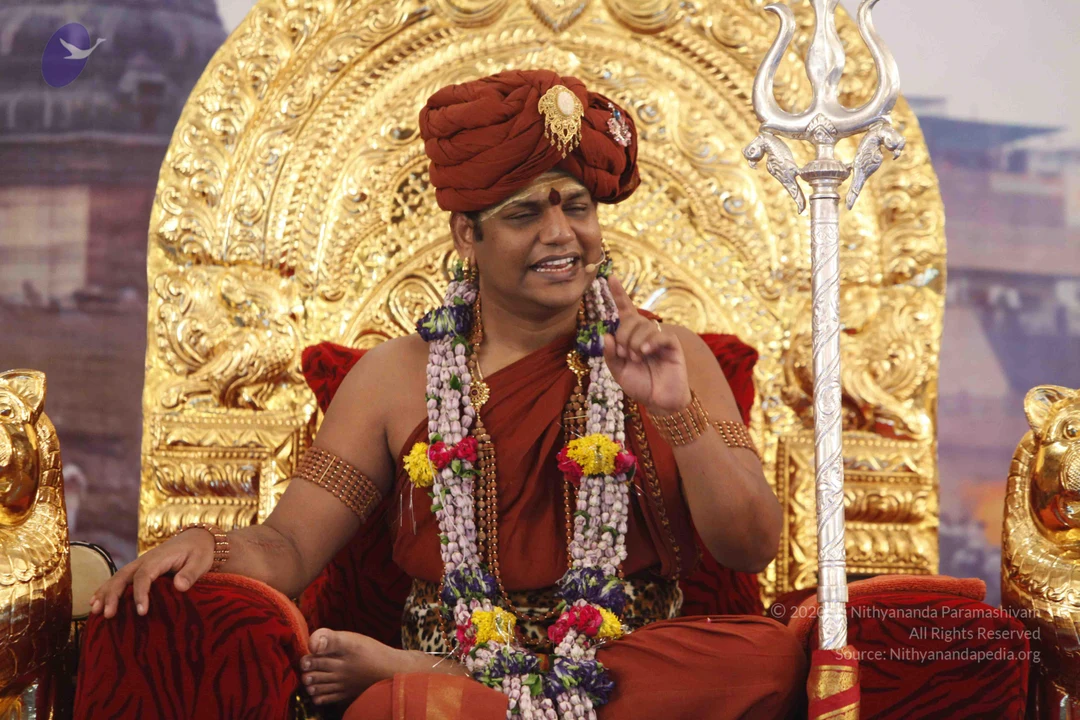
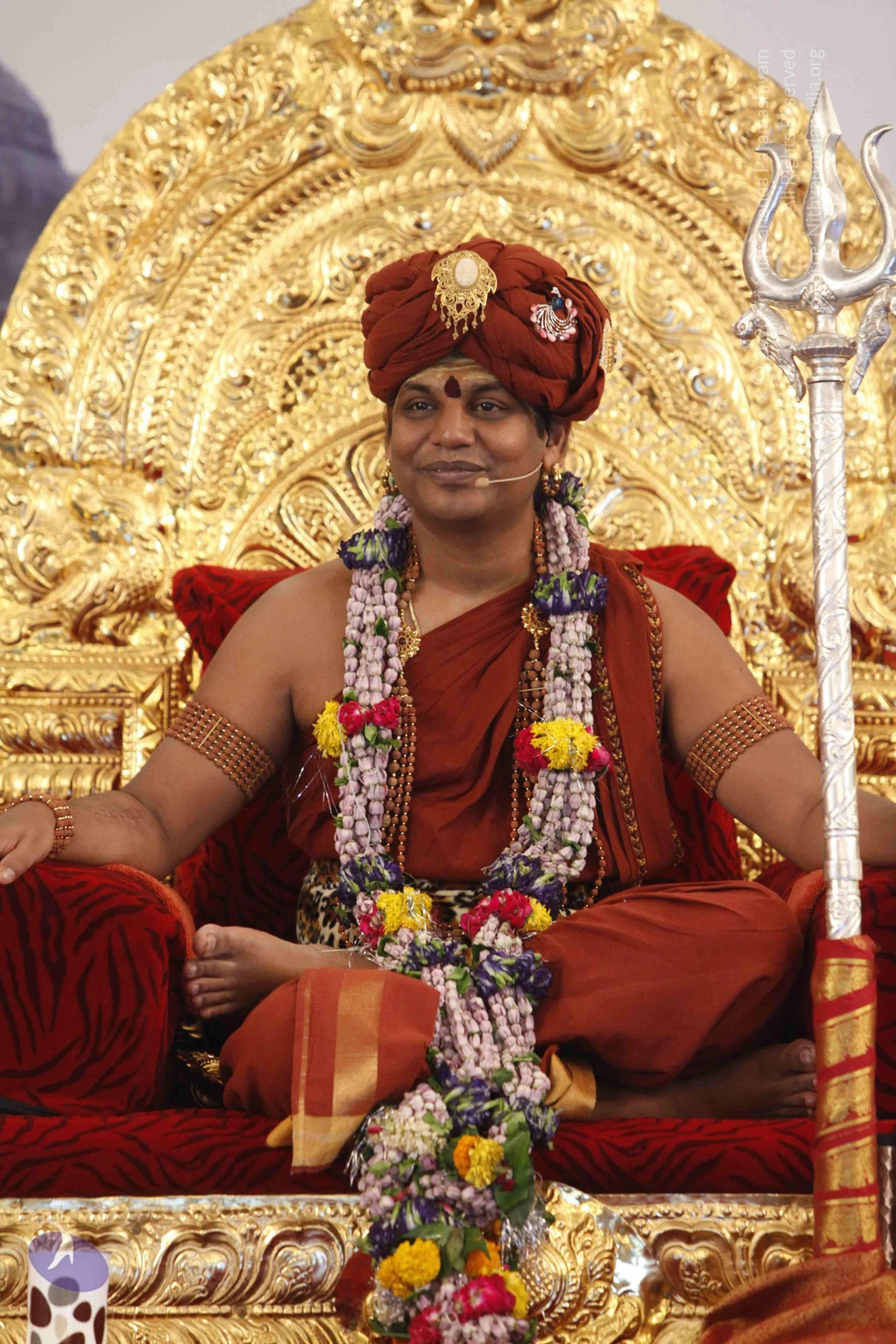
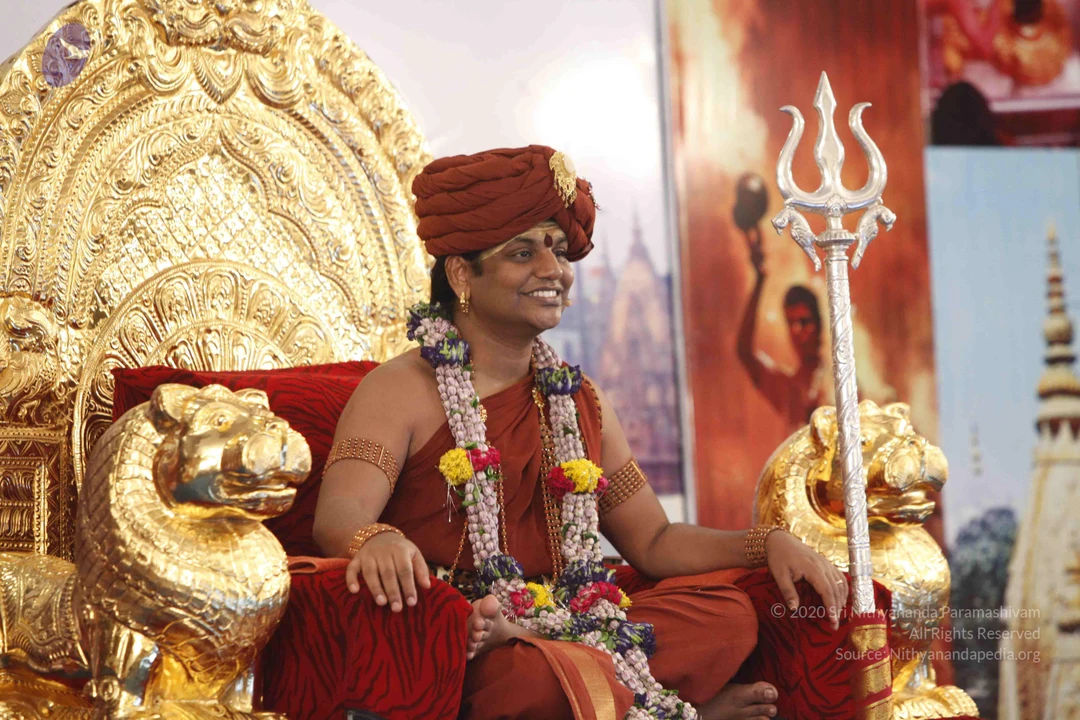
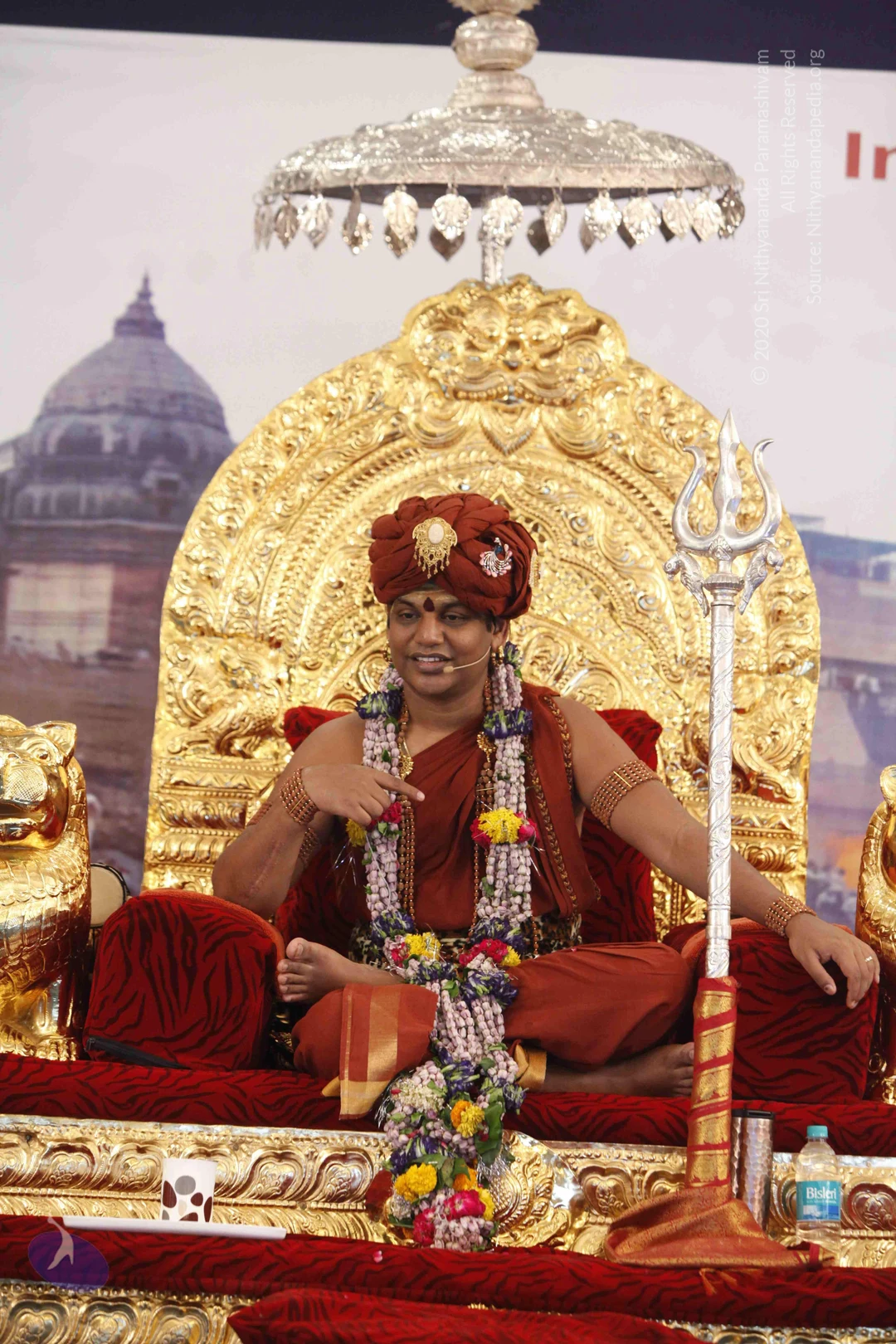
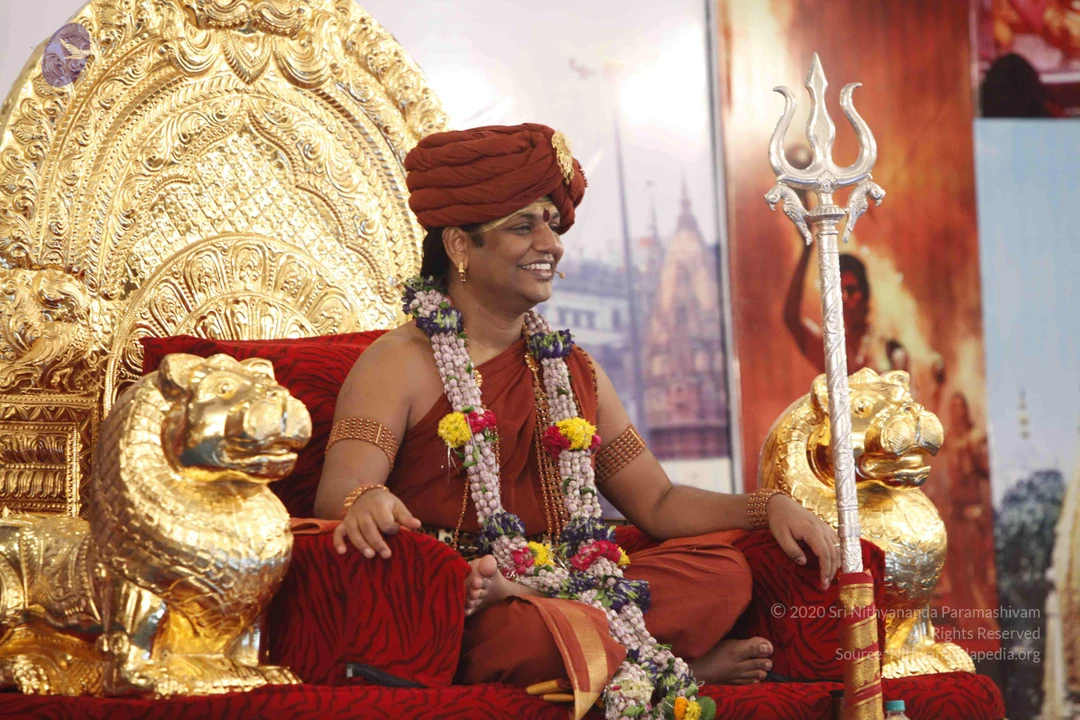
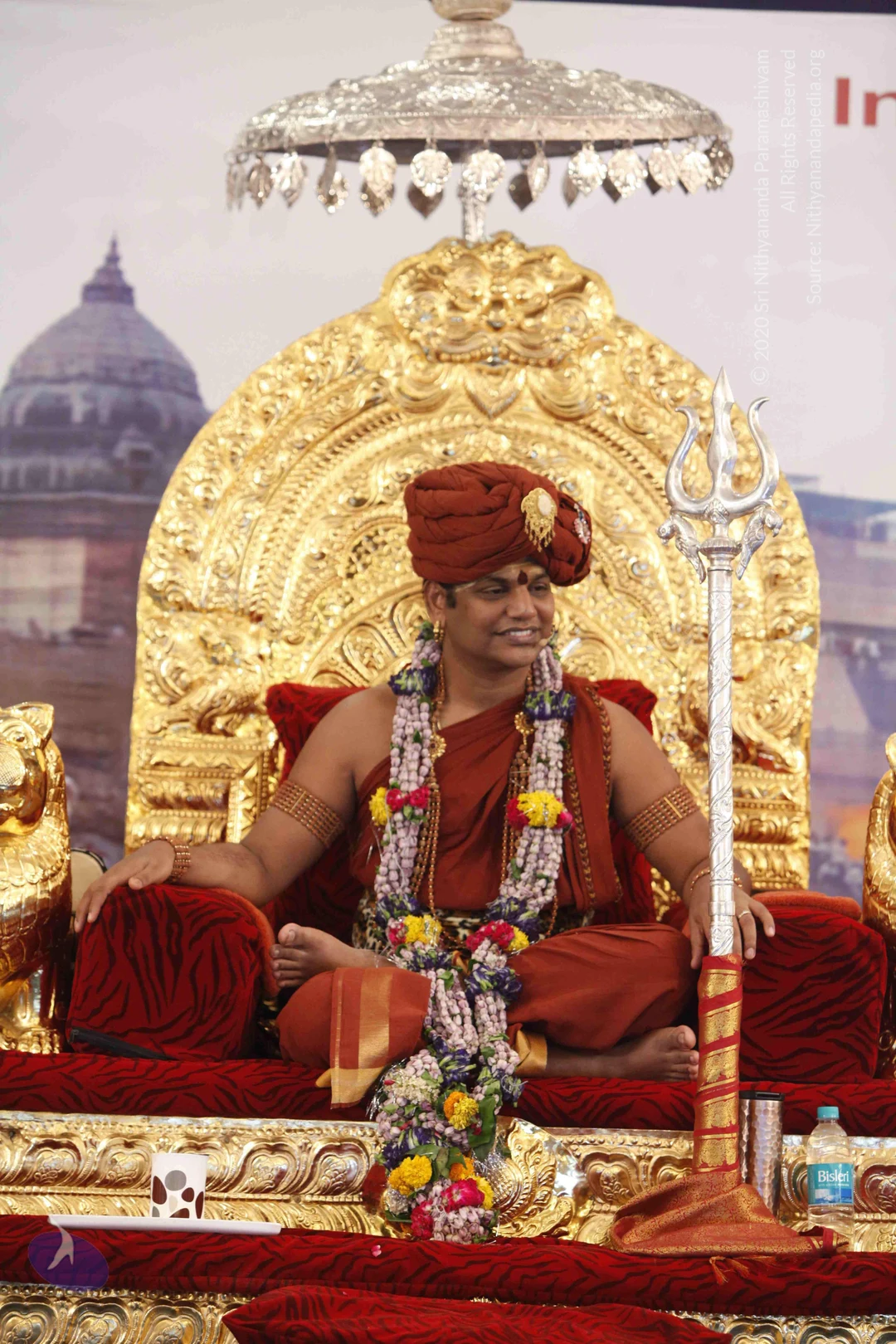
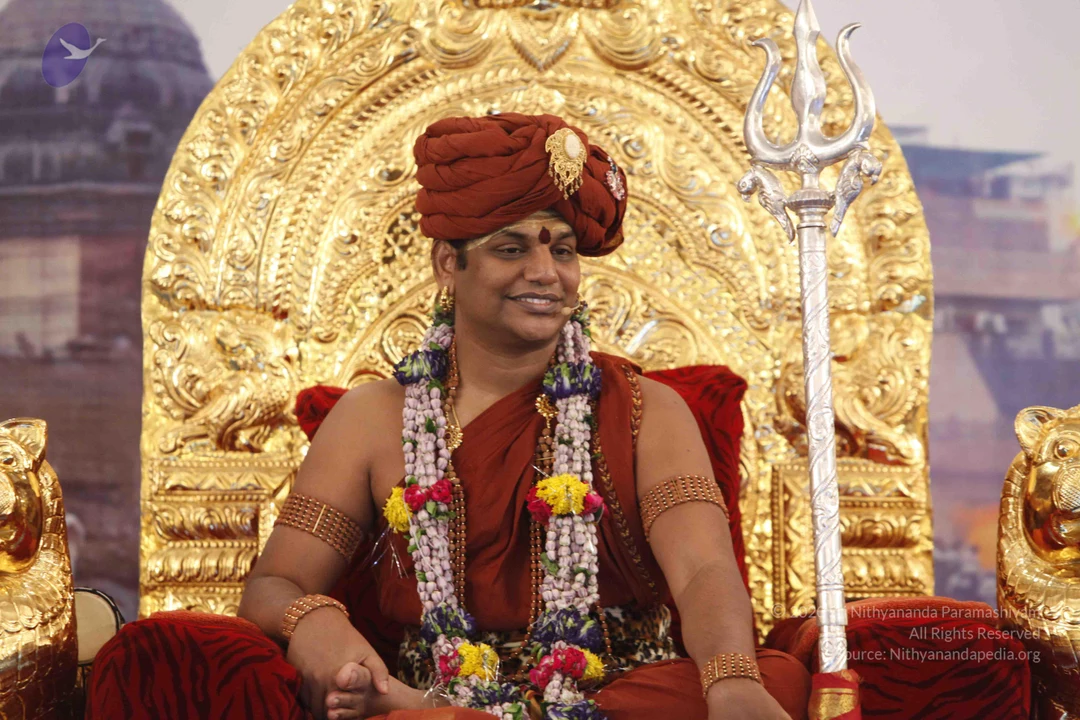
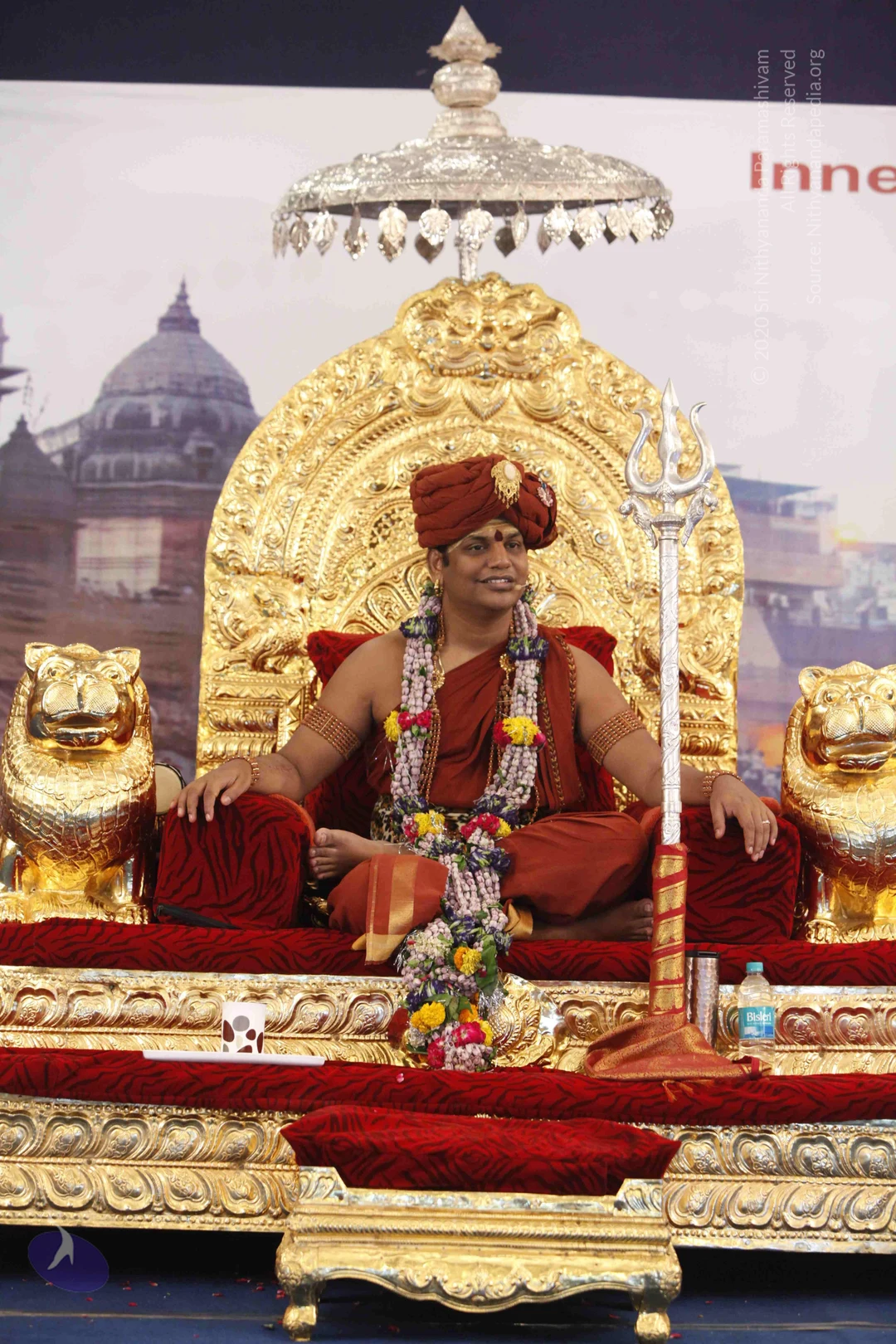
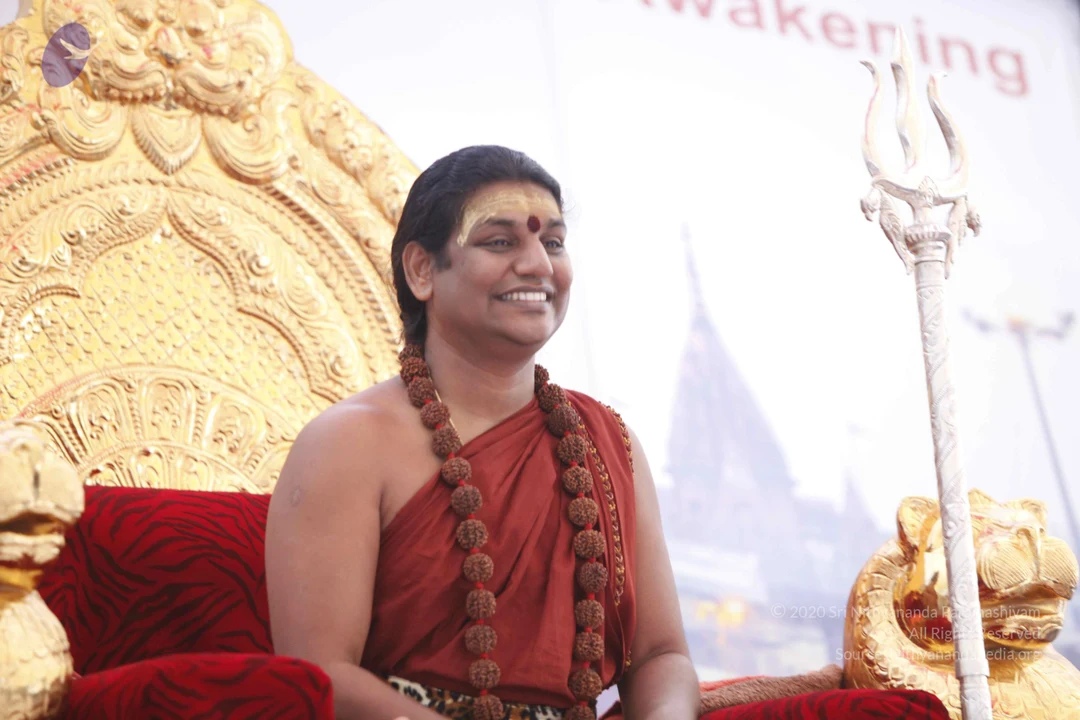
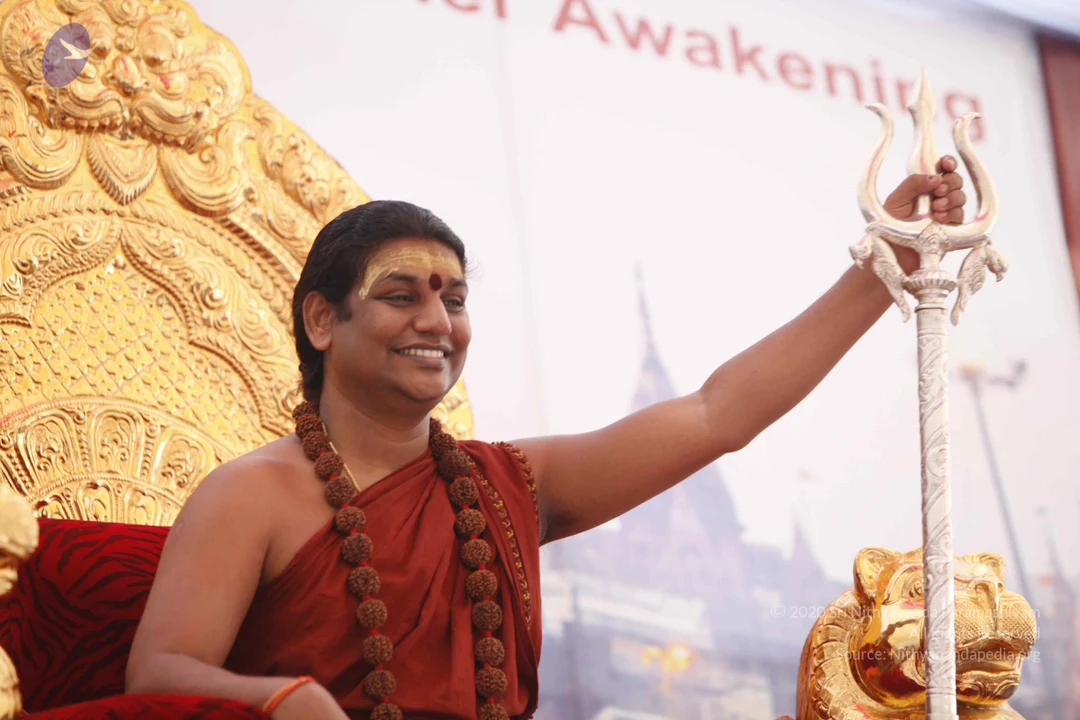
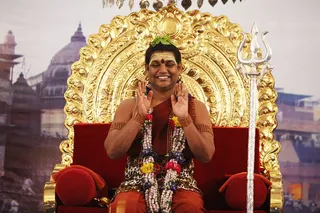
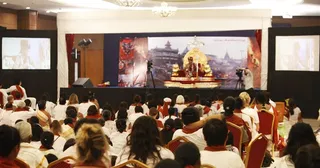
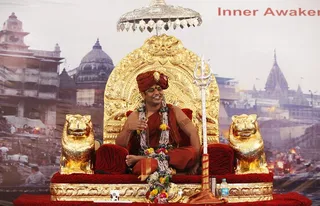
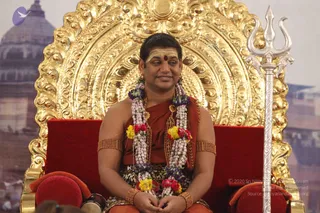
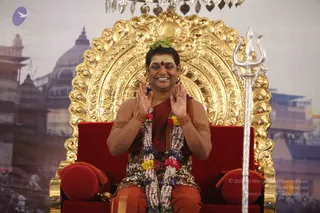
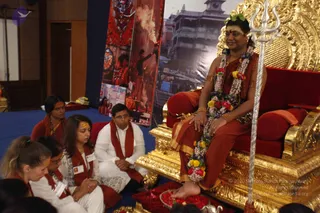
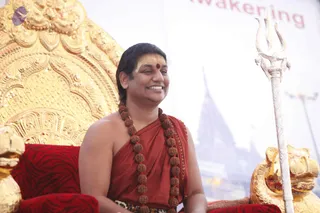
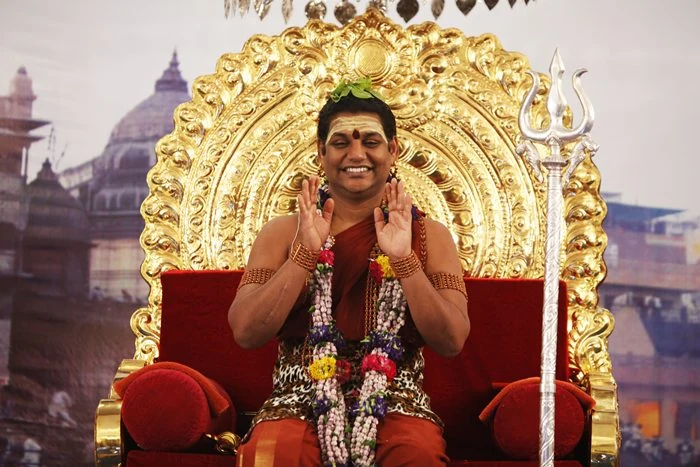
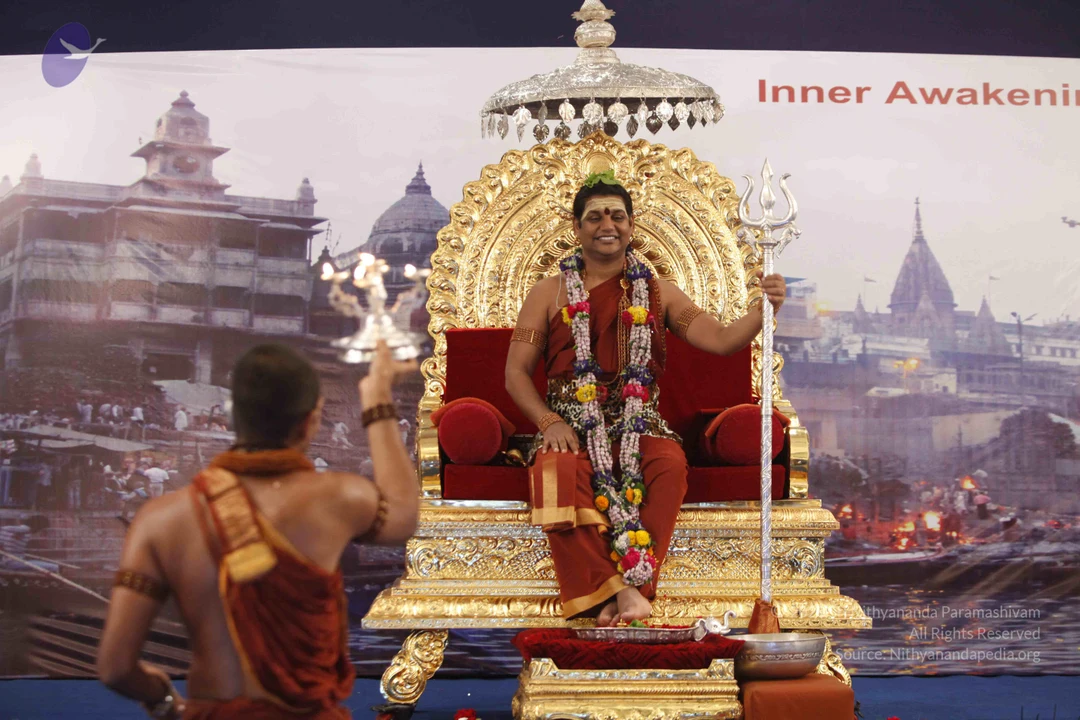
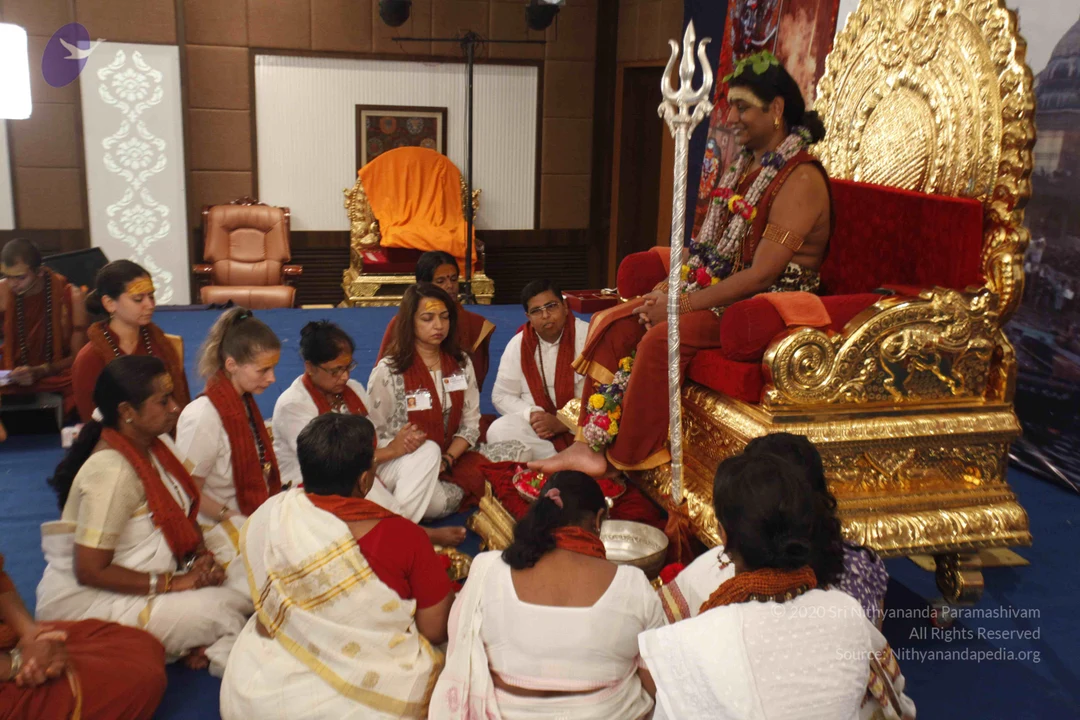
A photograph of a seated man on an ornate golden throne with lion-shaped armrests and a large gold halo-style backrest. He wears an orange-red robe, a red-and-gold shawl draped over the shoulders, a white-and-gold garland, and rudraksha-style beads around the neck, with a red tilak on the forehead. Behind him is a backdrop with a faded historical illustration of temples and a banner reading partial text about inner awakening. Dark lamp-like elements and red fabric frame the seat. The seated figure is wearing distinctive saffron-orange clothing, malas and a ceremonial gold-and-red throne setting, consistent with the a person cues; he is presented in a seated teaching or darshan role in front of the banner.A seated man on an ornate gold throne with red cushions, under a silver parasol with hanging tassels, is being honoured by a priest. The seated man wears saffron-orange robes, a long garland of white and multicoloured flowers, gold armbands, and a vertical sandalwood-marked forehead; he holds a silver trident in one hand and raises the other hand. Before the throne, a bare-chested priest in orange cloth with a gold-bordered shawl lifts a silver aarti lamp with a flame. A brass bowl and a red cloth sit on the gold base. The backdrop is a large banner showing ghats and temple spires of a riverside city, with the words Inner Awakening partially visible.A photograph of a seated figure on an ornate gold-and-red throne in a hall with blue carpeting. The figure wears a red and orange garment, a leopard-print skirt, a garland of white, pink and yellow flowers, a green crown-like head covering and a white forehead mark. The figure is seated and gestures toward a group of devotees below. Around the throne, seated devotees in white and orange-red garments and shawls, with ash markings on their foreheads, hold brass plates with flowers and offerings. A golden peetha chair stands behind, a silver staff leans nearby, and a small camera tripod and black speaker sit at the side. Several devotees are seen from behind in the foreground.

May 09 2014

Original wiki page
Contents

Description:

In today’smorning Satsang from Varanasi, Paramahamsa Nithyananda expanded on Living Advaitha and the teamily process. He clearly stated the more anger, violence and arrogance you carry the more disintegrated you become and the more impossibility you carry. Your body should celebrate your presence in it. People should celebrate your presence in their life. Complete with the angry arrogant child inside and make friends with you and cause the reality of your teamily.

Link to Video:

VideoAudio

Transcript:

Nithyanandeshwara Samaarambhaam

Nithyanandeshwari Madhyamaam |

Asmath Aachaarya Paryanthaam

Vandhey Guru Paramparaam ||

I welcome all the devotees, disciples, samajis, satsanghis, Shrimahants, Mahants, Kotharis, Thanedars sitting with us all over the world through Nithya Satsang, Nithyananda TV, Sadhna TV, two-way video-conferencing having Nayana Deeksha.

Cities sitting with us in two-way video-conferencing having Nayana Deeksha: Nithyananda Nagara-Bidadi, Nithyananda Nagar-Tiruvannamalai, Nithyananda Nagaramu-Hyderabad, Peethadeeshwaris Training Centre-Salem, Nithyananda University-Los Angeles, Nithyananda University-Paris, Hyderabad-Gupta Kashi, Singapore-Singapuram, Charlotte-Srisailam, Oklahoma-Somanatham, Houston-Kalahasti, Ohio-Prayag, San Jose-Madurai, Penang-Tirupparamkundram, Toronto-Kailasam, Scottsdale-Arizona, St. Louis-Tirumala, Seattle-Chidambaram, Gyaneshwor-Nepal, Guadeloupe-Rameshwaram, Jorpati-Nepal, Hong Kong-Sirkazhi, Dubai-Vaidyanatham, Indrani-New Jersey, Tuen Mun-Hong Kong, Johns Creek-Georgia, High Point-North Carolina, Austin, Grasse-France, London-Kashi, Rajapalayam-Dhyanapeetam.

With this, I welcome all of you with my love and blessings.

Some more cities are joining. Halifax Canada.

I welcome you all with my love and blessings.

3:27

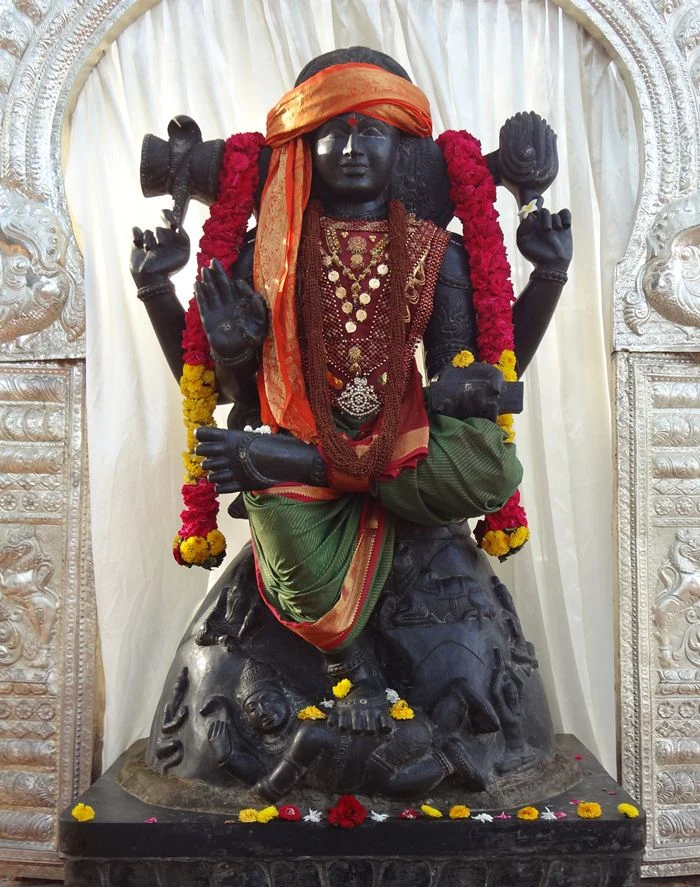
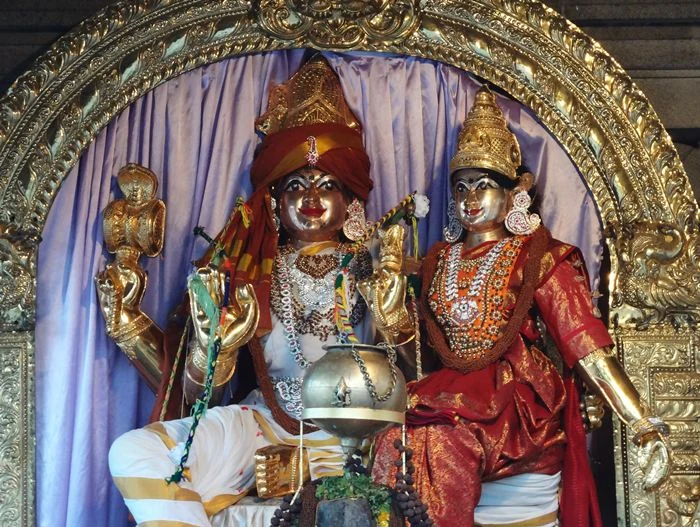
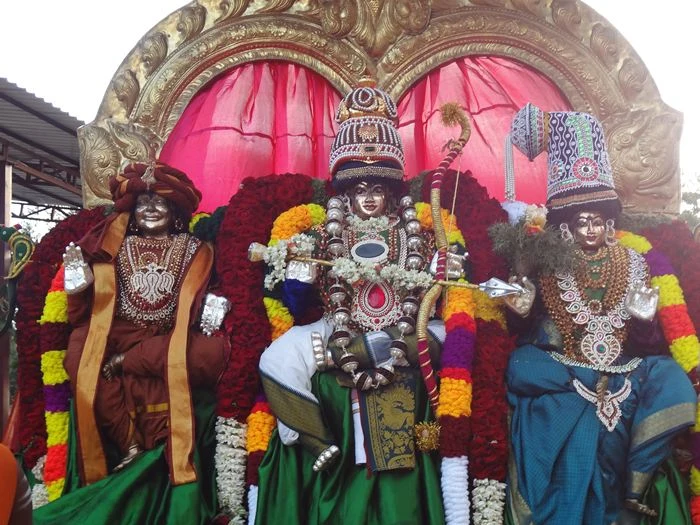
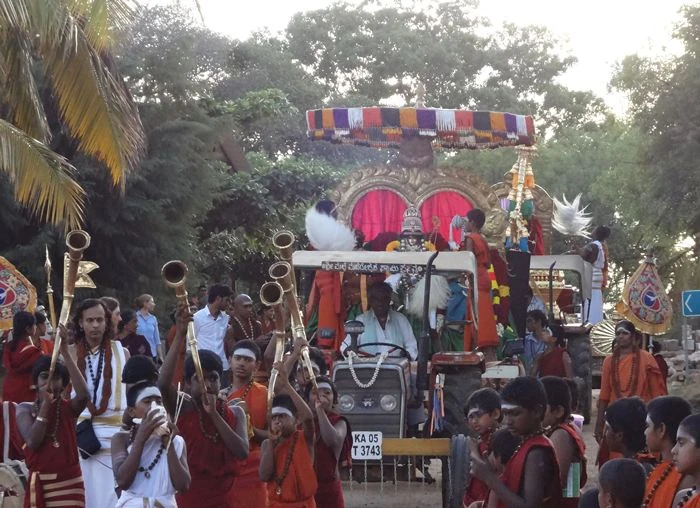
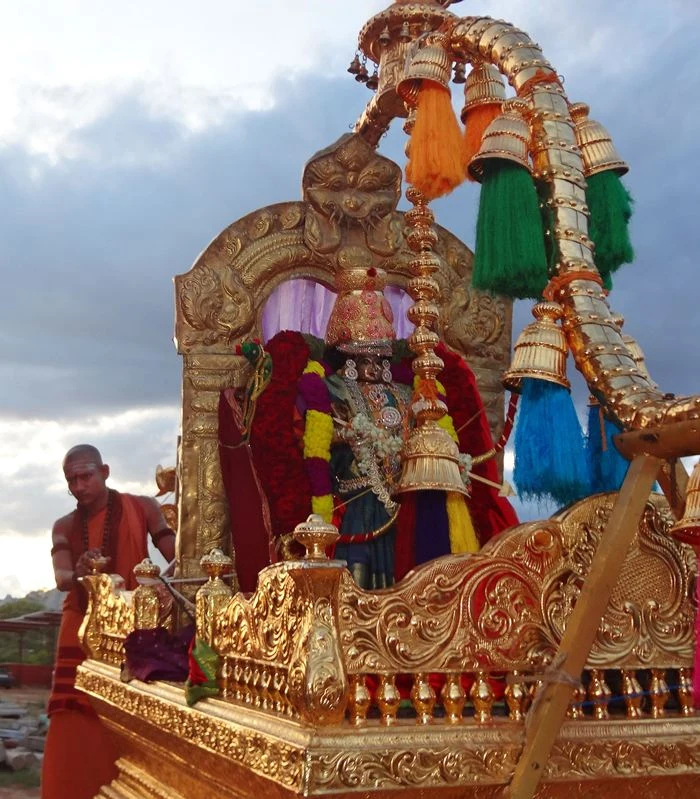
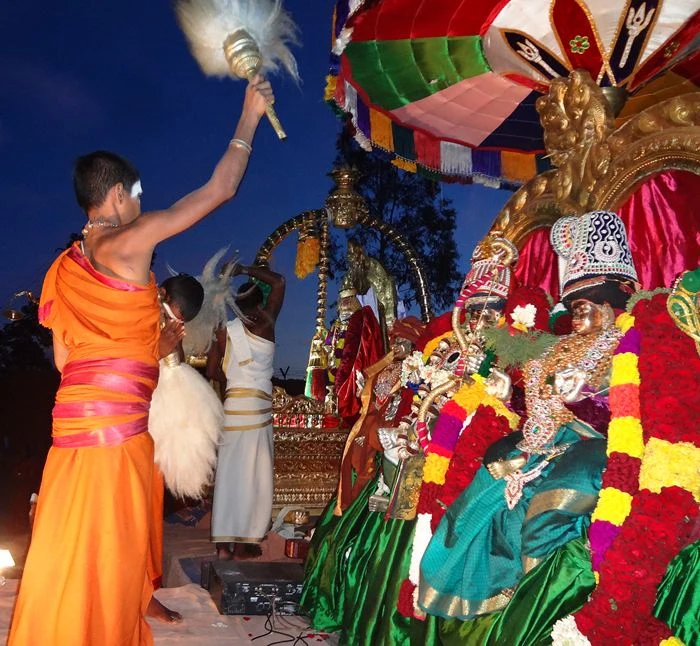
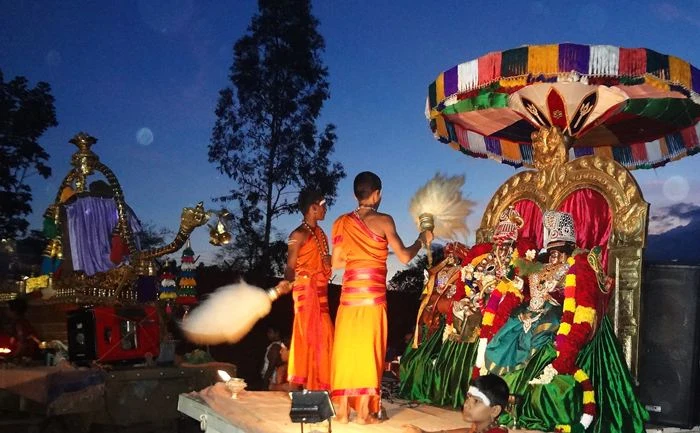
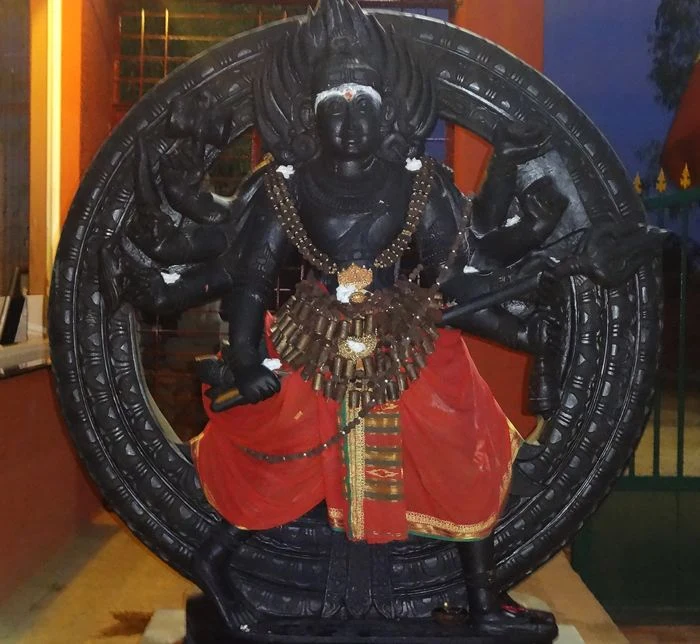
Today I will expand on Living Advaitha. Before entering into Living Advaitha lets have darshan of Meenakshi. She is in the form of Digvijaya - going around the world and conquering it.

I will take a few minutes just to explain this story. Then I will enter into Living Advaitha.

Yesterday coronation, today she goes round all the ten directions conquering it. You need to understand this - even if you get the kingdom from your father as the inherited, after the coronation you have to go round all the ten direction establish your authority. If you are not able to establish , anybody declares independence, they are independent. So, whenever the kingdom moves from the father to son or daughter even as inherited, they themself have to go around and establish their authority; means, they have to prove their qualifications. Just because of the family, you cannot inherit. In India, till Independence, it was not family inheritance. In Hindu tradition, just because your father was a king, you cannot be a king. Just because your family, you cannot become. You will have to establish your credibility.

So, yesterday was the coronation, and today Devi goes round all the ten direction and establishes her authority. By tomorrow morning sunrise, she reaches Kailaasa and sees Mahadeva. She conquers Nandi. Mahadeva has to come to fight with her directly. The moment she sees Mahadeva, she understands she is his ‘ardhaangini’, the realization of the ‘ardhaangini’ happens. Then, by tomorrow evening the marriage ceremony. Mahadeva says, ‘Go to Madurai. I will come there and marry you with all your relatives.’ Then Mahadeva comes here with all his bhoota ganas, and whole Madurai gets frightened seeing the Shiva and Shiva Ganas. Then Mahadeva takes a very beautiful, handsome form. That form only is called as ‘Sundareshwara’, ‘Lord of Beauty and Grace’.

So, tomorrow, before sunset, the marriage happens. This is the story.

So, today, Devi is going around all the ten direction and establishing her authority. That is what you are seeing. Great!

7:36

Let’s move to Living Advaitha. Listen.

I wanted to make these few statements on Living Advaitha. The more and more violence you cherish, more and more you become pieces, disintegrated and useless to yourself and others. Listen. Never ever believe, out of ignorance or innocence people will become useless. No. Only out of cunningness, people become useless. It’s law of life. If somebody is not useful to themself and others, be very clear, it is intense violence they are cherishing. See, when the land when there is no water, it becomes too hot. It breaks and gives way, goes to pieces. Same way, in the Being when there is too much of violence, heat, it gets disintegrated.

I tell you, not once or twice, thousands of times I have seen, whether it is Thanedars, Kotharis or Mahants, whenever I see inefficiency, I see a deep anger inside them, arrogance, feeling that they need to be given more in everything. I never accept innocence or ignorance with inefficiency. It is a deep violence and anger, arrogance. So, listen. This is law of life. This is law of life. You cannot debate with it. You cannot fight with it. You cannot change it. There is nothing even to accept it.

Anywhere you see people carrying impossibility, dry, cannot relate with the reality of life. Please understand, whenever you relate with the reality of life joyful, auspicious things simply happen around you. If the people around you, who see you, live around you, if they cannot celebrate your presence, you are completely infested with intense violence.

Be very clear, people should be able to celebrate your presence. If people around you celebrate your presence, you are a Sannyasi. Otherwise, you just live in your arrogant shell. You need to do lot of Completion. I tell you, please understand, these are some of the law of life, may look paradoxical, but these are truths. Your body should celebrate your presence inside it. Your stomach should bless you after you give food. After food if you are feeling tired, sleepy, your stomach is cursing you, feeling heavy, uncomfortable, be very clear, you are not eating for your body, you are eating for your tongue. Few inch muscle can destroy your whole life. Your body should celebrate your presence in it. The people around you should celebrate your presence in their life. Somehow, this not being in tune with life is considered as one of the spiritual quality or it is being tolerated.

14:00

Please understand, you should not accumulate wealth immorally, adharmically. But, if you are not able to generate whatever wealth you need to fulfil your mission, there is something seriously wrong in you; your goal is not as you declared, there is hypocrisy in it; there is a strong inauthenticity, cheating. I tell you, just if one body and one mind is integrated to one goal, Cosmos can never say, ‘No’; even if the goal is so-called ‘wrong’. If a body and mind is integrated to the goal, authentic to the goal, Cosmos has to simply say, ‘Thathaasthu’.

From Tiruvannamalai Mahant I recieved a mail, ‘I am not able to run; too many staff. No income. I will drop two staff.’ I just told him, ‘Drop this pattern of ‘how much I can do’, and look around. You will see what you need immediately will be there.’ By evening I received a mail, ‘Yes, I dropped that pattern ‘how much I can do’ and looked around. There were people already giving what I wanted.’

Understand, the practical, what you call as practical problems are nothing but your arrogance, abusal behaviour to life; constantly imagining by retaining your arrogance and cunningness, incompletions, you can be successful. Understand, law of life does not work that way. It is only with Completion, establishing yourself in the space of Completion, anything great can express through you. Immediately we start thinking, ‘No, no, no. There are millionaires, billionaires. Are they all in Completion or what? When they can all accumulate what they want, why not me?’ First thing, how do you know they are not in Completion? May be they built the Completion in the past births. That is why they are able to handle that huge responsibilities in this birth. They built enough inner space in the space of Completion. Or, if they don’t have Completion, wealth may be around them, but they may not be living it. The zeros growing in bank is not wealth. The heroism you feel inside you is wealth. The possibility you feel inside you is wealth. Even if there is billions and billions in the bank, trillions in the bank, and if you are not carrying possibility in your Being, I don’t call it as wealth. If you are carrying possibility and just making what you want to happen go on, I’ll call that as wealth.

18:14

Deep down, the violence and arrogance you carry is responsible for keeping you away from people and happening. Understand, life is a great happening. It is a constant Utsava, celebration, from morning till night. You just need to drop your frustration. Life is literally Varanasi. It is a celebration always. If you see the people coming in, it is fascinating. If you see the dust they leave it and go, it is frustrating. Now, it is your responsibility to remove all the frustrating things and make the place more and more fascinating. Same way, in your life; If you are constantly be stuck with some of the failures which you created and doesn’t want to complete, life is frustrating. And if you decide to stand up, complete, life is fascinating. Understand, whether it is fascinating or frustrating, life is life. Life is life. If you are ready to fall in tune with life, you are ready to complete with it, it will become more and more fascinating.

So, the first thing, stop cherishing the constant anger and violence, feeling life is not just. The more and more you cherish ‘Life is not just. Life is adharmic. Life does not give my right. It is not equal to all’, the more and more you cherish this ideas, the more and more you will develop anger and violence, and more and more you will become dry. When you become more and more dry, you will be broken to more and more pieces and when you are broken to more and more pieces, you will become more and more powerless and exactly you will become what you thought – dirt! Exactly you will become what you thought as you – dirt! Now what I said is vicious circle. Now I present the virtuous circle - Start cherishing, ‘No! Life has done so many things to me. I was only not ready to take it up responsibly.’ Then, naturally, the first seed will start happening. Cherish it more and more with responsibility and Completion. You will see the seed grows, become a plant; plant grows, become a tree; tree grows and gives the fruit. The fruit tree delivers is Living Advaitha.

23:15

When you celebrate the life happening in you, first thing, your body will be so happy. Next, the joy will be such, the people around you will start feeling you are such a strong presence. When people around you celebrate you, understand, everything you call as LIFE will simply happen. Your body celebrating your presence is ‘Health’. People around you celebrating your presence is Wealth, Relationship, Fulfilment, Life, everything. In this teamily process, both will happen. Your body will also celebrate your presence.

Your body celebrating your presence is ‘Health’.

Your mind celebrating your presence is ‘Bliss’.

People around you celebrating your presence, is ‘Life’.

The teamily process will teach you that.

Wherever whenever you are cherishing impossibility, first you need to do is dropping the violence, anger you carry inside you about life. Even if you think ‘how much I can do?’ Then just die; that’s all. Do you want that? Then why are you living the Indian divorce? This Indian Divorce, Indian Divorce is a unique lifestyle; neither you are married actually nor you are separated legally. You live your life, she lives her life, kids live their life; and when she goes for her dinner she leaves a note ‘I am going for dinner with my friends, your dinner is in the cook book page number 42, ingredients are available in Reliance Fresh! The Indian divorce!!! Don’t have Indian divorce with life.

Either live happily, at least, otherwise disappear! You can take another one body and, when I say disappear I don’t mean commit suicide. You can’t commit suicide. In Hindu tradition suicide is not allowed. In our dharma suicide is not allowed. Then the only way is as long as you have the body you have to live. You yourself don’t have a right to destroy your body. Actually there is no option. You just have to make it happen; because you took the body. Don’t live Indian divorce with life. Understand I just wanted to repeat this word ‘Don’t live Indian divorce with life’. No if you are constantly nagging baby who wants? Behave with life like a friend. You don’t cry all the time to your friend. You know what kind of a face you should show to your friend. Show the same face to your own being.

28:06

Even to yourself; don’t be a constant frightened child to yourself. Complete with it. Get rid of that identity. Build yourself authentically; don’t constantly be a frightened baby. The first step in living Advaitha is to get rid of the, please understand your fear is not cute. It is nothing but your own violence which you don’t want to accept as violence because you thinking you have violence is too much. Fear is a coat sugar coat done on violence.

There is a beautiful verse by a great saint from Tamil Nadu, Manikyavasagar. He sings people who carry inside a deep violence but believe that they have fear, oh Mahadeva let me be afraid of them and keep them away from me. First complete with that frightened child inside. Show yourself as a friend to you. Let you seeing you bring tremendous confidence to you. Even when you go to a temple, when you go to a God, Guru, the way you carry you and present you to them, they should feel YOU ARE THE OFFERING you are offering to them, not that few banana and coconut. Who wants that? I see the person who brings, not what is brought. Nothing can be brought to me, understand? Nothing can be brought to me. Neither I enjoy, nor I lack. Neither I enjoy what is brought to me, nor I lack if I want anything. Please understand, I am making this statement with all my integrity and authenticity. Neither I enjoy what is brought, nor I lack if I want something. It is the person who brings, the being you bring, not even the body and the mind which brings. No. The Being which brings!

Don’t have that ‘Indian divorce’ relationship with life.

People come and ask me, ‘What is the secret of happy marriage, Swamiji?’

I tell them, ‘secret of a happy marriage remains a secret.’ HAHAHAHAHAHA.

33:45

Listen. When you start thinking for the whole teamily – the homework which I gave you yesterday – the first thing you need to do is, Complete and drop your violence, anger towards you and others, and the impossibility. All impossibility grows out of violence. All powerlessness grows out of violence. And don’t think your tantrums are going to be treated by life as cute. No. Tantrums are dealt only with ‘gadhas’; means, mace. Tantrums are not dealt with candy in life. May be your parents would have dealt your tantrums with candy, but life is not going to deal your tantrums with candy. Your parents were inefficient and they were in the hurry to do something, so they just want to silence you. And they throw what you want, when you throw tantrum. They have no time to spend with you. But life has lot of time to spend with you. Your tantrums are going to be handled only by mace, not by candy, be very clear. So, stop throwing tantrum. Throwing tantrum is not cute. Cherishing violence and fear is what is ‘throwing tantrum towards life’. That is not cute, and life does not enjoy it. Complete with it and decide to cause the reality of your teamily.

36:06

So, you will continue to do this homework till tomorrow. Yesterday I gave you this homework. I gave you forty-eight hours time. So, till tomorrow’s satsangh, you will continue to do this homework. This homework is not for the I A participants. I A participants, I am guiding you through the Inner Awakening session. You don’t get confused. This is for the satsanghis. Satsanghis are the group of people, devotees who are attending the satsangh every day. Actually, without even attending I A, I am leading them also into the same Living Advaitha process by small, small, small processes, step by step by step. .

So, with this, the punchline of today’s satsangh: Whether you decide to fight or flight, the frightened child inside you is wrong, not cute. Complete with it. Your tantrum towards life is not going to be handled with candy; it is only going to be handled with mace. So, complete with your fear and violence. Both are not cute, be very clear about it. Powerlessness is punished. So, be very clear, powerlessness is punished. So, complete it.

In life, law of life, powerlessness is not helped, sympathized, empathized; it is punished. You are given the knowledge to get out of powerlessness. If you are not ready to apply and use it and get out, then you are punished. Don’t get into that vicious circle.

Please understand, whatever I am saying is law of life. Whether you give the title ‘It is bad’ ‘It is good’, nobody is there to receive the title, because life is YOU. Any title you give, you can paste it on your forehead, because the title belongs to YOU. Any title you want to give for life, ‘good’ or ‘bad’, ‘right’ or ‘wrong’, ‘just’ or ‘unjust’, please stick it on your forehead, because that is where it belongs to. The title you are giving to life is for YOU. Just understand the simple truths of life and tune yourself to it. That’s all.

Photos From The Day:
Tags:

Varanasi, Paramahamsa Nithyananda, Living Advaitha, Teamily Process, anger, violence,arrogance, disintegrated,impossibility, celebrate, presence, complete, child inside, friends, cause, reality.

Photos Of The Day:

FB-photo-of-the-day

01-Pada-Puja
02-Morning-Satsang

03-Inner-Awakening-Lunch

04-Individual-Darshan

Photos from this day

View all 243 photos

Photos From The Day:

16 photosSource gallery
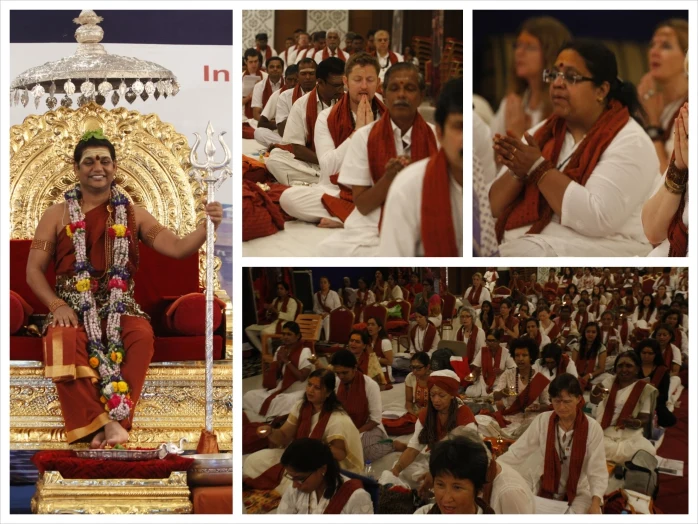
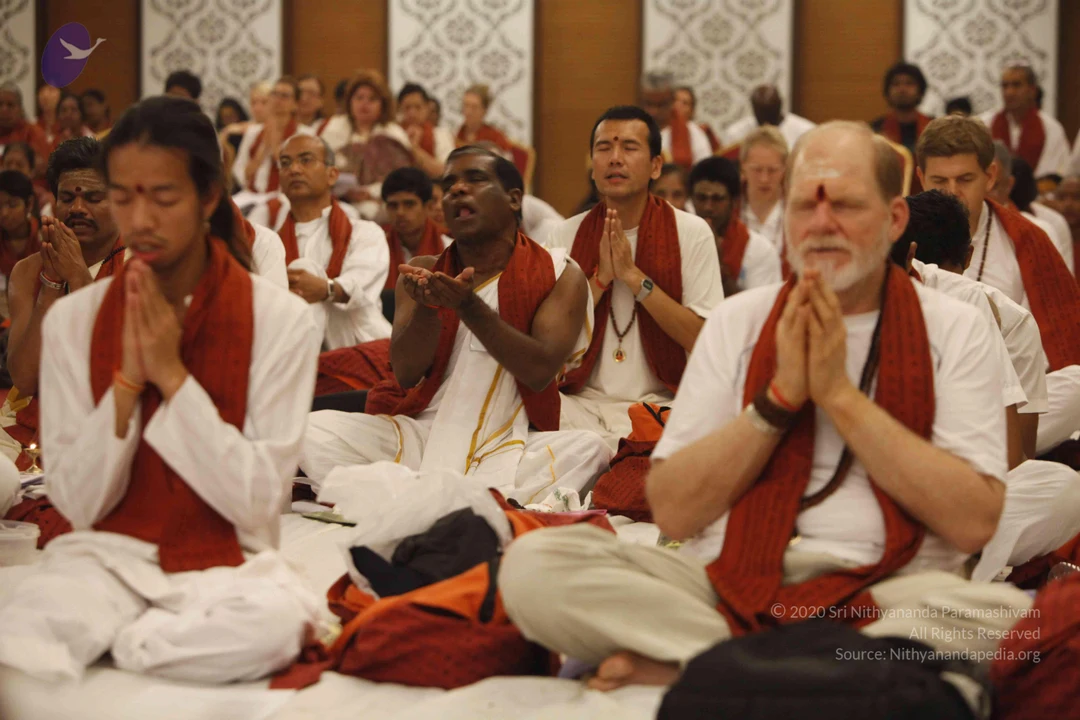
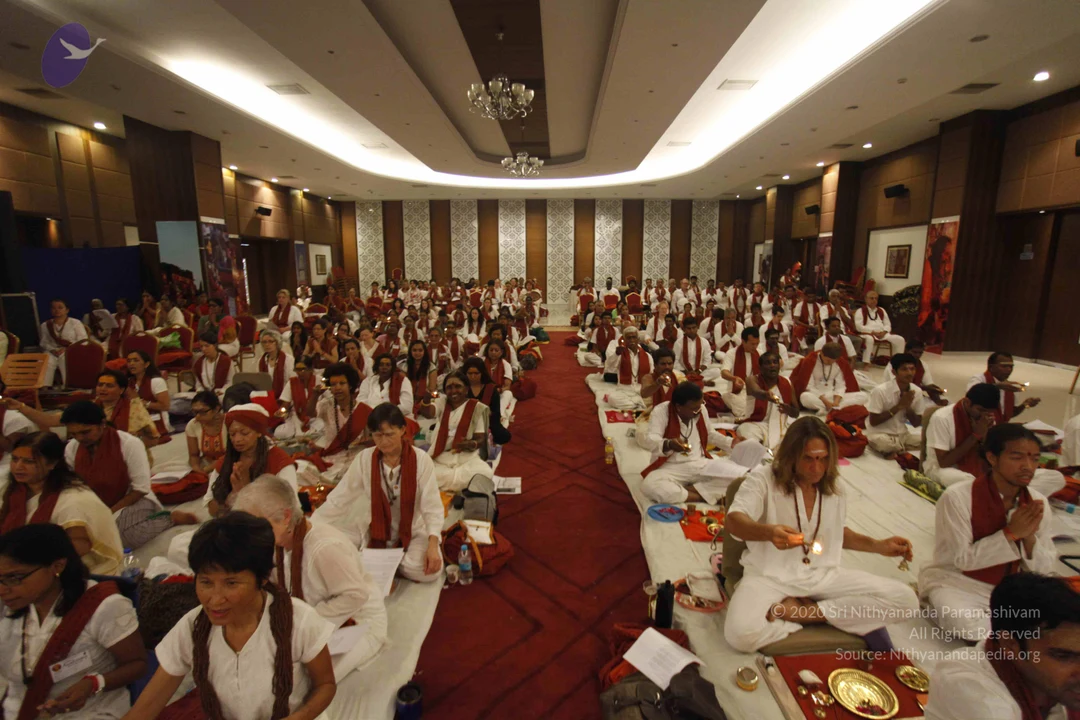
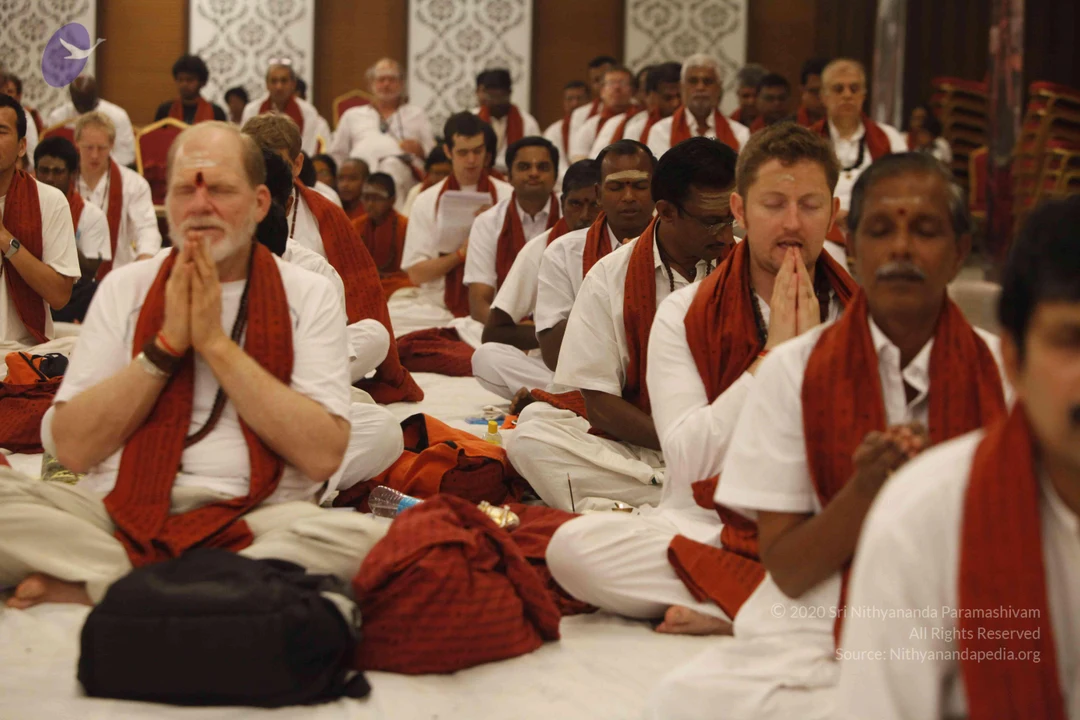
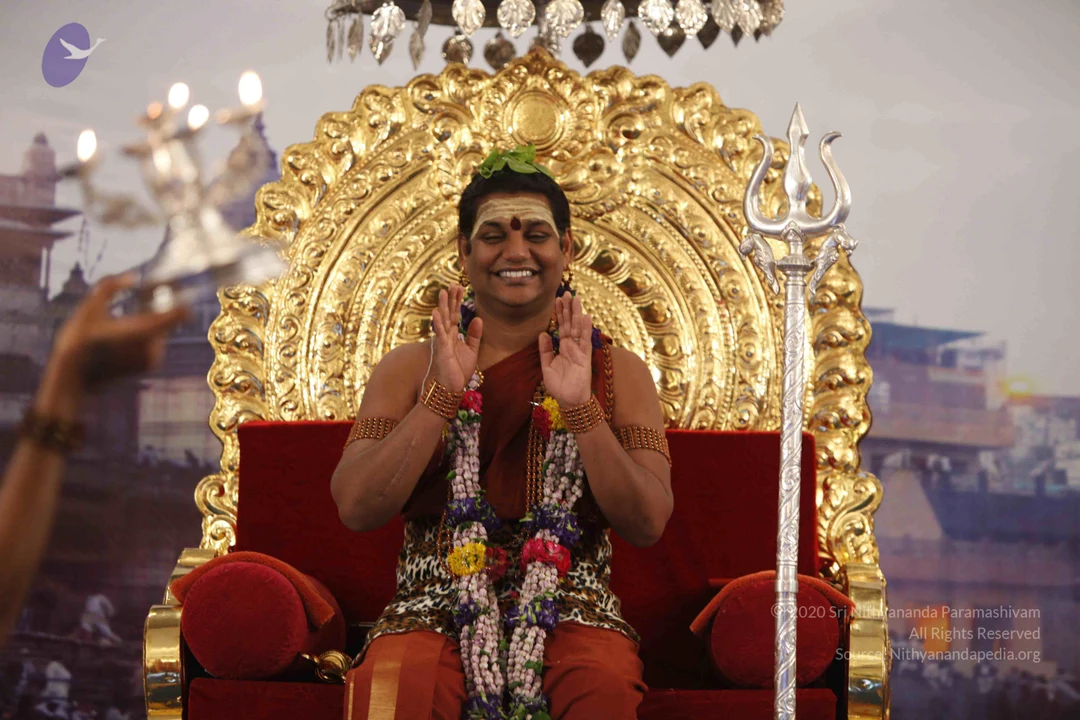
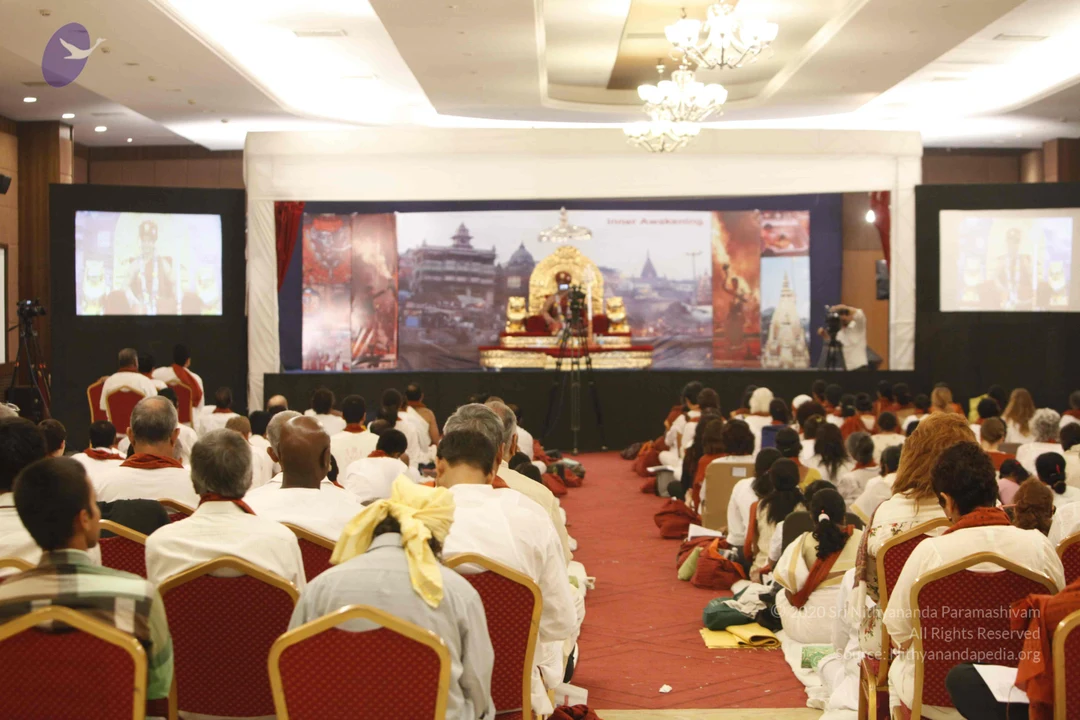
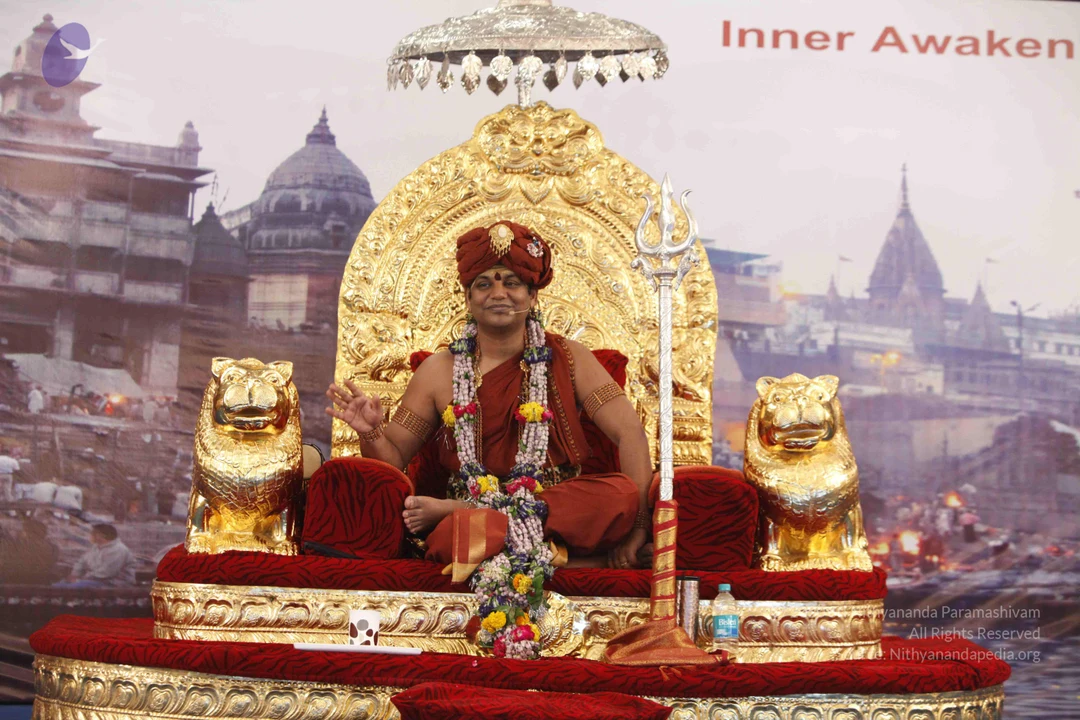
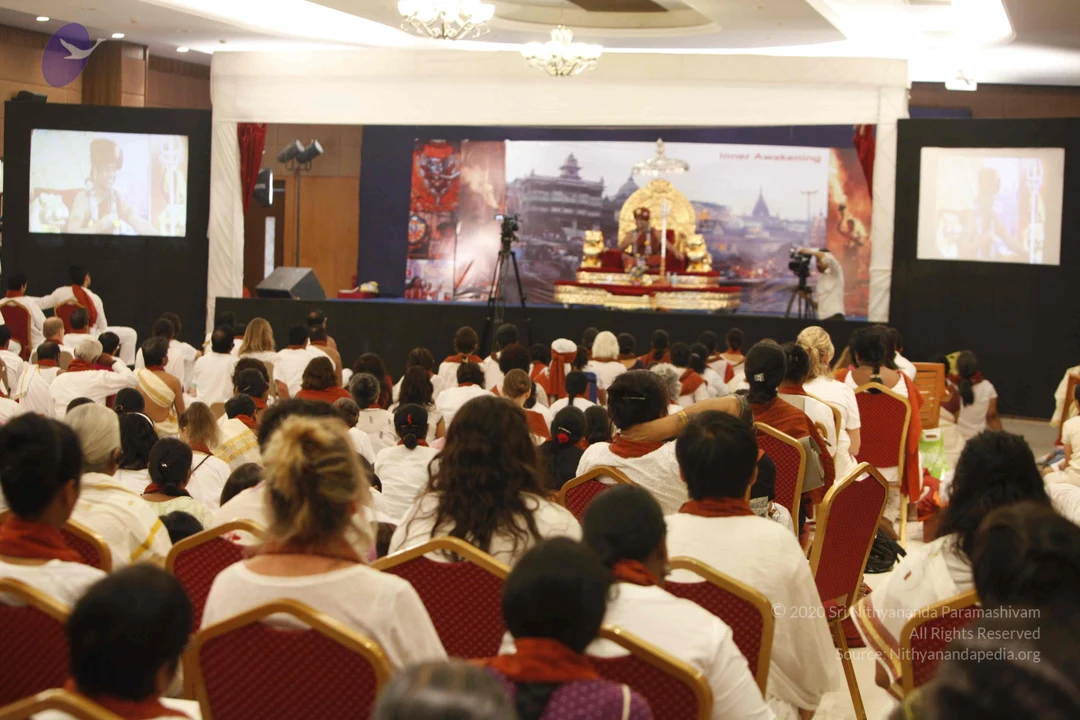
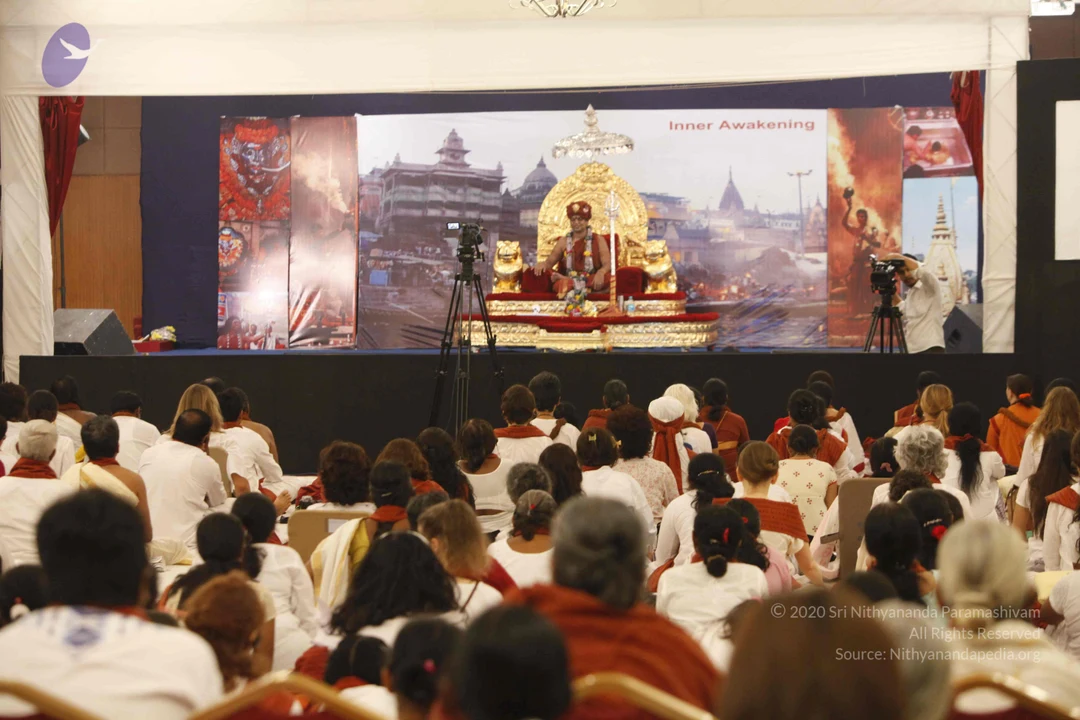
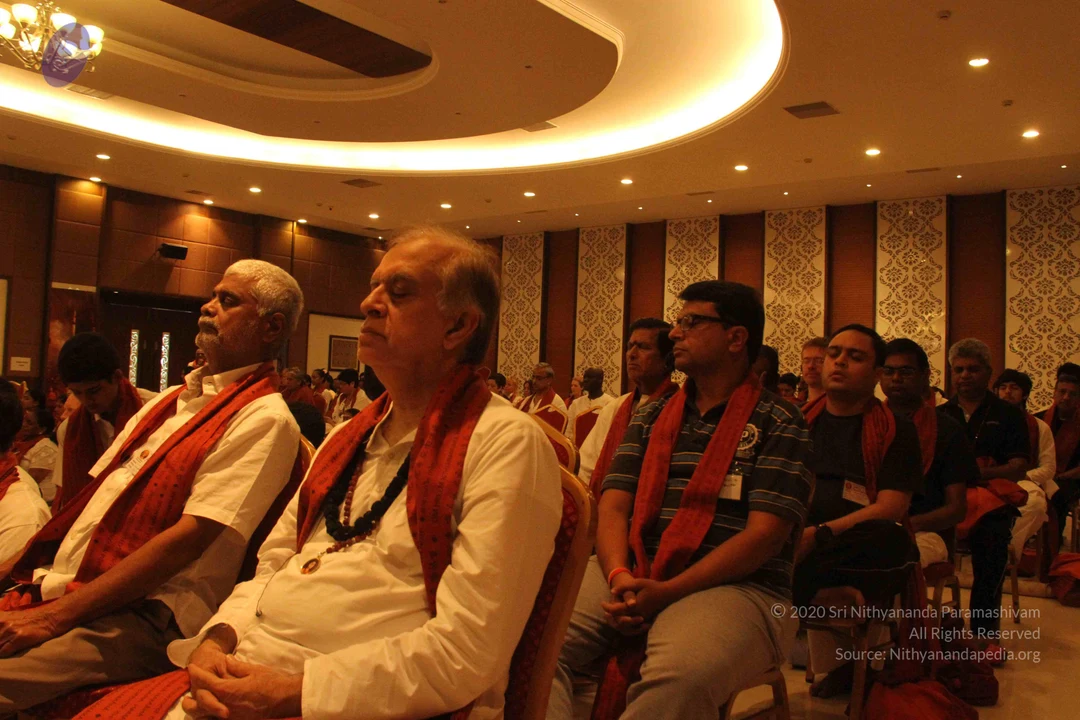
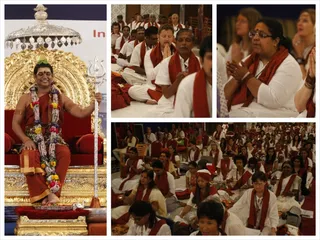
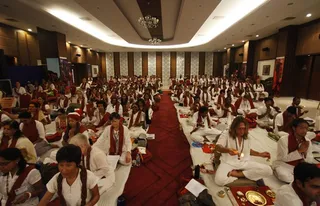
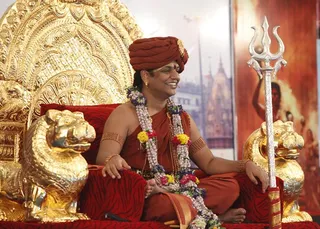
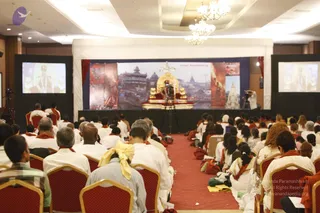
A smiling man sits on an ornate golden throne with a red velvet seat and cushions, palms pressed together in greeting. He wears an orange-red garment, layered beaded necklaces in pink, yellow and white flowers, gold armbands and bangles, and a white vibhuti tilak with red kumkum on his forehead, with a green leaf ornament in his hair. A silver trident stands beside the throne. The backdrop shows a painted cityscape of temple domes and ghats.Four-panel collage of a satsang gathering. The large left panel shows a man seated on a gold-and-red throne under a silver canopy, wearing a red-orange dhoti and shawl with a long white and pink flower garland, holding a silver trident, with a red cushioned footstool in front. A man in a green-and-gold garment appears prominently at the upper left of that panel. Top centre shows men in white kurtas and red shawls with hands joined in prayer. Top right shows a woman in glasses and a red shawl with hands folded. The bottom panel shows a large seated assembly of people in white and red-shawled attire, many with hands joined, in a hall with a red-carpeted floor. The throne figure matches the a person appearance cues (ornate gold seating, trident, garland, dhoti and shawl in saffron-red), so he is recorded as a probable depiction in the collage.A large hall filled with seated participants in white clothing and red shawls sits on white mats over a red carpet, facing forward toward the front of the room. Many attendees hold their hands in anjali mudra or rest them on their laps, and brass plates, small pots and water bottles are placed on the floor in front of them. A foreground man with long hair and a white outfit sits cross-legged with his hands in prayer near a brass plate. Chandeliers hang from the ceiling above patterned wood-panelled walls. A man at the right edge in white with a red shawl joins his palms, and a woman in a white top with a long braid sits in front. Roughly 100 to 150 people are visible across the hall.Photograph of a large indoor satsang hall with rows of seated devotees, mostly women, wearing white clothes with red shawls or stoles, viewed from behind. On a dark stage at the front, a golden throne-like seat with a canopy stands before a large backdrop photo of a riverside ghat with temple spires and a fire scene, flanked by two screens showing a figure. A cameraman films the stage, and a person in white stands at the right edge near the stage. Chandeliers hang from the white ceiling. A printed banner on the backdrop reads 'Inner Awakening'.A seated man in saffron-orange robes and an orange turban sits cross-legged on an ornate gold throne with a gold canopy above and gold lion figures on either side. He wears a multicolored flower garland and a shawl, and a silver trident stands beside the throne. A red cushioned platform, a water bottle and a small wooden box sit in front. The backdrop shows a painted photo of Varanasi ghats and temple spires, with the printed words "Inner Awaken" at the top. Swamiji (probable): the seated figure wears saffron/orange clothing, an orange turban and a flower garland, with a trident and throne consistent with his satsang setting. One person is visible.

FB-photo-of-the-day

1 photoSource gallery
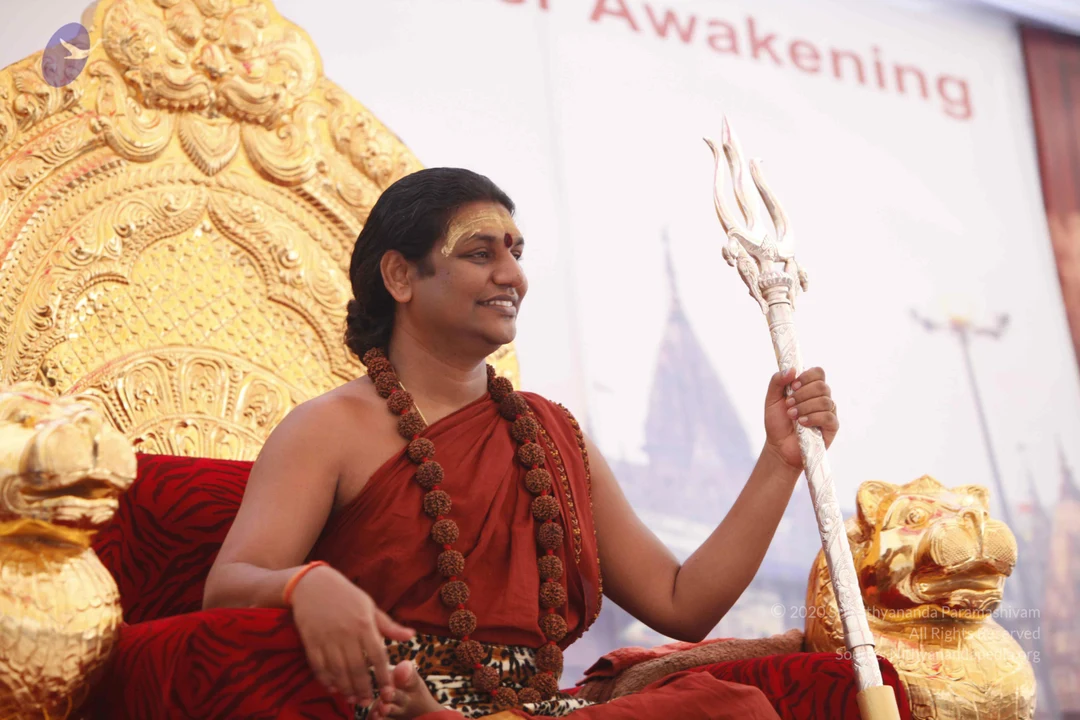
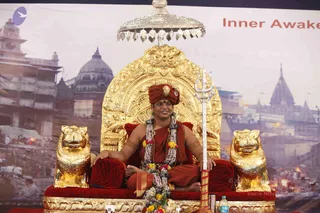
A photograph of a seated man on an ornate golden throne with lion-shaped armrests and a large gold halo-style backrest. He wears an orange-red robe, a red-and-gold shawl draped over the shoulders, a white-and-gold garland, and rudraksha-style beads around the neck, with a red tilak on the forehead. Behind him is a backdrop with a faded historical illustration of temples and a banner reading partial text about inner awakening. Dark lamp-like elements and red fabric frame the seat. The seated figure is wearing distinctive saffron-orange clothing, malas and a ceremonial gold-and-red throne setting, consistent with the a person cues; he is presented in a seated teaching or darshan role in front of the banner.

01-Pada-Puja
43 photosSource gallery
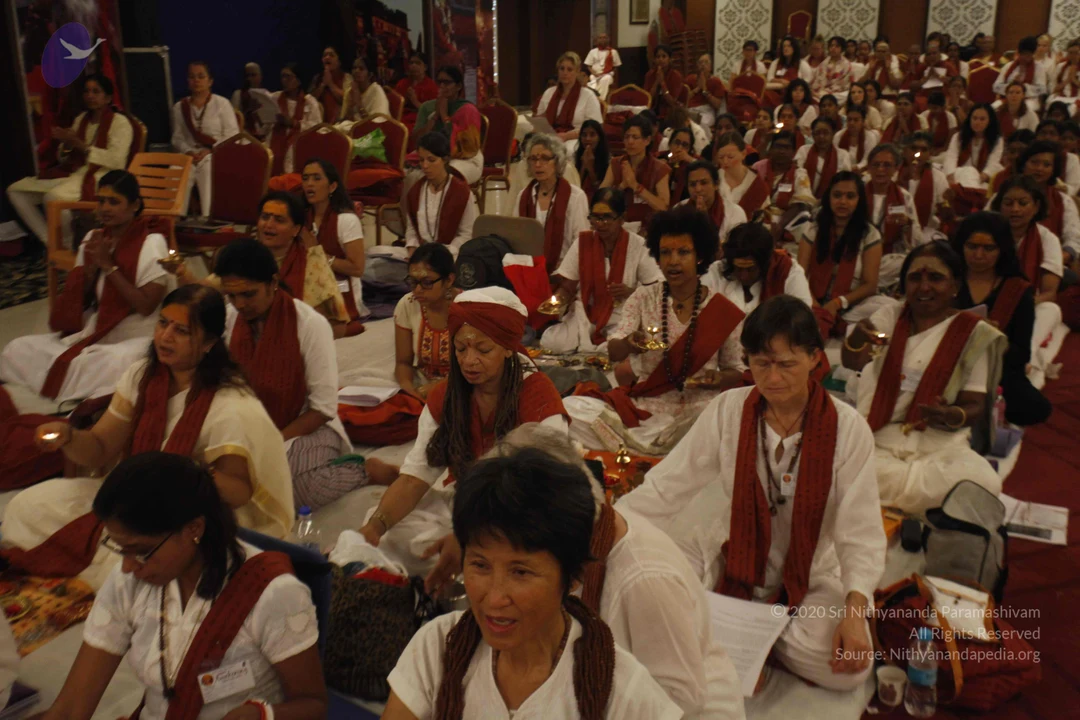
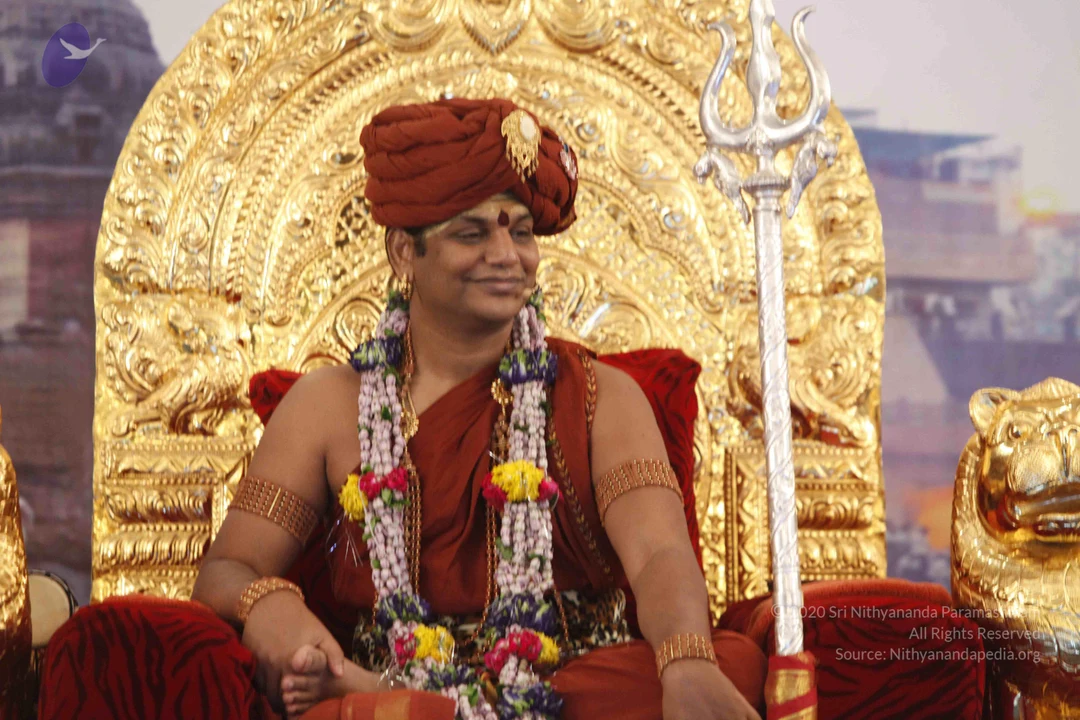
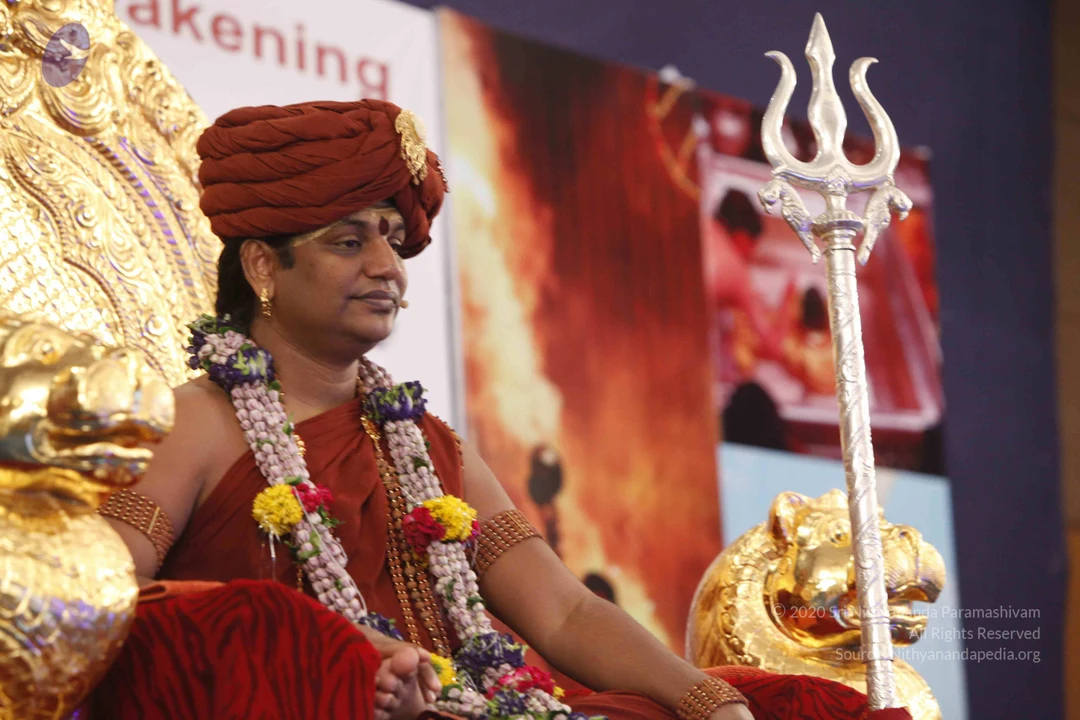
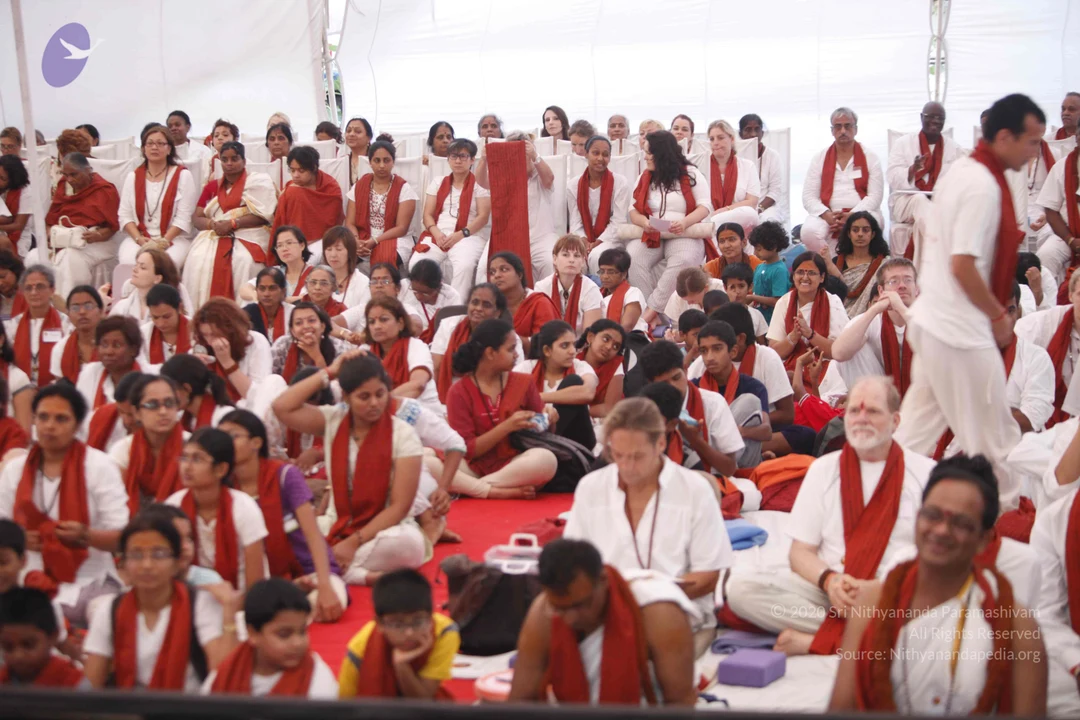
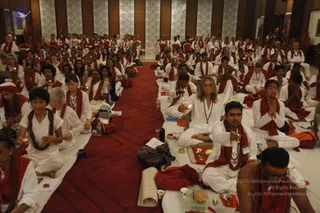
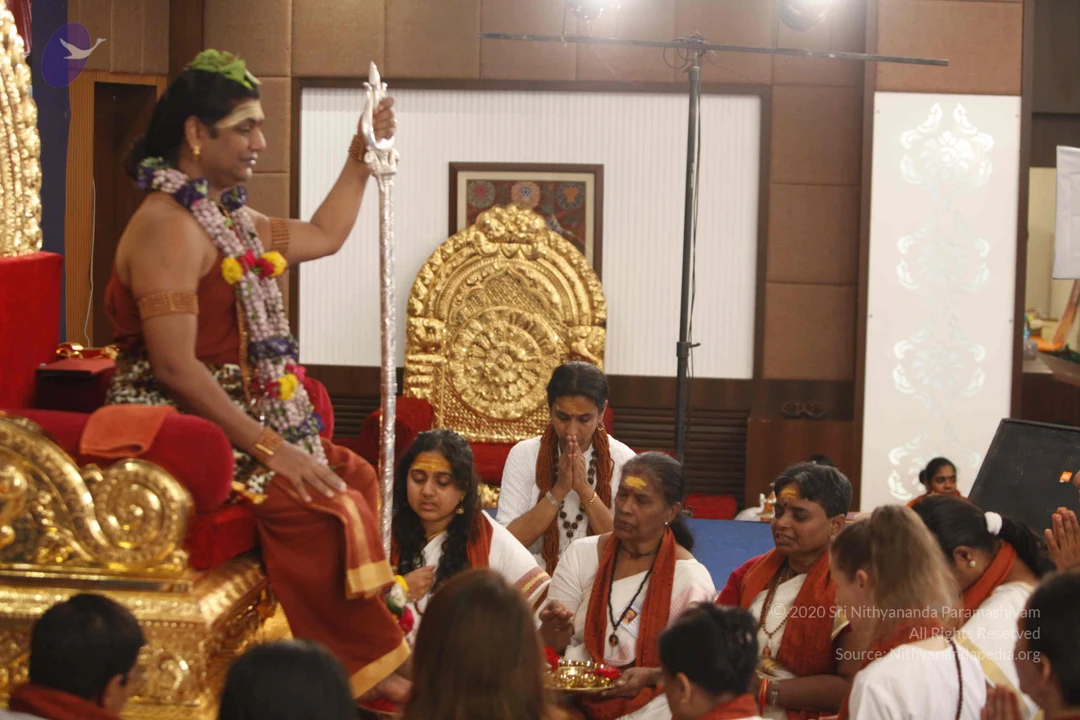
A seated man on an ornate gold throne with red cushions, under a silver parasol with hanging tassels, is being honoured by a priest. The seated man wears saffron-orange robes, a long garland of white and multicoloured flowers, gold armbands, and a vertical sandalwood-marked forehead; he holds a silver trident in one hand and raises the other hand. Before the throne, a bare-chested priest in orange cloth with a gold-bordered shawl lifts a silver aarti lamp with a flame. A brass bowl and a red cloth sit on the gold base. The backdrop is a large banner showing ghats and temple spires of a riverside city, with the words Inner Awakening partially visible.A photograph of a seated figure on an ornate gold-and-red throne in a hall with blue carpeting. The figure wears a red and orange garment, a leopard-print skirt, a garland of white, pink and yellow flowers, a green crown-like head covering and a white forehead mark. The figure is seated and gestures toward a group of devotees below. Around the throne, seated devotees in white and orange-red garments and shawls, with ash markings on their foreheads, hold brass plates with flowers and offerings. A golden peetha chair stands behind, a silver staff leans nearby, and a small camera tripod and black speaker sit at the side. Several devotees are seen from behind in the foreground.A man seated on an ornate gold throne with a red cushioned seat, beside a tall silver trident on the right. He wears a saffron-orange garment over the shoulder, gold armlets and ornate gold necklace, and garlands of white, pink, yellow and purple flowers. A red bindi and gold-coloured tilak mark his forehead. He holds his hands together in his lap and gazes to the side. Behind him a painted backdrop shows a domed temple and riverside buildings. Printed photo credit appears in the lower right corner. Swamiji (probable): the long hair, saffron clothing, rudraksha-style gold adornment and ceremonial garlands match the page's Swamiji claim, so the presence is an appearance-based candidate.A seated man in saffron-red robes sits on a large red cushioned throne with an ornate gold carved backrest, smiling with palms pressed together in a greeting gesture. He wears a multi-strand garland of white, pink, and purple flowers, gold bangles on his upper arms, and a white tilak with a red dot on his forehead, with a green leaf ornament in his hair. A silver trident stands beside the throne. Behind him is a painted backdrop of ghats and temple domes, with a crystal chandelier above. The figure is an appearance-based a person (a person) based on the long swept hair, ornate gold bangles, garland and saffron clothing, though identity is not certain. No other people are visible.A photograph of a ceremonial gathering in a hall with a blue-covered floor. A man seated on an ornate gold throne wears saffron-orange robes, a long floral garland of white, yellow and red blooms, gold armbands and a silver trident leaning beside him; his face has a sandalwood mark and a flower-topped head. His feet rest on a red cushion beside a tray of red petals. Before him sit devotees: a woman in orange and white with a forehead mark, a man in white with an orange shawl, a woman in white with an orange shawl and name badge, and others in orange and white. A backdrop shows a river-ghat city scene and a fire ritual with a burning torch. The seated figure matches the a person appearance cues of long swept hair, saffron clothing, ornate gold throne and garland.A large hall of seated devotees in white ritual clothes with red shawls, sitting in rows on white mats over a red carpet. Many hold small brass lamps or puja items. In the foreground a man with long light hair wears a white kurta, a rudraksha mala and a crown-like white cloth wrap, with a lit lamp in his hand; he is a probable Swamiji candidate by appearance, seated as a participant among devotees. Behind them, rows of attendees stretch toward a wall with patterned panels. Some items sit on mats: a rolled cloth, a bag, small offering plates and water bottles.
02-Morning-Satsang
41 photosSource gallery
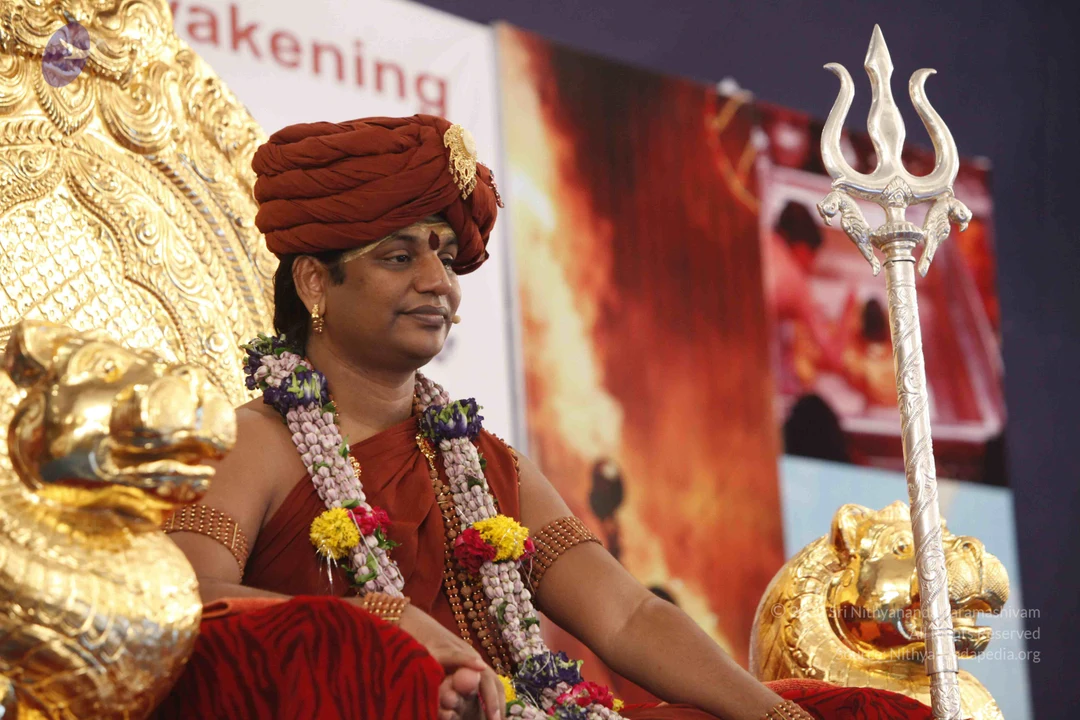
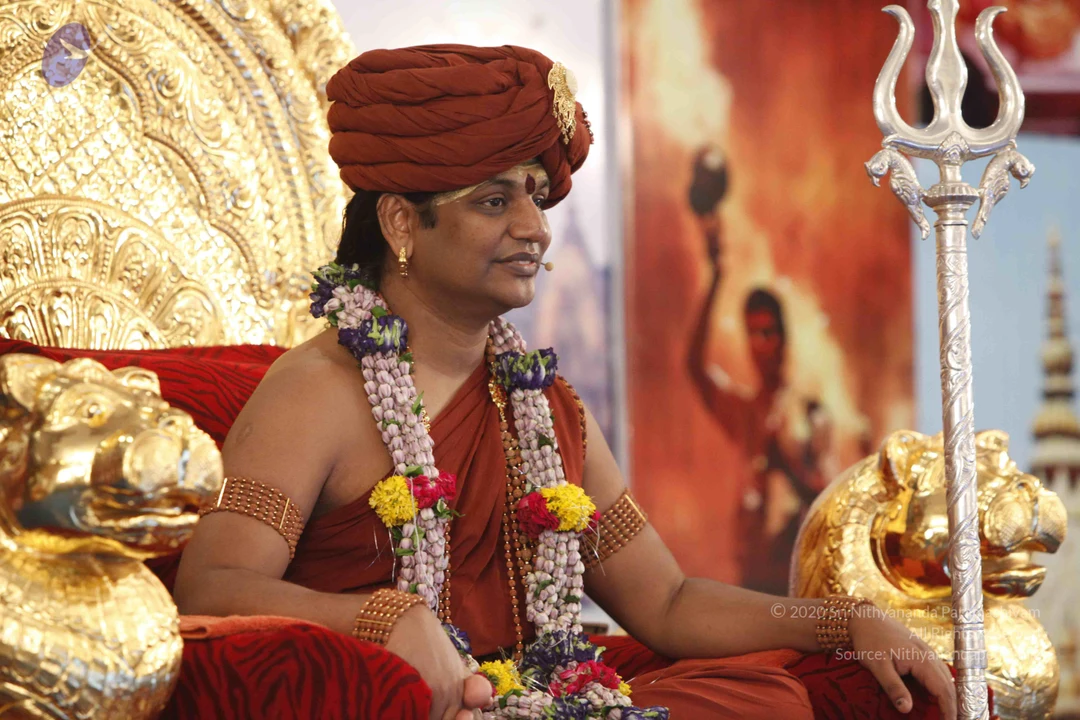
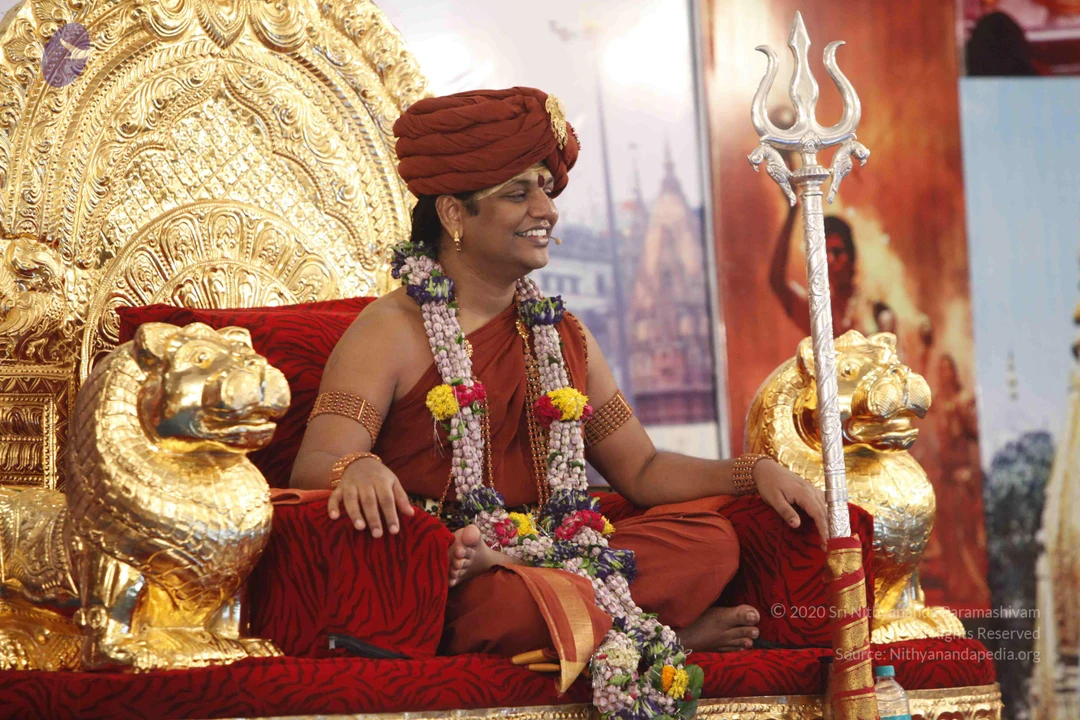
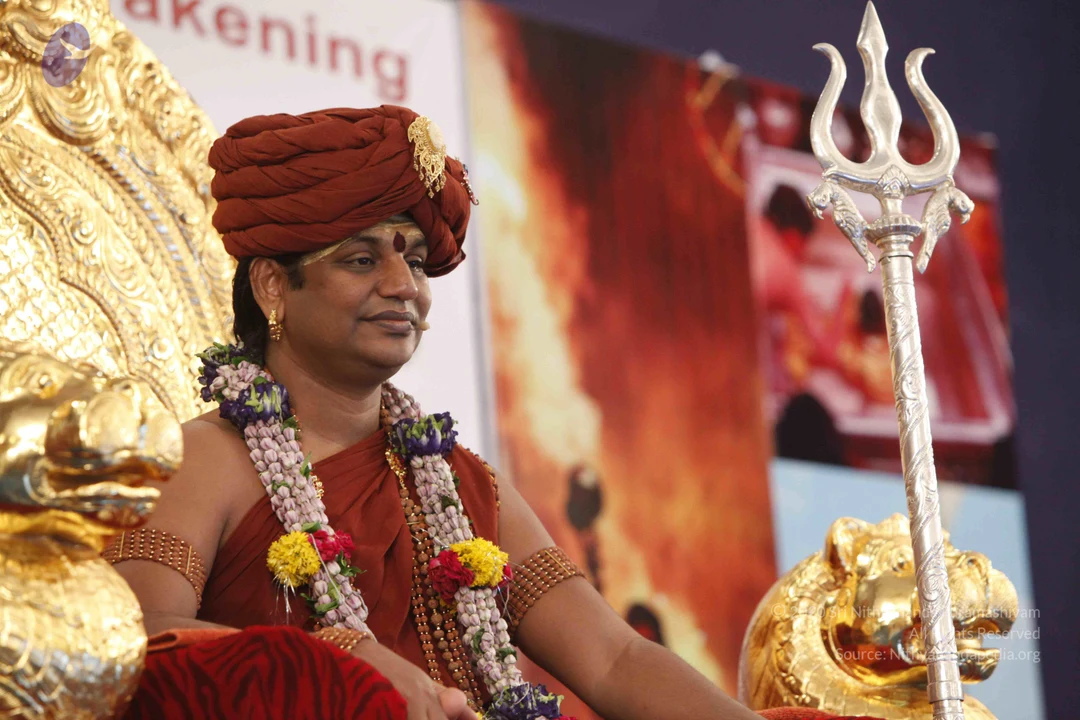
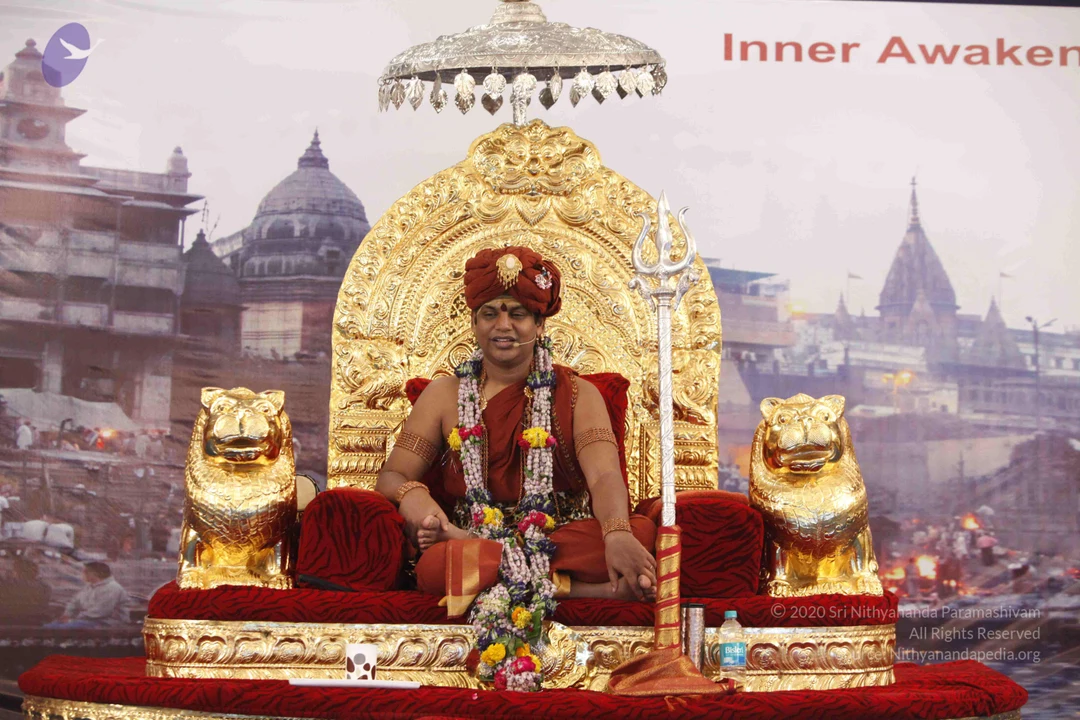
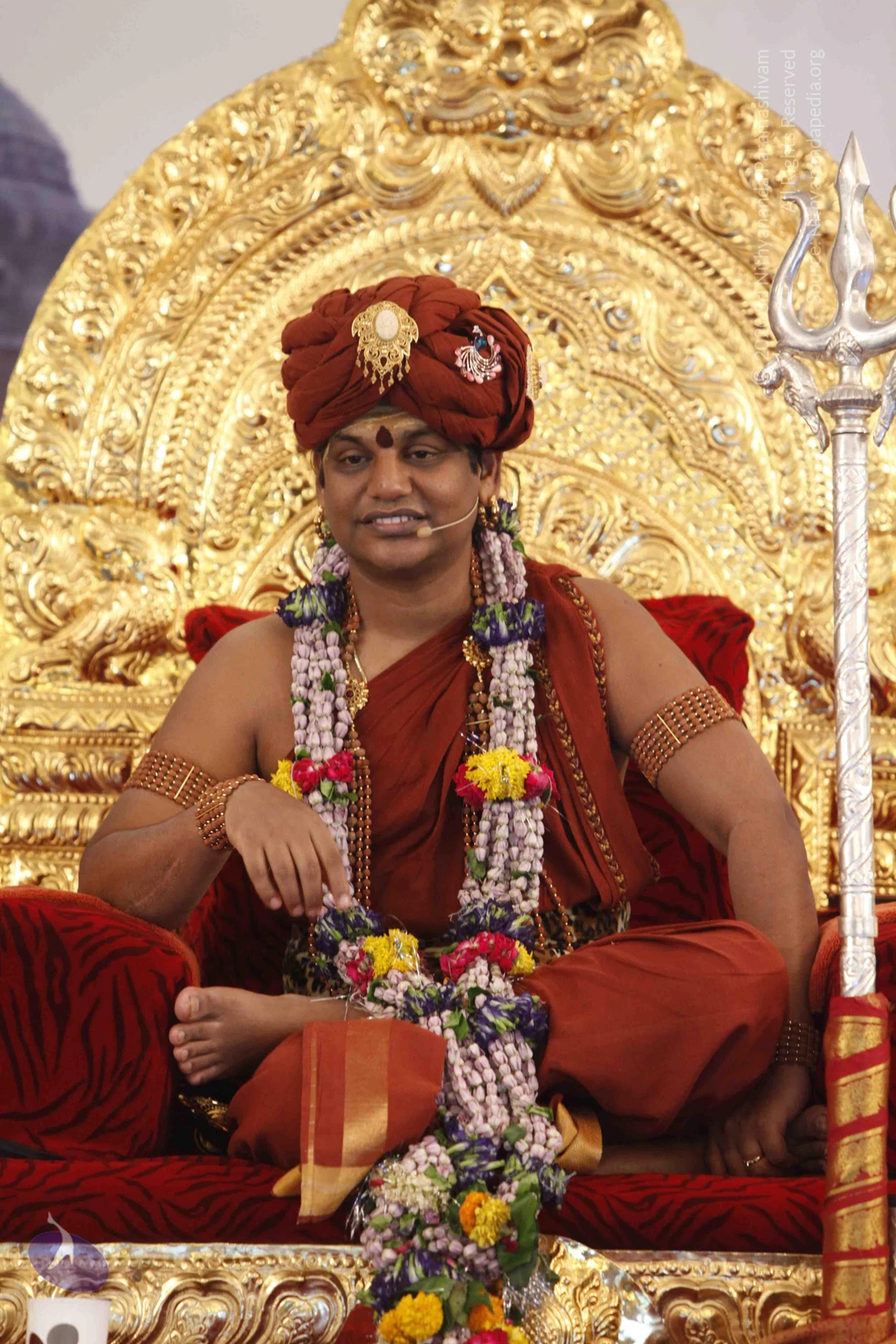
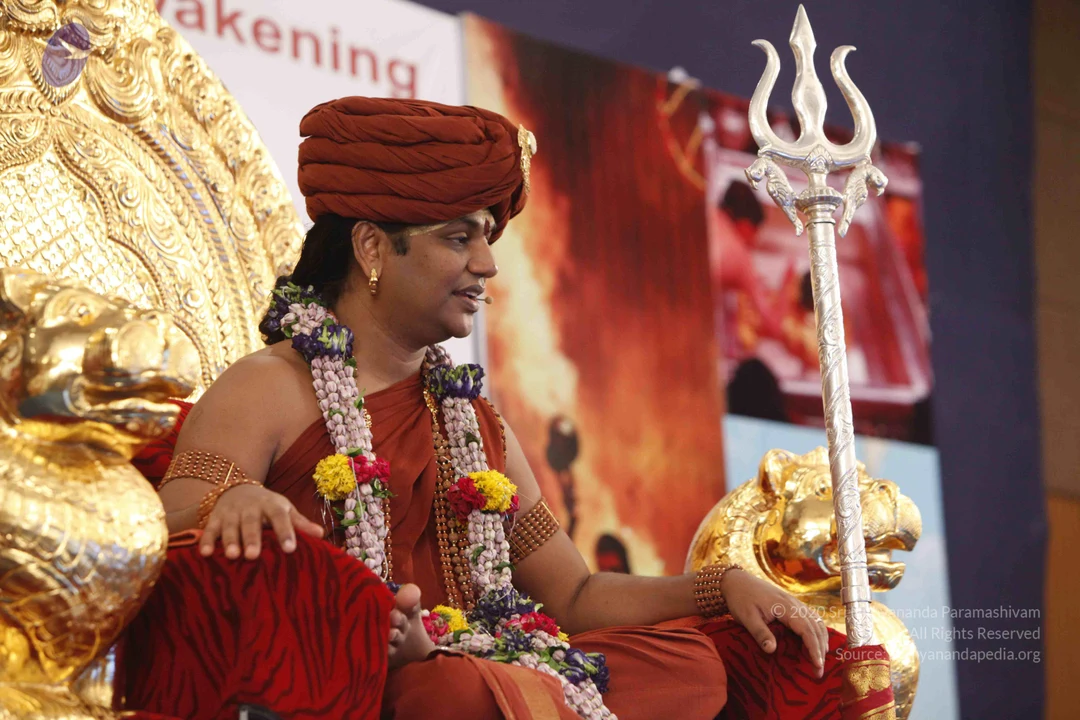
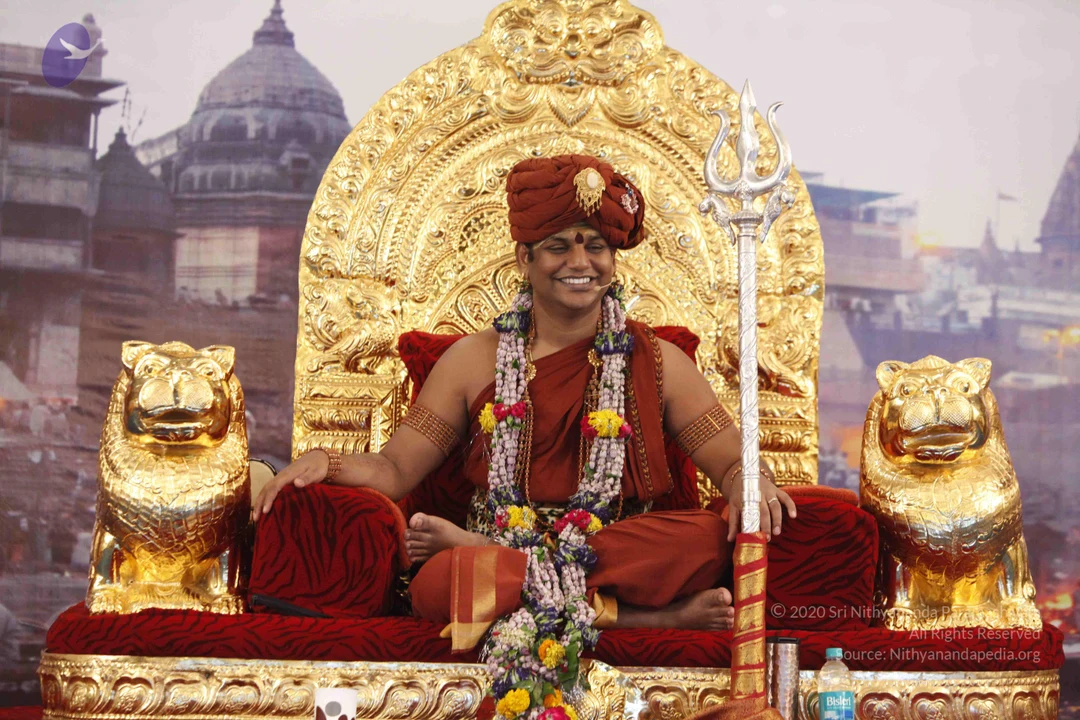
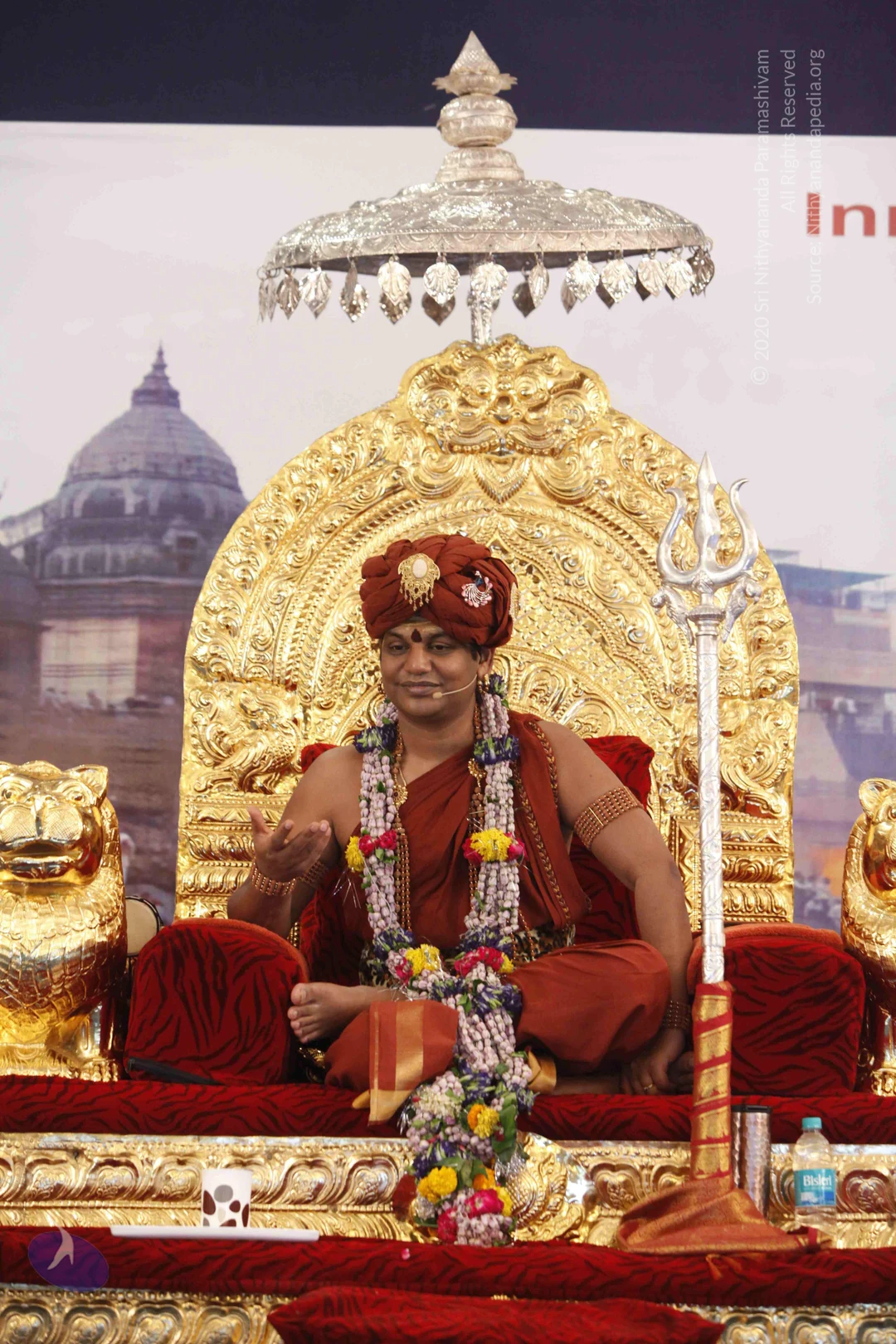
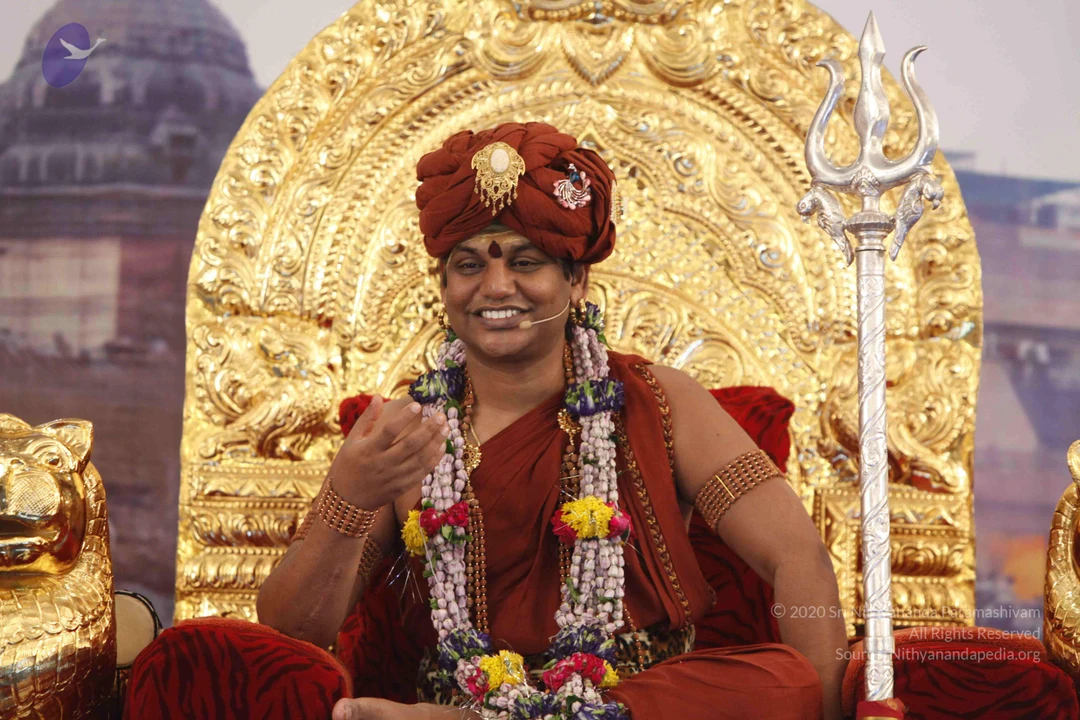
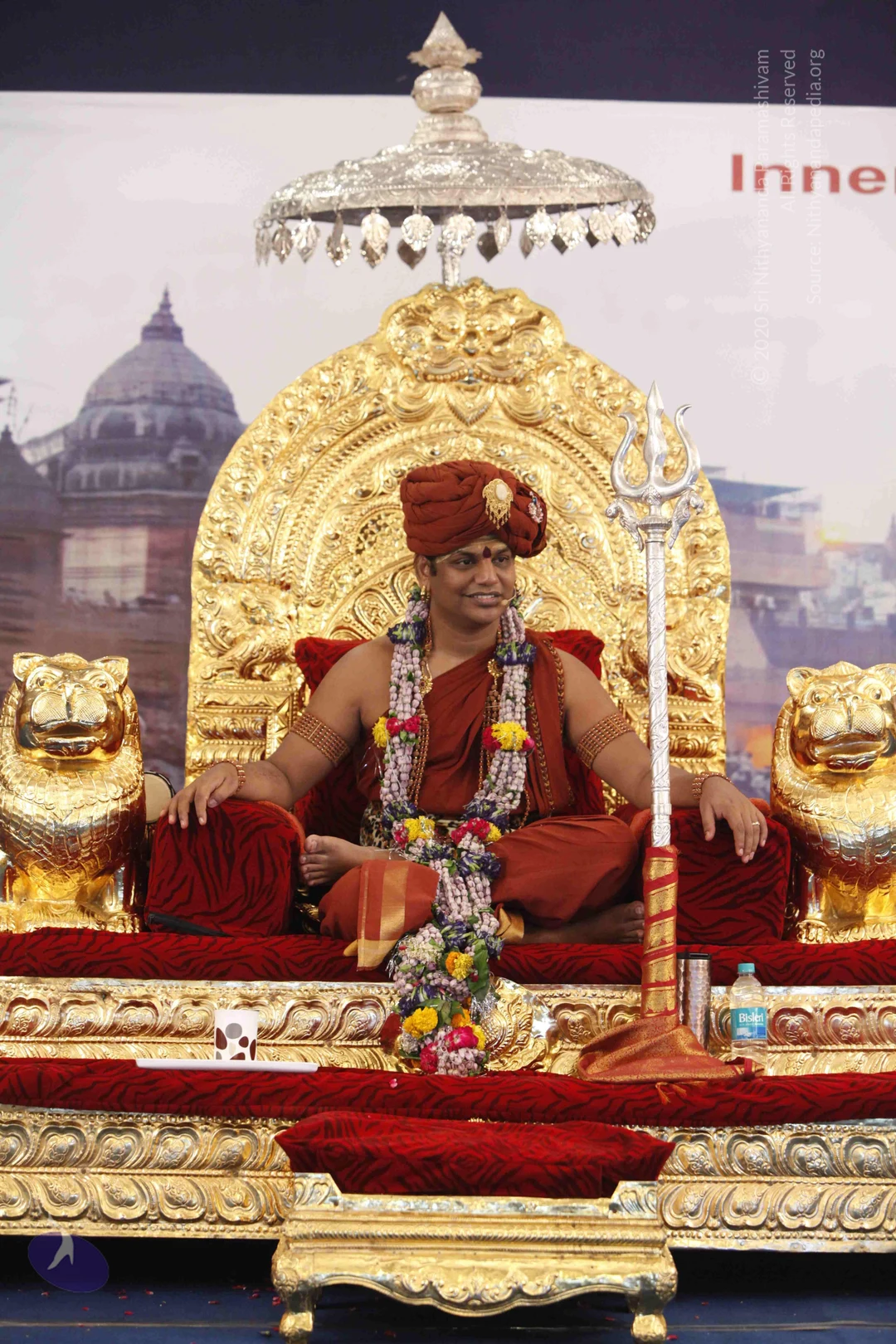
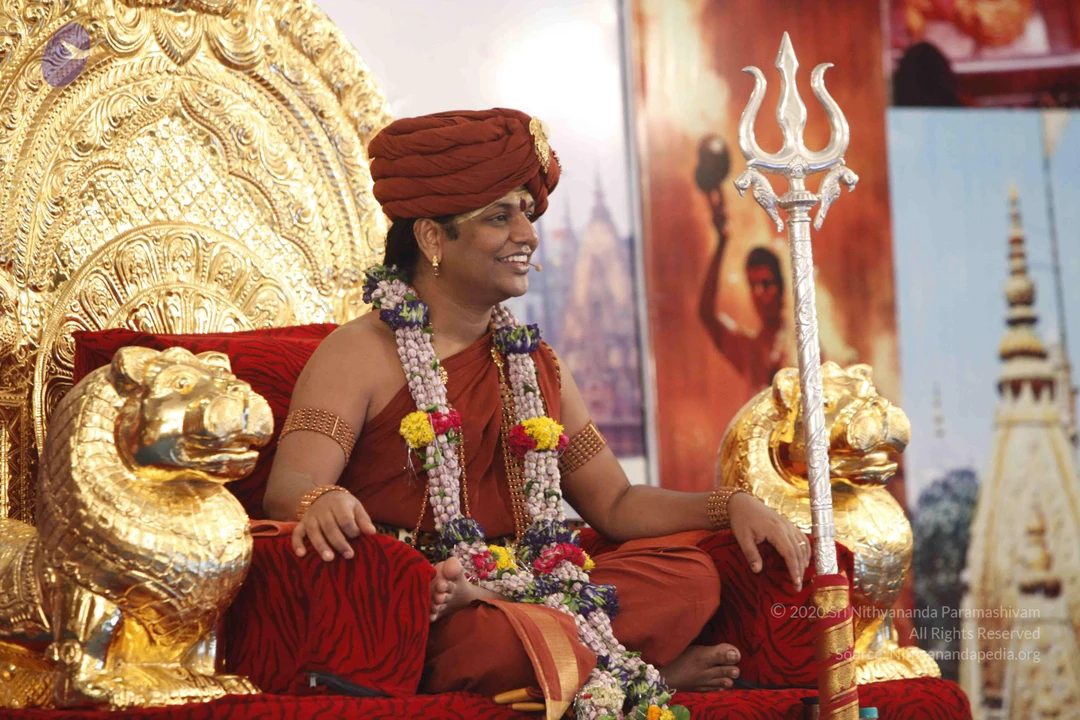
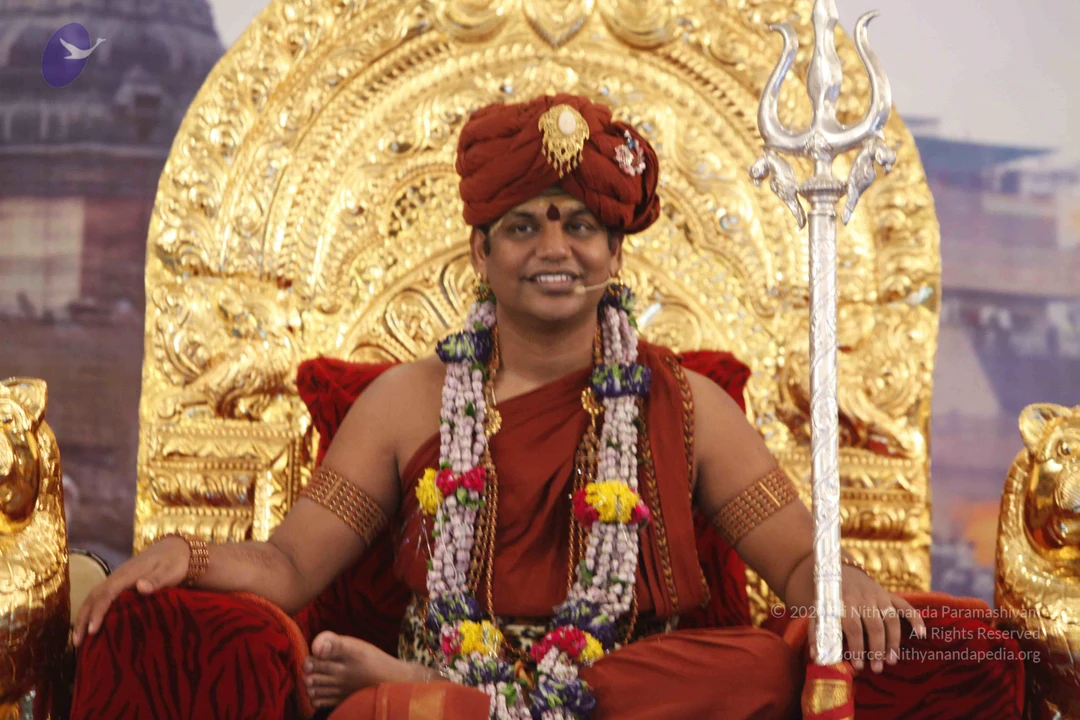
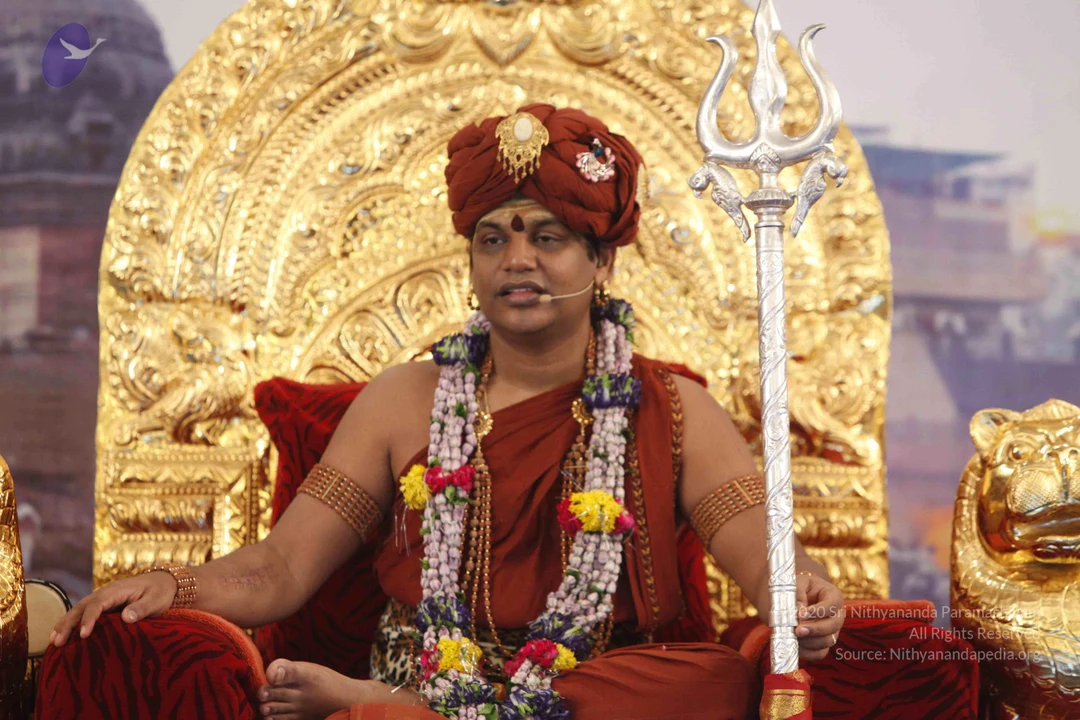
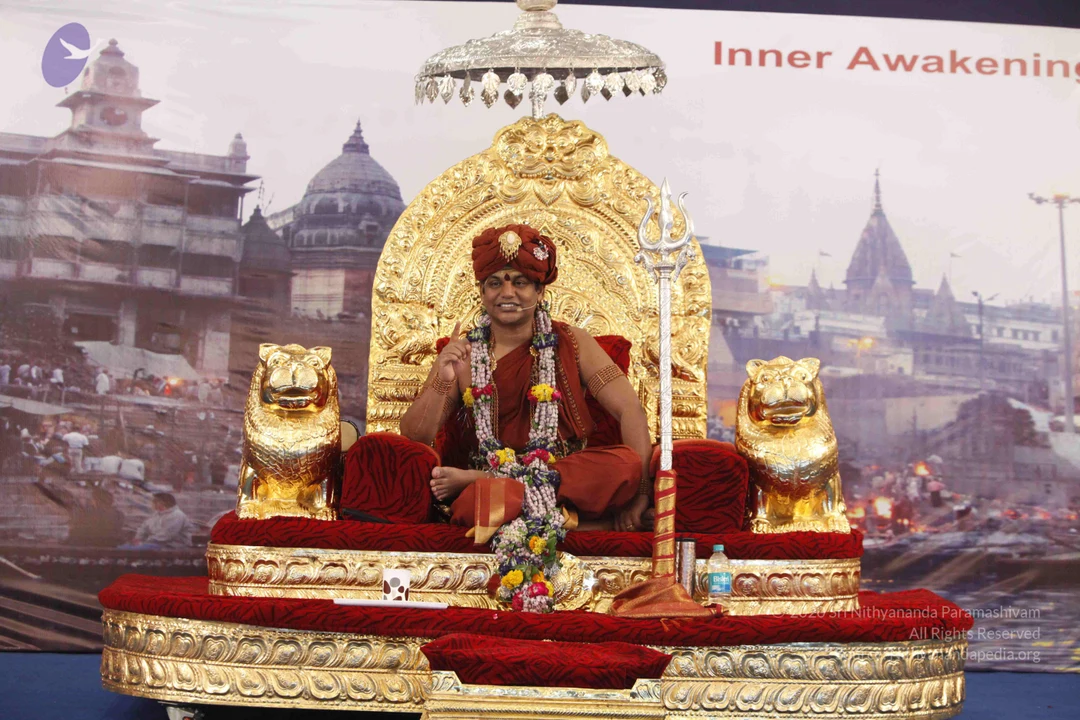
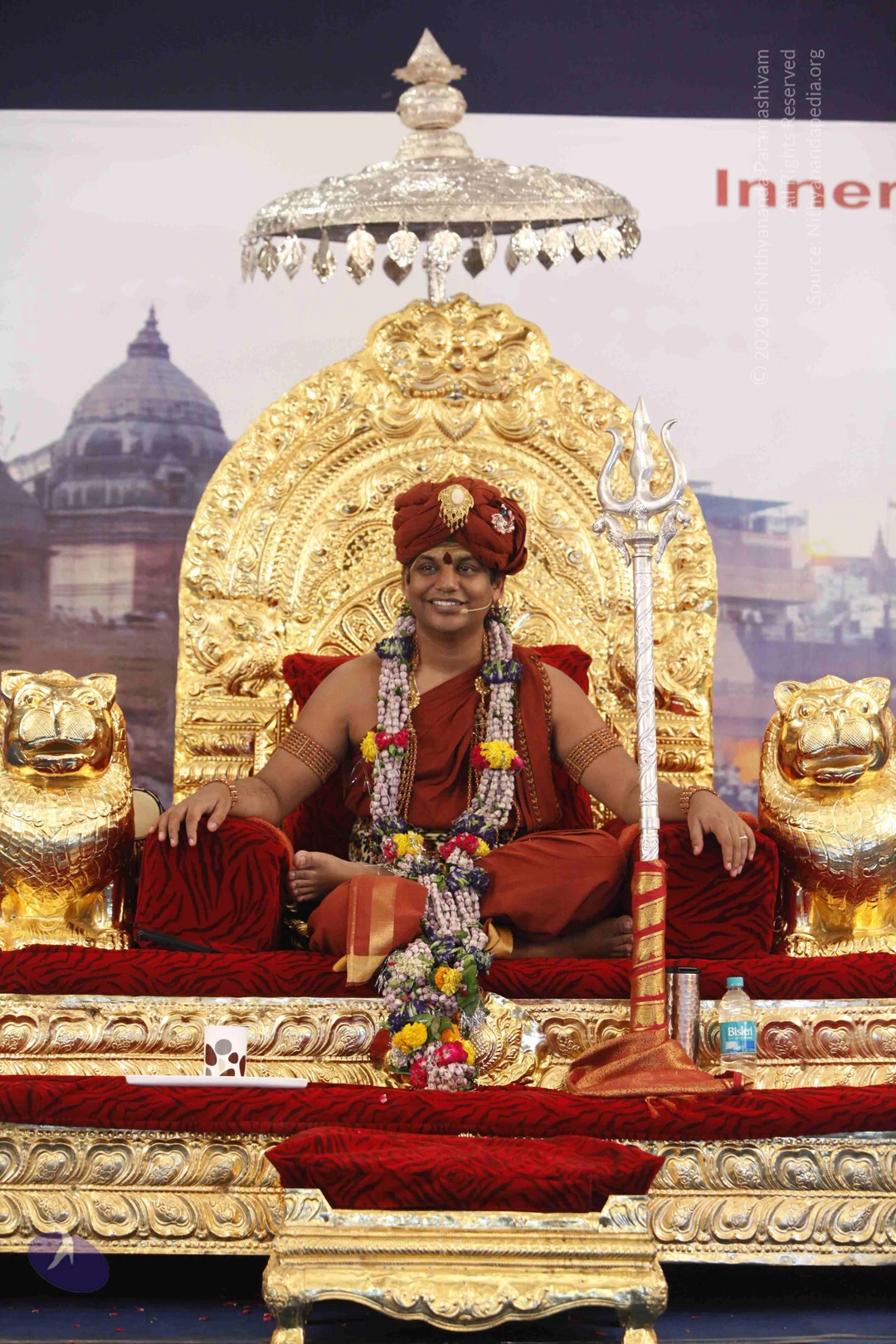
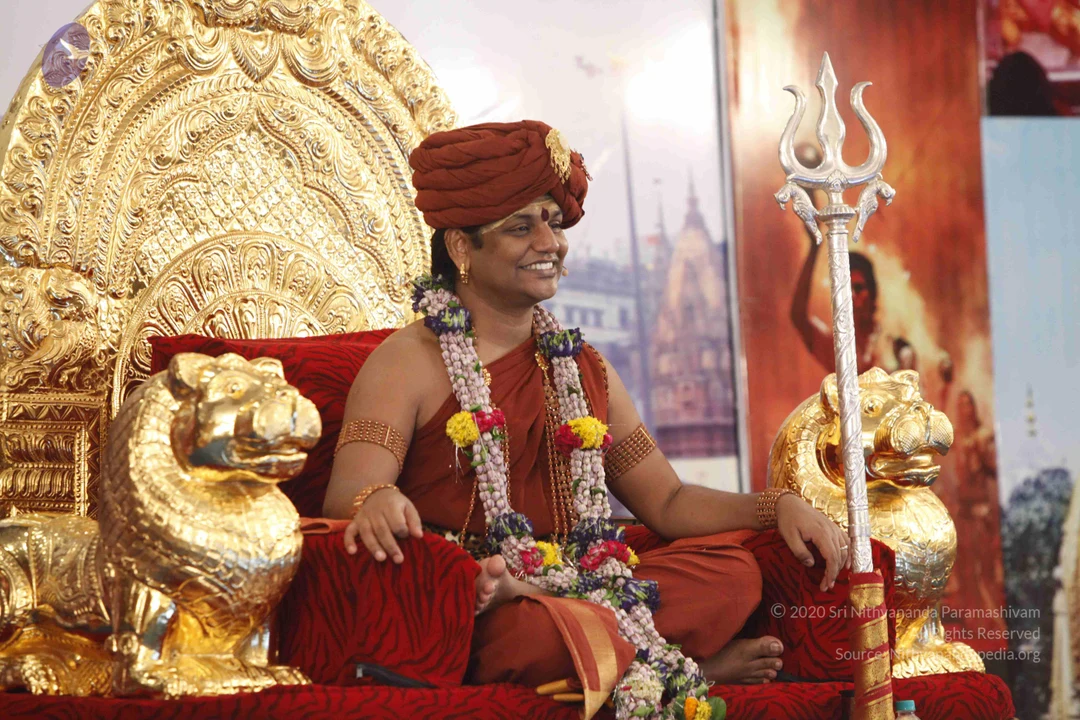
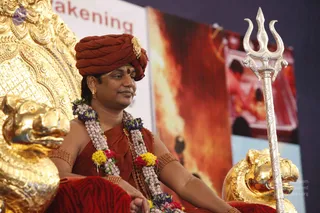
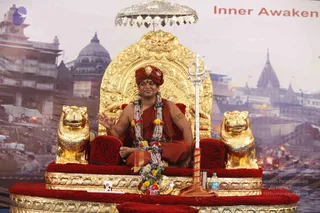
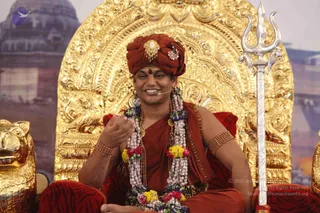
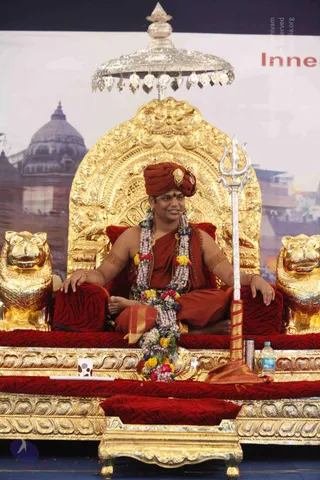
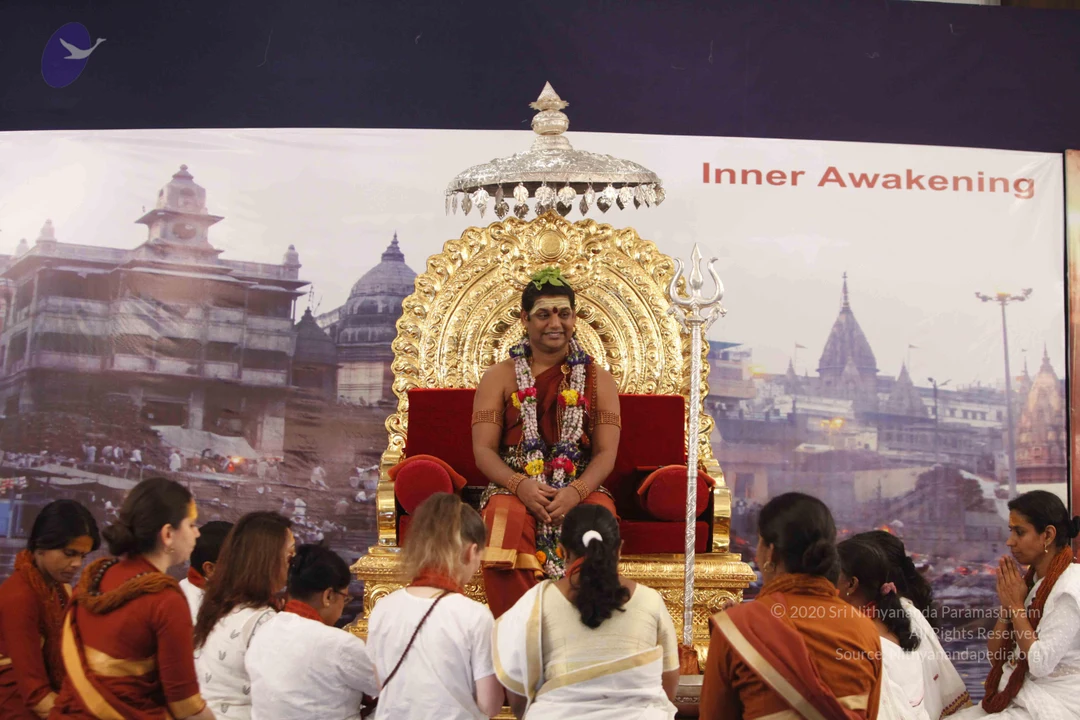
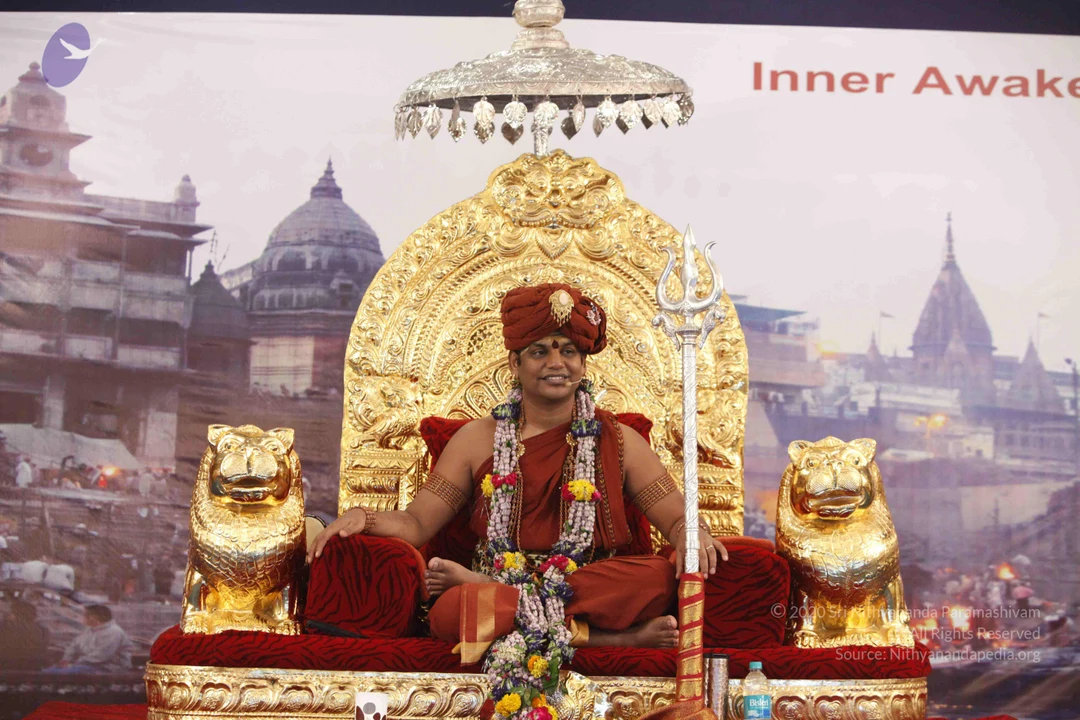
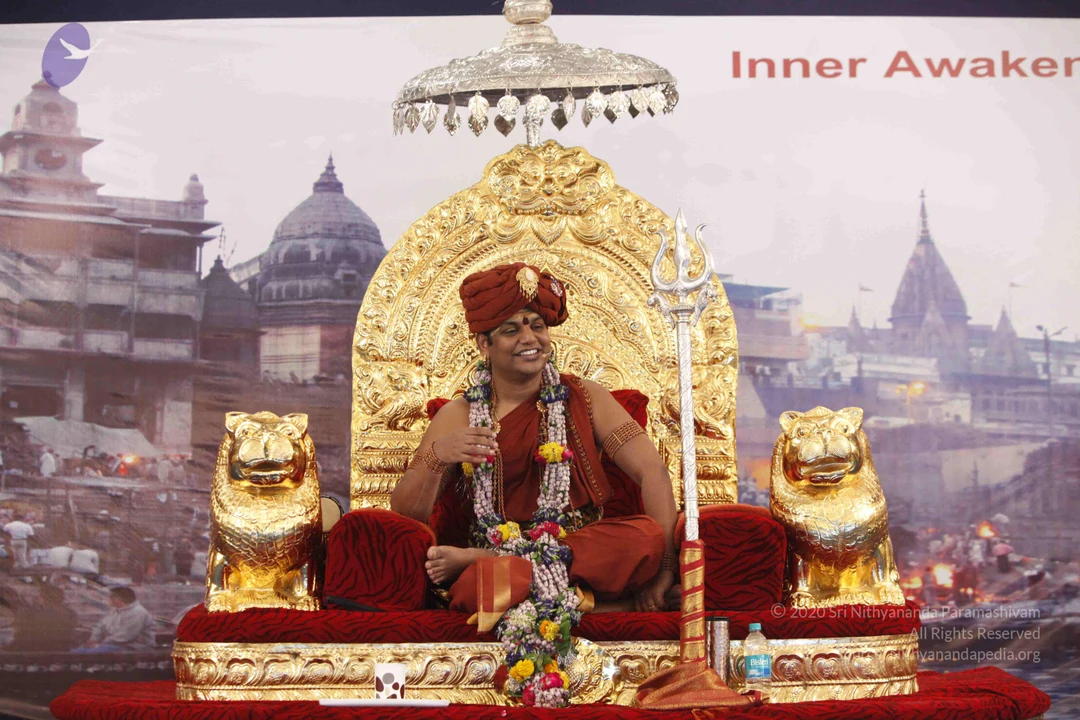
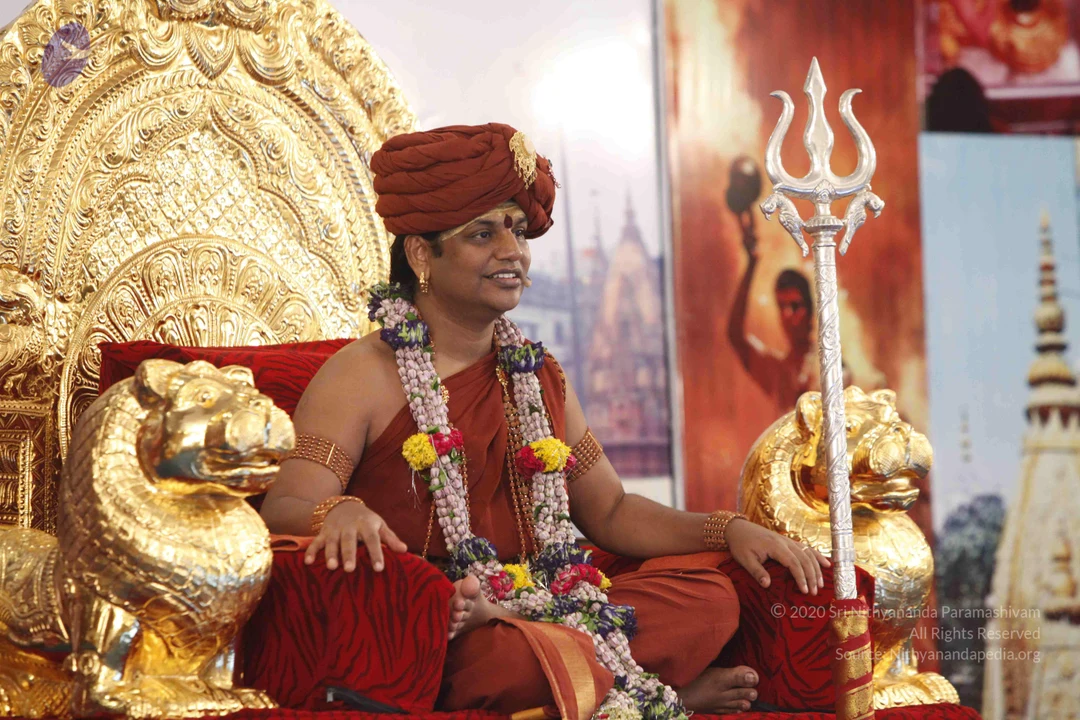
A seated man on an ornate gold throne with lion-head armrests, under a silver ceremonial umbrella, in a stage setting. He wears a rust-orange turban with a gold ornament, an orange-red shawl over bare shoulders, orange dhoti, and multiple flower garlands in white, pink and yellow. Gold bangles are on his wrists and a silver trident stands beside the throne. Behind him is a backdrop of Varanasi ghats and temple spires with the words "Inner Awake" visible. A water bottle sits at the base of the stage. Appearance-based candidate: a person, seated on the throne as the speaker at a satsang.Rear view of a large hall filled with seated devotees in white ritual clothes and red shawls facing a stage. On the stage a figure sits on a golden throne with a golden canopy, flanked by red cushions, in front of a large backdrop of temple and cityscape imagery with a banner reading Inner Awakening. Two side screens show a live feed of a figure seated in front of a camera. Chandeliers hang from the ceiling, and red carpet runs down the centre aisle. The throne figure cannot be identified from appearance, so the role is described only as seated speaker. The photo appears to be from a satsang event with video streaming.A seated man in an orange-red turban and saffron-red shawl sits on an ornate gold throne, wearing flower garlands in white, pink, yellow and purple and gold bangles. A silver trident with serpent-like prongs stands at right beside a golden lion-head armrest. Behind him a large backdrop shows a fire image and a panel with a partial photo. The probable Swamiji appearance cues include the turban, saffron clothing, garlands and ornate gold throne, and he is presented as the speaker seated in a ceremonial setting.A man in saffron-orange robes and a red turban sits cross-legged on a large golden throne with a gilded arched back and a silver canopy, flanked by two golden lion figures on red velvet cushions. He wears a rudraksha-style floral garland of white, pink and yellow flowers, gold armbands, and holds his right hand raised in a teaching gesture. A tall silver trident stands beside the throne, with a water bottle and a small brass vessel on the platform. Behind him a backdrop shows riverside ghats and temple spires under a banner reading Inner Awaken. Swamiji (probable): the seated figure has a red turban, saffron robes, gold armbands and a floral garland, and is seated on a throne in a satsang setting.A smiling man sits cross-legged on an ornate golden throne with a carved gold backrest, with a golden lion sculpture at the left edge. He wears a red-orange turban with a gold brooch, saffron-red robes, a red-and-gold tiger-patterned seat cushion, and a long garland of white, pink and yellow flowers. A silver trident stands beside him, and he has a small red mark on his forehead and a microphone clipped near his face. He gestures with his right hand during a talk. Swamiji (probable) is seated here, identified by the throne, saffron robes, turban, garland and trident, with the page indicating a morning satsang discourse.A seated man on an ornate gold throne with carved backrest and two golden lion sculptures at its sides, draped in red velvet cushions. He wears a rust-red turban with a gold brooch, a rust-red saffron-toned cloth over his shoulders, gold bangles on his upper arms, and a long multicolour garland of white, pink and yellow flowers. A silver trident stands beside the throne and a silver umbrella canopy hangs above. Behind him is a backdrop with a photographic image of temple domes and ghats, with partial printed text reading Inner. The seated man is an appearance-based probable Swamiji candidate: turban, saffron-toned clothing, garland and throne cues are present. A water bottle and a small cup sit on the dais.
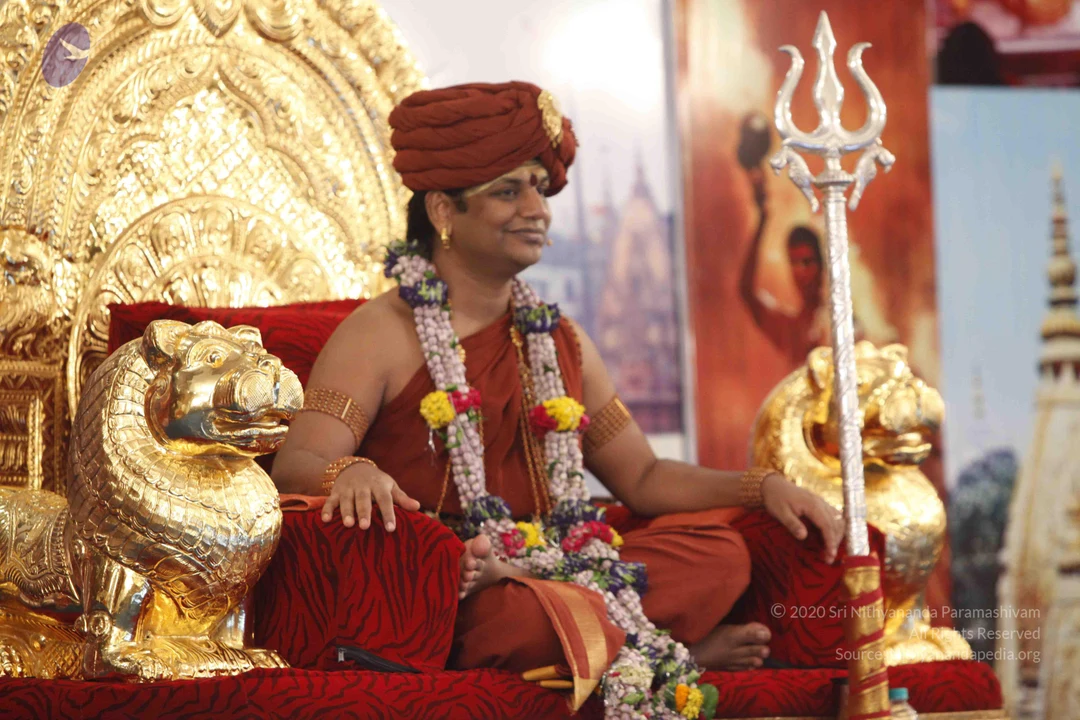
03-Inner-Awakening-Lunch

21 photosSource gallery
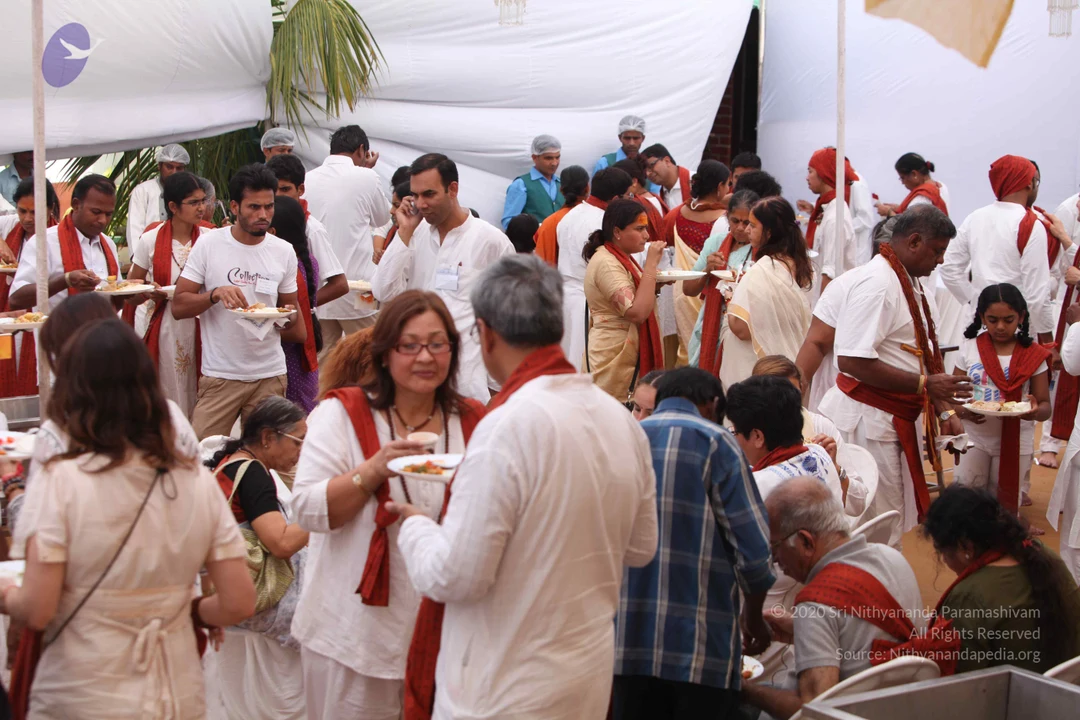
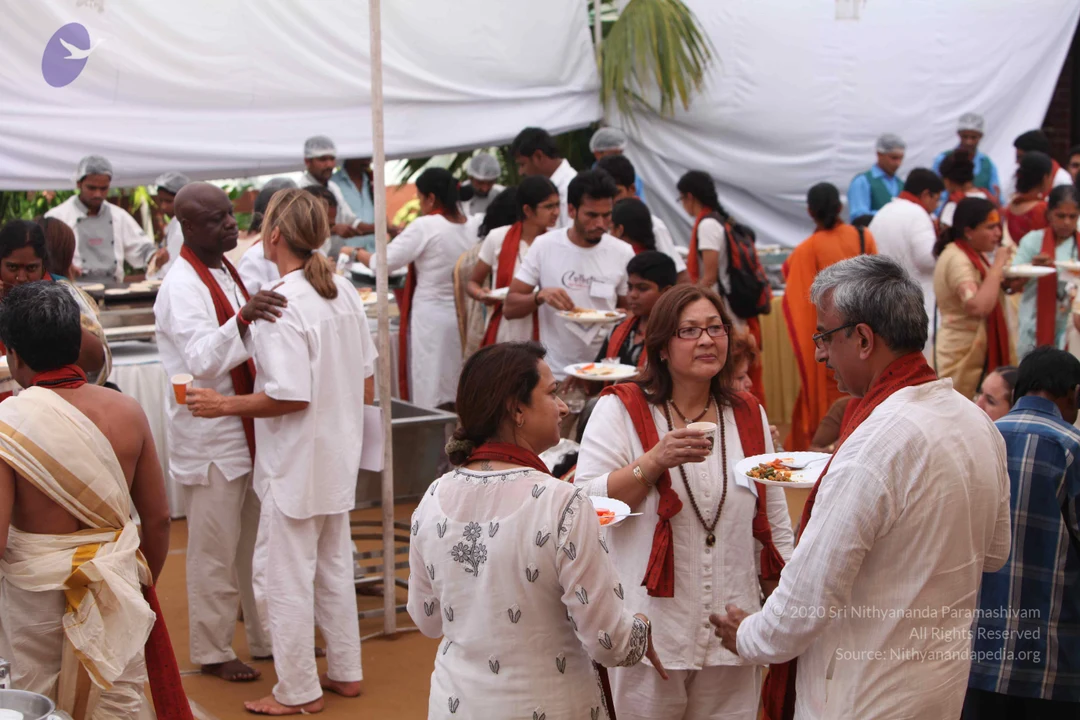
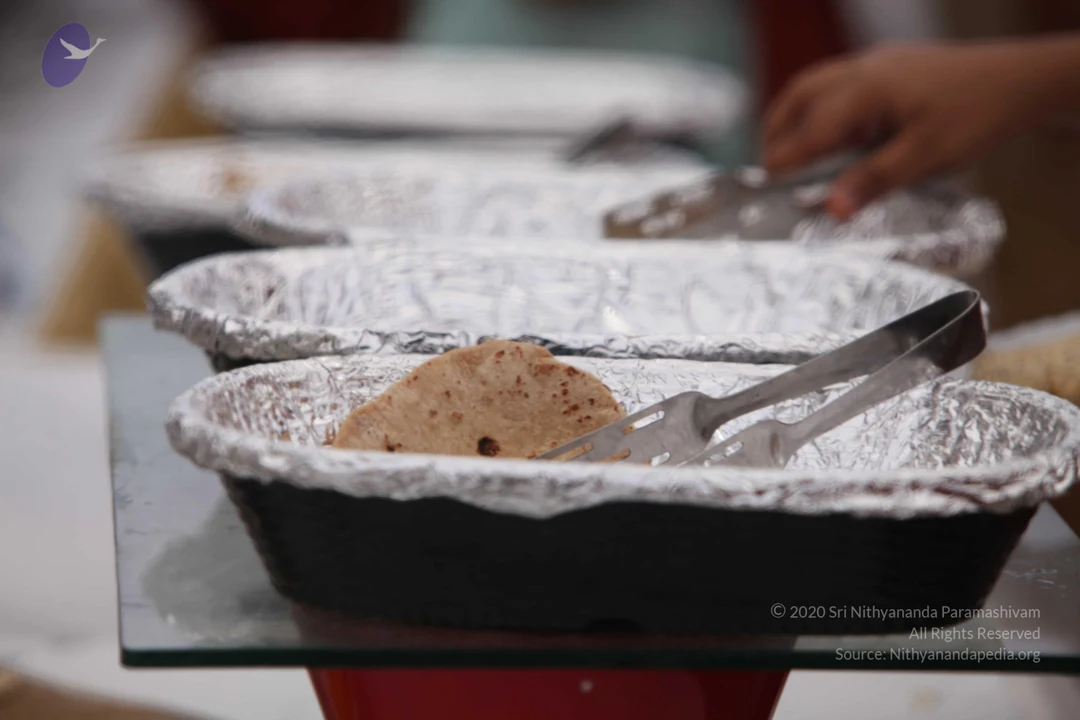
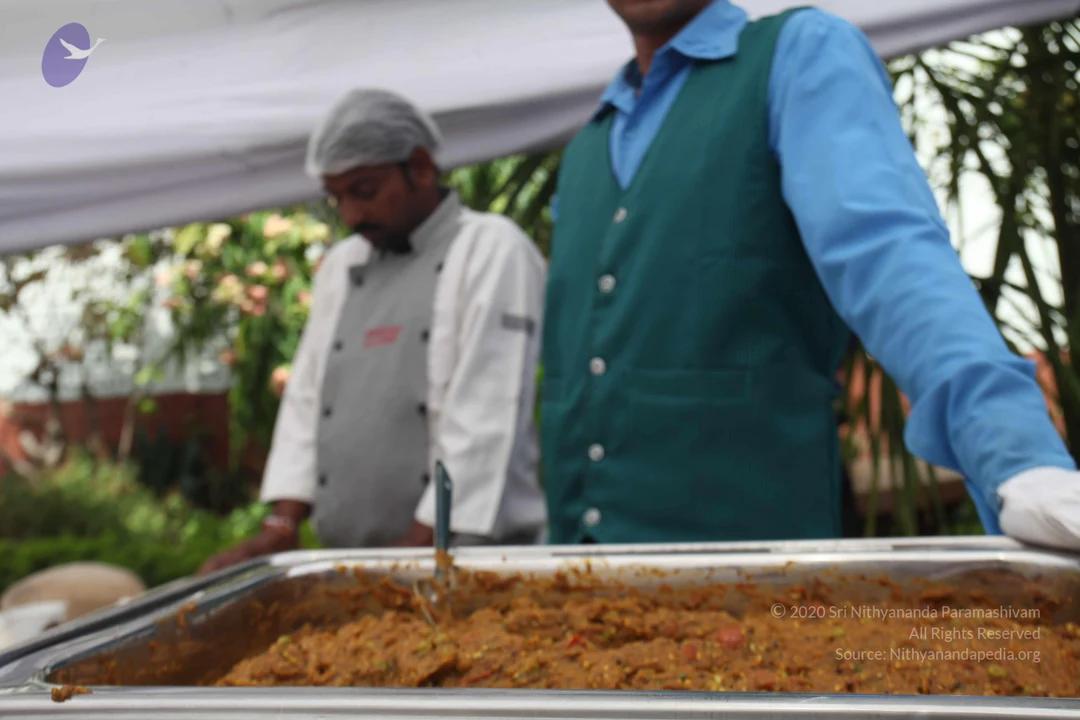
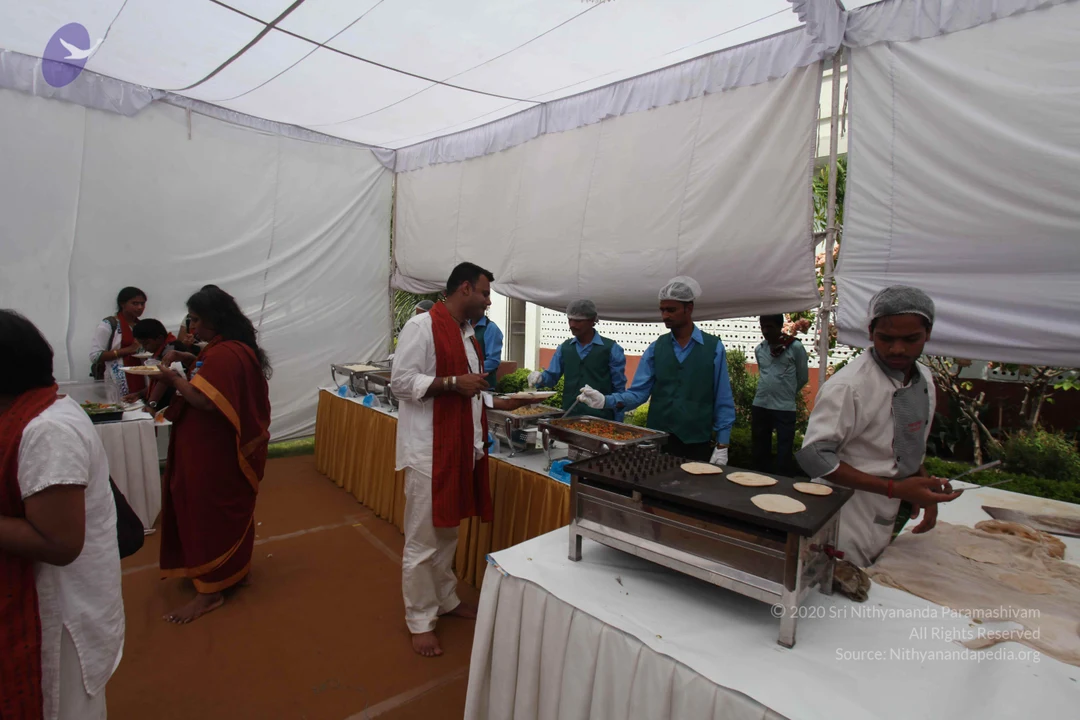
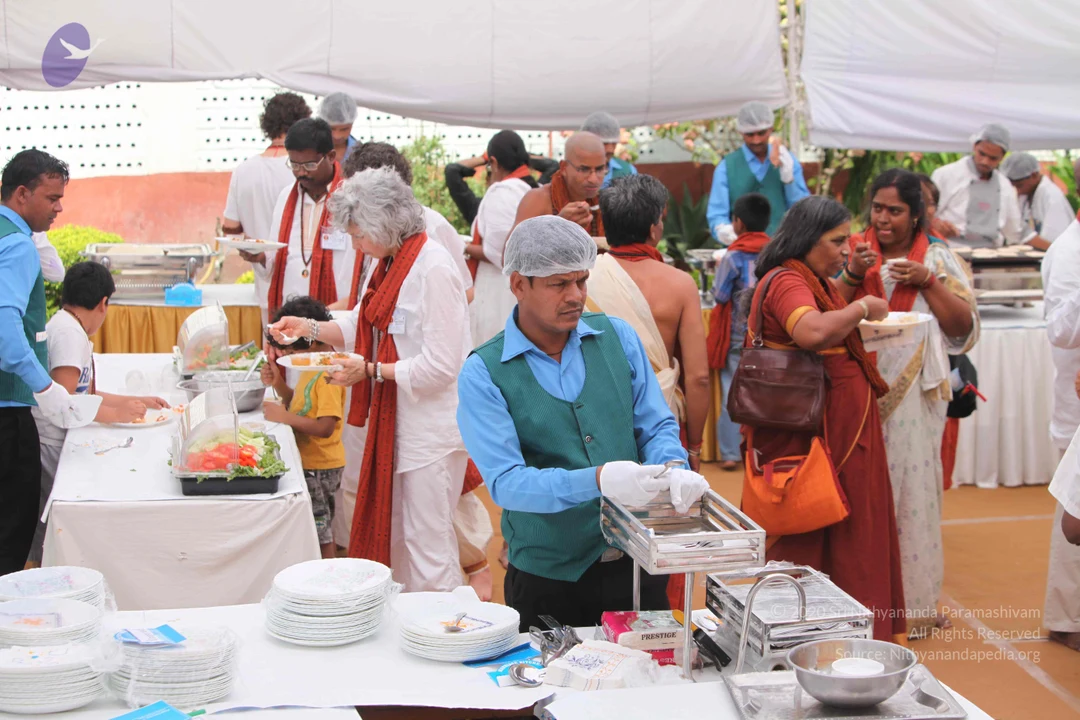
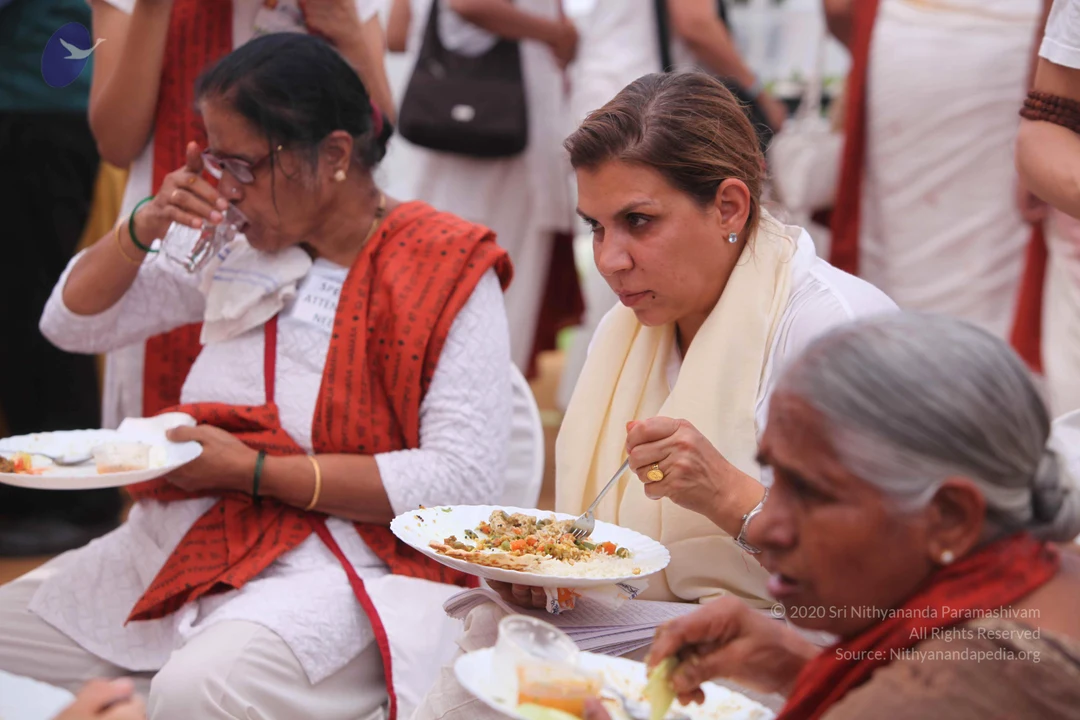
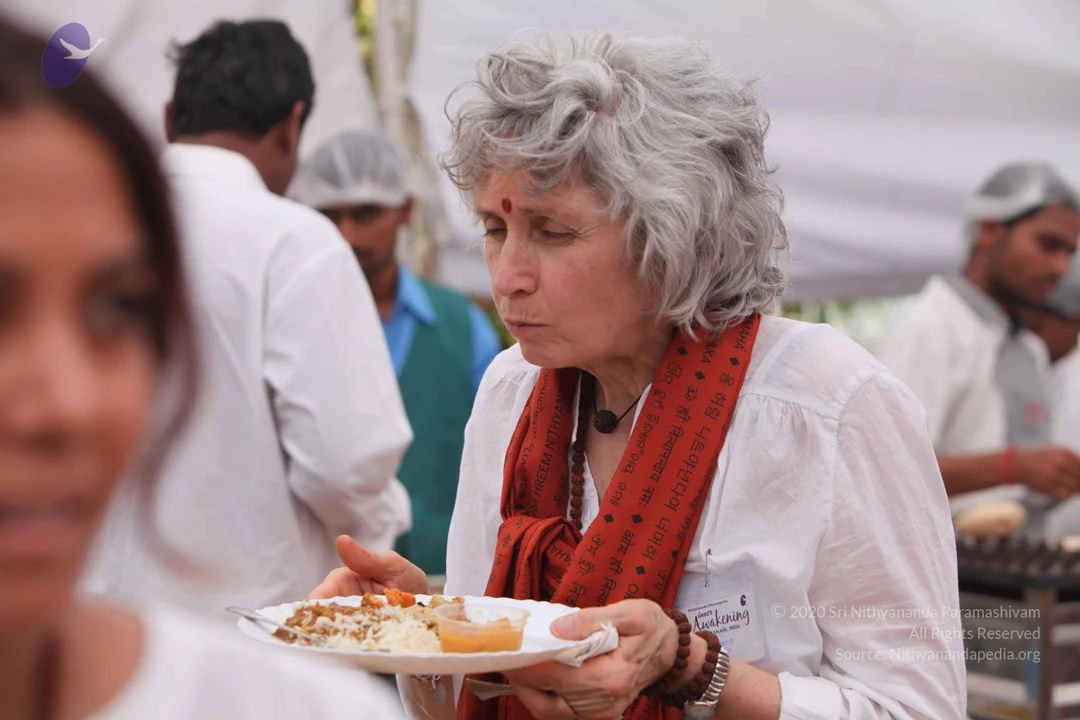
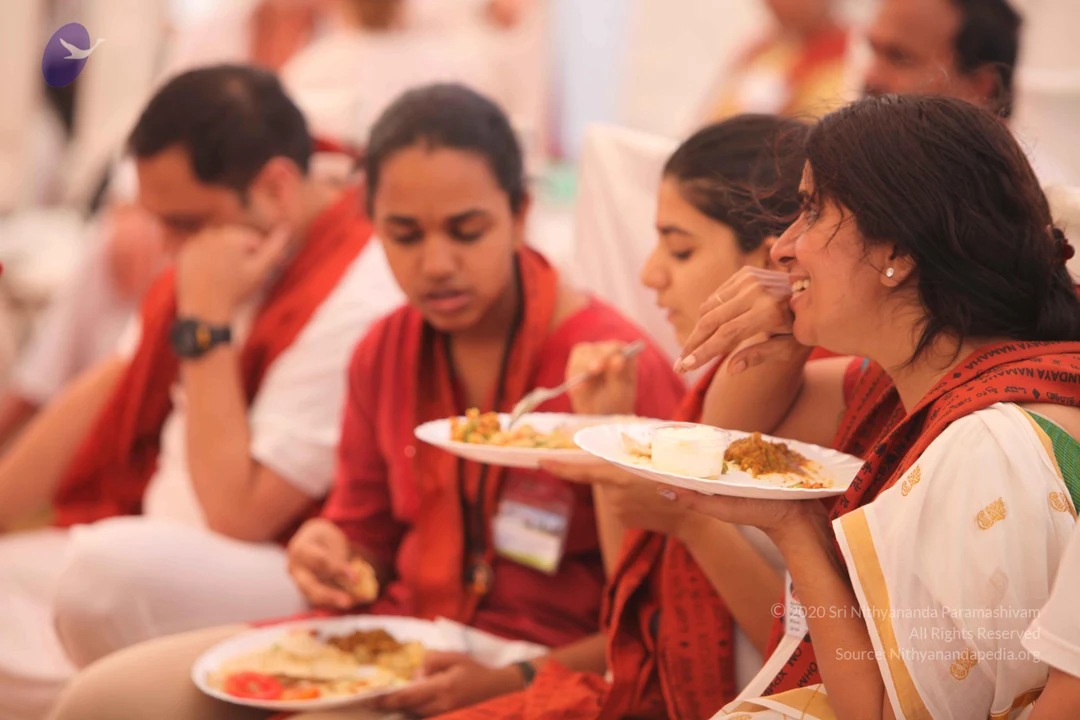
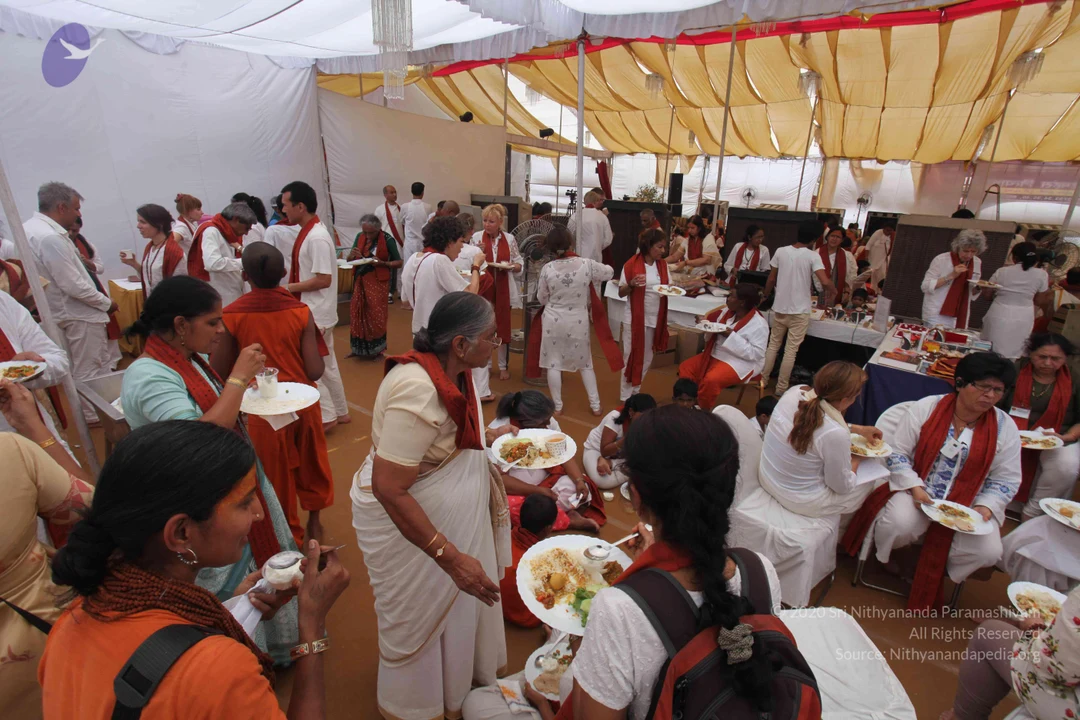
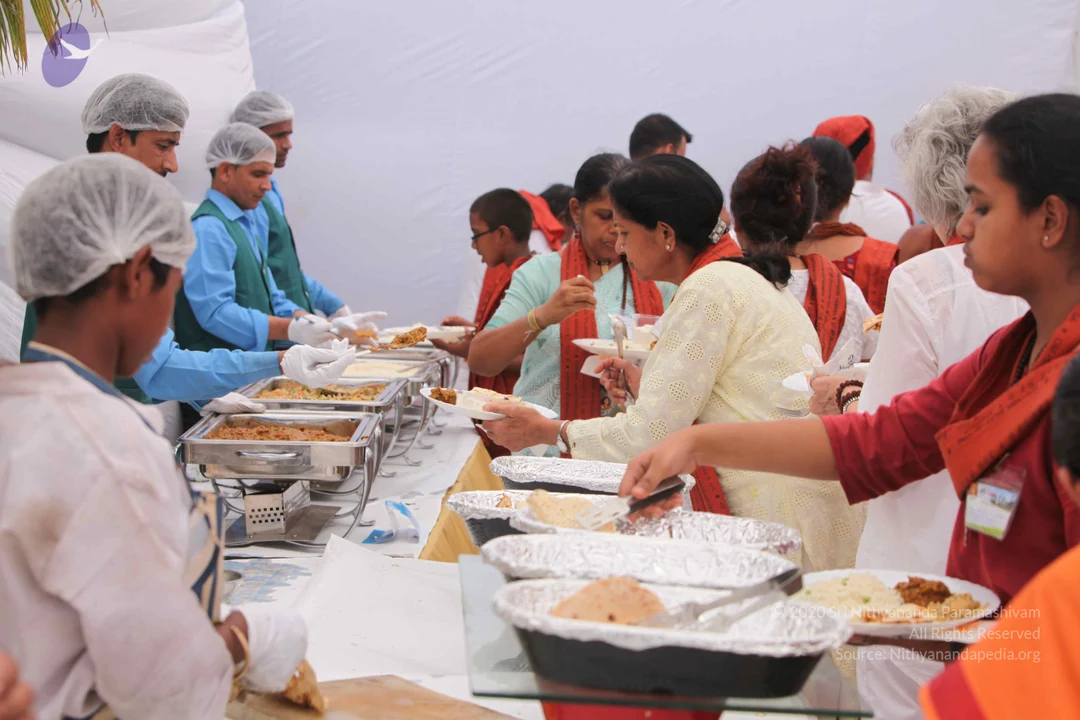
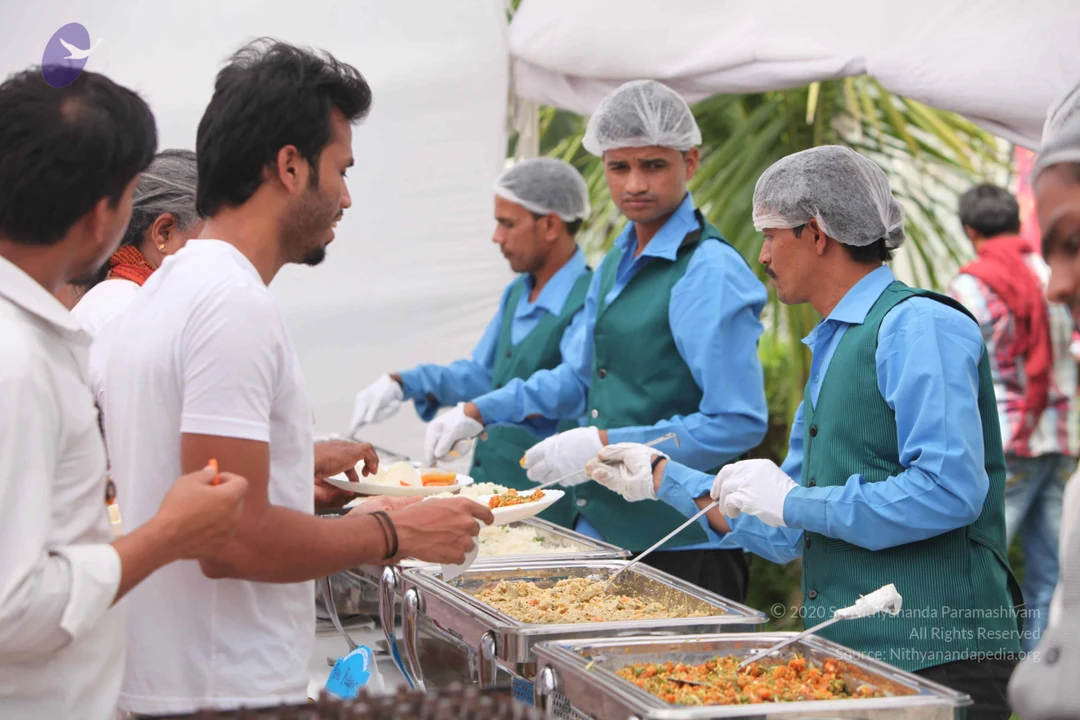
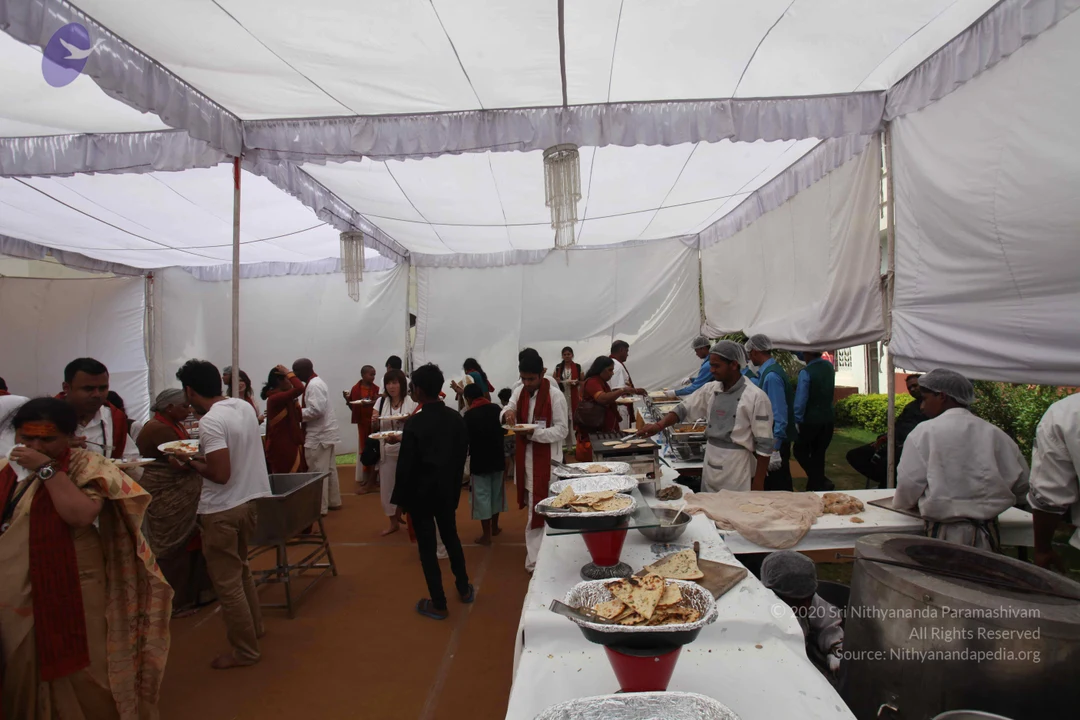
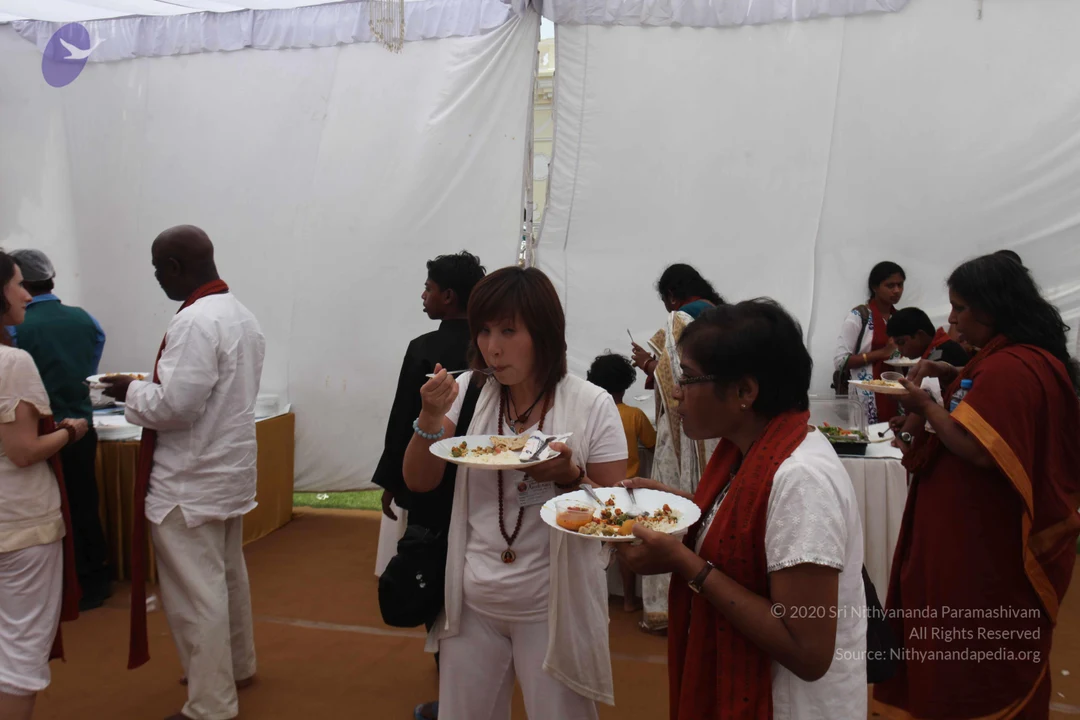
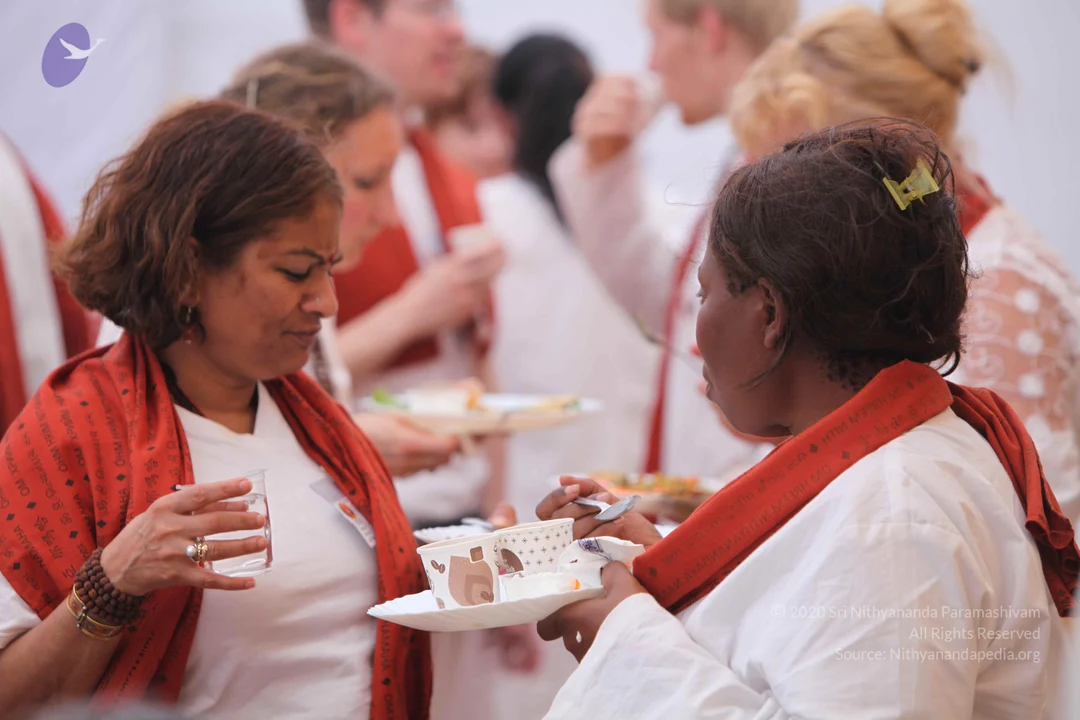
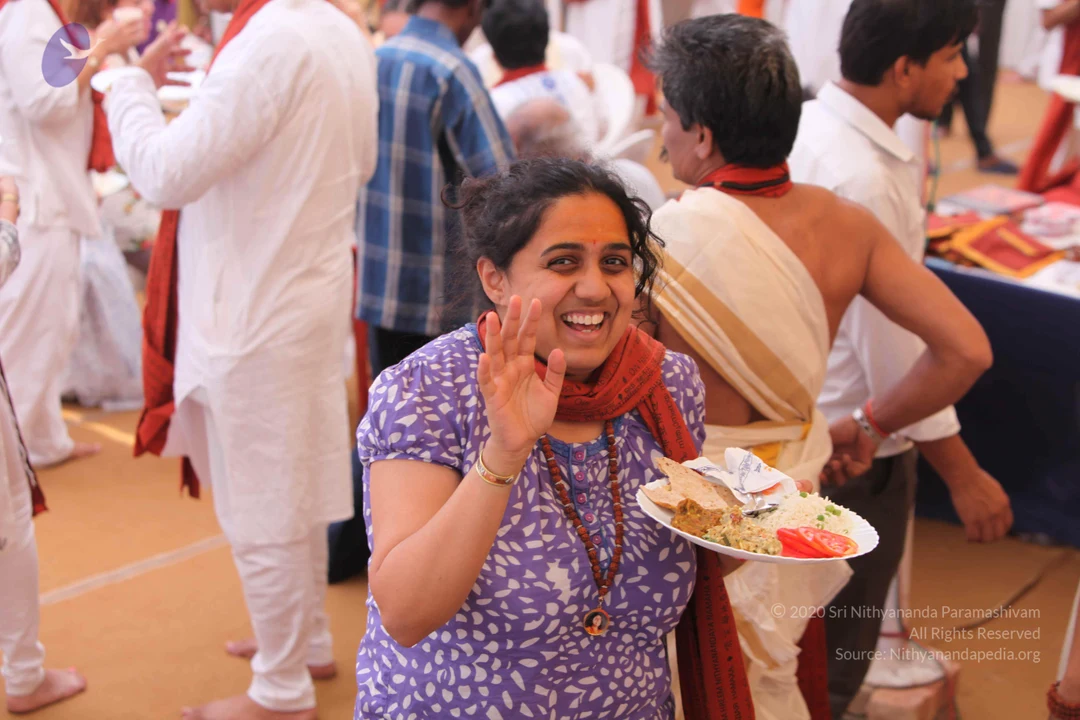
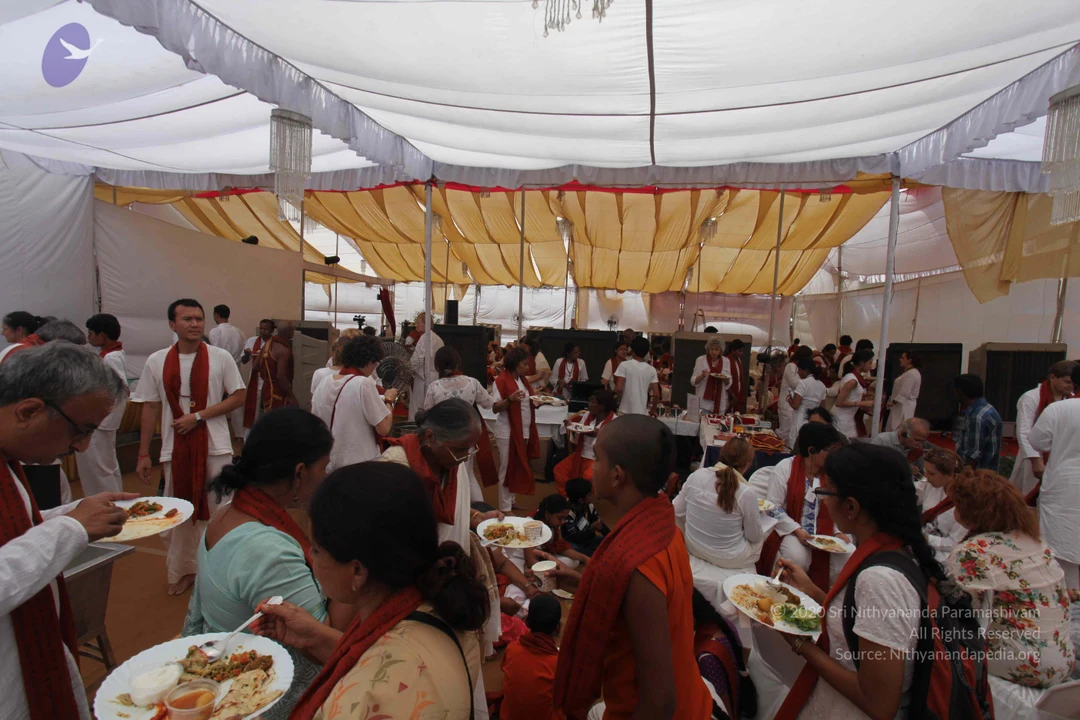
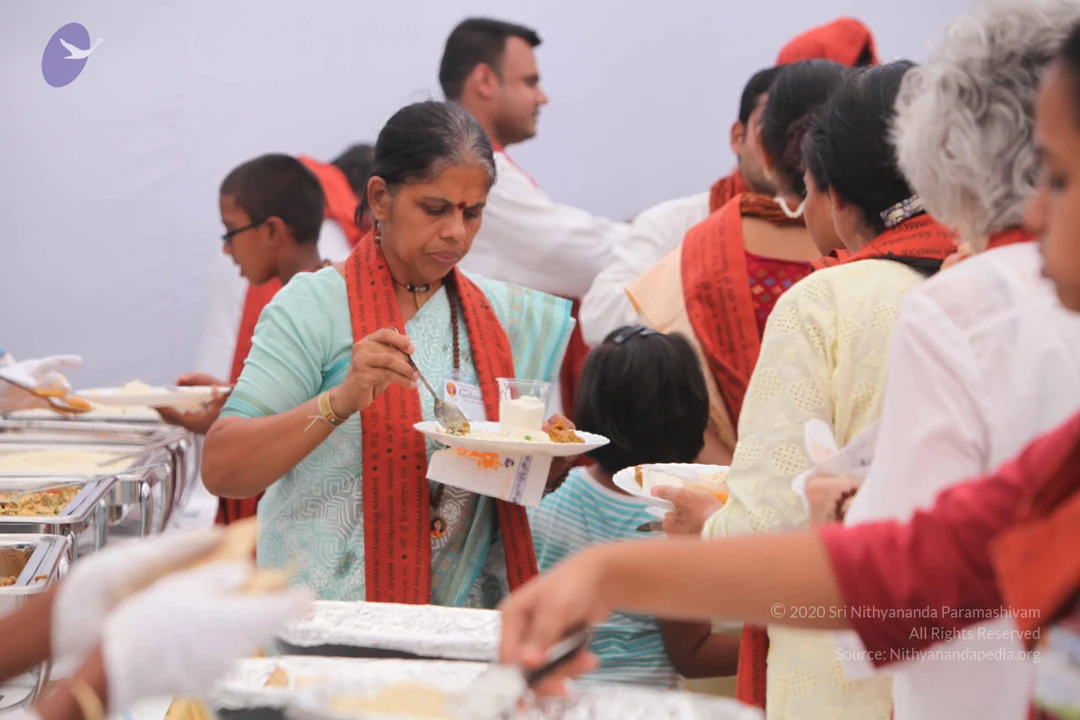
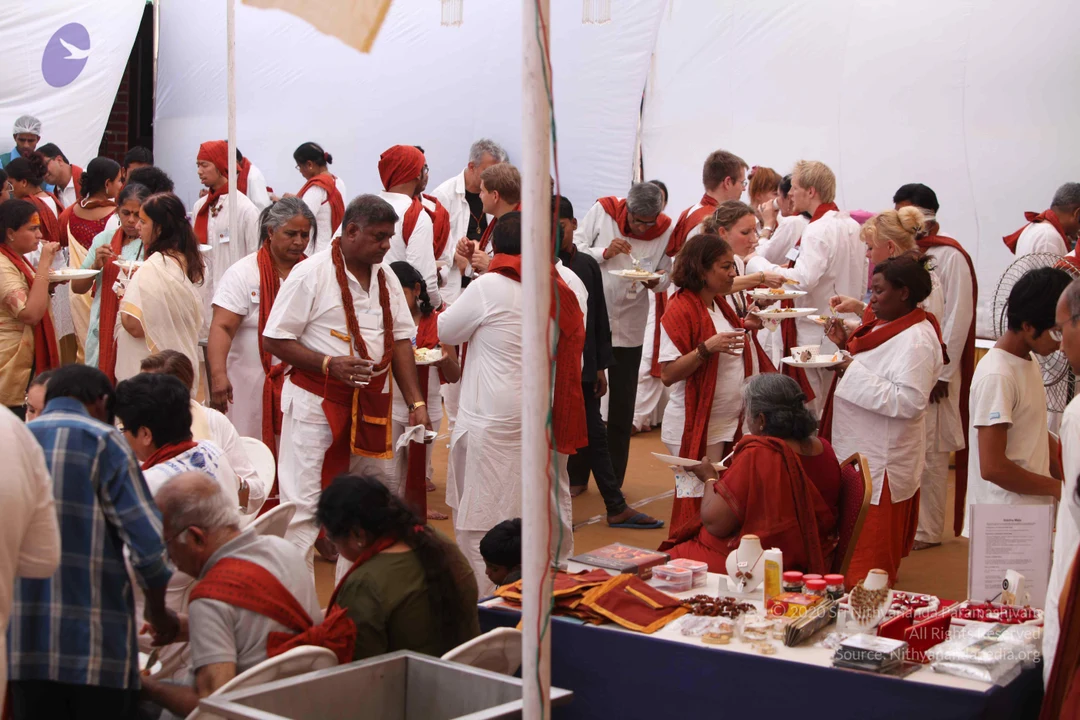
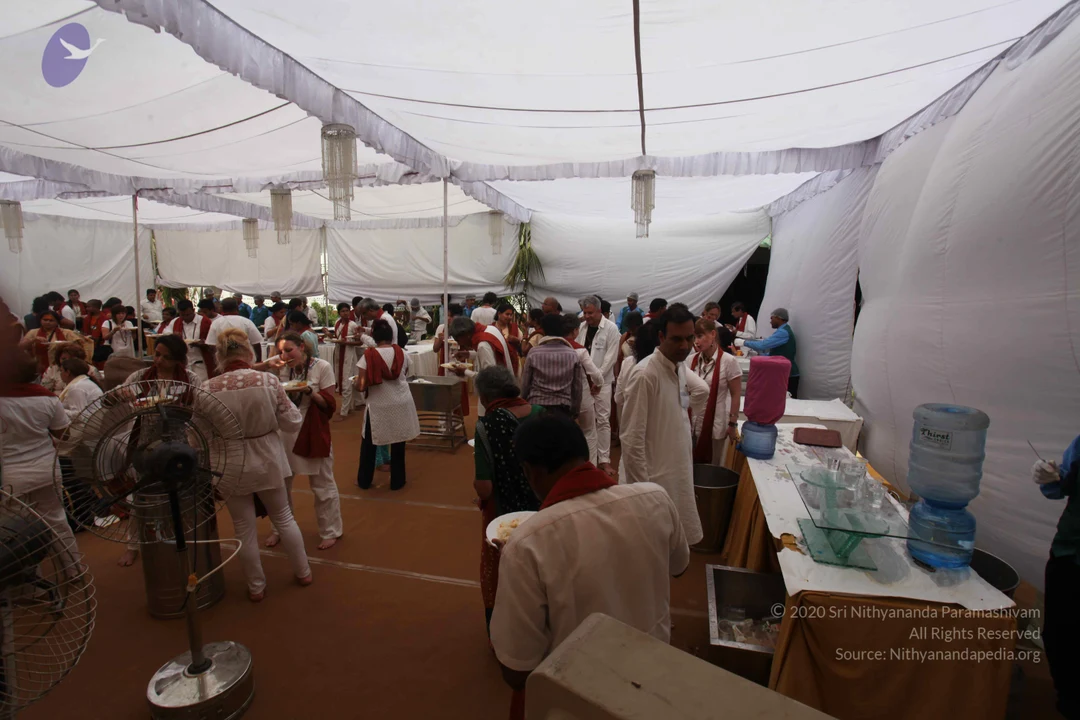
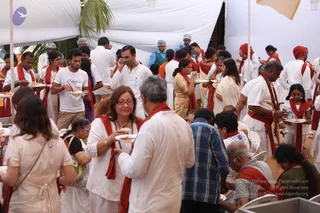
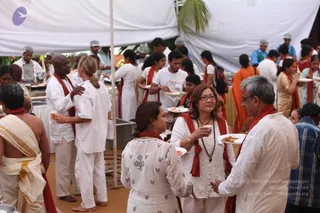
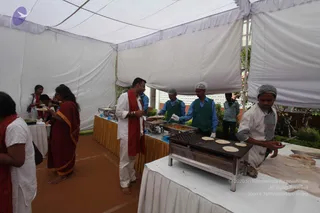
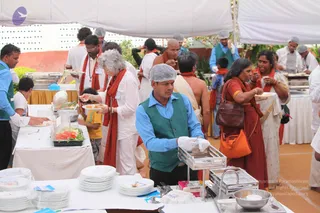
A crowded outdoor lunch under white canopy tents at a KAILASA event. Many devotees in white kurtas, saris and shirts wear red shawls and hold white plates of food, eating standing or seated. Staff in white caps and green aprons serve from a steel counter at the lower right. A young girl in white with a red shawl holds a plate at right. Palm fronds and a hanging lamp are visible at the top. No individual can be confidently identified as a person from appearance here.Outdoor lunch gathering under a white tent with palm fronds overhead. Many people in white clothes with red scarves stand and mingle, holding paper plates of food and cups. Staff in white caps and aprons work at serving stations. A woman in a white embroidered kurta and a woman in white with a rudraksha mala hold plates and cups while talking. A bare-chested man in a white and gold dhoti stands at left, and figures in orange and saffron saris appear at right. No identifiable a person appearance is clearly visible.Close photo of a food serving line with several rectangular aluminium foil trays set on a glass counter. In the front tray a single round flatbread. A hand holding another pair of tongs appears at the upper right, blurred in the background. No people's faces are visible and no a person candidate is present in the frame.A food service scene under a white tent canopy with tropical plants behind. In the foreground, a large stainless steel chafing dish holds a thick brown curry with green vegetable pieces, and a serving spoon rests in it. A man in a green vest over a blue shirt and white gloves stands at the dish, and behind him a cook in a white chef's jacket and grey apron wears a grey hairnet while stirring or tending the food. Pink flowers and palm fronds fill the background.A photograph of a white tented outdoor dining area where a buffet lunch is being served. Staff in white chef caps and blue-and-green aprons stand behind steaming chafing dishes on a gold-draped table, while a cook in white uniform flips flatbreads on a griddle at the front right. Guests in white and red-shawled attire, including a woman in a dark red sari, queue with plates. A man in white kurta and pants with a red shawl stands at centre. Potted plants and a white lattice wall are visible beyond the tent.Outdoor buffet lunch under a white tent at an ashram-style courtyard. A catering attendant in a teal vest, blue shirt, white gloves and a blue hairnet serves food from a steel chafing dish in the foreground. Around the tables, devotees in white clothes with red-orange shawls and some with rudraksha-style beads eat from white paper plates; a gray-haired woman in white and red shawl takes food, a woman in a red sari with a brown handbag stands at the right, and a bald man in a red-orange shawl is seen partially at center. A plate of salad and sliced tomatoes sits on a table at left. Many people are visible, including a few children, with other staff in blue and teal vests at the back.

04-Individual-Darshan

121 photosSource gallery
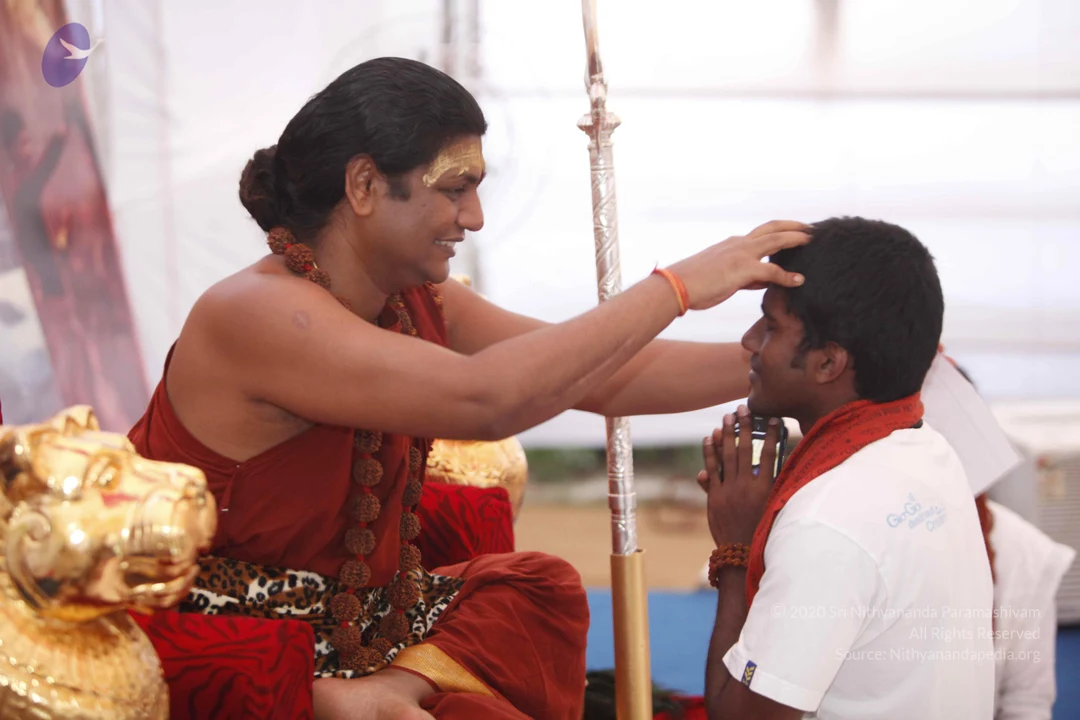
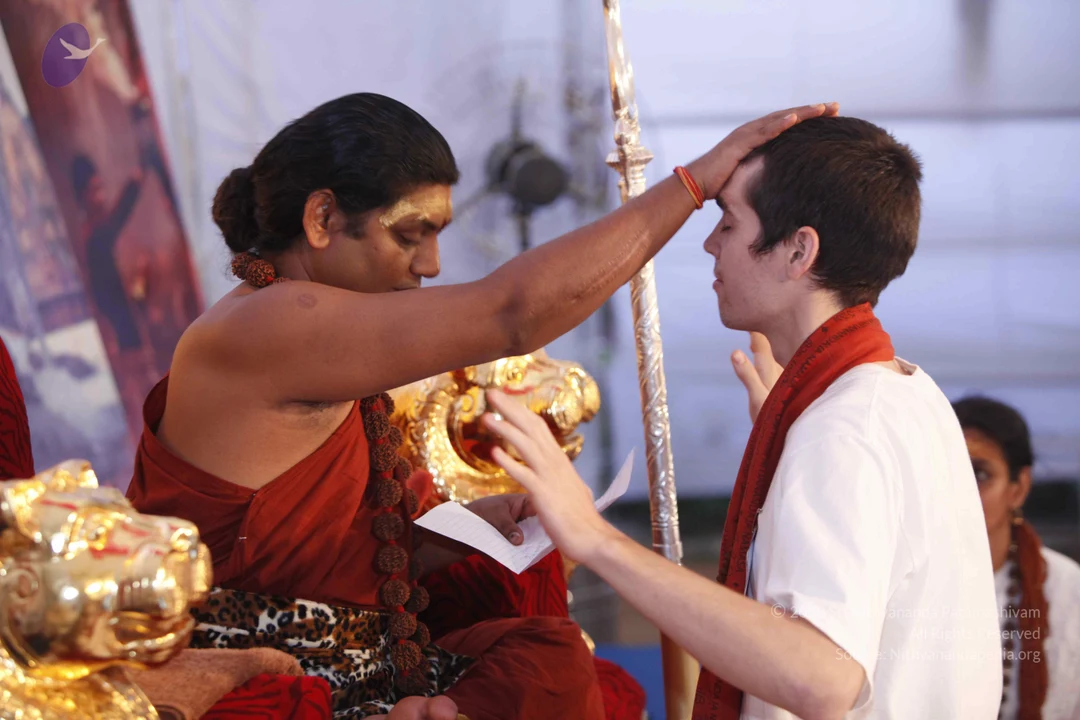
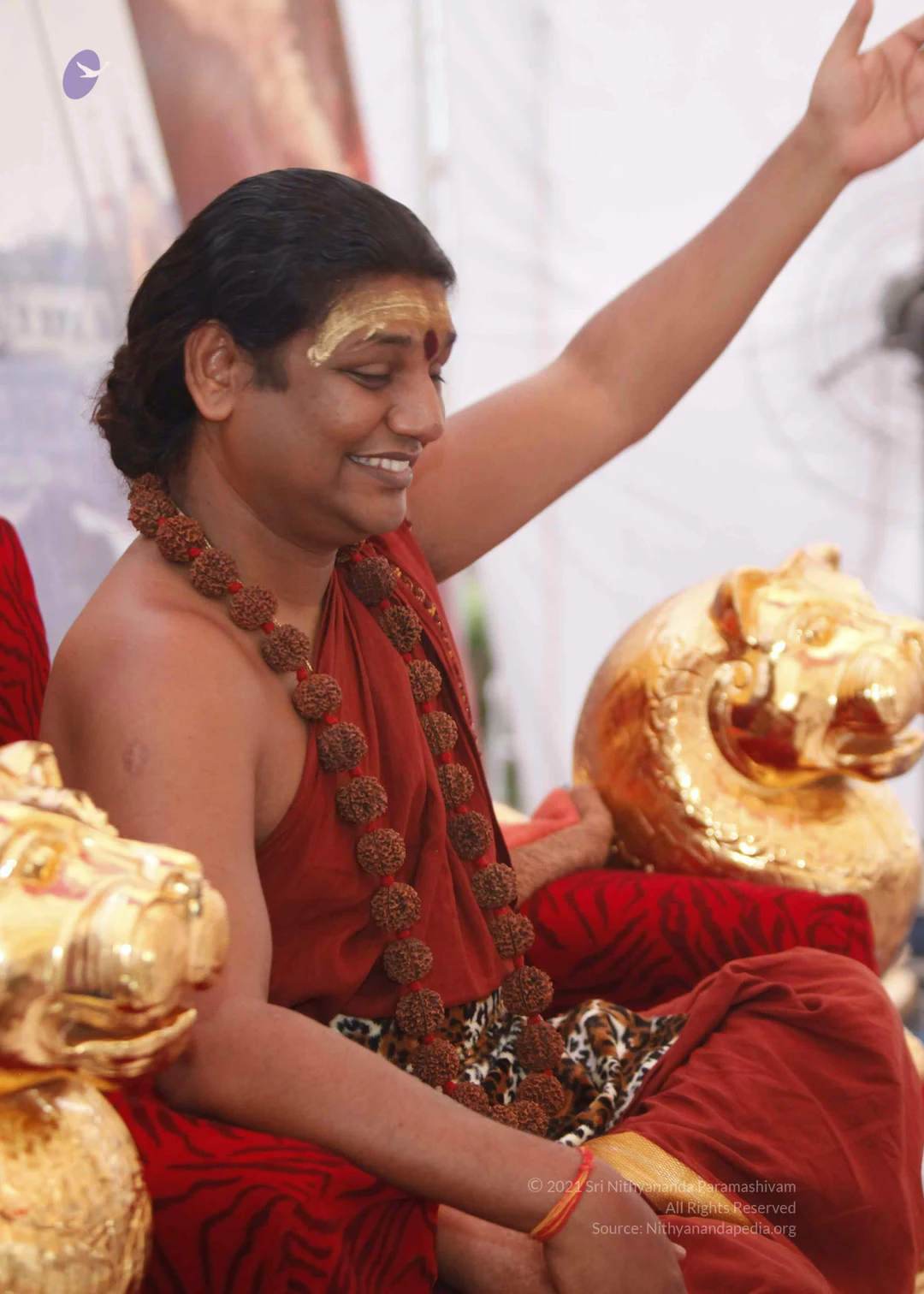
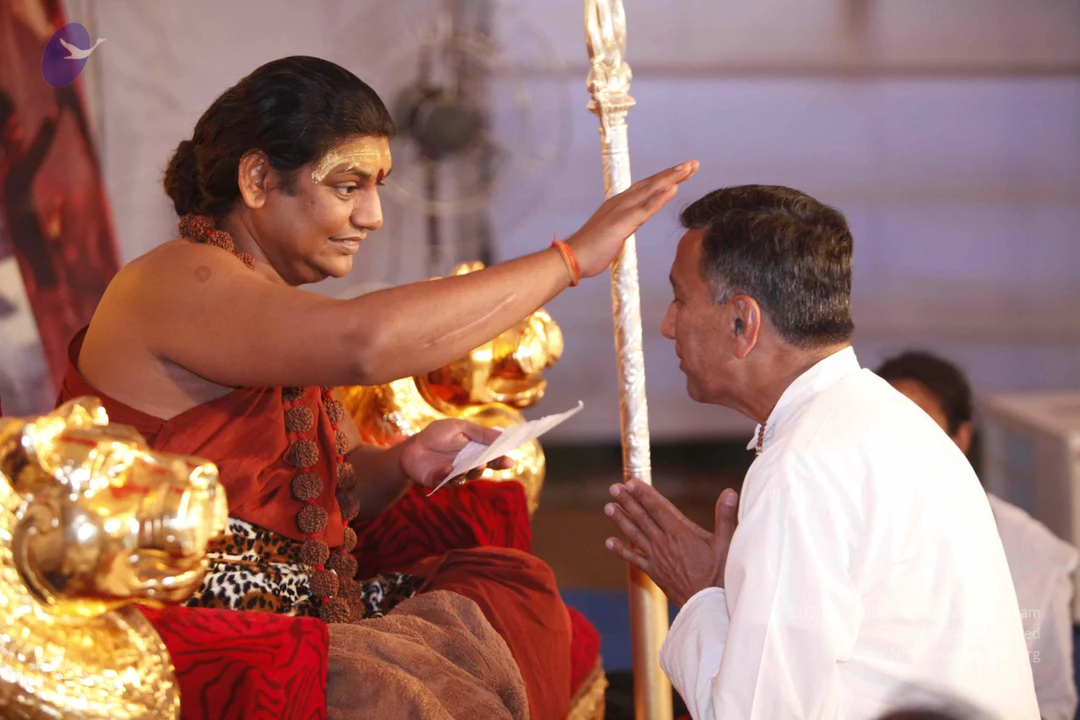
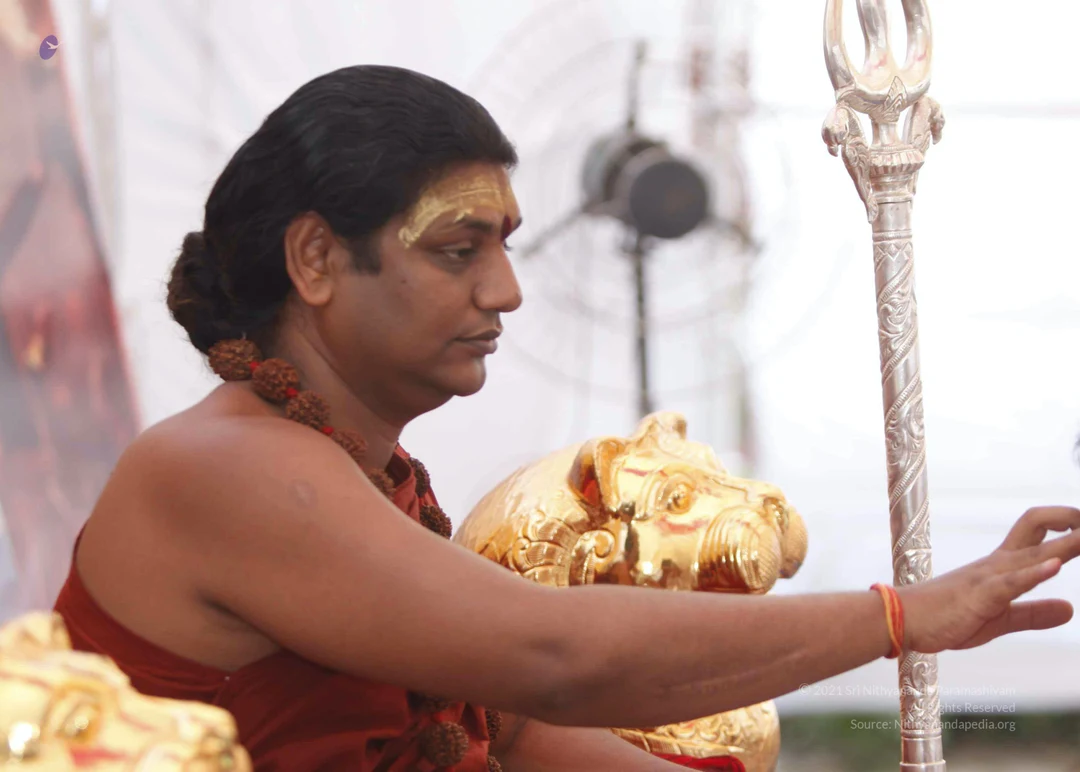
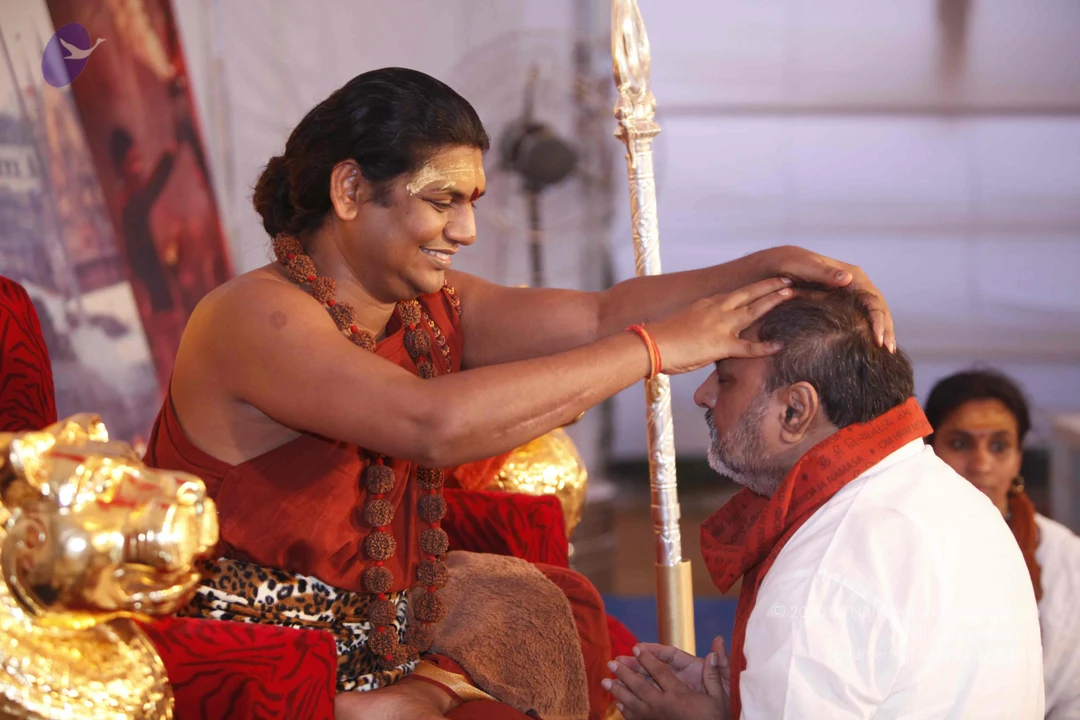
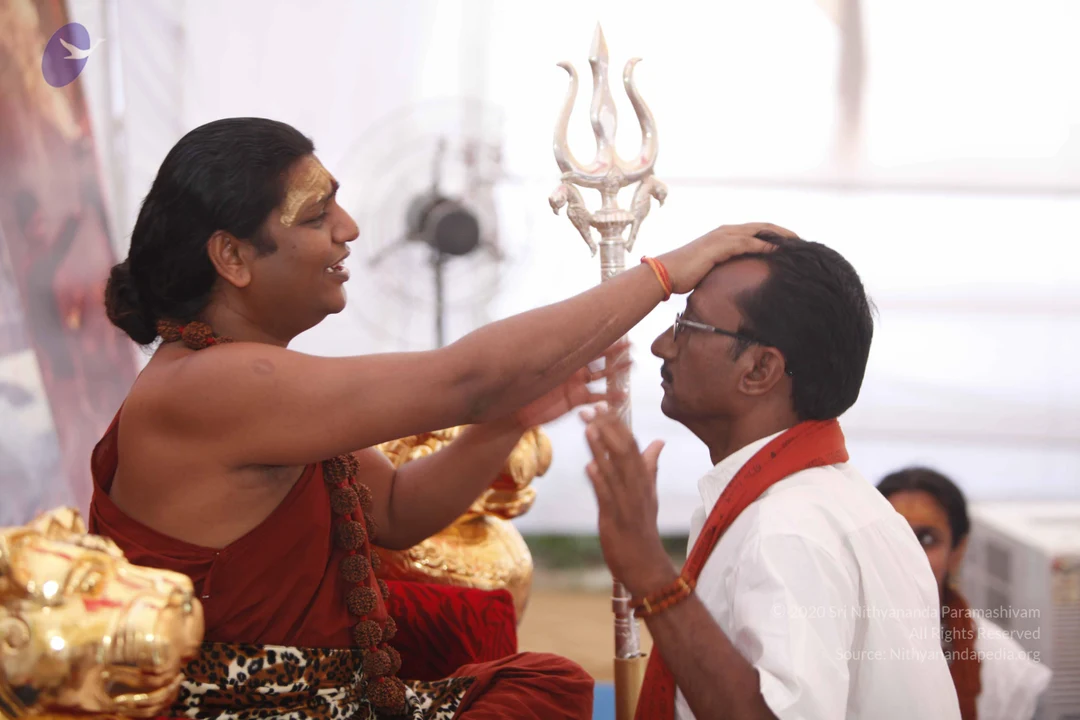
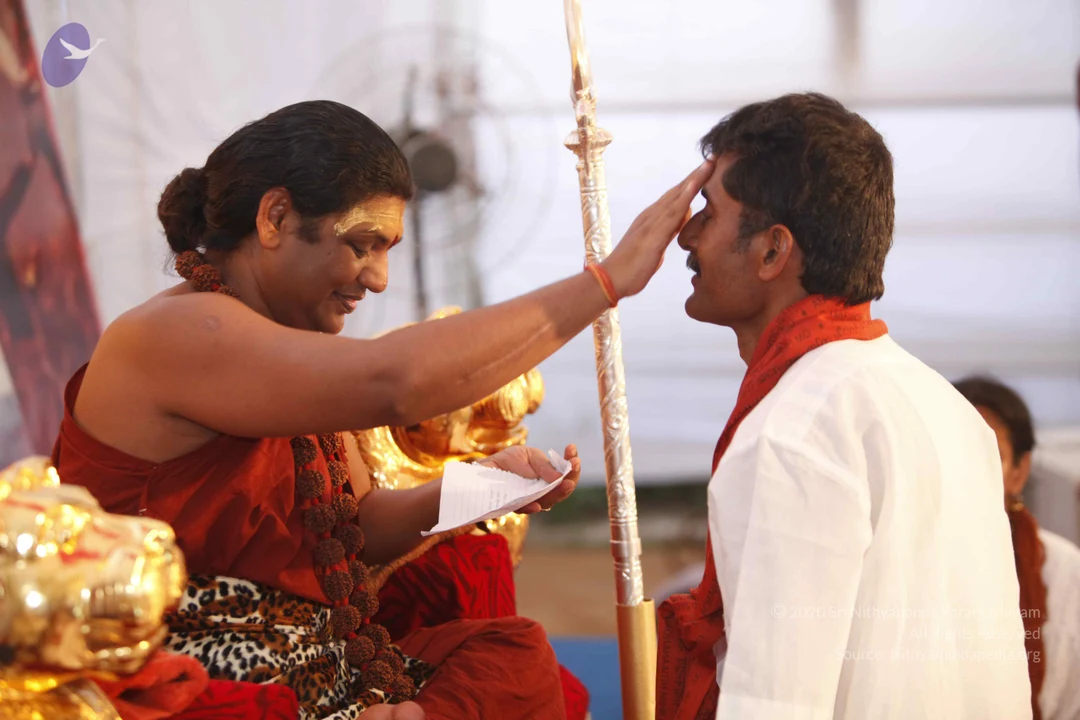
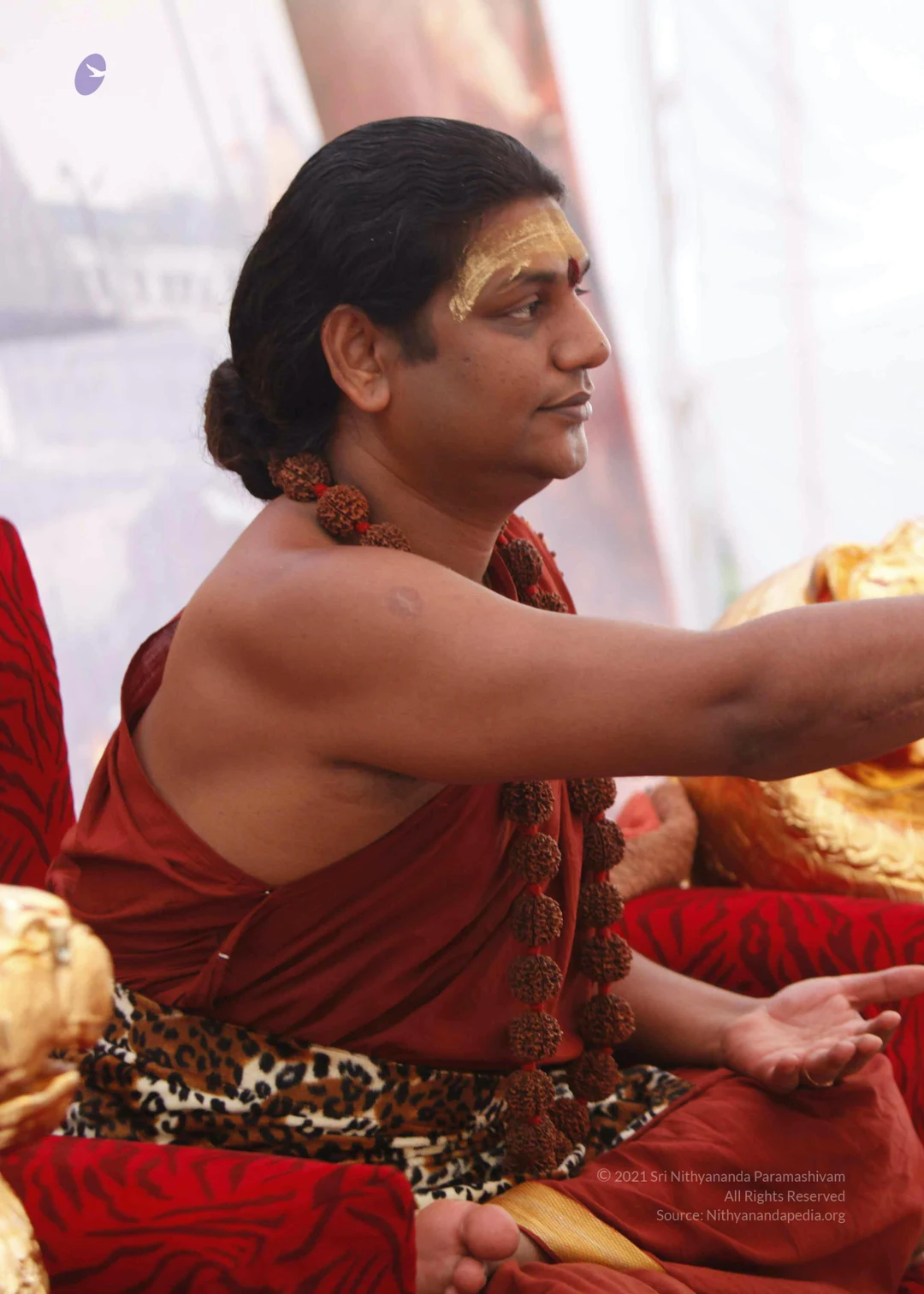
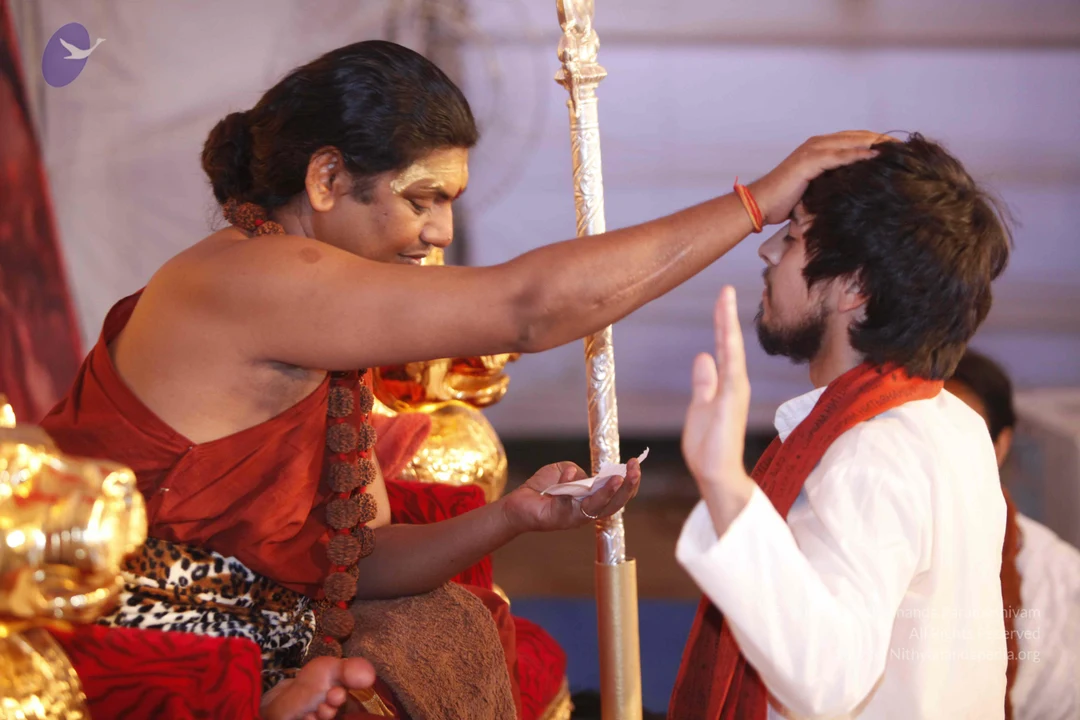
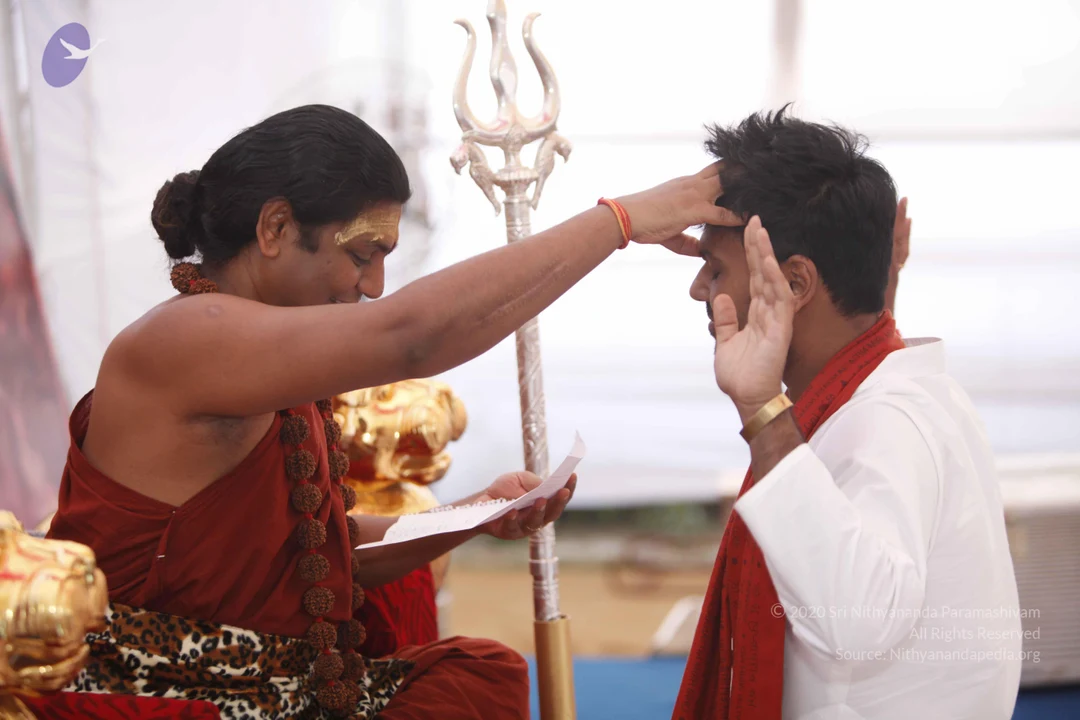
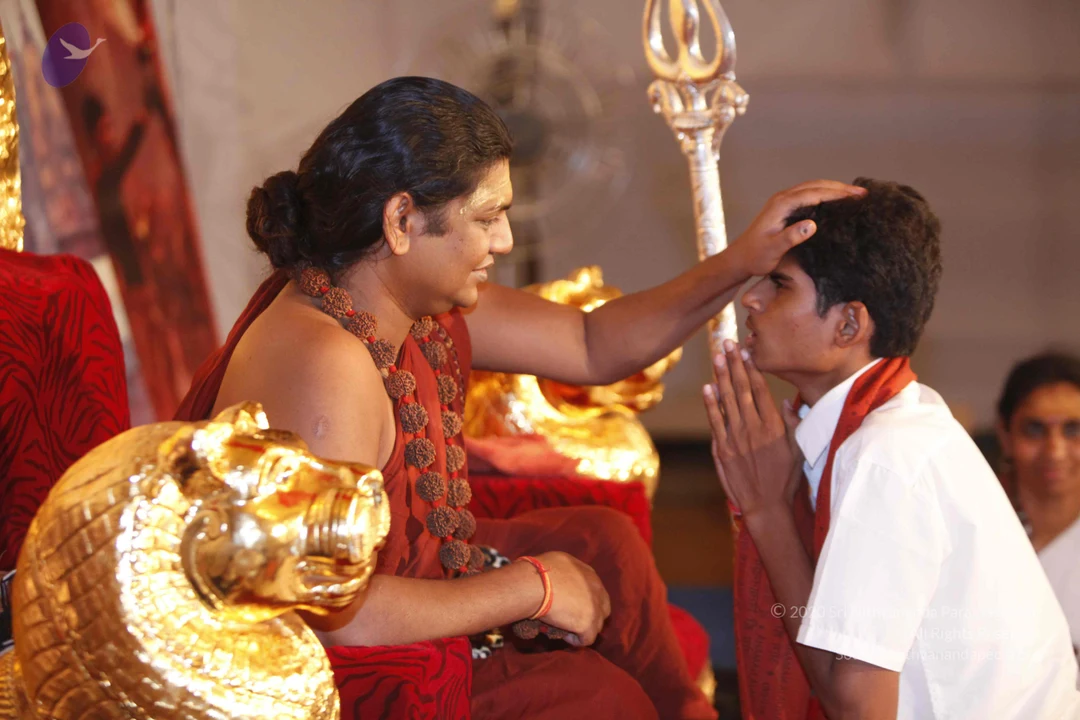
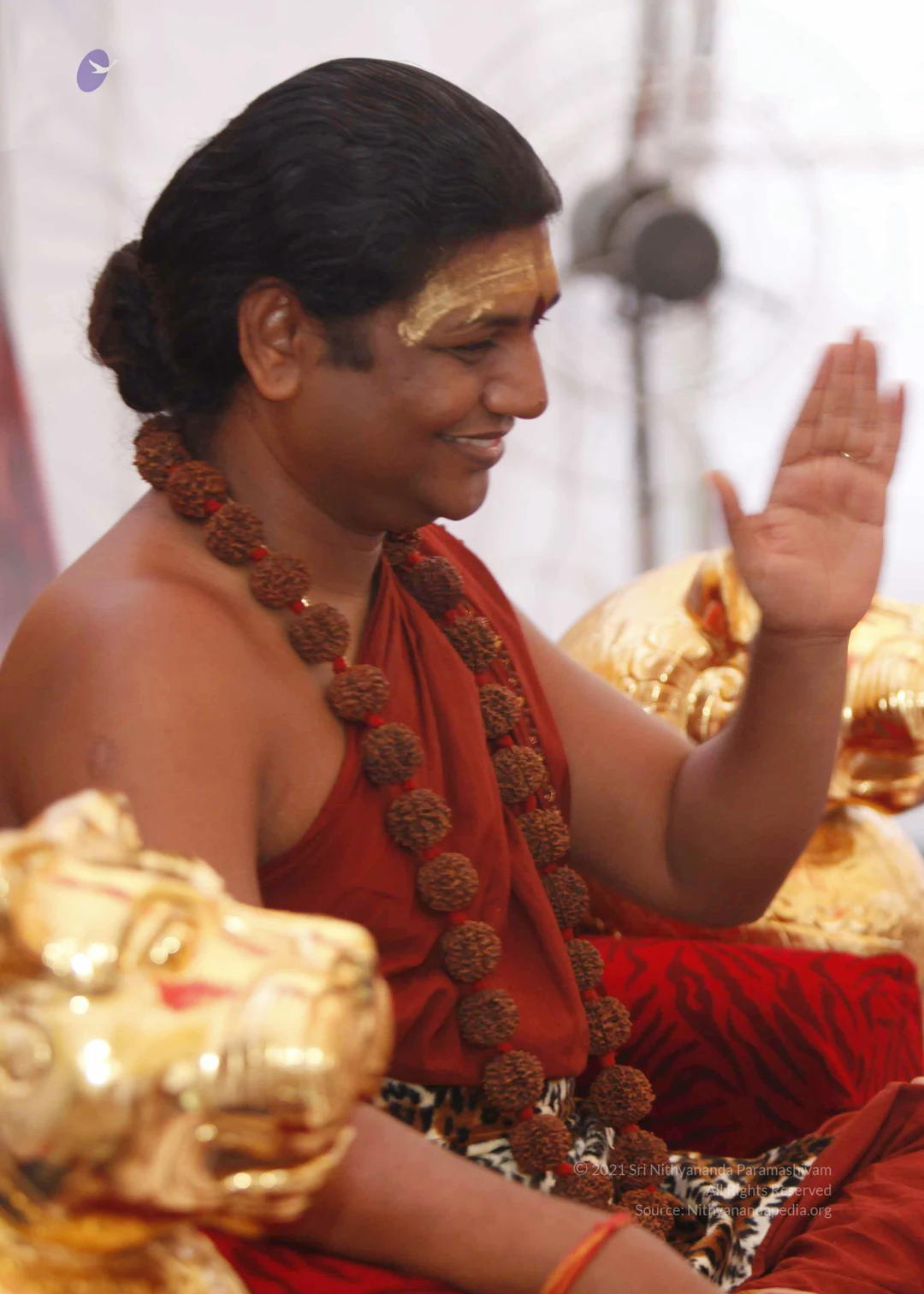
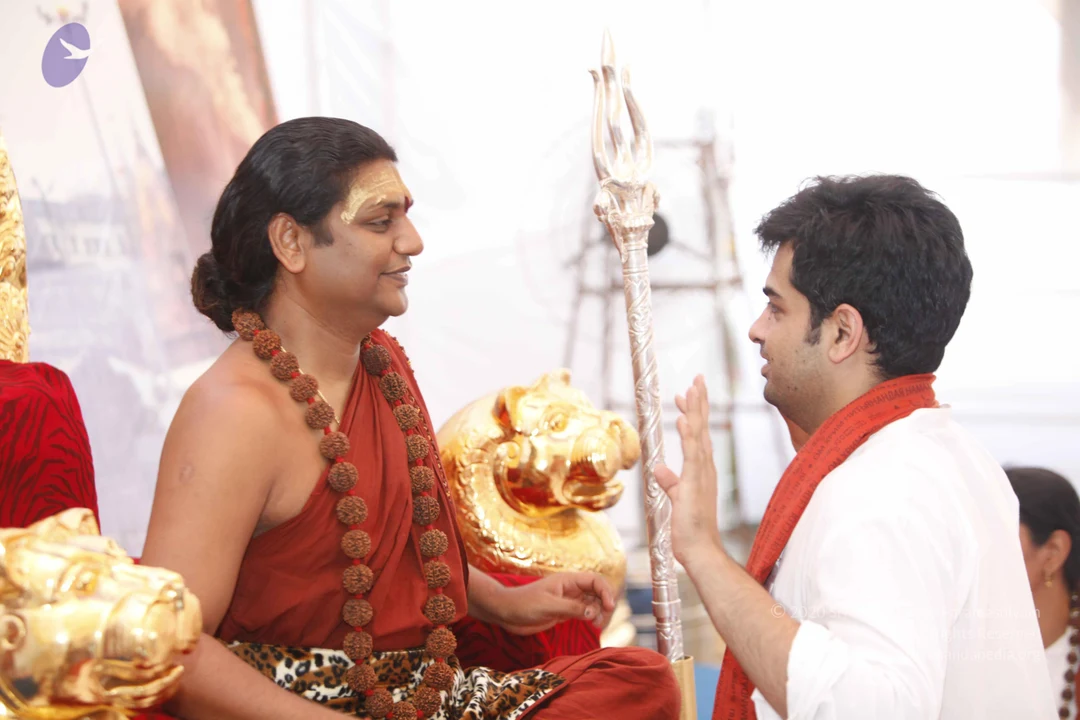
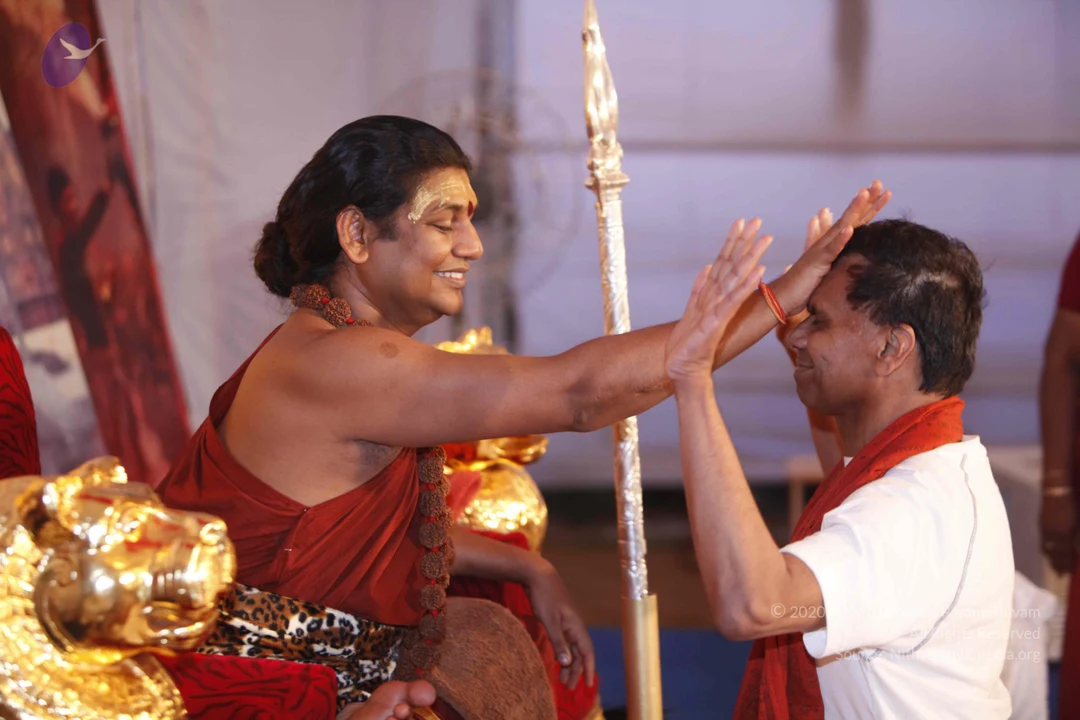
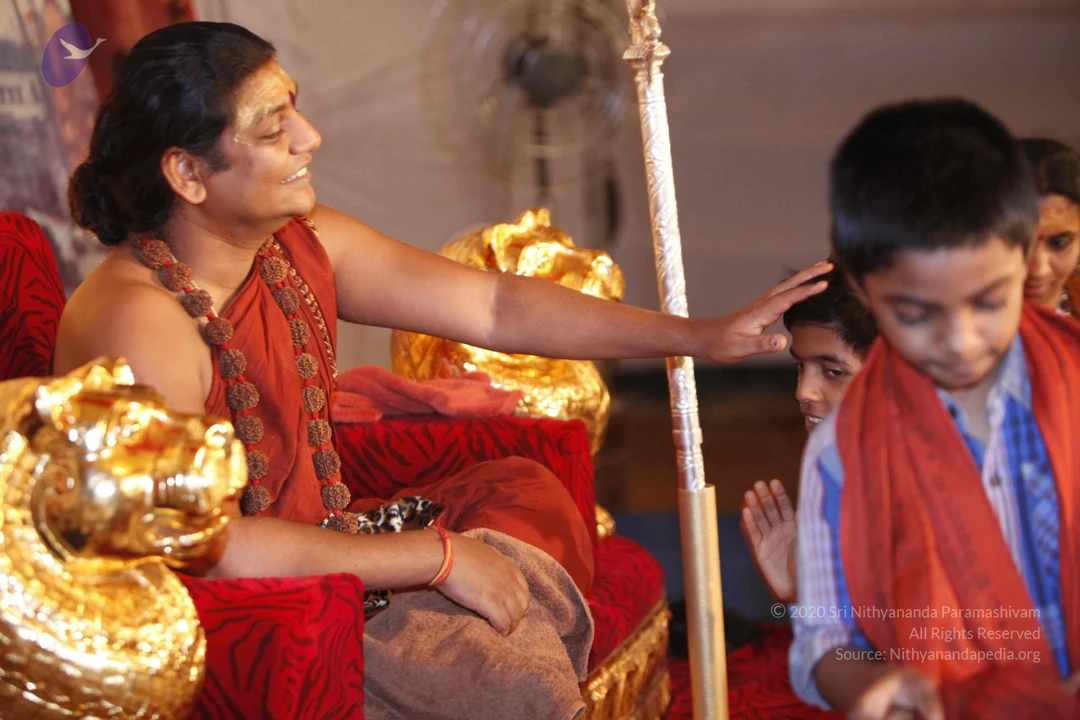
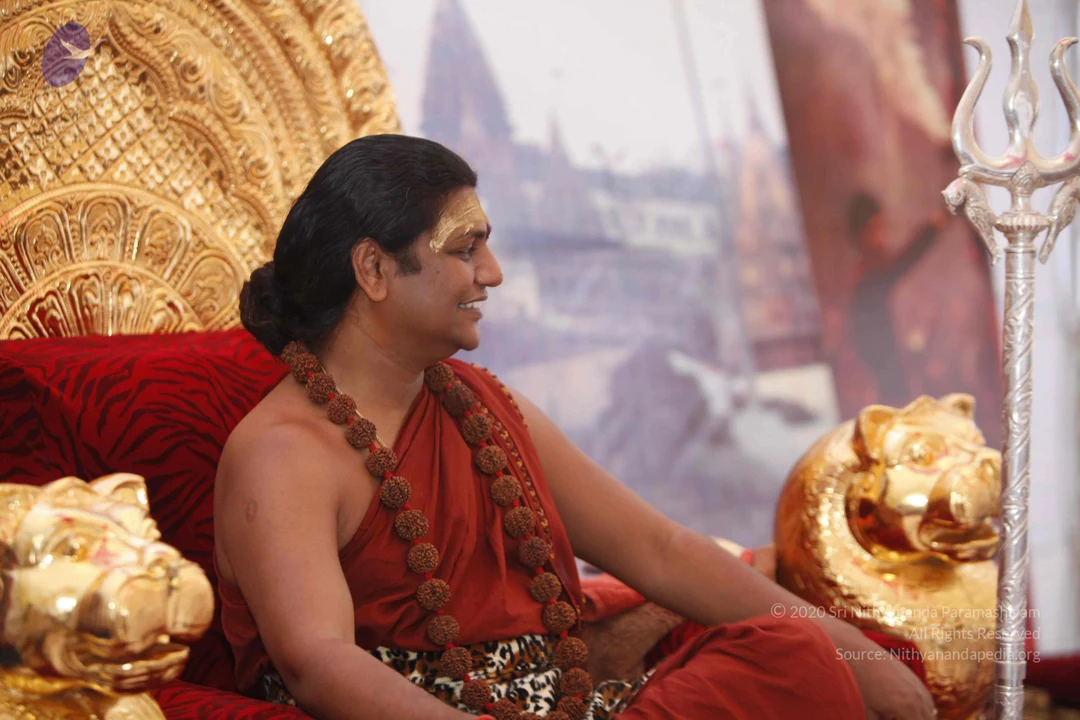
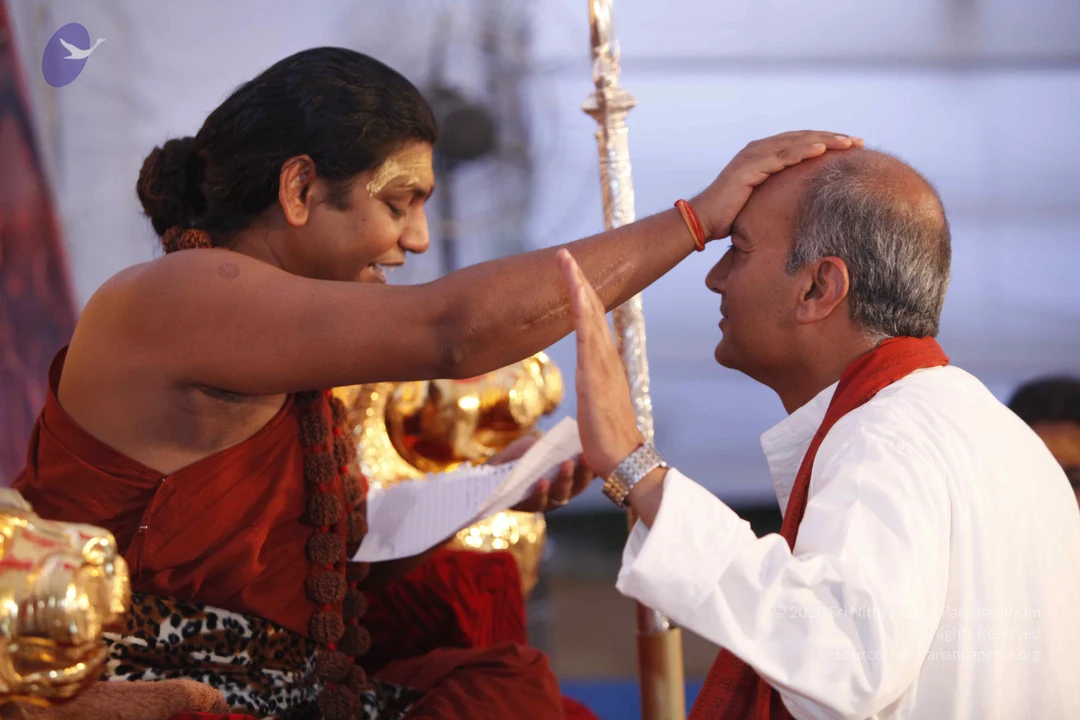
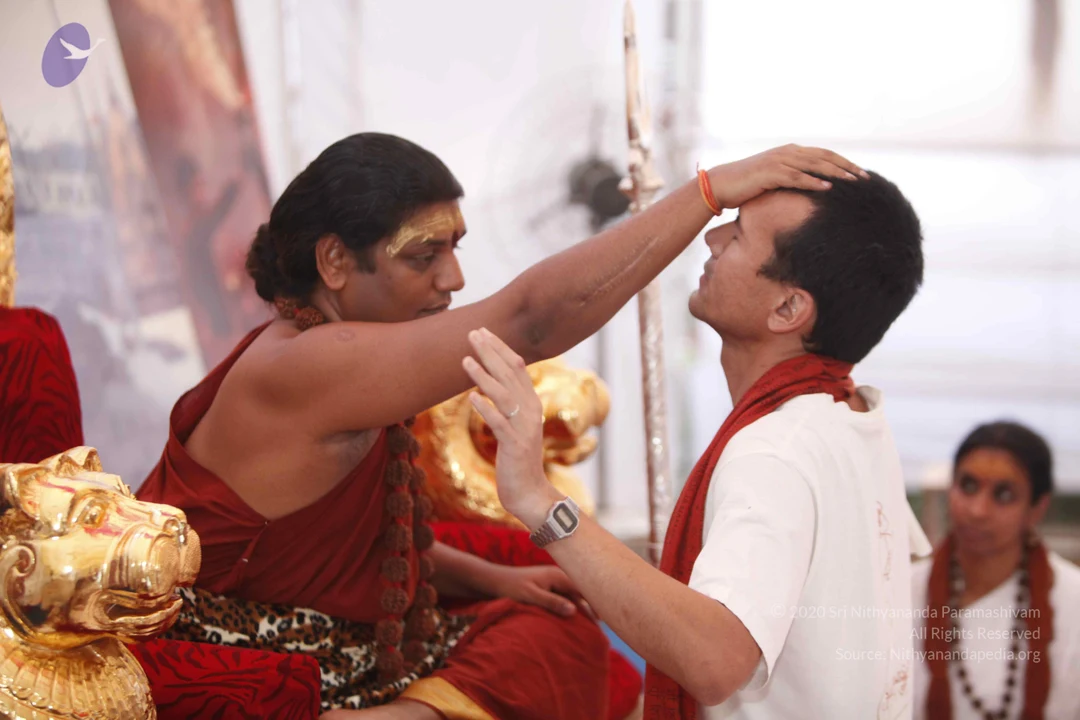
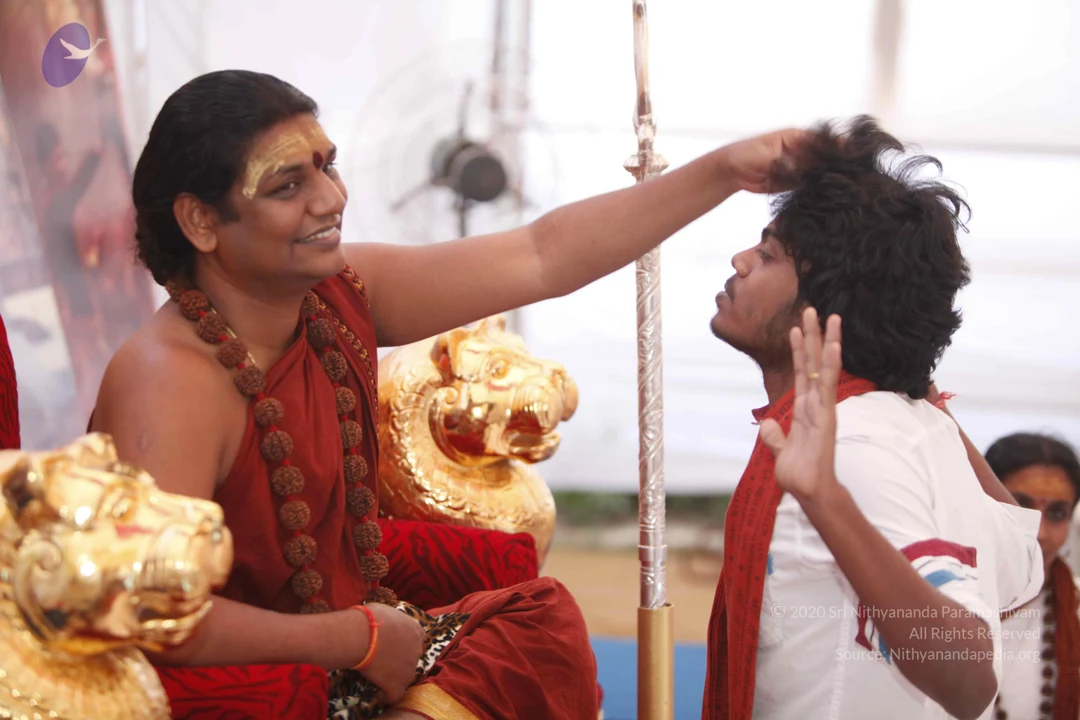
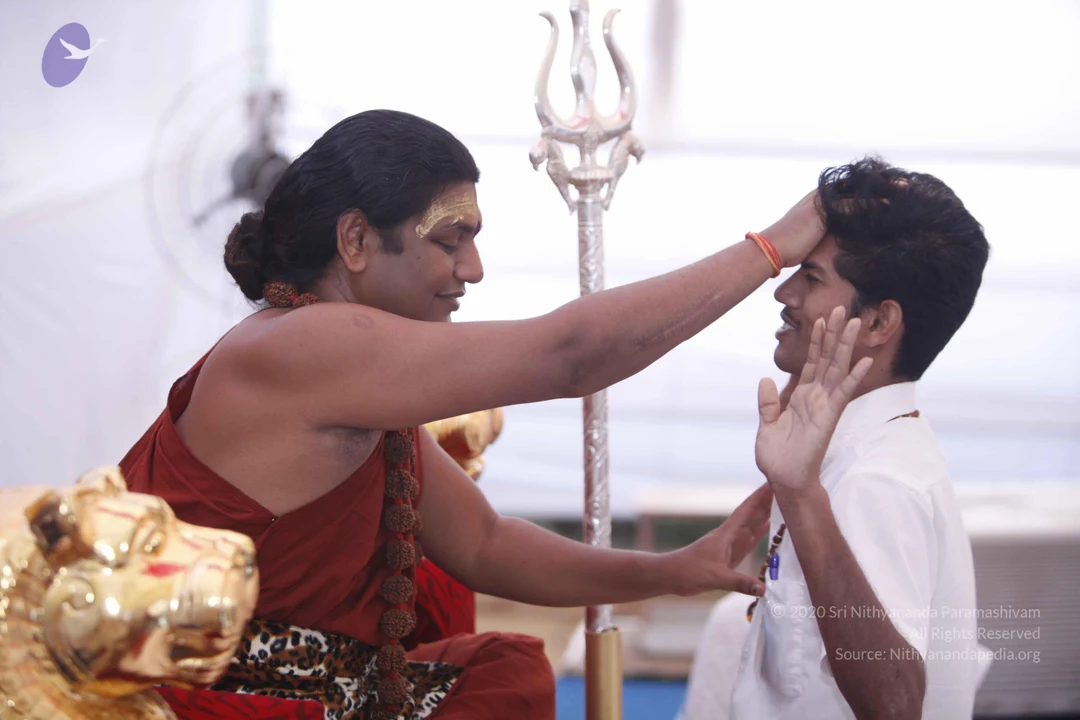
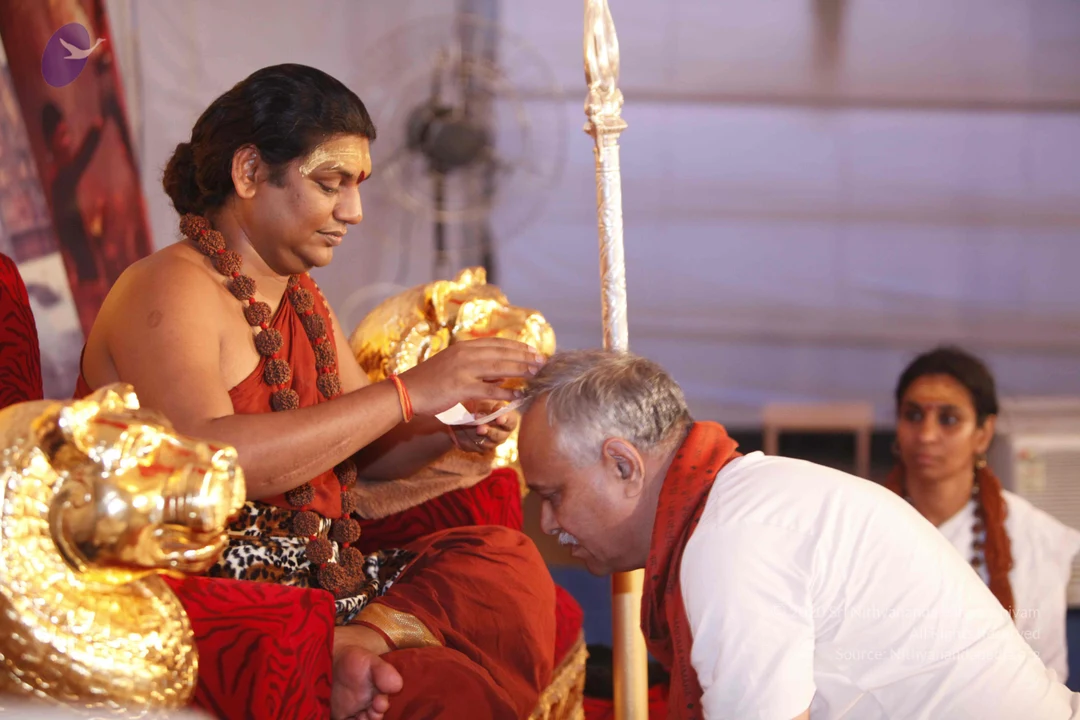
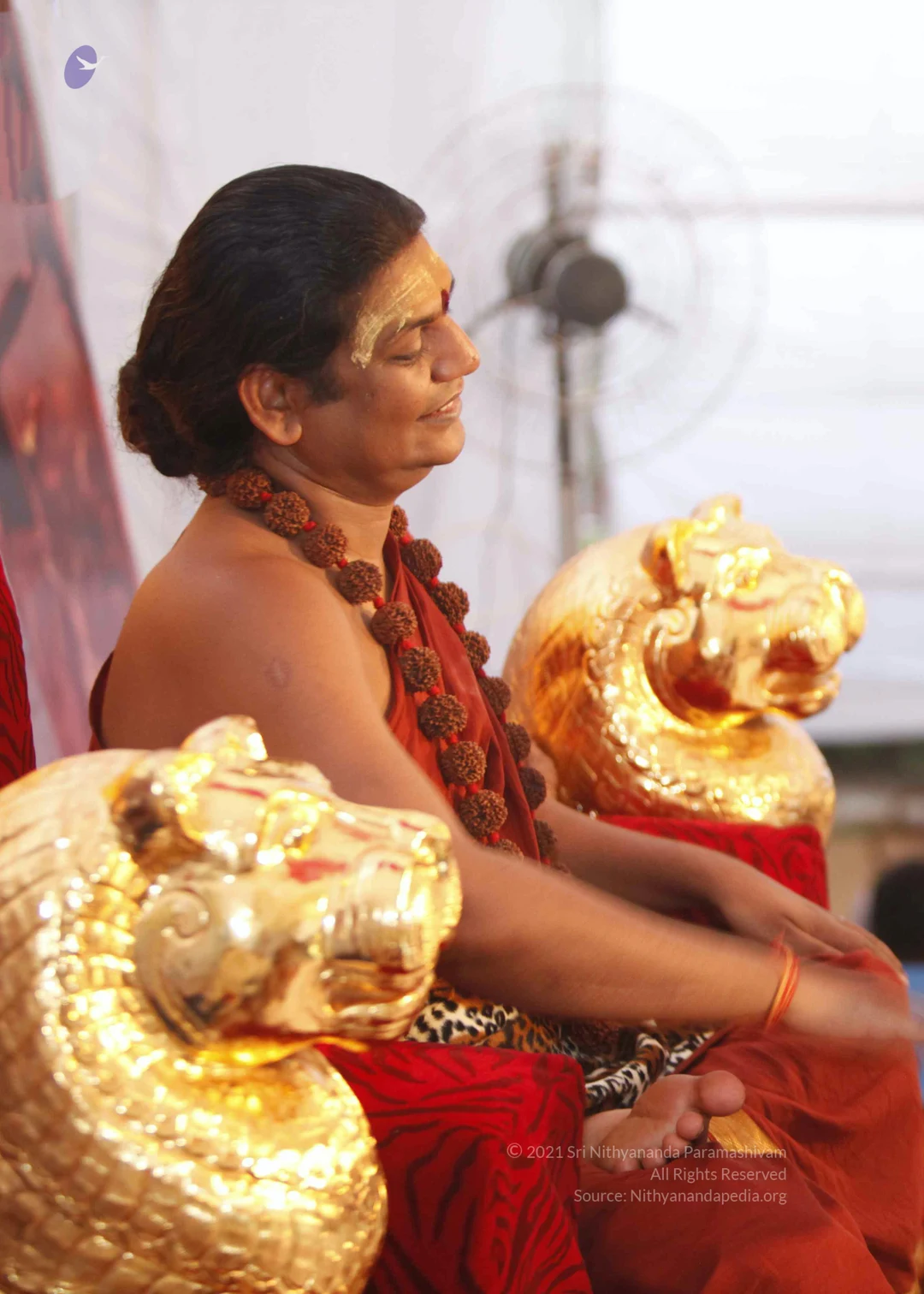
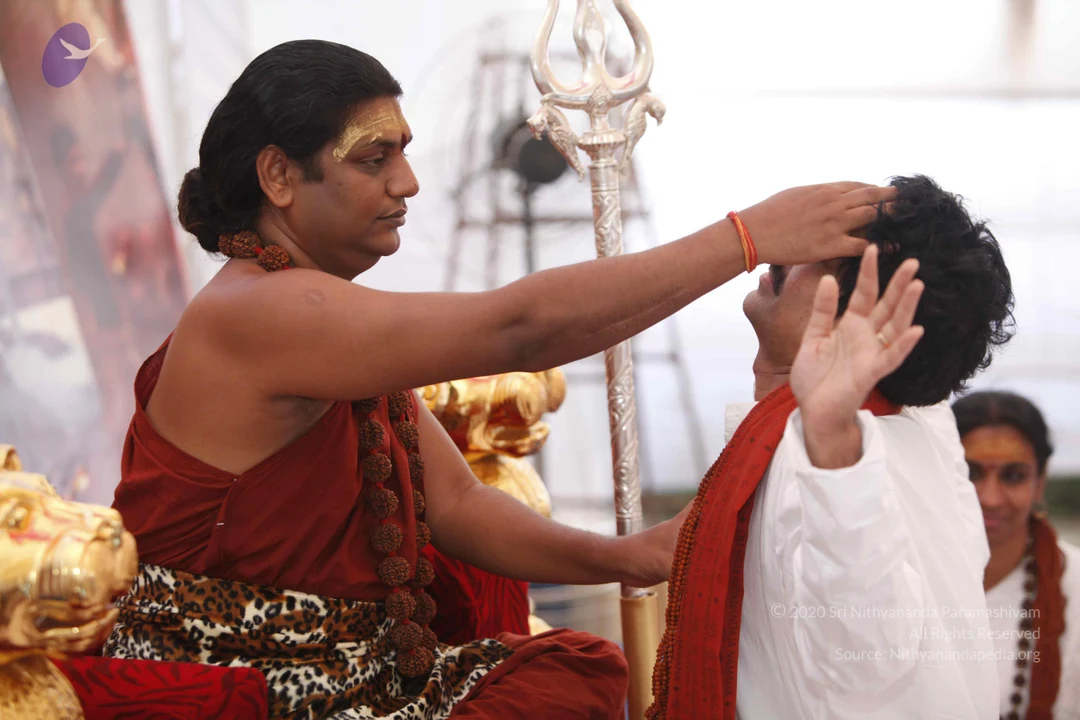
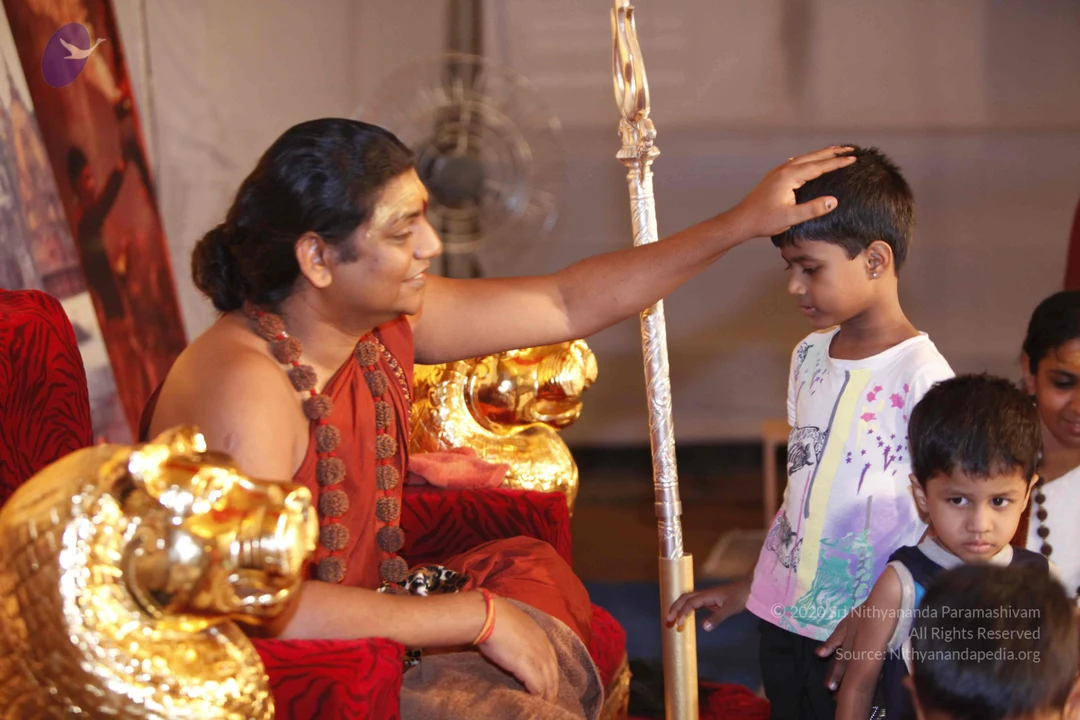
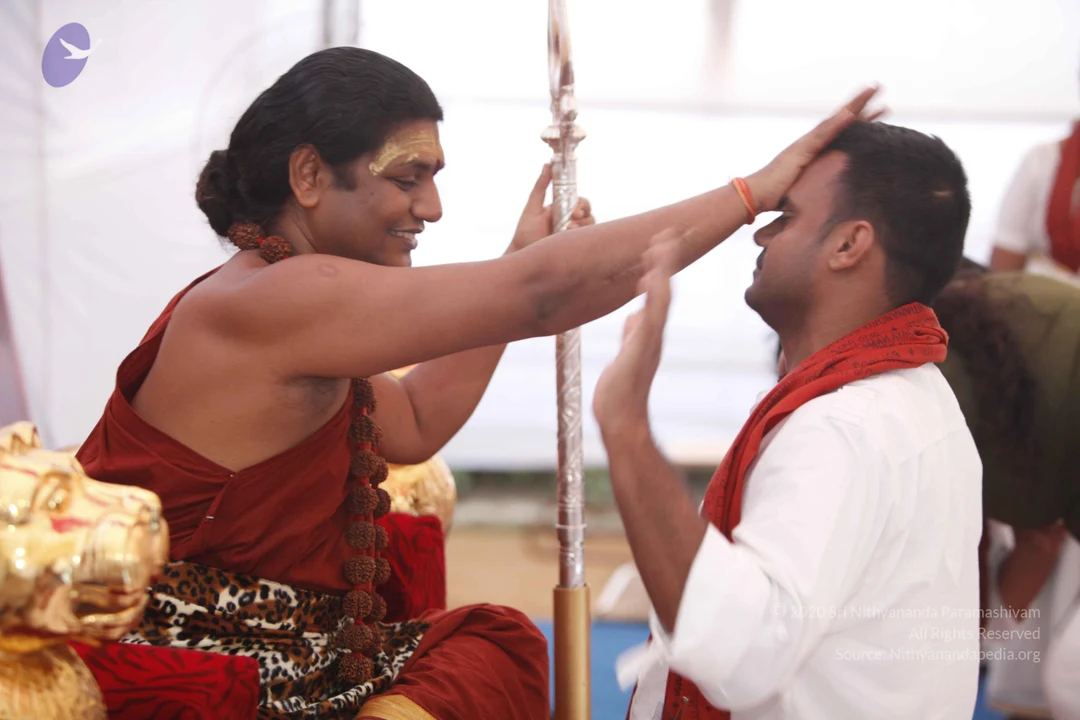
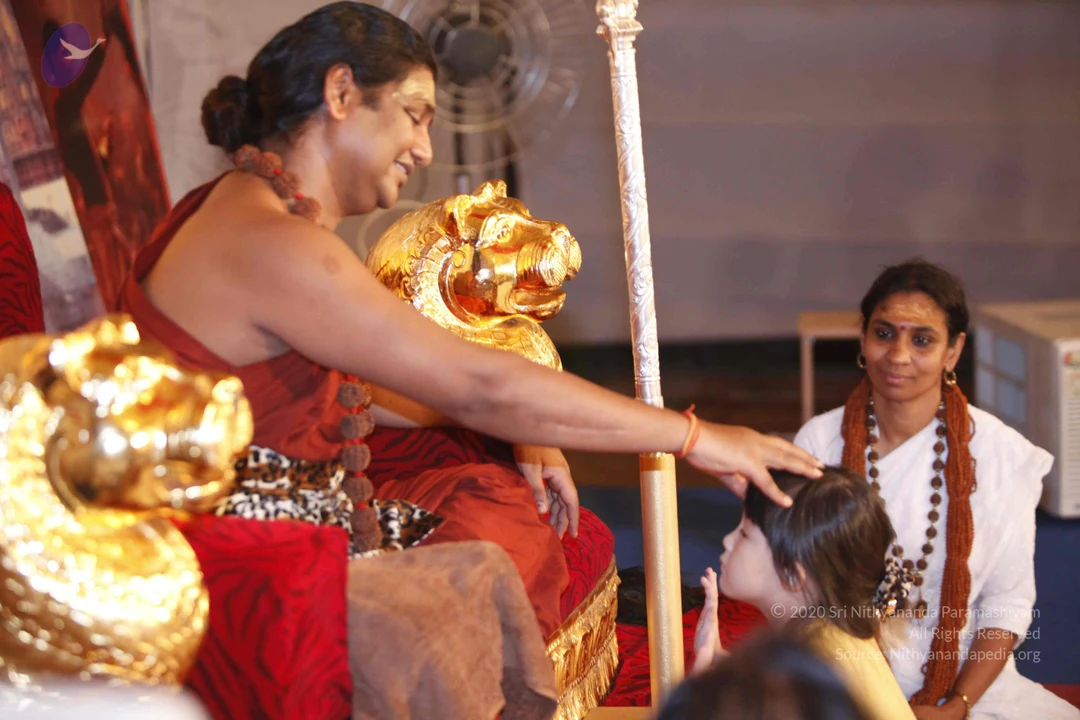
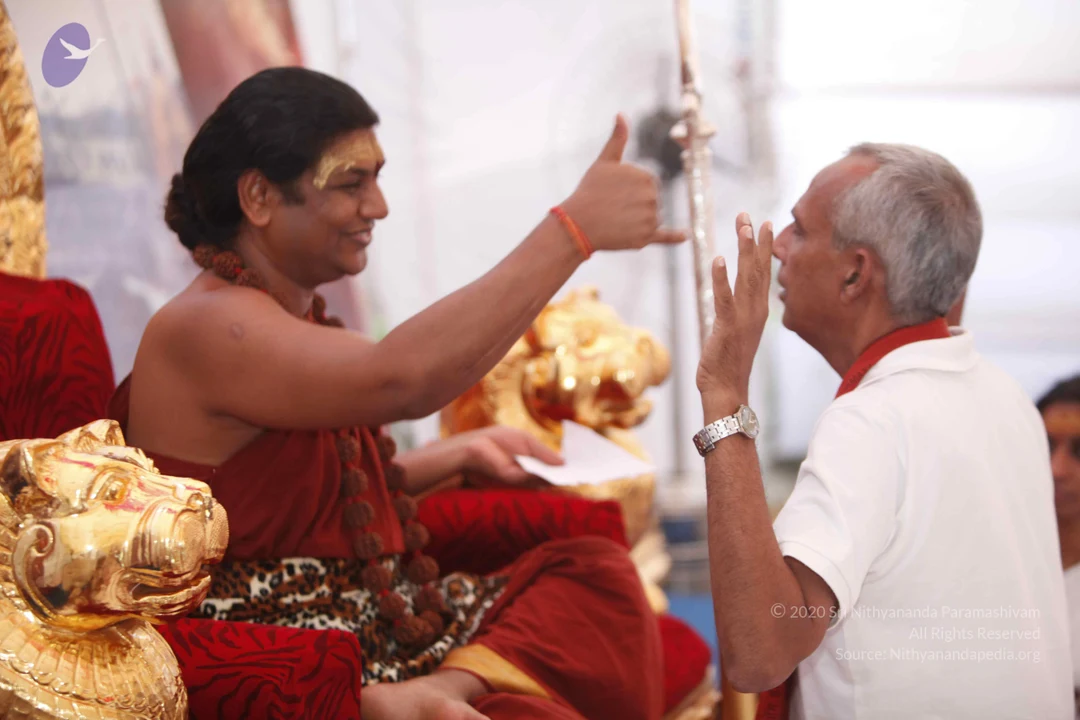
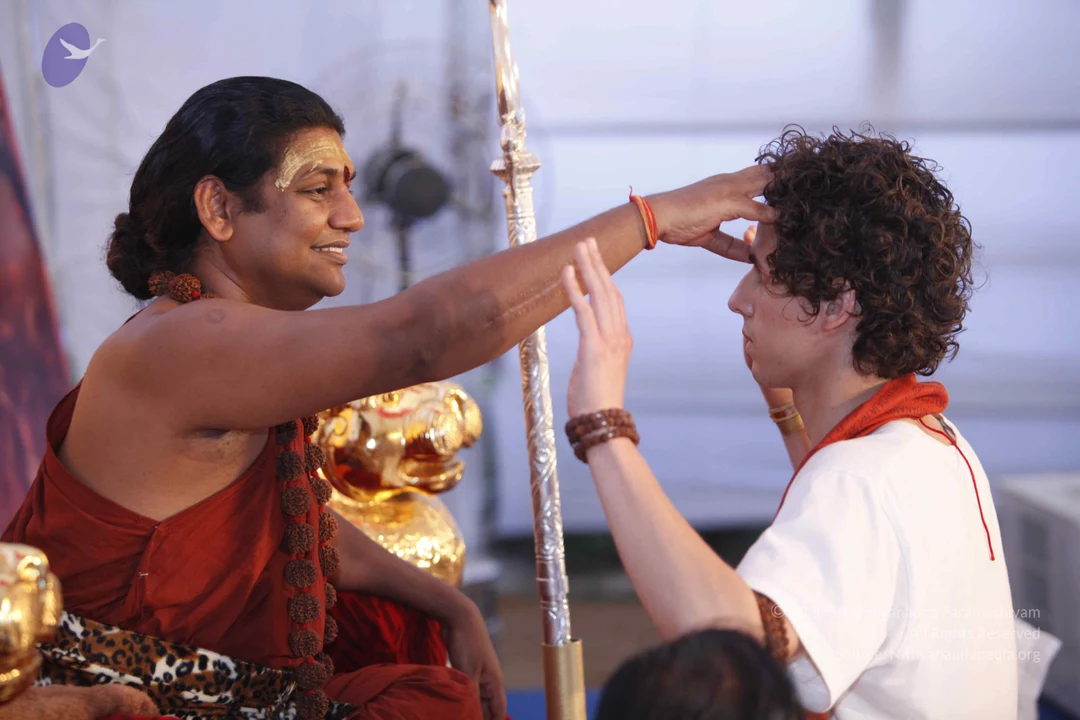
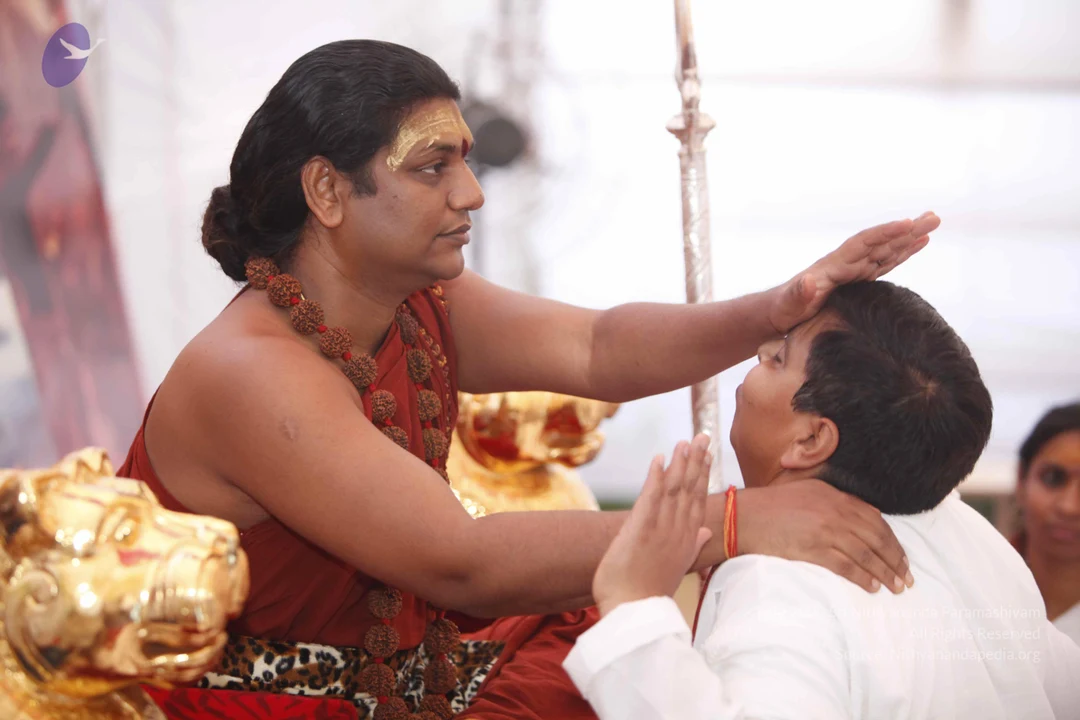
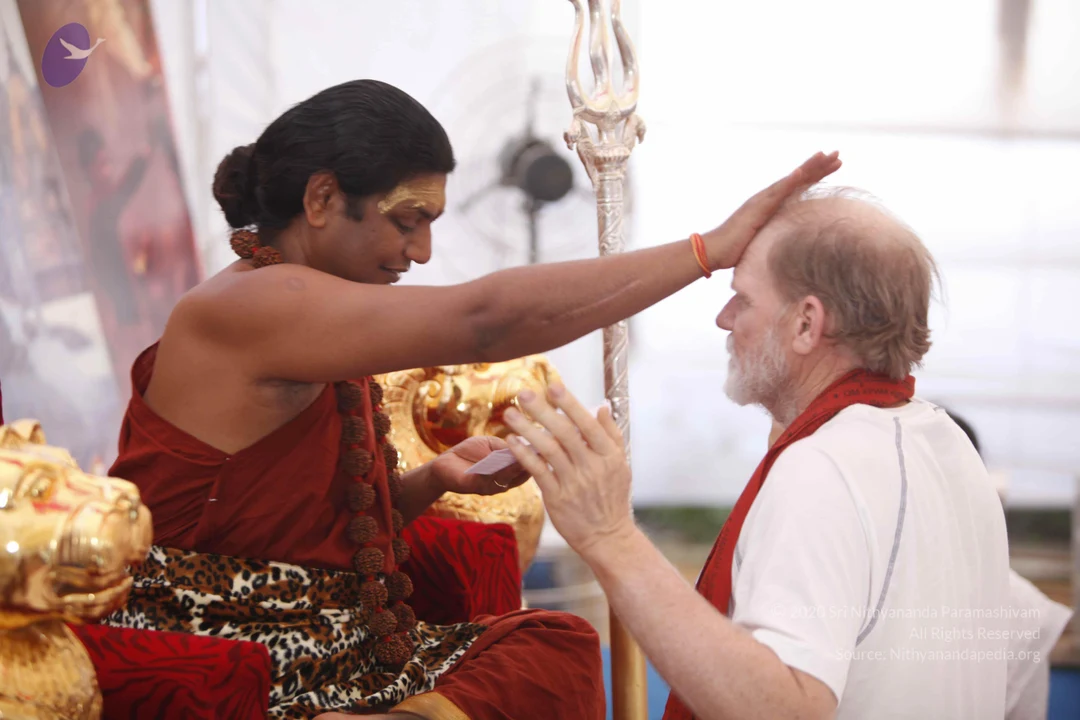
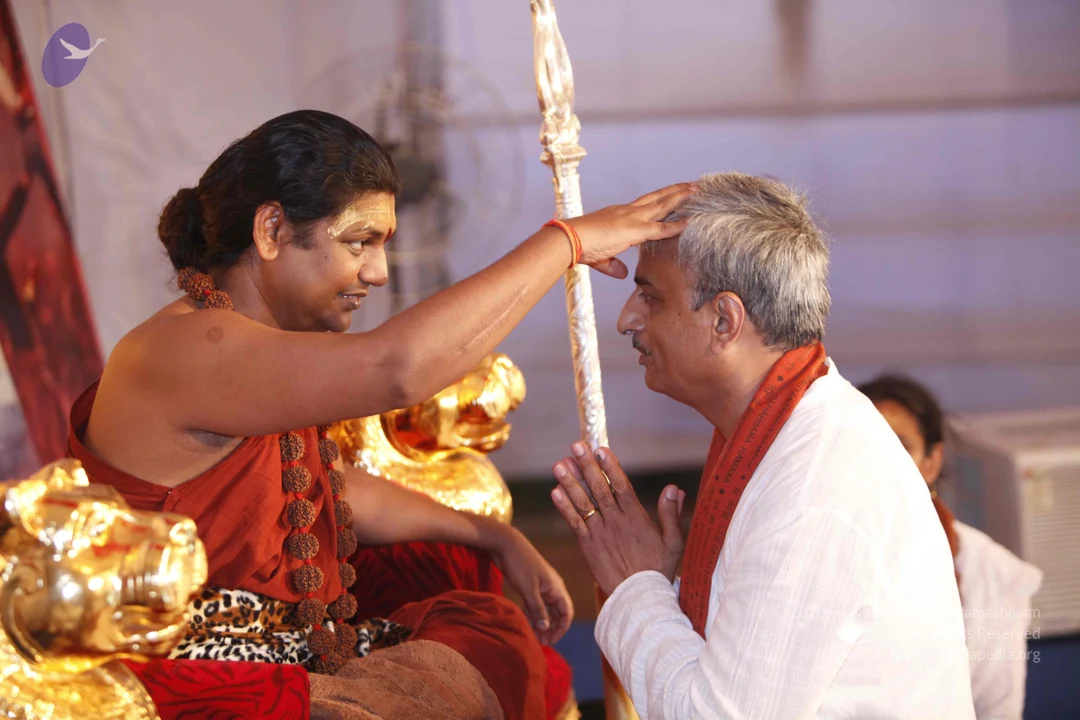
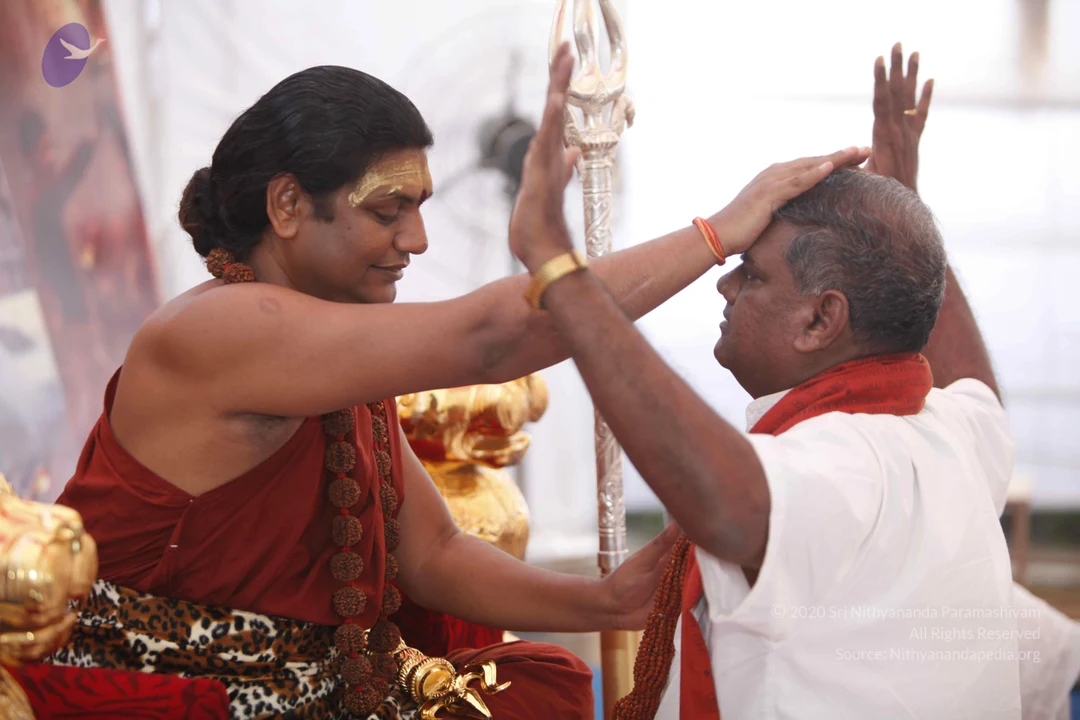
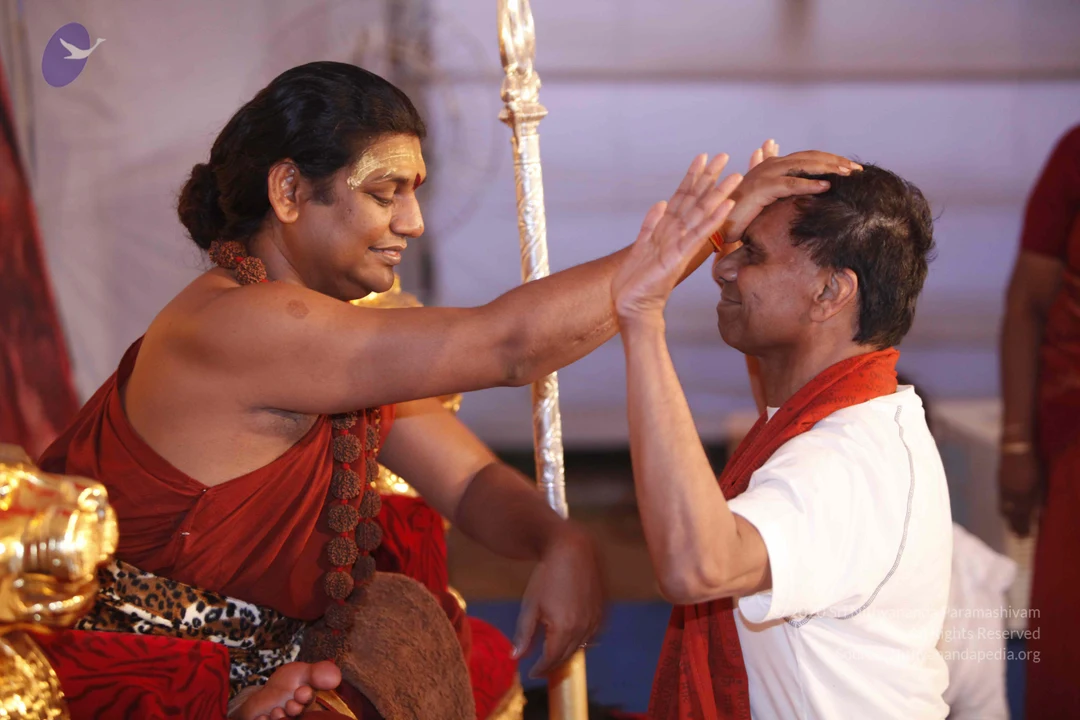
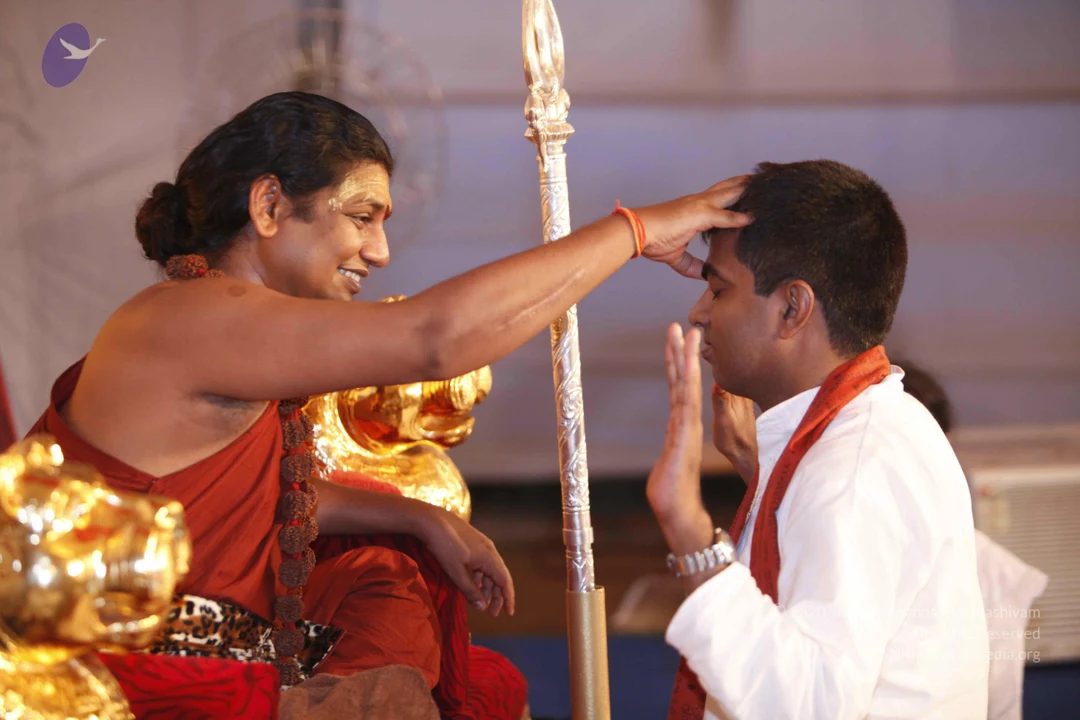
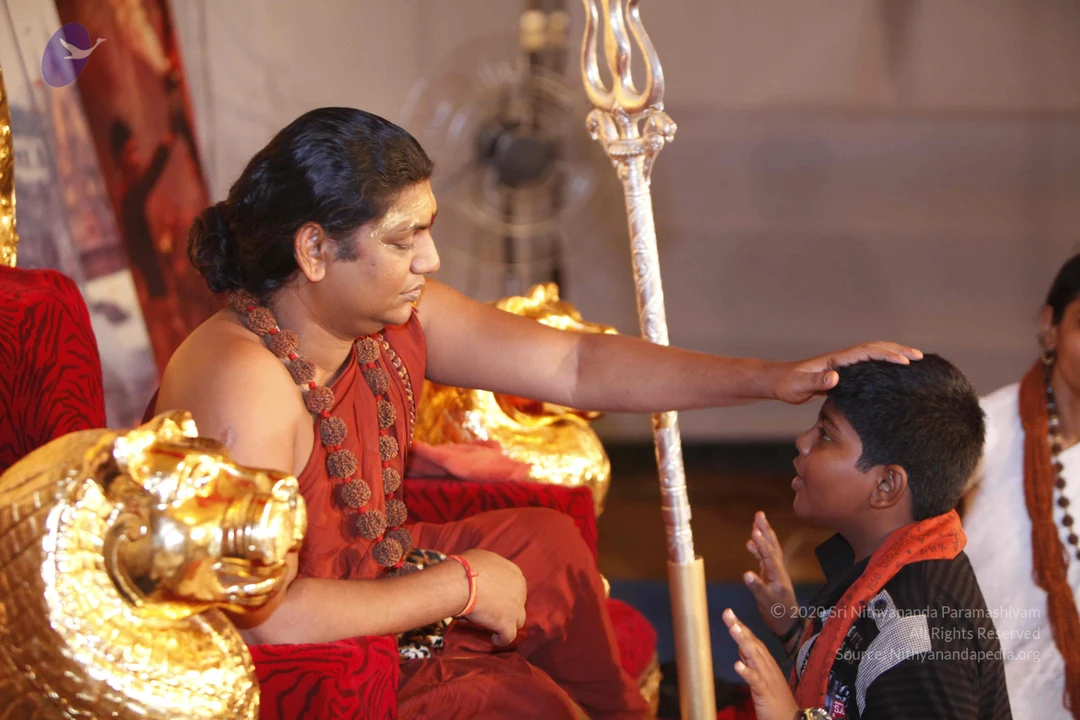
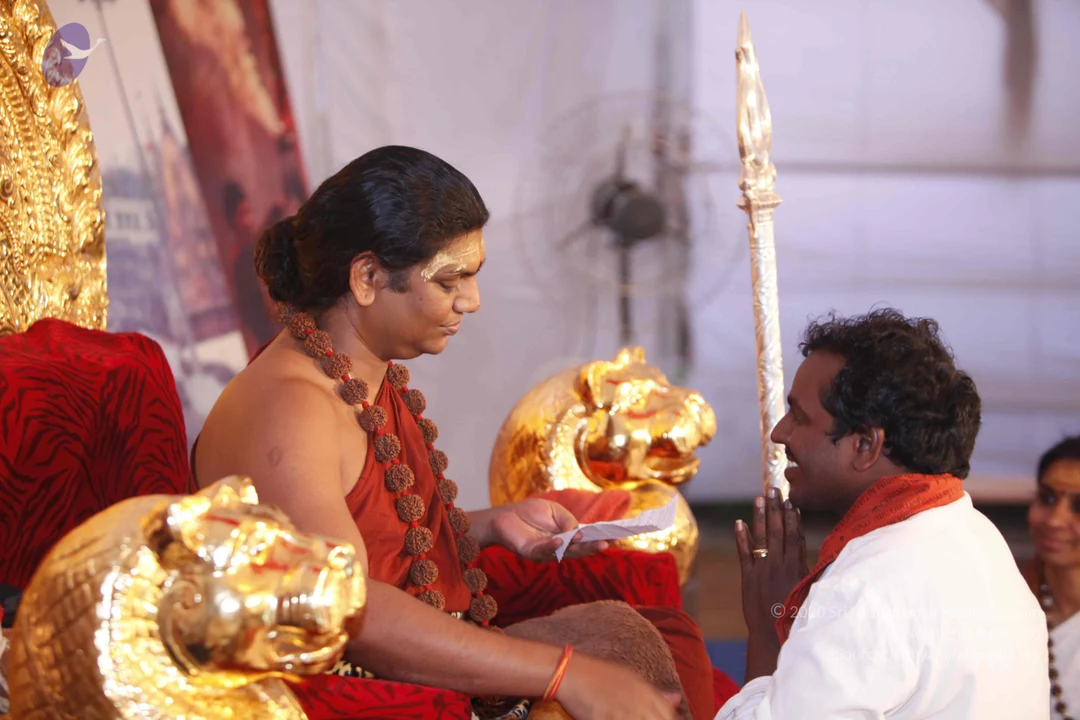
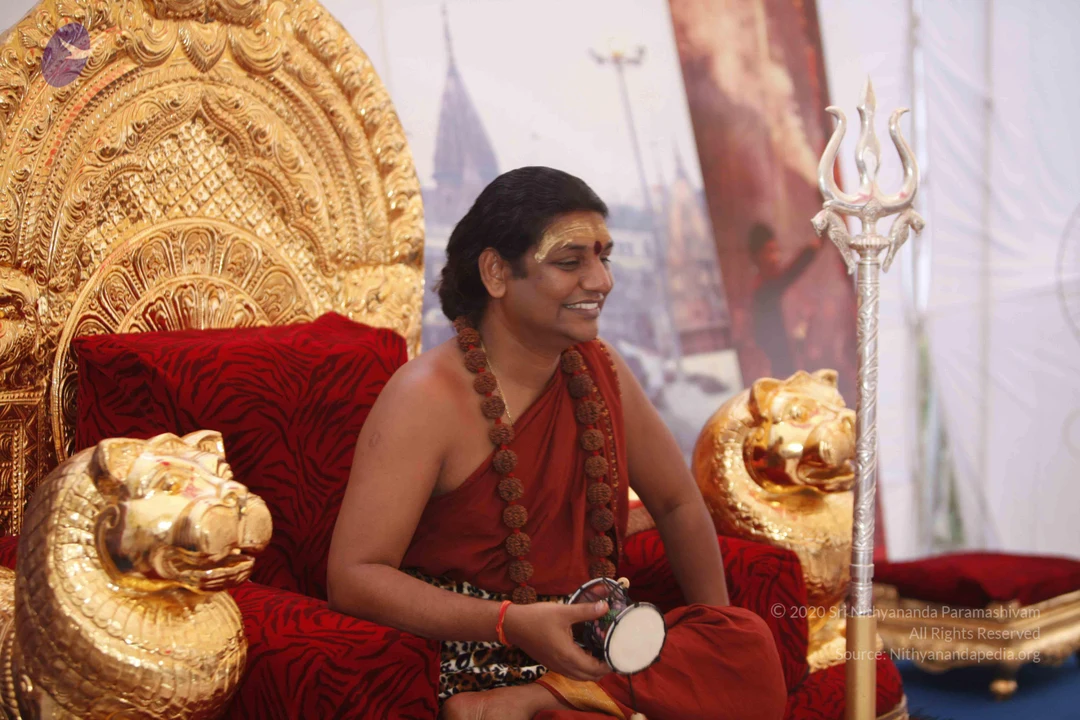
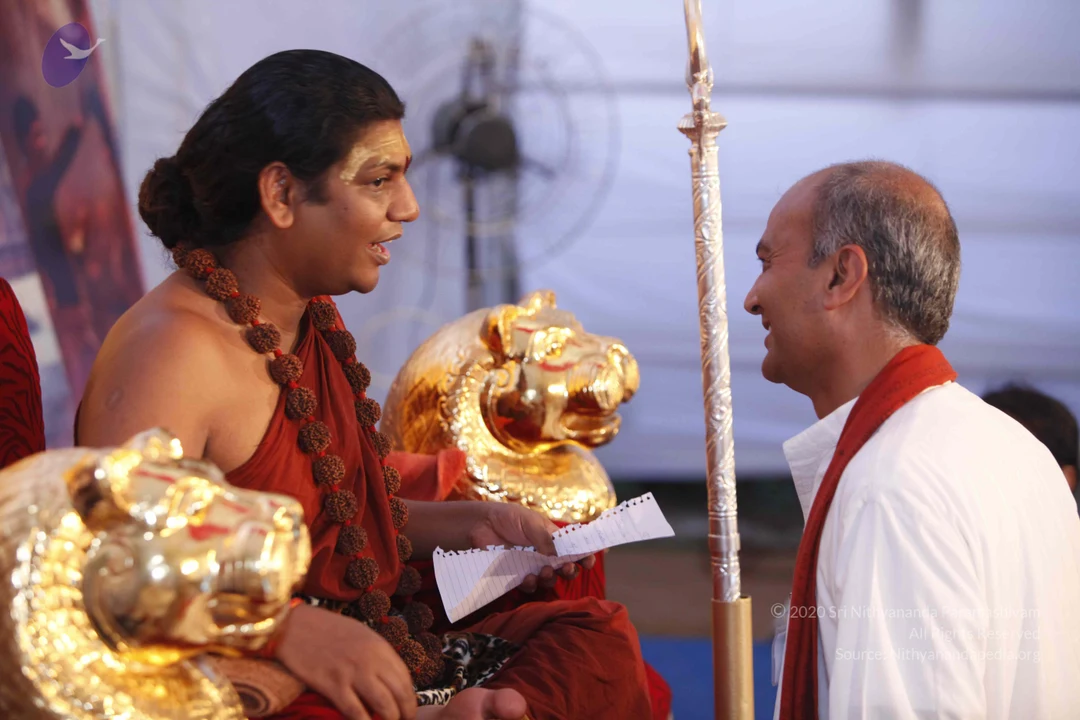
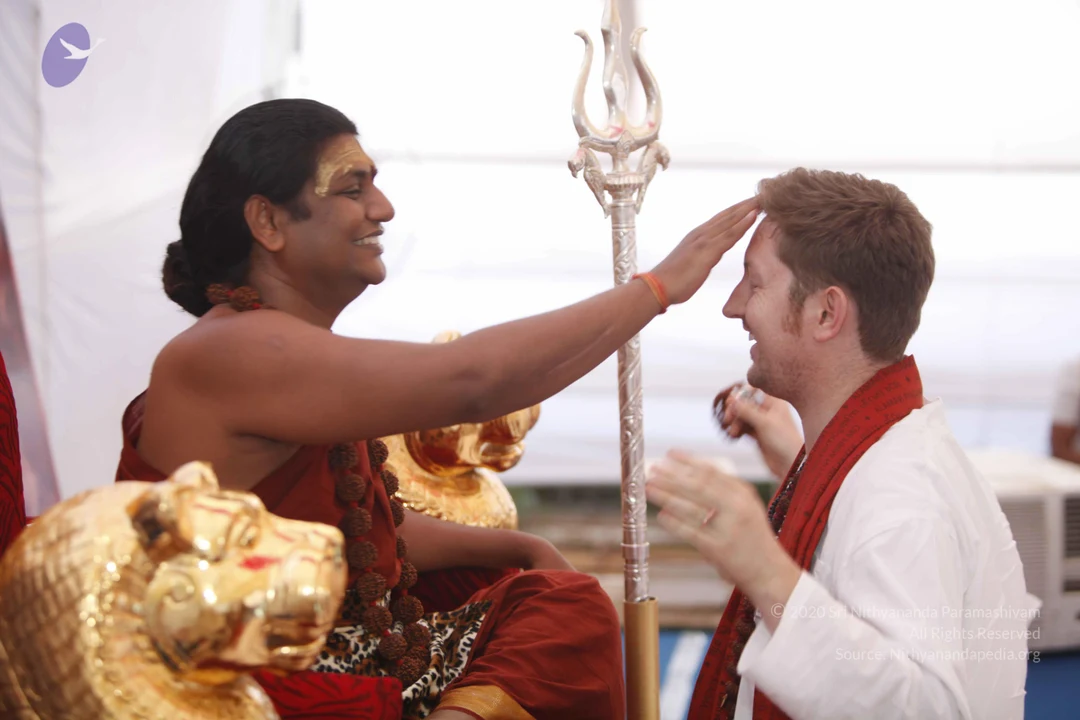
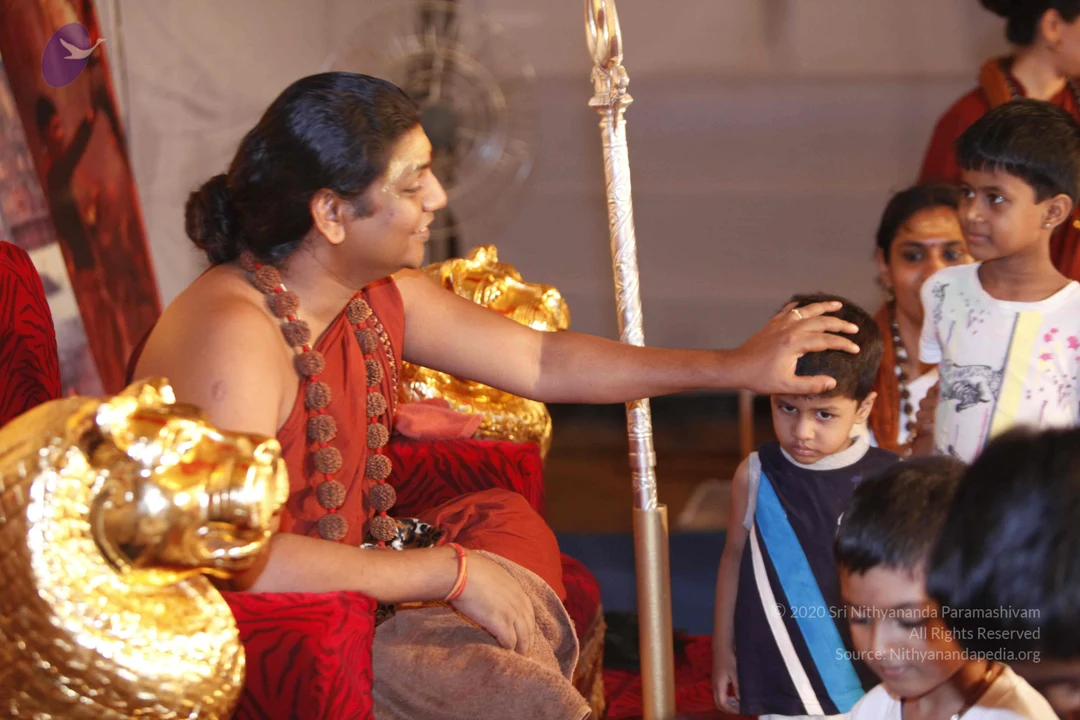
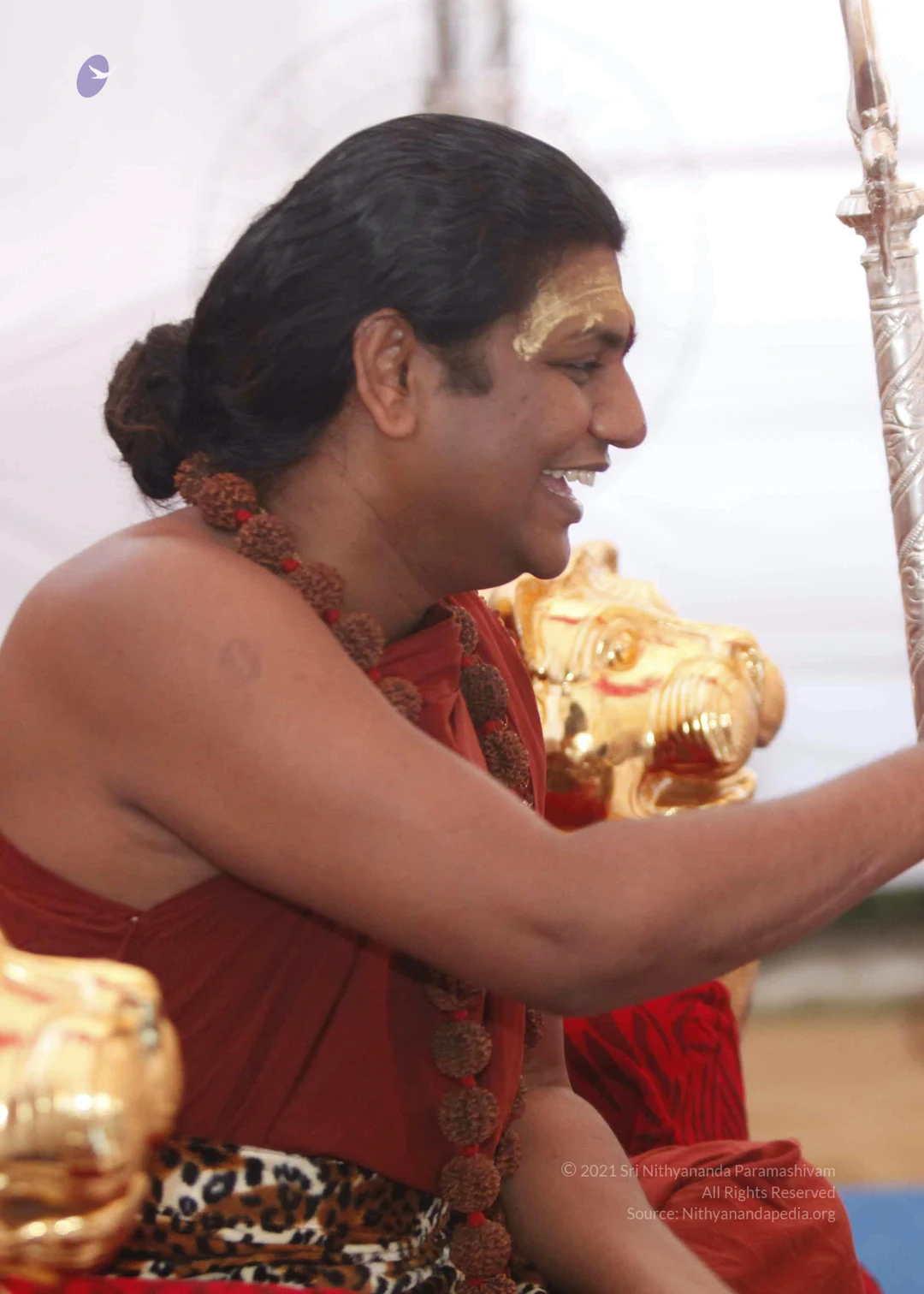
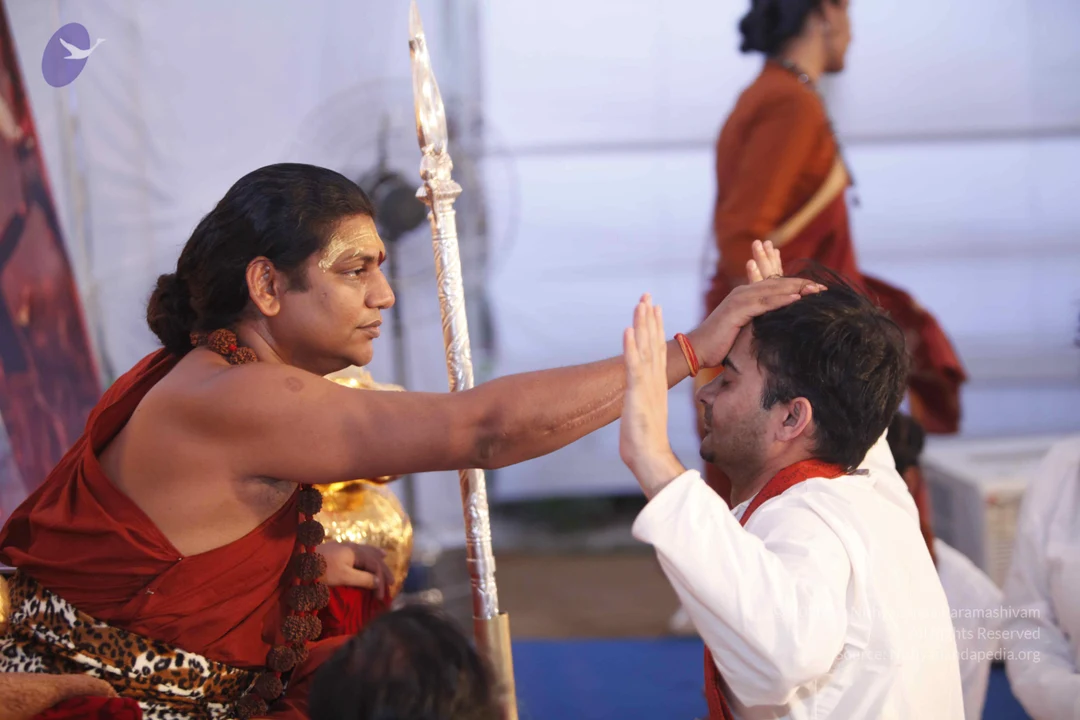
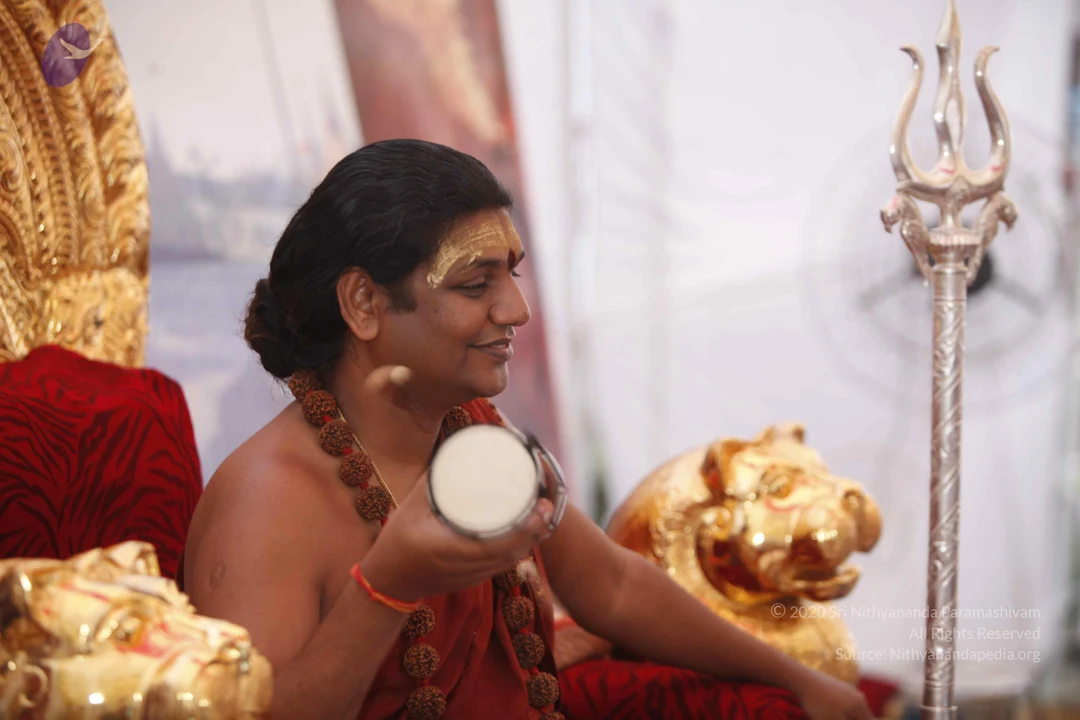
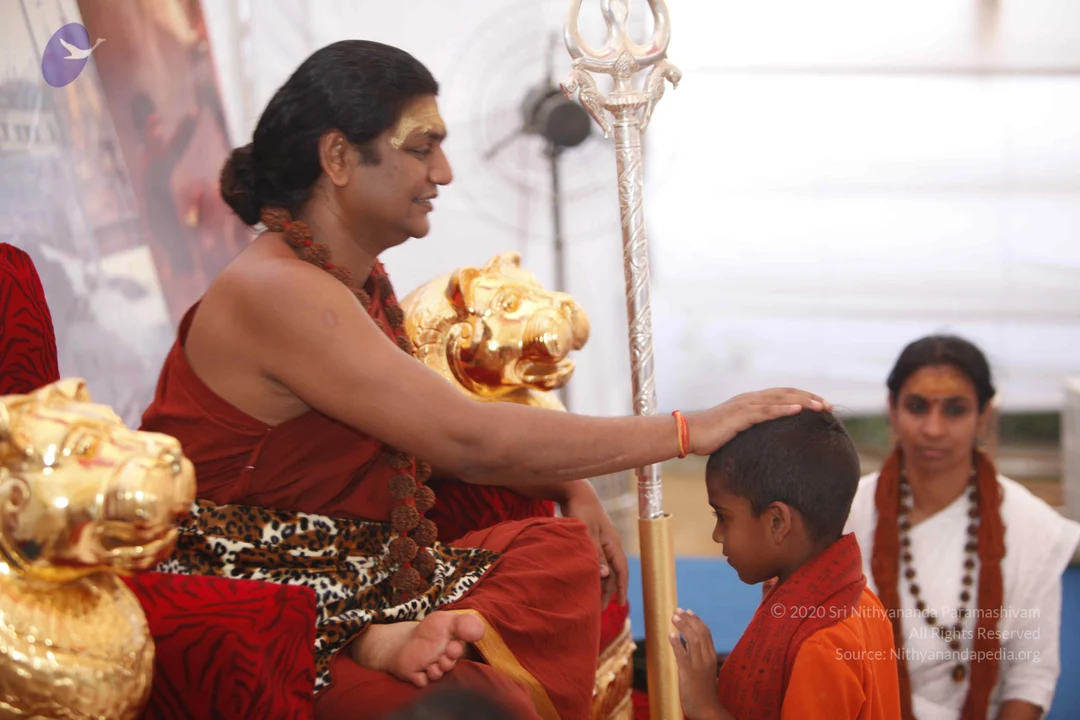
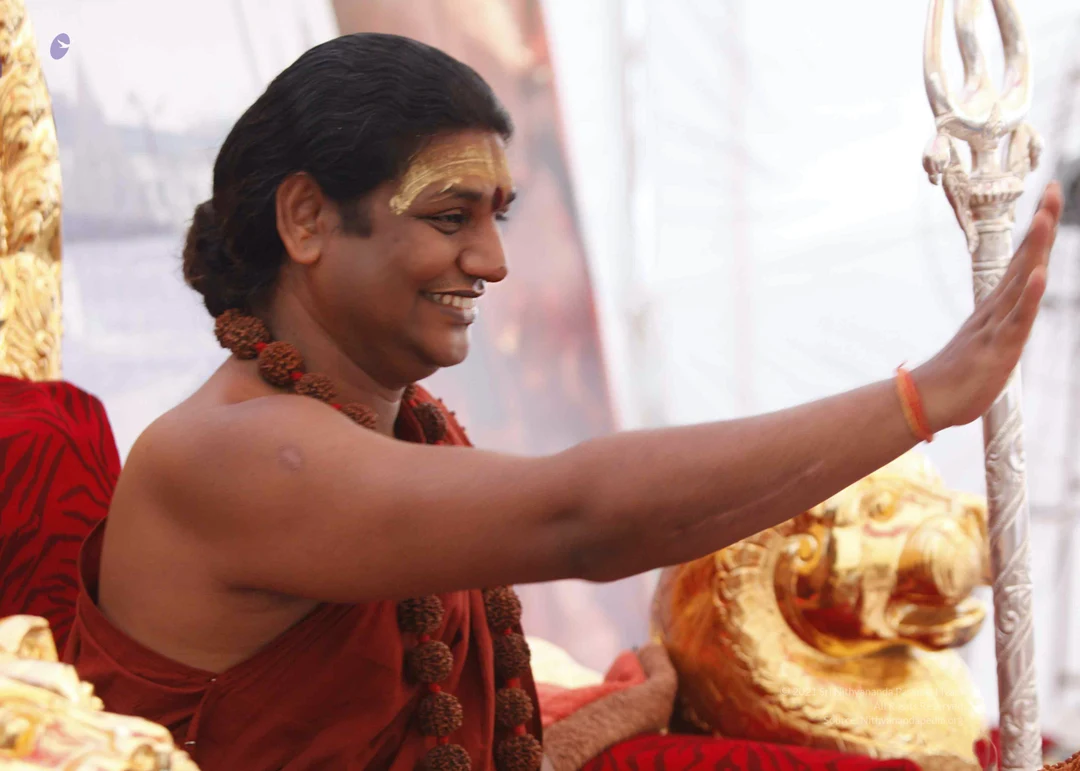
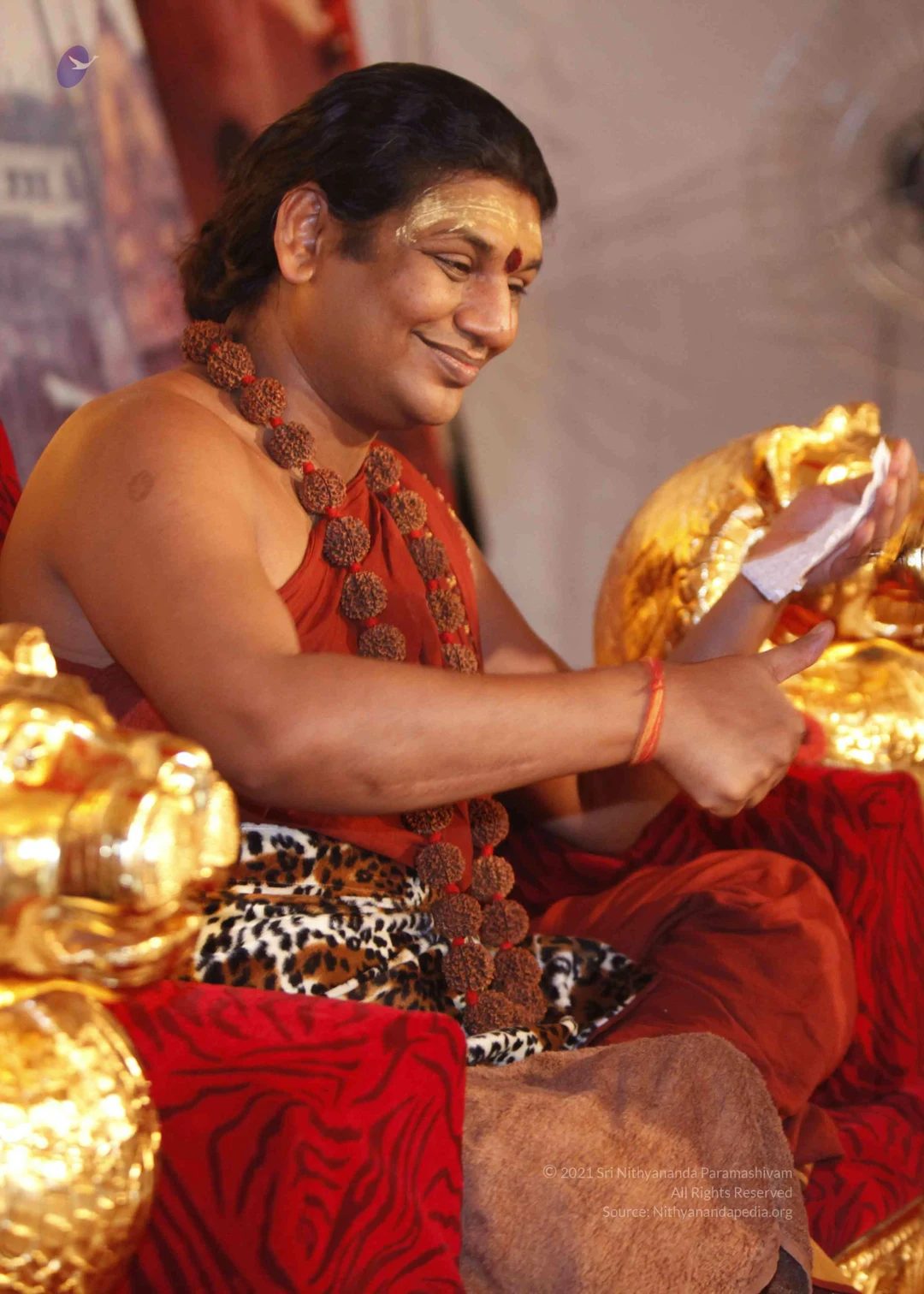
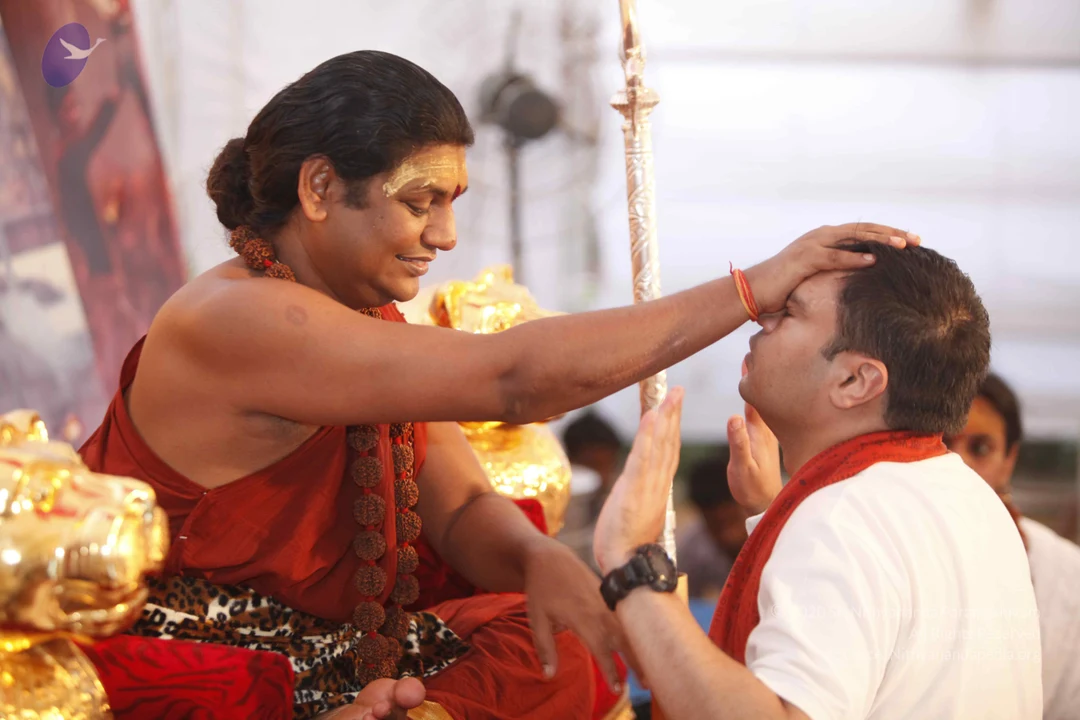
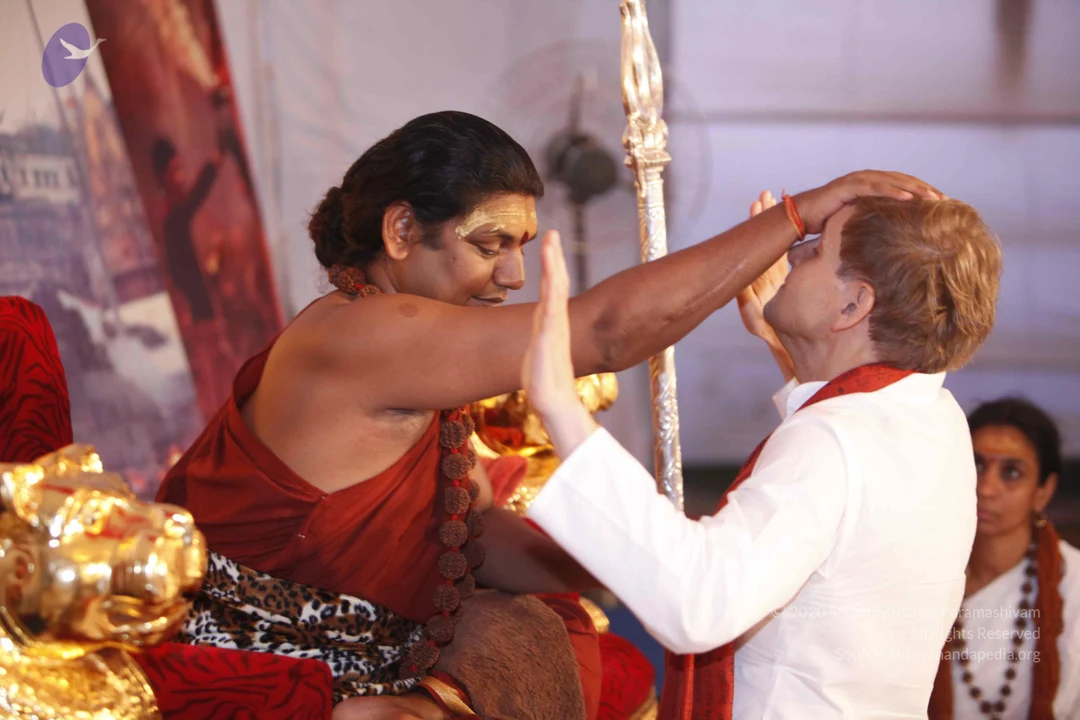
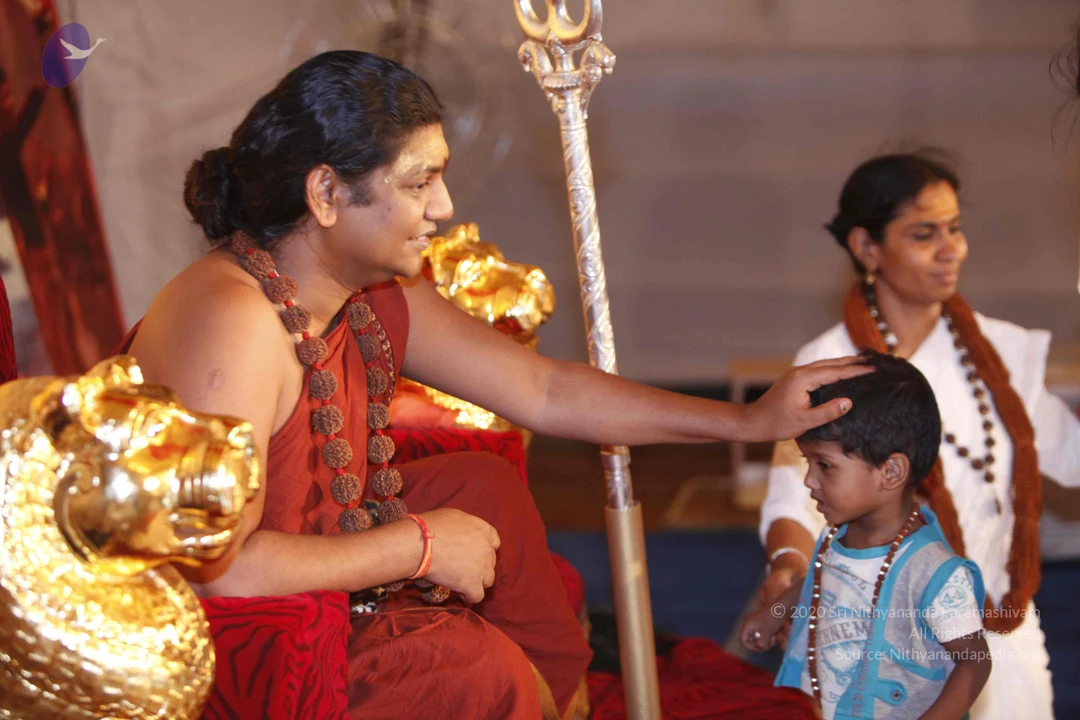
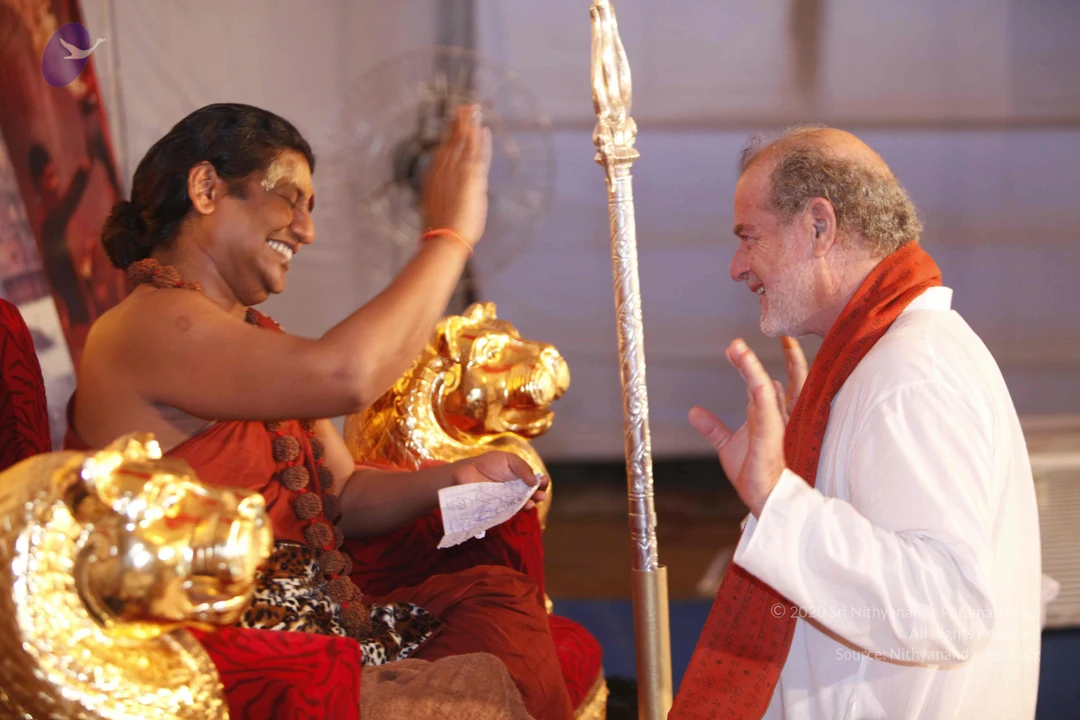
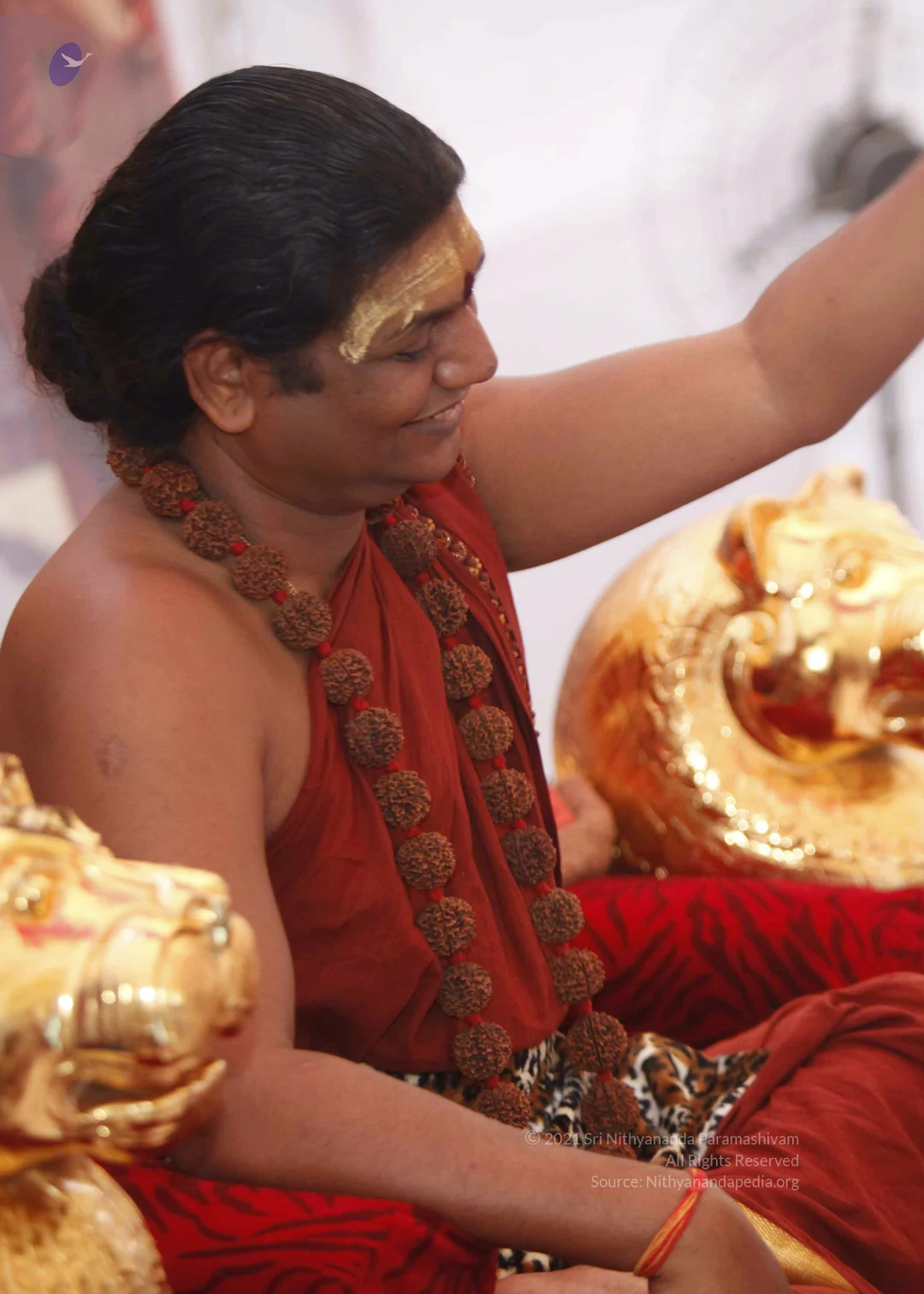
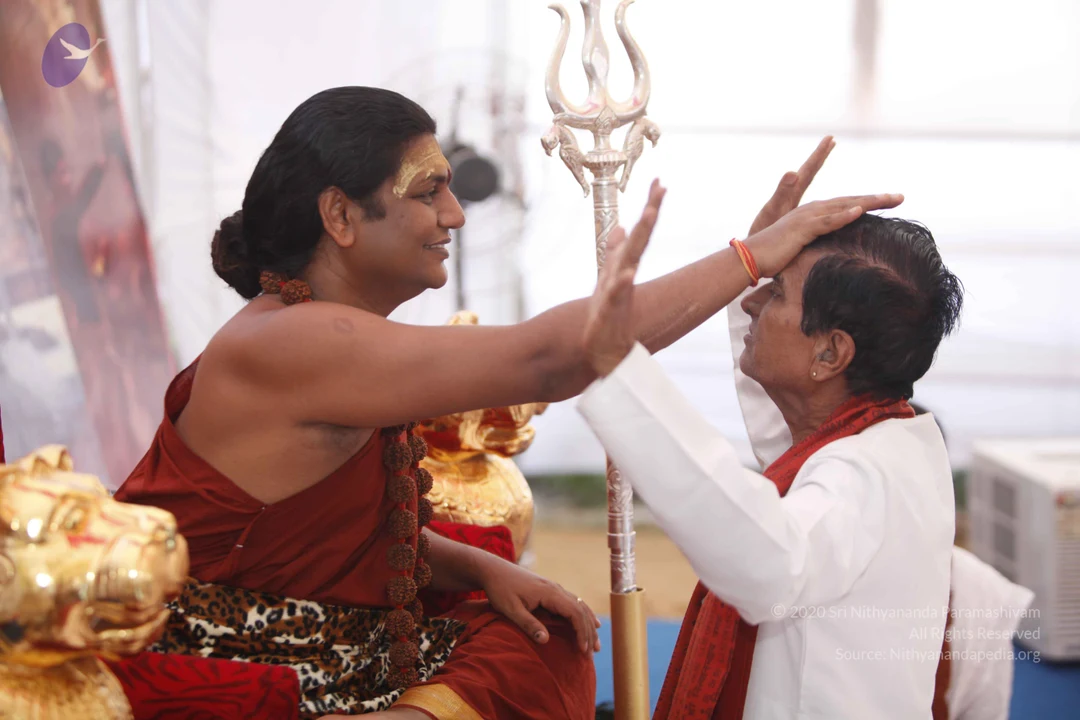
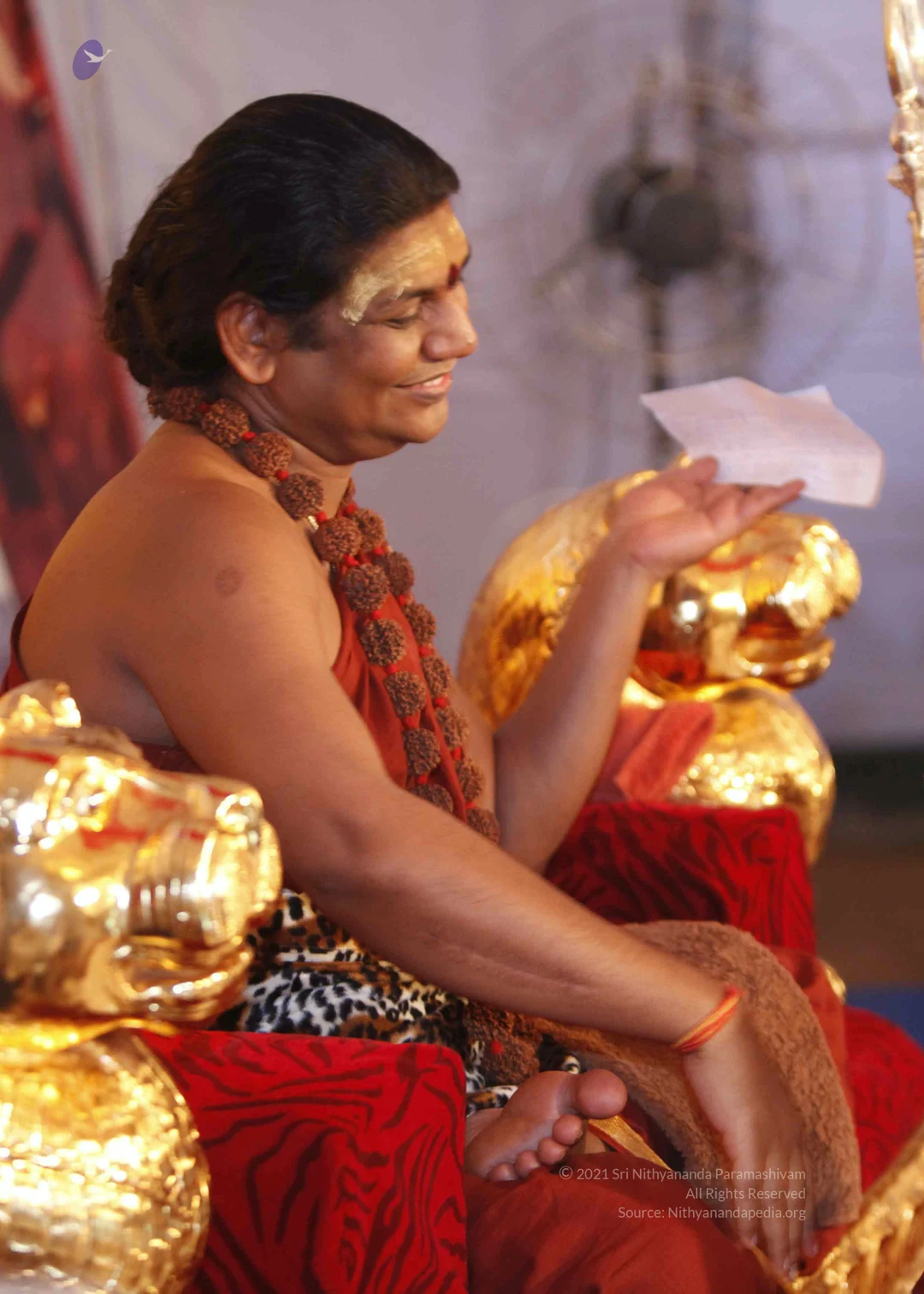
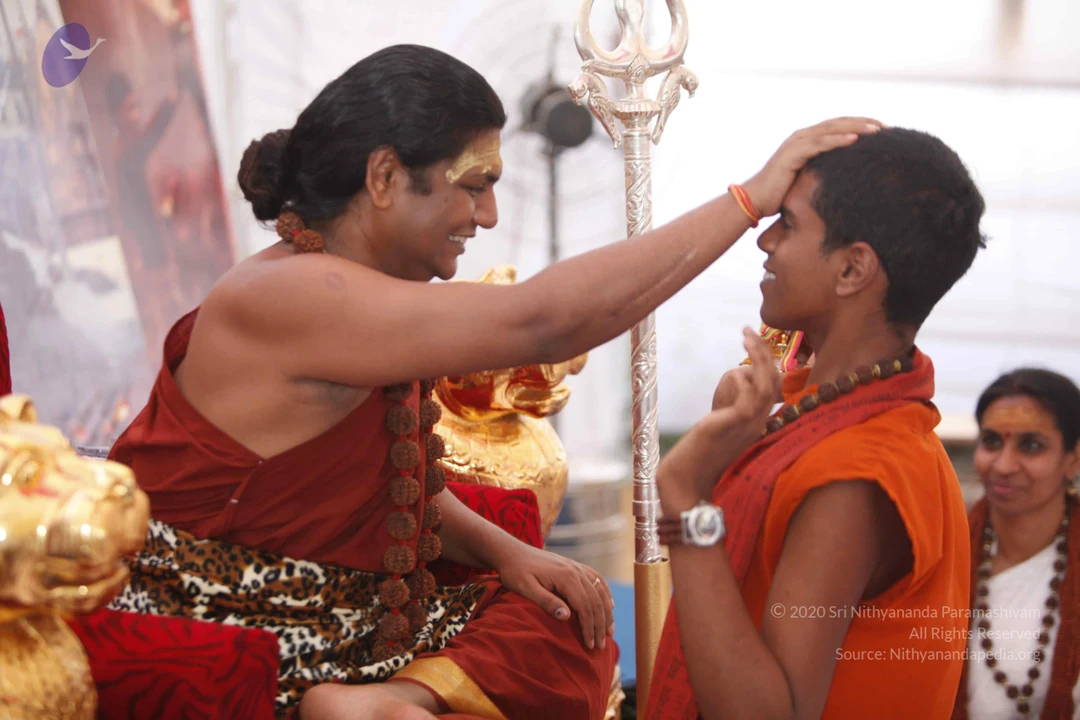
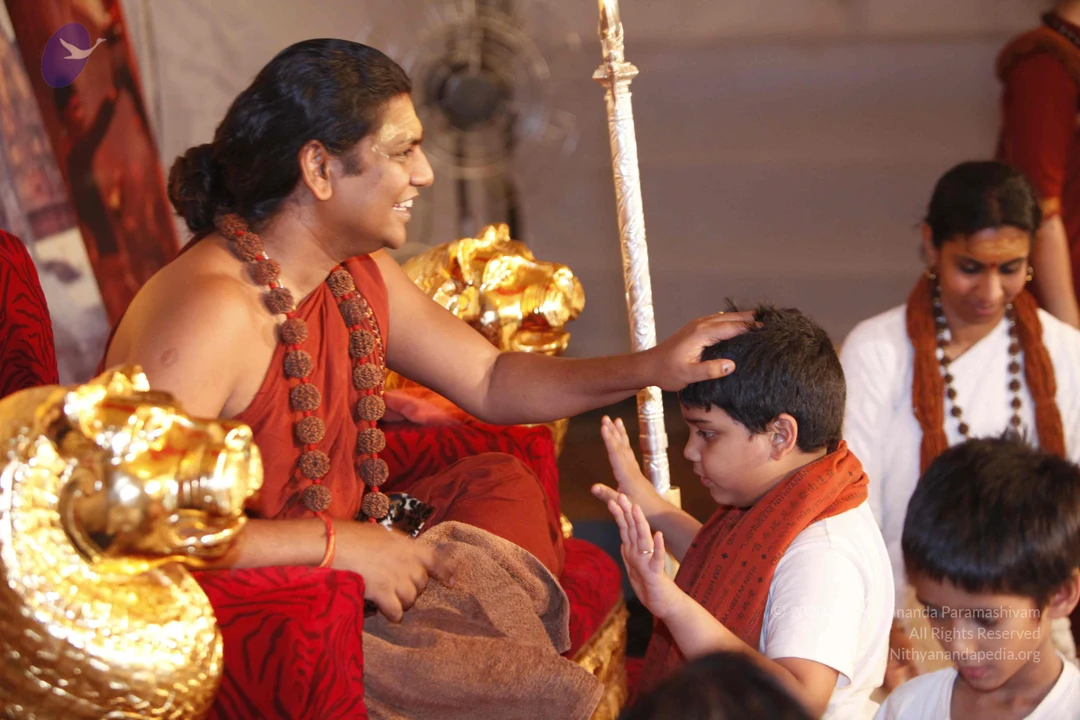
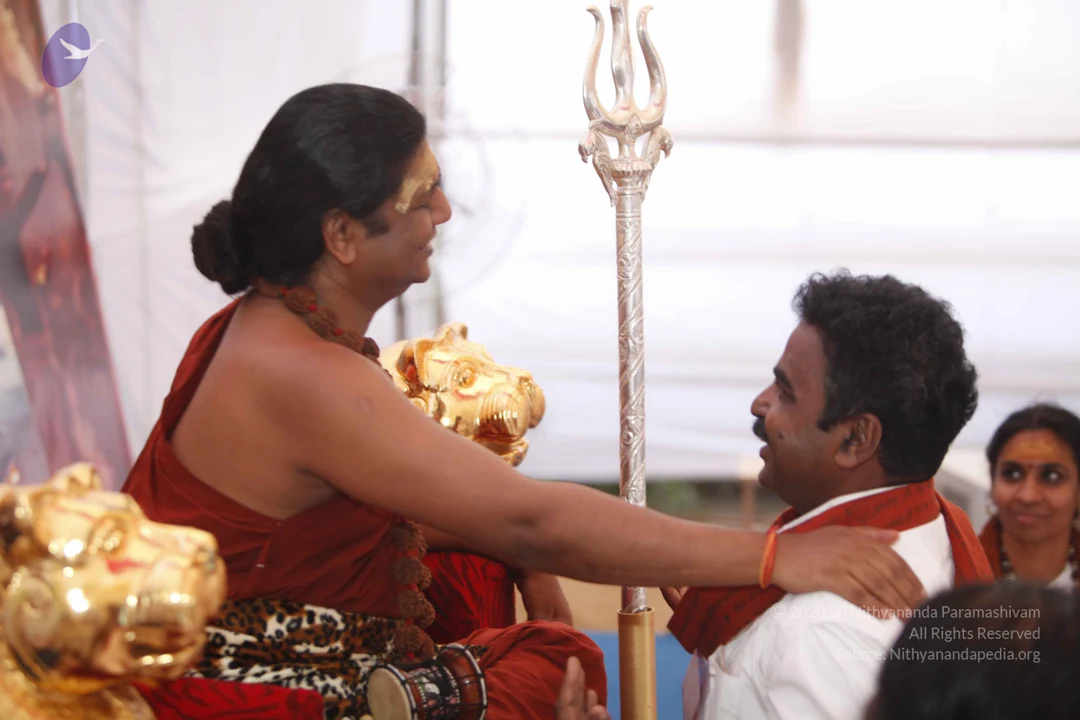
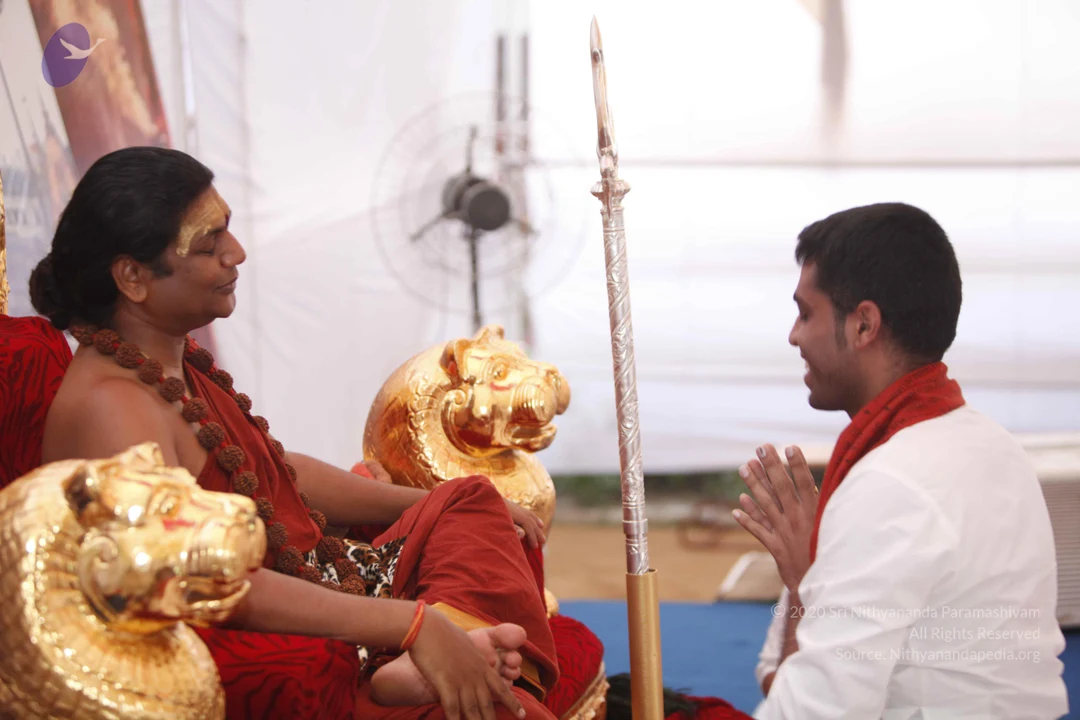
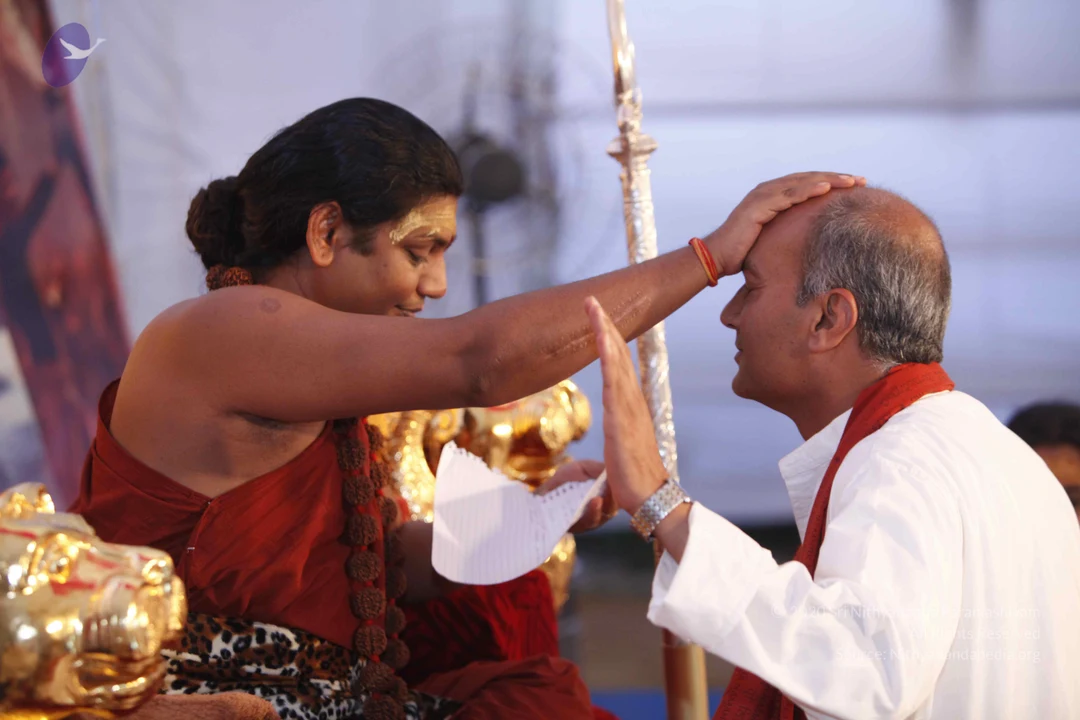
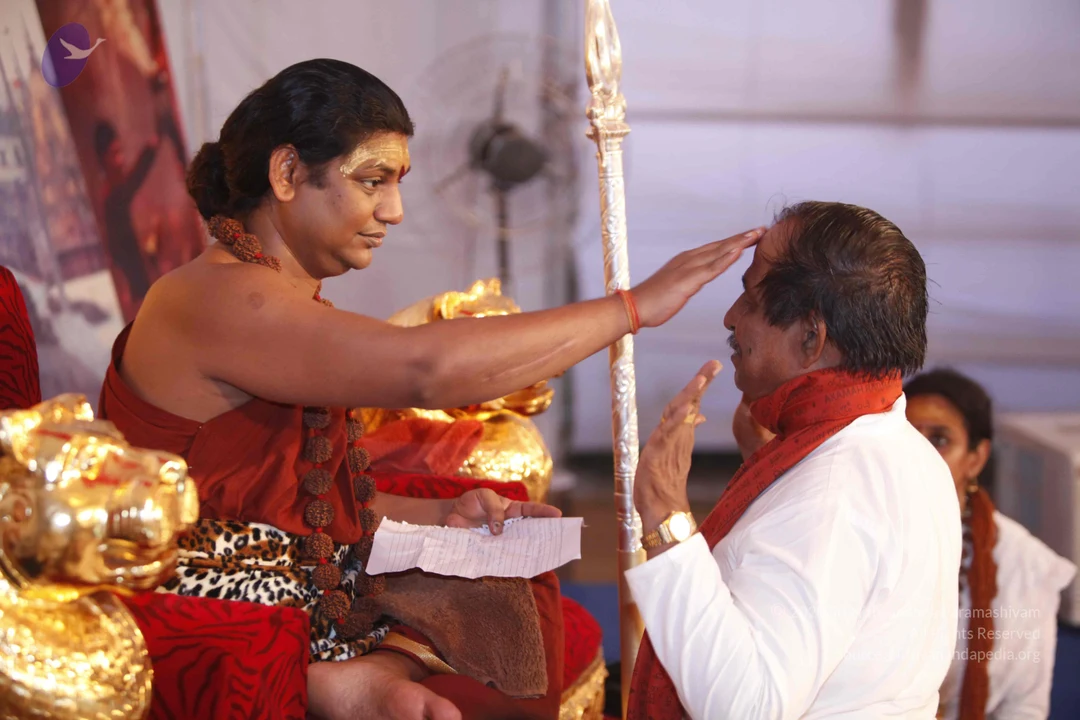
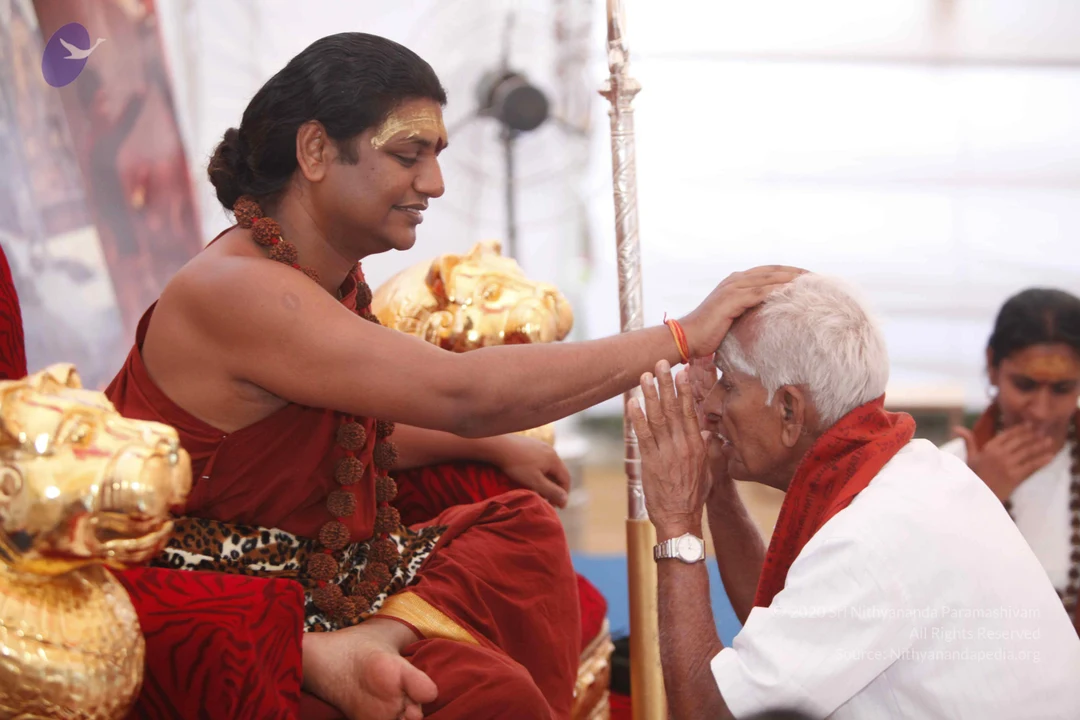
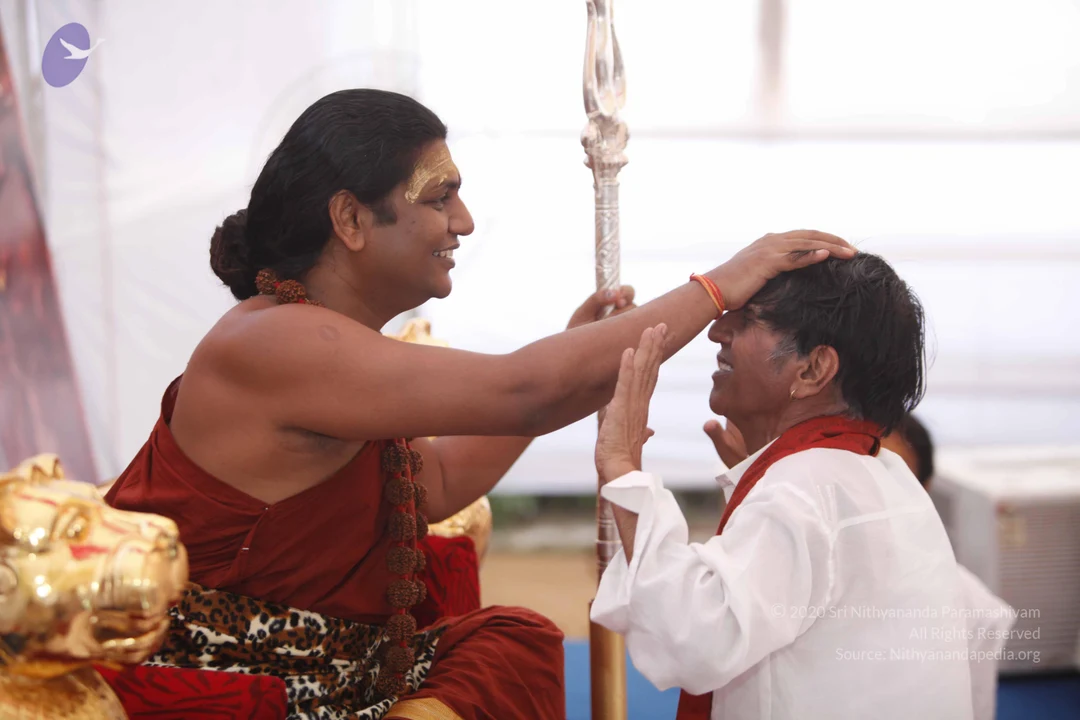
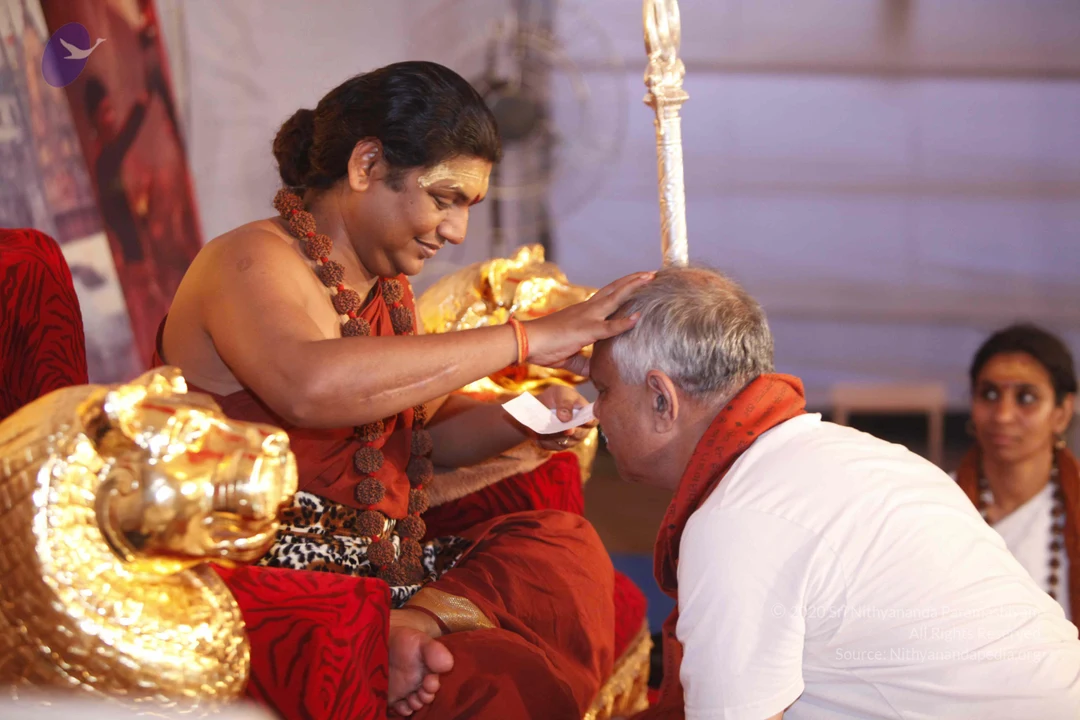
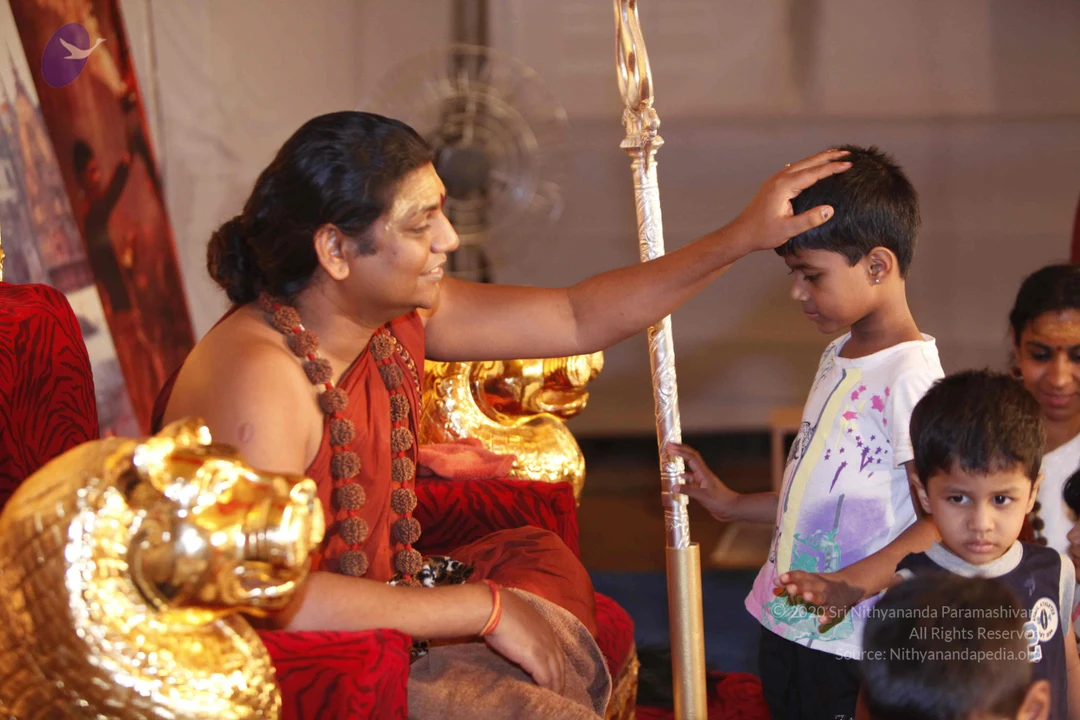
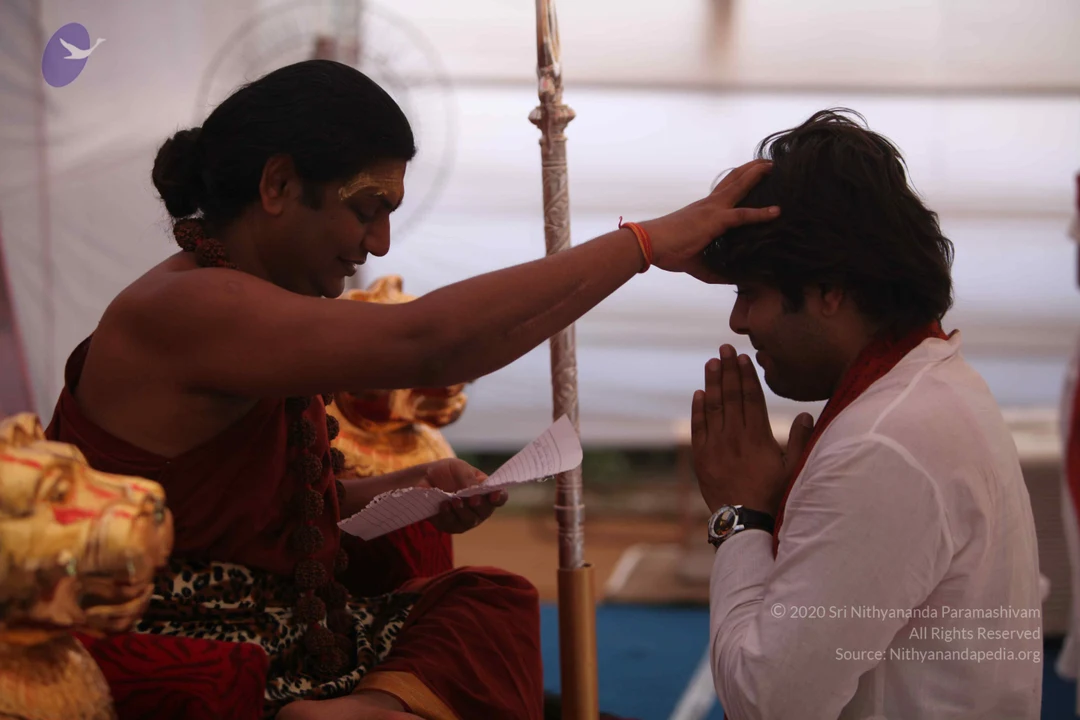
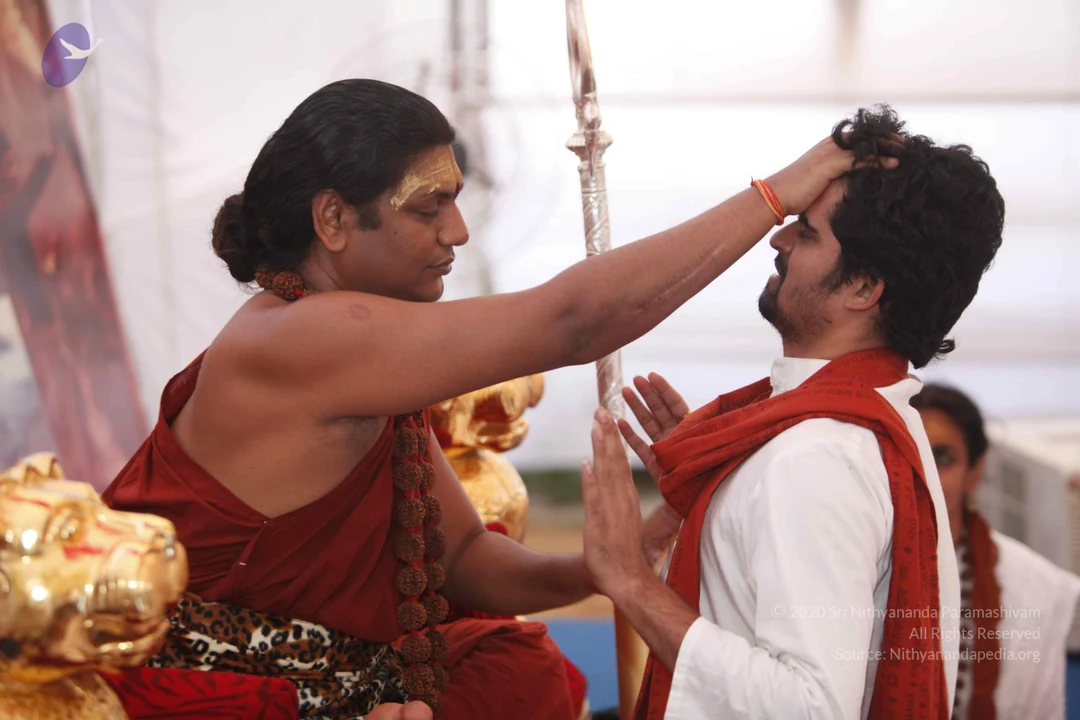
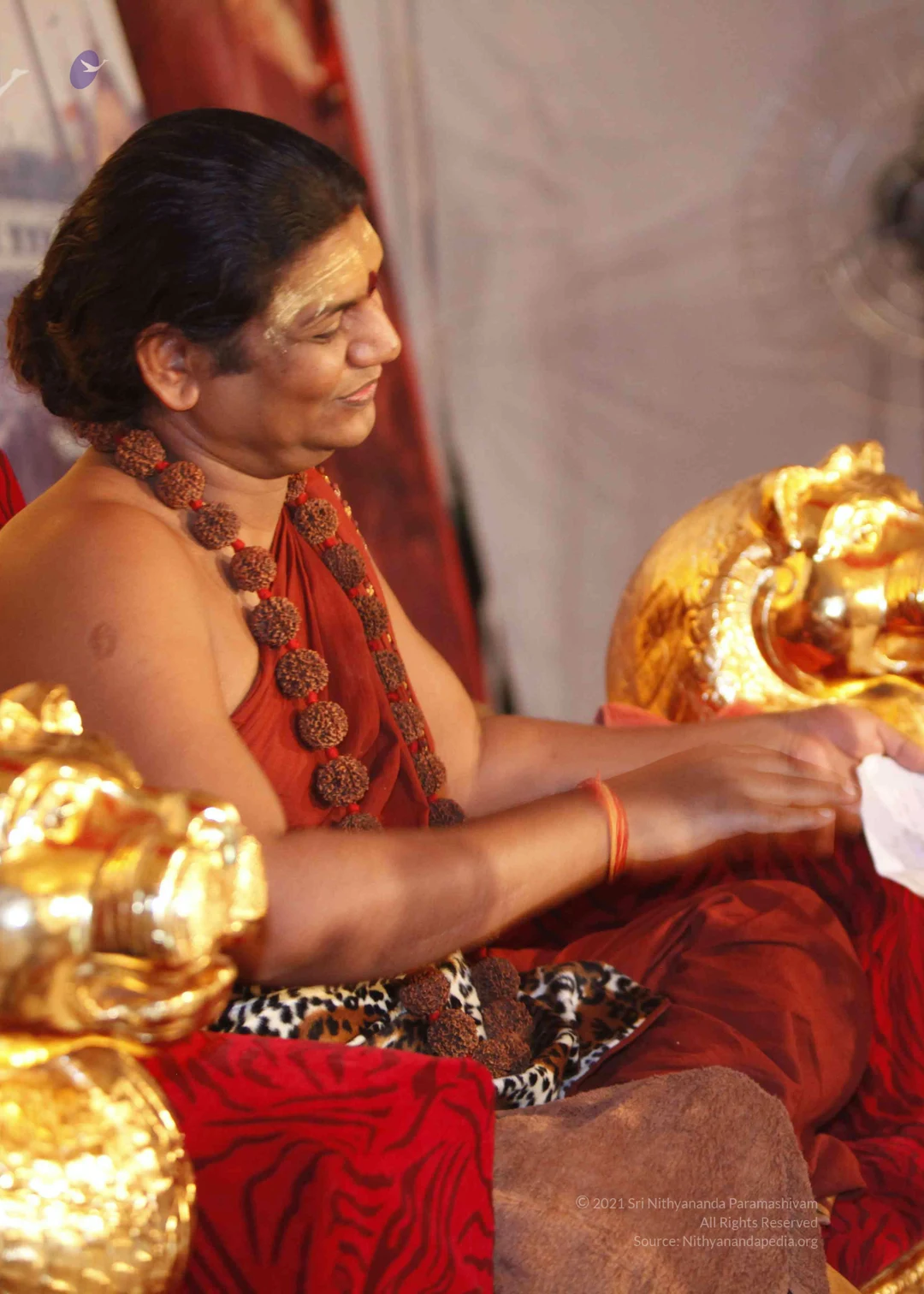
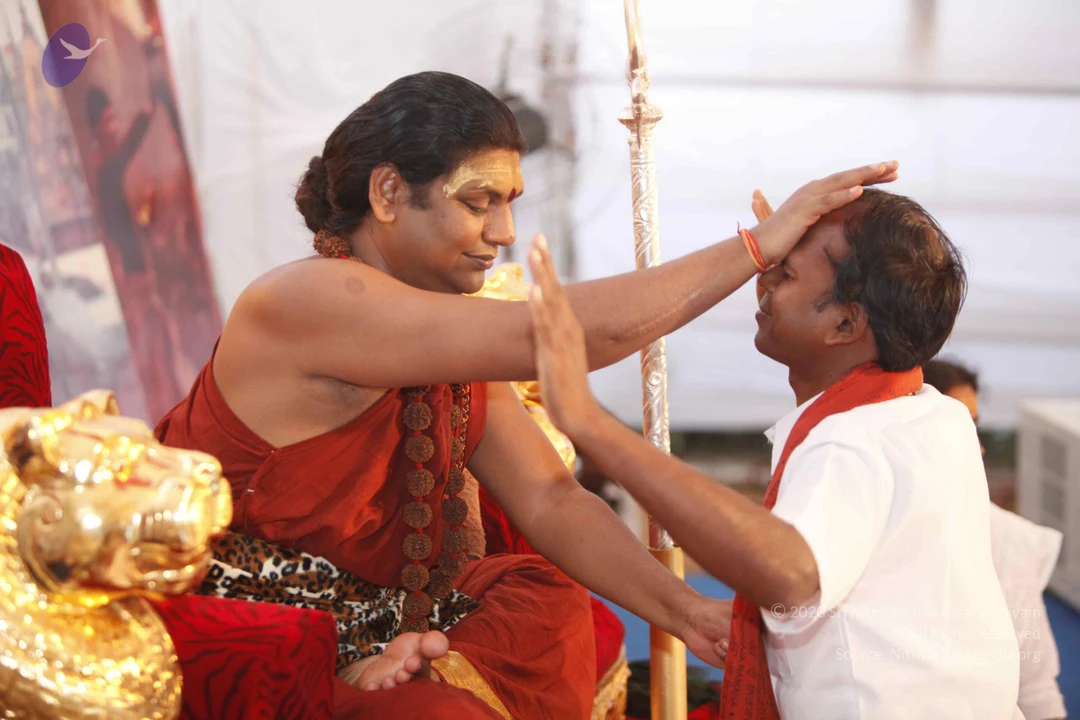
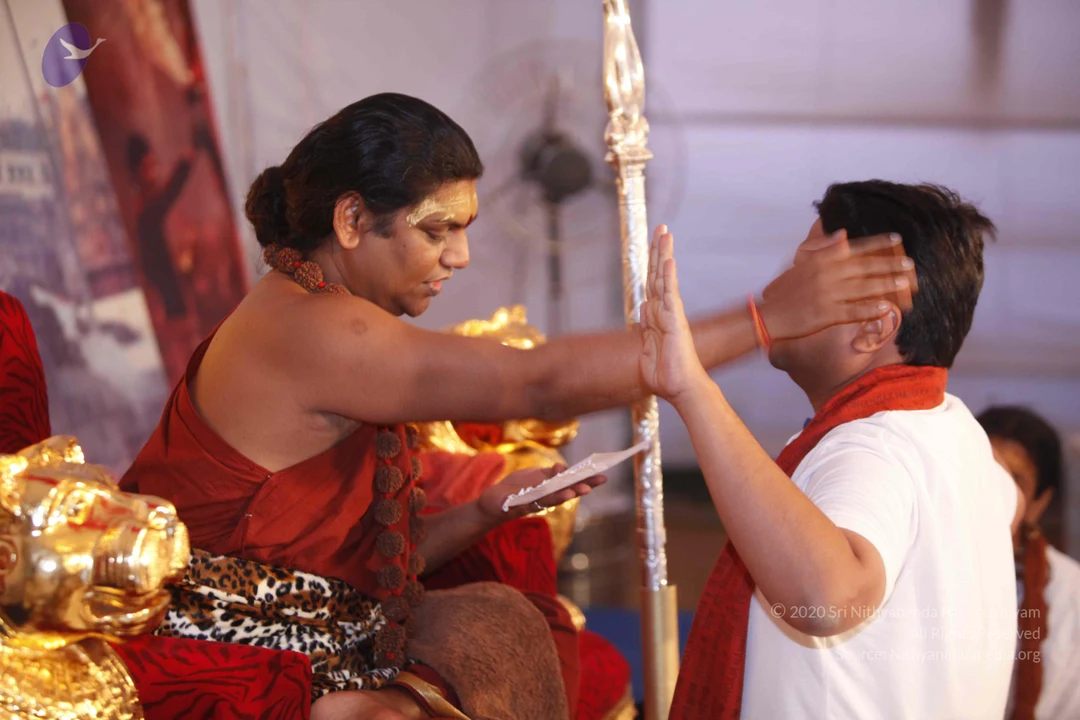
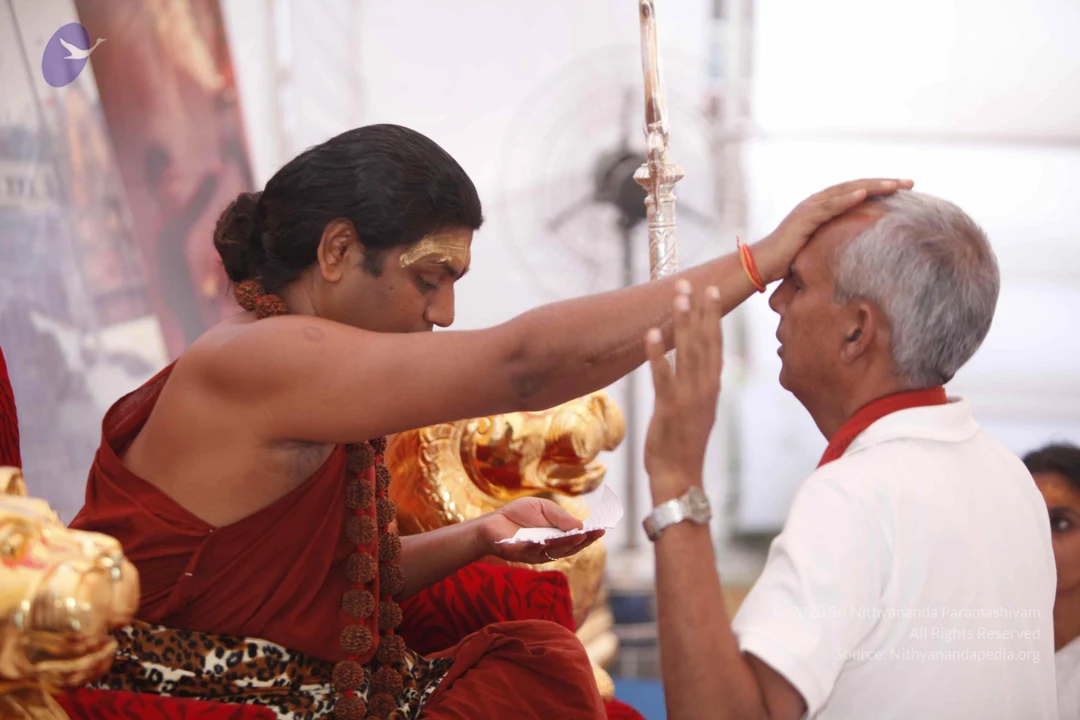
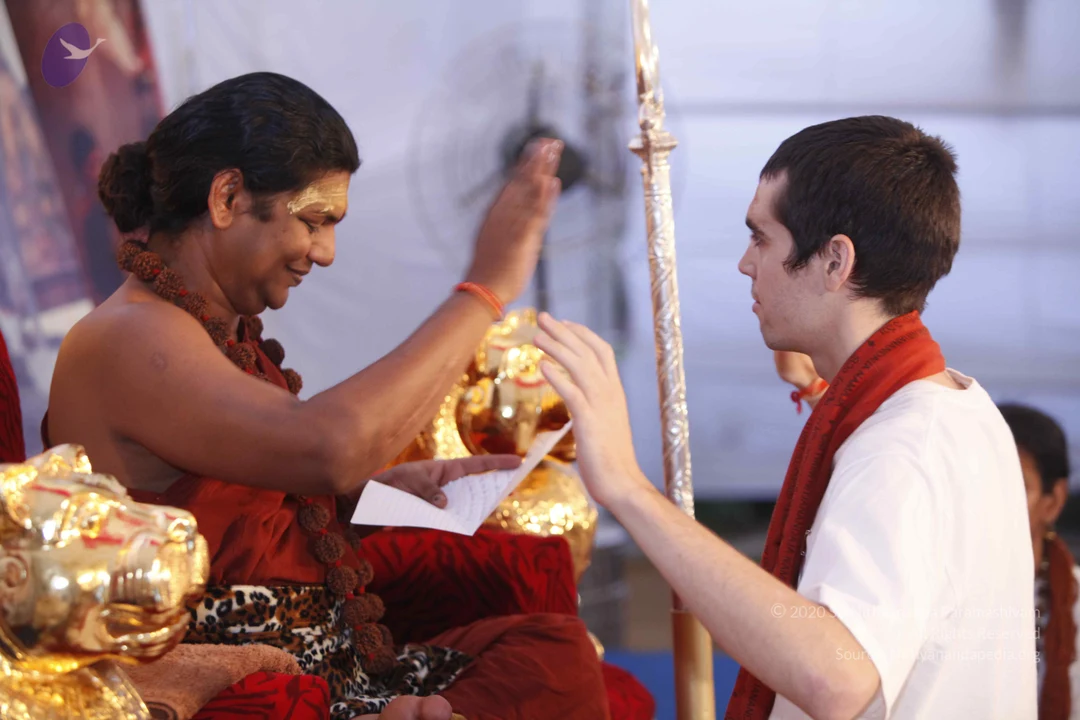
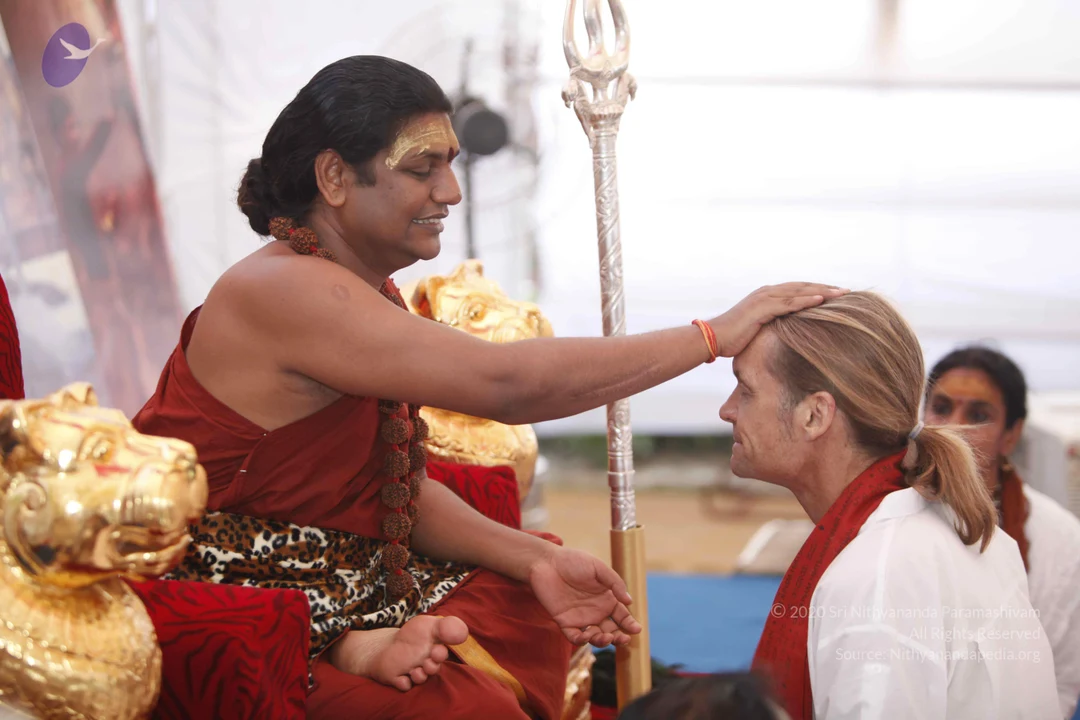
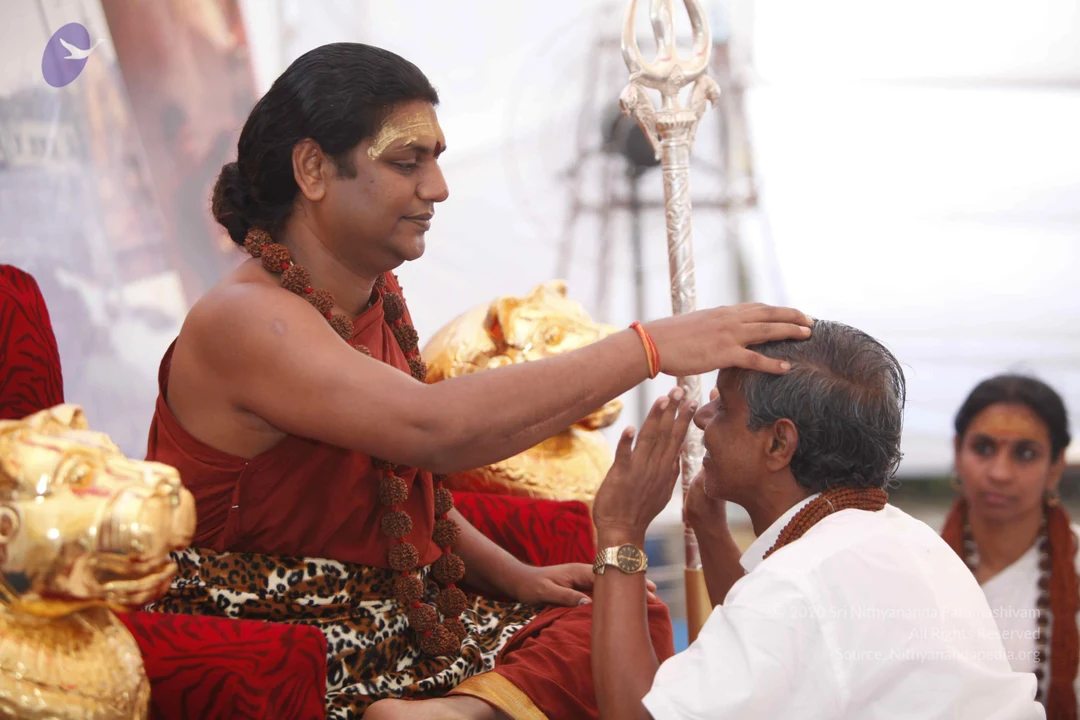
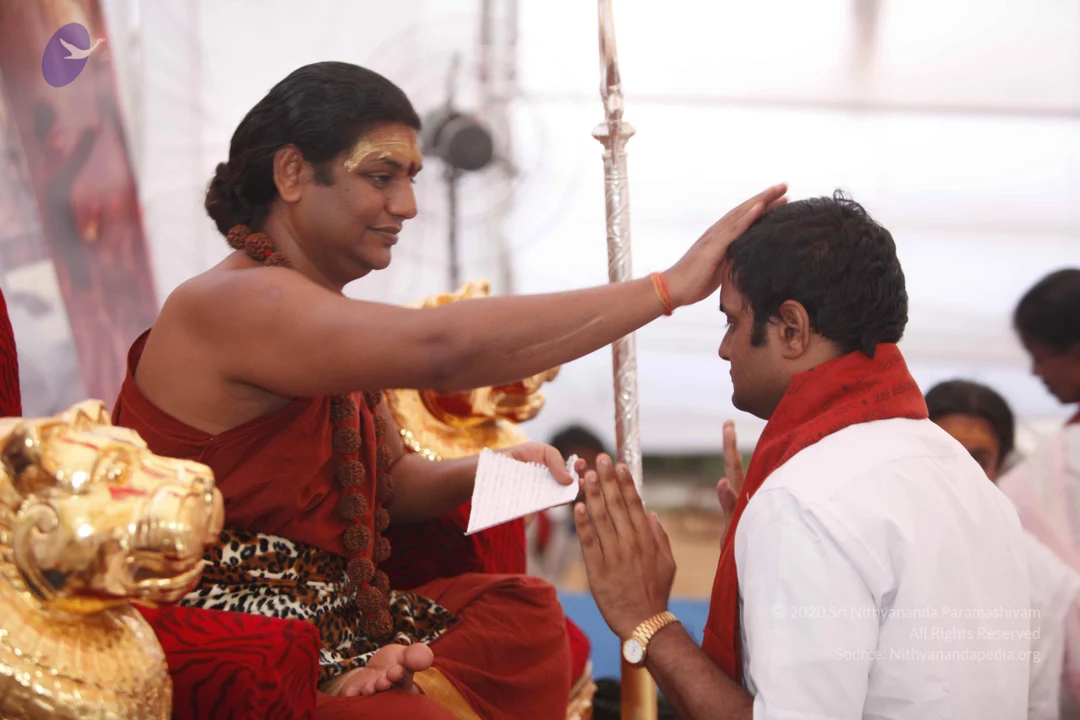
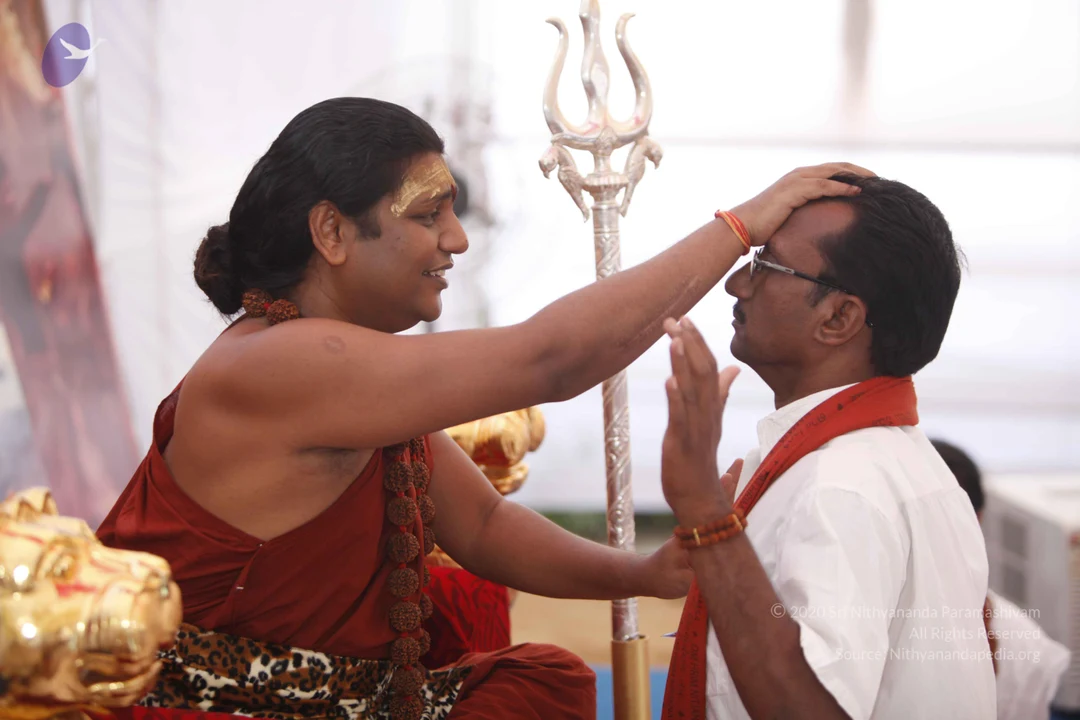
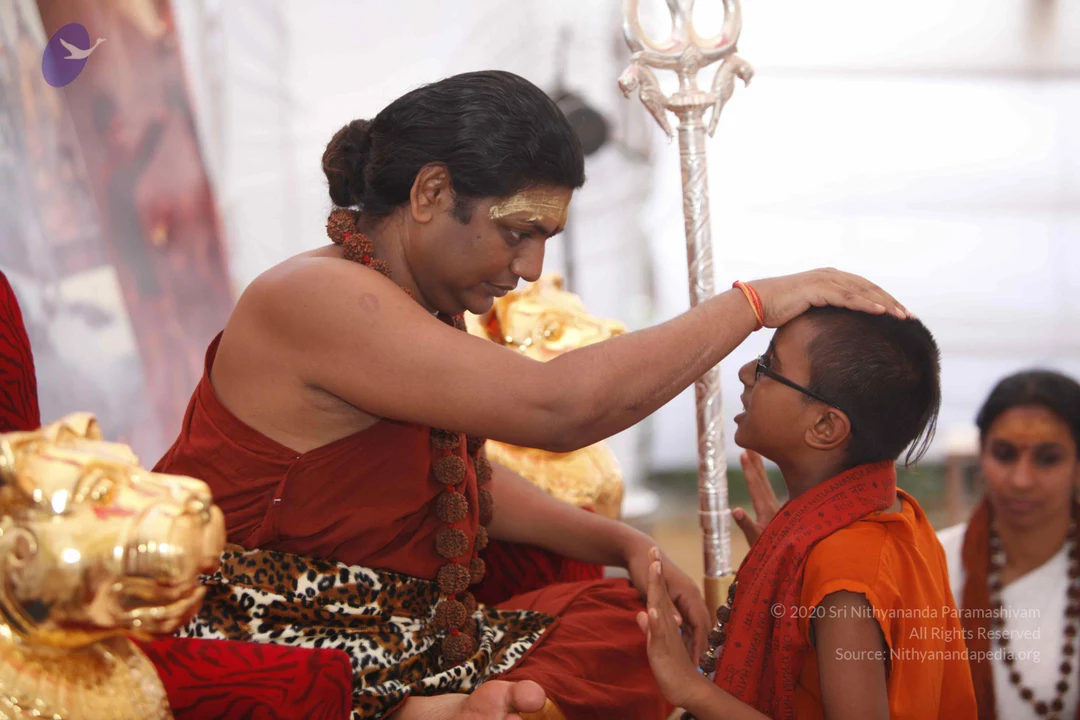
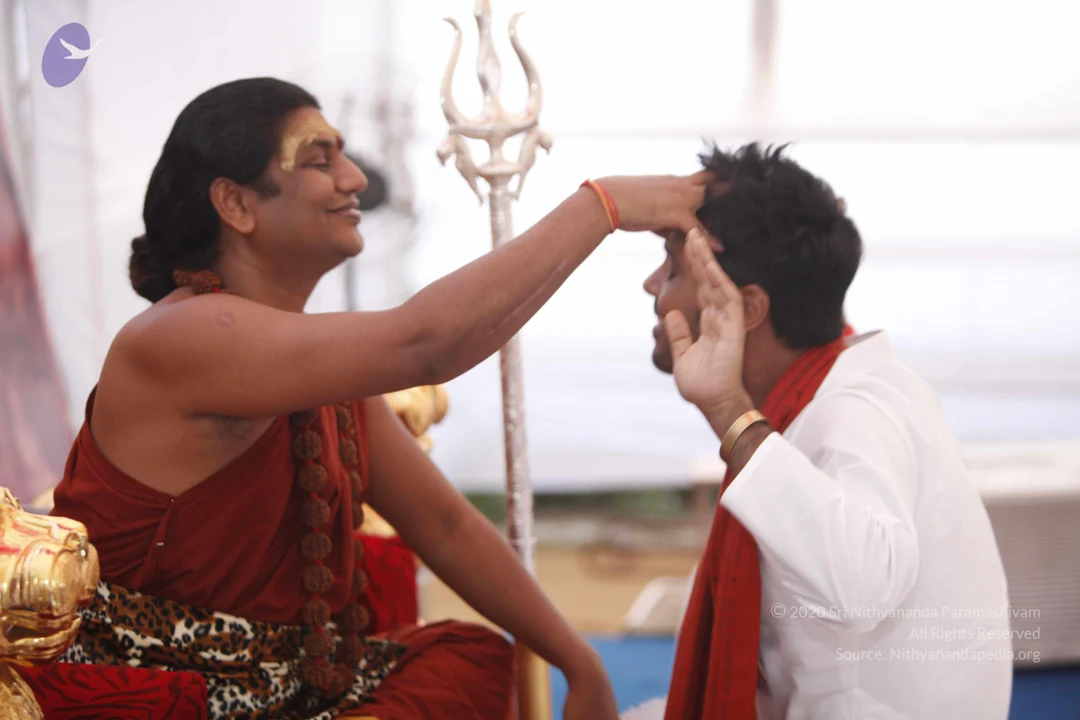
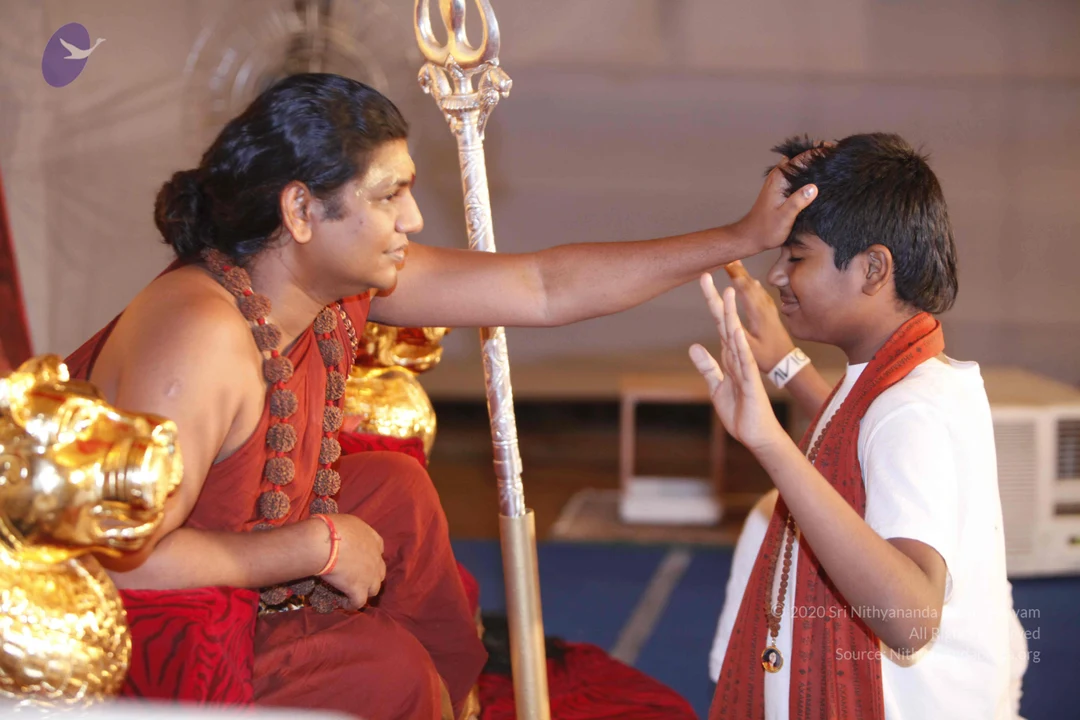
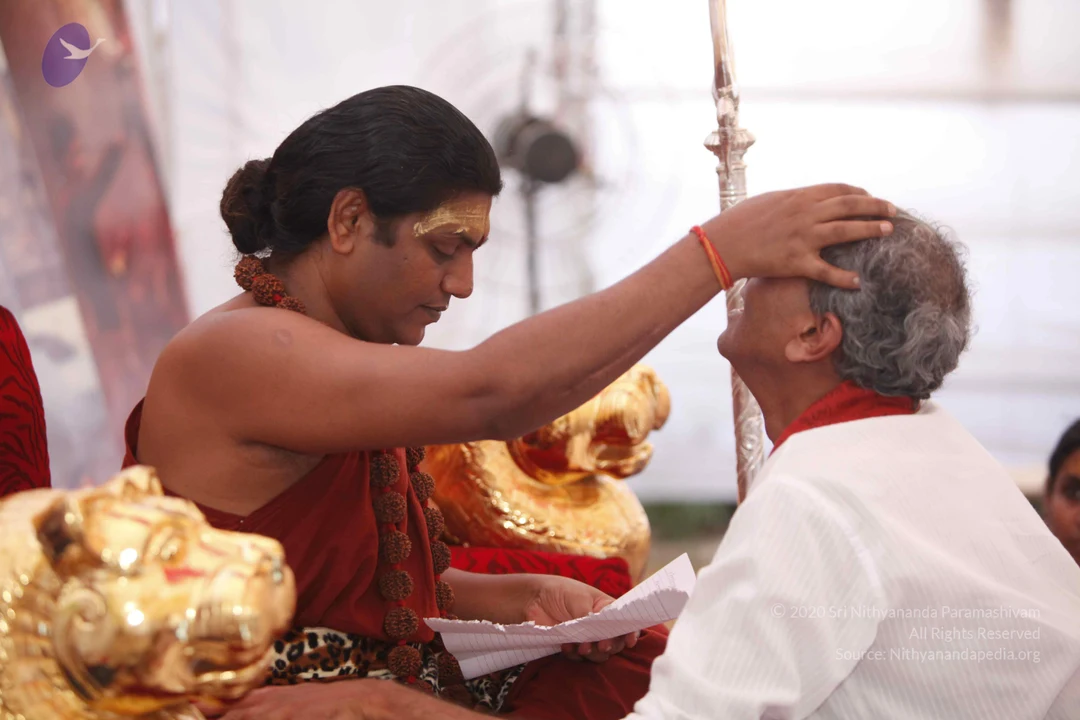
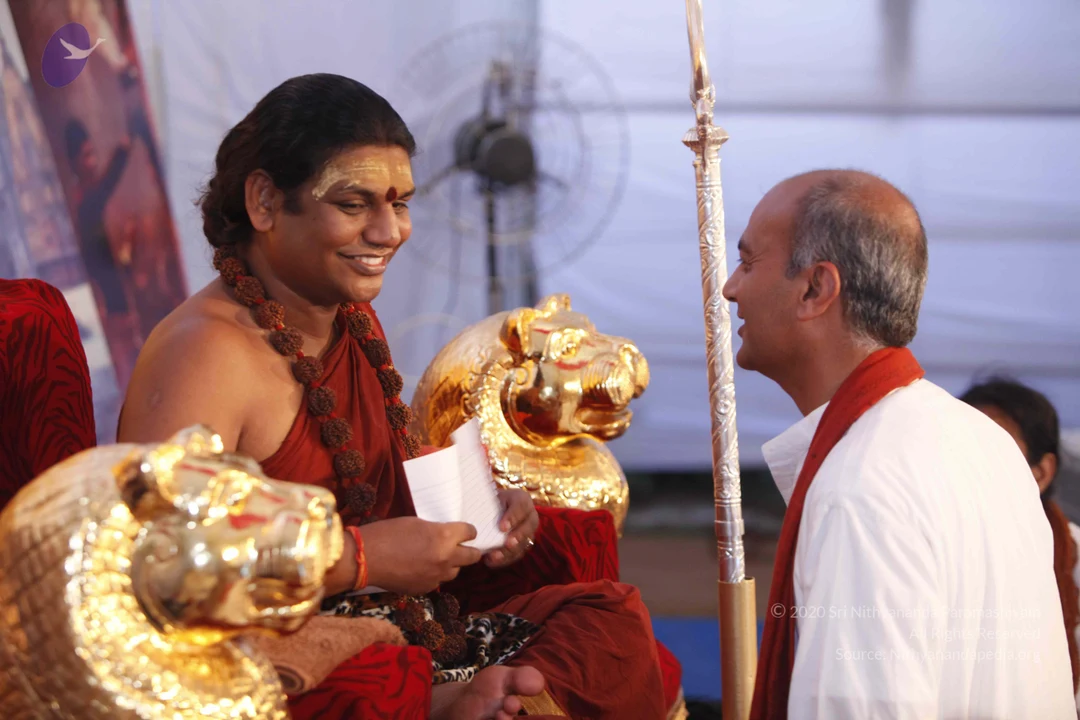
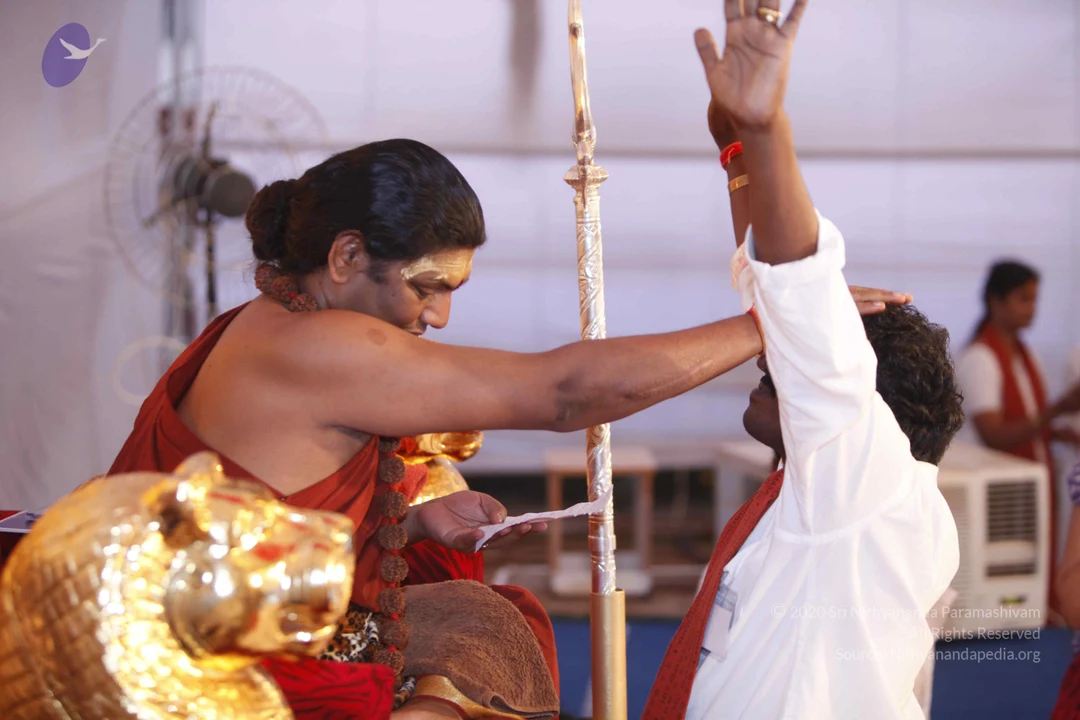
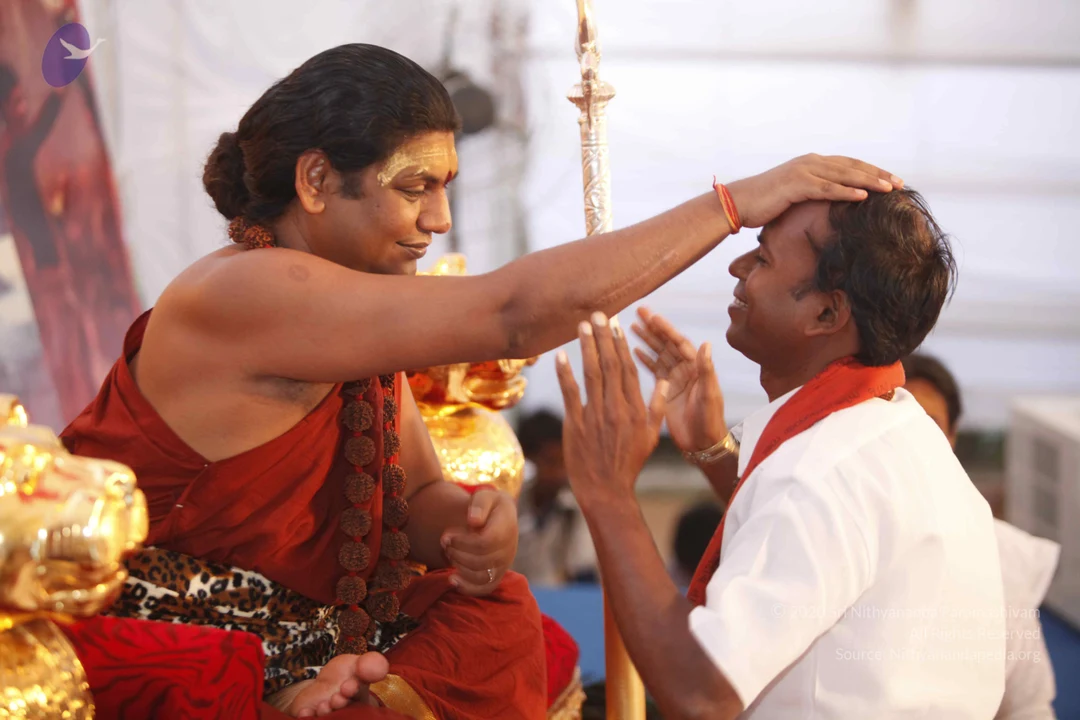
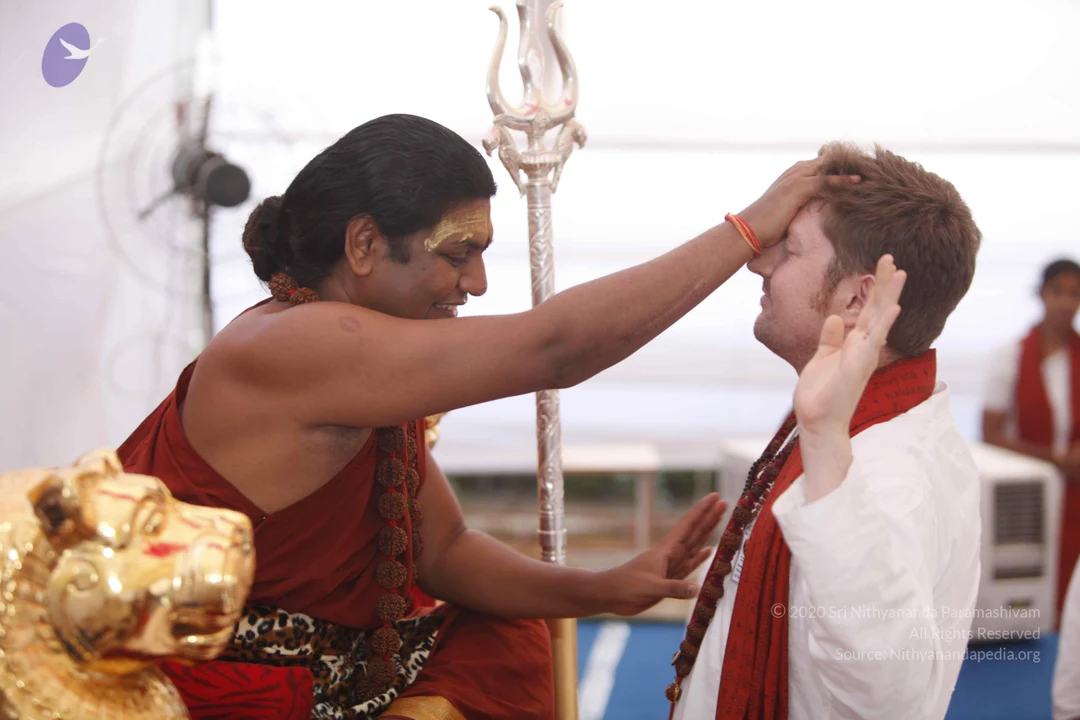
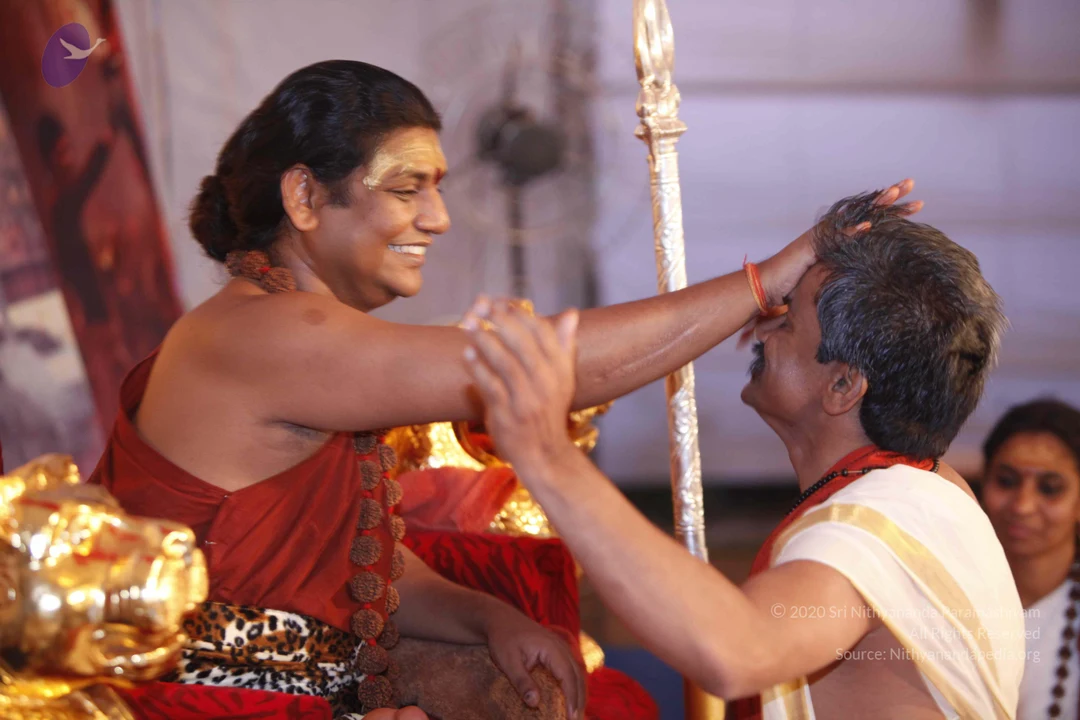
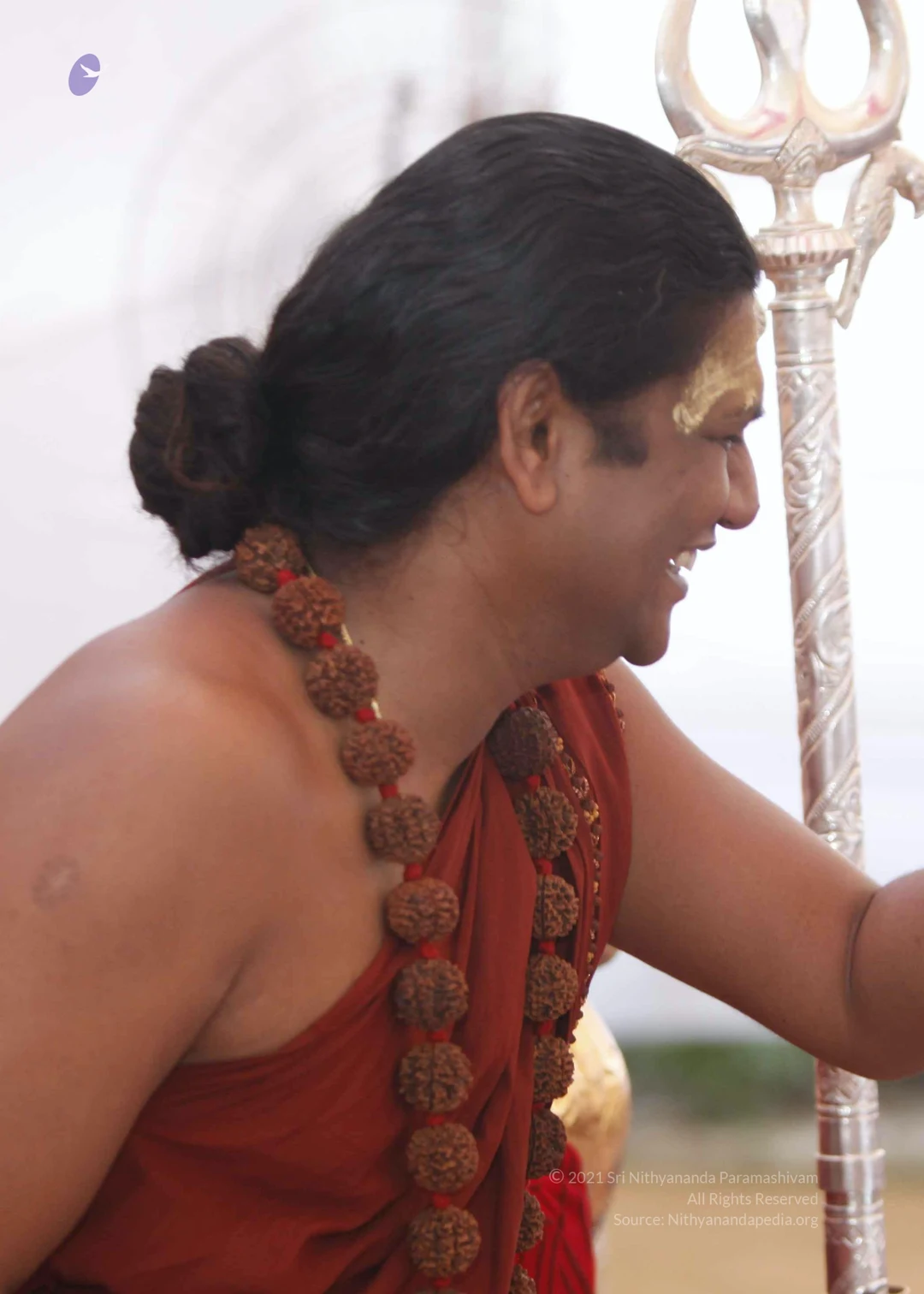
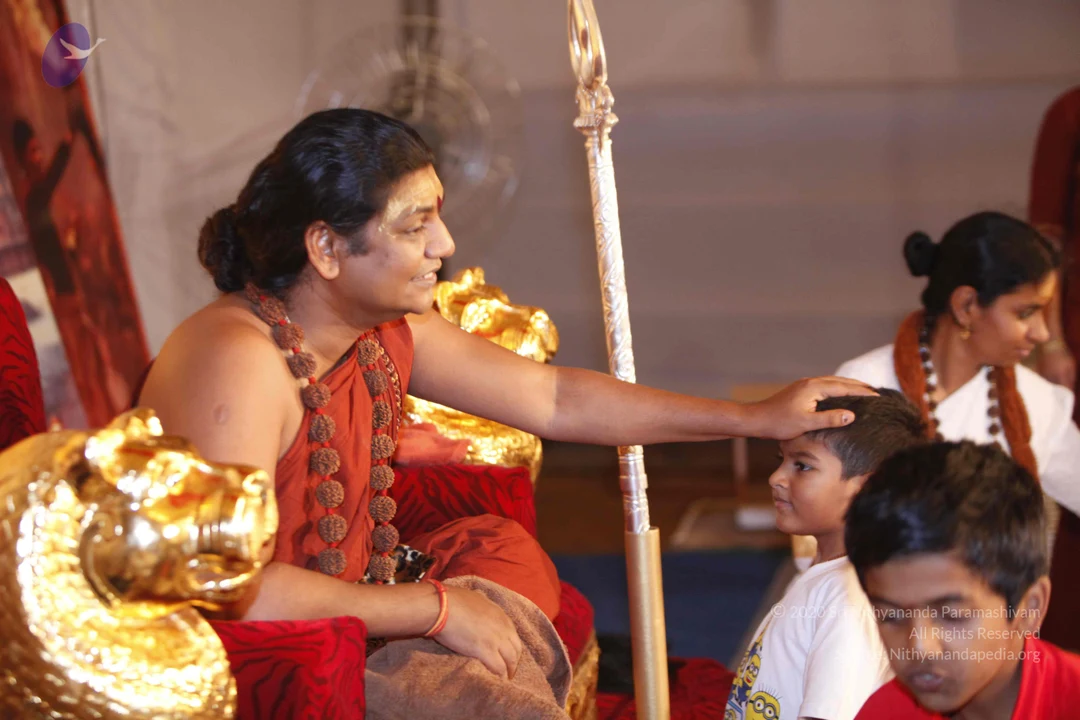
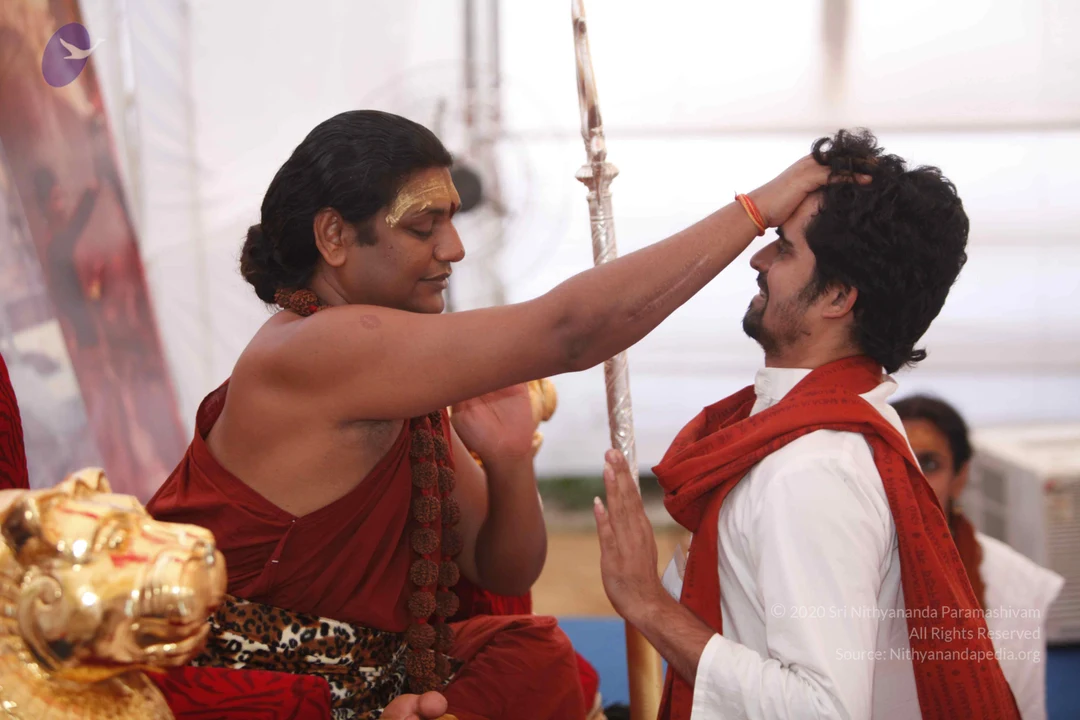
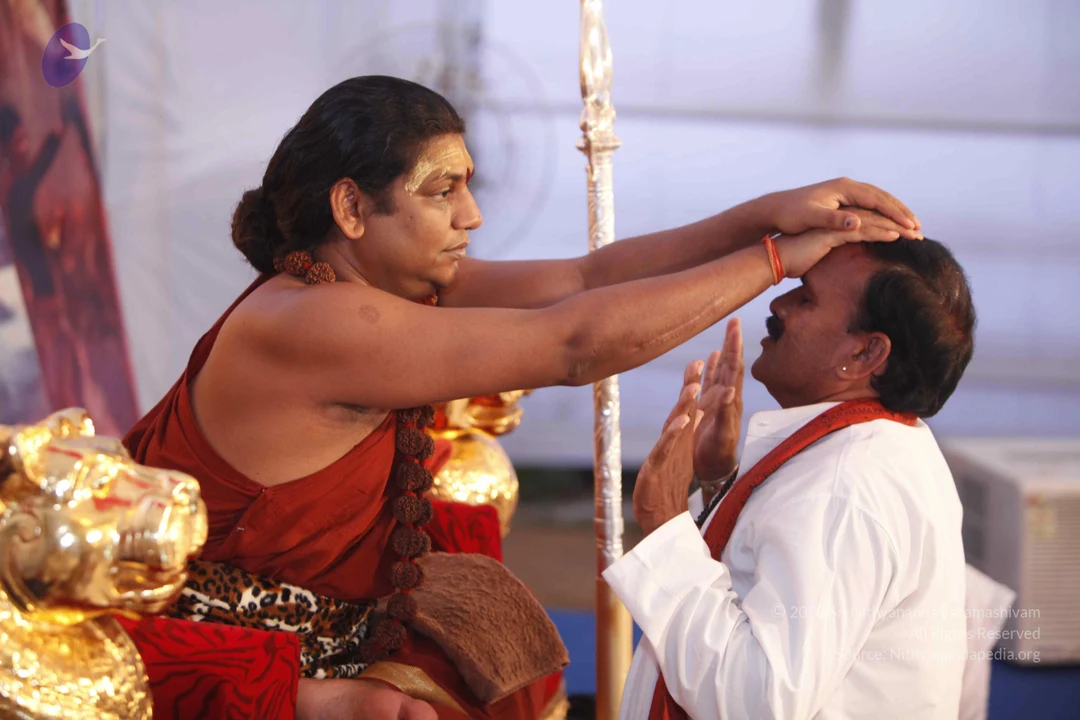
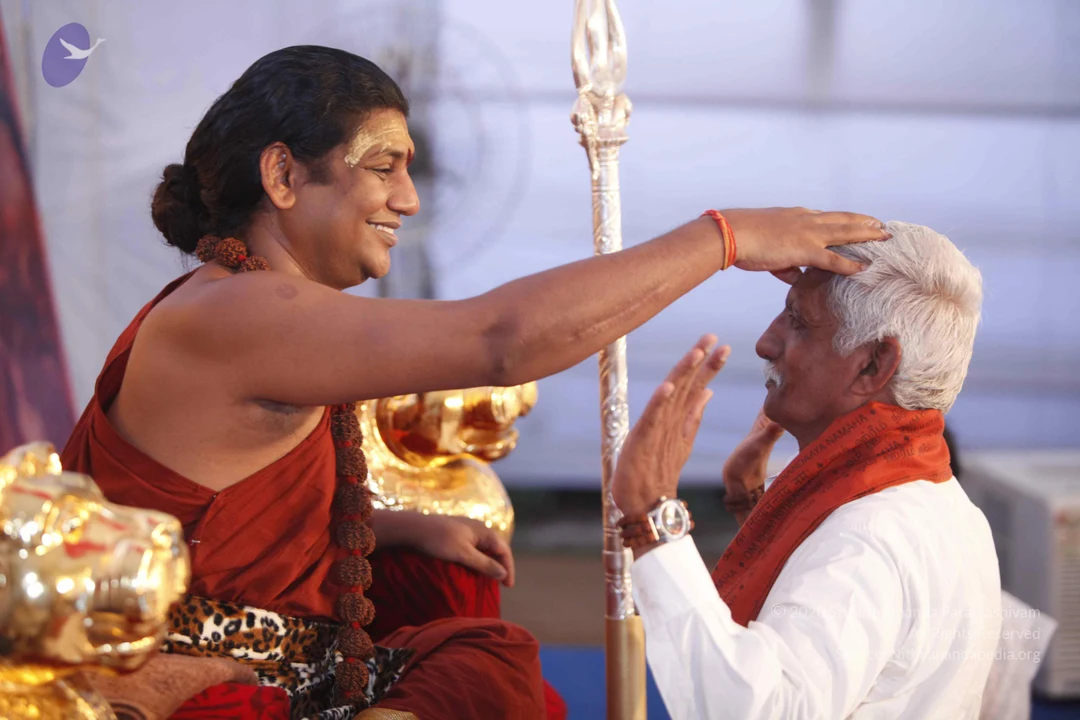
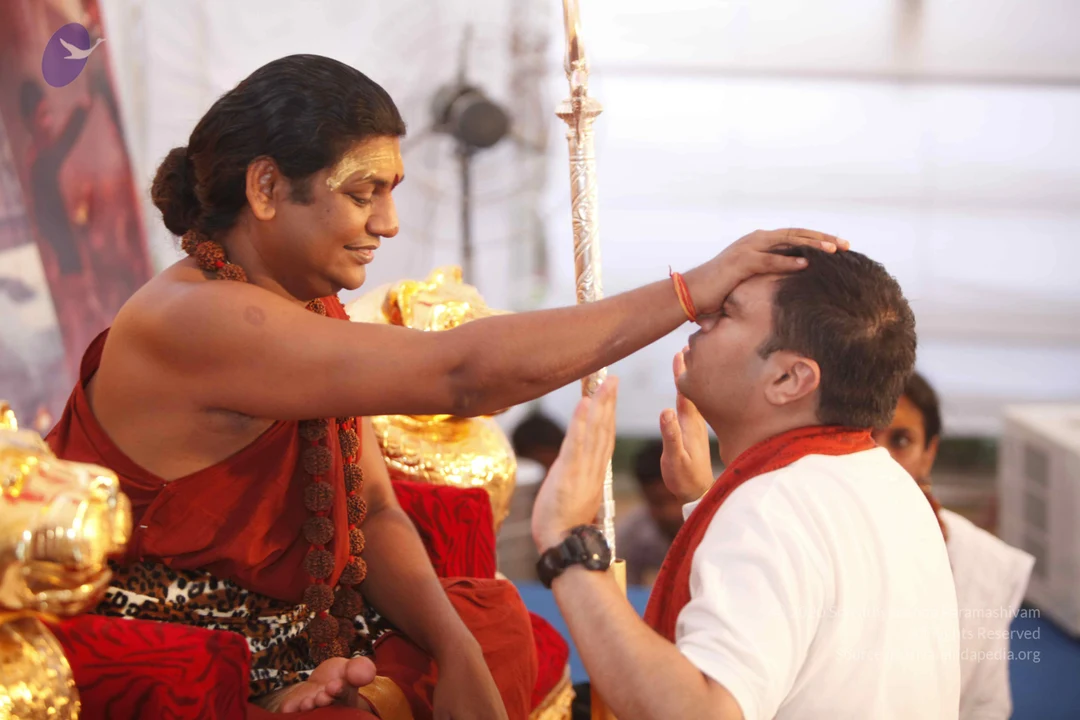
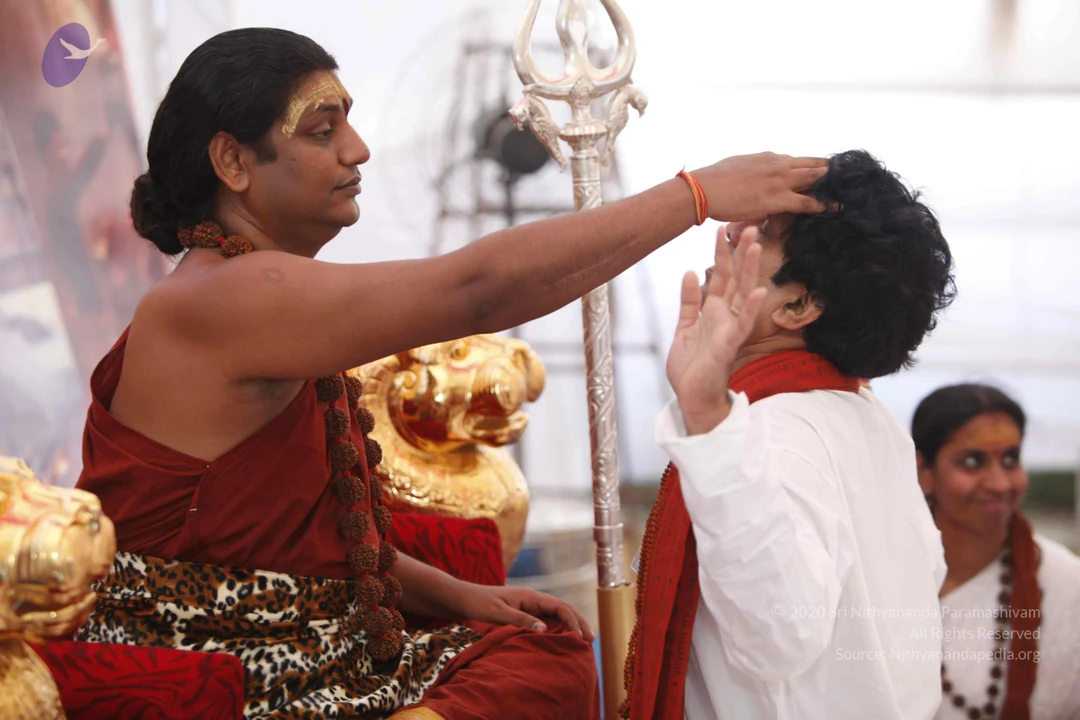
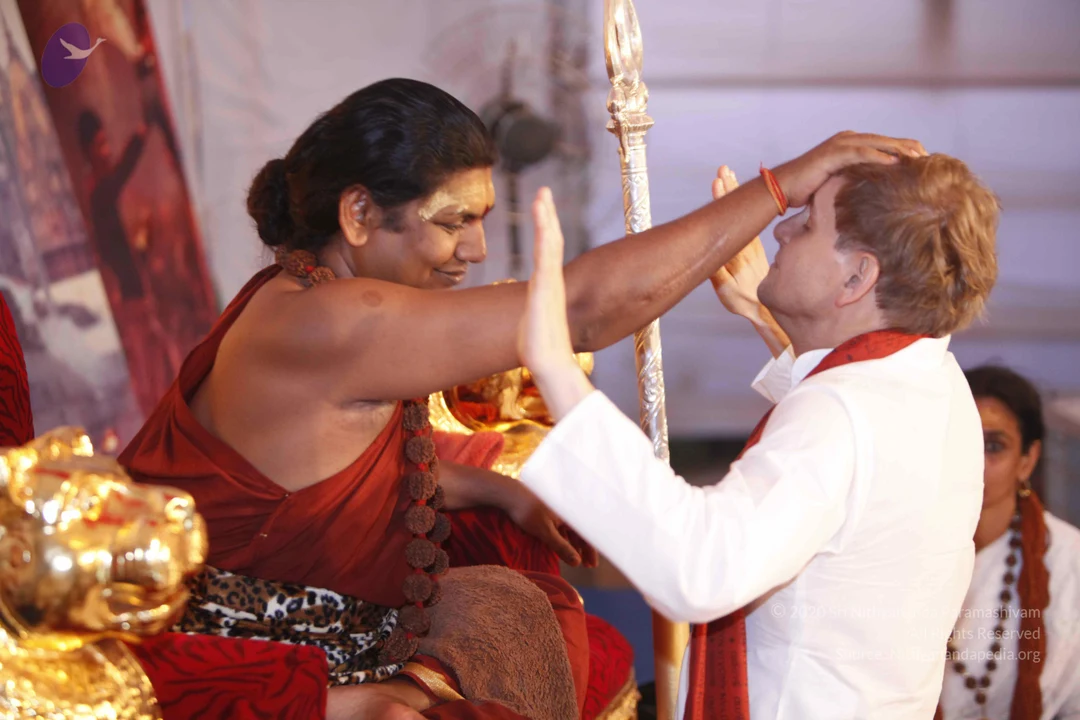
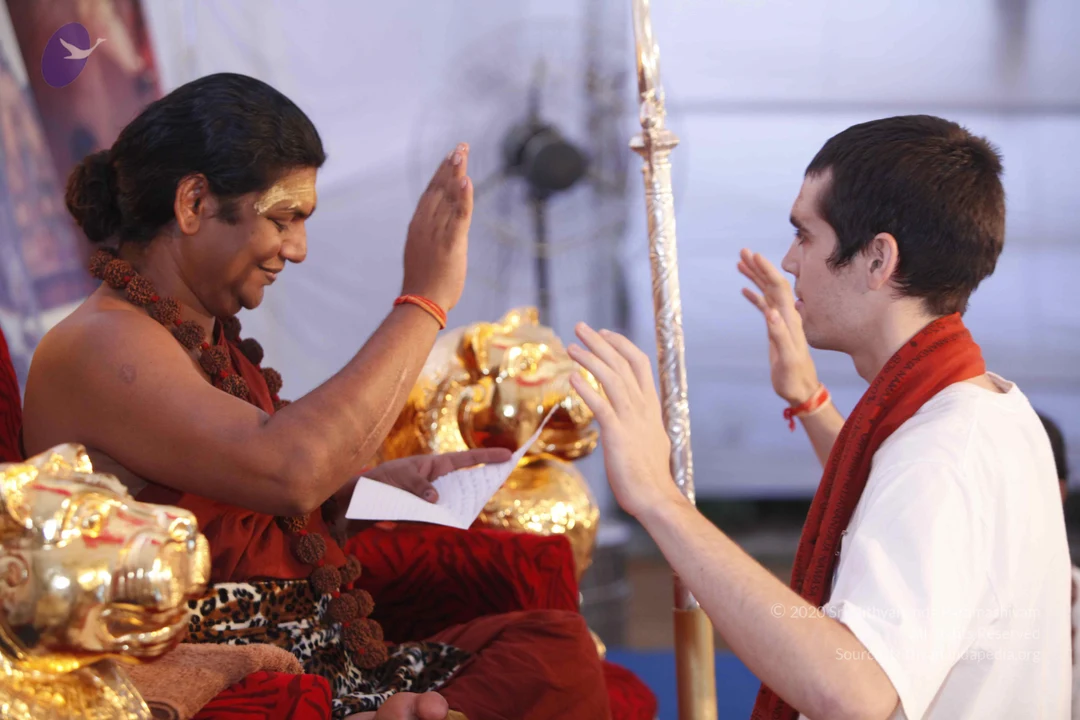
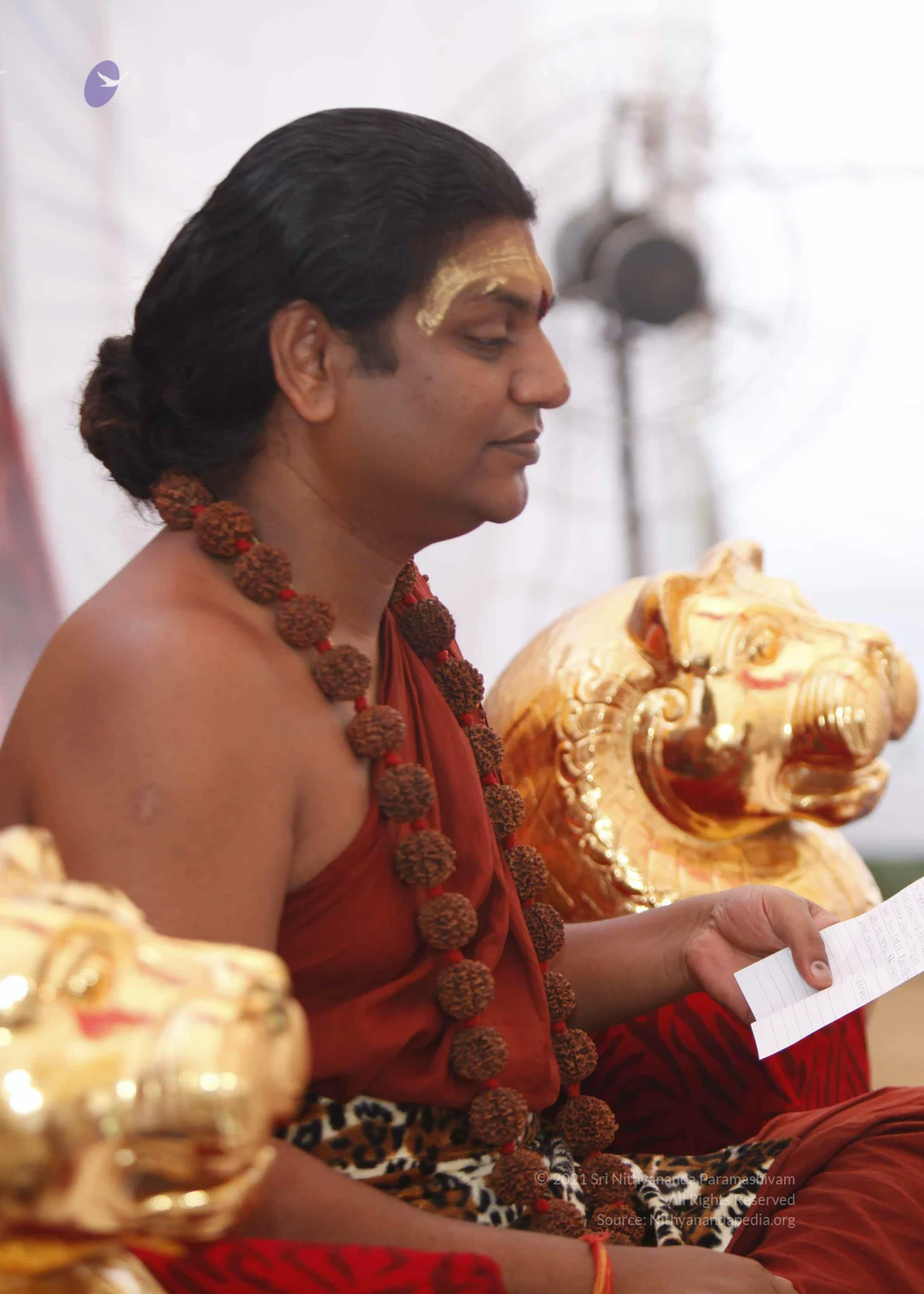
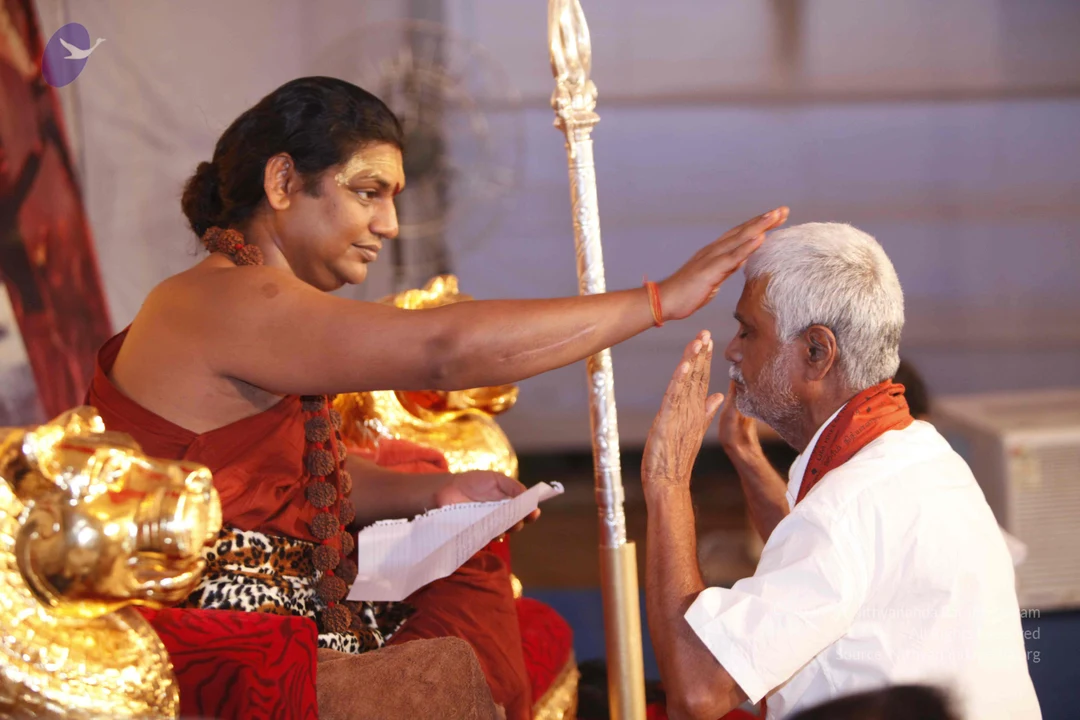
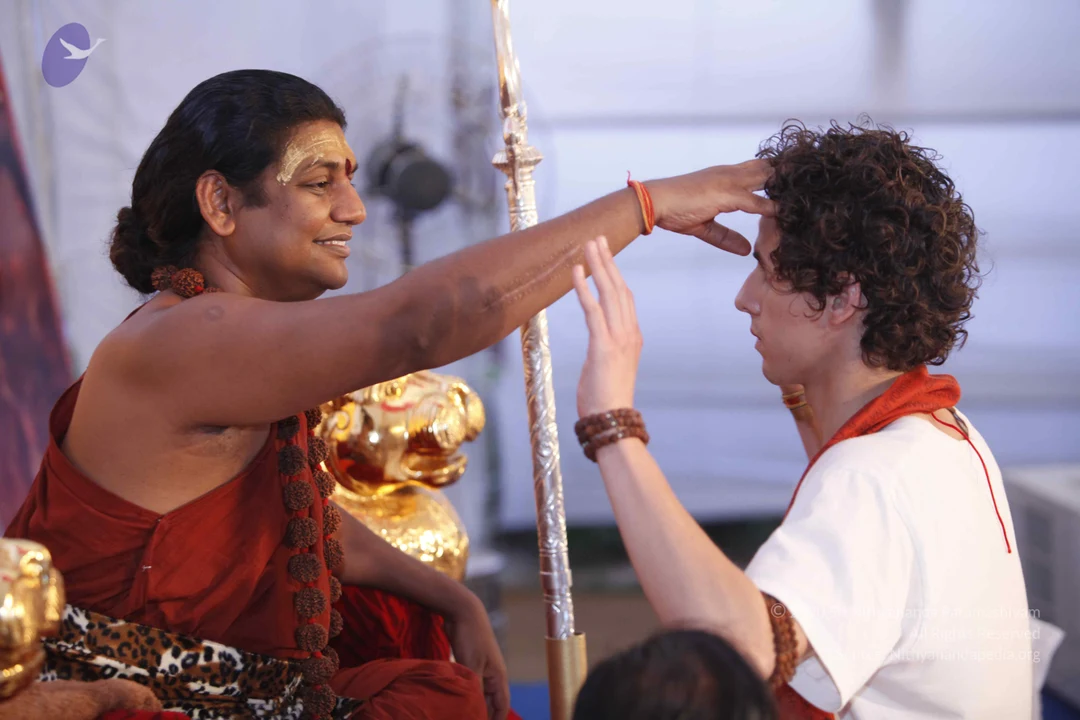
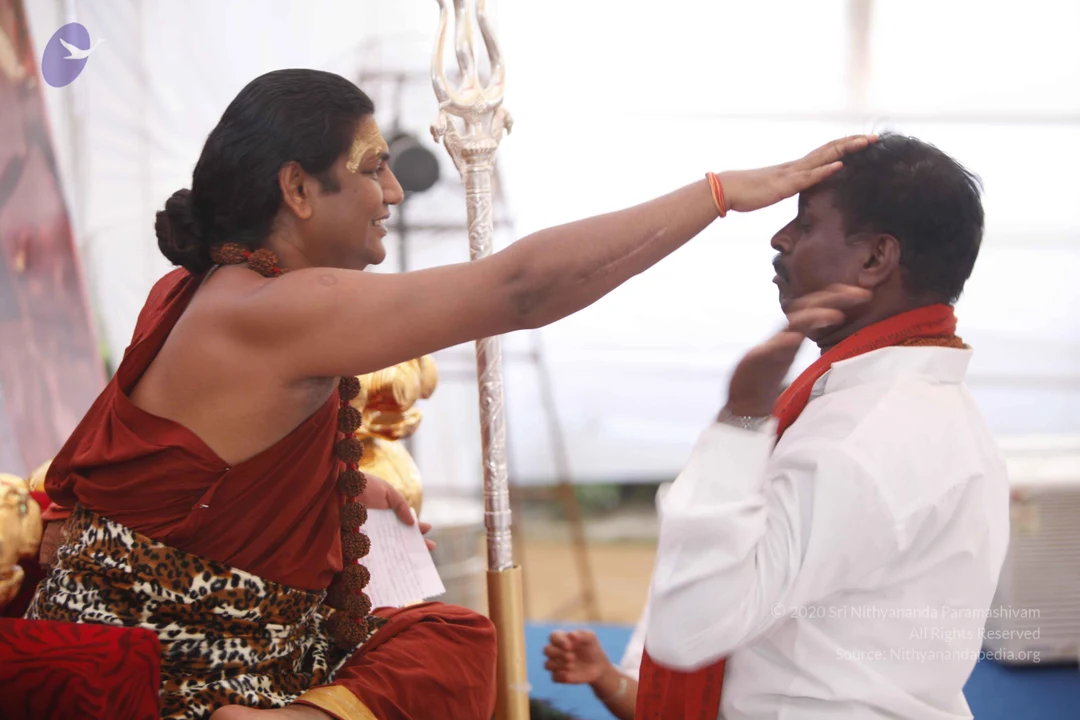
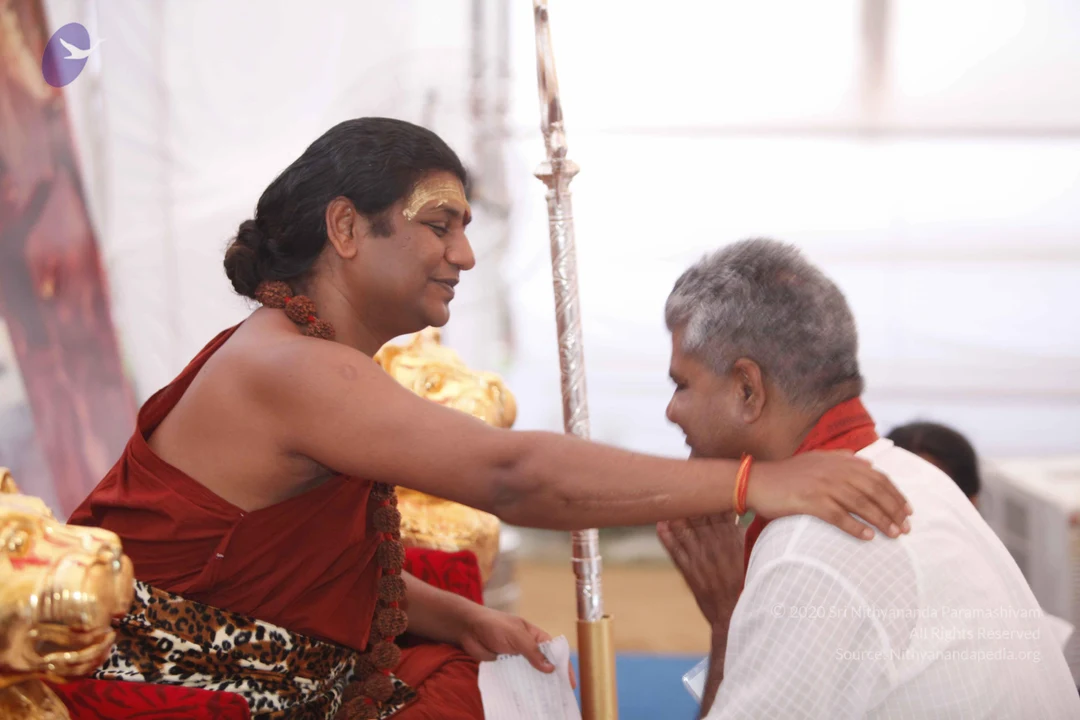
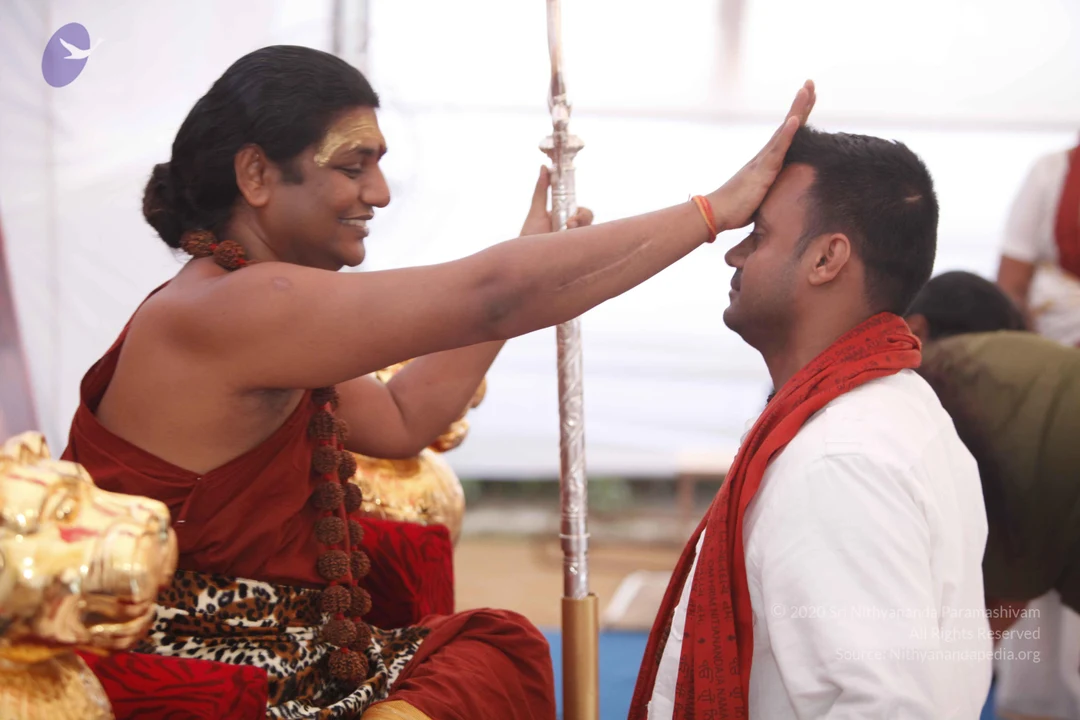
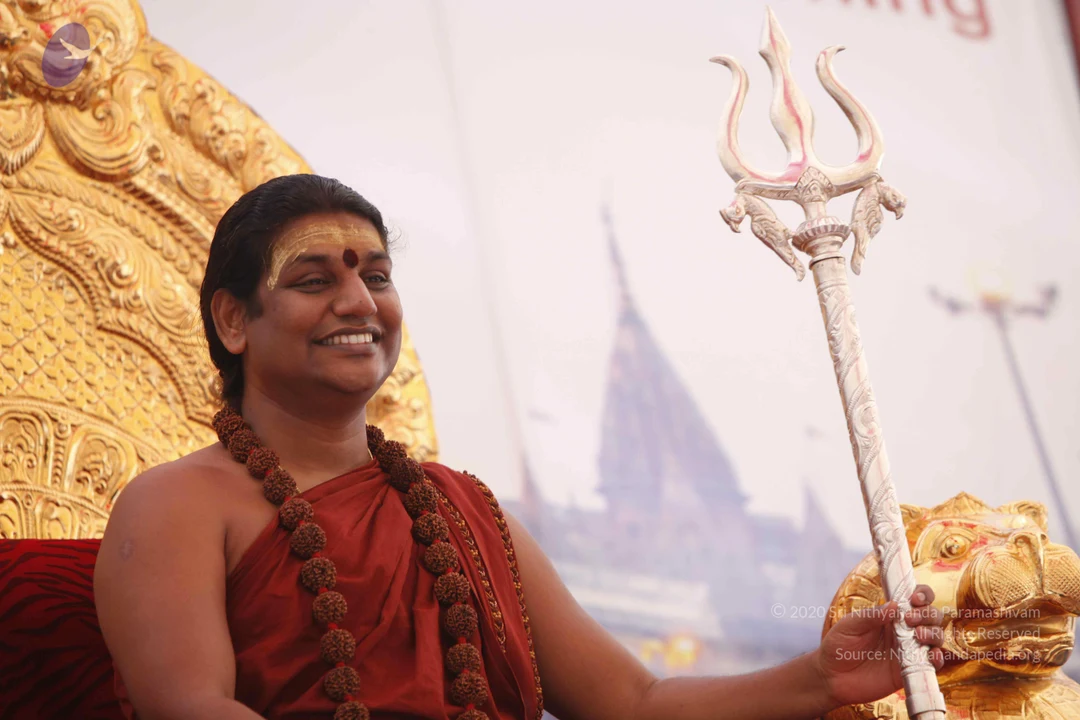
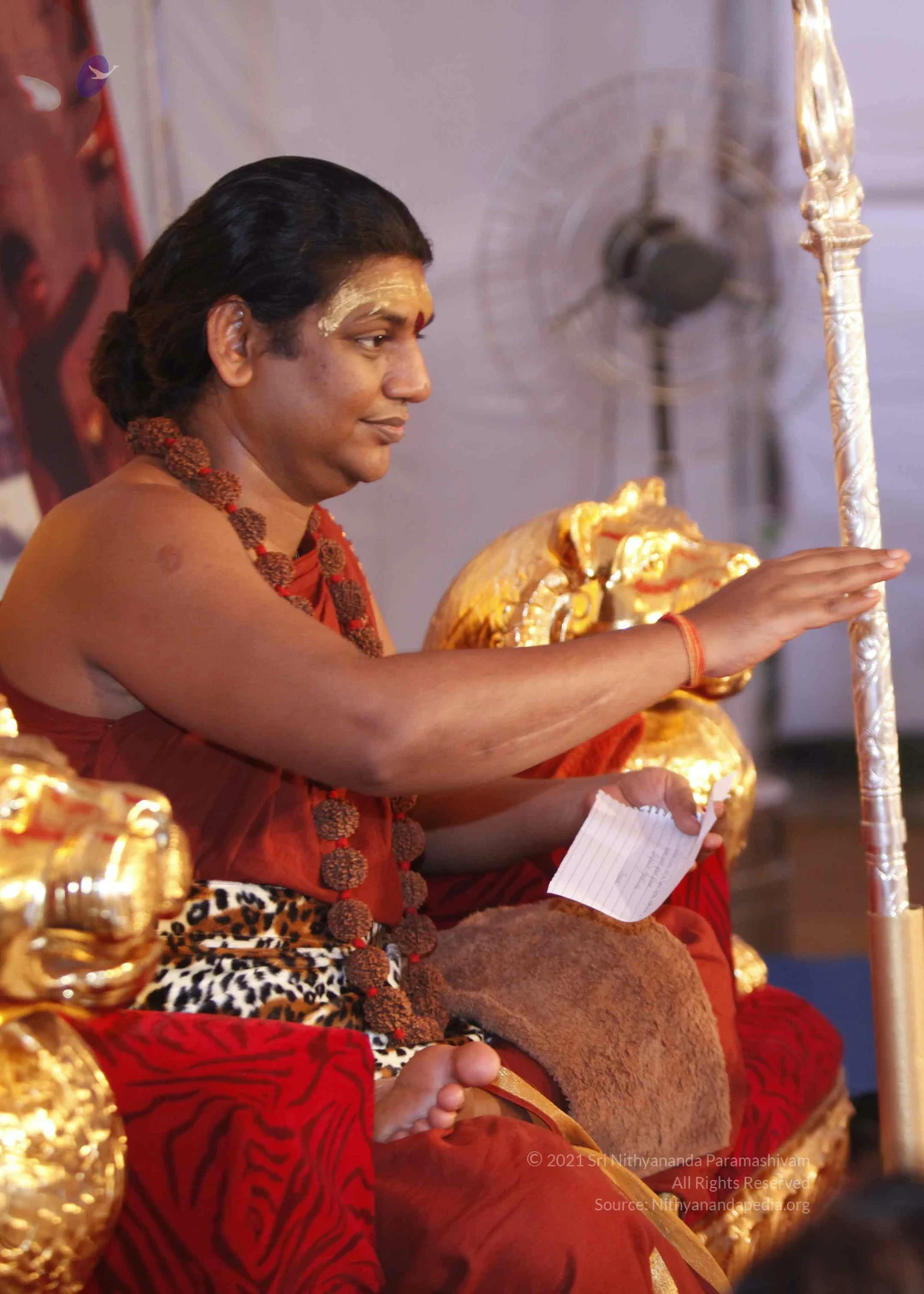
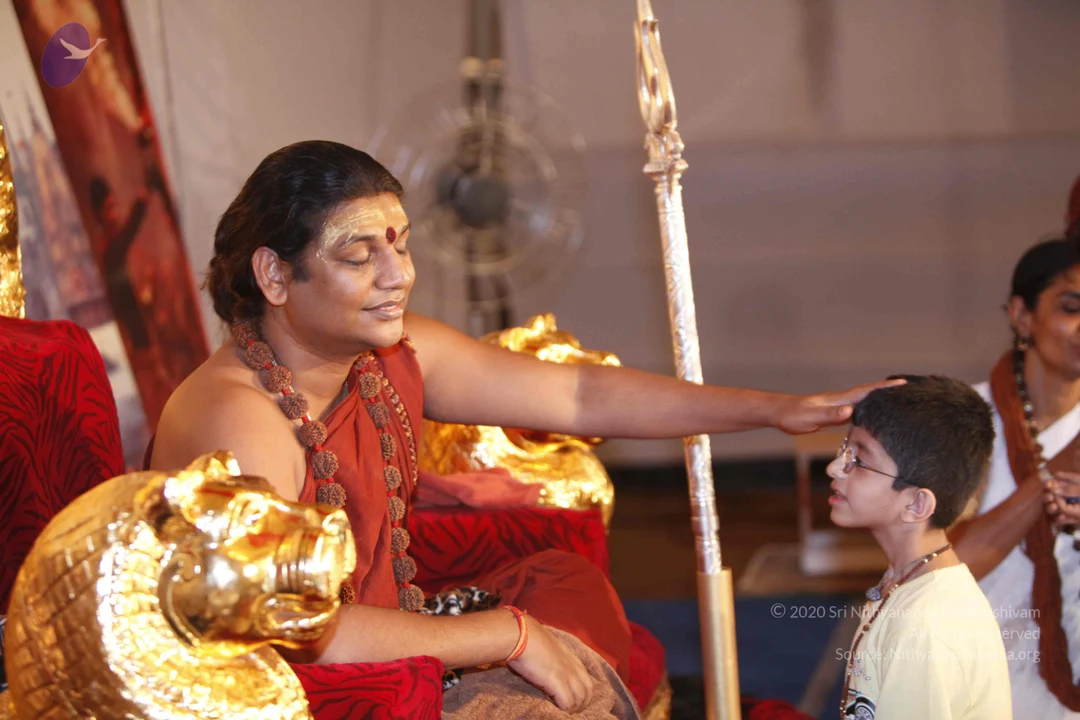
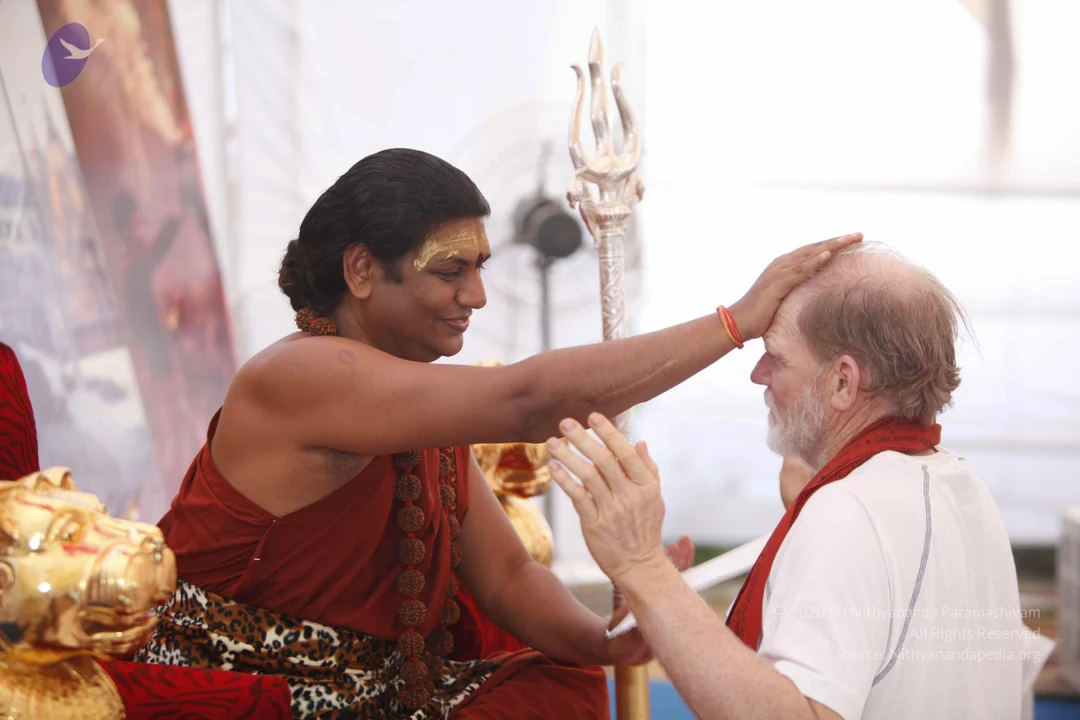
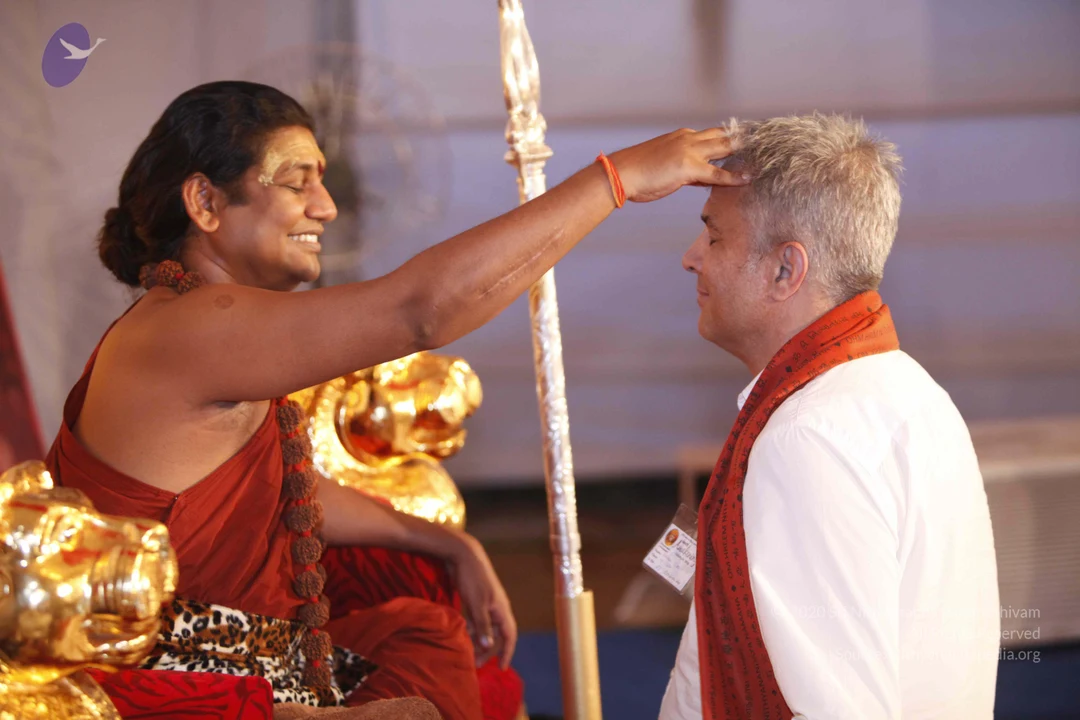
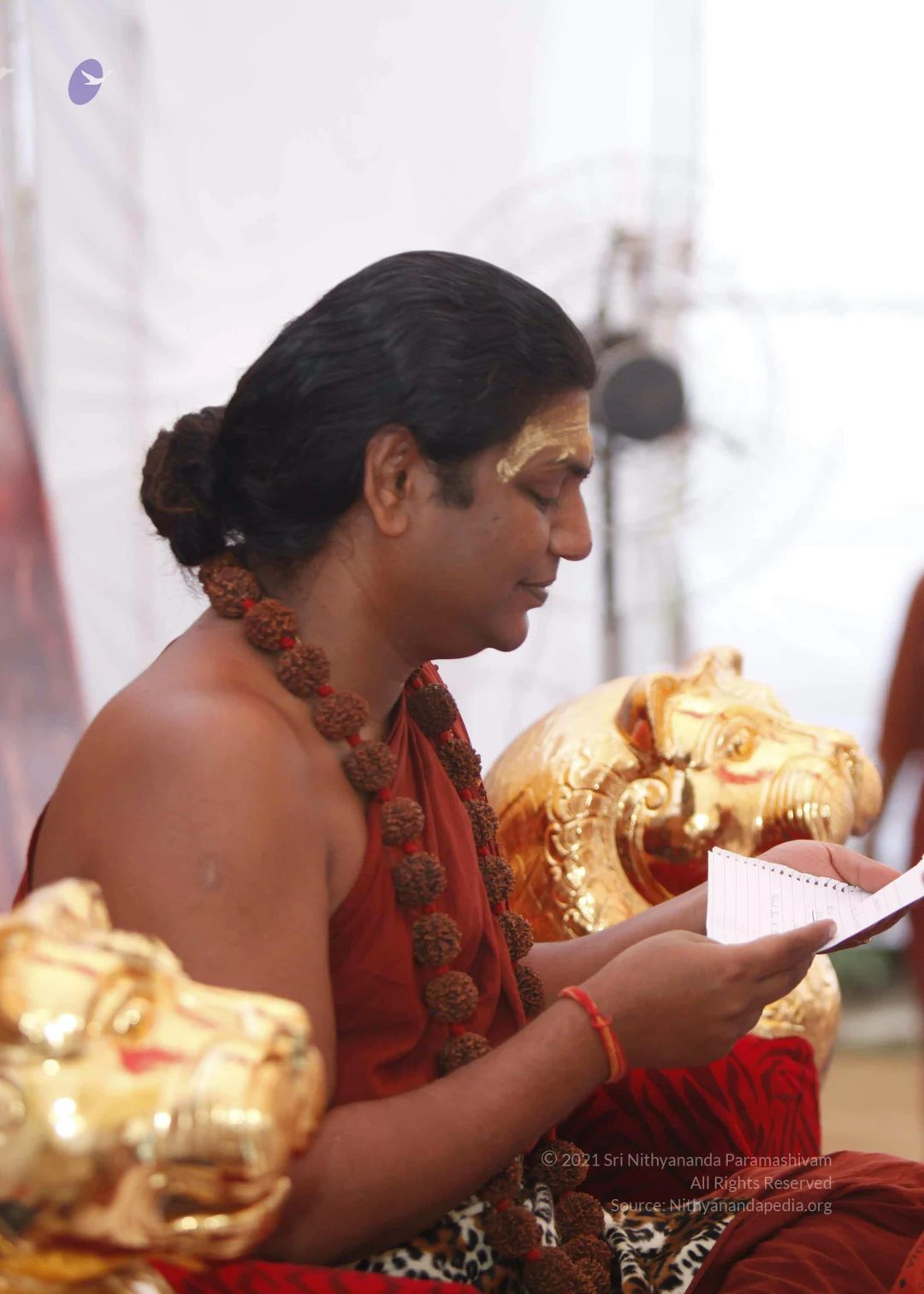
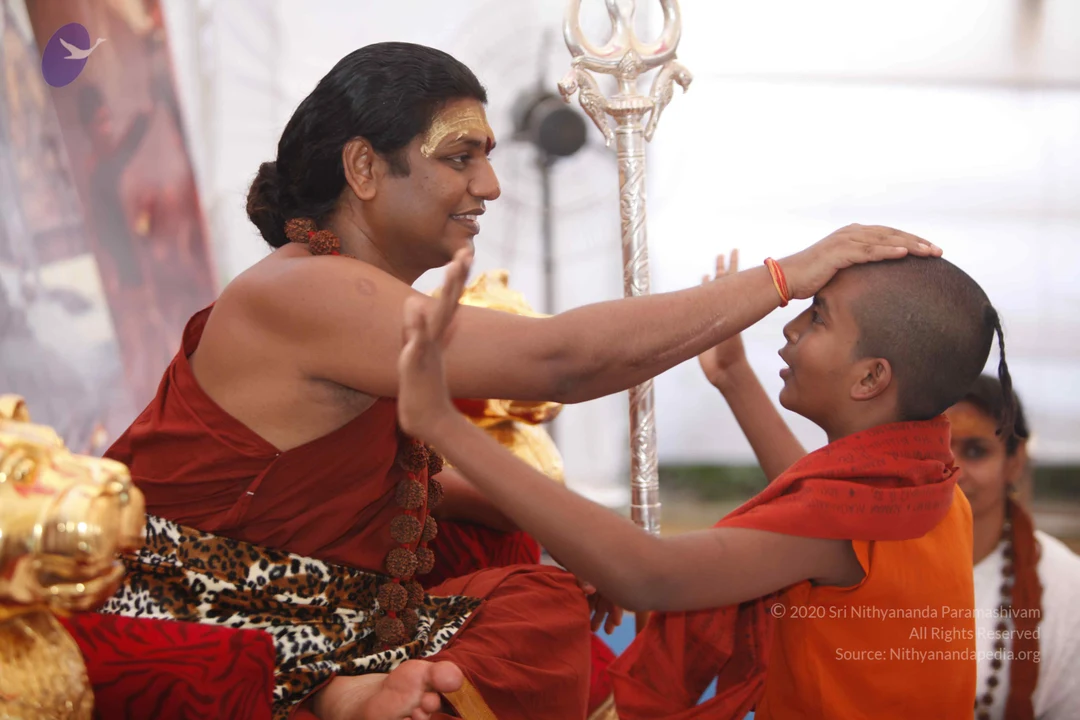
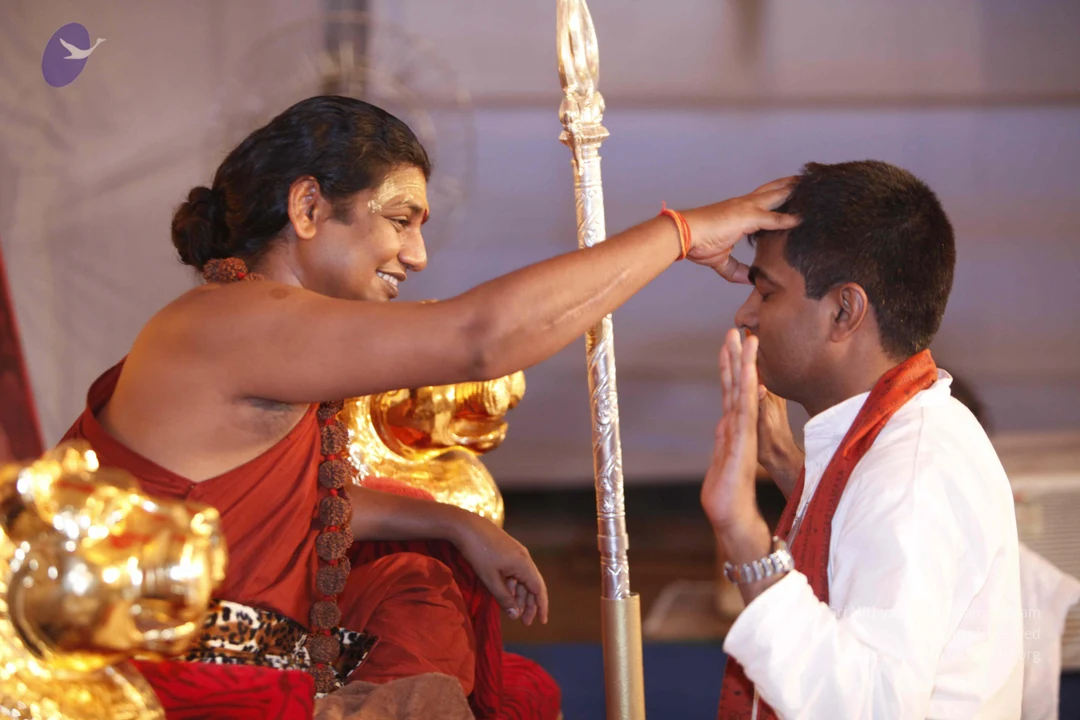
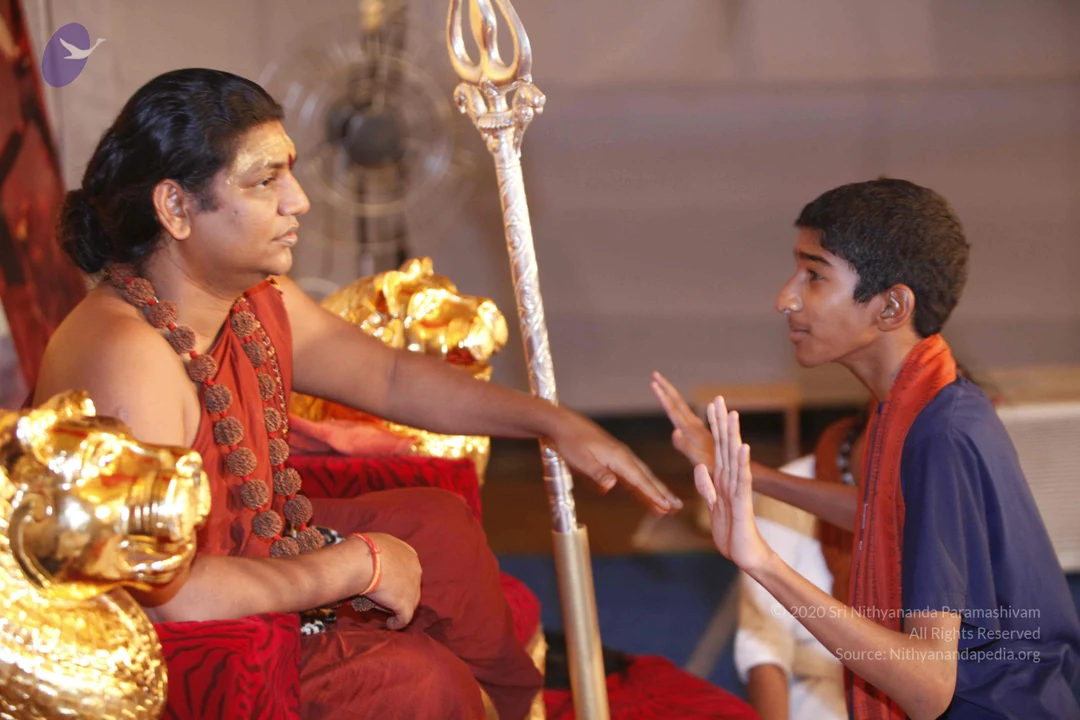
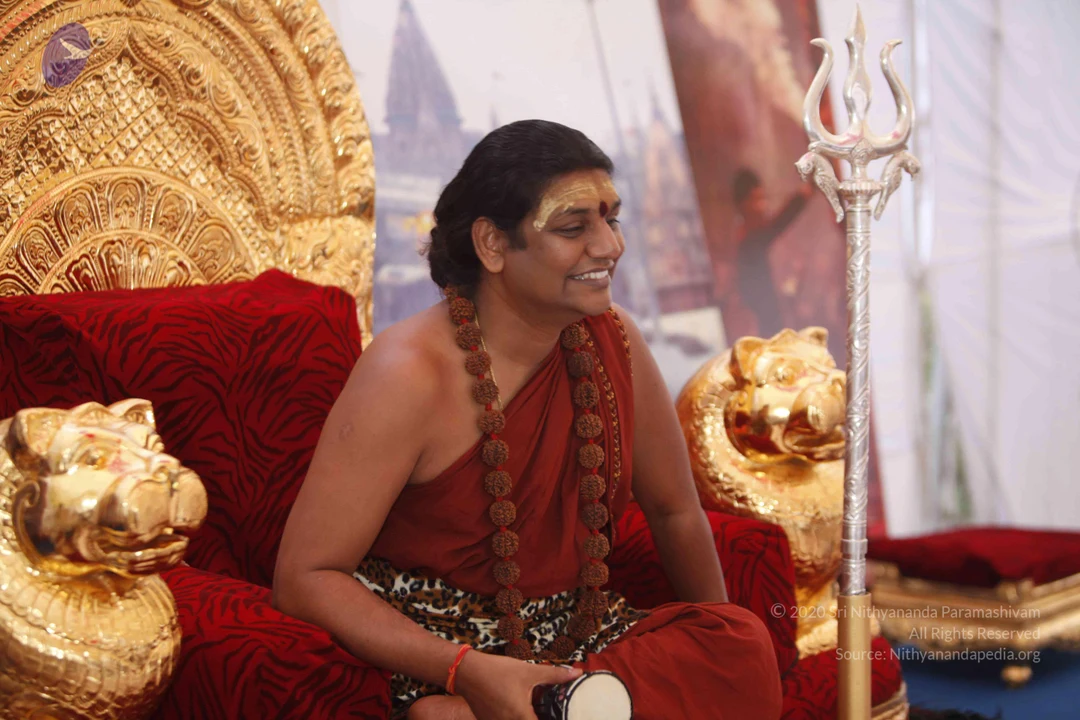
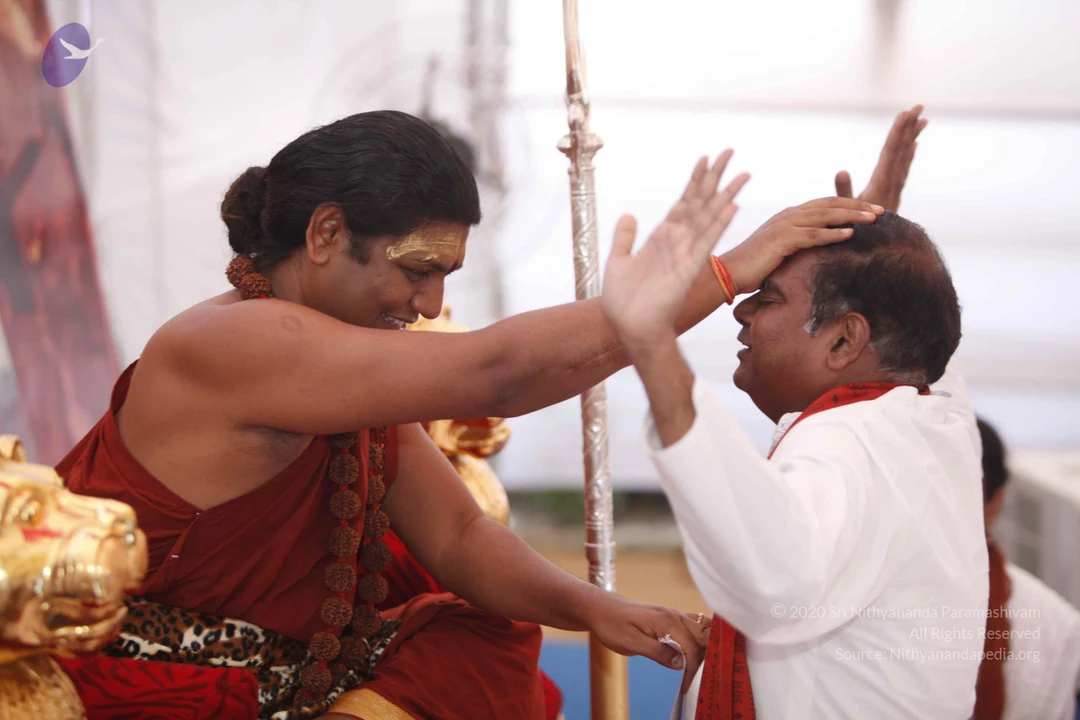
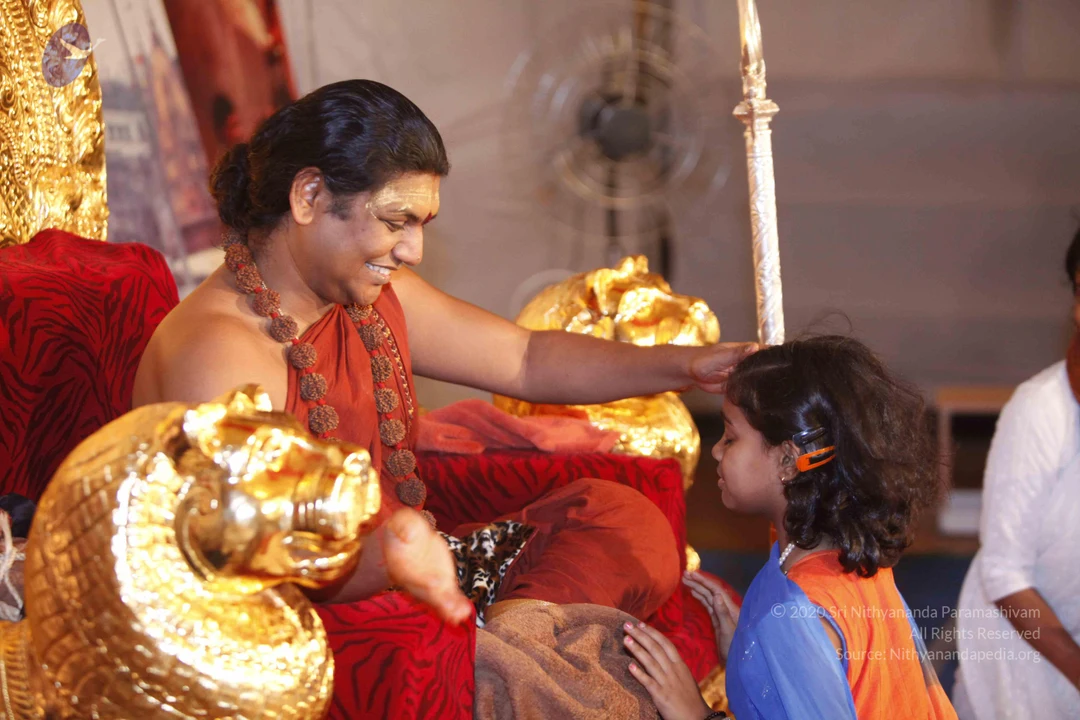
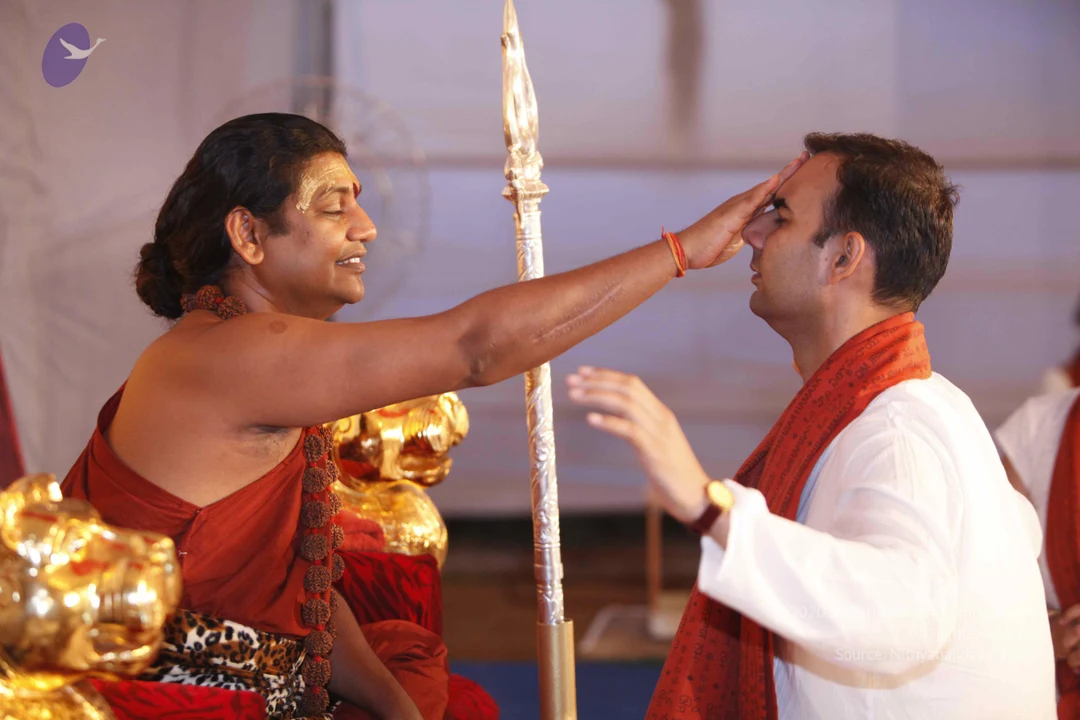
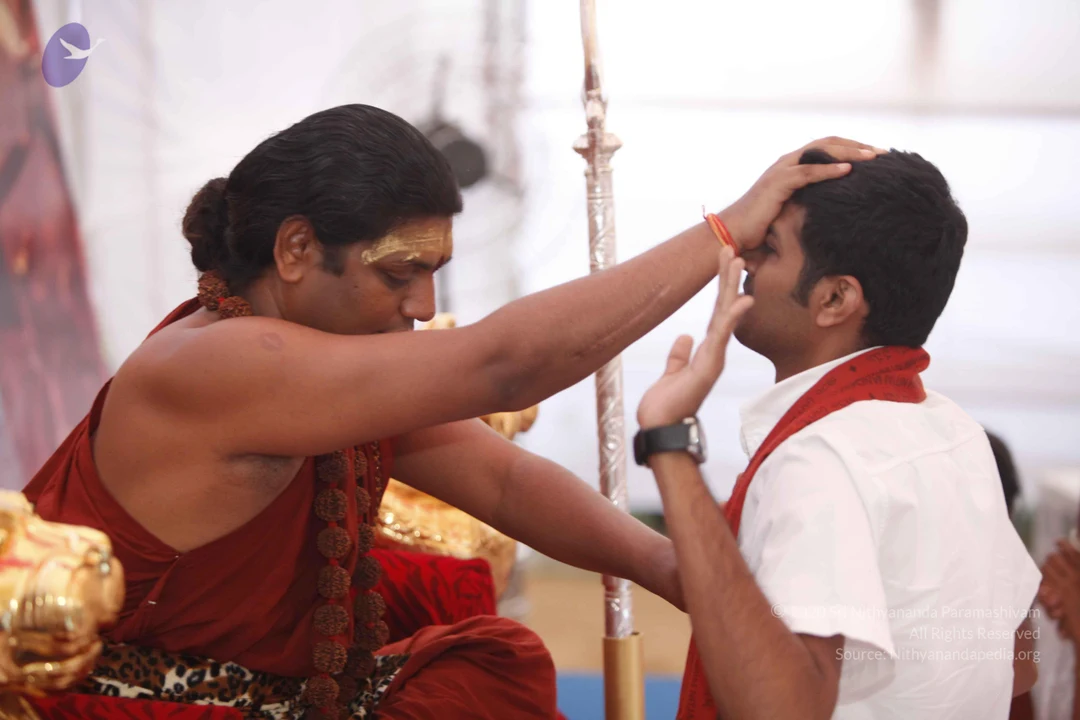
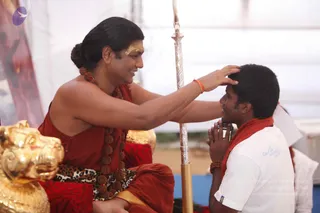
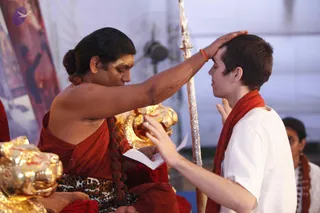
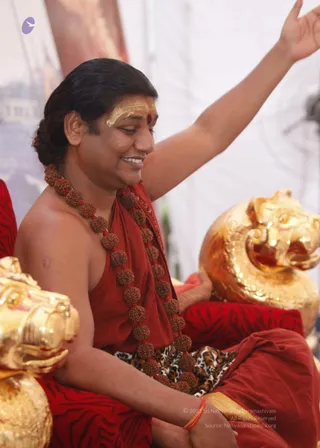
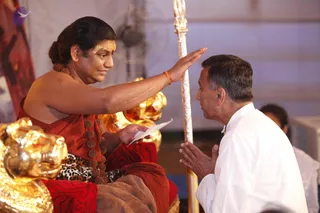
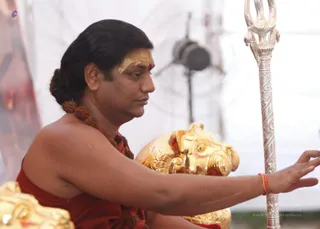
A smiling man in a red-orange shawl sits on an ornate gold throne with red-patterned upholstery and lion-head armrests. He wears a long rudraksha mala with a gold chain and has a yellow-and-red tilak on his forehead. A tall silver trident stands to his right. Behind him is a white banner with red lettering and a blurred temple spire in the background.A seated man in a red-orange robe with a leopard-print cloth at the waist, rudraksha malas around his neck, and a gold tilak on his forehead, places his right hand on the head of a young man in a white shirt with a red-orange shawl. The young man kneels with palms pressed together in namaste. A gold lion-headed seat is at the left and a silver staff stands behind them under a white tent. The seated man matches the a person cues: rudraksha malas, saffron-orange ceremonial clothing and gold ornamentation, shown in a blessing gesture. Two people are visible.A seated man in a red-orange shawl with bare shoulders and chest and a rudraksha mala draped across his body places his right palm on the forehead of a young man in a white shirt and red scarf. The seated man has a swept-back dark bun and yellow-white paste marks on his face, and holds a small white paper in his left hand. Behind them stands a tall silver staff, and a gold ornate deity murti or vessel rests at the left, with a dark-haired woman in a red garland visible at the right edge. The scene suggests a blessing or initiation moment, with the young man's eyes closed and hand raised.A smiling man with swept-back dark hair sits on a red patterned seat between gilded lion-head armrests, wearing a bare-chested look with a rust-red shawl draped over his shoulder and a leopard-print cloth at his waist. He wears a long rudraksha mala over his chest, has a gold tilak with a red dot on his forehead, and a red and gold thread on his wrist. His right arm is raised expressively toward the upper right while he gazes downward. Behind him is a pale backdrop with a partly visible painted banner. Appearance cues include the rudraksha mala, gold tilak and red-orange shawl, a person seated for a satsang or discourse, though identity is uncertain from appearance alone.A seated figure in a red robe with a rudraksha mala and a gold-coloured tilak on the forehead extends an open palm toward the forehead of a man in a white kurta who kneels with palms joined in namaskar. The seated figure holds a small folded white paper in the other hand. Gold lion-form armrests and a red and gold cushioned seat surround them, with a white ceremonial staff rising beside the kneeling devotee. Two people are visible in the photograph. The seated figure's identity is not established from appearance, so the role is described as a seated teacher bestowing blessing.Photograph of a man in profile seated beside a gold-coloured bull (nandi) figure and a tall silver trident (trishul) with ornate handle. He wears a red-orange unstitched cloth draped over bare shoulders, a rudraksha mala with brown beads around his neck, a red-orange thread on his wrist, and a gold tilak on his forehead. His hair is swept back into a bun, and his right hand reaches toward the trident. A blurred stage light and white backdrop are behind him. a person seated in ritual setting: rudraksha mala, red-orange cloth, gold forehead marking.