Skip to content
Sunday

7 April 2013

Experience Kundalini Awakening

Dated photos
378
Source pages
1
Media
5
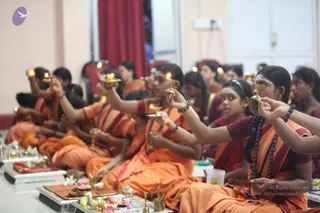
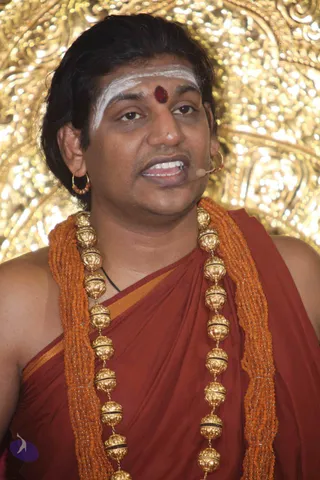
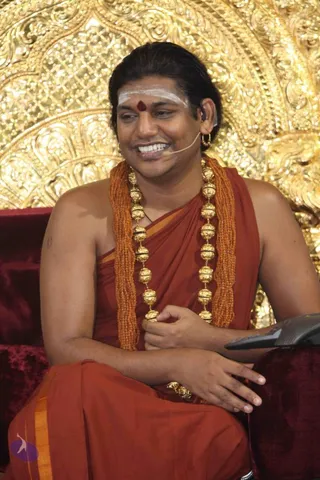
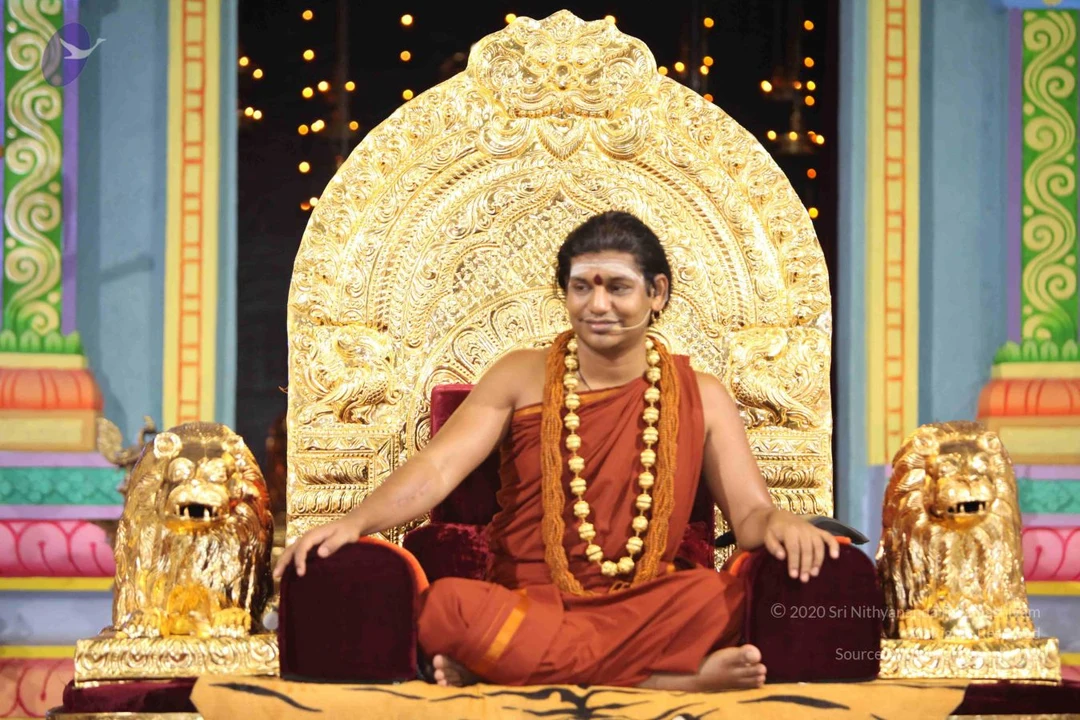
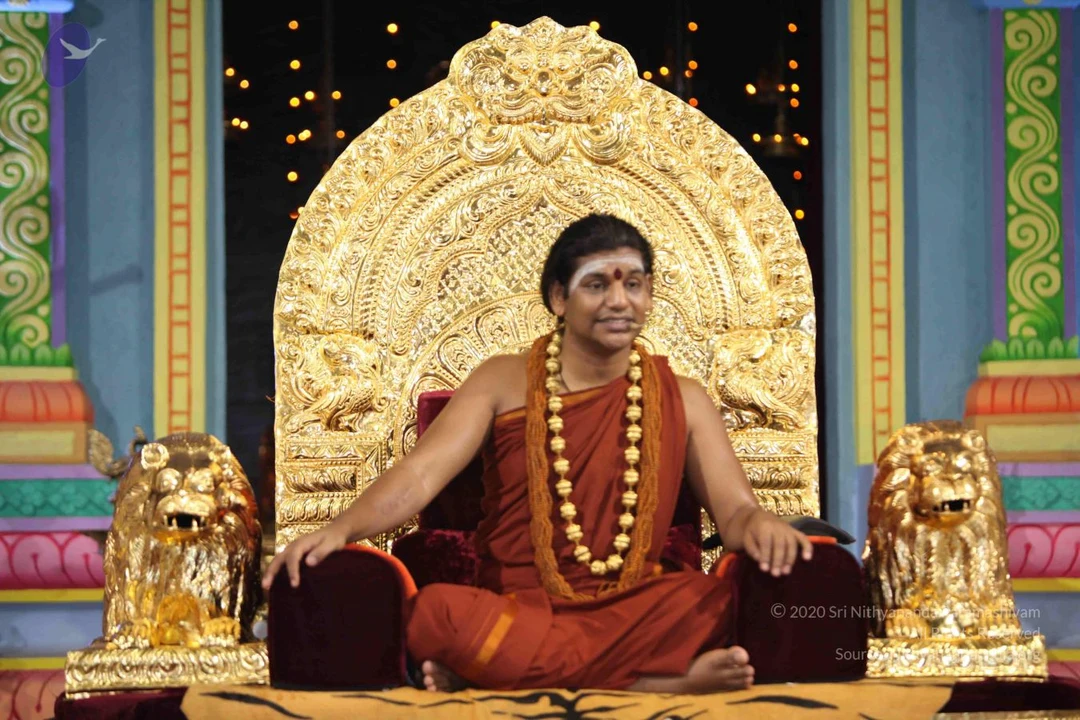
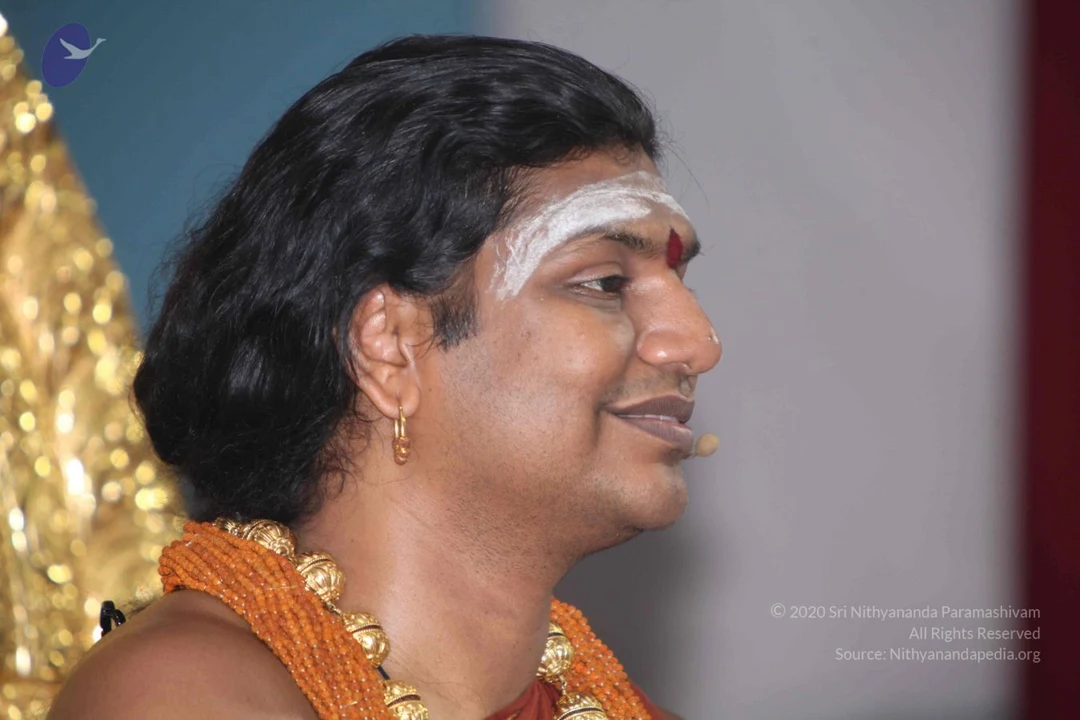
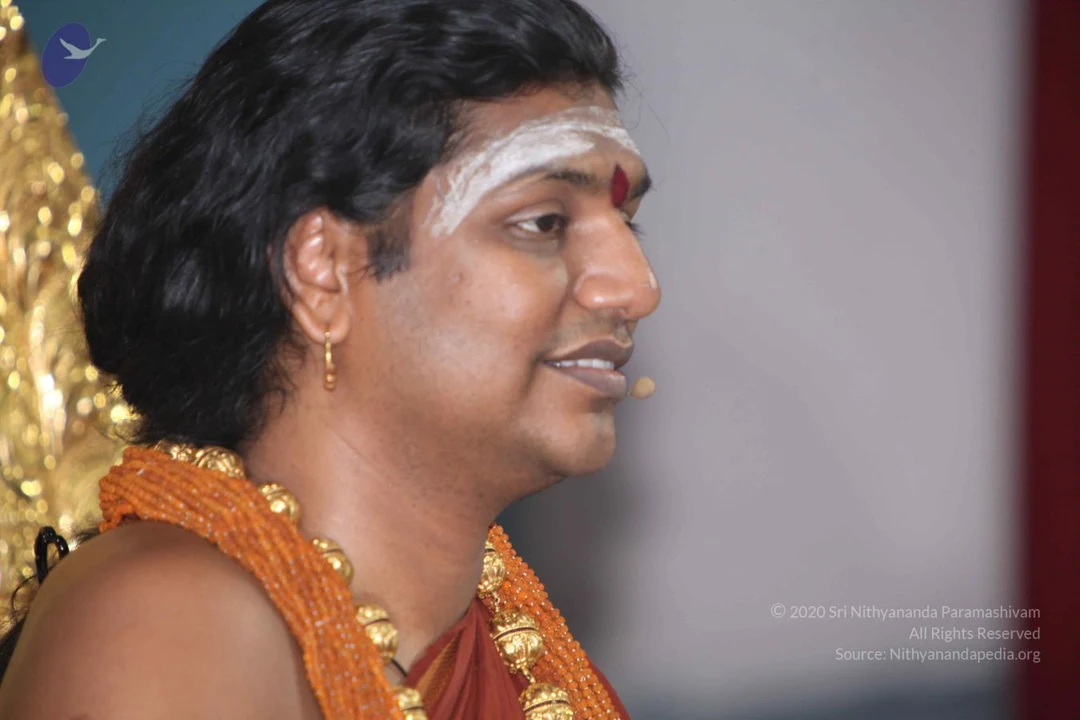
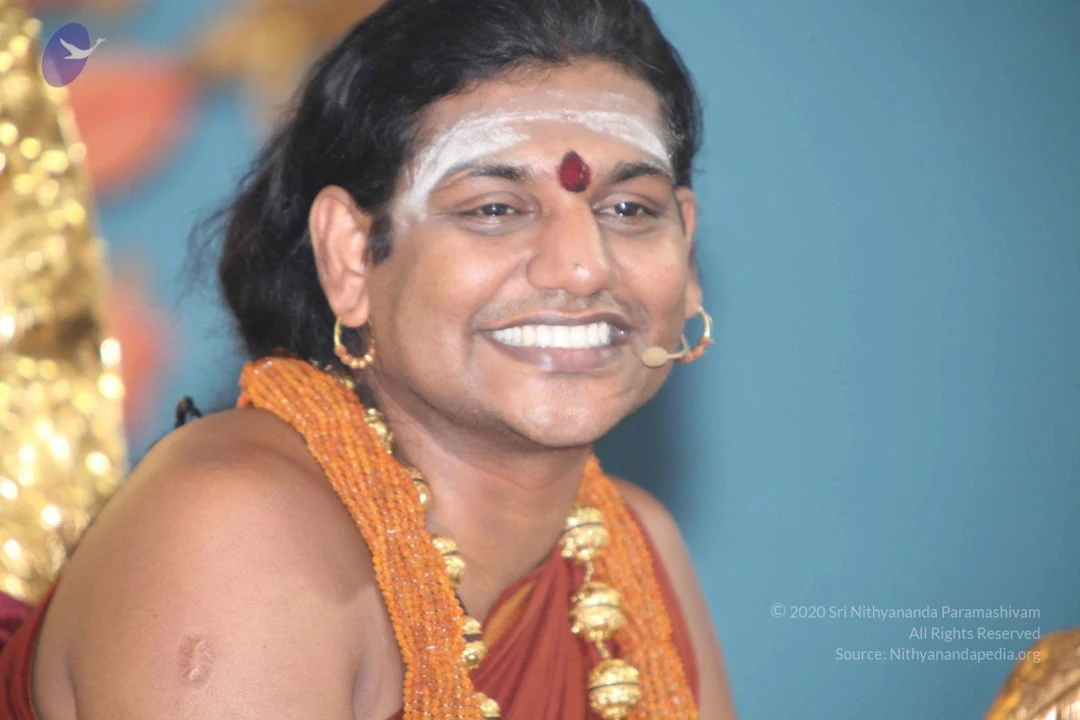
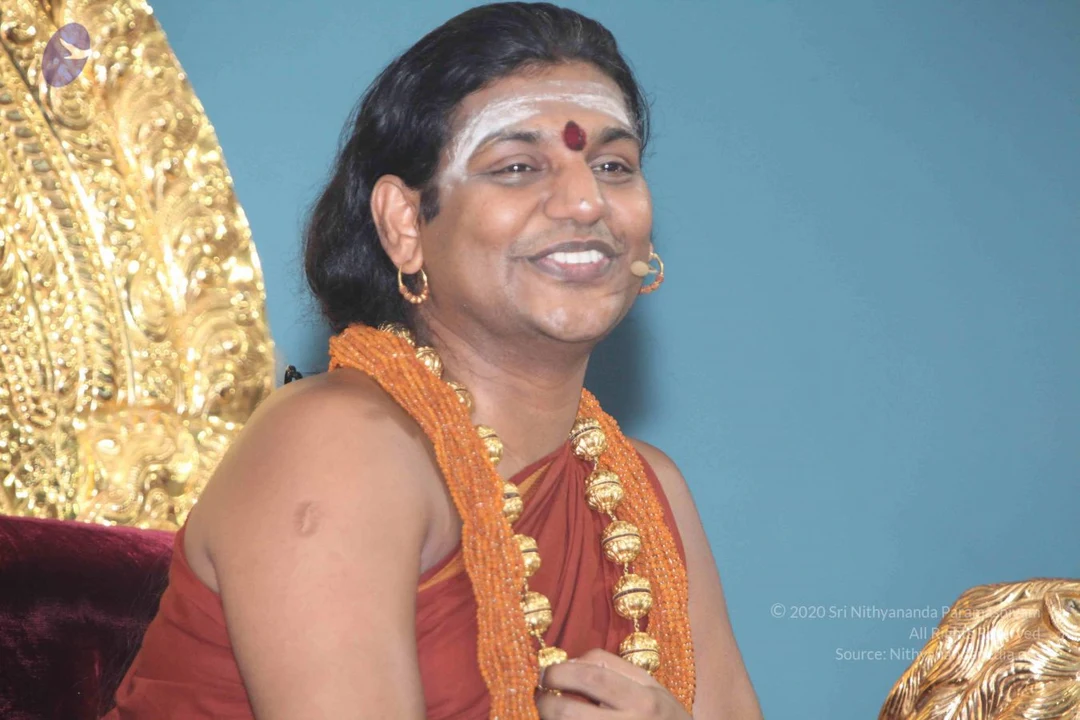
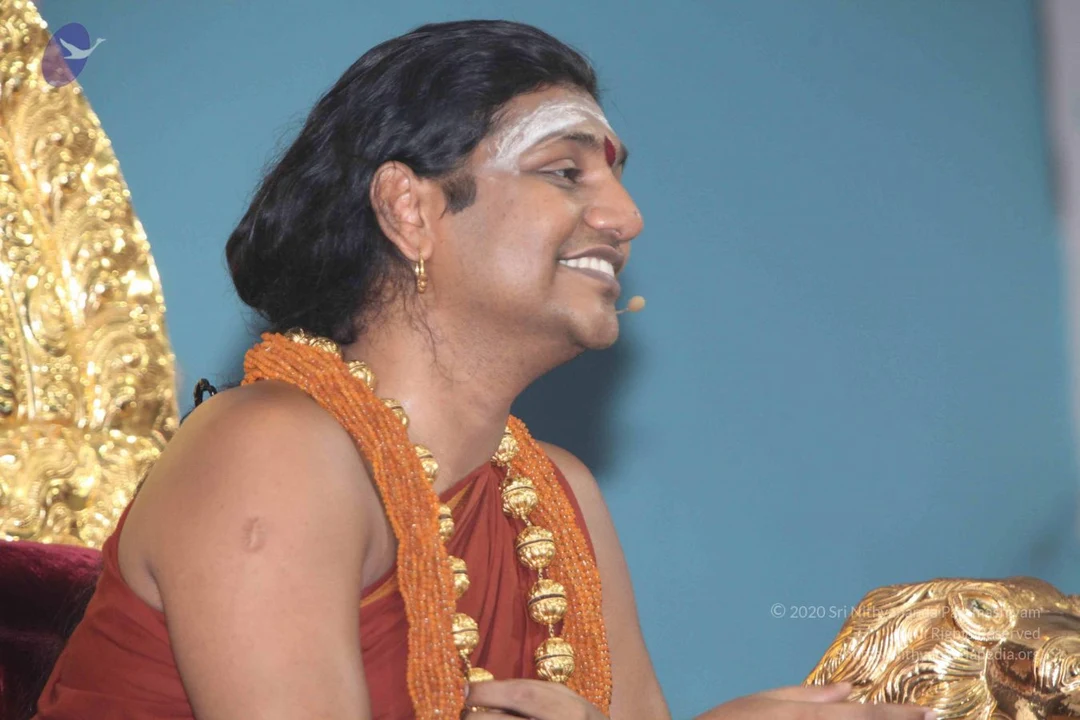
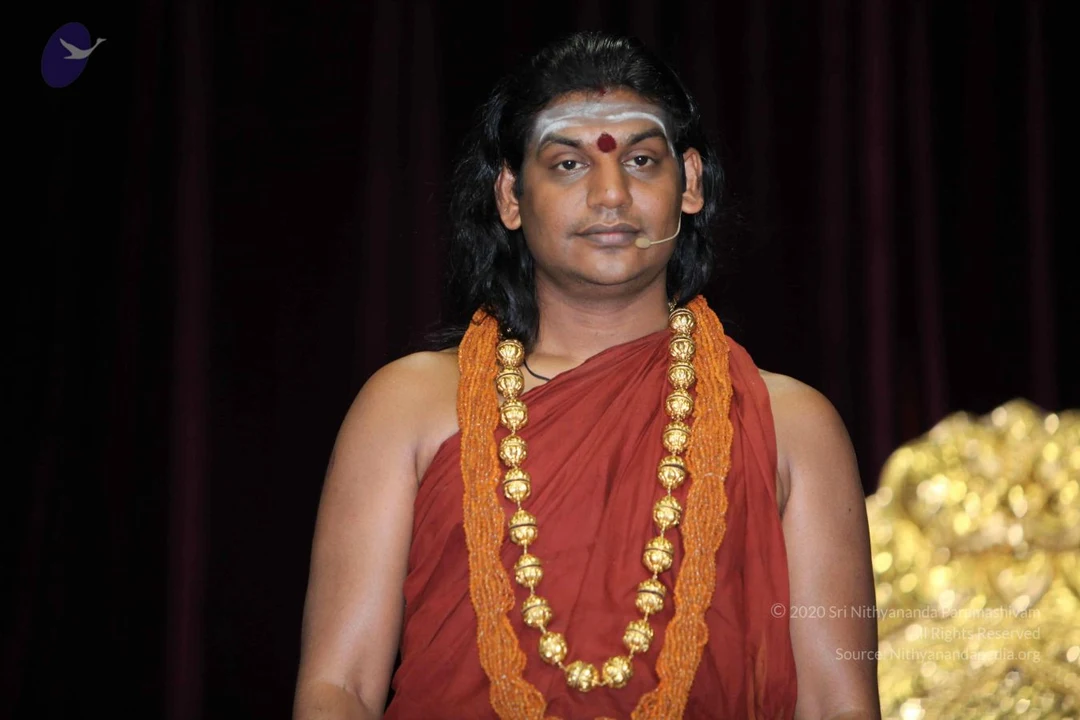
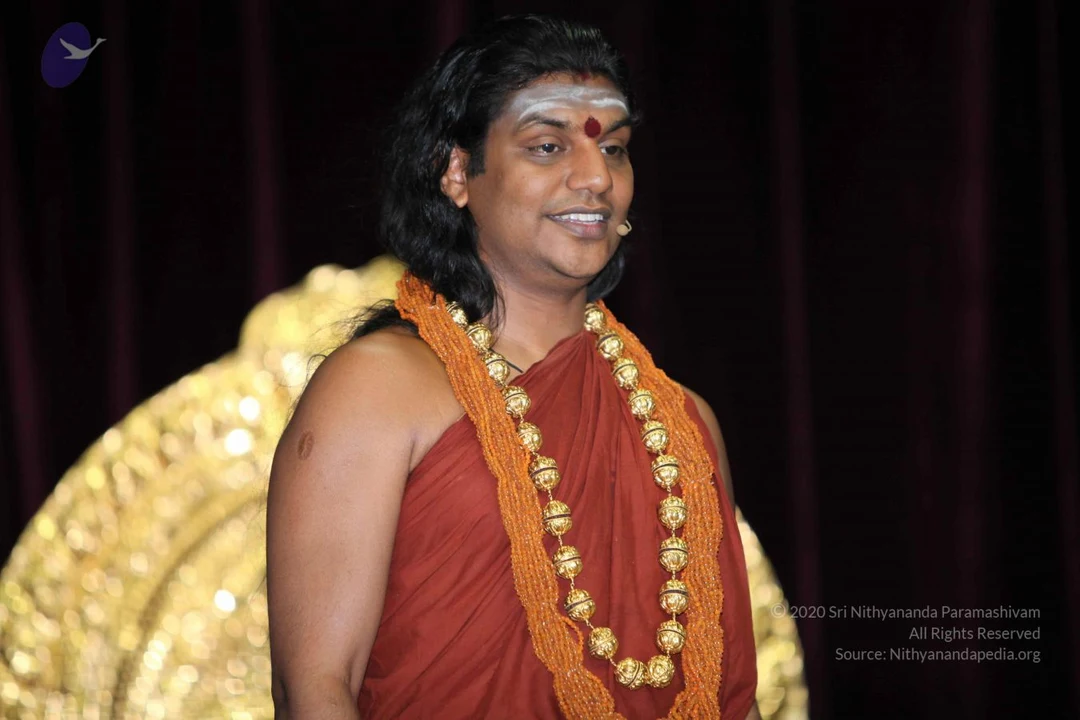
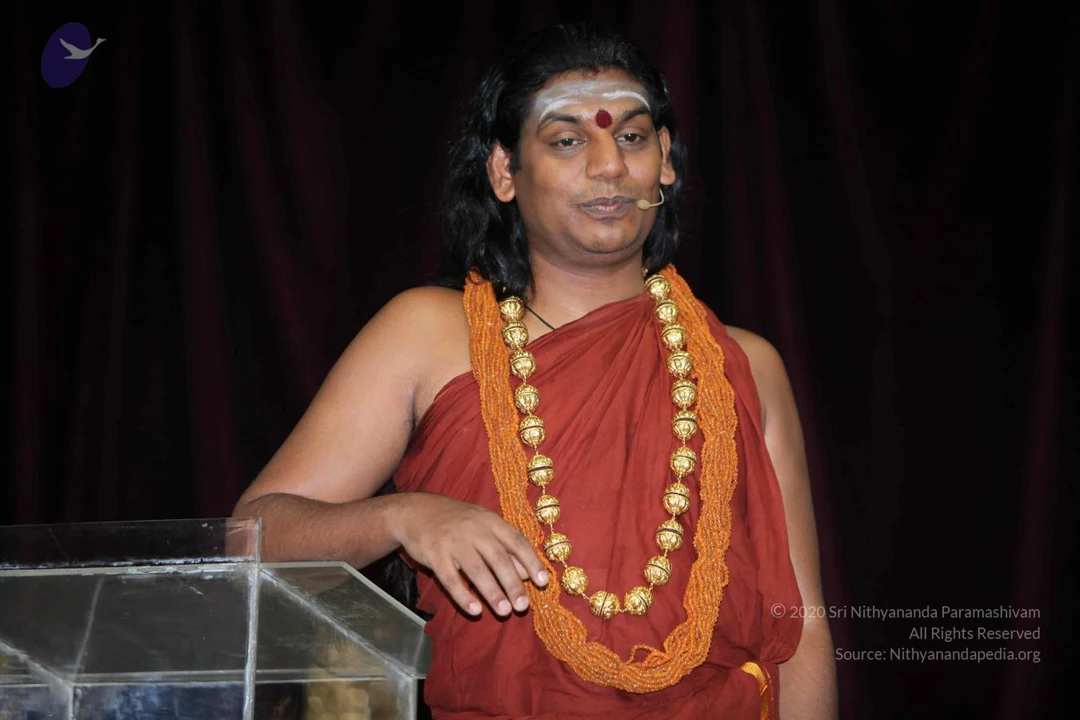
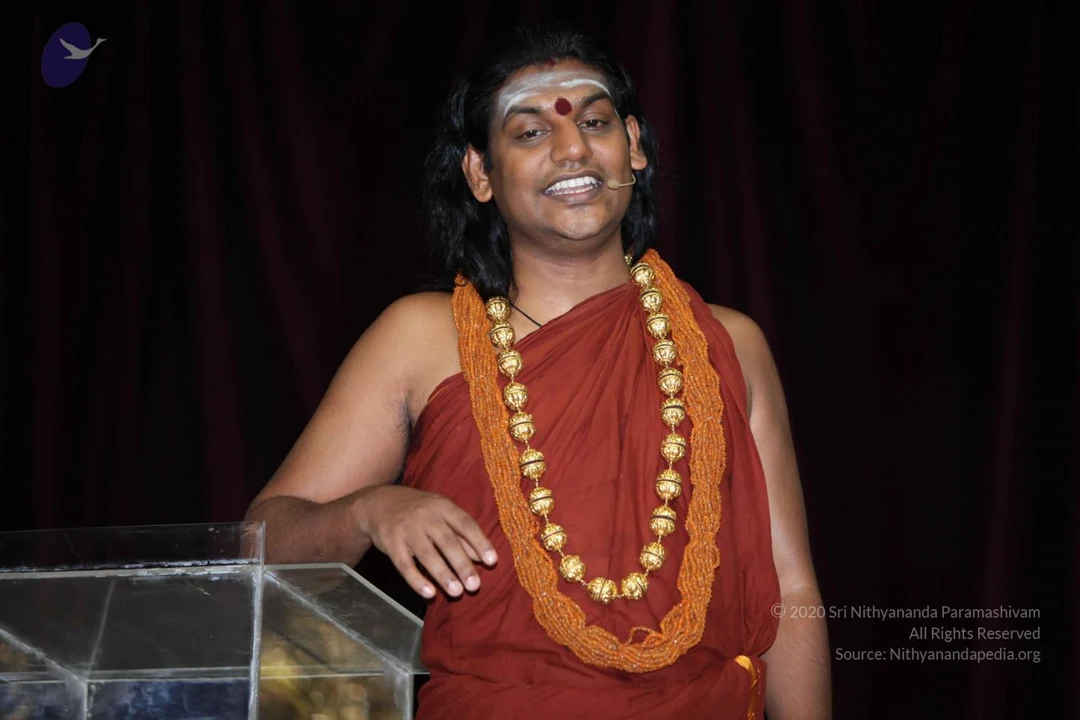
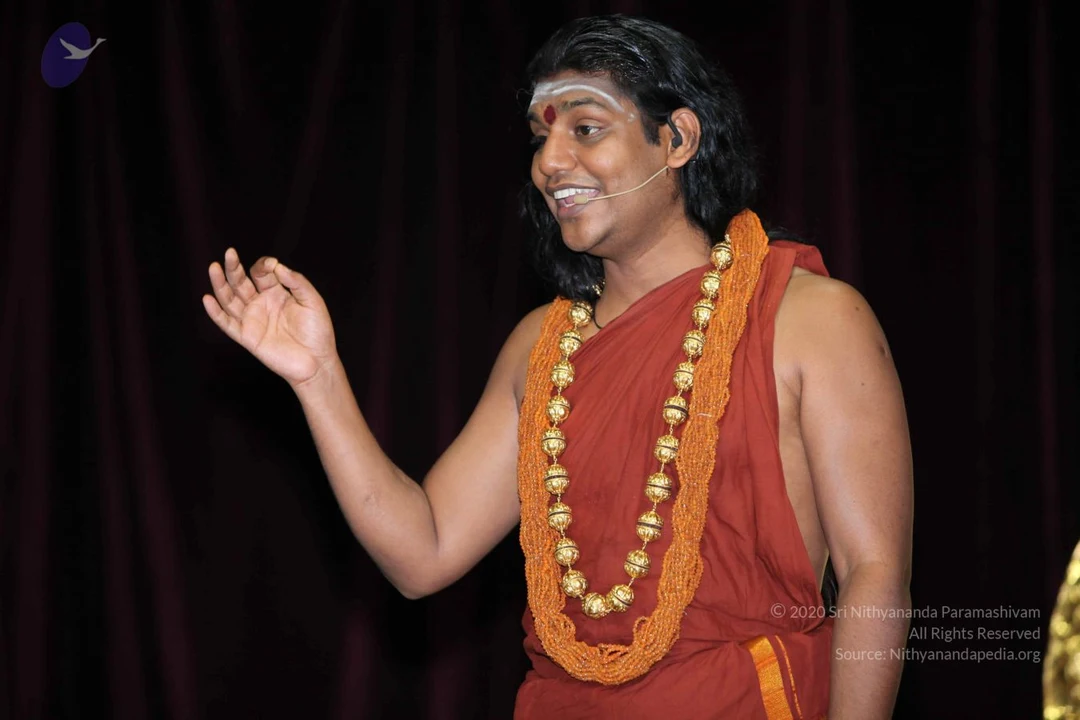
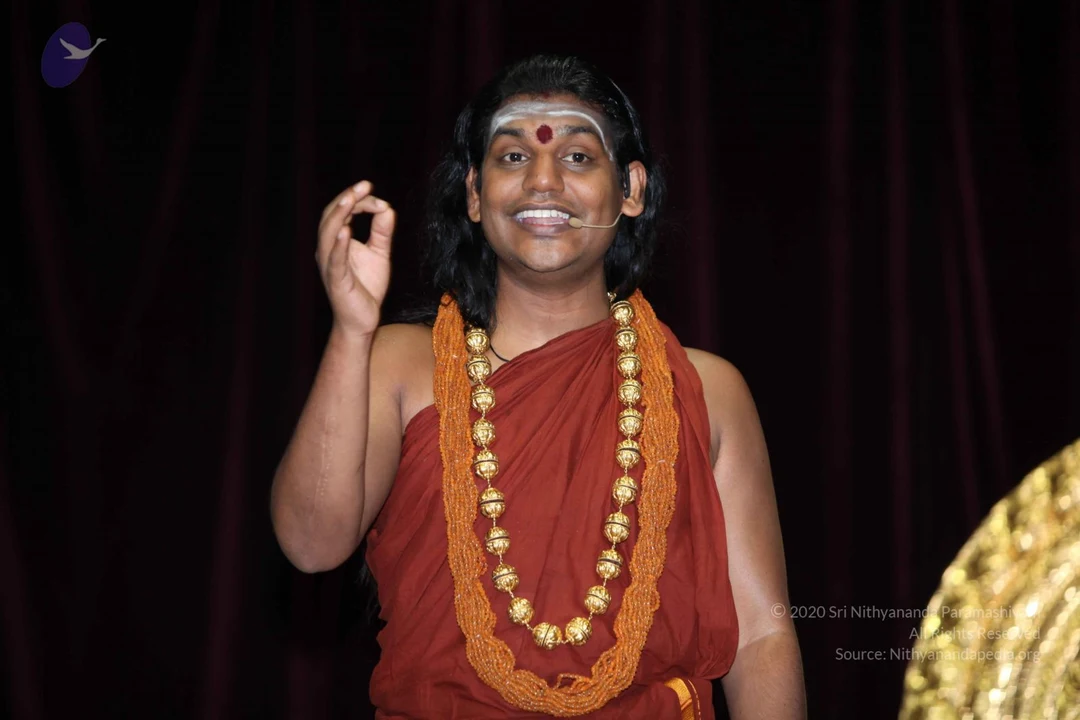
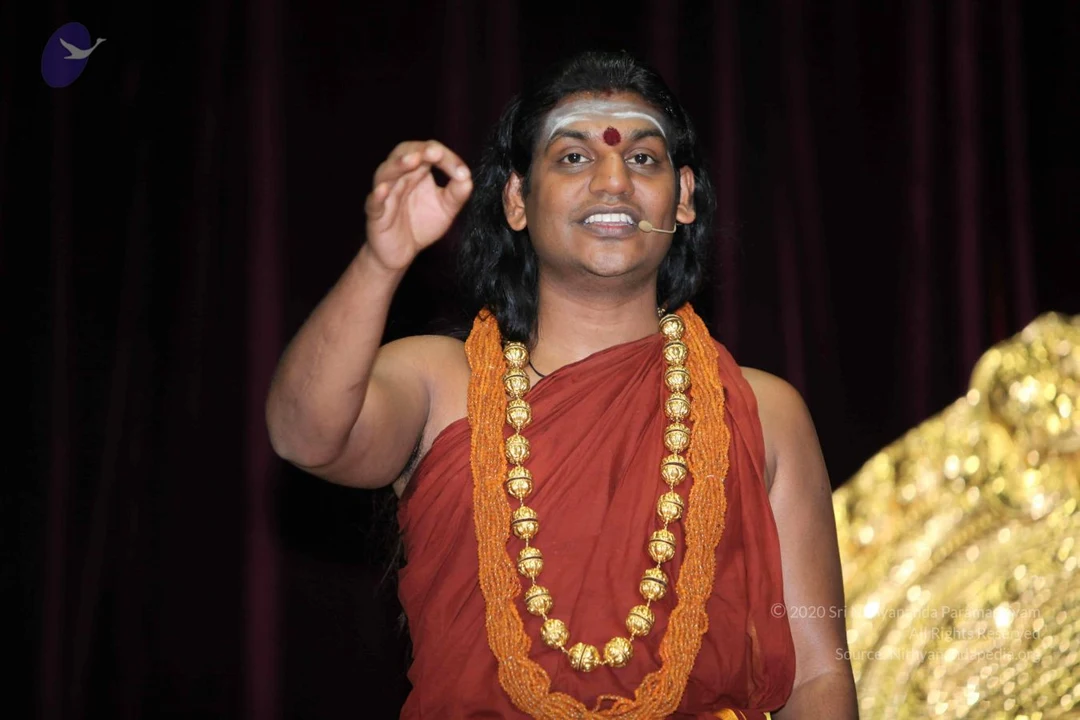
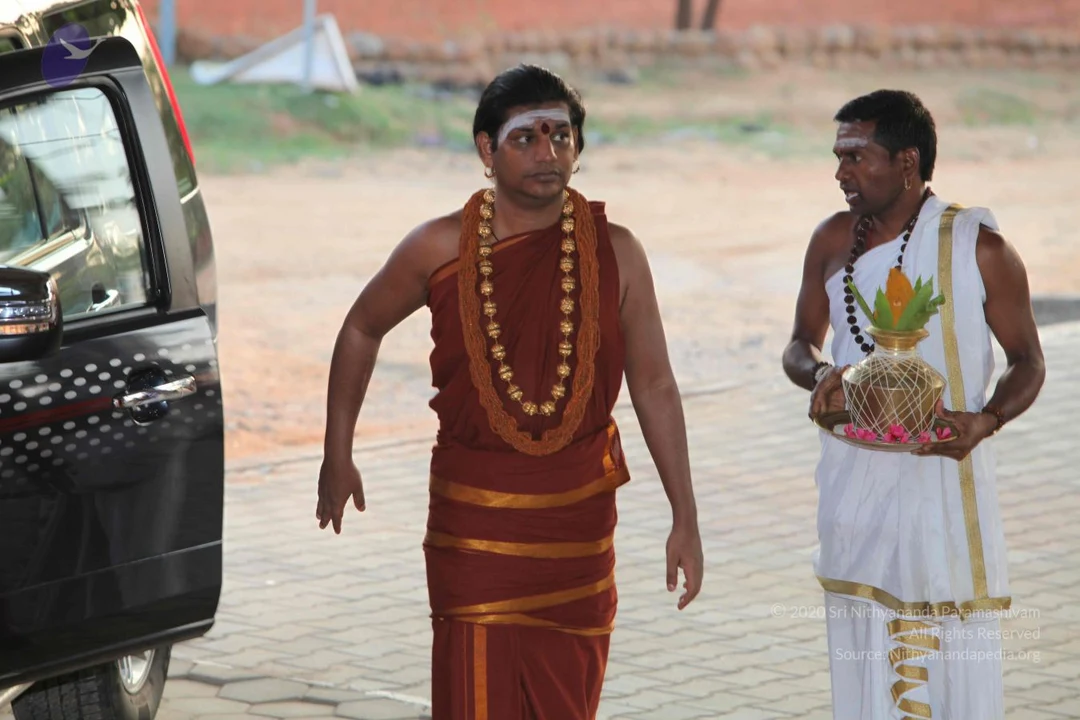
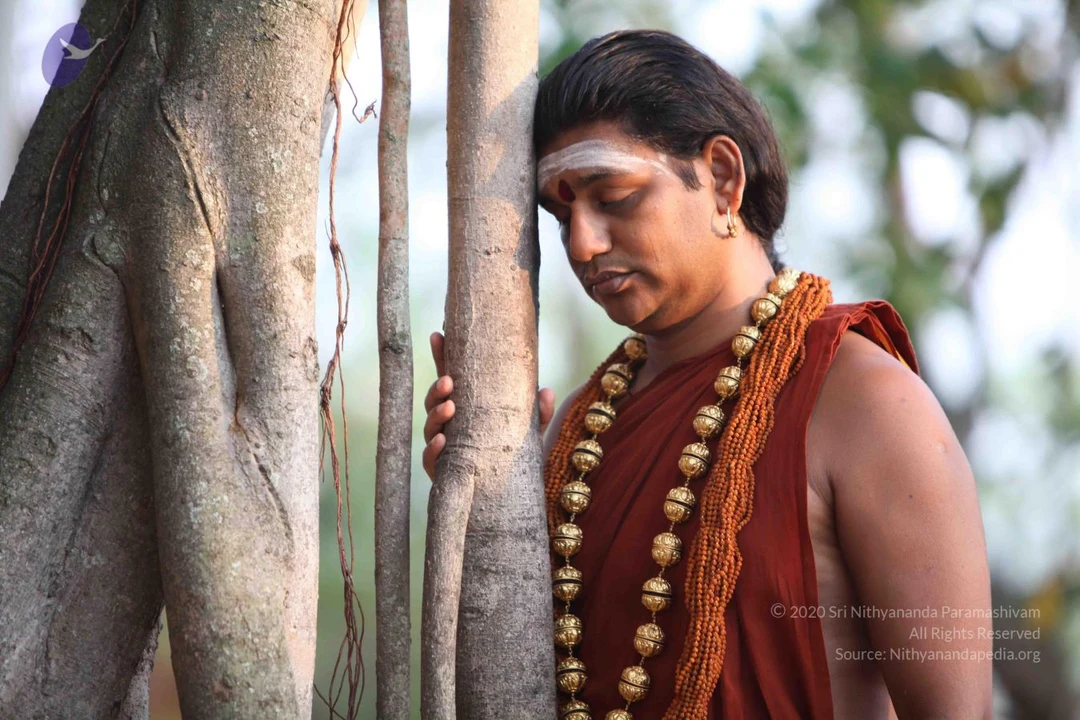
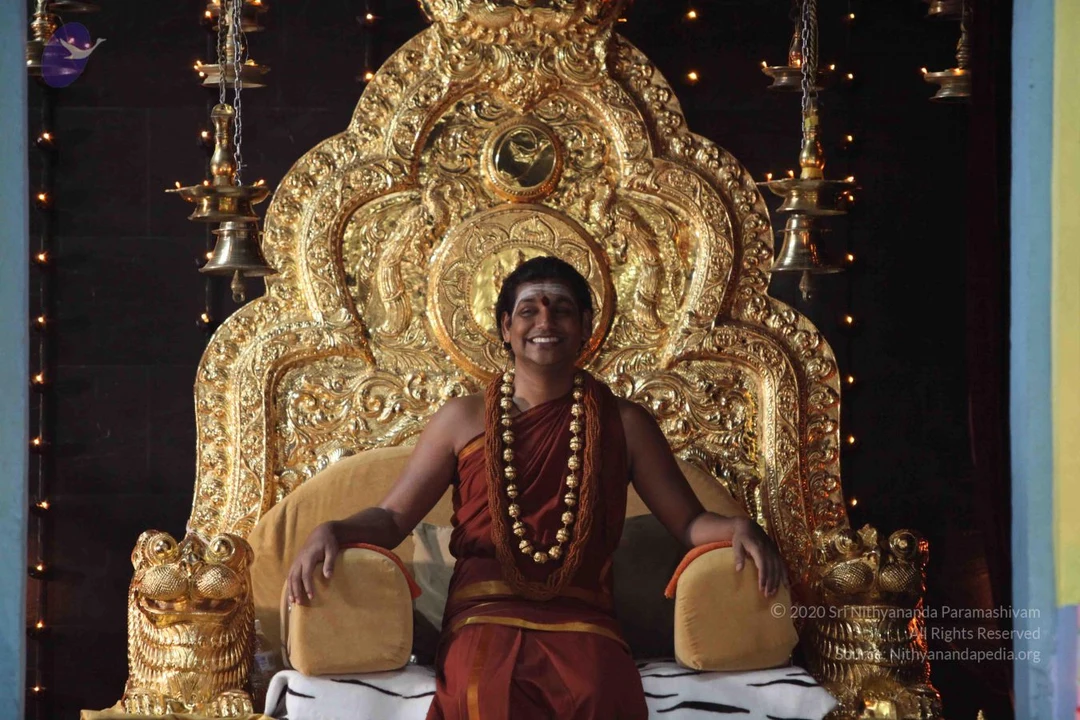
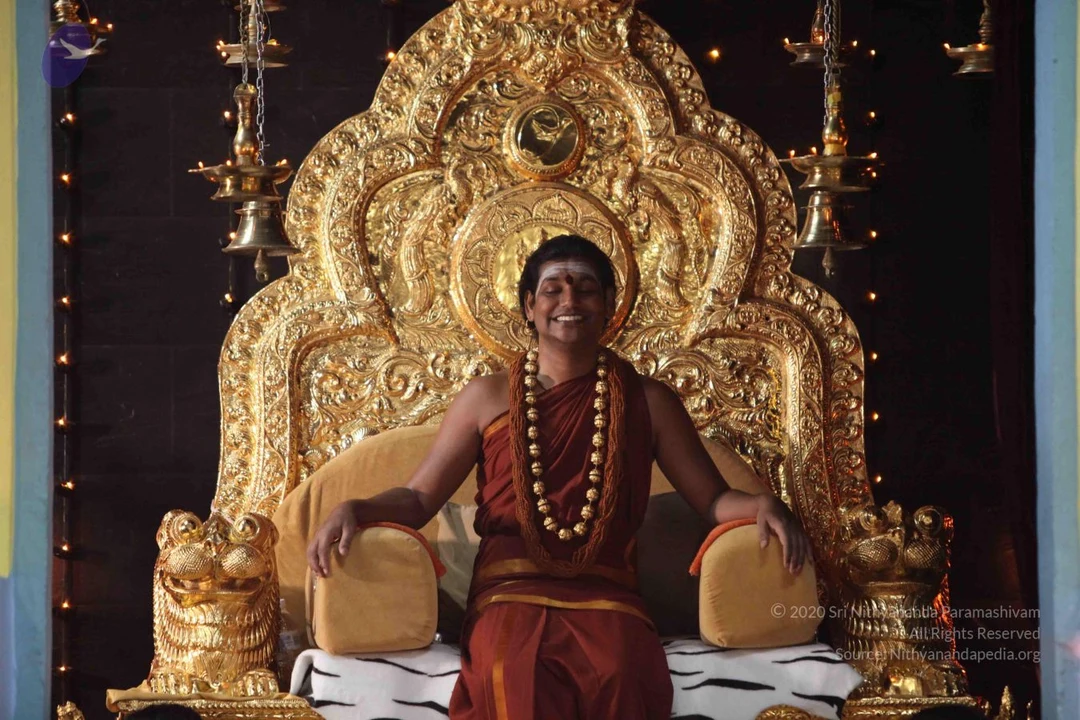
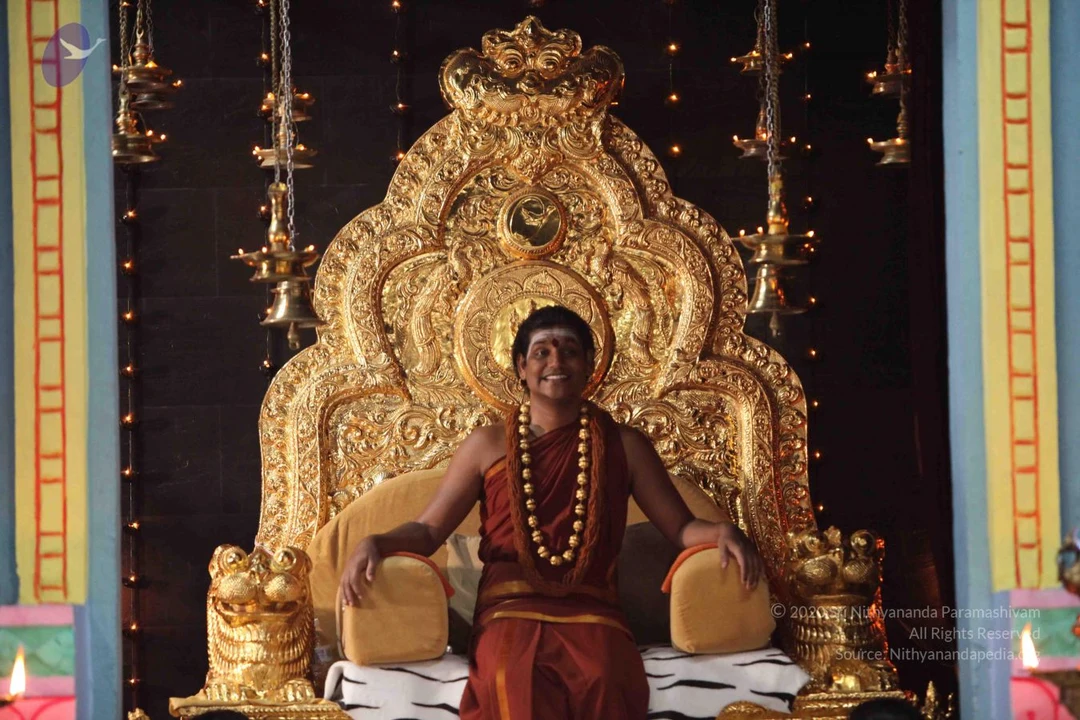
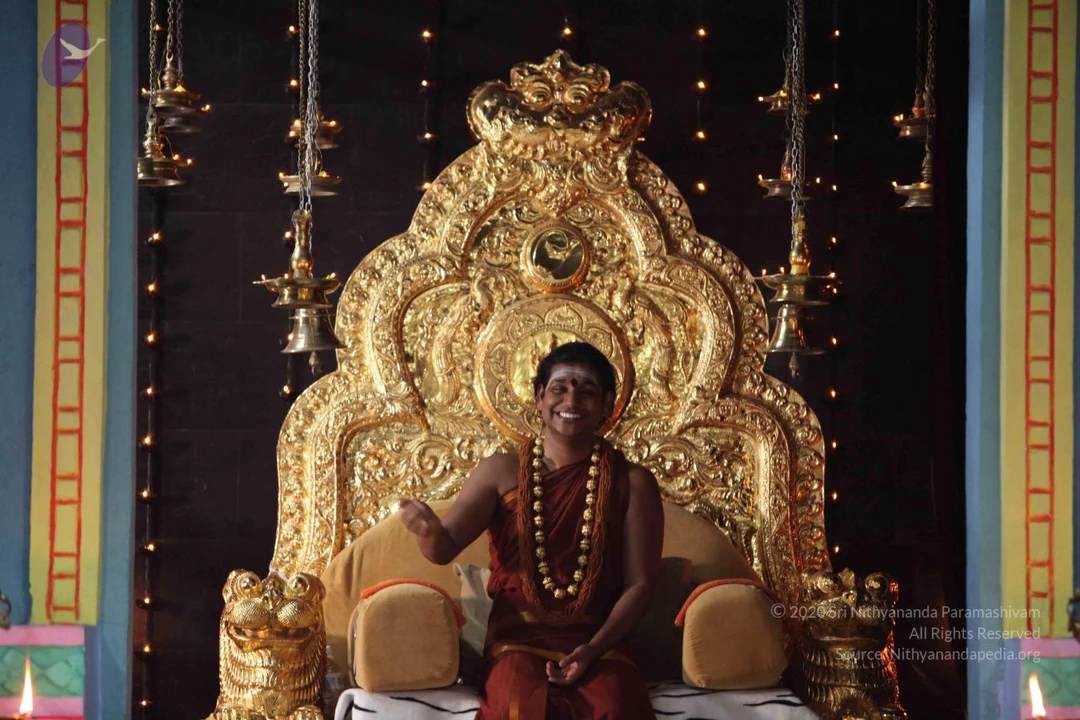
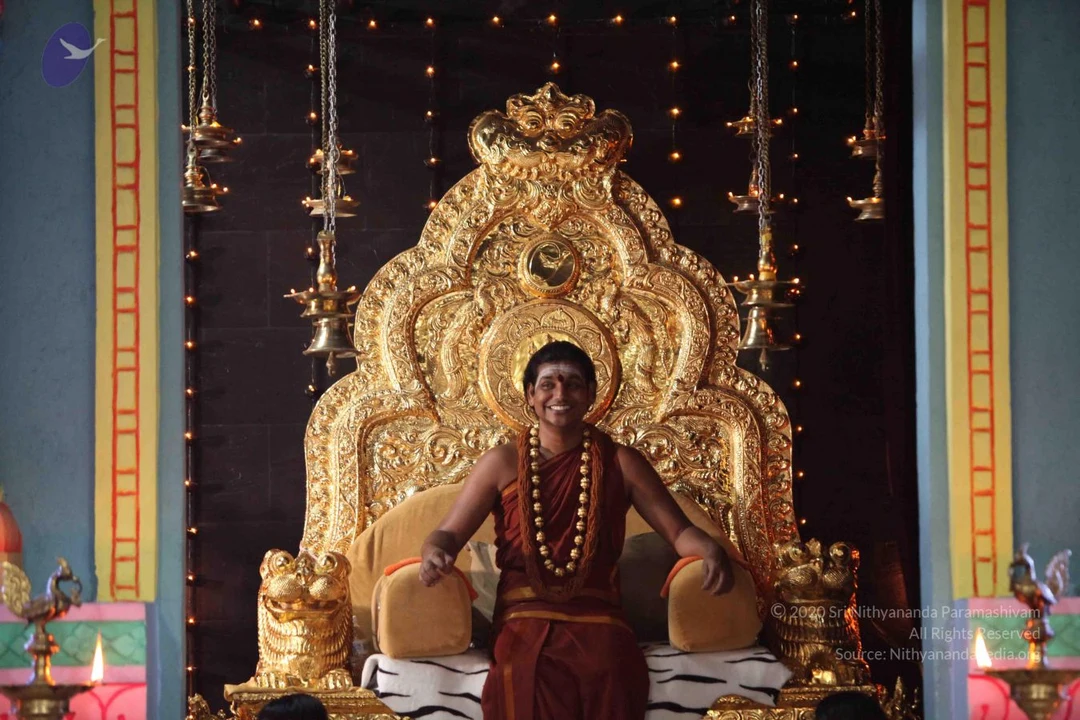
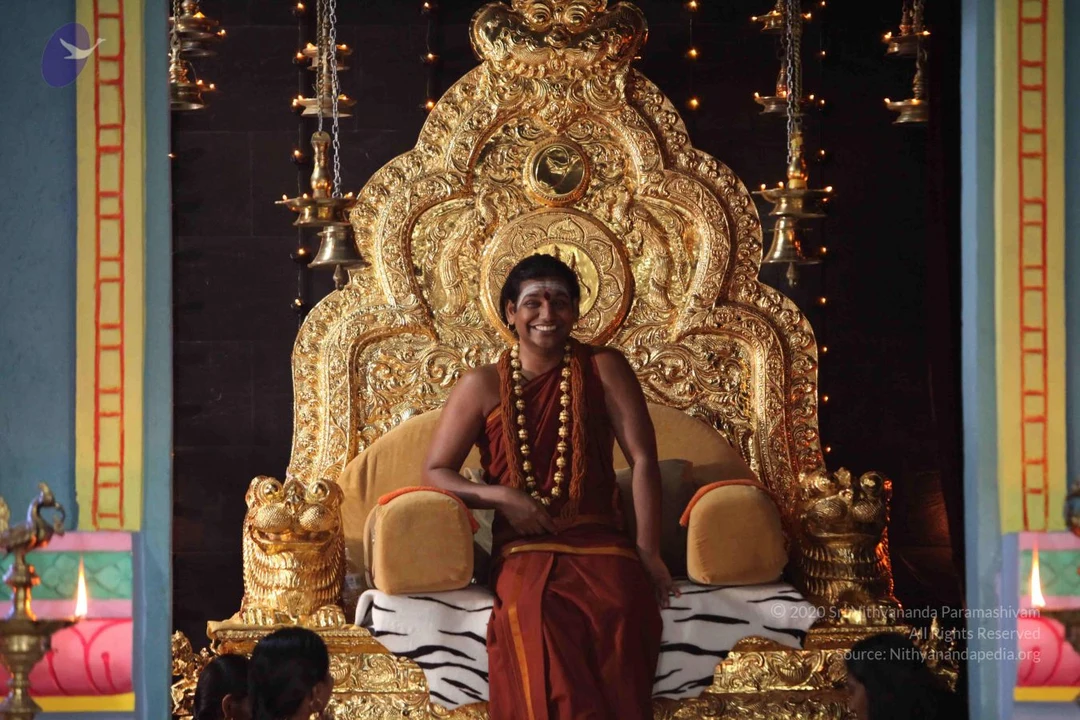
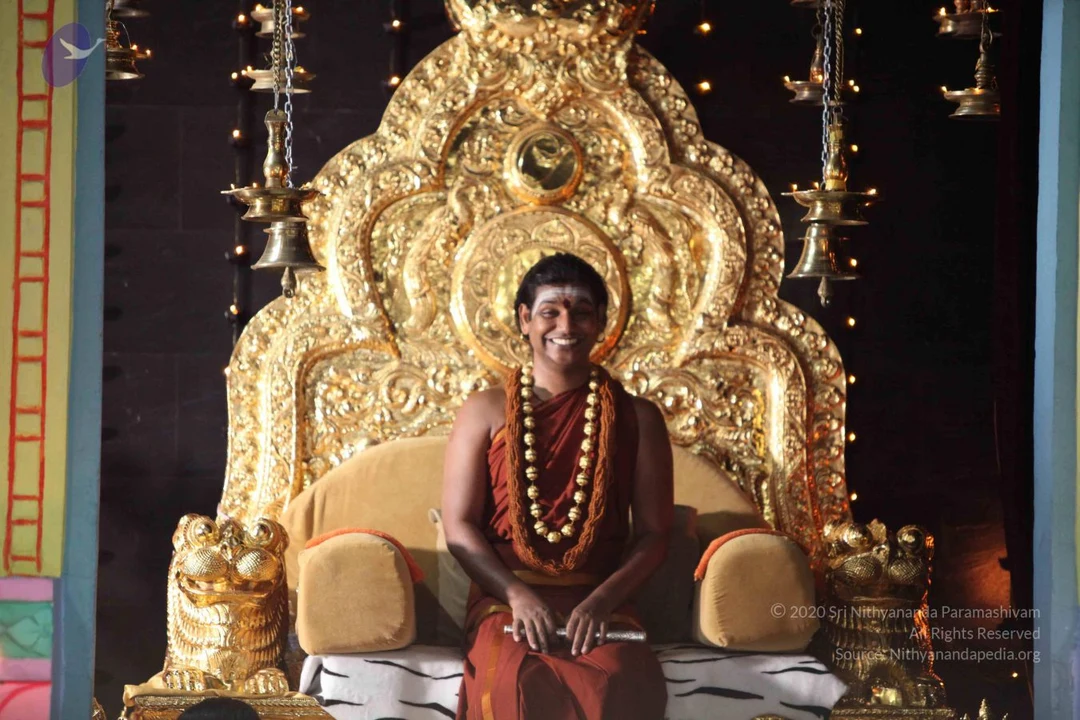
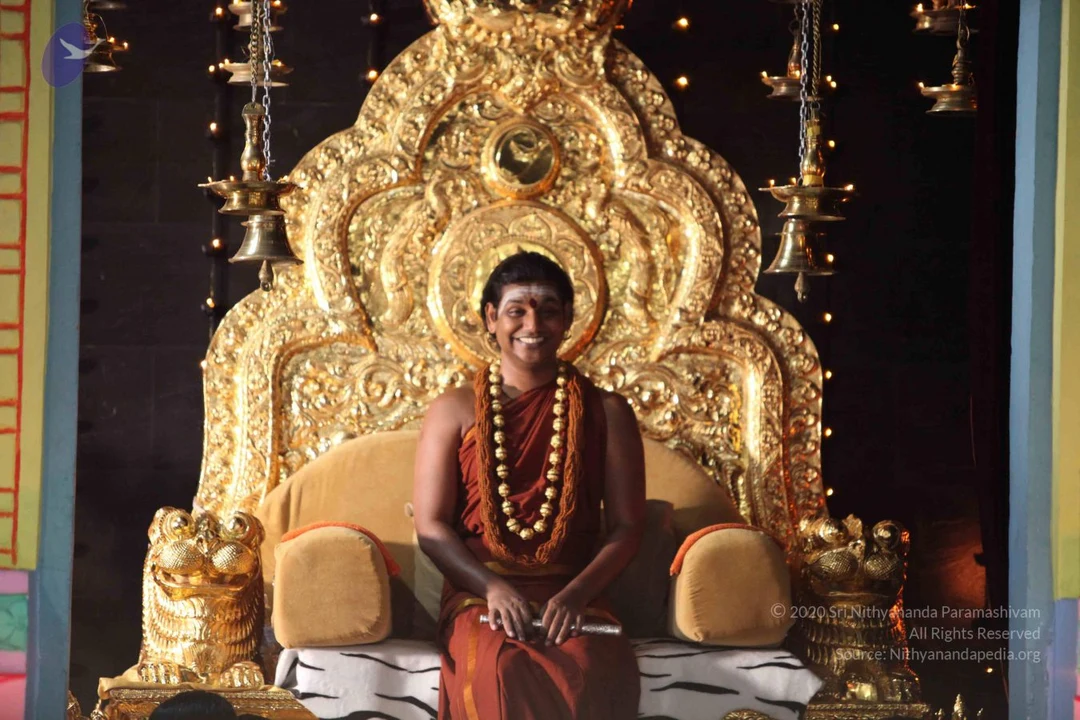
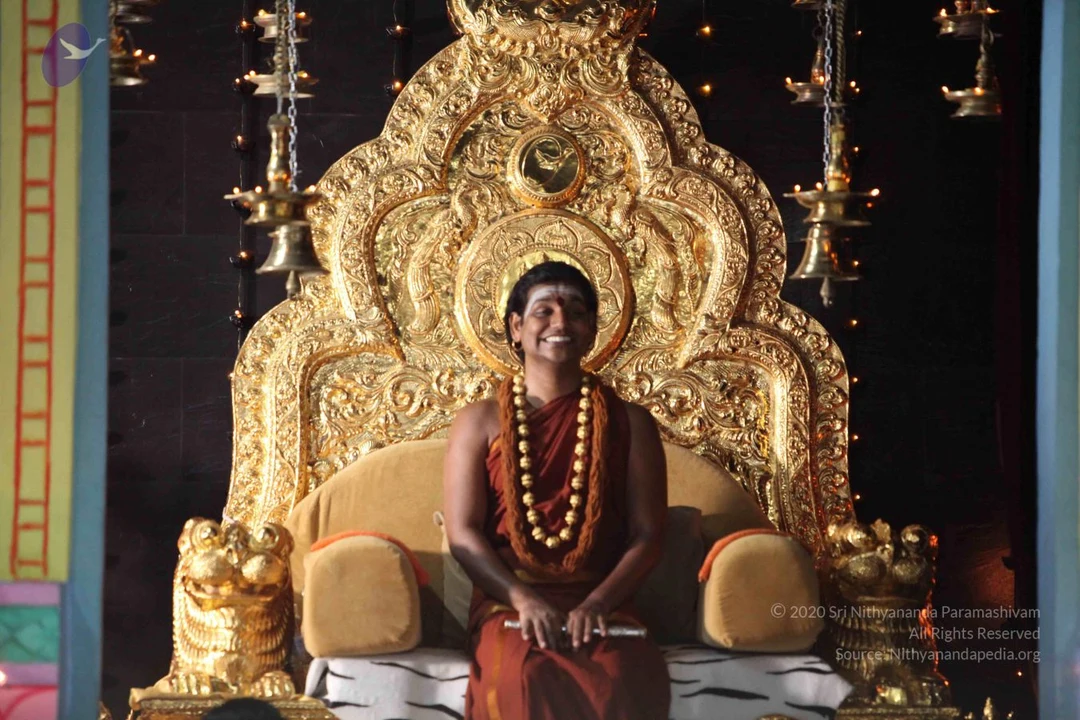
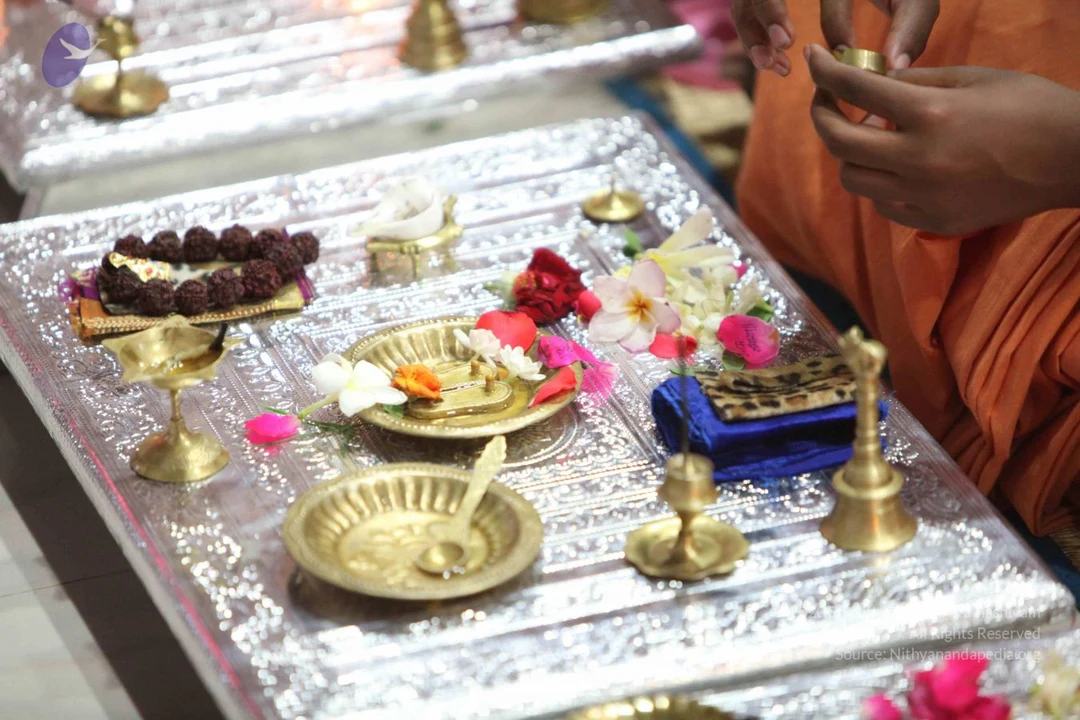
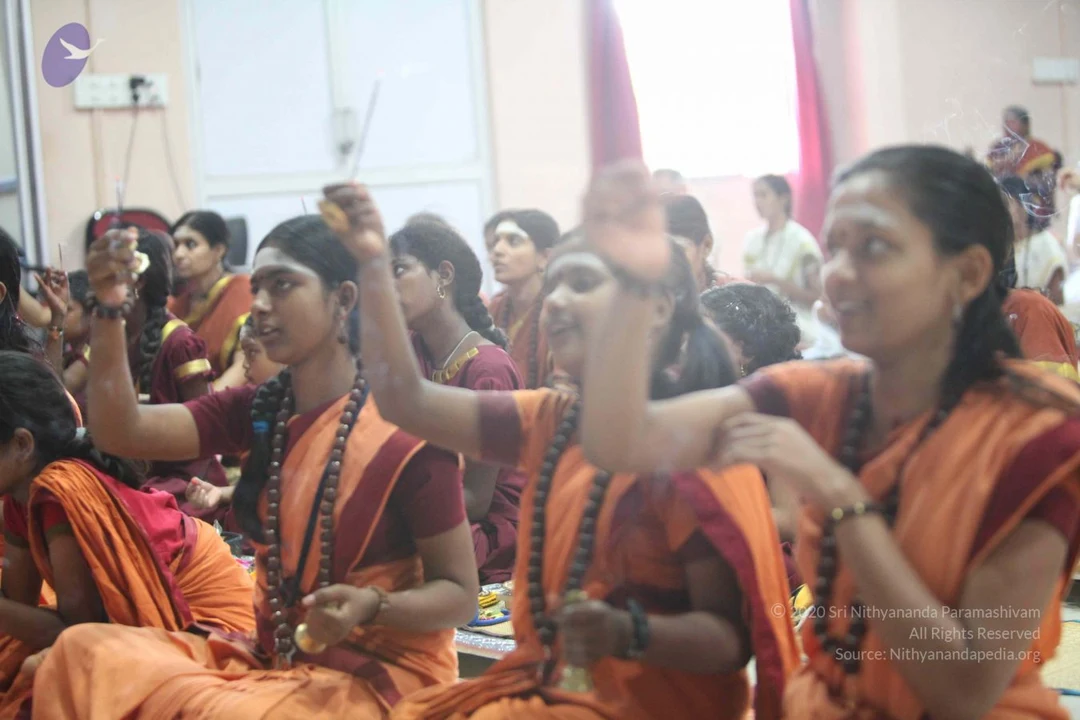
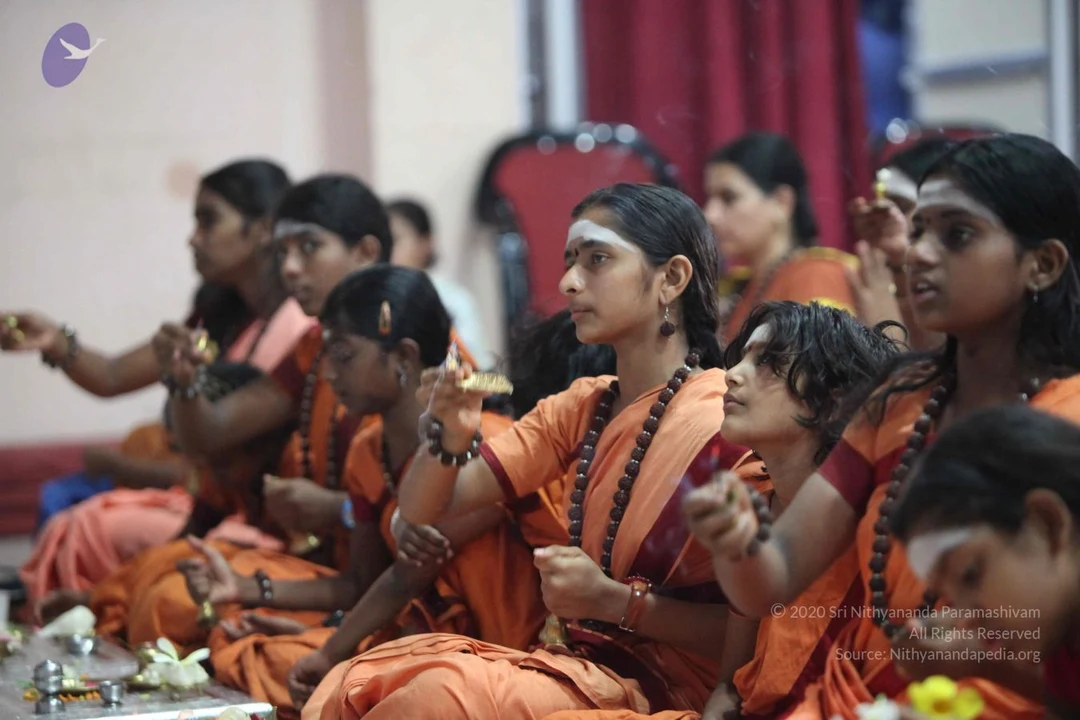
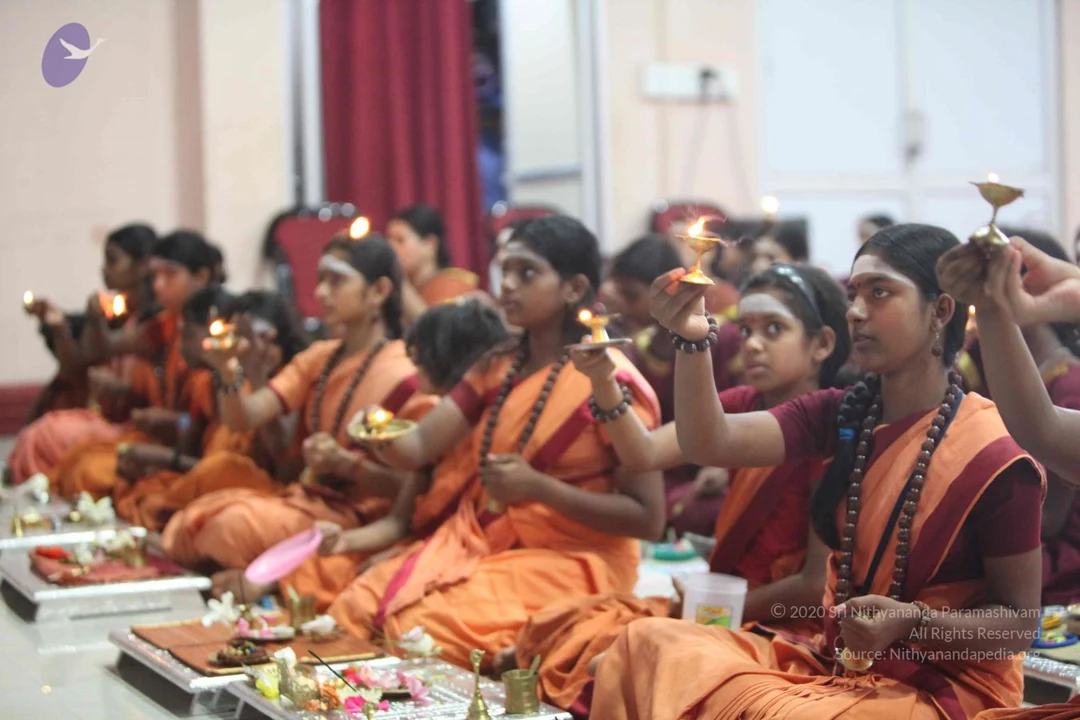
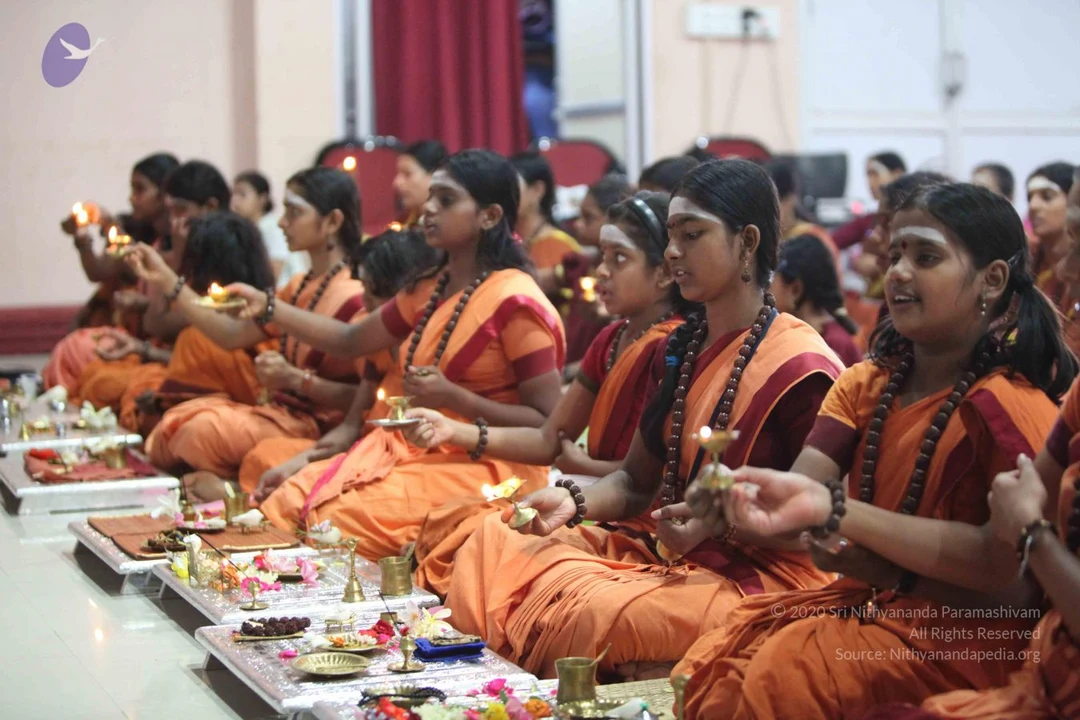
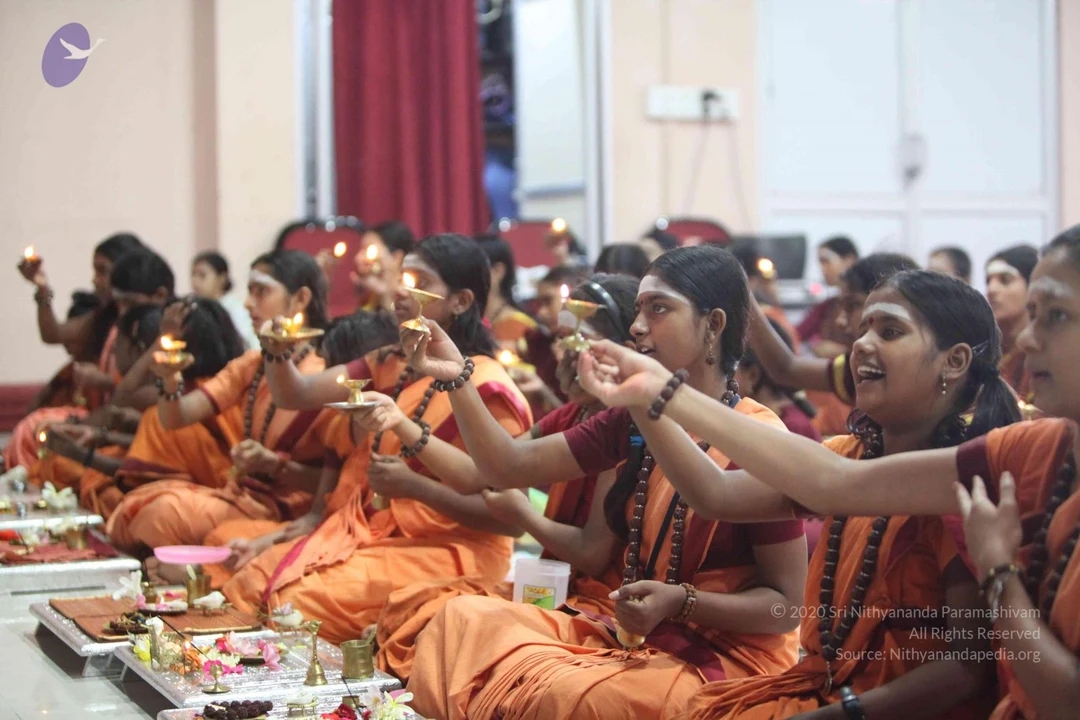
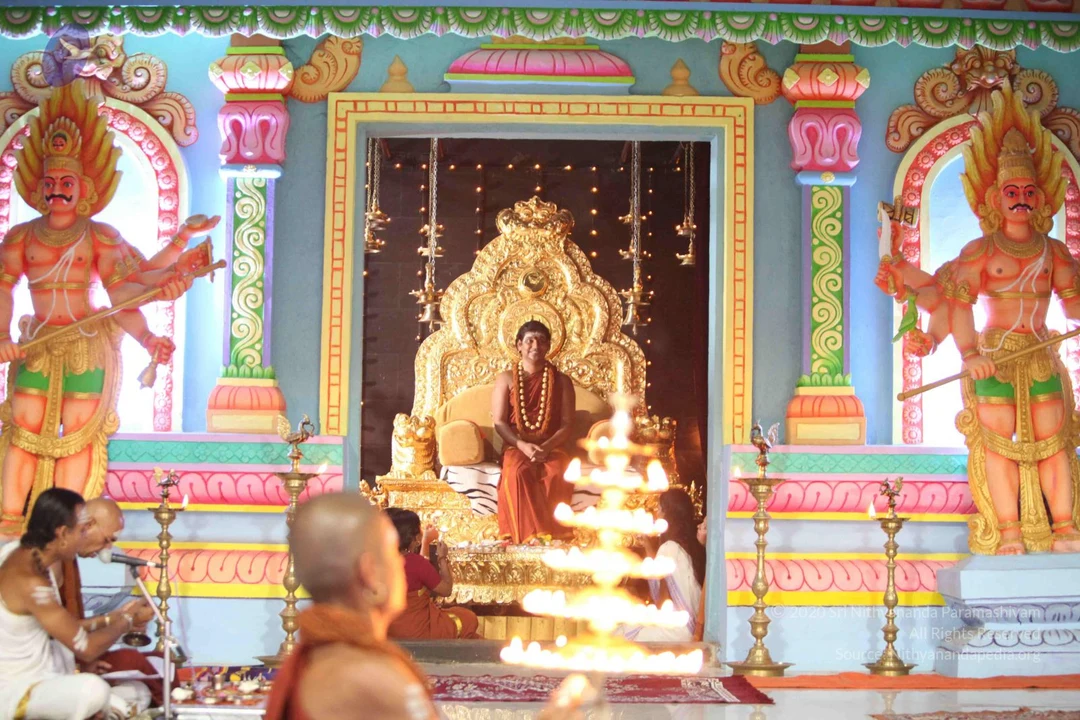
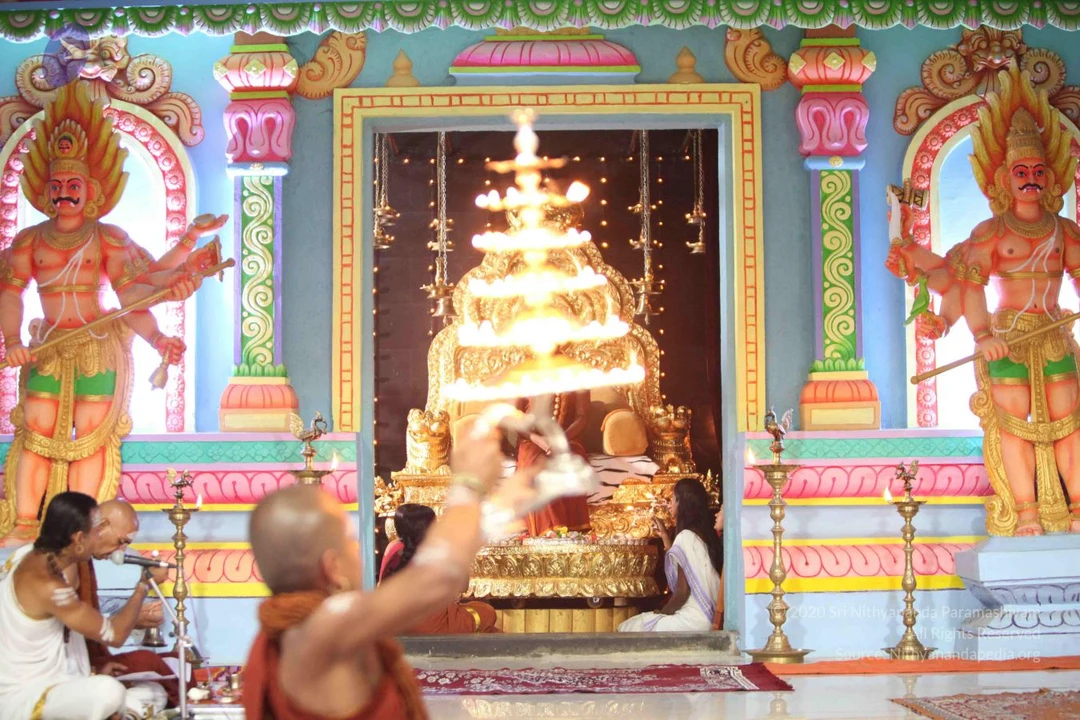
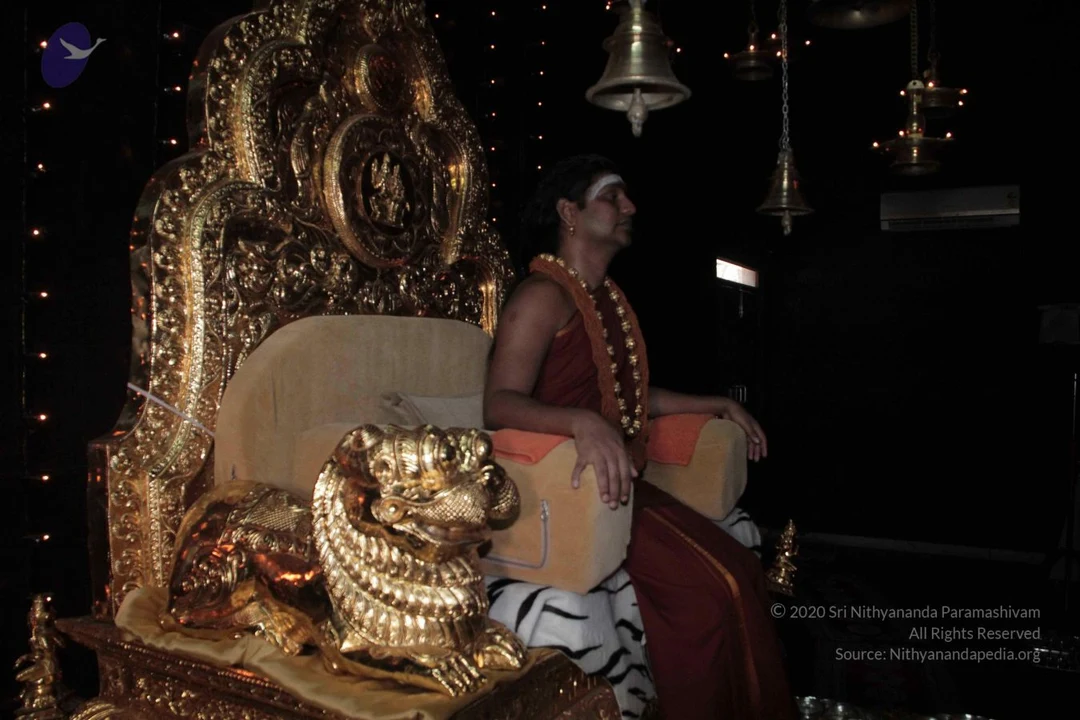
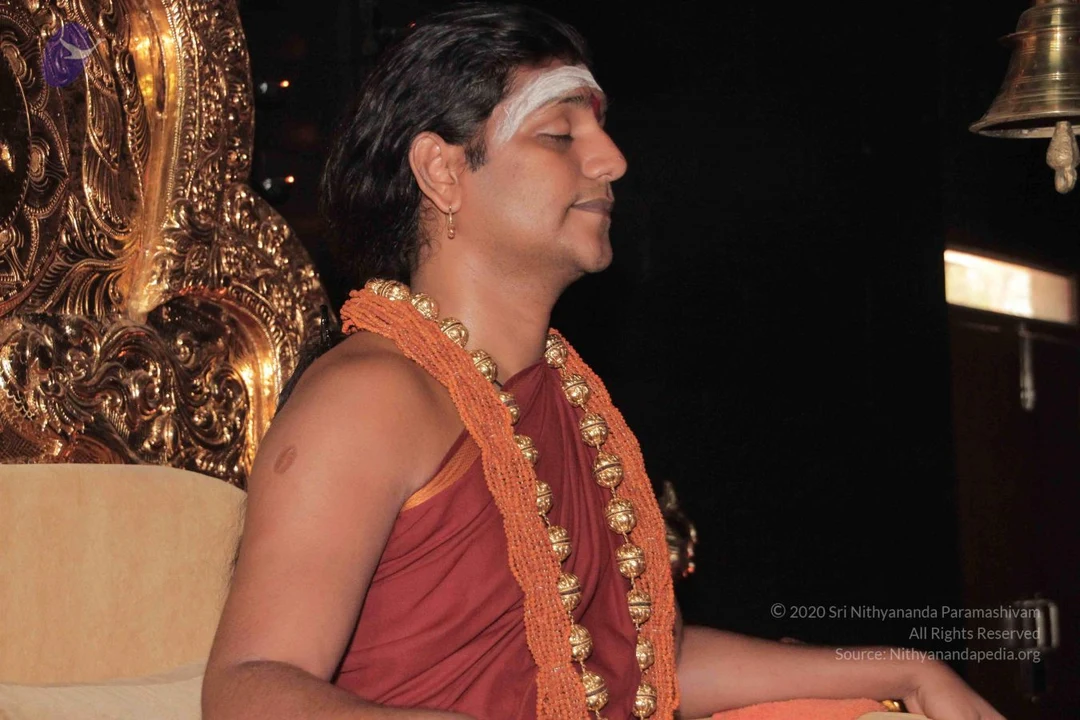
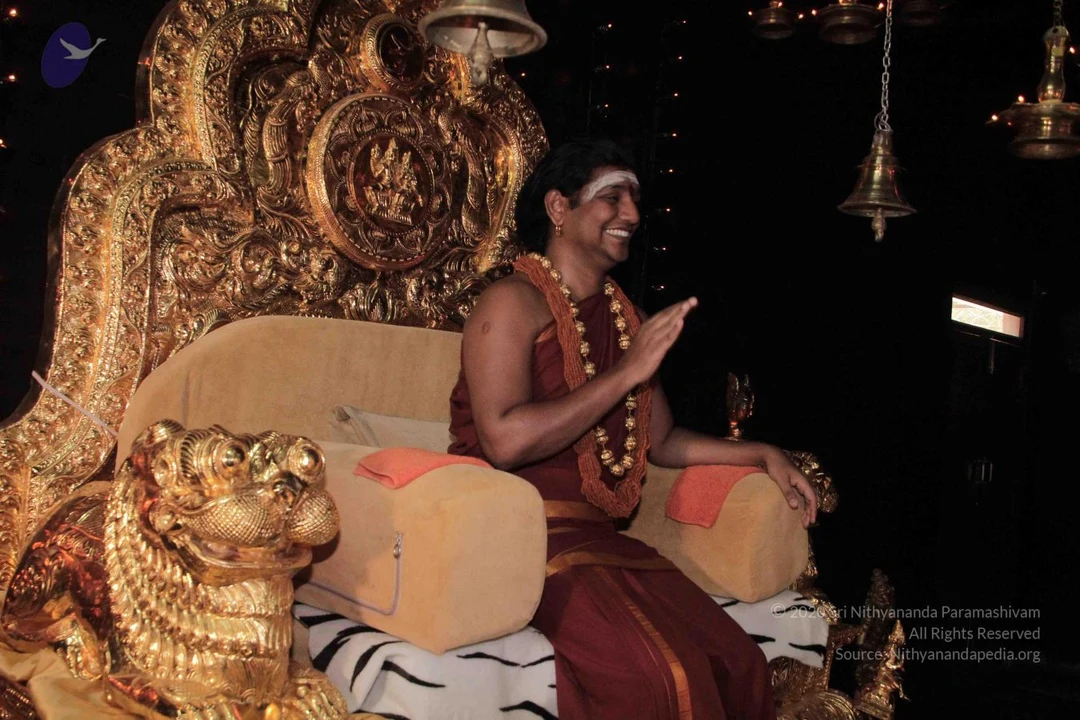
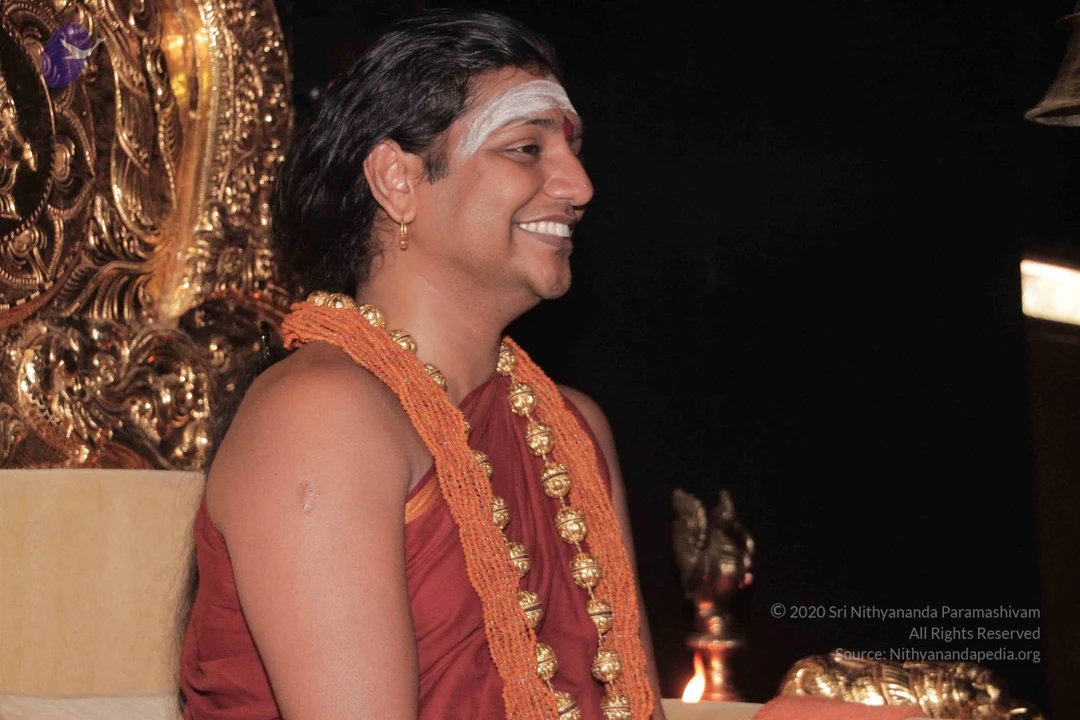
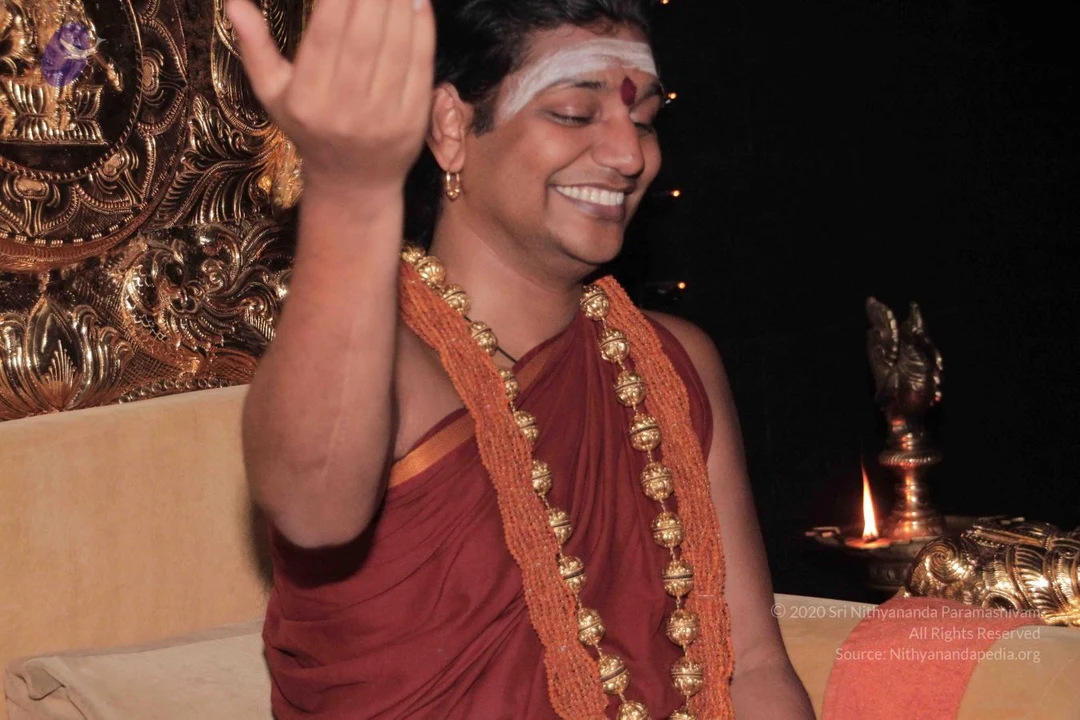
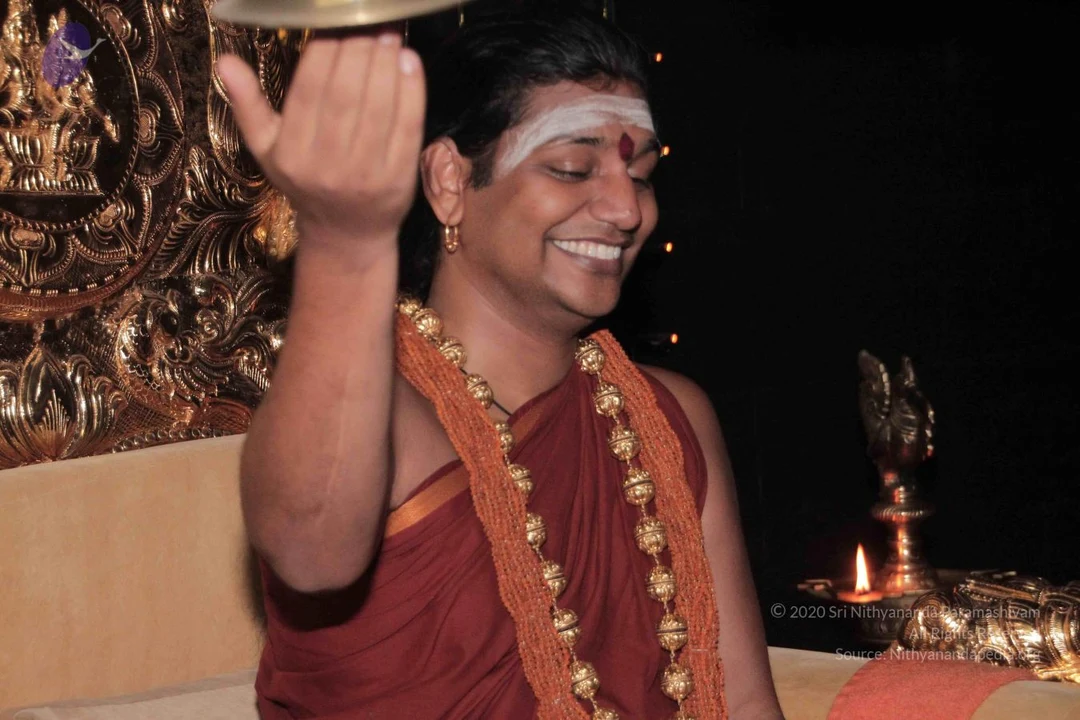
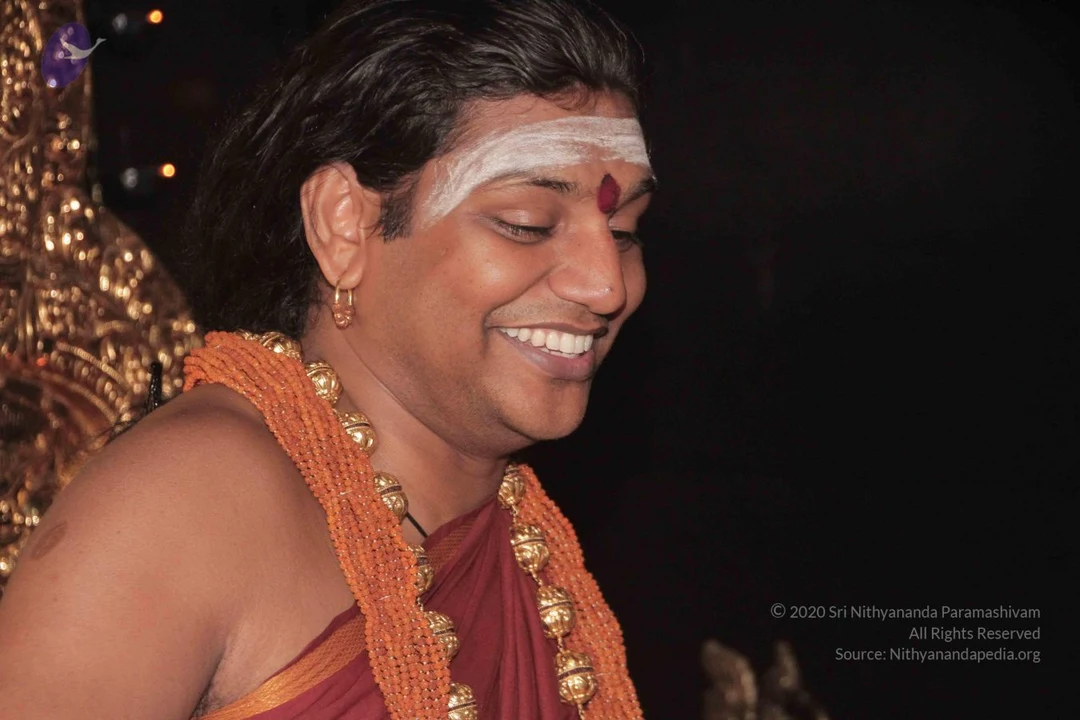
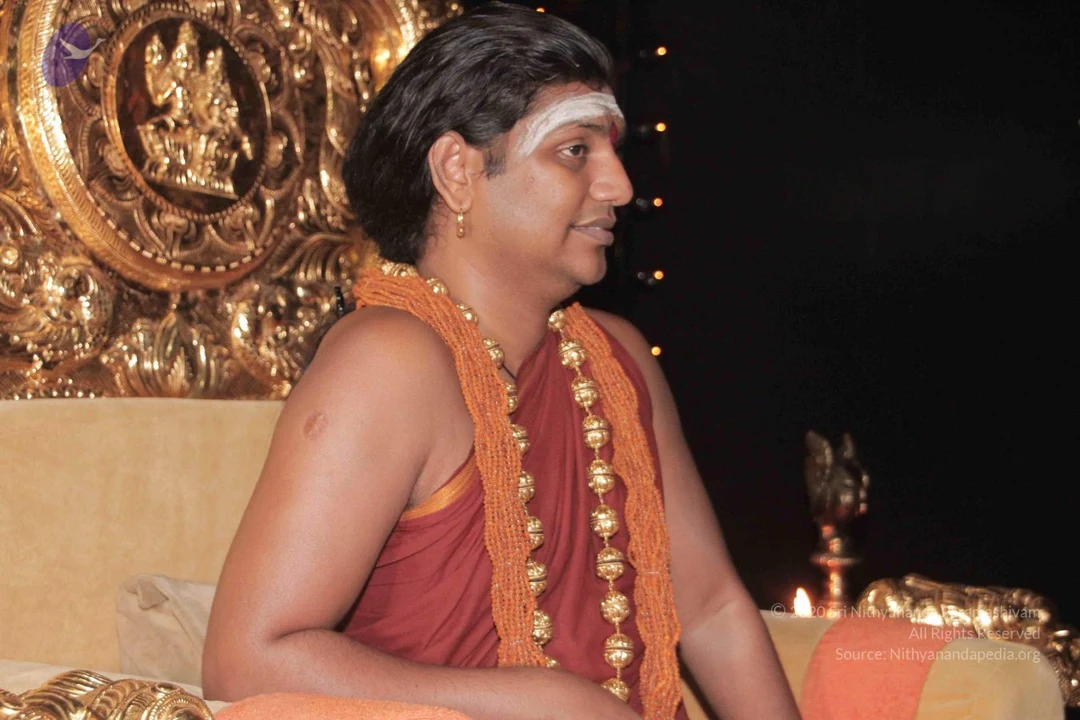
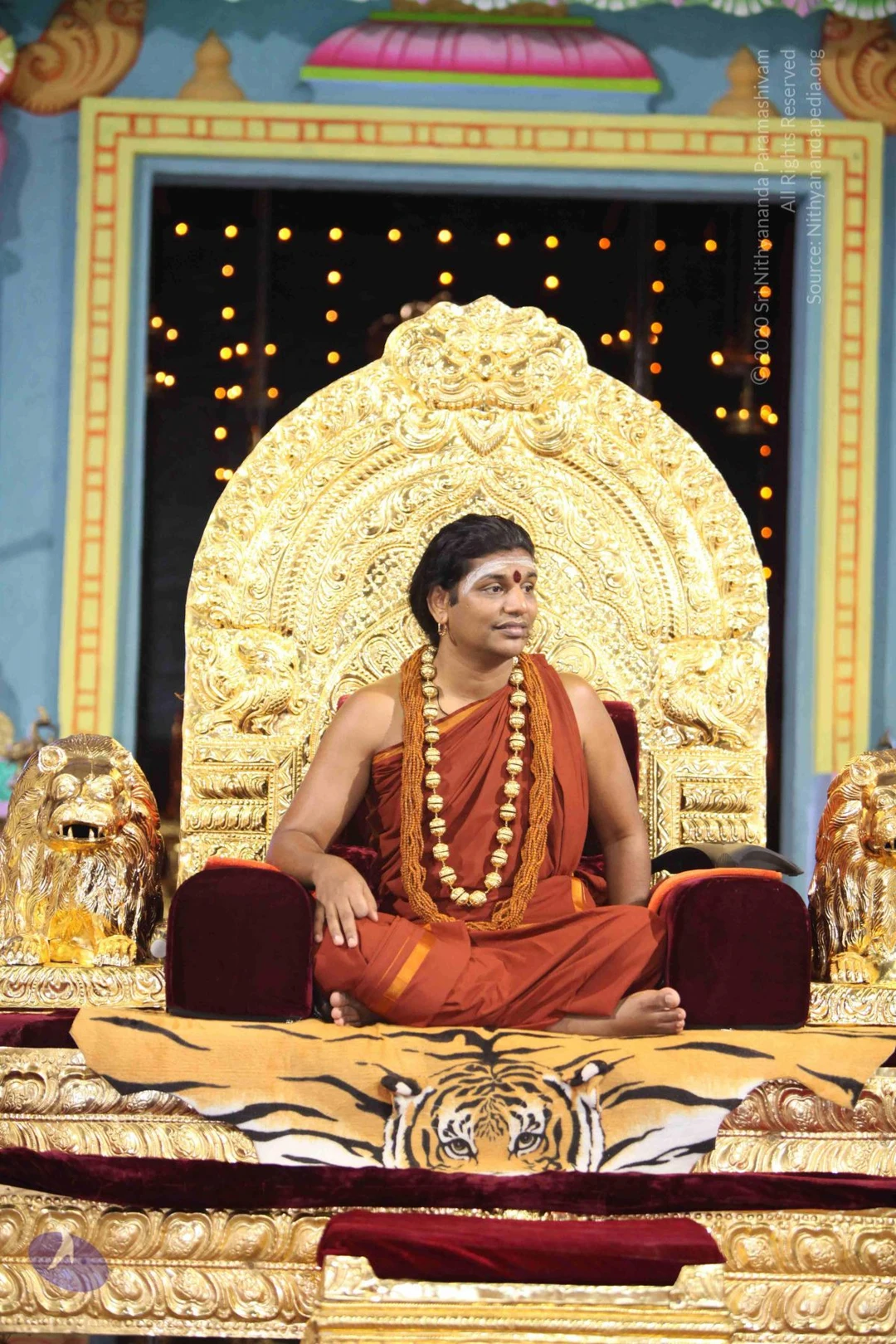
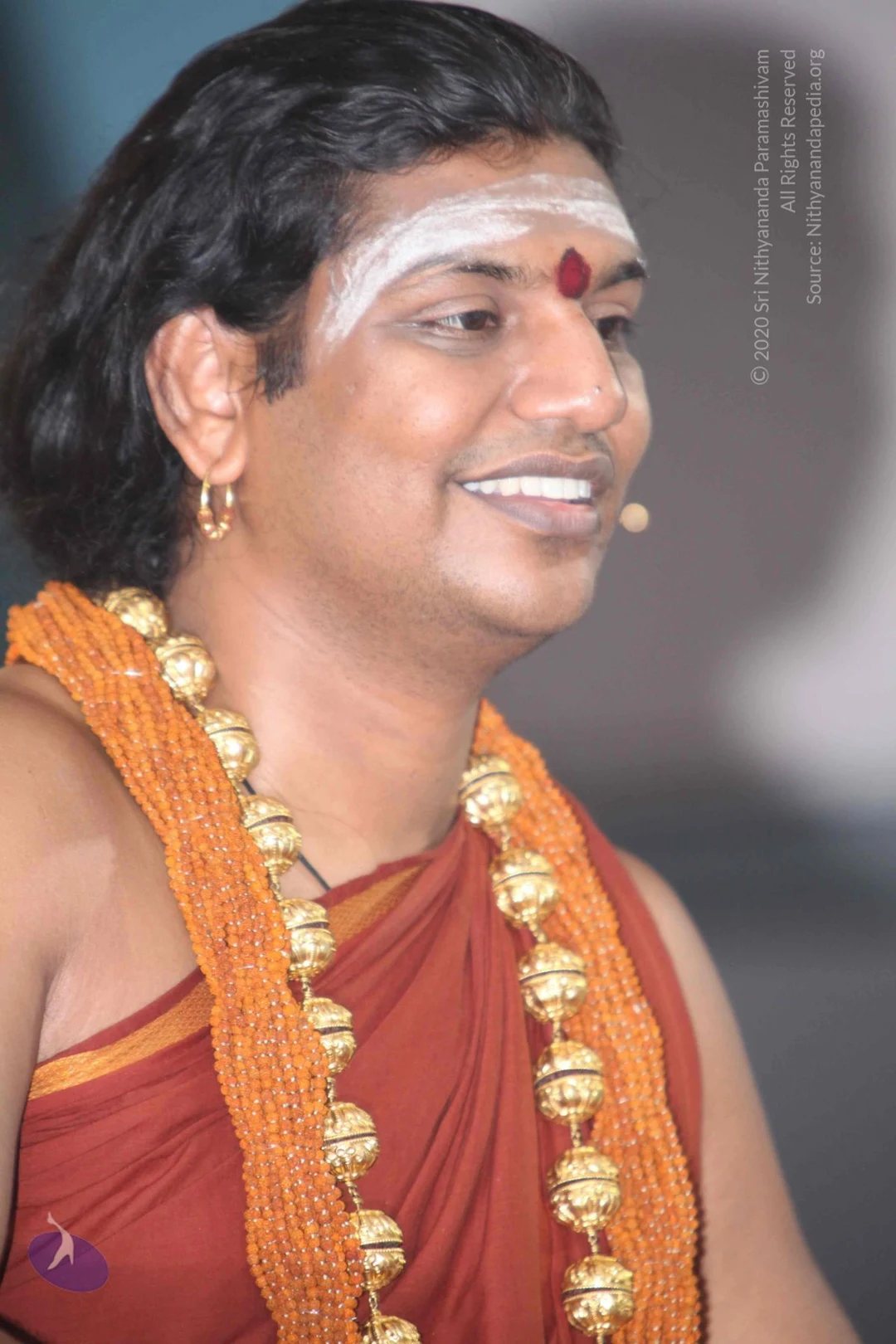
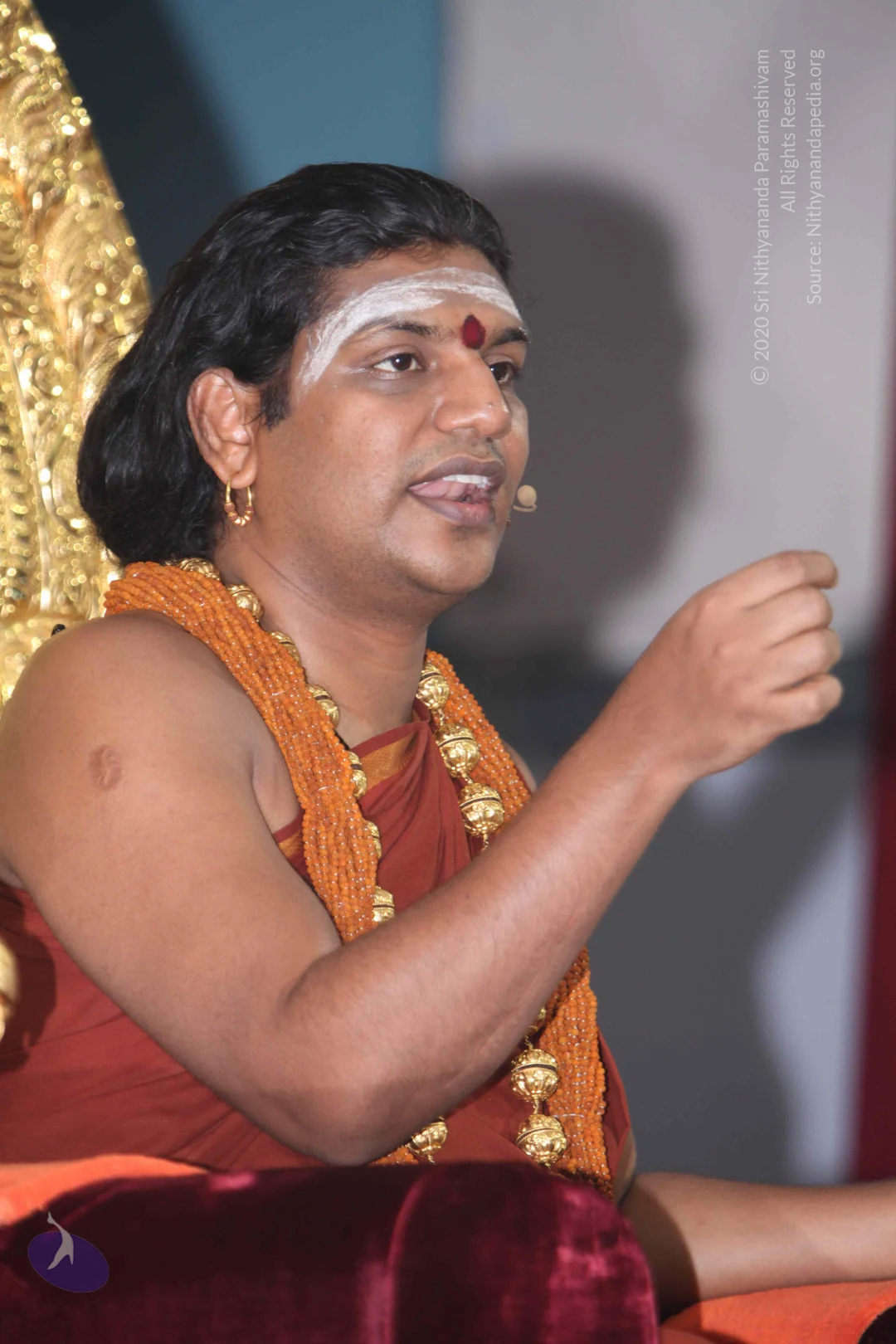
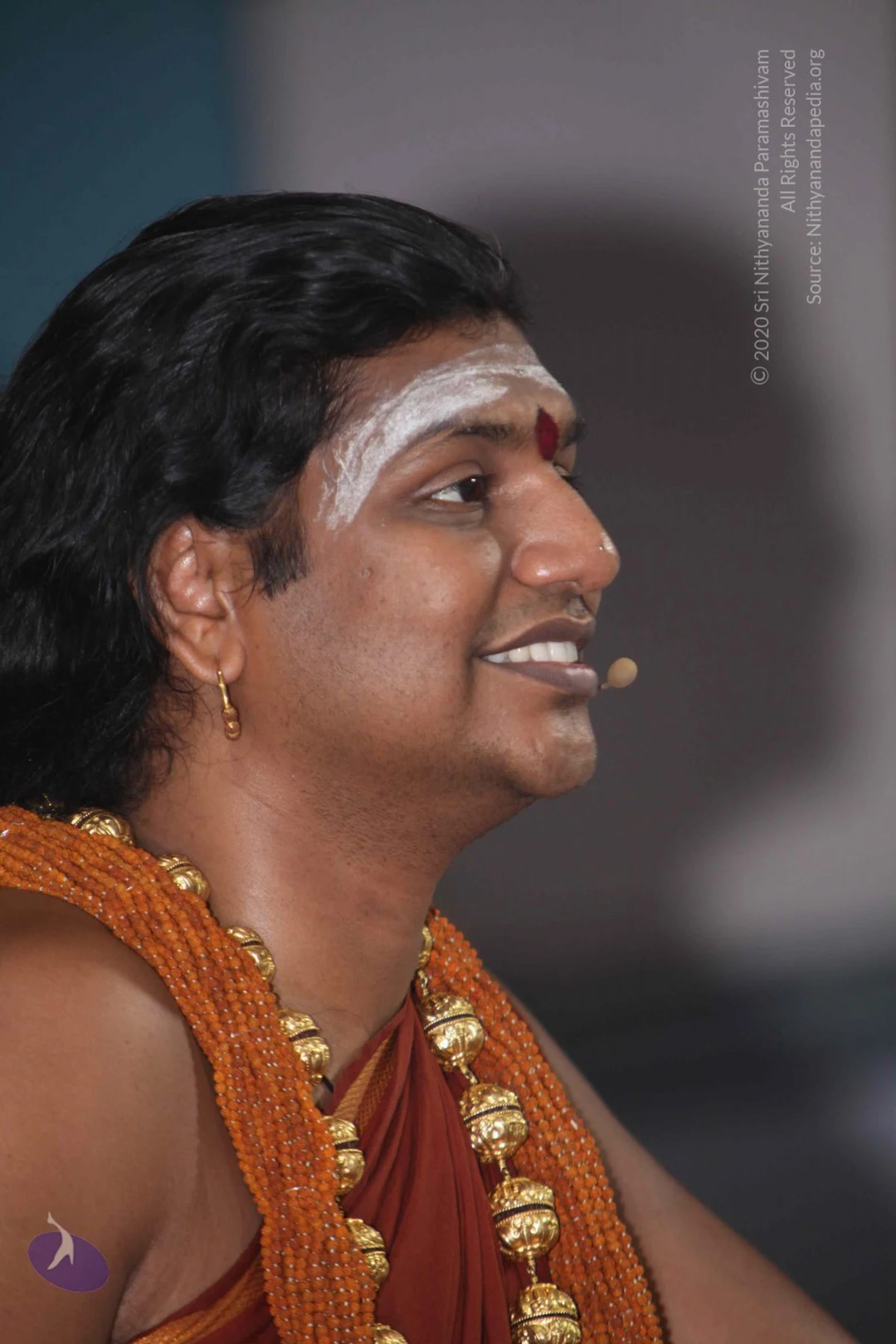
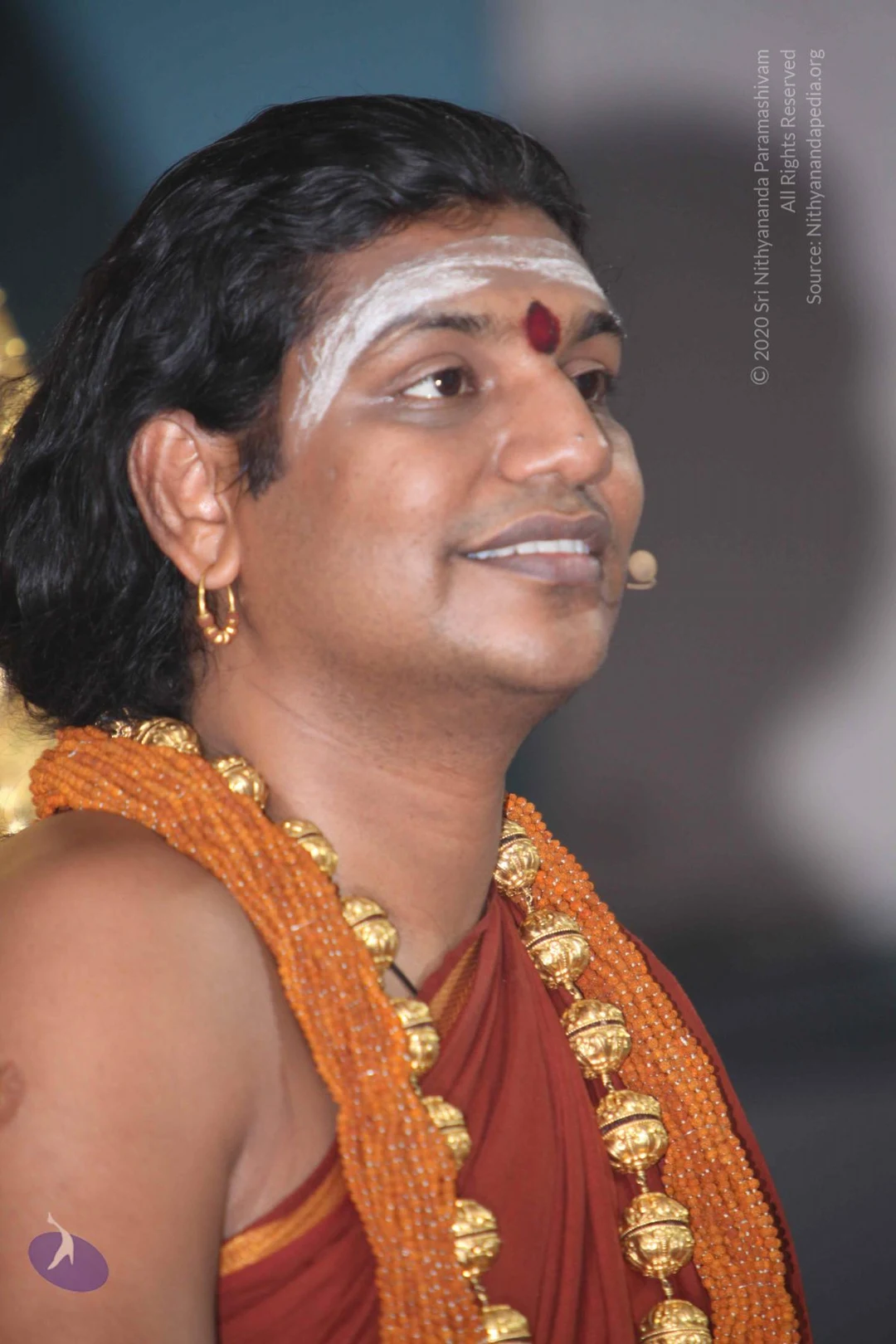
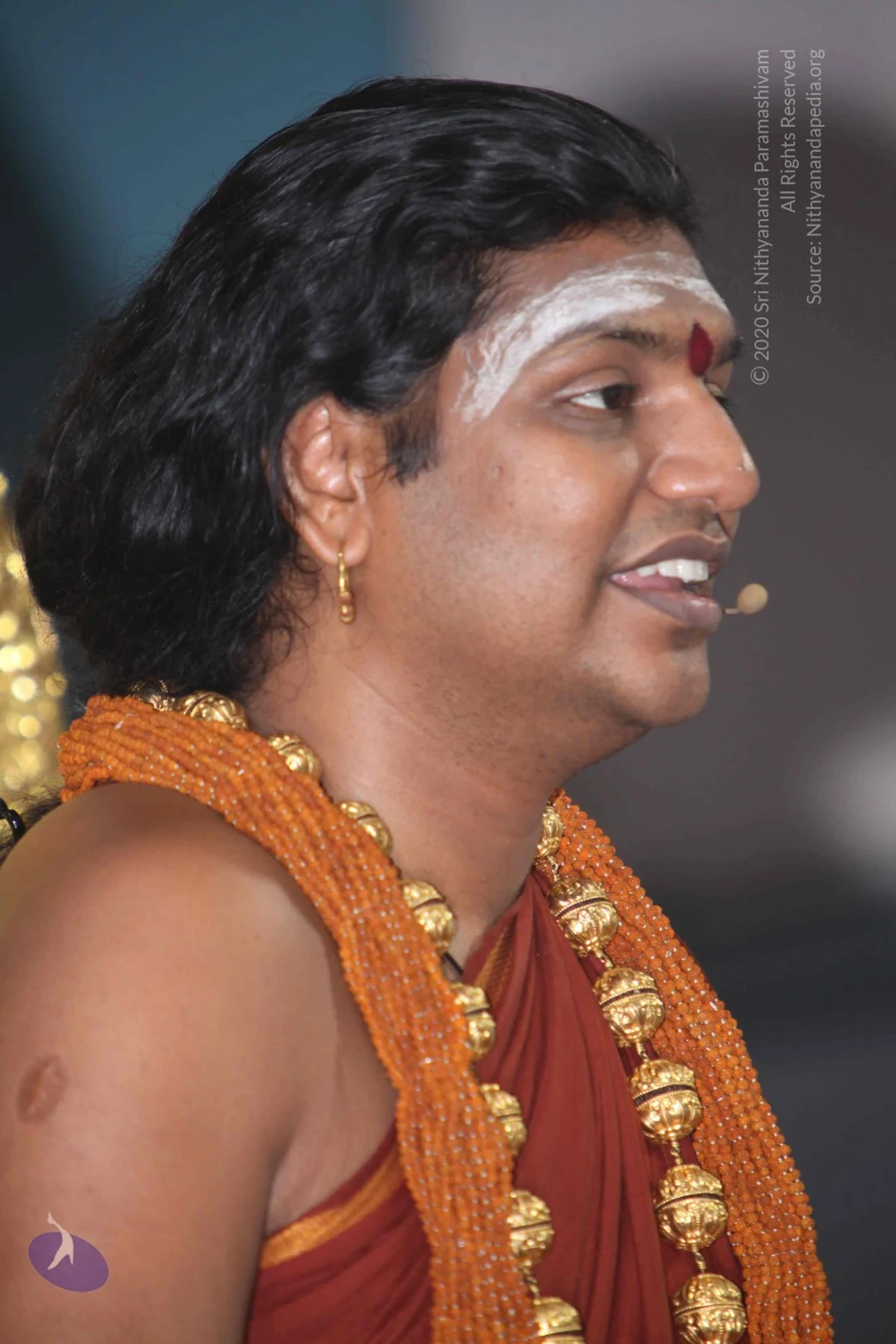
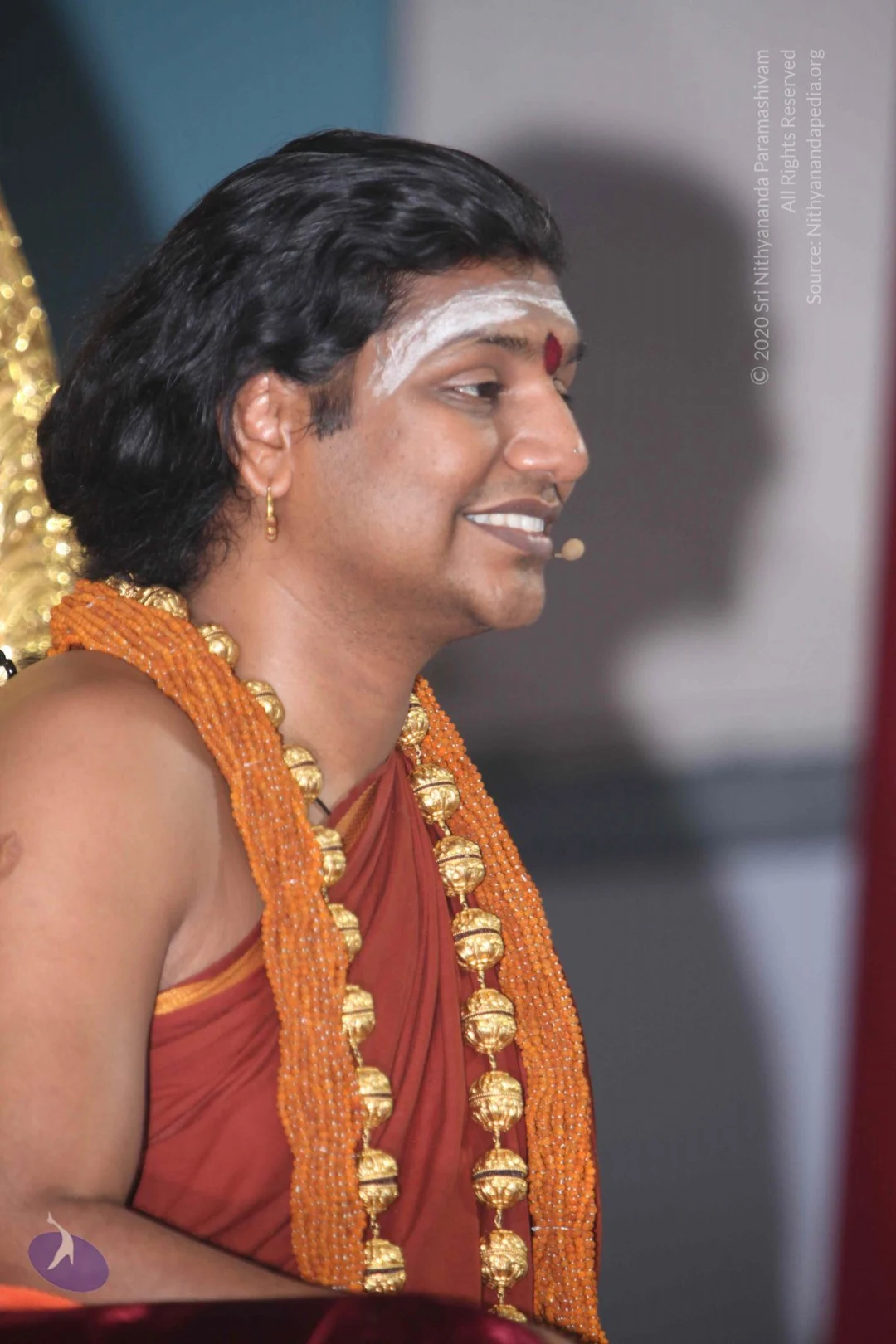
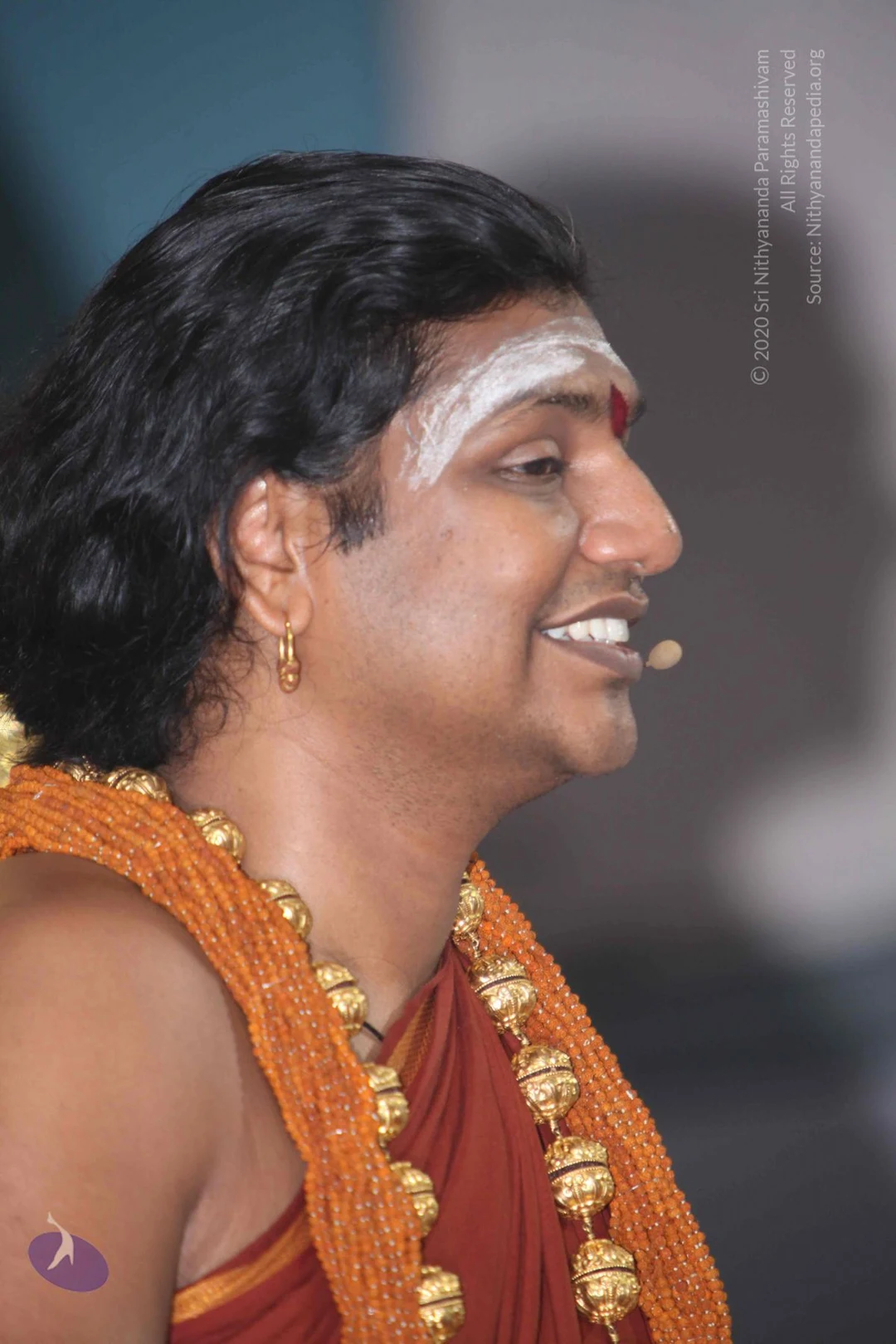
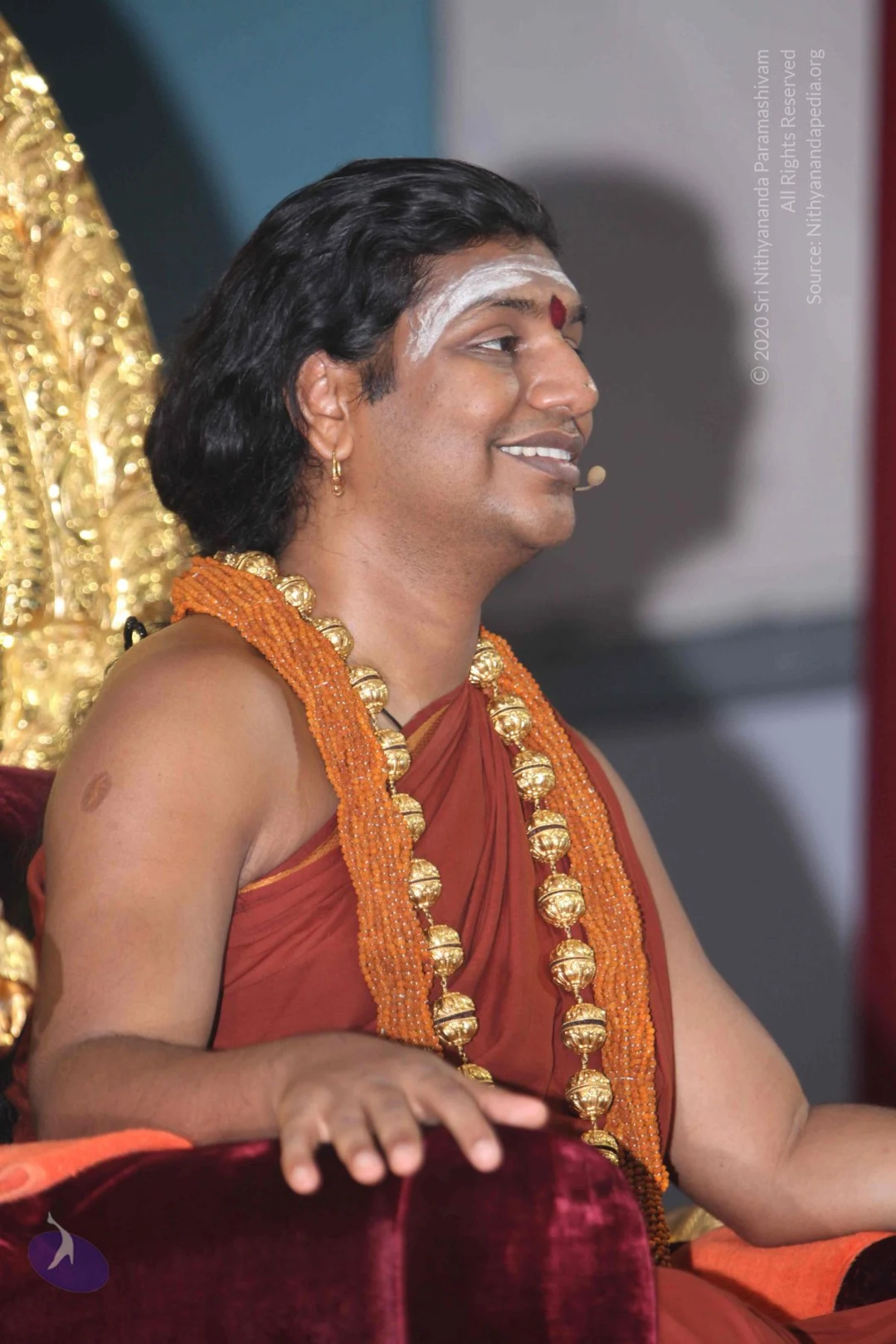
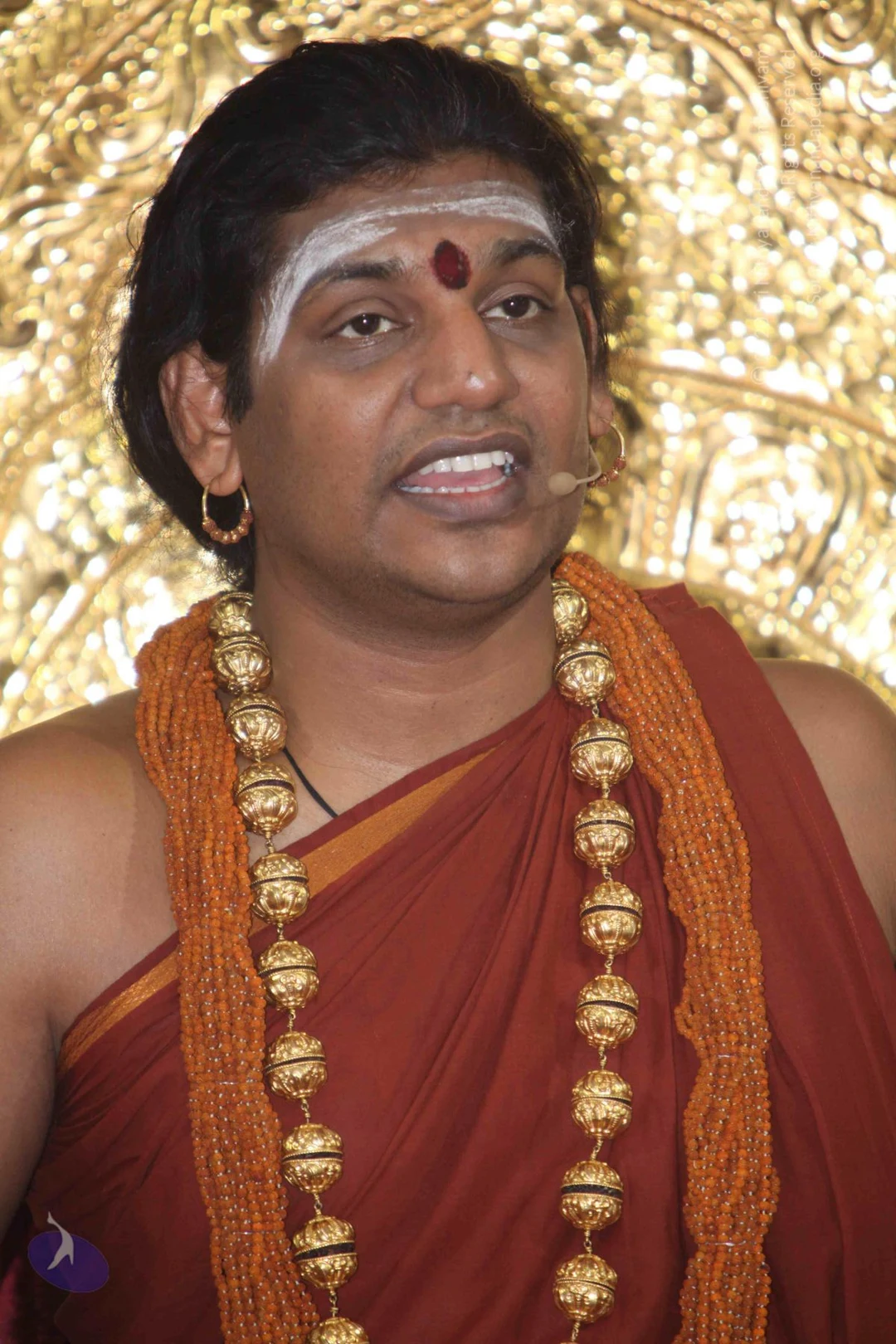
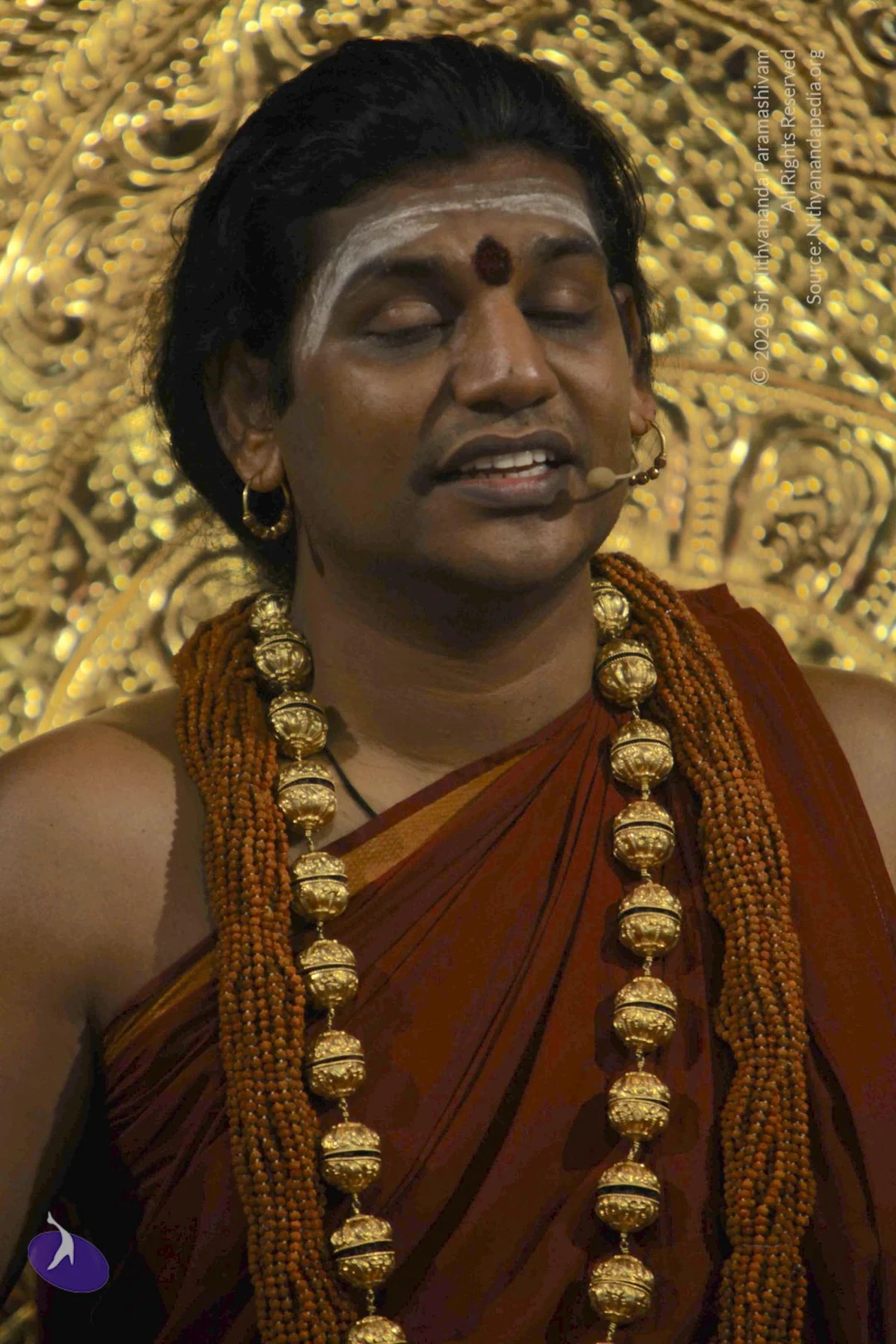
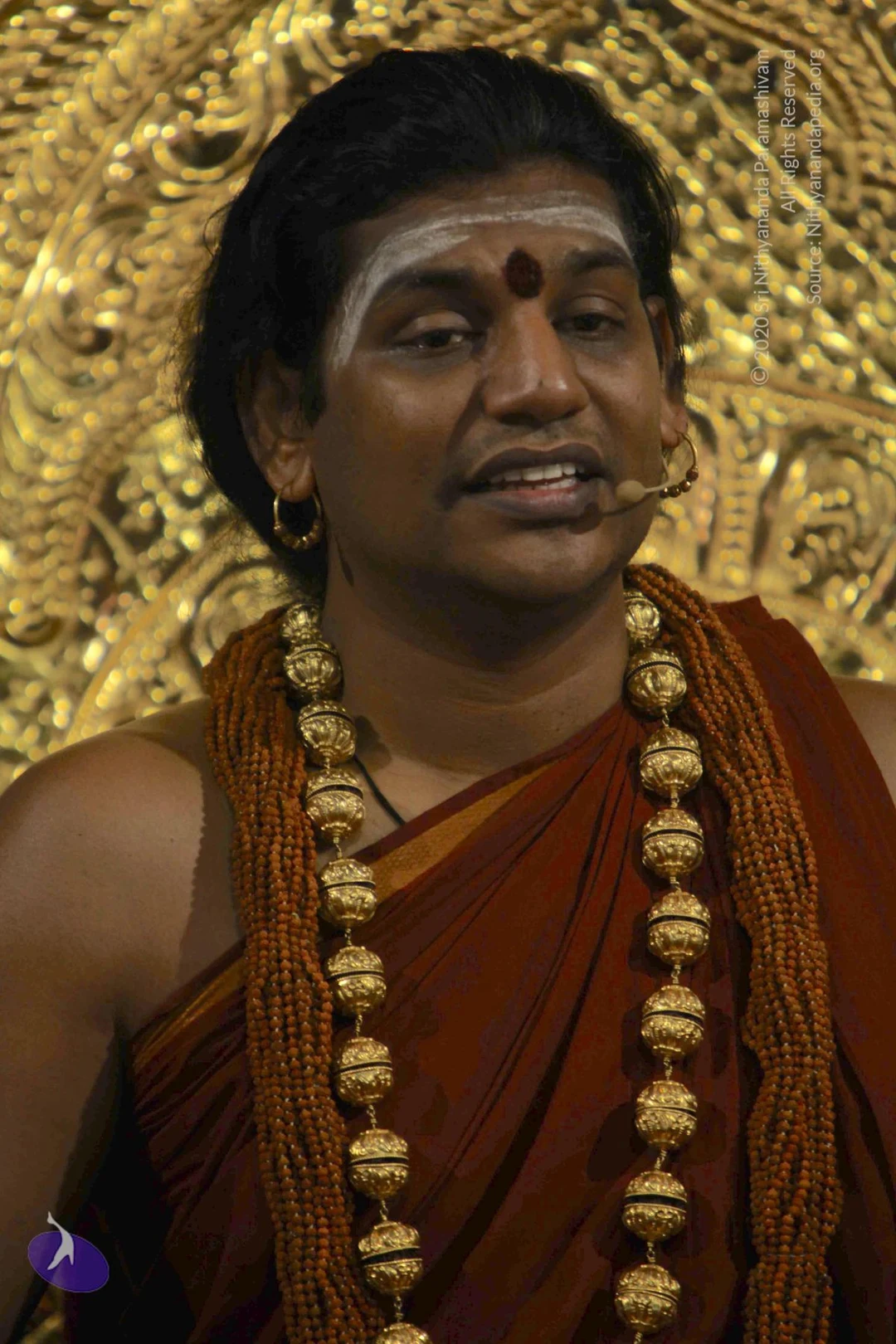
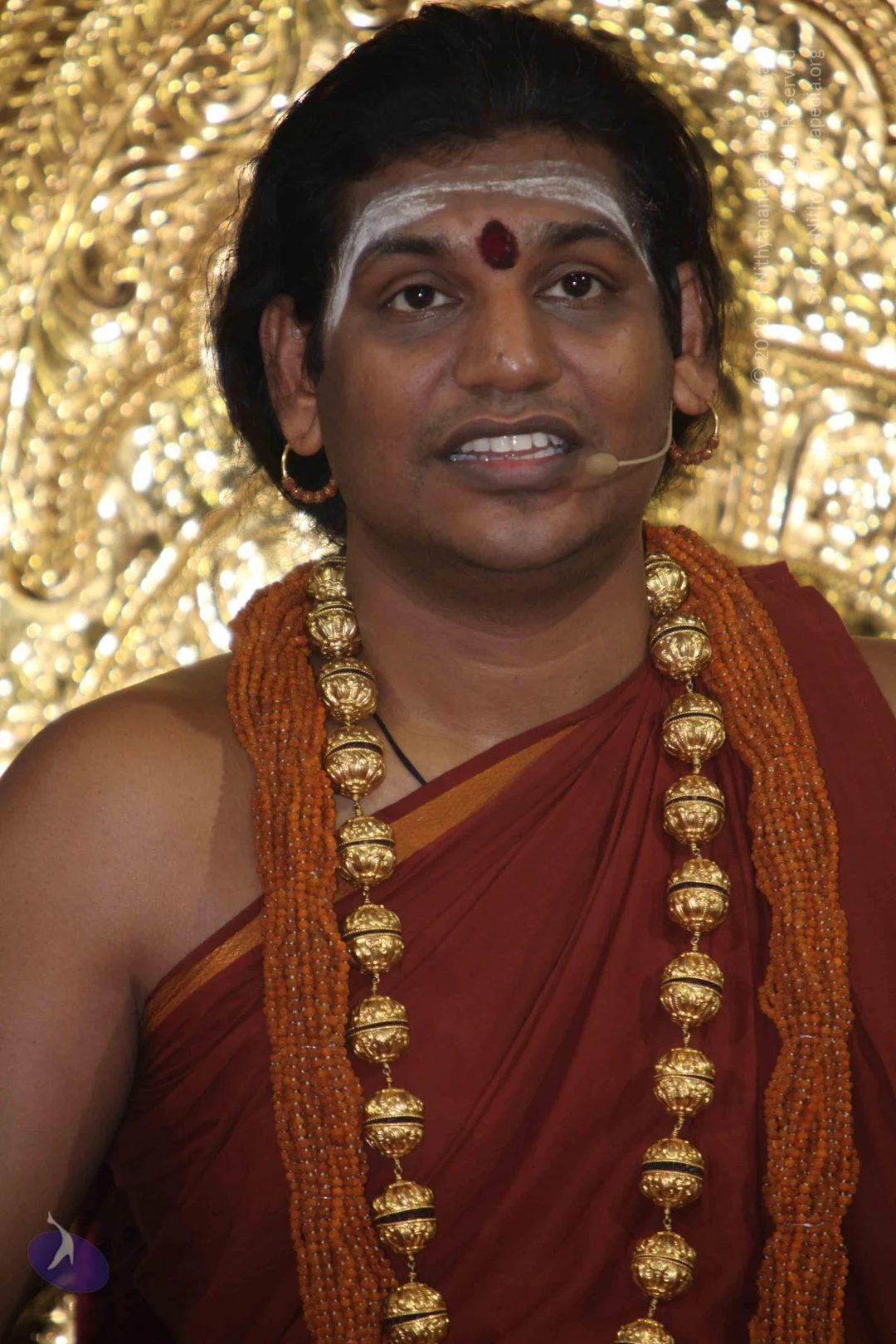
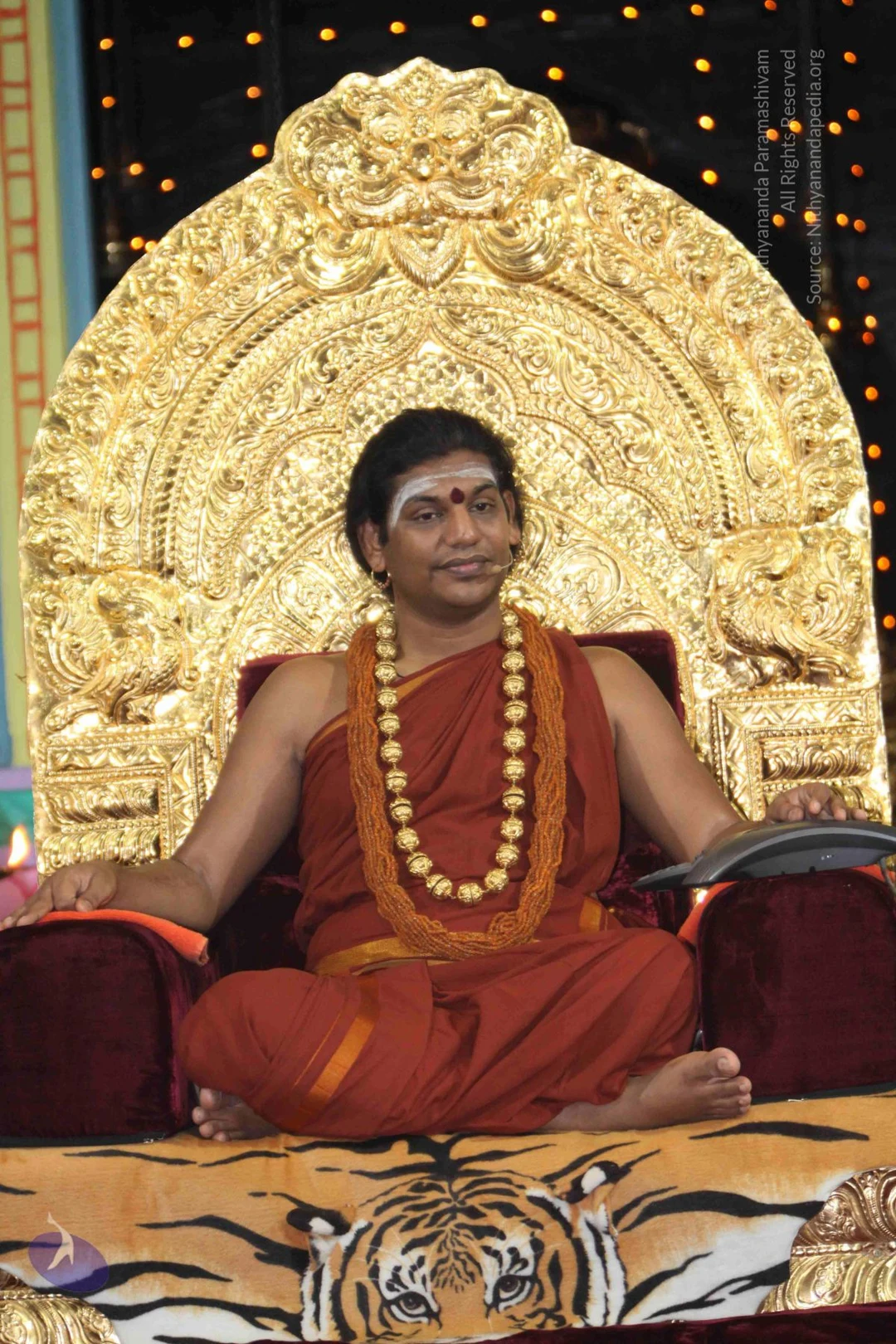
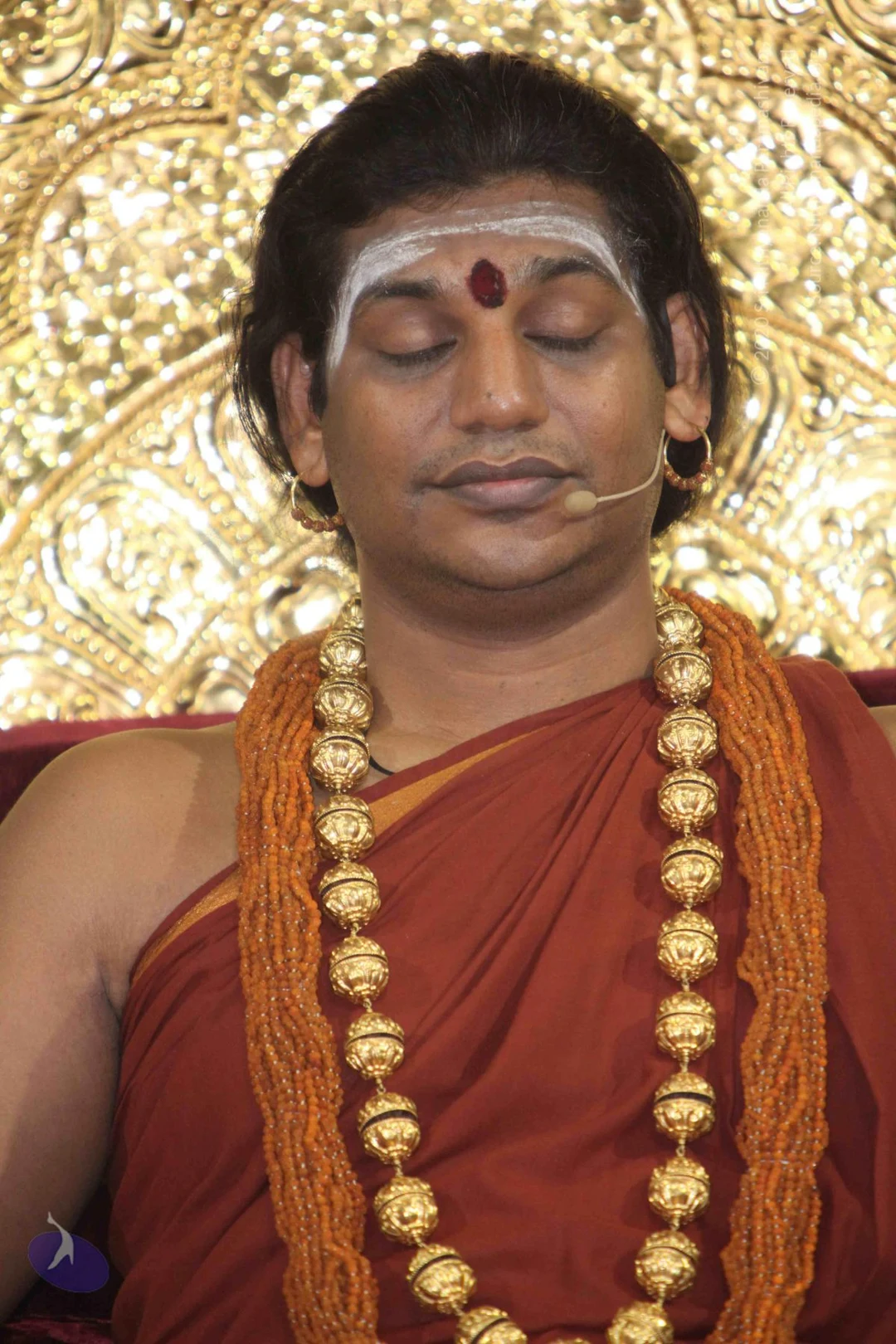
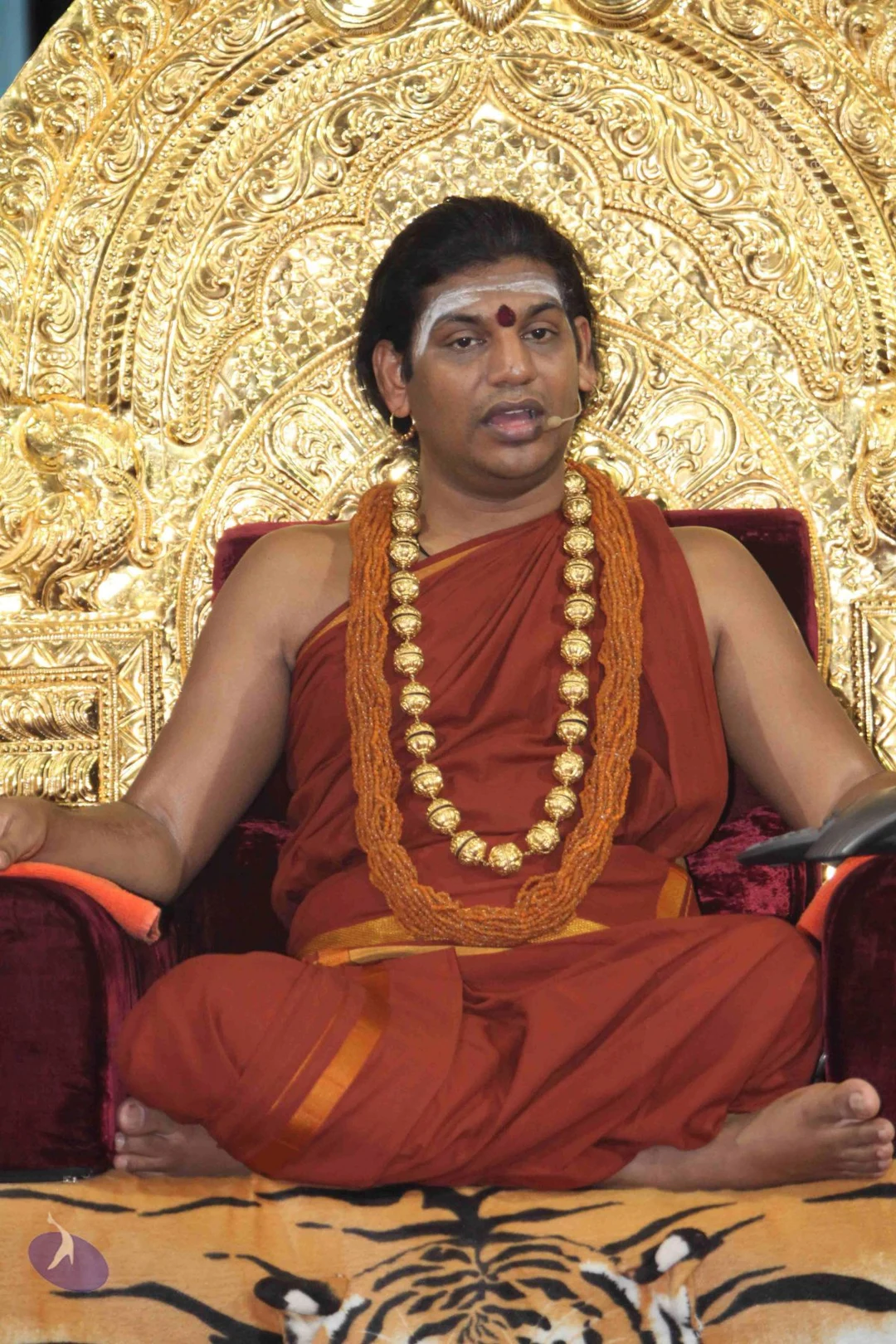
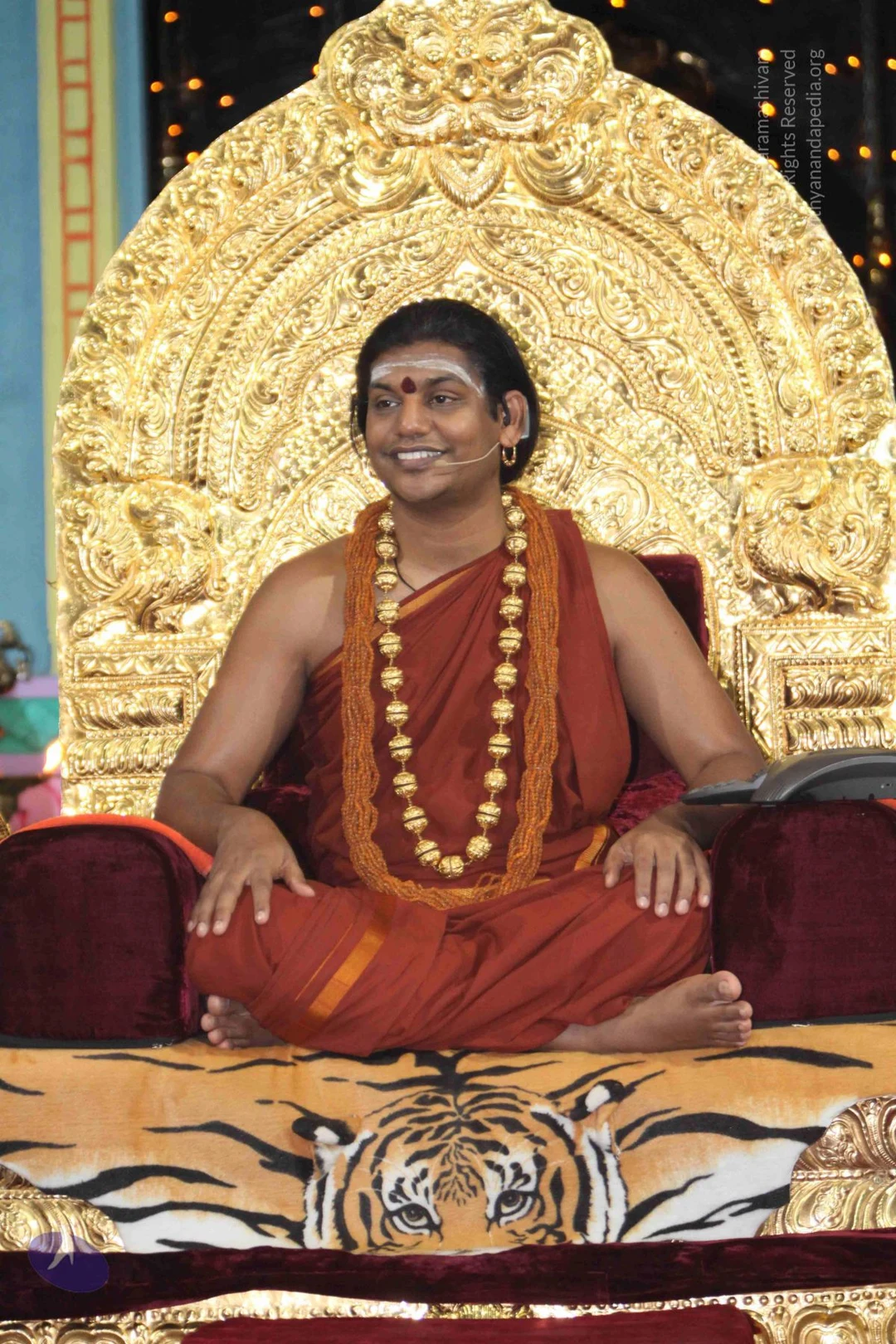
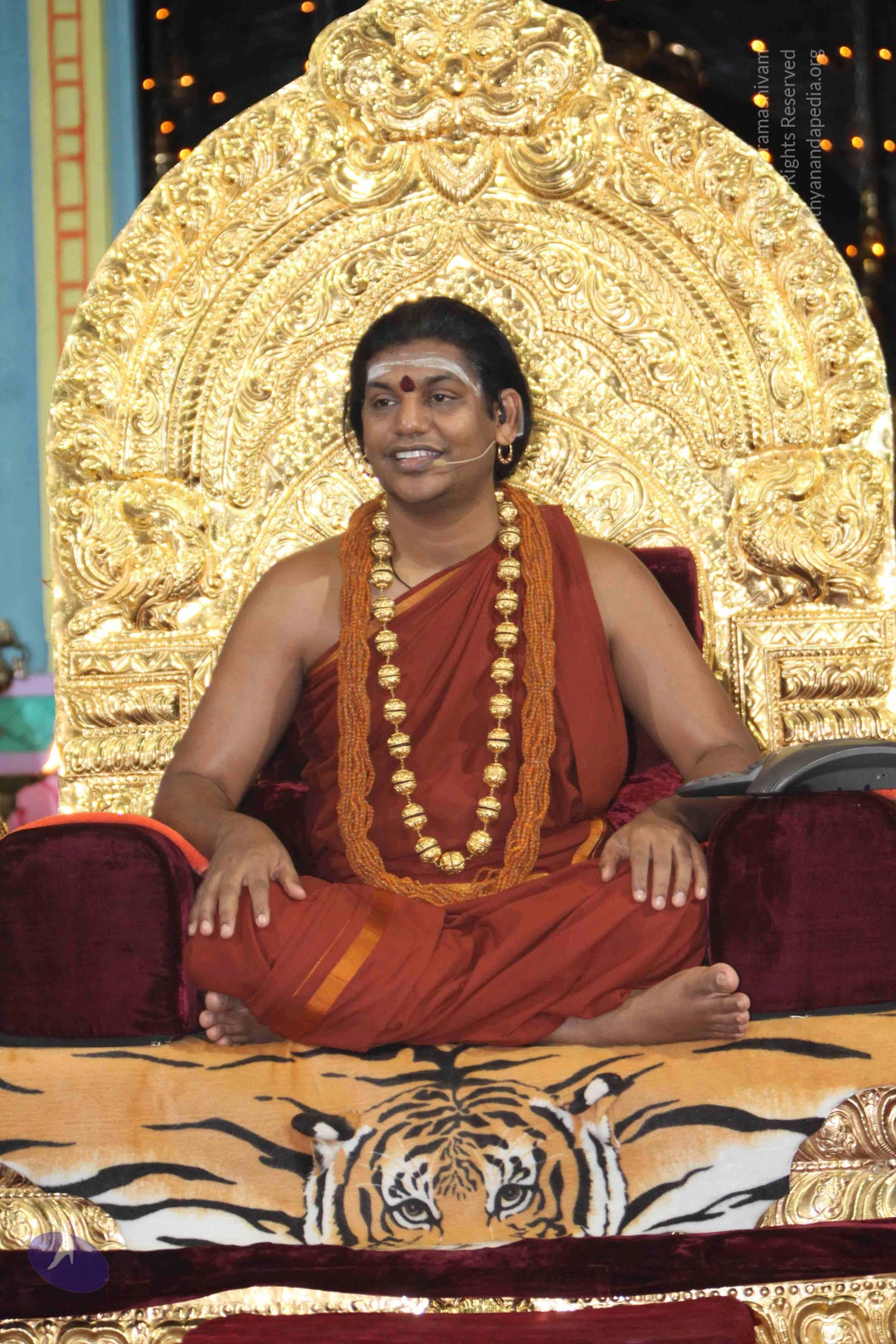
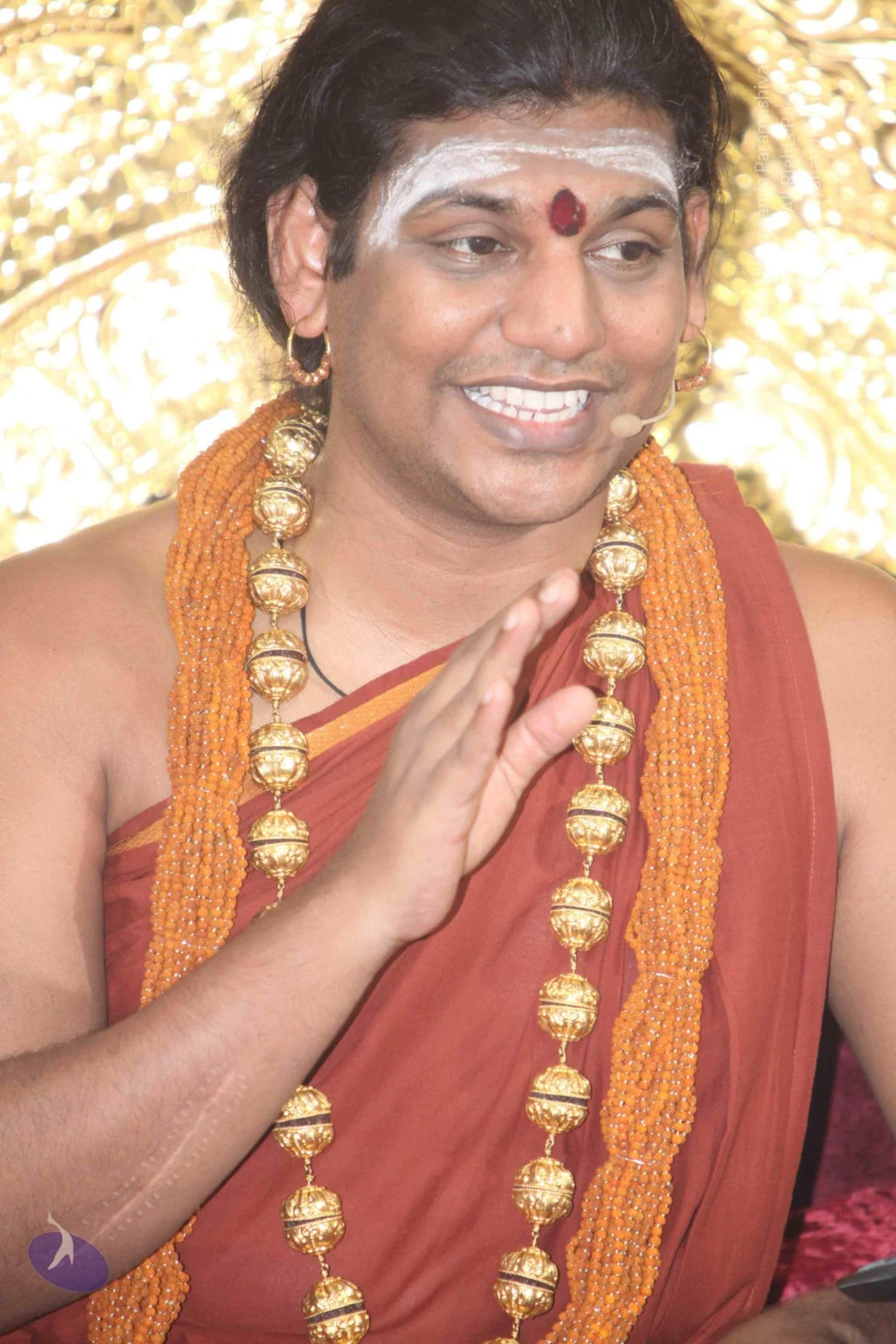
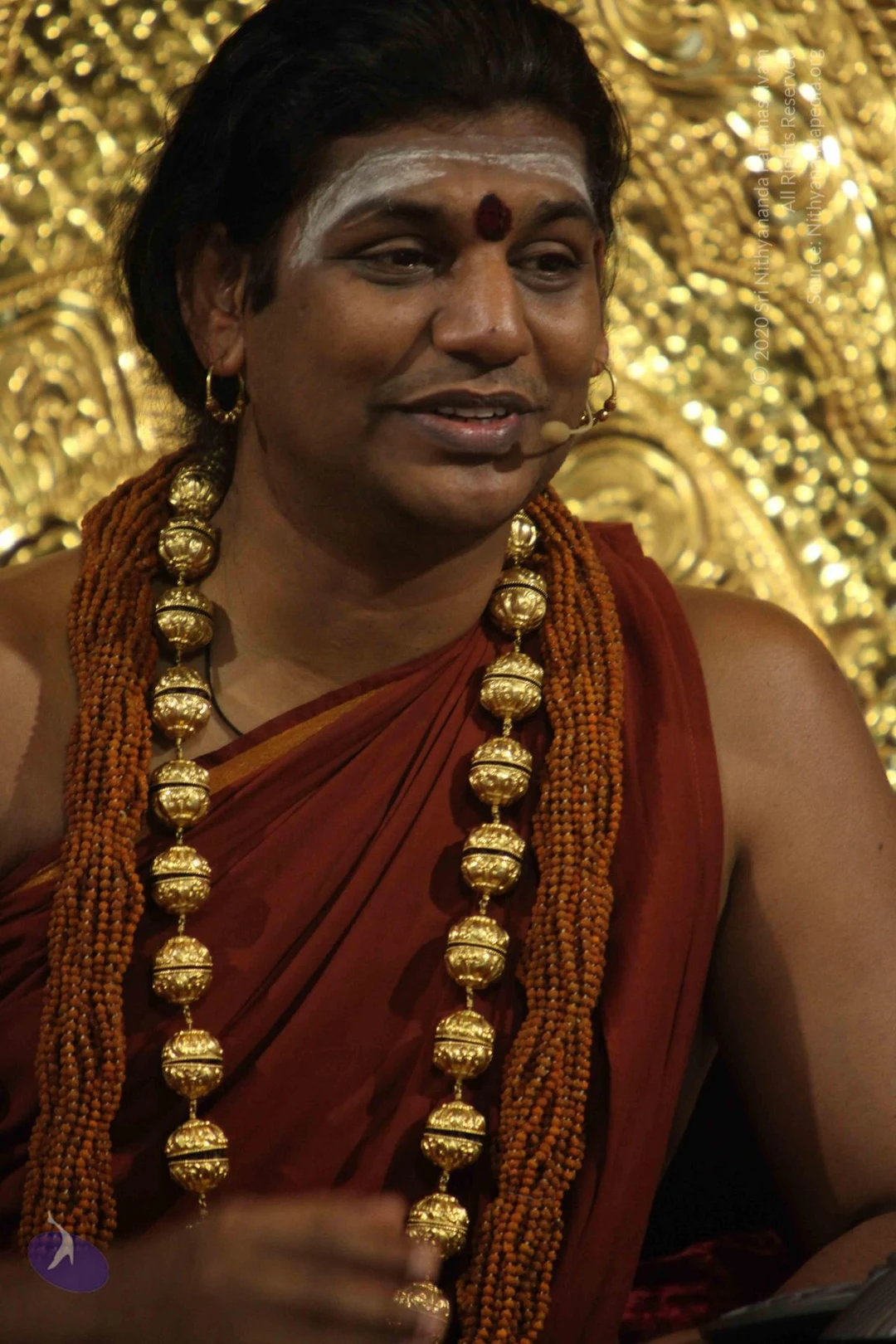
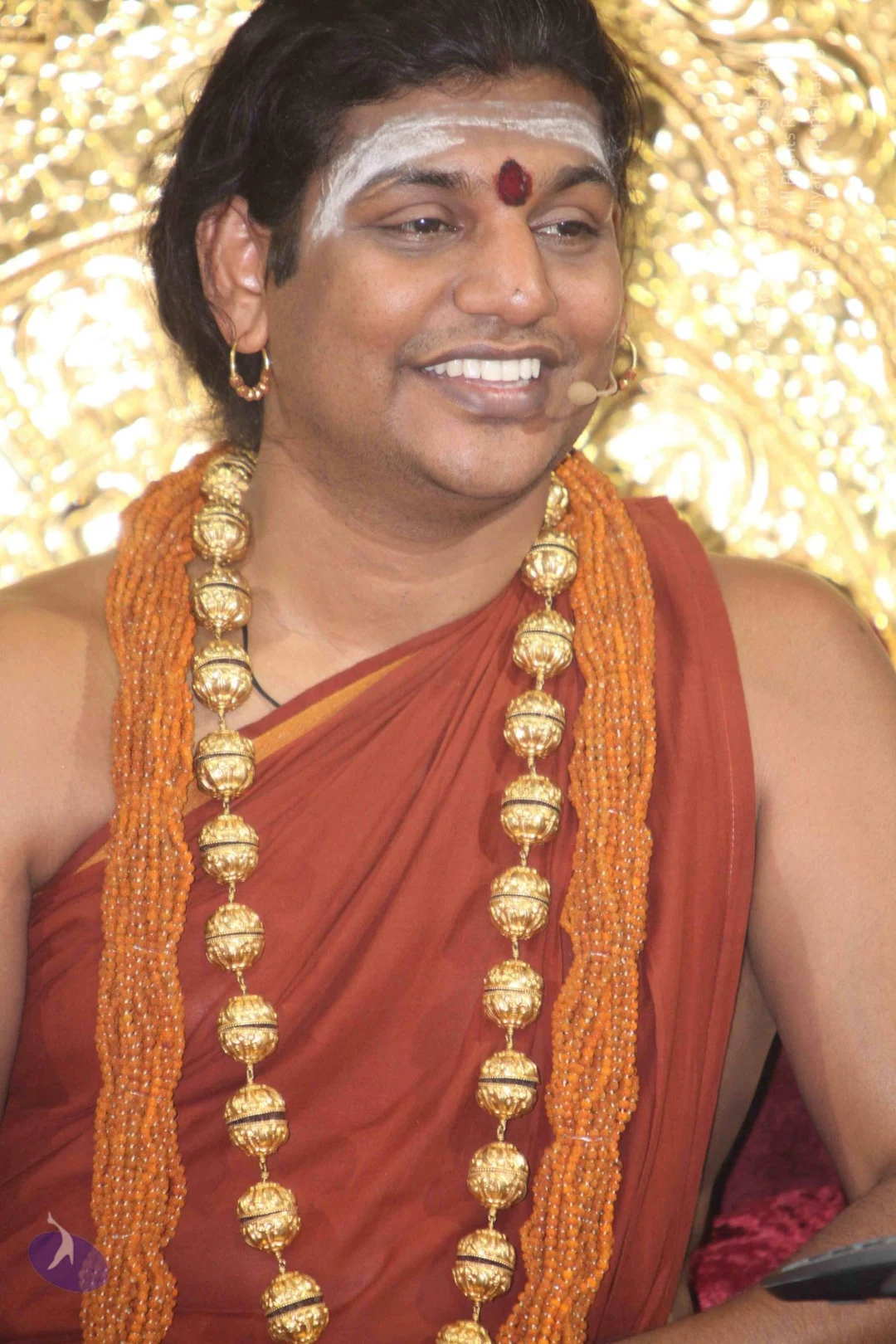
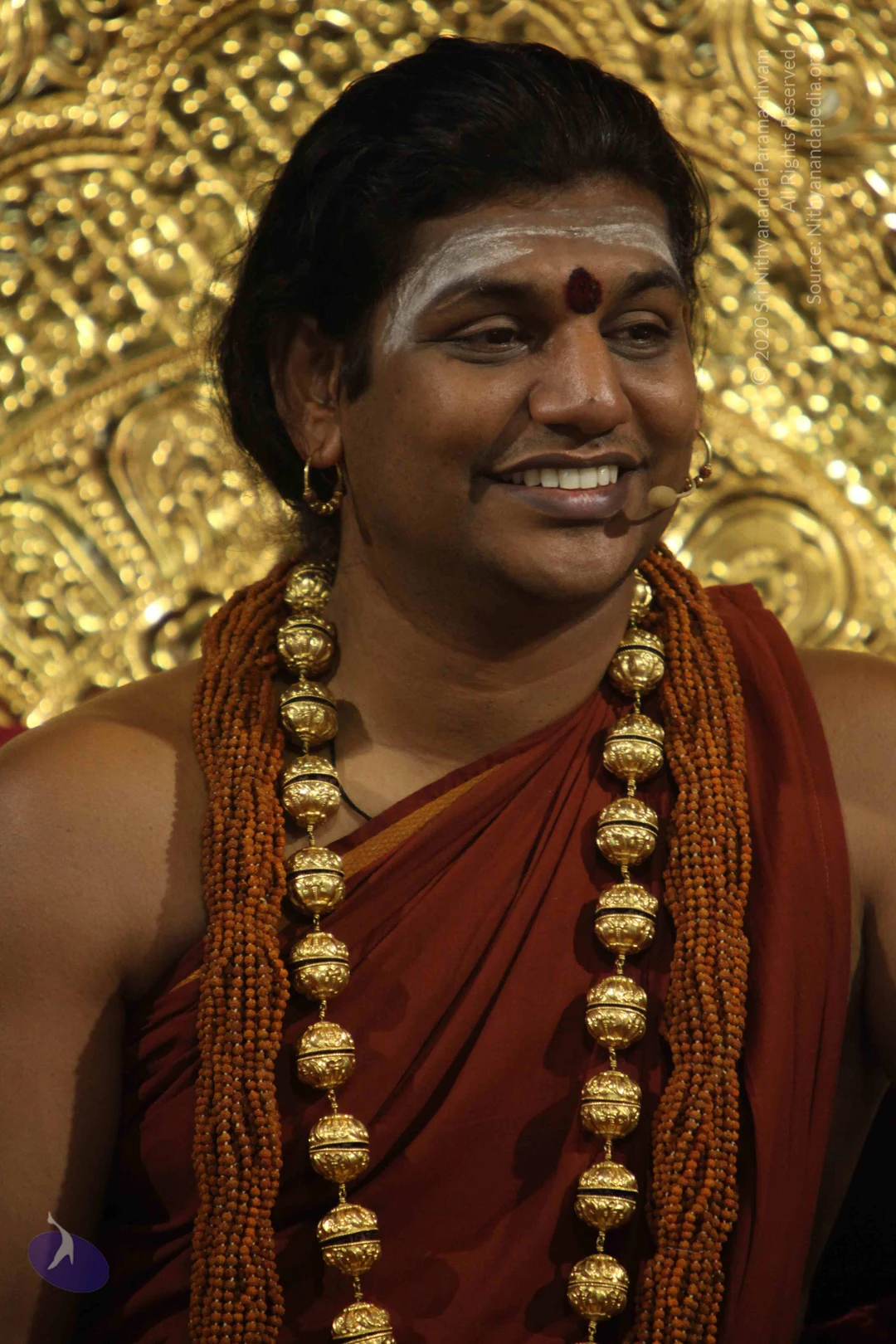
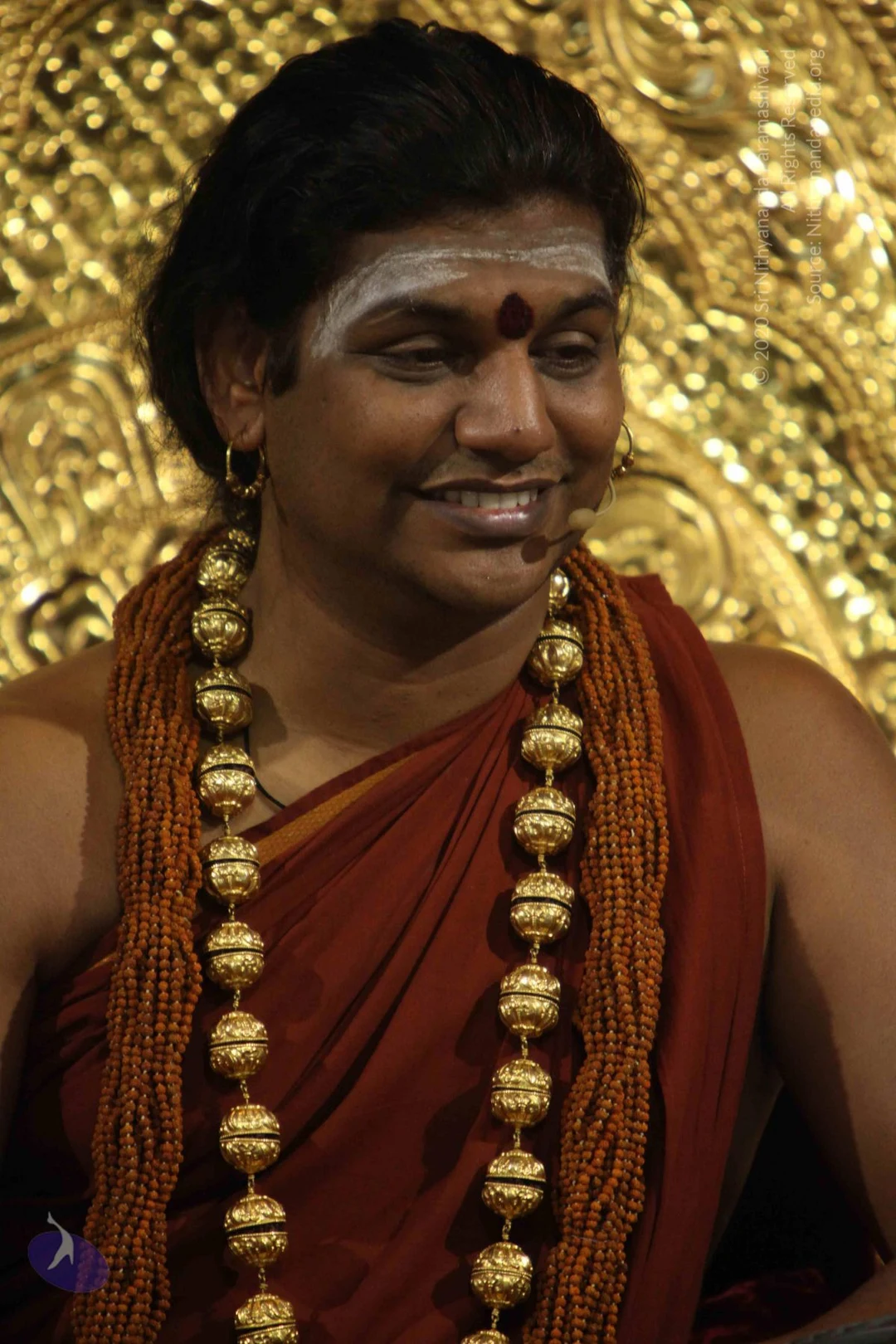
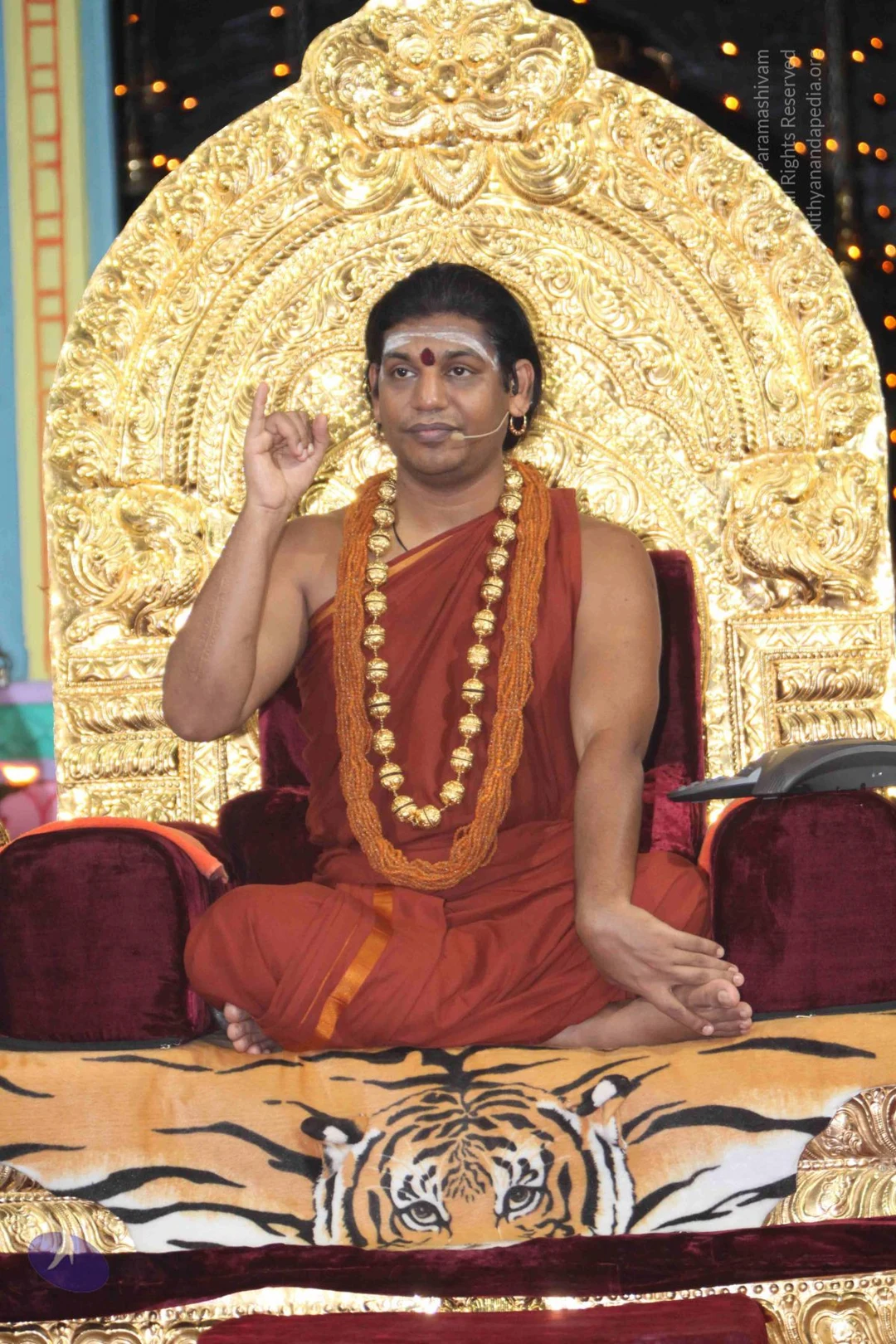
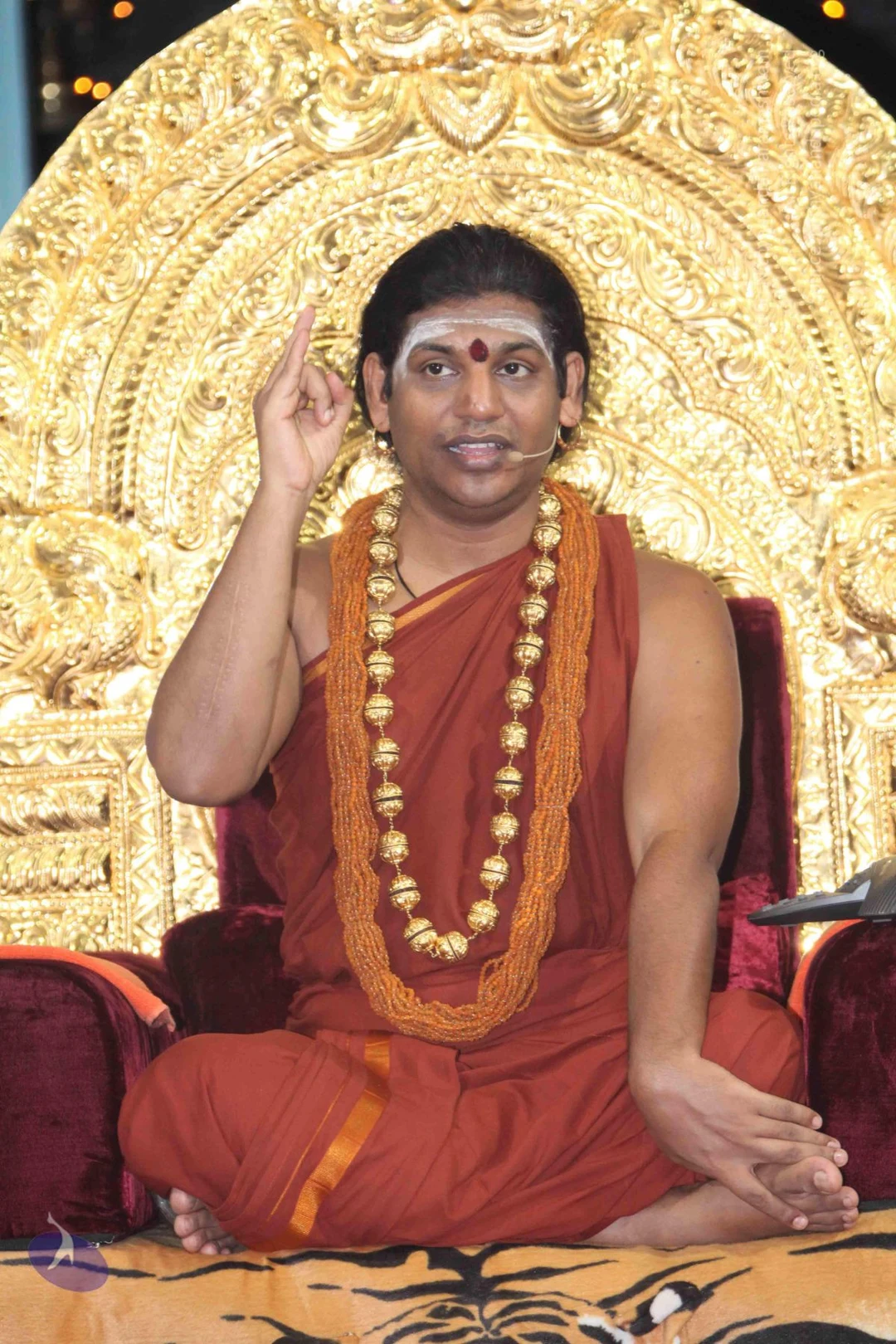
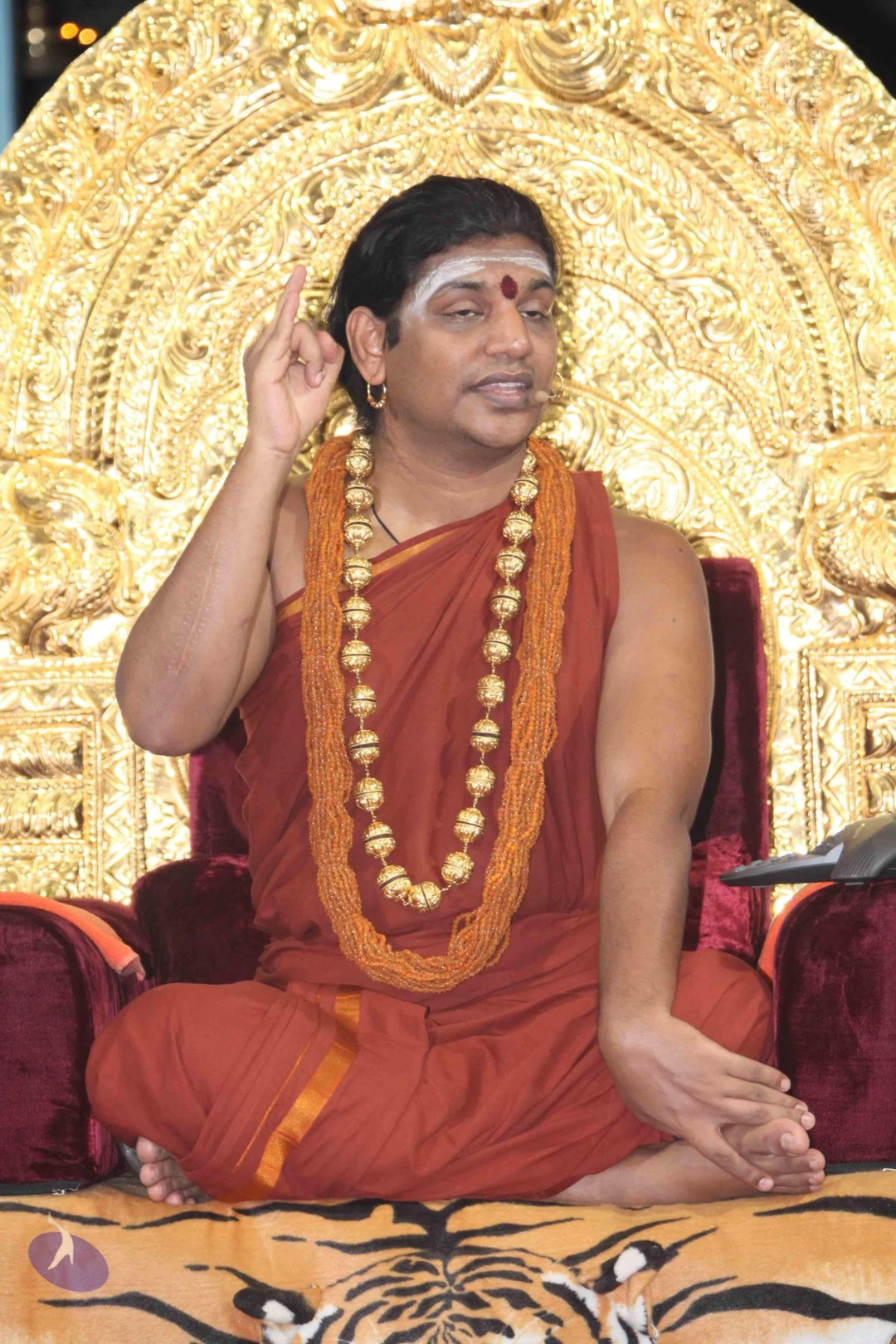
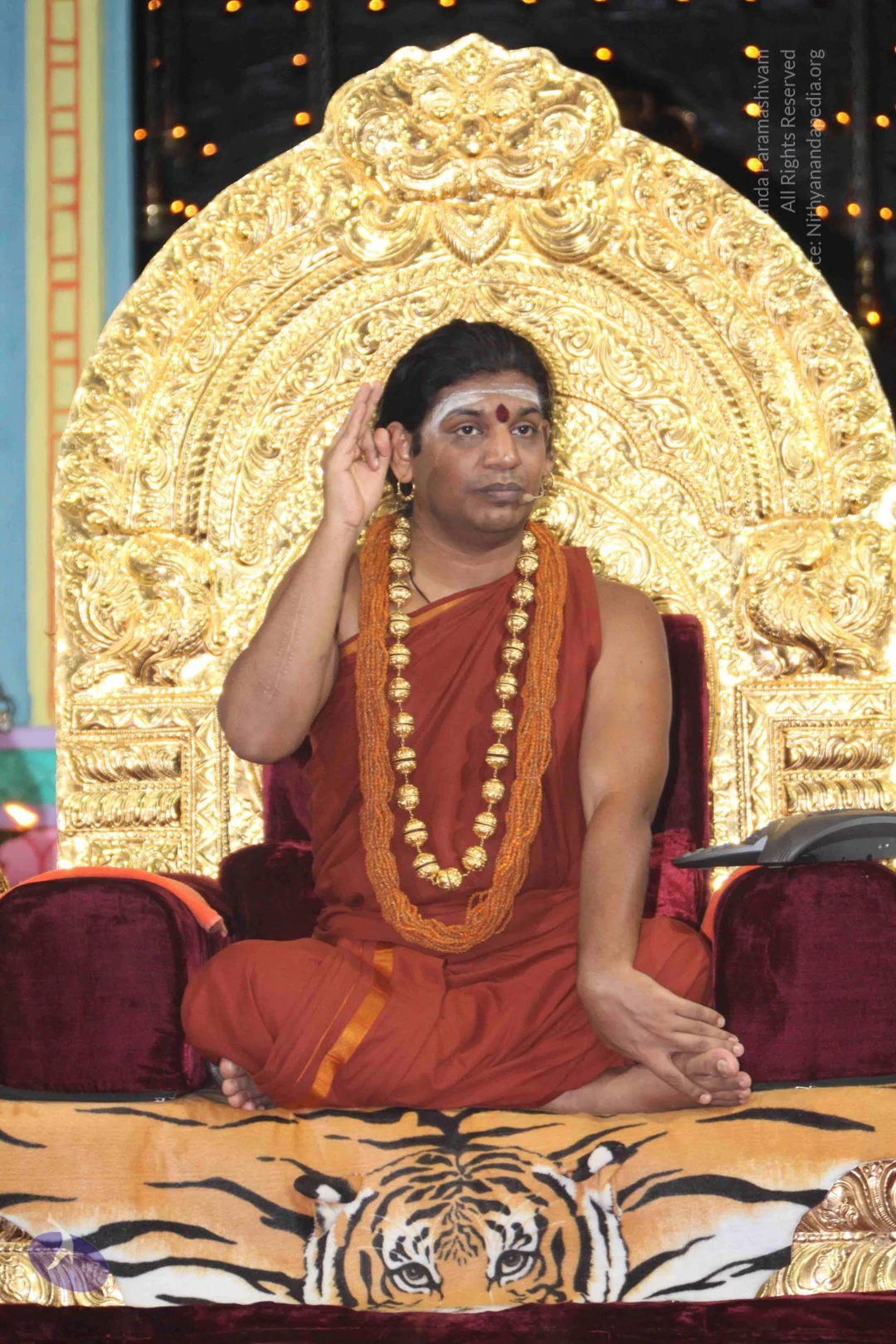
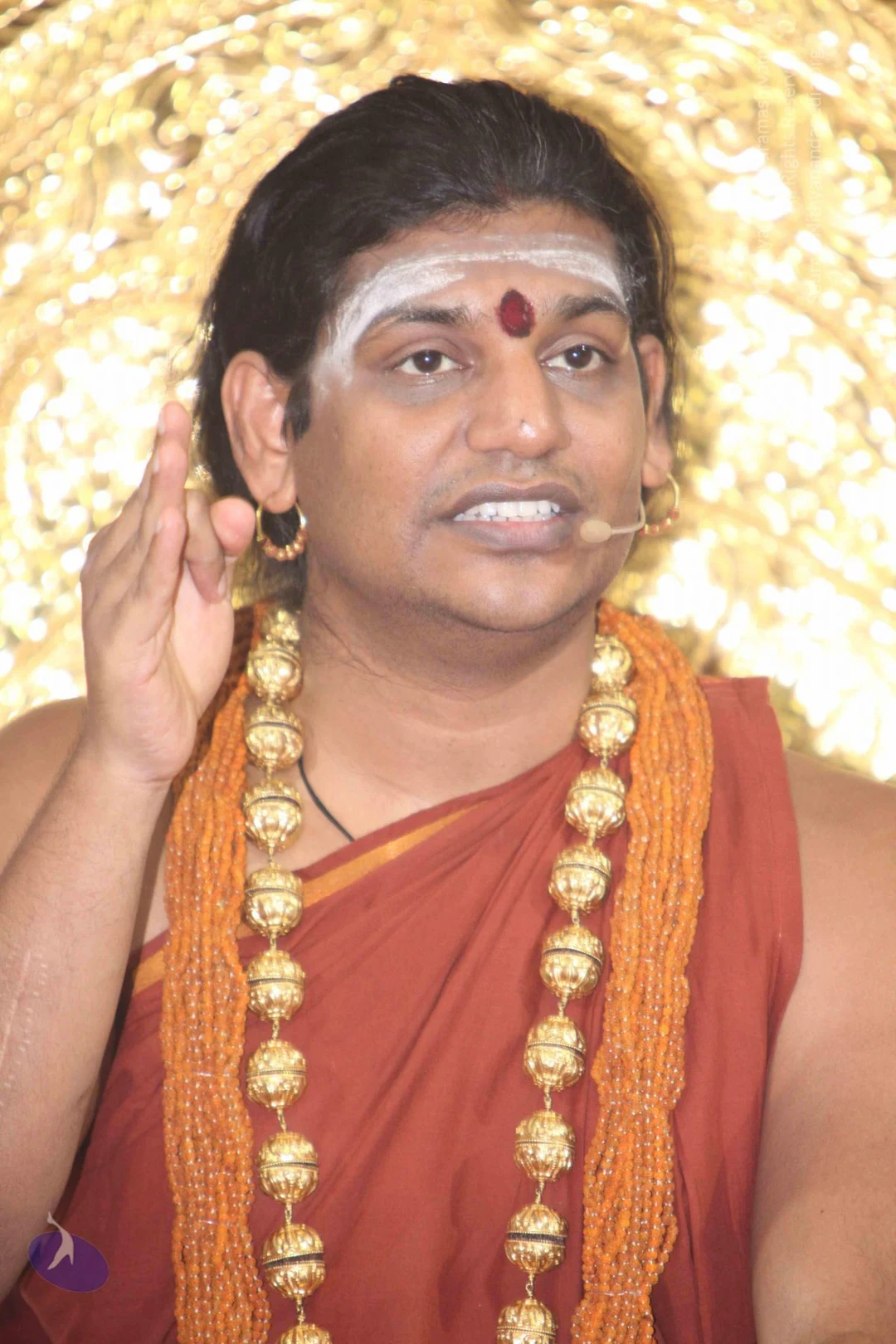
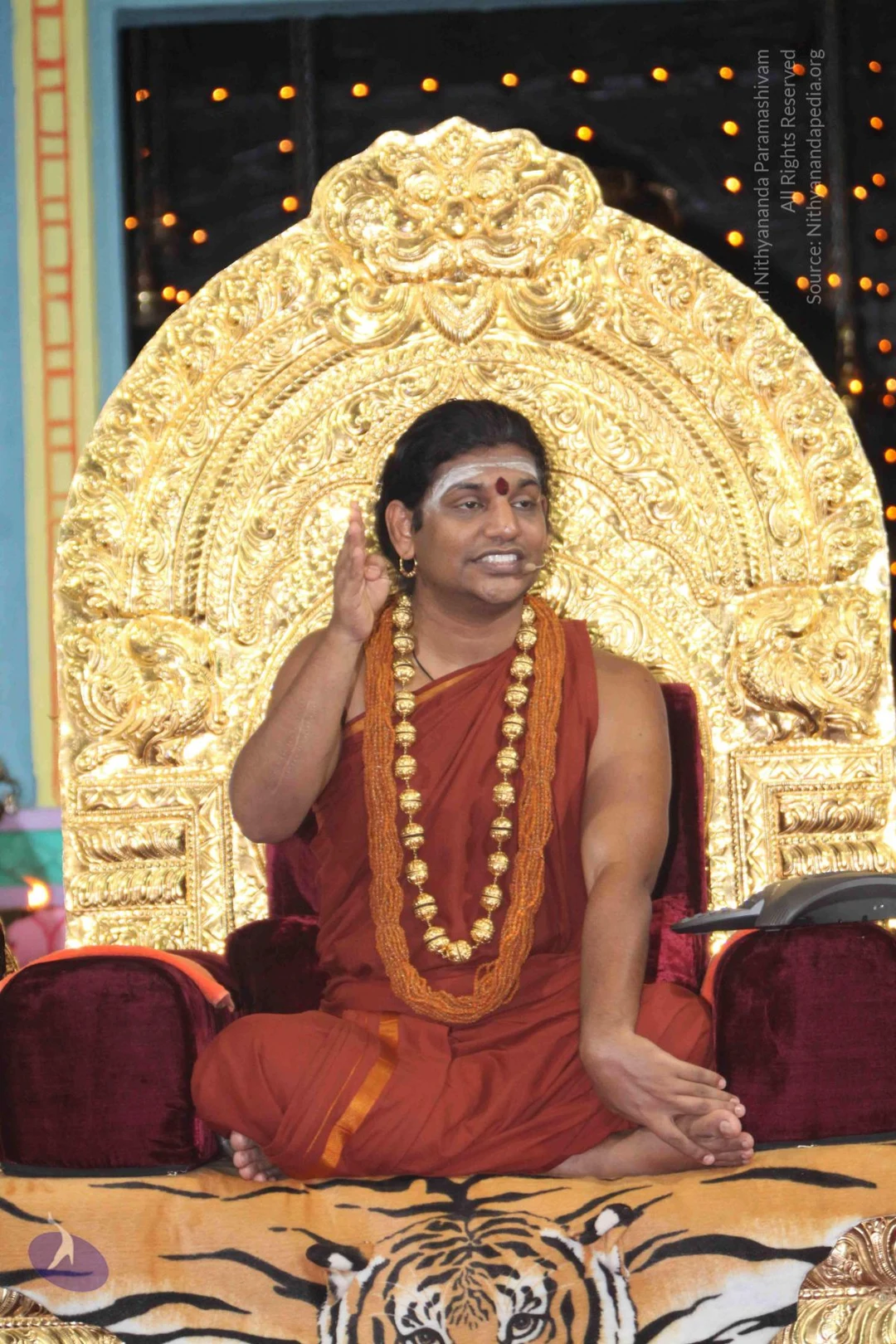
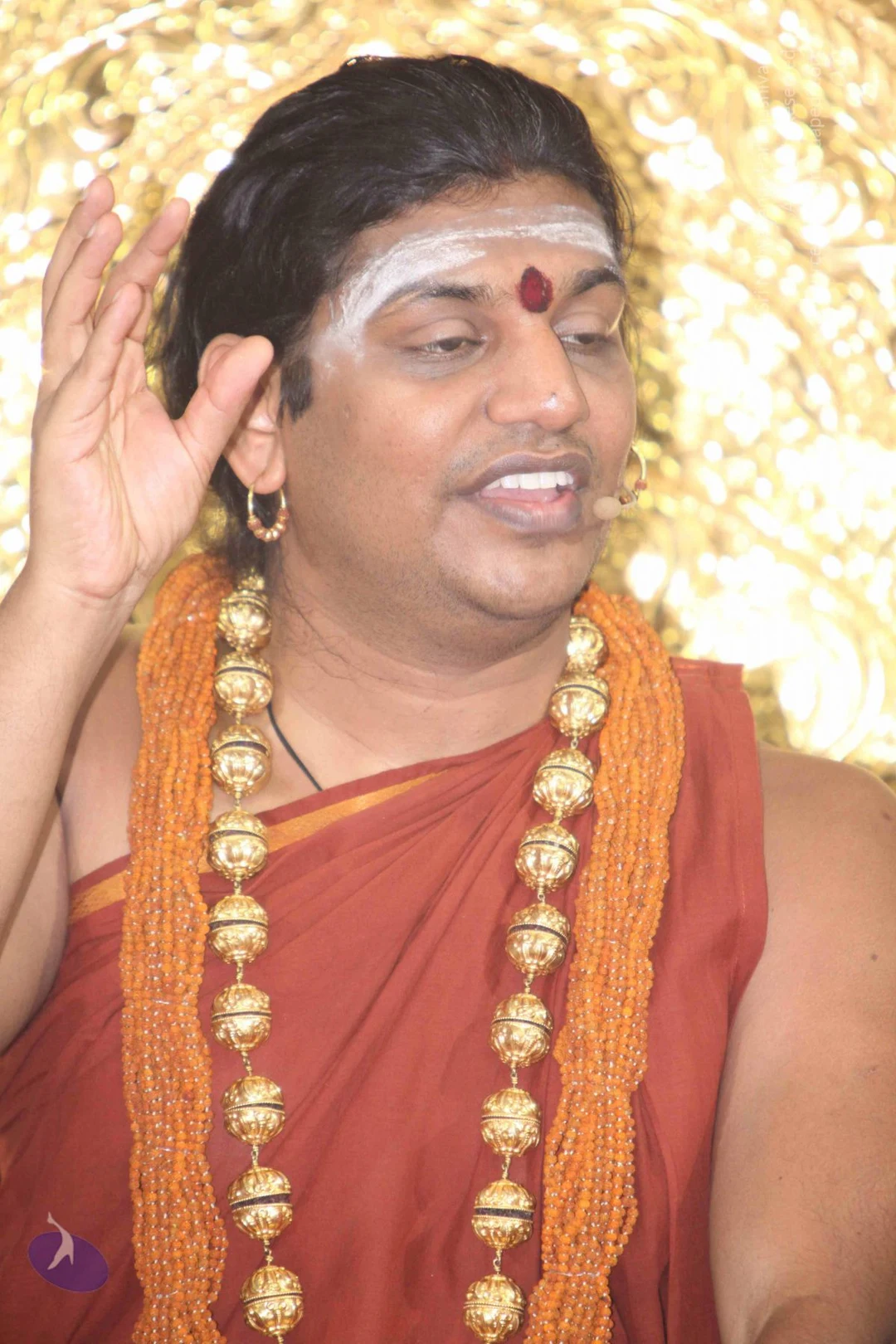
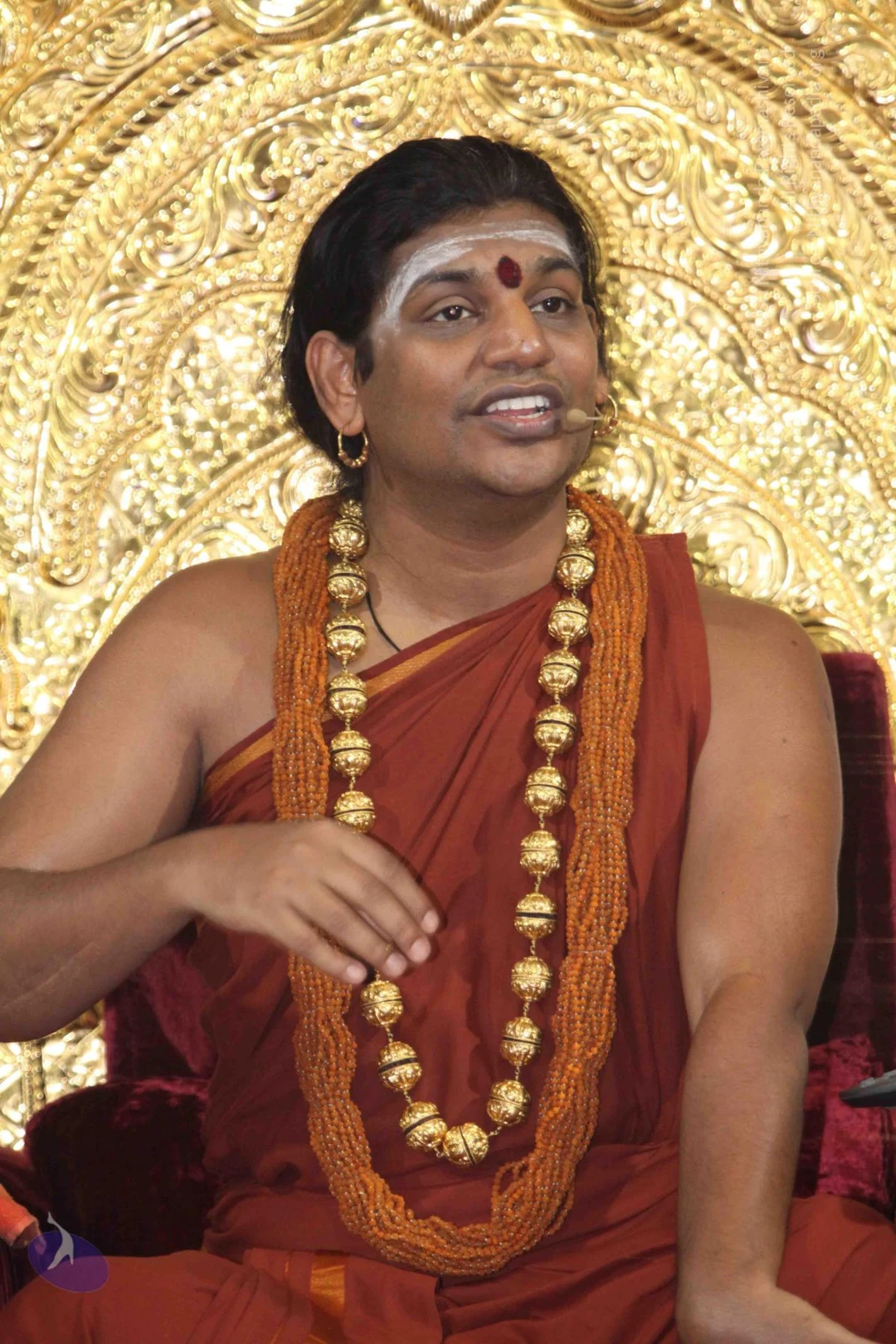
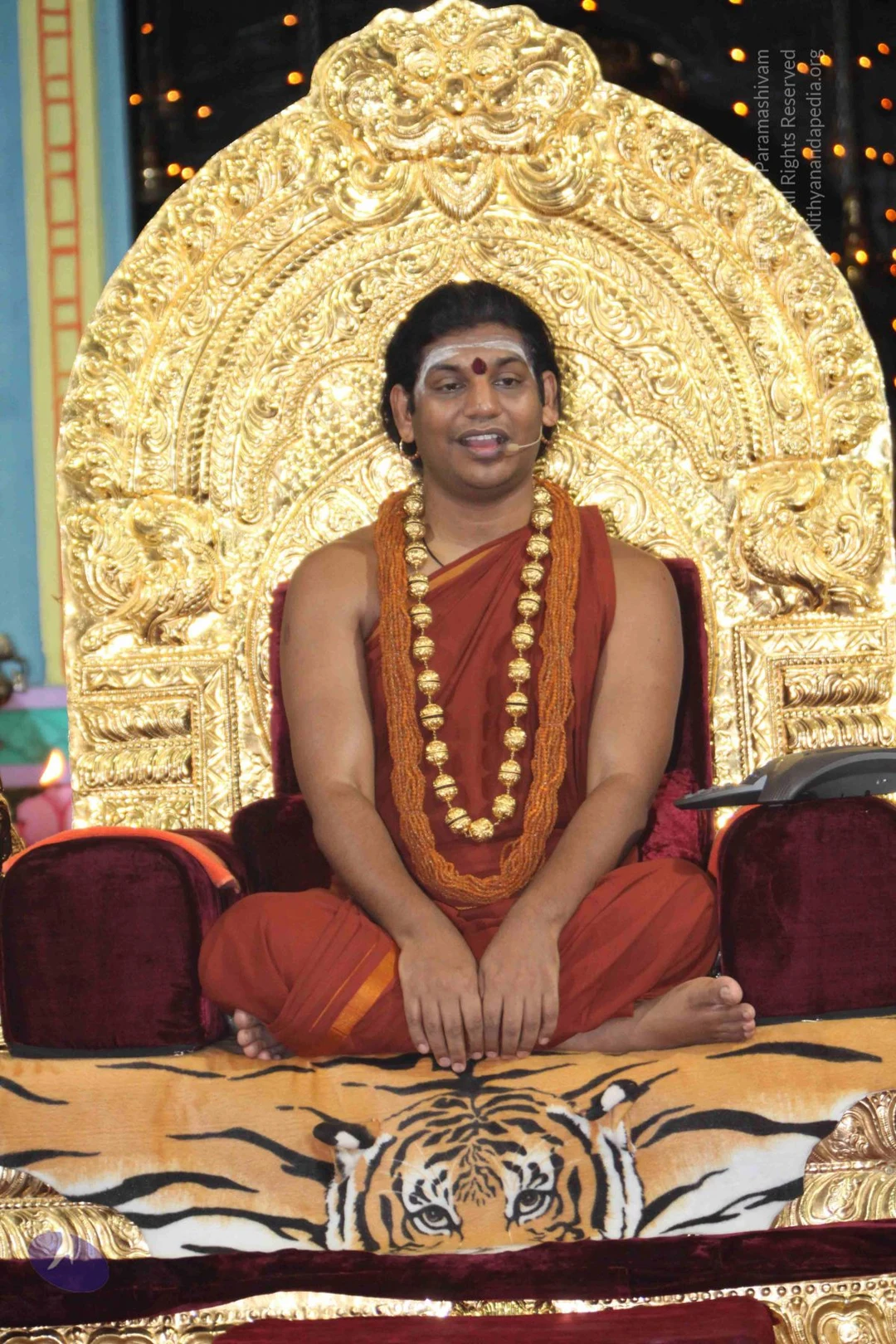
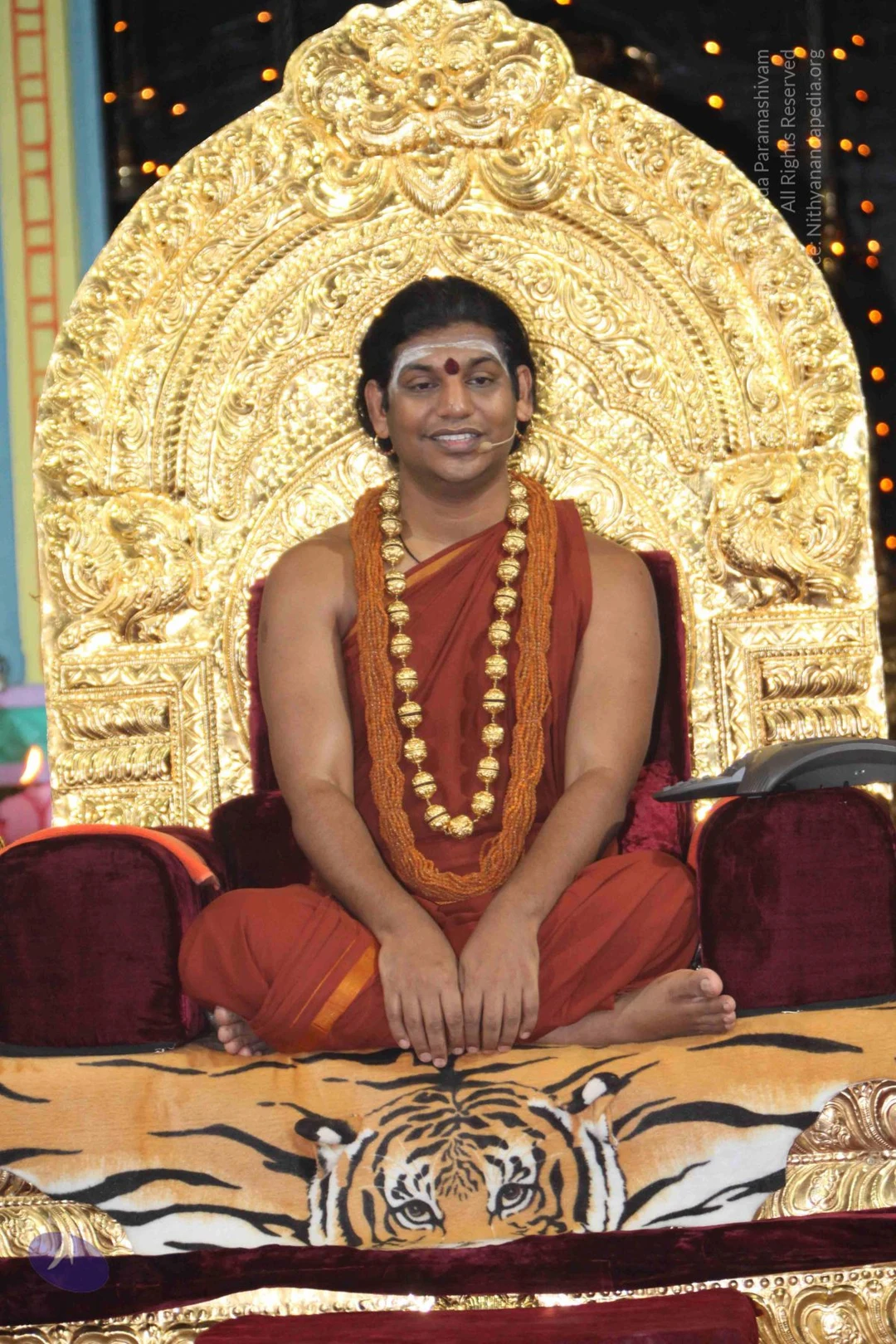
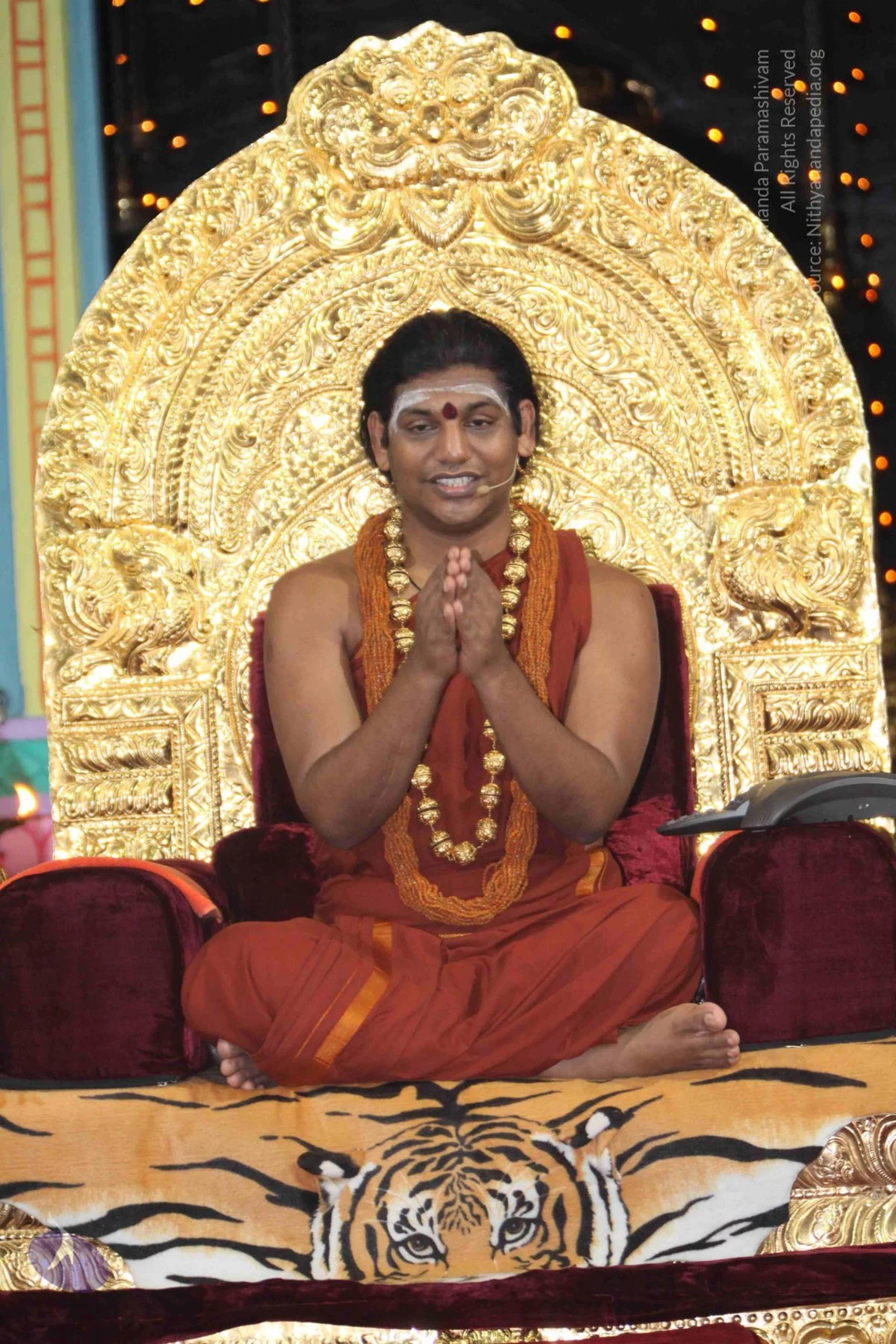
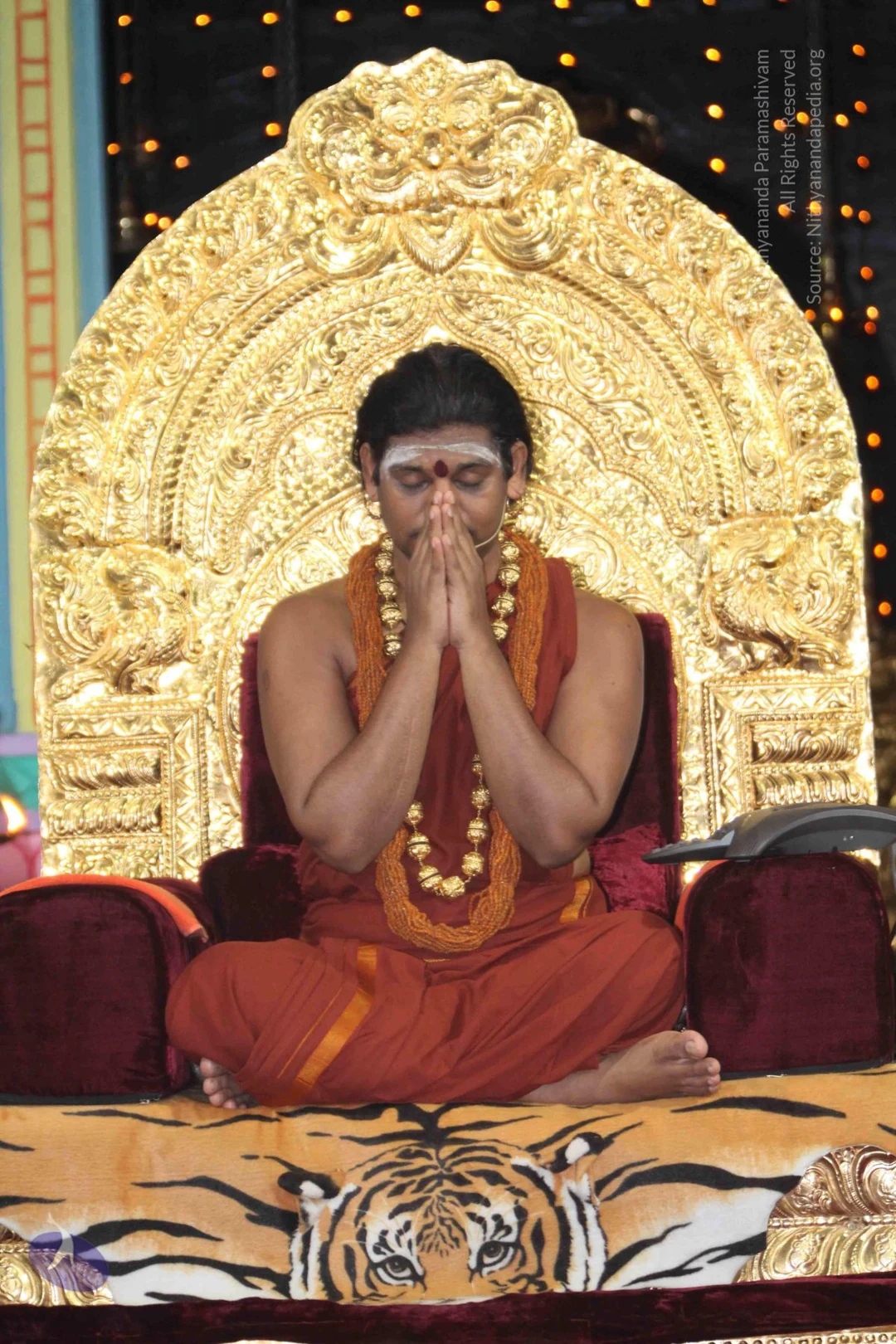
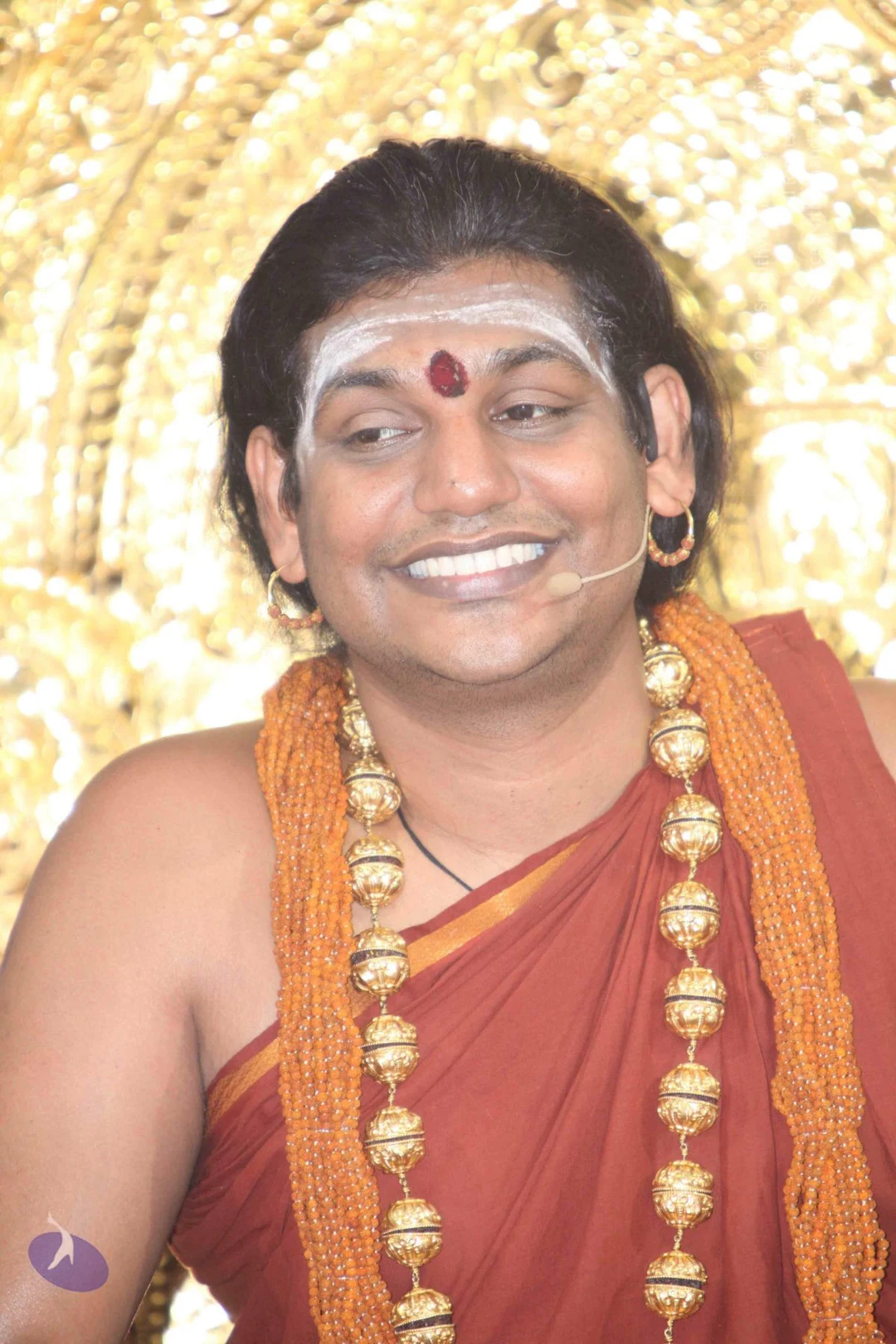
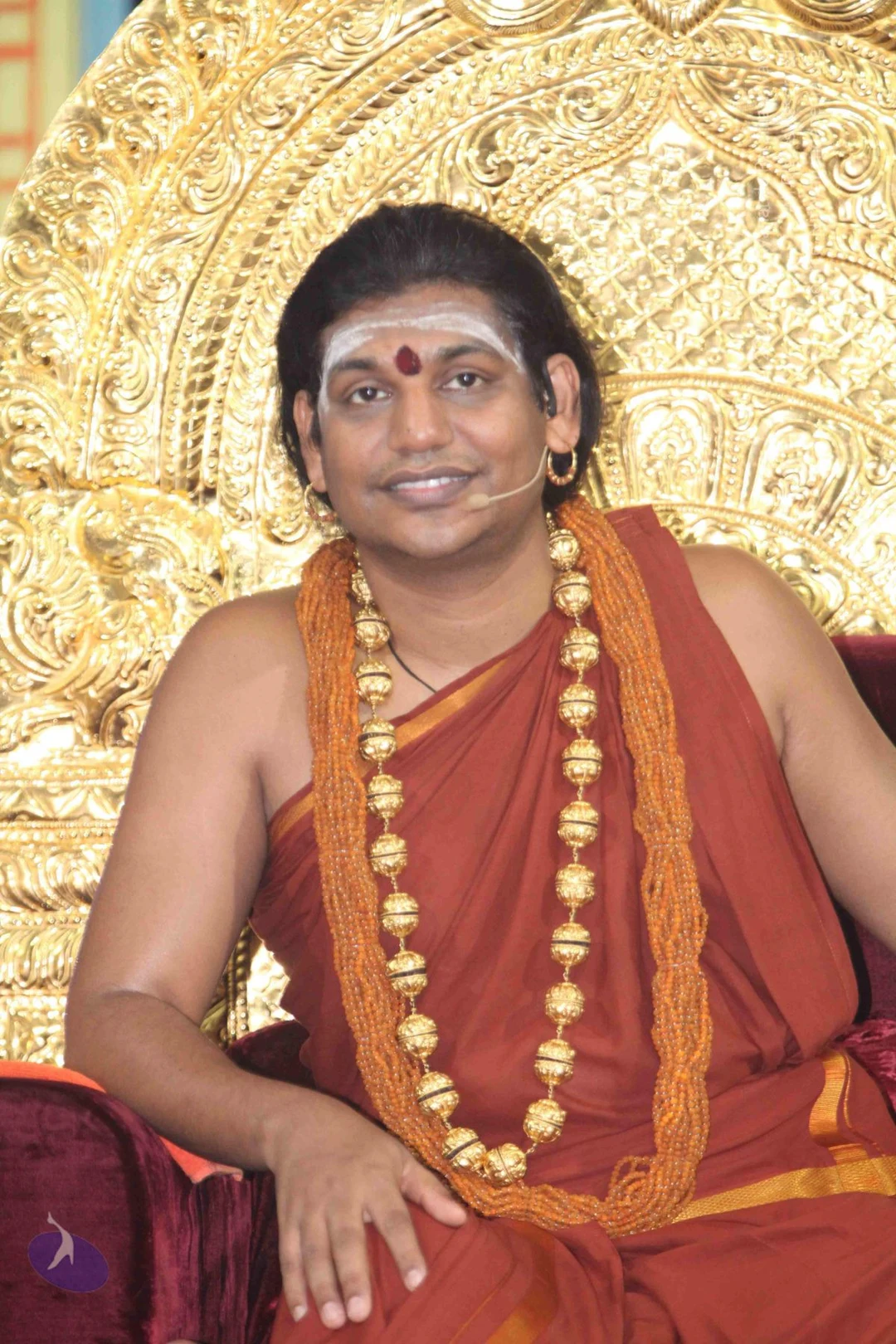
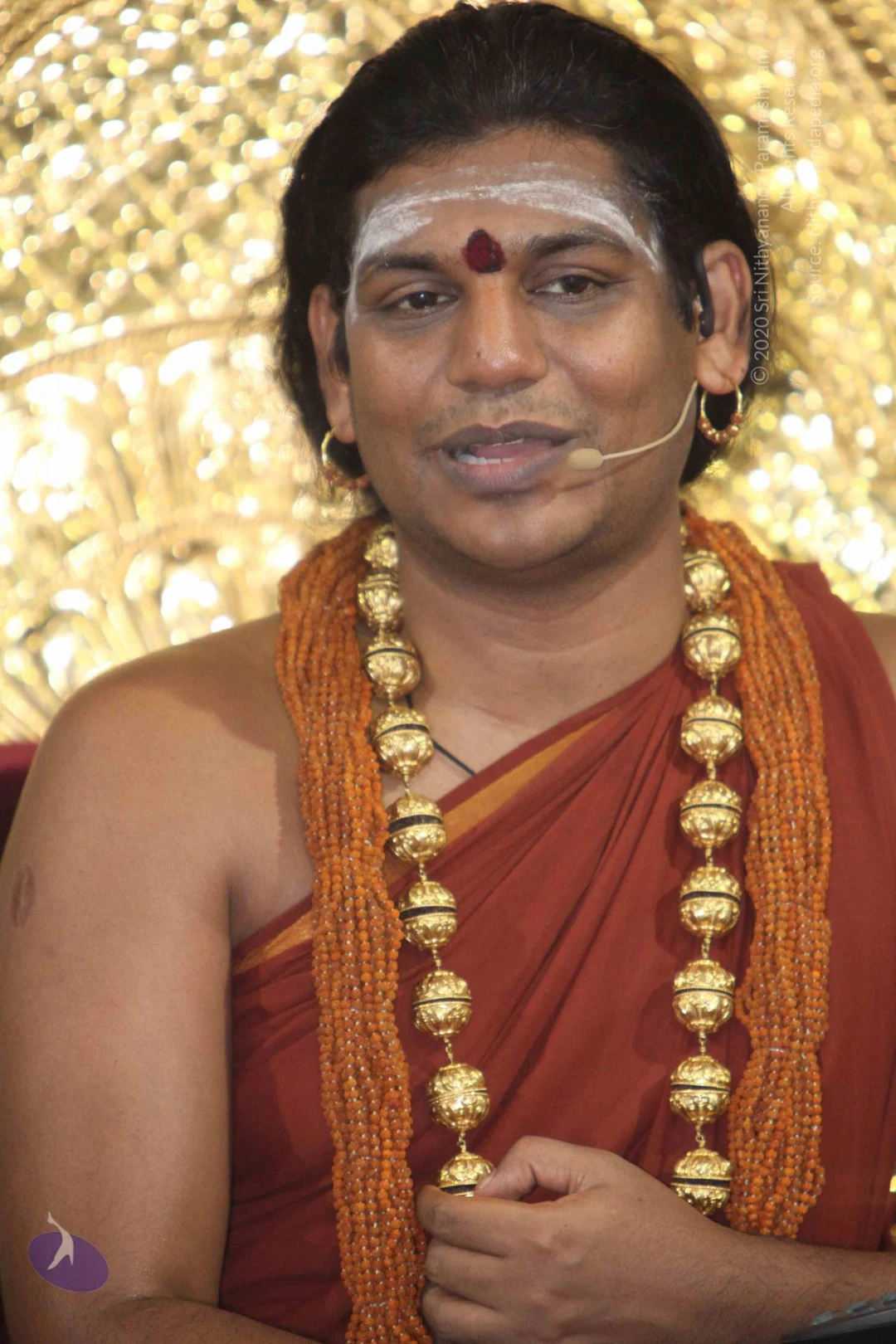
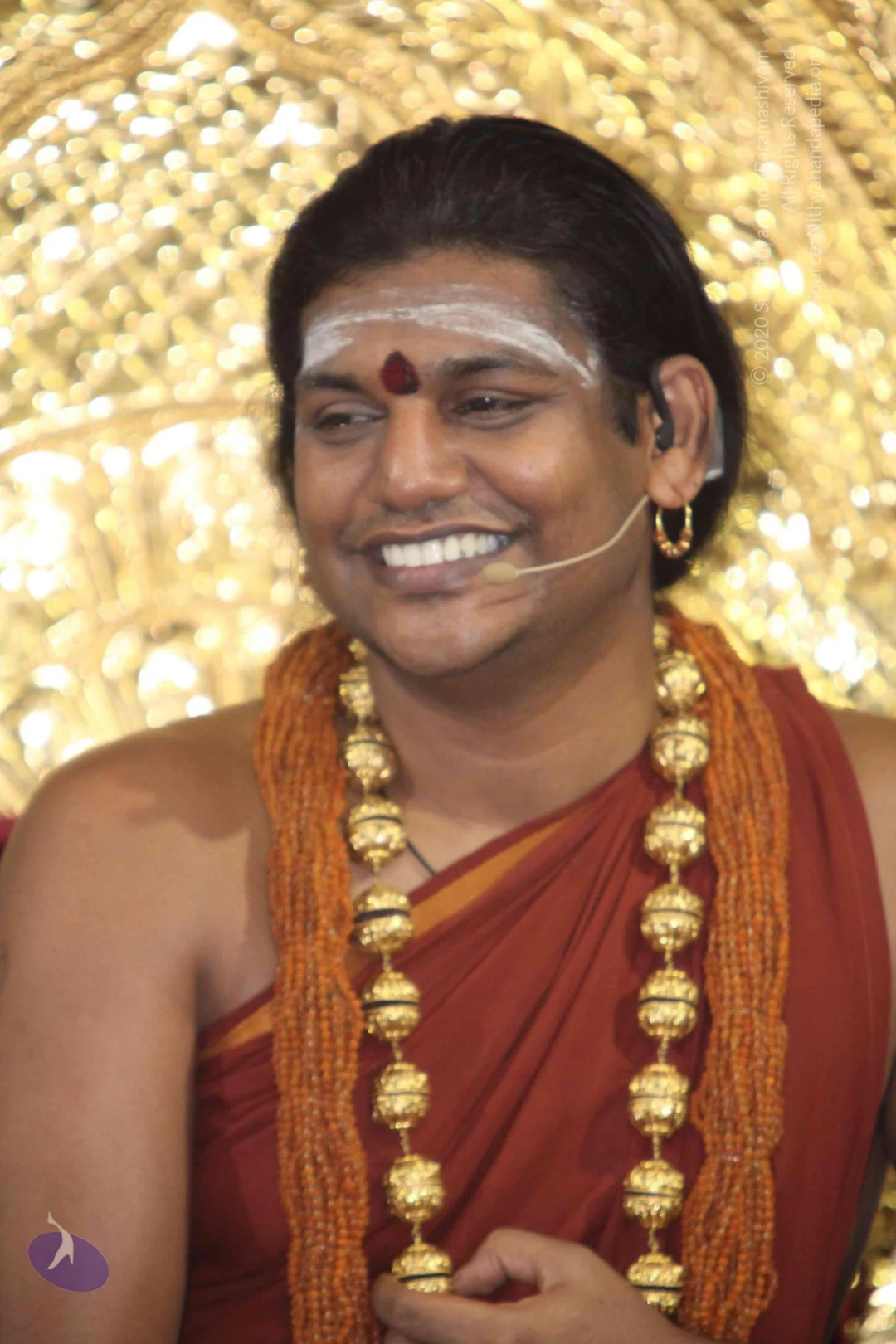
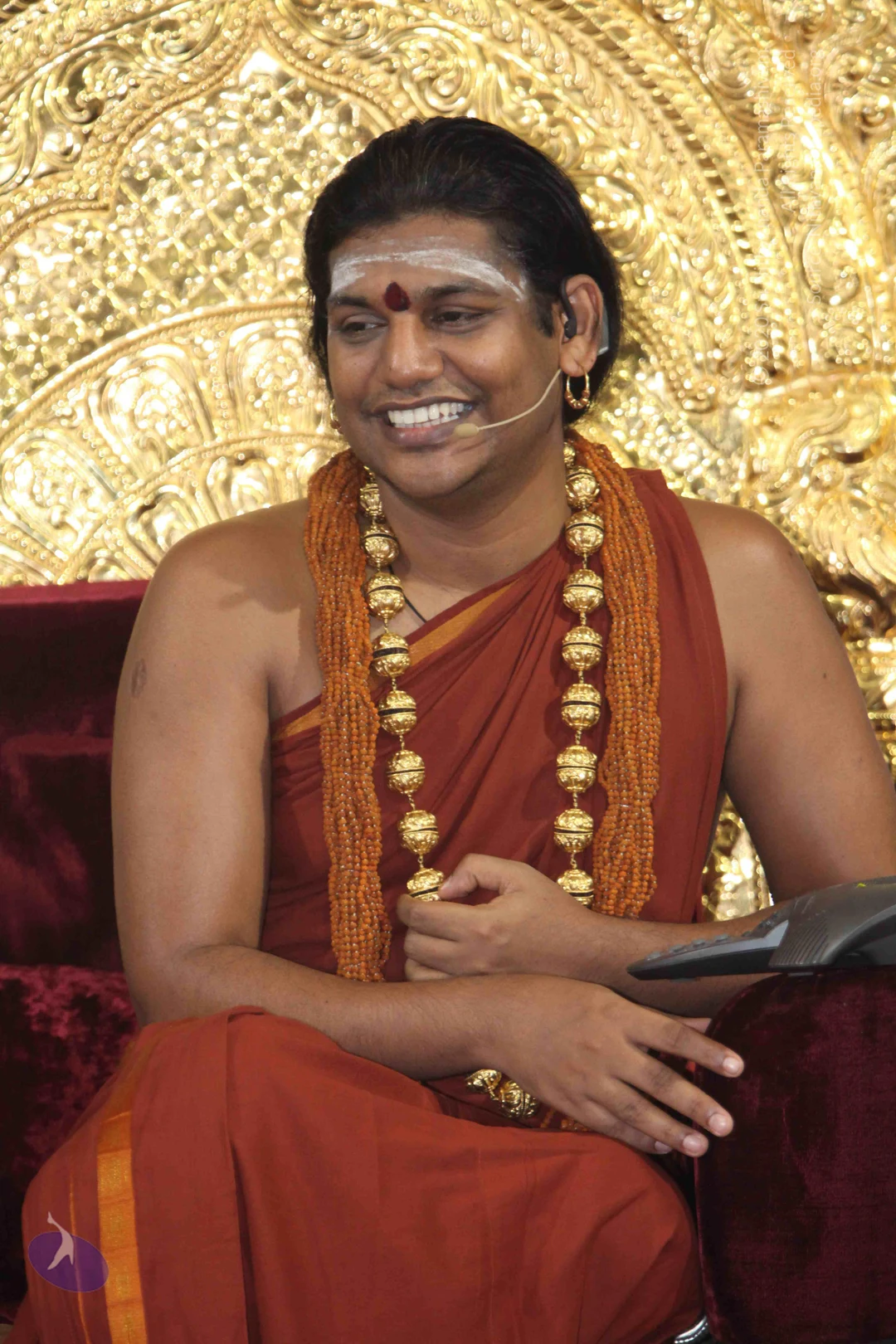
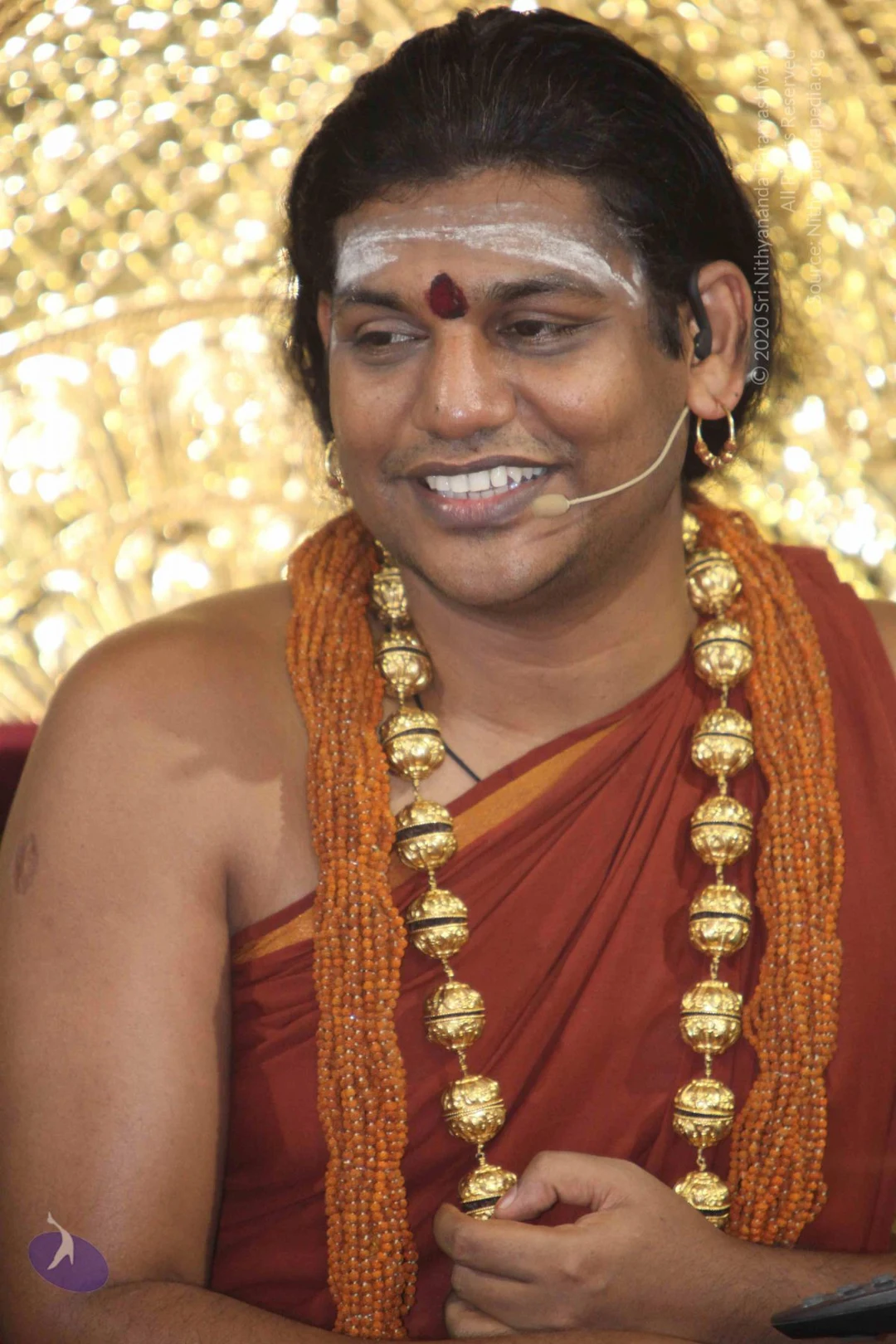
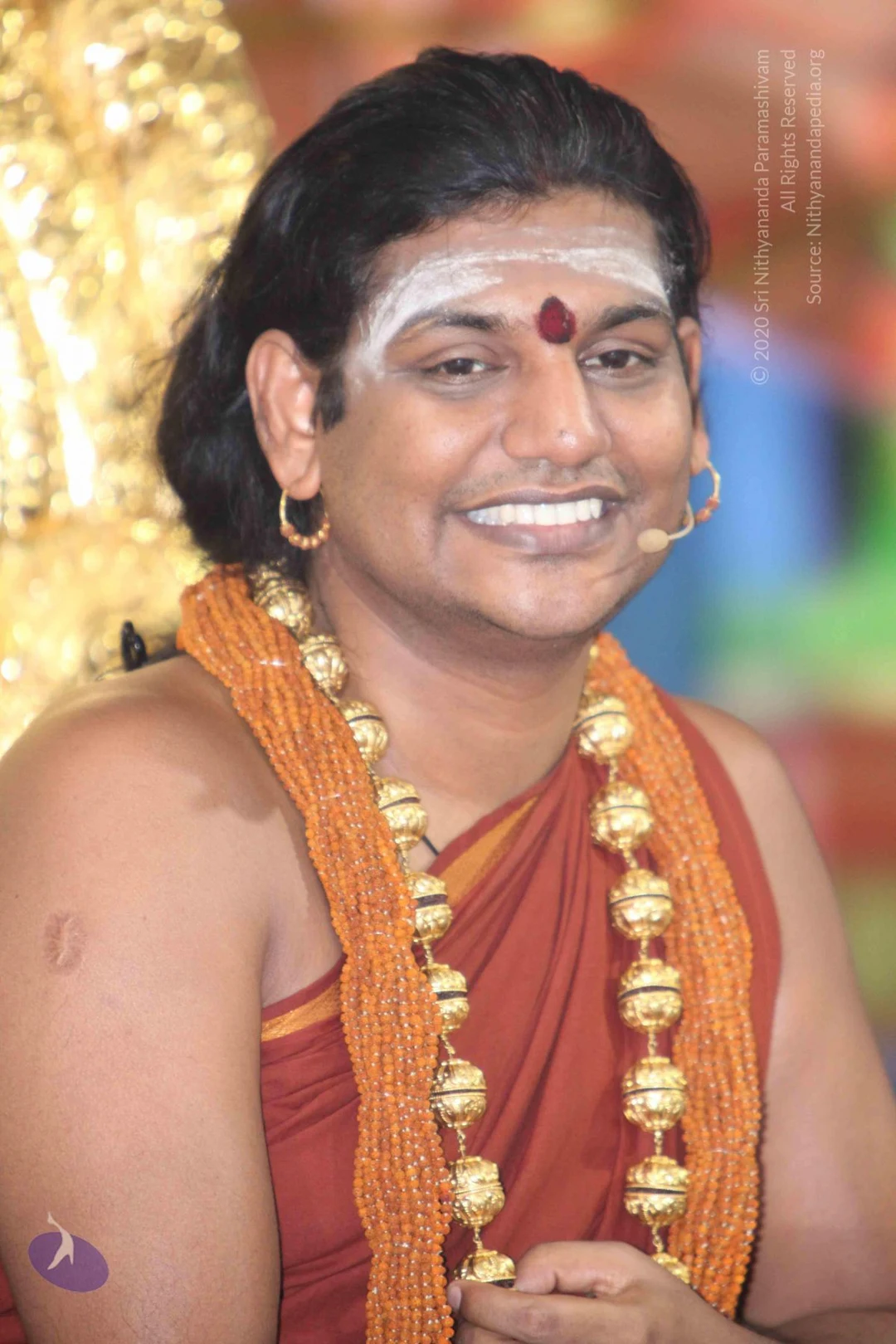
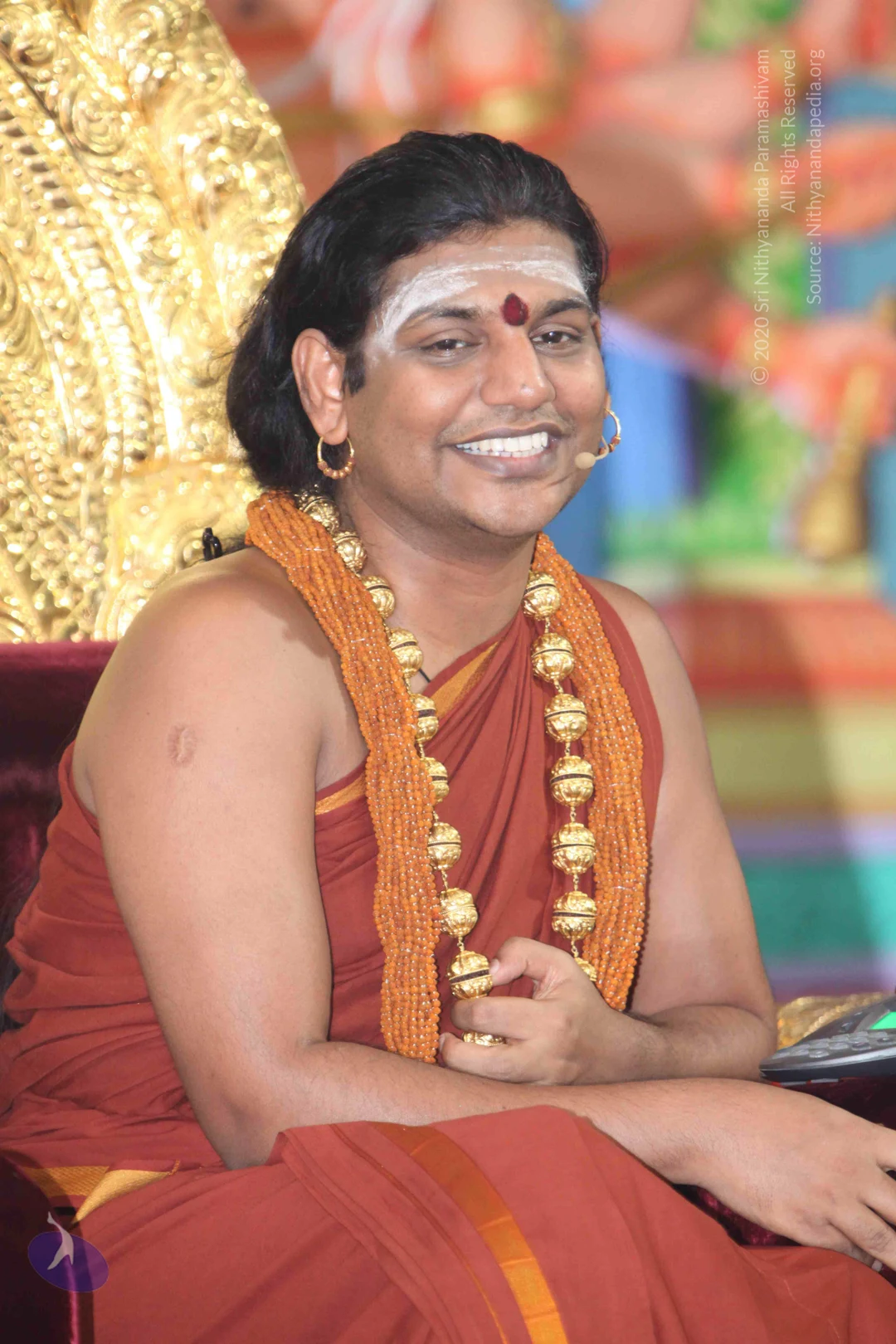
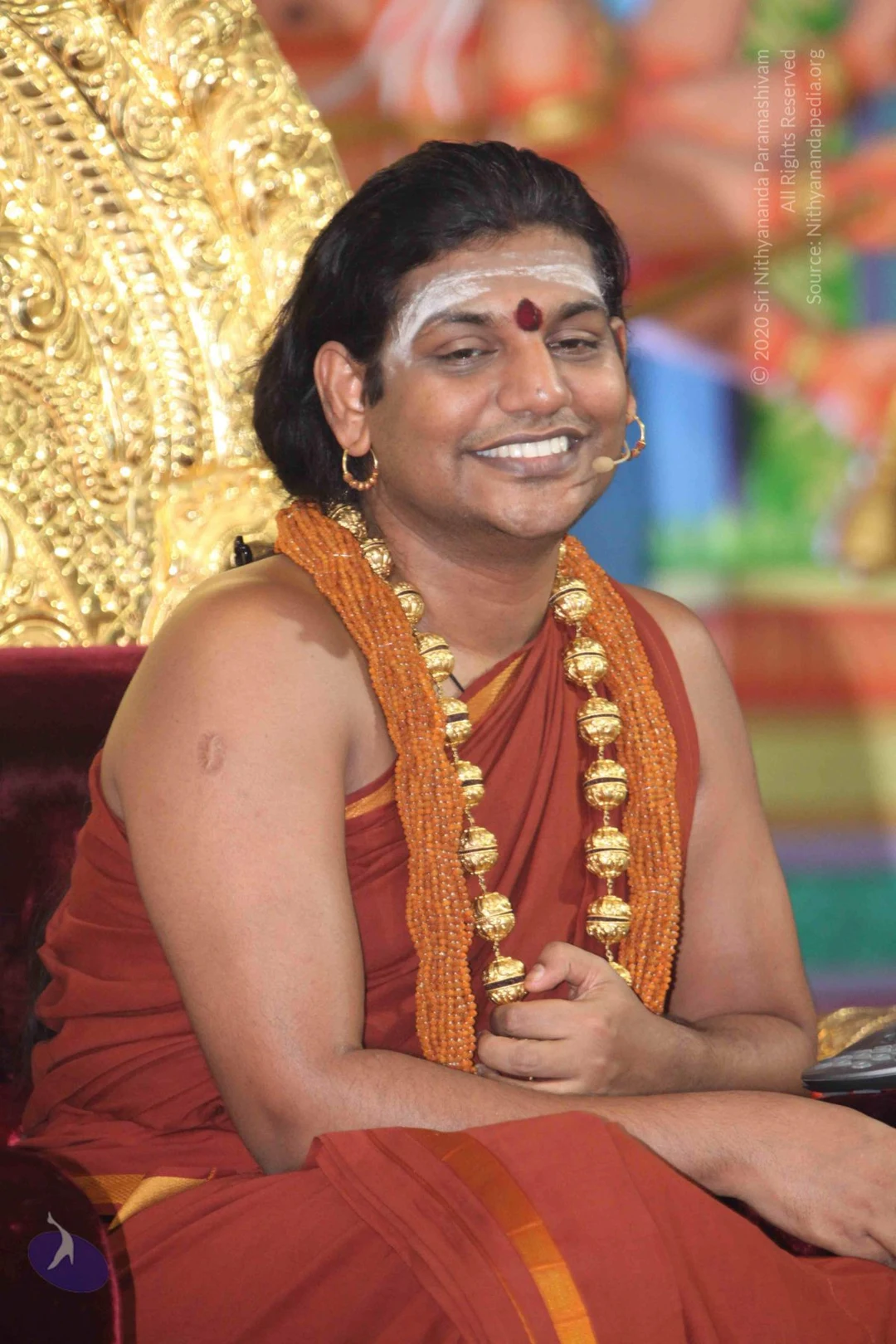
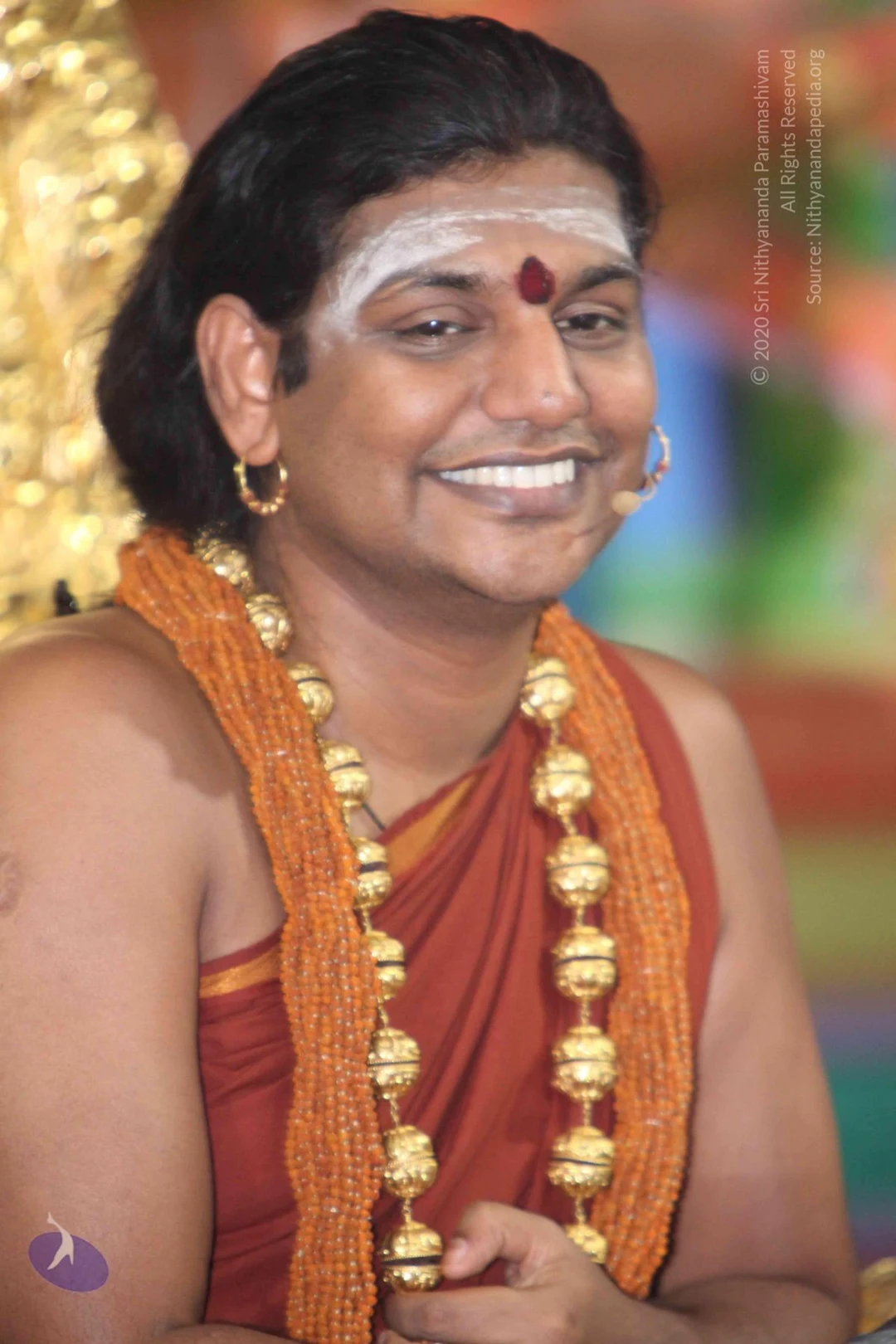
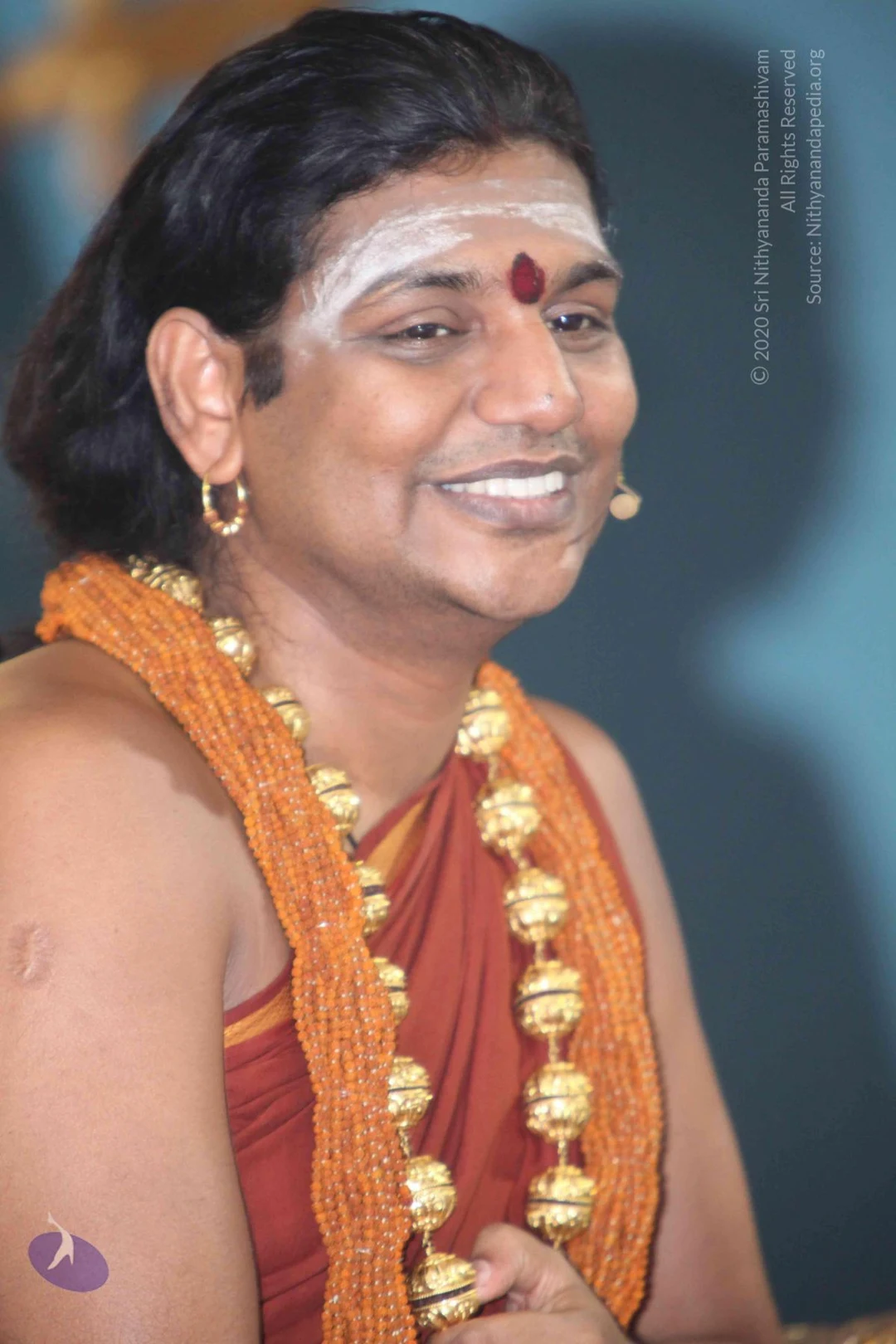
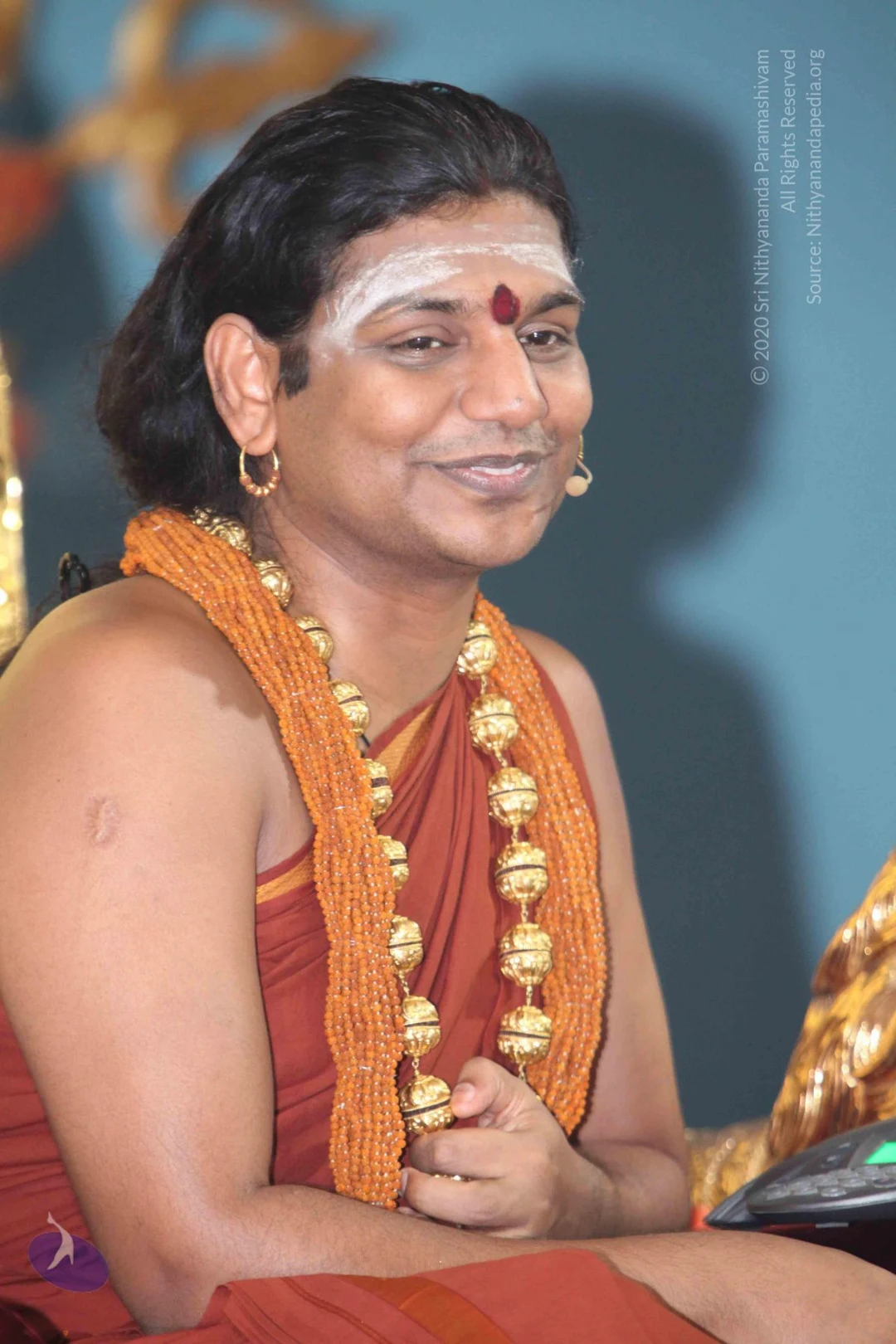
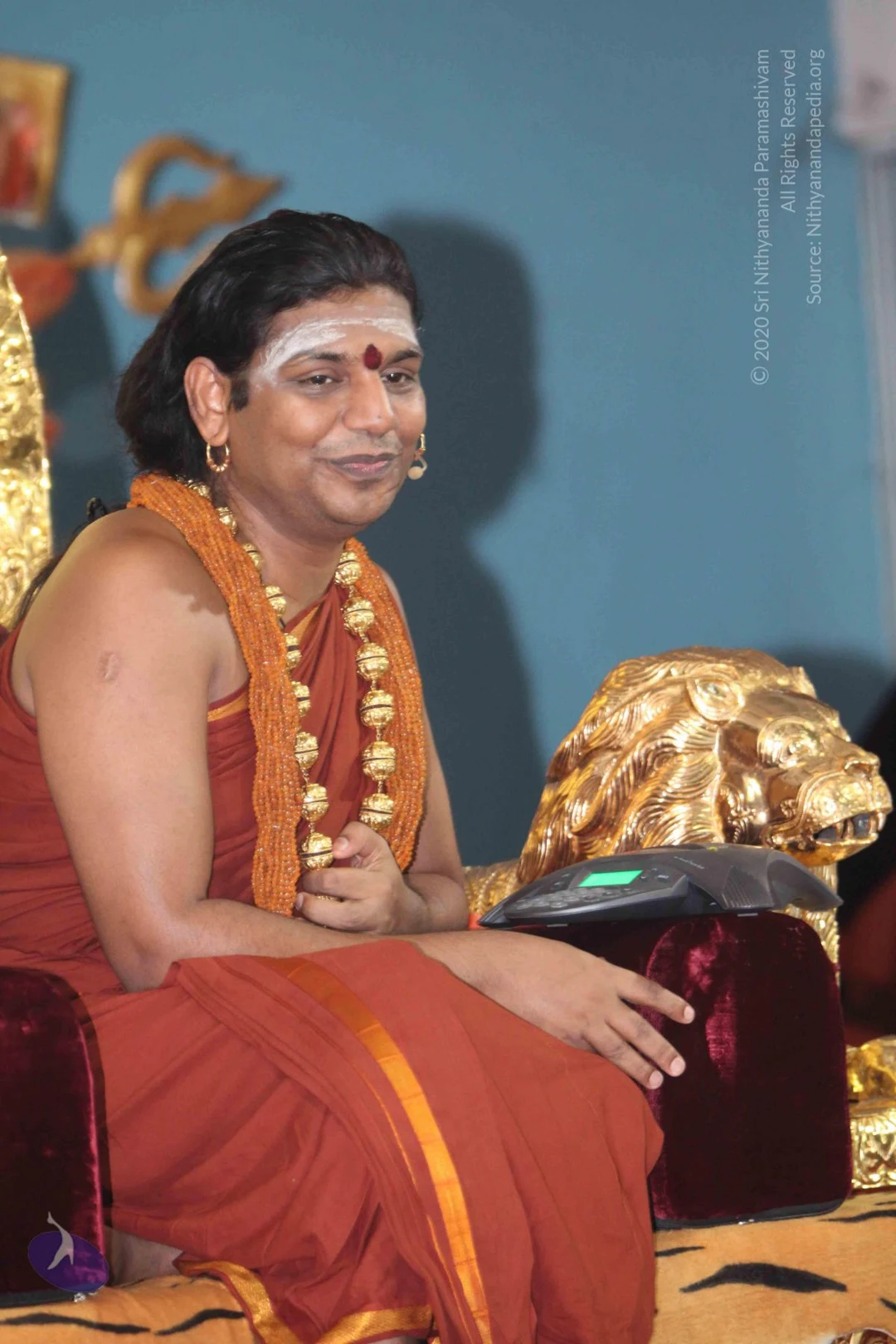
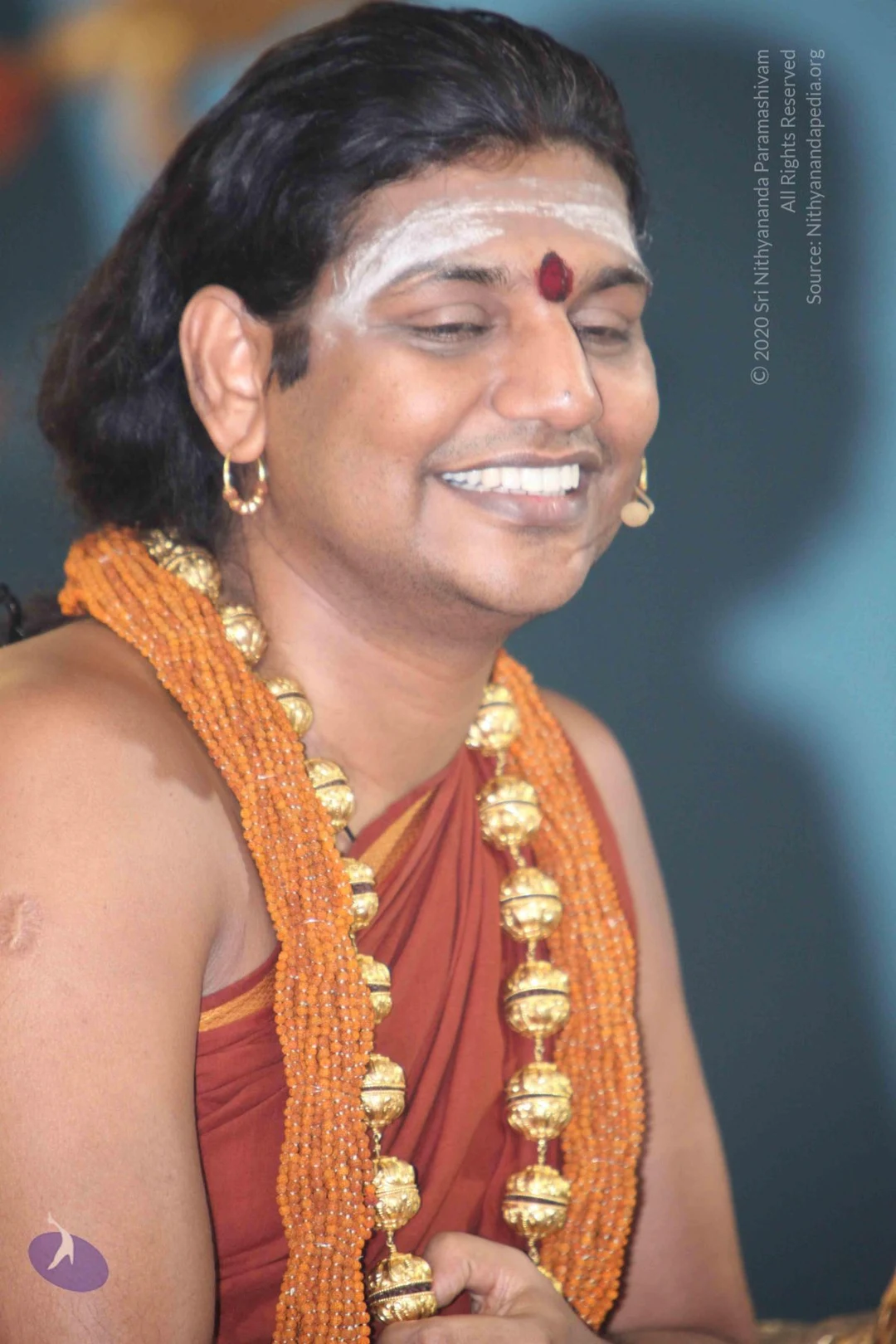
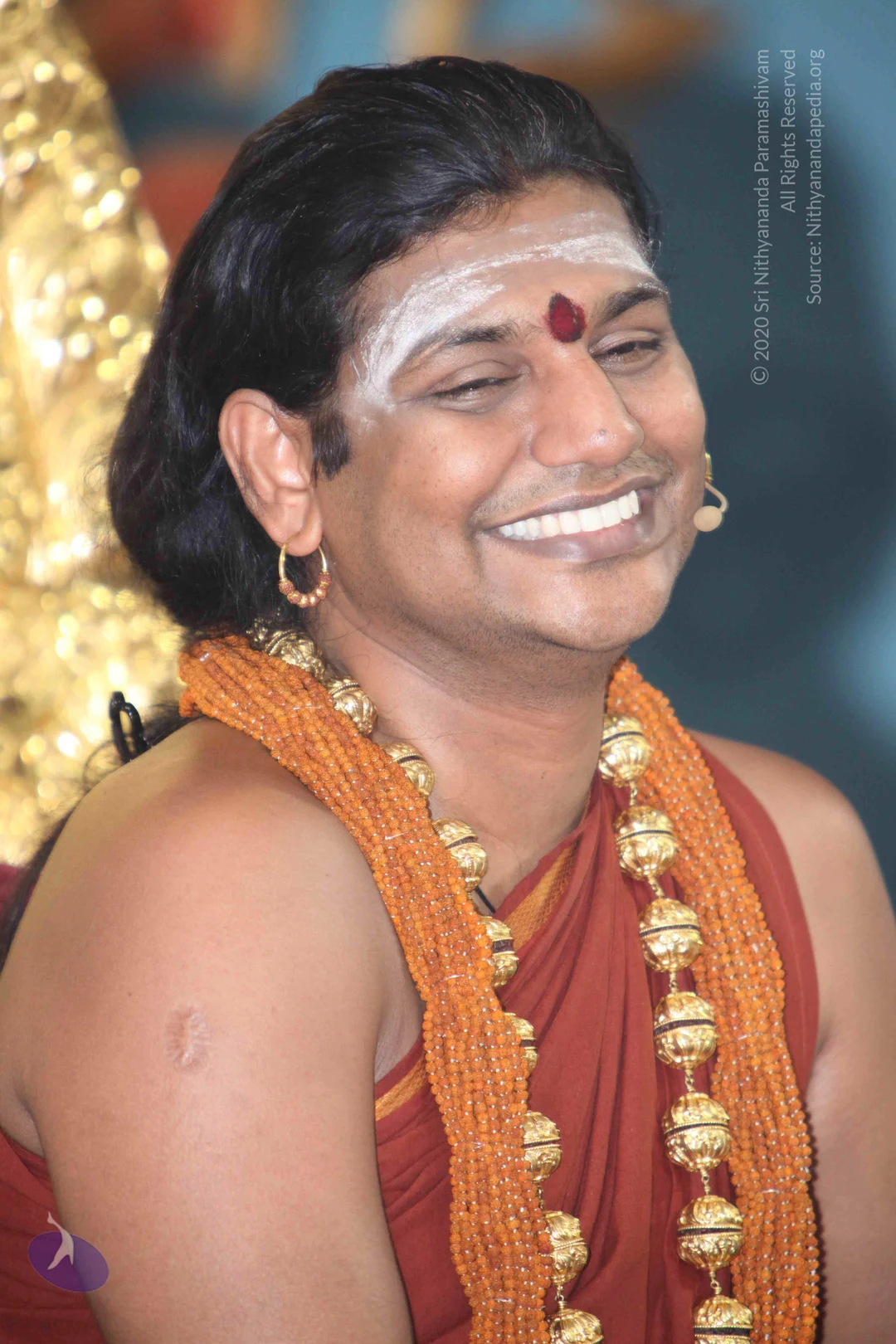
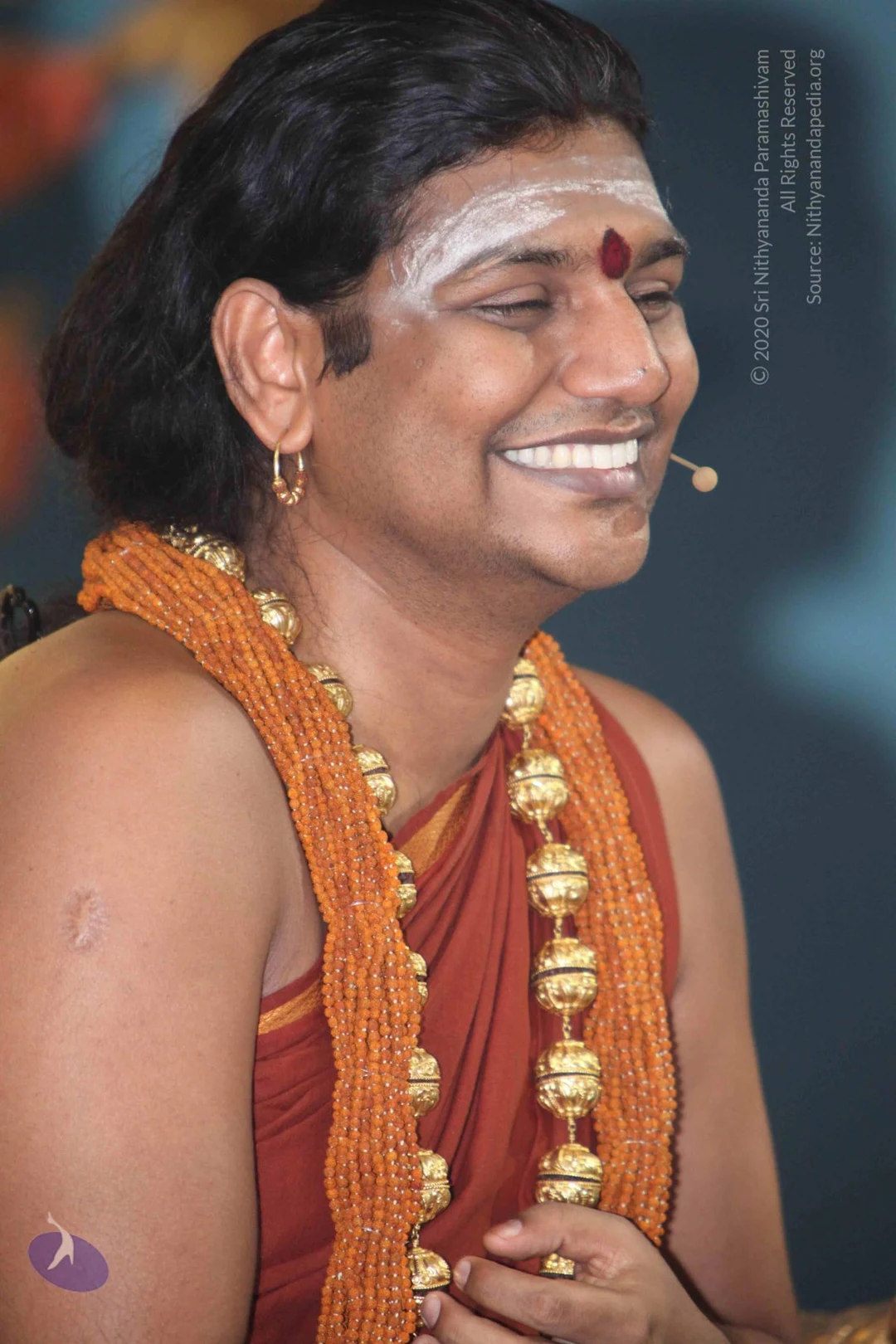
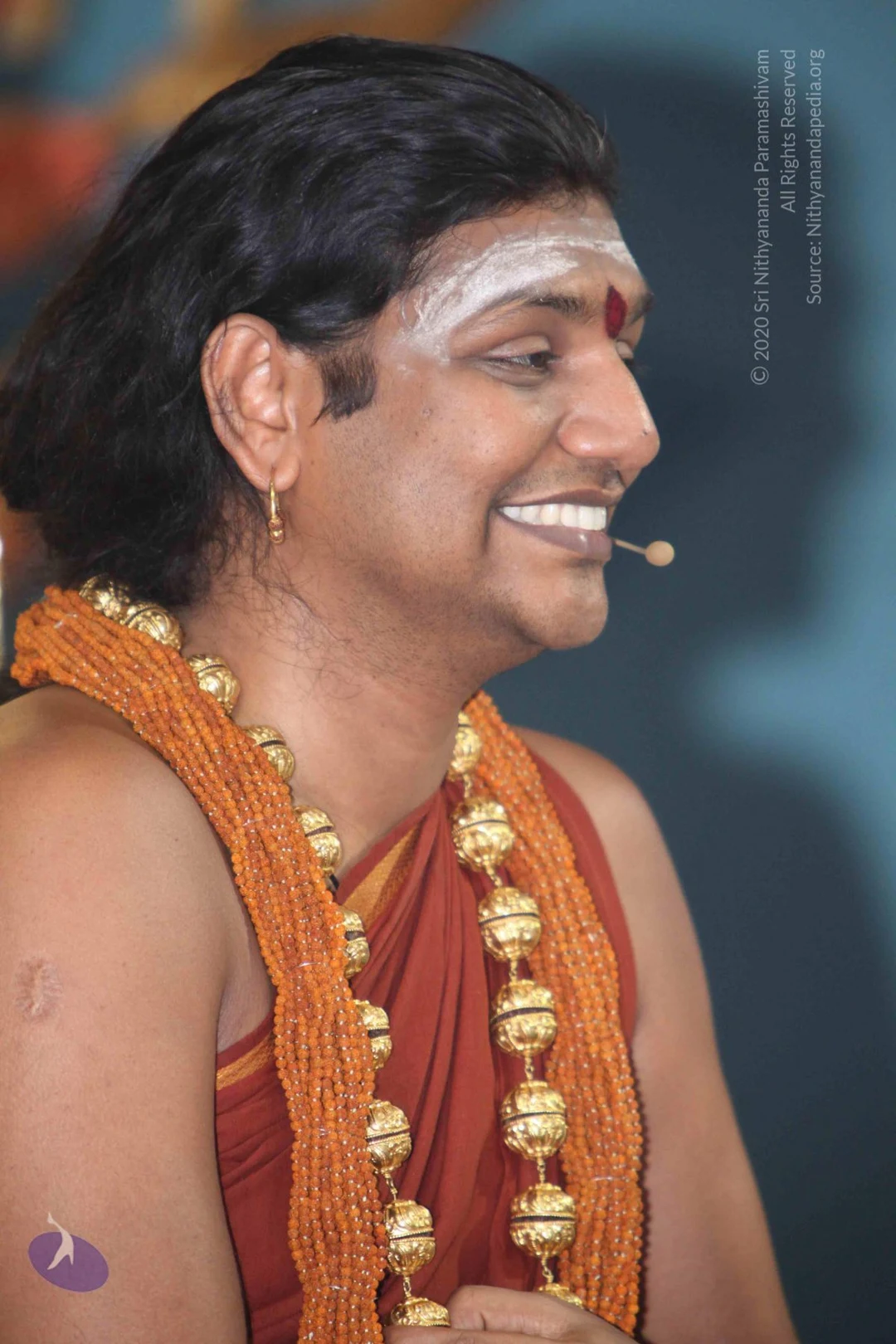
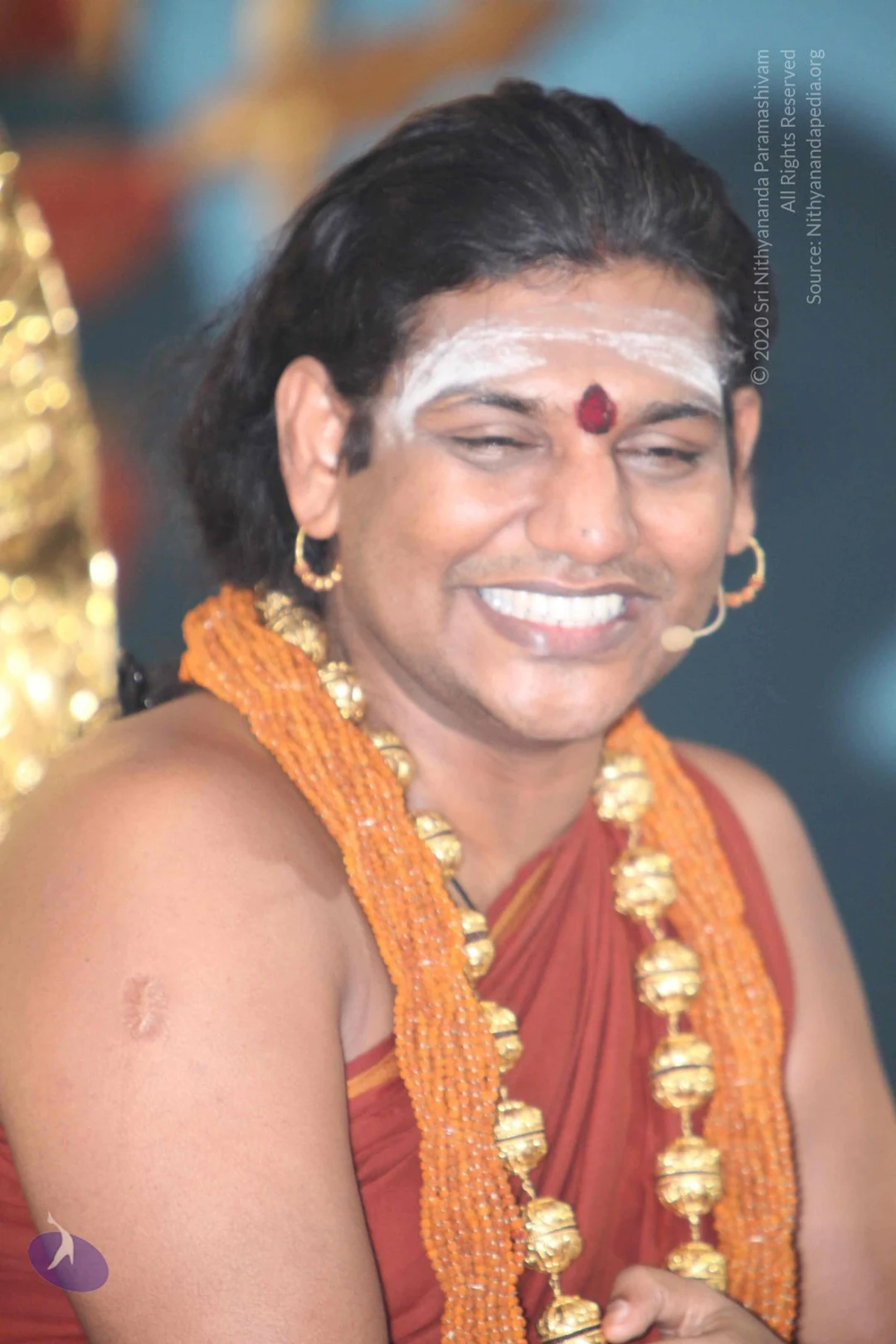
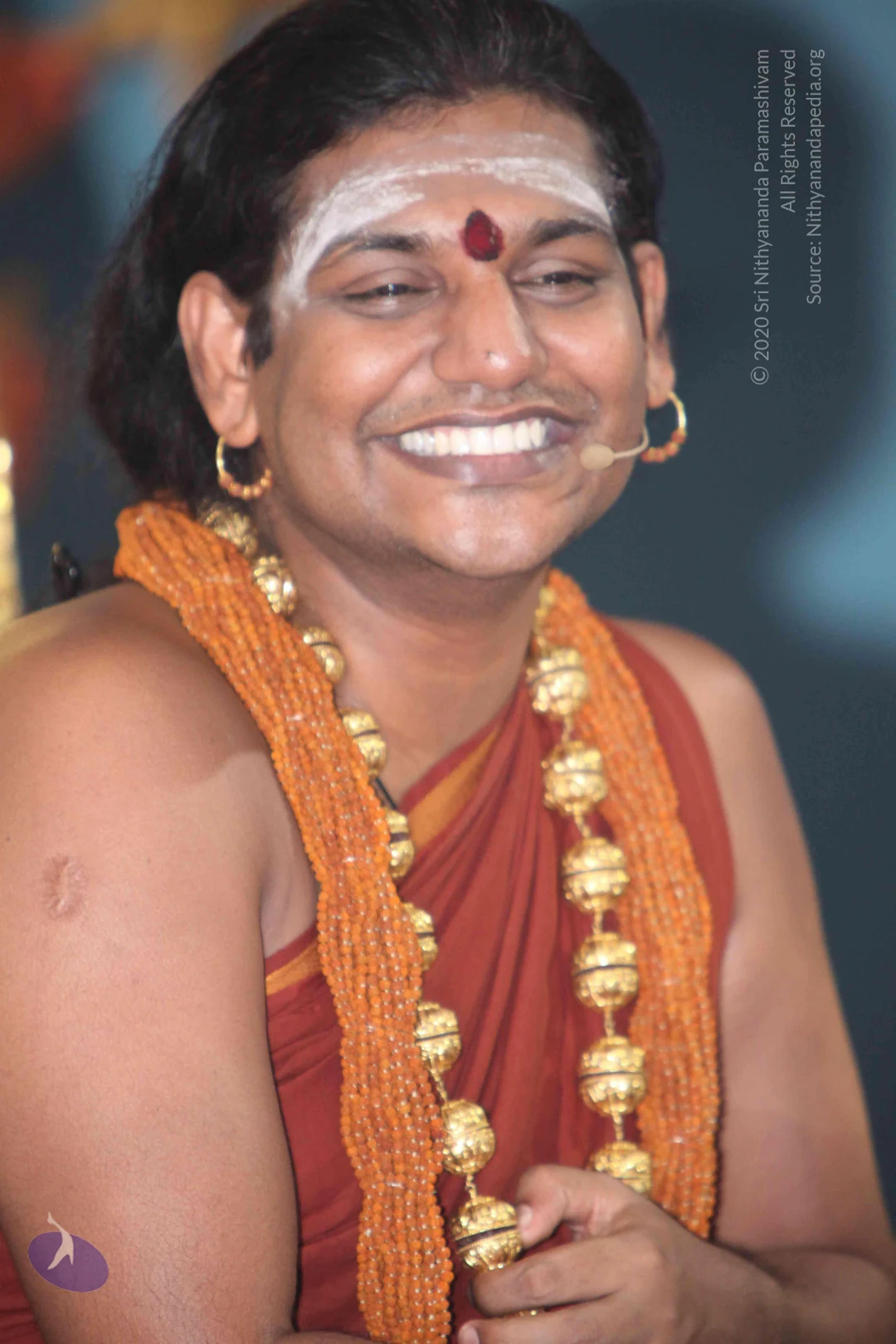
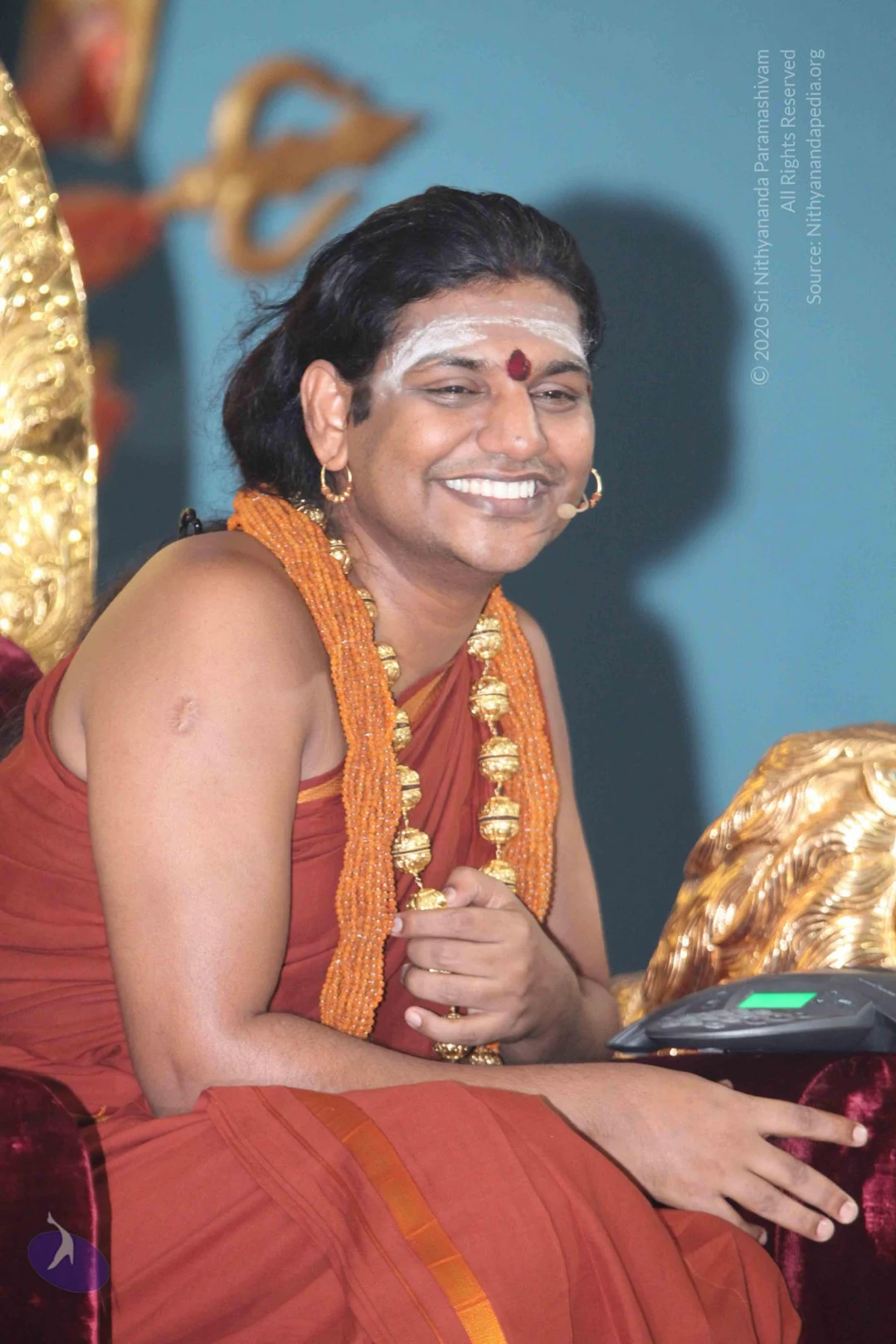
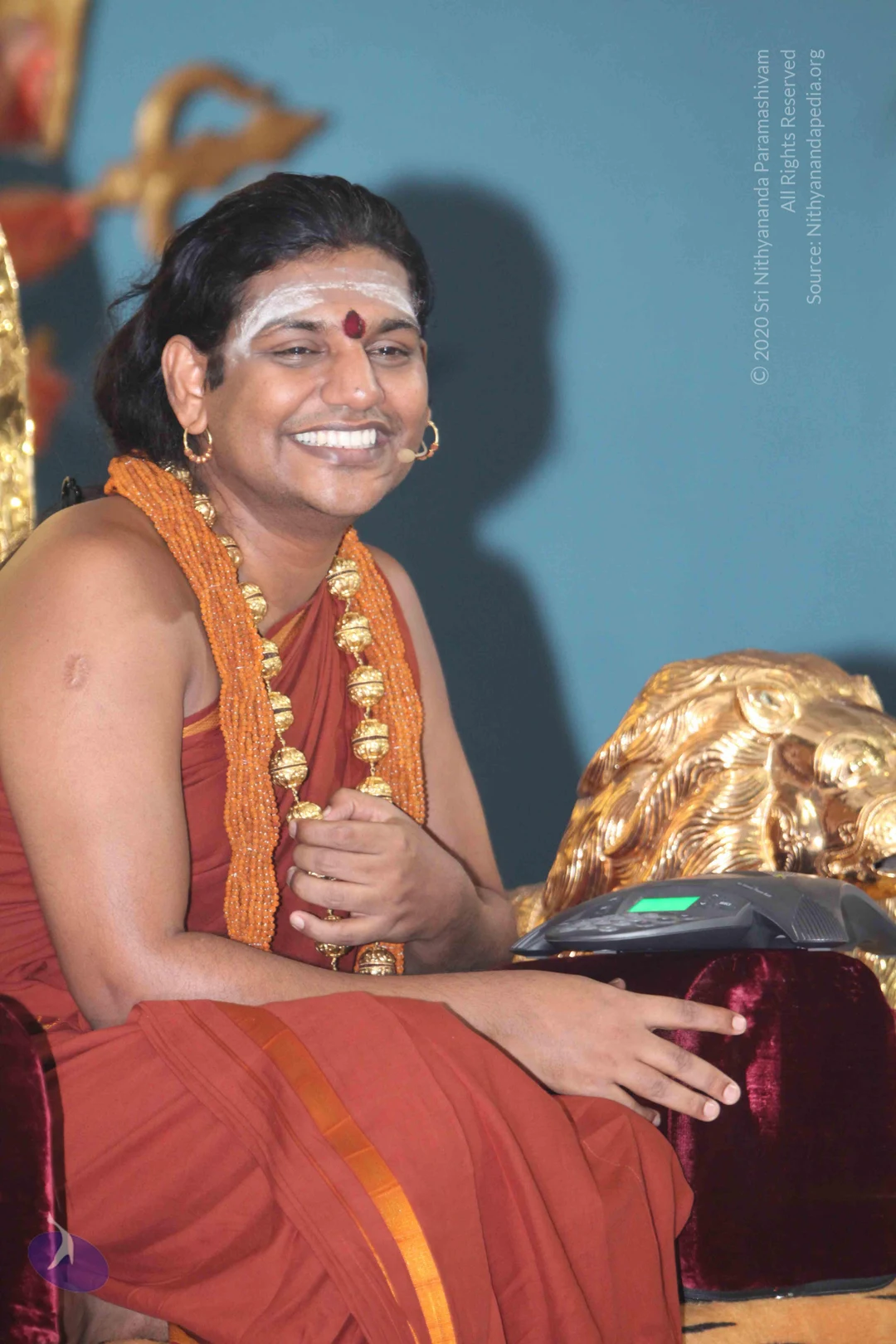
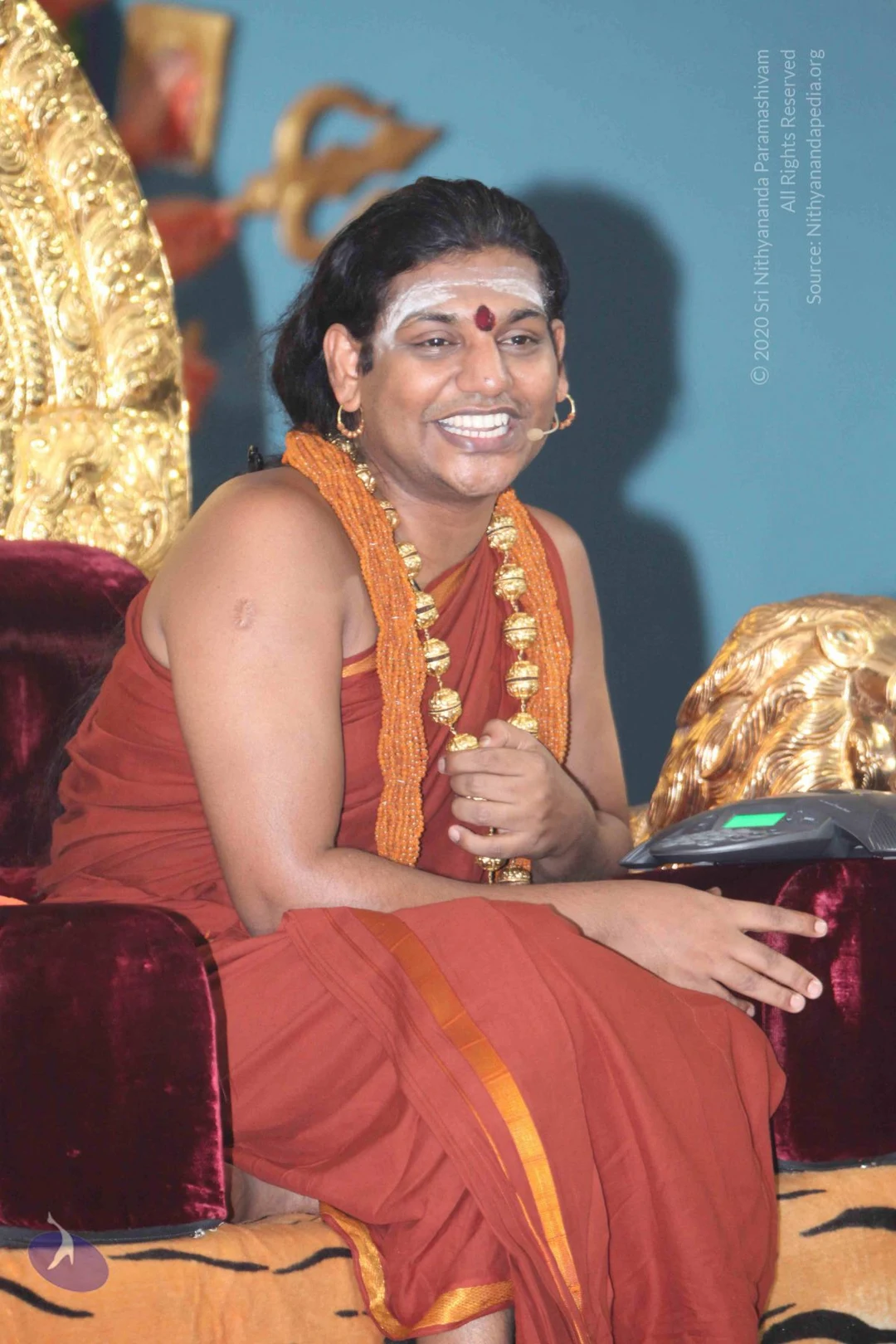
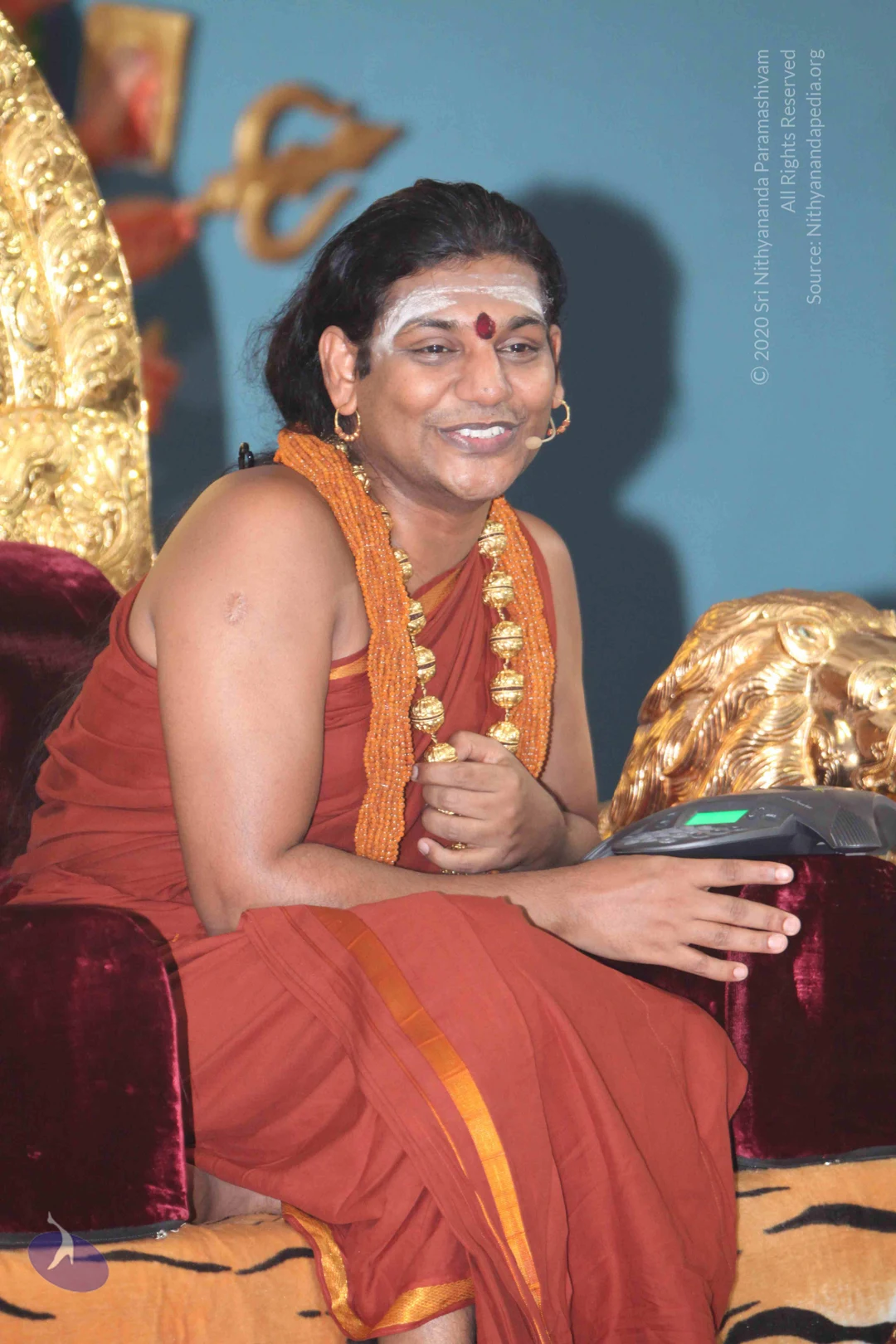
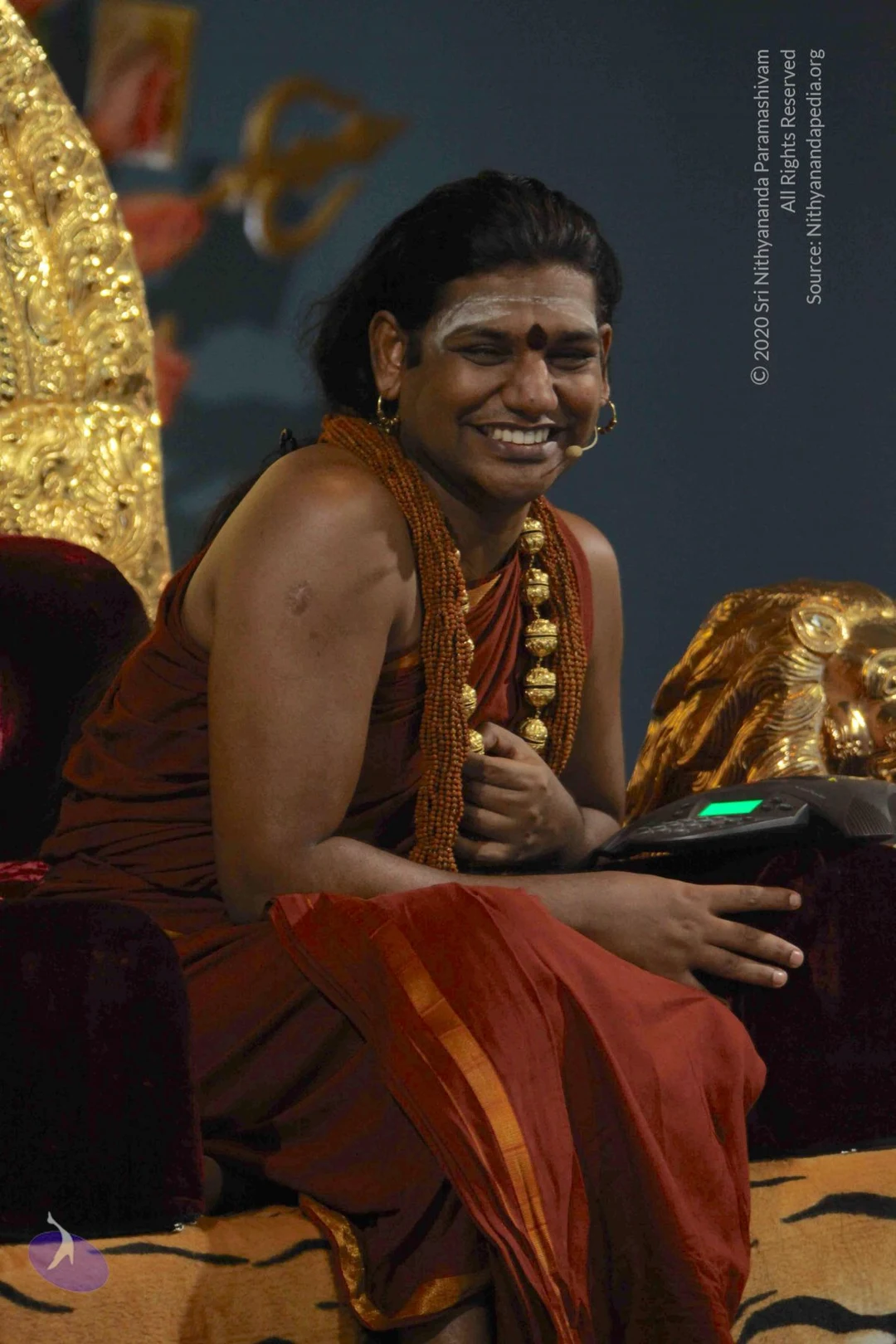
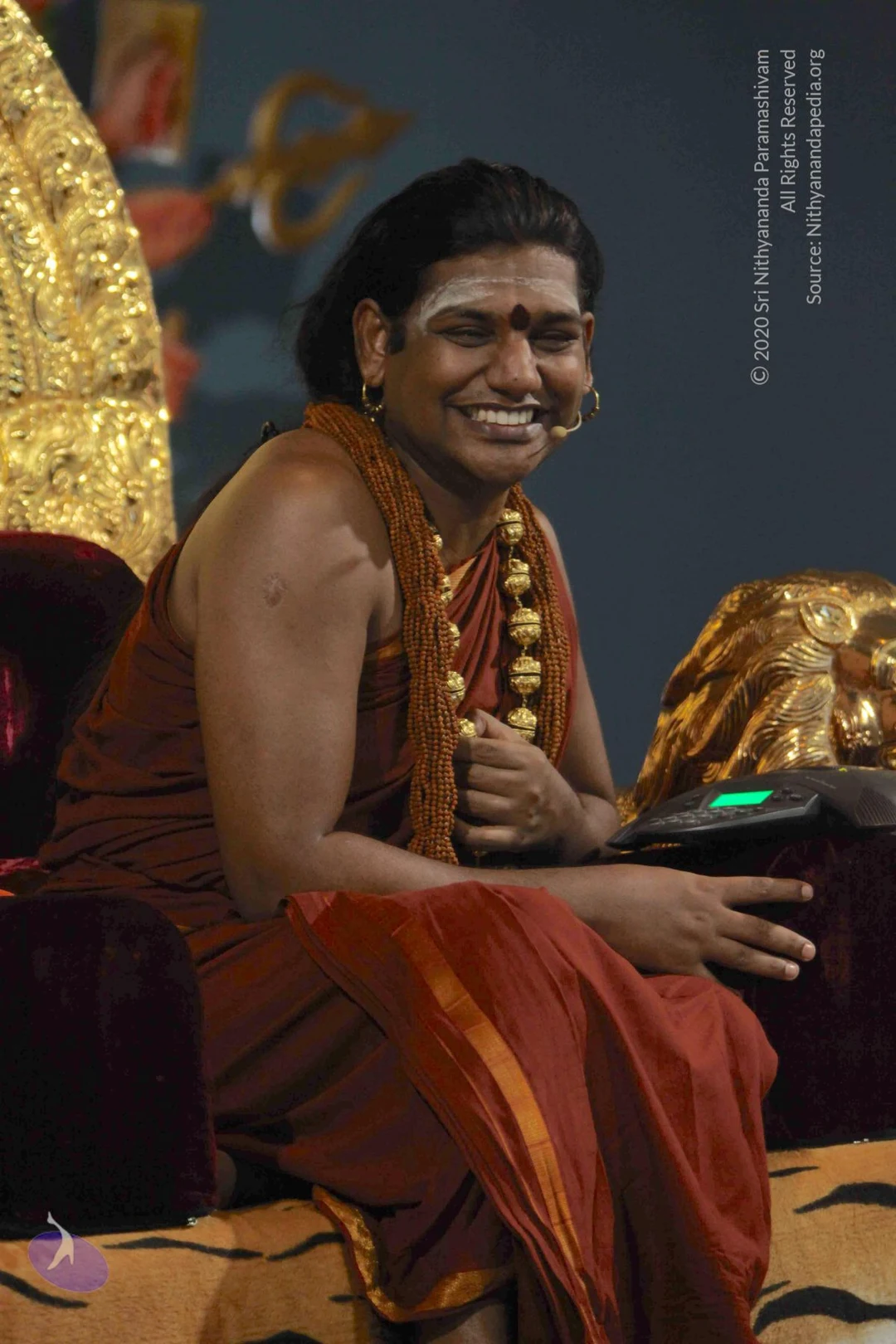
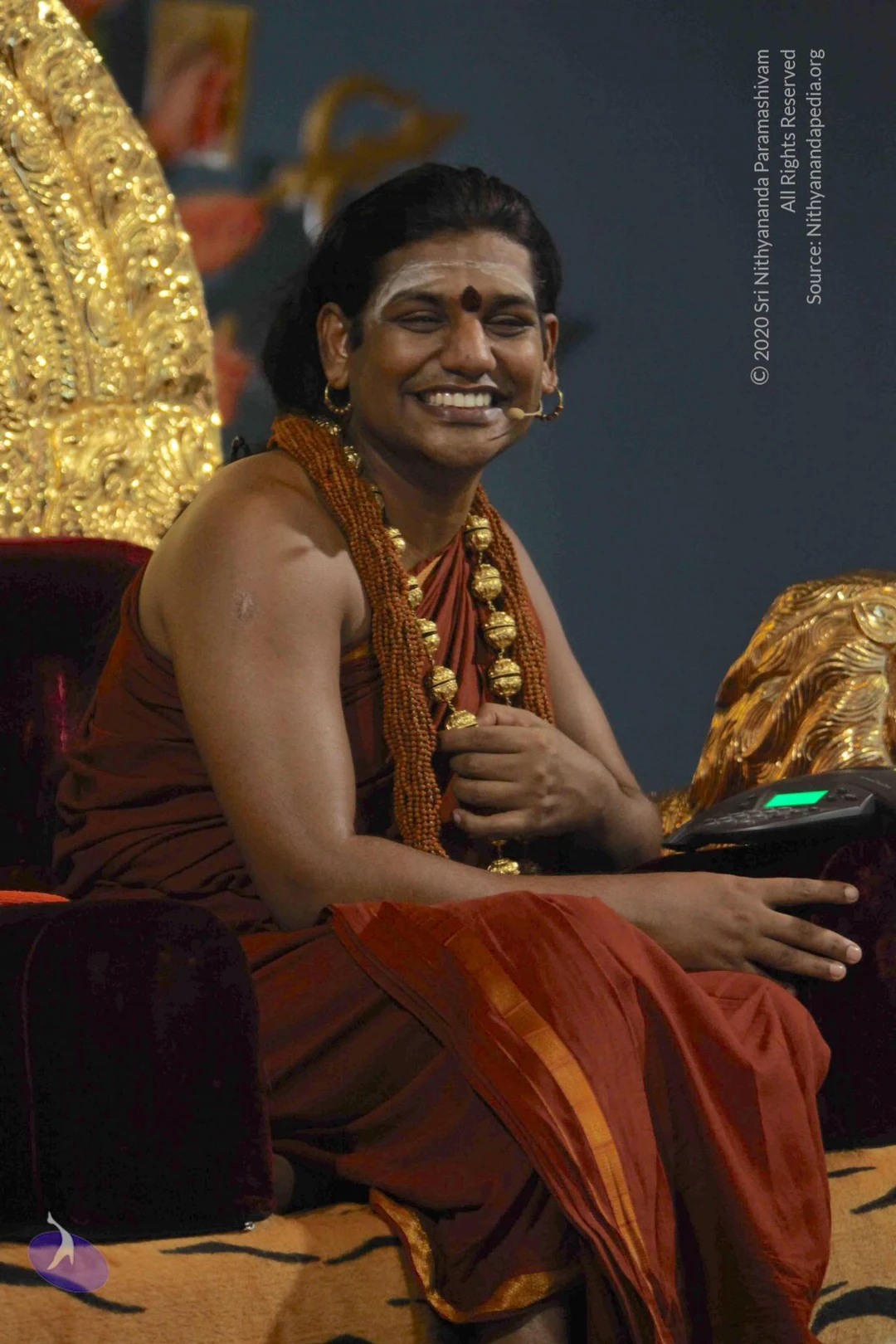
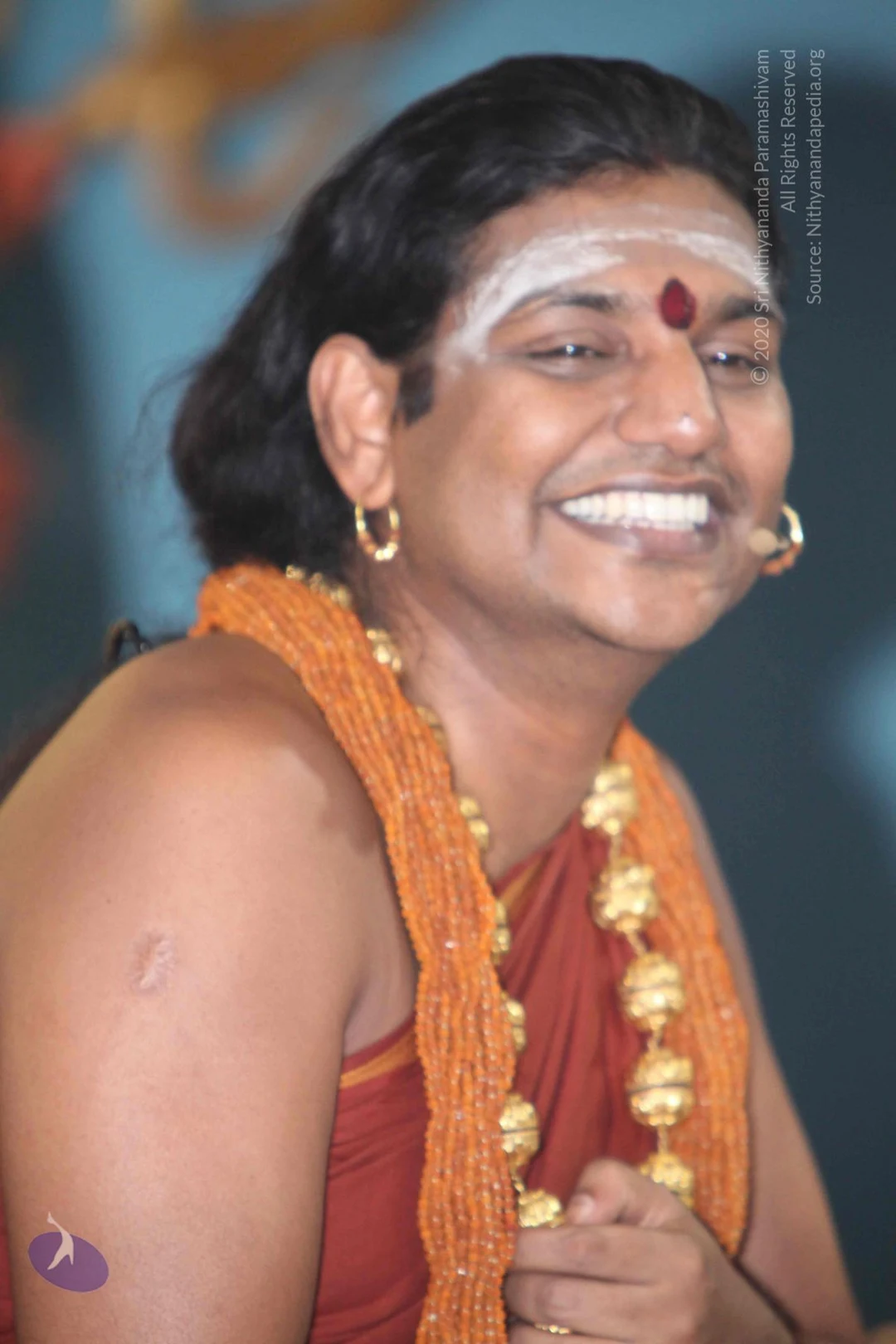
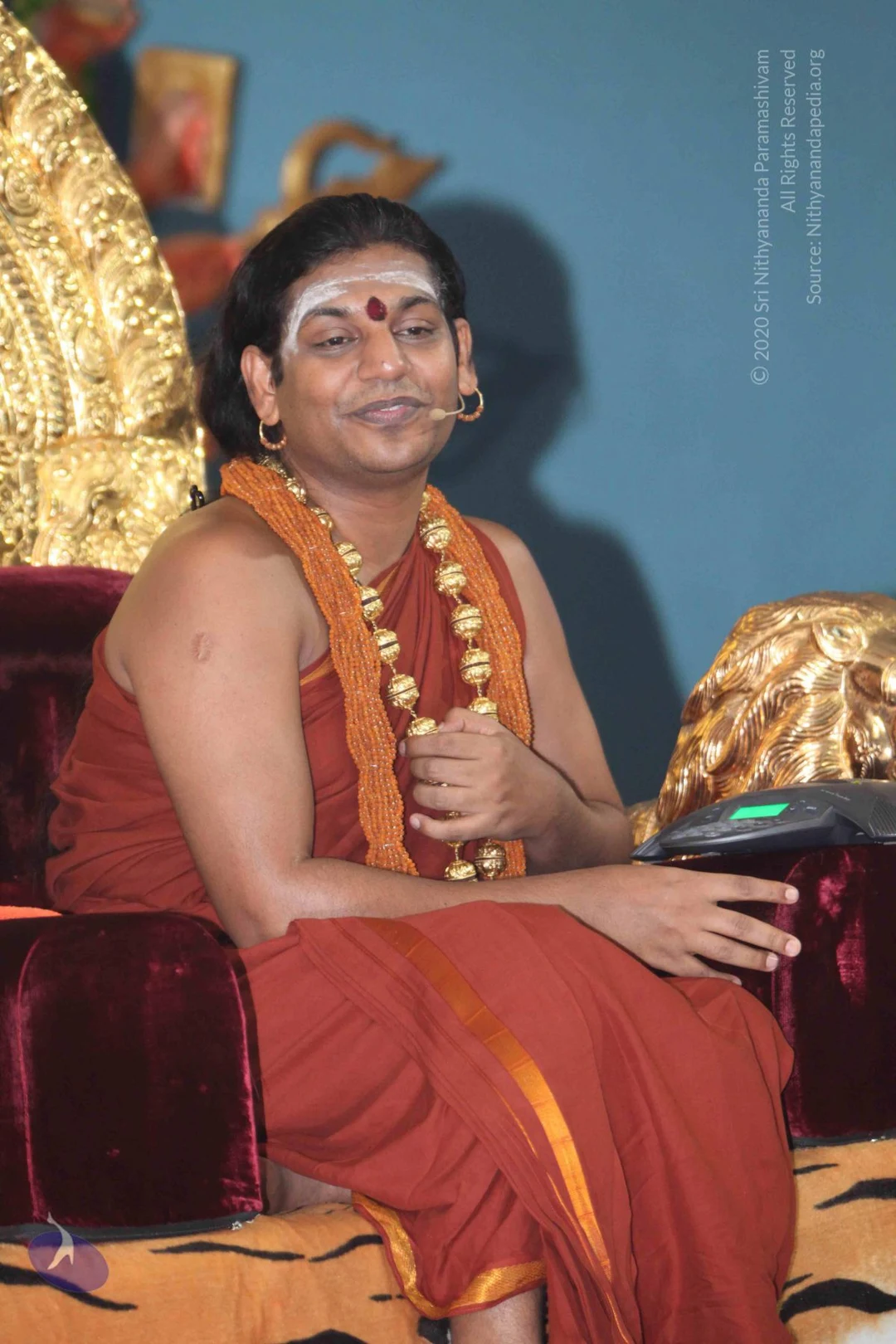
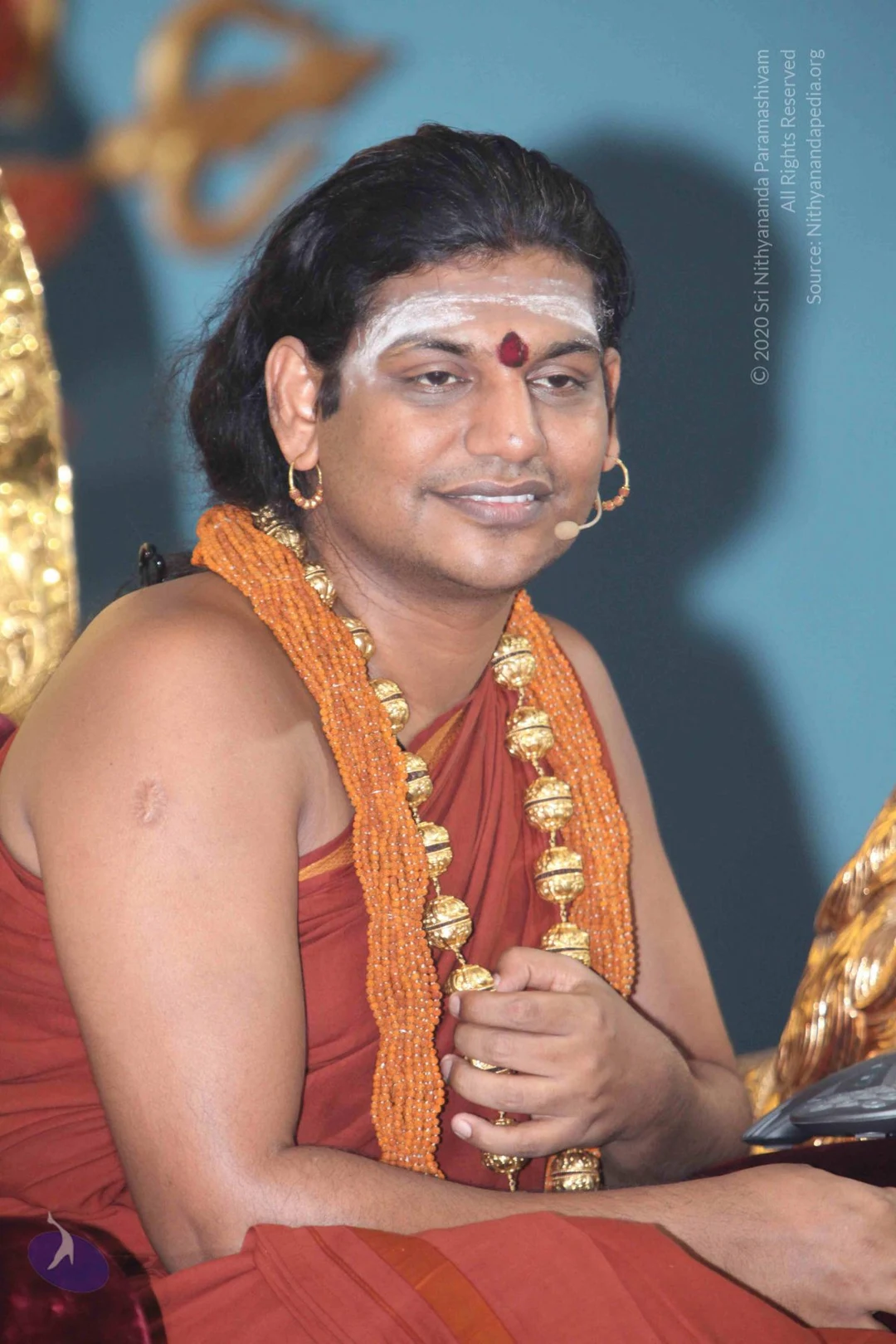
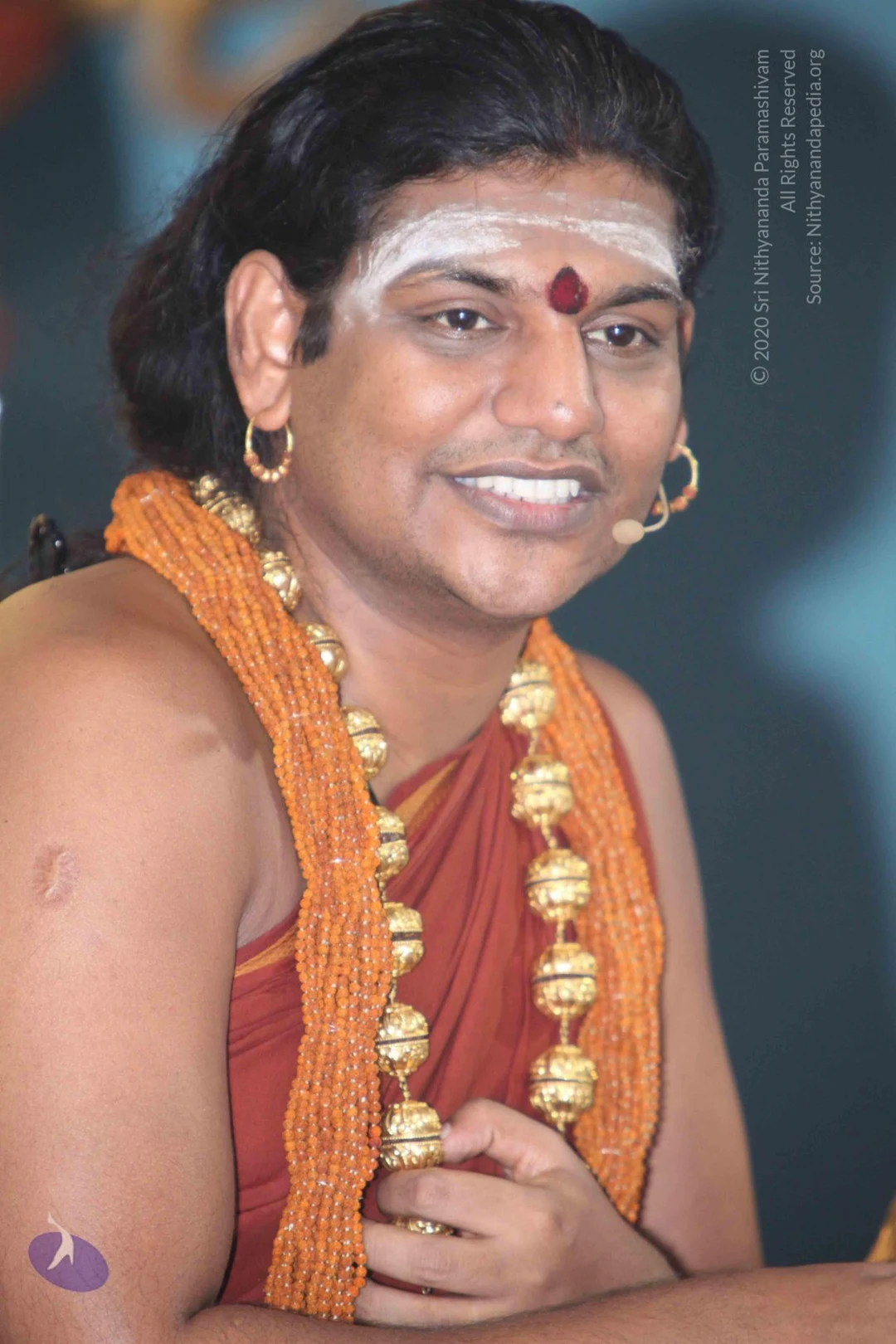
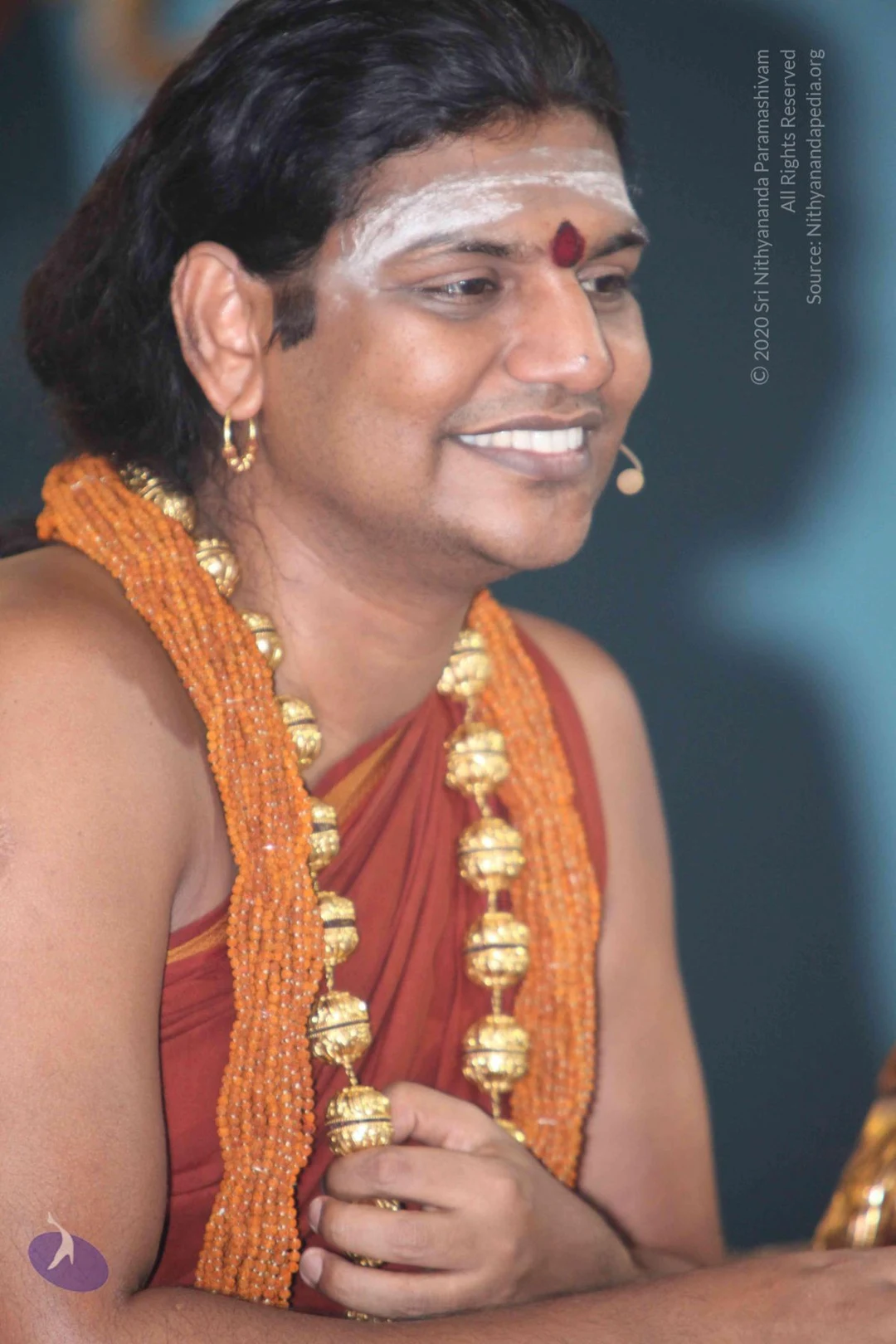
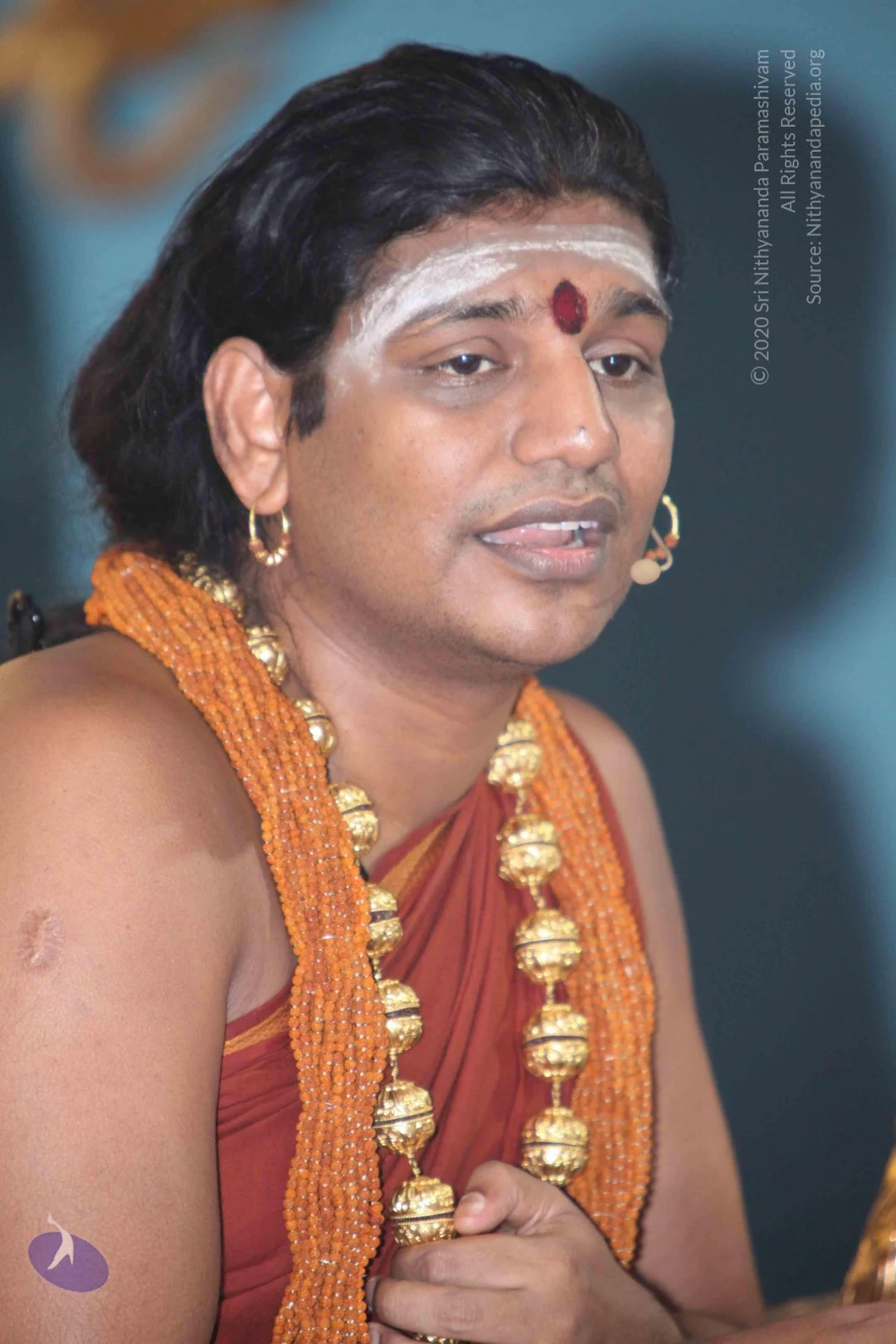
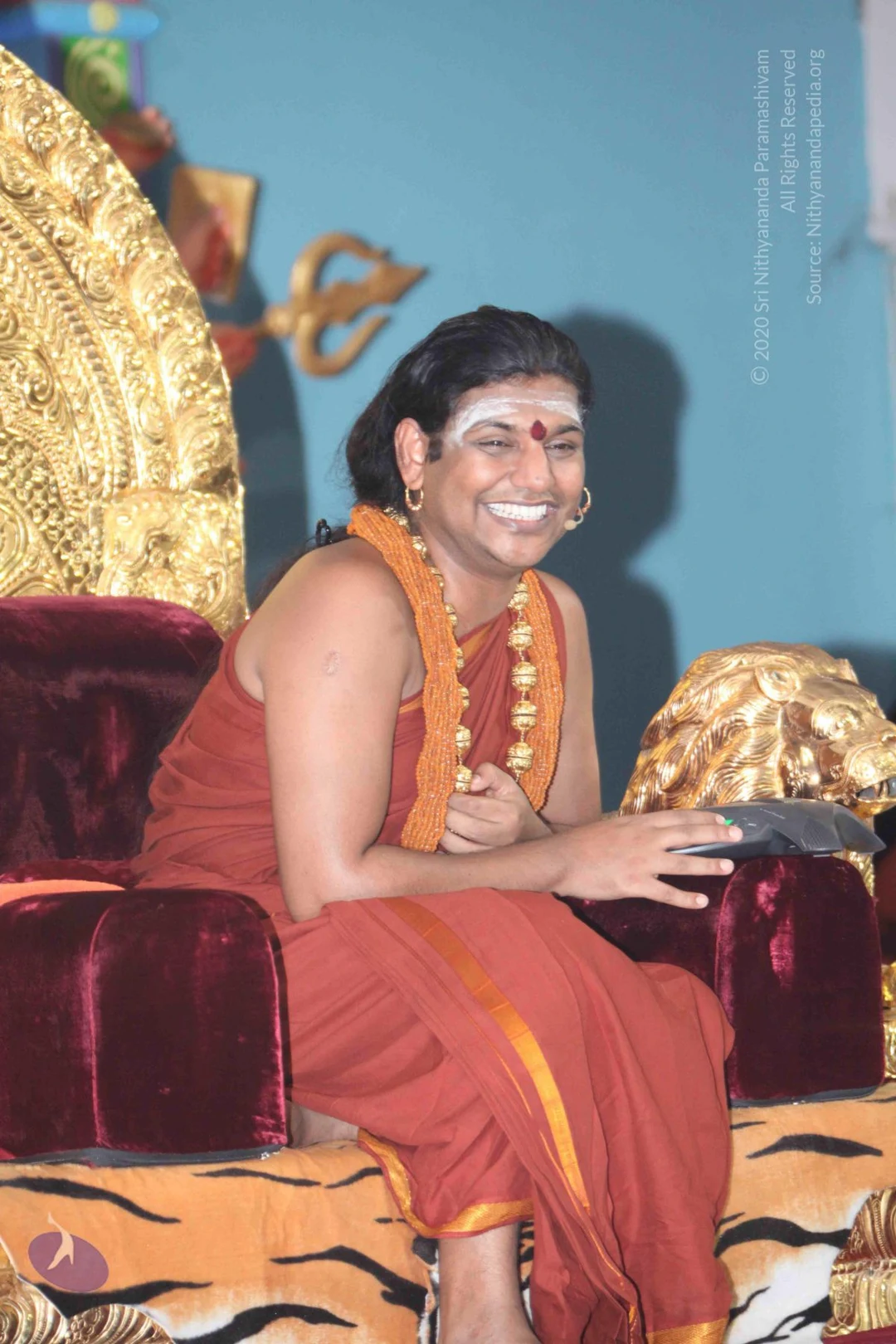
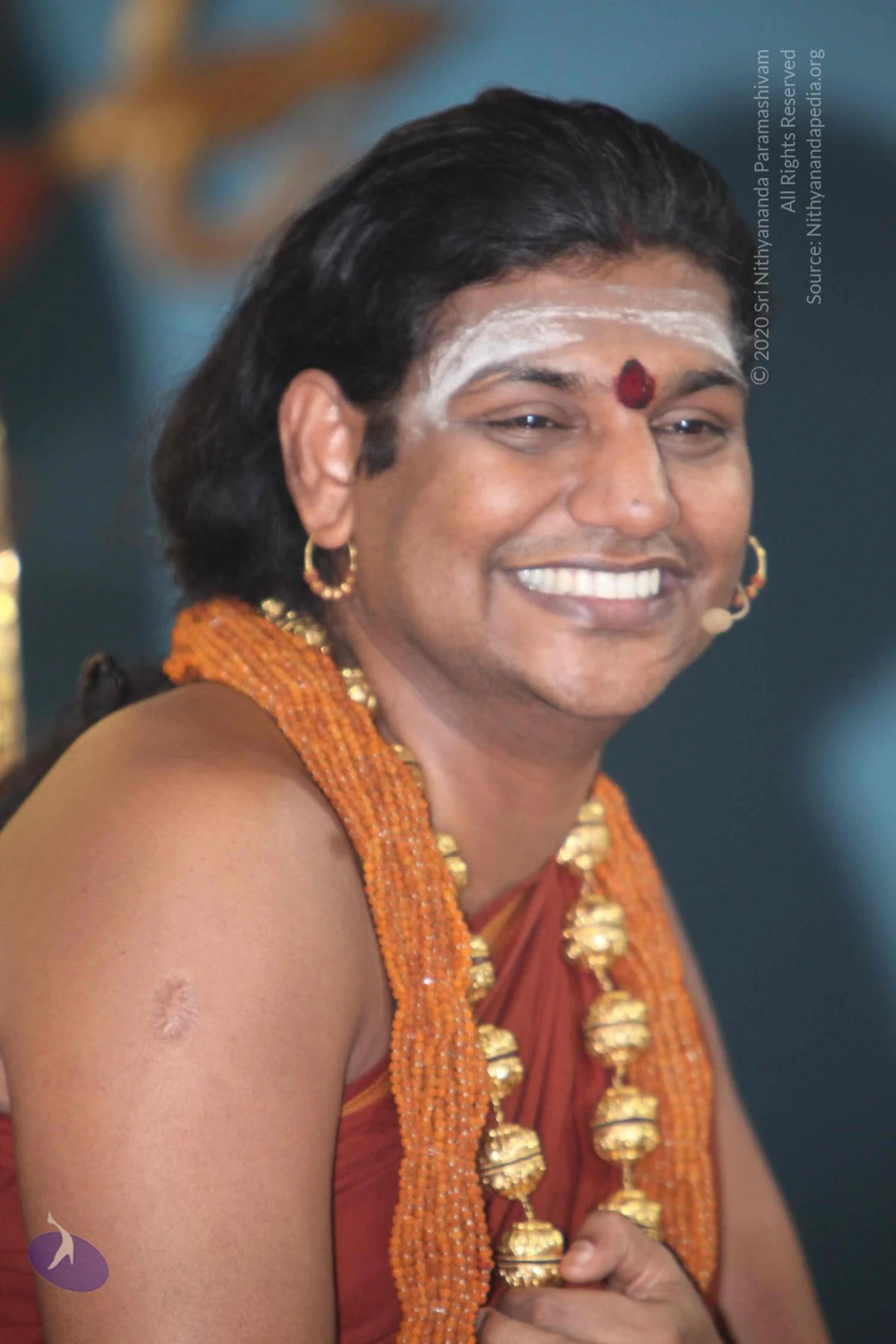
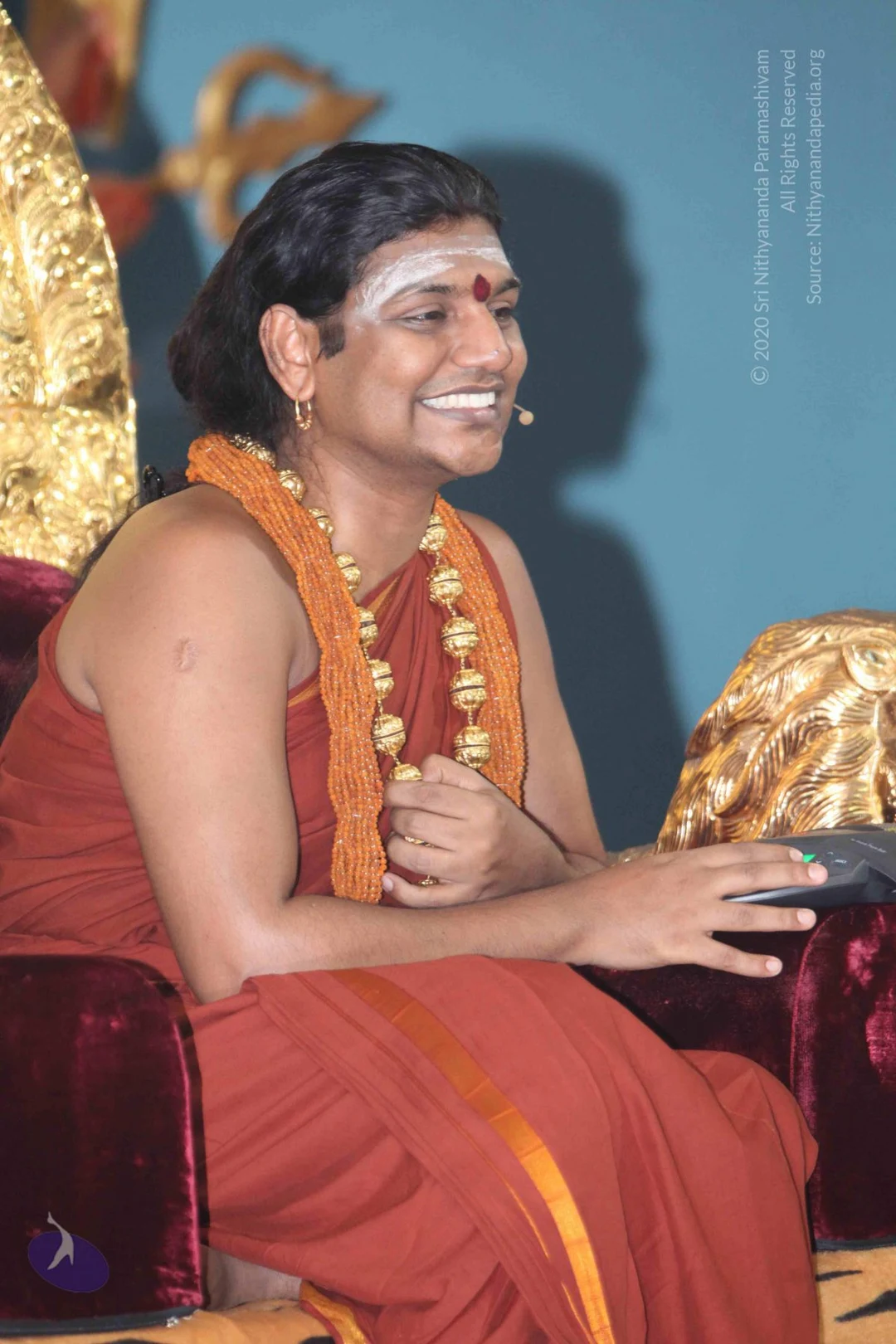
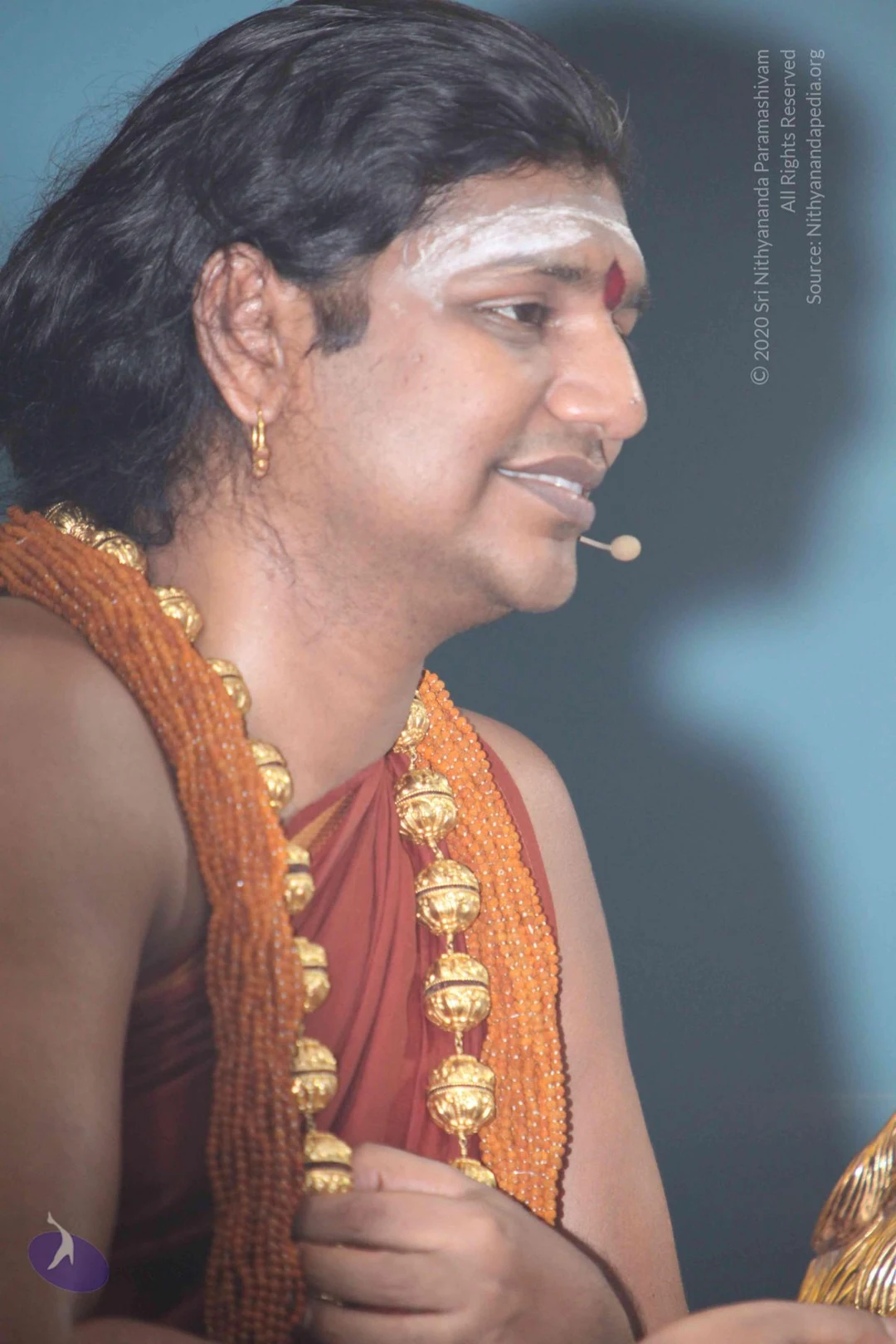
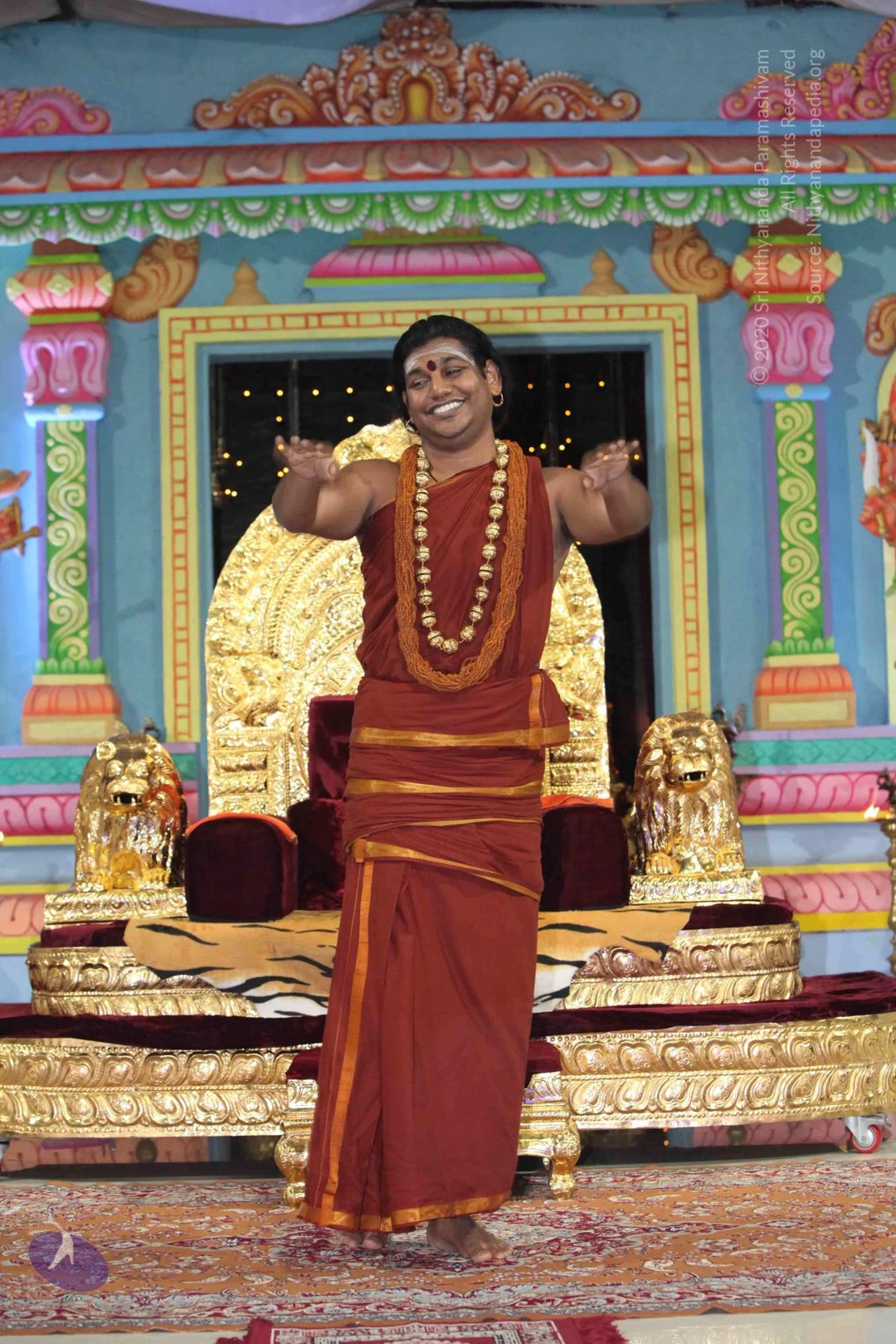
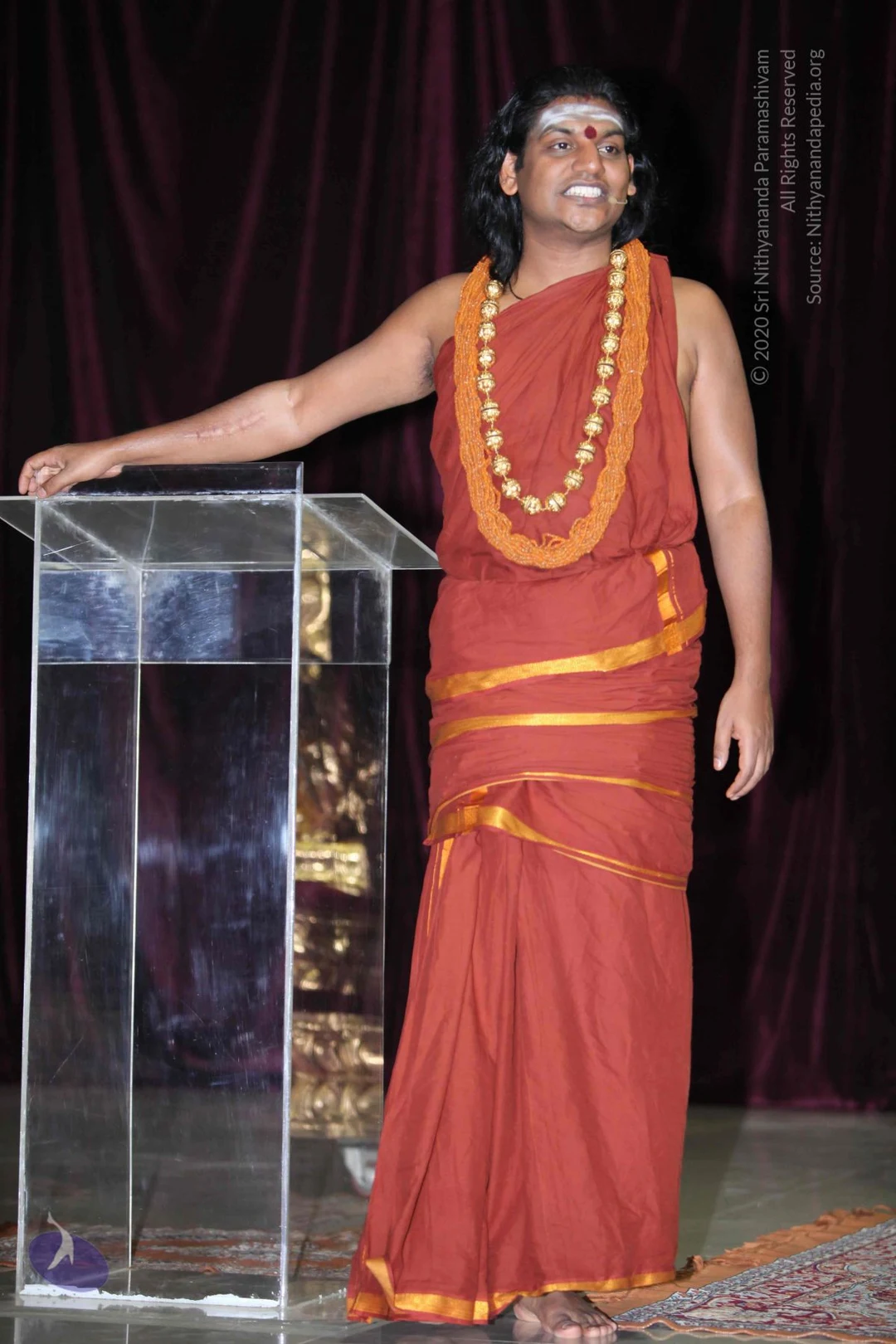
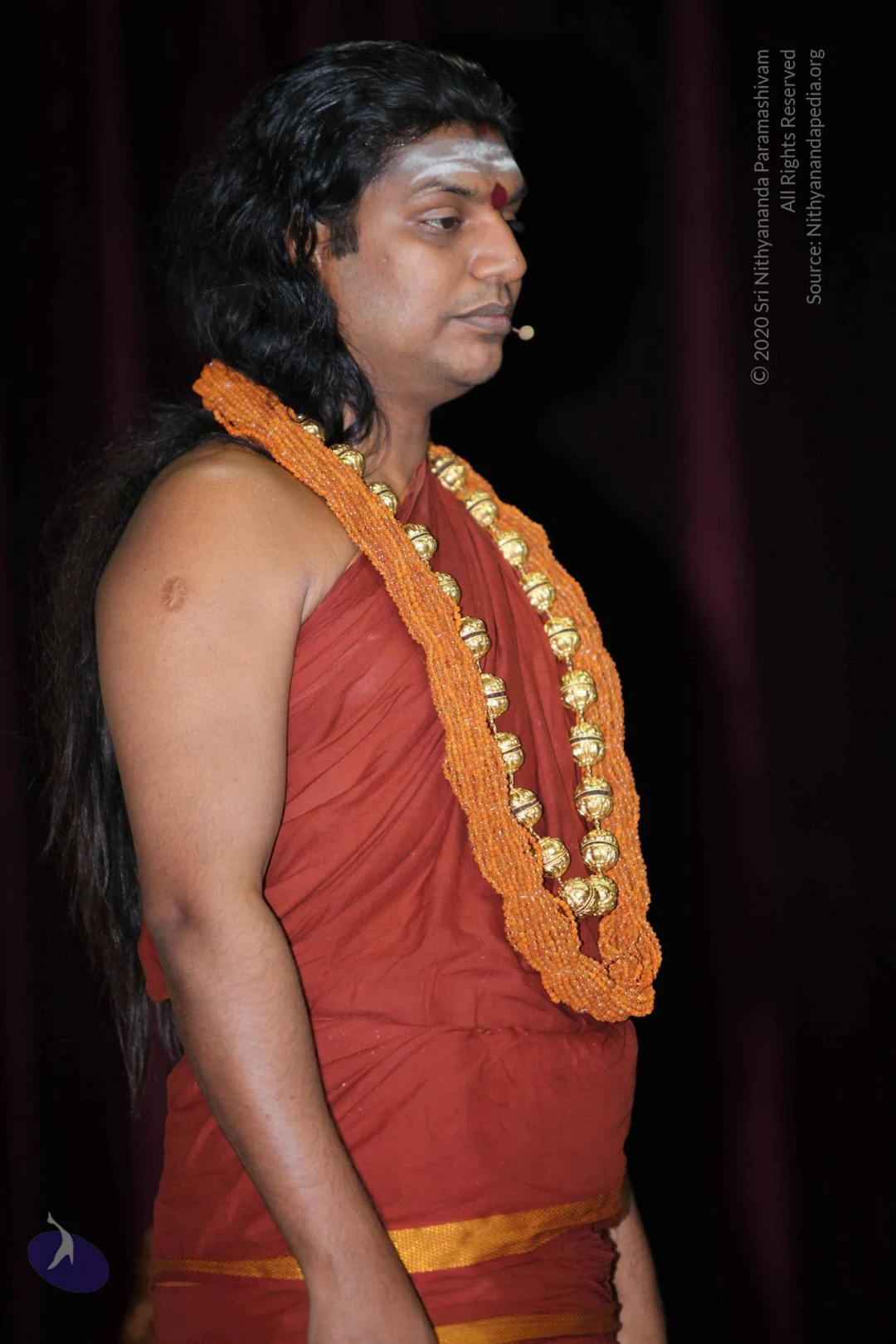
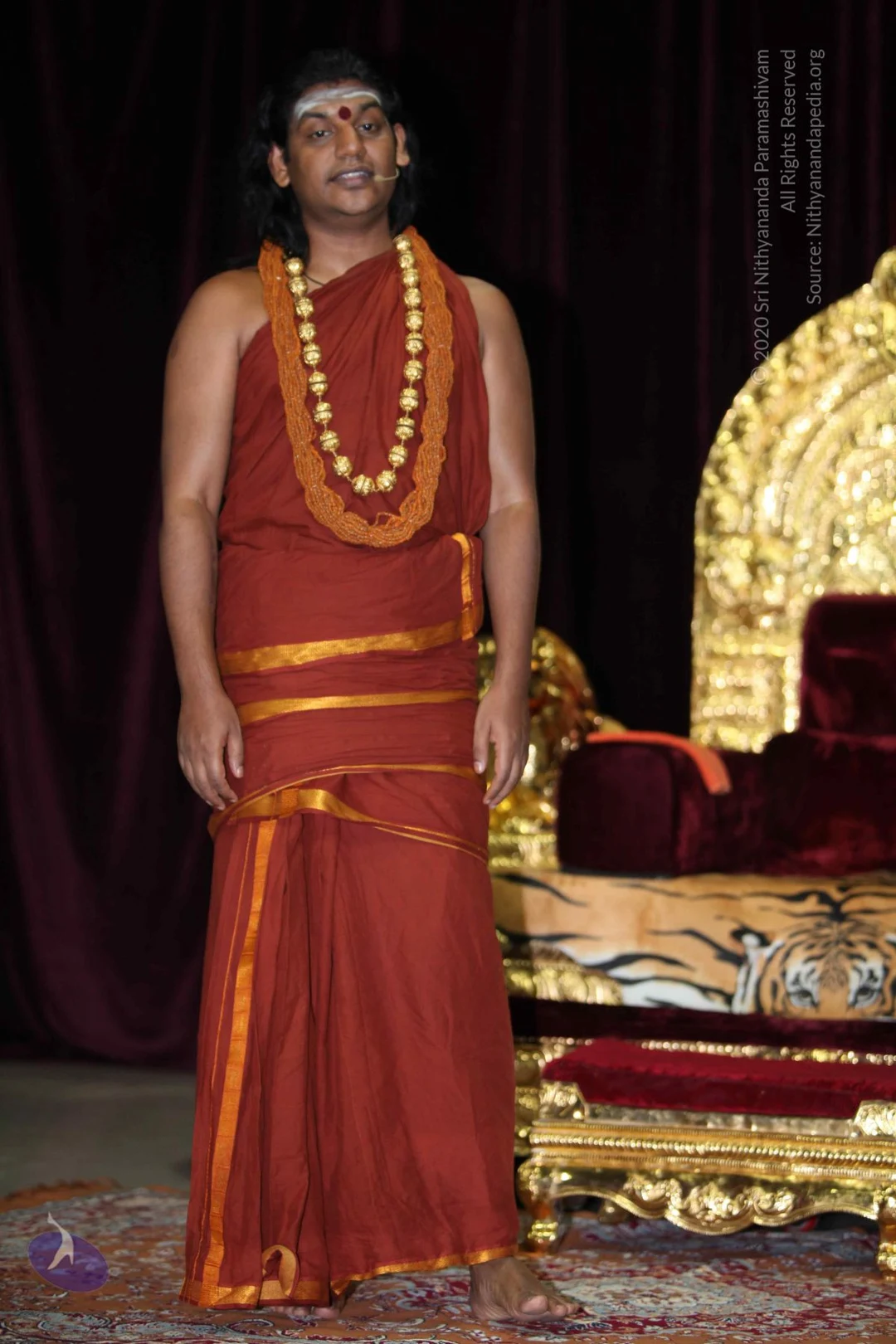
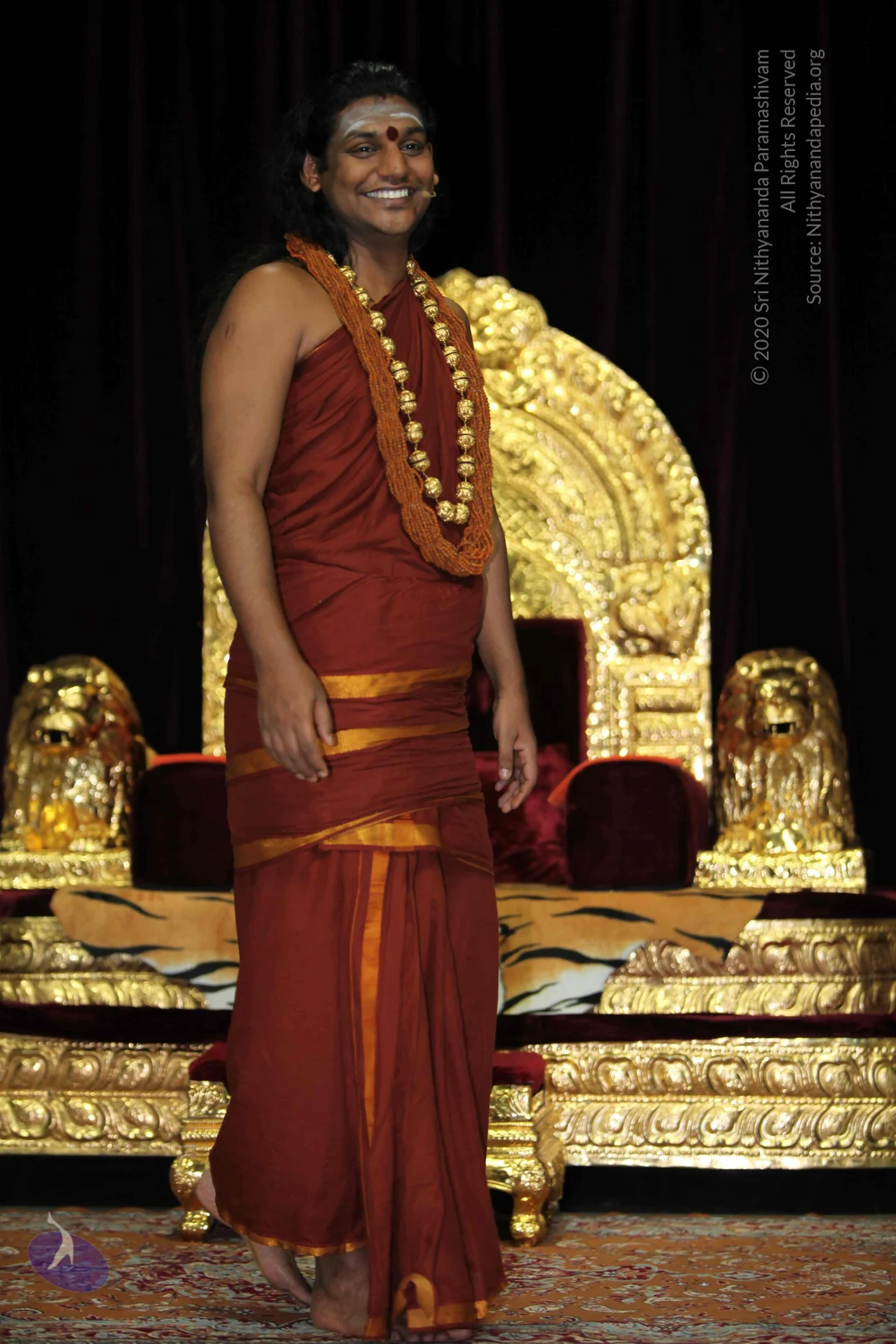
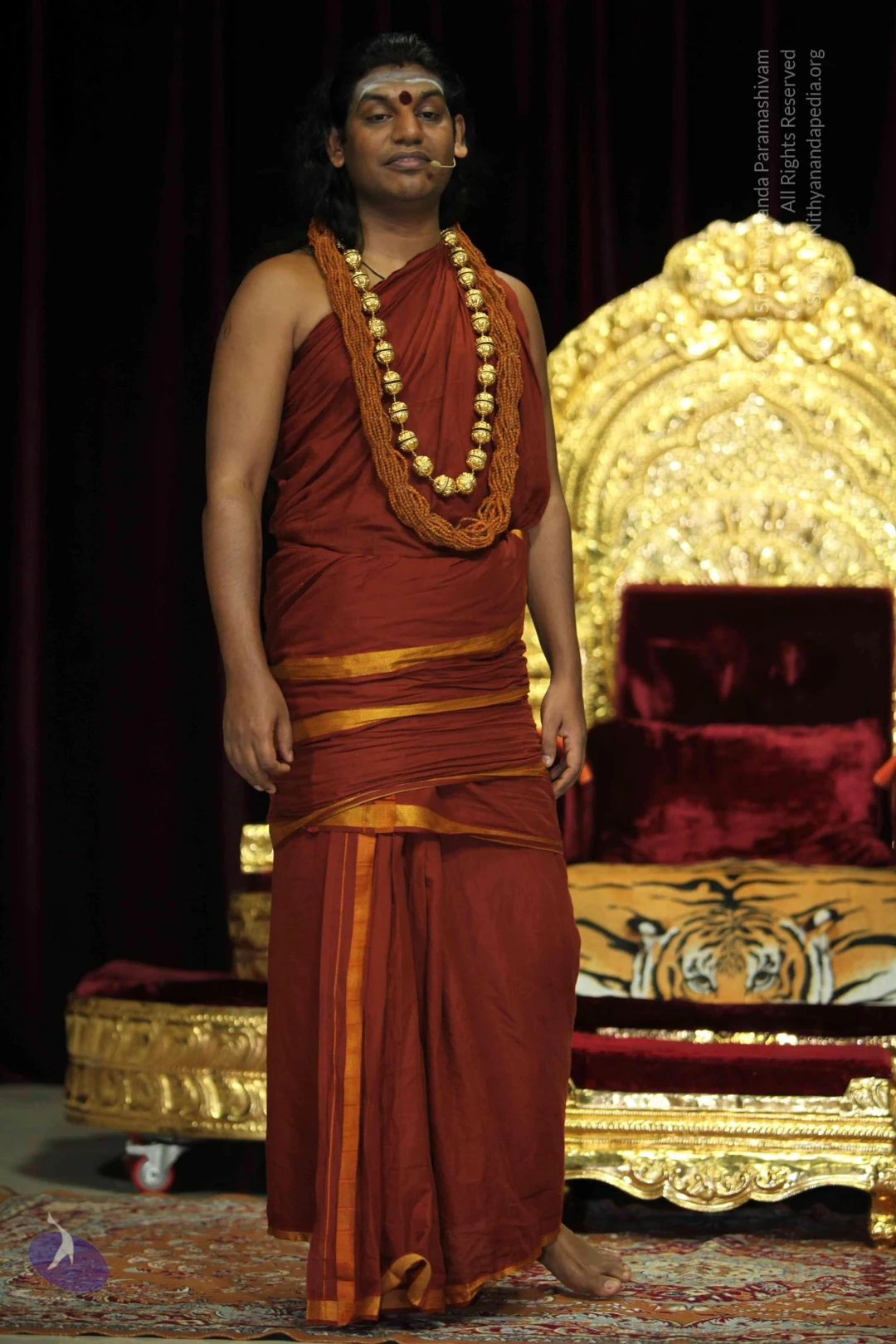
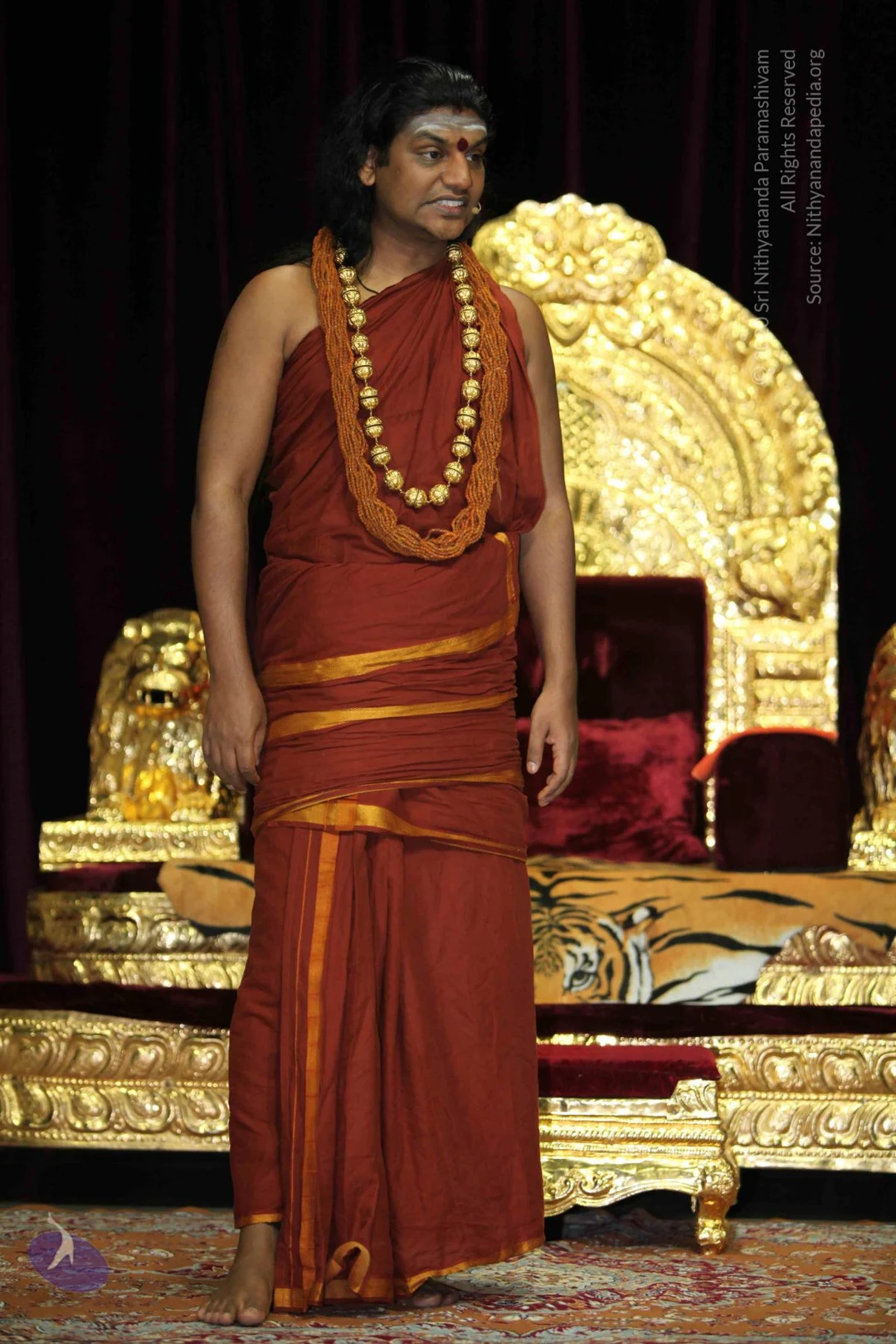
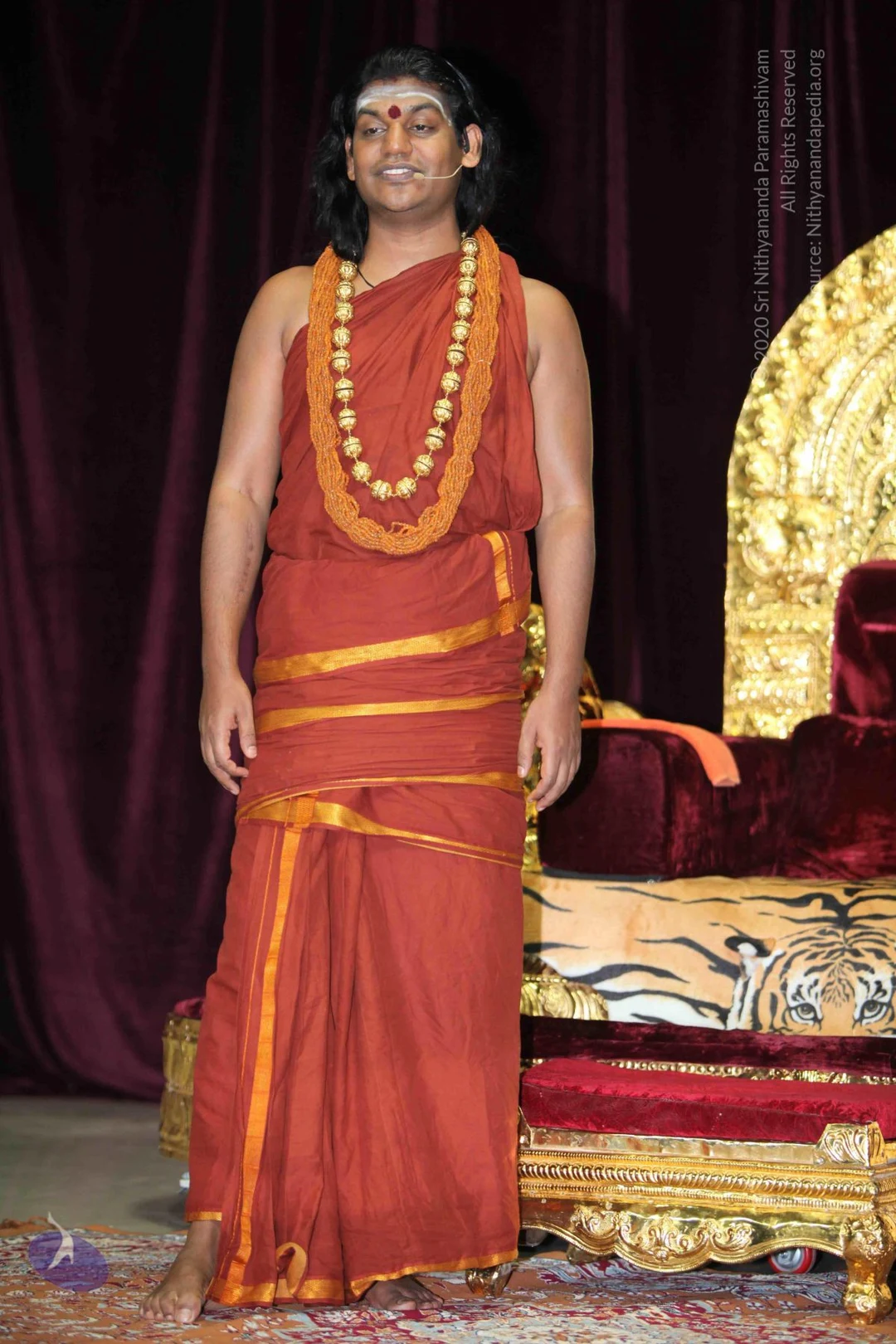
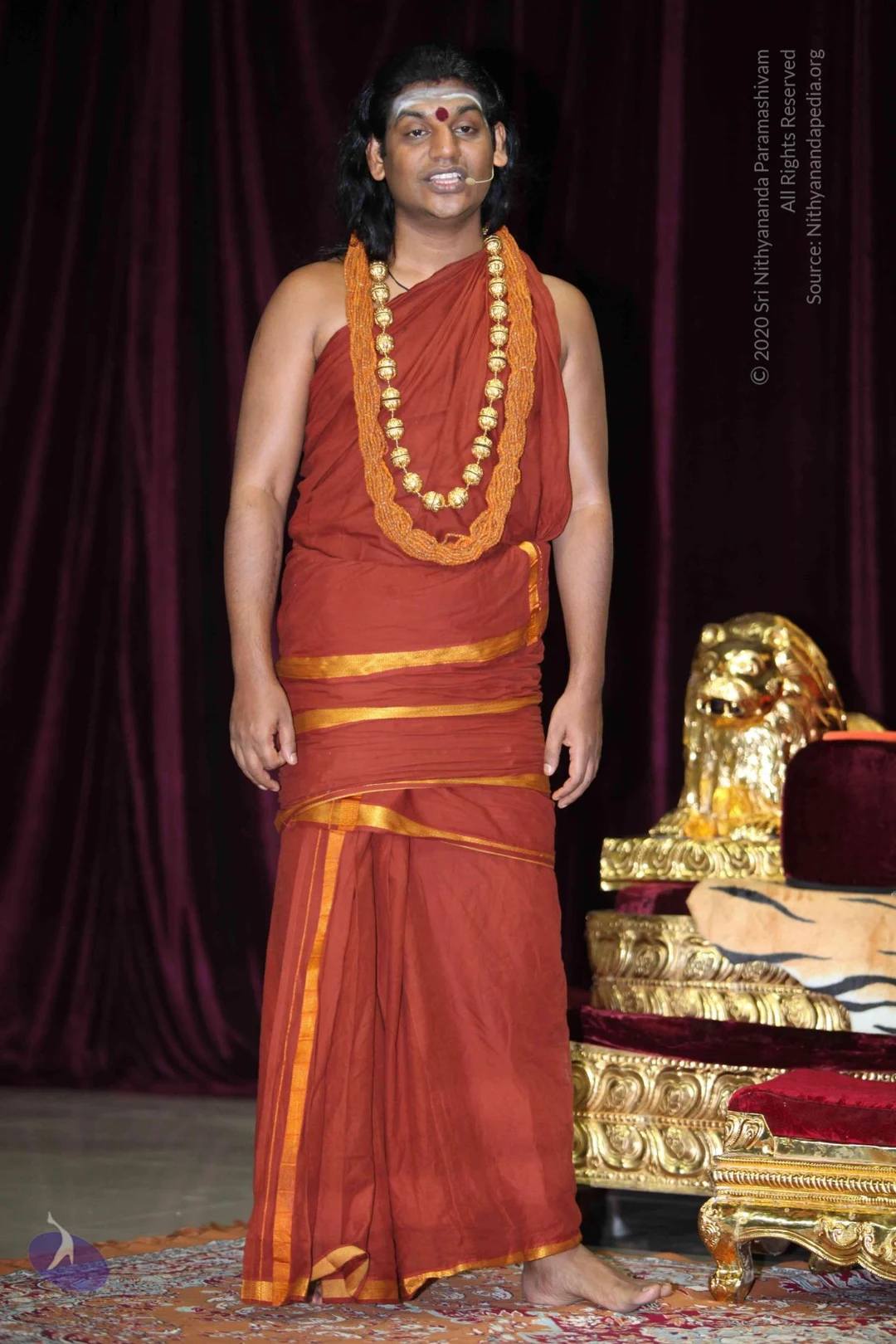
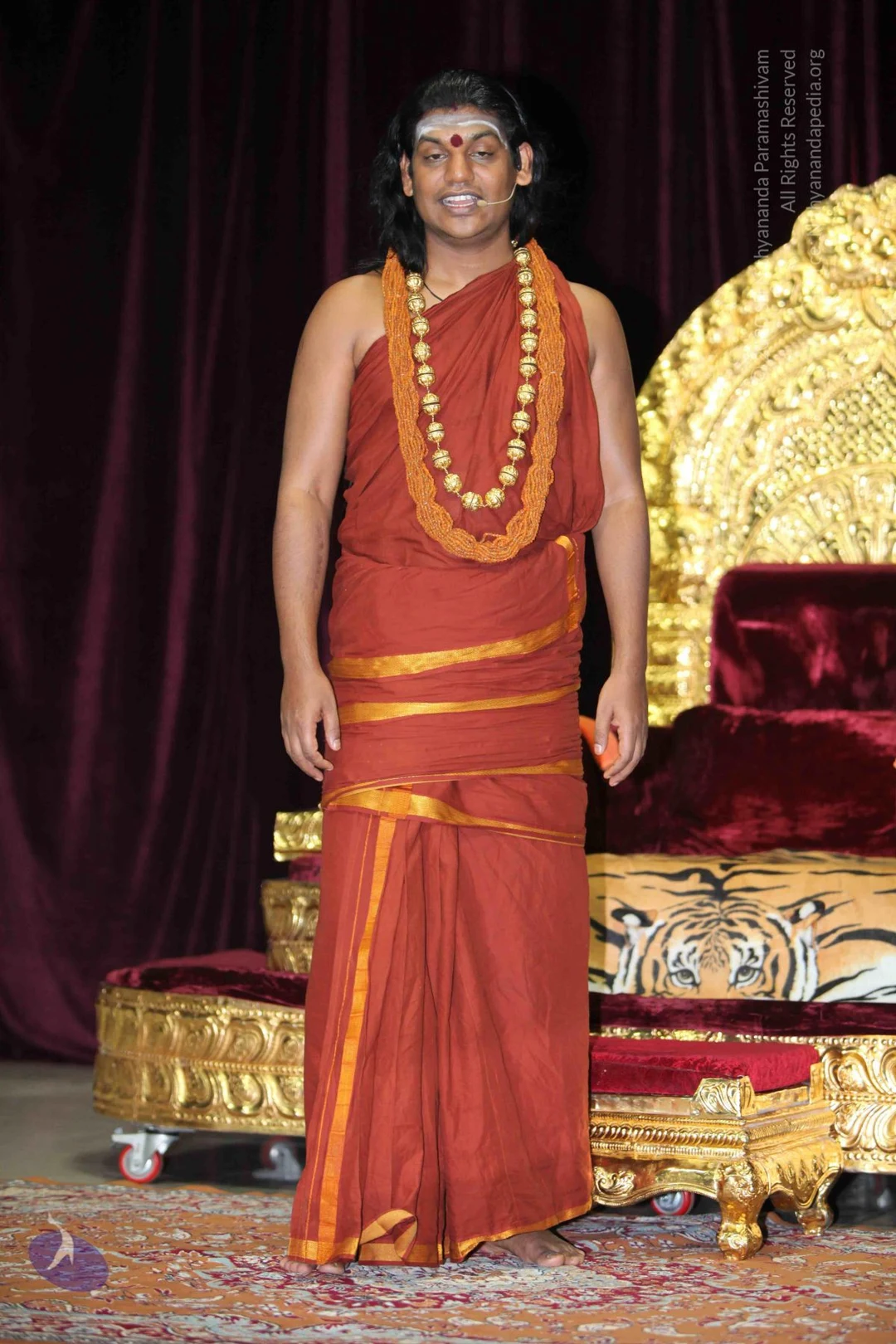
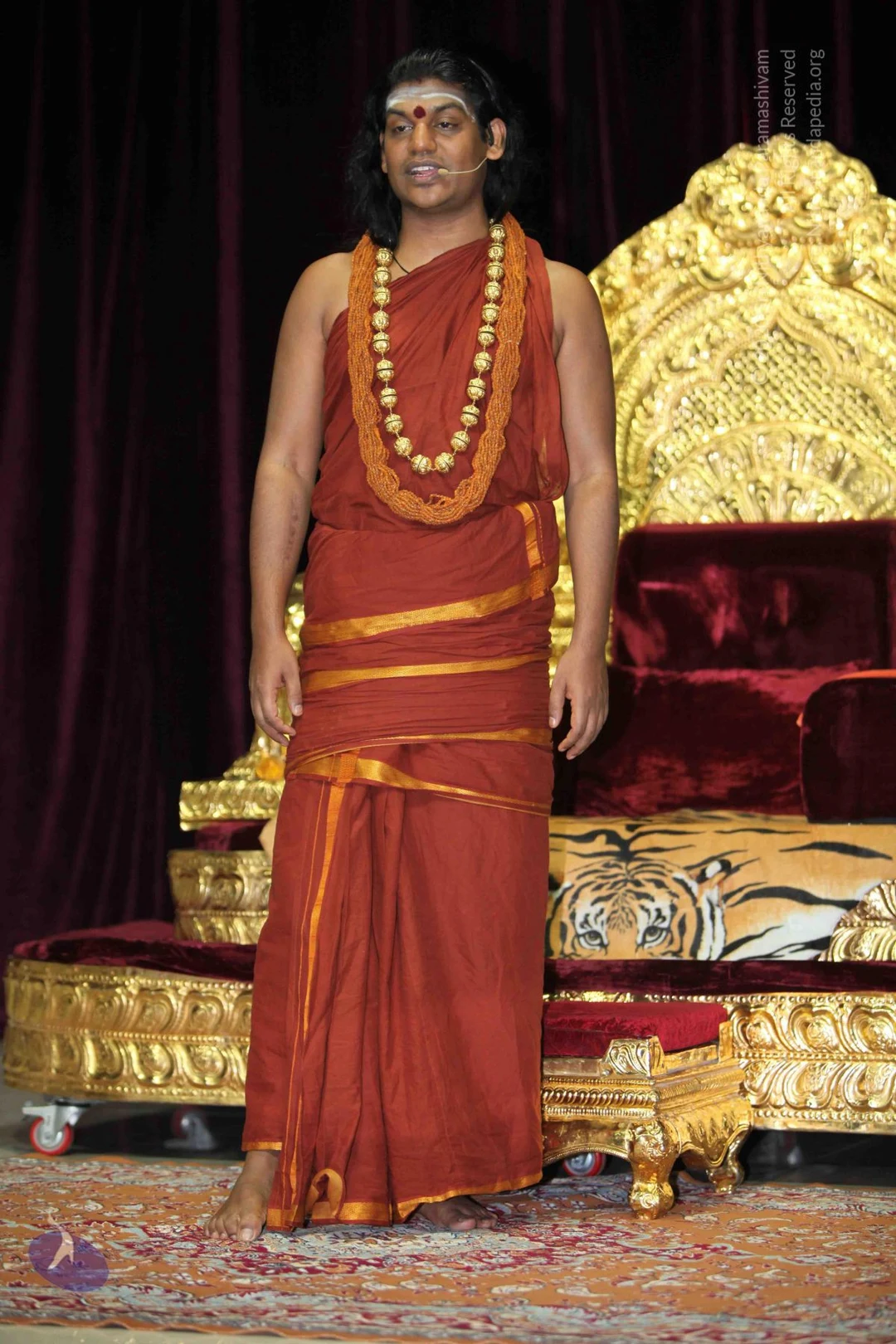
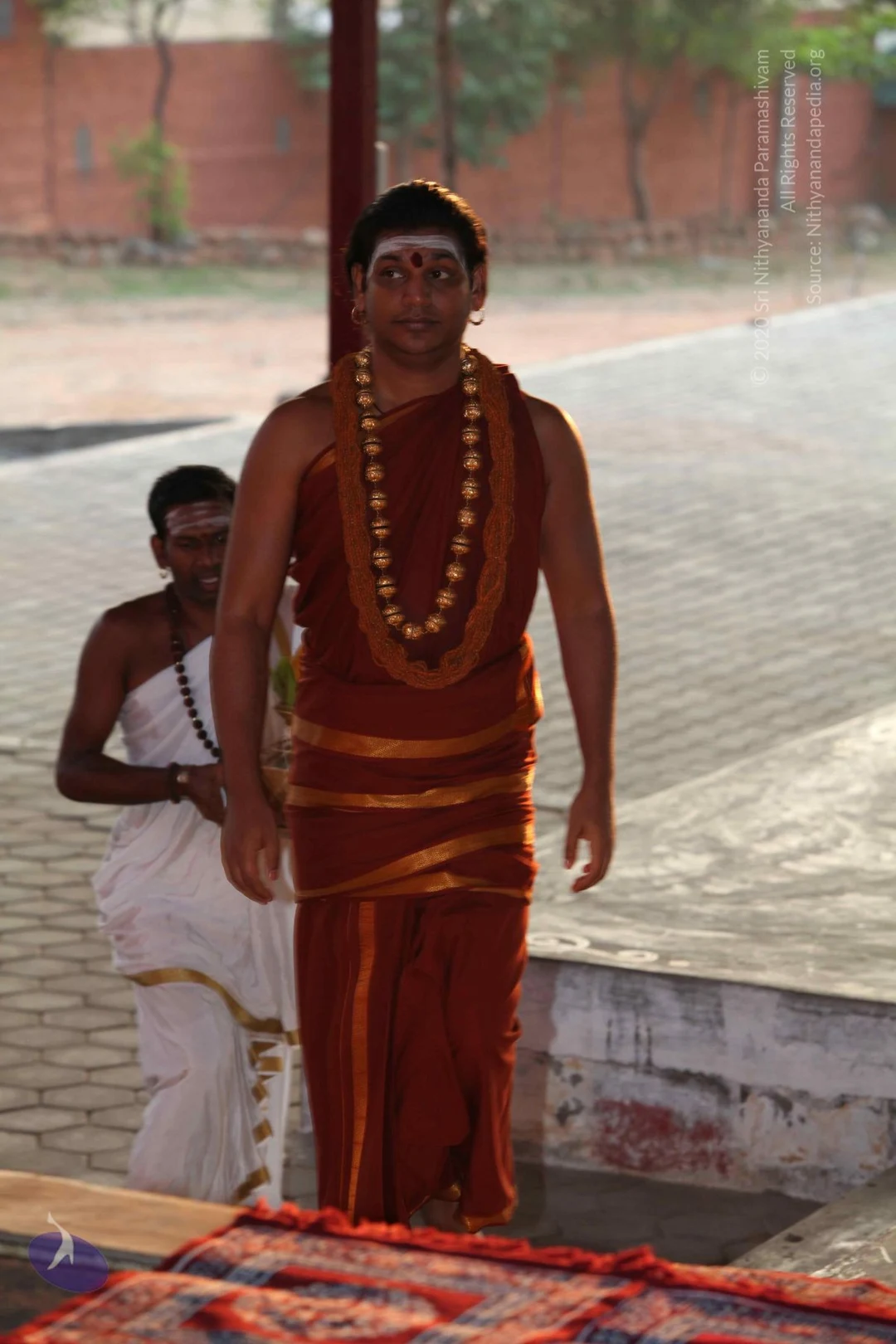
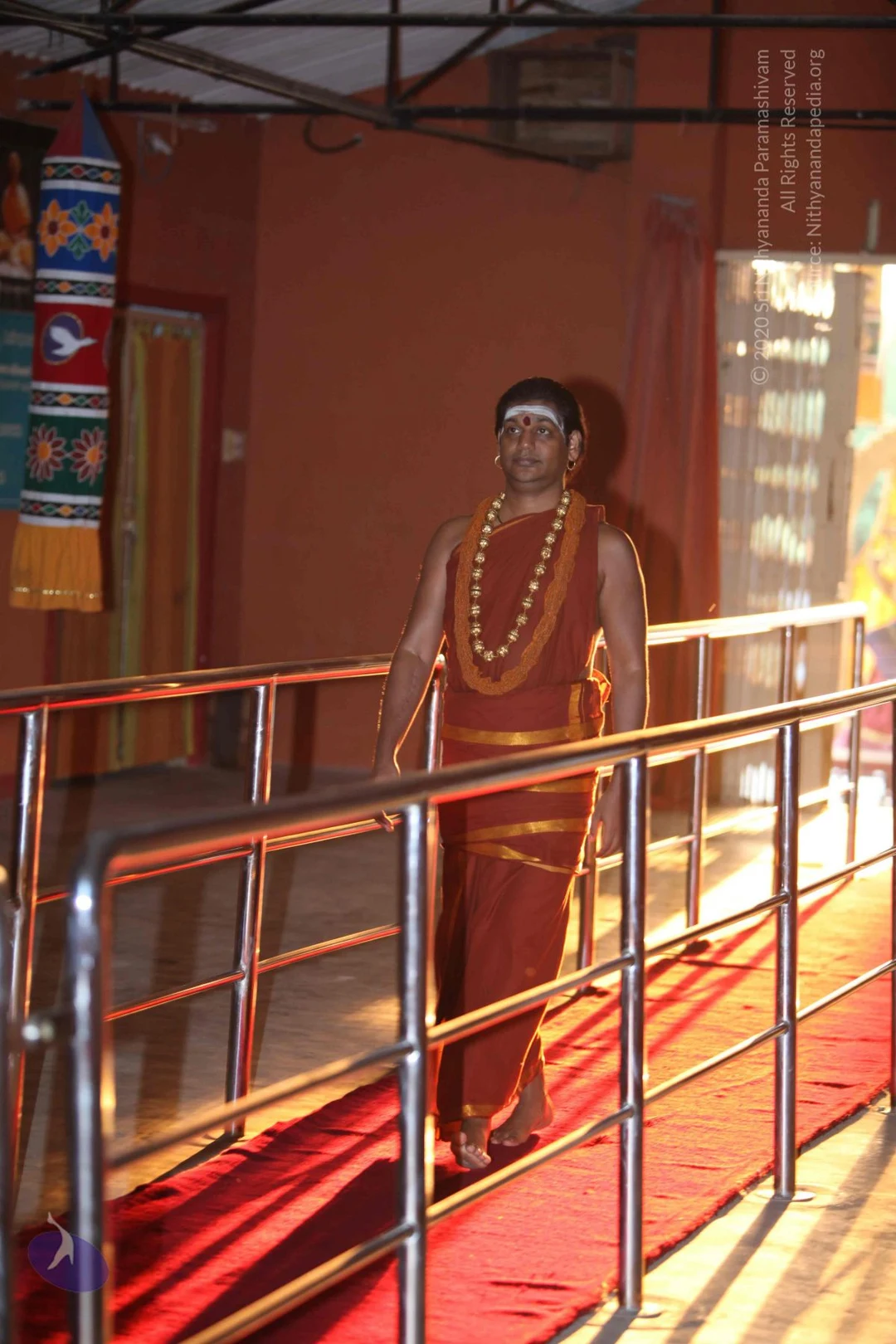
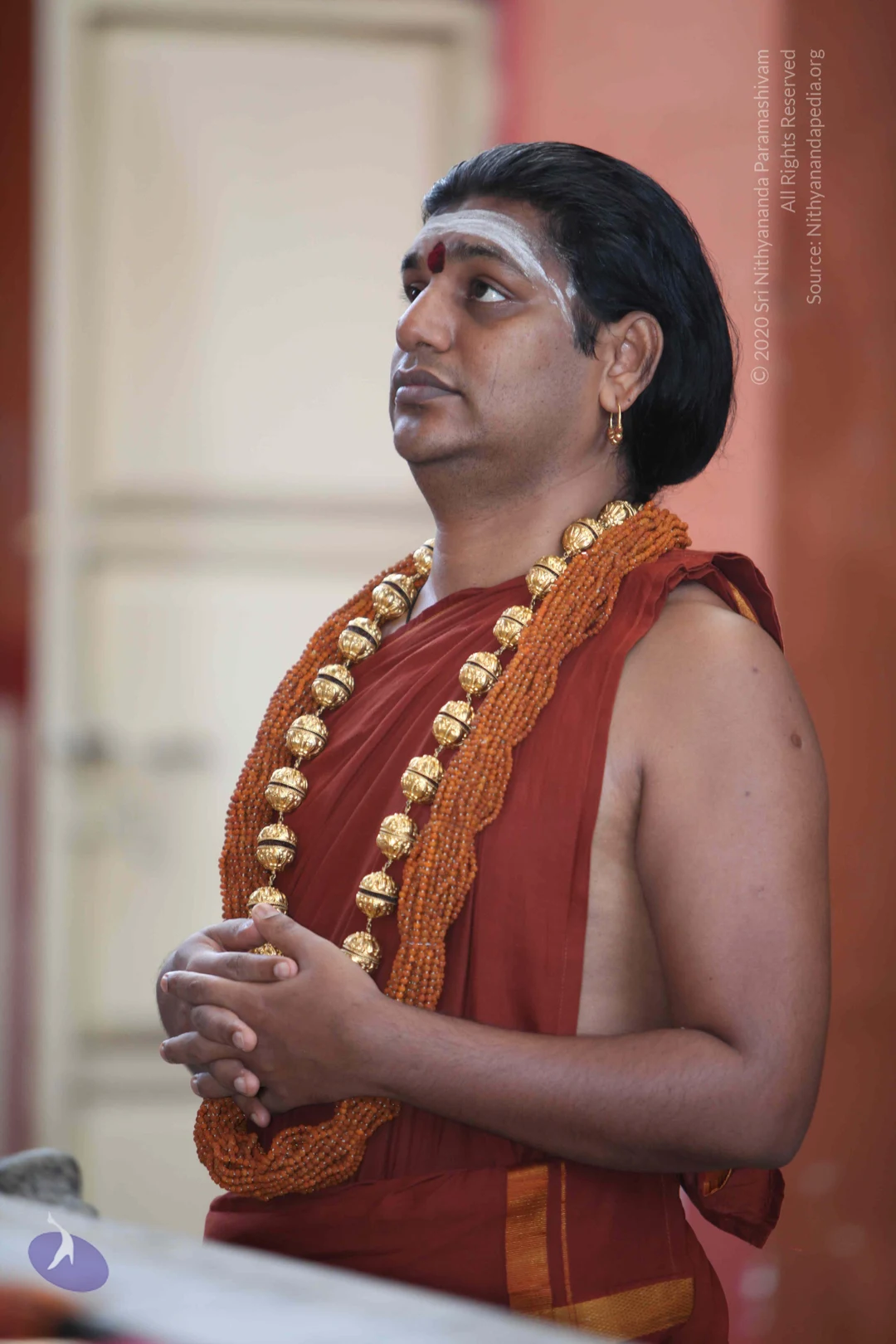
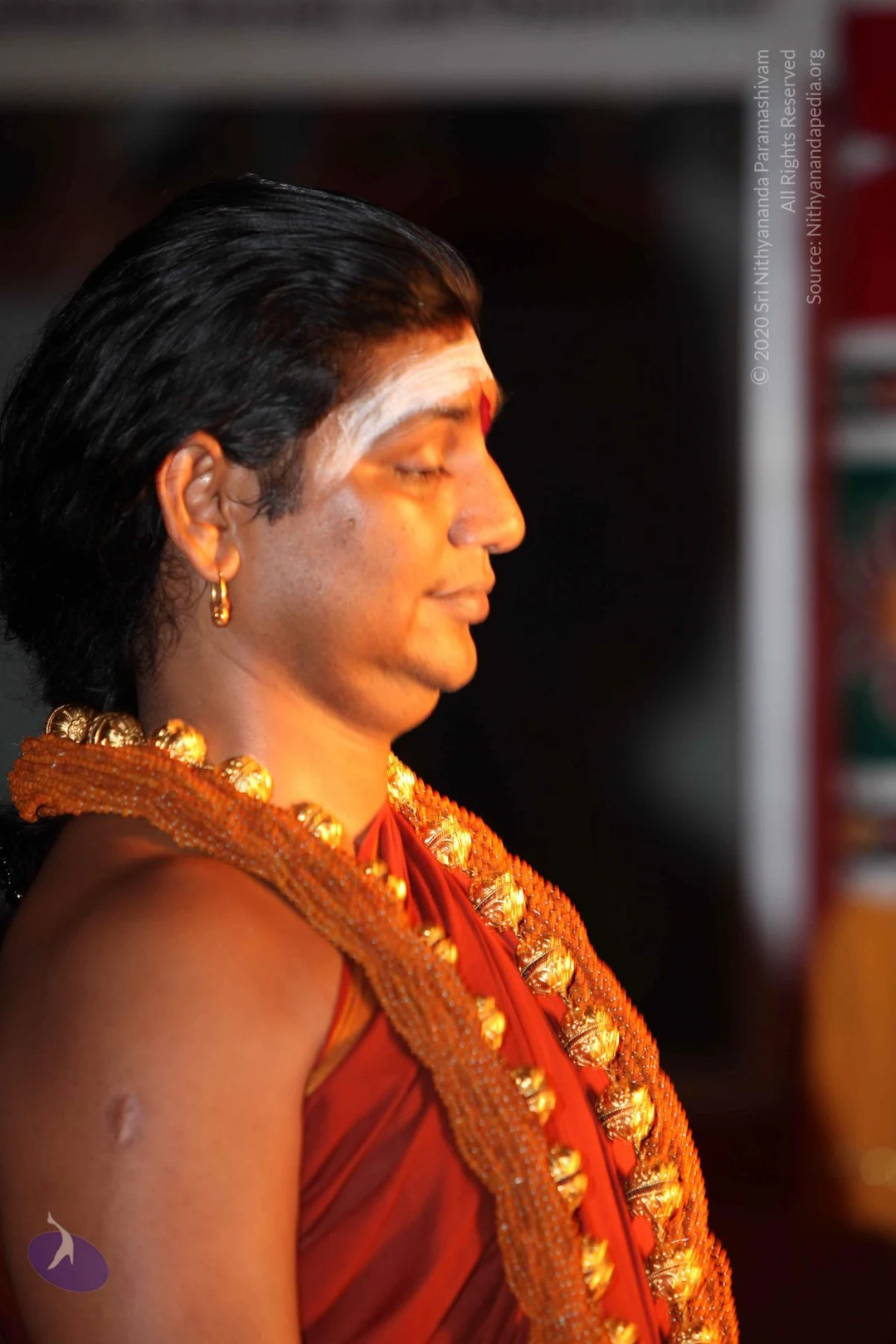
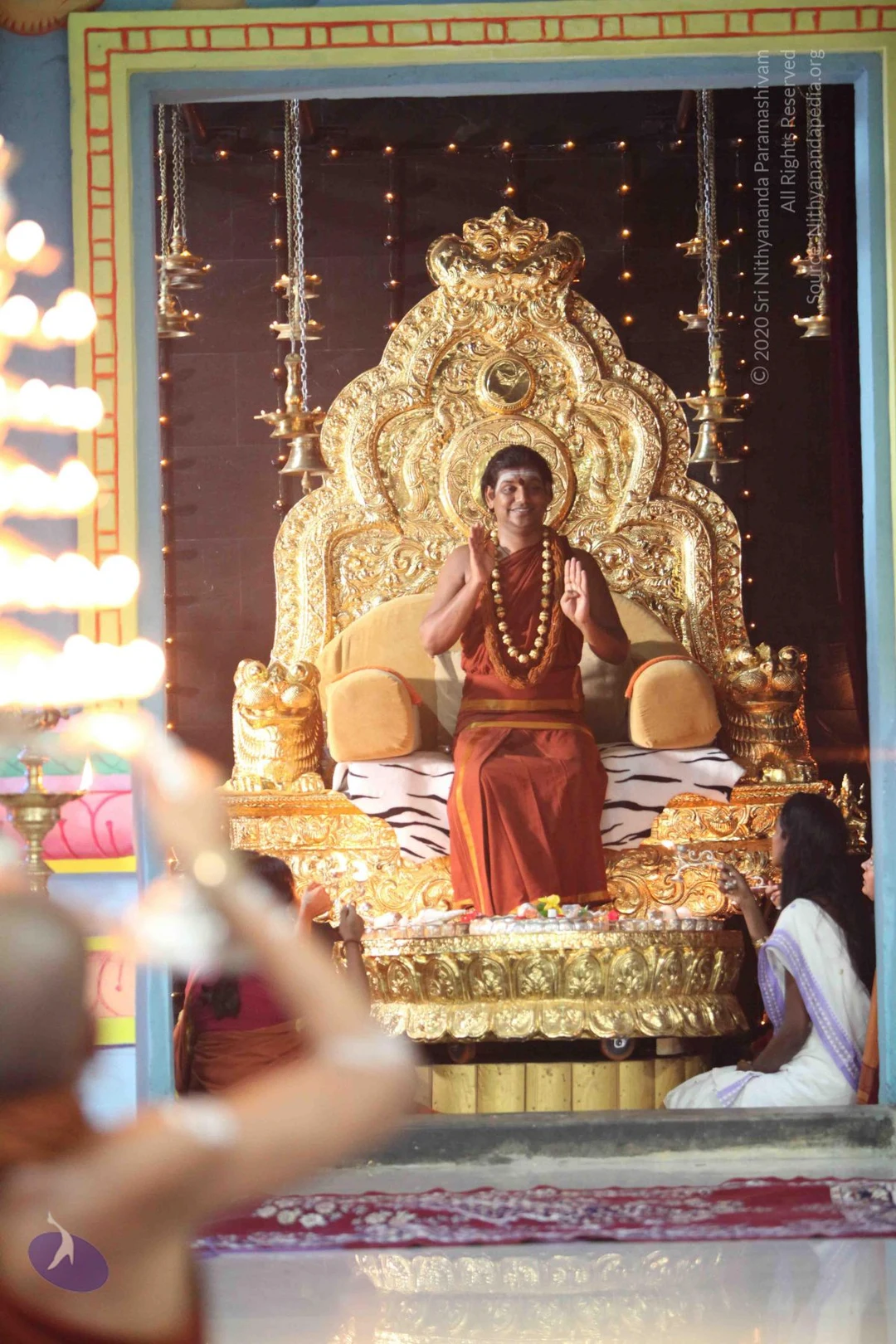
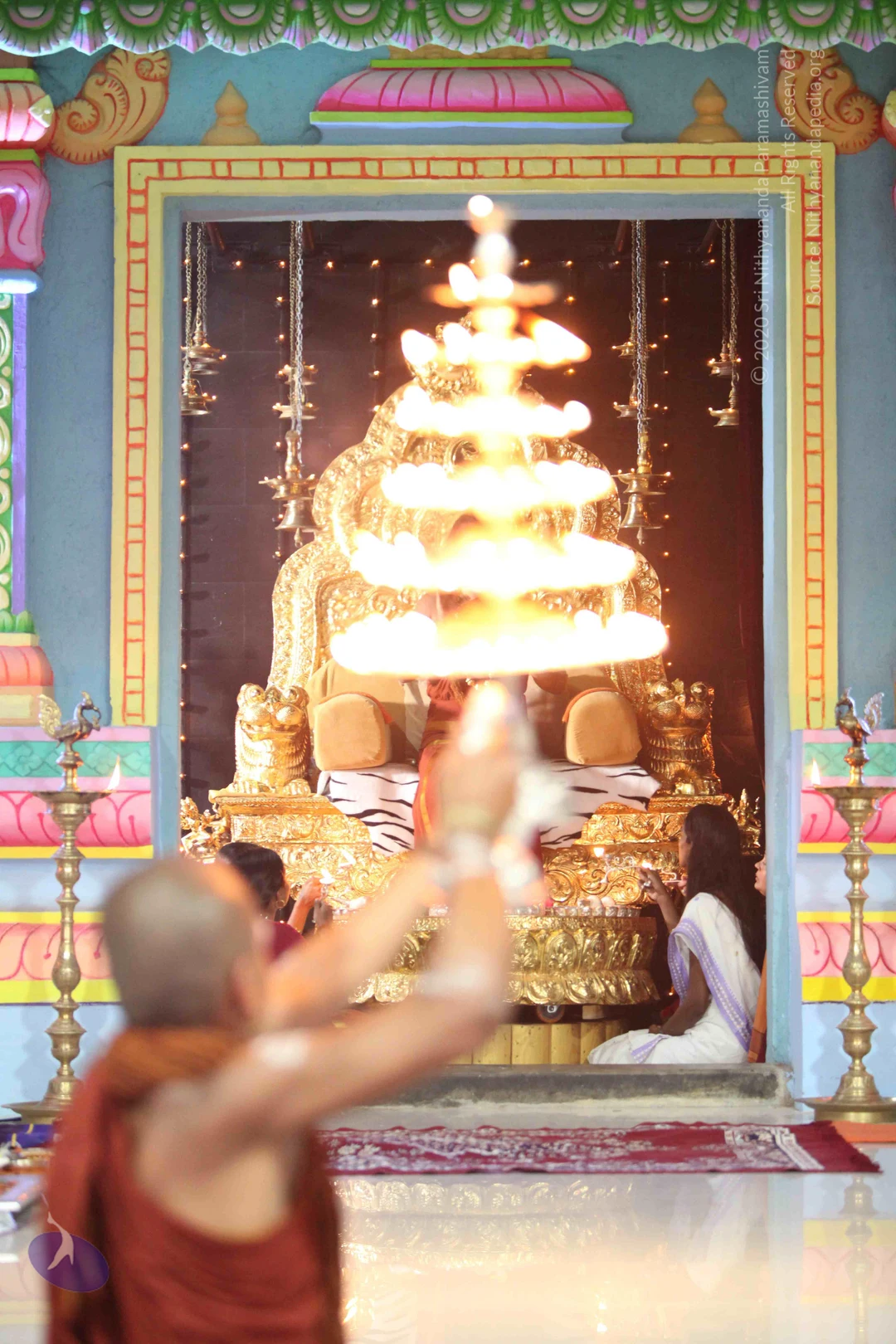
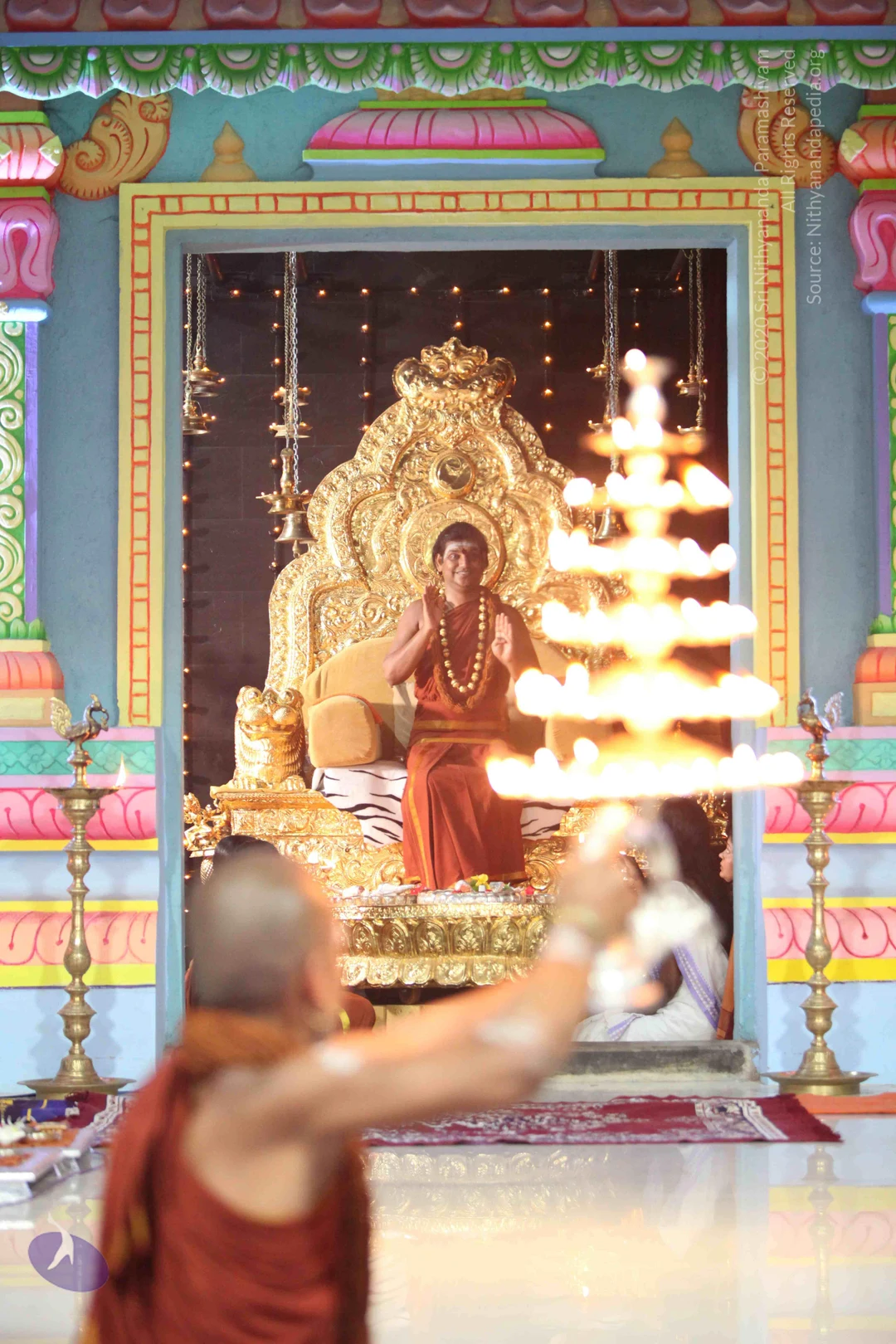
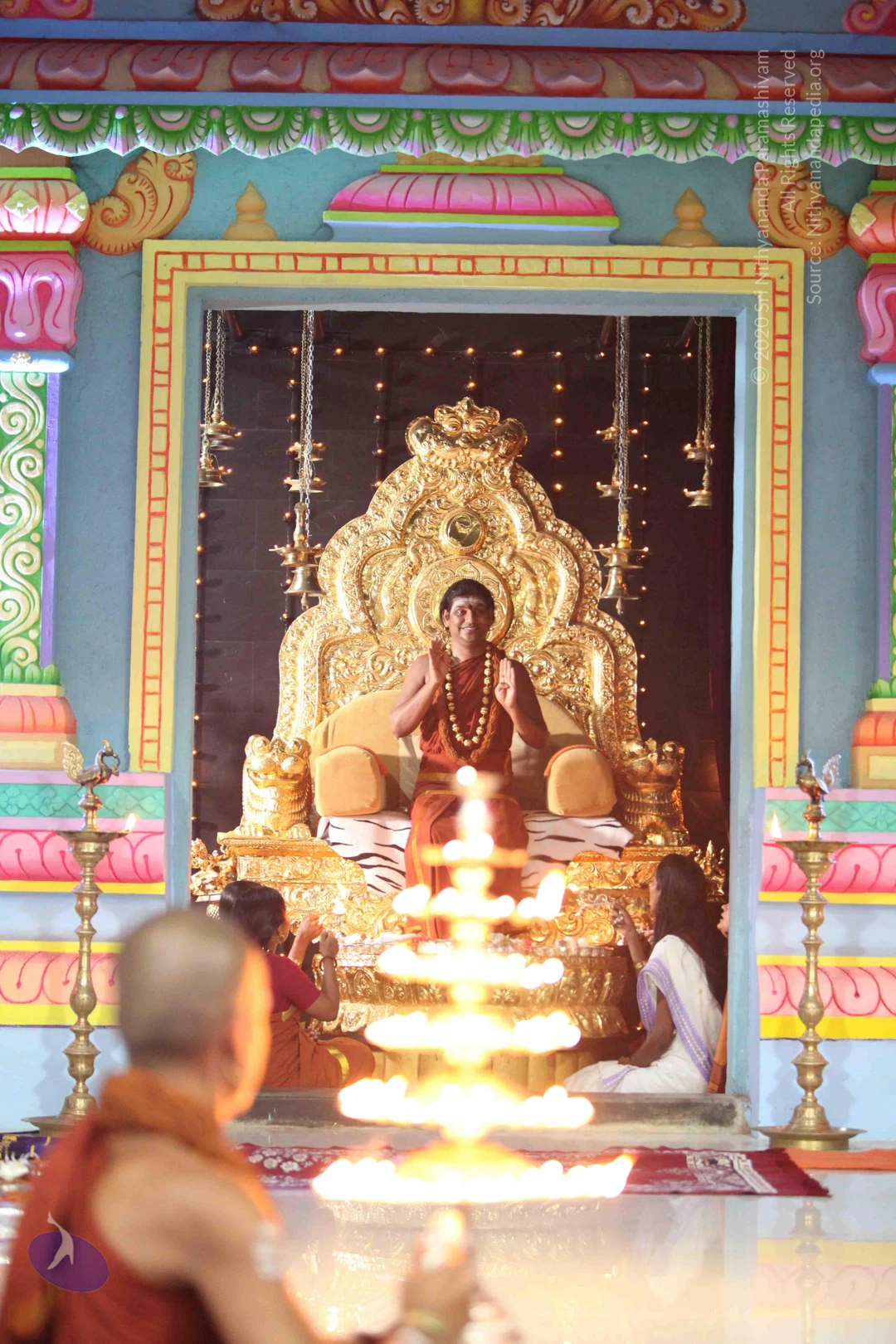
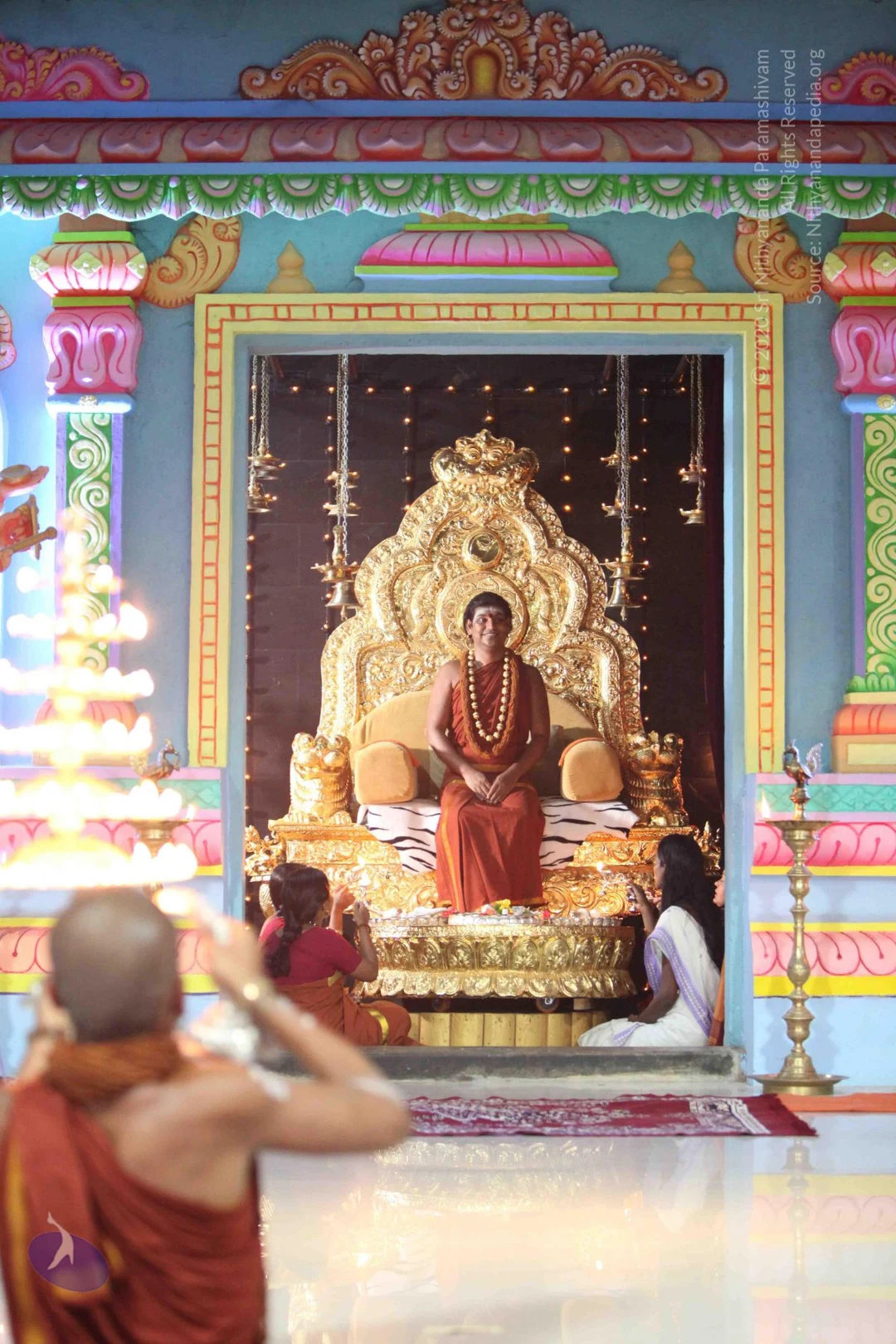
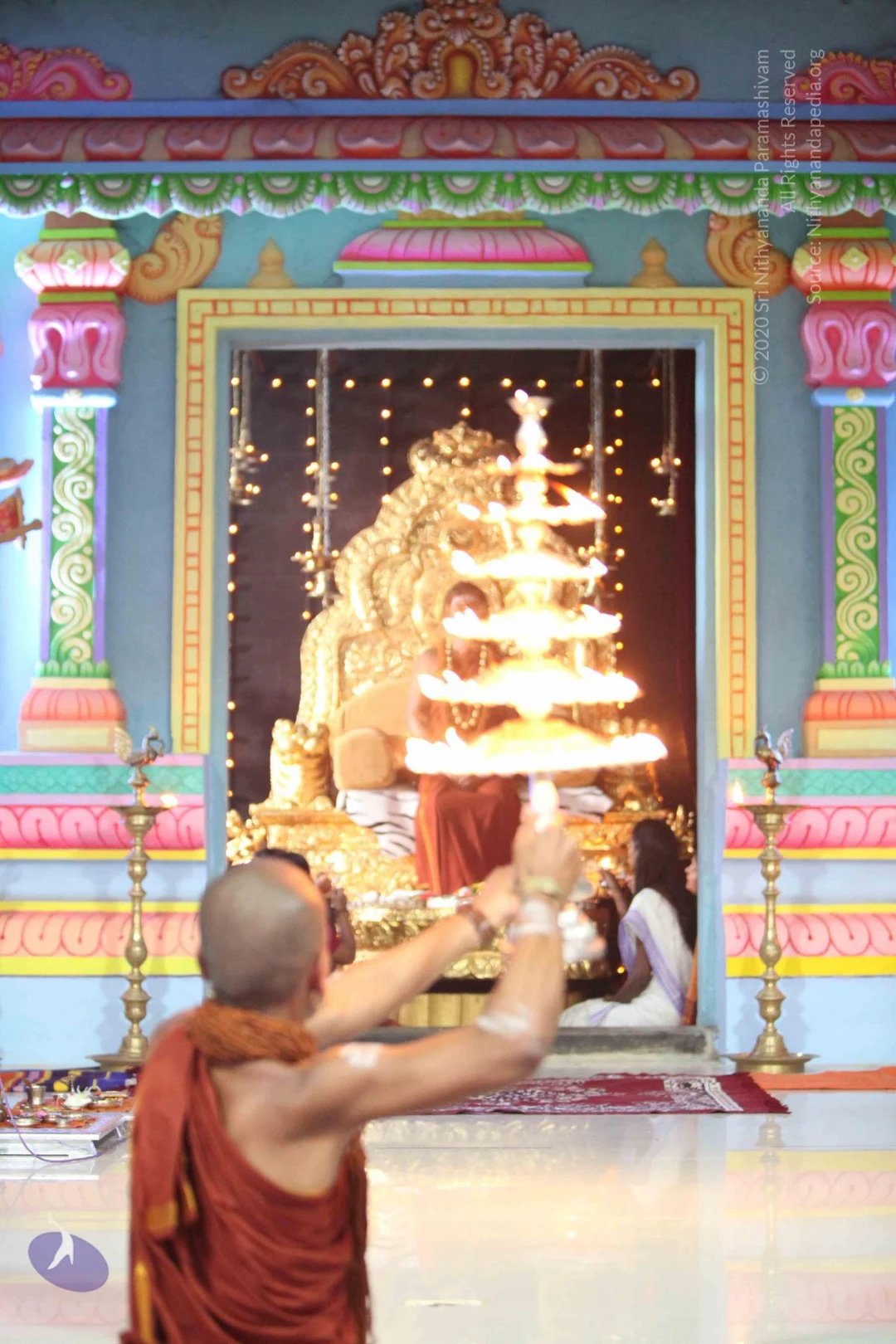
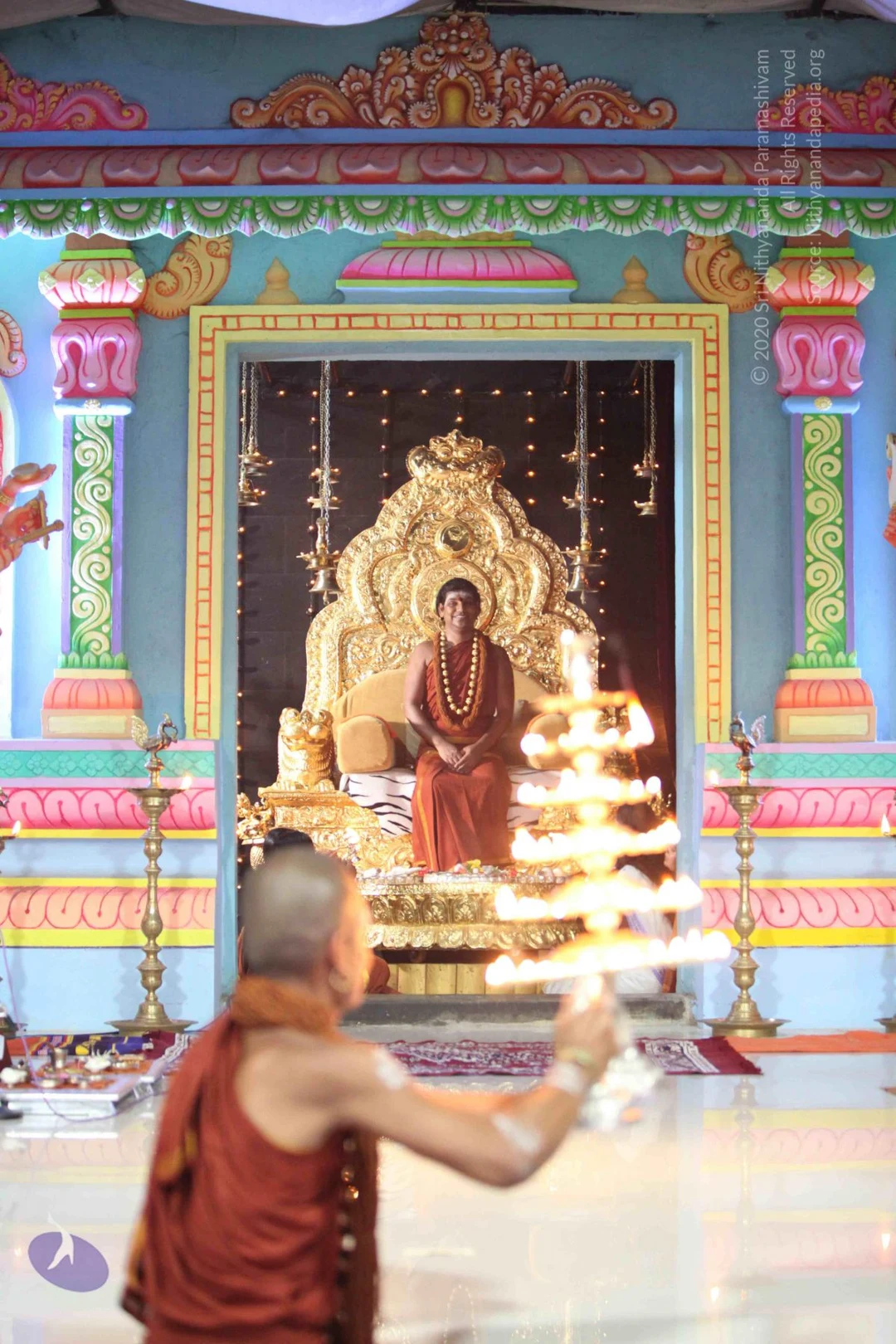
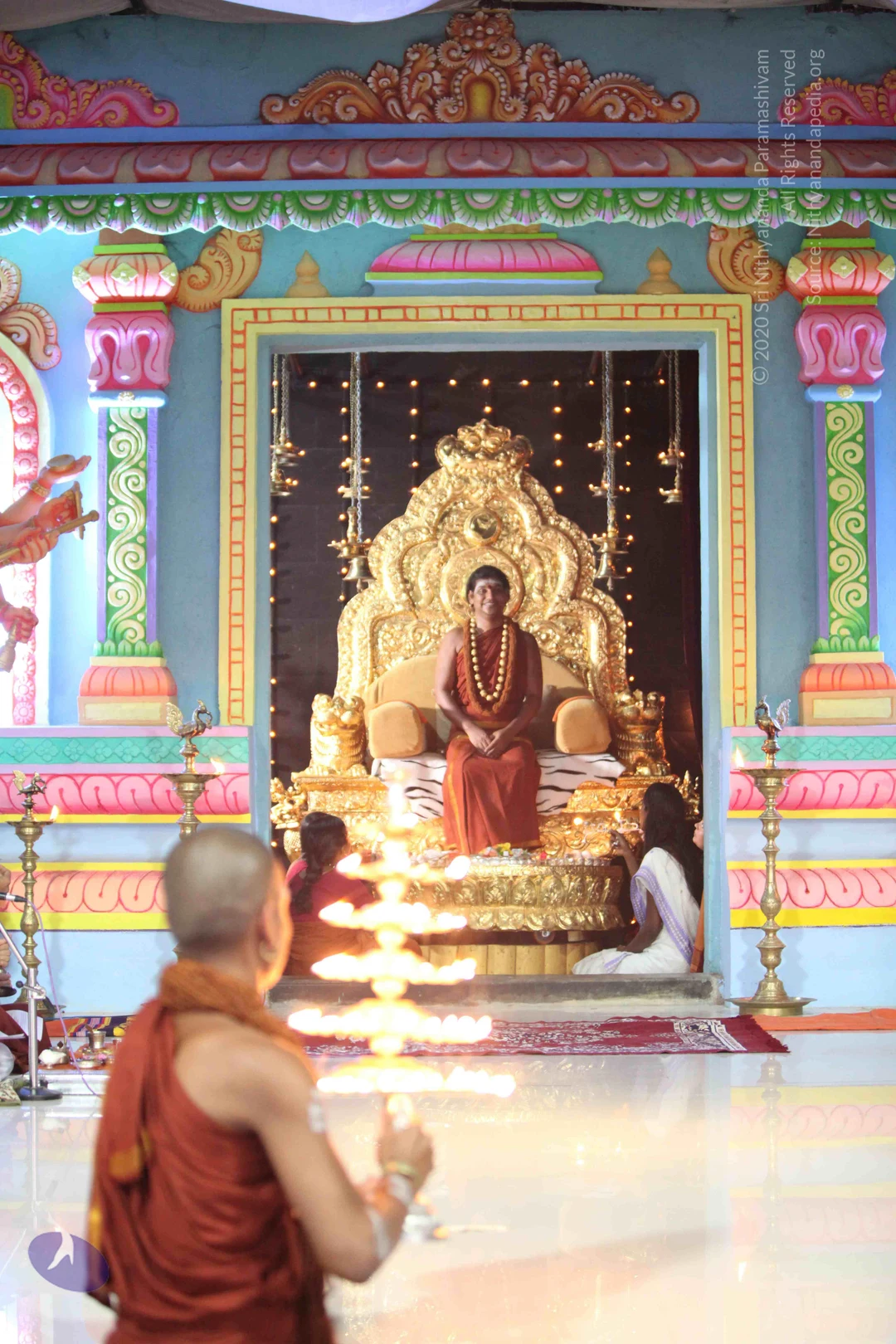
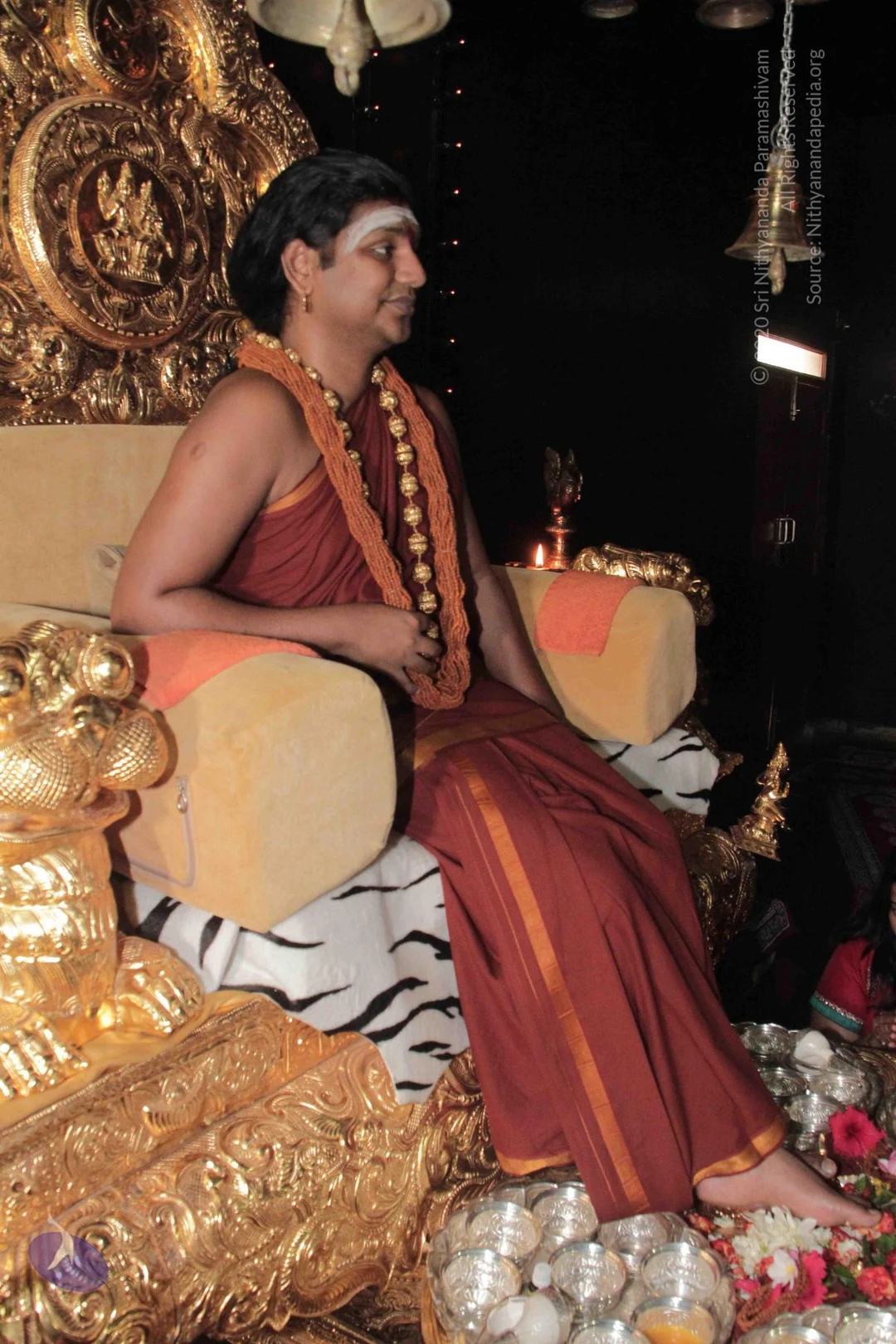
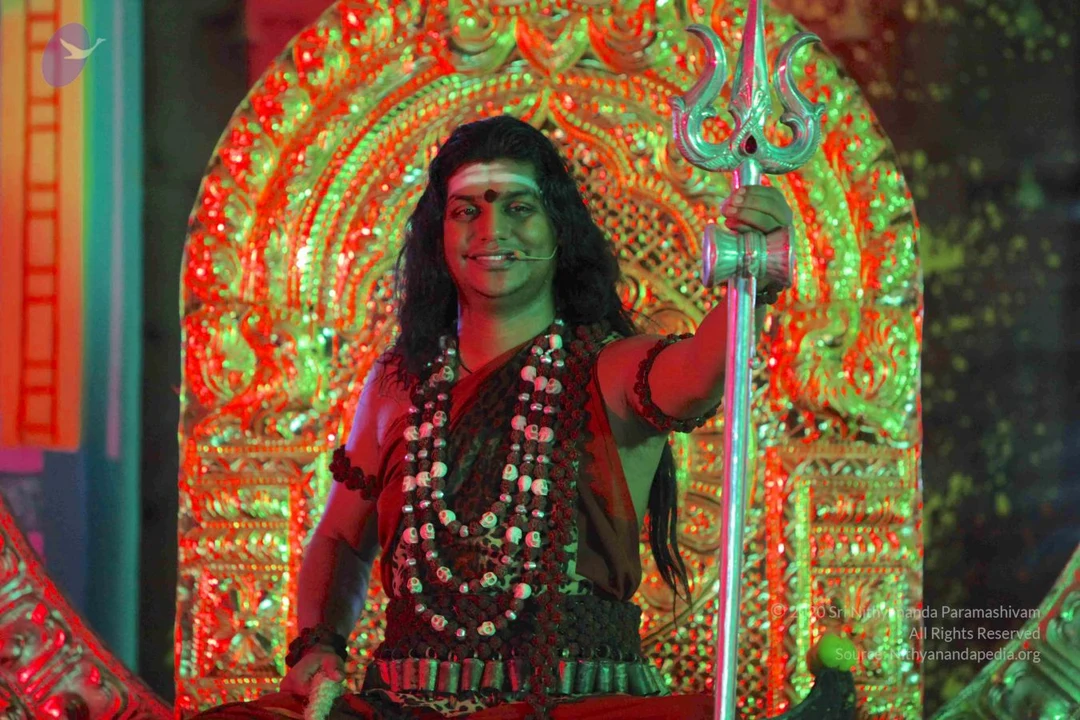
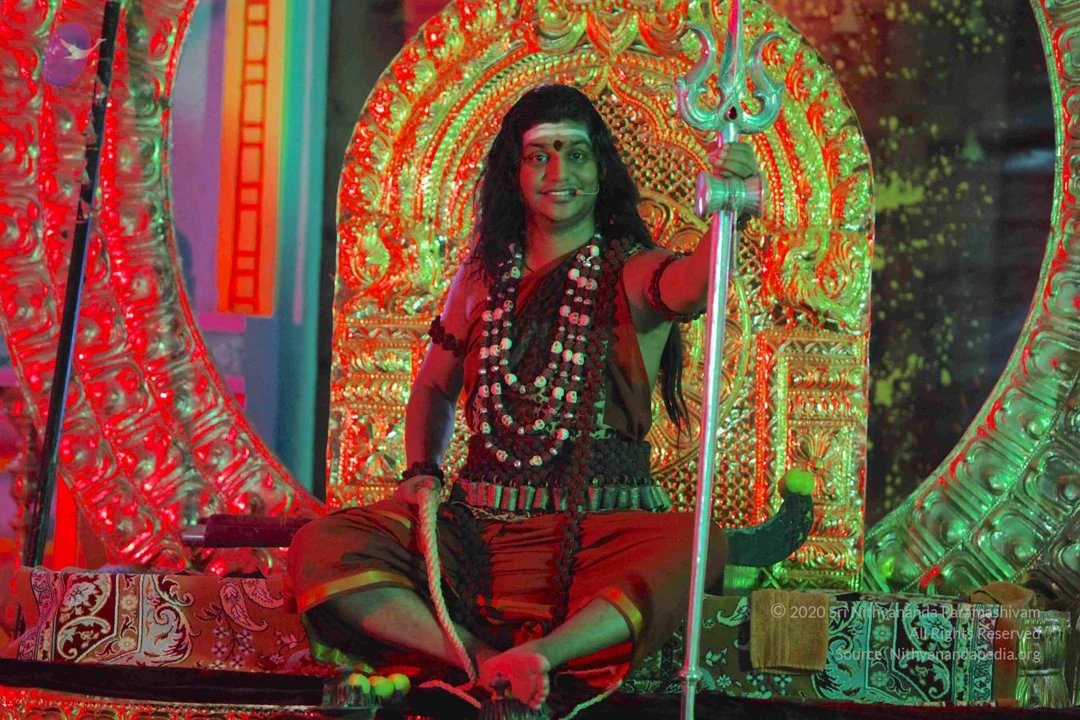
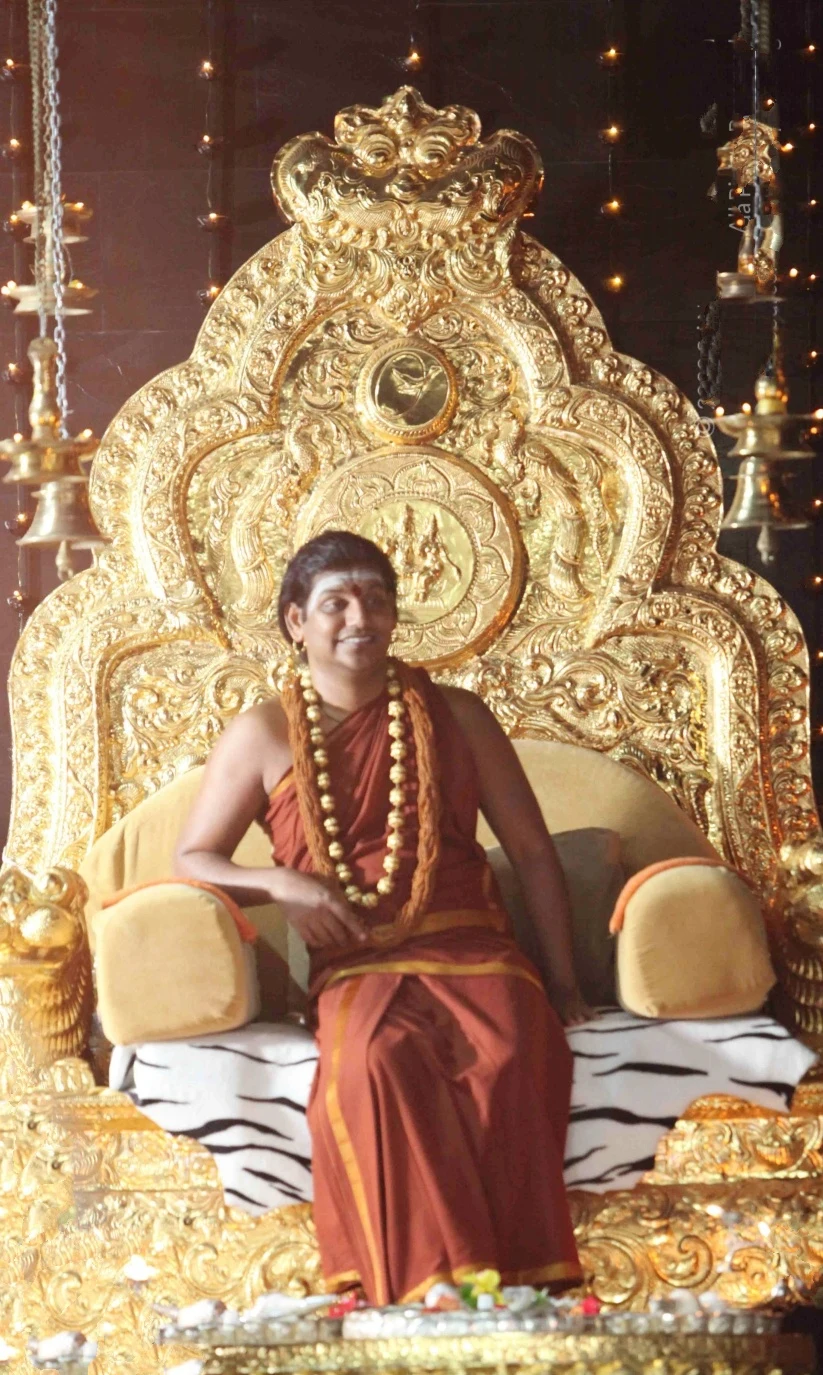
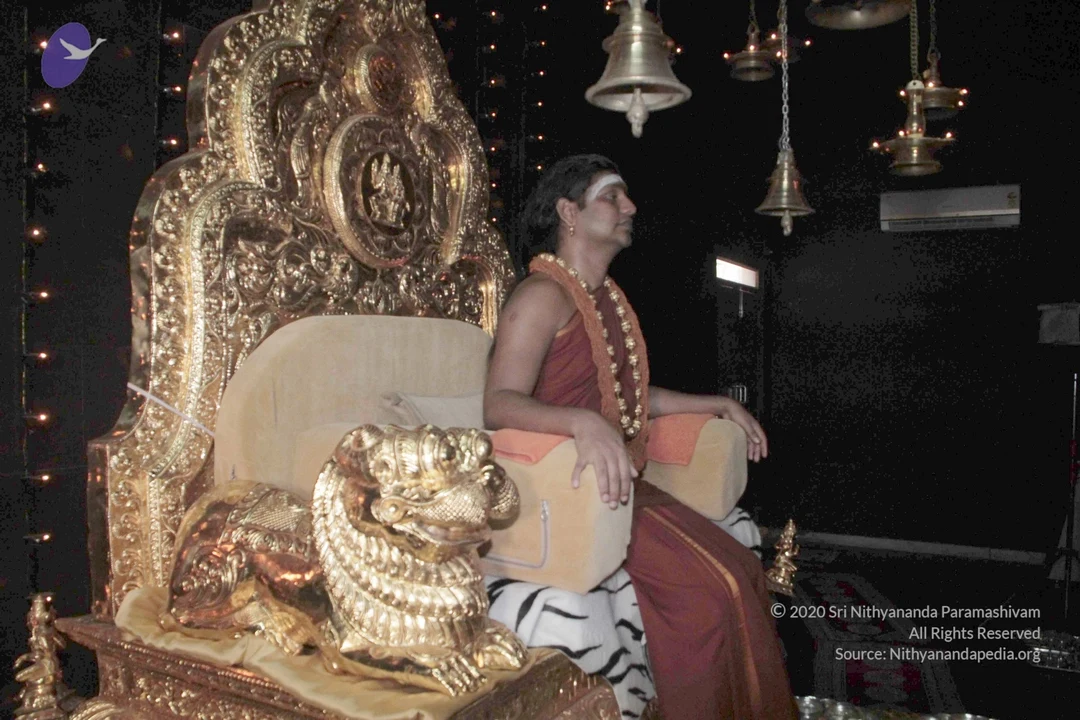
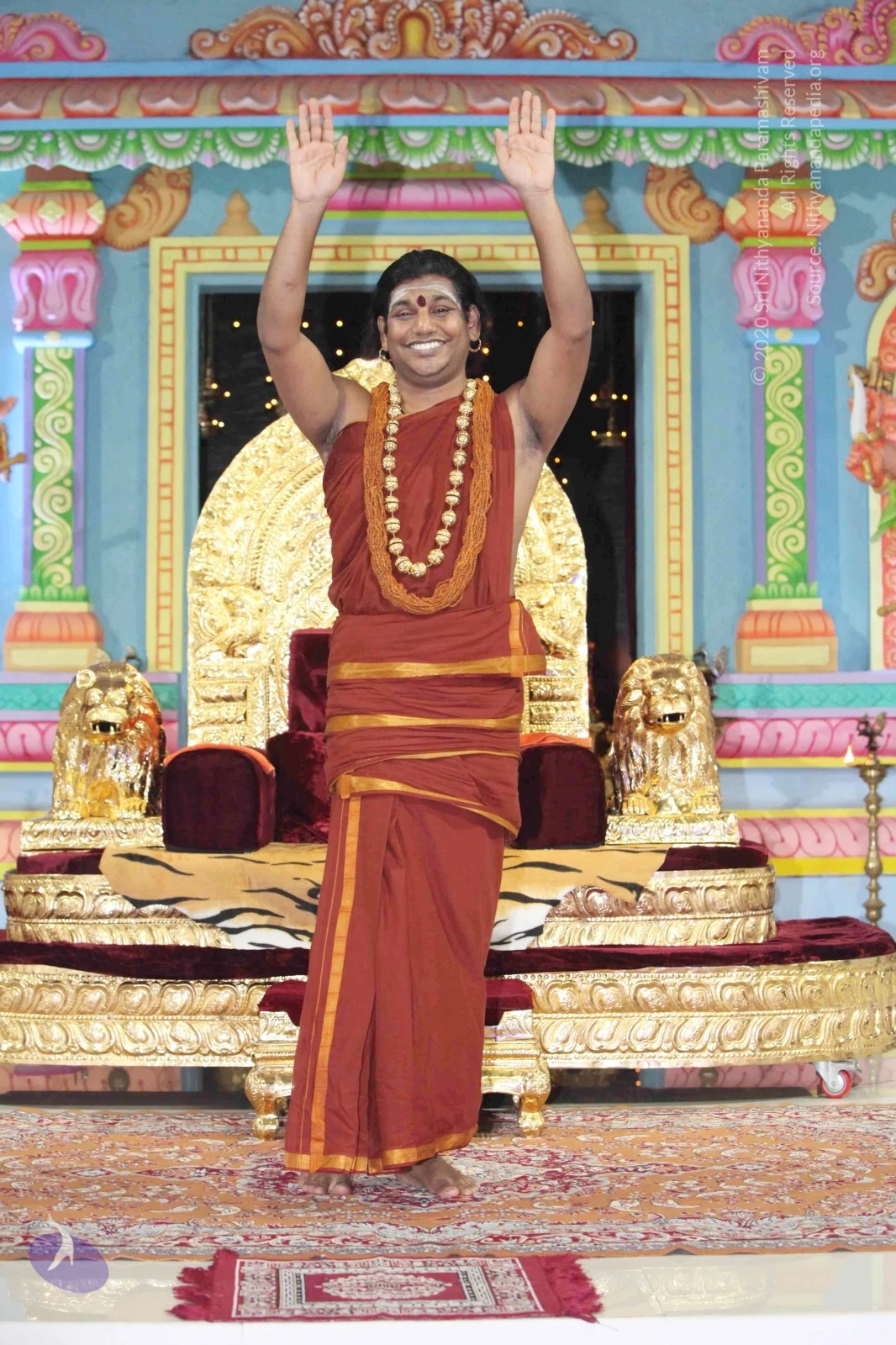
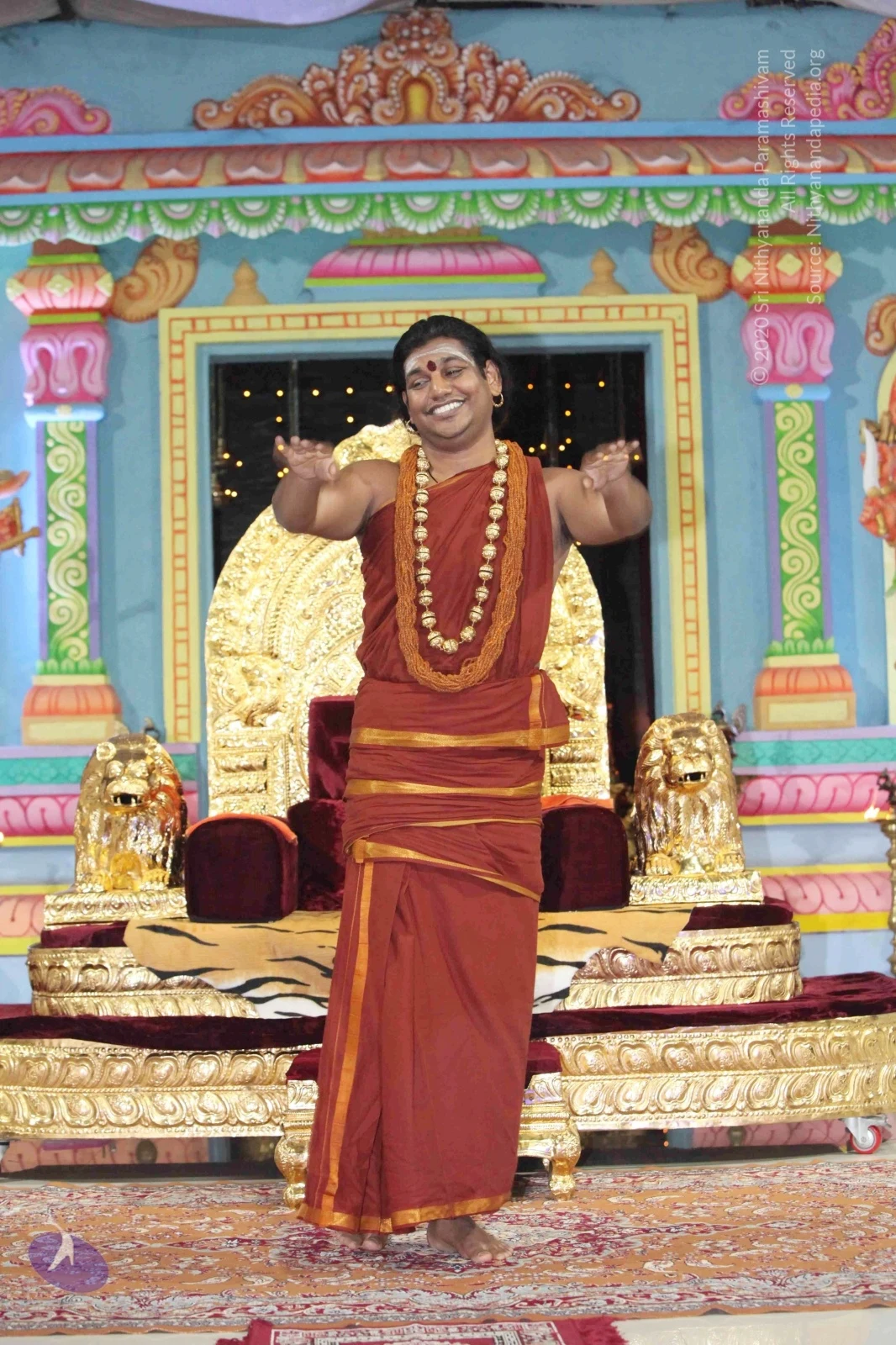
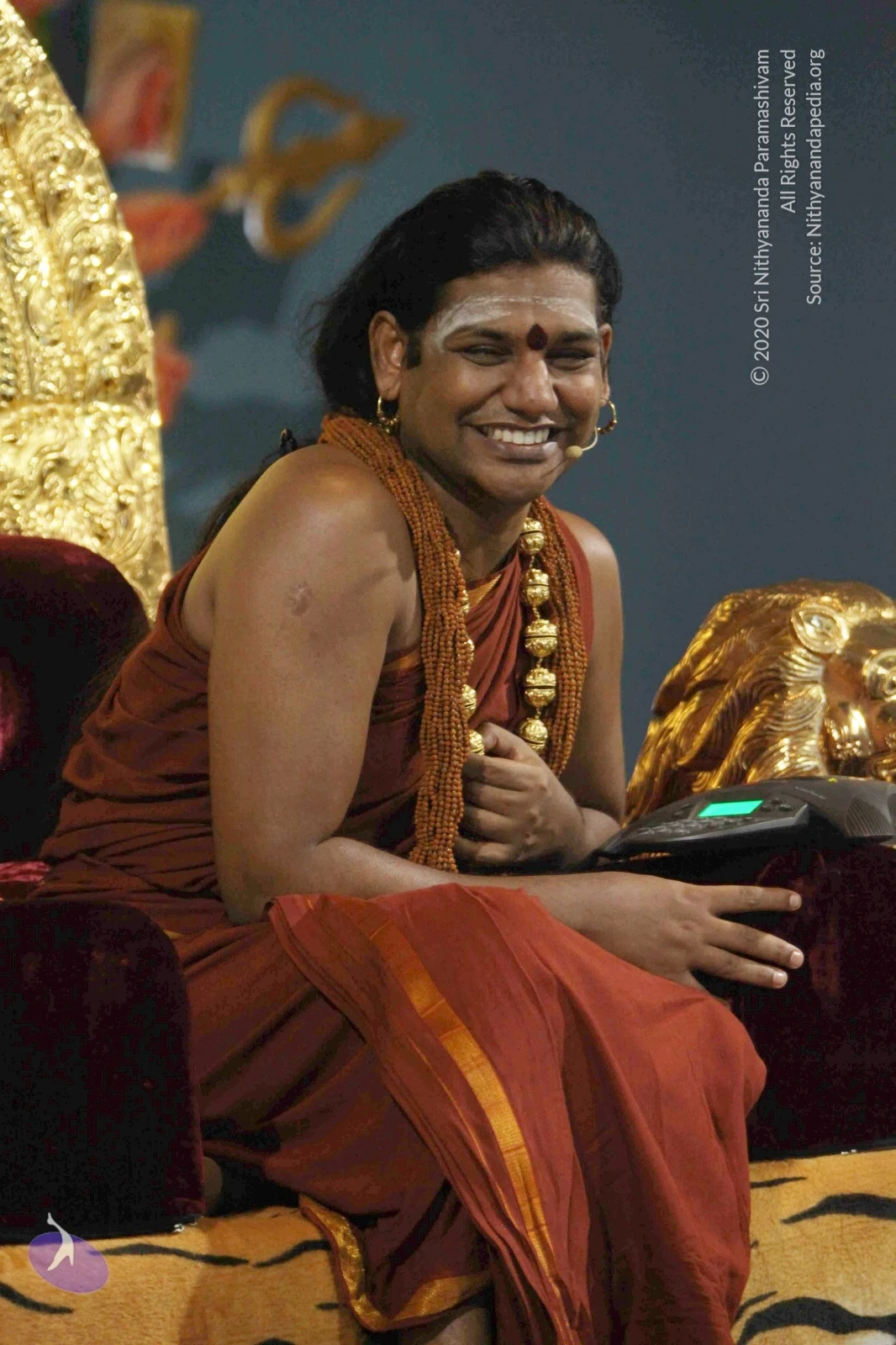
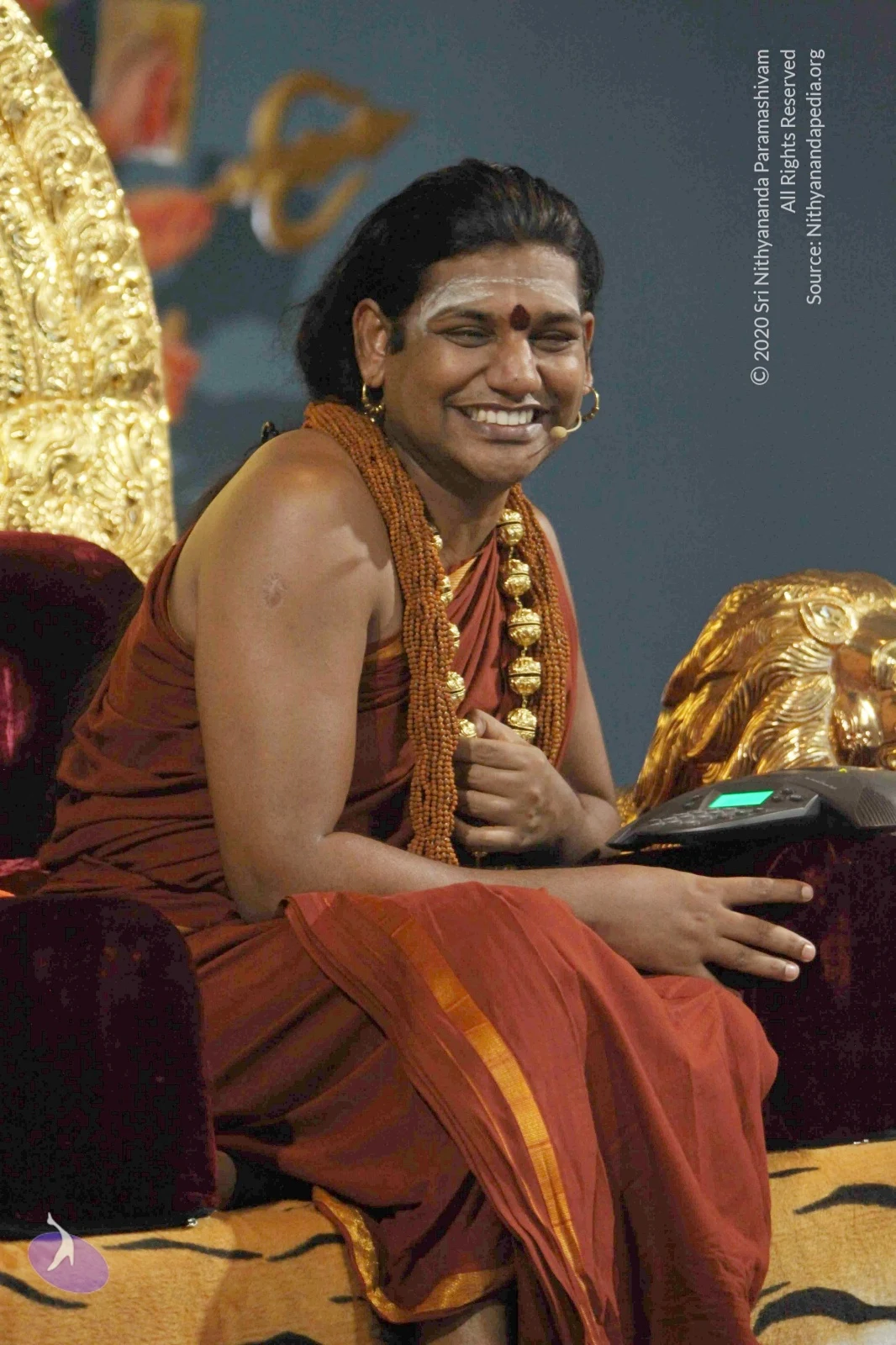
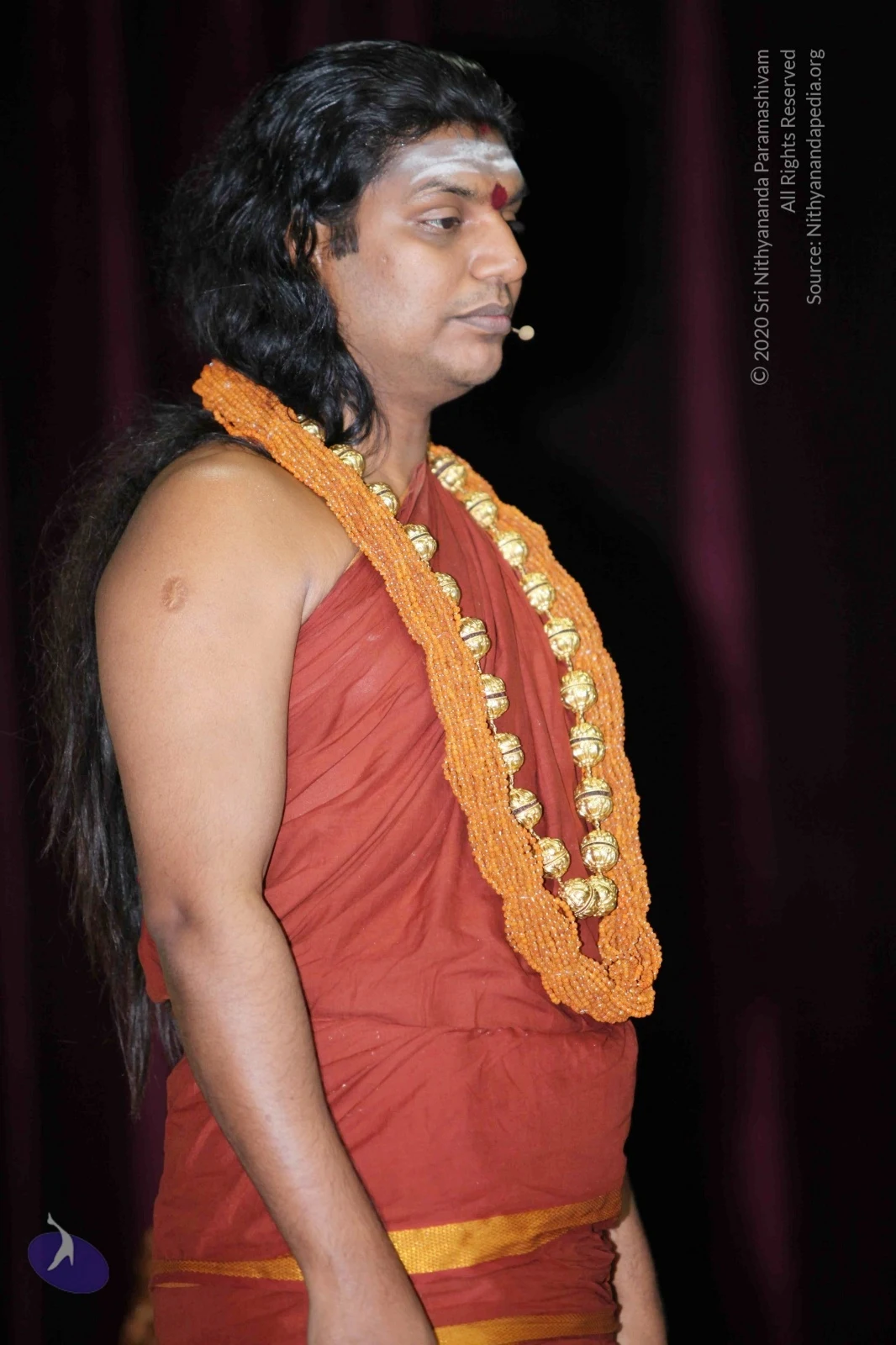
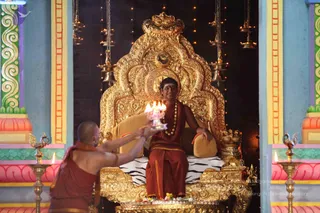
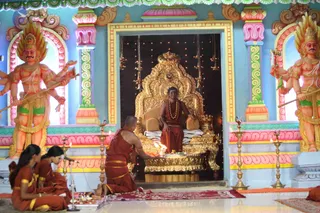
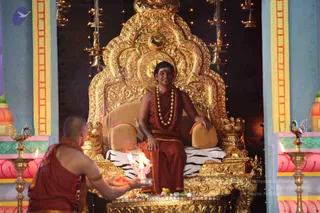
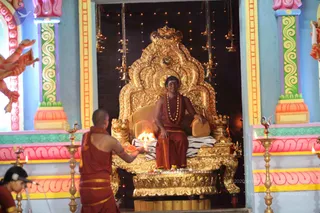
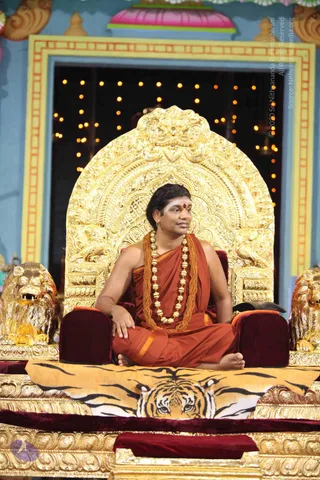
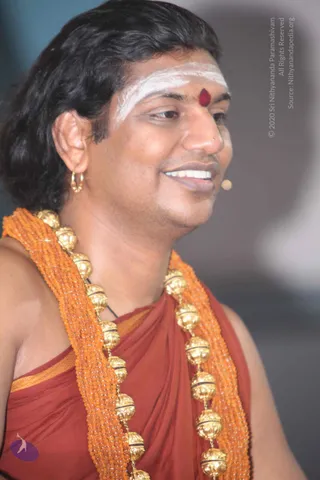
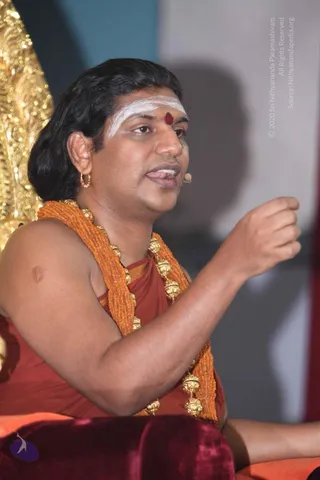
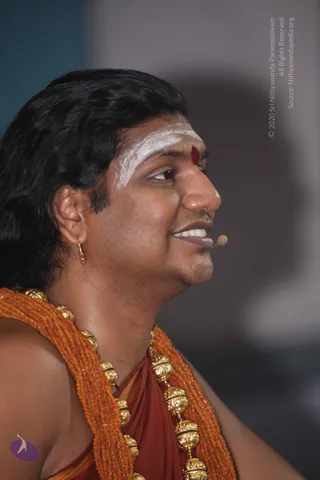
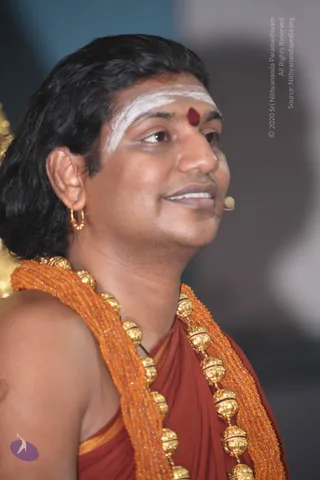
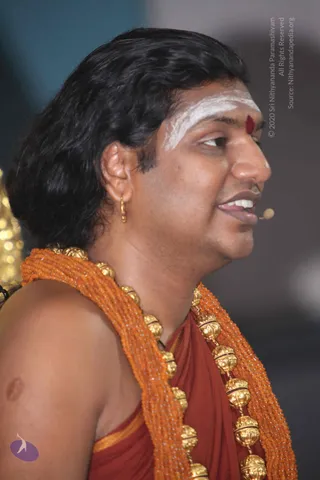
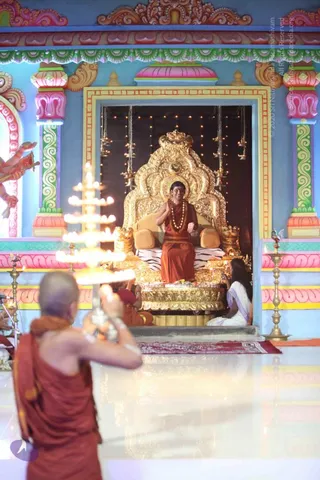
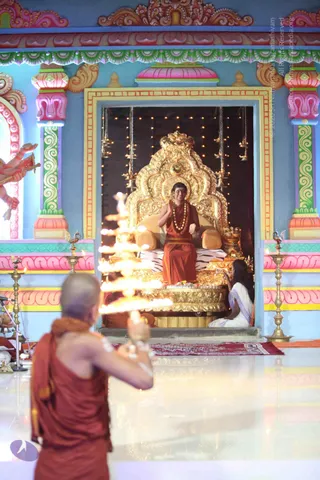
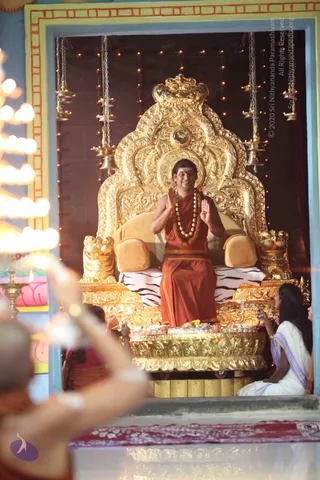
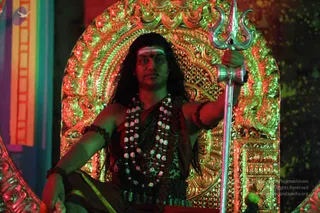
A row of seated young women in saffron and orange garments, many wearing rudraksha malas, hold brass oil lamps aloft with lit flames while performing a ritual. Some have white vibhuti or sandalwood markings on their foreheads and tilak, and one has a yellow-gold marking on her eyelid area near the lamp. Brass pots, trays with flowers, a small bell and offering plates sit on a white floor in front, with a red curtain and white walls behind. The scene looks like a group aarti or lamp ceremony in a hall.Close-up photograph of a man speaking into a headset microphone in front of an ornate gold-embossed background. He wears a rust-red robe with an orange-gold edge draped over one shoulder, layered orange beaded malas, and heavy gold ceremonial beads with black bands. He has a white vertical forehead mark with a red dot at the centre, a black cord at his neck, and hoop earrings. Swamiji (probable): long swept-back hair, orange malas, gold ceremonial necklace and red-saffron robe, presented here as a speaker at a satsang.A smiling man sits on a dark red velvet seat in front of an ornate gold repousse backdrop. He wears a rust-orange robe over his shoulder, layered orange rudraksha malas, and heavy gold bead necklaces. A white vertical tilak and a red bindi mark his forehead, and a small headset microphone is attached near his face. His hands rest in his lap beside a black telephone-style device. The scene suggests a seated satsang setting; probable Swamiji (probable) with long swept-back hair, ornate gold necklaces, rudraksha malas and saffron-orange robes, seated in the speaker's position.

April 07 2013

Original wiki page
Contents

Title

Experience Kundalini Awakening

Description:

In today’s morning satsang, Paramahamsa Nithyananda reveals secrets of Kundalini. Kundalini is the largest untapped natural energy source on the planet! Once it is awakened it can grant any wish and accomplish any goal. Swami Vivekananda teaches that when we pray intensely, it is Kundalini which answers our prayers. Kundalini allows us to access the untapped regions of the brain, manifesting miraculous powers and heightened intelligence. How to awaken Kundalini? We can light our lamps only from an already-burning fire. An enlightened master can transmit the frequency to our bio-memory. Nithyananda prepares to confer this initiation in the near future.

Link to Video:

VideoAudio

Transcript:

0:23

Nithyanandeshwara Samaarambham Nithyanandeshwari Madhyamam

Nithyananda Paryantaam Vande Guru Paramparam

iss samay hamaare saath upastith sabhi darshakon aur bhakton ka main prem evam aashirvad sahith swagath kartha hoon.

aaj ke iss vishesh satsang mein aapki kundalini shakthi ko jaagrut karnewaale ek adbhut aur asamaaneeya dhyaan mein aap sab deeksha praapth karenge.

Today, we will work on Kundalini Shakthi, experientially understanding and experiencing it. First, I will define Kundalini Shakthi. Please listen!

Kundalini energy is your inner potential bio-energy which is available in your Being in the form of potential. Only with the right method, knowledge and process, when you awaken, it becomes reality in you, realization in you.

Listen! Largest untapped natural resource lying with humanity is Kundalini energy. When you awaken your Kundalini energy with the right knowledge, right context, right understanding and the right technique, right process, it can give you anything you want! Kundalini brings the space of Positivity to you, space of Possibility to you, space of Leadership to you, space of Enlightenment itself to you! Kundalini is Kalpataru; it gives anything you want, and the space of not wanting anything!

4:09

pehle kundalini shakthi ki paribhasha suniye. kundalini shakthi aapme upastith jeev urja hai keval usey jaagrut karne ke baad hi vah aapke vaastaviktha ko parivartith kar sakthi hain.

All the techniques, kriyas, yoga, pranayama, meditation, process, rituals, everything is only to awaken your Kundalini, either partially or fully. Vivekananda says beautifully, even during your intense prayers, it is your Kundalini which is awakened and answers to your prayers, responds to your prayers. All the religious traditions, spiritual traditions, mystical traditions, work only on awakening the Kundalini energy. If you remove the methods and process of Kundalini awakening from any religion, they will just become socio-political set-up. It is the Kundalini awakening process brings religiousness to religion.

It is the Kundalini awakening process brings religiousness to religion, spirituality to spiritual traditions. Other than the Kundalini awakening process, everything else is a socio-political set-up, socio-politico rules and regulations. How the essence of a sweet is Sugar, essence of a religion is Kundalini awakening process.

maanavtha ke saath sabse bada sansaadan har vyakthi ke bheethar ki kundalini shakthi hain. sabhi tantra, pranayama, yoga, kriya, ya sabhi keval aapki kundalini shakthi ko jaagruth karne hethu hi banaaye gaye hain. har dharma ke siddhant evam prakriya aapme upastith kundalini shakthi ko jaagruth karne ke liye hi banaaye gaye hain.

7:59

Understand, Kundalini energy is your inner potential energy, inner potential bio-energy, physiological psychic energy.

Psychological physic energy is sex. Physiological psychic energy is Kundalini. Listen! Psychological physic energy is sex. Physiological psychic energy is Kundalini. Means, if it is established in psychological space, but flows towards physical plane, it is lust. Even though it is established in the physical plane, moving towards the psychological plane, it is Kundalini.

Kundalini shakthi aapke jeevan mein sambhaavana laathi hain, sakaaratmaktha laathi hain, nethrutva laathi hain, evam sarvochcha jeevan mukthi bhi laathi hain.

Again and again, science is proving, even in our brain we are using less than 13% one three percent! Even the top scientists, people who are considered the most intelligent beings happened on the Planet Earth, like Einstein, even they all have used only one three percent of their brain, 13% of their brain! Then most of us must be using much less than that.

Listen! Brain has two parts: one, mechanical parts which takes care of your mechanical functions of the body - movement of blood, movement of intestine, movement of the heart, movement of lungs, just the mechanical basic survival need, management part.

11:02

It is like whenever you have bandh in India; means, every once a day! Already we don’t work, why do we need bandh, I don’t understand! Anyhow, we all have wrong methods of showing our protest. So, when we have bandh, we allow the basic survival needs to function, like milk, food, medicine supply. Same way, in your body, practically your whole life you are in bandh! You allow only the basic survival mechanism to function - lungs, heart, intestine, the minimum need. That is what I call mechanical parts of the brain.

There is other part – non-mechanical parts of the brain which is endowed with extraordinary powers. Please understand, powers like a telepathy, teleporting, materialization, they are no more just mystical or mythological. No! They are math and logical ‘mathological! They are no more mythological. Enough of scientific researches have been done on them - established they are not magic. They are Math and Logic! The possibility for telepathy, teleporting, Kundalini awakenings extraordinary powers like materialization, all these are available in every one of us. Our brains are hardwired to experience higher possibilities, higher consciousness. That part only I call it as non-mechanical parts of your brain. Please listen, there are tons and tons of scientific research done on telepathy.

14:09

Recently I was studying an article. Two persons are made to sit in two different rooms and asked to meditate. If a light is flashed in front of one persons eyes, the other person’s brain also responds to the same light, reacts to the same light as if light is flashed in front of the other persons eyes, even though light is not flashed in front of his eyes! Like this, tons and tons of researches are done to prove the power of telepathy, teleporting, materialization, to prove the possibility human-beings have.

I commit with you all, before the end of the satsang, you will see in front of your eyes at least some teleportation and materialization. Listen! I have done enough of scientific studies and researches. I have materialized in front of fluoroscope machine, in the CT Scan, MRI scan machine, and I have proved there is no duping or magic or malpractice involved in it. I have already done enough of scientific researches to validate the authenticity of these powers. I am continuing to do some more scientific researches on studying and proving it in more different ambiance and conditions. But I have already done these researches in controlled conditions to prove the validity of these powers.

Listen! Whether you accept or not, understand or not, your body carries at least 70 times more possible energies and powers than what you use in your day-to-day life. Science has proved it through various methods and ways. Just a small alteration in your brain can make you live without food for months! I am not giving you any fantasy theories. I am giving you the practical experience of hundreds of my devotees, my disciples who are living this Nirahara Samyama. May be, next Sunday I will take one special satsangh on Nirahara Samyama and benefits of Nirahara Samyama.

17:49

The inner potential energy you have, the possibilities you have is what I call non-mechanical parts of your brain. Awakening your Kundalini, directly awakens the non-mechanical parts of your brain and gives you the extraordinary powers like telepathy, teleporting, materialization and what not! And it gives you the space of Positivity, Possibility, Leadership and Enlightenment.

dhyan se suniye, aapke mastish me do bhaag hain.

ek bhaag vah hain jo aapke dainik yaantrik karyakramo ko karne ke liye aapki sahaayatha karthi hain - jaise aapka chalna, baath karna, ithyadi. yahi bhaag, aapke hruday ko, evam fefde, ithyadi shareer ke ango ko, chalaathi bhi hain.

aapke mashtish ka doosra bhaag aapme upastith gair yaantrik shakthi aur urja ko jagruth karthi hain. kundalini shakthi ki jaagran se yah bhaag aapme jaagruth hotha hain. tab aap materialization, teleportation, jaise asaadharan shakthiyon ka ashTa maha siddhiyon ka anubhav karke unhe vyakth kar sakthe hain.

Anima, Laghima, Mahima, Eeshitvam, Vashitva, Praapti – all these ashTa maha siddhis are possible! Dhyan se suniye, Your brain is hardwired for all these higher possibilities. Just because common man did not have access to this science does not mean it does not exist. Just because common man does not have access to the country’s treasury, you can’t say country’s treasury does not exist. Same way, just because you do not have access to these extraordinary powers, don’t think these powers don’t exist.

21:19

aapka dimaag uchcha sambhaavana karne ke liye saksham hain. yahi bhaag aapke dimaag ka gair yaantrik bhaag hain. yeh bhaag har vyakthi ke liye upalabd hain. yahaan, sabhi ashTa maha siddhiyon ko anubhav karke evam unke vyakth karne ki sambhaavana aapke liye upalabd hain.

All these great powers are possible. It is a simple inner science.

Listen! Kundalini Shakthi can directly make you more productive, more aware, more conscious, intuitive, ultimately rich. It will take away the low idea you carry about you. It will take away the lower self-image you carry about you. It will show you your possibilities. It will show you the power of your intuition. It will awaken your intuition. It will awaken your intelligence. You will forget tiredness and boredom. You will do smart work; not just hard work, smart work; and with this smart work, naturally, you will see you are more active, alive, productive in your job, in your business, in your day-to-day life.

24:10

You see, if I say what all ways Kundalini will be useful to you in your day-to-day life, it will look like, if you win a lottery of 100 Crore, you can buy a best shaving blade, you can buy a good cot, you can buy a good flat, you can buy a good chappal, you can buy a good doormat! If I make this statement, how funny it looks! That is exactly it will look if I say what all you can do with Kundalini energy. You can just do anything! You can just do anything!

Kundalini shakti seedhi tarah se adhik safaltha, srujanaatmaktha, evam santushTi ke stithi ko aapme jaagruth kartha hain.

It will first bring the space of Positivity in you, Possibility in you and it makes you a Leader. Anywhere you go, people know you are the leader, you are the owner, you are responsible, you are the energy center!

jab aapme kundalini shakthi jaagruth hothi hai sabse pehle aapme sakaaraatmaktha jaagran hothi hain aur aap jaha bhi rahe vaha aap netha ban jaathe hain.

Dhyan se suniye

It is because of non-availability of the right technique and right Gurus, people are in a way distanced from the Kundalini Shakthi and the weird ideas about Kundalini started spreading, fear about Kundalini started spreading.

27:07

Kundalini shakthi aapke nijale chavi jo aap apne bheethar rakhthe hain, usey door kar degi . kundalini shakthi aapme sambhaavana evam sakaaraatmaktha laathi hain; aapko nethrutva laati hain.

Soon, very soon, officially I will be starting a mystery school. Of course, unofficially I am literally running a mystery school. Every day my morning satsang and this whole organization is nothing but mystery school. But, soon I will be starting officially the mystery school where this science of Kundalini awakening is taught to everyone from a new born child to elders. Great entry to graceful exit! All level people will be taught the Kundalini Shakthi. You need right understanding and right method, right process and right Guru; then Kundalini is practical and extraordinary possible.

When your Kundalini is awakened, you can just program your bio-memory as you want. Just declare when your Kundalini is functioning, when your body is responding to the Kundalini energy, at those moments declare yourself, ‘I am the space of Positivity, Integrity, space of Authenticity, Possibility, space of Responsibility, Leadership, space of Enriching, Enlightenment!’; simply your body and mind will radiate it, and universe will respond to it! When your Kundalini is awakened, when your body is responding to the Kundalini energy, you can heal others and yourself. You can enrich your mind and others mind. You can enrich your body and others body. You can even give energy darshan!

30:28

dourbhaagya se sahi Guru na hone ke kaaran kundalini shakthi ke vishay ko aap galath nazariye se dekhthe hain aur usey poori tarah se galath samajhthe hain. isiliye aapko aavashyaktha hain sahi Guru ki jo aapko sahi tareeke se kundalini shakthi ke baare mein maarg darshan kar sakey aur sahi prakriya se aapki kundalini shakthi ko jaagruth kar sakey.

mera aur meri sanstha ka uddeshya yahi hain. mera aur meri sanstha ka uddeshya yahi hain. main jaldi rahasya shaala banaanewala hoon jaha sabhi sthalon mein logon ko kundalini shakthi sikhayi jaayegi. iss jag mein mahaan pravesh karna se lekar sushobhith roop se nikhaas karna. ab aap aapke bheethar upastith jeev urja kundalini shakthi ka jagran swayam anubhav karenge.

You can catch the fire for your lamp only from the burning lamp. So, Kundalini also can be transmitted only from a bio-memory in which the bio-energy is already awakened. Bio-memory can be awakened with concepts and ideas. Bio-energy can be awakened only by living it and enlightened consciousness. Only in a bio-energy in which the enlightenment is happening, an awakened bio-energy, awakened Kundalini only can transmit that into another one body, awaken another one person’s Kundalini.

ab aap aapke bheethar upastith jeev urja kundalini shakthi ka jaagran swayam anubhav karenge.

33:44

Kundalini can be awakened by thousands of methods. I usually use four methods.

• One, by giving the right principles about life, mind, body. When you understand the right principles, your Kundalini can be awakened.

• With the right pranayama, kriya, the Kundalini can be awakened. That is the second method.

• Third, with the initiation, through transmission of the energy, by the touch given on the third-eye, Ajna Chakra.

• Fourth, just by a mere will the transmission of energy can be done.

Through these four methods, Kundalini is awakened.

In the Nithya Dhyanaa Yoga, I use the first method, giving the right knowledge and awakening your Kundalini.

In Nithya Kriya Yoga, I use the second method, by giving the right process and awakening your Kundalini.

In Healer’s Initiation, I use the third method, by the touch on your third-eye, awakening your Kundalini.

In the satsangs, I use the fourth process, just by the mere will awakening anybody’s Kundalini wherever they sit.

In Inner Awakening, I use all four methods to awaken your Kundalini, so that the awakened Kundalini energy stays eternally, permanently in your Being forever. It becomes part of your bio-energy and bio-memory forever.

36:29

Kundalini shakthi kaiii tareeke se jagruth kiya jaa saktha hain.

pehle sahi gyan evam samaj ke dwara,

doosra sahi prakriya ke dwara,

teesra ajna chakra ke jaagruthi ke dwara,

chautha keval ek druD nischay ke dwara.

When a enlightened being awakens your Kundalini, you will not have any negative side-effects. You will only experience all the positive things happening in you.

main hamaar ikkees din ka kaaryakram mein in chaaron tareekon ko upayog karke aapki kundalini shakthi ko jaagruth kartha hoon.

Now, all the viewers on Sadhana channel can see in front of your eyes, thousands of people experiencing Kundalini awakening and body responding to their Kundalini awakening by the light levitation; not only people who are sitting in front of me, people who are sitting thousands of miles far away from me in 50 countries around the world at this moment.

ab TV ke sabhi darshak aapke aankhon ke saamne hazaaron logon mein kundalini shakthi ka jaagran dekh sakthe hain.

We have done many brain researches also. When people respond to the Kundalini awakening, it proves very clearly their mind enters into the space of restful awareness, high restful awareness, highest awareness and the deepest rest.

keval mere saamne baithe huve logon ka hi nahi, balki mujhse hazaaron meel door video conferencing ke baithe huve log ka bhi kundalini shakthi jaagruth hotha hain.

Kundalini shakthi ka jaagraN hona ab aap dekhenge.

40:34

Now, I will enter into the process of awakening the Kundalini energy. Next few days, I will teach the meditations also to all the viewers of Sadhana TV. Today, I am going to demonstrate the people who already experienced Kundalini awakening. In few days, I will teach the process to awaken your Kundalini also to all the Sadhana viewers.

Now I request all the people who are sitting all over the world, just sit in Upanishad; means, be unclutched. Visualize every thought happening in you is just the fish jumping in the ocean of the consciousness.

Sit straight. Close your eyes. Cognize with Integrity, Authenticity, Responsibility, the space of unclutching; with Integrity, Authenticity, Responsibility, be unclutched. Feel every thought happening is just the fish jumping in the ocean of consciousness. Either sit in Vajrasana or Padmasana. Close your eyes and be in Upanishad.

Let the power of Kundalini be awakened! With Integrity, Authenticity and Responsibility, I declare, let the power of the Kundalini, awakened Kundalini from this body, awaken the Kundalini in all the bodies sitting with us all over the world!

Namah Shivaya!

43:33

Relax! You can open your eyes. Om Shanthi! Shanthi! Shanthihi!

In the next few days’ satsangs, I will expand more on Kundalini, its awakening, methods and process, benefits - about the details.

aaj ke satsang ka saaransh hain – ek adbhut jeevan shaili ko anubhav karne ke liye aur aapka mann chaaha vaastaviktha ka srujan evam anubhav karne ke liye aapki kundalini shakthi ka jagraN sabse moulik avashyaktha hain.

isiliye aaj hamaare saath upastith sabhi darshakon mein aamantran detha hoon ki aap sabhi log hamaare ikkis din ke karyakram Inner Awakening mein bhaag lee jiye aur aapke bheethar upastith kundalini shakthi ko jaagrut karne ka yeh sunehra avasar ka laabh uTHayiye.

I invite all viewers to participate in our 21-day meditation program to experience Kundalini awakening experientially in you and eternally for that energy to reside in you.

Blessings to all of you!

Let you all radiate with Integrity, Authenticity, Responsibility and Enriching with eternal bliss, Nithyananda.

Thank you.

46:24

Title

Enriching others Heals Your Pain

Link to Video:

Transcript:

(0:32)

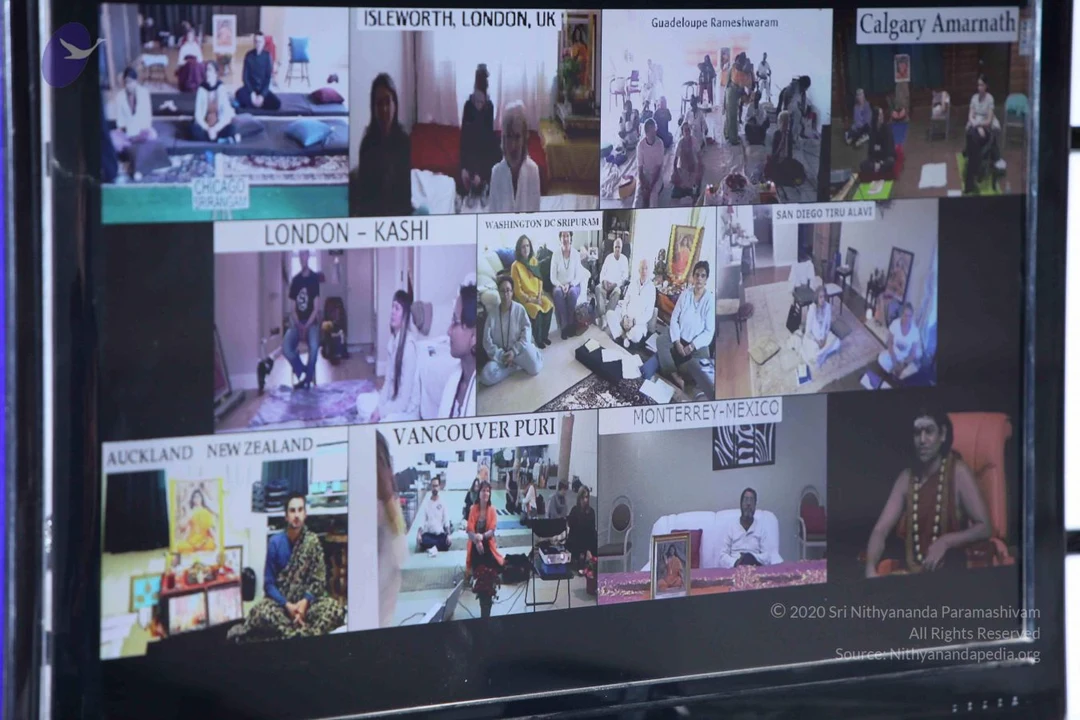
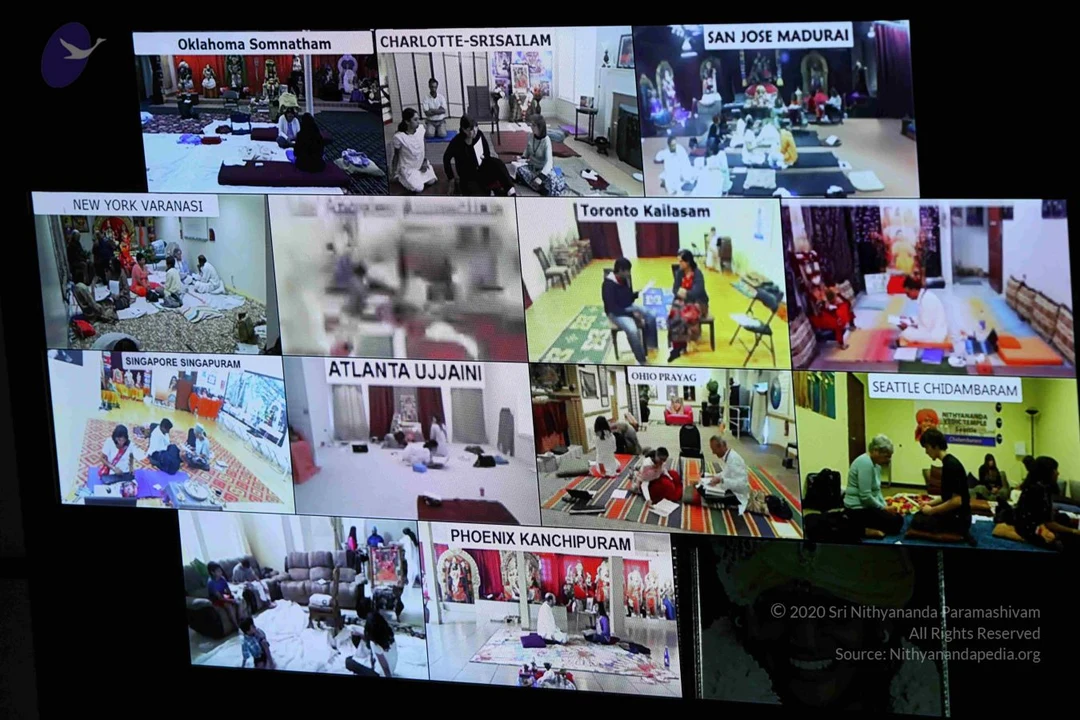
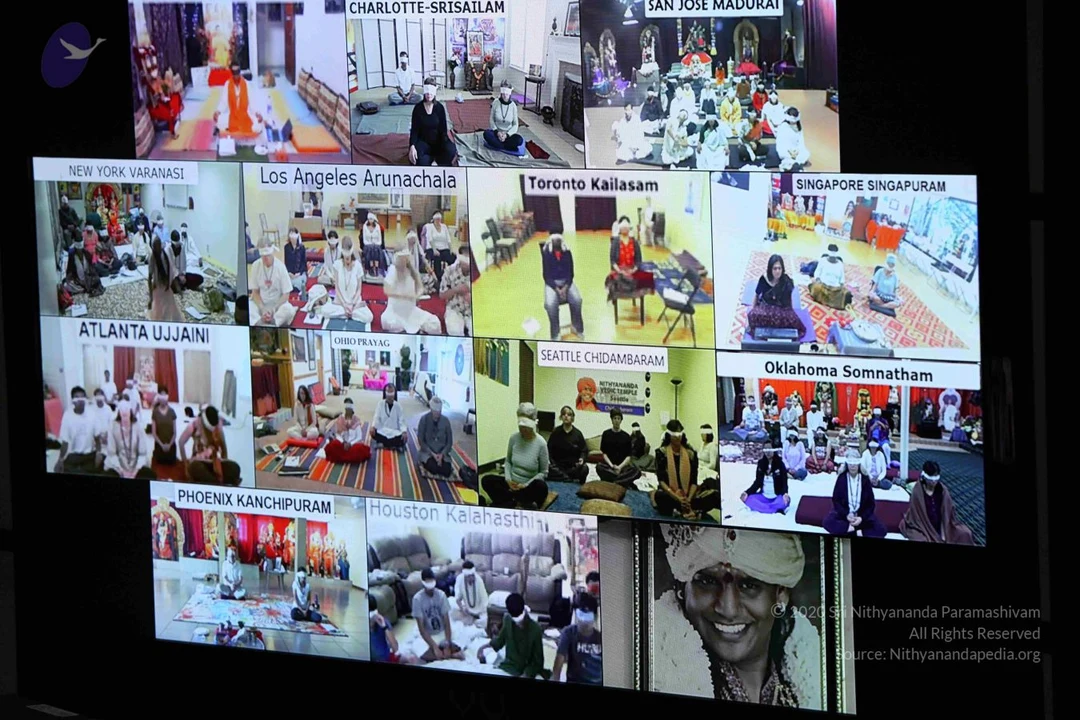
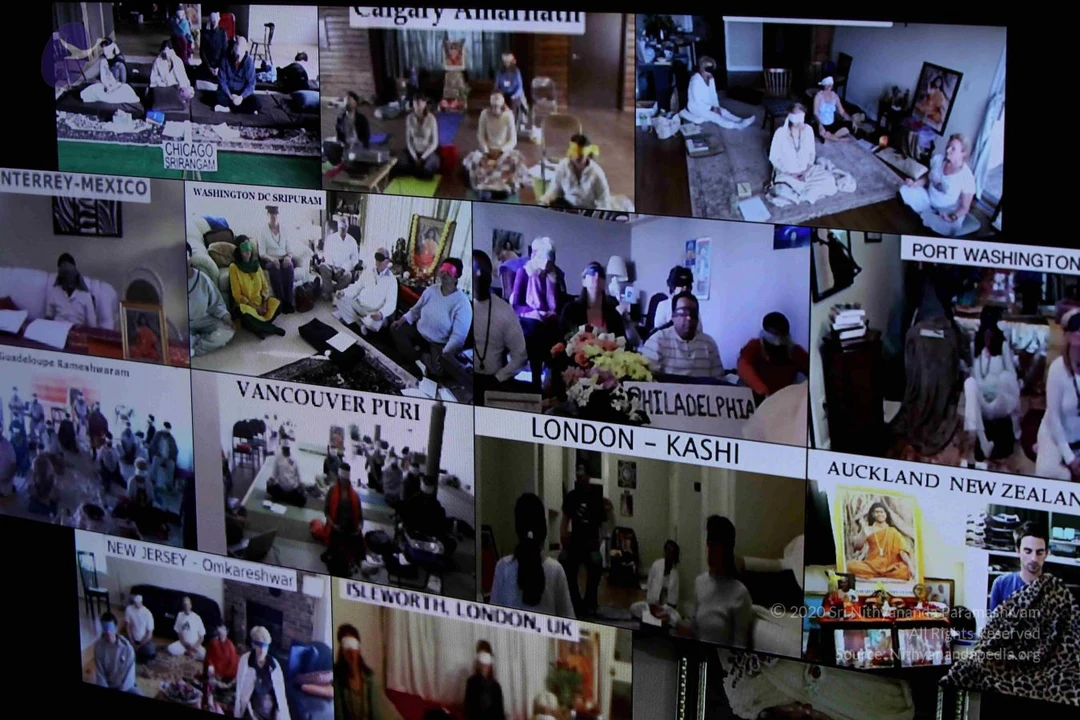
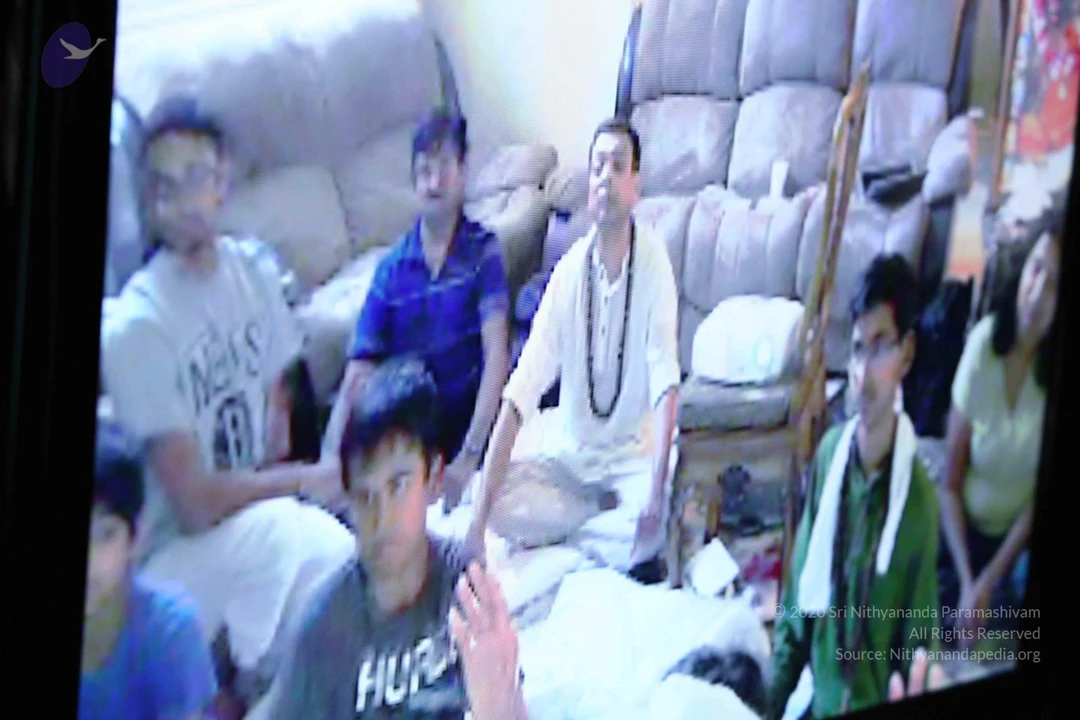
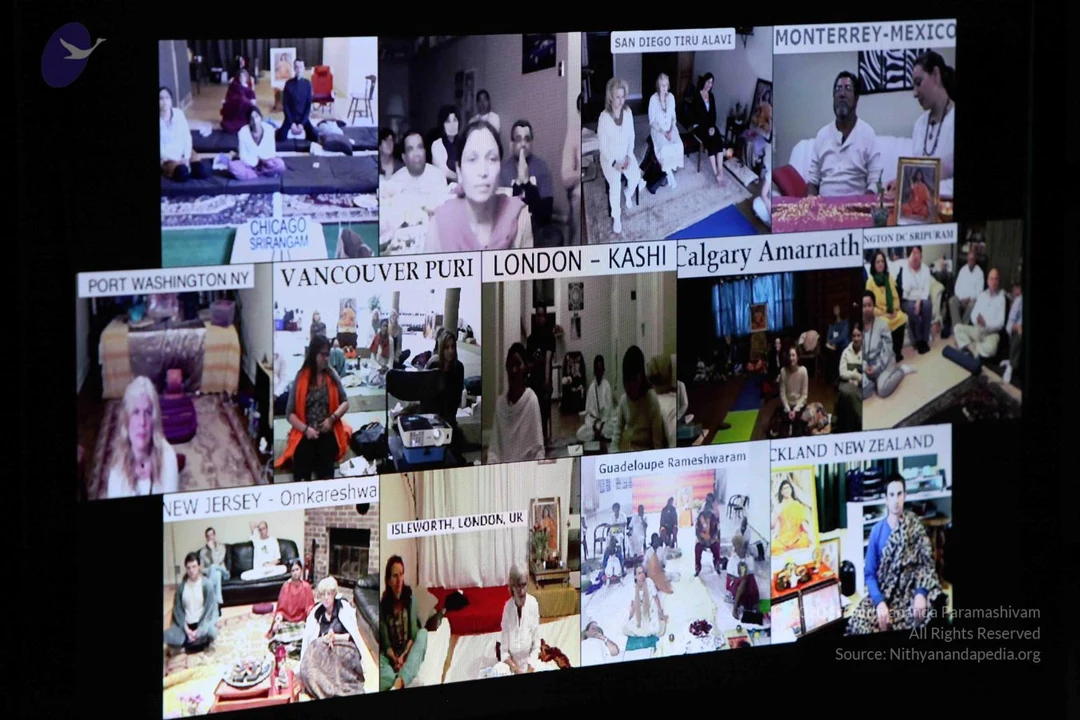
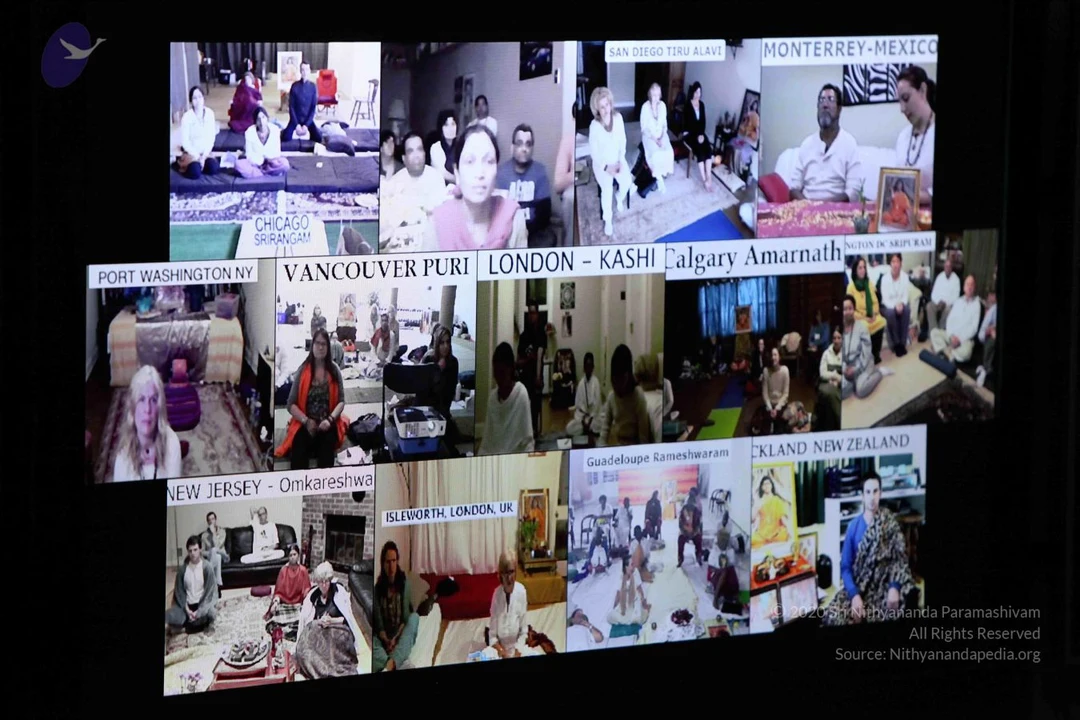
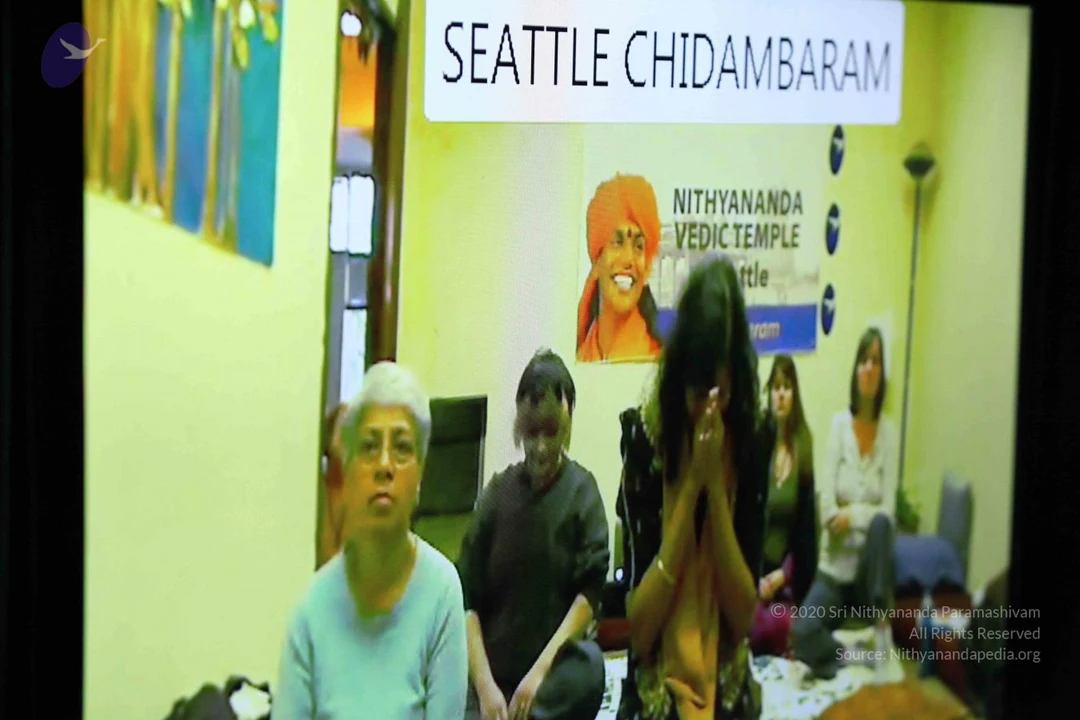
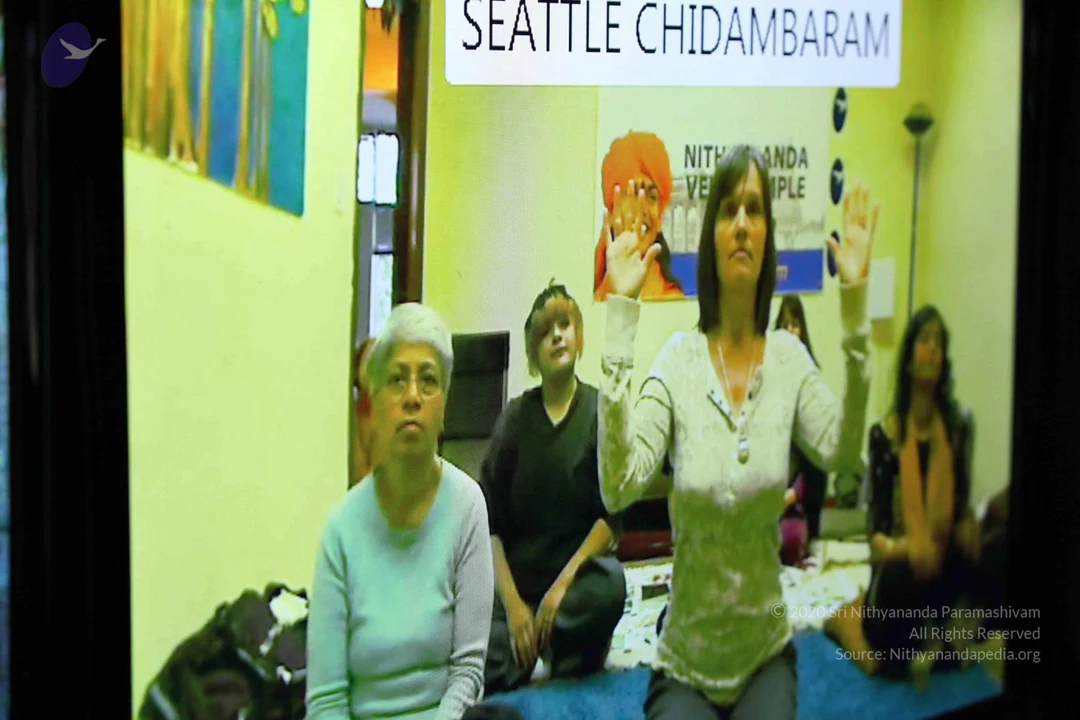
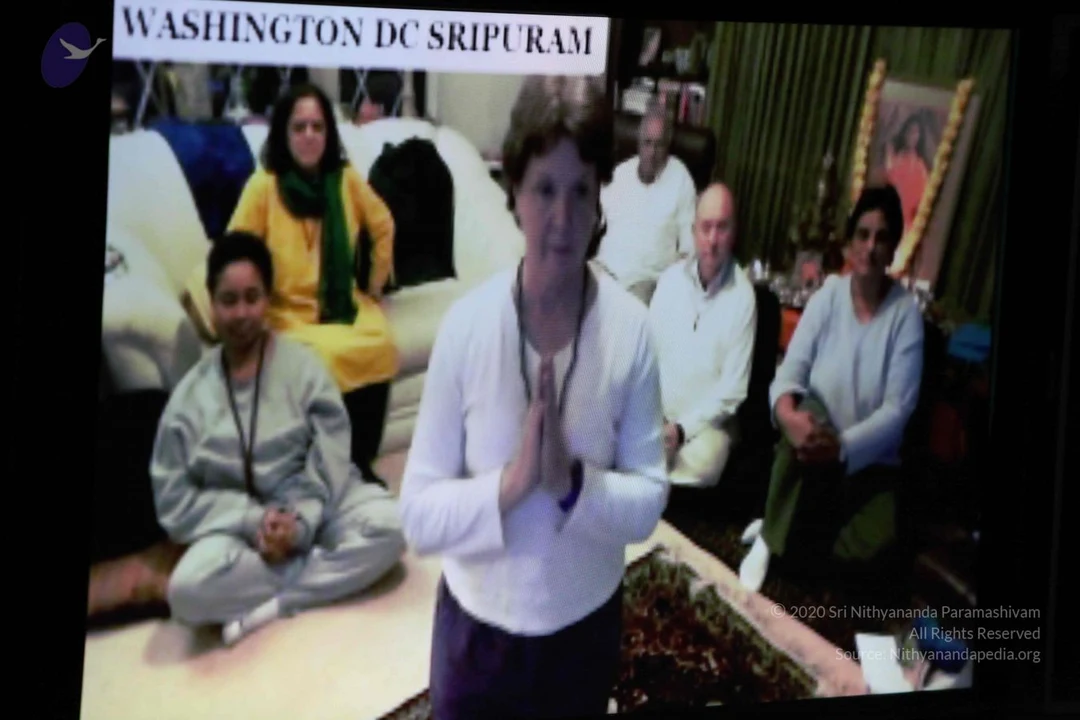
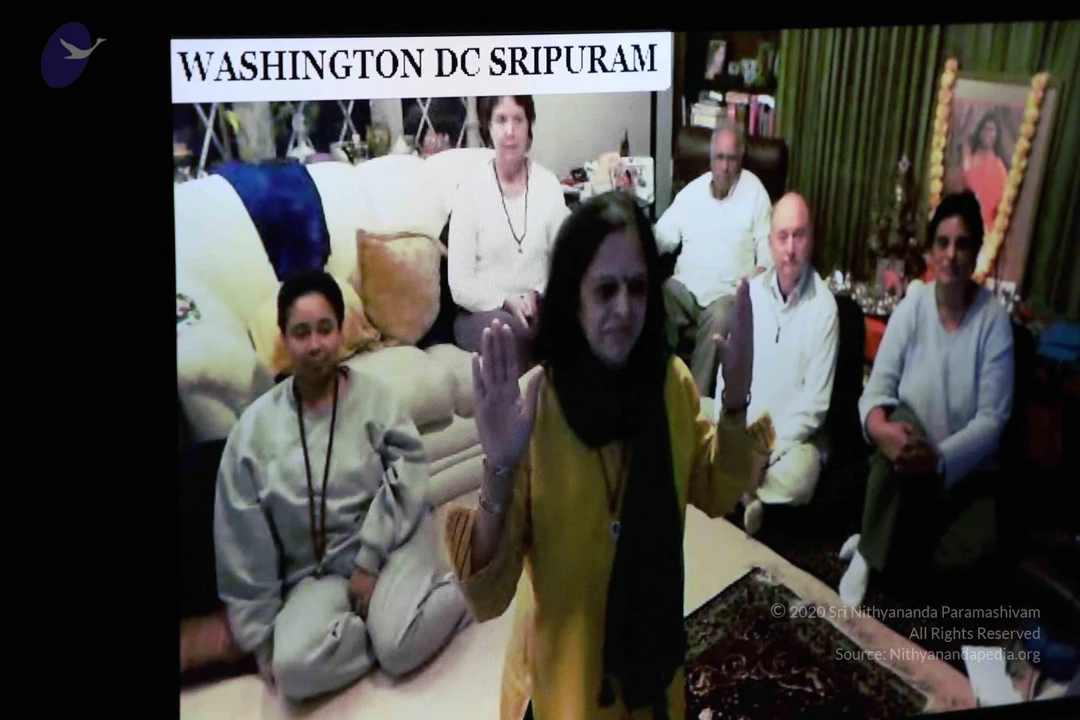
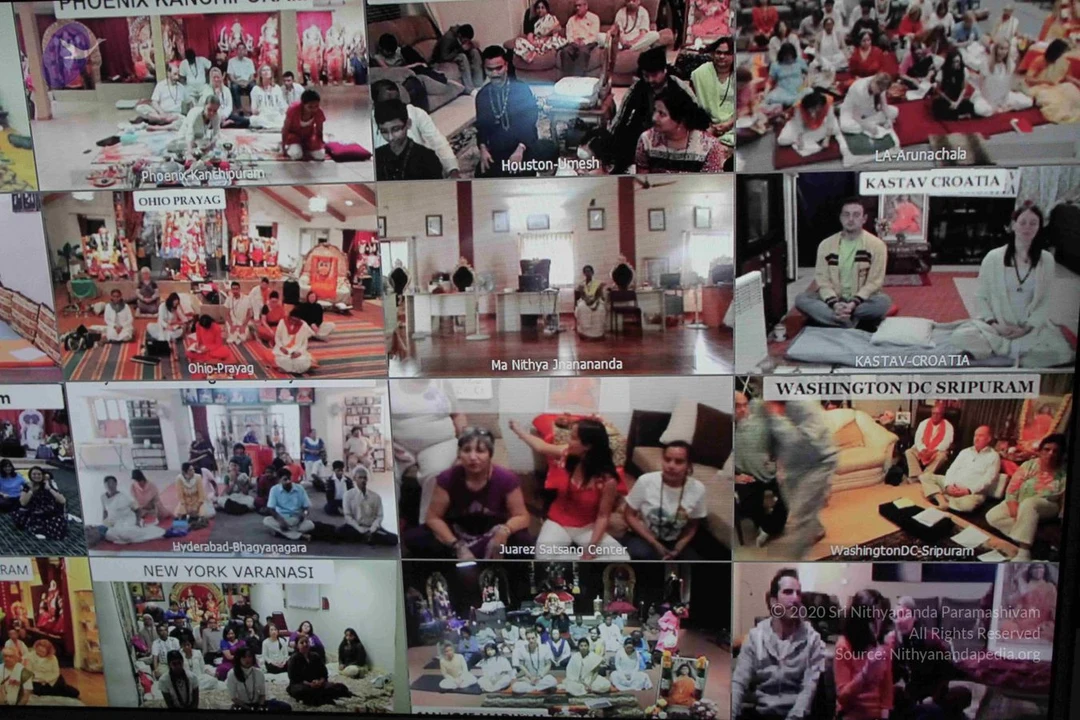
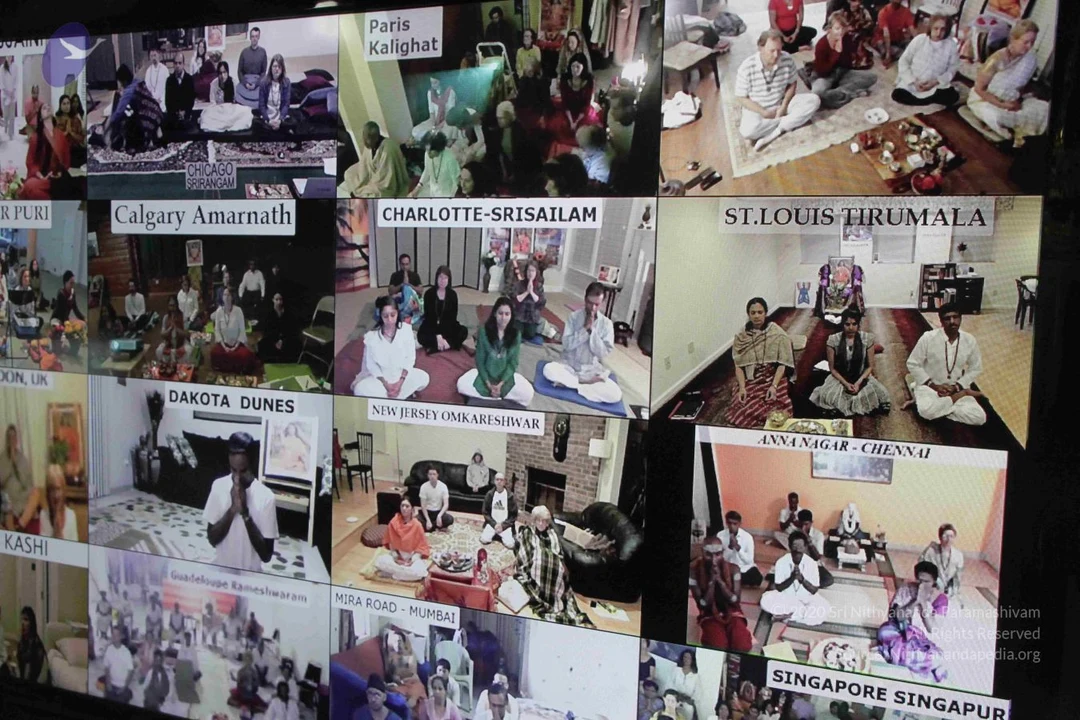
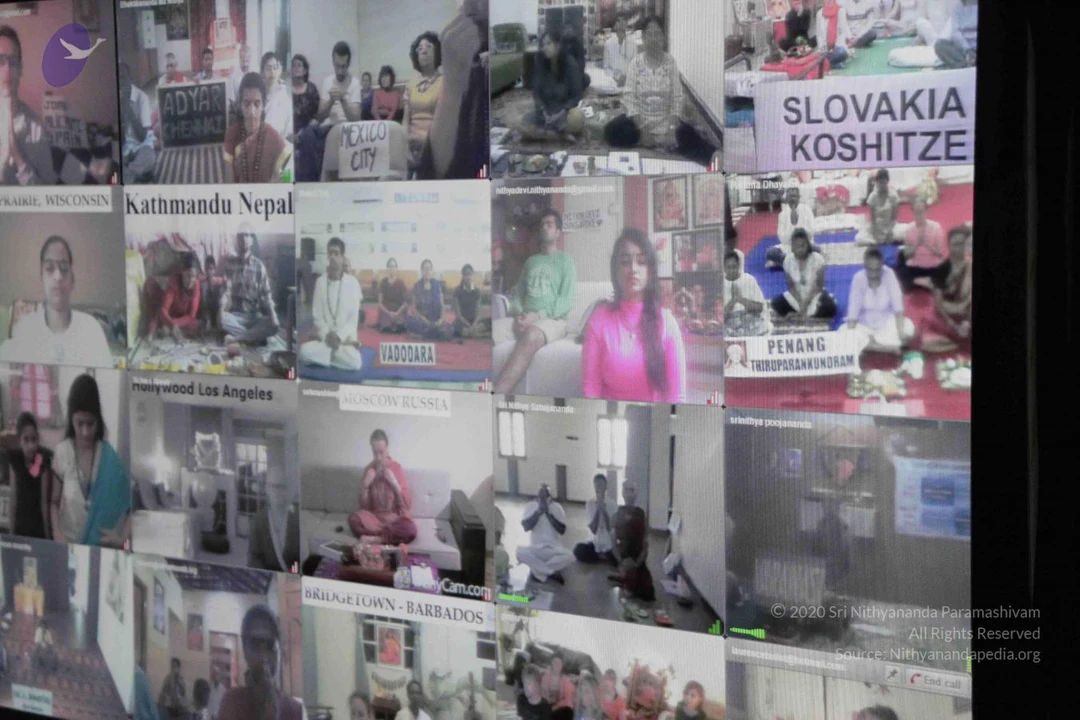
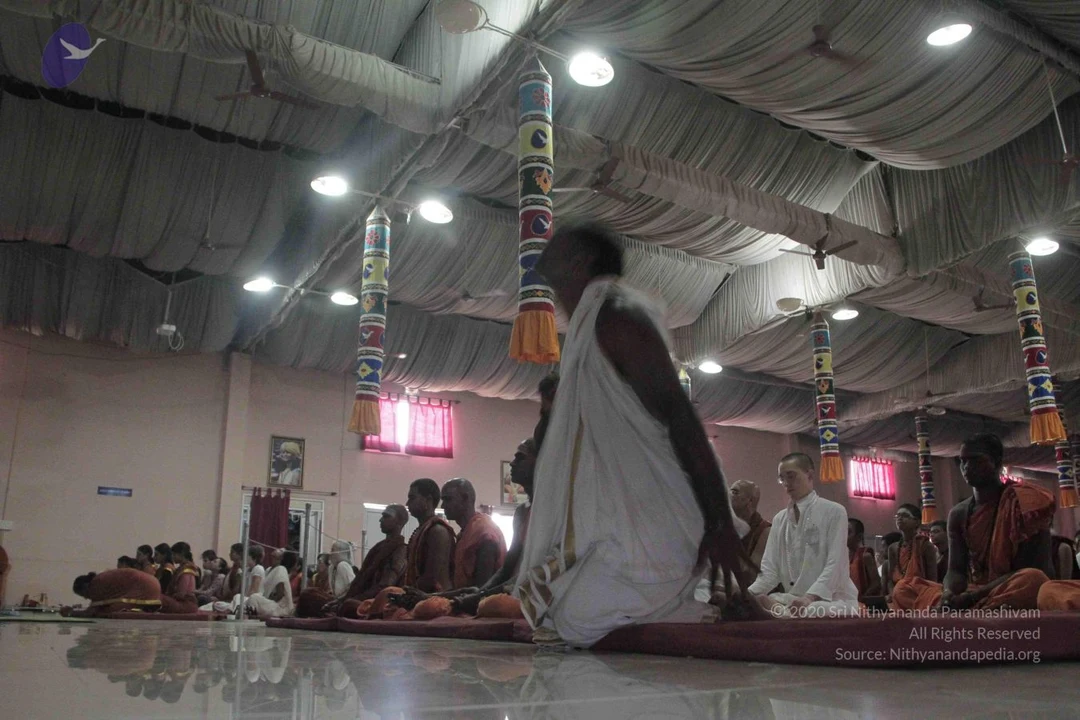
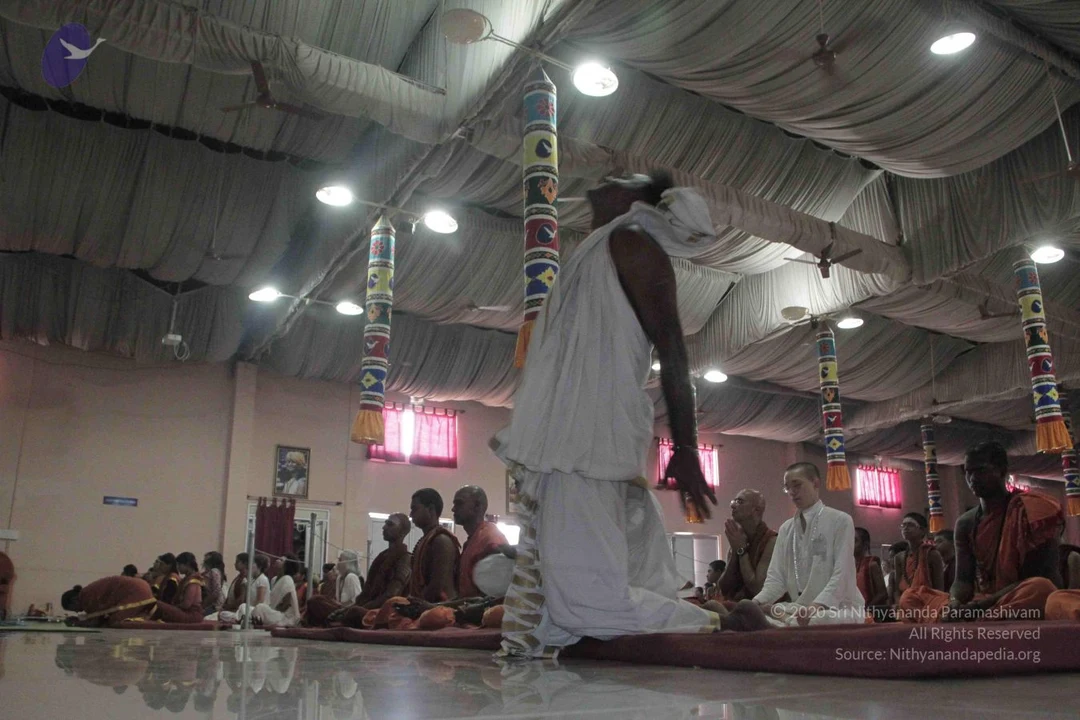
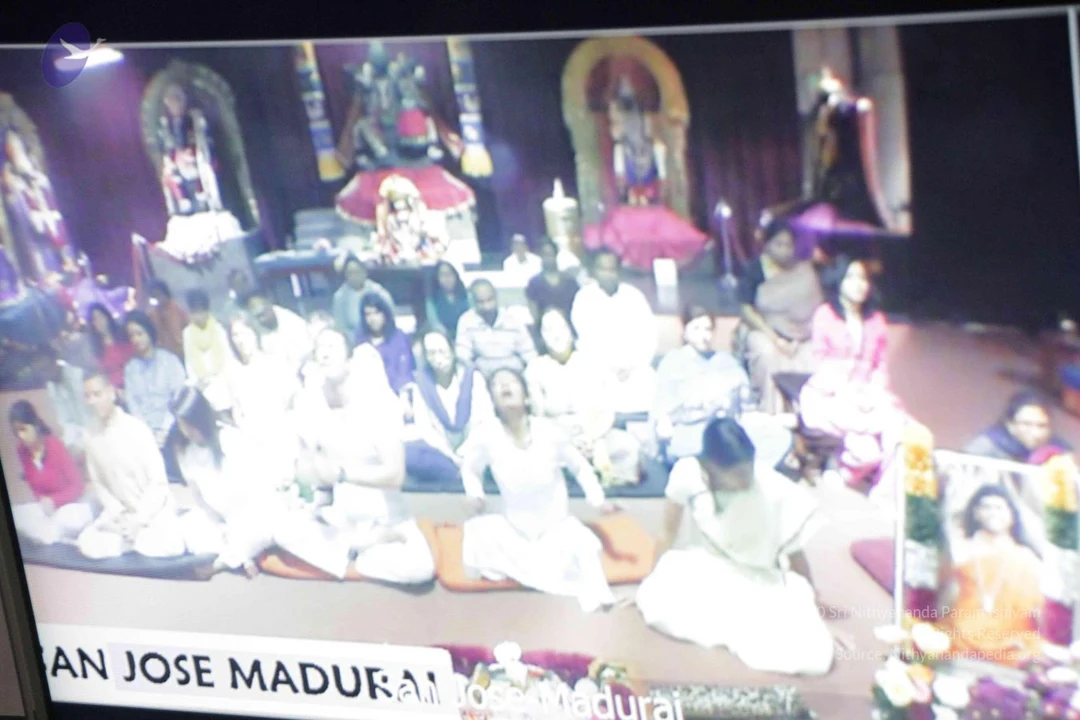
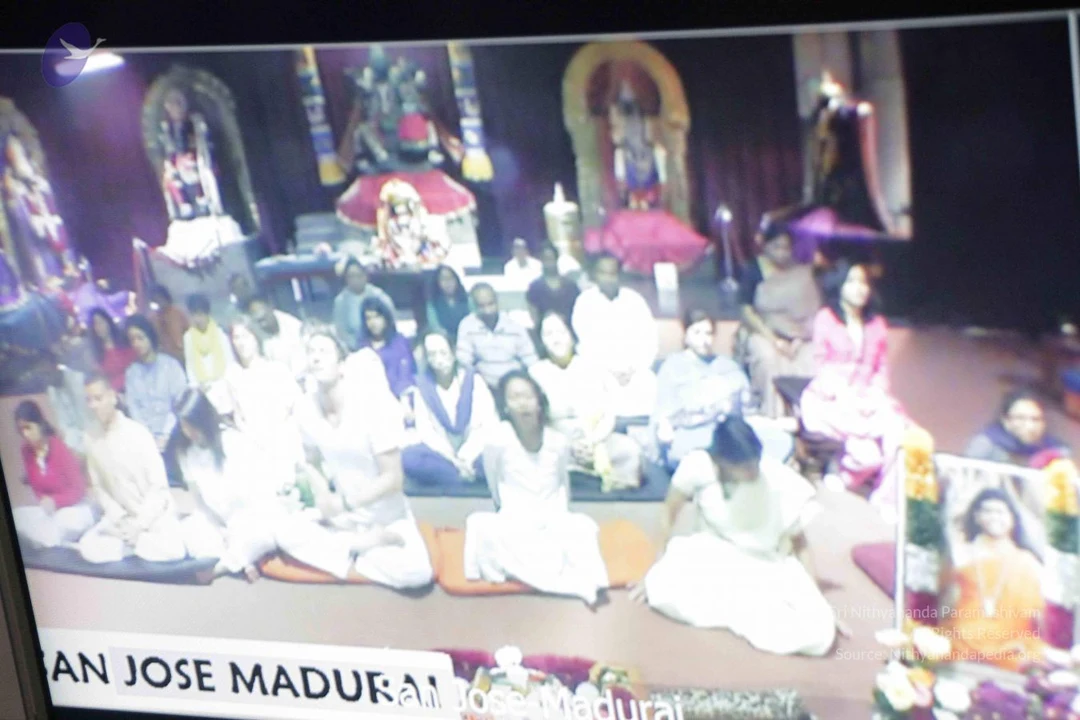
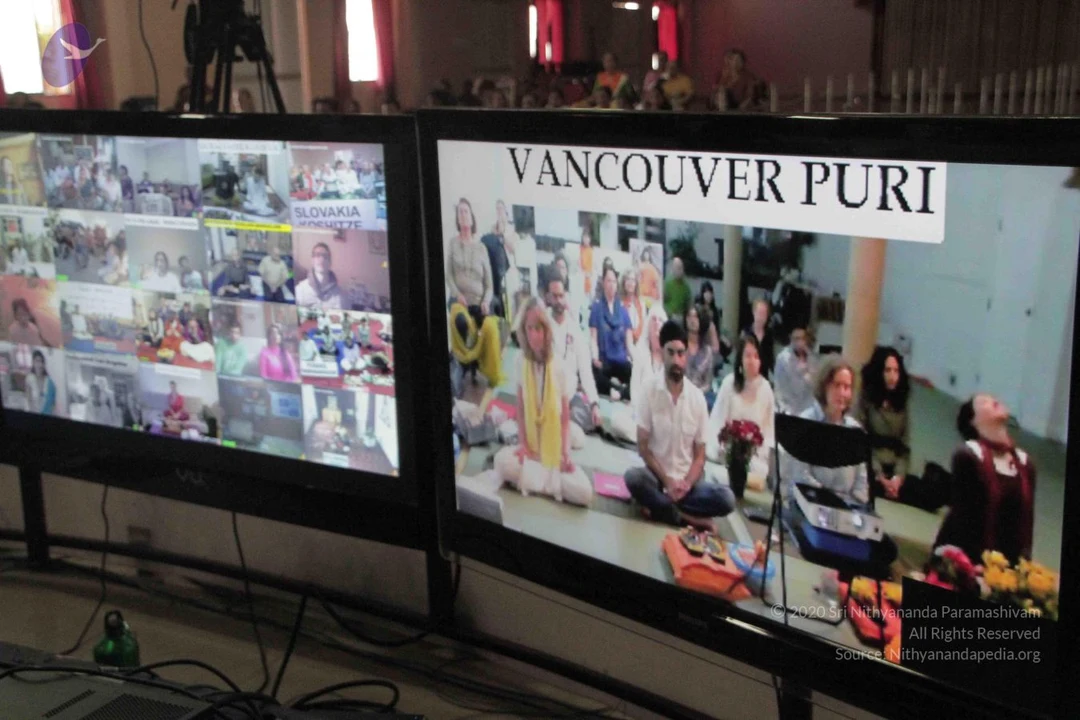
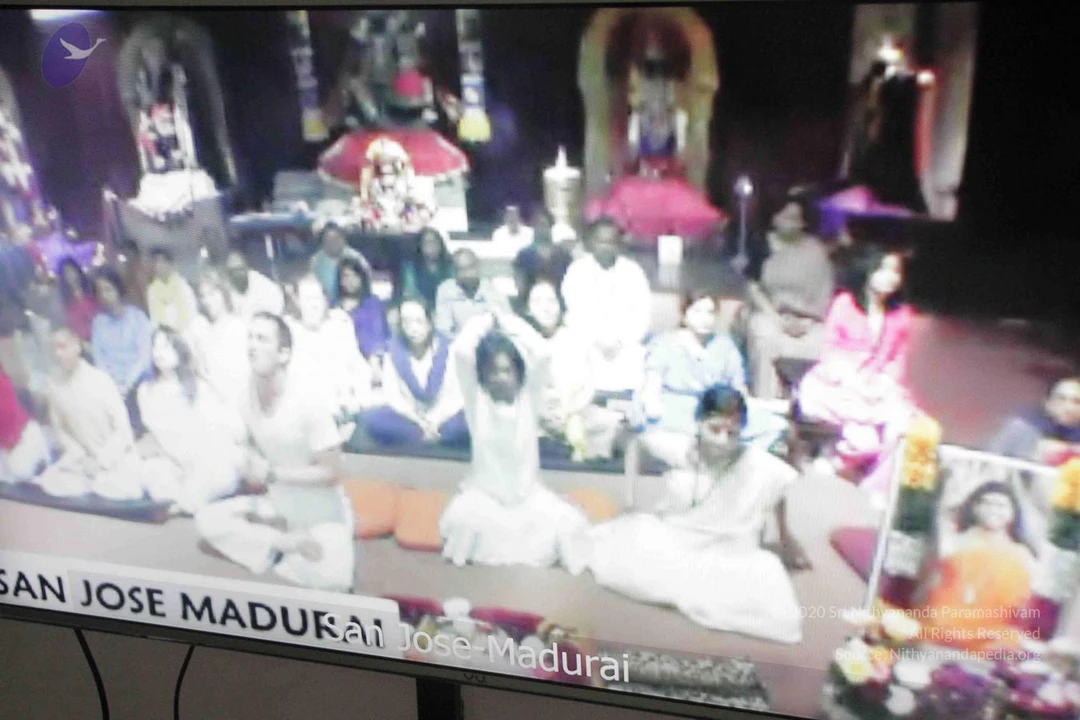
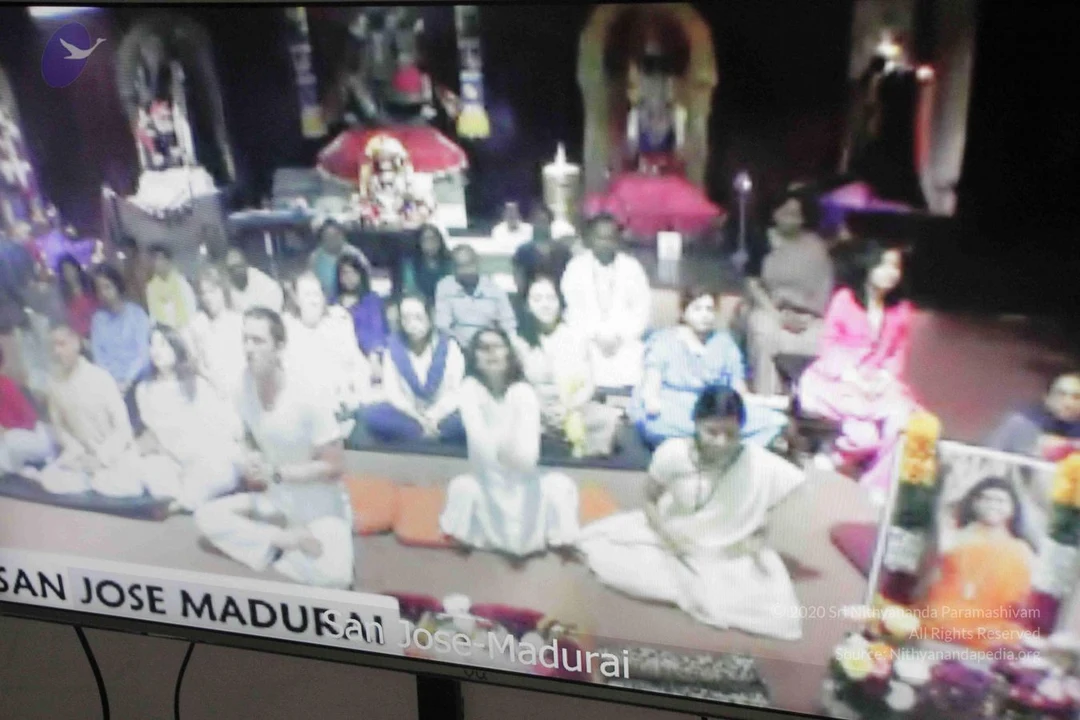
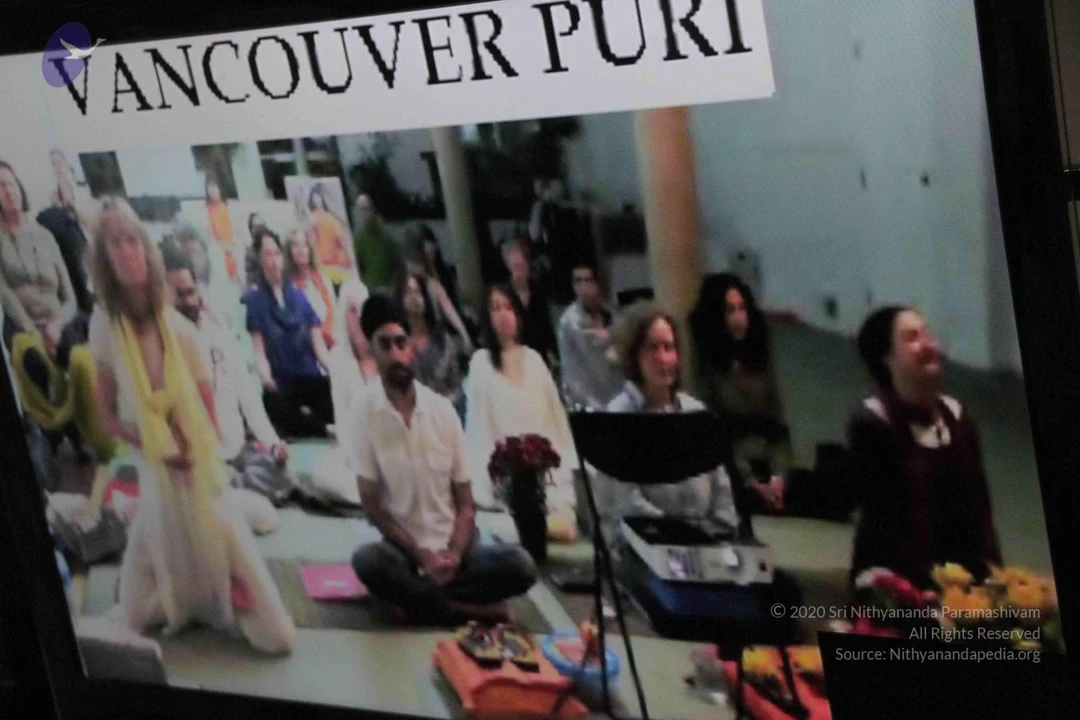
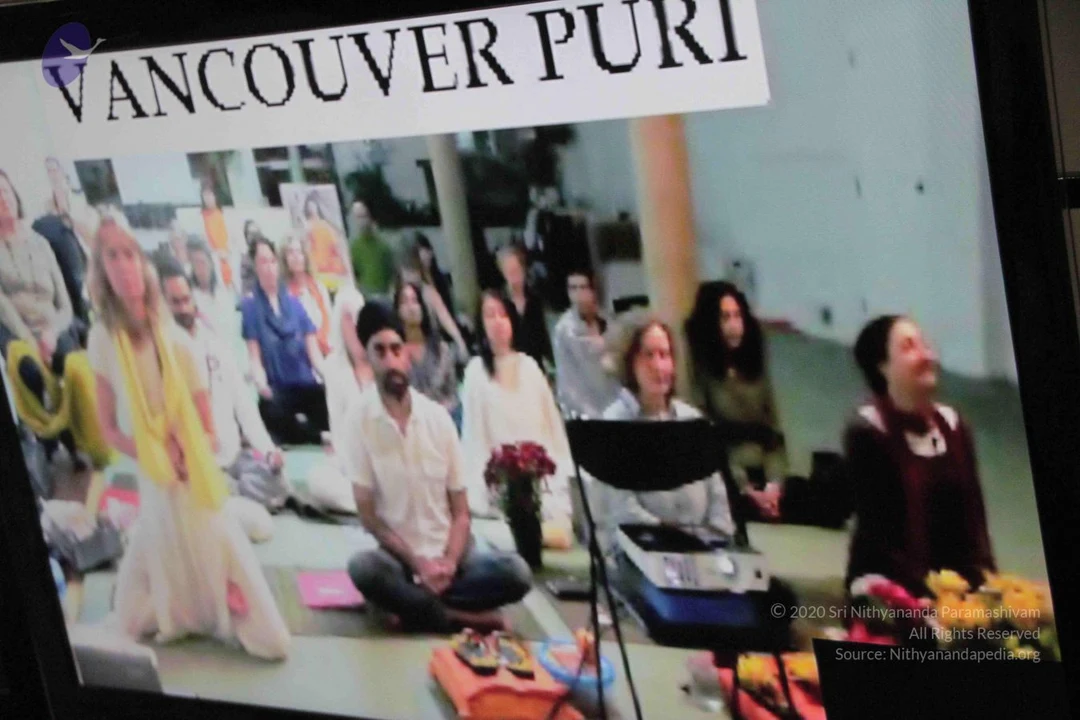
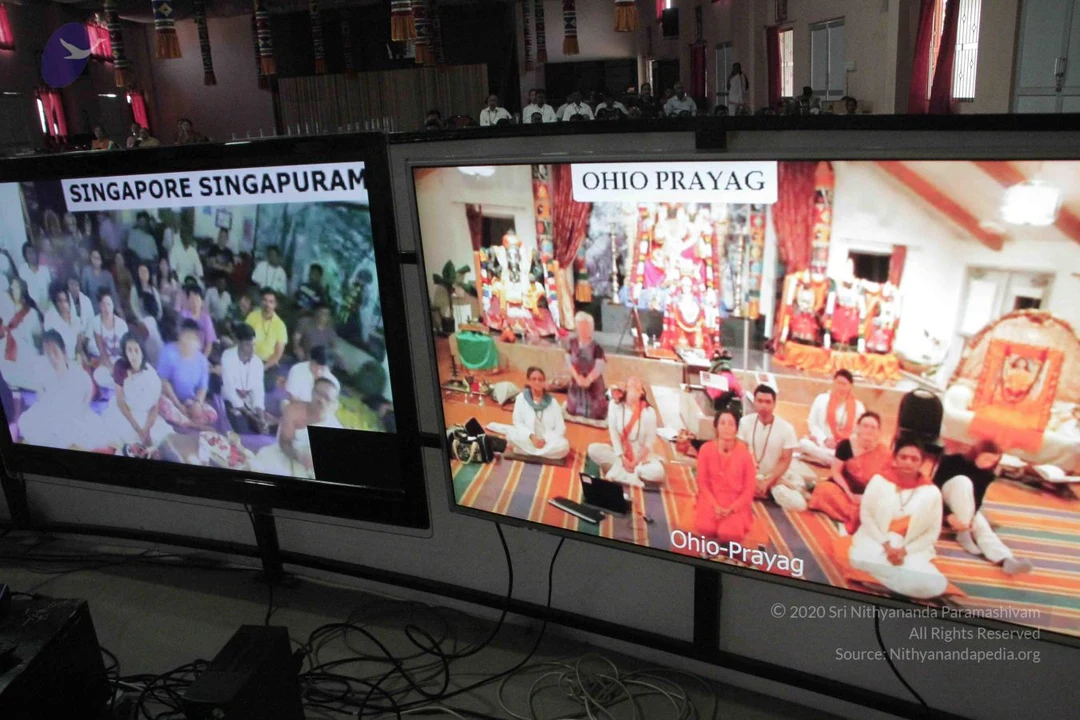
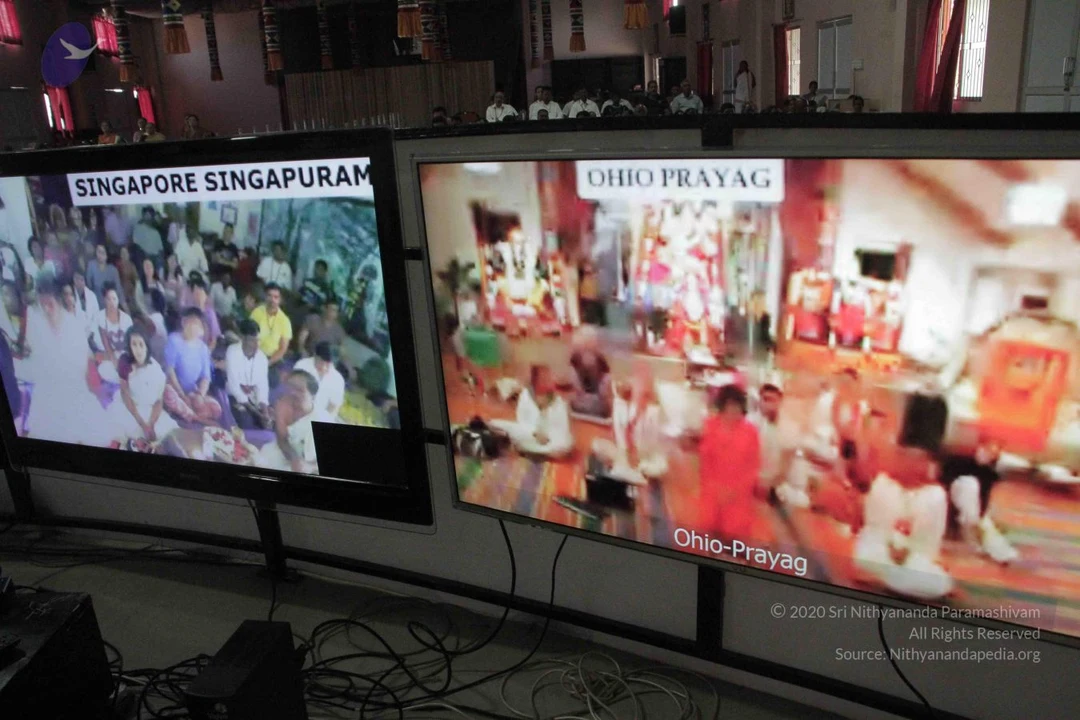
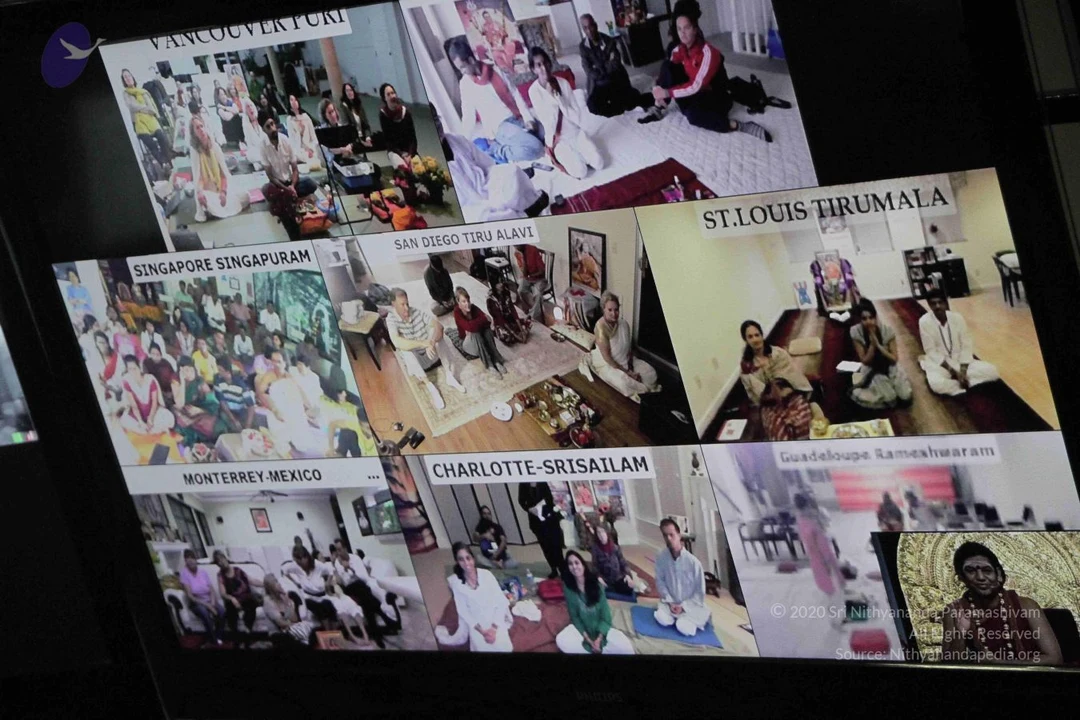
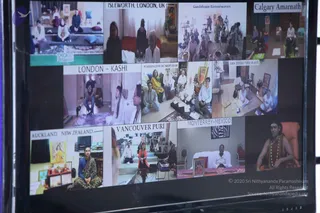
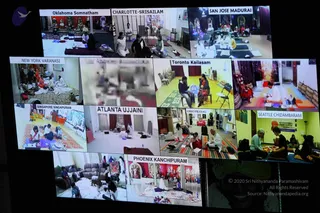
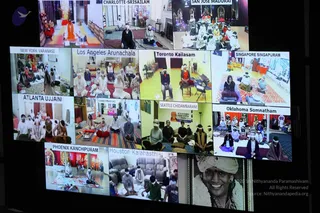
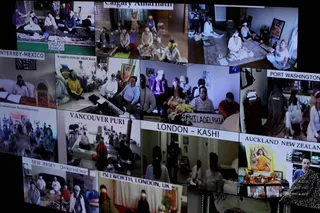
I welcome you all for the second day session of Nithya Kriya Yoga. Please be seated. Cities sitting with us in two-way video conferencing having Nayana-Deeksha, Isleworth-London, Guadalupe-Rameshwaram; Cities sitting with us I will call out your names for audio check, Oklahoma-Somanatham, New York-Varanasi, Los Angeles-Arunachalam, Toronto-Kailasam, Singapore-Singapuram, San Jose-Madurai, San Jose-Madurai! They are no able to here, yes; Charlotte-Sri Sailam, Oman-Shiv Gangai, Phoenix-Kanchipuram, Atlanta-Ujjaini, Ohio-Prayag, Seattle-Chidambaram, Chicago-SriRangam, Isleworth-London, Guadalupe-Rameshwaram, Calgary-Amarnath, London-Kashi, Washington D.C.-Sri Puram, San Diego-Tiruvalavai, Oakland New Zealand, Van Couver Puri, Monterey-Mexico, yes. So I welcome all of you with My love and blessings.

(02:36)

Today we will work on the important layer of your life: pain…. Most mysterious and mystical subject, which is not there but which tortures your life continuously. Please listen, in Sanskrit we have a very beautiful word ‘yama’ means which does not have existence but which constantly gives you suffering is Yama, maya. Ya ma Iti Maya Which is not there in real existence but which constantly gives you suffering is Maya. Pain is one of the most fundamental thought pattern which makes you inauthentic, which makes you non integrated, which makes you afraid of responsibility, irresponsible, which makes you selfish. I welcome the cities joining now. Houston-Kalahasti, you are able to hear? Yes. Washington DC-Sripuram? Yes, great I welcome you all. London-Kashi, Monterrey-Mexico. Yes, thank you for.... Calgary-Amarnath, welcome, welcome. Thank you for joining. Seattle,-Chidambaram, welcome. Great!

(04:51)

Pain is one of the most fundamental thought pattern in you. You have to know how did the pain enter in your system. Alright, please listen, how the pain entered into your system as a pattern? Long long before, long long ago, once upon a time, everything was well for you in the cozy, warm bed of water. You had automatic food supply, automatic air supply, great background music, tak tak tak. All was well, cozy, warm, safe in your mother's womb. There was sudden Tsunami. Your cozy water bed shattered. You were violently pushed out of your cozy home. You were forced into narrow path, way which was certainly created by someone who never had to go through himself or herself. It was so painful but you had no choice. You kept pushed. You kept getting pushed harder and harder and then suddenly when you come out and settle down, a pair of rough hands turns you upside down and slaps you on your wrong place welcoming you in the world and you express your first expression ever in your life, that deep cry with deep pain and despair.

(07:08)

Please understand, such an unfortunate thing. Your first expression is deep pain and despair. Right from that moment you get the first, very first thought of your life: life is dangerous, you are unsafe. Please listen, this is the last pattern I broke before Enlightenment. Even an incarnation who consciously landed in the body, listen, with integrity and authenticity I am telling you, I landed into the body consciously but even I had a slight memory of this pain. Then I am 100% sure this is the strongest pattern you all are carrying. In My life I do not know anything called pain even when I had a fracture. Even when I had a fracture, there was never… no pain. Morning 7 o'clock I had fracture, 2:30 I had surgery. Till then no pain, no pain killer, no anesthesia…. A person who lives painless, even for Me, the memory of the birth pain was there. I had to cut that to become enlightened.

(08:44)

So listen, it means for all of you, this is the first root thought pattern: life is unsafe, dangerous. This is where the primordial fear and pain of your life began. So the first survival mechanism that you naturally adopt is to be prepared to receive life with caution and be careful. Stemming right from this very first moment of your life, unfortunately most of your thinking trends are negative by nature because constantly you think you have to protect you. By nature, you are hardwired for bliss but your mind reverses this and conditions you for pain, taking off right from the moment you are born. Sometime you even enjoy the pain in your life.

(09:56)

Ramakrishna gives the example, beautiful example, a dog which tries to bite the dry bone. When the bleeding happens from its own teeth, listen, when the dog is biting the dry bone, when blood comes from its own teeth, dog thinks the blood is coming from the bone, not from his own mouth and enjoys it. Same way, secretly you enjoy the pain because you are habituated to that pattern. When you are not in integrity with your body and mind, not authentic with your body and mind and consciousness, what you experience is pain. Please listen, when you are not in integrity with your body- mind, authentic with your body-mind and consciousness, not responsible for the life energy you are, what you experience is pain. Only when you are irresponsible you will waste your life in pain. People who live in pain don't need sympathy, they need treatment.

(11:46)

When people come to Me and show they are very poor and pained, they expect Me to show sympathy. No! You need treatment, not sympathy because many time you use pain to attract sympathy…. I tell you, people who are in pain are the most cunning human beings I have ever seen because it is supported, encouraged by them. To encourage the pain, you need a complete, perverted, cunning logic and slowly for various reasons, they build that logic and retain the pain continuously in their being. There are millions of methods you can walk out of pain just like that. I tell you, only to retain the pain you need to work more. Philadelphia, welcome. Welcome. New Jersey, welcome. I can see you guys now. Great! Vancouver Puri, I can see you guys. San Diego Thirualavai, I can see you guys. Alright.

(13:24)

Listen, listen, when the irresponsibility settles in your bio-memory and muscle-memory, you experience pain in your body and mind. Start enriching yourself and others. Simply irresponsibility will disappear. Please listen, now I am going to help you, guide you into a process to take out the painful muscle-memory and bio-memory out of your system but if you want that to be broken once for all in your being, start enriching others. You will break the bio-memory of irresponsibility. Opposite of irresponsibility is enriching. Antidote for irresponsibility is enriching. Enriching takes you away from the… enriching destroys the karmas you created by irresponsibility even in the past. Listen, when you take responsibility now, in future you become responsible. What about the past irresponsibilities you created? Only enriching destroys the past karma of irresponsibility. Only enriching destroys the old karma of irresponsibility. I tell you, move towards others’ pain. Healing others’ pain, your pain will disappear. Move towards healing others’ pain, your pain will disappear.

(15:47)

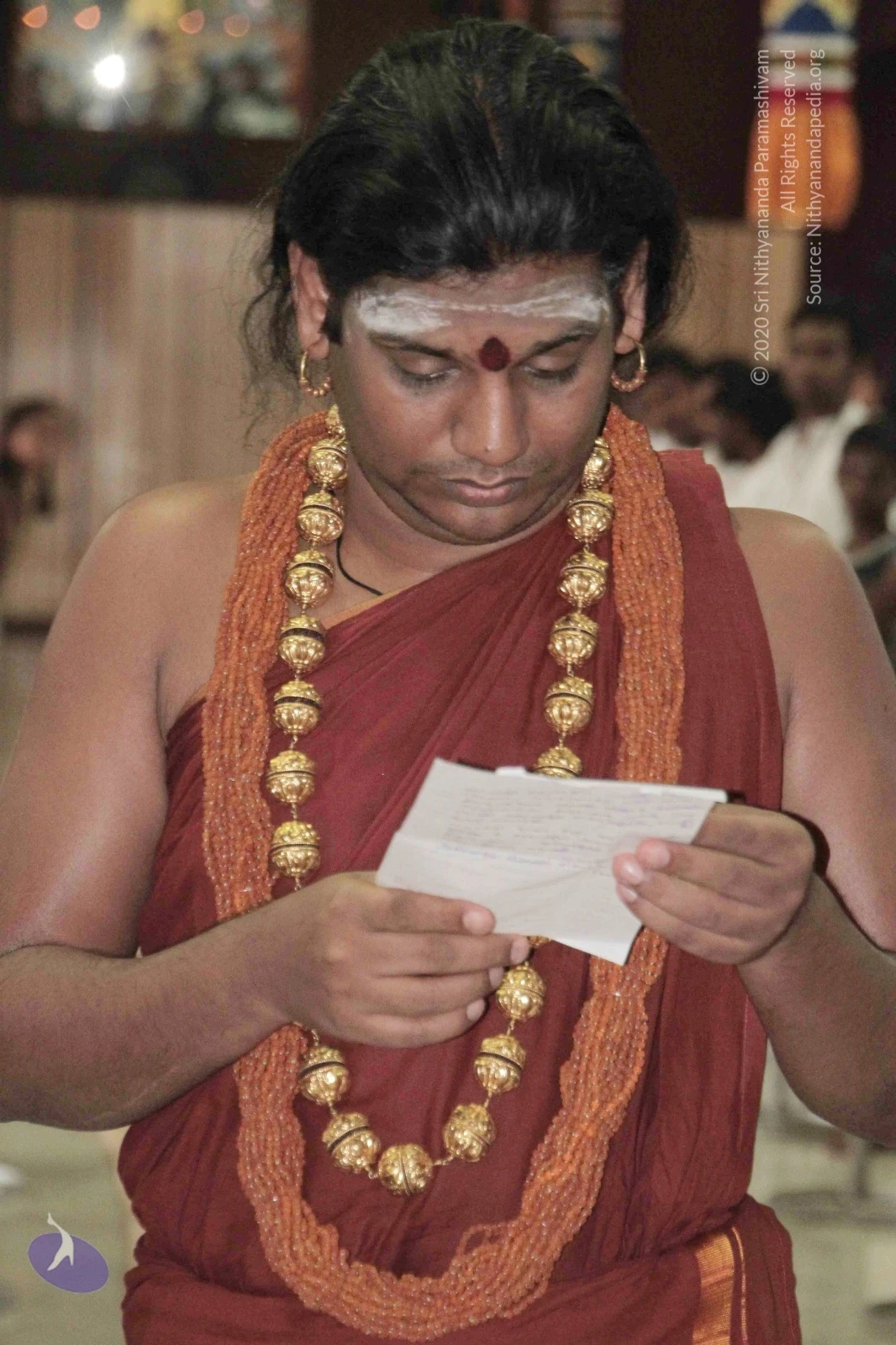
Now I will guide you into a very unique process. Maybe for the first time you are going to write the story of yourself. Please give the paper. Volunteers, hall volunteers all over the world, please distribute the next worksheet, exercise sheet. Distribute. Go back to the earliest memory of your life. Start penning down all the unpleasant incidents of your life as if you are writing your own history. I tell you, everything you remember will have unpleasantness. If there is no unpleasantness, you won't remember. Relive each incident and write it down briefly. Do not censor anything. Do not avoid any incident. Write each and every incident. Okay? So, I will give you two hours. We will have to finish this in next two hours because after that we have a elaborate process, a strong process. So, I give you guys two hours. Let's start. Please start penning down. You have to relive every incident and pen down.

(17:29)

Title

Liberation from Pain Patterns || Part 1 || NKY || 7 April 2013

Description

Name Of The Convention: Nithya Kriya Yoga
Session on: Liberation from Pain Patterns Part 1
Date: 07 April 2013
Venue: Adi Kailasa, Bengaluru, Karnataka, India

In this video Supreme Pontiff of Hinduism HDH #Nithyananda Paramashivam guided delegates to realize that Pain Patterns can be dropped and liberation from all pain patterns is possible. HDH guided delegates into a powerful meditation of kundalini awakening and unclutching which are two powerful process to relief from pain memories which all of us are clutching onto consciously or unconsciously. The Supreme Pontiff of Hinduism Jagatguru Mahasannidhanam His Divine Holiness Nithyananda Paramashivam (HDH) is the reviver of #KAILASA - the ancient enlightened civilization and the great cosmic borderless Hindu nation. Revered as the incarnation of Paramashiva - the primordial Hindu Divinity, HDH has a following of 2 billion Hindus worldwide with de facto spiritual embassies in over 150 countries. He has worked untiringly for over 26 years for the revival of Kailasa, for global peace and to give super conscious breakthrough to humanity. He has survived the worst persecution of multiple assassination attempts on person and on character by anti-Hindu elements. He is collecting, organising, preserving, time capsuling, decoding, spreading and reviving 20 Million source books of Hinduism and the 64 sacred arts & sciences like Ayurveda, music, dance, sculpting, astrology, vastu and much more. Close to 20,000 hours of HDH’s timeless talks have been recorded till date (Sep 2020), which are a treasure trove of powerful cognitions to solve individual and global problems of any kind.

Link to Video:

VideoAudio

Transcript:

(0:15)

Now we will have the process to awaken the Kundalini Energy. Please listen. Many of you clear many pain patterns by sharing and completion. This process will complete all the unconscious, deeper layer patterns of pain. It will cleanse the primal fear and you will be ready to get initiated into Unclutching. First let Me finish this Kundalini Awakening. Then you will have Unclutching initiation. Please understand, I will be guiding you into this process. First you will be concentrating on heart center. Then I will guide you step by step into Kundalini Awakening so that your whole inner being can be cleansed, all the pain patterns can be removed. You can be free from all the pain patterns.

(02:10)

Please tie the ribbons. Sit straight. Bring your awareness to your heart center with integrity, authenticity, responsibility and enriching Kala Bhairava, Me, command. Let your Kundalini energy be awakened in the heart center. Namah Shivaya. Let your bio-energy and bio-memory be awakened intensely. Namah Shivaya.

(02:56)

Meditation

(04:27)

Bring your awareness to the third eye, brow center. Let the Kundalini Energy be awakened in the third eye, brow center intensely. Fill your whole body, mind, bio-energy and bio-memory. Namah Shivaya. Top of your head, let the Kundalini Energy fill your whole being, explode into Enlightenment. Namah Shivaya. (05:20)

Meditation

(06:03)

Relax. Let your eyes be closed. Just sit for few minutes.

(06:11)

Link to Facebook

https://www.facebook.com/srinithyananda.swami/posts/173705249451149

Tags:

Paramahamsa Nithyananda, secret, Kundalini, natural energy source, planet, wish, accomplish, goal, Swami Vivekananda, brain, intense, prayer, miraculous powers, intelligence, fire, frequency, initiation, future.

Photos Of The Day:

Nithya Satsang
Sarva-Darshan

Temple-Tour

Pada-Puja

Kalabhairava Darshan

Nithya-Kriya-Yoga

Photos Of The Day:

Satsang

Sarva-Darshan
Temple-Tour

Pada-Puja

Kalabhairava

01-Pada-puja

02-Sarva-Darshan

03-Nithya-Satsang

Photos from this day

View all 378 photos

Nithya Satsang

22 photosSource gallery
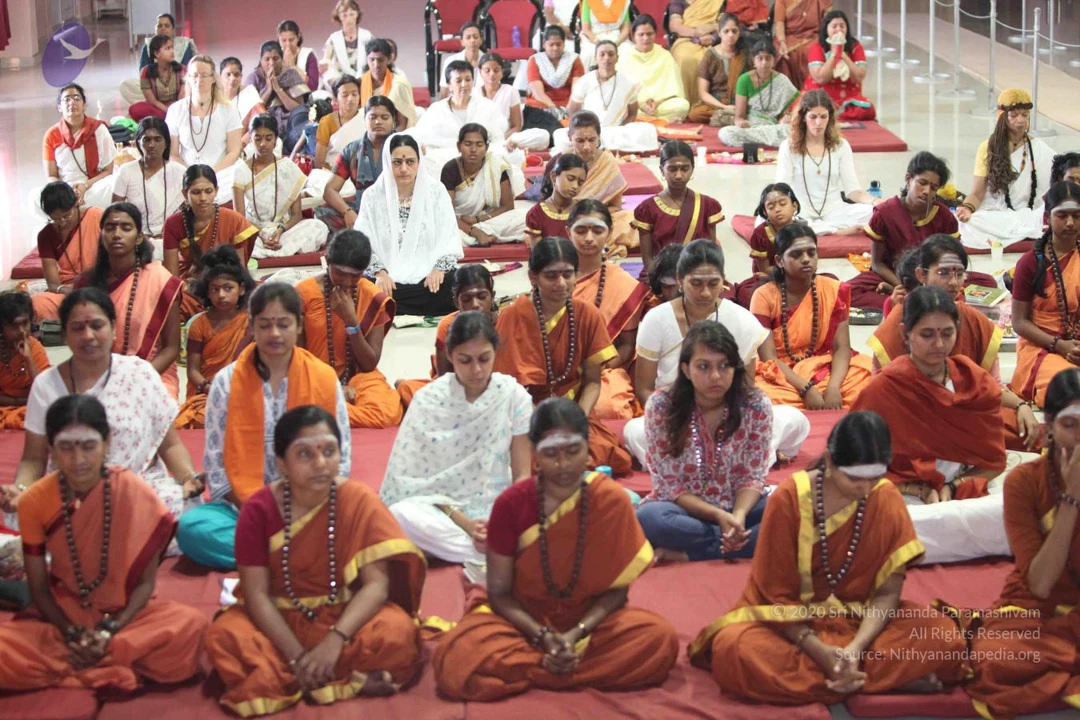
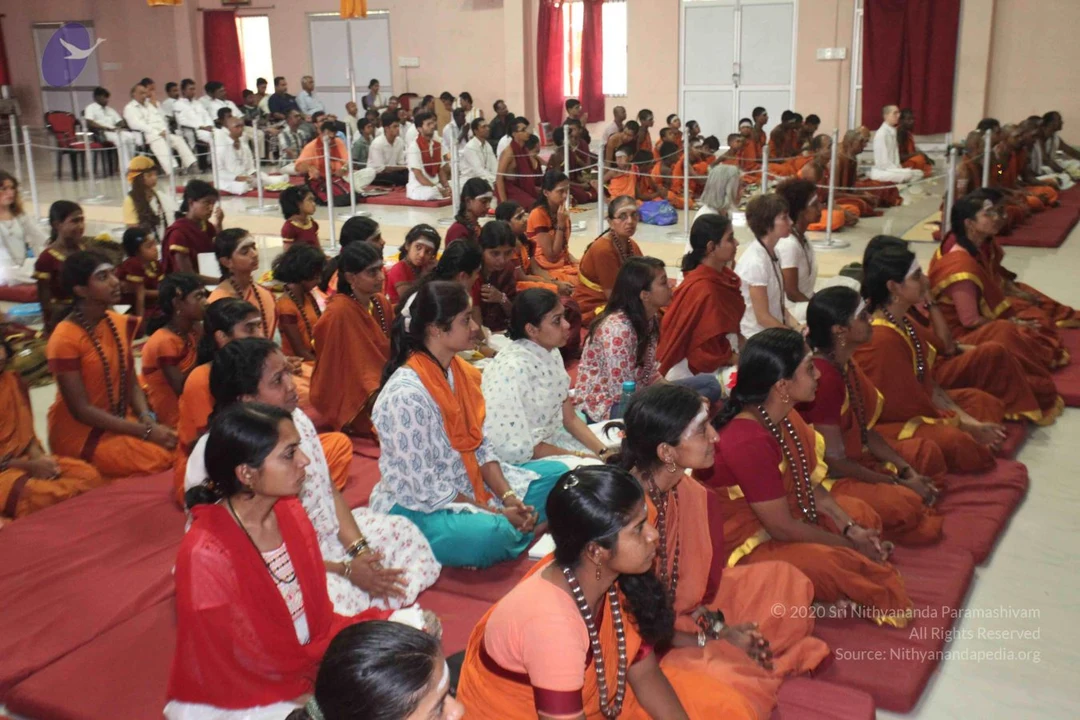
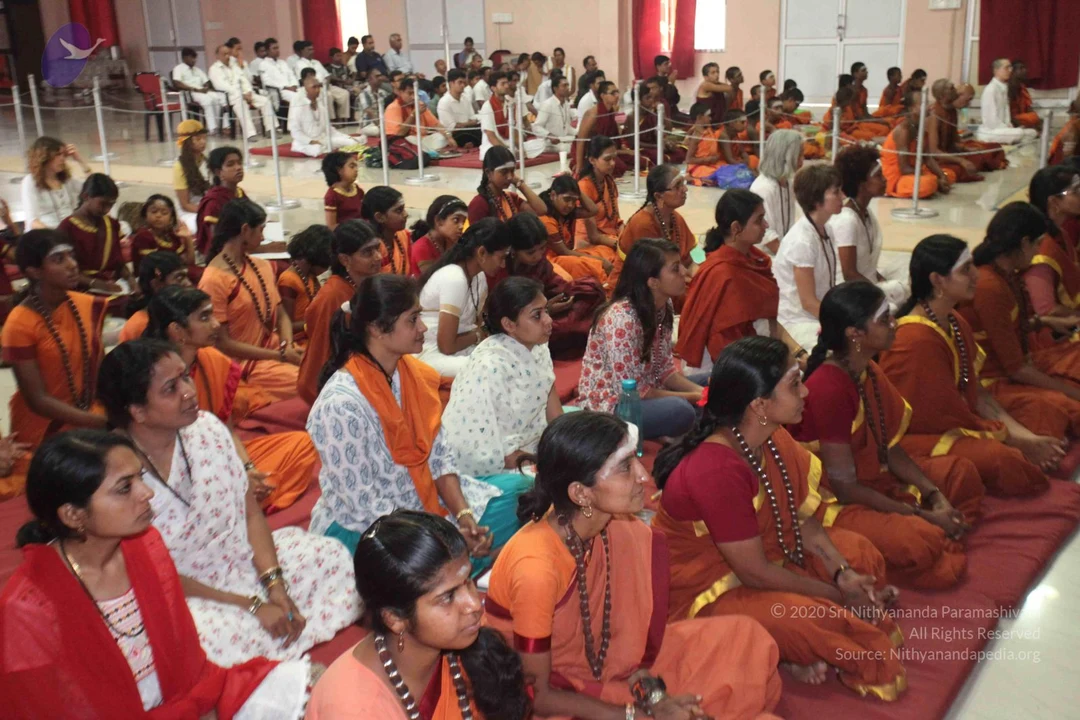
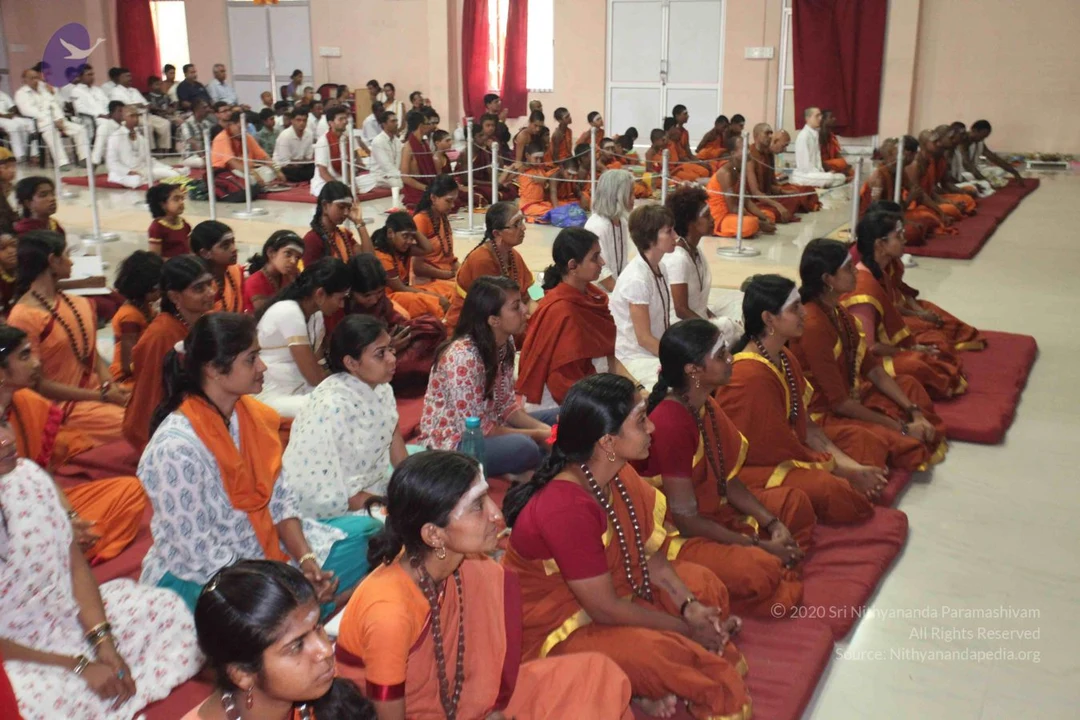
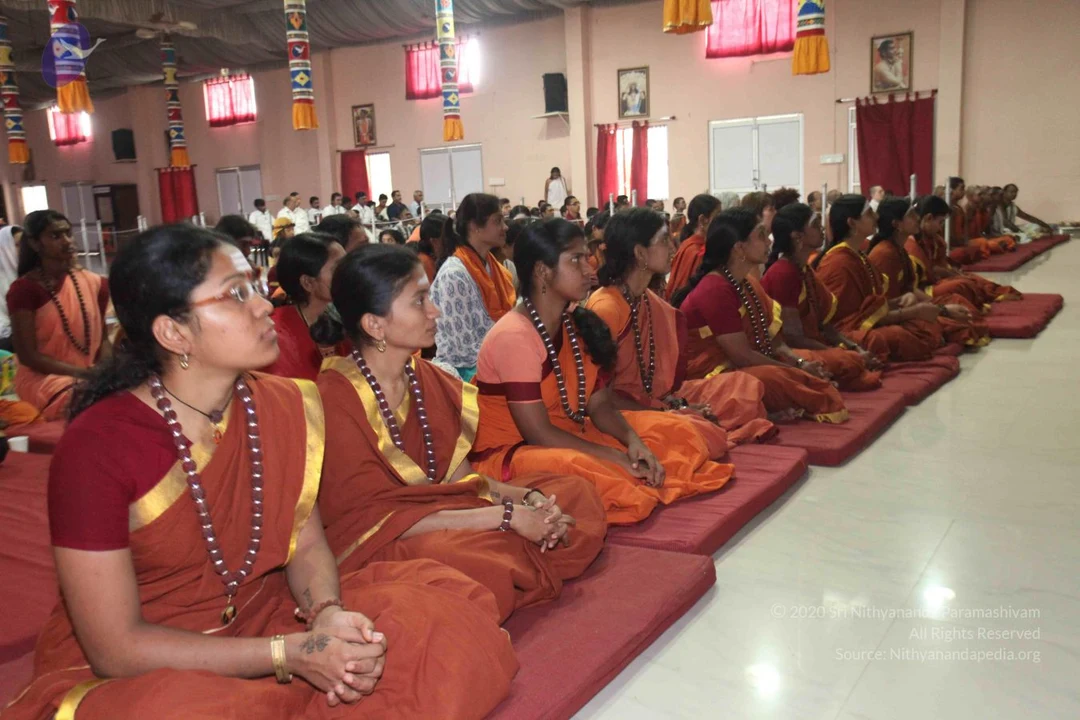
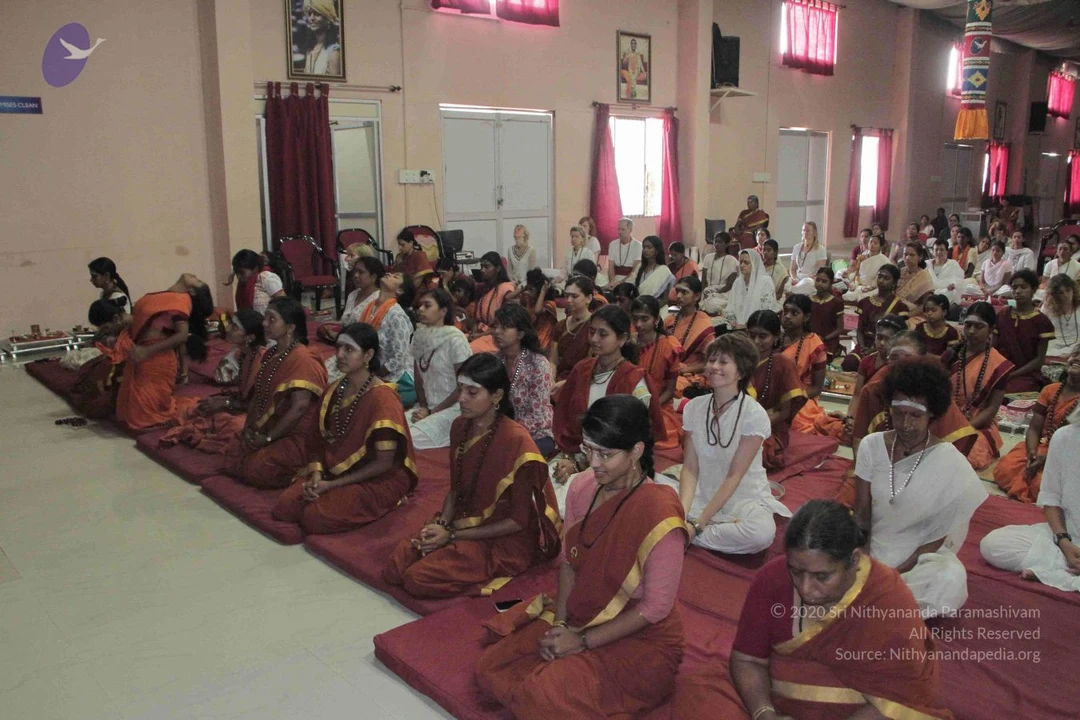
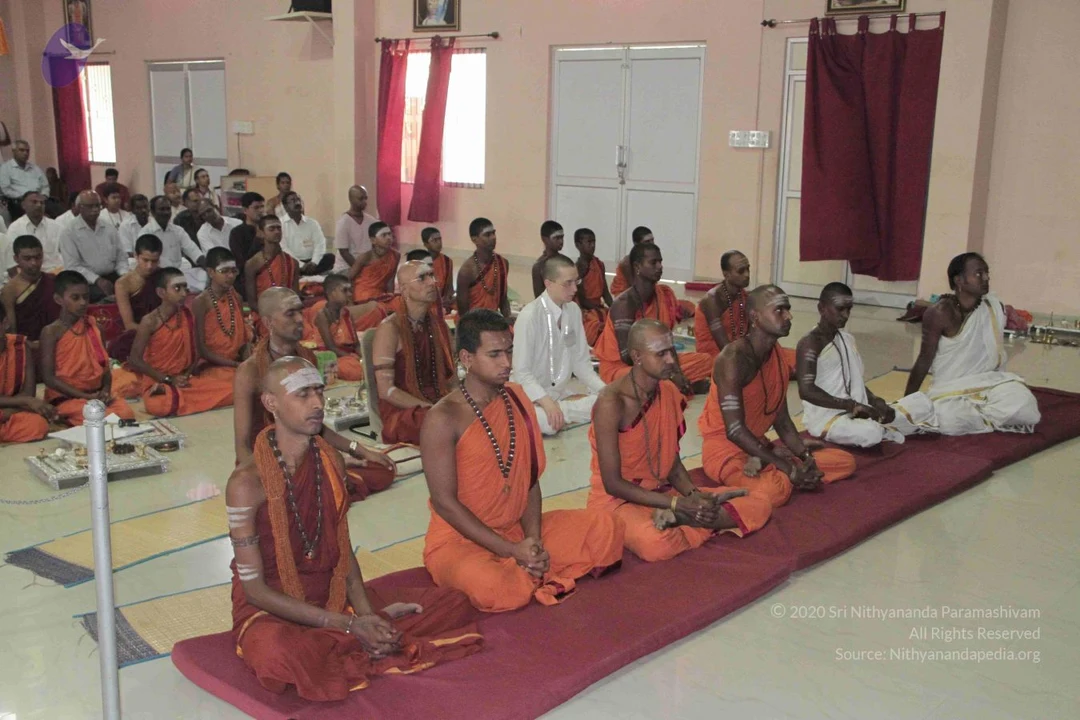
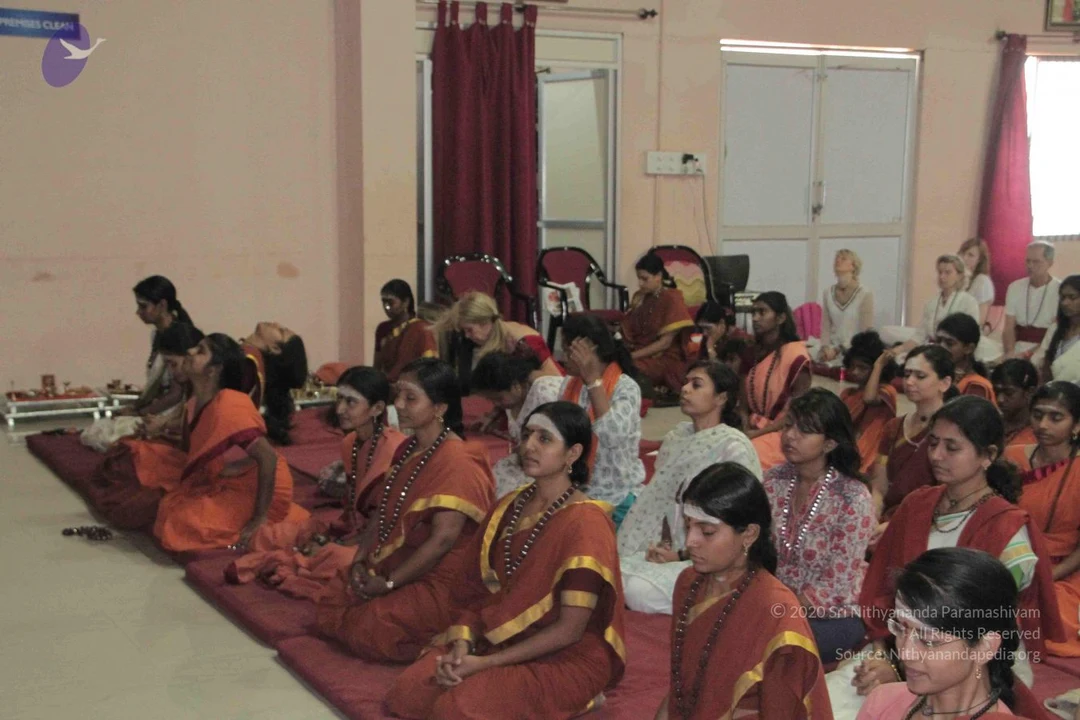
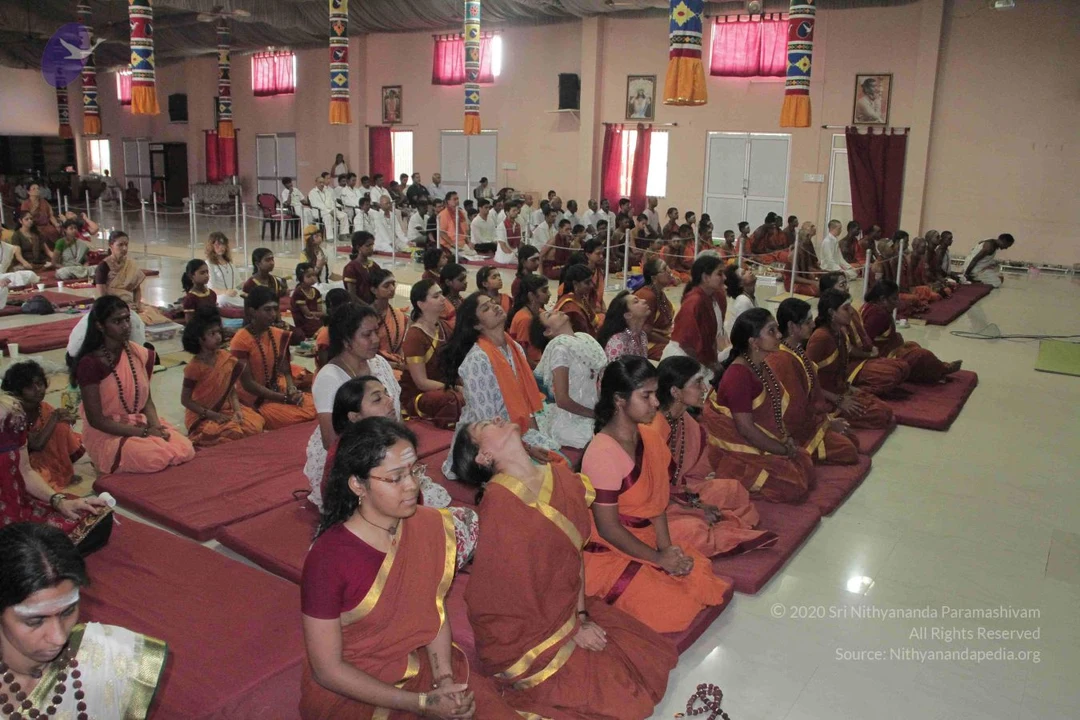
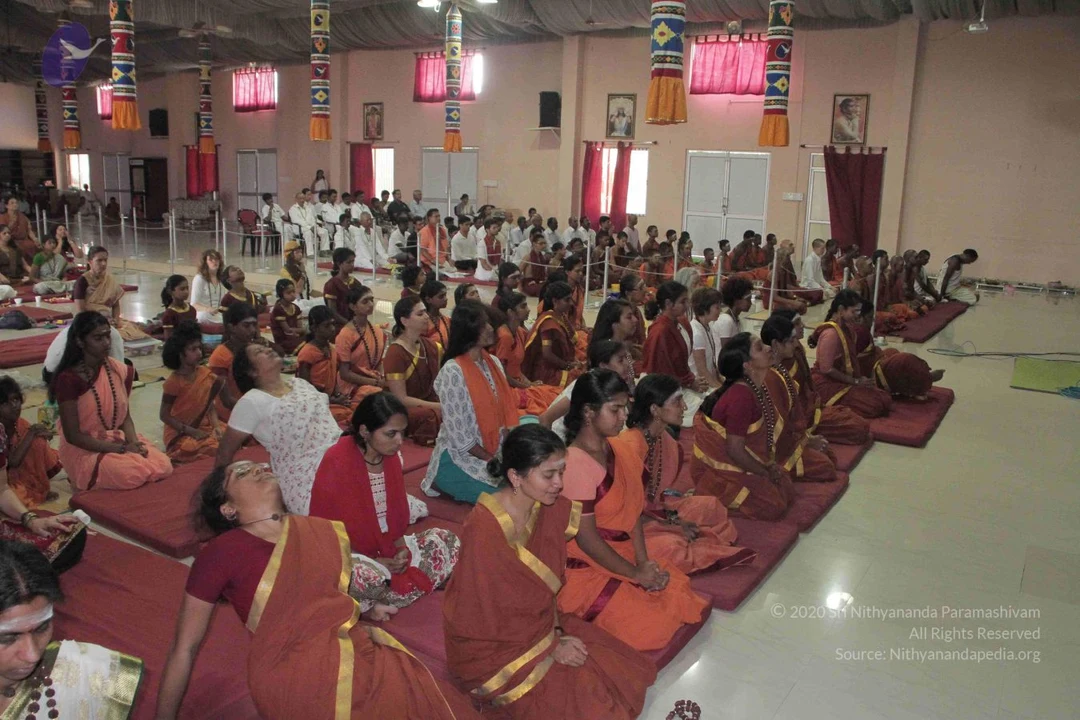
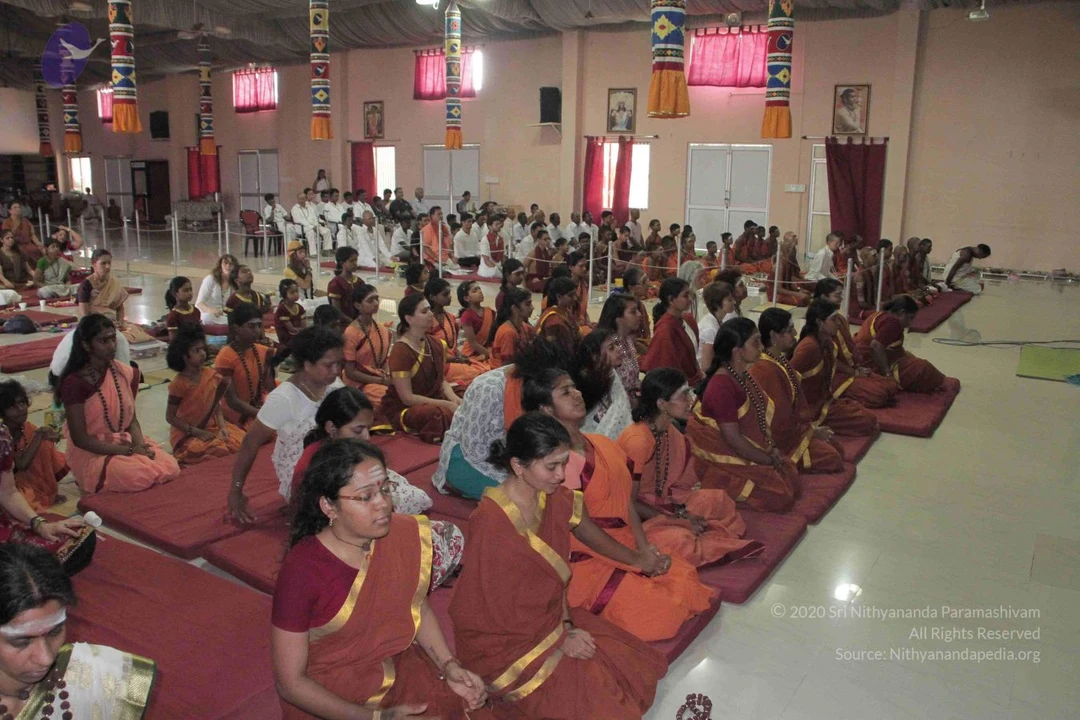
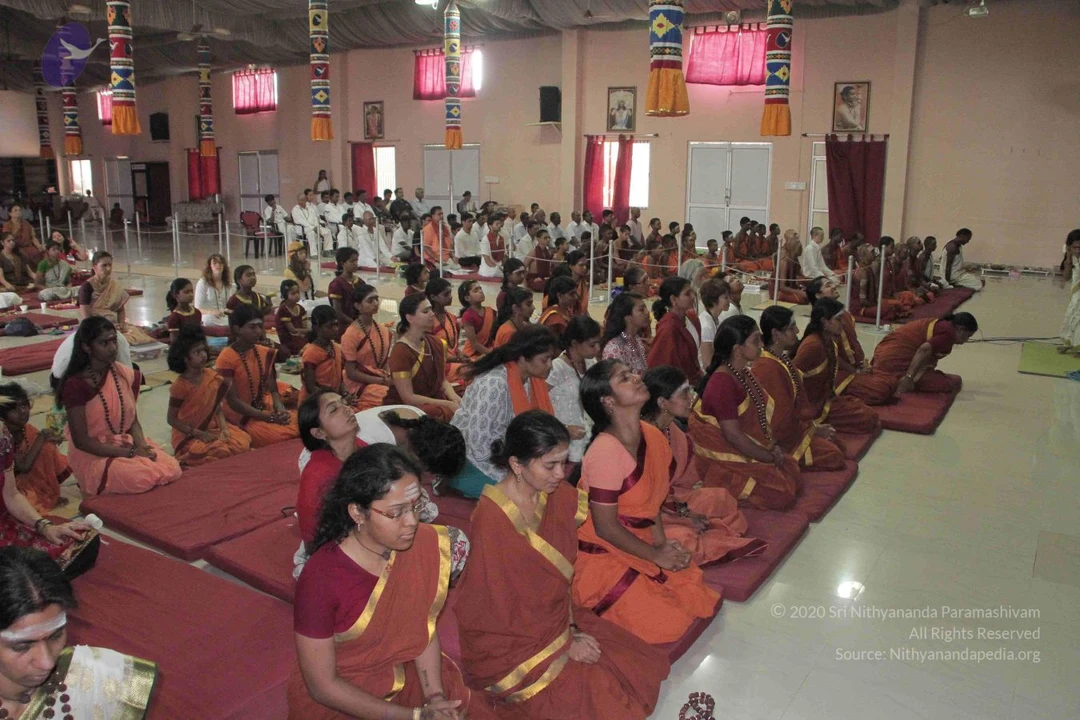
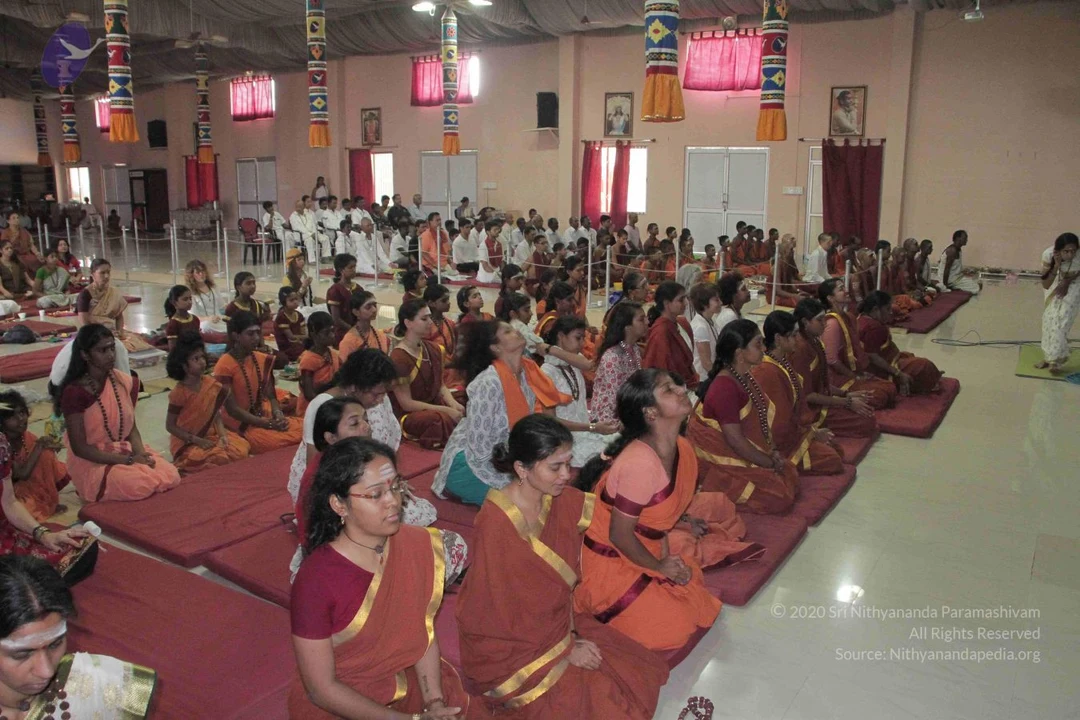
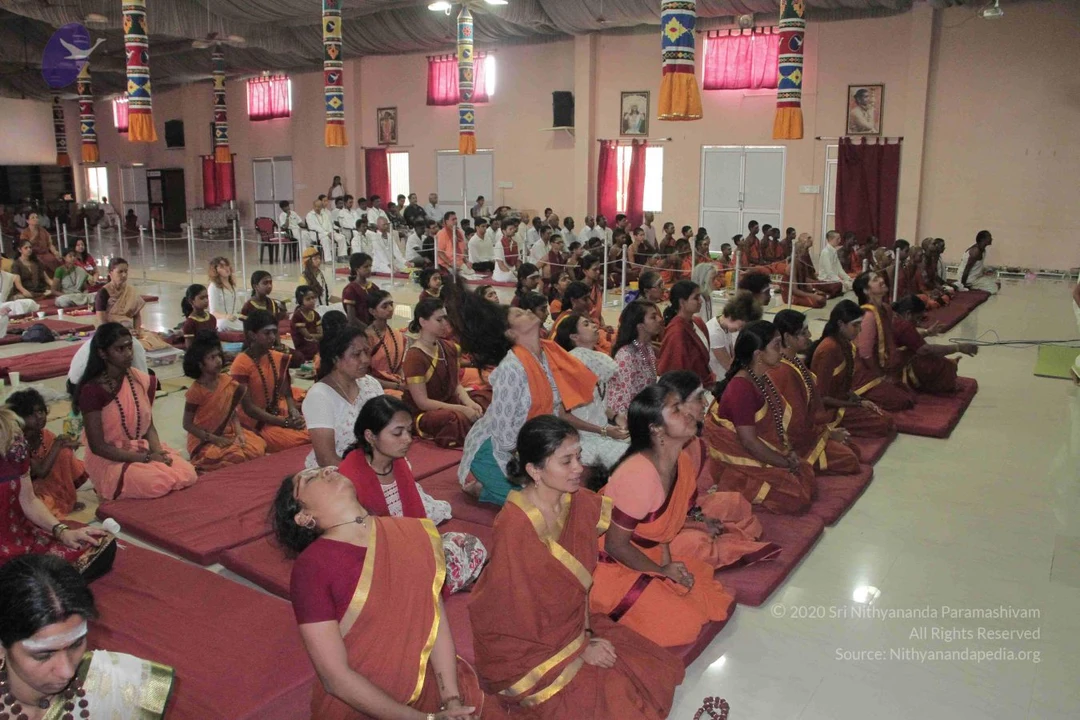
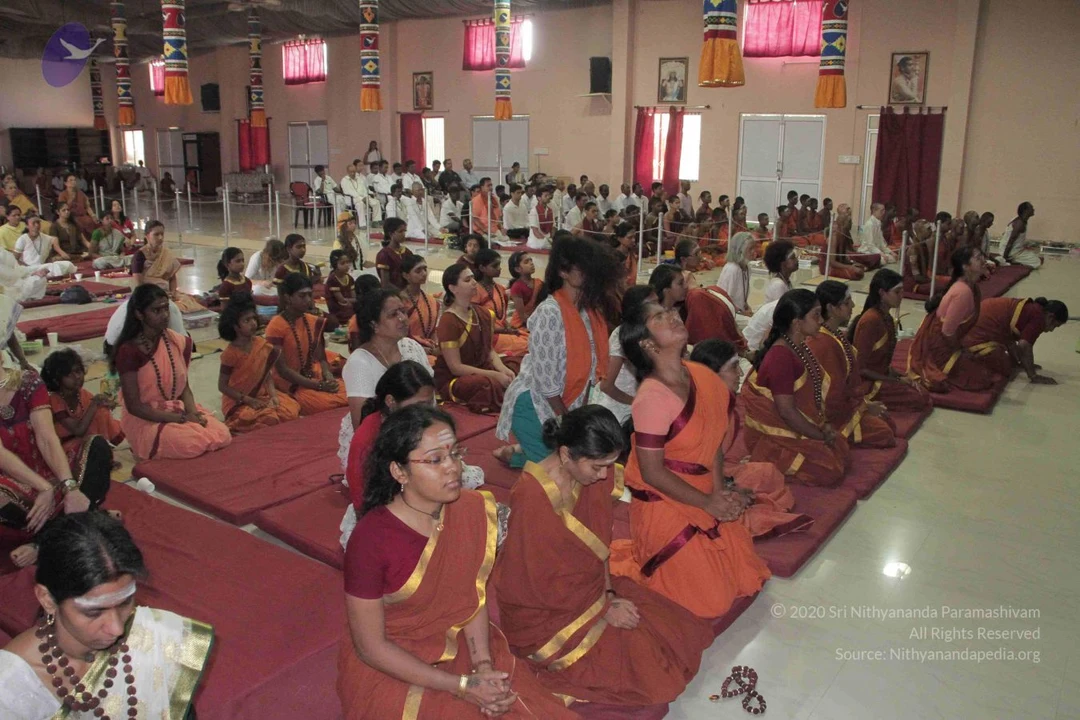
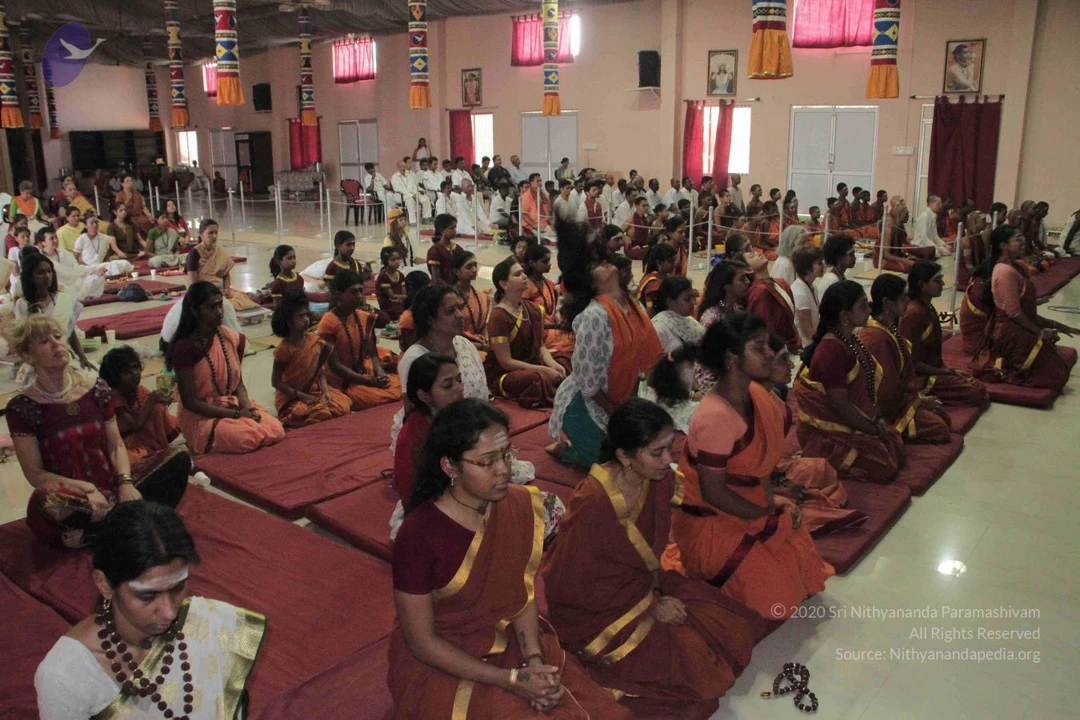
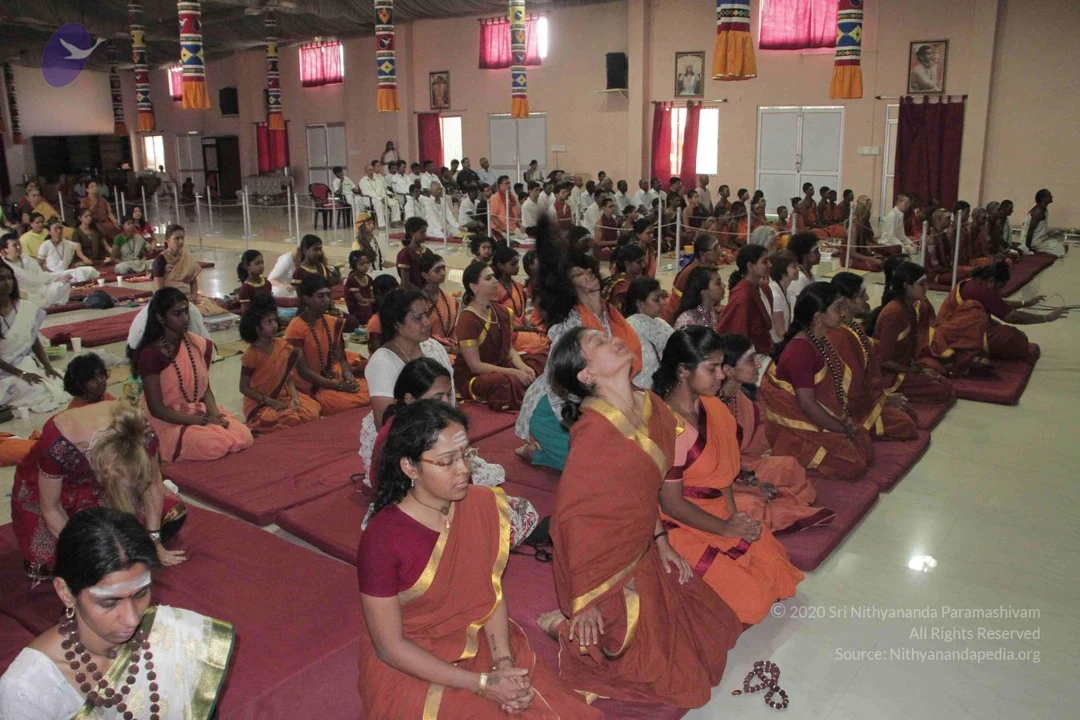
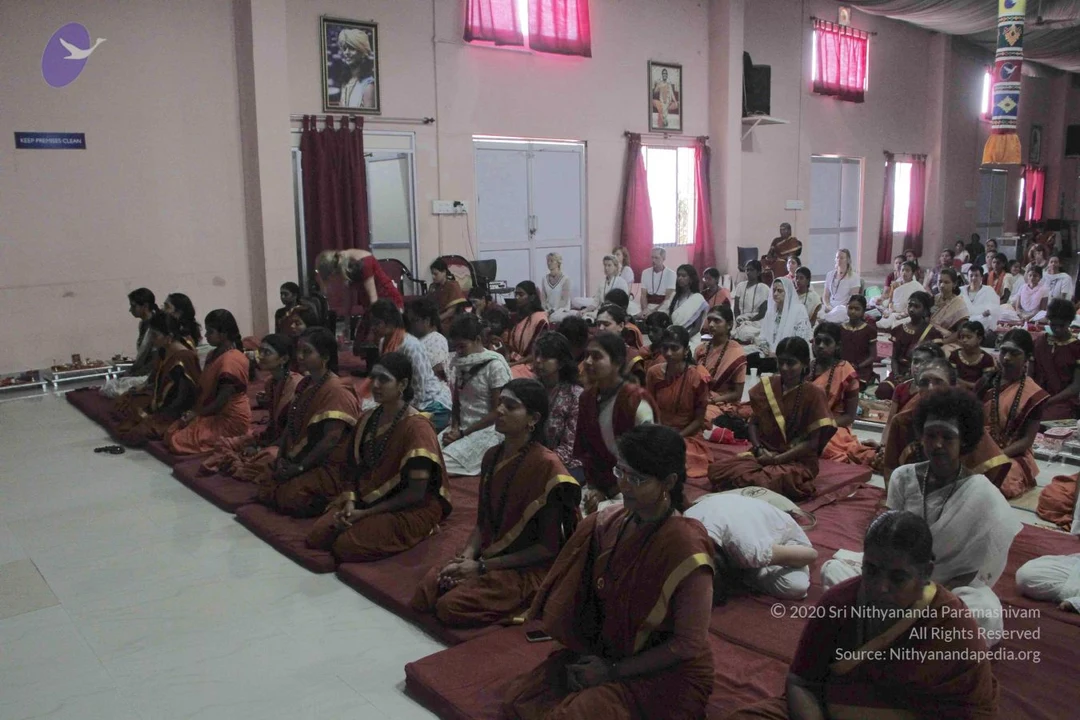
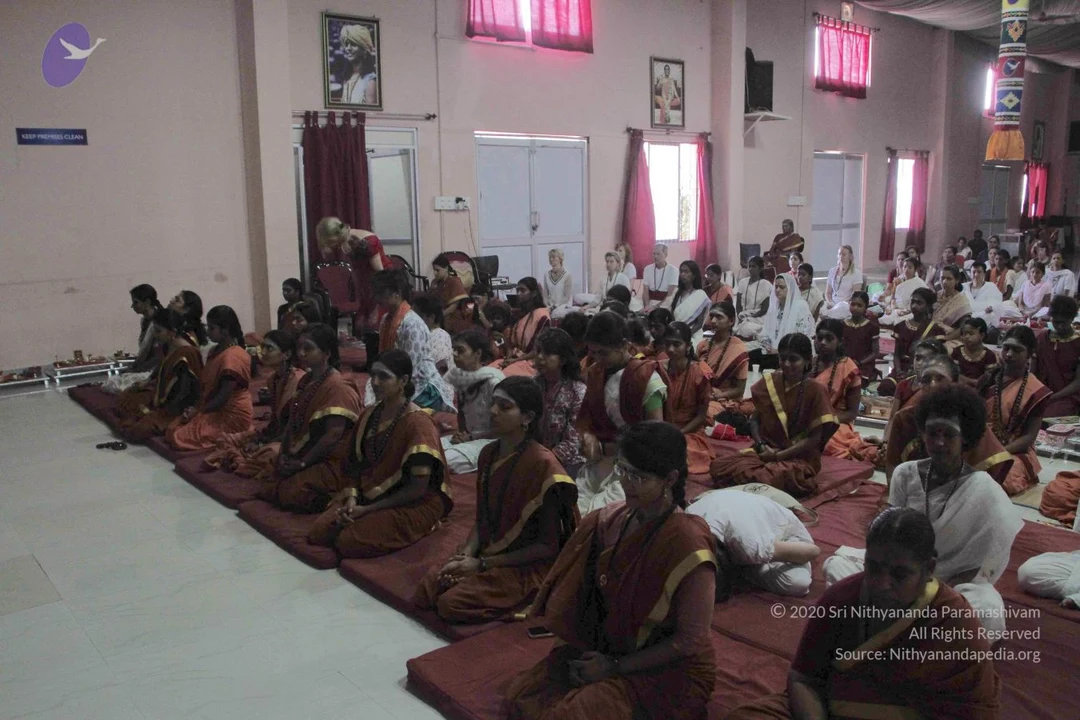
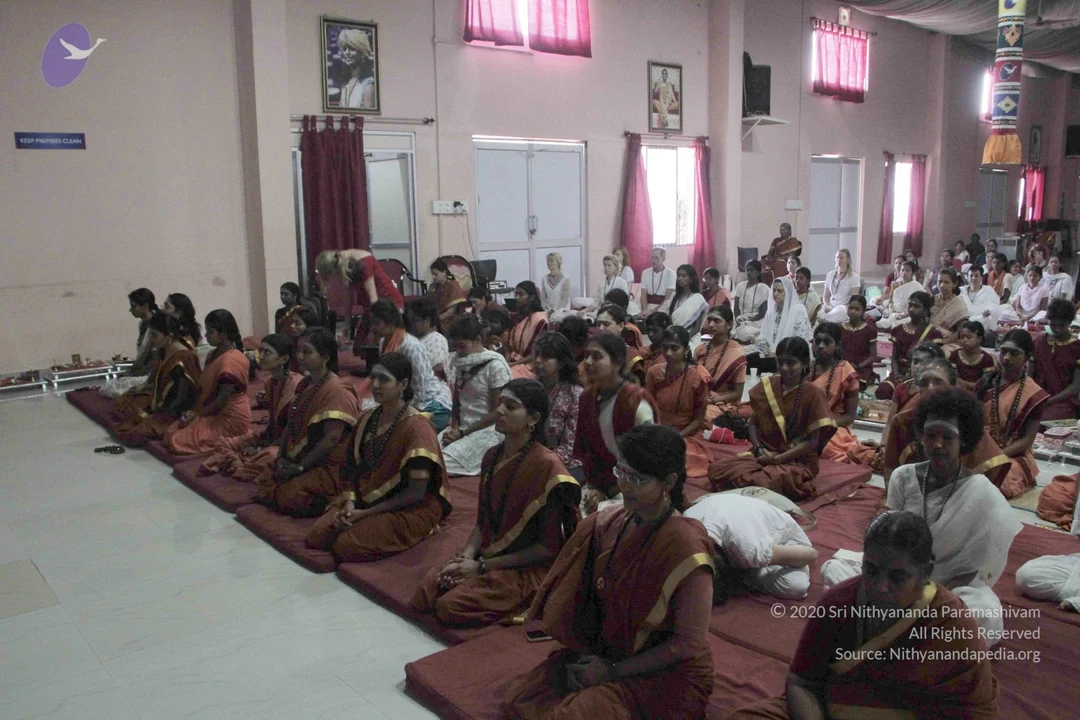
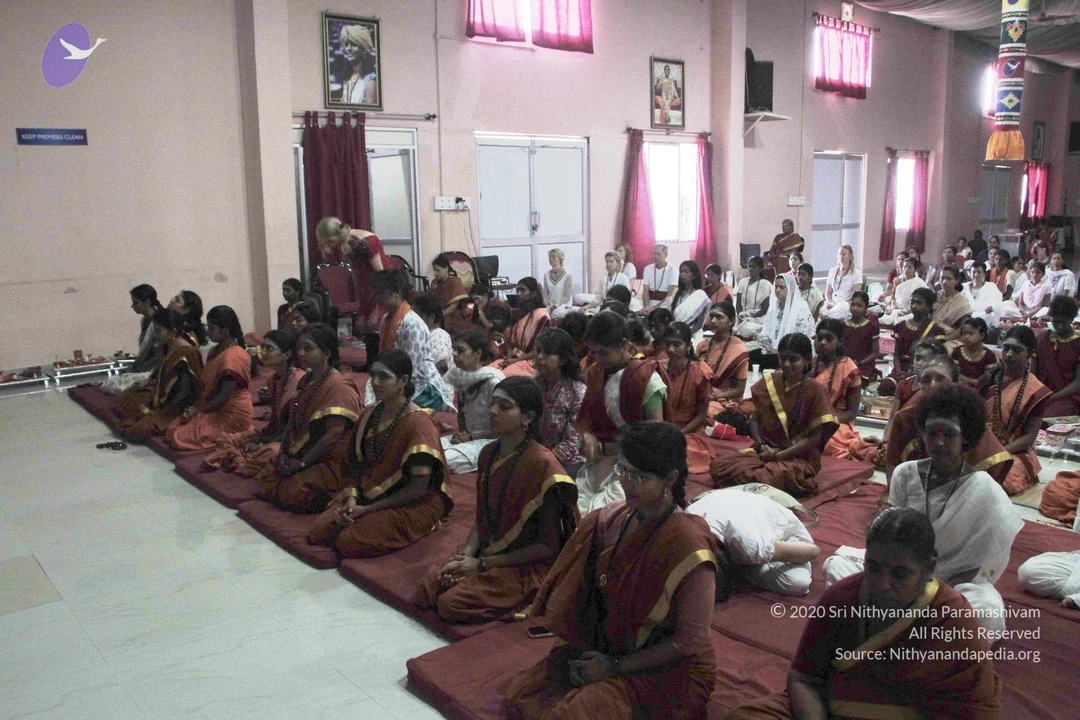
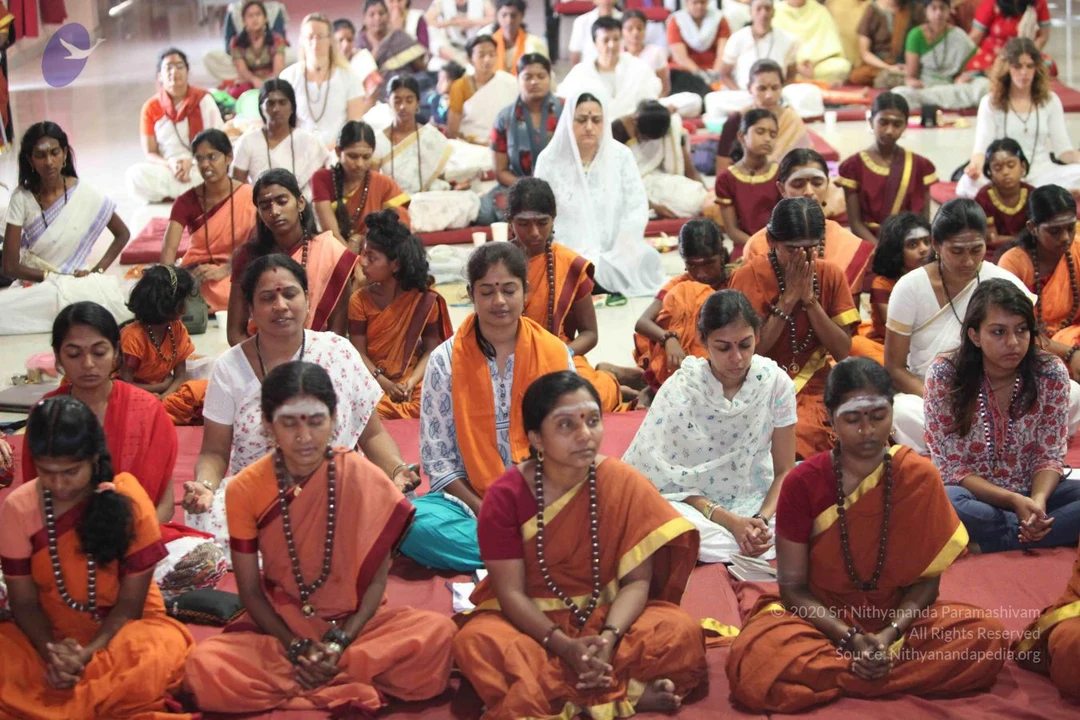
A large seated group meditates in a hall on red mats. Foreground women wear saffron-orange saris with maroon or yellow borders and long rudraksha malas, with white tilak marks on their foreheads; several have hands pressed in prayer. Behind them, women in white saris and white kurtas sit with eyes closed. A figure in a white sari sits near the centre background. The scene shows a satsang-style meditation with devotees sitting in rows. No individual is identified as a person in this image.A large seated group of devotees sits on red mats during a meditation session in a bright indoor hall. Most wear orange and maroon robes with gold borders, rudraksha malas, and white forehead markings. Several women in white saris and white shawls sit among them, and a woman in a white head covering sits near the centre with hands folded. Many have eyes closed or hands in prayer pose. No a person candidate is clearly visible in the frame.A photograph of a large seated congregation in a hall with pale pink walls and red curtains. Rows of devotees sit cross-legged on red floor mats, many women in orange and saffron saris with rudraksha malas, some in red, white and pink outfits, with a few men in white kurtas seated at the back. The attendees face forward toward the front of the hall, appearing attentive as at a satsang. No clearly identifiable a person figure is visible in the frame.A seated audience fills a bright hall during a satsang, with rows of devotees sitting on red mats and white floor-level cushions. Most wear orange or saffron garments with rudraksha malas, some in red, maroon or white saris and salwar kameez, and several have vibhuti or kumkum on their foreheads. Rope barriers with white posts separate the seating area from a stage at the front, and red curtains hang on the back wall. The people face forward toward the front of the hall, attentively listening.A large seated congregation fills a bright hall during a satsang, with devotees sitting cross-legged on red floor mats behind a row of metal stanchions. Most wear saffron-orange garments and rudraksha malas, some with yellow borders; several women wear white or red blouses, and some men wear white kurtas. Devotees sit in meditative stillness, eyes closed or lowered. Red curtains hang on the back wall. No clearly identifiable a person is visible in the foreground, and the front of the hall is out of frame.A photograph of a large hall where rows of women in orange and saffron saris with gold borders and rudraksha malas sit cross-legged on red floor cushions with their hands folded, facing forward in meditation or satsang. The woman in the foreground on the left wears red-framed glasses and a white tilak on her forehead; others wear red blouses and orange garments. Behind them, more seated devotees and standing attendees in white fill the room. Red curtains, bunting and two framed portraits hang on the pale walls, and a few people stand near the back.

Sarva-Darshan
13 photosSource gallery
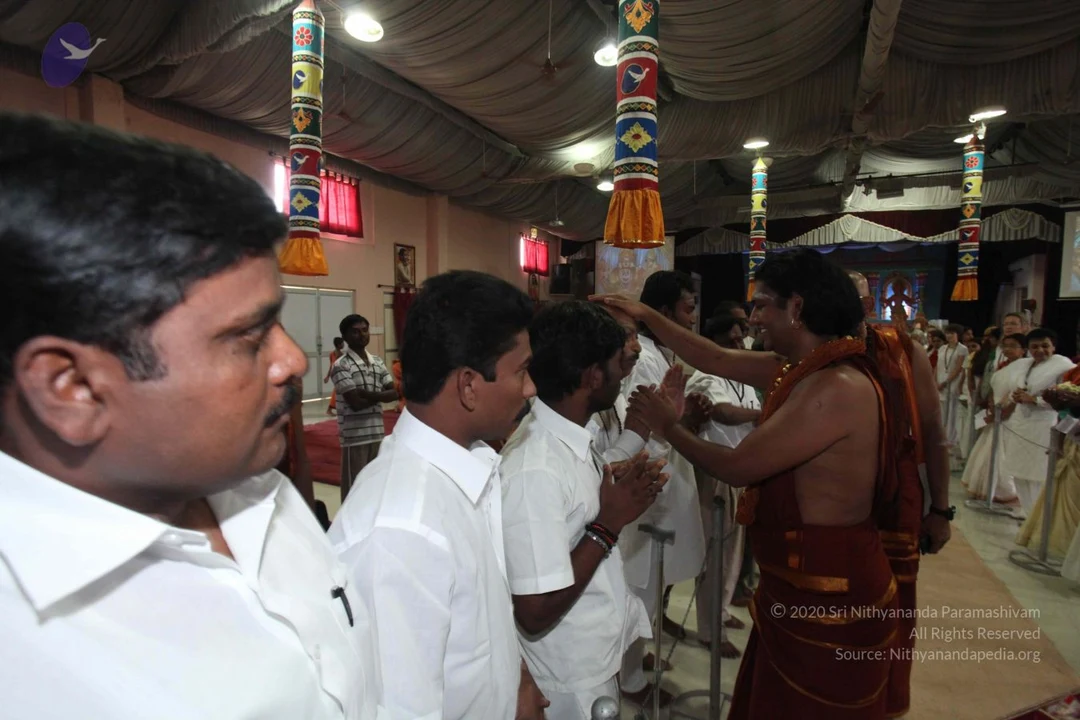
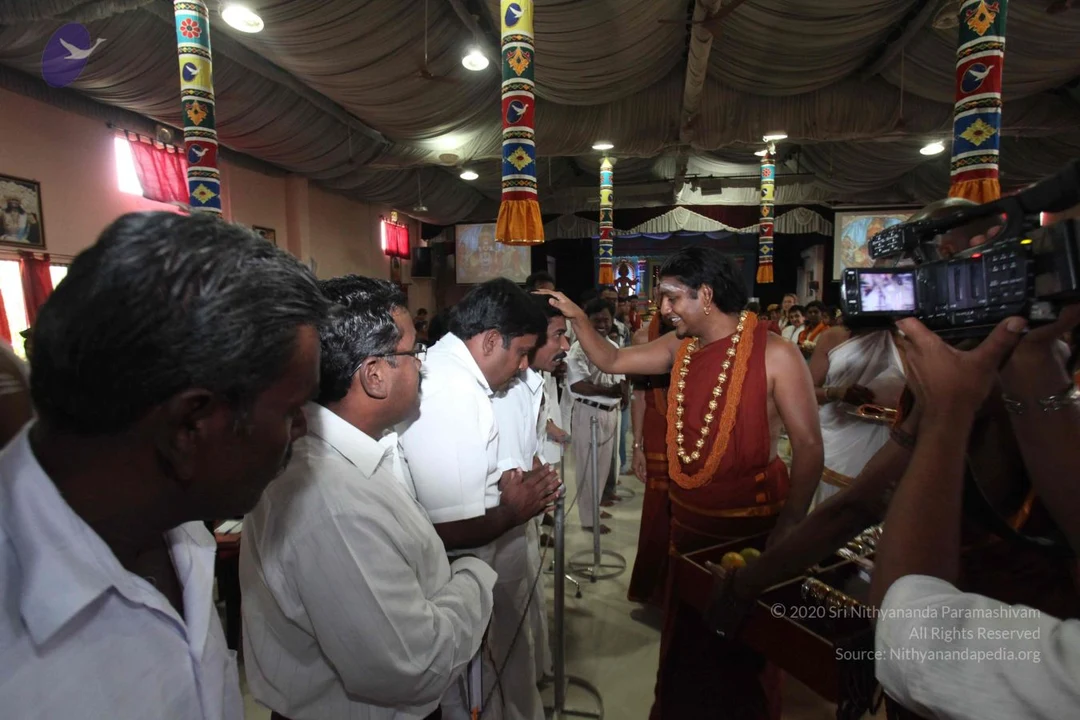
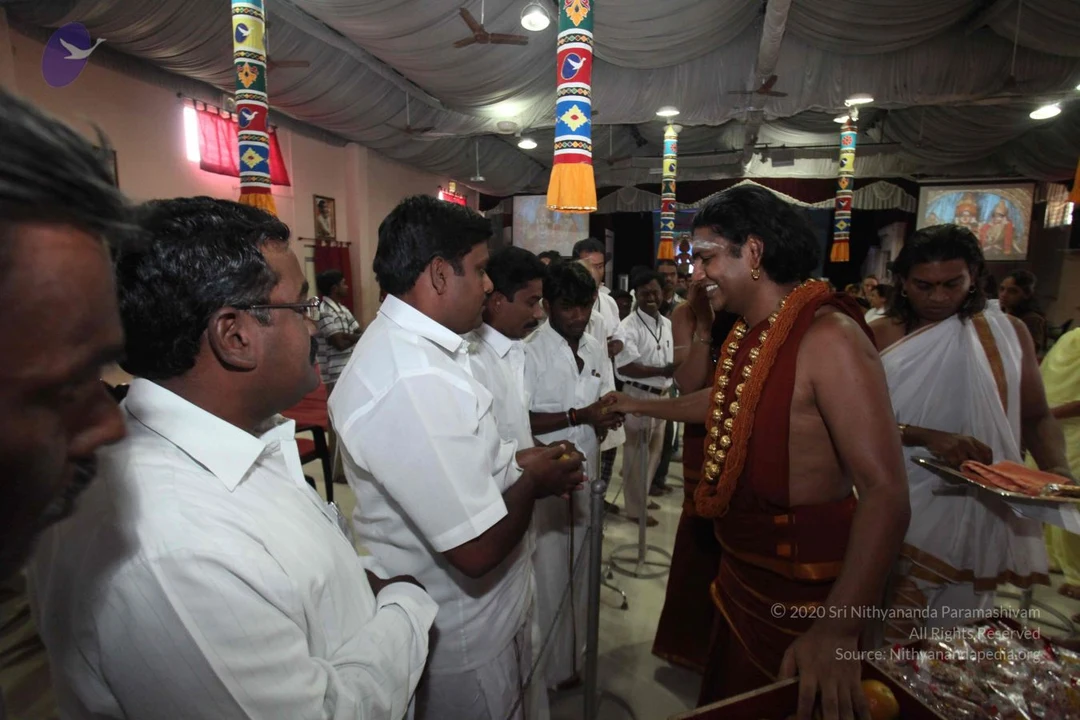
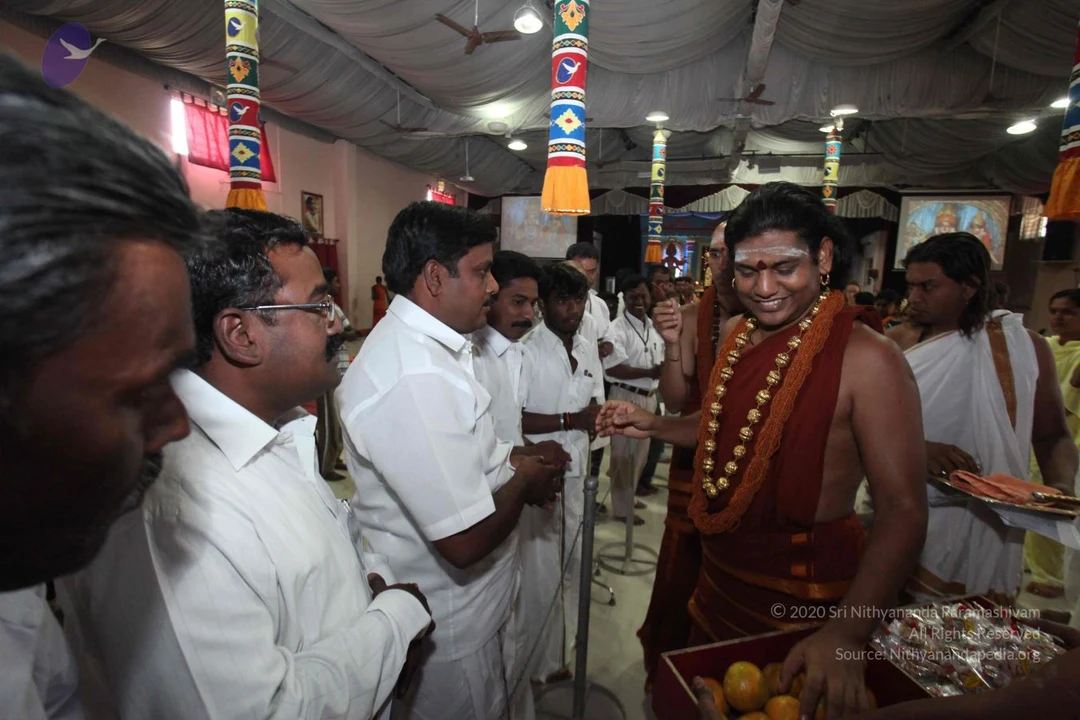
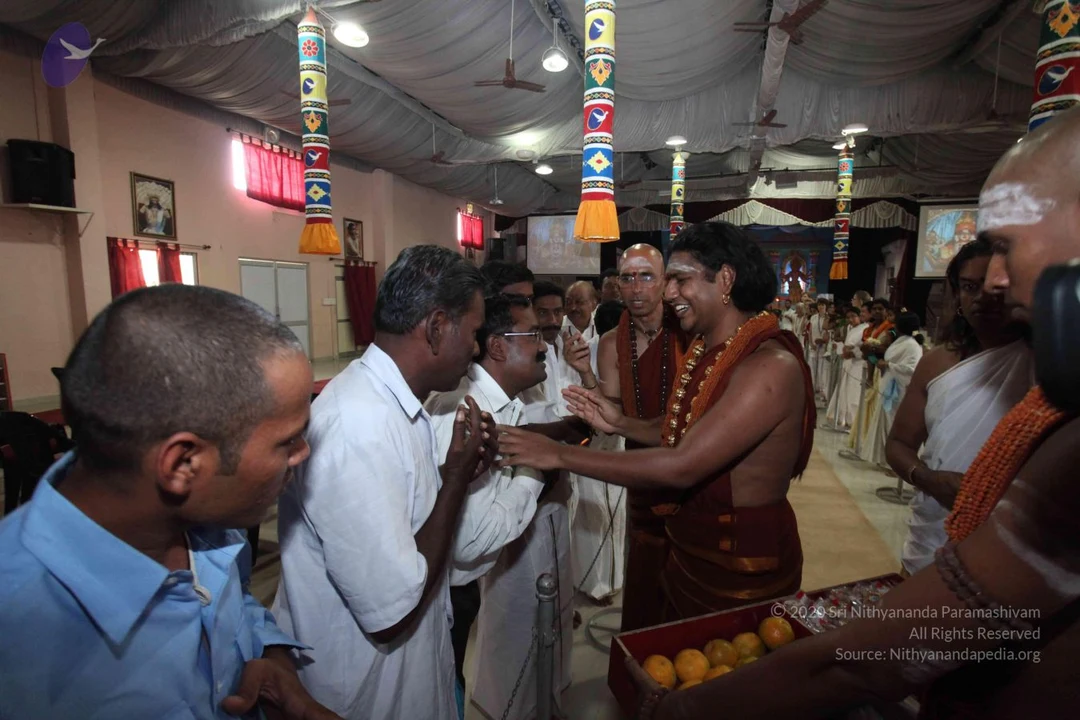
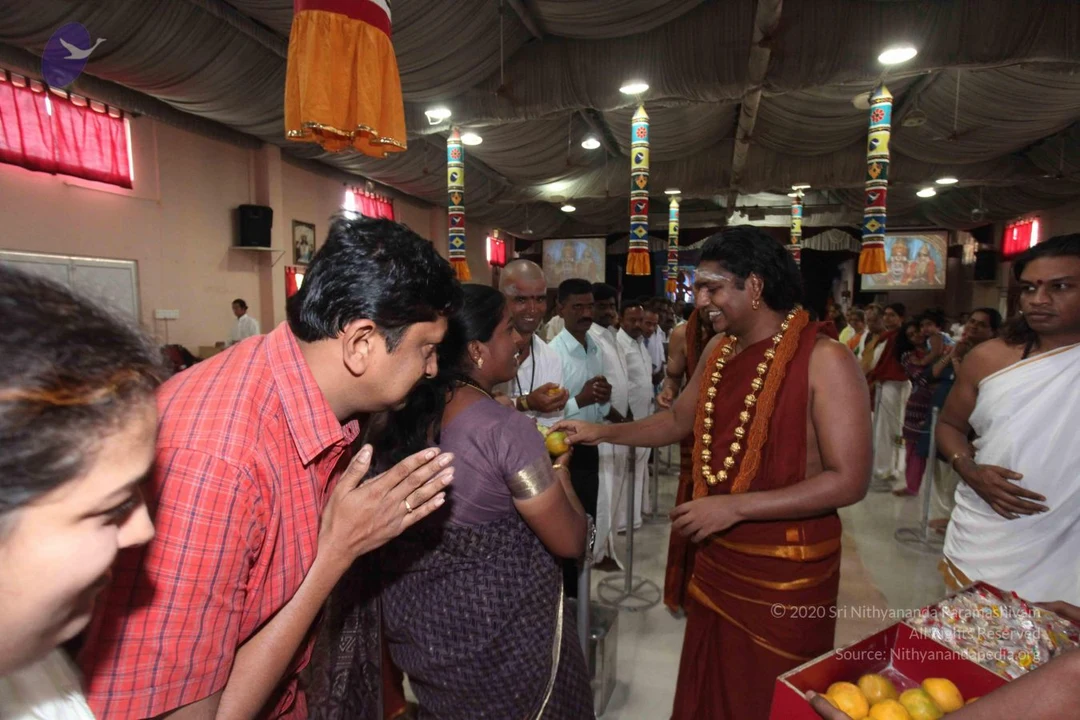
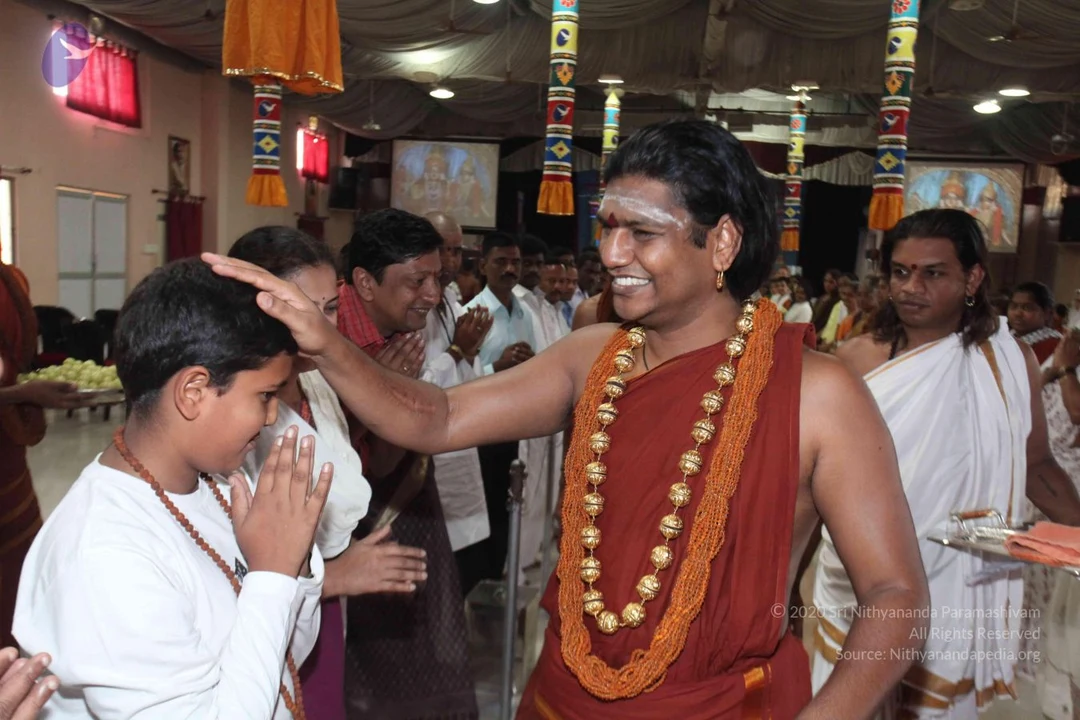
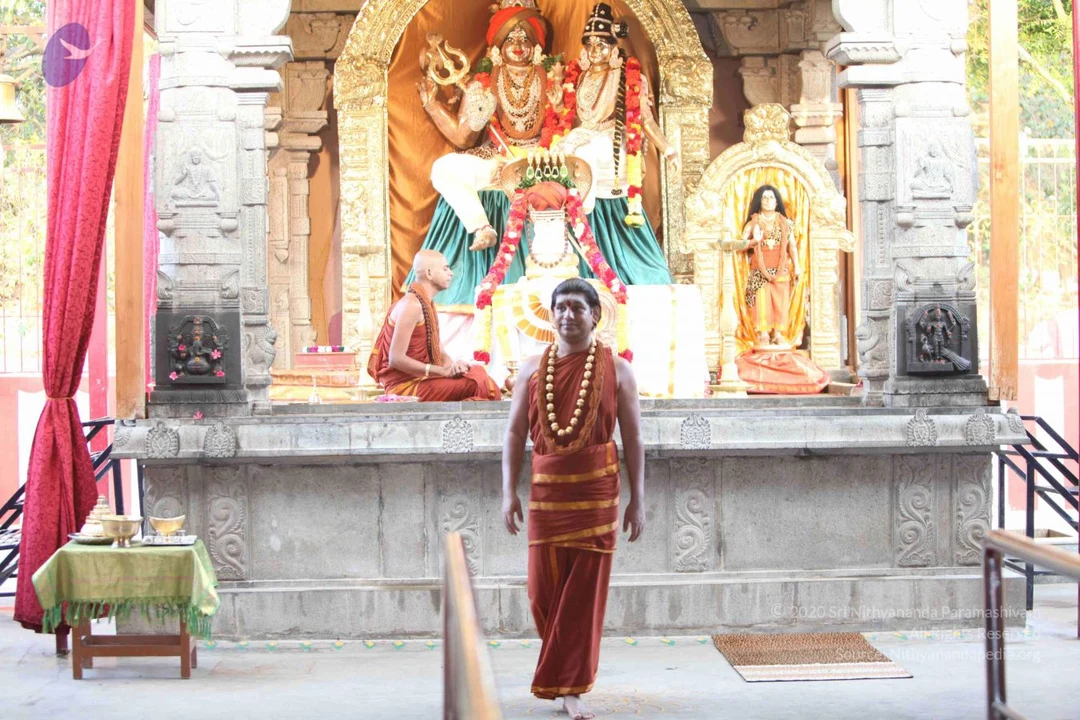
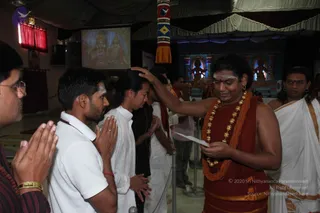
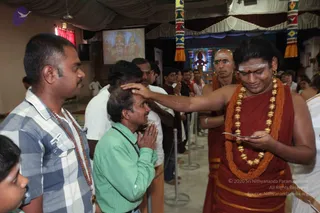
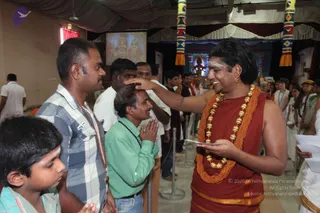
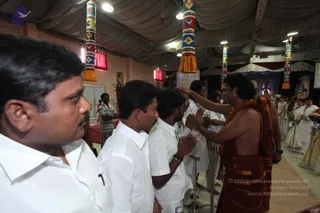
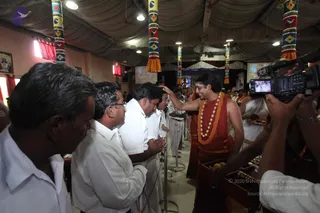
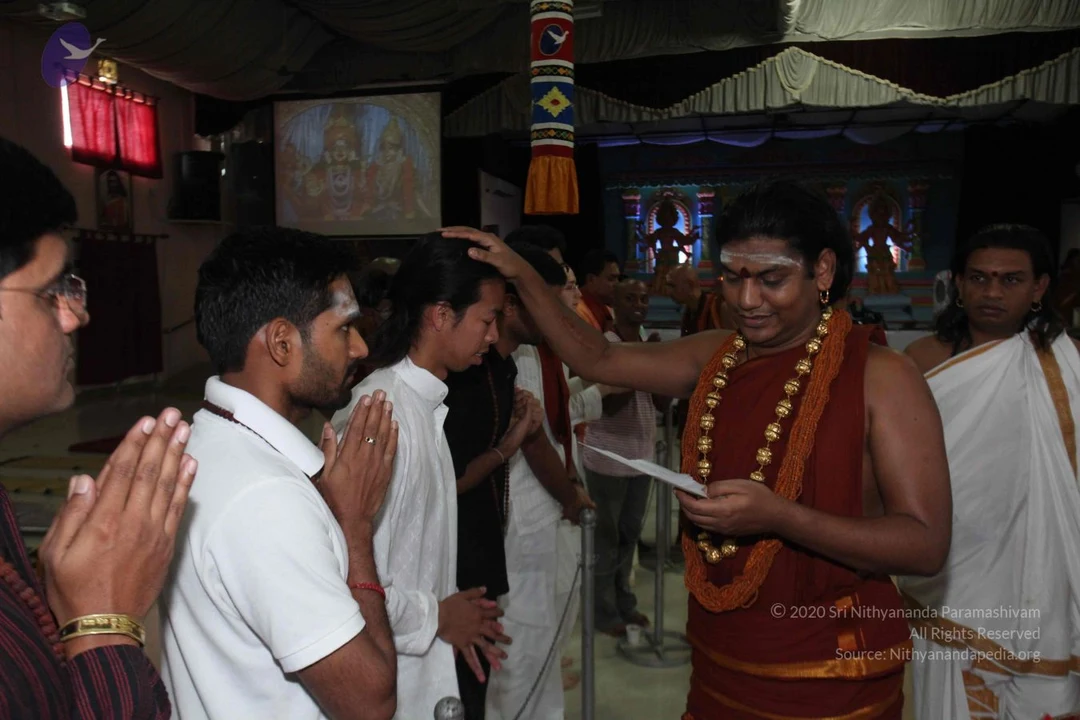
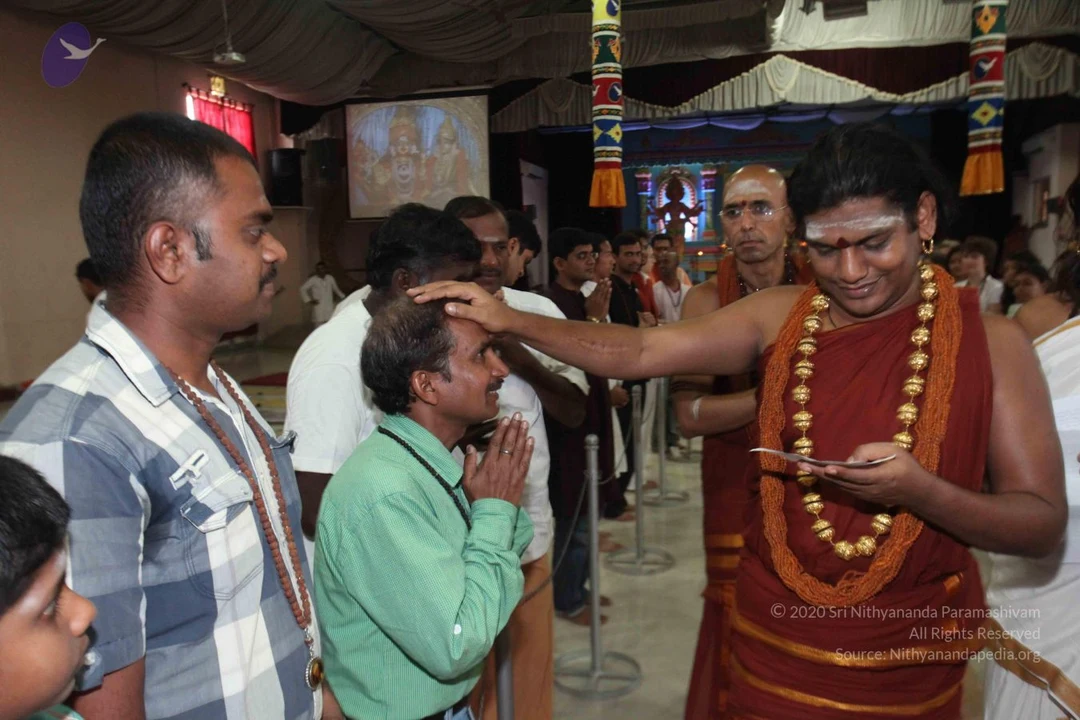
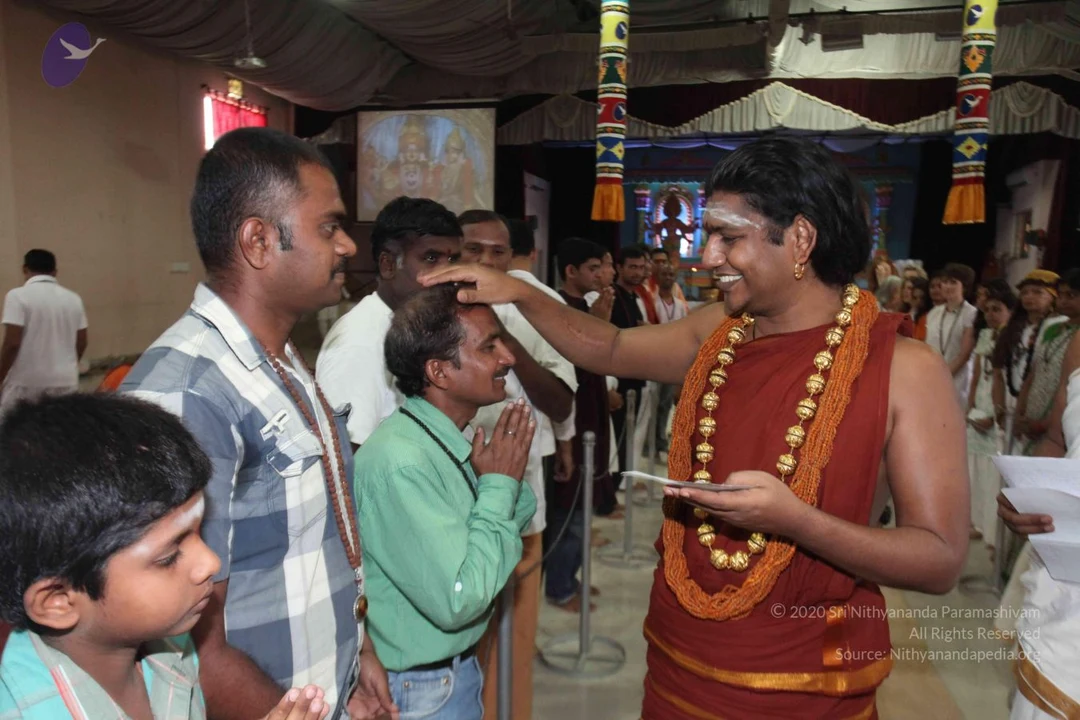
Indoor ritual initiation in a hall with a stage backdrop, gold-framed throne-like seat and a projected screen showing deities. A shaven-headed sannyasi in red-brown dhoti with a gold-bead necklace and white tripundra marks places his hand on the head of a man in an orange kurta with a red shawl. Beside them stand another man in a light-blue shirt, a man in a striped red-and-white shirt with hands folded in prayer, and a shaven-headed figure in white with a long white bead necklace. Other sannyasis in red-brown robes stand in the background, and a tray of fruit sits at lower right. The figure in red-brown with the gold necklace appears to be the presiding teacher, although the image does not confirm this.Photograph of a ritual initiation in an ashram hall. A man in a rust-red robe with a gold-bead necklace and an orange shawl stands at right, applying a hand to the head of a devotee, with white sacred ash marks on his forehead and an orange-and-white cloth in his left hand. Several devotees in white and black clothing stand in a line with palms pressed together or hands folded, waiting for the blessing. Behind them are a white-clad attendant at right, a screen showing a deity image, a red curtain, and colourful painted deity panels on the wall.A photograph of an indoor satsang hall with draped white and red fabric ceiling and colourful striped hangings. A robed figure in deep red-orange cloth and a heavy gold bead necklace with orange shawl stands at right, applying a hand to the forehead of a seated devotee with folded hands in a green collared shirt. The figure wears white and orange tilak marks on the forehead and holds a small card in the other hand. Nearby, a man in a blue checked shirt with rudraksha beads watches, and other devotees in white and dark clothing stand behind. A projected screen shows a devotional image, and a decorated shrine with a deity murti is visible in the background. A small ashram-style logo appears at top left.A photograph inside a decorated hall with a draped cloth canopy and colourful striped pillars. A man in a rust-red sannyasi robe with a thick orange-and-gold bead necklace and a white forehead mark touches the forehead of a devotee with his right hand while holding a small paper in his left. The devotee, in a checked blue-and-white shirt, stands with hands near his body, and a man in a green shirt beside him presses palms together in namaste. Other devotees in white and in sari stand behind, and a framed picture of deities hangs on the wall above. Several people are visible in the background.A photograph of a satsang hall under a draped cloth ceiling with tall decorated pillars in red, yellow and blue. In the foreground, several men in white shirts stand in a line with palms pressed together in namaskar. A figure in an orange-red dhoti and bare chest, wearing a red-orange shawl and a beaded mala, stands at right placing a hand on the head of one devotee in an initiation-style blessing. Other white-clad devotees line the background, and a stage with a deity or painted backdrop is visible behind. A decorated pillar and a framed portrait appear at left.A photograph inside a decorated hall with a draped fabric ceiling and tall columns wrapped in colourful patterned cloth. A bare-chested man in a red-orange cloth with a saffron-orange shawl and a multi-strand orange-and-white garland stands at right, touching the forehead of a devotee in a white shirt. Several men in white shirts and dhotis stand in a row at left, hands pressed together or watching, and a camera operator films the scene at the right edge. Framed pictures hang on the wall behind and a red curtain is visible at left. A wooden tray with fruit sits near the standing figure. a person: the standing figure in the orange-red cloth and garland of the blessing is a candidate, shown with saffron-orange ceremonial clothing and a garland.

Temple-Tour

17 photosSource gallery
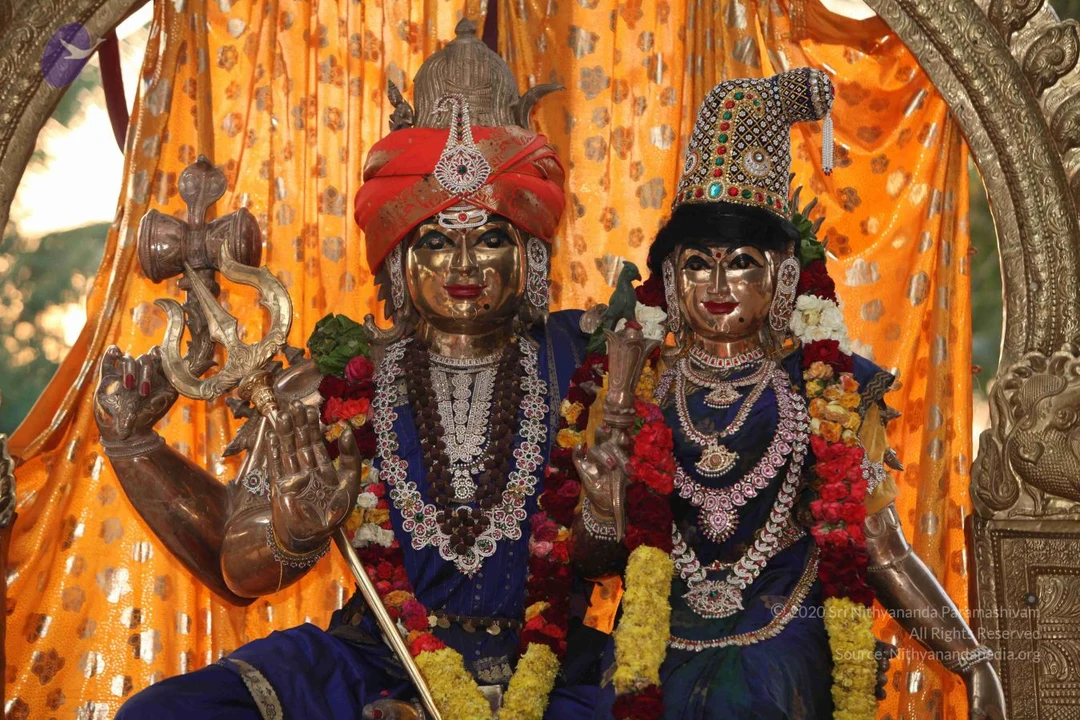
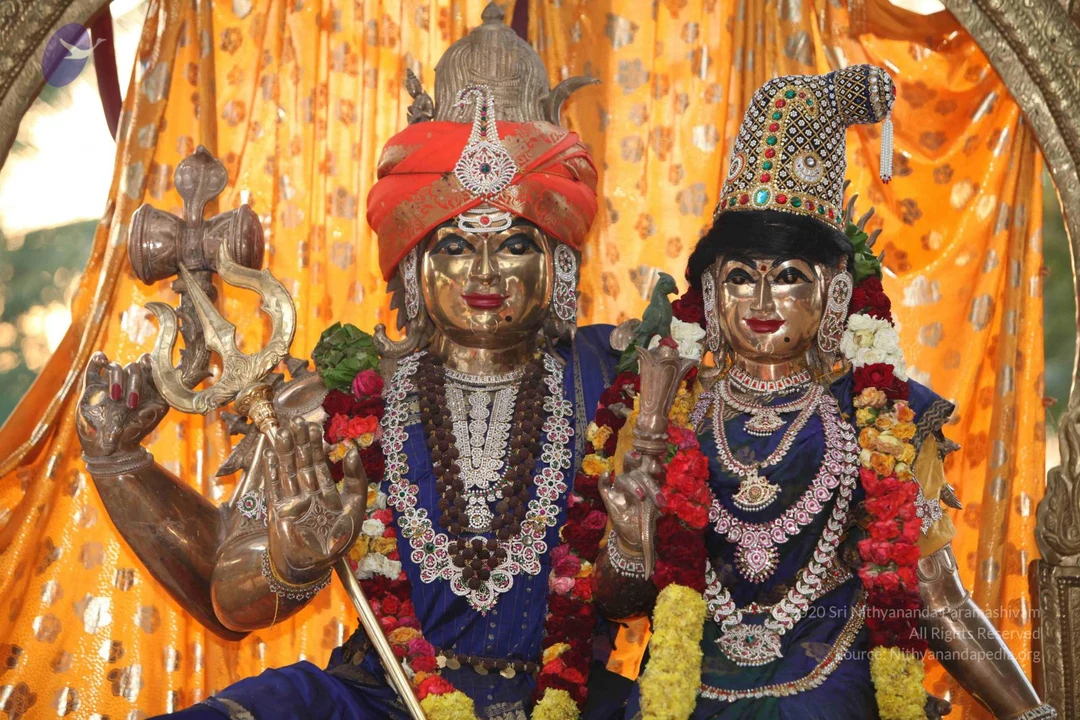
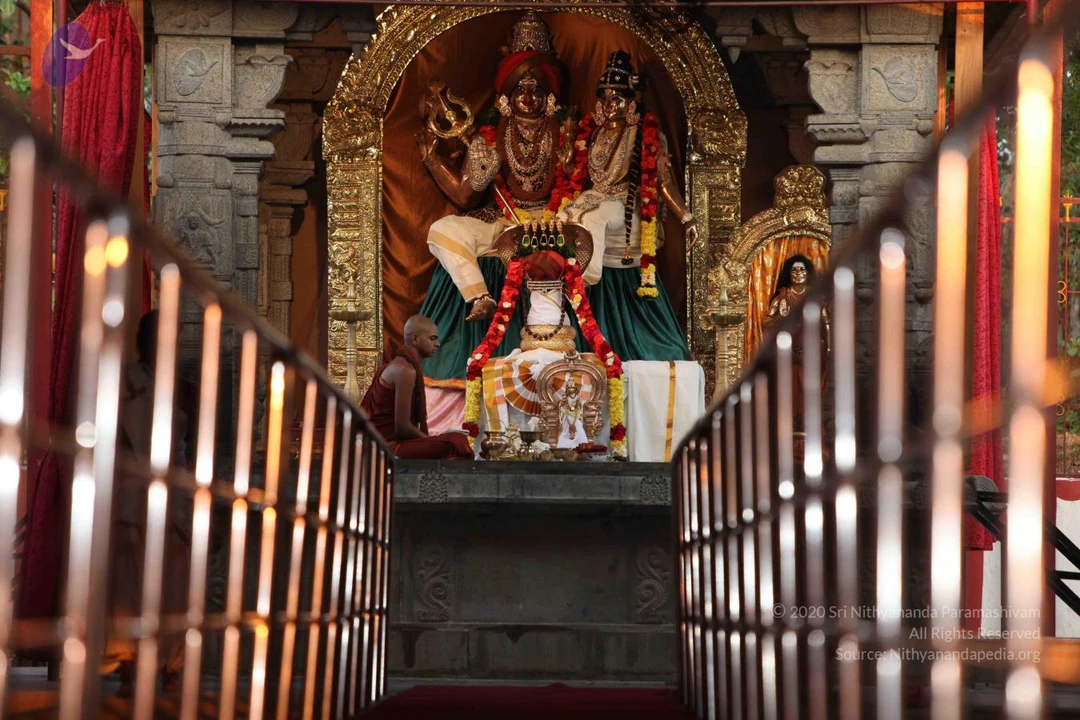
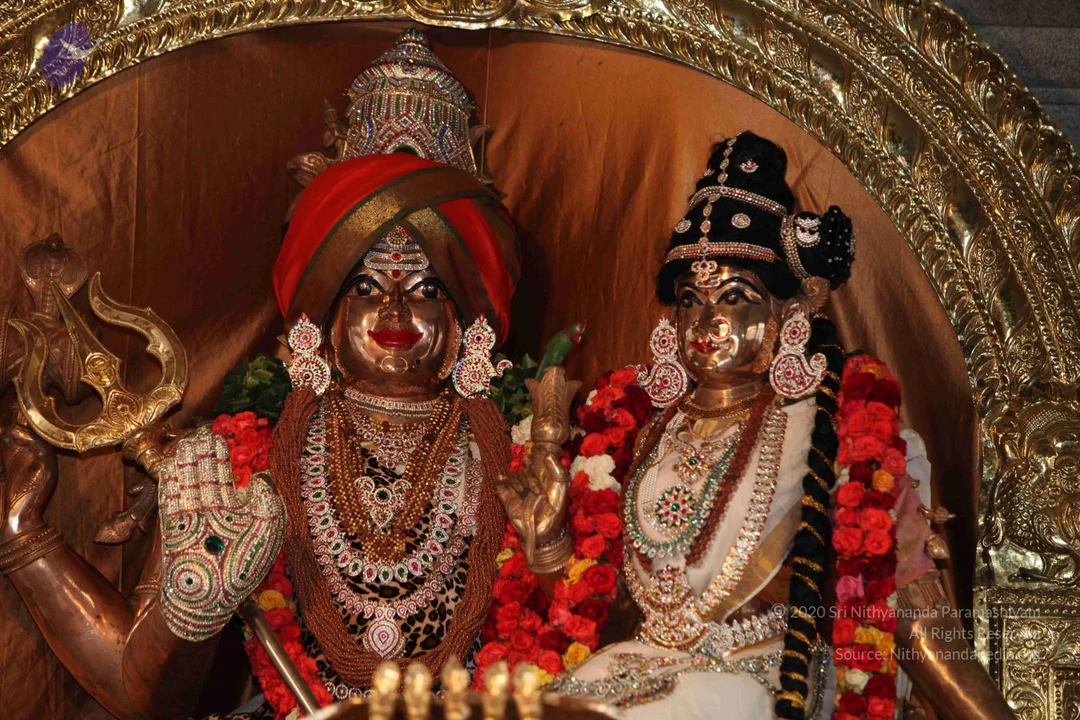
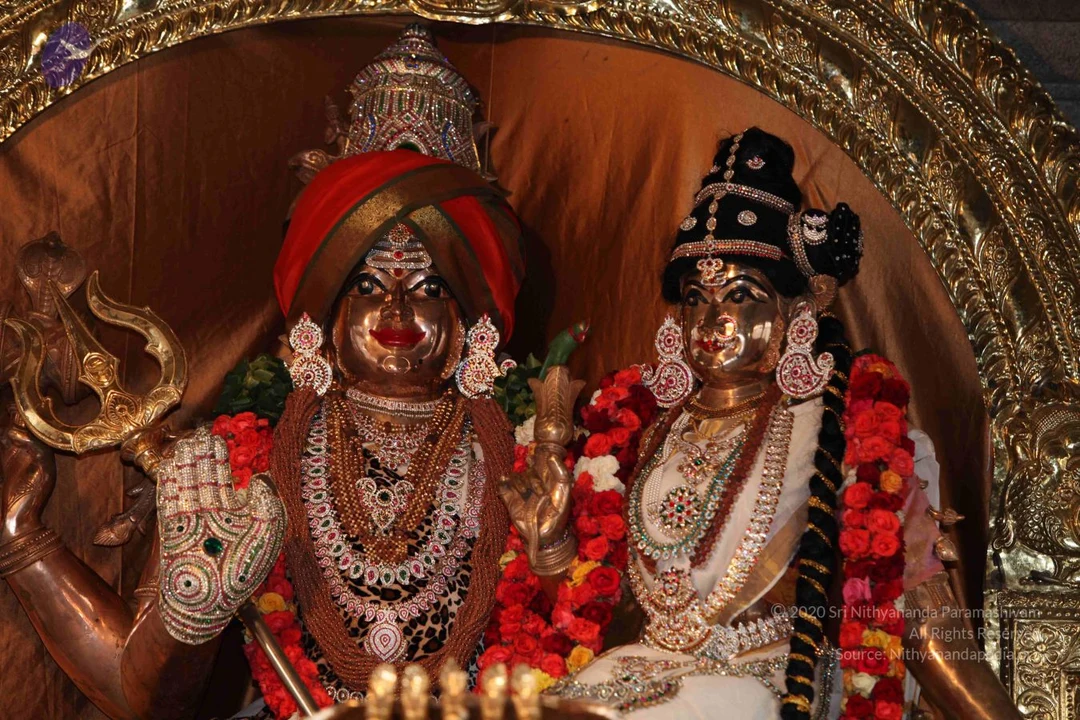
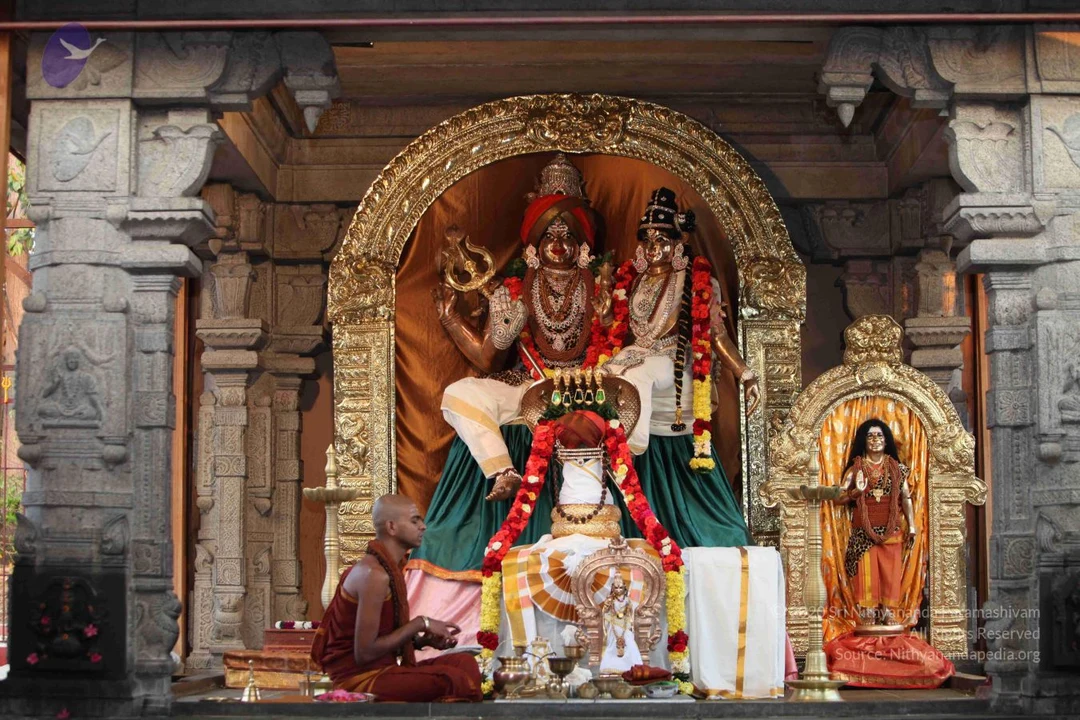
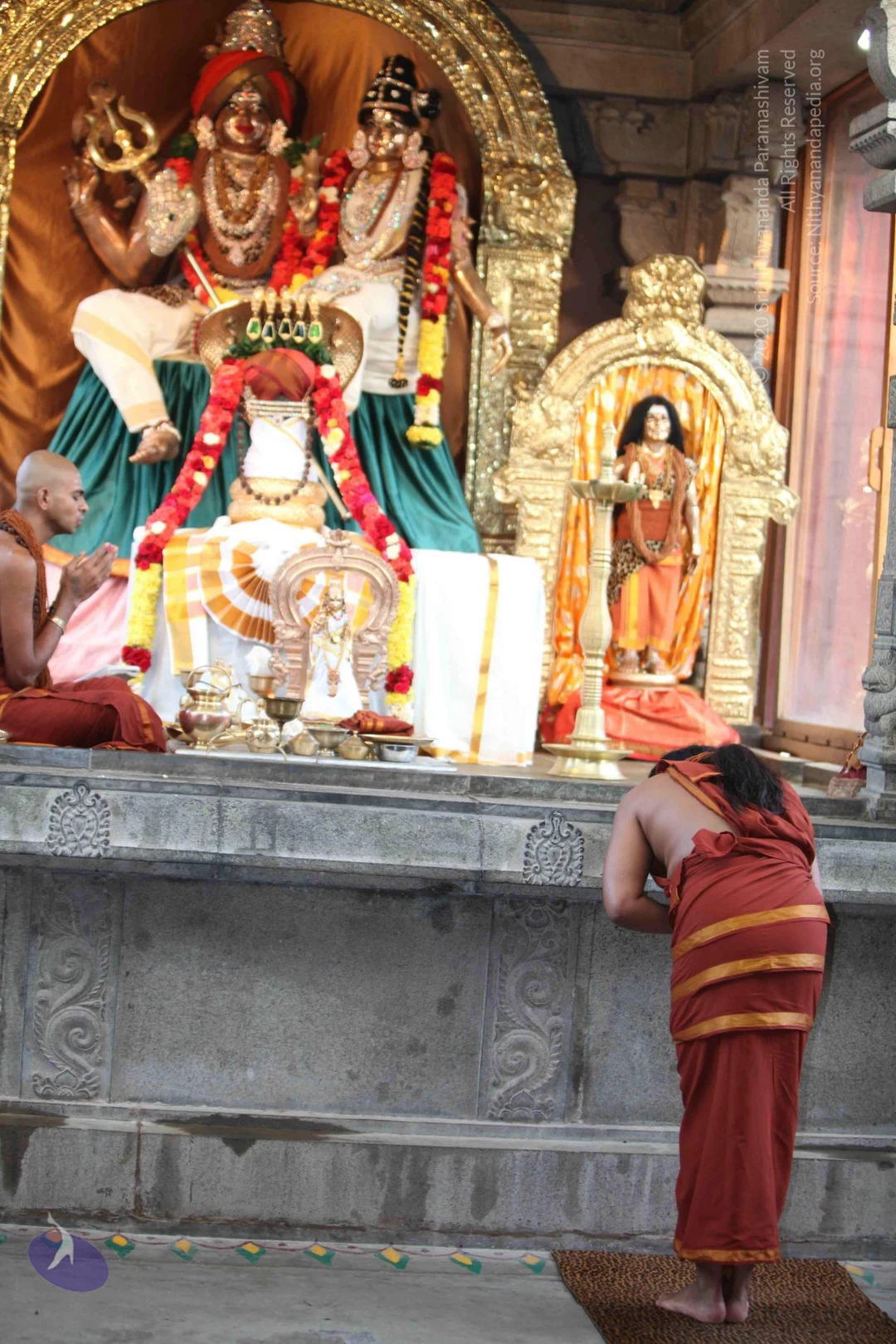
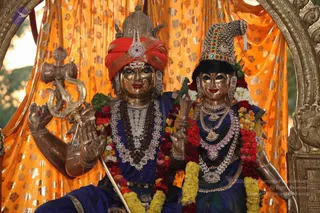
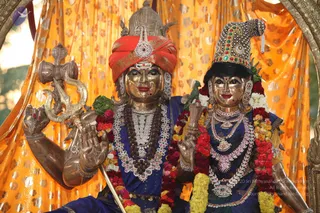
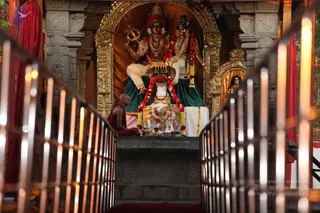
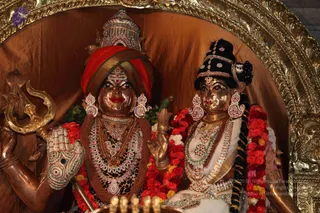
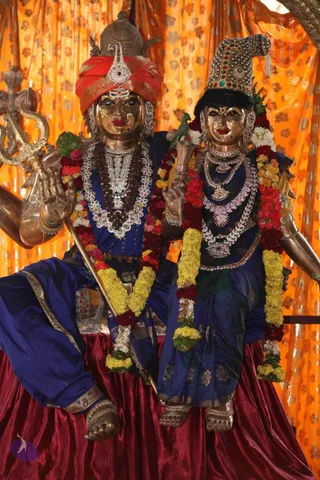
A hazy orange sunrise over a flat, dusty plot of land. The pale sun glows low in a peach sky above a line of trees and utility poles. In the foreground, dirt tracks and piles of rubble lie beside the orange arm and bucket of a construction excavator on the left. A leafy branch frames the right edge, and a small white bucket sits near the bottom right. No people are visible.Photograph of a pair of golden-faced metal murti of a male and a female deity seated side by side against an orange and gold patterned cloth backdrop with an ornate golden arch frame. The male figure wears a red turban, blue garment, rudraksha mala and a silver necklace, holding a trident in his raised hand. The female figure wears a jewelled crown, blue sari, layered gold and silver necklaces and a red and white flower garland. Both are adorned with marigold and rose garlands. No physical people are present.Two golden-faced deity murtis seated side by side against an orange and gold patterned cloth backdrop. The figure on the left, a male deity, wears a red turban with a jeweled ornament, a brown rudraksha mala, and blue clothing; he holds a trident in one raised hand. The figure on the right, a female deity, wears an ornate jeweled crown with red and green stones, layered white and gold necklaces, earrings, and a blue garment, and holds a small object in one hand. Both are draped with red and pink flower garlands and yellow marigolds. The scene appears to be a festival or decorated ceremonial display of murtis.A photograph of a temple shrine with a large deity murti group framed by a golden arch, with a trident-bearing figure and a consort figure wearing garlands of red and yellow flowers. In front, a central seated figure in white and orange ritual cloth sits on a stone platform behind a metal railing with lit oil lamps along both sides. A shaven-headed monk in maroon robes sits cross-legged at the left of the platform. Red curtains hang on the sides and a small kalasha-like brass vessel with flowers rests in front of the altar.A photograph of two bronze-toned deity murti seated side by side in a gold-framed niche with a copper-coloured backdrop. The figure on the left, with a wide face and a red turban, holds a trident and wears layered gold and jewelled necklaces, rudraksha-like beads and a sparkling bejewelled hand covering. The figure on the right wears a black crown with jewelled ornaments, earrings, a white silk sari with gold border and a long braid. Both are garlanded with red roses and white flowers, and a small green parrot-like leaf decoration sits near the centre. Foreground brass lamps are visible at the bottom.A pair of golden metal murti of a deity couple, one figure holding a trident and wearing a red and gold turban with ornate jewelled garlands, the other wearing a black crown with jewels, a white and gold sari, and large ornate earrings. Both are decorated with red roses, green leaves and multi-coloured jewelled necklaces against a gilded arched shrine backdrop. No human figures are visible; these are statues.

Pada-Puja

42 photosSource gallery
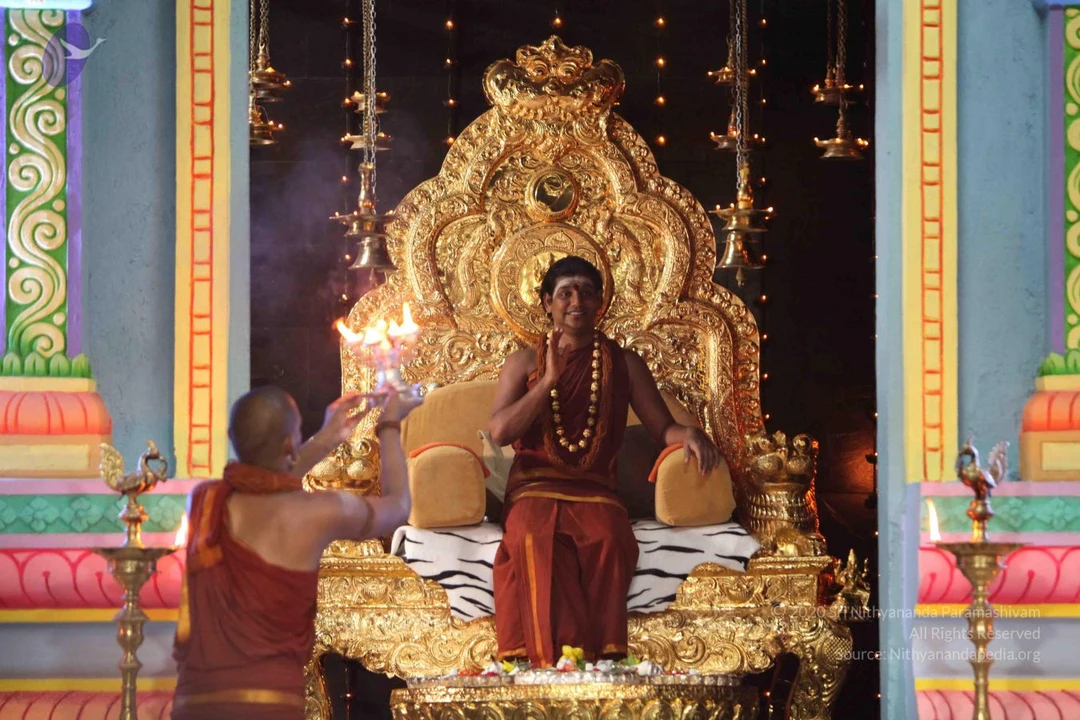
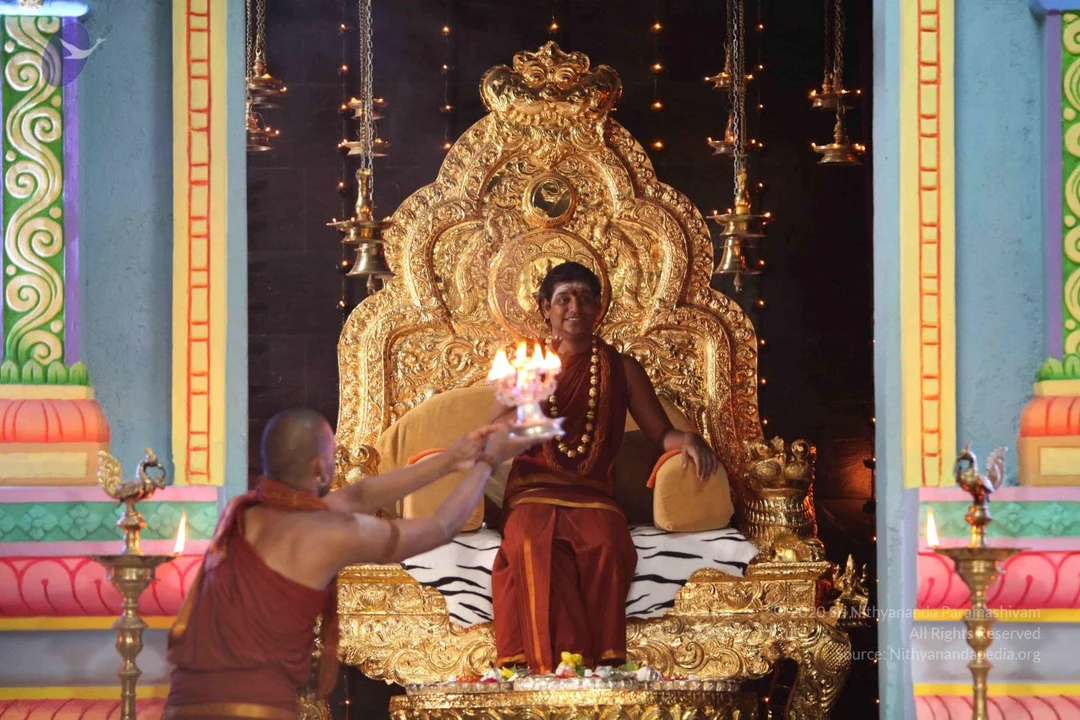
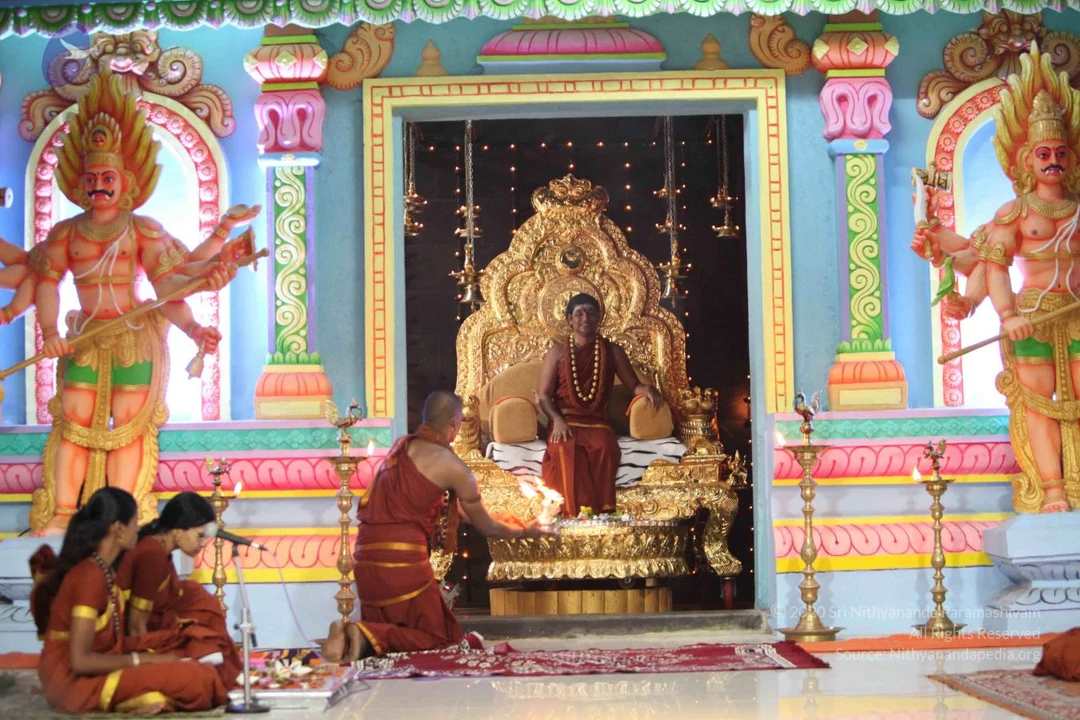
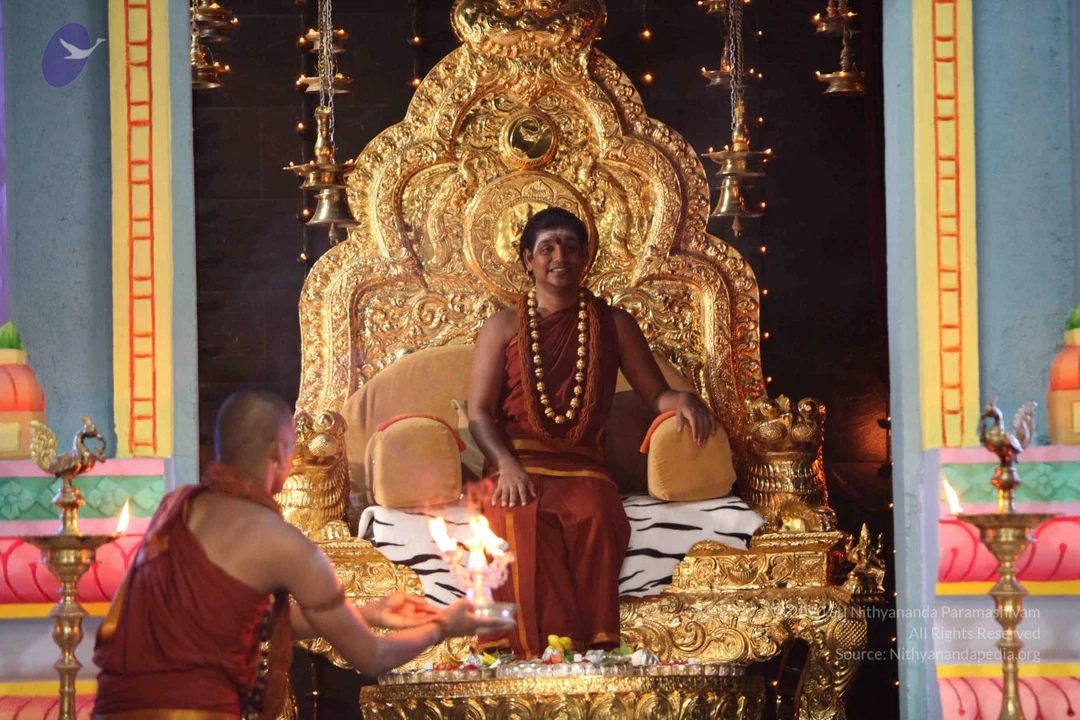
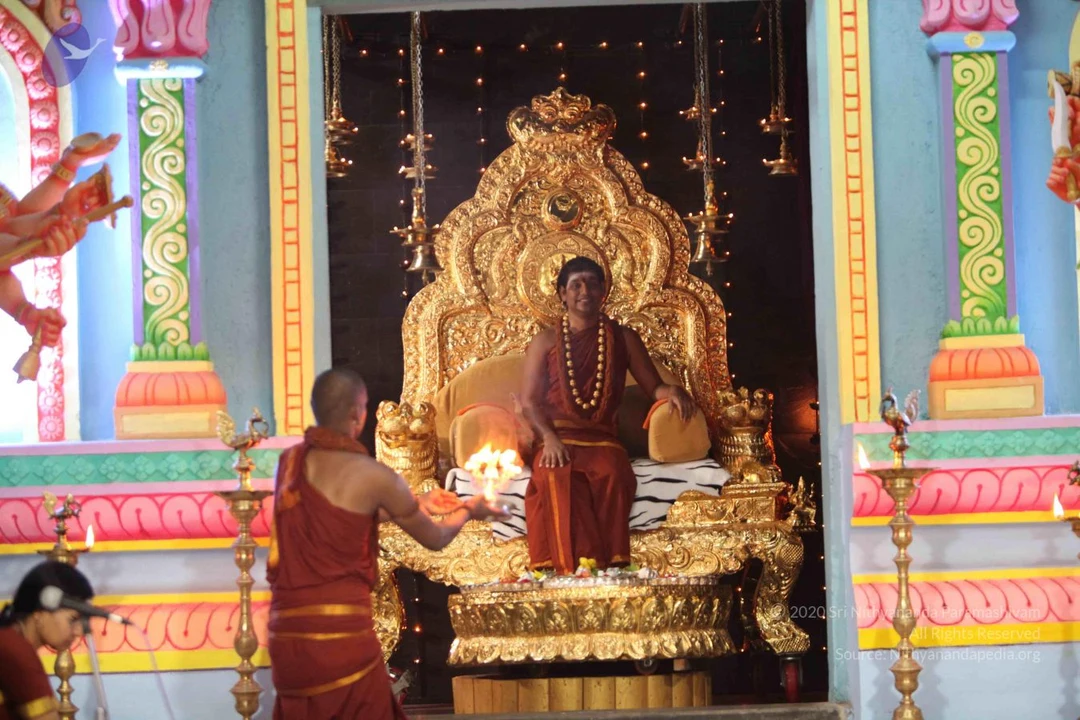
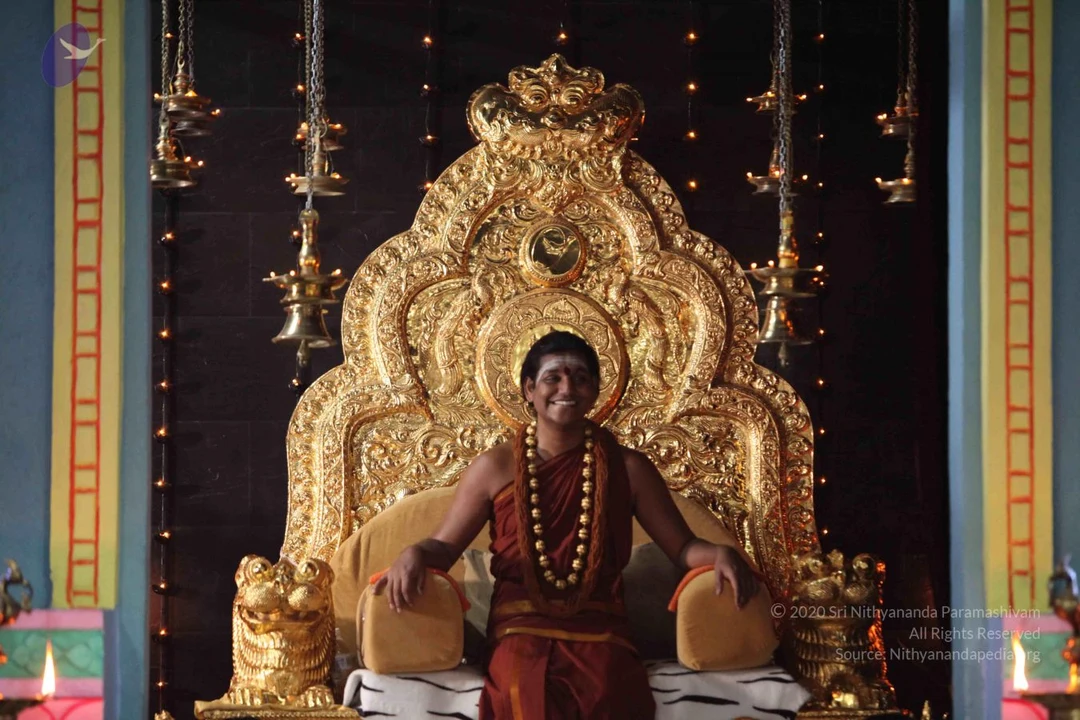
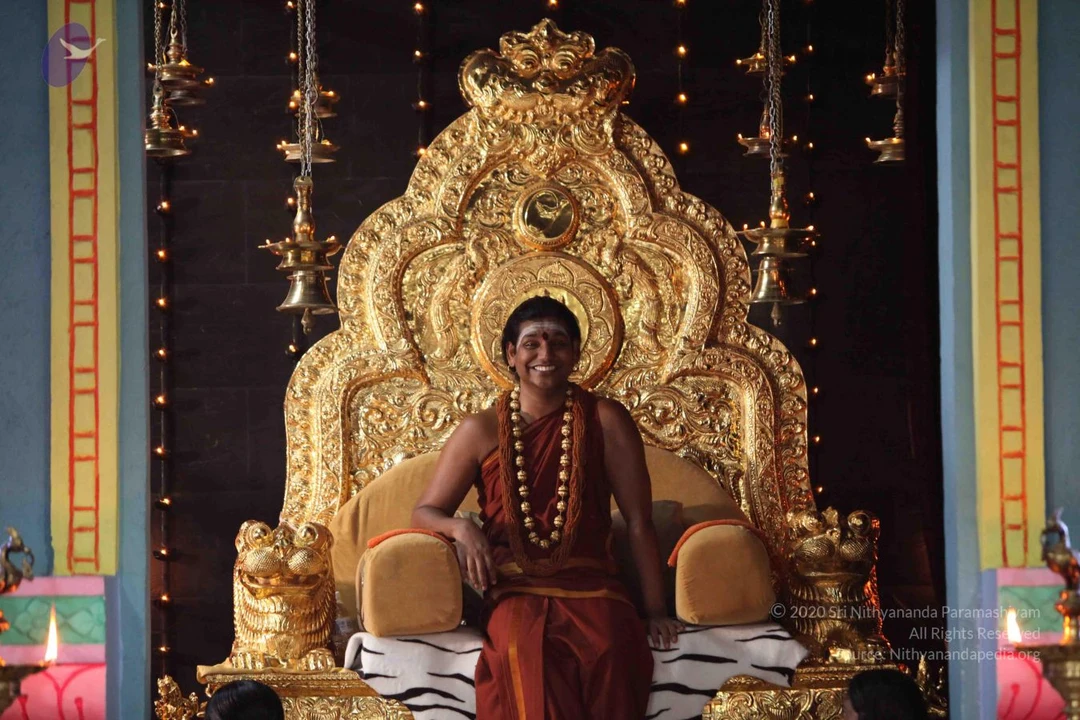
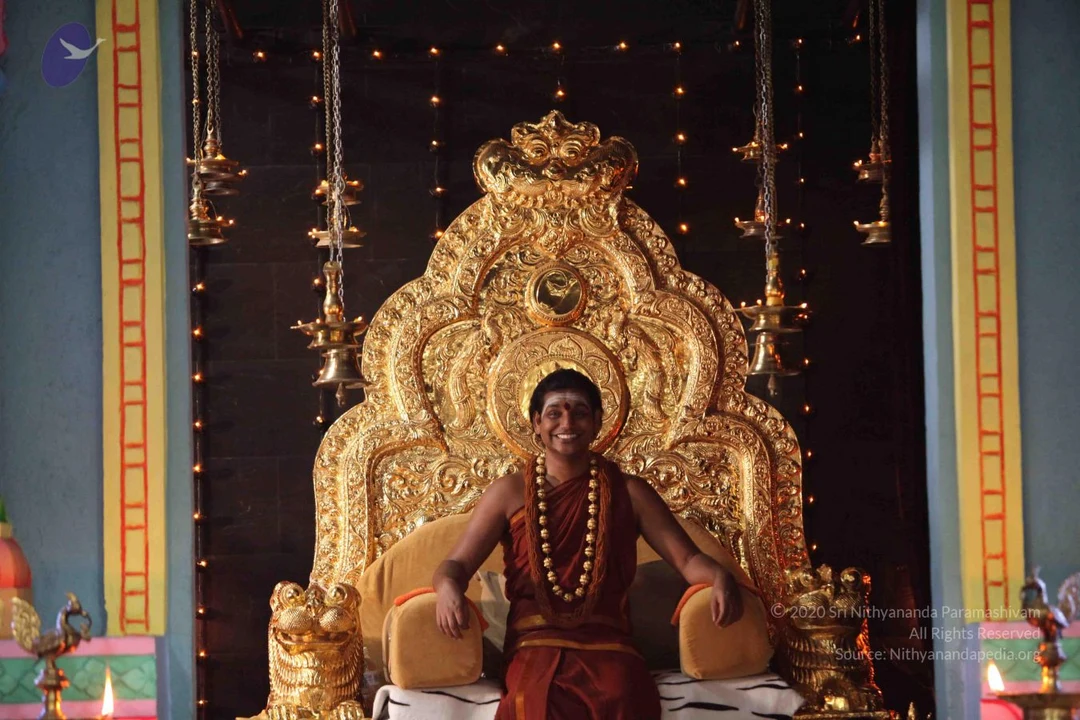
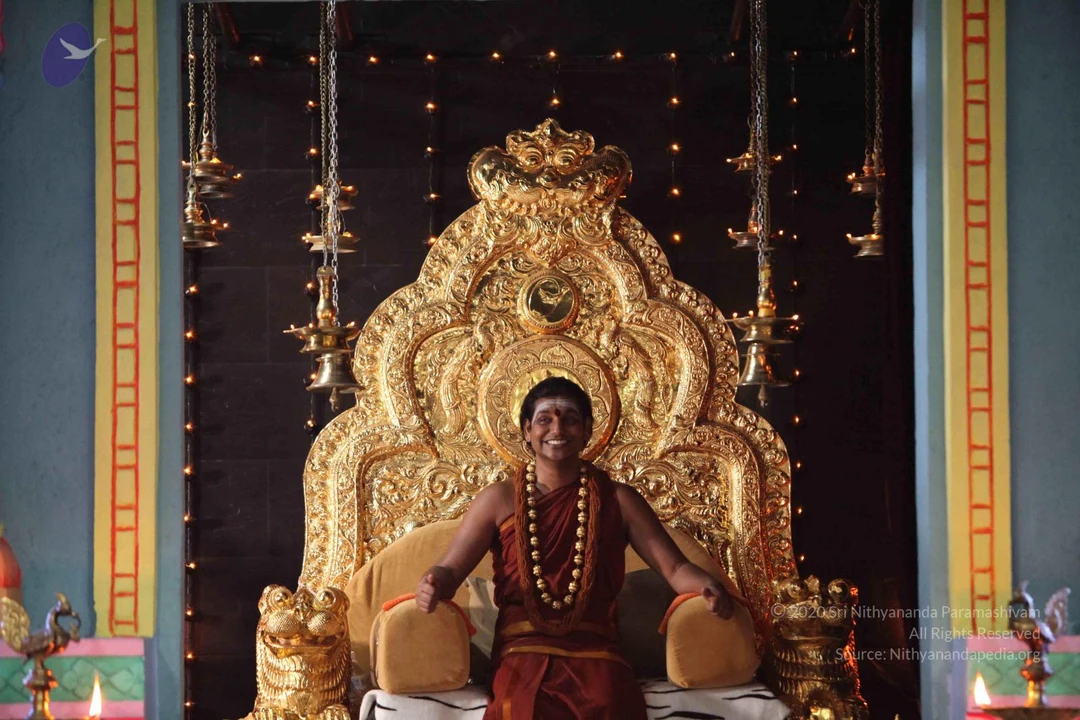
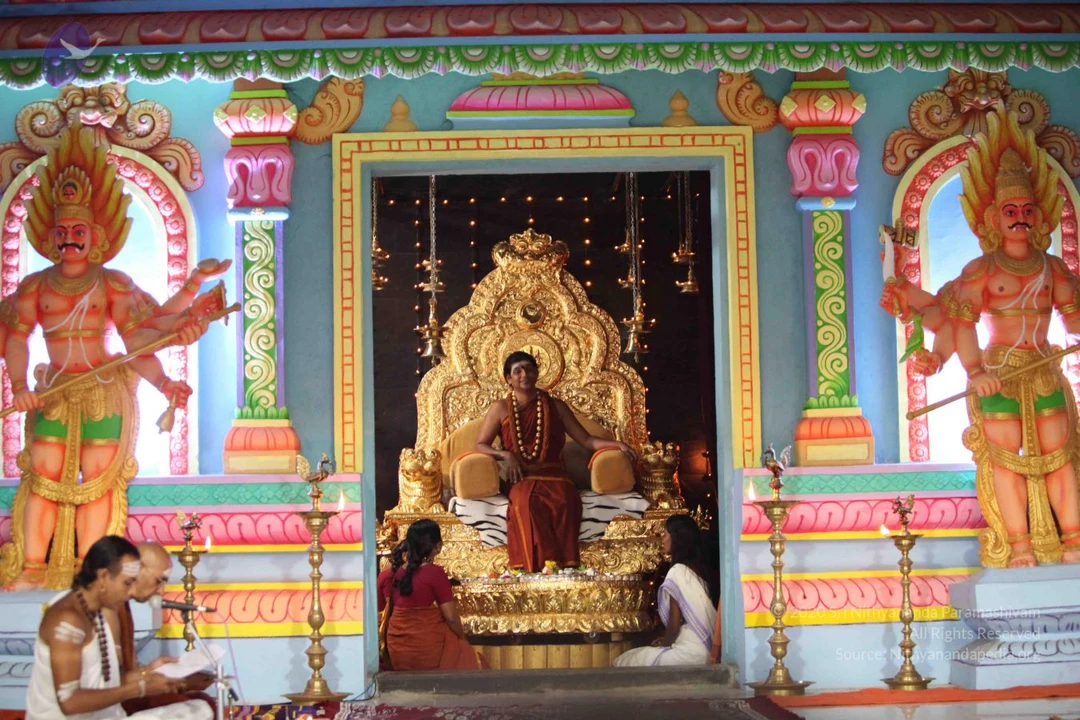
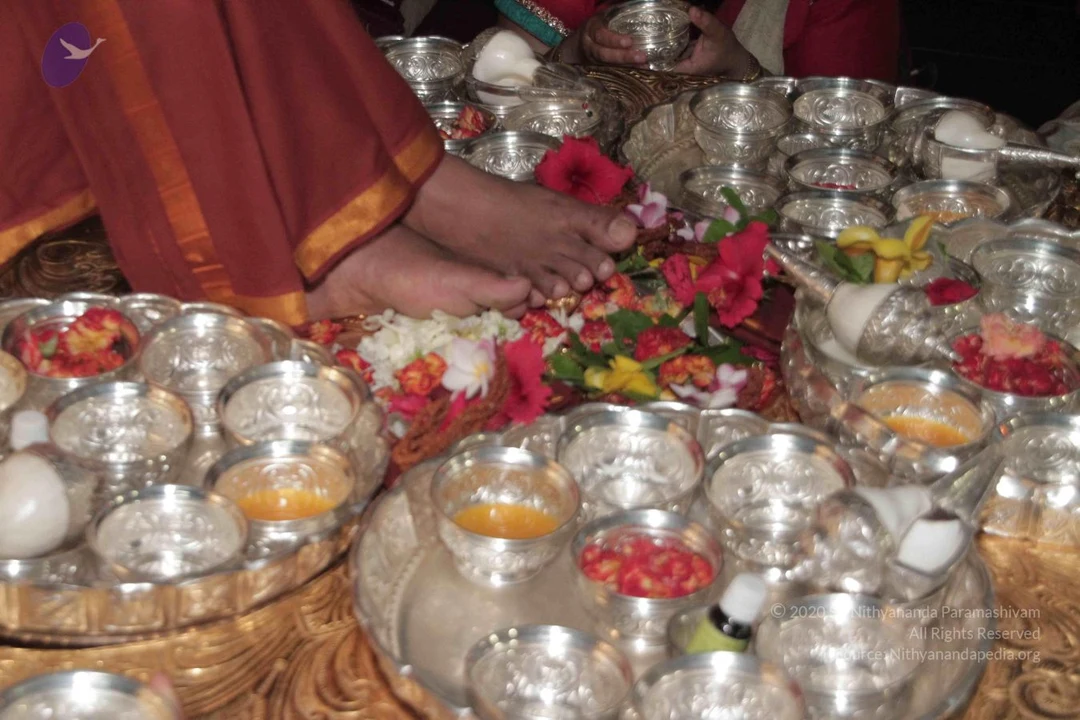
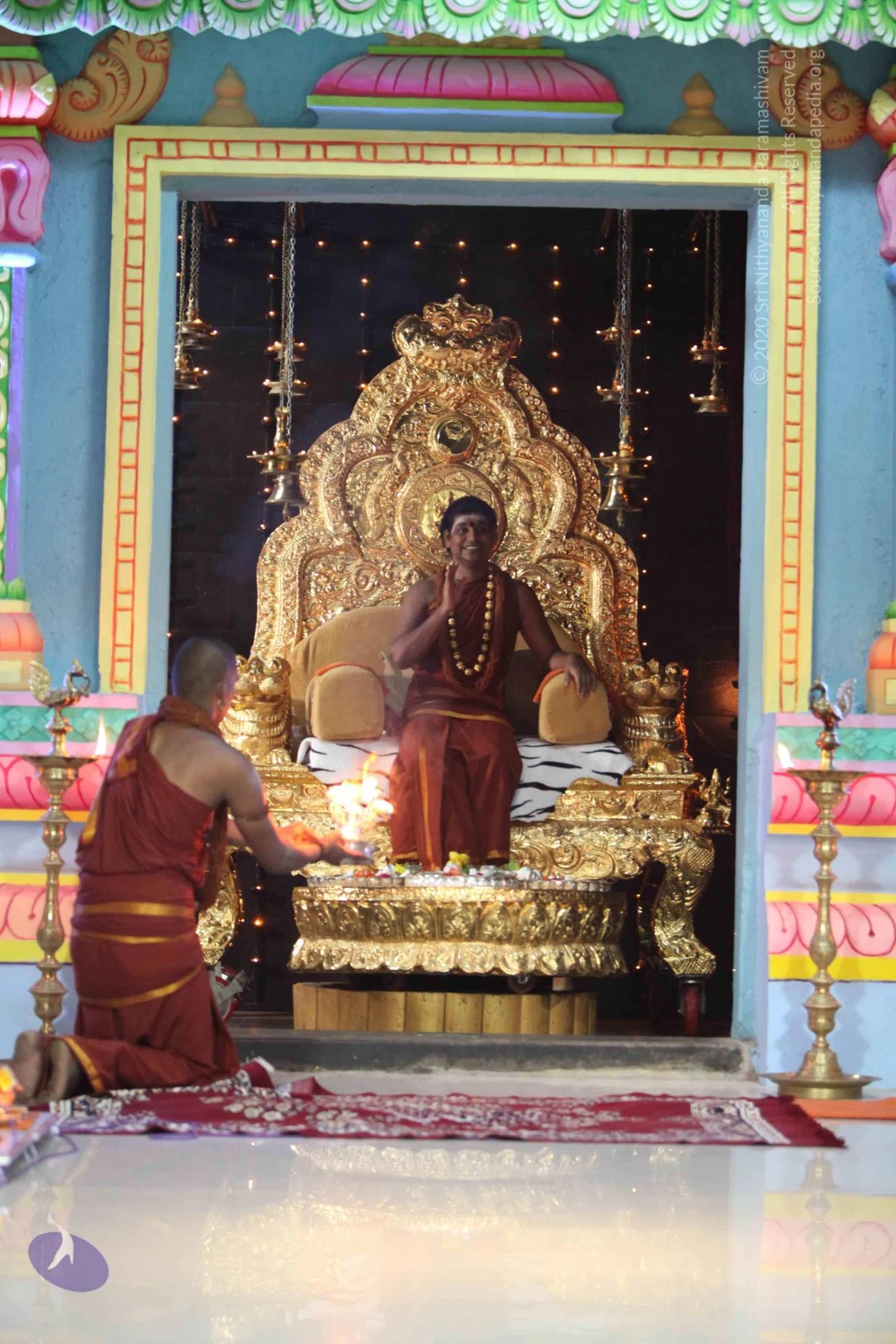
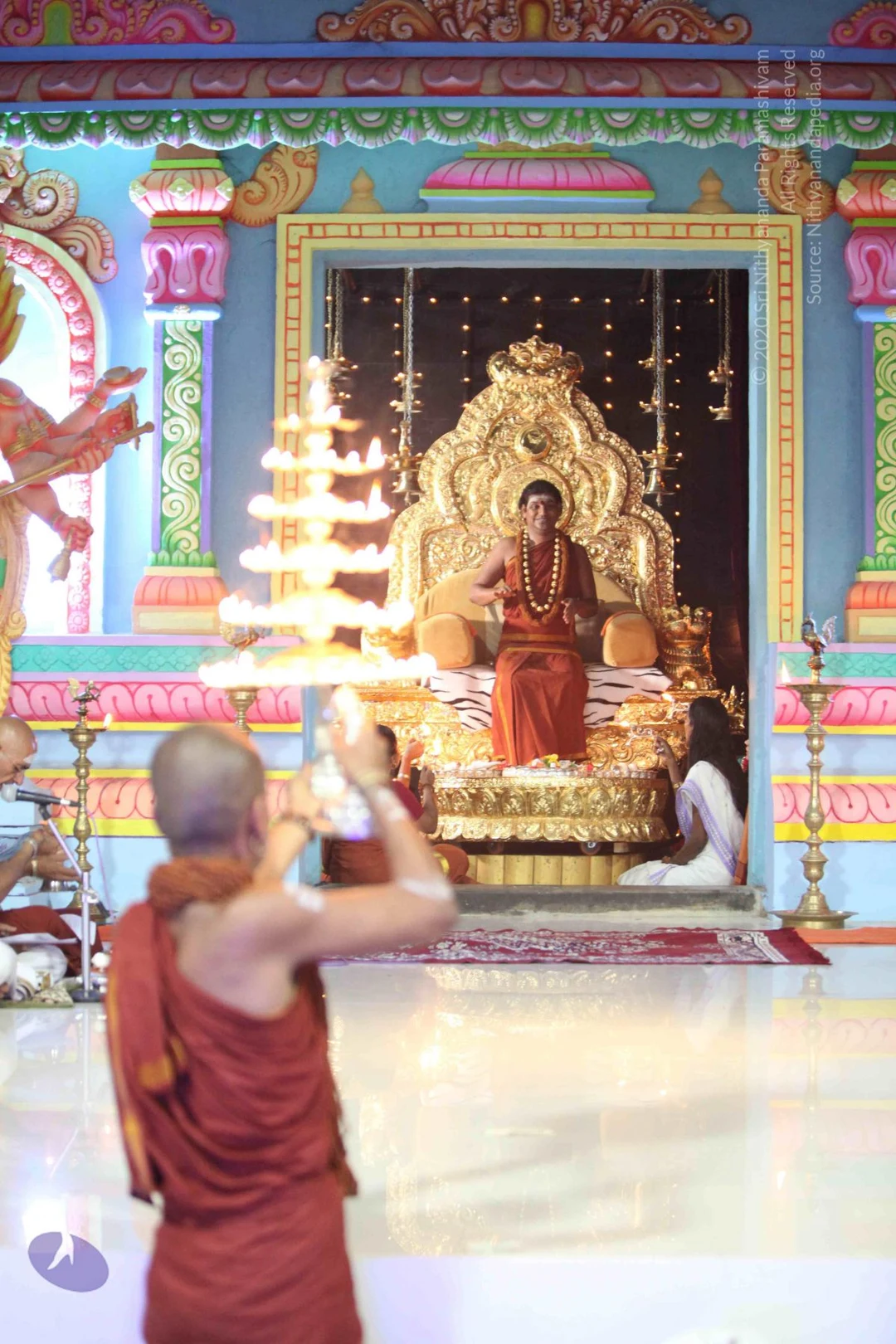
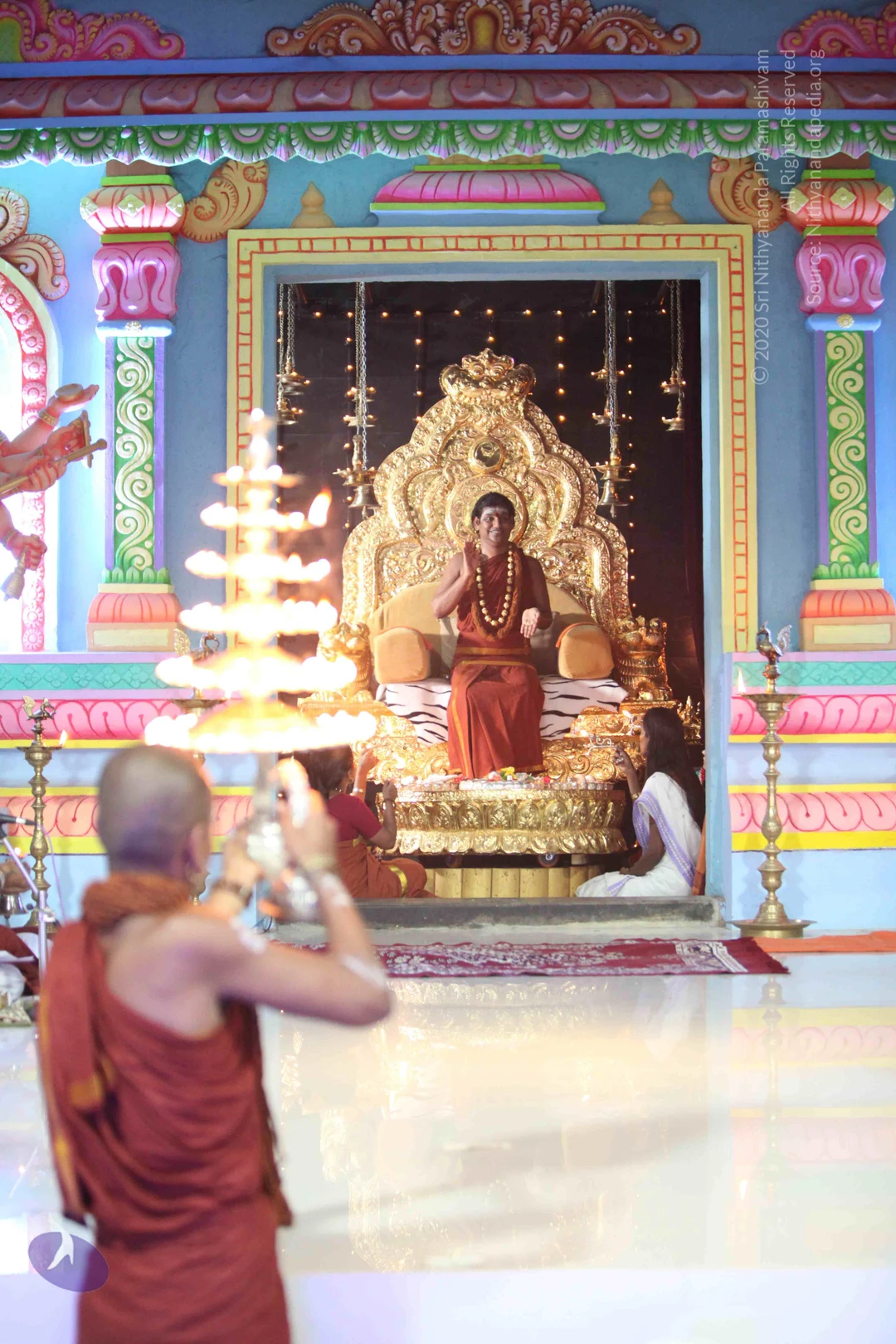
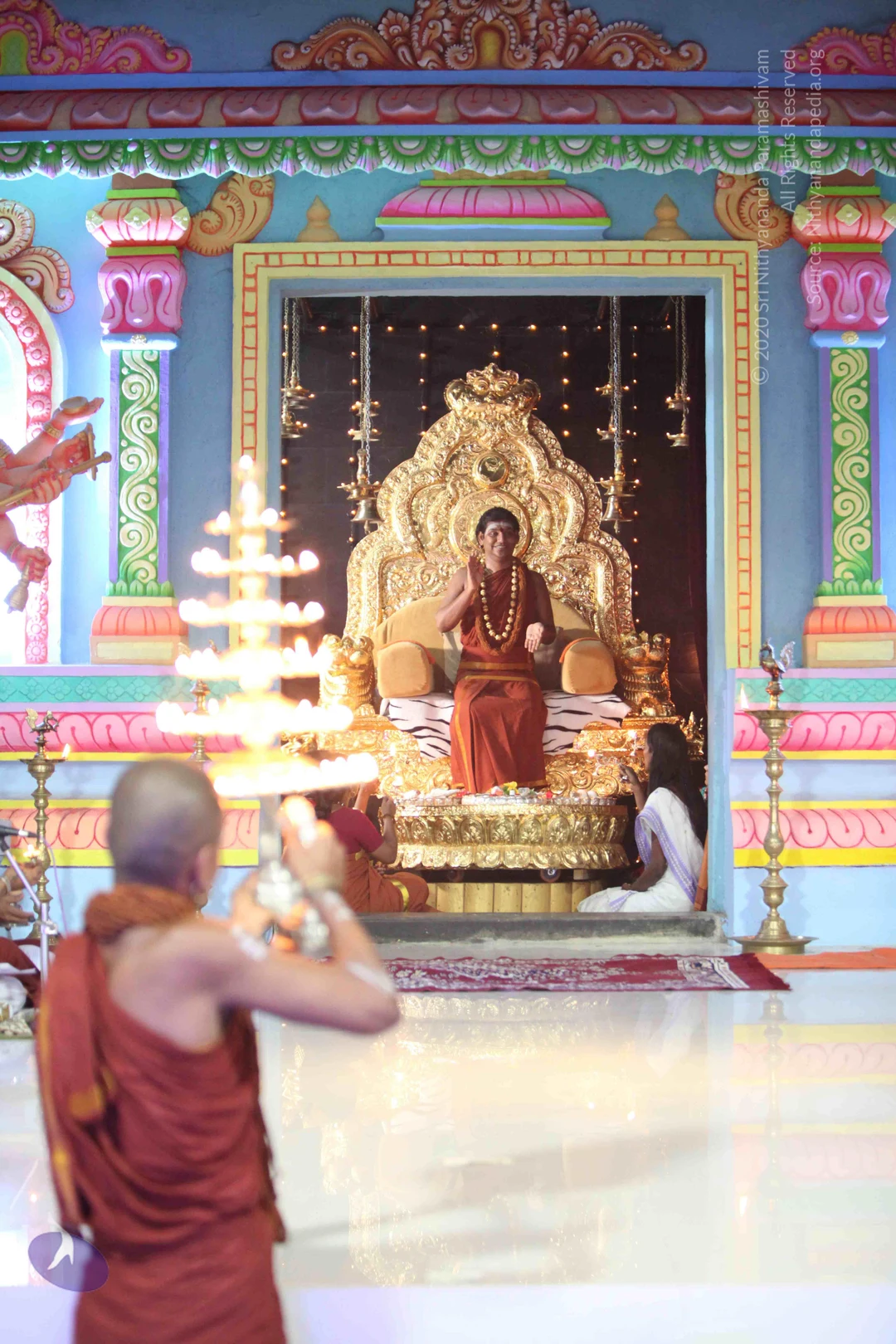
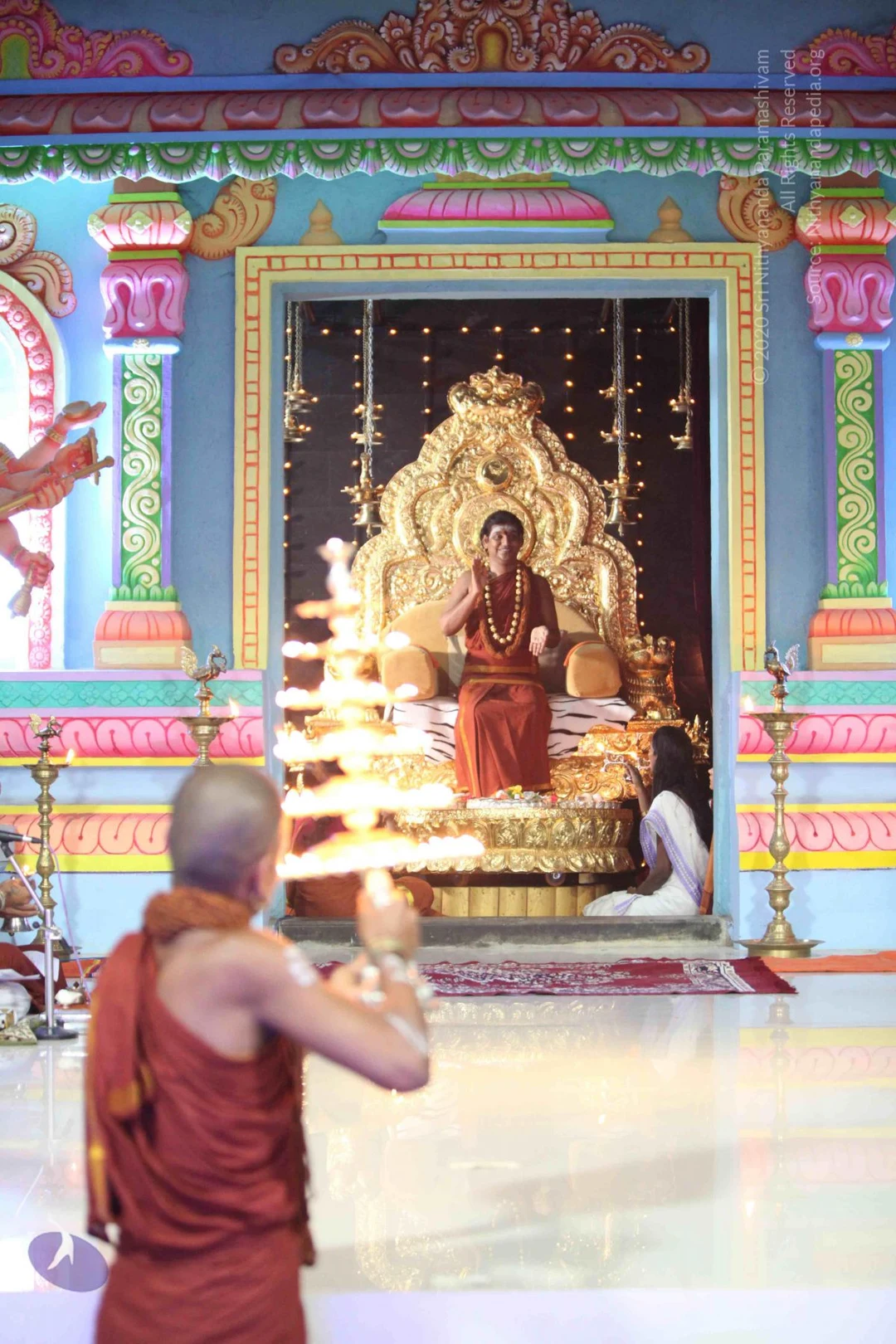
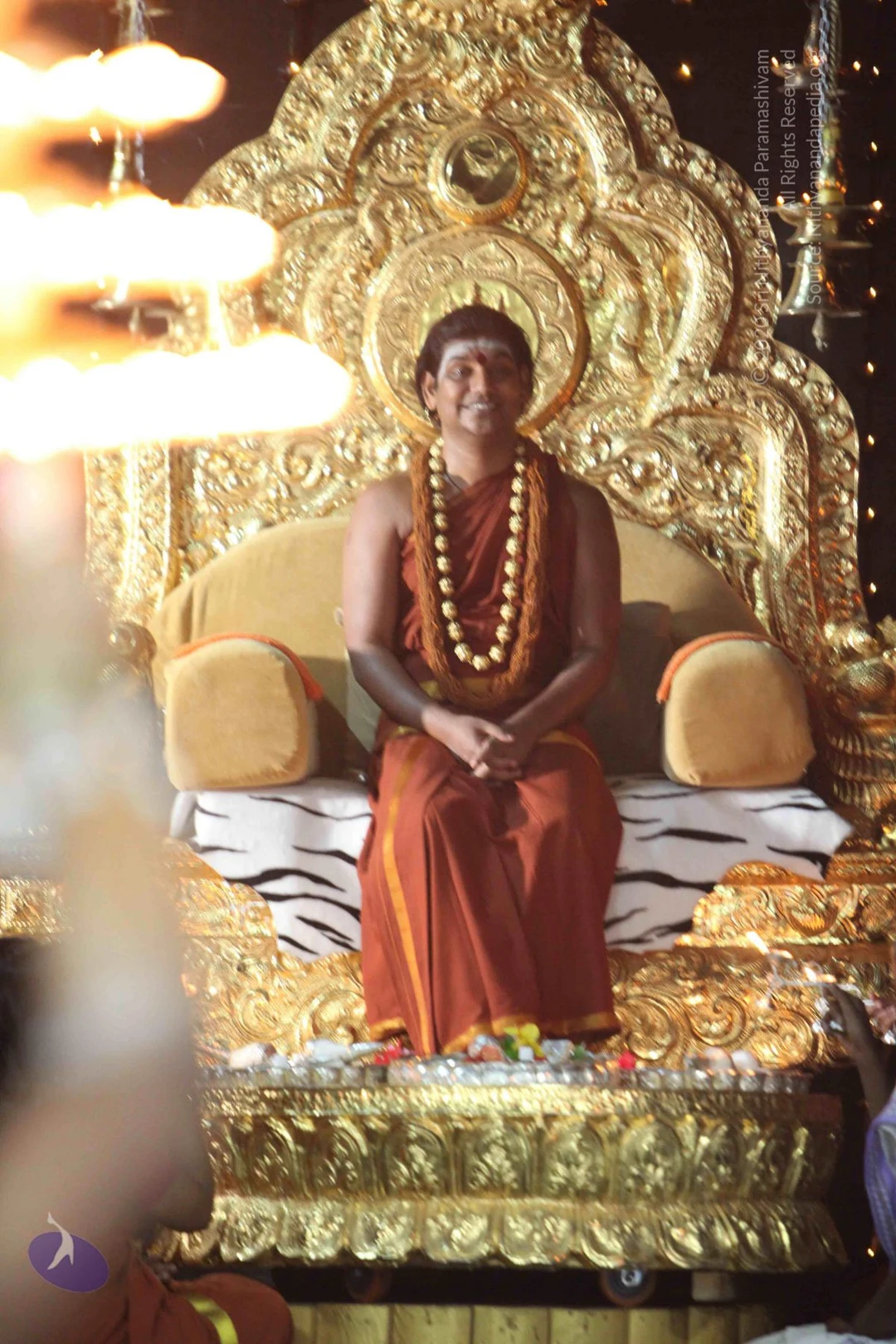
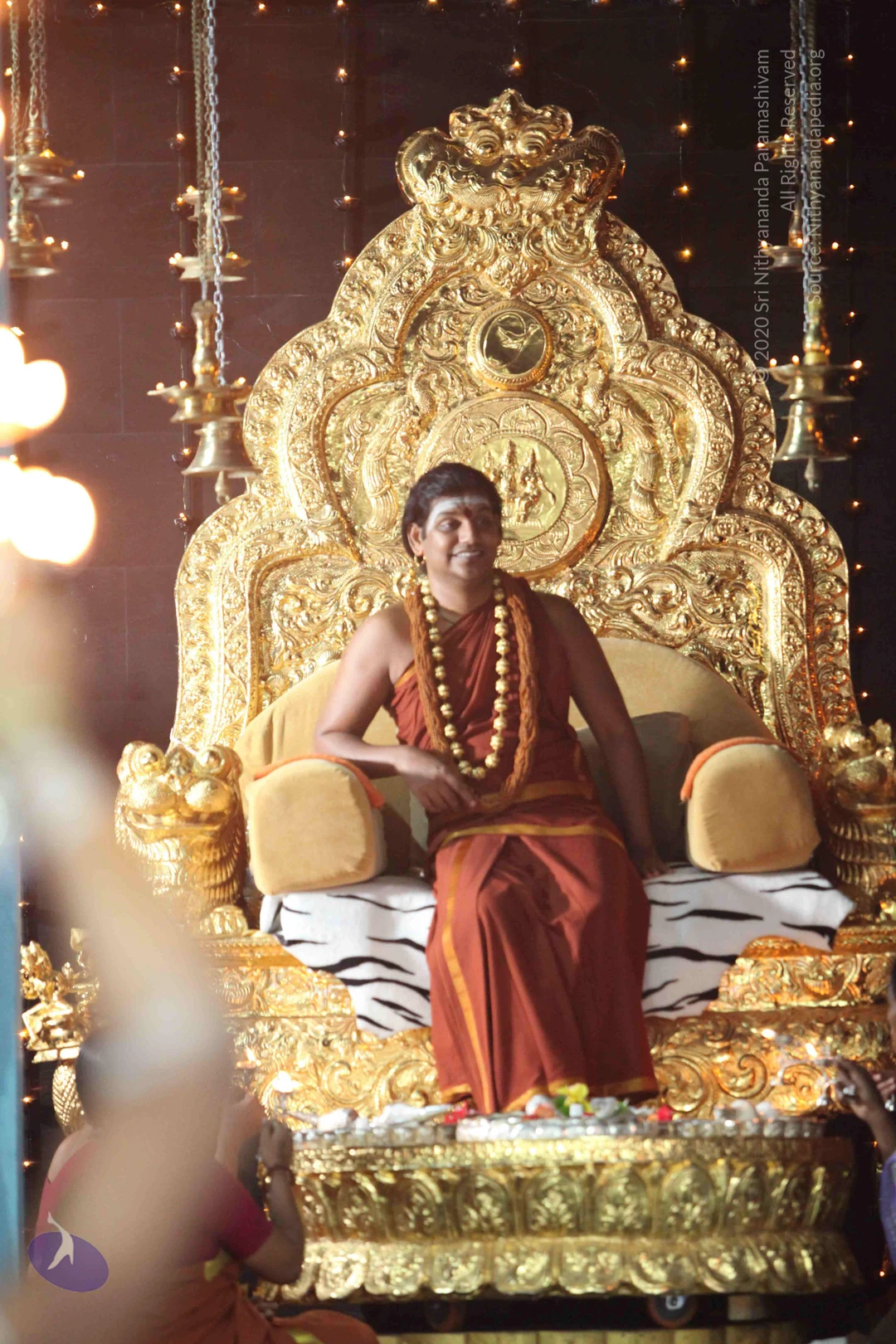
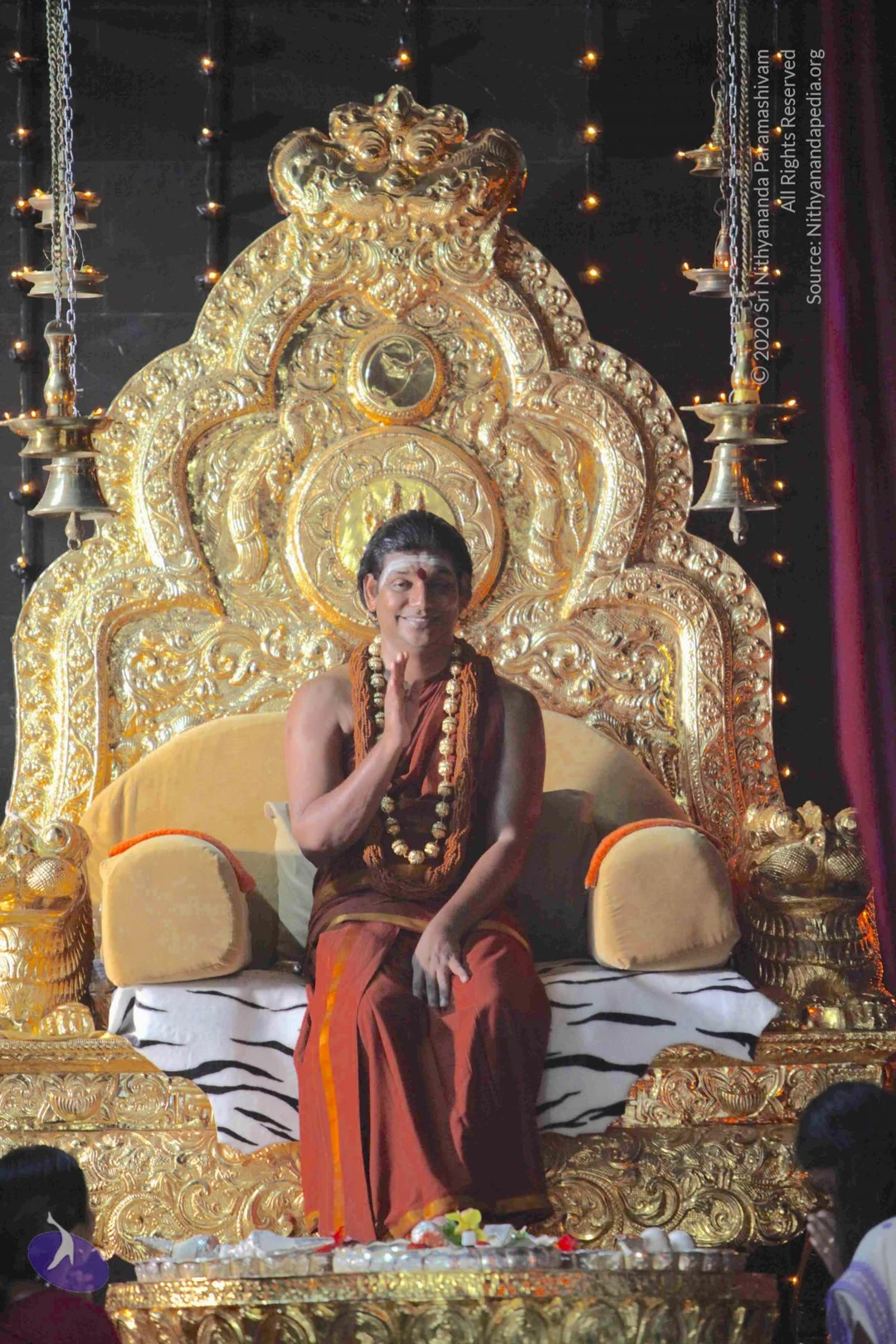
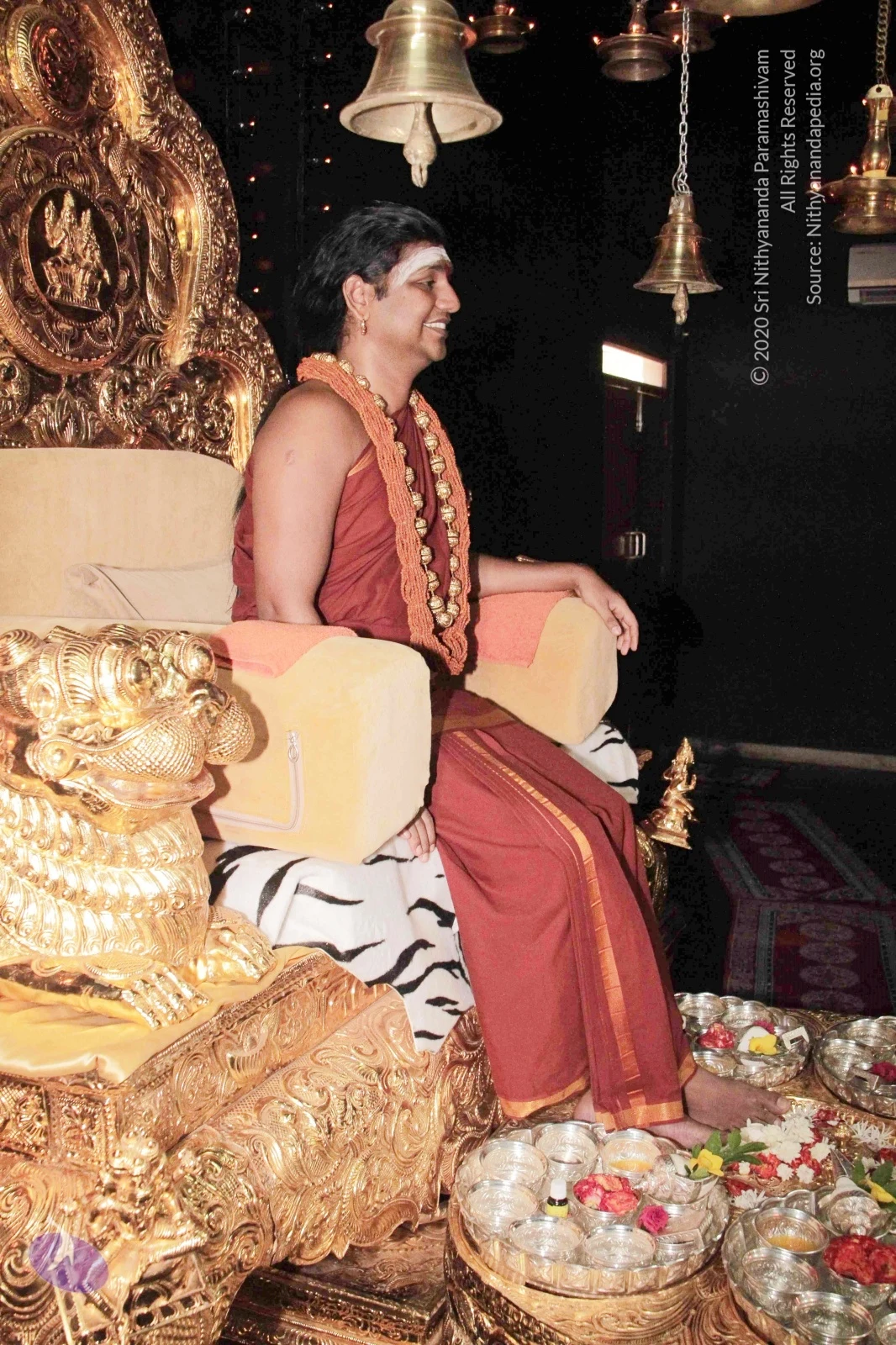
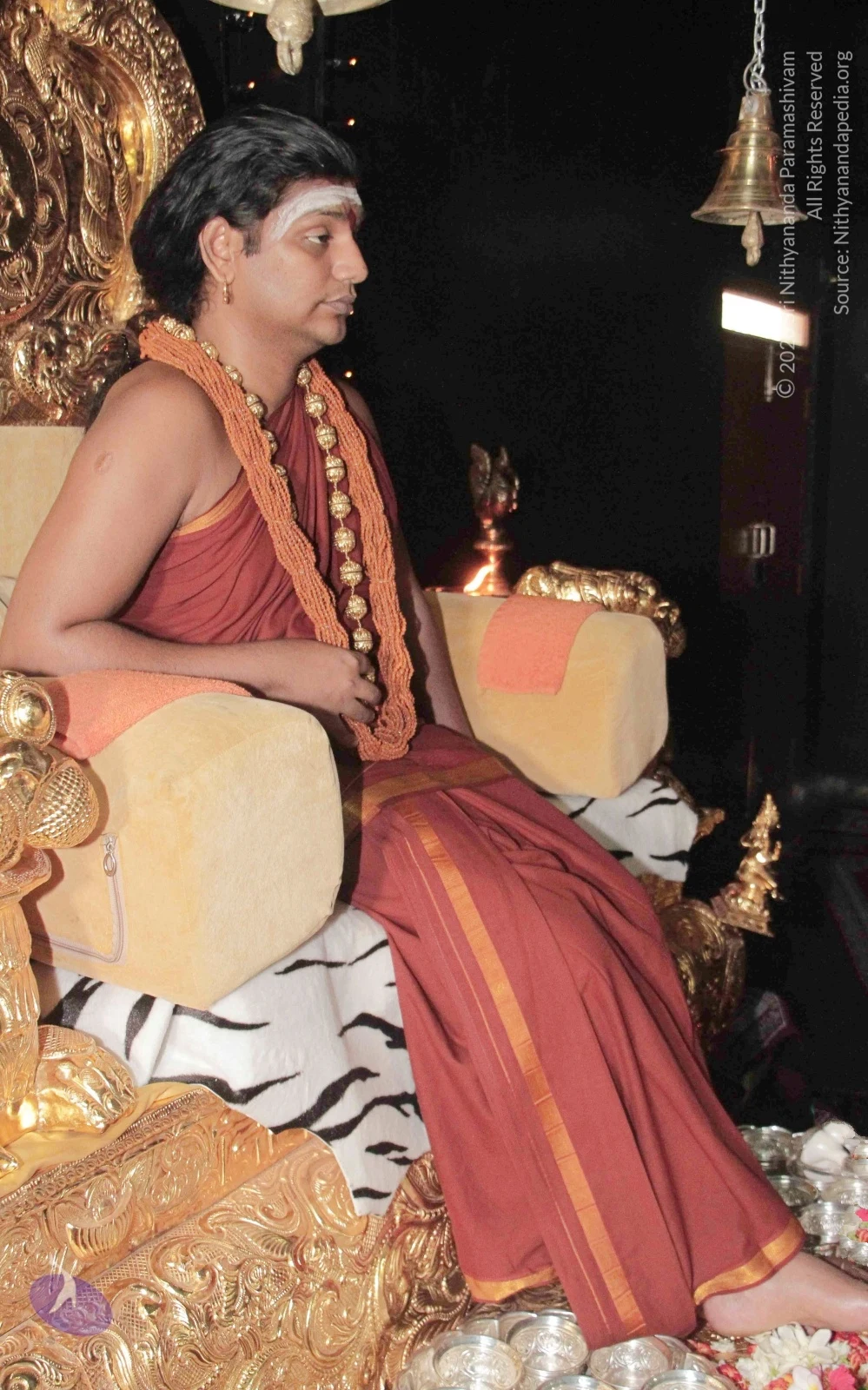
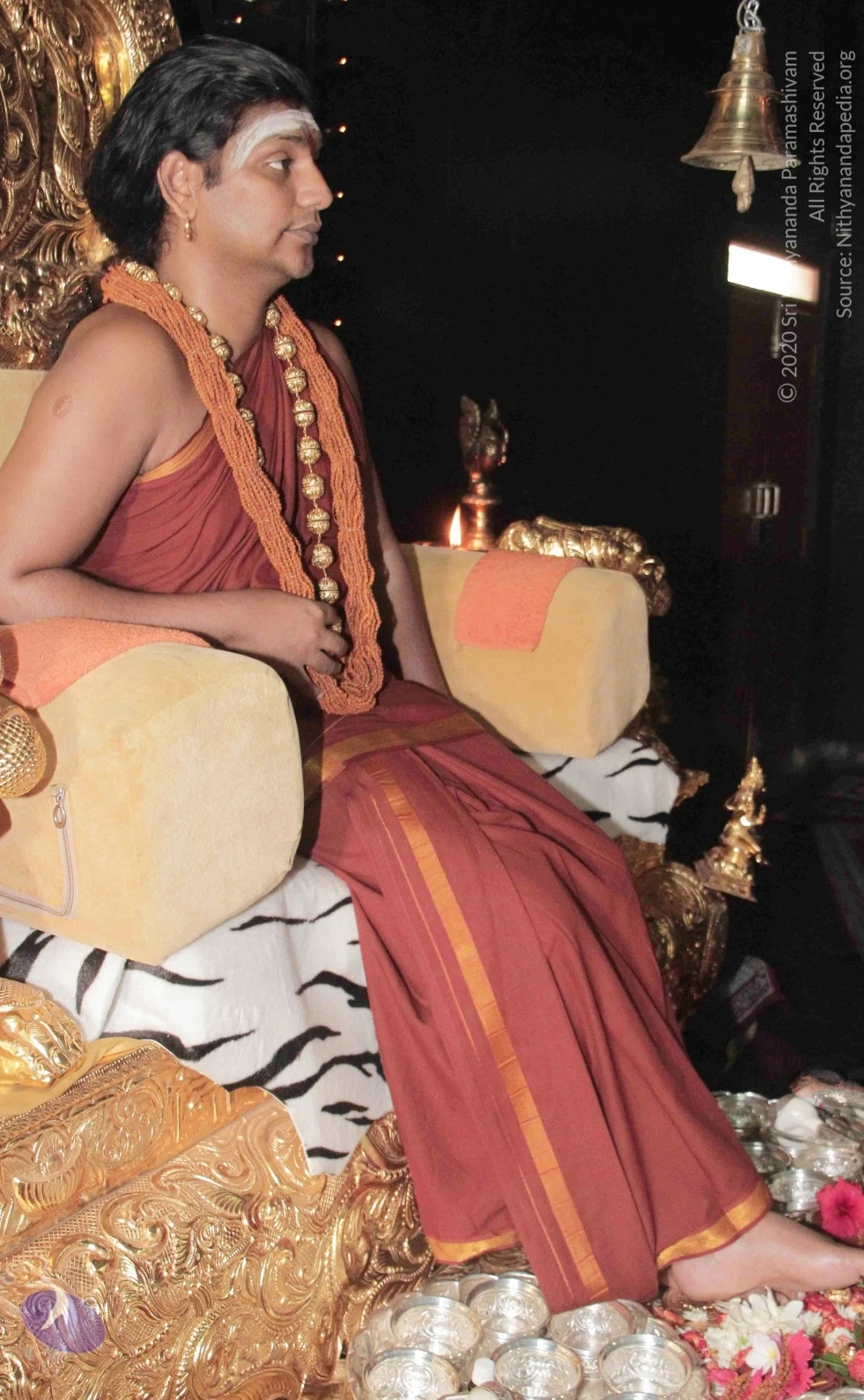
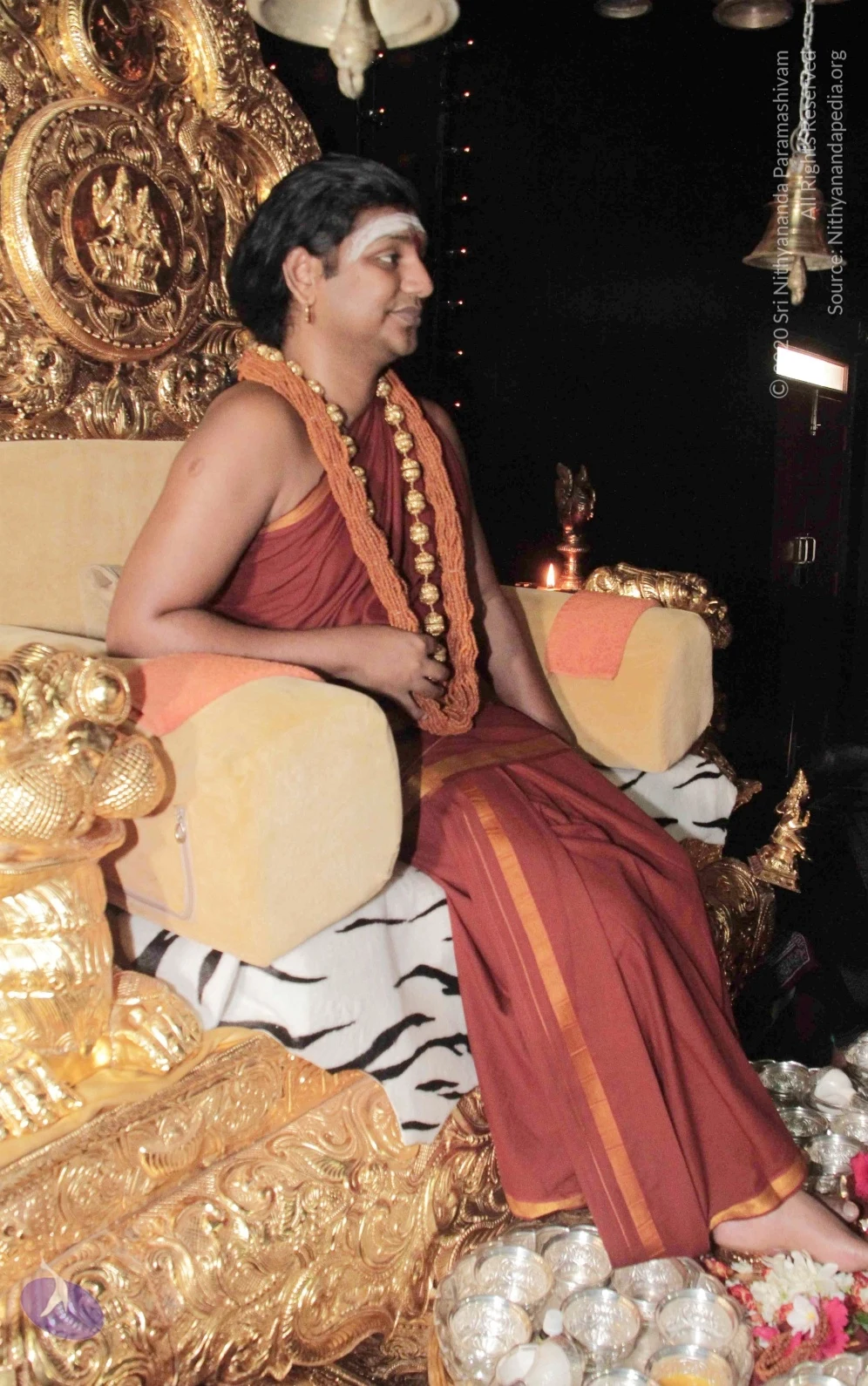
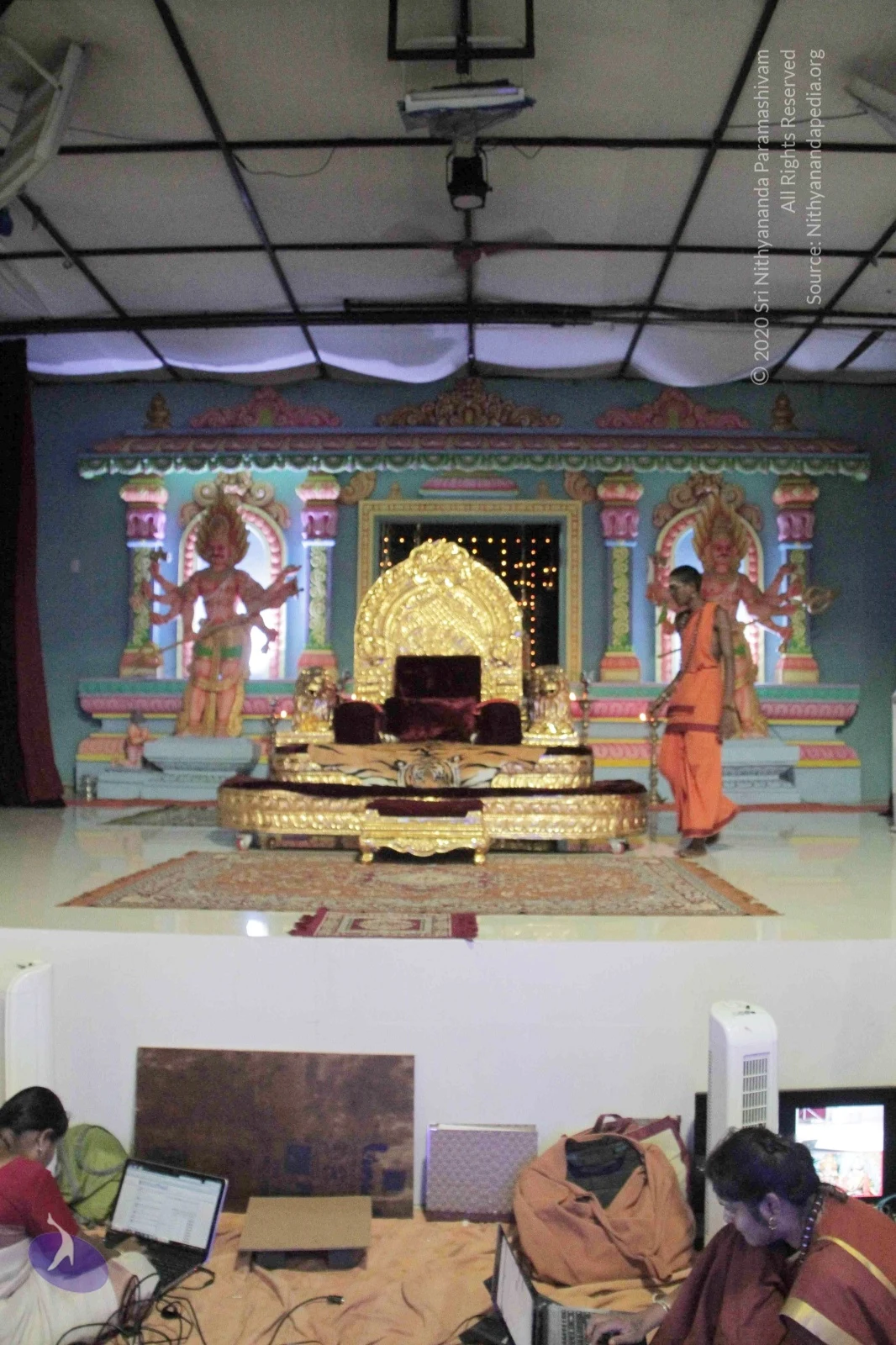
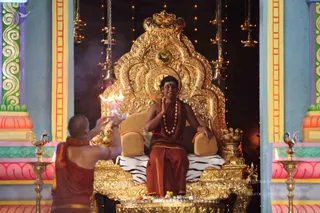
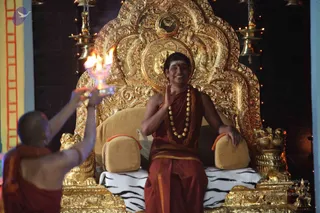
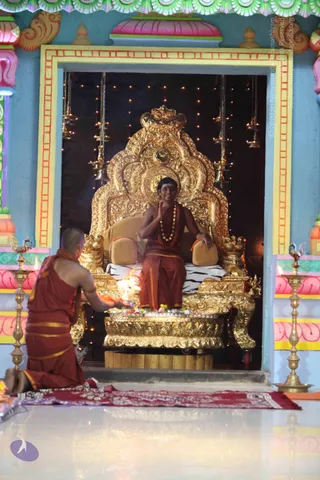
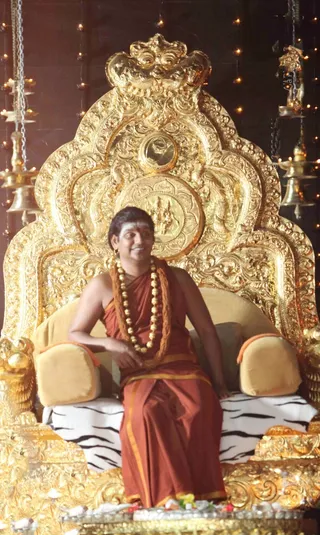
A photograph of a shrine-like hall with a large ornate gold throne (peetha) draped with a zebra-striped cloth and cushions. A seated man in a rust-red robe with a gold border and a rudraksha mala is smiling with hands joined near his chin. Beside the throne, a man with a shaved head in a rust-red robe and orange shawl holds up a lit oil lamp, with flame and smoke rising. Brass oil lamps hang from the ceiling and stand on pedestals, and the walls are painted in green, pink and yellow. a person is seated on the throne, identified by the rudraksha mala and red robe. The page indicates a Kundalini satsang, though no such title is visible in the image.Ceremonial aarti at a golden ornate throne on a zebra-striped cloth. A seated figure in saffron-red robes, a rudraksha-style gold bead necklace and a tilak on the forehead sits smiling on the central peetha, with a gilded halo-like backdrop behind. A bald attendant in a rust-red shawl stands at left holding a lit aarti lamp with flames toward the seated figure. Brass hanging lamps and lit oil lamps flank the throne, and flowers and offerings rest on the platform. Painted pillars in green, yellow and pink frame the hall.A seated figure in orange robes and a beaded rudraksha mala sits on an ornate gilded throne in front of a bright blue and pink temple shrine with painted guardian figures. Two large painted dvarapala guardian statues with raised weapons flank the shrine. A kneeling monk in orange robes tends a fire pit with a flame and offerings on a gold tray in front of the throne. Two women in orange saris sit to the left near a microphone, and gold oil lamps stand on either side. Strings of small lights hang behind the throne.A photograph inside an ornate temple-style hall where a seated figure sits on a richly gilded, carved throne with a tiger-striped cushion. The seated figure wears a rust-orange robe, a long gold-beaded mala, and a forehead marking, and smiles while resting hands on the armrests. Before the throne, a shaved-headed attendant in a rust-orange robe with a mala holds a lit oil lamp in both hands in an offering gesture. Burning oil lamps and brass lamps hang from the ceiling, with more brass lamps and offerings on the gilded table in front. Pink and green painted columns frame the hall. Swamiji (probable) sits on the throne, identified by the saffron/orange robe, the ornate gold-beaded mala and the long hair with the forehead marking, in a satsang setting.A photograph of an ornate gilded throne (peetha) set in a richly decorated shrine hall with painted pink, green and yellow pillars and colourful sculpted figures at the edges. A seated man in a rust-orange robe with a long rudraksha mala draped over his chest sits on the throne over a striped white and black cloth, with a small pile of flowers and offerings below him. In front, a shaven-headed attendant in a rust-orange robe and gold-coloured shawl holds a lit flame over a plate, performing an aarti. Hanging brass oil lamps, small string lights and brass lamps on stands surround the scene. The seated figure's appearance is consistent with the page reference to a person, but the identification is uncertain from appearance alone.A seated man in a rust-red dhoti and matching shawl with a saffron-orange border sits on an ornate gold throne with a carved backrest and a striped tiger-skin cushion. He wears a long necklace of gold-colored beads and a tilak on his forehead, smiling with one hand raised. In the foreground at left, a bald man in red-orange robes holds up a flaming oil lamp with both arms toward the seated figure, while gold oil lamps hang from the ceiling. Based on his appearance, the seated man is a person (in_person) seated on a peetha, with a priest performing an aarti with a lamp.

Kalabhairava Darshan

30 photosSource gallery
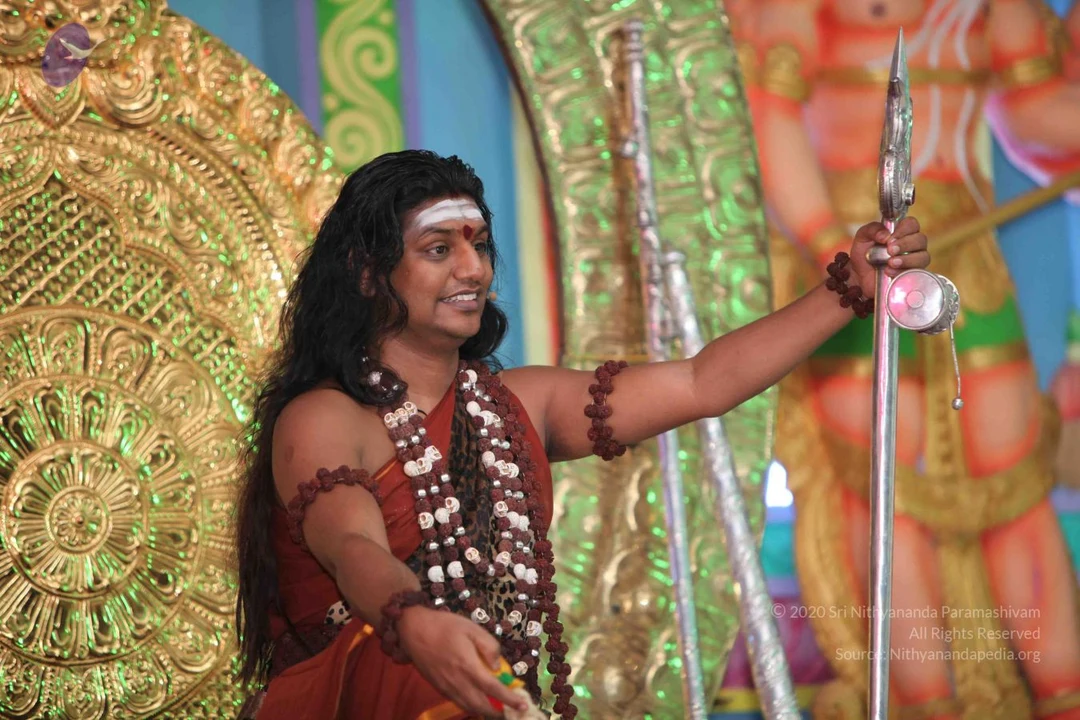
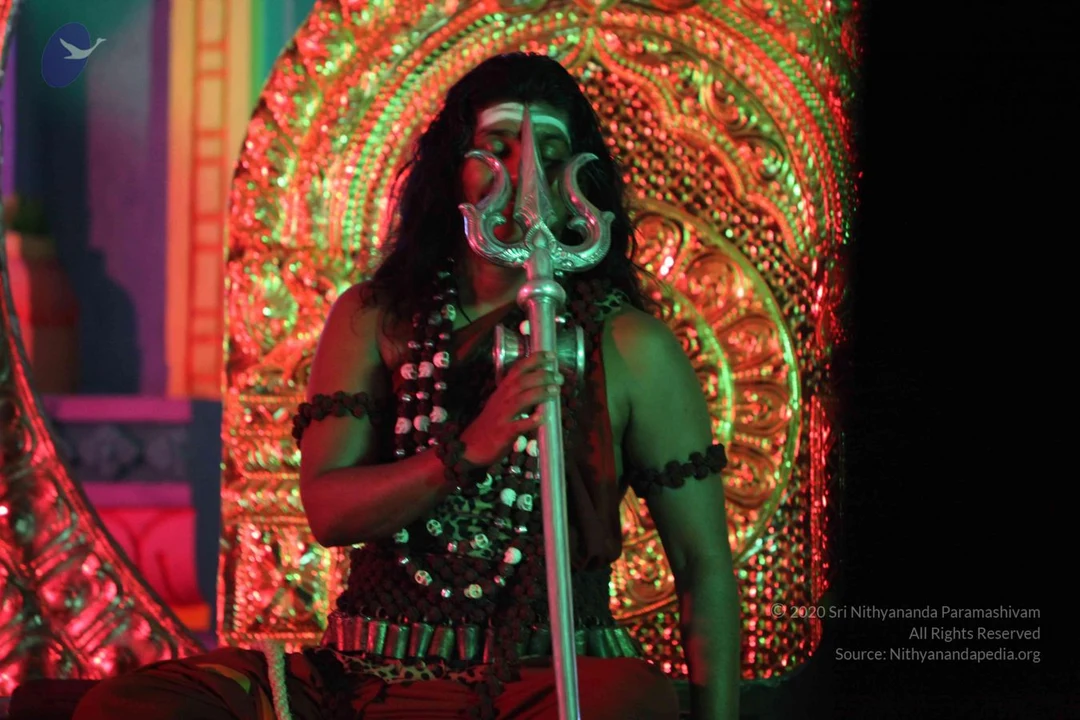
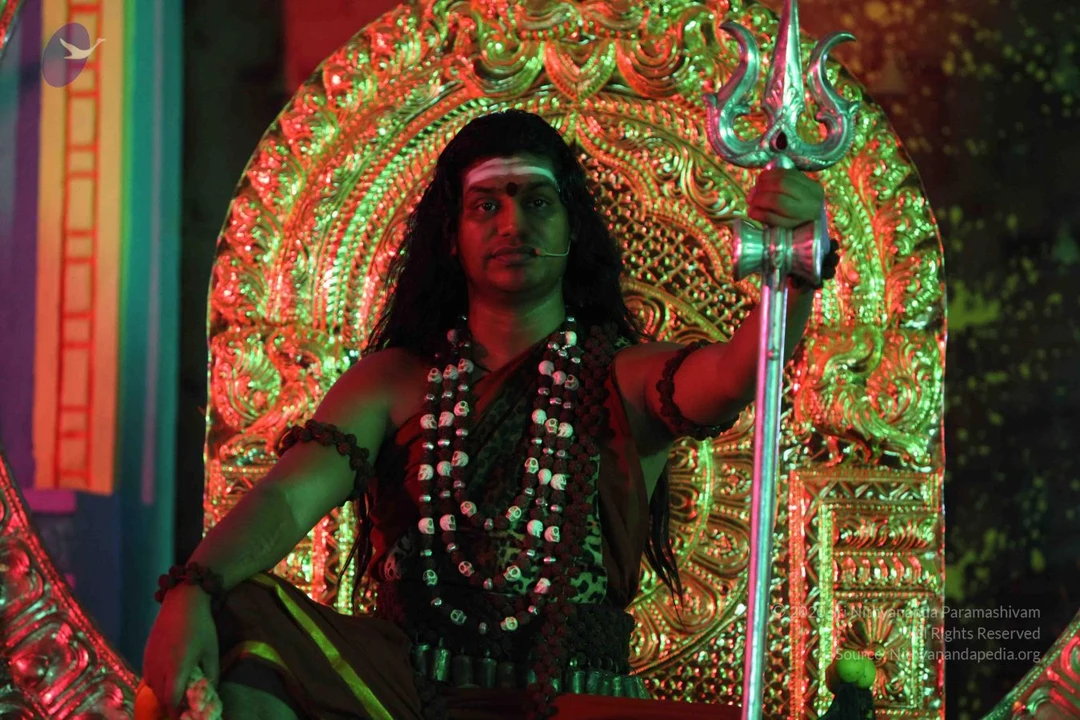
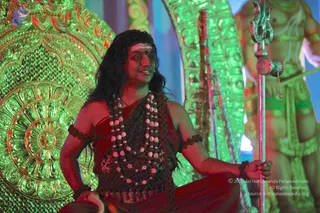
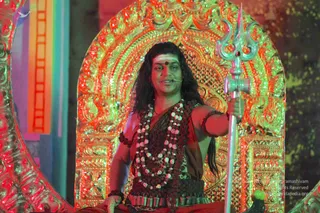
A photograph of a large monitor displaying a multi-window video conference of satsang participants from many locations. Tiles show groups seated or standing in homes and centres, labelled Chicago Sringeri, Isleworth London UK, Guadeloupe Rameshwaram, Calgary Amarnath, London - Kashi, Washington DC Sripuram, San Diego Tiru Alavi, Auckland New Zealand, Vancouver Puri and Monterrey-Mexico. Many participants sit cross-legged on mats or cushions with framed deity pictures nearby. In the lower right tile a man with a bare chest and rudraksha malas sits on an orange-cushioned chair, and a smaller framed portrait is visible in one tile.Photograph of a wall of video-call screens showing multiple remote sites simultaneously during a livestreamed satsang. Tiles show groups of devotees in various living rooms and halls: a Chicago Sriranga tile with people seated on mats, a San Diego Tiru Alavi tile with seated women in white, an Auckland New Zealand tile with a framed deity picture on a shelf and a person seated on a couch, a Monterrey-Mexico tile with a man in white and a woman handling items on a pink cloth, a Port Washington NY tile, a London Kashi tile with people on the floor, a Guadeloupe Rameshwaram tile, and a Vancouver Puri tile with seated people. Each tile is captioned with its city. Tiles show devotees and no clearly identifiable single person is attributed to a person here.A photograph of a large screen displaying a grid of live video feeds from multiple satsang locations, each labelled with a place name such as Oklahoma Somnatham, Charlotte-Srisailam, San Jose Madurai, New York Varanasi, Toronto Kailasam, Atlanta Ujjaini, Ohio Prayag, Seattle Chidambaram, Singapore Singapuram and Phoenix Kanchipuram. Small groups of devotees sit on mats and rugs in ashram-style rooms, some with deity murti and decorated shrines in the background, and a few are seated in chairs.A photograph of a large screen displaying a grid of video-call panels from multiple KAILASA centres, each labelled with a city name such as New York Varanasi, Los Angeles Arunachala, Toronto Kailasam, Singapore Singapuram, Atlanta Ujjaini, Seattle Chidambaram, Oklahoma Somnatham and Houston Kalahasthi. Participants in white and saffron clothing, many wearing face masks, sit cross-legged on rugs and cushions during a group meditation session. Some panels show deity altars with red drapes and decorations.A graphic collage of many small video panels, each showing a group meeting with a shared screen, arranged in a grid on a large display. Labels above panels read Chicago Sriranjam, Calgary Amarnath, Monterrey-Mexico, Washington DC Sripuram, Philadelphia, Port Washington, Vancouver Puri, London - Kashi, Auckland New Zealand, New Jersey - Omkareshwar and Isleworth, London, UK. Participants sit on cushions or sofas in homes, some wearing face masks, some in white clothes, saffron, or yellow. One panel shows a framed portrait of a figure in orange robes labelled Auckland New Zealand, and another shows a figure in orange robes on a wall picture.A man with long, loose dark hair and a white tilak with red dot on his forehead stands on a stage in front of a large gold ornamental backdrop. He wears a rust-red garment draped over his shoulder and bare arm, with layered rudraksha malas and white beaded necklaces around his neck and rudraksha bracelets on his wrists. He extends his right arm to hold a tall silver trident-like staff with a round ornament, while gesturing with his left hand. Behind him, a large painted figure in orange and gold is visible. The setting resembles a staged performance or satsang set.

Nithya-Kriya-Yoga

96 photosSource gallery
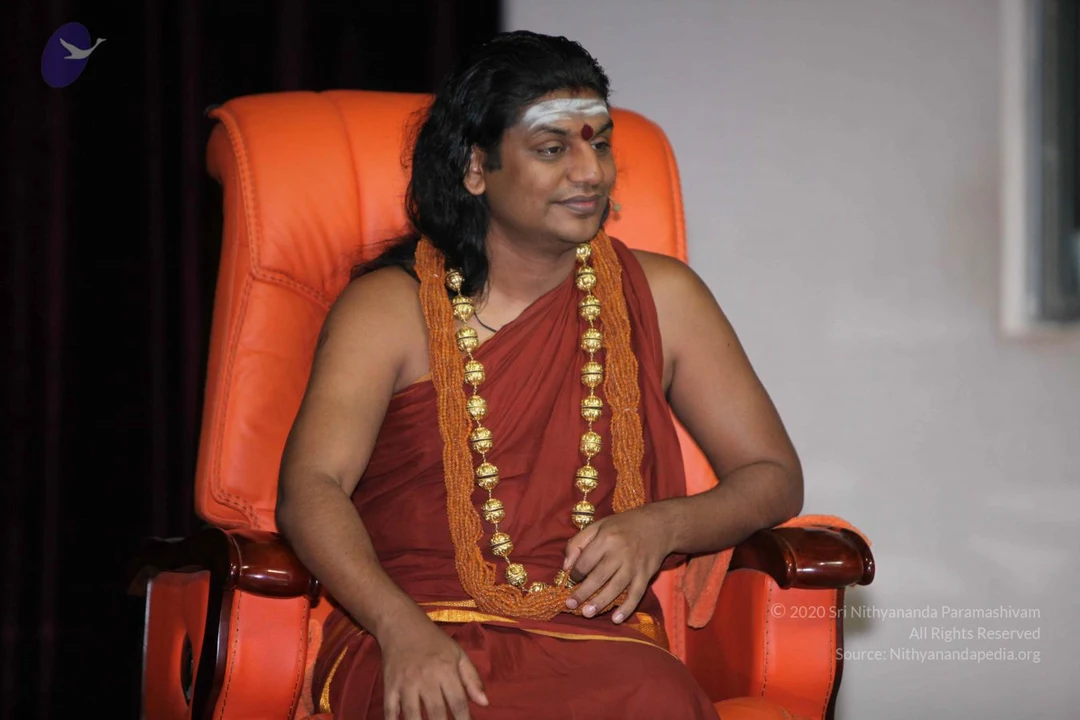
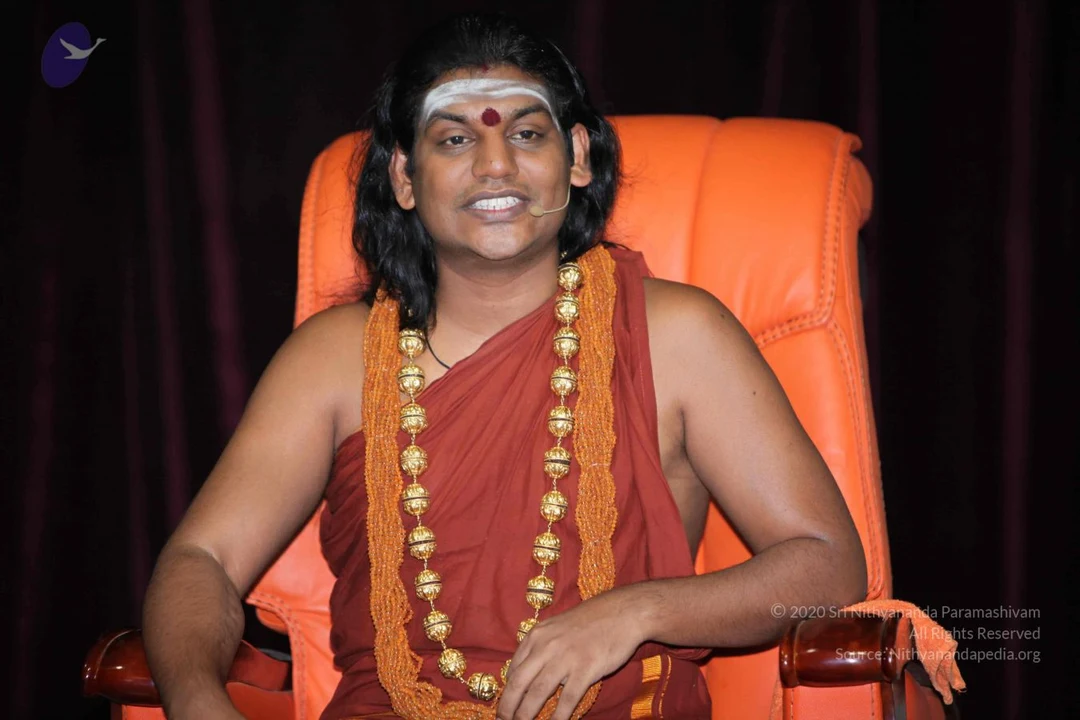
A man with long swept-back dark hair sits in a large orange leather armchair with wooden armrests against a plain light wall and dark curtain. He wears a rust-red ochre wrap draped over his shoulder, a long orange-beaded necklace and a heavy necklace of large gold-toned beads, plus a white horizontal tilak with a red dot on his forehead. His hands rest on his lap as he looks off to one side.A man seated on an orange leather armchair against a dark maroon curtain, smiling and facing the camera with a small headset microphone at his cheek. He wears a rust-red shawl draped over bare shoulders and a long mala of large gold beads with orange threads, and has a white horizontal tilak with a red dot on his forehead. His long dark hair is swept back. Appearance-based probable candidate for Swamiji (probable), seen in person, with long swept-back hair, saffron-toned draped clothing and a gold bead mala, seated in a satsang-style setting.A photograph of a screen showing a grid of video-conference tiles, each a live satsang room in a different centre. Tiles are labelled with place names such as Phoenix Kanchipuram, Houston-Umesh, LA-Arunachala, Ohio-Prayag, Kastav Croatia, Hyderabad-Bhagyanagara, Juarez Satsang Center, Washington DC Sripuram and New York Varanasi. Participants sit cross-legged on mats or cushions in white, orange and red clothing, many wearing rudraksha malas, in front of altars with deity murtis, garlands and oil lamps. A tile labelled Ma Nithya Jnanananda shows a woman seated on a cushion near an empty chair. Several people are visible in the room tiles, with the total on screen exceeding twenty.A grid of video-call tiles from a multi-location online satsang, showing groups of devotees seated on mats and cushions in different centres. Top-left tile shows people seated before a shrine with deity murtis. Ohio Prayag tile shows a man in orange clothing seated before colourful deity images. A tile labelled Washington DC Sripuram shows seated people in white and pastel clothes. Another tile shows a woman in a purple top and a woman in red gesturing in a room. A New York Varanasi tile shows a seated group with a shrine. Scattered throughout are devotees in white, orange and saffron clothing and rudraksha malas. No single clear presenter is identifiable as a person in the tiles.A photograph of a large video screen displaying a multi-panel live satsang feed, with many small windows showing groups of devotees meeting in different ashram and home settings. Labels on the panels read CHICAGO SRIRANGAM, Paris Kalighat, Calgary Amarnath, CHARLOTTE-SRISAILAM, ST.LOUIS TIRUMALA, DAKOTA DUNES, NEW JERSEY OMKARESHWAR, ANNA NAGAR - CHENNAI, MIRA ROAD - MUMBAI, Guadeloupe Rameshwaram and SINGAPORE SINGAPUR. In the St. Louis panel a man in white with a red-and-white mala sits beside a woman in a shawl near a small shrine, while in the Anna Nagar panel men in white dhotis and women in saris sit with palms pressed together before a small deity murti and offerings. Devotees sit cross-legged on mats in the other panels, several with hands in namaste. The screens are shown as depicted media, not physical presence.A photograph of a large video-conference wall screen showing a grid of many small participant tiles, each a live feed from a different location. Several tiles show people seated in meditation or satsang: a row of people in white on mats in one tile, a woman in a pink top at a desk, a woman in a blue sari in another, and a group in white and pastel clothing sitting on red and blue mats. Some tiles carry printed place labels such as "SLOVAKIA KOSHITZE", "PENANG TIRUPARANKUNDRAM", "Kathmandu Nepal", "Vadodara", "Bridgetown - Barbados" and "Moscow Russia". Other tiles show people standing or sitting in rooms and a man in a white shirt. The physical people in the room are not visible; the participants are only seen on screen.

Satsang

93 photosSource gallery
A seated man in saffron-orange robes sits cross-legged on an ornate gold throne with a carved arched back and gilded lion figures at its sides. He wears a long multi-strand gold bead necklace over a rudraksha-style orange cord, a red bindi and white forehead markings, and bare feet. His right hand rests on the armrest and he gazes off to the side. The throne sits on a tiger-skin covered dais with a red velvet base, in front of a blue ornamented doorway and strings of small warm lights. a person: the saffron robes, gold necklace and rudraksha cords fit the page's description, but the face is not used for identification, so the appearance is only partly confirmed.Close photograph of a man with swept-back dark hair, white forehead markings and a red bindi, smiling while speaking. He wears a small gold hoop earring, a rust-red shawl over the shoulder, and layered orange rudraksha-style beaded malas with large gold bead spacers. A small clip-on microphone is visible near his cheek. The background is a soft blurred grey.A man seated on a gold-carved throne speaks to an audience while gesturing with his right hand. He wears a rust-red robe over bare shoulders, layered orange beaded malas with gold bead ornaments, a gold hoop earring, a white tripundra on the forehead and a red bindi. A small lapel microphone is clipped near his mouth, and a maroon velvet cushion lies in the foreground. The background is a soft blue and grey wall. a person in satsang discourse, based on the orange beaded malas, gold ornaments and flowing hair cues; the page indicates a satsang on Kundalini.Close side profile photograph of a man with long swept-back black hair, a white sandalwood stripe across the forehead and a red kumkum dot at the centre, smiling as he speaks into a small headset microphone. He wears multiple strands of orange-saffron rudraksha-style beads with large gold ceremonial ornaments, and a rust-red cloth draped over the shoulder. A small gold earring and nose stud are visible. The background is a plain grey-teal wall. a person appears here as a speaker giving satsang, identified by the saffron beads, gold ornaments and long hair, with a microphone.Close-up photograph of a man seated at a satsang event, smiling slightly toward the left. He wears a white horizontal forehead mark with a red kumkum dot, gold hoop earring, a small clip-on microphone near his cheek, multiple strands of orange beaded necklace with large gold rudraksha-style beads, and a maroon-red wrap. Swamiji (probable): the long swept-back dark hair, orange beaded mala with gold beads, and saffron-red ceremonial clothing match the appearance cues for the Paramahamsa Nithyananda presentation. A partially visible gold ceremonial object sits at the left edge.Close profile photo of a man speaking at a satsang, wearing a rust-red shawl over bare shoulders and layered orange rudraksha beads with large gold ornamental beads. He has long swept-back black hair, a white urdhva-pundra style line on his forehead, a red tilak mark between his brows, and a small gold earring. A small headset microphone is near his mouth. Swamiji (probable): the long hair, orange rudraksha malas, ceremonial gold beads and wrap are consistent with the page's reference to Paramahamsa Nithyananda, so the appearance-based candidate is in person.

Sarva-Darshan
1 photoSource gallery
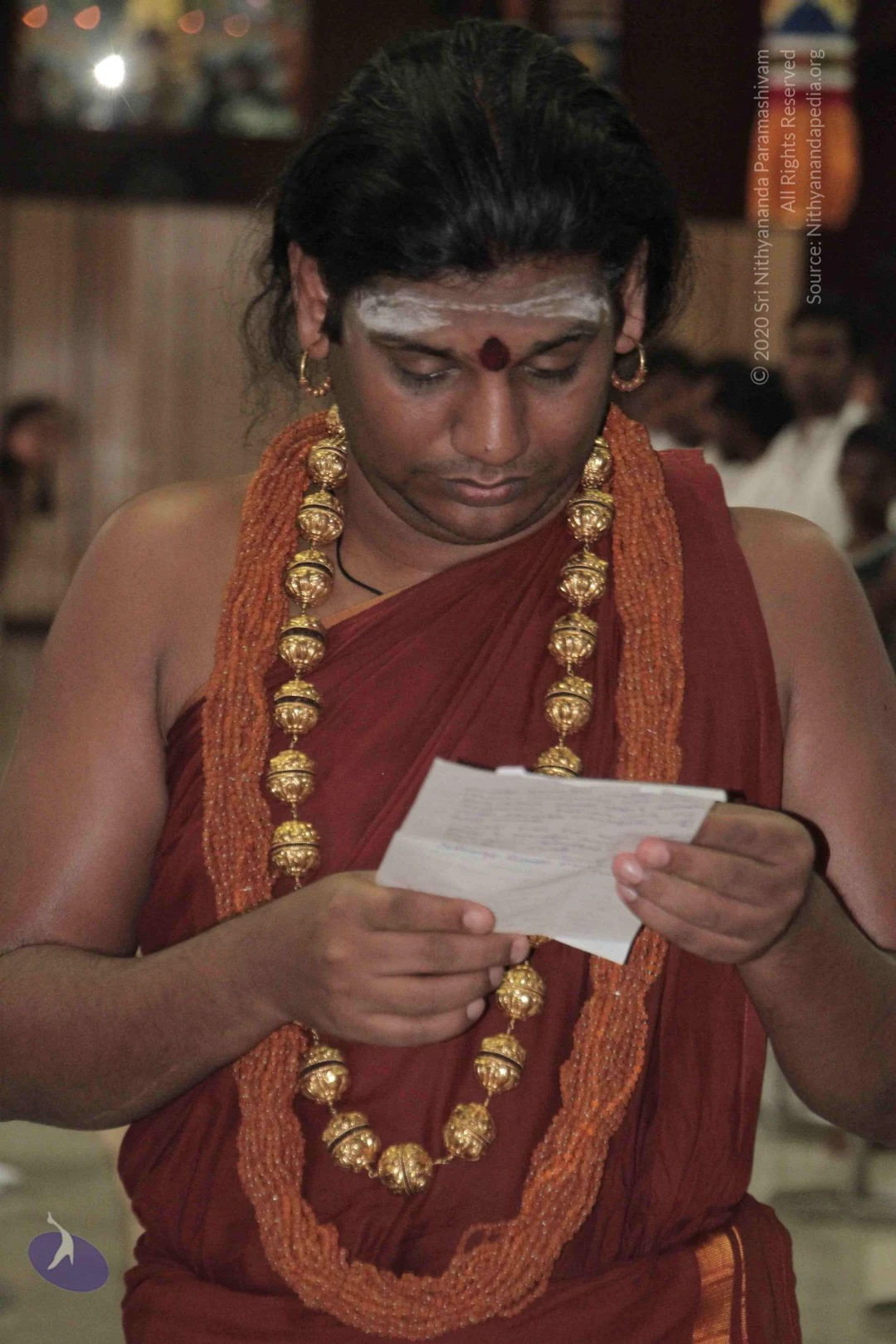
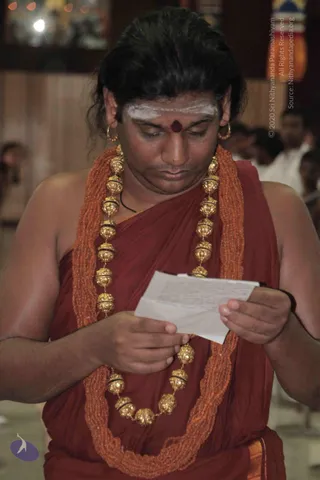
A man in a maroon-red saffron-toned robe stands indoors, looking down and reading a folded sheet of paper held in both hands. He wears a thick multi-strand necklace of orange beads with large gold ceremonial beads, gold hoop earrings, a white horizontal tilak across the forehead and a red bindi. His hair is long and swept back. Behind him, out of focus, a few people stand and a warm, lit interior with a hanging lamp is visible. The subject appears to be reading notes during a talk.

Temple-Tour
18 photosSource gallery
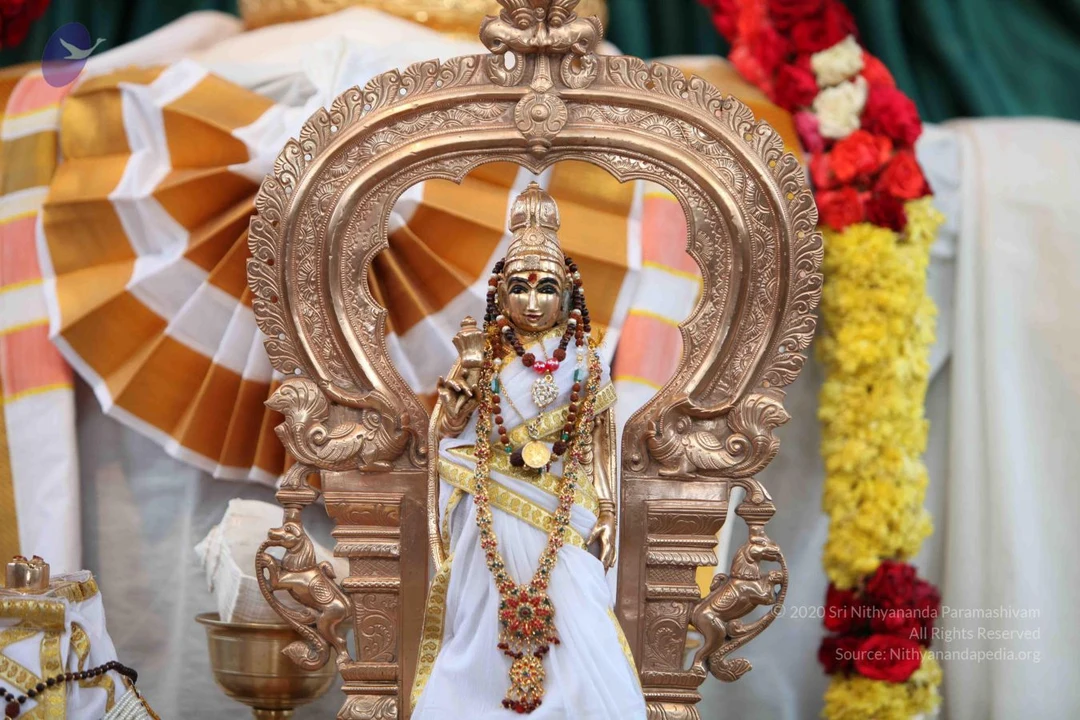
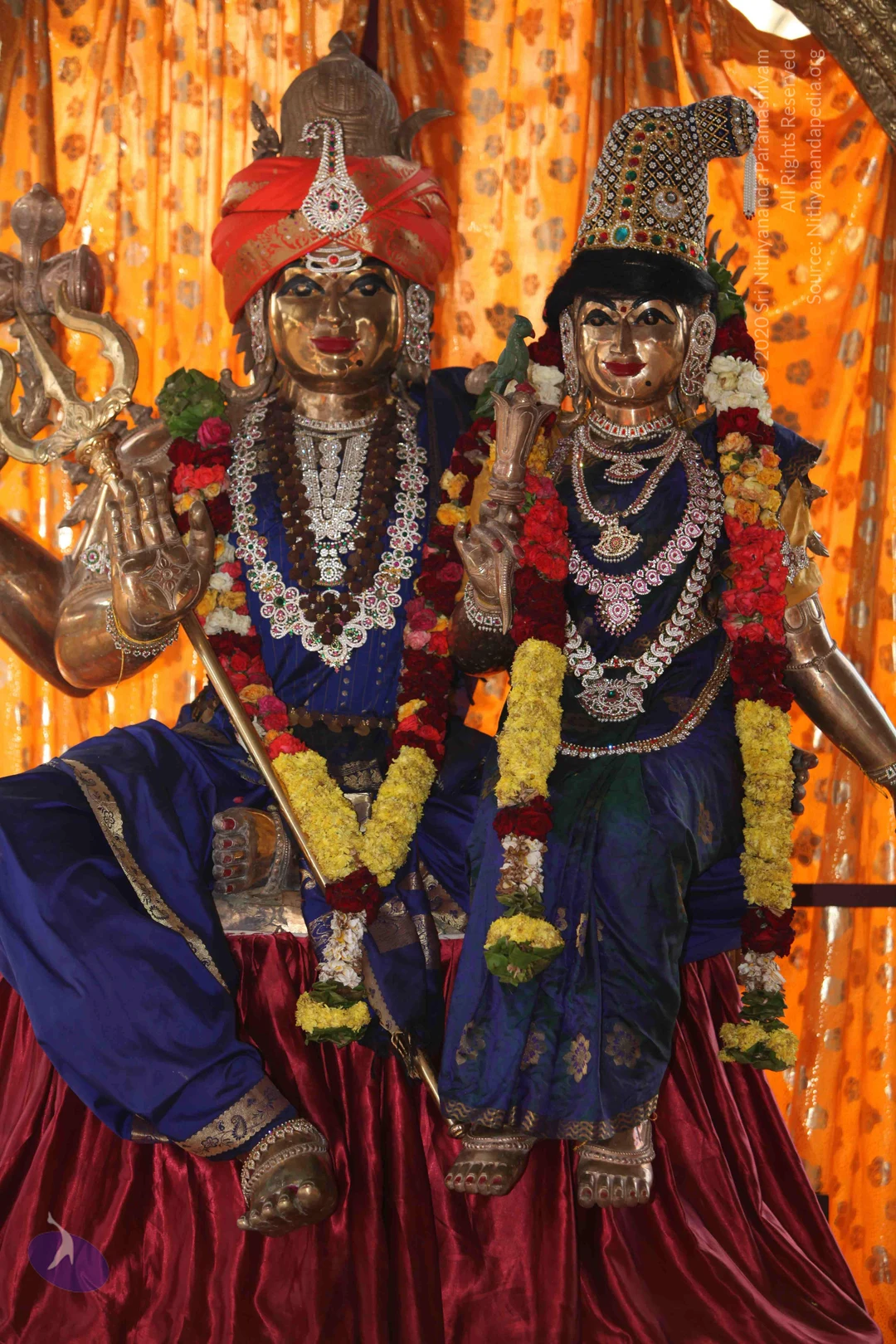
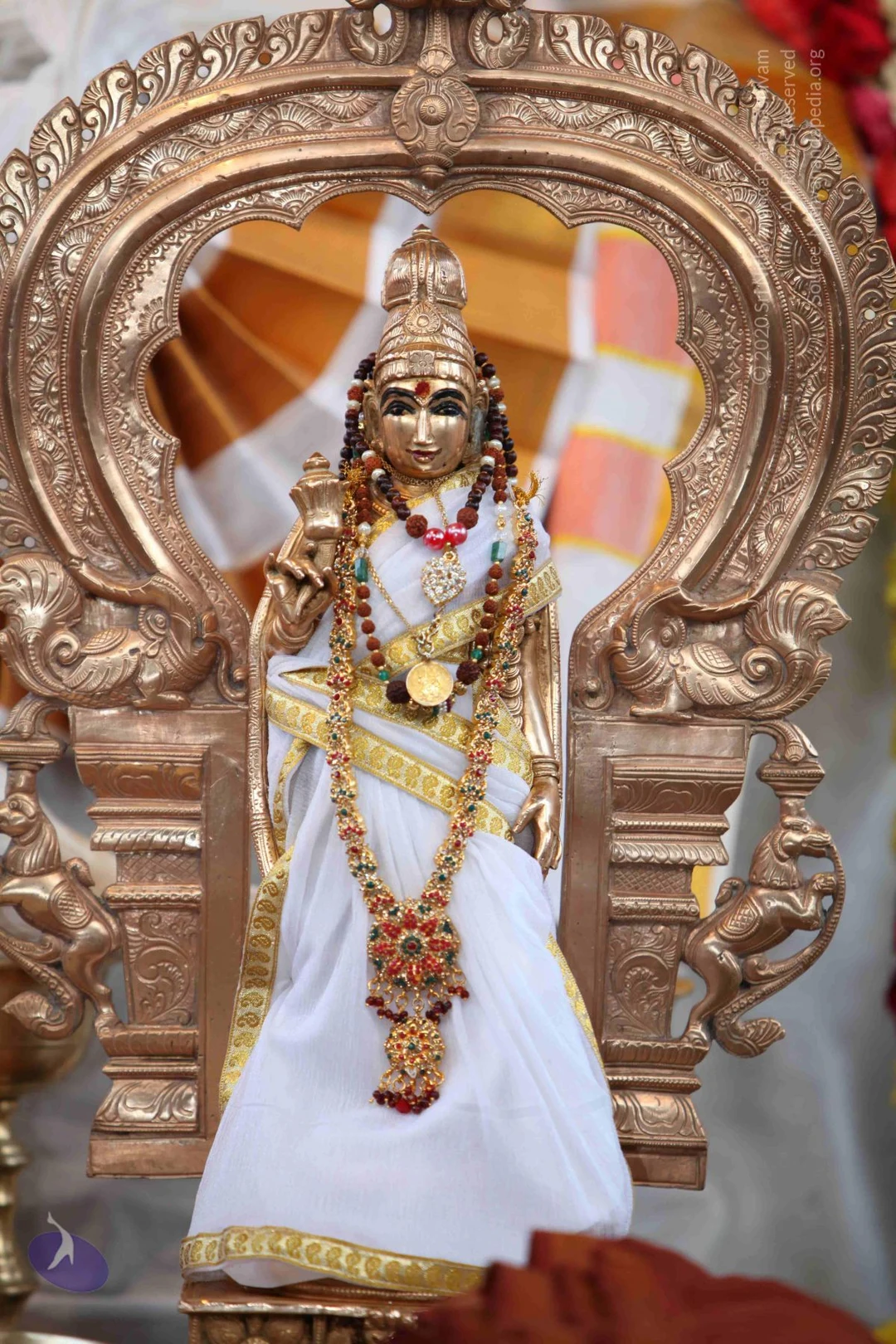
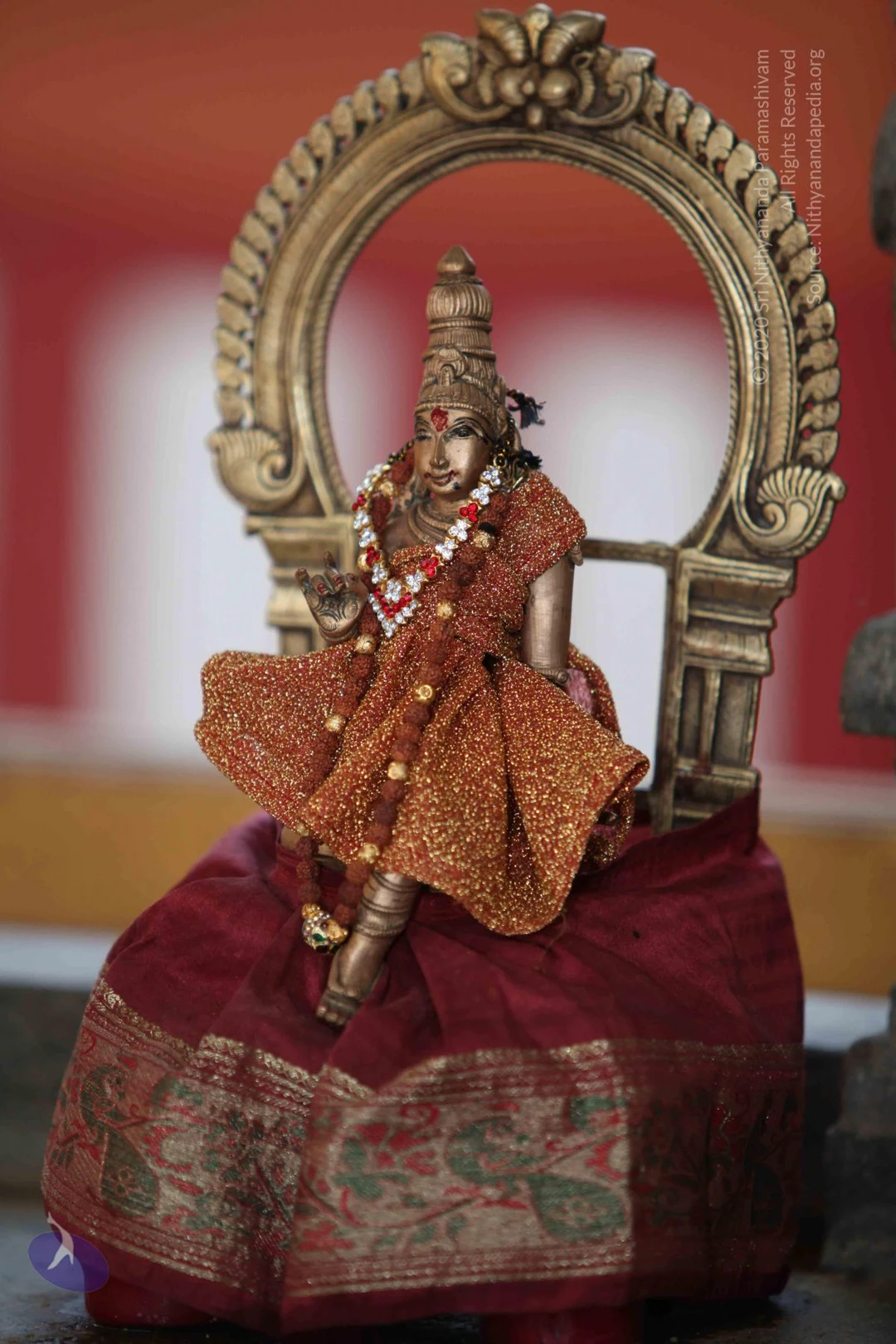
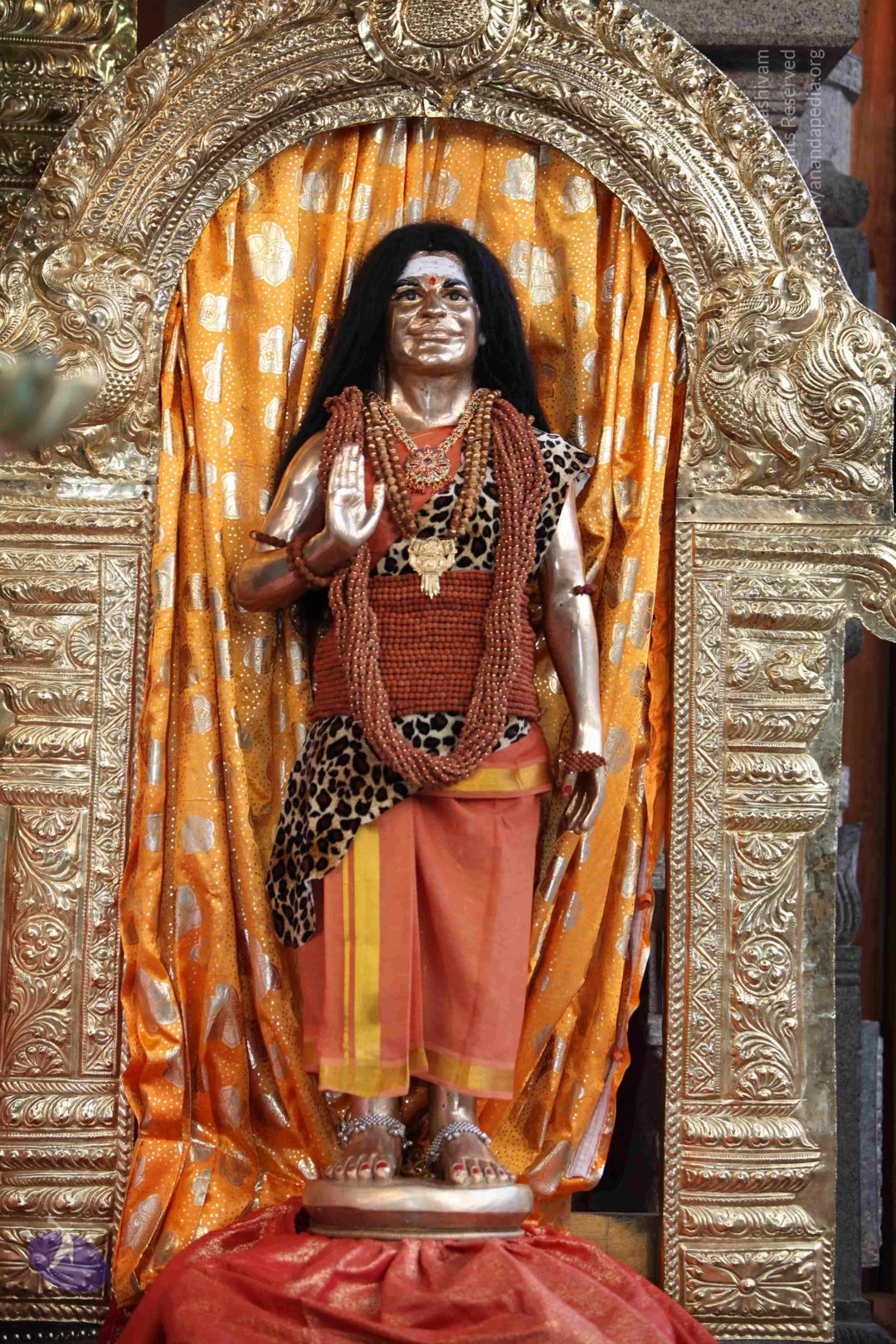
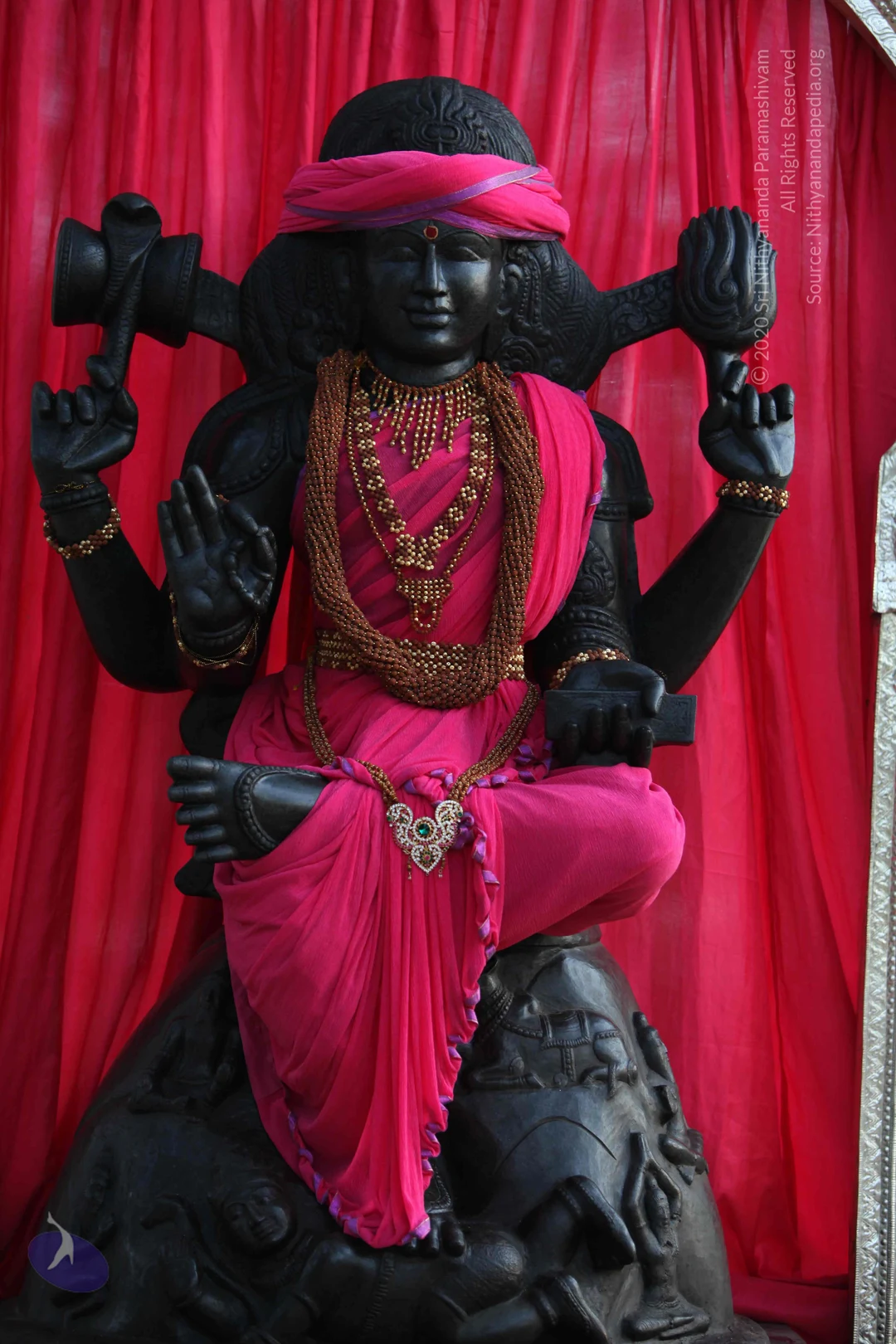
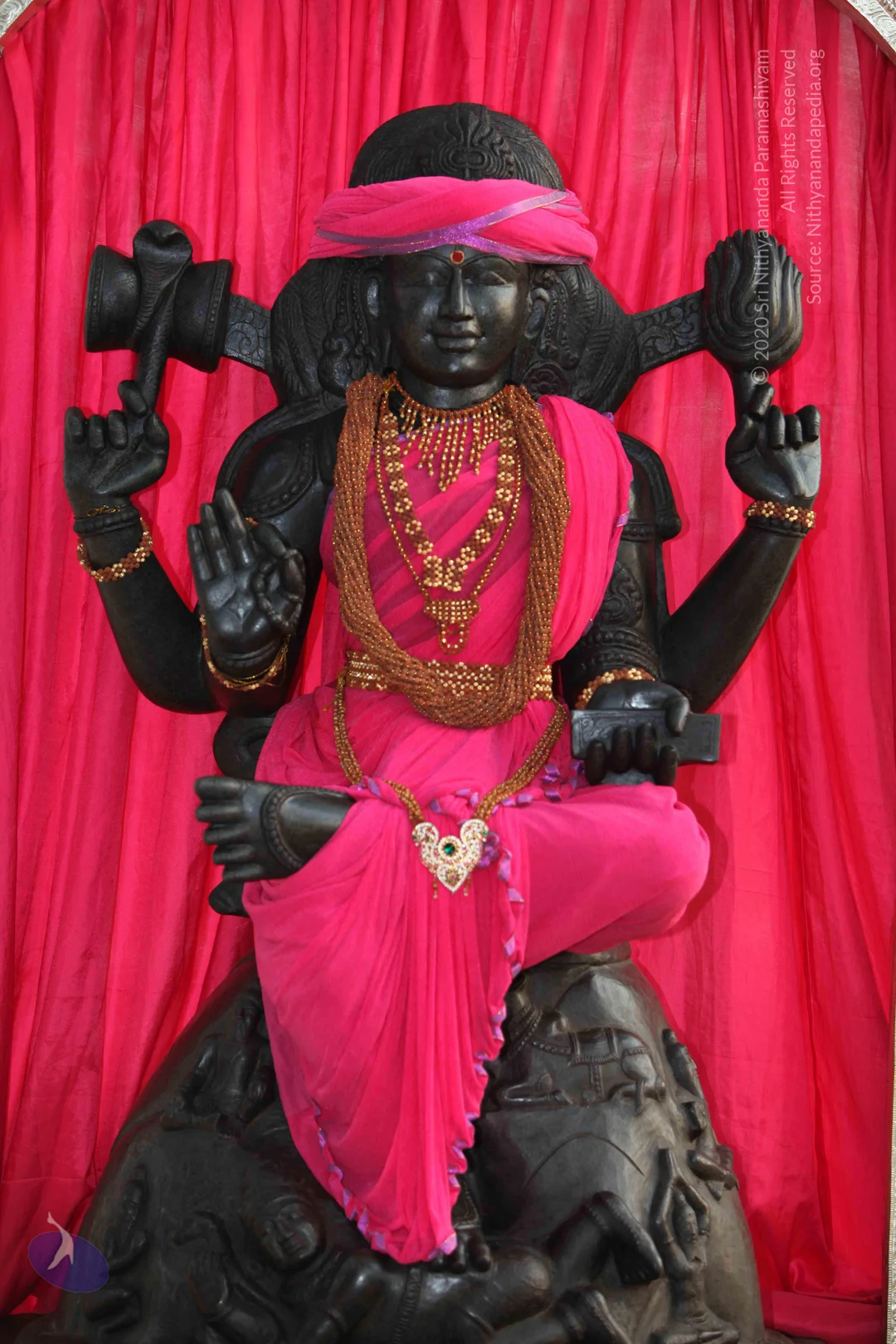
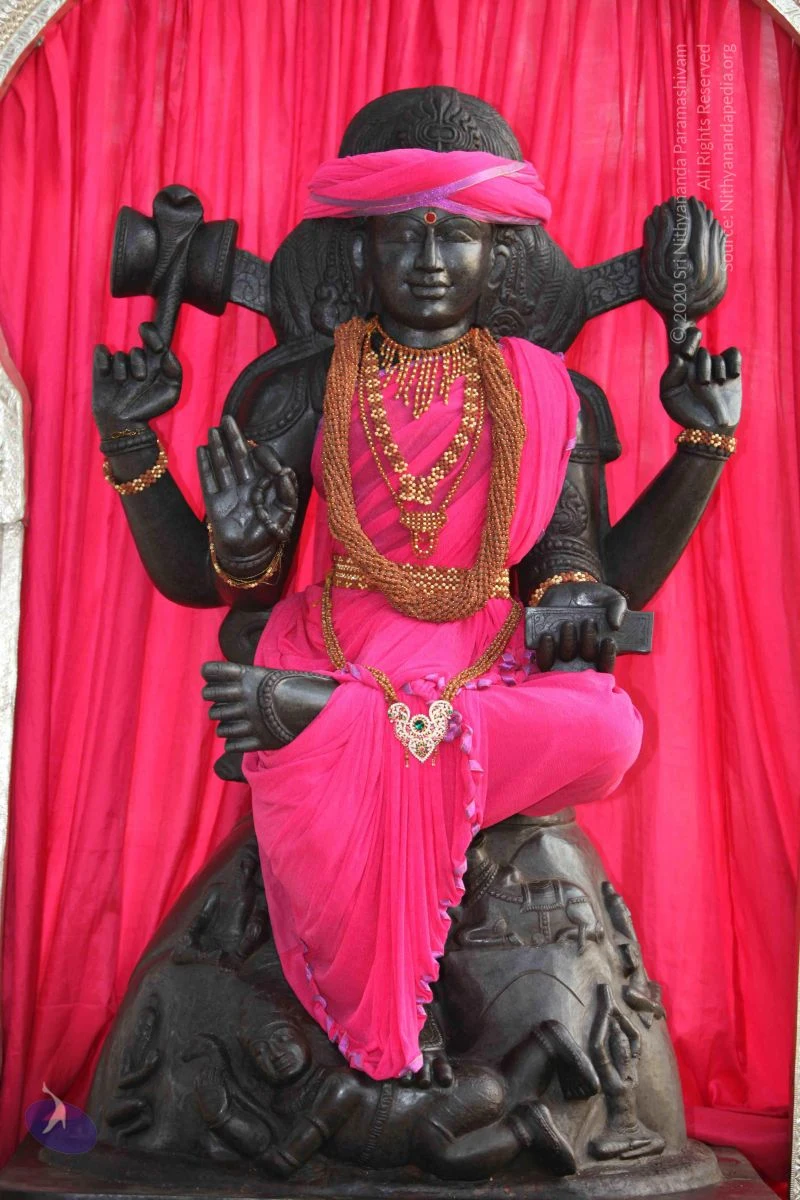
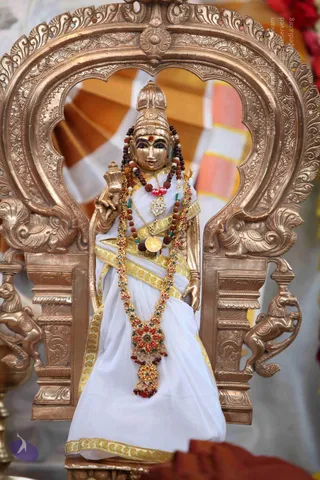
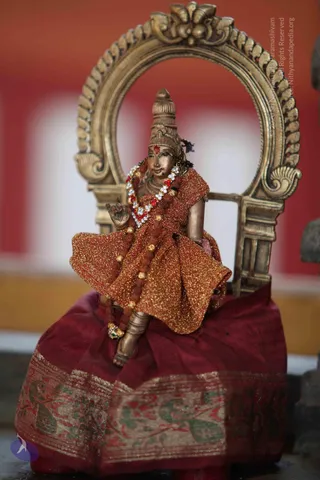
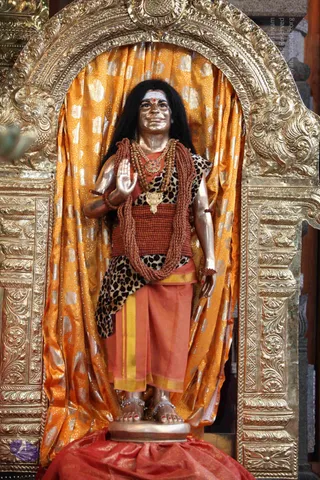
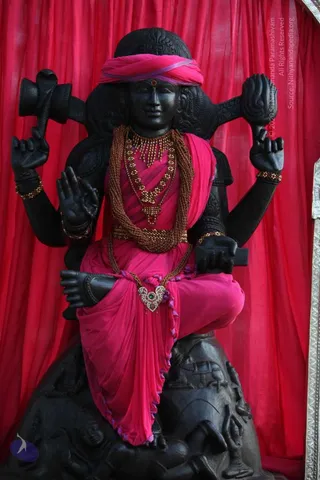
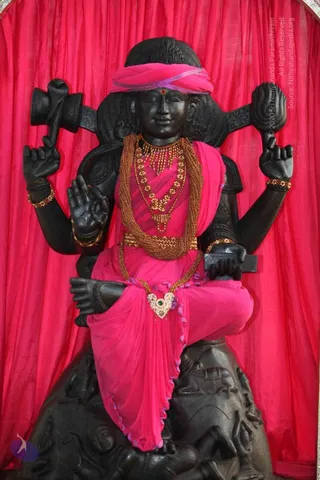
Two bronze-coloured deity murti seated side by side on a deep red satin platform before orange and gold patterned drapes. The figure on the left wears a red turban, a rudraksha mala and layered white and jewelled necklaces over a navy garment, and holds a trident. The figure on the right wears a tall jewelled headdress and navy dress with heavy silver and red-stone necklaces, holding a lotus-like object with a small green parrot perched on it. Both are adorned with yellow and red flower garlands and wear jewelled anklets.A gilded bronze deity murti of a female form stands within an ornate copper-coloured arched frame carved with scrolls, yalis and rearing horse figures. The murti wears a white sari edged with gold-and-red brocade, a tall crown, a rudraksha mala with red beads, and a long gold necklace set with red and green stones and a large central pendant. It holds a ritual object in one raised hand. Behind it are orange and white fabric draperies and a red garland at the lower edge.A small bronze statue of a seated deity murti, dressed in a sparkling orange-gold shawl and a maroon silk cloth with gold border. It wears a tall conical crown, red tilak, a white and red stone necklace, and a rudraksha mala with gold beads. One hand is raised in a mudra. It sits in a gilded arched throne-like frame against a red background.A silver-toned statue of a long-haired, bearded male figure stands in an ornate gilded arch backed by orange and gold brocade drapery. The statue wears a saffron-orange dhoti with gold border, a leopard-print shawl, multiple rudraksha malas, a large gold pendant necklace, and a red-and-white tilak on the forehead. The right hand is raised in blessing. Red fabric is draped at the base.A black stone deity murti seated on a dark rock base in front of a bright red draped curtain. The figure has four arms, a pink turban with a red bindi, and is wrapped in a flowing pink garment with purple edging. It wears layered brown-gold beaded necklaces, a jewelled pendant at the waist, and bangles on the wrists. One hand holds a trident-like staff and another holds a small object, while the other hands are raised in mudras. Carved figures decorate the base. The image is a statue, not a person.A dark stone deity murti seated in a lotus-like pose on a carved black base, wrapped in hot pink draped cloth with a pink turban and red bindi. It wears layered gold-coloured beaded necklaces, bangles and a jewelled heart-shaped pendant. Four arms hold a trident-like staff, a lotus and other ritual objects. Hot pink curtains form the backdrop of a shrine-like setting.

Pada-Puja
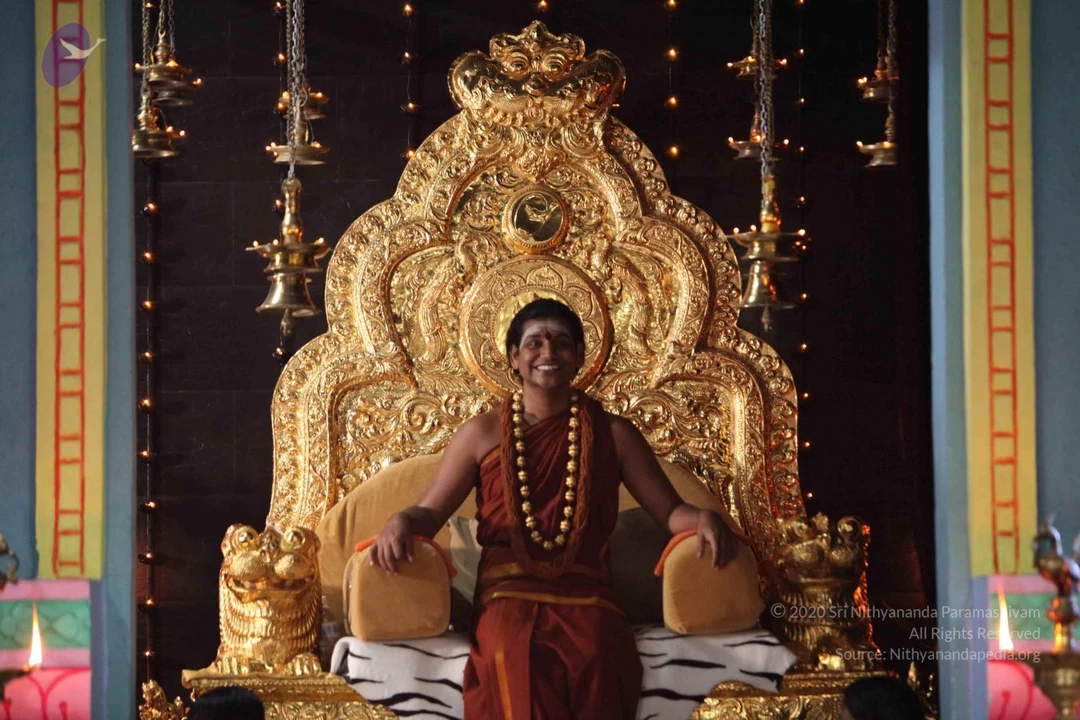
29 photosSource gallery
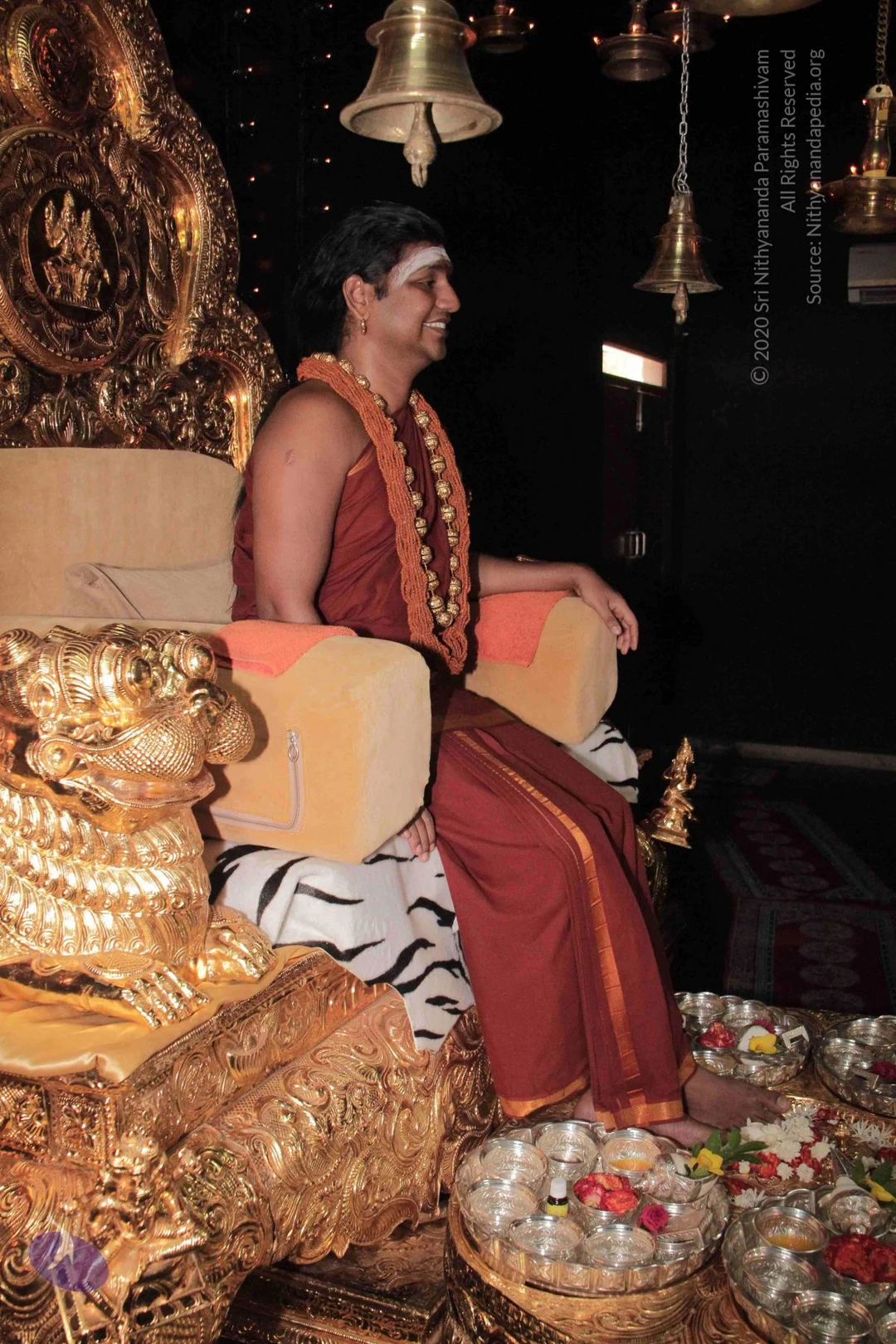
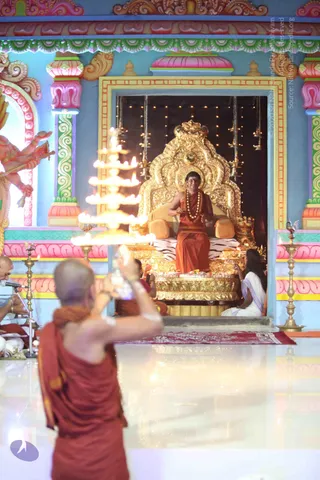
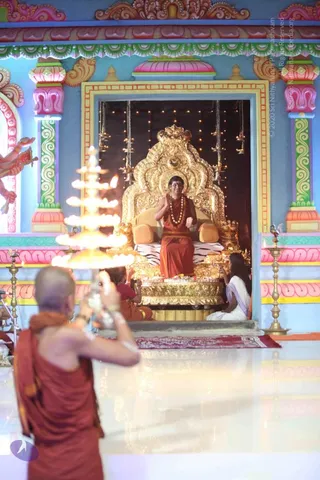
A photograph inside a colourful temple-style hall with blue walls and pink, green and yellow ornamental trim. A seated figure sits on an ornate gilded throne with a crown-like arched back, cushions and a striped white-and-black cloth, wearing a saffron-red dhoti and upper cloth with a rudraksha mala and gold necklace, one hand raised in a gesture. A kneeling attendant in saffron-red robes, with a shaved head, holds a flaming lamp or fire offering toward the throne. Hanging brass lamps and bells, brass standing lamps, flower offerings on the gilded base and a red carpet complete the scene.Photograph of a temple hall with pink, green and blue painted pillars and a multi-armed deity figure at left. A seated figure in saffron-orange robes and a beaded mala necklace sits on an ornate gold throne draped with a striped tiger-skin cloth, before a gold-framed doorway hung with small brass lamps. A monk with a shaved head and orange shawl in the foreground raises a tiered lamp of lit oil wicks toward the throne. A woman in a white sari kneels to the right beside offerings on a red carpet, and a man with a microphone sits at far left among seated devotees.A photograph of a temple-like shrine with bright pink, green and blue painted pillars and arches. A seated figure in an orange-red robe and a beaded rudraksha mala sits on an ornate gold throne with a tiger-striped cushion, raising one hand in greeting. The seated figure has a short-cropped head, not long hair or a crown, so the appearance cue is not distinctive enough to name him. In the foreground, a bald attendant in an orange-red robe raises a tiered brass aarti lamp with burning flames toward the throne. A woman in a white sari with a coloured border sits to the right of the throne, near a brass lamp stand and small offerings, and hanging brass bells and oil lamps are suspended above.A seated man in orange-red robes and a rudraksha mala sits on an ornate gold throne with a zebra-striped cushion, raising one hand in blessing, inside a brightly painted blue and pink temple hall with hanging brass bells. In the foreground a bald priest in orange robes holds up a lit multi-tiered oil lamp toward the throne, and a woman in a white sari with a purple border kneels to the right of the throne. Brass lamps stand on either side of the white floor, and a red rug lies at the foot of the dais.A photo of a colourful temple hall with a golden ornate throne at the centre, draped with a tiger-skin cover. A man in an orange-red robe and a rudraksha mala sits on the throne, his right hand raised in blessing. A woman in white with a purple-bordered sari kneels at the foot of the throne. In the foreground, a shaven-headed man in an orange-red shawl holds up a multi-tiered aarti lamp with lit flames. Brass oil lamps stand on both sides, and hanging lamps are suspended above the throne. The walls are painted in pink, green and blue with decorative motifs.A seated man in a rust-orange robe and a beaded rudraksha mala sits on an ornate gold throne with a carved arched backrest and lion-form armrests, draped with a tiger-striped cloth. He holds his palms together in greeting and smiles, with a tilak on his forehead. Along the foreground, a row of lit brass oil lamps glows, and a brass lamp stands beside the platform. Brass hanging lamps are suspended behind the throne. Two women in white saris sit at the lower right, one holding an offering, and a blurred figure in the foreground raises a hand. Small offerings and flowers rest on the golden platform. The setting resembles a satsang hall with lamplight.

Kalabhairava

11 photosSource gallery
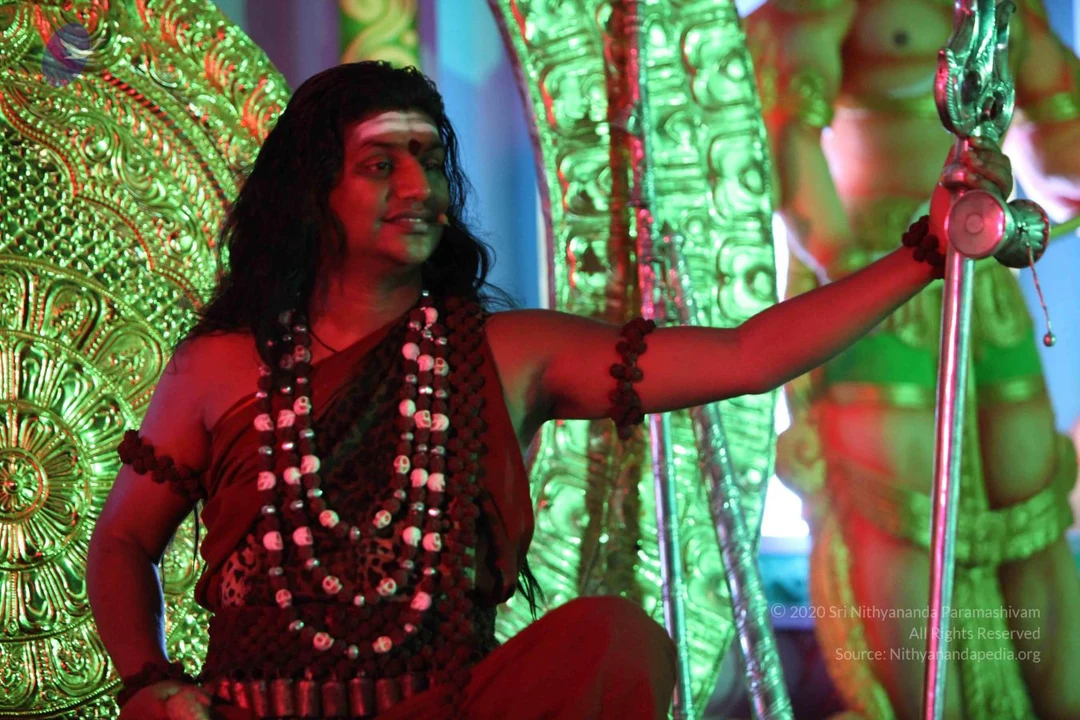
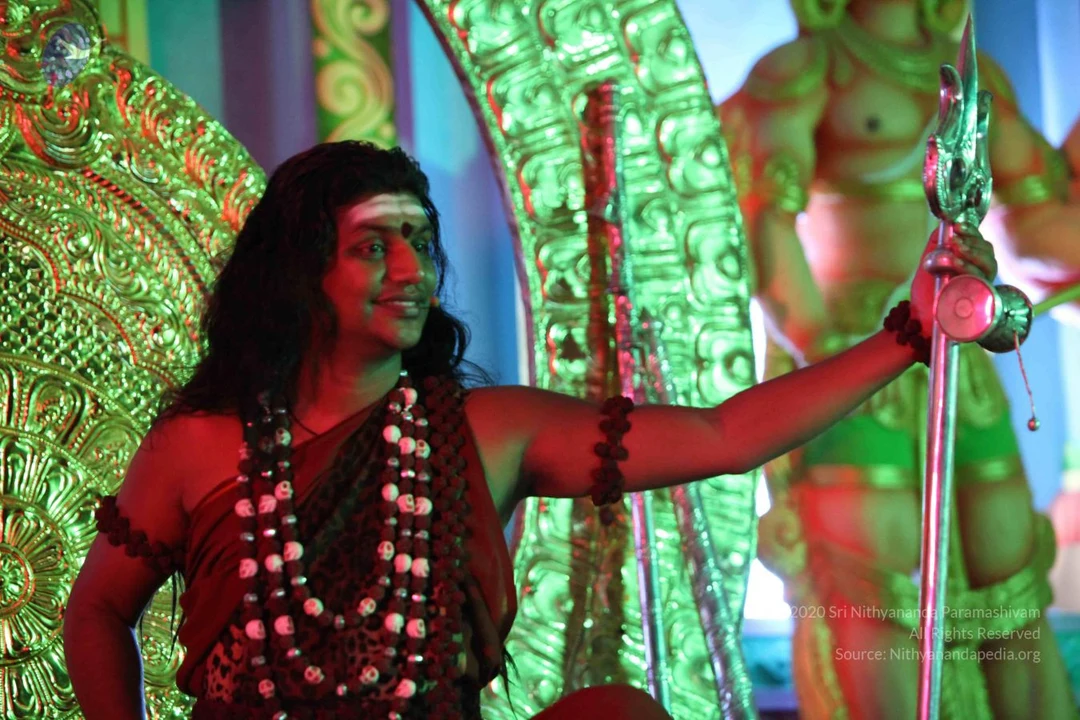
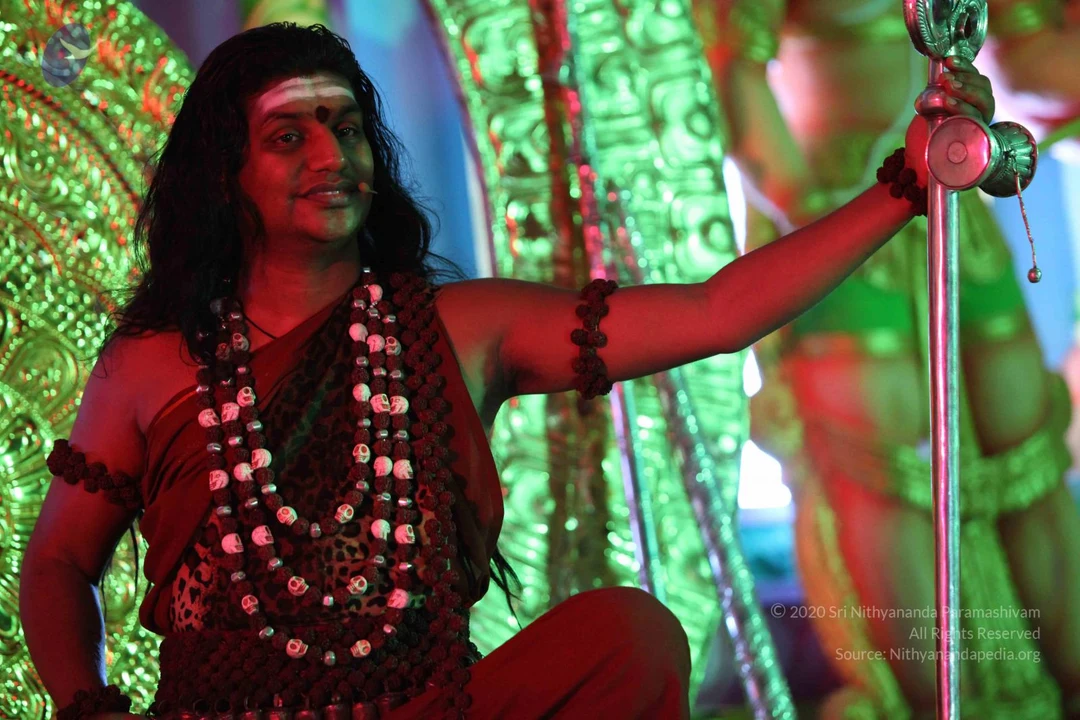
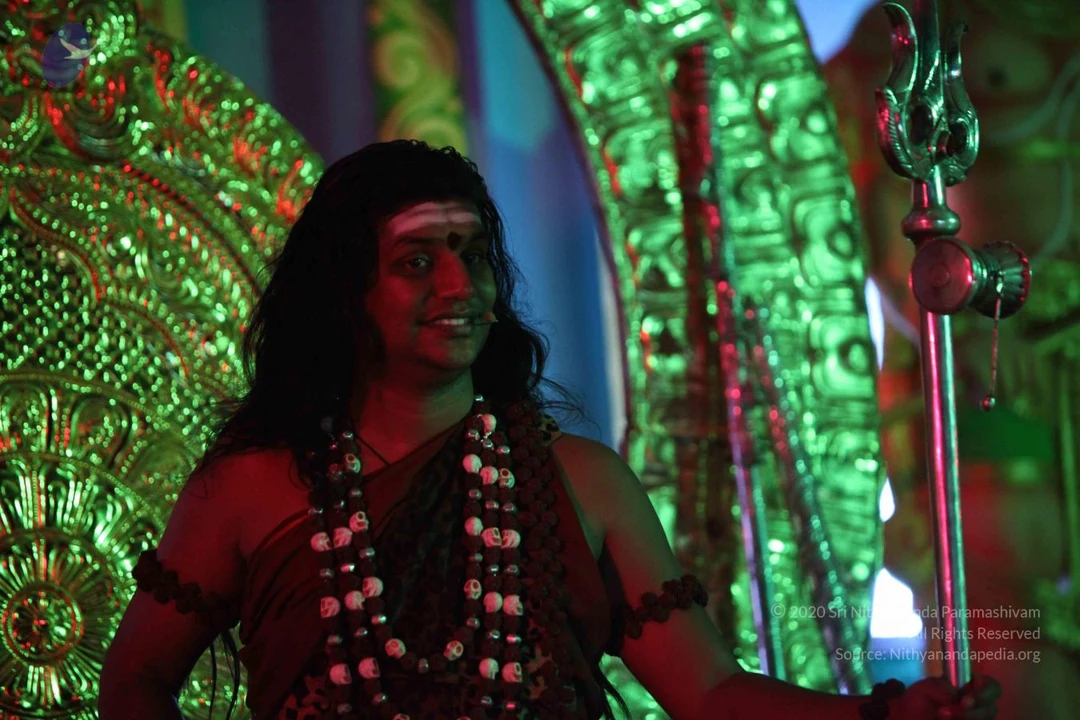
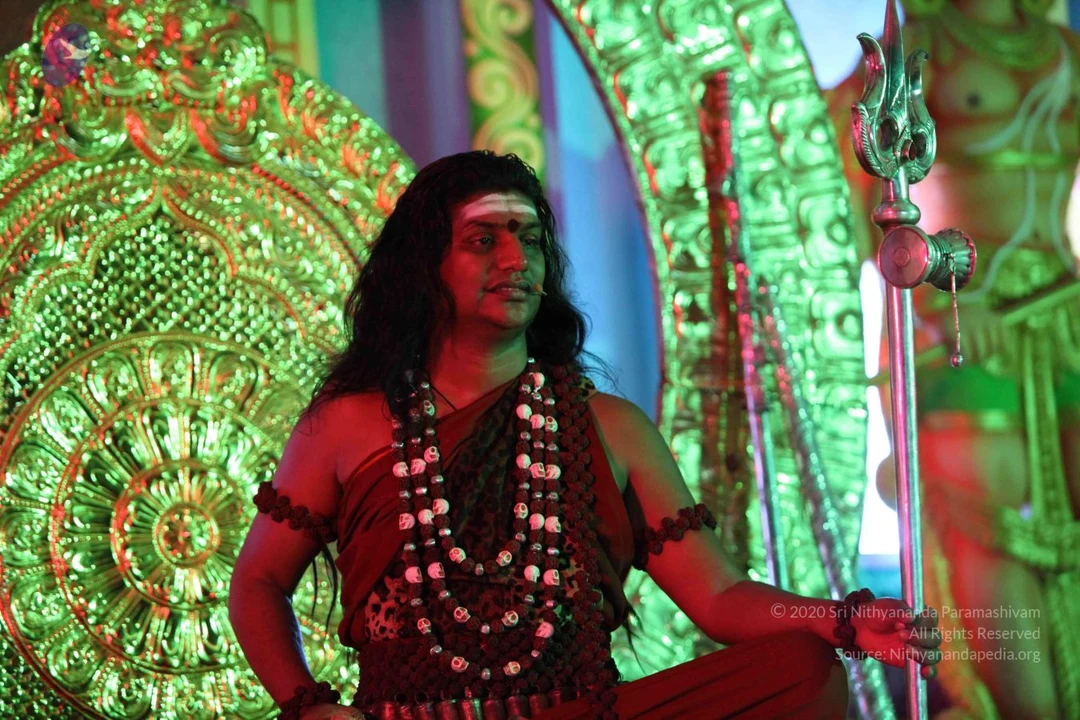
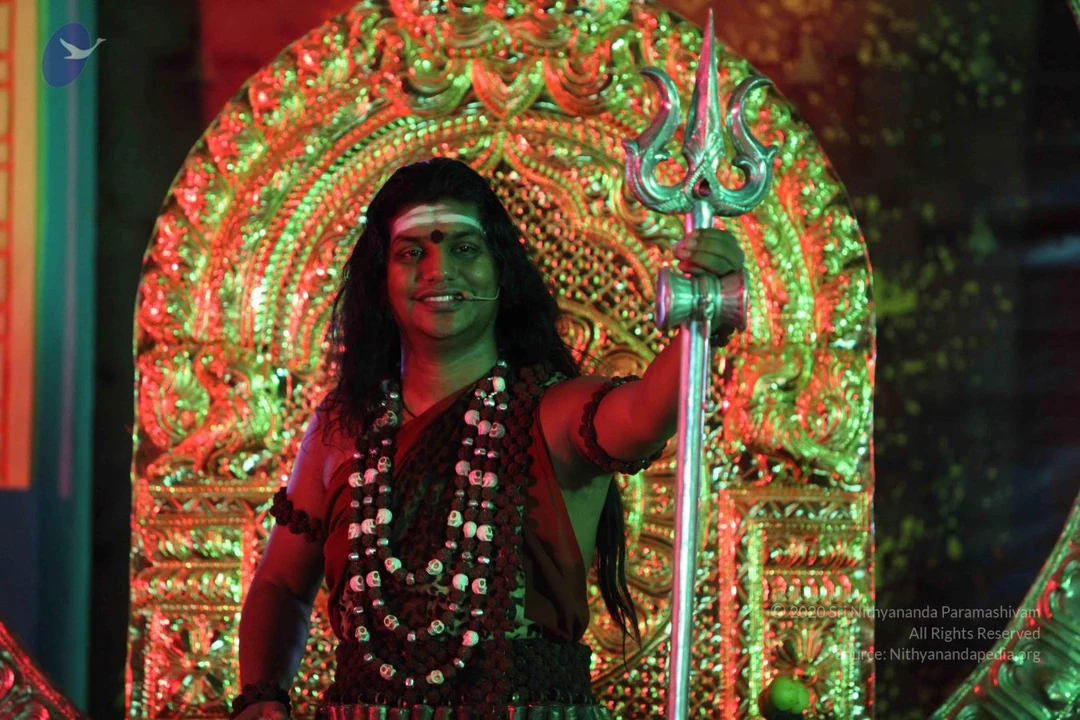
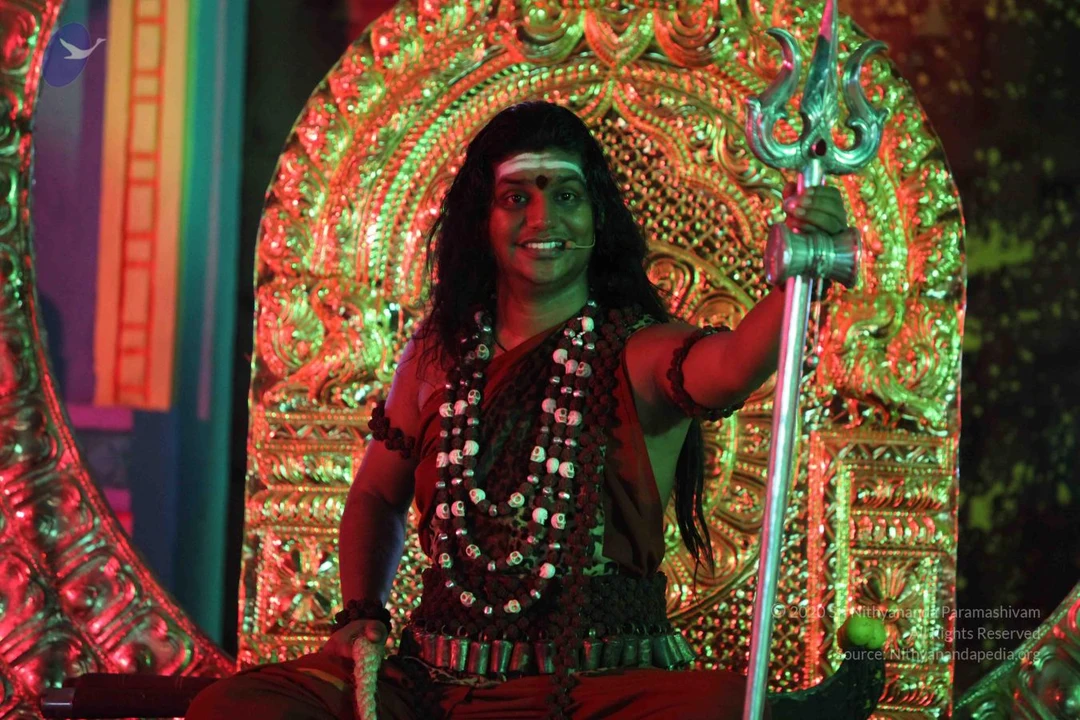
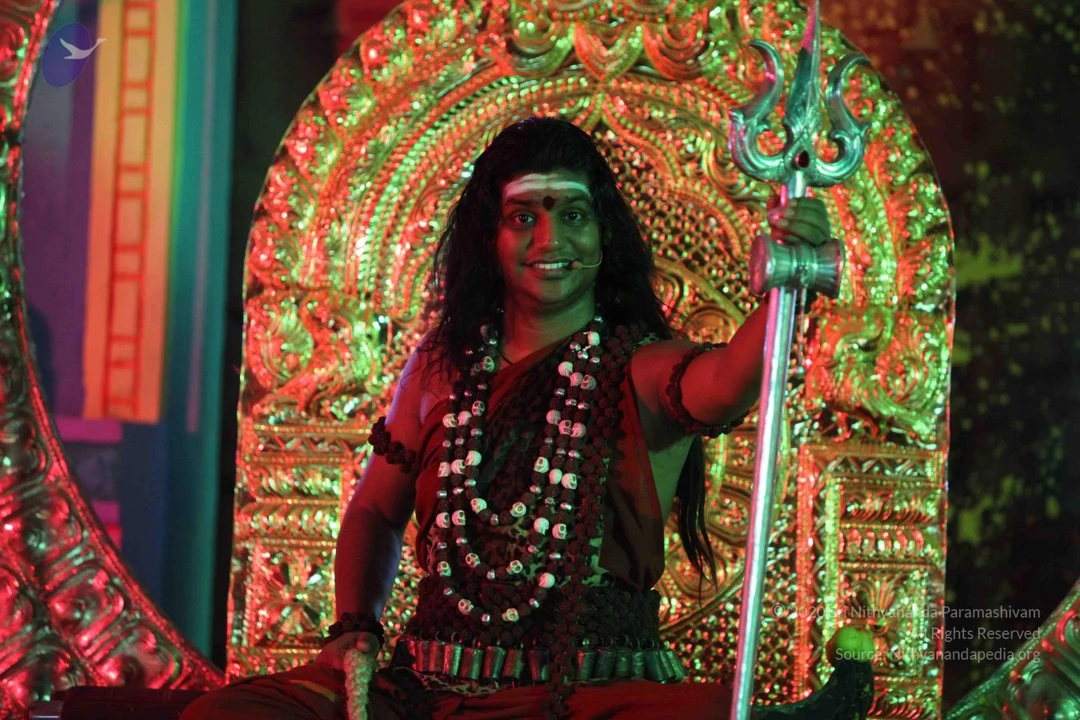
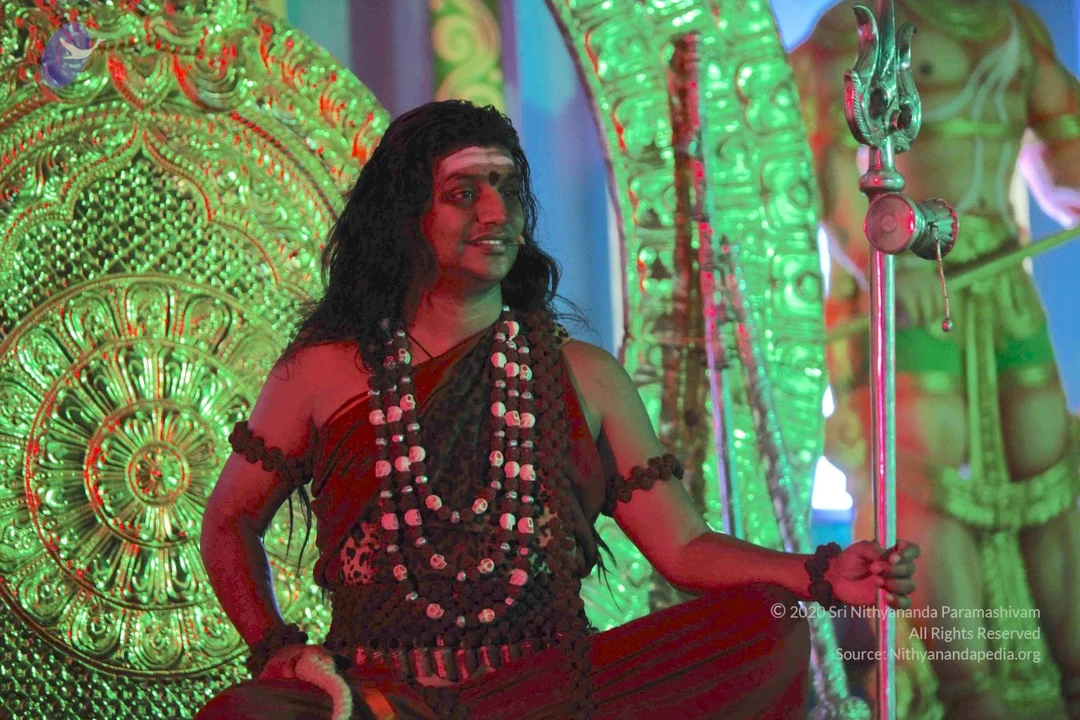
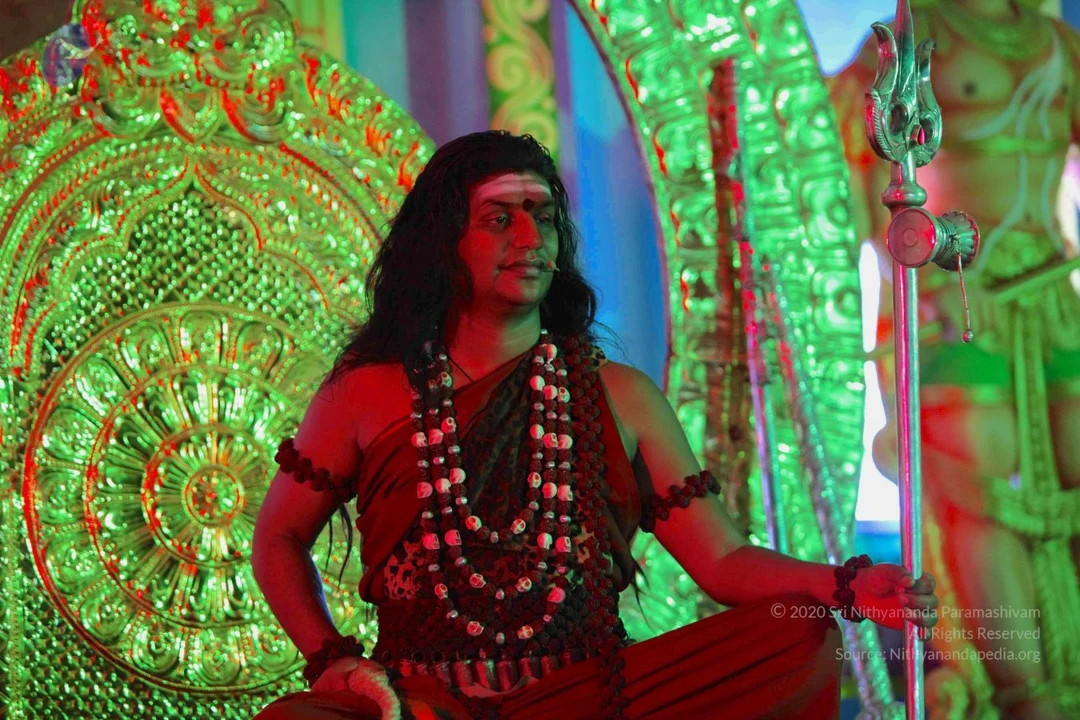
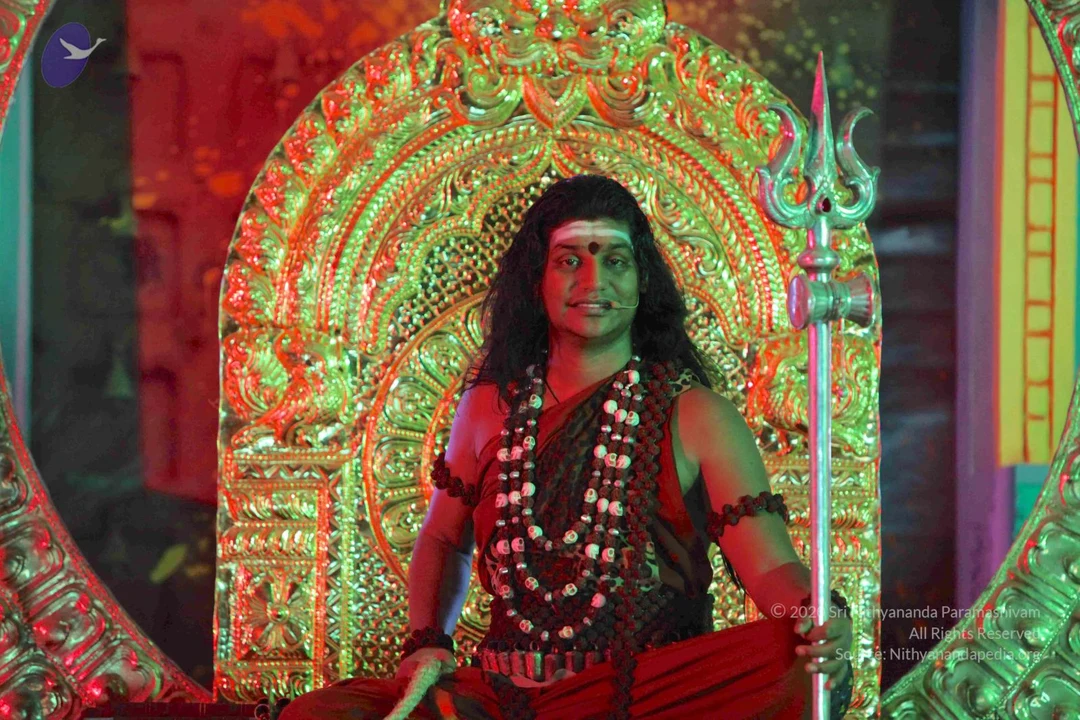
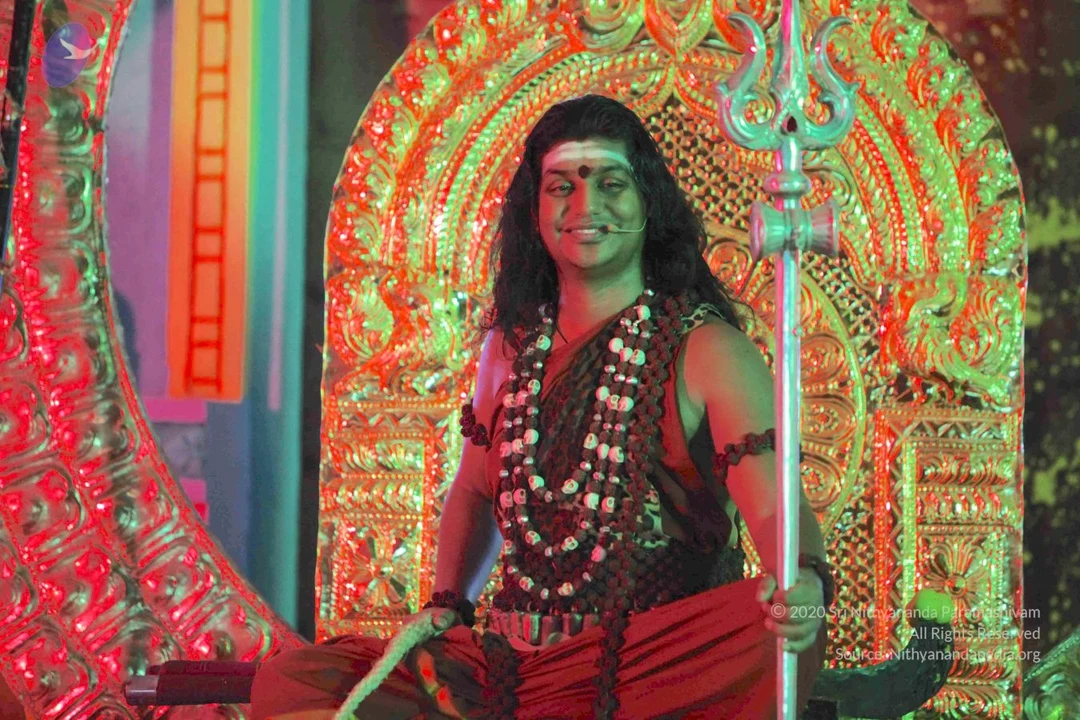
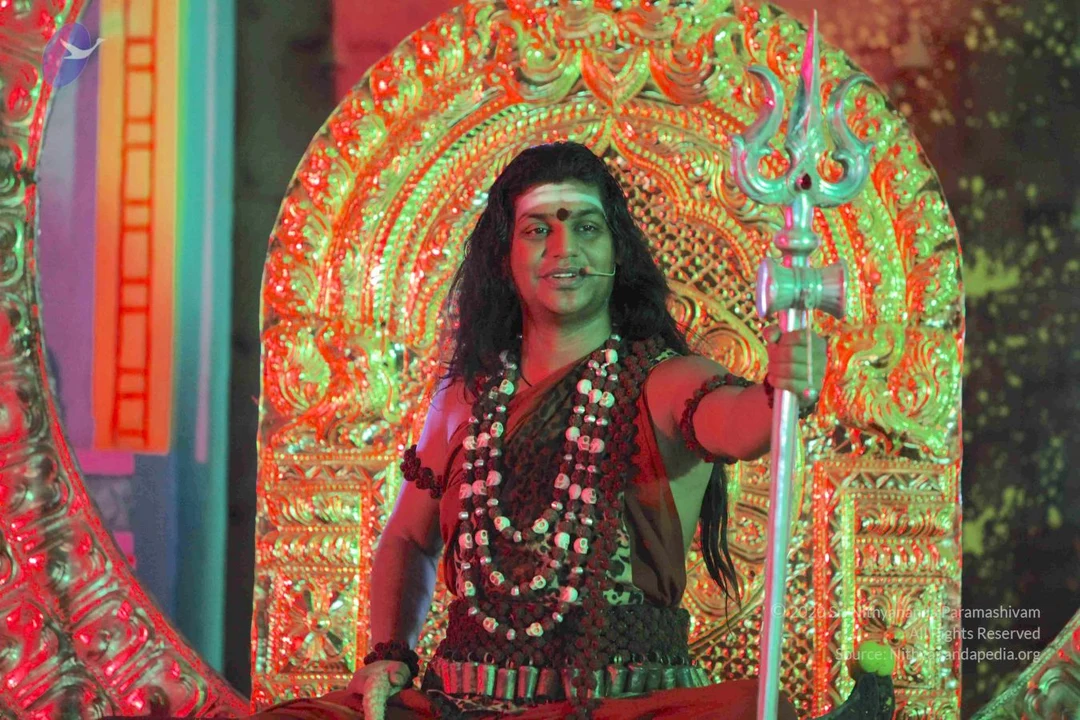
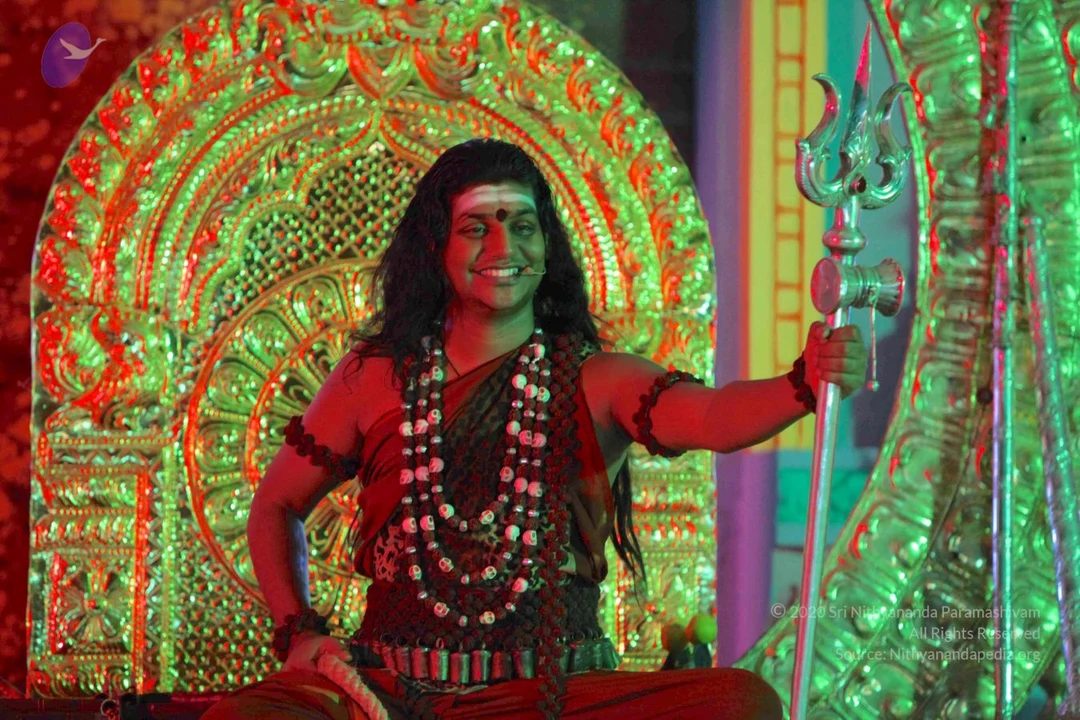
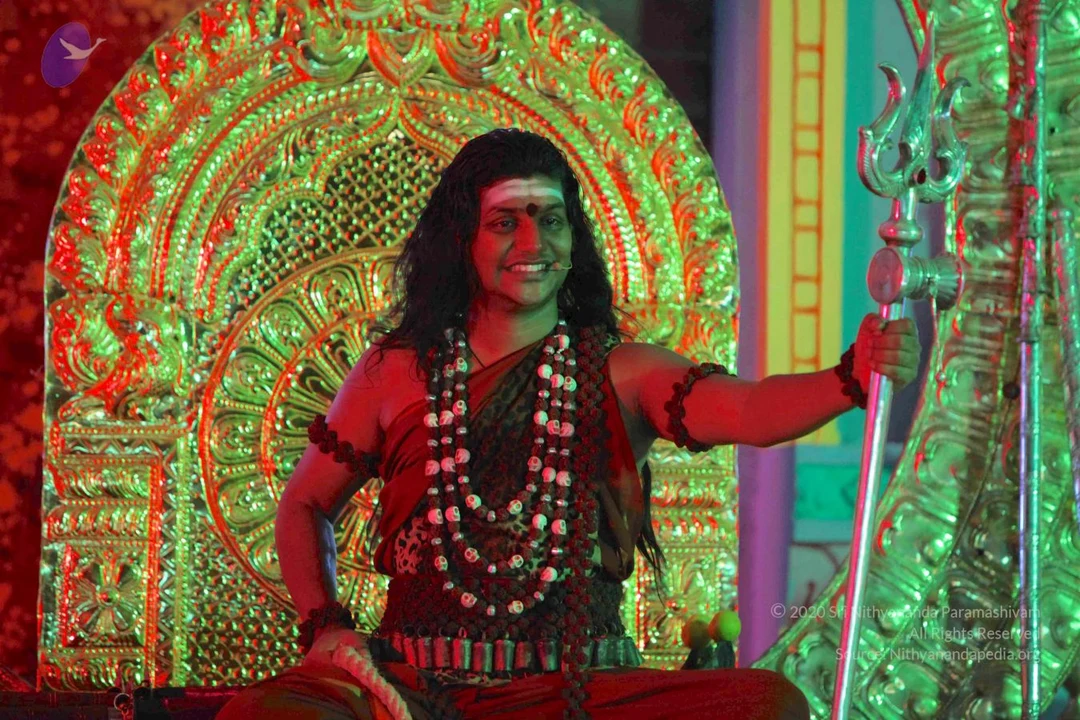
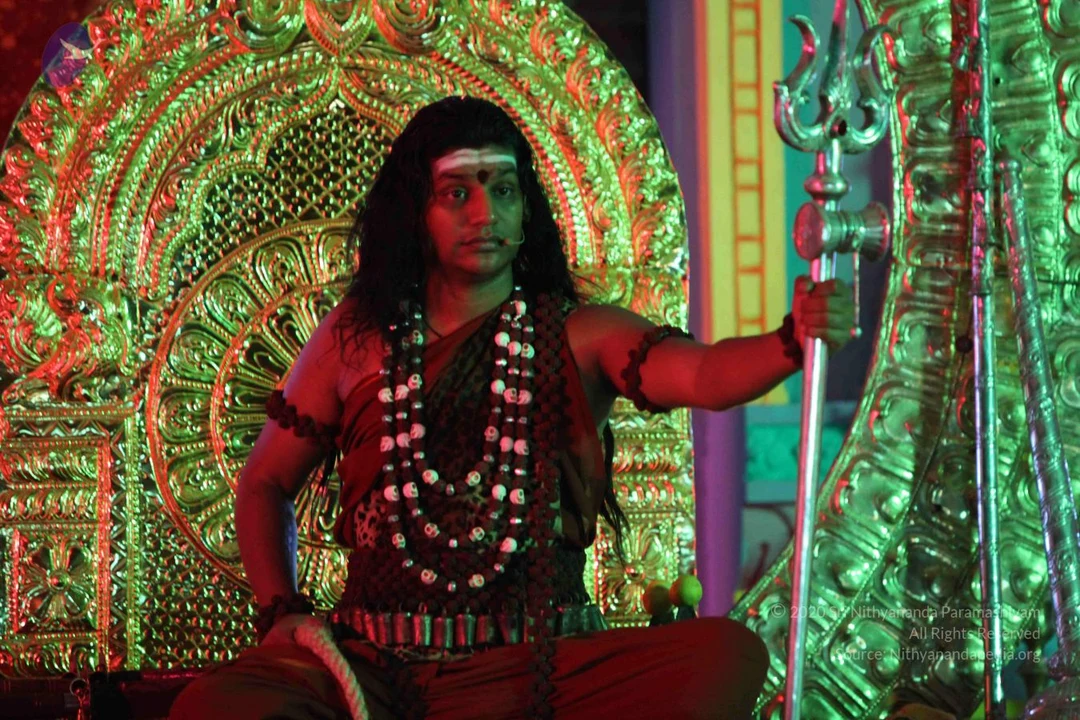
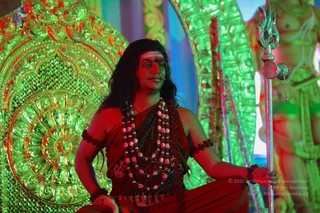
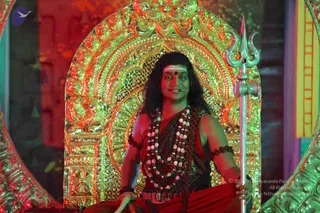
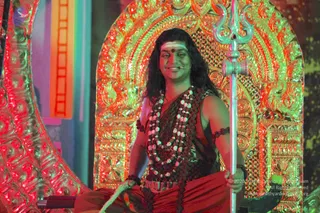
A man with long dark hair and a white tripundra with red bindi on his forehead sits before an ornate gold-and-green embossed arch backdrop, holding a silver trident upright in his right hand. He wears a dark patterned garment, many rudraksha mala necklaces with white beads, and red beaded bracelets on his arms. A small lapel microphone is clipped near his face. Saturated red and green stage lighting falls across the scene. A person in a dark-patterned garment is seated in the foreground at a ceremonial stage setting. The figure is a physical person seated on stage.A man with long dark hair and a red-brown vertical forehead mark sits cross-legged in front of an ornate green and gold decorative backdrop. He wears a dark red wrap, layered dark rudraksha-style beads and a multi-strand necklace with pink and white beads, plus dark bead armbands. He holds a silver trident with a small bell-like finial in his right hand and rests his left hand on his knee. Behind him, a large green and red painted figure of a deity stands on the right beside the decorative arches. Lighting is red and green. Possibly a stage or staged satsang setting.A photograph of a long-haired man seated on a decorated stage, wearing a red-orange cloth wrap and multiple dark and white rudraksha-style beaded malas. He has a red tilak mark on his forehead and holds a silver trishul (trident) upright in his right hand. Behind him, ornate green-lit gilded arches and a large carved figure frame the scene.A seated man in front of an ornate golden throne arch with green and red illumination. He wears a red and dark cloth wrap over the shoulder, layered dark rudraksha malas with pale beads, and beaded armbands. A red-and-white forehead mark is visible, and he holds a silver trident with his right hand. A headset microphone is worn near his face. Swamiji (probable) is shown as a seated figure with long swept-back hair, crown-like ornate throne setting, rudraksha malas and saffron-red clothing, appearing in person on a stage-like setting. The scene is lit with coloured stage lights.A man with long dark swept-back hair, a red bindi and a headset microphone stands before an ornate gilded golden arch with red and green lighting. He wears a red-and-black rudraksha mala with many layered strands and red-brown bead bands on the arm, and holds a tall silver trident. a person in a ceremonial stage setting with red draped cloth at the lower left; the scene suggests a stage performance or satsang platform. The photo is dim and saturated with red and green light.A man with long dark hair and a red bindi stands before an ornate golden arch lit in red and green light. He holds a silver trident in his right hand and wears layered rudraksha-style beads and a red-brown draped garment with a ceremonial belt. A microphone is clipped near his face. The figure appears to be a person, identified by his long swept hair, saffron-red ceremonial clothing and rudraksha malas; he is presented on a decorated throne-like backdrop as a speaker or performer.

01-Pada-puja
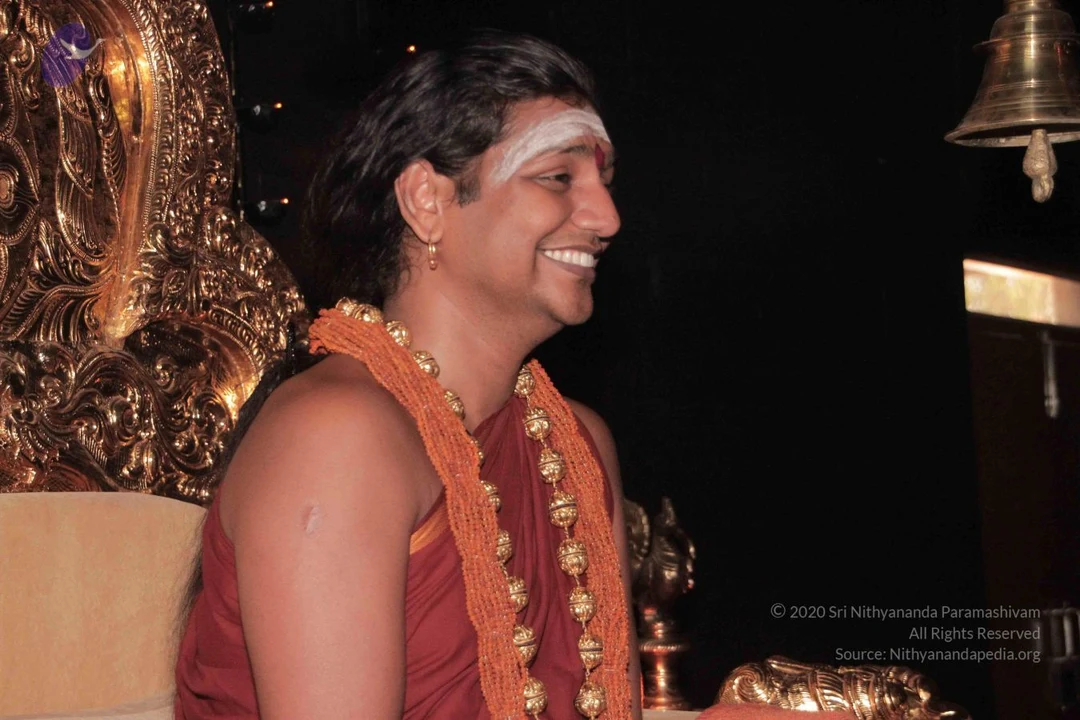
6 photosSource gallery
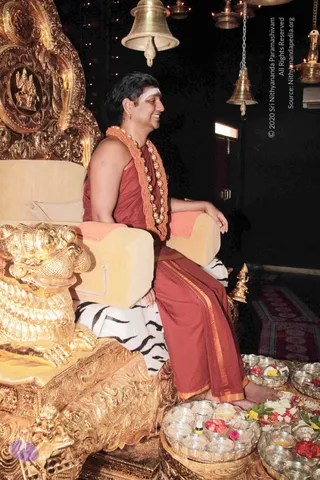
A seated man in a rust-orange robe with gold-edged border and a long beaded gold necklace sits on an ornate gold-leaf throne with a carved backrest, a tiger-striped cloth on the seat, and flower offerings at the base. Hanging brass oil lamps and rows of small lamps surround him against a dark background. Forehead marked with white and red sacred markings. Swamiji (probable): long swept-back hair and ceremonial gold necklace with a saffron robe, seated on the throne as the honoured figure.A photograph of a man seated on an ornate gold-covered throne with a carved high back and a gilded lion-head armrest support. He wears a rust-red robe, an orange-brown shawl and a white-and-black striped cloth over his lap, with a long white garland and a white tilak on his forehead. He gazes to one side. Hanging brass bells and small brass lamps are visible above, with a dark backdrop and string lights along the left edge.A seated man in a rust-red dhoti and matching shawl with a gold-beaded orange rudraksha-style mala sits on an ornate gilded throne carved with a lion-headed armrest and a deity relief on its back. He has a white vertical tilak on his forehead and is smiling toward the left. Silver plates of flowers, kumkum-tinted offerings and small oil lamps are arranged at his bare feet. Brass bells and a hanging brass lamp hang above in a dark hall.A seated man in a rust-red dhoti and draped rust-red shawl sits on an ornate gold throne with cream cushions and a tiger-stripe cloth. He wears an orange rudraksha-style mala with gold beads, a white vertical forehead mark, and a small earring. A brass bell hangs from the ceiling, a brass oil lamp burns beside him, and silver plates with flowers sit at the feet.A man with swept-back dark hair and a white vertical tilak on his forehead sits on a gold-carved throne draped with a zebra-striped cloth and cream velvet armrests with orange cloths. He wears a rust-red dhoti with gold border and a rust-red shawl, a long orange-beaded mala with gold beads, and a small earring. A brass bell hangs above him, a lit oil lamp and a brass figurine rest beside the throne, and silver bowls with flowers sit at his feet. The scene is dimly lit. Swamiji (probable): this person has long swept-back hair, a saffron-orange mala with gold beads, and a rust-red shawl, seated on an ornate throne.A man with swept-back dark hair and a white vertical forehead mark sits on an ornate gold throne with cream cushioned armrests and a zebra-striped cloth. He wears a rust-red dhoti and shawl with gold borders, an orange rudraksha-style mala and a gold bead necklace. Silver bowls with flowers, a small lit oil lamp and brass bells surround the throne, and the scene appears to be a pada puja setting. a person: the seated man has long swept-back hair, a crown-less ceremonial throne presence, saffron-orange malas and gold beads, cues consistent with the page's identification of a person as present.