Skip to content
Monday

8 April 2013

Two Steps to Awaken Kundalini

Dated photos
252
Source pages
1
Media
2
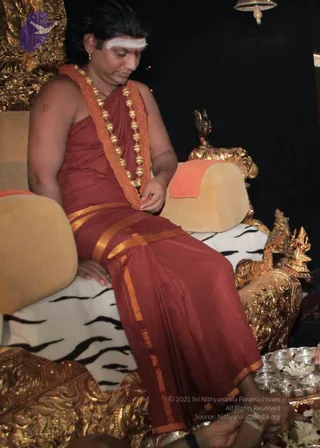
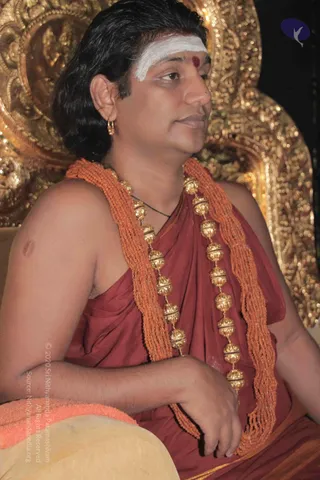
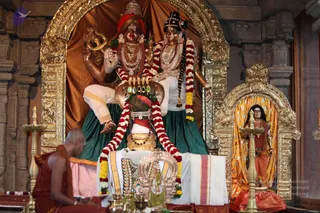
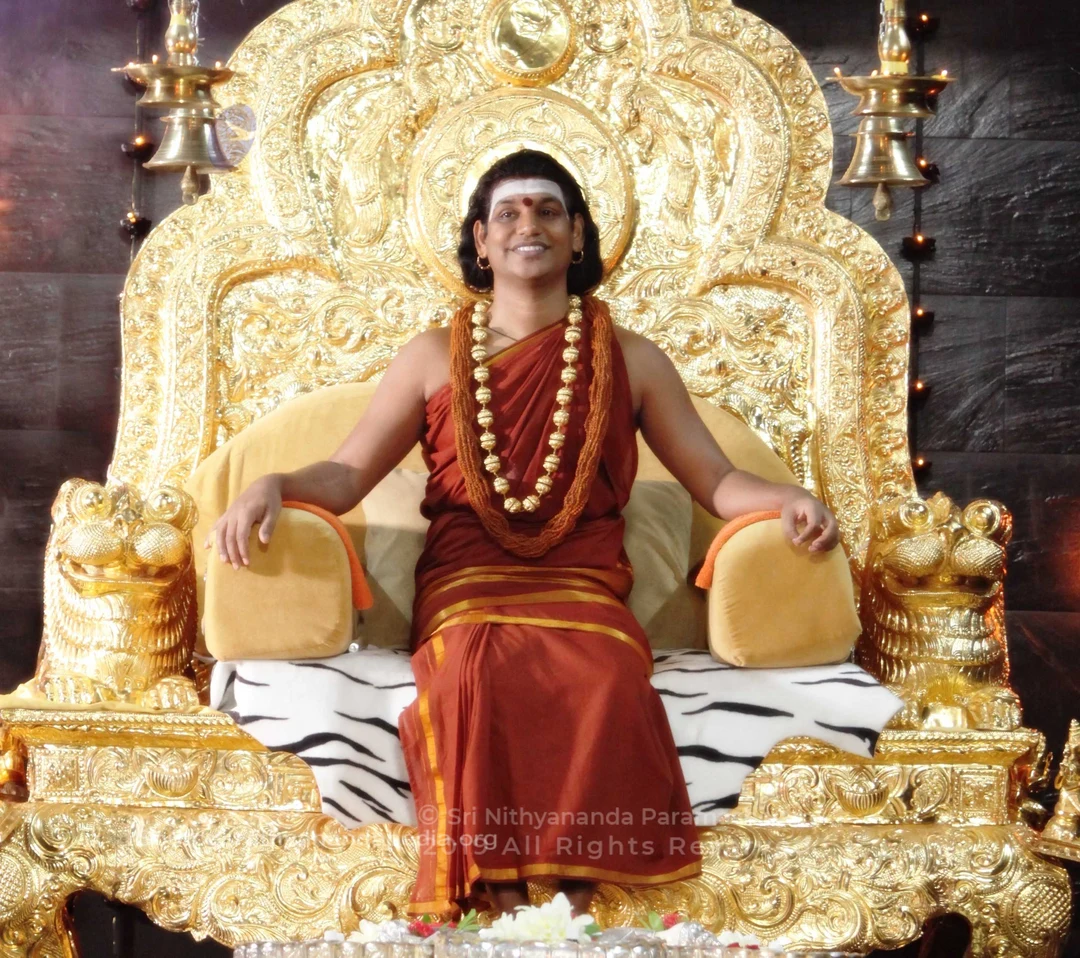
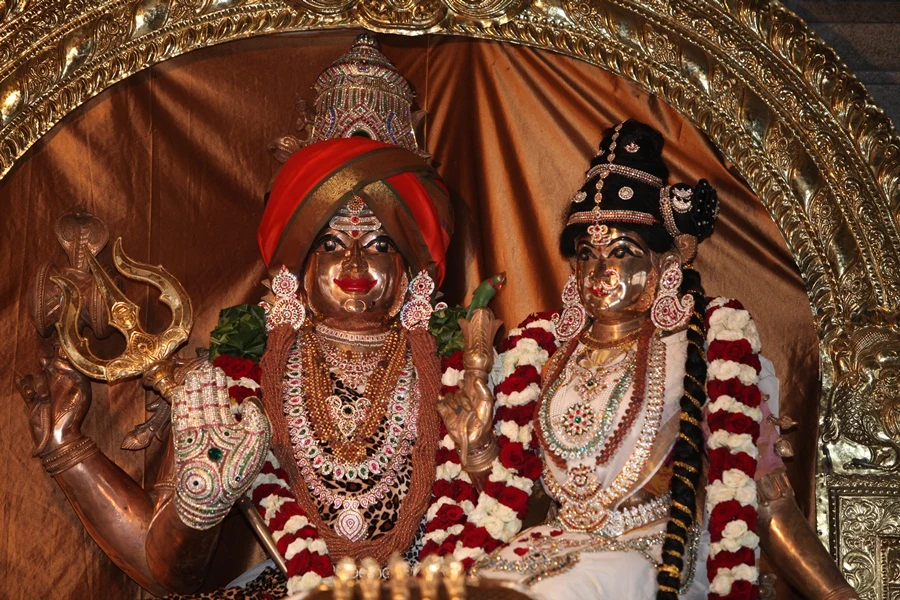
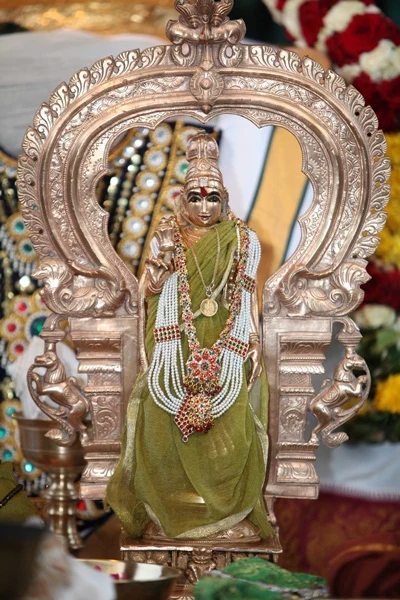
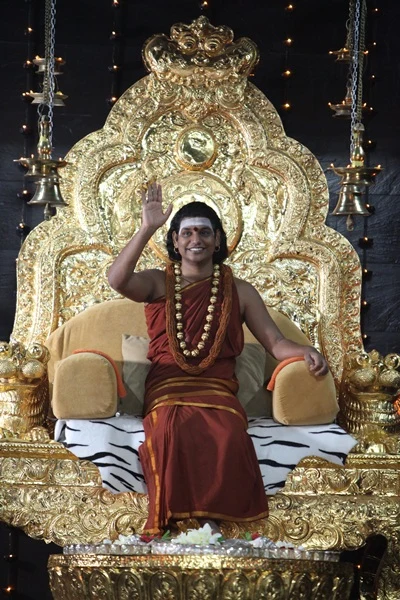
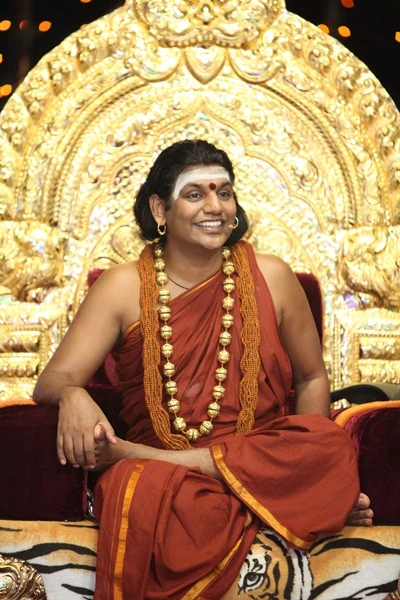
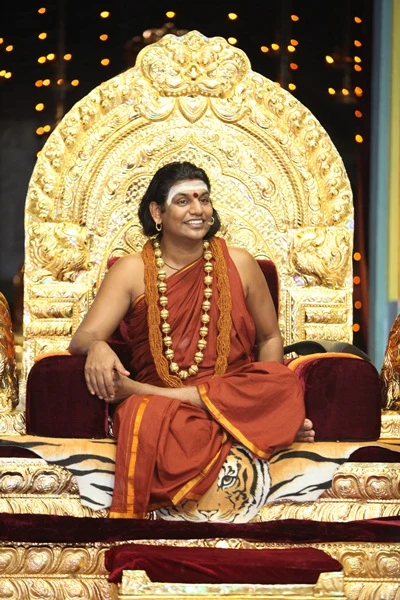
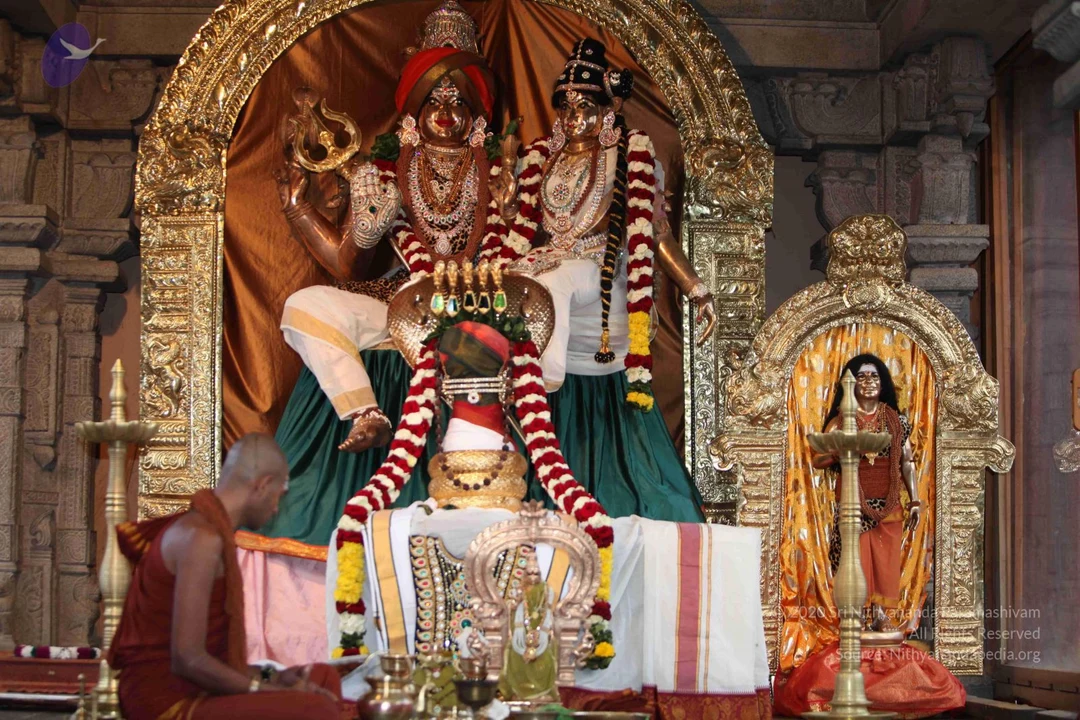
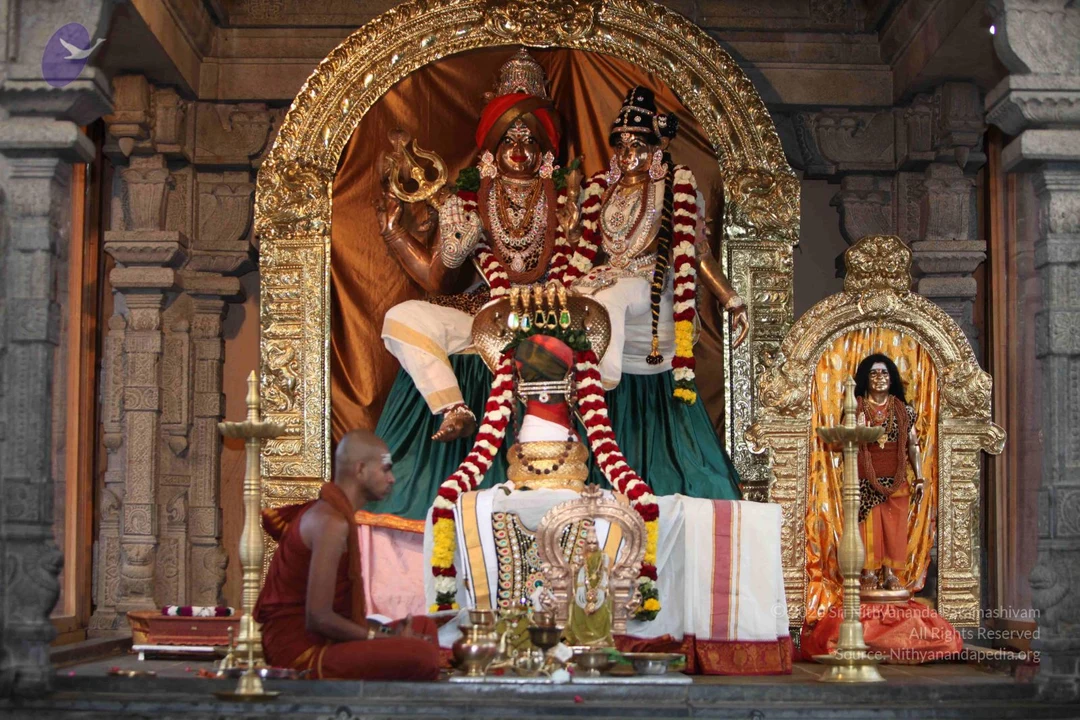
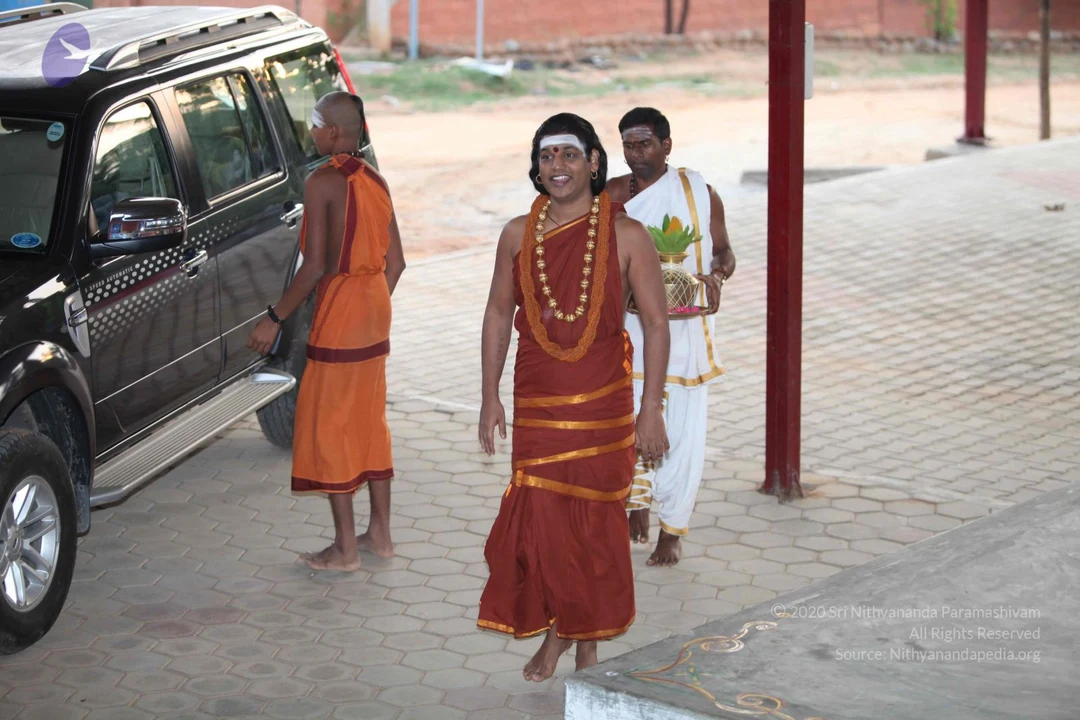
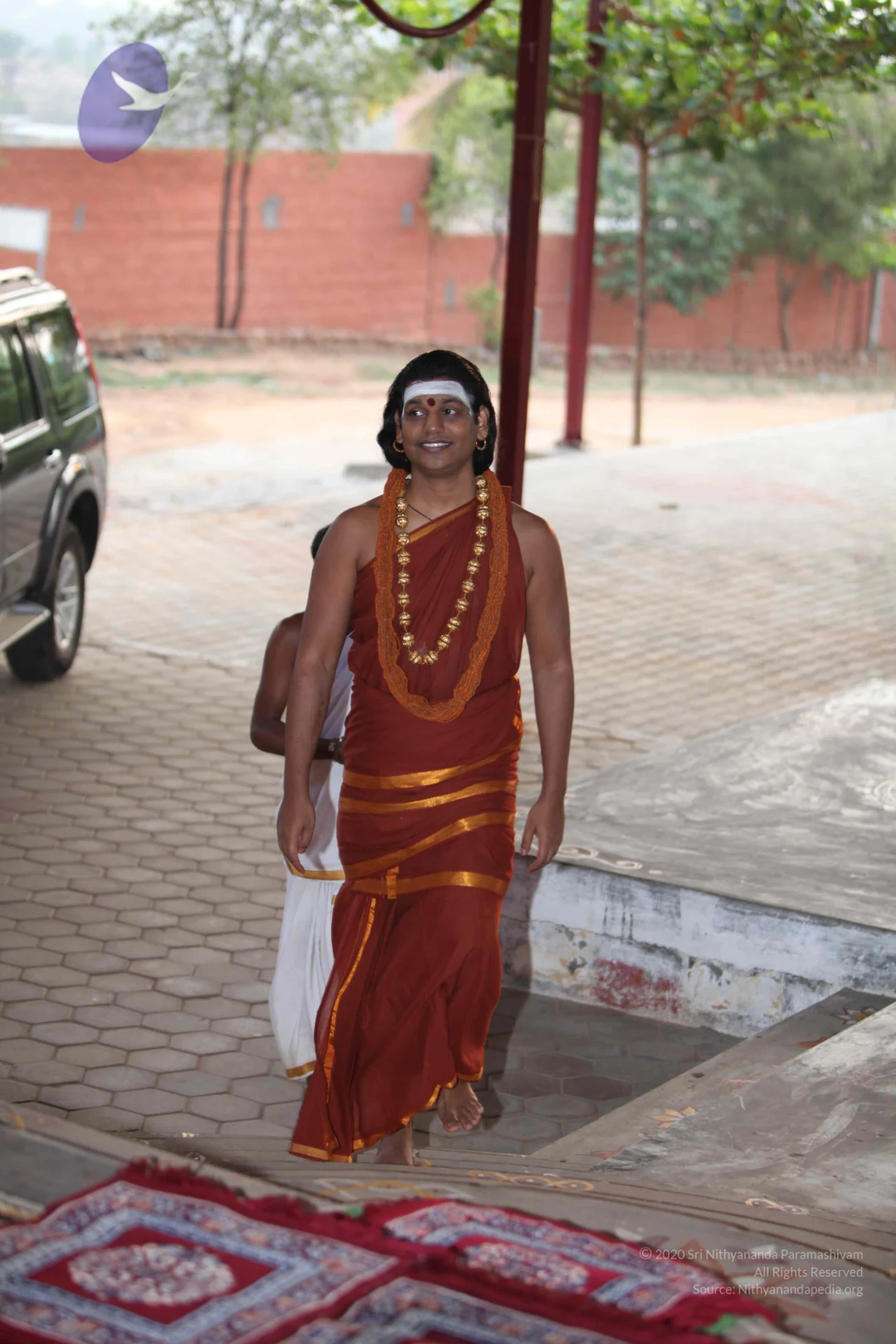
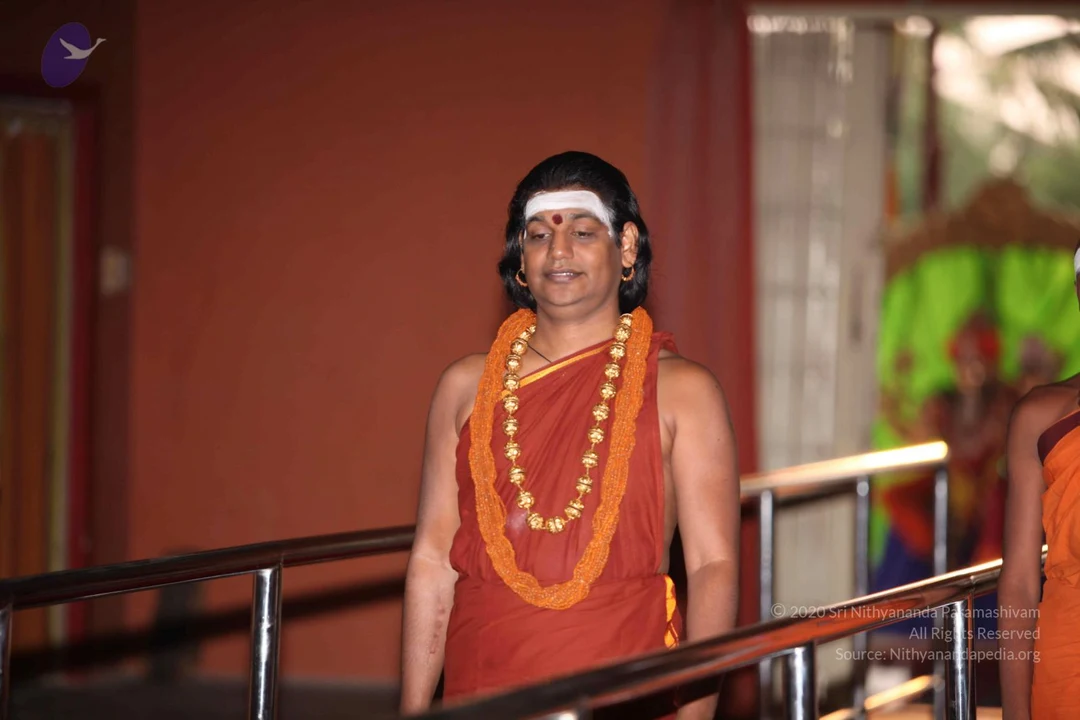
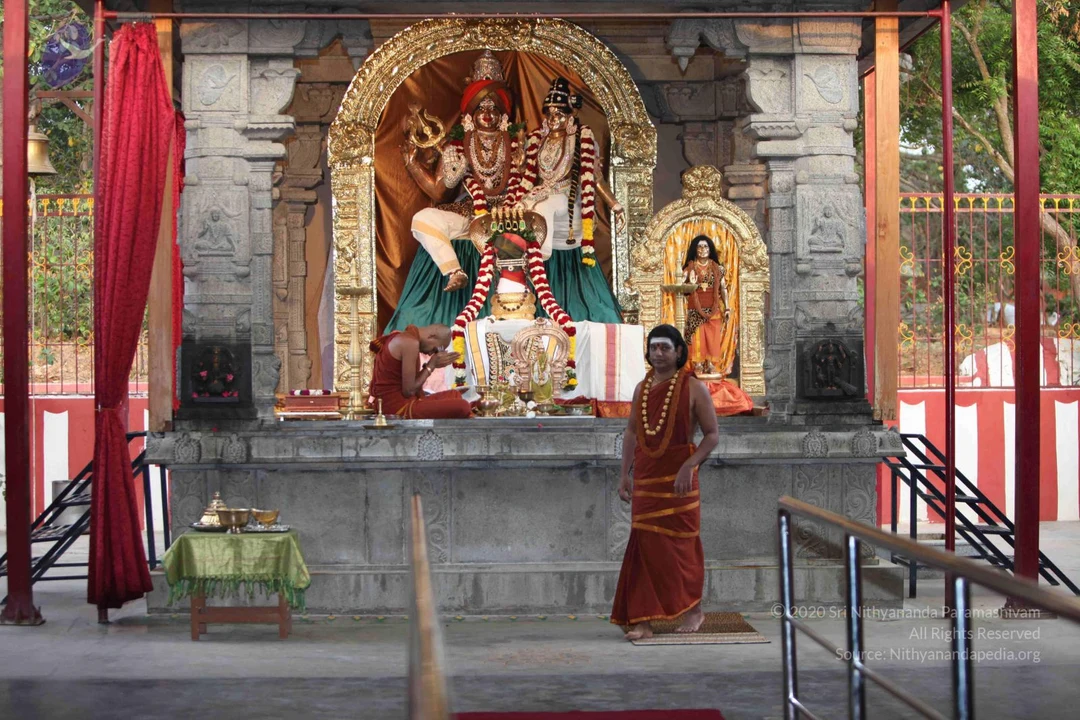
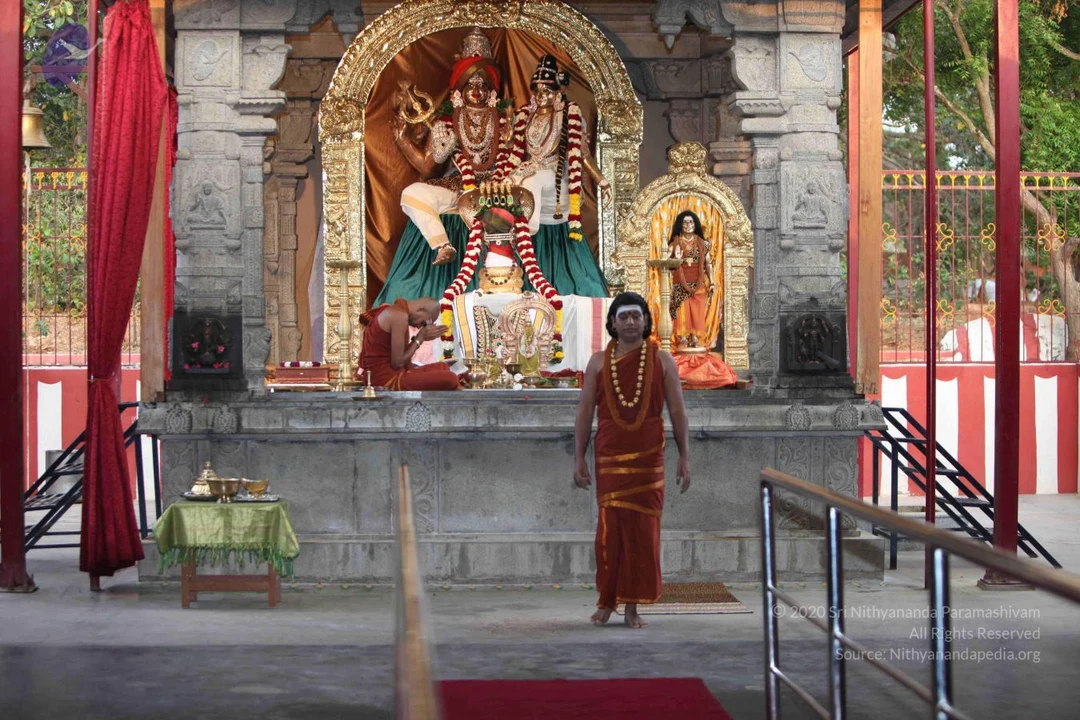
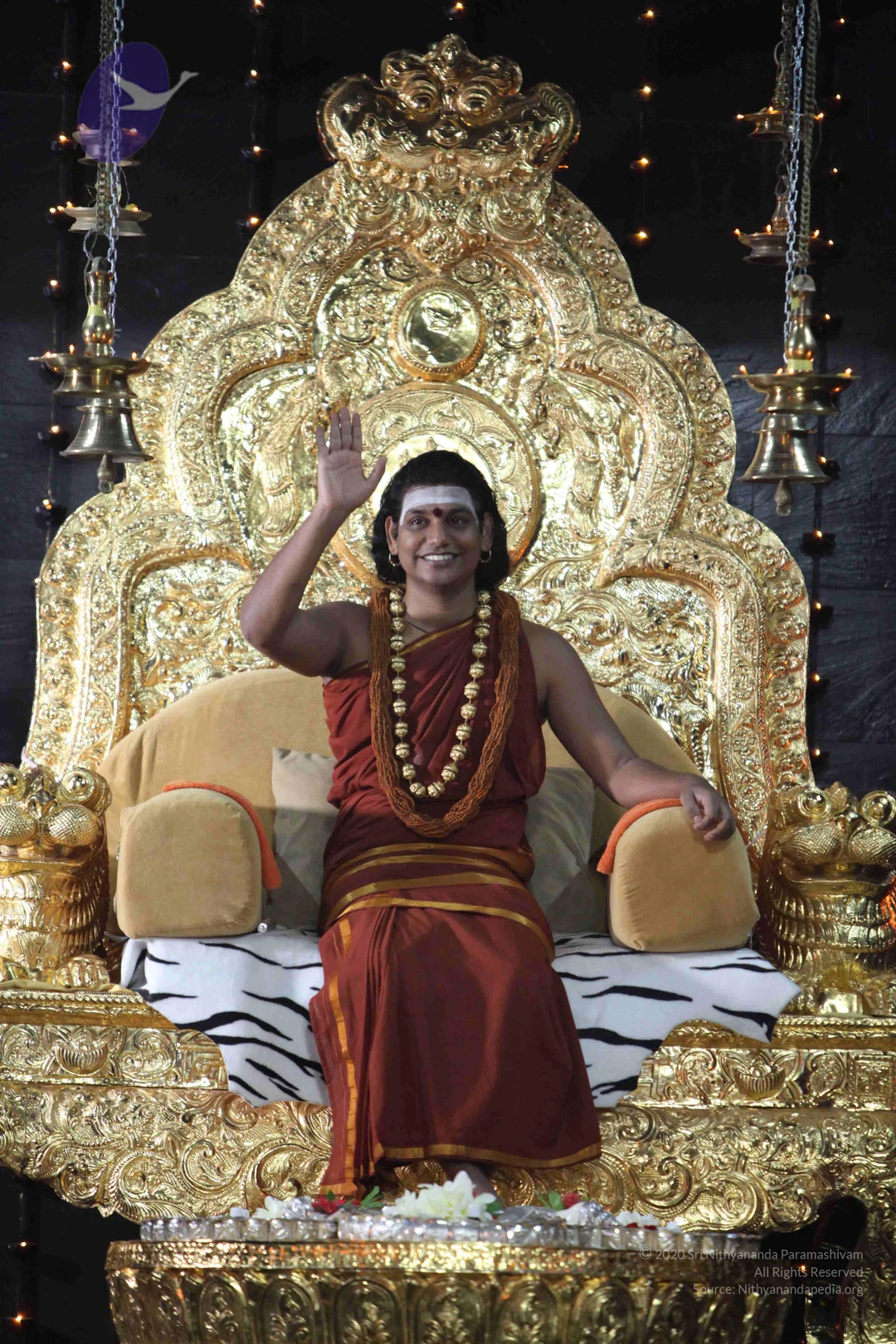
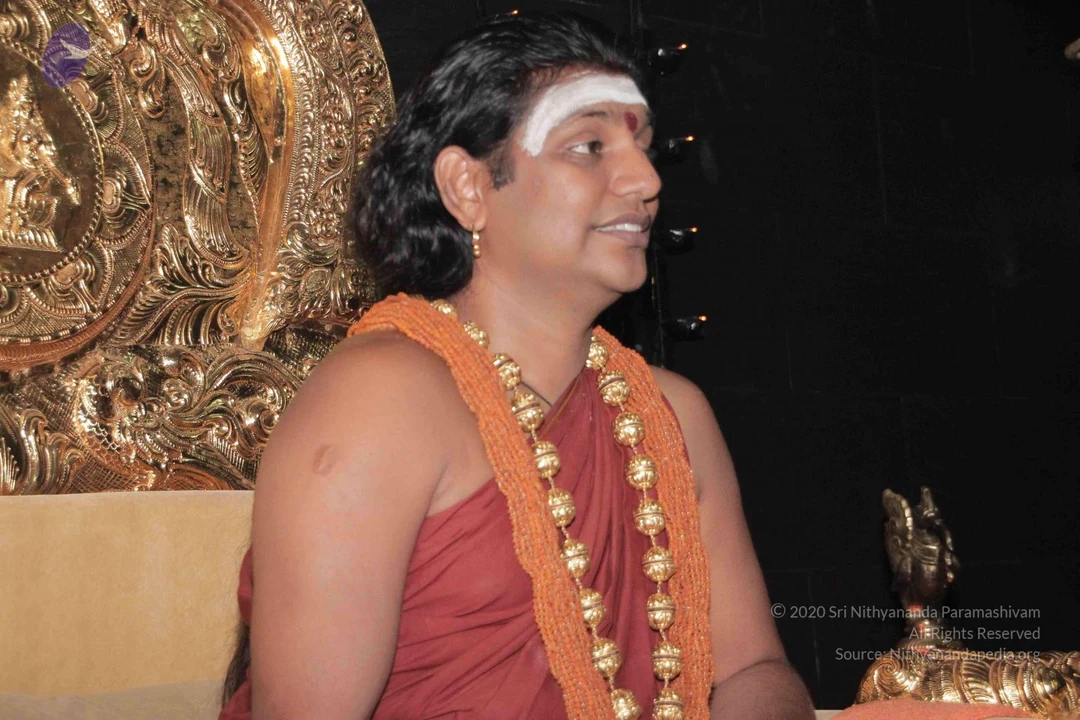
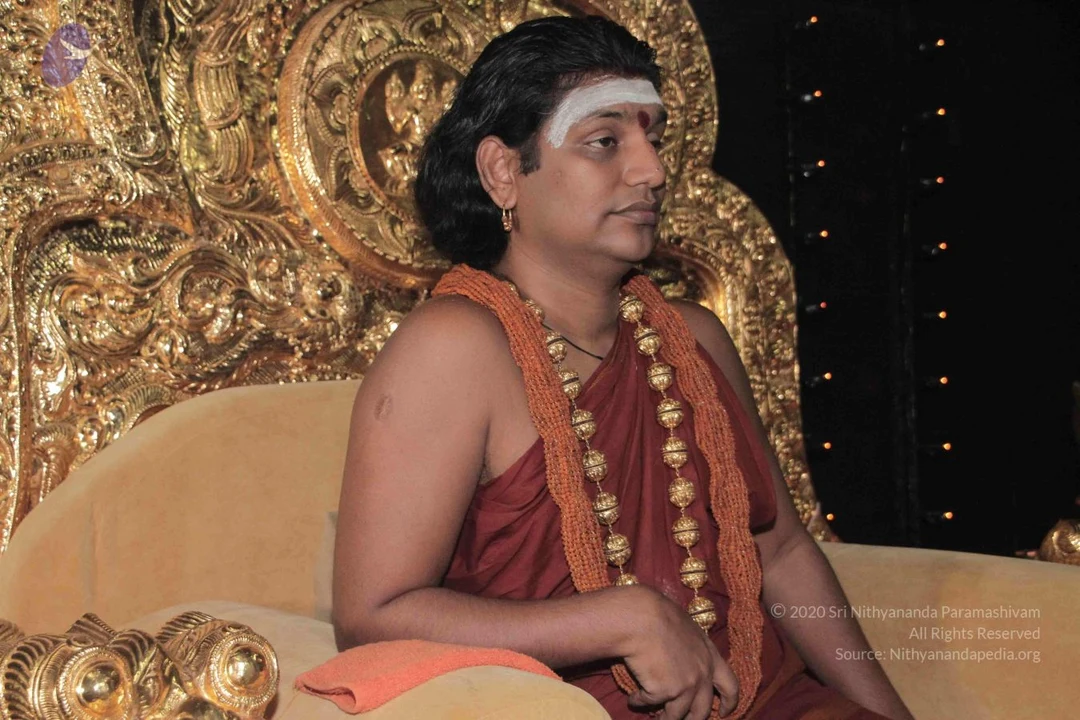
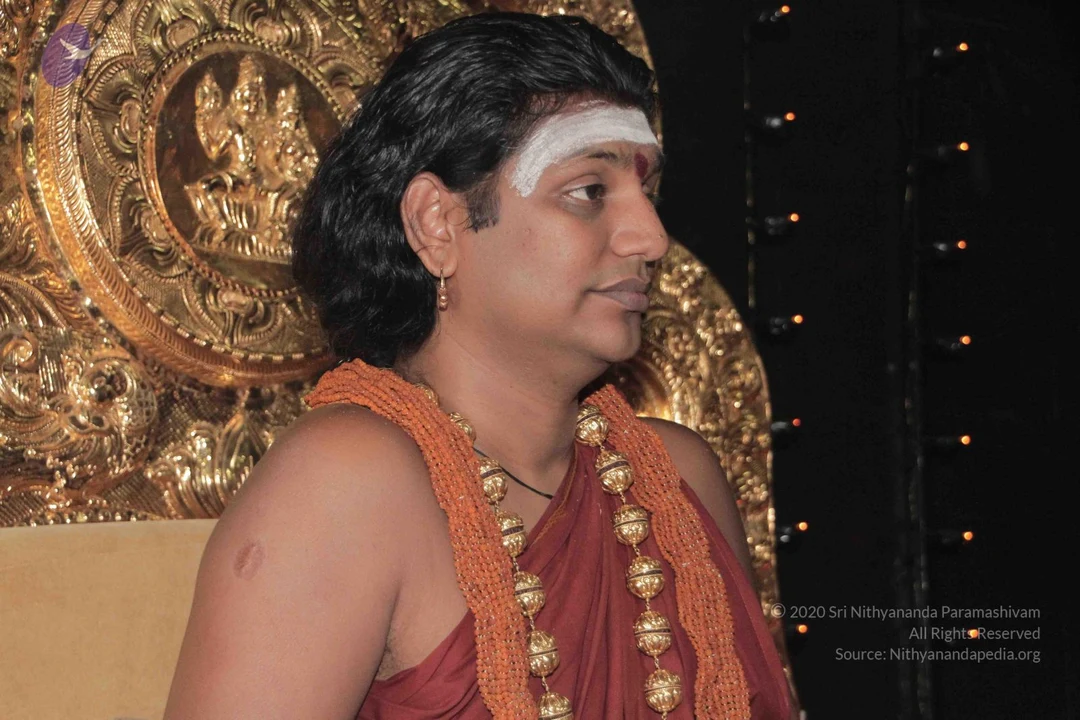
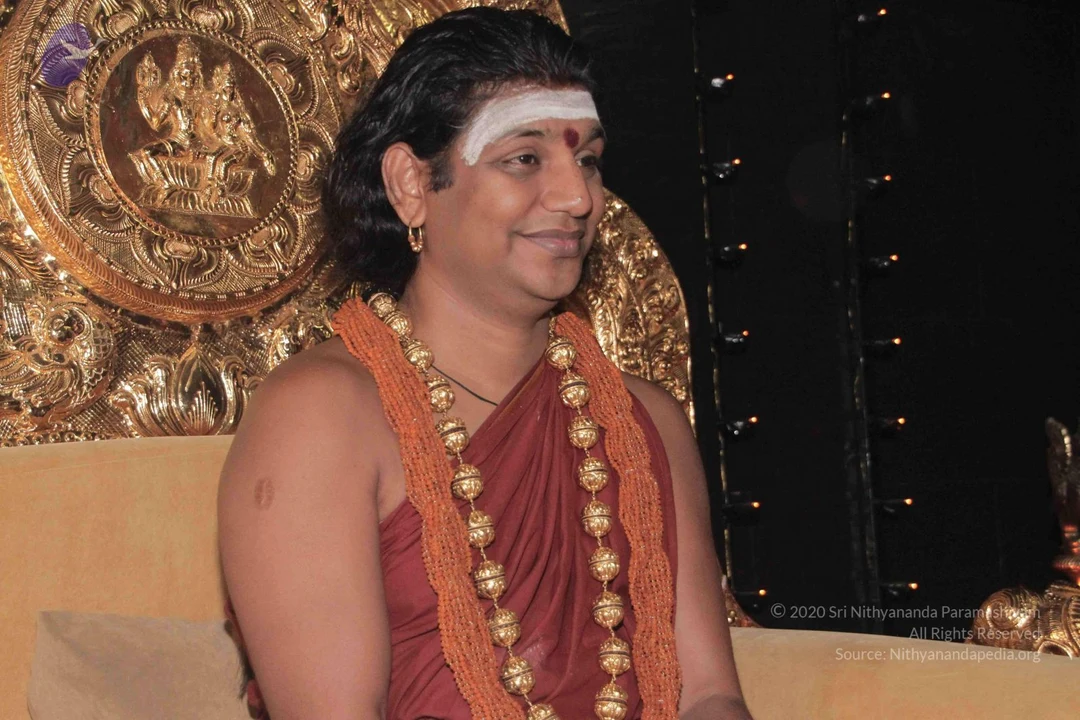
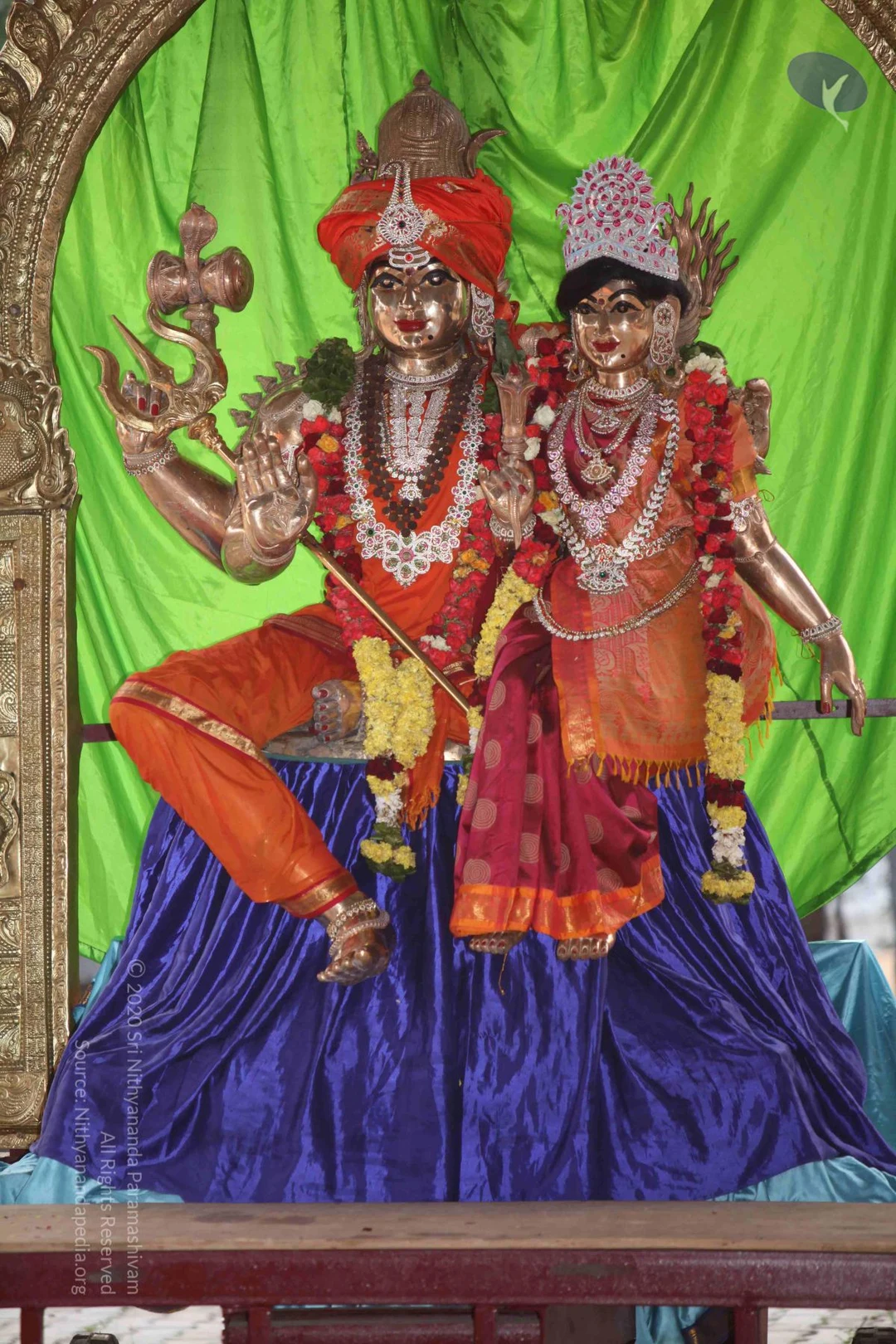
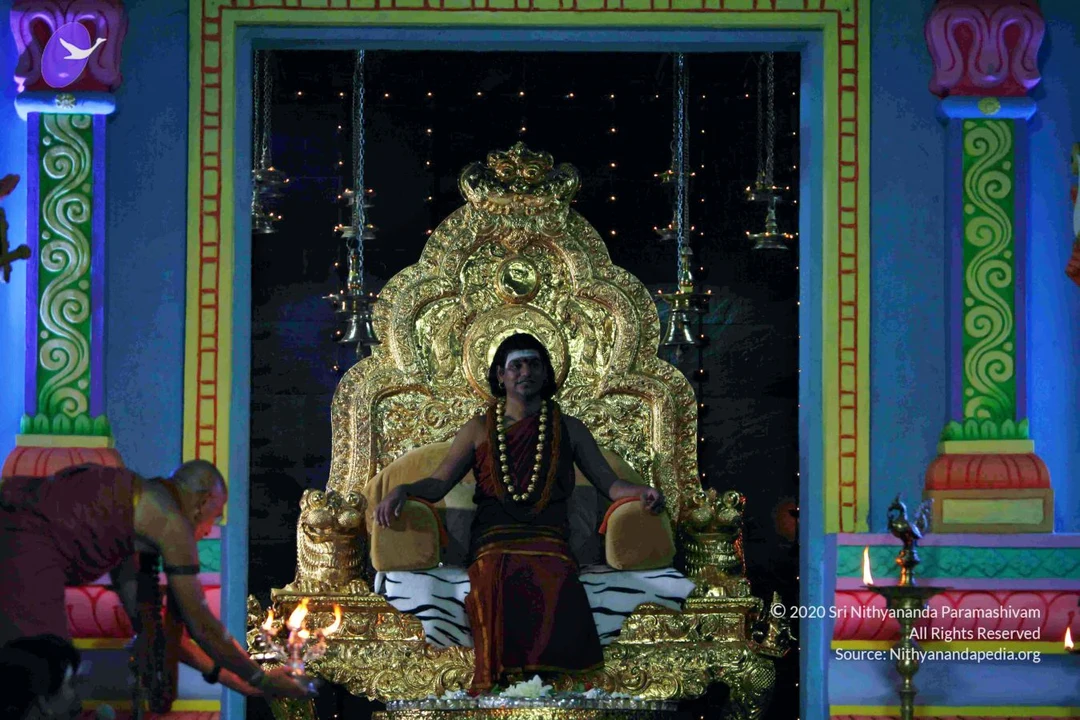
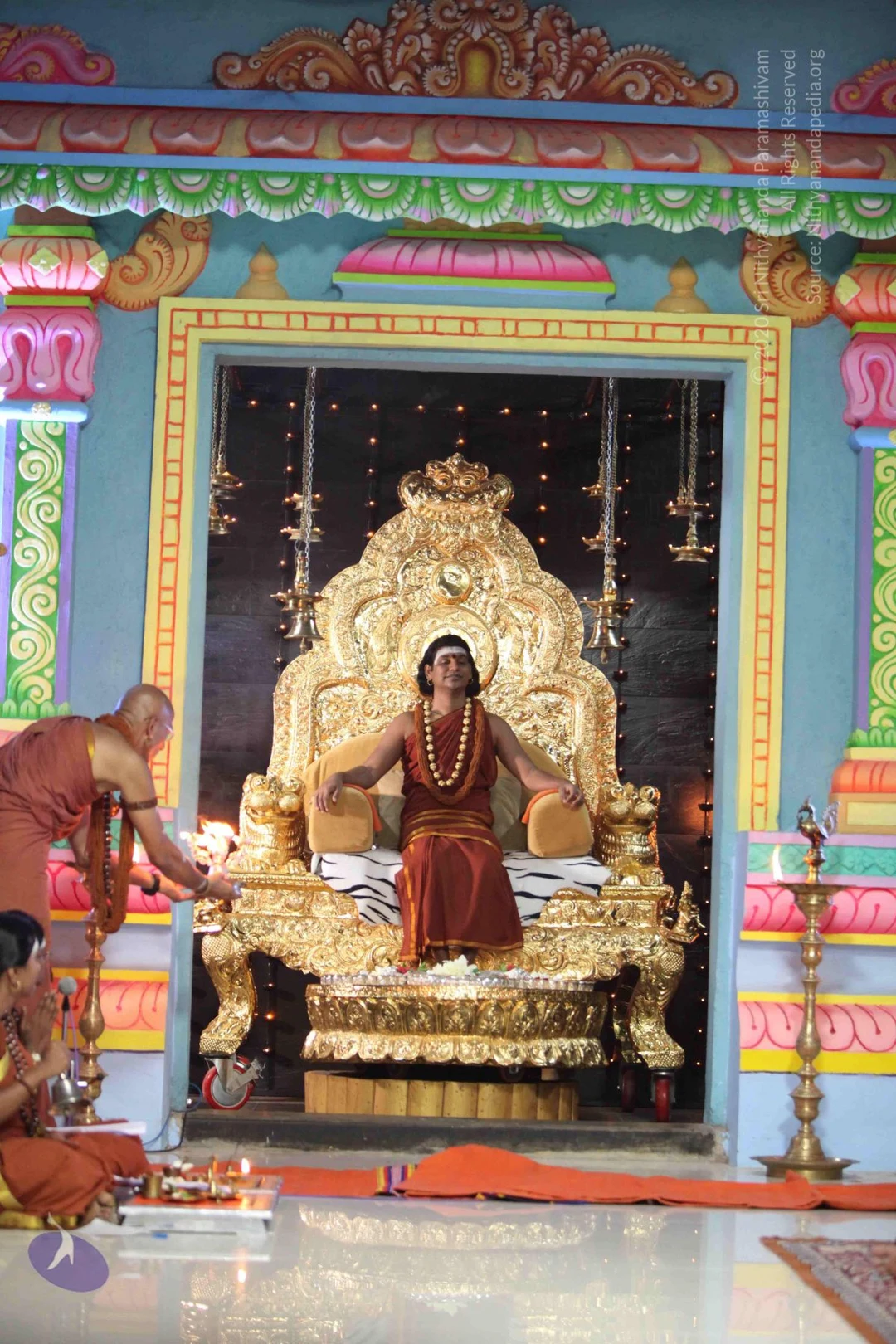
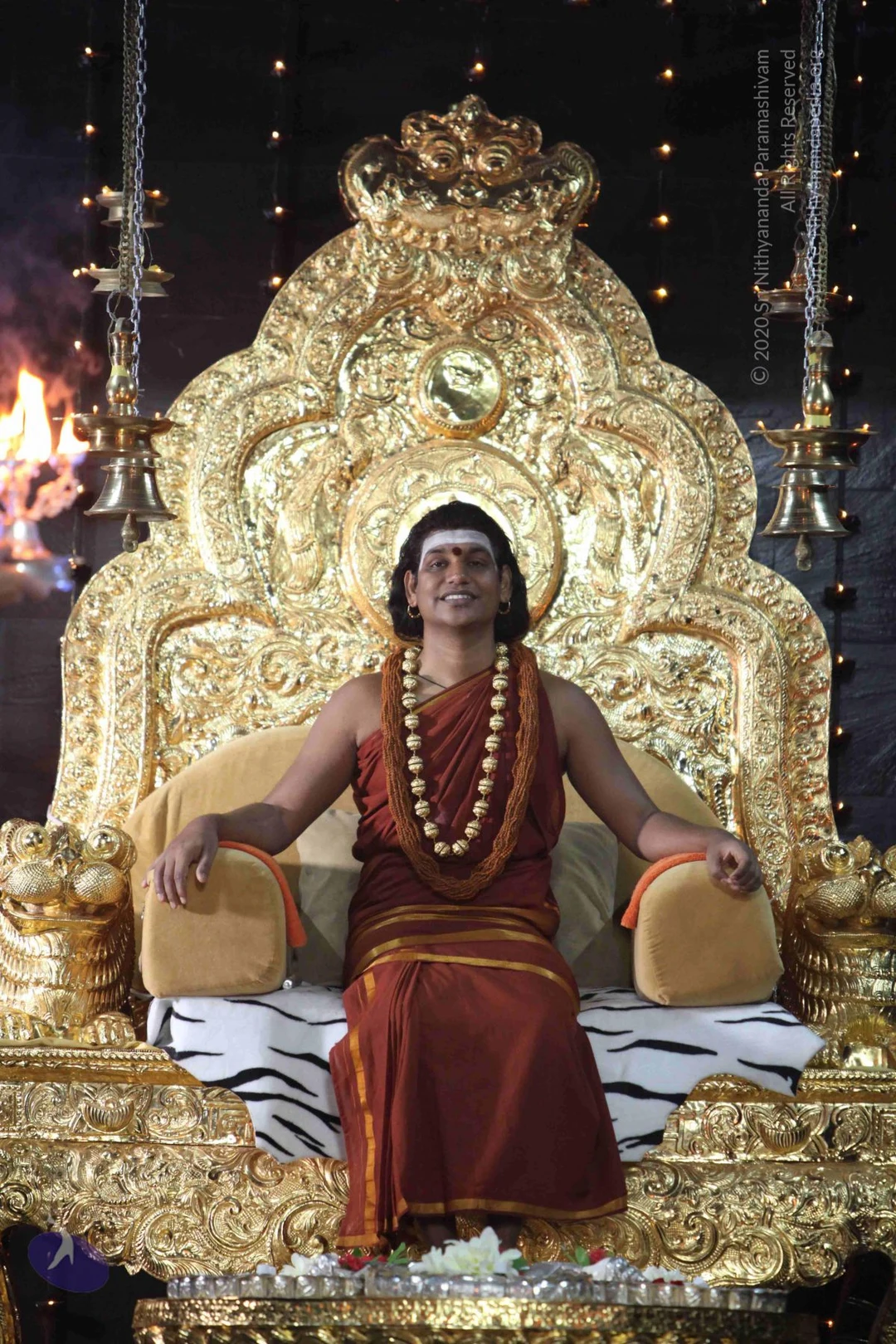
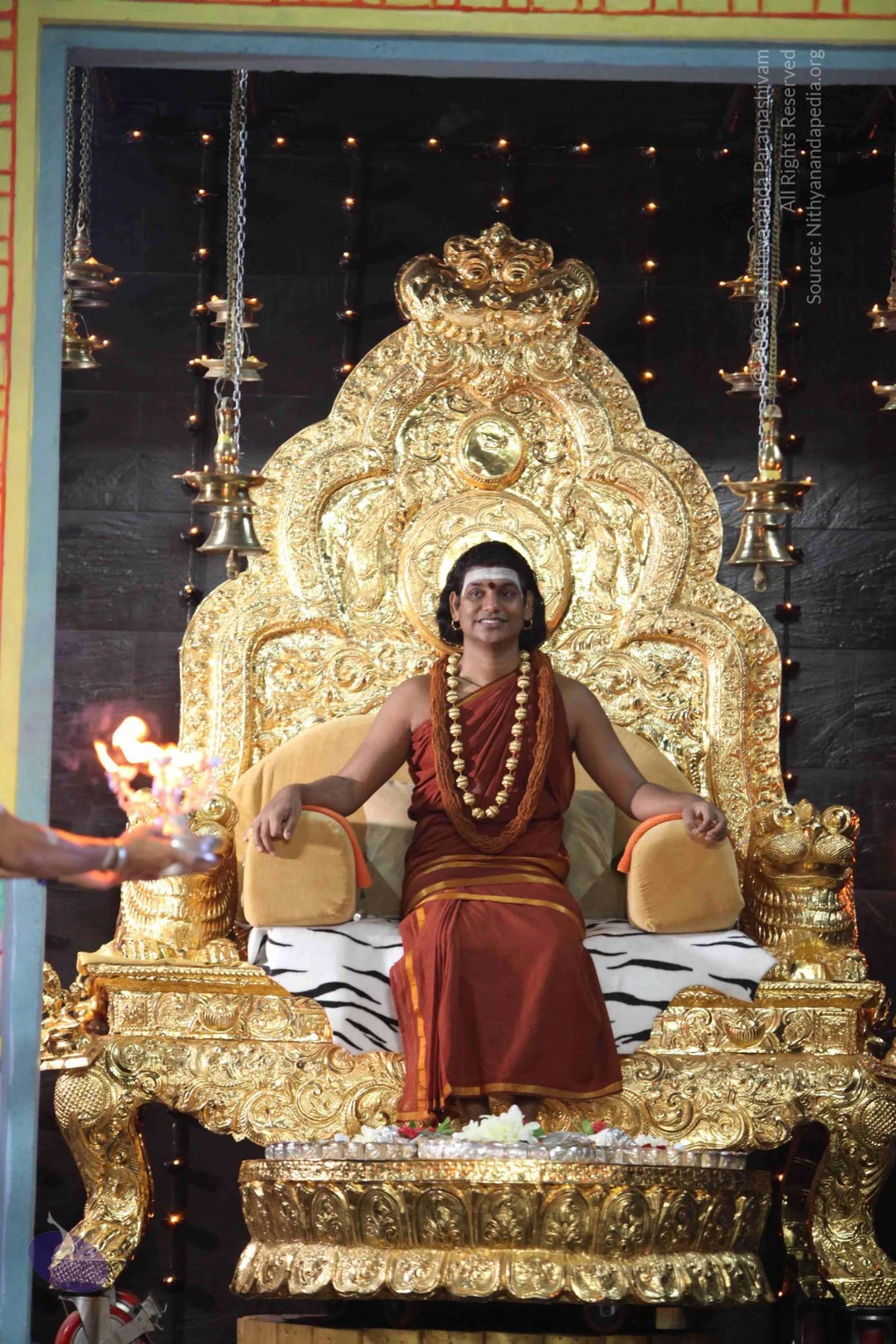
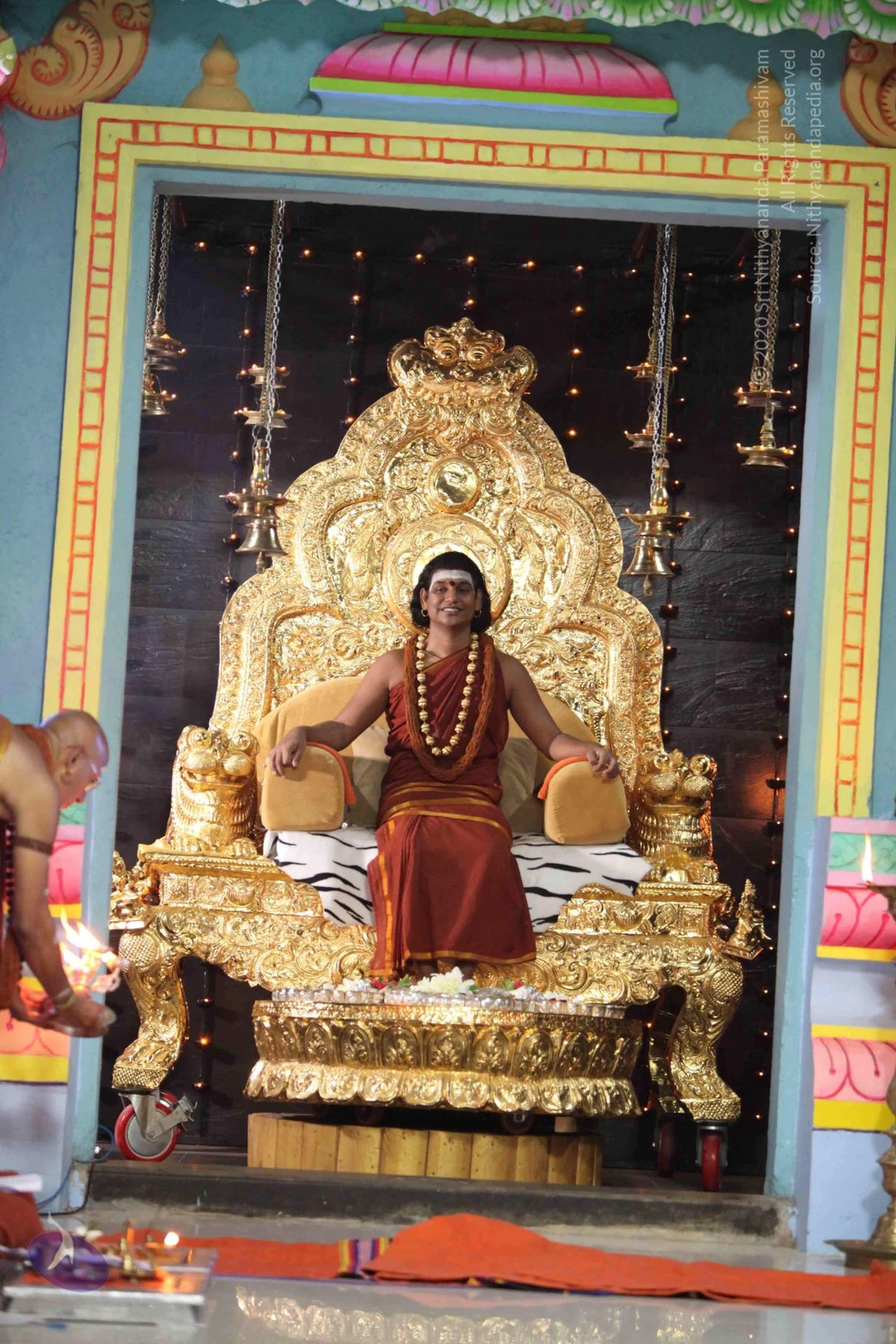
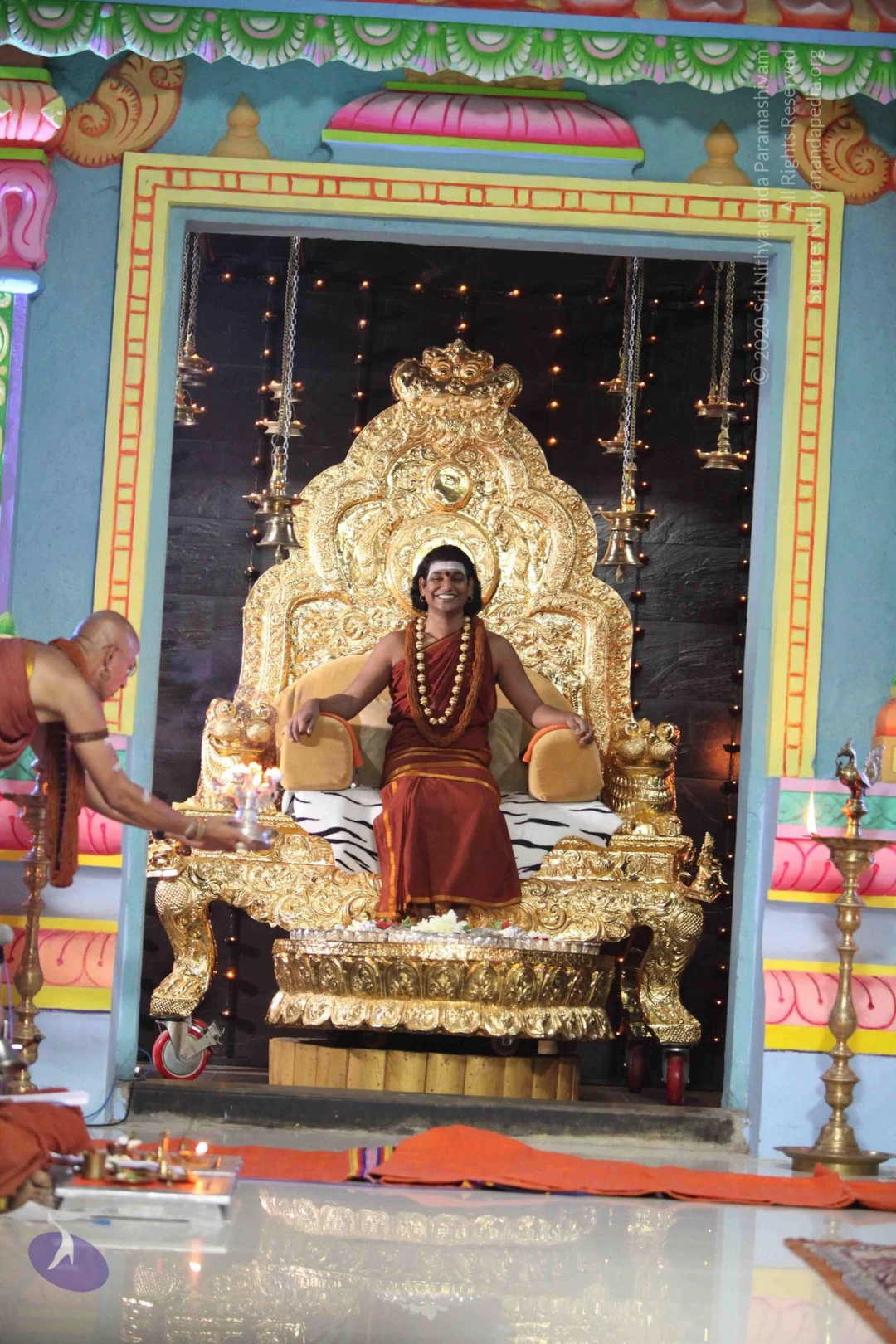
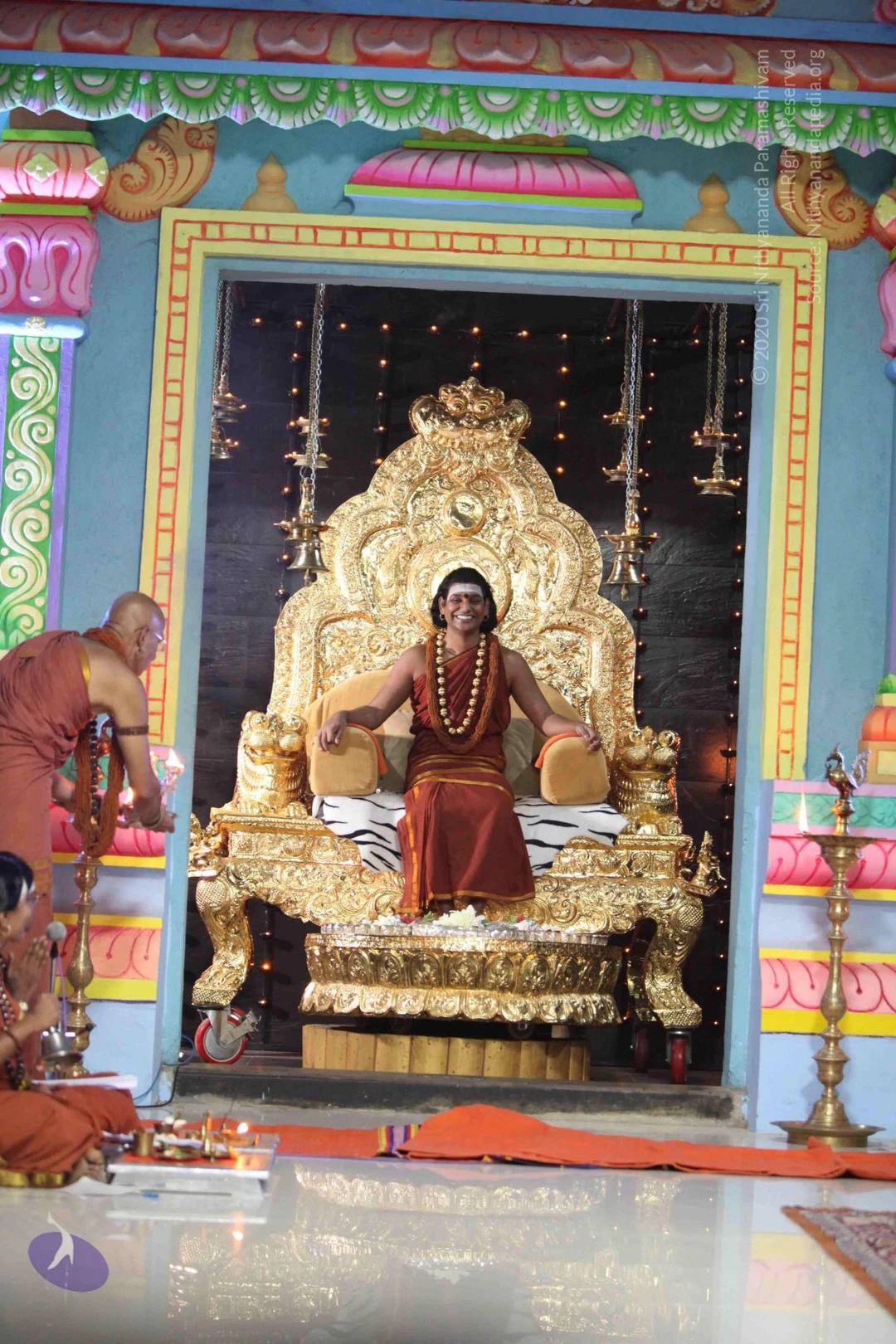
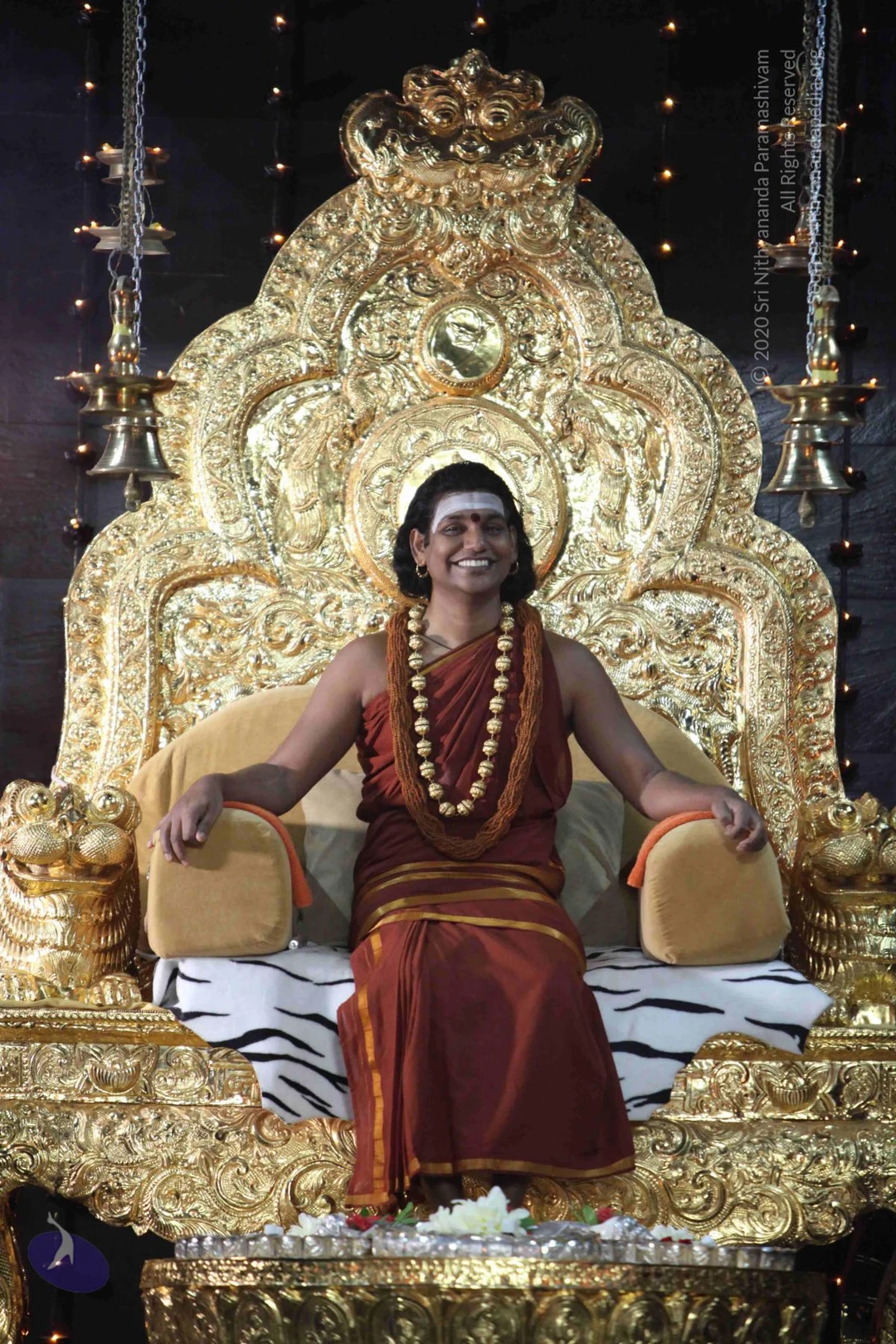
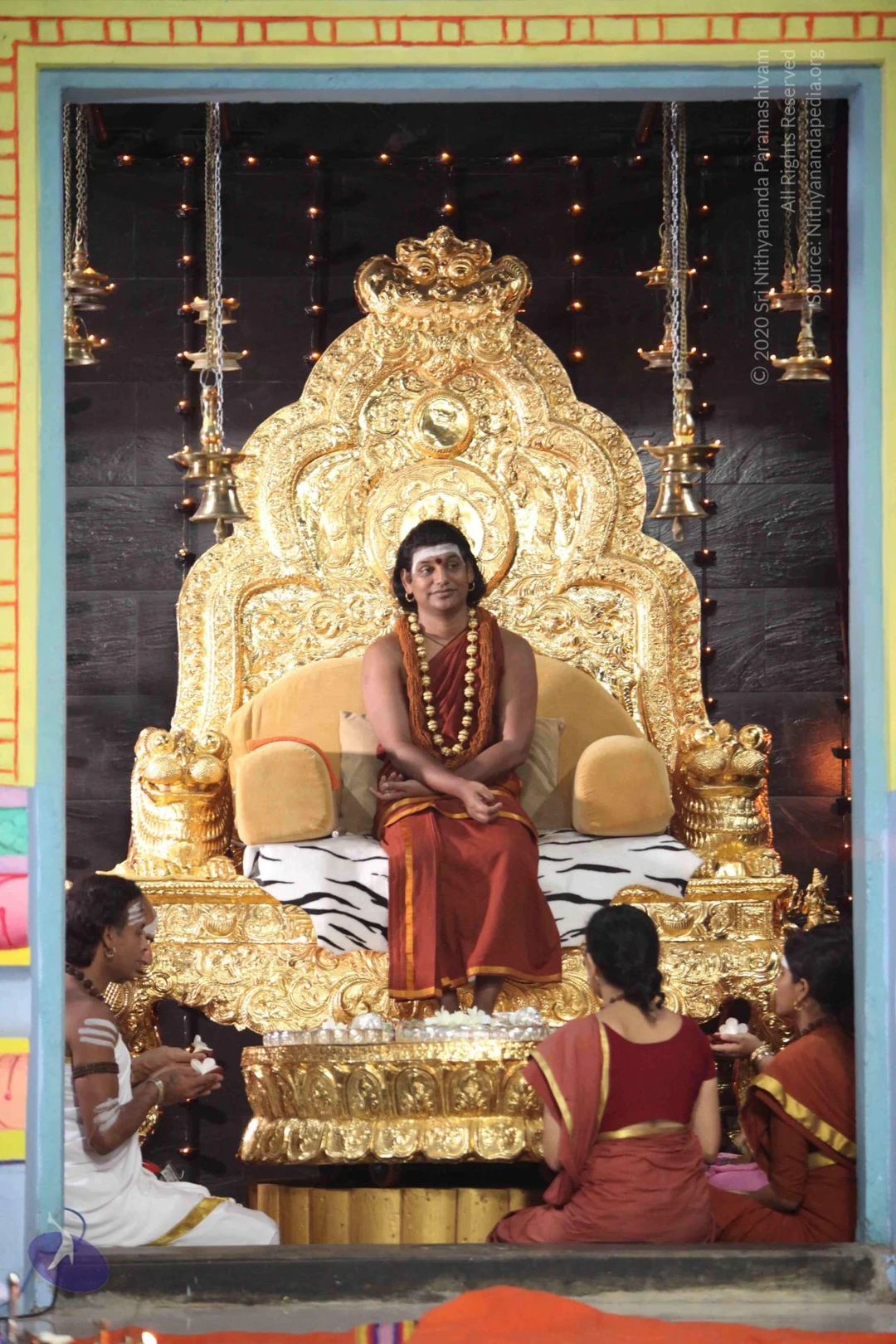
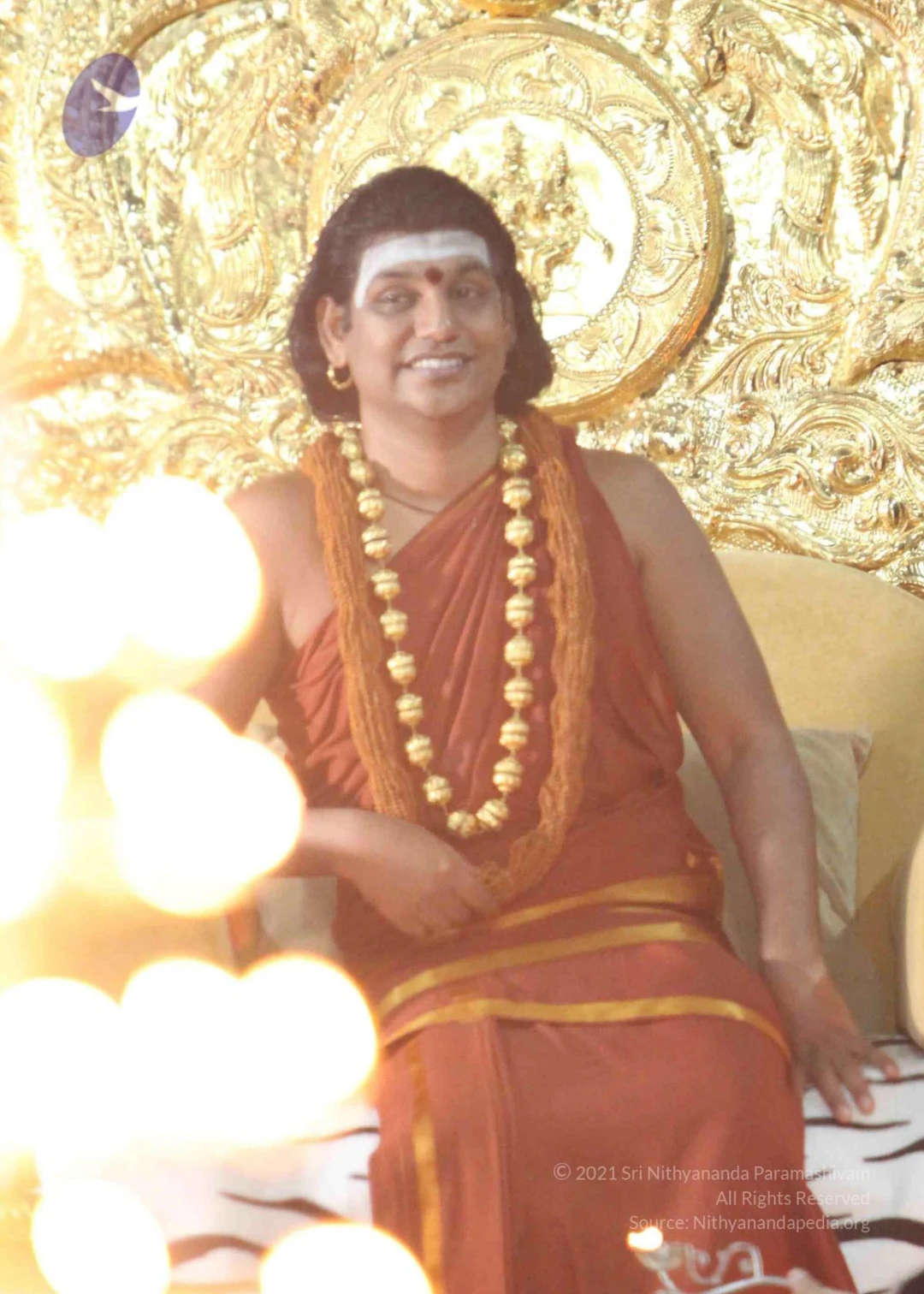
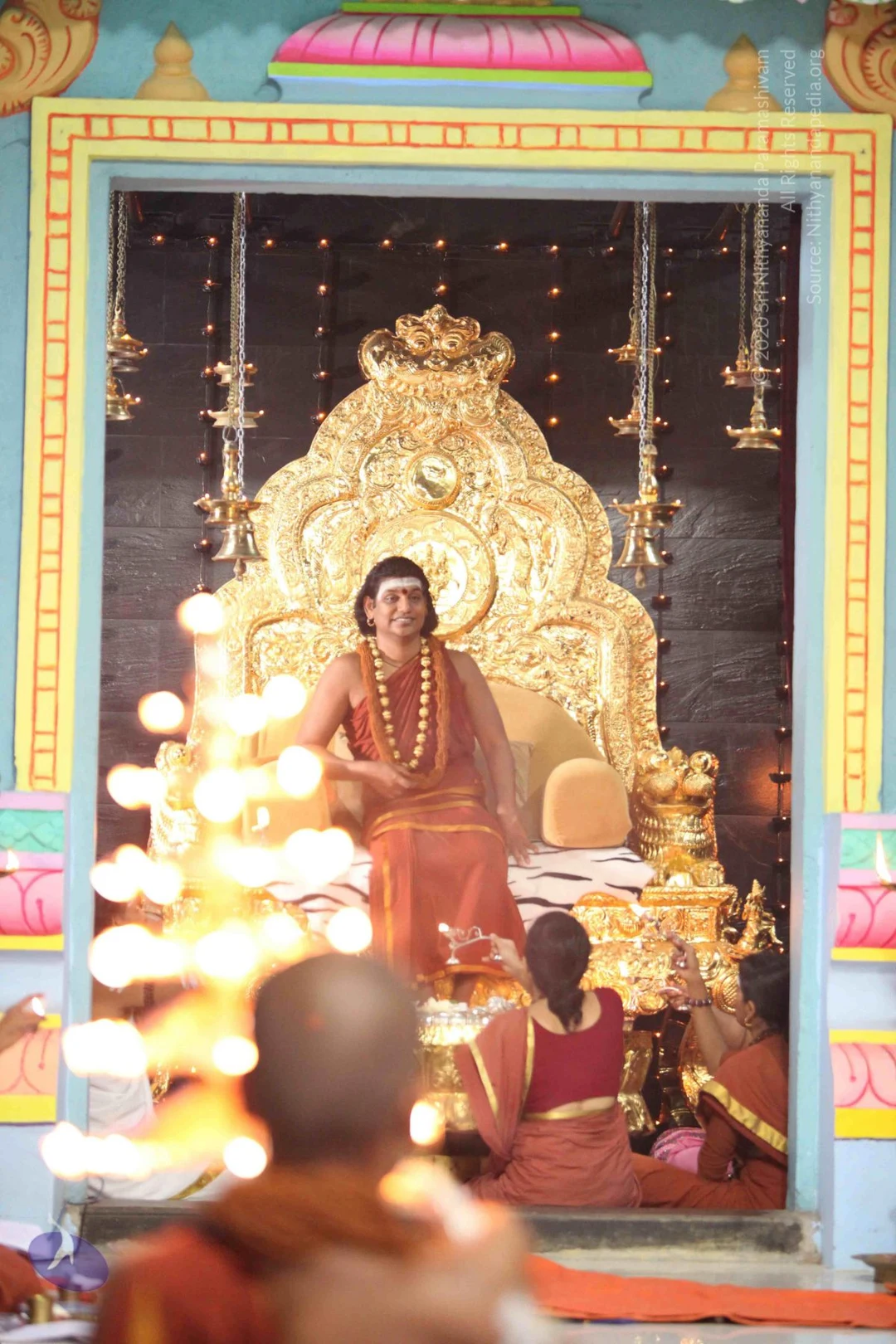
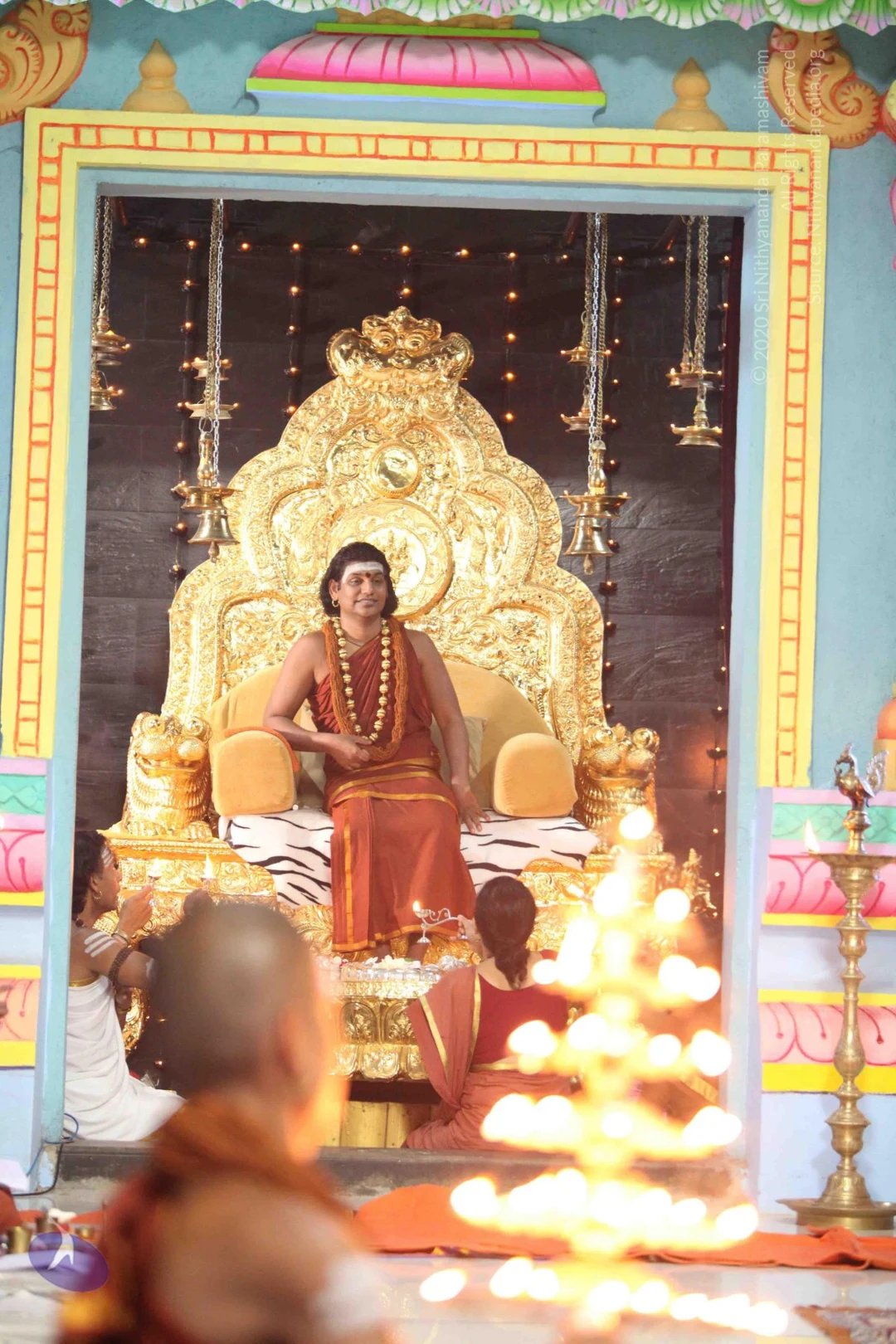
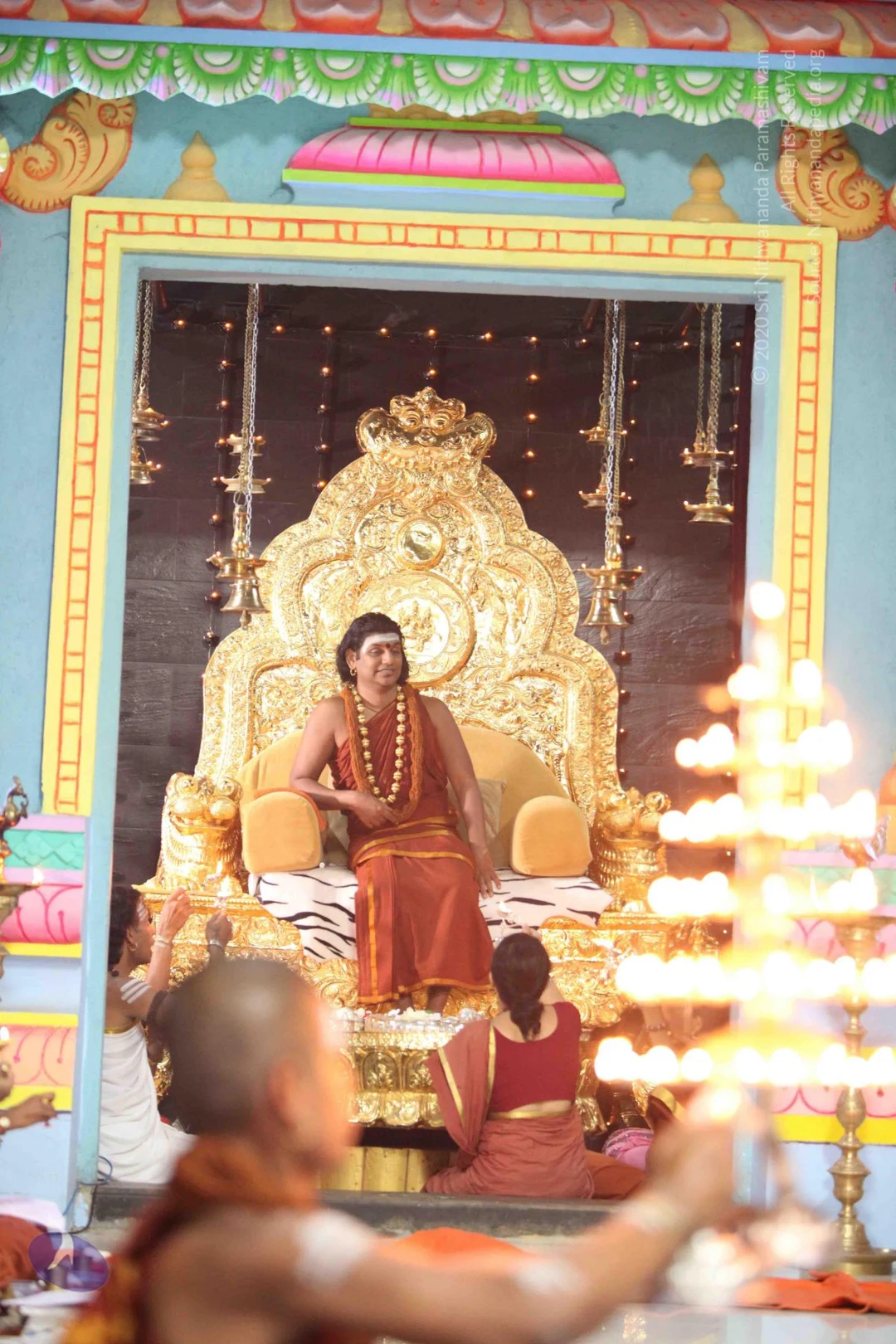
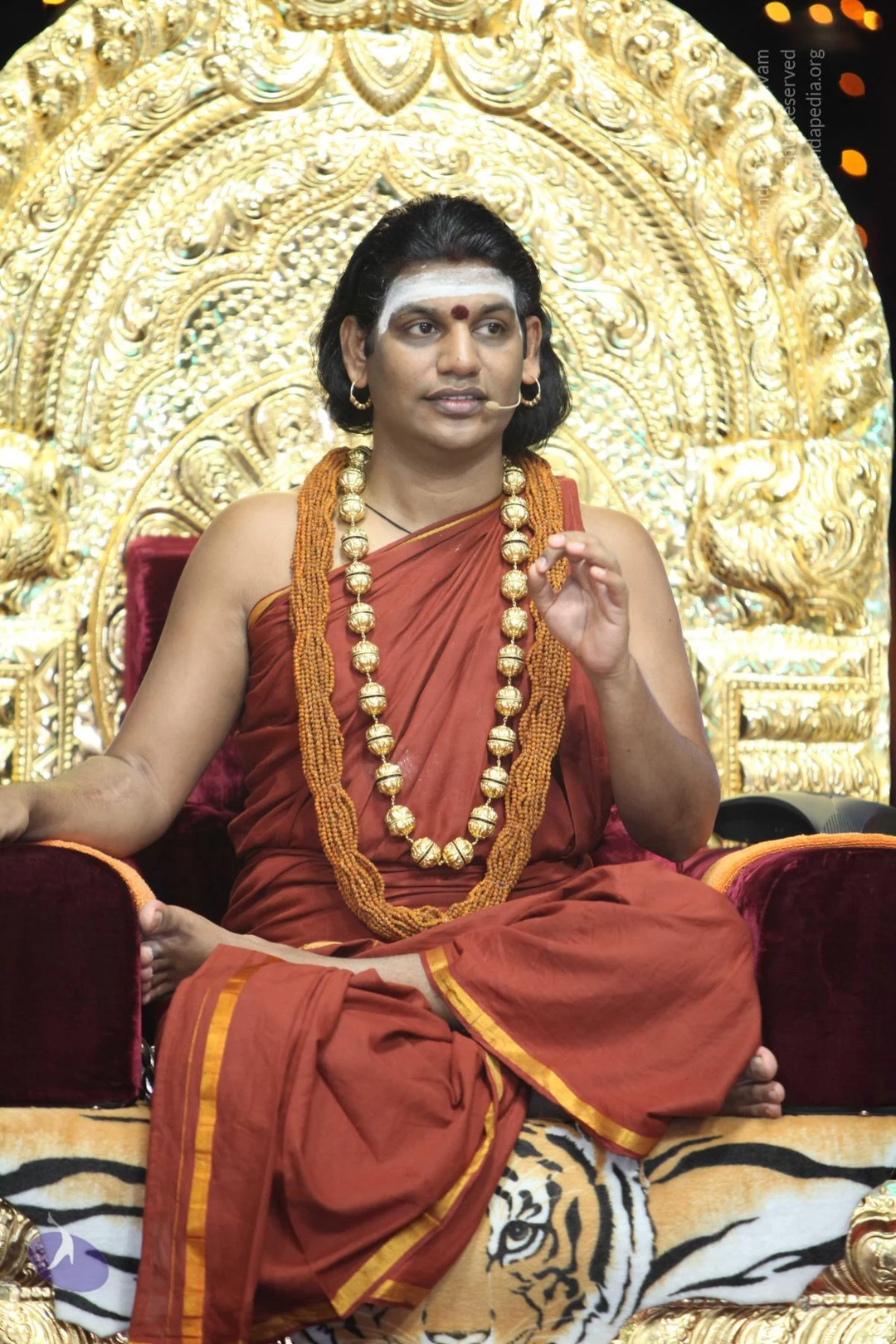
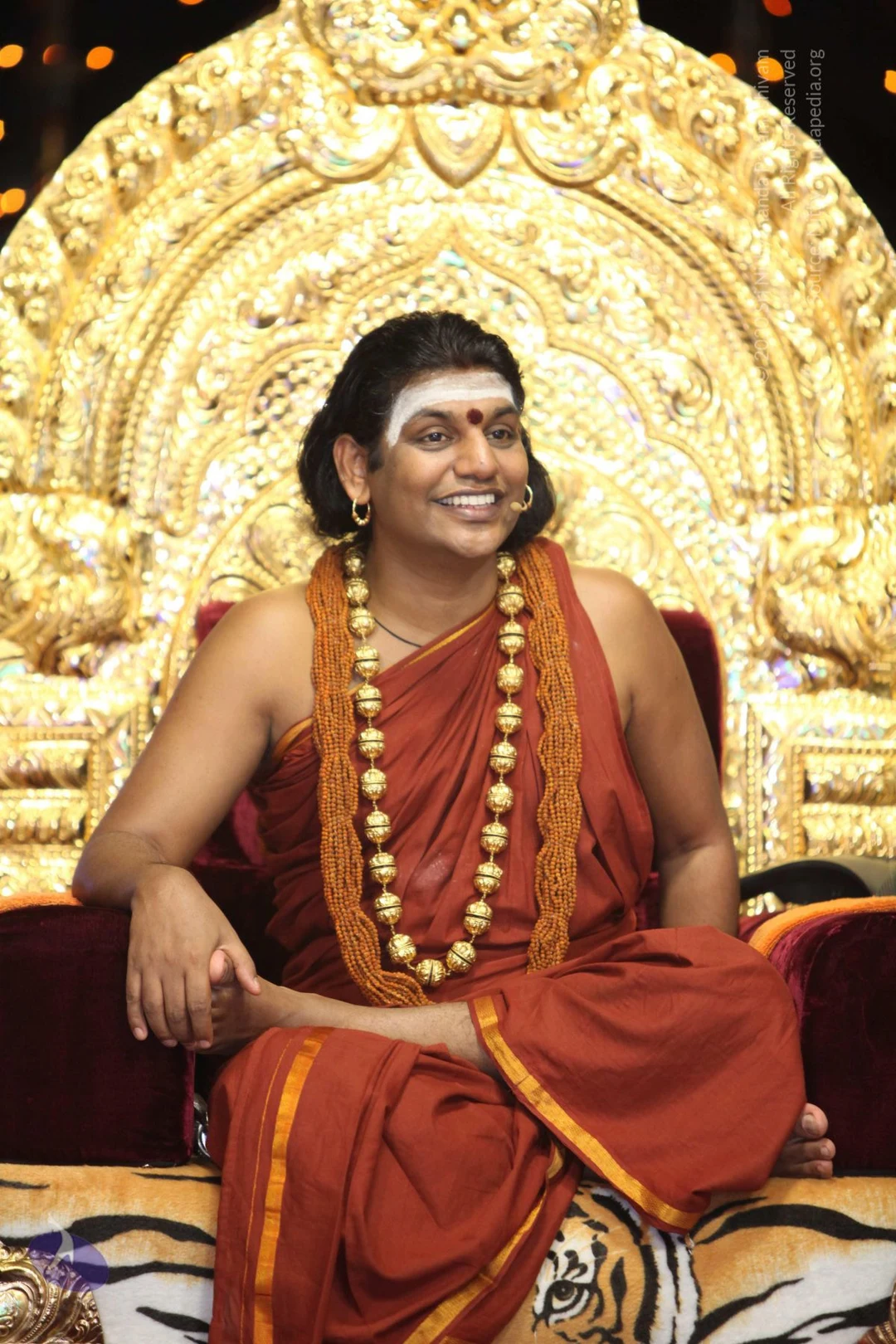
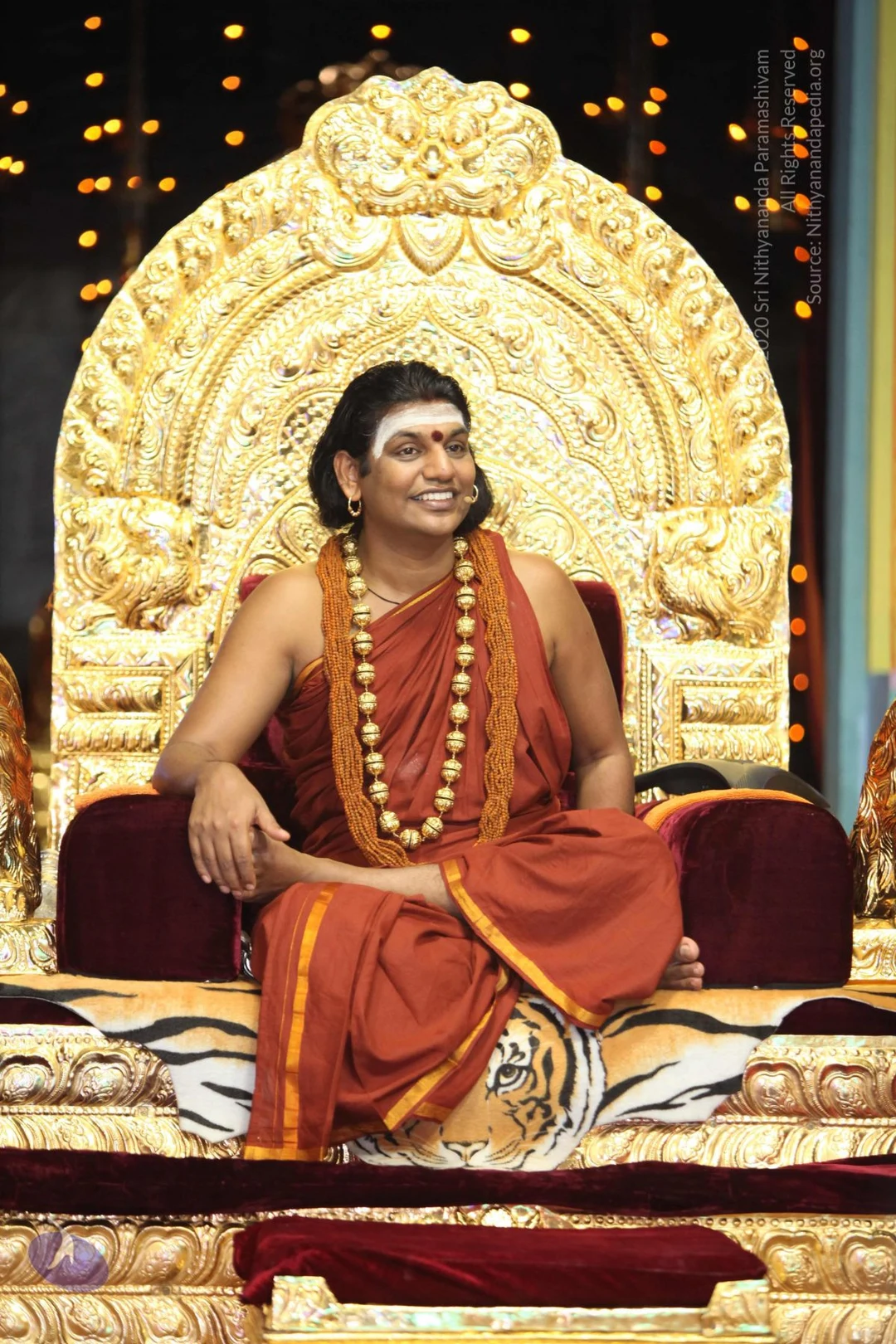
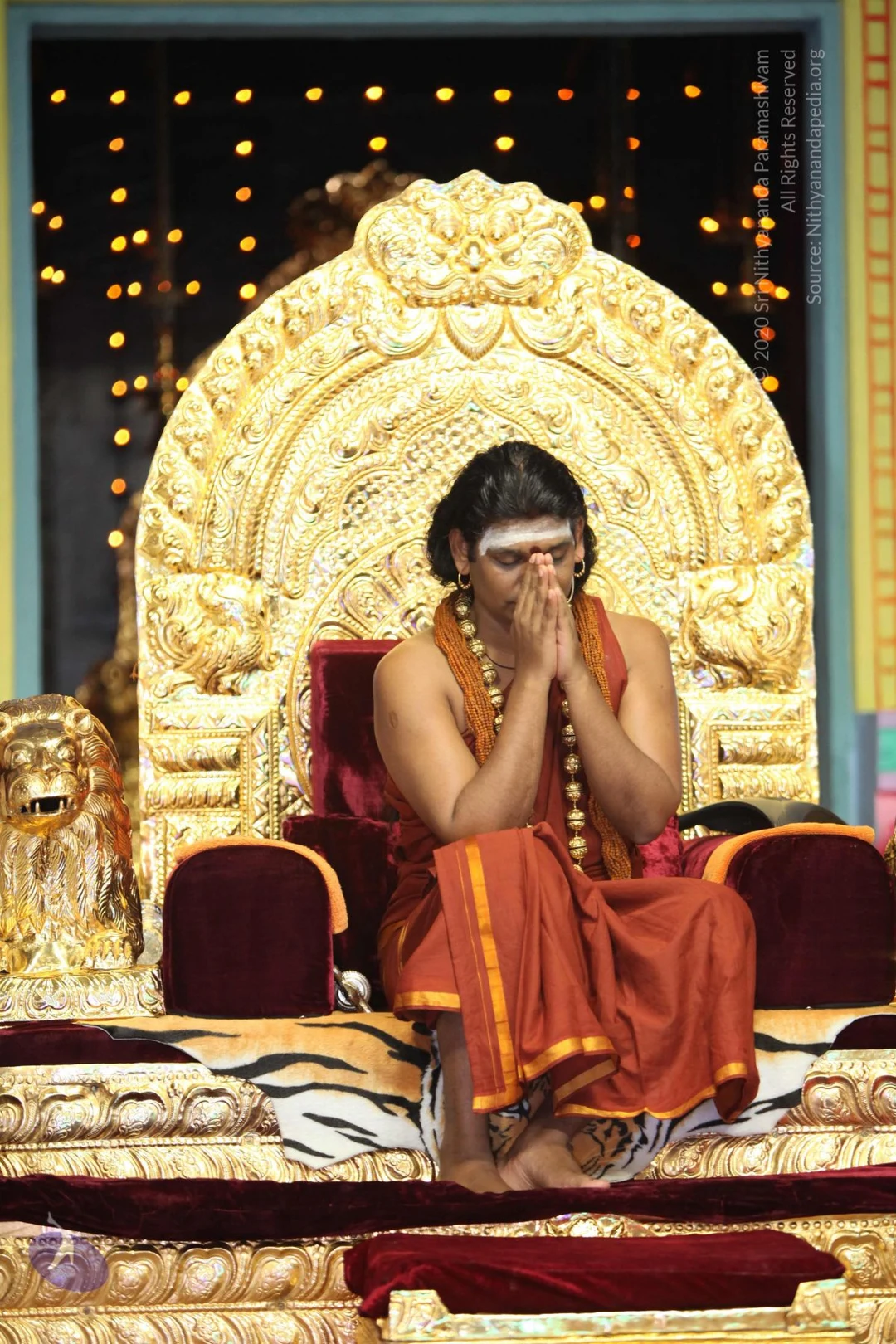
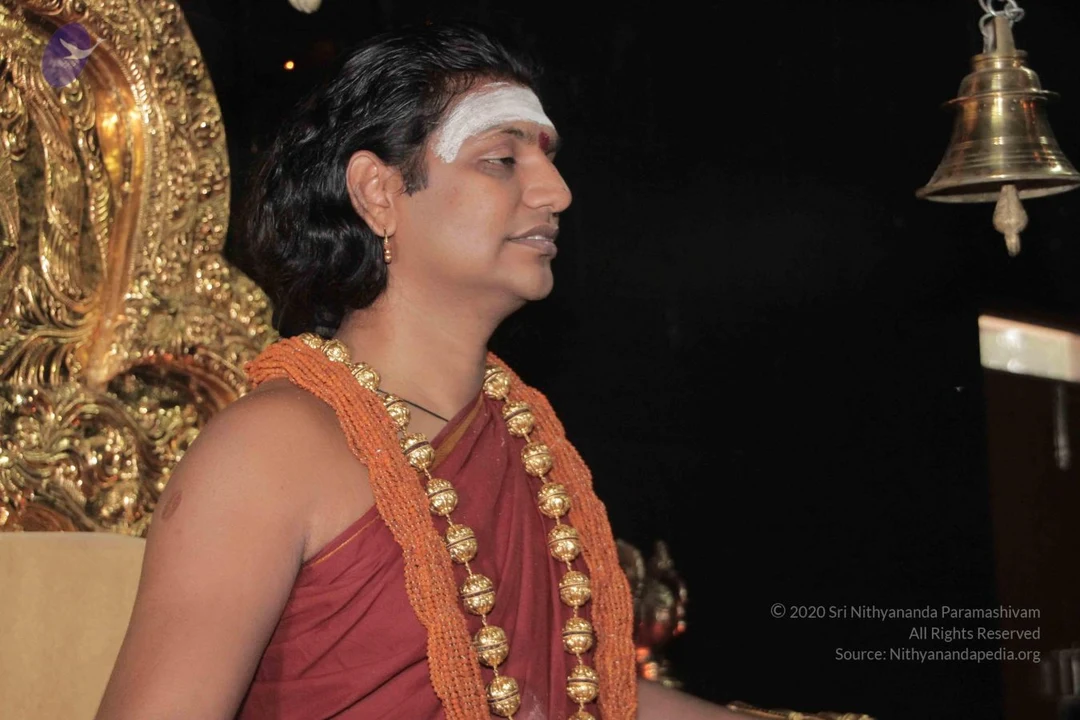
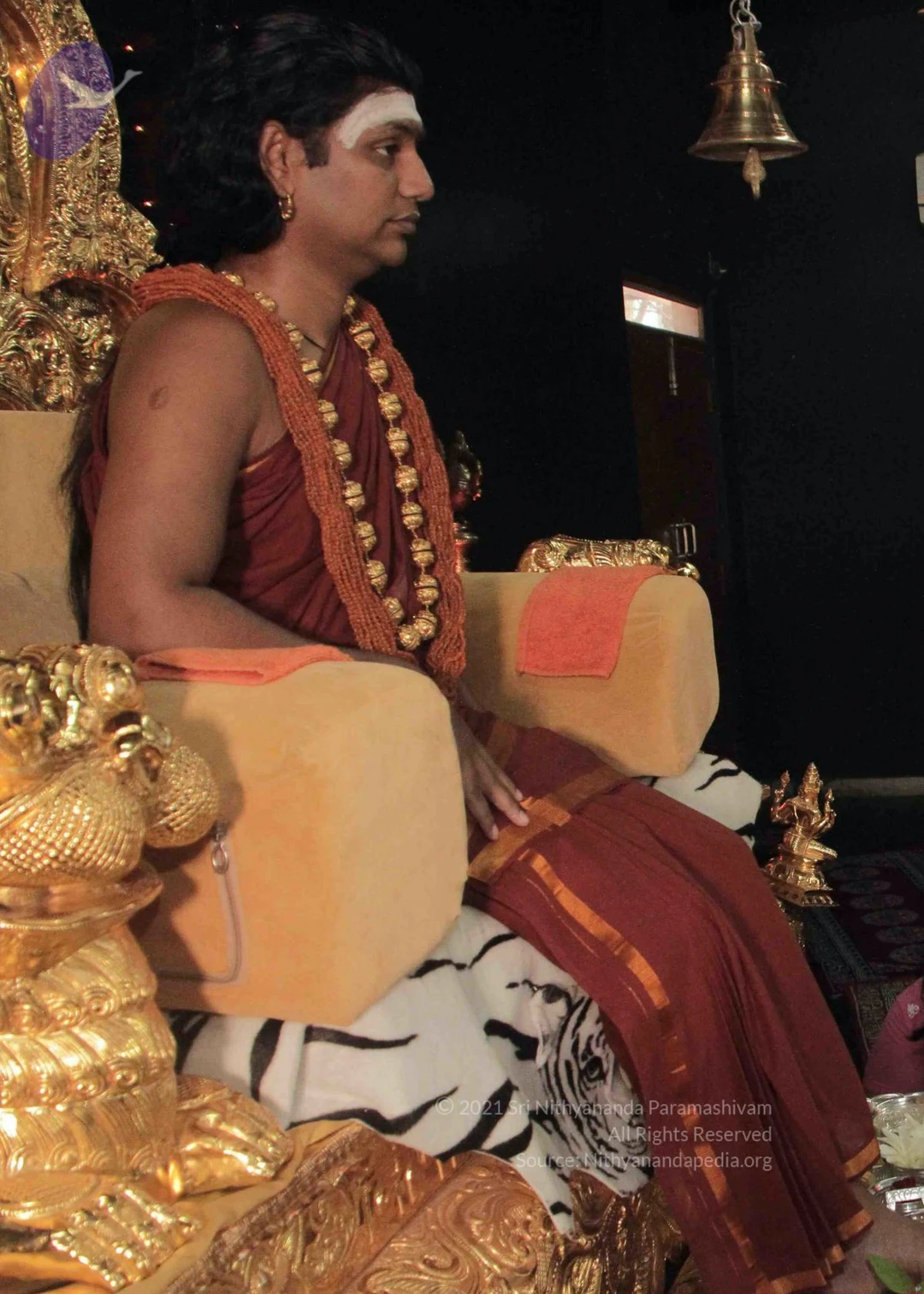
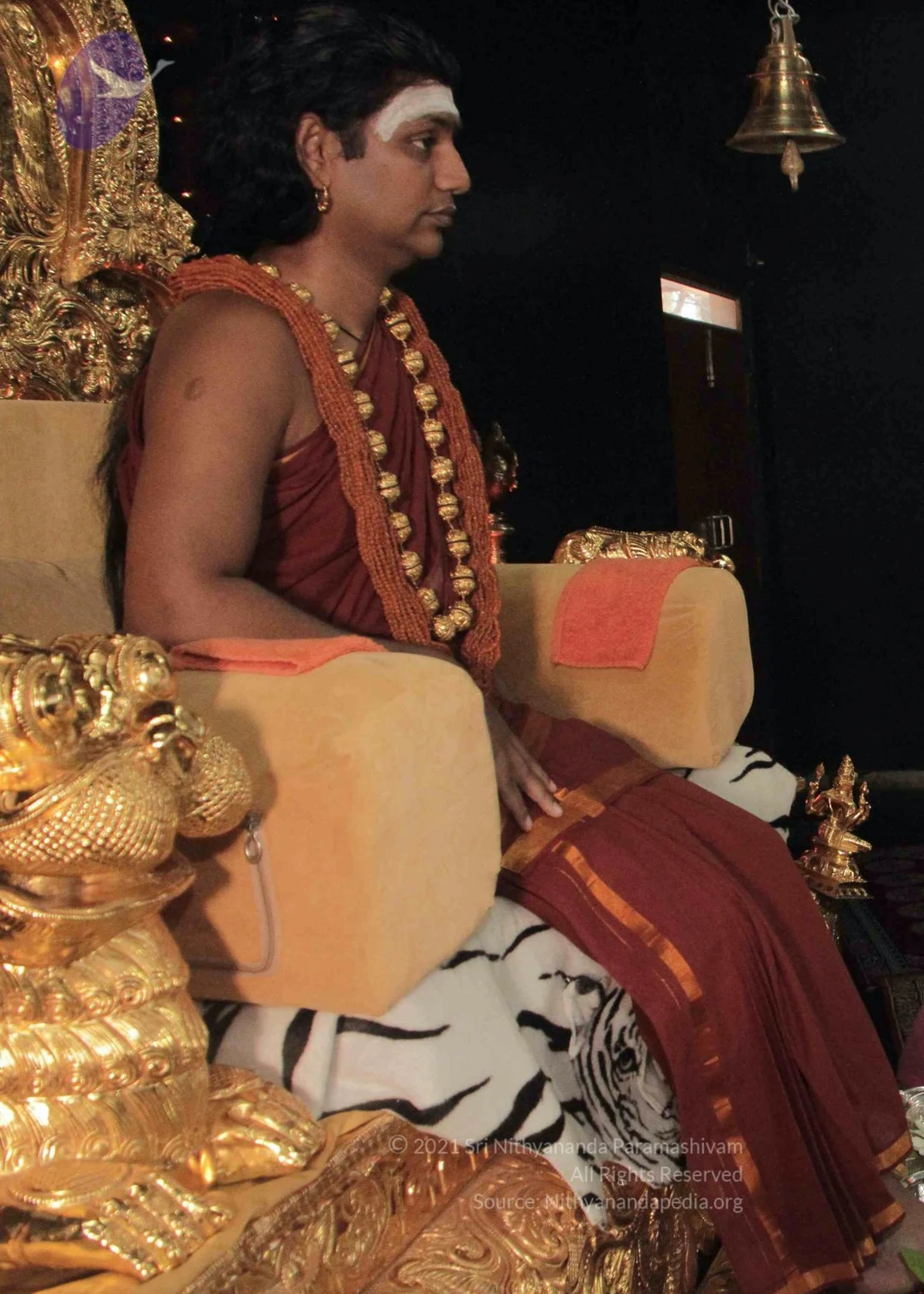
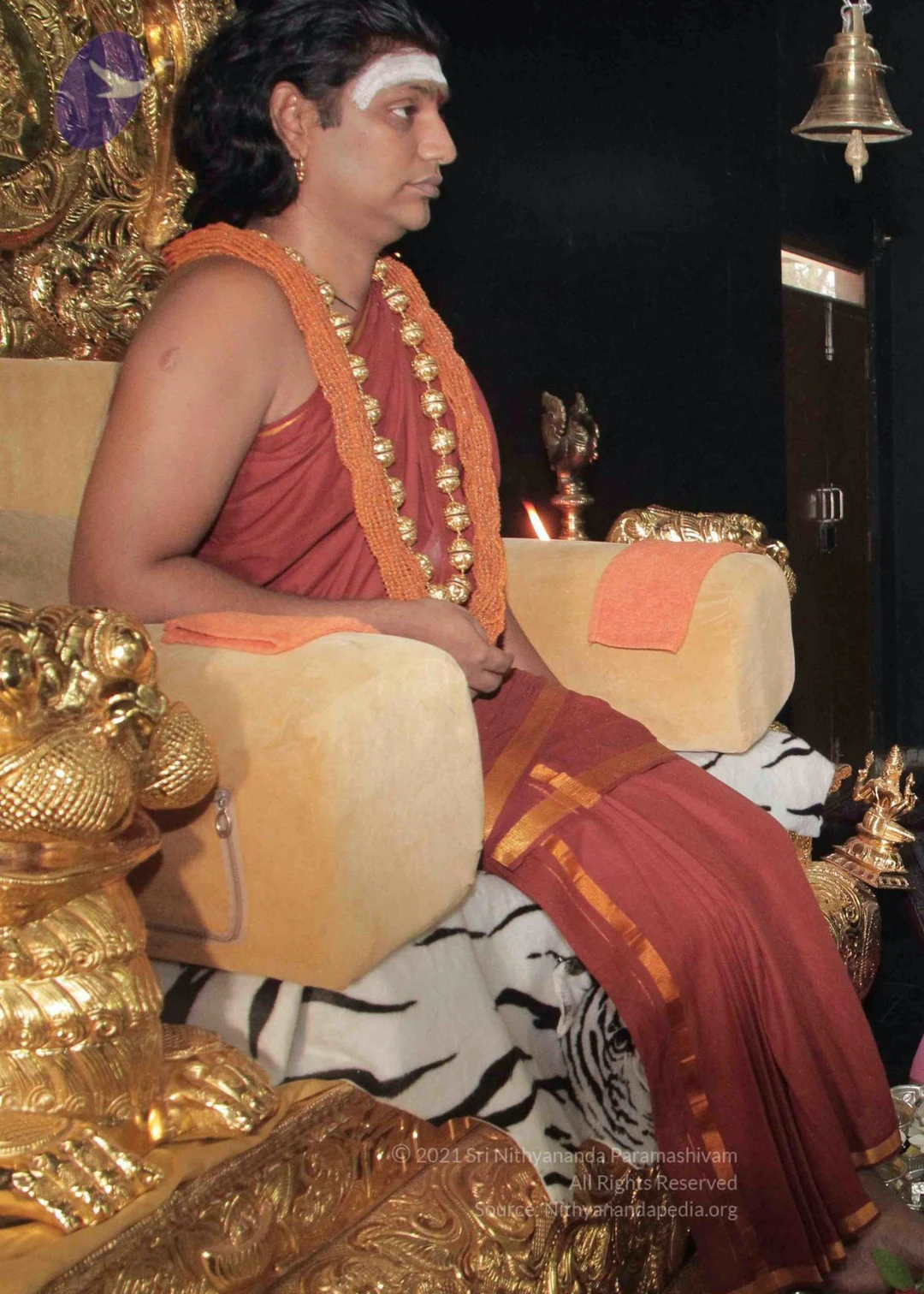
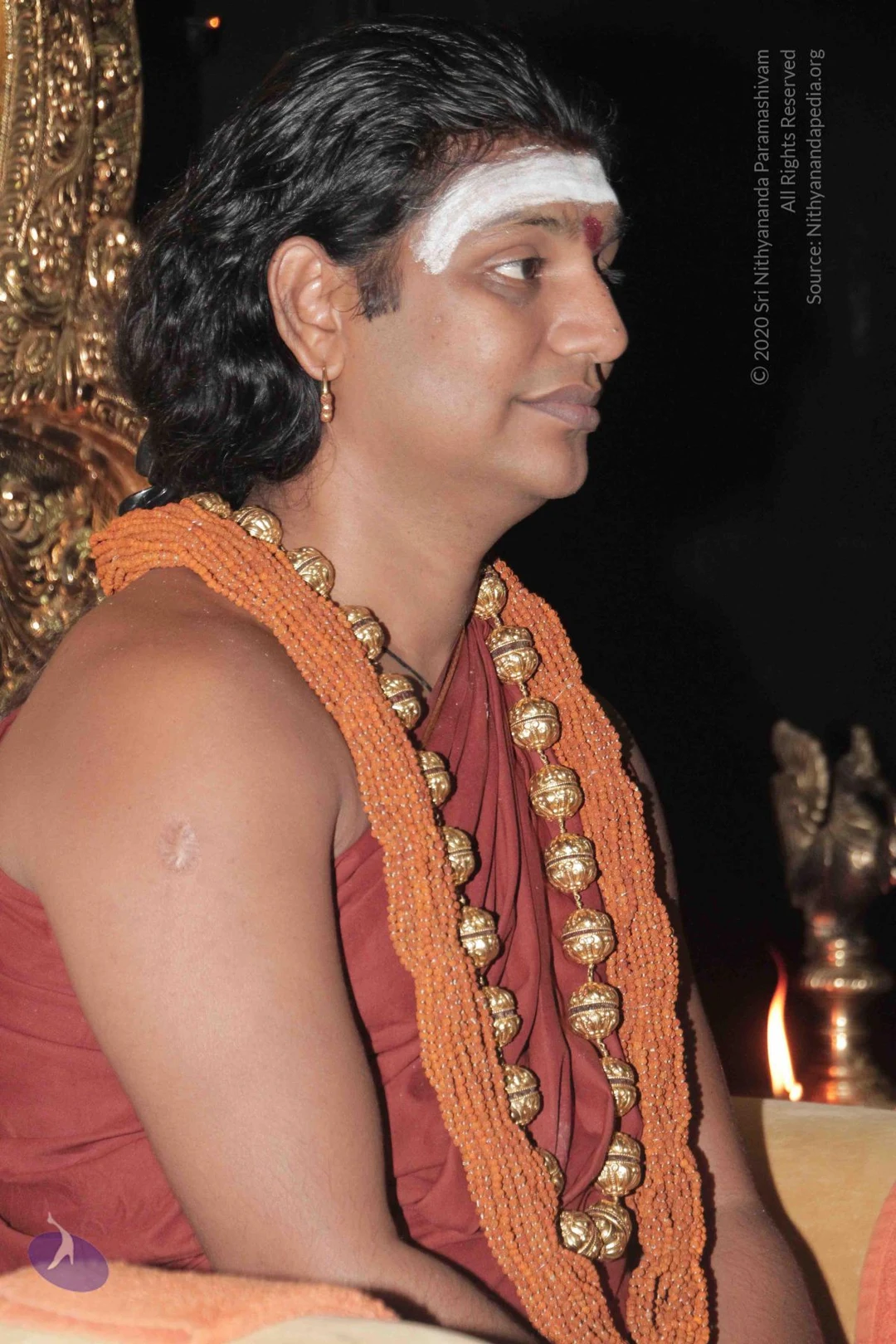
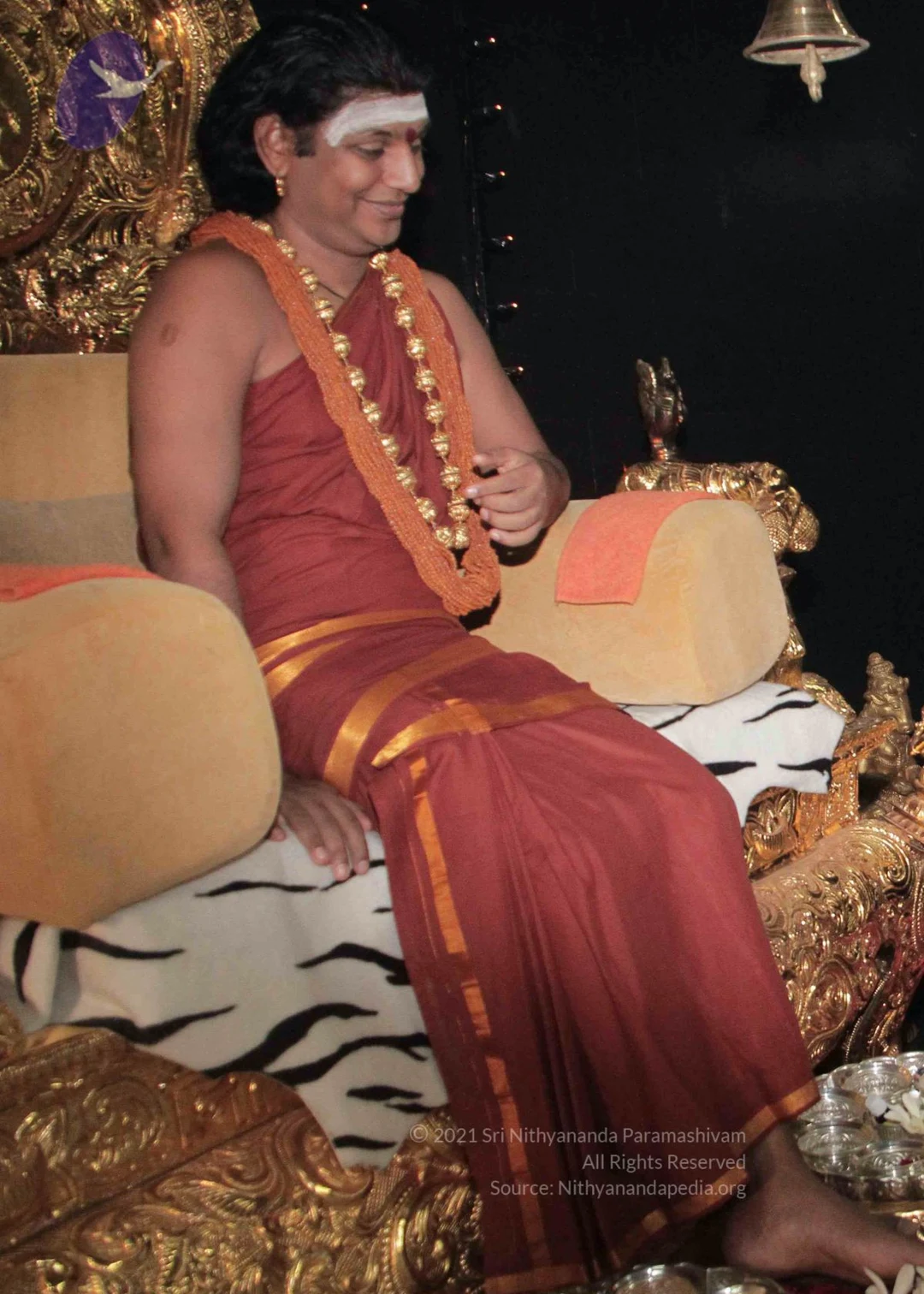
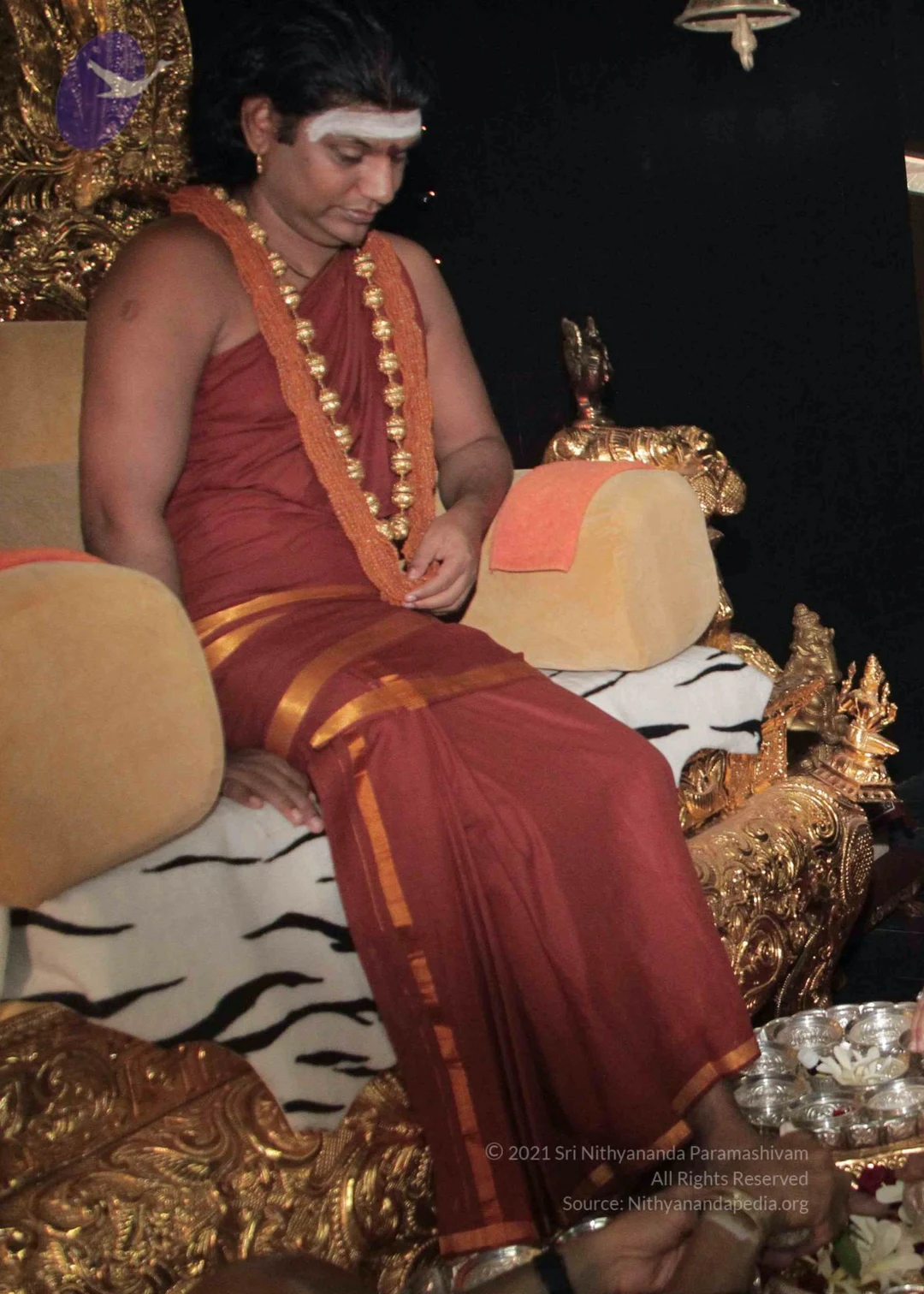
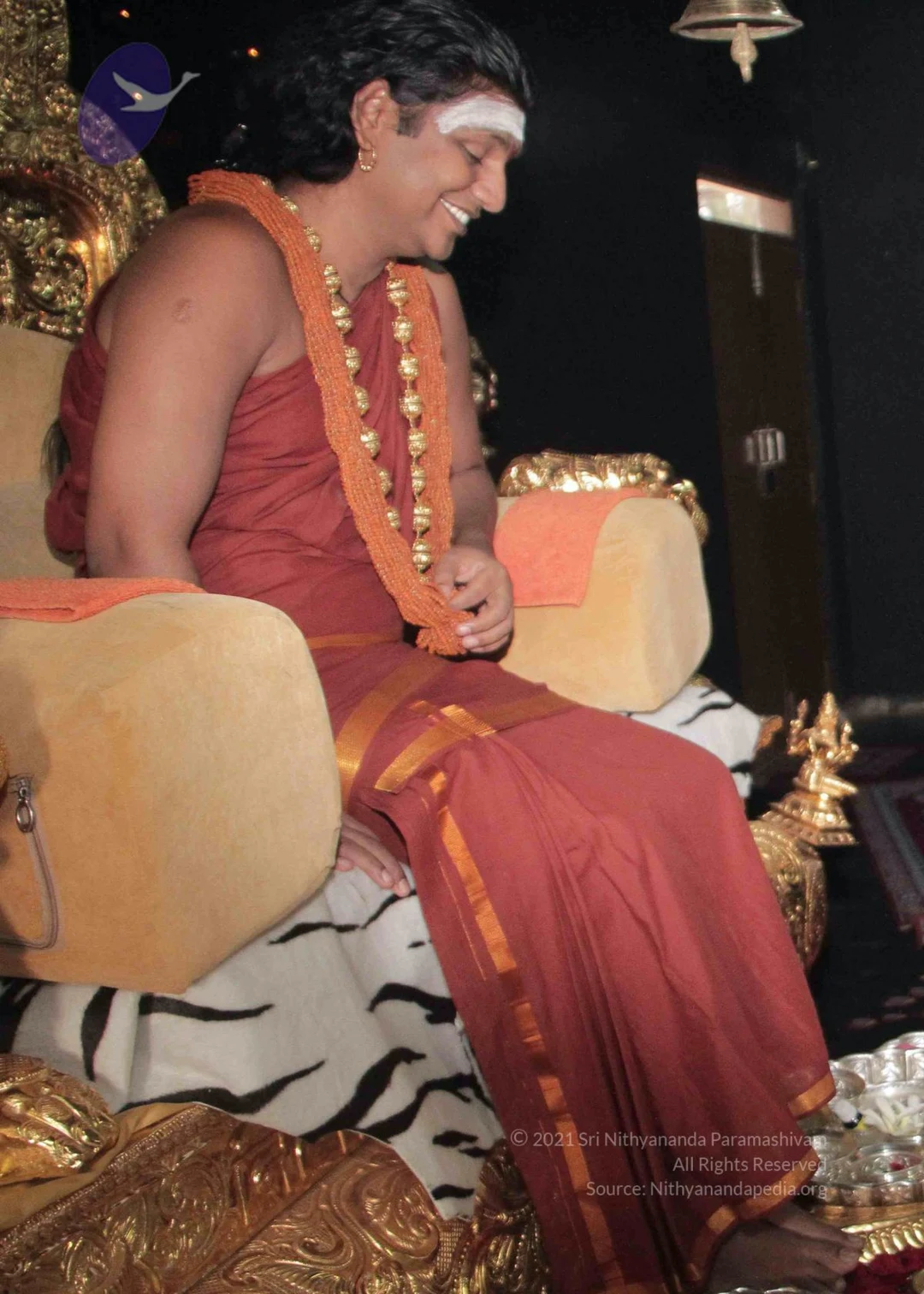
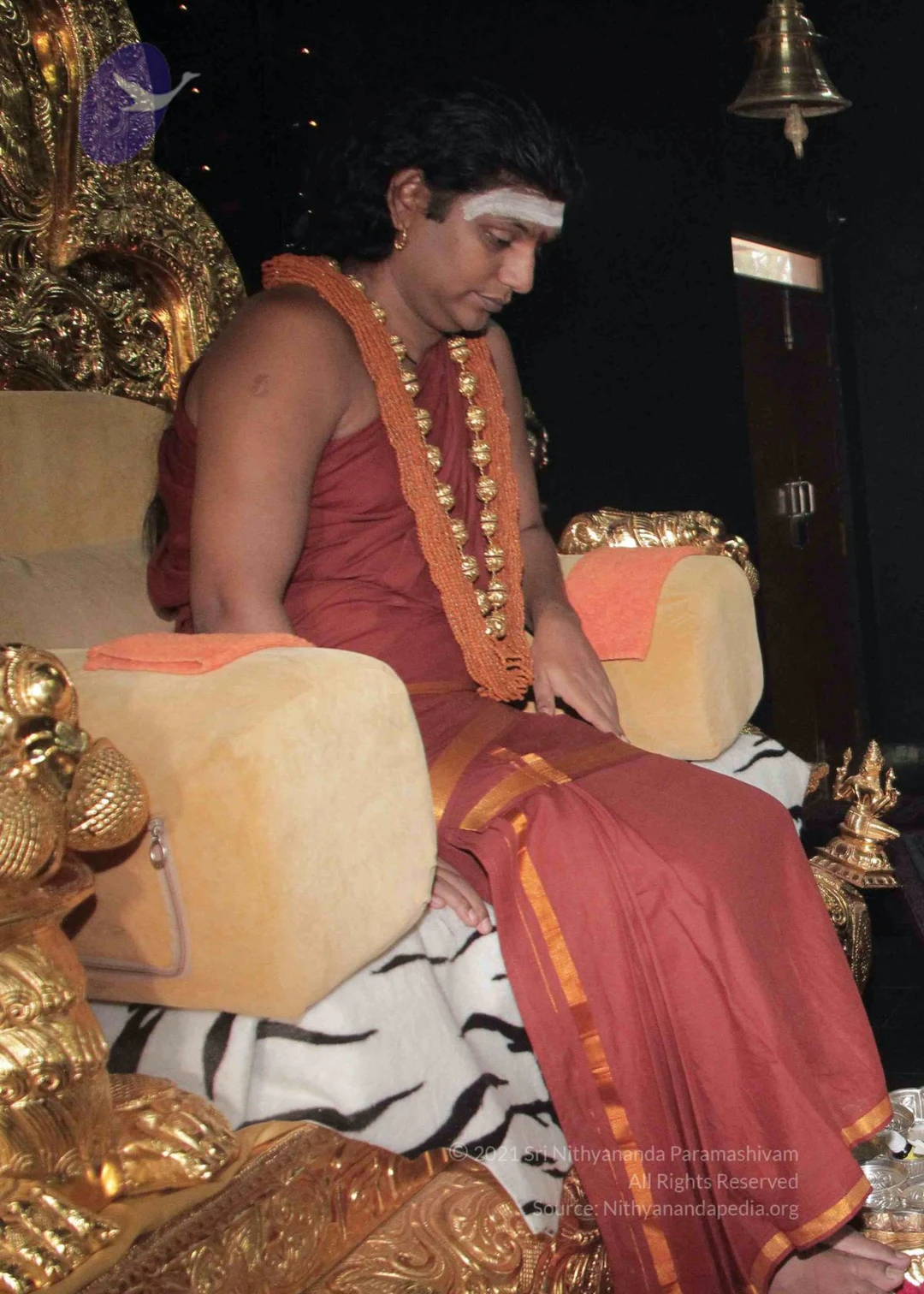
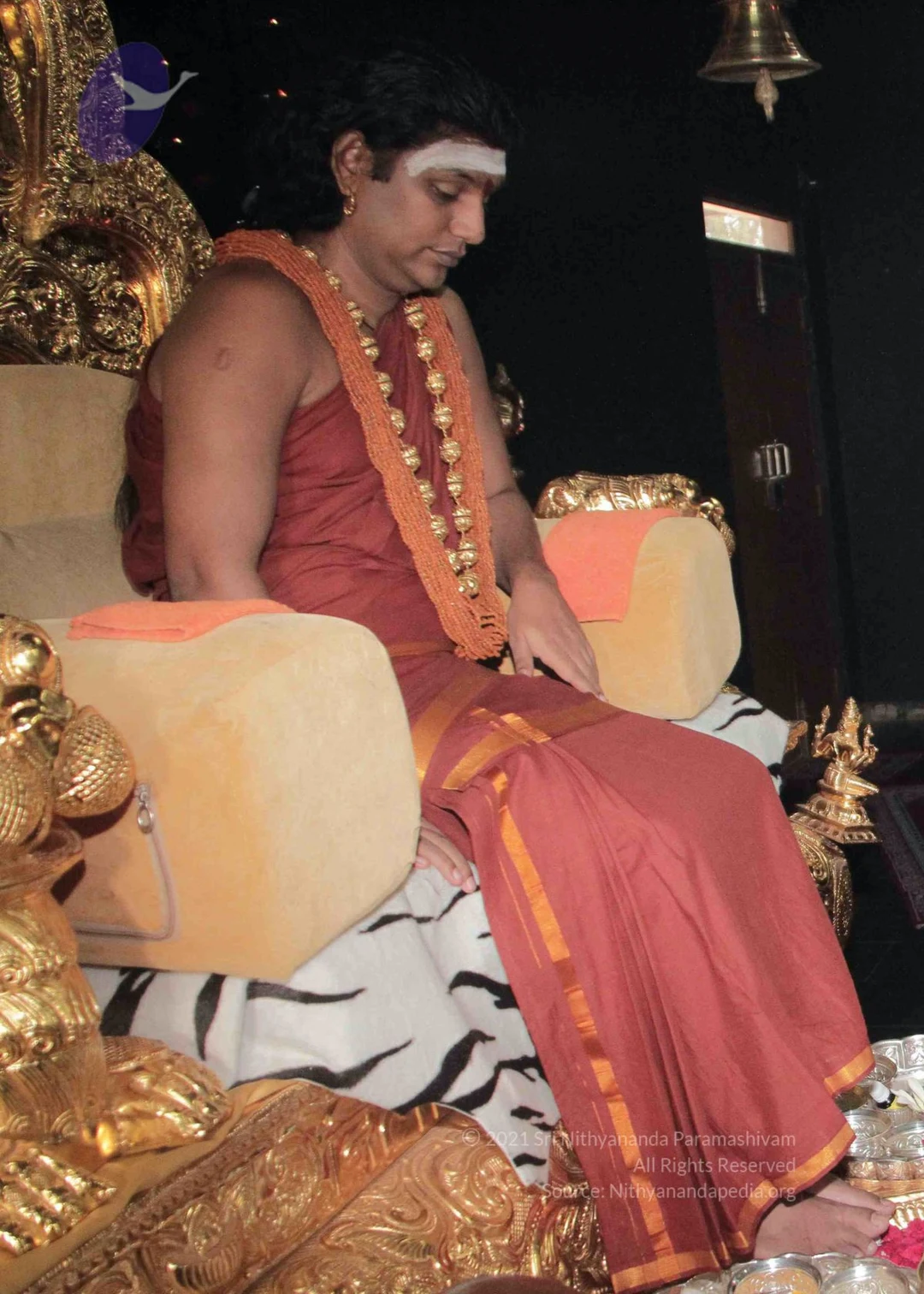
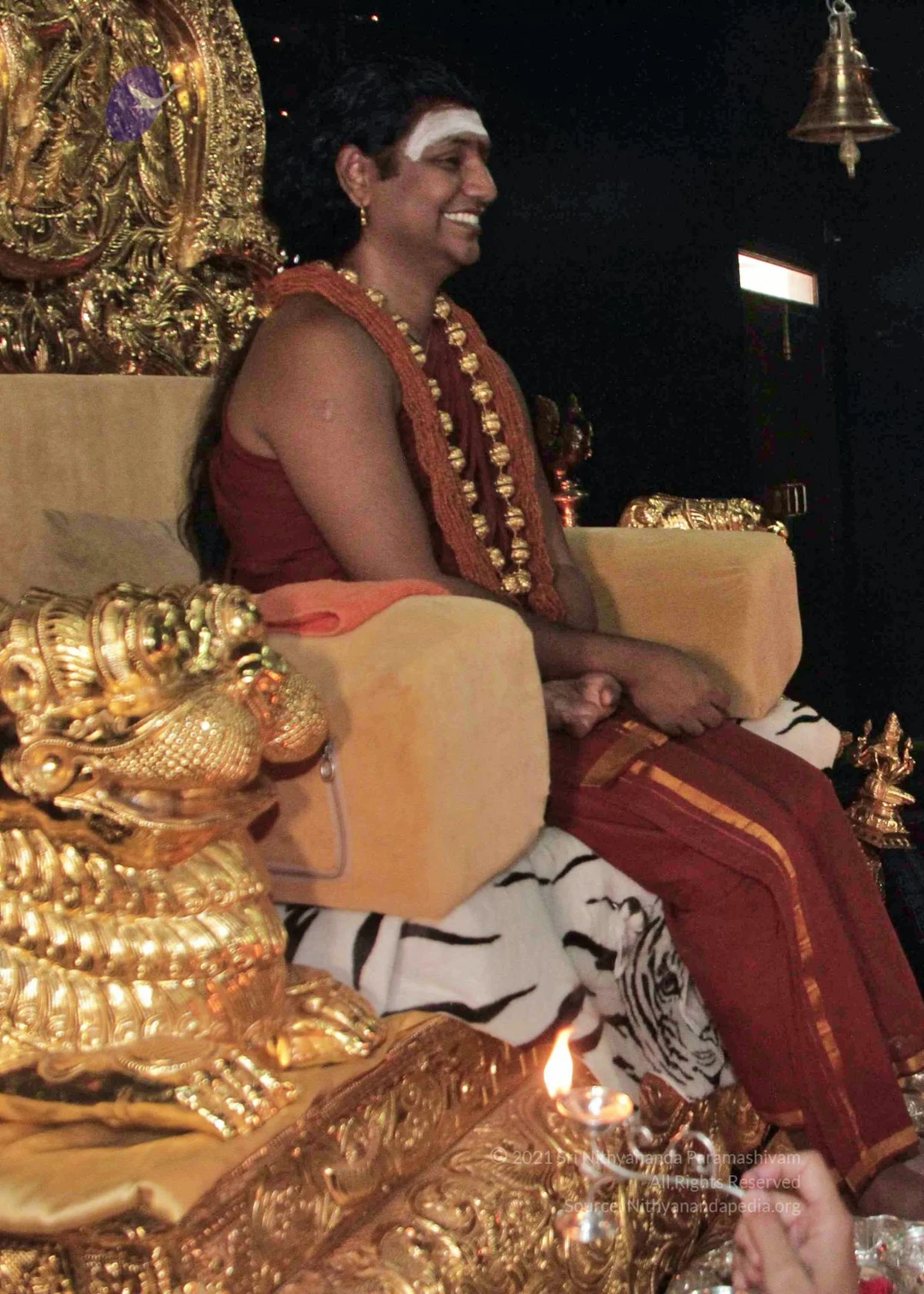
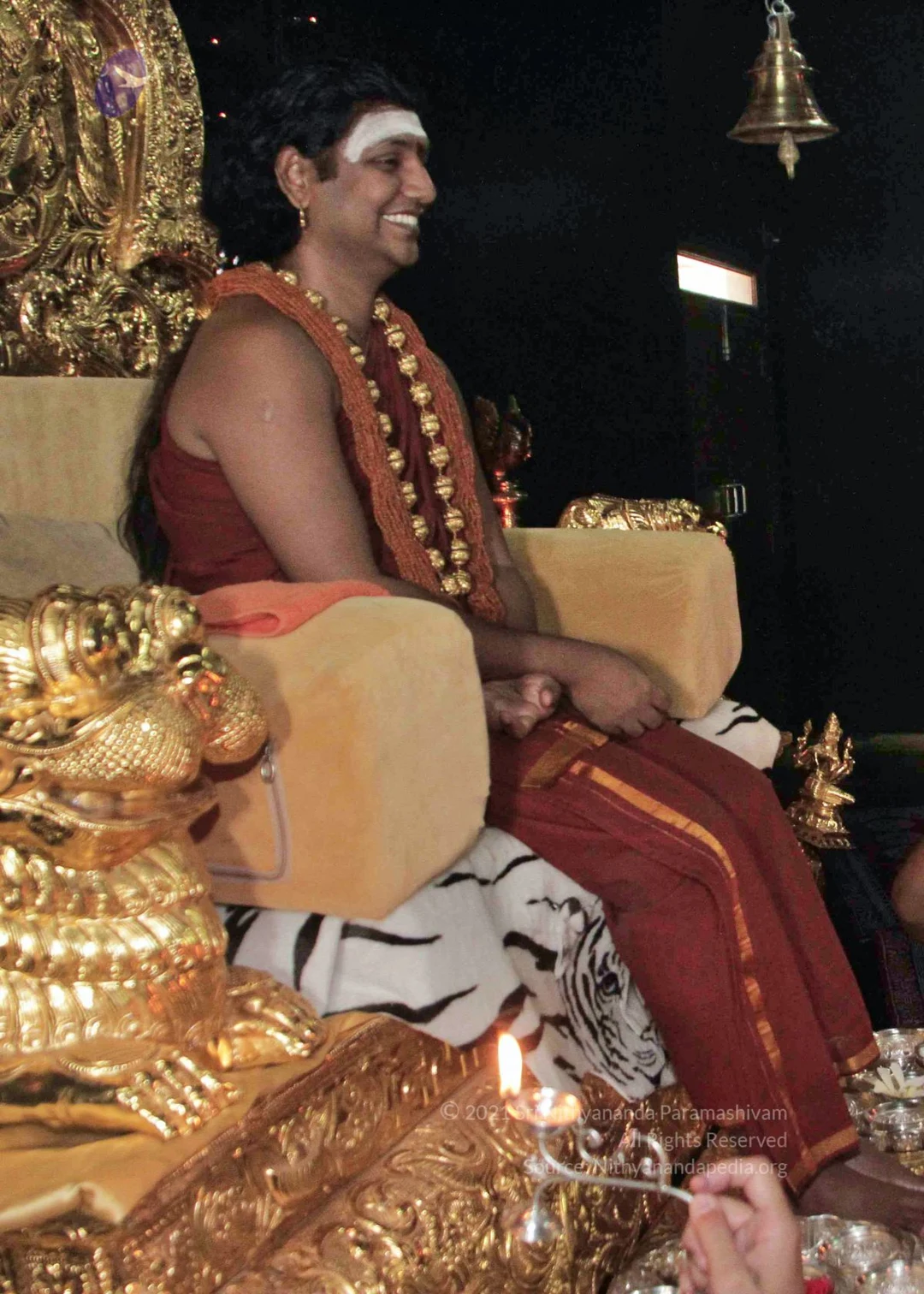
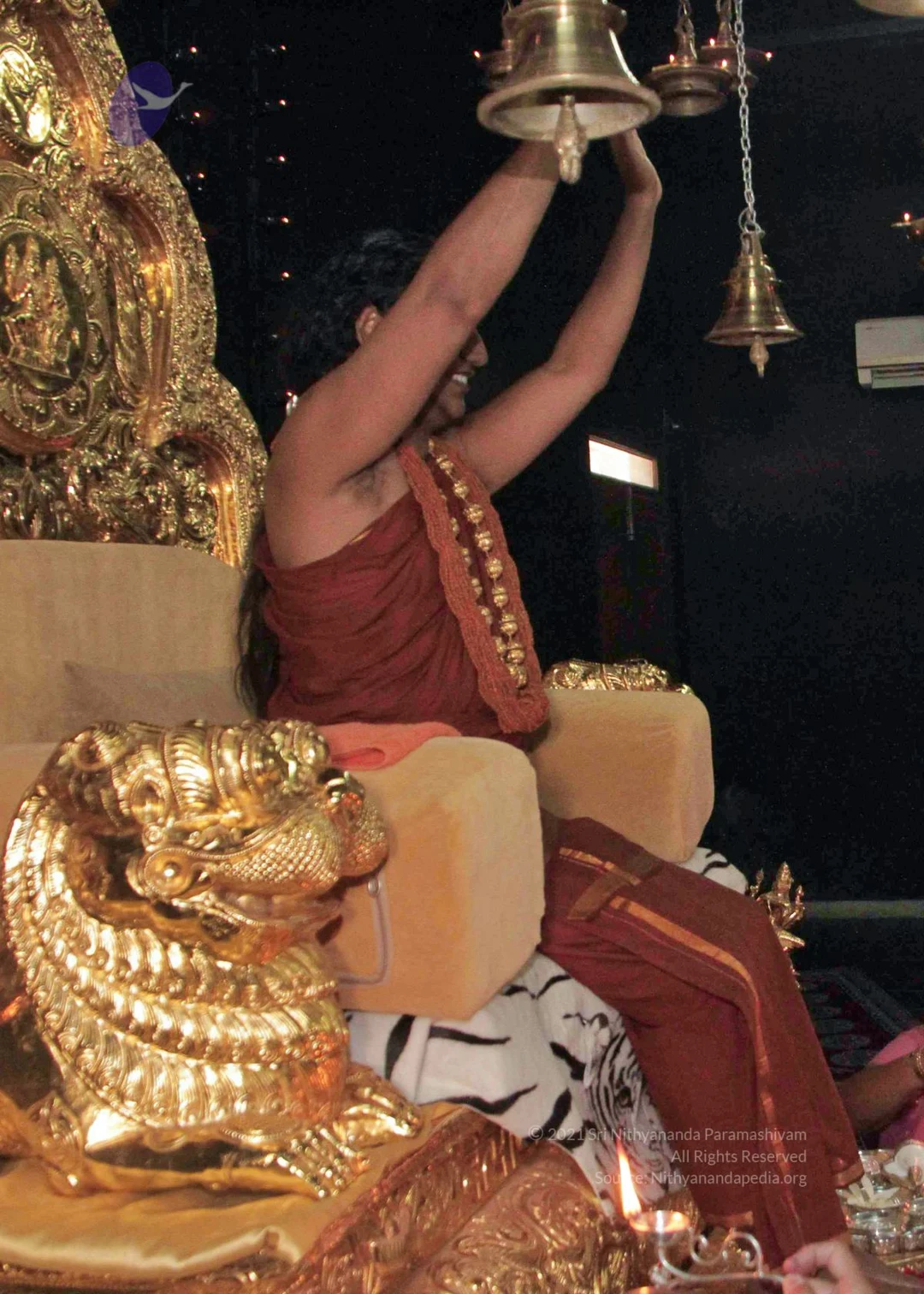
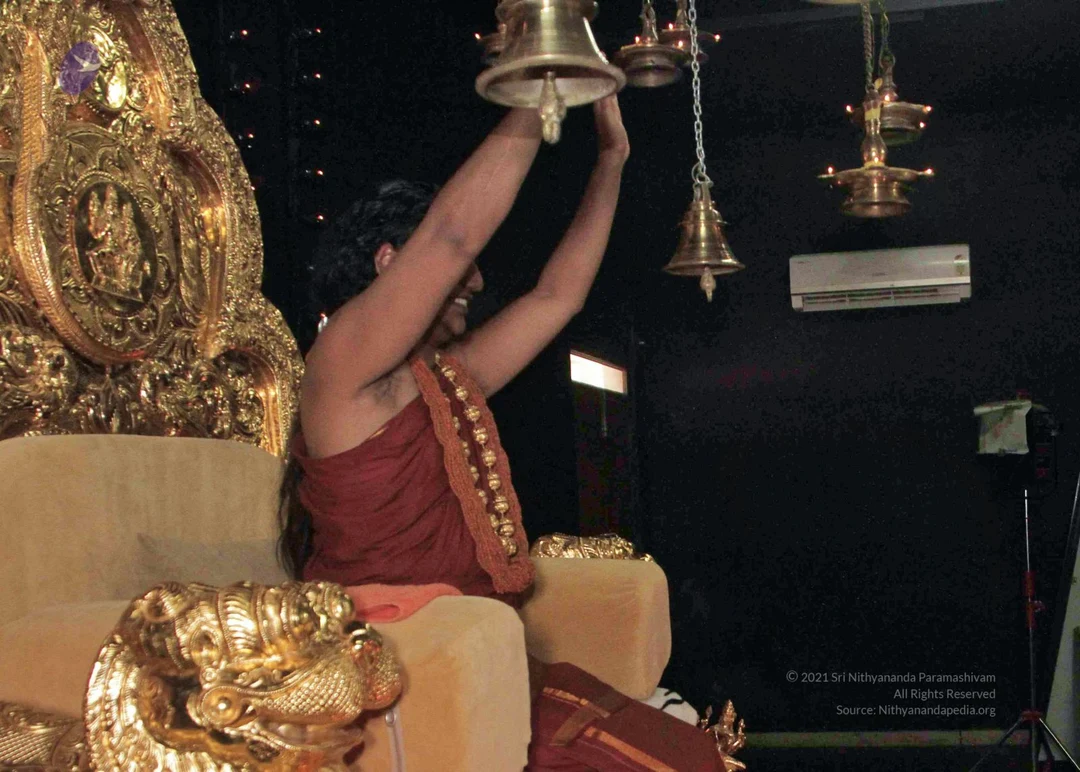
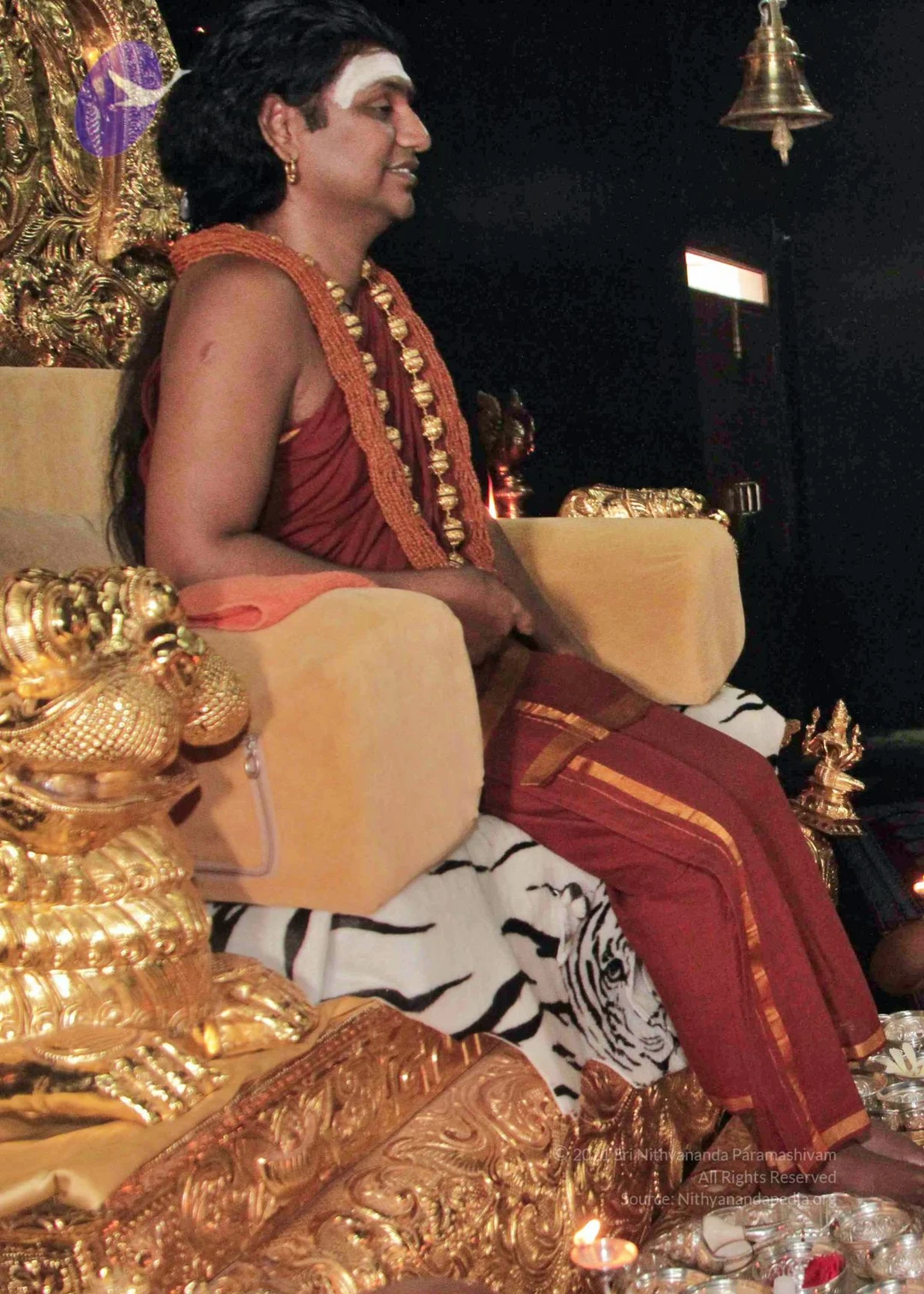
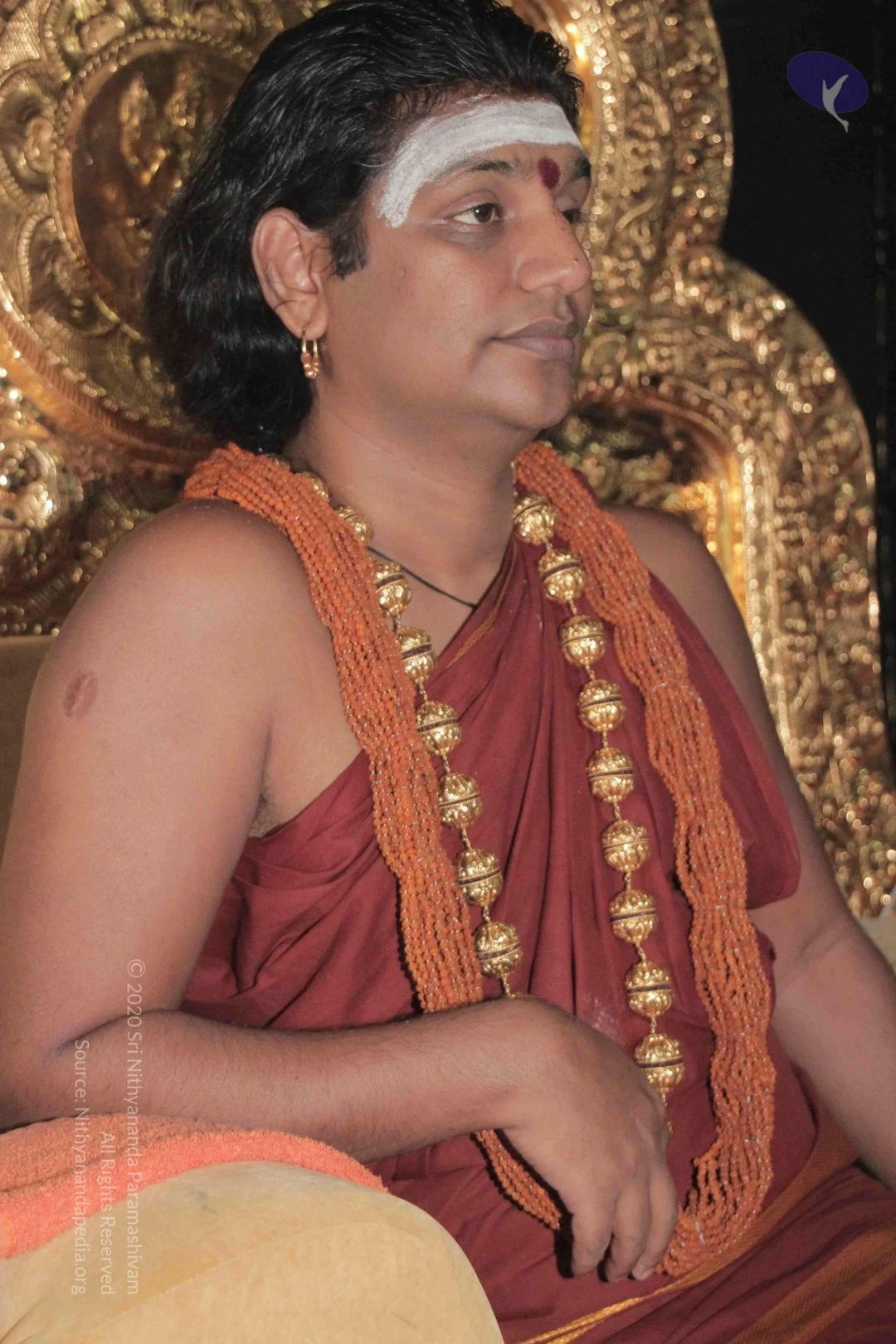
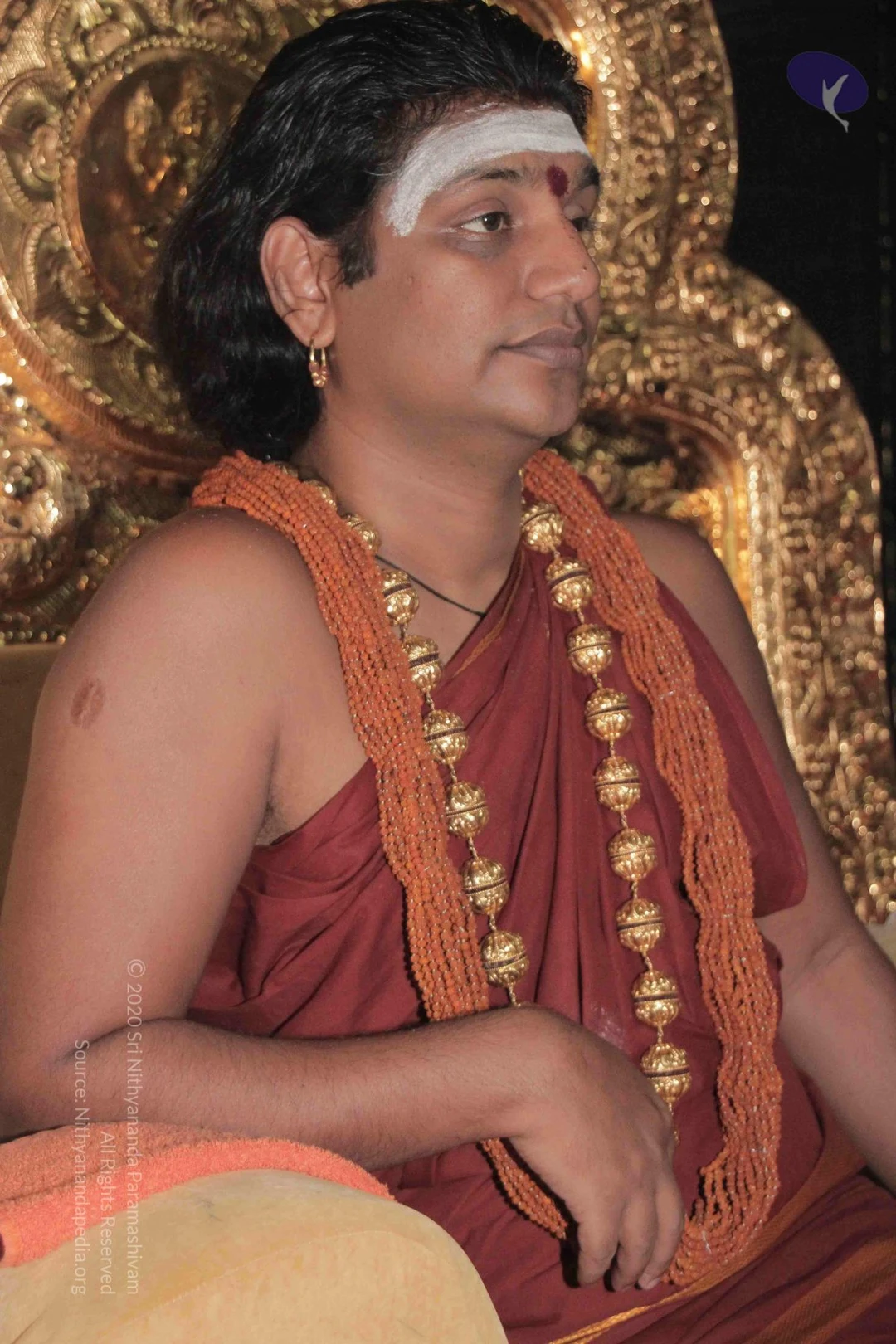
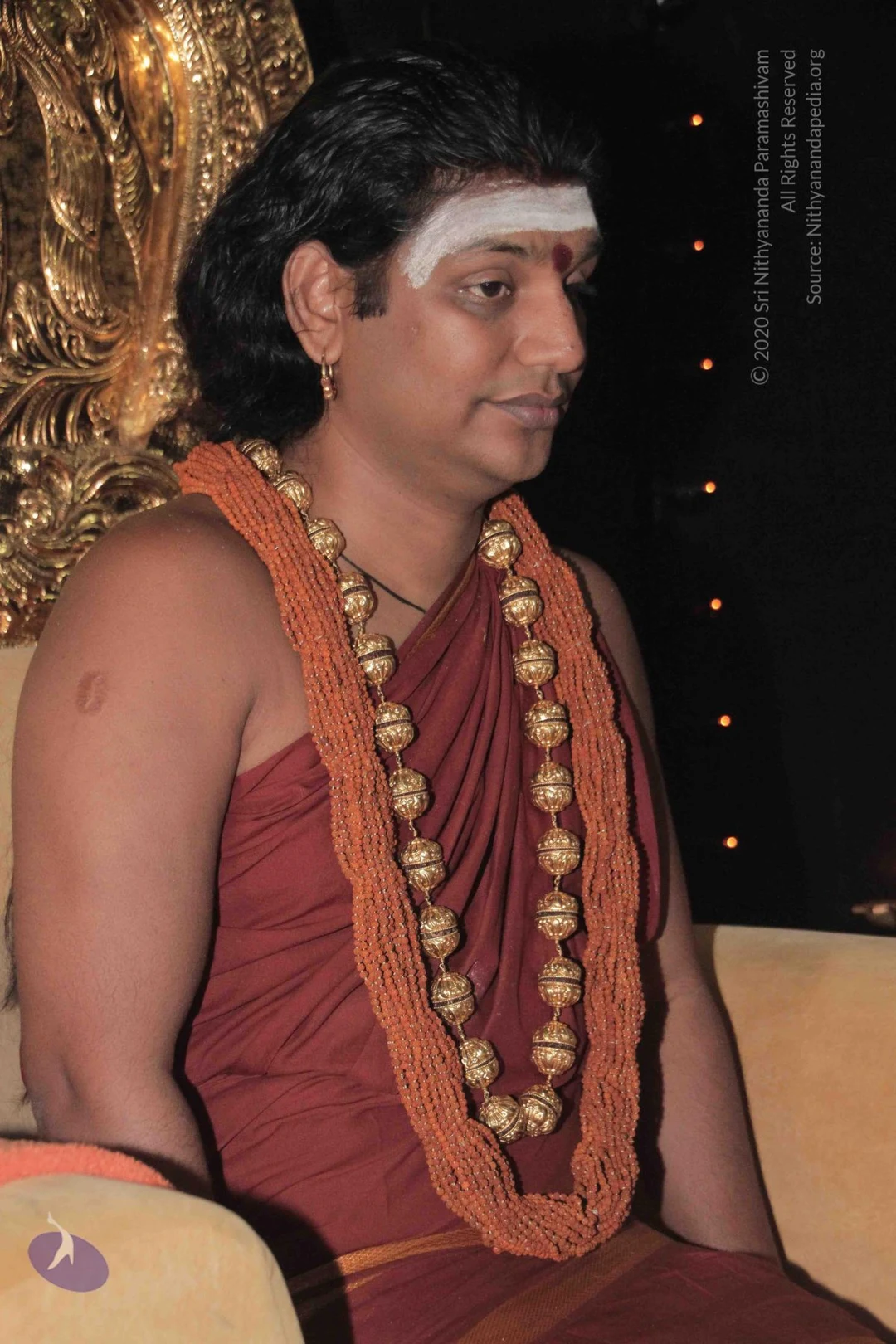
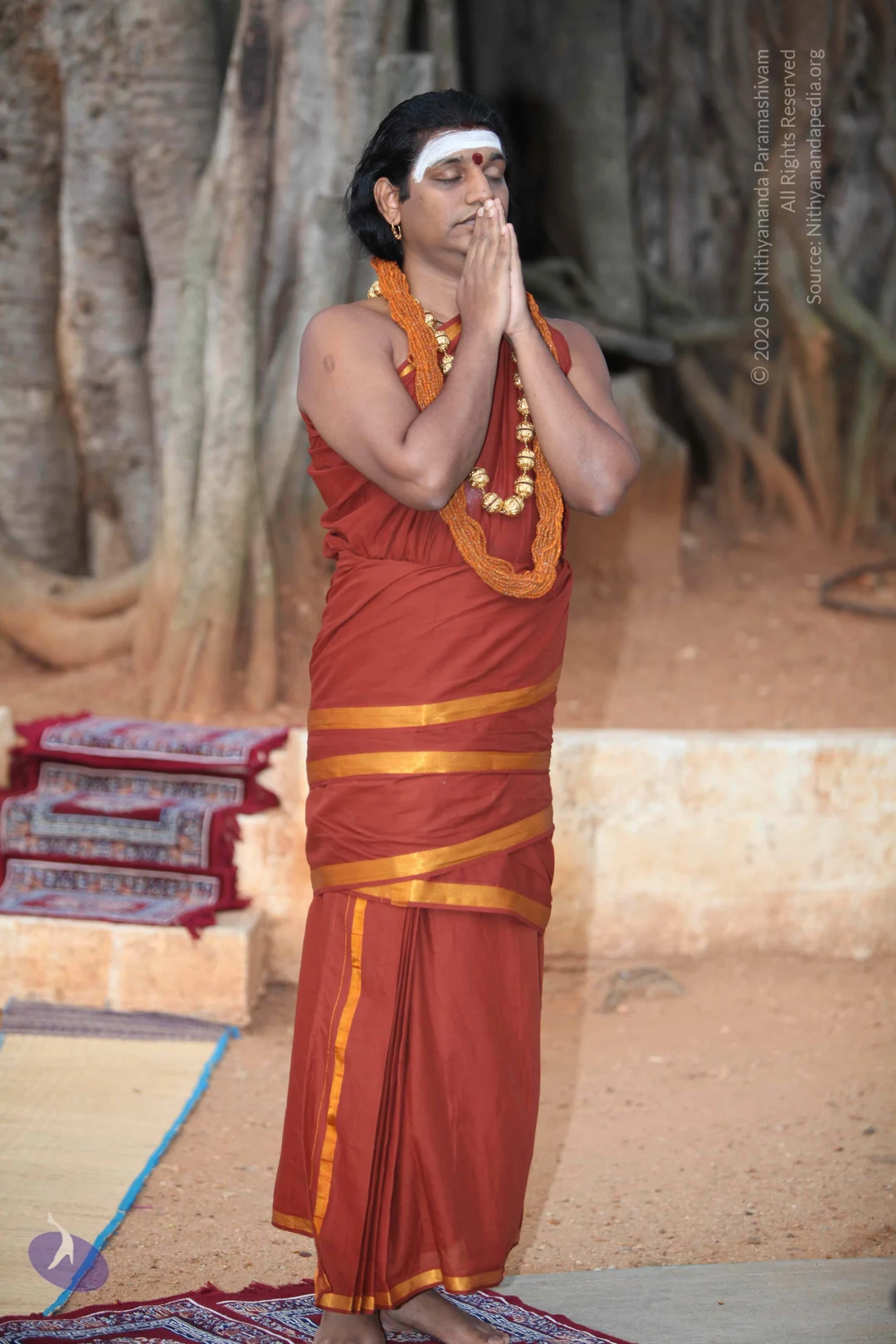
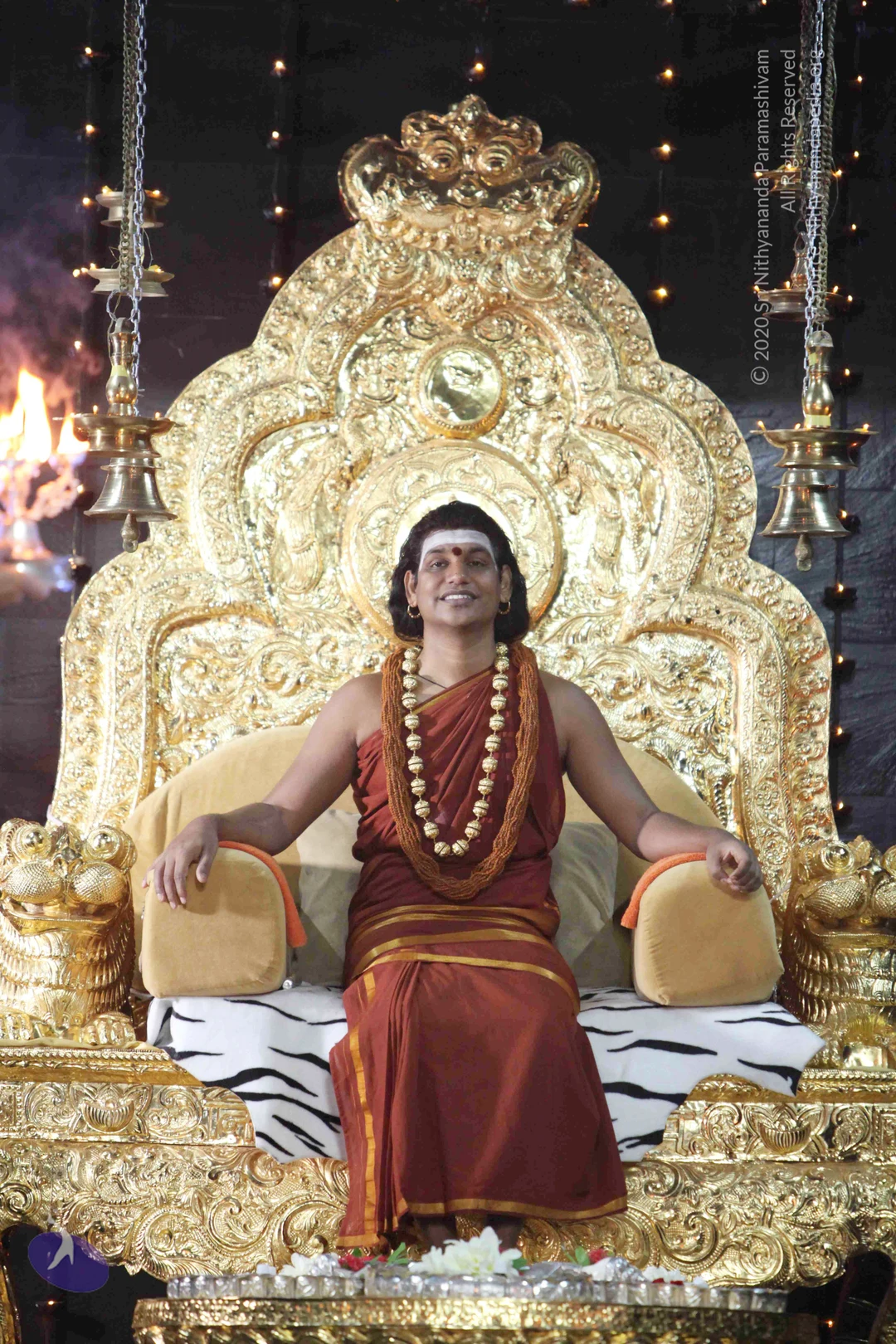
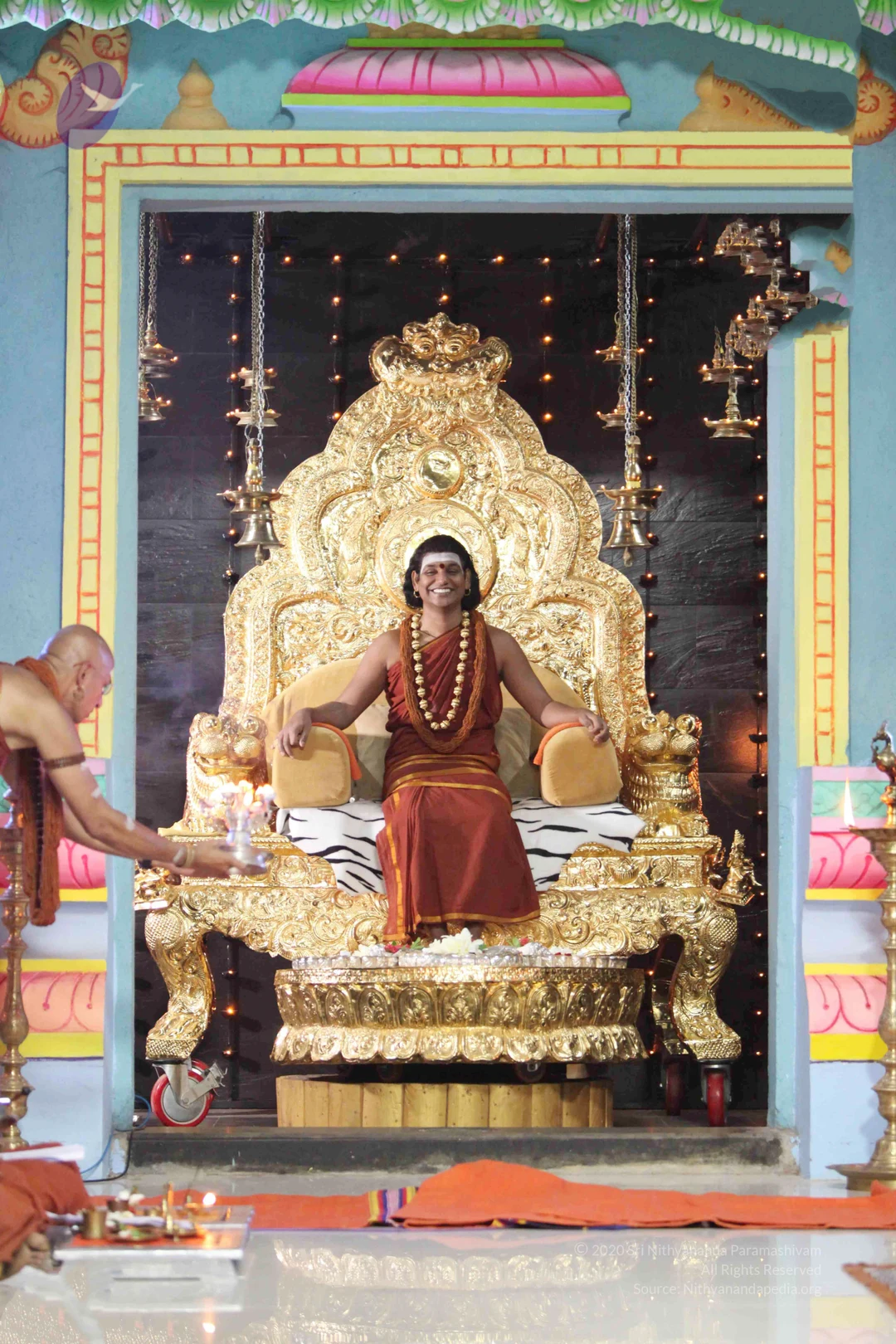
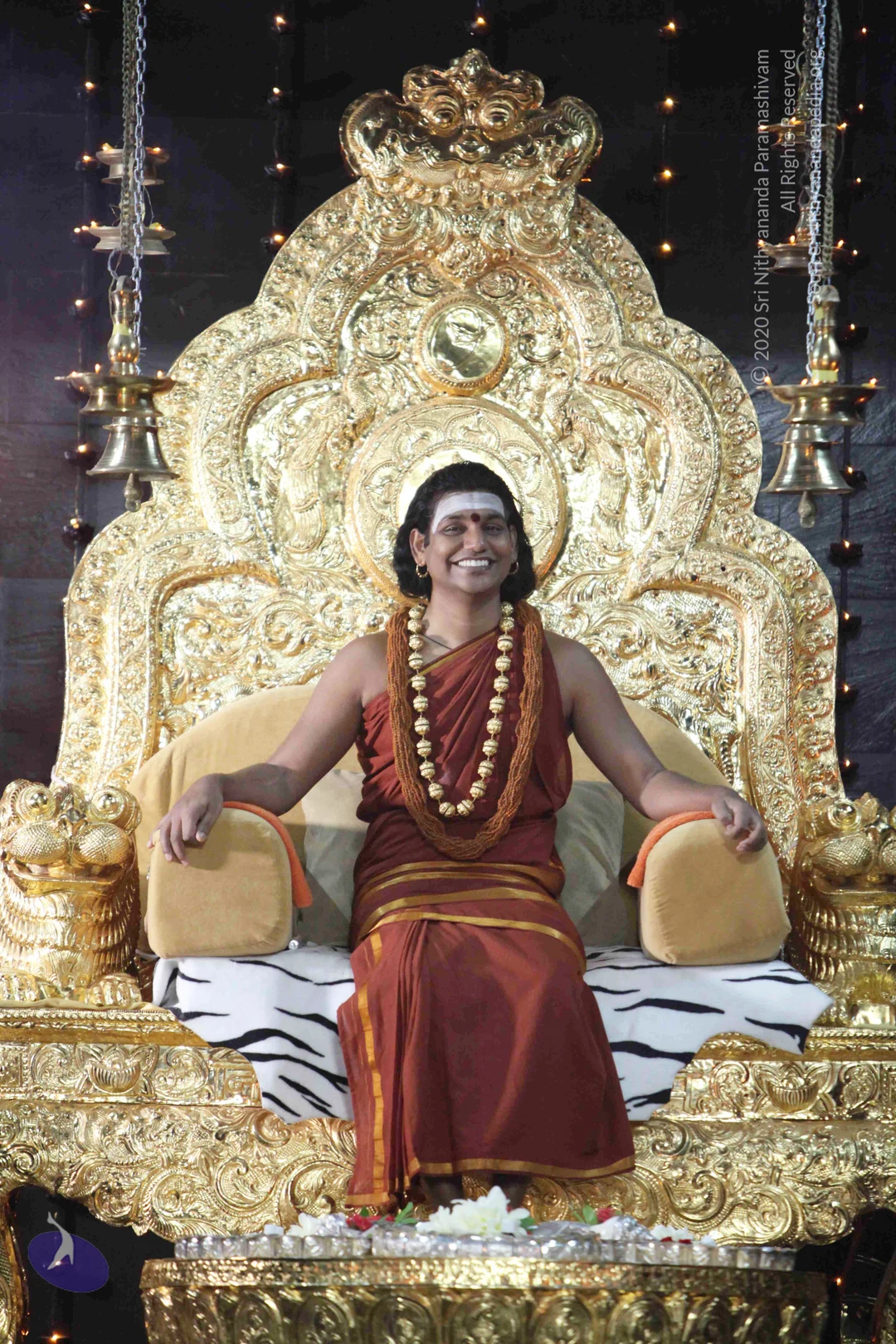
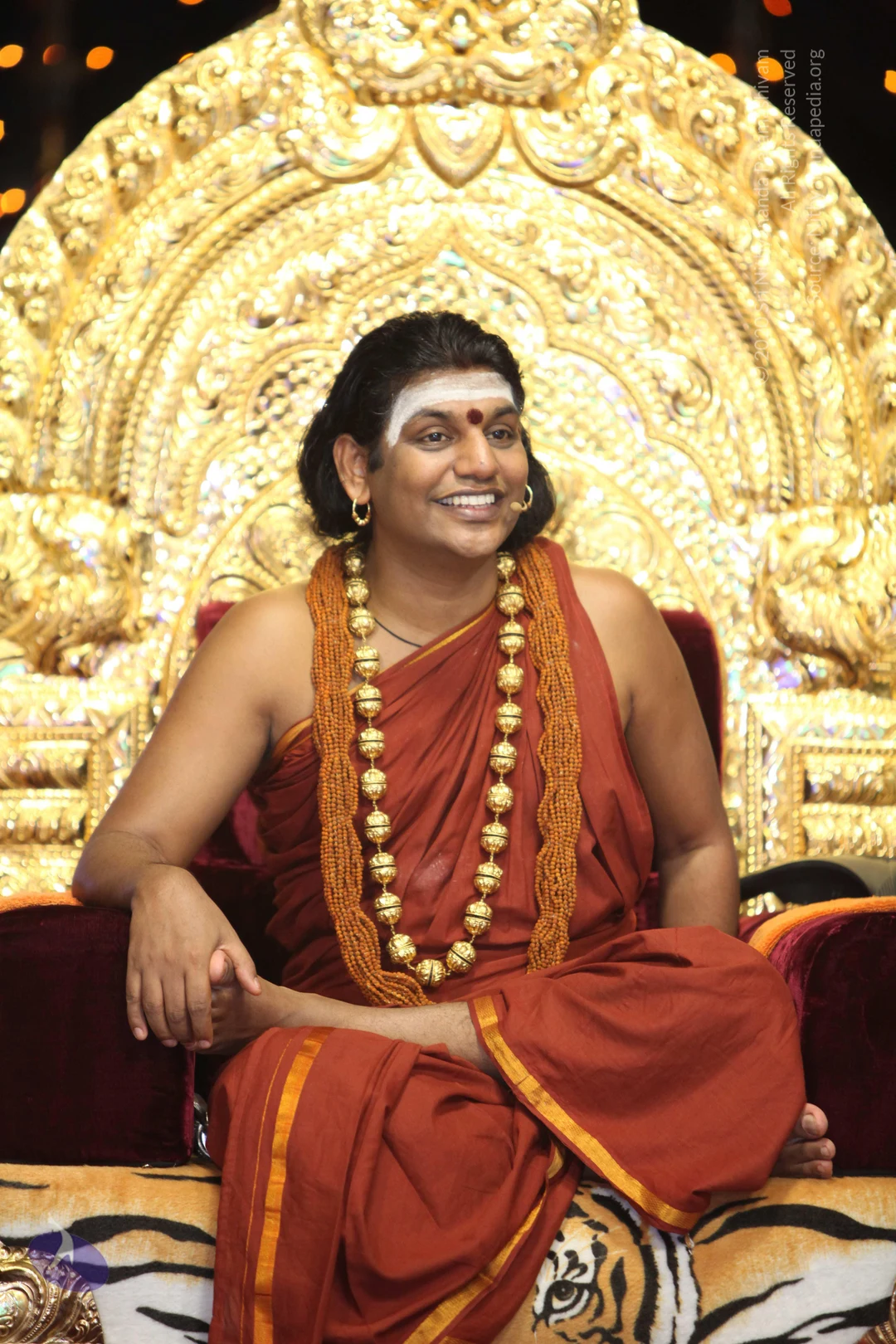
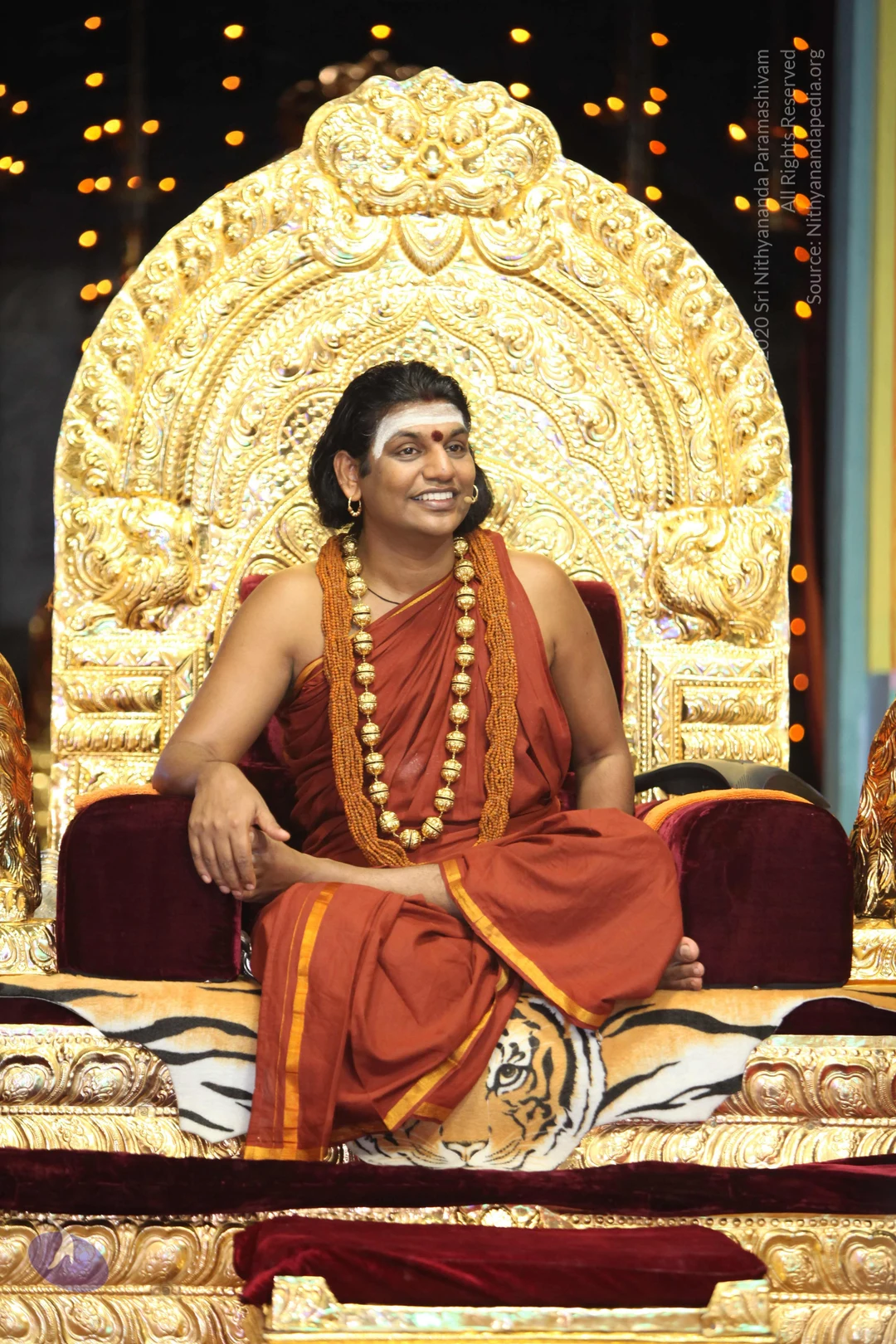
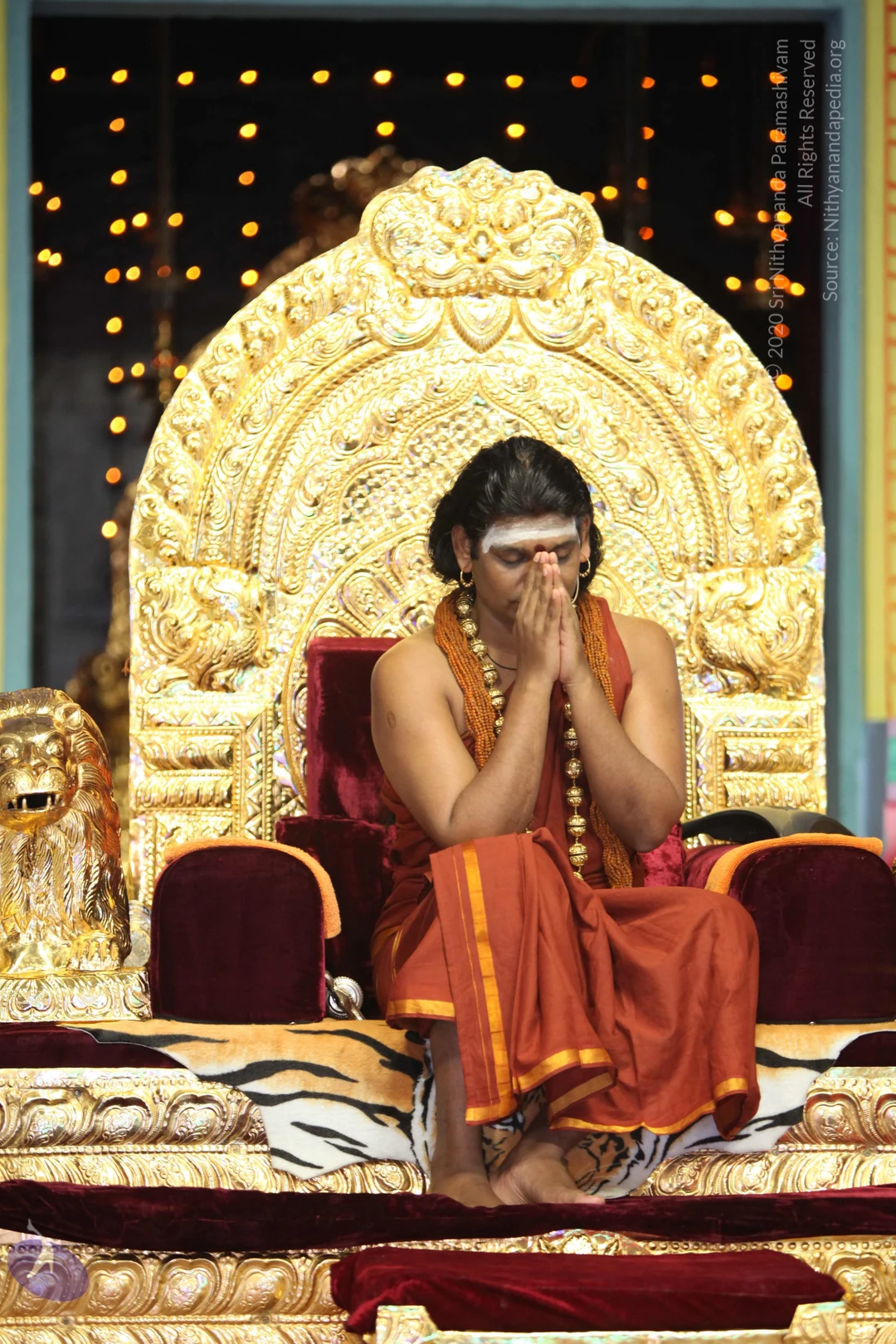
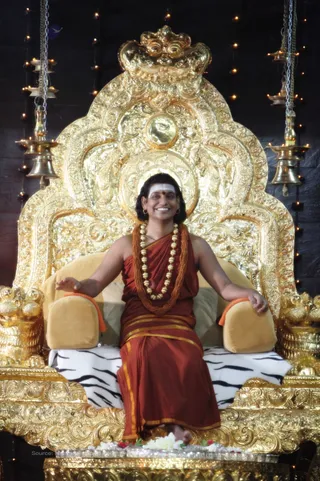
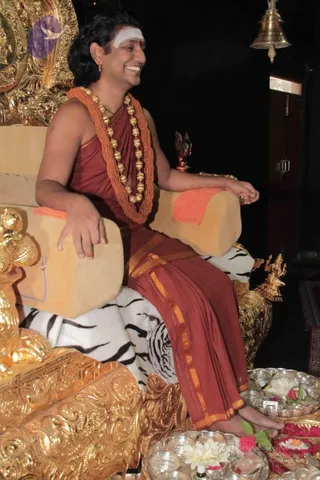
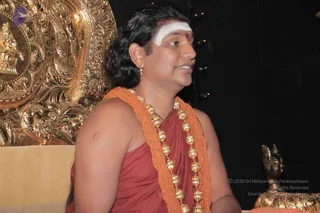
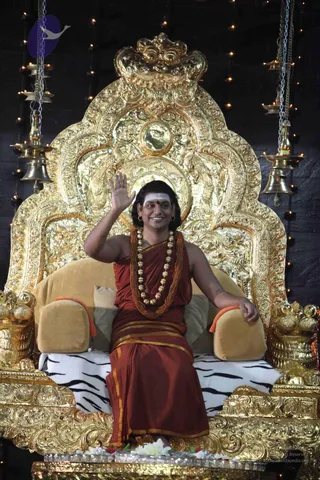
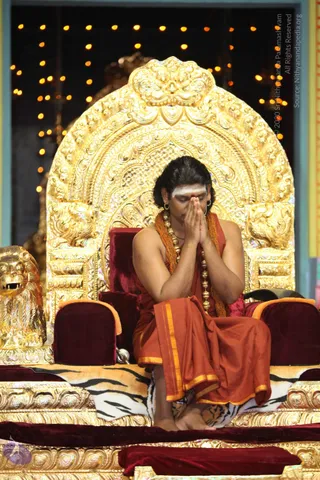
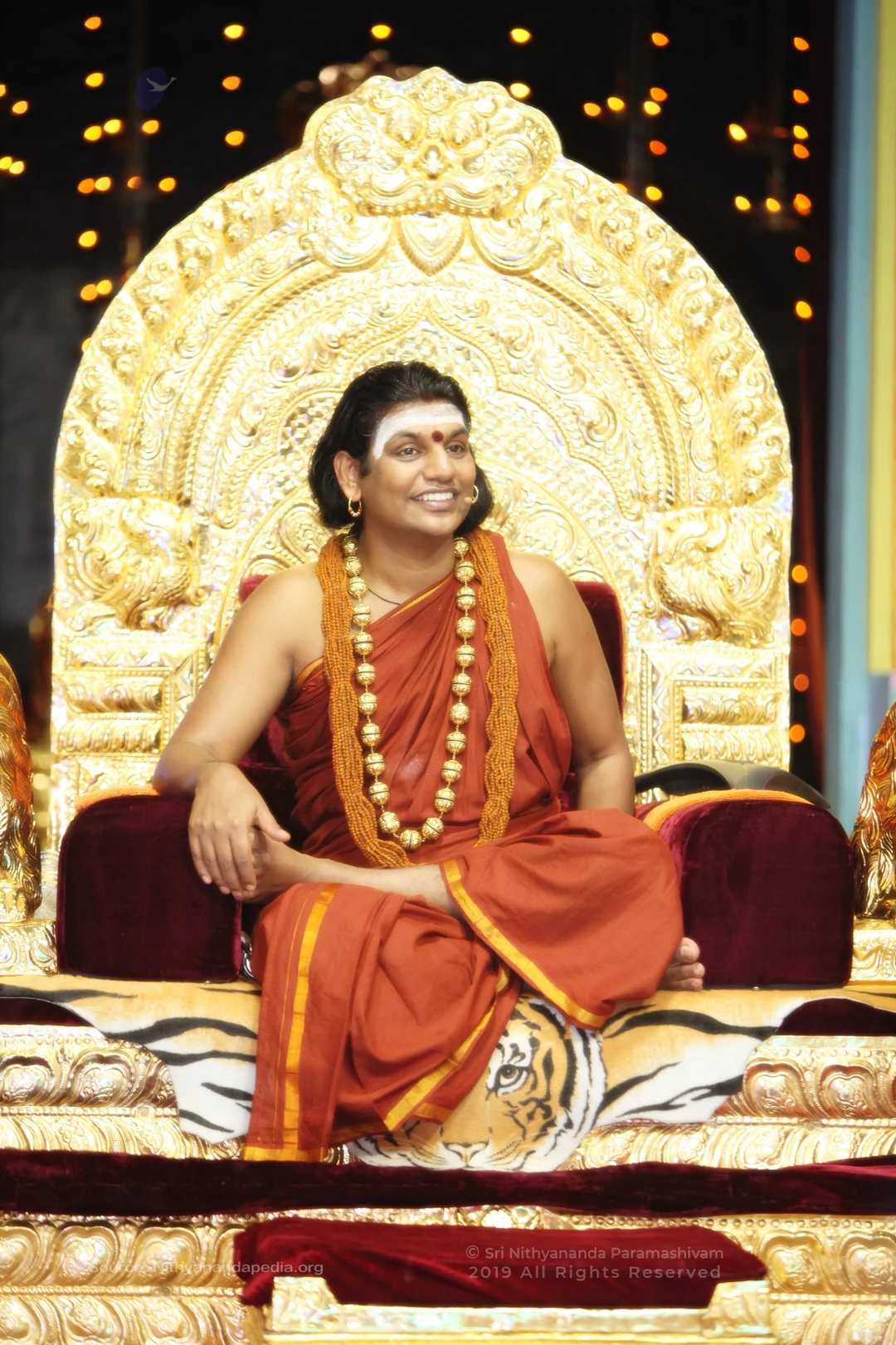
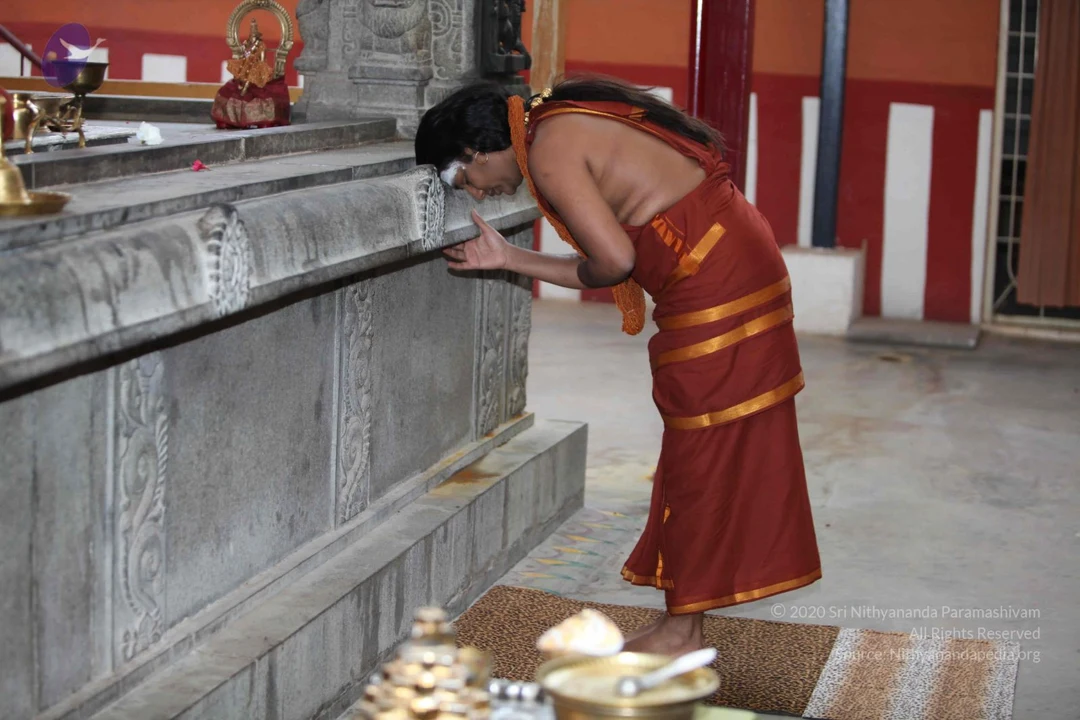
A seated man in a rust-red dhoti and shawl with gold-striped borders sits on a gold-and-cream throne-style chair draped with a white and black animal-print cloth. He wears a long orange-beaded shawl over his shoulder, a multi-strand gold bead necklace, and a white vertical tilak on his forehead, looking down at his hands. Behind him stands a gold ornate throne with carved figures, and a bell hangs from the upper right. In the lower right, a person's foot in silver sandal-style footwear and a tray of silver bowls with white flowers. Swamiji (probable) cues: long swept-back hair, saffron-orange shawl, rudraksha-style gold bead necklace and throne seating.A seated man in a rust-red robe with long dark hair, a white vertical line and red dot on his forehead, and an orange-beaded mala with large gold bead ornaments across his chest. He sits before an ornate gold-leaf carved backdrop, with one hand resting on his lap and an orange cloth draped over his knee. He wears a small gold hoop earring and looks off to the side.A photograph of a temple shrine with a large gilded arch framing two ornate deity murtis seated on a green-draped platform. The central murti wears a red turban and rich jewelry with a red-and-green garment, and both figures are garlanded with red-and-white and yellow flower garlands. A shaven-headed priest in an orange-saffron robe sits at lower left, bowing over the altar with brass lamps and offerings in front. At right, a small niche shows a standing figure in orange robes and a rudraksha-style necklace beside a brass oil lamp. A white cloth and a bronze vessel with a red cloth lie on the platform below the murtis.

April 08 2013

Original wiki page
Contents

Title

Two Steps to Awaken Kundalini

Description:

In today’s morning satsang, Paramahamsa Nithyananda illustrates the connection between Kundalini and the Four Principles of enlightened living. Integrity the first principle, clears the path for Kundalini to travel. Authenticity, the second principle, raises the Kundalini within us. Responsibility sends the awakened energy out into the world, and Enriching allows others to benefit from the positive energy of our presence. Once we follow these principles we spontaneously raise our Kundalini: we cannot help but overflow with the blessing of it. It is a natural consequence of dharmic living.

Link to Video:

VideoAudio

Transcript:

Nithyānandeśvara samārambhām Nithyānandeśvari madhyamām | asmat āchārya paryantām vande guru paramparām ||

[00:45]

iss samay hamaare saath upastith sabhi darshakon aur bhakton ka main prem evam aashirvad sahith swagath kartha hoon. aaj mein uttardaayitva evam aapke jeevan ke vaastaviktha ke beech anokha sameekaran ke baare mein apna pravachan jaari rakhoonga Today, I will continue expanding on the unique relationship between the state of Responsibility and your Reality and the Kundalini’s involvement in this whole.

[01:26]

Kundalini is the huge possibility residing in you like a seed! Seed! A small banyan tree seed is the huge tree in that form of Possibility. Same way, you are God in the form of Possibility! You are the seed for God in the form of Possibility! How the banyan seed is possibility for banyan tree, you are possibility for God Himself! Integrity means aligning your thinking with what you want. Integrity clears the path for Kundalini to travel. Authenticity awakens it. Every time you raise yourself to the peak of inner image and outer image and other’s image, the Kundalini is raised. That quantity which is required is raised. Today morning you feel tired, you want to sleep in the satsang, when you say, ‘No! I am going to listen, internalize, live!’ the moment you make that decision, a part of your Kundalini is awakened! Each decision you make with Authenticity, your Kundalini is awakened! Each time you coil, shrink and lie down, your Kundalini is falling, reducing.

[03:22]

Few days before, one sannyasi came to my meeting very late. I asked him, ‘What?’ He said, ‘Fever!’ I know it is a lie. He started dropping from authenticity. He started destroying himself. ‘Energy suicide’ started happening in him! Only then the disease! Inauthenticity is ‘energy suicide’. Listen! Whenever you make decision based on Authenticity, your body and mind is immediately supplied the Kundalini energy required to fulfill your authentic decision. When you take the responsibility, the Kundalini energy is infused into the world, world starts cooperating with you, listening to you. When you start enriching, whole universe follows you! aaj mein kundalini shakthi dwaara aap aapke ichcha anusaar vaastaviktha ka srujan kaise kar sakthe hain iske baare mein bhi baath karoonga. kundalini aapme upastith ek vishaal sambhaavana hain. vah aapke andar upastith ek beej hain jo visthaarith hone ke liye pratiksha kar rahi hain. aap sambhaavana ke roop mein swayam bhagawan hain. aap sambhavana ke roop mein bhagawan ka beej hain.

[05:11]

When you start living Integrity, continuously you align your thinking. Means, the path for Kundalini to travel is getting cleaned. All the blockages are getting removed. If you bring Integrity in you, fantasies will disappear, fears will disappear, worry will disappear, attention need will disappear, jealousy will disappear, ego will disappear, discontentment will disappear. Just Integrity will open all the seven chakras for the Kundalini to flow! Integrity will clear the path. Authenticity will awaken the Kundalini energy. Responsibility will send the awakened energy which is in you into the world so that world will listen to you. With enriching, world just follows you! Not only listening to you, just follows you!

[06:24]

jab aap sampoorthi mein jeene lagthe hain, lagaathaar aap apni soch dhaara ko sanrekhith karne lagthe hain. tab aapki kundalini shakthi ki pravaah ka maarg ka nirmaaN hotha hain. These four dharma, principles – Integrity, Authenticity, Responsibility and Enriching – is the best, amazing way of starting awakening your Kundalini energy. Most safest method to start your Kundalini energy. Without Integrity if you awaken your Kundalini energy, you may become powerful, you may not be intelligent. Without Authenticity, just with Integrity, you may be intelligent, you may not be powerful. With Integrity, Authenticity, Responsibility and Enriching, life is such power! yeh chaar dharm evam siddhant sampoorthi shraddha uttardaayitva evam laabhaanvith karna sabse uttam maarg hain aapki kundalini shakthi ko jaagrath karne ke liye. jabhi aap apne har nirNay shraddha ke adhaar par karthe hain toh uss shraddha ko poorNa karne ke liye aapka shareer aur mann turanth urja se bhar jaathi hain. jab aap apneaap ko aur doosron ko laabhaanvith karthe hain poora vishwa aapki baath suntha hain, maantha hain.

[08:19]

When you are integrated and authentic, your Kundalini is awakened very safely. With Responsibility, it will be sent into the world to make what you want as reality. And Enriching - just whatever you are becomes reality. Whether you want anything in the outer world, whether you want to make your dreams into reality or you want to realize your reality itself is a dream, for both your Kundalini needs to be awakened. Whether you want to make your dreams into reality, or realize what you see as reality itself is a dream, for both purpose your Kundalini needs to be awakened. jab aap sampoorthi evam shraddha mein rehthe hain tab aapki kundalini shakthi bahut hi surakshit tareeke se jaagrut hothi hain. agar aapko apne sapne ko vaastaviktha mein parivartith karna hoga, yeh samajhna hoga ke jo aap vaastaviktha samajhthe hain, dhyan se suniye, jab aap sampoorthi evam shraddha mein rehthe hain tab aapki kundalini shakthi bahut hi surakshit tareeke se jaagrut hothi hain.

[10:10]

Sometime people ask me, “Swamiji, for some people who attend your sessions, program, first day itself Kundalini is awakened! For some people, even for years their body does not respond to Kundalini. Why?’ It is because of the Integrity and Authenticity and Responsibility! People who decide to enrich immediately themself and others, they will have the Kundalini awakening immediately. Listen, when your Kundalini is awakened, when your bio-memory is responding to the Kundalini, you become the source of the Universe. You can send any thought current into the Cosmos when your body is levitating through Kundalini energy. When your body is responding through Kundalini energy, anything you say will become part of you and will be sent into the space. Kundalini is a very powerful, mystical science to make man into Divine! agar aapko apne sapne ko vaastaviktha mein parivartith karna hoga ya yeh samajhna hoga ki jo aap vaastaviktha samajhthe hain vah keval ek sapna hain - in dono stithiyon ke liye aapki kundalini shakthi ka jaagruth hona anivaarya hain. Listen agar aapko apne sapne ko vaastaviktha mein parivartith karna hoga ya yeh samajhna hoga ki jo aap vaastaviktha samajhthe hain vah keval ek sapna hain, in dono stithiyon ke liye aapki kundalini shakthi ka jaagruth hona anivaarya hain.

[12:24]

Till your Kundalini is awakened, your spiritual journey has not even started! You can sit and read libraries and libraries, close your eyes and sit in caves for ages and ages, do any Homa, ritual, puja; till your Kundalini is awakened your spiritual life has not even started! After your Kundalini is awakened, even one wrong idea you entertain can be dangerous to you and to others! When your Kundalini is awakened, now your body, your mind has to be highly integrated, or you can misuse and abuse that power. You can bring dangers to you. It is like lying in the shadow of Kalpavruksha; lying under the Kalpavruksha, whatever you think will become reality.

[13:31]

Many of my Swamis and devotees are still afraid to go under our banyan tree, because they feel ‘we should not think anything wrong under the banyan tree, anything you think under the banyan tree comes true! Better to be just few minutes under the banyan tree thinking right things and come away!’ In our ashram we have a Kalpavruksha, a powerful banyan tree, which has grown on the samadhi peetha of two Enlightened Masters, one male and female Masters; both bodies are there inside. The tree has grown on their samadhi peetha, Samadhi sthala. With the juice of their body the tree is alive! The food for the tree is juice of their body! Then understand! This is the only banyan tree radiating spiritual energy! And the banyan tree, non-veg banyan tree; it is out of two human bodies… in a way! Anyhow, but very powerful tree! Anything you ask, it showers, because it is grown out of Enlightened Master’s body, two incarnations’ body. Your Kundalini is also like Kalpavruksha, Kalpataru tree. When your Kundalini is awakened, anything you ask is immediately granted. That is why I don’t awaken the Kundalini of the kids. I wait till they become matured, till they learn to live Integrity, I don’t awaken their Kundalini, I wait; because they should not misuse it, abuse it.

[15:26]

In my own experience in the young age, even though I never abused it, but I used to play with it even for small, small things. At the age of 12, I was given this enlightenment experience and the powers of Kundalini by my teachers, acharyas. Even for small, small things, I will play with this power. If my classmates are fighting for a candy, immediately I will say, ‘Don’t worry!’ I will just materialize one candy and give them. If some of my classmates, friends come and tell me, ‘Swamiji, today’ – even in those days I used to be called as ‘Swami’ – ‘Swami, today I have not done my homework. Please save me from the Maths teacher!’ I will say, ‘Alright! He will have diarrhea! He will not come to the school!’ And he will not come! He will have diarrhea! Of course, later on, a great siddha purusha, in Tiruvannamalai, he made me realize that you should not be using the Kundalini Shakthi, the ashta maha siddhis so casually even for small, small things. Then, from 17, I stopped using, used only very rarely, only really when it is required. From 22nd, I surrendered everything completely to the Cosmos and whatever the Divine wants, that plays, that uses, that expresses! If the Divine wants, it expresses and shows even Vishwaroopa, or it just lives ordinary inside the boundaries of simple rules, regulations; as per the Divine wish and will it is happening. By 22, the withering away of the will has happened. So after that, no decision is mine. jab tak aapka kundalini shakthi jaagrut nahi hothi hain, aapki adhyaatmik yaatra aarambh nahi hothi hai. chaahe aap himaalay mein rahe ya kaiii hazaaron shaastra ka adhyayan kare vah sab vyarth hain jab tak aapki kundalini shakthi jaagruth nahi hogi.

[17:53]

Only thing human-beings need to learn in their life to achieve anything they want - whether they want to become President of United States or anything they want to achieve: Bill Gates or Buddha - whatever they want in their life only thing human-beings need to learn is learning to awaken their Kundalini. maine bachpan se kaii shaktiyon ka prayog kiya hain. bahut saare chamatkaar maine mere andar upastith kundalini shakthi evam ashTa maha siddhiyon dwaara pradarshith kiya hain. When you drop the responsibilities, when you drop authenticity, it is ‘energy suicide’, your Kundalini shrinks, goes back to sleep. Many time, when I awaken the Kundalini and send the people back to their life, if they don’t take up the responsibility and enriching, it again goes back to sleep. jab aap sampoorthi aur shraddha ki stithi mein hothe hain, aapki kundalini shakthi bahut surakshit tareeke se jaagrut hothi hain. zimmedaari lene se vah aap jo chahthe hain use vaastaviktha mein parivartith karne ke liye duniya mein vyakth hothi hain aur laabhaanvith karne se ham swayam jo hain vahi vaastaviktha ban jaayegi.

[19:51]

It is so sad, mainstream human-beings neither understands the science of Kundalini nor works on it. They waste the life without knowing to raise their consciousness. Sometime these fools think the science of Kundalini is related to religion. Listen! In Vedic tradition, religion is way of life. If you move the religion out of your life, if you keep the religion out of your life, you are dead! Religion is not separable, ‘Sunday-part’ of our life. It is inseparable, ‘every-moment-part’ of our thinking, cognition. When you drop authenticity, it is ‘energy suicide’! jab aap shraddha ke saath nahi jeethe hain vah aapki urja ka atmahathya hain. jab aap uttardaaayitva nahi uTHathe hain aur apneaap aur doosron ko laabhaanvith nahi karthe hain vah kundalini shakthi phir se so jathi hain.

[21:22]

Yesterday, some of my sannyasis informed me, ‘Swamiji, when I start speaking, so much of words are flowing so beautifully! Even I understand these tattwas, these principles deeply!’ I said, ‘That is the power of enriching!’ When you enrich others, don’t think only others are listening, even you are listening! You are also enriched! Every time when you bring yourself to Integrity, some blockage which blocks your Kundalini flow is removed. You move further, further, further. Every time you make decisions based on Authenticity, even if it is small decisions like, ‘I will not have tea! Now it is really not necessary, so I will not have!’, even those small decisions – ‘I will not smoke cigarette which is not in authentic with my body.’, ‘I will not drink alcohol because it is not authentic with my physical and mental health.’ Even this one small, small authentic decisions awakens your Kundalini! maanav jaathi ko keval ek hi baath jaanni hogi ki sabse pehle unko apne kundalini shakthi ko jaagruth karna hoga. tabhi unki koiii bhi ichcha poorNa ho sakthi hain chahe vah baahar Bill Gates ki tarah banna ho ya bheethar Buddha ki tarah banna ho; unki koi bhi ichcha tabhiii poorN ho sakthi hain.

[23:24]

Why people have so much difficulty about spirituality? Because, till your Kundalini is awakened, you can’t understand anything you read. You can’t understand anything spiritual. Every decision you make, when you make authentic decisions - means, raising yourself to the next level, peak possibility - every authentic decision, your peak possibility, raises your Kundalini. I tell you, till your Kundalini is awakened, not only your spiritual life is not started, your life itself has not started! kyon kaiii logon ko adhyaatmik maarg kaTHin lagthi hain? kyonki unki kundalini jaagruth naa hone ke kaaraN ve adhyaatmiktha ki abhyaas nahi kar paathe hain. jab aap laabhaanvith karthe hain ye na sochiye ki keval doosre hi laabhaanvith hothe hain, aap swayam bhi laabhaanvith hothe hain. har baar jab aap swayam ko sampoorthi mein laathe hain aapki kundalini shakthi phir jaagruth hothi hain. har baar jab aap shraddha ke adhaar par apna nirNay lethe hain, chahe vah jitna choTa nirNay kyun na ho aapki kundalini shakthi phir jag uTHthi hian, kundalini shakthi phir jag uTHthi hain.

[25:16]

When you start your spiritual life, the first thing you need to do is to bring Integrity and Authenticity, to bring Responsibility for everything happening around you. Whether you know it or not, whether you want it or not, you are responsible for whatever is happening around you! You are responsible for whatever is happening around you! When you start feeling responsible, the Kundalini energy overflows through your body into your actions, life, life outside! When you are enriching, life outside you simply follows you! aapke baahar honewaale sabhi paristithiyon ke liye aap swayam uttardaayi hain. aap hi zimmedaar hain aapke chaaron taraf honewaale jeevan ke liye. aapke baahar honewaaale sabhi paristithiyon ke liye aap swayam uttardaayi hain. aap hi zimmedaar hain aapke chaaron taraf honewaale jeevan ke liye. jab aap jaane ya na jaane, aap chahe ya na chahe, aap hi zimmedaar hain unn sabhi cheezon ke liye jo aapki jeevan mein ho rahe hain, jo aapke jeevan mein ho rahe hain.

[27:03]

With right Guru when the Kundalini is awakened, you get healed from any disease you carry. Your mind is healed from any problems it carries; outside life, outer world life moves as you want. Whether in the line of wealth, or relationships, or success, or excellence, leadership, anything - you name it, you have it! har baar aap sampoorthi ki stithi mein swayam ko stapith karthe hain aapke kundalini shakthi ke pravaah se rukaavaT door ho jaathi hain. har baar aap jab shraddha ke saath nirNay laathe hain, choTe se choTa nirNay jaise ki “mein chaay CHoD doonga, vah mere shareer aur mann ke liye aavashyak nahi hain, isiliye mein choD doonga” Yaha tak ki is tarah ke ChoTe ChoTe shraddha ki stithi mein kiye huve nirNay aapki kundalini shakthi ko jaagruth karthe hain. jab aap uttardaayitva lethe hain tab aapke baahar jeevan ki dhaara behne lagthi hain aur jab aap laabhaanvith karne ka nirNay lethe hain tab jeevan ki dhaara lagaathaar aapke bheethar bhi behne lagthi hain. ek sahi guru ke maadhyam se aap apne andar upastith koi bhi bimaari ka chikitsaa kar sakthe hain aur aap jo cheez chaahenge vah aapke kadam pe upastith hoga, vah aapke kadam pe upastith hoga.

[29:21]

That is why I insist so much on Authenticity and taking more and more responsibility. All you need is not separate time to practice spirituality; all you need is cognitive shift to practice spirituality. The ideas based on which you make decisions only decide whether you are growing spiritually or not; not the number of hours you sit with closed eyes, not the number of pranayamas or surya namaskars you do, or the number of time you do the japa. God is not waiting for your bank balance report. It is not that every japa you do is put in bank balance and God says, ‘Wow! He has done 5 lakh japa! Now let me appear in front of him!’ No! It is just like your greed for money, your greed for the number of mantras you chanted! I tell you, spirituality does not need separate time for you to practice. It just needs cognitive transformation, cognitive shift for you to practice. jis soch vichaar ke saath aap apne jeevan mein nirNay lethe hain, vahi aapke aadyaatmik stirtha ka prateek hain. aadhyatmiktha ka abhyaas karne ke liye bina samay ki avashyaktha nahi hain. aap jis adhaar par nirNay lethe hain usey badalna hi sahi aadhyaatmiktha hain. jis soch vichaar ke saath aap apne jeevan mein nirNay lethe hain vahi aapke adyaatmik stirtha ka prateek hain.

[31:18]

Photos
Photos Of The Day:

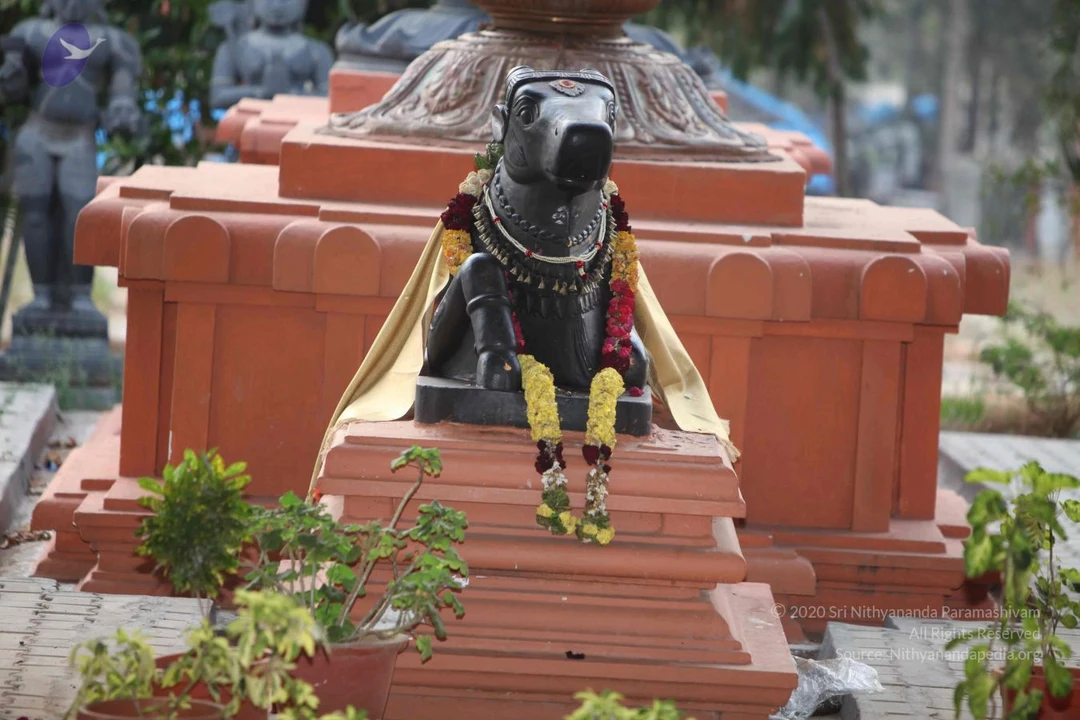
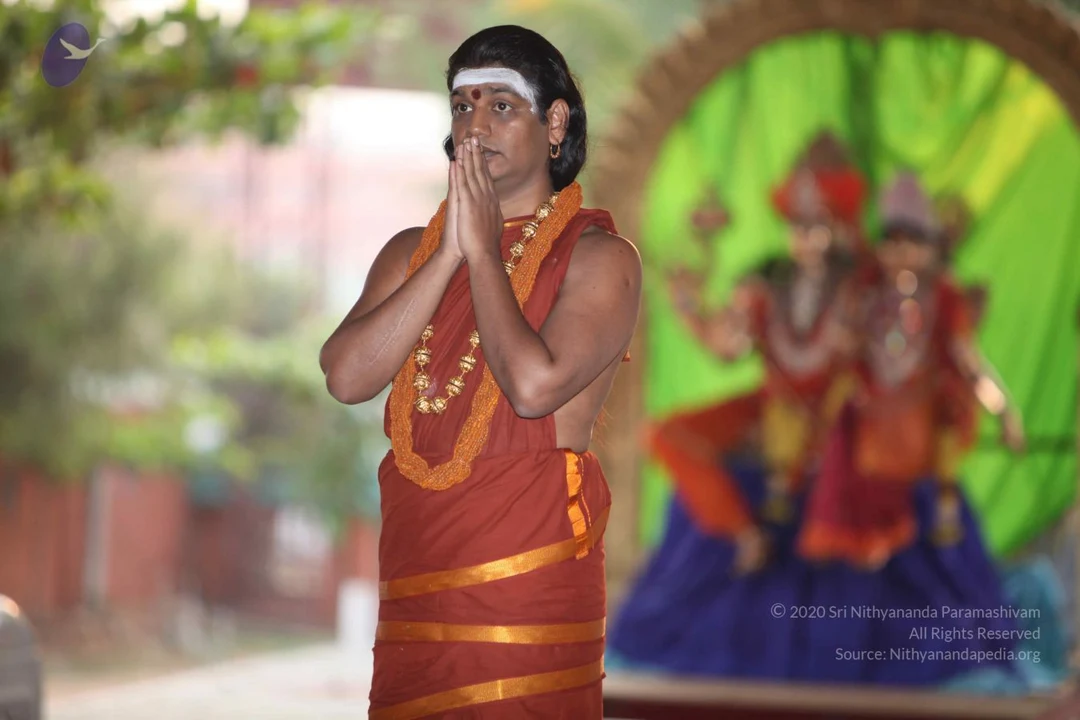
Temple-Visit-Pada-Puja
Pada-Puja

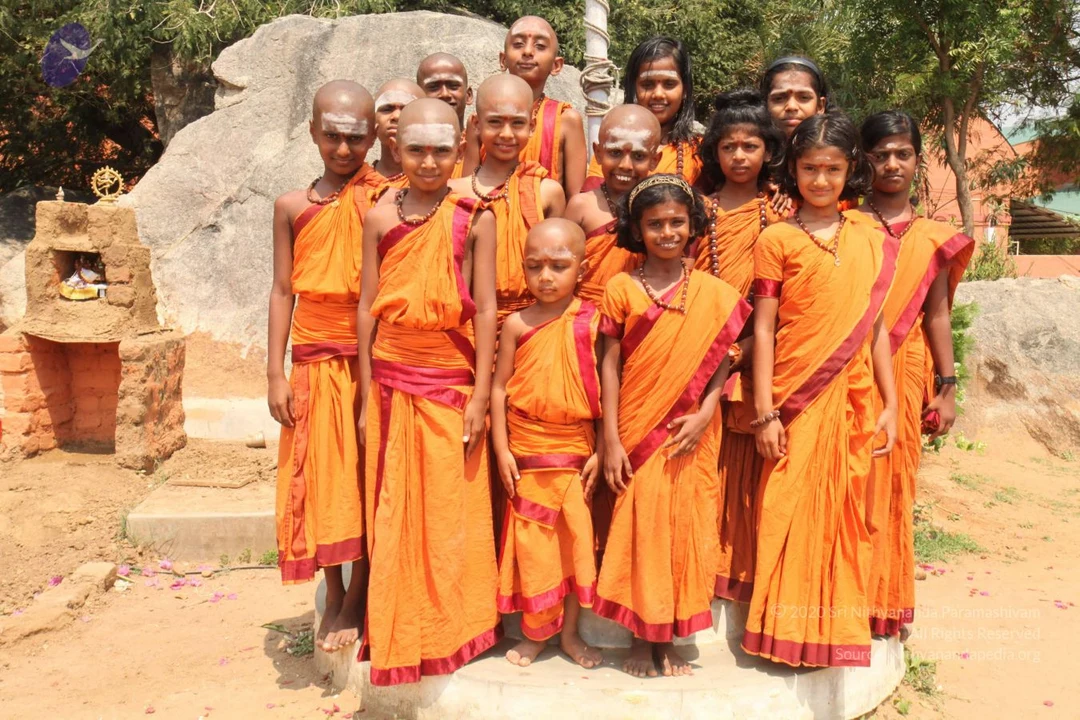
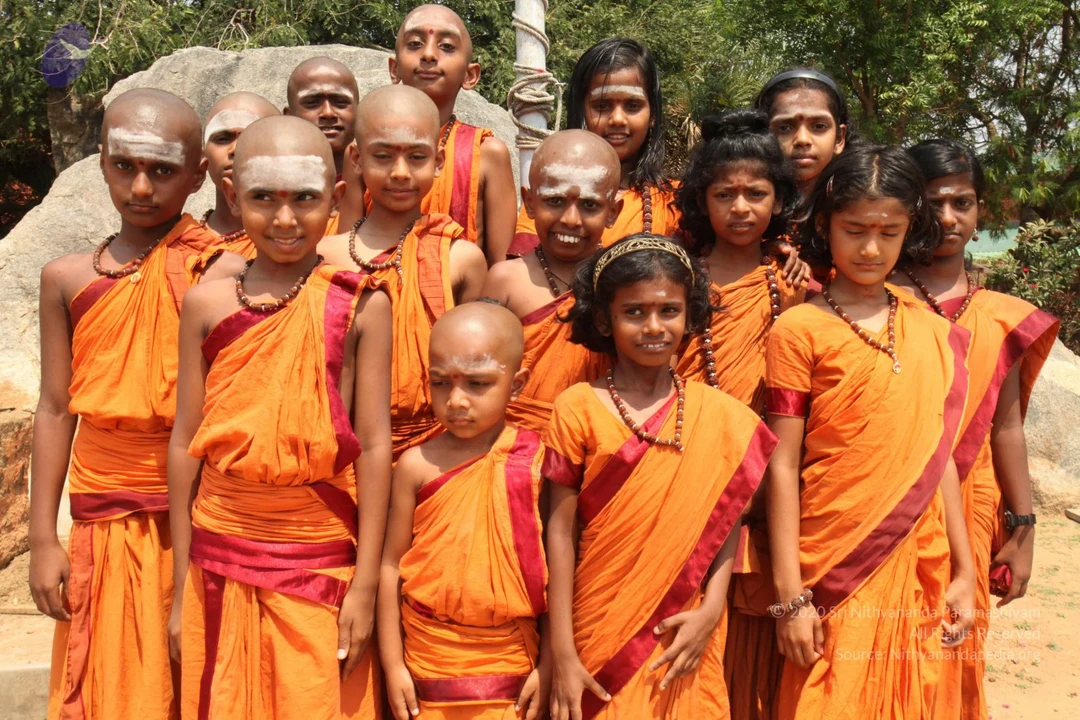
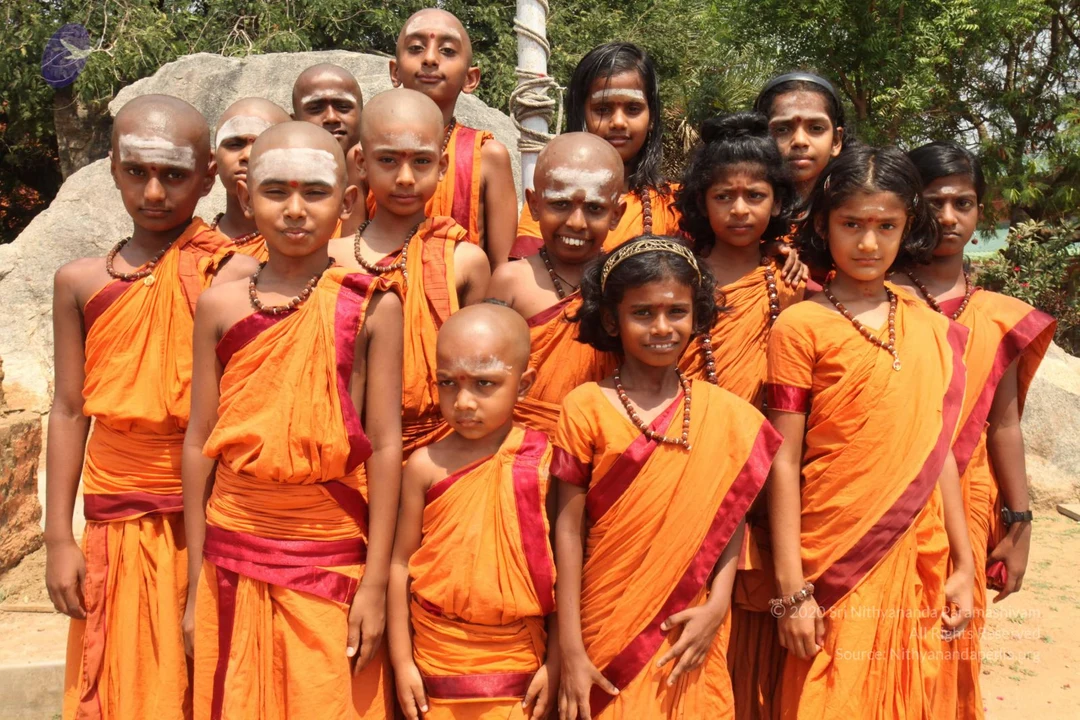
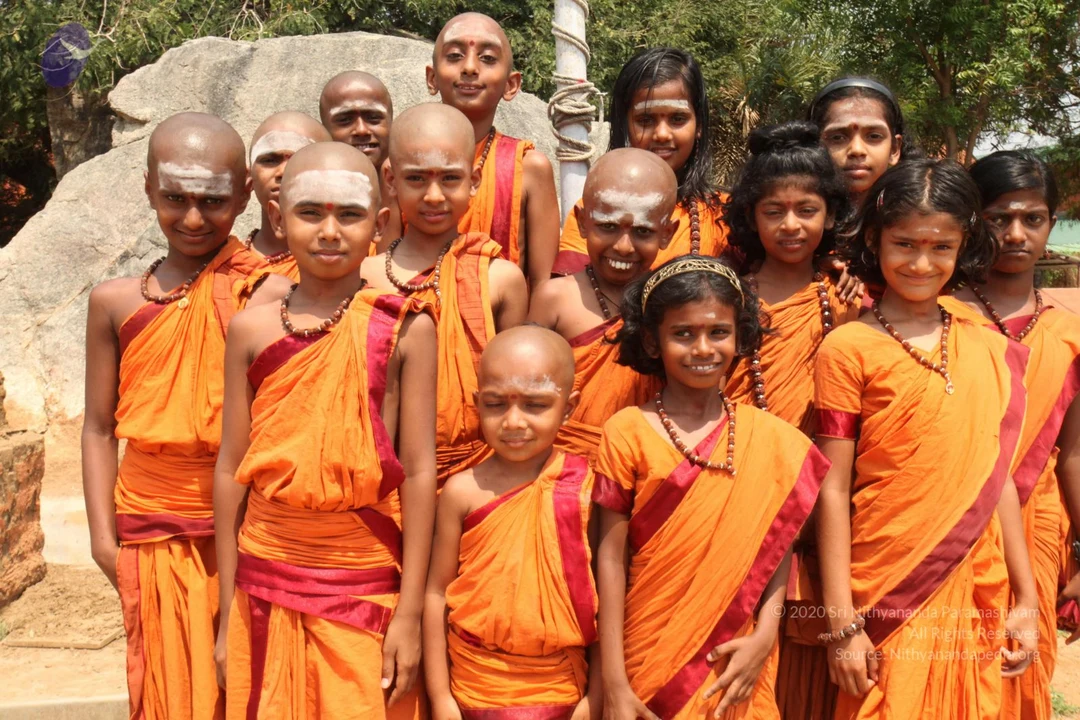
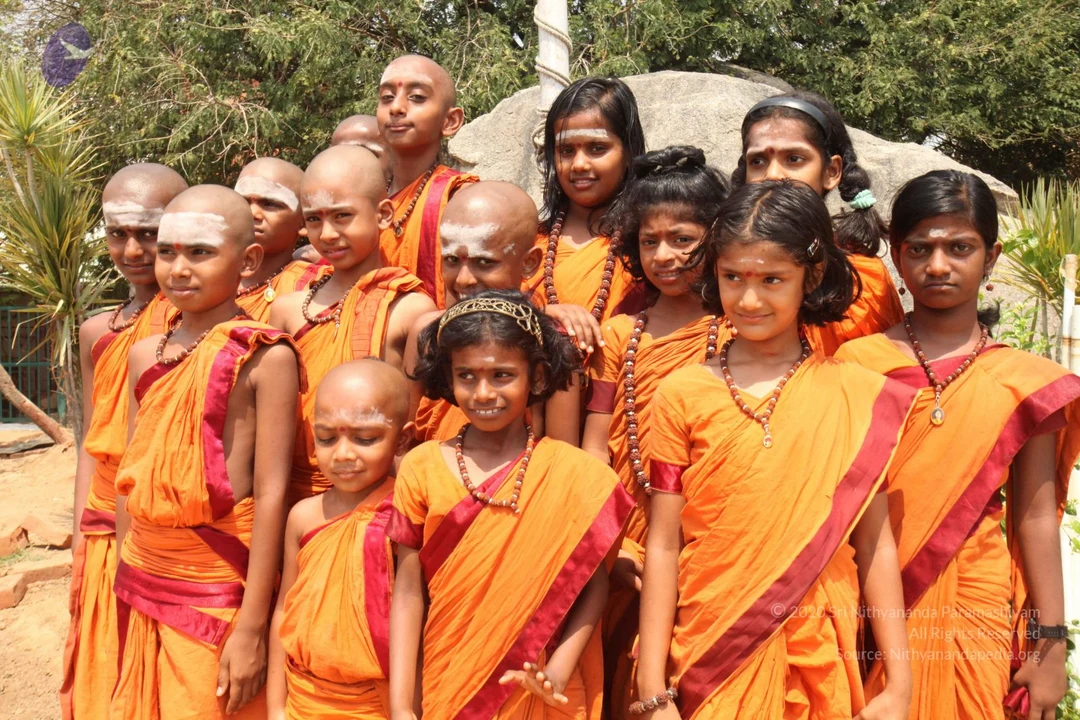
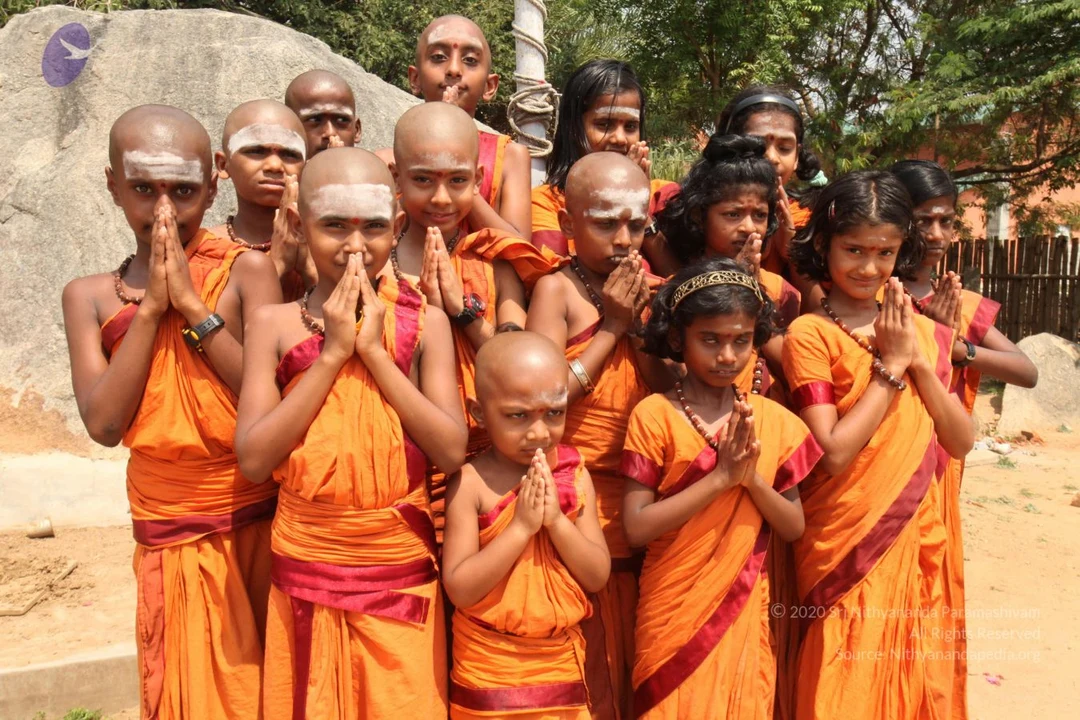
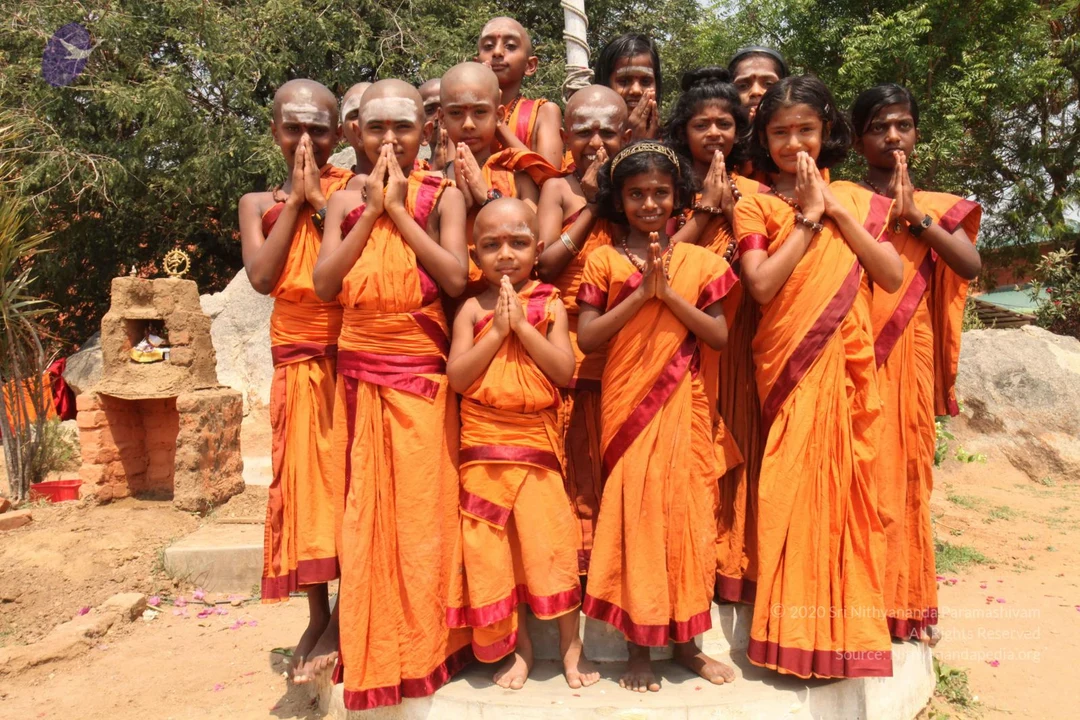
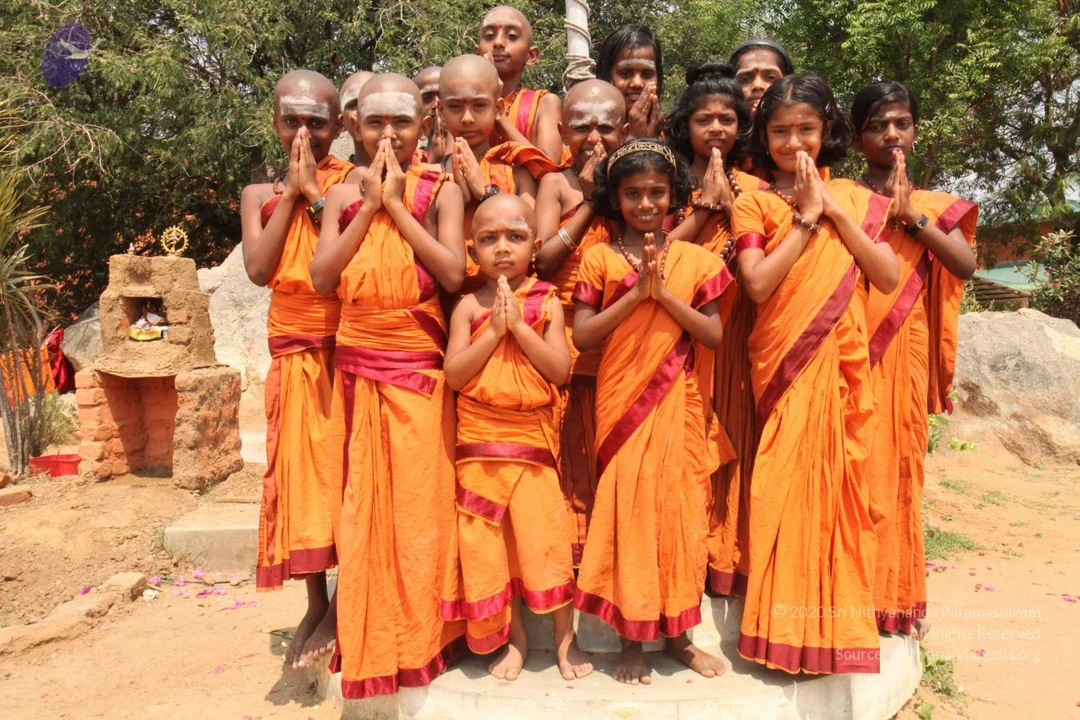
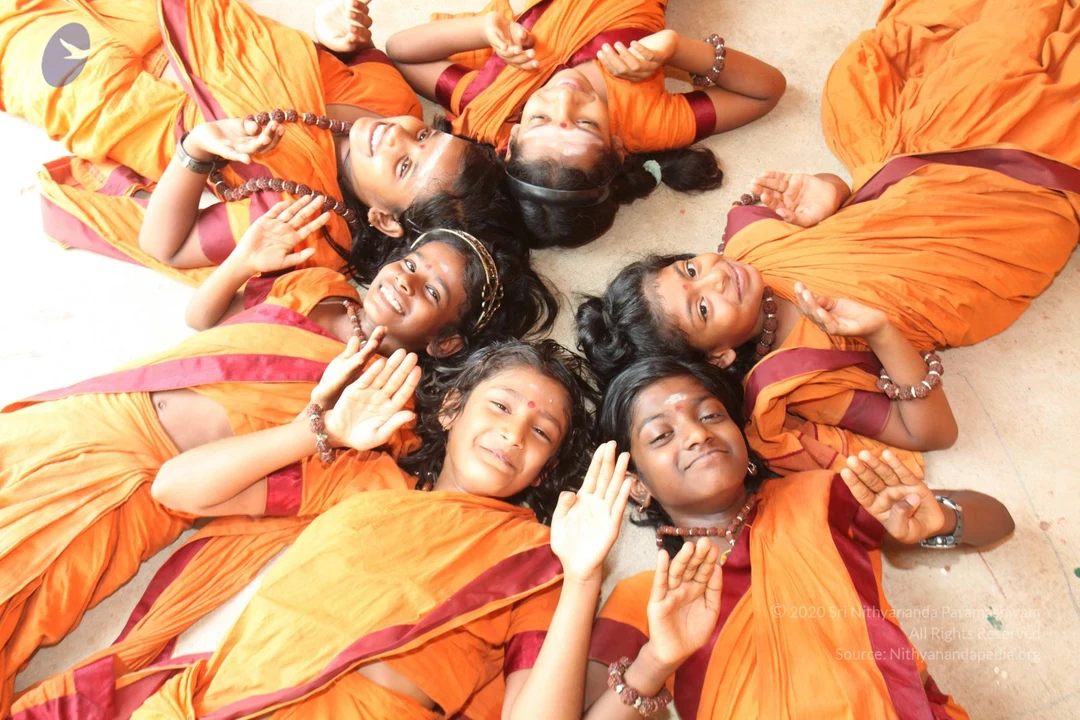
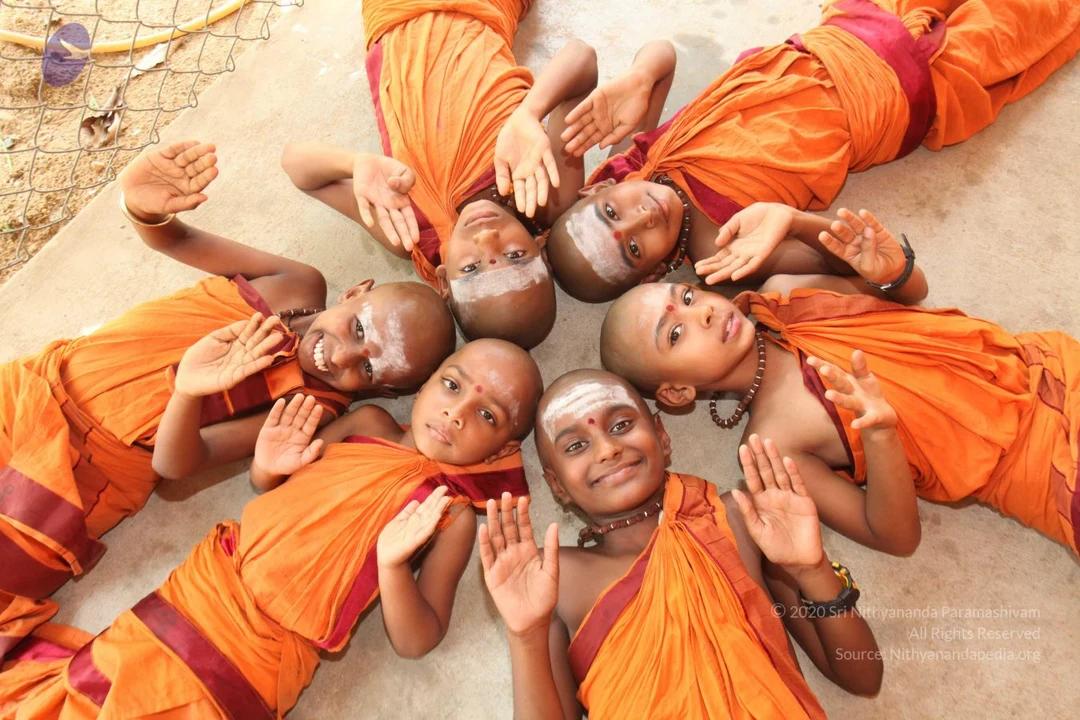
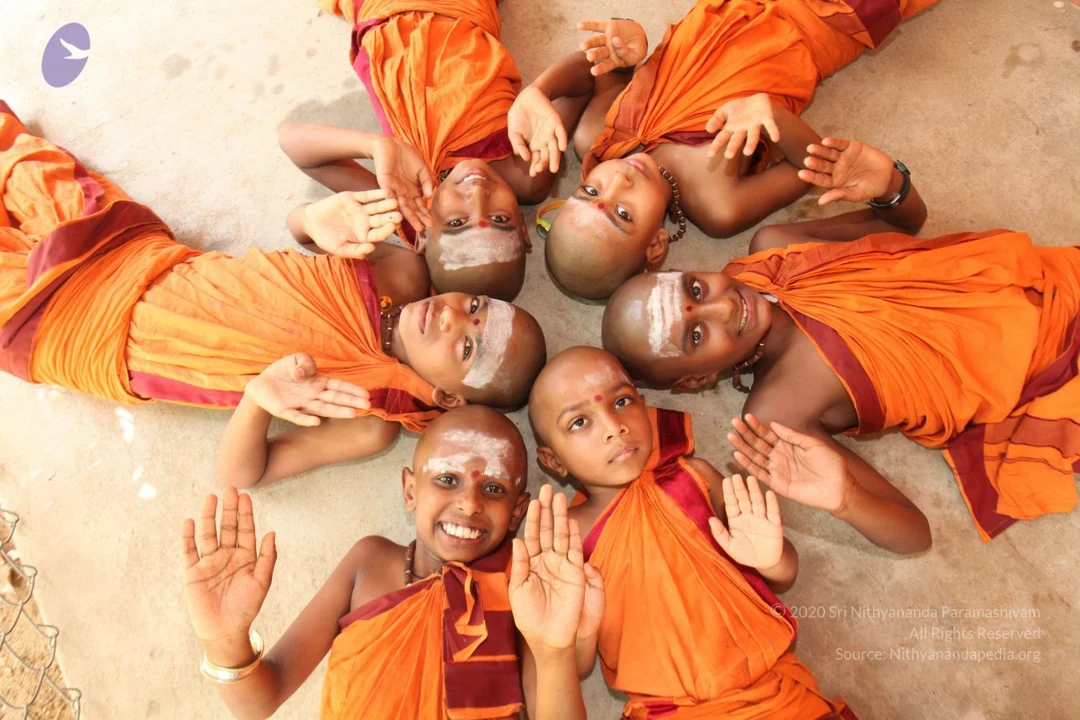
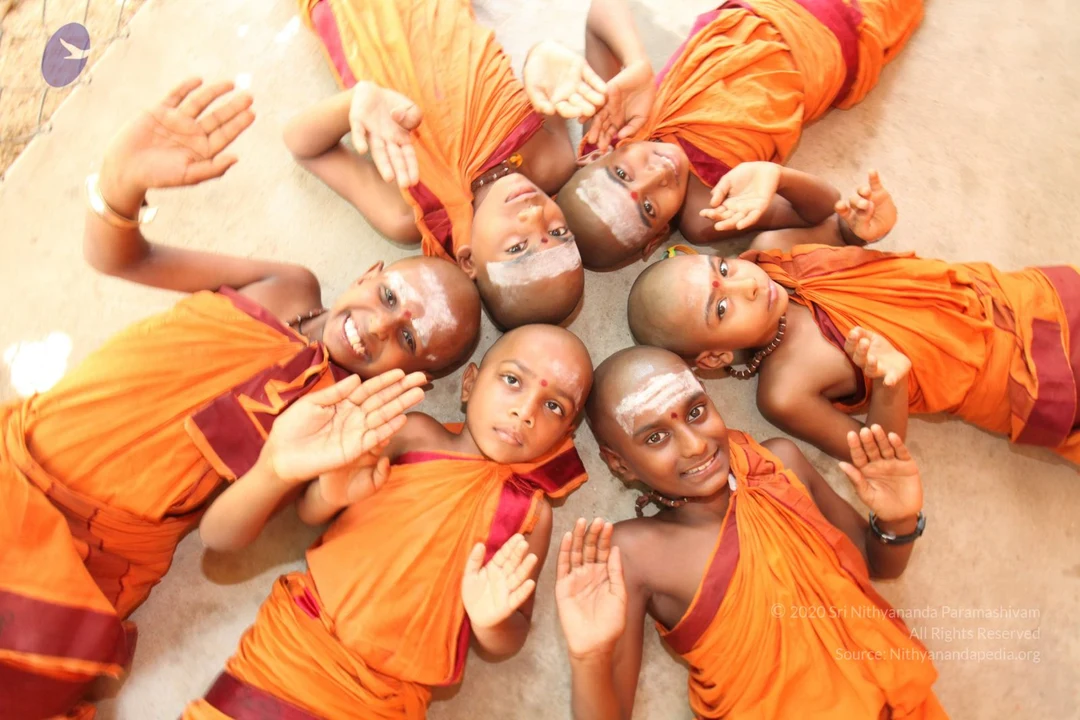
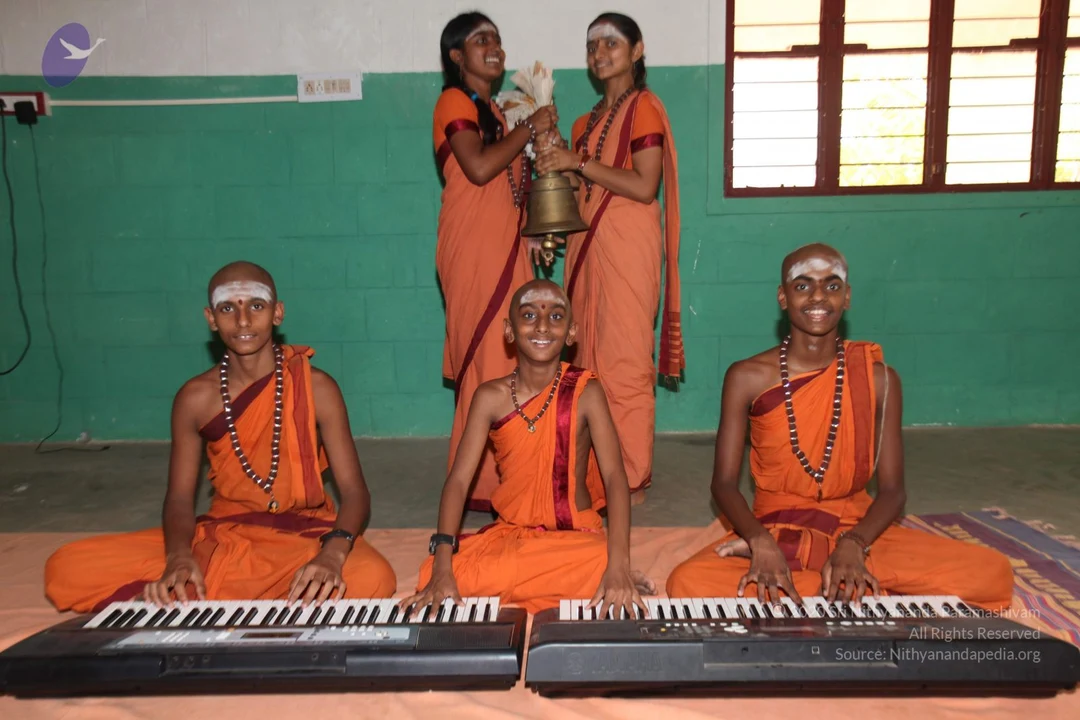
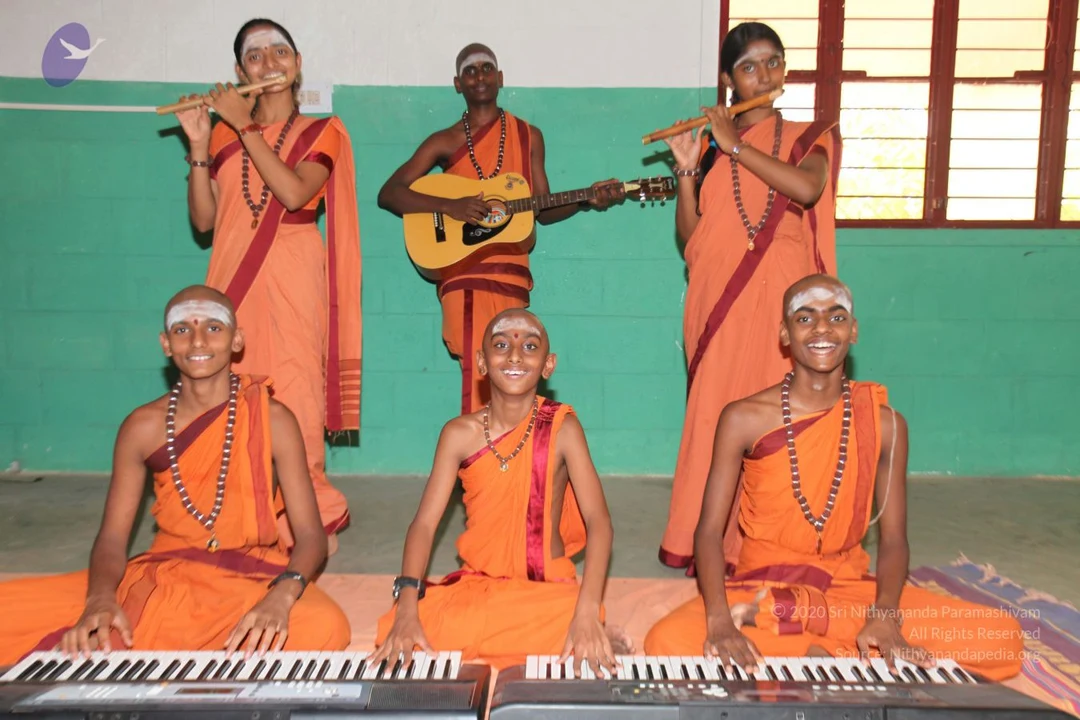
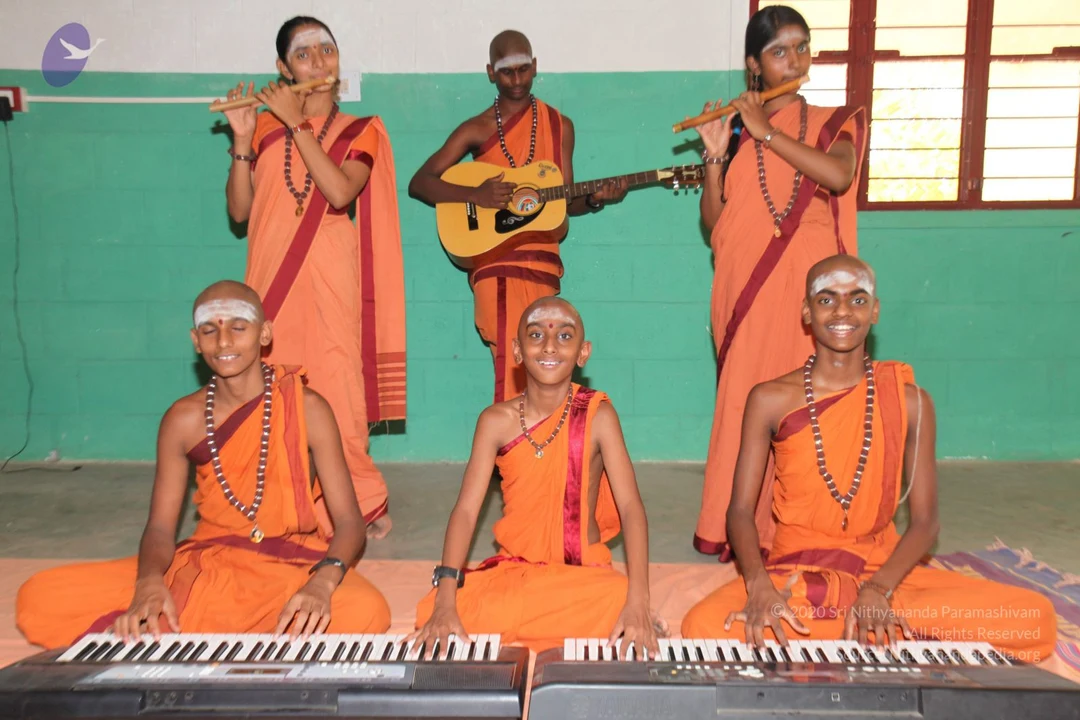
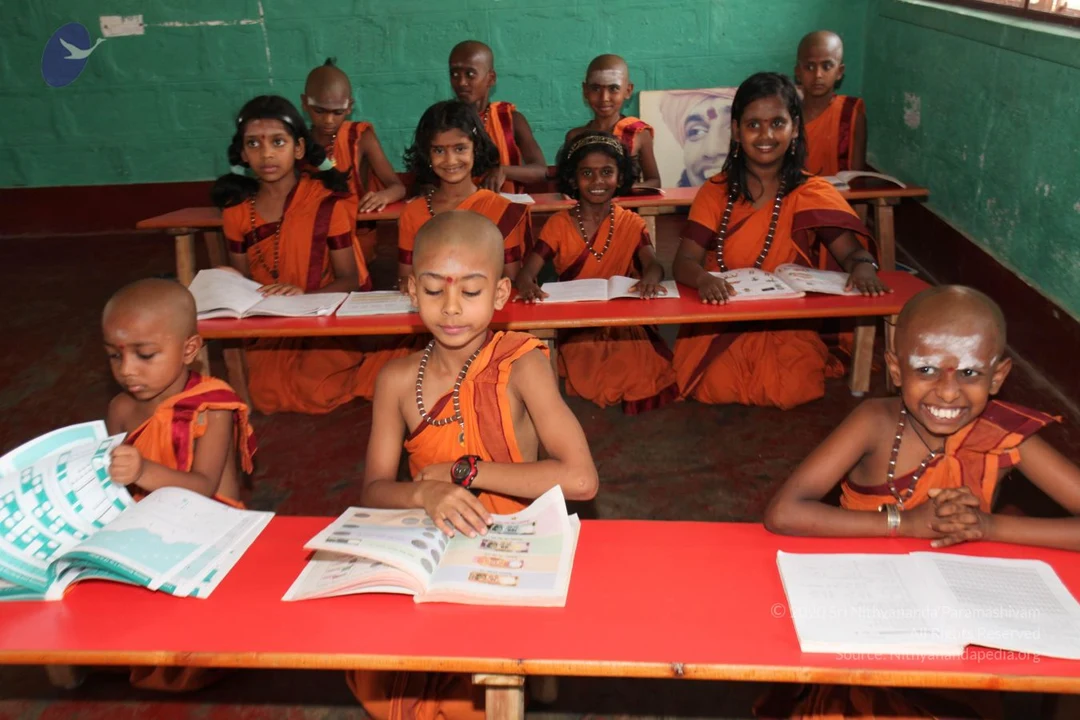
Gurukkul

Pic-4-Mag

Tags:

Paramahamsa Nithyananda, Kundalini, enlightened living, integrity, authenticity, responsibility, energy, world, enriching, positive, blessing, dharmic living.

Photos Of The Day:

Temple-Visit

Pada-Puja

Nithyananda-Gurkul

1-Temple-Visit-PadaPuja

3-Gurukul

Photos from this day

View all 252 photos

Photos

6 photosSource gallery
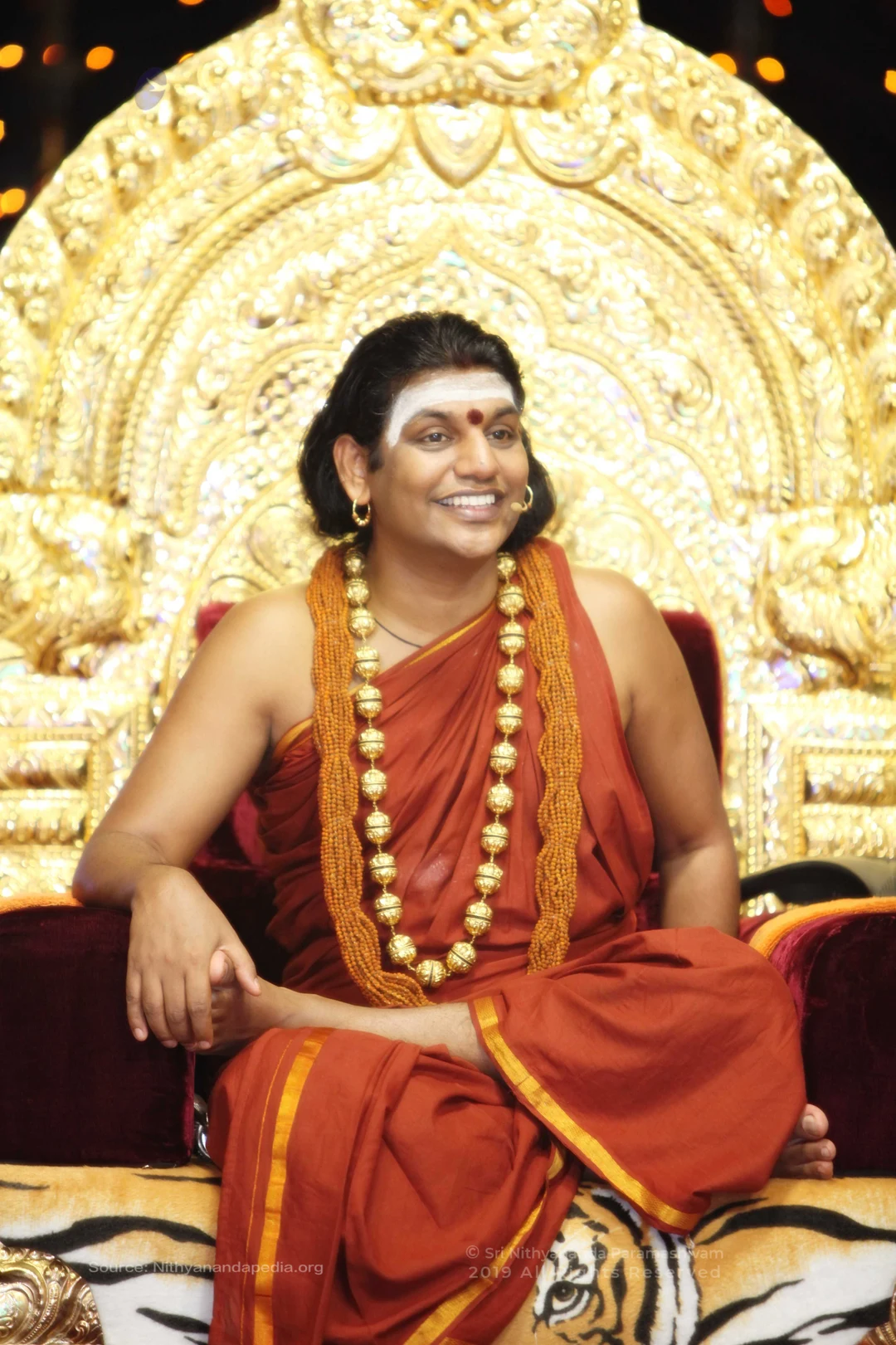
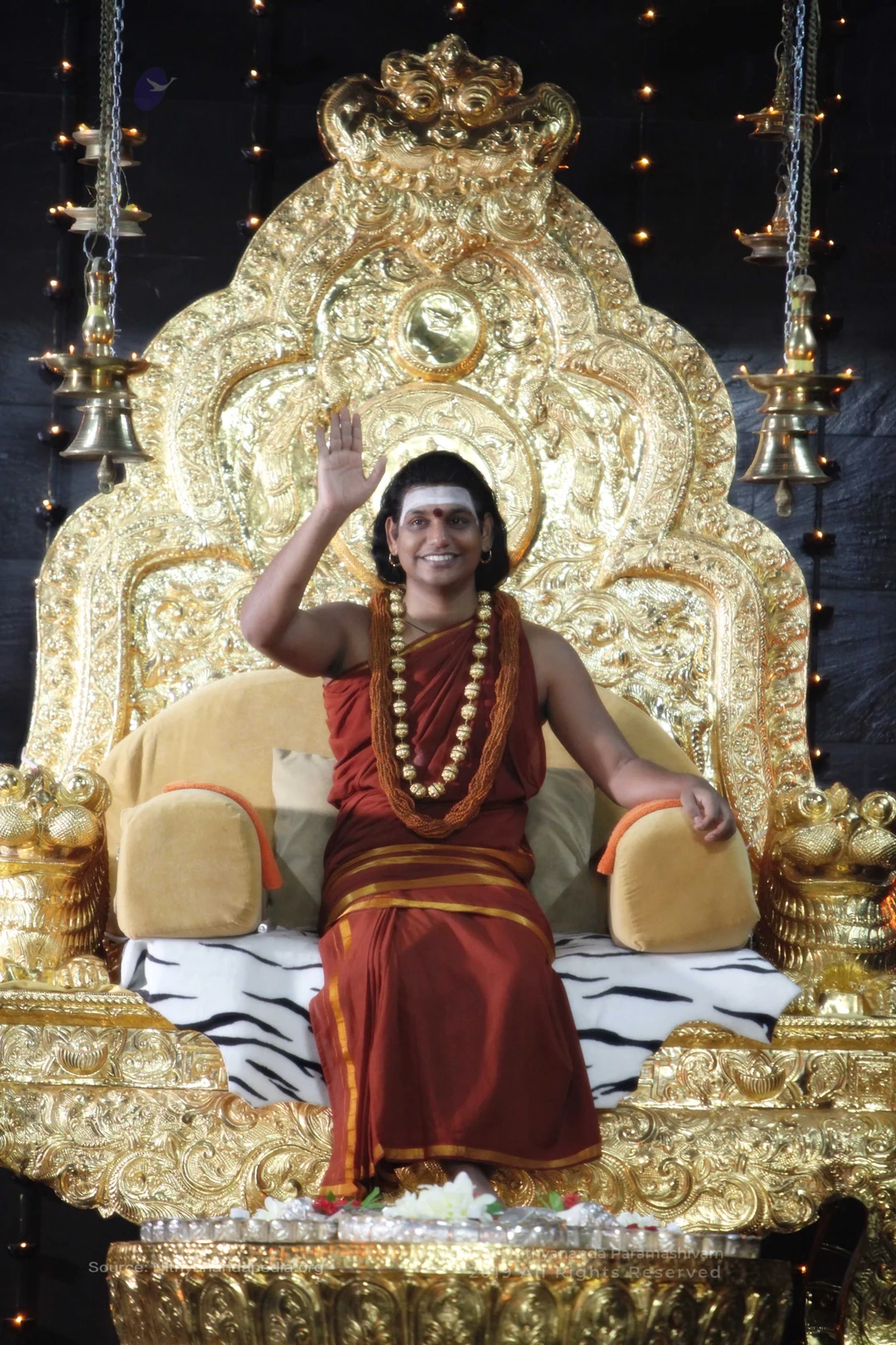
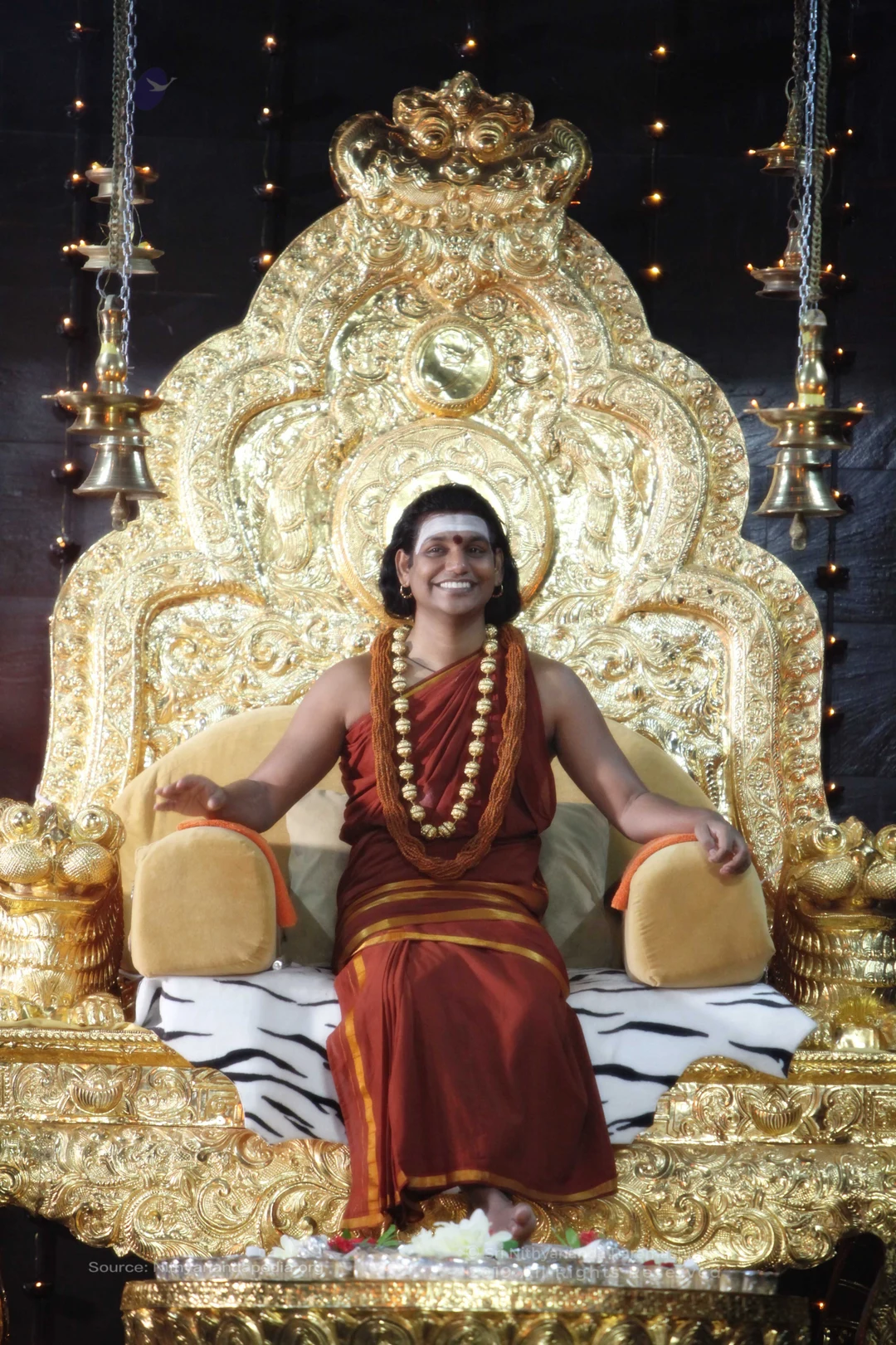
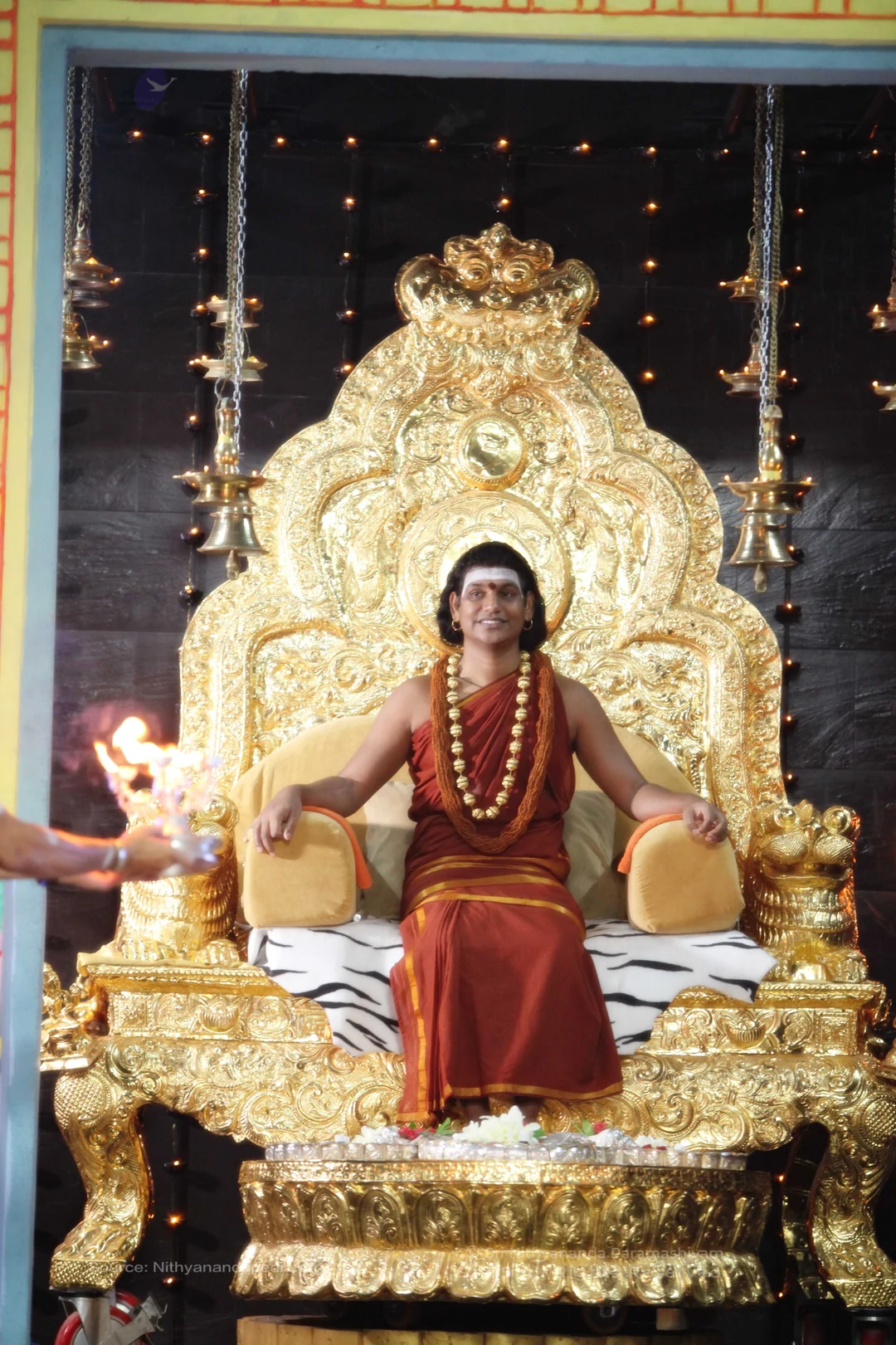
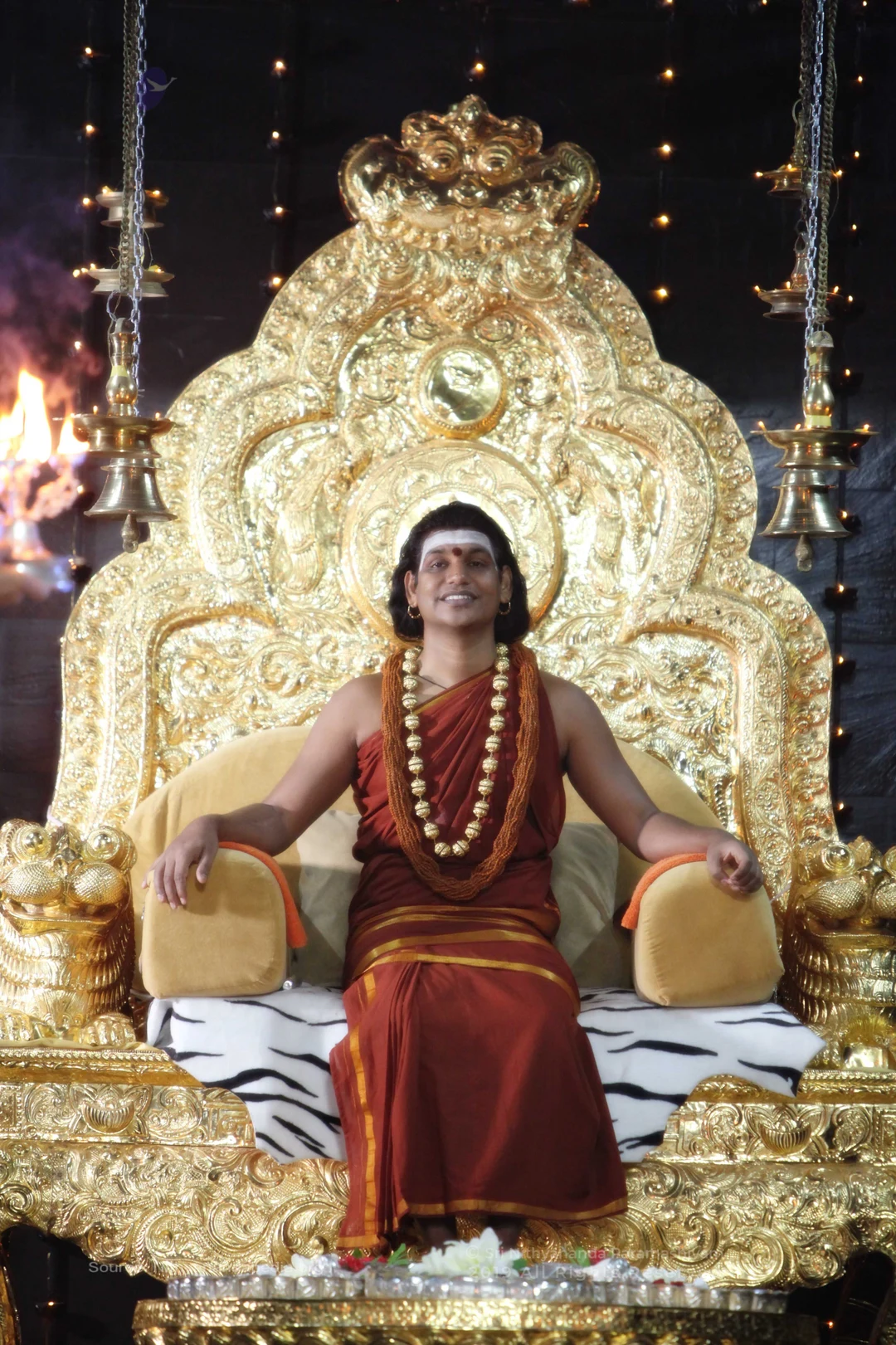
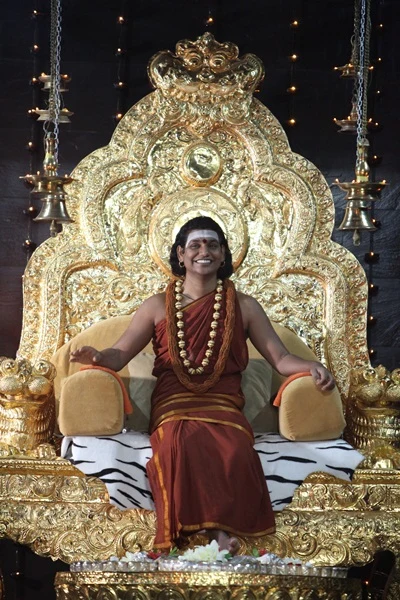
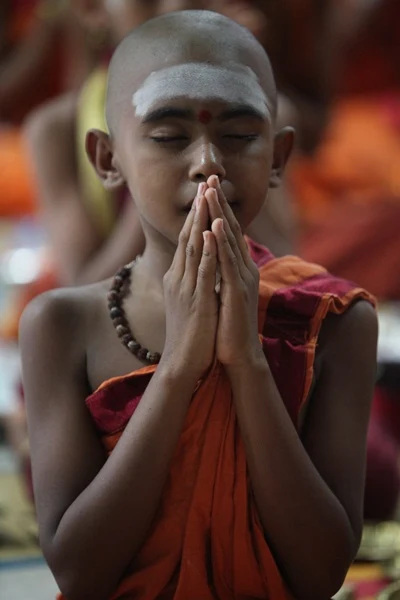
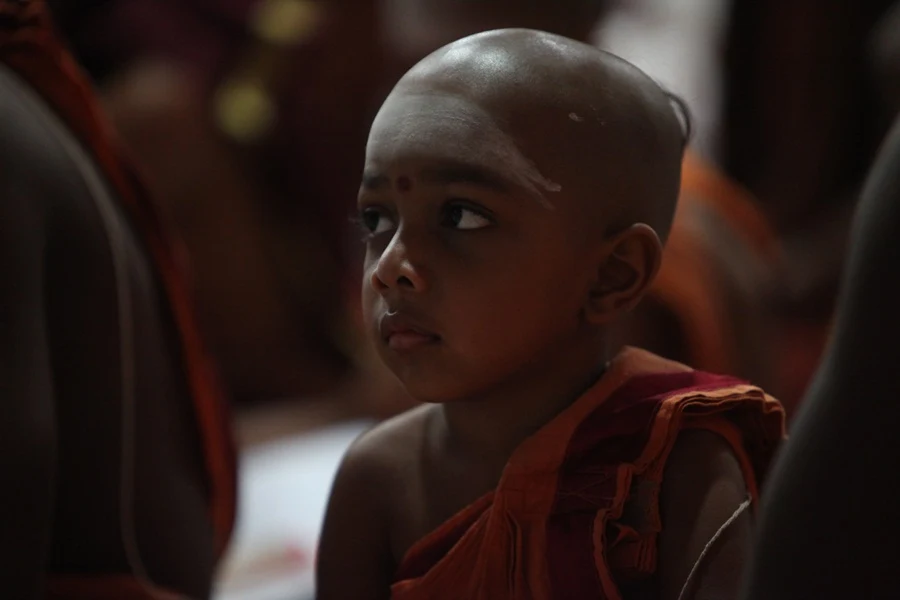
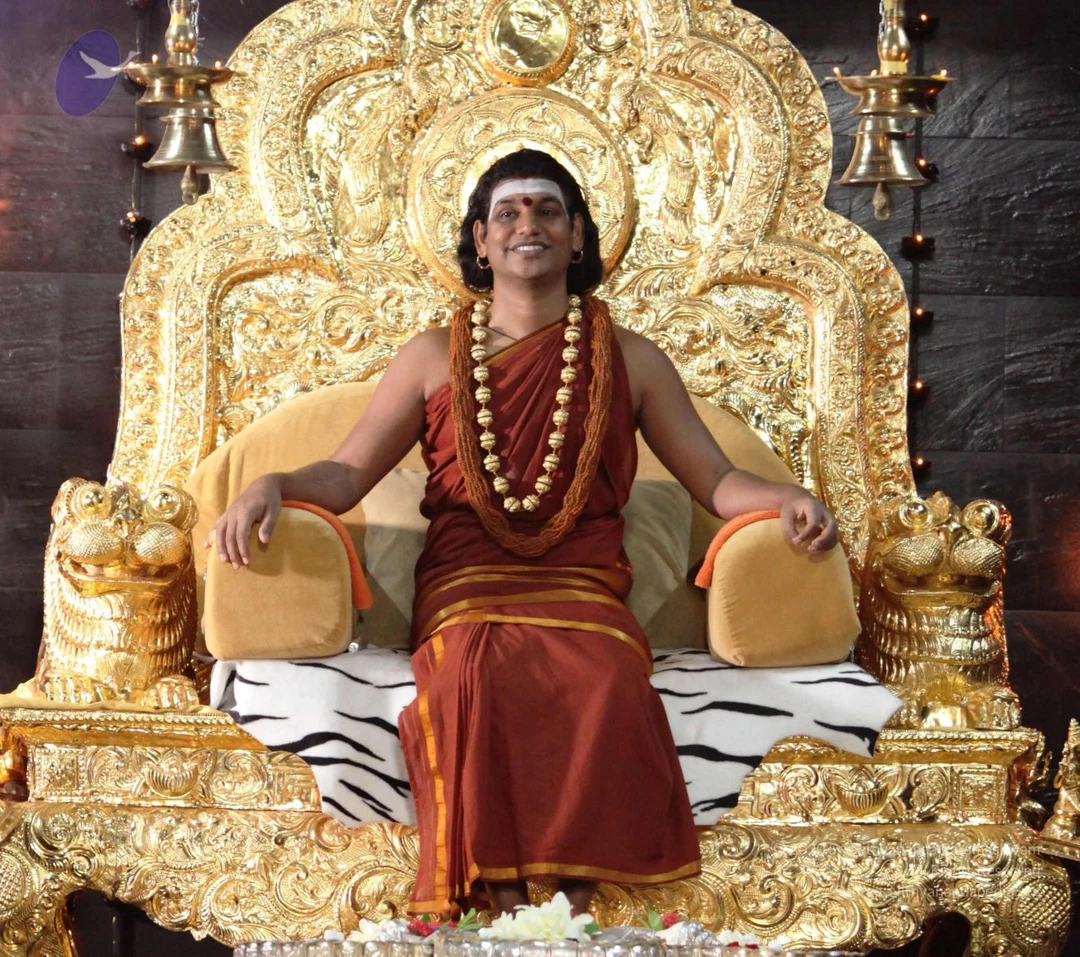
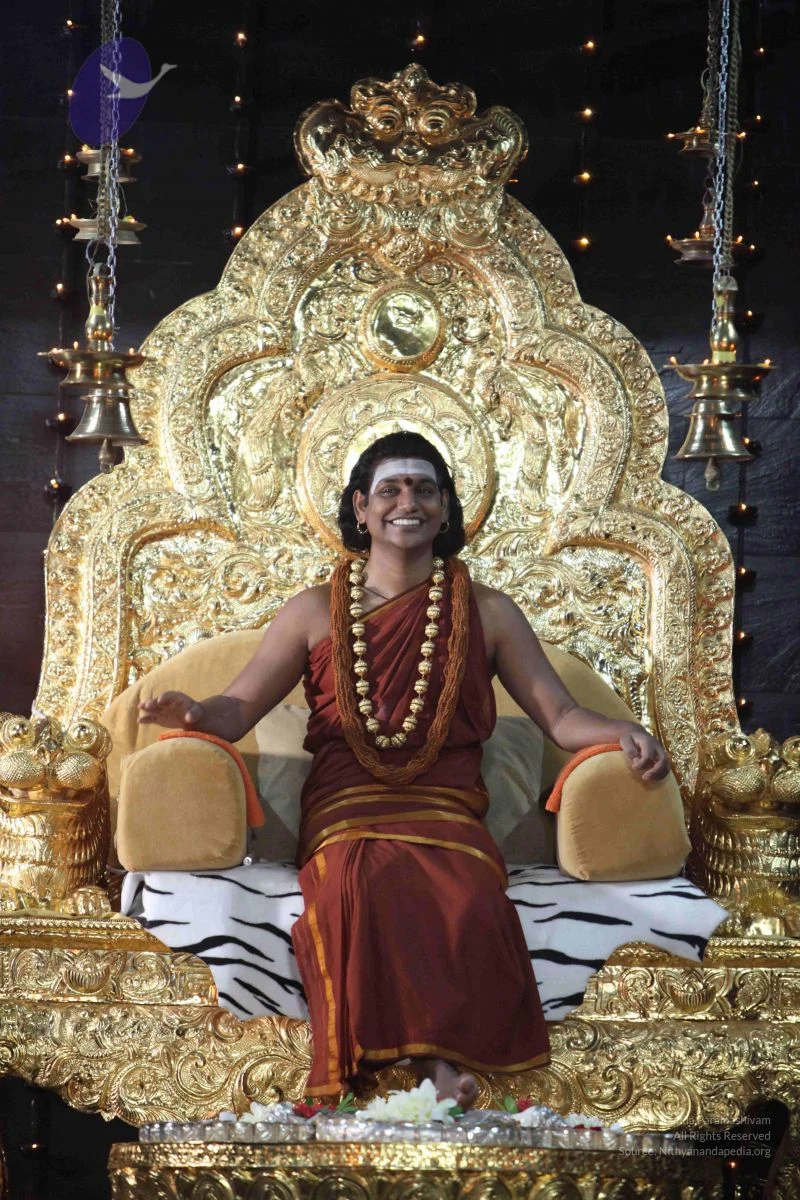
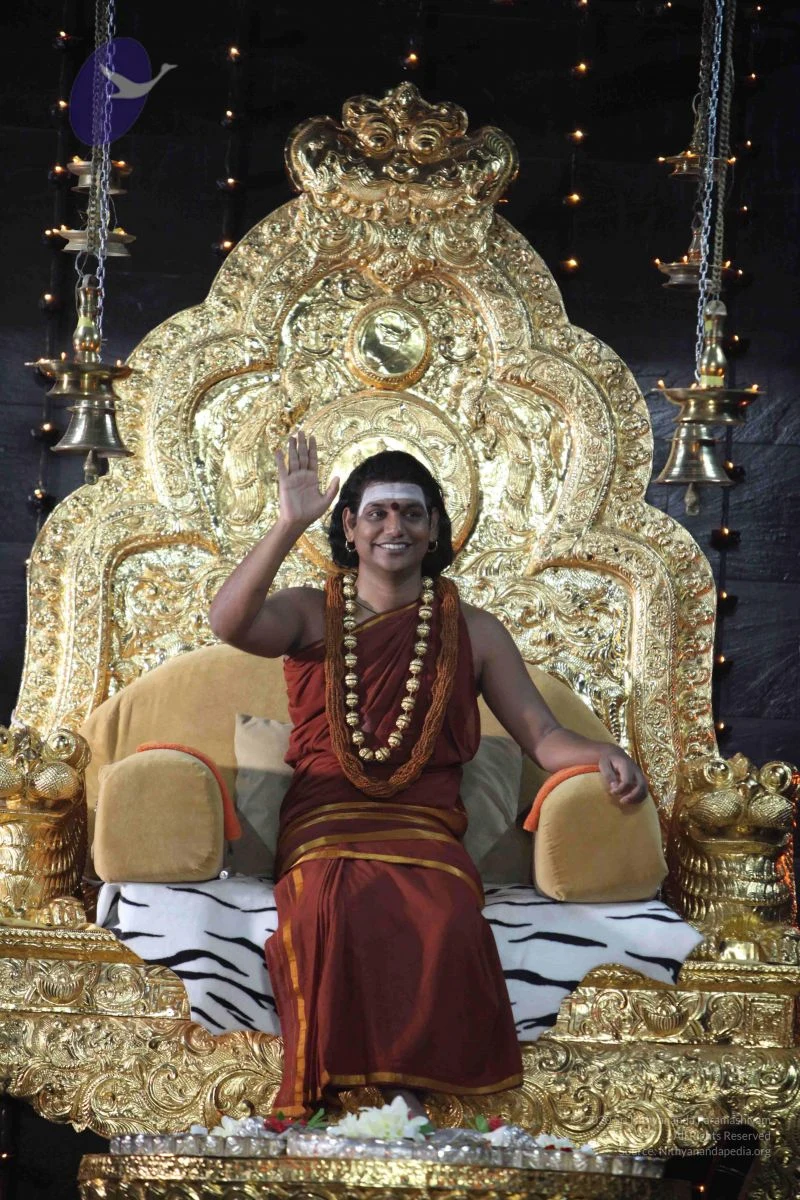
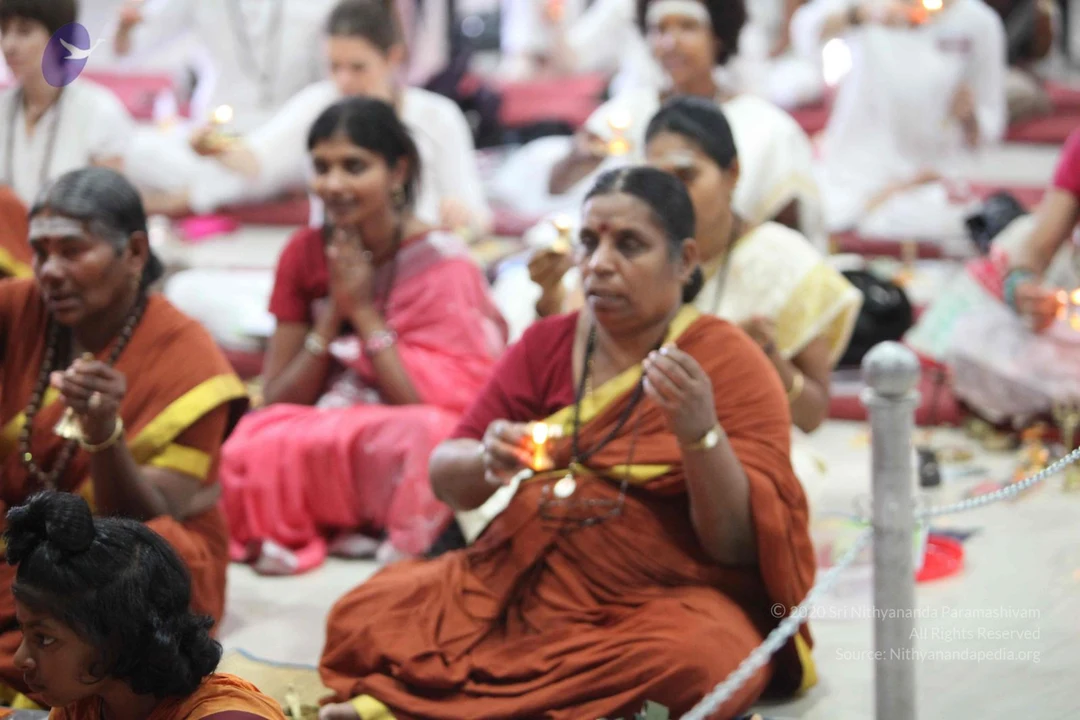
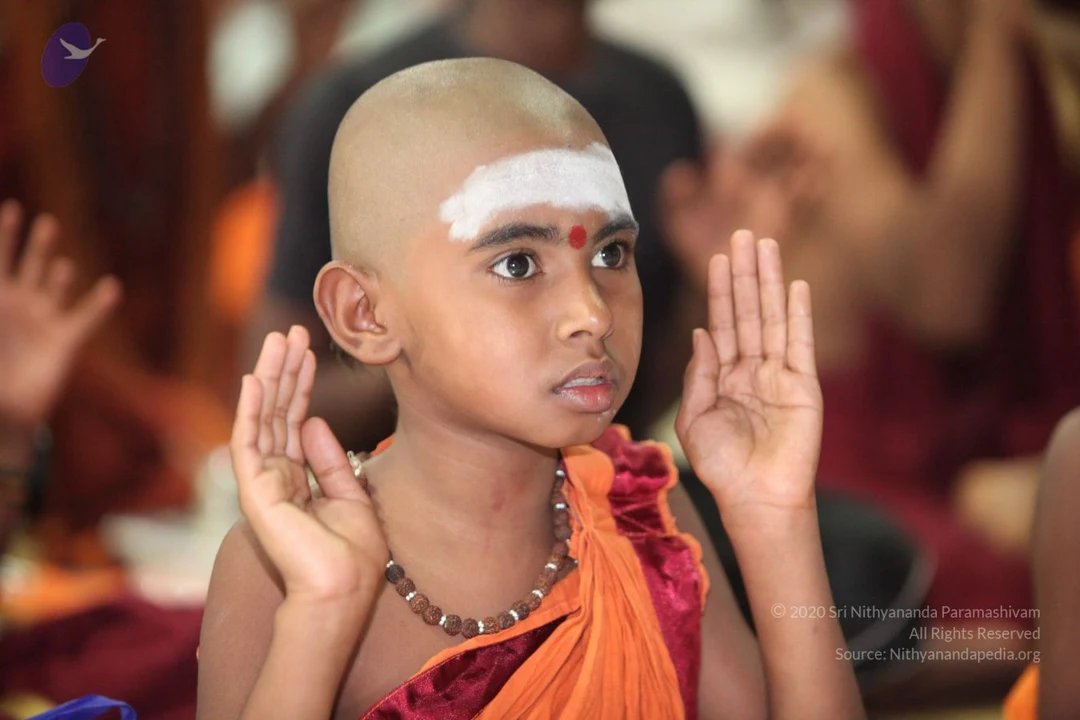
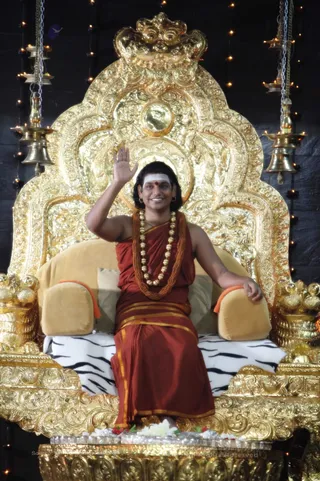
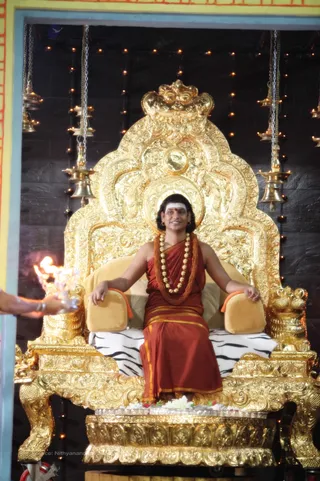
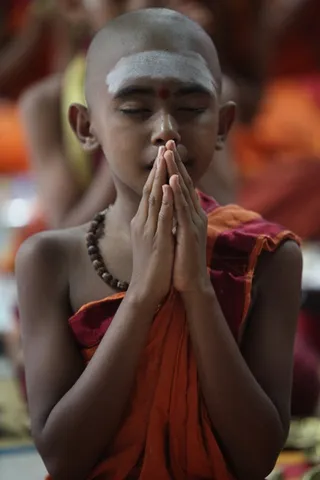
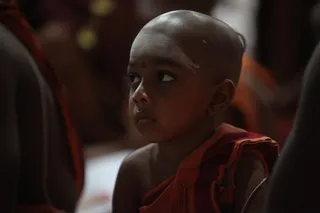
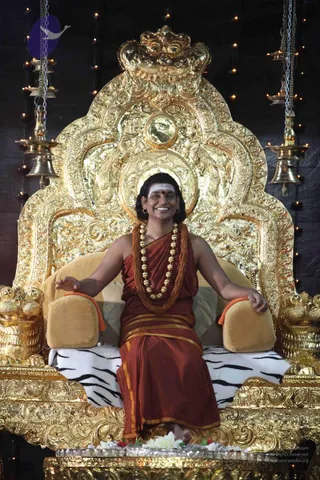
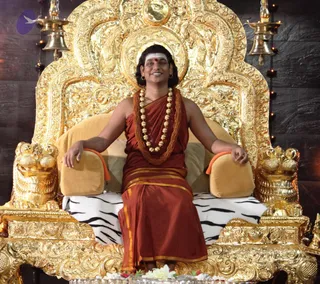
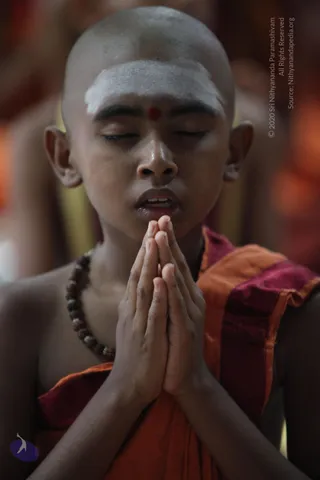
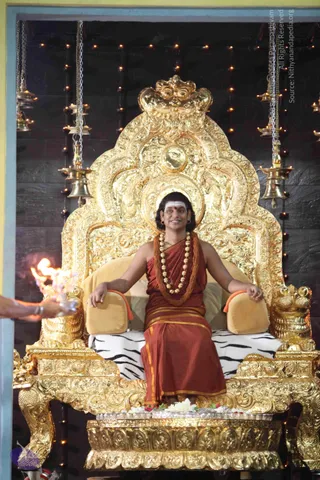
A seated man in rust-red and gold-bordered robes waves his right hand while smiling from an ornate gilded throne with a tall, richly carved golden backrest and a crown-like finial. He wears a white vertical forehead mark with a red dot, a long necklace of gold beads and rudraksha-style malas, and gold earrings. The throne is draped with a zebra-stripe cloth and cushioned with gold velvet, with brass hanging lamps and small flames behind him. Flowers rest on a gold table in front of the throne. Appearance-based candidate: Swamiji (probable), seated in person with long swept-back hair, ornate gold necklace and rudraksha malas, visible on a throne.A smiling man with long dark hair and a white vertical forehead mark with a red bindi sits on an ornate gold throne with a tall carved crown-topped backrest. He wears a rust-red wrap draped over his bare shoulders with gold border, a heavy orange-gold rudraksha-style bead necklace, and small gold earrings. His arms rest on golden armrests with orange cushions, and the seat is covered with a black-and-white striped tiger-skin style cloth. Brass hanging oil lamps and small lights frame the dark backdrop, and flower petals lie at his feet on a gold table. Person on throne shows distinctive long hair, saffron-red wrap, and ceremonial gold necklace.A seated man in a golden ornate throne with a tall arched back and a crown-shaped finial, draped over a white and black striped tiger-skin cushion. He wears a rust-red robe with gold border, a long rudraksha mala with gold beads, and a white and red forehead mark; his hair is long and swept back. A hand on the left holds a lit flame near the throne, and hanging brass oil lamps and bead strings frame the dark backdrop.A seated man in a rust-red and saffron-bordered dhoti and shawl sits on an ornate gold throne with lion-head armrests and a zebra-striped white cushion. He wears a long gold bead necklace over a red-orange rudraksha-style mala, a white vertical forehead mark with a red dot, and small earrings. His arms rest on gold-yellow armrests with orange trim, and he smiles toward the viewer. Brass lamps with hanging bells sit behind the throne, and flowers lie at the base. a person is seated in ceremonial dress on the throne.A young shaved-headed boy with palms pressed together in anjali mudra and eyes closed, sitting in front of a crowd. He wears an orange-saffron cloth draped over his shoulders and a rudraksha-style bead mala around his neck, with a white vibhuti band across his forehead and a red kumkum dot between his brows. Other people in orange and saffron clothing are blurred in the background.Close photo of a young shaved-headed boy in an orange-red saffron cloth draped over his shoulder, seated among other people in dim light. He has a small vertical tilak mark on his forehead and looks off to the side with a serious expression. Blurred figures in orange and brown clothing surround him.

Temple-Visit-Pada-Puja
43 photosSource gallery
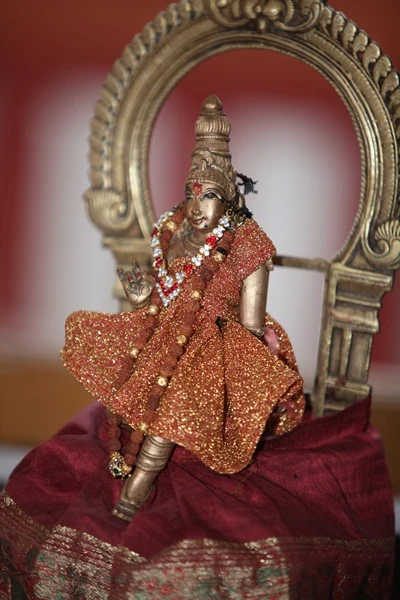
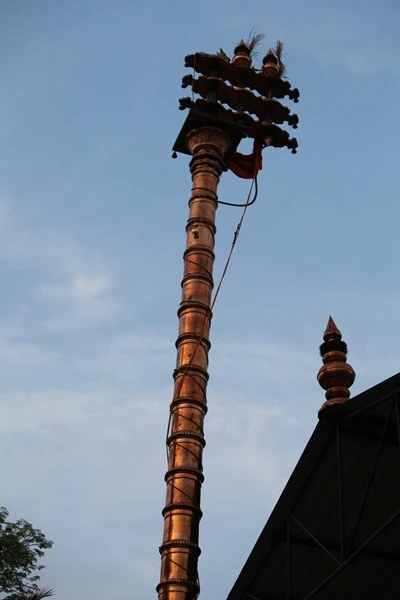
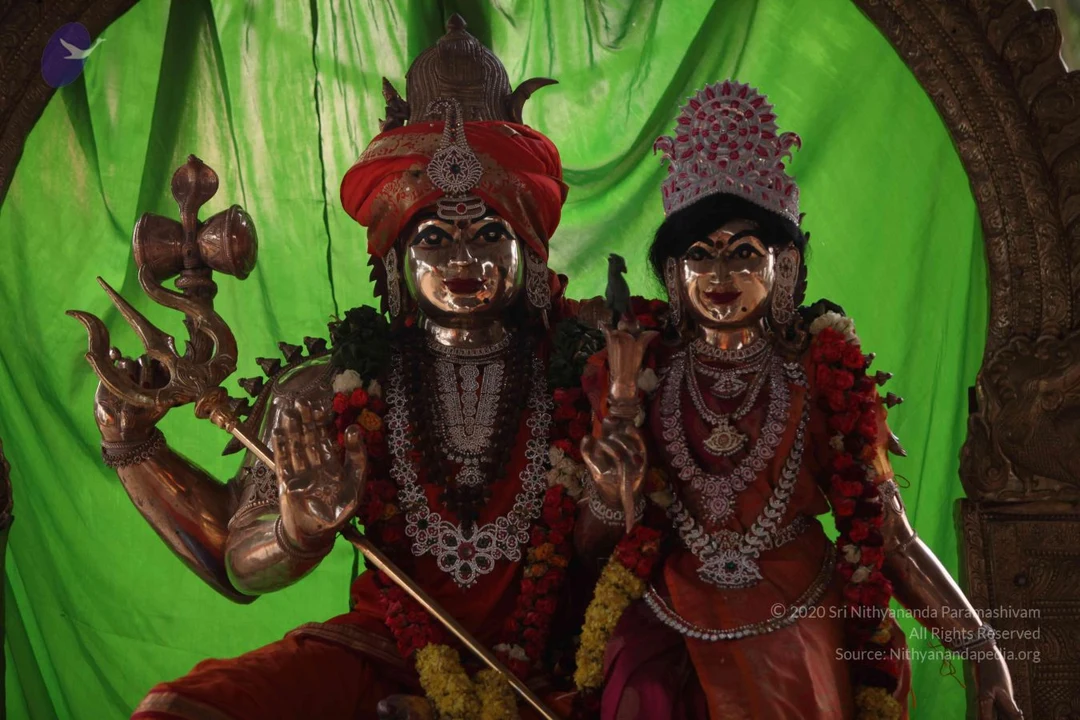
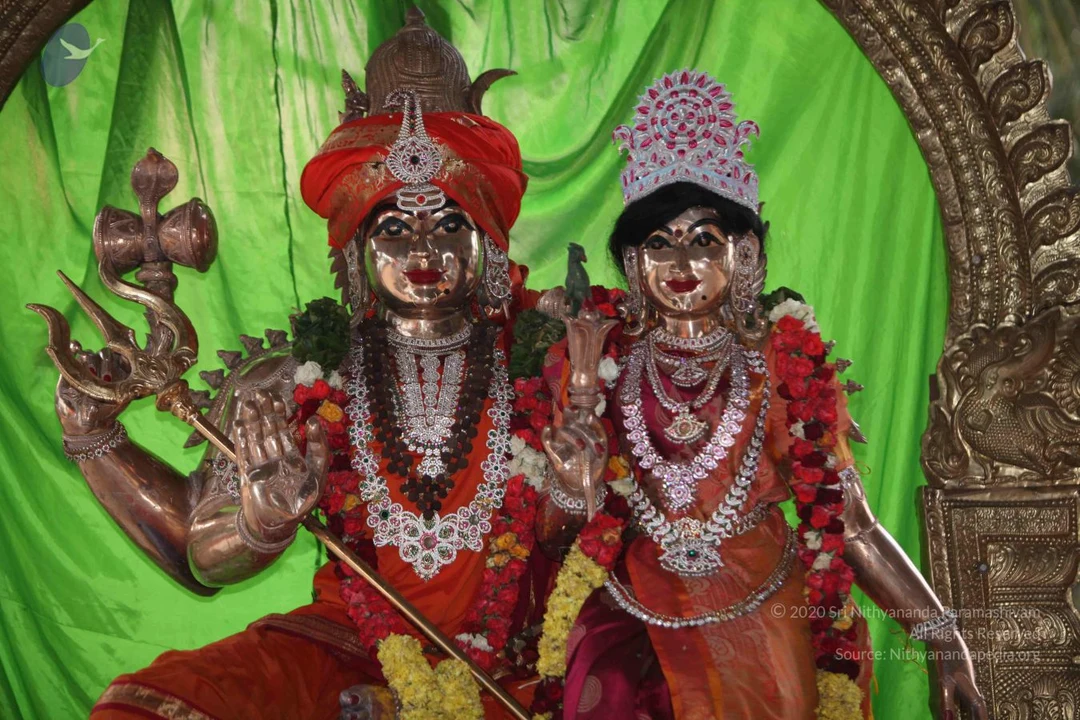
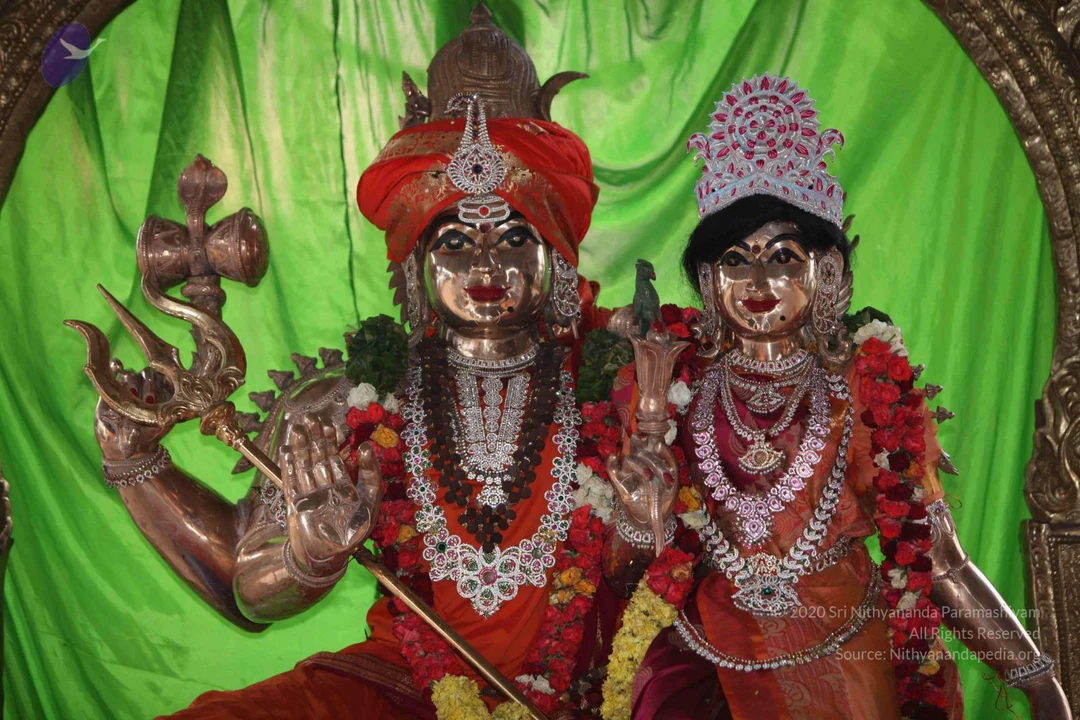
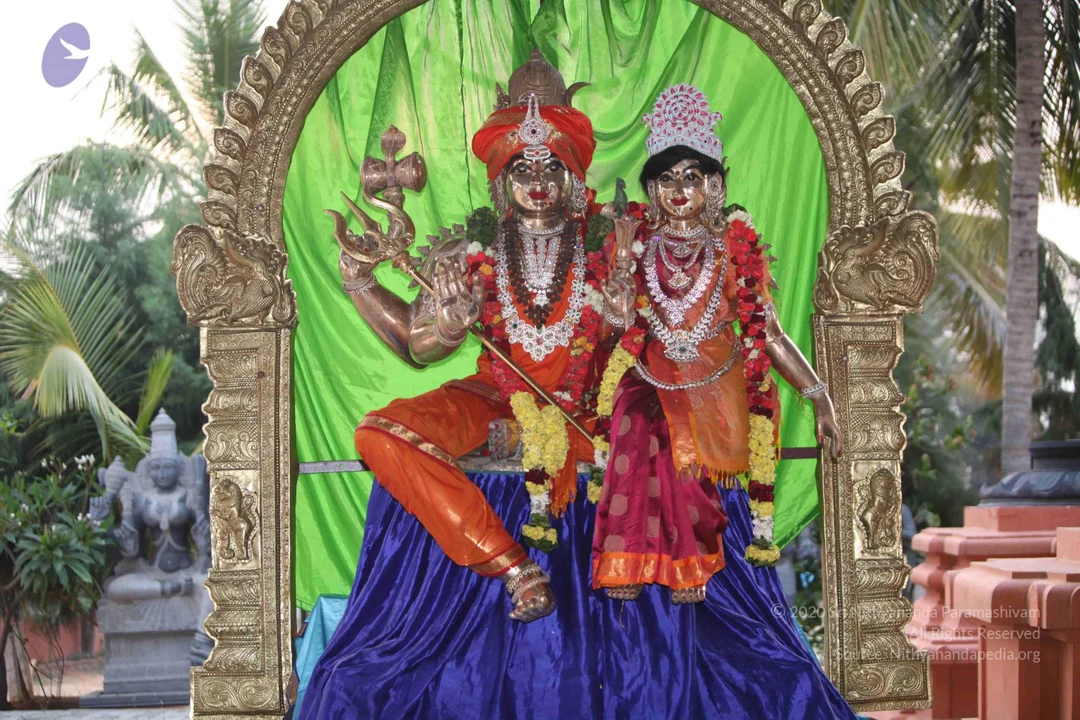
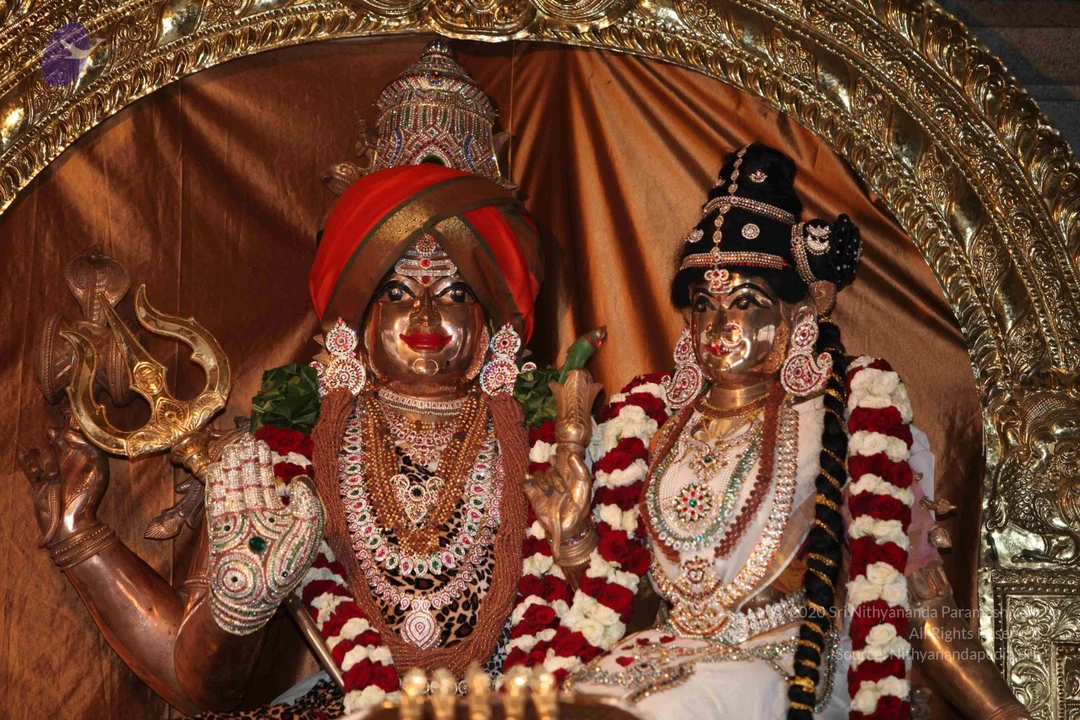
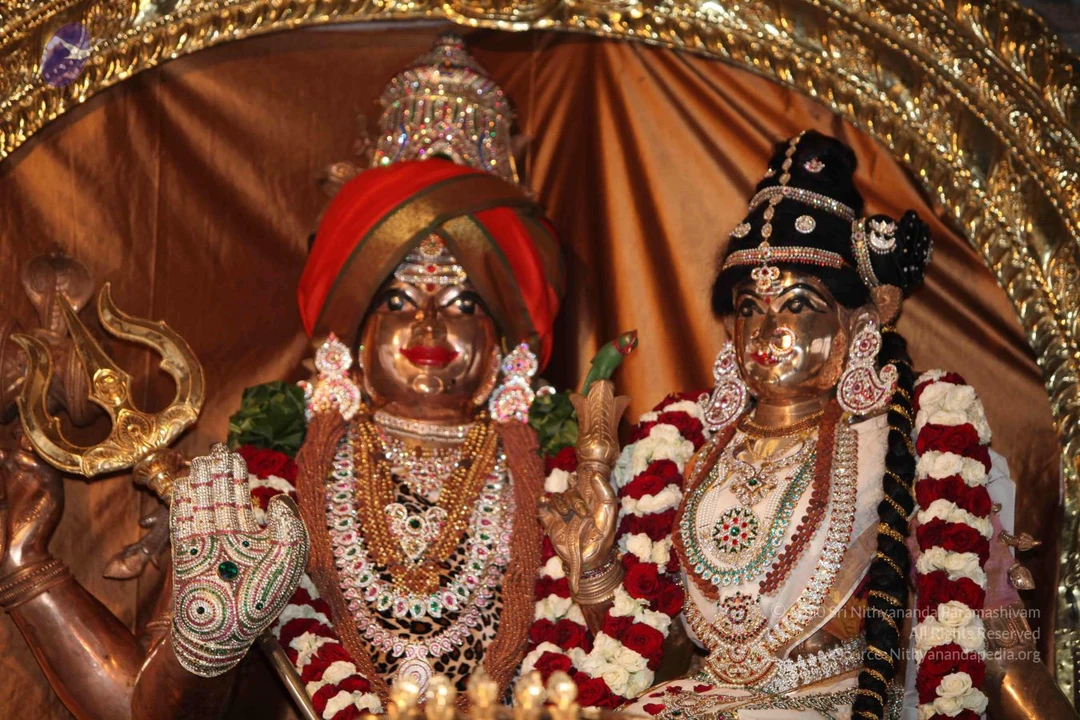
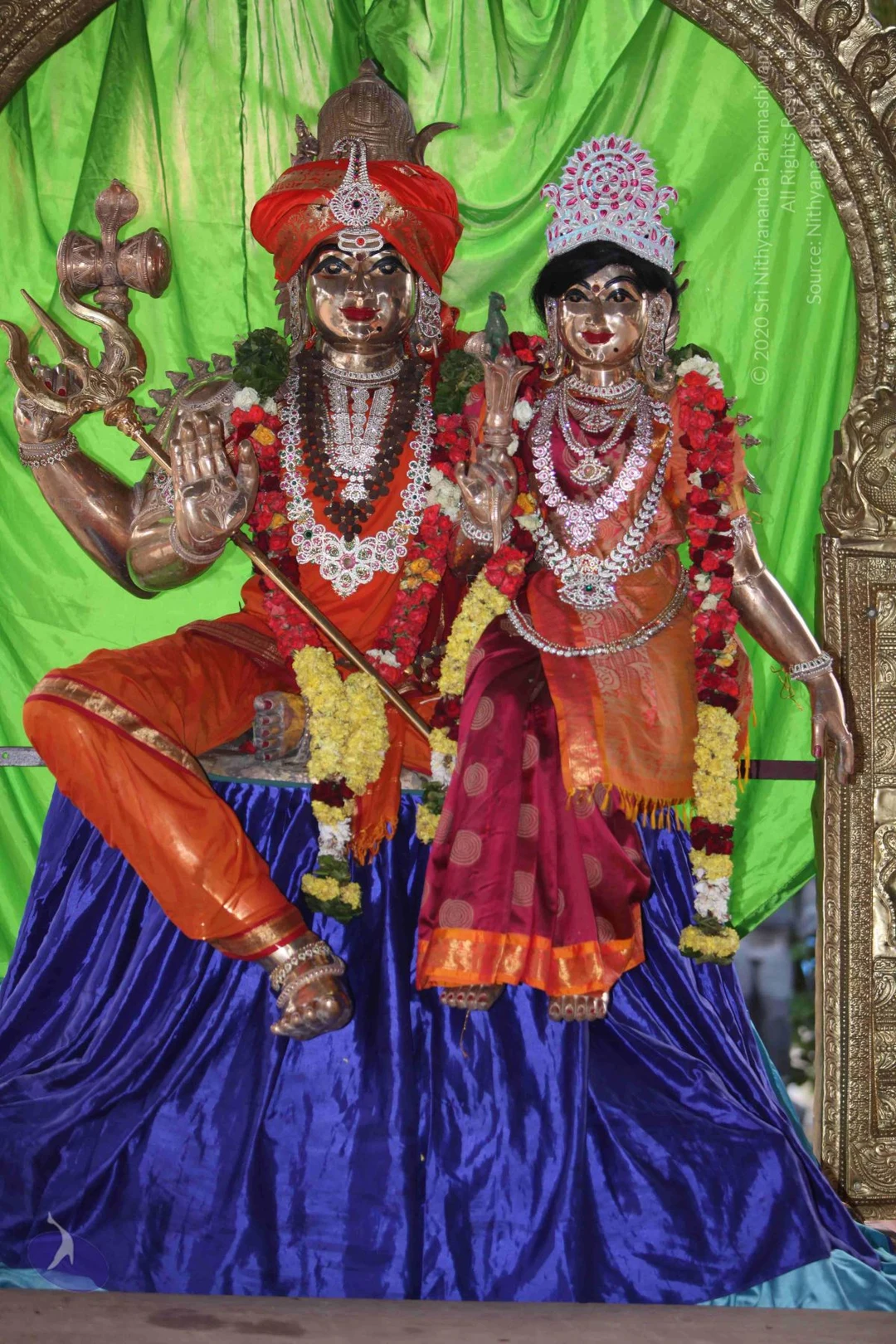
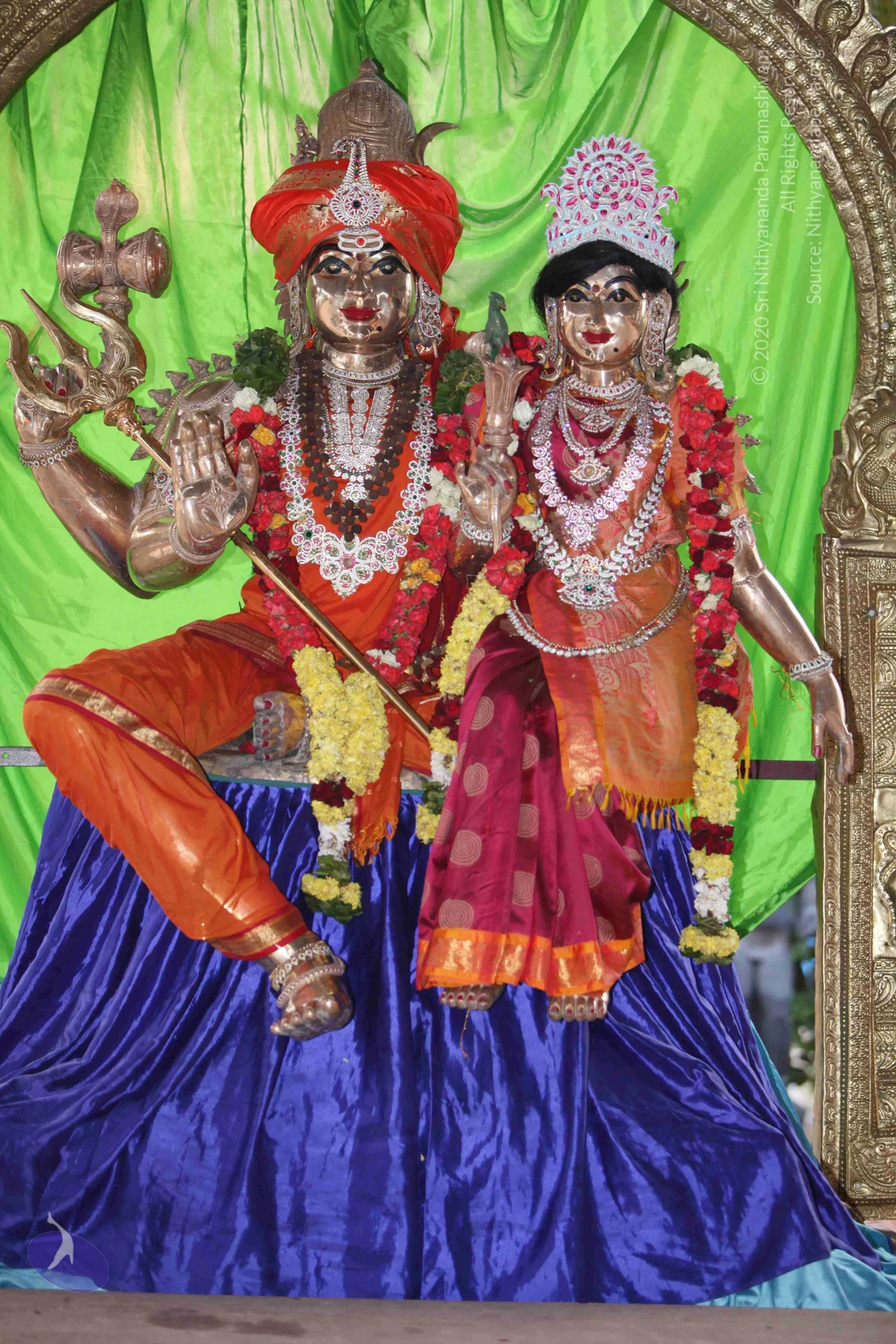
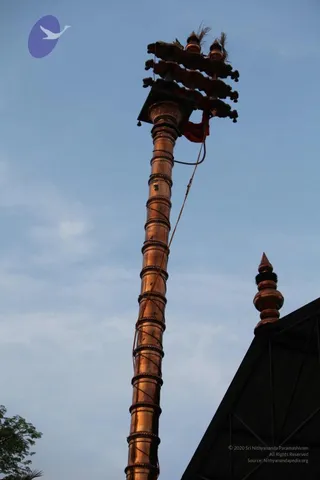
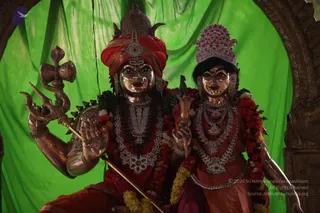
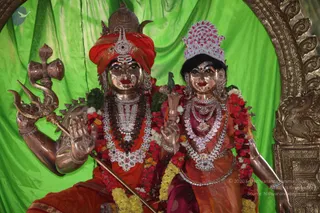
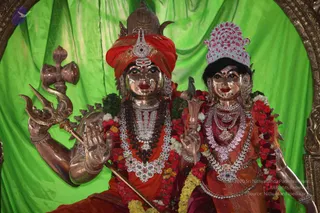
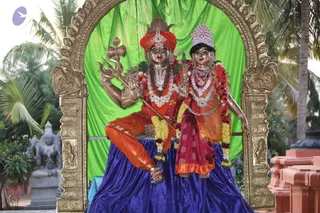
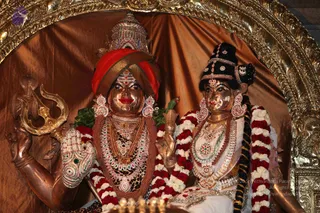
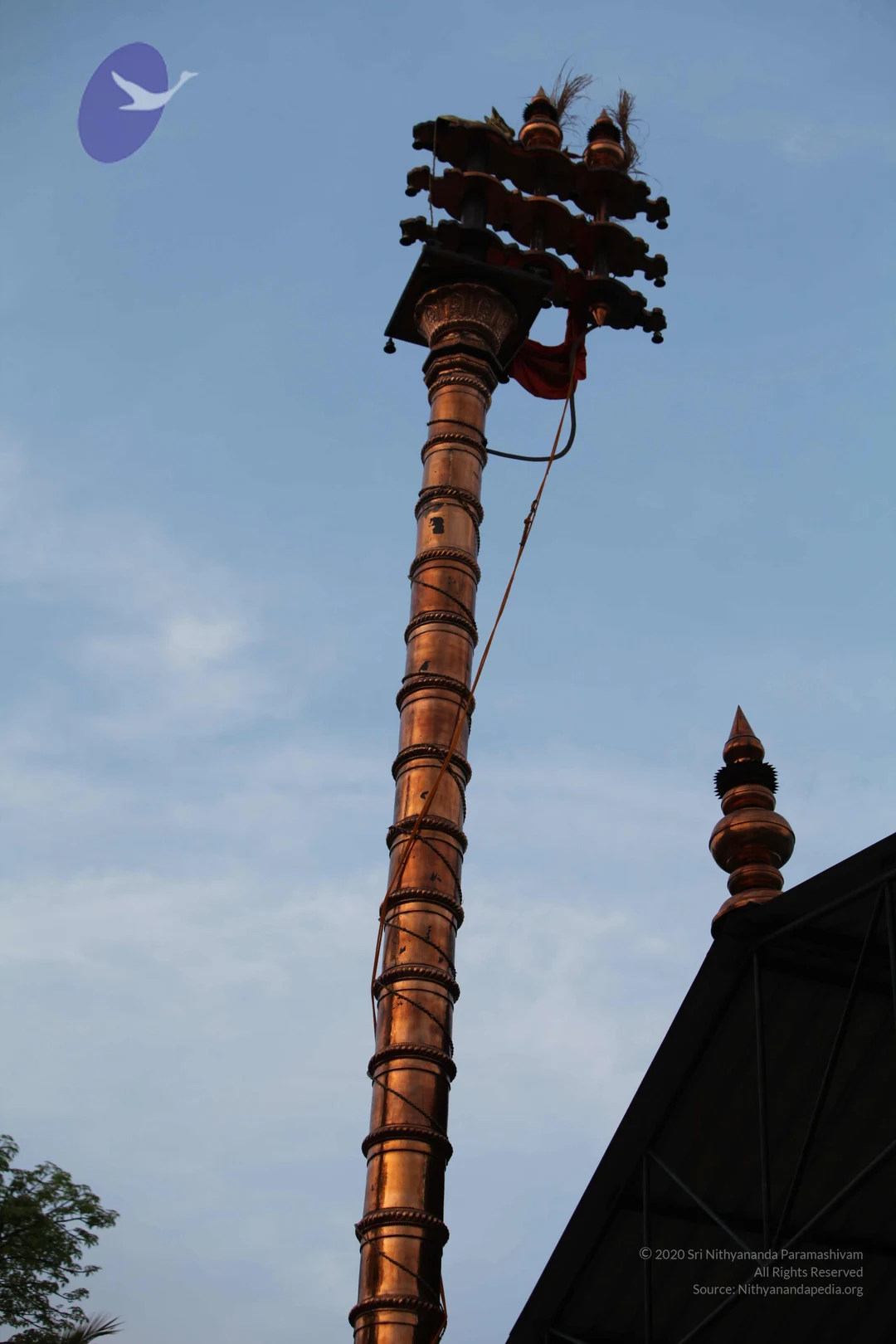
A tall copper flagstaff, or dhwajastambha, rises against a pale blue sky with wispy clouds. Its polished copper shaft is banded with rope-like ridges and tapers toward a tiered top with ornate finials, a small red cloth hanging from the upper section, and a guy rope running down its length. A black tent or canopy roof edge and a copper finial appear at the lower right, and a tree edge shows at the lower left. No people are visible.A photograph of two metal murti statues of a deity couple seated against a bright green fabric backdrop within a carved stone arch. The figure on the left has a red turban with a central ornament, a raised hand holding a trident and an ornamented staff, and garlands of red and yellow flowers with a rudraksha-style mala. The figure on the right wears a silver crown, layered silver necklaces, a red sari and red and yellow garlands, and holds a small bird-topped staff. The statues are decorated for worship, and the bronze-toned surfaces are polished.Two metal murti figures seated side by side against a green fabric backdrop with an ornate golden arch at right. The figure at left has a red turban with a jeweled ornament, a trident in the raised hand, and a rudraksha mala with silver necklaces, all draped in red and orange fabric. The figure at right wears a pink and silver crown, layered silver necklaces, and a red-orange sari with a dark red blouse, holding a small kalasha-like object. Both are decorated with red and yellow flower garlands and gleaming metal ornaments.Two metallic deity murtis seated against a bright green cloth backdrop within an ornate arched frame. The figure on the left, in a red turban with a silver tilak, holds a trident and raises one hand in blessing; he wears a rudraksha mala, layered silver necklaces and an orange-red garment. The figure on the right wears a silver crown, layered silver jewellery and a red-pink sari, and holds a small lotus-like stem. Both are garlanded with red roses and white and yellow flowers. The statues are image forms, not living people.A photograph of a pair of deity murtis, a seated Shiva and Parvati figure set within an ornate gold arch against a green backdrop. The male figure wears an orange-red turban and orange dhoti, holds a trident, and is adorned with white and silver necklaces and a rudraksha mala. The female figure wears a crown, layered silver necklaces, a magenta and orange sari, and holds a hand near the male figure. Both are decorated with red and yellow marigold garlands. The blue-draped base sits in a garden with palm fronds and stone sculptures nearby. No physical people are visible.A photograph of two gilded metal deity murtis seated side by side before a golden arched frame and bronze drape. The left figure, a male deity, wears a red and gold turban, a trident is at his side, and he holds a hand raised in blessing, adorned with jeweled gloves, multi-strand gold and bead necklaces and a leopard-print cloth. The right figure, a female deity, wears a black crown with jeweled ornaments, large earrings, a gold and green necklace and a long black braid draped with red and white flower garlands. A small green parrot perches near the male figure. Both murtis are garlanded with red roses and white flowers.

Pada-Puja
11 photosSource gallery
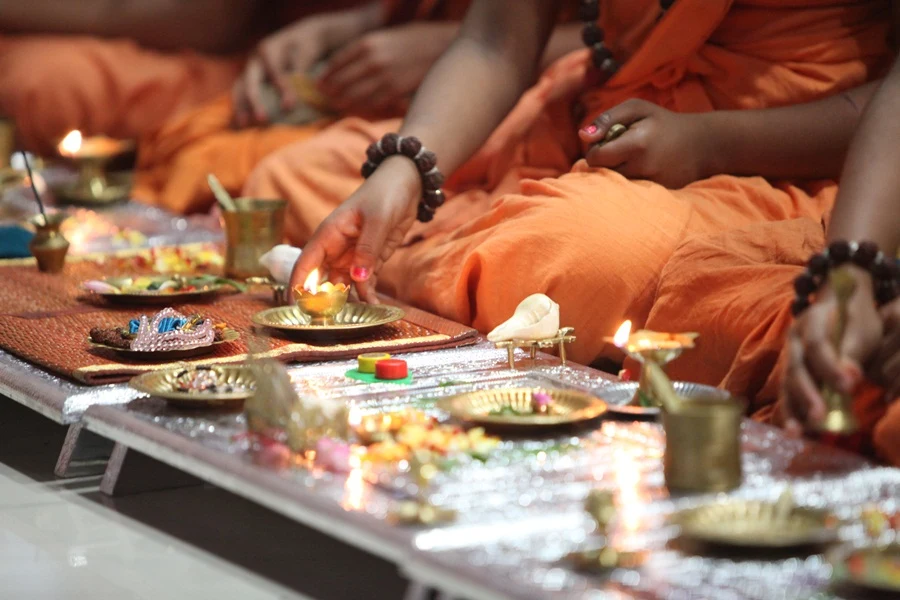
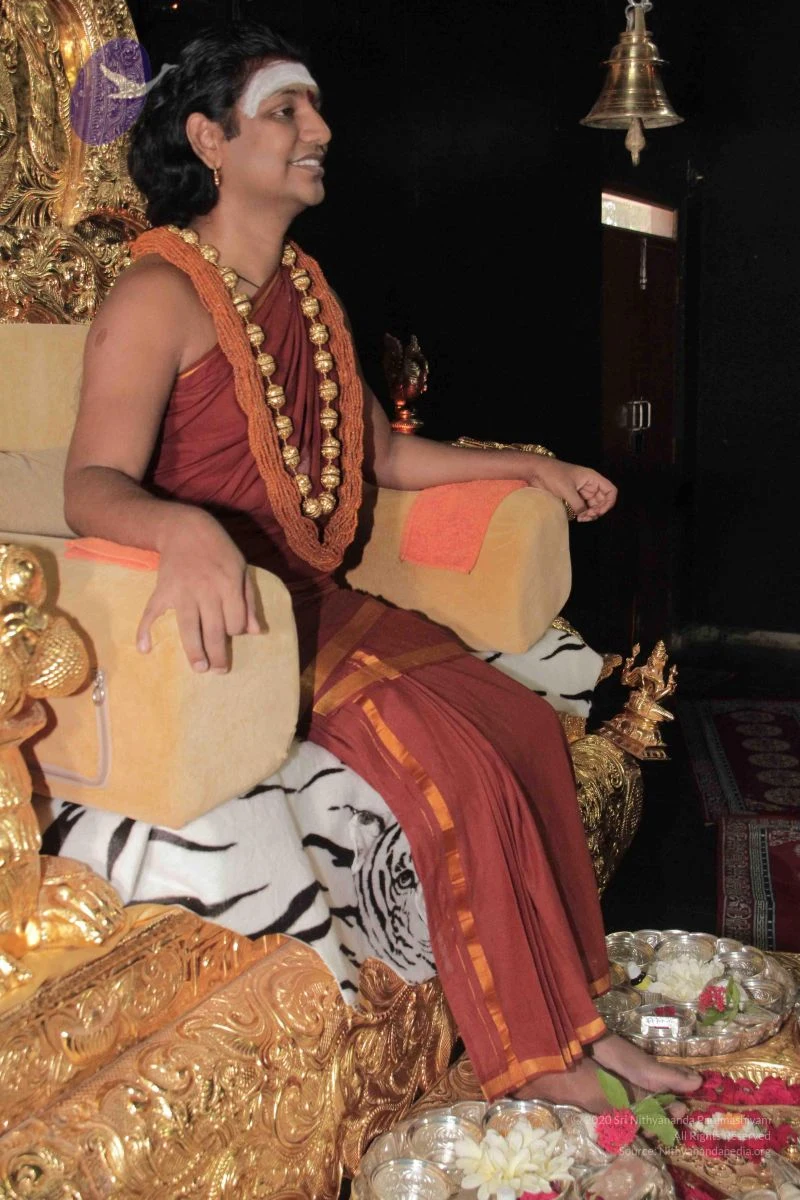
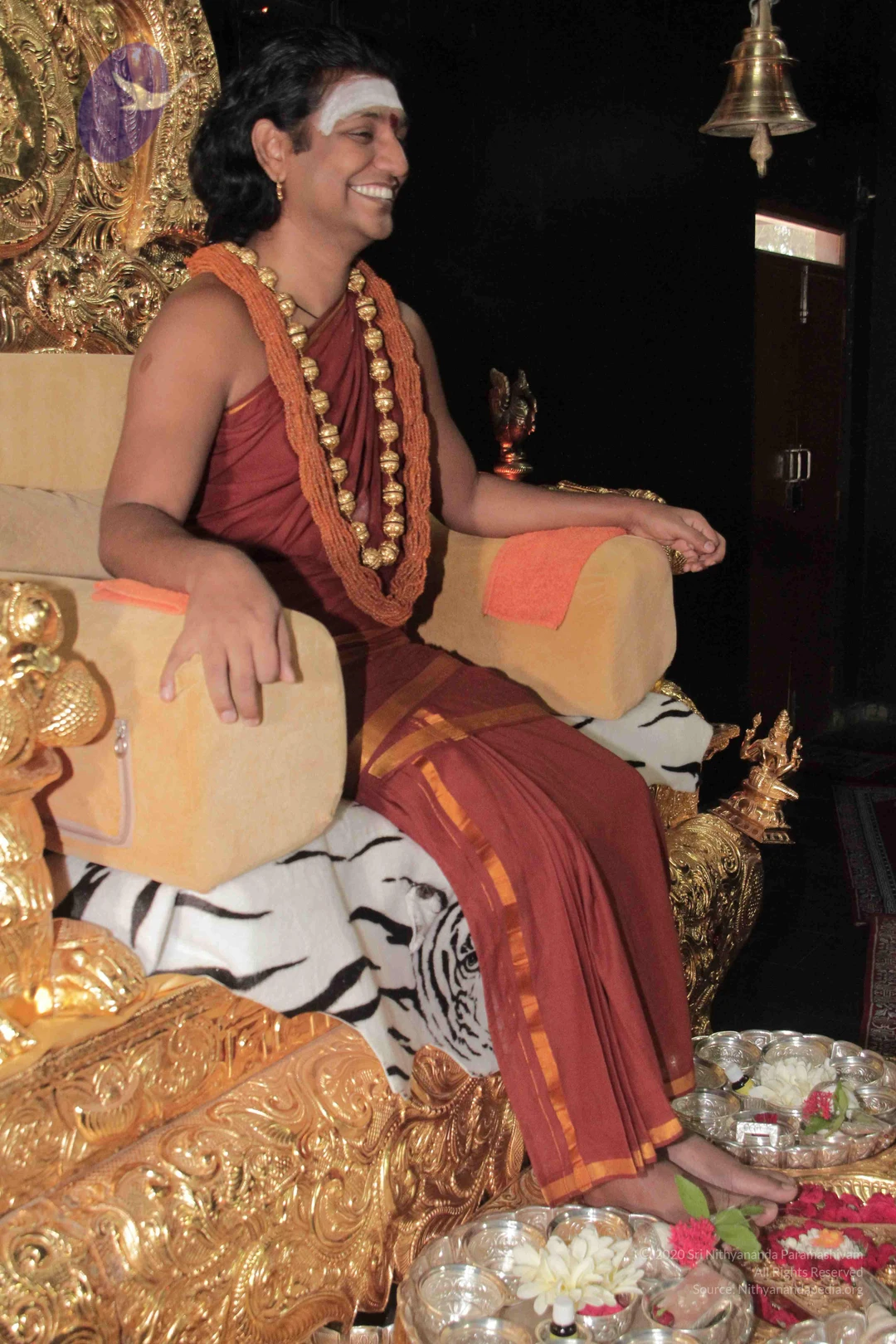
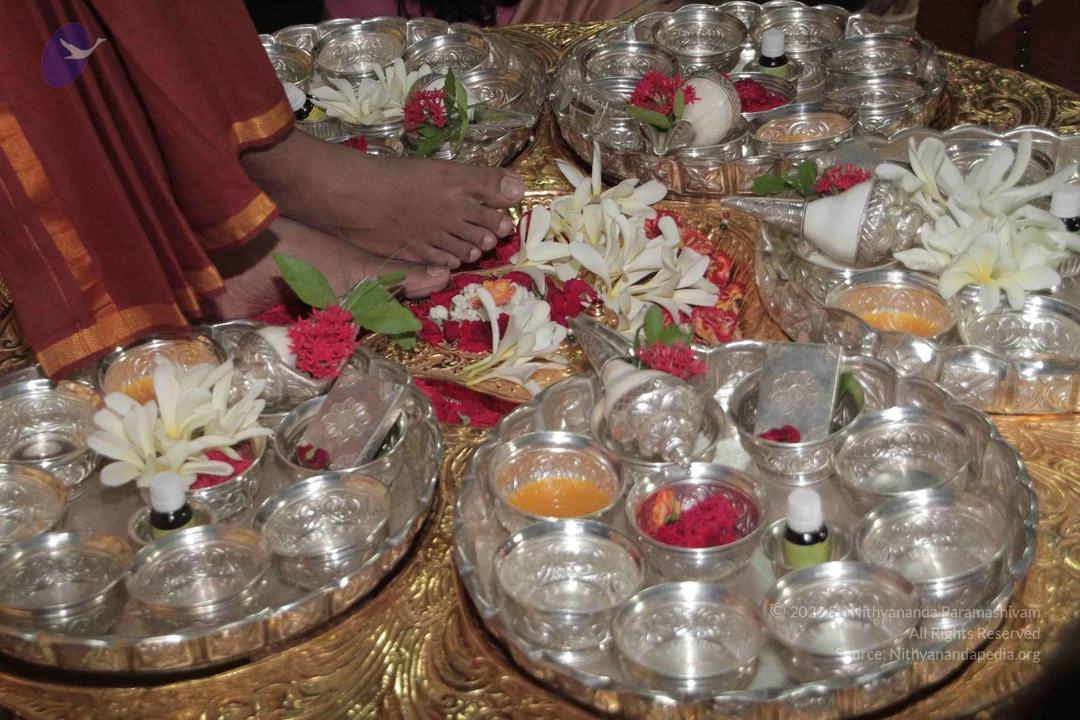
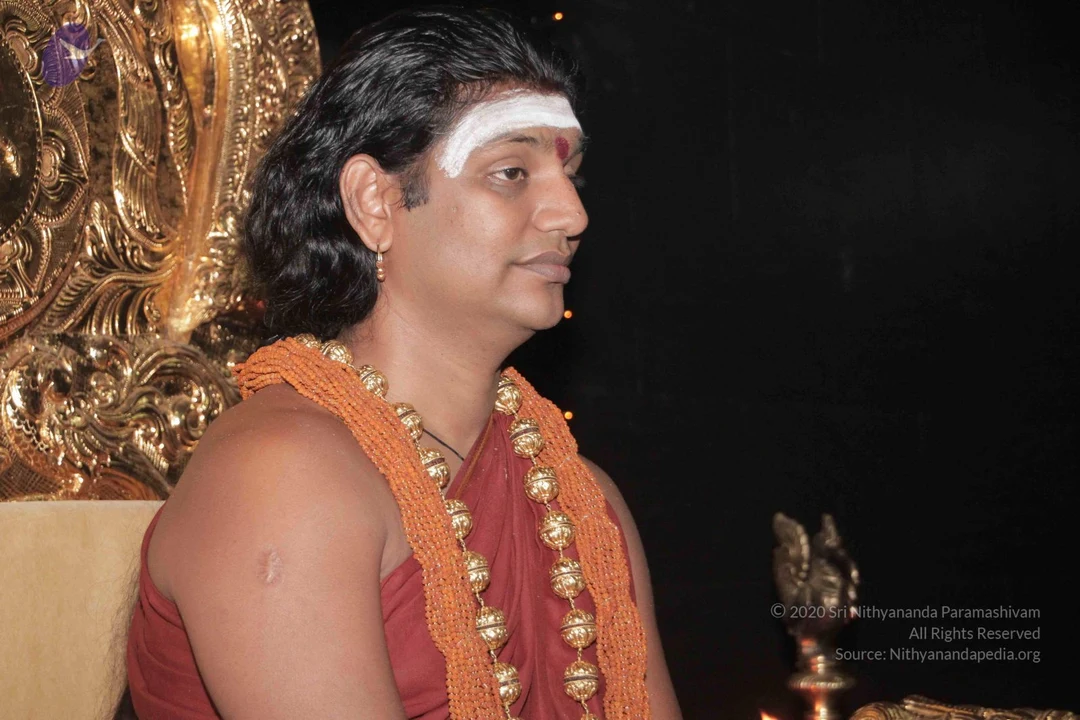
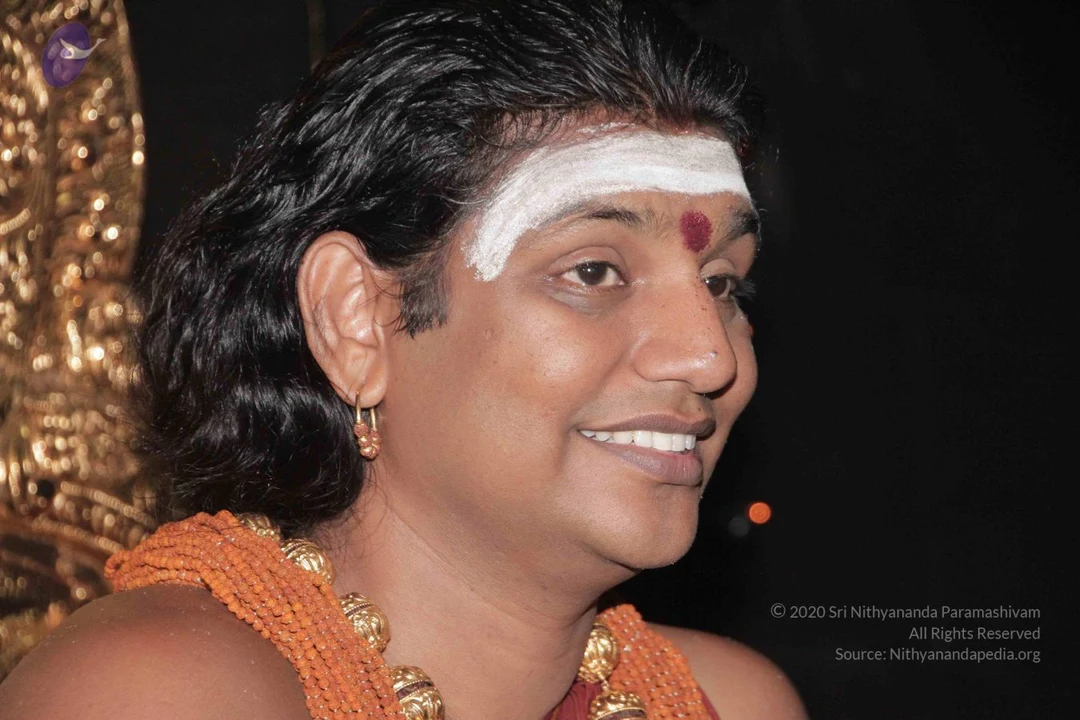
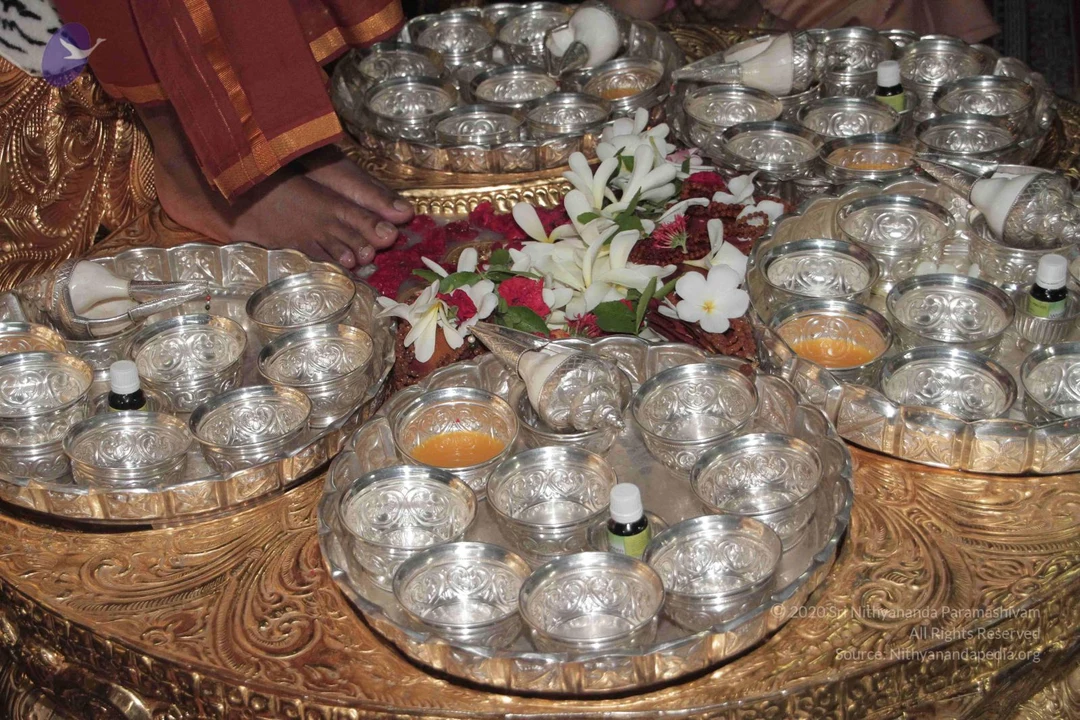
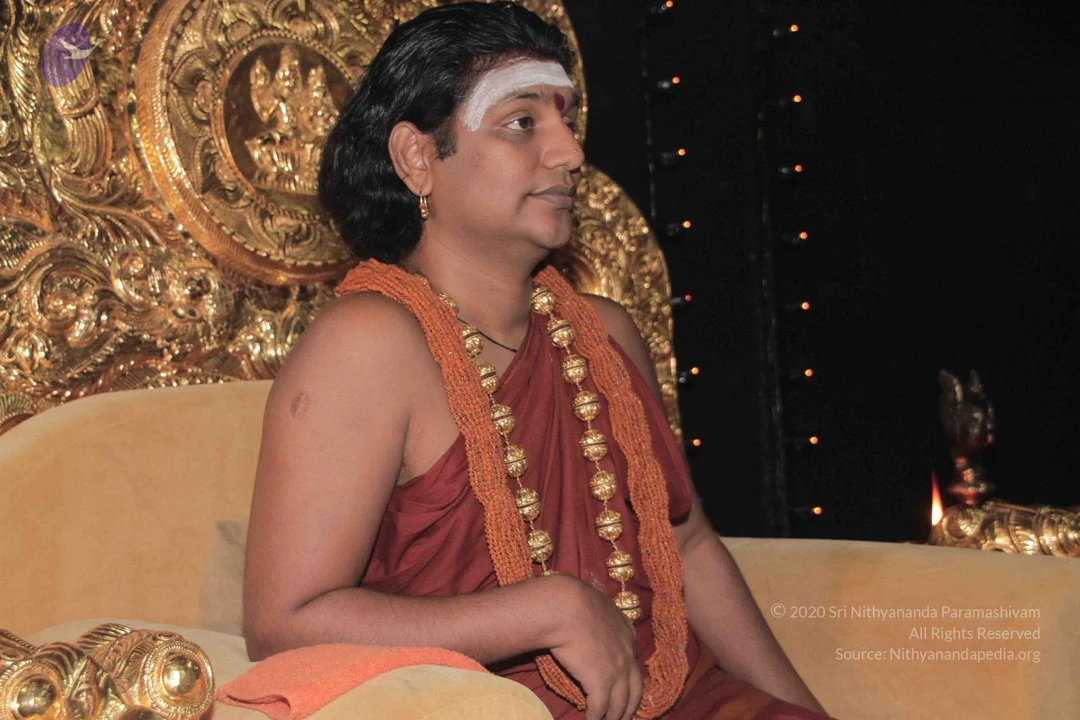
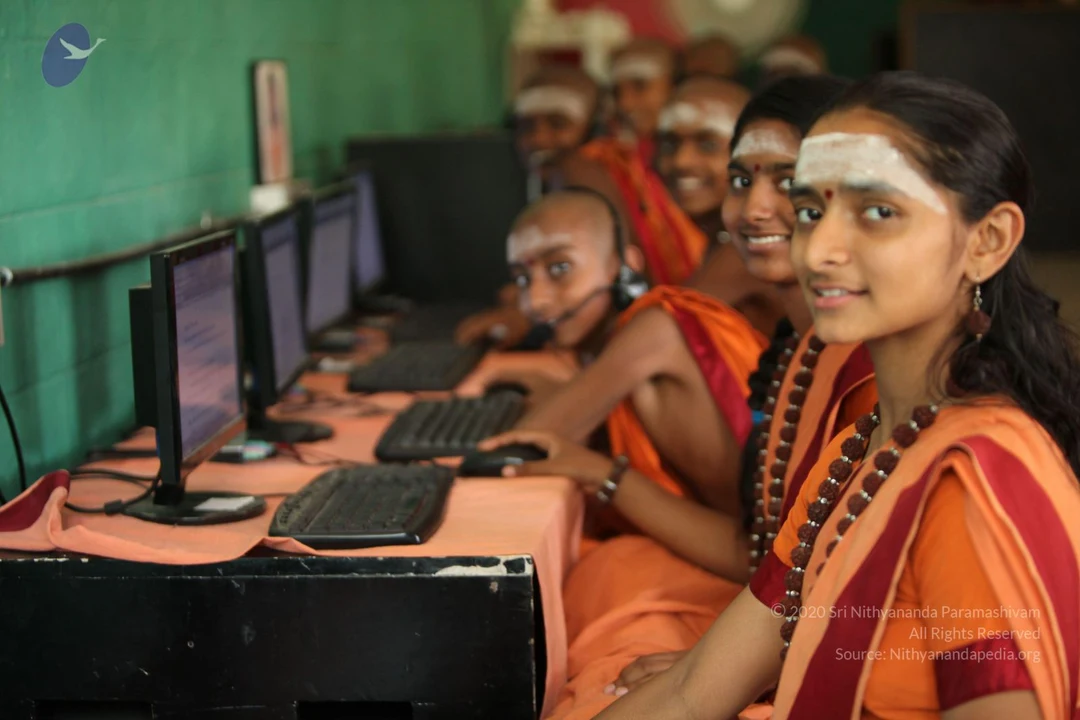
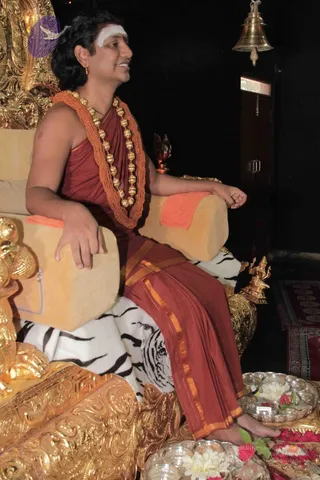
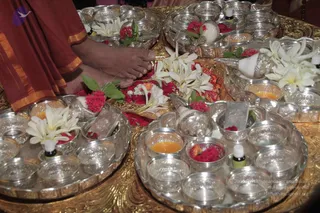
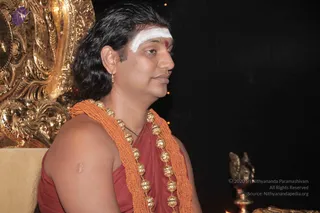
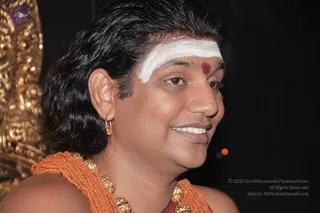
A man with swept-back dark hair and a white vertical tilak on his forehead sits on an ornate gold throne upholstered in cream and orange cushions, draped over a zebra-striped cloth. He wears a maroon-red dhoti with orange-gold border and an orange shawl over a bare upper body, with a heavy gold and orange beaded necklace and a rudraksha-style mala. He sits barefoot before brass plates of flowers, petals and offerings, with a golden dhoop-holder and a hanging brass bell in the dim background. Swamiji (probable) appears to be the figure seated on the throne, identified by the throne, ornate saffron-and-gold clothing and long hair, though the appearance is only partly visible.A photograph of a smiling man seated on an ornate golden throne with cream cushioned armrests and a tiger-striped cloth draped over the seat. He wears a maroon-red dhoti with gold border, an orange-red beaded shawl, and a heavy gold bead necklace, with a white vertical forehead mark and a red dot. Silver plates of flowers, offerings and pink blossoms sit at his feet, and a brass bell hangs in the dark background.A close photograph of a padapuja ritual: bare feet of a person in a maroon garment with a gold border rest on a brass tray. Around them, silver bowls and plates hold white plumeria flowers, red flower petals, orange-yellow paste, small bottles and a silver vessel. The gold-patterned tray is laid out for worship. Only the feet and lower legs of one person are visible.A man seated in profile against a black background beside an ornate gold throne-like carving. He wears a rust-red garment draped over the shoulder, a long orange beaded necklace with large gold bead garlands, and a white sandal-paste band with a red dot on the forehead; his long dark hair is swept back. Beside him at right is a small brass oil lamp with a bird-shaped finial. Appearance-based candidate: a person, with long swept-back hair, saffron-orange beaded mala and gold bead garlands seated before a gilded throne; a printedClose-up photograph of a smiling man with swept-back black hair, a white vertical tilak across the forehead with a red dot at its centre, and small earrings. He wears layered orange and red rudraksha beaded malas with ceremonial gold-toned beads around his neck and shoulders. A blurred gold ornate background sits behind him against a dark night backdrop. Appearance-based candidate: a person, seen in person wearing orange and gold ceremonial malas with swept-back hair and a forehead tilak.A seated man in a red-maroon robe draped over one shoulder, with an orange beaded shawl and a heavy necklace of golden rudraksha-style beads, sits before an ornate gold-leaf carved backdrop. He has long swept-back dark hair, a white vertical tilak with a red dot on his forehead, and a small gold earring, and he gazes to the side with a slight smile. A small golden figurine sits at the right edge beside a dark wall with wall lights. The scene suggests a satsang discourse setting.

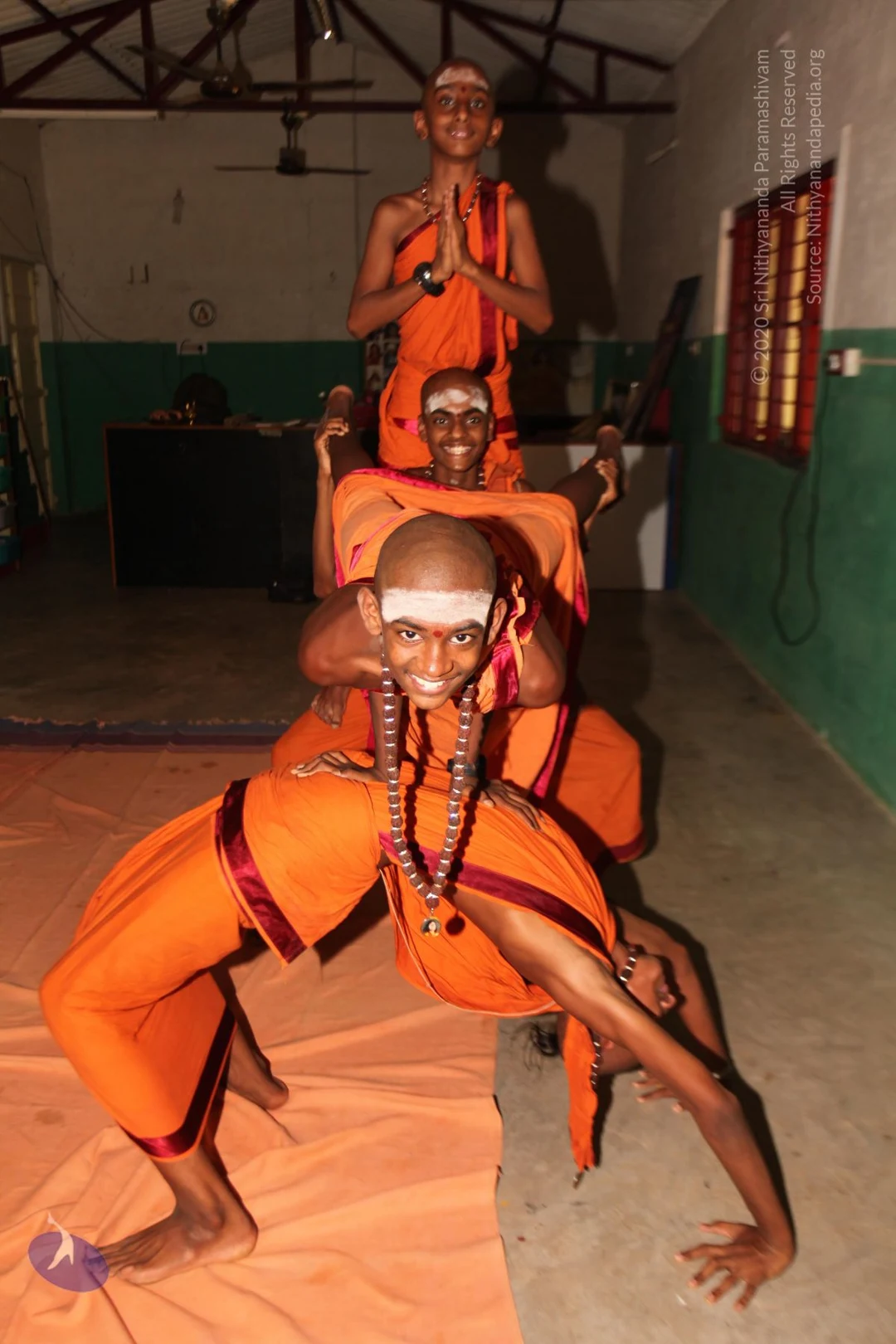
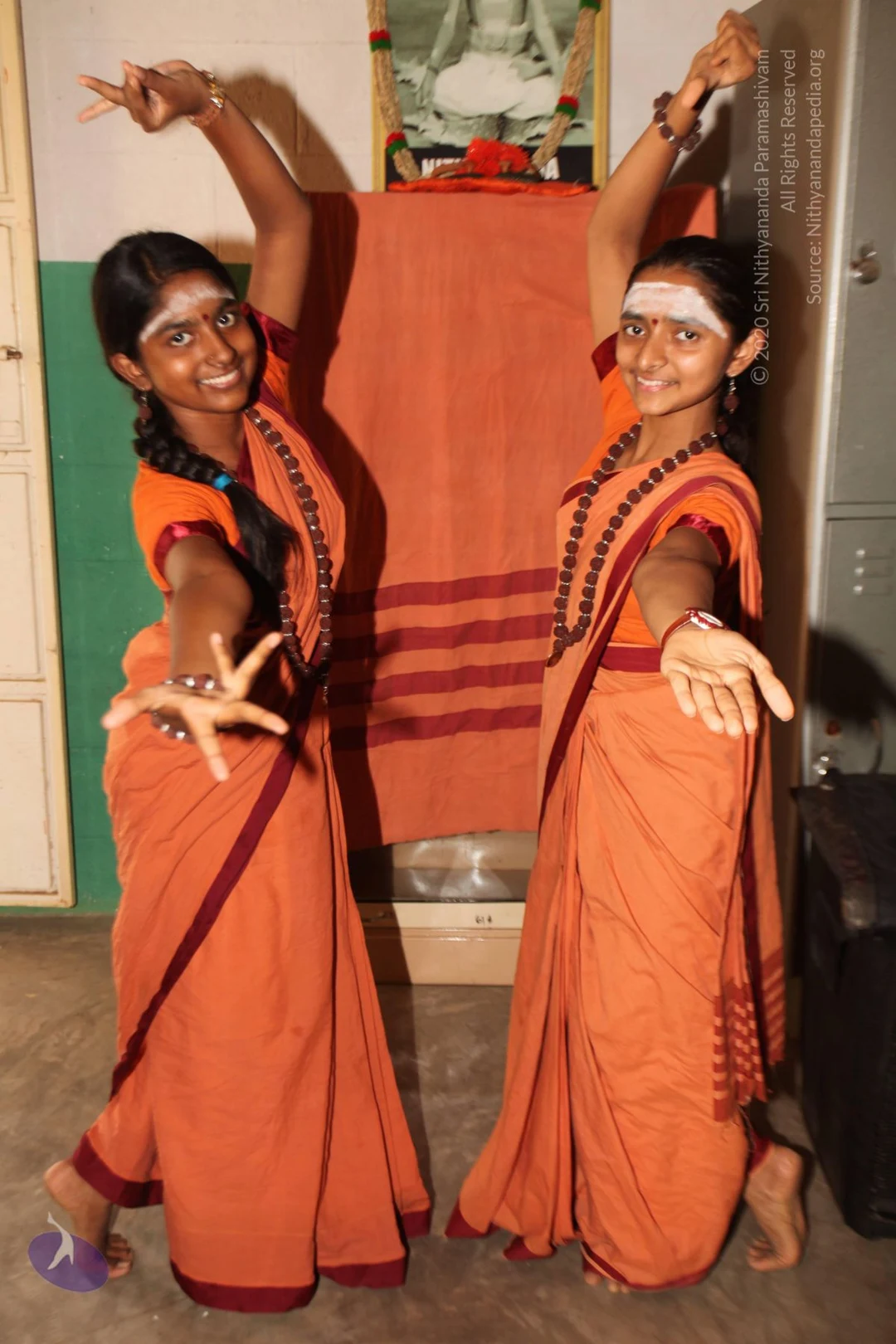
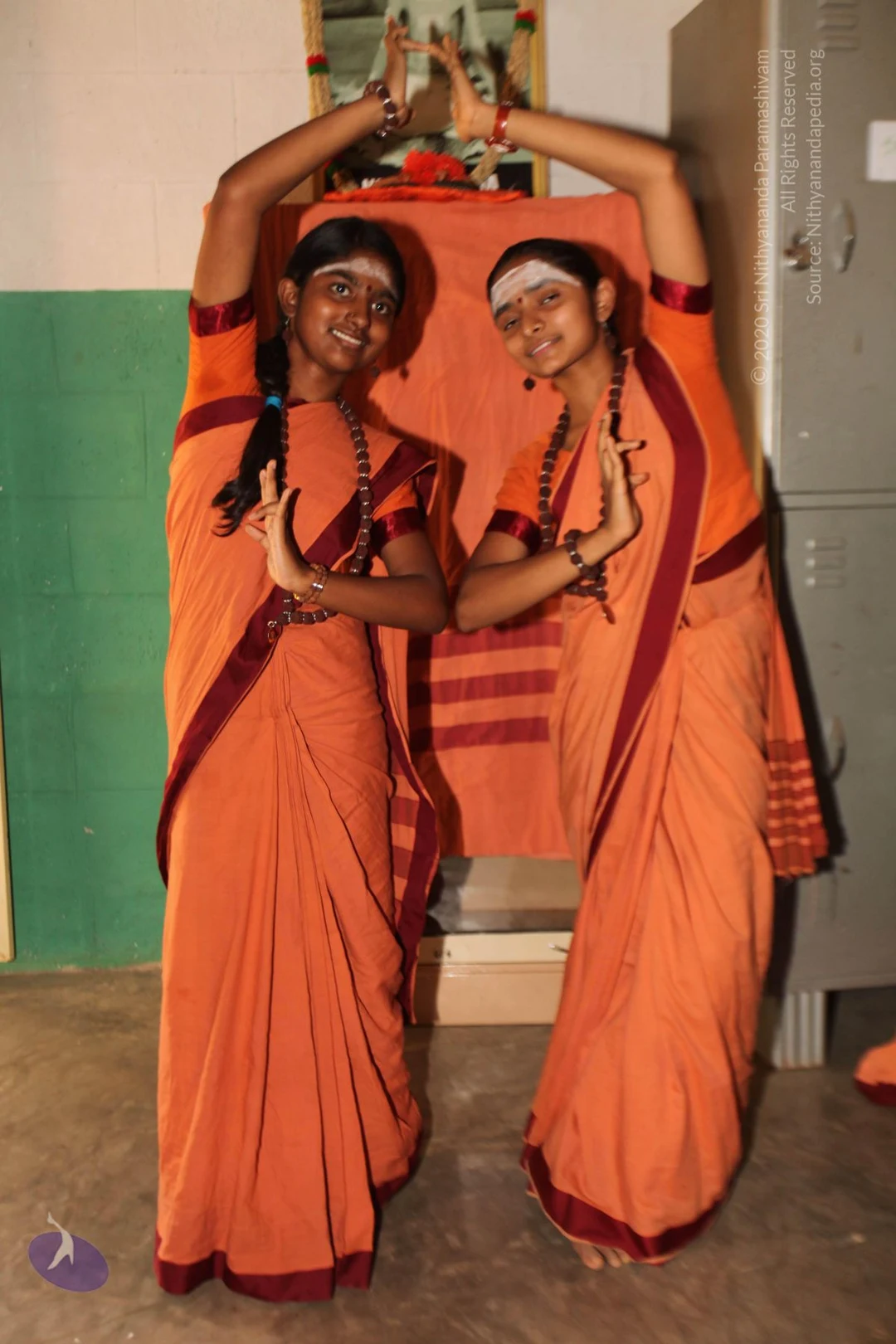
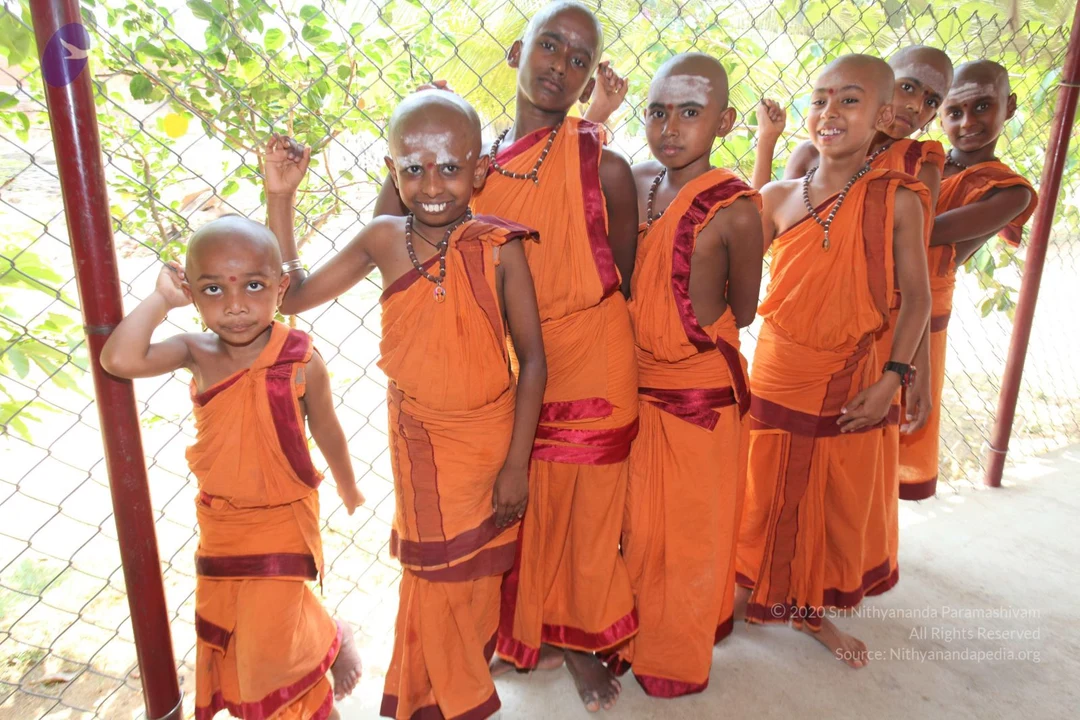
Gurukkul

110 photosSource gallery
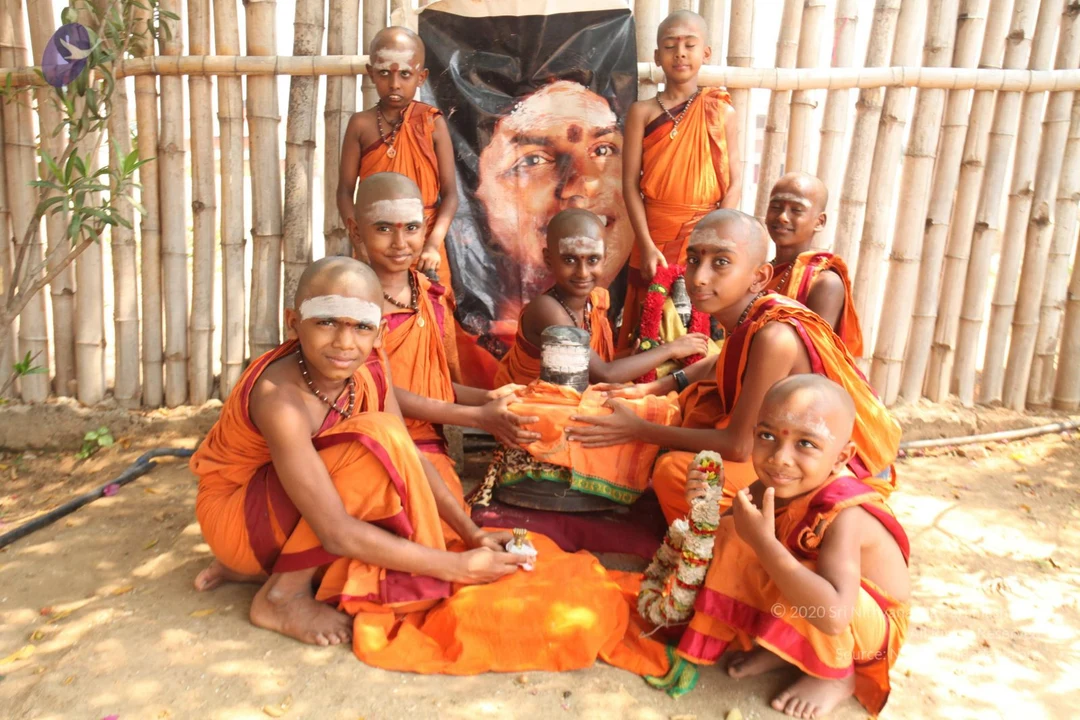
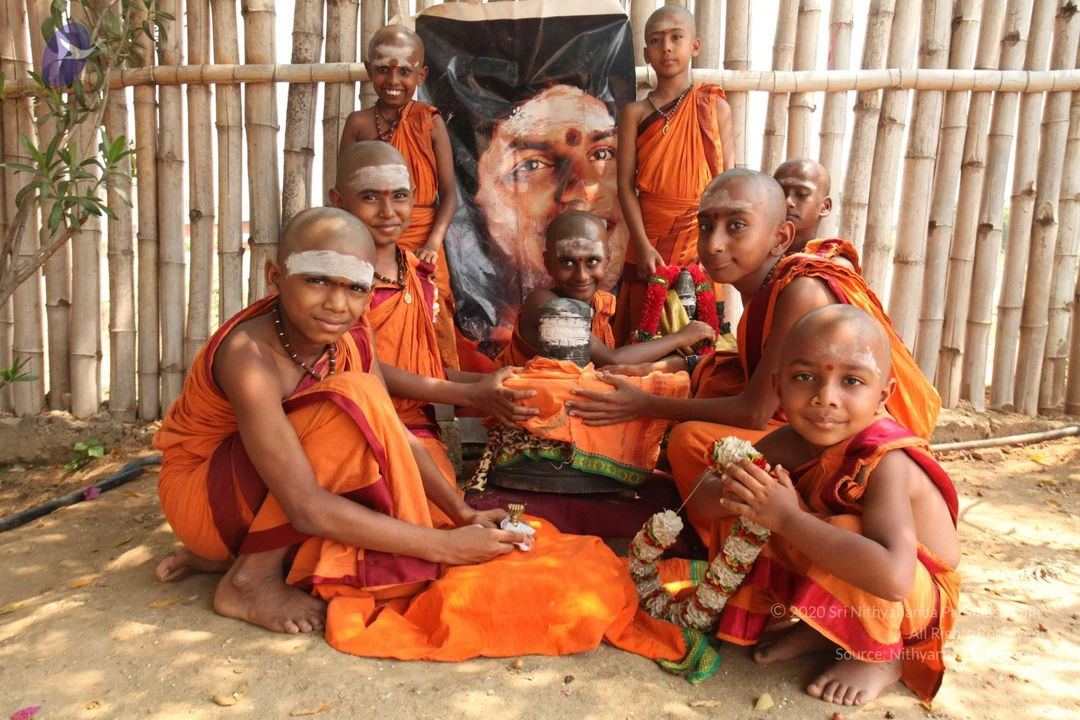
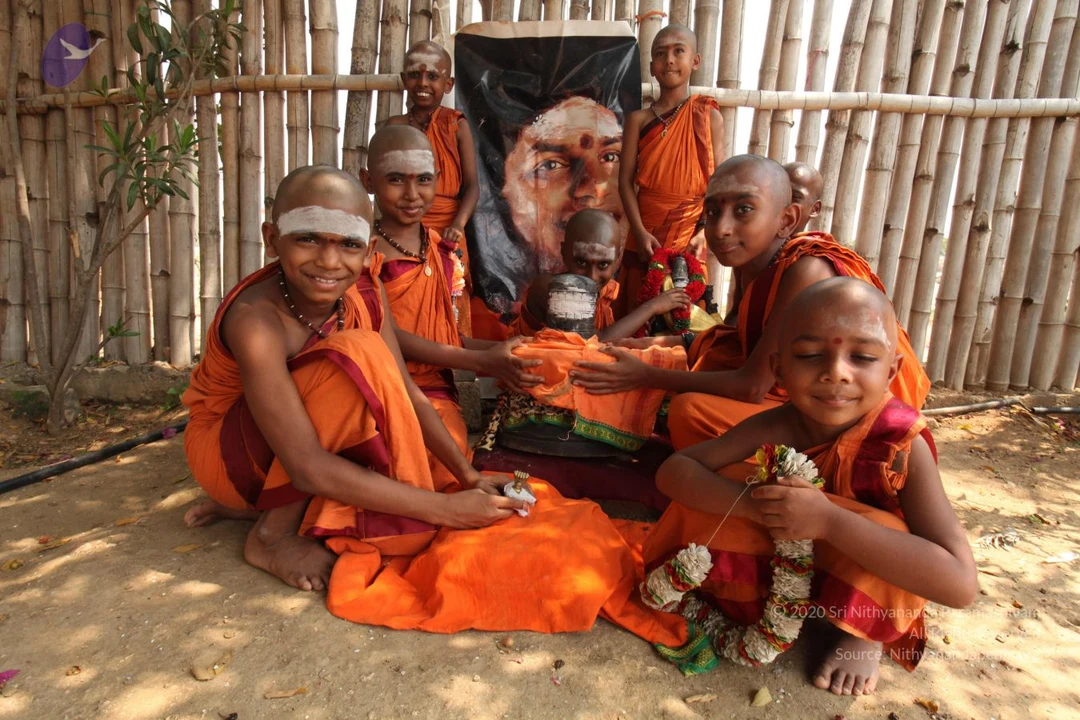
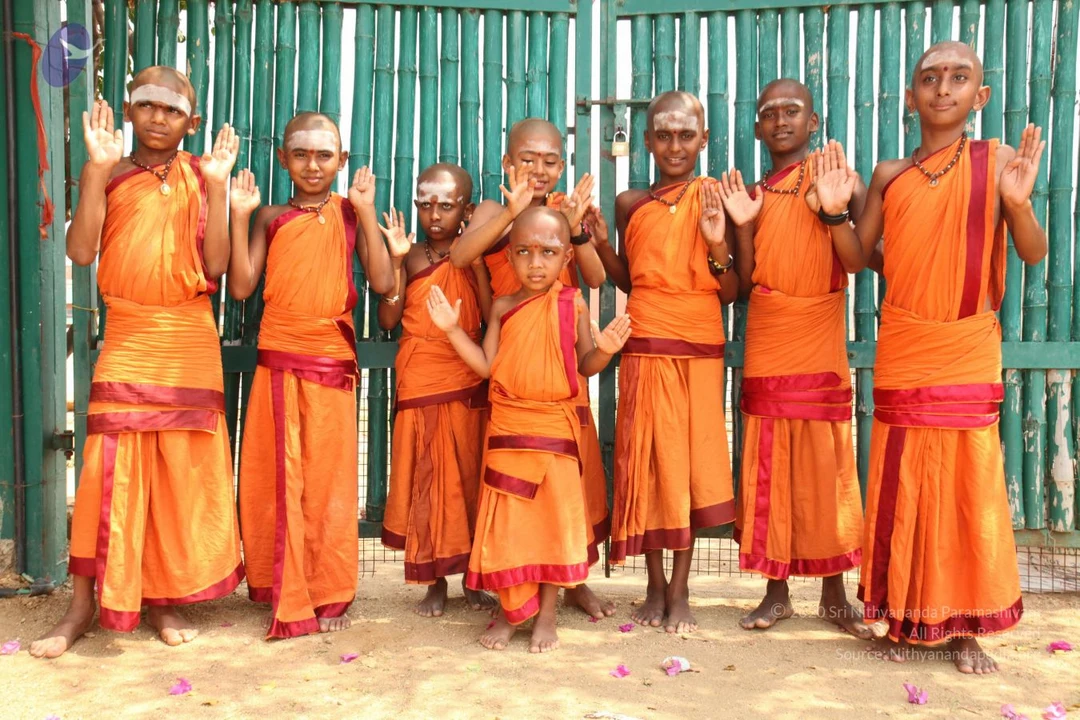
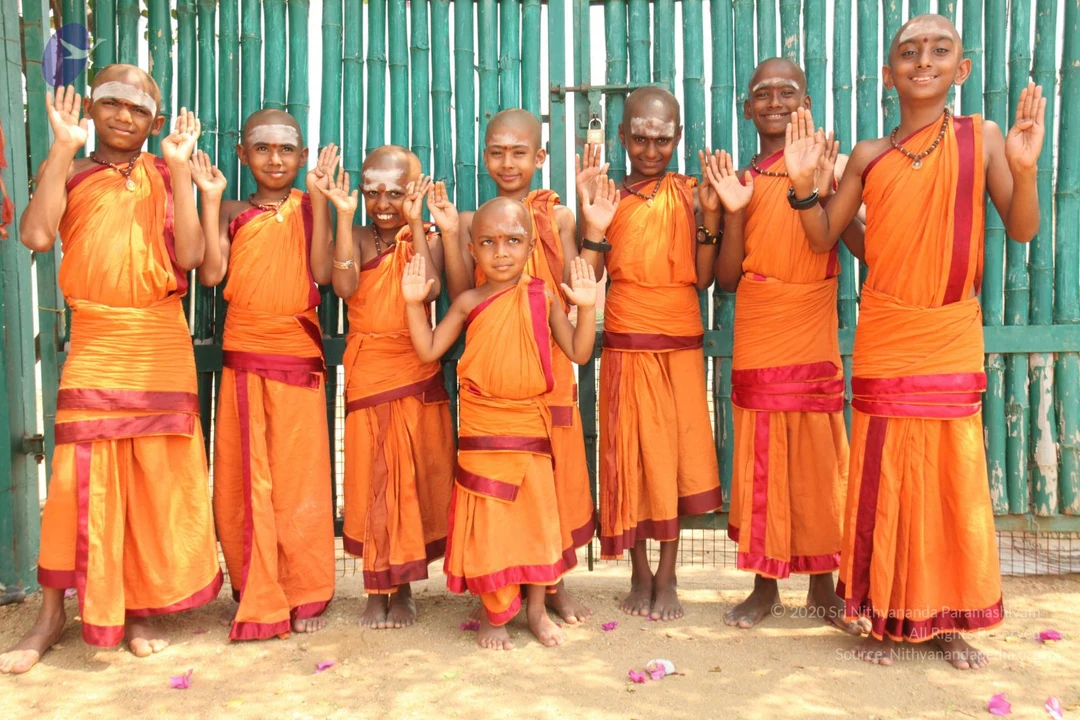
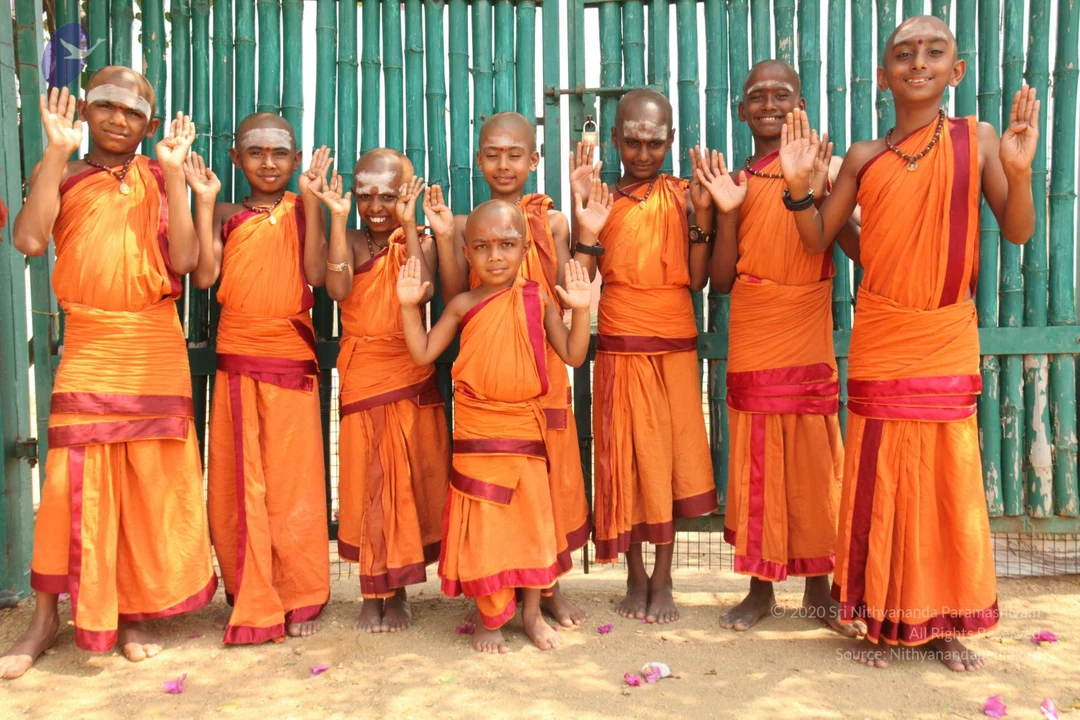
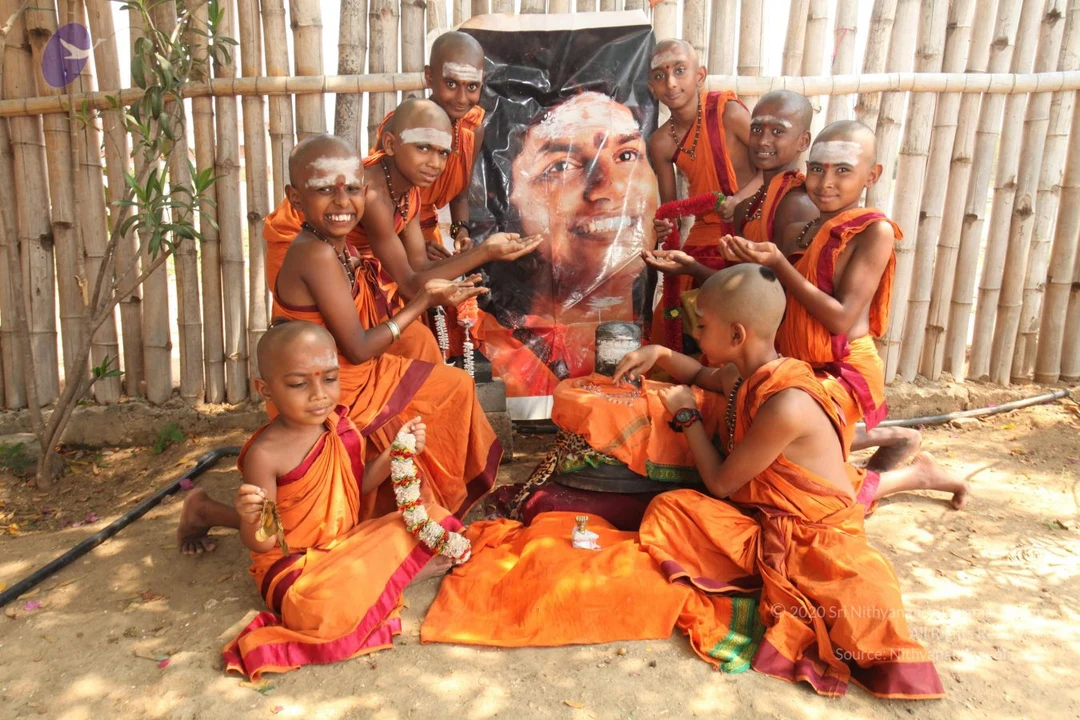
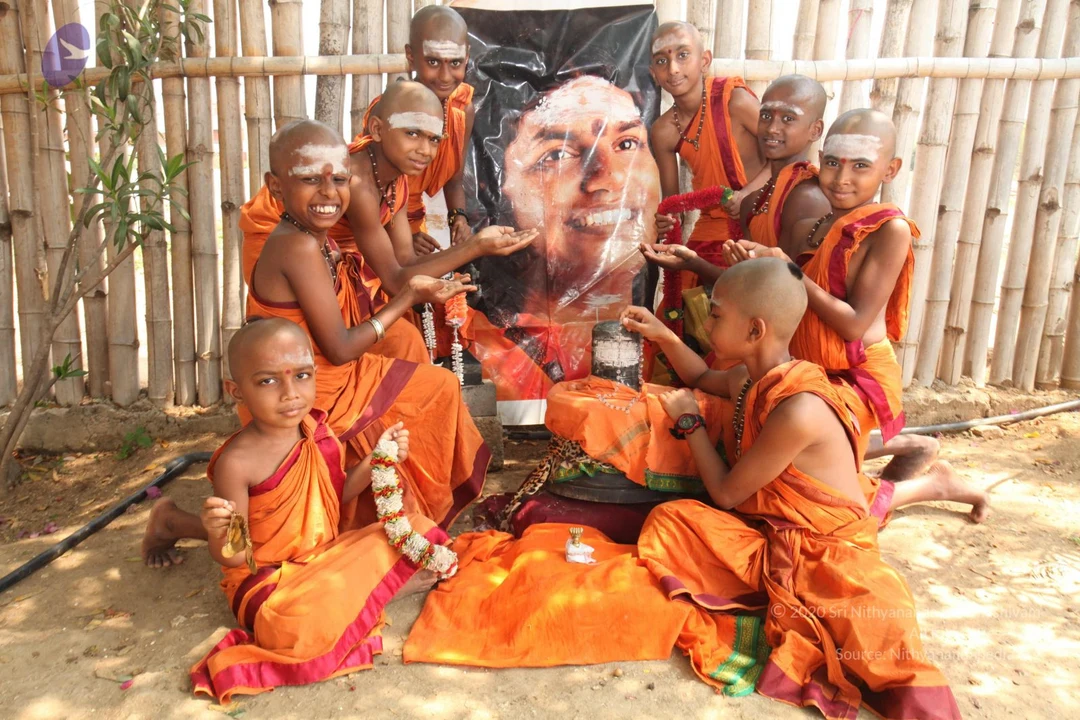
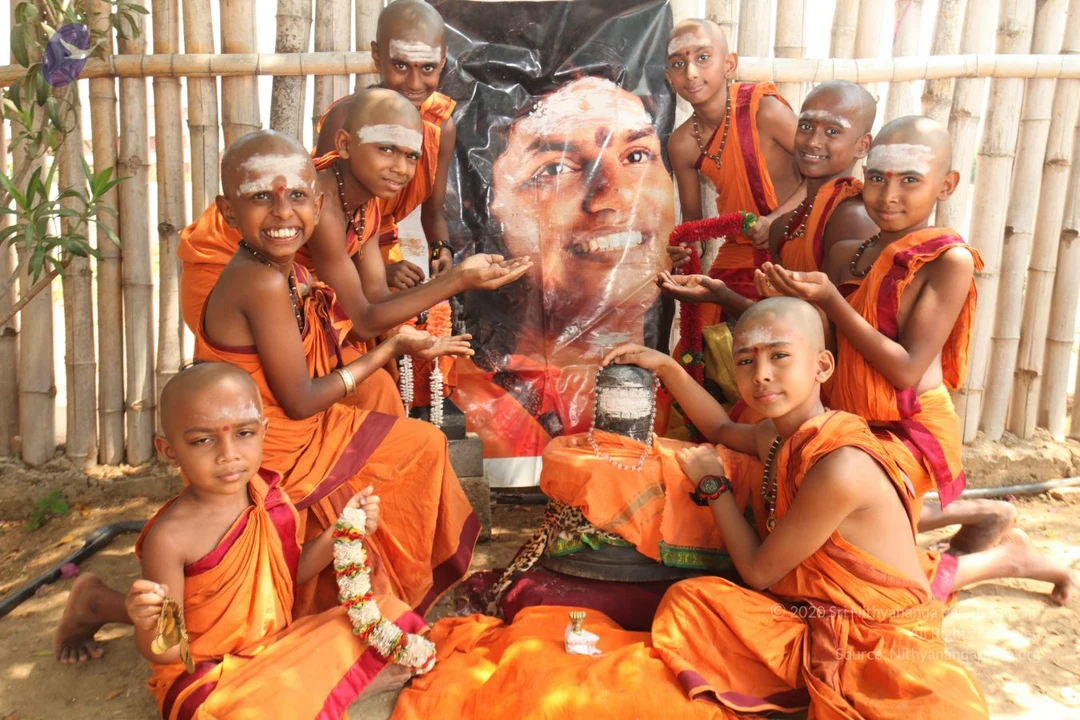
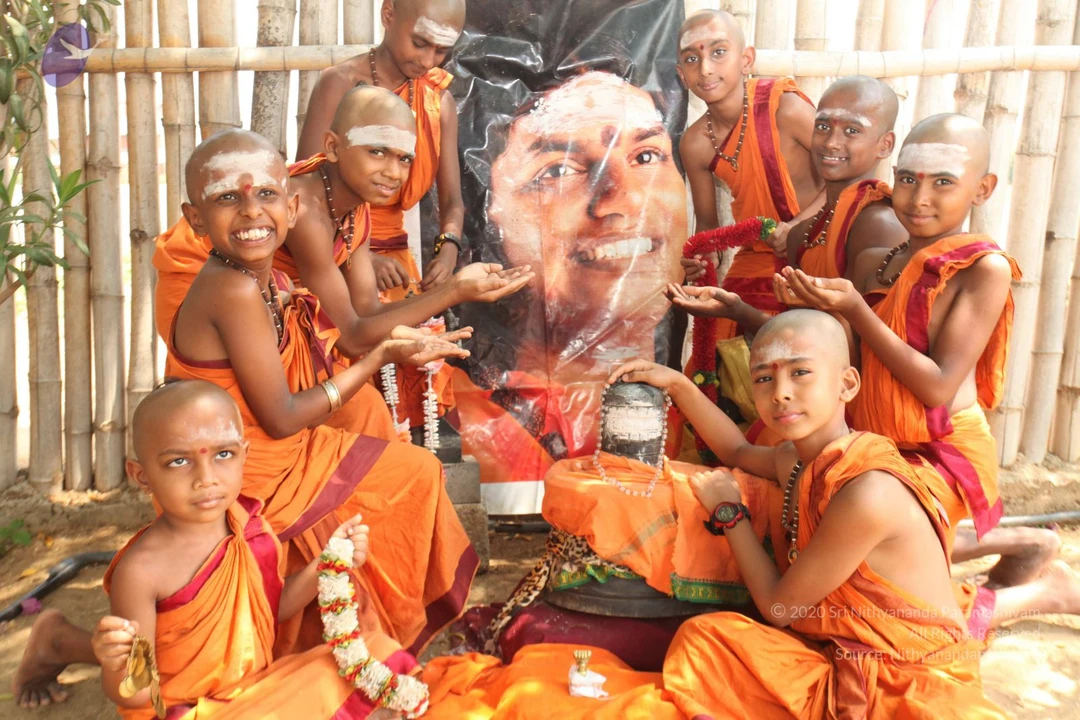
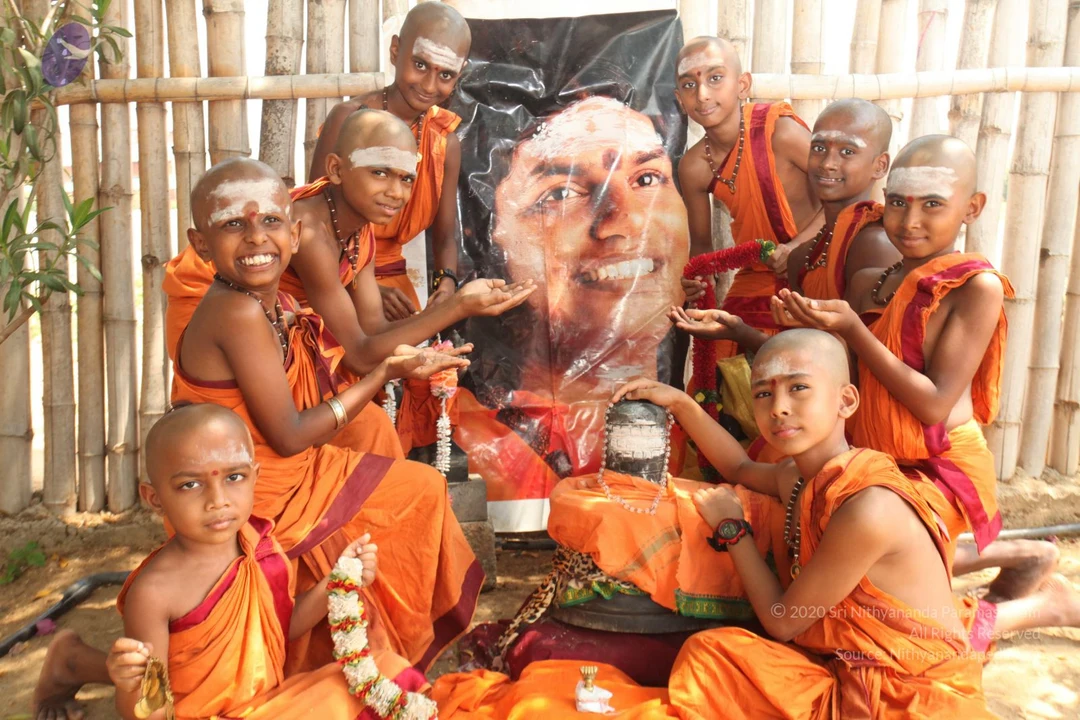
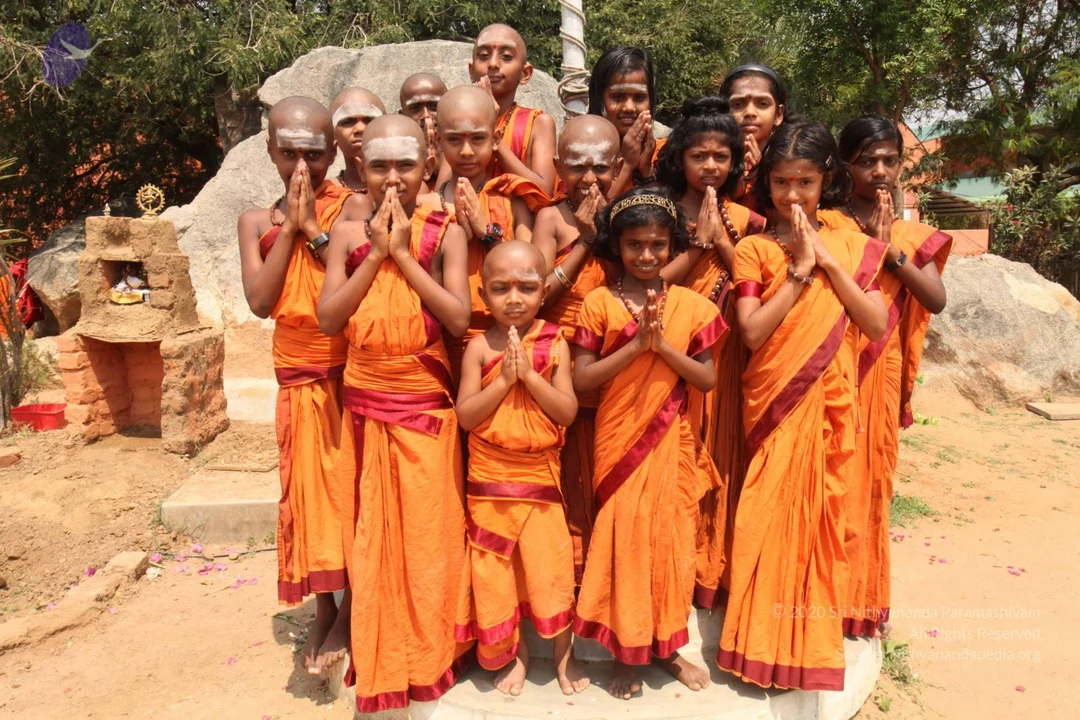
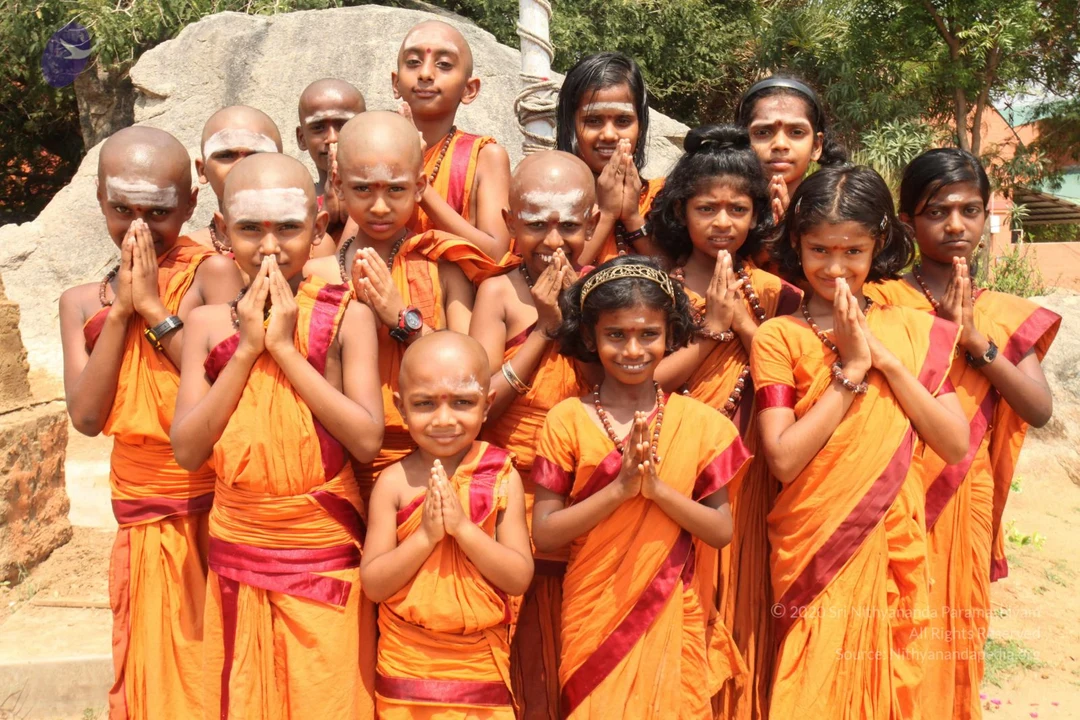
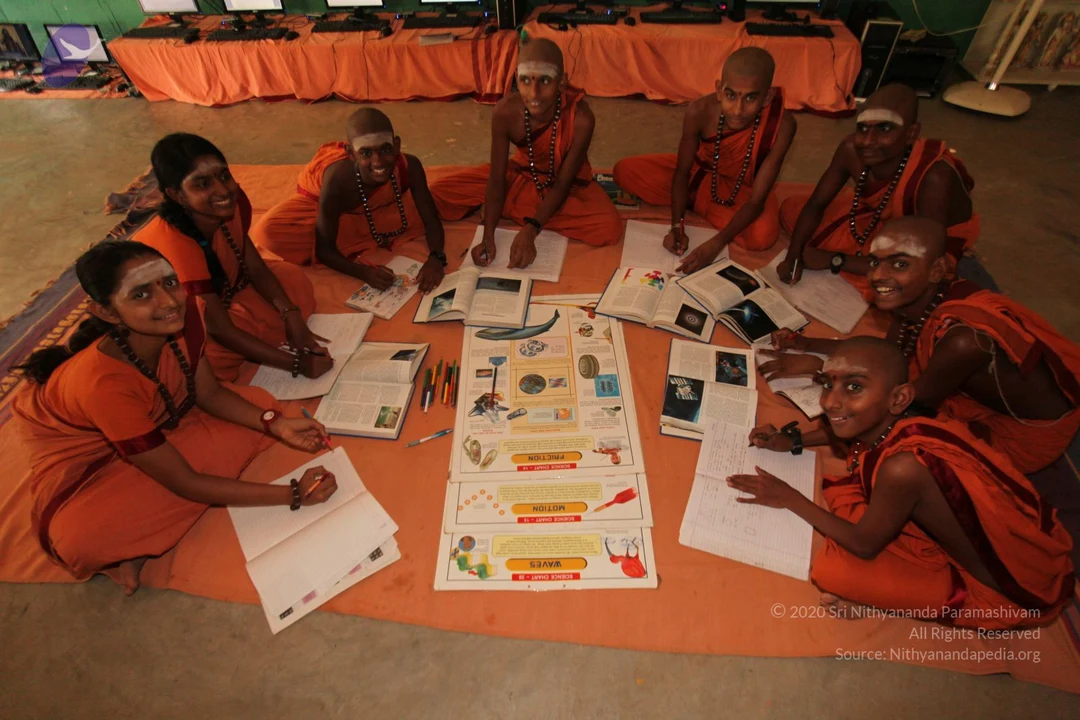
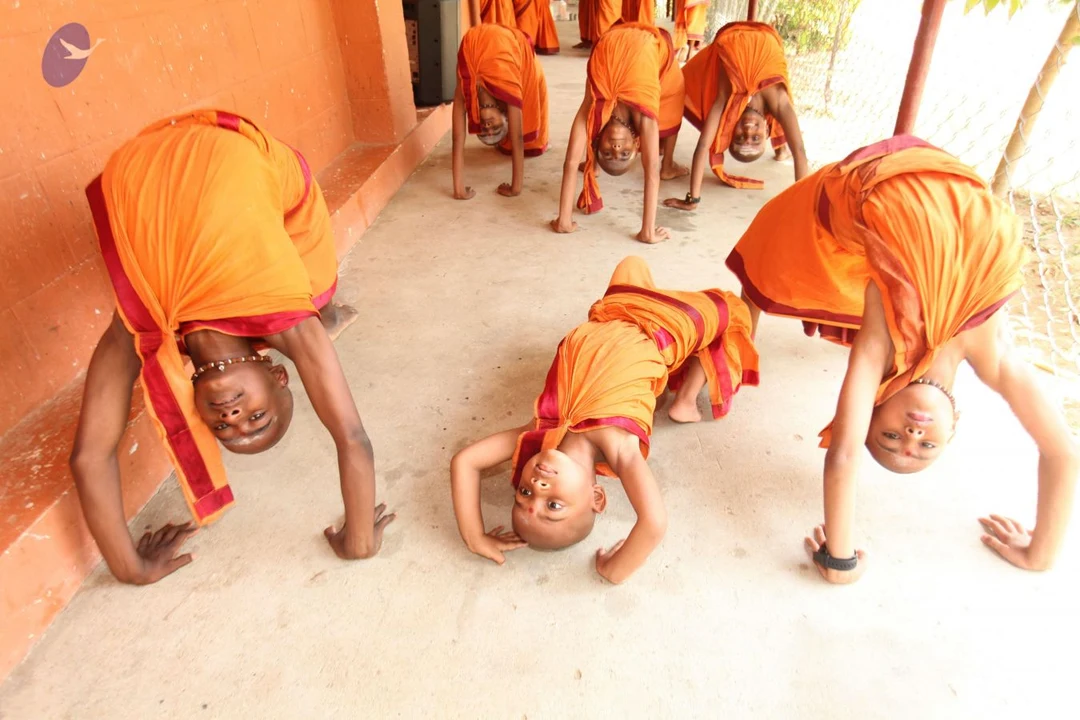
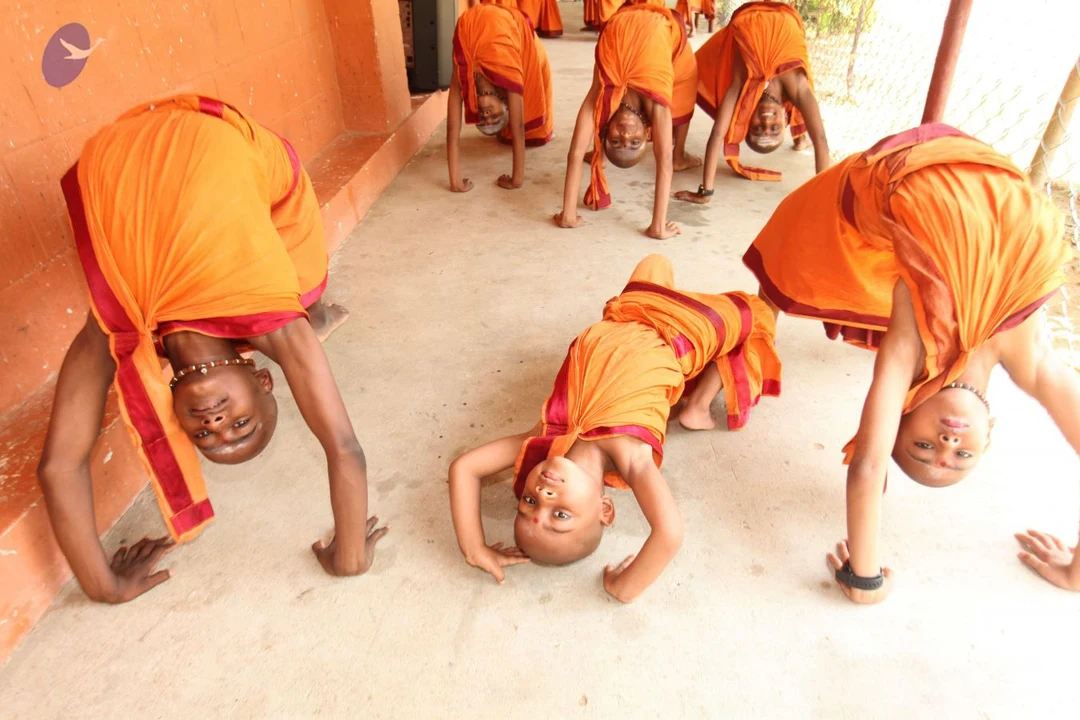
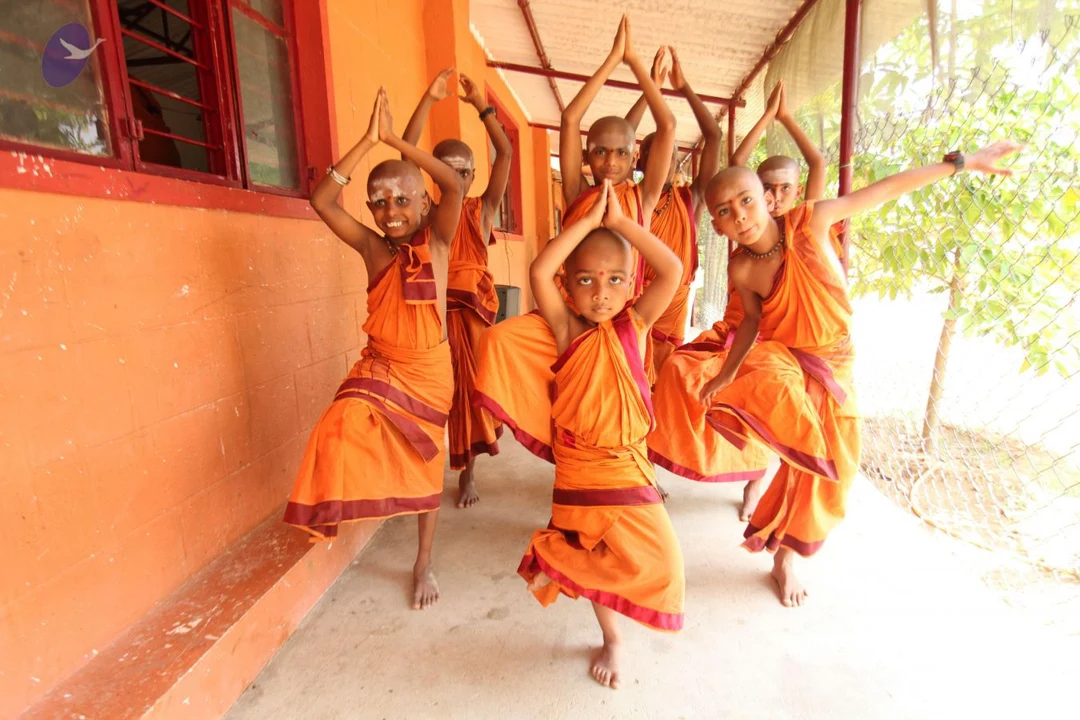
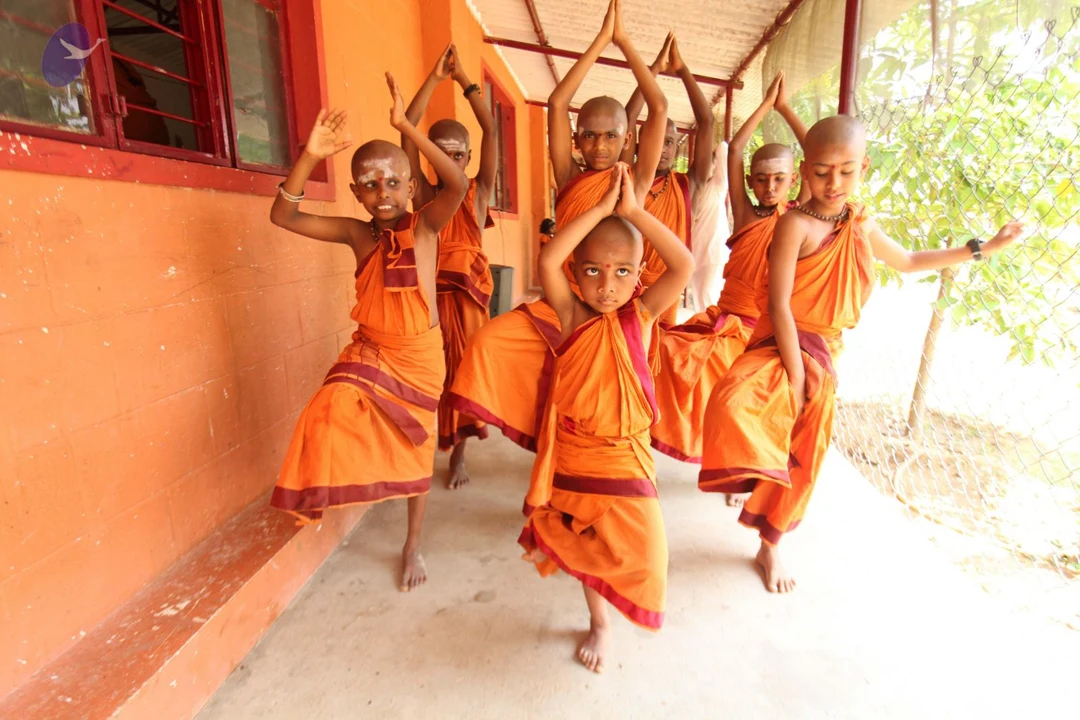
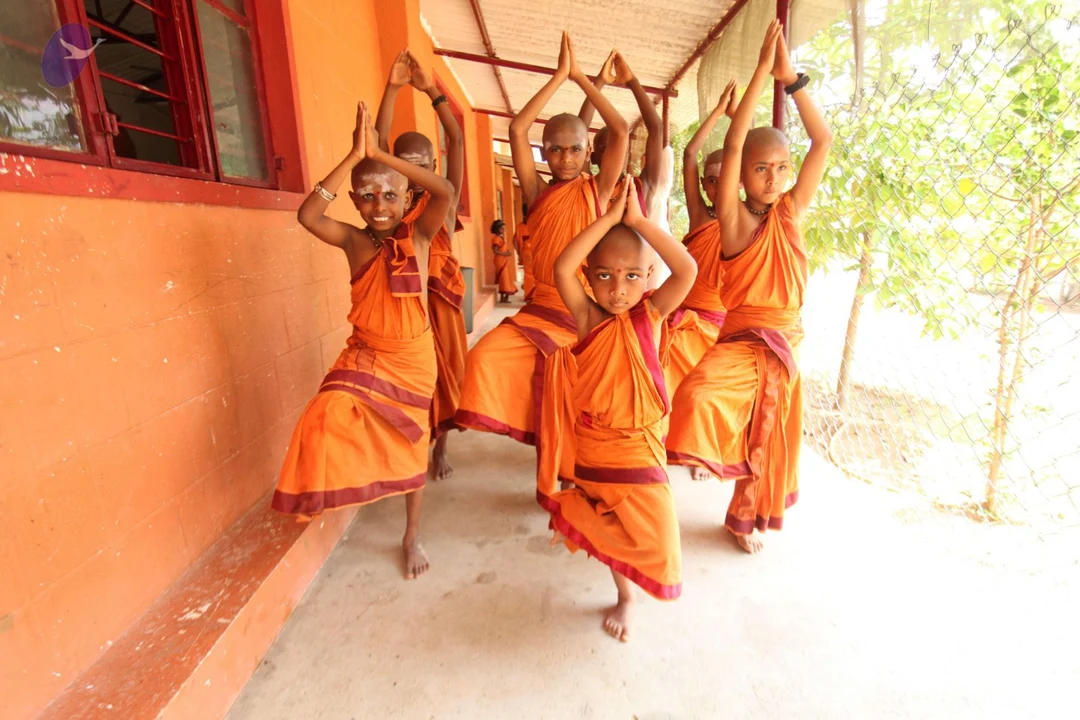
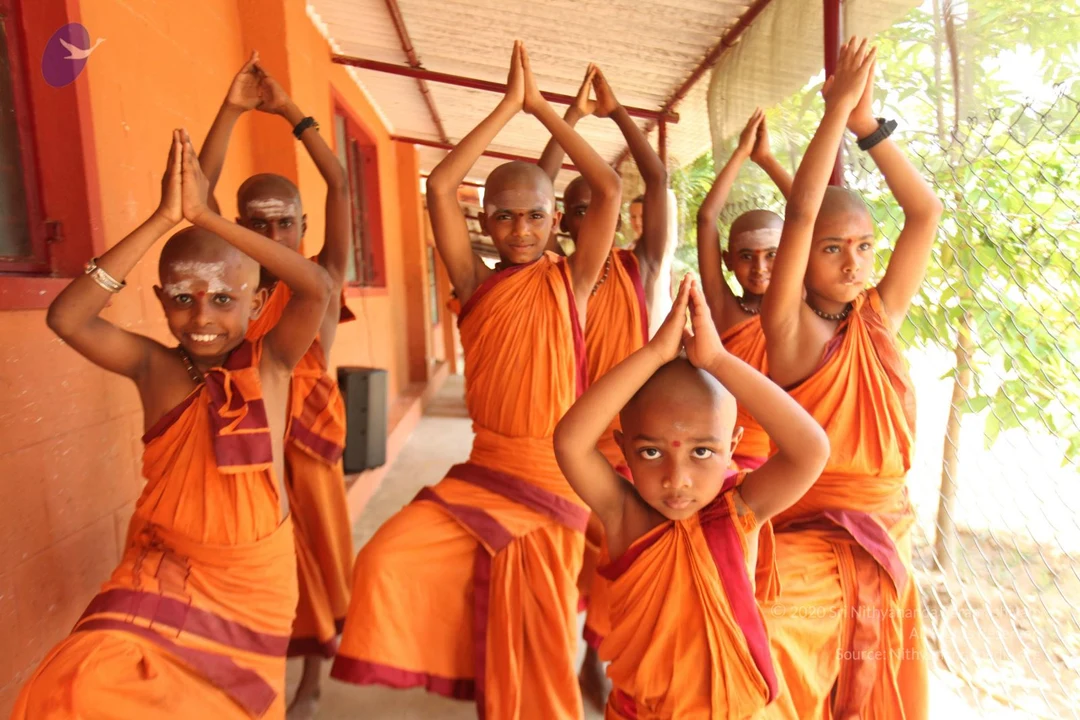
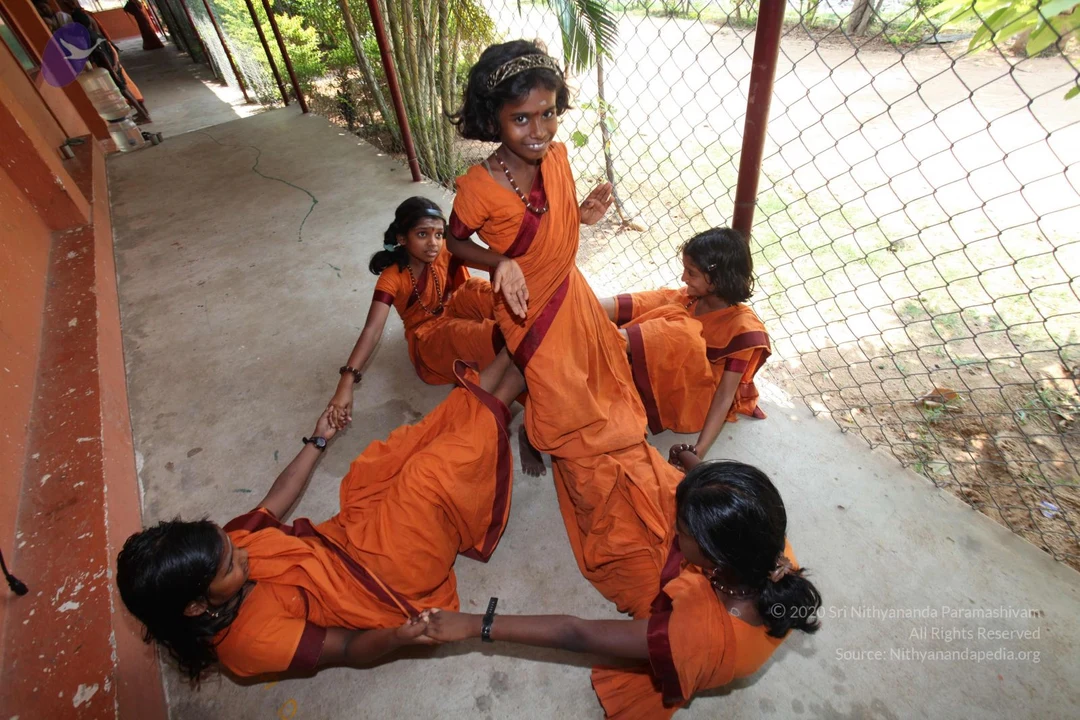
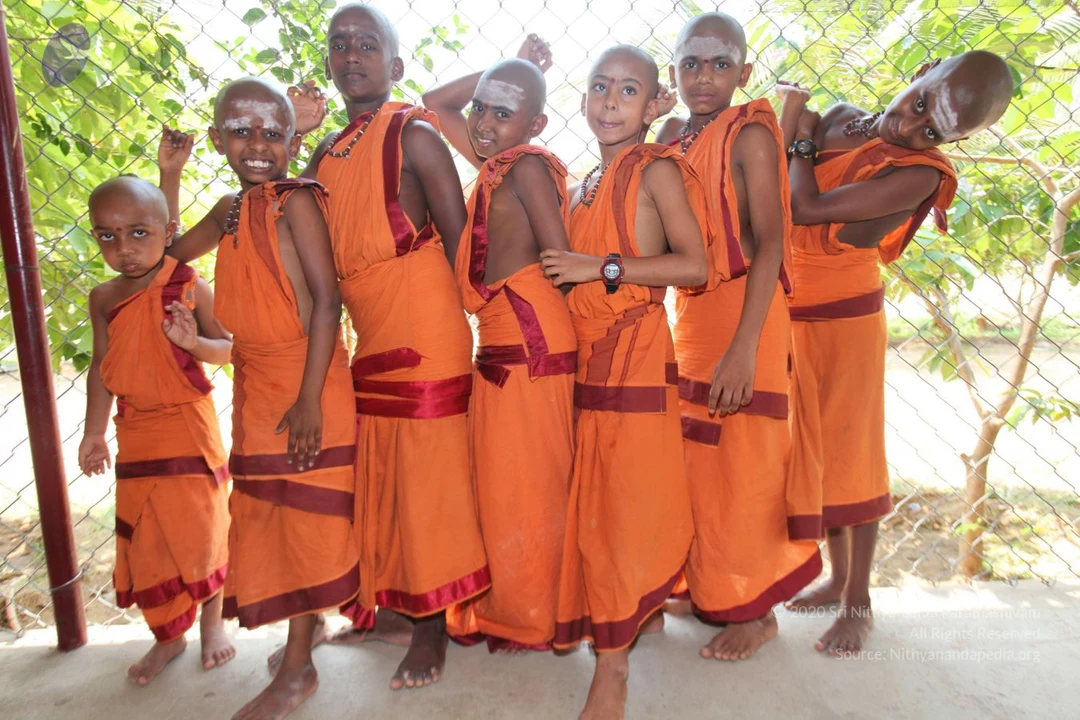
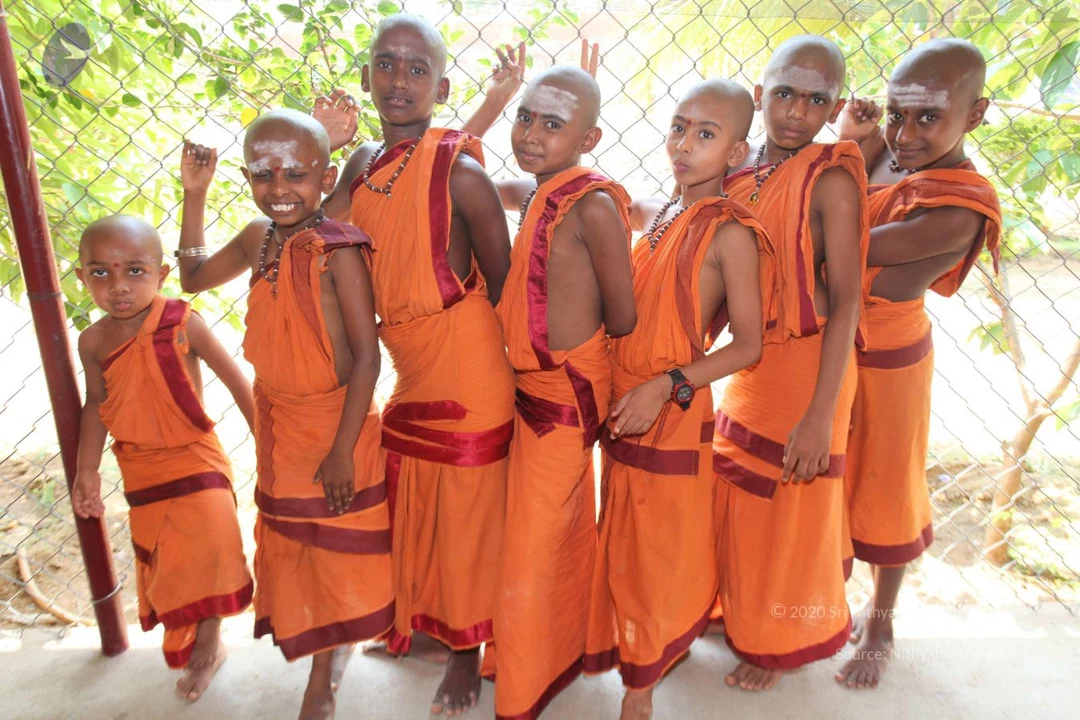
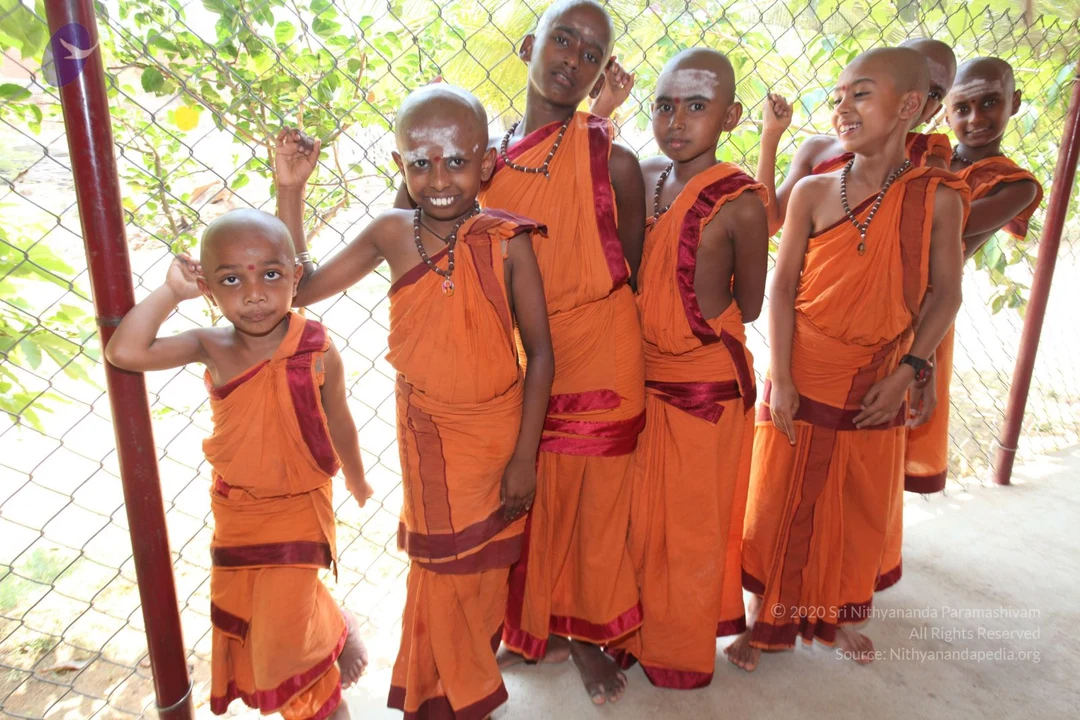
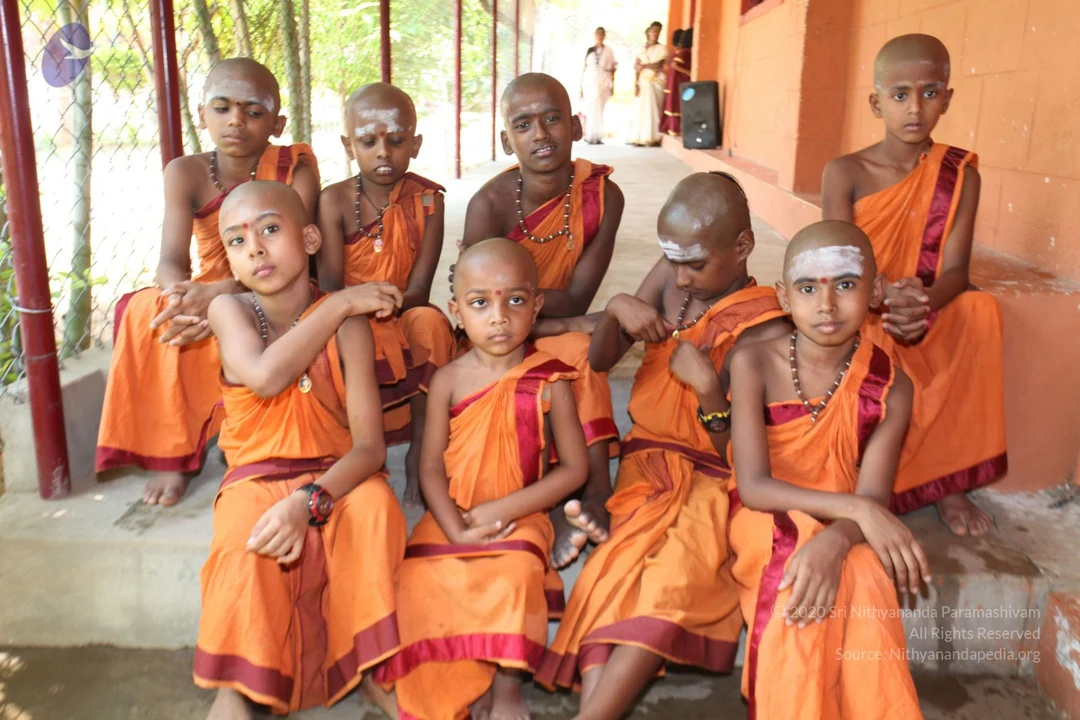
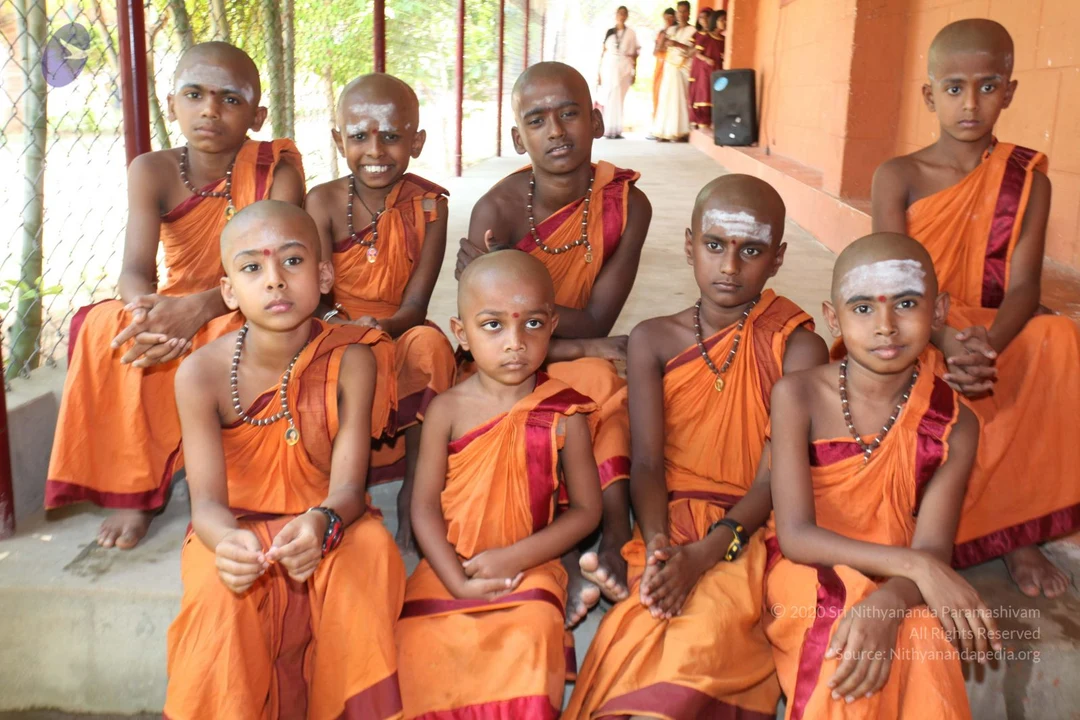
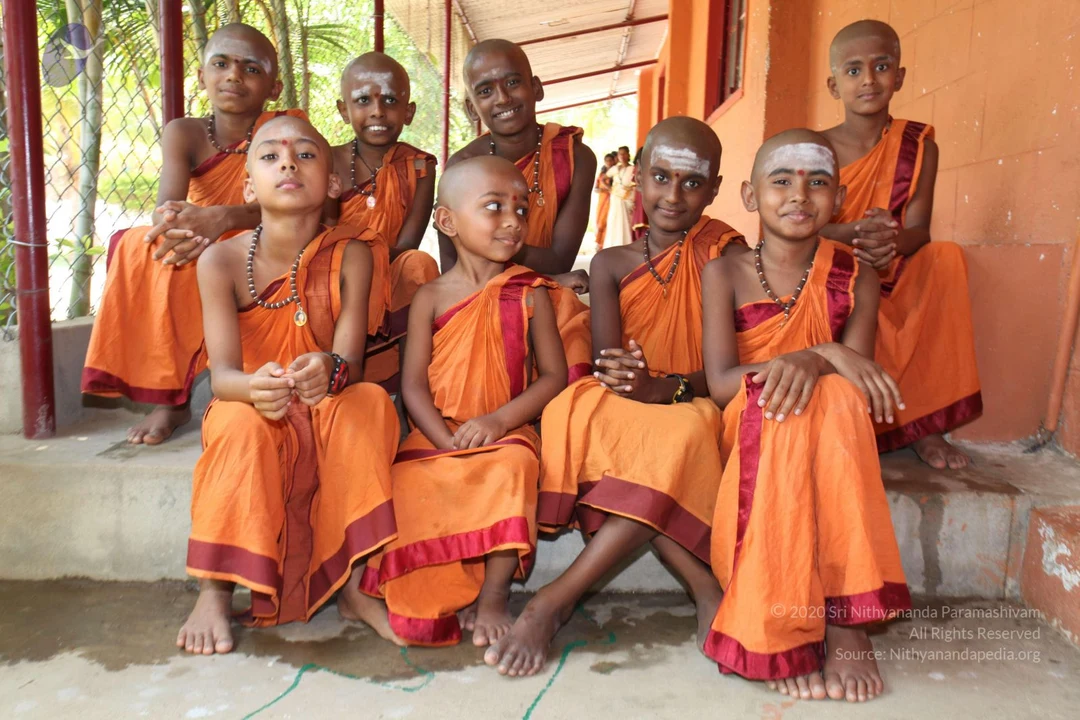
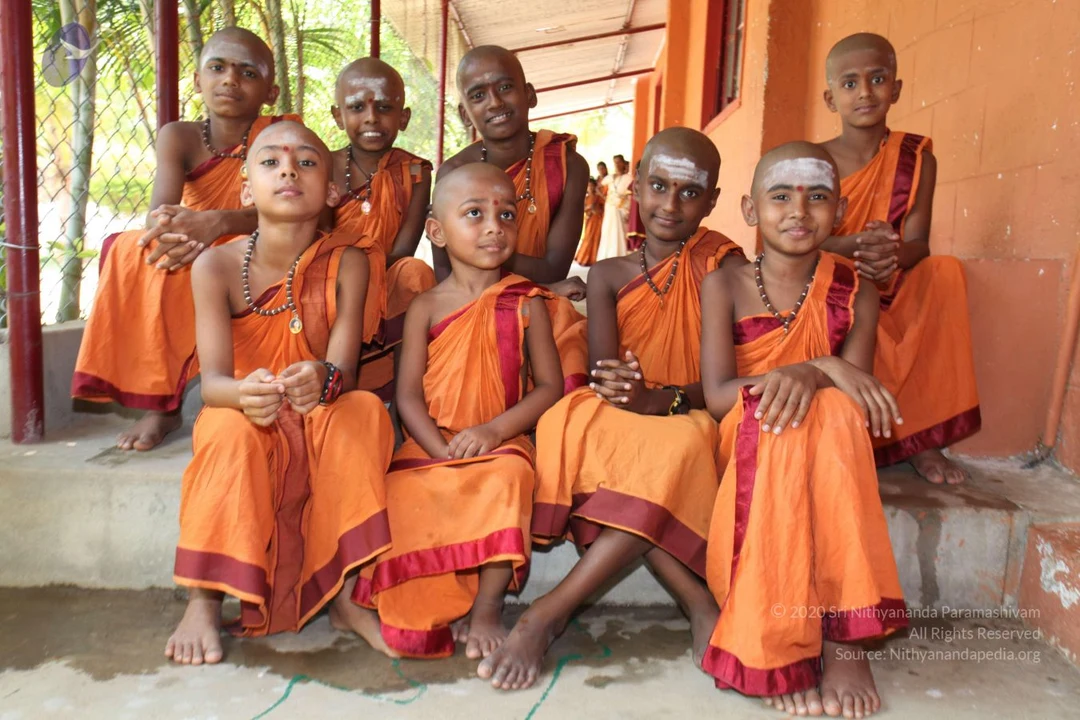
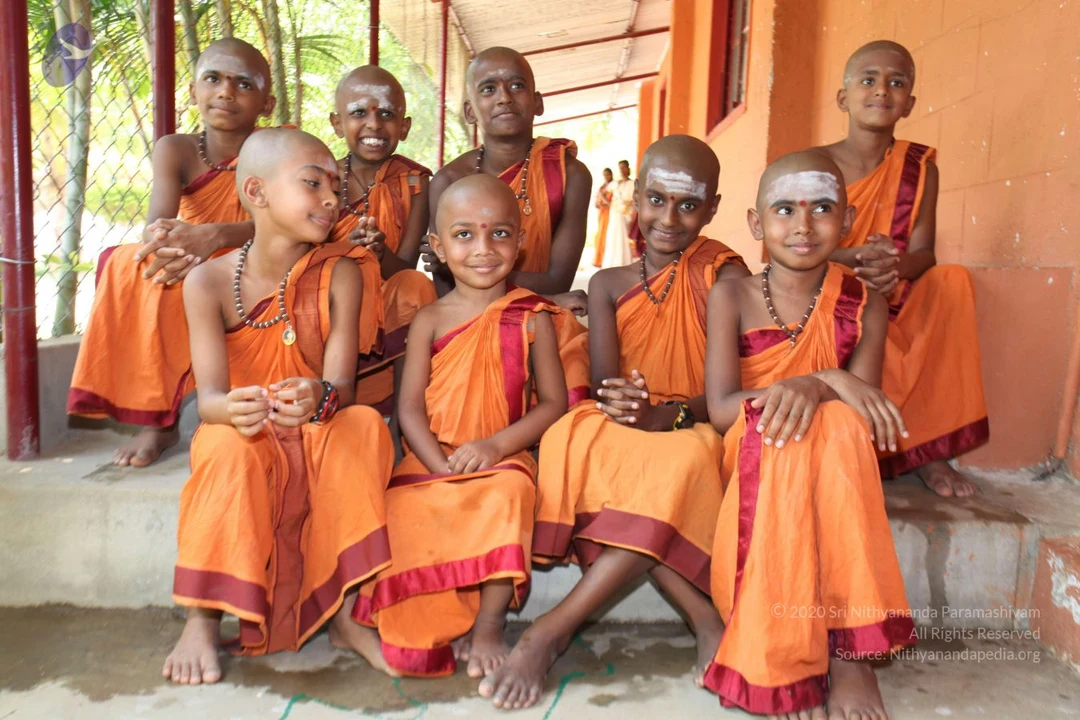
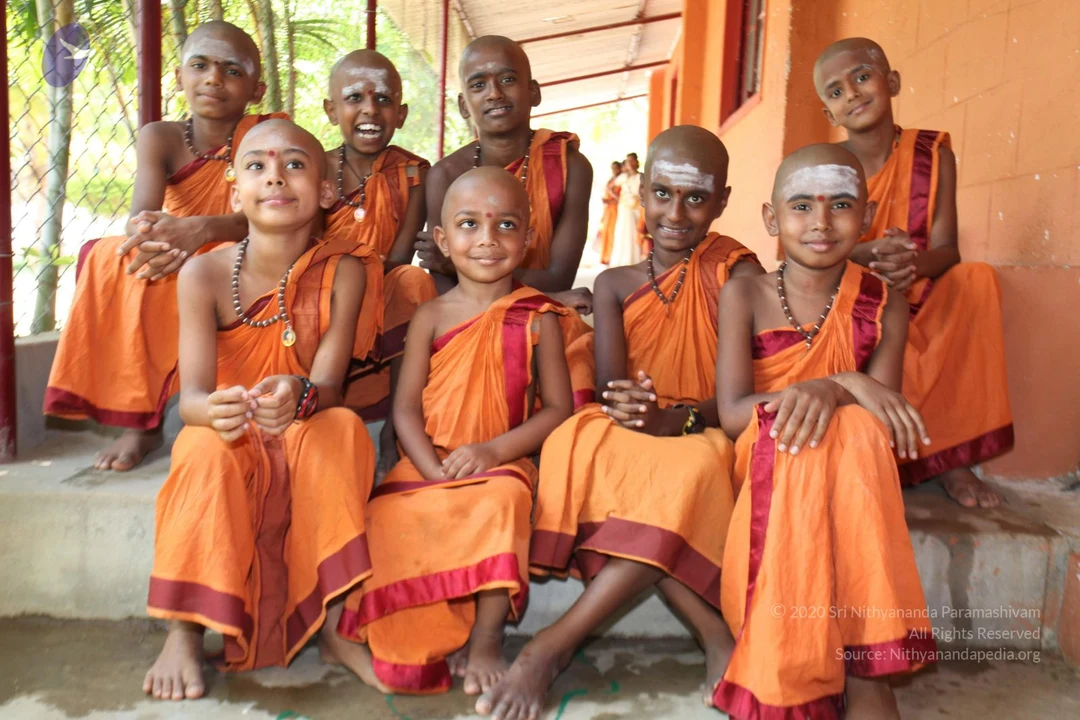
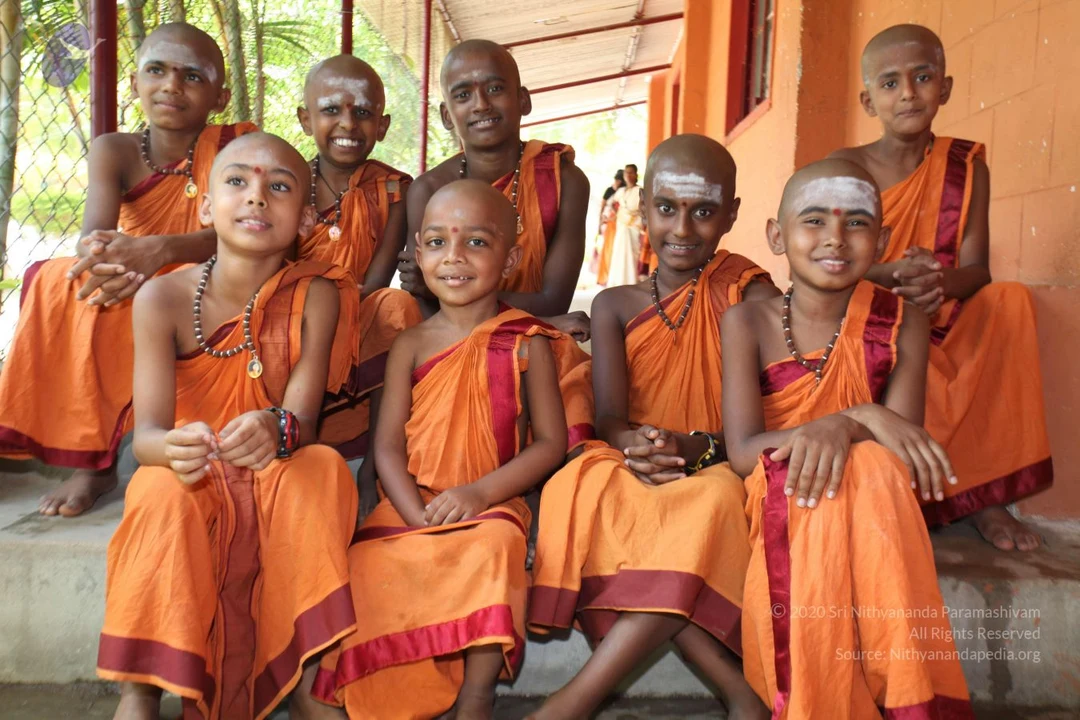
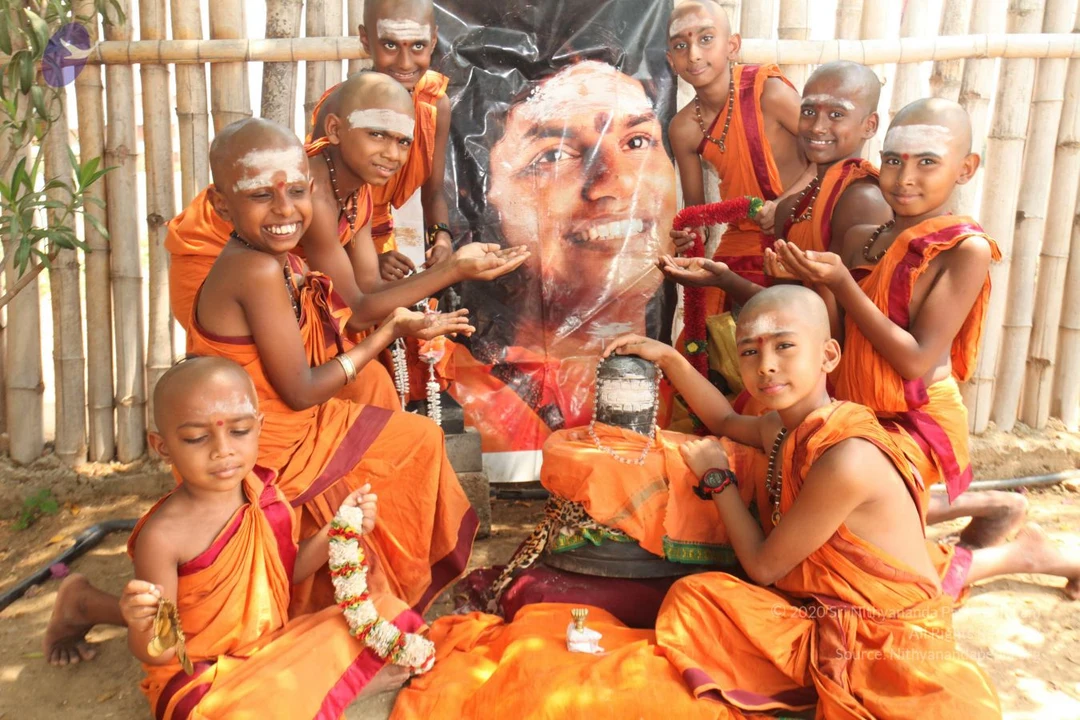
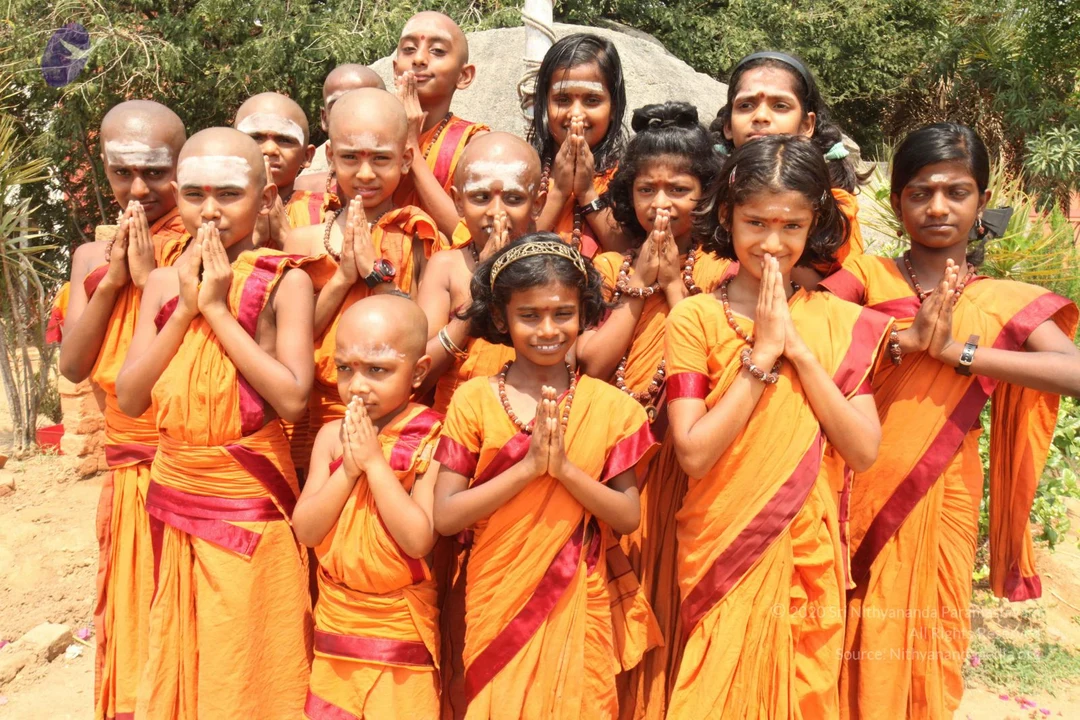
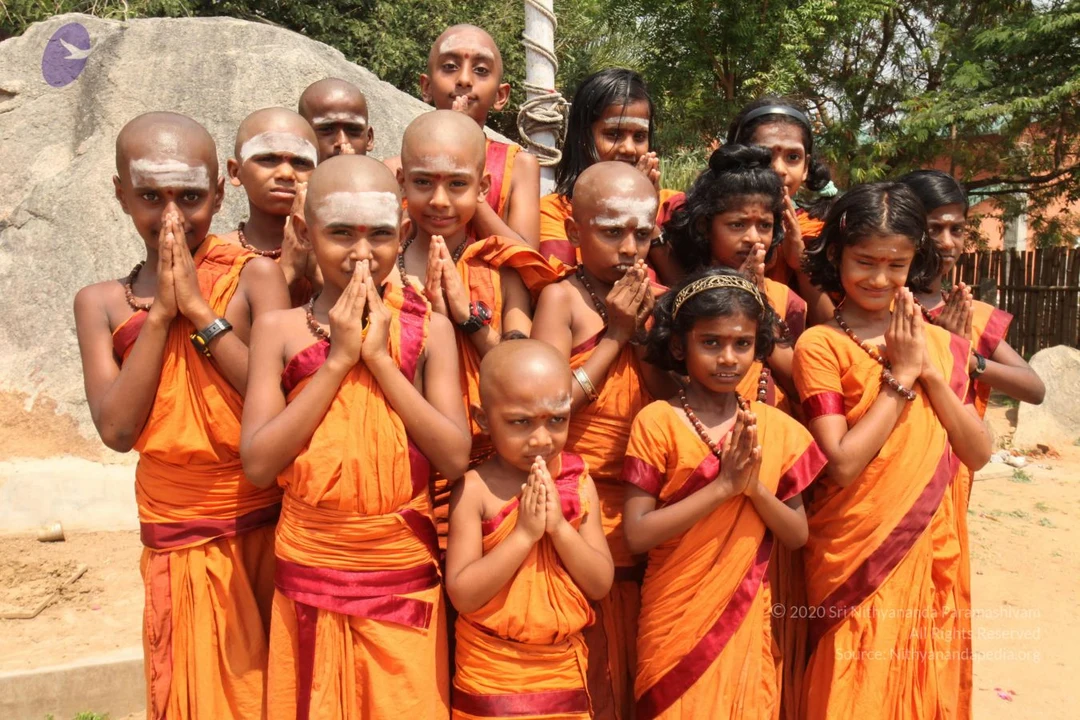
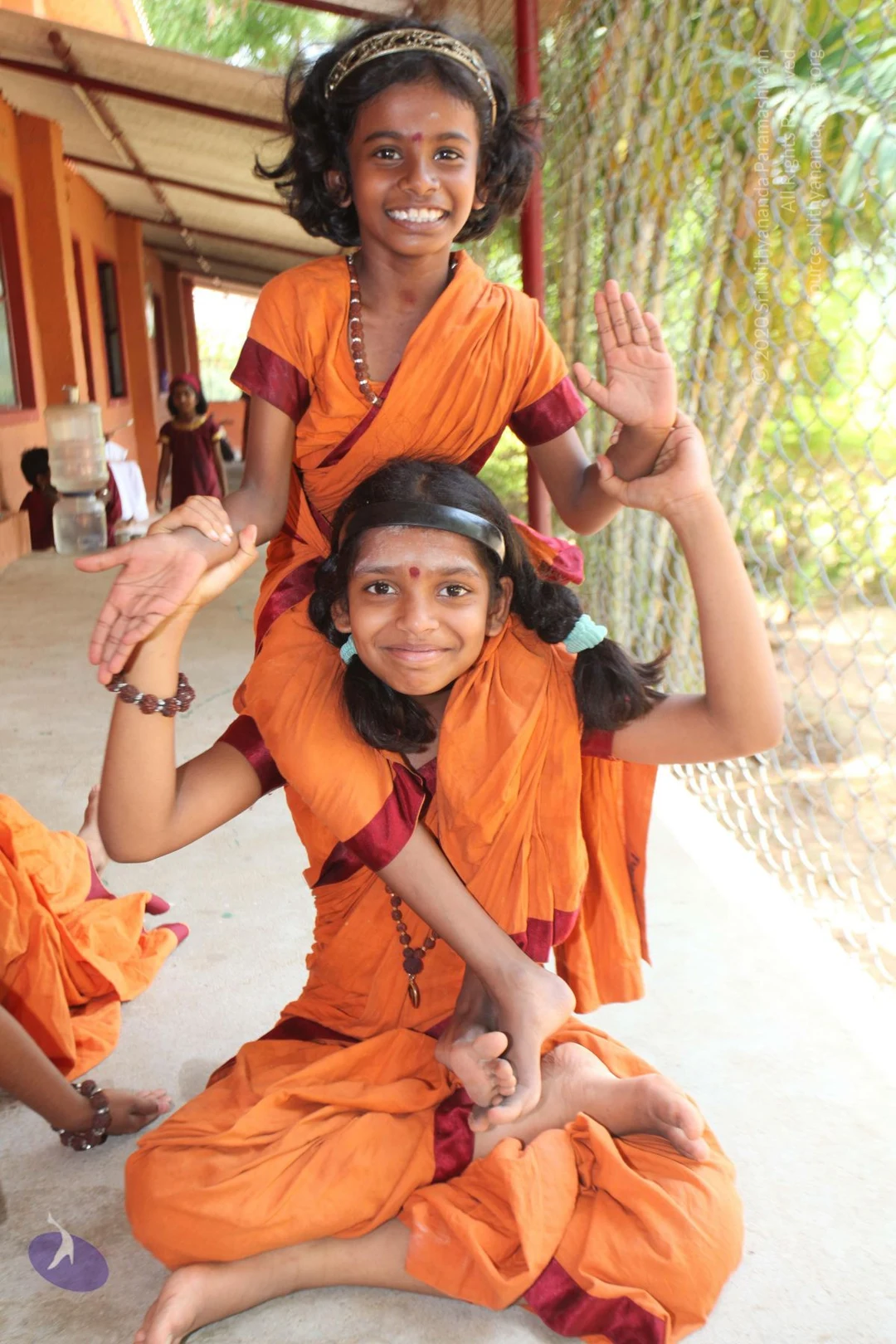
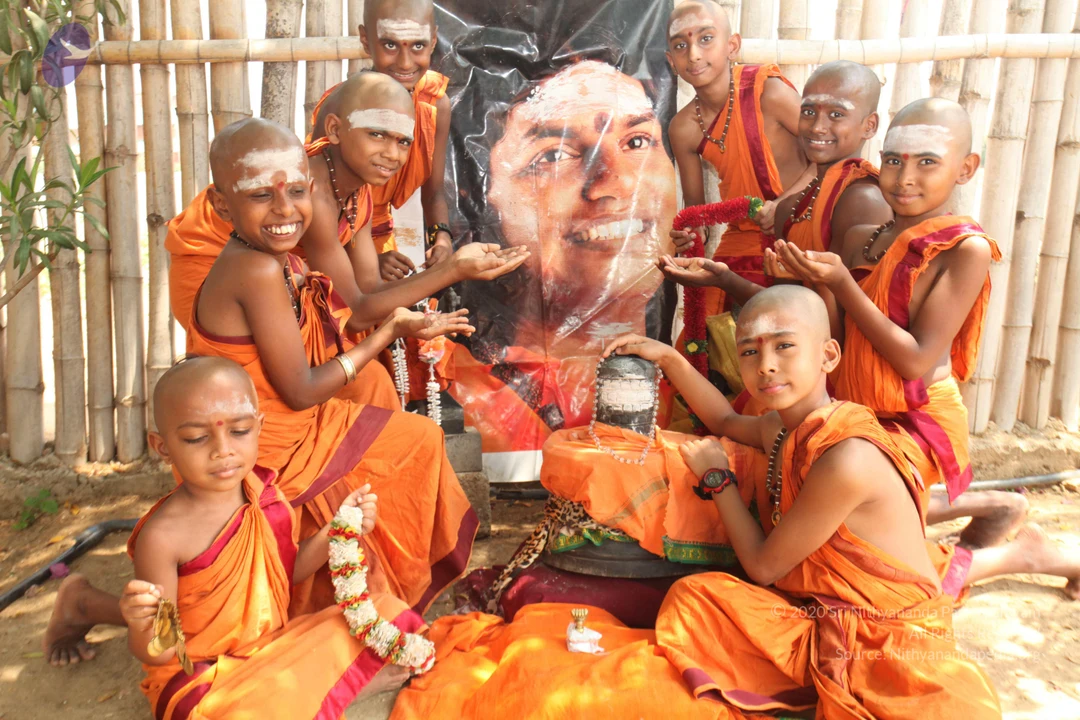
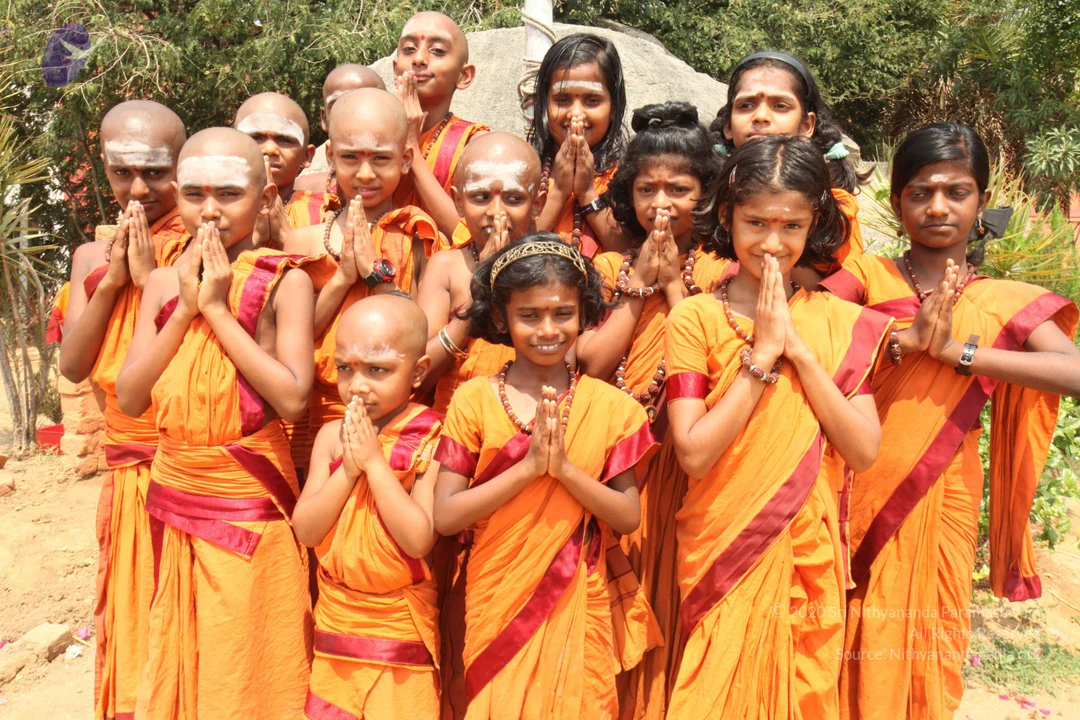
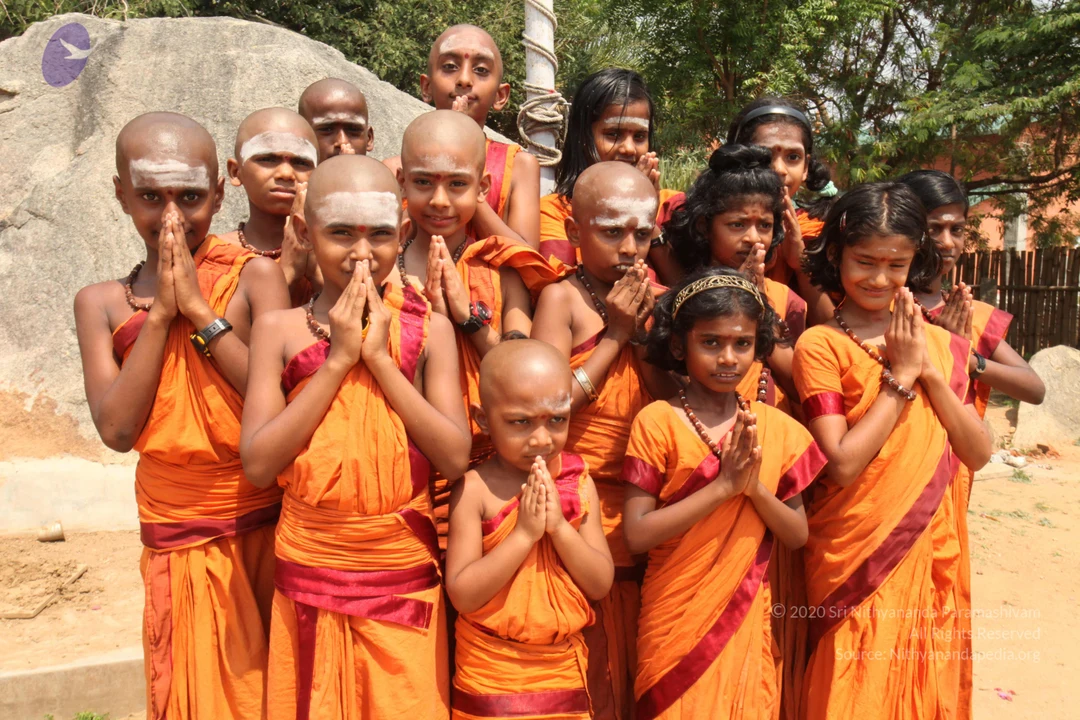
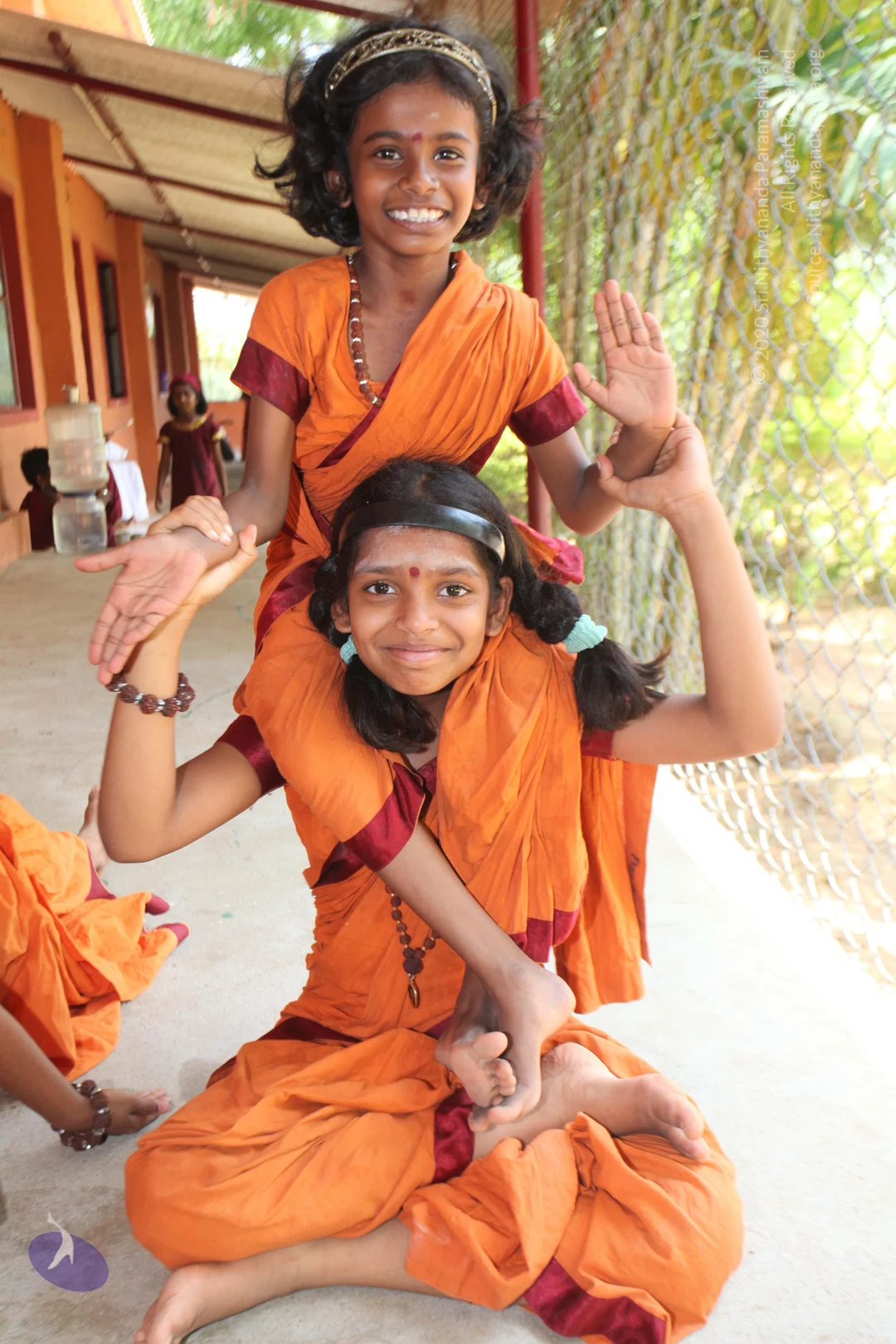
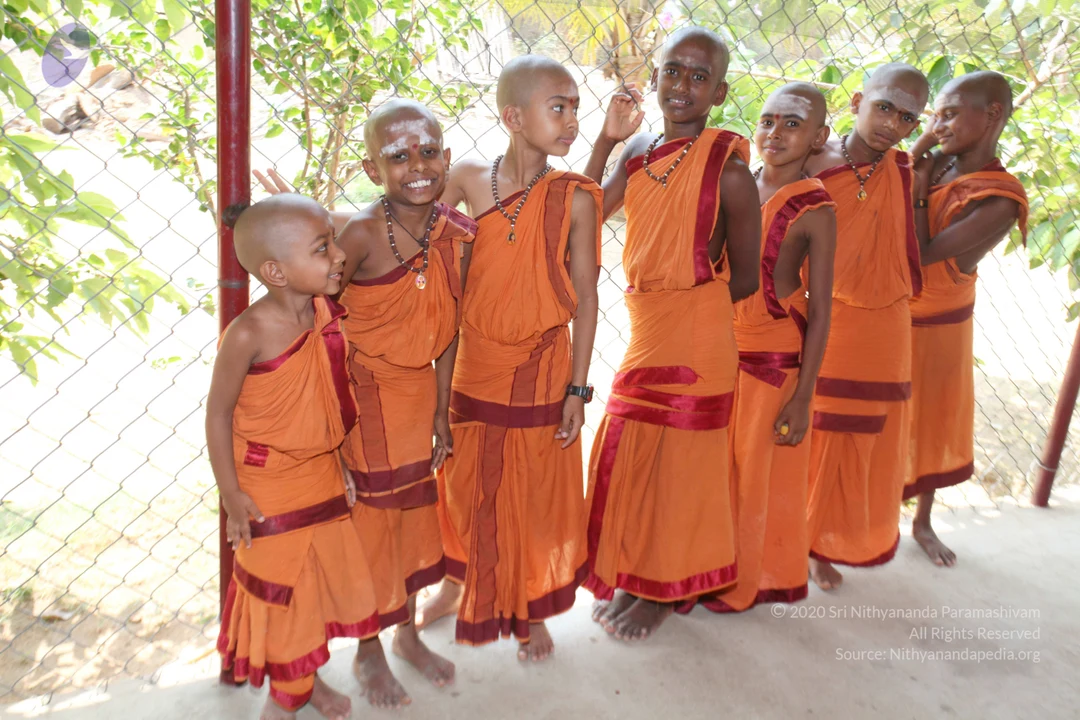
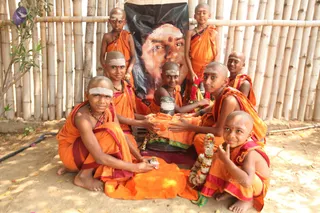
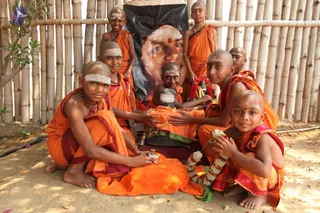
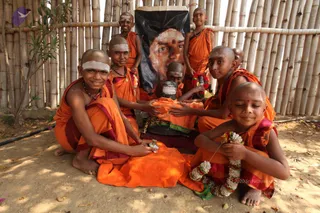
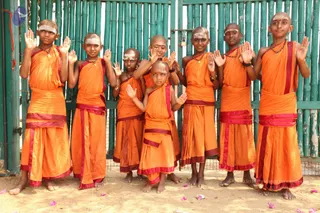
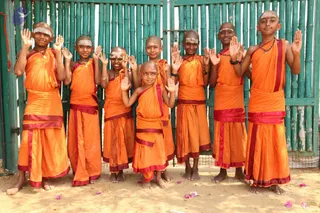
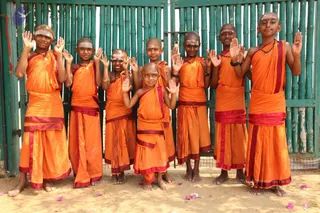
Photograph of a group of shaved-headed young boys in saffron-orange robes with white vibhuti horizontal marks on their foreheads, seated on sandy ground in front of a bamboo fence. Several boys hold and touch a large orange-draped object, possibly a kalasha or a ceremonial item, with a garland of white flowers nearby. Behind them, a large black banner shows a printed portrait of a man with a tilak and white paste markings, and a small figure in the centre-back wears orange clothing. A small tree stands at left. The boys appear to be performing a puja or ritual offering together.Seven young boys in saffron-orange robes with shaved heads and white vertical tilaka marks sit or kneel outdoors on bare ground in front of a bamboo fence. A large printed portrait behind them shows a man with a red-orange face, orange-red tilaka and a dark background; the portrait is a depiction, and no printed caption is legible. In the centre, a boy in orange cloth holds his hands over a stone lingam on a dark base, draped with an orange shawl. Other boys hold a garland of red and white flowers and a small metal object. The boy in the front right wears a red-and-orange wrap and holds a white flower garland. A small potted plant stands at left.A photograph of several shaven-headed young boys in orange robes gathered outdoors before a bamboo fence. They sit and kneel around a small seated figure draped in orange cloth, and two boys hold out folded orange fabric. White sacred ash marks their foreheads and arms, and one boy holds a garland of white flowers. Behind them stands a large printed portrait of a man with dark hair, a red bindi and white marks on his forehead, mounted on a dark backdrop; the portrait is a printed image rather than a person, and no candidate is visible in person. A small tree and a few flowers sit on the sandy ground.Photograph of seven young boys standing in a row in front of a green bamboo gate, all shaved-headed and wearing saffron-orange dhoti-style robes trimmed with deep red borders and red sashes. Each boy has white vibhuti or tilak marks on the forehead and wears beaded or rudraksha necklaces, and most raise their palms in a greeting or blessing gesture. The children appear to be young sannyasi-style students posing together.Eight shaved-headed boys stand in a row in front of a green bamboo gate on sandy ground, all wearing saffron-orange dhoti-style robes with maroon borders and red waist sashes. Each has white vibhuti or tilak marks on the forehead and several wear rudraksha or bead necklaces. Most raise their palms in a greeting or blessing gesture, and small pink flower petals lie on the sand.A group of seven young boys with shaved heads stands in a row before a green bamboo gate on sandy ground scattered with flower petals. They wear orange saffron robes with maroon borders wrapped at the waist and draped over the shoulders, and several wear beaded necklaces. Each has a white vertical forehead mark, and most raise both open palms toward the camera in a greeting. The setting appears to be an ashram or temple grounds.

Pic-4-Mag

2 photosSource gallery
A smiling man with long dark hair and a white tripundra forehead mark with a red bindi sits on an ornate gold throne with a carved crown-shaped canopy. He wears a rust-red garment with gold-edged borders, a tiered rudraksha mala and a gold beaded necklace, and his arms are open on the throne armrests. The throne has a tiger-striped cloth draped across the seat. Lit oil lamps hang on chains at both sides, and flower petals and offerings lie on a tray in front.A seated man in a rust-red and gold-bordered dhoti and shawl raises his right hand in a wave, smiling. He wears a long multi-strand gold bead necklace over an orange-brown rudraksha mala, a white tilak with a red bindi, and small earrings. He sits on an ornate gold-leaf throne with a carved, arched backrest and a zebra-striped cloth on the seat. Oil lamps hang from chains at the sides, and flowers and small silver vessels lie at his feet. Given the page cues and his distinctive ceremonial adornments, this is a person seated in a satsang setting.

Temple-Visit

37 photosSource gallery
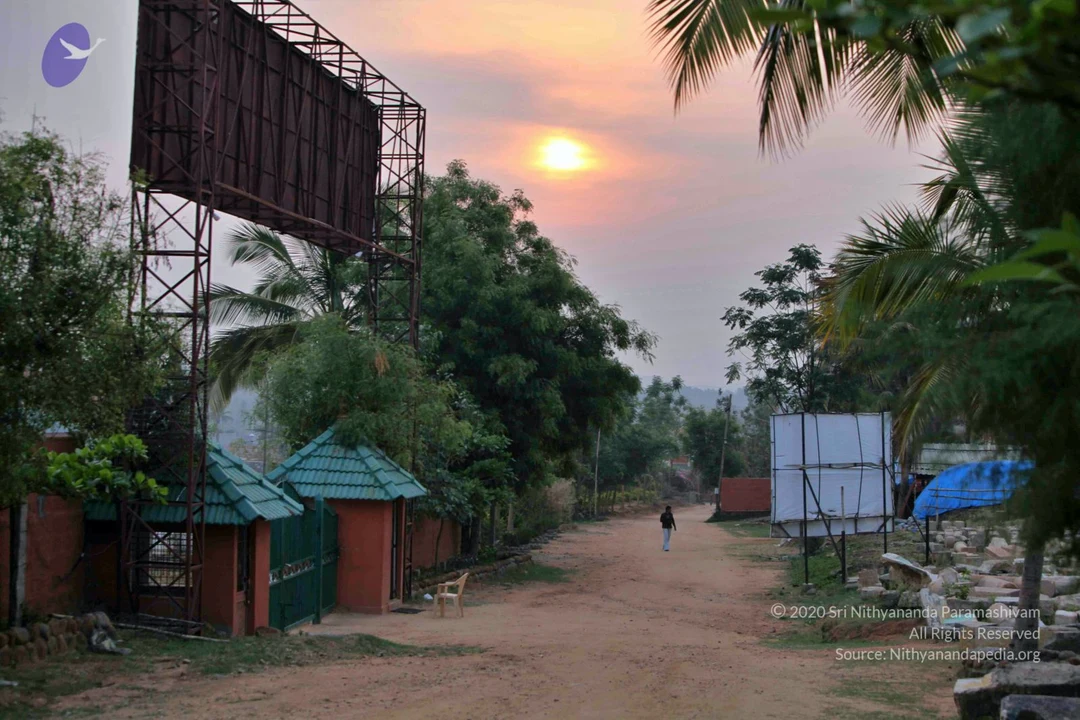
A tall copper flagstaff, or dhwajastambha, rises against a pale blue sky with wispy clouds. Its polished copper shaft is banded with rope-like ridges and tapers toward a tiered top with ornate finials, a small red cloth hanging from the upper section, and a guy rope running down its length. A black tent or canopy roof edge and a copper finial appear at the lower right, and a tree edge shows at the lower left. No people are visible.A dusty dirt road at dusk runs through an ashram-like compound, with a low sun glowing orange in a hazy sky. A lone person in dark clothing walks away from the camera up the middle of the road. On the left, a tall rusted steel billboard frame stands beside a green-roofed gate set in red-brick walls and a small wooden chair. On the right, a blank white hoarding panel, a blue tarp and stacked stone blocks sit beside palm fronds and tall trees. The scene is quiet and empty of ritual activity, showing the grounds rather than any event.A photograph of two metal murti statues of a deity couple seated against a bright green fabric backdrop within a carved stone arch. The figure on the left has a red turban with a central ornament, a raised hand holding a trident and an ornamented staff, and garlands of red and yellow flowers with a rudraksha-style mala. The figure on the right wears a silver crown, layered silver necklaces, a red sari and red and yellow garlands, and holds a small bird-topped staff. The statues are decorated for worship, and the bronze-toned surfaces are polished.Two metal murti figures seated side by side against a green fabric backdrop with an ornate golden arch at right. The figure at left has a red turban with a jeweled ornament, a trident in the raised hand, and a rudraksha mala with silver necklaces, all draped in red and orange fabric. The figure at right wears a pink and silver crown, layered silver necklaces, and a red-orange sari with a dark red blouse, holding a small kalasha-like object. Both are decorated with red and yellow flower garlands and gleaming metal ornaments.Two metallic deity murtis seated against a bright green cloth backdrop within an ornate arched frame. The figure on the left, in a red turban with a silver tilak, holds a trident and raises one hand in blessing; he wears a rudraksha mala, layered silver necklaces and an orange-red garment. The figure on the right wears a silver crown, layered silver jewellery and a red-pink sari, and holds a small lotus-like stem. Both are garlanded with red roses and white and yellow flowers. The statues are image forms, not living people.A photograph of a pair of deity murtis, a seated Shiva and Parvati figure set within an ornate gold arch against a green backdrop. The male figure wears an orange-red turban and orange dhoti, holds a trident, and is adorned with white and silver necklaces and a rudraksha mala. The female figure wears a crown, layered silver necklaces, a magenta and orange sari, and holds a hand near the male figure. Both are decorated with red and yellow marigold garlands. The blue-draped base sits in a garden with palm fronds and stone sculptures nearby. No physical people are visible.

Pada-Puja
68 photosSource gallery
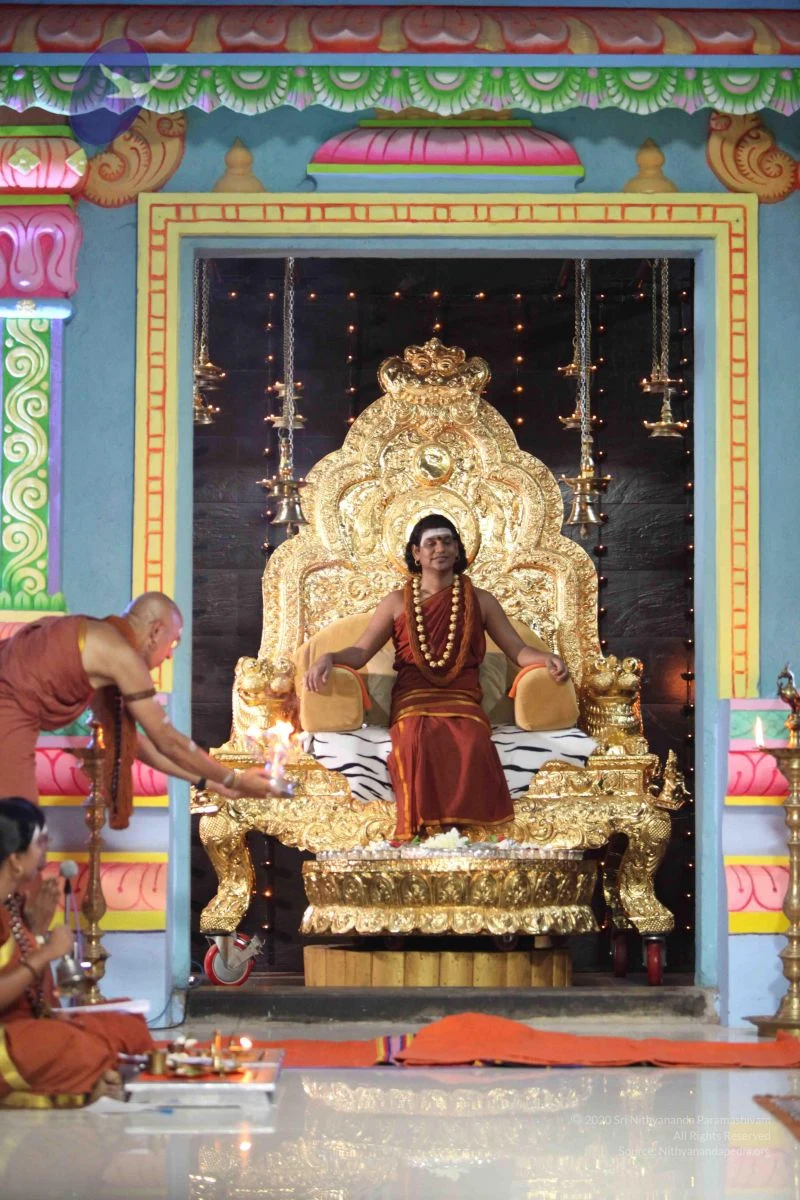
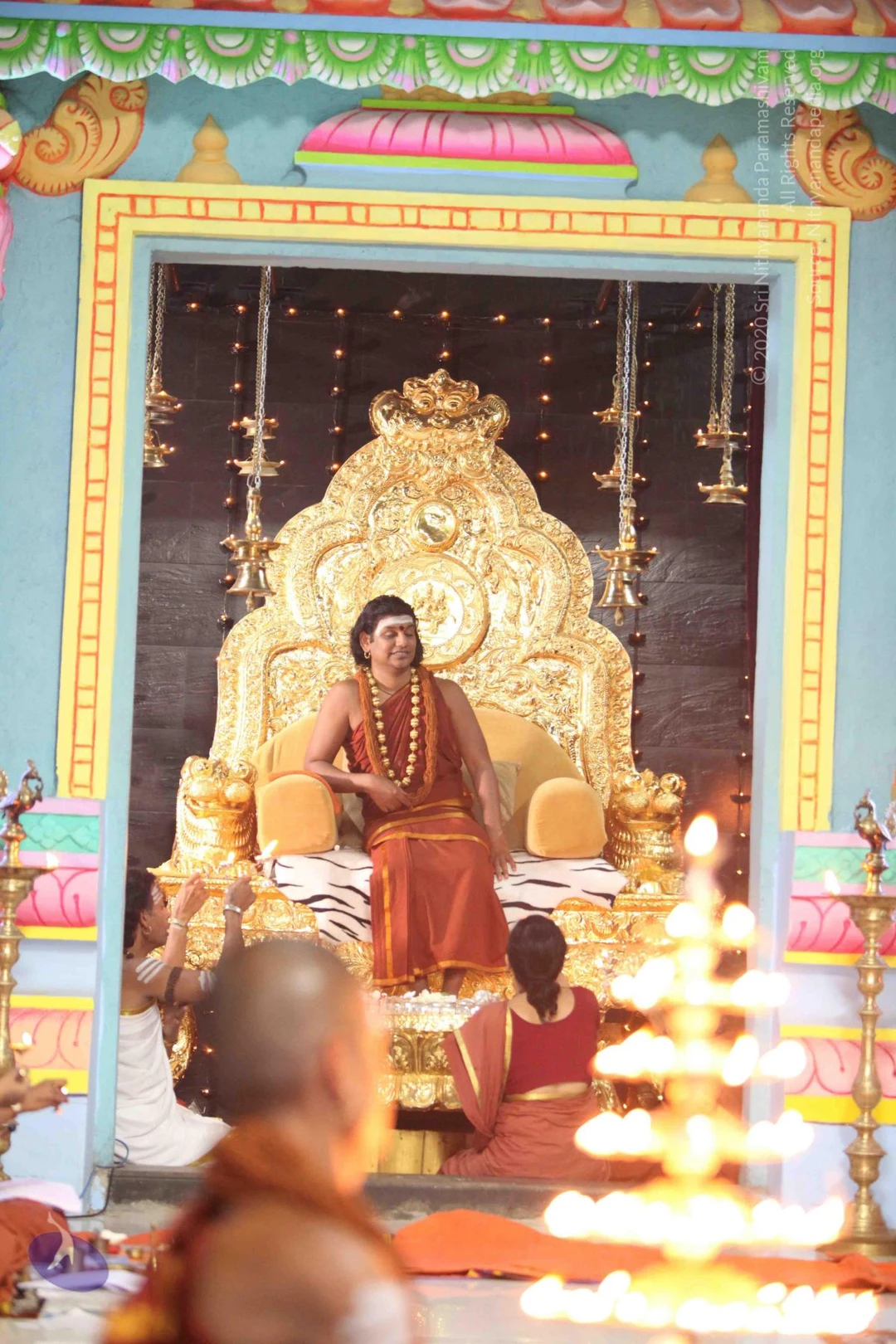
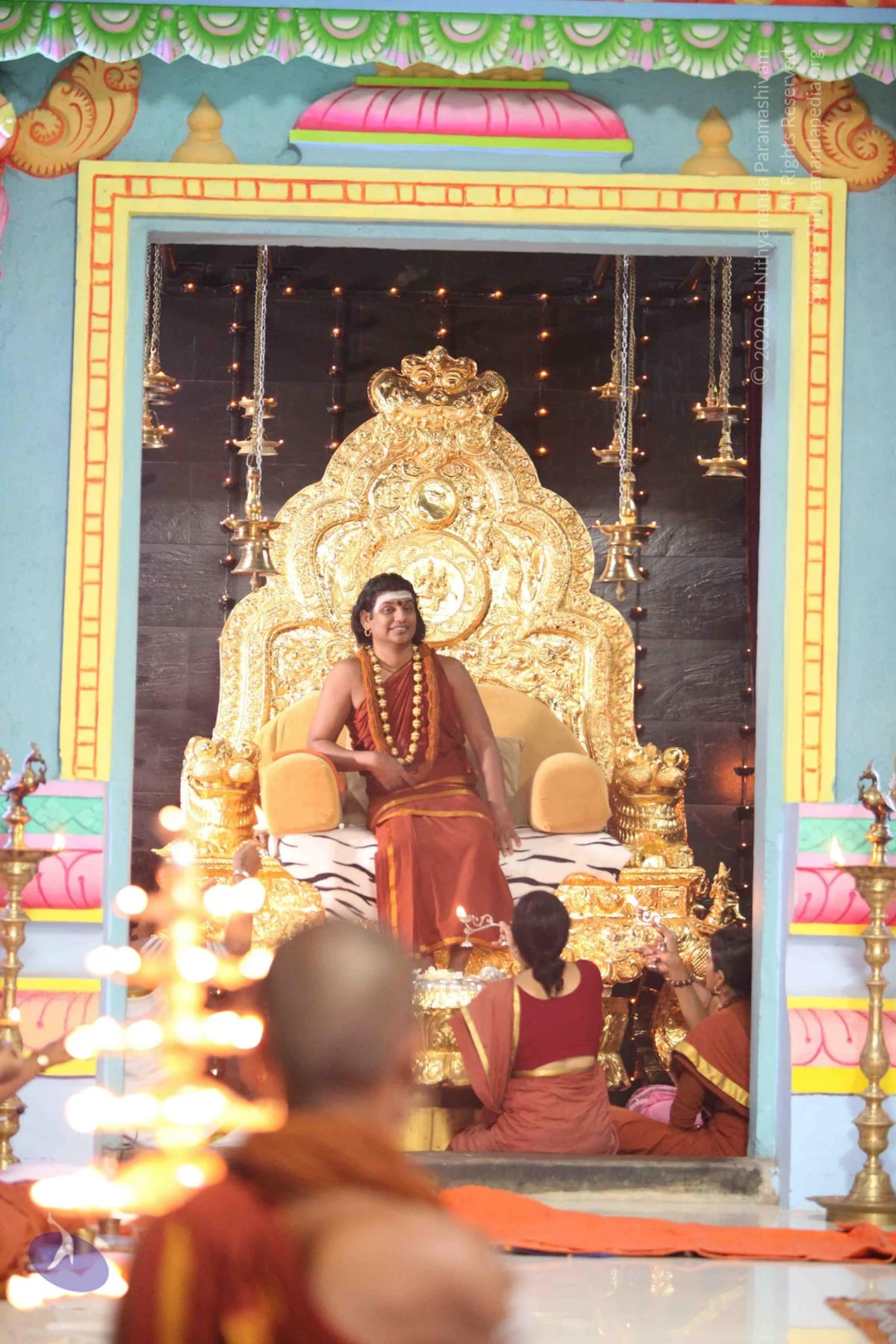
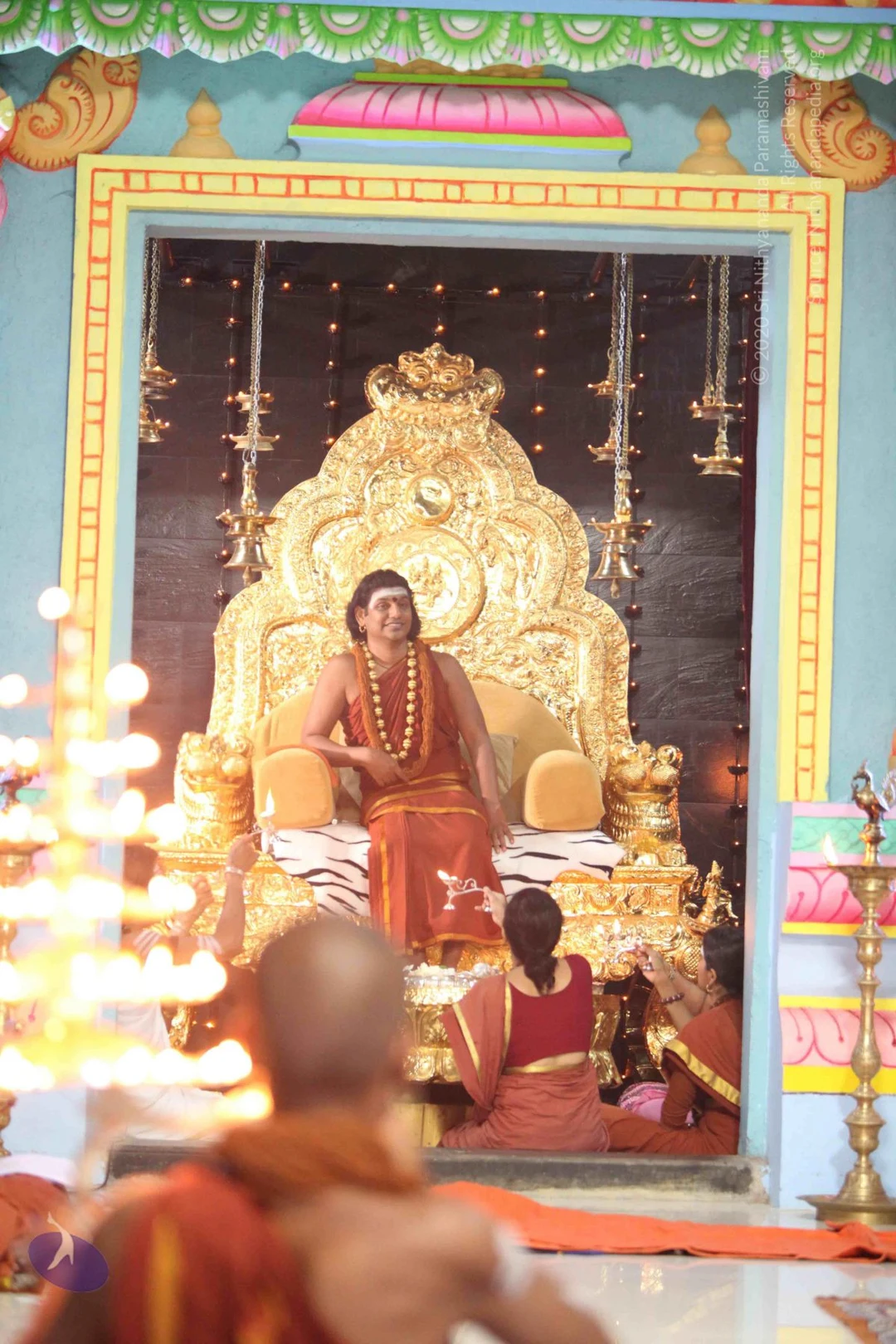
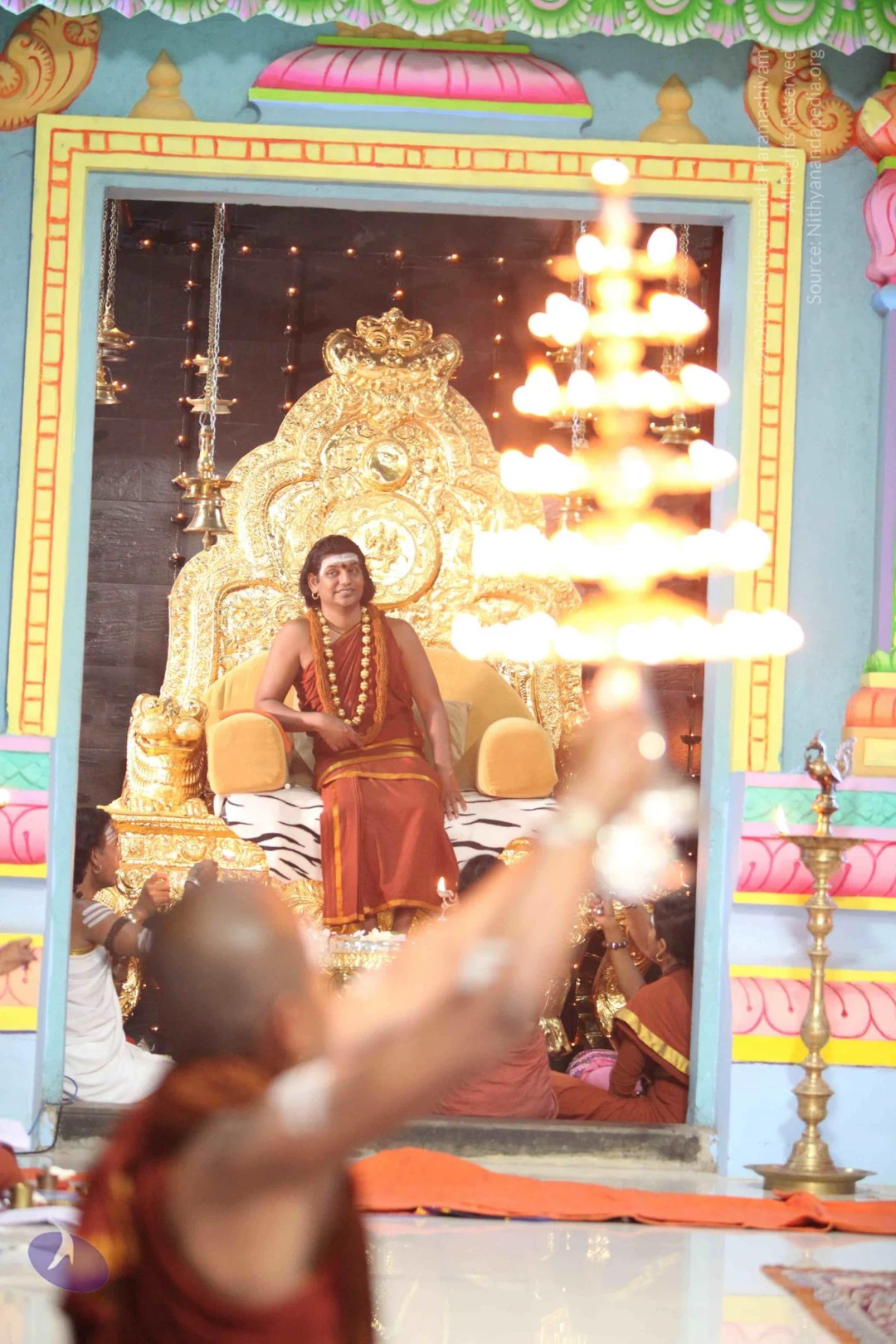
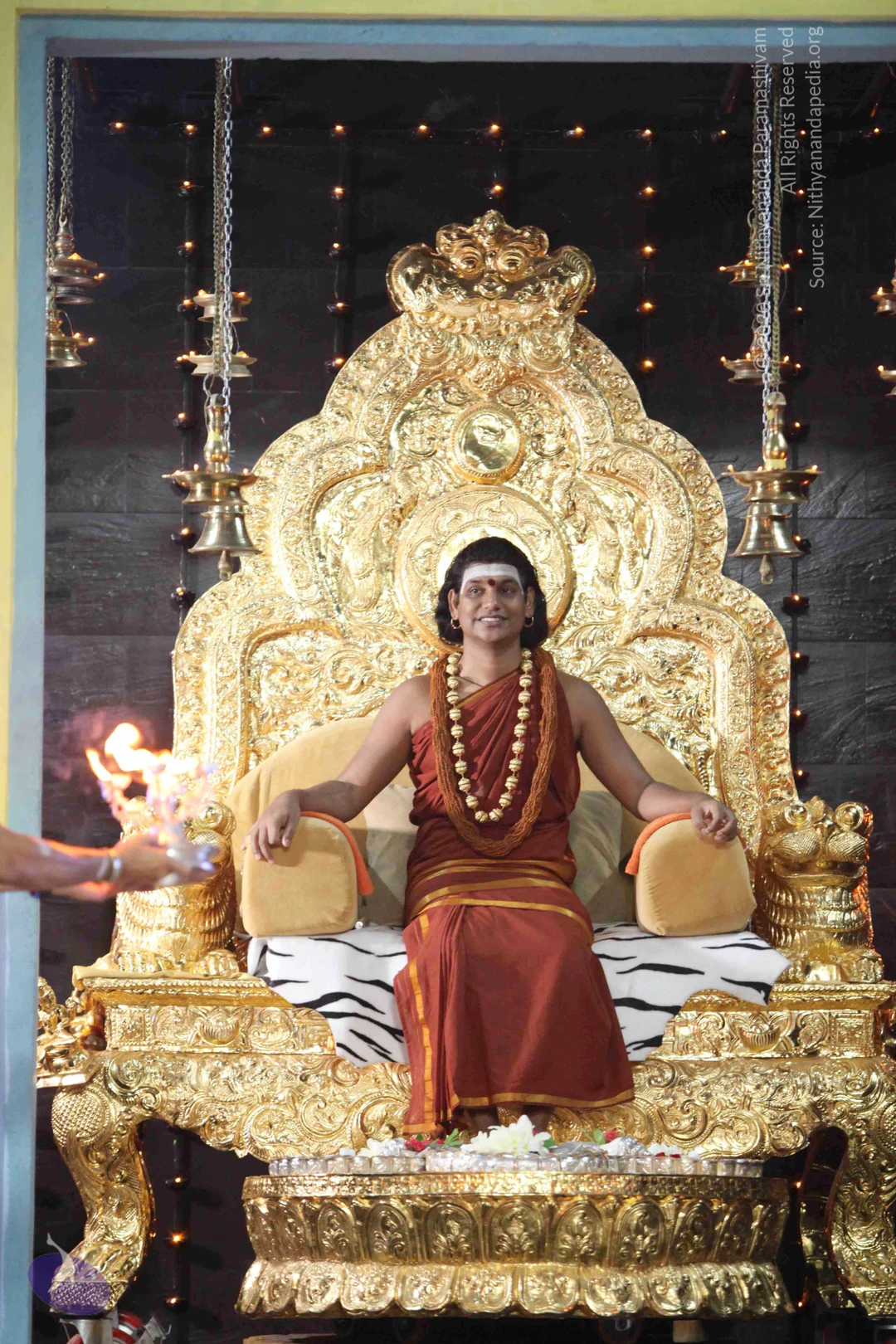
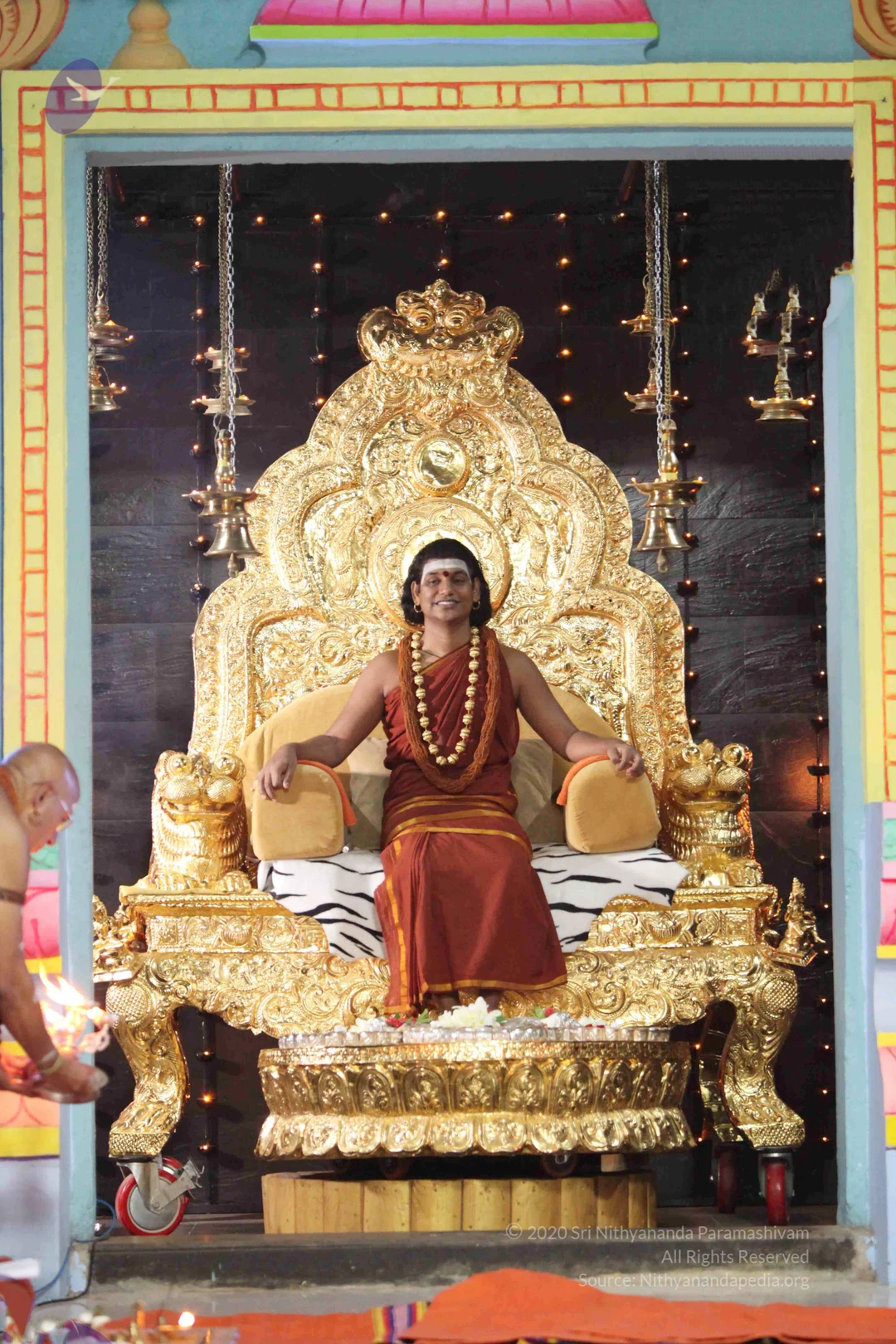
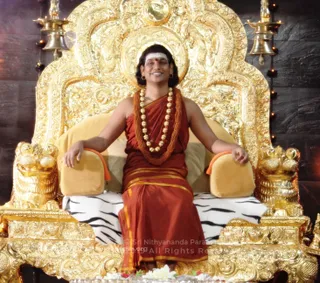
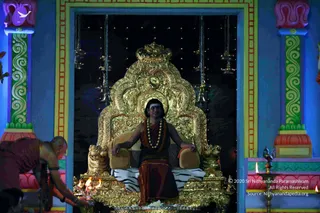
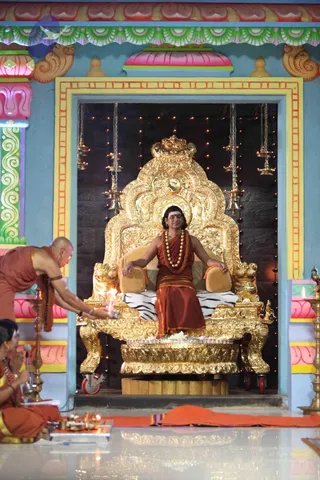
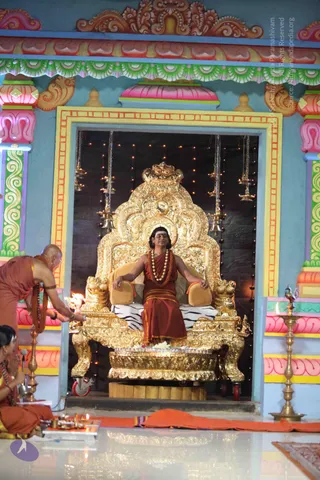
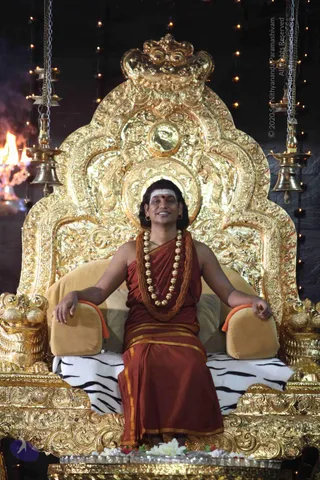
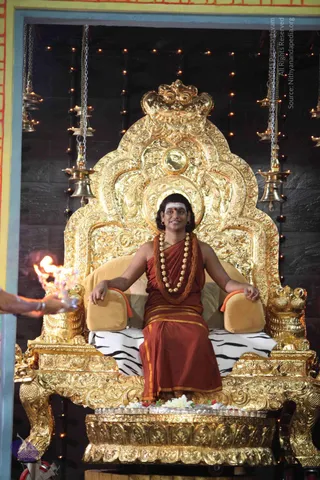
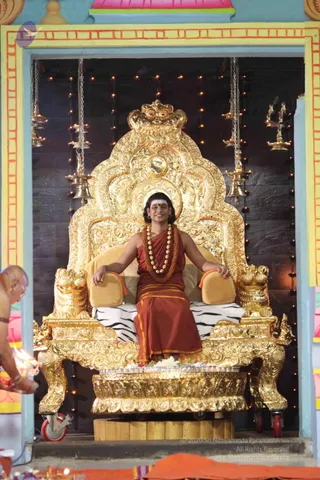
A photograph of a seated figure on an ornate gold throne (peetha) with carved lion-head armrests and a tall gold back with a crown finial, draped with a white and black striped tiger-skin cushion. The seated man wears a maroon/rust-coloured cloth, a rudraksha mala with a large bead necklace, a dark vest, and has a white vertical tilak on his forehead. A partially visible priest in a maroon garment bends at the lower left, tending oil lamps (aarti lamps) on the floor. Brass hanging bells and chains hang above, a blue-and-green painted temple doorway frames the scene, with lit lamps and flower offerings at the base of the throne. a person is seated on the throne, identified by the throne, rudraksha mala and tilak; the figure is seated and the appearance is consistent but not conclusive.A seated man in an ornate gold throne is at the centre of a temple-like hall with painted pink, green and yellow decorative columns. A tiger-striped cloth covers the throne seat. To the left, a priest in orange-red robes with a shaved head holds a flame over a tray. A woman in orange sits in the lower left corner with her hands together, and brass oil lamps and a hanging lamp row decorate the background.A seated figure on an ornate gilded throne with lion-form armrests and a zebra-striped cushion sits centrally in a painted temple-style hall with pink, green and yellow decorative trim. He wears a rust-red robe, a white-and-gold flower garland and a red tilak on his forehead, with eyes closed and arms spread. A kneeling priest in an orange-red robe with a rudraksha mala holds a flame toward a ritual arrangement of brass lamps and flowers at the front. Brass hanging lamps hang beside the throne and a tall brass oil lamp stands on the right. The appearance of the seated figure is consistent with the page's description of a person event, though the depiction cues are limited. Visible people: the seated figure, the priest and a partly visible attendant in orange at lower left.A seated man sits on an ornate gold throne with carved lion-head armrests and a gilded back panel, draped with a zebra-striped cloth. He wears a rust-red saffron-toned dhoti and shawl with gold borders, a long rudraksha-style mala with ceremonial gold beads, a white vibhuti forehead band with a red kumkum dot, and earrings, smiling with arms resting on the armrests. Brass oil lamps hang at the top corners and flowers lie at the base of the throne. Swamiji (probable): long swept-back hair, saffron-toned clothing, rudraksha mala and gold necklace on a throne.A seated man sits on an ornate gold throne with carved lion-head armrests and a crown-topped back, draped with a striped white-and-black tiger-skin cloth. He wears a rust-red robe with gold border, a thick orange-and-gold beaded mala, and a white forehead band with a red dot. Swamiji (probable): long swept-back dark hair, rudraksha-style beaded mala and ceremonial gold necklace cues, seated as the central figure. Behind him hang brass oil lamps on chains with string lights and a flame burns at left. Flower petals lie on a brass tray at the base of the throne.A photograph of a man seated on an ornate gold throne with carved gilded backrest, a lion-like armrest carving and a white tiger-striped cloth on the seat. He wears a rust-red dhoti-style garment with gold border, a rust-red shawl and a long gold-beaded necklace over a rudraksha-style mala, with white vibhuti and a red bindi on his forehead. His hair is long and swept back. Oil lamps hang from chains above him, and a person's hand at left holds a flame or ritual lamp. Flowers and offerings rest on a tray at the base of the throne. a person is seated centrally on the throne, appearing in a ceremonial sitting with a priest or attendant performing an aarti near him.

Nithyananda-Gurkul

93 photosSource gallery
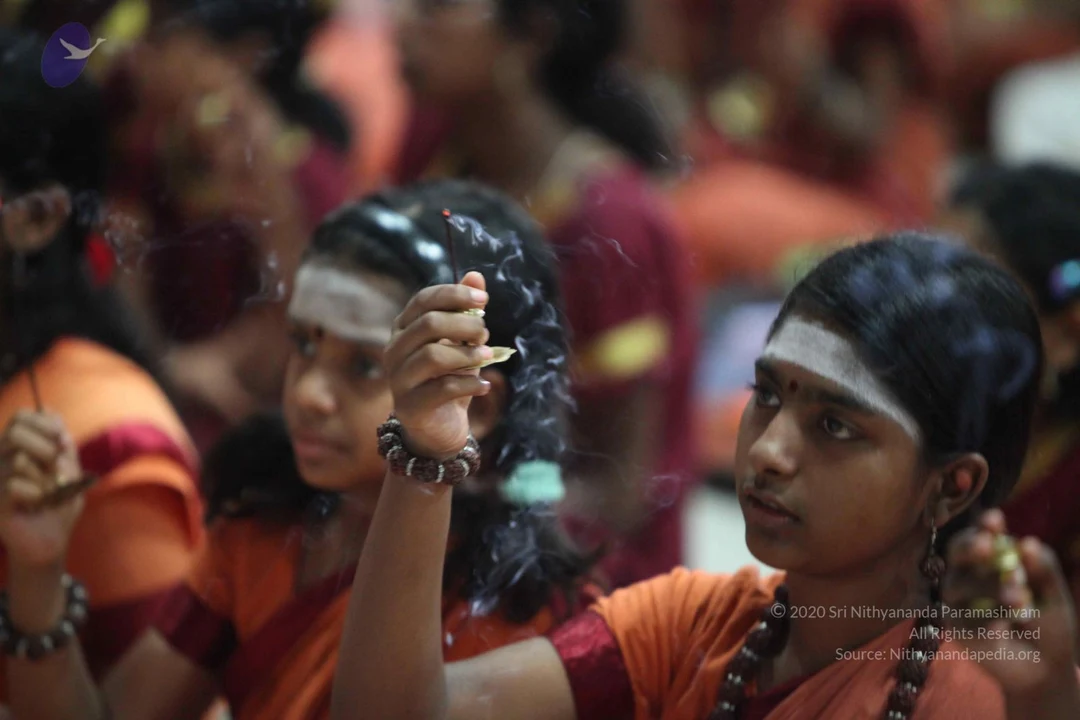
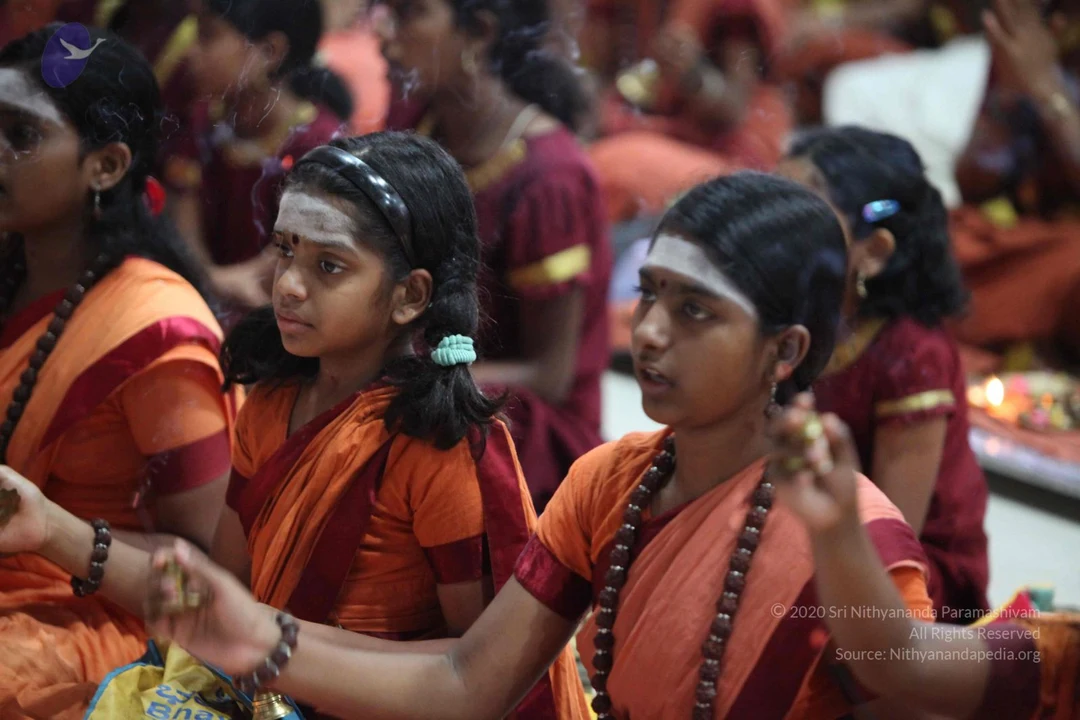
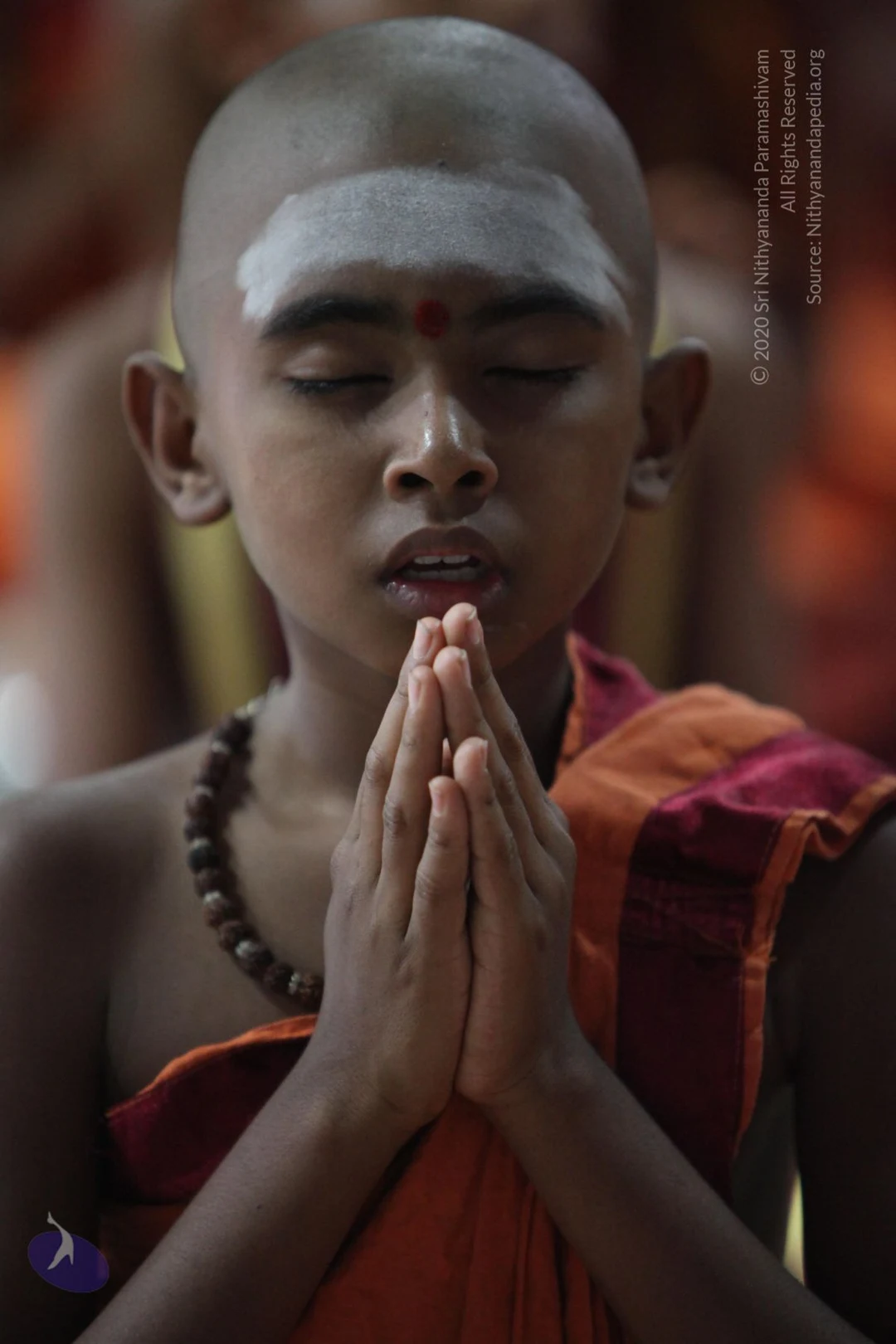
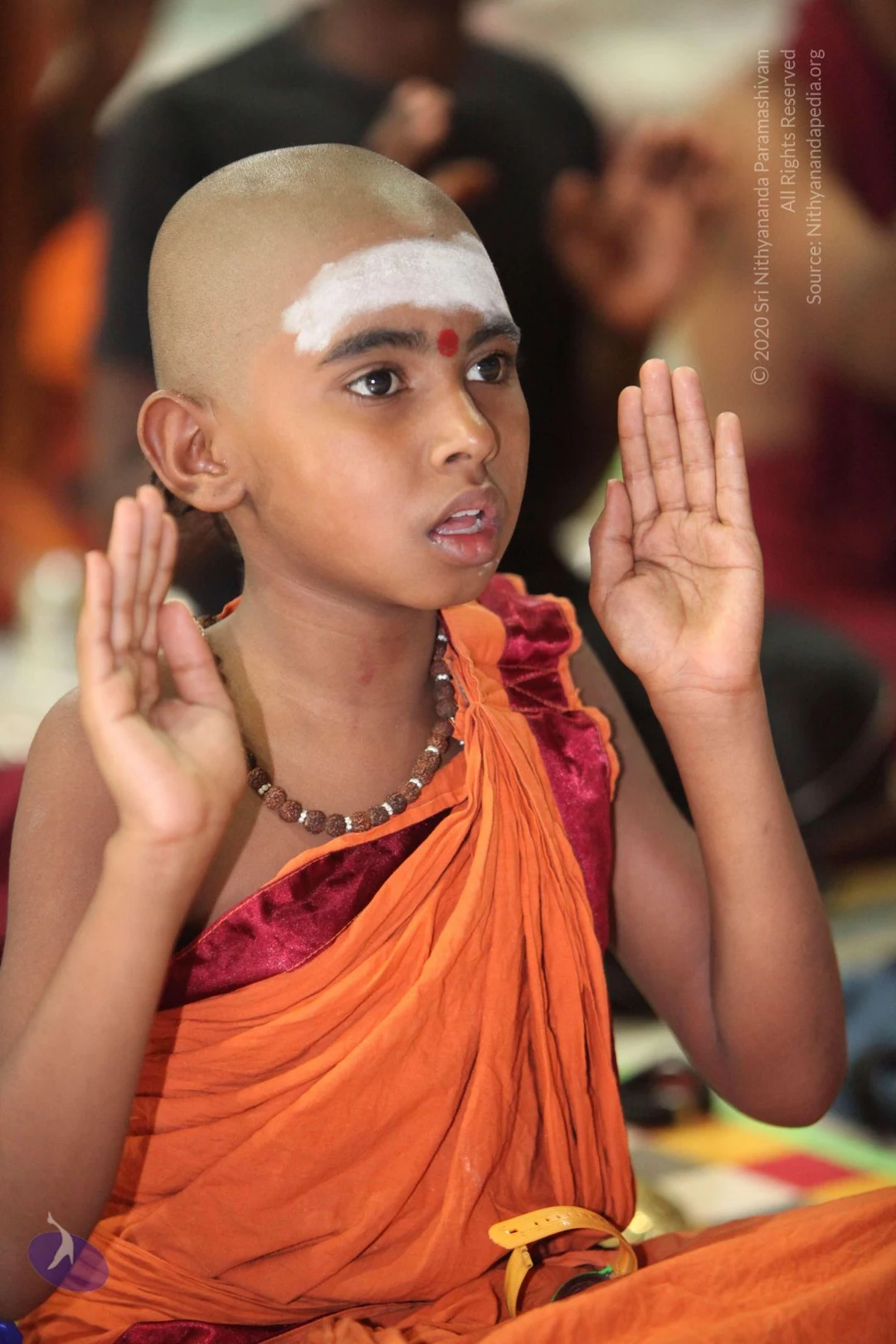
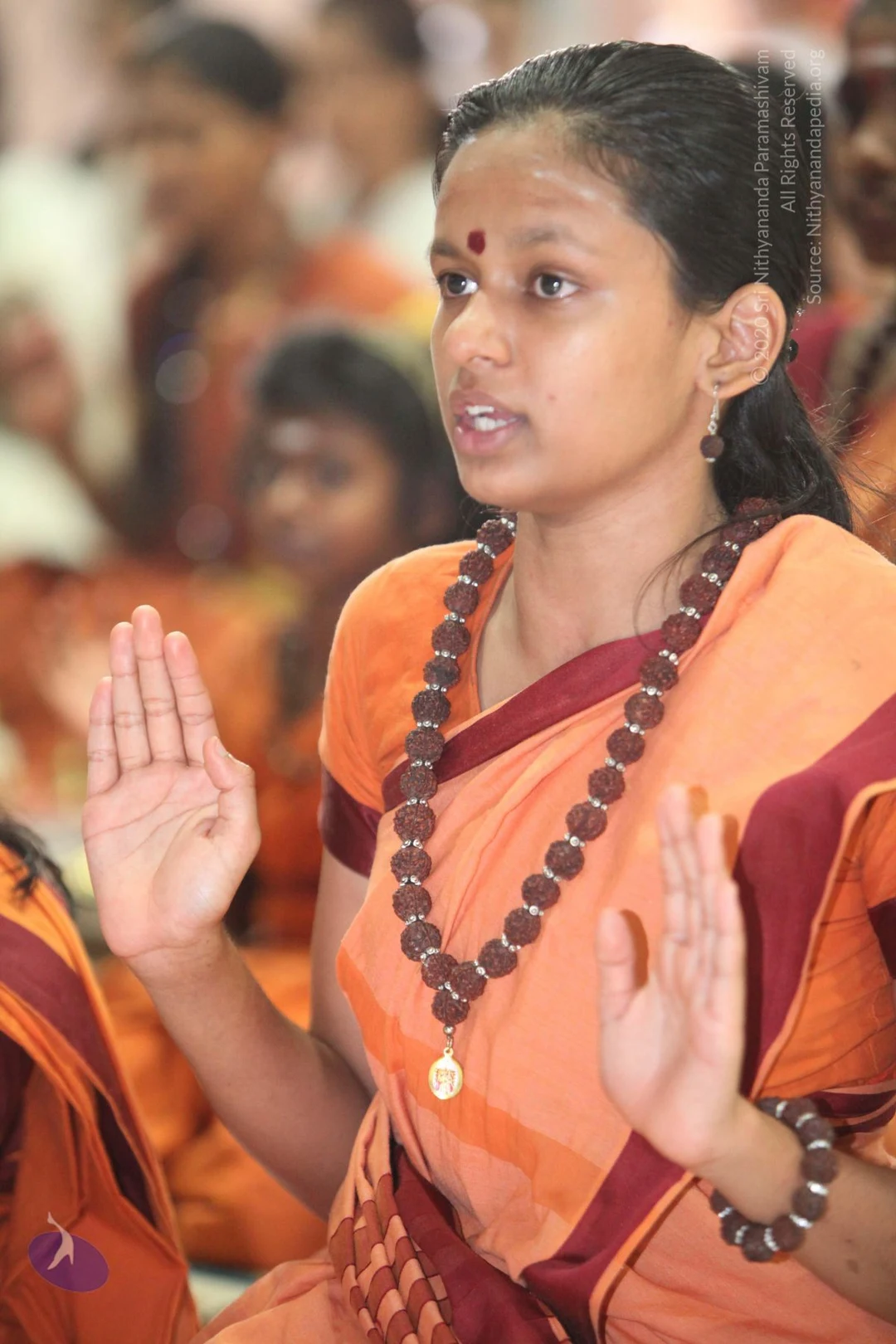
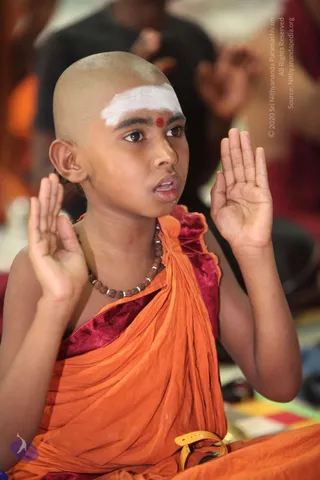
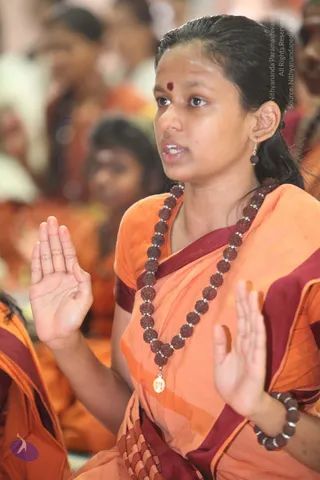
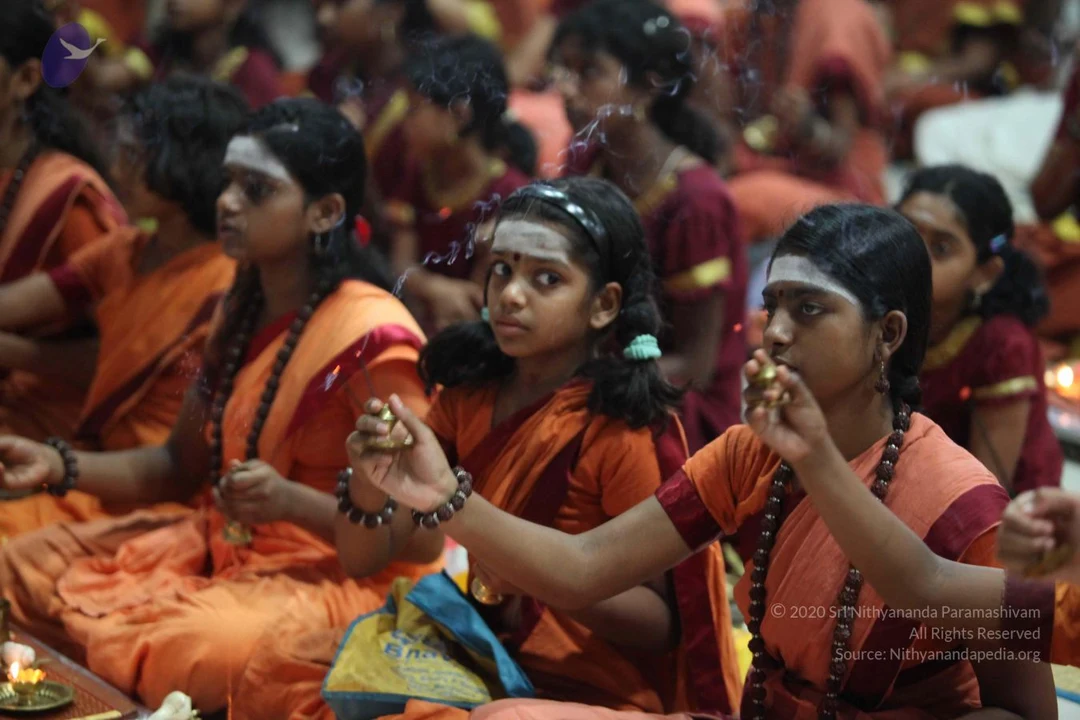
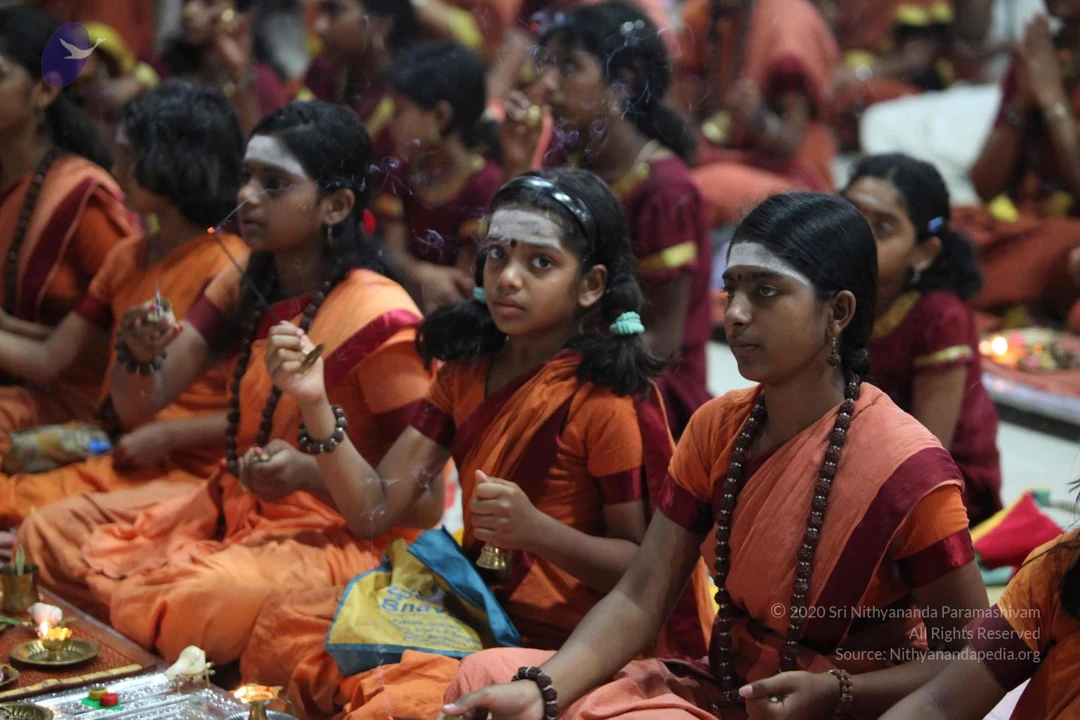
Close-up photograph of a shaved-headed young boy in saffron and maroon robes, eyes closed, palms pressed together in anjali mudra at chest level. He wears a white sandalwood stripe across the forehead with a red kumkum dot at the centre, and a rudraksha mala hangs around his neck. Blurred warm lamplight and other devotees fill the background.A shaved-headed young boy in an orange saffron shawl with maroon velvet trim sits in a satsang setting, hands raised palms outward in chanting or blessing gesture. He wears a rudraksha mala necklace, a white vibhuti band and a red kumkum dot on his forehead. Blurred seated devotees and a colourful mat are behind him. He appears to be a young sannyasi or student in ritual attire.Close-up photograph of a young woman in an orange saree with maroon border, seated in a crowded satsang hall with blurred devotees in orange behind her. She wears a long rudraksha mala with silver spacers and a small gold pendant, a rudraksha bracelet, and a red bindi. She raises both palms in a gesture of chanting or offering while speaking. Her hair is pulled back and she wears drop earrings.Photograph of a group of shaved-headed young boys in saffron-orange robes with white vibhuti horizontal marks on their foreheads, seated on sandy ground in front of a bamboo fence. Several boys hold and touch a large orange-draped object, possibly a kalasha or a ceremonial item, with a garland of white flowers nearby. Behind them, a large black banner shows a printed portrait of a man with a tilak and white paste markings, and a small figure in the centre-back wears orange clothing. A small tree stands at left. The boys appear to be performing a puja or ritual offering together.Seven young boys in saffron-orange robes with shaved heads and white vertical tilaka marks sit or kneel outdoors on bare ground in front of a bamboo fence. A large printed portrait behind them shows a man with a red-orange face, orange-red tilaka and a dark background; the portrait is a depiction, and no printed caption is legible. In the centre, a boy in orange cloth holds his hands over a stone lingam on a dark base, draped with an orange shawl. Other boys hold a garland of red and white flowers and a small metal object. The boy in the front right wears a red-and-orange wrap and holds a white flower garland. A small potted plant stands at left.A photograph of several shaven-headed young boys in orange robes gathered outdoors before a bamboo fence. They sit and kneel around a small seated figure draped in orange cloth, and two boys hold out folded orange fabric. White sacred ash marks their foreheads and arms, and one boy holds a garland of white flowers. Behind them stands a large printed portrait of a man with dark hair, a red bindi and white marks on his forehead, mounted on a dark backdrop; the portrait is a printed image rather than a person, and no candidate is visible in person. A small tree and a few flowers sit on the sandy ground.

1-Temple-Visit-PadaPuja
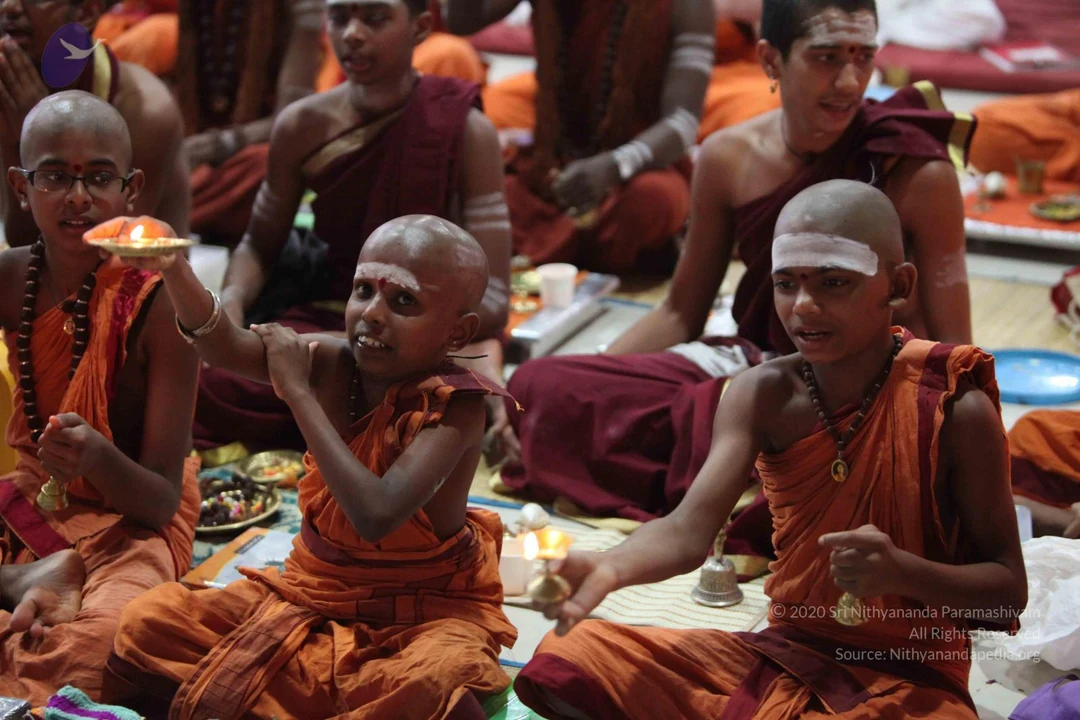
6 photosSource gallery
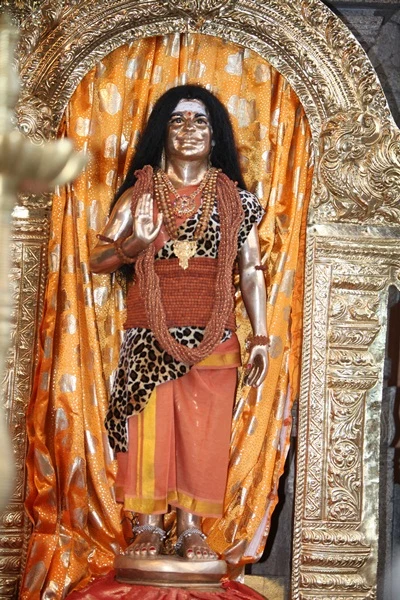
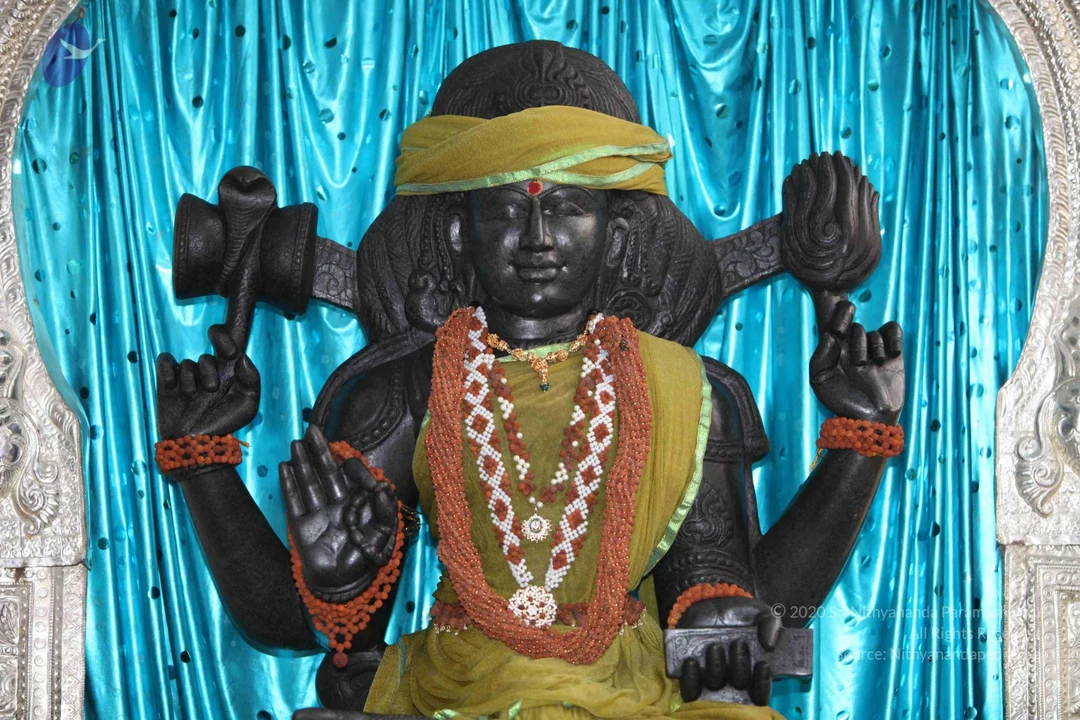
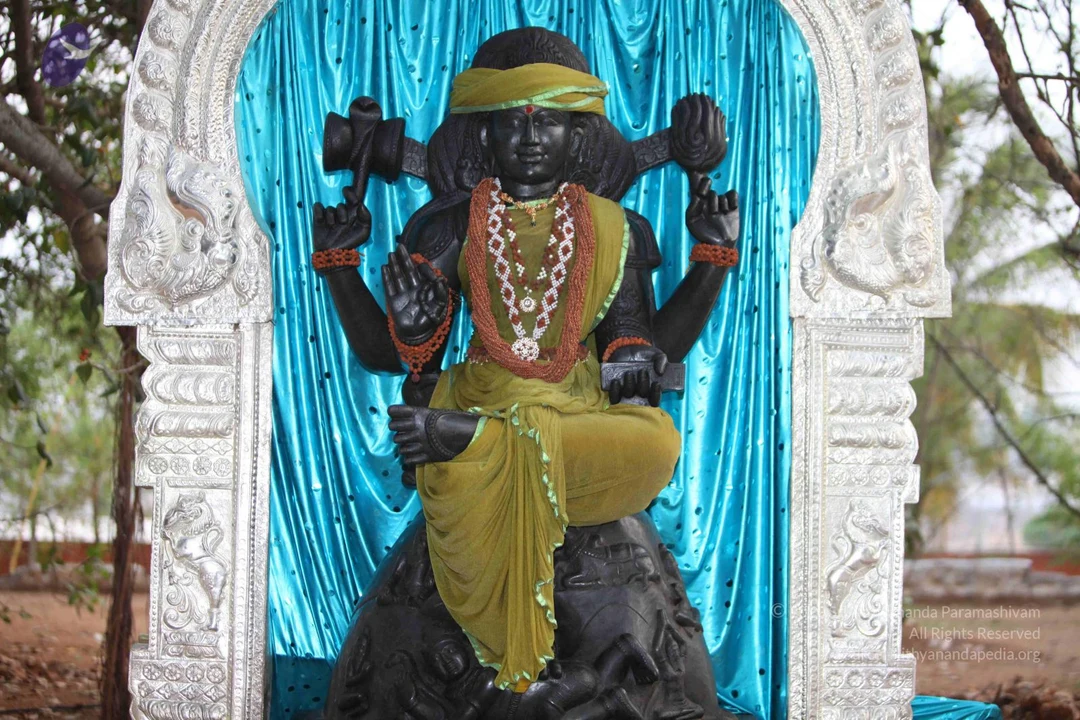
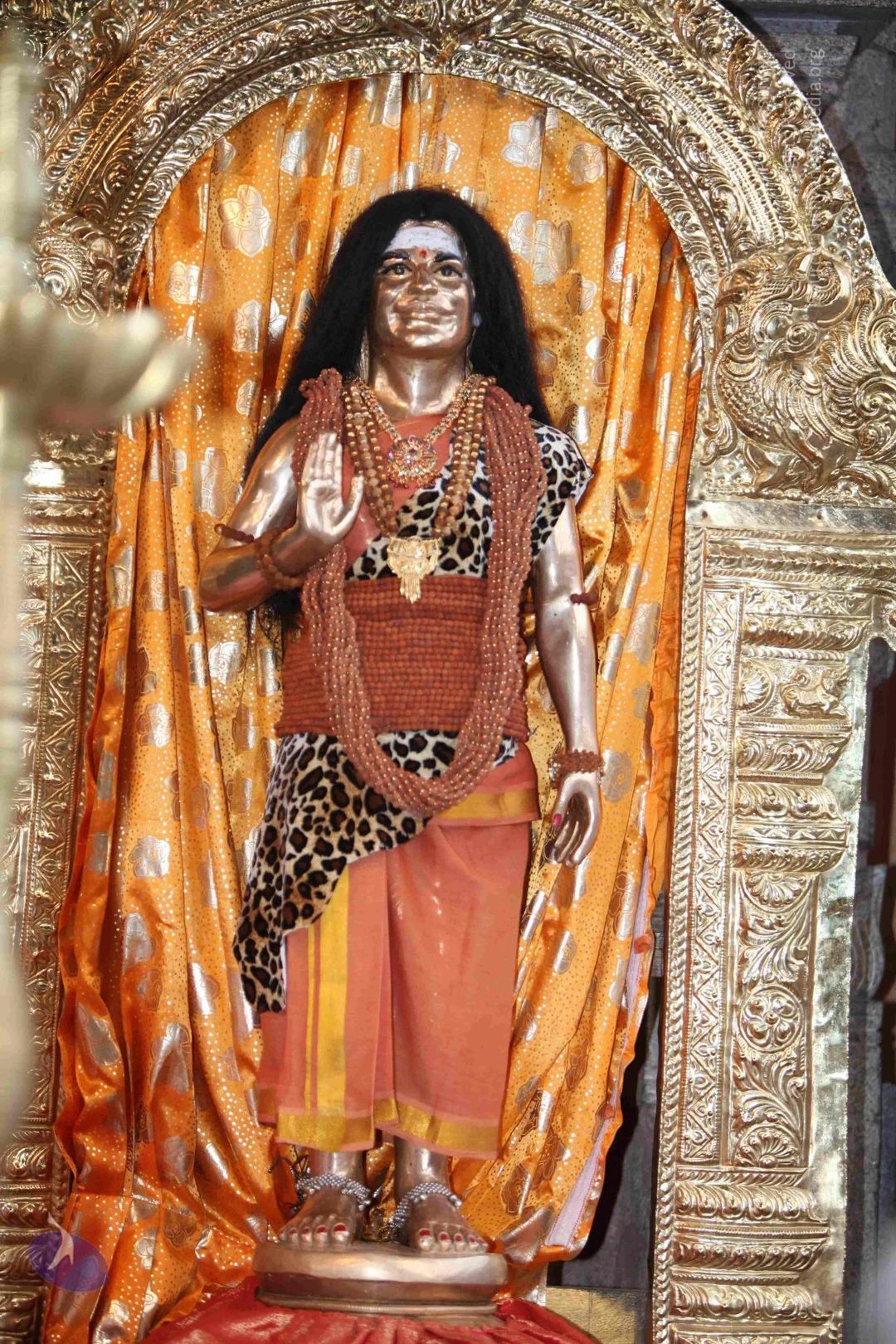
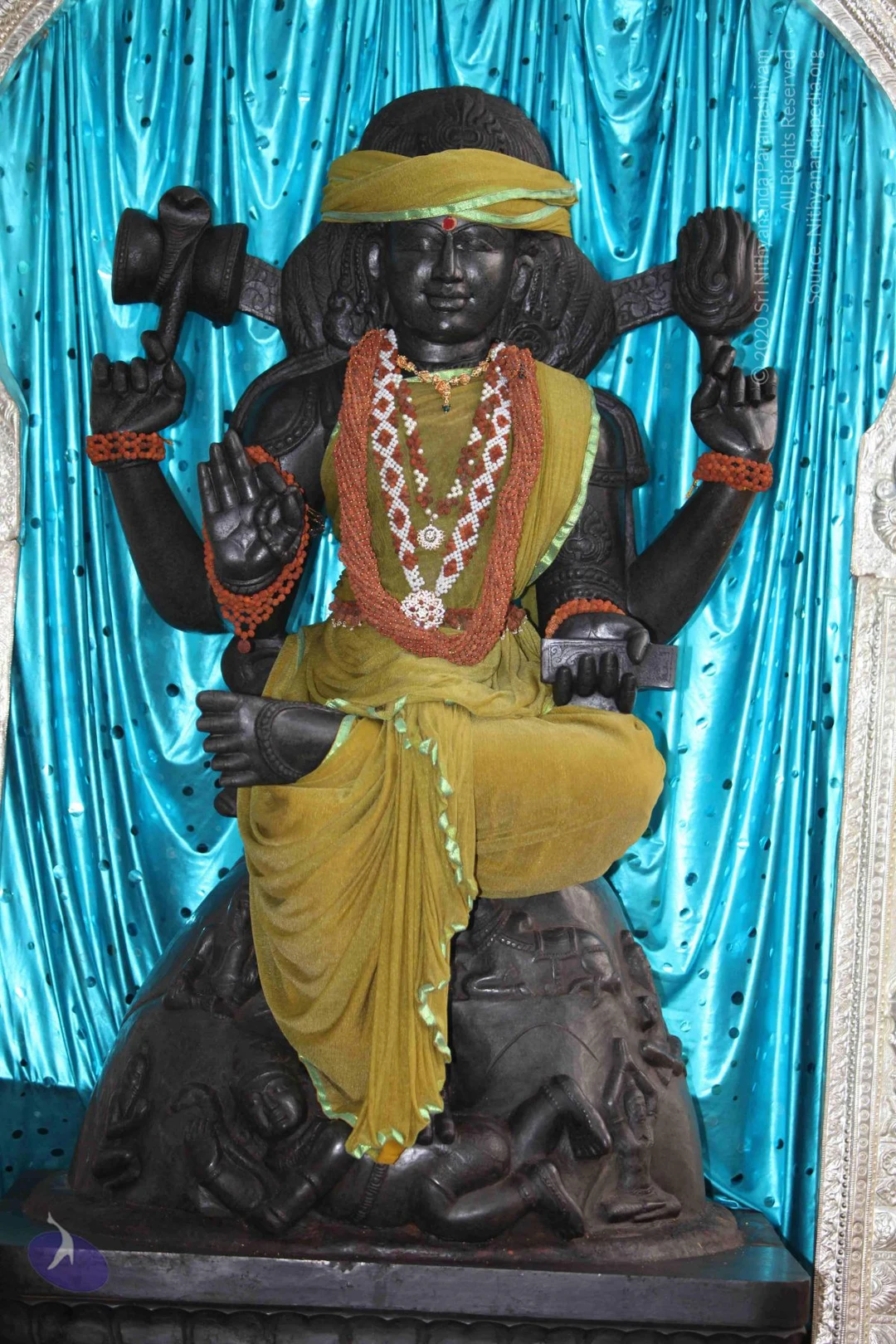
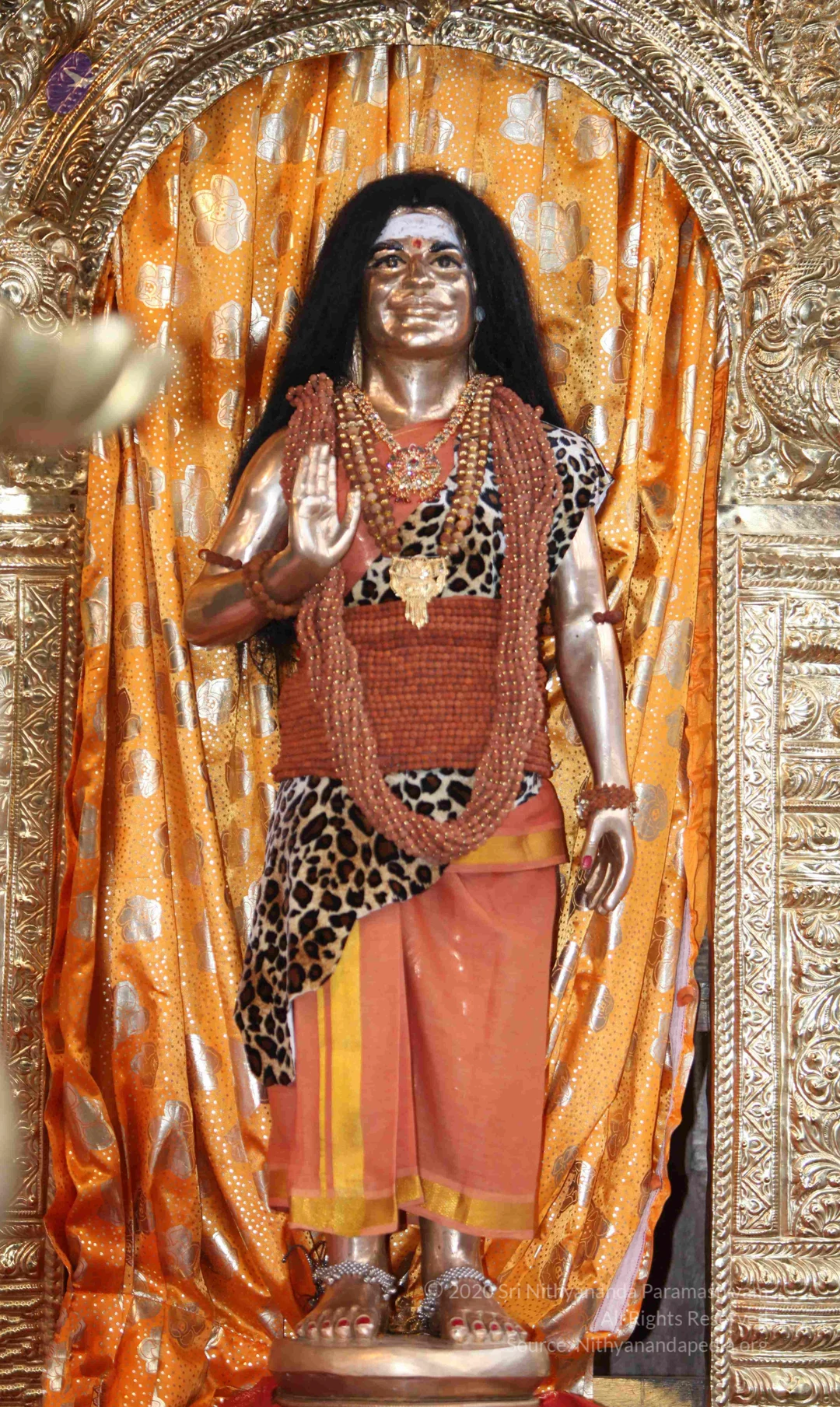
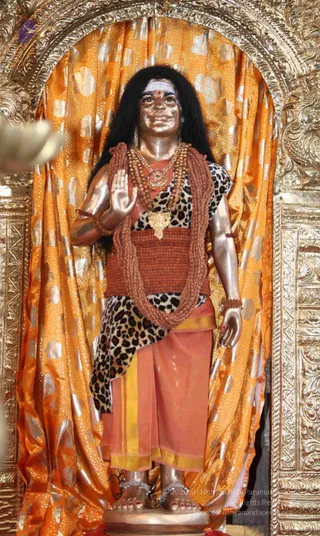
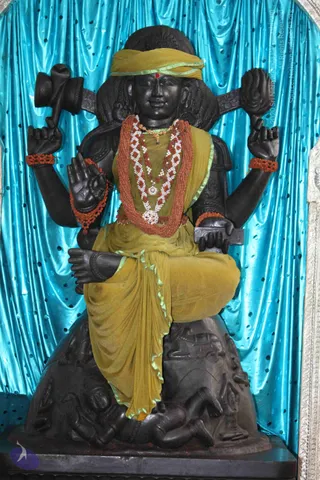
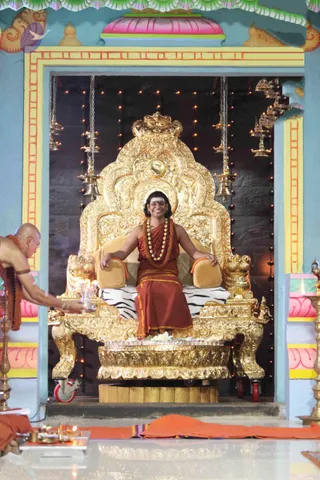
A life-sized metallic statue of a standing male figure with long black hair, gold-toned skin and a white and red forehead mark, raising its right hand in blessing. It wears a leopard-print garment over a rust-orange dhoti with gold border, layered rudraksha-style beaded malas, a gold pendant and bangles. The statue stands before an orange and gold patterned silk backdrop framed by ornate gilded arch carving. The figure is a statue, not a living person, so people count is zero. Presentation cues with a sannyasi-style appearance are visible, but the statue is a depiction and identity is uncertain.A dark stone statue of a four-armed deity seated on a rocky base carved with small figures, set against a turquoise satin drape with perforations. The murti wears a mustard-yellow wrap with pale green edging, a yellow head cloth with a red tilak, layered rudraksha and white bead garlands, and a gold pendant. One hand holds a snake-headed staff, another a drum-like object, and the others are raised in gestures. The arrangement reads as a temple or ashram shrine display.A photograph of a seated man on an ornate gold throne in a temple-like hall. He wears a rust-red robe with gold border, a long rudraksha-style mala and ceremonial gold beads around his neck, and a white vertical tilak on his forehead. He sits on a tiger-striped cushion with orange armrests, with a gold-covered backrest and brass hanging oil lamps above. Flowers rest on a gold platform in front of the throne, and a hand from the left holds a flame over an offering plate. a person, sitting on the throne with distinctive ornate adornments.A seated man in a rust-red ochre garment with a gold-threaded border sits on an ornately gilded throne with lion-head armrests, a zebra-striped cloth on the seat, and orange cushions. He wears a long rudraksha-style bead mala and white vertical tilak with a red dot on his forehead, with his arms resting open on the armrests. Behind him are hanging brass oil lamps and a dark wooden wall strung with small lights. In the lower left, a standing priest in bare upper body holds a lit flame, and white flowers lie at the base of the throne. The scene is an ashram temple setting with a painted yellow and pink doorway frame.A photograph of a seated man on an ornate gilded throne with lion-head armrests and a zebra-striped cushion, set in a temple-like hall with a dark backdrop hung with small lamps. He wears a maroon-red dhoti and shawl, a long rudraksha mala and a gold-coloured garland, with a tilak on his forehead, and he is smiling. To the left, a bald priest in a saffron-orange cloth bends forward holding a silver tray with a lit lamp. Brass oil lamps hang from chains, and a brass lamp stands at the right edge. In the foreground are a low orange cloth, brass puja vessels and a small lamp, with flower petals scattered on the throne base. The seated man is a candidate for Swamiji (probable) by his rudraksha mala, long swept-back hair and throne setting.A man seated on an ornate gilded throne with a deep red velvet cushion and a tiger-skin rug draped over the platform, with a carved golden lion at his left. He sits cross-legged with palms pressed together in namaste, eyes closed, and a white vertical tilak on his forehead. He wears a rust-orange dhoti and matching shawl with gold borders, a long orange-beaded rudraksha-style mala and a heavy gold bead necklace, plus gold hoop earrings. Strings of warm lights glow in the dark background.
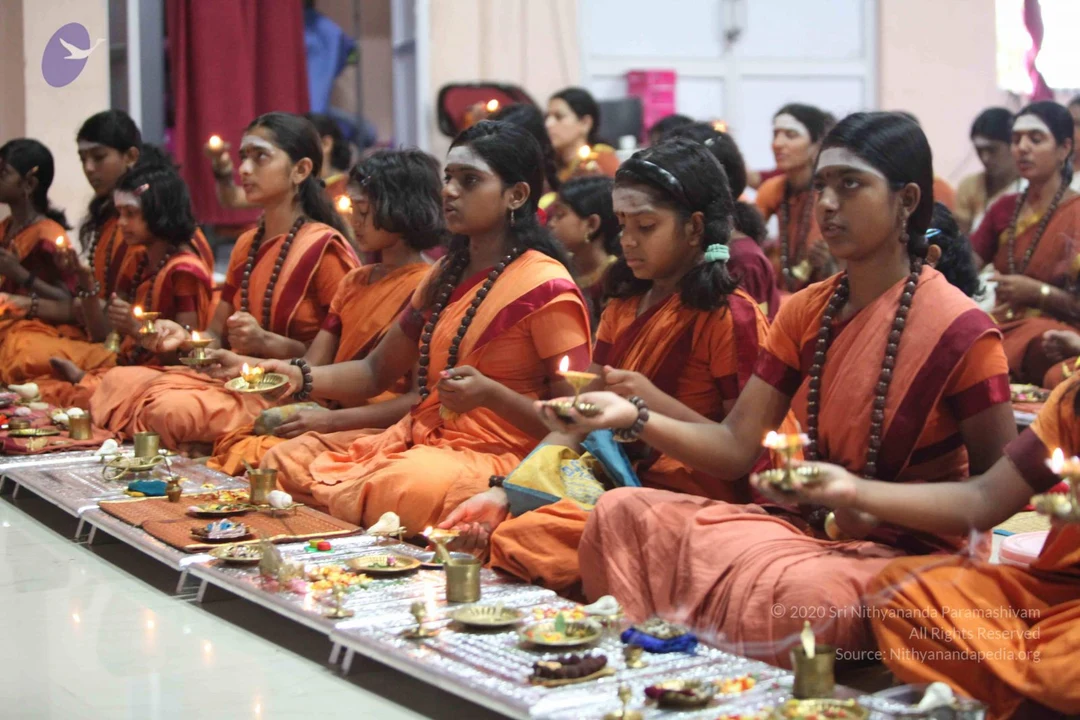
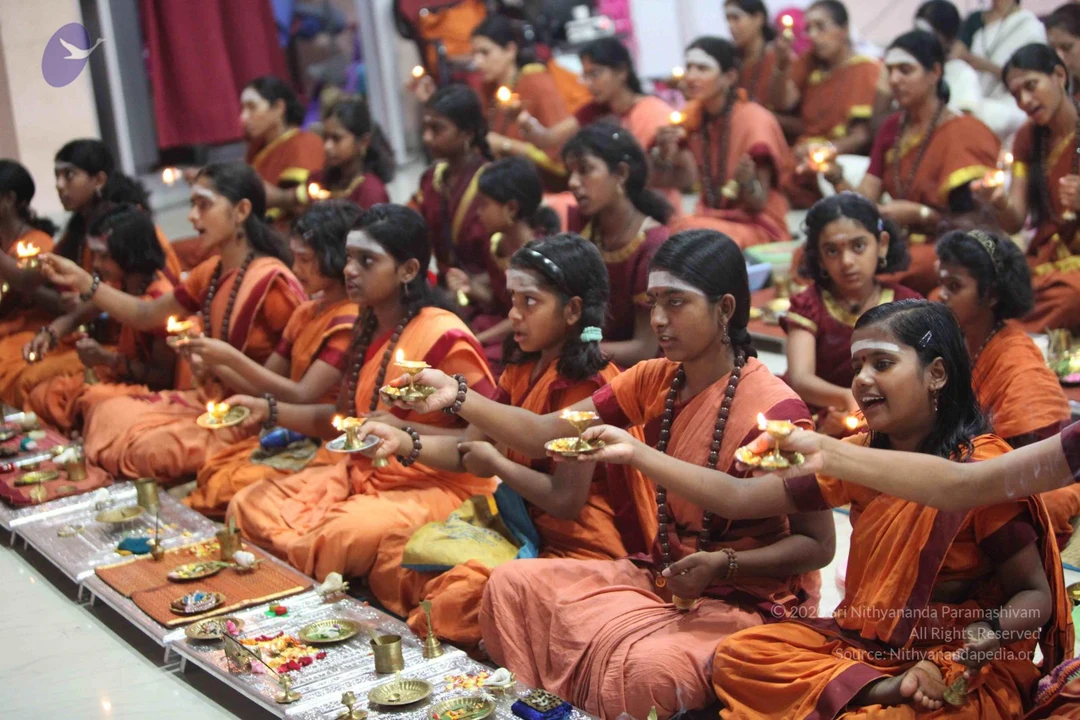
3-Gurukul
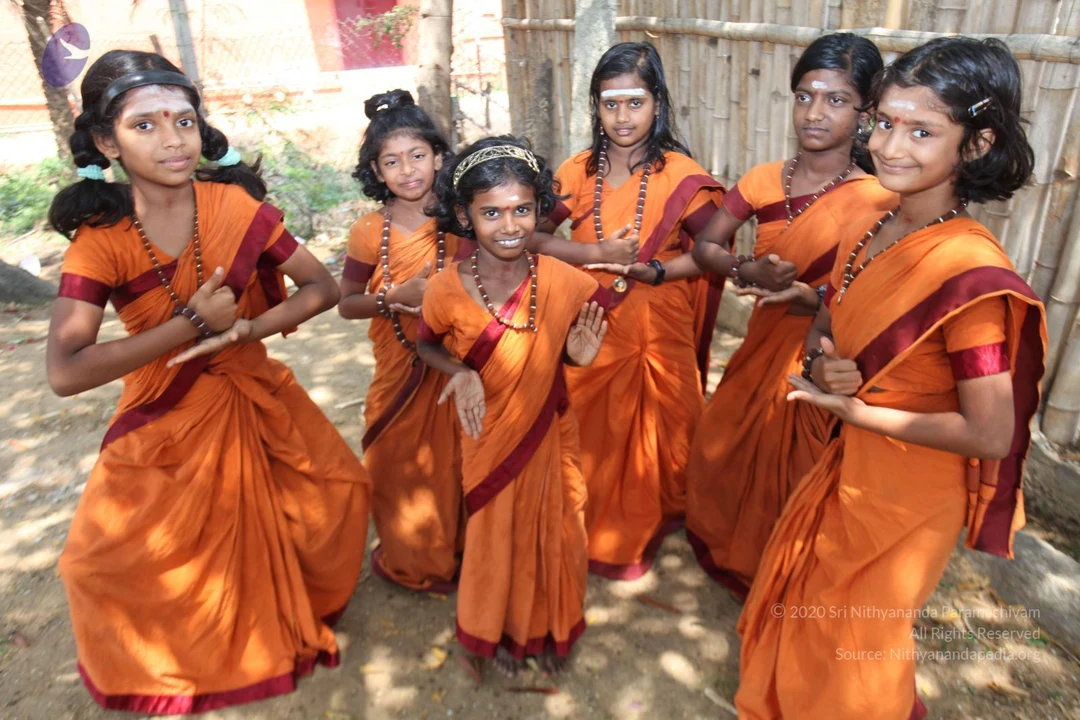
6 photosSource gallery
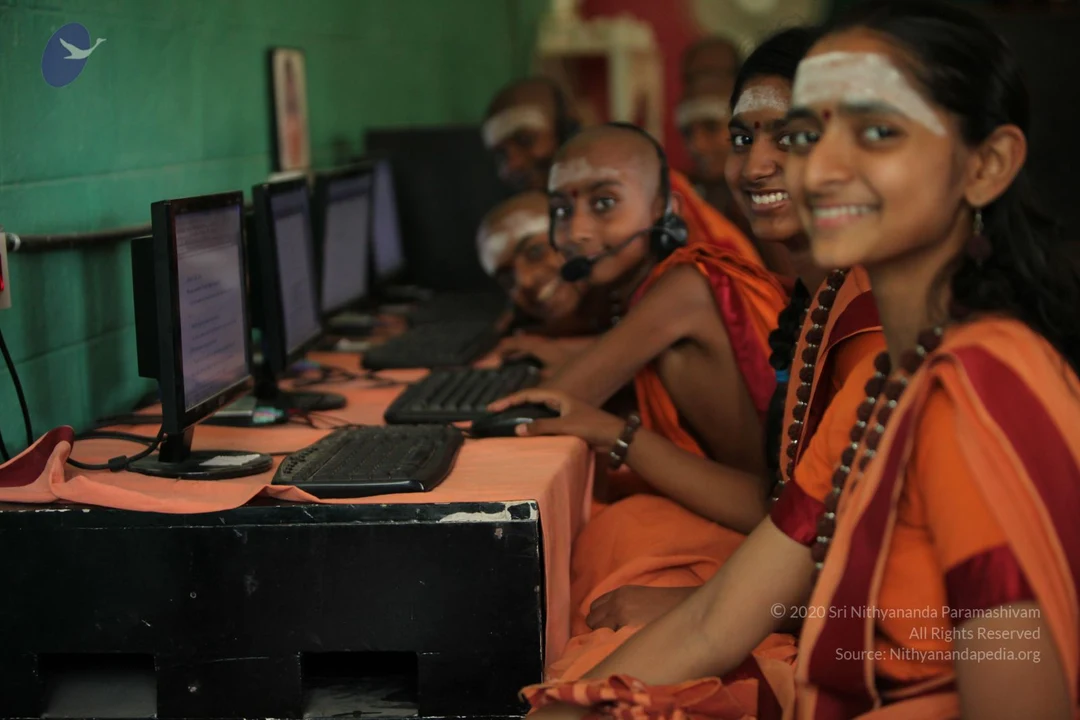
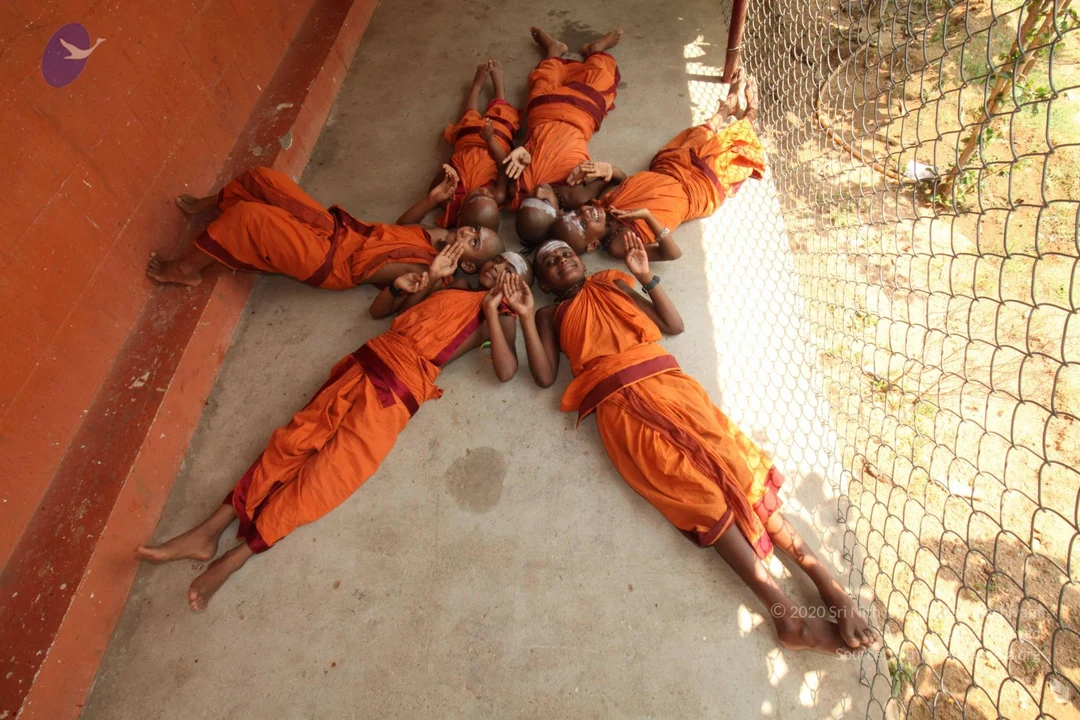
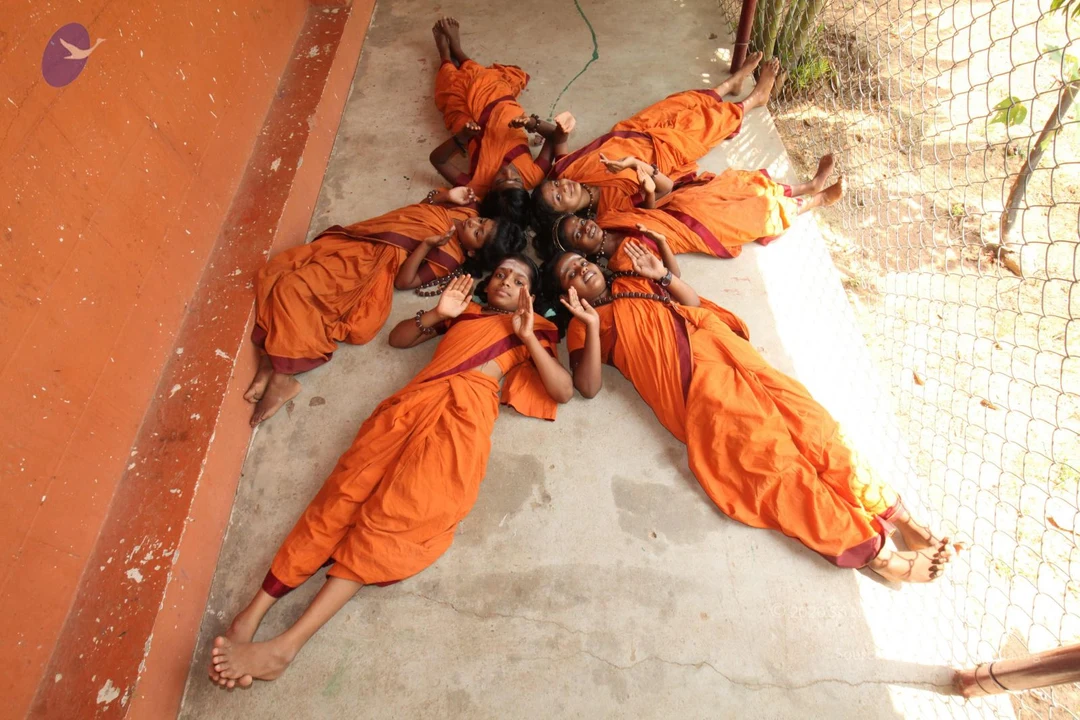
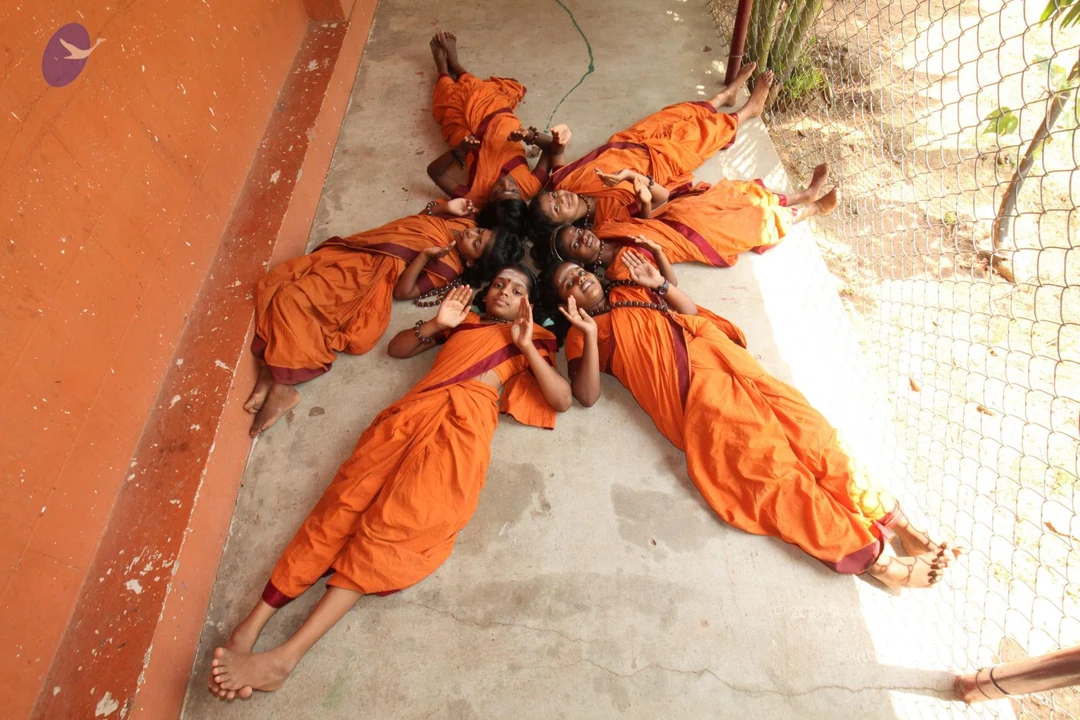
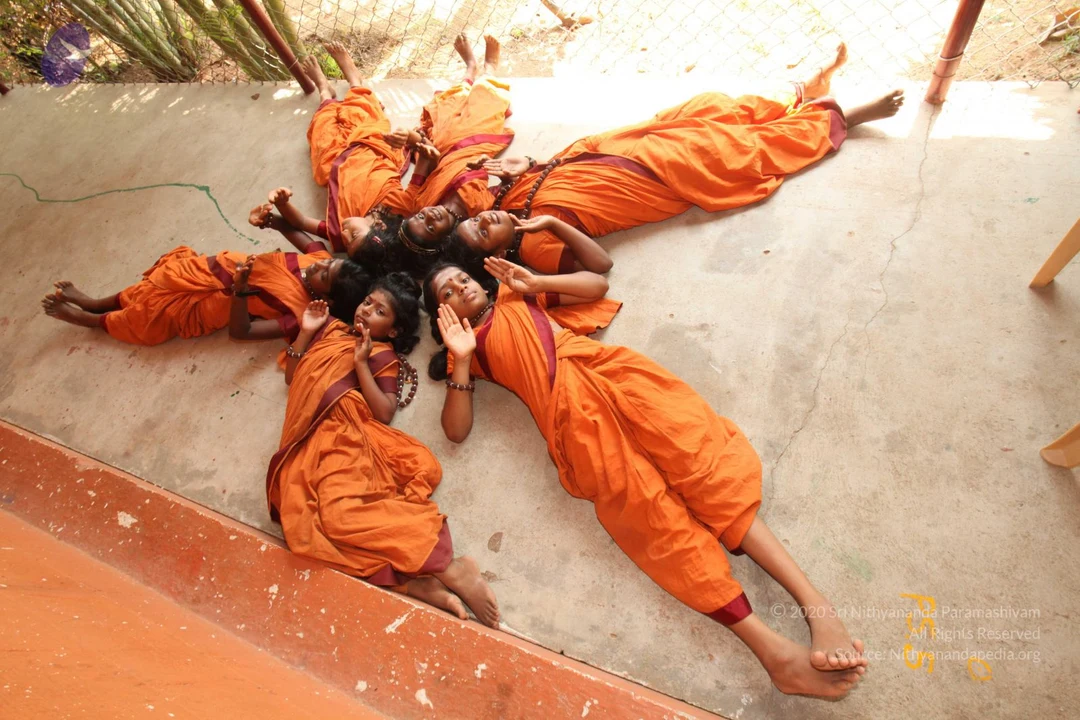
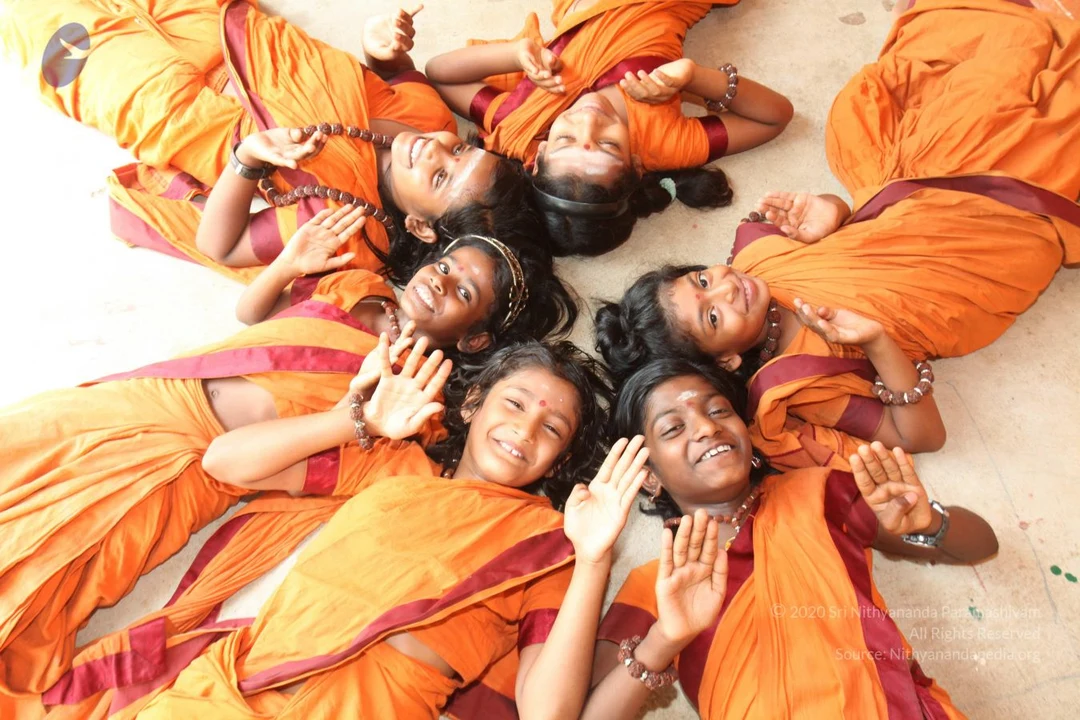
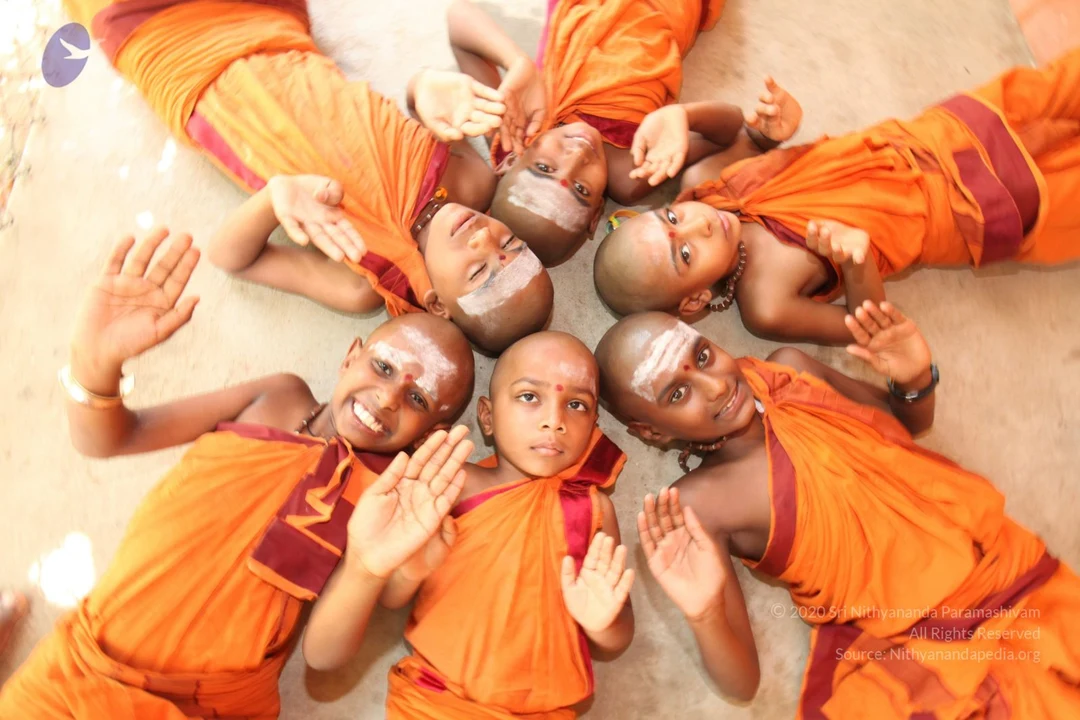
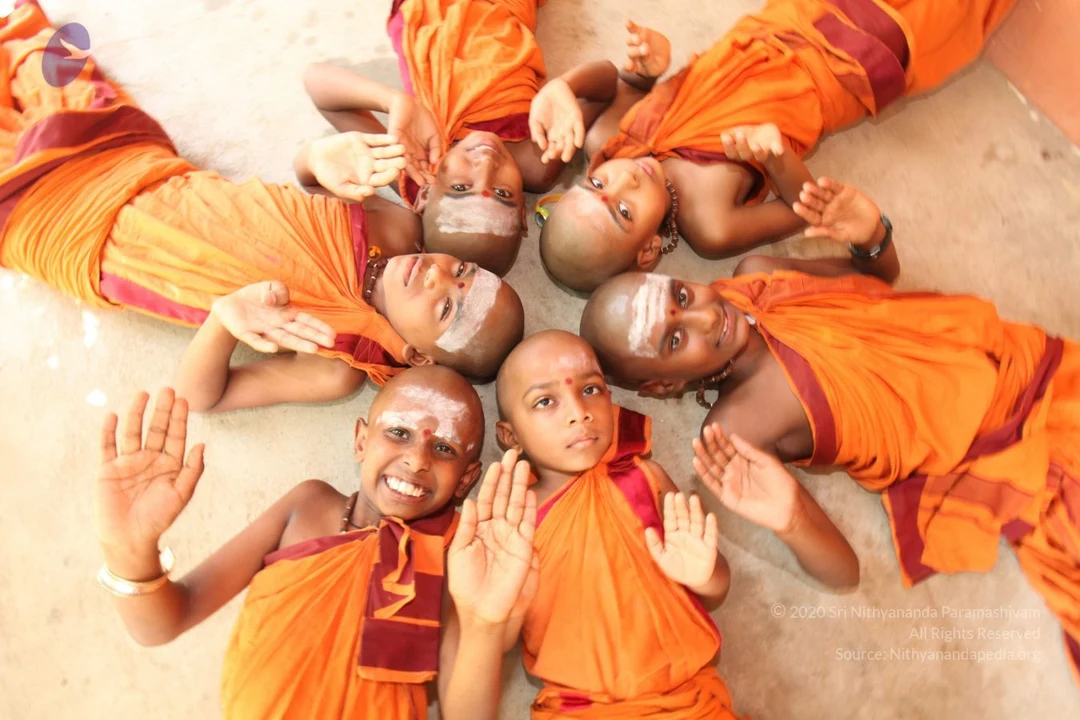
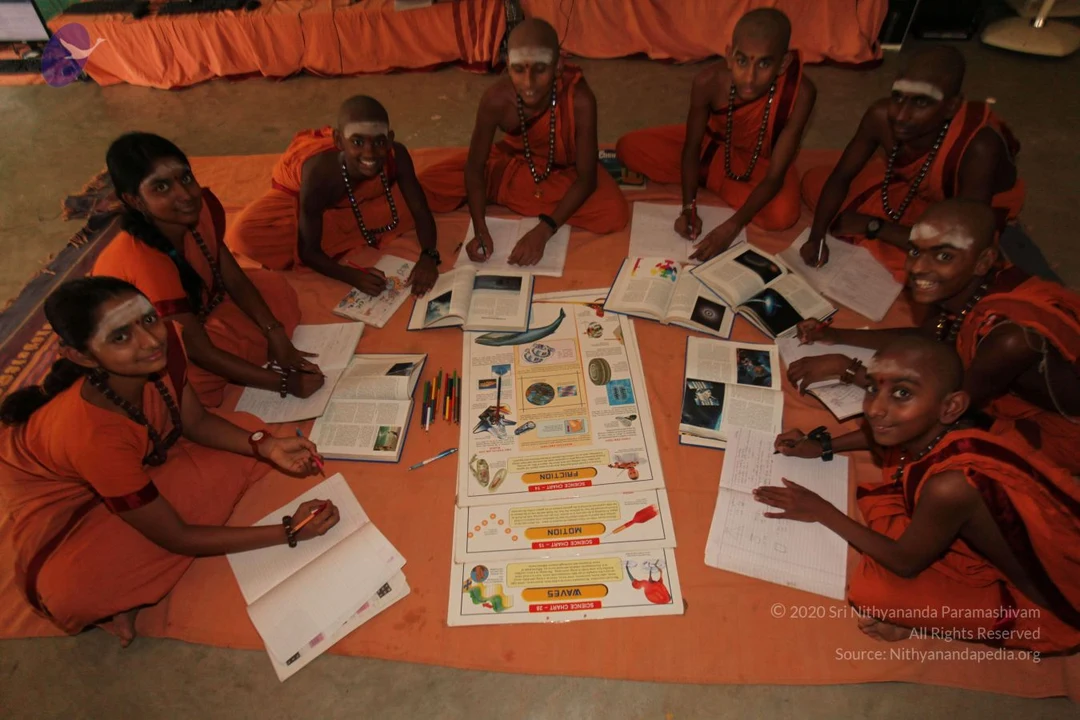
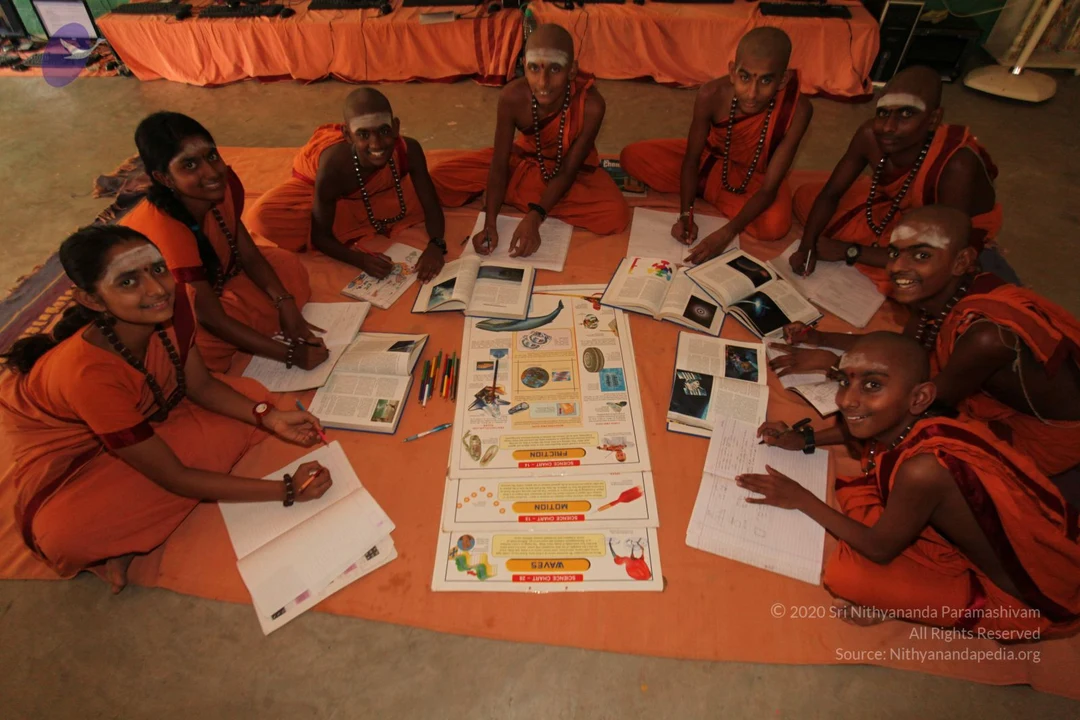
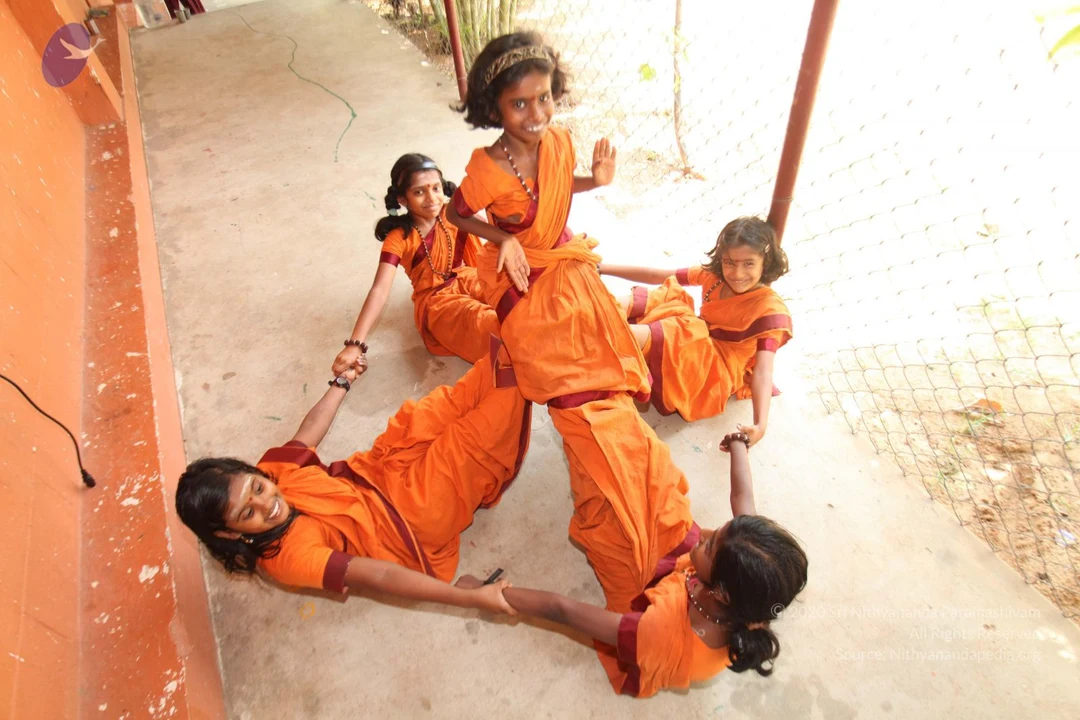
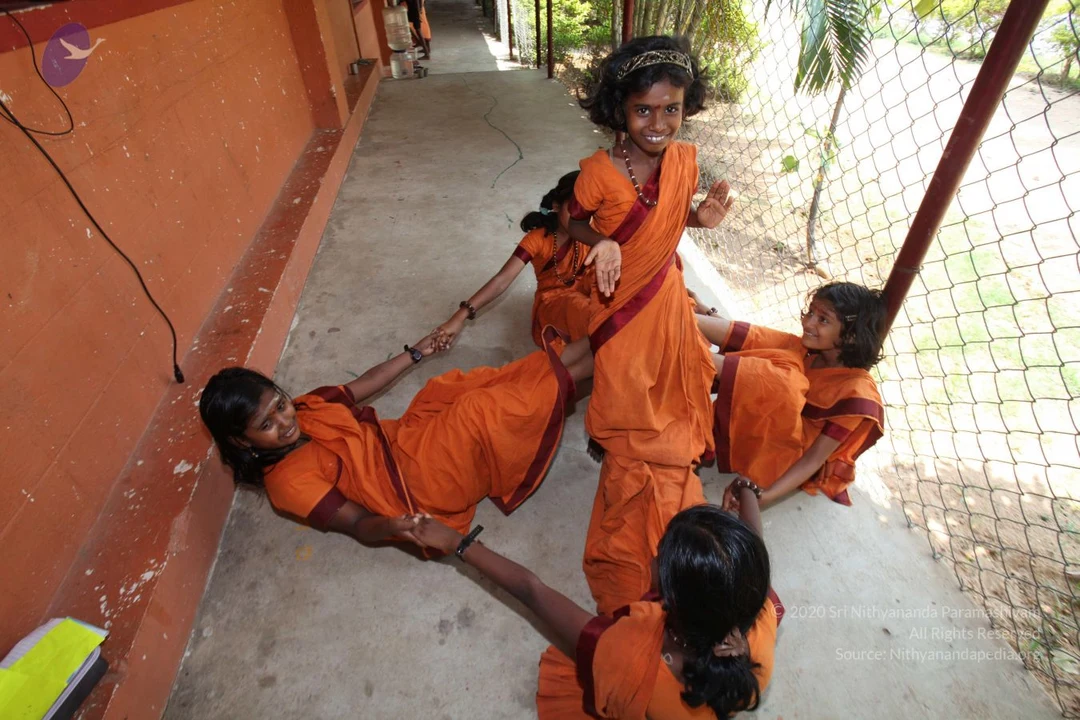
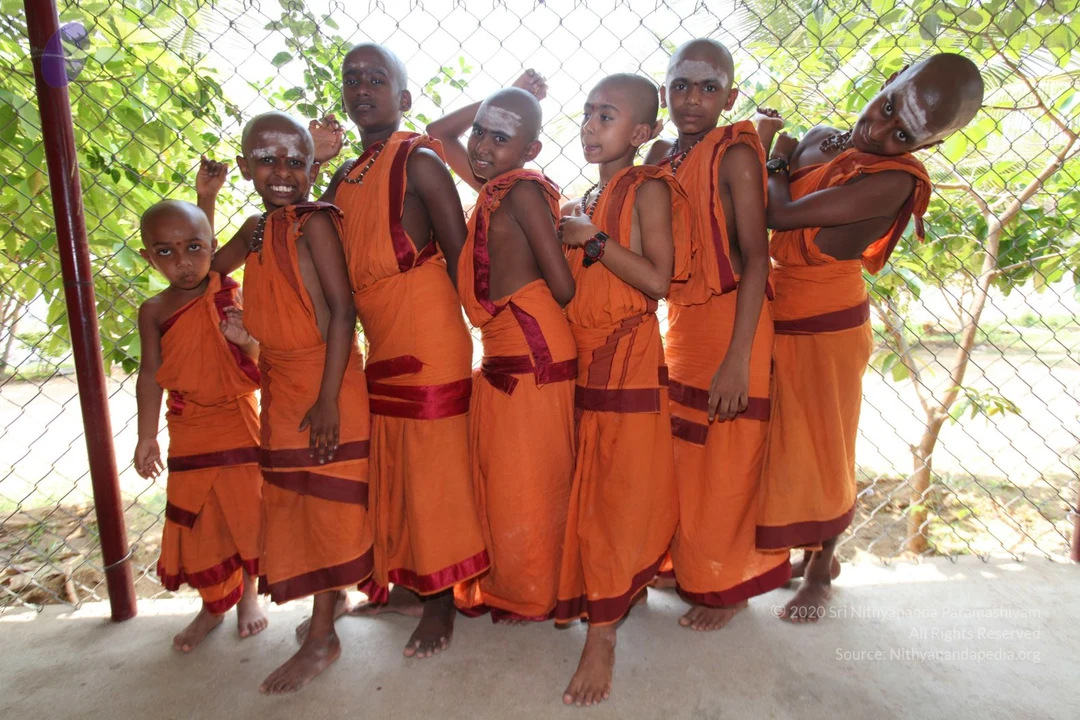
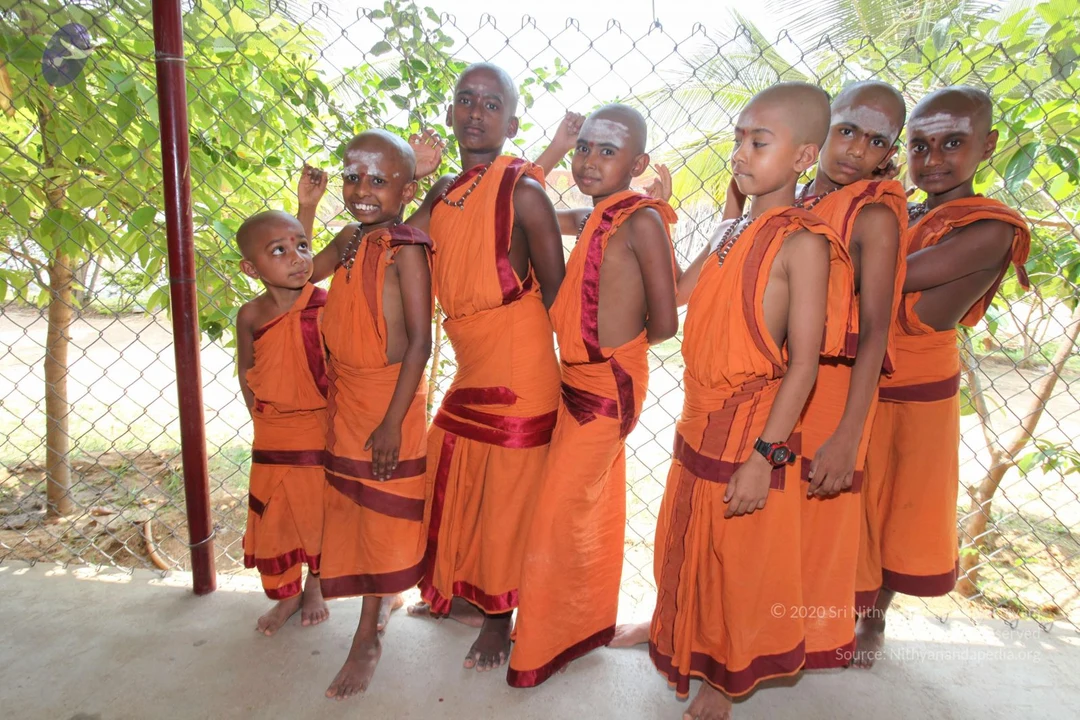
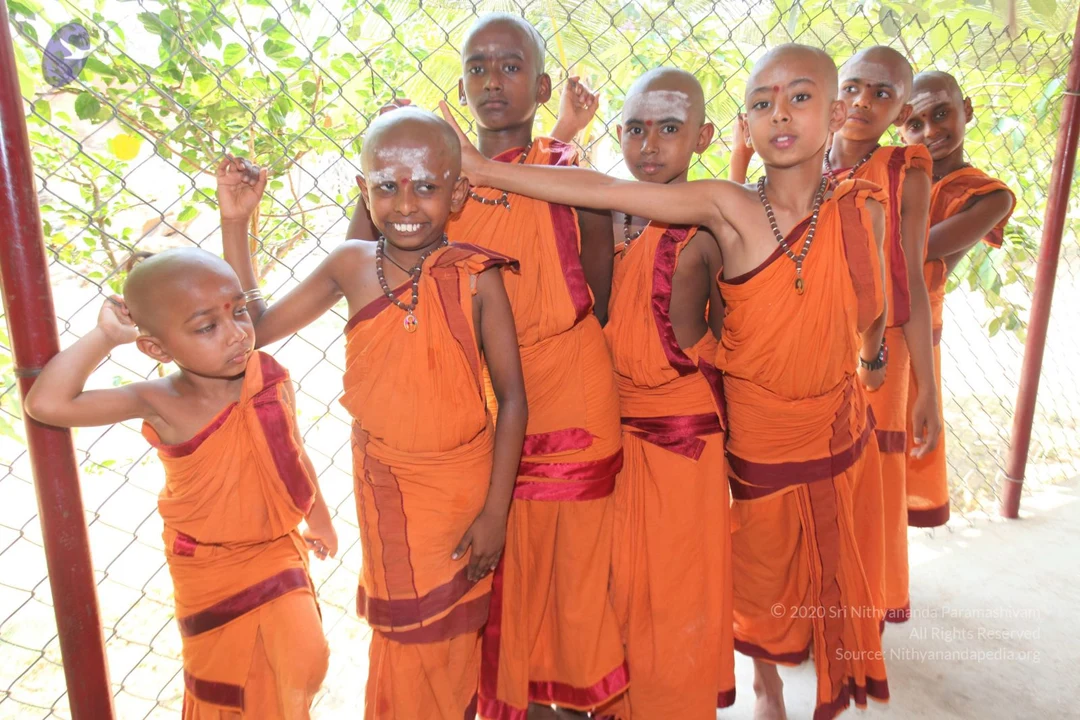
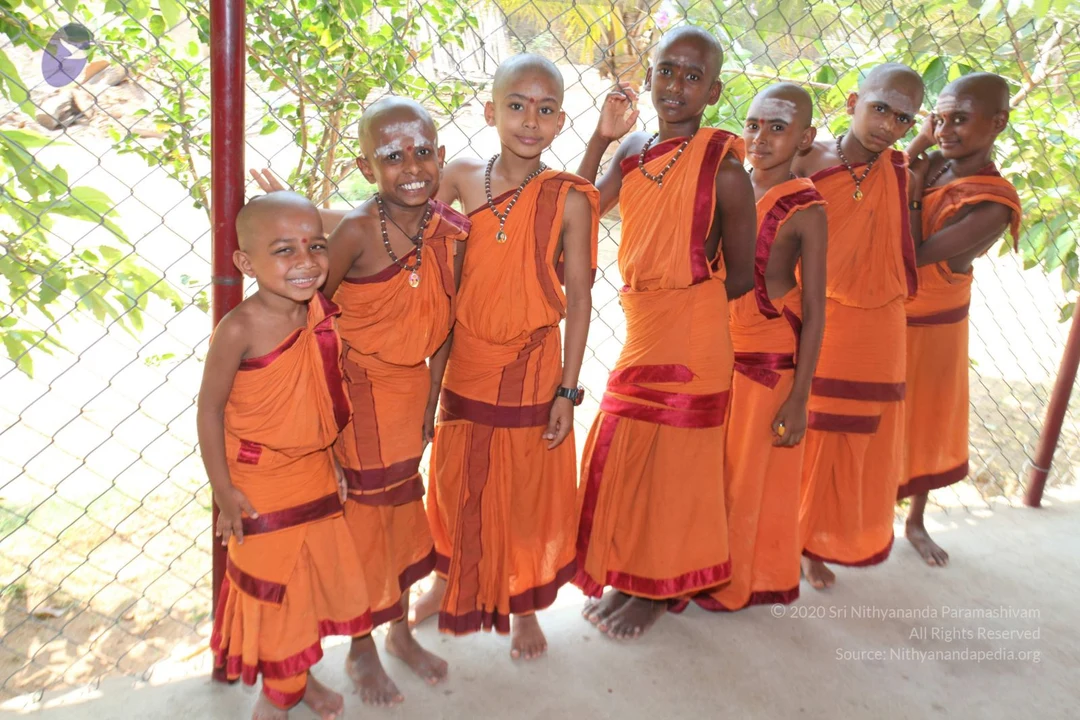
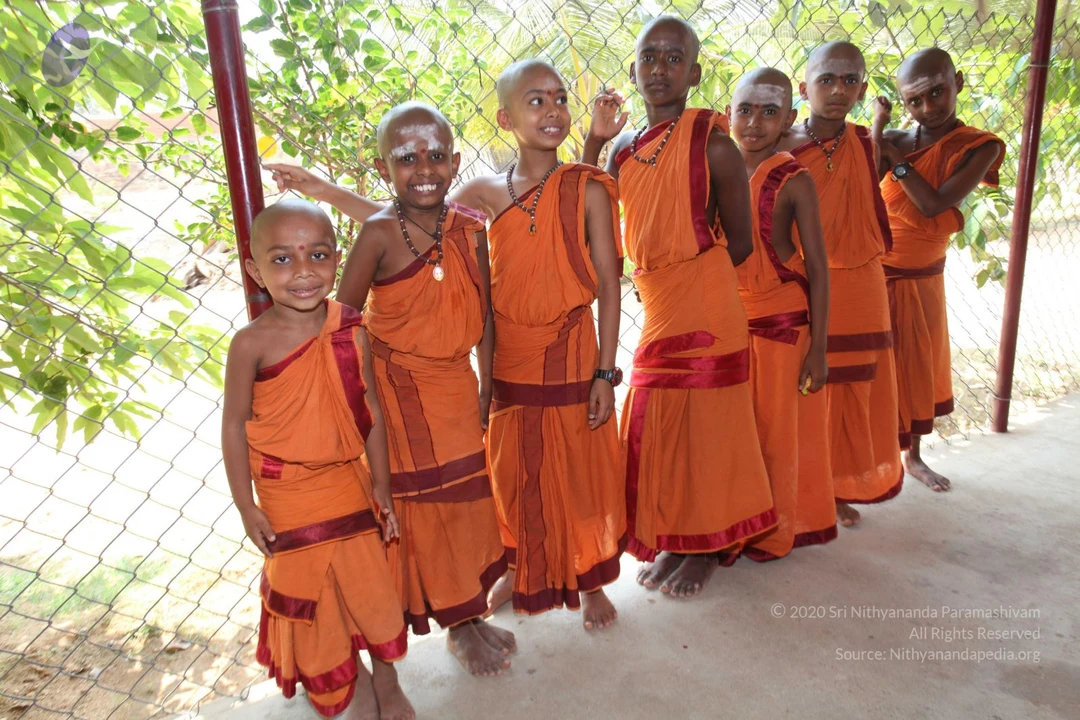
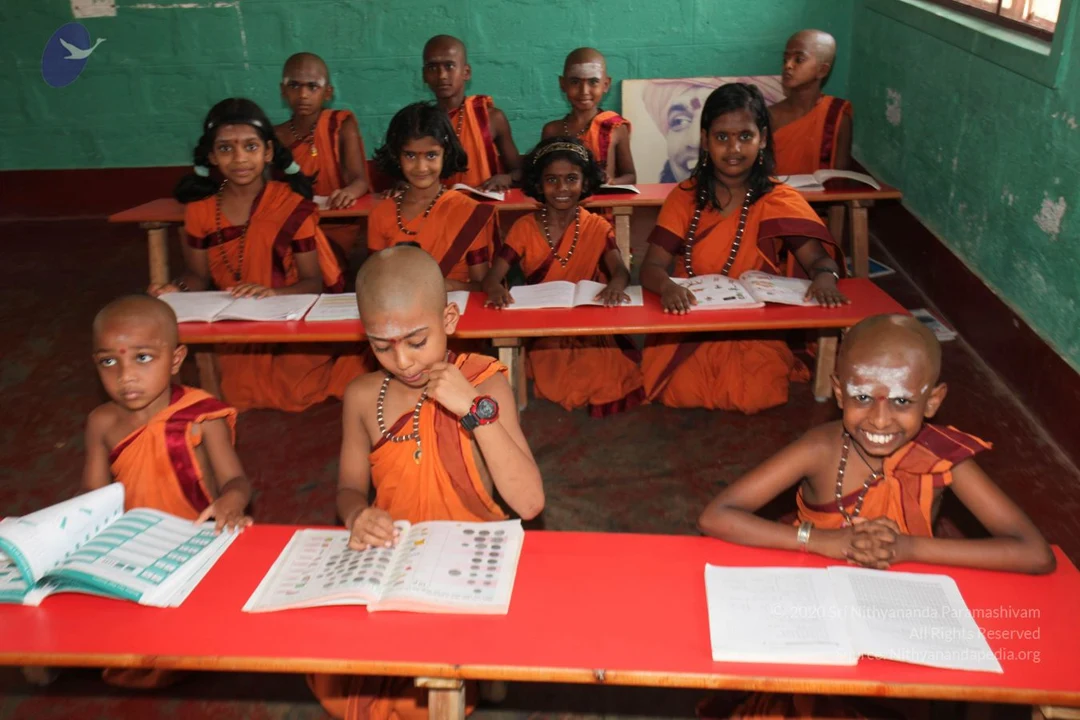
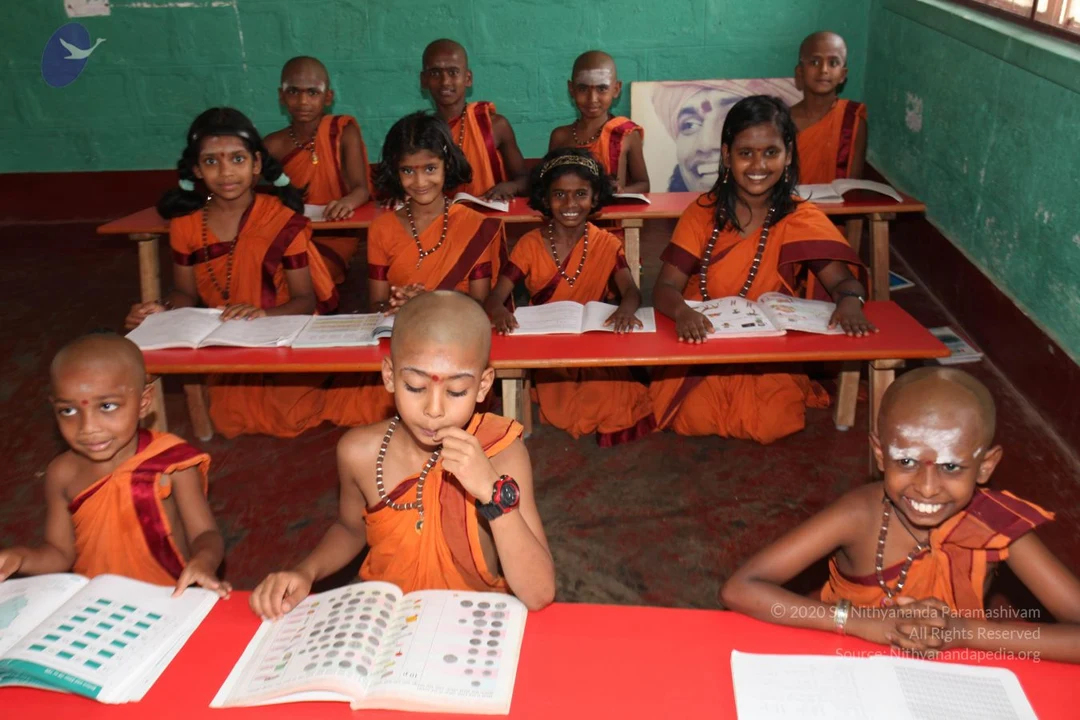
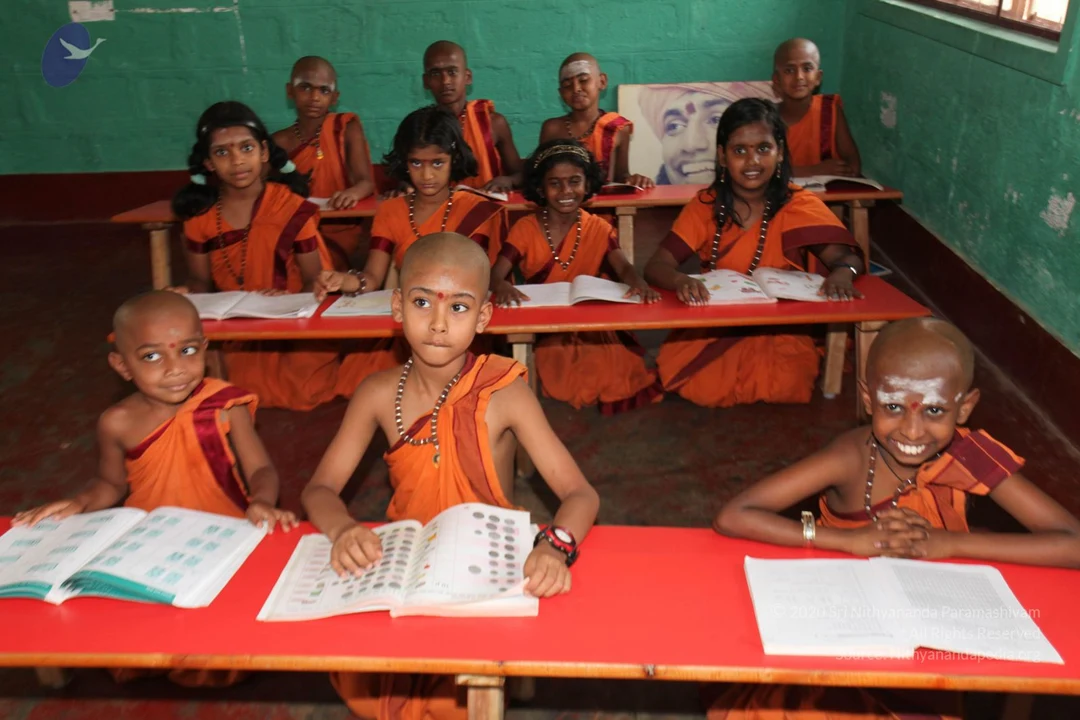
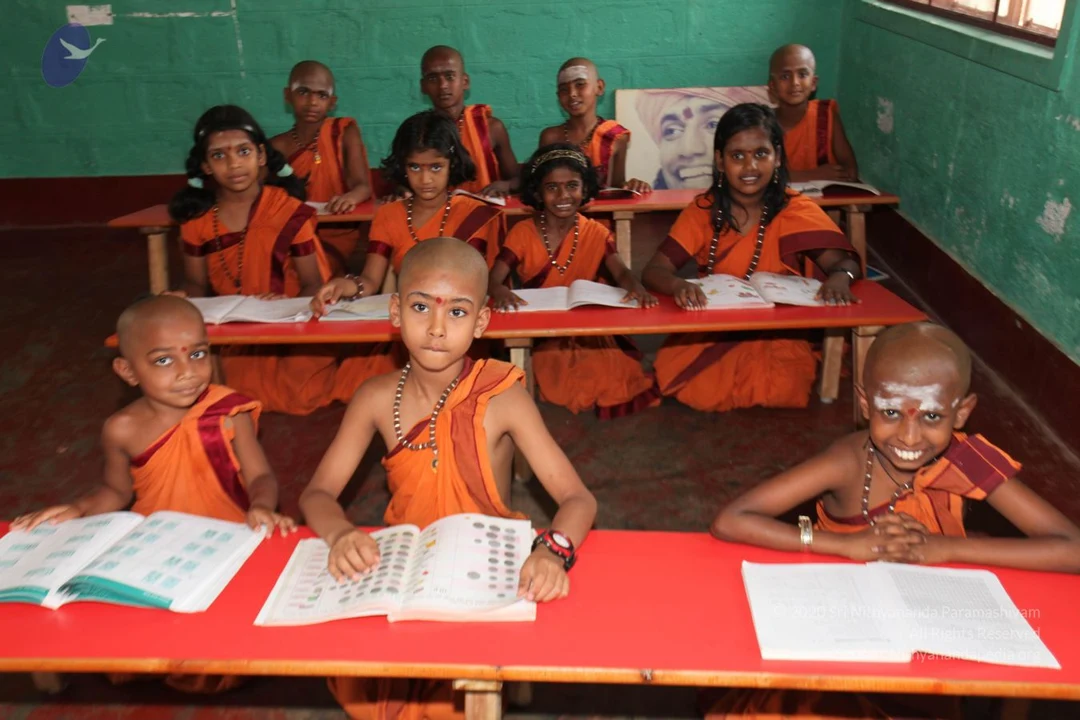
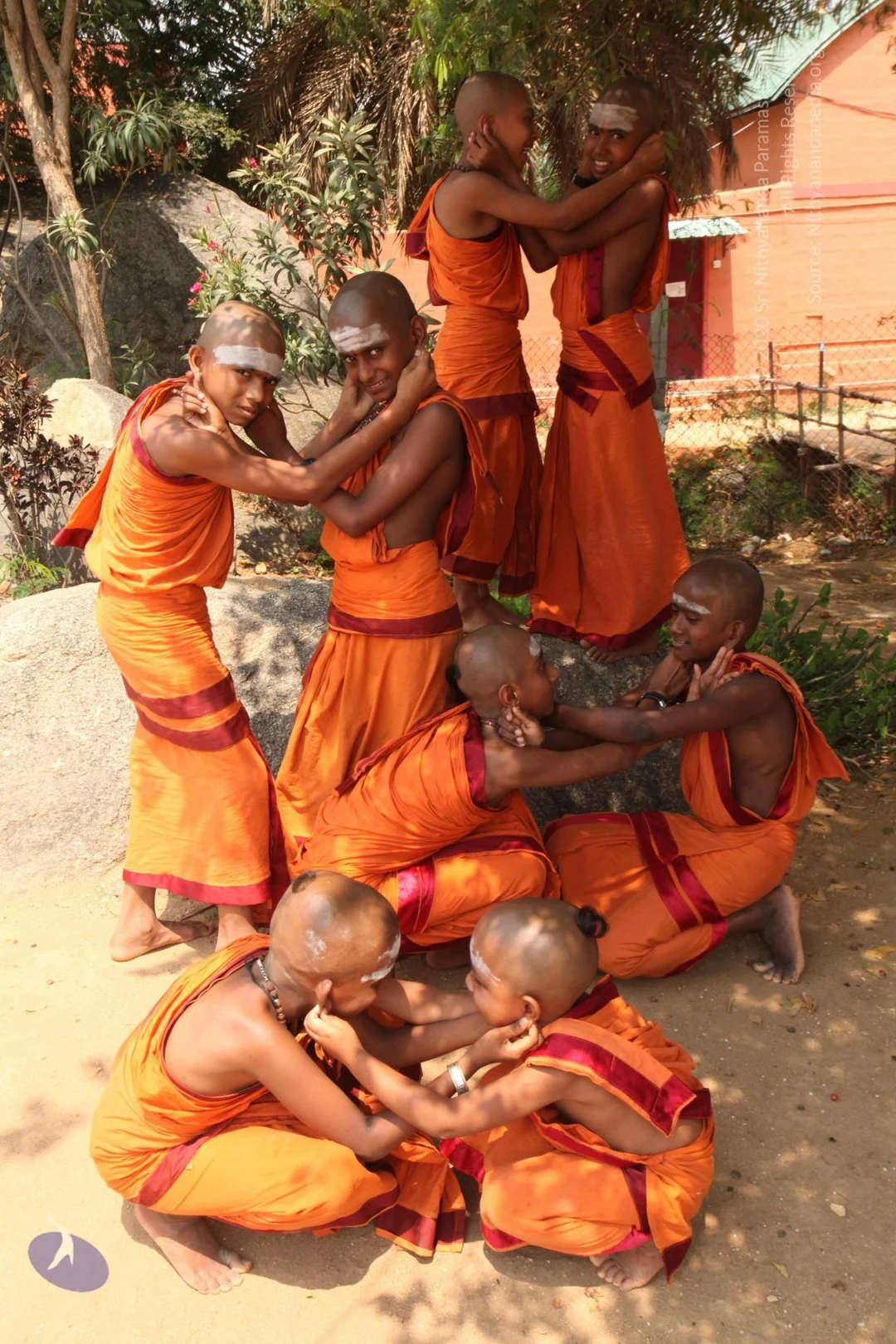
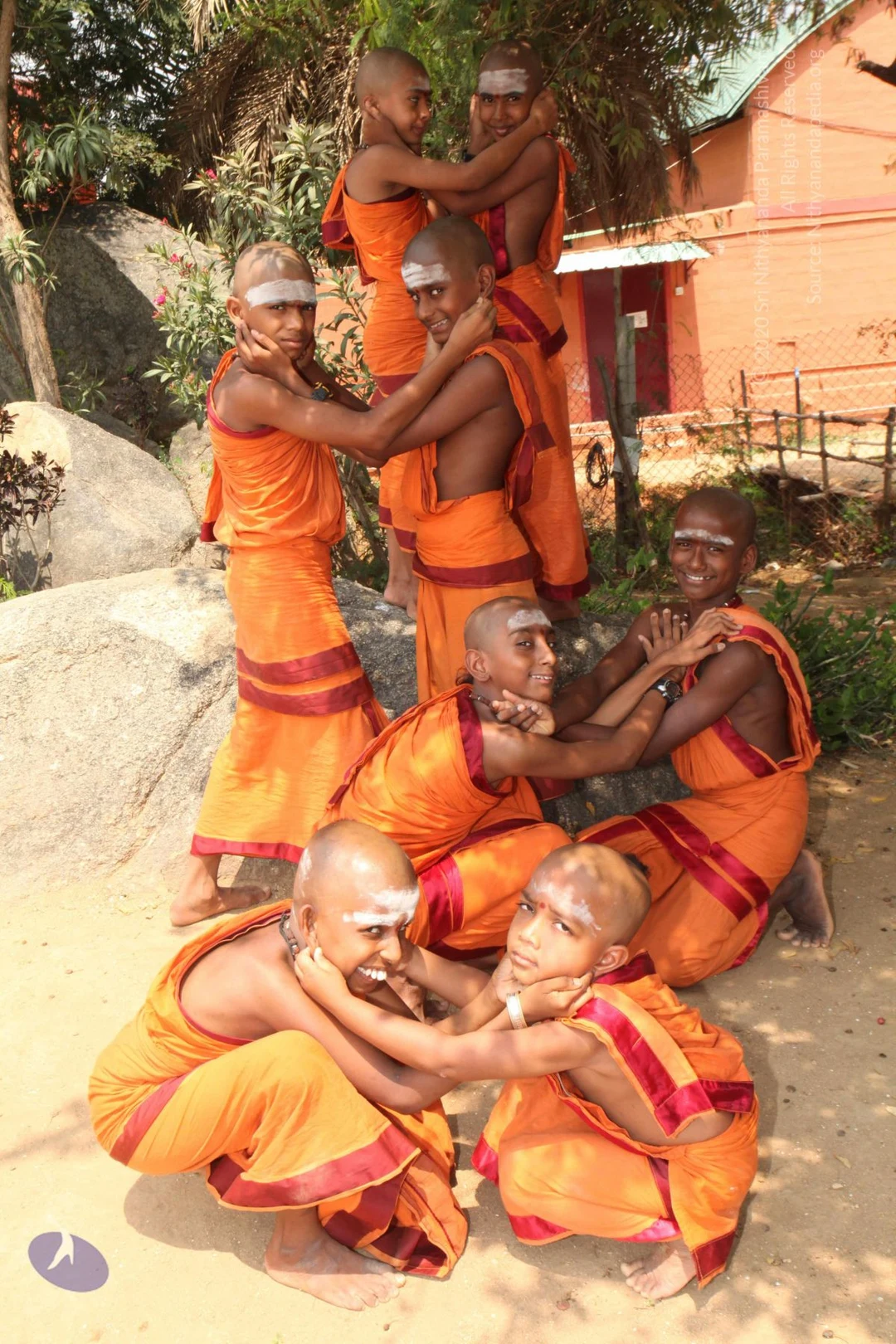
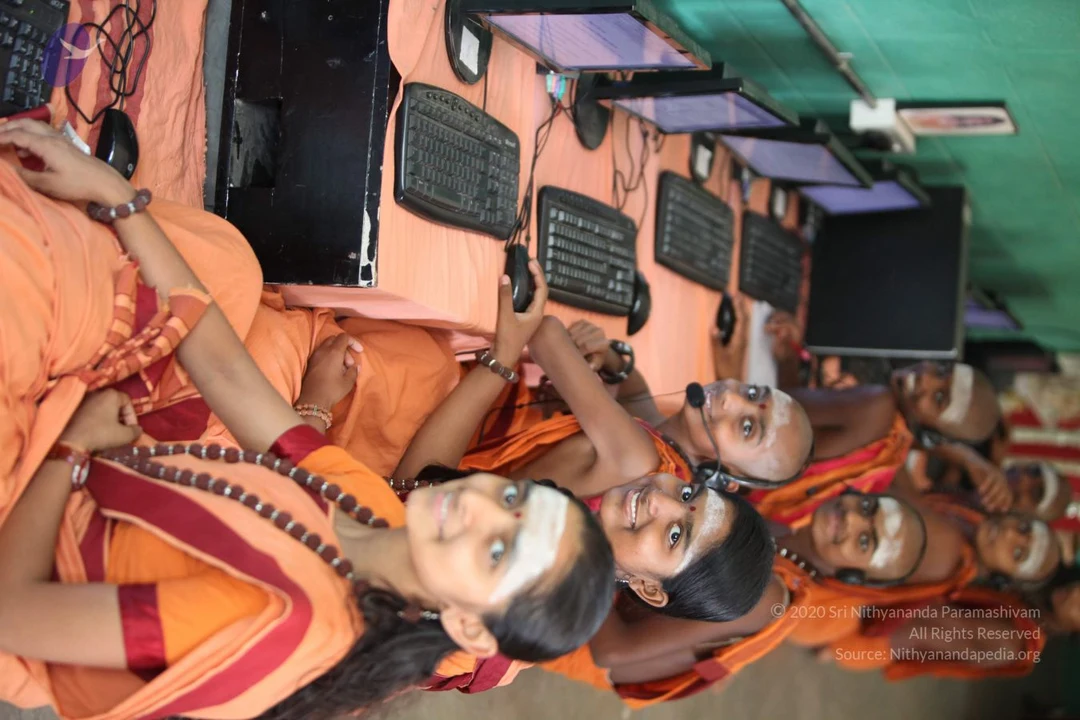
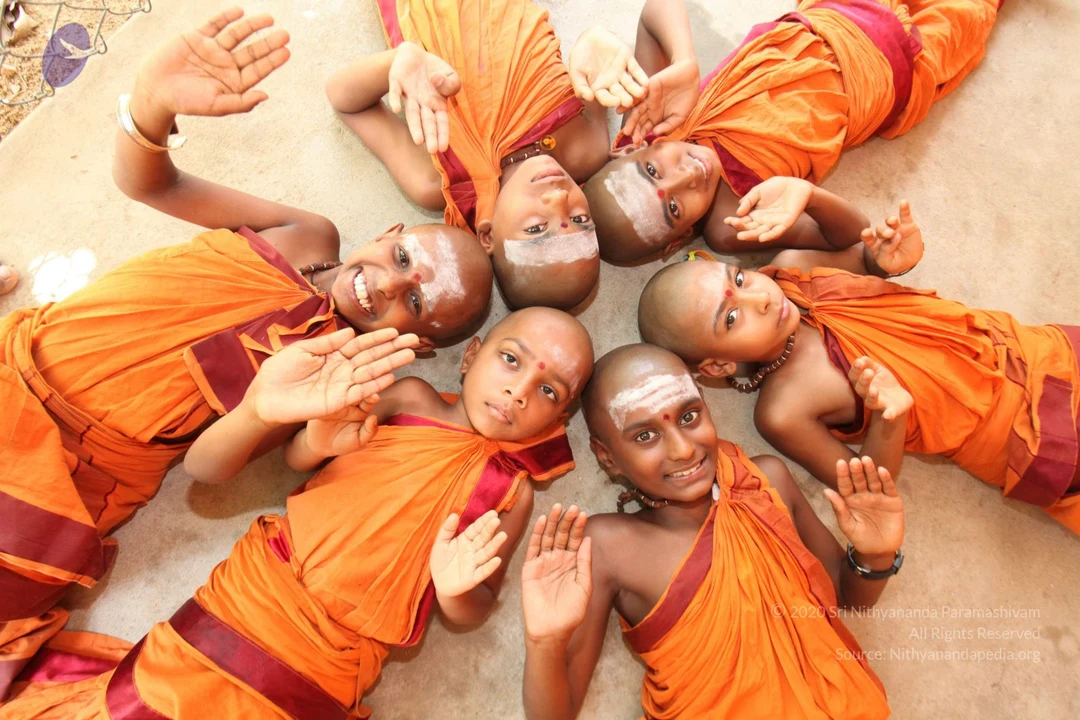
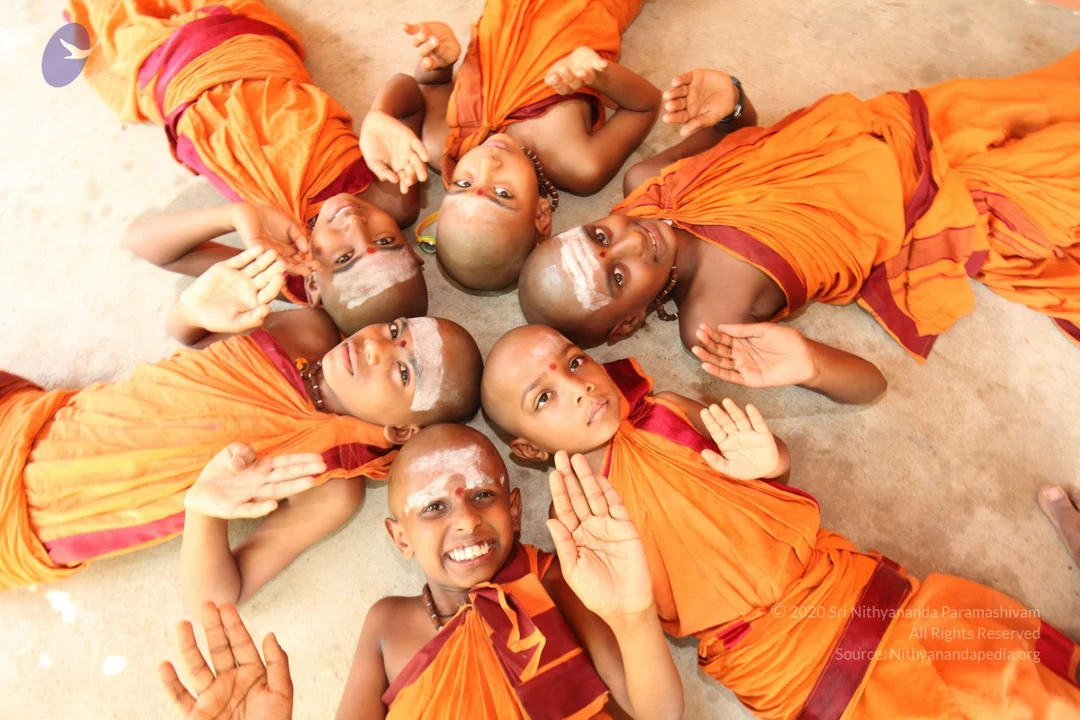
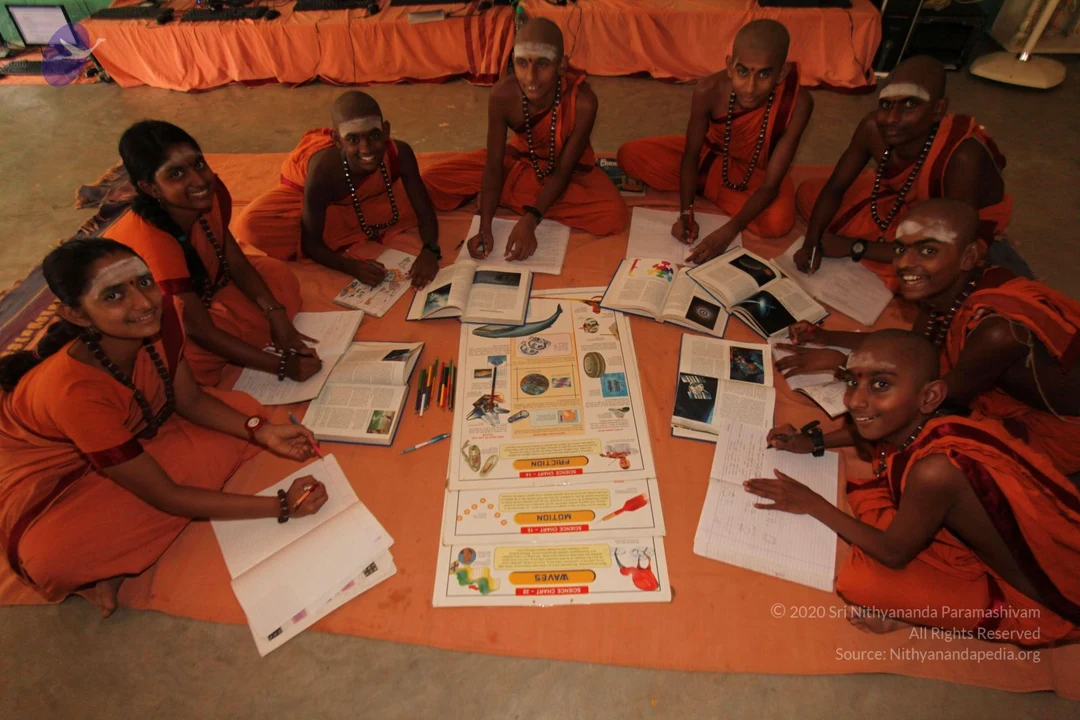
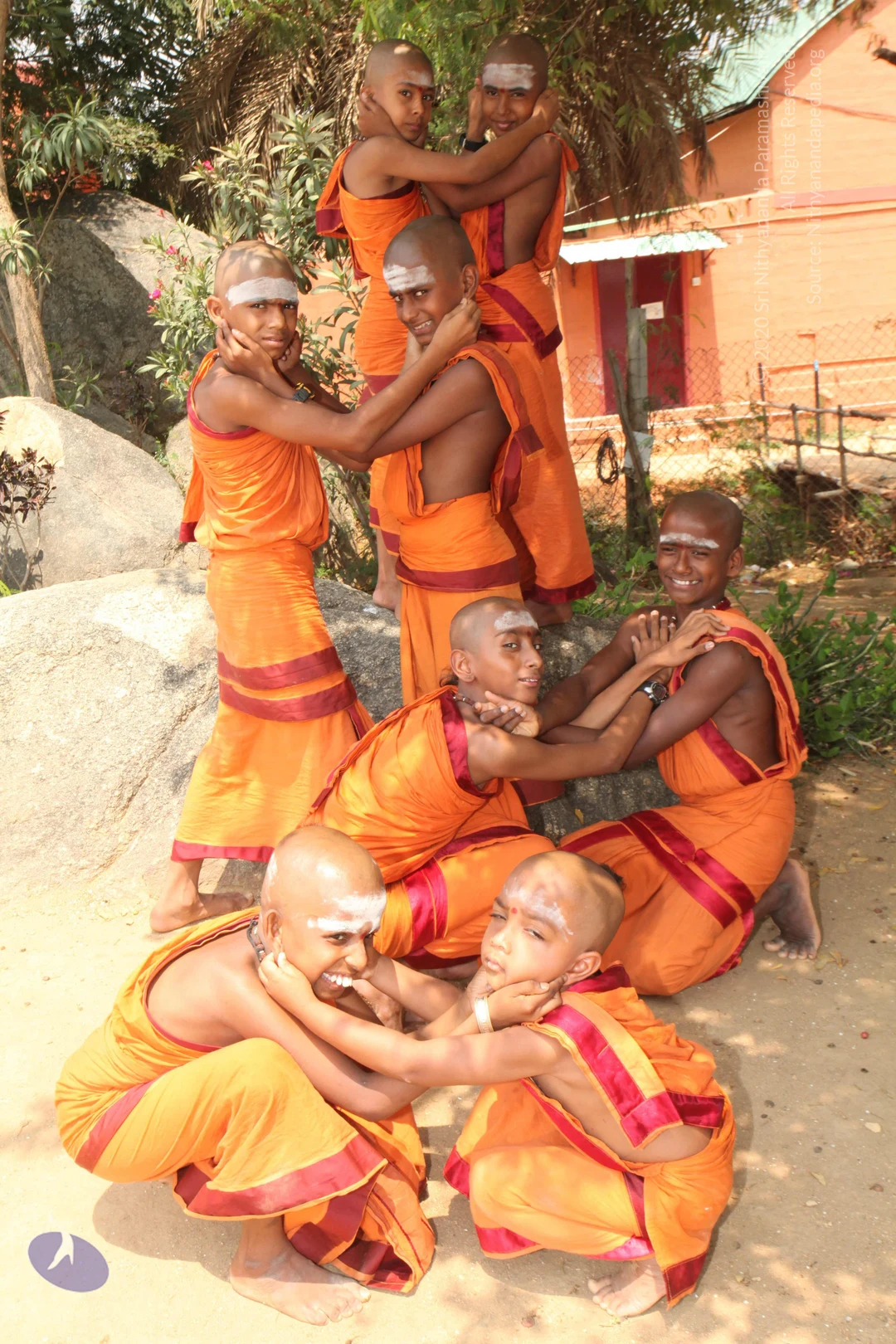
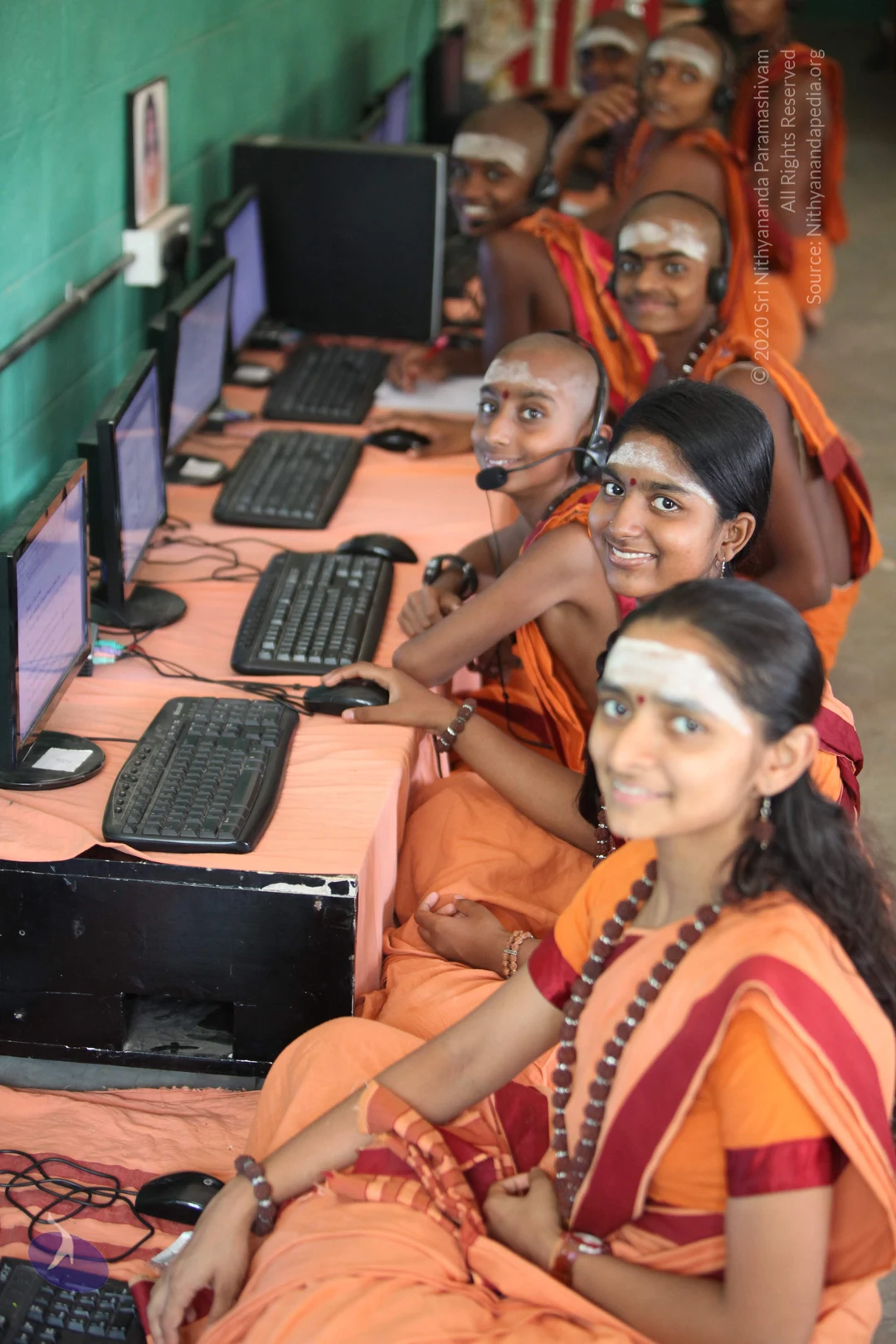
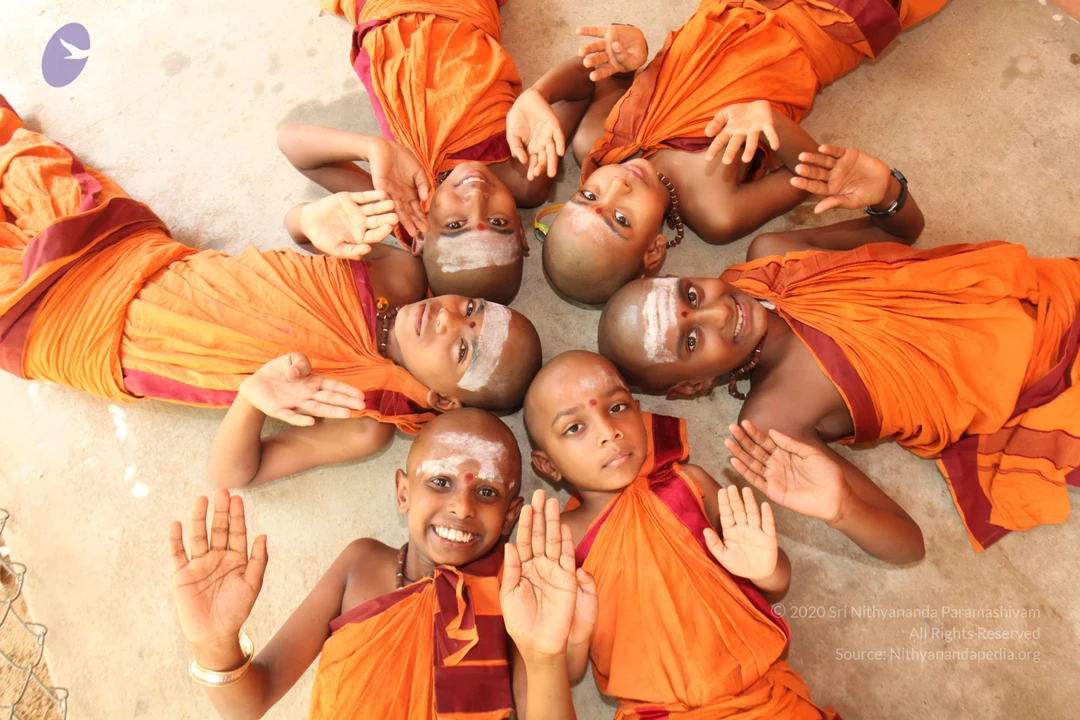
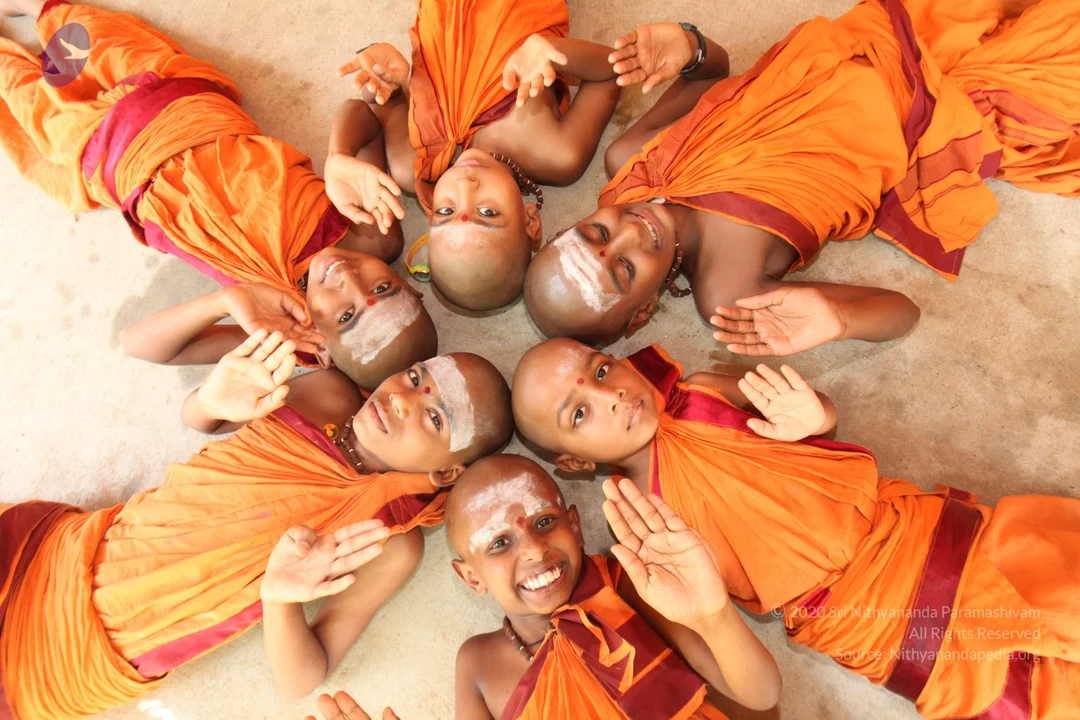
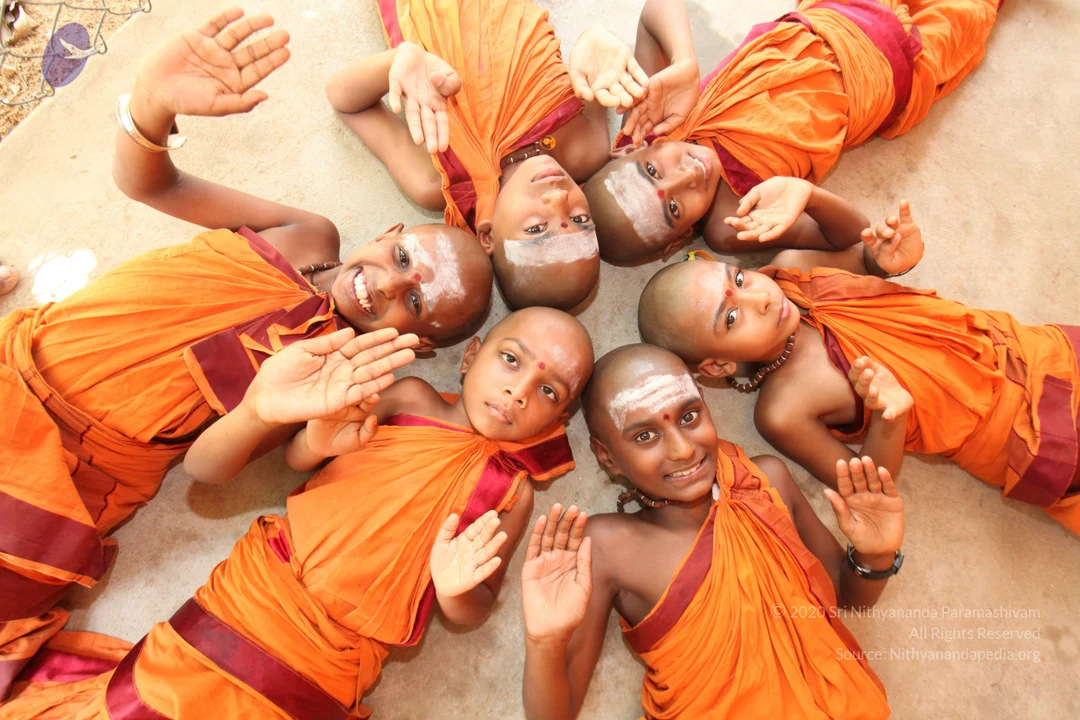
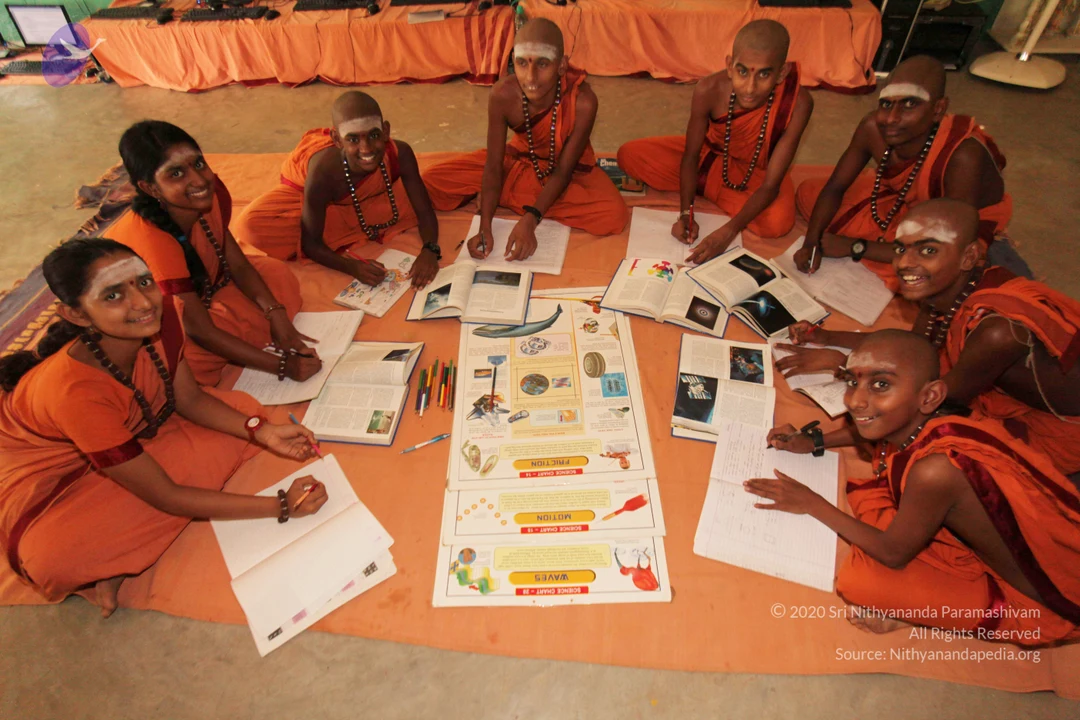
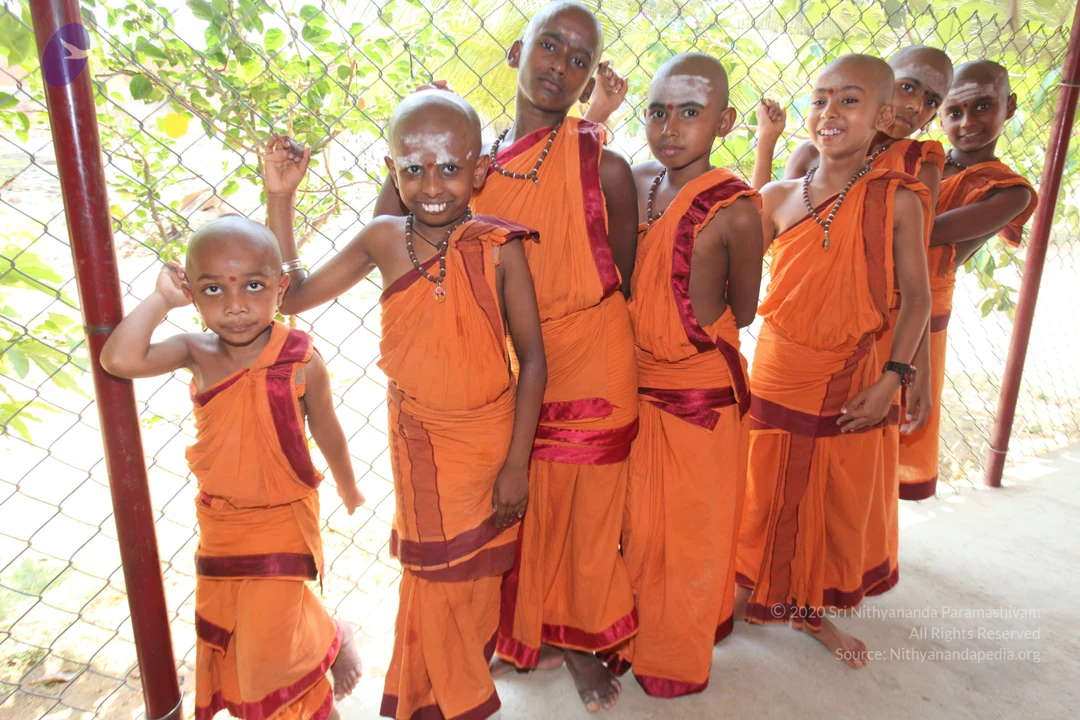
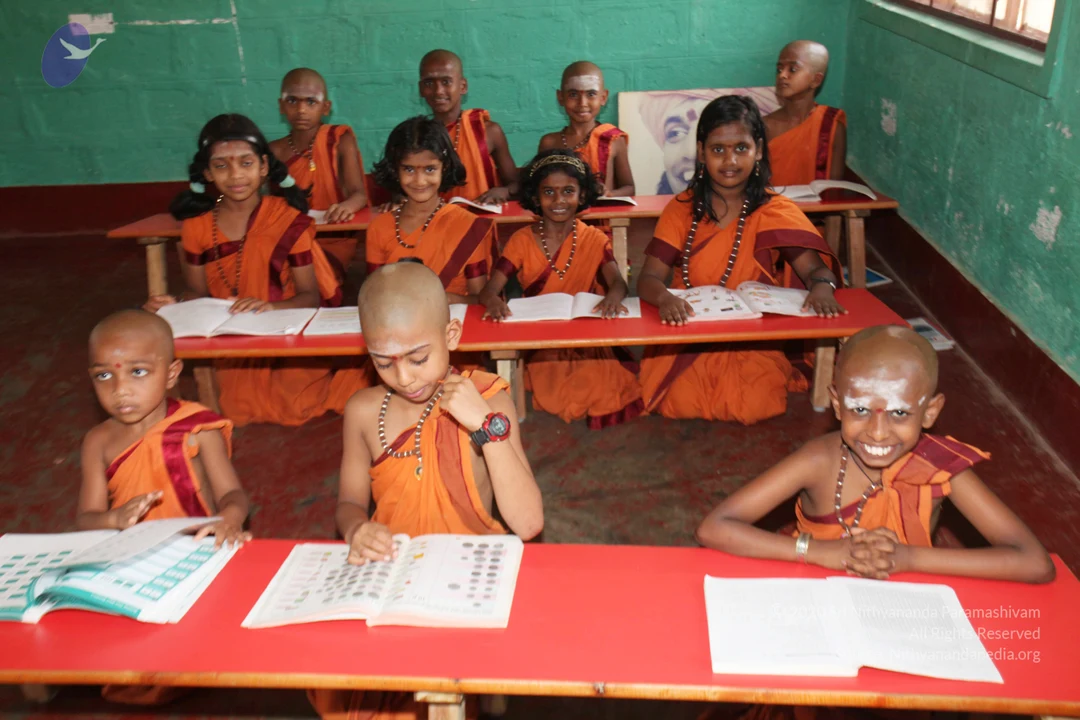
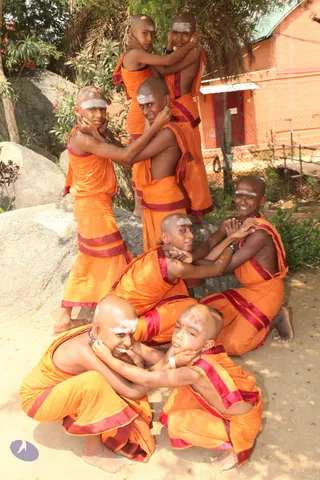
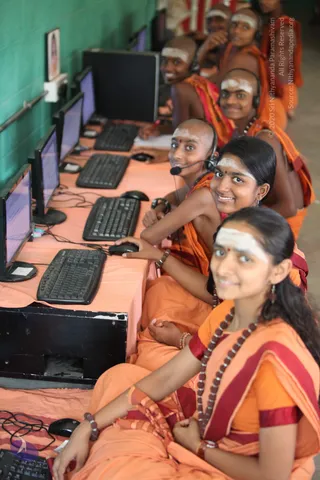
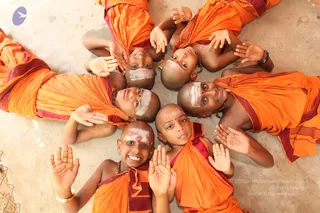
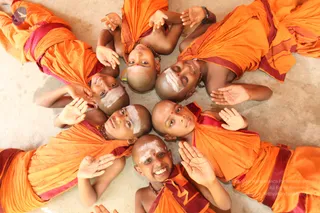
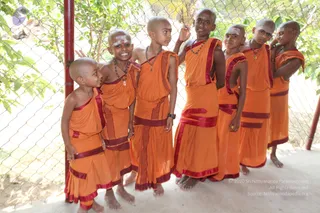
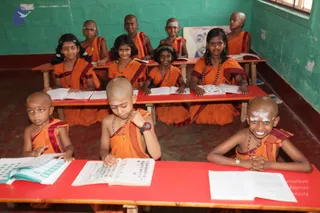
A group photograph of seven young shaven-headed boys in saffron-orange unstitched robes with red borders, their foreheads marked with white vibhuti stripes. They are posed playfully outdoors among large grey boulders, leafy shrubs and an orange building with a green roof behind a chain-link fence. Several boys cradle or grip each other's heads and necks while smiling at the camera; two crouch in the foreground and others stand or kneel on the rocks. No a person candidate is visible in the scene.A photograph of a row of young students in orange and red saffron robes seated at a long table with desktop computers, keyboards and monitors, several wearing headsets with microphones. The foreground girl wears a red-and-orange saree with rudraksha mala beads and a white forehead mark with a red bindi, smiling at the camera. Behind her, shaven-headed boys in orange cloth also wear white forehead marks and headsets. The wall is green and a small framed picture hangs on it.Overhead photo of six young shaved-headed boys in saffron-orange robes with maroon edging, lying on a concrete floor with their heads gathered together in a star-like circle. Several raise open palms toward the camera, and they have white vibhuti or sacred ash smeared across their foreheads, with red kumkum dots and beaded rudraksha necklaces. One boy at lower left smiles broadly; a wrist watch and bangles are visible. The setting is an unfinished concrete floor beside a wire fence.Seven shaven-headed young boys in orange saffron robes with maroon borders lie on a stone floor in a circle, heads toward the centre, their faces tilted up at the camera and smiling. Each has white vibhuti/tilak marks on the forehead and red kumkum bindis, and several wear beaded necklaces. Their hands are raised and waving or resting near their faces, forming a radiating star-like pattern viewed from above.A photograph of six young boys standing in a row beside a green chain-link fence and leafy plants. All are shaved-headed and wear saffron-orange cloth wrapped as robes with maroon borders, with rudraksha beaded malas around their necks. Several have white or red tilaka marks on their foreheads. Some are smiling, others look sideways, and they are barefoot on a pale concrete floor. A pendant is visible on one boy. No a person candidate is identifiable among them.A classroom of children in orange-saffron robes with maroon borders sits at red wooden desks, many holding open books. Several children have shaved heads, white ash markings on their foreheads, and rudraksha beaded necklaces. The green-painted walls show a framed portrait on the back wall, and a wooden board stands near the left. One boy in front wears a red wristwatch and reads an open book, while the boy at right smiles with clasped hands on the desk. The group is seated in rows and appears to be a gurukul study session.