Tuesday
8 April 2014
Advaita: Live Like God on Earth
- Dated photos
- 19
- Source pages
- 1
- Media
- 3
April 08 2014
Original wiki pageTitle
Advaita: Live Like God on Earth
Description:
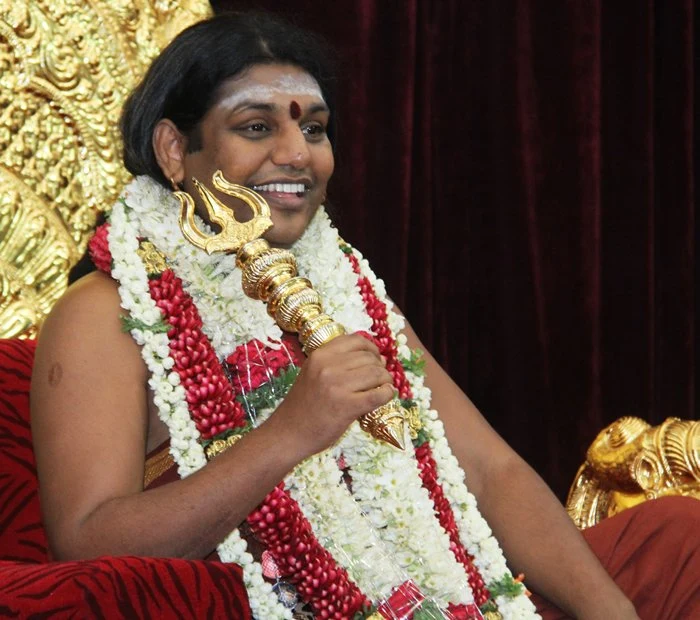
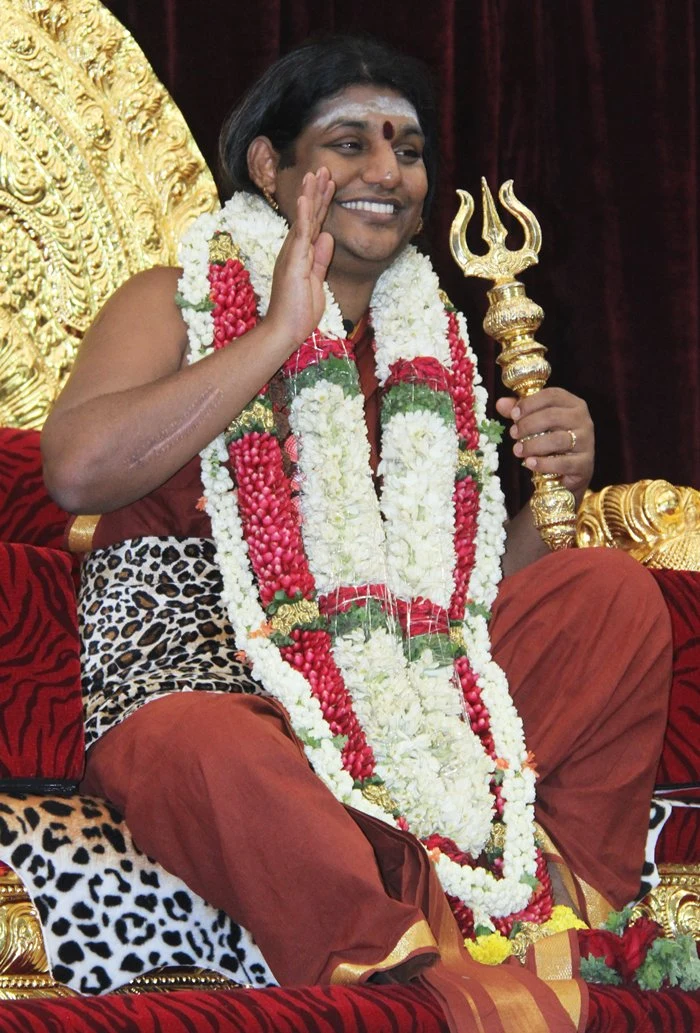
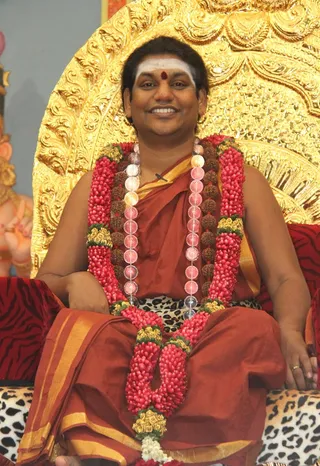
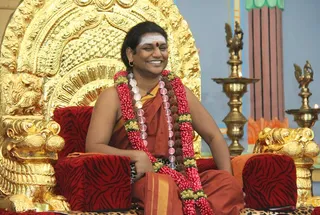
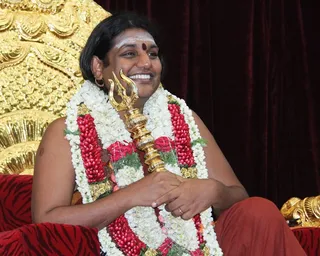
In today's (08-April-2014) morning Satsang, Paramahamsa Nithyananda reveals that many extraordinary powers express through us when we use Advaita for our internal strategy planning, making the science of Advaita as a necessity for our life. Ancient Hindu scriptures clearly illustrate how people were able to access the science of flying -- Mani, Mantra and Aushata -- using the Advaitic connection with air energy. Through the science of Advaita, we can live like a God on Earth!
| Video | Audio |
Transcript:
(00:14)
Nithyanandeshwara Samarambham Nithyanandeshwari Madhyamam | Asmad Aachaarya Paryanthaam Vande Guru Paramparaam ||
(00:37)
Is samay hamare saah upasthit sabhi darshako aur bhakto ka Mein prem evam ashirvad sahit swagat karta hu. इस समय हमारे सह उपस्थित सभी दर्शको और भक्तों का में प्रेम एवं आशीर्वाद सहित स्वागत करता हूं।
(00:50)
I welcome all the devotees, disciples, samajis, satsangis, Sri Mahants, Kotharis, Thanedars sitting with us through Nithyananda TV, Lotus TV, Sadhna TV, Eshwar TV, Janashree TV two-way video-conferencing having Nayana Deeksha in many countries, in many cities around the world.
Cities sitting with us in two-way video-conferencing: Tirupattur Dhyanapeetam, Kuala Lumpur-Palani, London-Kashi, Guadeloupe-Rameshwaran, Devon-UK, Grasse-France, High Point-North Carolina, Houston-Texas, Hyderabad-Gupta Kashi, Indrani-New Jersey, Jorpati-Nepal, London-Kashi, Ma Charrana-France, Minot-North Dakota, Newfoundland Canada, Dhyanapeetam-Hosur, Oman-Sivagangai, Santa Fe-New Mexico, Thiruvanmiyur-Chennai, Charlotte-Srisailam, Haridwar, Los Angeles-Arunachalam, Shivananda, Ohio-Prayag, Oklahoma-Somanantham, SanJose-Madurai, Seattle-Chidambaram, Singapore-Singaporum, Toronto-Kailasam, Dakota-Dunes. I welcome all of you with My love and blessings. All of you may be seeing - back home. Satsang is from Bidadi, live.
(02:47)
Today I wanted to expand on this Advaitic experience. Please understand. When you are liberated from the clutches of the root pattern, automatically the truth fills your decision-making and strategy-planning. Please understand a building is built out of stone and cement. As an intruder, if a tree has grown on that wall, when you remove the tree, automatically the stones adjust themselves and fill the gap. Please understand you do not need to do anything special, separate, to fill the gap. When you remove the root patterns, automatically your everyday strategy, thinking, experience, life, everything becomes simply based on Advaita. I am not promoting anything superstitious. I wanted to tell you an important truth. Advaita when it is made as a strategy planning for your internalizing and inner cognition, makes you express extraordinary powers.
(04:50)
Please understand last few days, I was spending time in Kashi having vacation, My spiritual vacation. There were just..... The whole Kashi if you have visited you know the old Kashi, the original Kashi which is called “Avimuktha Kshetra” – “never given up”, “never forsaken”. People who live there, and that place, both are never forsaken, never given up. Mahadeva Himself declares, “I will hold these people, protect them, even during the Pralaya. Even when the whole world is destroyed during the great deluge, I’ll hold these people in the tip of My trishula”’ That is why even Shankara, understand even Shankara, when he made amnaya madas (monasteries), for the North – Uttaramnaya, East – Poorvamnaya, West – Paschimamnaya and South – Dakshinamnaya and after establishing everything he himself retired in Kanchi – Moolamnaya. So, as per the tradition all the Shankaracharyas after they appoint their successors, they should retire.
(06:32)
In Hinduism, even the madathipathi are supposed to retire once you appoint the successor. Shankara very clearly declares Kashi as a ‘Urdhvamnaya’. Kashi cannot come under any Shankaracharyas. He says, ‘Kashi Urdhvamnaya’. Mahadeva Himself again and again and again will happen and He will be present here as a Acharya. No separate Shankaracharya. Urdhvamnaya! I was seeing that Mahadeva Himself promises He will hold that place, on the tip of his trishul hold it up. Because He promised he will hold them up in the tip of his trishul and save, protect them, it is called ‘Urdhvamnaya’. I was actually seeing that city, if you understand, most fascinating; if not most frustrating. Like Bidadi! If you understand the most fascinating; if not most frustrating! Understand exactly like Bidadi.
Varanasi is all gallies; small-small streets, only two-and-a-half feet, three feet streets. The Varanasi streets are very famous. I was reading in the books, the city was designed and built in the days where not even bullock-carts was invented. But I am not ready to believe that! You may then ask, “why such small, narrow streets”? Please understand Kalabhairava revealed to Me, it is not a street, it was a drainage! There was no street, because the city, you can live there only if you can fly! You can live in that area only if you have mastered the science of flying, levitation. Now where we are walking is a drainage; it is not street.
(09:20)
The flying is done in those days by three ways: Mani, Mantra, Aushadha. Mani: means, the technology: You will have your own small flying machine or even larger like the Pushpaka Vimana. That is Mani. Next Mantra: You have mastered the science of Pranayama. Just by balancing the breathing flow, you pump in so much of Samana energy into you. You just raise your body and move. Aushadha: There were special herbs. You just hold them under your tongue; the prana which goes inside will just stay in your body and it’ll just become weightless and raise and you can move. So, Mani, Mantra, Aushadha. Through these three, any one method, you should be able to fly. Mani is already there in the Vedic Tradition, in the Vaimanika Shastra. It describes clearly how the… one man’s private flying machine to around five-thousand people can fly. The machineries are clearly described. I am very serious about reviving all these. See, there are battery methods, how to build battery.....
(11:12)
I can tell one thing: If you do Ph.D. in Aeronautical Science, and Ph.D. in Vyakarana do research on these two, I guarantee Nobel Prize is waiting for you, because there are many things yet to be discovered by Aeronautical Science. It is already recorded. I am not saying that whatever Aeronautical Science has discovered is recorded in Vedas. But, there are many things which are yet to be reached by Aeronautics which are recorded in the Vedas. If you have Ph.D. in Aeronautics, and Ph.D. in Vyakarana, I guarantee a Nobel Prize is waiting for you. And if you do research in these field, tons of Nobel Prizes are waiting. We just need to put a little energy and attention, respect to our ancient Masters. I hope My kids will do that.
(12:31)
You may be thinking did I mention Vaimanika Shastra or Vyakarana? I said Vyakarana. Vyakarana is the understanding; Vyakarana will give you the ability to understand Sanskrit literature. So, if you master the Aeronautical Science and the Vyakarana means you are able to do research and understand Sanskrit books. Vaimanika Shastra you can’t decode unless you are a master of Vyakarana. I was wondering: Kalabhairava says only the people who can fly can live in this city. Then we had a city full of people who are capable of levitating. God! I was just resting in Samadhi with this one thought: ‘How can a city-full of people be able to levitate? Come on! Looks too much!’ I have the answer: When you feel Advaita with the air, energy-flow in your system, you can either make yourself too heavy or too light. Anything is possible. Anything is possible. From Kailasa when Mahadeva got married to Parvathi and after the Ganesha, Subramanya, all of them happened, all the Ganas requested Mahadeva, “Let’s go down to the plains and establish a community.” Mahadeva agreed, came down with his great disciples, followers and bhoota-pretha, pashasha Ganas all that, and established the city for Himself.
(15:12)
After long time only Ganga came to have Mahadeva’s darshan there and wash Mahadeva’s feet. City is older than Ganga. City was not built for Ganga. Ganga came as a visitor later on. Seven cities are under the present Varanasi city. Anyhow I can speak on Varanasi that will go on and on and on.This Bidadi has two cities under it! There is a third city I am building now in this land. Varanasi has seven cities under it. Madurai is the fourth-layer city on it. Tiruvannamalai is the second-layer city on it. Bidadi is third-layer city on it. Varanasi has seven layers city on it. Means in course of time, sunk and rebuilt, sunk, rebuilt. Varanasi even if you drill through the bore-well, you will get the seven-layer city. The whole city is a consolidated experience of Advaita. Please understand the city is not built with stone, wood, cement, concrete. It is the consolidated Advaitic experience of millions of enlightened beings with that the city is built. That is why it is “Suvarna Puri”. The city is ‘The Golden City’.
(17:40)
Among the hill: Arunachala. Among the temples, palace: Madurai. Among the trees: Kalpavriksha. Among the God: Mahadeva. Among the cities: Kashi, Varanasi. Kashi, if you don’t understand most frustrating; if you understand most fascinating! I invite all of you to come and understand Varanasi with Me. Be there for May. Don’t say, ‘May....may...’ No! May is must. Bharat itself....what a place to live! I wanted each one of our kids to do special research in one aspect of Vedic Tradition like a aircraft as per the Vedic Tradition, the electricity battery as per the Vedic Tradition, or the Cosmetic Surgery as per the Vedic Tradition. Please understand you do not need to become a full-fledged doctor to perform a Cosmetic Surgery as per the Vedic Tradition. There are methodologies. There are clear, full-fledged, scientific methodologies on various things; Vaastu, Astrology, Gemmology. I wanted each one of our kid to do research on at least one aspect of the Vedic Tradition. I will provide whatever is required now for the research and I Myself will guide, I’ll spend a little time. Now I am liberated from wasting My time on training people due to this great gift of Kaalabhairava’s “teamily” system: each one train the other.
(20:08)
Vedic Science Exhibition.....at least once a year, on Swami’s birthday, we should organize a Vedic Science Exhibition where kids will showcase all their re-inventions from Vedic Tradition, showing it to people. Still I have not started the answer how the Advaitic space can help you to levitate and Advaitic space can change the body and mind. Already time is up. I’ll continue to expand in the further satsangs. Again and again and again align yourself to Advaita. Live like a God on the Planet Earth.
I bless you all. Let you all radiate with Integrity, Authenticity, Responsibility, Enriching and Causing Eternal Bliss, Nithyananda. Thank you.
(21:36)
Title
Paramashivoham Oneness Capsule 239 (Happenings on 08 April 2014)
Oness Capsule
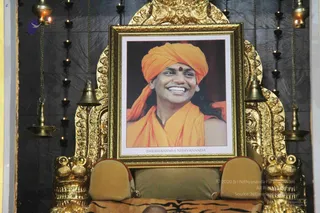
Photos From The Day:
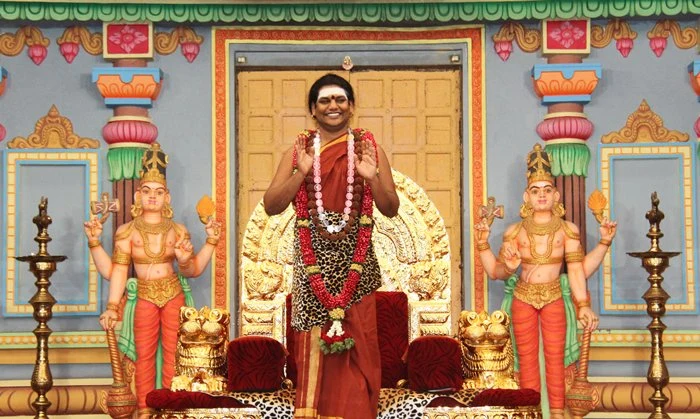
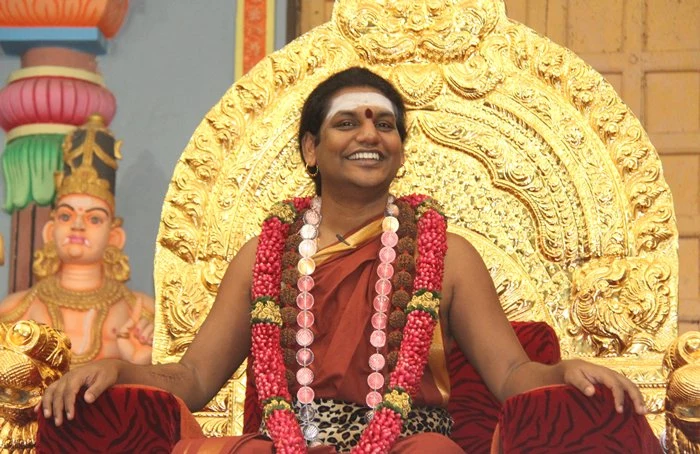
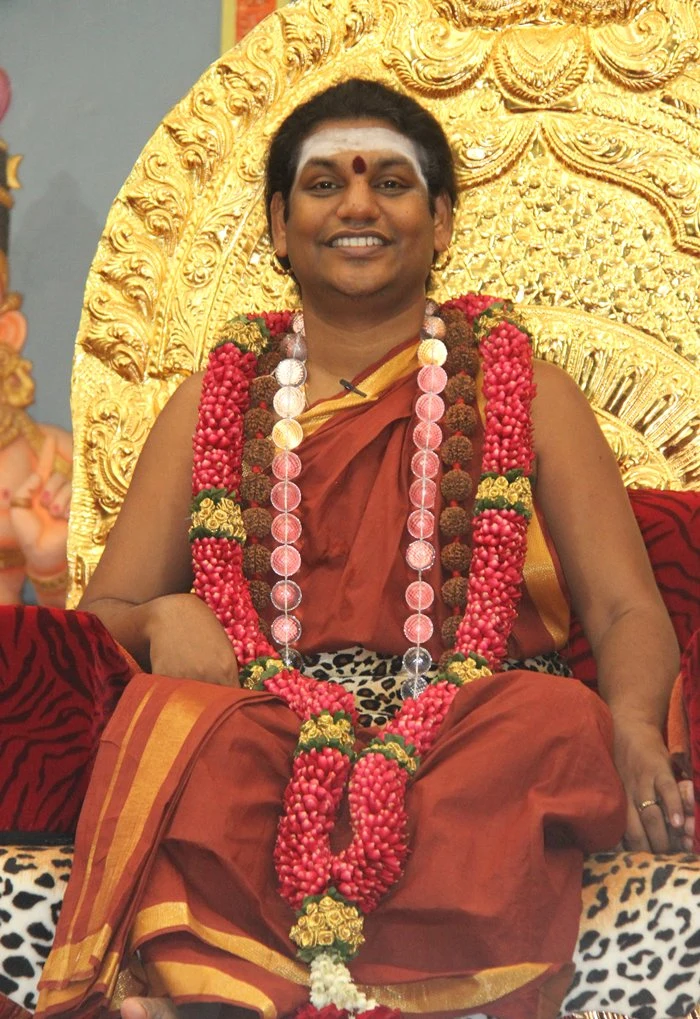
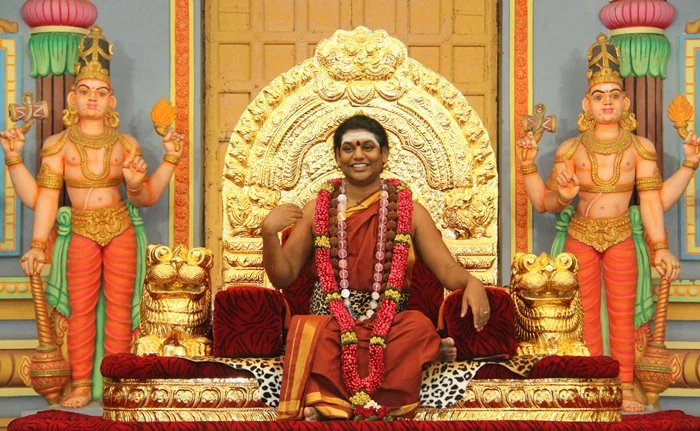
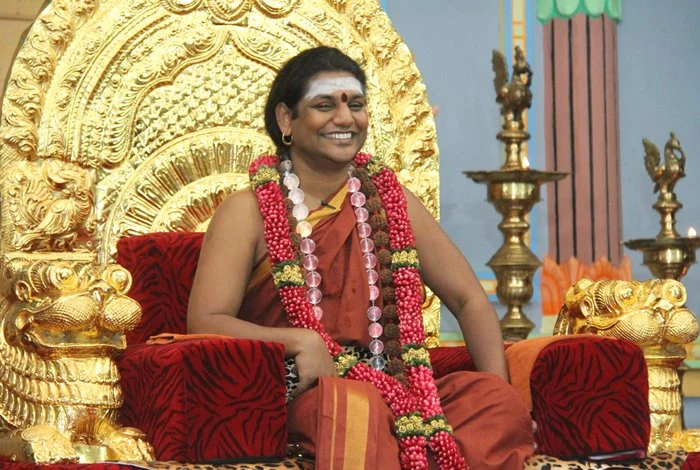
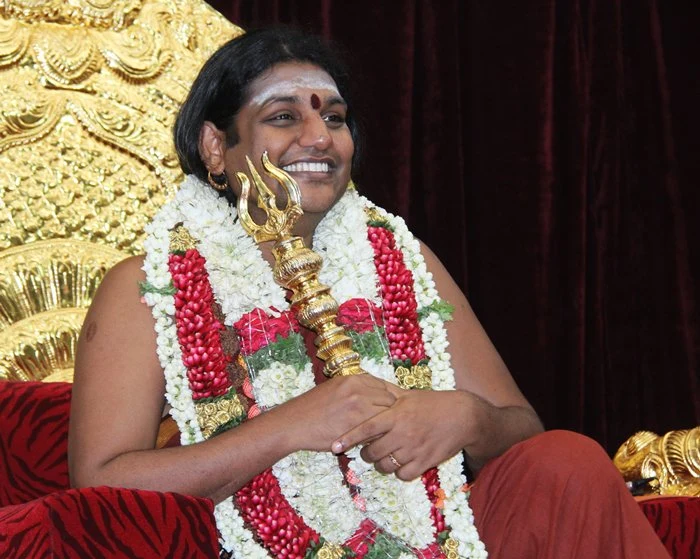
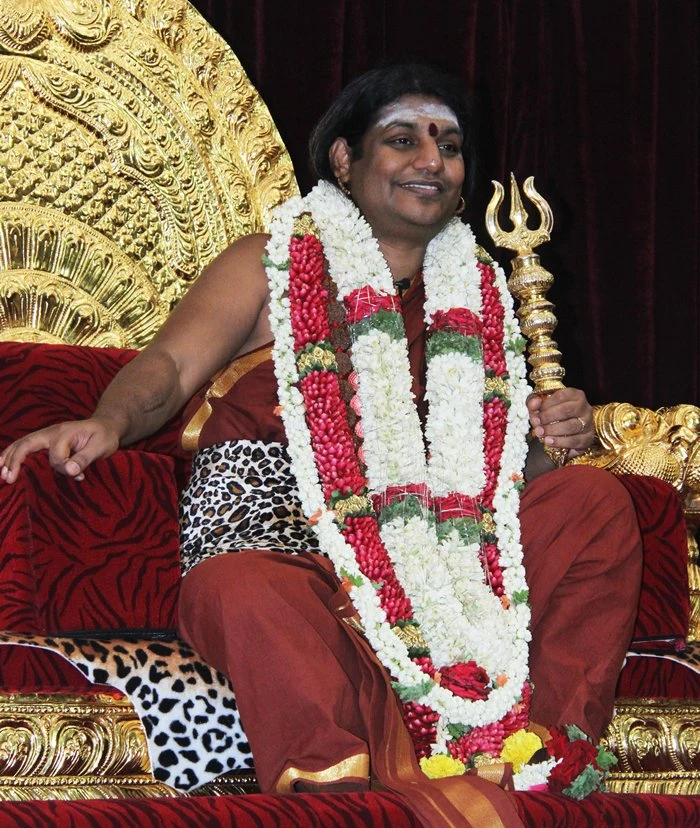
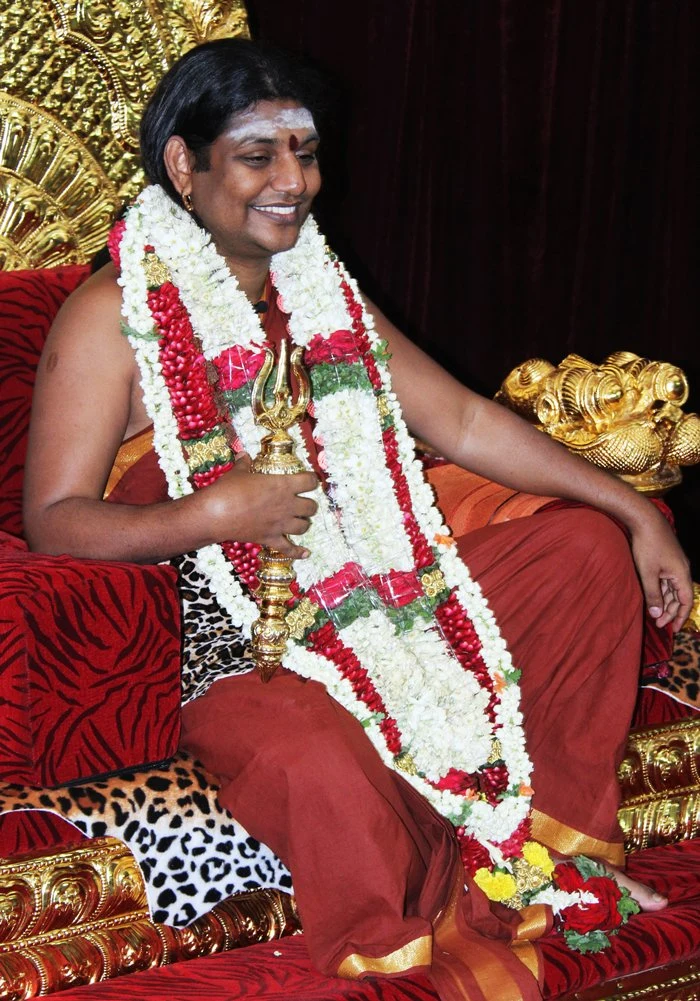
Photos Of The Day:
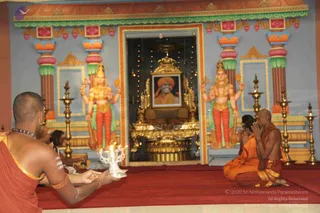
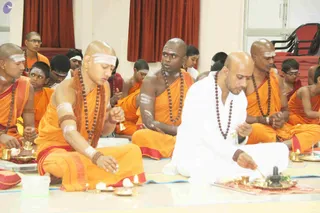
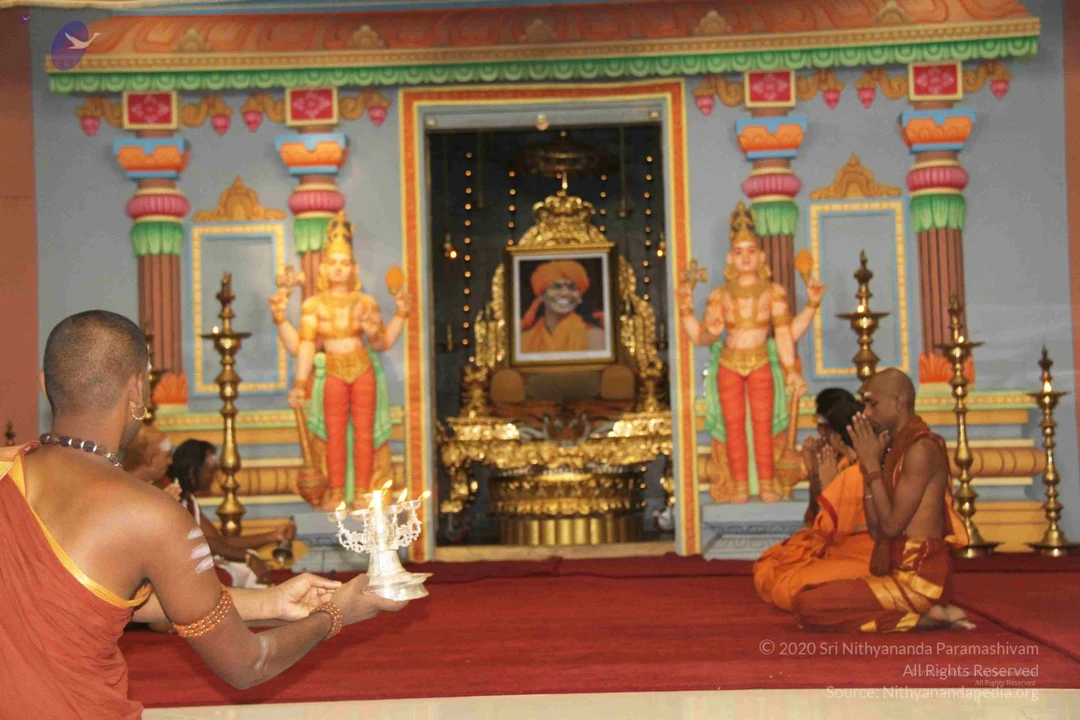
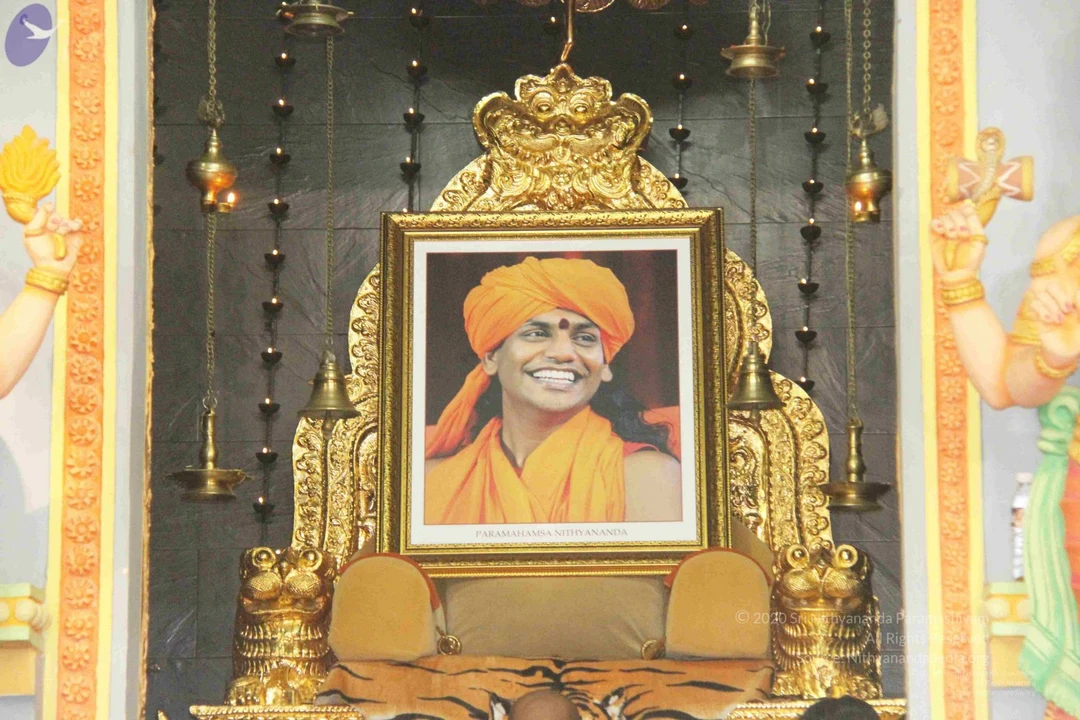
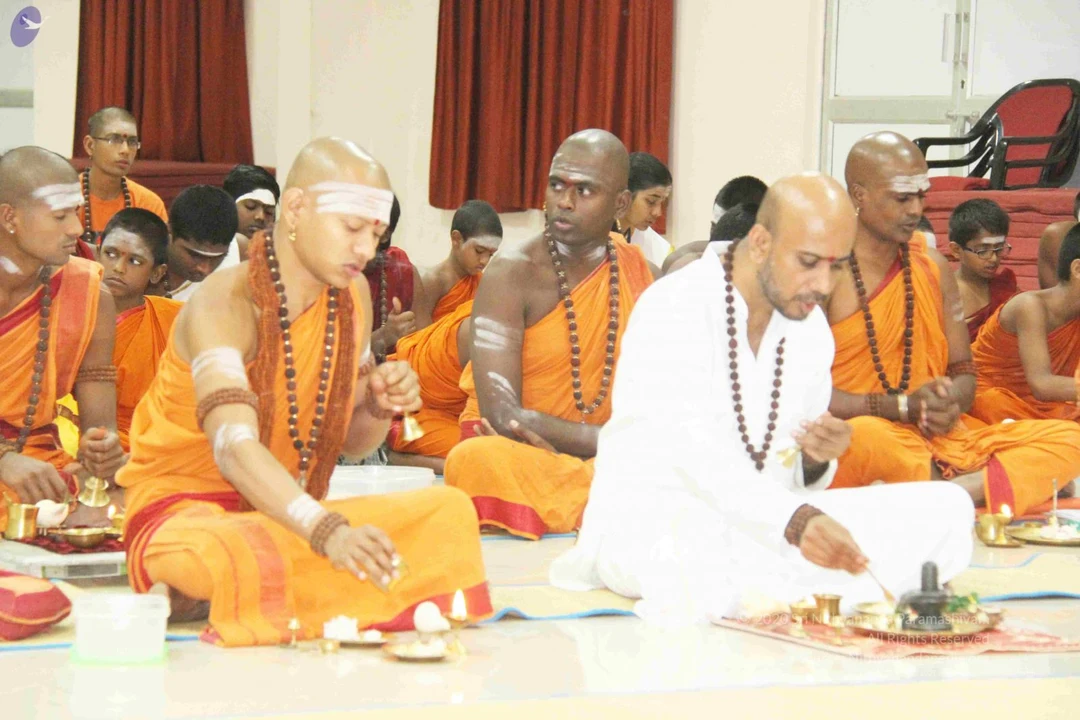
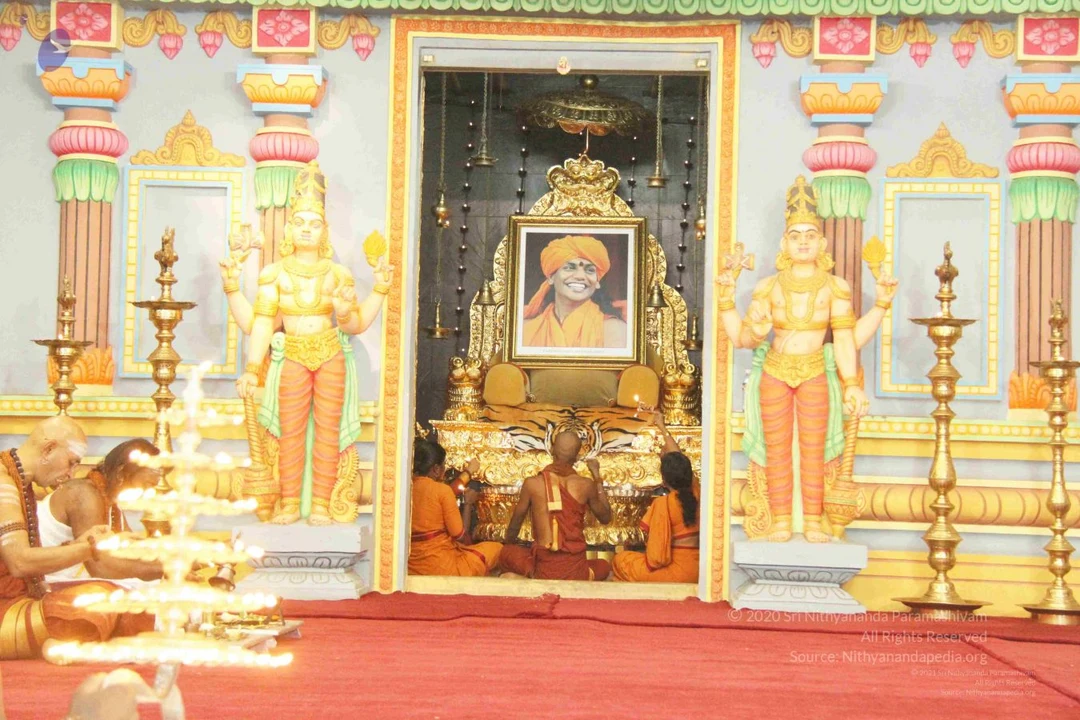
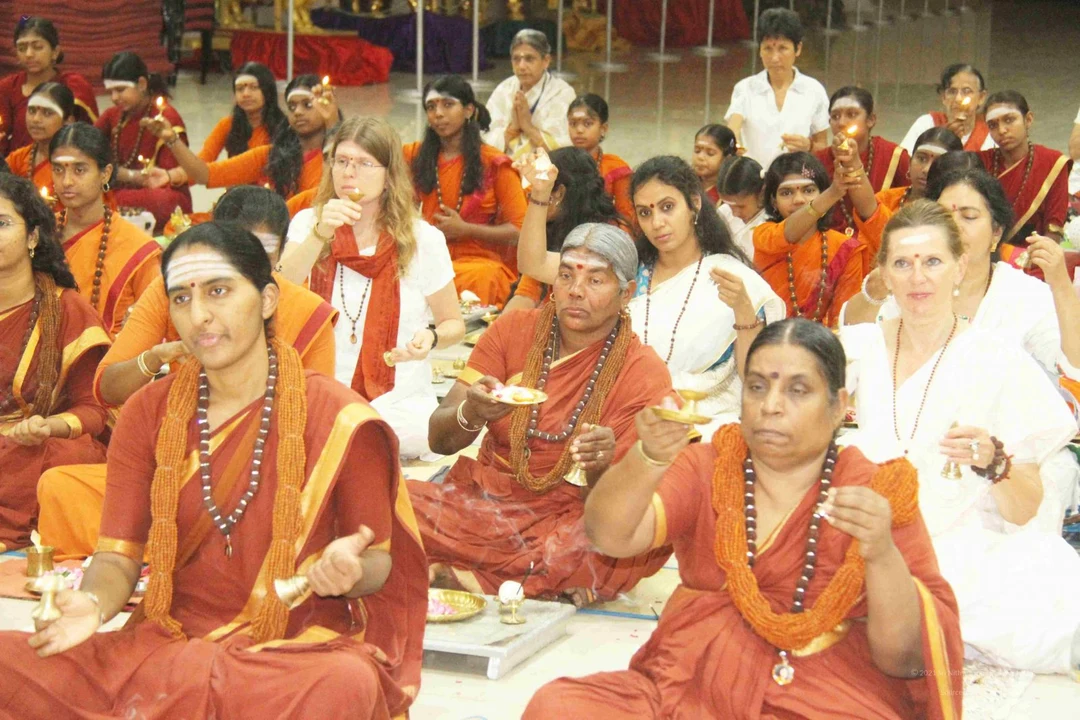
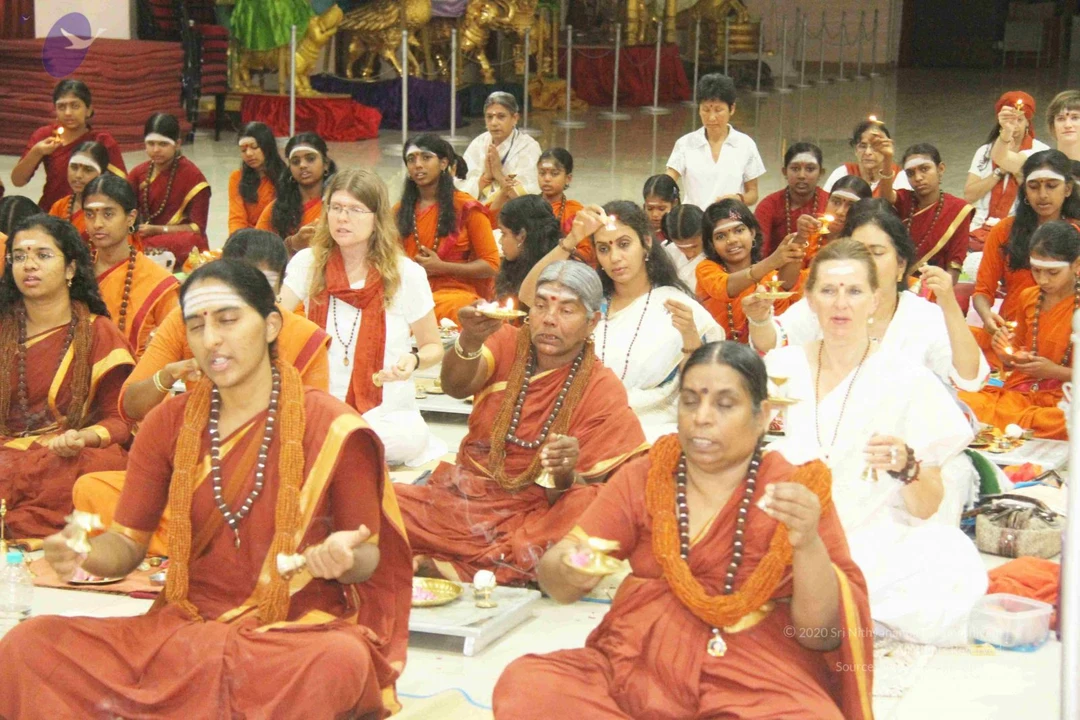
paduka-puja

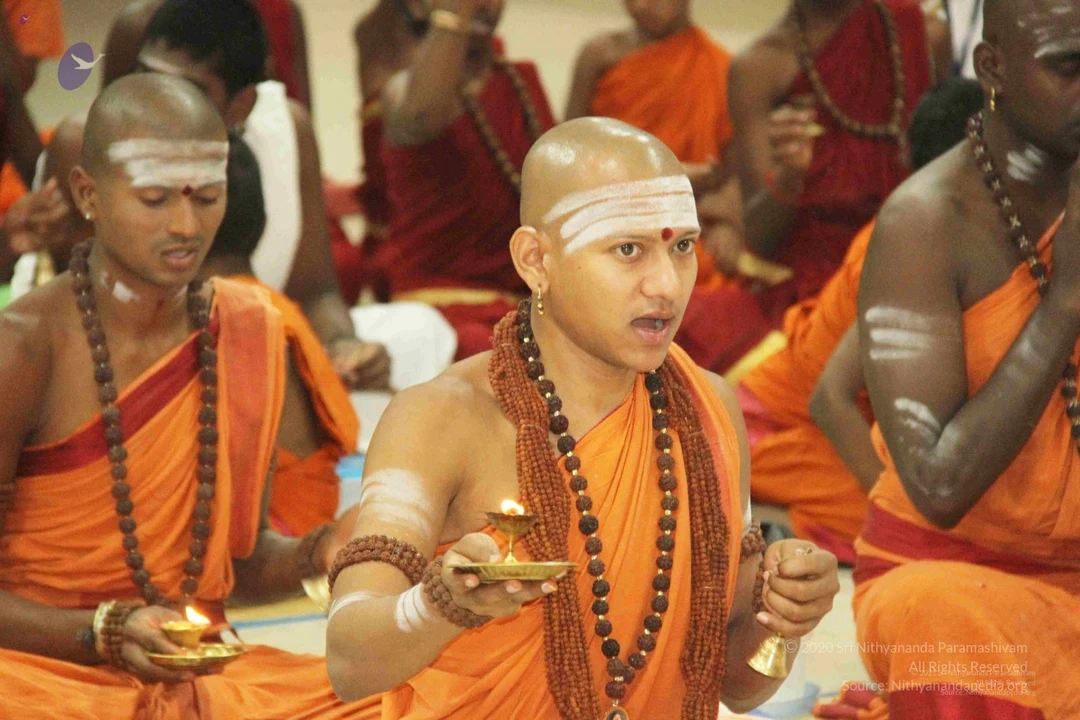
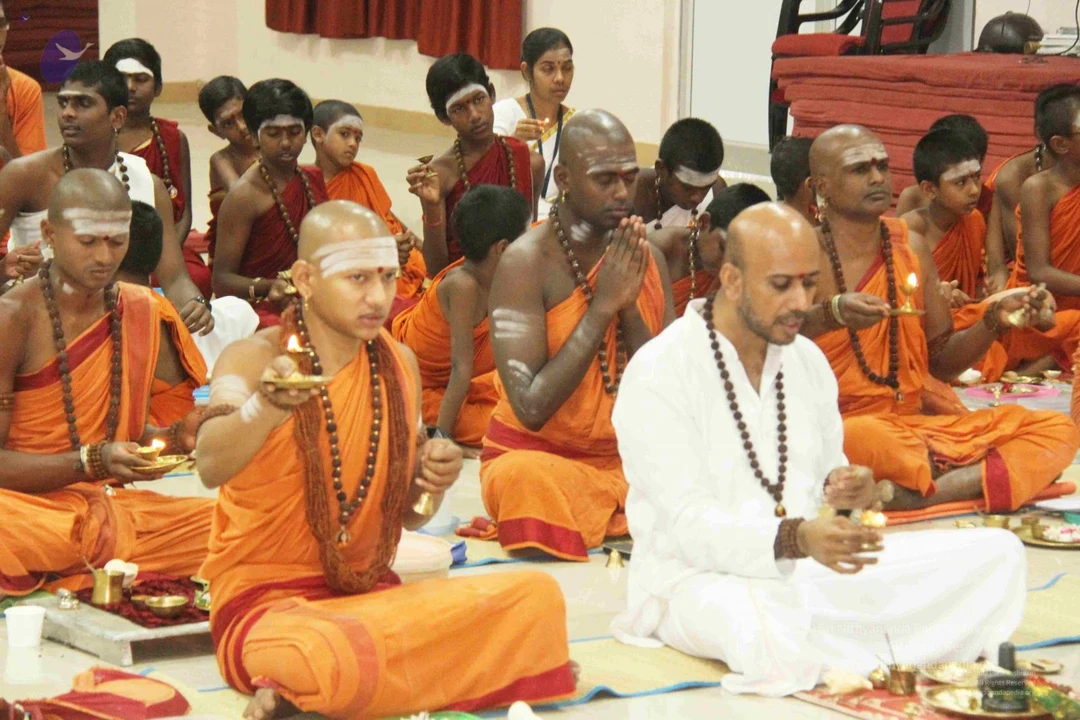
Photos from this day
View all 19 photosPhotos From The Day:
10 photosSource gallery
paduka-puja
9 photosSource gallery