Skip to content
Monday

7 April 2014

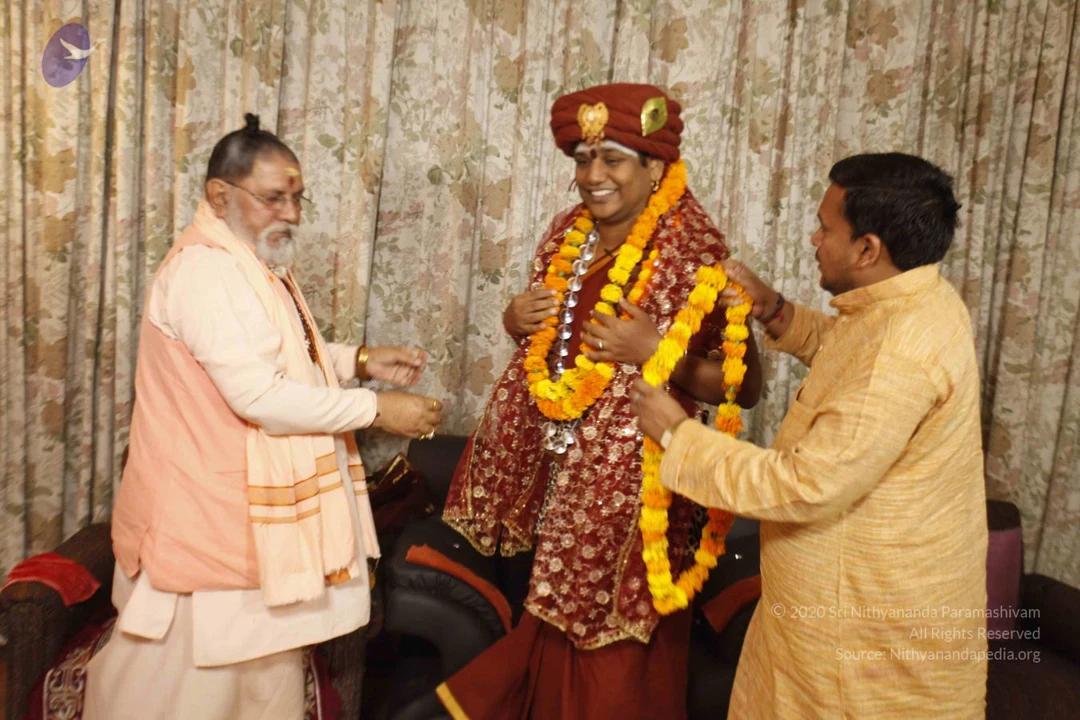
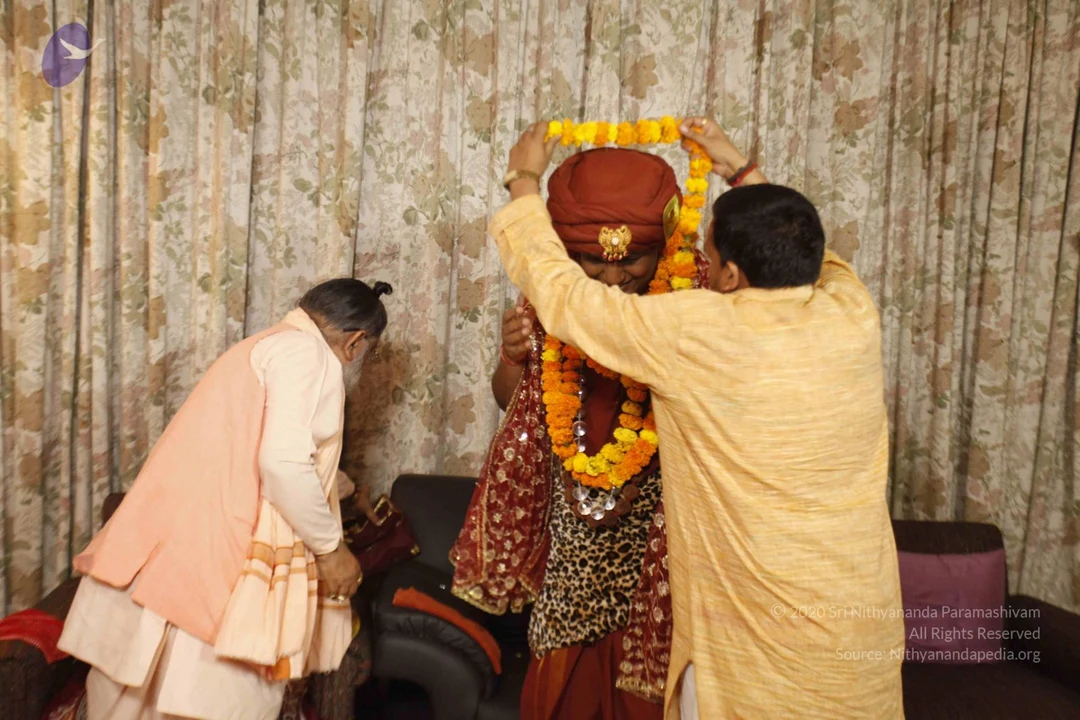
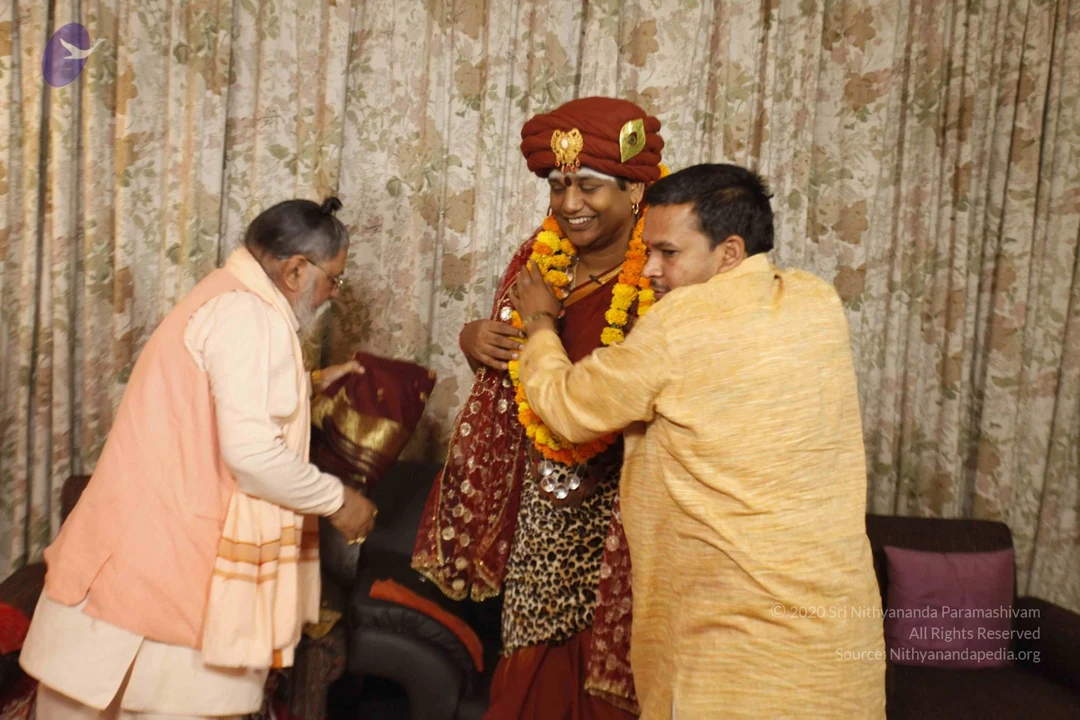
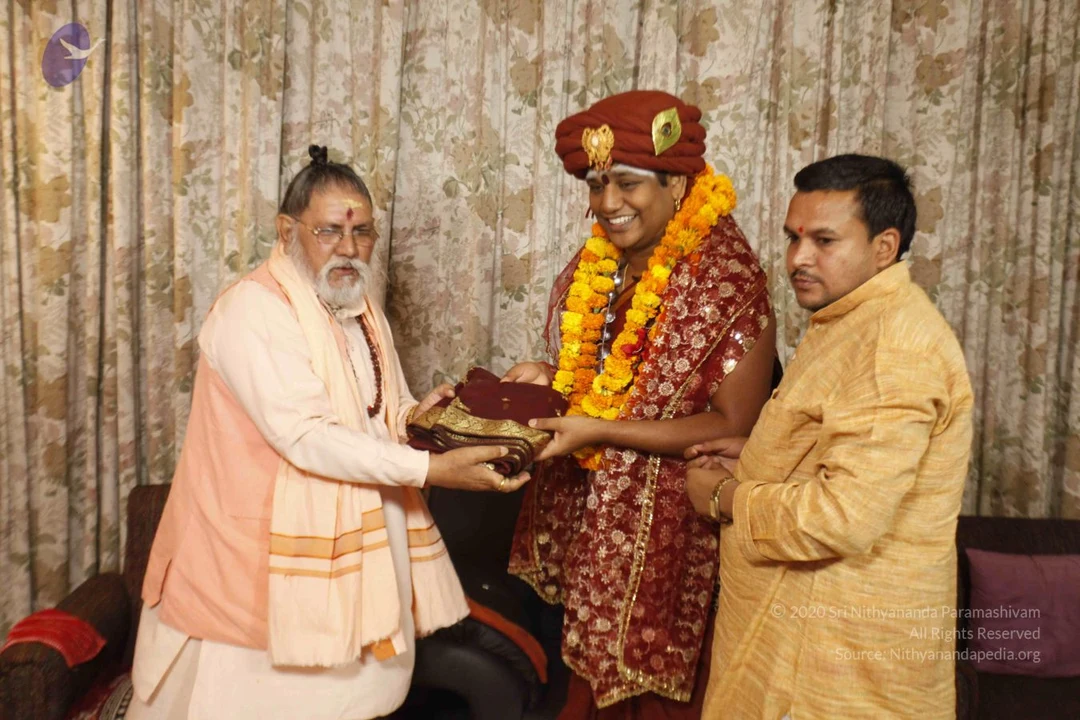
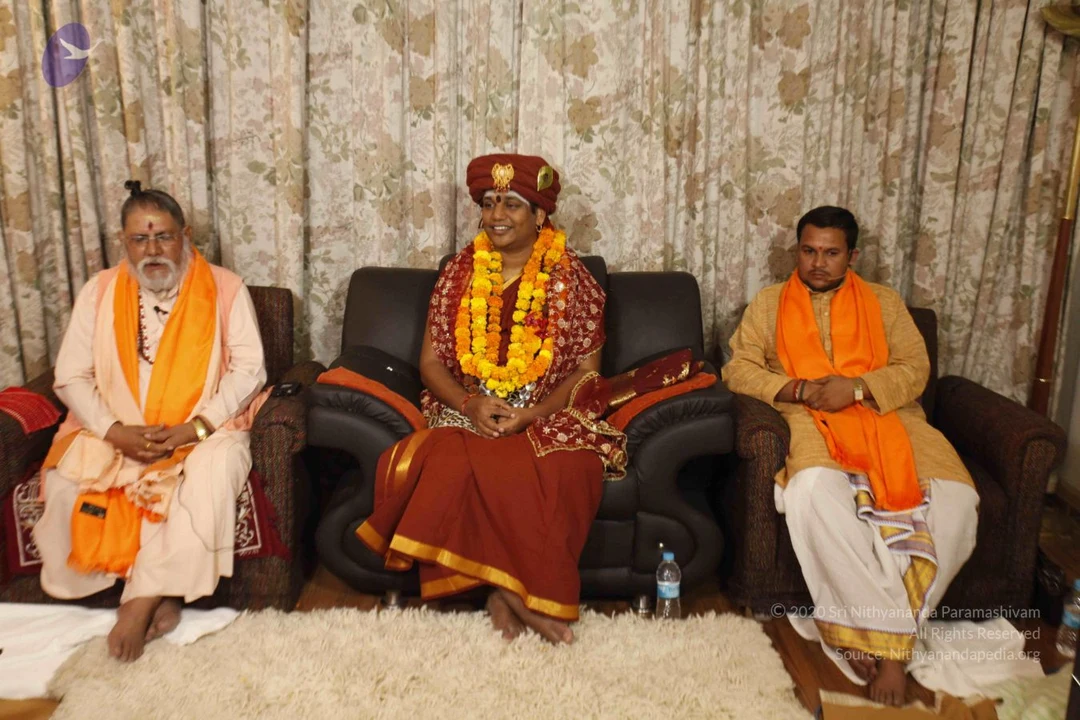
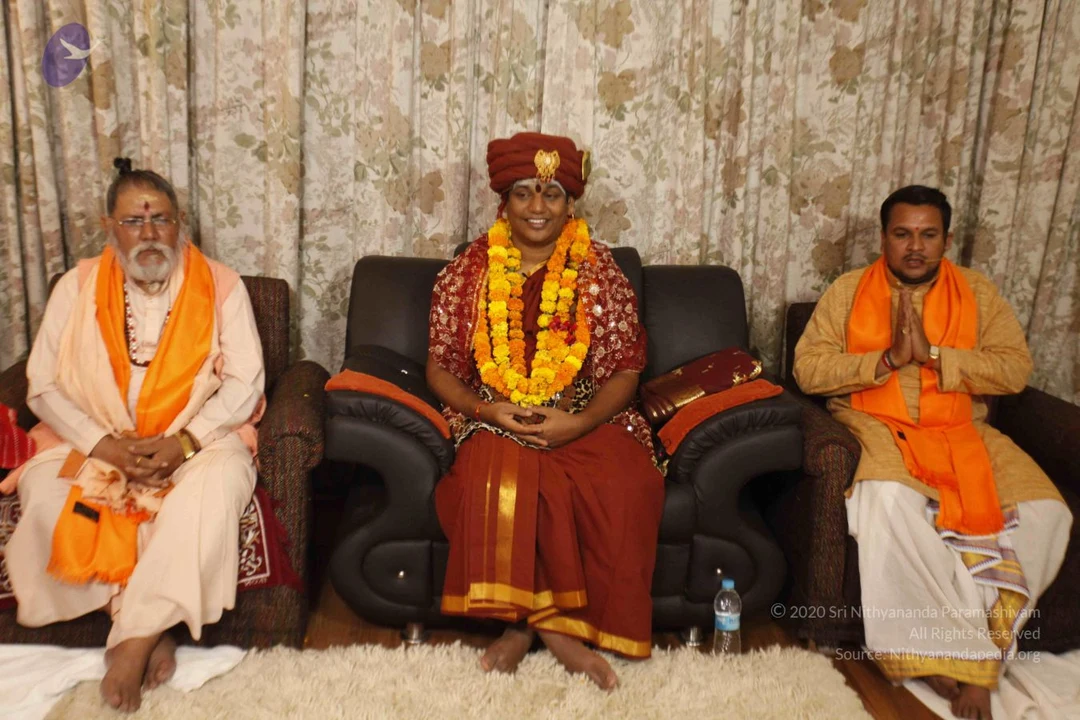
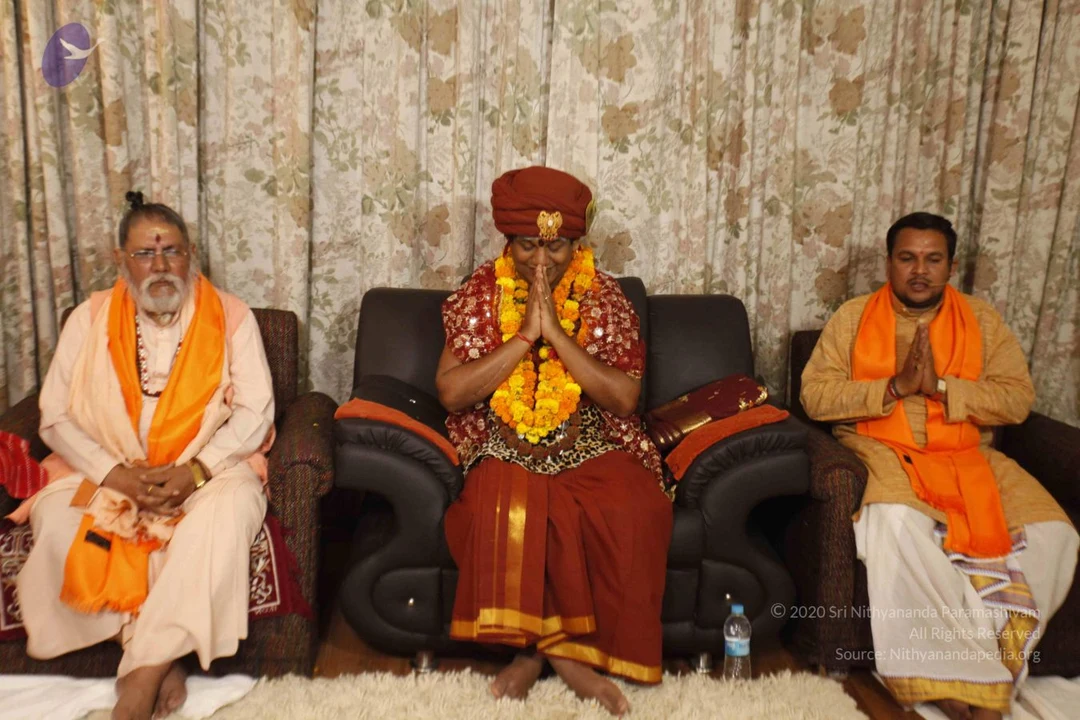
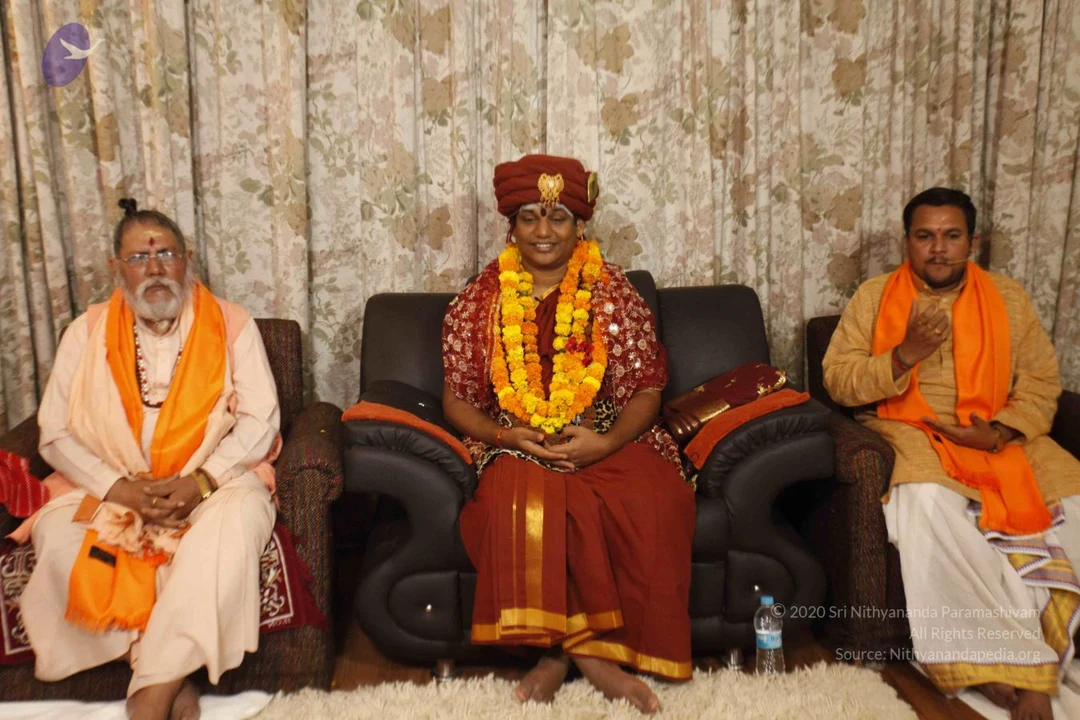
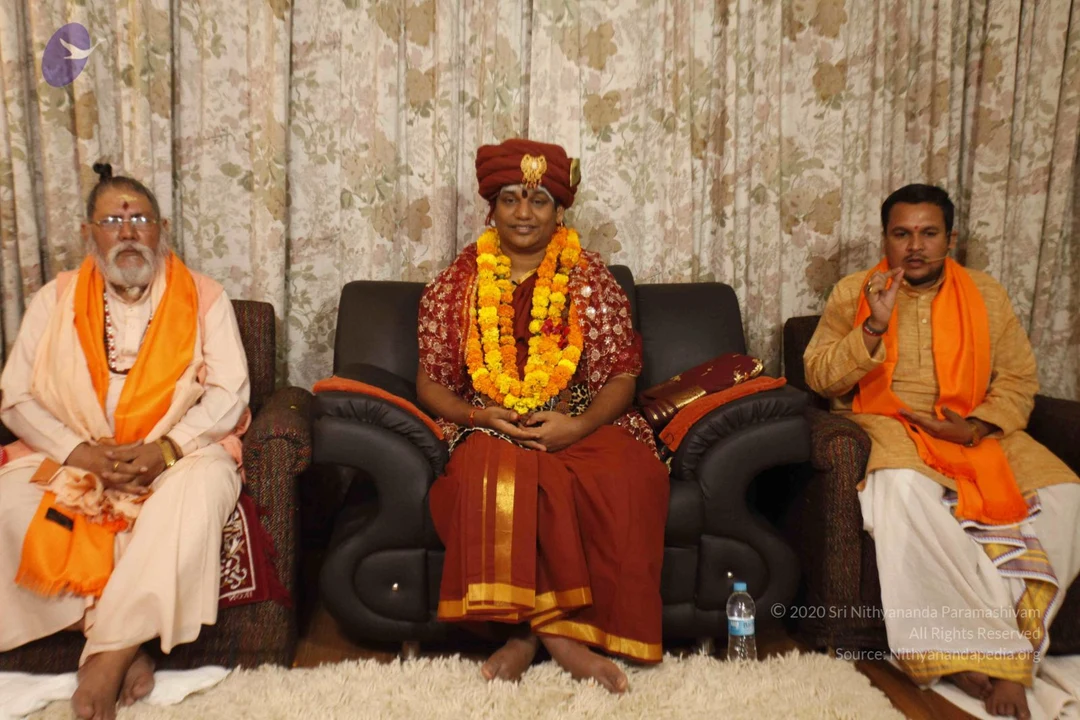
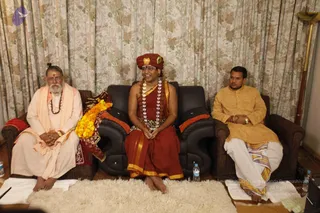
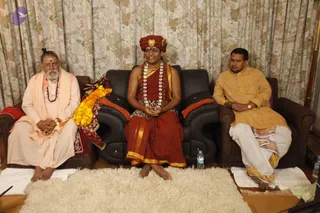
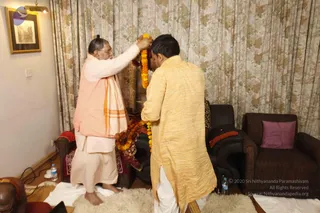
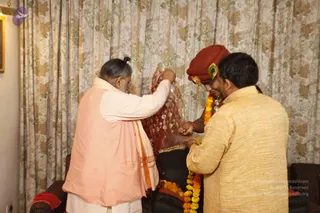
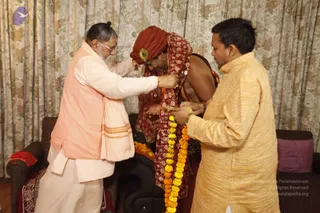
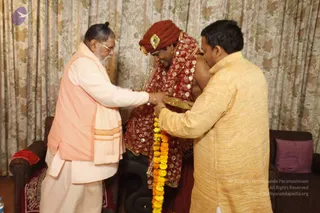
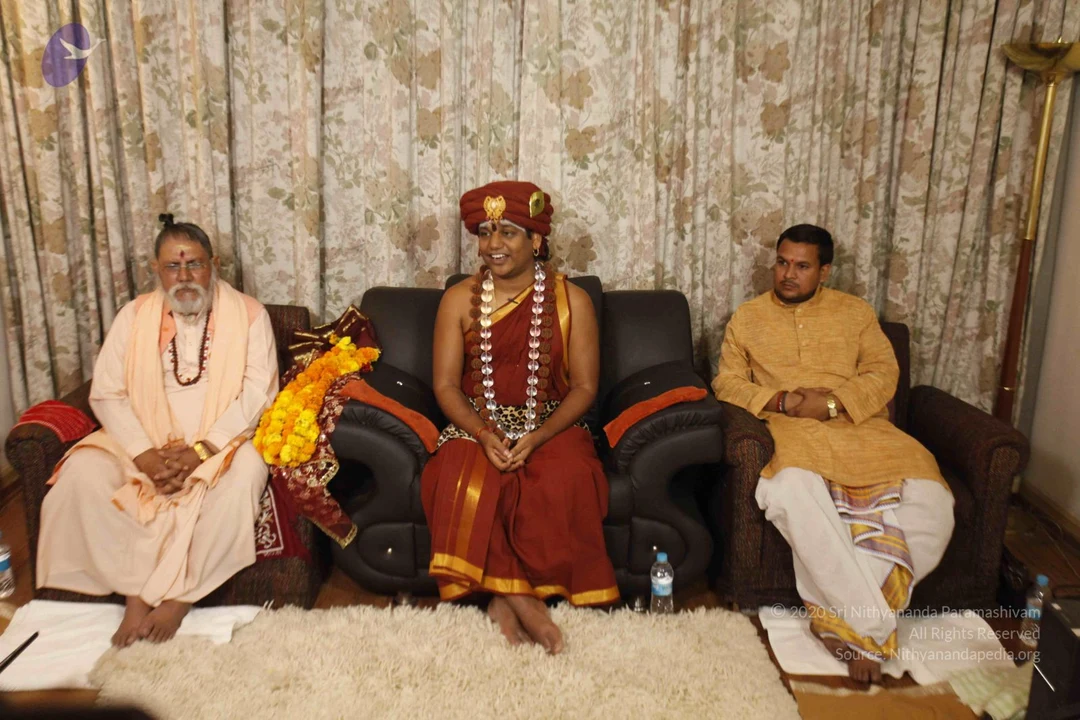
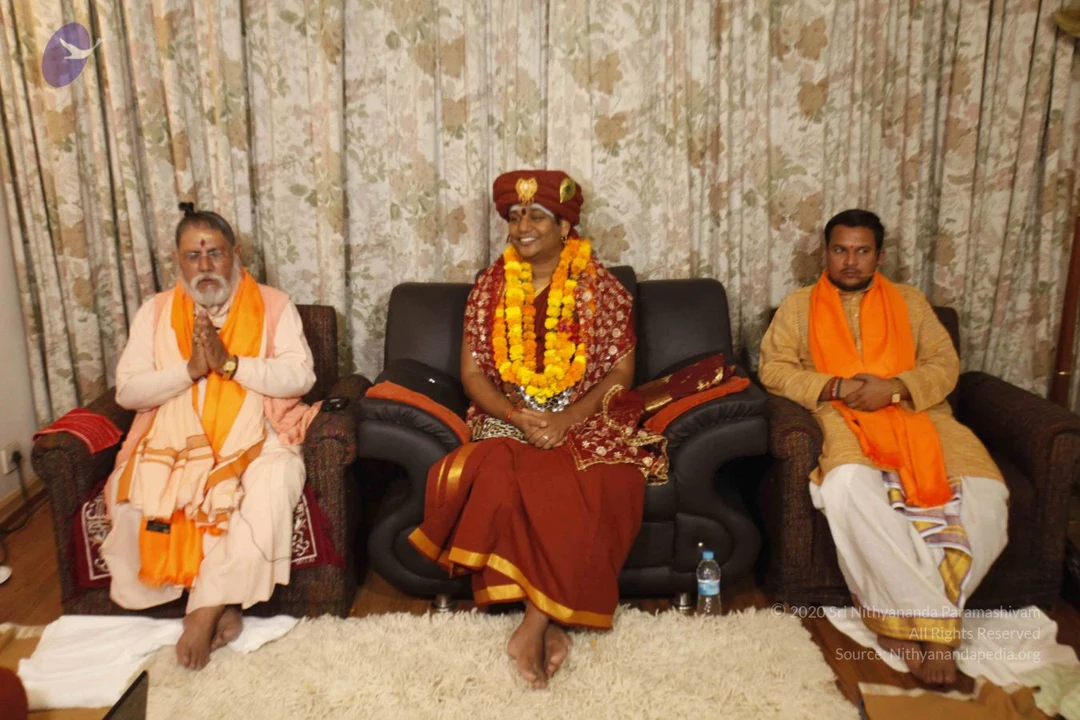
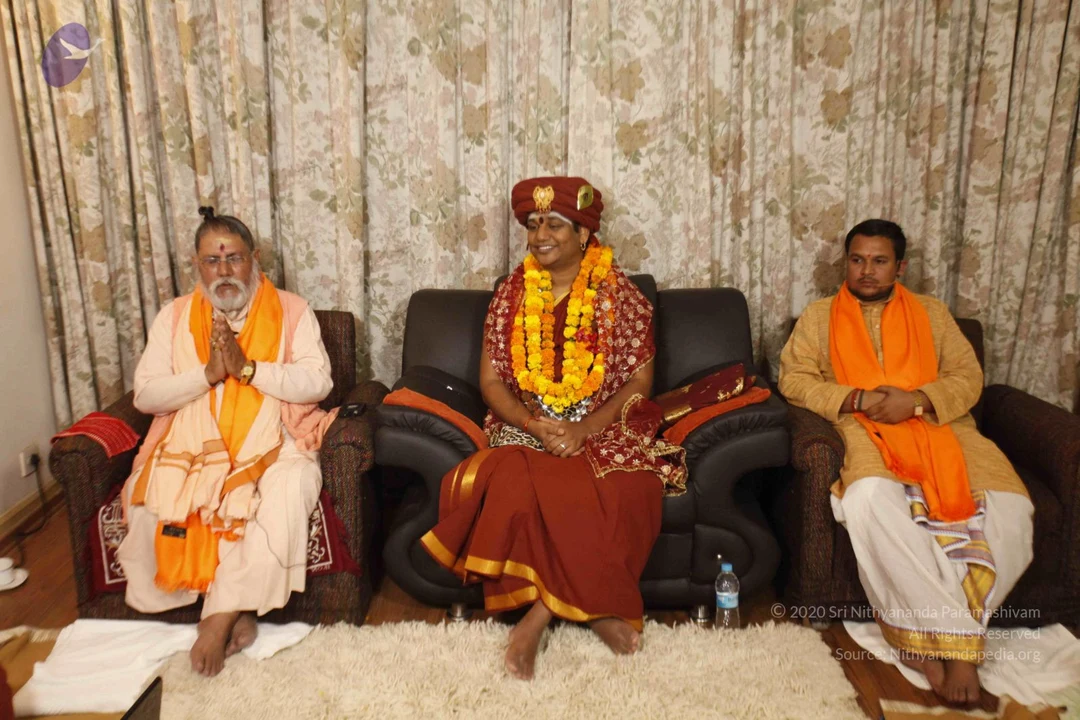
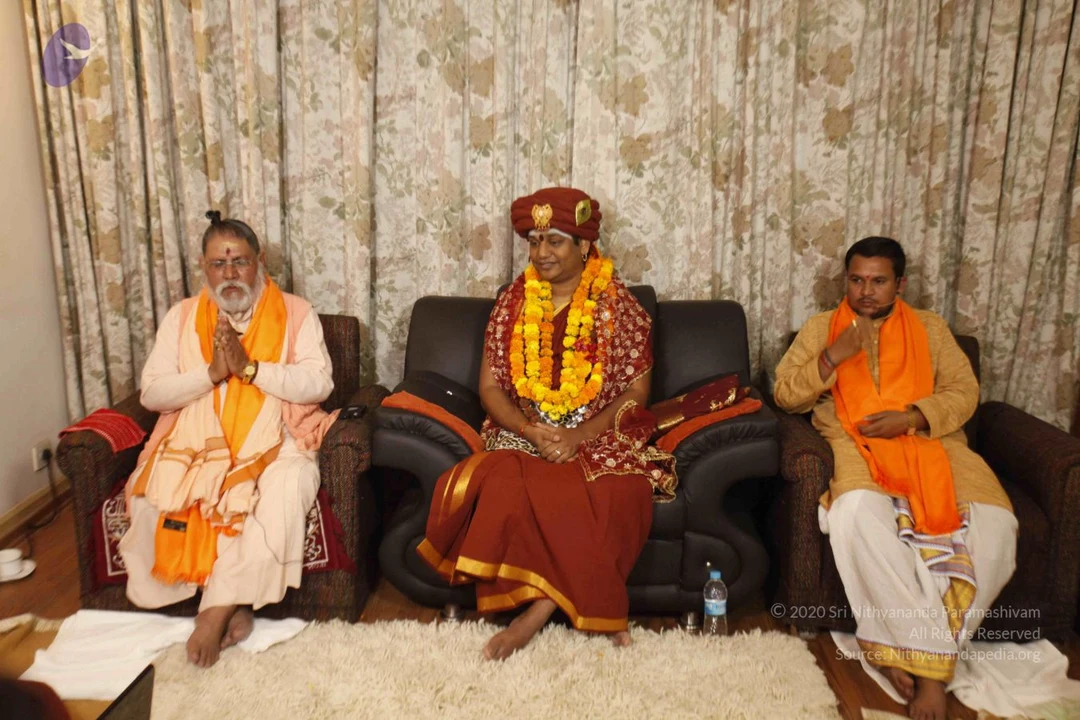
Paramahamsa Nithyananda Welcomes mahant of Kashi annapoorna temple

Dated photos
151
Source pages
1
Media
2
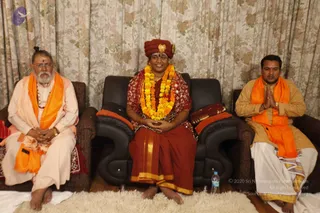
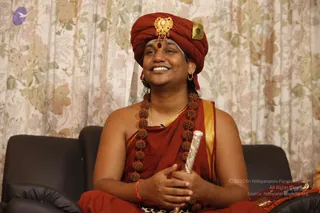
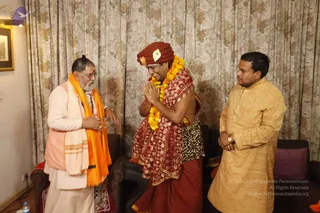
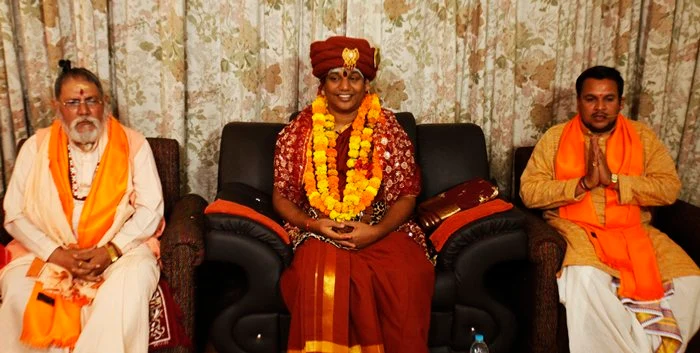
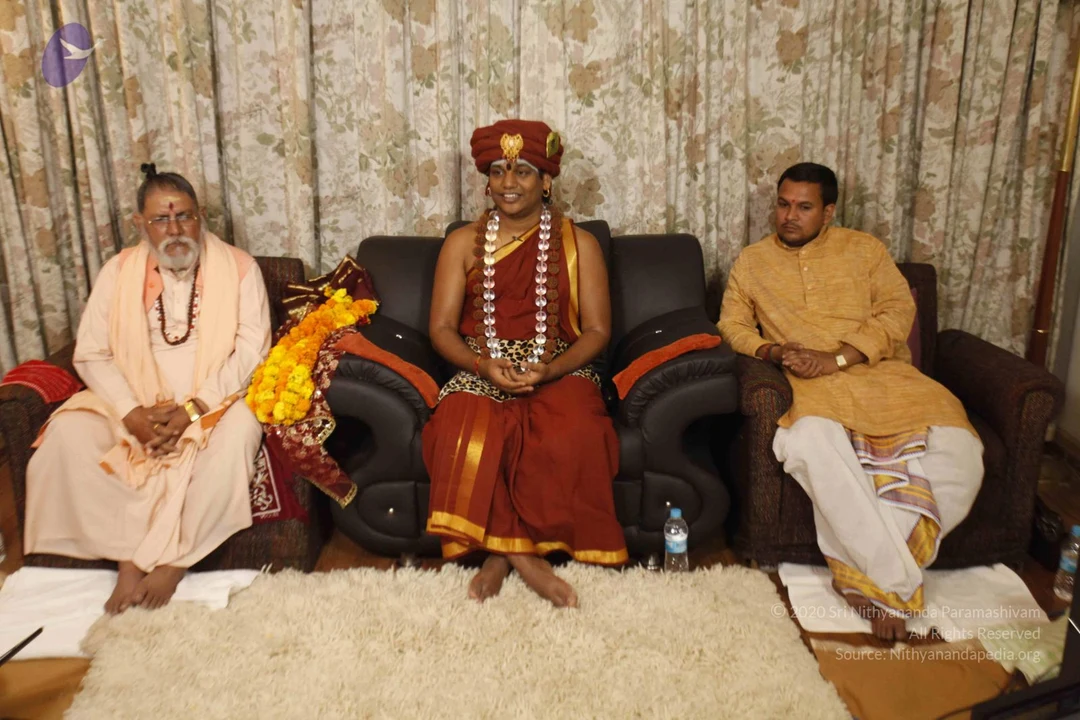
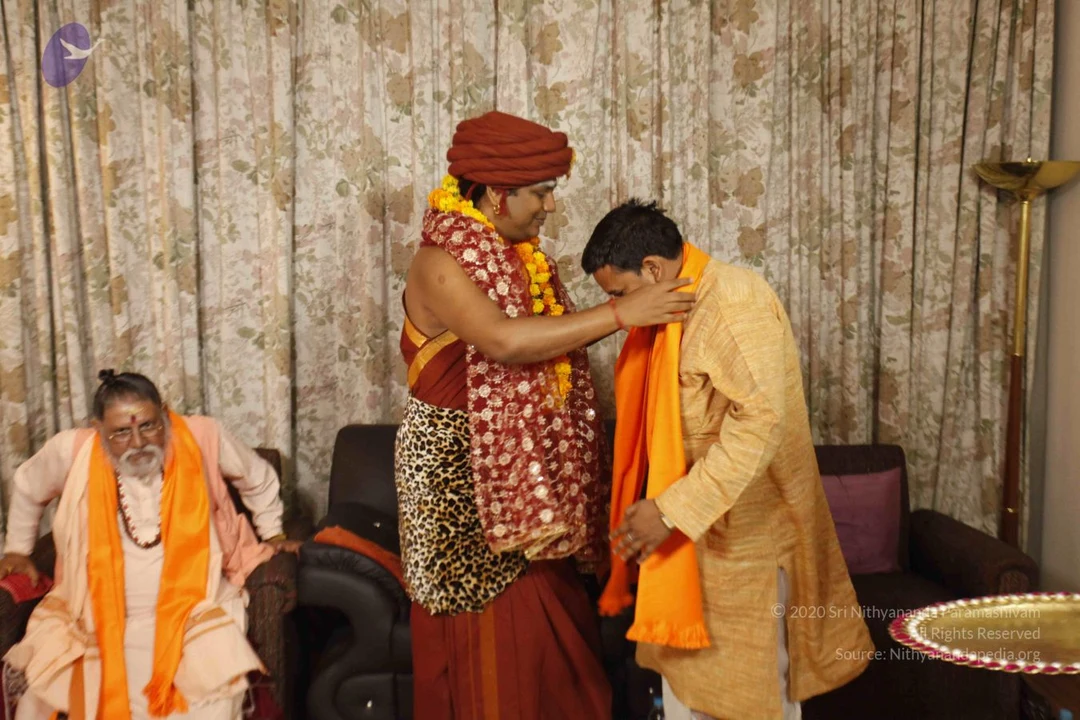
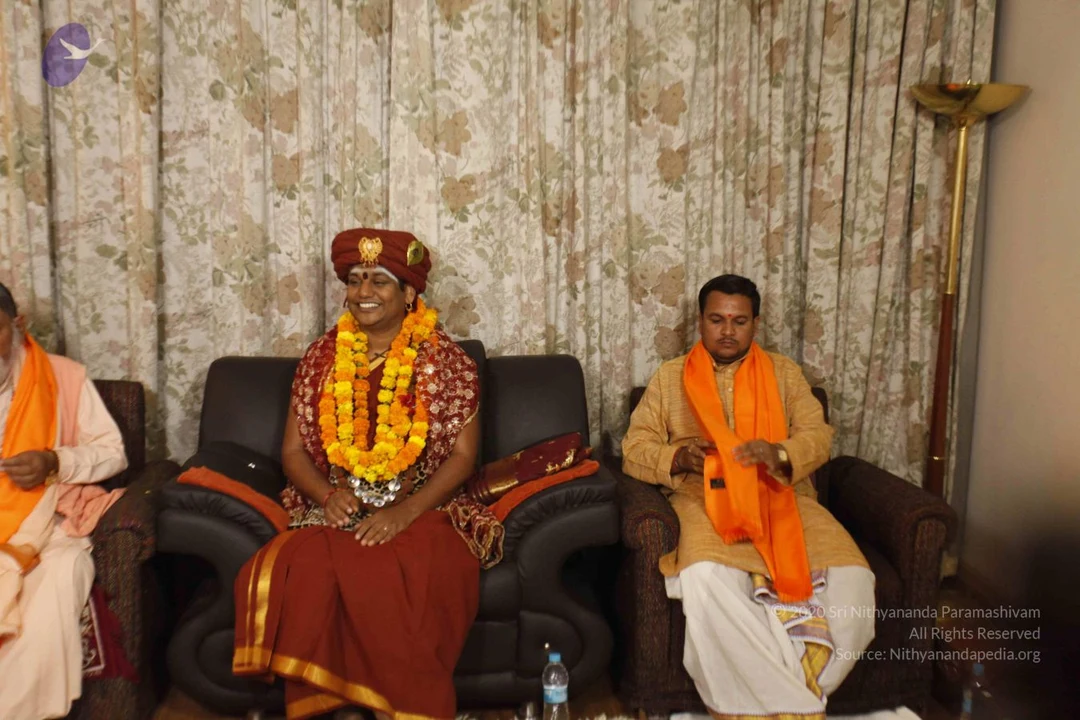
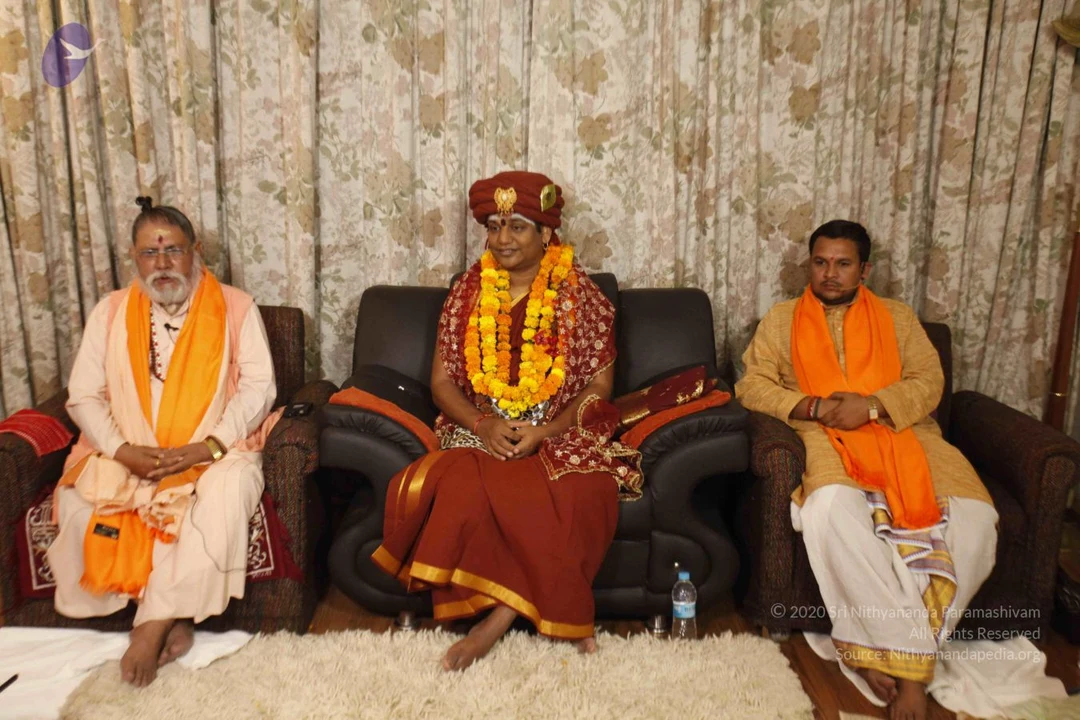
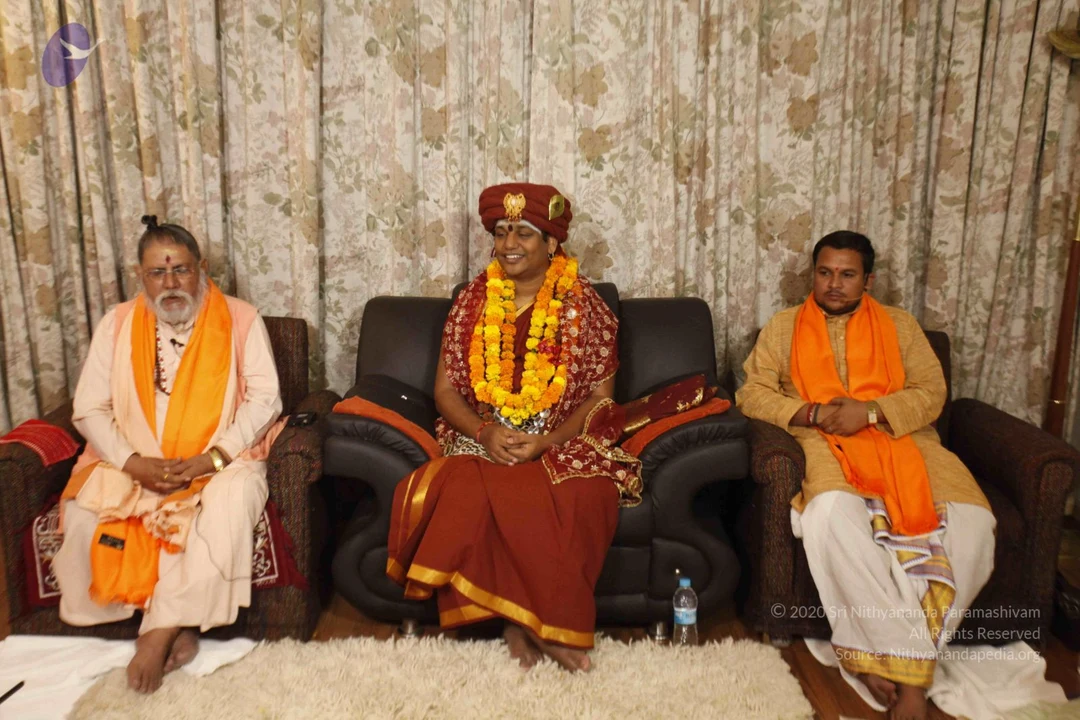
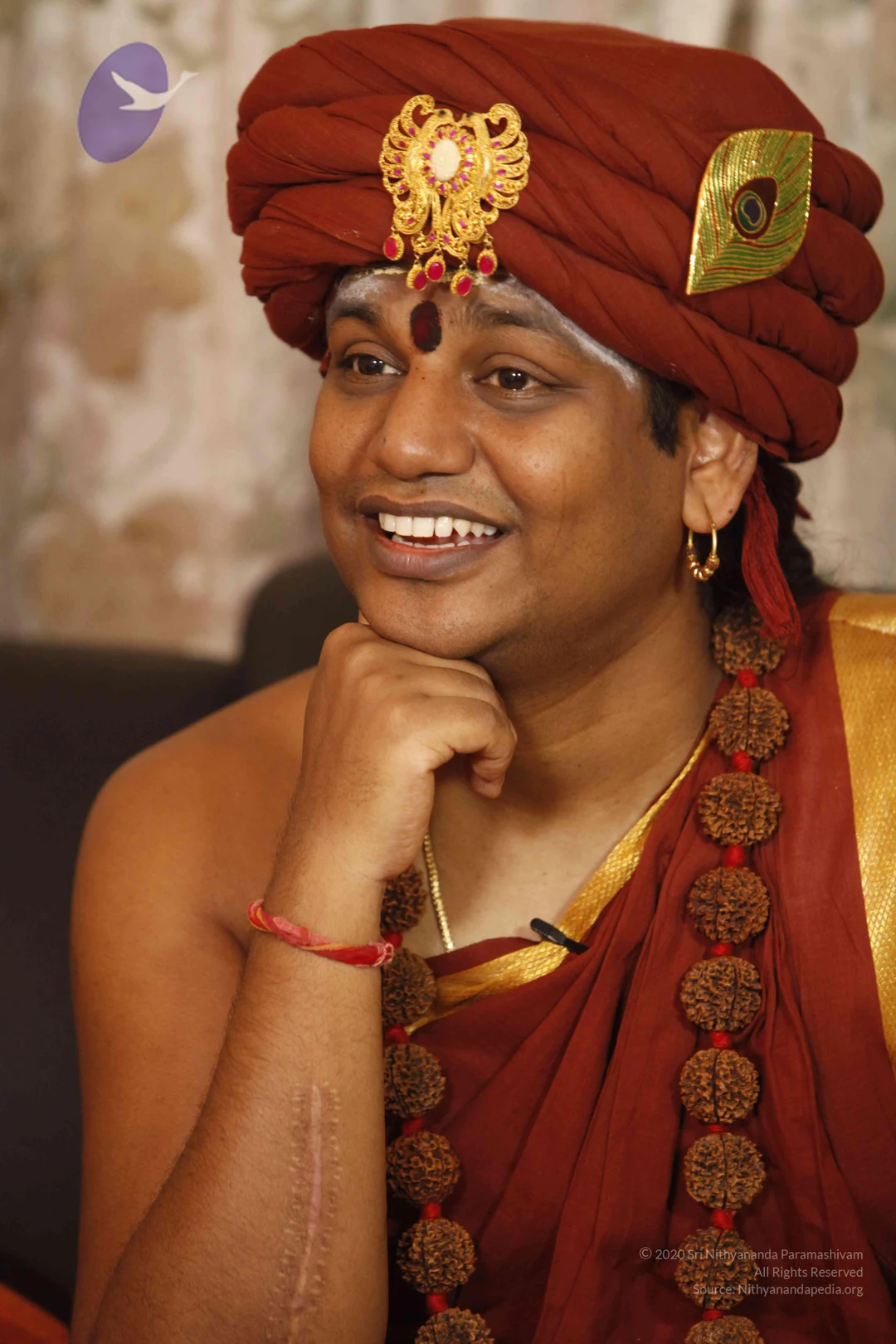
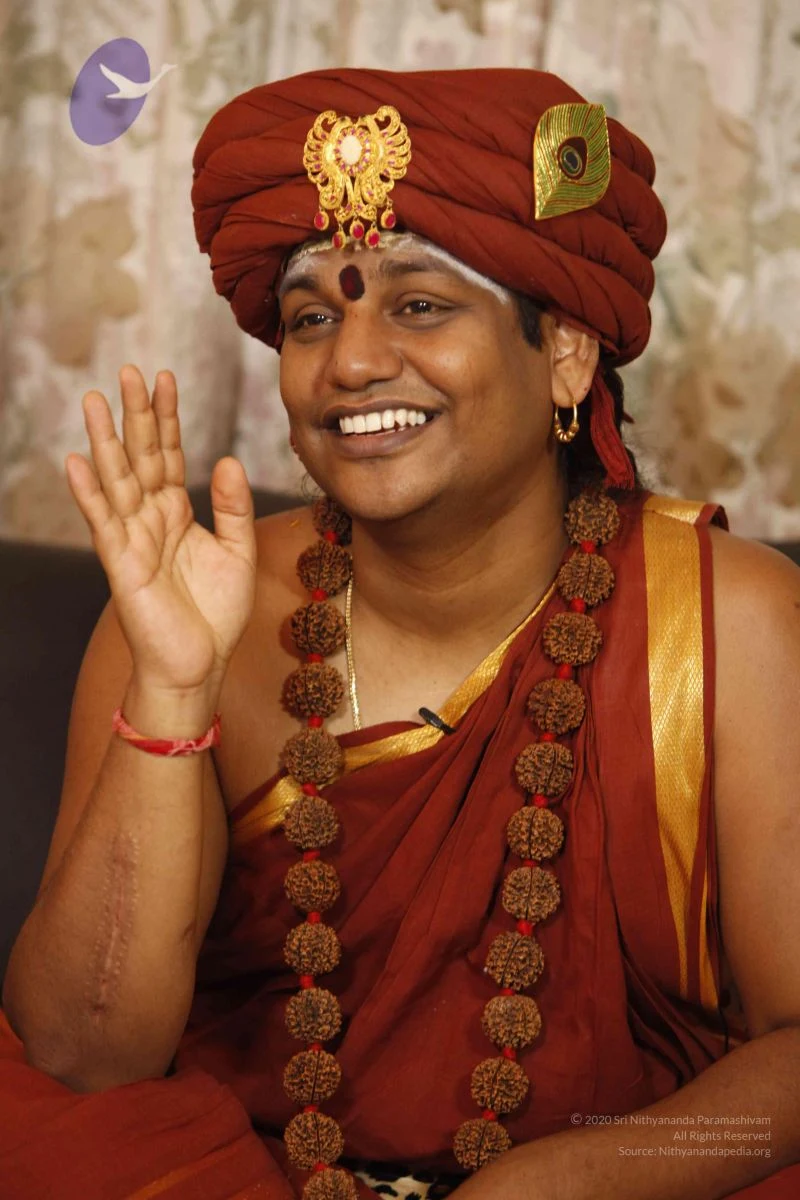
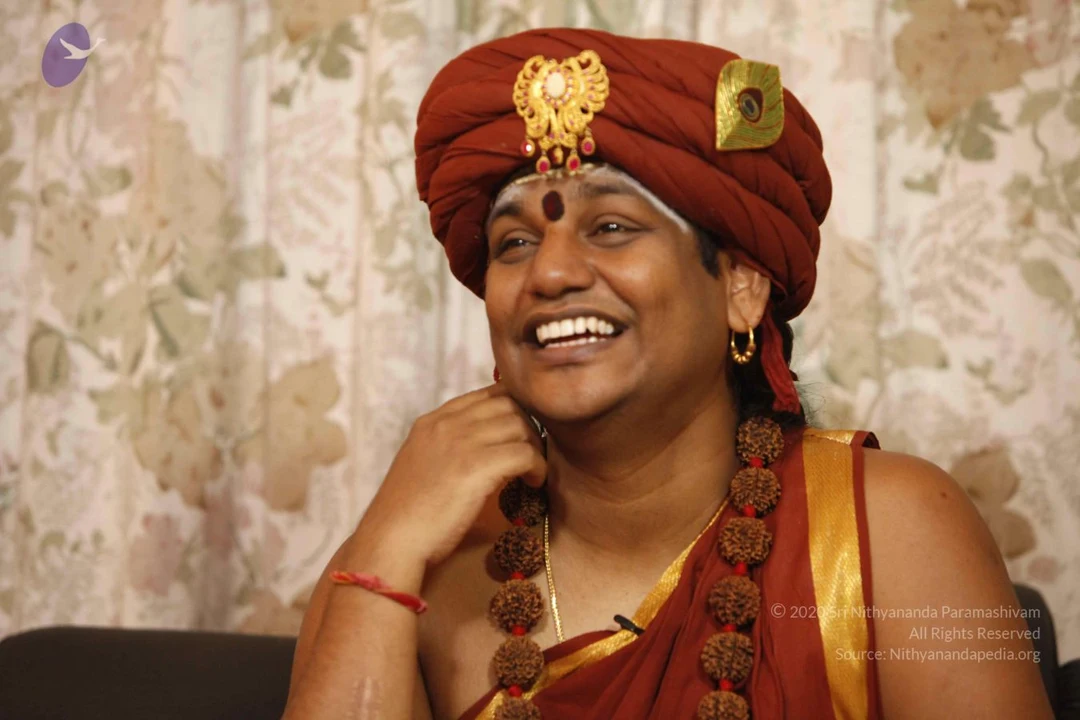
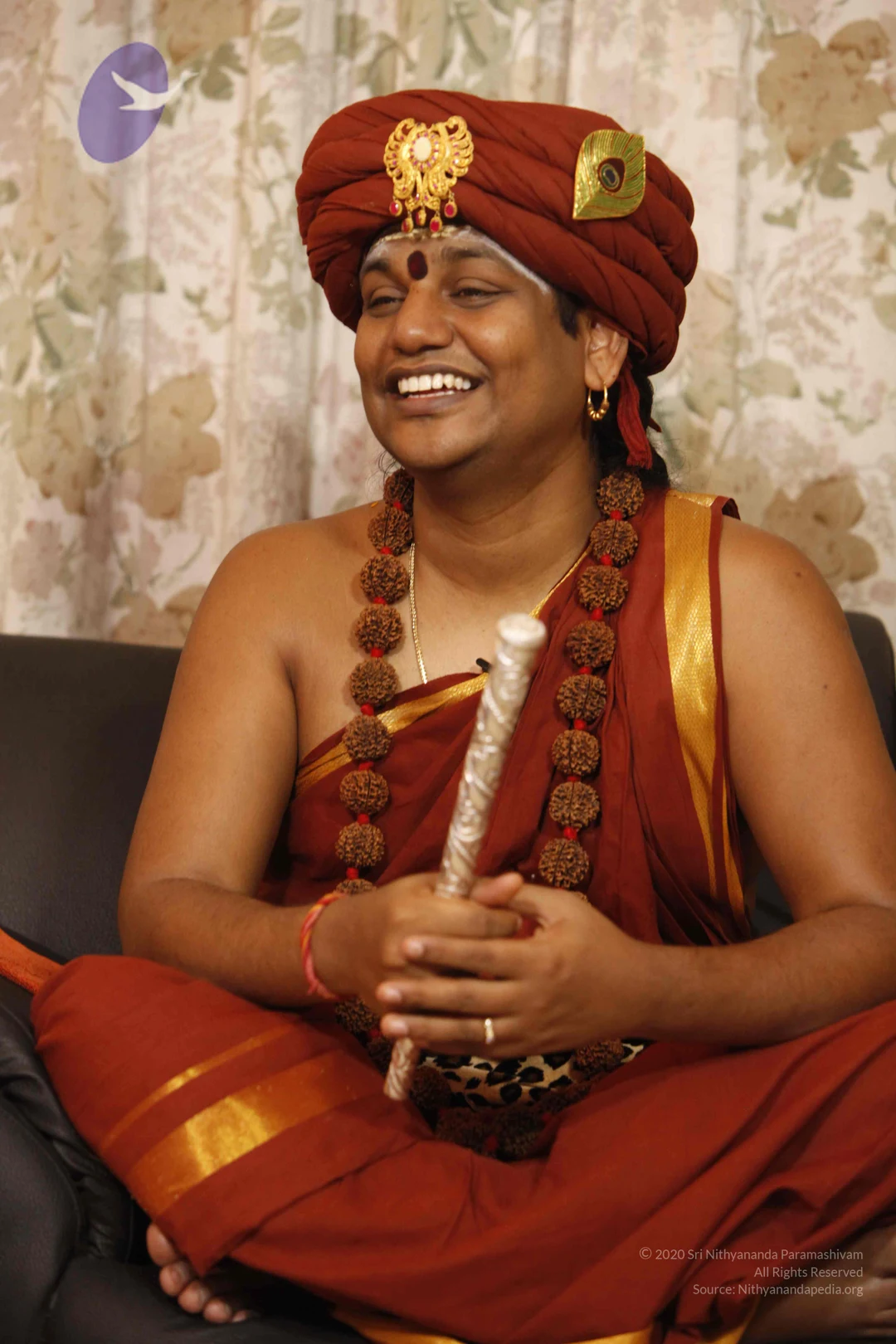
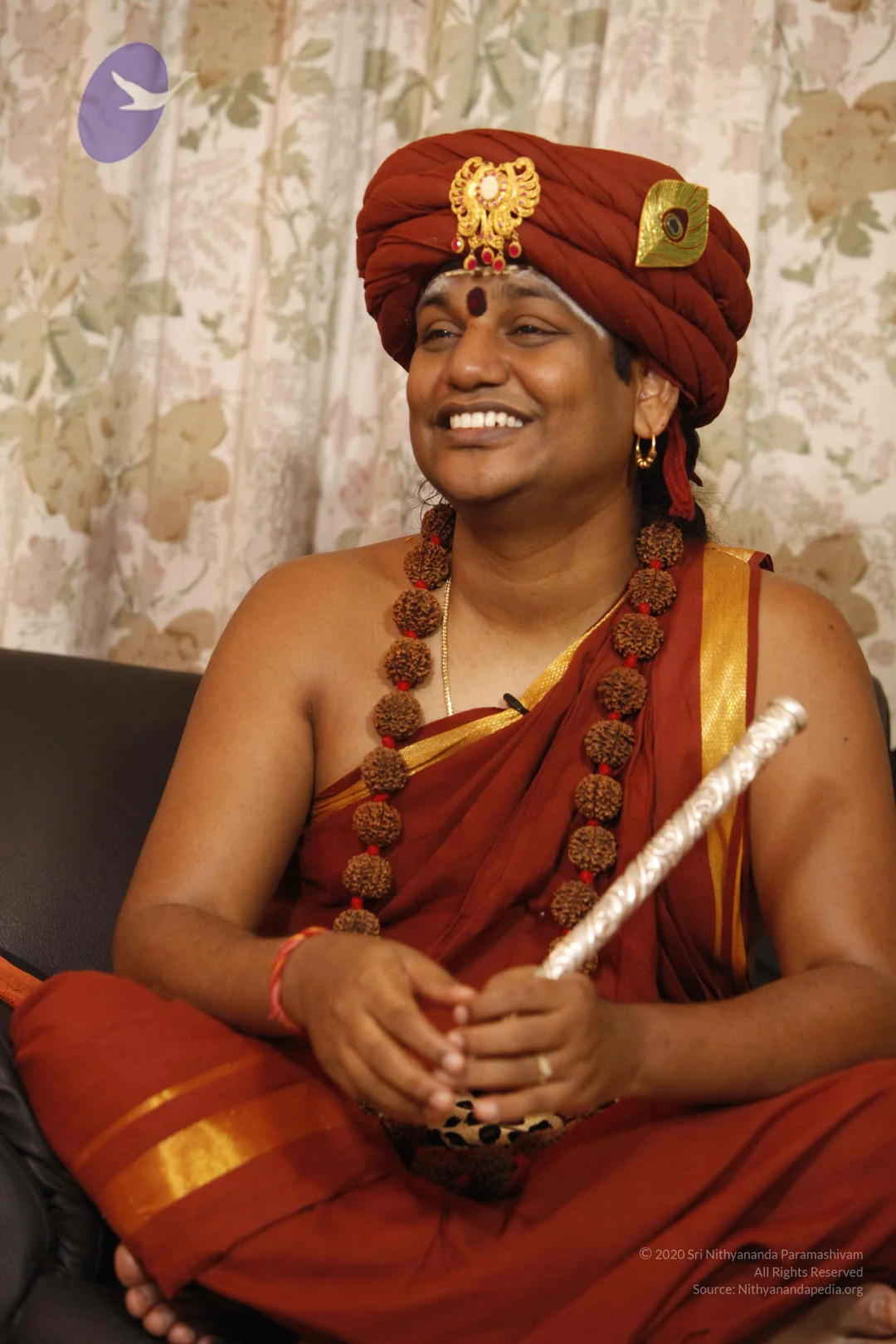
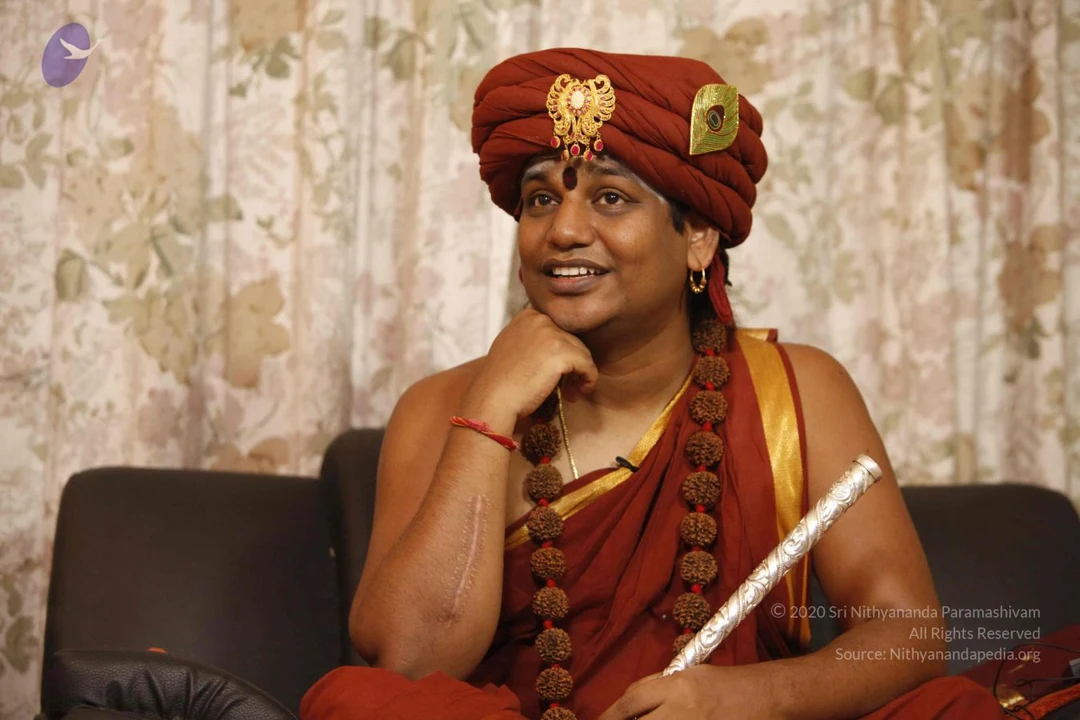
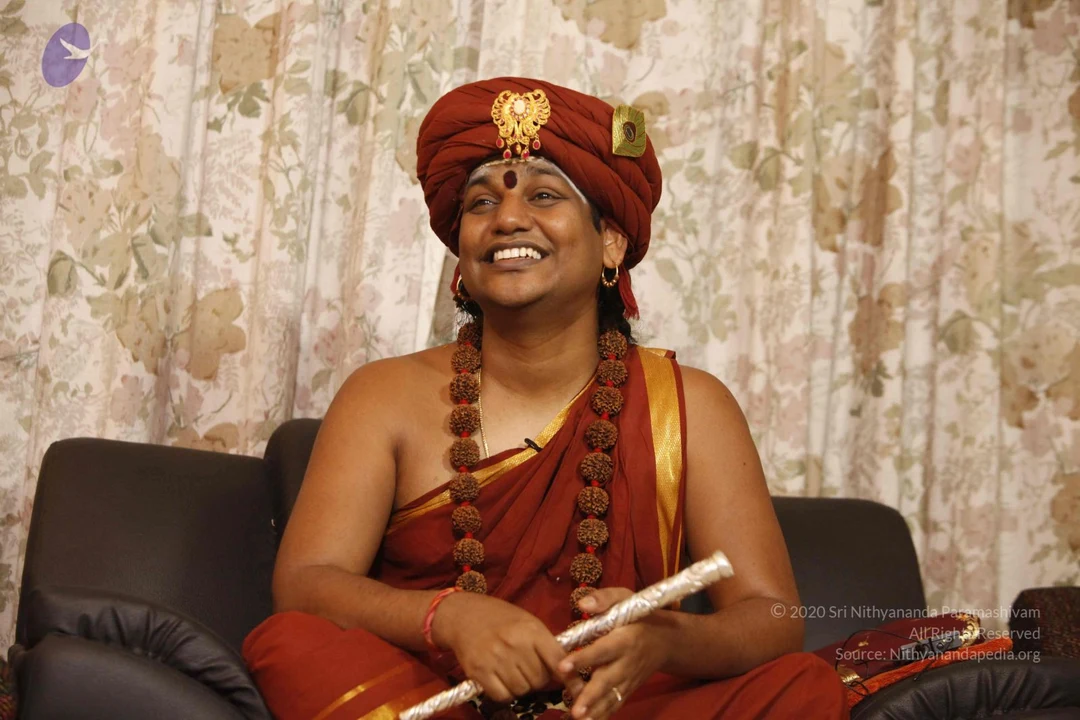
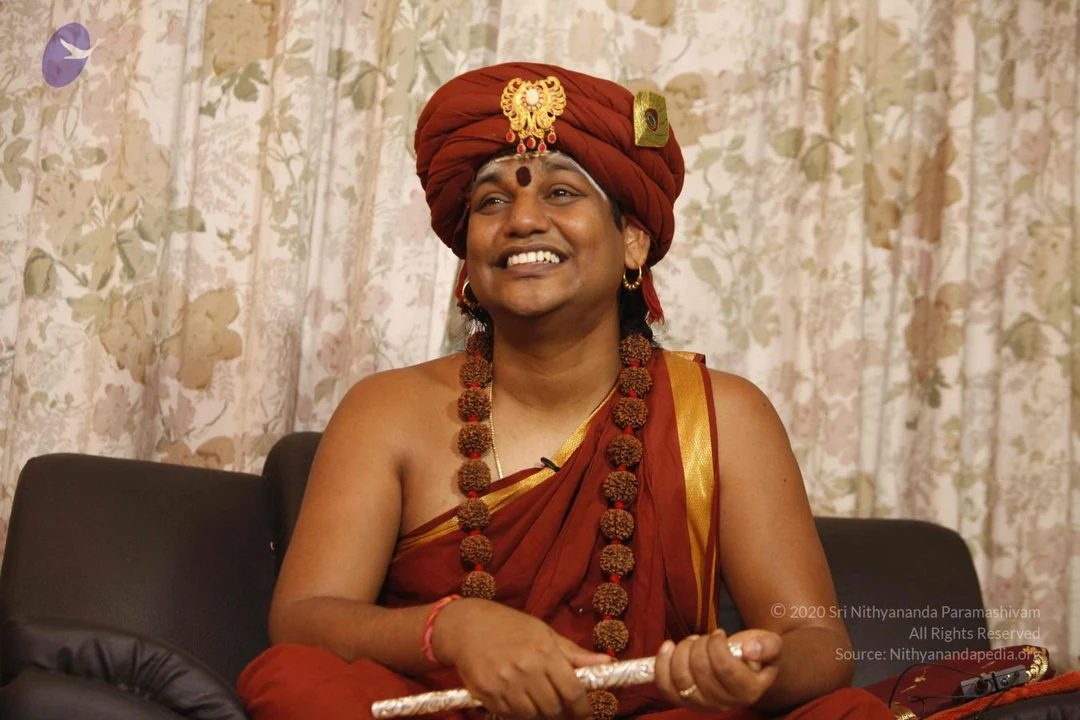
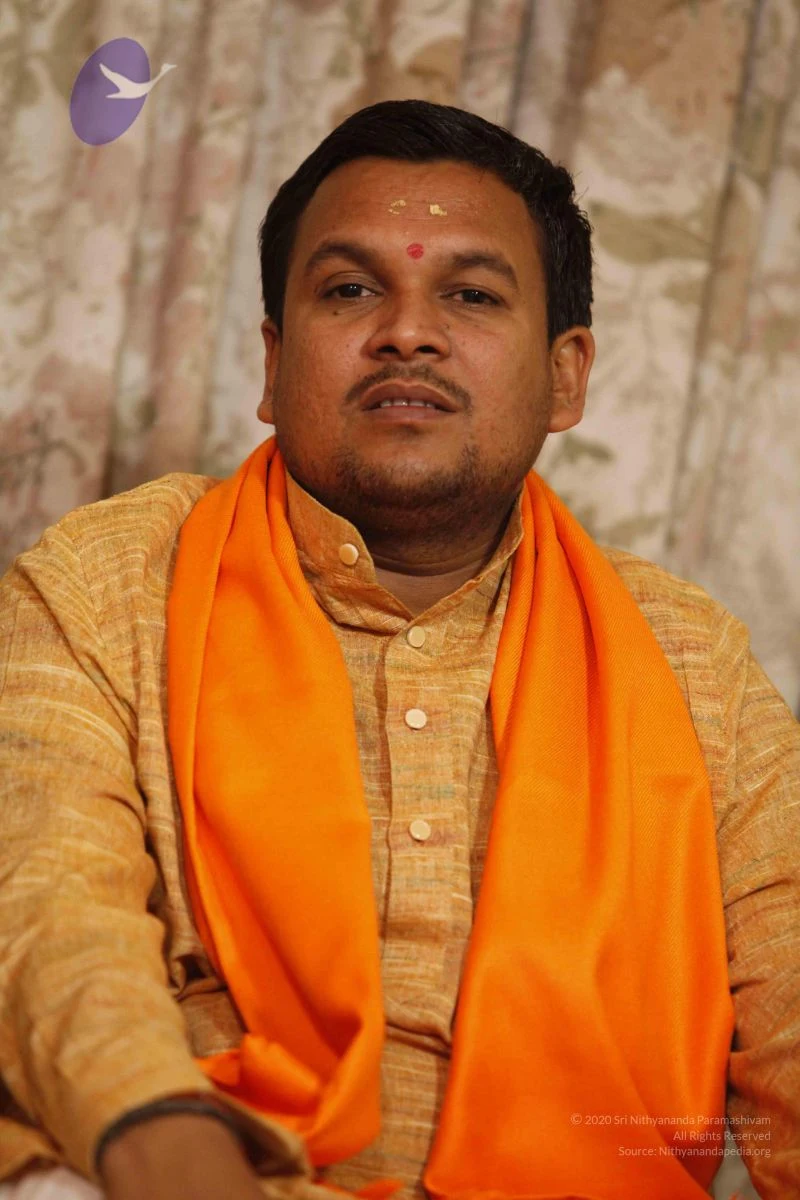
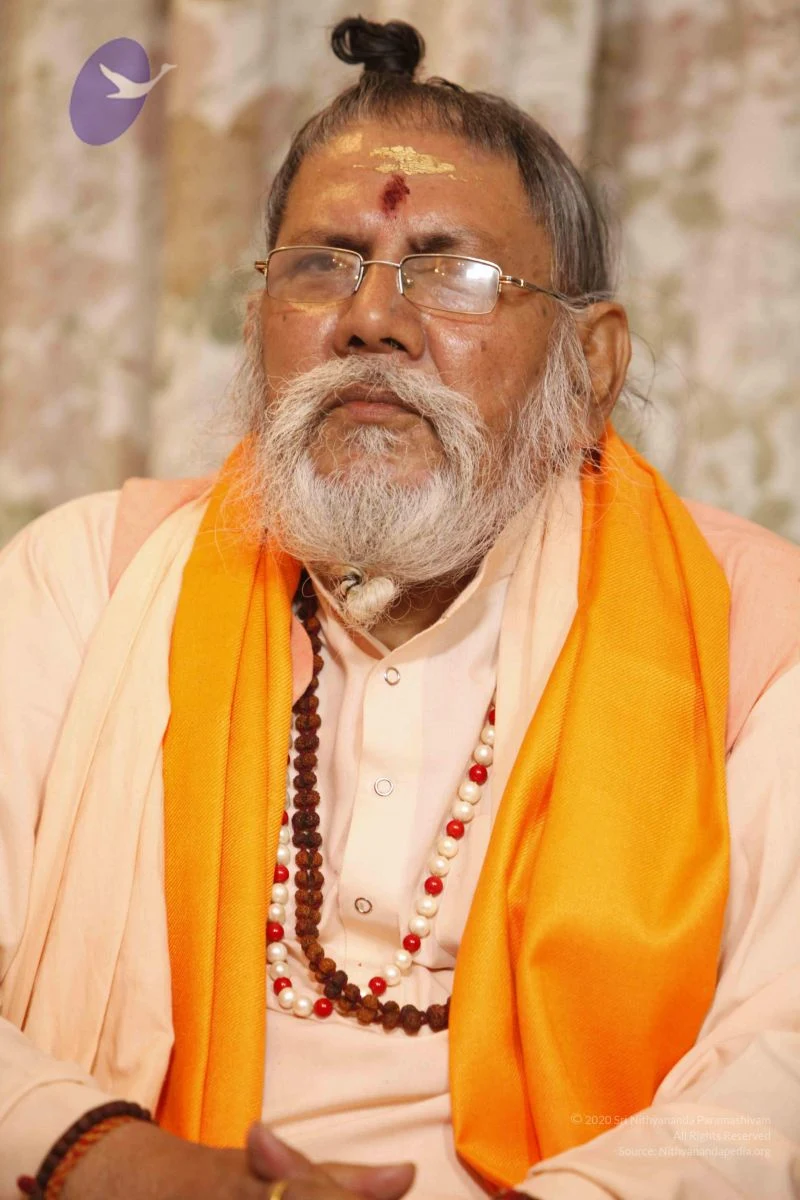
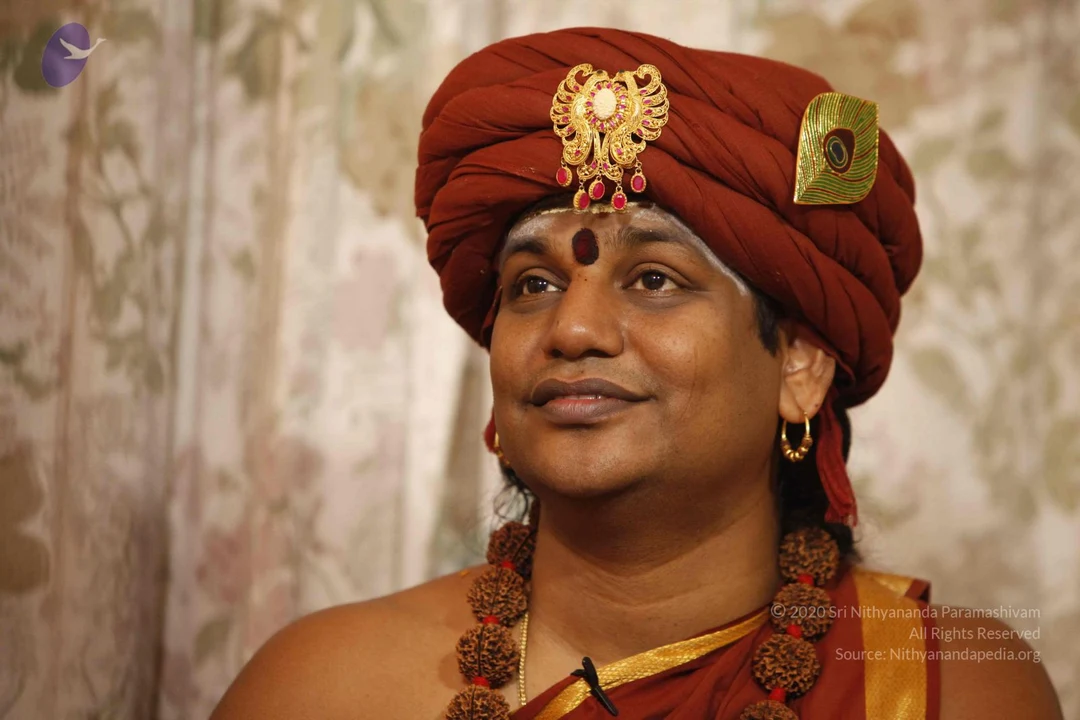
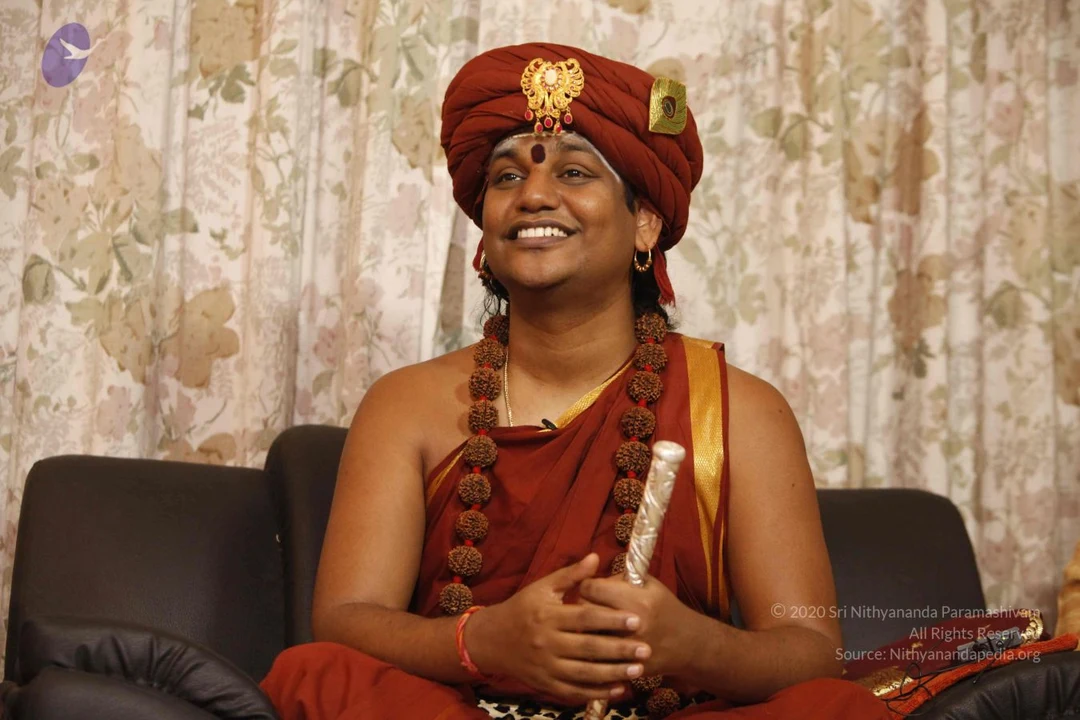
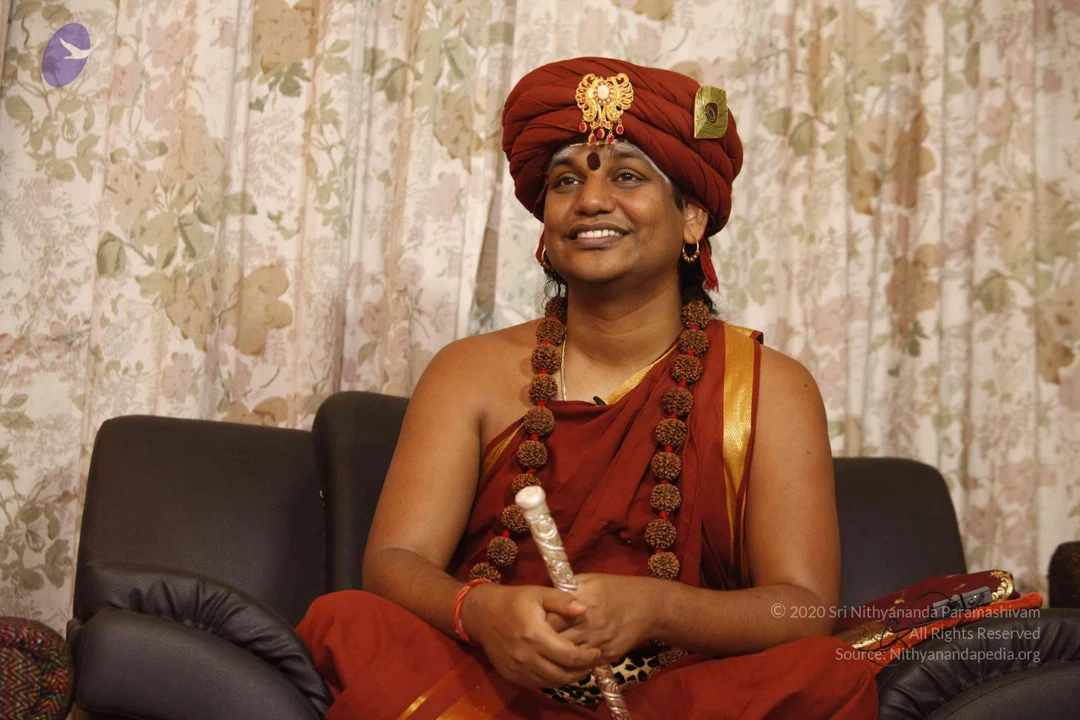
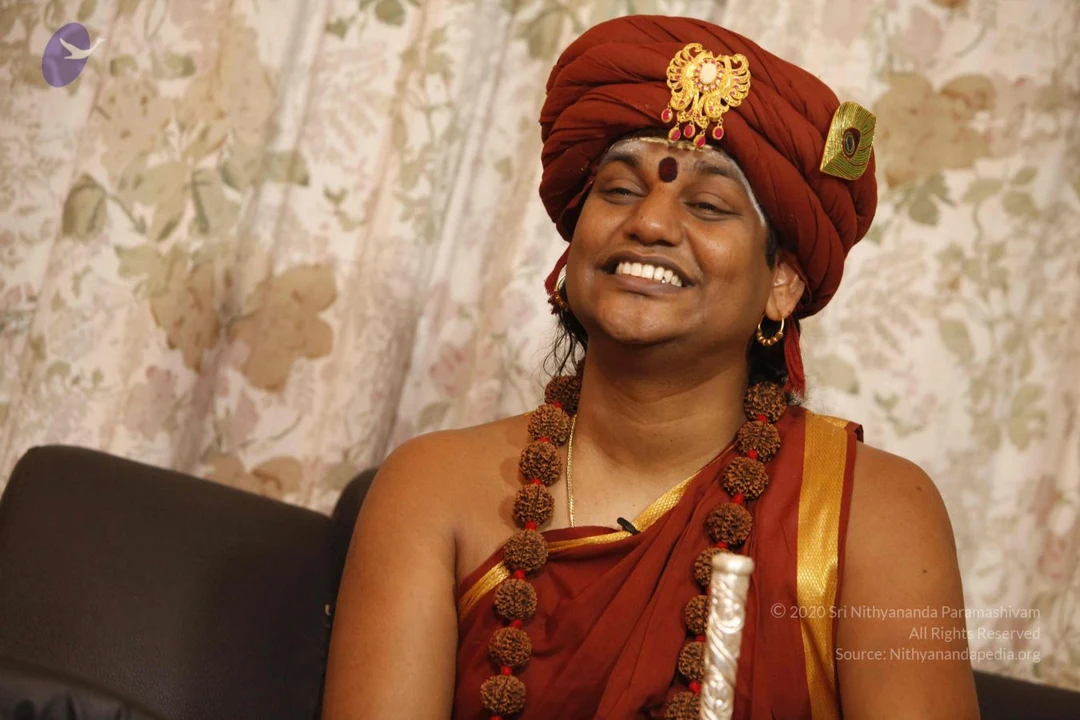
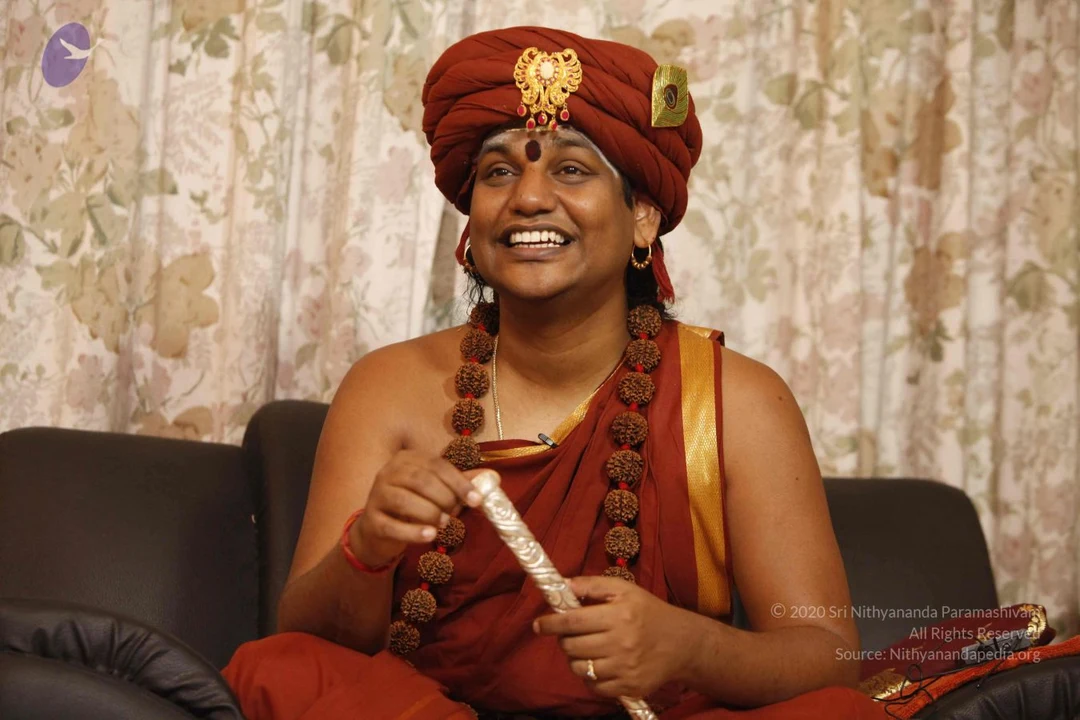
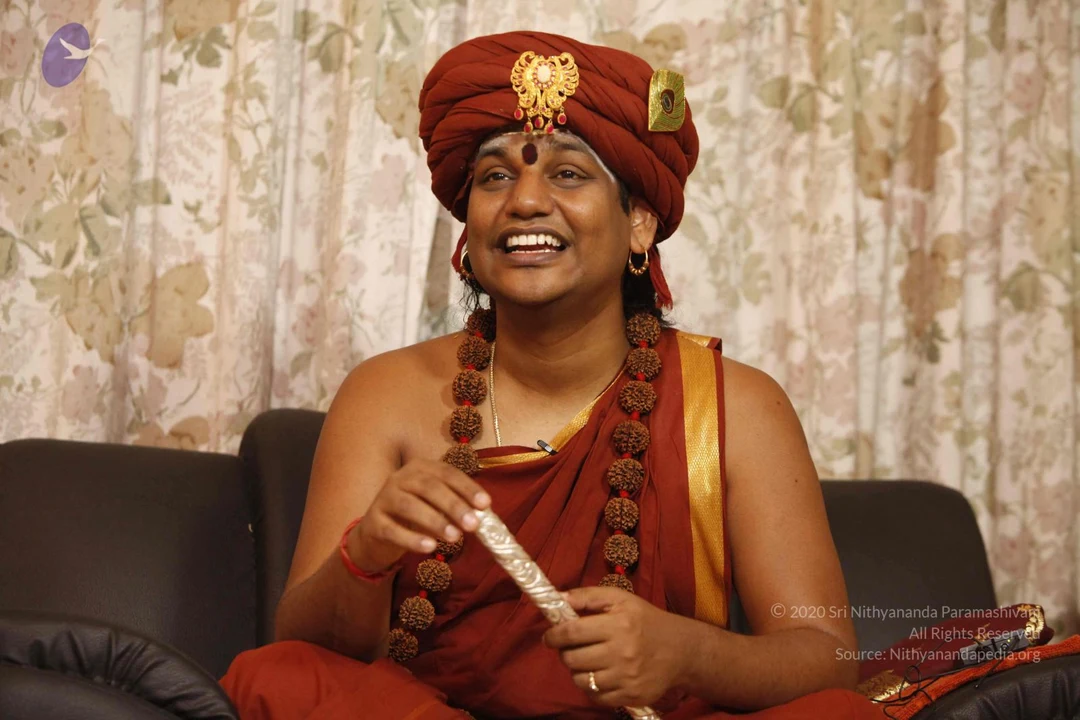
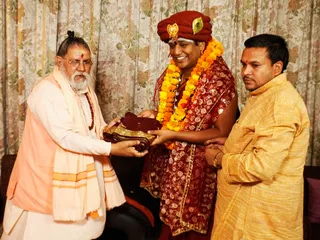
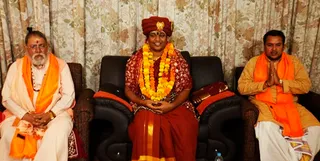
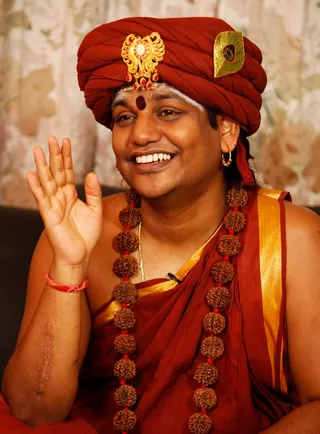
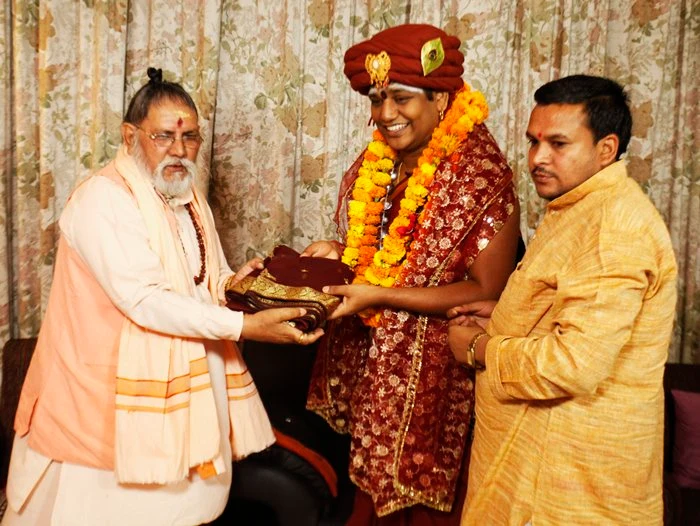
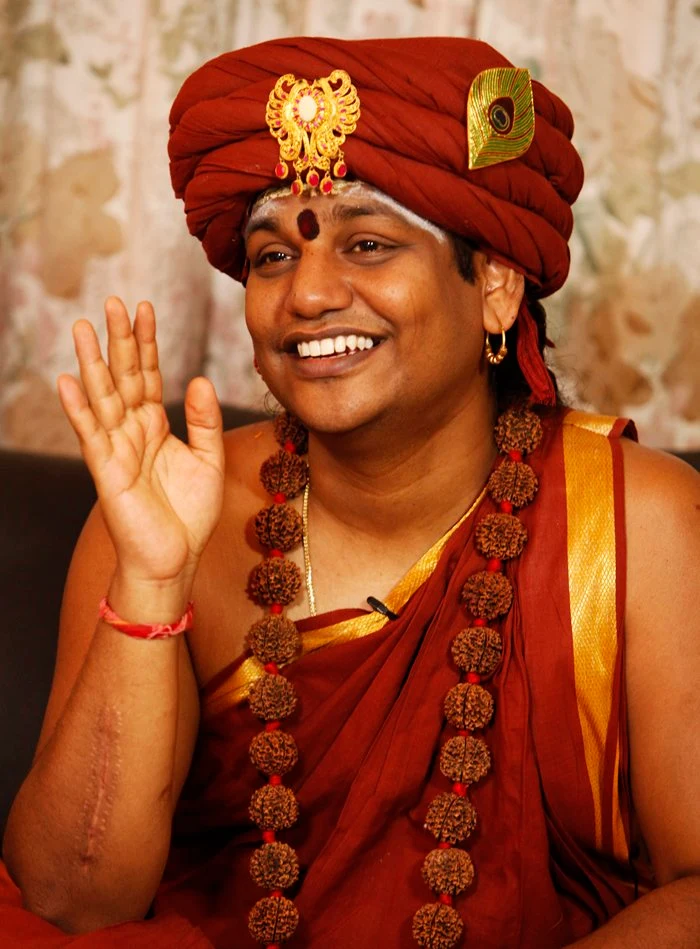
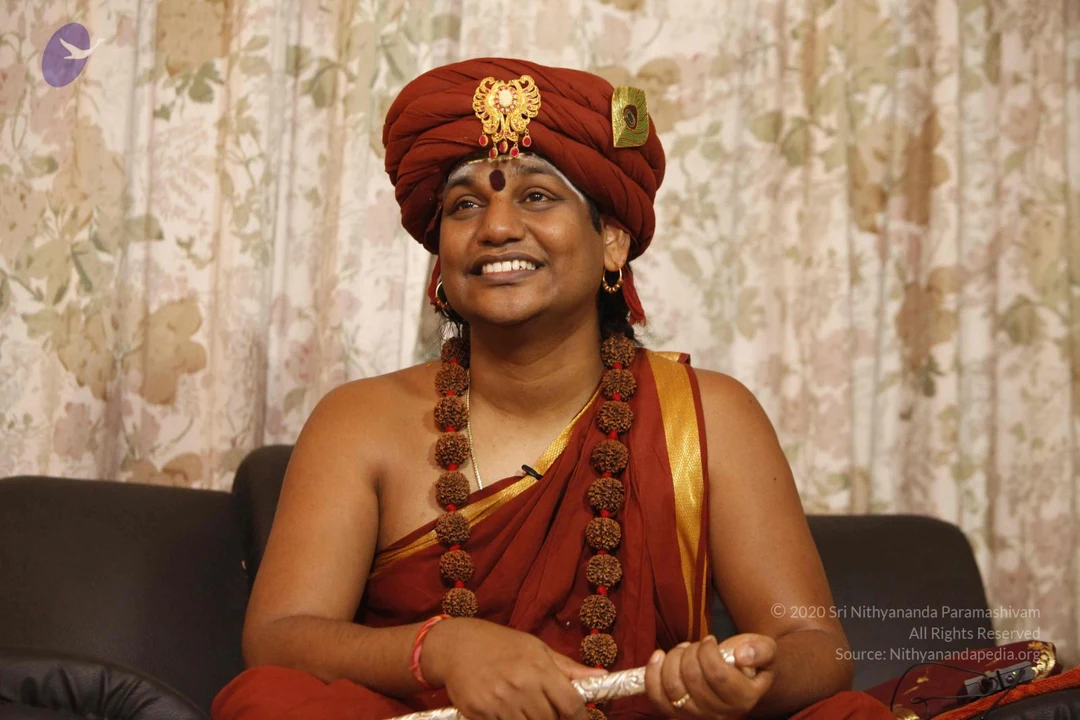
Three men sit side by side on dark leather armchairs in front of a floral patterned curtain. The man on the left has white hair and a white beard, wears glasses, a pale cream robe and an orange shawl, and holds his hands together in his lap. The man in the centre wears a red and maroon embroidered robe with gold trim, a red turban with a gold ornament, and a marigold and orange garland, with hands clasped at his chest; a bottle of water sits on the floor between the chairs. The man on the right wears a light golden-beige kurta, an orange shawl and white dhoti, and presses his palms together in greeting. A white rug covers the floor. The chair cushions are orange and the setting appears to be a formal welcome.A smiling man sits on a black leather armchair in front of a floral curtain. He wears a red-orange turban with a gold ornament and a gold-and-green brooch, a red-orange shawl over a bare shoulder, and a long rudraksha mala of brown beads. He holds a white ceremonial staff across his lap, with a red bindi on his forehead and red thread on his wrist. Probable Swamiji (cues: red-orange turban, rudraksha mala, ceremonial staff), seated as a speaker during a satsang-style setting.A photograph of three men standing in a room with floral patterned curtains and a framed picture on the wall. On the left, an older bearded man with grey hair in a topknot wears a saffron-orange shawl over a cream kurta and white dhoti, gesturing with his hand. In the centre, a smiling man in a maroon turban with a gold emblem, a red and gold embroidered robe, and a marigold garland presses his palms together in anjali. On the right, a man in a yellow-orange kurta stands with his hands clasped. Sofas and a water bottle are visible at the edges.

April 07 2014

Original wiki page
Contents

Title

Paramahamsa Nithyananda Welcomes mahant of Kashi annapoorna temple

Description:

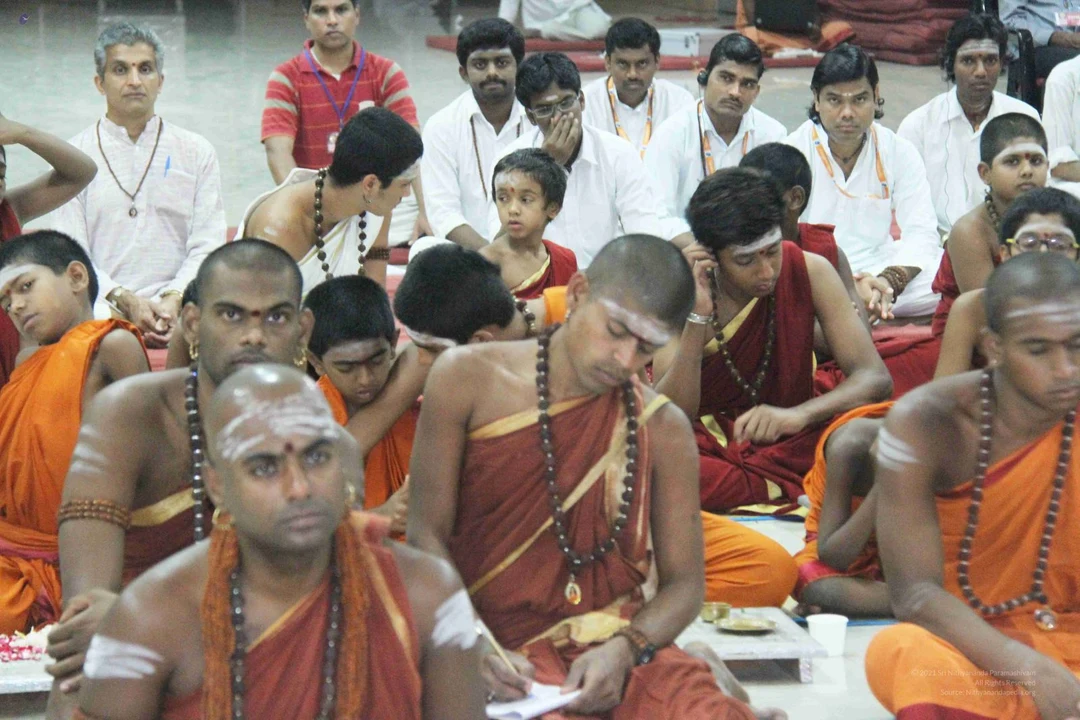
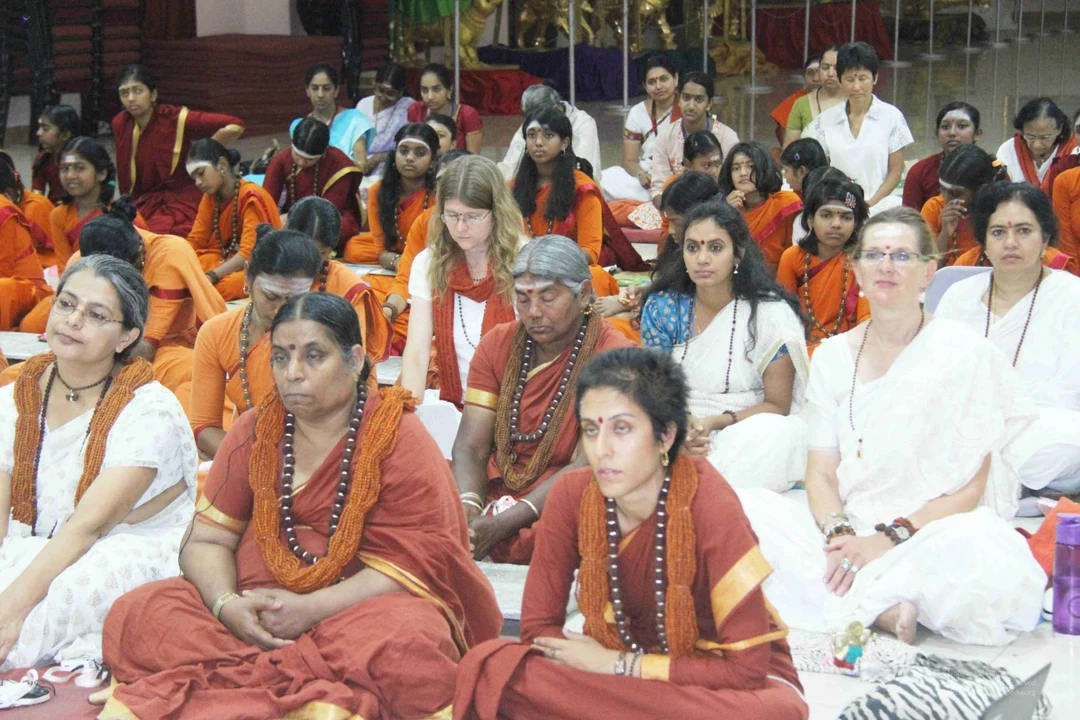
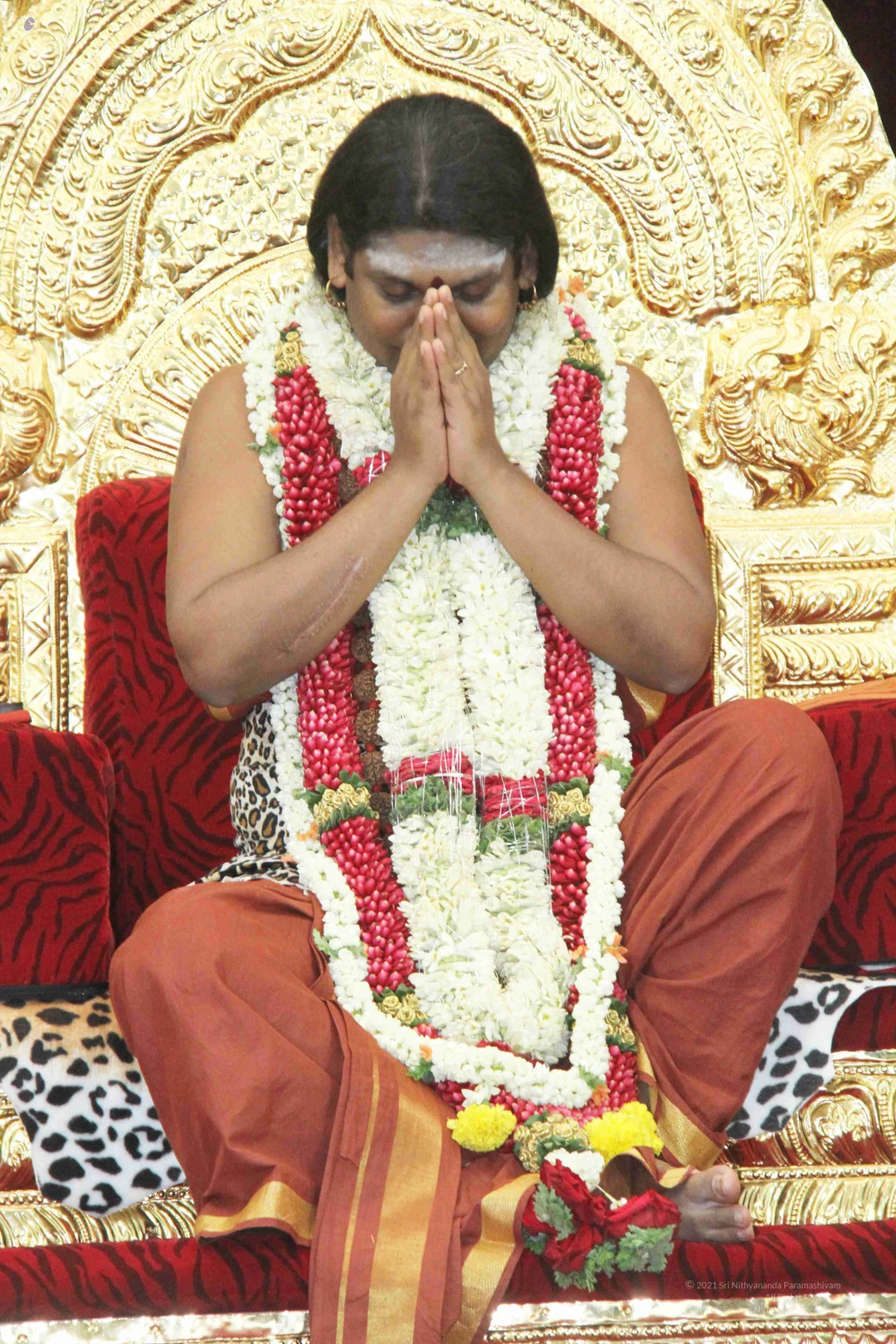
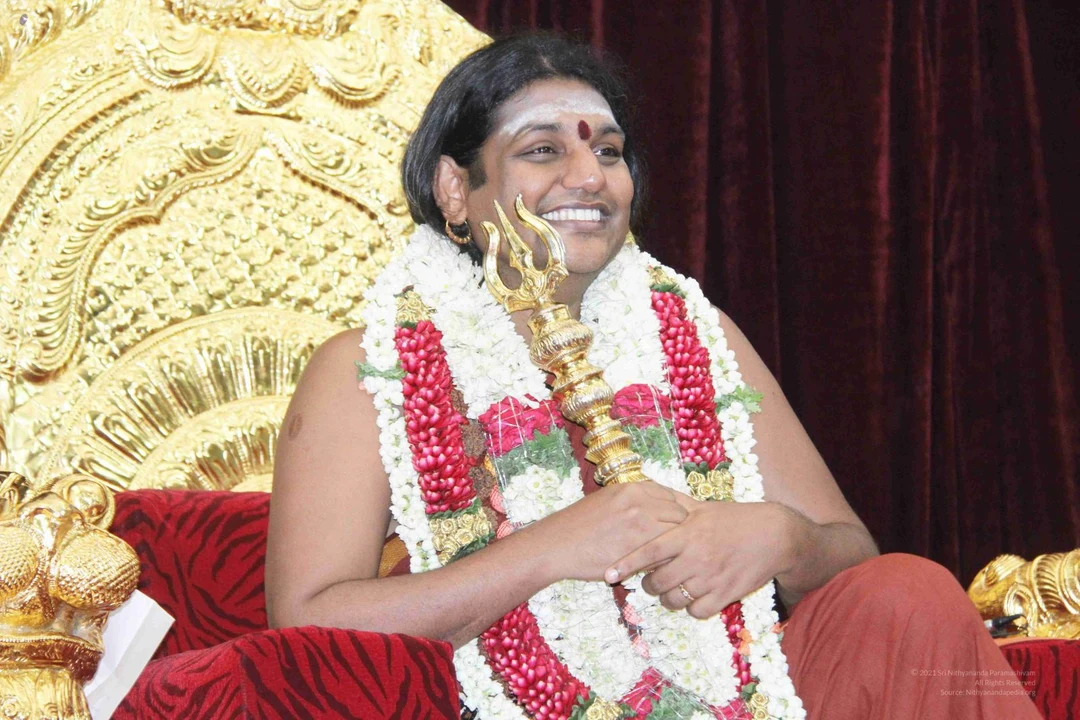
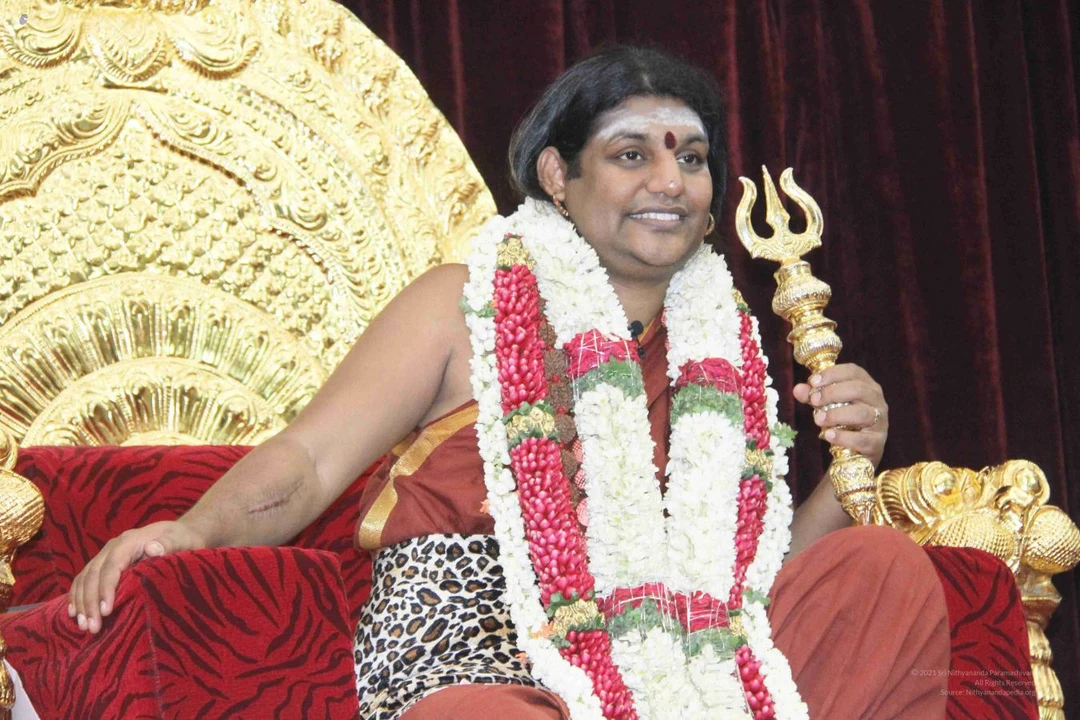
In today’s morning Satsang, Paramahamsa Nithyananda welcomes Mahant Sri Sri Rameshwar Puriji Mahraj and Acharya Sri Dr. Ramnarayan Dwivedi of Kashi Annapoorna Temple, Varanasi. Mahant Sri Rameshwari Puriji Maharaj blesses devotees and viewers from around the world. He speaks about Kashi (Varanasi) and how souls finally reach human birth to attain liberation. Acharya Sri Dr. Ramnarayan Dwivedi also describes the states of yoga and that liberation can be achieved only with the Grace of the Master.

VideoAudio

Transcript:

[00:15]

Nithyānandeśvara samārambhām Nithyānandeśvari madhyamām | asmat āchārya paryantām vande guru paramparām ||

[00:40]

Iss samay hamare sath upasthit sabhi darshakon, sannyasiyon aur bhakton ka main prem evam aashirwad sahit swagat karta hun

[00:50]

I welcome all the devotees, disciples, samajis, satsangis, Shrimahants, Mahants, Kotharis, Thanedars of our Nithyananda Sangha all over the world through Nithyananda TV, Lotus News Channel, Sadhna TV, Eshwar TV, Janashree TV, two-way video-conferencing all over the world in many countries around the globe. The cities sitting with us in two-way video-conferencing: Toronto-Kailasam, Charlotte-Srisailam, Houston-Kalahasti, Ohio-Prayag, Nithyananda Vedic University- Los Angeles, Washington DC-Sripuram, Vancouver-Bhubaneswar, Phoenix- Kanchipuram, Seattle-Chidambaram, Haridwar, Nithyananda Nagara- Hyderabahad, Avadi-Chennai, San Jose-Madurai, Kulalumpur-Palani, Hyderabad-Gupta Kashi, London-Kashi, and Guadeloupe-Rameswaram, Port Washington-New York, San Antonio-Texas, Calgary-Amaranath, High Point-North Carolina, Jorpati- Nepal, Nithyananda University-Paris, Mulund-Mumbai, Minot-North Dakota, Warringon-UK, Kuala Lumpur-Palani, Agni Appojit, Manhattan-New York, Rose Lee, Colorado Springs, Oman-Sivagangai, I welcome all of you and the Nithyananda Nagara- Bidadi.

[02:31]

Today we have a esteemed, honored, revered guest with us – Swamiji Shri Shri Rameshwar Puriji Maharaj, the Mahant of the Shri Kashi Annapurna Temple. Kashi Annapurna Temple is the oldest temple in Kashi. There is a tradition Annapoorna came to Kashi first, only then Mahadeva Vishwanatha came to receive bhiksha (alms) from Mahadeva… to receive bhiksha from Annapoorni. So, today, the Mahant of the Kashi Annapurna Temple, Shri Shri Rameshwara Puriji Maharaj is here to bless us and grace all of us. And, Swamiji does a lot of social work like free Old Age Home, free Anna Dhaan everyday in the Kashi Annapurna Temple. Swamiji does so much of free Anna Dhaan, so many free activities, social services. And, Pujananda will introduce all the social service activities Swamiji does. Before that, on behalf of Me and Dhyanapeetam, I just wanted to personally invite Shri Shri Rameshwar Puriji Maharaj and Narayan Dubey ji, Acharya of the Annapurna Temple. I invite both of them to be here, for being here, on behalf of Me and on behalf of Nithyananda Dhyanapeetam.

[04:20]

[Pujananda Maharaj gives a brief about the social service activities of Mahant Shri Rameshwar Puri ji Maharaj]: Nithyanandam. Kashi Annapurna Devi, Annapurna Annakshetra Trust is running many social services here in Kashi. One of them is to offer free Anna Dhaan to thousands of people every day. They are running a free Vedic School where Sanskrit studies are being conducted. They are running an Old Age Home for people to leave their body in the Kashi Avimukteswar Kshetra. They are providing all the sixteen Hindu rites to be performed in the temple in Kashi. They are running an Information Center Services. And they are running the Ganga Arathi every day they are conducting at Lalitha Ghat. They are running a Kashi Nivas for the people, older people to come and stay during the last period of their life. They are running a free Placement Agency for the people unemployed youths. They are doing free marriages for couples every year in hundreds. They are running free medical services at three junctions in Kashi. They are providing free tailoring services for womens and unemployed youths. They are also running free orphanages. All these as the social services are being run by the Kashi Annapurna Devi Annapurna Annakshetra Trust.

[05:56]

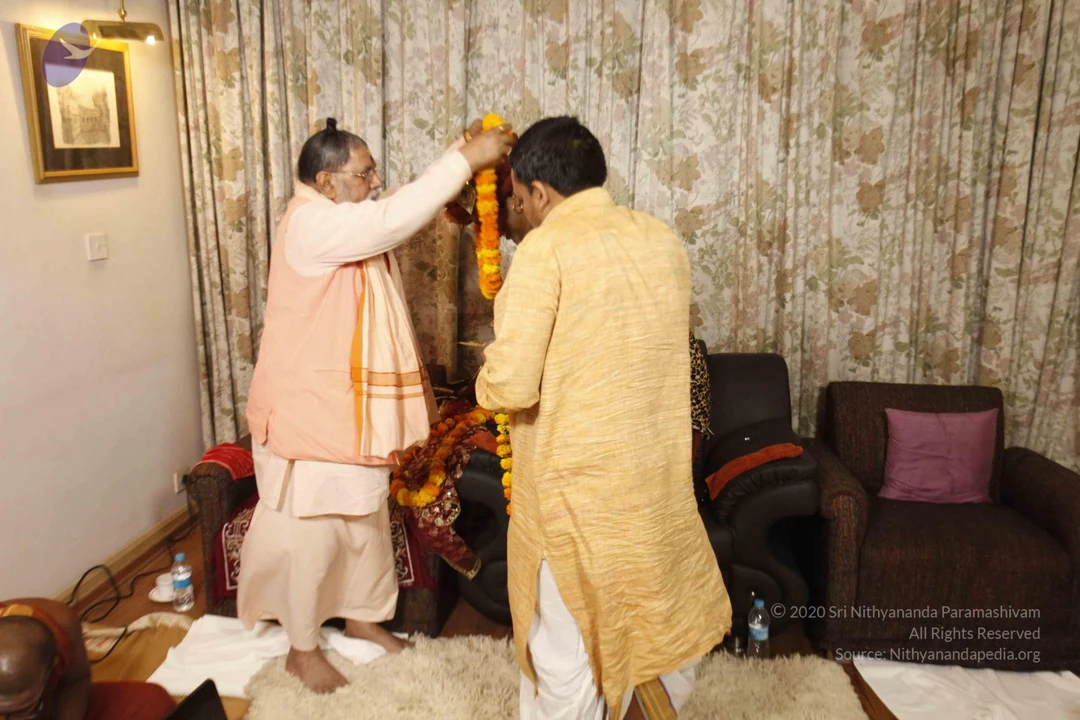
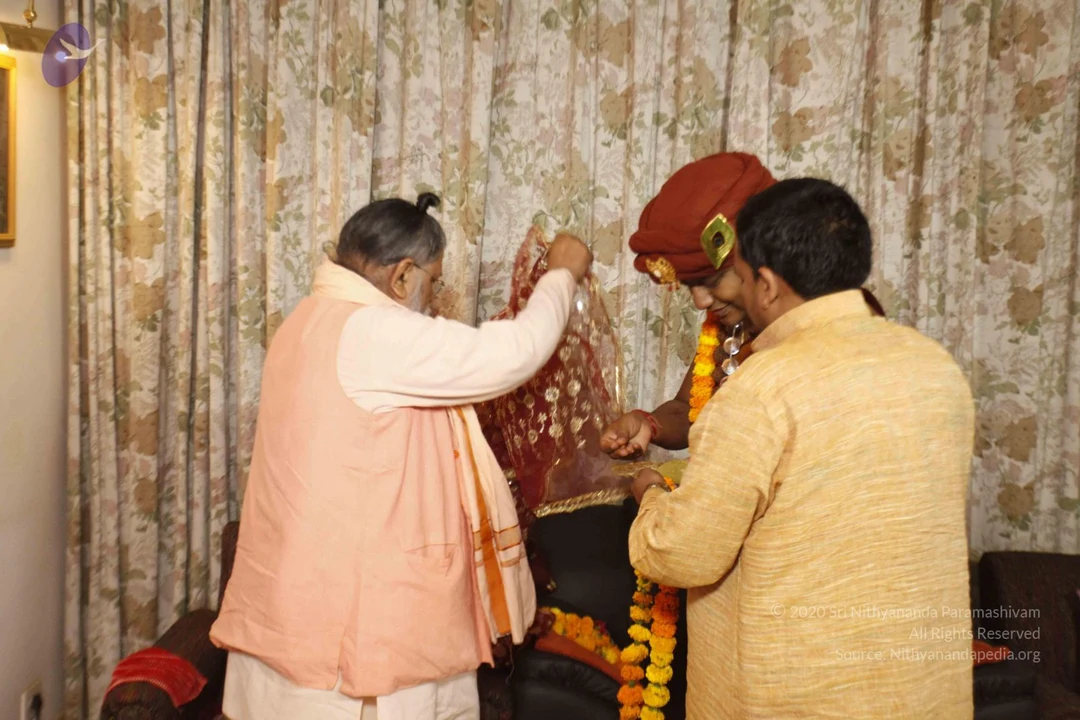
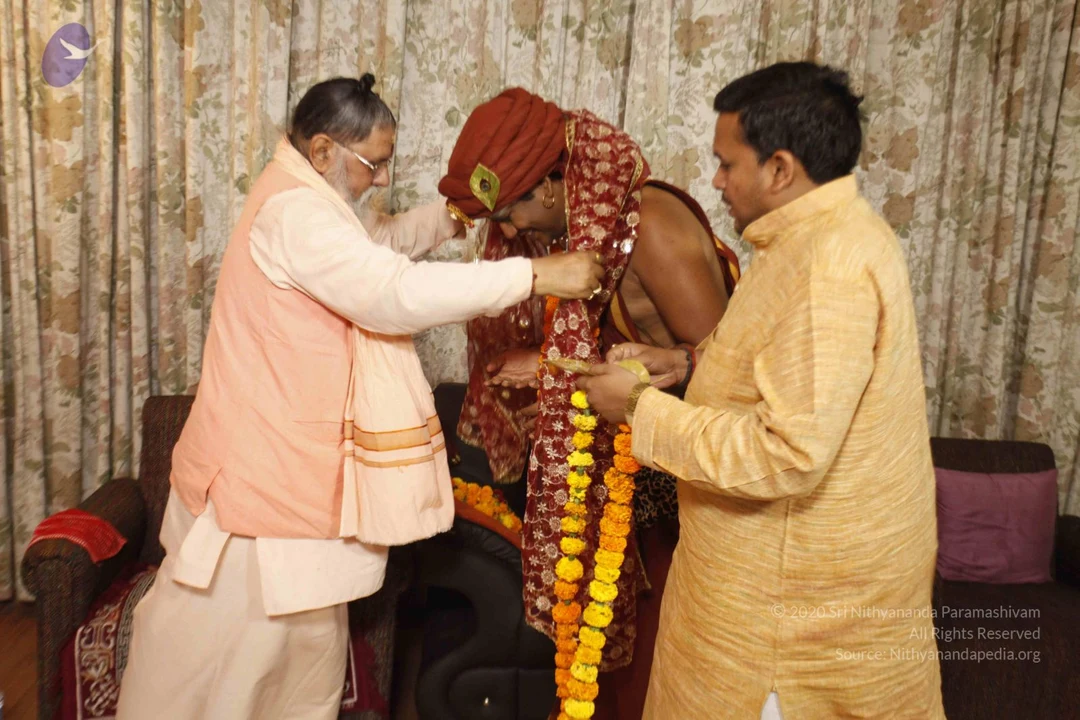
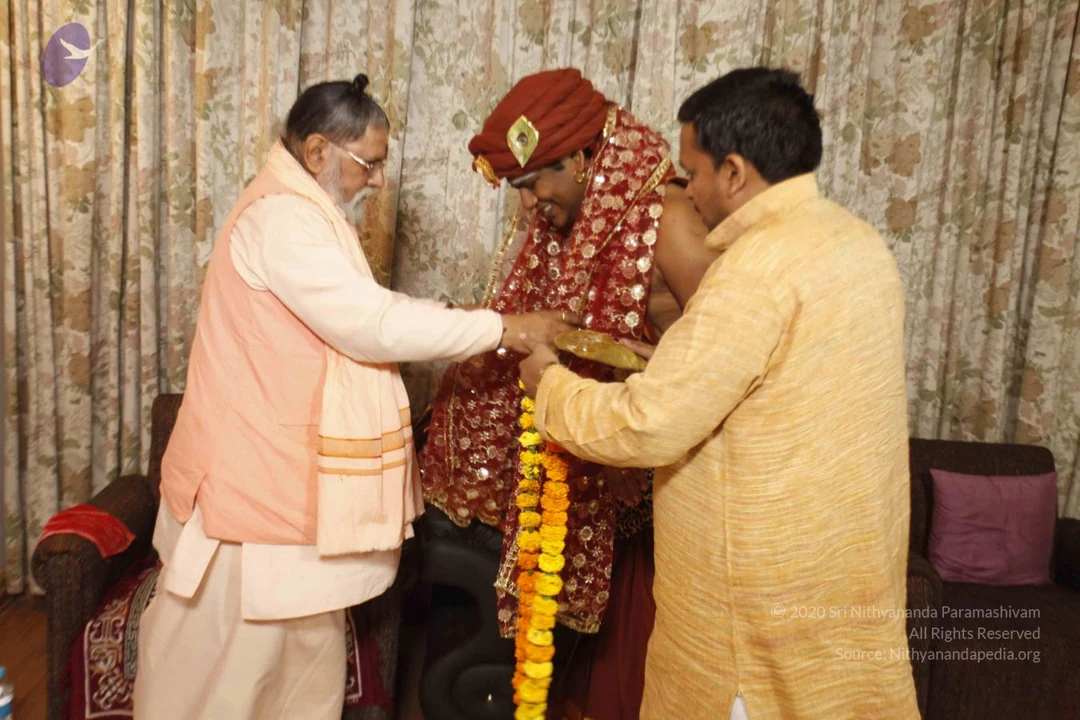
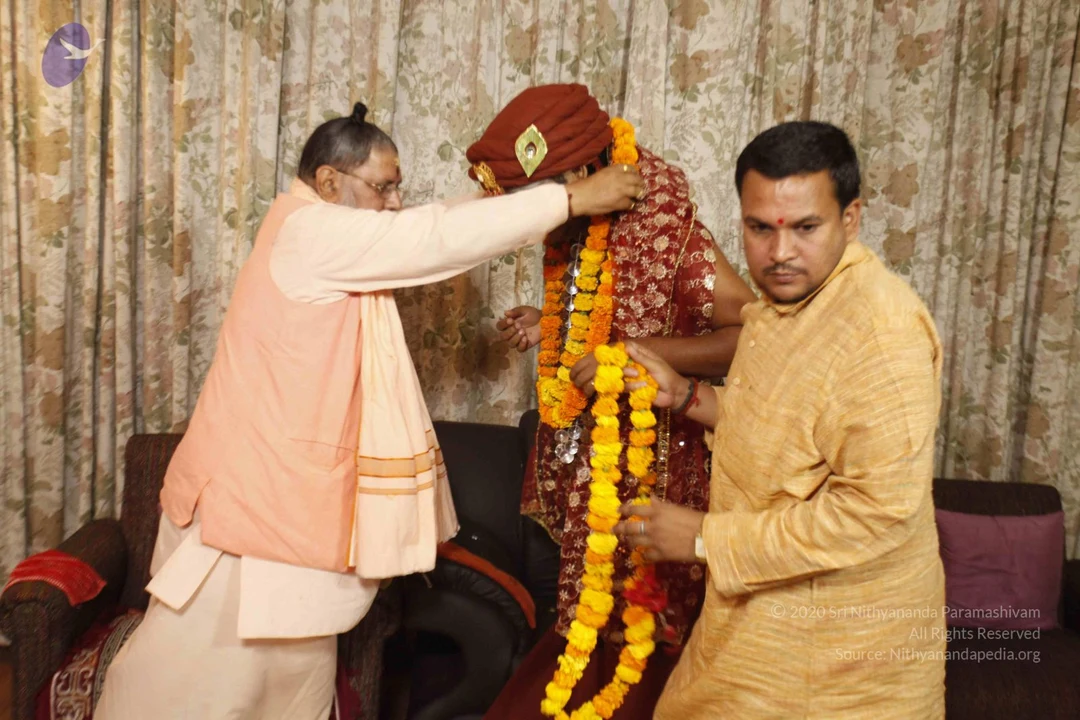
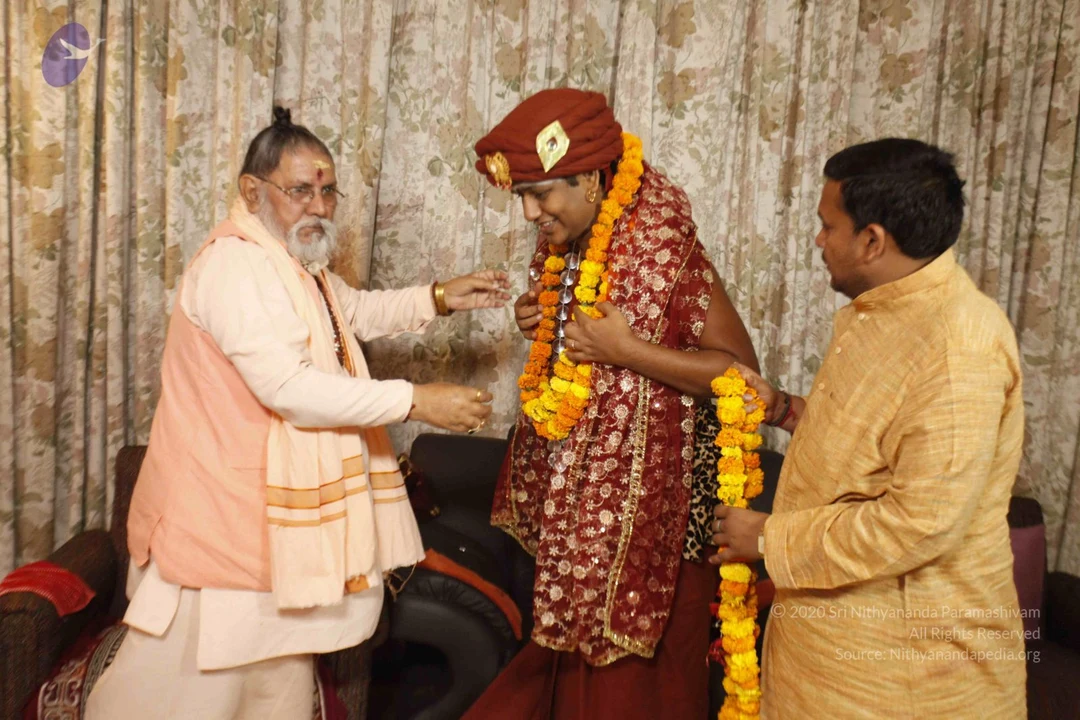
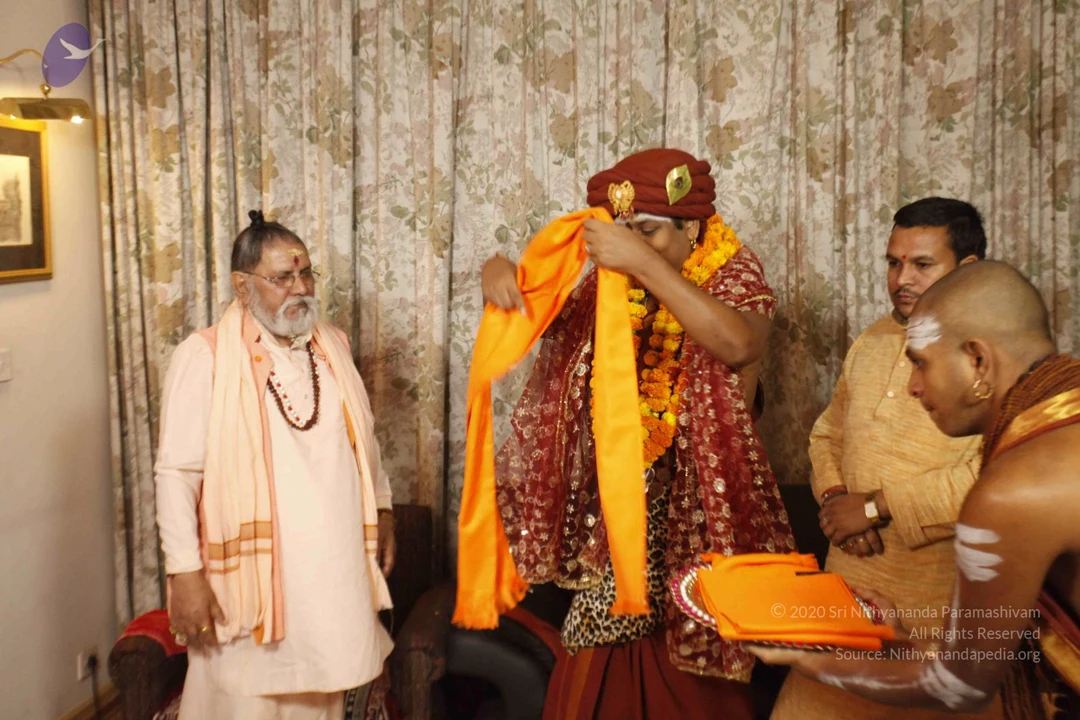
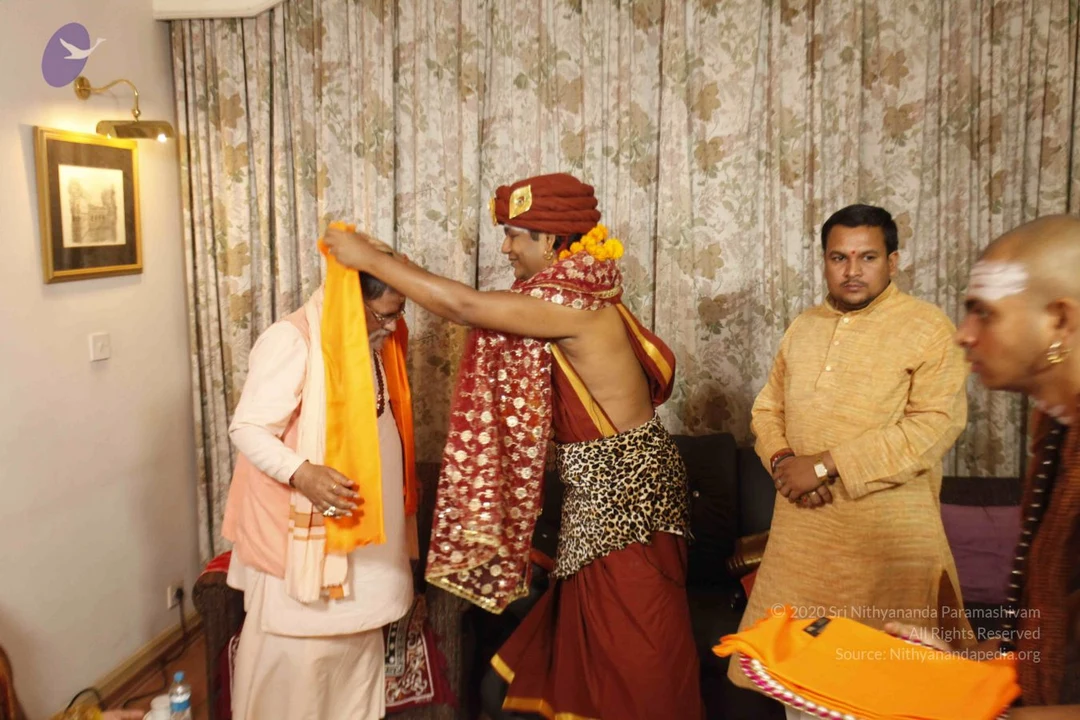
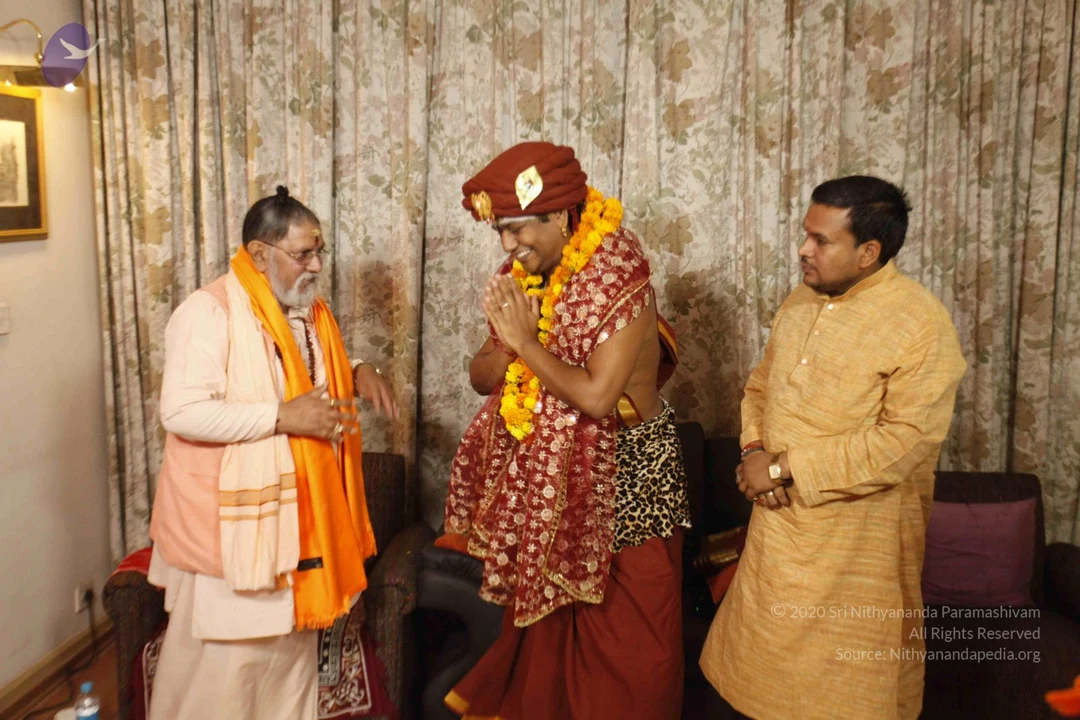
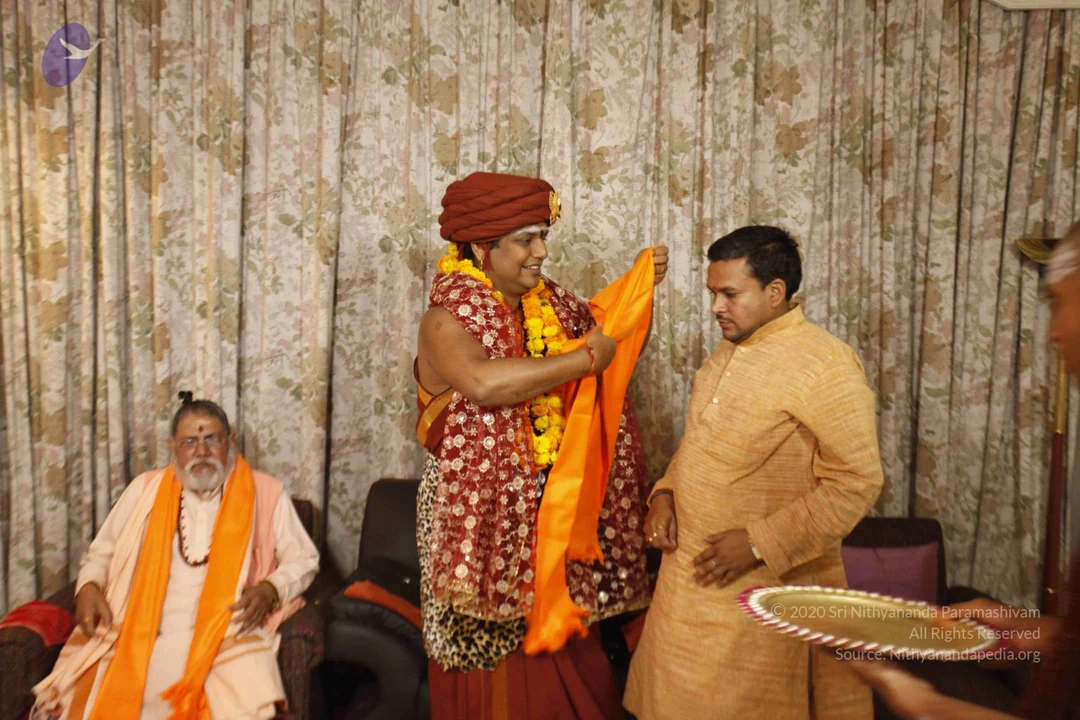
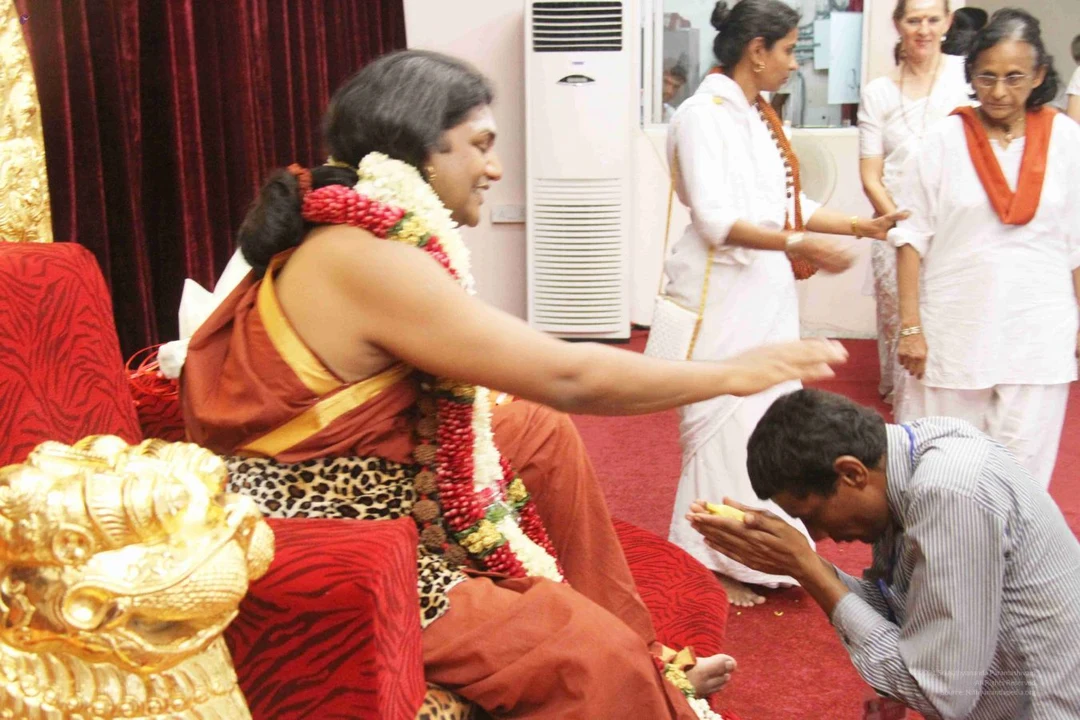
Swamiji: So, with this, I wanted to invite Maharaj ji. Maharaj ji will share a few words and bless all of us. After that Shri Narayan Dubeyji will share some of his thoughts. Then we will have the translation by Pujananda. Pujananda Maharaj:- Now they (Mahant Shri Rameshwari Puriji Maharaj and Acharya Dr. Ramnarayan Dwivedi ji) will be receiving Swamiji. And they have brought from the Annapurna Temple the Prasad of Matha Annapurna Devi which they are going to offer to Swamiji. And the saree they are offering to Swamiji has been offered to Annapoorna Devi. Mantras are chanted. And on behalf of Nithyananda Dhyanapeetam, Swamiji is offering respects to Mahant Shri Rameshwar Puri ji and Acharya Shri Ramnarayan Dubey ji. Swamiji: We will now have our satsang, morning satsang. And we request Swamiji Shri Shri Rameshwar Puri Ji Maharaj to bless us, grace us.

[07:22]

[Mahant Maharaj speaks in Hindi]

[17:42]

Pujananda Maharaj: Nithyanandam His Holiness Shri Rameshwar Puriji has given a scintillating talk. A brief of that talk is just translated. As he said Kashi is Triloke Nari means in all the three lokas (worlds), it is above all the three. Kashi does not belong to the Planet Earth. In Bhuvana Purana it was told, when a person leaves his body, with Lord Vishwanatha gives the Taraka Mantra, and with the Taraka Mantra his liberation happens. For that purpose, thousands of people comes to Kashi to live their last life here, and Matha Annapurna Devi takes care how everybody who lives here and Mother always takes care that everybody is fed in Kashi in whichever Kshetra he live. And he explains how a person who remains inside the sansara in bogayoni when he crosses through 89 yonis in manushya in the human body his liberation by following the path. The path is by explained by Swamiji thousands of devotees is the path for achieving liberation. The person who serves the society, who is in the state of ananda, when they comes to Nithyananda they attain to the permanent state of bliss. Swamiji [Nithyananda] is the son of Annapurna Devi who gives the blessings to fulfill and in the path of liberation for the sanatana dharma. In Kashi along with 33 crore devatas Swamji and the blessings of Swamiji,the persns who lives in Kashi are graced for the spreading of sanatana dharma. Now Swamji has told that in forty countries he is establishing in Sanatana Dharma. In times to come, billions of people will follow the path explained by Swamiji and will achieve the state of liberation. With His heart pouring in he offers pranam to Swamiji (Paramahamsa Nithyananda) for his contribution to the Hindu religion for Sanatana Dharma, and the work He is doing for achieving for giving the path of liberation to people all across the world. Now, Acharyaji Dr. Ramnarayan Dubey is going to offer his speech.

[21:34]

Acharyaji Dr. Ramnarayan Dubey address in Hindi

[33:32]

Pujananda Maharaj: Nithyanandam. Acharya Dr. Ramnarayan Dubeyji, a brief of his talk in English. Dwivedi has mentioned Yoga is the path of liberation. In Bhagavad Gita, Lord Krishna defines Yogaha Karmasu Kaushalam. It means everybody has to perform the required action whether he is a sanyasi, when he is a sannyasi he has to do sannyasi karma. If he is a householder, he takes care of the house and does the karmas related to that. So everybody has to follow their duties that is their…. that is the karma. Yogaha Karmasu Kaushalam, when they do it with their perfection, they achieve the state of Yoga. Just not performing asana is not yoga. When they go through the stages of Pranayama, Pratyahara, Dharana, Dhyana, Samadhi, they achieve the state of Yoga. The paddhatis that have been explained by Swamiji is the Sanatana paddhati, the paddhati of original Hindu text. The way Swamiji has expounded the path of Yoga, He Himself is considered as Krishna, Lord Krishna. The path through which the person comes out of the bandhana, means the state of conflict, is the path of Vedanta. This is achieved slowly and slowly. It cannot be achieved all of a suddenly. With the grace of the Master only the liberation is achieved. When Dubeyji has come in contact with Swamiji in the last few days he has experienced something great in the last few days in the presence of Swamiji by which, by the virtue of which He is so perfect, the only Saint in India who has offered the path of liberation by awakening the Kundalini energy, the Kundalini Shakthi, in thousands of people at a time. And all these paddhatis are oldest reviving the Hindu culture, reviving the Sanatana dharma, reviving the text expounded in the upanishads, the Vedic vigyan, the Vedic science is going to achieve its glory again in the presence of Swamiji. And the paths that have been explained by Swamiji is going to help billions in the world. Thank you!

[37:01]

Swamiji:- So now, with this I thank from my heart Shri Shri Rameshwar Puriji Maharaj, the Mahant of Annapurna Temple, for coming here and blessing us, and Shri Shri Dr. Ramnarayan Dubeyji, the Acharya of Annapurna Temple. I thank both of them. And I also formally invite both of them to visit all our temples, ashrams in USA. Swamiji will be coming in June to bless all our temples and ashrams in US. I bless you all! Let you all radiate with Integrity, Authenticity, Responsibility, Enriching and Causing eternal bliss, Nithyananda! Thank you!

Photos

Kashi Annapurna temple
Nithya Satsang
Photos Of The Day:
Photos Of The Day:
Rudra-Abhishekam

SPH-arrival-to-Adi-Kailasa

Photos Of The Day:
Nithyananda-Satsang

Kalpataru-Darshan

Photos from this day

View all 151 photos

Kashi Annapurna temple

2 photosSource gallery
Photograph of an indoor welcome in front of a floral curtain. An older bearded man in white dhoti, peach-orange shawl and rudraksha mala on the left holds out a small wooden box or gift tray with ornate gold-and-brown trim. A person in a red-maroon embroidered sannyasi-style robe with a deep red turban, gold brooch, and a marigold garland accepts it, smiling. A younger man in a yellow-orange kurta stands at right, hands near the tray. The presentation suggests a ceremonial gift exchange. No identifiable a person appearance cues are clearly established for the central figure.A photograph of three people seated side by side on black leather armchairs against a floral curtain. The central figure wears a red turban with a gold ornament, a red and maroon embroidered top, a red and gold sari-style garment, and a long marigold garland. The man on the left has white hair and a beard, wears a white kurta with an orange shawl and a rudraksha-style necklace. The man on the right, in an orange shawl over a yellow-gold kurta, has his palms joined in namaste. The central figure's hands are folded in her lap.

Nithya Satsang

2 photosSource gallery
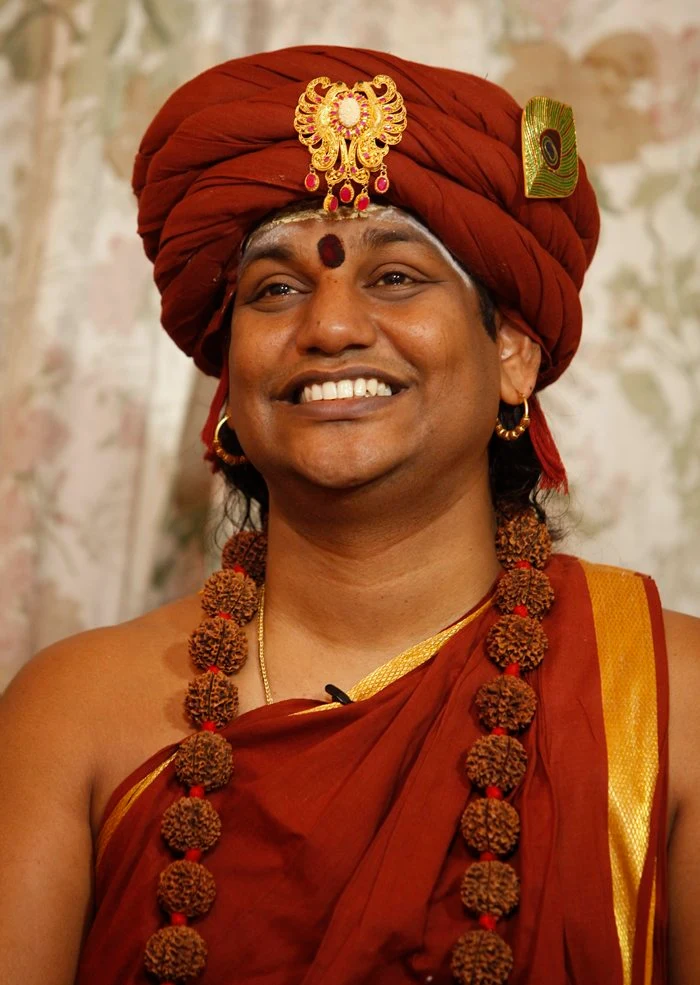
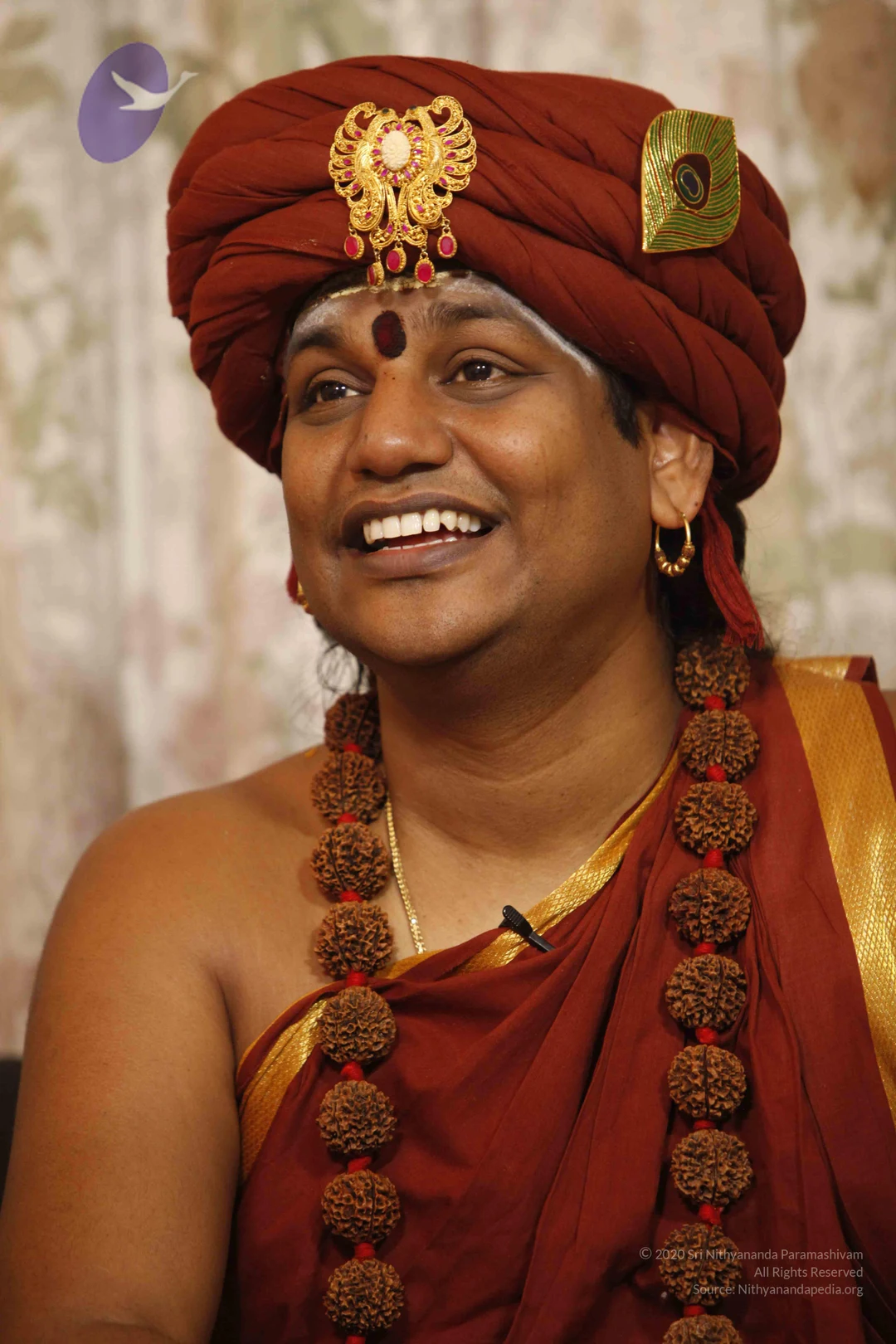
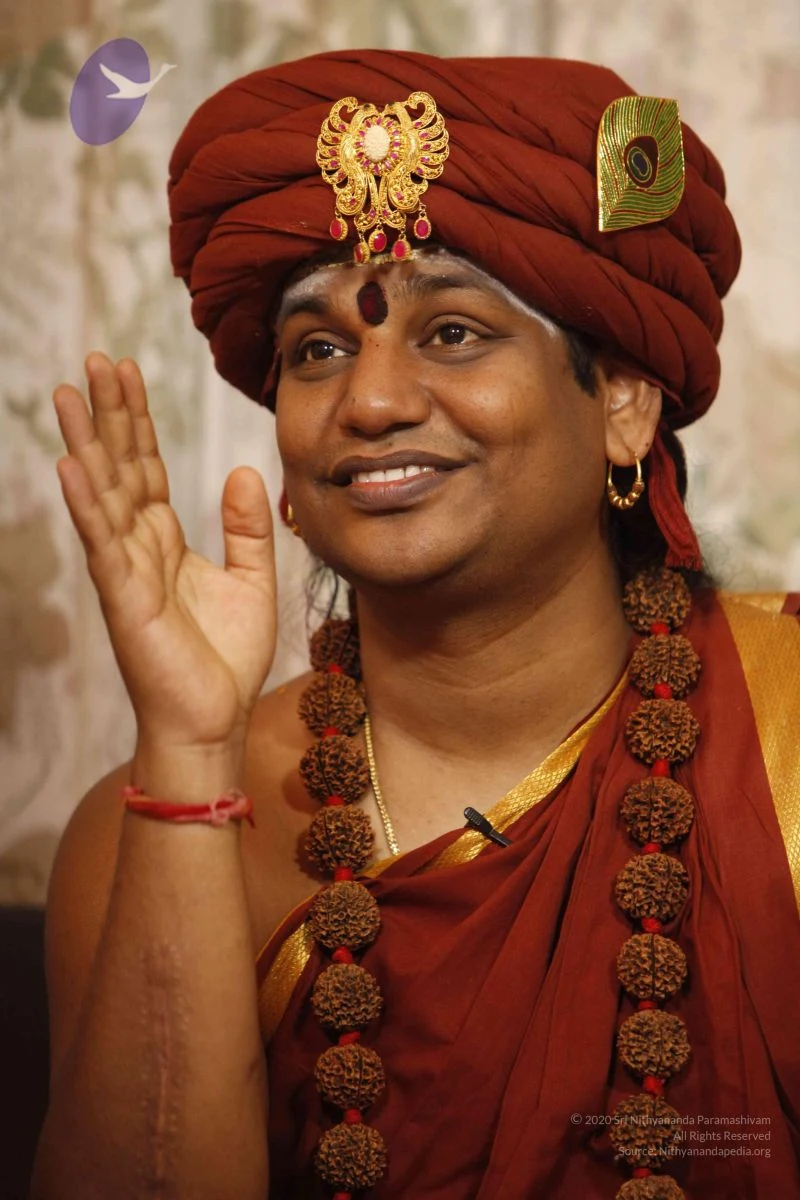
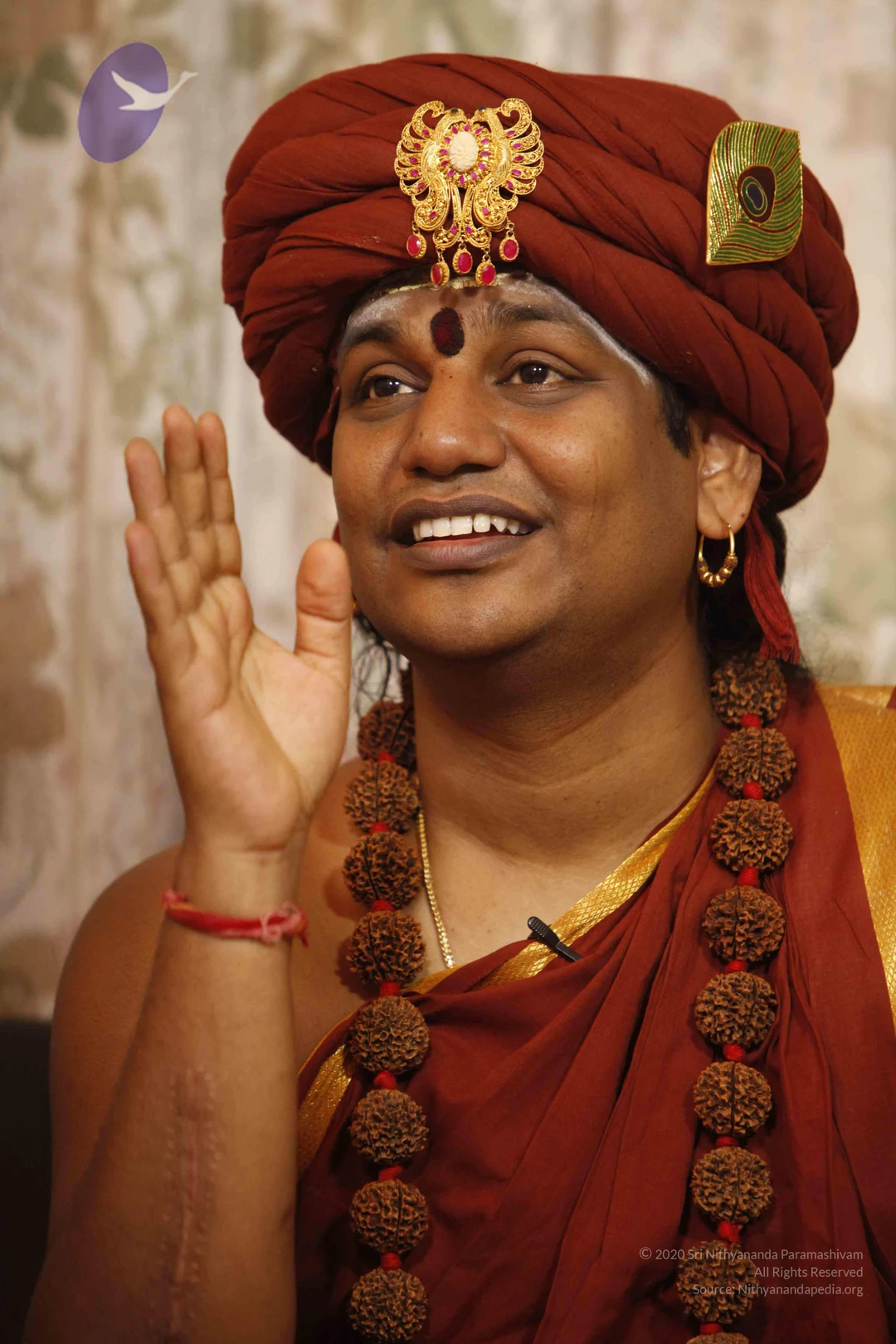
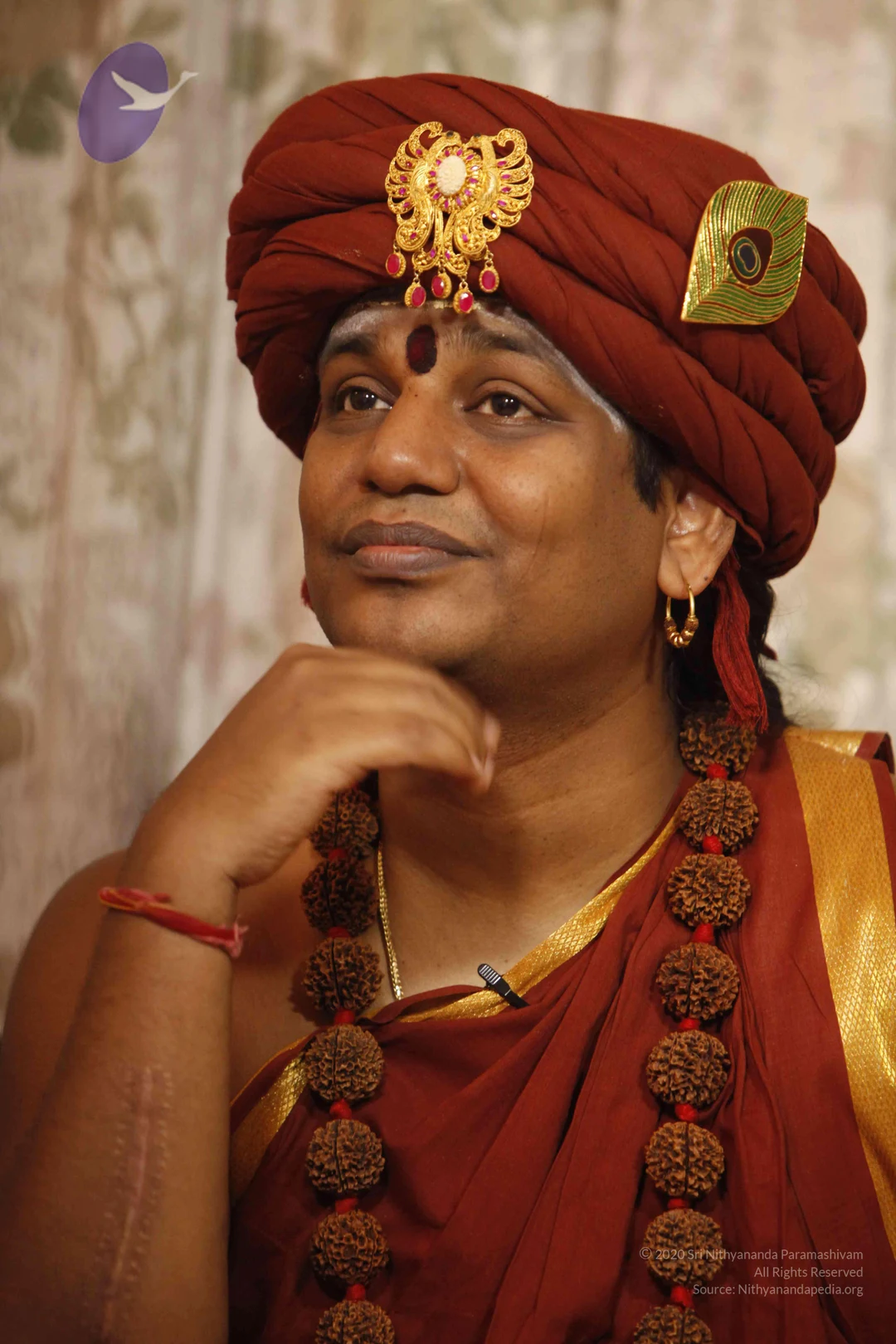
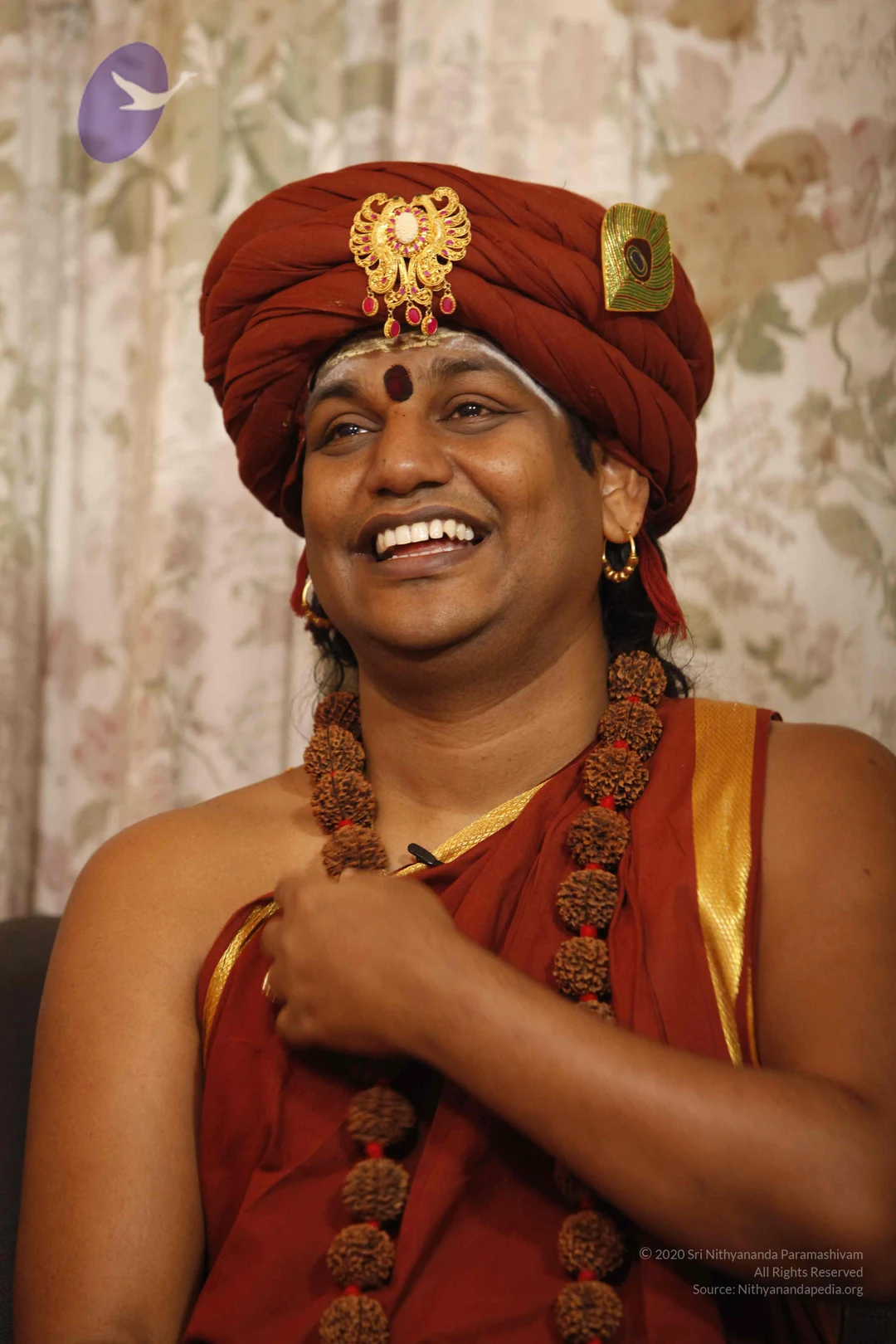
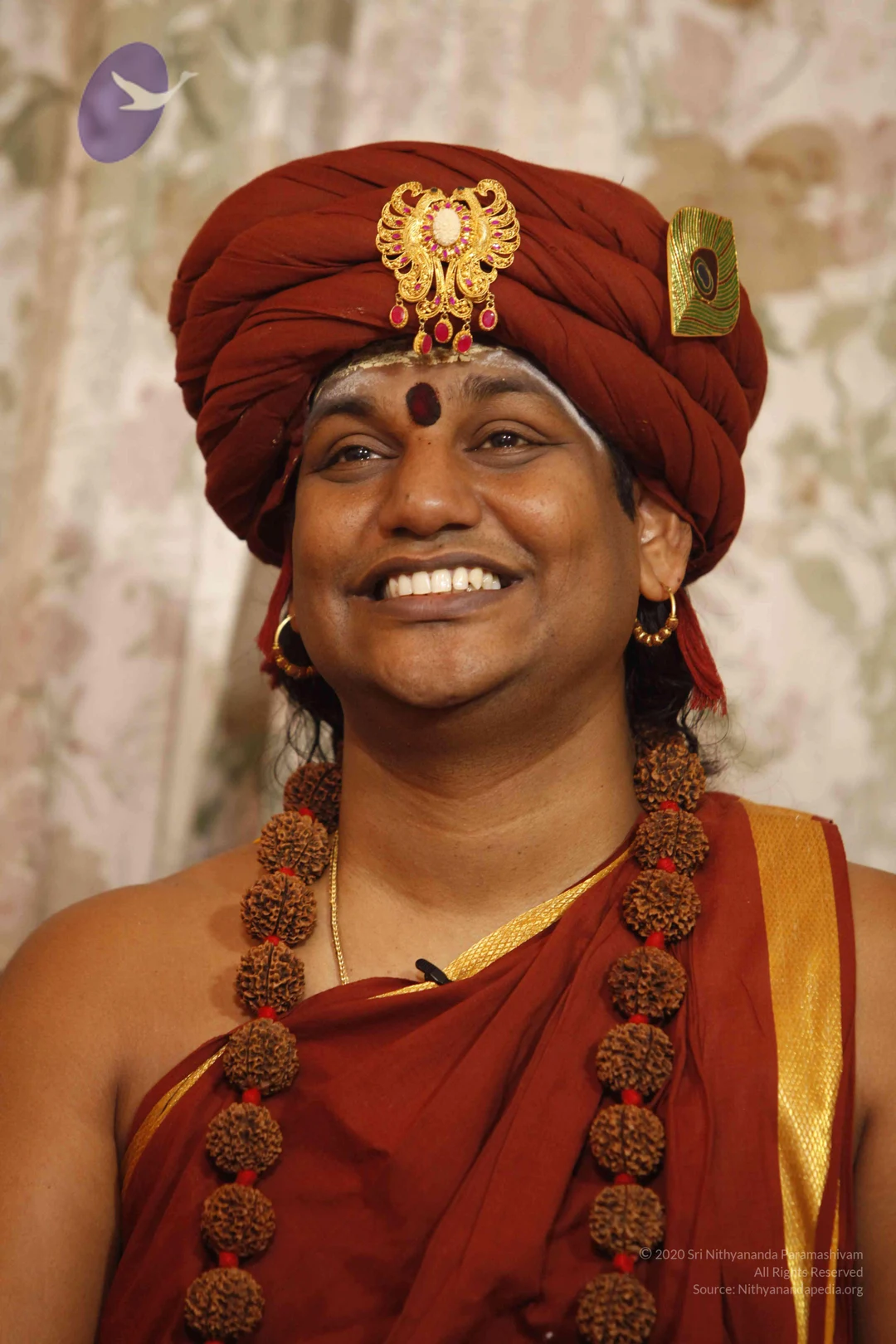
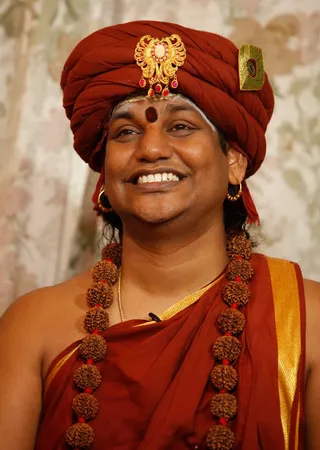
Photo of a smiling man in a red-maroon turban decorated with a gold ornament and a peacock-feather pin, with a red bindi and white forehead markings. He wears a red-maroon robe with a gold border, a long rudraksha mala with red beads, a thin gold chain and a gold hoop earring. He raises one hand in greeting against a floral curtain backdrop. Appearance-based candidate for a person, shown in person and speaking to an audience in a satsang setting.Close-up portrait photo of a smiling man wearing a deep red turban with a gold ornamental brooch set with red stones and a green peacock-feather pin. A red bindi sits on his forehead and white sacred ash marks his brow. He wears gold hoop earrings, a fine gold chain, and a long necklace of brown rudraksha beads with red spacers over a red-orange shawl edged with gold. The background is a pale floral fabric. Appearance-based probable Swamiji (probable): swept-back hair, turban with gold brooch, red-orange clothing, and rudraksha mala are visible cues.

Photos Of The Day:
51 photosSource gallery
Three men sit on a dark leather sofa and armchairs before a floral curtain during a satsang welcome. On the left, an older bearded man with a shaved-looking head and a tilak wears a pale peach robe and shawl and holds a rudraksha mala, with a marigold garland draped beside him. The central figure wears a red and gold turban with a brooch, a red-orange robe with gold border, a crystal and rudraksha mala, and a shawl, with hands folded. On the right, a man in a yellow kurta and white dhoti with a gold wristwatch sits with hands clasped. Bottles of water sit on a white rug at their feet.Three people sit on dark leather armchairs in front of a floral curtain during a satsang welcome. The central figure wears a red-orange turban with a gold ornament, a red-orange garment with gold borders, a multi-strand clear crystal necklace and a gold-bordered leopard-print shawl, with hands folded. A dark-haired person to the right wears a yellow kurta with white dhoti and a gold shawl. The figure on the left, with a white beard and white robes, wears a rudraksha mala, and a marigold garland rests beside them on the chair. Bare feet rest on a white fur rug.A photograph of an indoor room with floral curtains, a framed picture on the wall, a dark leather armchair and a maroon-cushioned sofa with a purple pillow. Two standing men face each other. The man on the left, bald-headed and wearing a peach sleeveless vest over white dhoti and a saffron-bordered shawl, lifts an orange marigold garland above the head of the man on the right. The man on the right wears a pale yellow kurta over white trousers and bows his head to receive it. A small table holds a jar and garlands, and a white cloth covers the floor. A figure in orange robes is partly visible at the lower left. Visible people: three.Indoor photograph in front of a floral patterned curtain. An elderly man with grey hair in a topknot, wearing a peach-coloured vest over white and an orange shawl, drapes a red cloth with gold embroidery over a seated man wearing a red turban with a gold ornament and marigold garlands. A younger man in a yellow-beige kurta stands beside them with his hands near the seated man. Marigold garlands hang on a dark cushioned seat.Indoor photo in a living room with a floral curtain behind. An older bearded man in a peach vest over white dhoti, with his grey hair tied back, places a marigold garland over the shoulders of a bare-chested sannyasi wearing a red and gold turban and a red-patterned shawl. A third man in a pale yellow kurta stands at right holding the garland end. Orange and yellow marigold garlands drape across the sannyasi's chest, and a brown sofa sits at left. Printed copyright text reads on the right. The sannyasi is an appearance-based candidate with a turban, red shawl and ceremonial garlands, presented as the honoured guest; identity is uncertain from appearance aloneA photograph in a room with floral patterned curtains and a brown sofa. An older bearded man in a peach waistcoat over white kurta and dhoti stands on the left, hands extended to a seated figure. The seated figure wears a red turban with a green gem, a red embroidered sherwani with gold trim, and gold jewellery, and is bare-chested beneath the garment, with a chain adorned with marigold garlands and a brass plate. A younger man in a yellow-gold kurta holds the brass plate beside him. The clothing and setting suggest a ceremonial exchange, but no visible cues establish the seated figure as a person, so identity remains uncertain.
Rudra-Abhishekam

7 photosSource gallery
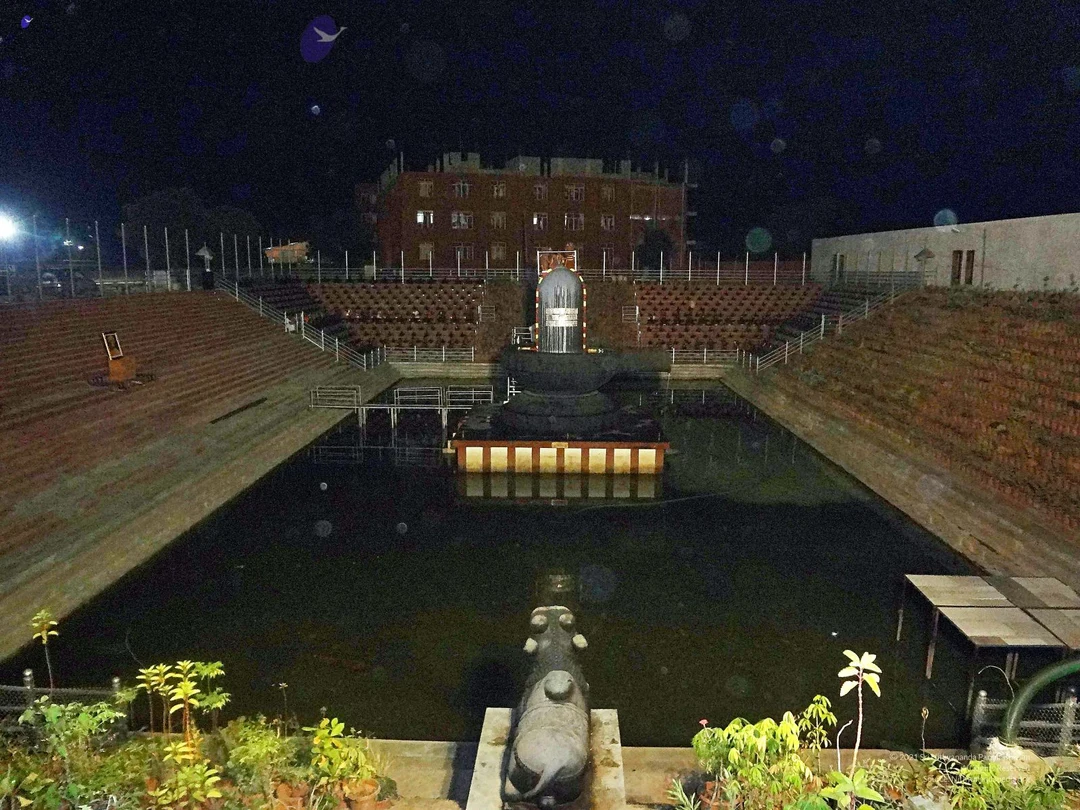
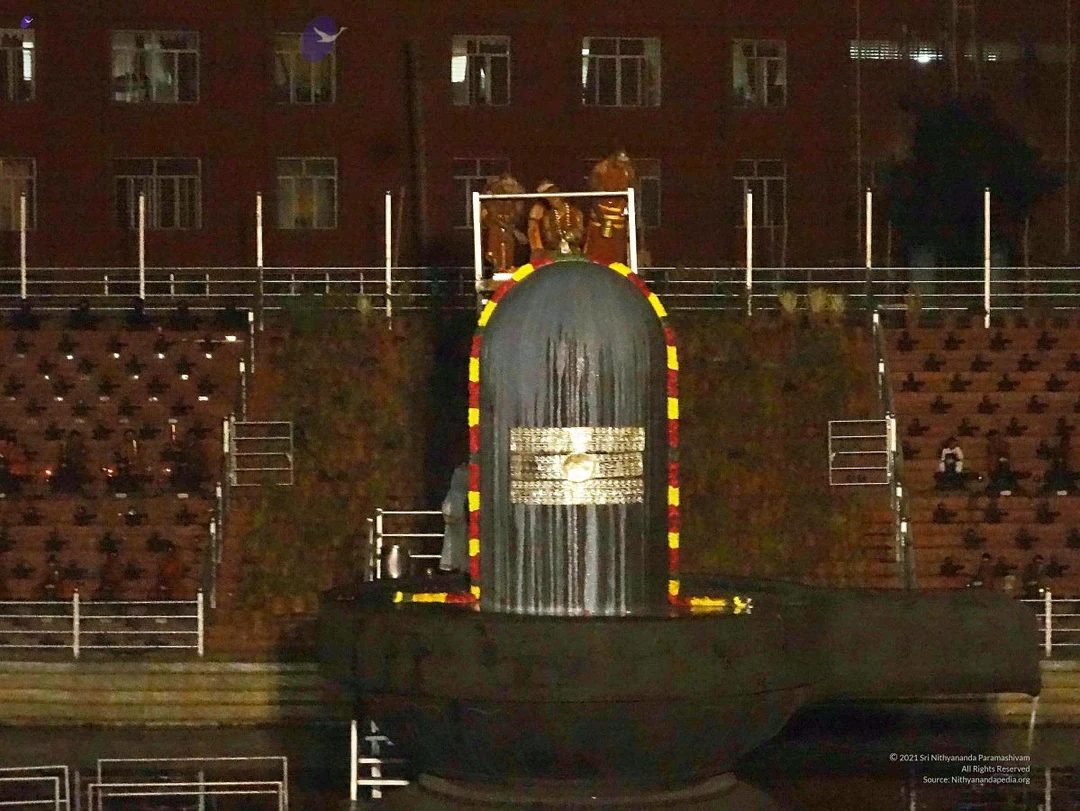
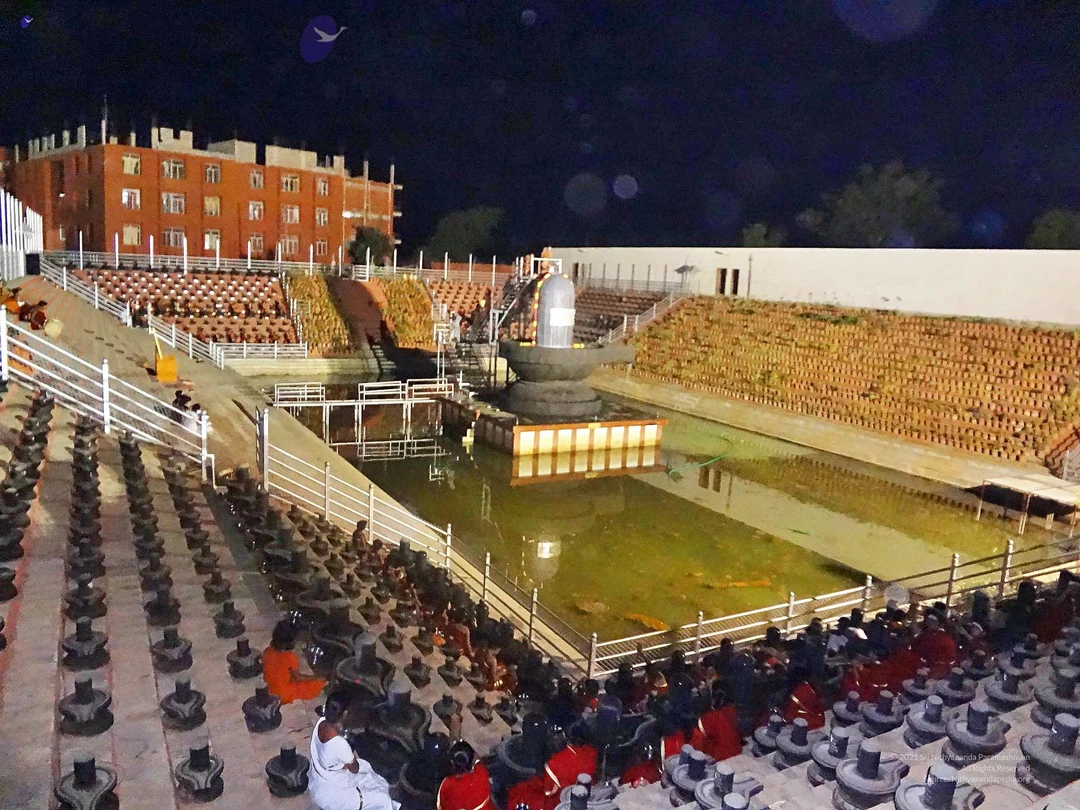
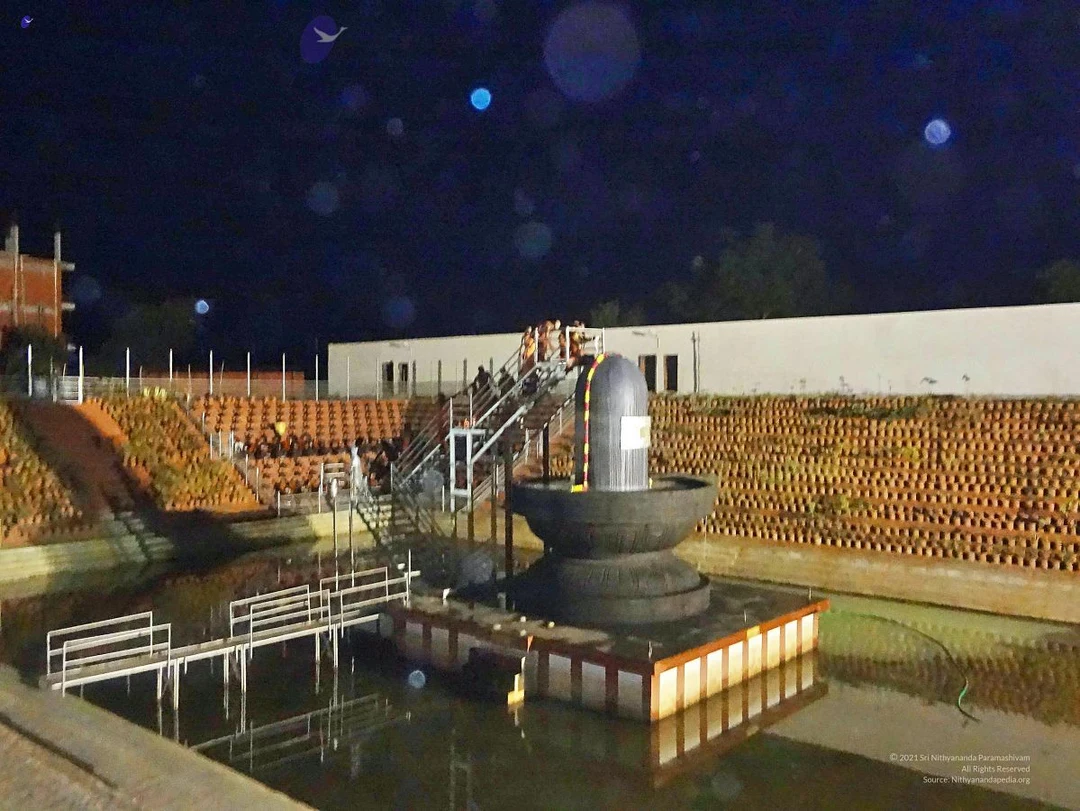
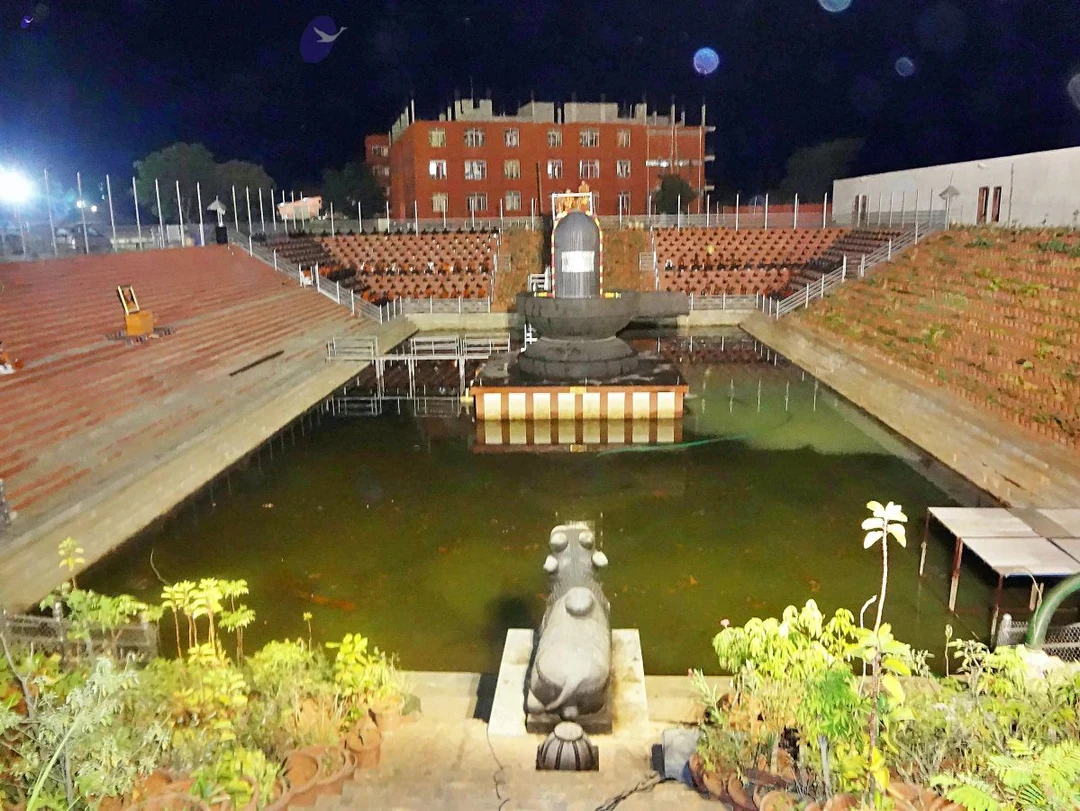
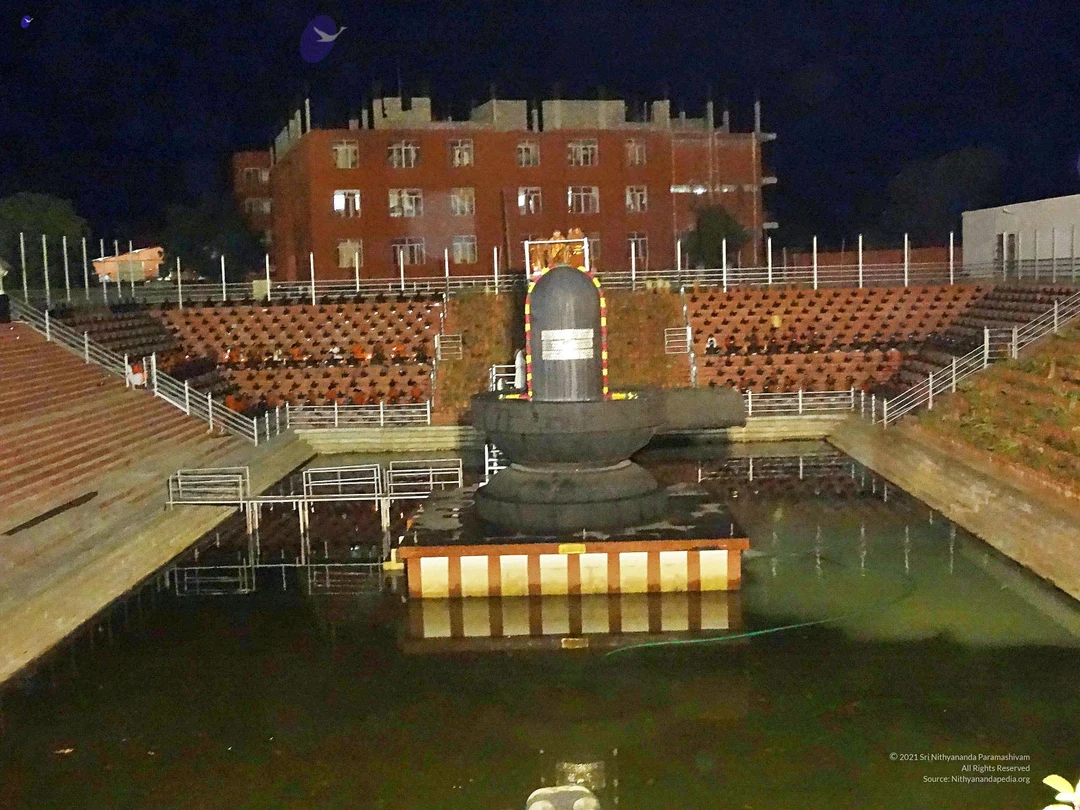
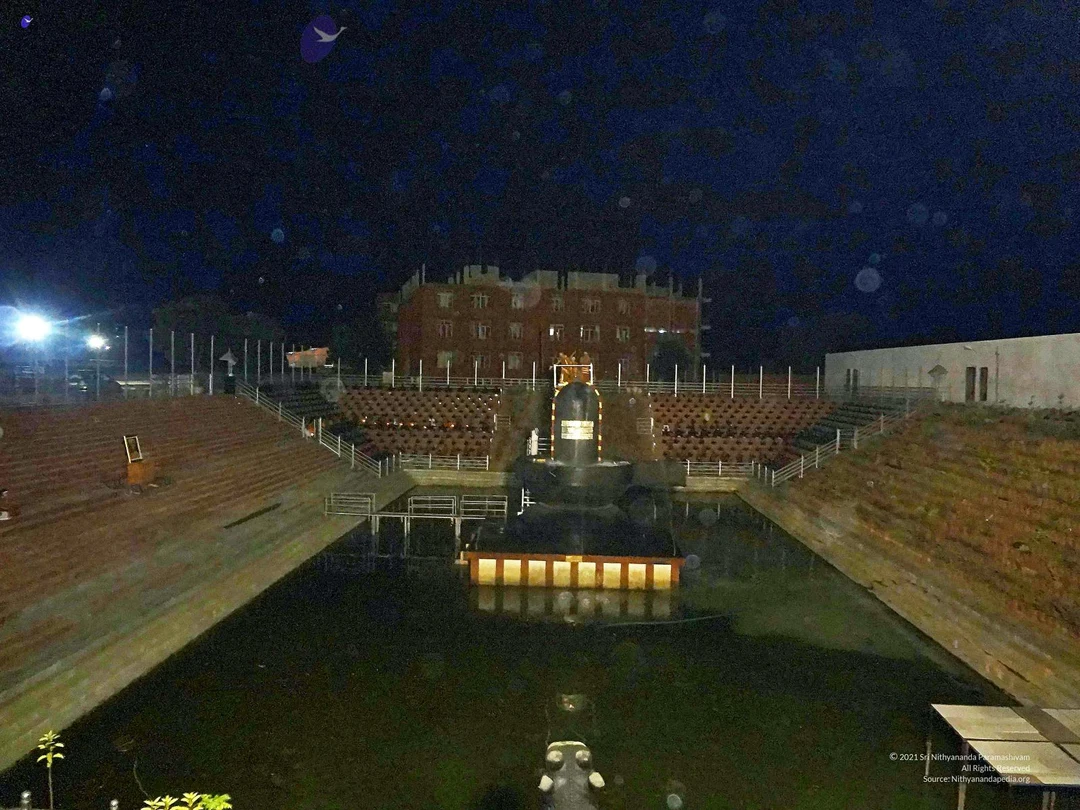
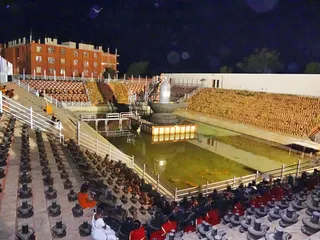
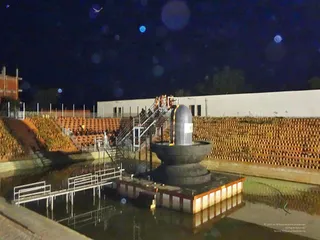
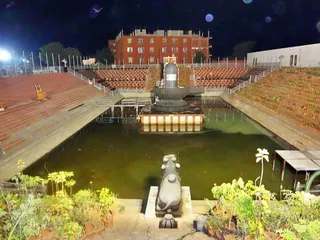
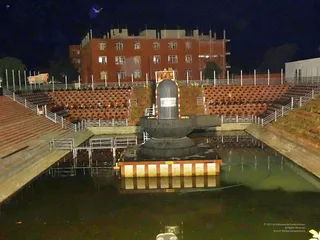
Night view of an outdoor stepped tank with dark still water. At the centre stands a large black stone Shivalinga on a raised circular base, with a tall white and red striped cylindrical lingam shrine behind it. A long black stone Nandi bull statue lies at the front edge of the water. Terraced seating rises on both sides and a multi-storey brick building with many windows stands in the background. Potted plants and small shrubs line the foreground, lit by a single street lamp at left.Night photograph of a large dark stone Shivalinga on a raised platform near water, its surface draped with a gold-coloured vertical ornament and encircled by a garland of red and yellow flowers. Above it on a railed upper ledge stand three figures in ornate gold-brown clothing, apparently statues or deity murti rather than living people. Tiered stone steps behind are dimly lit and largely empty, with a few scattered small figures near the right edge. Illuminated lamps and a dark brick building form the backdrop.Night photograph of a large outdoor ashram courtyard centred on a stepped water tank with a grey stone Shivalinga rising from a yoni-shaped pedestal in the middle. Terraced rows of small black Shivalingas line the foreground steps, and many devotees in red and orange robes sit among them. A single figure in a saffron-orange robe sits at the left edge near the steps, and another person in white sits at lower left. Tiered rows of small clay lamps line the far banks, glowing against the dark sky, with a red brick building behind.Night photograph of an outdoor Shivalinga installation at the centre of a water-filled square pool, lit from below with warm lights along its base. The black stone linga has a white painted band and a red-and-yellow garland draped over it. Steps and a metal railing lead up a tiered bank lined with rows of small clay lamps or pots, and a few small figures stand on the steps and terrace in the background, far from the linga. A narrow metal walkway crosses the water on the left. The scene is dark with blurred light spots in the sky.Night photograph of an outdoor temple tank with a large dark stone Shivalinga rising from a pedestal in the centre of greenish water. A stone Nandi bull statue sits on a raised platform in the foreground, facing the lingam across the pool. Tiered stone steps with orange-red seating line both banks, and a red brick multi-storey building stands behind. Floodlights illuminate the scene, with plants lining the lower edges. No people are visible.Night photograph of an outdoor sunken water tank at a temple complex. A large black Shiva lingam stands on a tiered black yoni-peetha base in the middle of still dark water, with a red and yellow garland draped on its shaft and a small plaque on its face. Rows of empty orange-brown seating step up on both sides, with white railings and a footbridge over the water. Behind is a multi-storey red-brick building with many lit windows, and a few lamps glow on a raised shrine above the lingam. No people are visible.

SPH-arrival-to-Adi-Kailasa
26 photosSource gallery
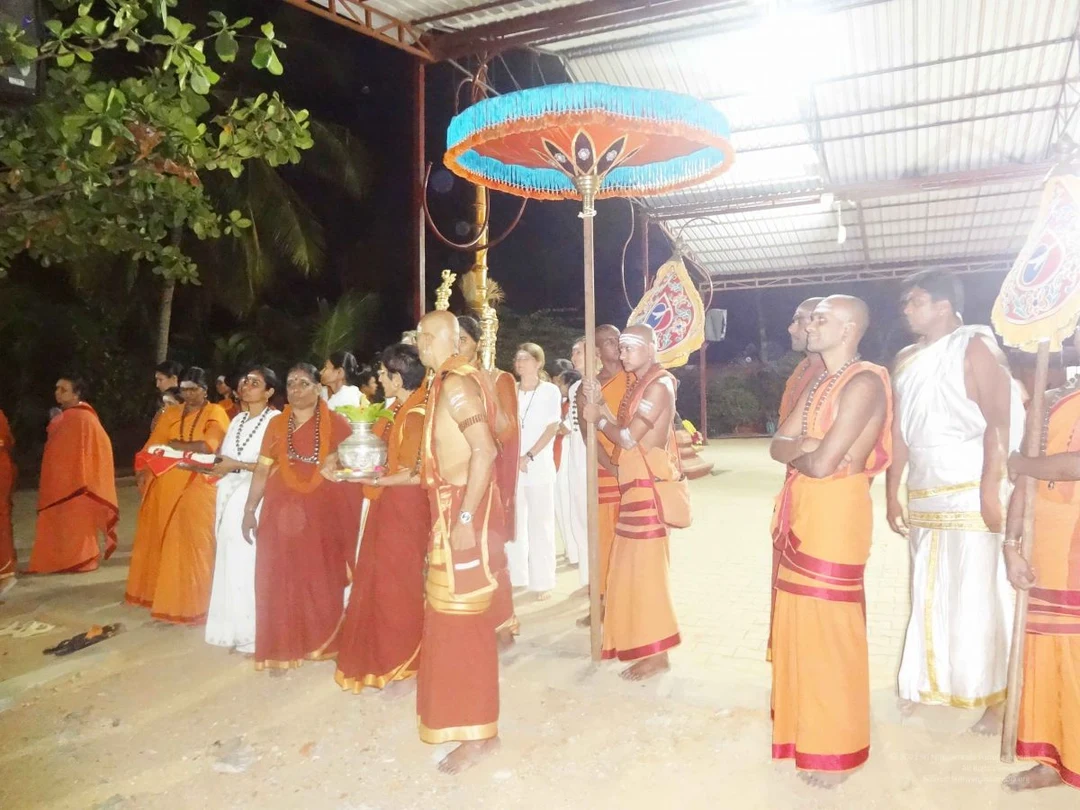
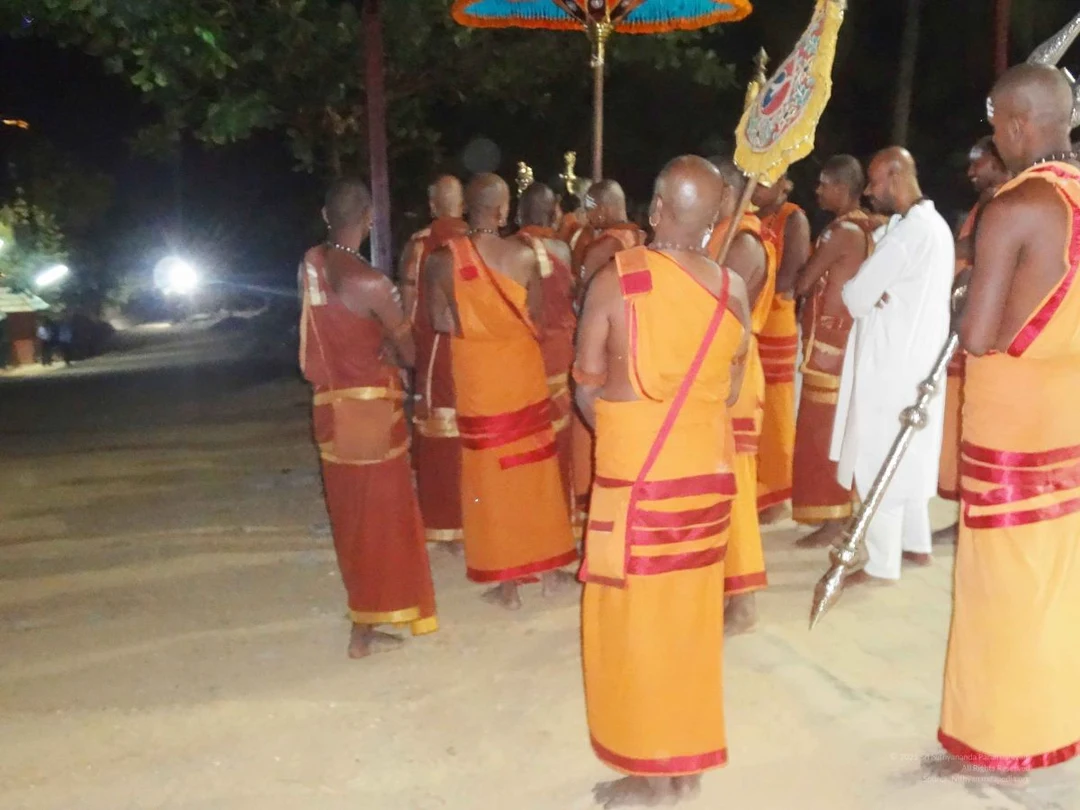
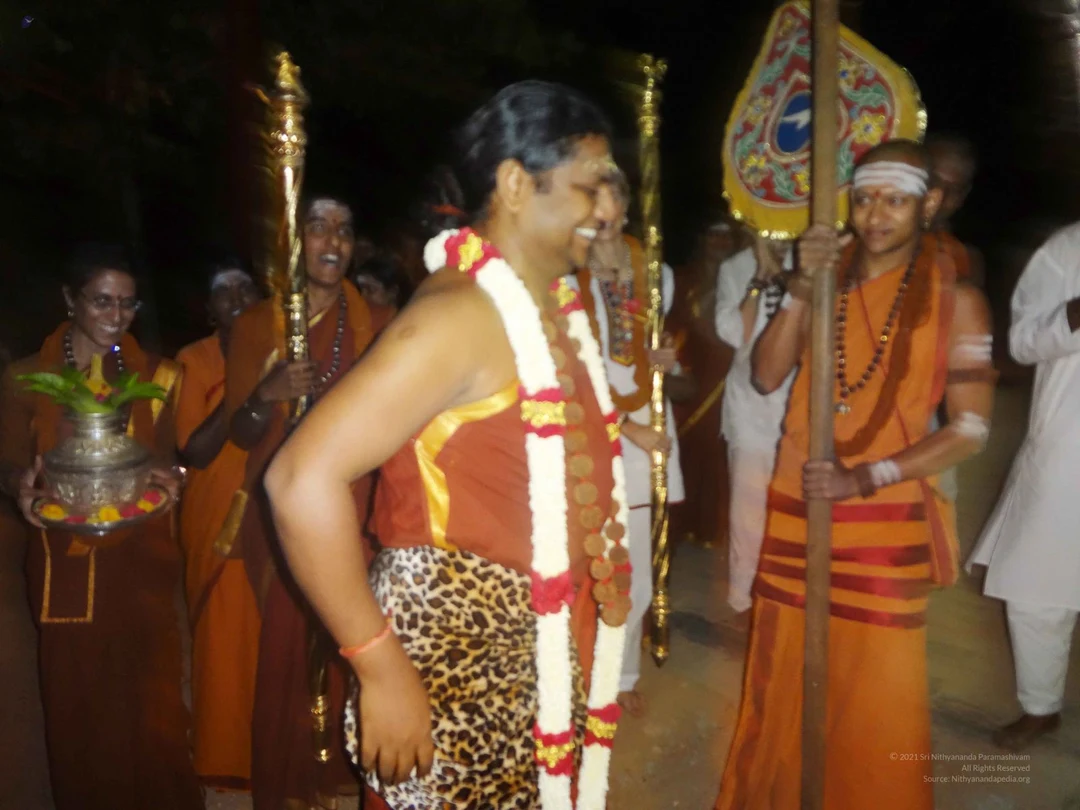
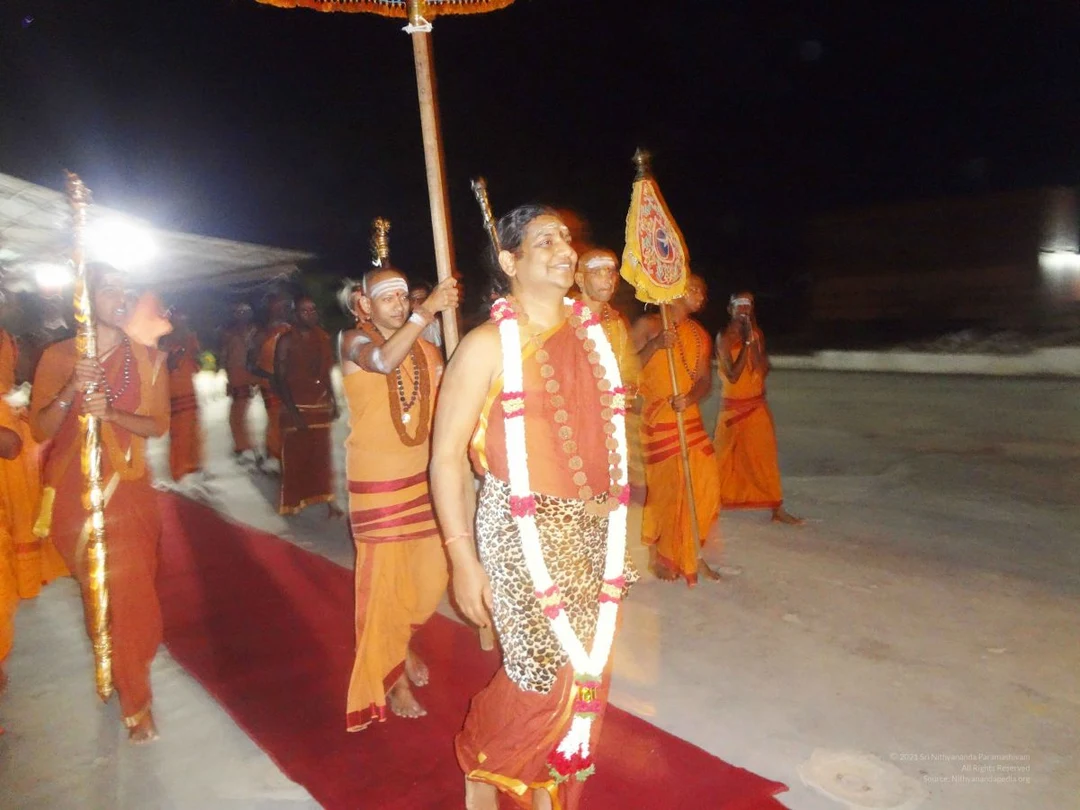
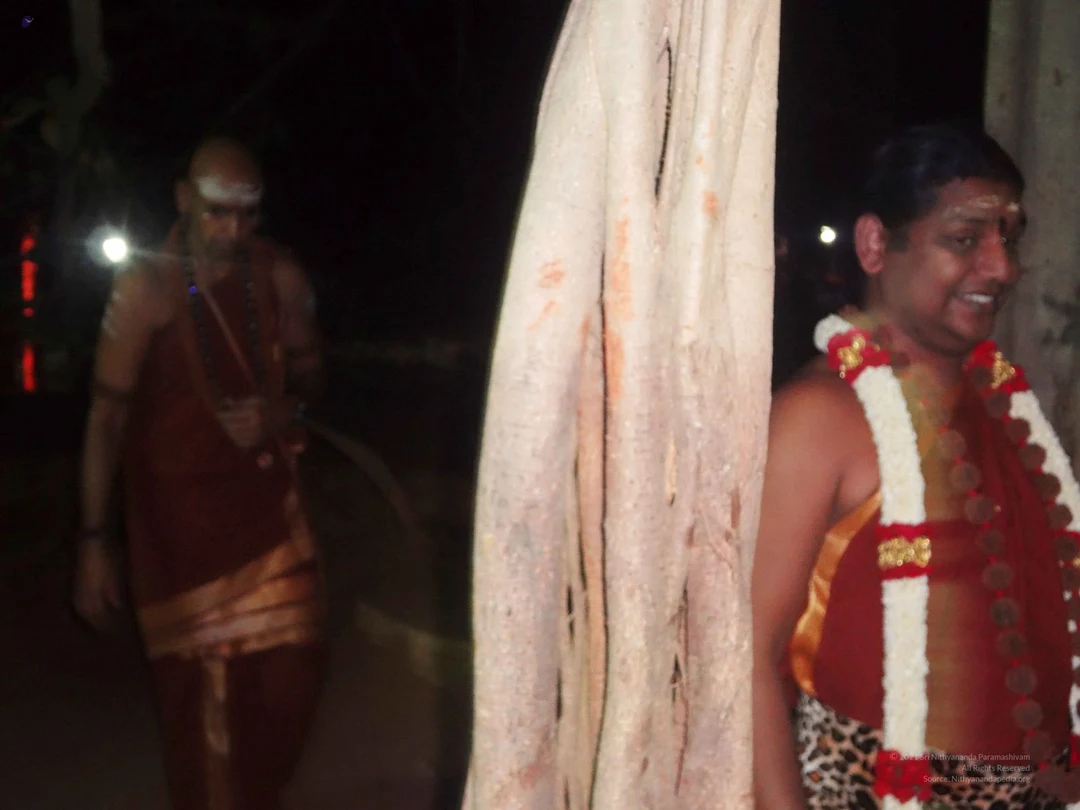
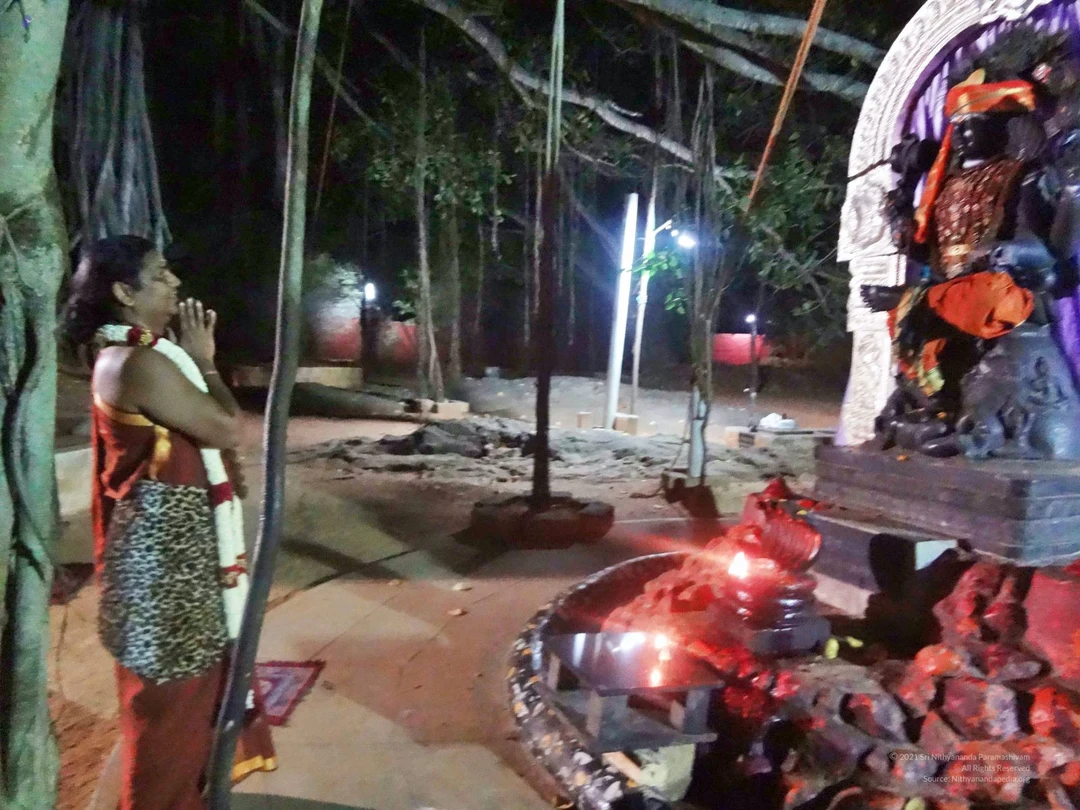
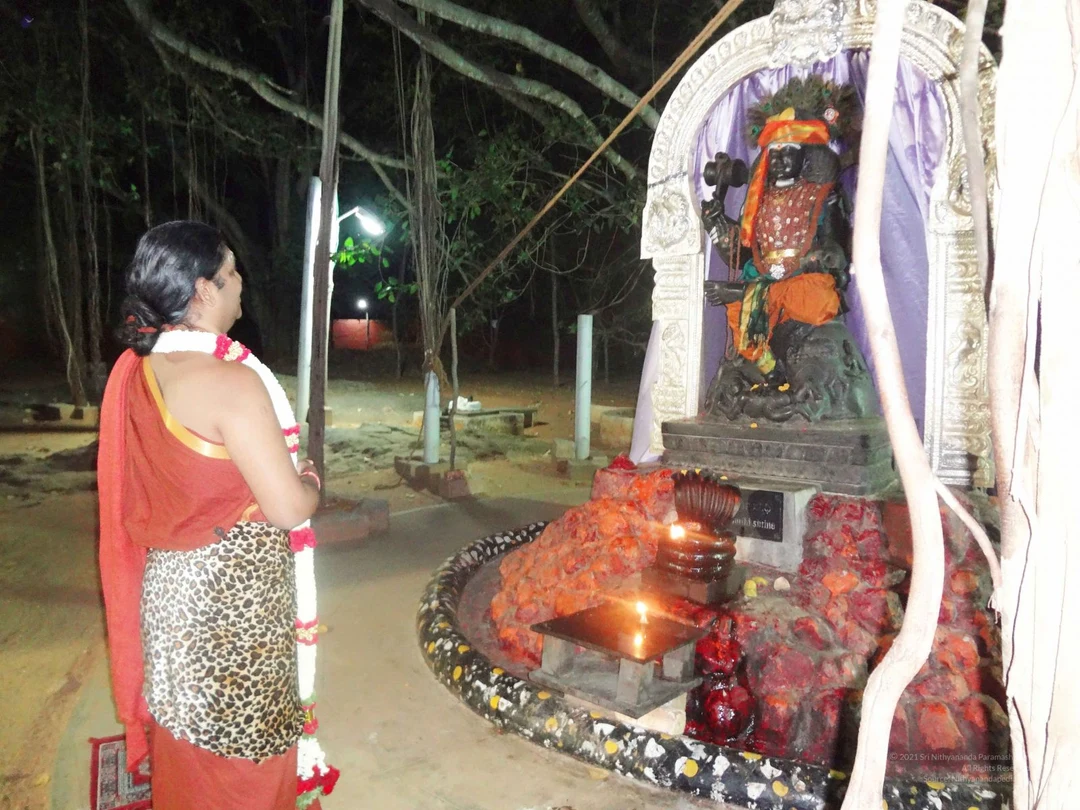
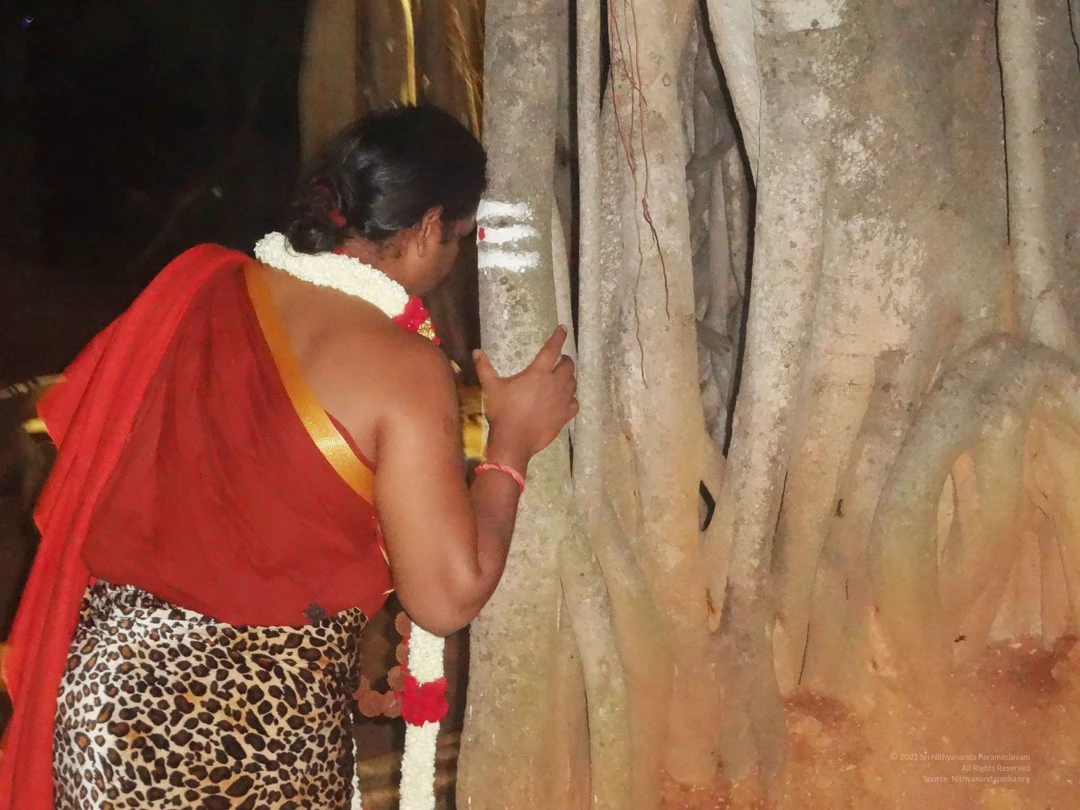
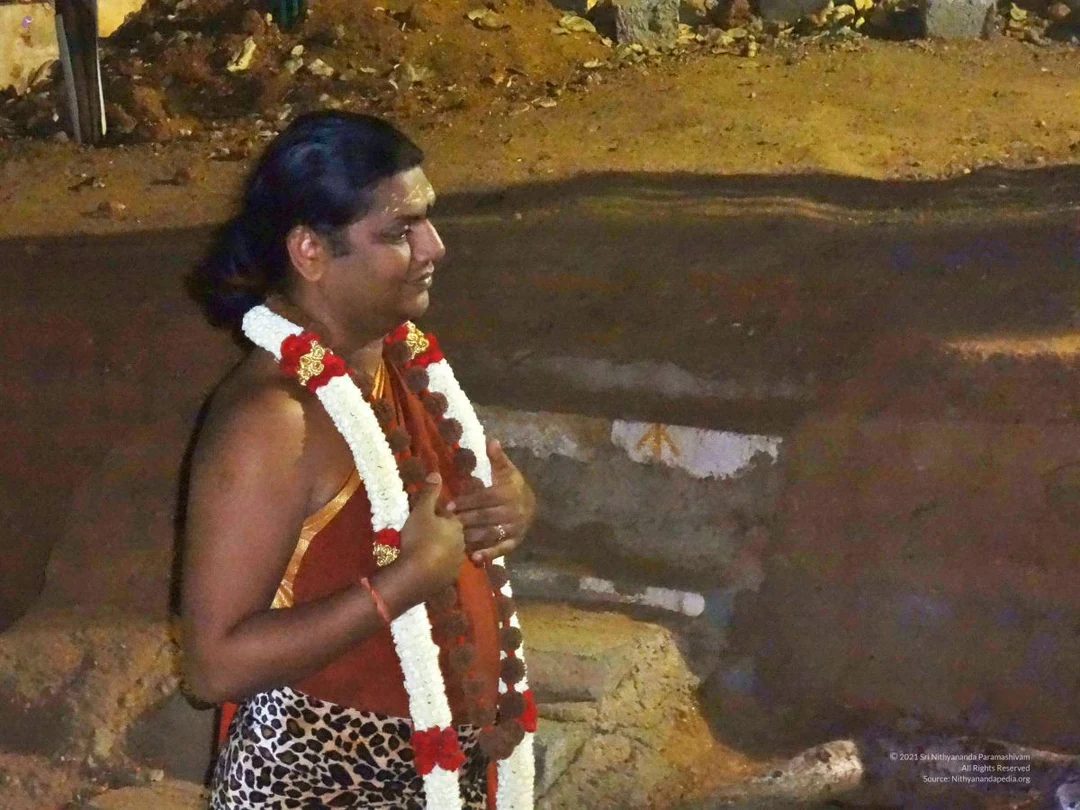
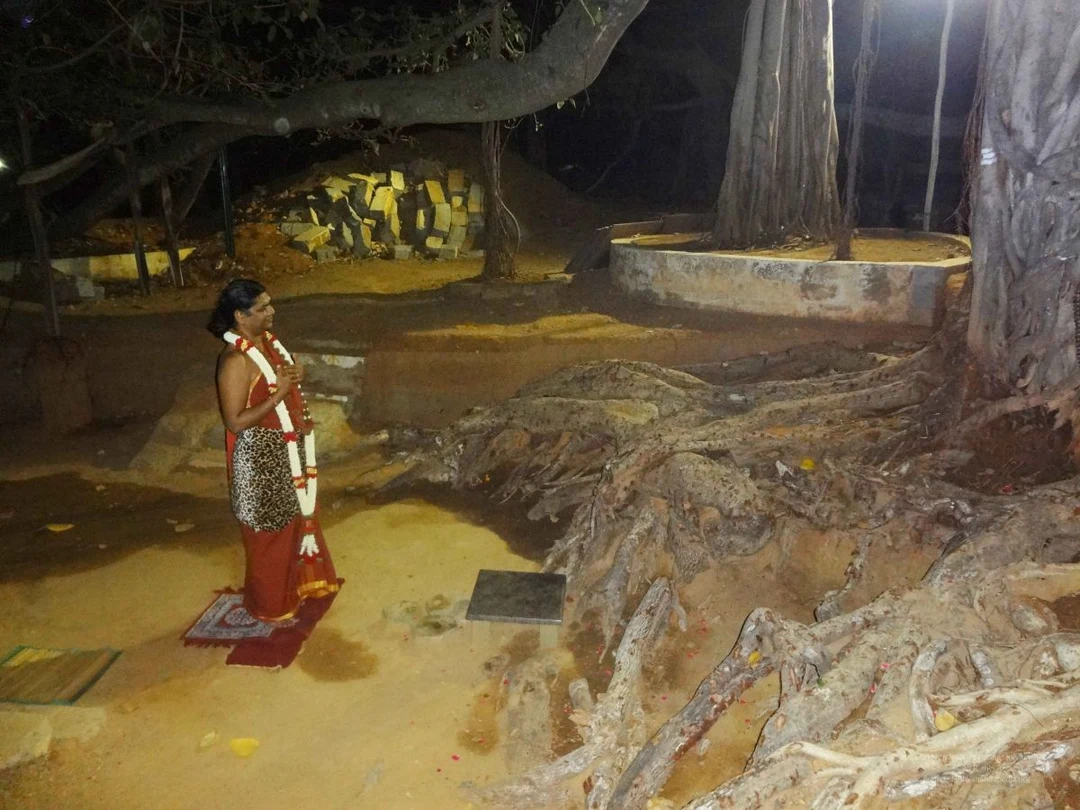
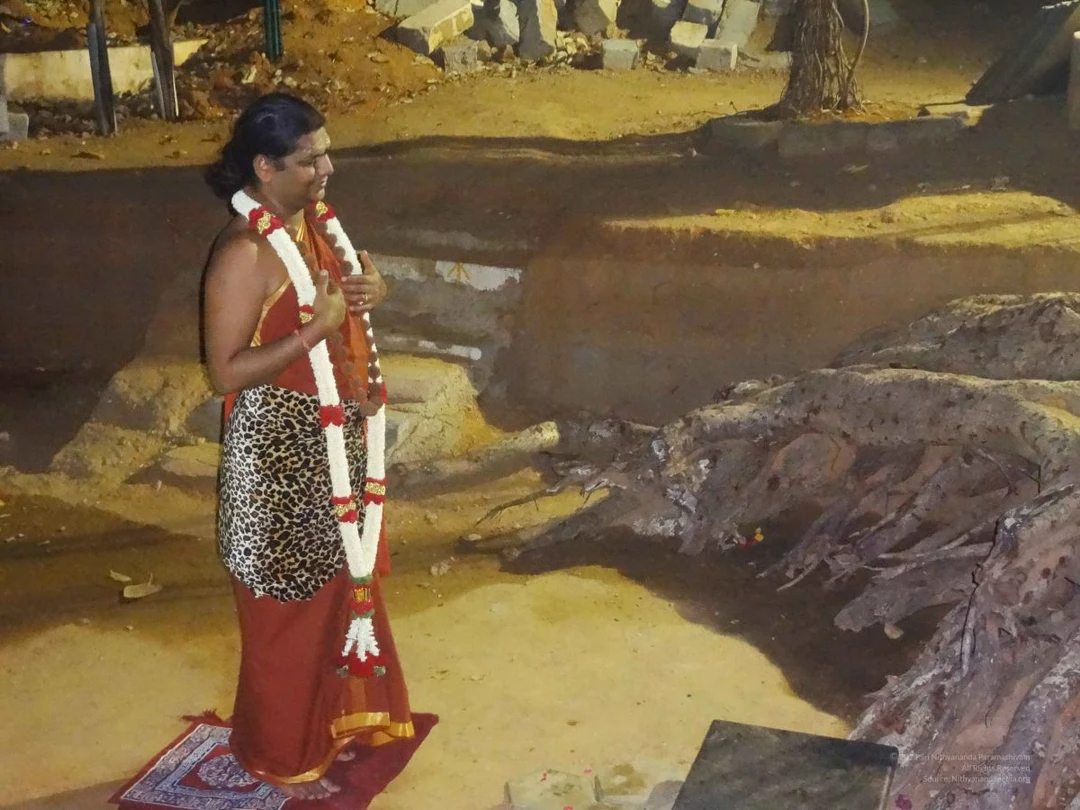
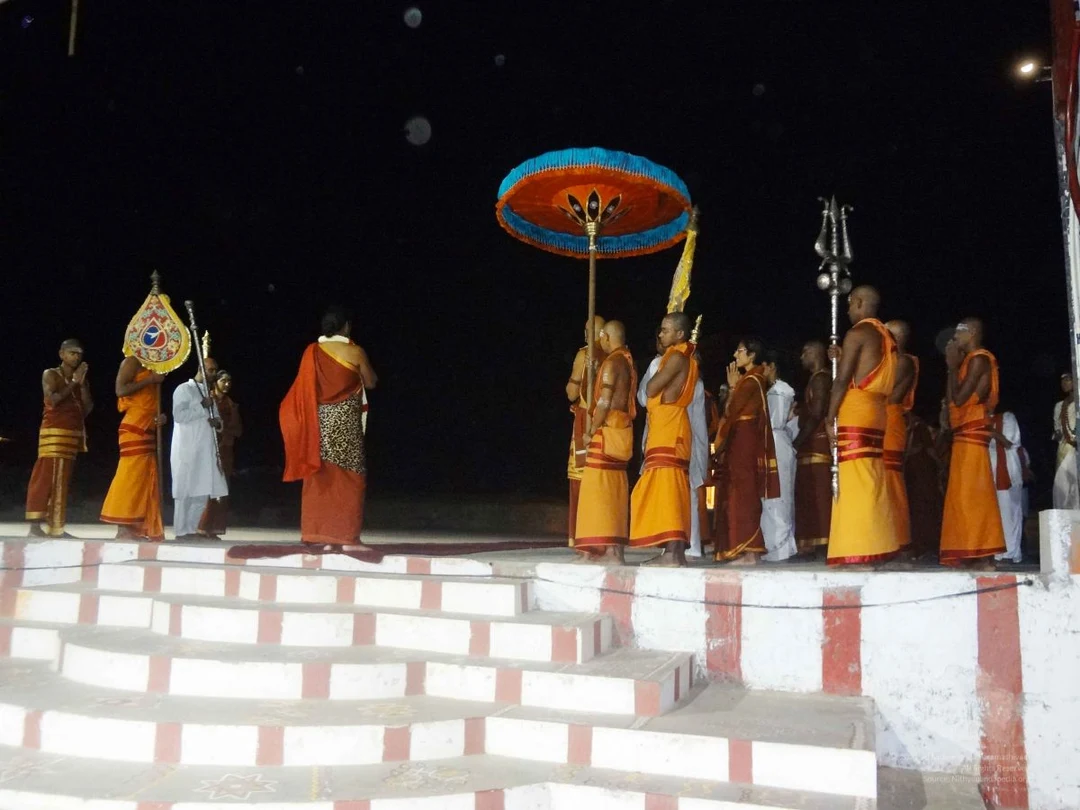
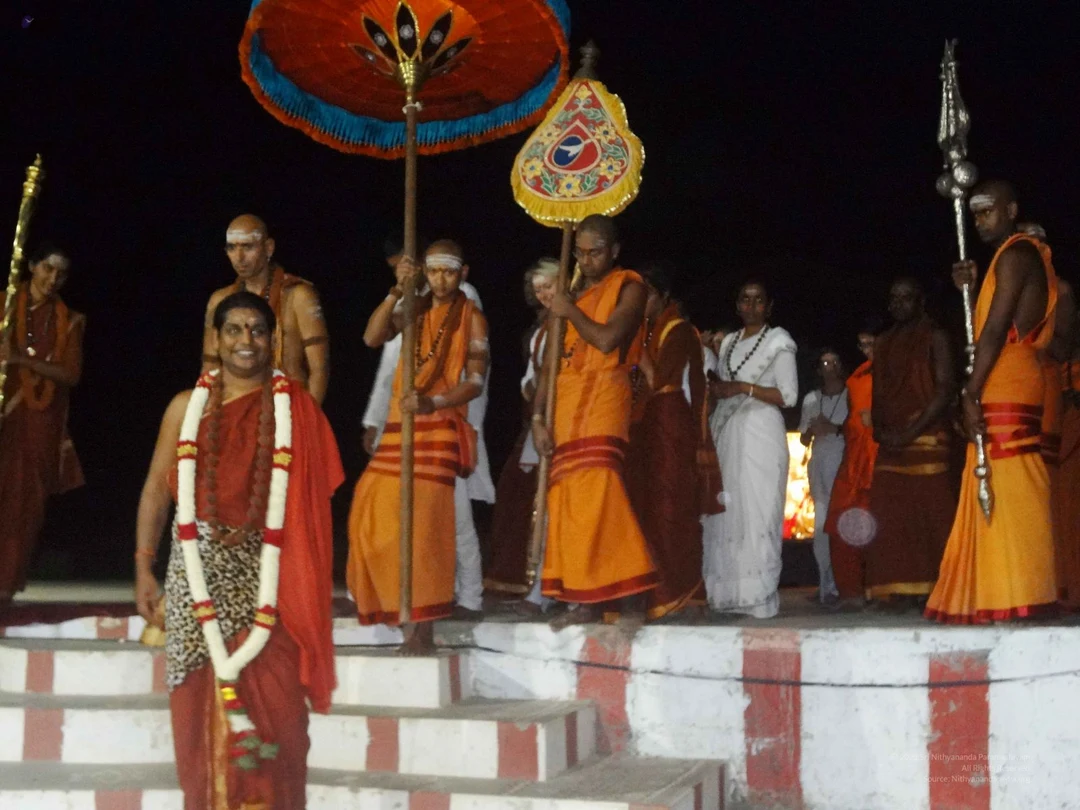
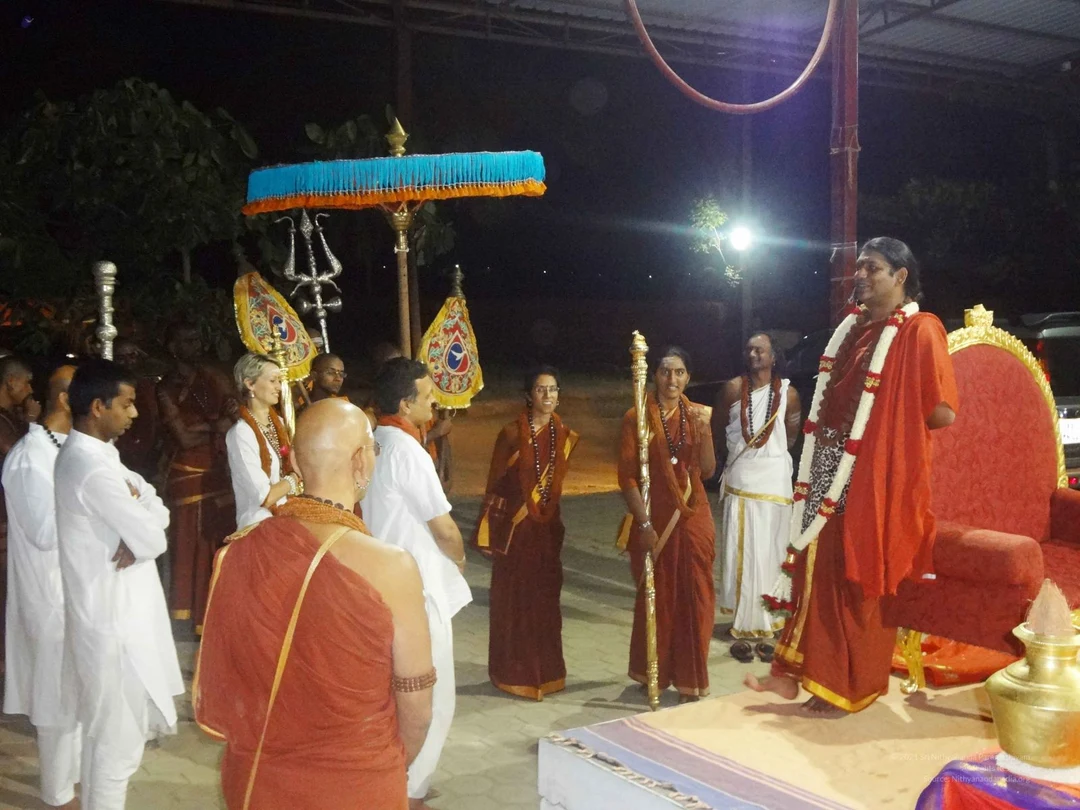
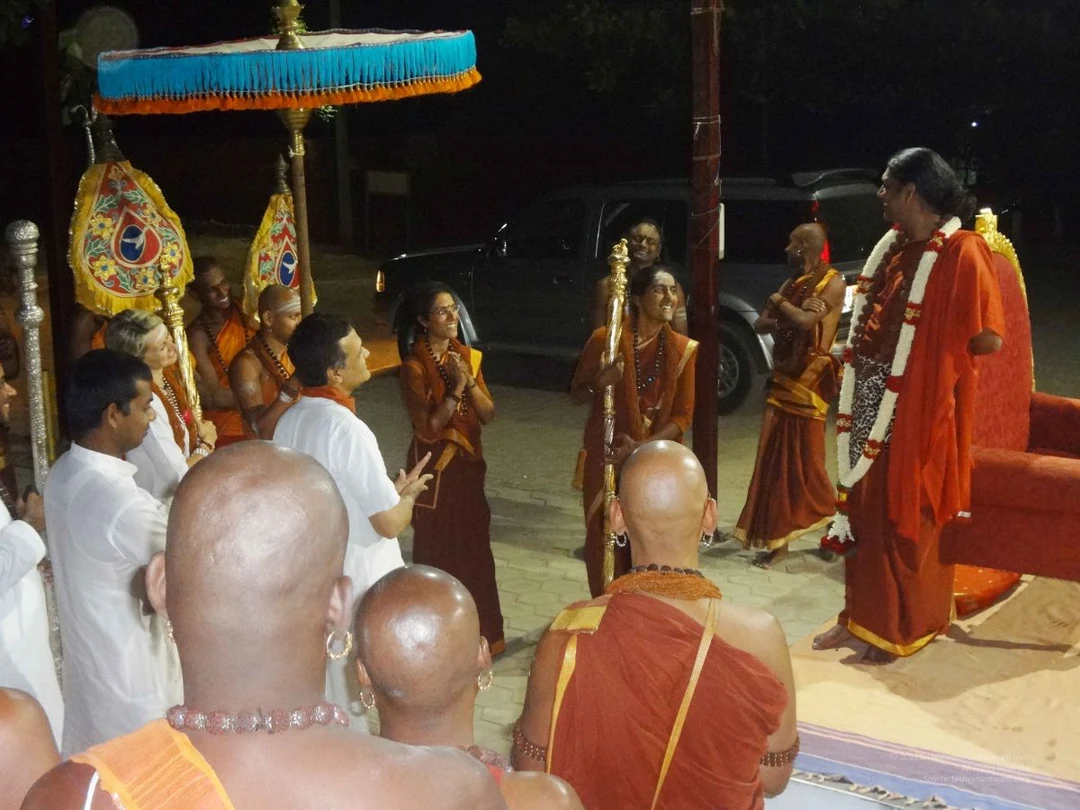
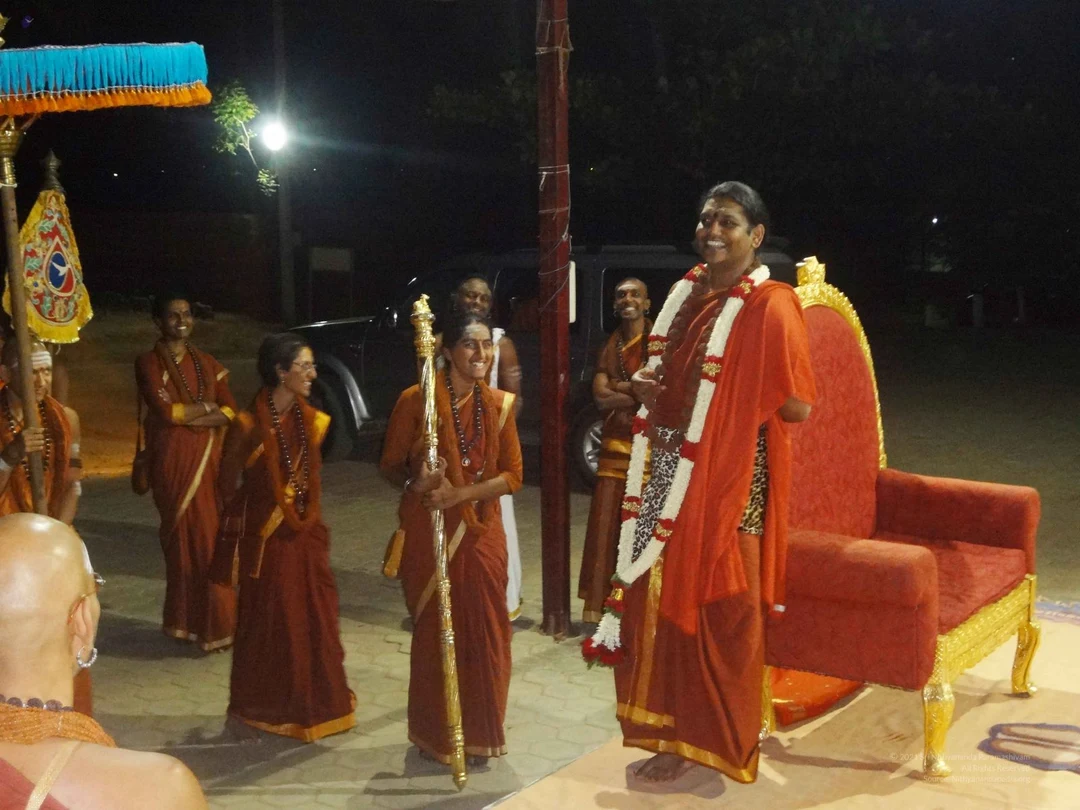
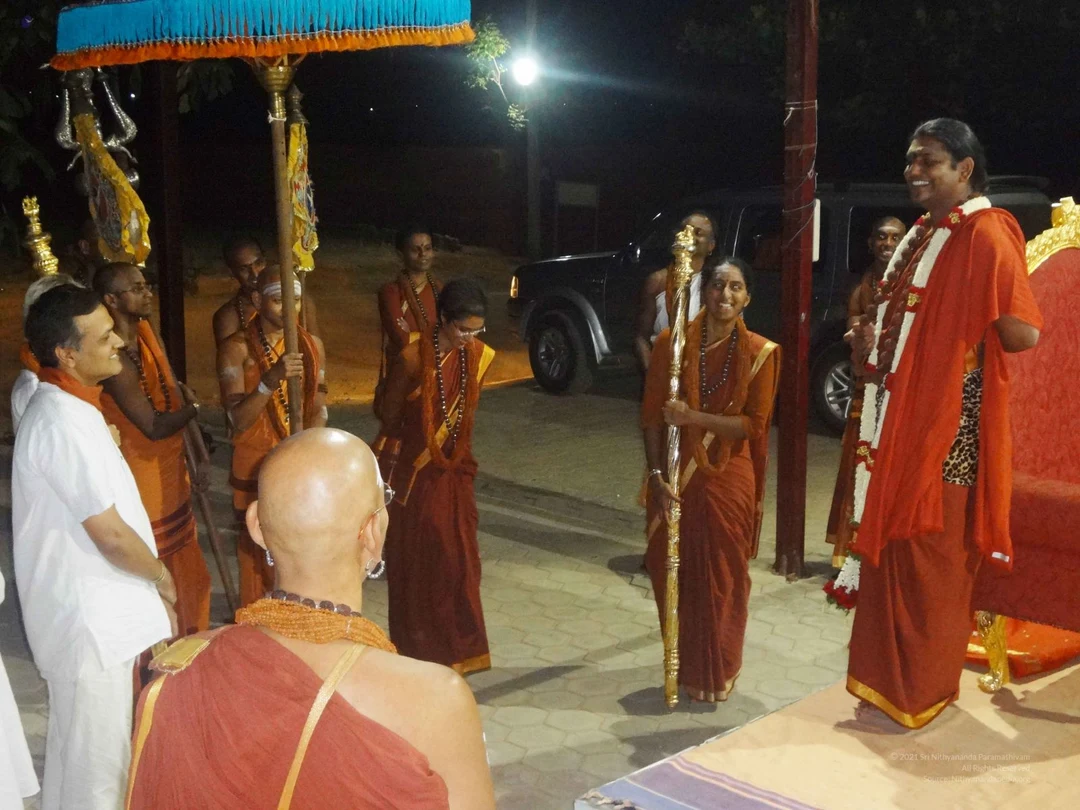
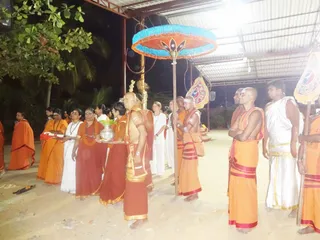
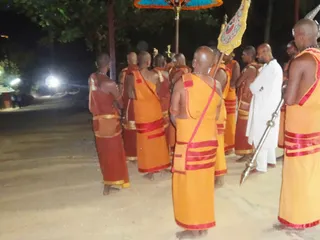
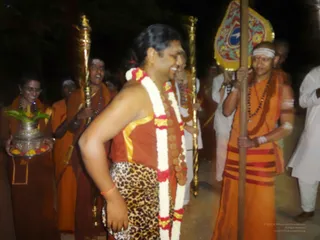
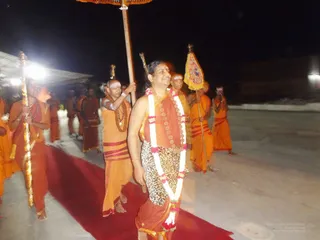
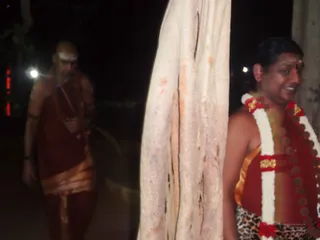
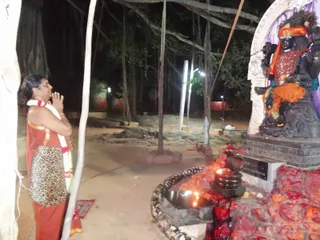
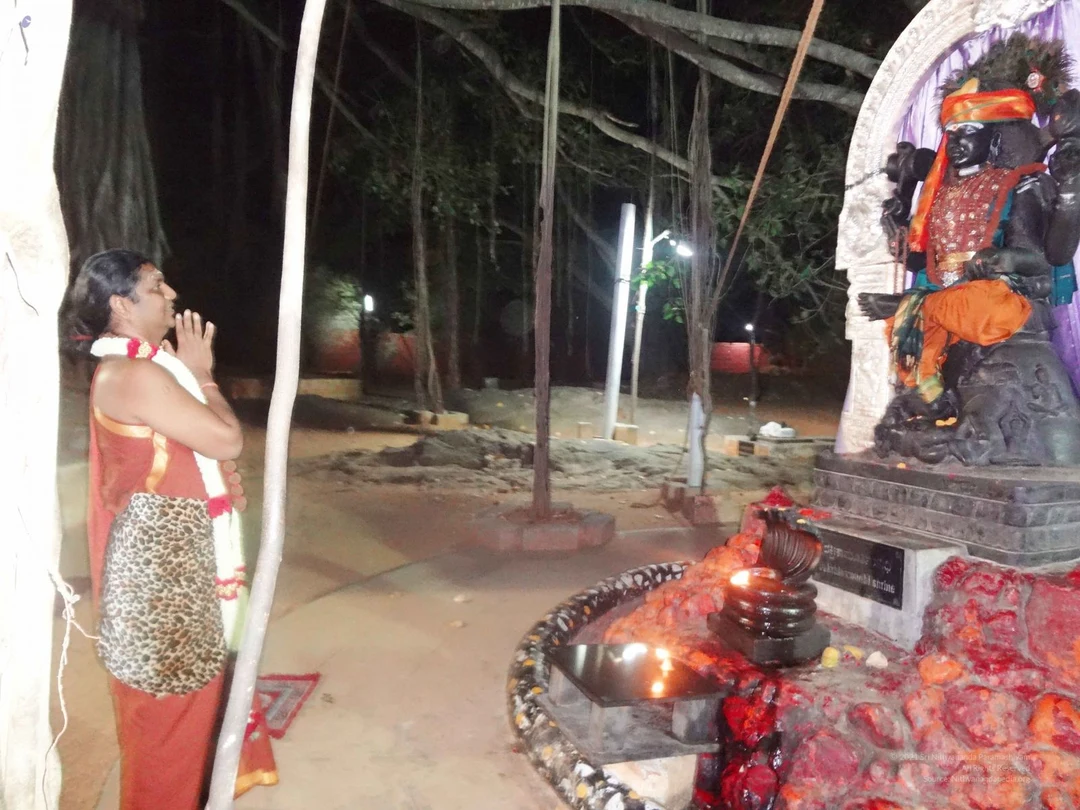
Outdoor evening procession under a open-sided roofed pavilion, with palm trees behind. A line of devotees walks on a sandy path. In front, a monastic in saffron and red robes carries a silver kalasha pot, and another man holds a tall pole with a blue, orange and gold canopy umbrella overhead. Several men in saffron robes with bare shoulders and shaved heads, some with white sandalwood markings on arms and rudraksha malas, walk beside them. Women in white and orange saris wear rudraksha necklaces. A man in white dhoti with gold border holds a decorated banner pole on the right, and a red and white ceremonial item is carried on the left.Night photograph of a procession on a sandy road lit by a distant floodlight. Shaved-headed sannyasis in saffron-orange and rust-red robes with red and gold borders walk away from the camera. A figure in white clothes walks among them. A tall silver staff with a decorative top and a large ornate parasol with a blue and orange canopy are visible above the group. Trees form the background.Night procession photographed at close range. In the centre, a smiling bare-chested man wears a long white and red flower garland with gold coin-like pendants and a leopard-print lower garment; a red bindi-style mark and an orange wristband are visible. To the right, a robed attendant in orange holds a tall ornamented staff with a red, gold and blue embroidered banner, wearing a white headband and rudraksha mala. Behind them, devotees in orange and maroon robes carry golden staffs and a metal pot with a green leaf and flower offering held on a tray at left. Figures in white dhotis stand at the edge. Dark background.Night procession on a red carpet under bright floodlights. A smiling figure at centre wears a long white and marigold garland, a rust-orange sleeveless top with a gold-coin necklace and a leopard-print lower garment; the figure's appearance is consistent with a person based on the long swept-back hair, garland and ceremonial adornment, though identity is uncertain. Behind, saffron-robed sannyasis in white forehead markings and rudraksha malas carry a tall ceremonial umbrella, a gold staff and a yellow-and-red flag bearing an emblem, walking barefoot. Several more saffron-clad attendants follow in the dark background.Night photograph at a temple-like outdoor area beside a large pale tree trunk with orange vermilion marks. On the right, a smiling man with a bare chest wears a red and gold garment, a long white and red flower garland, a red-thread necklace of small round coin-like beads, and a leopard-print lower cloth; he has a tilak on his forehead. On the left, a blurred figure in a red-brown dhoti and shawl with rudraksha beads and a tilak walks toward the trunk, with a bright light source behind. Red and orange lights glow in the dark background.Night photo at an outdoor shrine beneath large banyan tree branches. A man with long swept-back hair, wearing a white flower garland and an orange-red robe over a leopard-print garment, stands at left with palms pressed together in prayer, facing a dark stone deity murti on the right. The murti wears an orange turban, a red-and-gold embellished garment and a multi-armed form. In front, a black lingam sits on a red-stained stone platform beside a lit oil lamp. Swamiji (probable) cues: long swept-back hair, orange robe and garland. Name plaque on the platform is partly legible. Lamps and tree trunks surround the shrine.

Nithyananda-Satsang
25 photosSource gallery
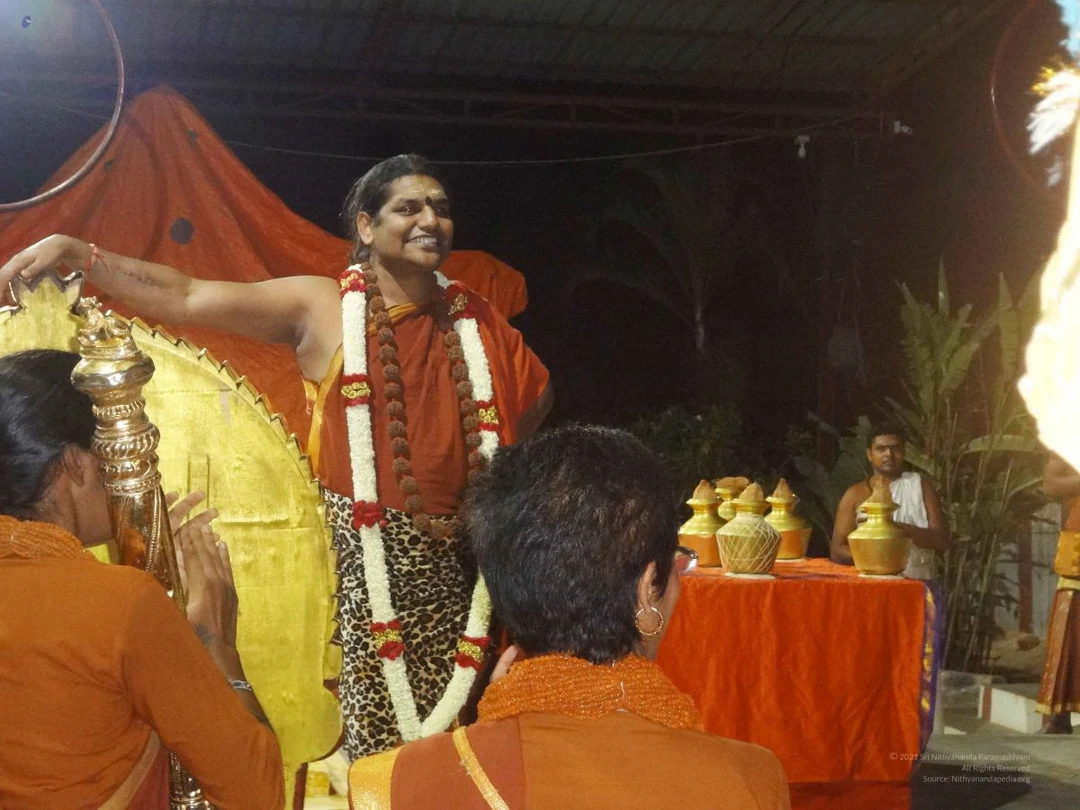
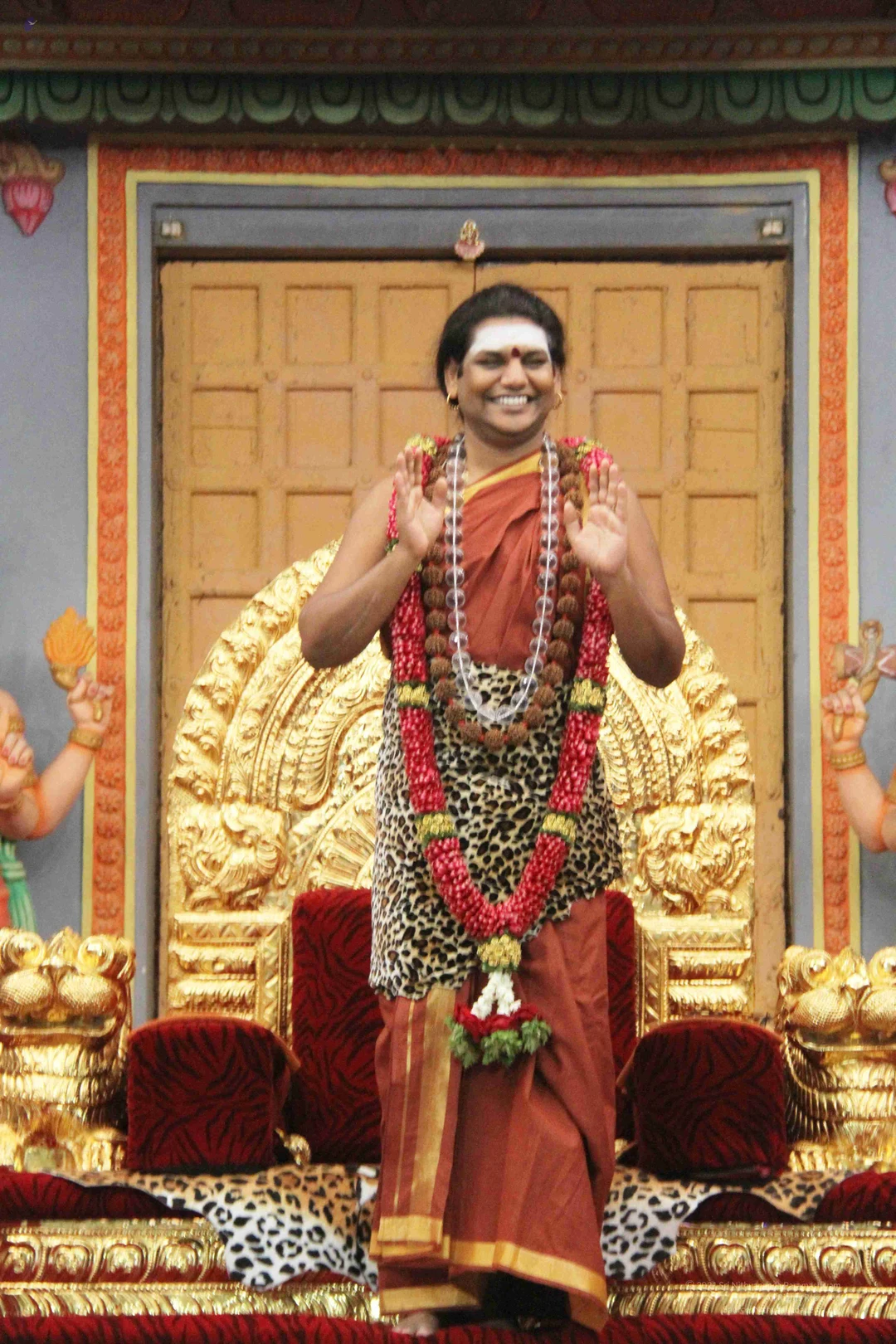
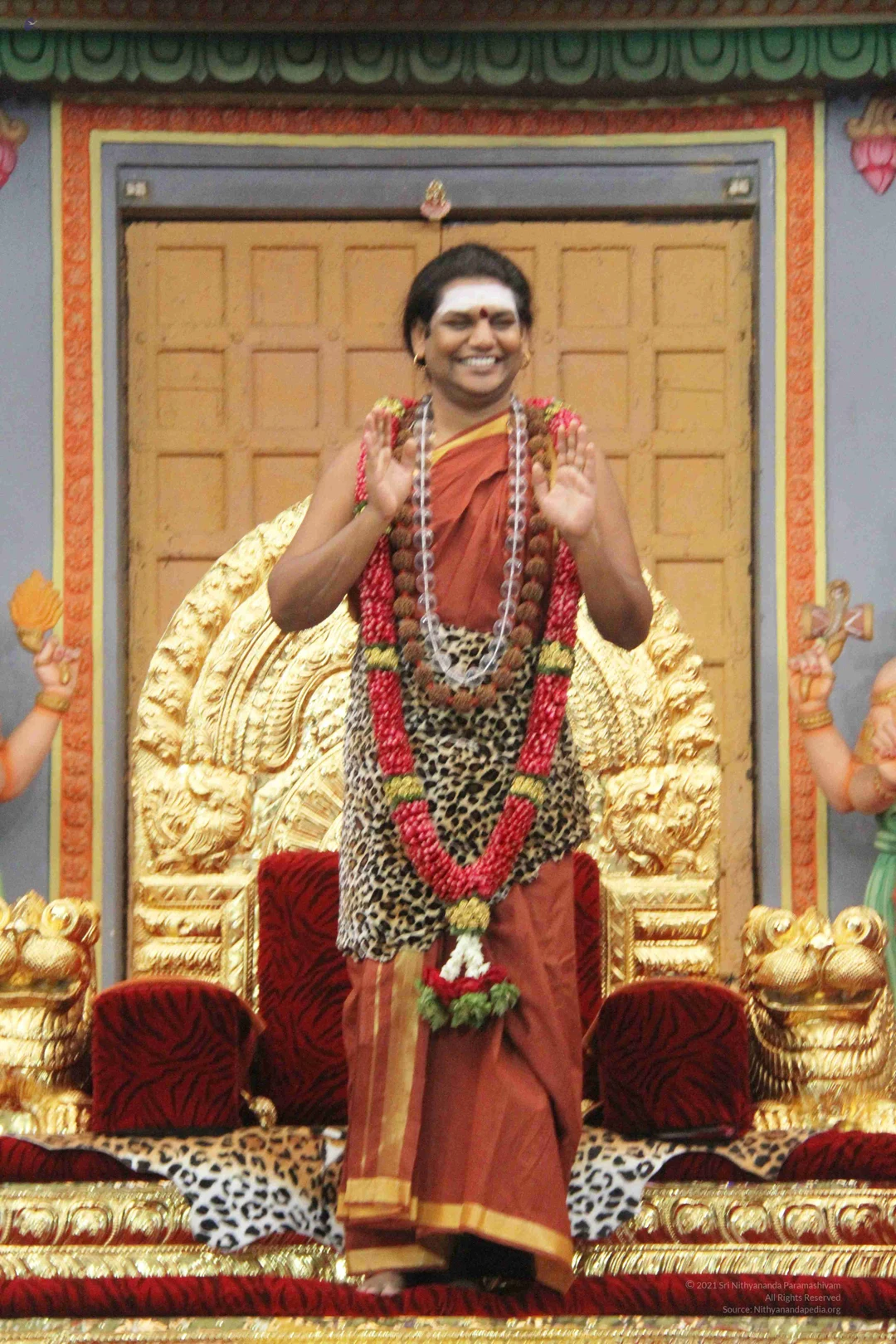
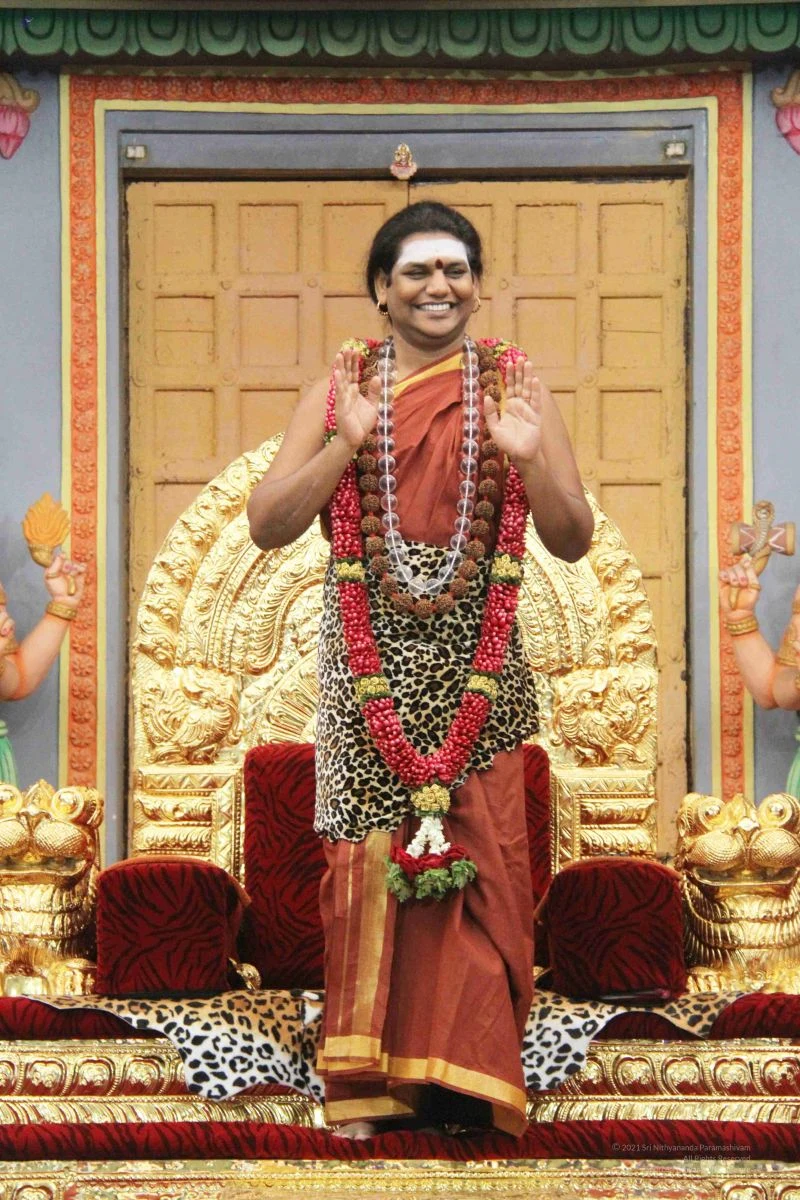
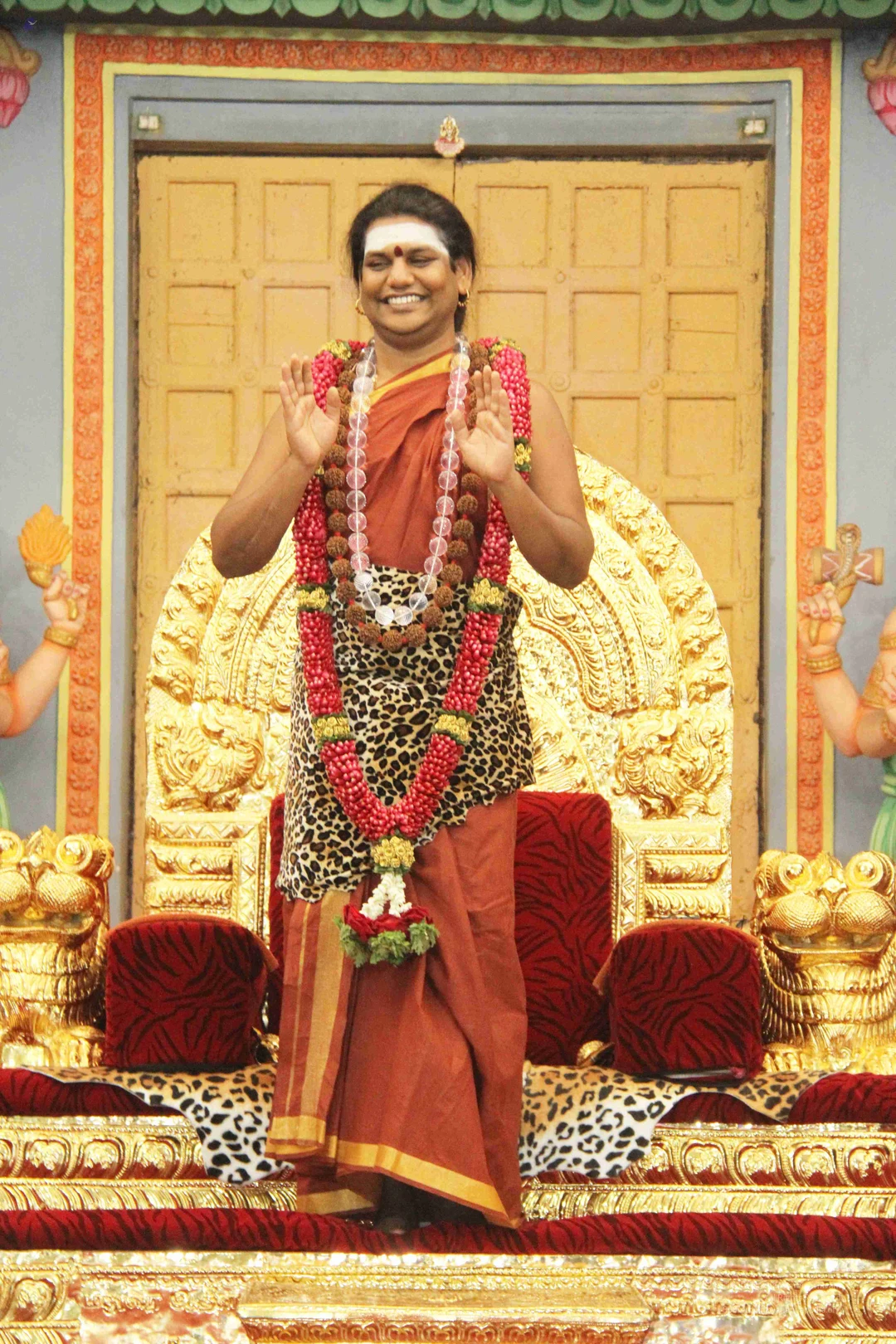
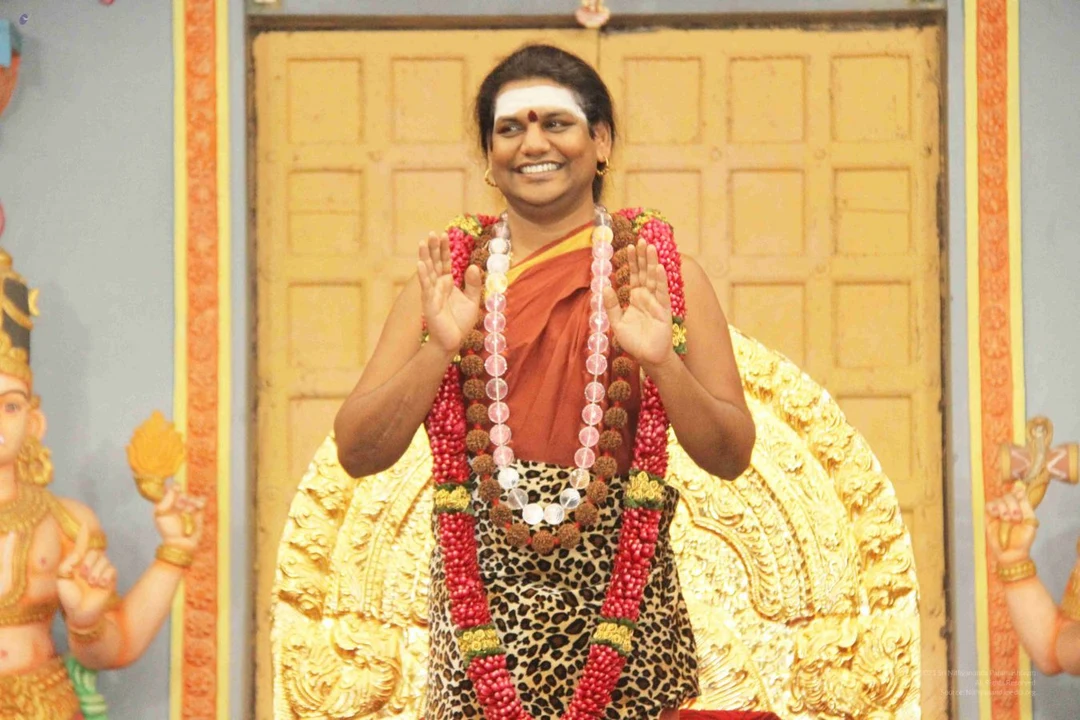
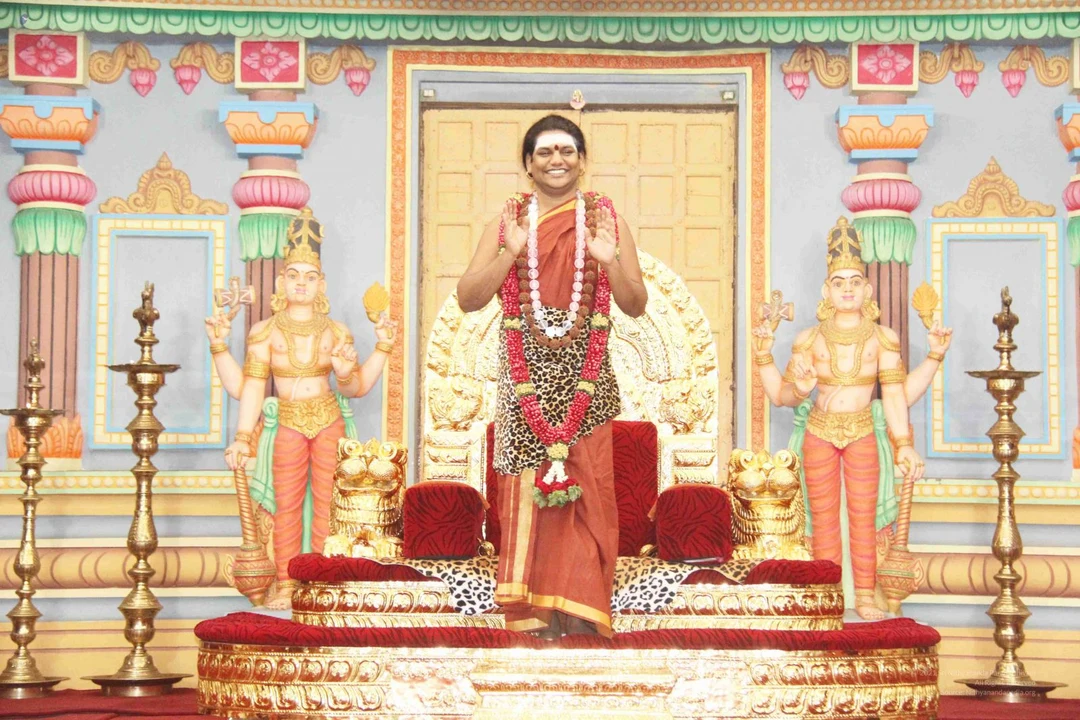
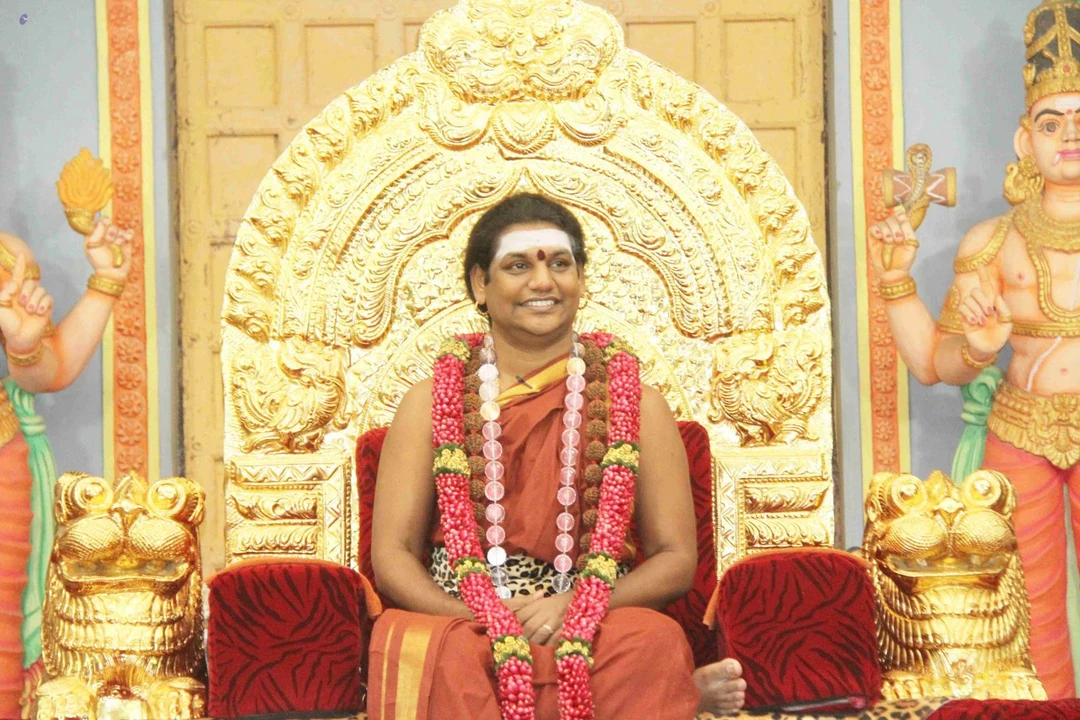
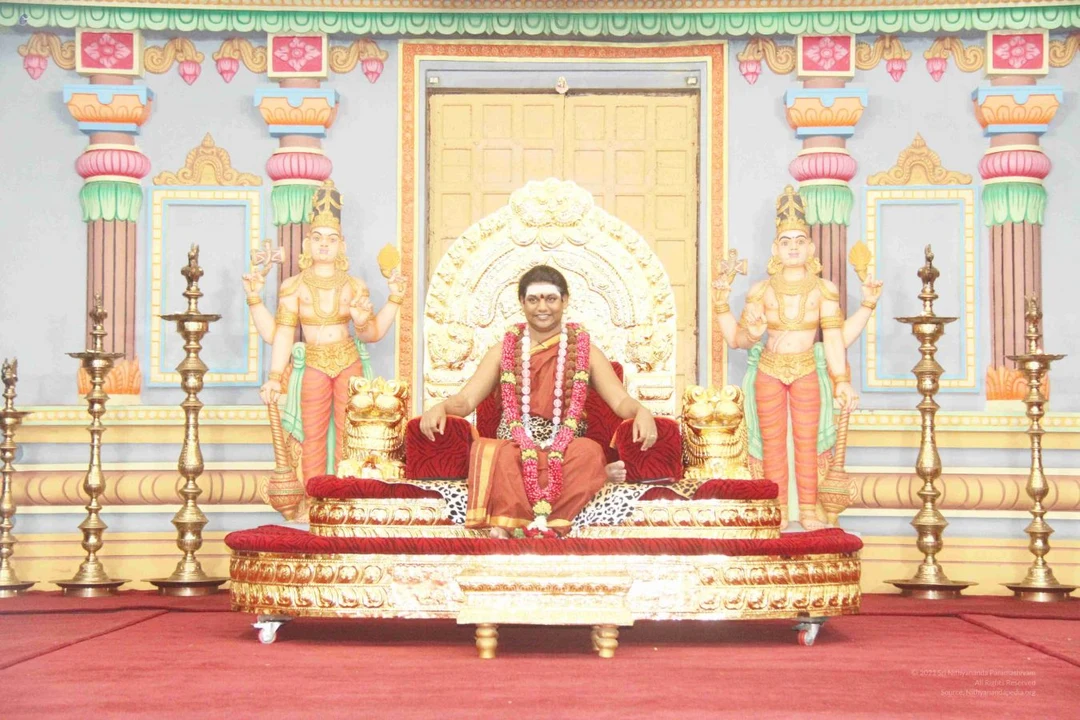
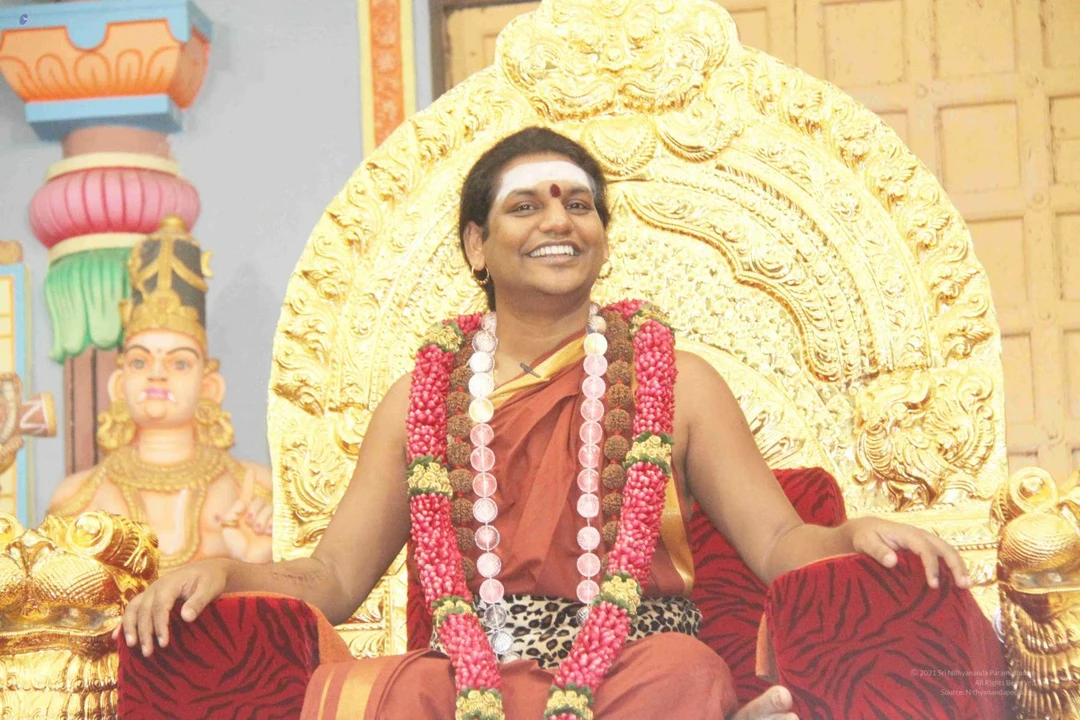
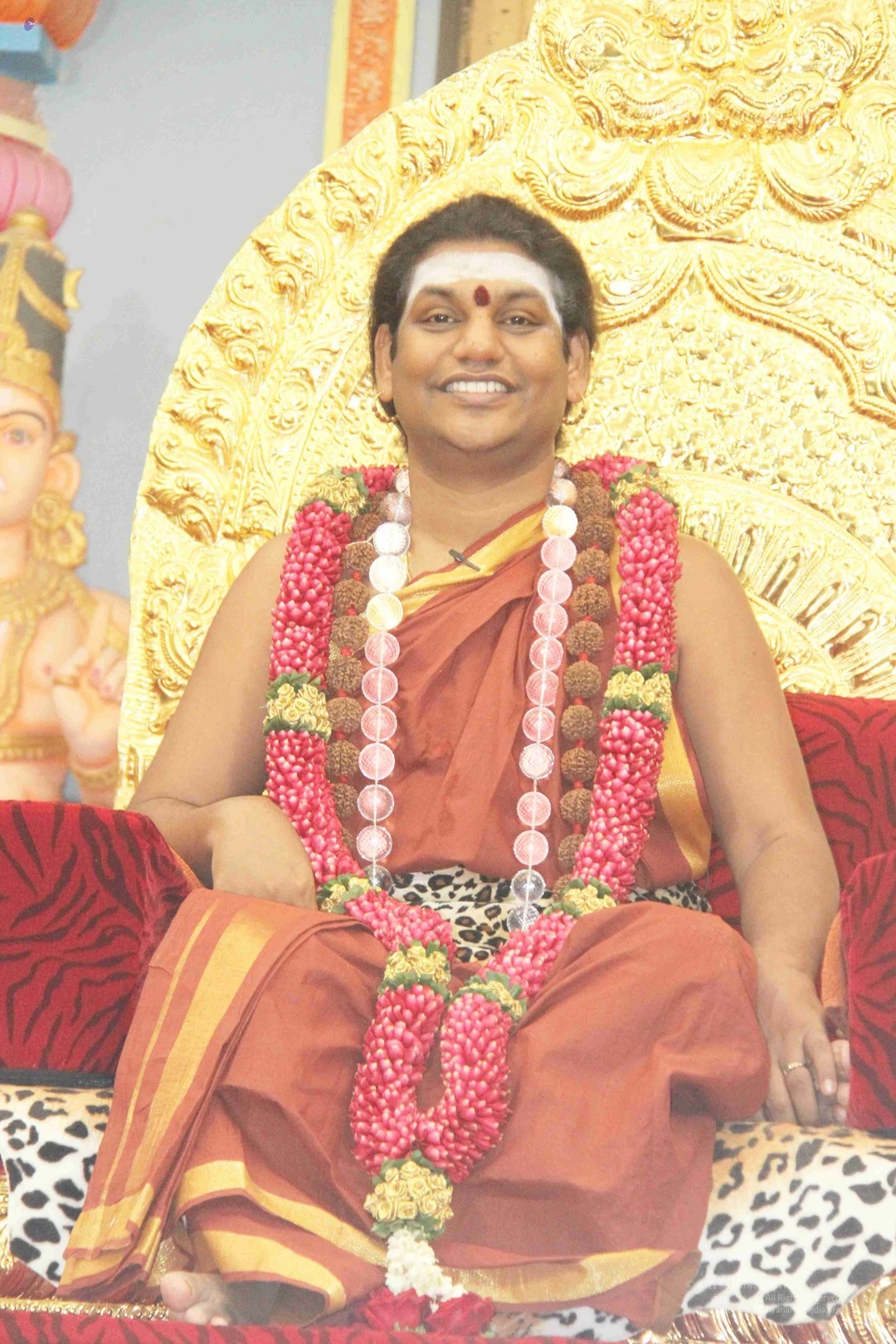
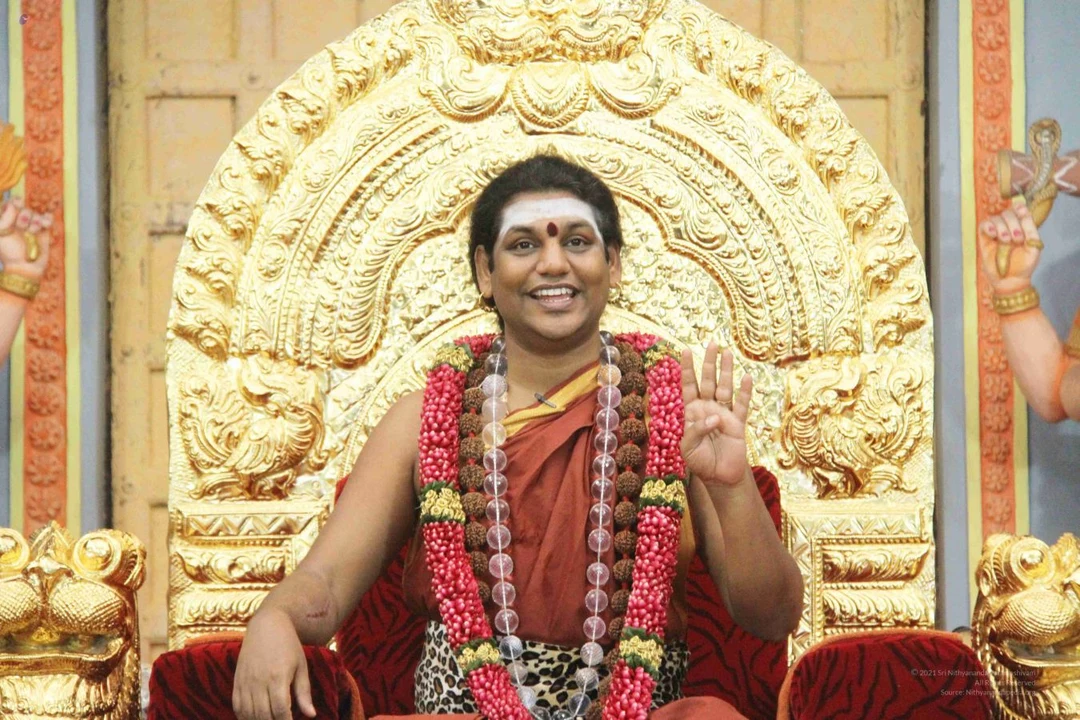
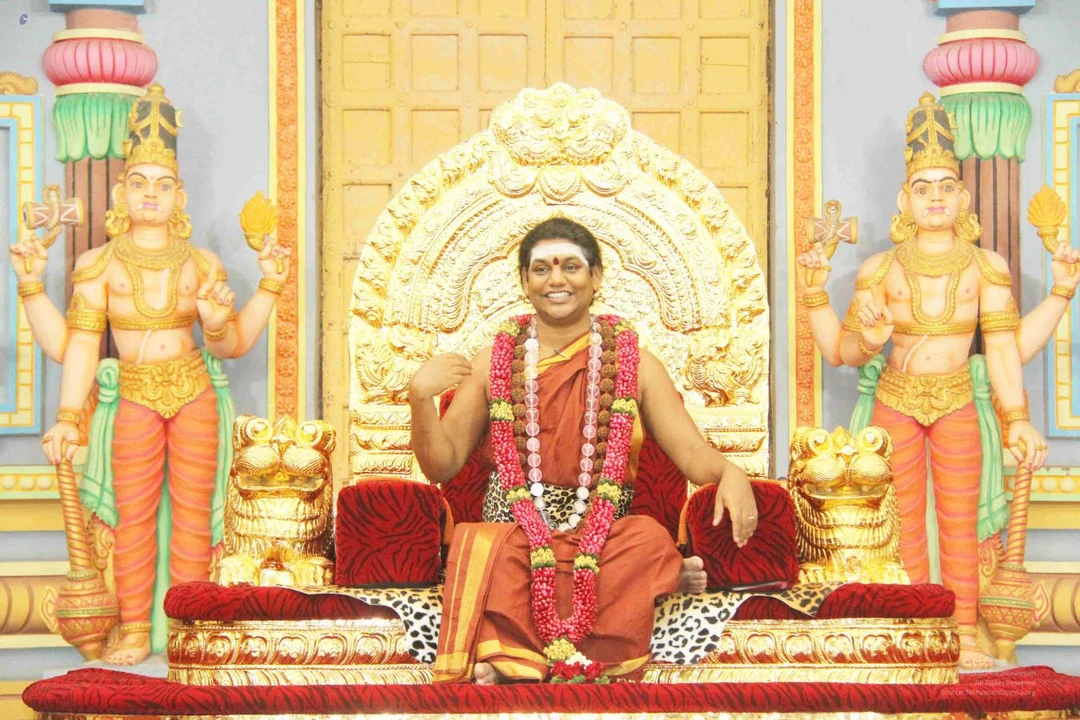
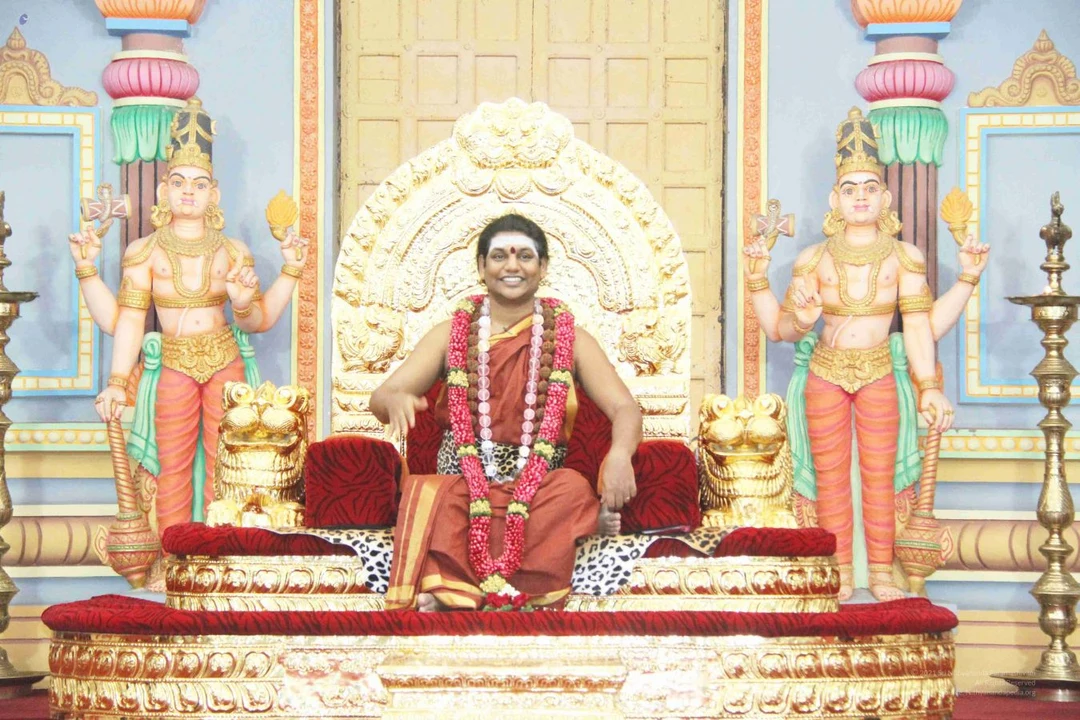
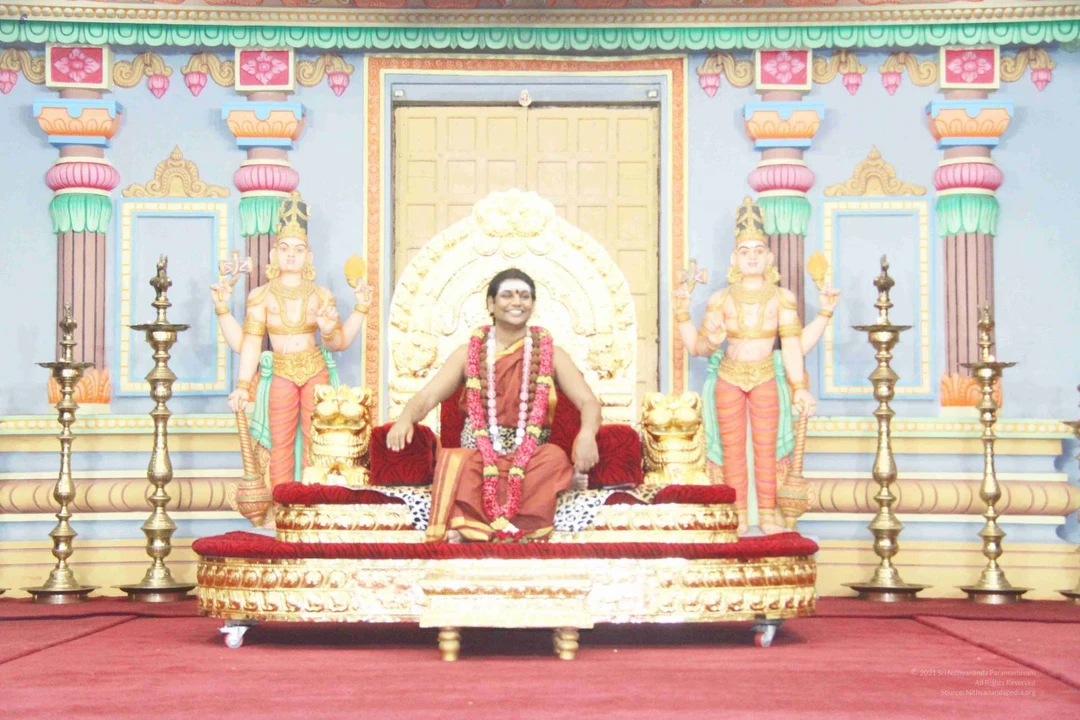
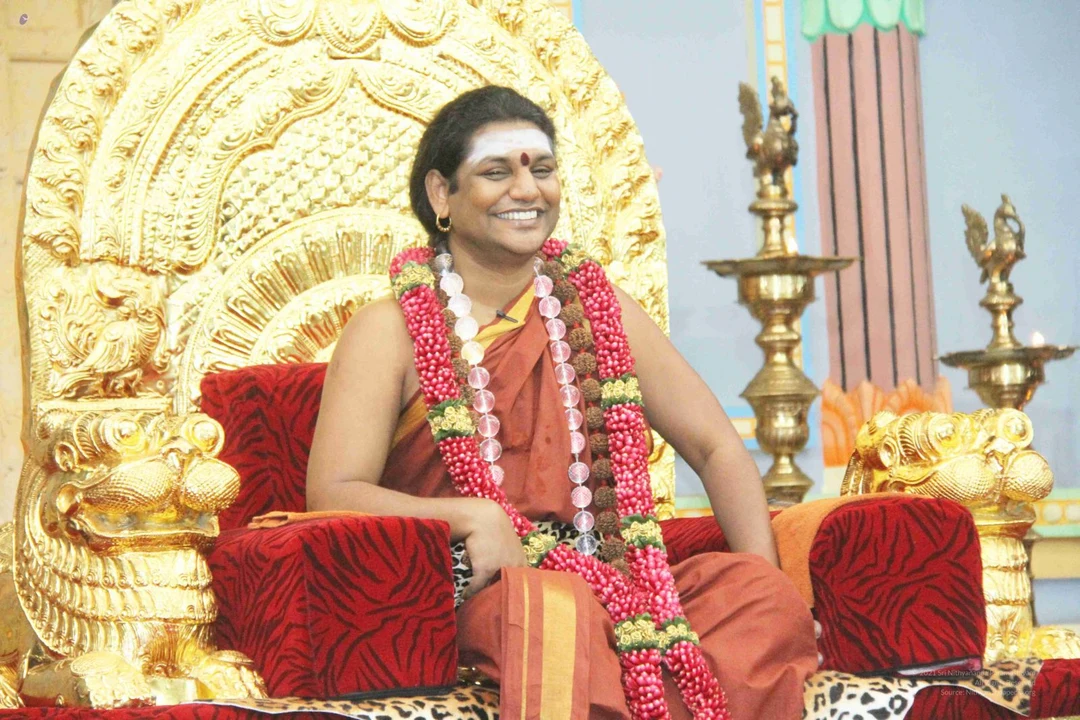
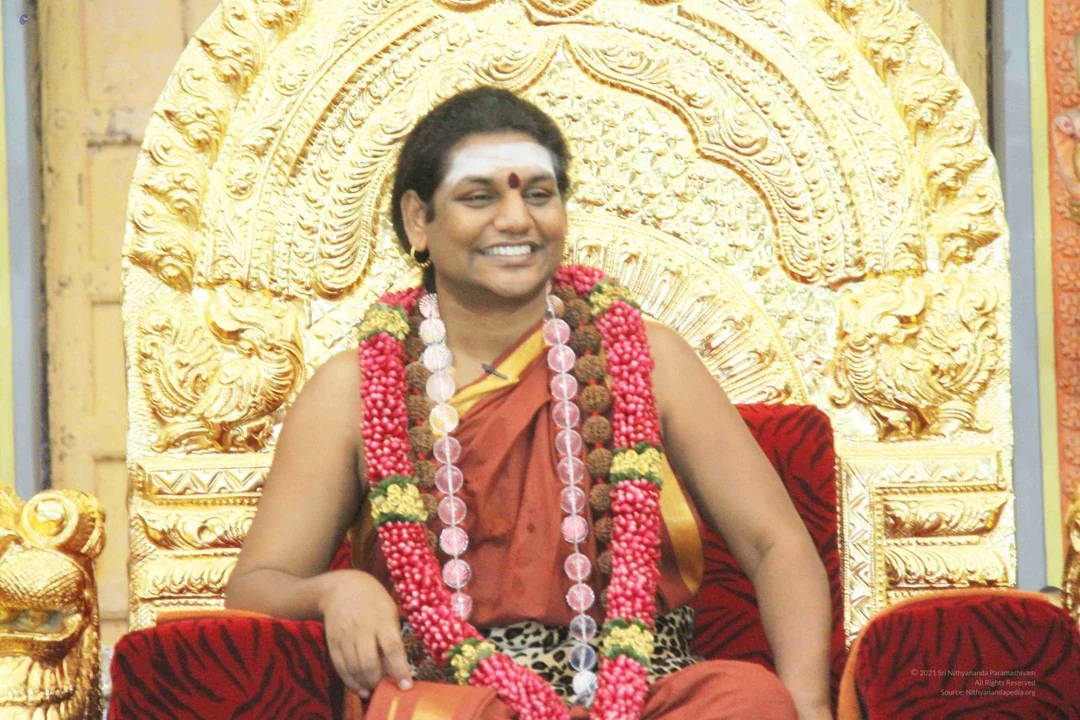
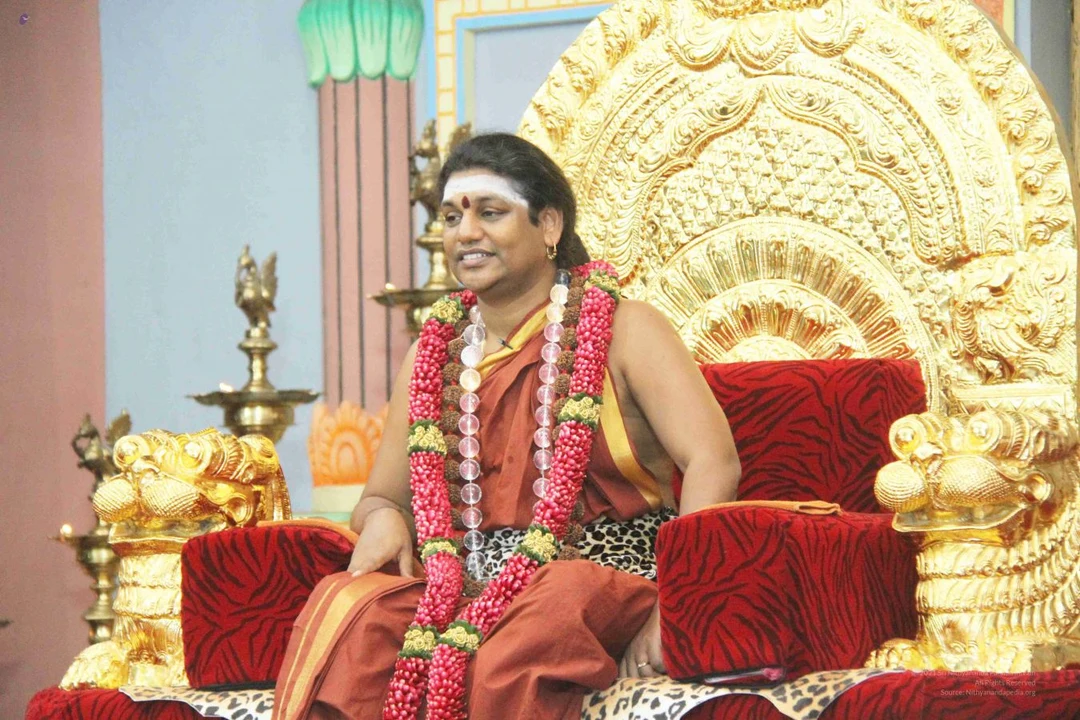
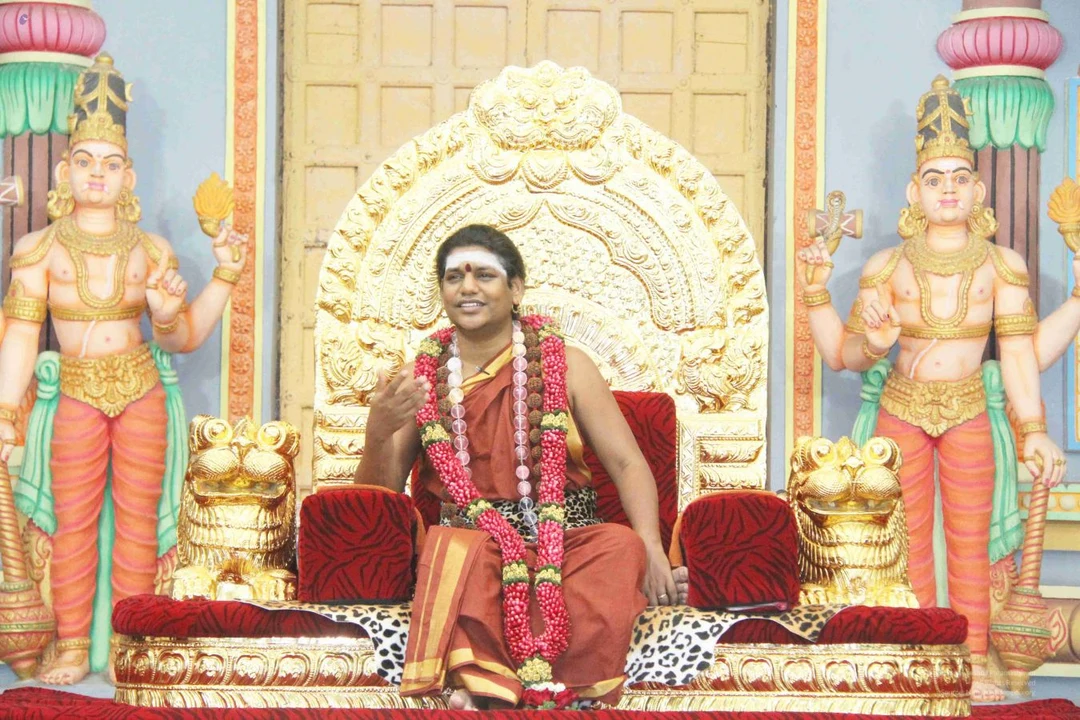
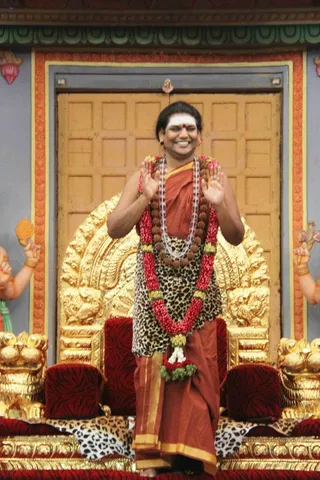
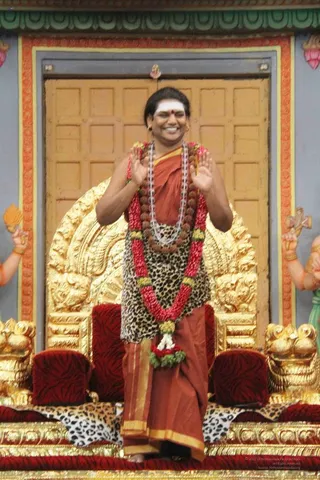
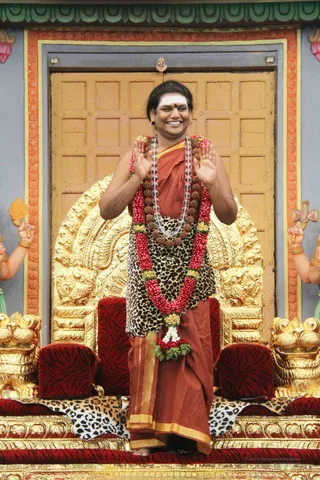
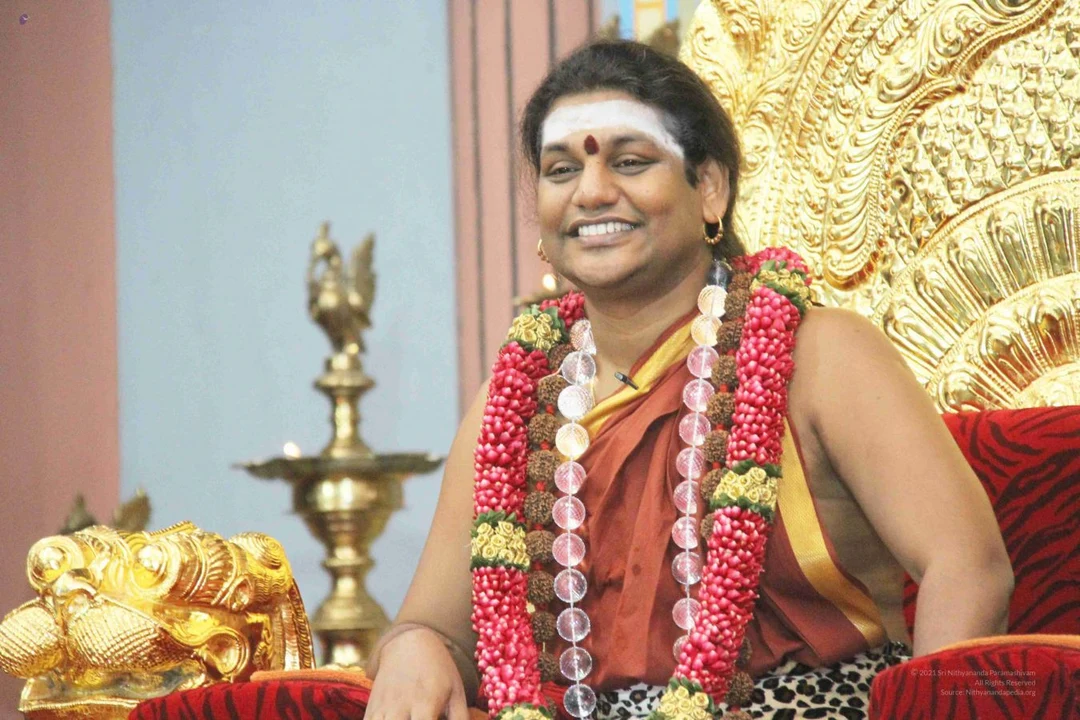
A smiling man stands on a gilded stage with his palms pressed together in greeting, wearing a rust-red dhoti and shawl, a leopard-print top, a rudraksha and crystal mala, and a red and white flower garland with green leaves. He has a white vertical tilak and red bindi on his forehead and wears gold earrings. Behind him are an ornate gold throne with red velvet cushions, a leopard-print cloth, and a wooden door framed in orange and green. Golden lion-form pedestals flank the stage and a carved deity figure appears at the left edge.A smiling man stands centrally on a gilded throne platform before a wooden panelled door, palms raised in greeting. He wears a rust-orange garment with a leopard-print shawl, multiple red and green flower garlands, rudraksha beads and clear crystal beads. A white vertical forehead mark and a red dot are visible. Gold lion-shaped armrests and red tiger-striped cushions flank him, with a leopard-print cloth on the platform. Painted deity figures appear at the edges. Probable Swamiji shown in appearance-based cues: swept-back hair, ornate garlands, rudraksha malas and saffron-orange clothing, seated on a throne during a satsang-style welcome.A smiling figure stands on a gold and red throne platform in front of a carved wooden door, palms raised in greeting. He wears a rust-red dhoti with a gold border, a leopard-print shawl over the upper body, red and white flower garlands, a clear crystal mala and rudraksha beads, and white vibhuti with a red kumkum dot on the forehead. Gold lion-form armrests flank the red velvet seats, and carved gold figures frame the edges.A smiling man with white vibhuti and a red bindi stands on a golden stage in front of a gilded throne with lion-face armrests and red tiger-striped cushions. He wears an orange-red dhoti and a leopard-print upper cloth, with red and white flower garlands and rudraksha and crystal malas around his neck. He holds his palms together in greeting. Behind him are a wooden panelled door and painted deity figures at the sides. The top of the cloth around his waist shows a gold-bordered orange shawl. Swamiji (probable): long dark hair, saffron-orange ornate clothing, rudraksha and crystal malas, and a ceremonial gold-trimmed setting mark him as a.A smiling man with a white vertical tilak and red bindi sits in front of a large ornate golden throne-like backdrop, with a golden carved arch behind him. He wears a rust-orange shawl over a leopard-print cloth, and a long garland of red flowers with rudraksha beads and clear crystal beads hangs around his neck. He presses his palms together in greeting, and two painted deity statues flank the wooden panelled door on either side of him.A standing man in an orange-saffron dhoti and leopard-print shawl, wearing a multi-strand rudraksha mala, a red-and-white flower garland and a short white beaded necklace, smiles with palms pressed together in greeting. Behind him is a gold-and-red throne with leopard-print cushions and lion-shaped armrests, flanked by two painted gold deity statues with multiple arms and crowns holding ceremonial objects. Tall brass oil lamps stand on either side in a temple-style hall with ornate pastel columns. a person: the standing man wears rudraksha malas, a garland and a leopard shawl, a distinctive ceremonial presentation.

Kalpataru-Darshan
38 photosSource gallery
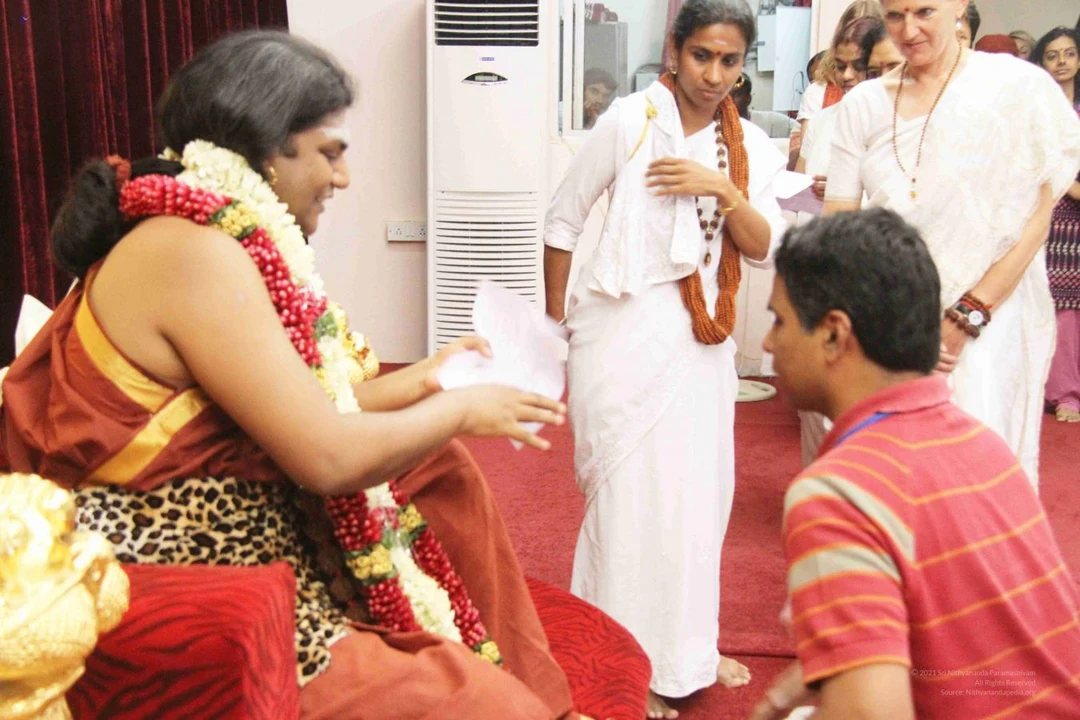
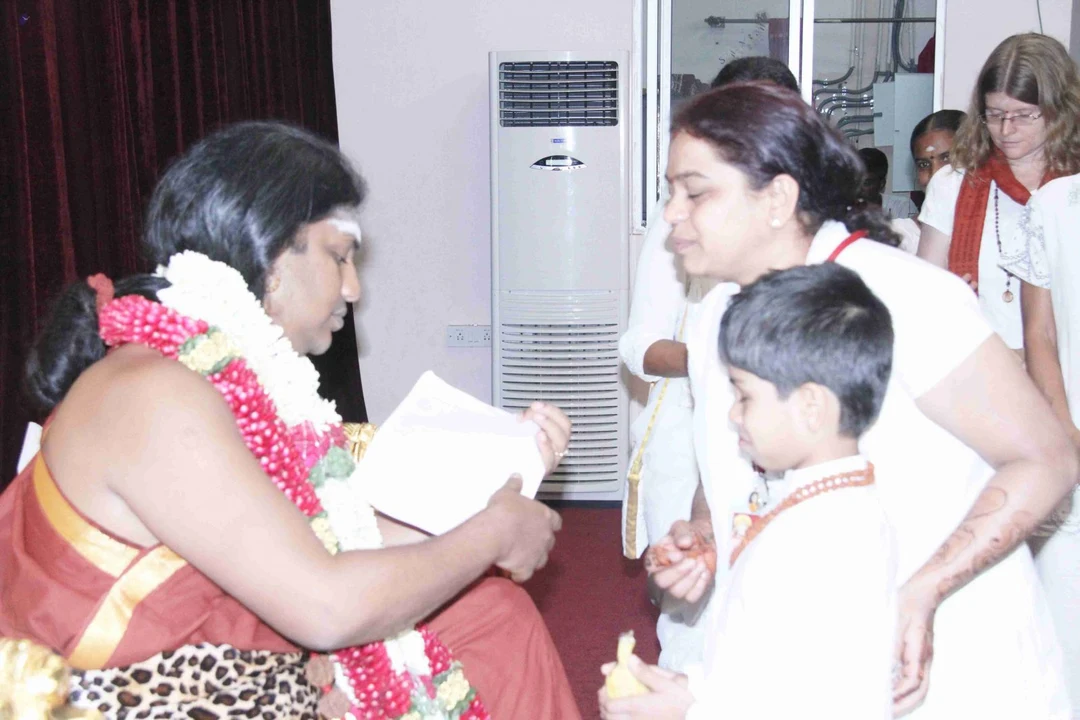
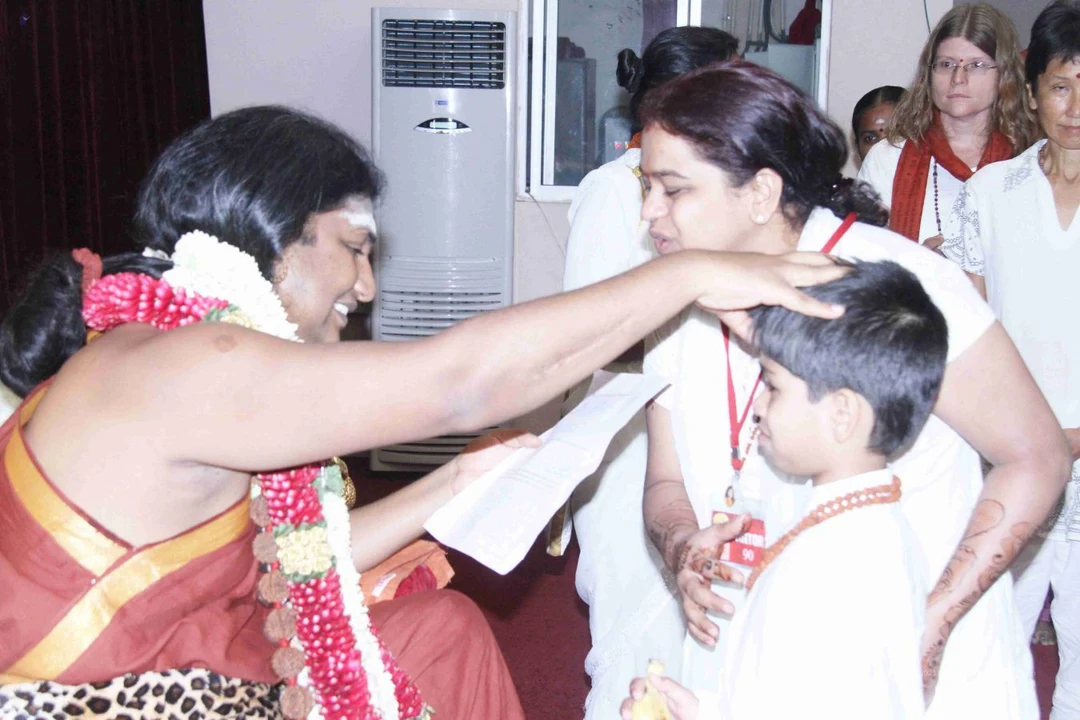
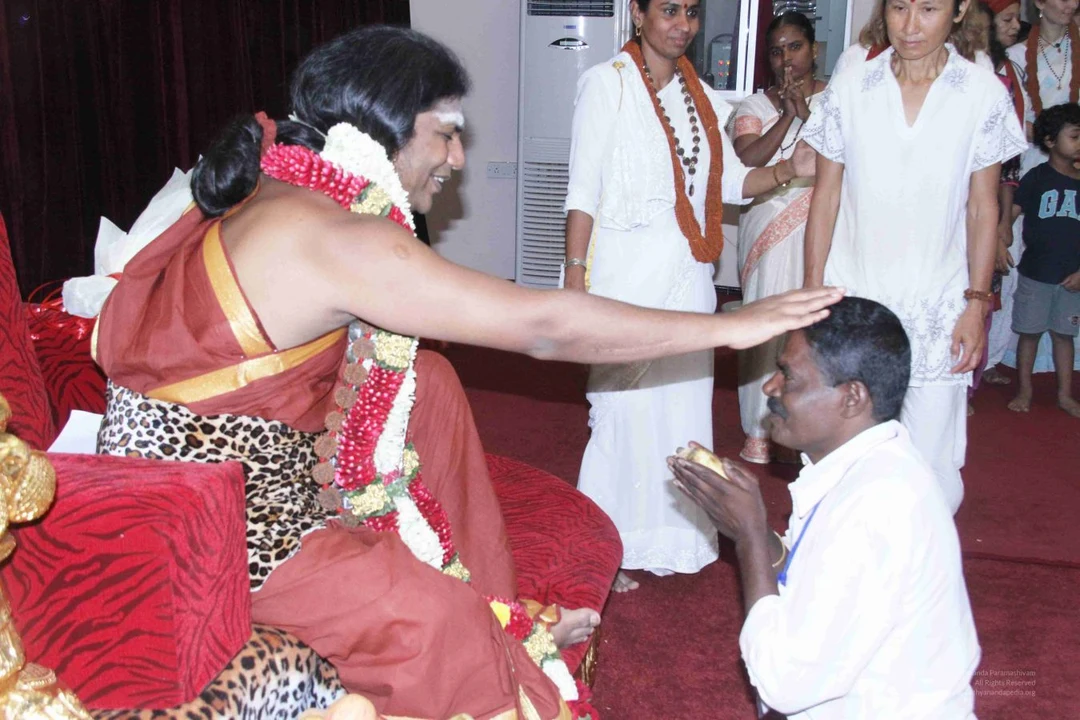
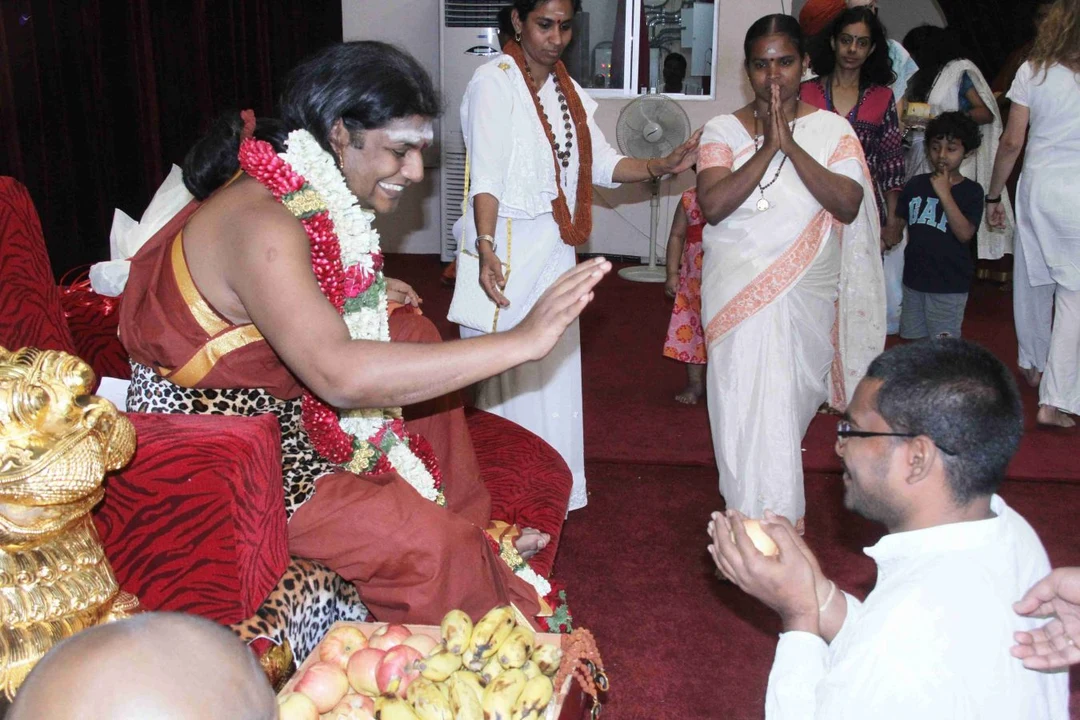
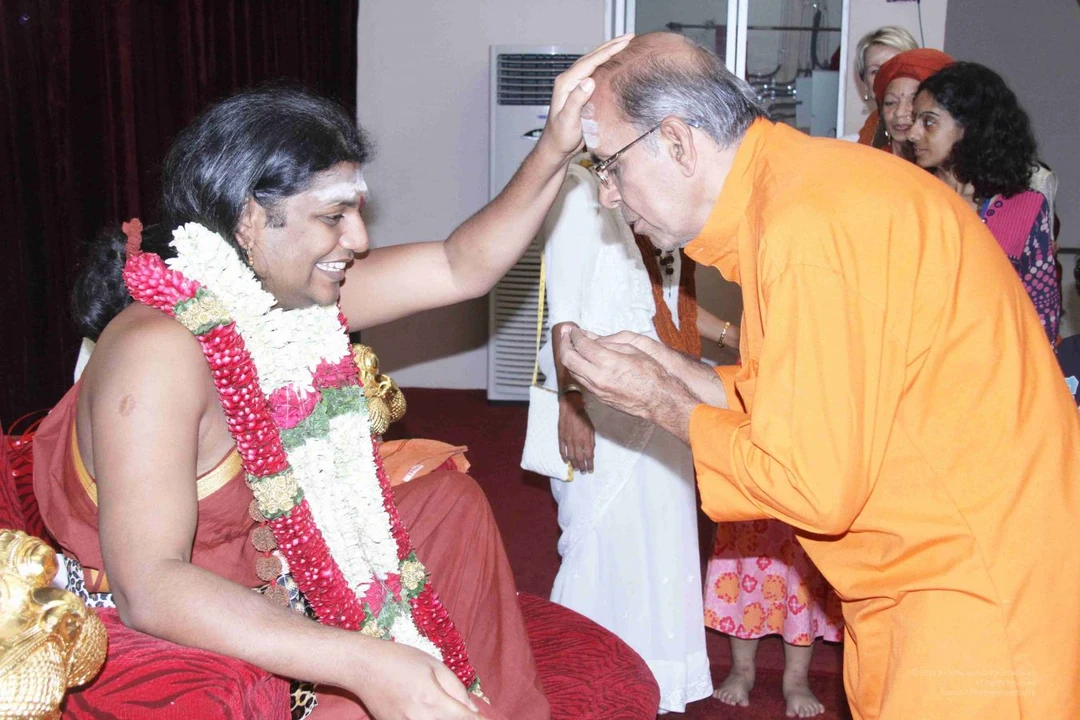
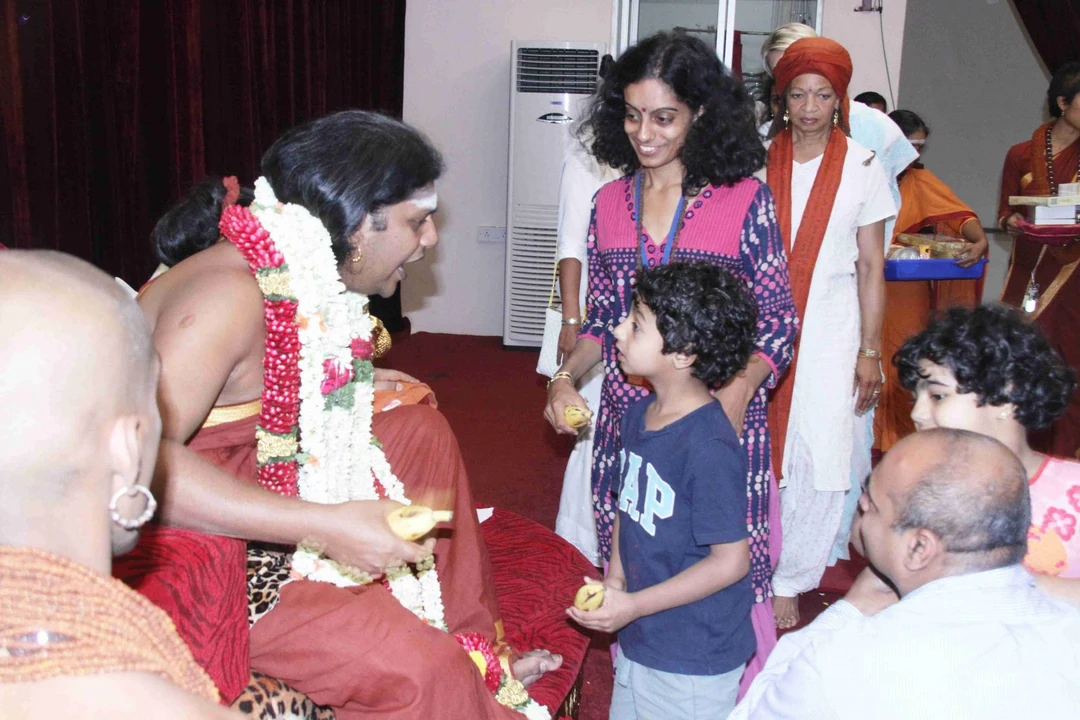
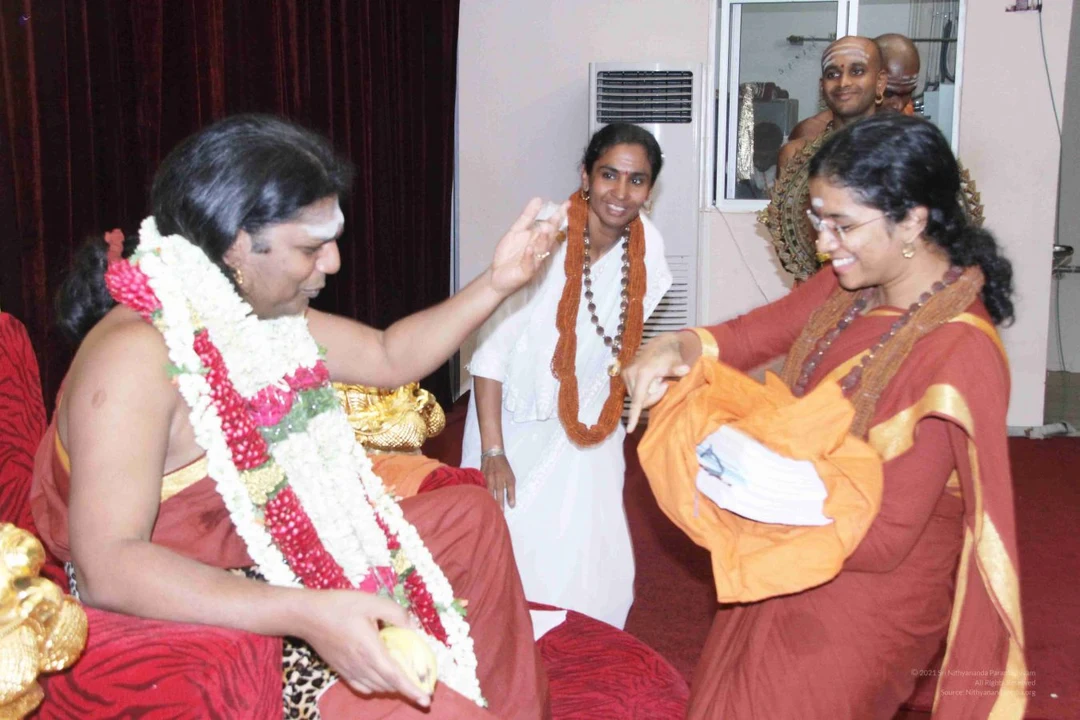
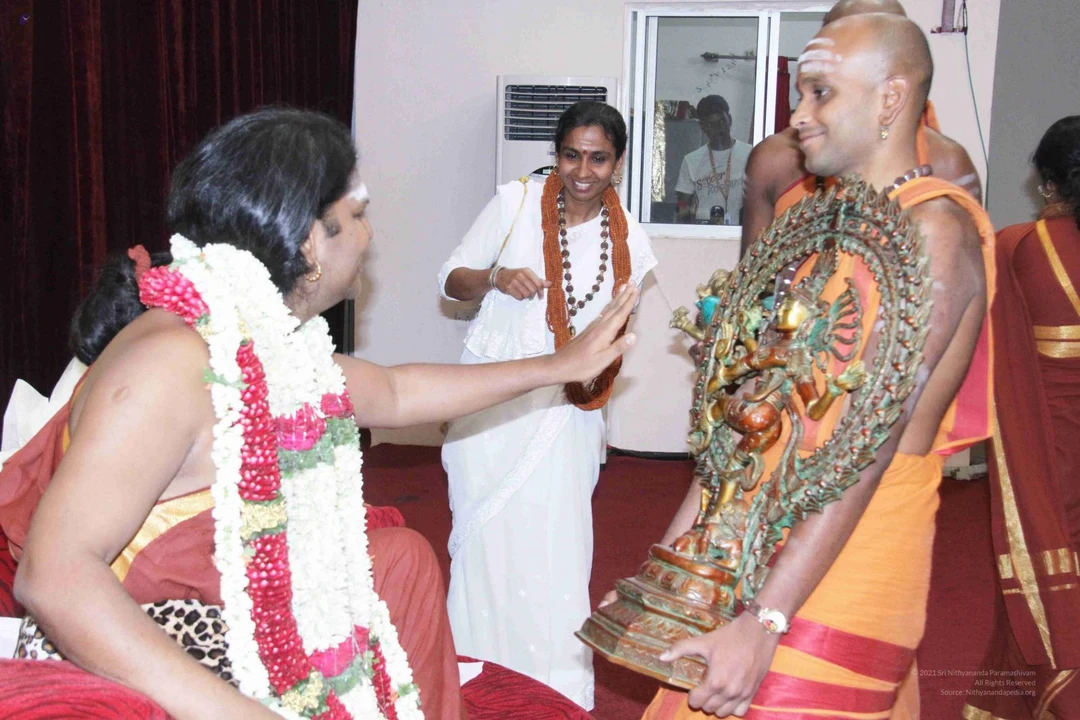
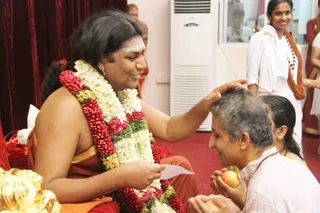
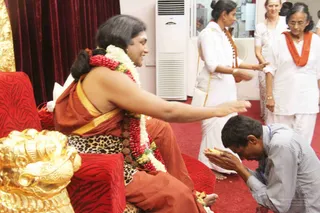
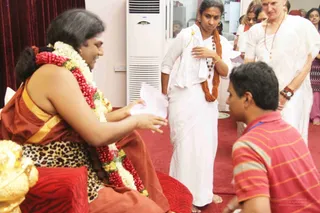
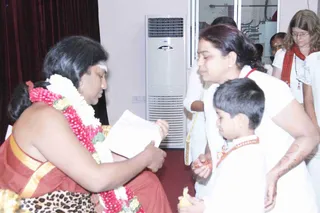
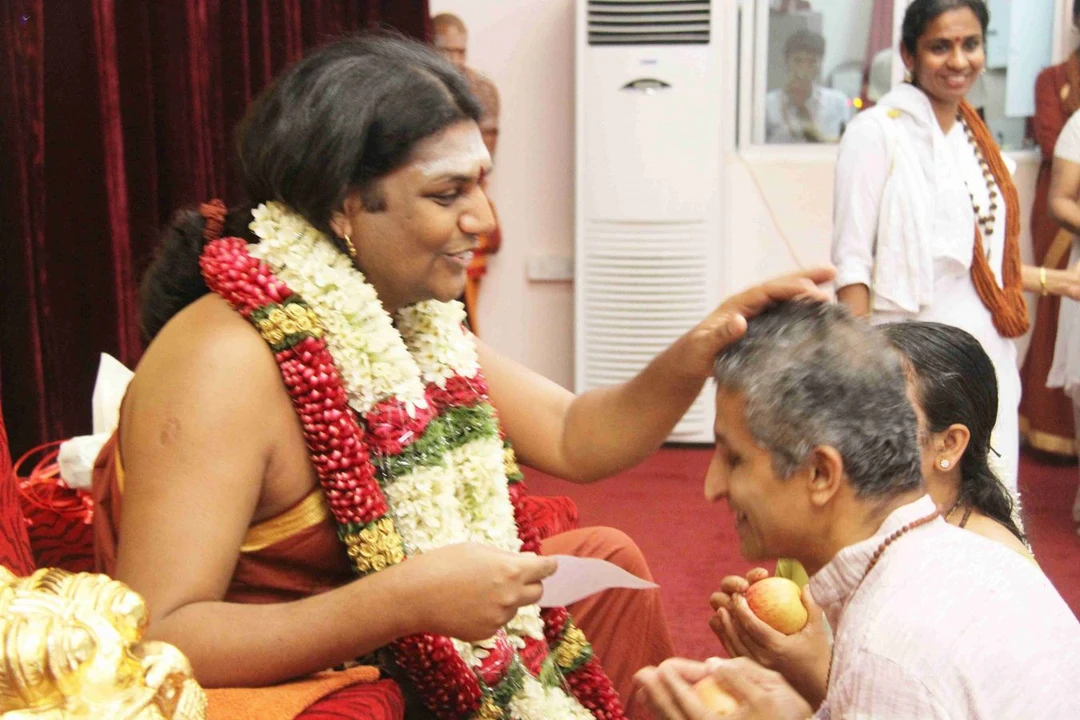
A photograph of a seated person with short dark hair and a white forehead mark, wearing a thick garland of white flowers and red berries with gold-coloured accents over a rust-orange garment, gently placing a hand on the head of a kneeling man in a pink collared shirt with a mala around his neck who holds fruit in cupped hands. A smiling woman in white with an orange shawl and mala stands behind, and a white floor-standing air conditioner, red carpet and red drapes form the room. The seated person holds a folded white paper in one hand, appearing to bless the kneeling devotee.A seated figure in saffron-orange robes with a leopard-print cloth and a red-and-white flower garland sits on a red-upholstered throne with a gold lion-head armrest, extending one arm forward. A man in a striped grey shirt kneels on red carpet with hands joined, receiving the blessing. Behind them, two women in white clothes stand near an air conditioner, one with an orange scarf and one with a white shawl; a woman in white with an orange cord hands an offering toward the kneeling man. Gold-draped red curtains frame the left side. The seated person has long hair and wears saffron and ornate clothing, a probable match for a person from the page cues, but the face is not identifiable and the appearance is partly obscured.A seated person with short hair, a bare upper body wrapped in a rust-brown and gold cloth, and a leopard-print garment at the waist sits on a red cushion with a thick garland of white flowers and red beads. They extend their hand toward a man in a red and orange striped polo shirt who kneels on a red carpet. Standing behind is a woman in white clothes with an orange-red rudraksha mala and a gold bracelet, and a woman in white with a mala and beads stands at the right. A white floor-standing air conditioner and red curtains are in the background. The seated figure's appearance is consistent with the page's a person reference, but identity is uncertain from appearance alone.A seated figure with a long dark hairstyle, white garland of flowers and red-and-white flower garland, wearing a maroon garment with gold border and a leopard-print cloth, takes a folded white paper from a woman in a white outfit. A young boy in white with a red-brown beaded necklace stands beside a woman in white holding a small fruit or sweet, while a woman in a white top and red shawl with beaded necklace stands behind. A white floor-standing air conditioner stands against a light wall beside a maroon curtain.A photograph of a seated figure with long dark hair, a white forehead mark, and a red-and-white flower garland with rudraksha beads, wearing a maroon garment with a gold border and a leopard-print seat beneath. The figure leans forward and places a hand on the head of a young boy in white with a red-brown bead necklace, while a woman in white with a red lanyard holds a paper and watches. Behind them stand a woman in a white top with a red scarf and a woman with short hair. A wall-mounted air conditioner and red curtain are in the background.A seated figure in a rust-red and gold-bordered robe with a leopard-print wrap, wearing layered red, white and yellow flower garlands and a white tilak on the forehead, extends a hand in blessing toward a man kneeling on a red carpet. The kneeling man wears a white shirt and holds a small golden object in his joined palms. Behind them, several women in white ritual clothing, one with an orange and rudraksha mala, stand with hands folded, and a child in a dark blue shirt is partly visible at the right edge. A red throne with zebra-print cushions and a gold ornament frame the left side, and a white air conditioning unit stands in the background.