Skip to content
Wednesday

9 April 2014

Don't Forget Your Real Identity

Dated photos
148
Source pages
1
Media
2
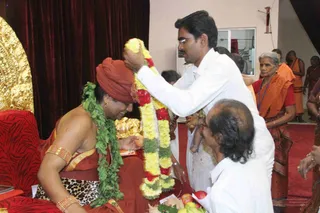
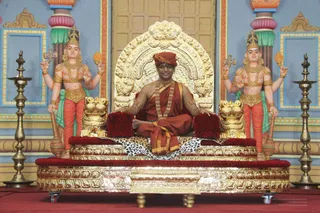
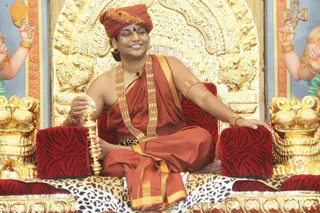
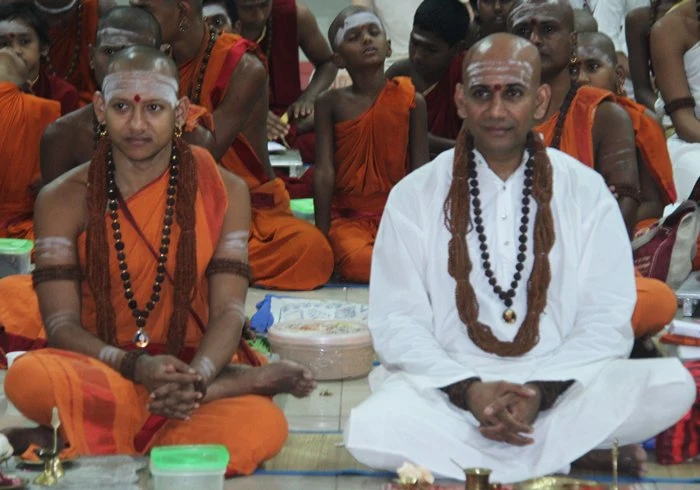
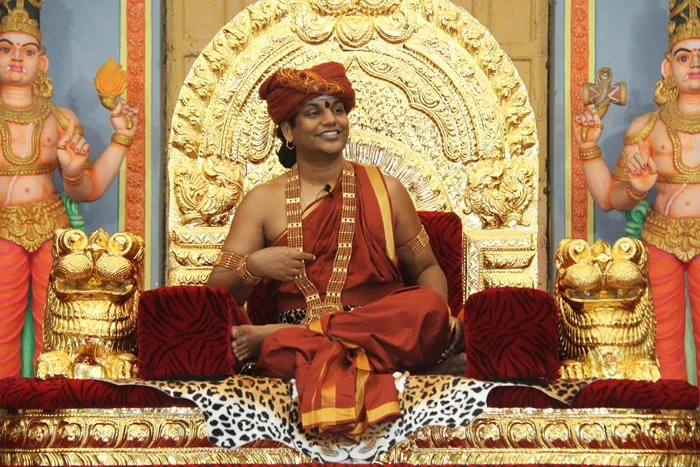
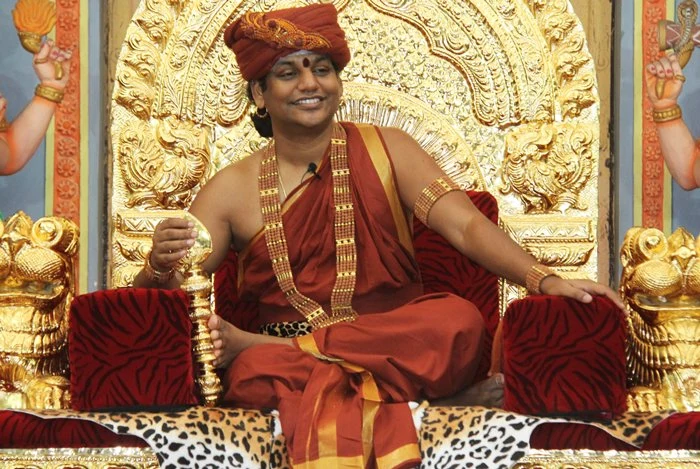
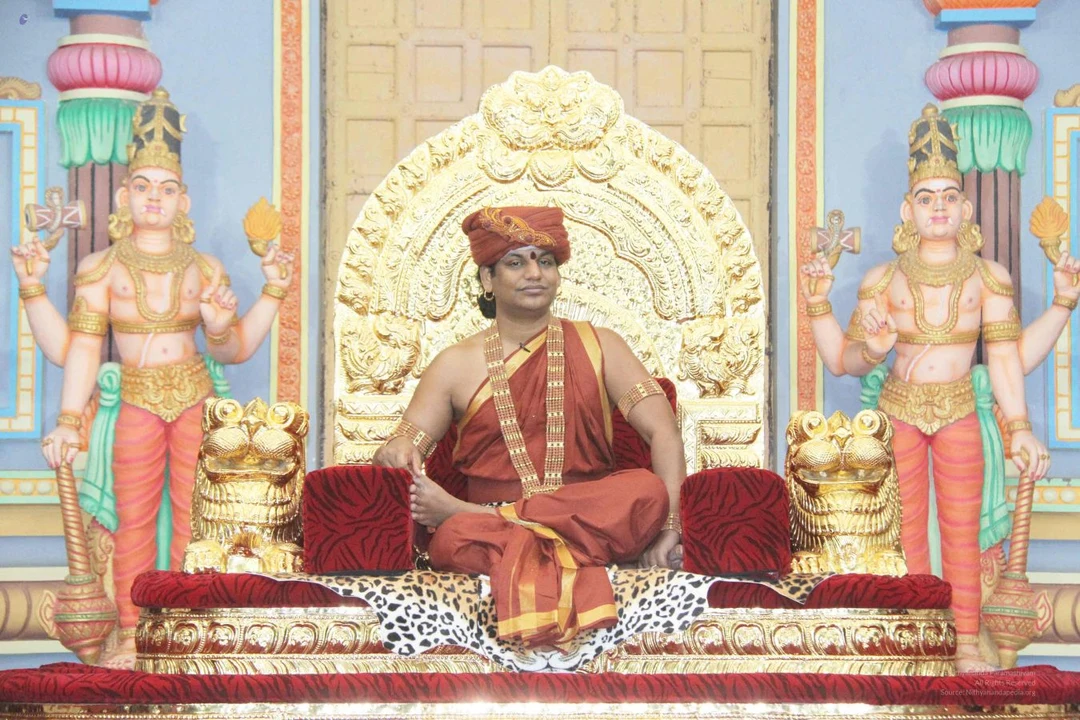
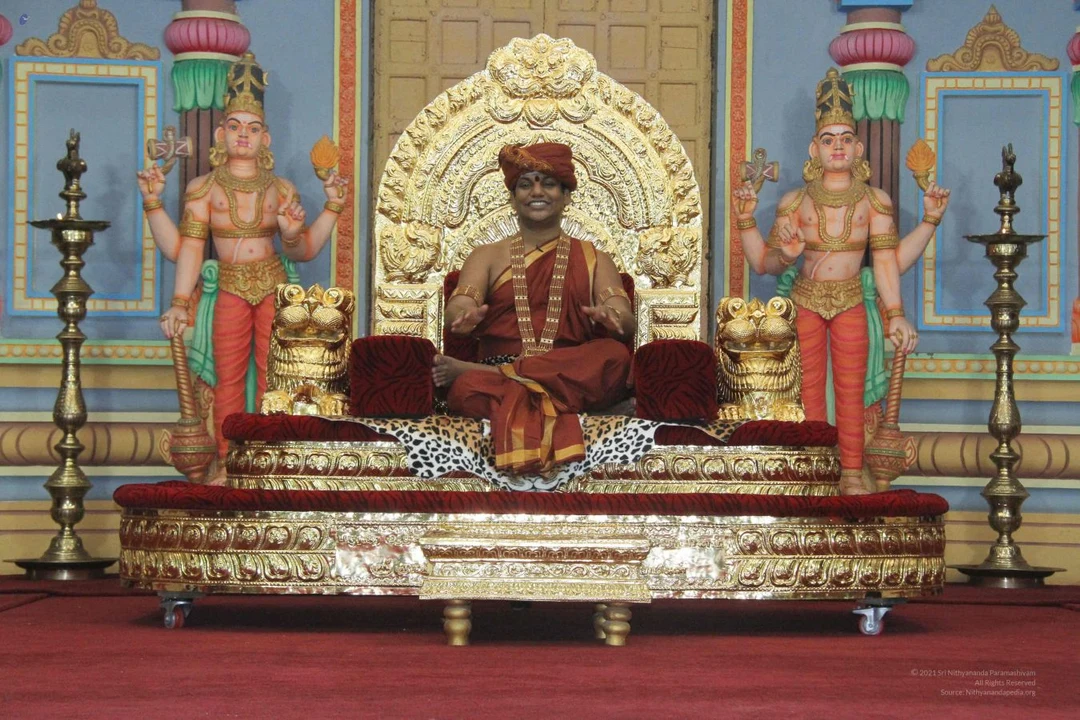
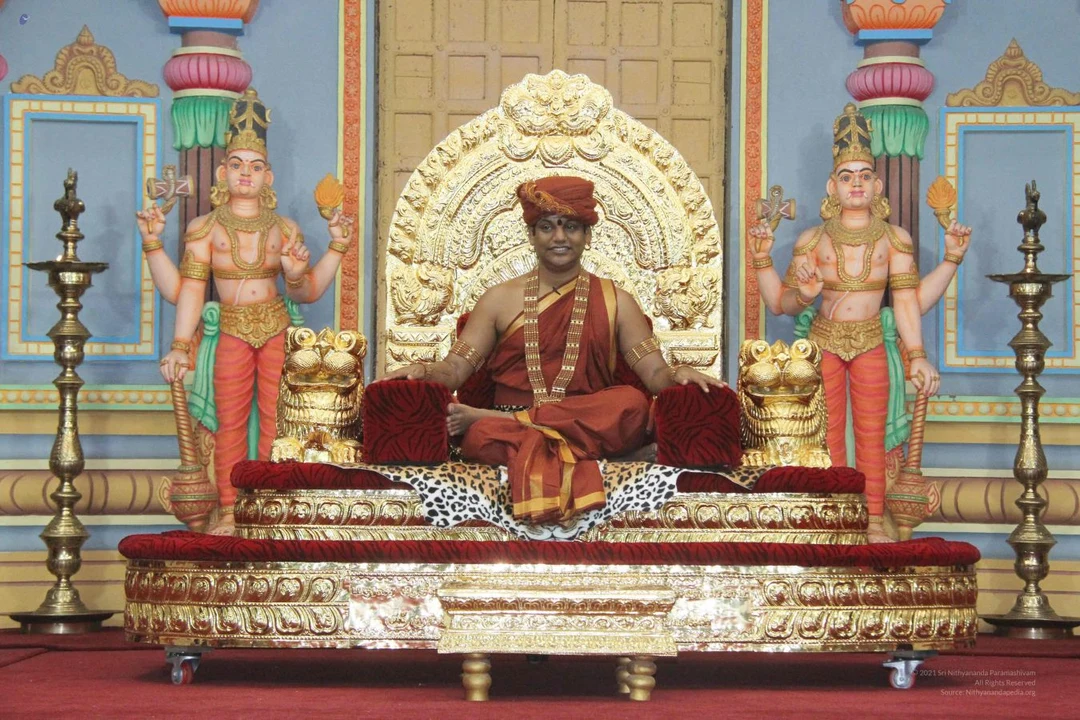
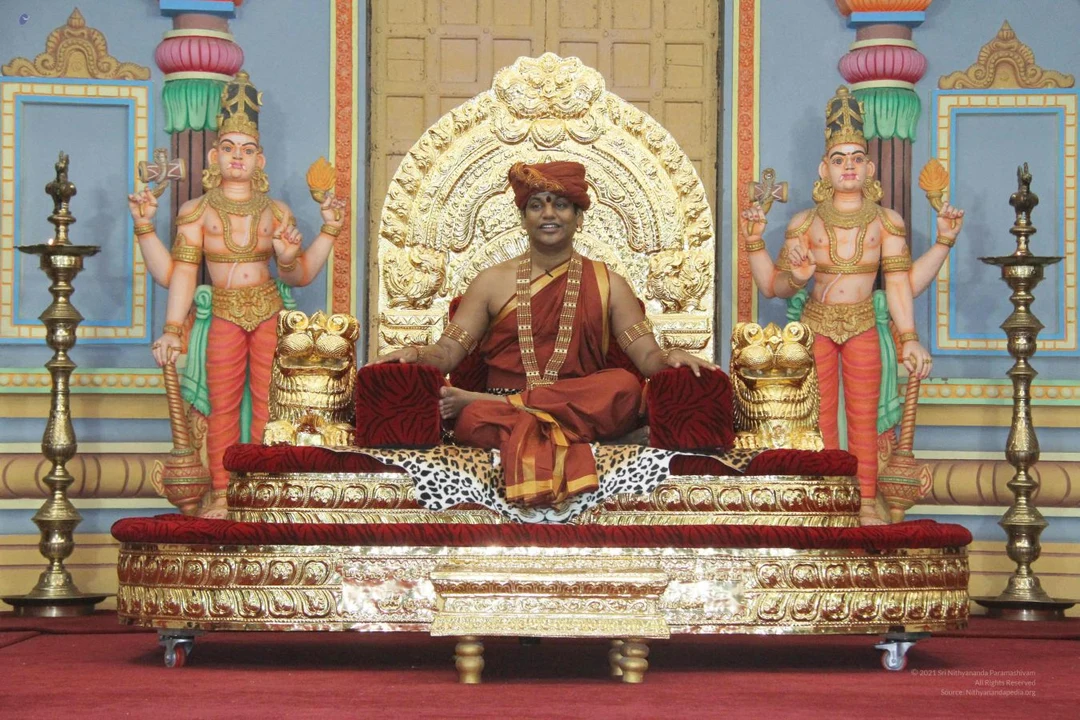
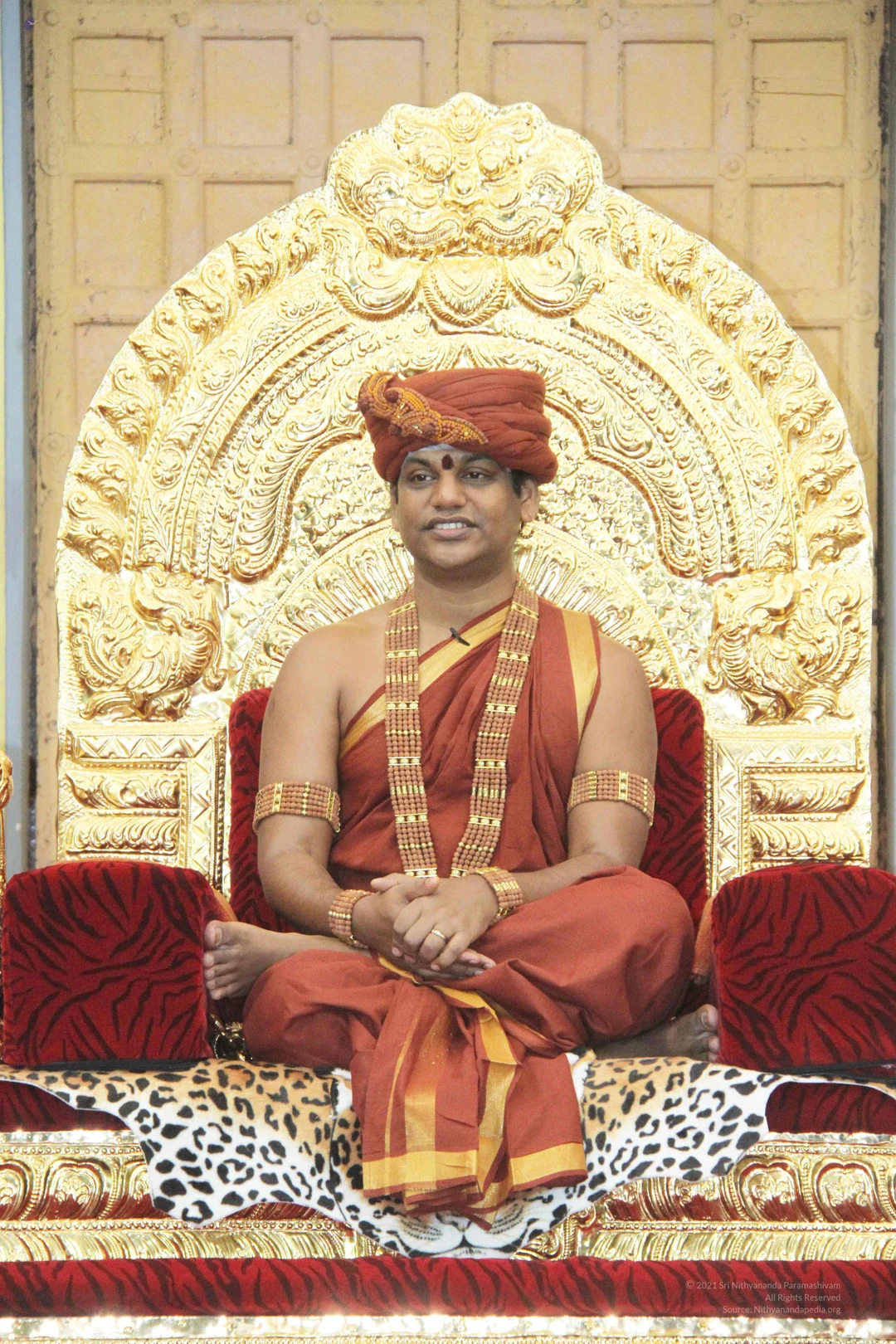
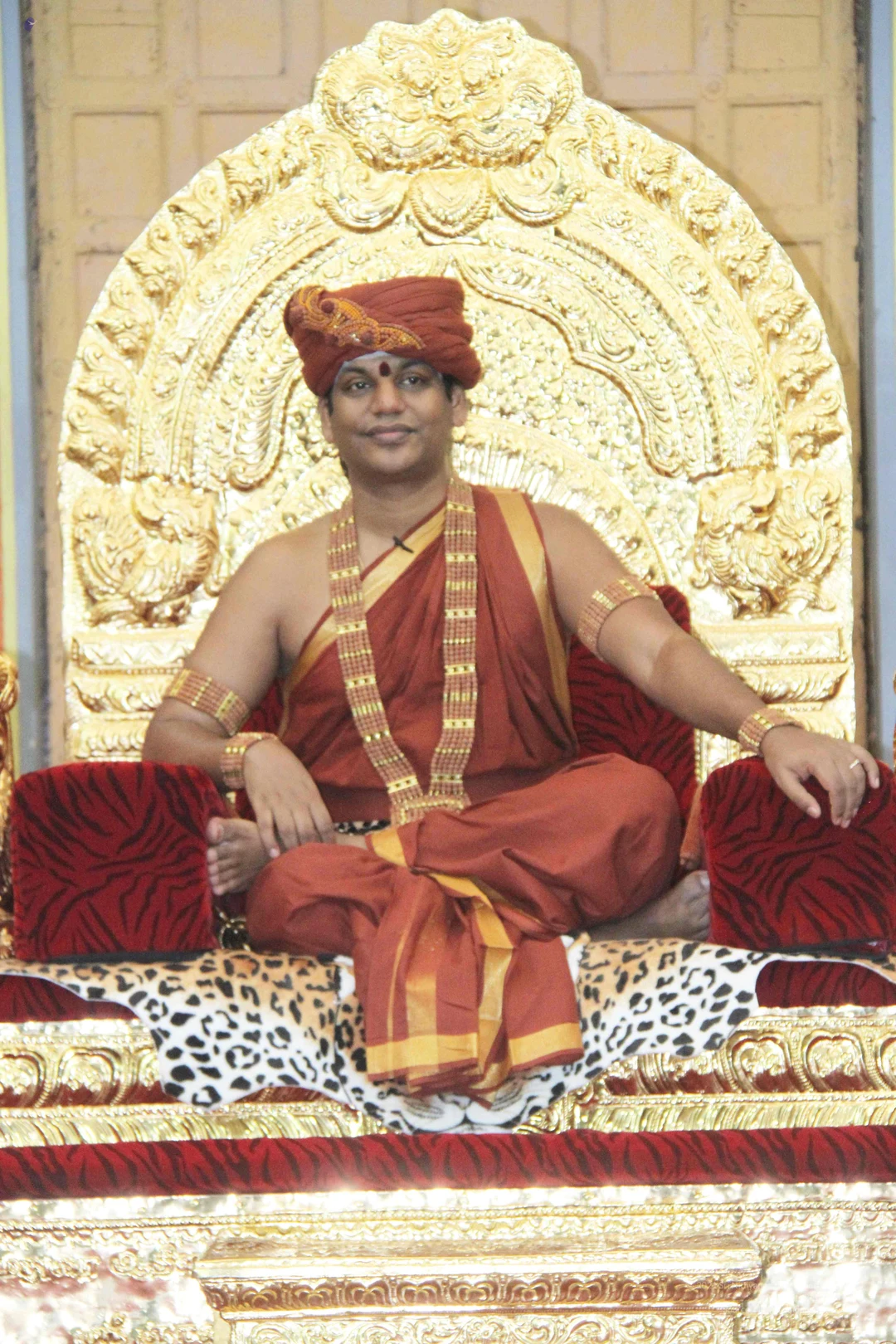
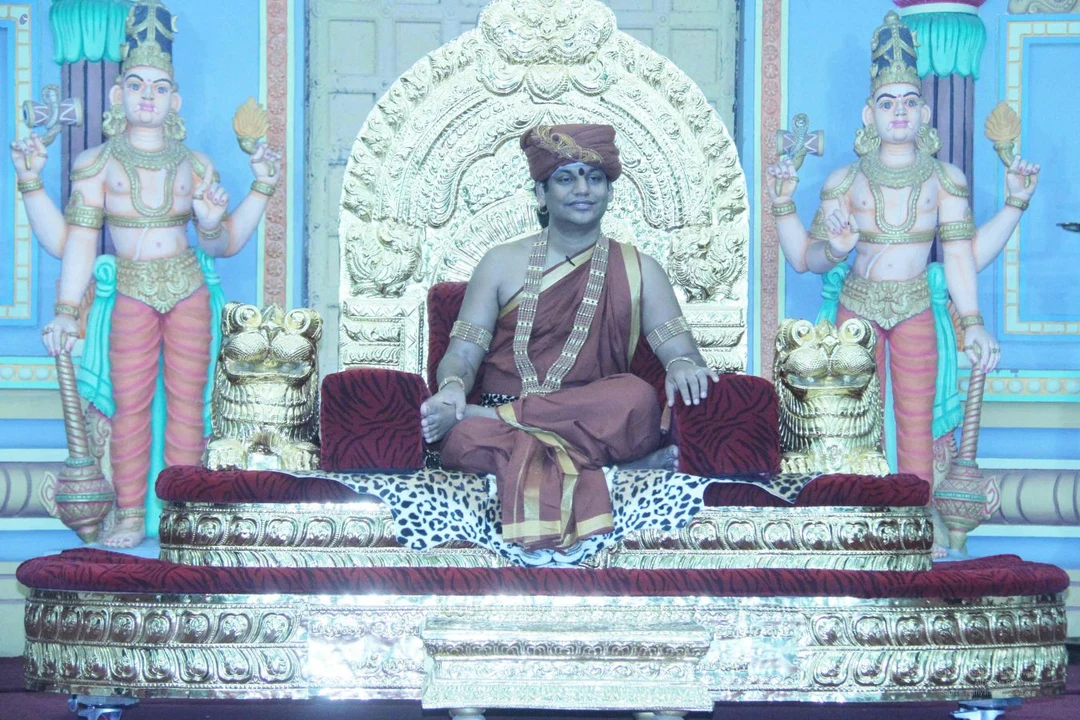
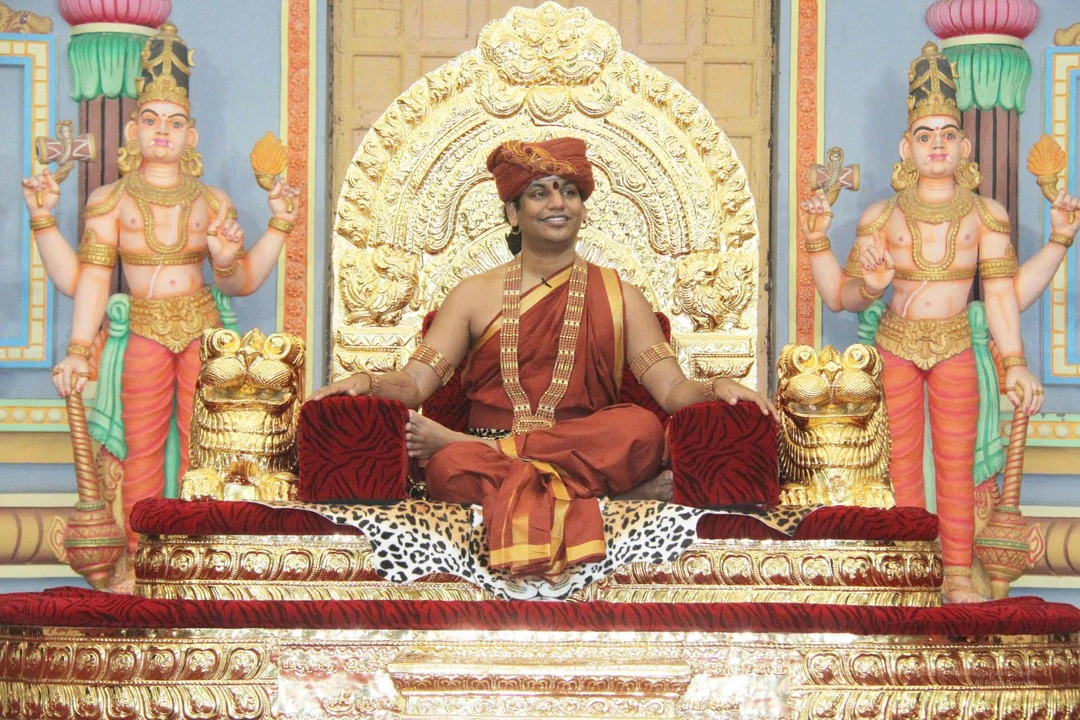
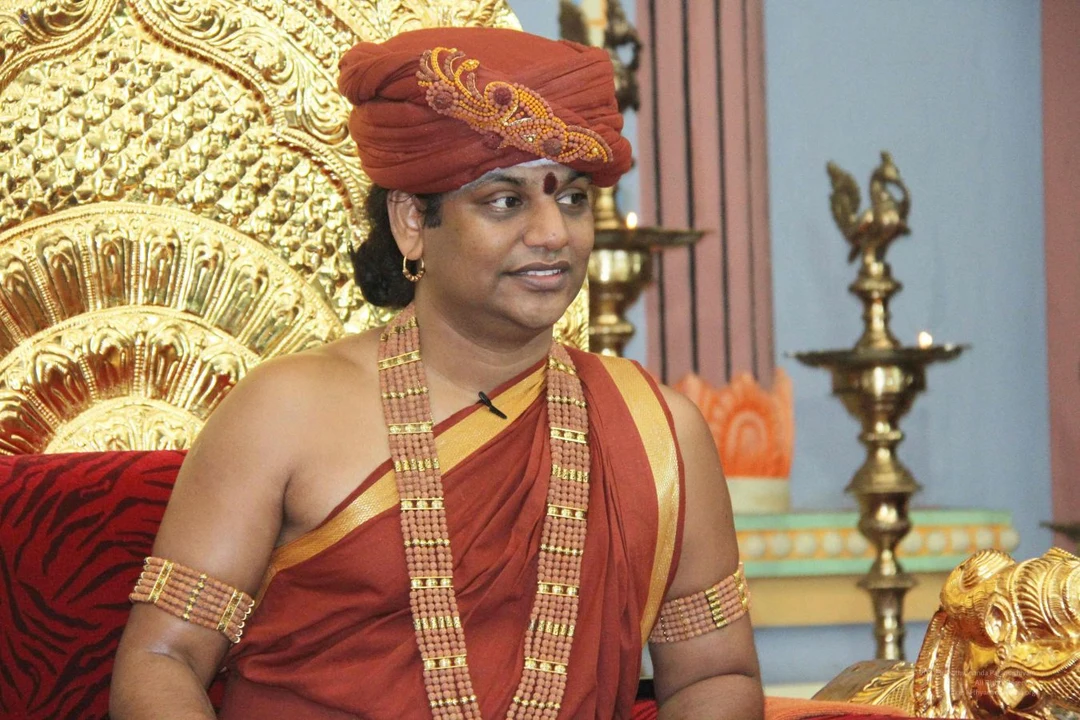
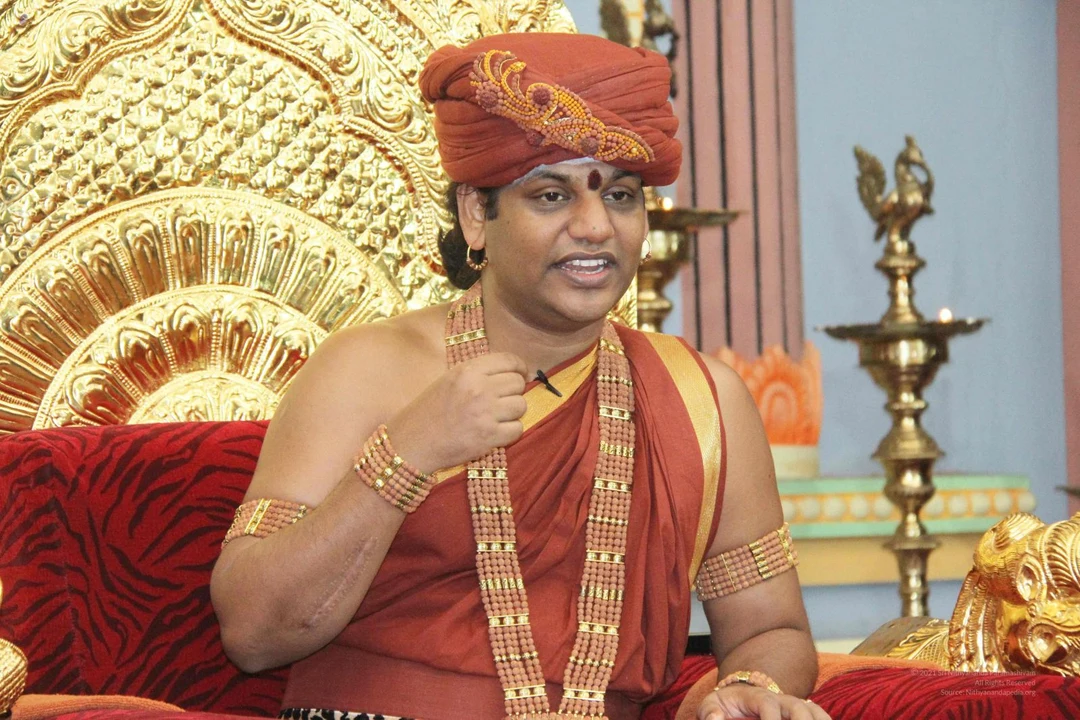
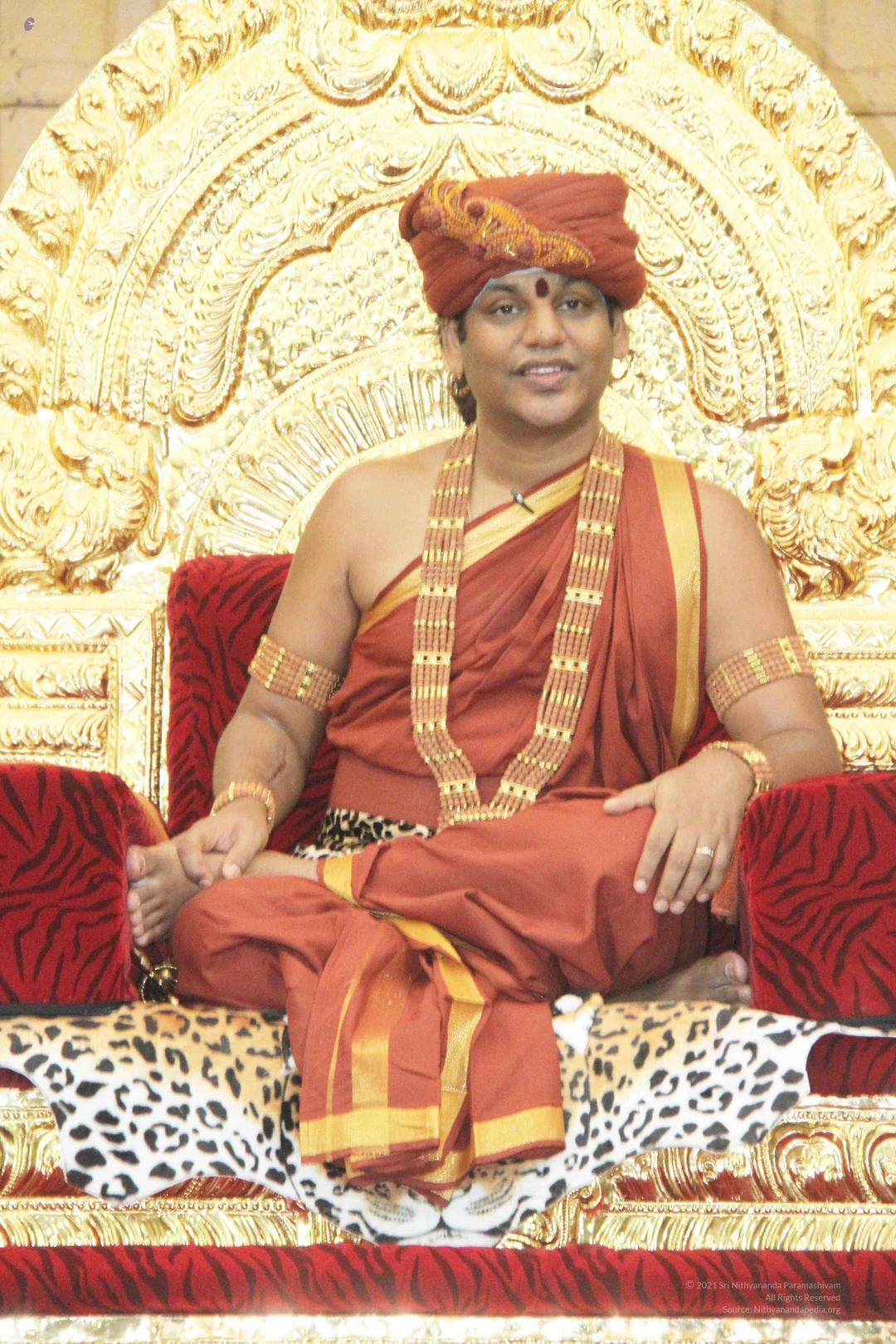
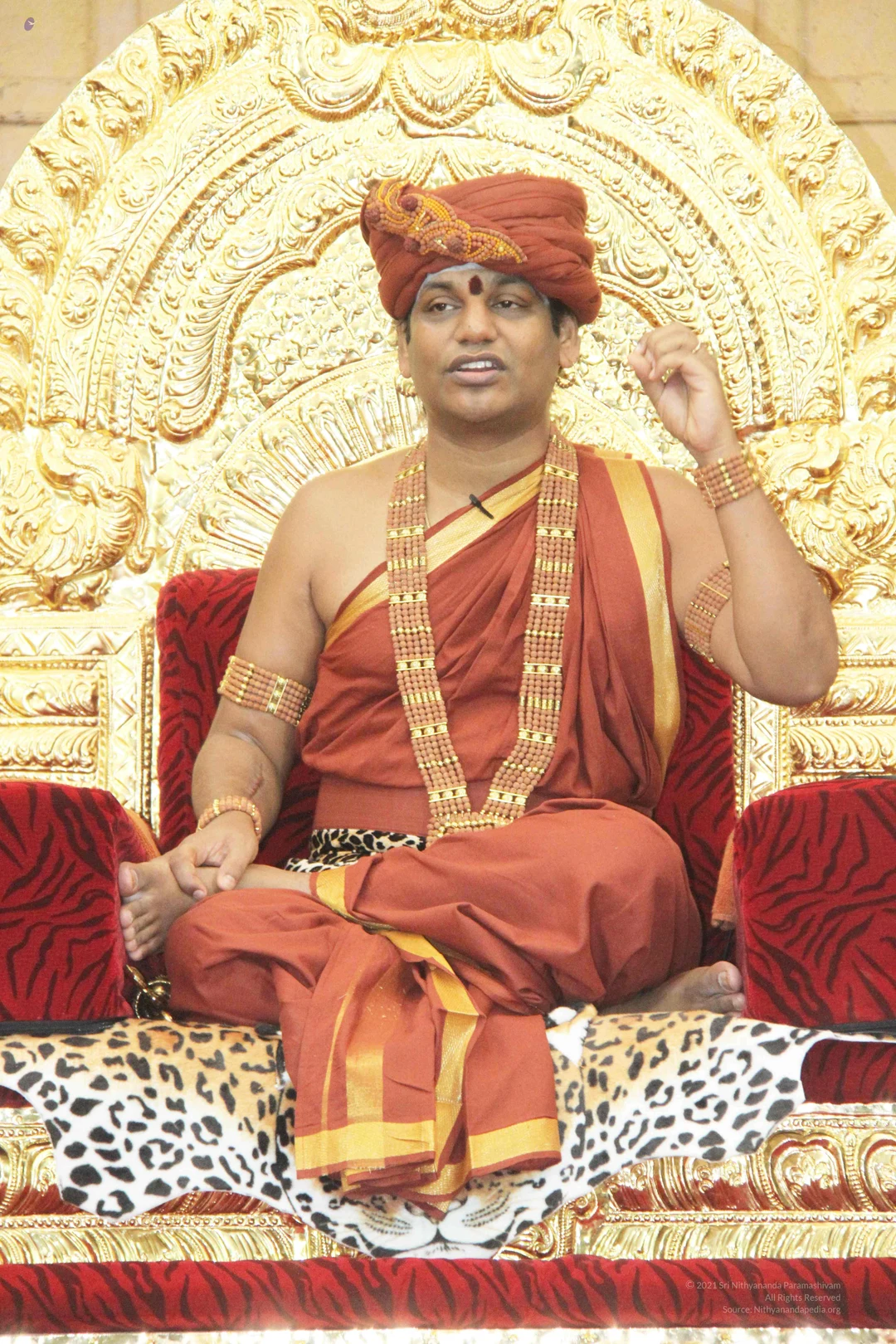
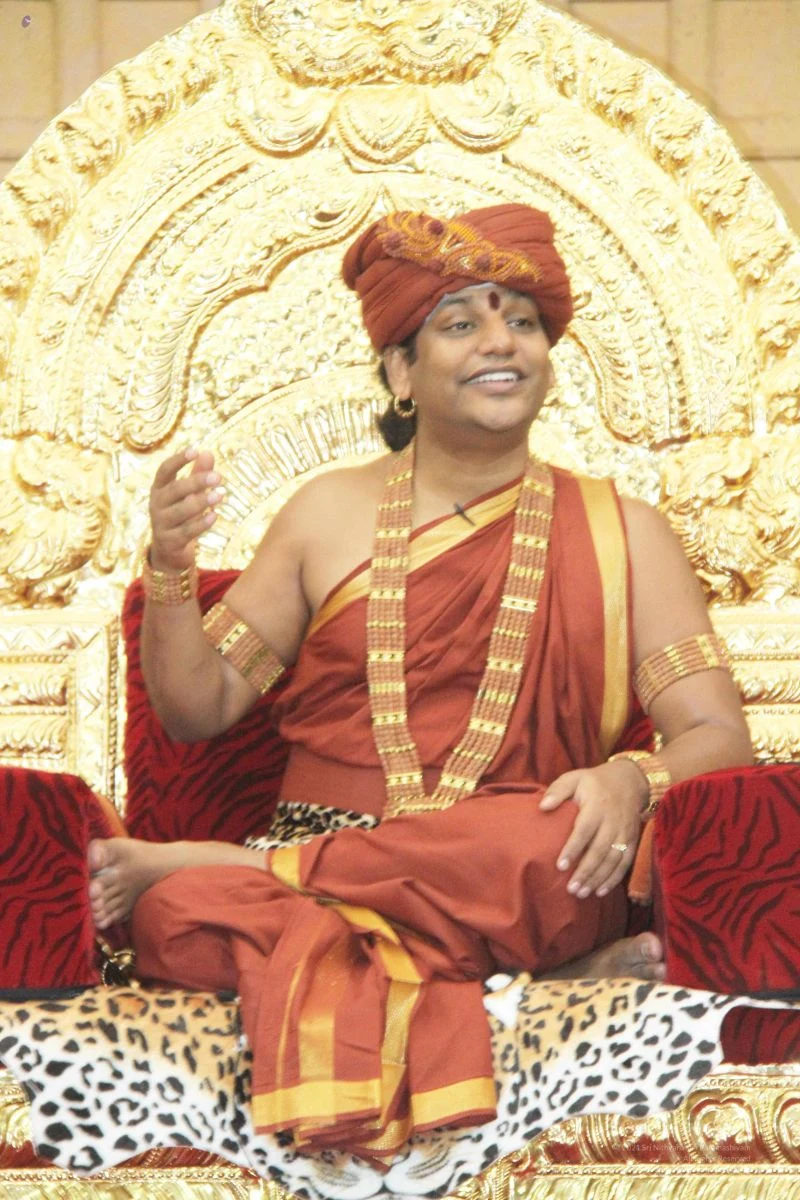
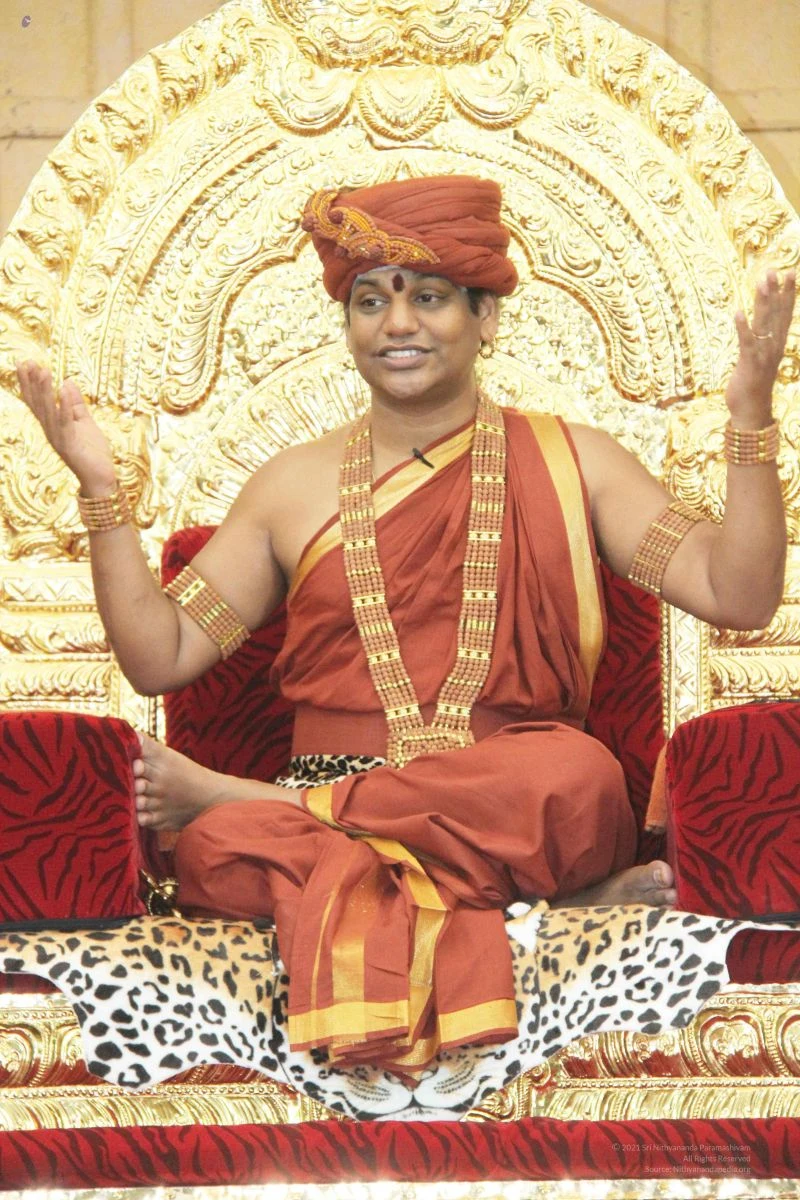
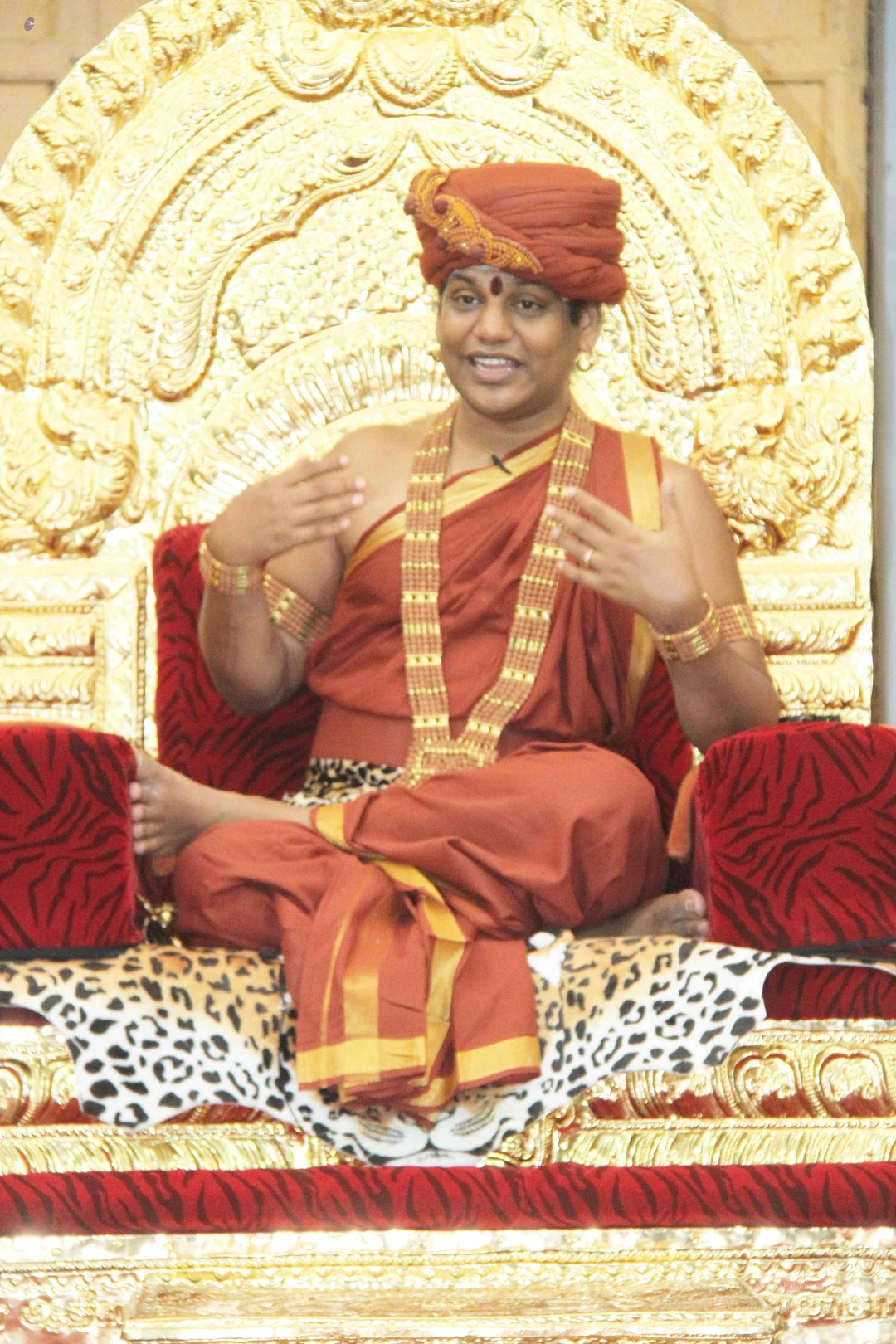
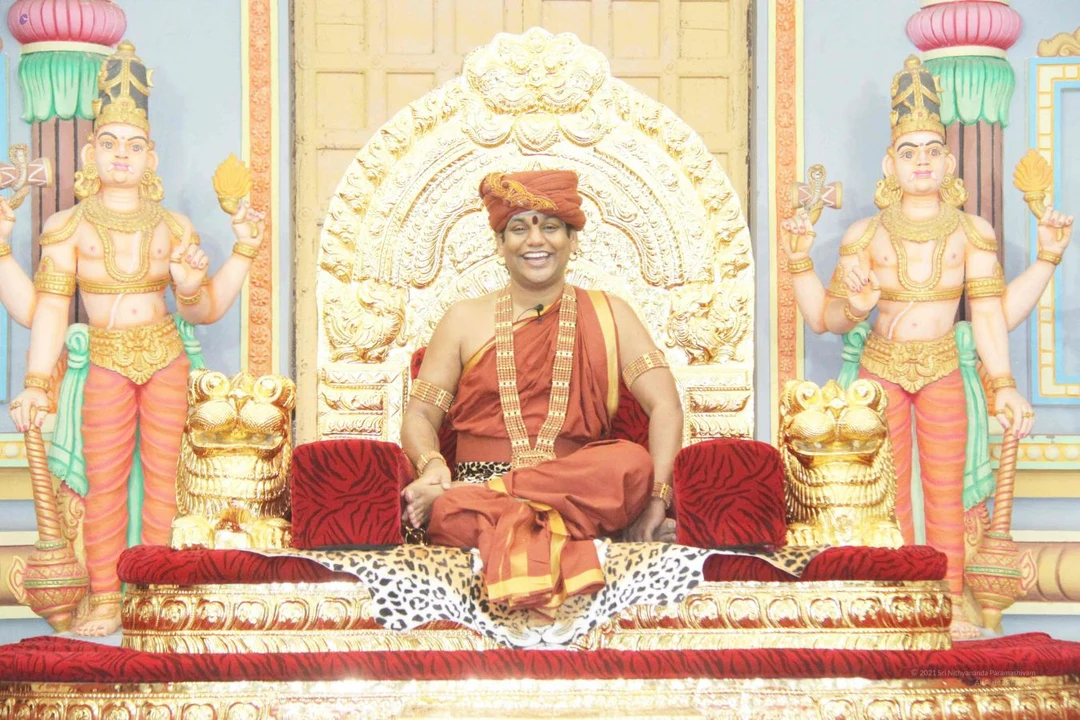
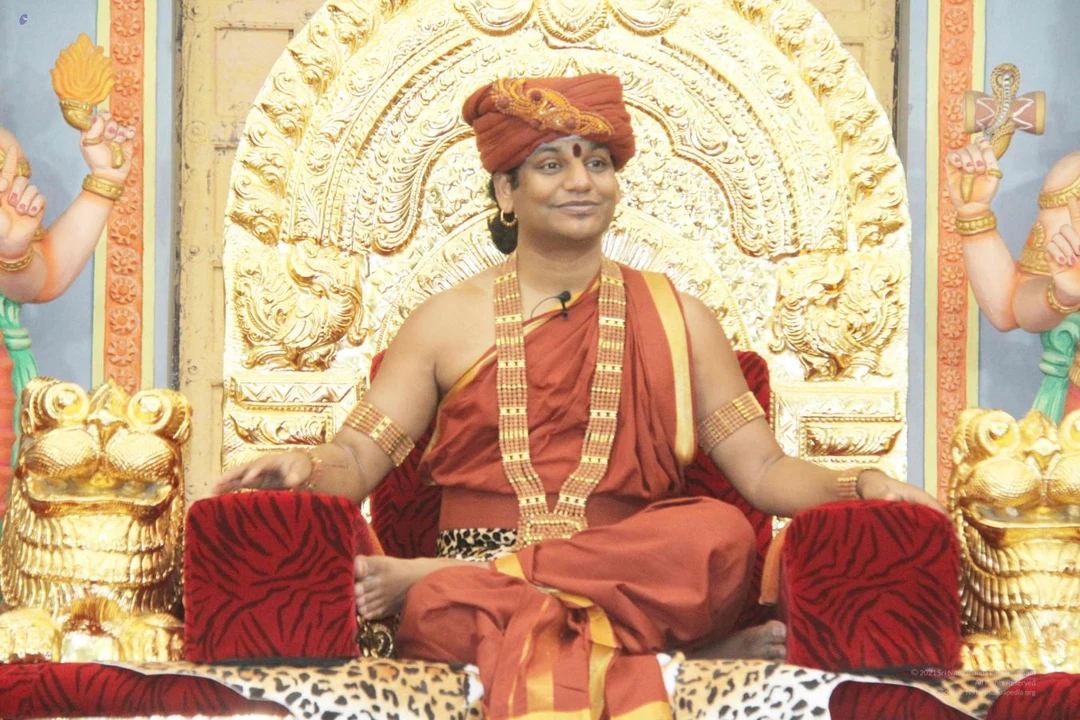
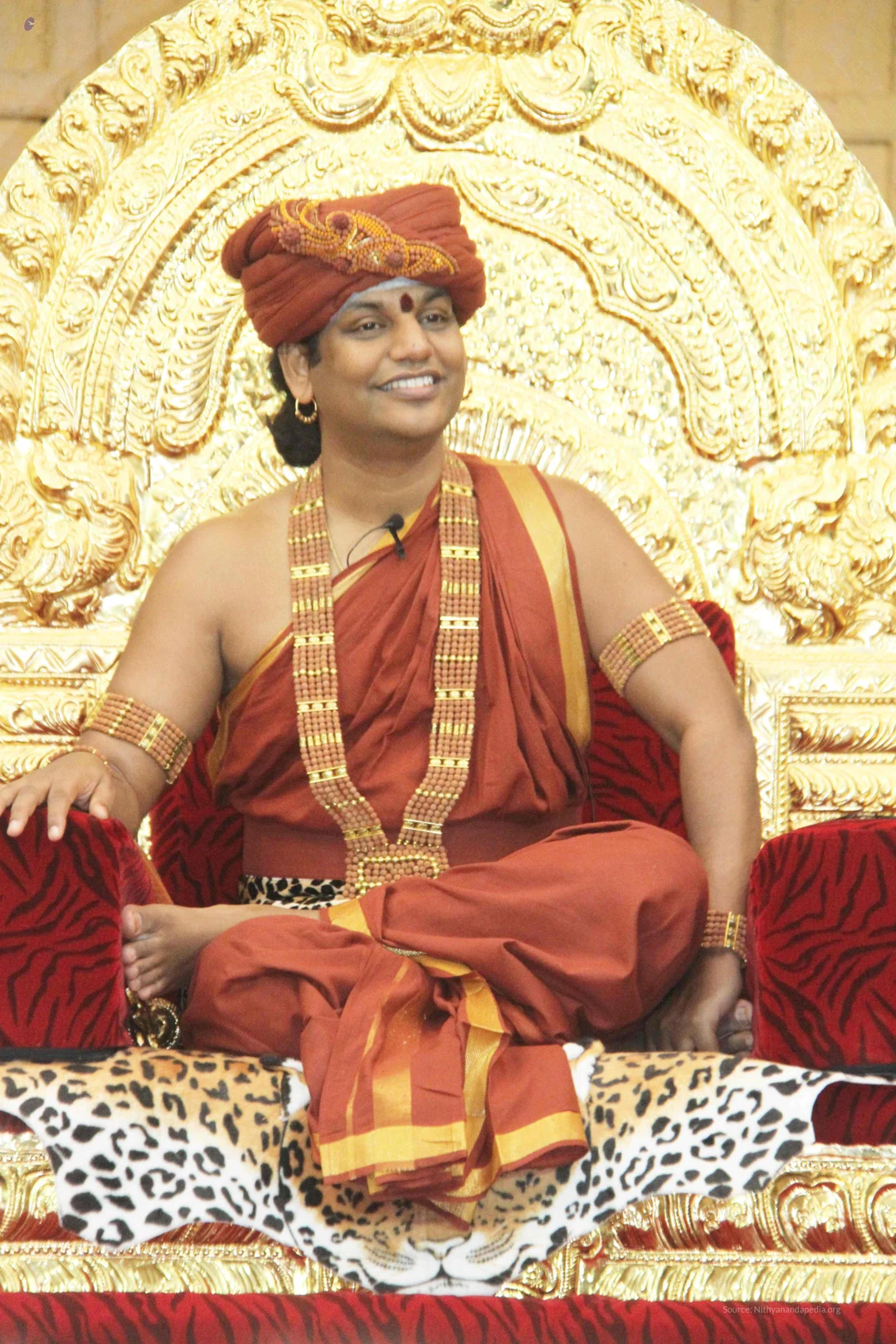
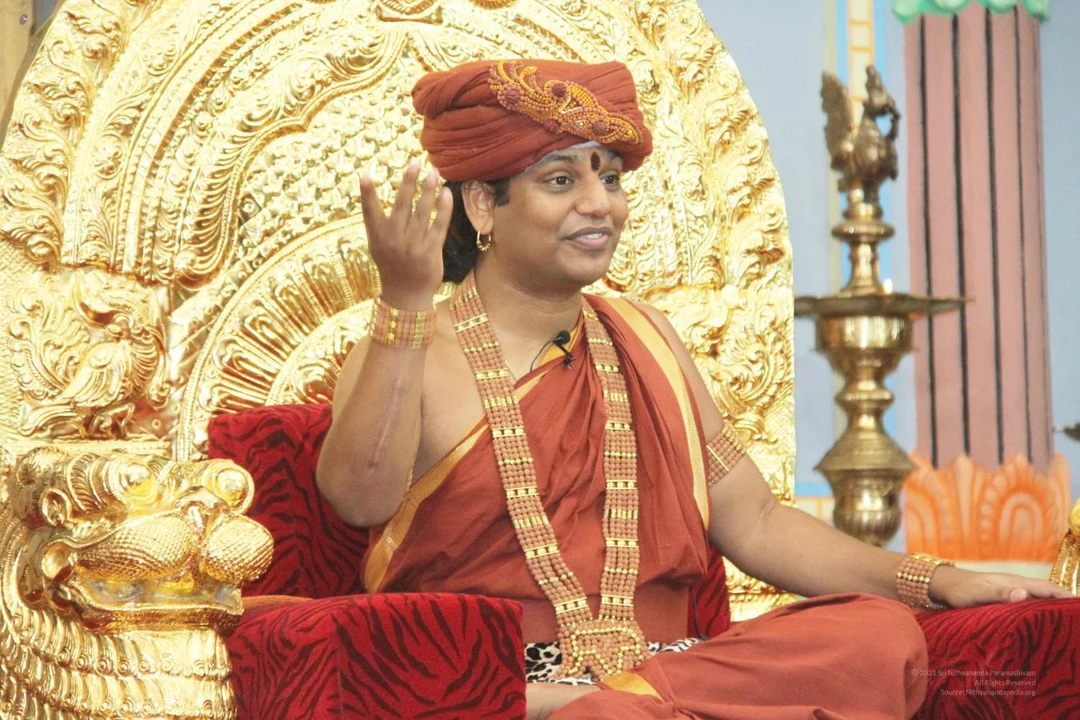
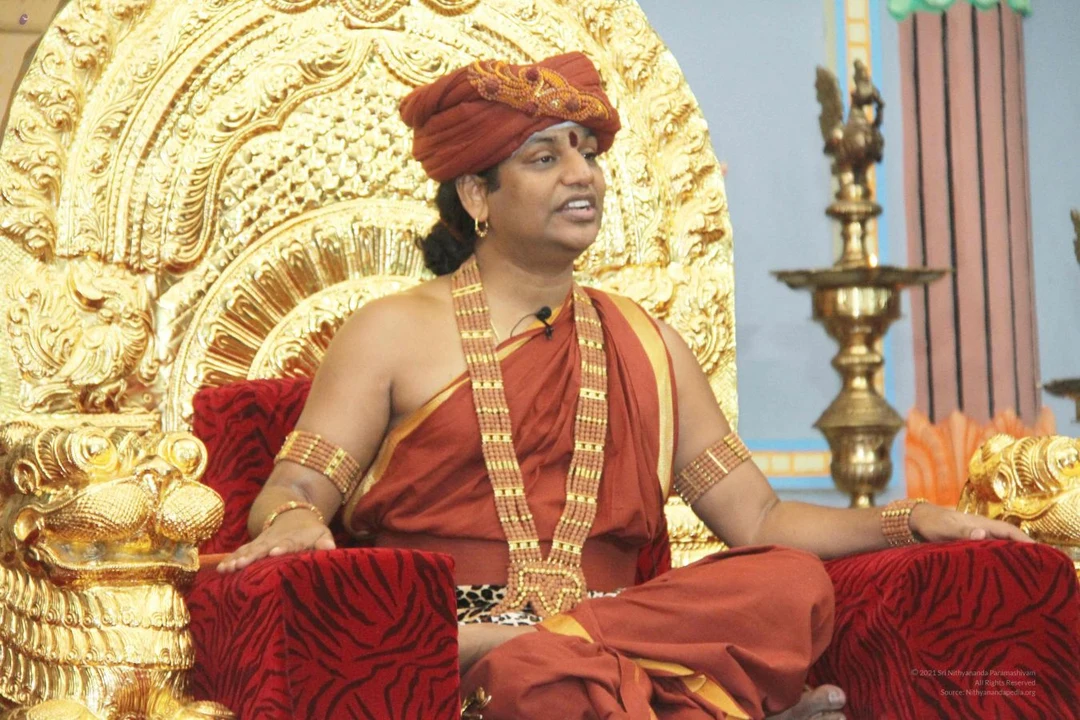
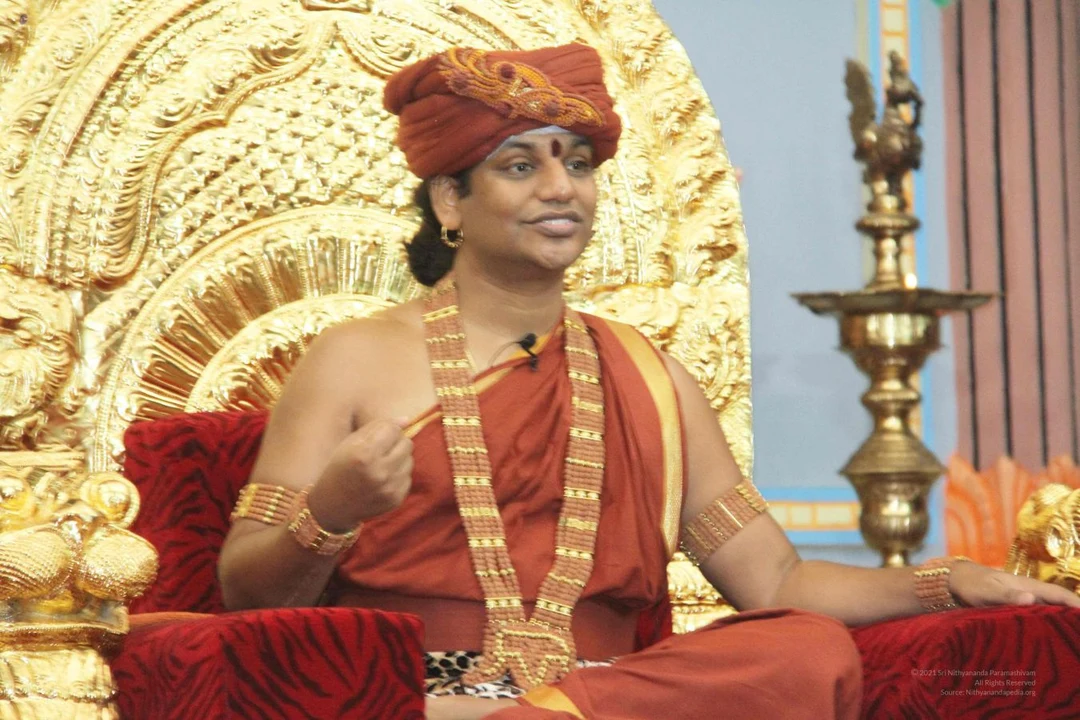
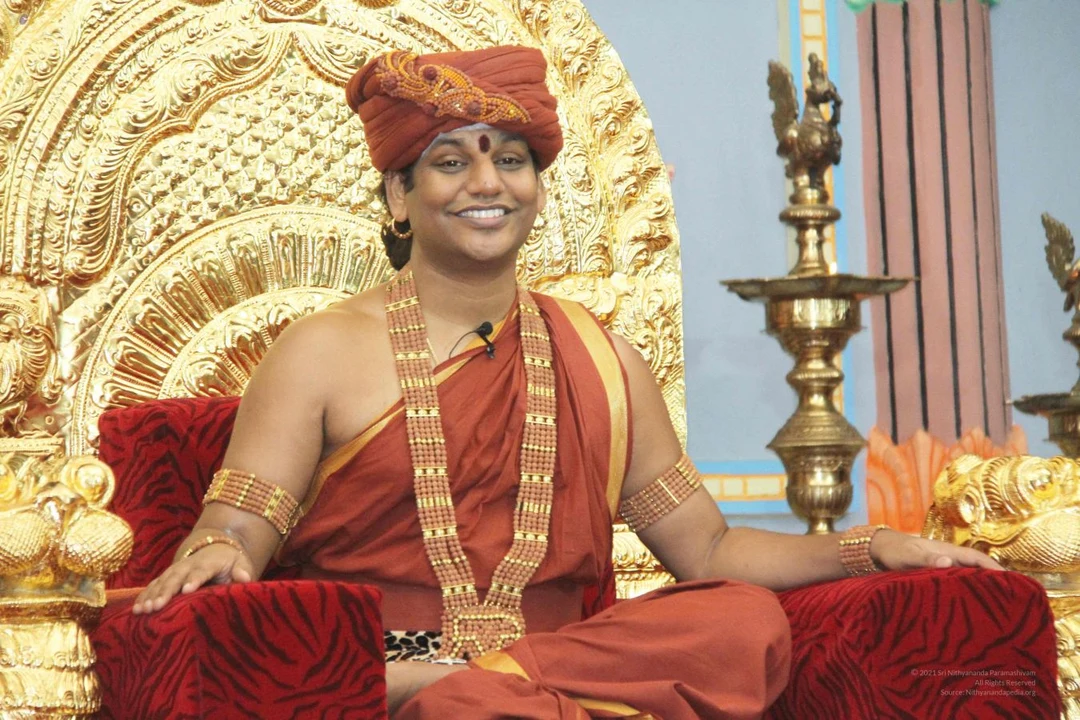
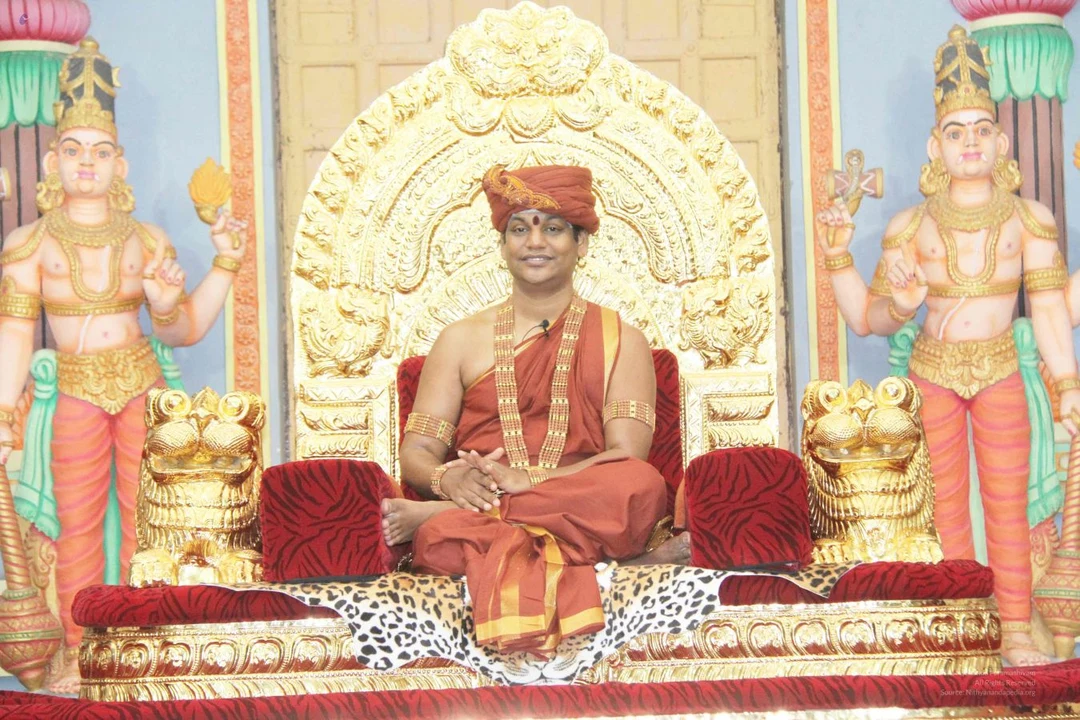
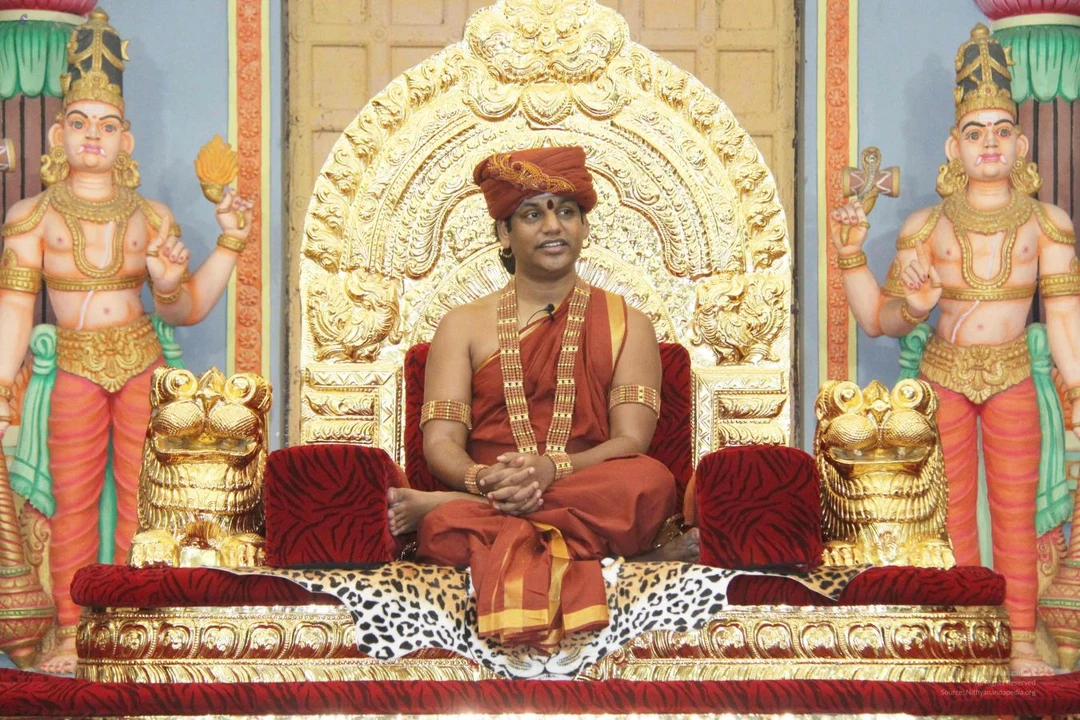
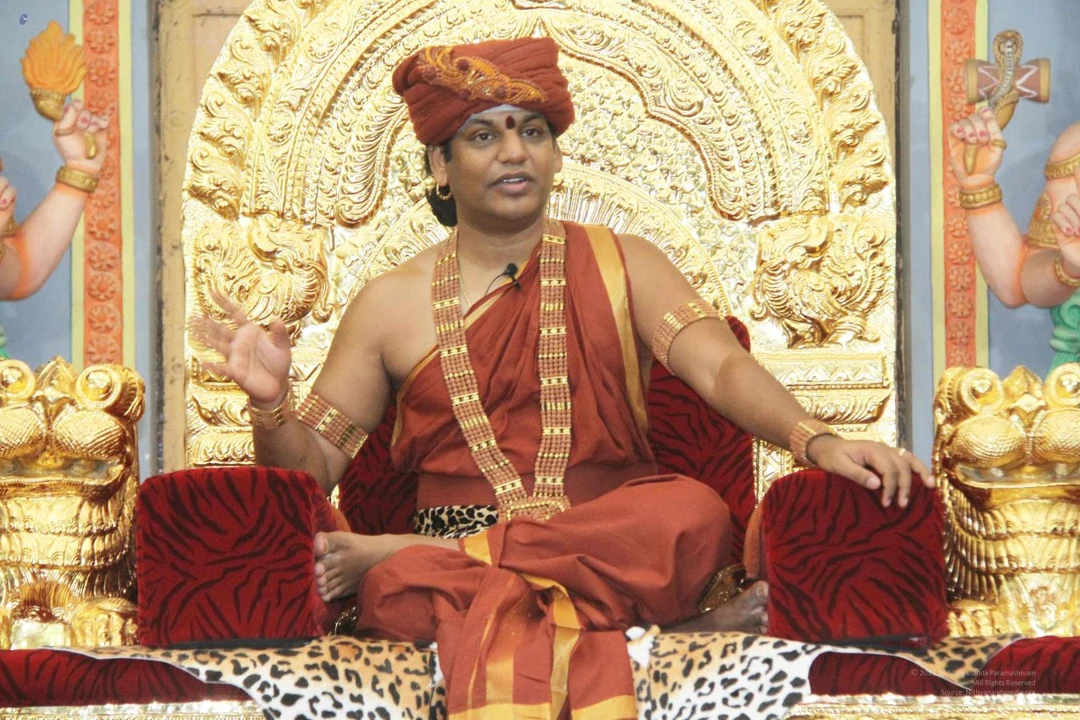
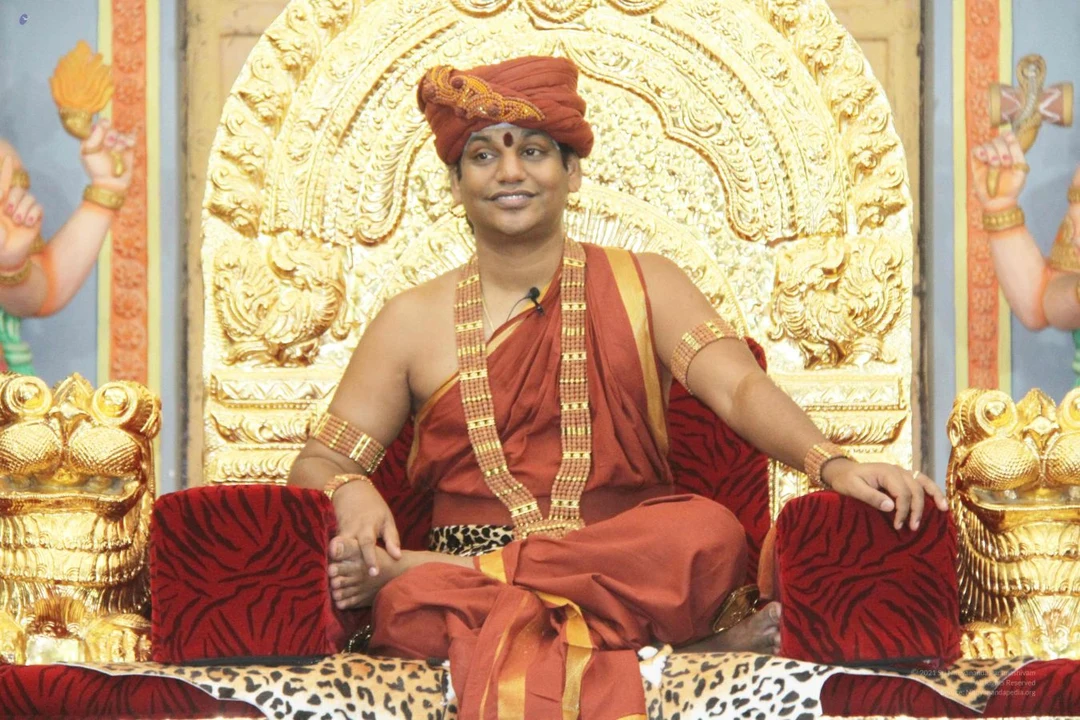
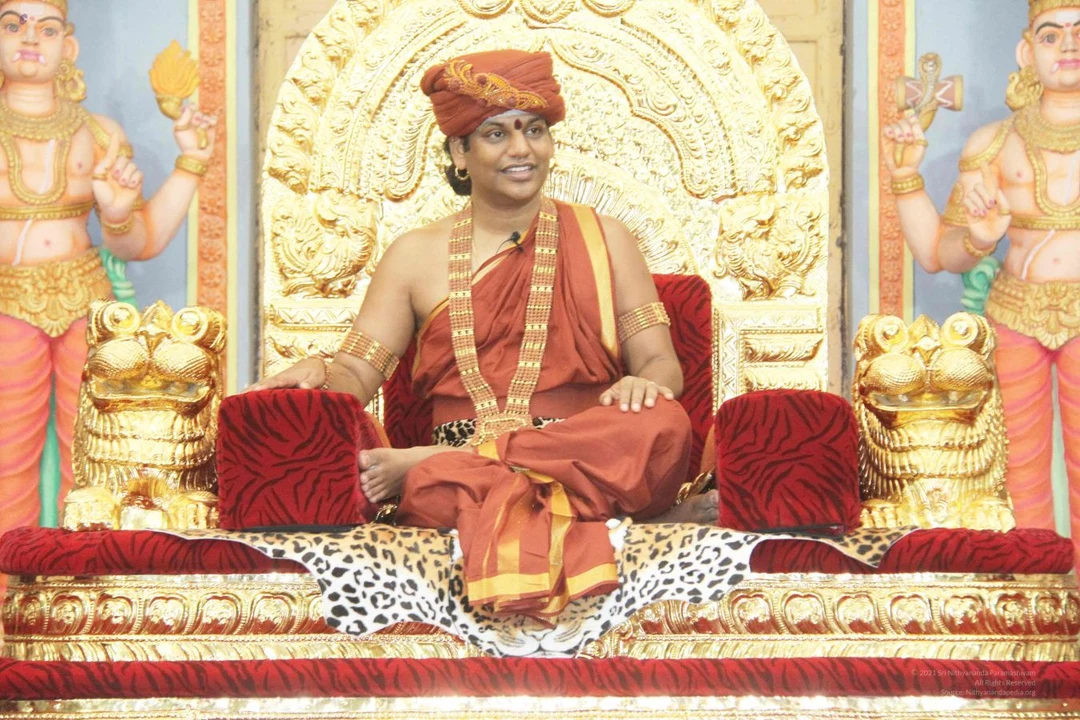
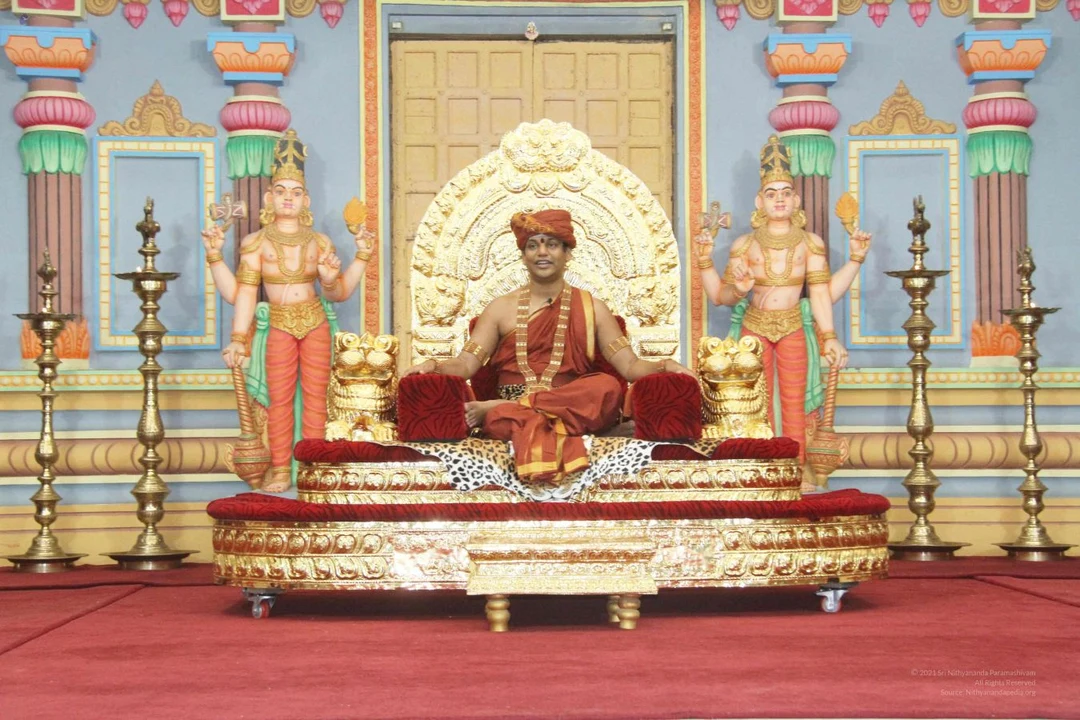
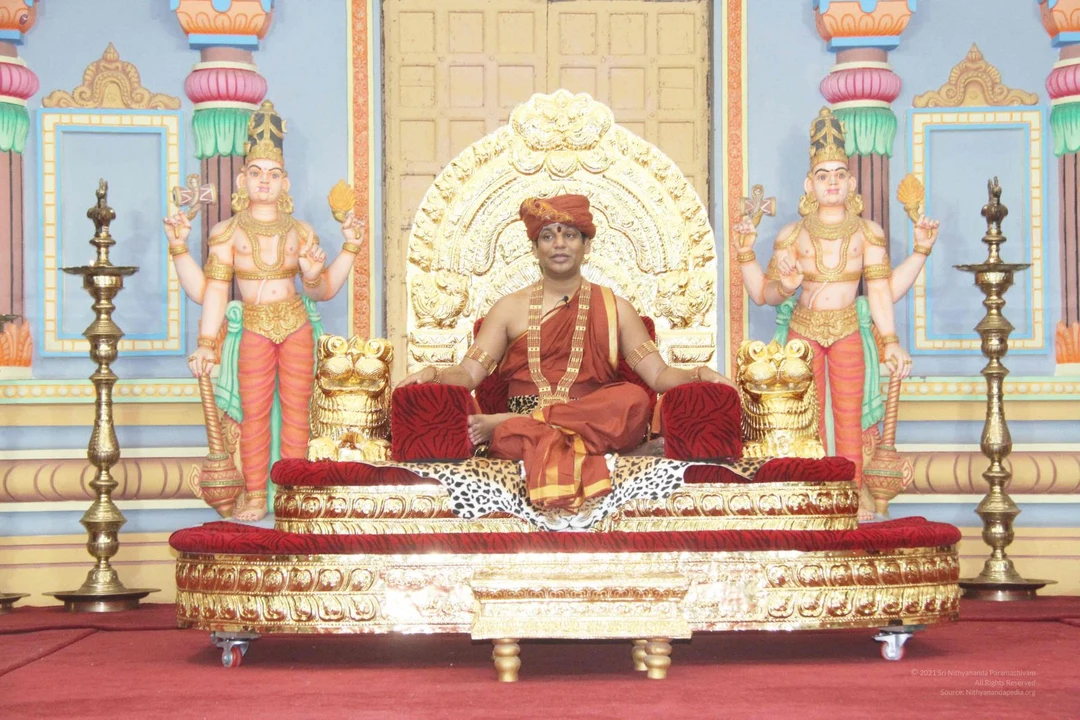
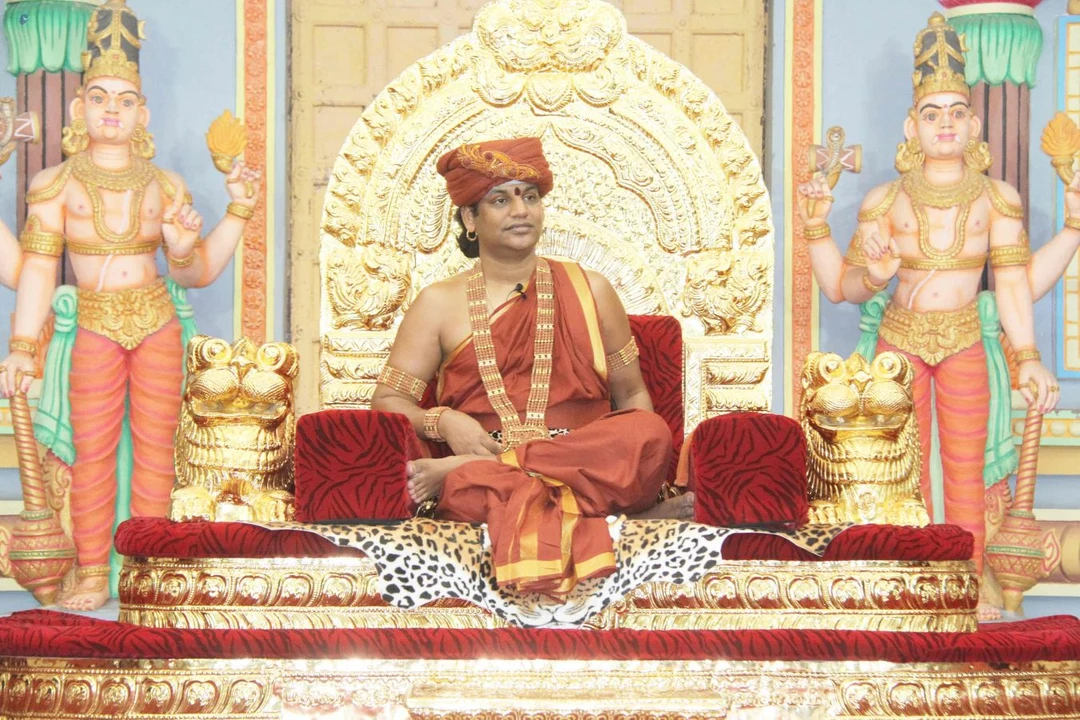
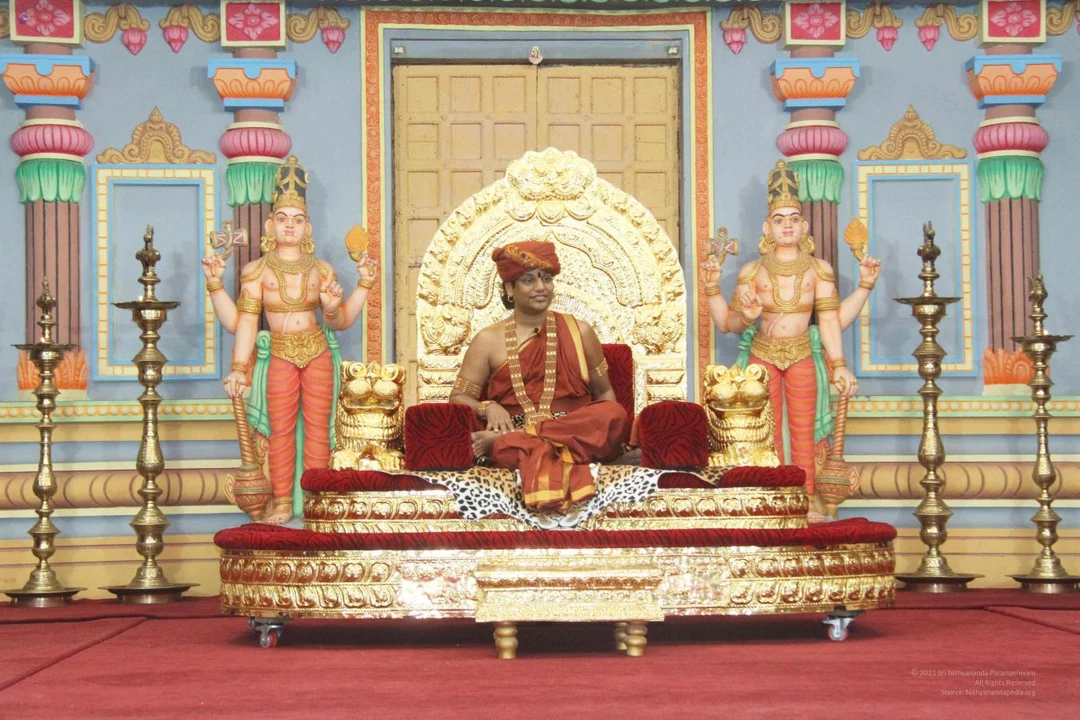
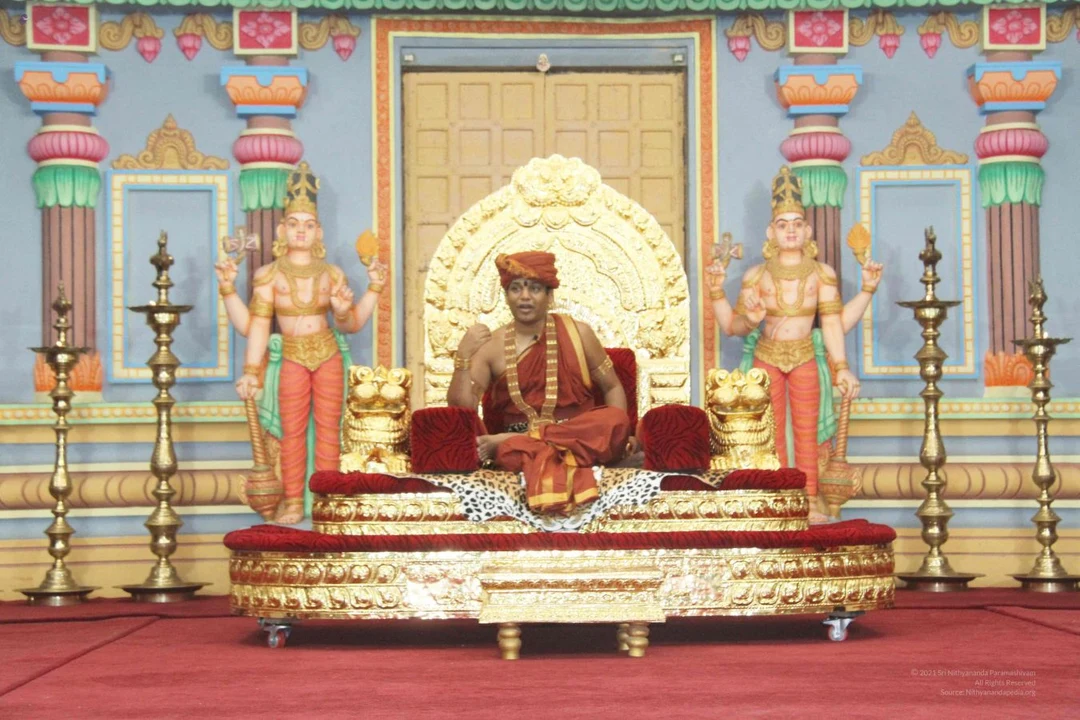
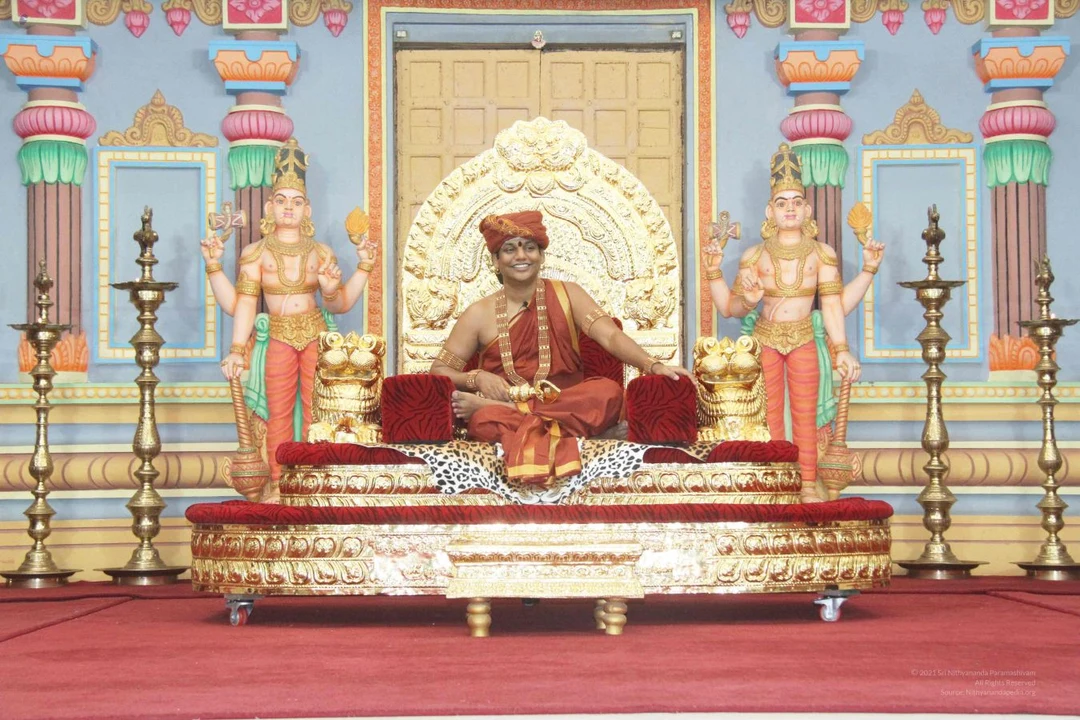
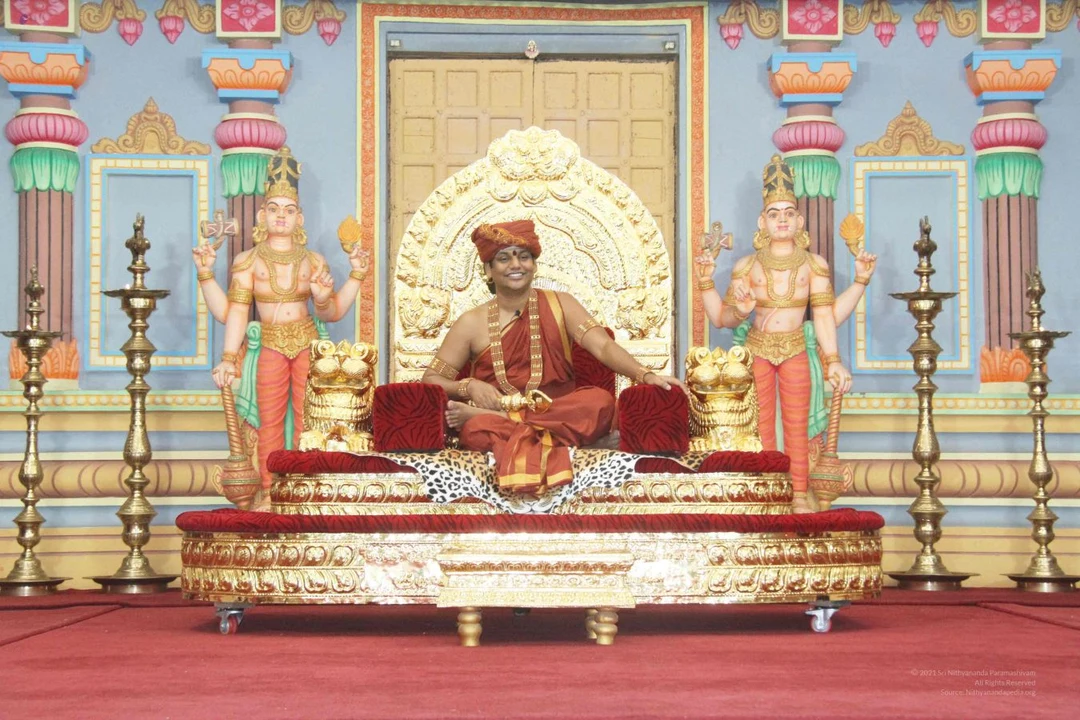
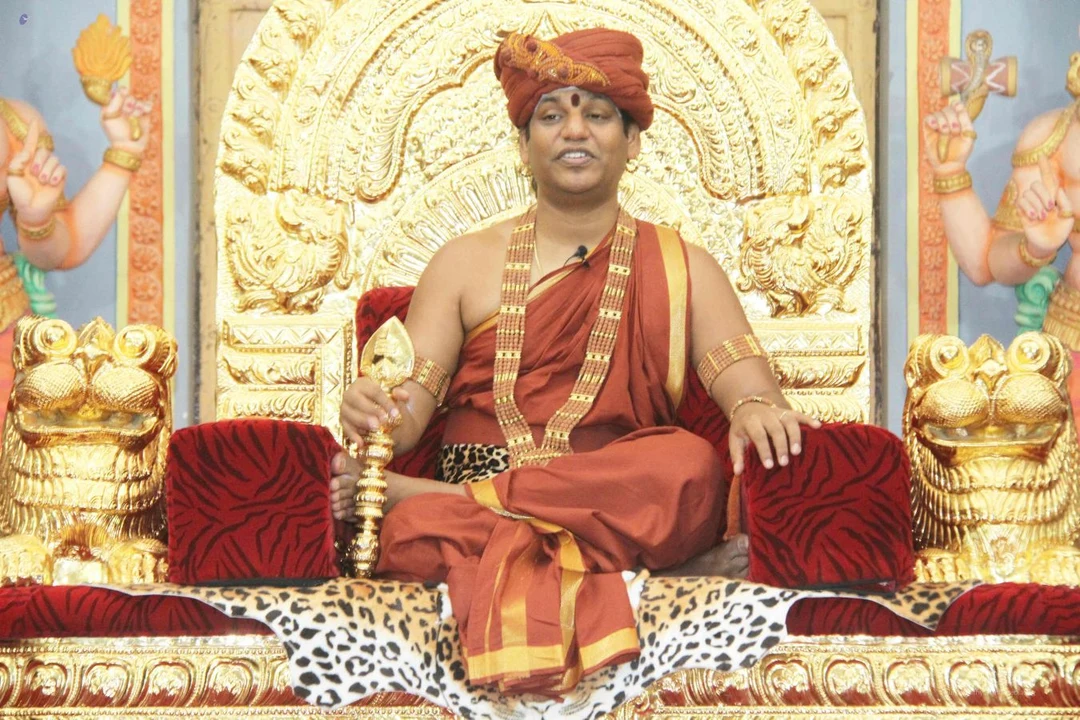
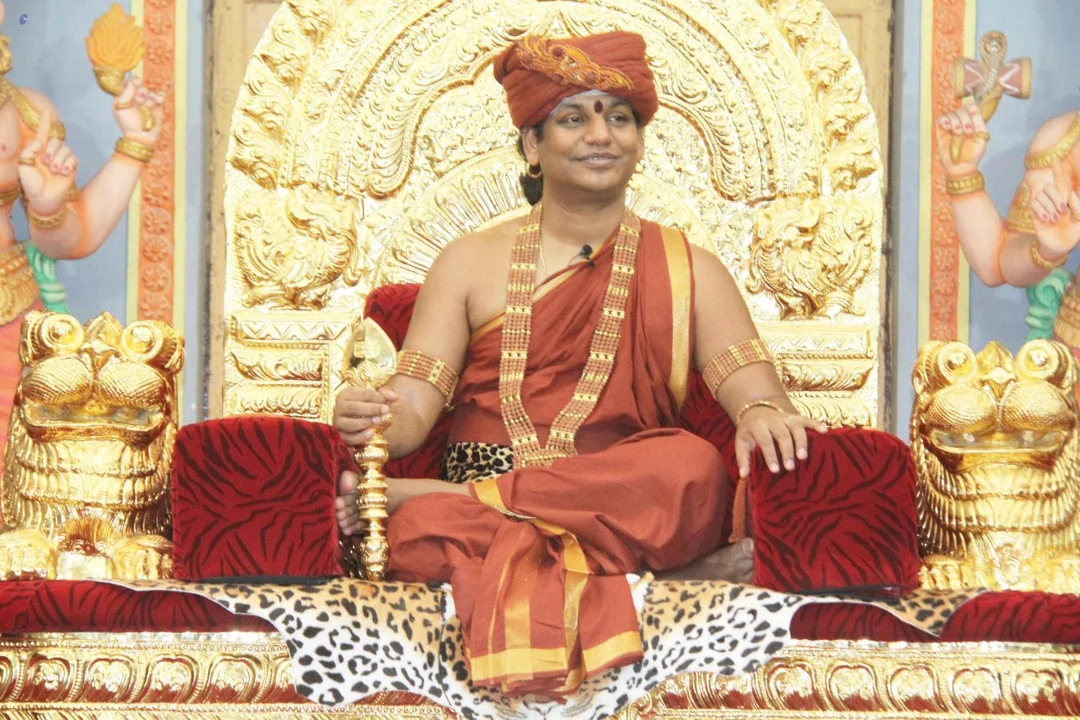
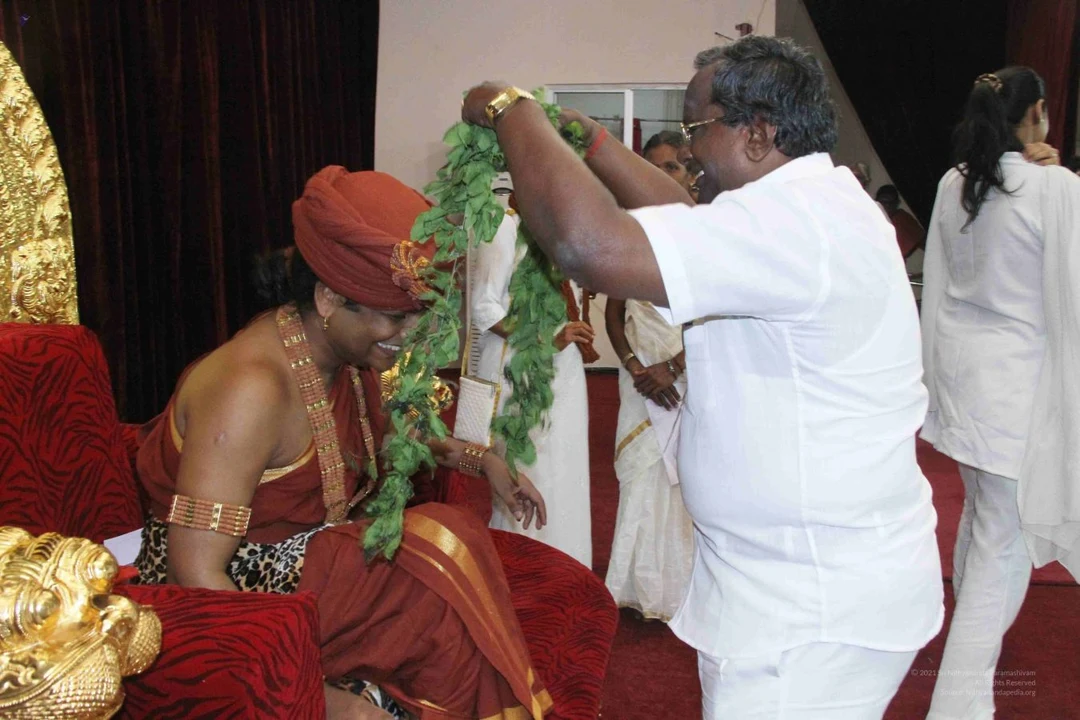
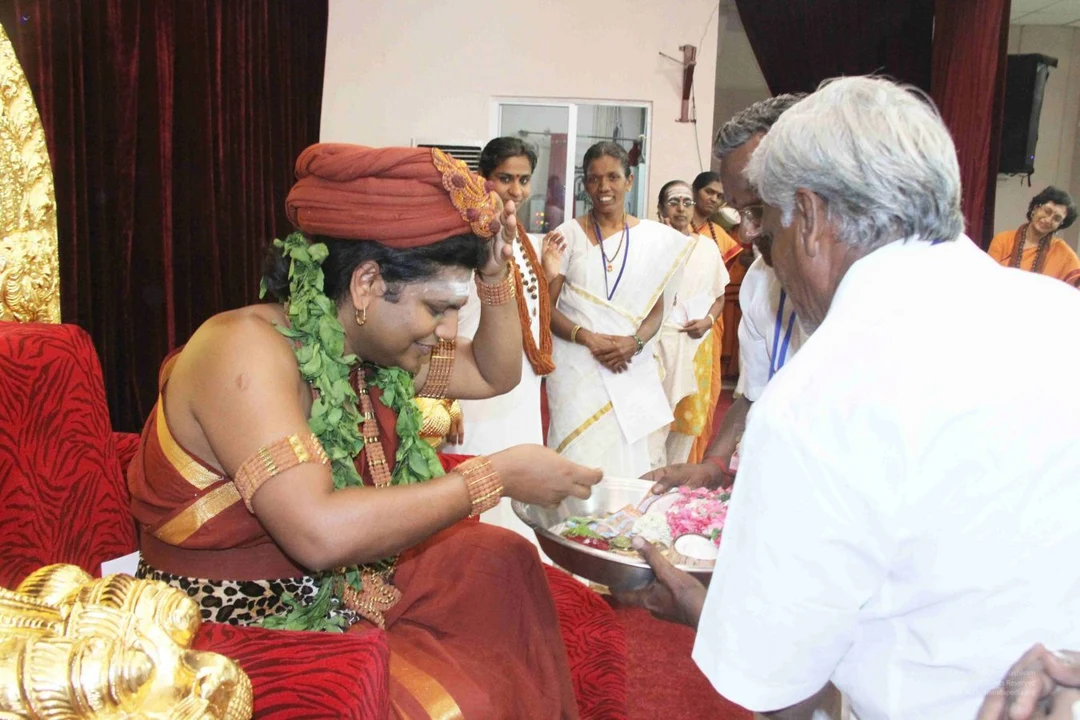
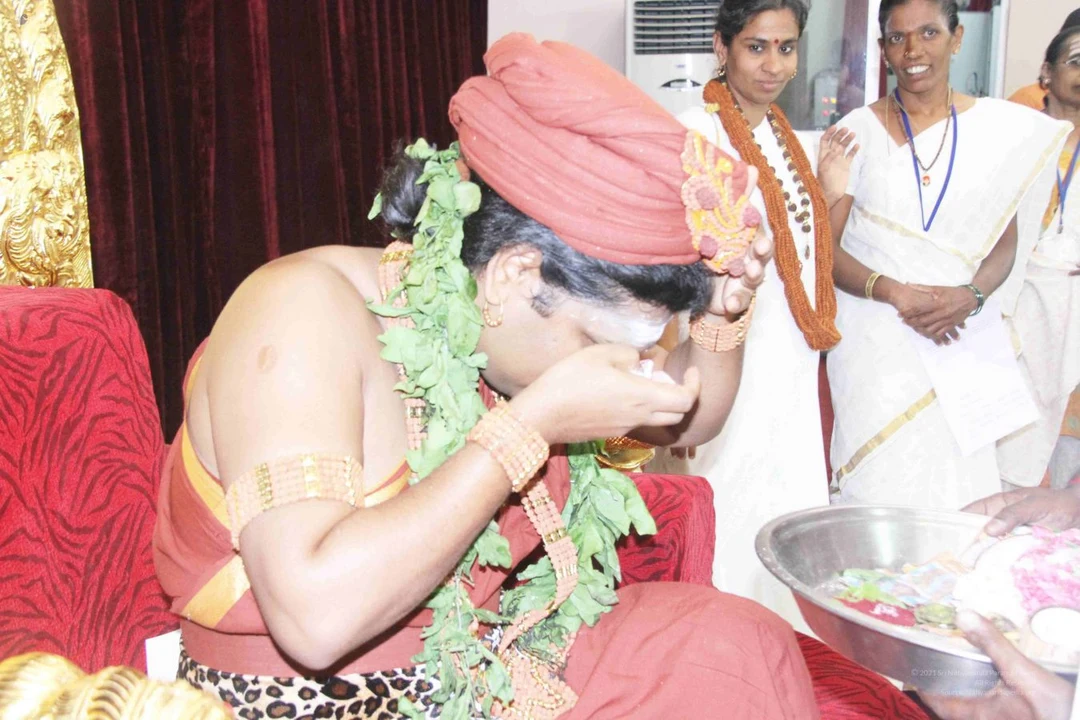
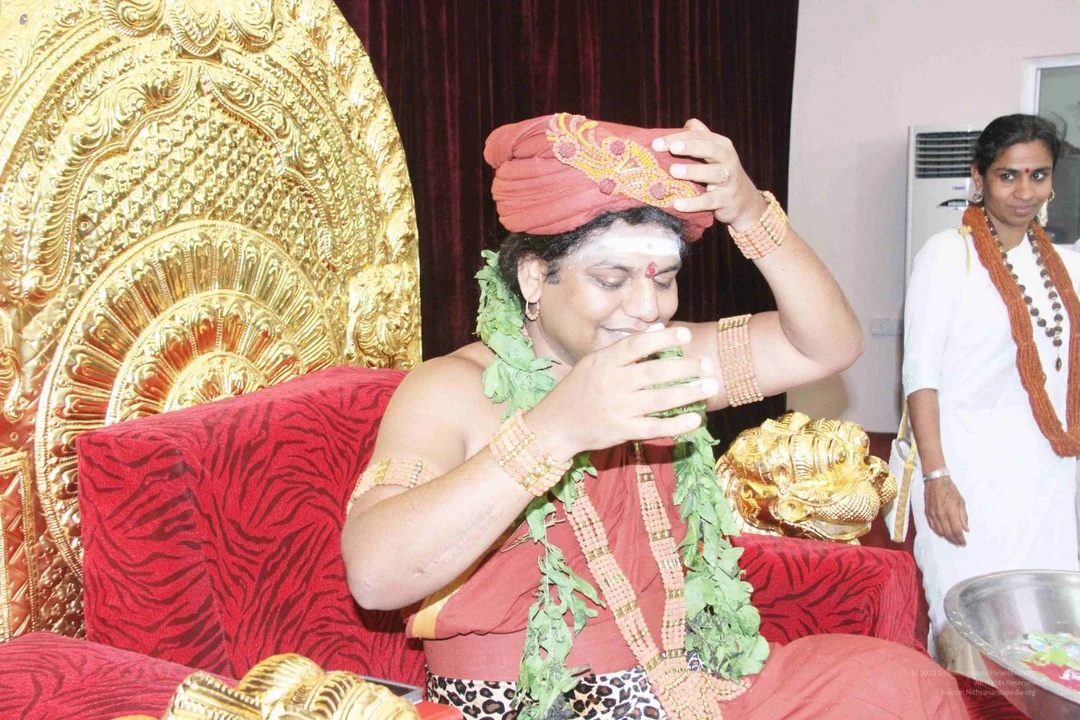
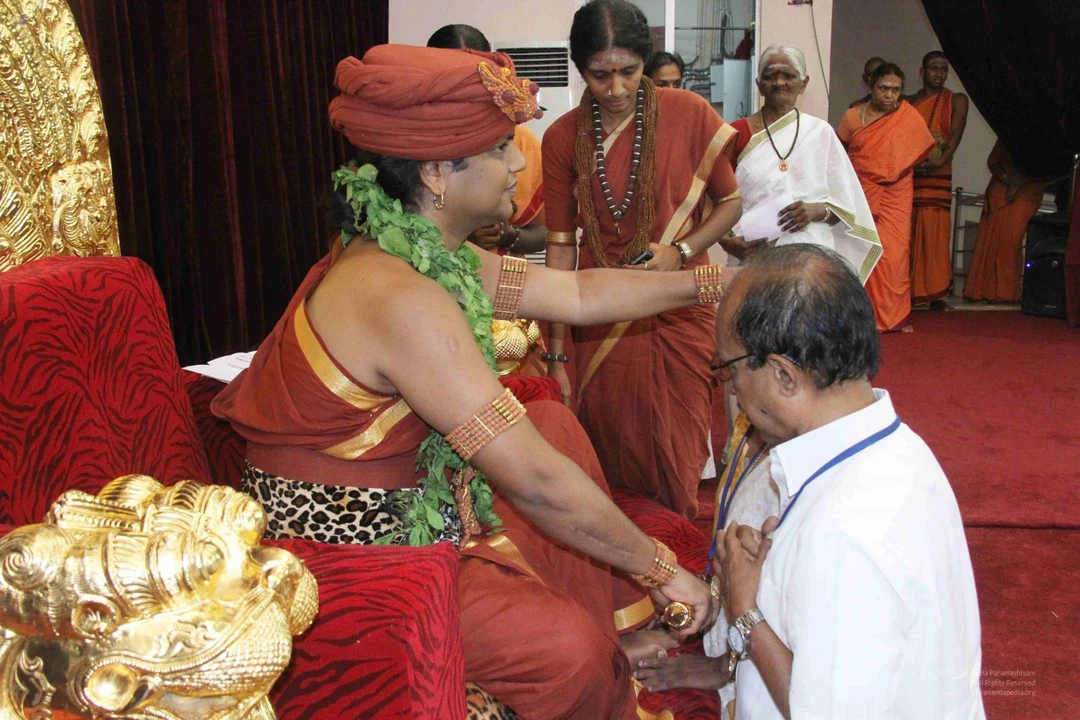
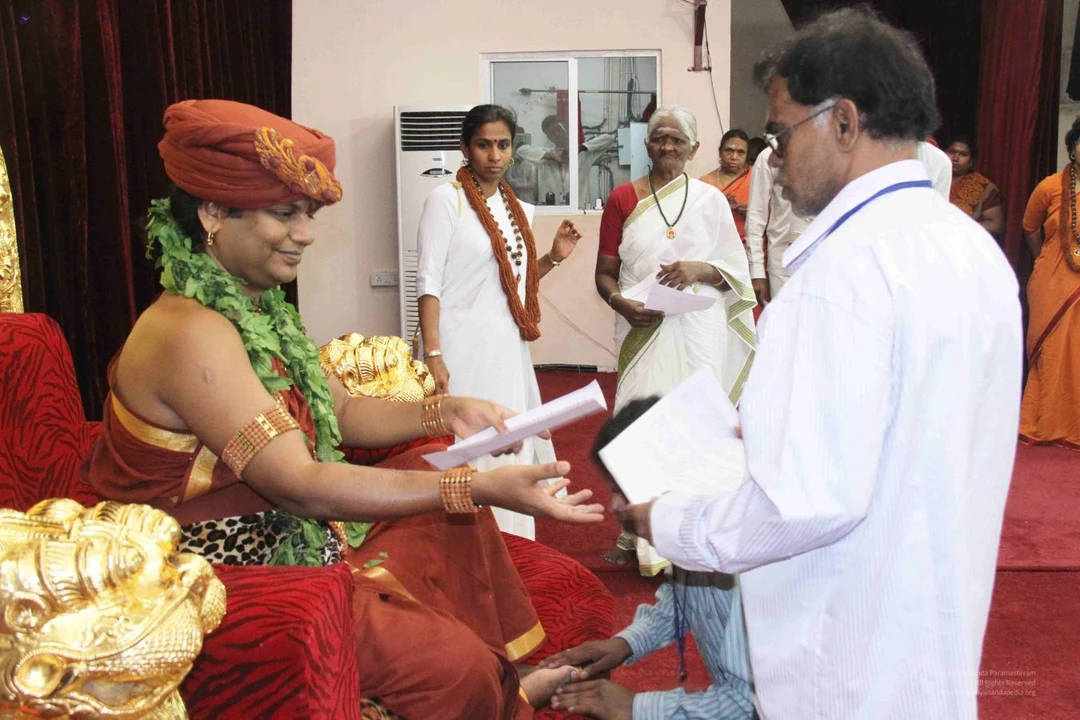
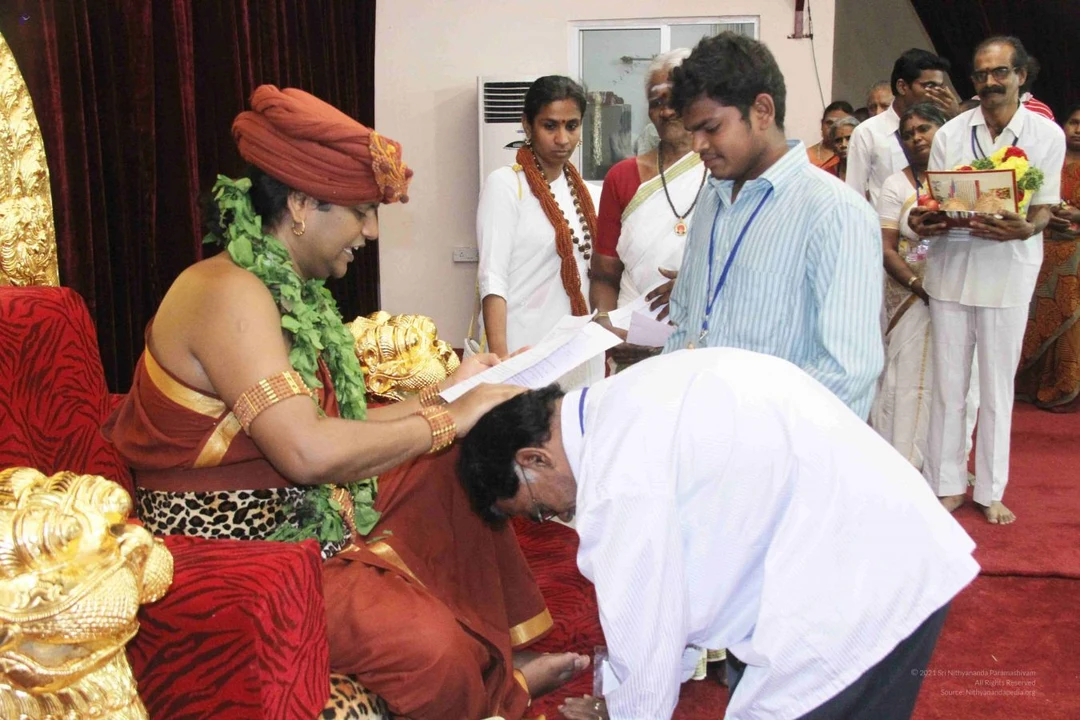
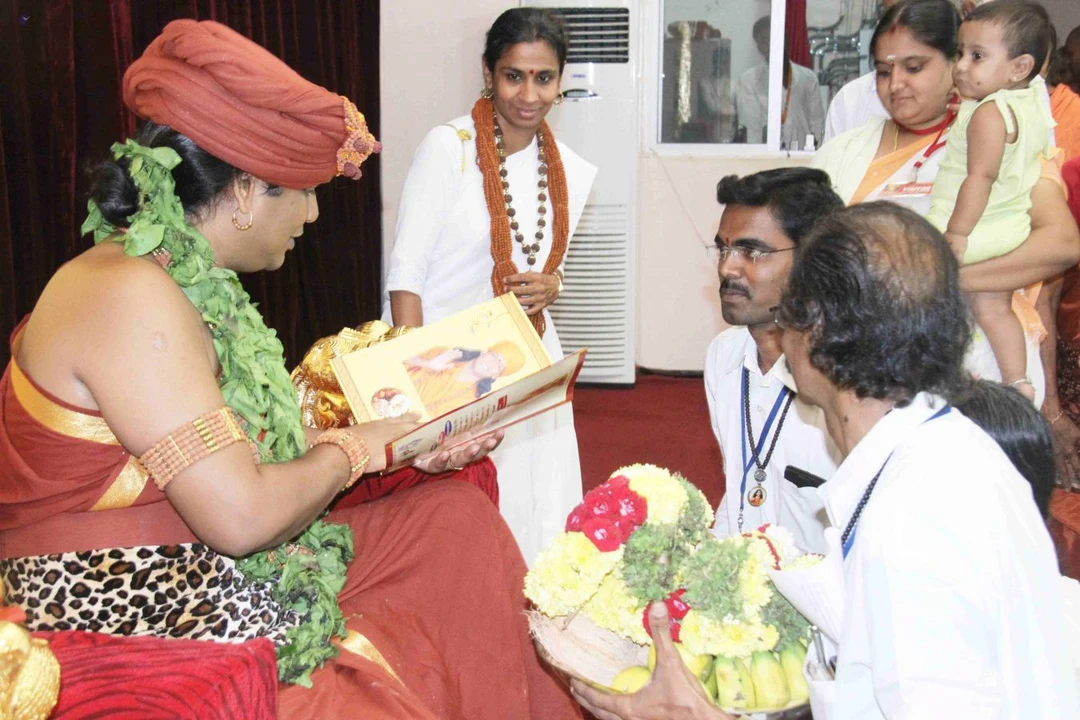
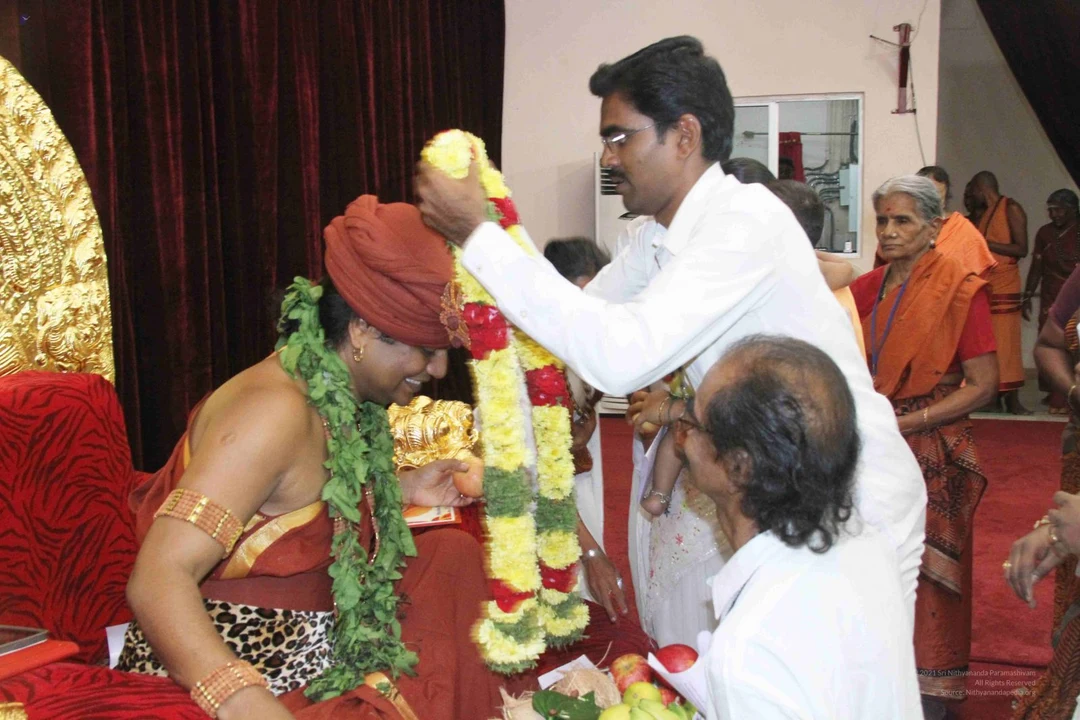
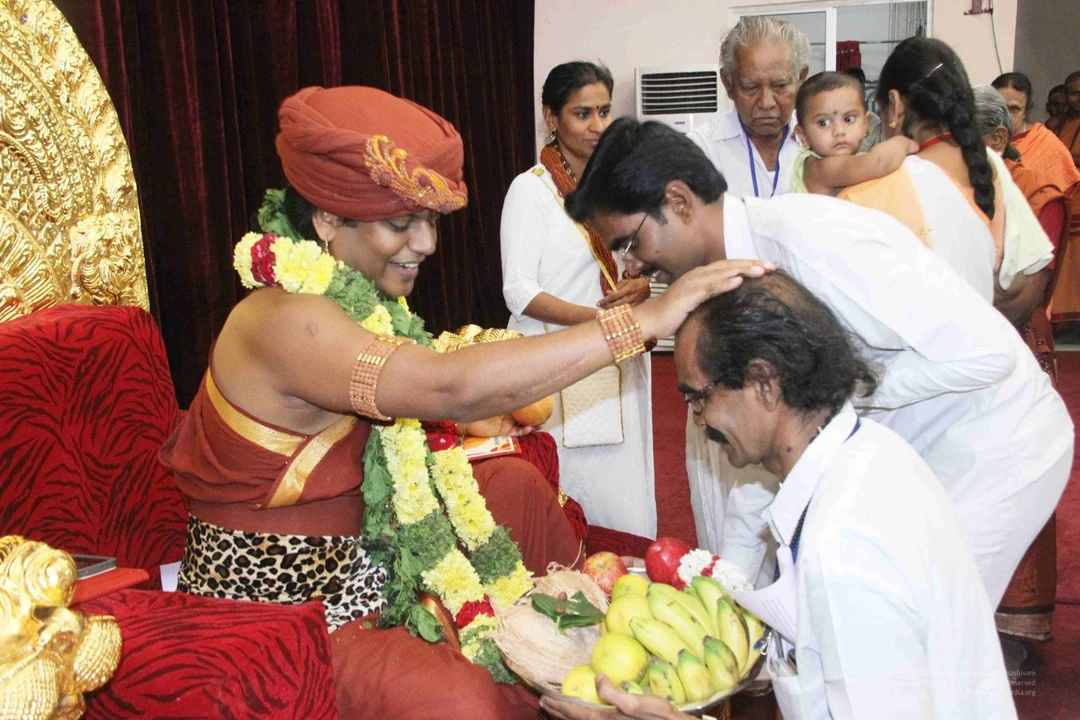
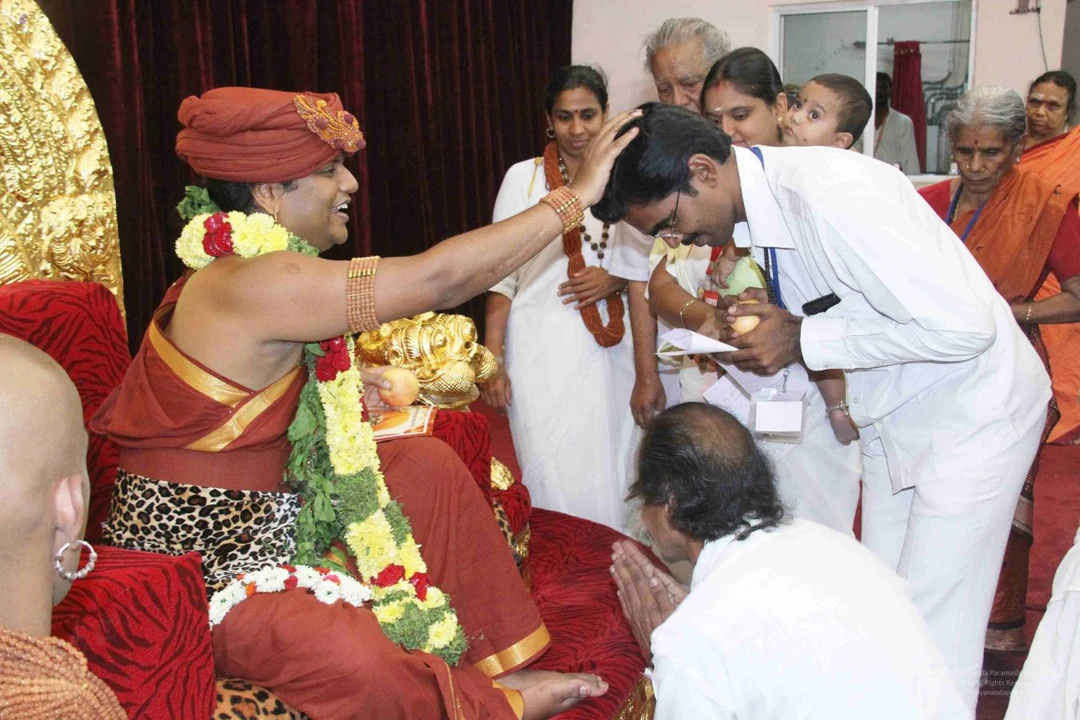
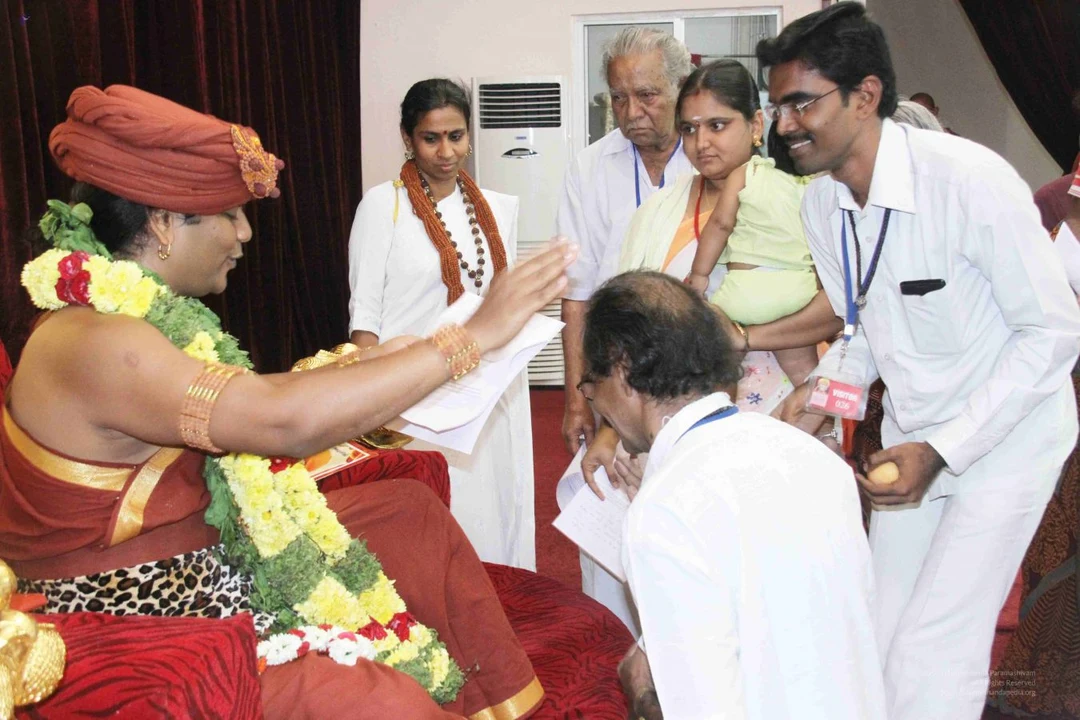
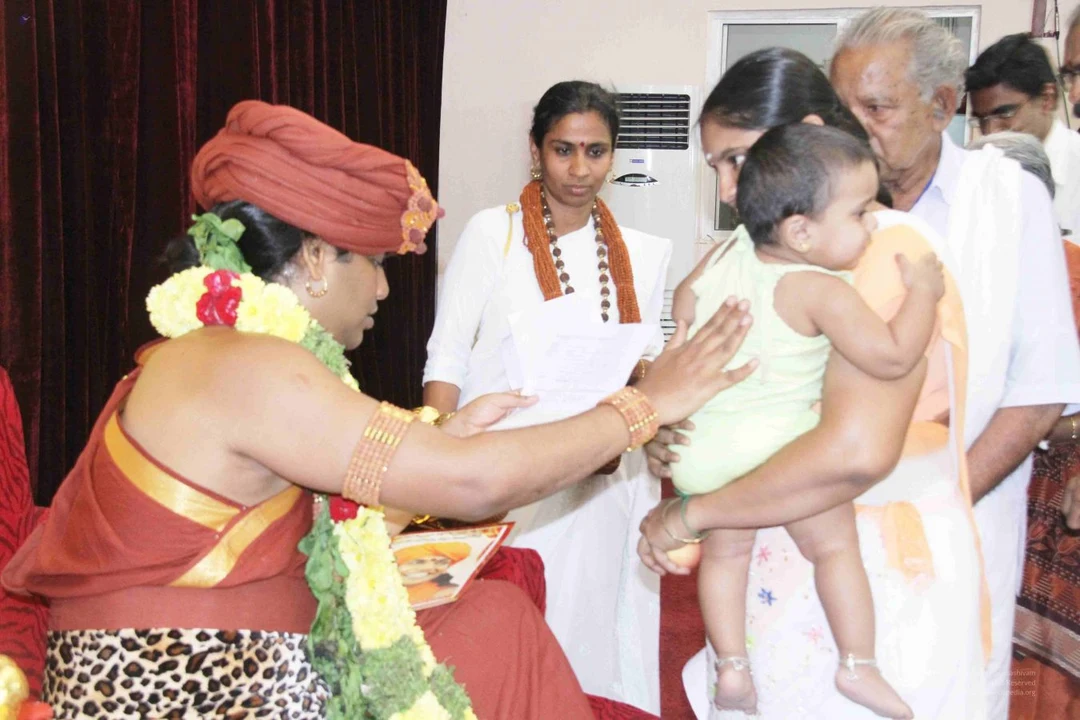
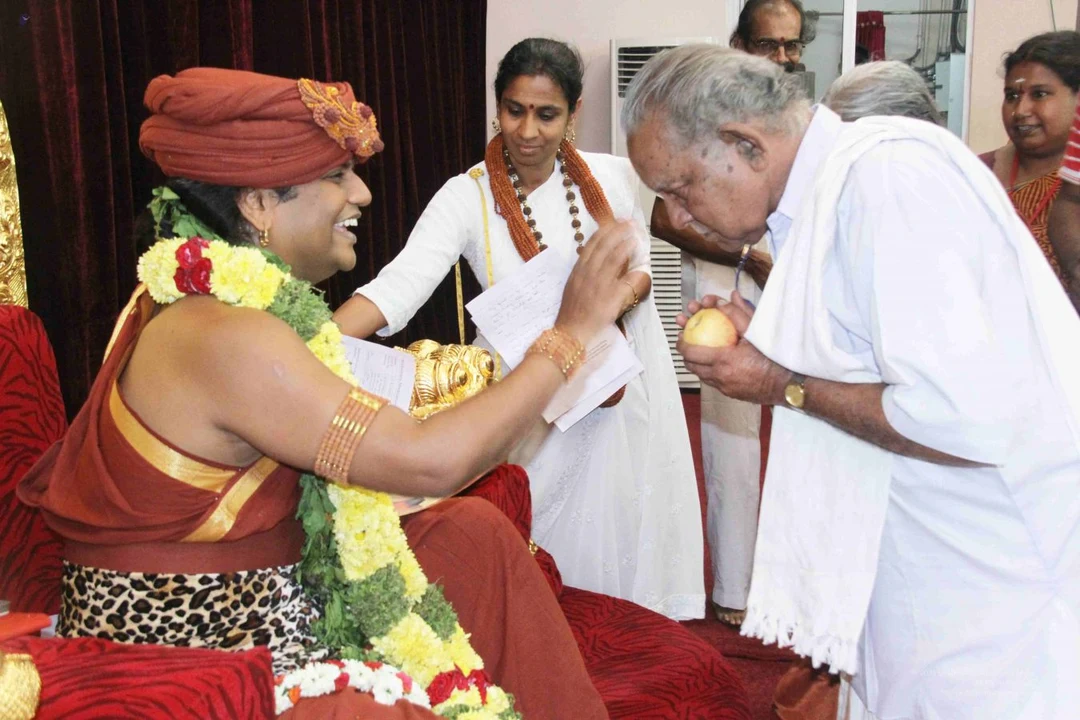
A photograph of a seated figure on a red upholstered throne receiving a garland. The seated person wears a rust-red turban, a green leaf garland, gold bangles, and a red and gold garment, with a leopard-print cloth on the lap. A man in white shirt and trousers stands leaning in to drape a long garland of yellow and red flowers over the seated person's head, while an older man in white kneels beside them. A woman in orange and red sari and other people in saffron and red robes stand in the background near a gold-framed backdrop and red velvet curtain. Fruit and apples lie on a tray in front, and a gold ornament sits on the seated person's lap. Swamiji (probable) is identified by the turban, long hair, bangles and ornate dress worn by the seated figure receiving the garland.A seated man in a red-orange turban and saffron-red robe sits cross-legged on an ornate gold throne with red velvet cushions and a leopard-print cloth, flanked by two golden lion heads. He wears a long rudraksha mala and gold bangles, and his hands rest on the armrests. On either side stand large painted deity murti figures with multiple arms, crowns, gold necklaces and green sashes, each holding ritual objects. Tall brass oil lamps stand at the sides against a blue and gold painted backdrop, with a red carpet below.A seated man sits cross-legged on an ornate gilded throne with carved floral backrest and lion-head armrests, draped in red velvet cushions with tiger-stripe pattern and a leopard-print cloth on the platform. He wears a red-orange turban with a decorative gold emblem, an orange-red garment with gold border, a long multi-strand gold beaded necklace, gold bangles, and a small red bindi, and holds a golden kalasha-shaped vessel in his left hand while smiling. A lapel microphone is clipped to his chest. Flanking the throne are painted deity figures with multiple arms holding a flaming torch and a trident-like staff. Swamiji (probable): the flowing red-orange robe, turban and ornate gold necklaces match the cues, so this is a candidate in person seated on a throne.

April 09 2014

Original wiki page
Contents

Title

Don't Forget Your Real Identity

Description:

In today’s morning Satsang, Paramahamsa Nithyananda speaks on an important concept called Apasmara which made us forget our original possibility. In our ignorance, we believe that we are only the ordinary body and mind which puts us into powerlessness – delusion and Maya. We can remove the Apasmara from our system with the power of Authenticity and remember our one true identity – the non-dual space of Advaita.

VideoAudio

Transcript:

(00:15)

Nithyānandeśvara samārambhām Nithyānandeśvari madhyamām | asmat āchārya paryantām vande guru paramparām ||

(00:41)

(In Hindi)

Is samay hamare saath upasthit sabhi bhakto, sanyasiyon, aur shishyon ka prem evam ashirvad sahit swagat karta hun.

इस समय हमारे साथ उपस्थित सभी भक्त, संन्यासी, और शिष्यों का प्रेम एवं आशीर्वाद सहित स्वागत करता हूं।

(00:54)

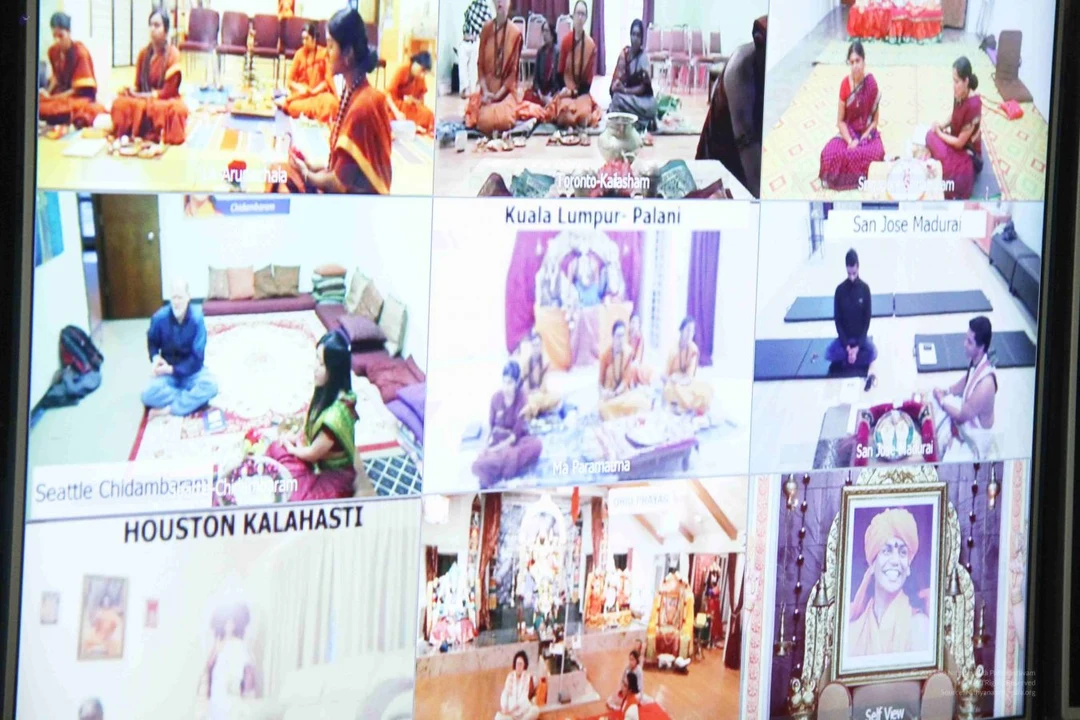
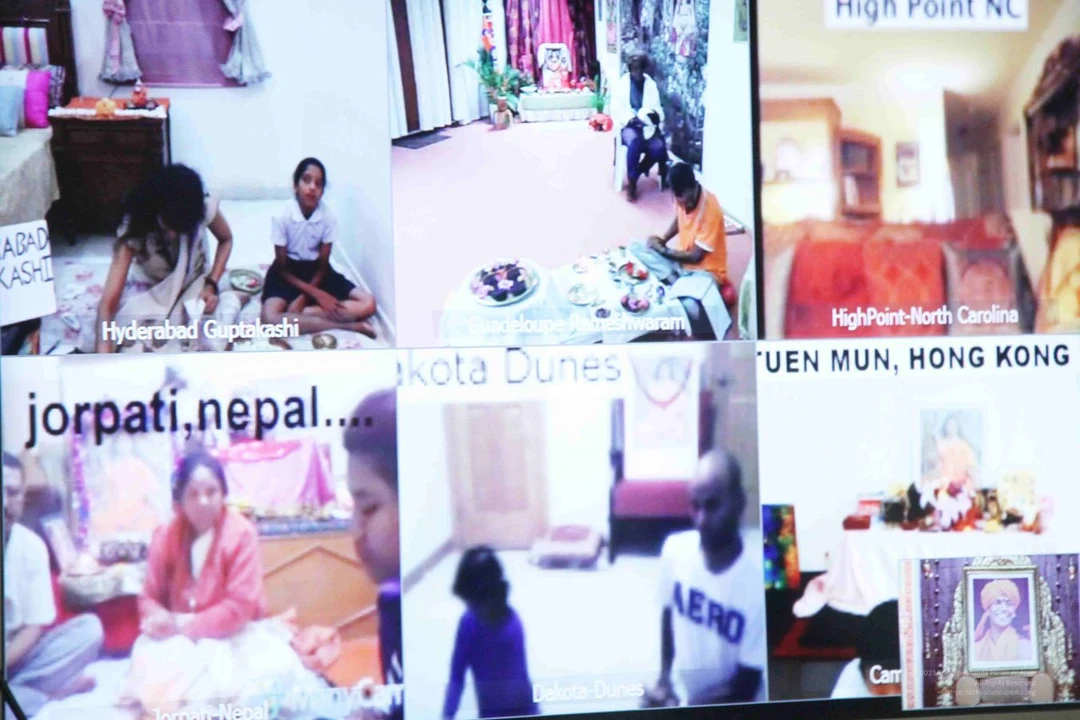
I welcome all the disciples, devotees, samajis, satsangis, Sri Mahants, Kotharis, Thanedars who are all sitting with us all over the world through Nithyananda TV, Lotus news channel, Sadhna TV, Janashree TV, Eshwar TV, through two-way video-conferencing having Nayana Deeksha in 27 cities in many countries around the world.

The cities sitting with us in two-way video-conferencing having Nayana Deeksha: Singapore-Singaporum, Houston-Kalahasti, Kuala Lumpur-Palani, San Jose-Madurai, Dakota-Dunes, Guadeloupe-Rameshwaran, Jorpati-Nepal, Tuen Mun-Hong Kong, Hyderabad-Gupta Kashi, High Point-North Carolina, Hong Kong -Sota, Ohio-Prayag, San Jose-Madurai, Houston-Kalahasti, Singapore-Singaporum, Haridwar, Los Angeles-Arunachalam, Kuala Lumpur-Palani, Nithyananda Nagaramu- Hyderabad, Singapore-Singapuram, Dakota-Dunes, Toronto-Kailasam, Nithyananda University-France, Juarez-Mexico, Hosur Dhyanapeetam, San Antonio-Texas, Dubai- Vaidyanatham. With this, I welcome all of you with My love and respects.

(02:45)

Today I’ll expand on how the Advaita makes you light. Please understand your weight is not physical…. Your heaviness is metaphysical…. Listen! your weight is not physical. Your heaviness is metaphysical. Is aircraft more heavier than you or more lighter than you? Birds which are flying, are they more heavier than you or more lighter than you? Weight being heavy or being light is in no way related to you. How the modern-day physics has developed theories for flying: If you push more air, the body which pushes can be can be flying. There are so many theories. I am not great adept in this Physics. But you know there are many modern theories developed about flying, how to fly and all that.

(04:52)

In our ancient sacred spiritual tradition, one principle is used to make your body understand and radiate different laws and principles and energies. This one principle, principle of Advaita, the one energy, energy of Advaita can be expressed in thousands and thousands of ways through your body and mind. Yesterday I was talking that Varanasi is the city of people who can only fly, who has the capability to fly. In Satya Yuga, the flying was only by the “Mantra”. In Dwapara Yuga, it was by “Mani”. In Treta Yuga, it was by “Oushadha”. In Kali Yuga, human being fell on the ground! That is why there are now walking on the drainage.

Anyhow let Me come to what I am going to explain. What I wanted to explain, what I wanted to share with you all. Please listen, your heaviness has nothing to do with your body mass. Your heaviness is all something to do with your thought-trend. Your heaviness is all something to do with your thought-trend. Go on corrupting your thought-trend, you will see heaviness becomes lifestyle. Go on corrupting your thought-trend, heaviness becomes your lifestyle. Please listen I am not supporting putting on weight. I am not saying you can weigh any number of kilograms you want. No.

(07:13)

Yesterday only I was, we were having teamily dinner with Kotharis in the night, and morning breakfast with Mahants; morning with Mahant, dinner with Kotharis, teamily dinner. I was telling them, ‘The food which stays in your lip more will not stay in your hip more! The food which does not stay in your lip more will stay in your hip more!’ Because, your stomach has no teeth; it cannot grind; and the food which is not completely digested will naturally become the fat, accumulated. So listen, I am not supporting putting on weight. All I am trying to tell you is, just by defusing the heaviness you feel every morning when you wake up and just by defusing the heaviness you feel every night you fall asleep, you can start levitating! The defusing of the patterns, making you feel light, can be done even by the Master’s presence and Kundalini awakening; but after that you should take care that you build the right patterns to retain that inside you.

(08:43)

By defusing your patterns, I can give you that lightness in one touch, it’s through initiation. But you can’t, you won’t be able to maintain it unless you prepare yourself with all your teamily members, convinced about Advaita. Please listen not just your husband, brother, father, mother, son, daughter, the people with whom you work are your teamily members; your brain, heart, kidney, liver, intestine, emotions, anger, love, compassion, all of them are your teamily members. Sit with all of them and complete. Because, many times, your anger is pulling you in the direction completely opposite to where you want to travel. In Shiva Mahapurana, there is one demon described “Apasmaraka”. This one demon cannot be destroyed by anybody other than Mahadeva, and Mahadeva also, only in the form of Guru he can destroy Apasmaraka. Apasmaraka means forgetting your original nature. He(Apasmaraka) covered even Devi, put her in delusion. Devi forgot she is “Ardhangini” of Mahadeva, Devi forgot she’s part of Mahadeva and fallen into Apasmaraka.

(11:01)

All of you, whether you are a Ma Swami or Shri Swami, Swami or Swamini, all of you are caught by Apasmaraka. You forgot your original truth that you are a Advaiti, you are in the non-dualistic space. Even Mahadeva cannot kill Apasmaraka by Trishul. The Purana beautifully says, ‘The tip of the tongue of Mahadeva, the words he utters, only through that he can remove Apasmaraka.’ Means, only by teachings whole thing what I am doing is nothing but killing the Apasmaraka who has covered your life. You have forgotten your higher existence. You have forgotten your higher possibility. You have forgotten who you are. First you become a victim of your body thinking that is you and that little excitement is what is life. Then you become the victim of your mind thinking that award, reward, recognition is part and parcel of your life and body. Then you became victim of your own ignorance which is mixture of body and mind; means, the powerful confusion which makes you believe it is a stable organ, the powerful confusion which resides in you which makes you believe it is stable part of you is mind.

(13:15)

Understand just like a tornado. If you would have seen tornado in photographs or in real you will know it is only a few minutes’ phenomena. Wooooooooooo...! I have seen one tornado and heard the sound; it will be almost like a siren! You should understand the full truck not Indian size, the U.S. size truck – the full truck, around eighty feet, a full truck with its complete load will be just sucked into the air and made to pieces like a hay-straw and thrown all over the area! That will act as a missile and hurt the houses and people! That is the way the tornado destroys. Tornado is just a few second phenomena; but if tornado convinces you it is a stable part of your life, how foolish you are! Same way, the mind-body delusion, confusion, which is a few second phenomena convinces you because it happens again and again and you also allow it to happen again and again. It is a eternal phenomena. That is is mind. If you stop jumping from one tornado to other this moment the tornado will …..

(14:59)

Photos From The Day:

Nithya Satsang
Photos Of The Day:

Nithyananda-Satsang
Photos Of The Day:

Pada-Puja

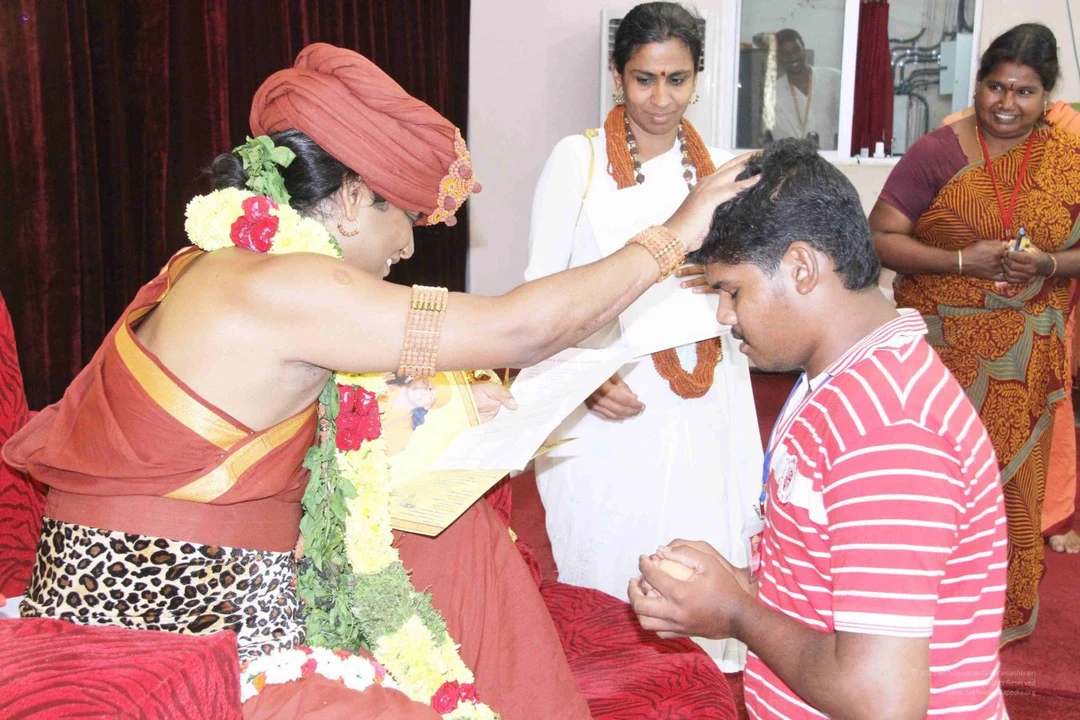
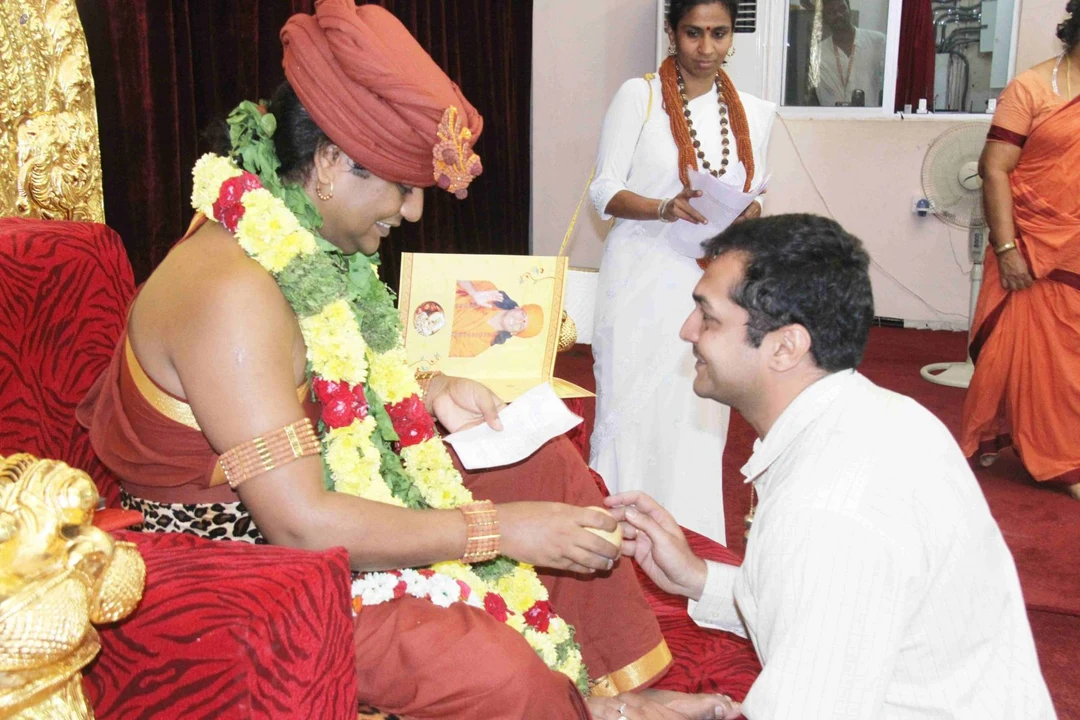
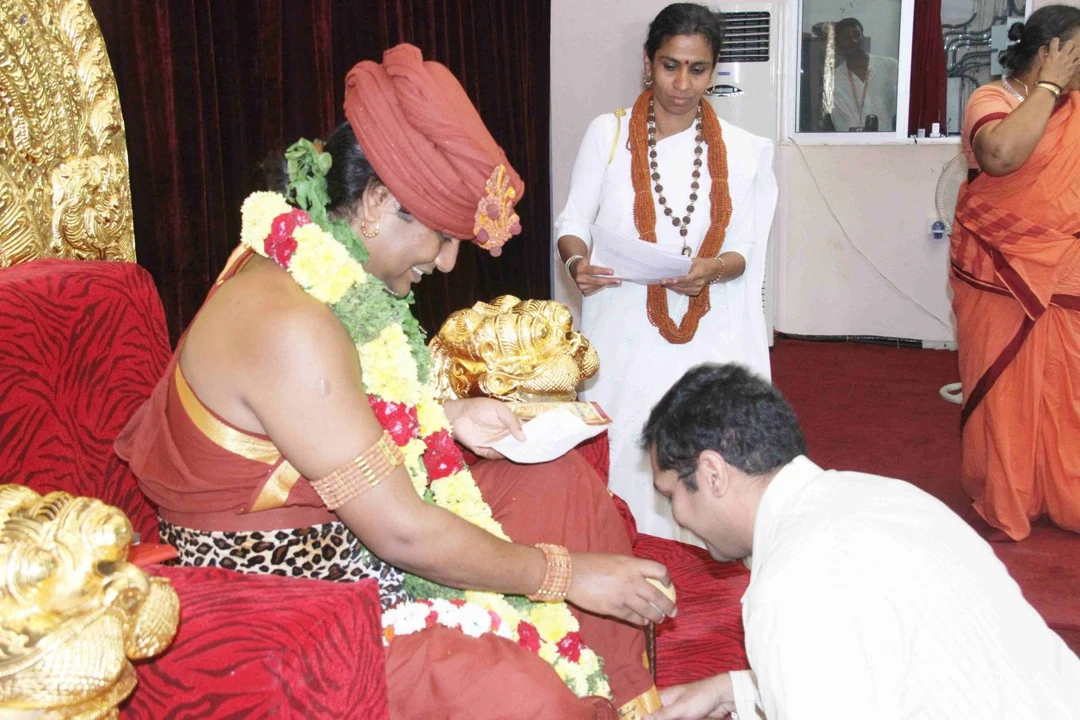
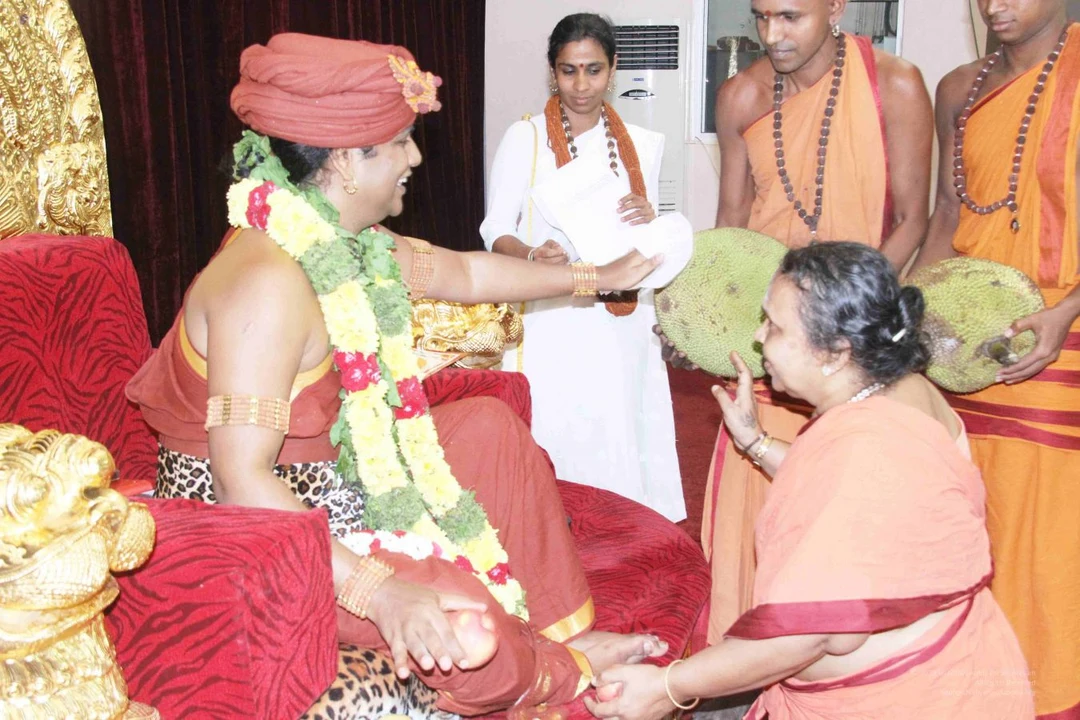
Kalpataru-Darshan

Photos from this day

View all 148 photos

Nithya Satsang

5 photosSource gallery
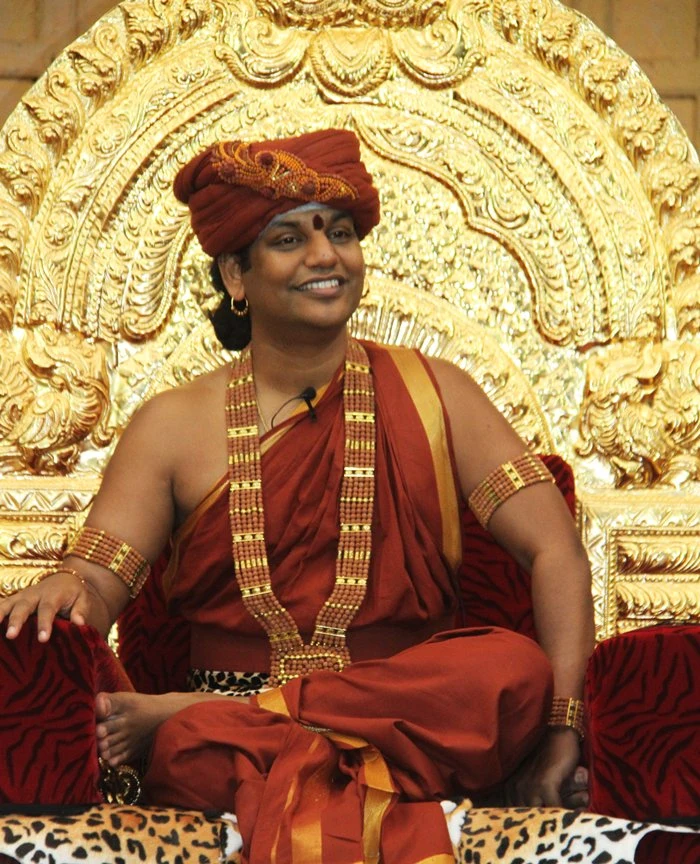
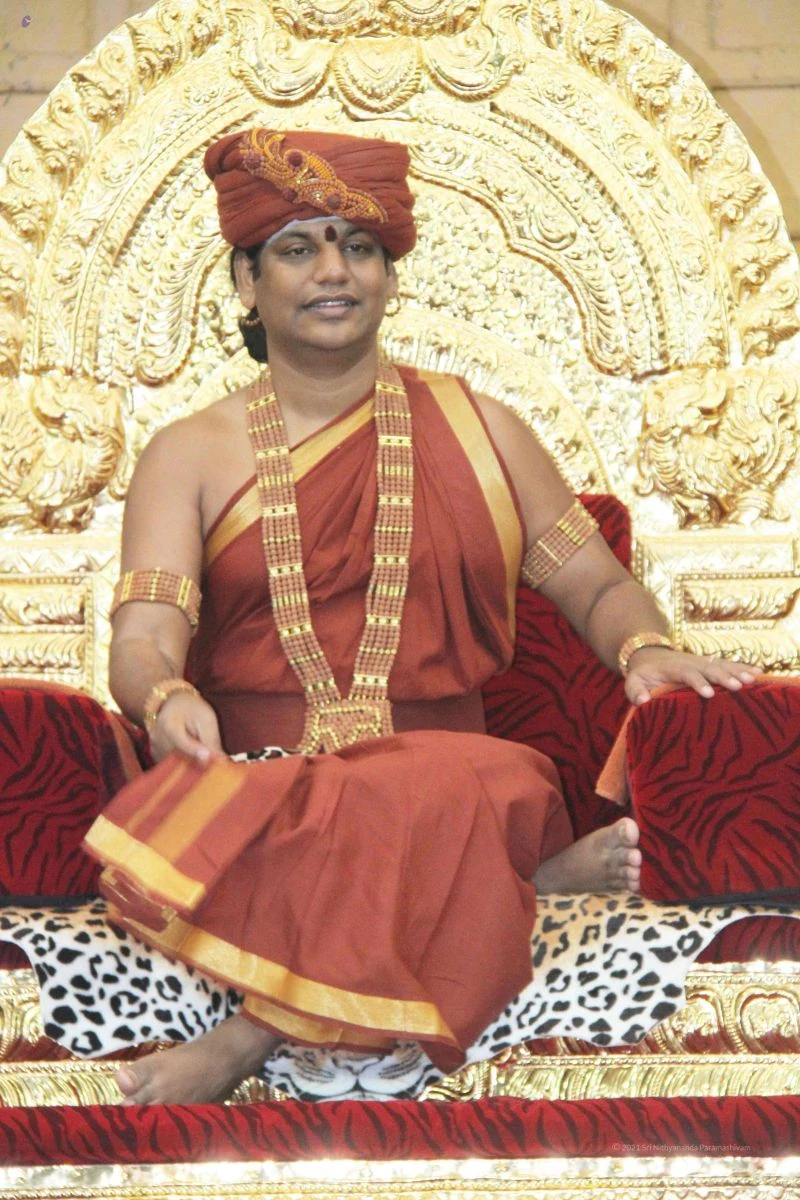
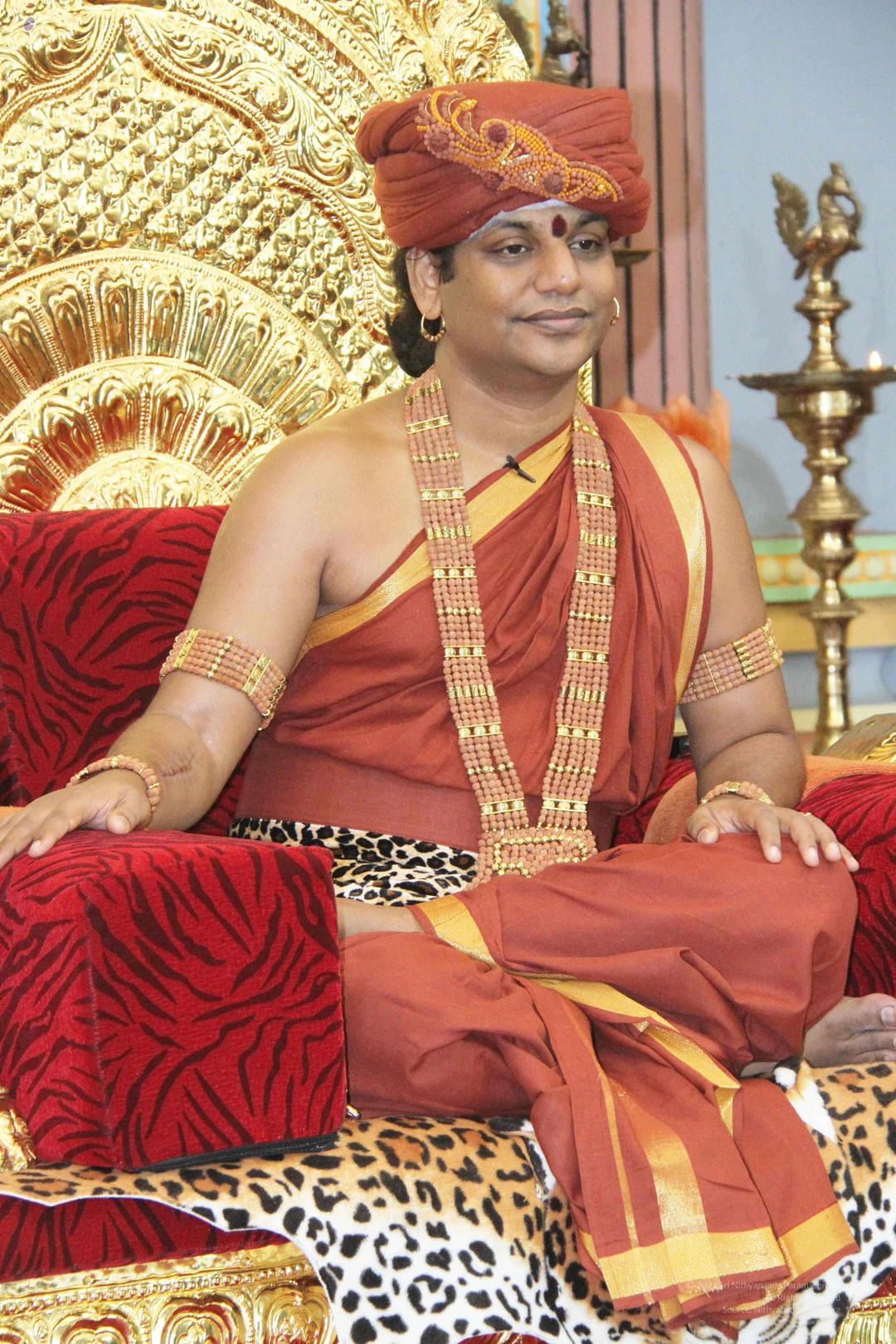
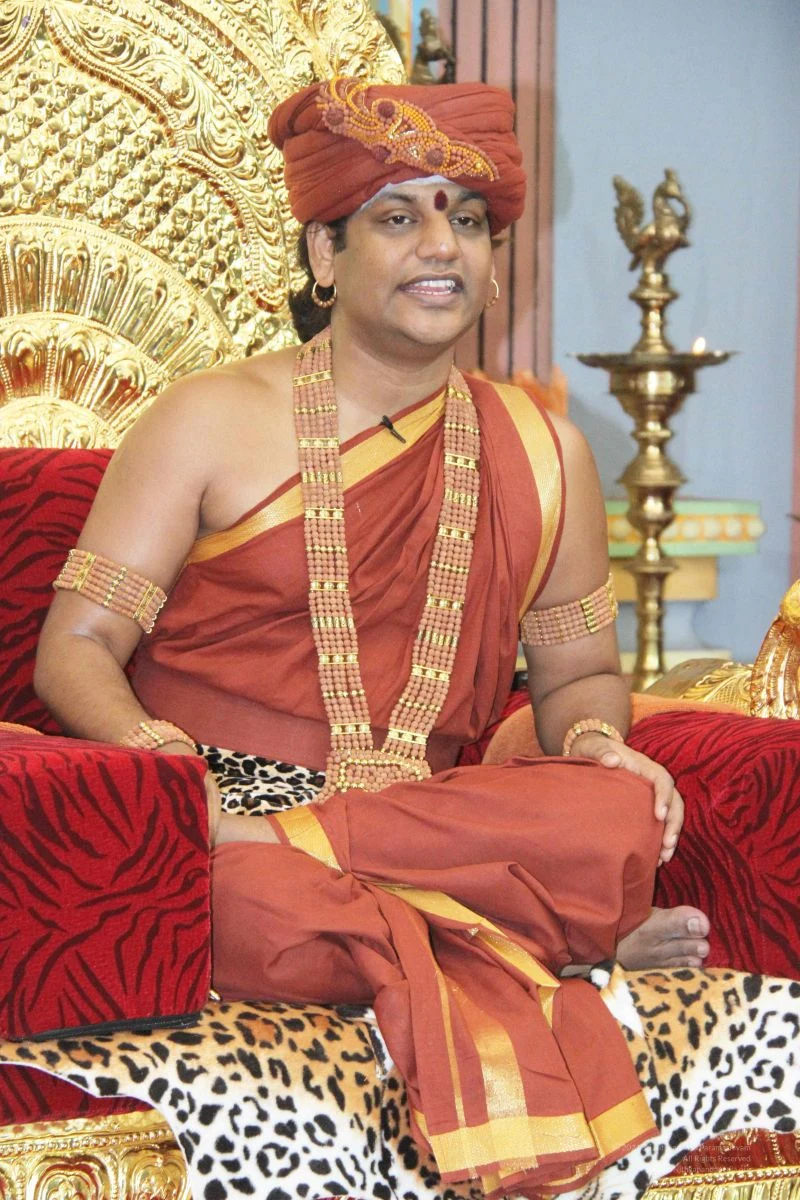
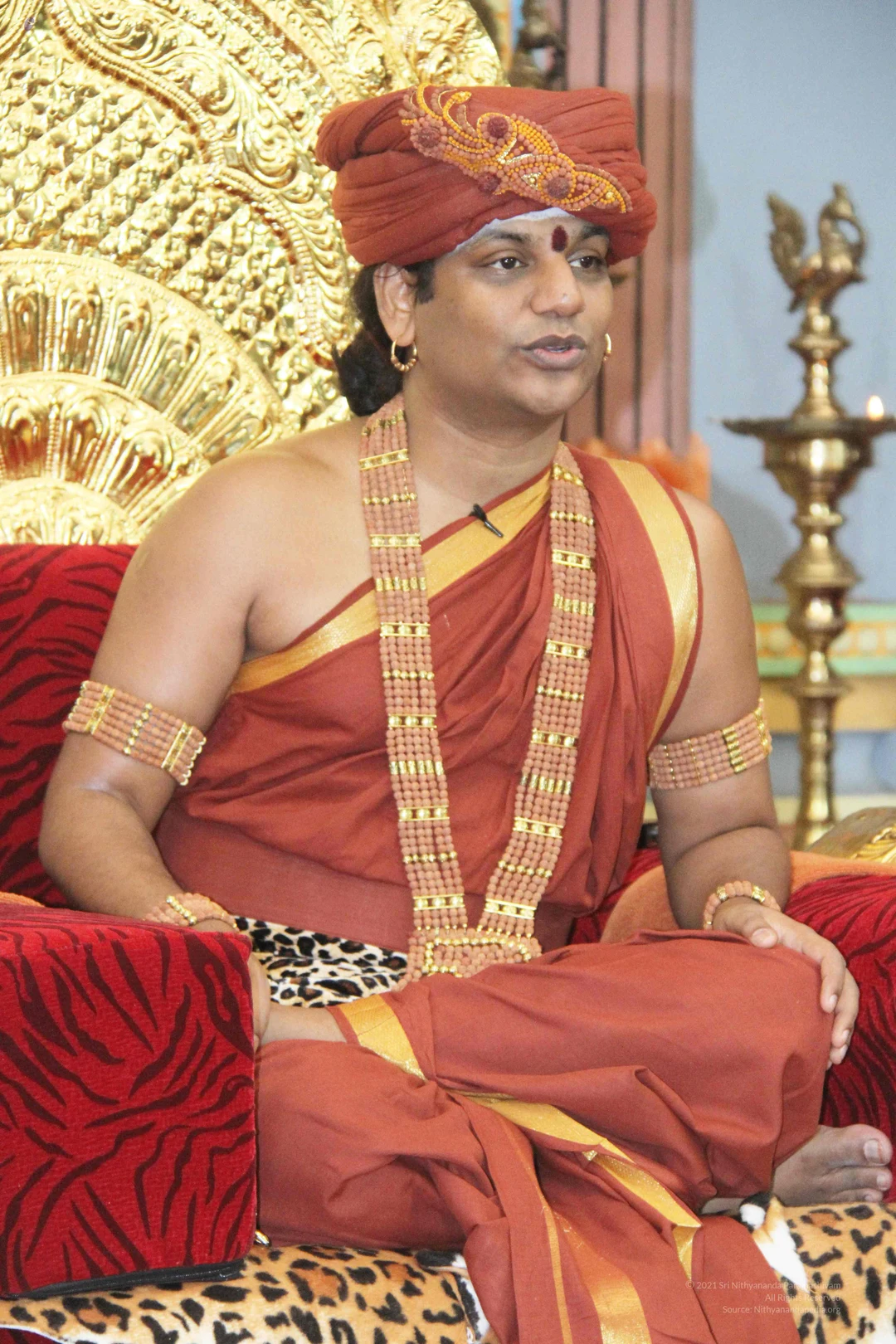
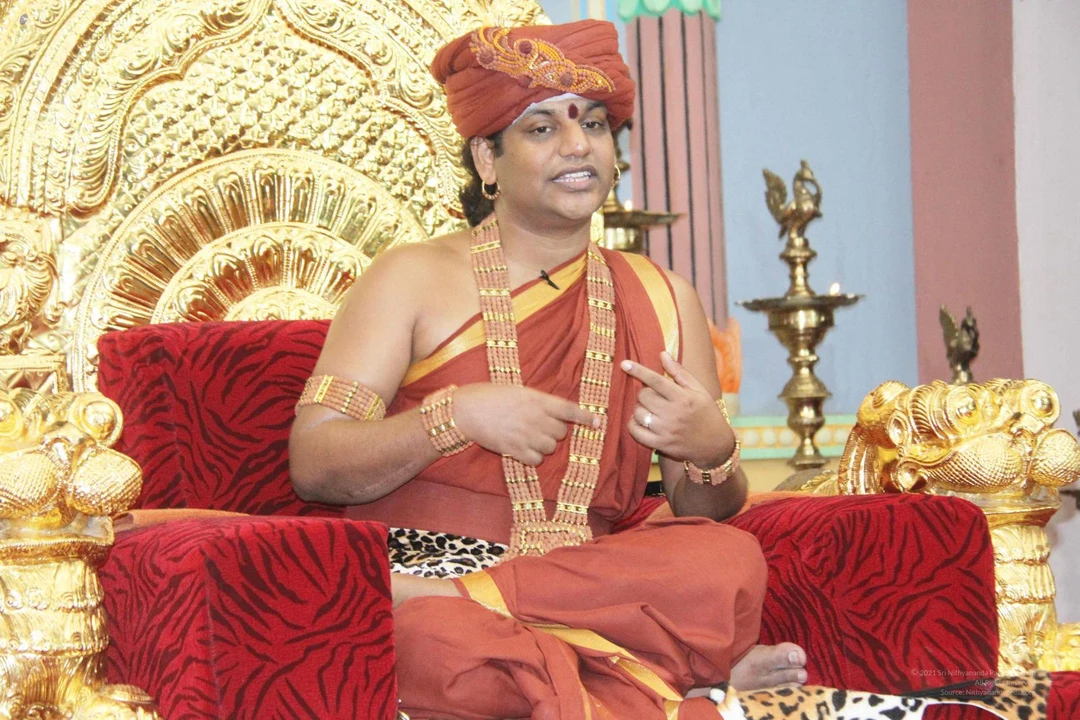
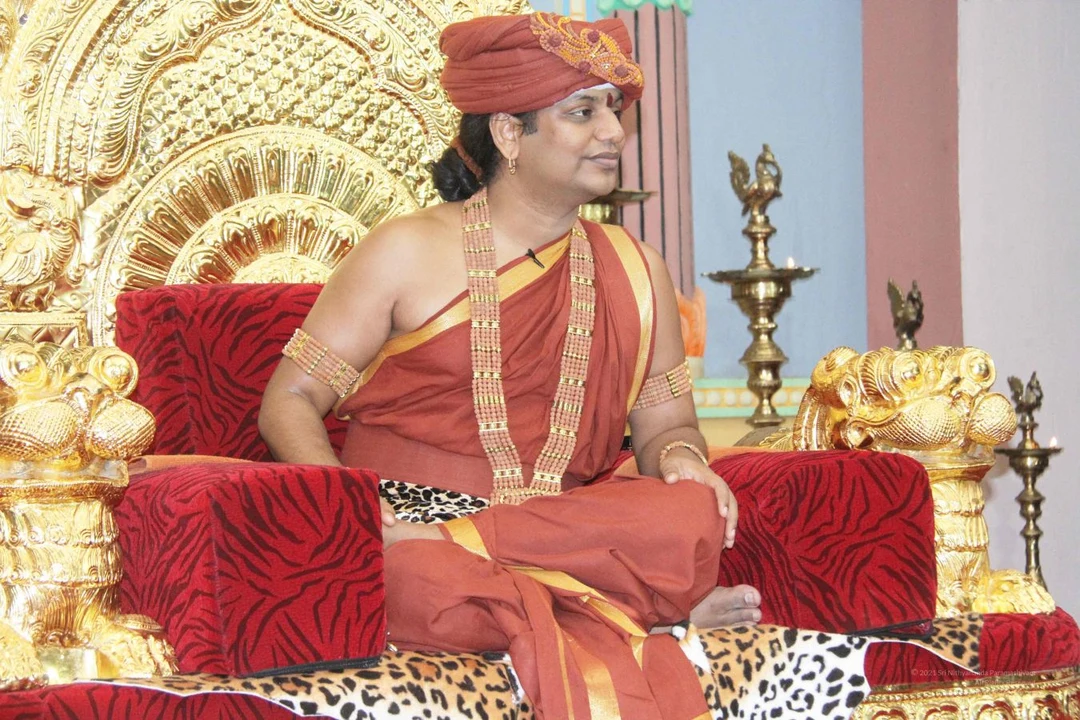
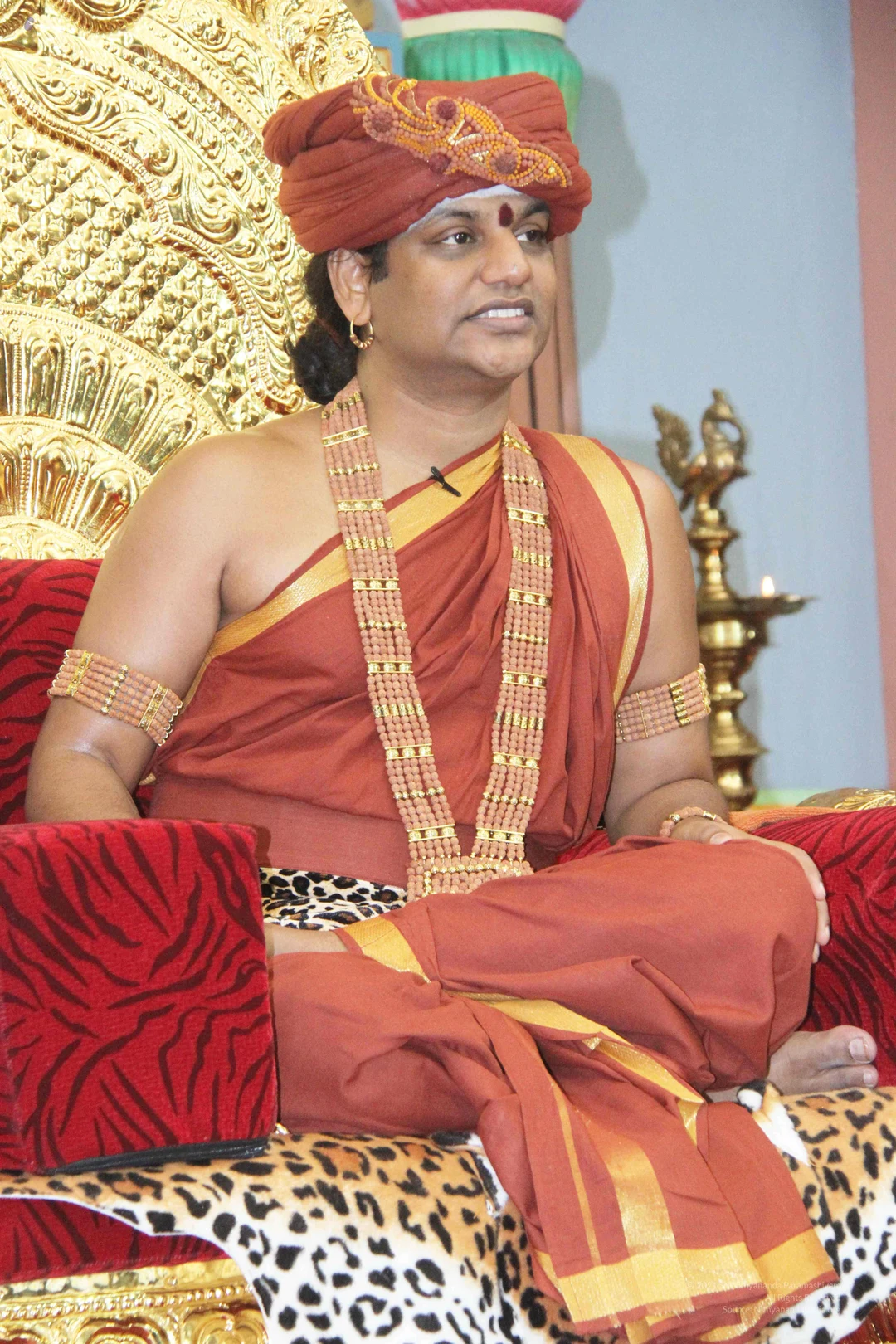
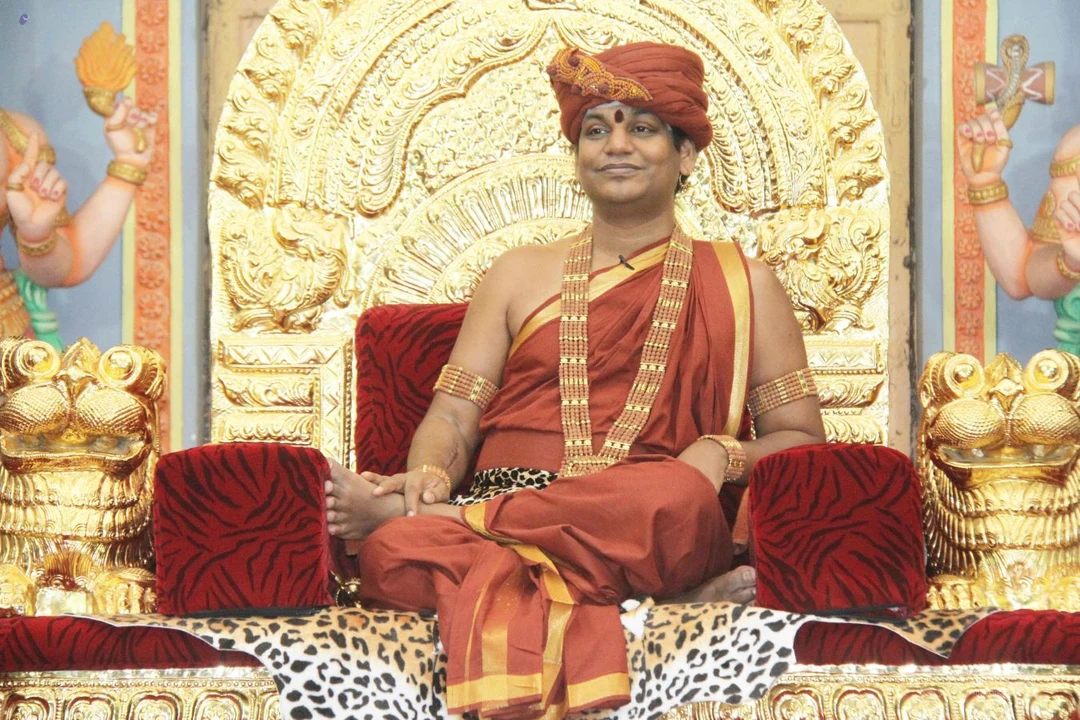
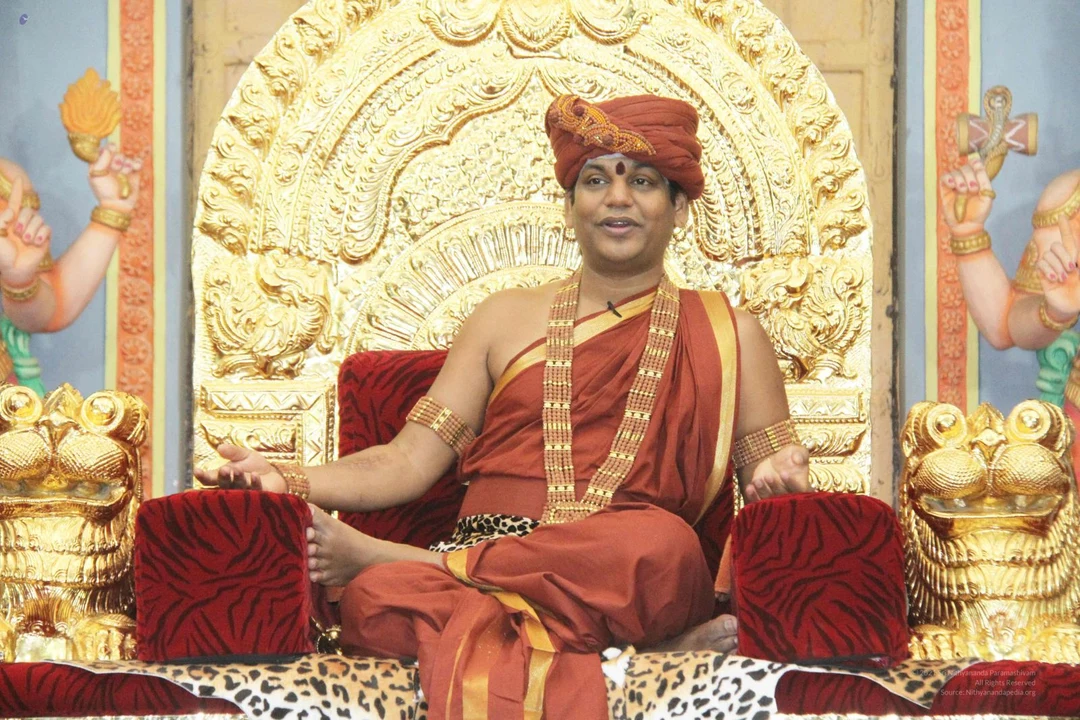
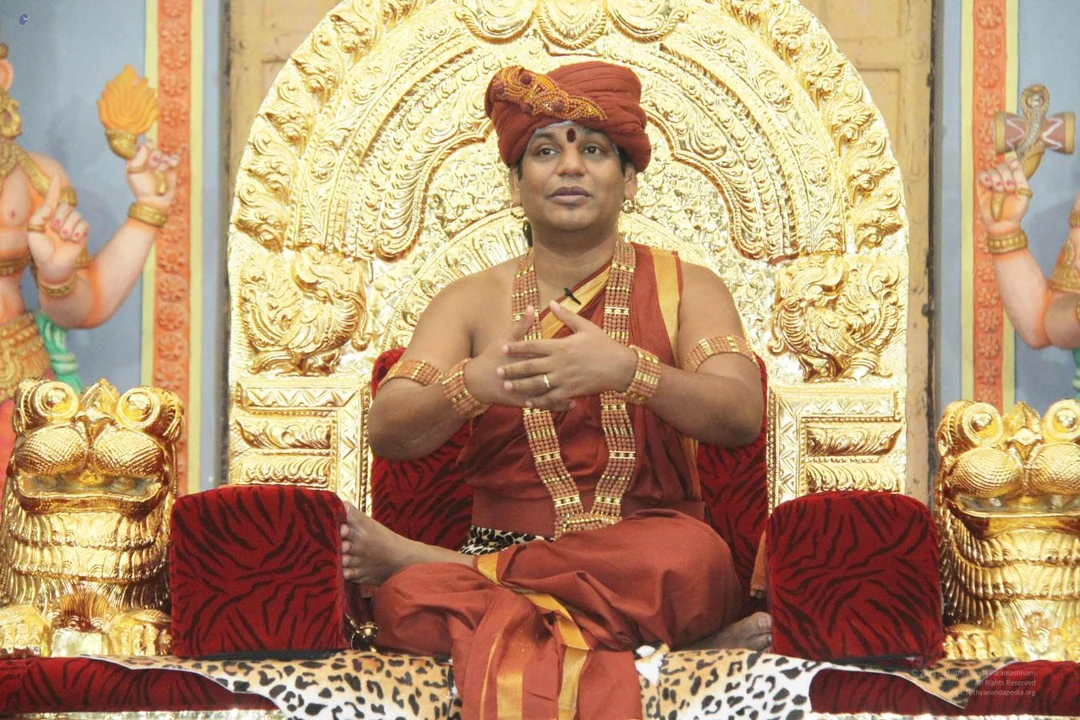
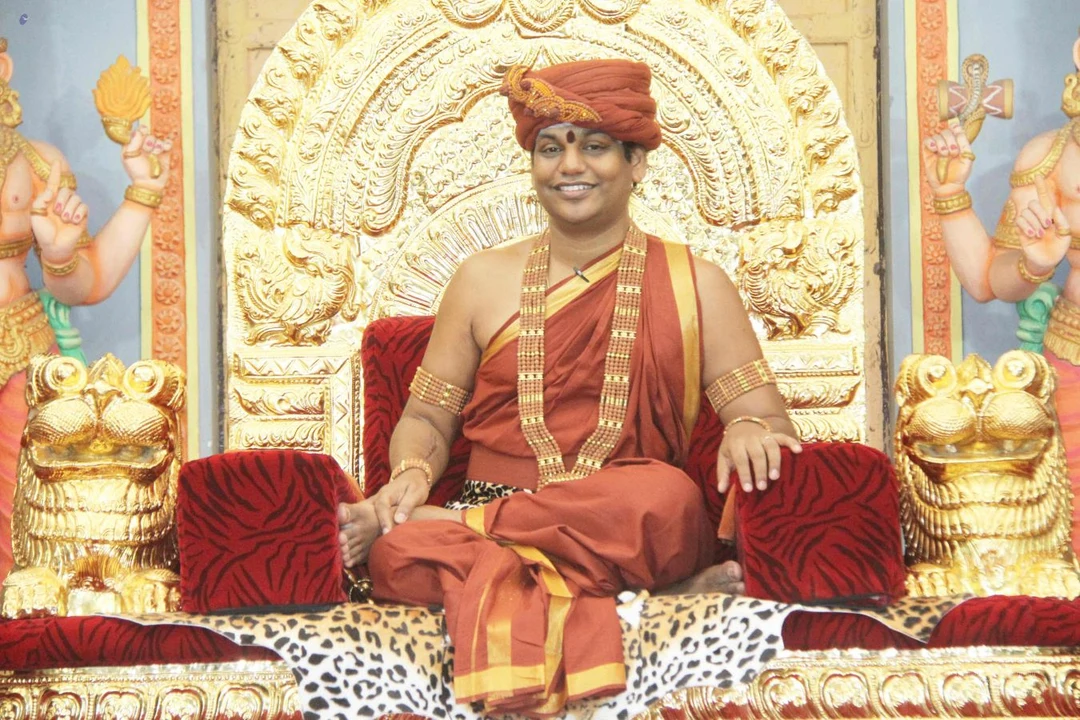
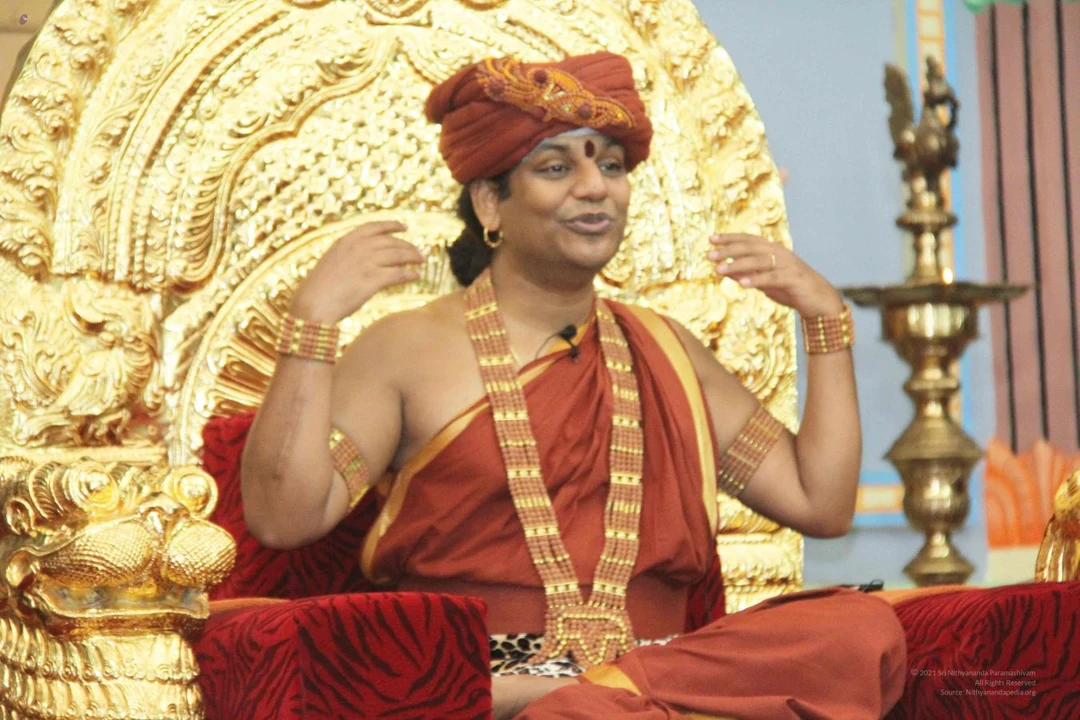
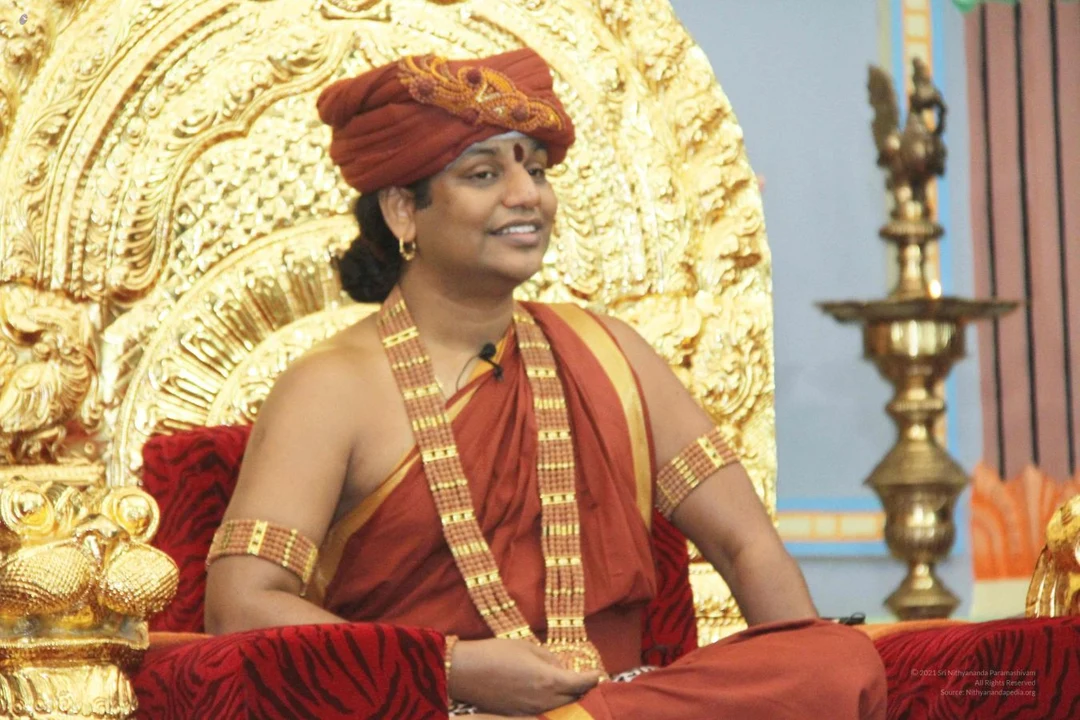
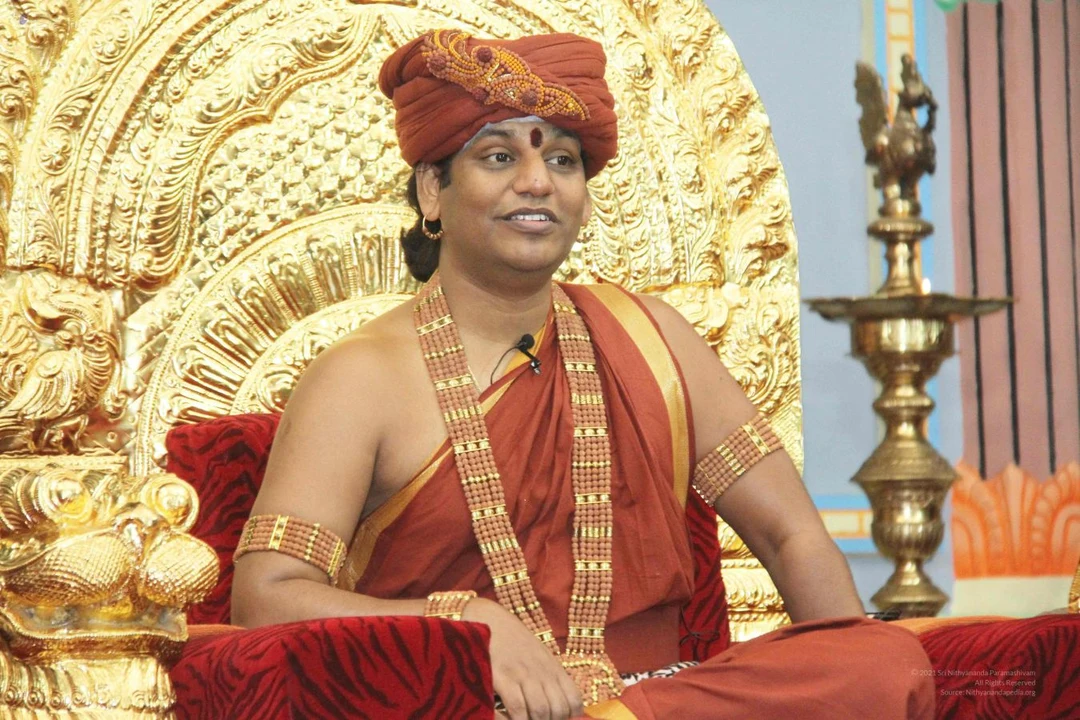
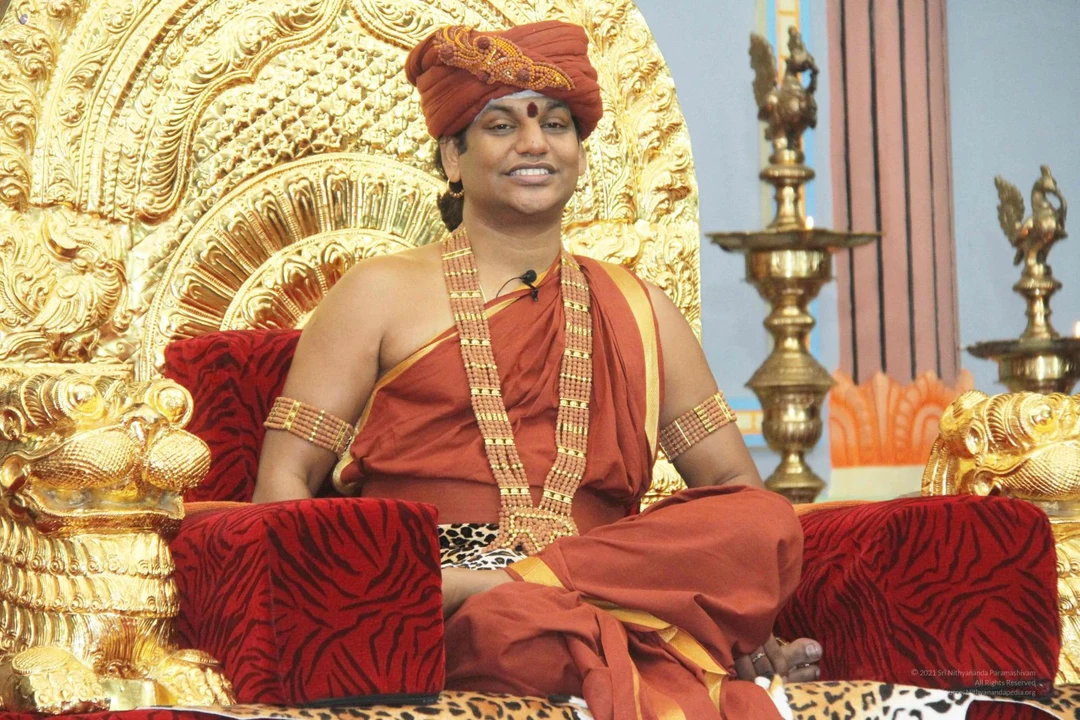
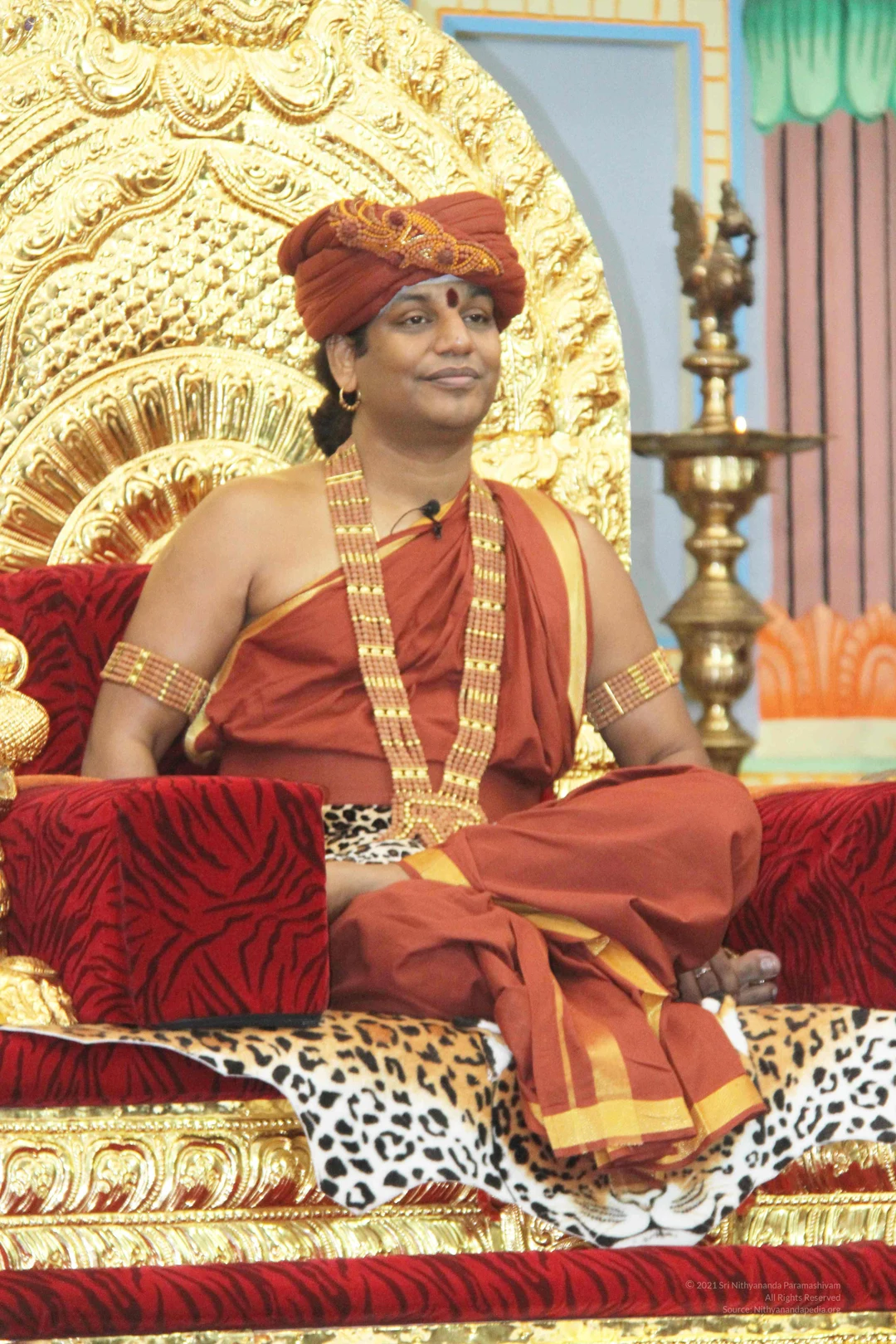
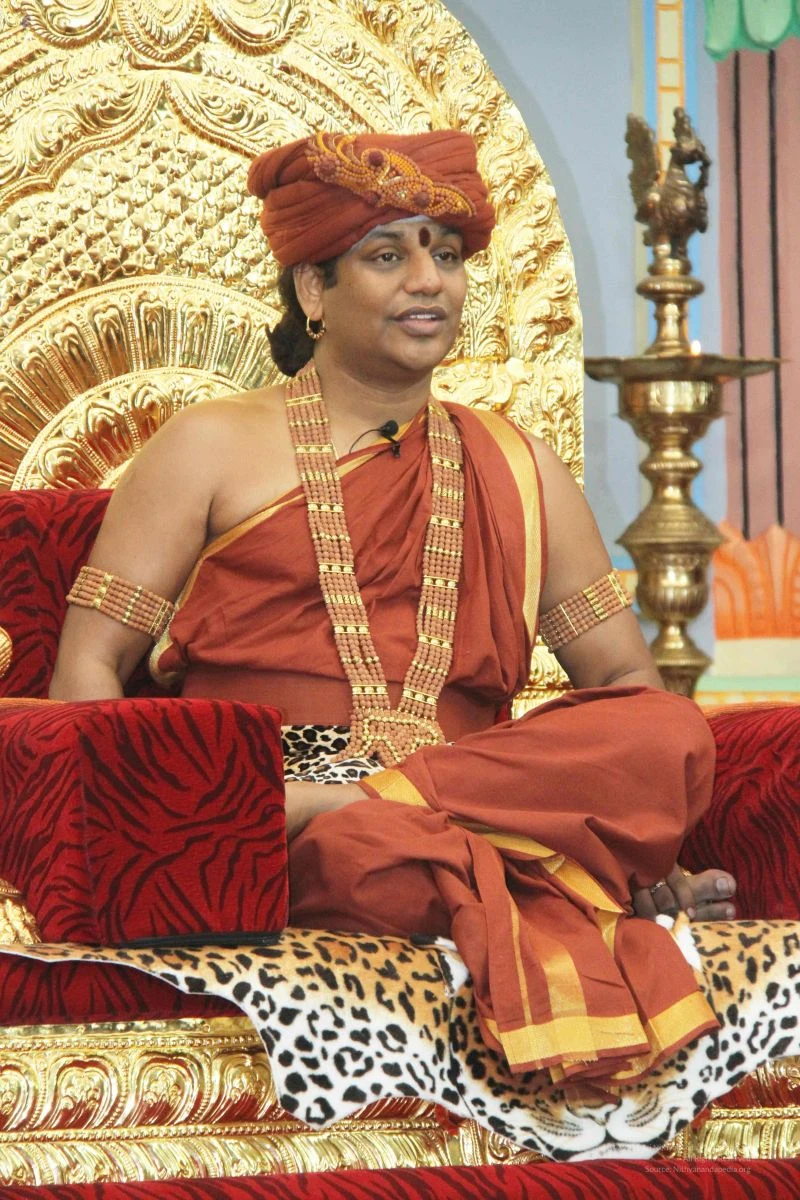
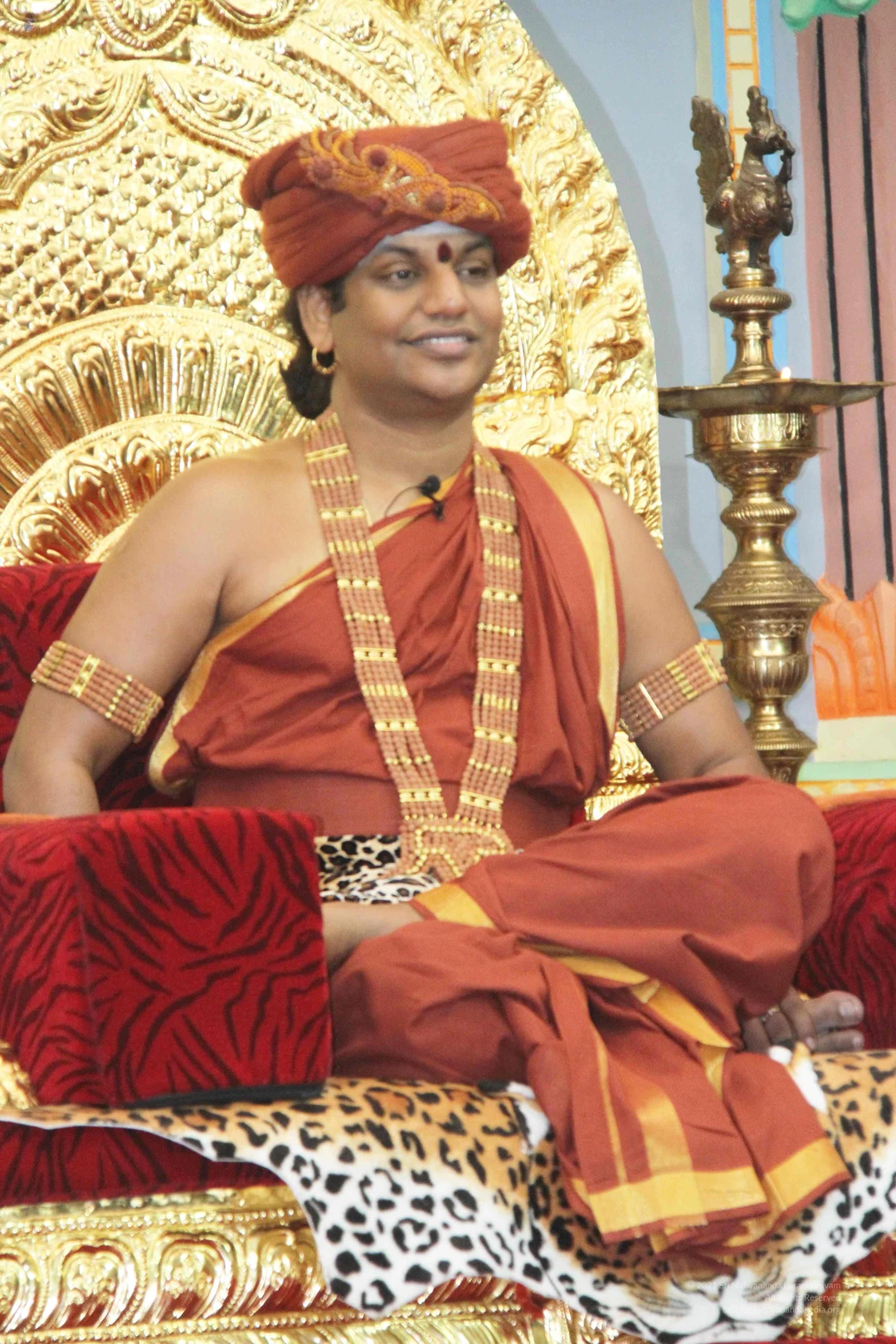
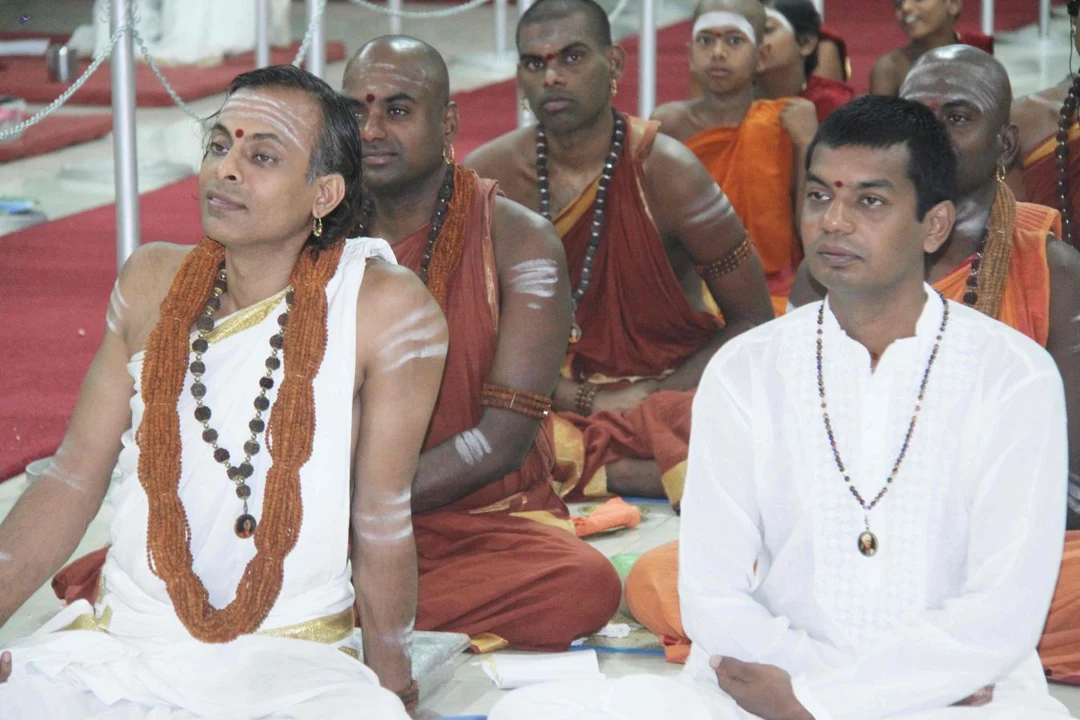
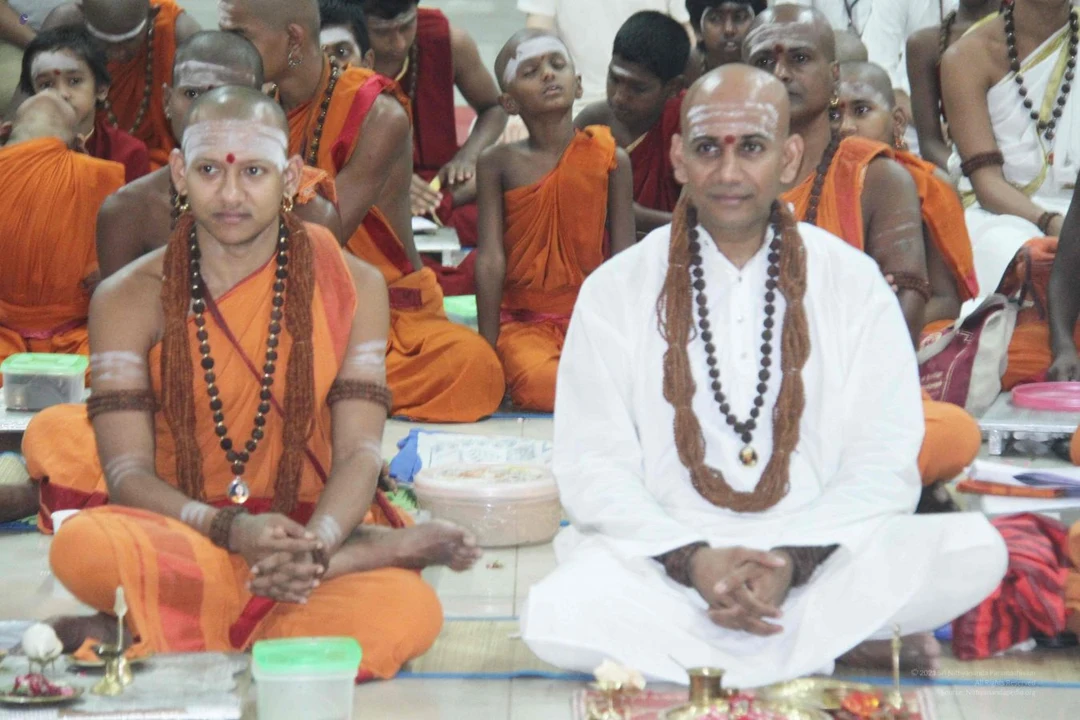
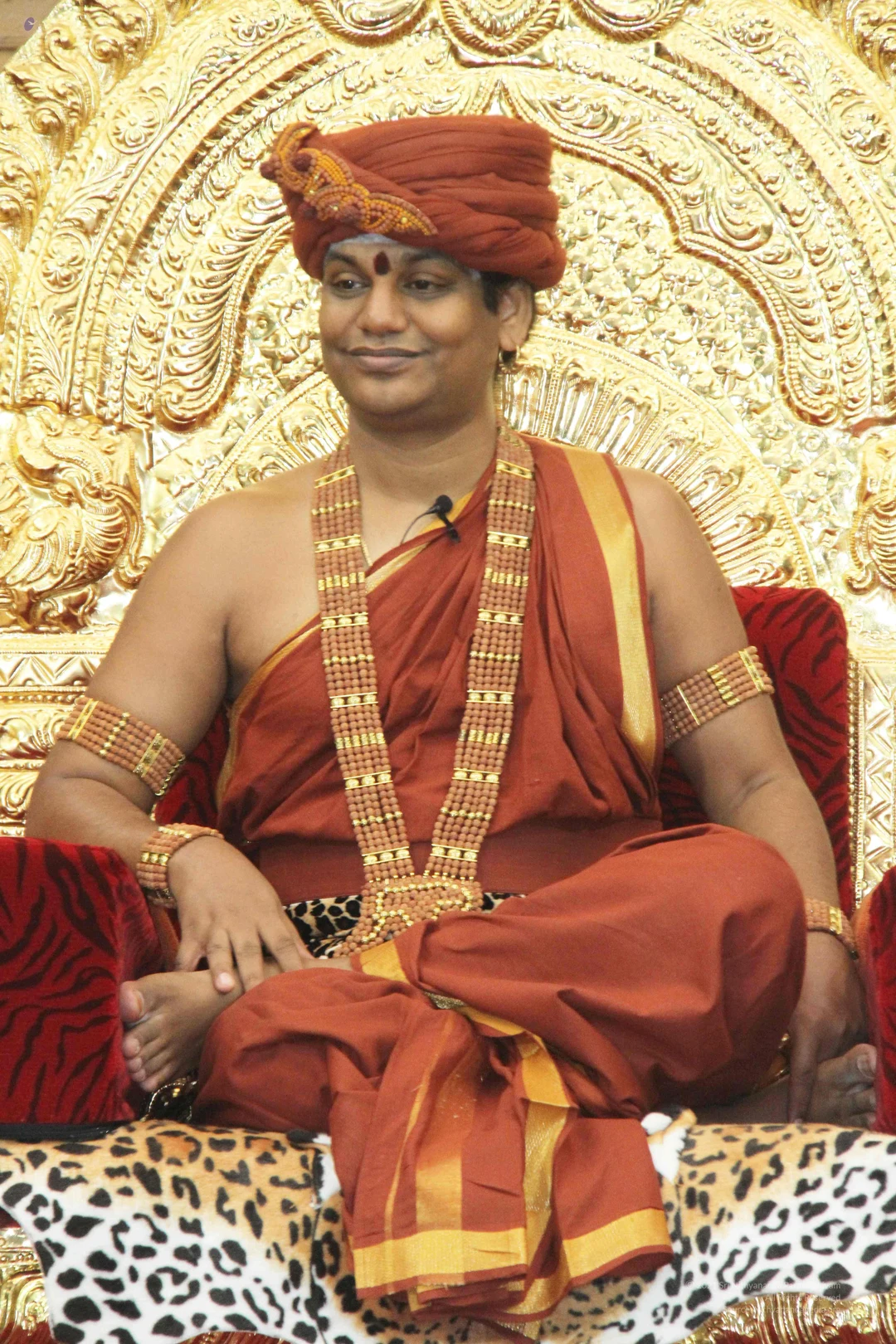
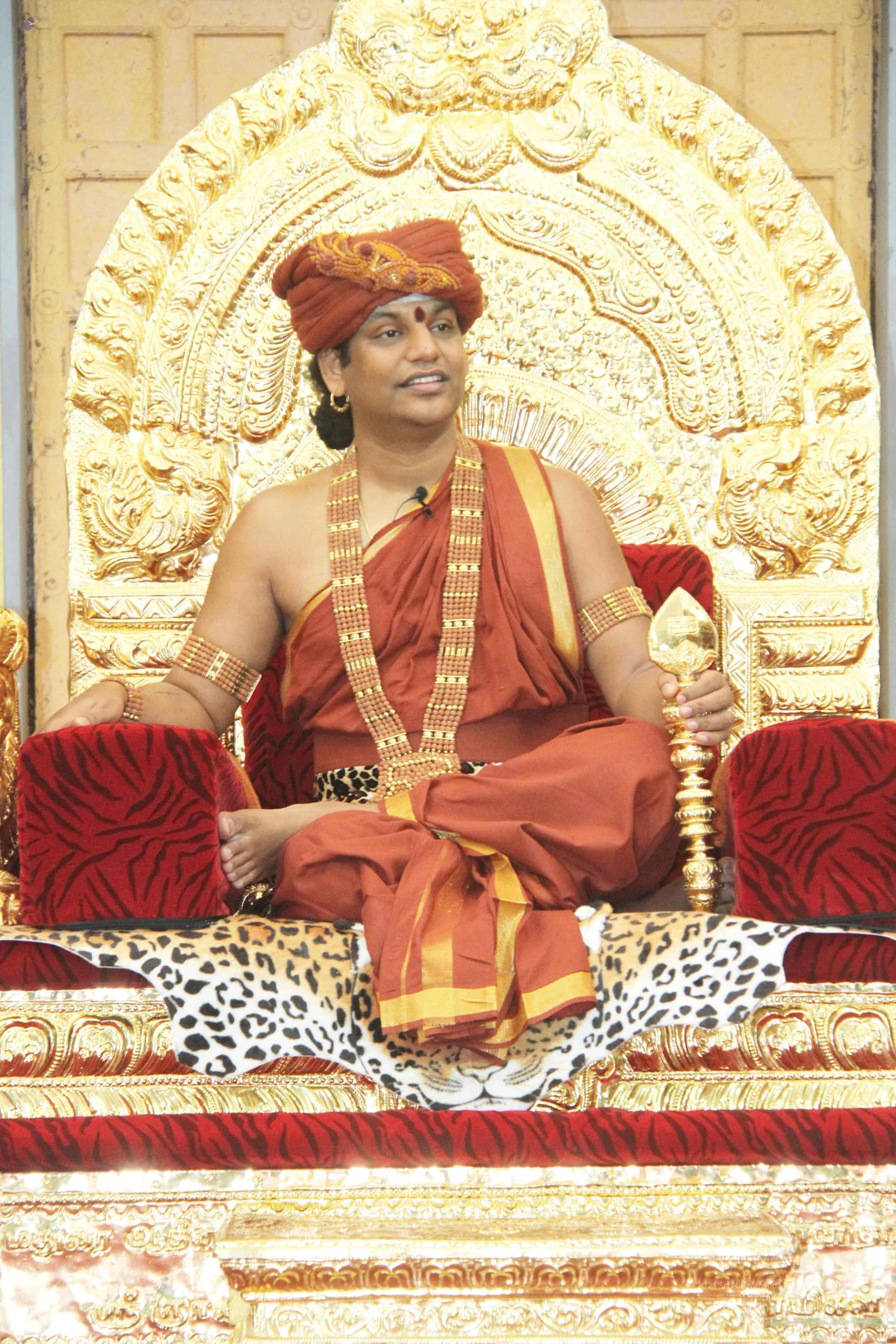
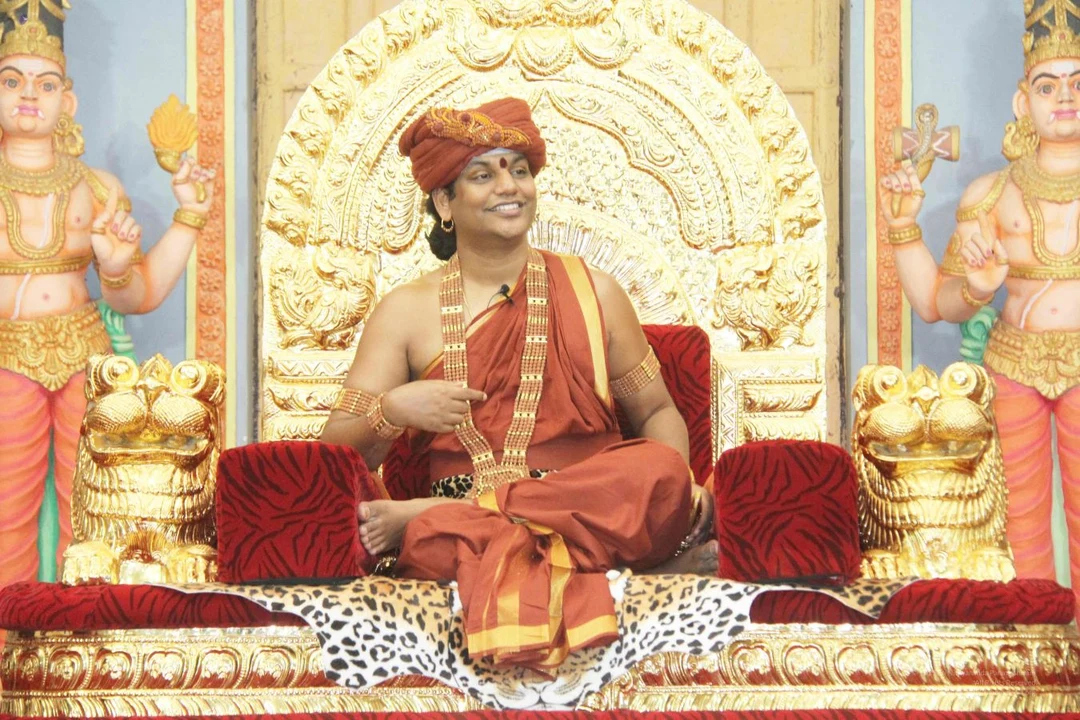
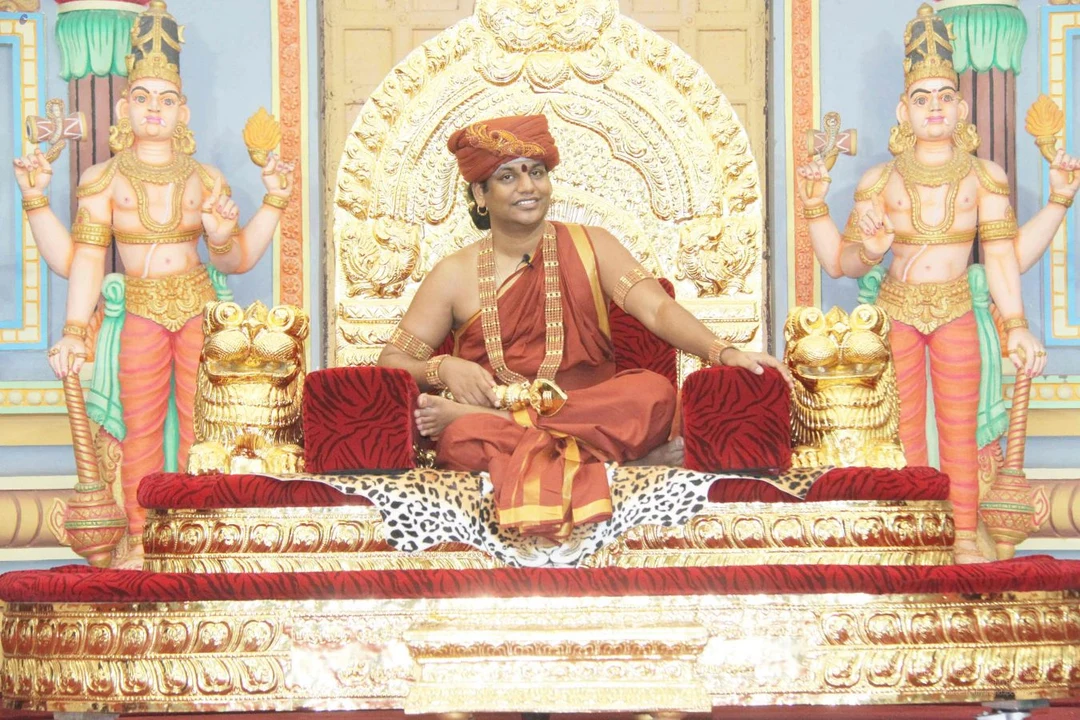
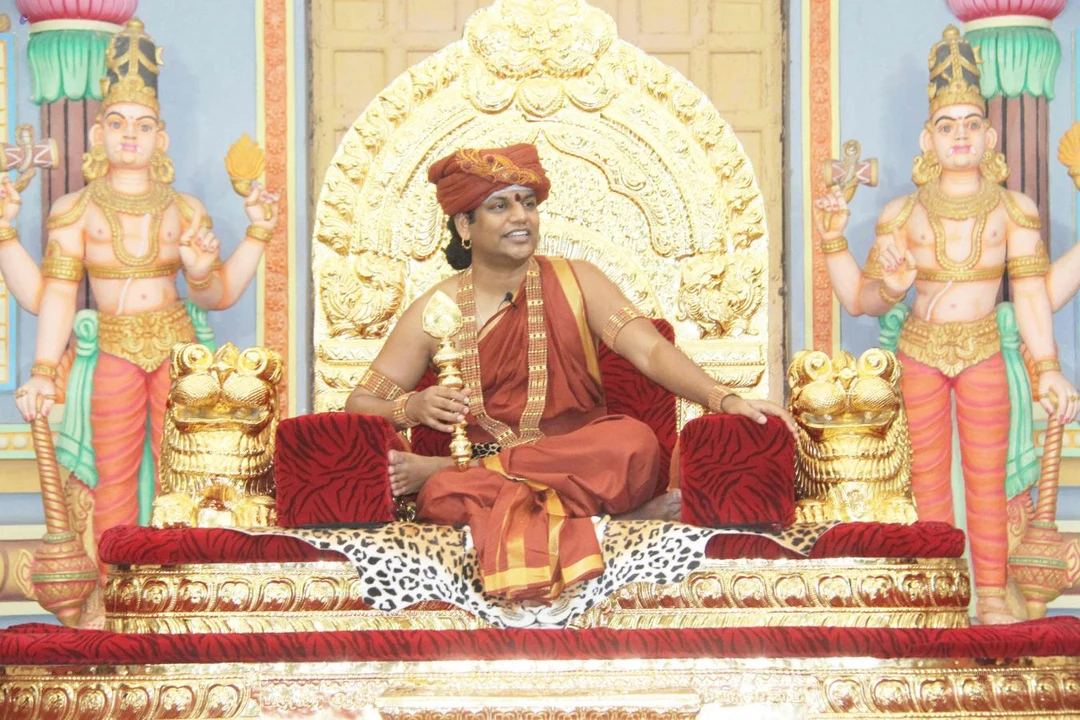
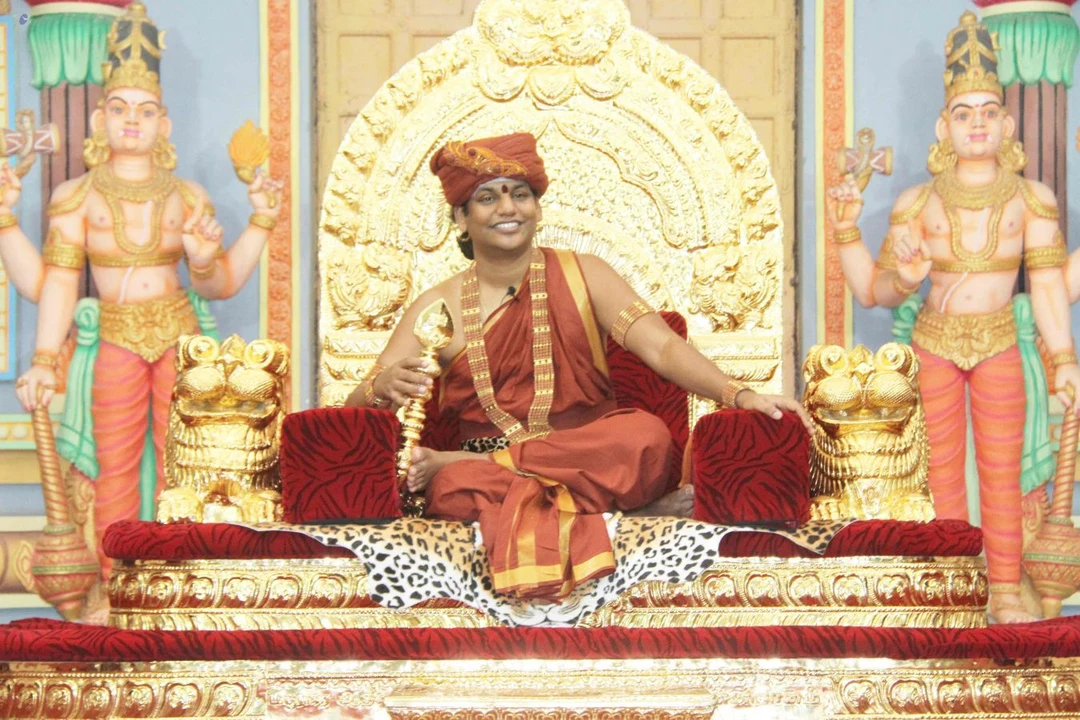
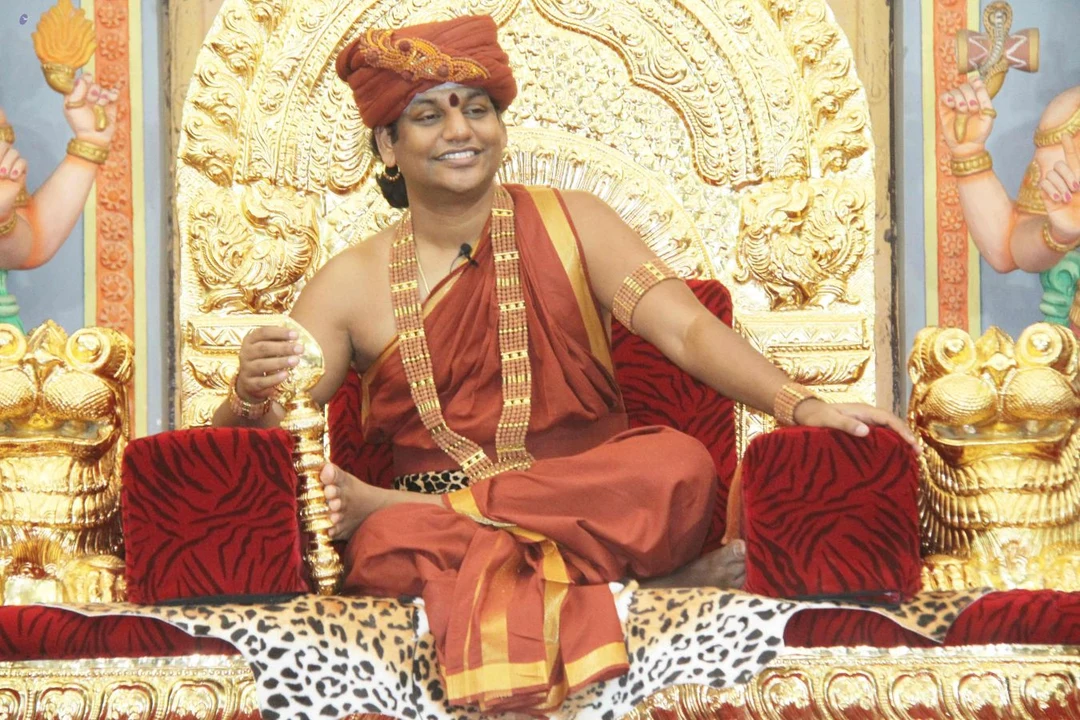
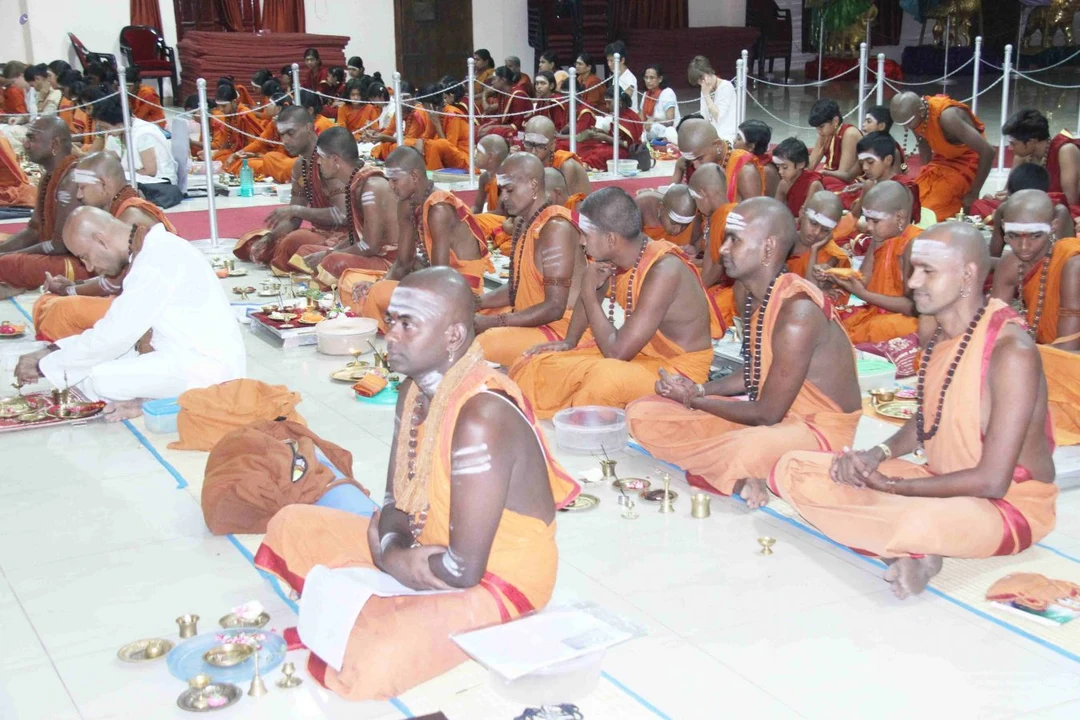
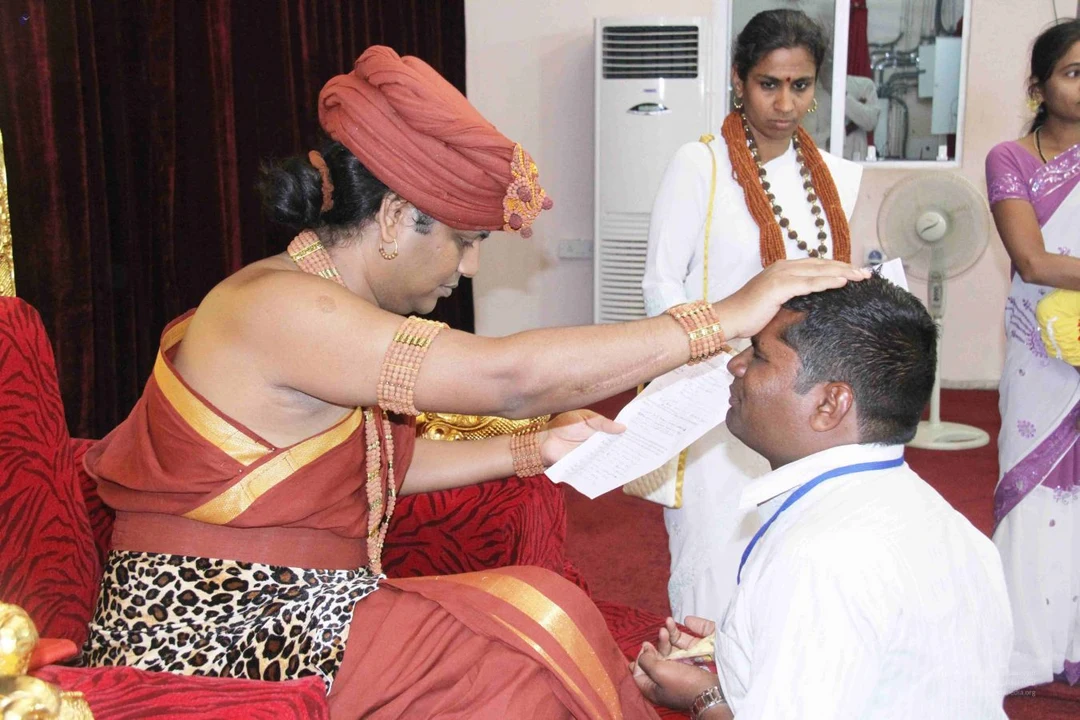
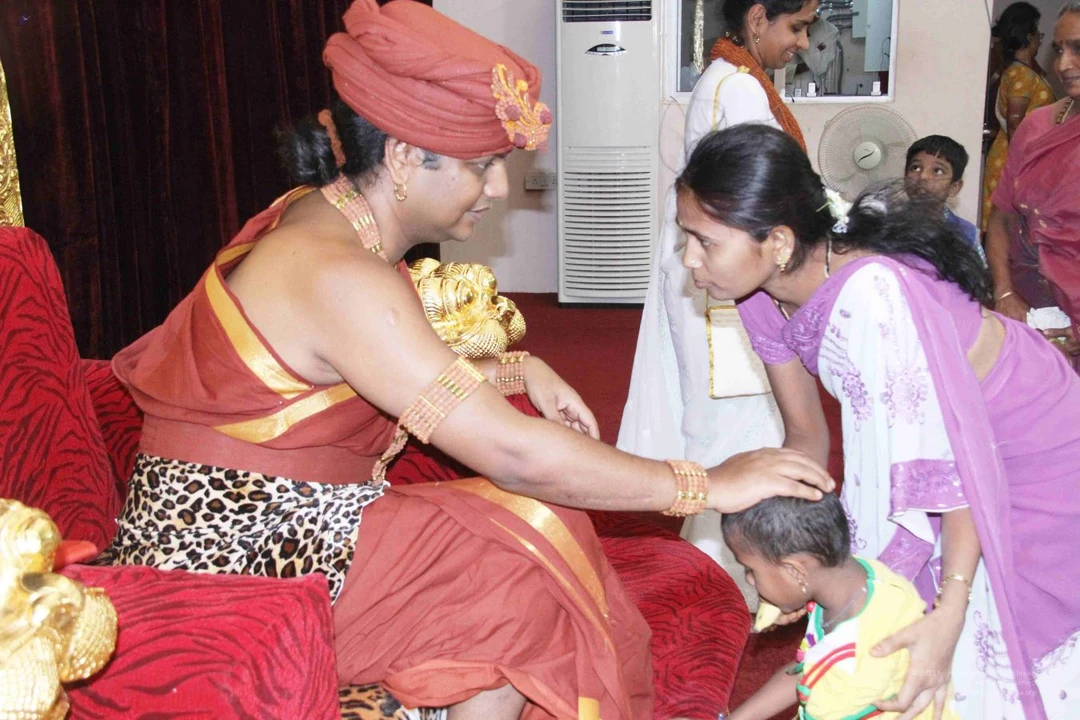
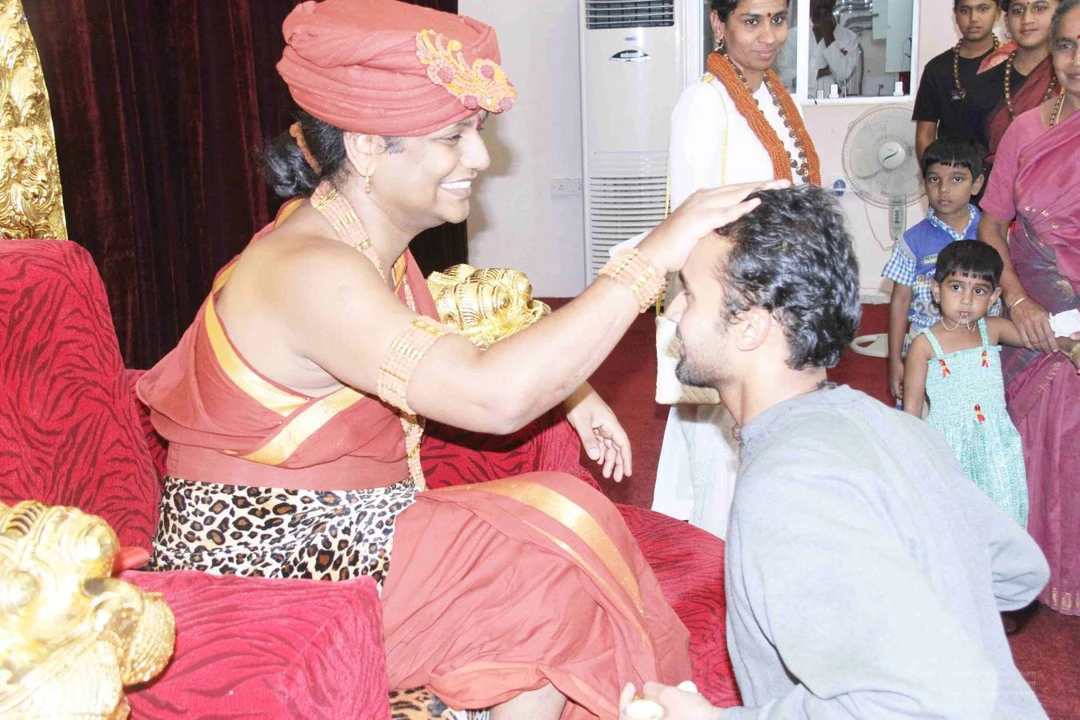
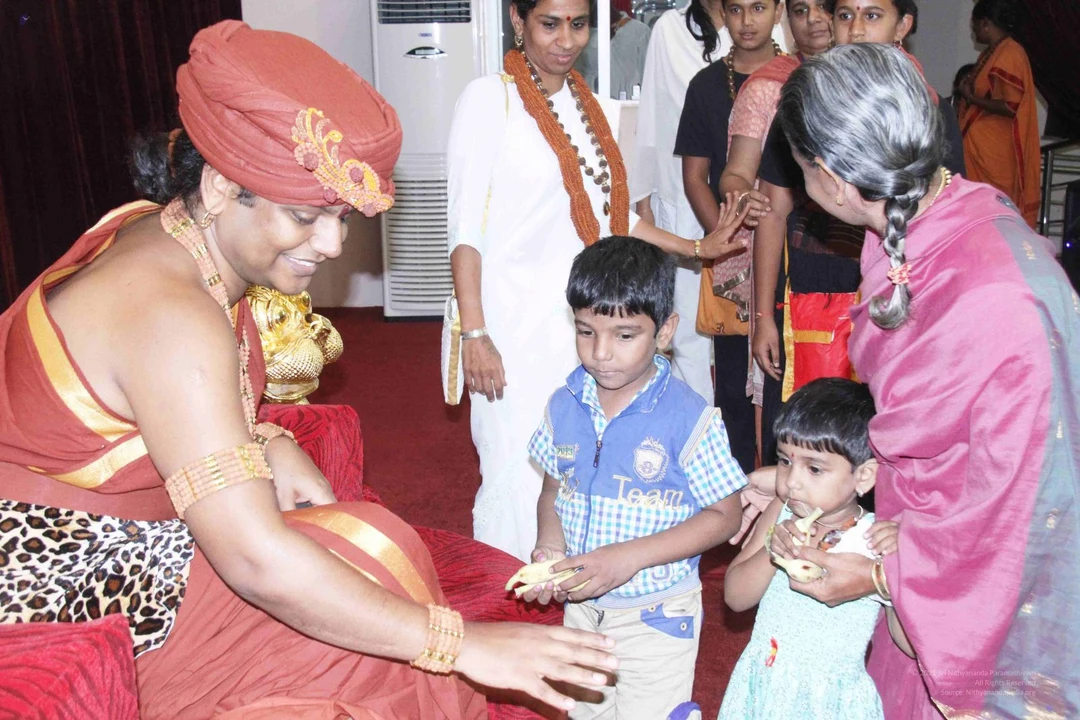
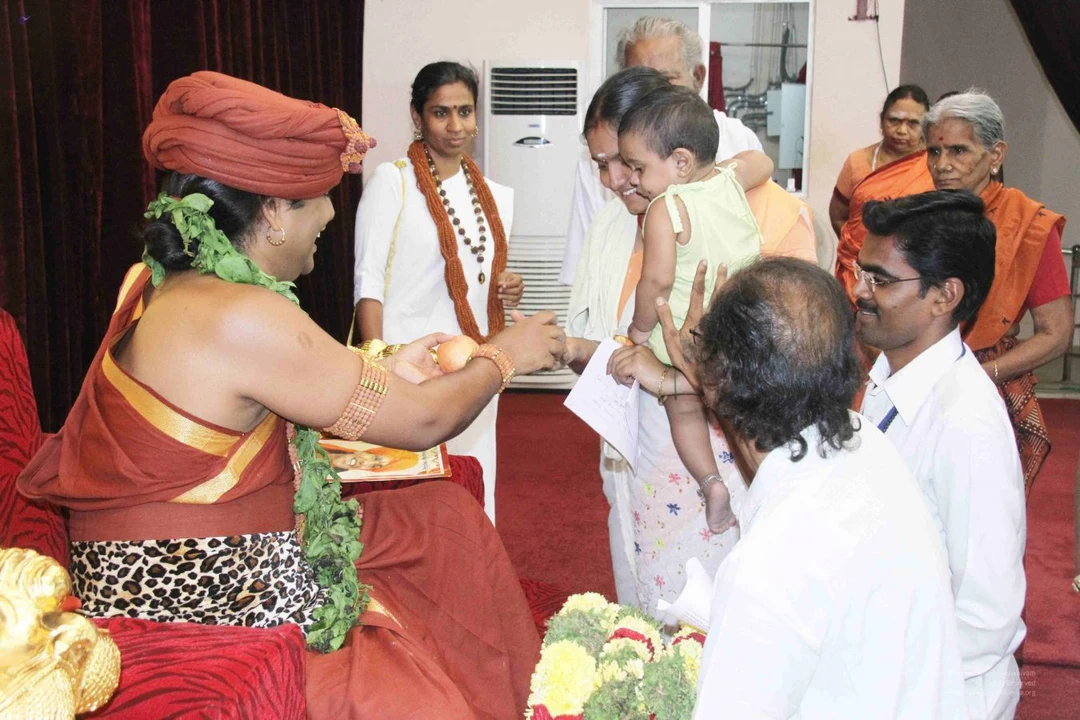
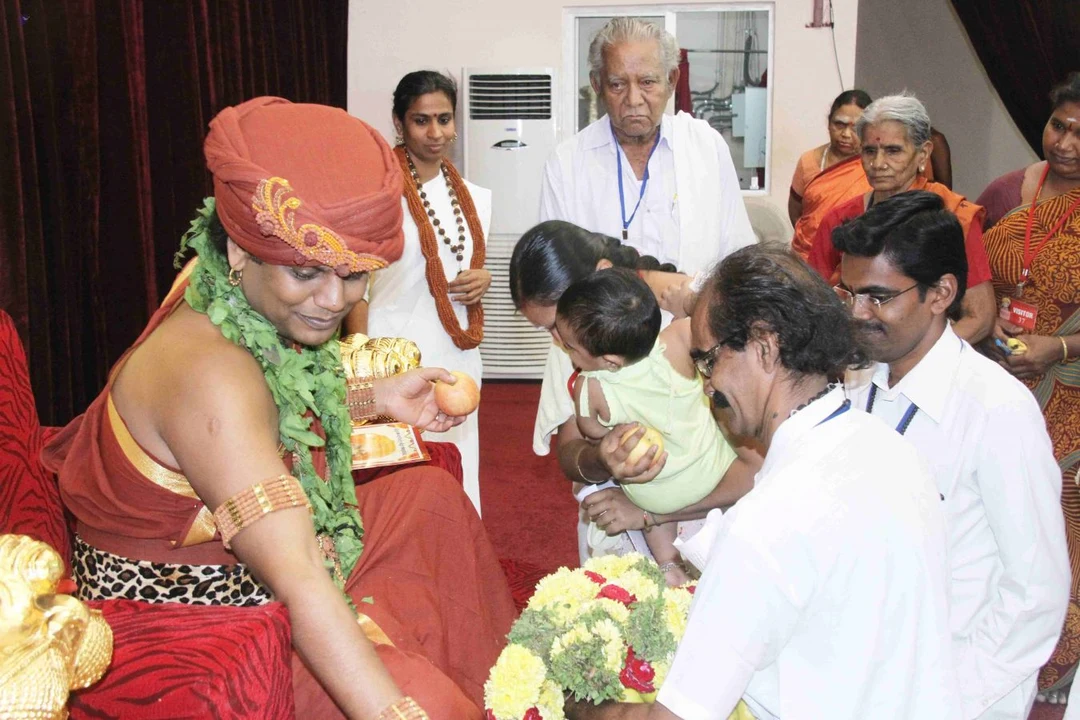
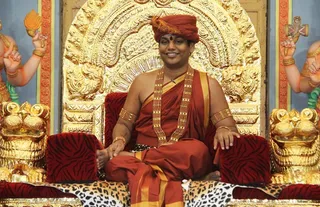
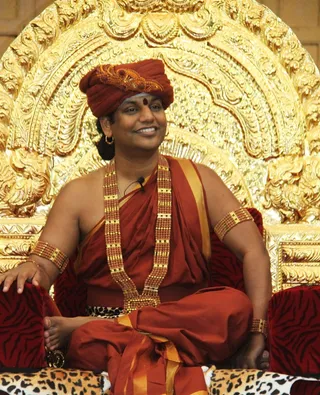
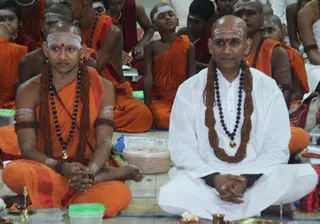
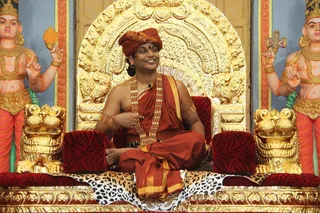
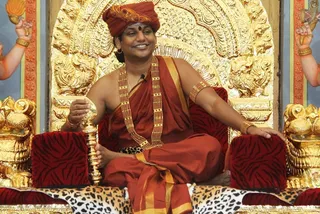
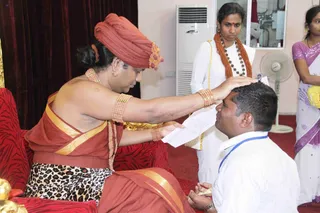
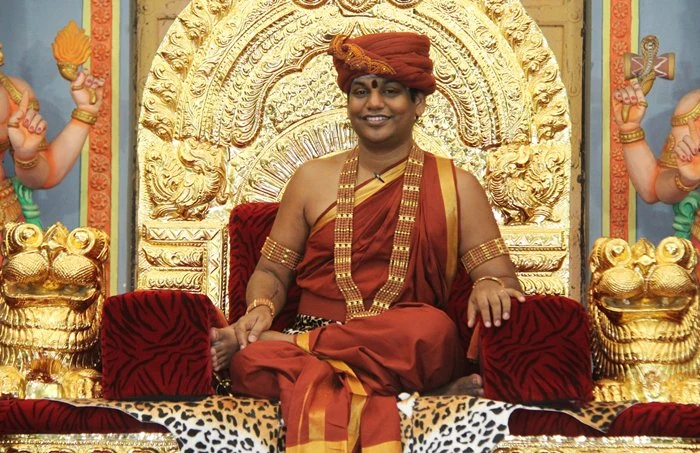
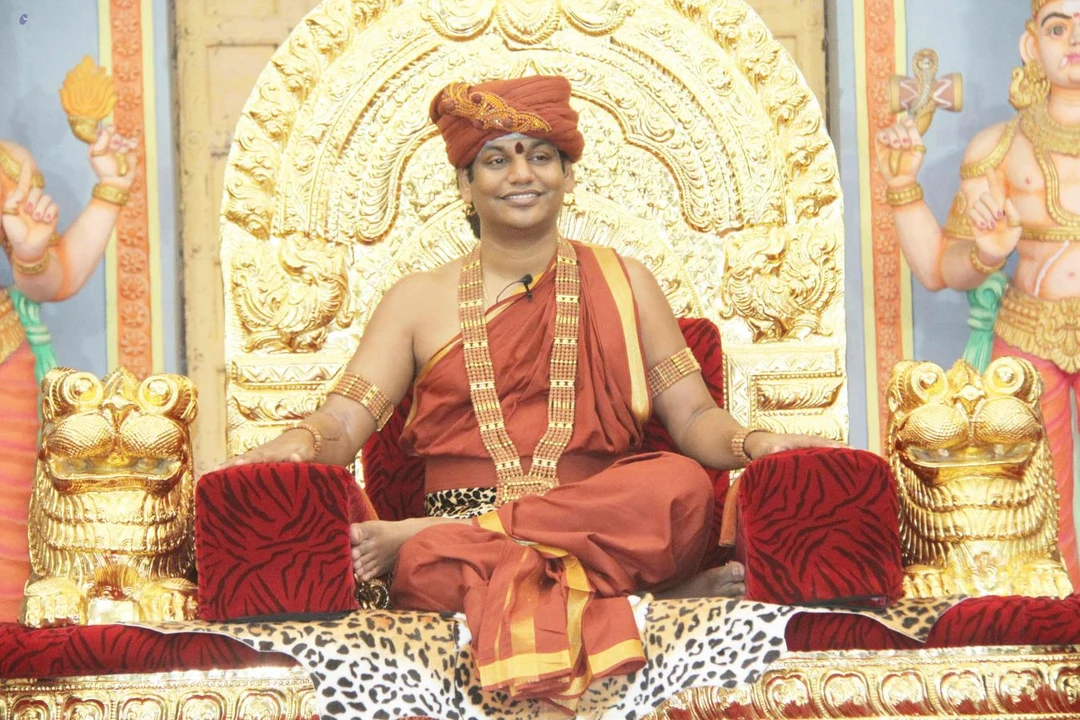
A seated man in a red-orange turban and saffron-red sannyasi robes sits on an ornate golden throne with red velvet cushions and a leopard-print cloth. He wears a long gold ceremonial necklace and gold bangles on both wrists, with his hands resting on the armrests. Golden lion-shaped figures flank the throne, and gilded deity statues with raised hands stand on either side. Swamiji (probable) is the seated man, identified by the swept-back hair under the turban, ornate golden necklace, saffron-orange robes and his enthroned role.A seated man in a rust-red turban with a red bindi and a small lapel microphone sits on an ornate gold-carved throne with red velvet cushions and a leopard-print seat. He wears a rust-red and gold-bordered robe that bares one shoulder, a long multi-strand rudraksha mala with gold beads, gold armlets and gold earrings, and smiles while resting one hand on the armrest. The setting is a satsang with a gilded peetha backdrop.A photograph of a seated satsang gathering in an indoor hall with a tiled floor. In the foreground, two shaved-headed men sit cross-legged: the man on the left wears an orange robe, rudraksha malas and white tripundra markings on his forehead and arms, and his hands rest clasped in his lap; the man on the right, seated centre-right, wears a white dhoti and shawl with a long rudraksha mala, white tripundra forehead markings and folded hands. Behind them, many people in orange robes with white forehead marks sit in rows, some of them young boys. Plastic containers, a brass lamp and a flower rest on the floor in front.A seated man in a saffron-orange turban and saffron-red robe sits cross-legged on an ornate gold throne with carved lion-face armrests and red velvet cushions, over a leopard-print cloth. Gold bangles and a long gold-and-bead necklace adorn him, and a small red mark is on his forehead. He smiles and gestures with one hand. Two large gold-painted deity statues with multiple arms flank the throne against a golden arched backdrop, one holding a flame and the other a ceremonial implement. The swami-appearance cues are a saffron turban, ornate gold necklace and throne seating, so this is a probable Swamiji in person, presiding over a satsang.A seated man in a saffron-red turban and draped saffron-red robe with a gold-coloured trim sits cross-legged on an ornate gold throne with red velvet cushions and leopard-print fabric. He wears heavy gold chain necklaces, gold armbands and bracelets, and holds a golden kalasha-style vessel in one hand while smiling. A small microphone is clipped to his robe. Gold carved lion and deity-like figures flank the throne. The page's Swamiji flag suggests this is the teacher, so this appearance-based candidate is labelled Swamiji (probable), based on his turban, saffron robes, gold necklaces and throne.

Nithyananda-Satsang
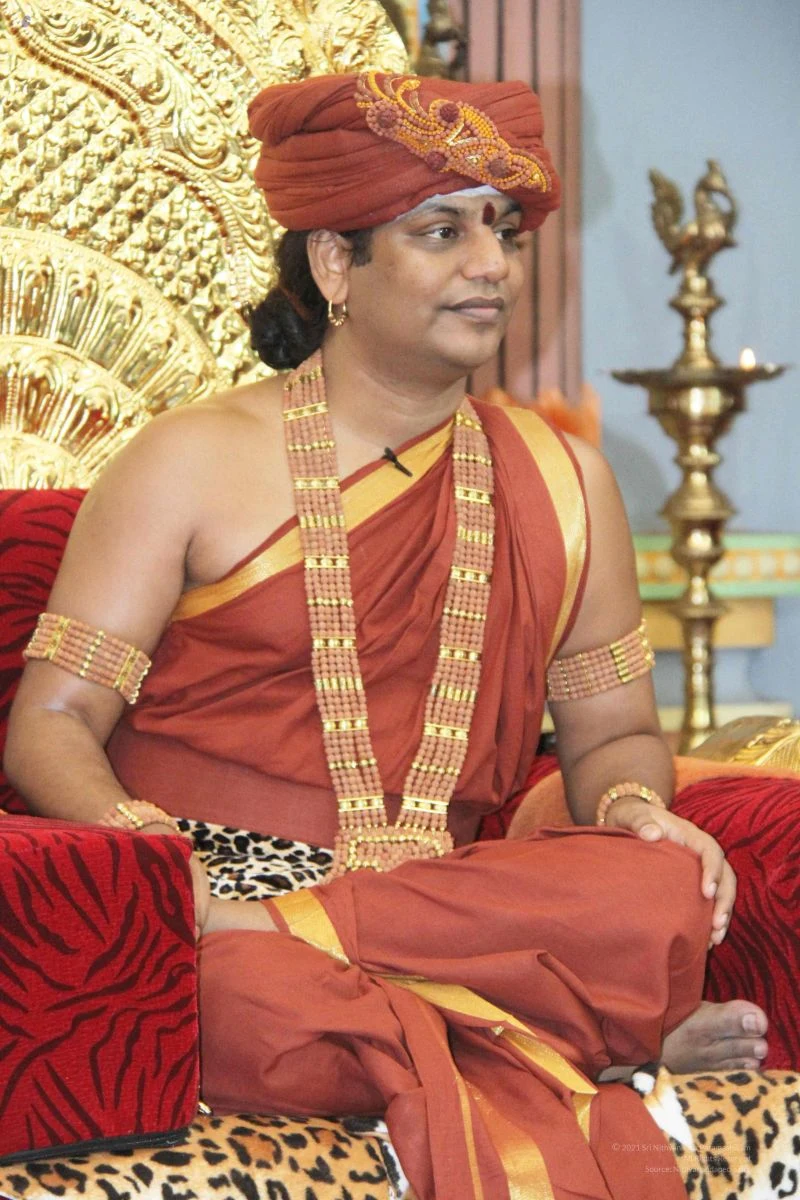
74 photosSource gallery
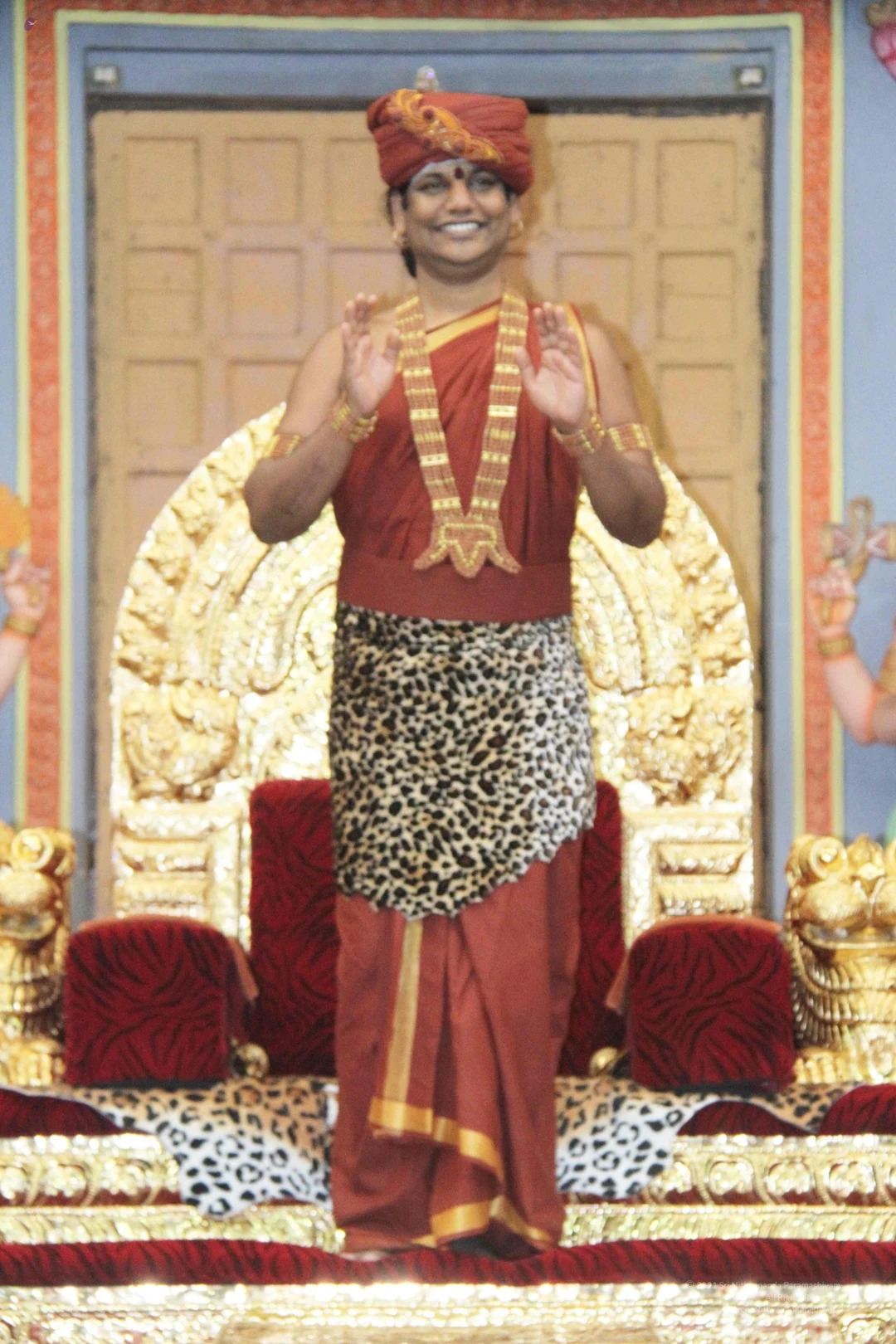
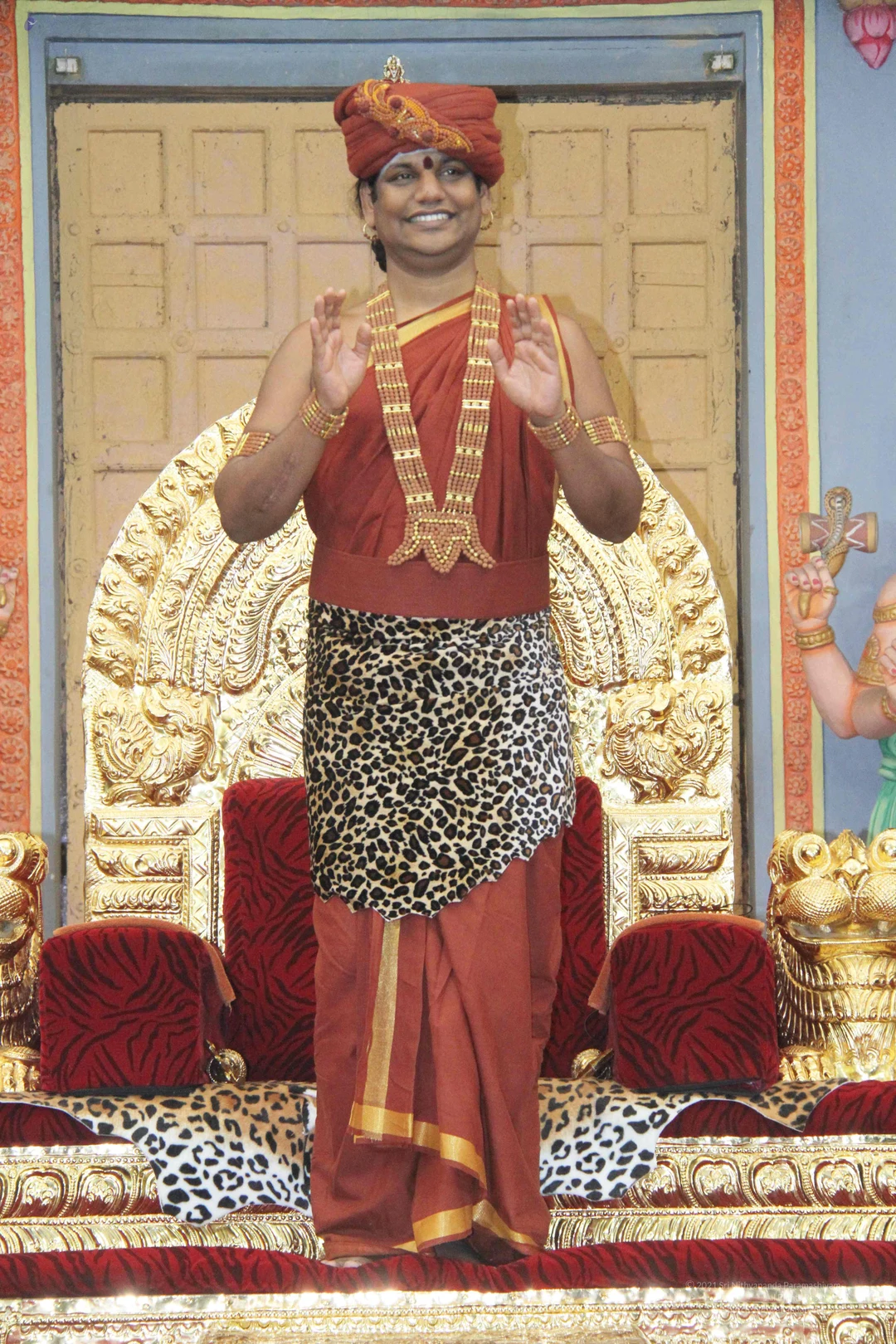
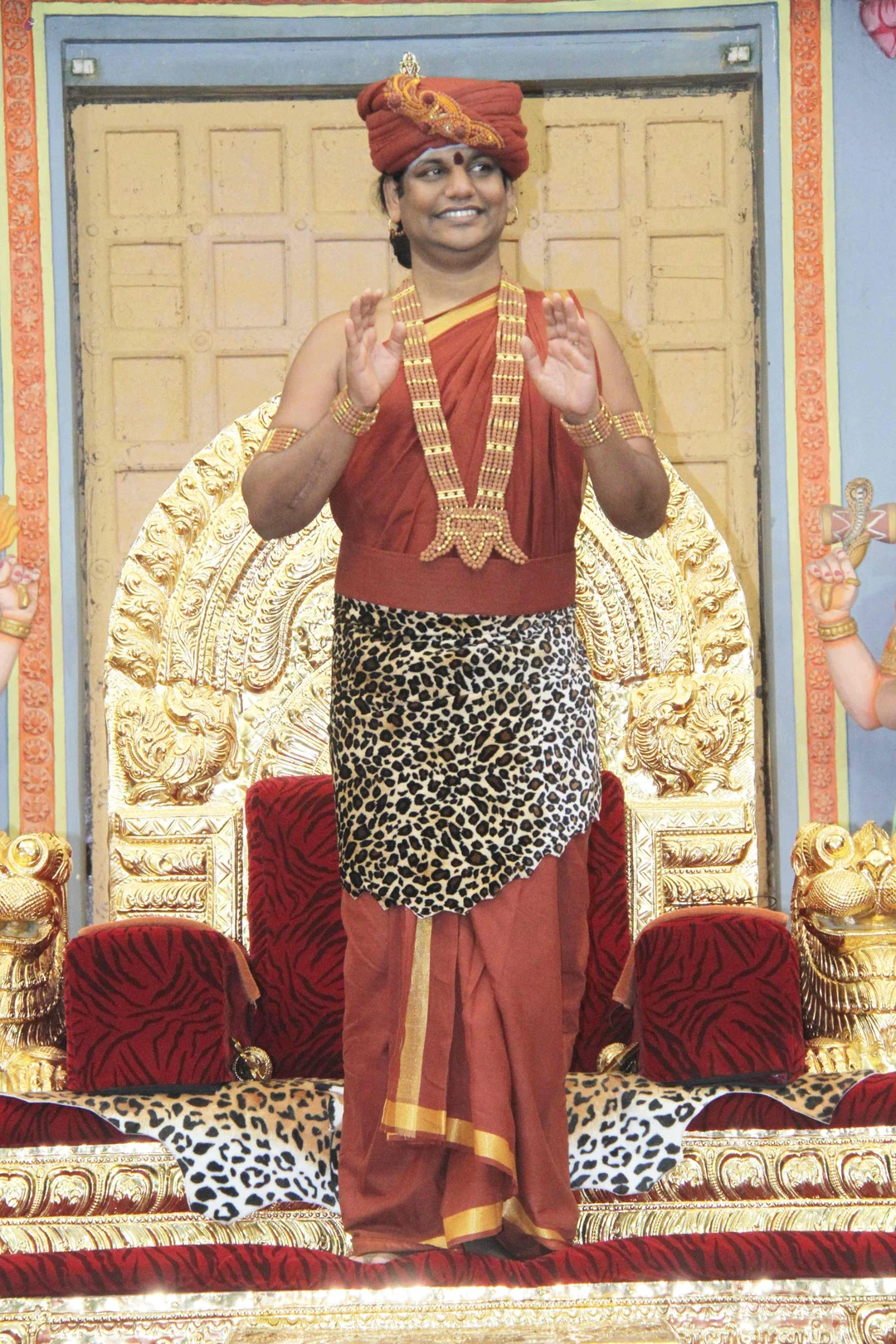
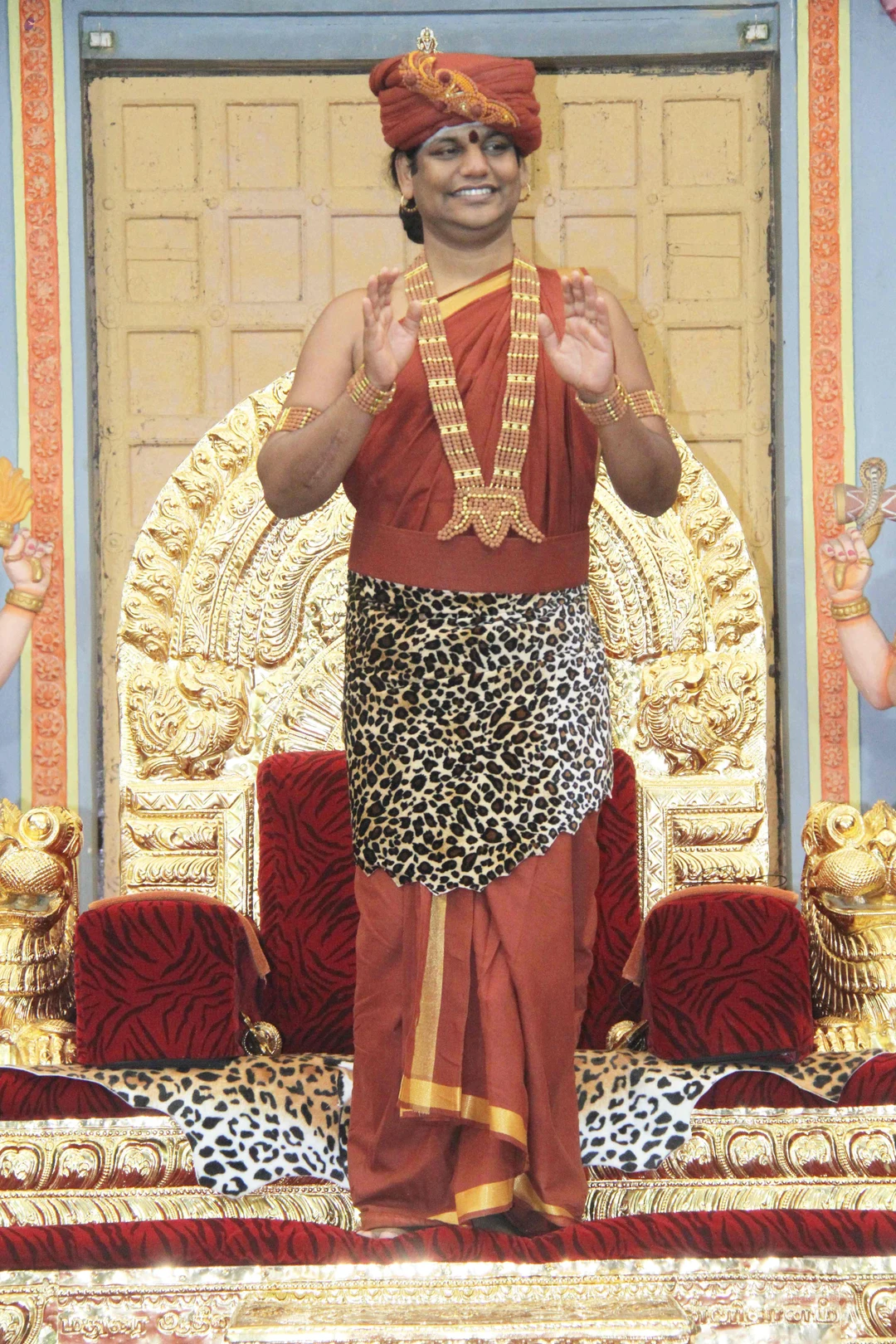
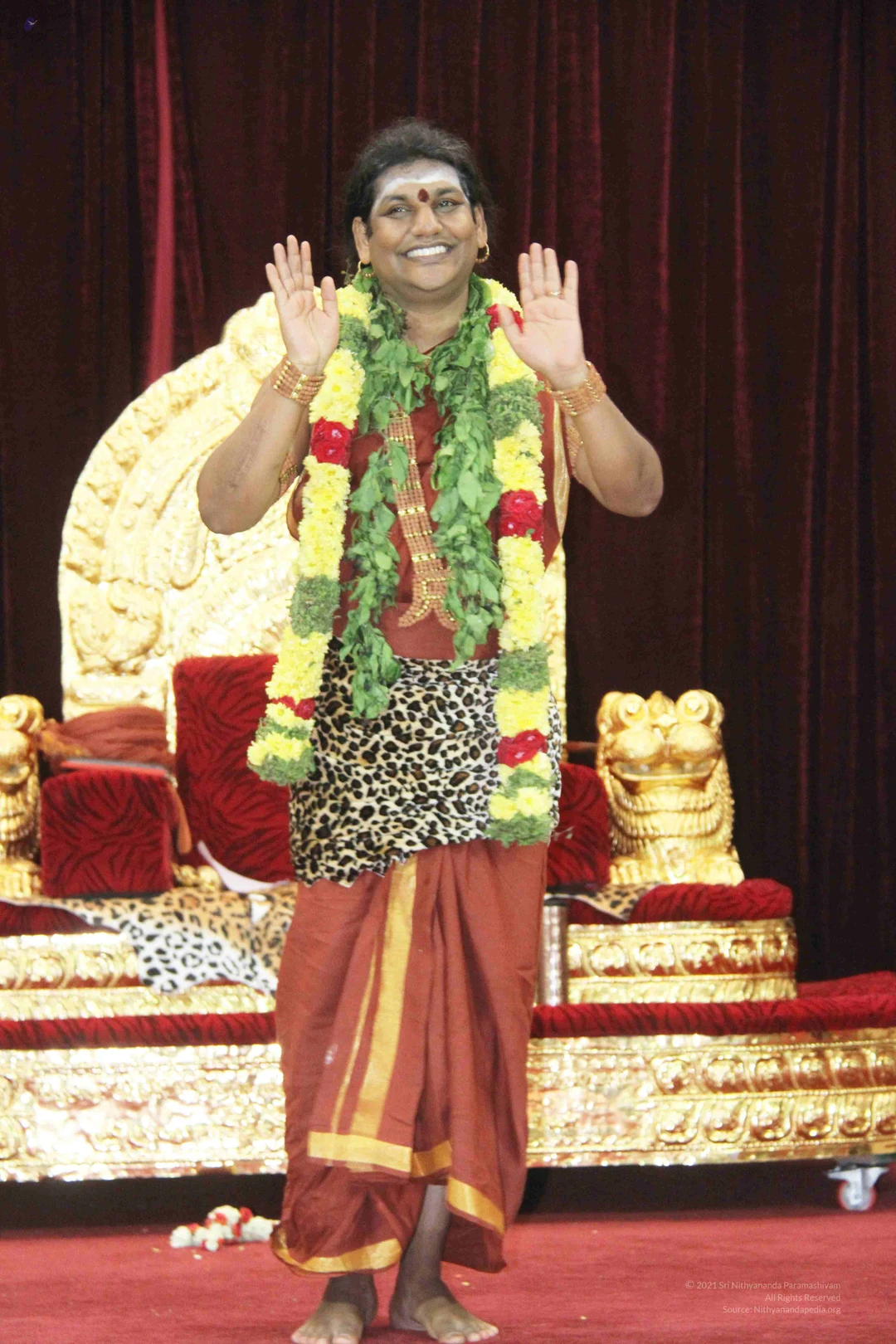
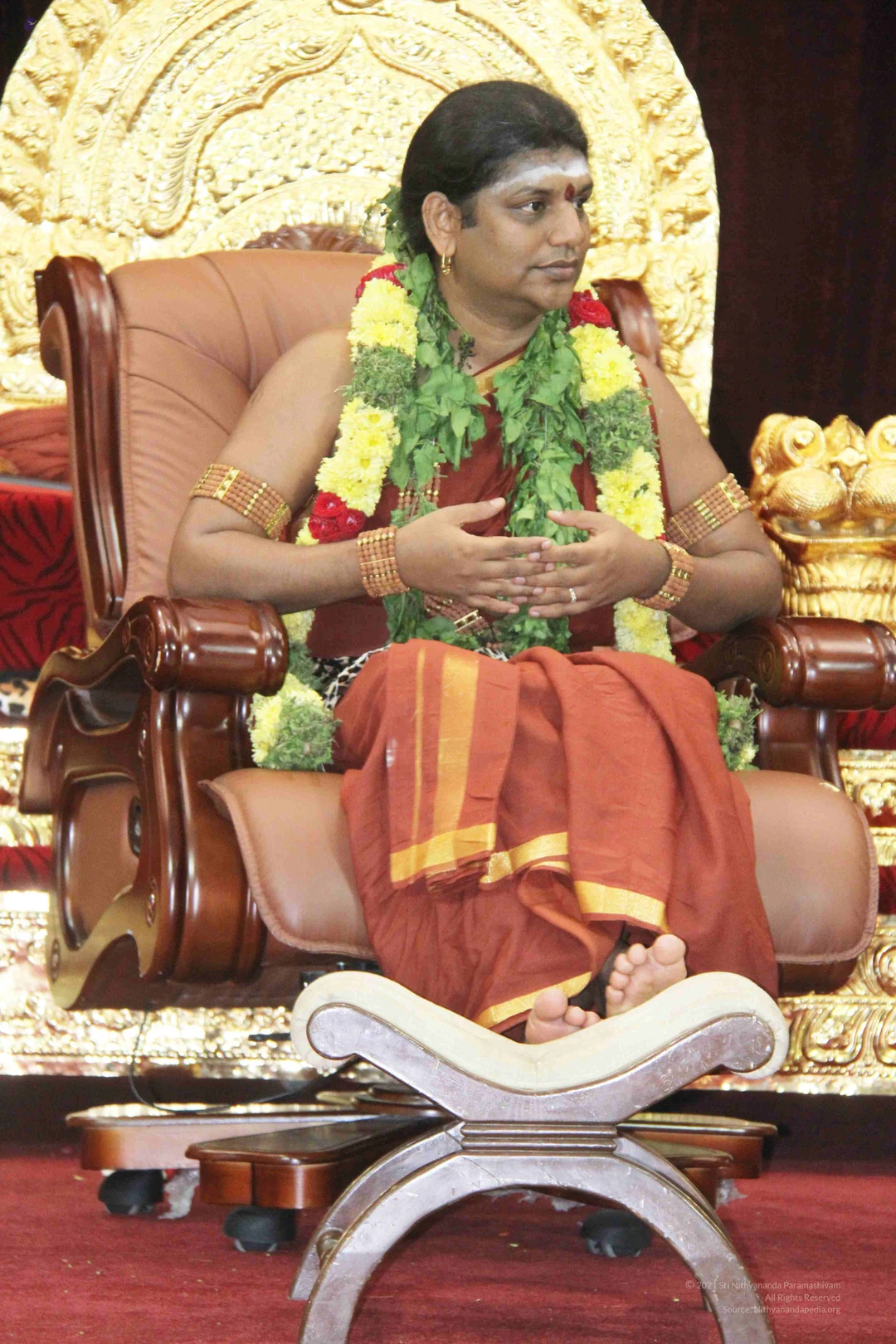
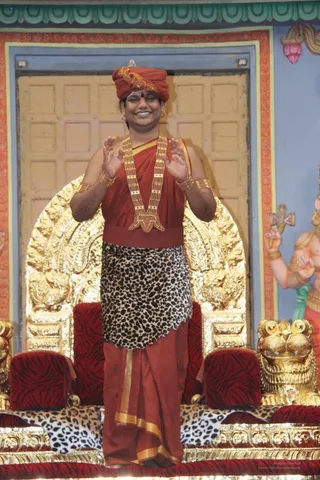
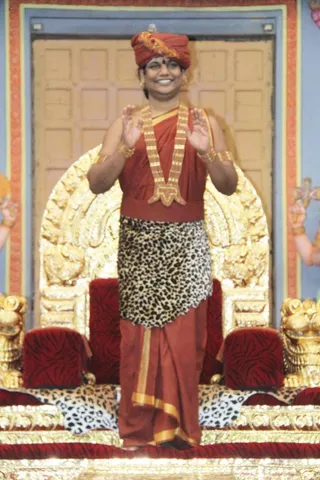
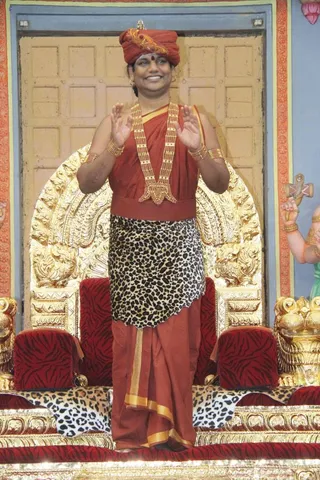
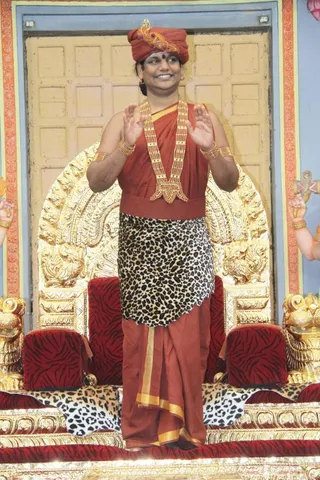
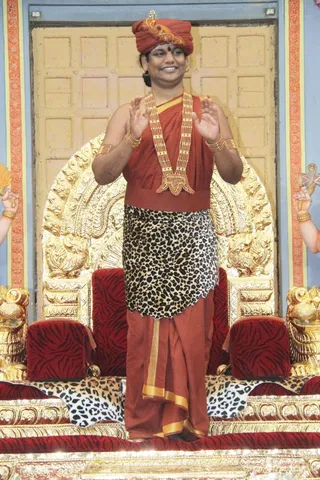
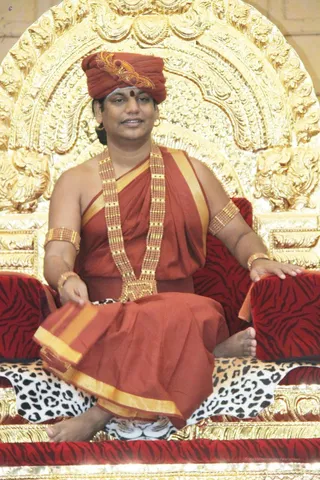
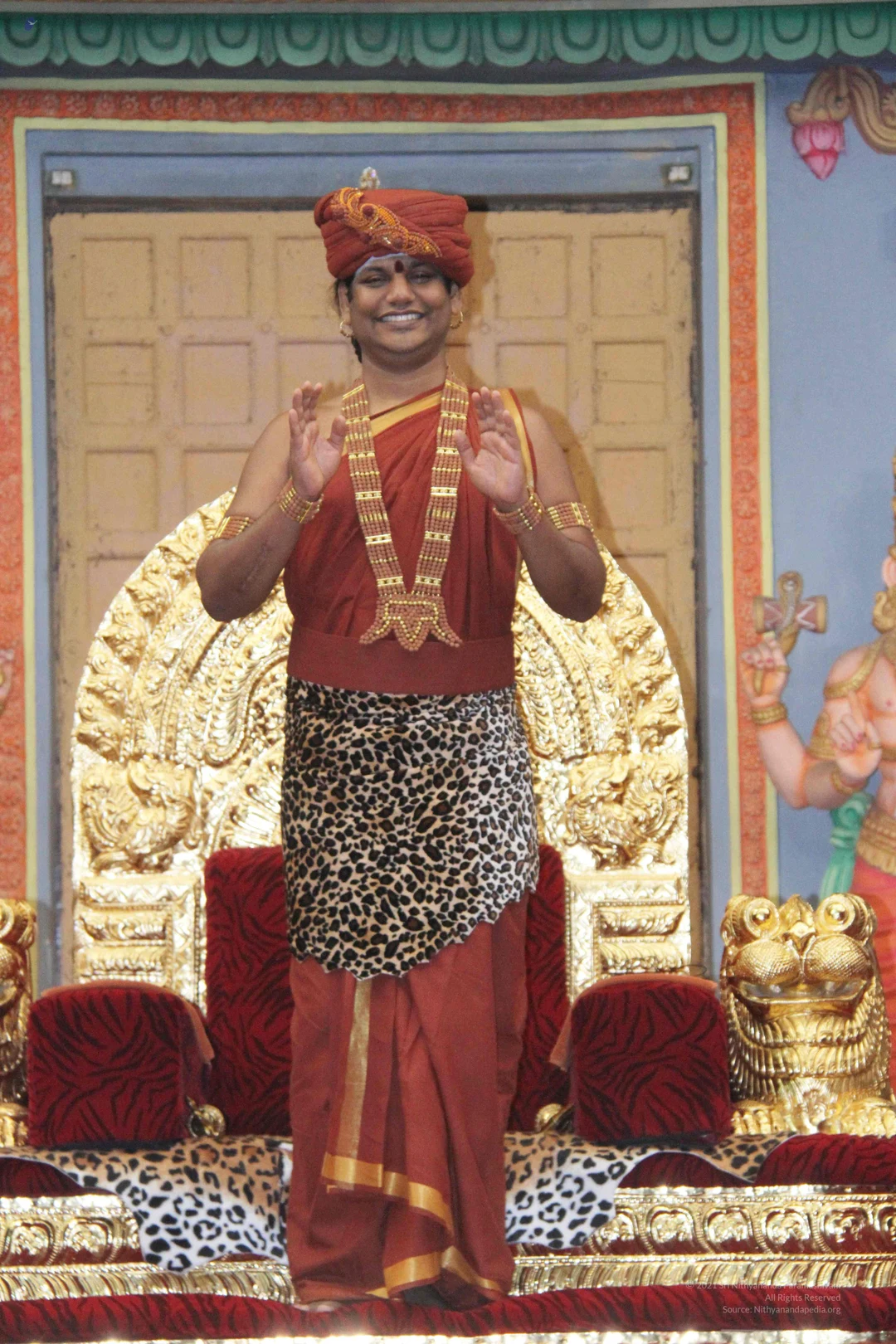
A standing man in a rust-red turban and matching red-orange robe stands before a gold throne, smiling with palms pressed together in greeting. He wears a long beaded gold necklace, gold bangles, earrings, and a leopard-print sash-like wrap over his lower body. Behind him, a gold-carved throne with red tiger-striped cushions and gilded lion-head armrests sits in front of a wooden door and a painted wall showing a deity murti with a trident. A page-flagged Swamiji (probable): the figure wears a turban, rust-red robe, and layered gold beaded necklace, the cues used to suggest a Nithyananda-associated presentation.A standing figure in a rust-red turban with a gold embroidered band and a small red bindi stands before an ornate gold throne with carved lion-face arms and red zebra-stripe cushions. He wears a rust-red garment, a gold-bordered red dhoti, a gold multi-strand necklace, and gold armlets and bangles, and raises both palms in a blessing gesture. A leopard-print drape hangs over the throne and a leopard-print cloth lies on the dais. A carved golden arch and a wooden door frame the background. Credit text is faintly visible at the lower right corner. Visual cues match the appearance associated with a person, but identity cannot be confirmed from the face alone.A standing figure in a rust-red turban with gold embroidery and a red tilak, smiling with palms raised in front of a gold-carved throne with red tiger-striped cushions and leopard-print drapes. The person wears a red sash over a rust-red dhoti, a leopard-print waist cloth, a long gold-and-red bead necklace and gold armlets. Behind the throne are a painted deity figure and a carved wooden door. a person in a satsang setting; appearance cues include the ornate turban, gold ceremonial necklace and rudraksha-style beadwork on a throne. One person is visible.A standing figure in a rust-red turban with a gold ornament and a red bindi, wearing a rust-red shawl over the torso, a gold-bordered rust-red dhoti, a leopard-print cloth at the waist, a heavy gold multi-strand necklace, gold armlets and bangles, raises both palms in an open gesture while smiling. Behind is a large gold carved throne with lion-headed armrests, red and black tiger-striped cushions and a leopard-print cover on the platform, set against a yellow panelled wall with floral borders and a deity figure at the edge. Single person on stage.A smiling figure stands before an ornate gilded throne with red tiger-striped cushions and golden lion armrests, in front of a carved wooden panel. The person wears a rust-red turban with a gold ornament and a red bindi, a rust-red robe, a leopard-print wrap at the waist, a long gold beaded necklace, and gold bangles on the arms. Both palms are raised in a blessing gesture. Ornate painted deity figures flank the sides. The page indicates an event, and the figure's presentation shows saffron-toned clothing, a turban and ornate gold necklaces, which are appearance cues only, so the identity is probable Swamiji (probable) in a ceremonial seat.A photograph of a seated man on an ornate gold throne with a large carved gold backrest. He wears a rust-red turban with a gold embroidered ornament and a red bindi, a rust-red garment with gold borders draped over the shoulders, and a long multi-strand gold-and-red beaded necklace with a gold clasp. Gold bangles adorn his wrists and upper arms. He sits cross-legged on a red zebra-striped cushion over a black-and-white leopard-print cloth, with bare feet and hands resting on his knees. Probable Swamiji: the person is seated centrally on a throne with a turban, saffron-toned robes and ceremonial gold and rudraksha-style adornments.
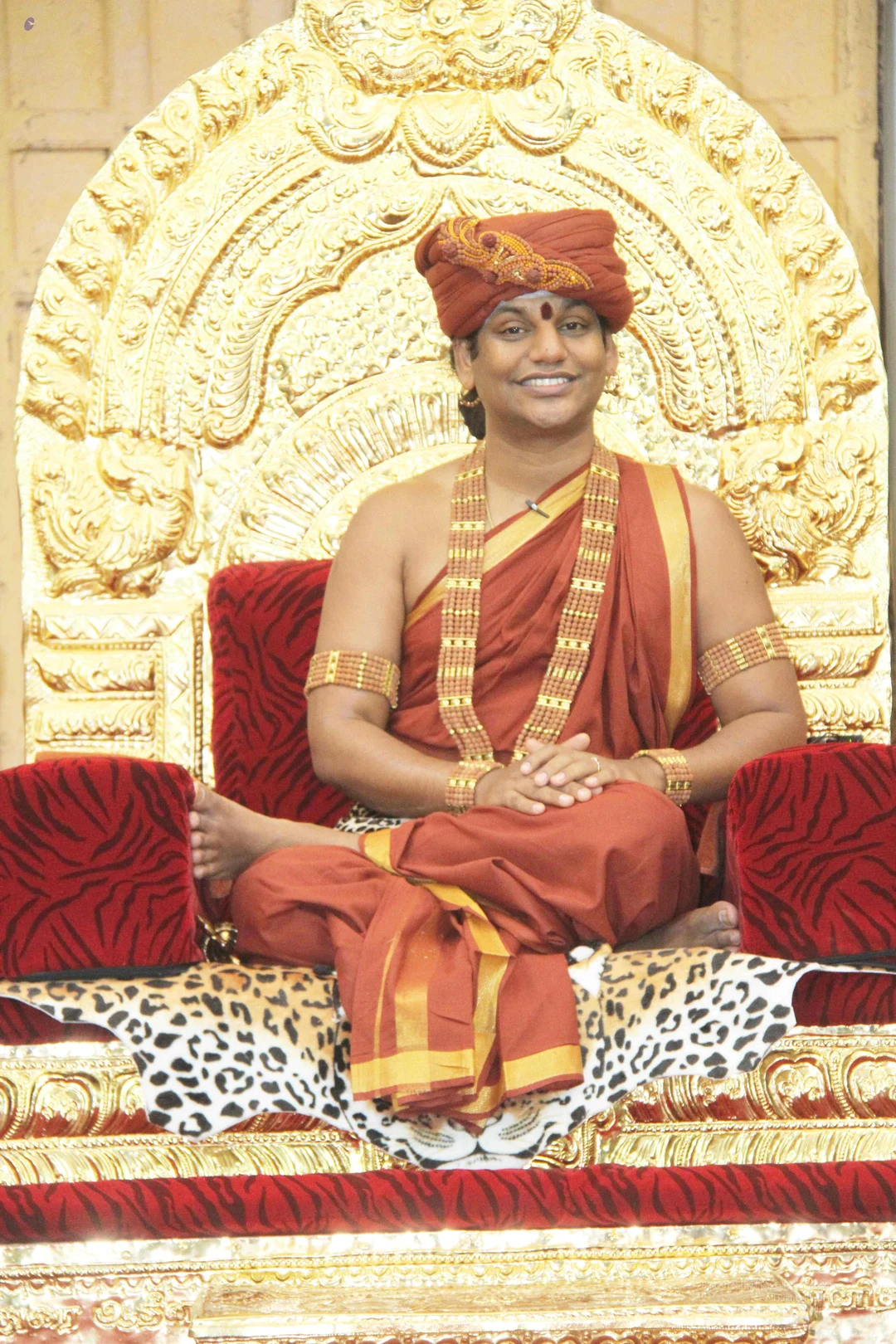
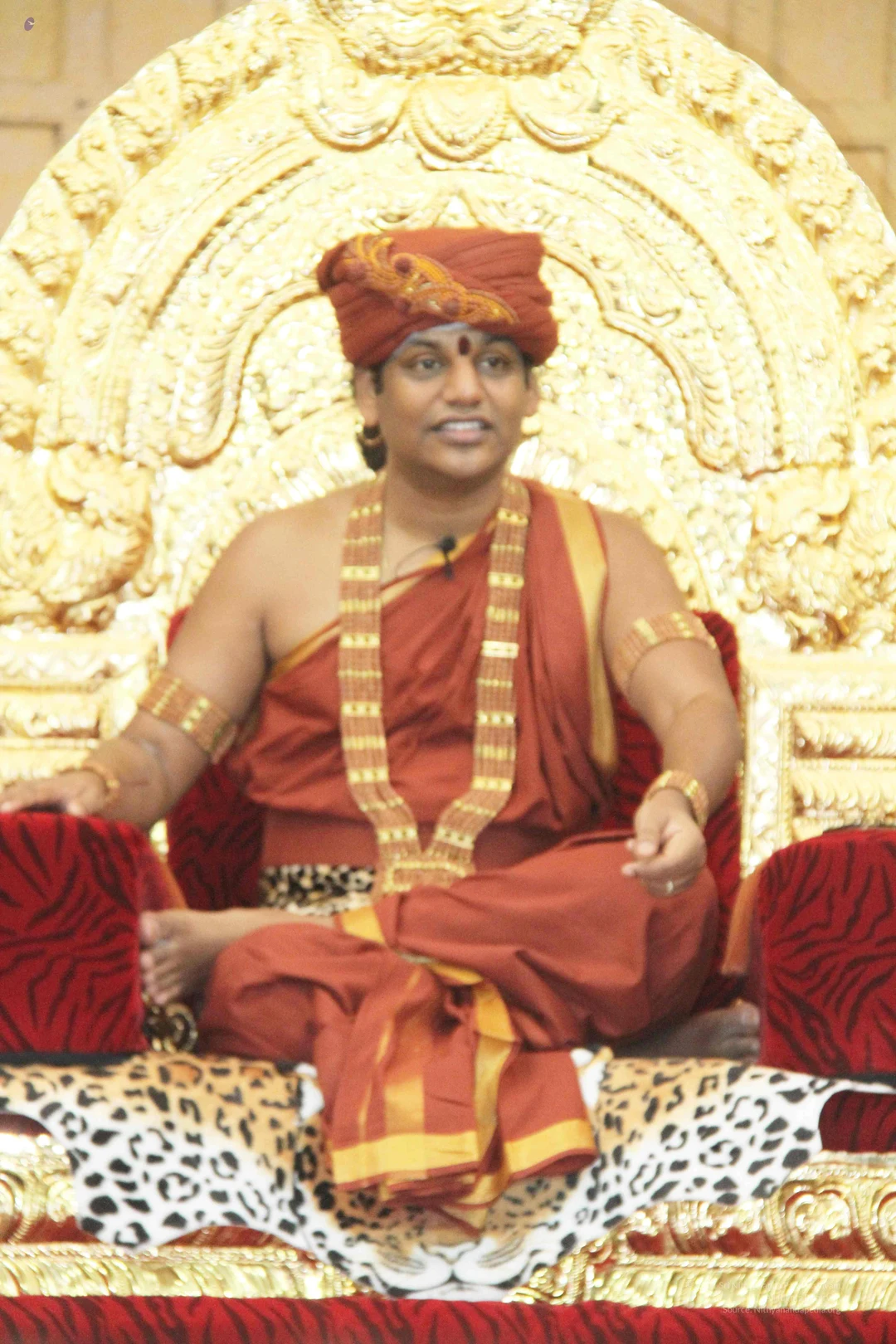
Pada-Puja

28 photosSource gallery
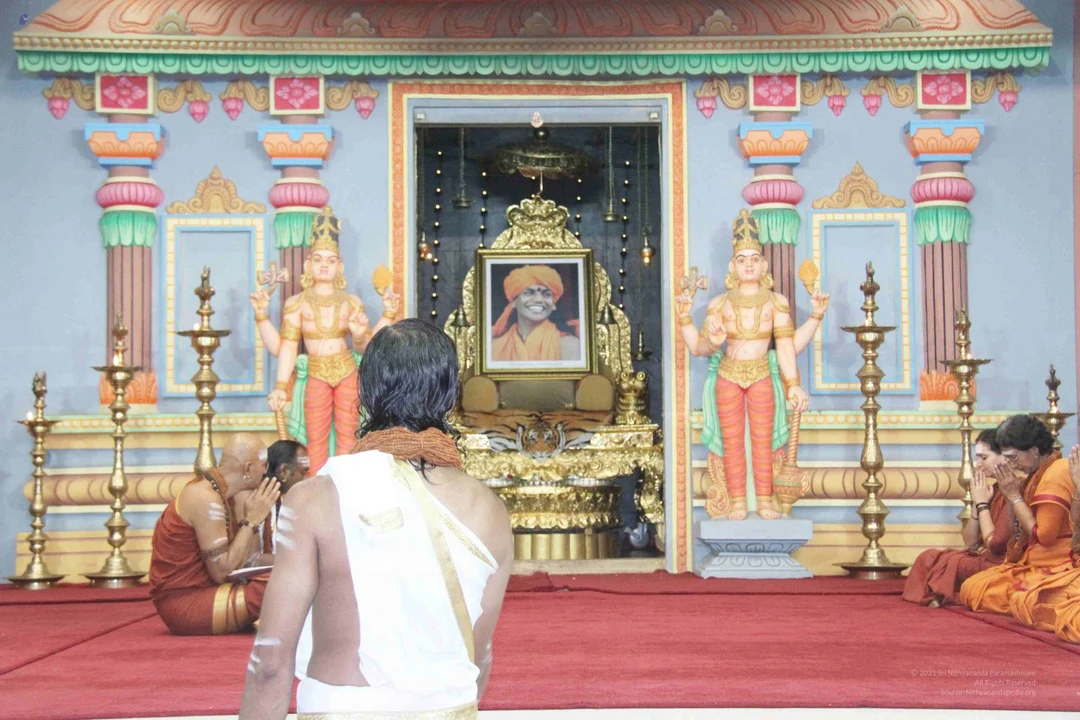
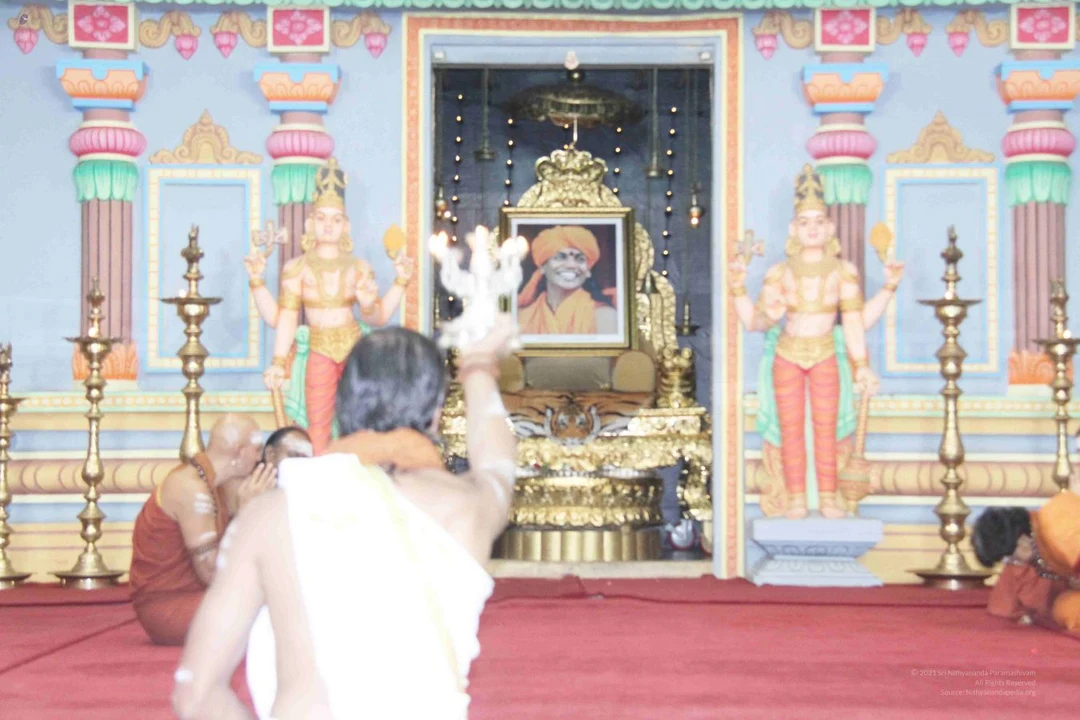
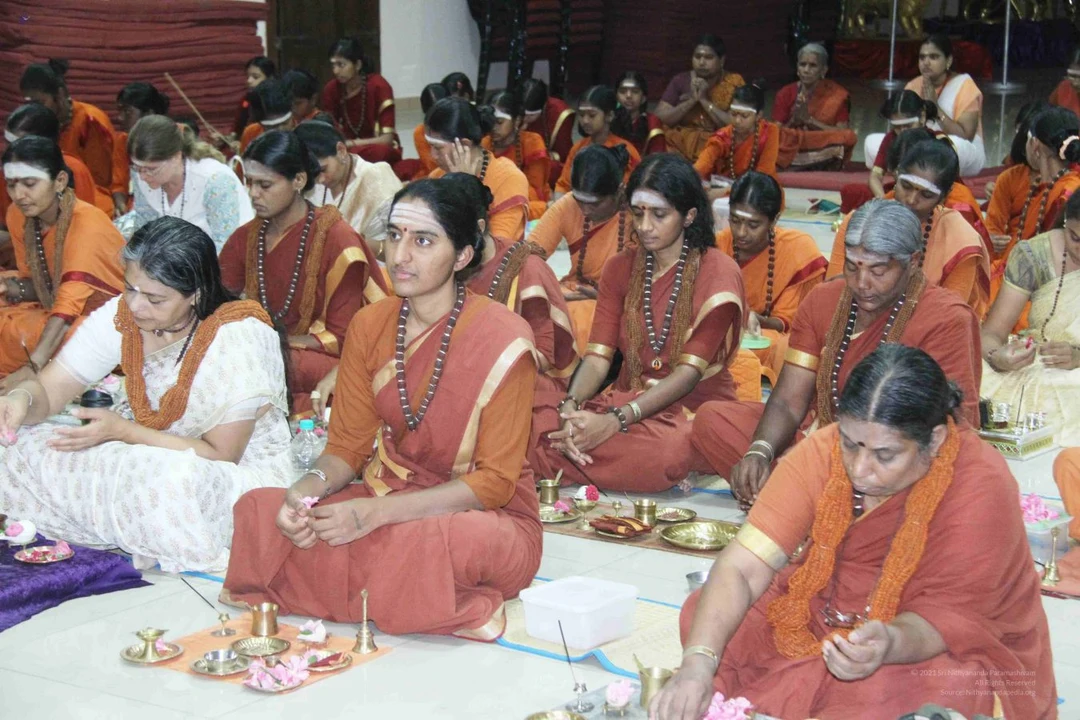
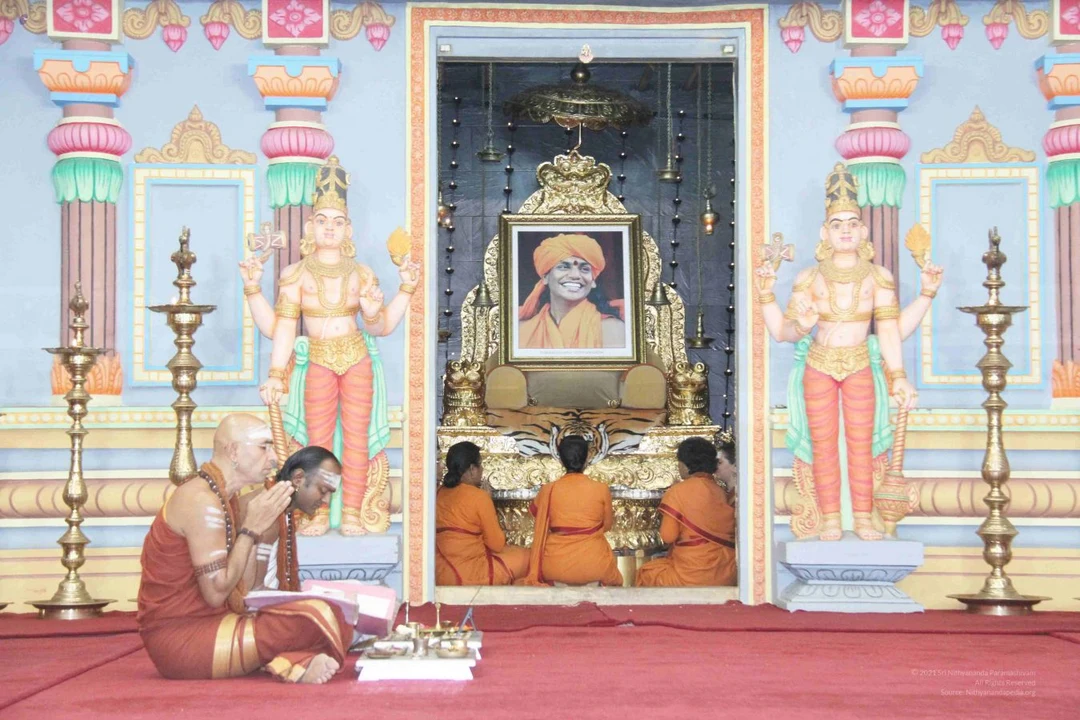
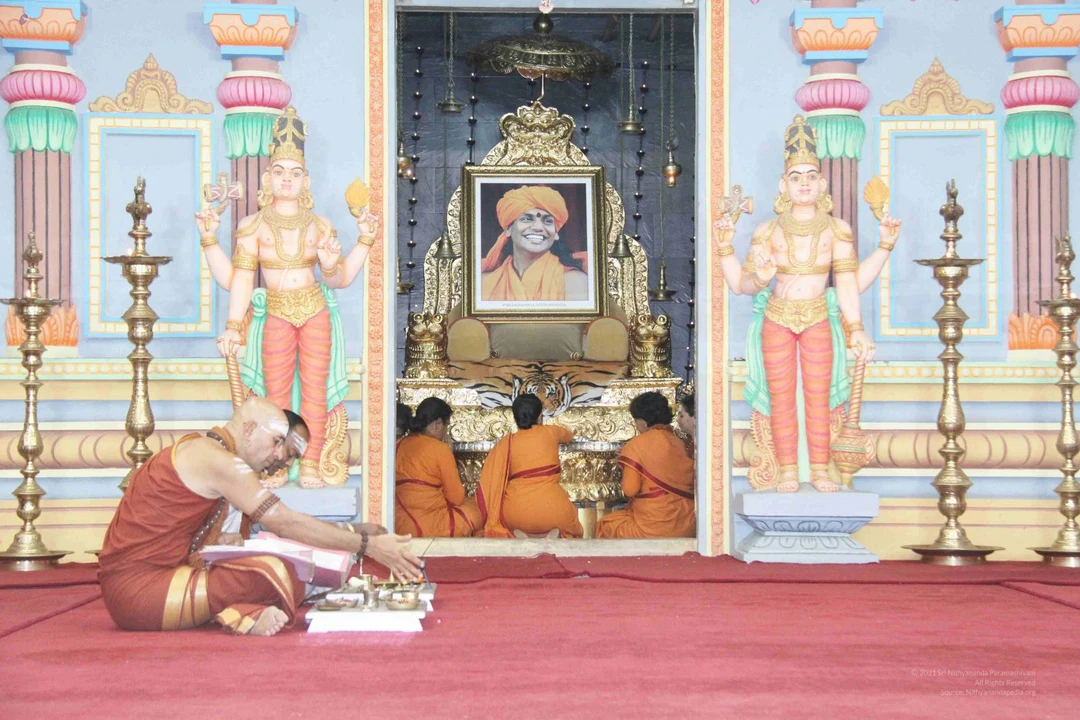
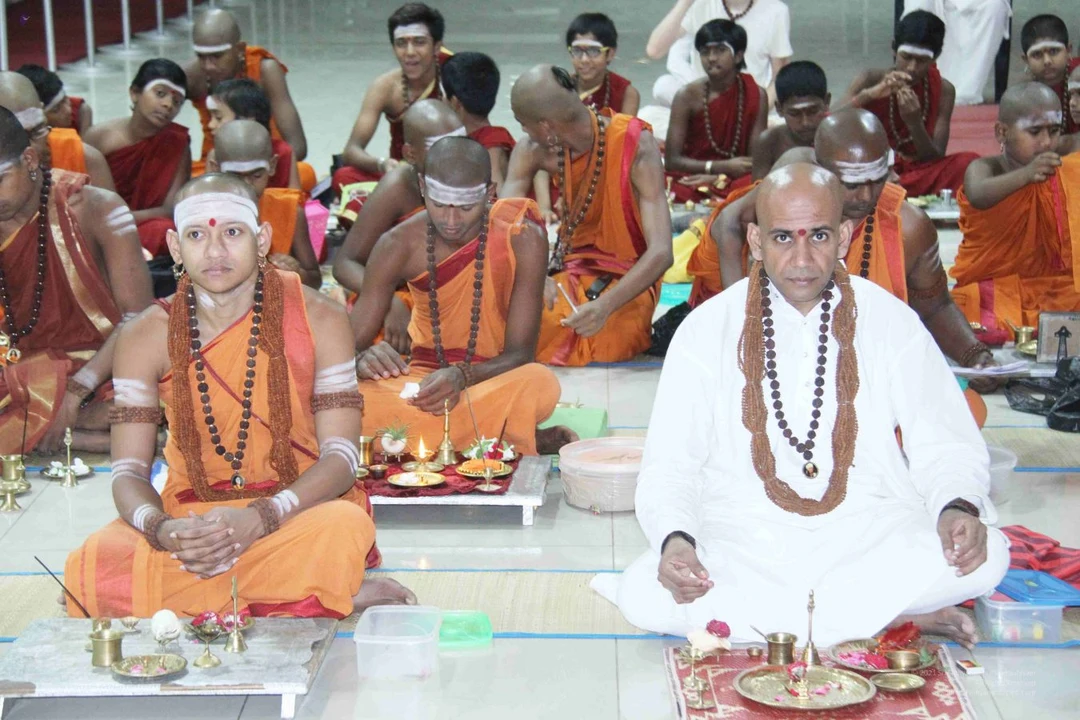
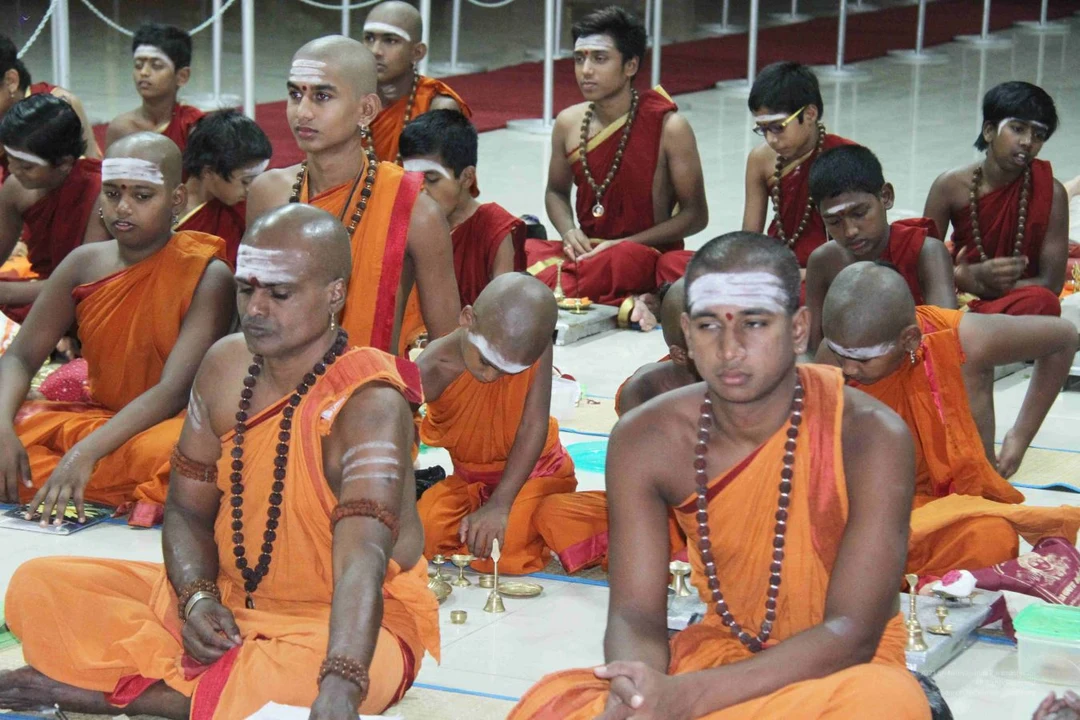
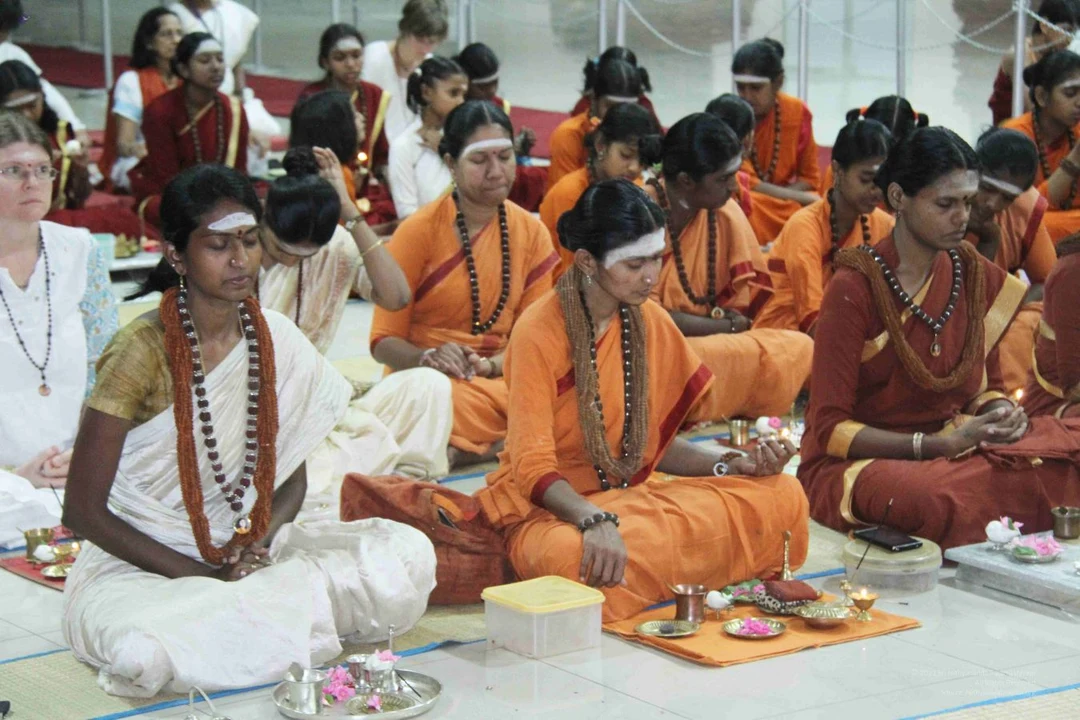
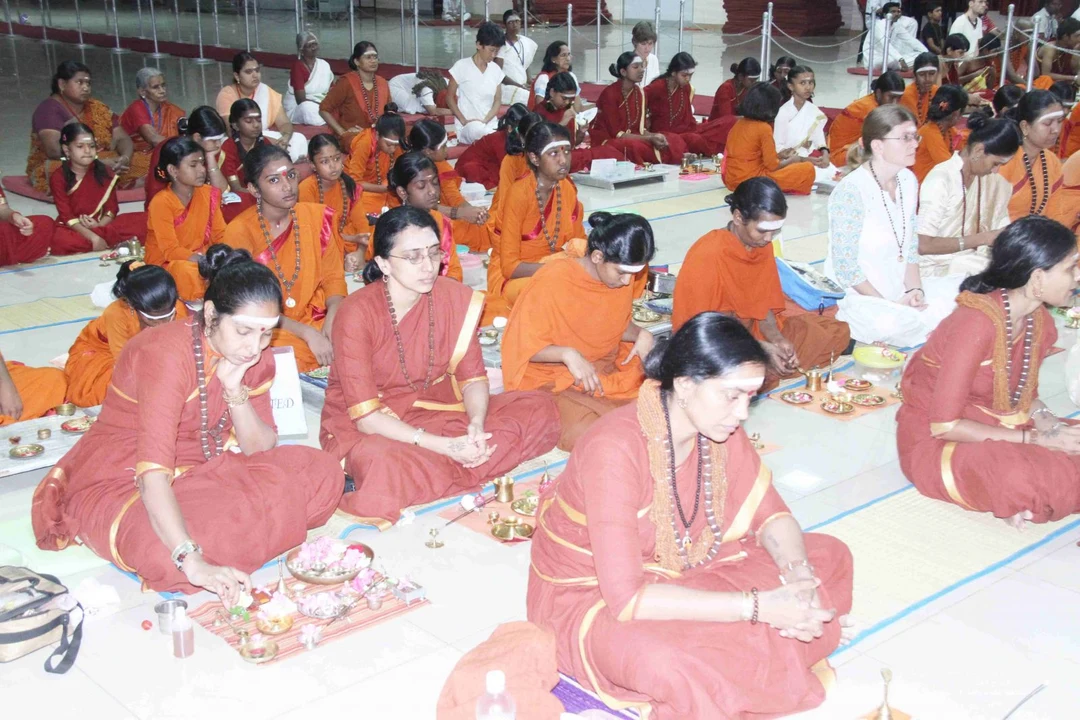
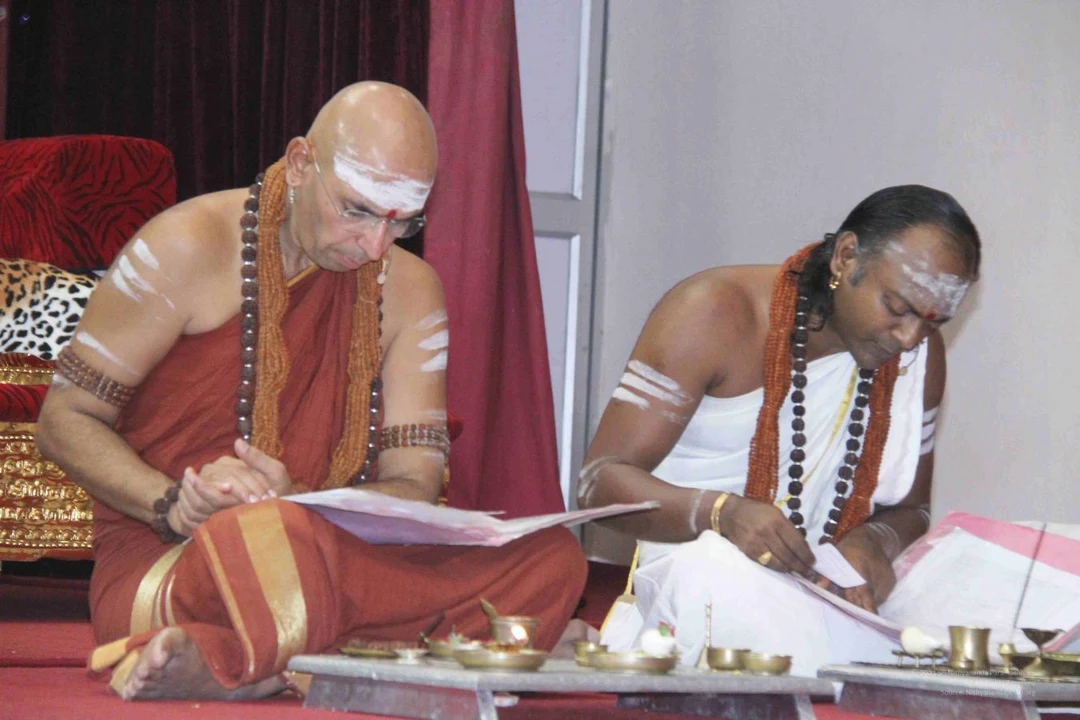
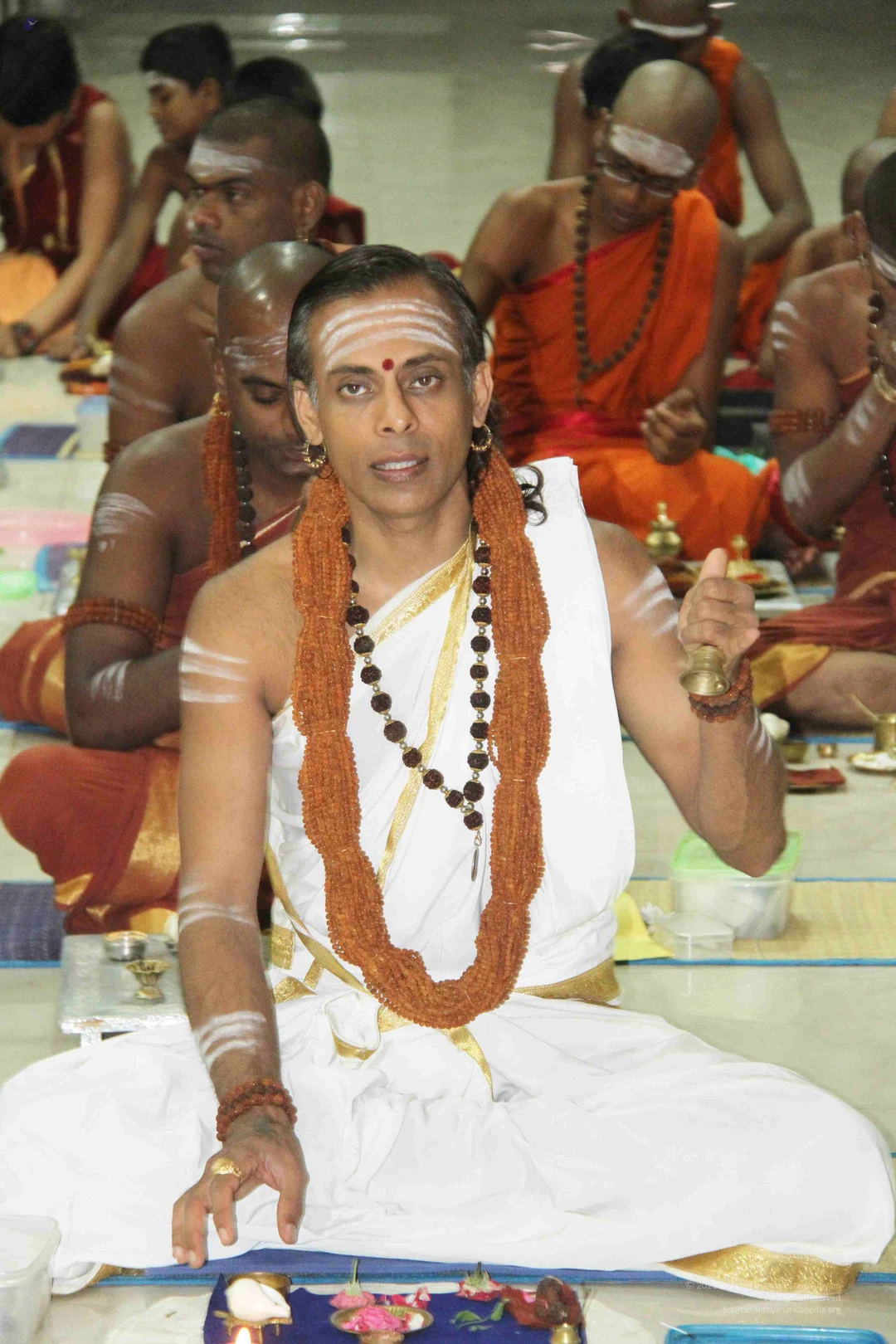
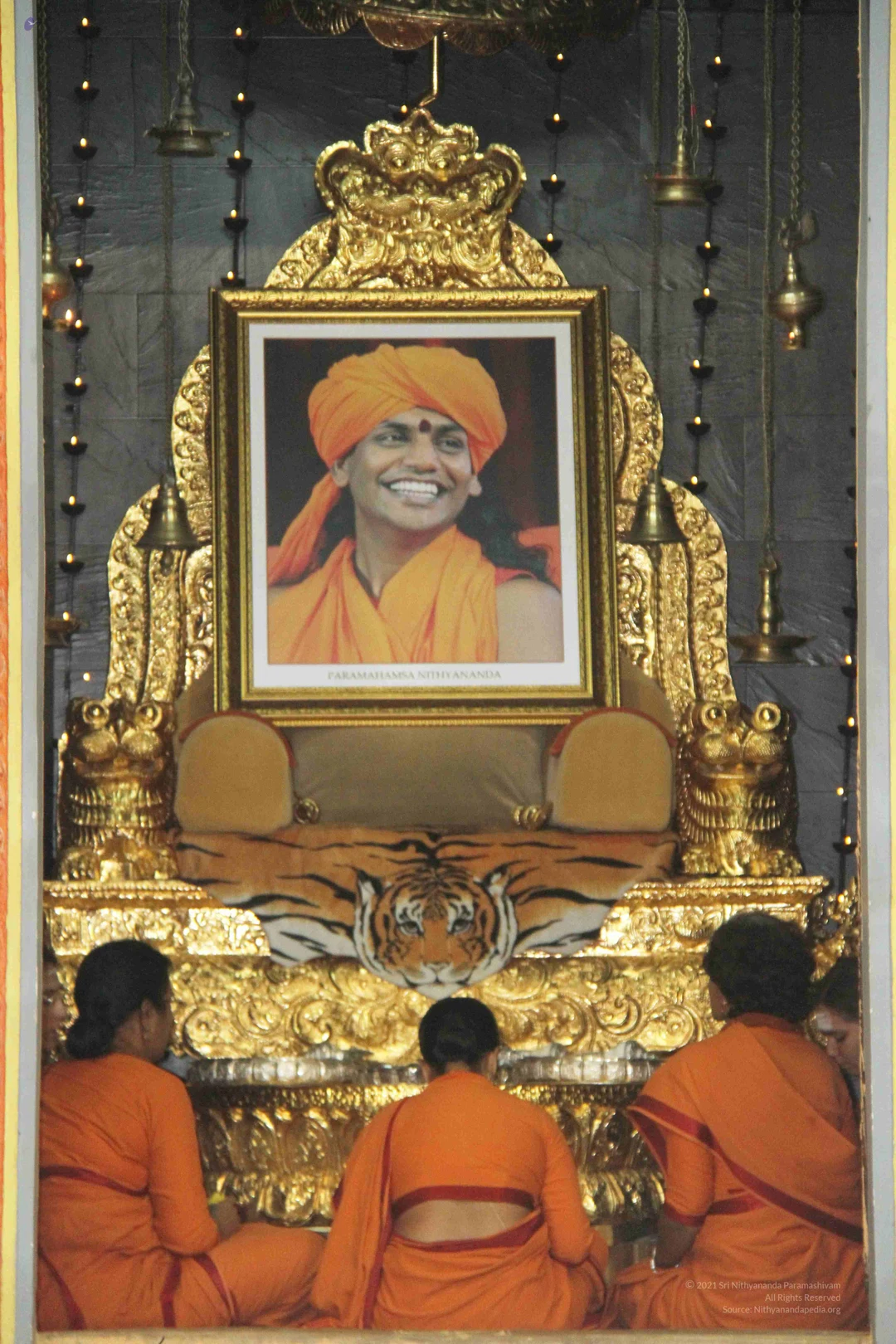
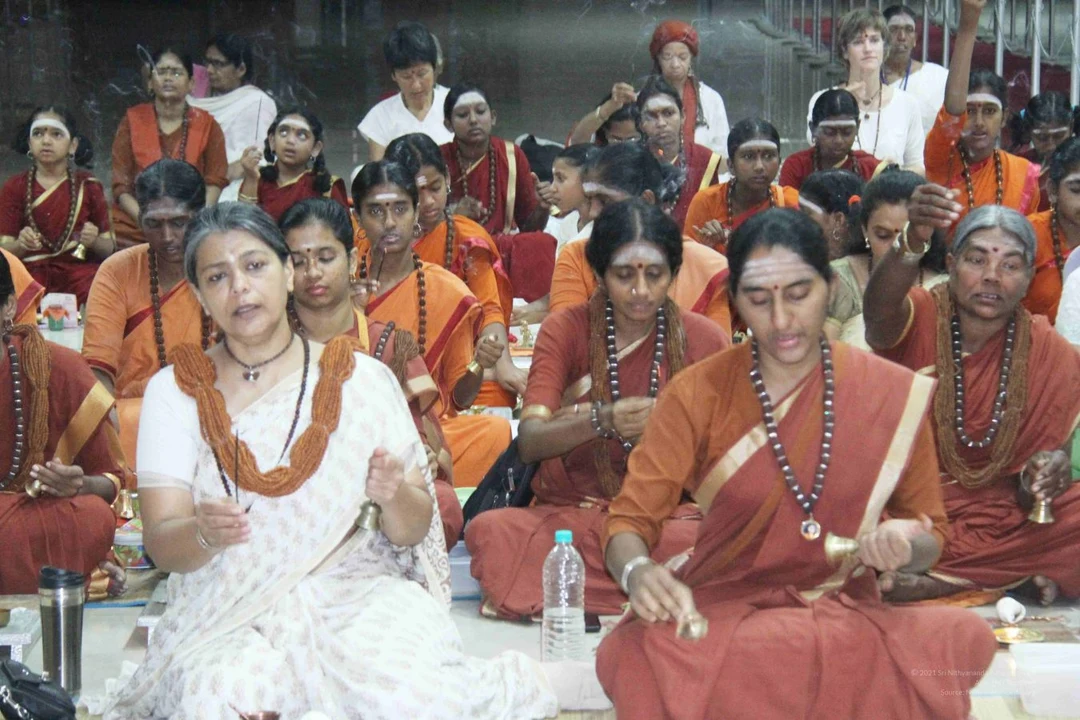
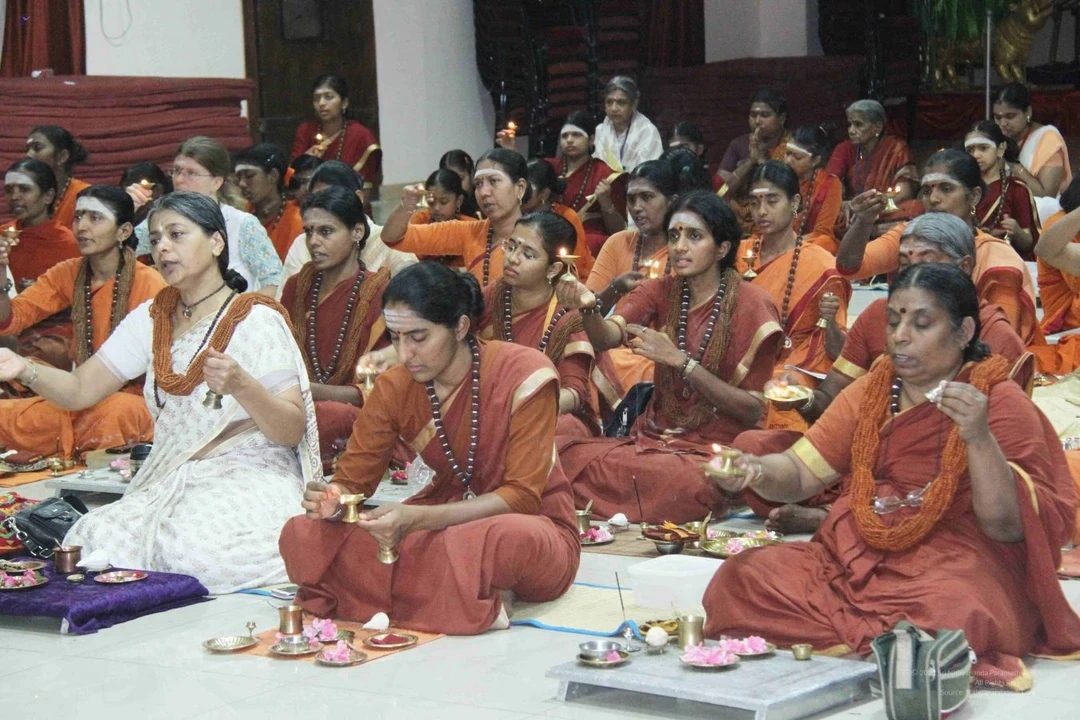
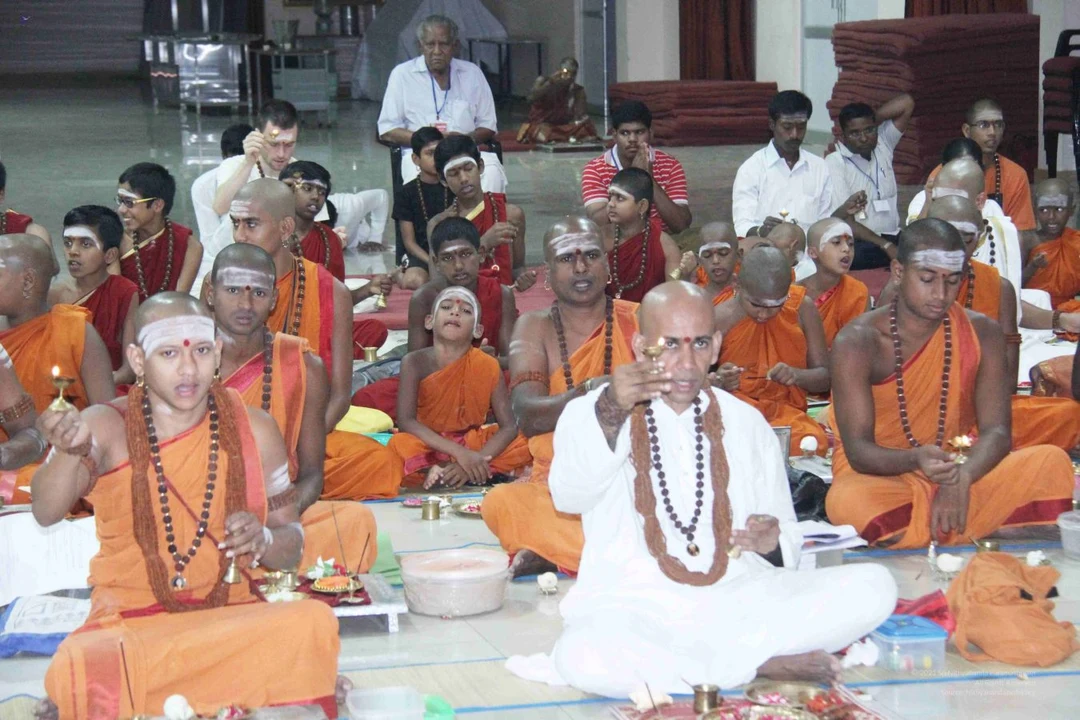
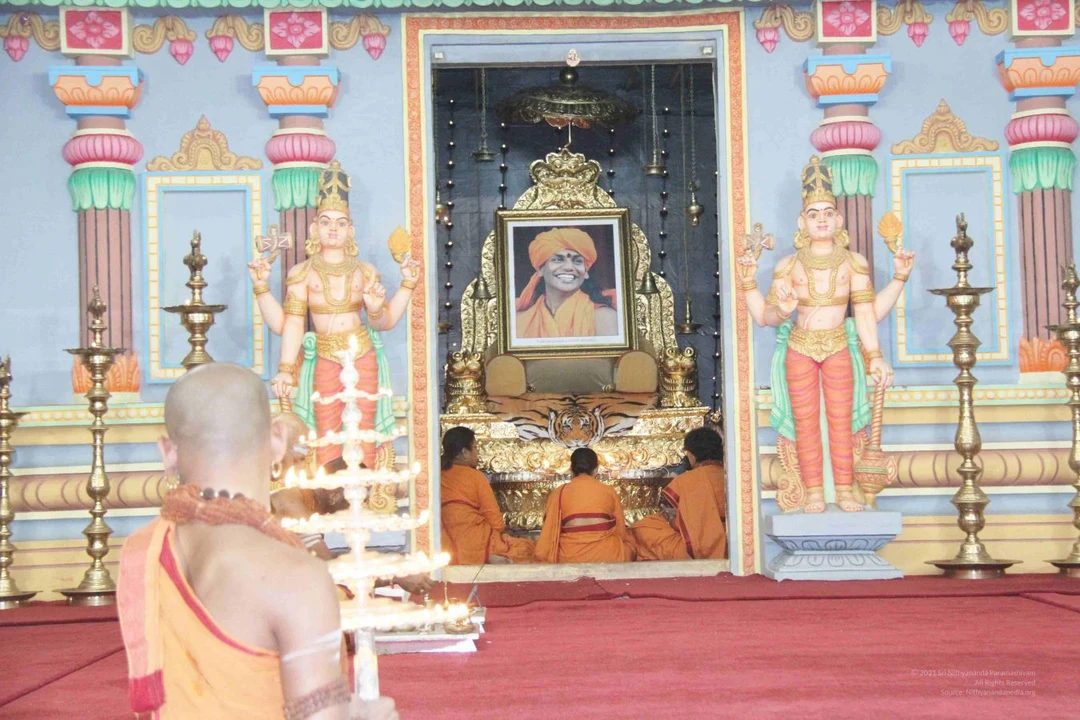
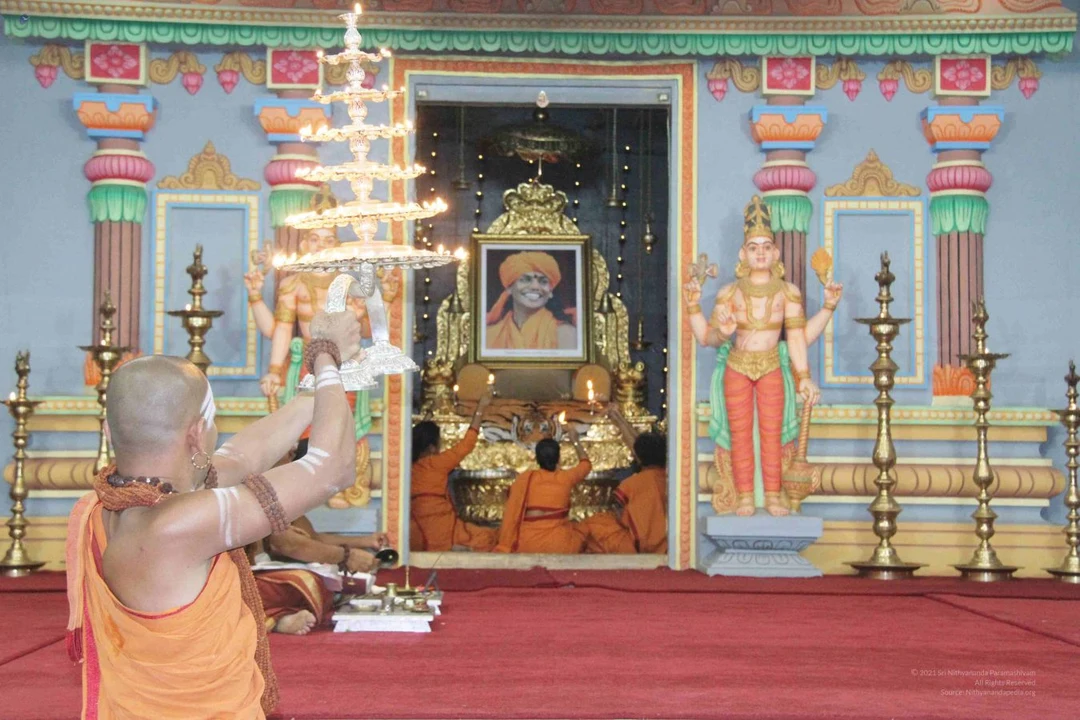
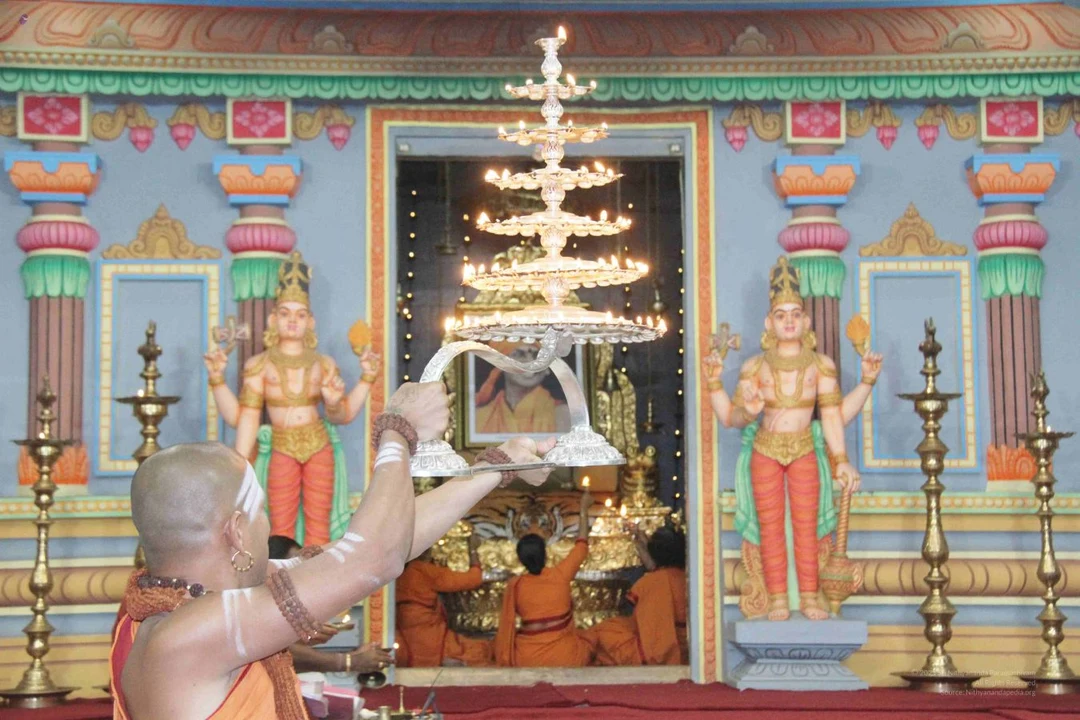
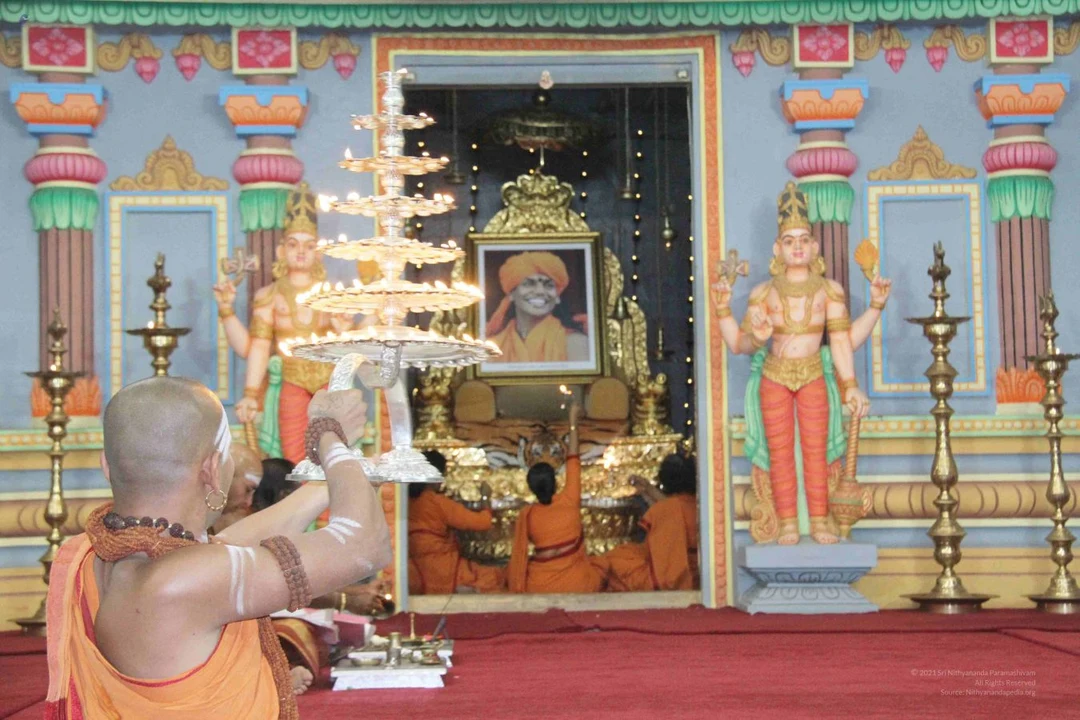
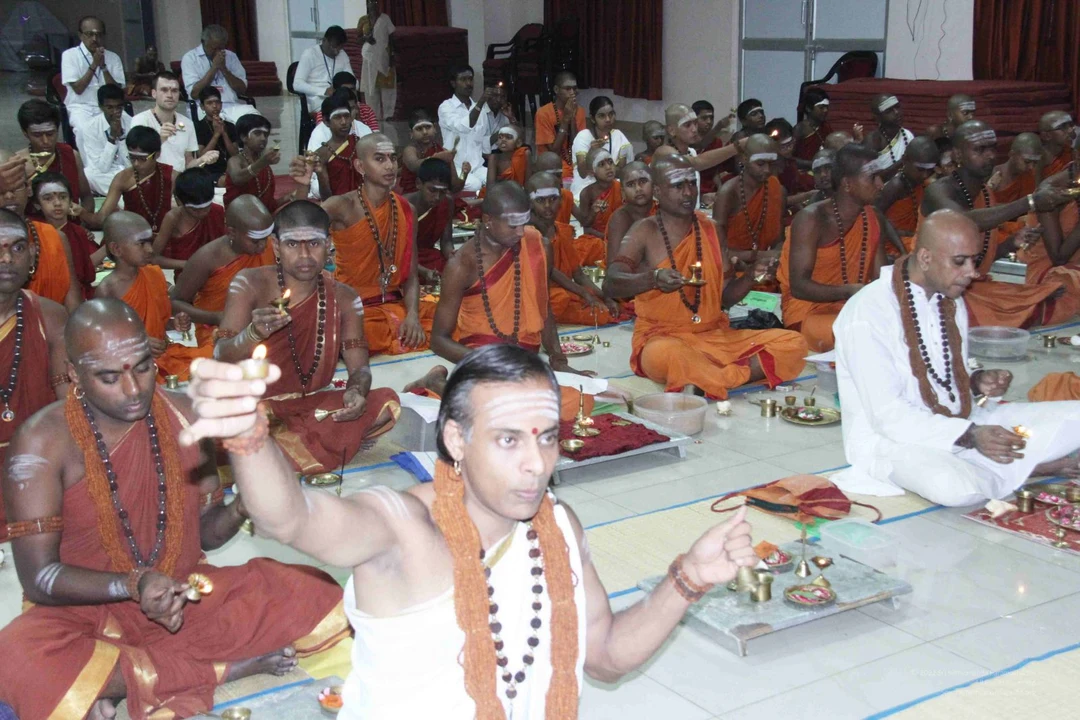
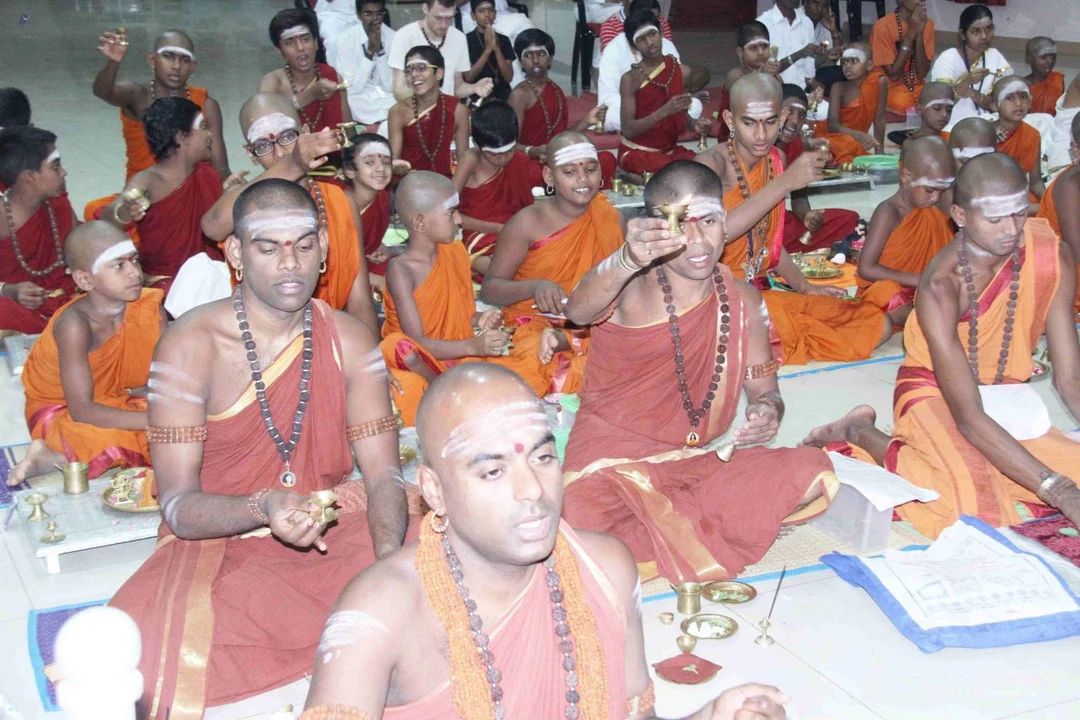
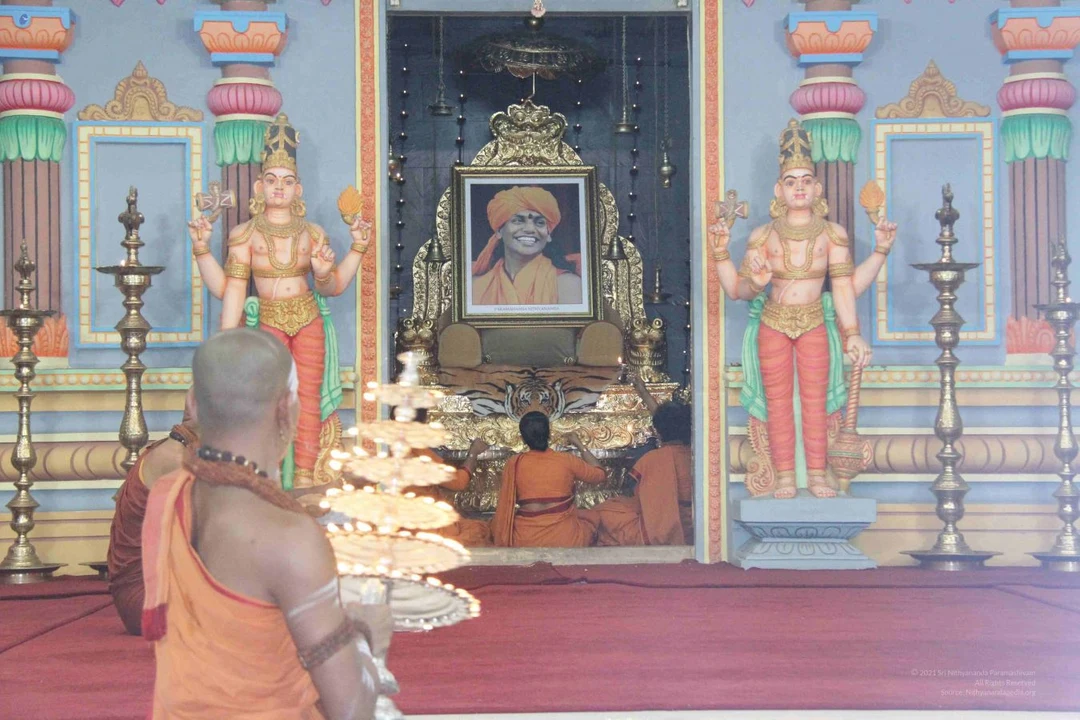
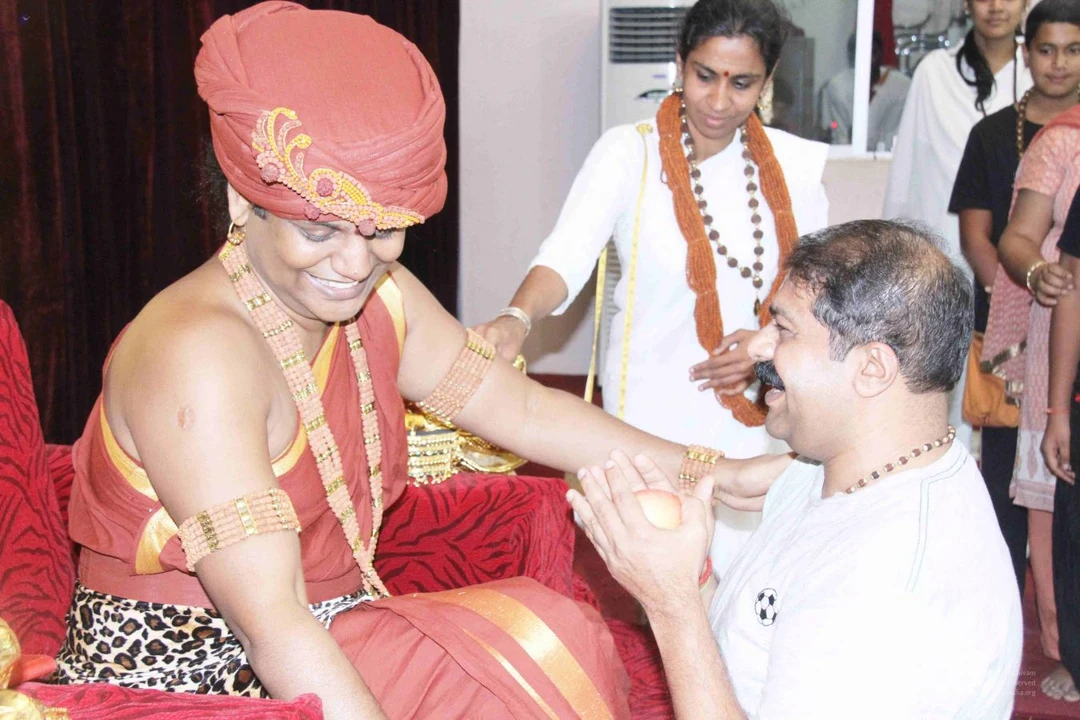
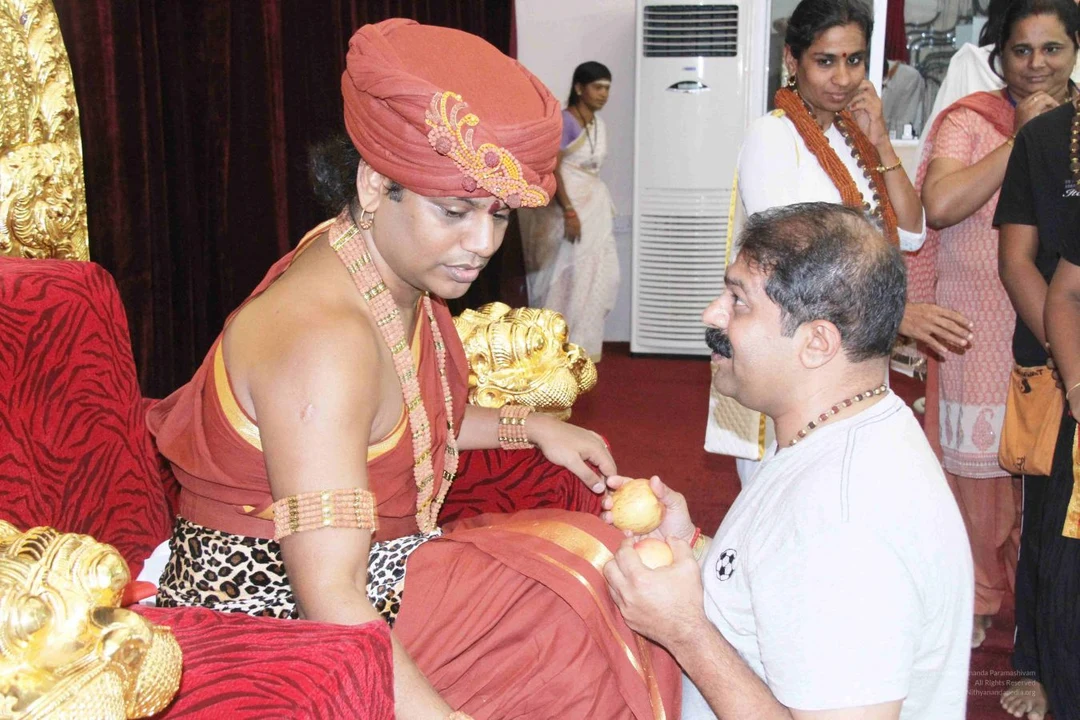
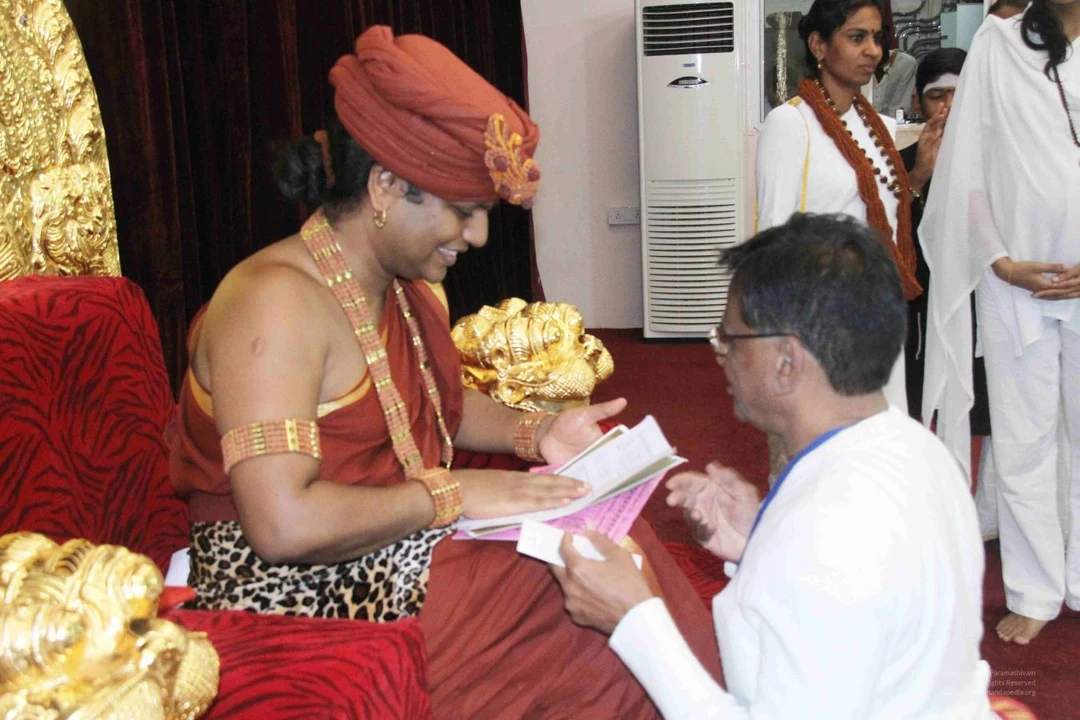
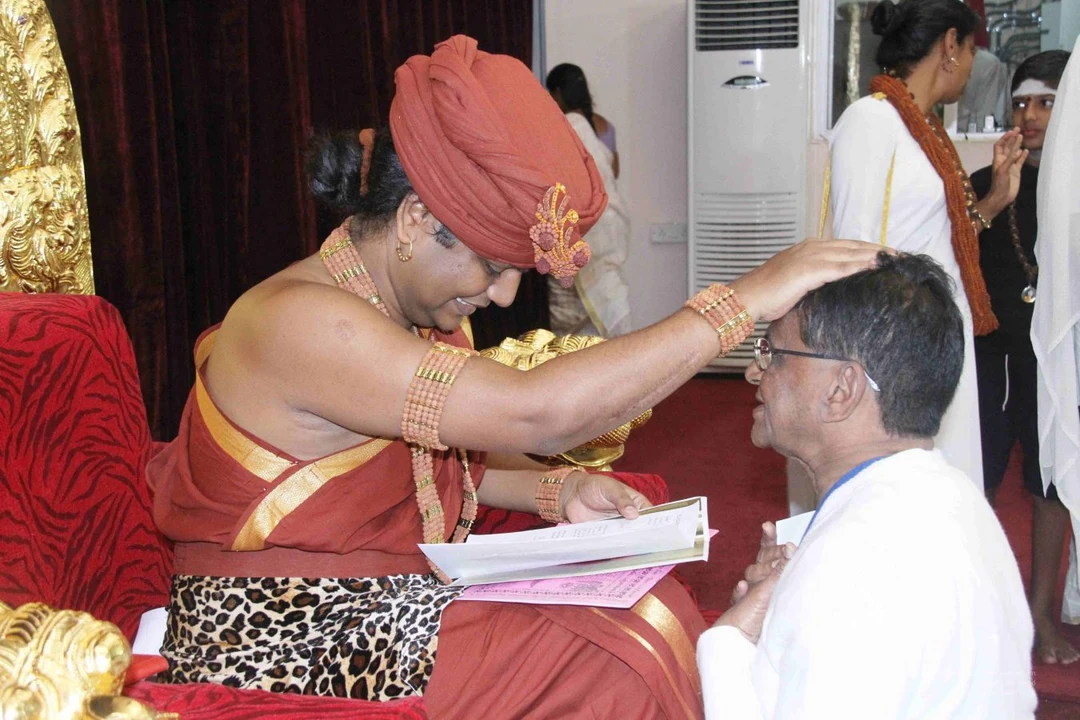
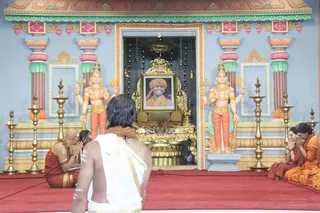
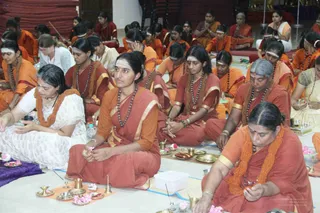
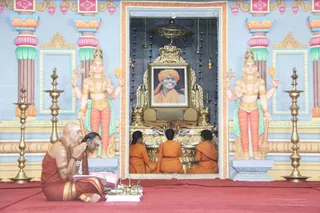
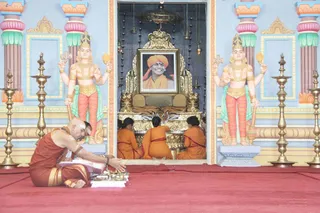
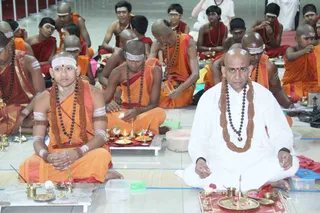
A temple shrine interior with a painted pink-and-green pillared backdrop. At the centre, a framed portrait of a saffron-turbaned man sits on a gold throne-like seat with a gold canopy, flanked by two painted standing deity murti holding ritual objects. A man with long wet hair and a bare back, wearing a white dhoti with a gold border and an orange shawl, faces the shrine from the foreground with his palms joined. To the right, two seated women in orange saris pray with folded hands, and a seated man in orange robes sits on the left near the front. Brass oil lamps line the red-carpeted floor. Dozens of people are not visible; only about five are shown.Aarti performed before a golden throne flanked by two gilded dvarapala-style deity statues holding ceremonial implements. A large framed portrait on the throne shows a smiling man in an orange turban and orange robe, labelled as a portrait, not a physical person. In the foreground a man in a white dhoti with bare back raises a lit multi-flame lamp toward the shrine. Brass oil lamps stand on red carpet, and two seated devotees in orange robes sit at left and right edges. Pastel blue walls with pink and green lotus-style pillars frame the scene.A photograph of a seated group of women in orange and rust-red saris and dhotis-style robes at a devotional gathering, many wearing rudraksha malas and orange shawls. In the foreground, a woman in a white sari with an orange shawl and rudraksha mala handles small pink flowers beside brass lamps and bowls on a mat. A woman in a rust-red sari and gold bangles holds flower petals over a brass plate, with a small brass kalasha-style vessel and oil lamps nearby. Behind them, rows of devotees sit with hands folded or offering flowers, some with white vibhuti marks on their foreheads. No clearly identifiable a person is visible in the frame.A temple shrine hall with pale blue walls and pink-and-gold lotus column capitals. Two gilded dvarapala-style guardian statues with crowns and gold ornaments flank a central shrine. In the shrine, a framed portrait of a smiling man in an orange turban and orange robe sits on a gilded throne with a tiger-skin seat and an overhead umbrella. Brass lamp stands stand on either side. On the red carpet at left, a shaved-headed priest in orange and white ritual dress with a rudraksha mala presses his palms together beside a seated devotee with white vibhuti markings. Three orange-robed sannyasis sit before the throne in prayer. The framed portrait is a depiction, and the seated figures are present in person.A photograph inside a temple hall with pale blue walls and red carpet. In the foreground a shaved-headed priest in orange dhoti and shawl sits cross-legged performing a ritual with a brass vessel and offerings. Behind him, three devotees in orange robes sit before an ornate golden throne draped with a tiger-skin cloth. On the throne is a framed portrait, labelled "Paramahamsa Nithyananda", of a smiling man in an orange turban and orange clothing. Tall painted deity murti flank the entrance, and brass oil lamps stand along the walls.A seated group of saffron-clad sannyasis and young disciples performs a ritual with brass puja vessels, oil lamps and flower offerings on a low red-cloth-covered table in a bright hall. In the foreground, a bald man in white ritual clothes with a rudraksha mala and brown ceremonial beads sits cross-legged with hands joined, facing forward, beside a younger saffron-robed sannyasi with white forehead bands and arm bands who sits with palms together. Behind them, several boys and young men wear orange and red robes, rudraksha malas and white forehead bands, some holding small items and one bringing hands together. Brass dishes of petals and a small lamp sit on the floor before them. The arrangement suggests a formal satsang-style gathering with puja items laid out. No clear appearance-based cues establish that the white-clad man is a person, so the figure is described by role only.

Kalpataru-Darshan
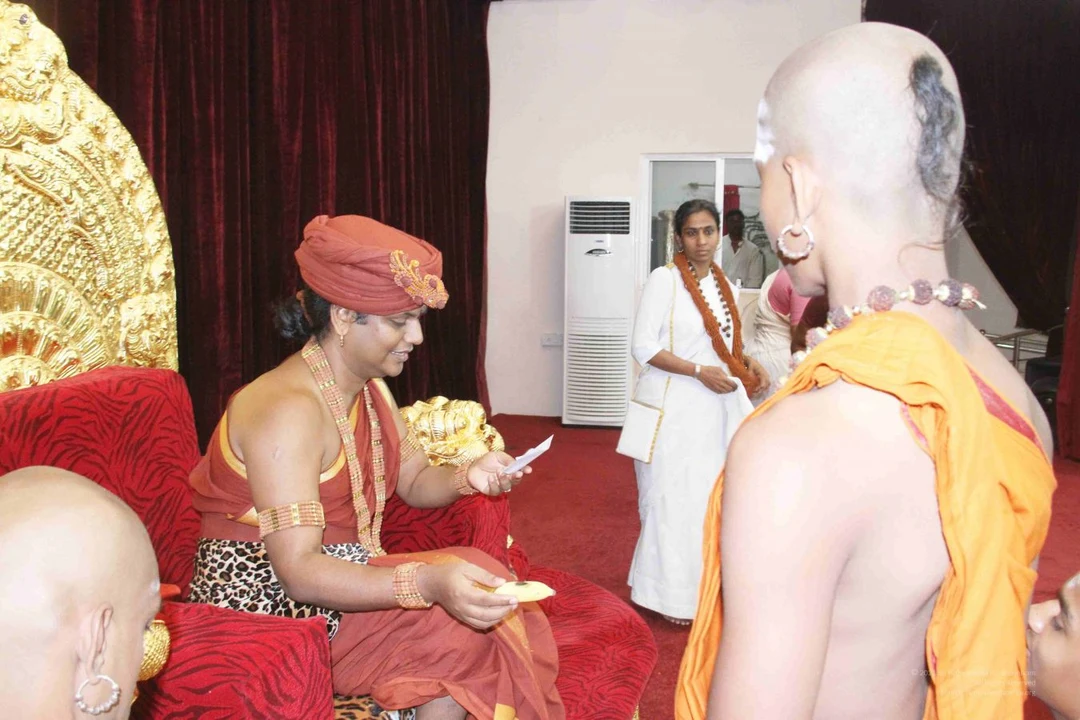
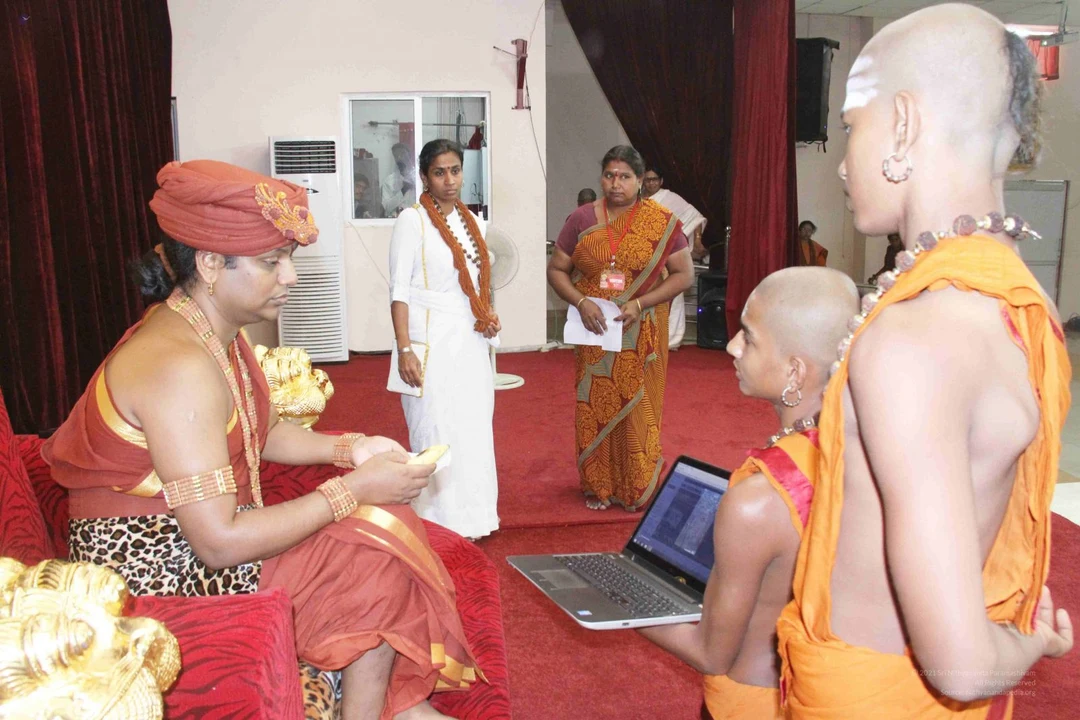
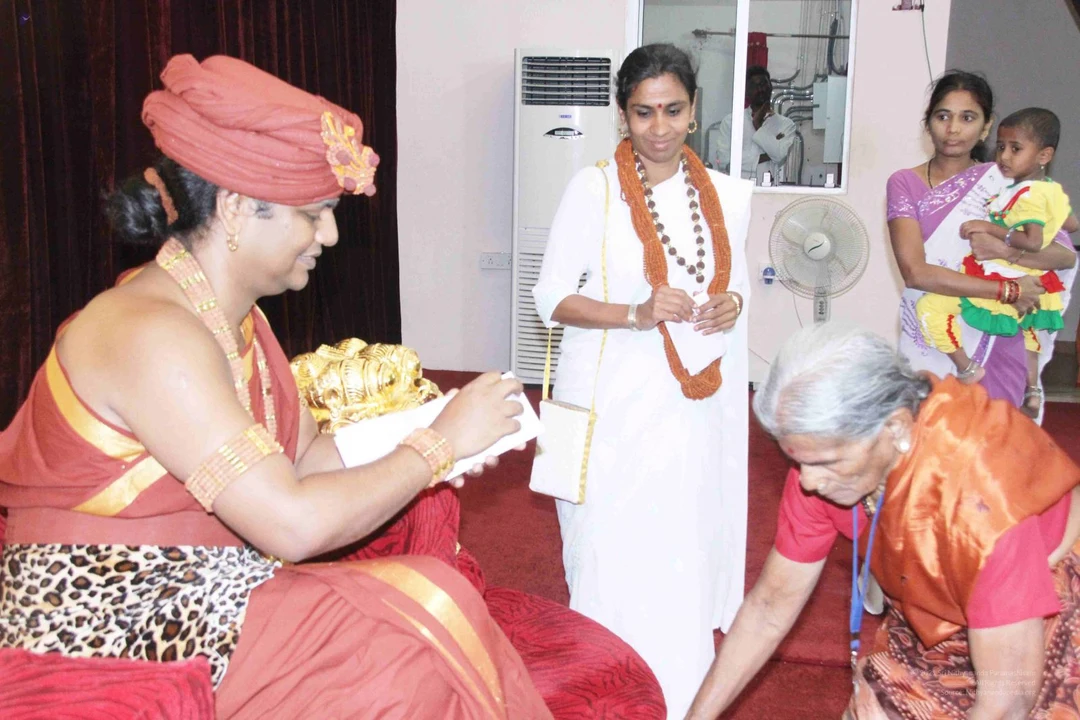
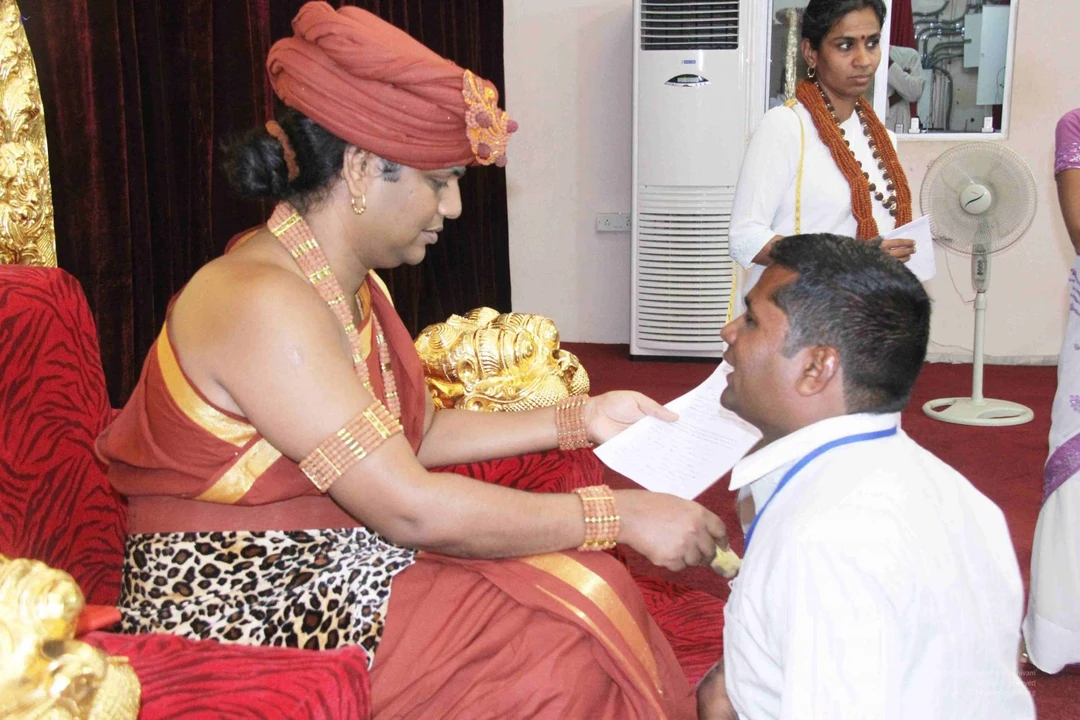
41 photosSource gallery
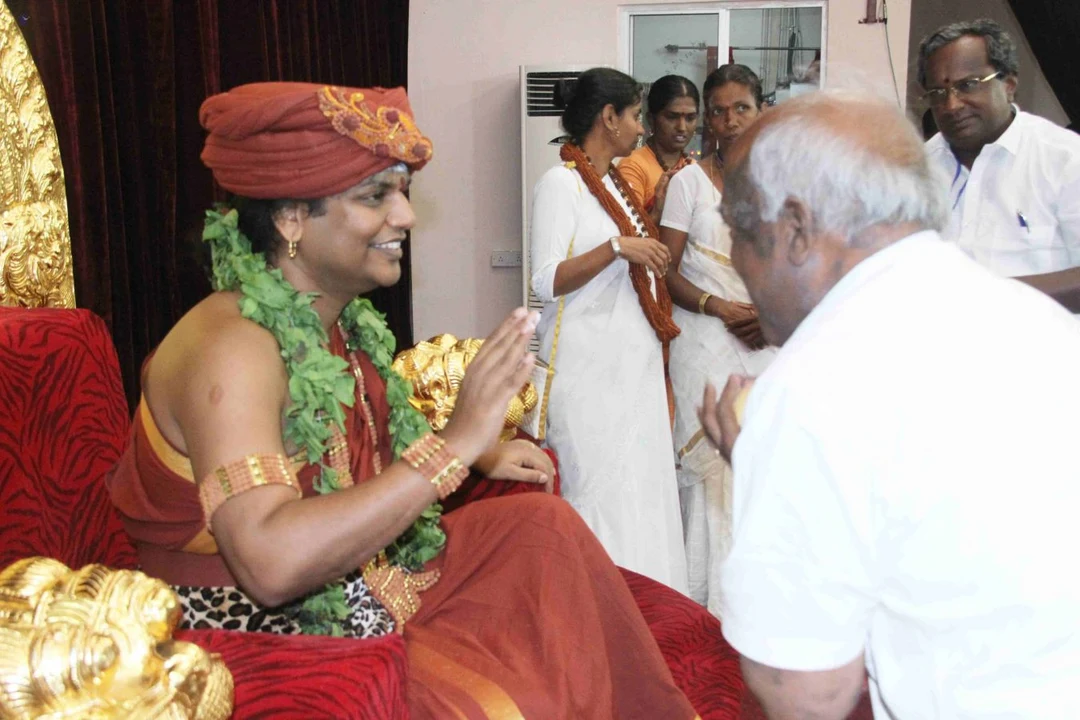
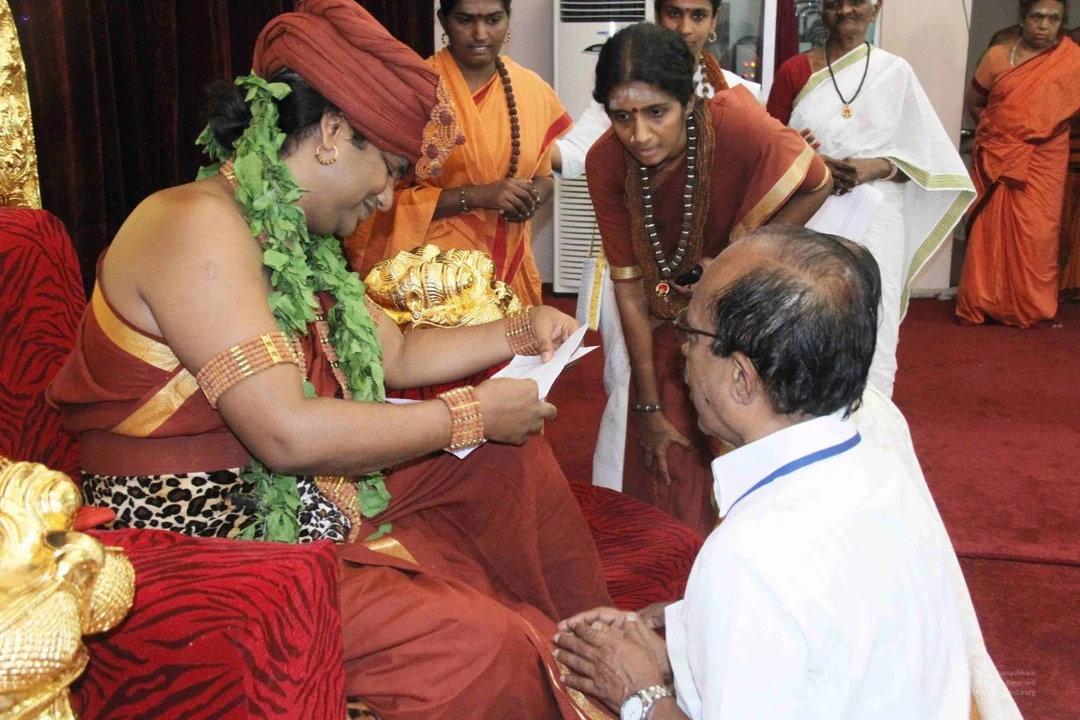
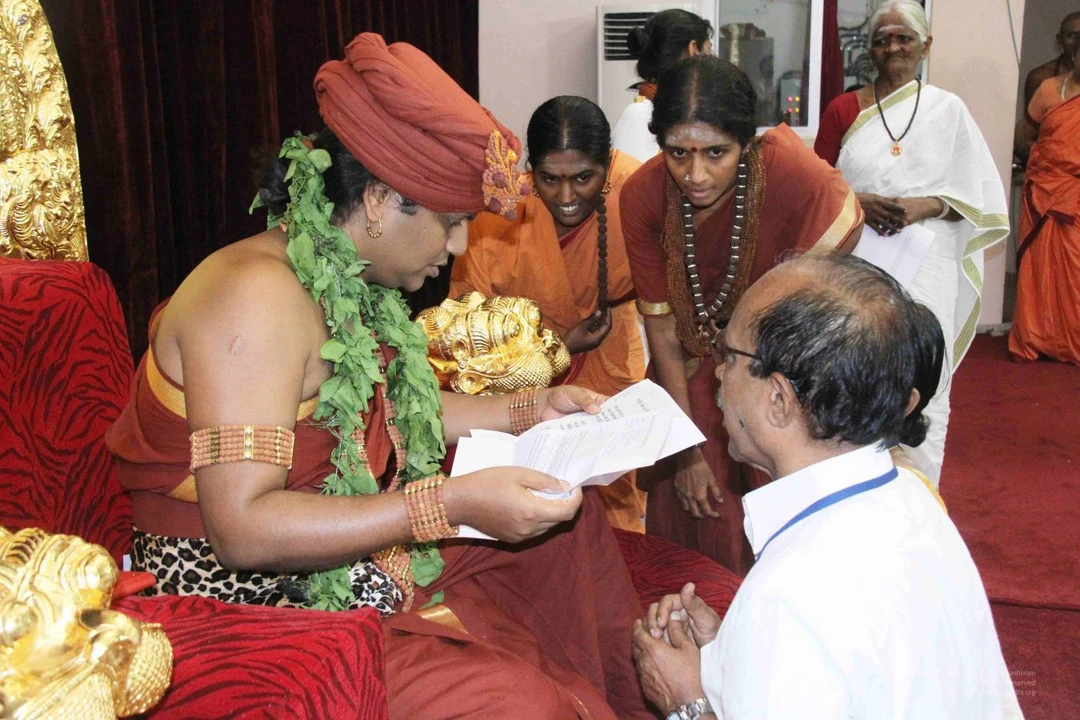
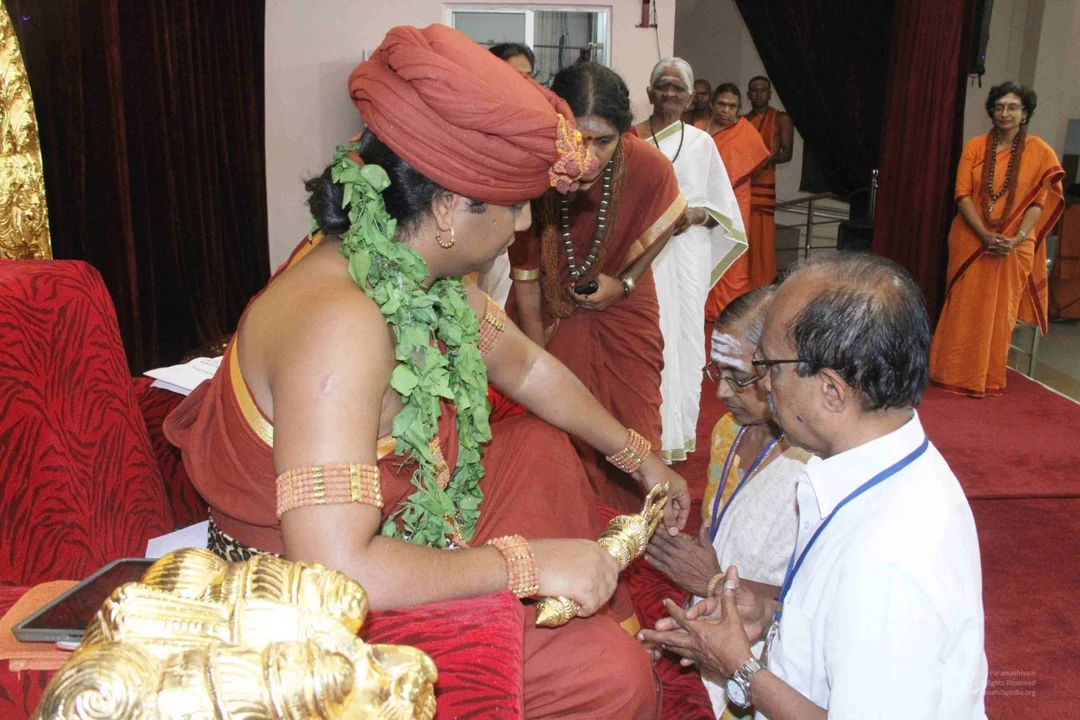
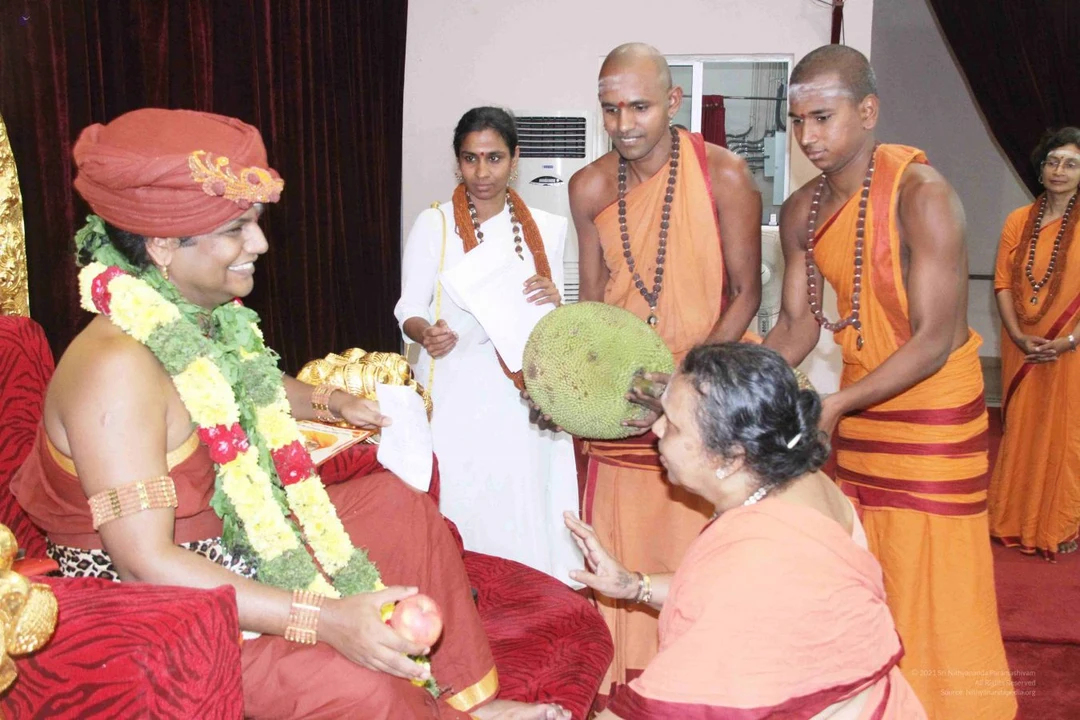
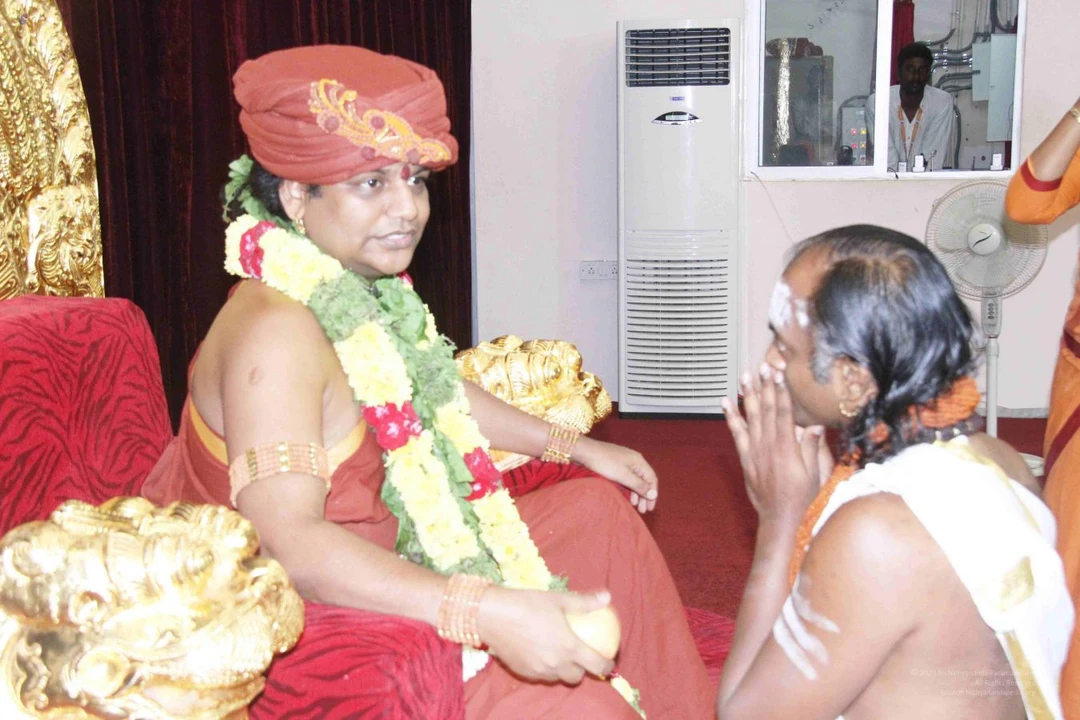
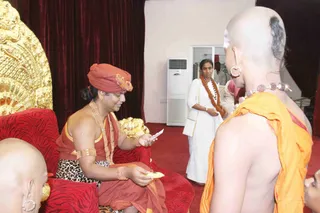
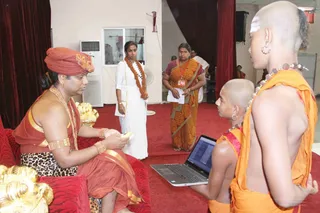
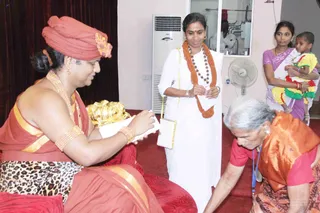
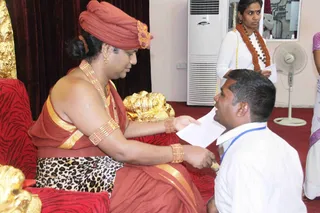
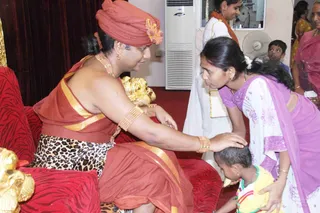
Indoor photograph in a red-carpeted hall with a gold ornate throne back at left. A figure in a rust-red turban with gold brooch, gold necklaces, gold bangles and a leopard-print lower garment sits on a red zebra-print chair holding a small white card and a gold object, smiling. Facing him in the foreground, a shaven-headed sannyasi in orange robes and rudraksha mala, seen from behind. A woman in white with an orange-and-rudraksha garland stands at centre, a shaven-headed figure is partly visible at left edge, and a standing air conditioner and red velvet curtain are behind. Appearance-based candidate: a person seated on the throne-style chair with turban, gold necklaces and bangles, but appearance is uncertain.A photograph of an indoor ashram room with red carpet and red velvet curtains. A man seated on a red sofa with gold-toned armrests wears a rust-red turban with gold embroidery, a bare upper body with gold armlets and bangles, gold necklaces, a patterned animal-print cloth, and a rust-red wrap. He holds a small gold phone and looks down. Standing nearby, a woman in white garments with a saffron-orange garland and a second woman in an orange-and-rust sari with a red lanyard stand observing. Two shaved-headed sannyasis in orange robes with rudraksha necklaces stand at right, and a third sits with a laptop on the floor. A ceiling air conditioner and a pedestal fan are visible.Indoor photograph in a room with a red carpet and a wall-mounted air conditioner. A person in a rust-red turban and draped rust-red and gold garment, wearing layered gold necklaces and leopard-print lower wrap, sits on a red cushioned seat holding a white cloth over a gold object. Standing beside them in a white outfit with an orange-and-brown beaded mala is a woman holding a small white bag. A woman in a lavender sari holds a toddler in yellow and green clothes at right. An elderly woman in an orange blouse and pink top bends forward to touch the seated person's feet.A photograph of a seated figure in a rust-orange turban and matching orange-and-gold sari, wearing layered beaded necklaces, bangles and a leopard-print cloth beneath the drape, seated on a red zebra-striped cushioned seat beside a gold ornamental lion-like carving. The figure leans forward to hand a sheet of paper to a kneeling man in a white shirt with a blue lanyard. In the background a woman in white with an orange-beaded necklace stands near a floor fan and a tall white air conditioner, and a red carpet covers the floor.A seated figure in a rust-red turban with a gold ornament and a red-and-gold draped garment over a leopard-print cloth places one hand on the head of a kneeling man in a white shirt with a blue lanyard, who holds a folded paper in his other hand. Behind them a woman in white with a rust-orange beaded necklace watches, and a second woman in a lavender sari stands at right. Red velvet cushioned seating, a standing fan and an air conditioning unit are in the room. a person: the seated figure wears a red turban, rudraksha-style beaded mala necklaces and gold bangles, a distinctive presentation, and performs a blessing on the kneeling devotee.A seated figure in a rust-orange turban with a flower ornament, rust-orange robe edged in gold, leopard-print cloth at the waist, and tiered gold-bead necklaces and bangles sits on a red zebra-striped couch beside a gold ornamental lion-head armrest. The figure extends a hand to rest on the head of a small child in a yellow shirt, while a woman in a lilac sari bends forward to bring the child to them. Behind them a white-clad woman stands near a wall-mounted air conditioner, and another woman and a boy watch from the background.