Skip to content
Tuesday

9 April 2013

Drop Your Past, Own Your Future

Dated photos
324
Source pages
1
Media
2
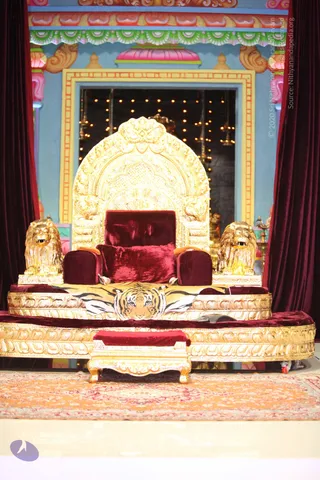
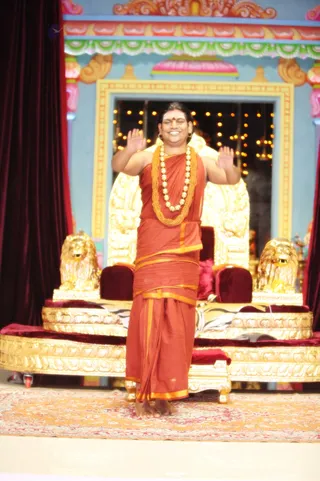
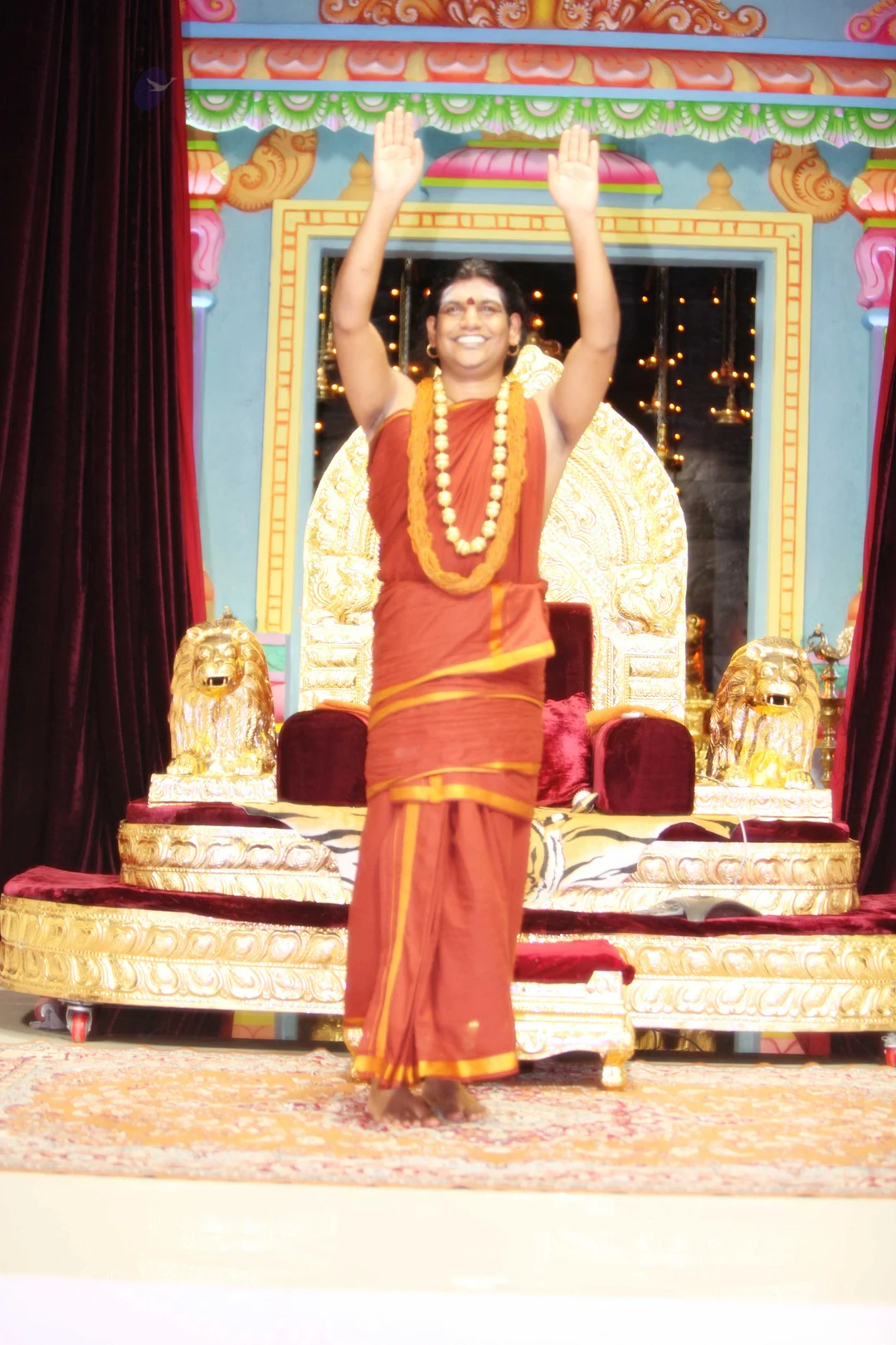
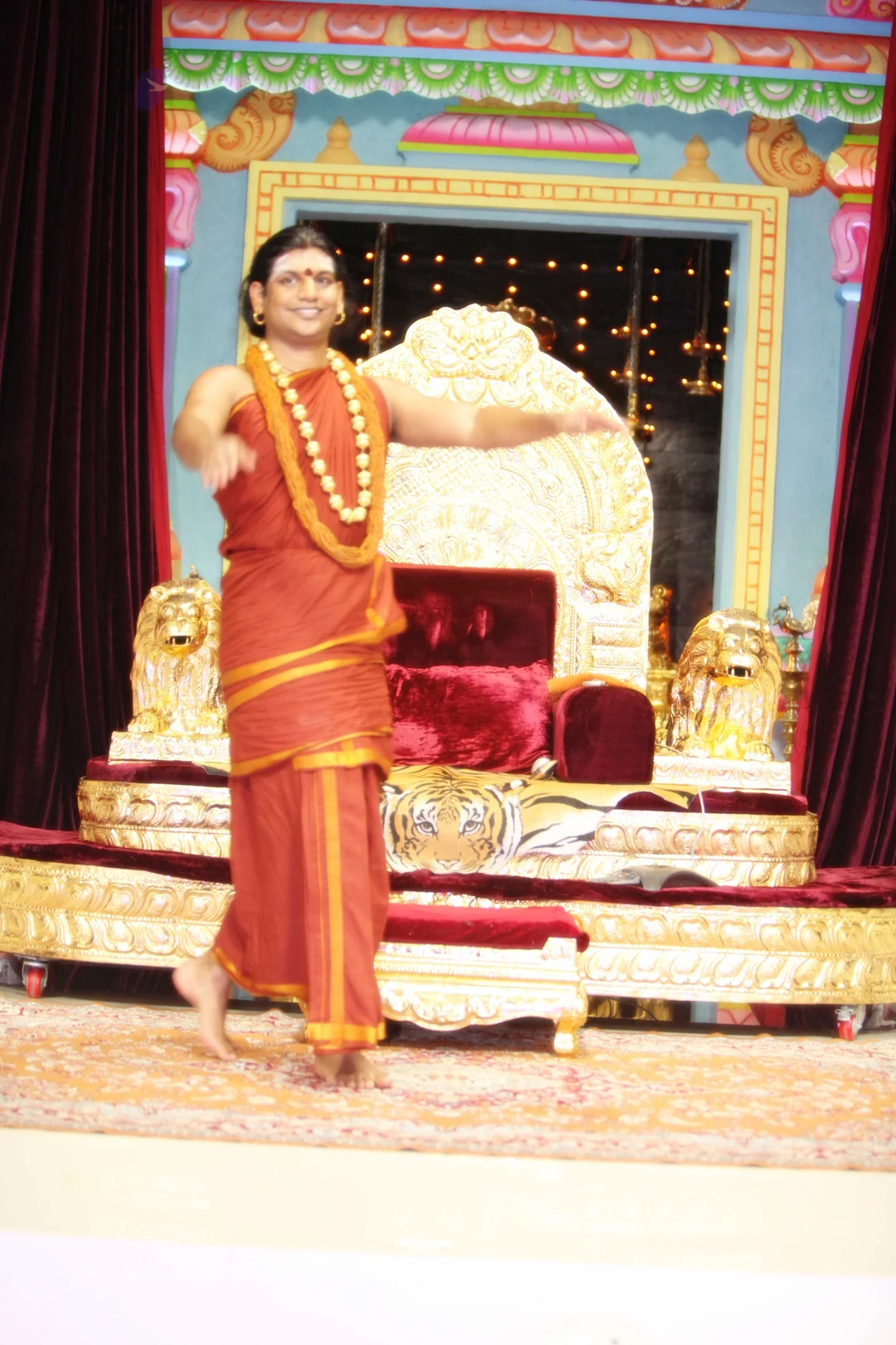
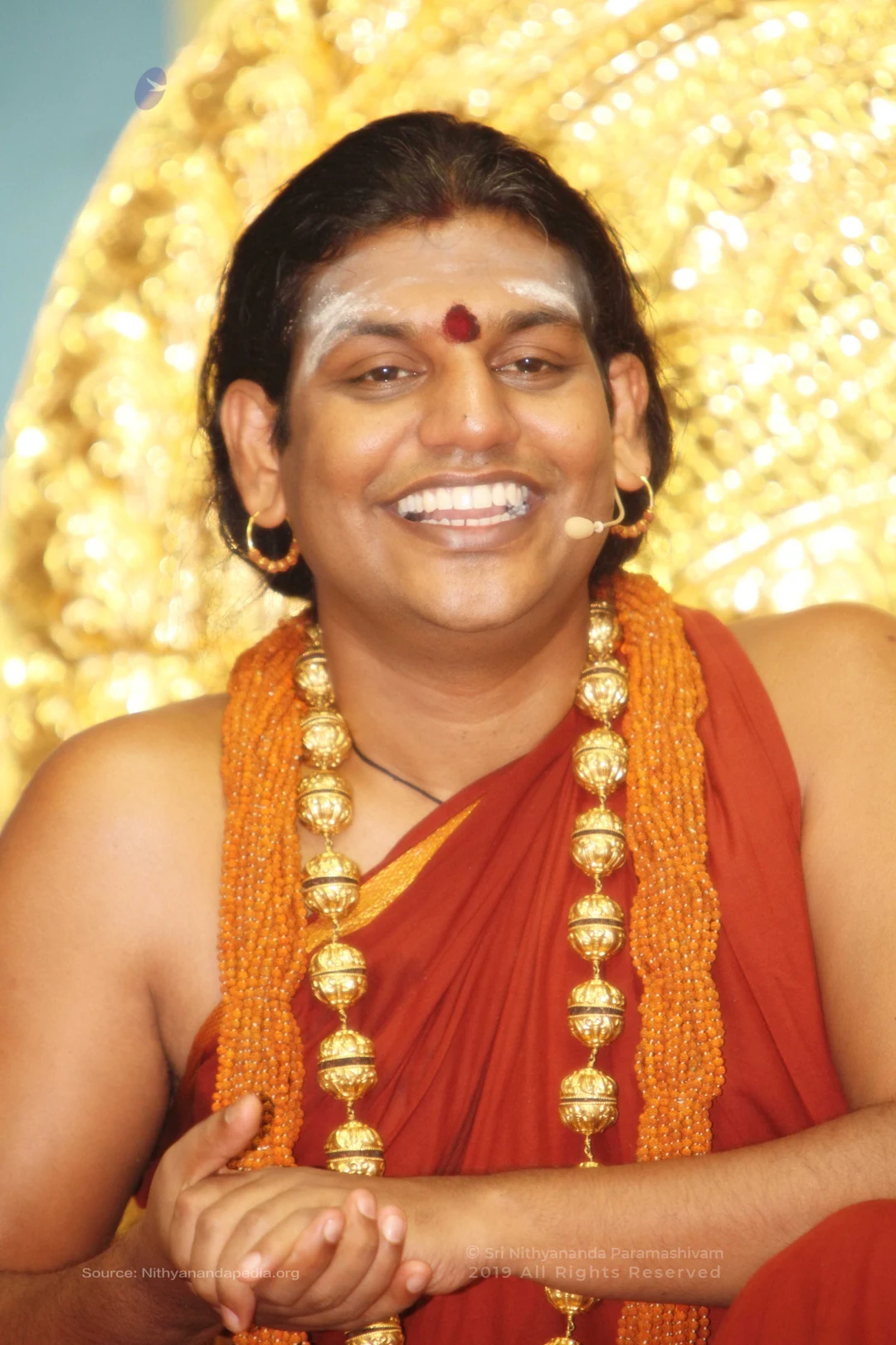
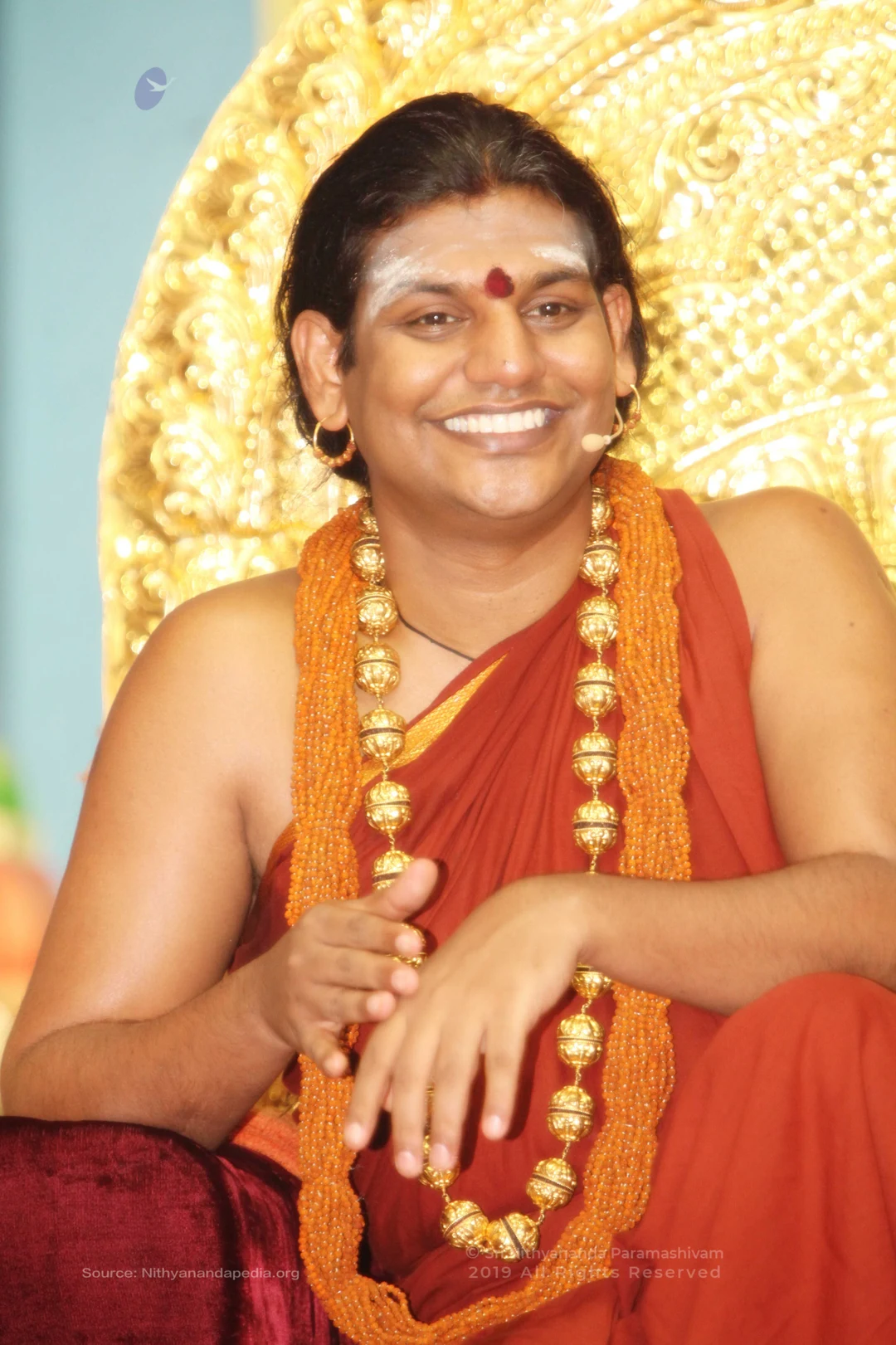
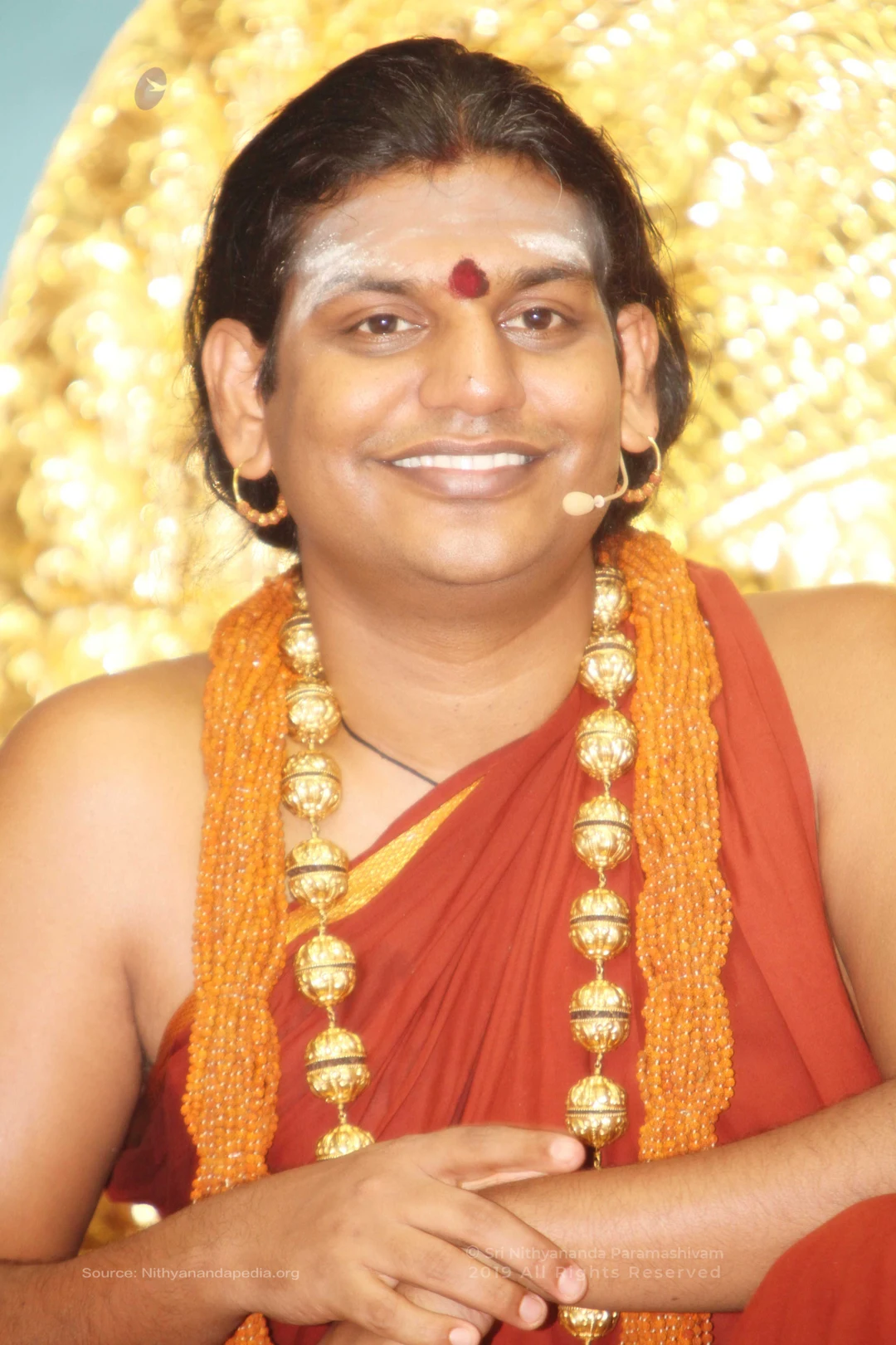
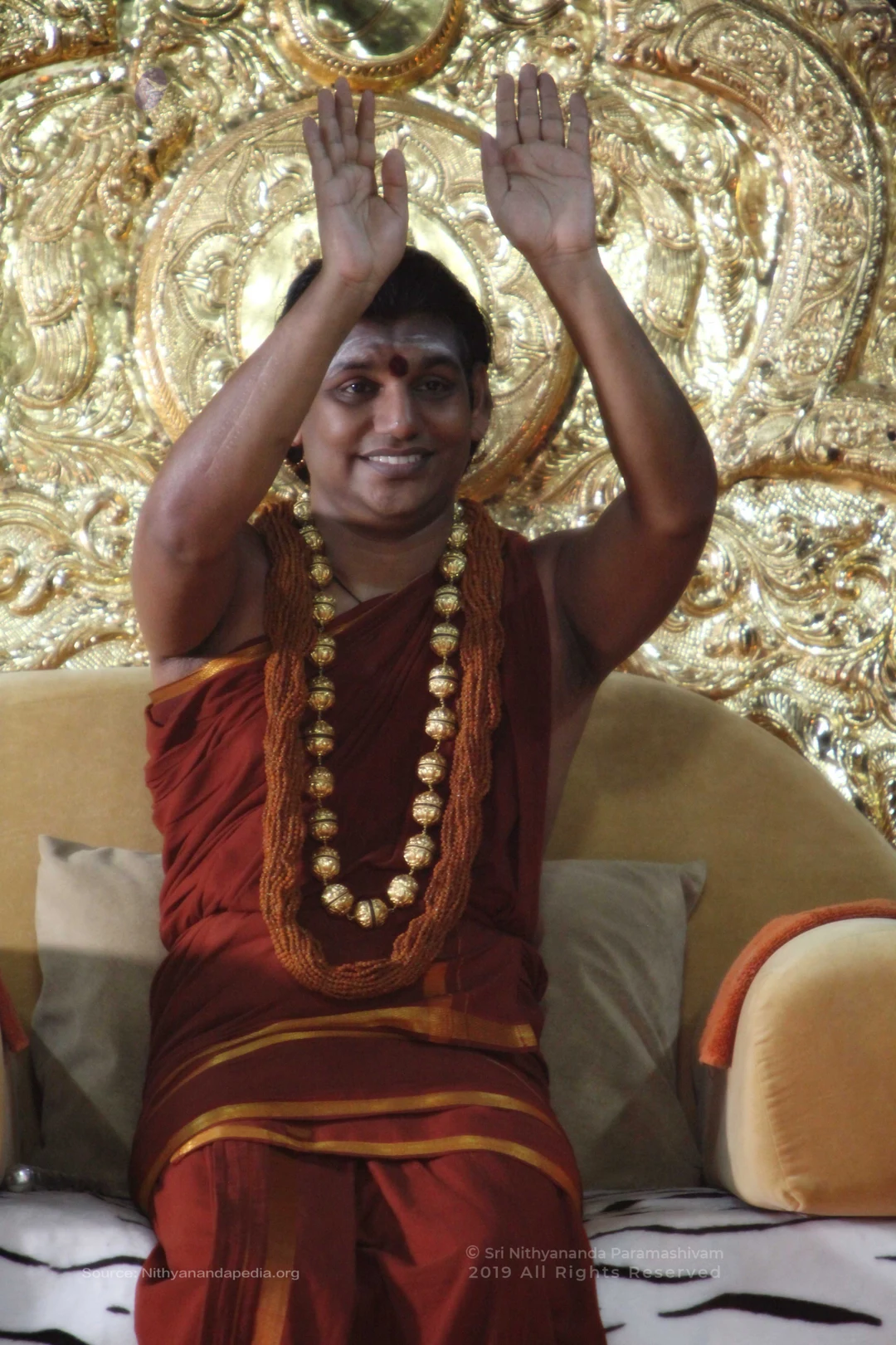
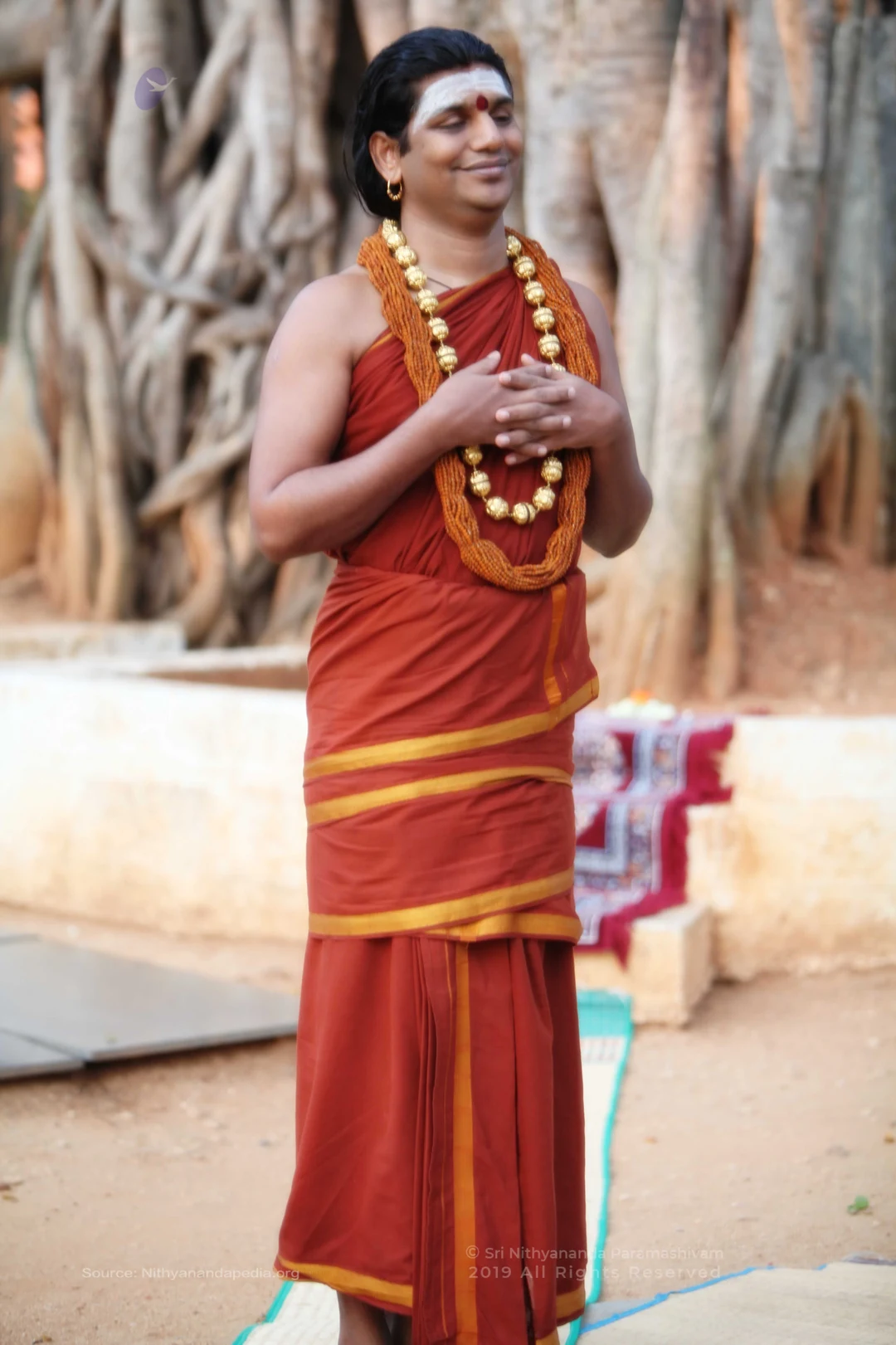
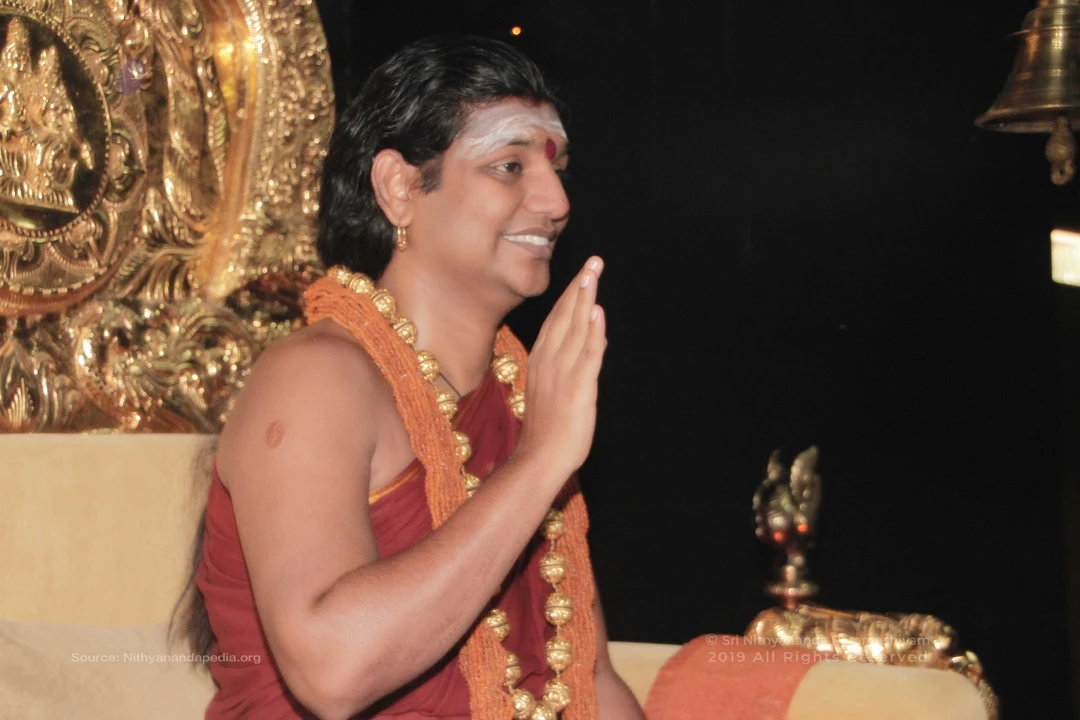
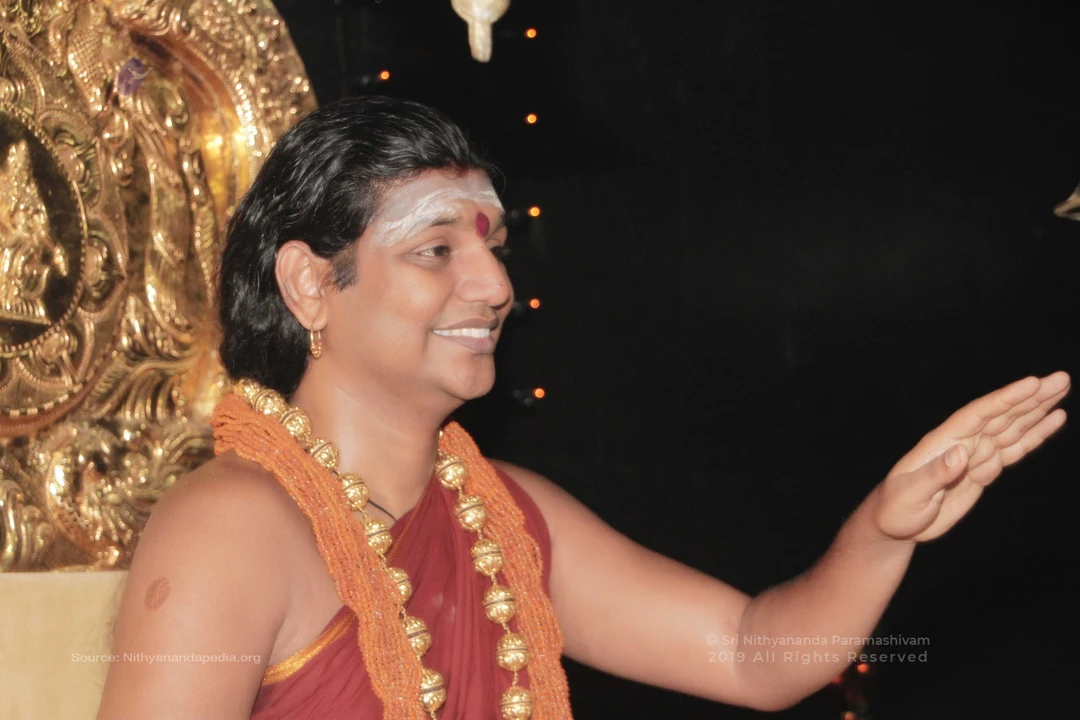
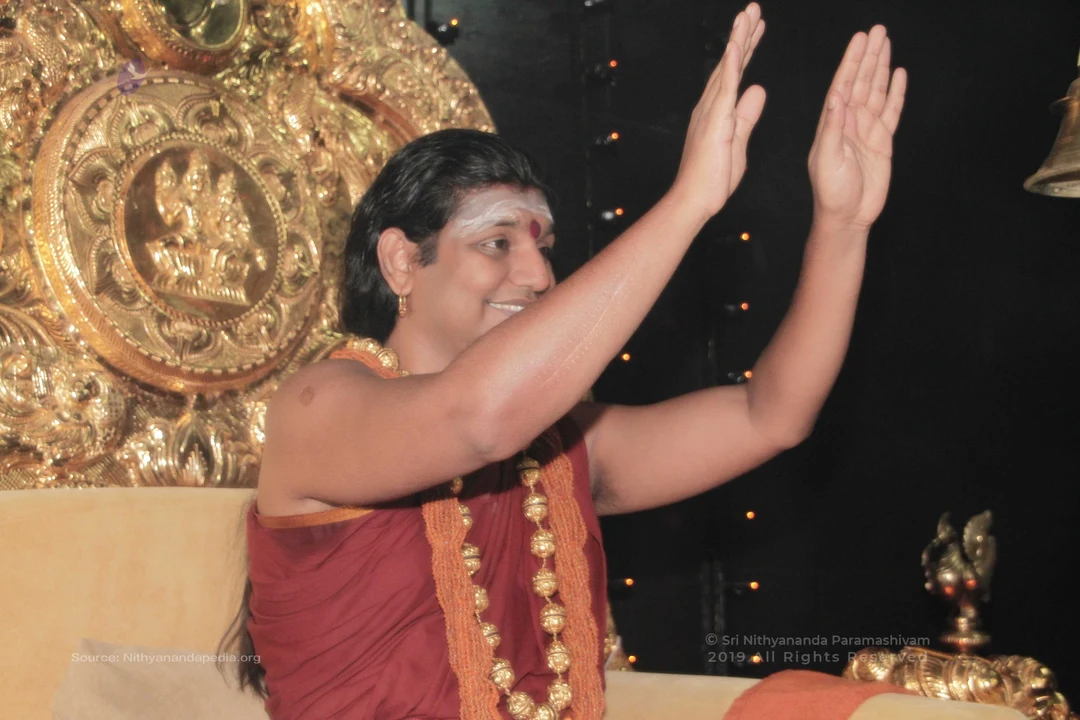
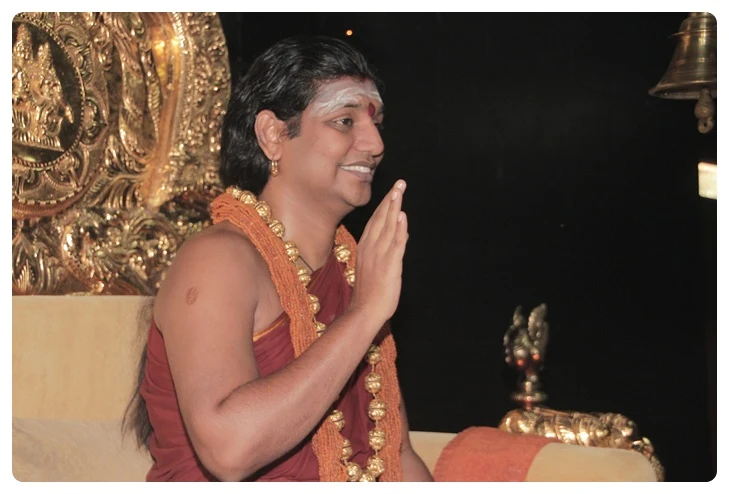
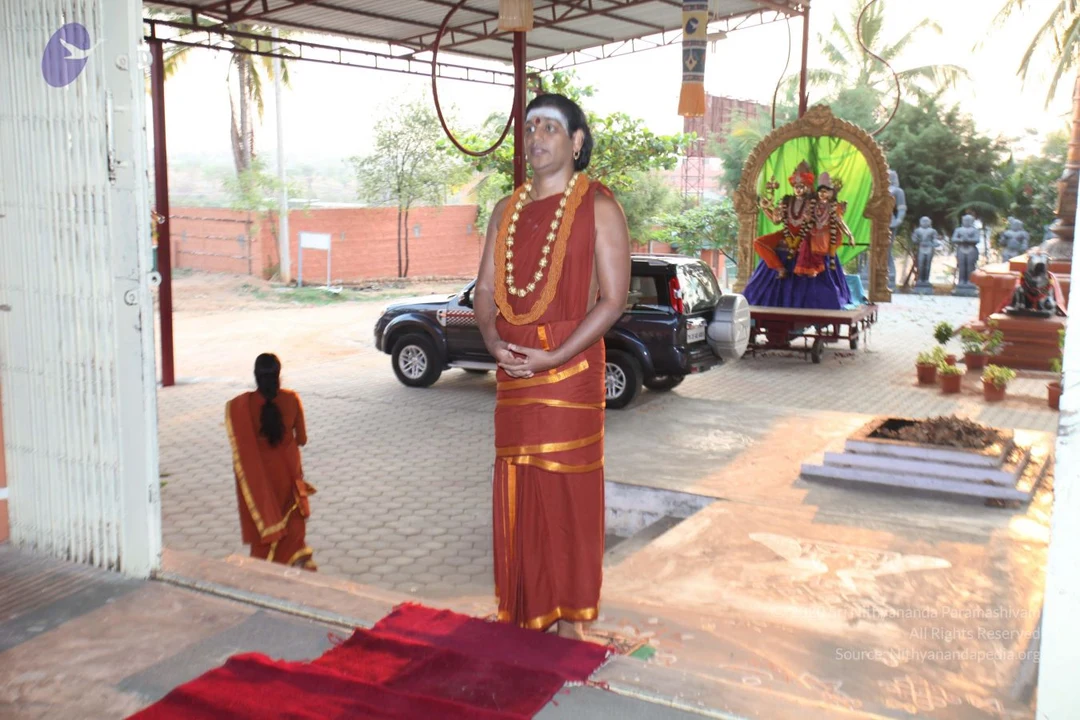
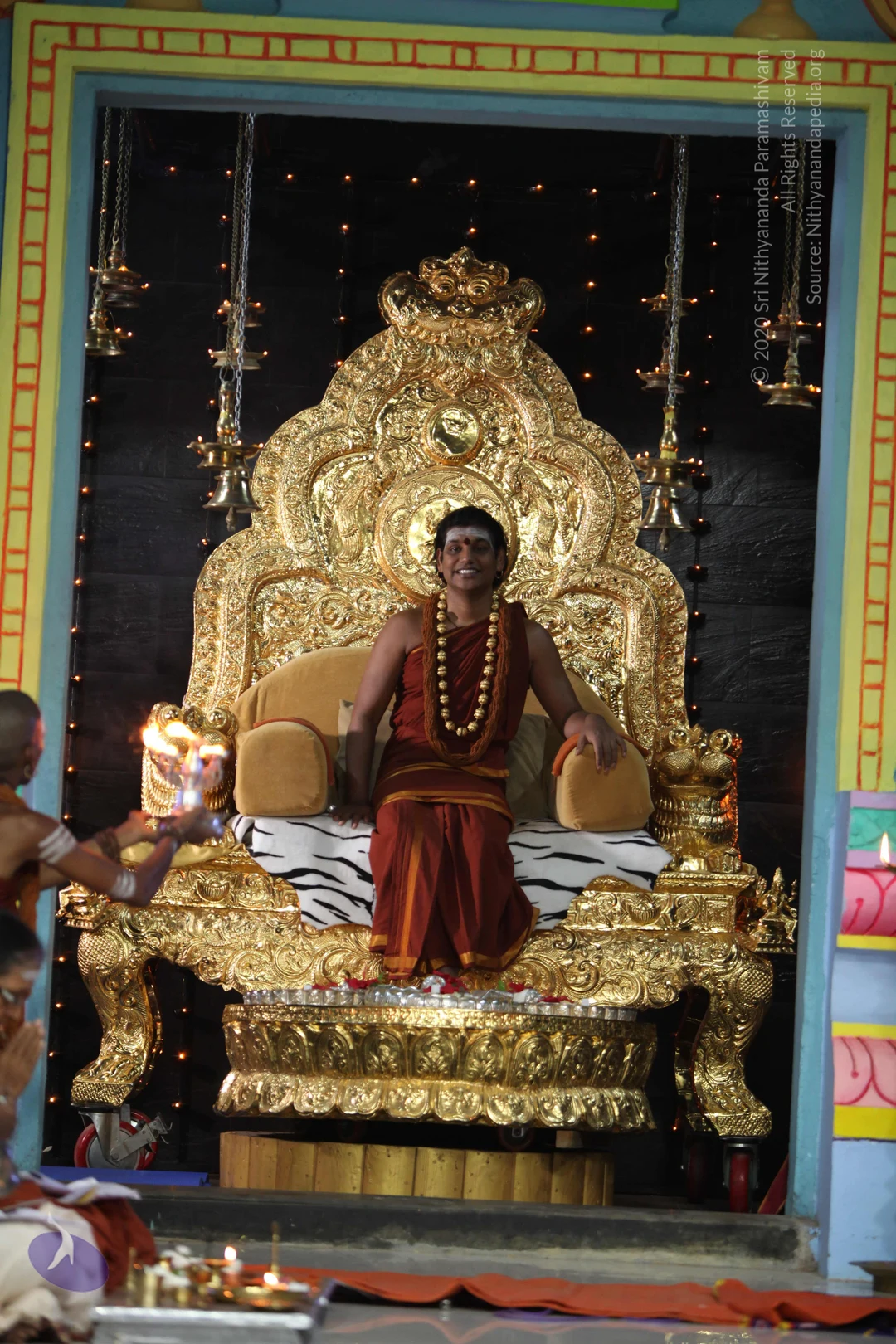
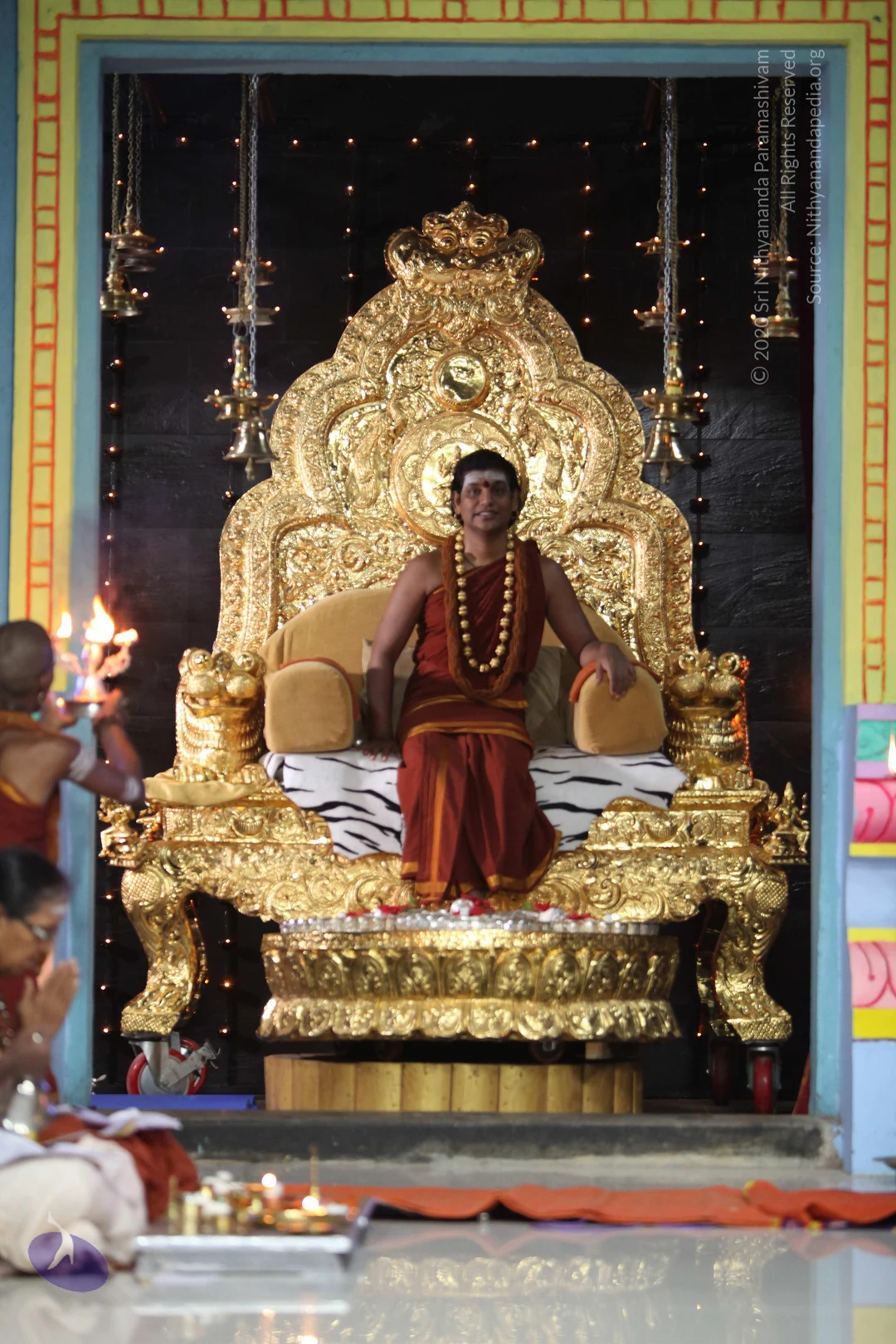
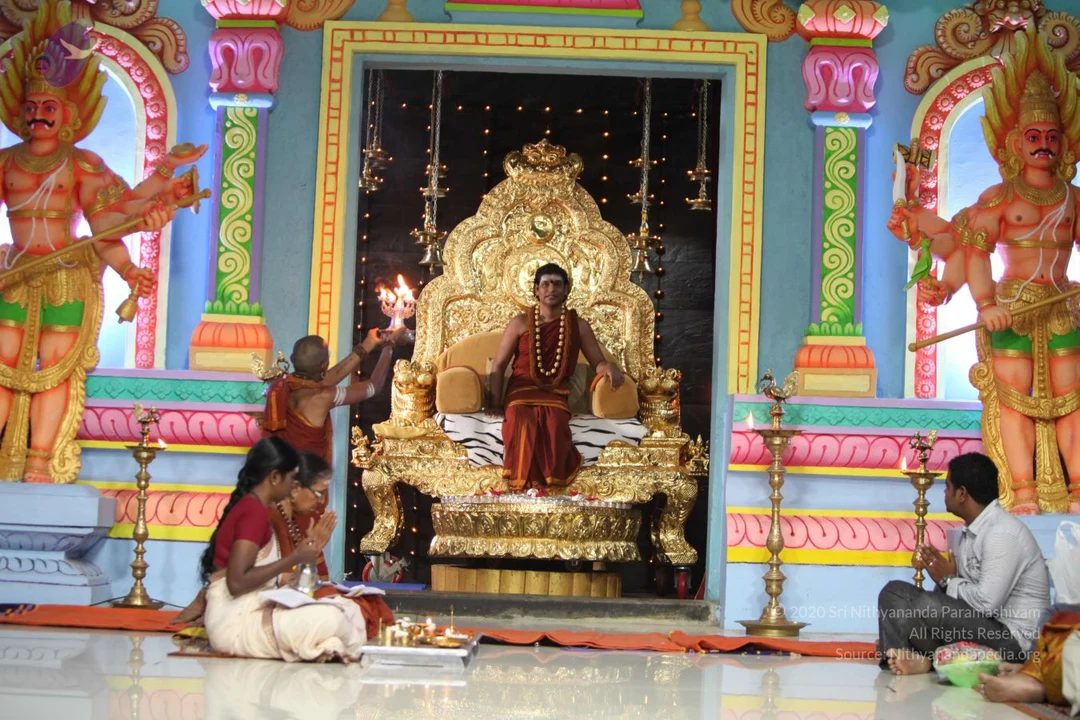
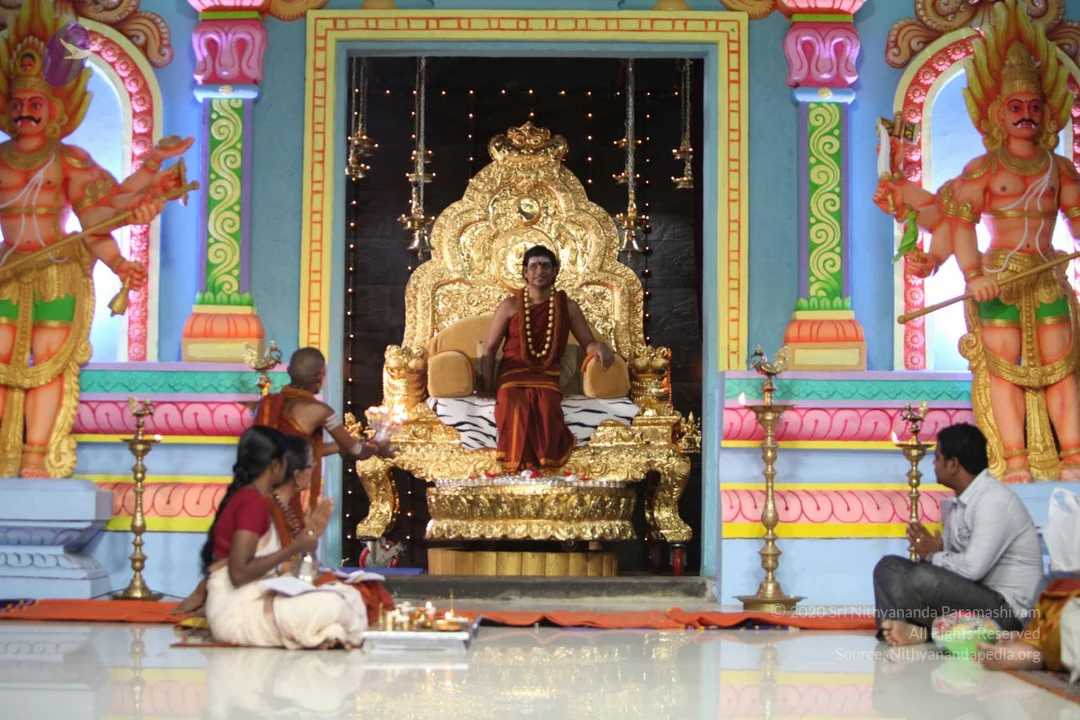
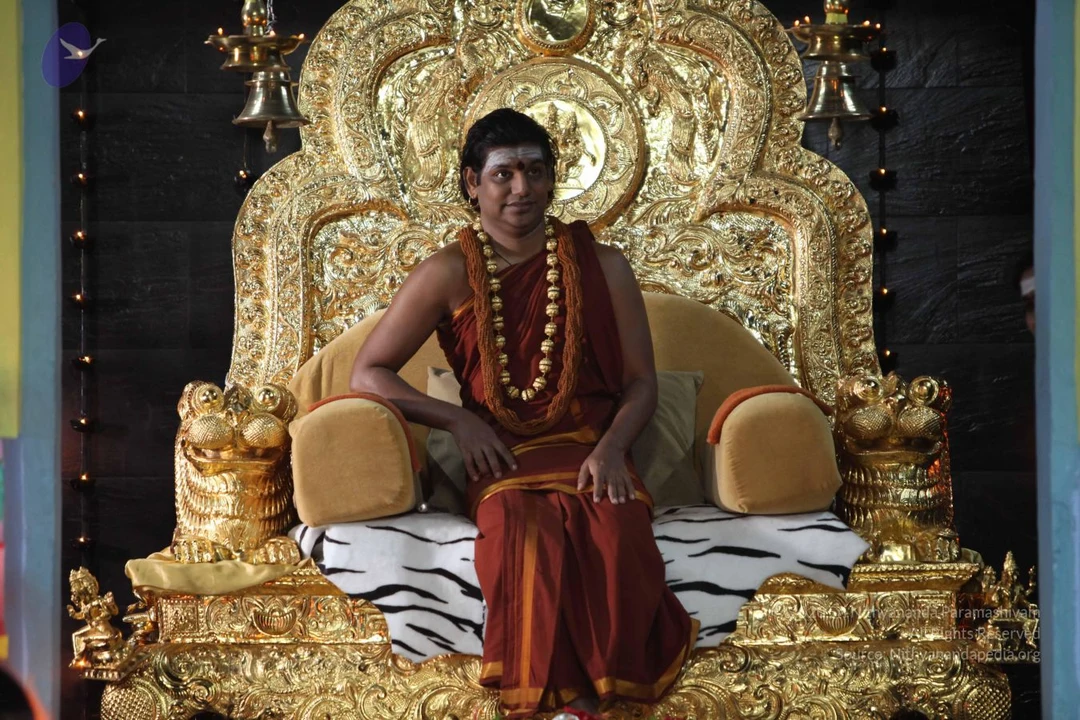
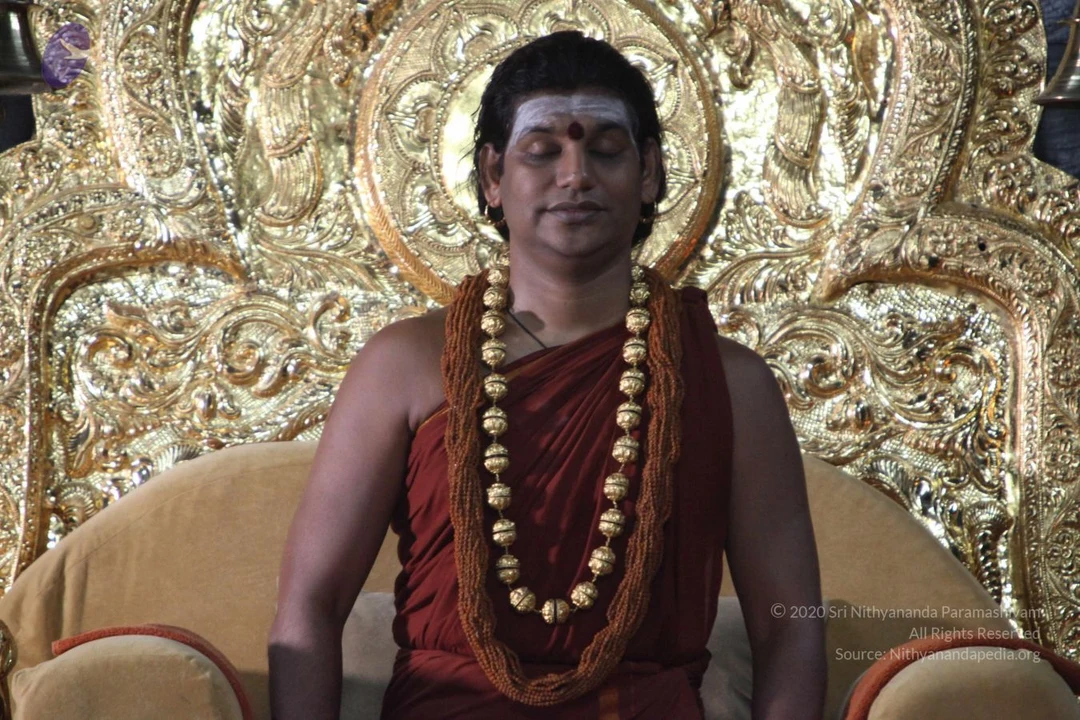
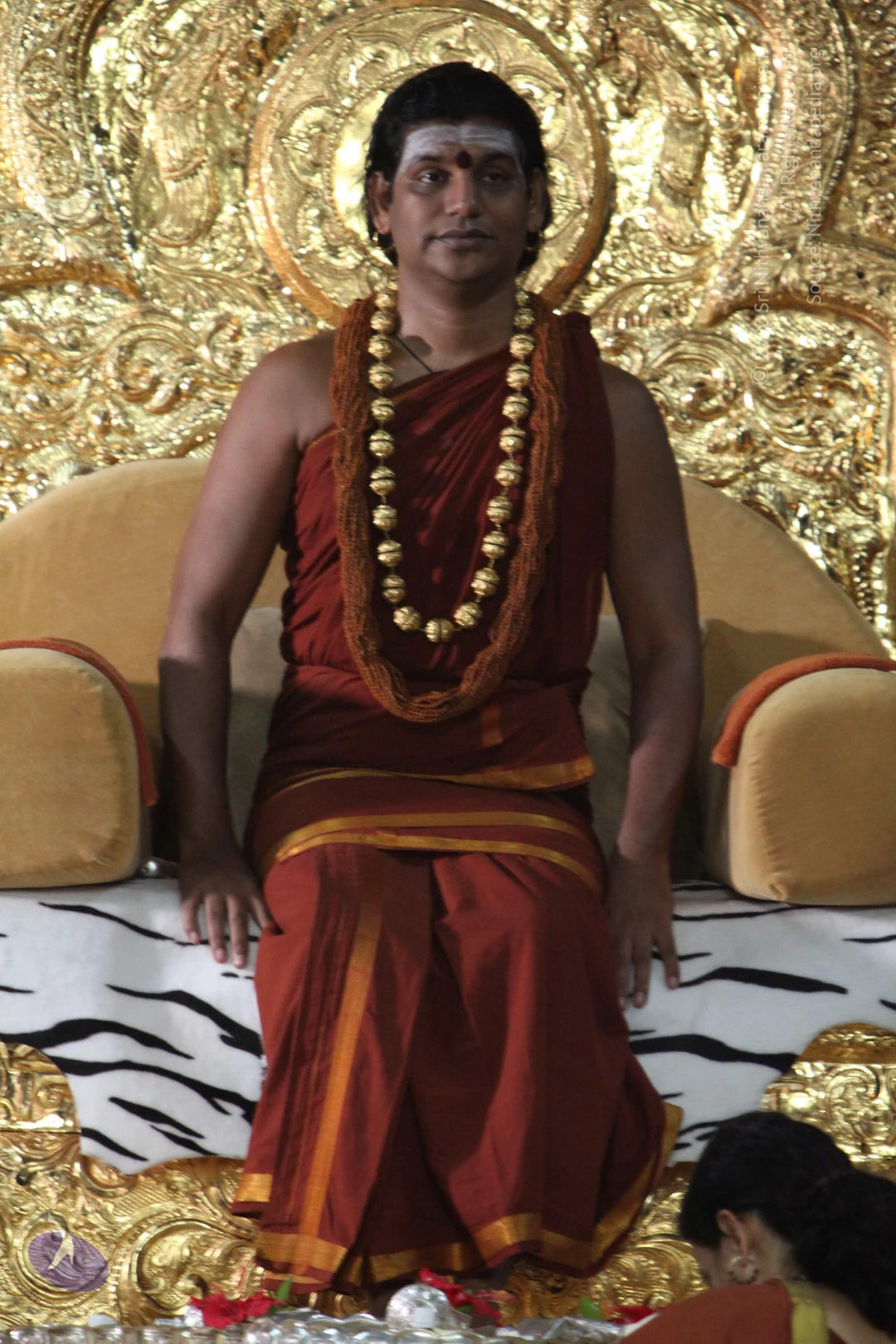
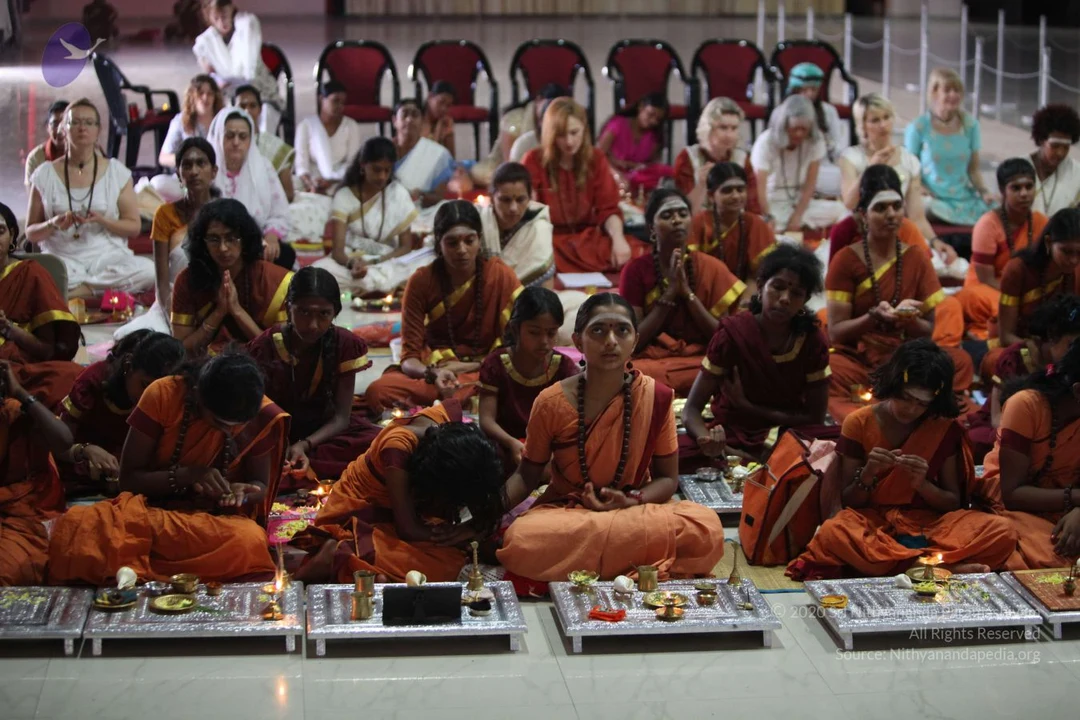
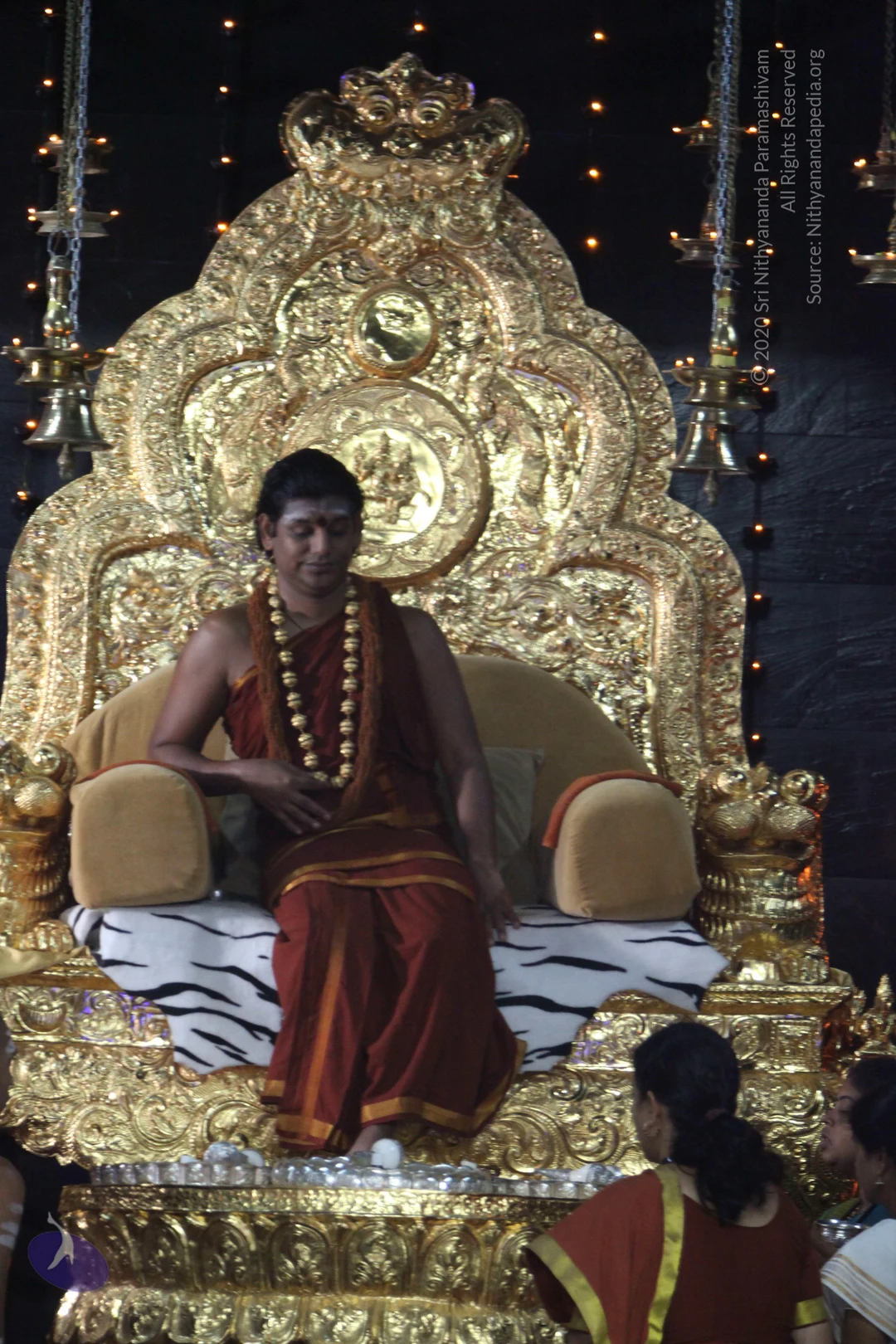
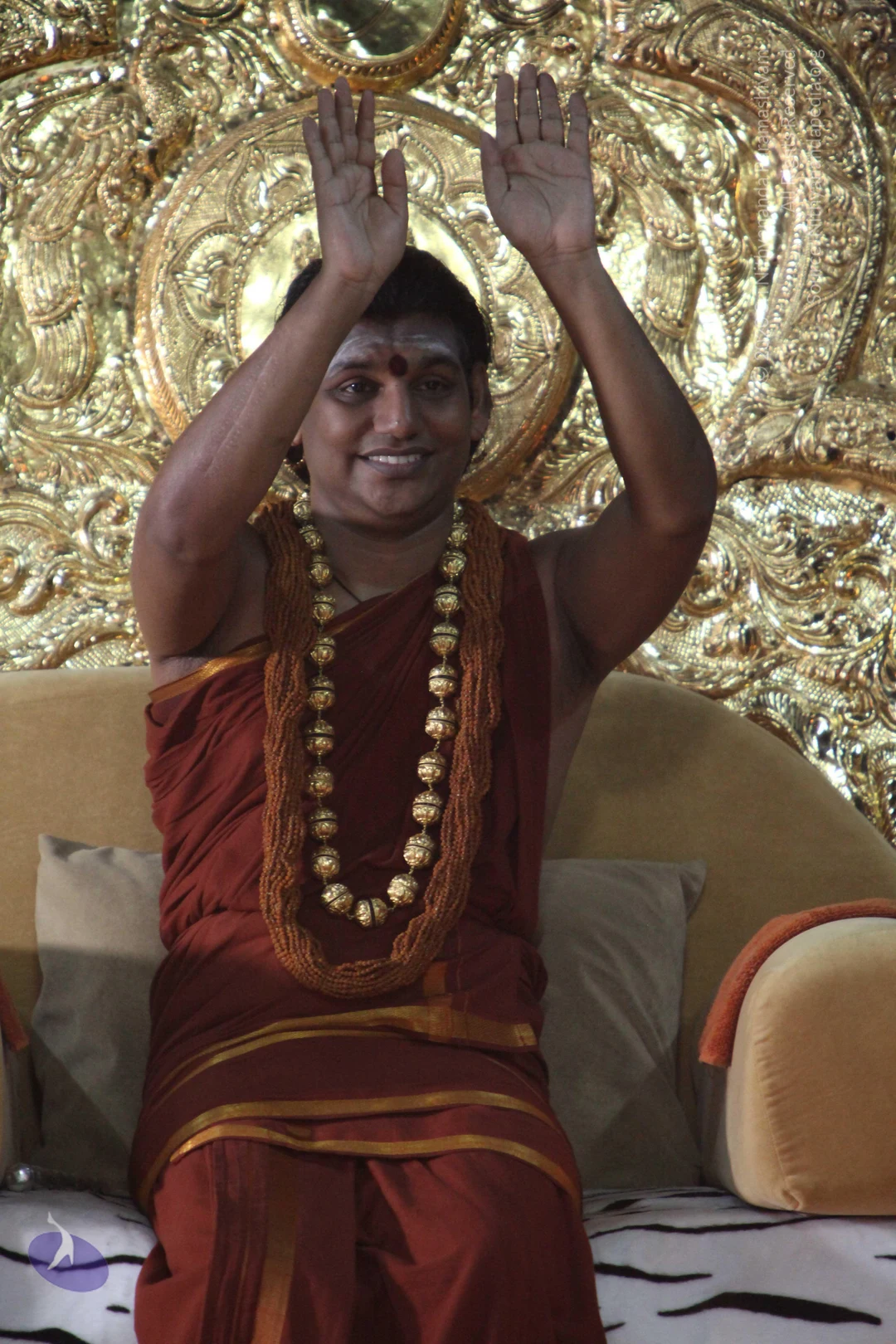
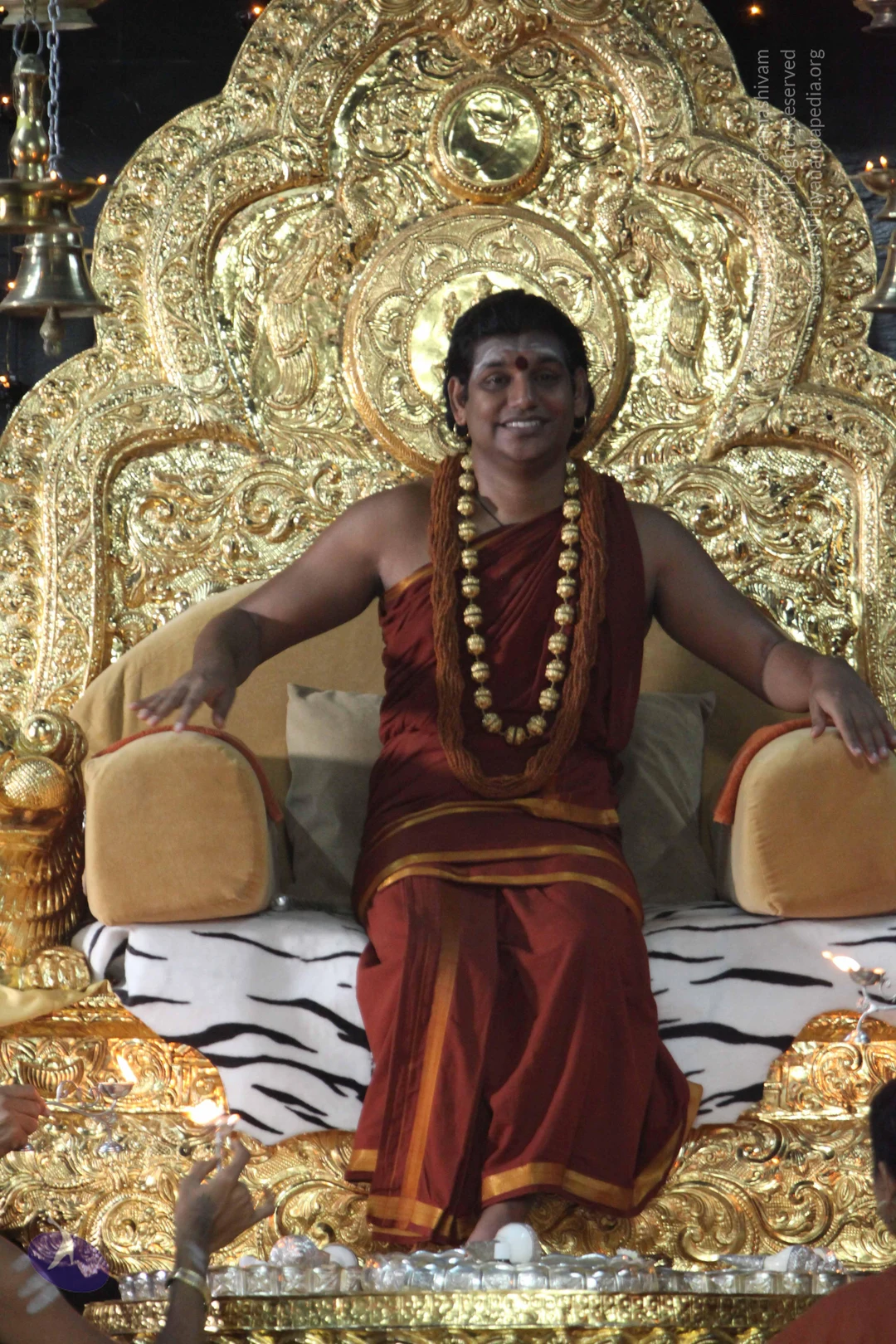
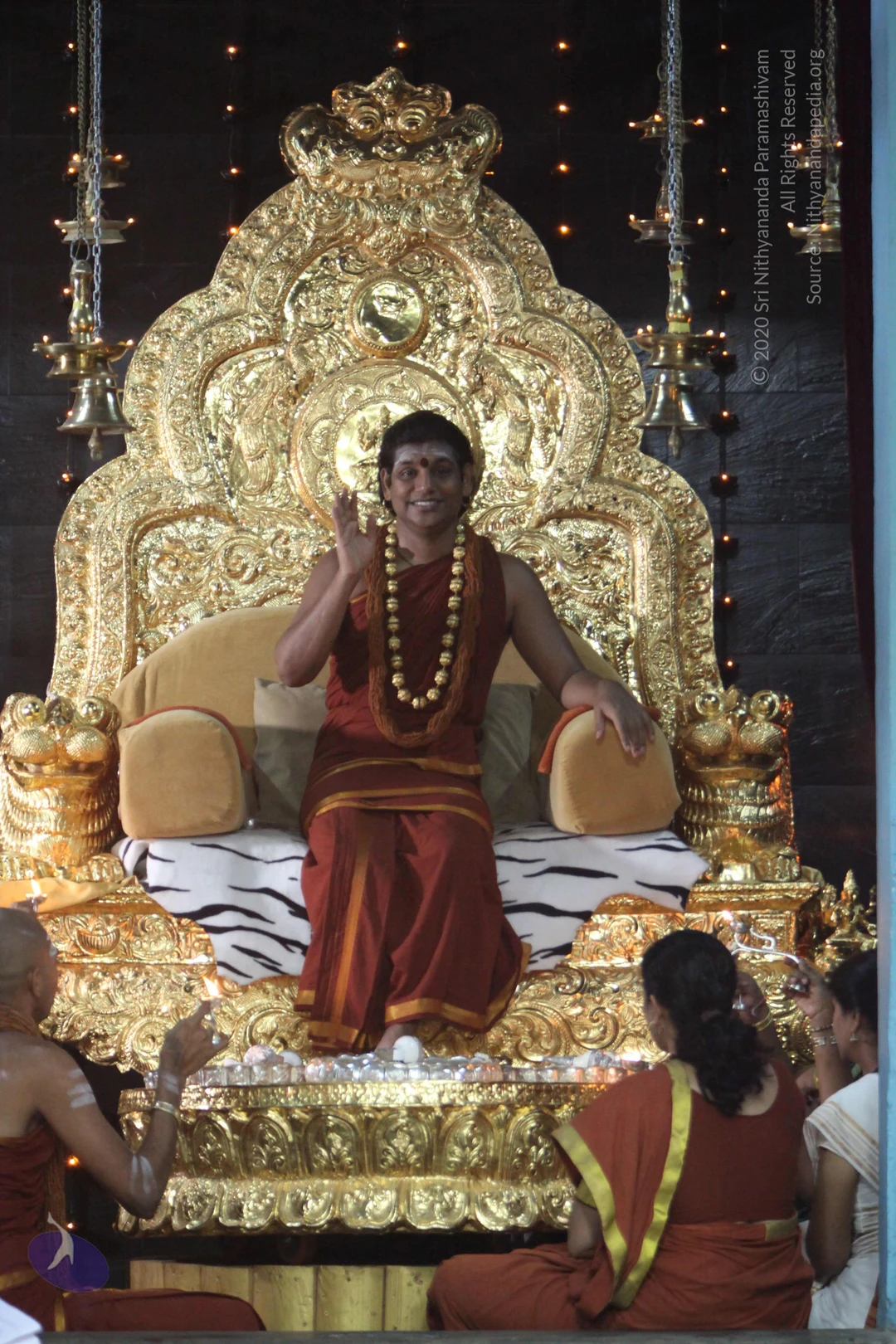
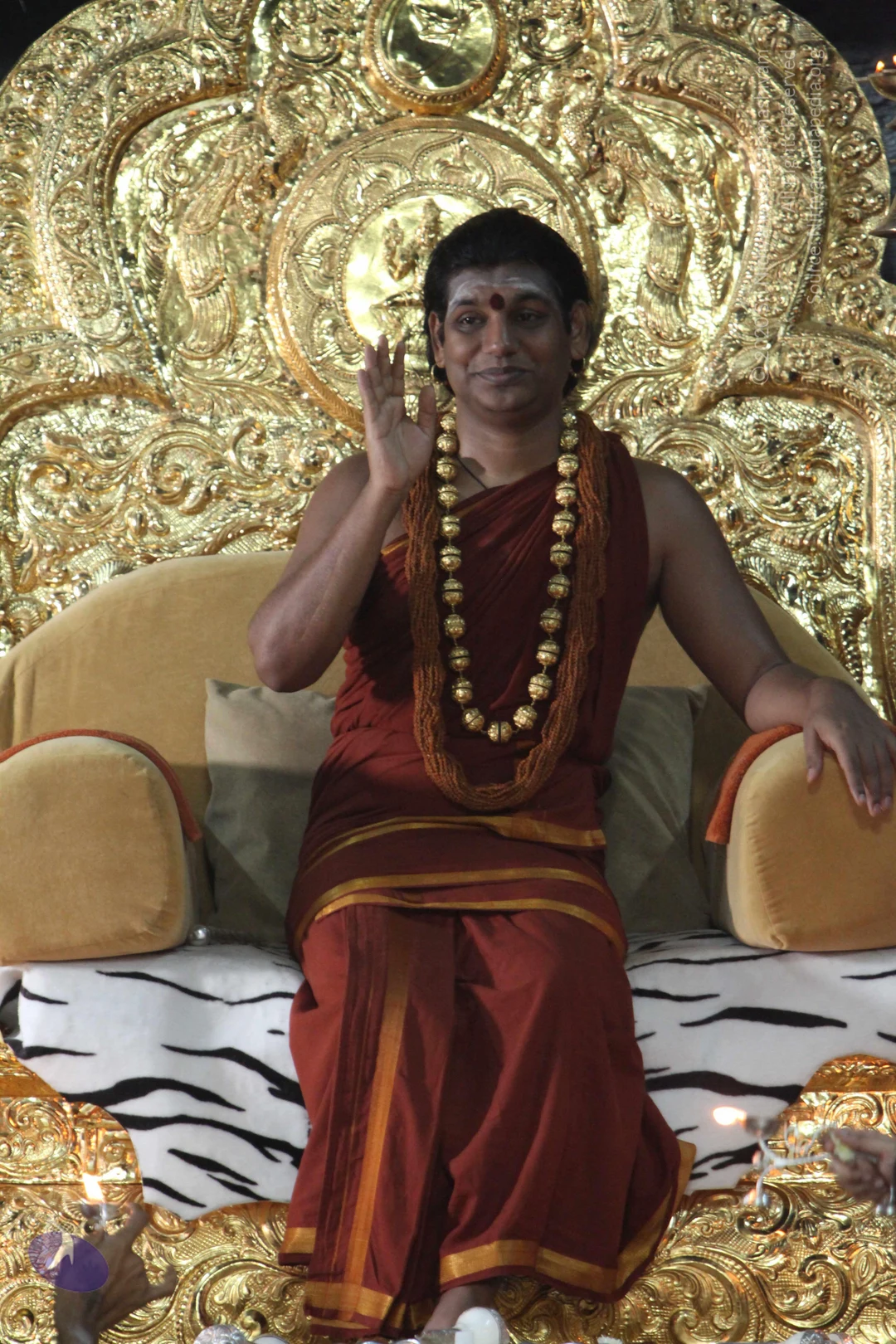
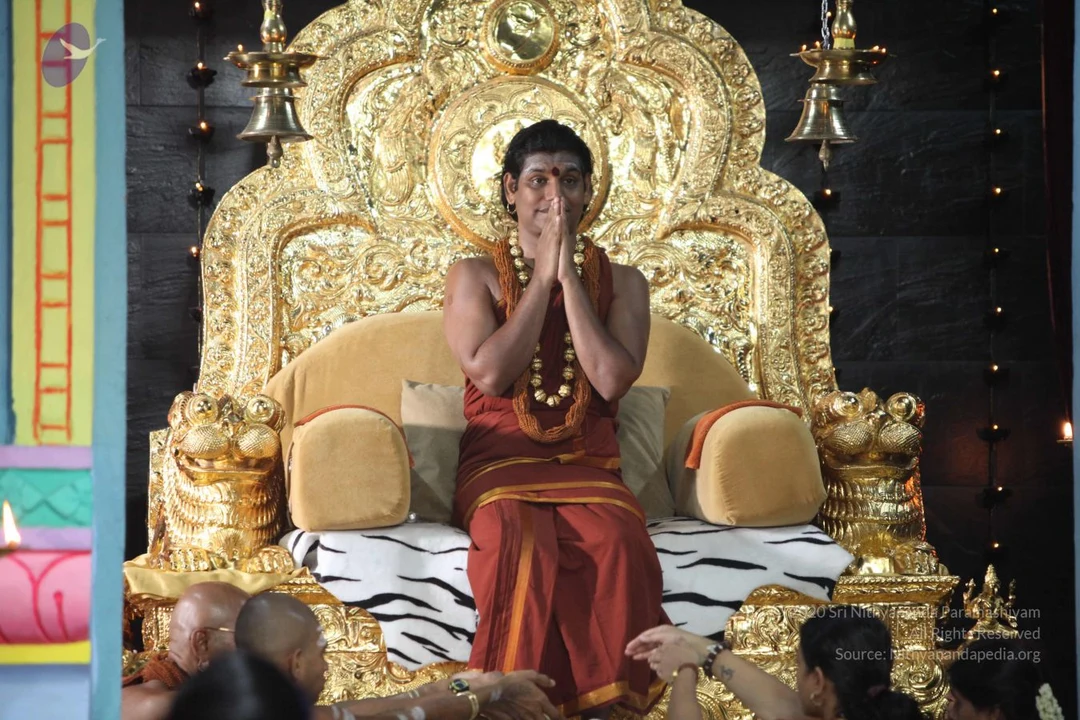
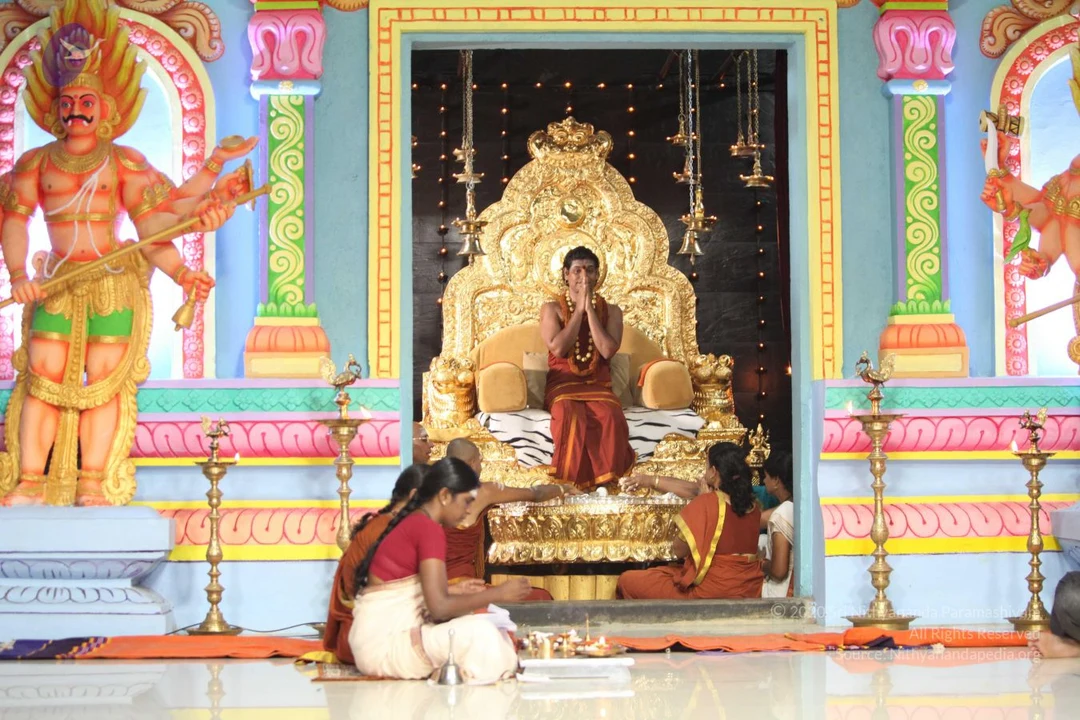
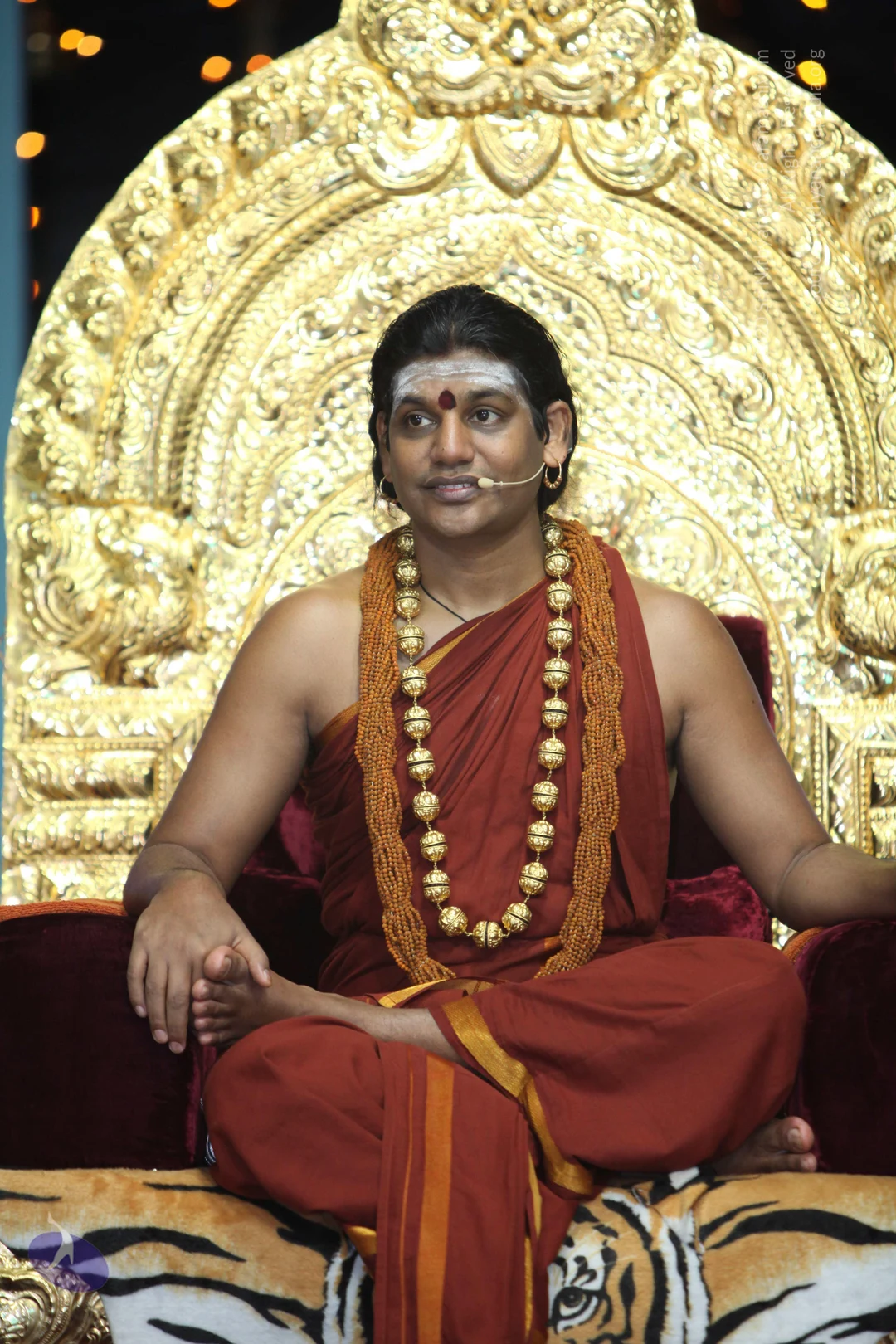
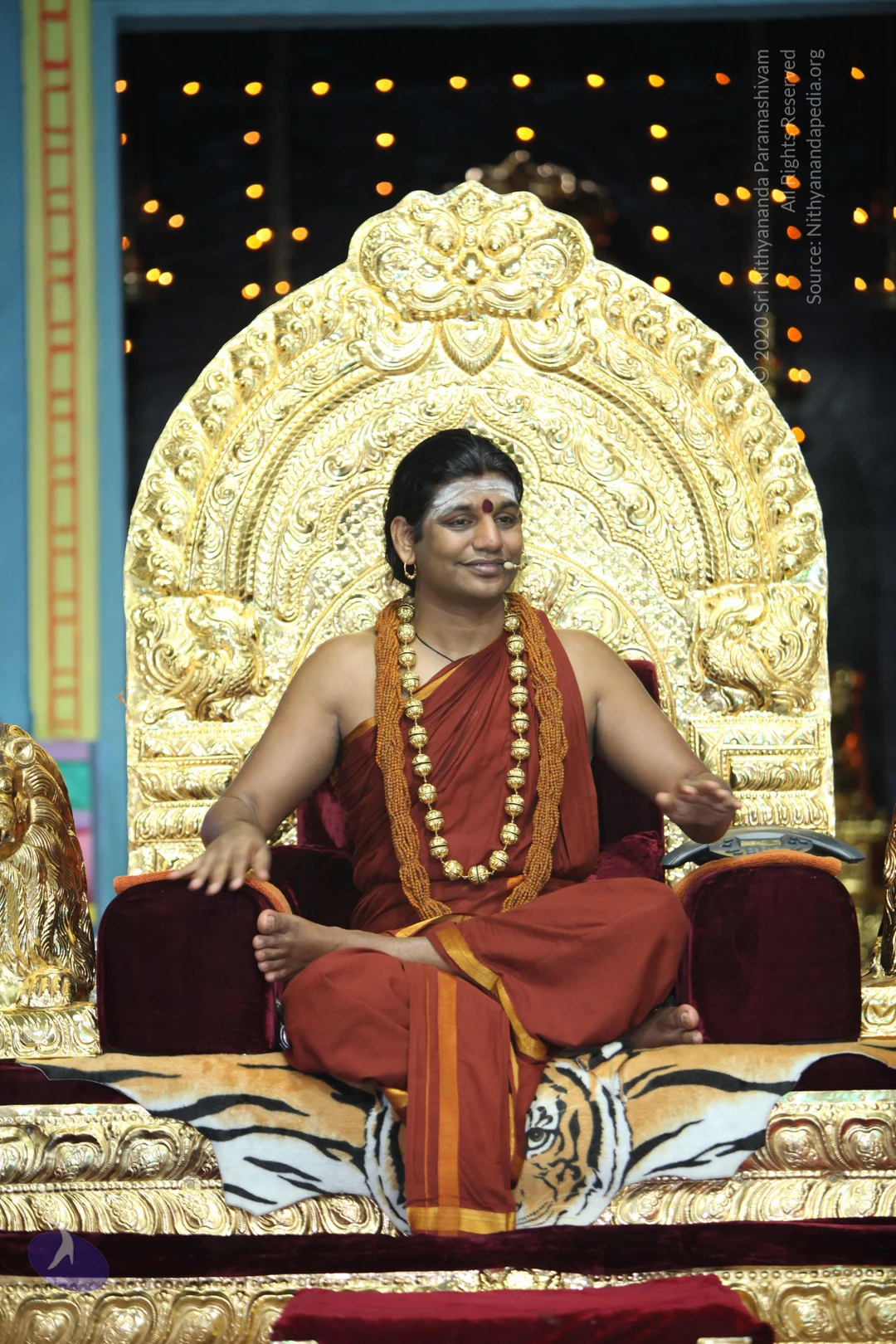
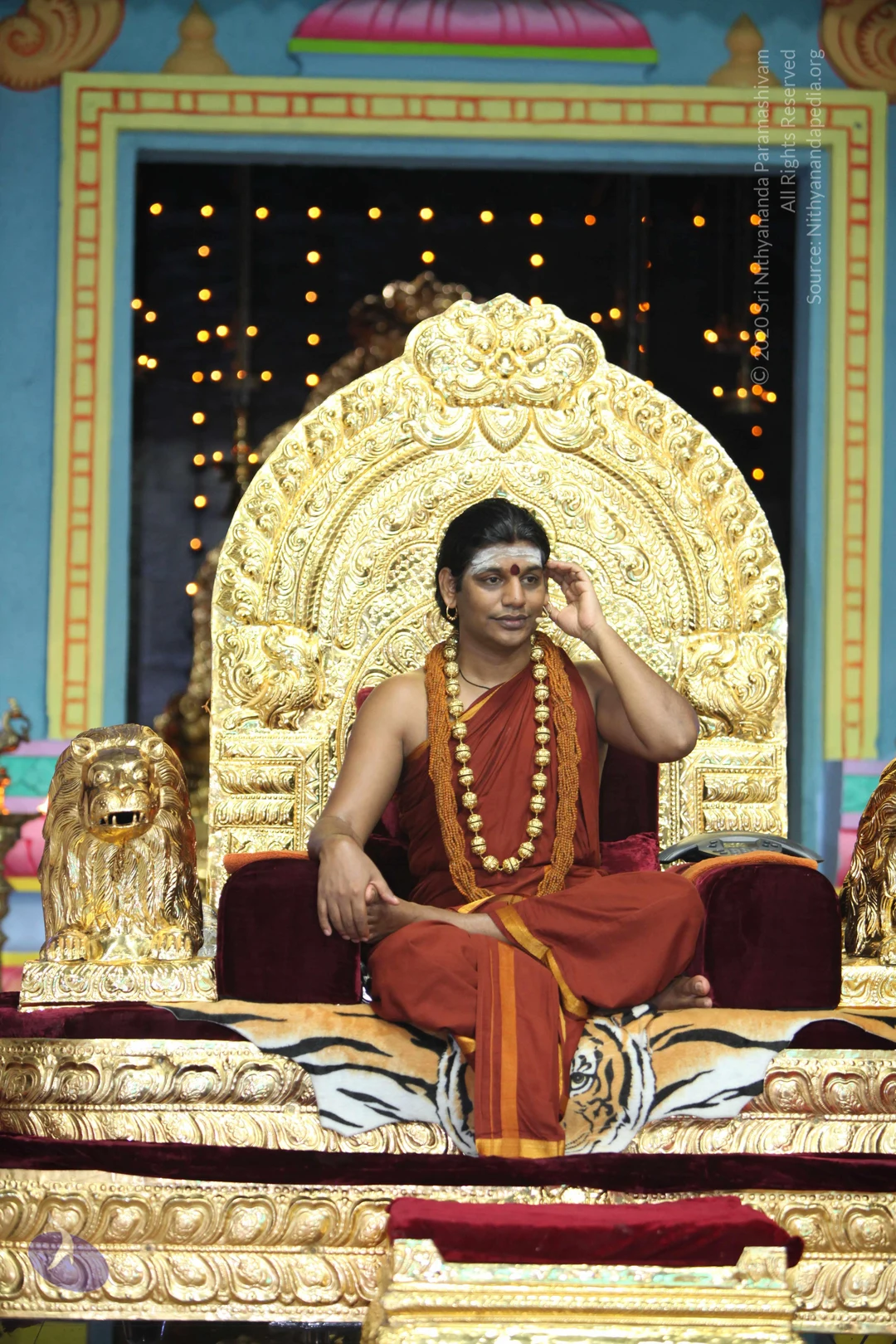
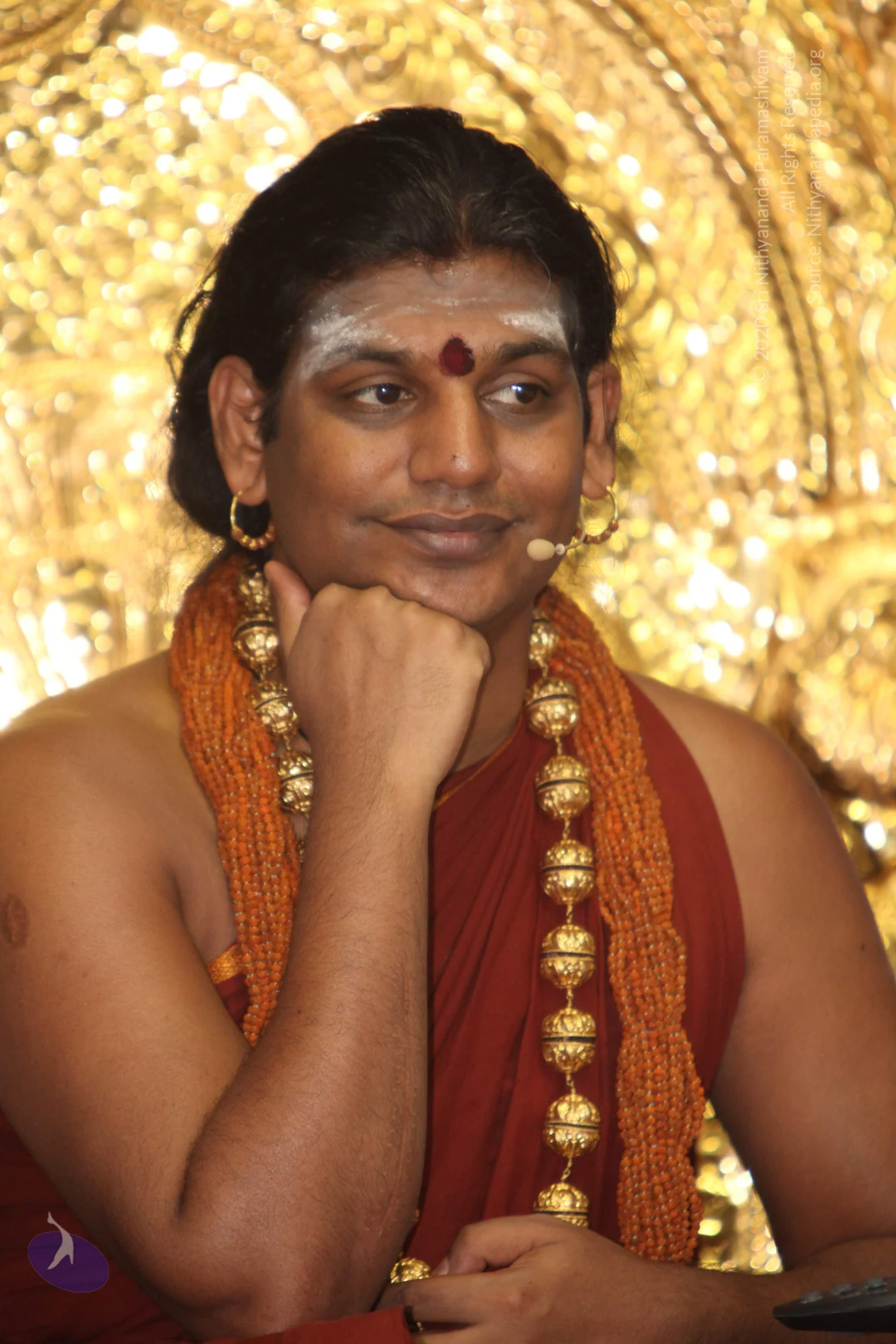
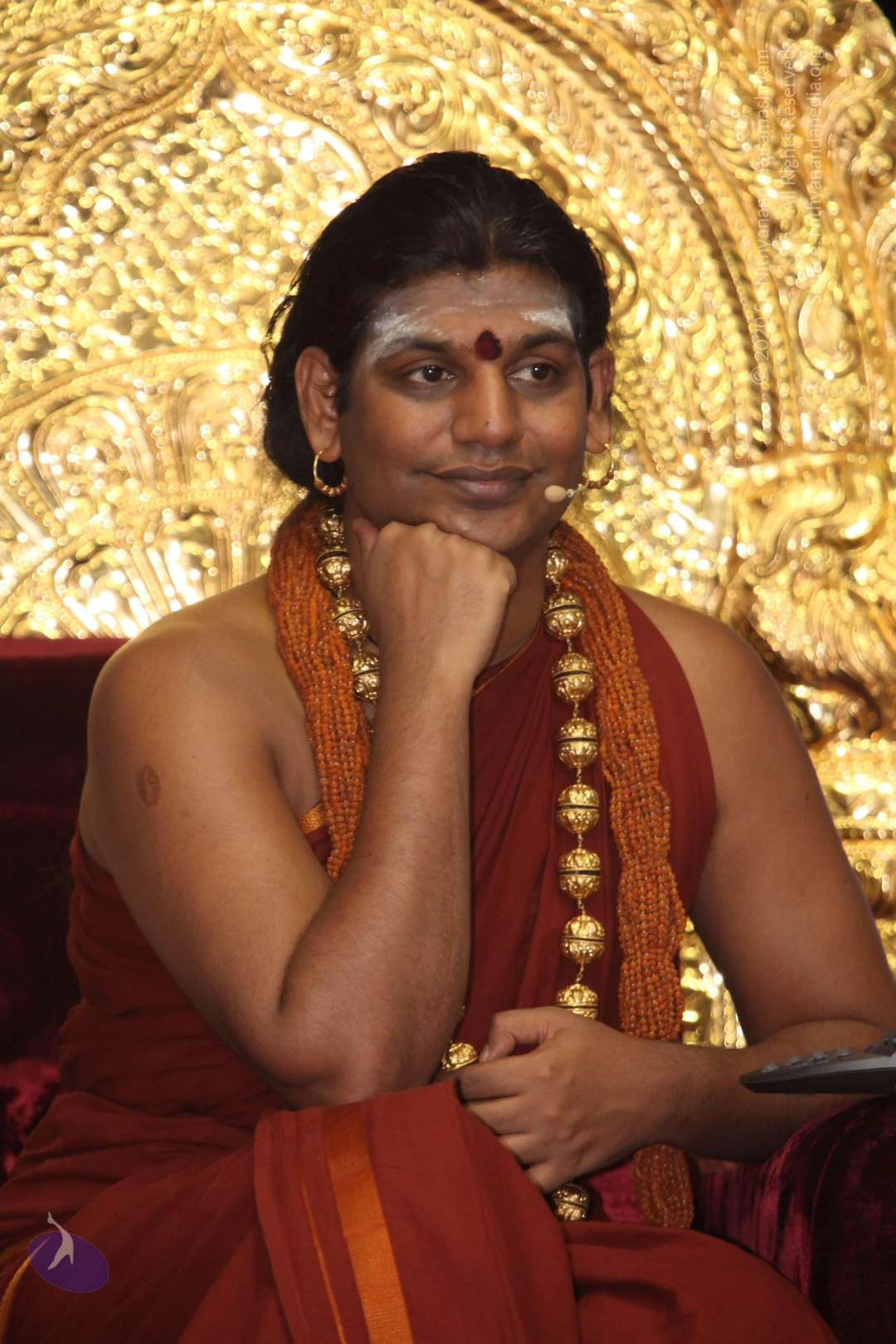
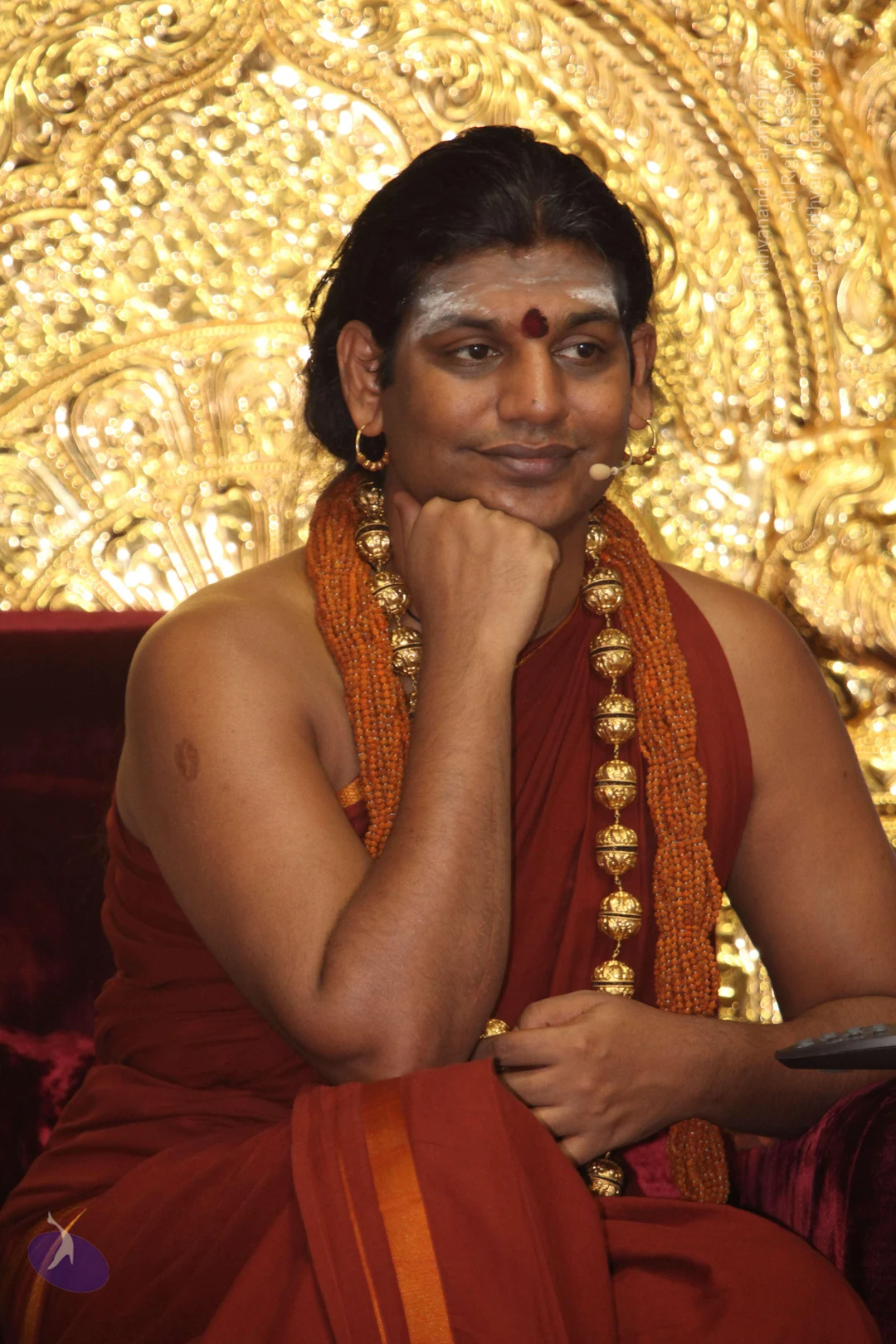
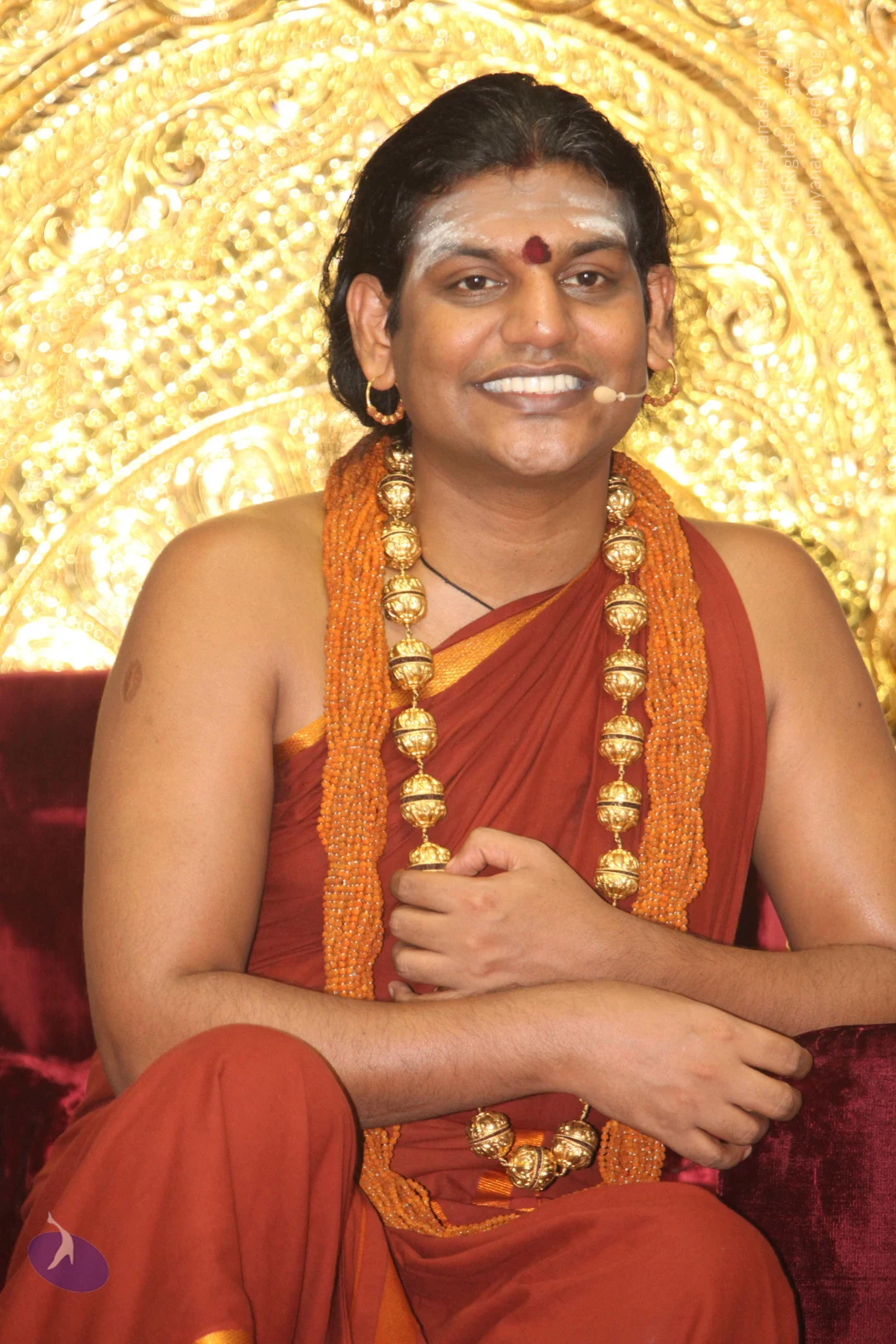
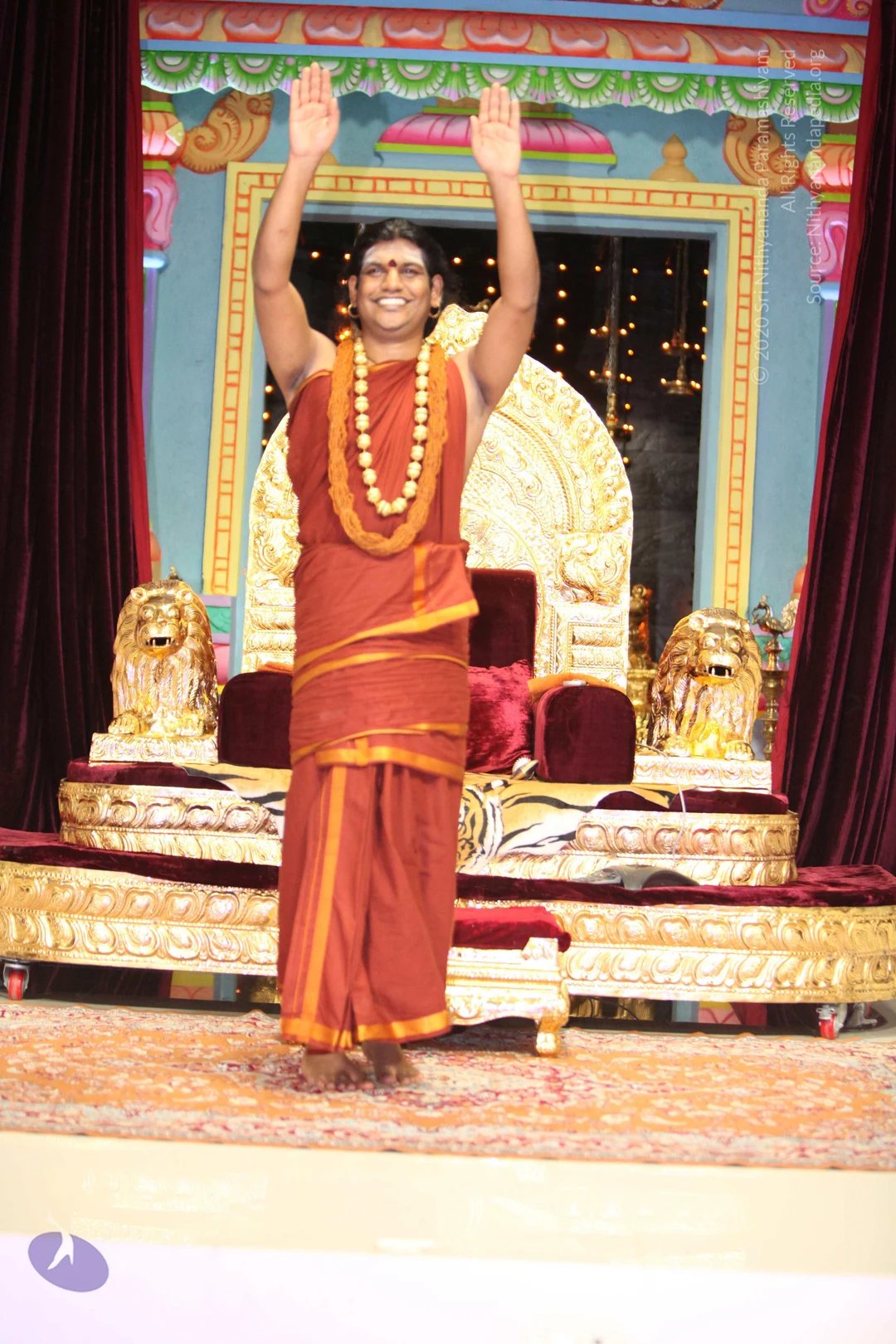
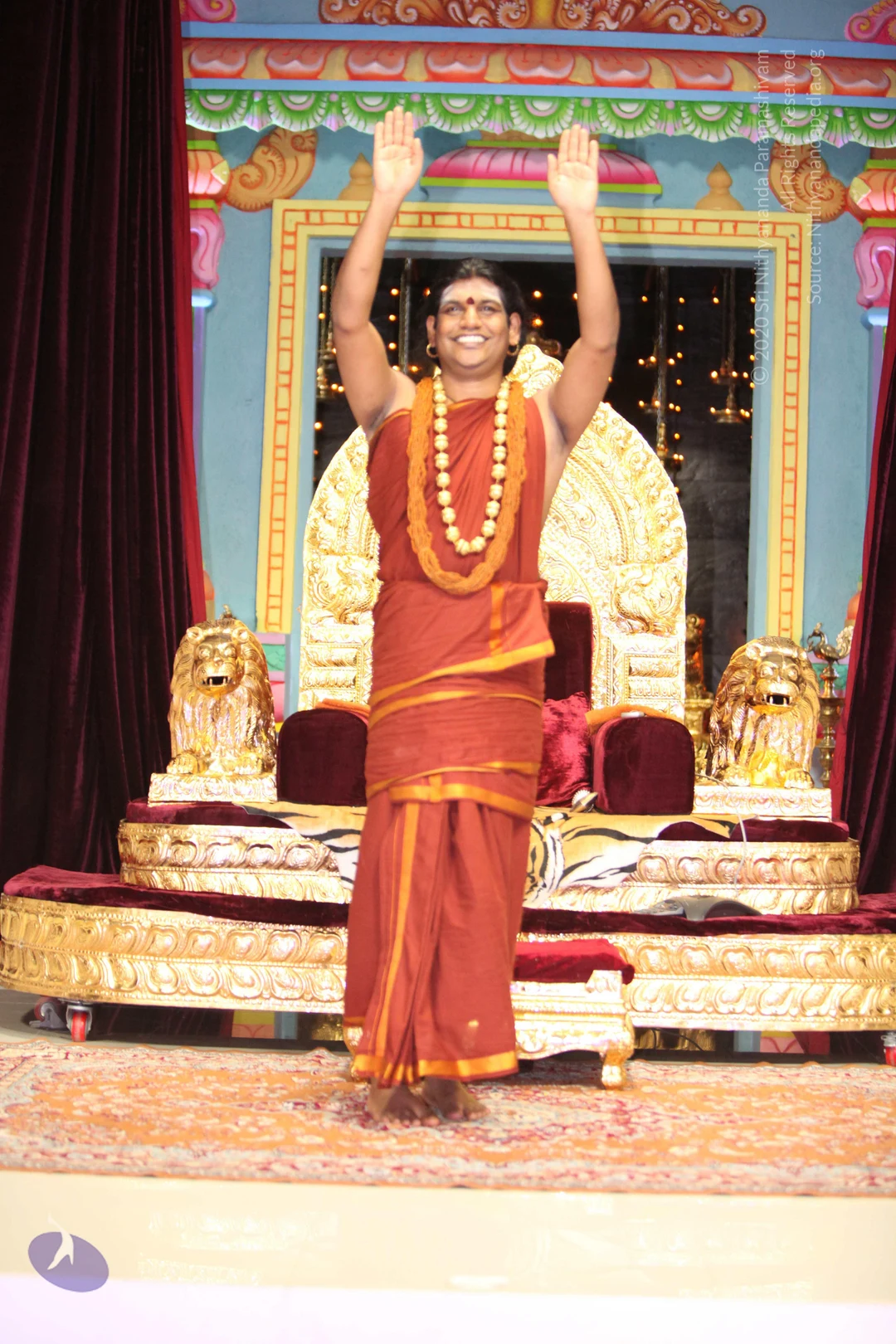
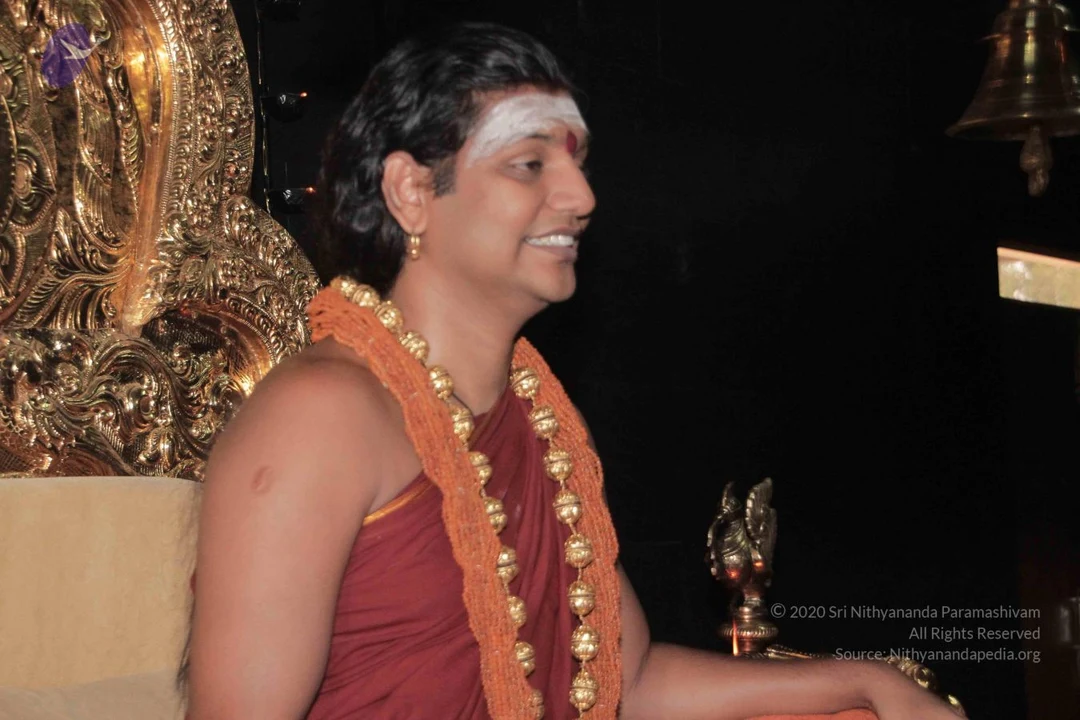
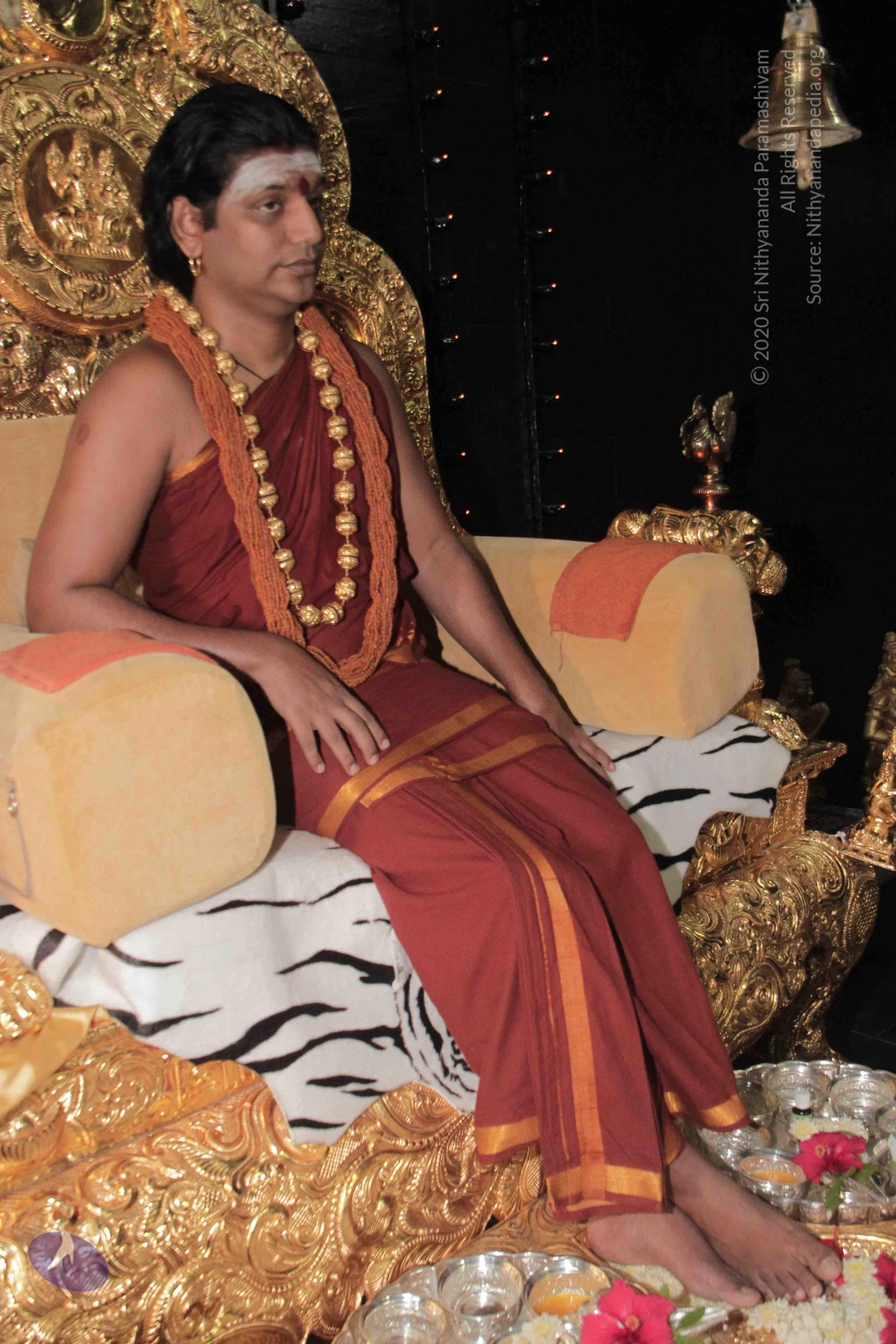
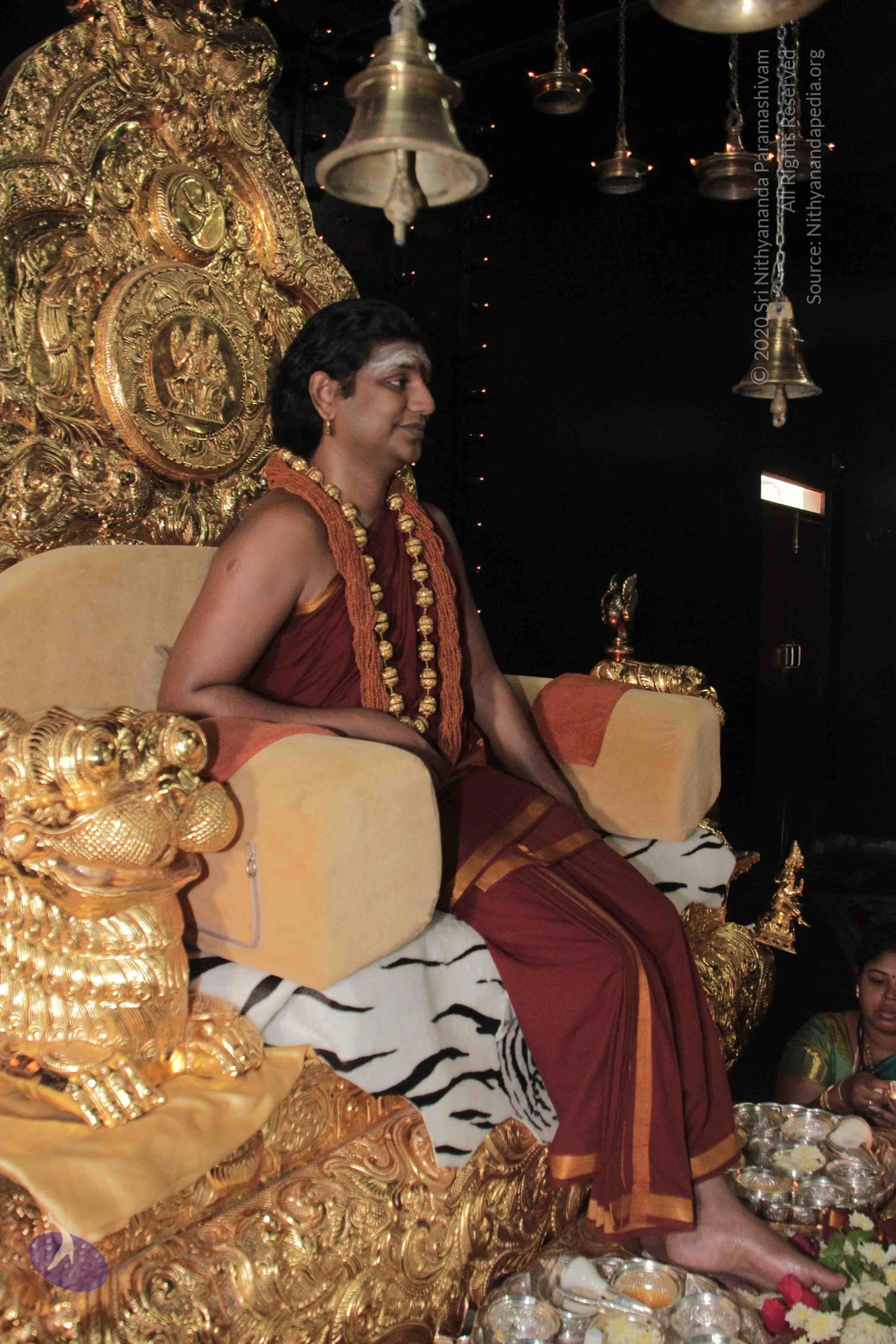
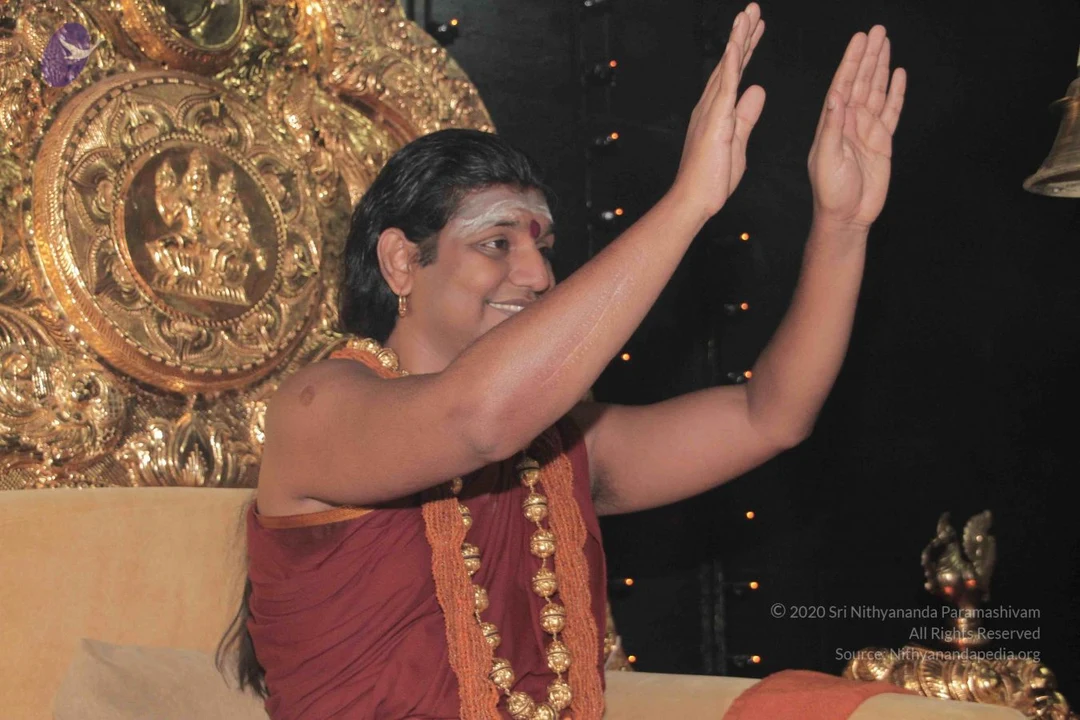
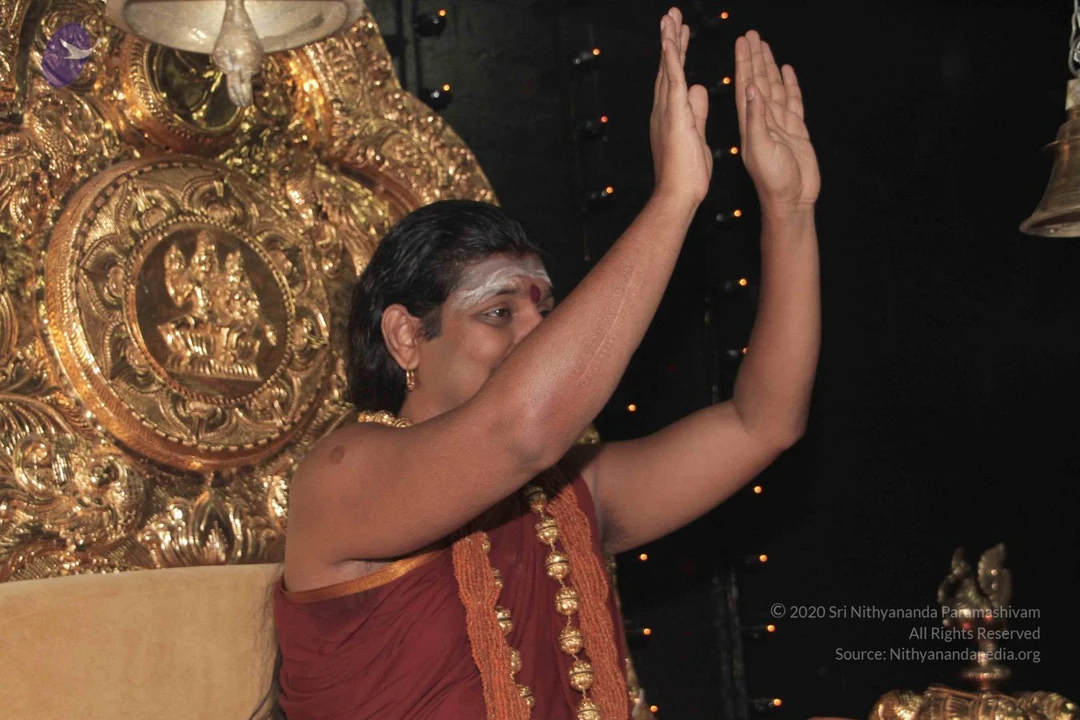
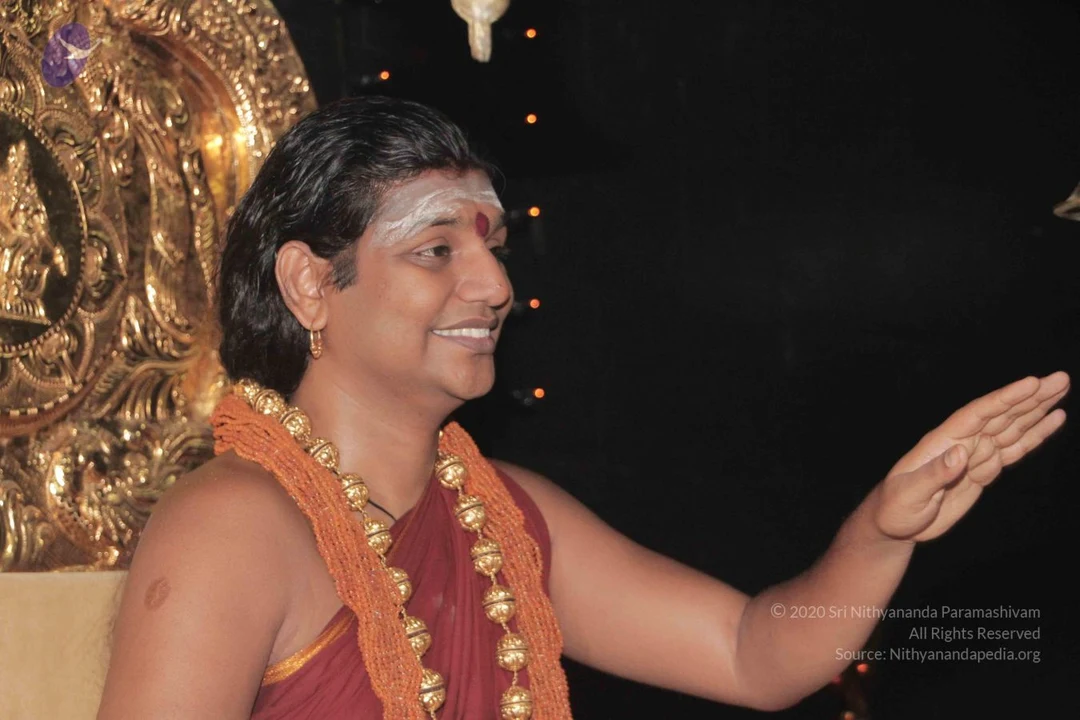
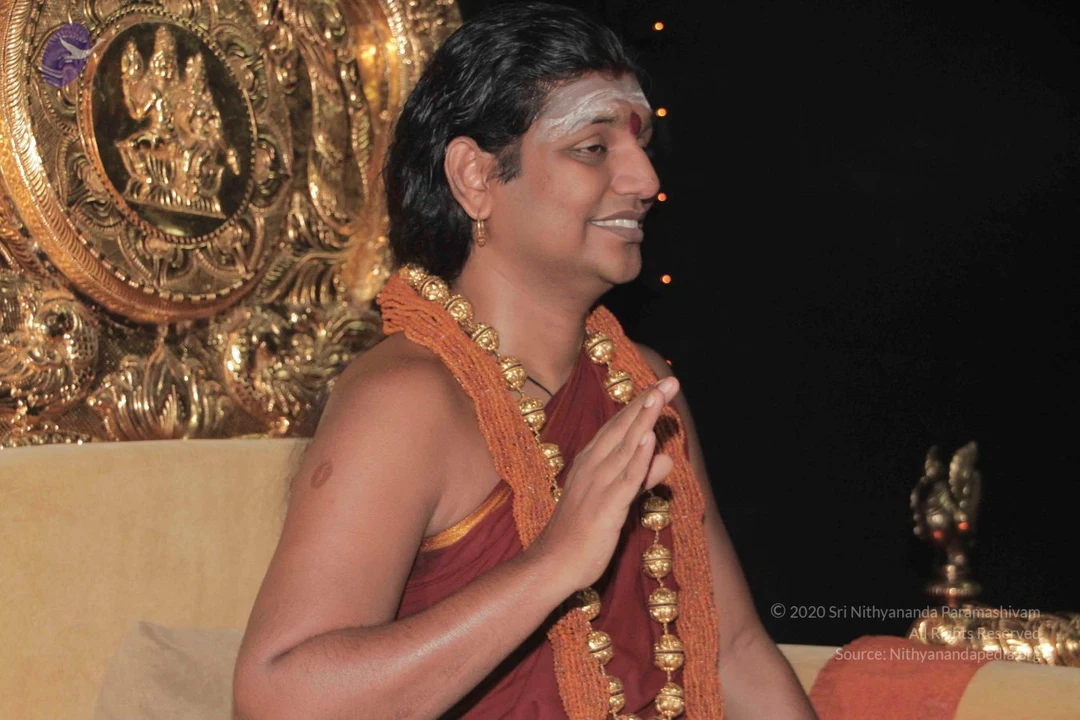
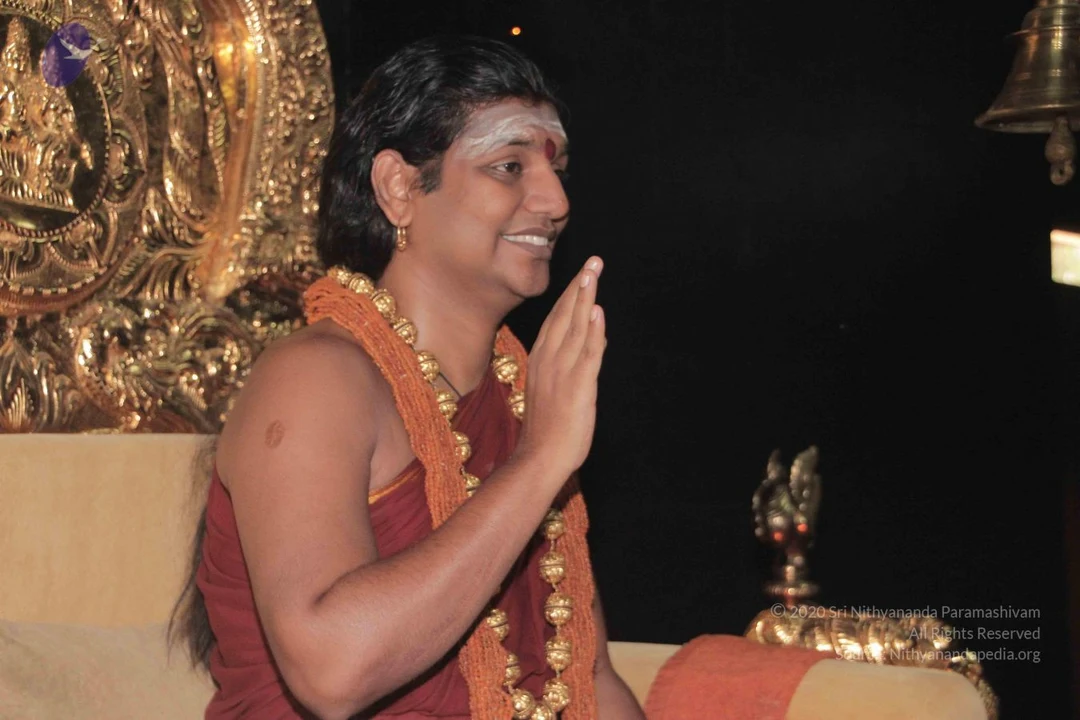
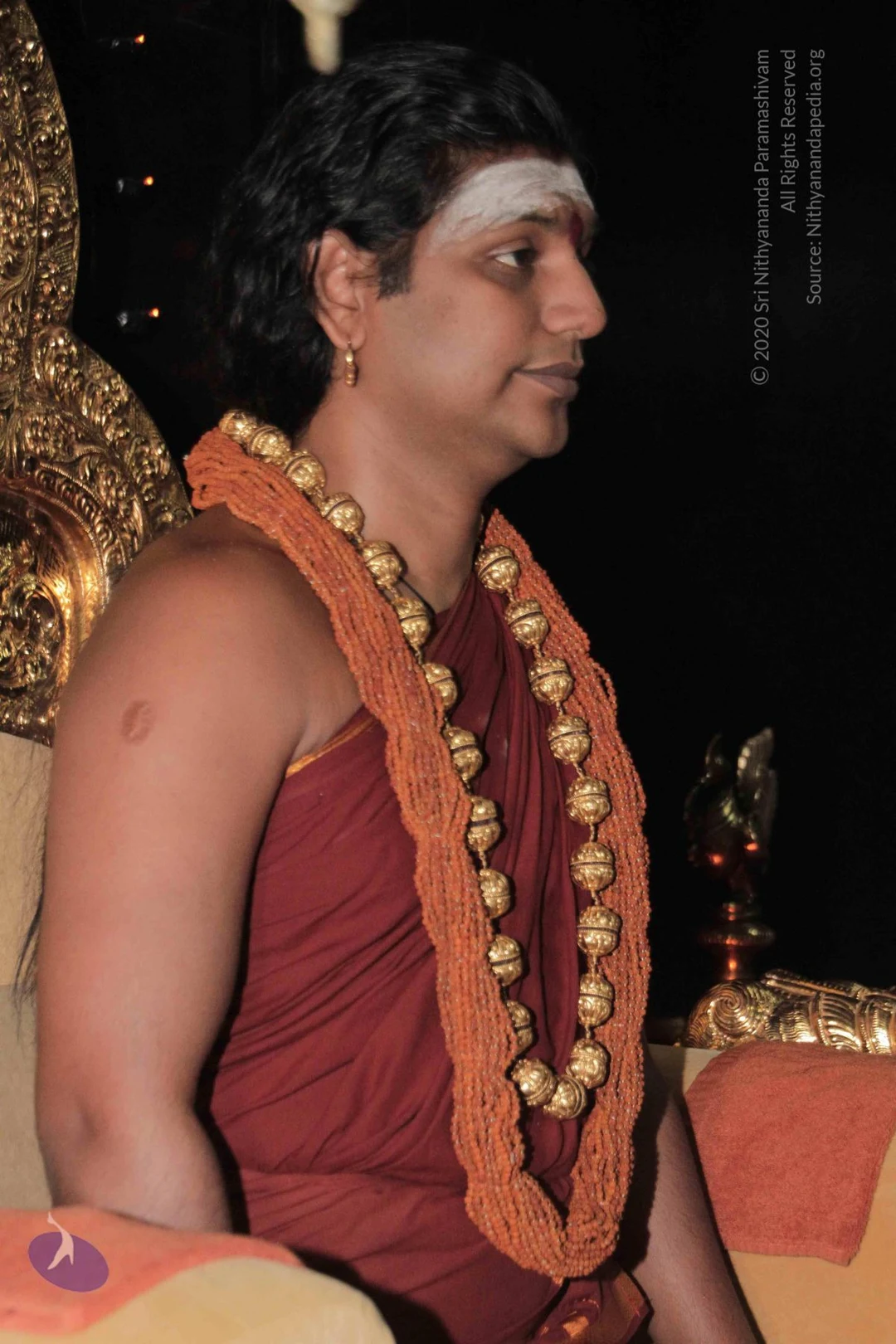
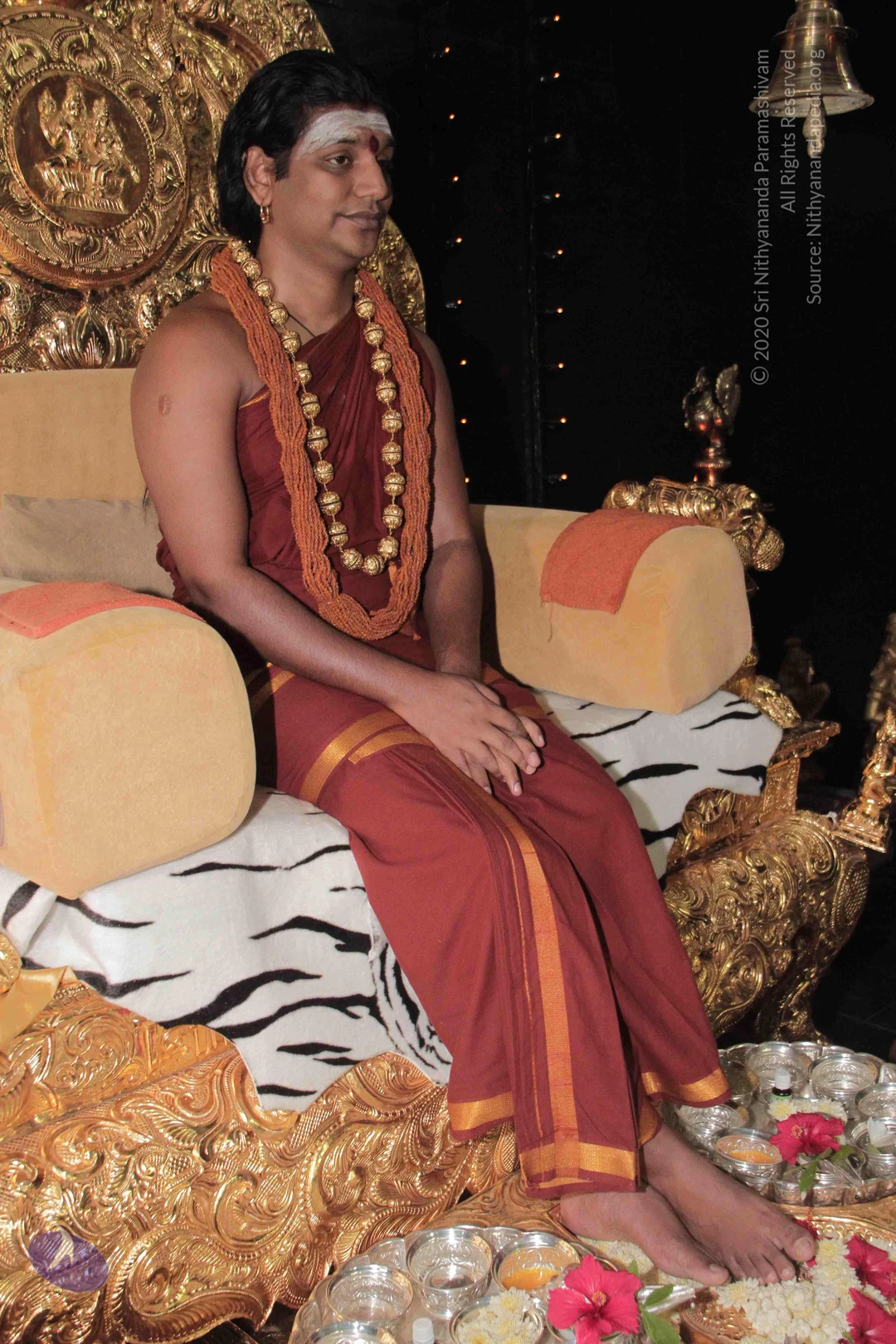
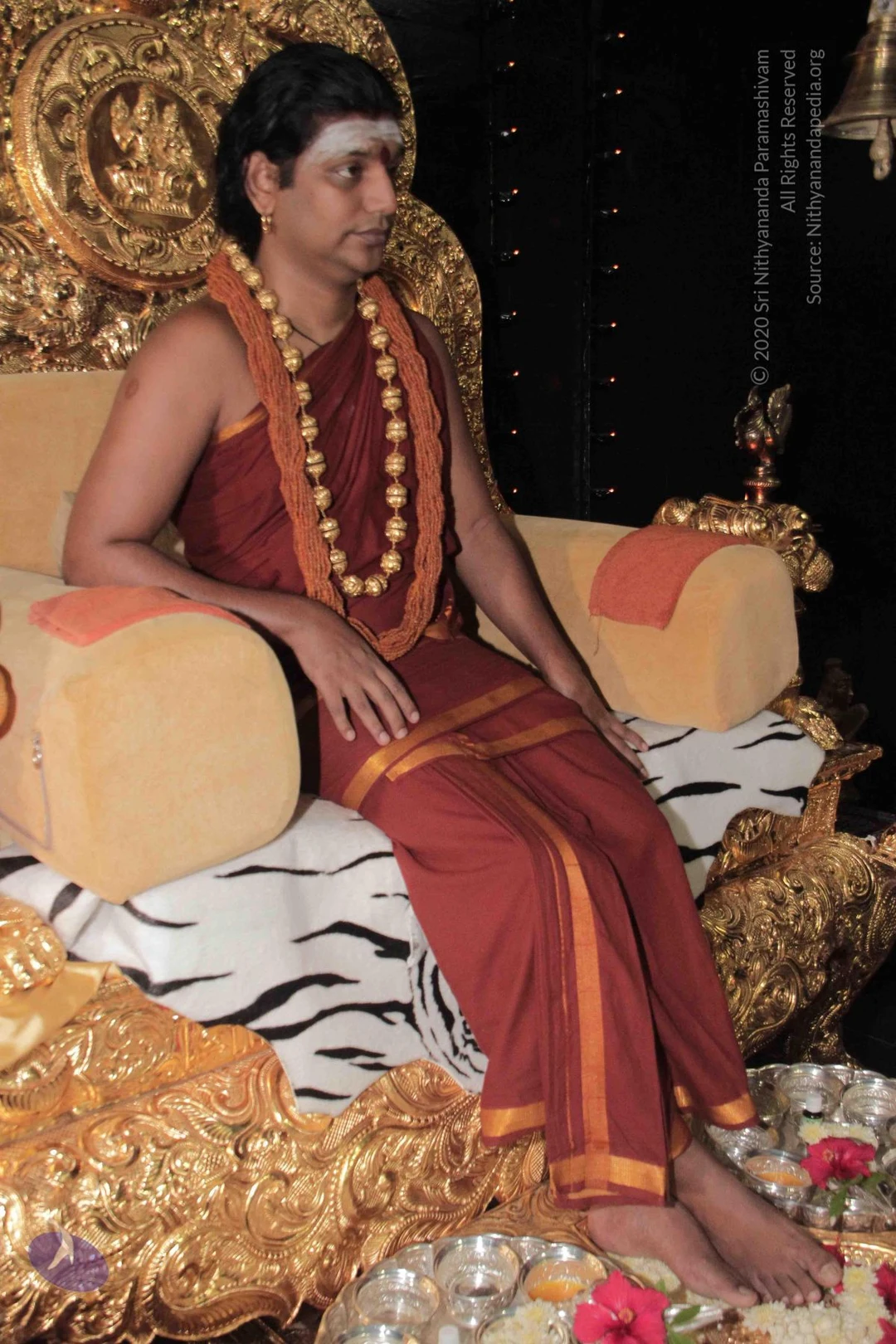
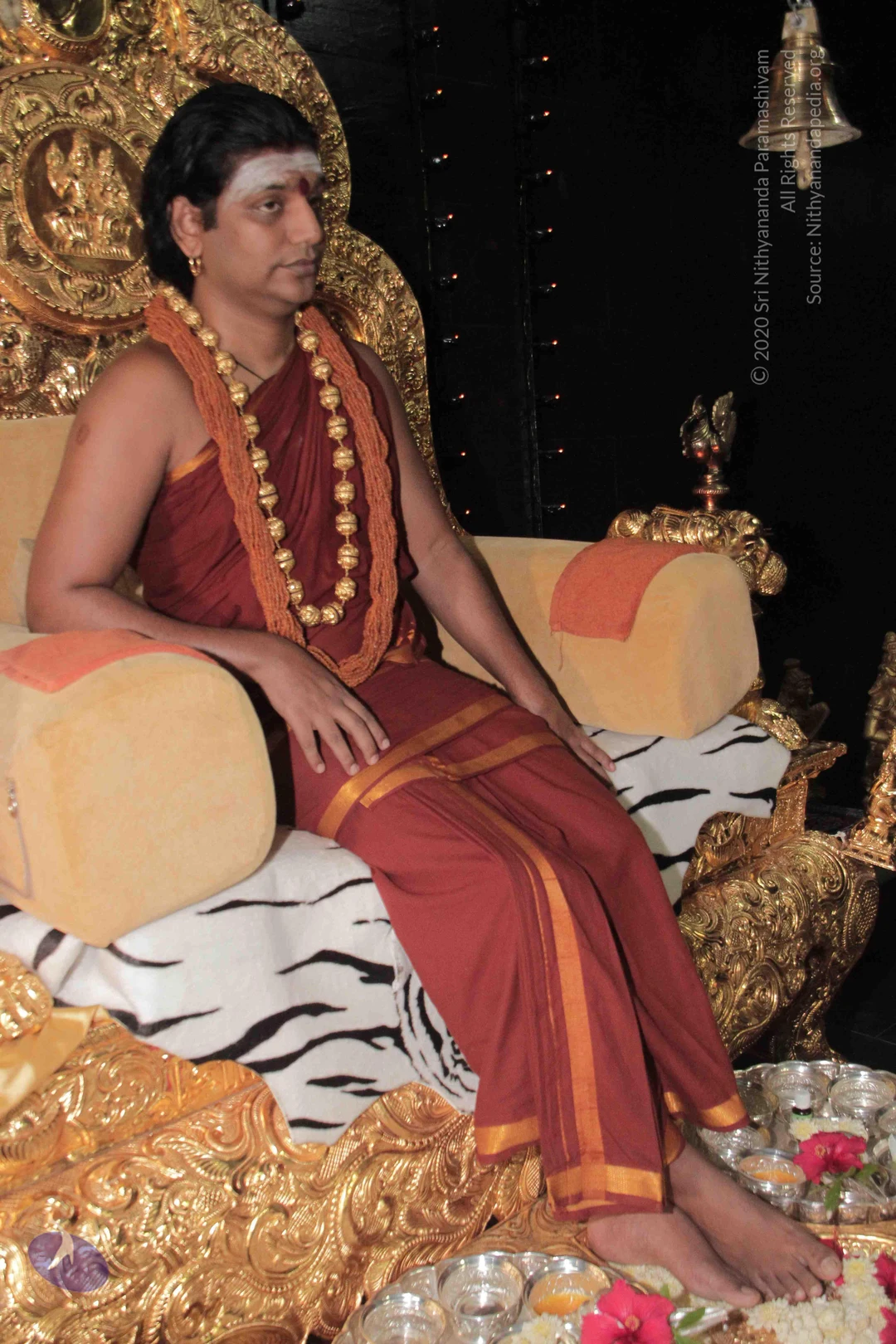
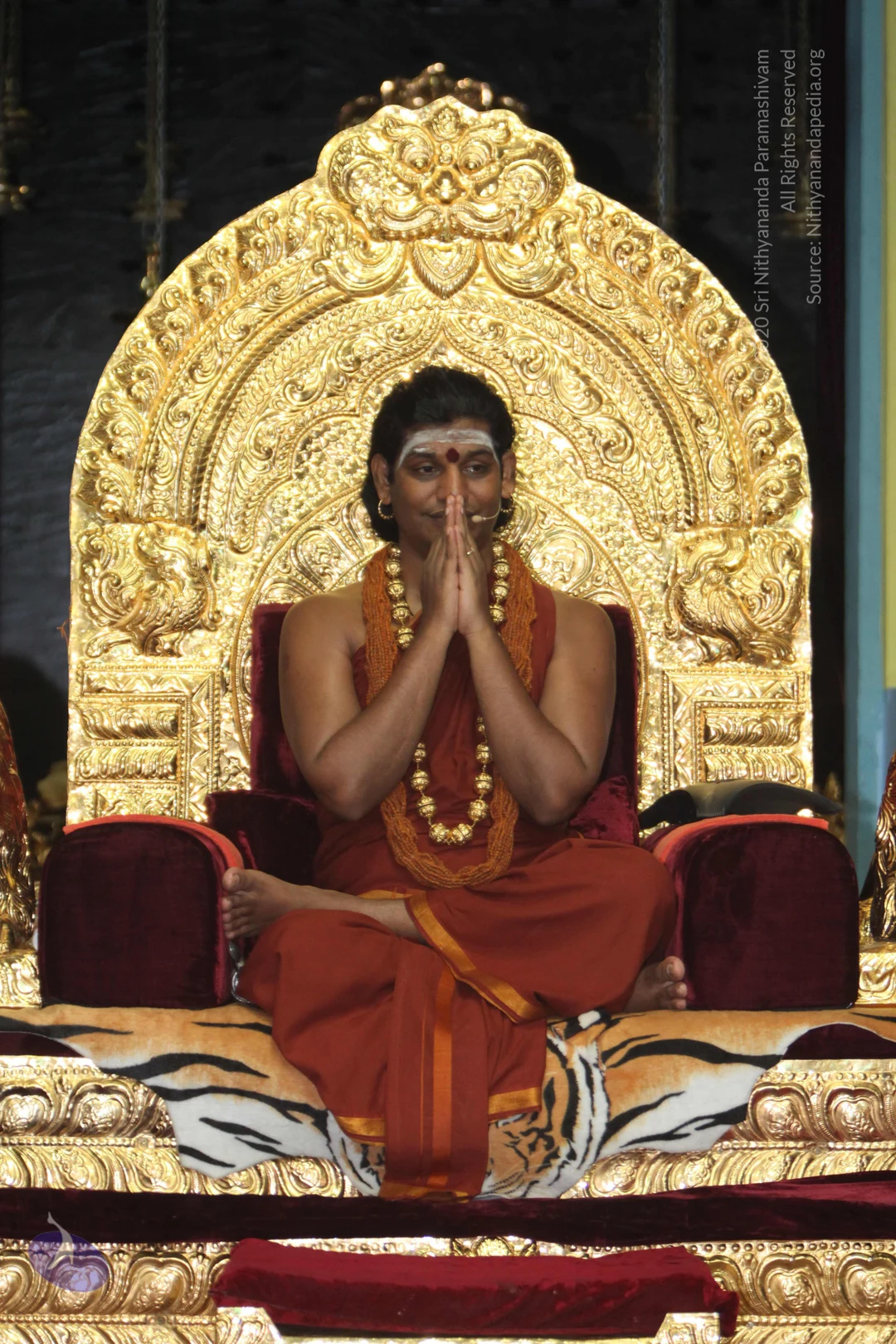
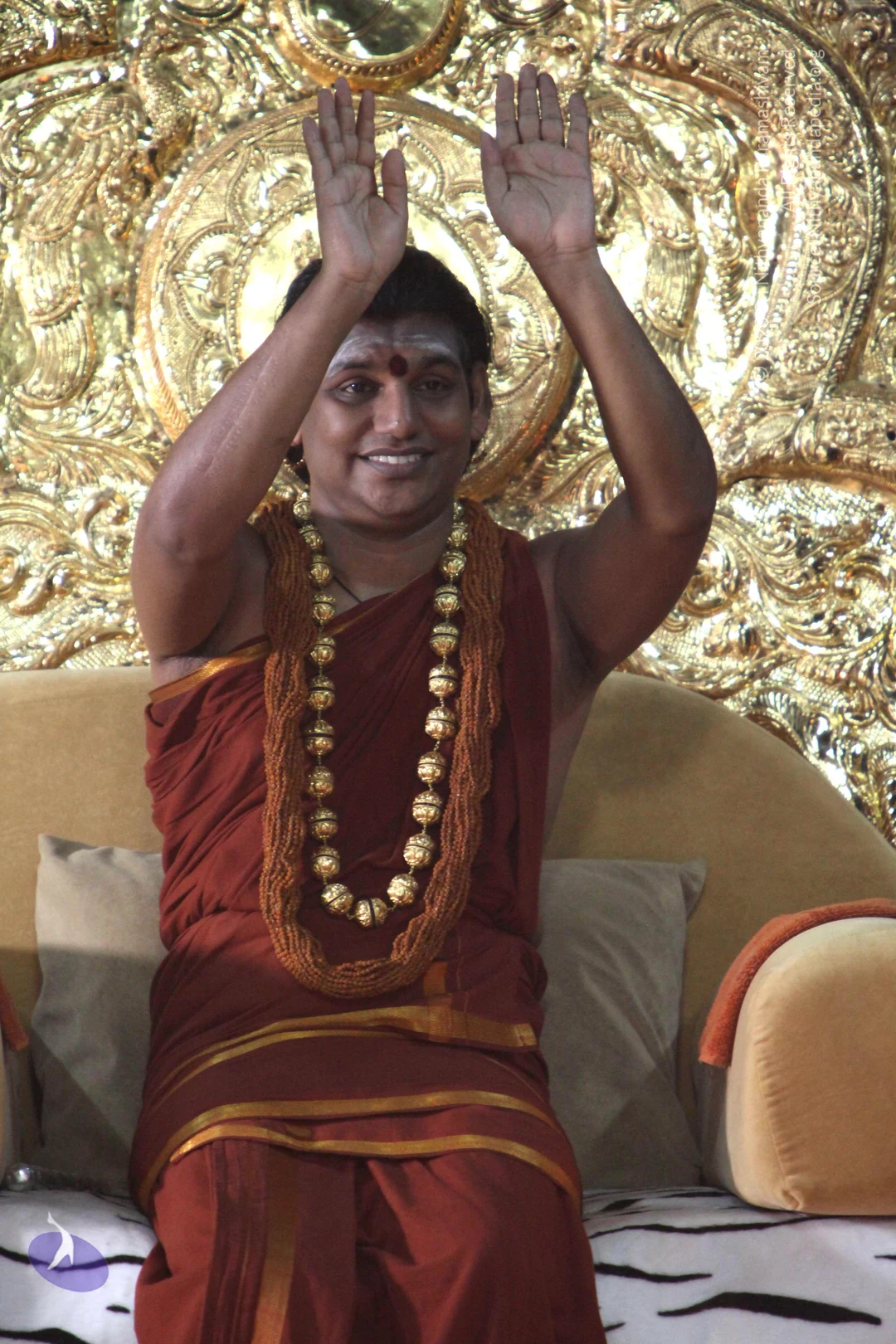
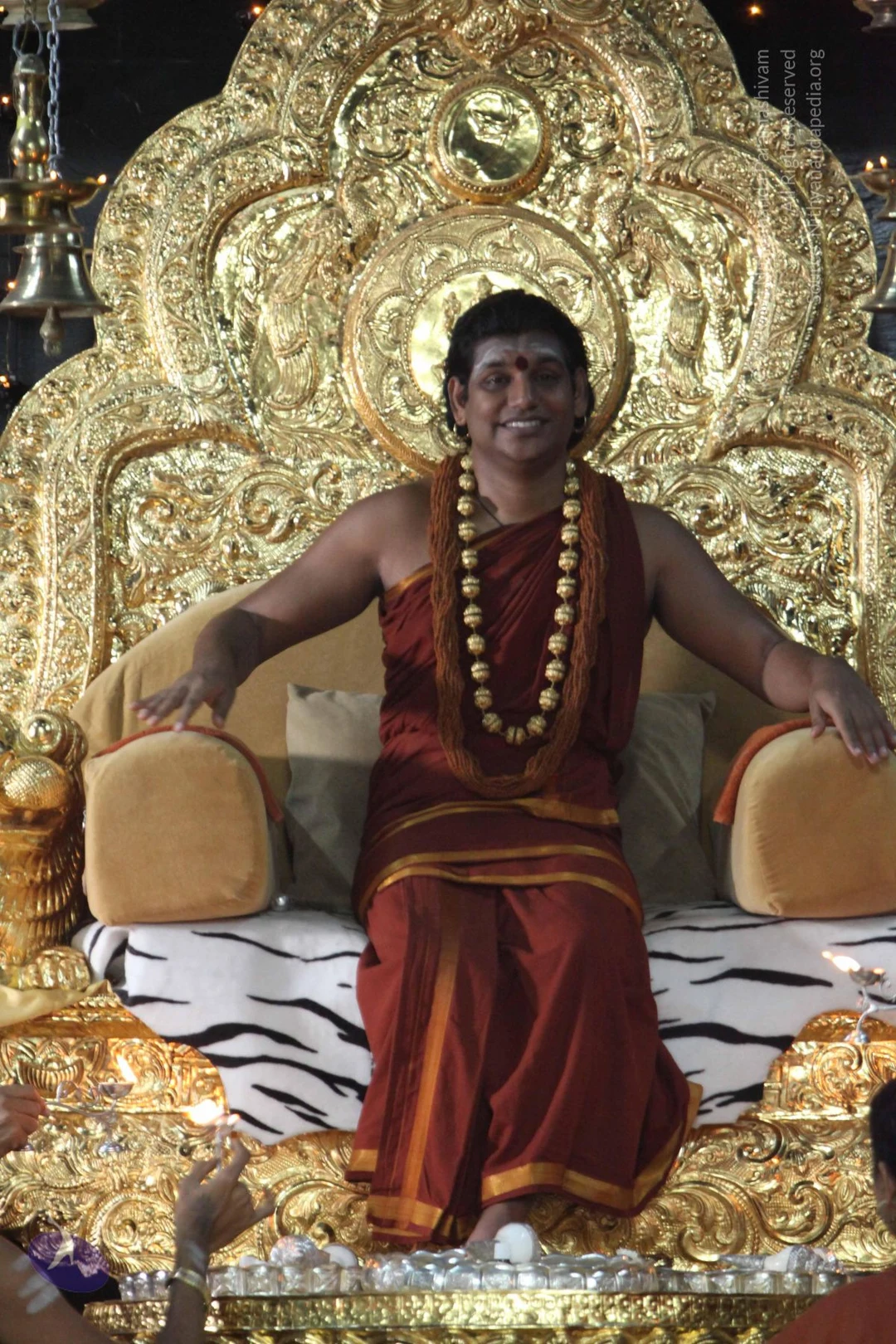
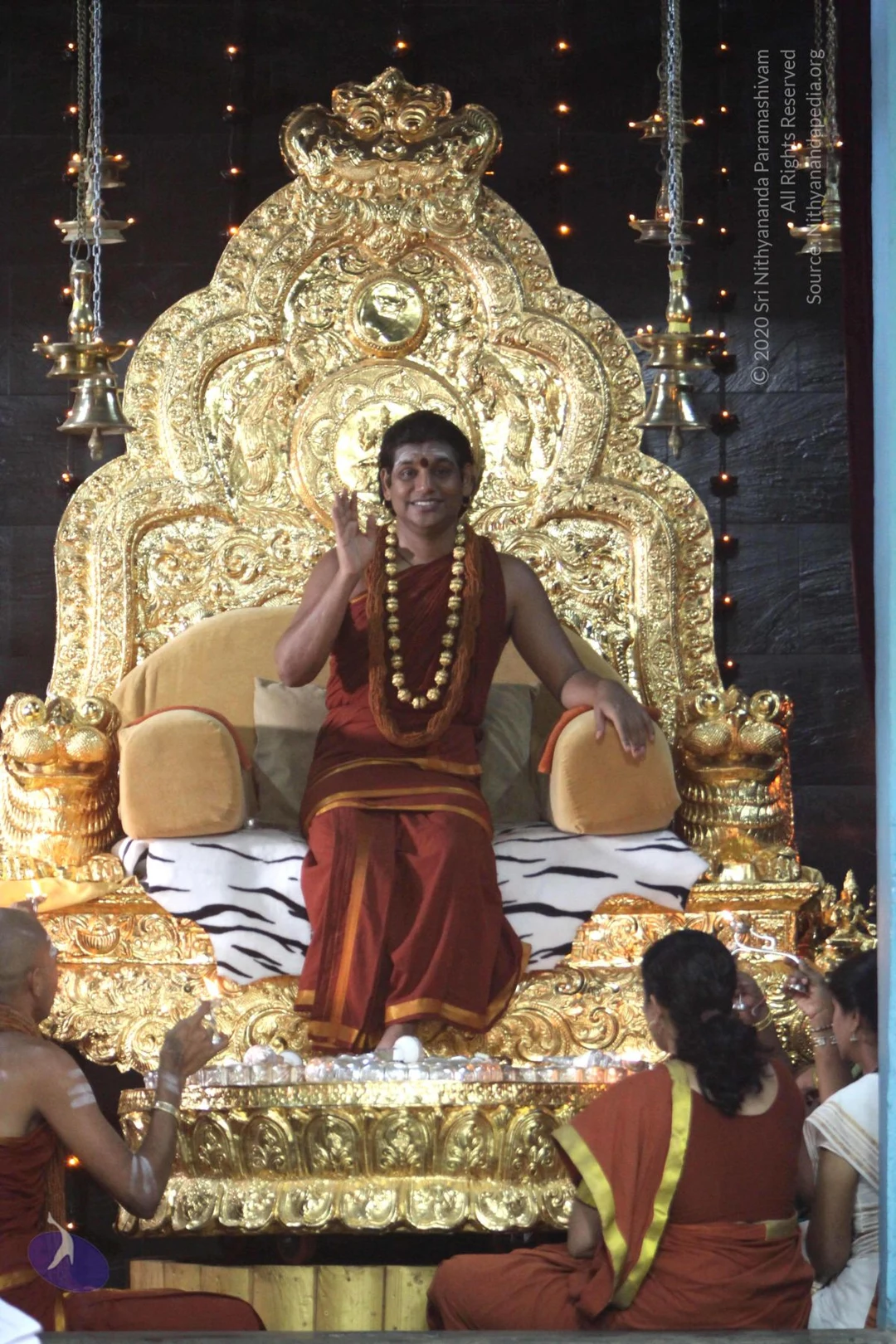
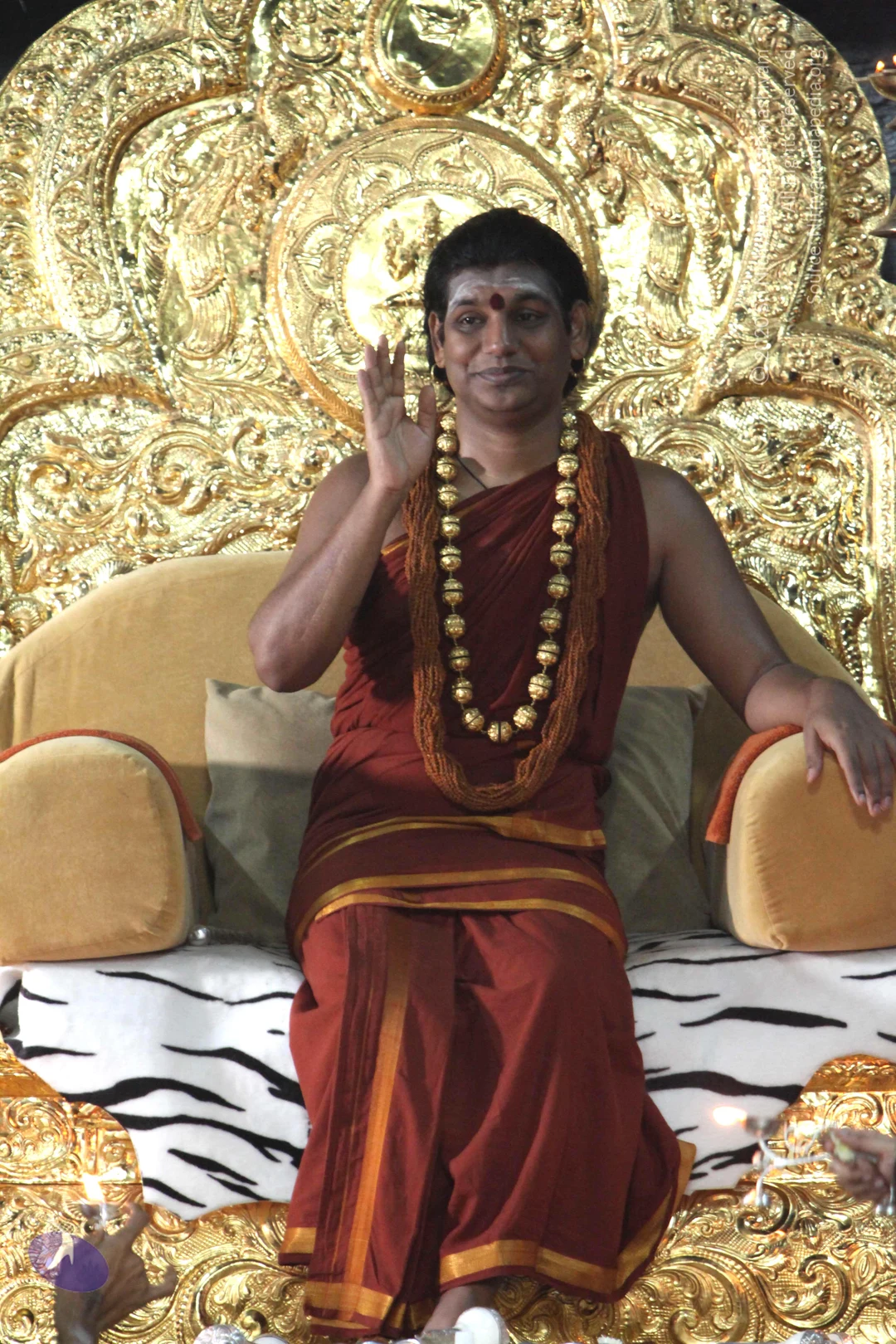
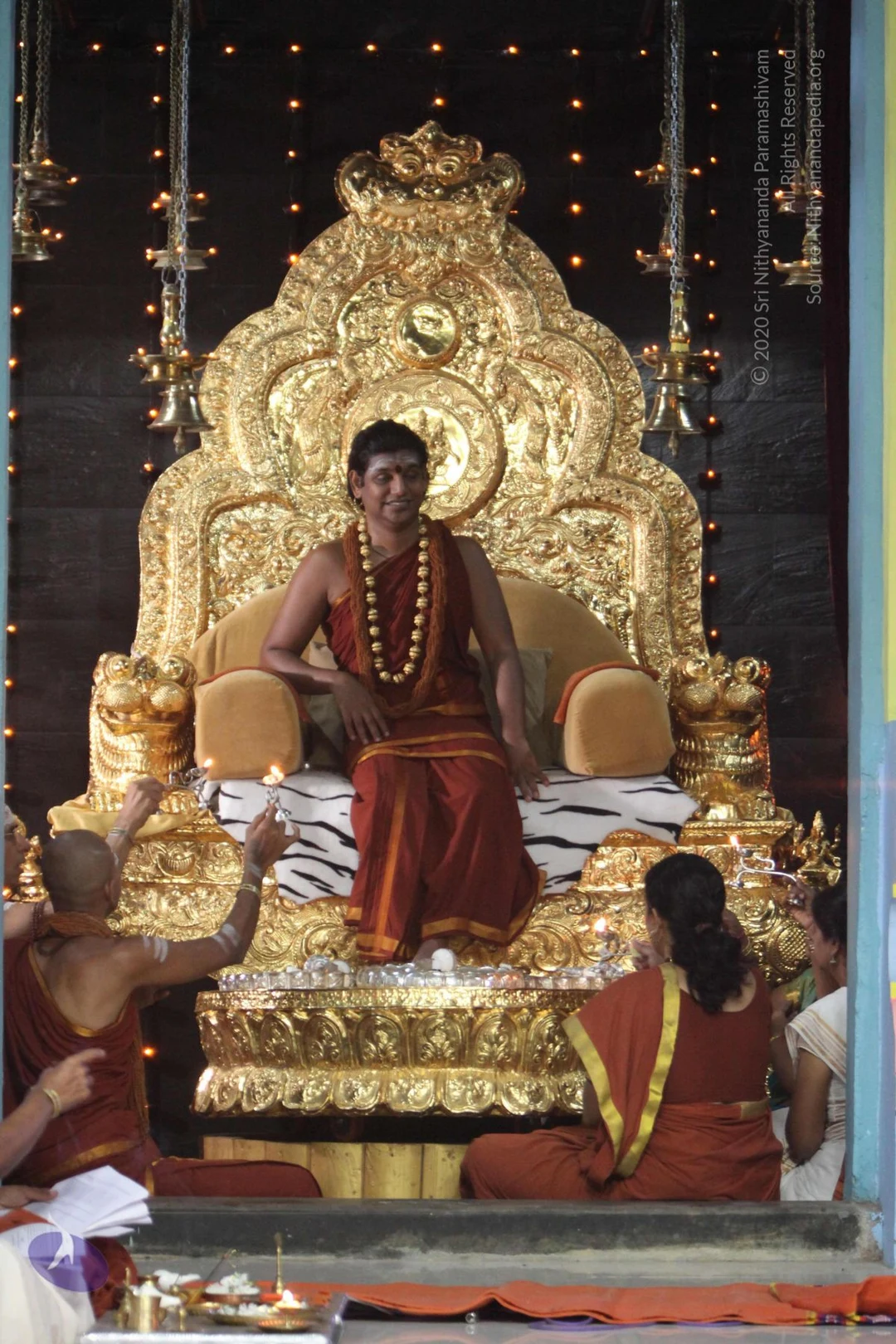
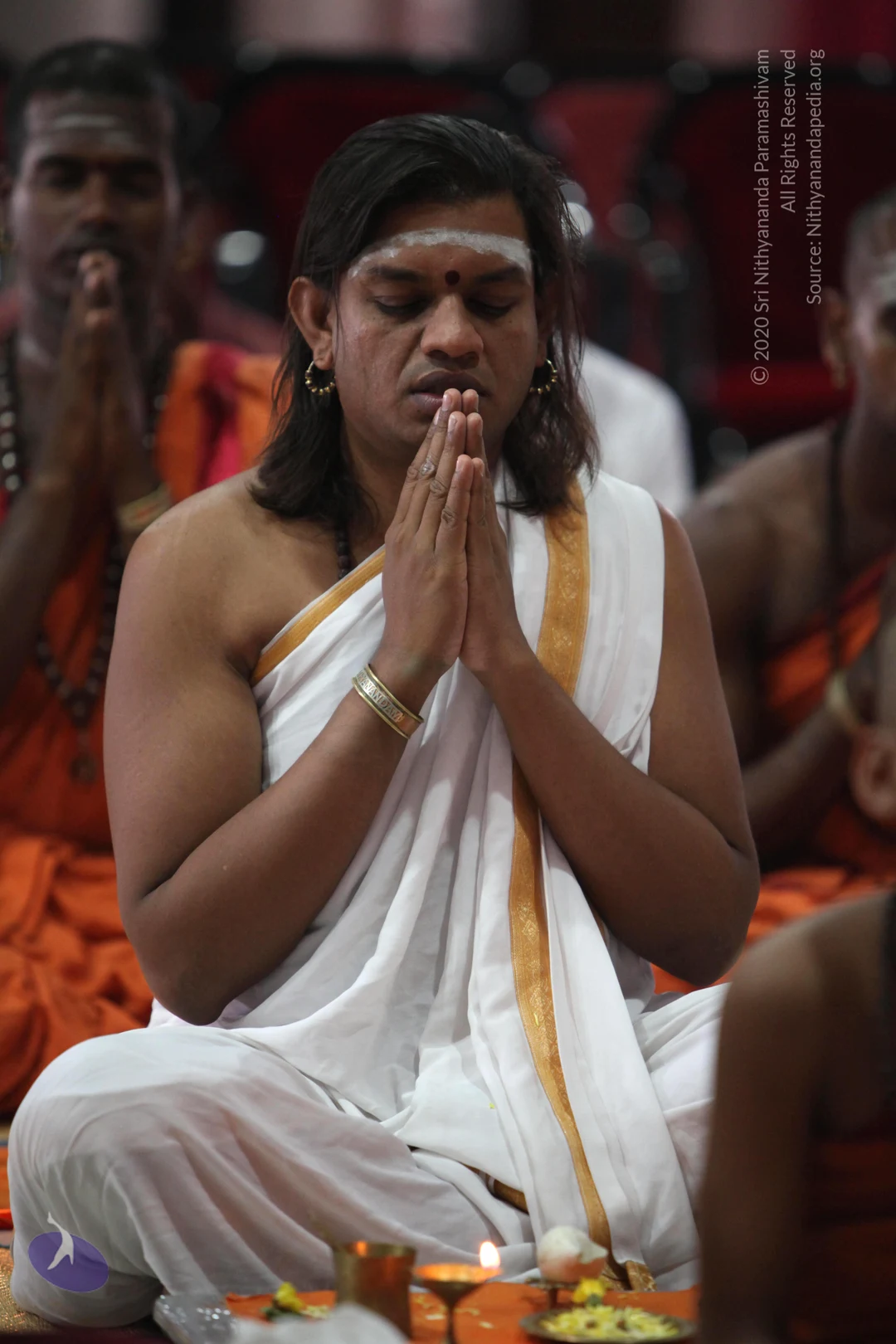
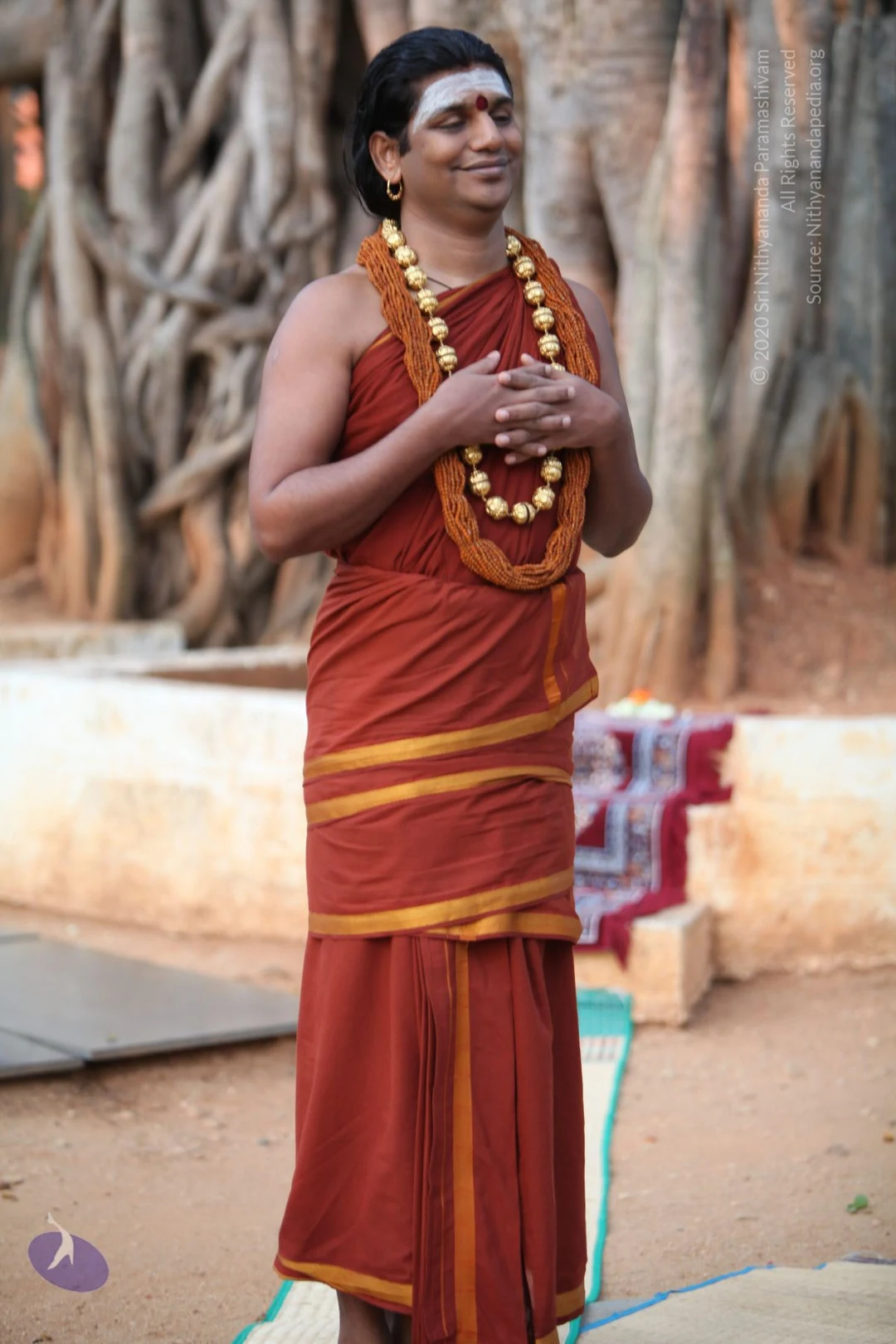
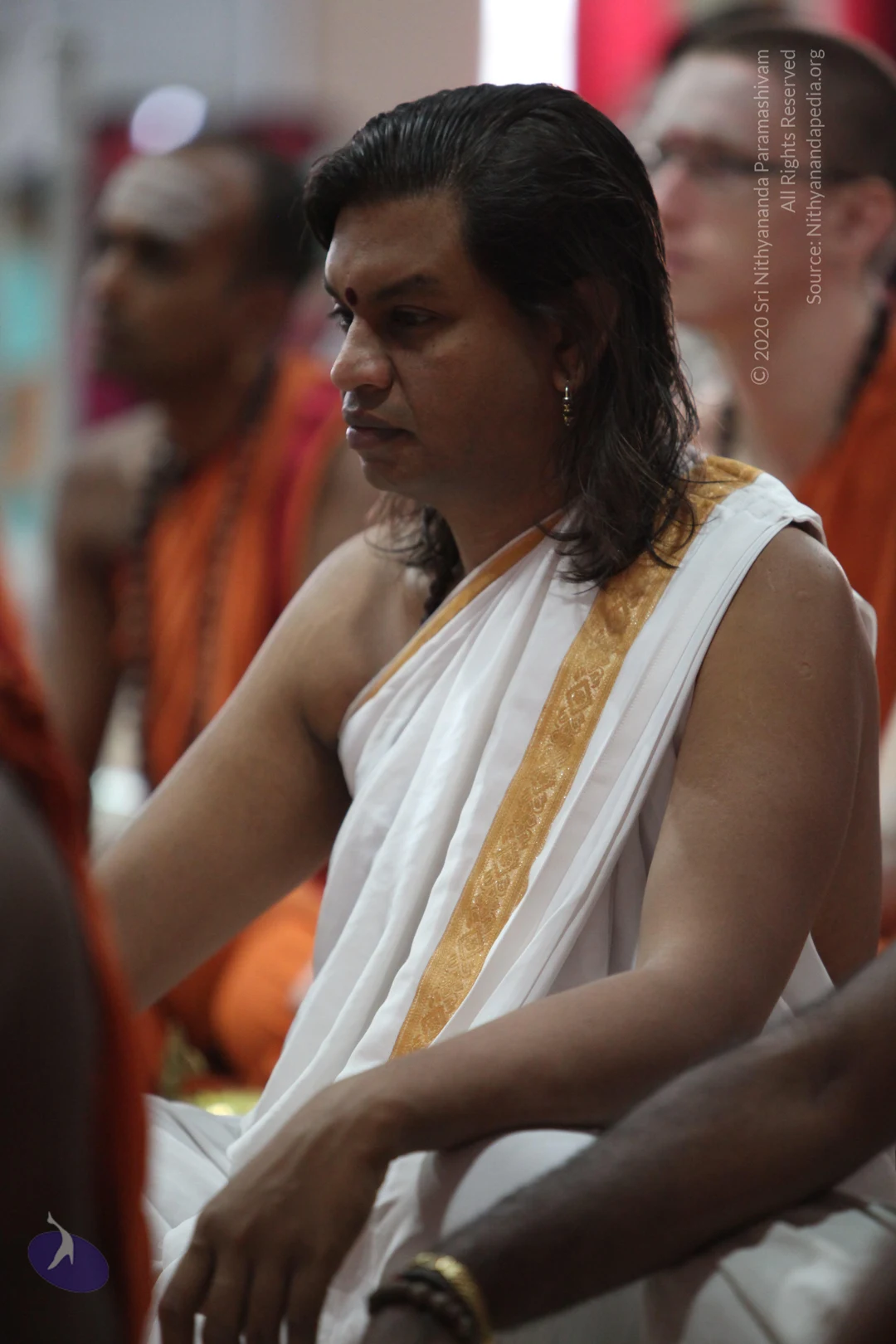
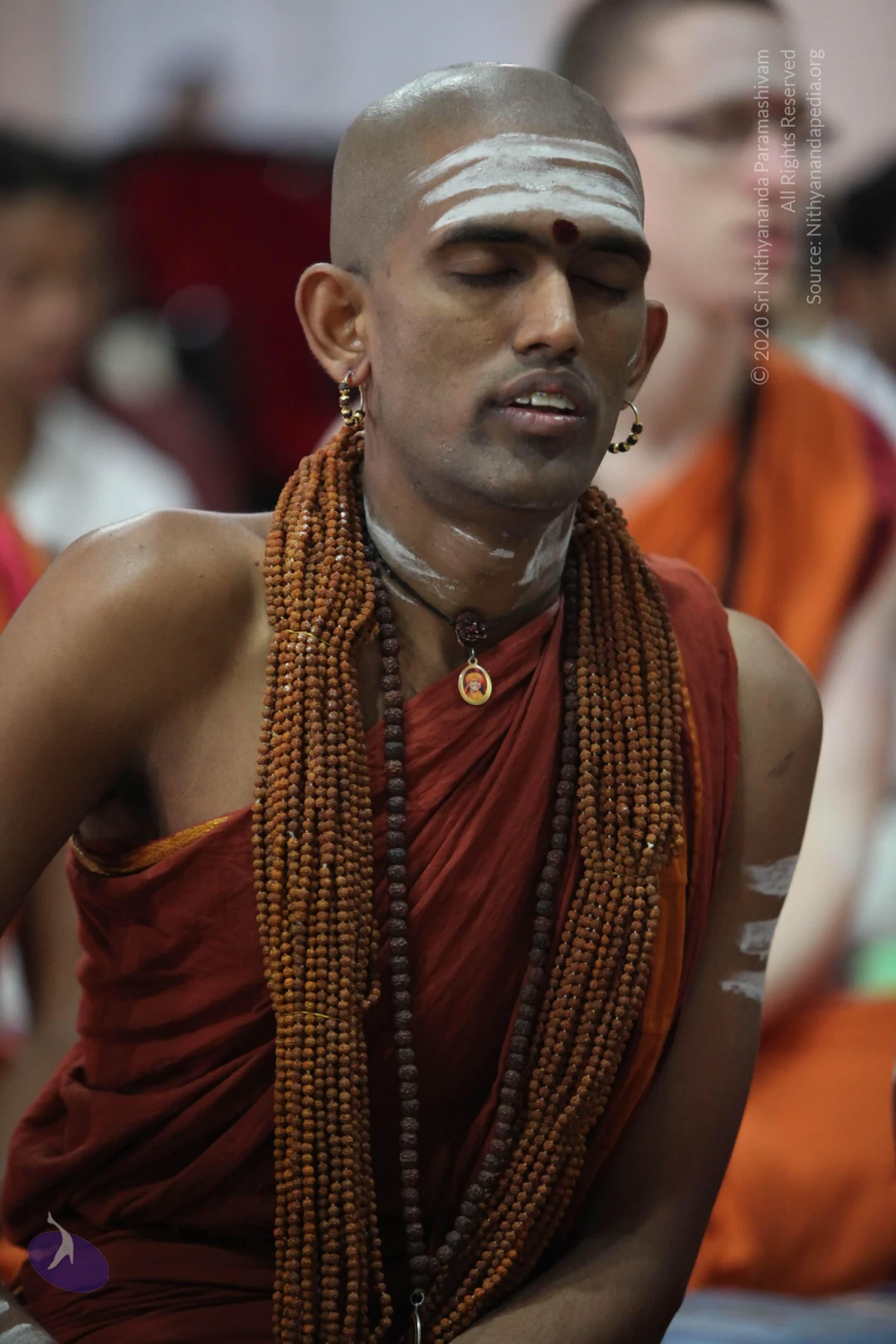
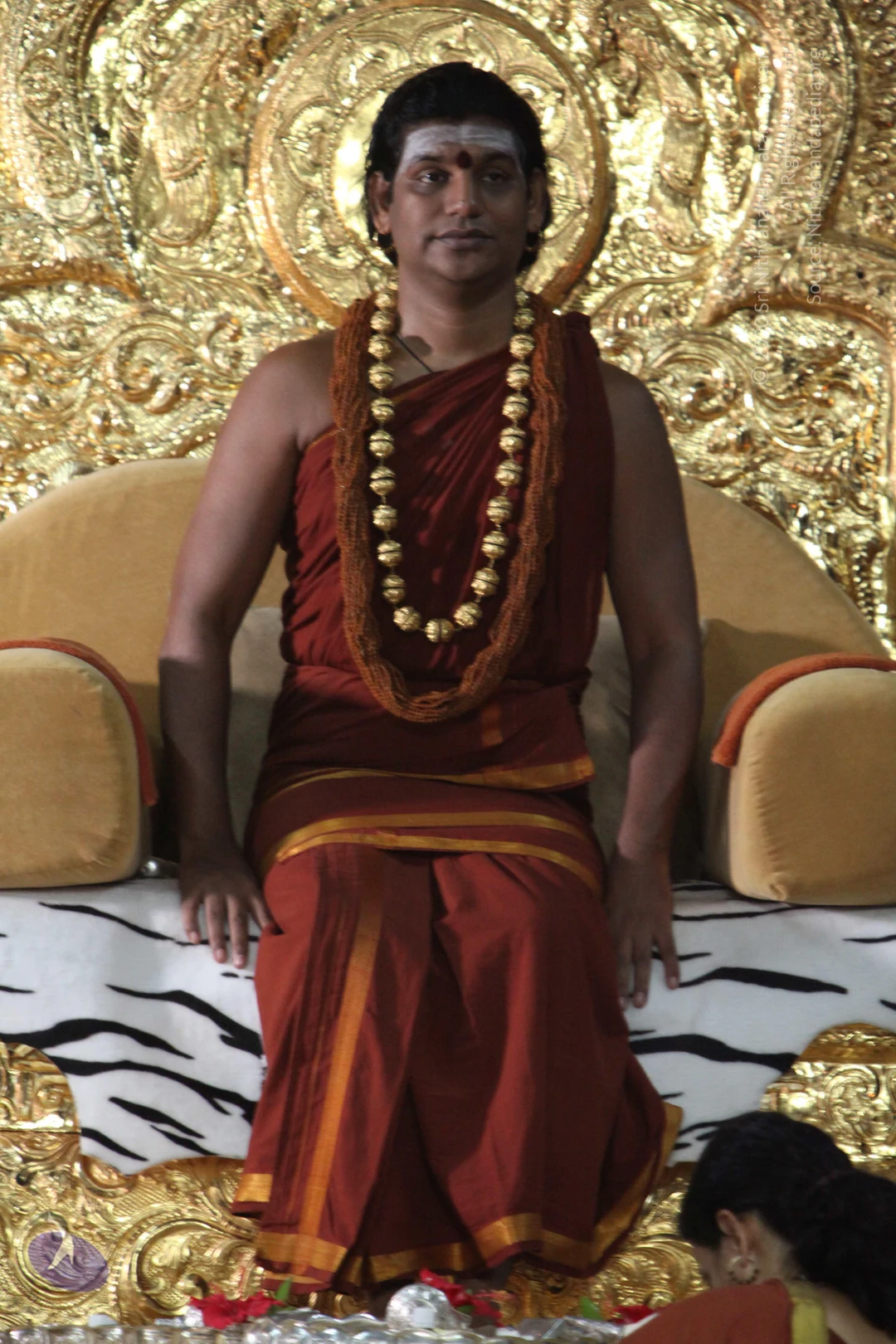
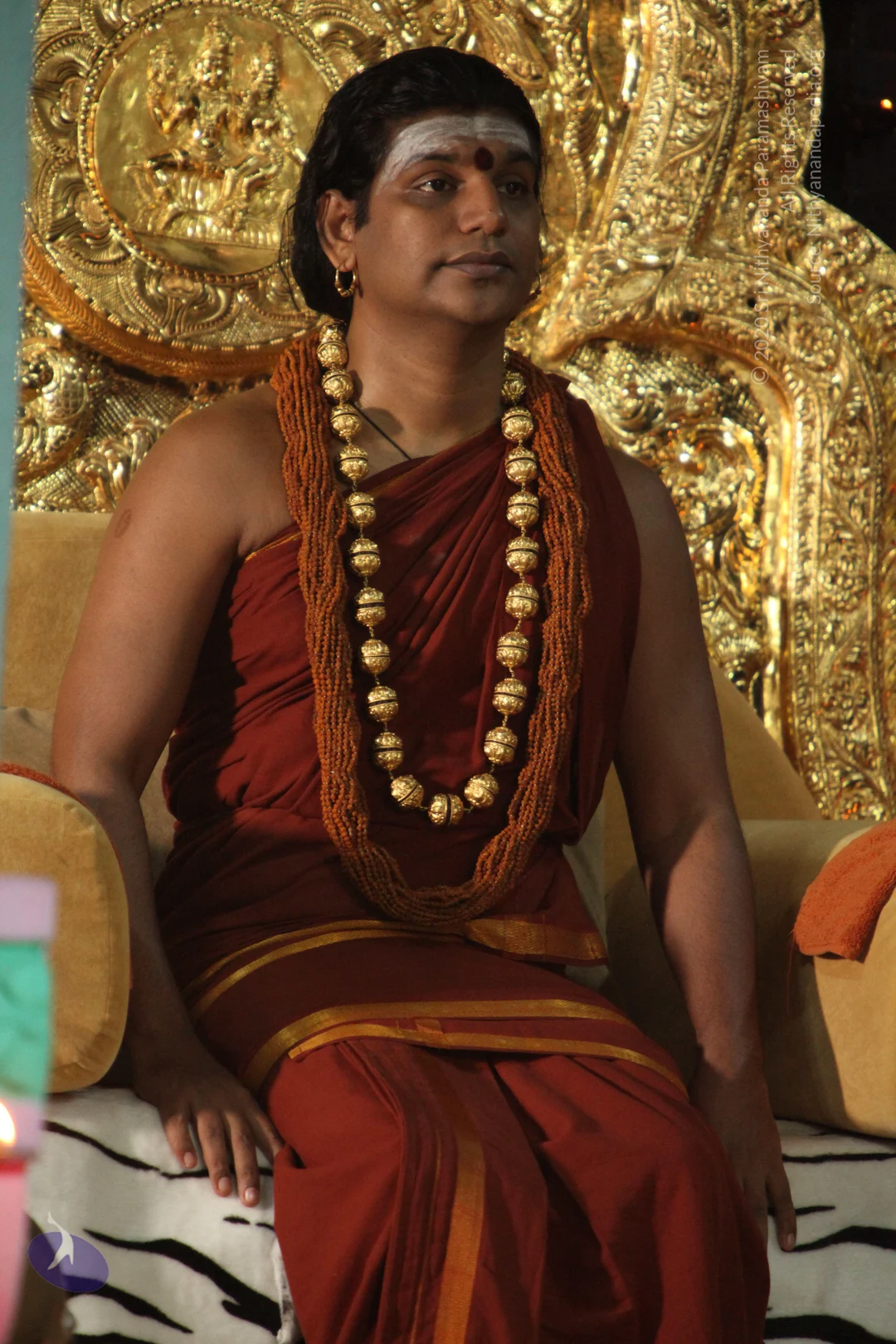
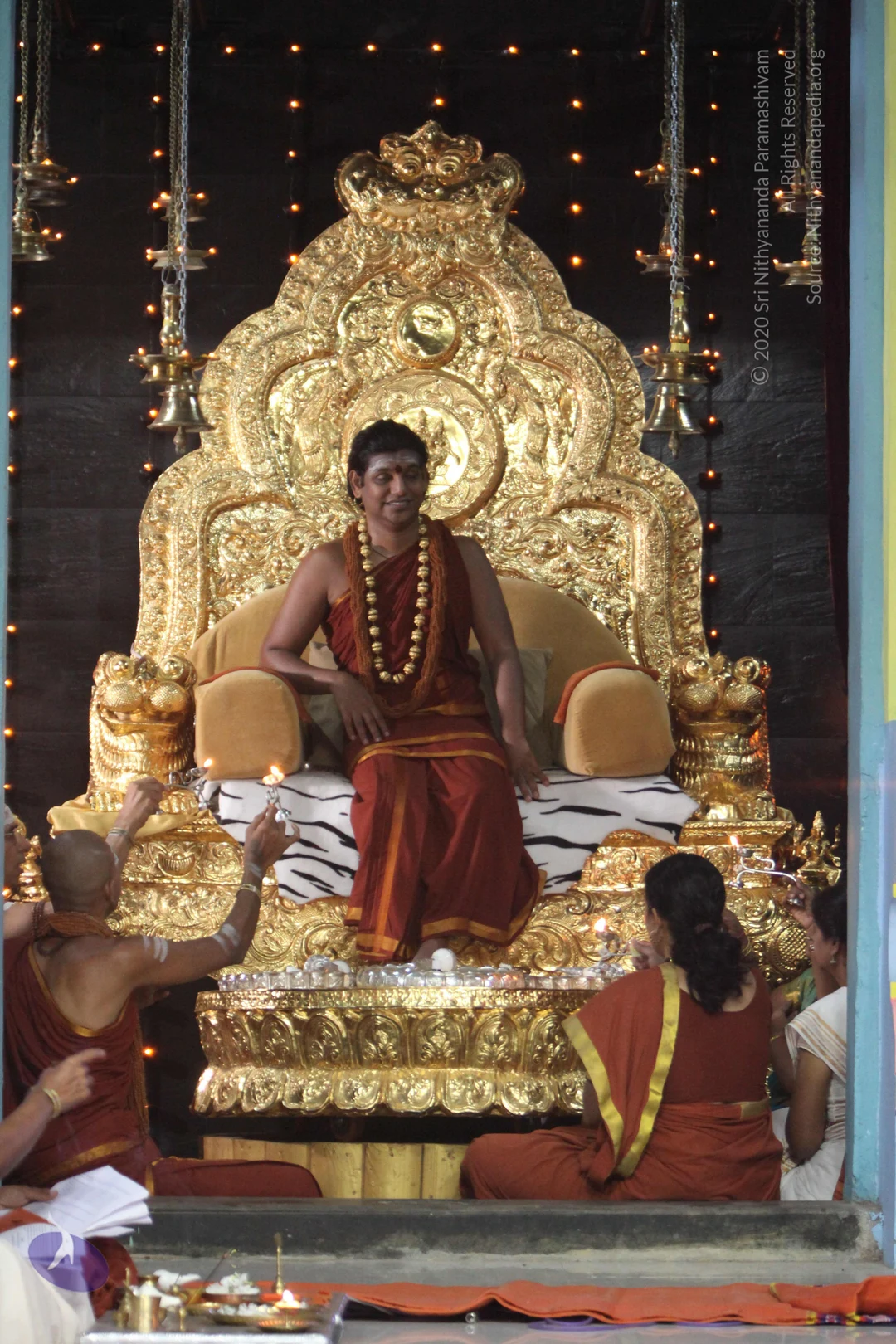
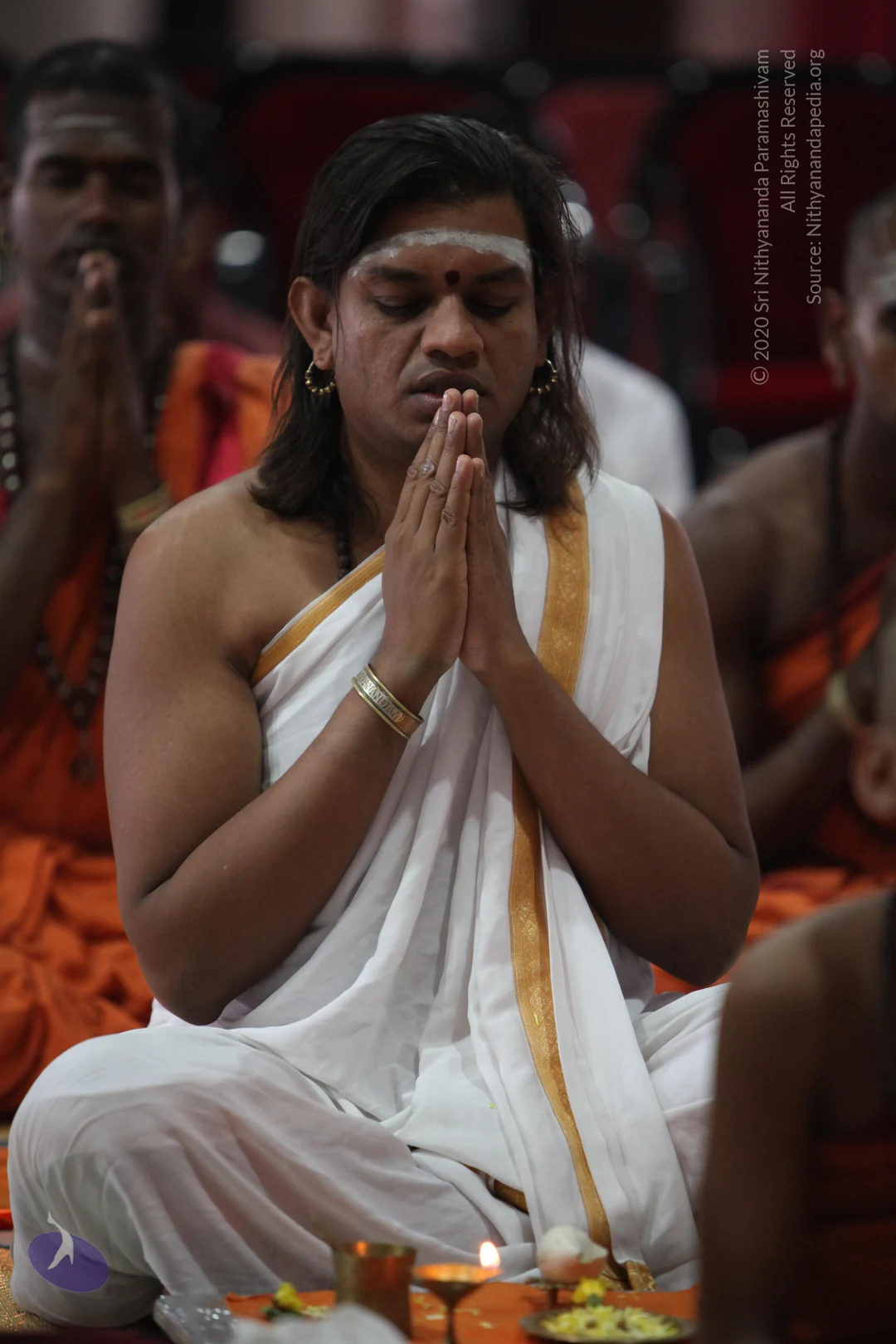
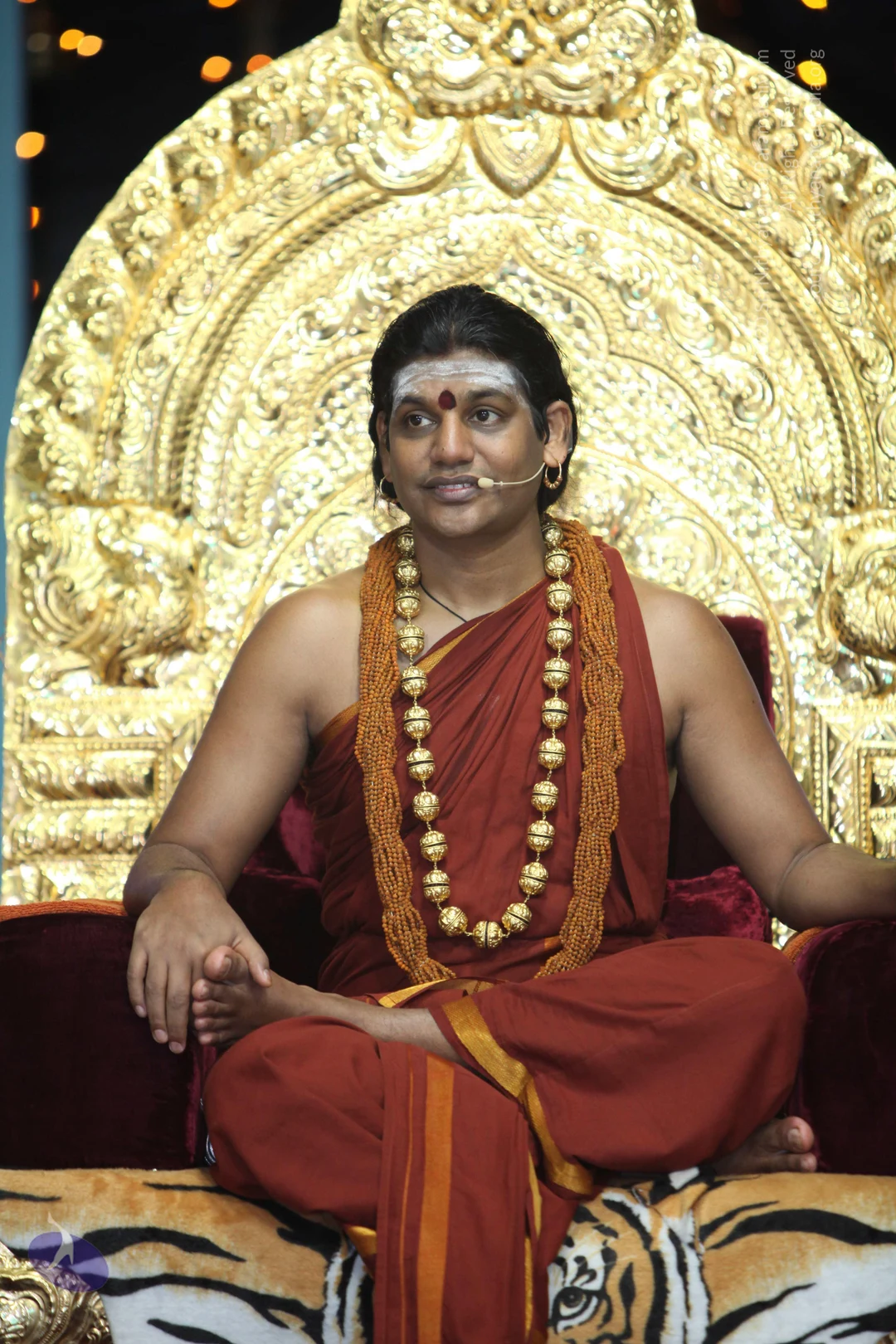
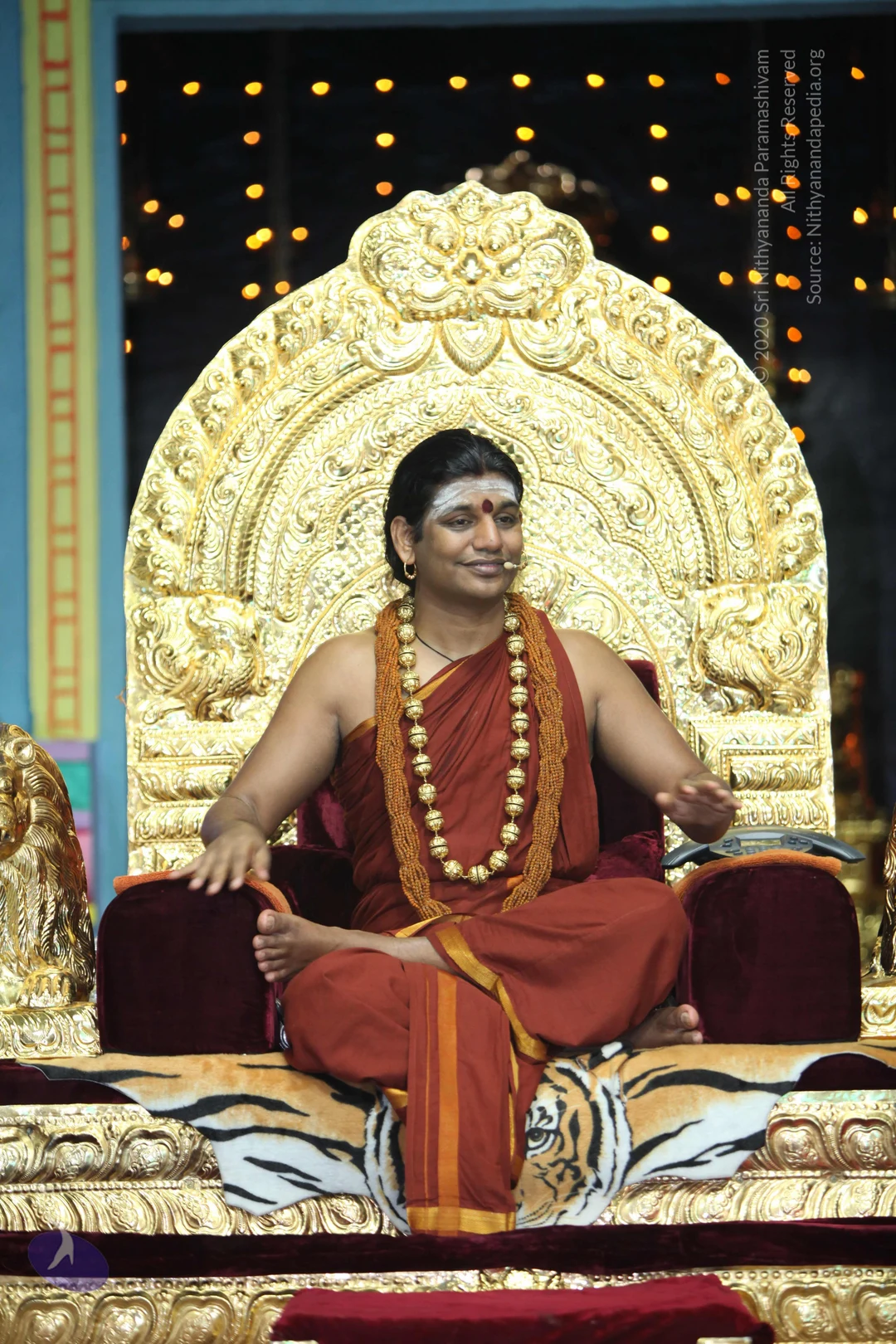
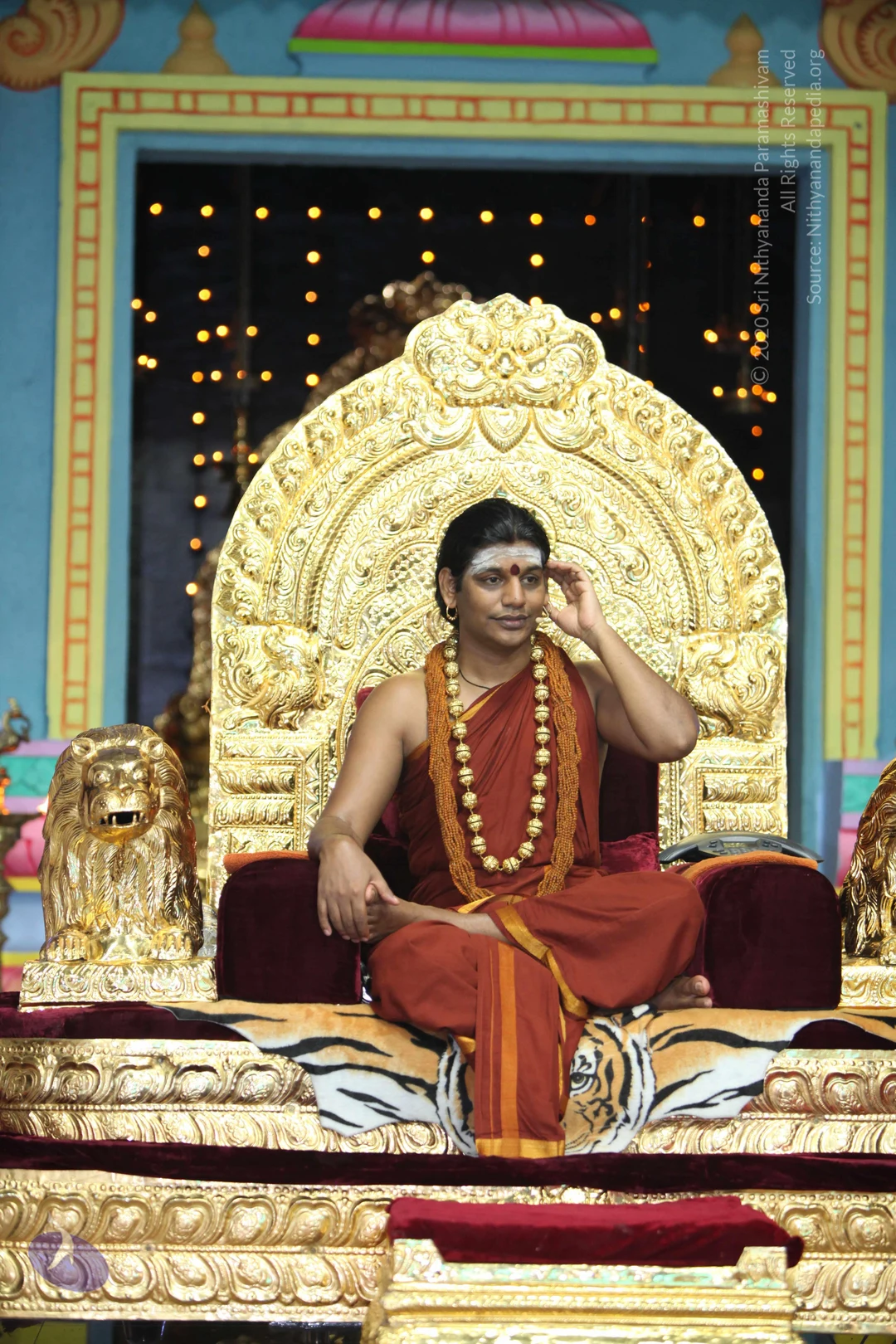
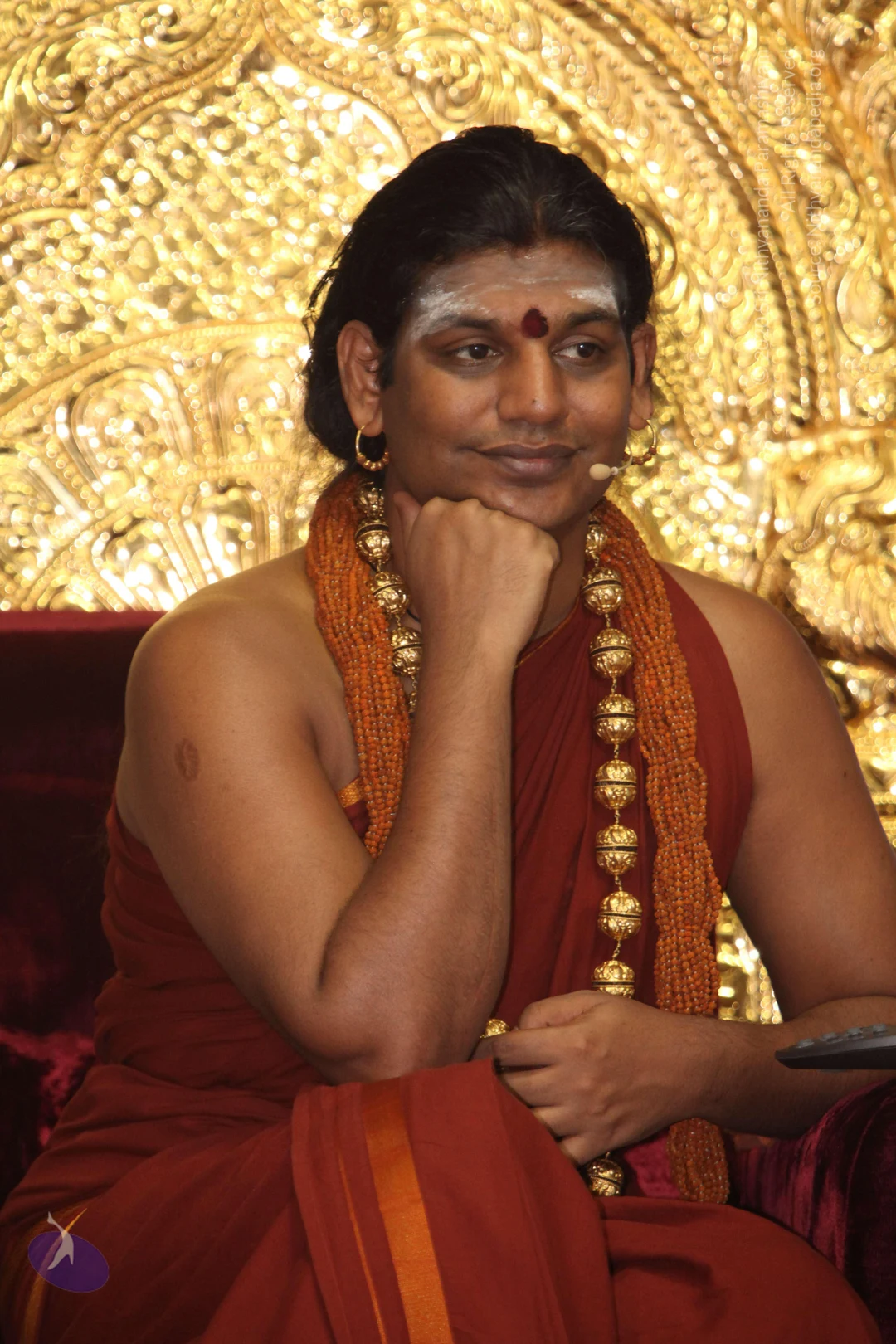
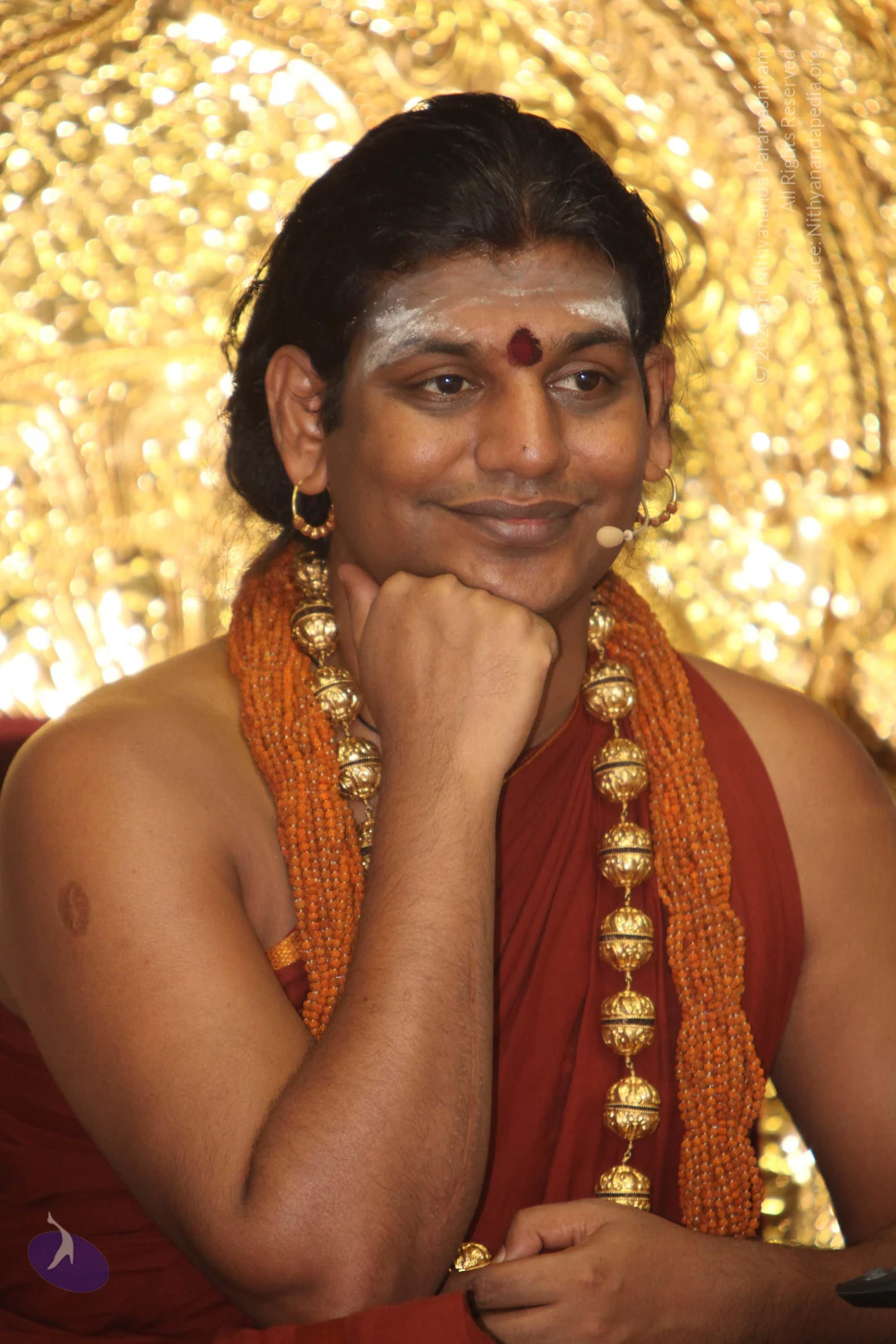
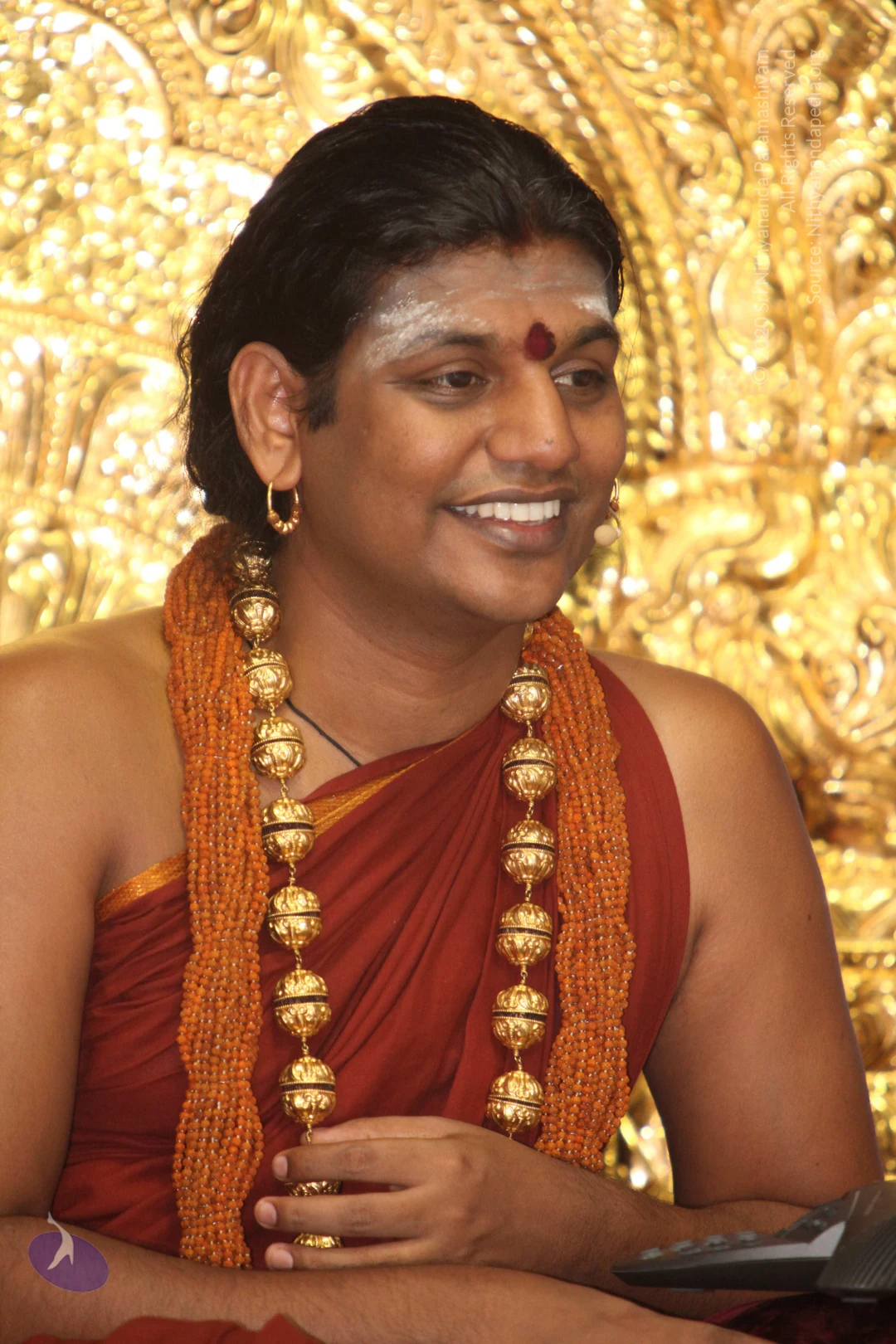
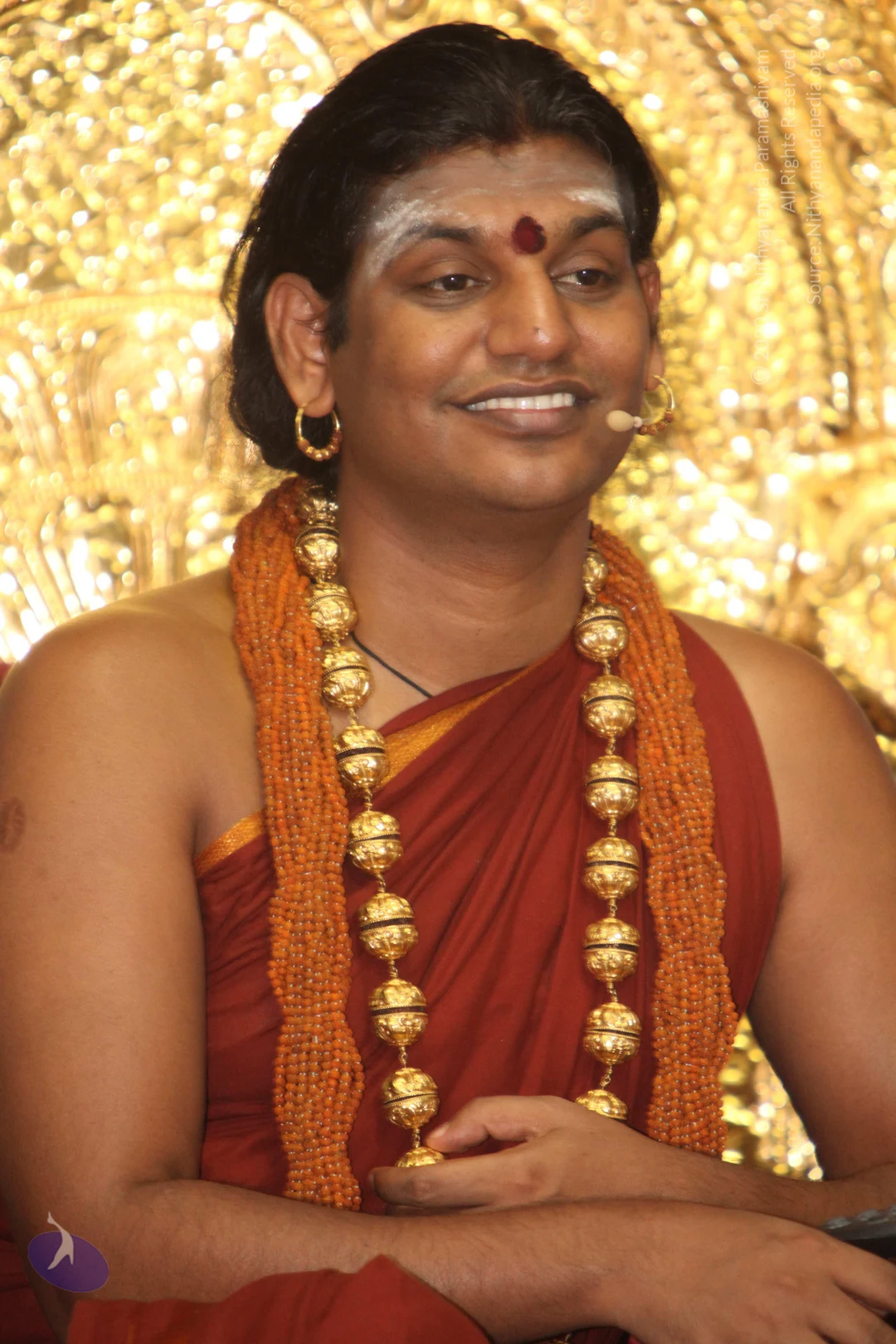
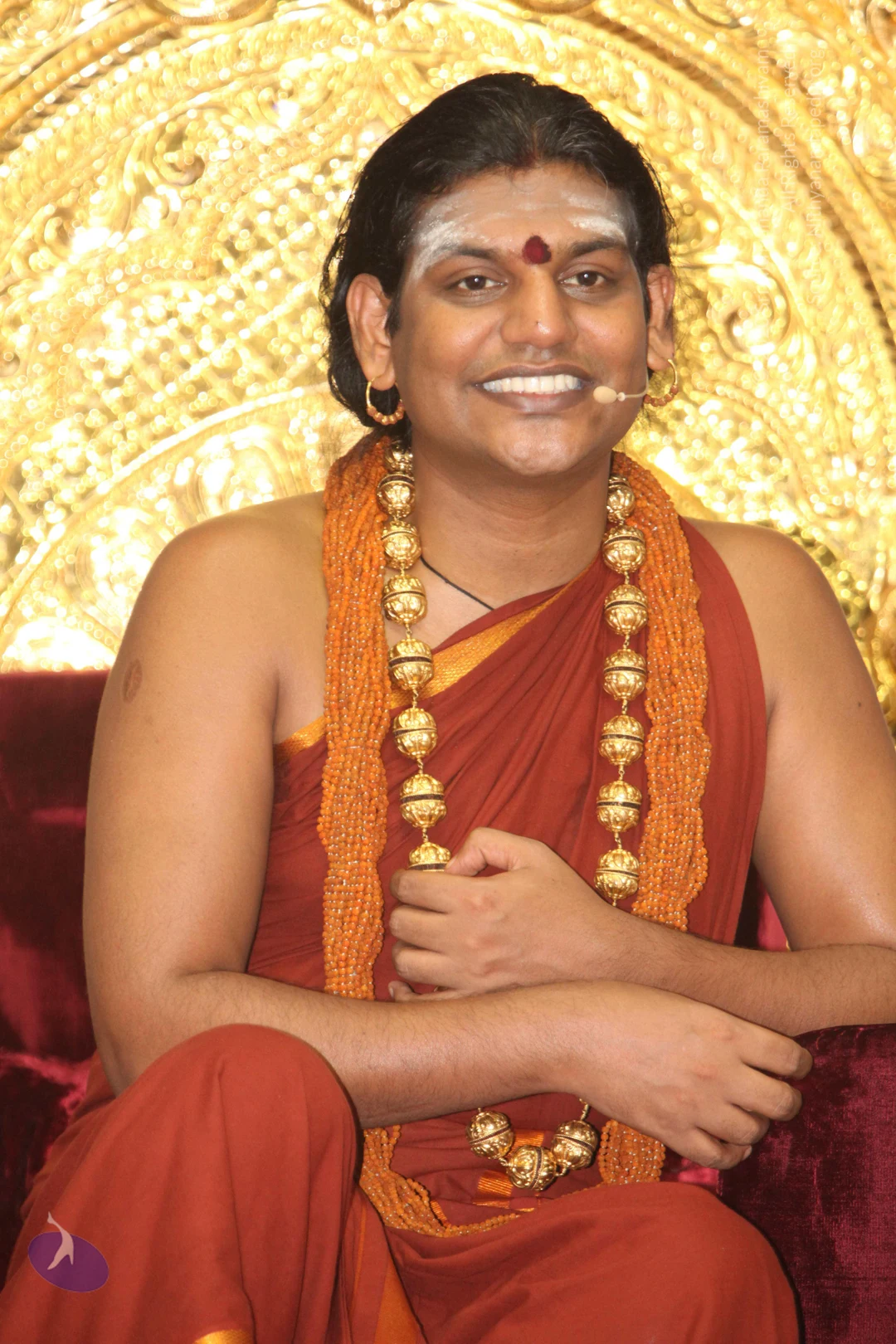
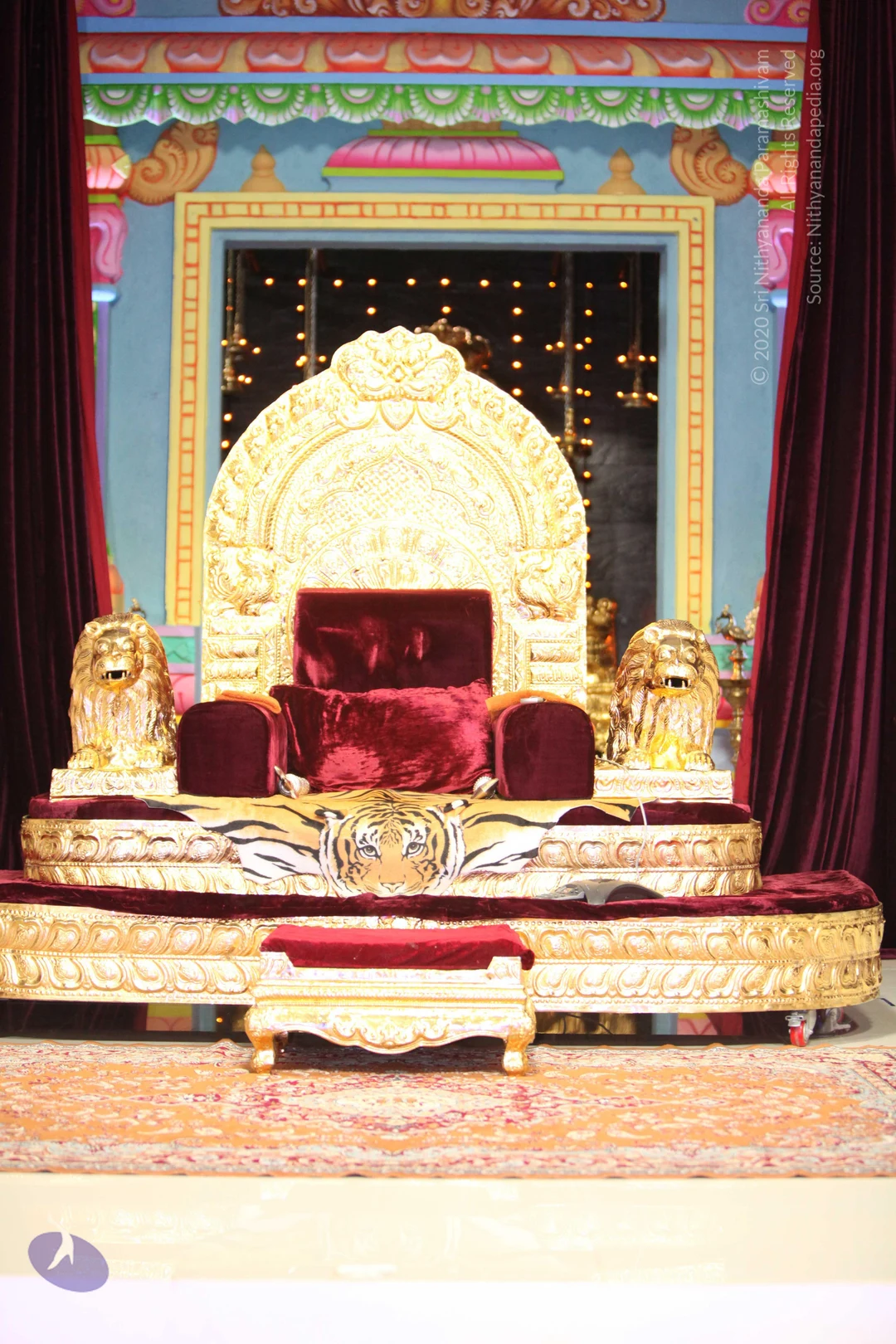
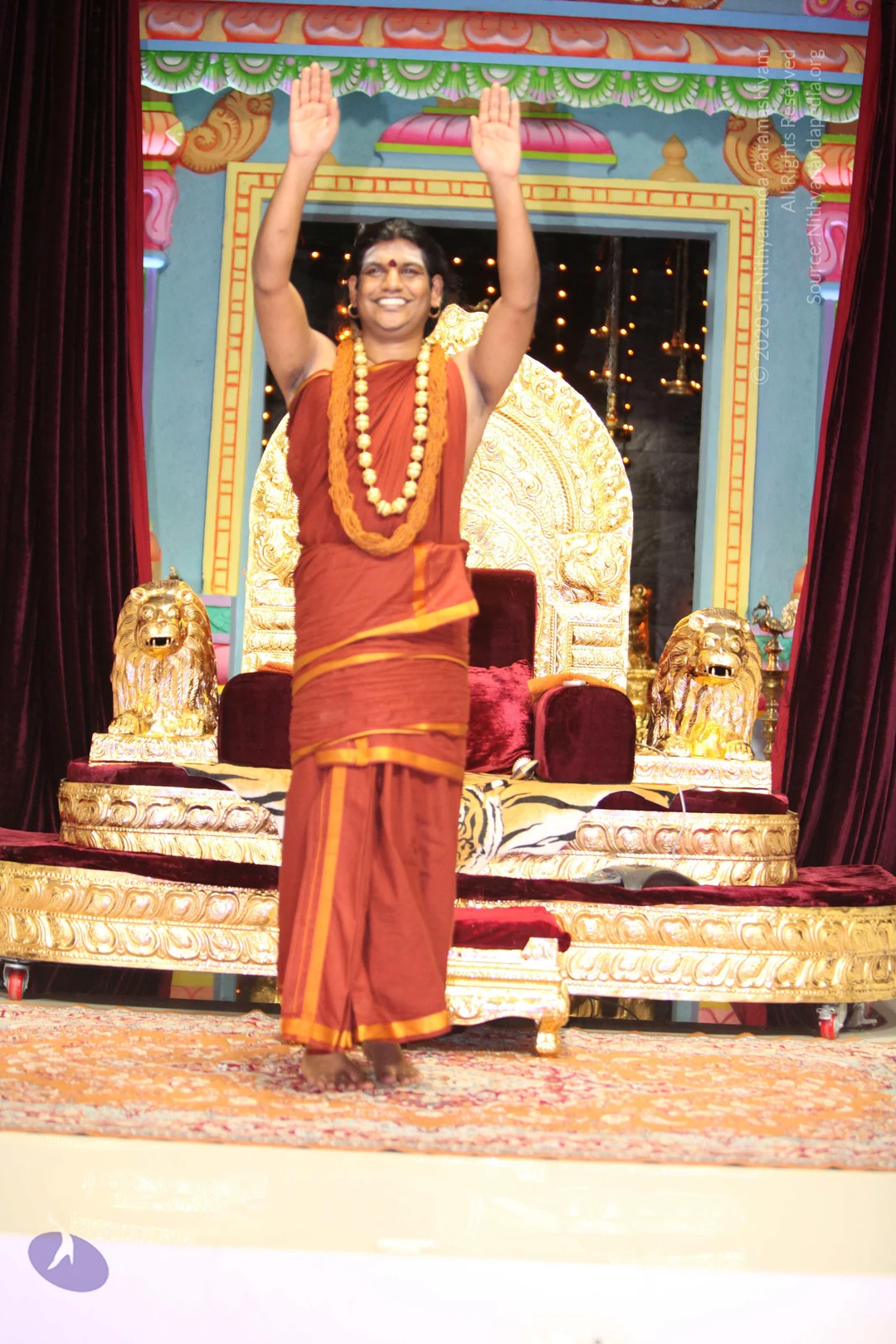
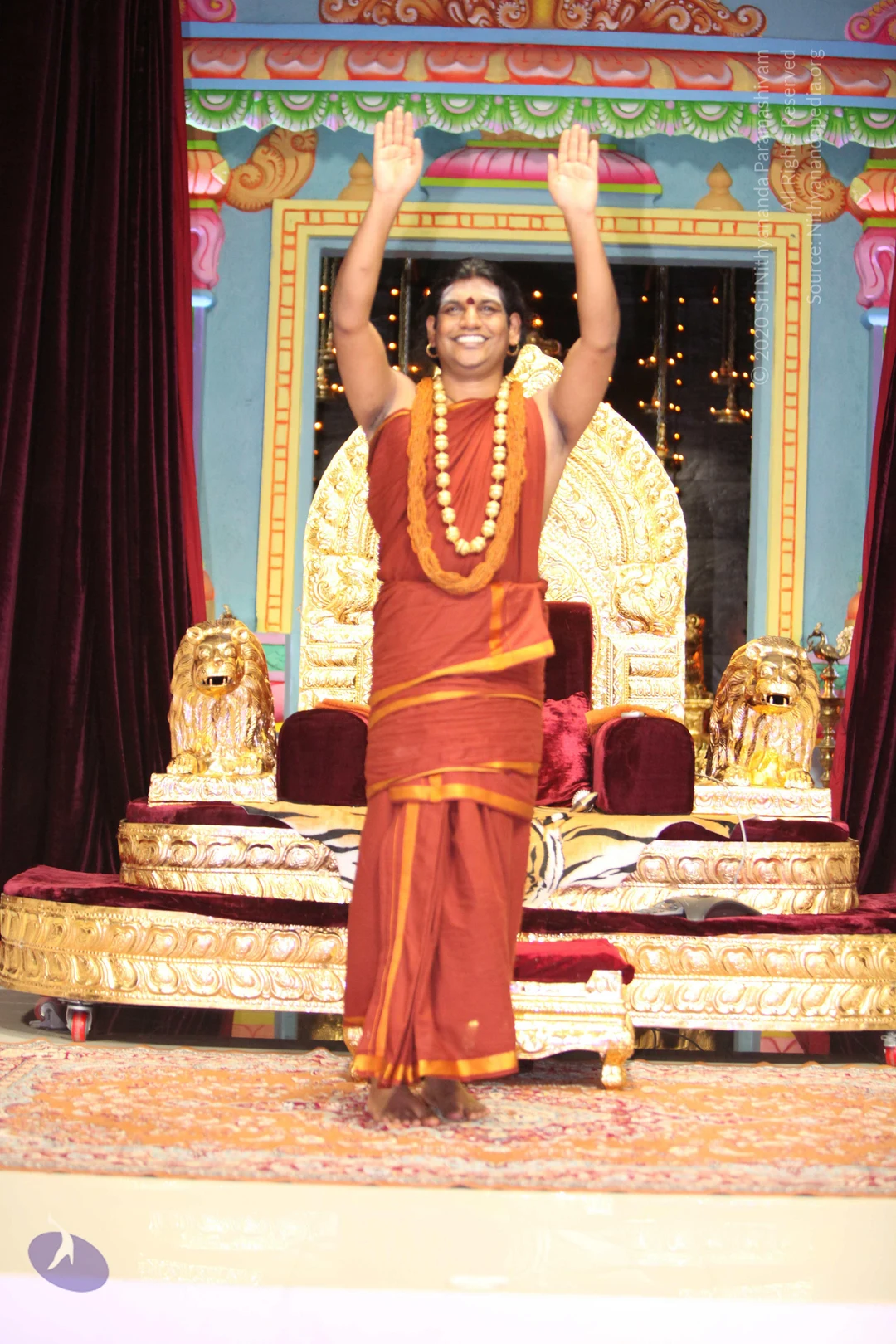
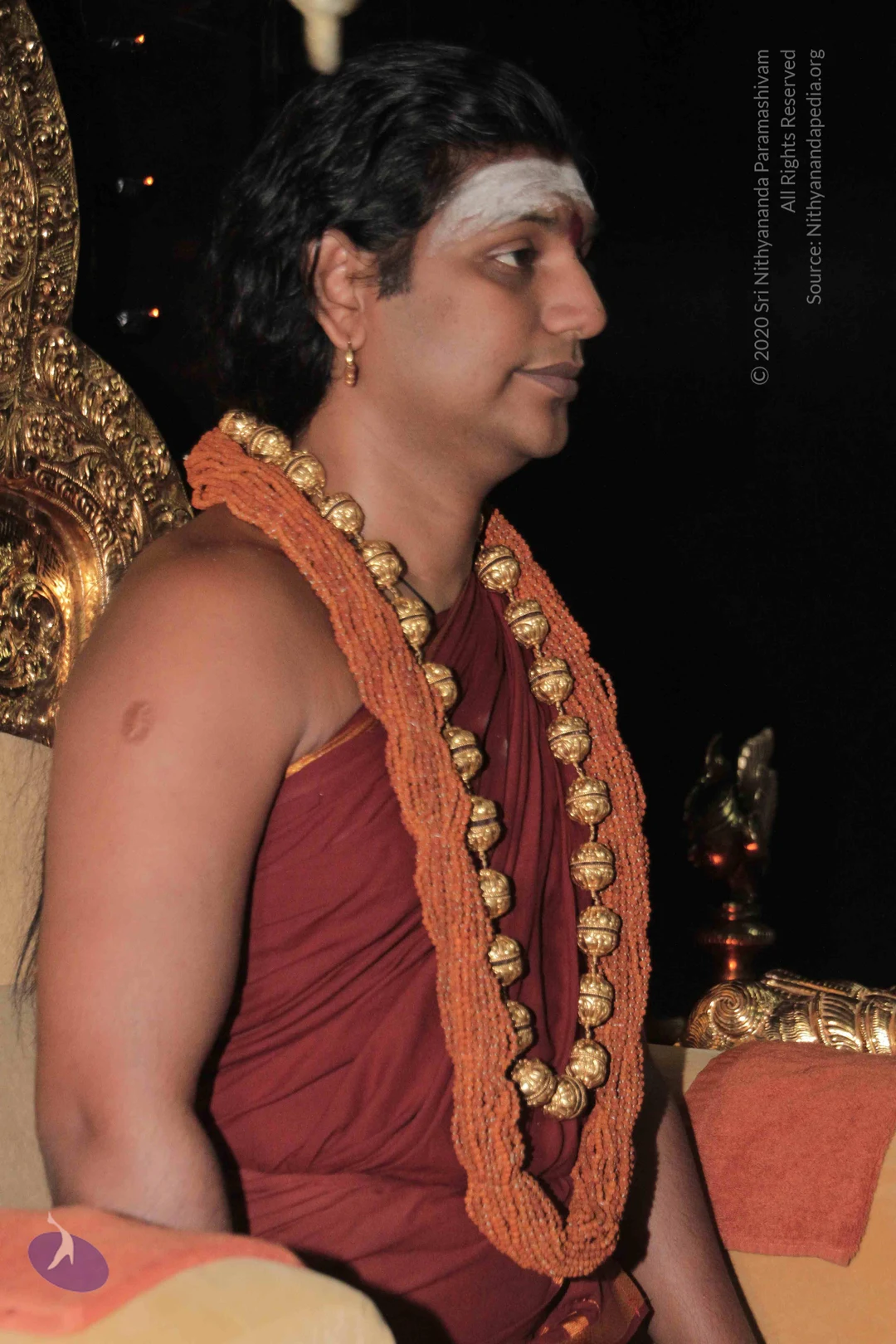
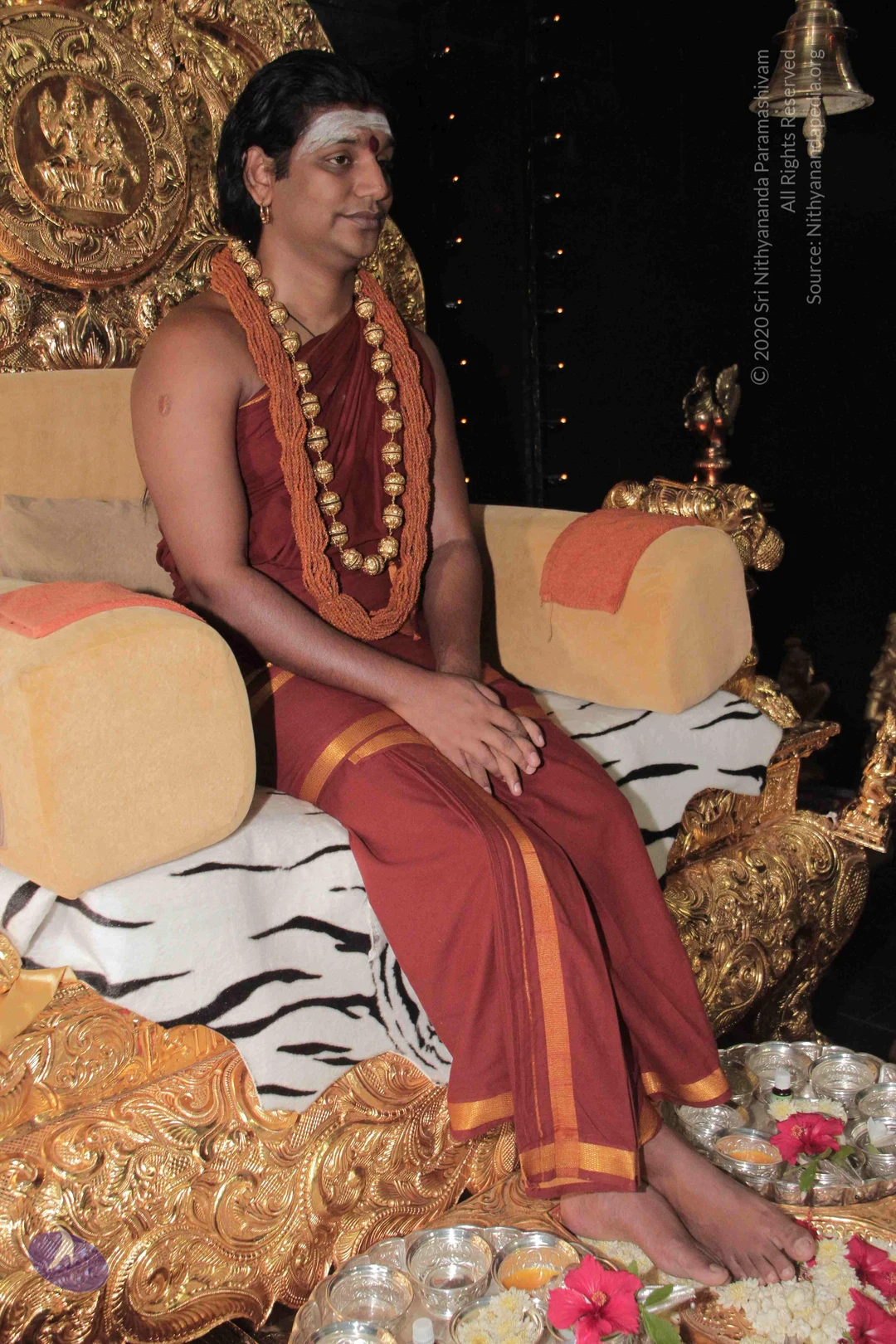
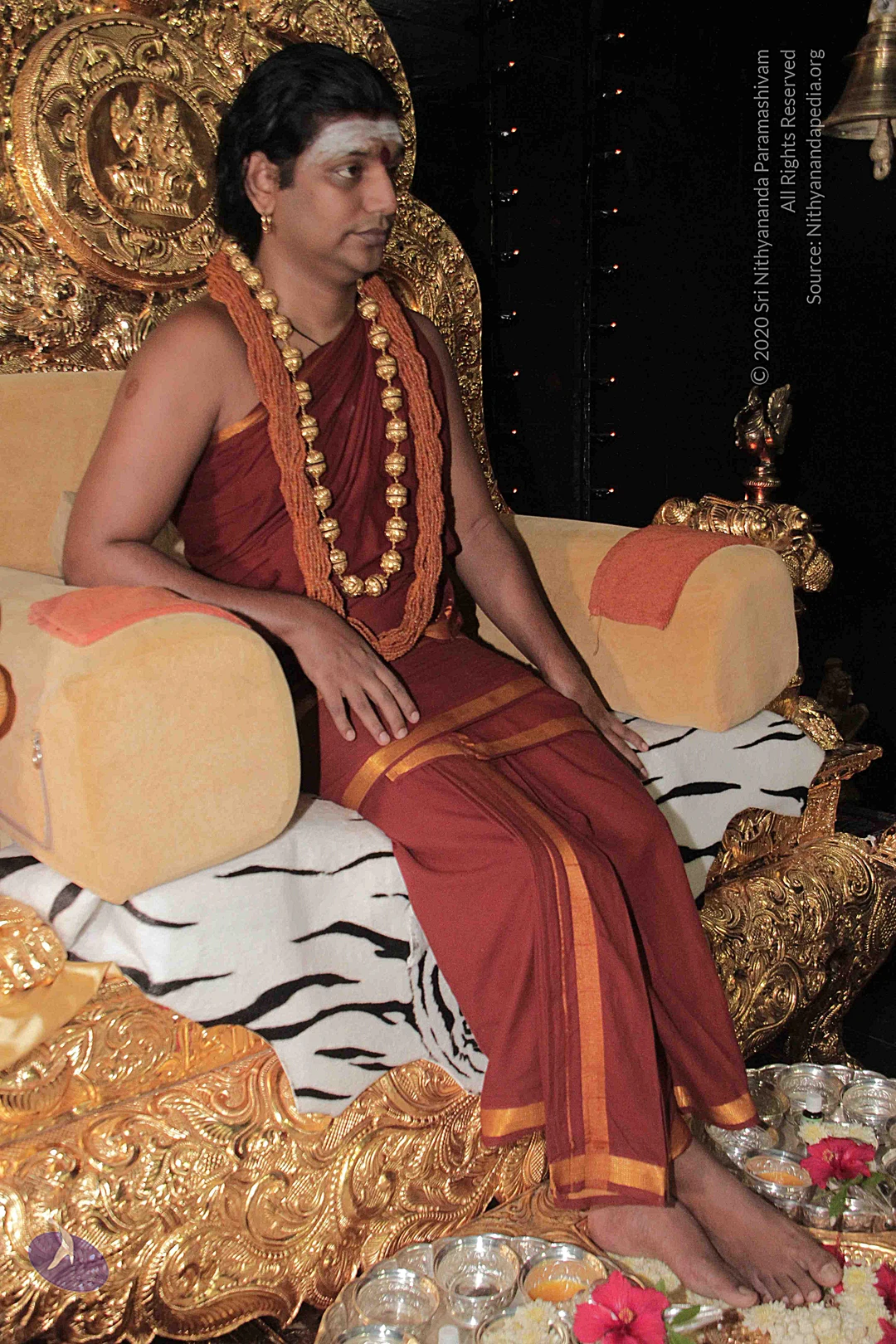
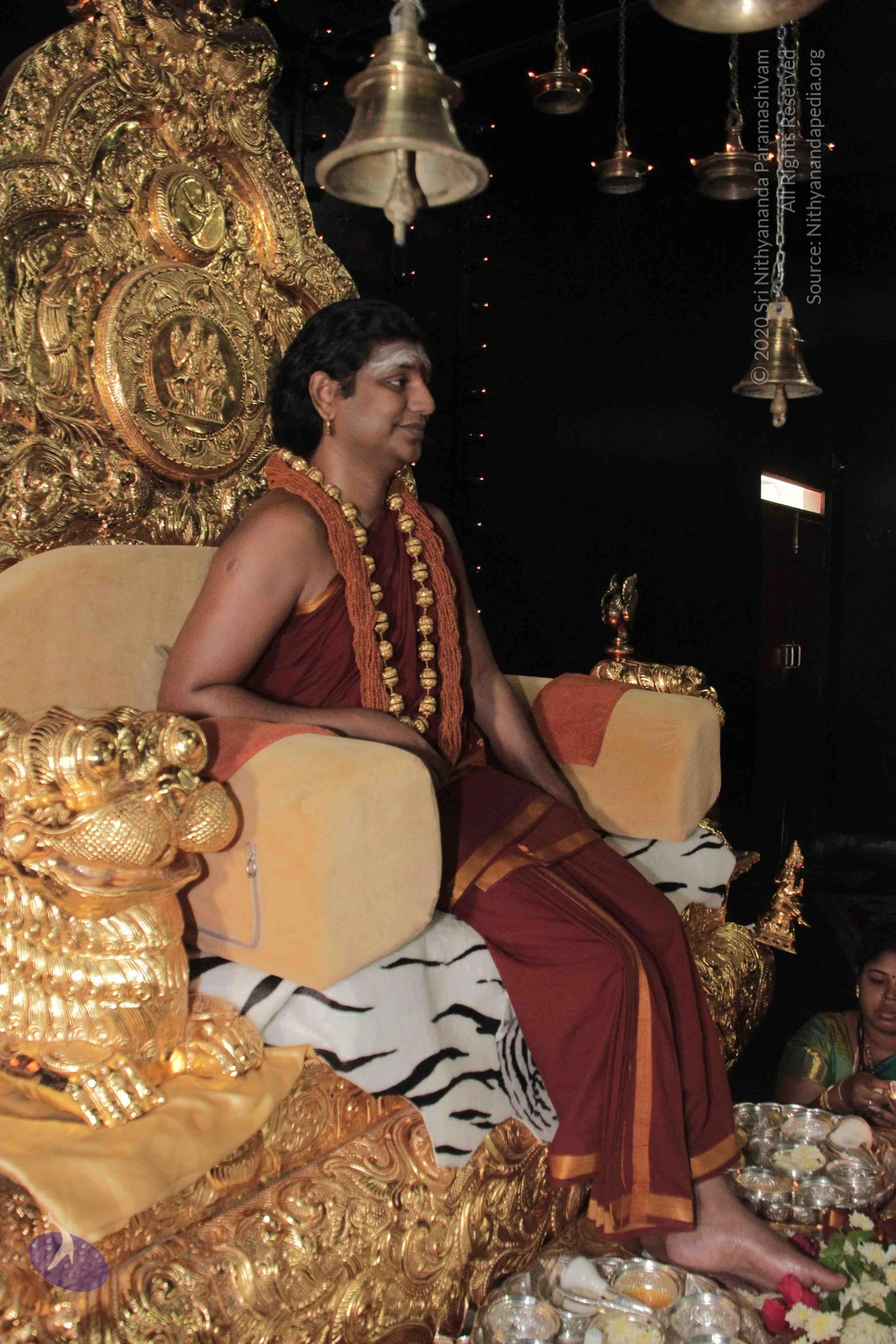
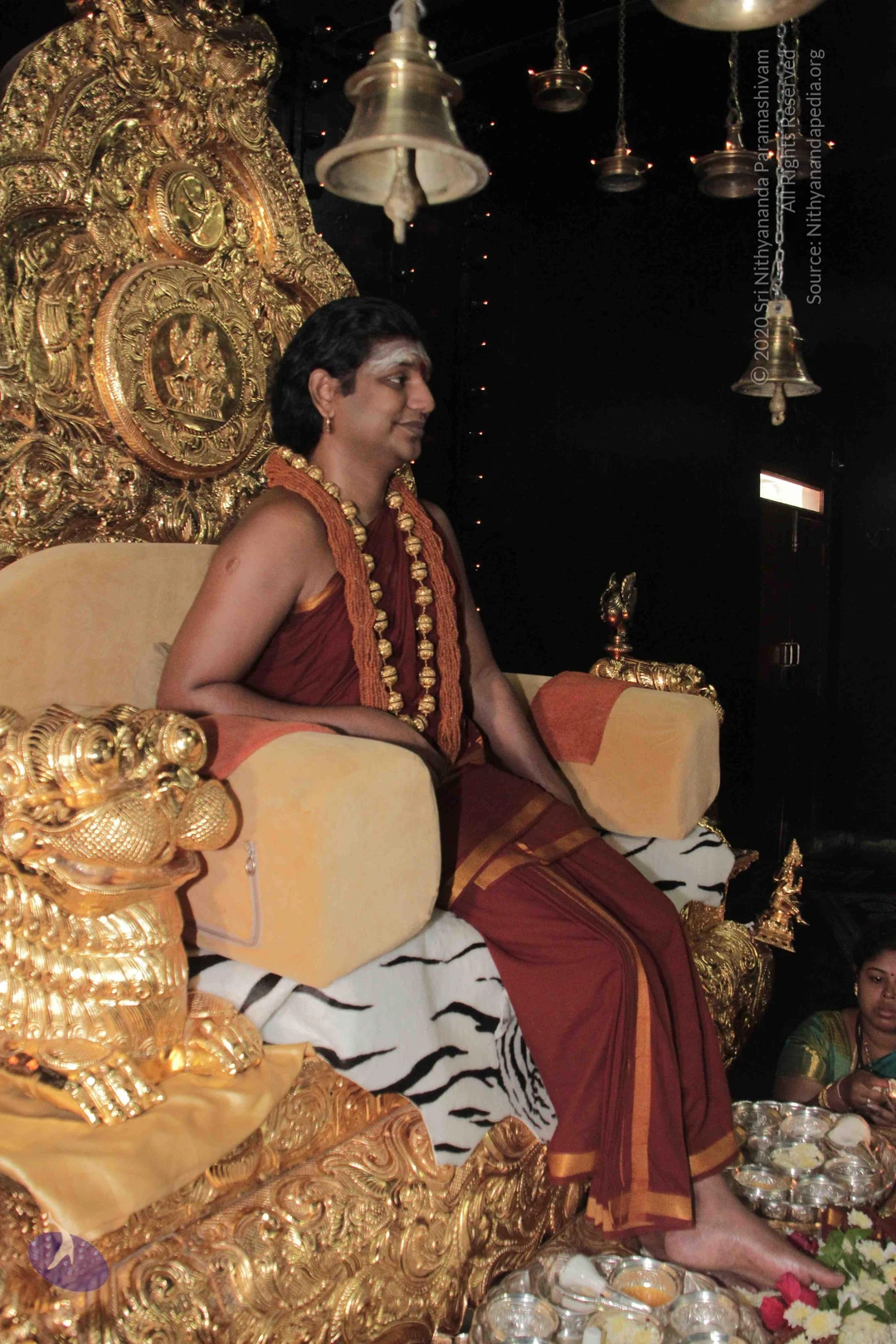
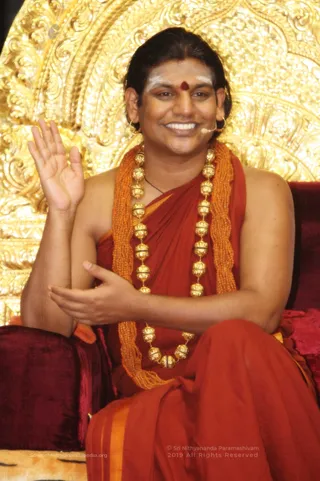
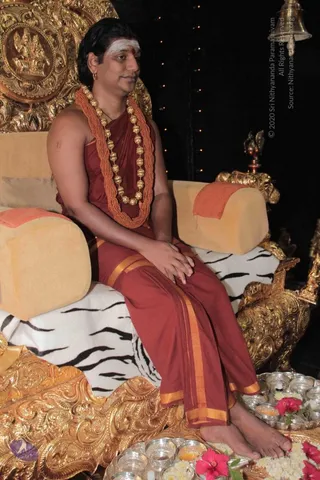
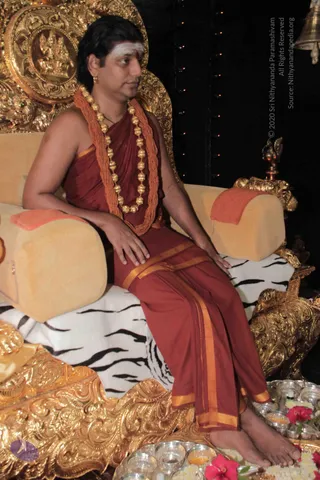
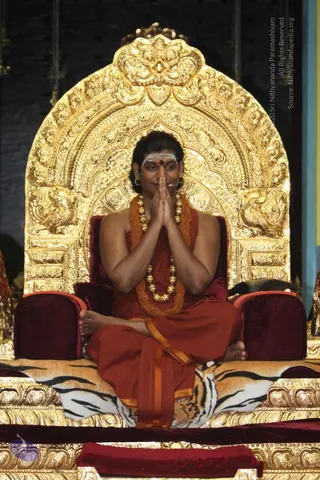
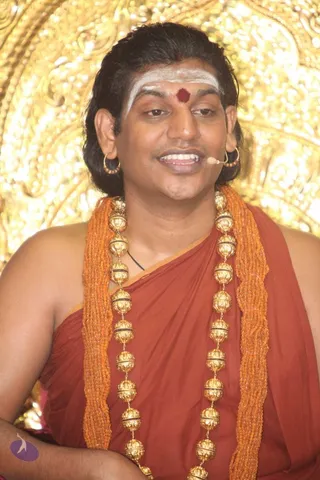
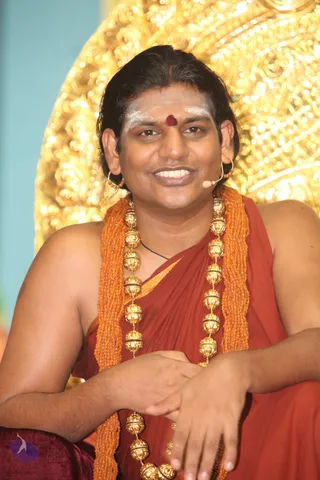
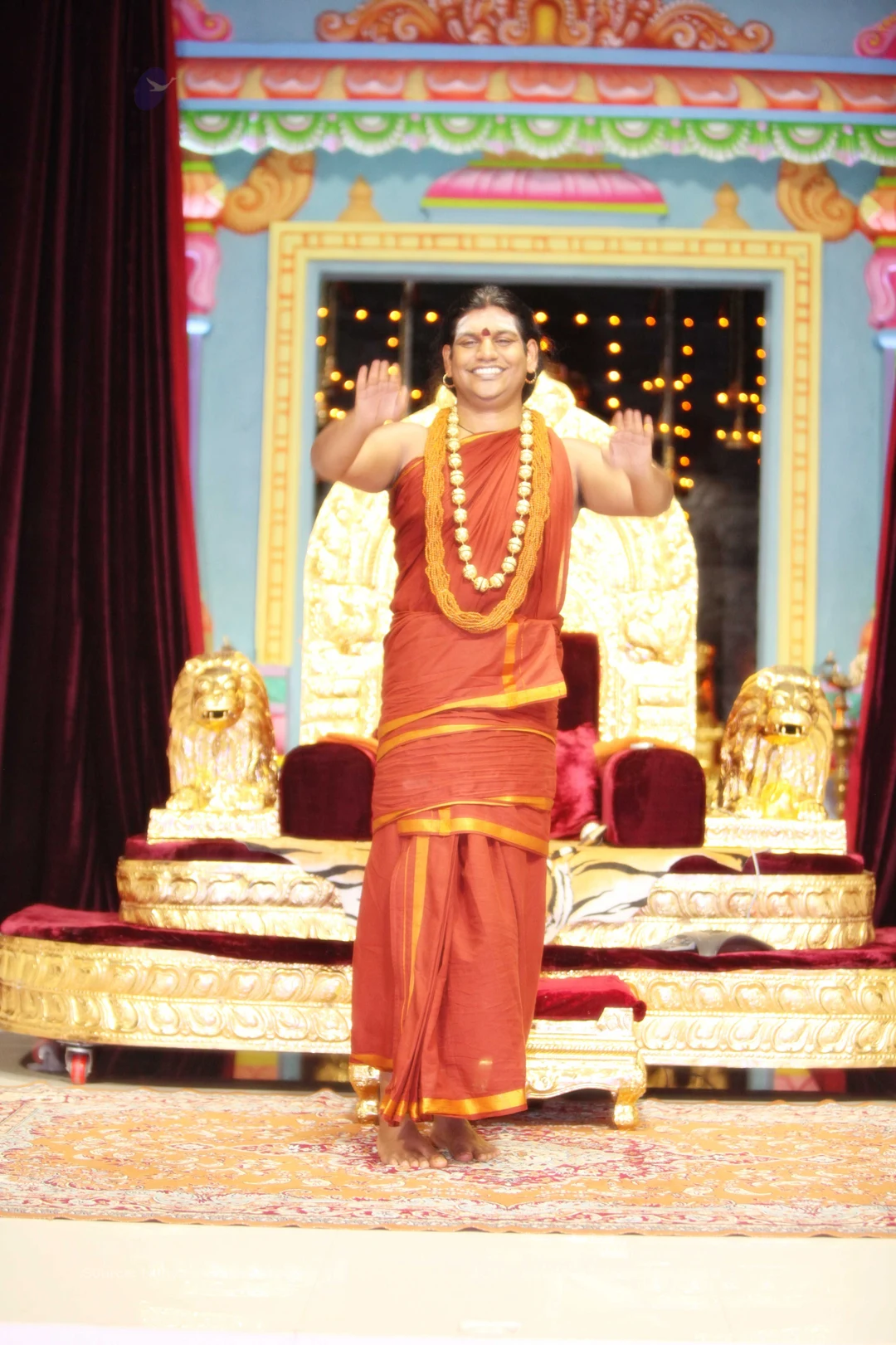
An empty ornate golden throne (peetha) on a raised stage, with a gilded arched back and carved details, a crimson velvet seat and cushion, golden lion sculptures flanking each side, a tiger-skin rug draped over the platform, and a small golden footstool before it. Crimson velvet curtains frame the scene, a painted blue and pink backdrop with decorative arches sits behind, and a dark niche glows with strings of small lights and hanging lamps. No people are visible.A standing man in an orange-red dhoti and matching shawl with gold-edged borders, wearing a long orange beaded necklace and a larger gold bead garland, stands barefoot on a patterned carpet on a stage. Both hands are raised in a greeting or blessing gesture and he smiles, with a red bindi on his forehead. Behind him stands an ornate golden throne flanked by two golden lion figures, red velvet cushions, a painted blue and red temple-style backdrop, and strings of warm lights. Appearance-based candidate for a person, shown in person in a satsang-style stage setting with his ceremonial orange garments and gold garland.A photograph of a man seated in front of an ornate gold-toned carved backdrop, with his palms pressed together in namaste and a smile. He wears a reddish-maroon shawl over a bare shoulder, a long orange-saffron cloth draped across his chest, and a multi-strand gold bead necklace. He has a white vertical sacred mark with a red dot on his forehead, long swept-back dark hair, and a small gold earring. To his right sits a small golden bell with a handle and a brass-toned ritual object on a cushion. Swamiji (probable): the long swept-back hair, saffron shawl, gold bead mala and ceremonial ornaments align with the page's attribution, so this is a probable in-person appearance of the Swamiji.

April 09 2013

Original wiki page
Contents

Title

Drop Your Past, Own Your Future

Description:

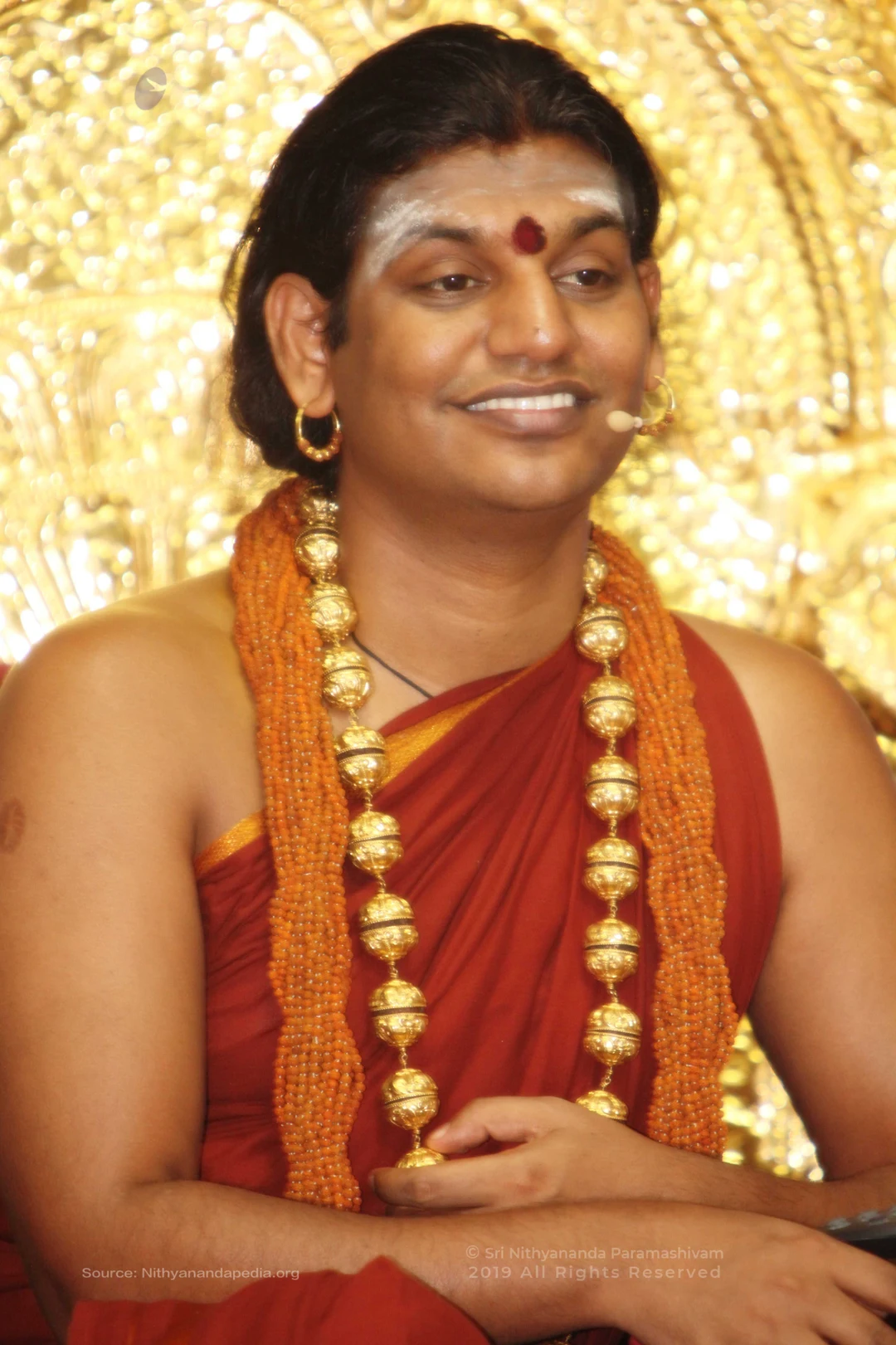
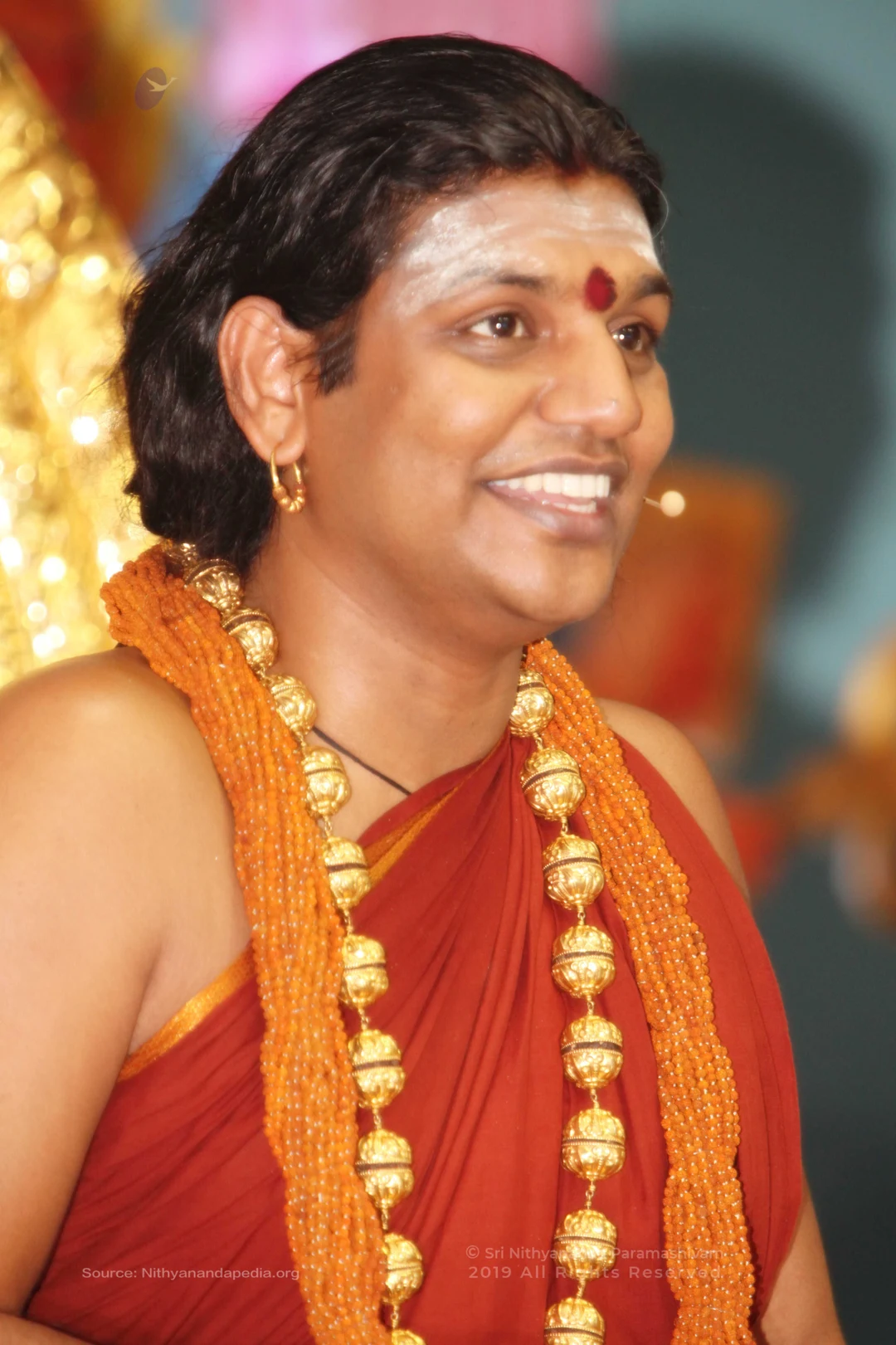
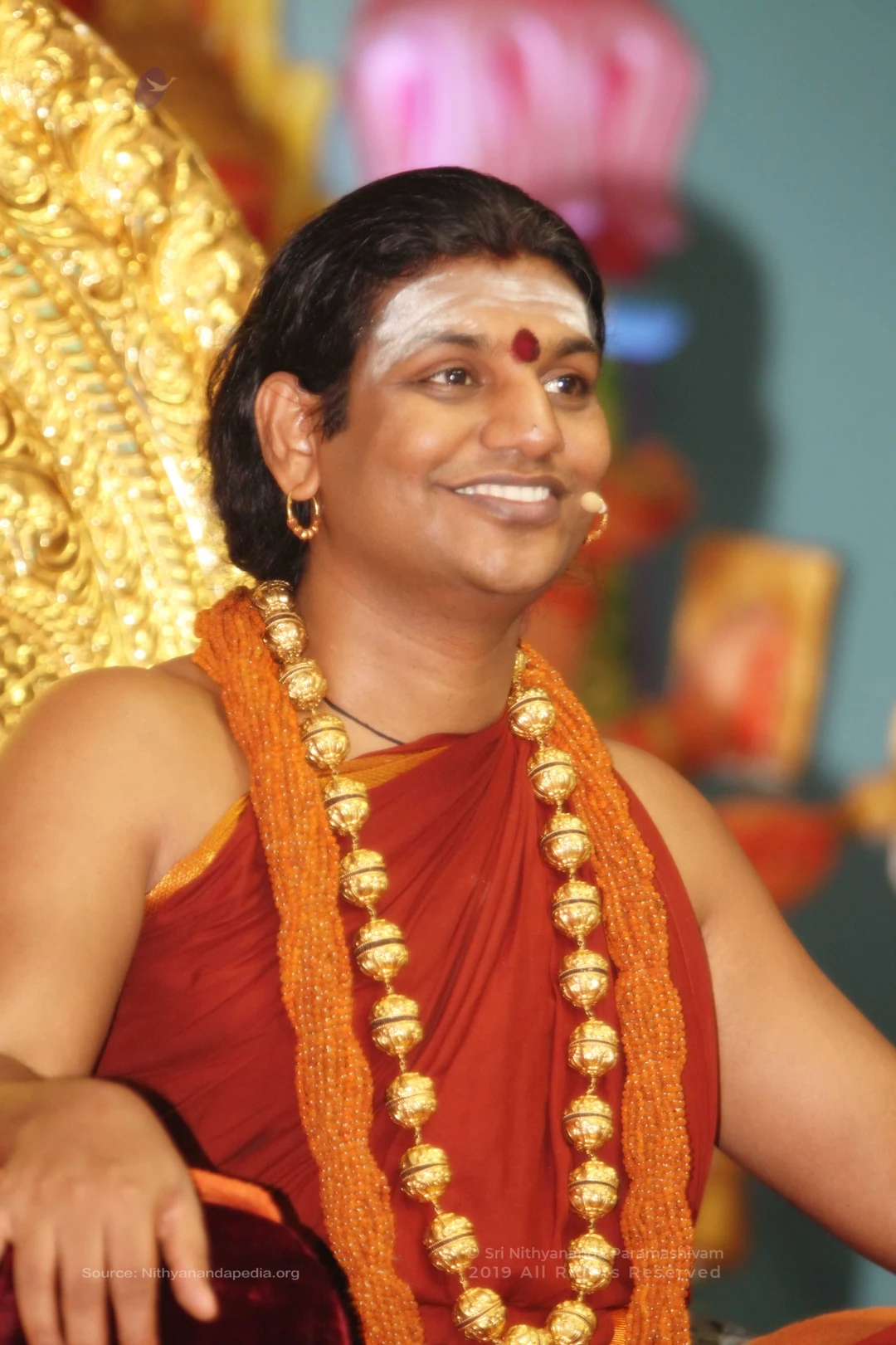
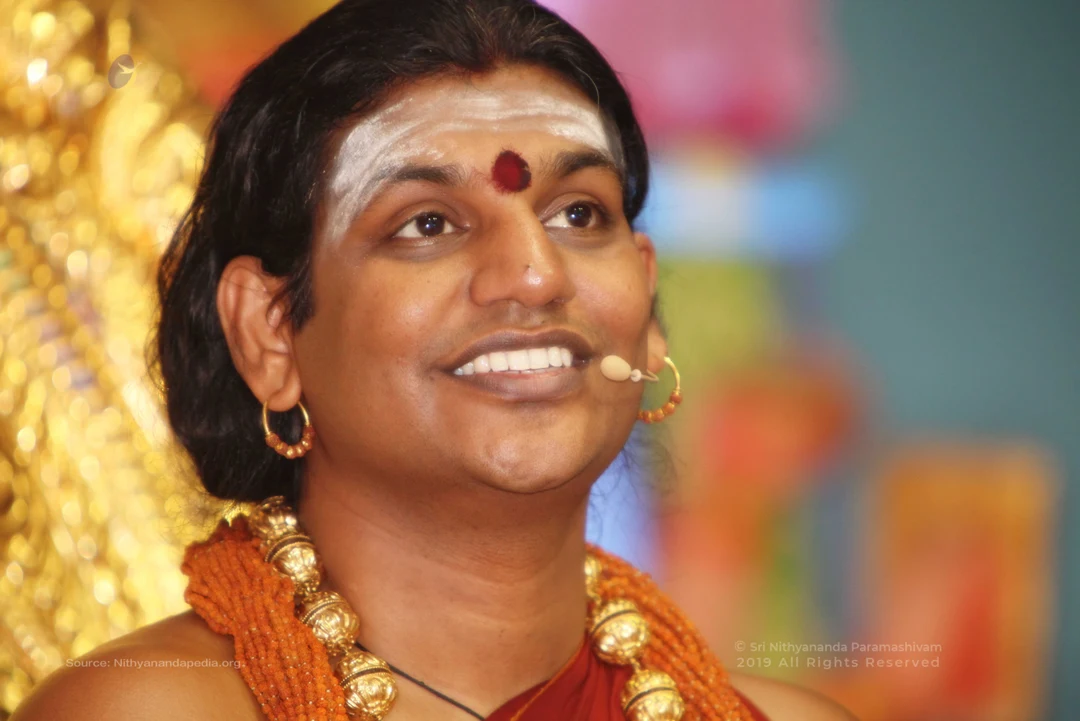
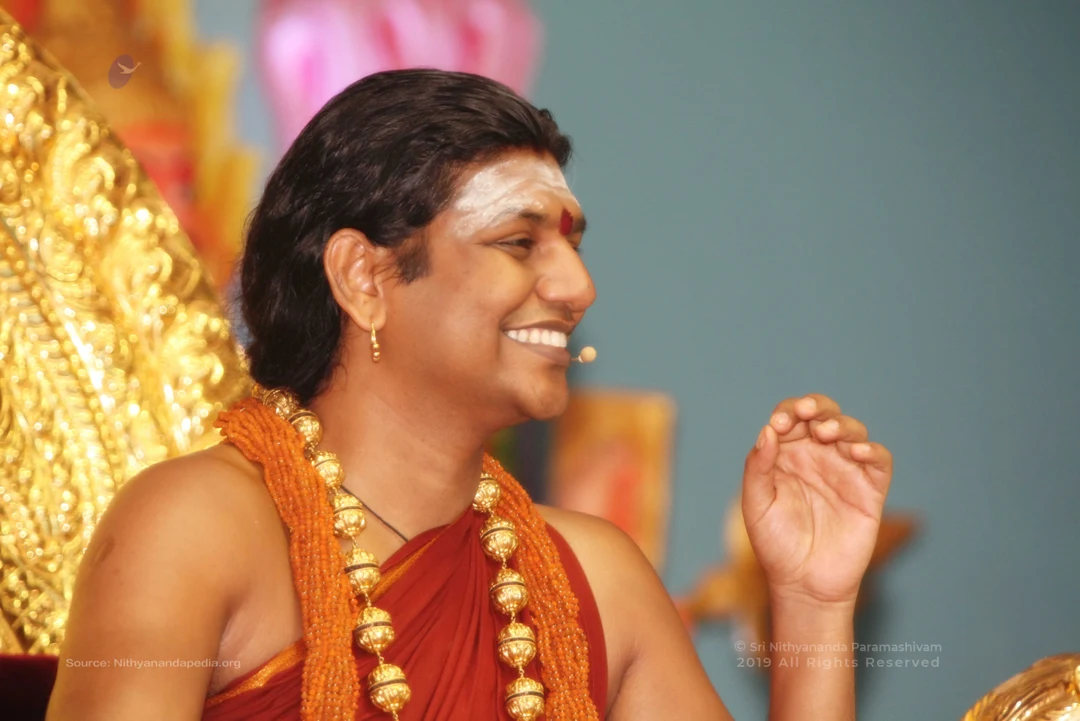
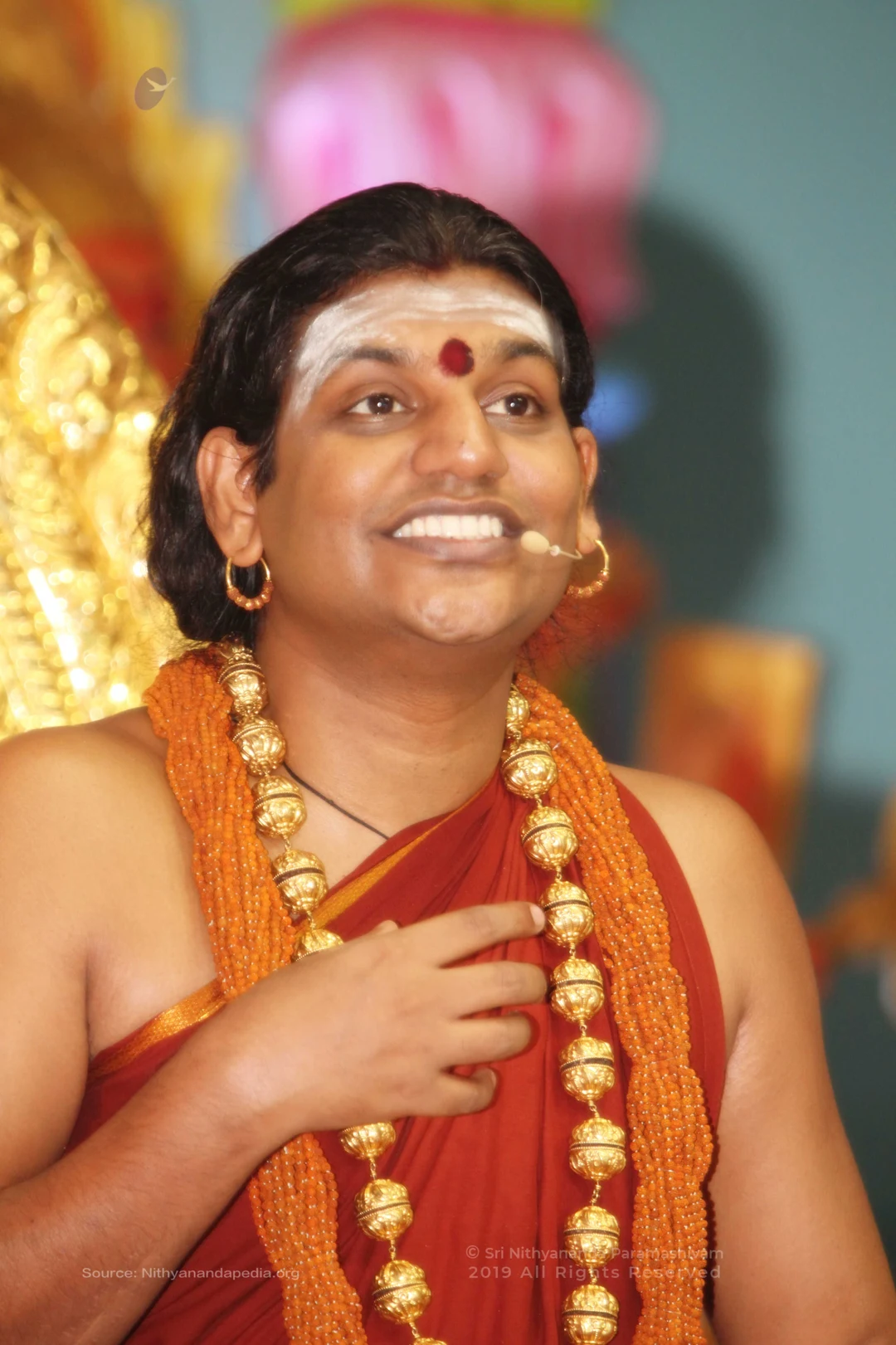
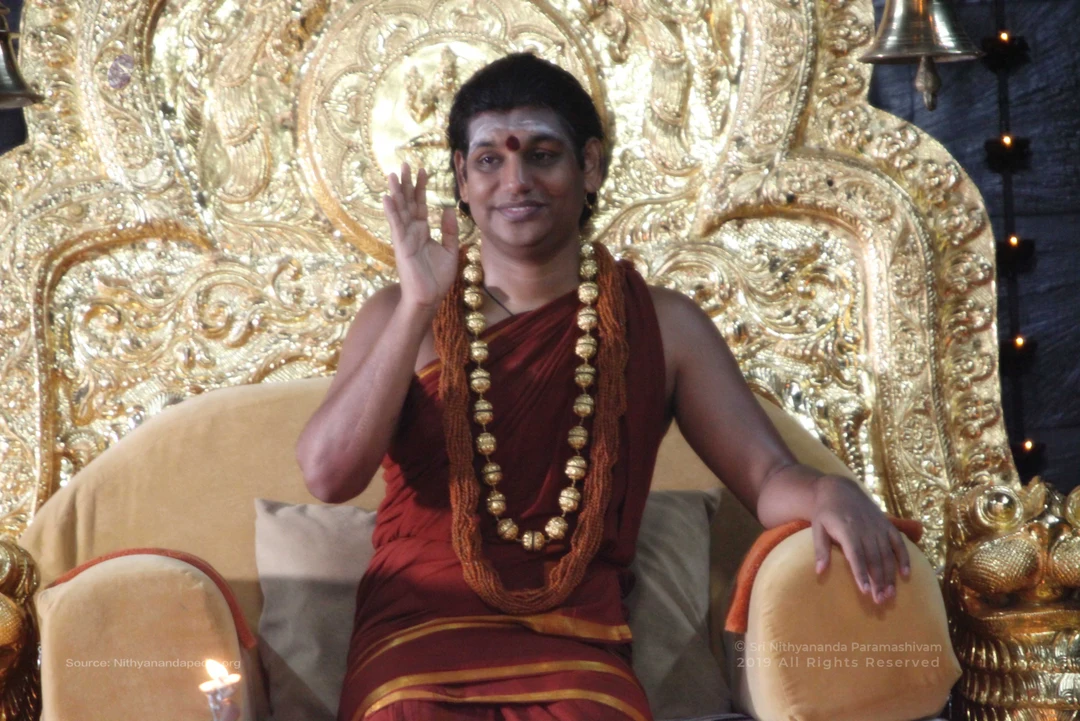
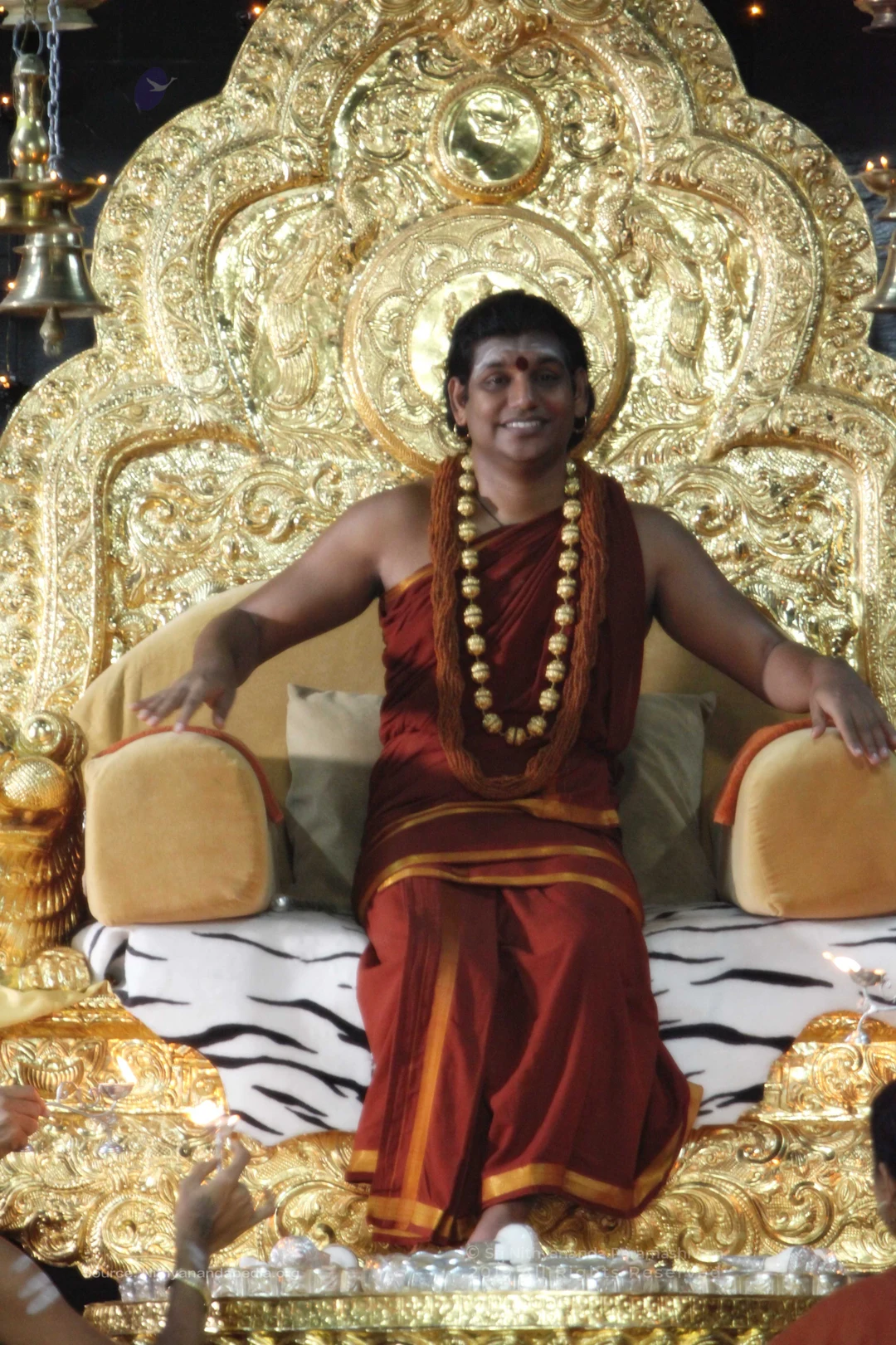
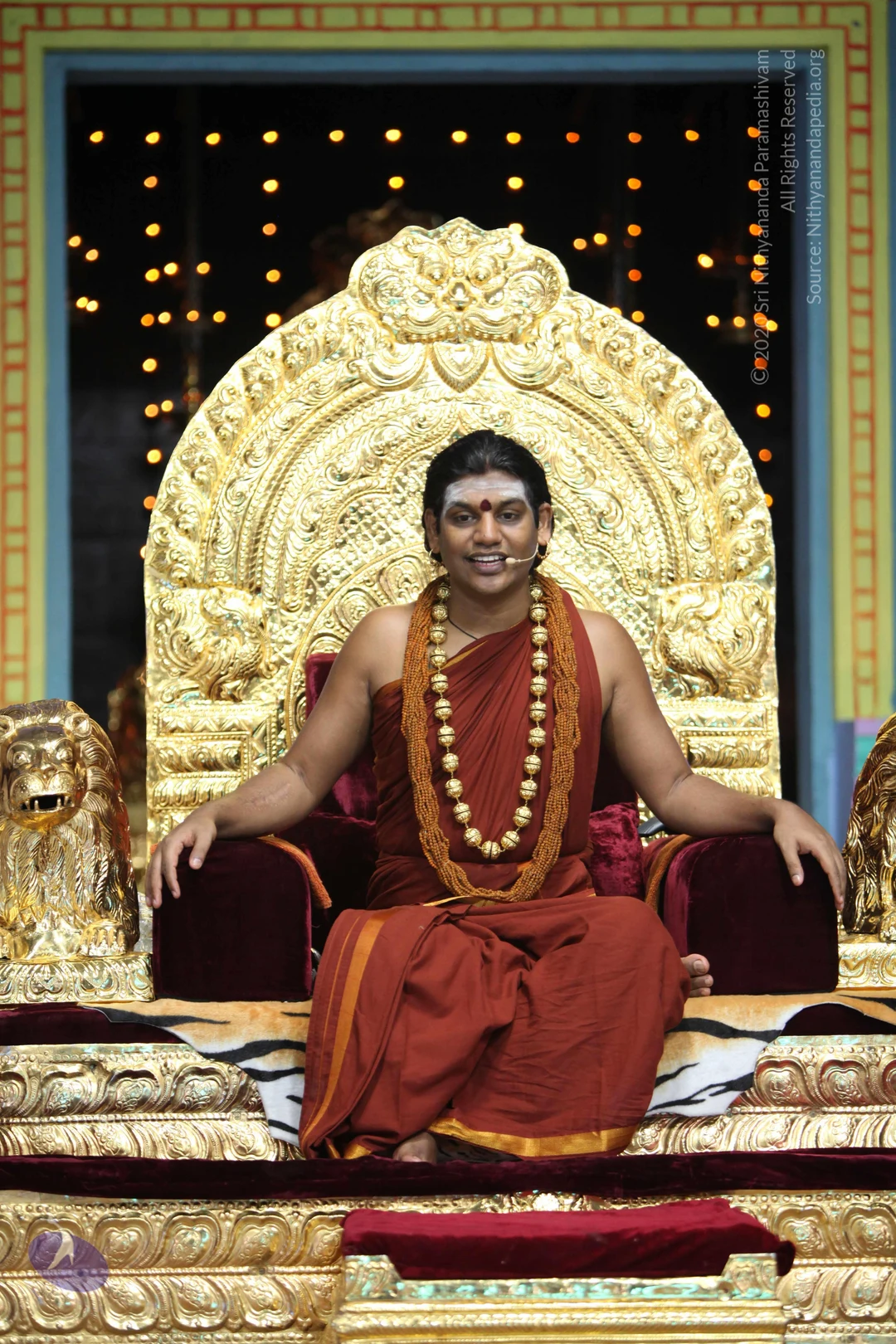
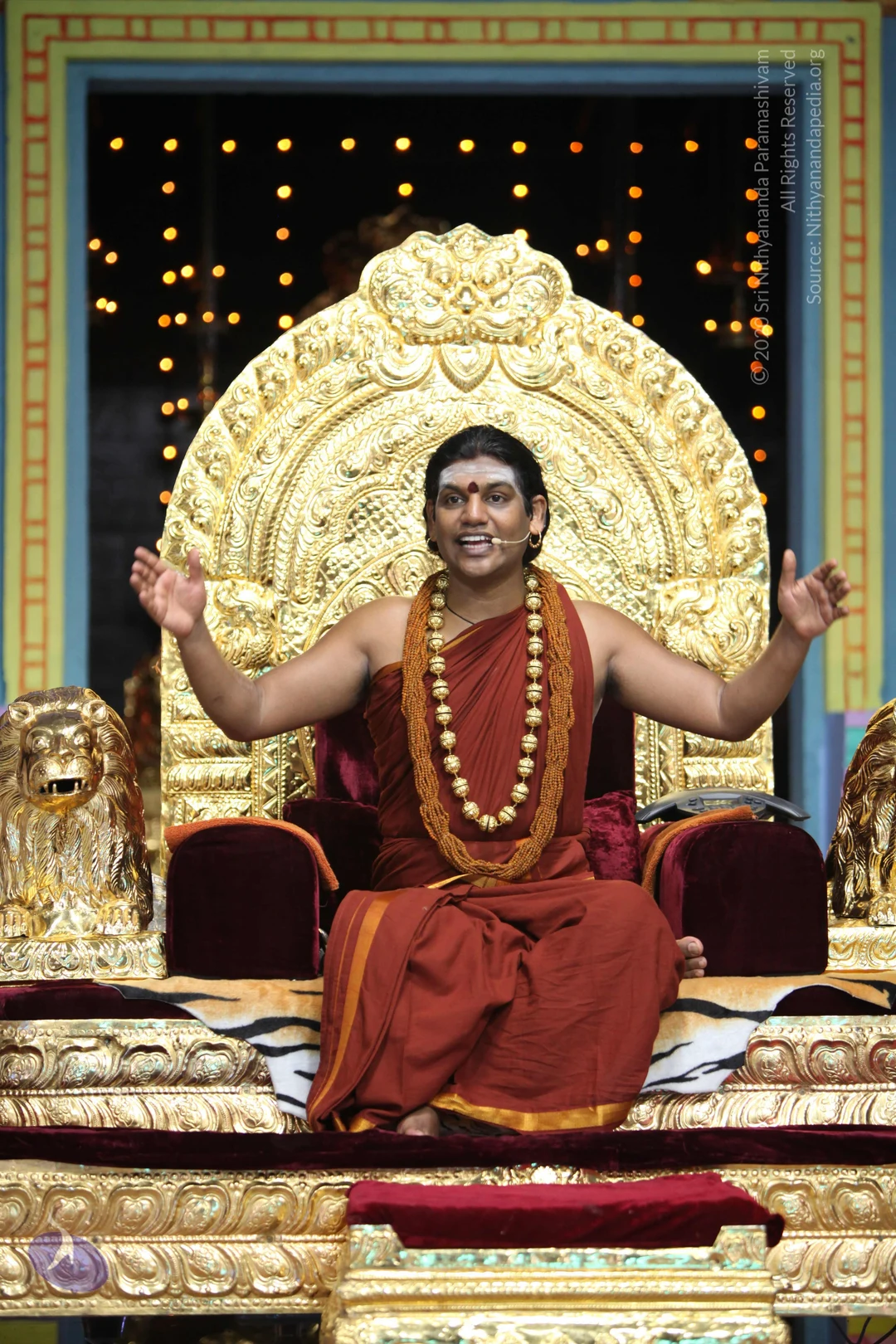
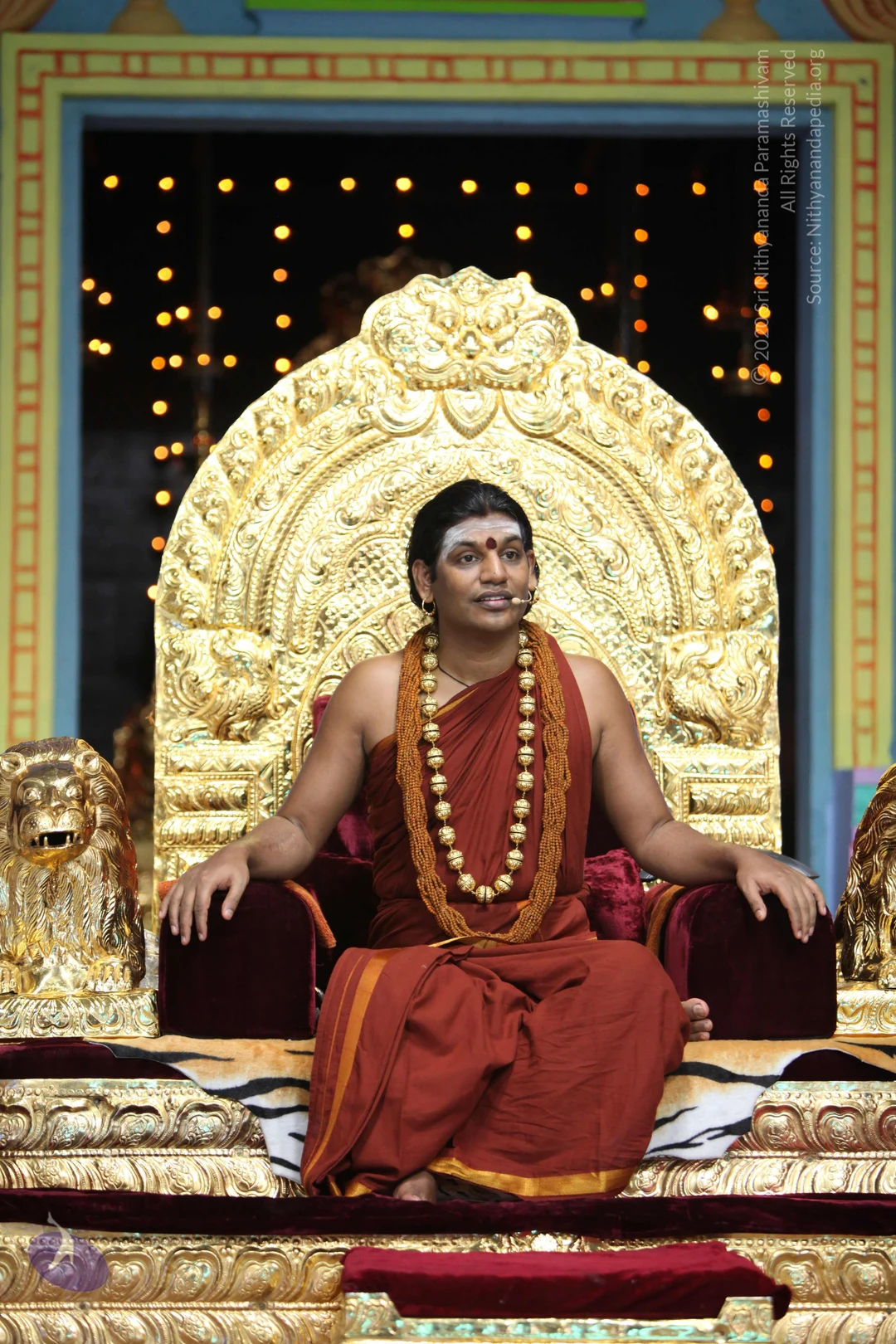
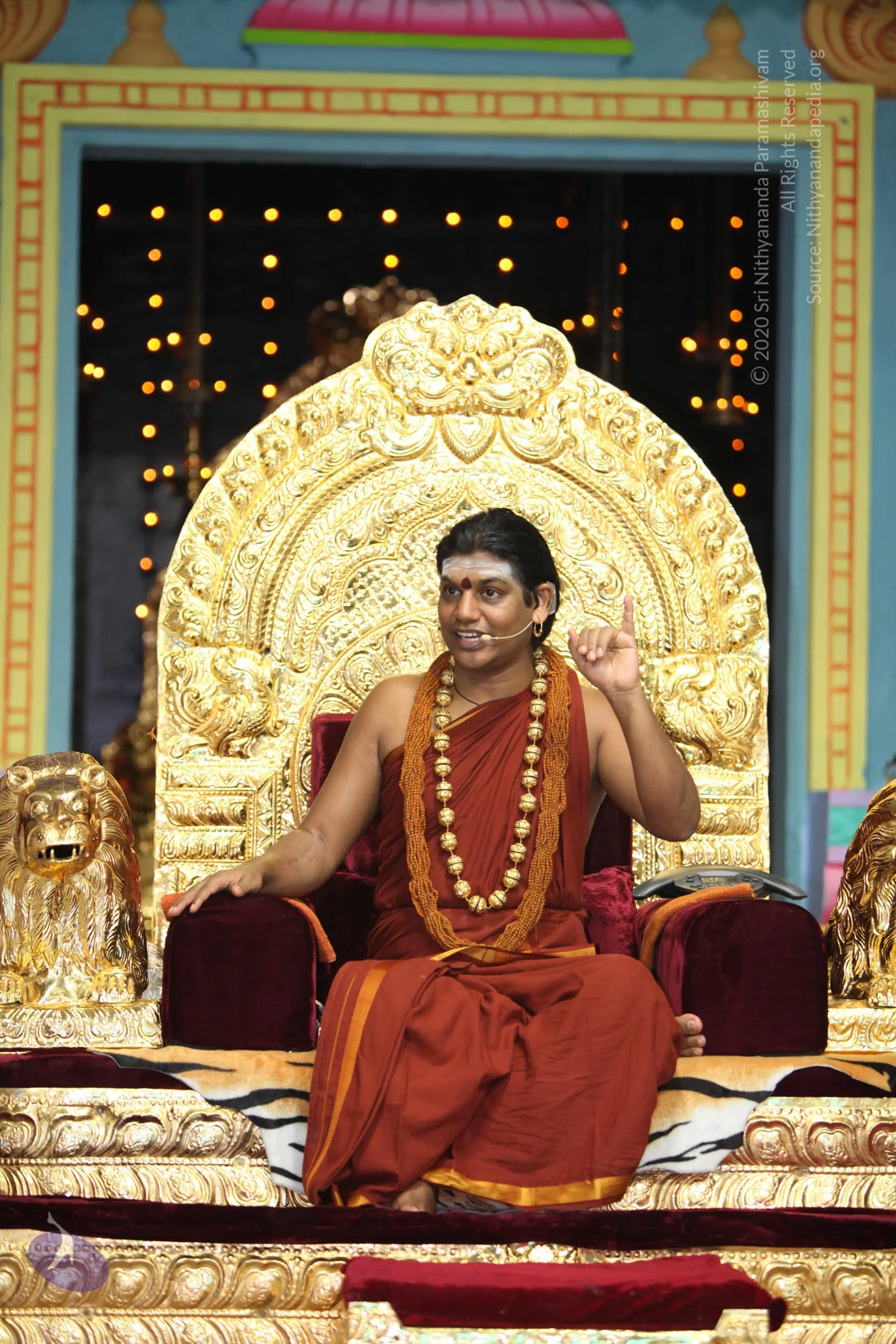
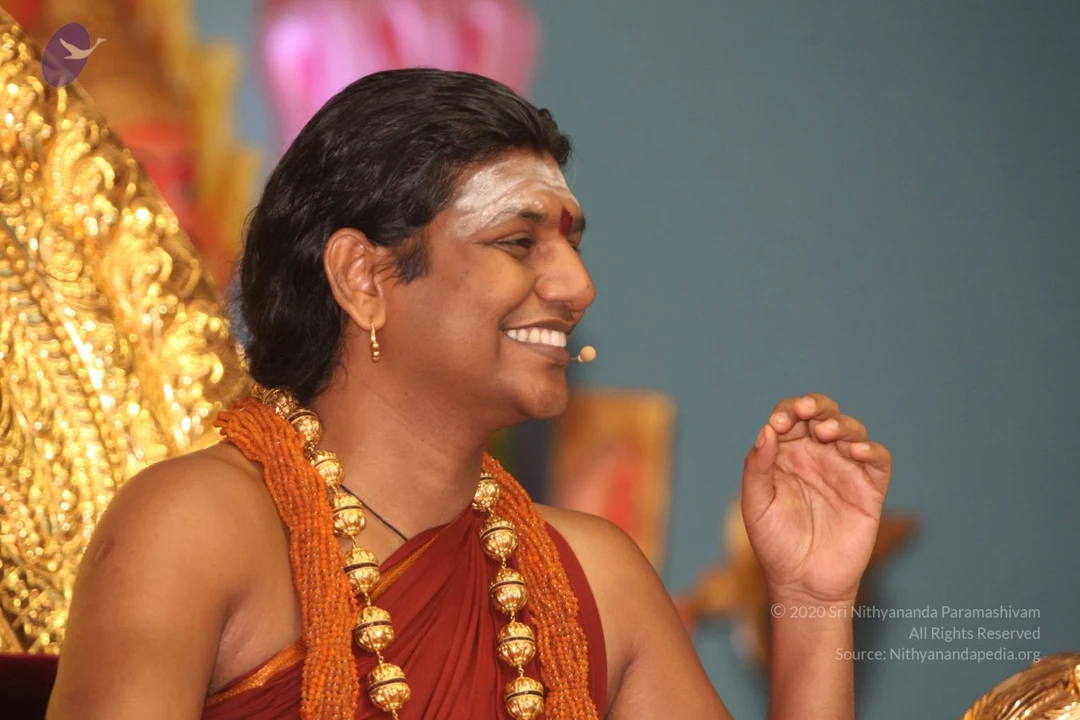
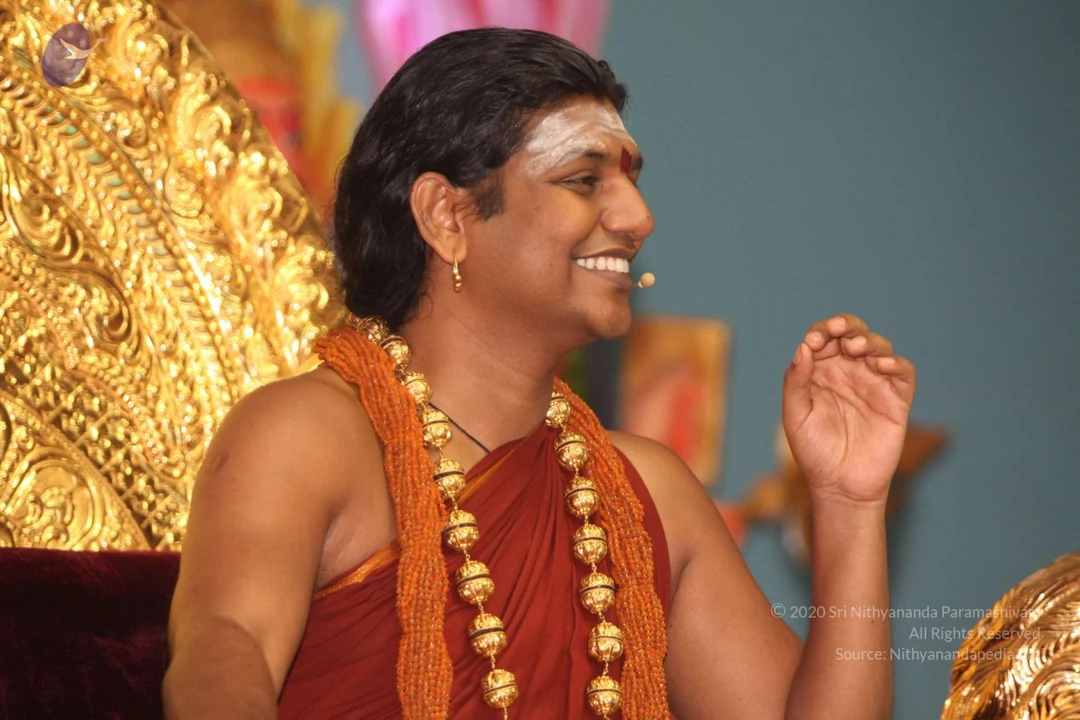
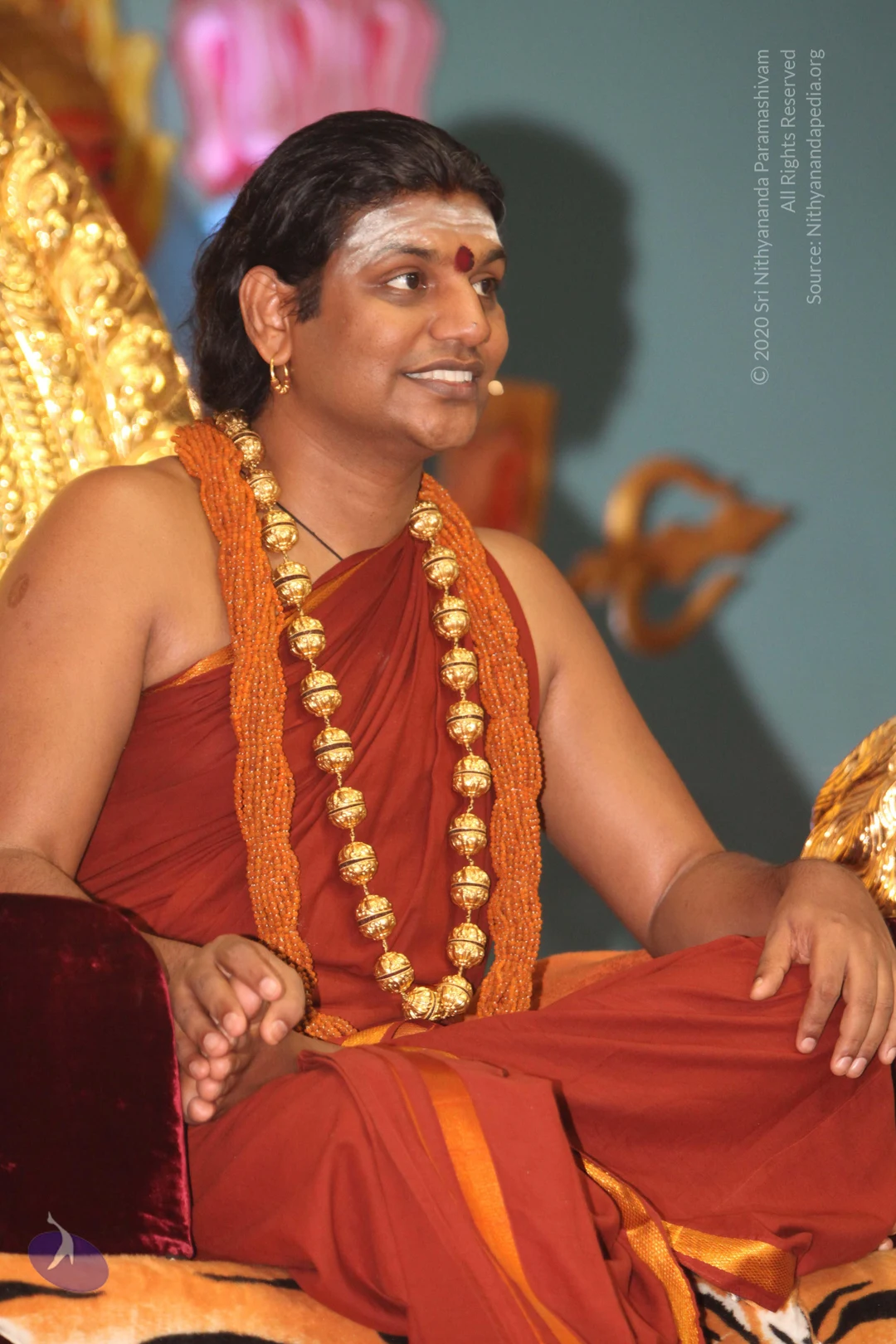
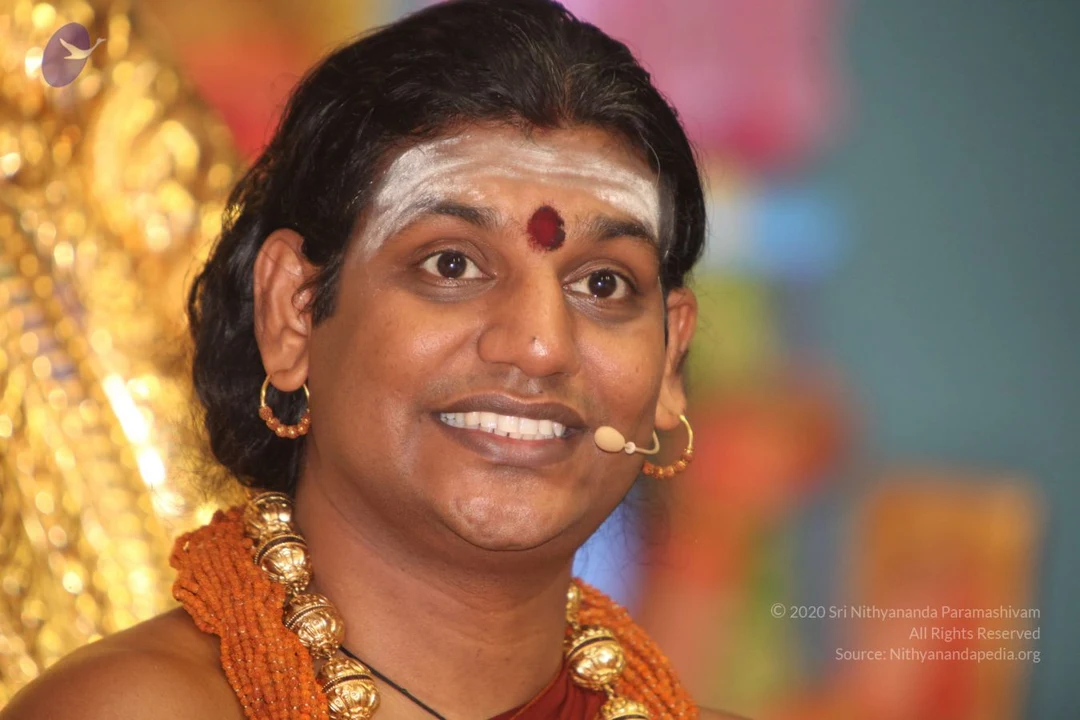
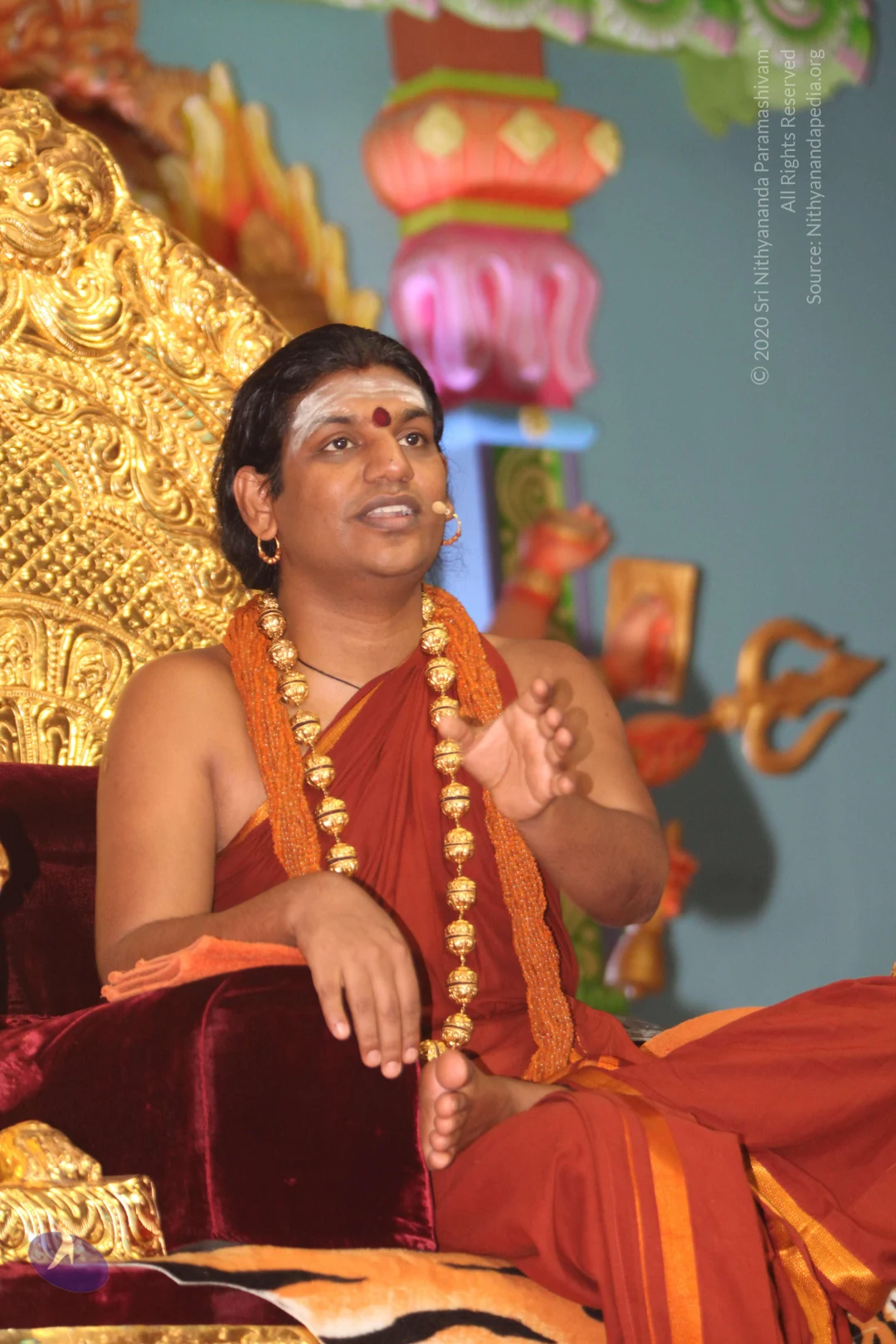
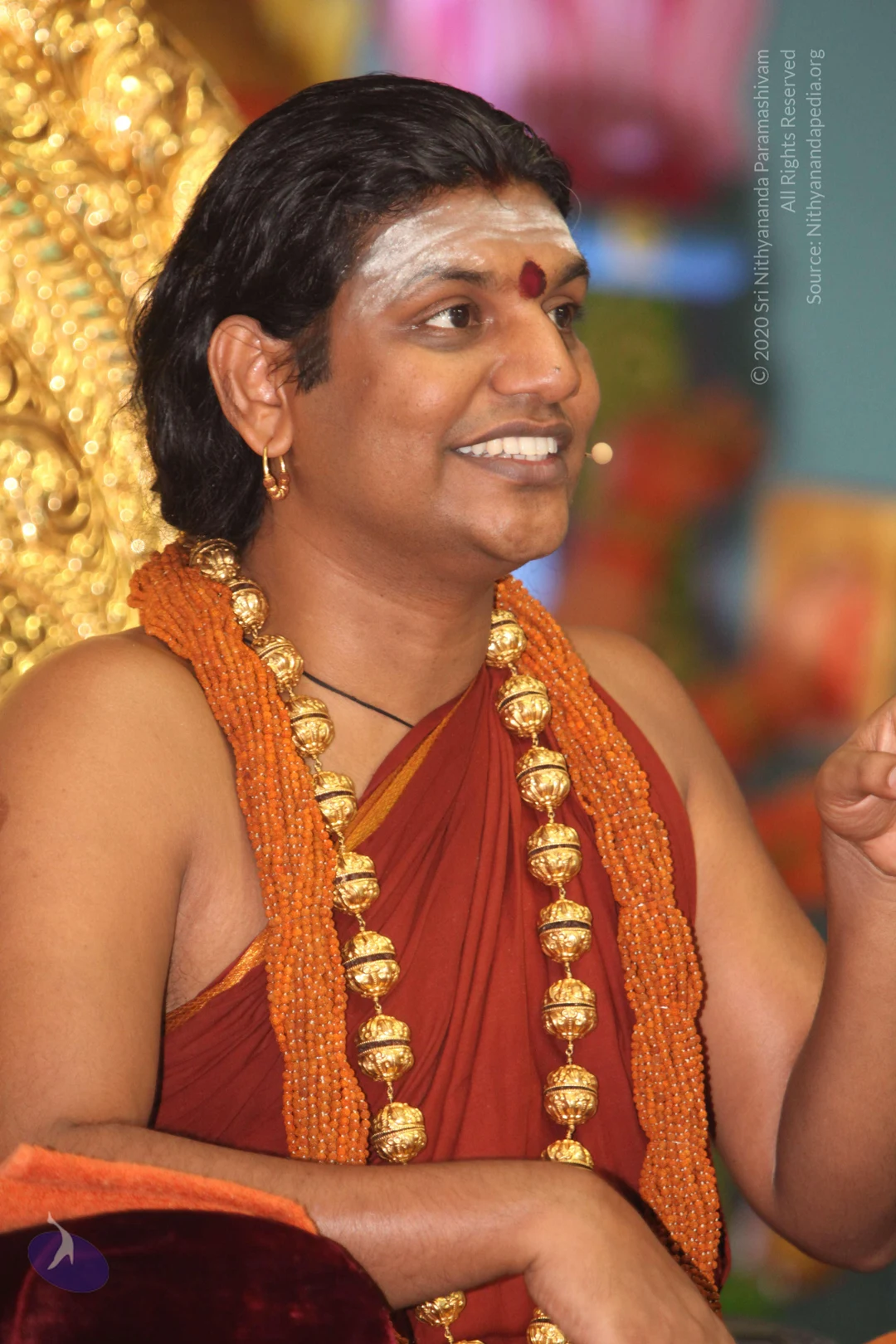
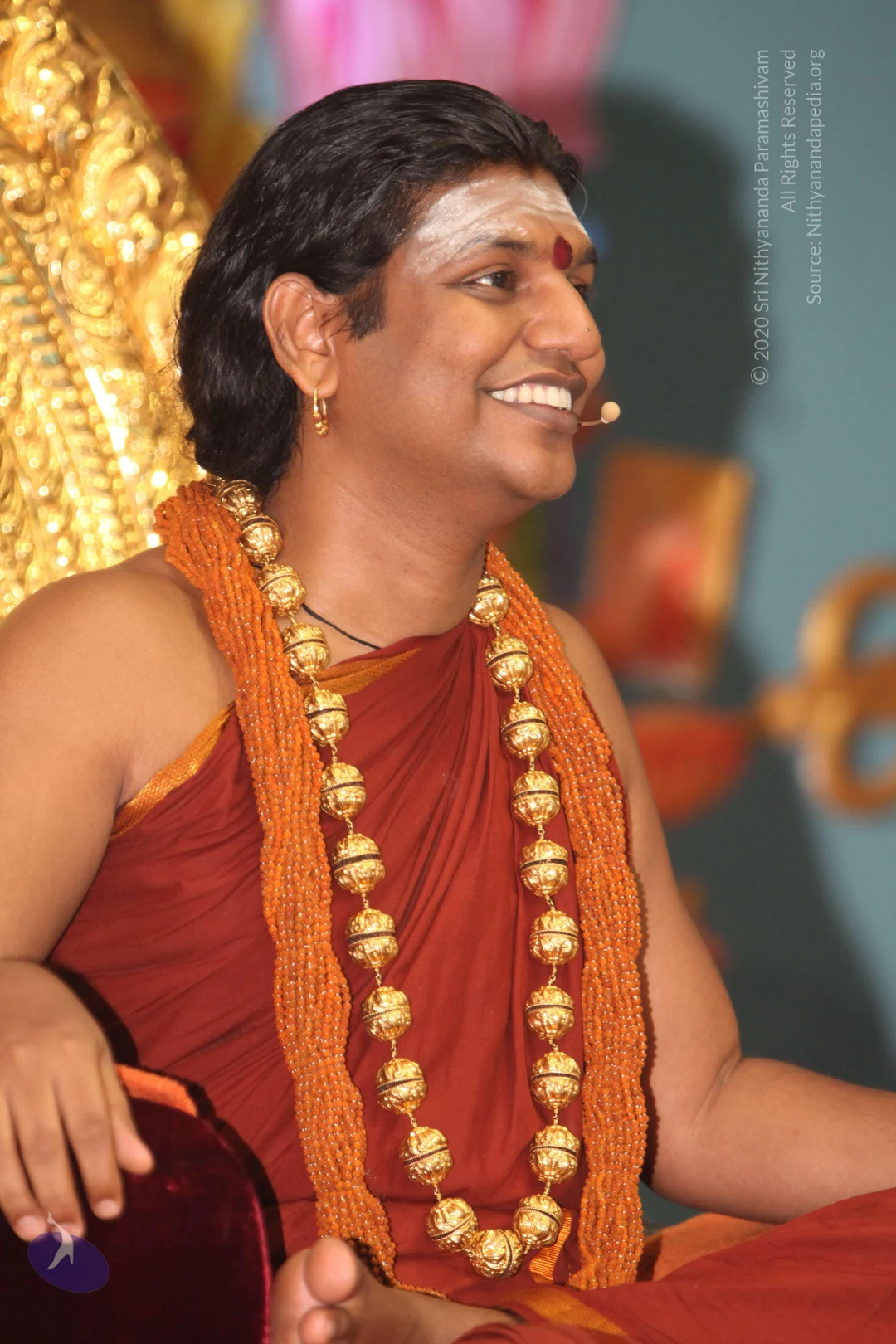
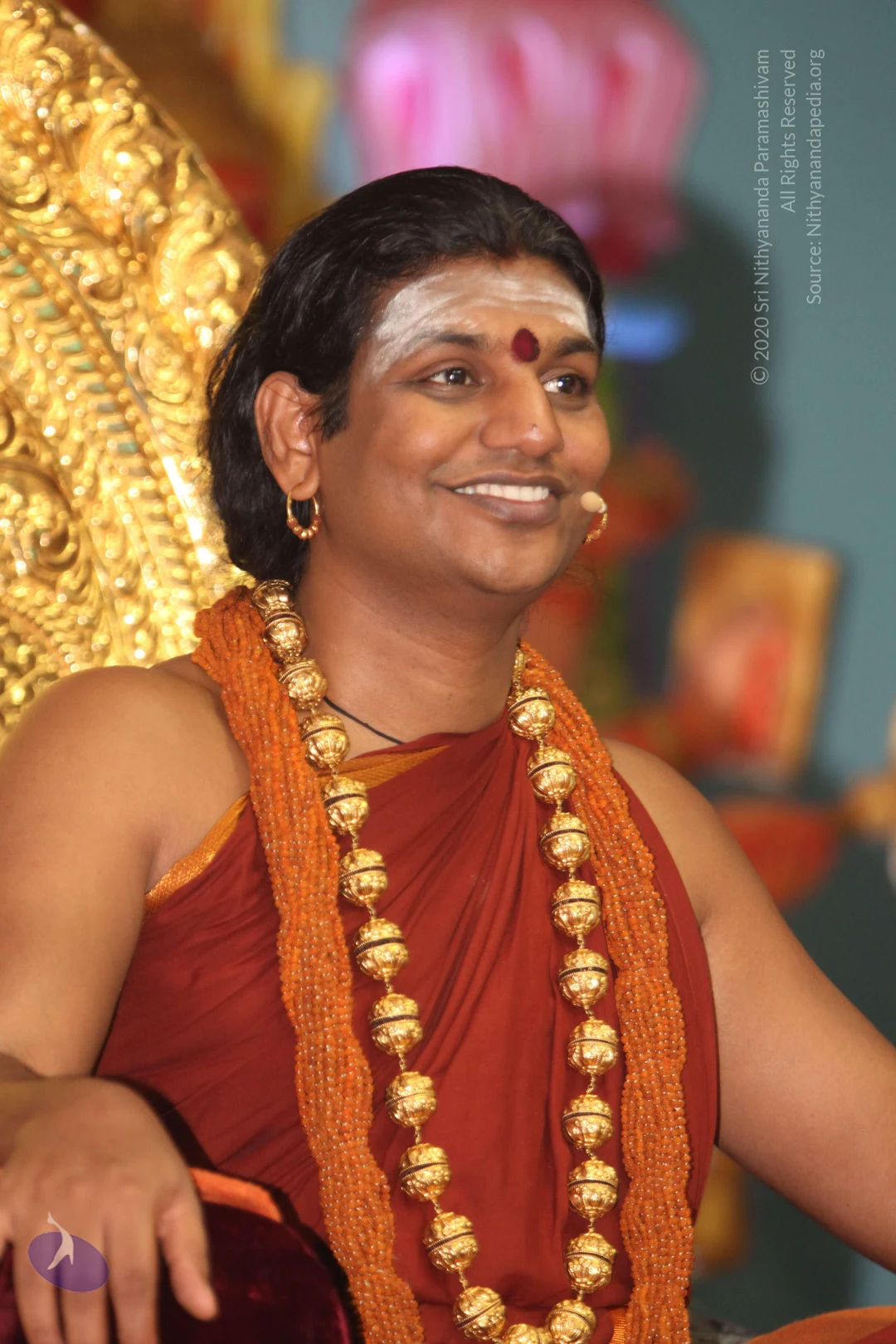
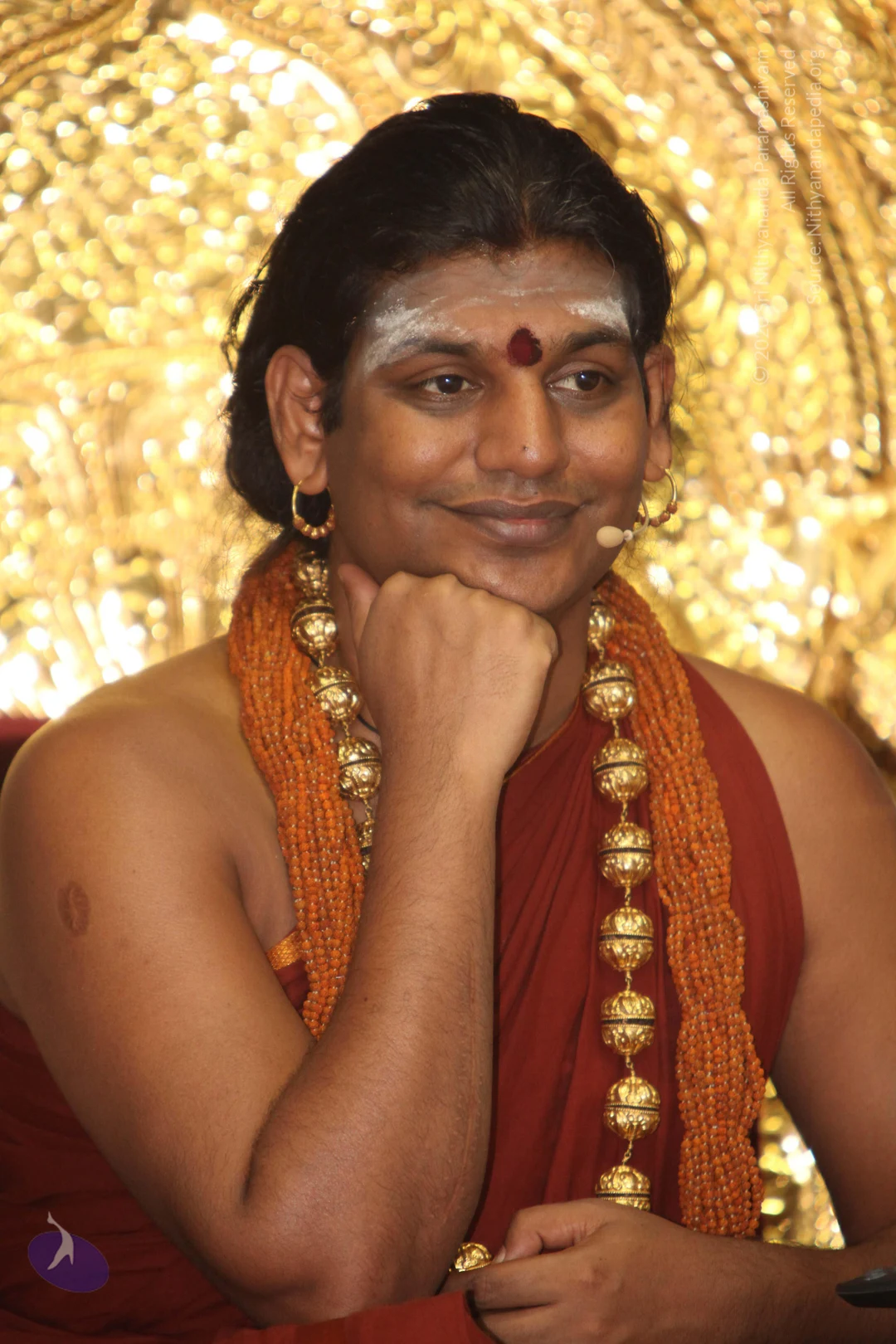
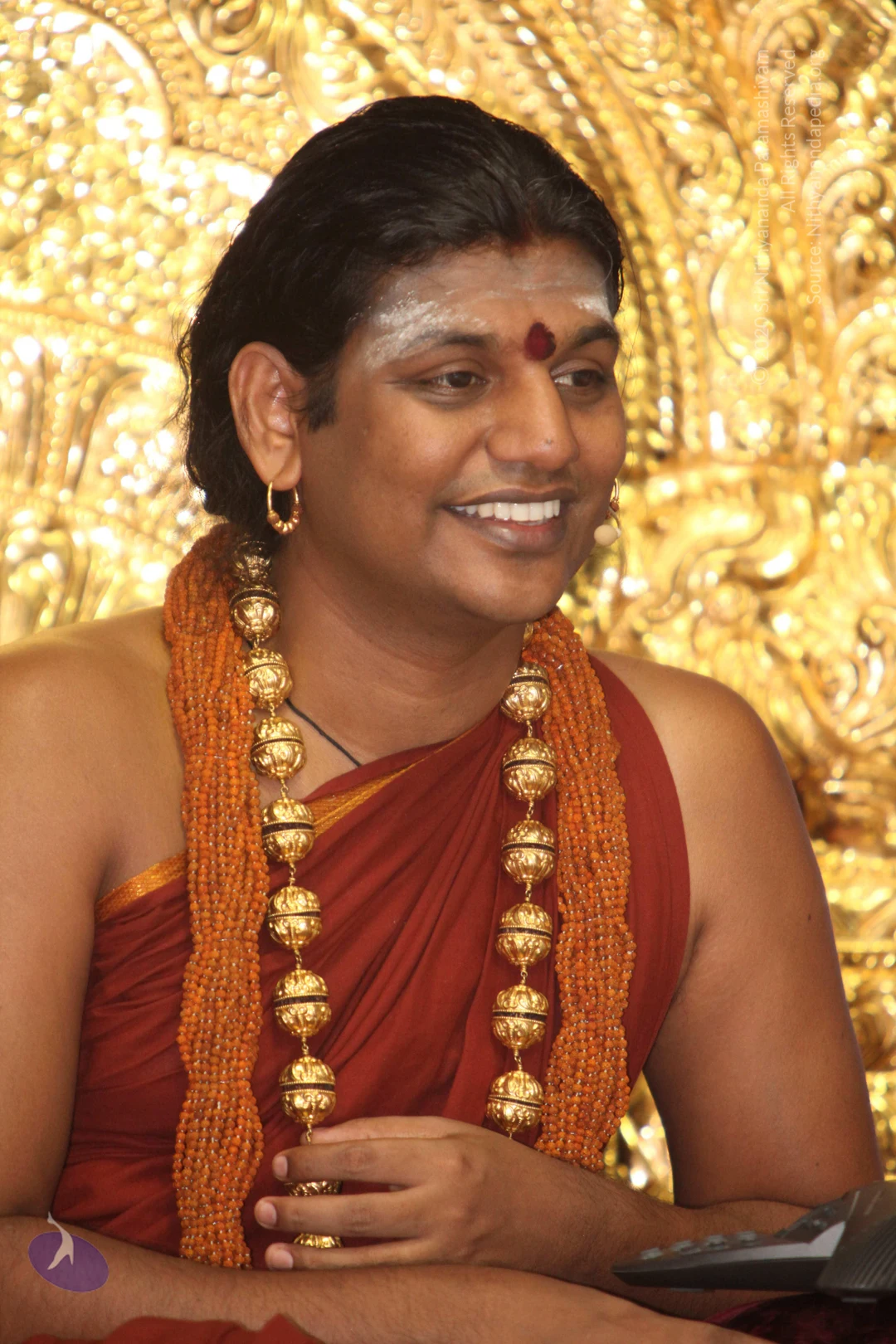
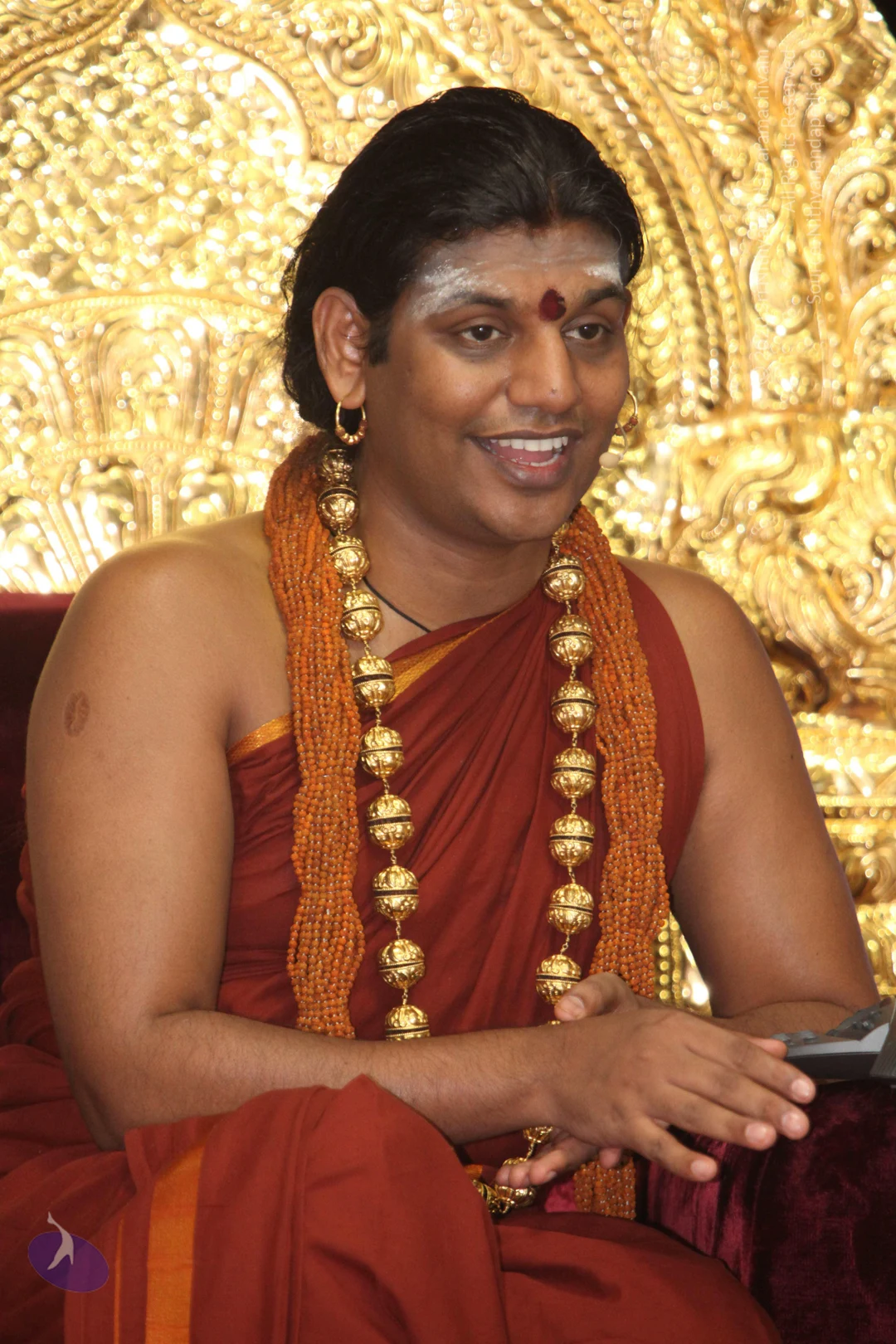
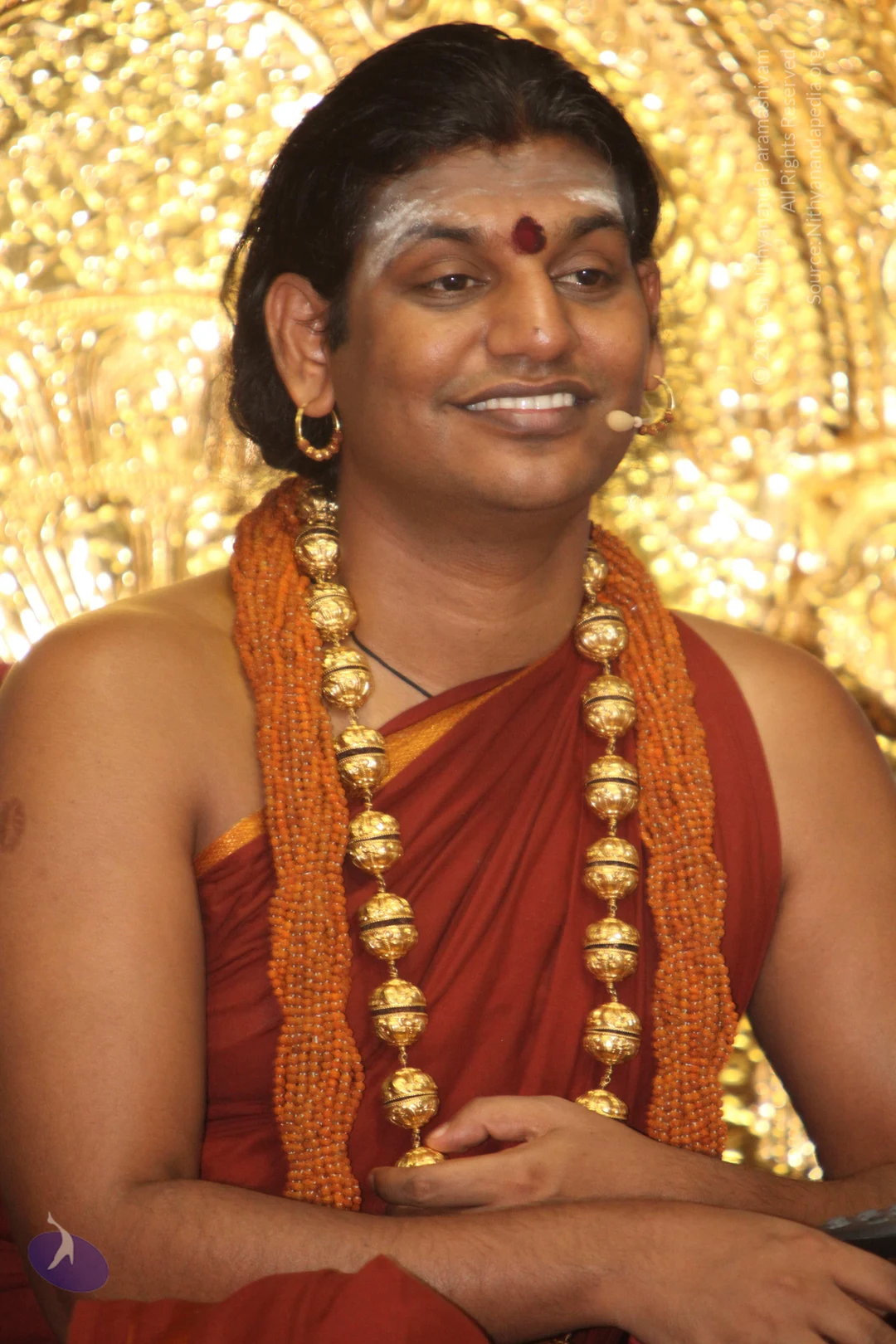
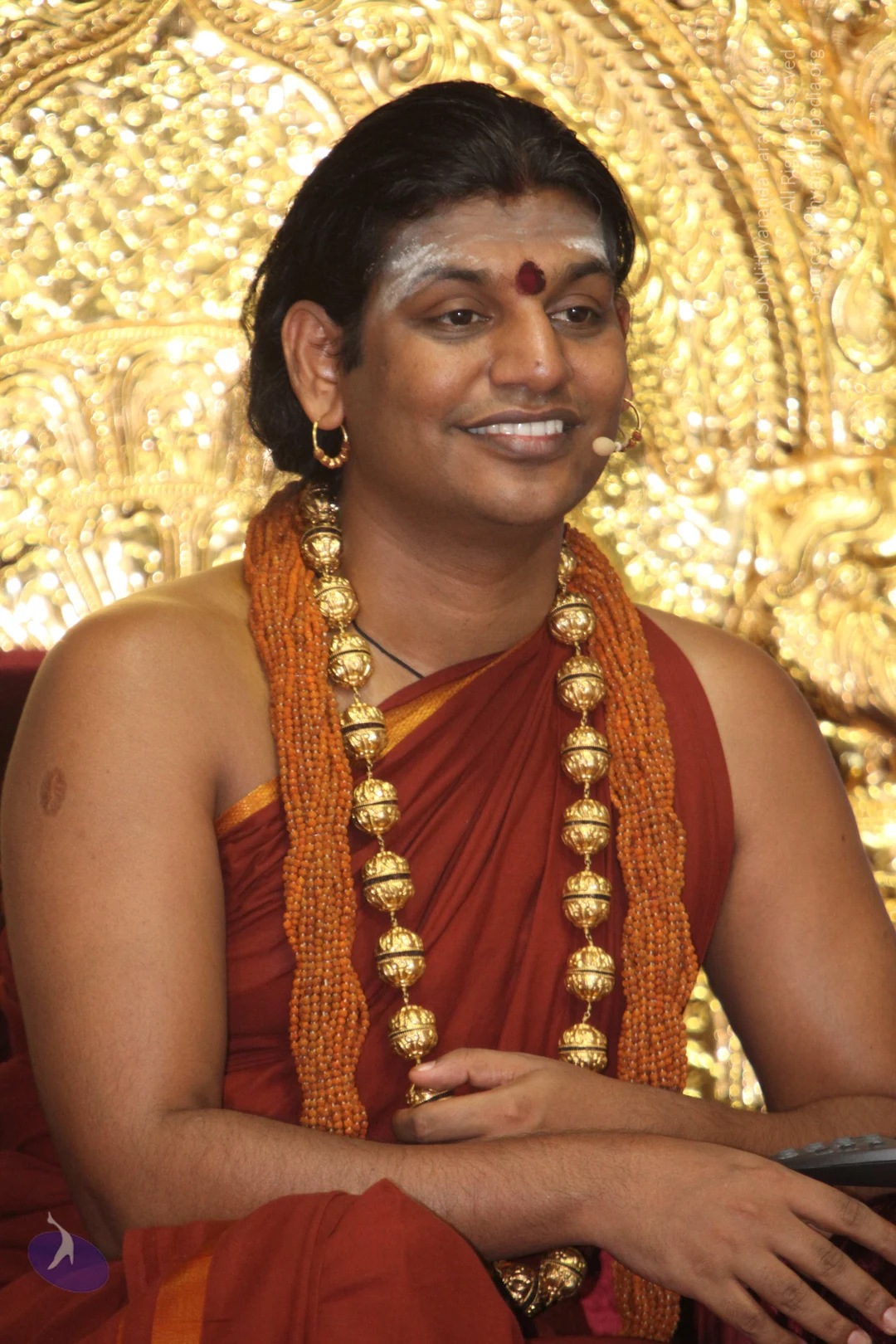
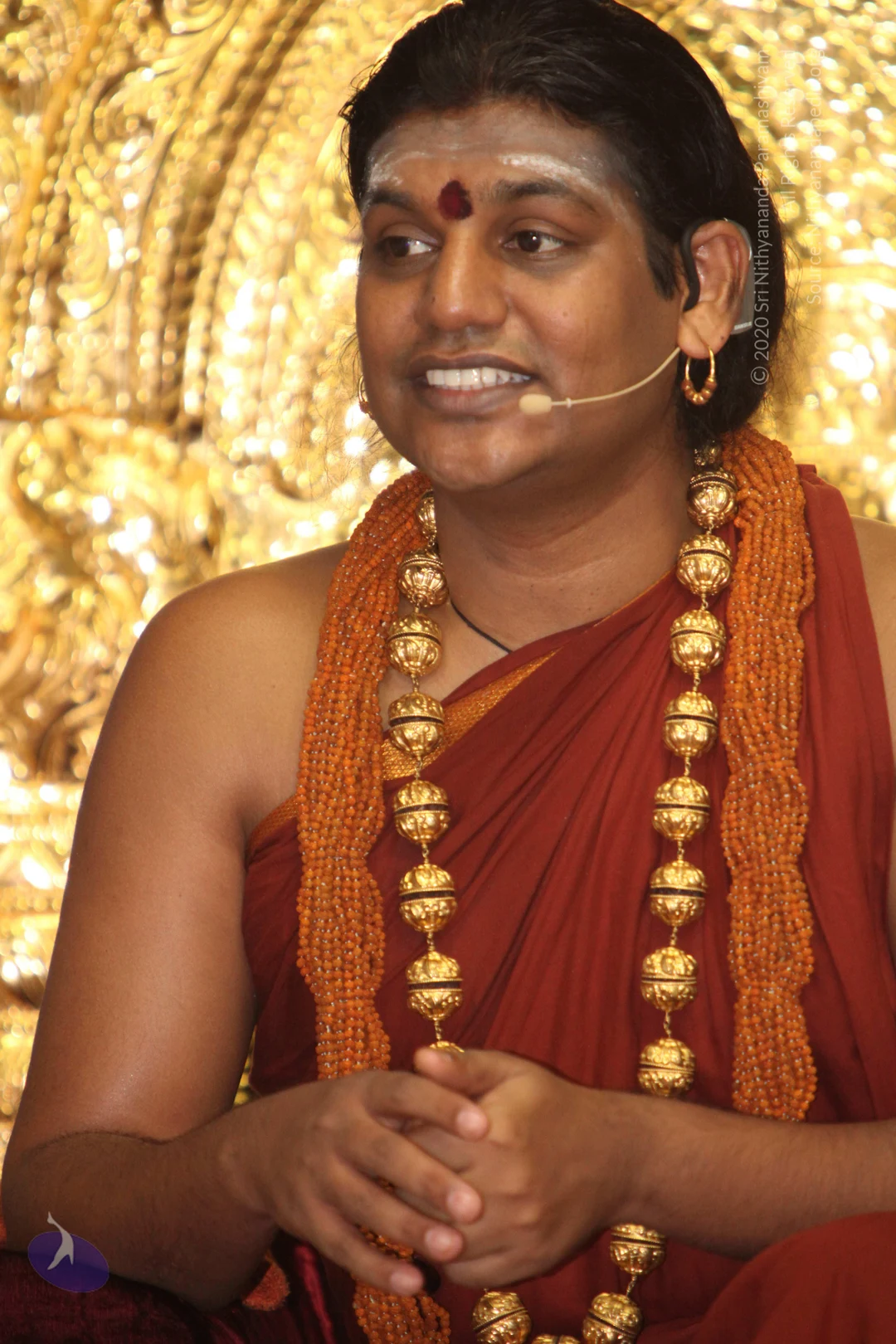
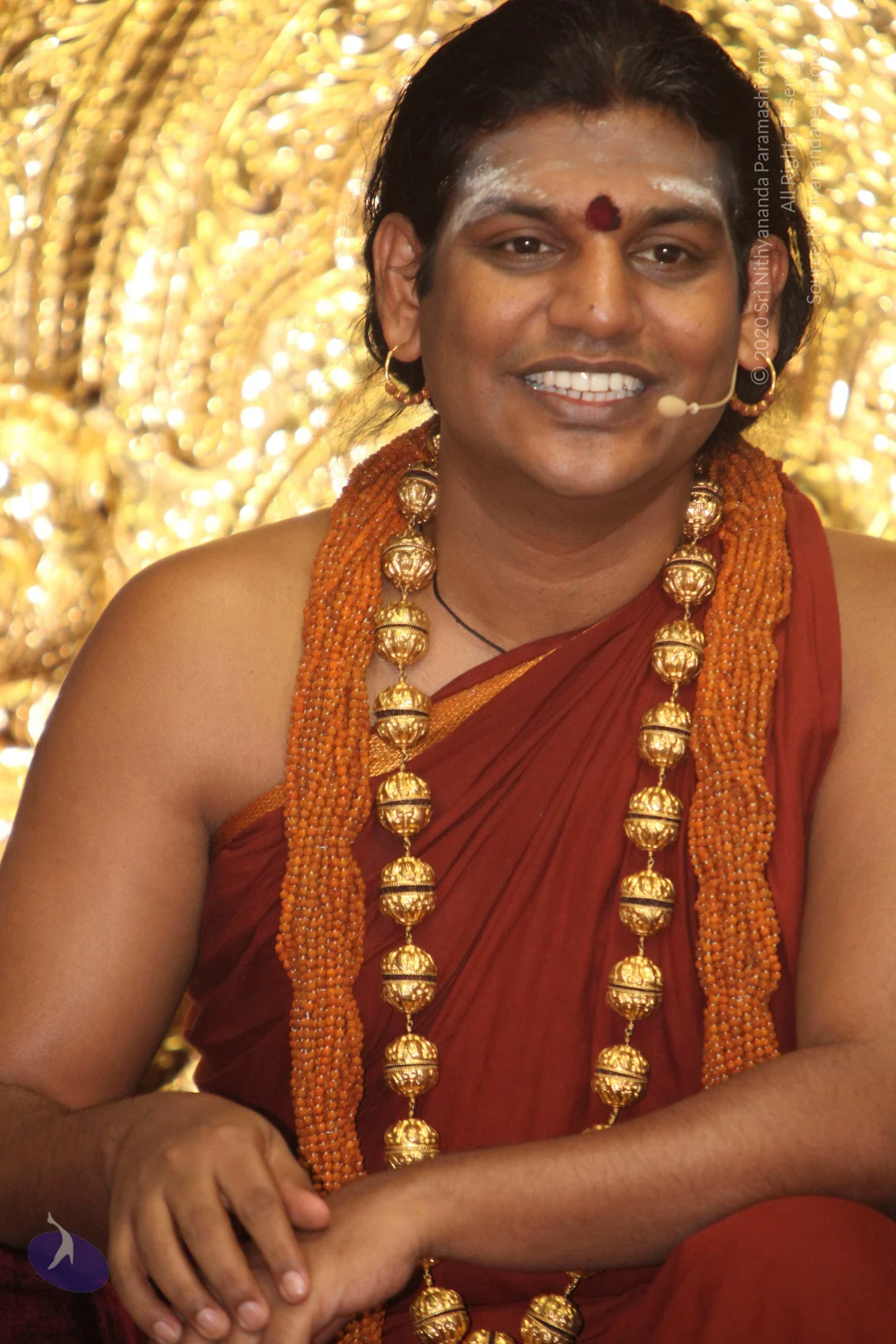
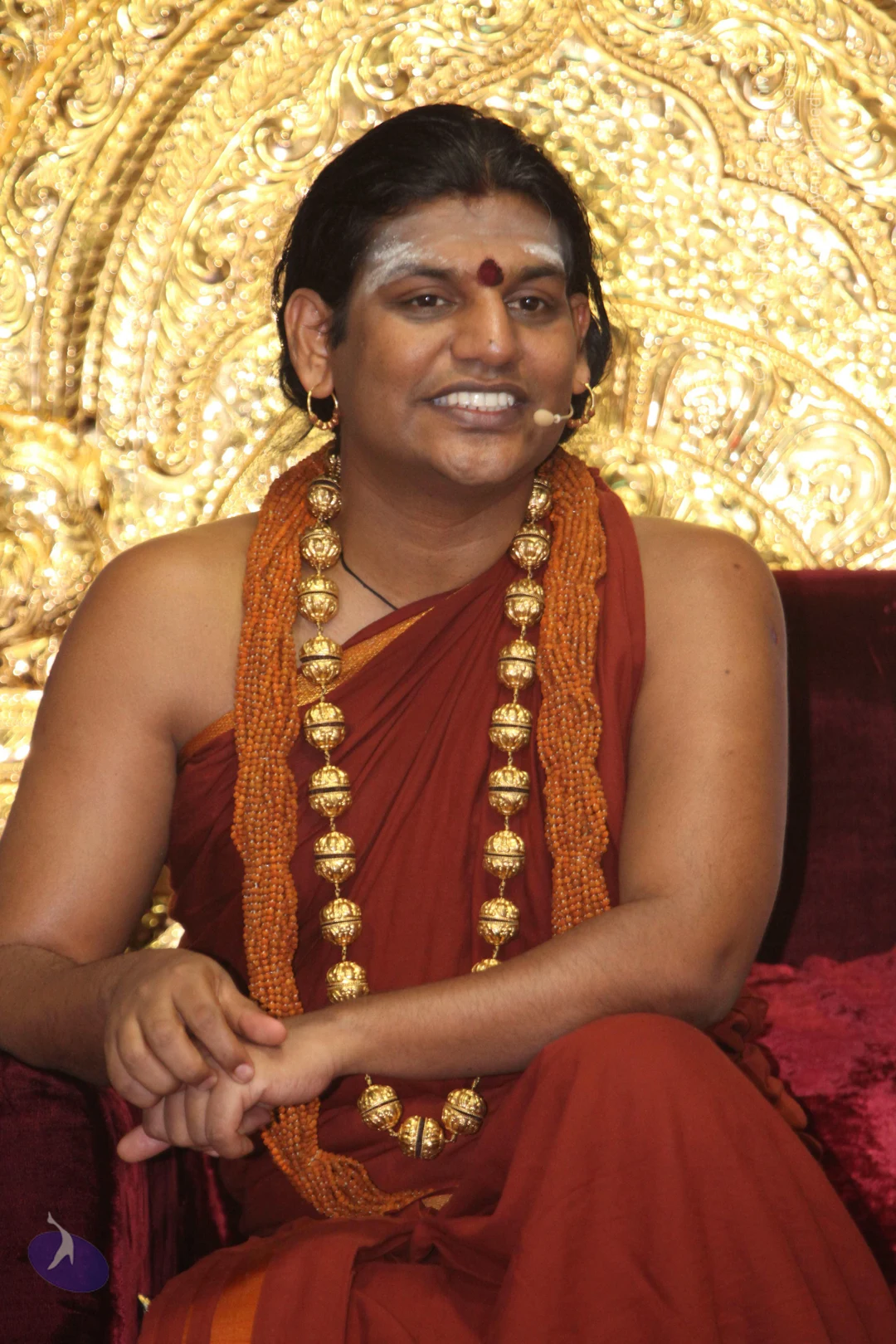
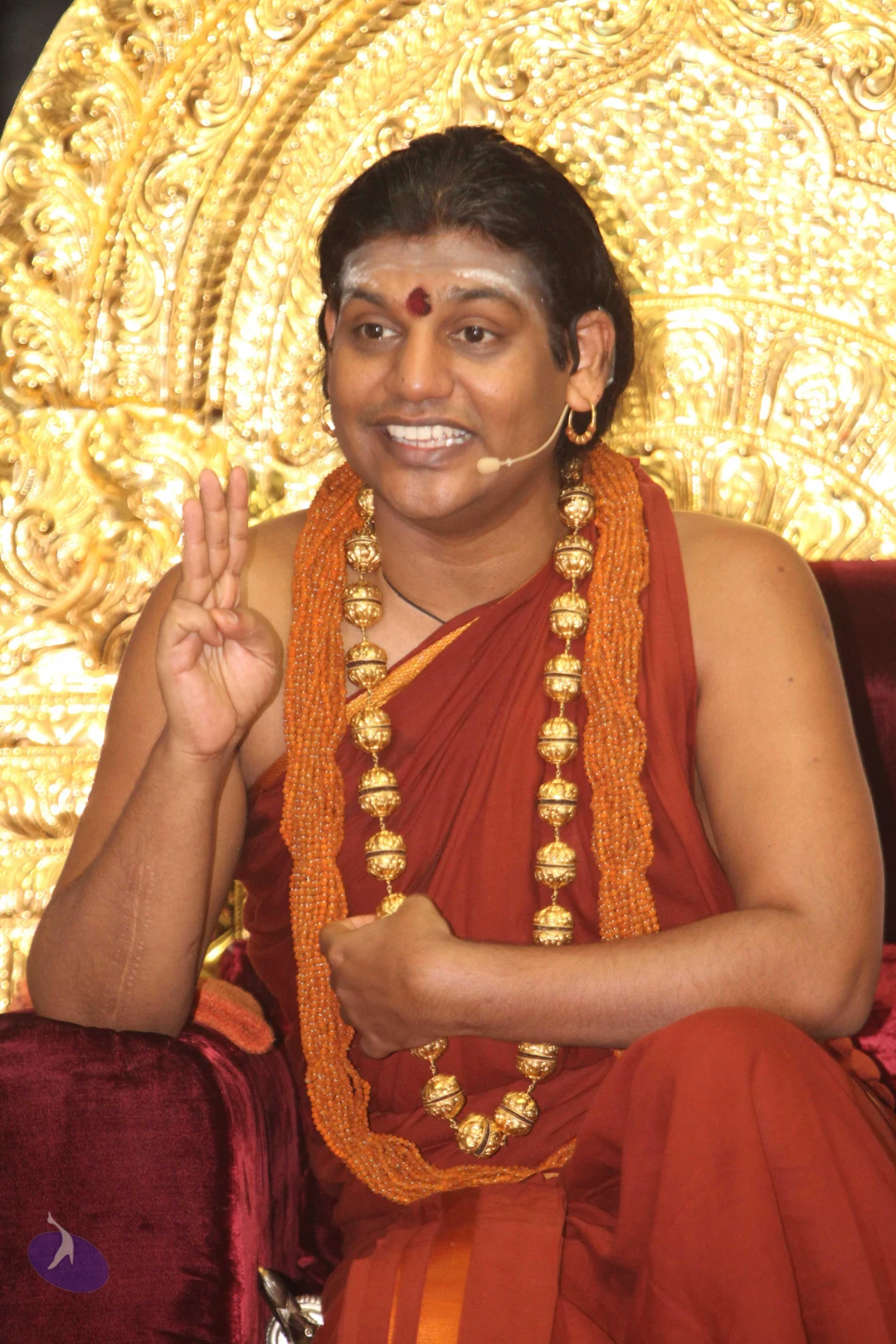
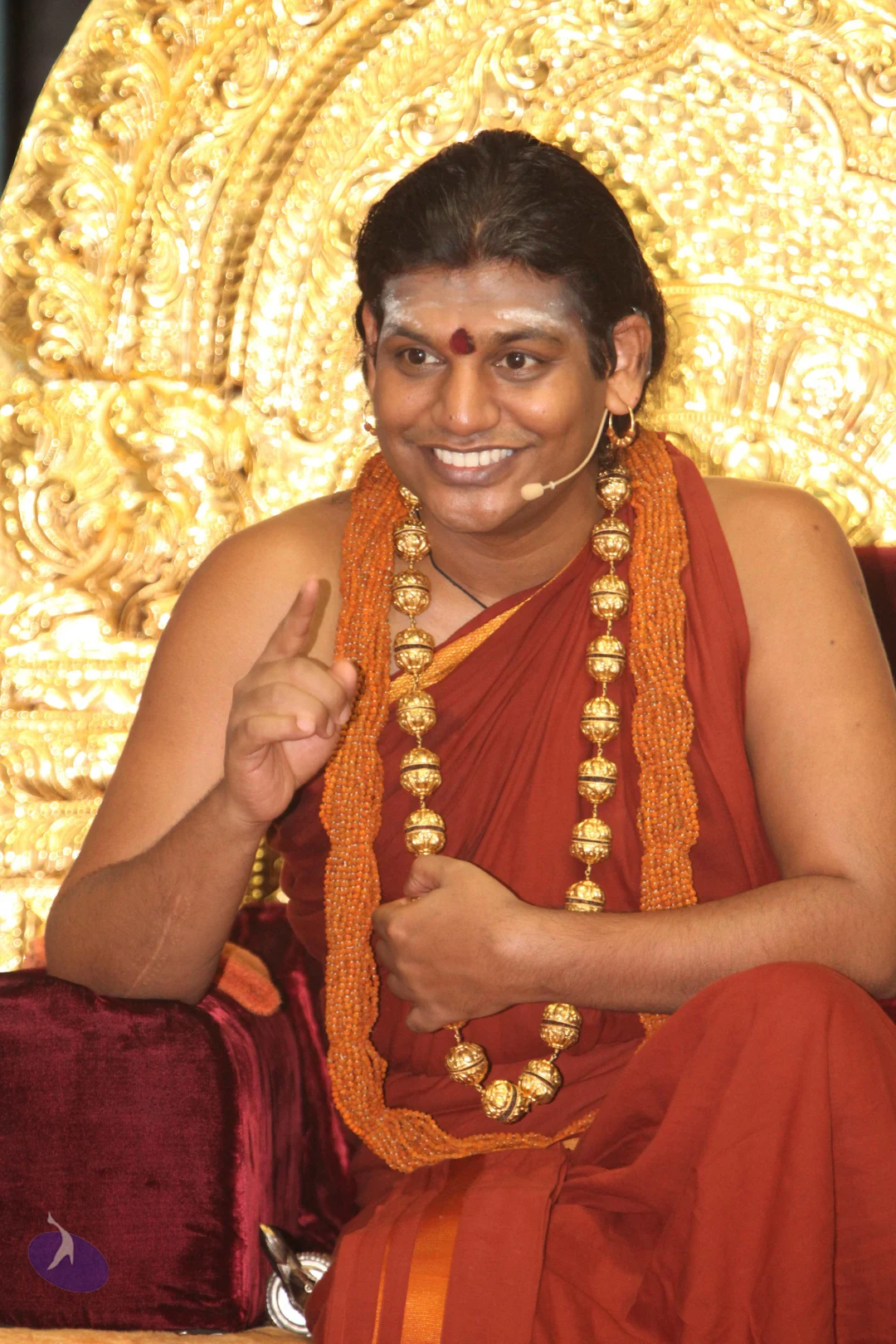
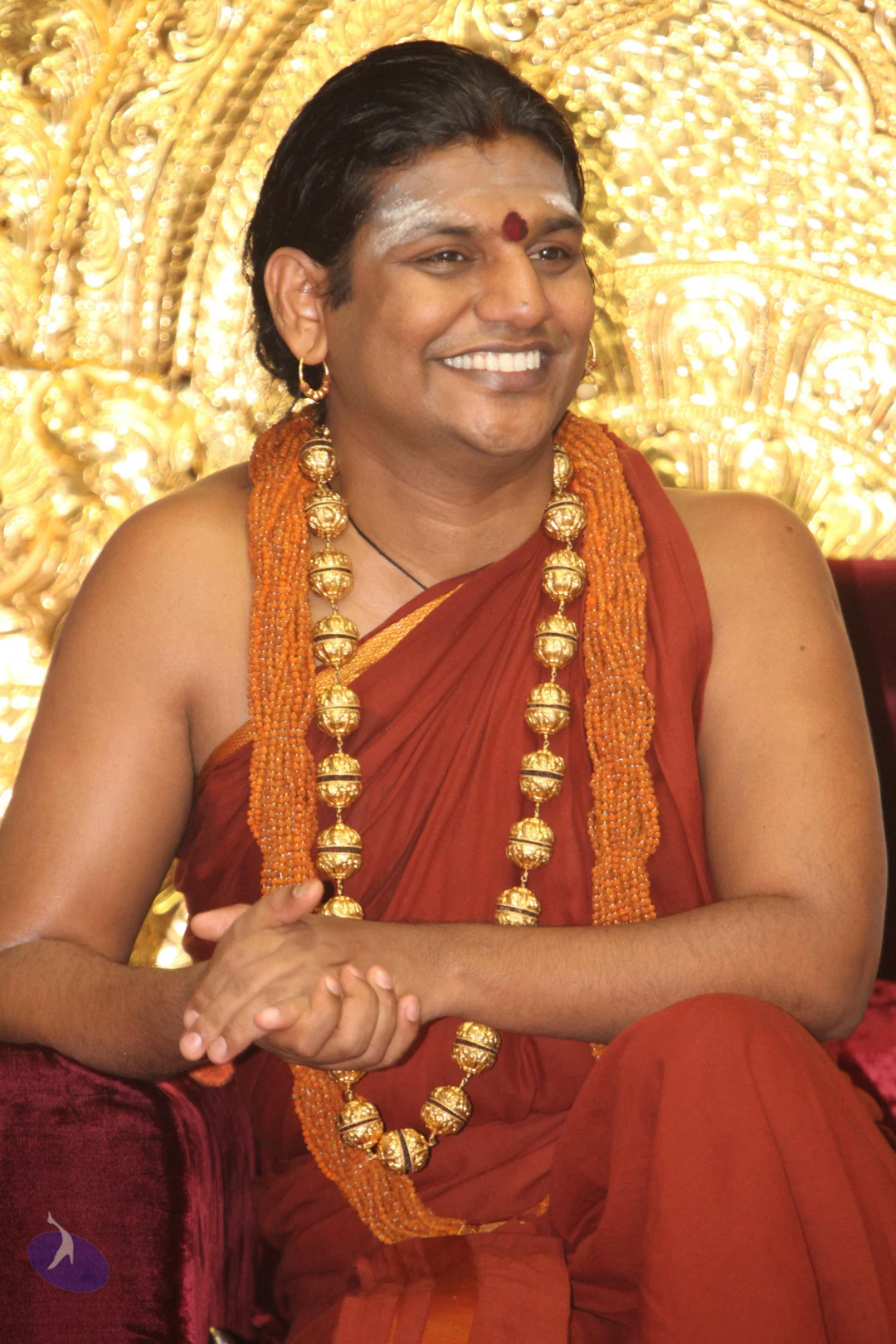
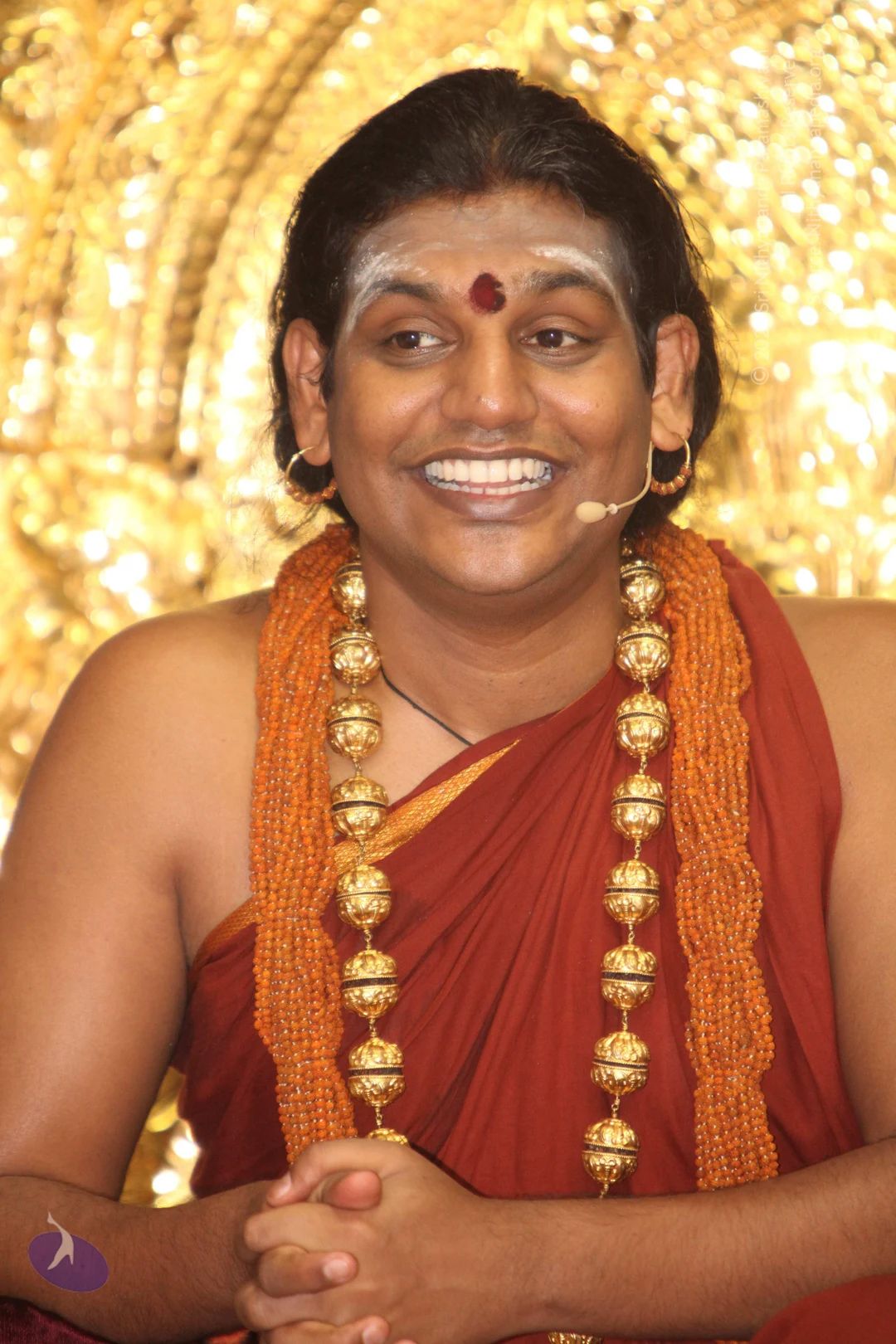
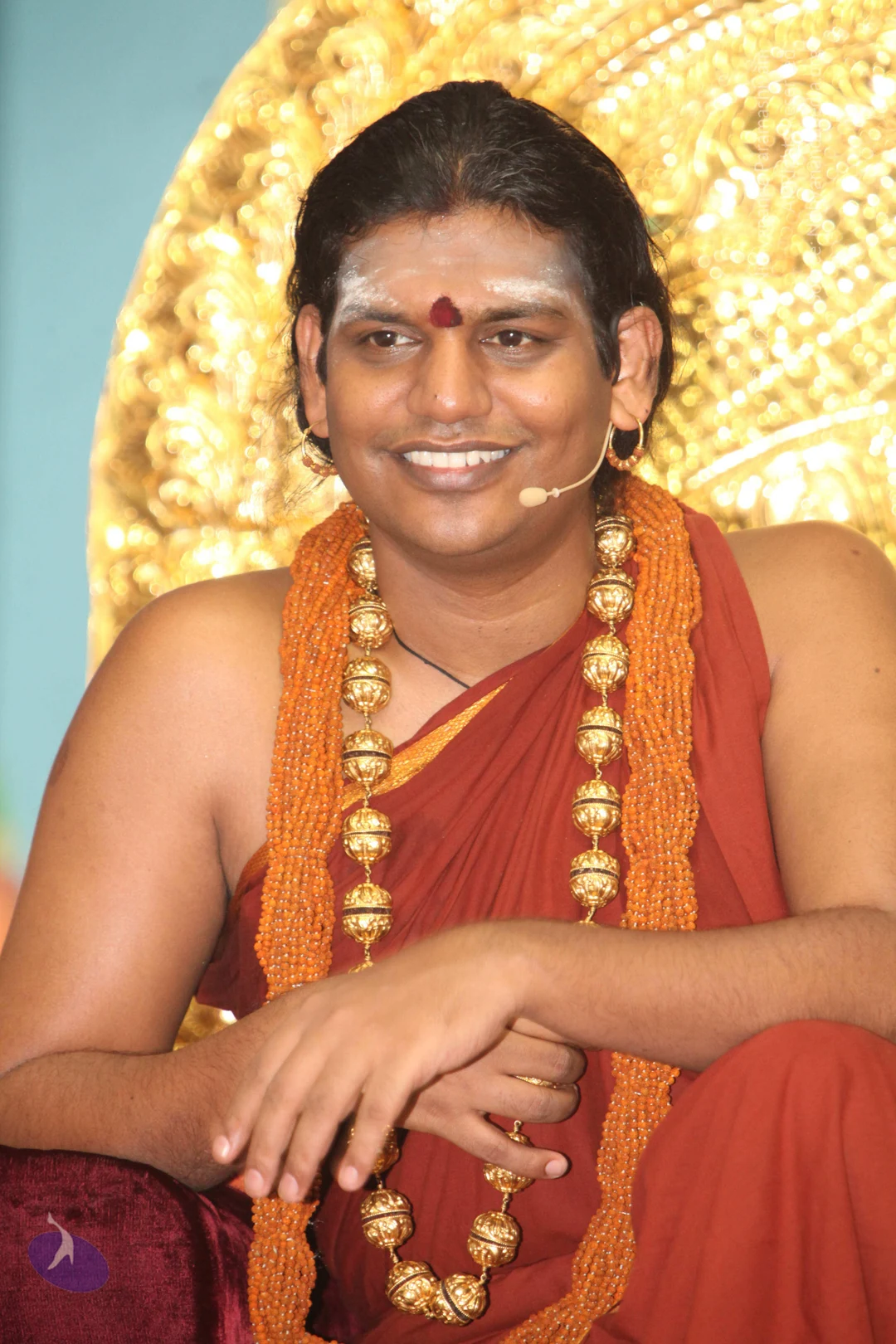
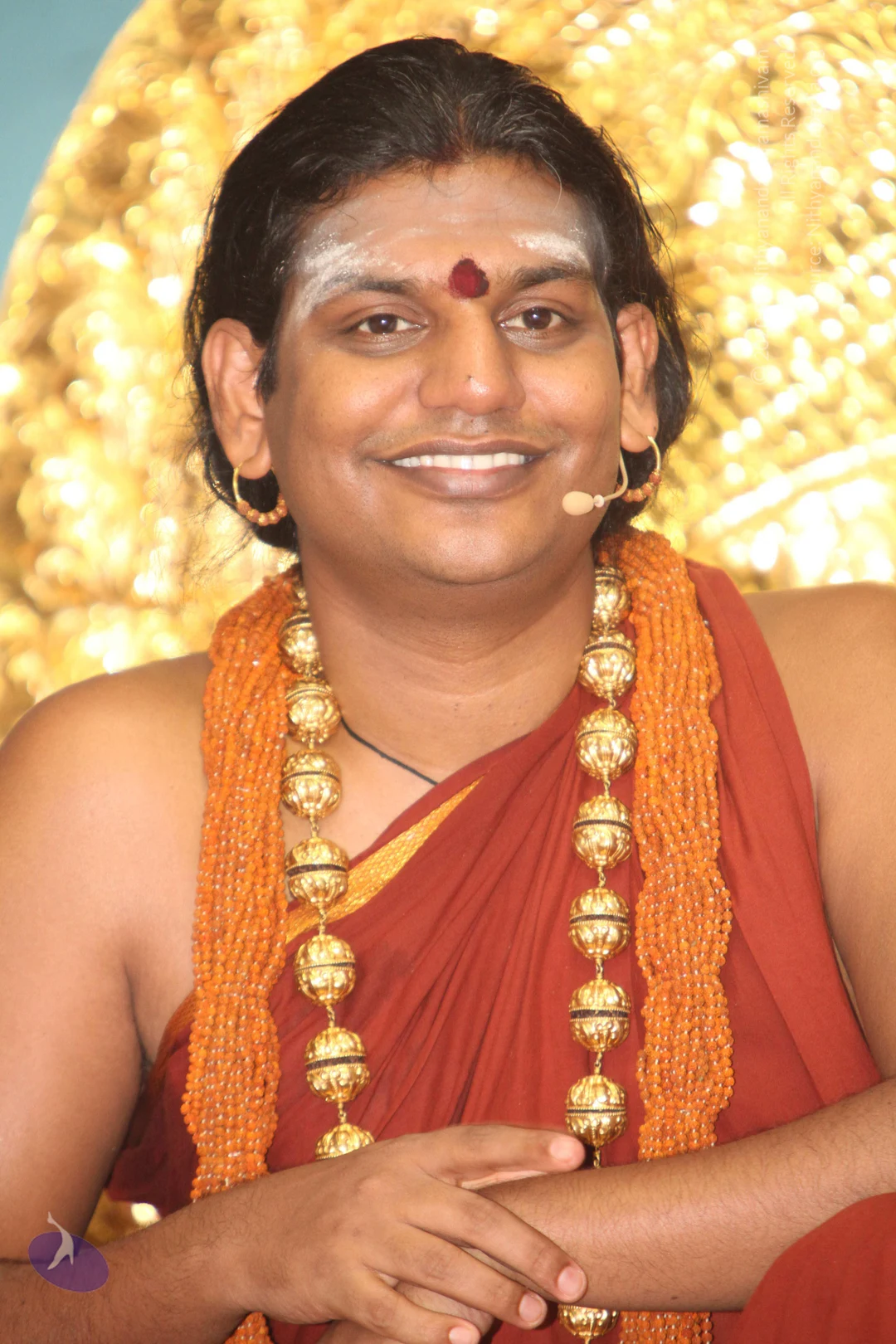
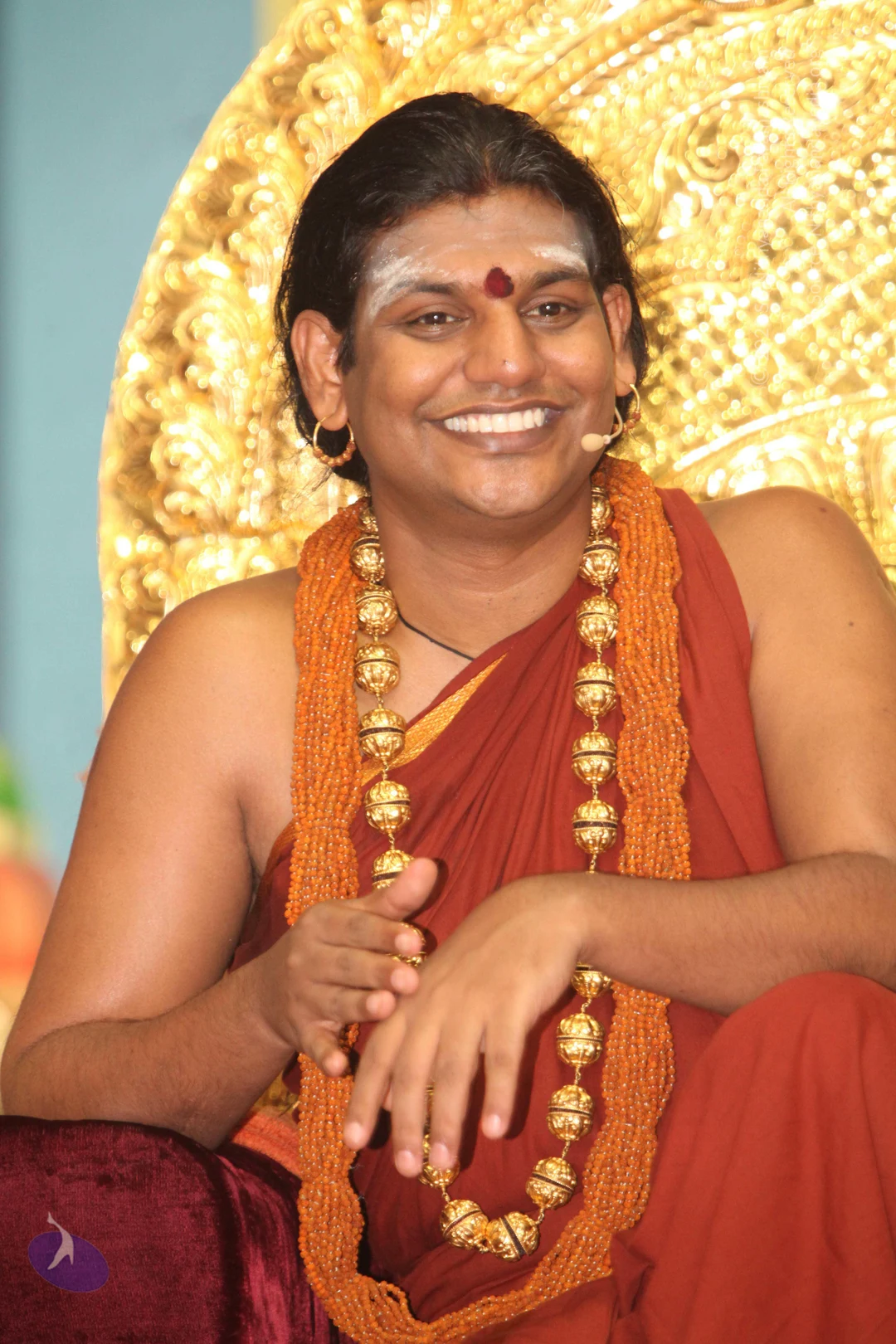
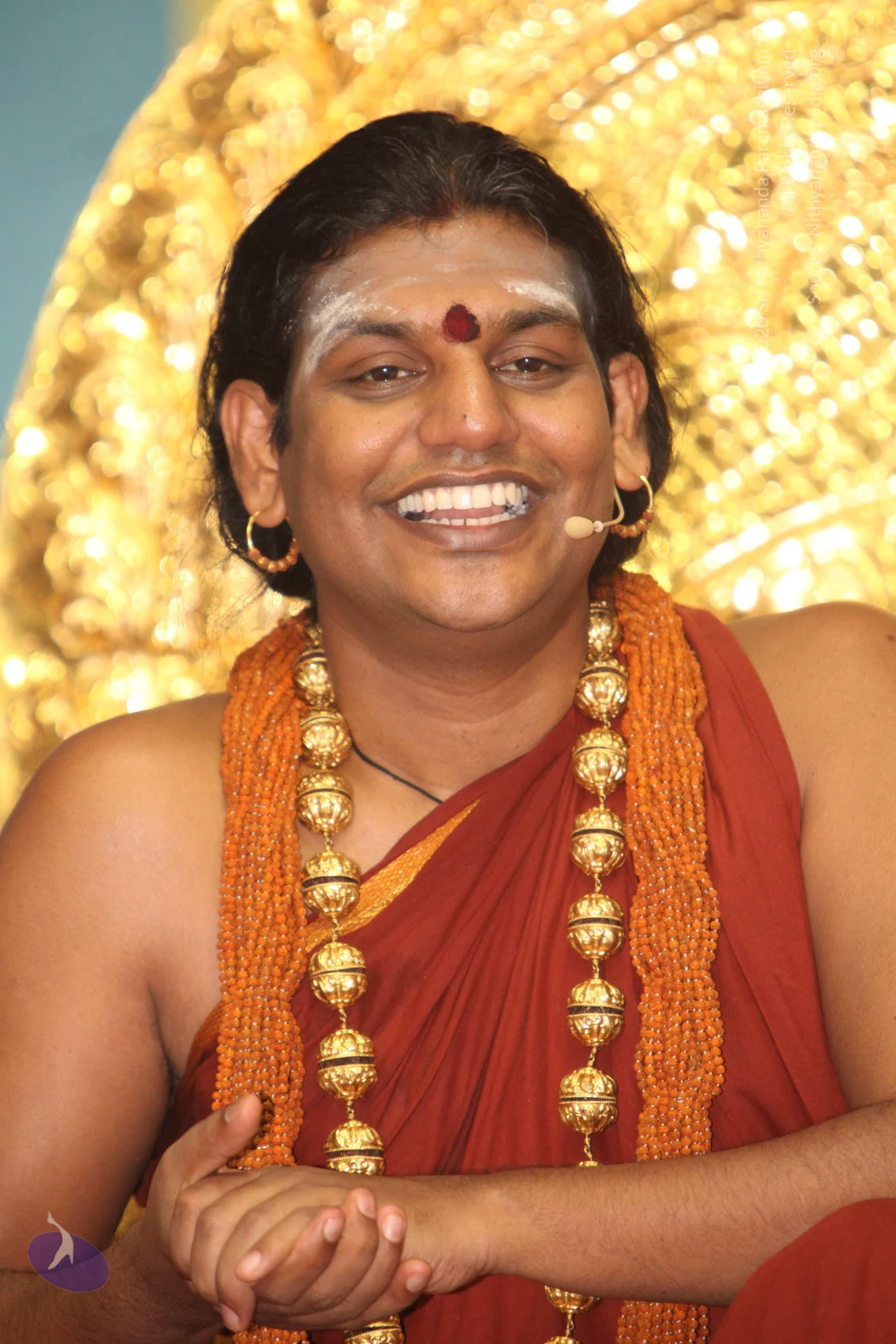
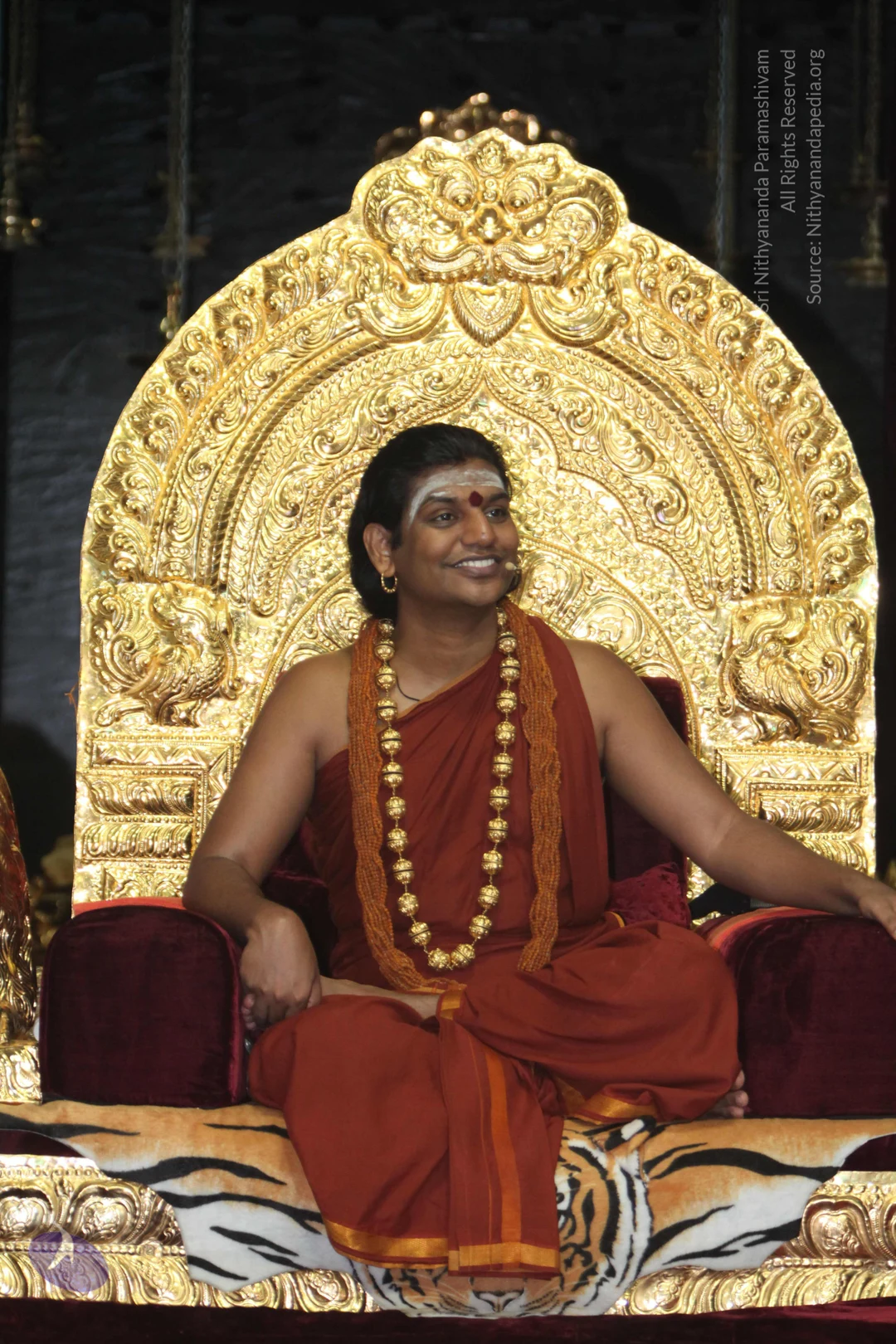
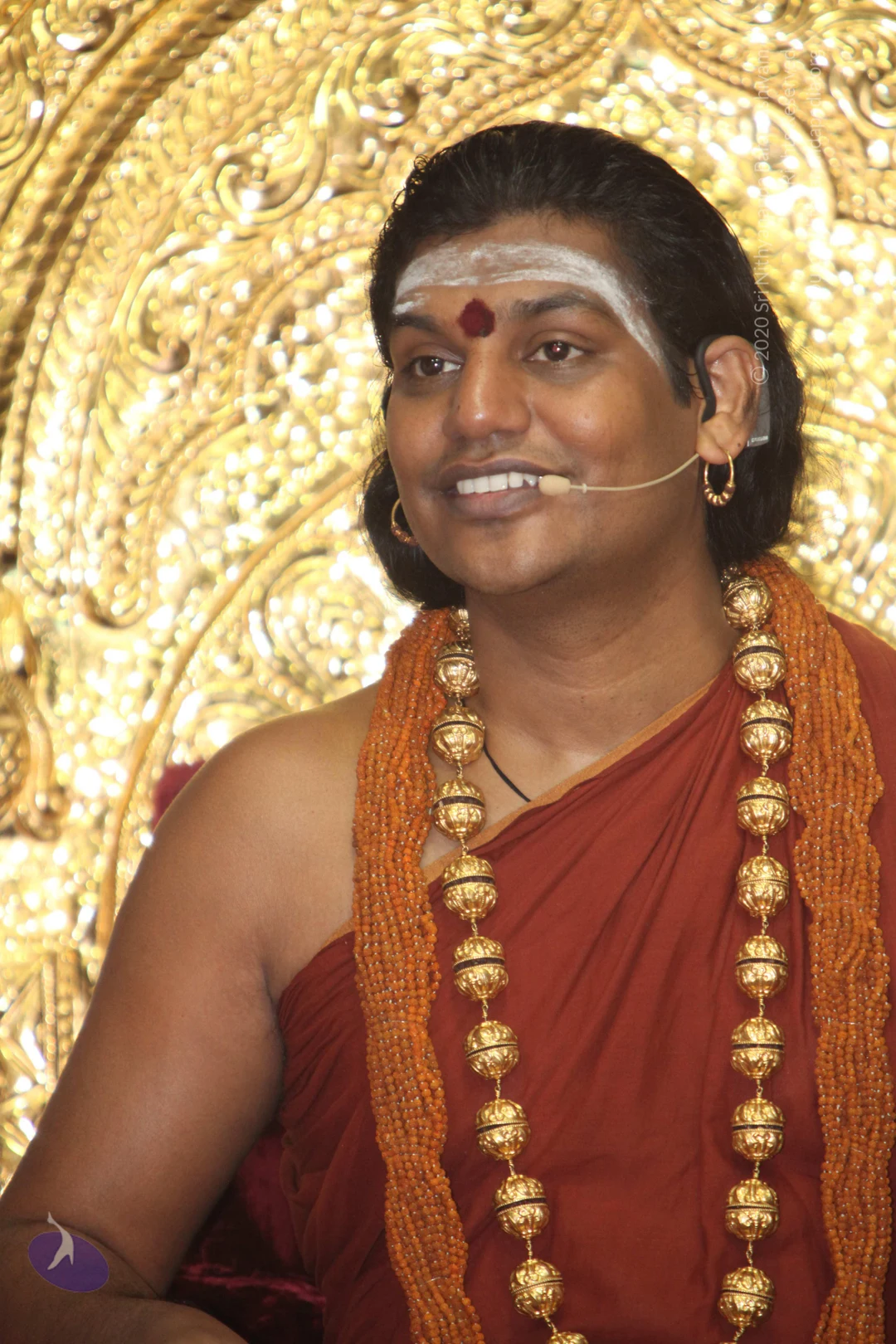
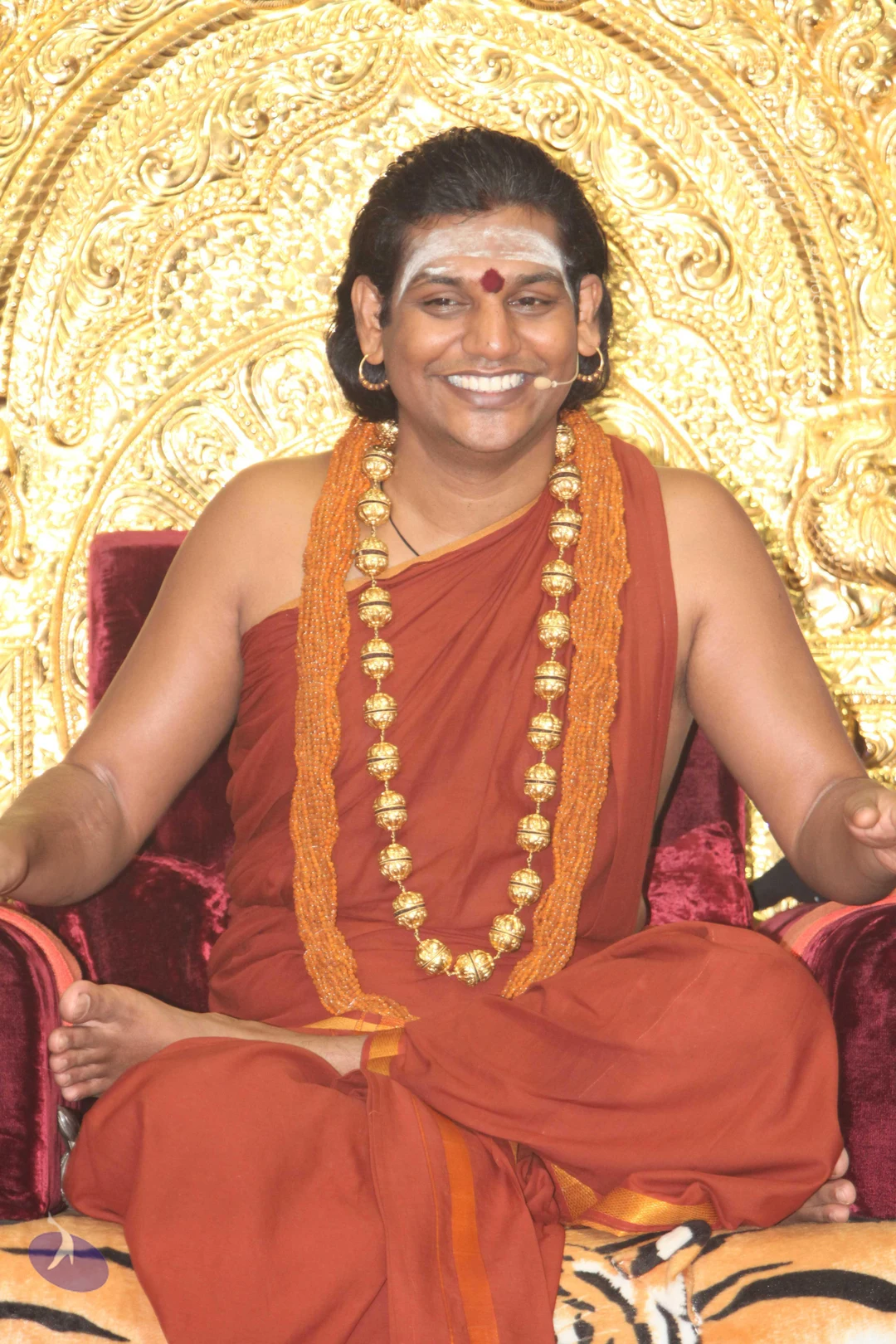
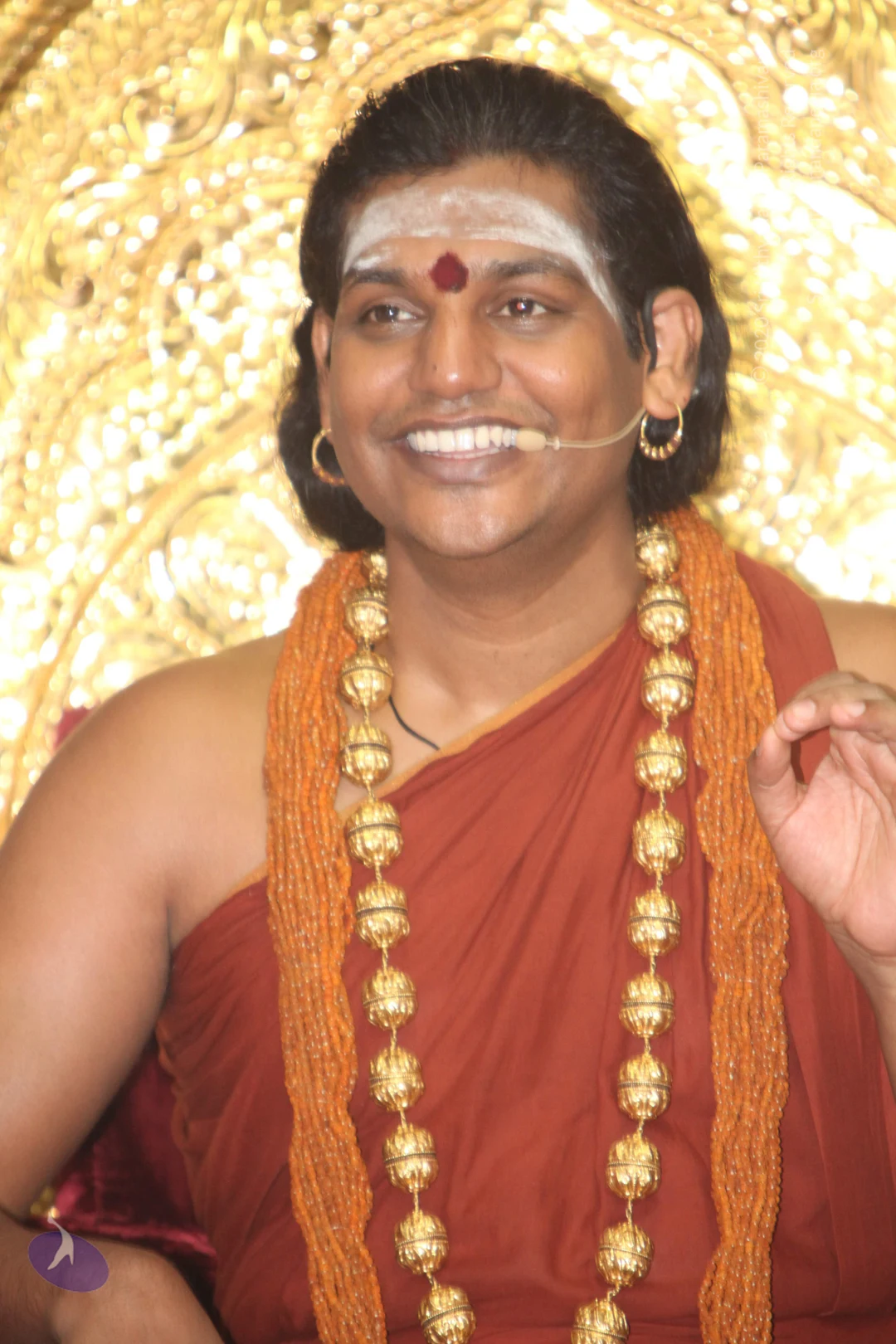
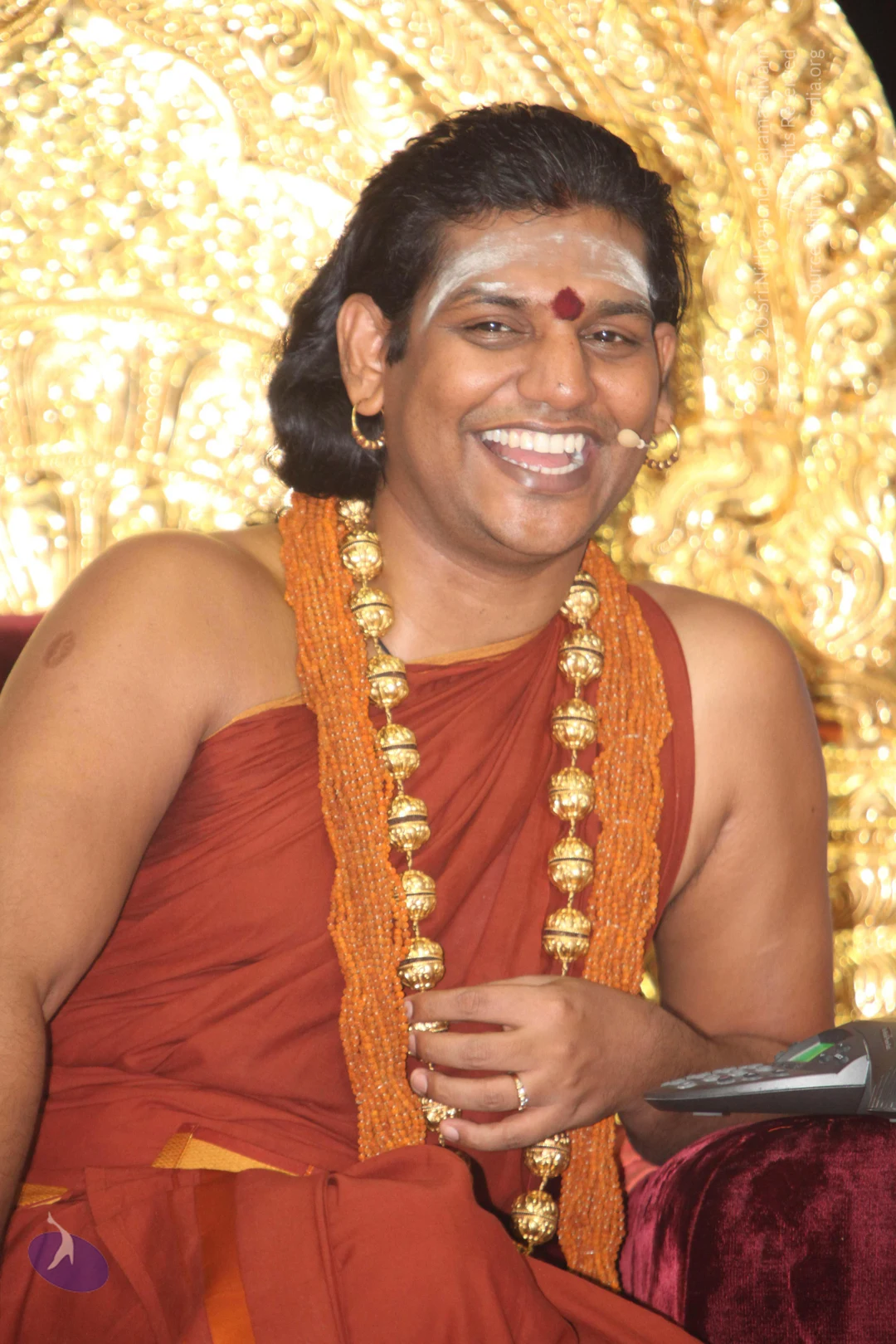
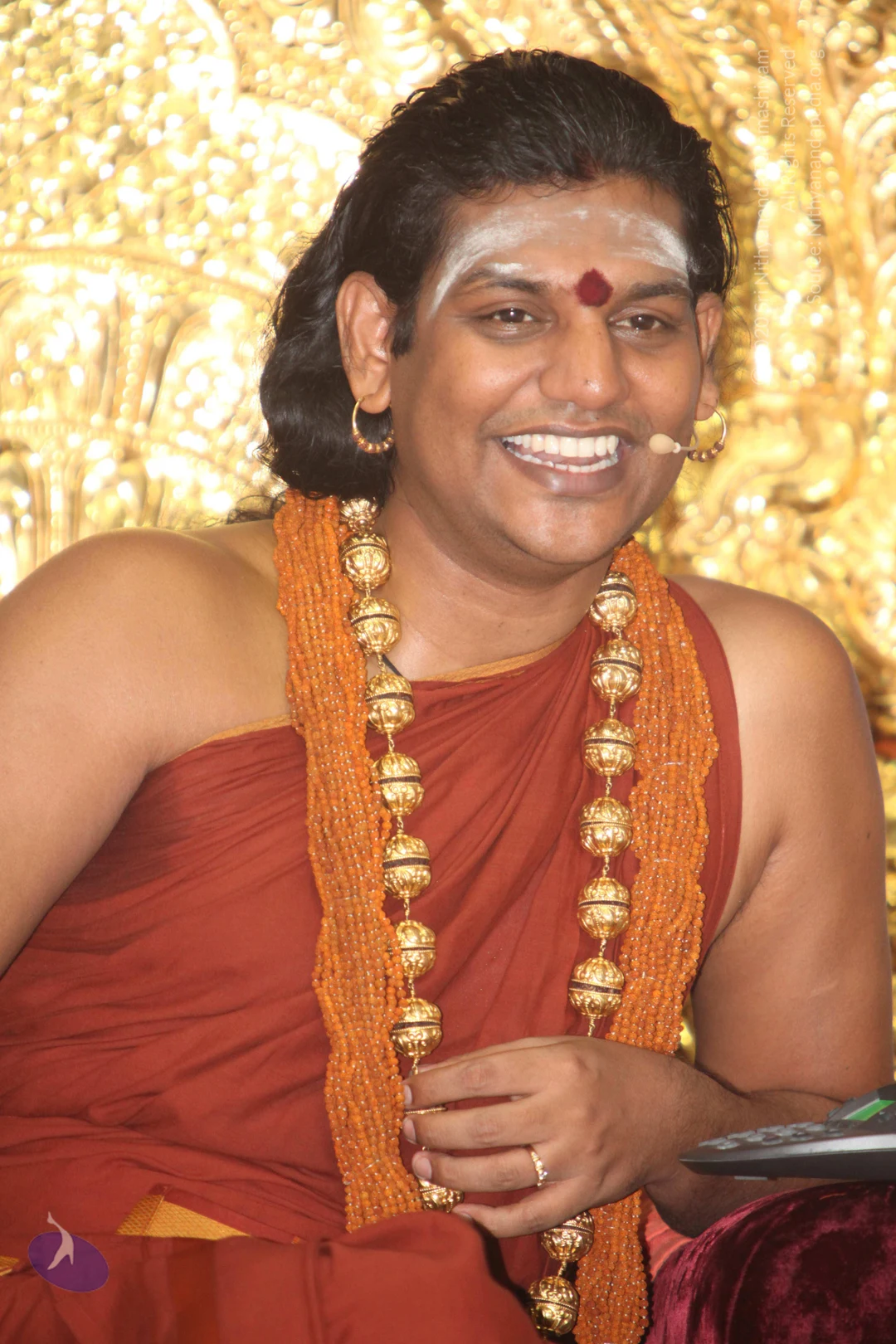
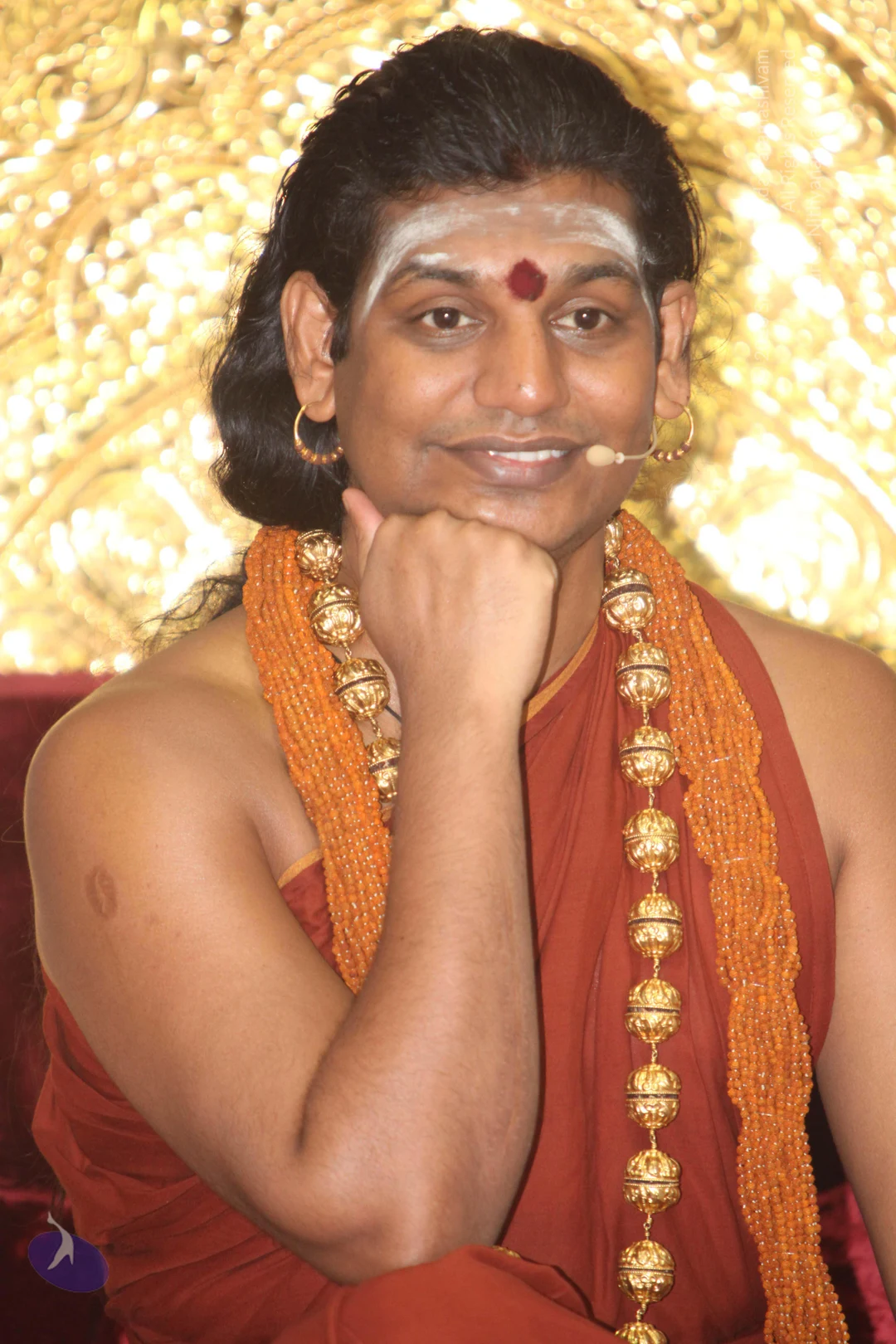
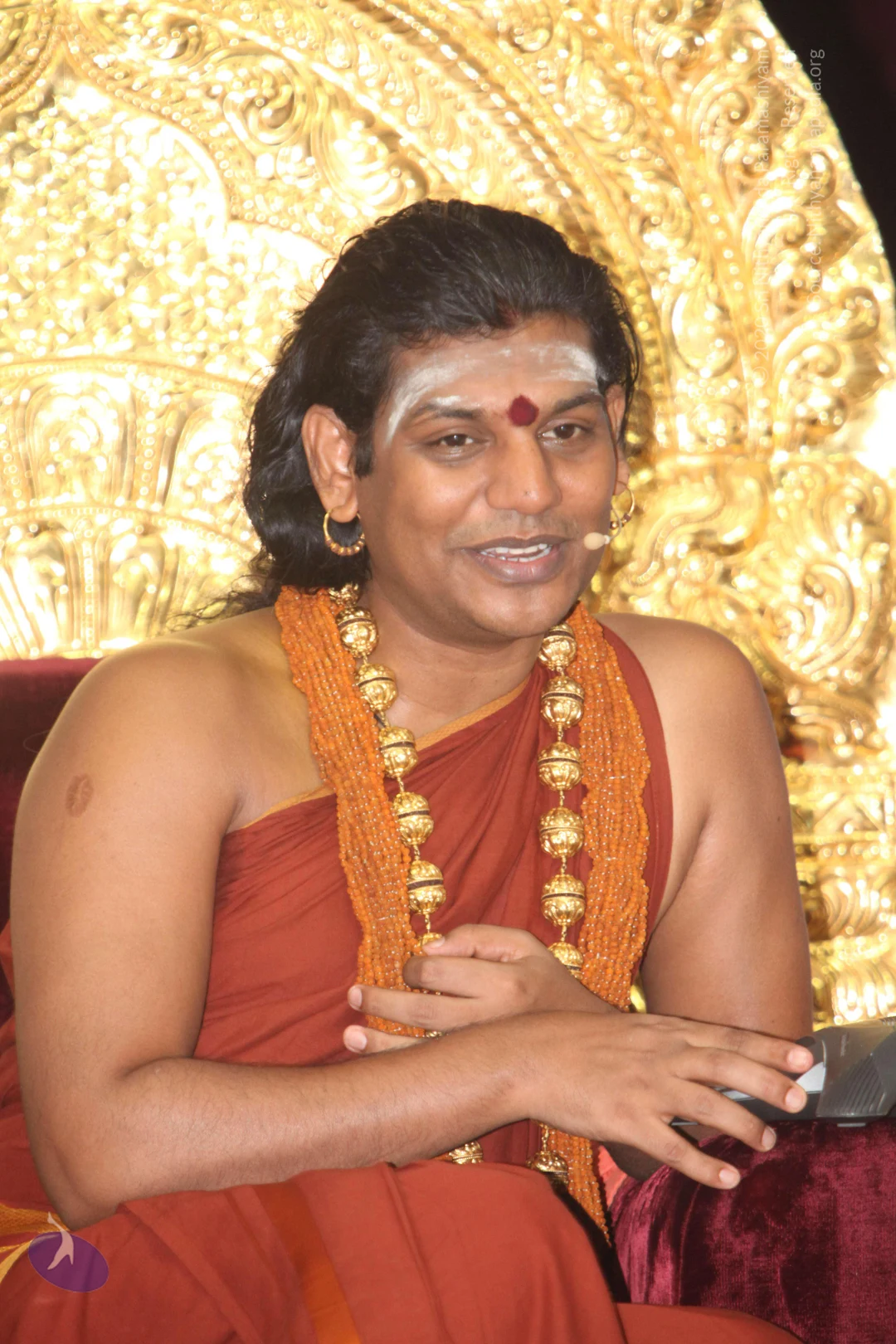
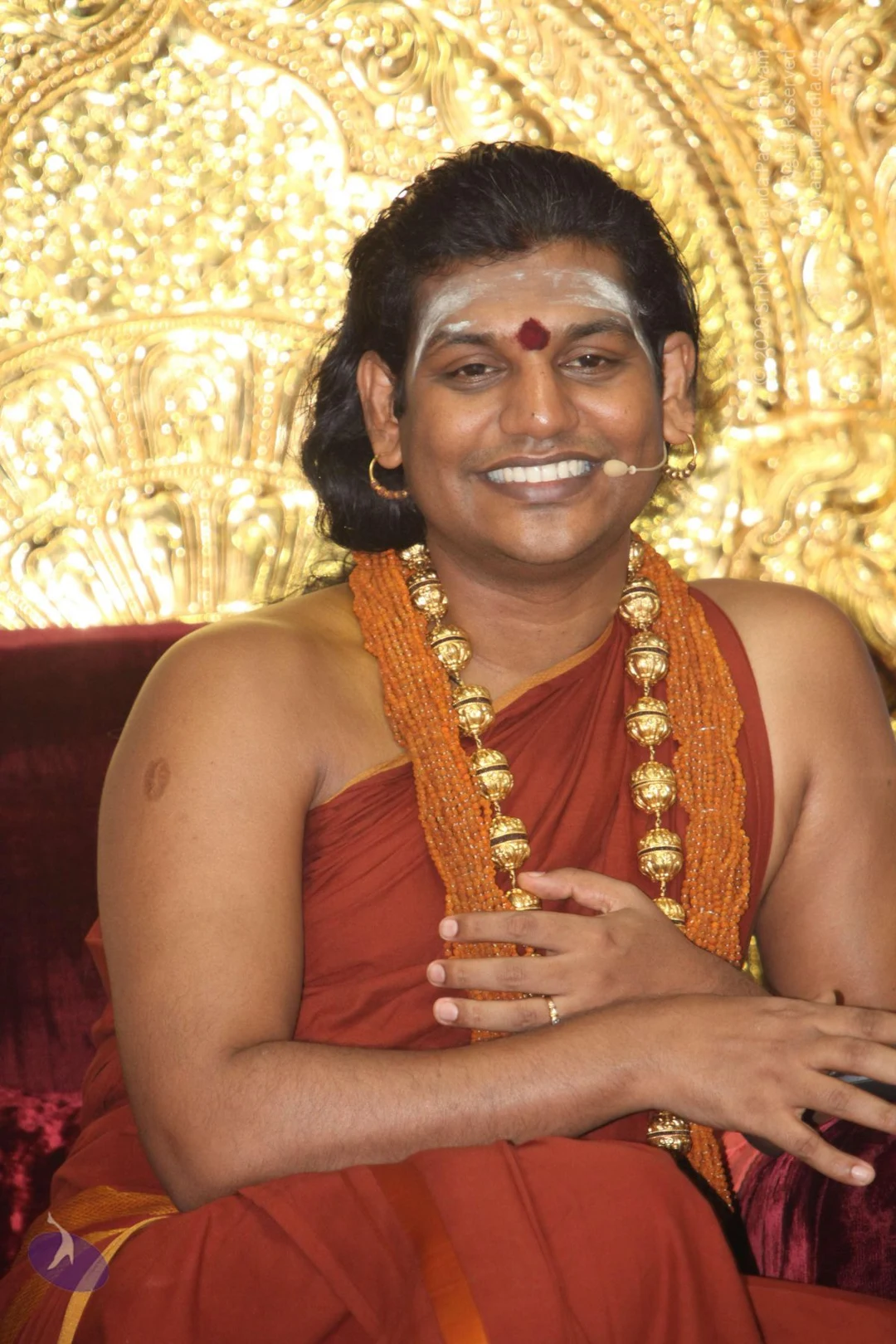
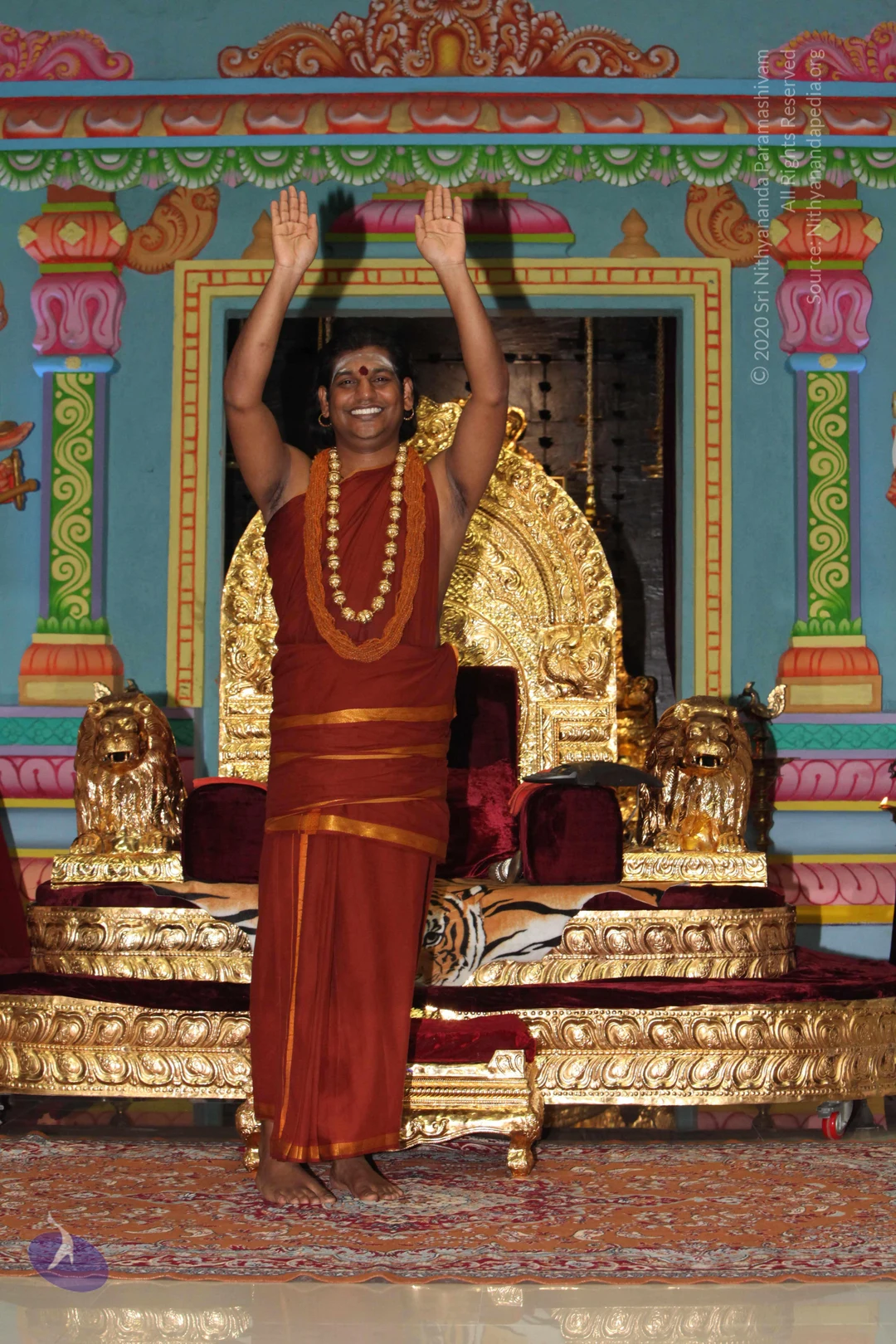
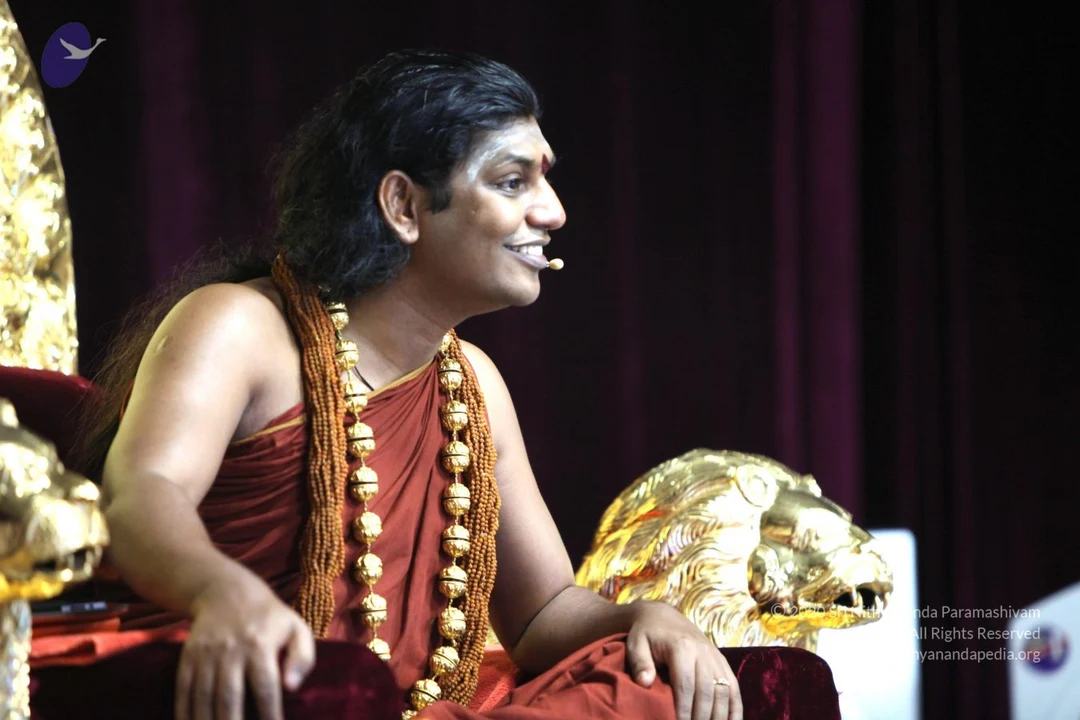
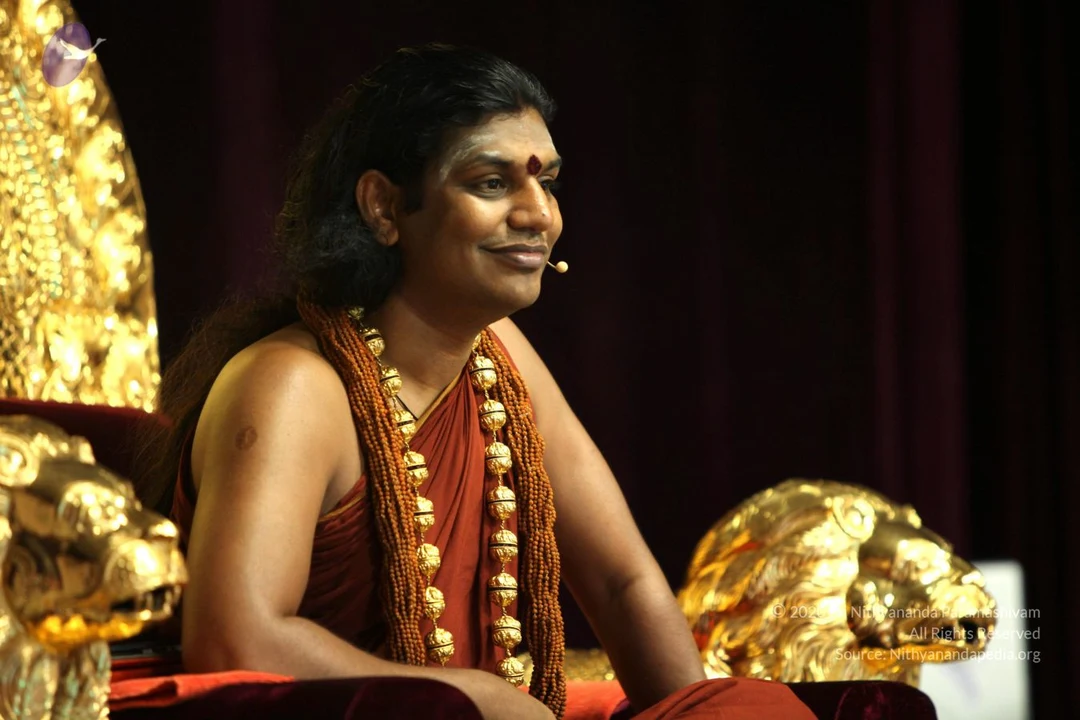
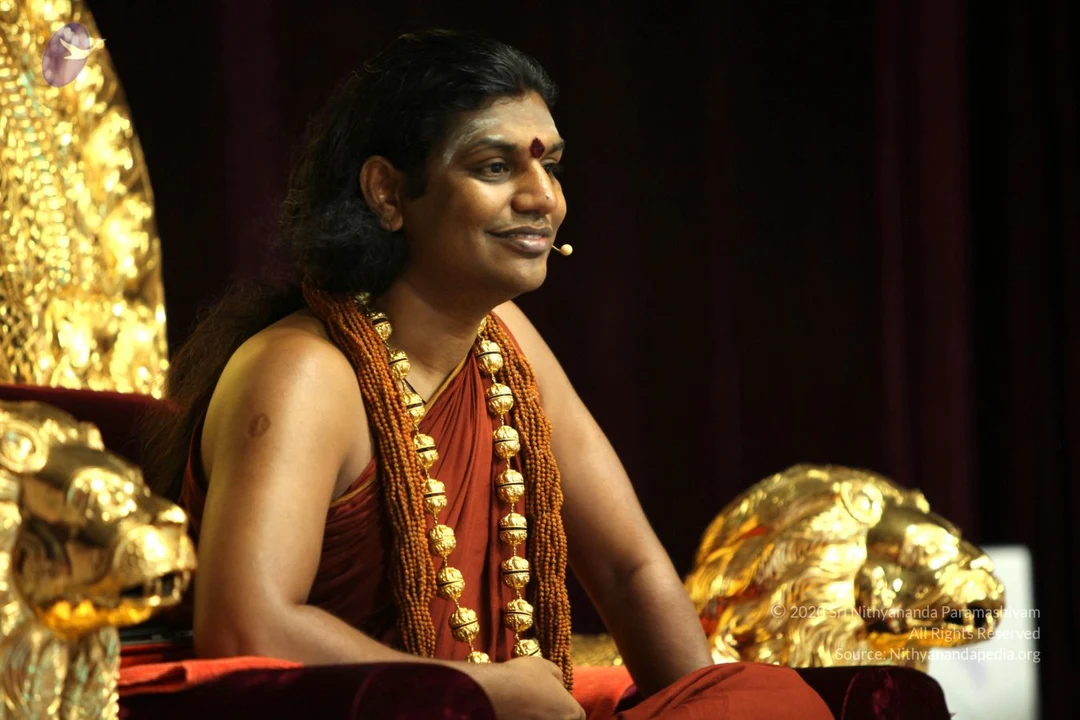
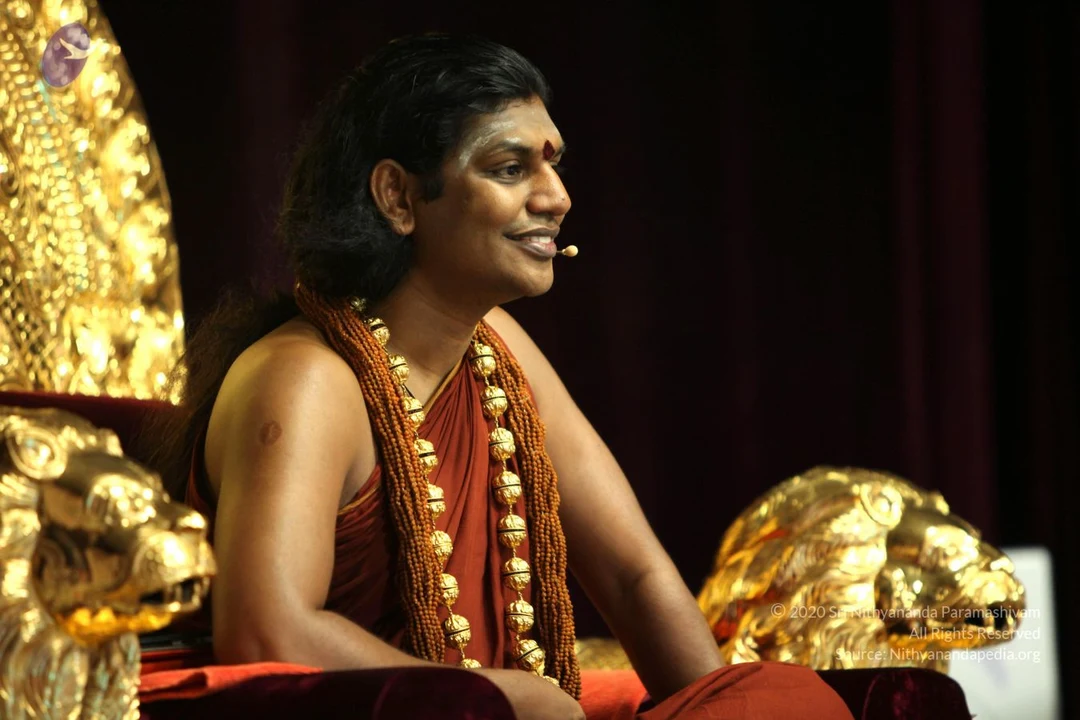
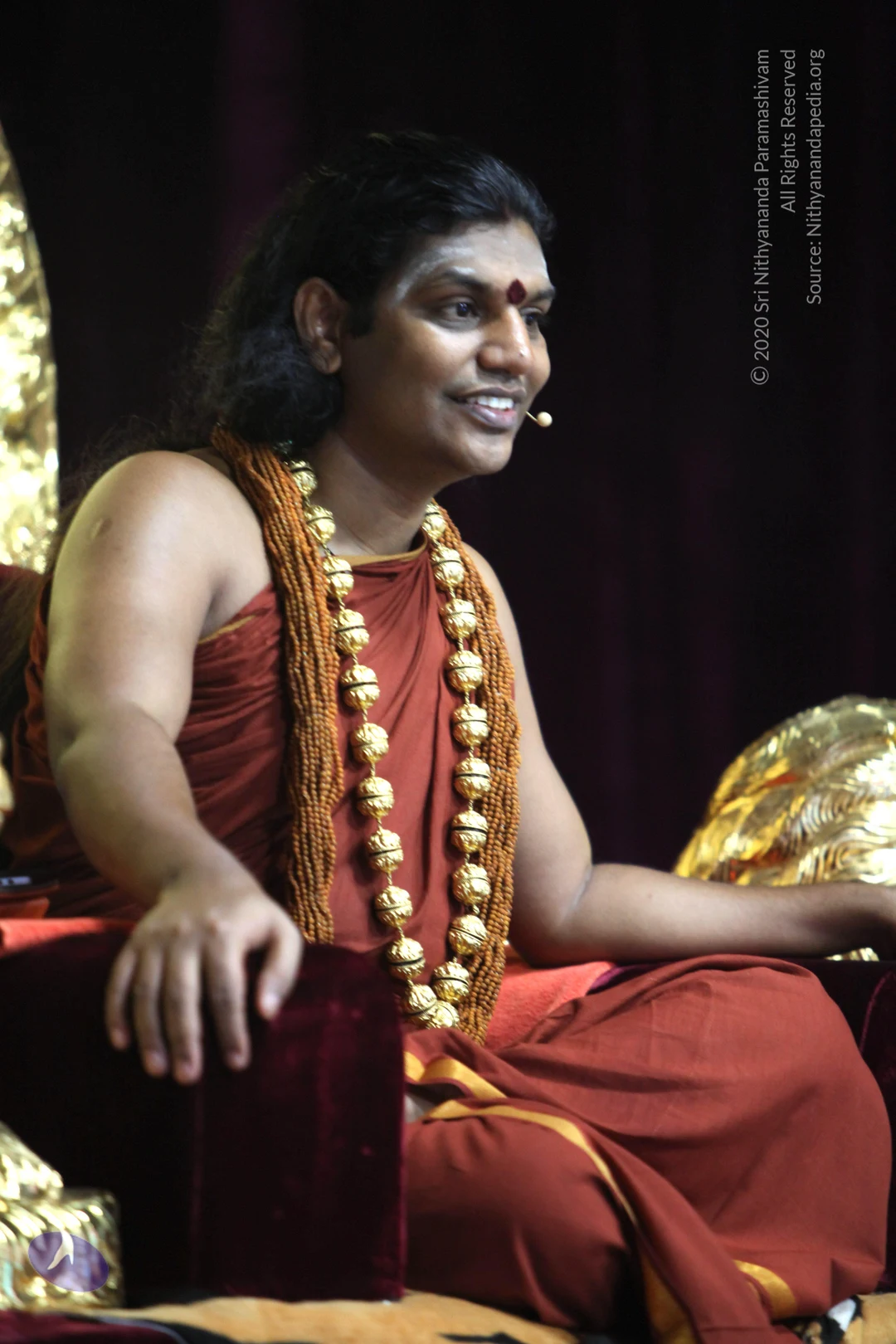
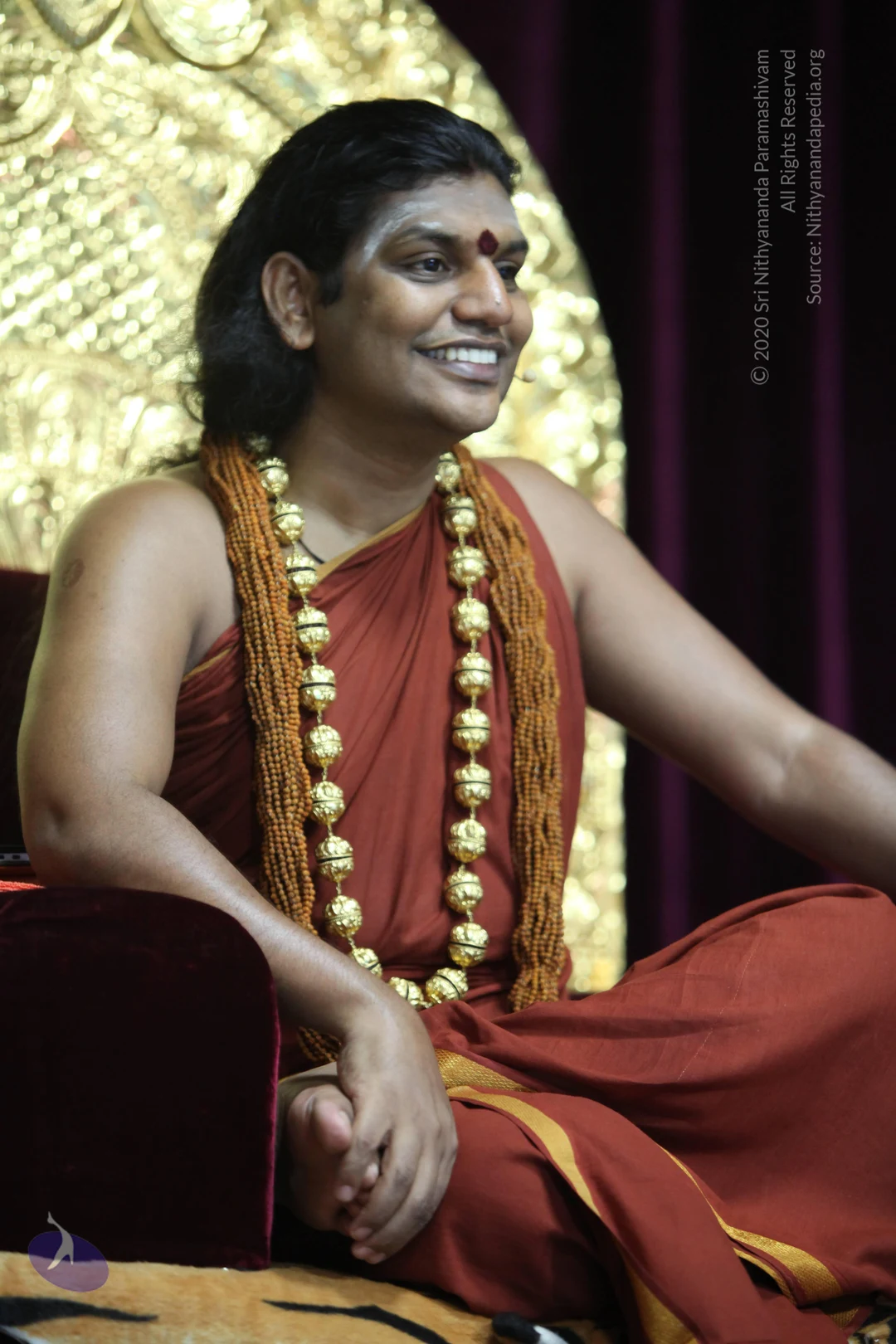
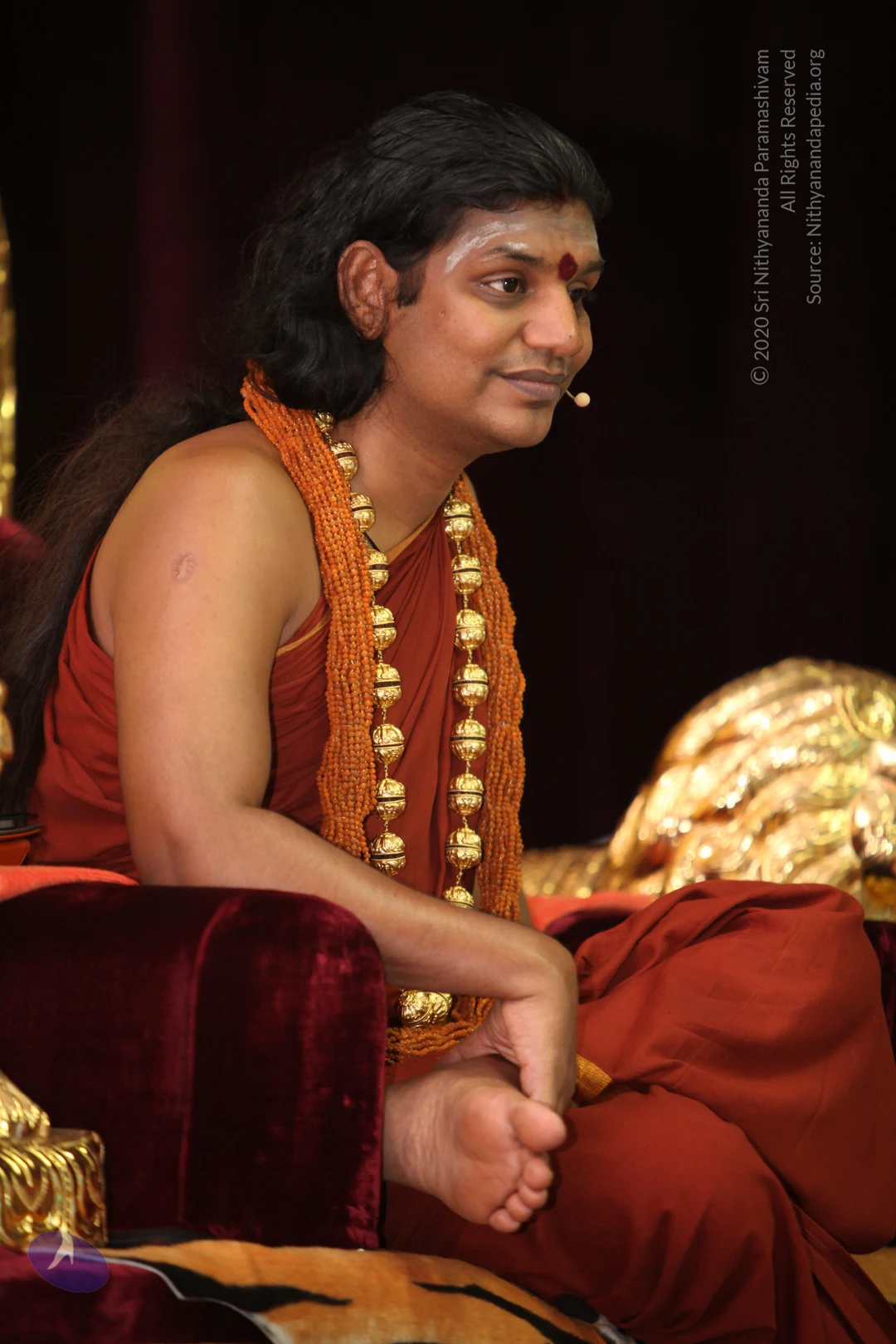
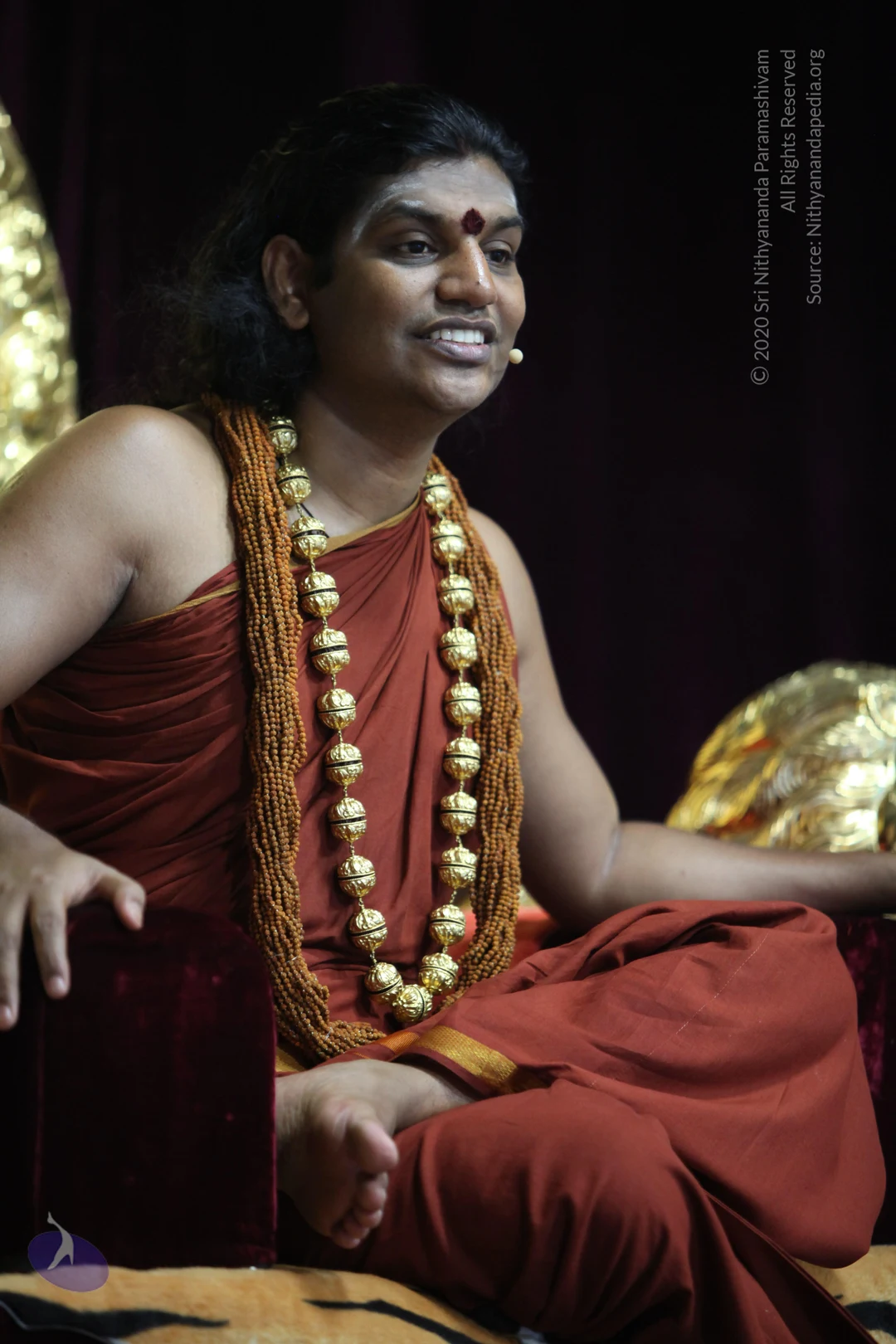
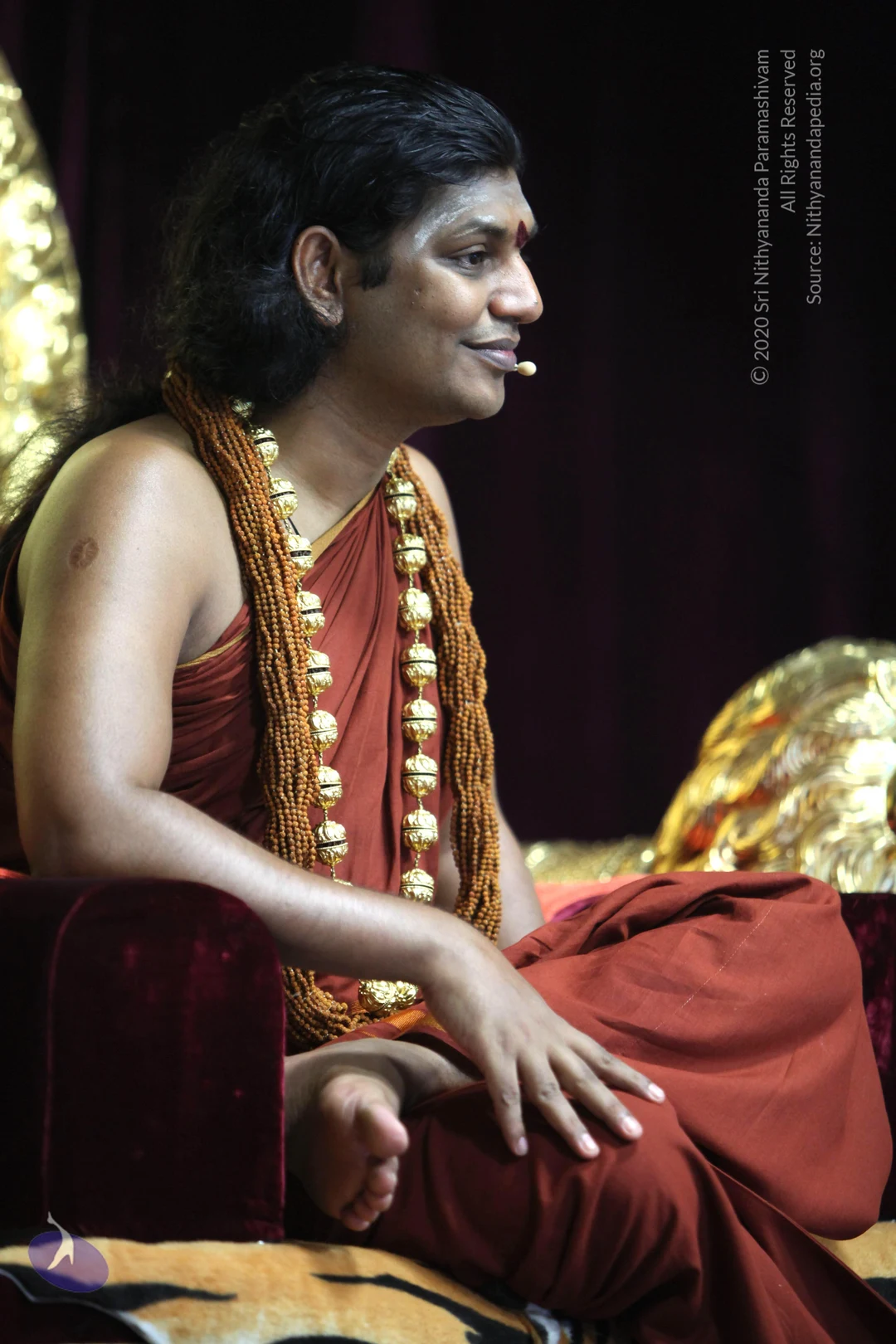
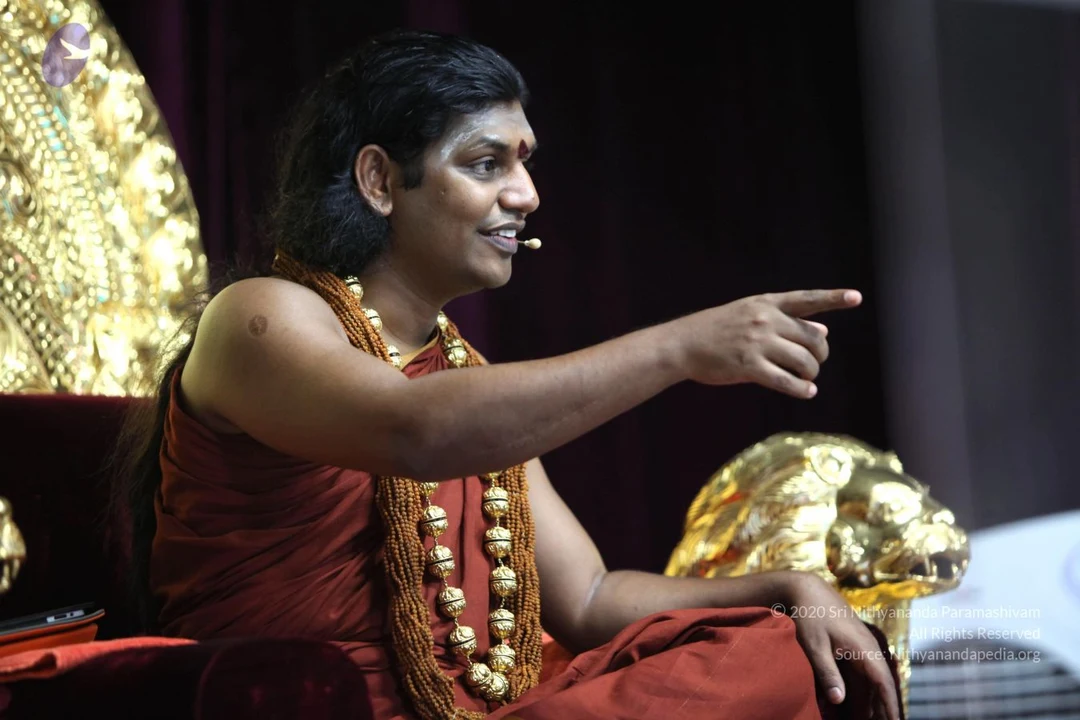
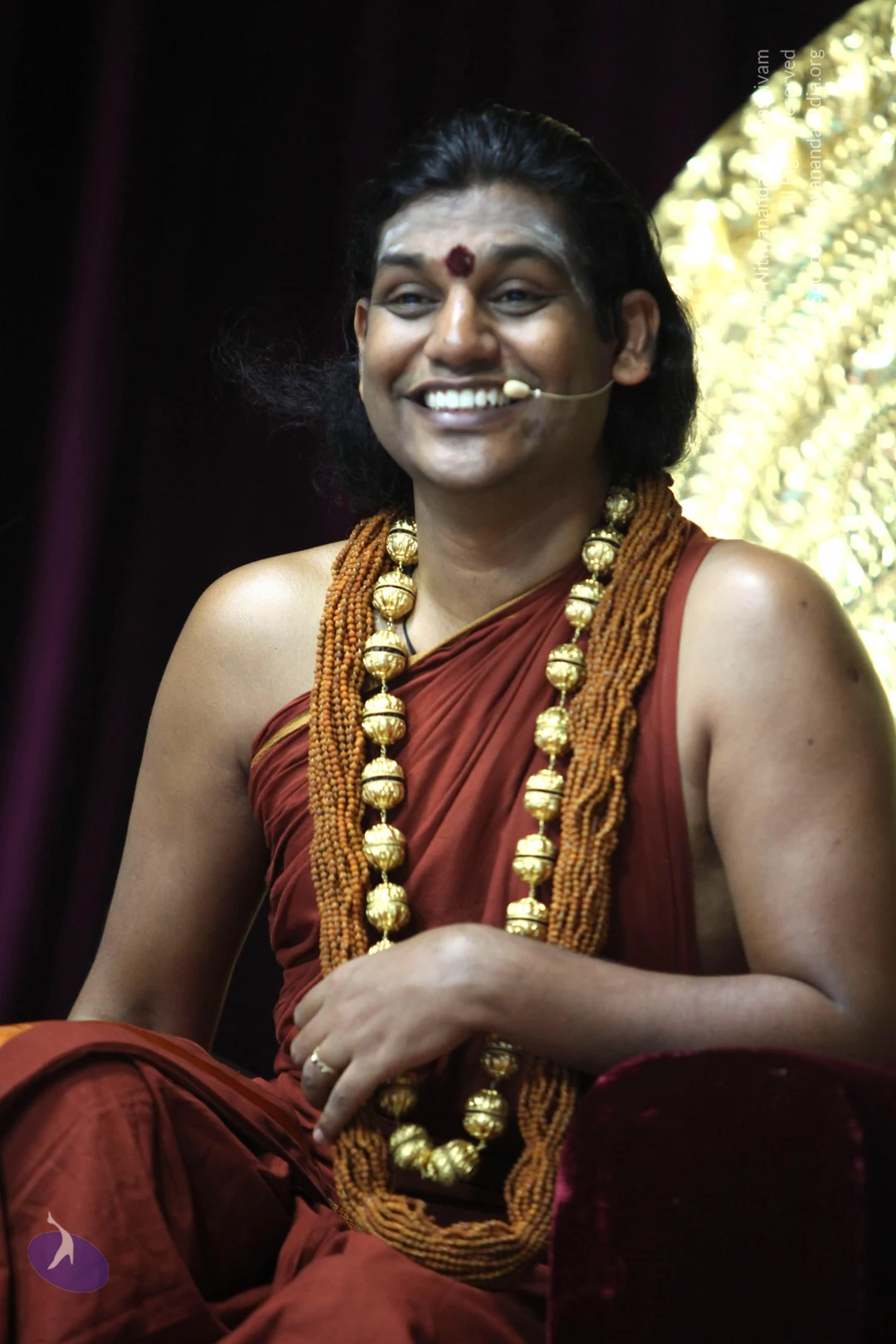
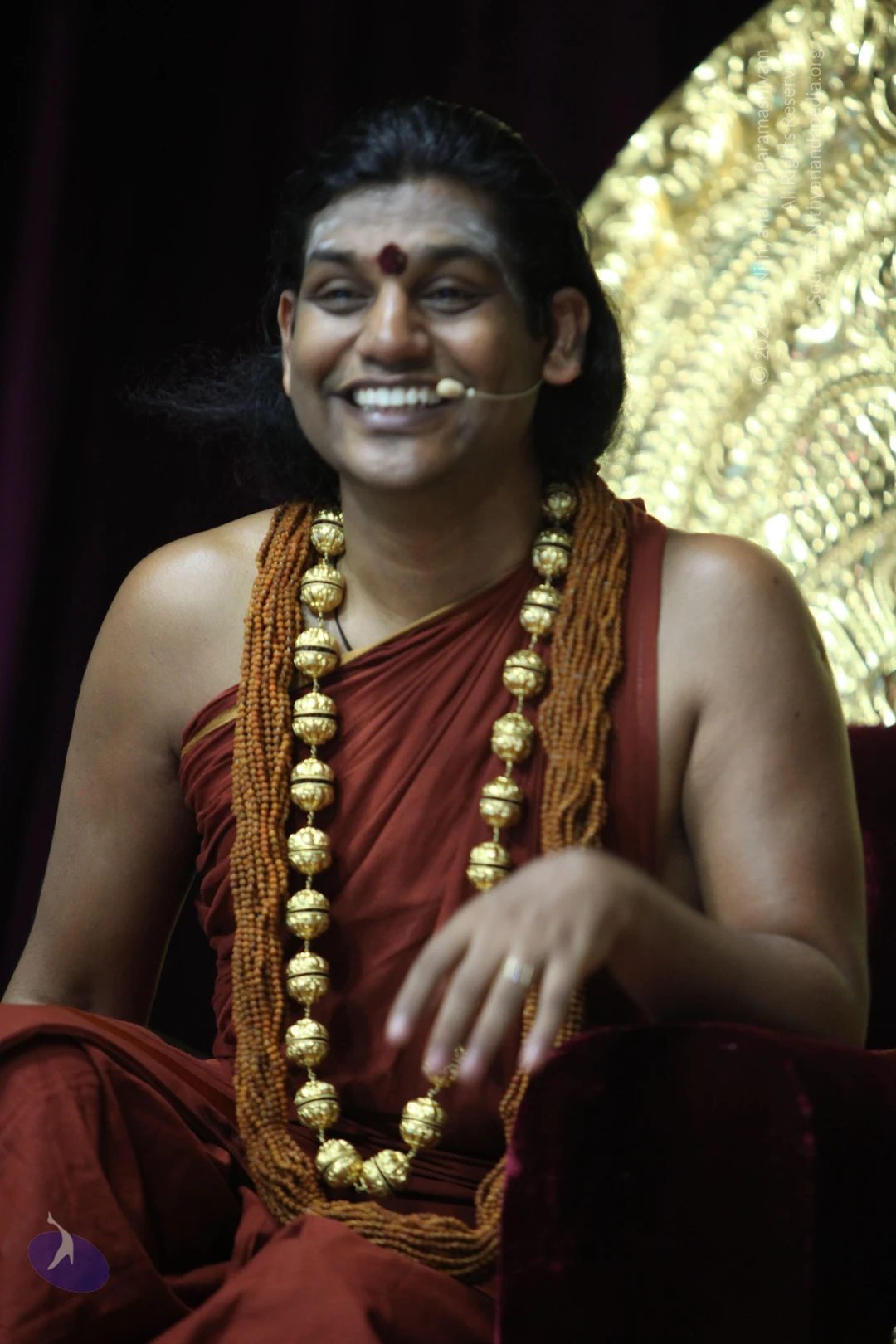
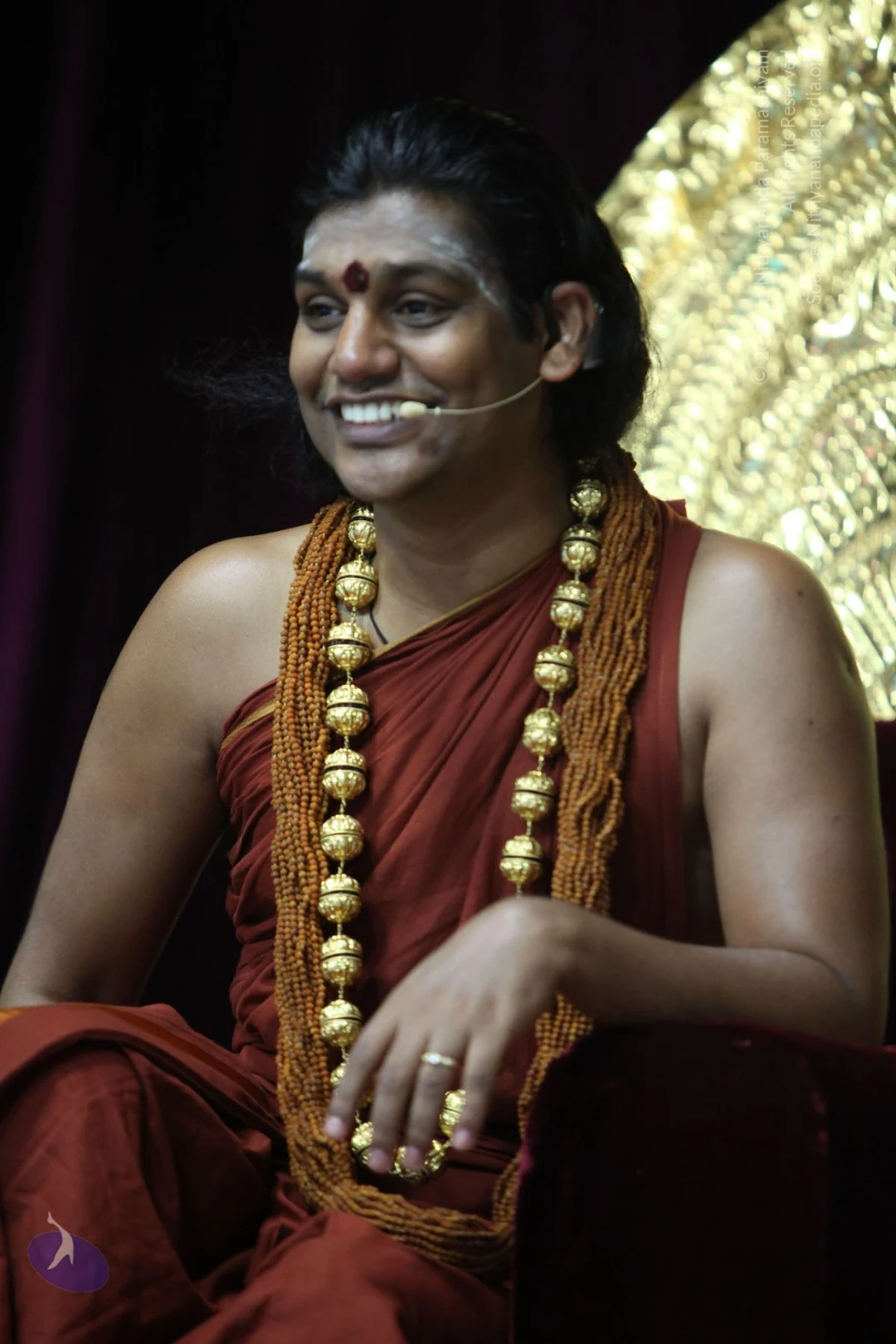
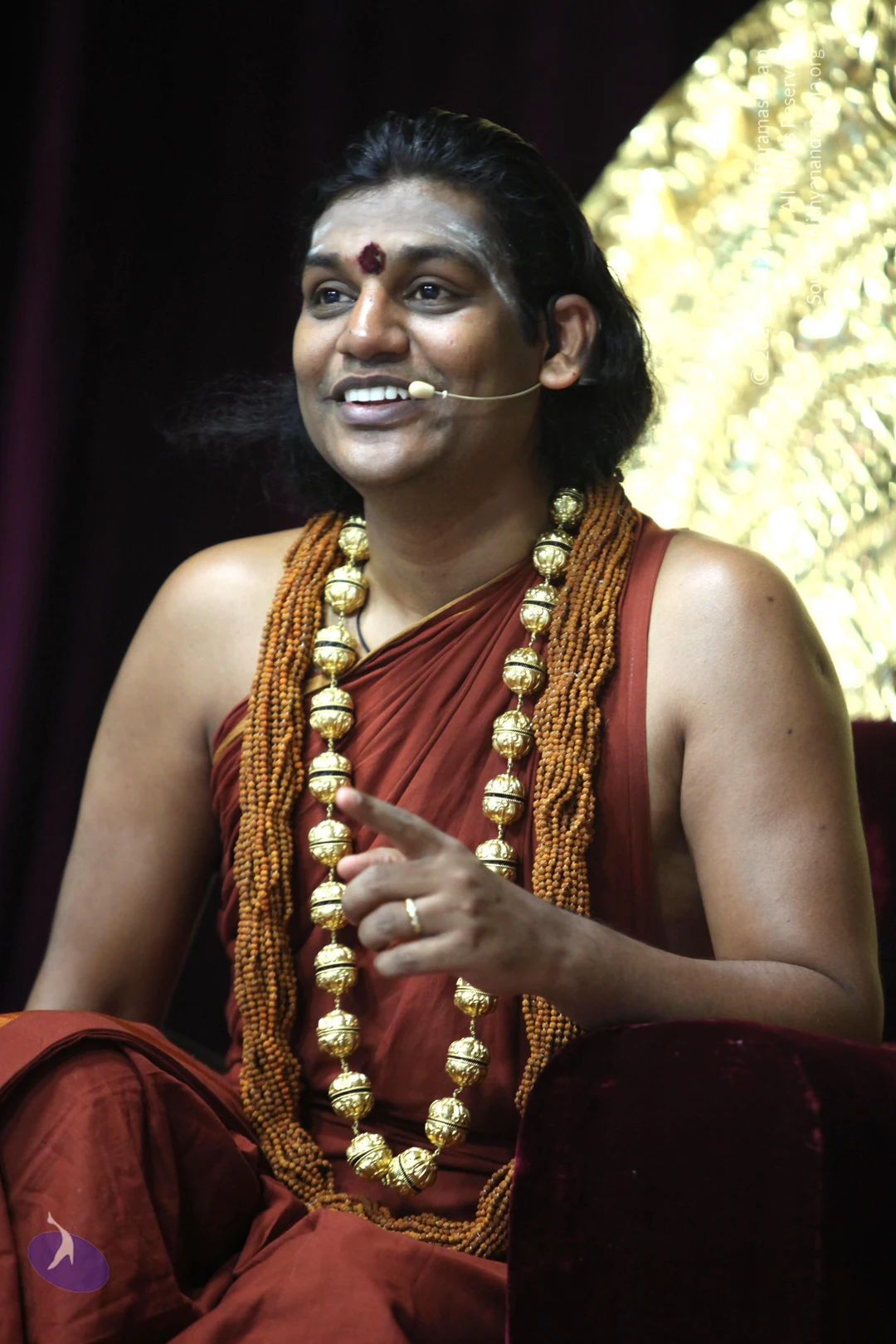
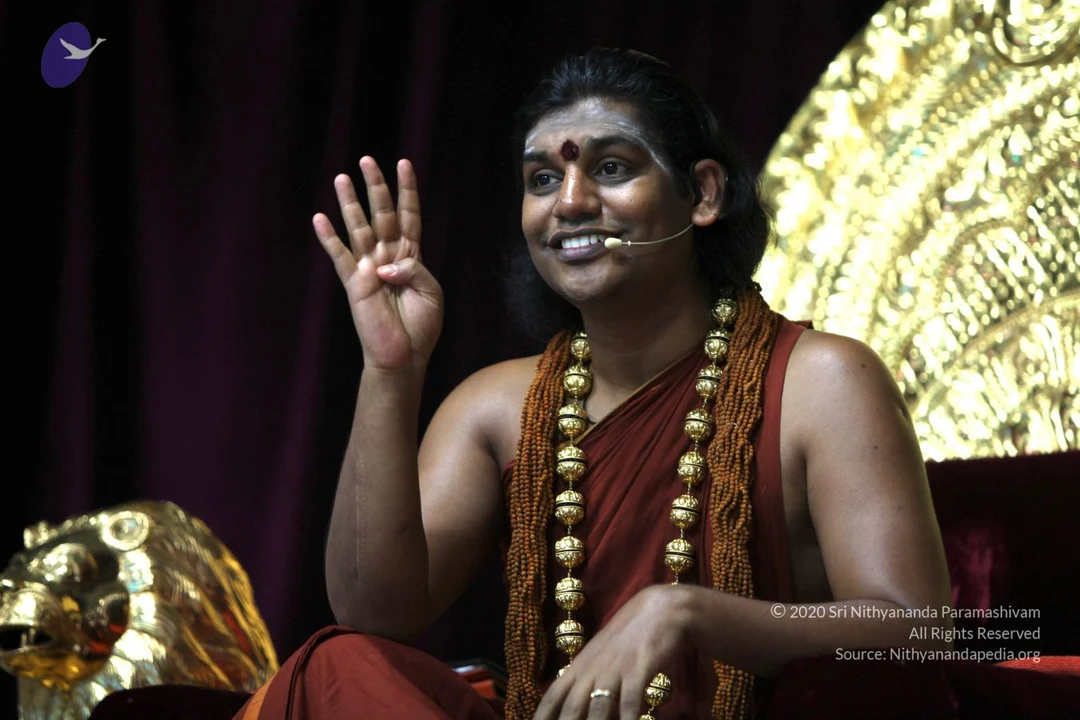
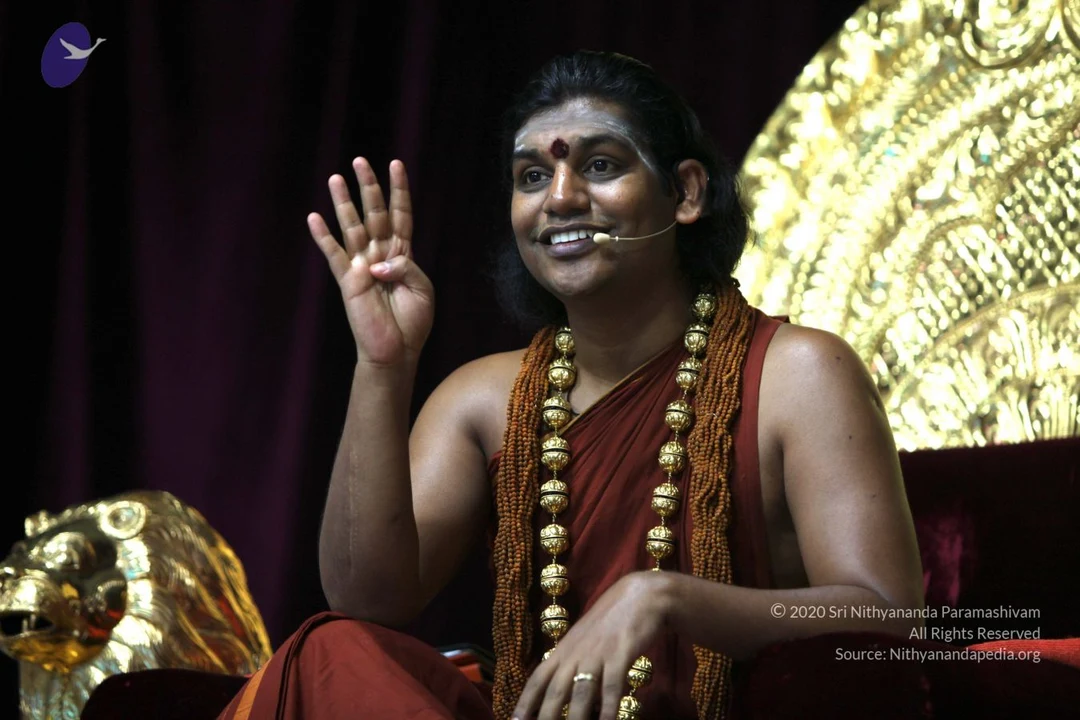
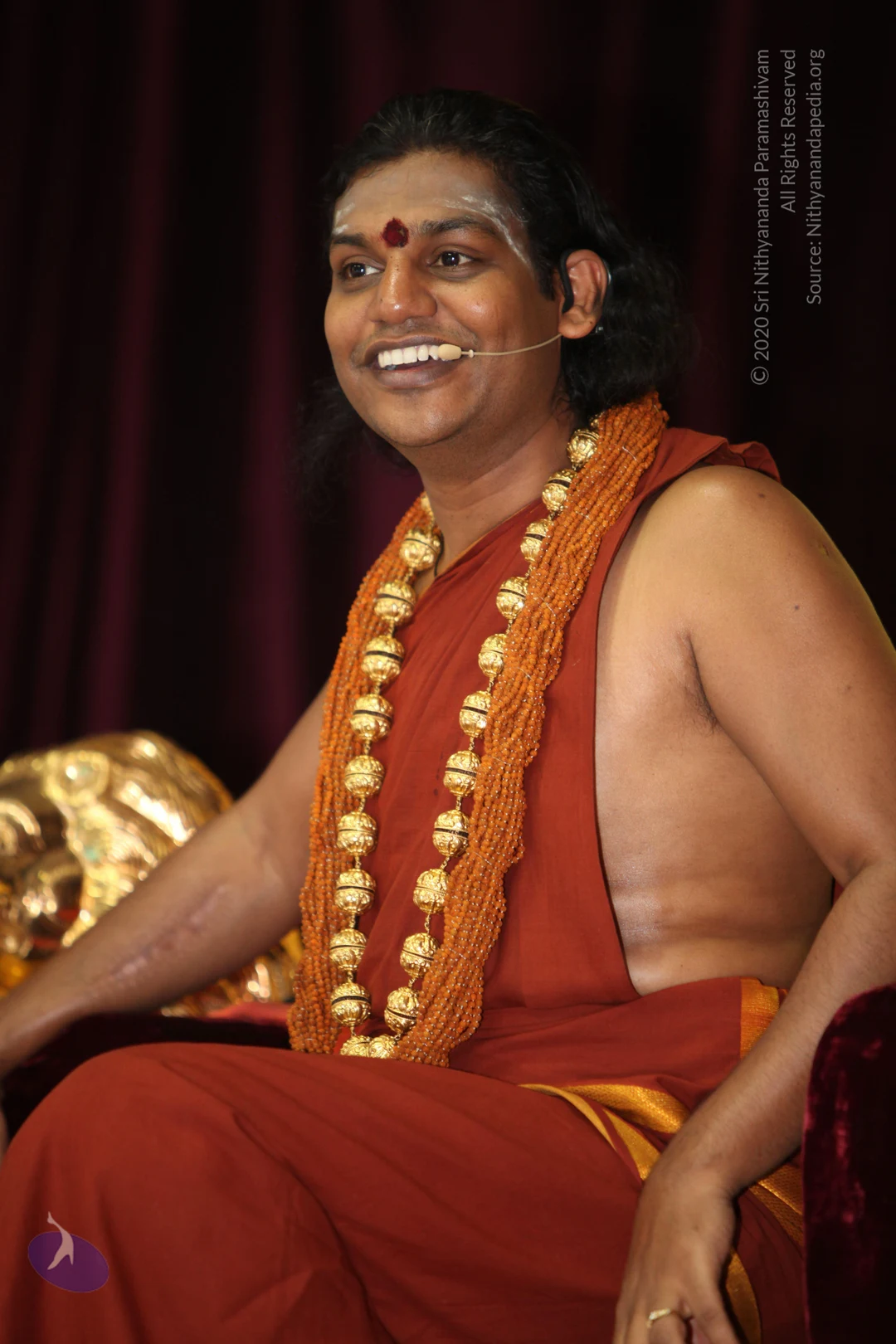
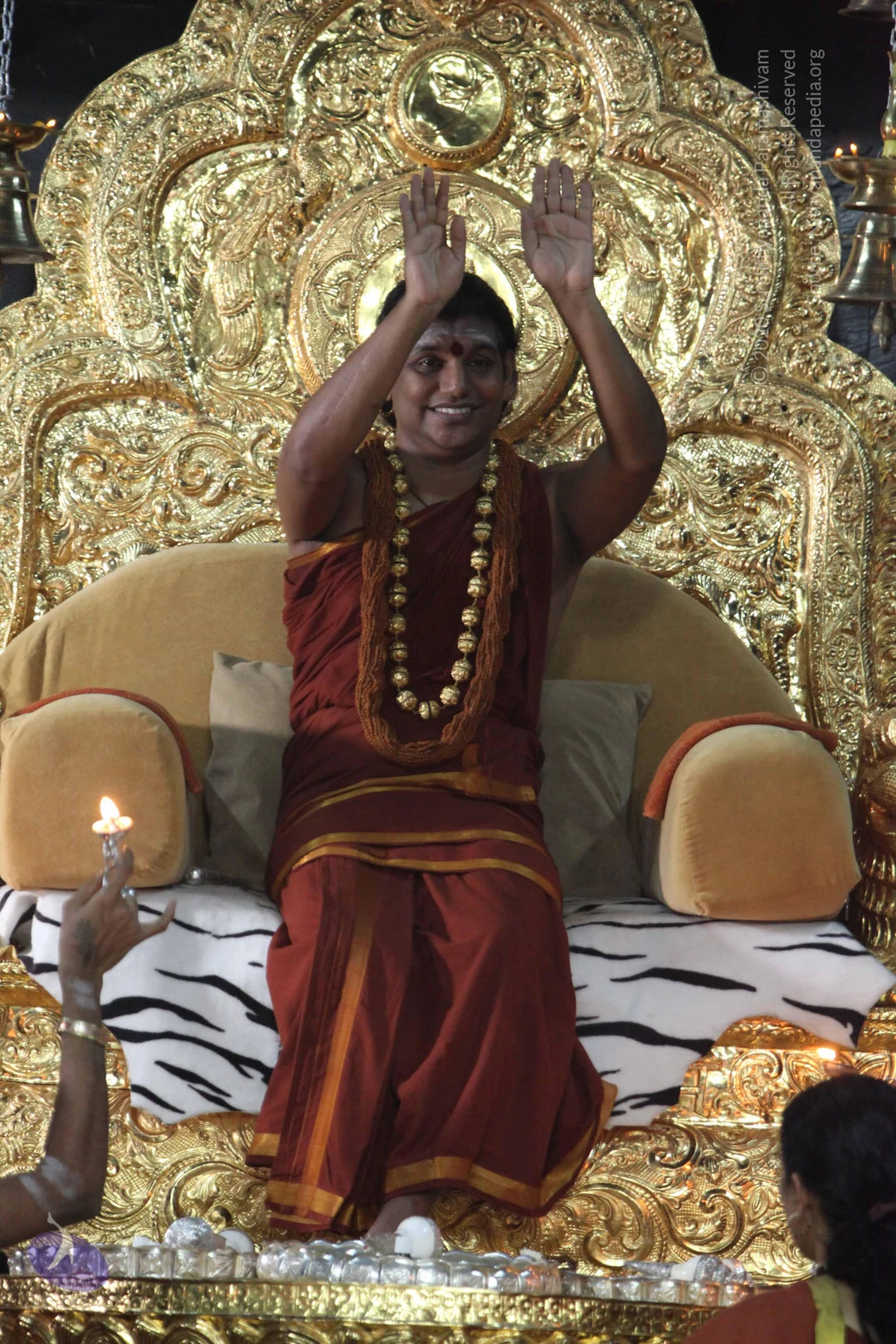
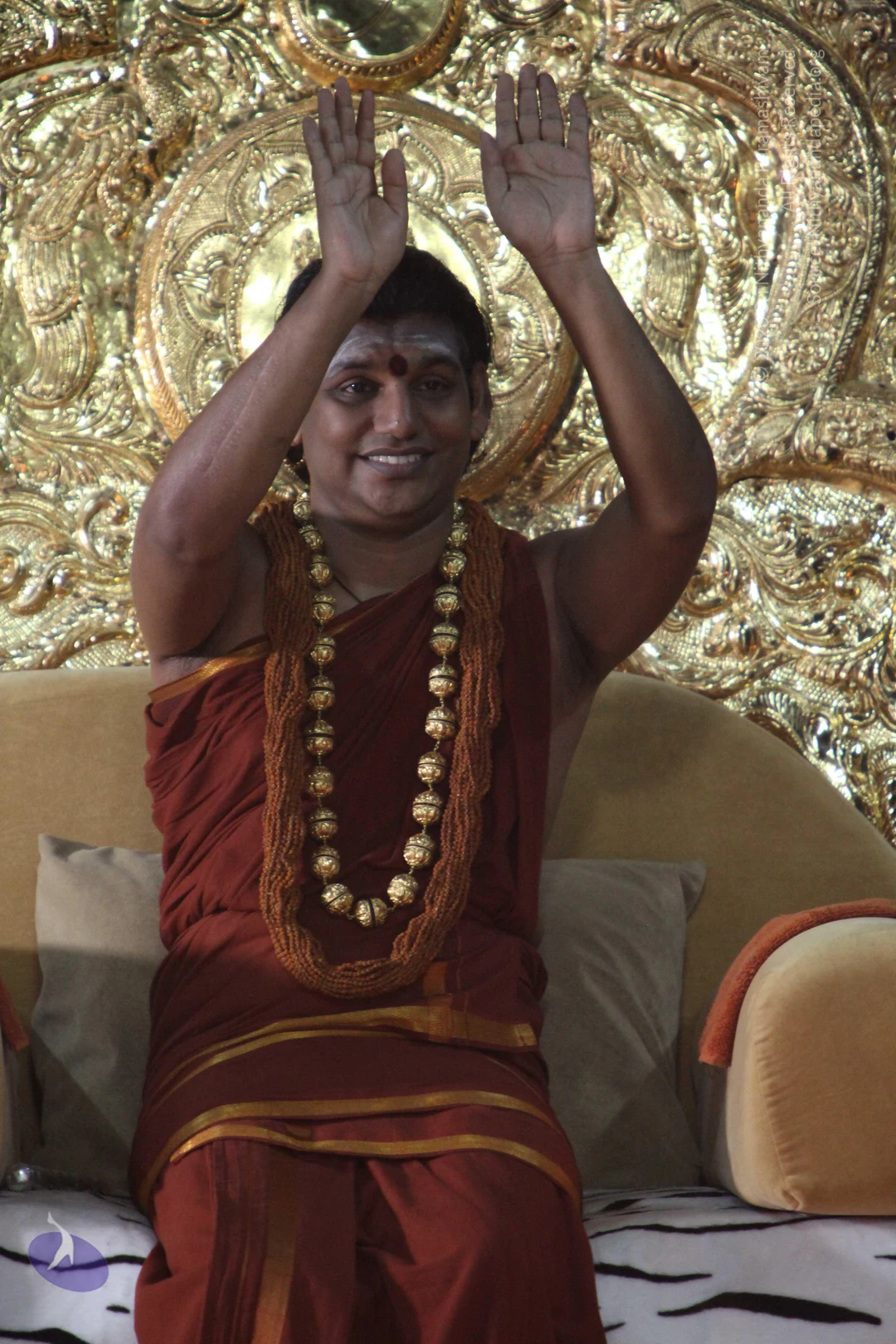
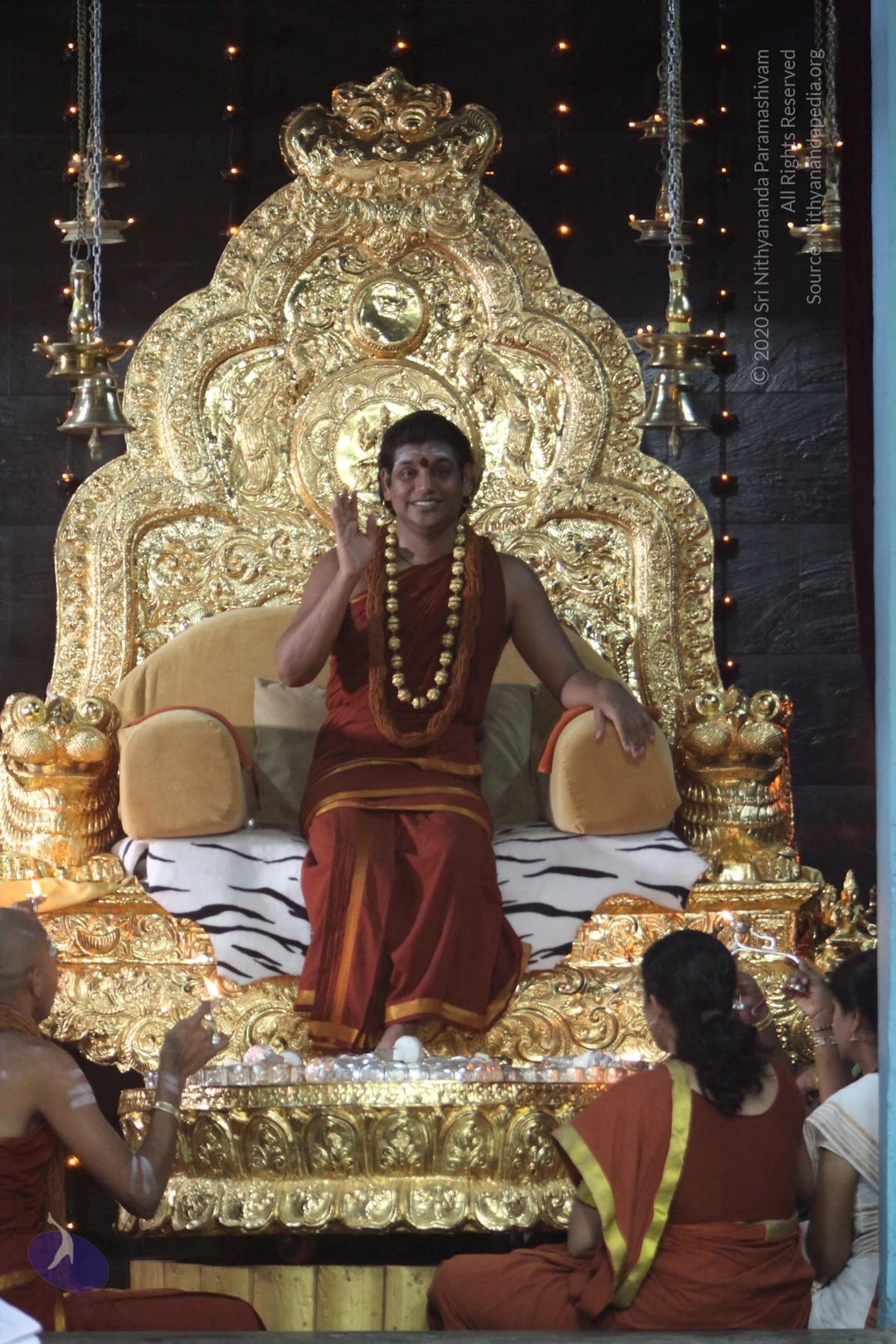
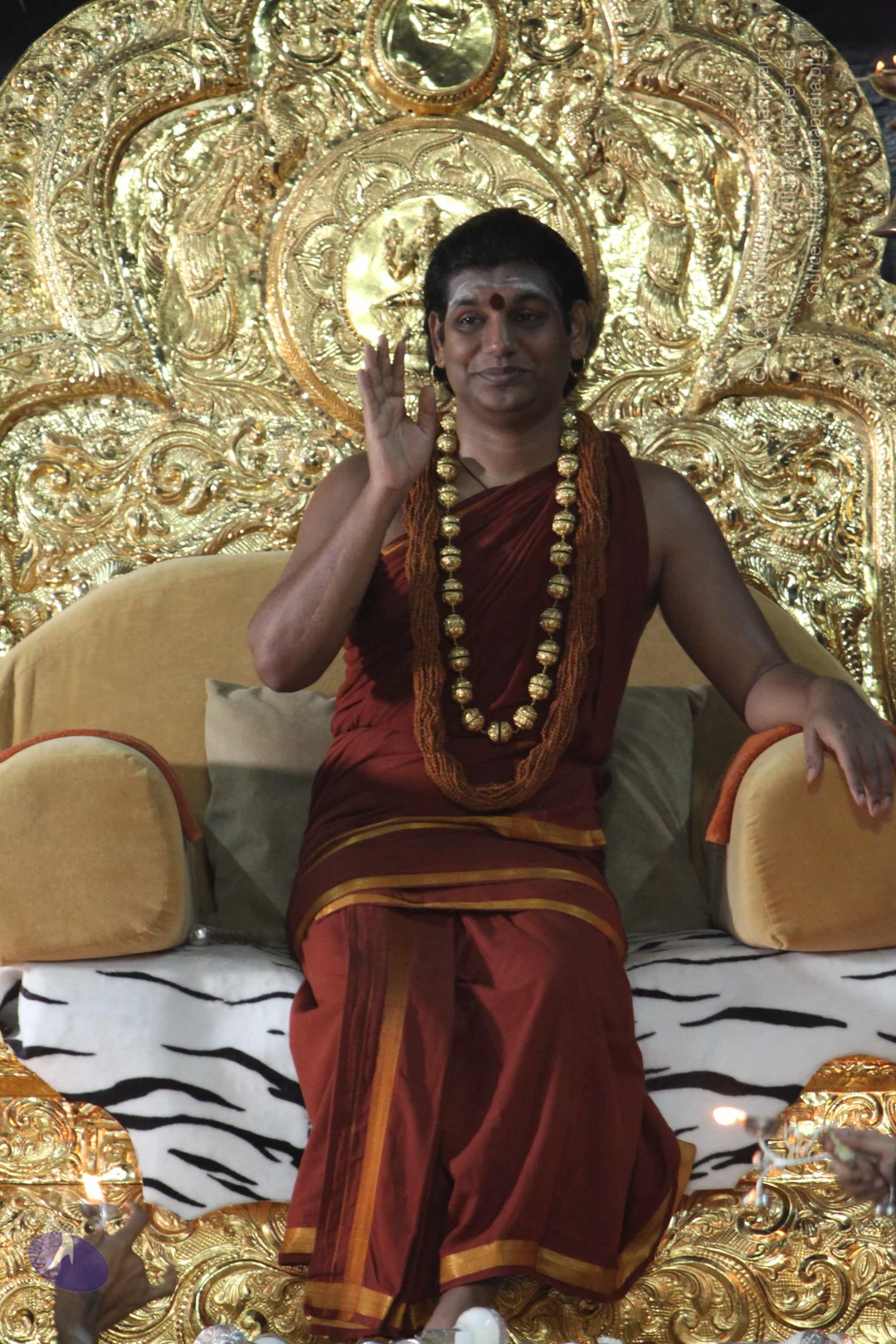
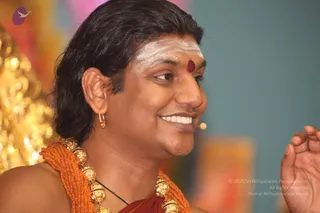
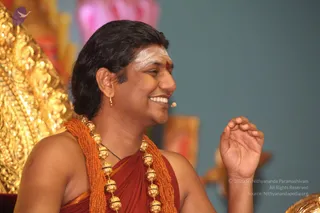
In today’s morning satsang, Paramahamsa Nithyananda explains that when we take birth we are not given the power to change the past, but we receive the ability to continuously create a new future. If we cling to past problems, it is the same as clinging to a dead body. Our loved ones ultimately leave us, and at that time only a corpse is left. We understand that the body has no use without the person within, and we bury or burn the remains. In the same way we must recycle our history and open to the future, which is ours to create! Otherwise the future becomes imprisoned by the past.

Link to Video:

VideoAudio

Transcript:

(00:19)

Nithyānandeśvara samārambhām Nithyānandeśvari madhyamām | asmat āchārya paryantām vande guru paramparām ||

(00:48)

(In Hindi)

Is samay hamare saath upasthit sabhi darshako aur bhakton ka Mein prem evam aashirvaad sahit swagat karta hoon. Aaj hum aap ki Kundalini Shakti ke jagran kaise aap apni ichchha anusar vastavikta ka sarjan kar sakte hain uske bare me baat karenge.

इस समय हमारे साथ सभी दर्शक और भक्तों का मैं प्रेम एवं आशीर्वाद सहित स्वागत करता हूं। आज हम आप की कुंडलिनी शक्ति का जागरण कैसे करें, आप अपनी इच्छा अनुसर वास्तुविकता का सर्जन कर सकते हैं, उसके बारे में बात करेंगे।

(01:18)

I will expand on how the Kundalini awakening can help you to create a reality of your choice. Human beings are programmed - only the right future they want to build. They are not given the power to correct the past. Please listen. You are only empowered to build the future as you want. You are not empowered to correct the past. So, the more and more brooding over the past, means more and more suffering. You are empowered only to build the future which has no connection with the past, which has nothing to do with the past. As long as you believe your past has capacity to influence your future, you are in delusion. Human-beings are hardwired to build the future as they want, but they have no capacity to correct the past. All the struggling you are doing to correct the past will be failure. You have no power to correct your past. You only have the power to build your future. More and more you think about the past, more and more you are going to be in powerlessness.

(03:36)

(In Hindi)

Manav jaati ko keval ek sahi bhavisya ka nirmaan karne ka adhikar he. Aap ko apne atit ko parivartit karne ki adhikar nahi he. Manav jaati ko keval ek sahi bhavisya ka nirmaan karne ka adhikar he. Aap kp apne atit ko parivartit karne ki adhikar nahi he.

मानव जाति को केवल एक सही भविष्य का निर्माण करने का अधिकार है। आप को अपने अतीत को परिवर्तन करने का अधिकार नहीं है। मानव जाति को केवल एक सही भविष्य का निर्माण करने का अधिकार है। आप को अपने अतीत को परिवर्तन करने का अधिकार नहीं है।

(04:10)

You are hypnotized to believe your past has influence over your future. No! Till this moment if somebody was a sinner, next moment he can become saint! Till this moment if somebody can be saint, next moment he can become a sinner! That is the beauty of Mahakala- Time.

Your cognition about you and about the life depends on what you think as your time. Usually, you think hundred years as your time. So, whatever has passed, you think as your time; whatever is going to come, you think as your time; which is completely wrong. Neither your life is hundred years, nor the time passed is your time. Only the time going to come is your time. The whole time is your time. That is the first right cognition you need to have. Second, whatever has passed is not your time; it has no power over you; it has no influence over you. Third, only the future is your time.

(05:46)

(In Hindi)

Suniye, aap ko is baat se sammohit kiya gaya he ki aap ka atit aap ke vartman evam bhavishya ko prabahvit karti he, ye baat galat he.

सुनिये, आप को इस बात से सम्मोहित किया गया है कि आप का अतीत आप के वर्तमान एवं भविष्य को प्रभावित करती है, ये बात गलत है।

(06:02)

Your delusion that the time spent while you are in your body is your time is wrong! It is not your time, it was not your time, it was perceived by you with your broken, beaten, abused cognition! Your cognition is not complete cognition till Integrity, and Authenticity, and Responsibility, and Enriching becomes the basis of your cognition. Till then your cognition is nothing but confusion. Never you can develop your life as long as you think whatever has happened in the past and perceived by you as the past is yours. No! Not owning which you can’t own, owning which you can own, is Life. Unfortunately, you try to own which you cannot own, not own what you are supposed to own.

Your future time you are supposed to own, but you do not own. You don’t take responsibility for it. You don’t own it, you don’t take ownership for it. Your future time you are supposed to own, but you don’t own, you don’t take responsibility for it; you don’t own it; you don’t take ownership for it. Your past which you cannot own, you continue to own continuously, because your mind teaches you “known” is right. Freedom from the known is the real freedom. Just because it is known, don’t think you can own!

(08:10)

You are supposed to own for your future! You are the owner of your future! You should take ownership for your future; but 90% of your thoughts; Look in, it is all about past. When I see a person, I can tell based on his eyes, the expression of his eyes, whether he is lost in the past, working … or looking towards the future; the eyes which has no power, means, lost in the past. Which you are supposed to be the owner, which you are supposed to be owning, you don’t take ownership. Your energy does not even flow towards it. Some things which you can’t own, you try to go on owning it, owning it, owning it - your past. You might have lived with her for 50 years, she might have been your first and last love, you would have had a most romantic life with her. Even then you cannot keep her dead body more than few hours with you. This is exactly the way you behave with your past.

(09:35)

Wake up! Just because she was your beloved, you lived with her for years, she was fulfilling all your dreams, and you had a romantic relationship, she was part of you, and you had amazing life, love, living together, she was your first and last love, don’t forget the truth, you cannot keep, you cannot keep her dead body. Once she is dead, she is dead! You have to bury her body! It is time you bury her body! It is time to give farewell to her. Constantly you trying to brood over about your failures, when you try to brood over about your failures, you empower your failures. Already you have planned your future is going to be failure. One of the biggest delusions human-being suffer is the future comes out of past. I tell you, future comes “OUT” of past, not “OUT OF” past! Future comes OUT of past, not OUT of past!

(10:57)

(In Hindi)

Ateet ke bare me adhik or adhik sochte rehna yani adhik dukh, adhik pida, aap keval aapke bhavisya ke nirmaan ke liye sashakt he, jiska aap ke ateet se koi sambandh nahi he. Jab tak aap ye maante hai ki swayam ke bhavishya ka nirman karne ke liye aap ko apna ateet sahi karna hoga to aap bhramit he, bhranti he. Aap ki samaj purna nahi he. Jab tak sampurti, shraddha, uttardayitva evam labhanvit karna ye charo tattva aapki samaj ka buniyad na bane tab tak aap ka samaj keval ek bhranti he.

अतीत के बारे में अधिक या अधिक सोचते रहना यानी अधिक दुख, अधिक पीड़ा, आप केवल अपने भविष्य के निर्माण के लिए सशक्त हे, जिसका आप के अतीत से कोई संबंध नहीं है। जब तक आप ये मानते हैं कि स्वयं के भविष्य का निर्माण करने के लिए आपको अपना अतीत सही करना होगा तो आप भ्रमित हे, भ्रांति हे। आप की समज पूर्ण नहीं है। जब तक संपूर्ति, श्रद्धा, उत्तरदायित्व एवं लाभान्वित करना ये चारो तत्व आपकी समाज का बुनियाद ना बने तब तक आप का समाज केवल एक भ्रांति हे।

(11:53)

That is why when you take sanyas, you just break from the past. If you are still brooding over the failures of the past, sanyaas has not happened in you. The space of sanyas yet to happen in you.

(12:10)

(In Hindi)

Aap samaj te hai ki aap sab kuch jante hai, kintu aapka me sab kuch janta hun ye mano bhavna hi aap ki asli agyanta hai. Aap ka me sab samajta hun yeh mano bhavna ko jab tyag denge tab bhi aap asli jnan ke marg par chalne lagenge. Is kshana tak yadi koi paapi hai, agle kshana hi vo sant ban sakta hai. Is kshana yadi koi sant hai agli kshana hi vo paapi ban sakta he. Aap apne ateet par adhikar nahi rakh sakte he, aap ko apne bhavishya par adhikar rakhna chahiye; yahi Mahakaal ki sundarta hai.

आप समज ते है कि आप सब कुछ जानते हैं, लेकिन आपका मैं सब कुछ जानता हूं ये मनो भावना ही आप की असली अज्ञानता है। आप का मैं सब समझता हूं ये मनो भावना को जब त्याग देंगे तब भी आप असली ज्ञान के मार्ग पर चलेंगे। इस क्षण तक यदि कोई पापी है, अगले क्षण ही वो संत बन सकता है। इस क्षण यदि कोई संत है अगली क्षण ही वो पापी बन सकता है। आप अपने अतीत पर अधिकार नहीं रख सकते, आपको अपने भविष्य पर अधिकार रखना चाहिए; यही महाकाल की सुंदरता है.

(13:09)

You trying to own the past is abusal to Mahakaala! Not owning your future is shutting your door for Mahakaala. Owning your future means, receiving Mahakaala, receiving Kaalabhairava. Brooding over your past means, living with your dead body, not looking at the life possibility, not looking at the possibility of life. Decide you will not abuse Kalabhairava any more by brooding over the past. You will get ready, you will be welcoming, receiving Kaalabhairava with responsibility and ownership. Take the ownership for your future. If you take the ownership for your future, your eyes will be shining, bright, expecting the future; ready to receive it, planning for it, taking ownership for it, owning it!

(14:22)

(In Hindi)

Jab aap apne ateet ke swami banke jite hai tab aap Mahakaal ka apman kar rahe hai. Jab aap apne bhavishya ka swami bante hai tab aap Mahakaal ko uttardayitva ke saath apne jeevan me swagat karte he. जब आप अपने अतीत के स्वामी बनके जीते हैं तब आप महाकाल का अपमान कर रहे हैं। जब आप अपने भविष्य का स्वामी बनते हैं तब आप महाकाल को उत्तरदायित्व के साथ अपने जीवन में स्वागत करते हैं।

(14:48)

Take ownership for your future. Let your mind think more about your future with responsibility. Kaalabhairava will bless you!

(15:00)

(In Hindi)

Aap ke bhavishya ka maalik banye. Aap ka aapke bhavishya ka maalik baniye. Aap ke bhavishya ka malik baniye.

आप भविष्य का मालिक बनें। आप का भविष्य का मालिक बनिये। आप भविष्य का मालिक बनिए।

(15:13)

You are by nature hardwired to move towards your Past. The only mistake you do is without responsibility you move. Just move with responsibility; you are on the right track; you are moving towards enlightenment!

(15:35)

(In Hindi)

Jab aap apne bhavishya ka maalik ban kar uttadayitva lete hai tab Kaalabhairava ki ashirwad aap ko prapt hogi.

जब आप अपने भविष्य का मालिक बन कर उत्तरदायित्व लेते हैं तब कालभैरव का आशीर्वाद आपको प्राप्त होगा।

(15:48)

Because you moved in your future without responsibility, you have failed with so many fantasies. Then your failures of fantasies occupying your inner space so much, you are lost in the past and guilt of the past. When you don’t move with responsibility in future, it is going to be the past filled with guilt, wasted pages of your history, rotten pages of your bio-memory, rotten pages of your biography!

(16:28)

(In Hindi)

Aap sahaj roop se aap ke bhavishya ki taraf chalne ke liye banaye gaye hai, aap keval apne aap ko under uttardayitva ki sthiti ko lani hogi aur apne bhavisya ki taraf chalni hogi. Aap nirnay kijiye ki aap ateet par shock karke Kaalbhairava ka apman nahi karenge. Aap nirnay kijiye ki aap bhavisya ka swagat karenge. Apne bhavishya ka uttardayitva lenge.

आप सहज रूप से आप के भविष्य की तरफ चलने के लिए बनाये गए हैं, आप केवल अपने आप को उत्तरदायित्व की स्थिति के तहत लानी होगी और अपने भविष्य की तरफ चलनी होगी। आप निर्णय लीजिए कि आप अतीत पर शोक करके कालभैरव का अपमान नहीं करेंगे। आप निर्णय लीजिए कि आप भविष्य का स्वागत करेंगे। अपने भविष्य का उत्तरदायित्व लेंगे।

(17:08)

I tell you, your smile and laughter is taking ownership of the future. Your long face is “lost in trying to own your dead past”. Whenever your face has a smile and laughter, your consciousness, your cognition is moving towards future. Possibility of life is reminded to you. Your best possibilities are yet to come - is reminded to you. Hold on to Kaalabhairava’s leg which is going forward. Don’t hold onto Kaalabhairava’s leg which is back and trying to pull him. He is not going to wait for you even if you try to pull him. He will just kick you and walk! People who hold on to the past are trying to hold on to the back leg of Kaalabhairava. Hold on to his leg which is going forward. He will bless you, take you forward. Don’t hold on to his leg which is back, because he is not going to be stuck in the back like you.The smile and the laughter in your face looks at the possibility and the future. Long face shows you are drowned in the past.

(18:37)

(In Hindi)

Jab aap ek muskaan bhare chehre ke saath rehte hai, tab aap uttardayitva ke saath bhavishya ki or chal rahe hai. Jabi aap ek dukh bhari chehre ke saath rehte hai tab aap ateet me bandhe hue he.

जब आप एक मुस्कान भरे चेहरे के साथ रहते हैं, तब आप उत्तरदायित्व के साथ भविष्य की ओर चल रहे हैं। जबी आप एक दुख भरे चेहरे के साथ रहते हैं तब आप अतीत में बंधे हुए हैं।

(19:04)

When you cognize time, when you cognize life, don’t do the crime of holding on to the past and trying to own up for the past. If you try to own up for past, you are trying to keep the dead body of your beloved. However beautiful life you had, photographs are okay, but not the dead body. The most beautiful, romantic life you had, photographs are okay, own them. But don’t try to own dead body. Owning dead body will only destroy you. If you own twenty dead bodies around you, tell Me what will happen to you? Tell Me. Simply you will be dead. You’ll be dead. You’ll be dead. Sit and design your future and take responsibility for it.

(20:12)

(In Hindi)

Lagatar aapne yojna bana rakhi hai ki aapka bhavisya vifalta hai, manushya ka sabse bada bhram hai, manyata hai, ki bhavisya ateet me se aata hai. Vastavikta ye hai ki bhavishya ateet se pare hai.

लगतार आपने योजना बना रखी है कि आपका भविष्य वीफलता है, मनुष्य का सबसे बड़ा भ्रम है, मान्यता है, कि भविष्य अतीत में आता है। वास्तव में ये भविष्य अतीत से परे है।

(20:39)

When you own your past, KaalaBhairava’s compassion or sympathy will not be on you, because you decide to pull Him back, He will only show the anger. Don’t try to own your past. Plan your future with responsibility. When a tanker goes in a road, the army tanker will have teeth in their wheel. How the army tanker when it goes on the road leaves the footprint; same way when you planned your future without responsibility, with fantasy. Listen, when you take responsibility, it is no more fantasy. When you don’t take responsibility, it is fantasy. When you plan for your future without responsibility, you leave the imprint of guilt in your past. The road rollers, when they roll on the road, they make the road strong. Road rollers are planning for future with responsibility. When you plan for the future with responsibility, you are like road roller. You strengthen the road, make it smooth. If you plan for your future without responsibility, you are like army tanker. Only you can go, after that nobody can go. Most of the time your mind is engaged in your past, brooding over your past. Whenever you give rest to you, you are with your past hugging the dead body.

(22:38)

Other day, one police officer came to meet Me. He was talking. Recently there was a very strange case came to him. Few mortuary attendants, securities were continuously having physical relationship with dead bodies come to the mortuary. I thought, ‘Oh God, what an extreme perversion’. The officer was telling Me, by and by handling dead-bodies everyday, they have become so perverted; they have gone to the extreme of having physical relationship with dead bodies. I tell you, if you are constantly brooding over your past, you are also doing the same. Your past has no future, don’t waste your life with it. The more you realize your past has no power over your future, the more you are free. When Krishnamurthy says, freedom from the known is ultimate freedom; this is what he means. Freedom from your past is the ultimate freedom.

(24:12)

(In Hindi)

Jab aap apne bhavishya ki yojana uttardayitva ke saath nahi karte hai, aap apne ateet par apradh ki chhap chhodte hai. Jab aap apne bhavisya ki yojna uttardayitva ke saath karte hai aap apne ateet par koi chhap nahi chhodte hai. Jab aap apne ateet ka maalik banne ki prayas karrte hai aap Kaal chakra ko pichhe khinch rahe hai. Jab aap apne bhavishya ka maalik banne ka uttardayitva lete hai tab kaal ki dhara aur aapke jeevan ki dhara ye dono me ek adbhut taalmel hoga. Isi liye aap beth kar nirnay lijiye ki aap apne bhavishya ka uttardayitva lenge.

जब आप अपनी भविष्य की योजना उत्तरदायित्व के साथ नहीं करते हैं, तो आप अपने अतीत पर अपराध की छाप छोड़ देते हैं। जब आप अपने भविष्य की योजना उत्तरदायित्व के साथ करते हैं तो आप अपने अतीत पर कोई छाप नहीं छोड़ते हैं। जब आप अपने अतीत का मालिक बनने की कोशिश करते हैं। काल चक्र को पीछे खींचा जा रहा है। जब आप अपने भविष्य का मालिक बनने का उत्तरदायित्व लेते हैं तब काल की धारा और आपके जीवन की धारा ये दोनों में एक अदभुत तालमेल होगा। इसी के लिए आप बेथकर निर्णय लिजिये कि आप अपने भविष्य का उत्तरदायित्व लेंगे।

(25:20)

You need to know the truth, you need to know the truth. Fear of past, fear of past destroys your future. You need responsibility towards your future, not fear. Having wrong emotion towards the future will destroy it. You need responsibility towards future, not fear. Understand when you take responsibility towards your future, when you take responsibility towards your future, you neither have fear nor have greed. When you take responsibility towards your future, you live integrity, authenticity, responsibility, your Kundalini Energy flows towards building your future. Your cognition is your Kundalini Energy. If it is fully engaged in your past, you are dead, building the dead as future. If you are responsible towards your future, you will neither have fear to think about it, nor have fantasy to drool about it. This is the essence of today what I want to tell you. Let you not waste, let you not waste your inner space by brooding over the past. Let you enter responsibly into your future, plan for your future taking responsibility.

(27:34)

(In Hindi)

Samajhne ka prayas kijiye, aap ke ateet ka koi bhavishya nahi hai. Aur aapke bhavishya ka koi ateet nahi hai.

समझने का प्रयास कीजिए, आपके अतीत का कोई भविष्य नहीं है। और आपके भविष्य का कोई अतीत नहीं है।

(27:49)

Your past has no future. Future has no past. With integrity, authenticity, responsibility and enriching, declare today, declare now, you will respect KaalaBhairava in future. From this moment you will not abuse KaalaBhairava by brooding over the past which is not your property. You will only responsibly plan for your future which is your possibility. Neither past, nor future is yours. Future is your possibility, so you have a right to think about it with responsibility. Future if you take the responsibility, it is just possibility, if not it is probability. Anything which is probability is not your property. Fear of past destroys your future.

(29:02)

(In Hindi)

Aap ke ateet ke prati bha…aapke bhavishya ko vinash kar deti hai.

आप के अतीत के प्रति भा...आपके भविष्य को विनाश कर देती है।

(29:12) When you take the responsibility of your past, you will not have fear and greed, both.

(29:20)

(In Hindi)

Jab aap apne bhavishya ka uttardayitva lete hai, tab aapko bhay evam lalach dono nahi honge, do nahi honge. Eisi sena ka tankar sadhak ke paiyo ko modrit karke jata hai, jab aap jimmedari late hai aur aapki keval kalpana nahi hai, Jab aap apne bhavishya ki yojna jimmedari ke saath nahi lete hai, ateet ki apradh bhavna ke saath aap swayam ke ateet ka mudra bhavishya par banate hai, ateet ka bhay aapke bhavishya ko nashta kar deta hai. Aap ko bhavishya ke prati jimmedaar hone ki avashyakta hai. Bhaybheet nahi, bhaybheet nahi ….

जब आप अपने भविष्य का उत्तरदायित्व लेते हैं, तब आपको भय एवं लालाच डोनो नहीं होंगे, डोनो नहीं होंगे। ऐसी सेना का टेंकर साधक के पइयो को मोद्रित करके जाता है, जब आप जिम्मेदारी लेते हैं और आपकी केवल कल्पना नहीं होती है, जब आप अपने भविष्य की योजना जिमेदारी के साथ नहीं लेते हैं, अतीत की अपराध भावना के साथ आप स्वयं के अतीत का मुद्रा भविष्य पर बनता है, अतीत का भय आपके भविष्य को नष्ट कर देता है। आप को भविष्य के प्रति जिम्मेदार होने की आवश्यकता है। भयभीत नहीं, भयभीत नहीं....

(30:33)

Learn this one lesson. Not to engage with your past. Not to be deluded with your past.

(30:46)

(In Hindi)

Ateet ka bhay aap ke bhavishya ka vinash kar deta hai. AApko apne bhavishya ke prati uttardayitvase dekhiye, naki bhay se. Jab aap uttardayitva ke saath apne bhavishya ko dekhte hai aap ko uska bhay hoga aur na lobh hoga. Aap ki samaj aap ki Kundalini Shakti hai. Yadi aap ki samaj ateet me hi hai, aap mrit ho chuke hai.

अतीत का भय आप के भविष्य का विनाश कर देता है। आप अपने भविष्य के प्रति उत्तरदायित्वसे देखिये, नकी भय से। जब आप उत्तरदायित्व के साथ अपने भविष्य को देखते हैं तो आपको उसका भय होगा और न लोभ होगा। आप का समज आप की कुंडलिनी शक्ति है। यदि आप की समज अतीत में ही है, आप मृत हो चुके हैं।

(31:26)

When you bring integrity you are purified from the dead body of your past. When you bring authenticity in your thinking your whole energy is pushed towards future. When you bring responsibility into your thinking your future is getting created. When you enrich yourself and others the best possible future for you is happening. Every moment you brood over the past you are nearing towards death. Listen, that is why the elders when they become aged when they know they don’t have future they are so filled with past. When they are so filled with their past they become useless to others and to themselves. Yesterday somebody gave Me the news one international VIP has died. The moment they gave the news I asked ‘Still she is alive?’ That’s all I asked. Means what? The last part of her life she was not active, alive, useful to the society directly. I tell you only one thing I will not want in My life: people asking when I leave the body, ‘Oh! Still he was alive?’ As long as I am alive, people should know I am alive! Means, I am active, alive, kicking around and enriching people!

(33:14)

If you are not enriching people, naturally, when you die, people will ask, ‘Was he alive still?’ ‘Was she alive still?’ Your departure should not be a sudden news; it should be part of the daily news. Your departure should be the end of the daily news, not sudden news. Means, your retirement from the society and your departure should not have any gap. And I tell you, even after retiring from the body, I am not going to retire from humanity! That is My commitment with humanity! Even after departure, I am not going to depart from humanity!

(34:06)

(In Hindi)

Aaj satsang ka saransh hai: आज सत्संग का सारांश है:

(34:10)

Whatever it may take, decide to build your cognition towards your future. Usually it takes 21 days to give a break for you and burn your dead body - past - and put you towards future. That is what I am doing in the Inner Awakening program. People ask Me, ‘Why 21 days?’

Because, it takes 21 days for you to give a break from your past, liberate you from your past, burn your past, because you are so tightly hugging! ‘No, my beloved! Don’t take it away from me! My beloved! My beloved! My beloved! My beloved! Life Life Life. I lived with her for 30 years! 40 years! 50 years! You don’t know where all we went together! What all we did together! How can you take it away? Somebody has to forcibly take your past away to liberate you and help you to take your future.

(35:25)

Even if it is Sati and Shiva, you can’t carry the dead body! Understand even if it is Sati and Shiva, the dead body has to be burnt, dead body has to be dropped, your past has to be dropped. And you have to be pushed into the future. Only then Parvathi can happen! Meenakshi can happen! If you are carrying the dead body of Sati, possibility of Parvathi is stopped. Manifestation of Meenakshi is deprived. Give farewell to Sati’s body. Allow the possibility of Parvathi. Manifest Meenakshi!

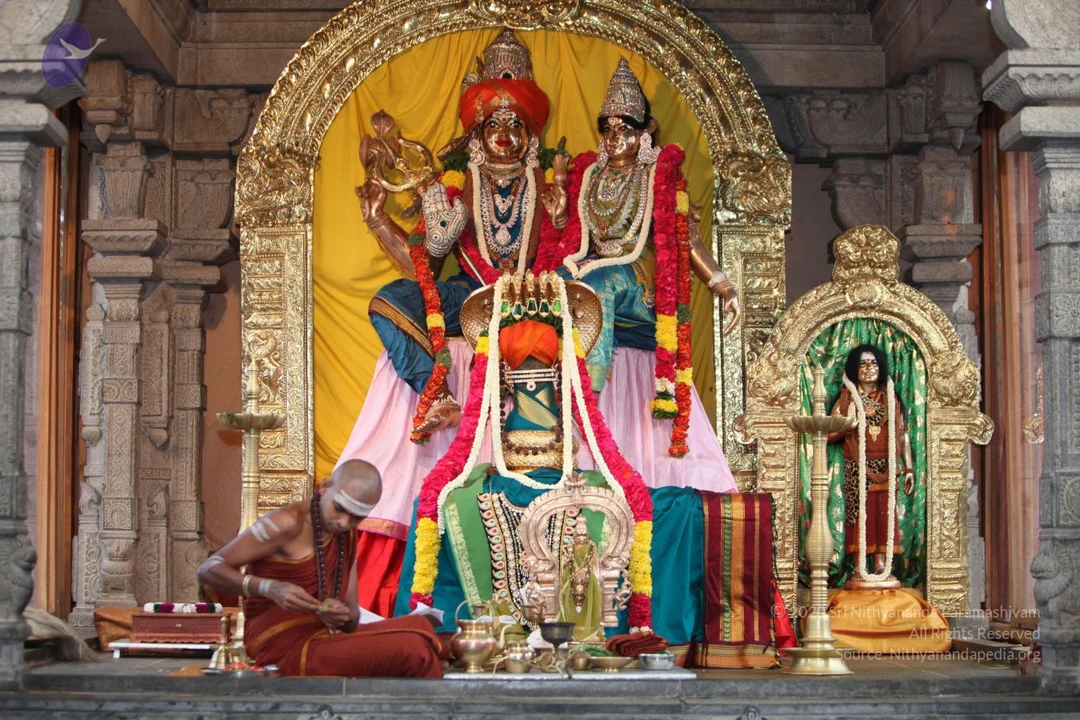
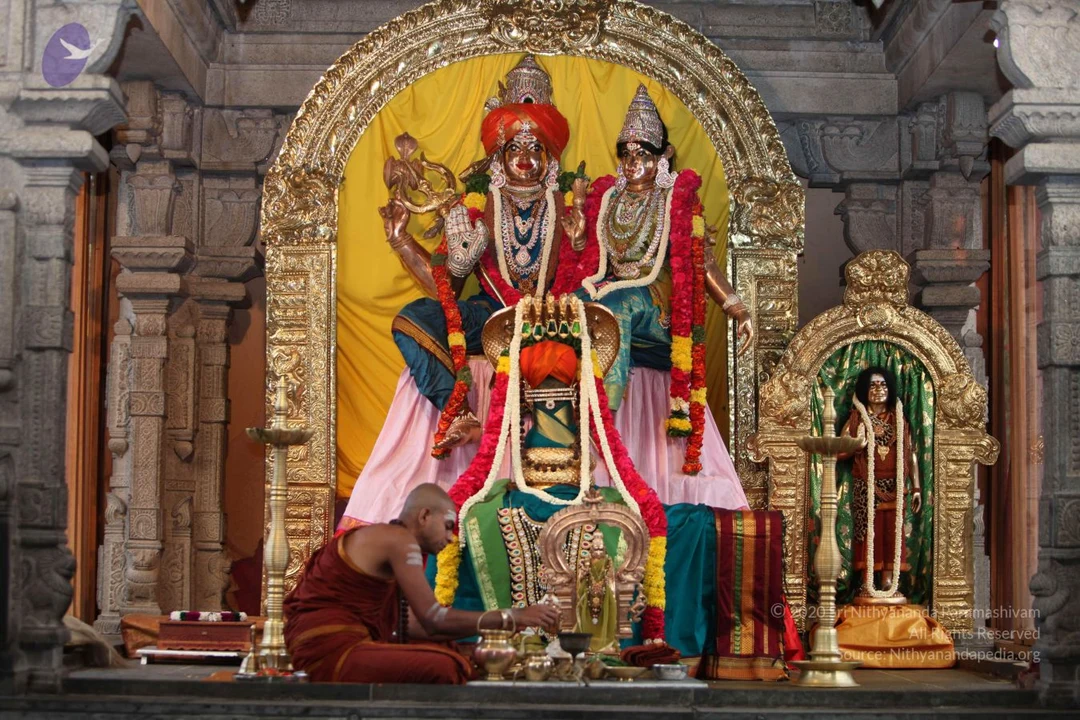
From 13 April to 25 April, we will be having Meenakshi Brahmotsava. This time, it will be very powerful and unique and extraordinary. The satya we are going to experience this time Meenakshi Brahmotsava is, Manifest Meenakshi. Only thing I ask all of you to do today. Take the vow now by raising your hand: With integrity, authenticity, responsibility and enriching I drop my past which is dead and decide to live my future with responsibility and enriching.

Close your eyes and declare, “I, with Integrity, Authenticity, Responsibility, Enriching myself and others, declare, I drop the past which is dead. I give a farewell to my past, decent burial to my past. I am a new consciousness, new being, living with responsibility, and enriching myself and others in the future. Thathaasthu!” Live this declaration. This is the essence of today’s satsang.

(38:14)

(In Hindi)

Aaj ke Satsang ka saransh hai: apne ateet ke bare me soch kar apna jivan vyarth na kare. Uttardayitva se apne bhavishya ki or chaliye tabhi aap apne man chahe vastavikta se apna jivan ka srijan kar sakte hai, aur tabhi apni Kundalini Shakti charam par pahonchegi. Agle bhag pe pahunchne se pehle Main ye ghoshna karne chahta hun ke aap hamare Jivan Mukti kitab ko download kar sakte hai.

आज के सत्संग का सारांश है: अपने अतीत के बारे में सोच कर अपना जीवन व्यर्थ न करे। उत्तरदायित्व से अपने भविष्य की और चलें तभी आप अपना मन चाहे वास्तविकता से अपने जीवन का सृजन कर सकते हैं, और तभी अपनी कुंडलिनी शक्ति चरम पर पहुँचेगी। अगले भाग पे पहुंचने से पहले मैं ये घोषणा करना चाहता हूं कि आप हमारे जीवन मुक्ति किताब को डाउनलोड कर सकते हैं।

www.nithyananda.org. Free book

(39:11)

Before we move to the next segment I wanted to announce that we are introducing free download of My book, the important book which I wrote as essence of My teachings “Living Enlightenment” especially for Sadhana TV viewers. Please visit www.nithyananda.org free book in Hindi and English. It is available for free download.

(39:40)

(In Hindi)

Agle bhag me pravesh karne se pehle Me ye ghoshna karna chahta hun ki aap hamare ‘Jeevan Mukti’ kitab ko download kar sakte hai. Sabhi darshak is pustak ko nishulk download kar sakte hai.

अगले भाग में प्रवेश करने से पहले मैं ये घोषणा करना चाहता हूं कि आप हमारी 'जीवन मुक्ति' किताब को डाउनलोड कर सकते हैं। सभी दर्शक इस पुस्तक को निःशुल्क डाउनलोड कर सकते हैं।

(40:02)

Photos
Photos Of The Day:
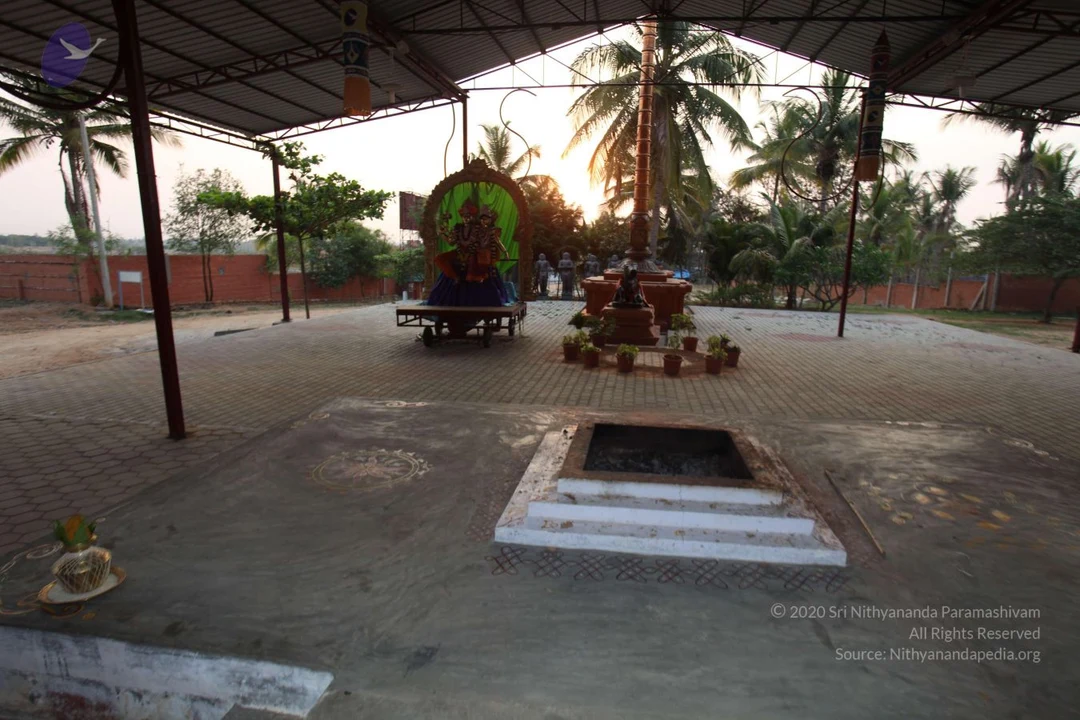
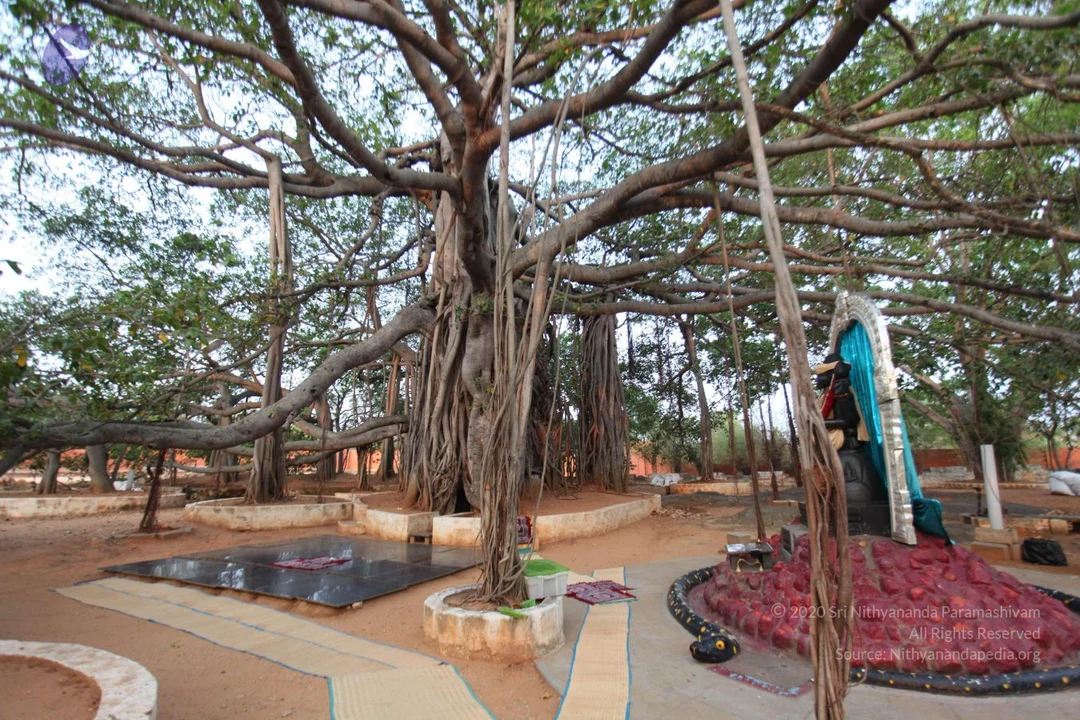
Temple-Tour-Nithya-Satsang-DTA-Sarva-Darshan

Tags:

Paramahamsa Nithyananda, birth, power, create, future, new, dead, body, understand, history, imprison.

Photos Of The Day:
Sarva-Darshan

Satsang

Nithya-Puja

Temple

Photos Of The Day:
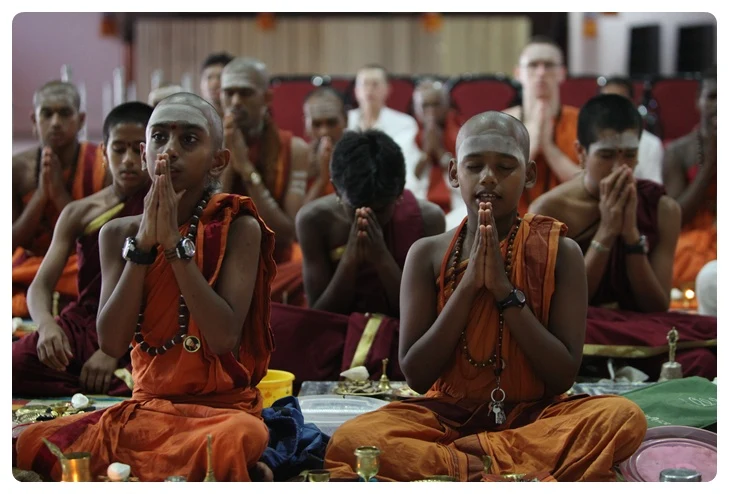
Sarva-Darshan

Satsang

Nithya-Puja

Temple

01-Temple-Tour-Morning-Message-DTA-Sarva-Darshan

Photos from this day
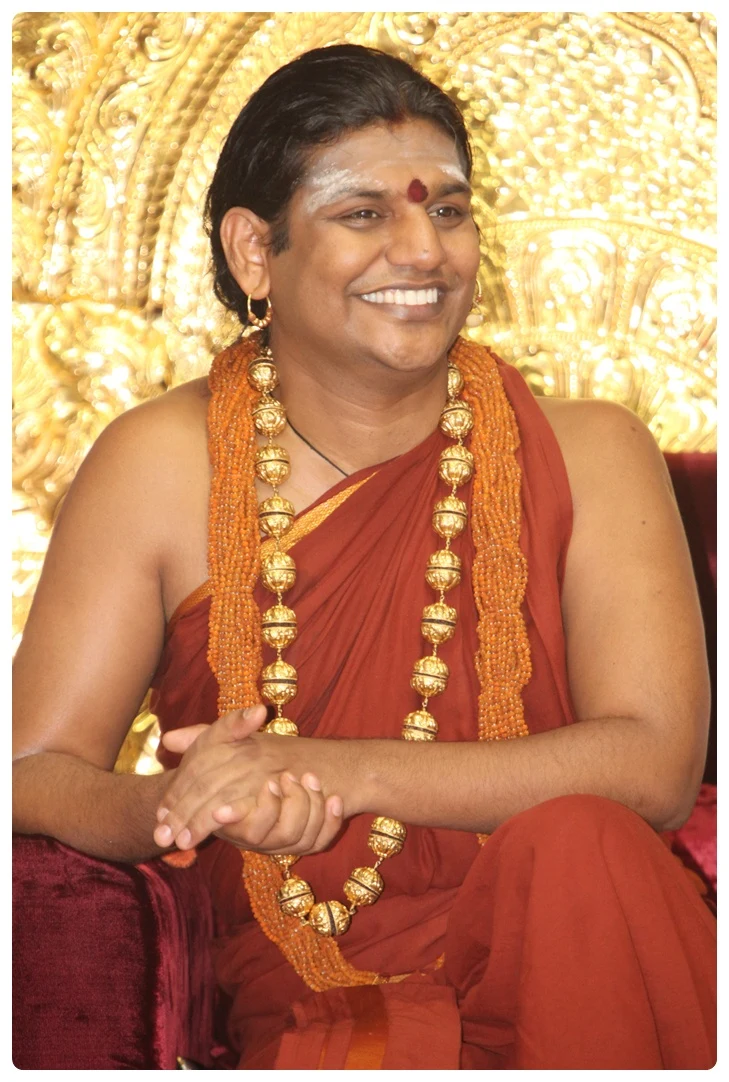
View all 324 photos
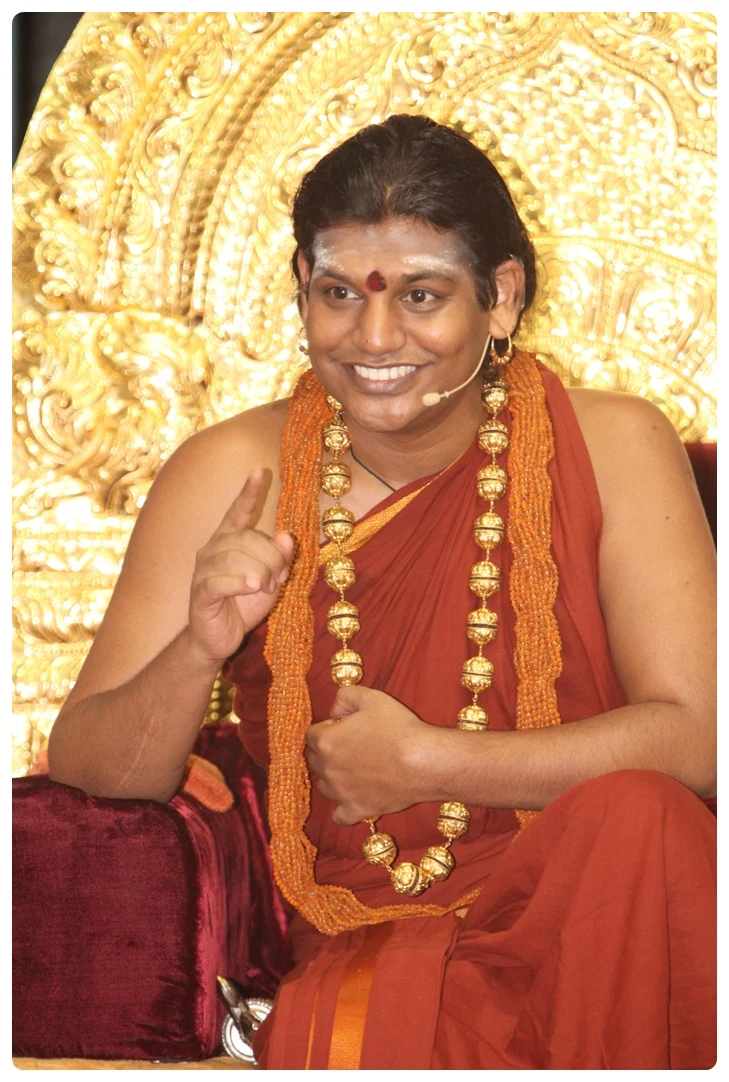
Photos
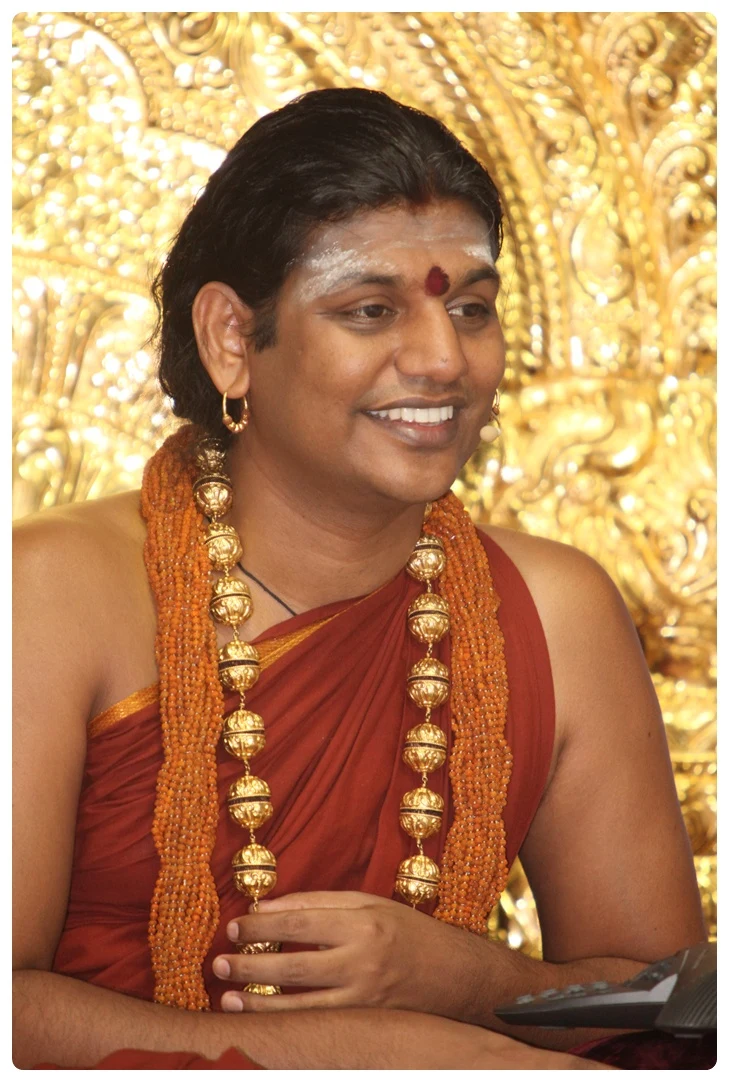
9 photosSource gallery
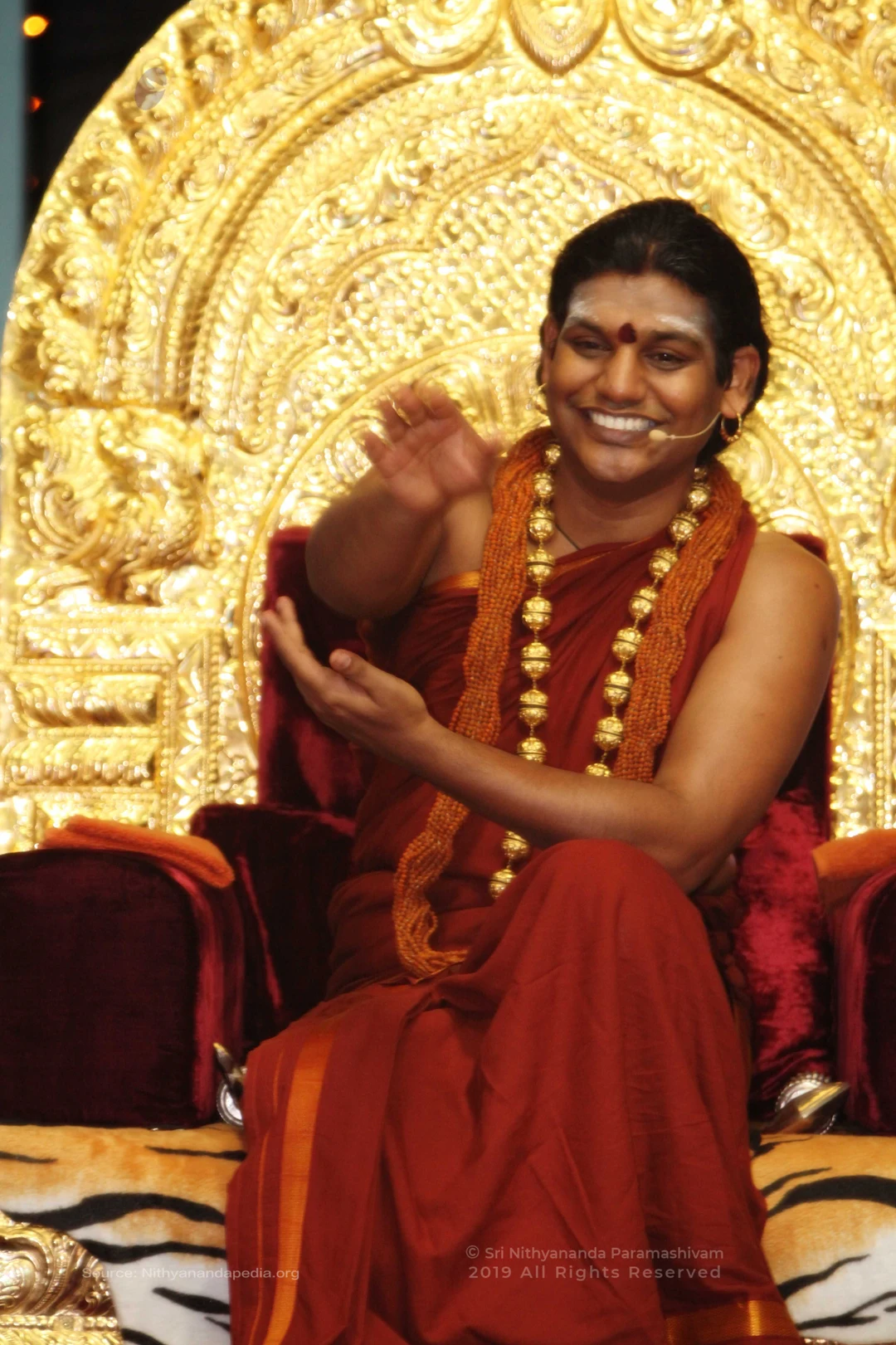
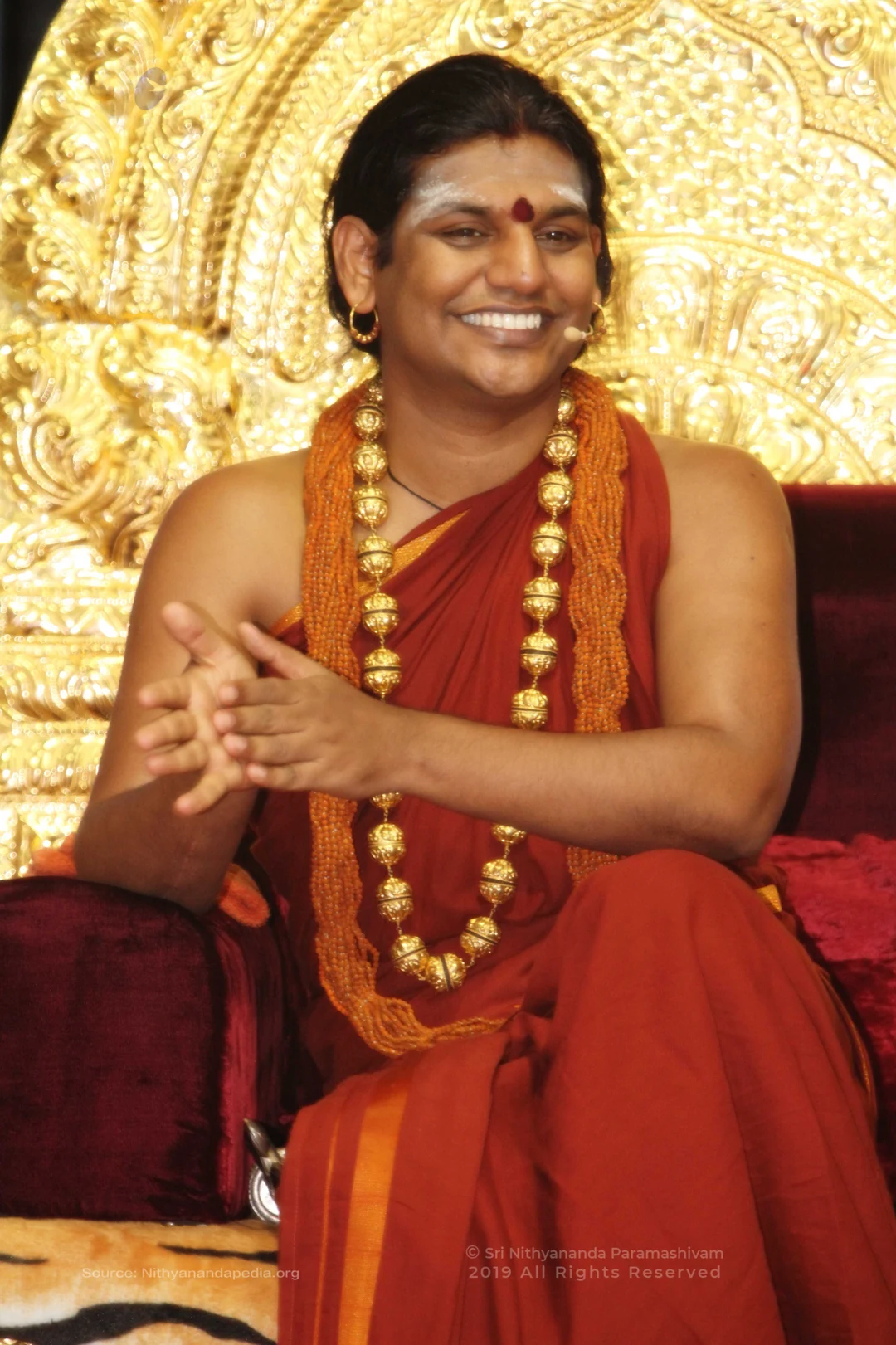
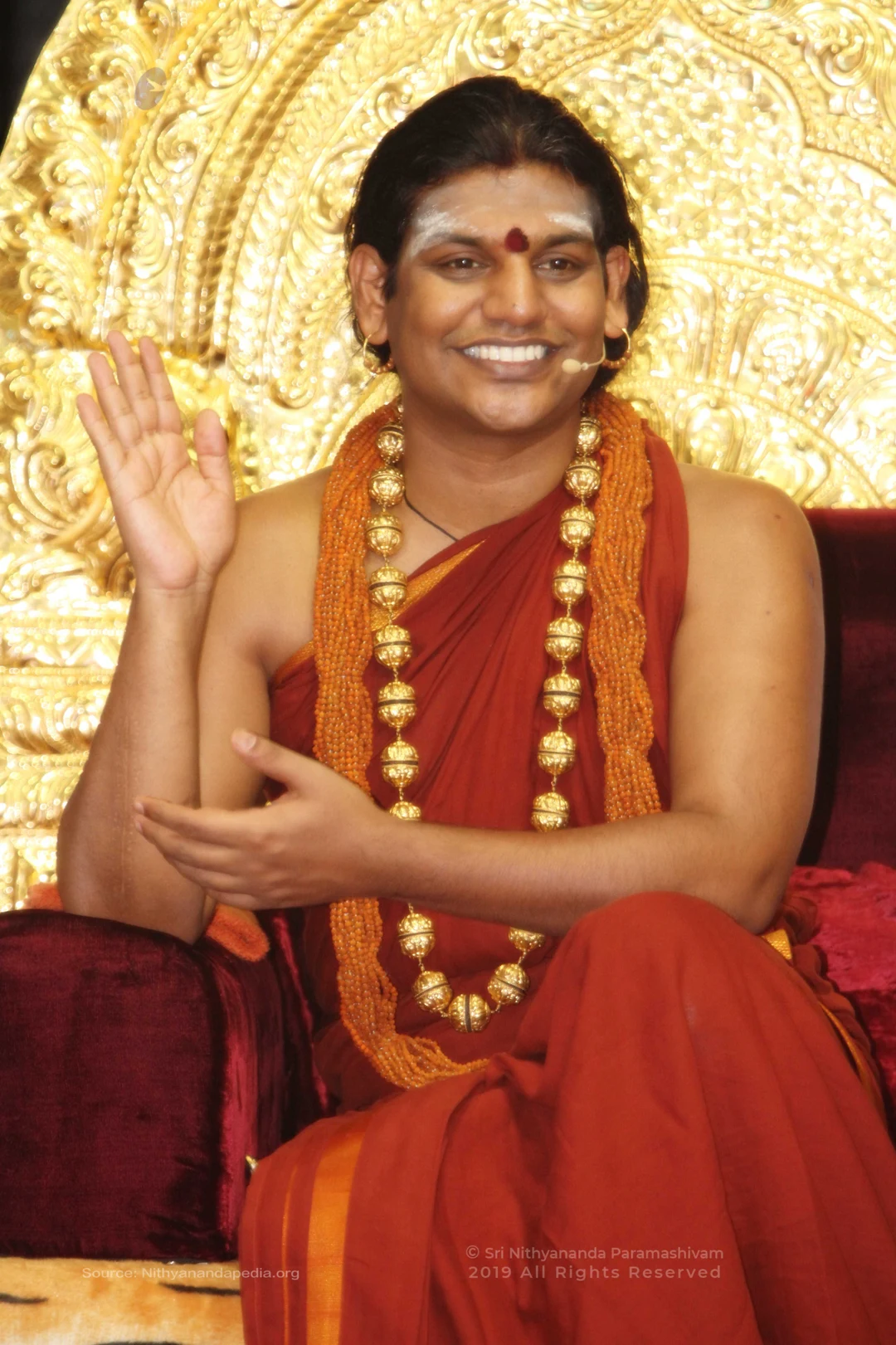
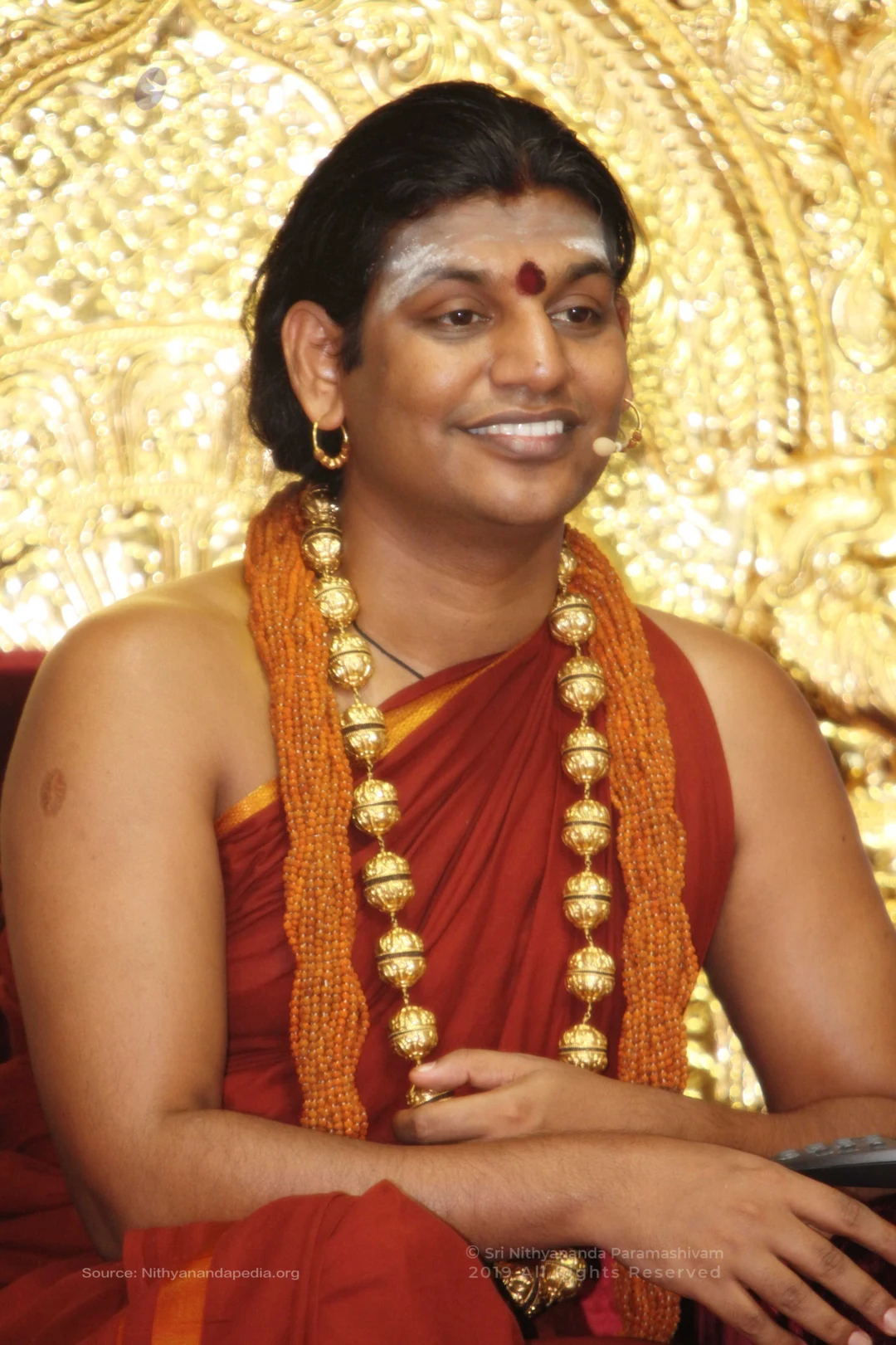
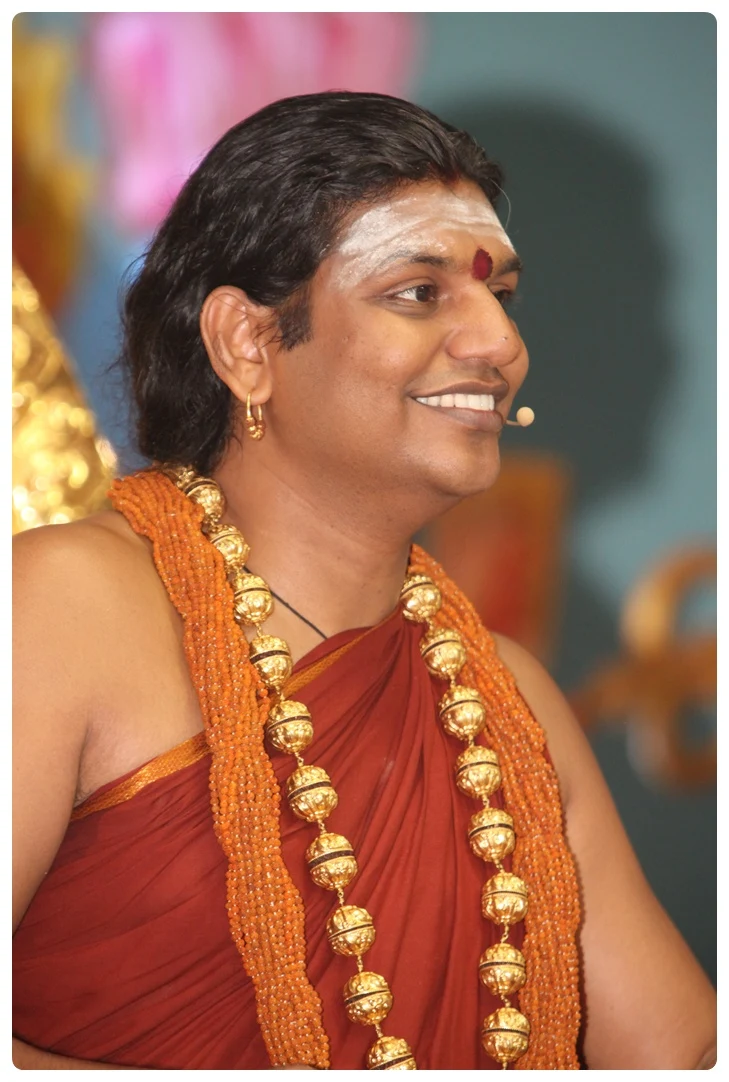
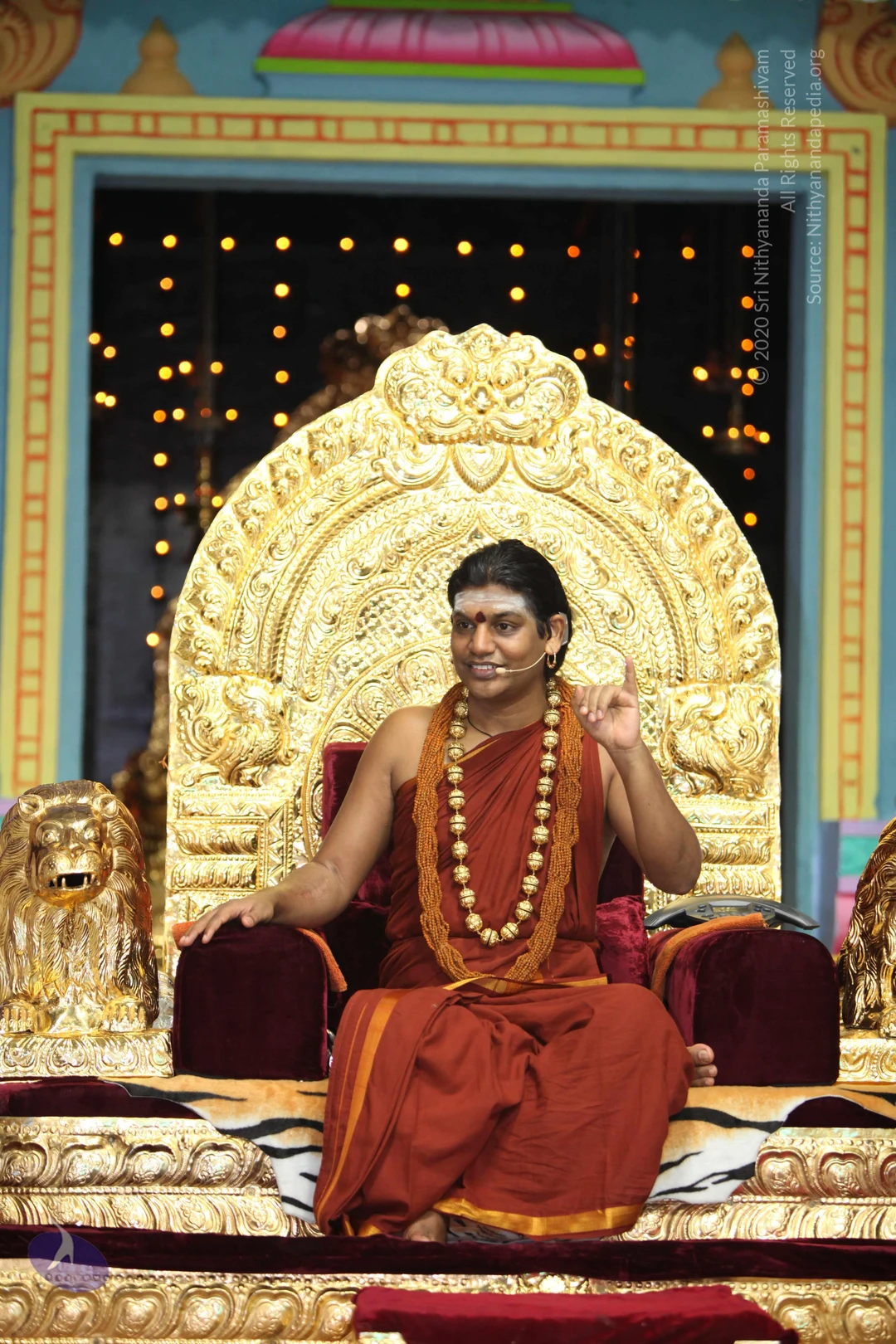
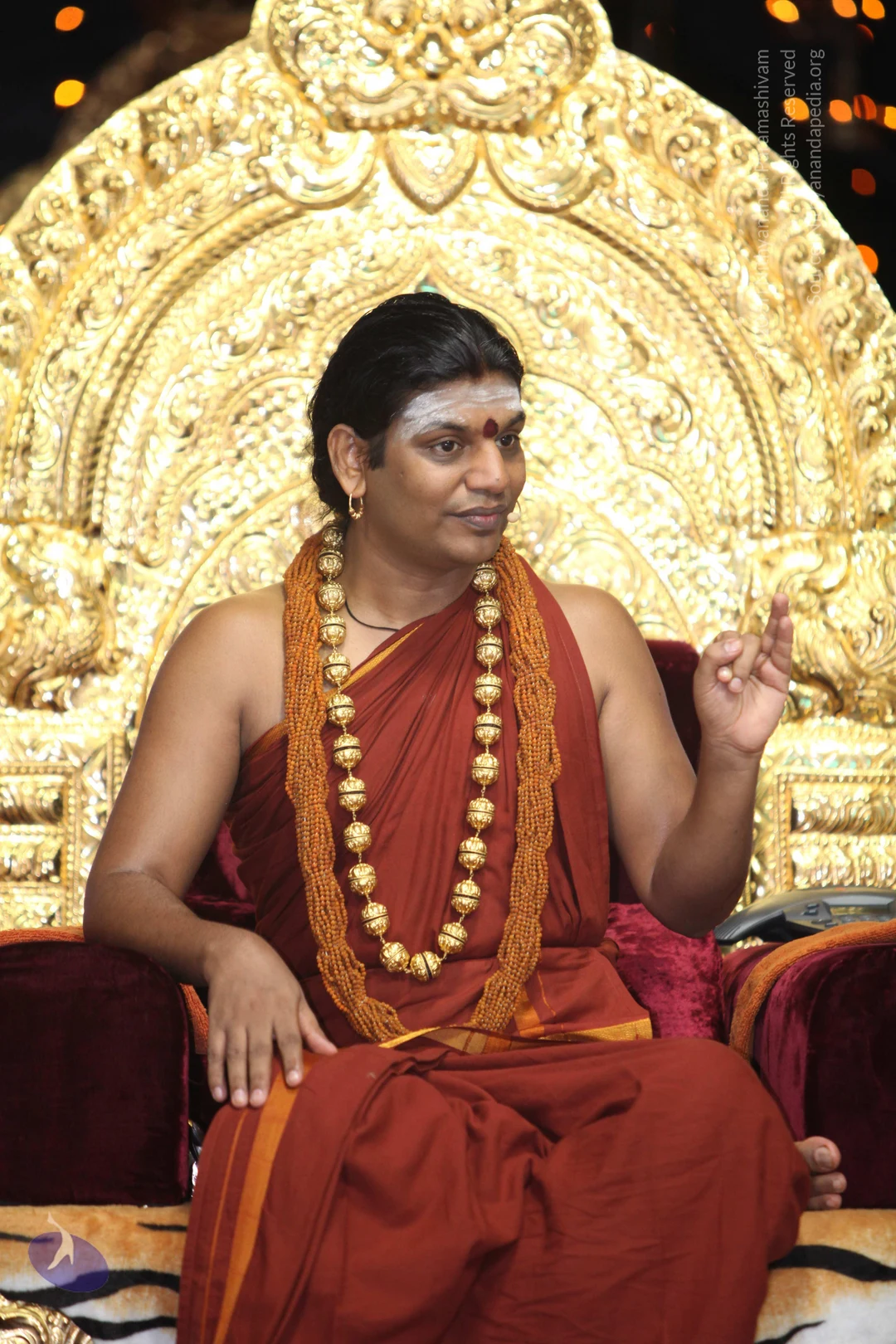
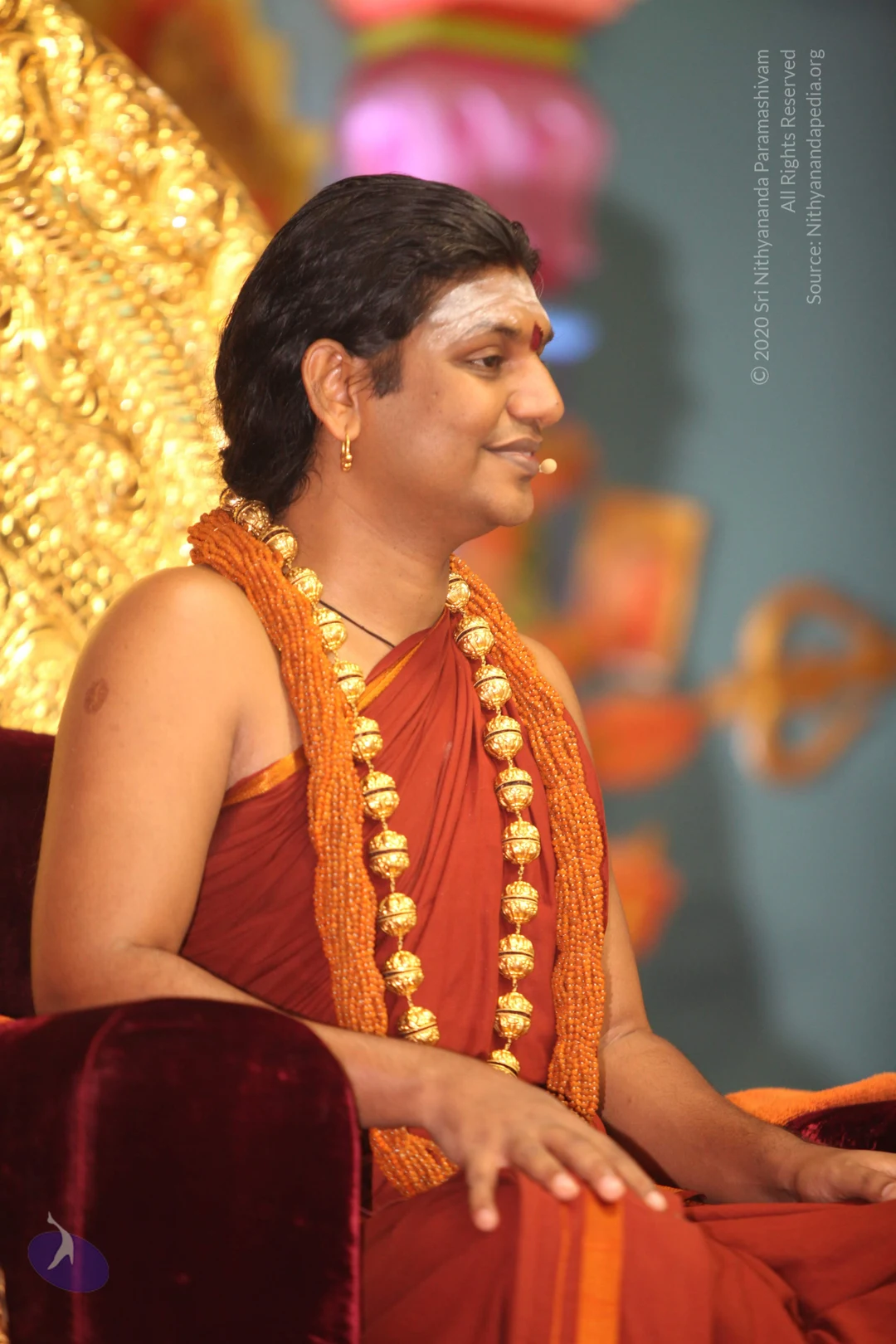
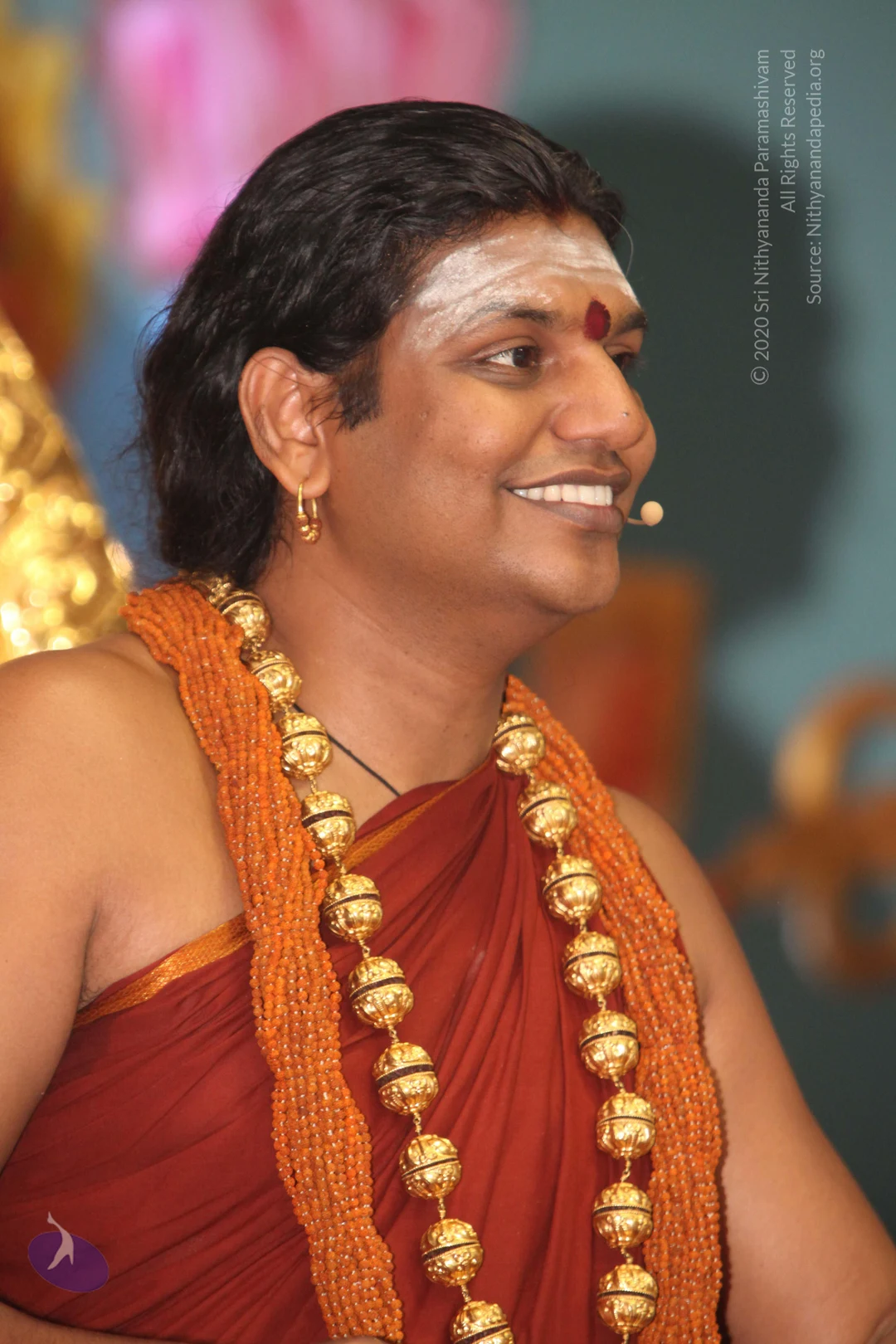
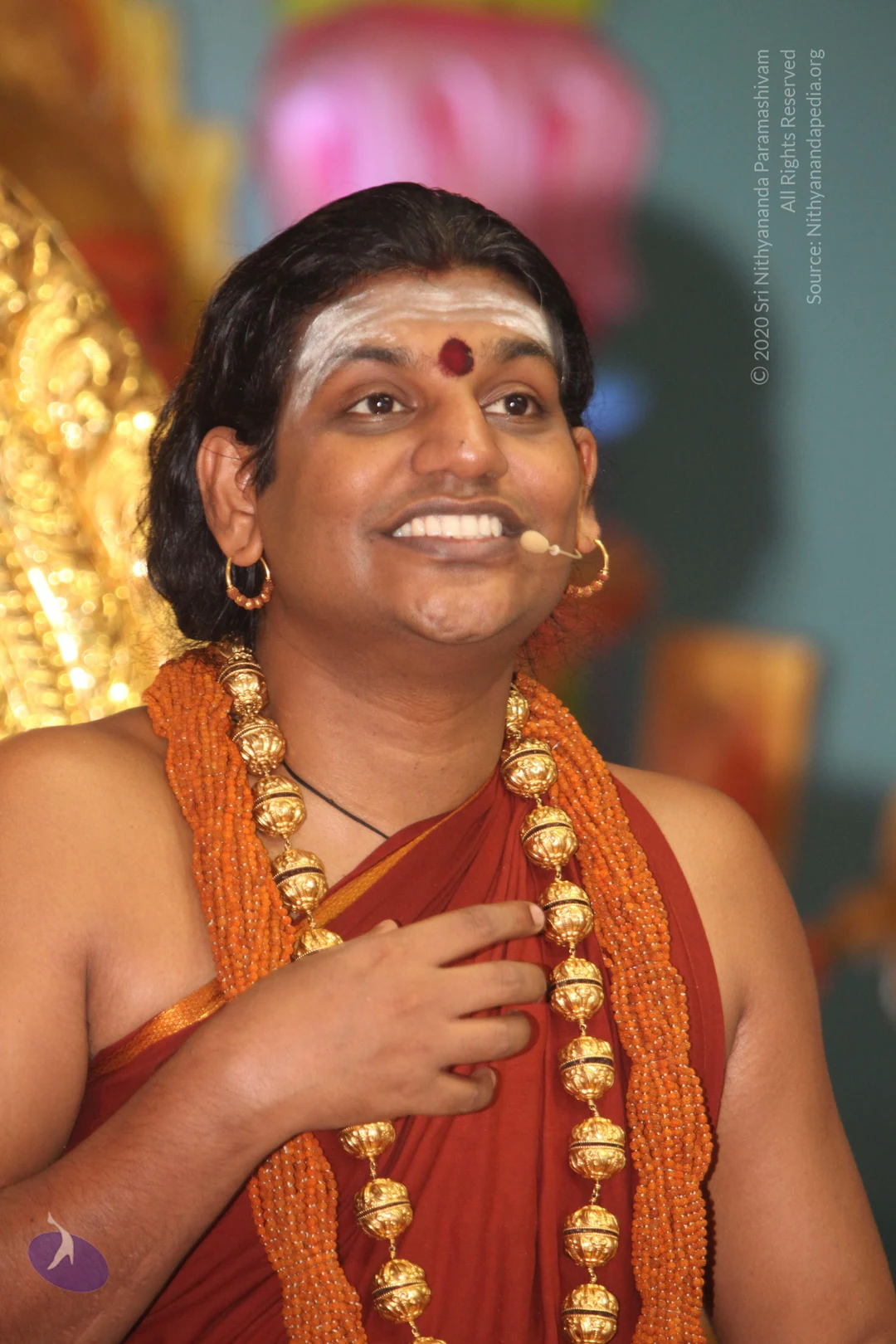
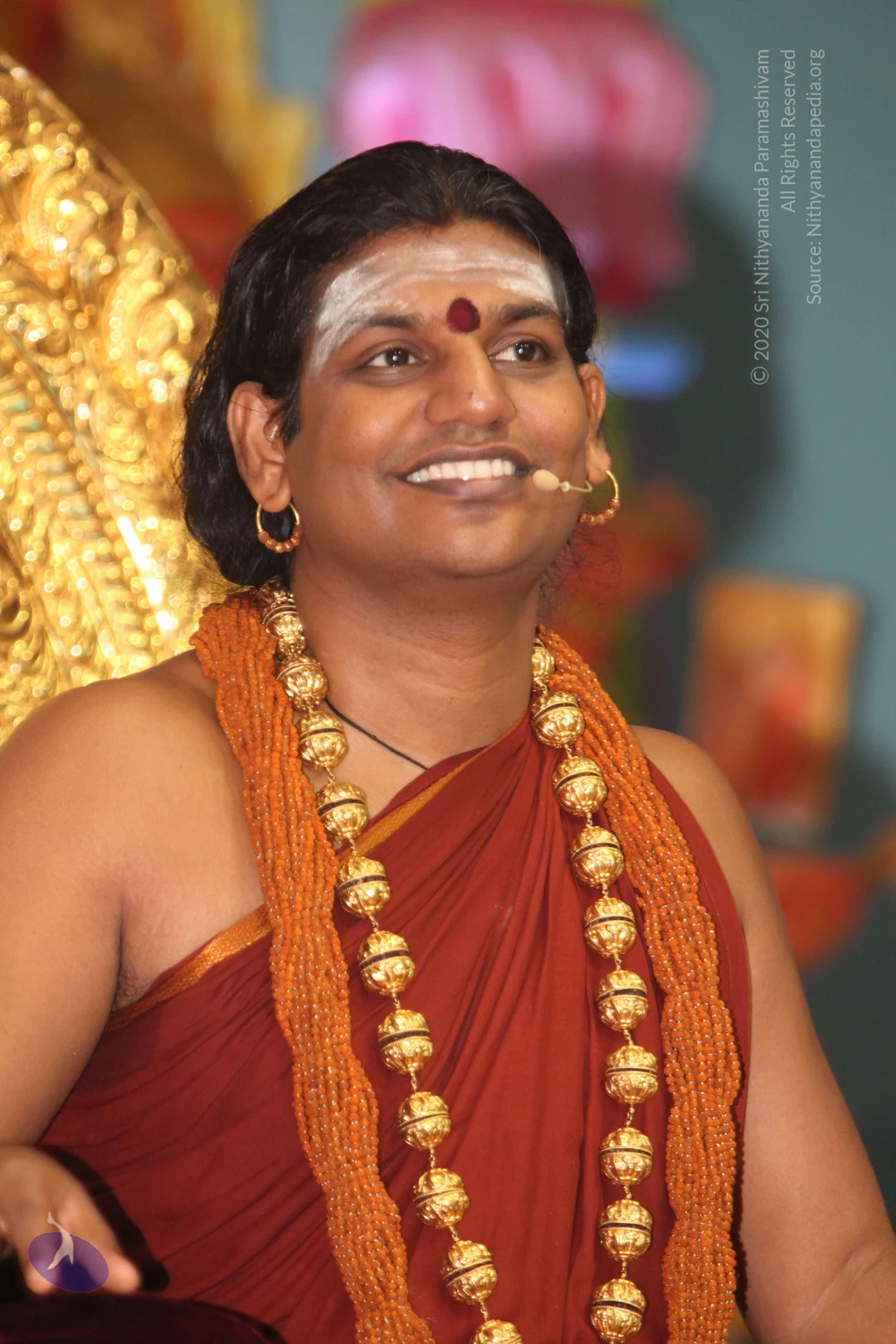
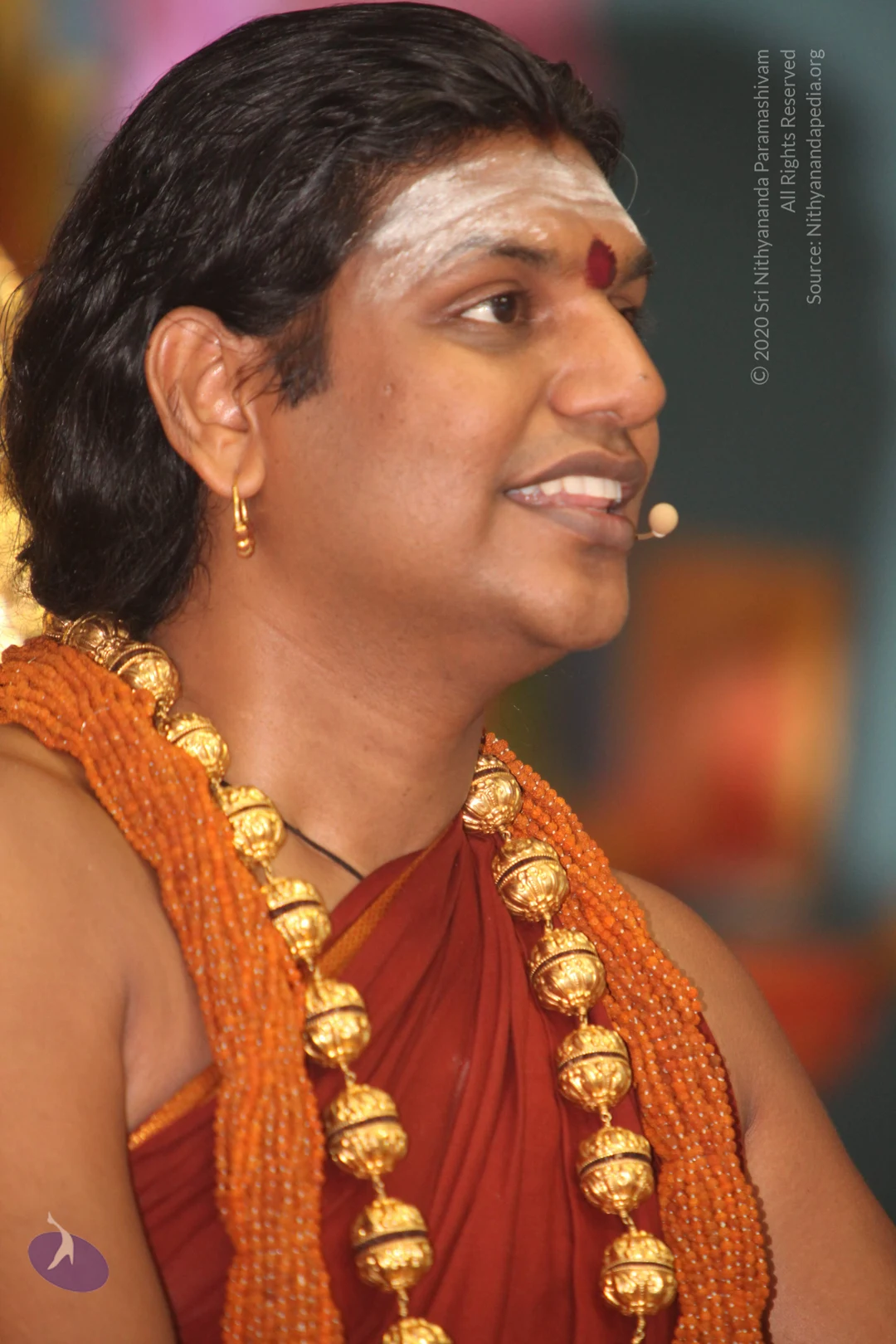
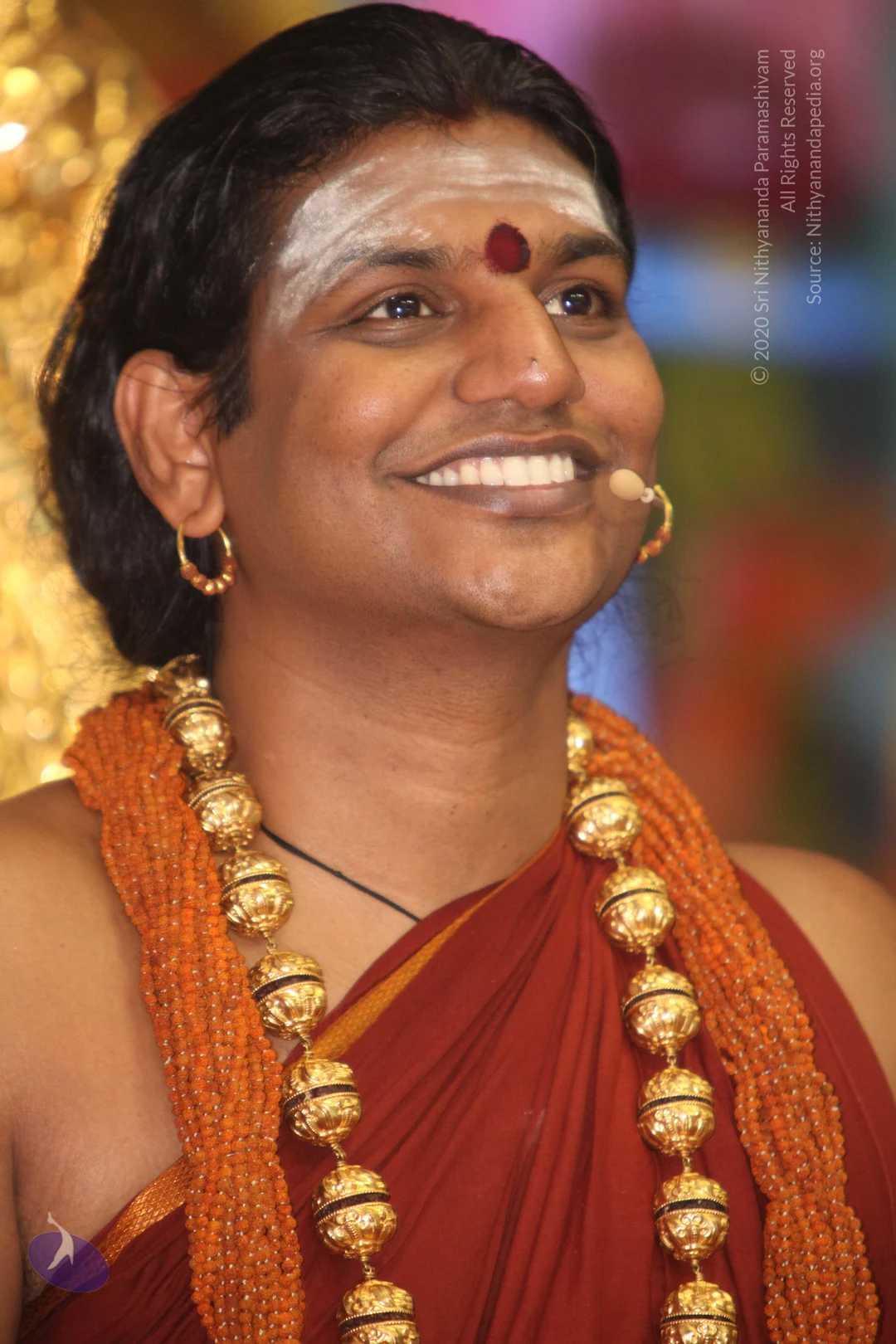
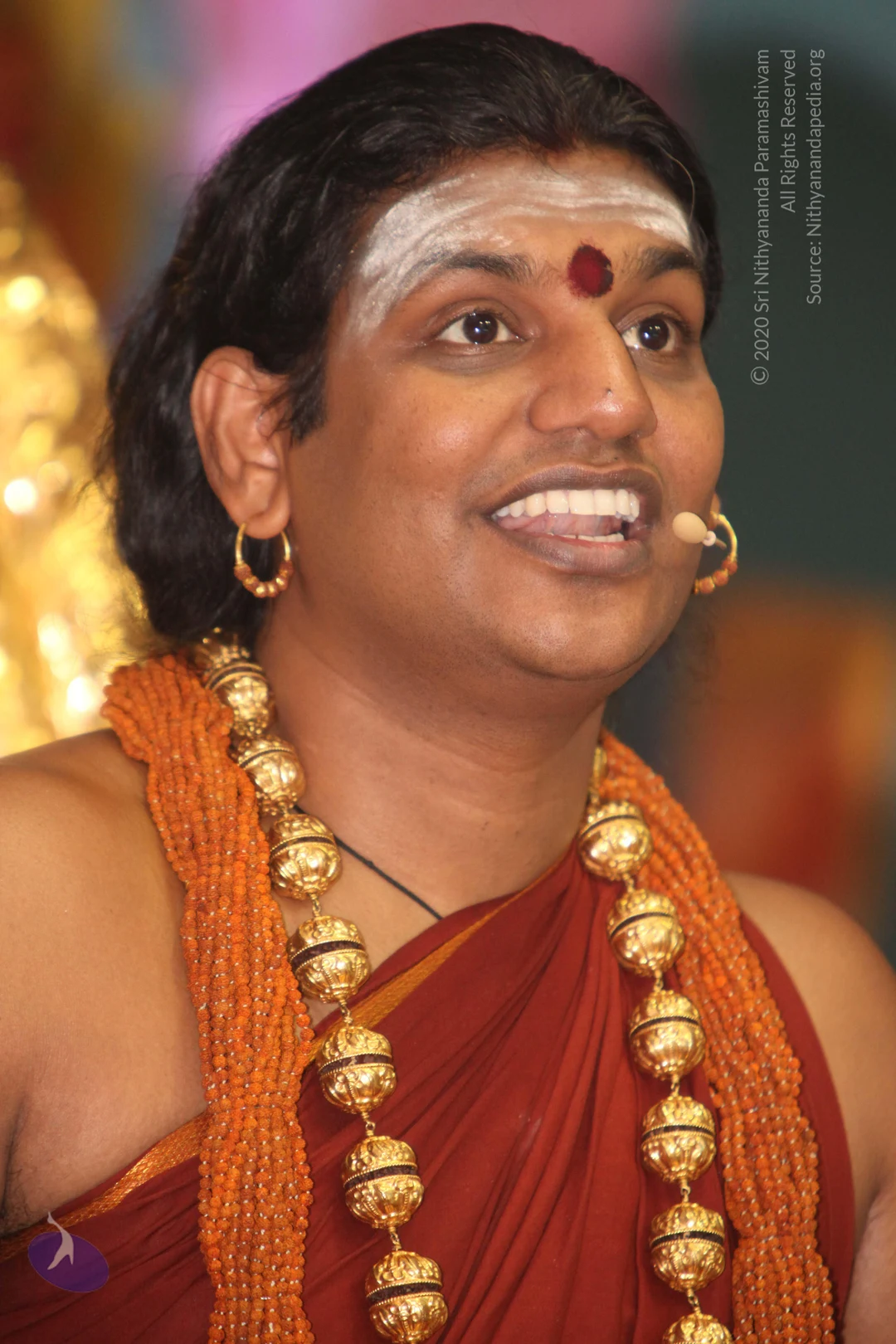
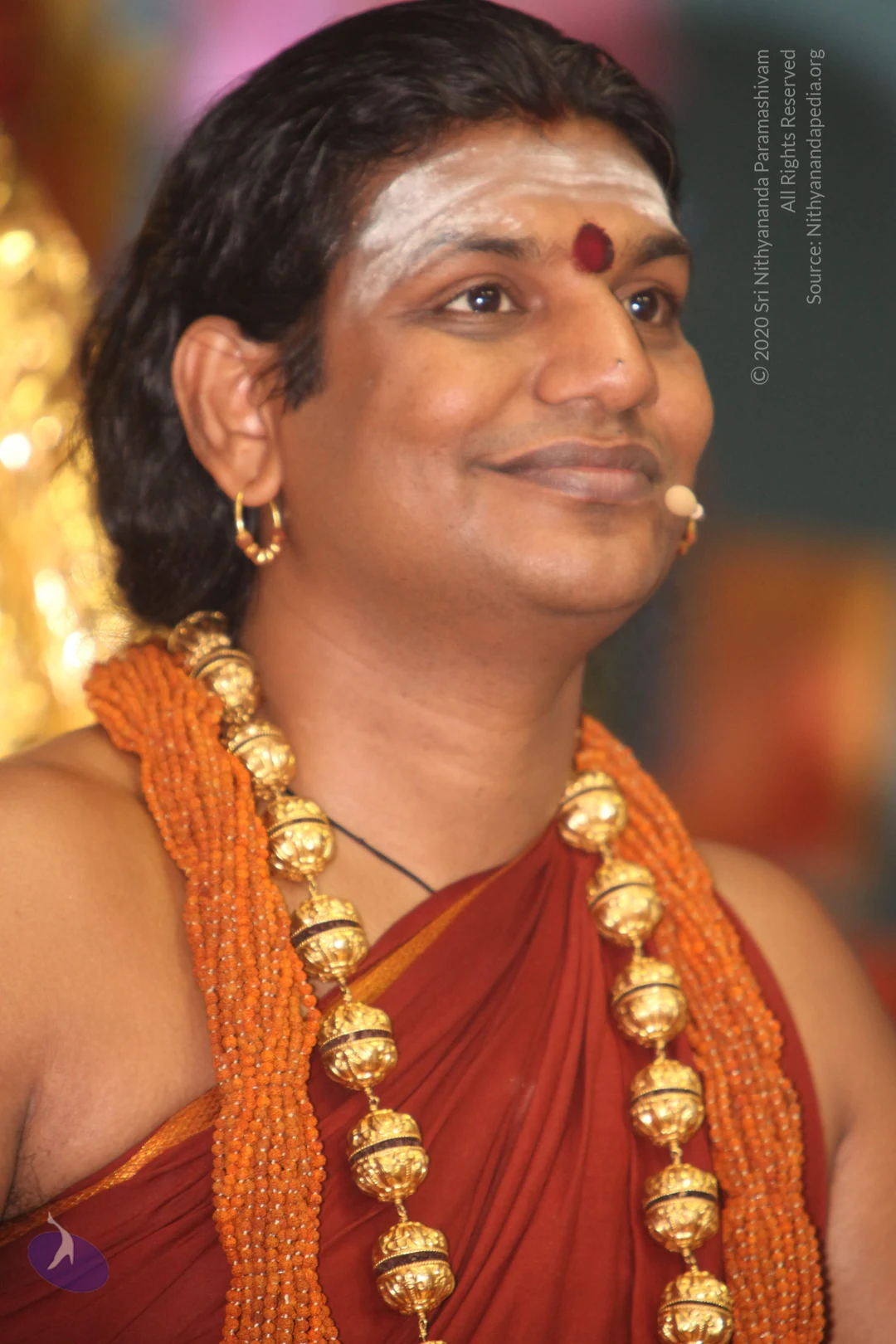
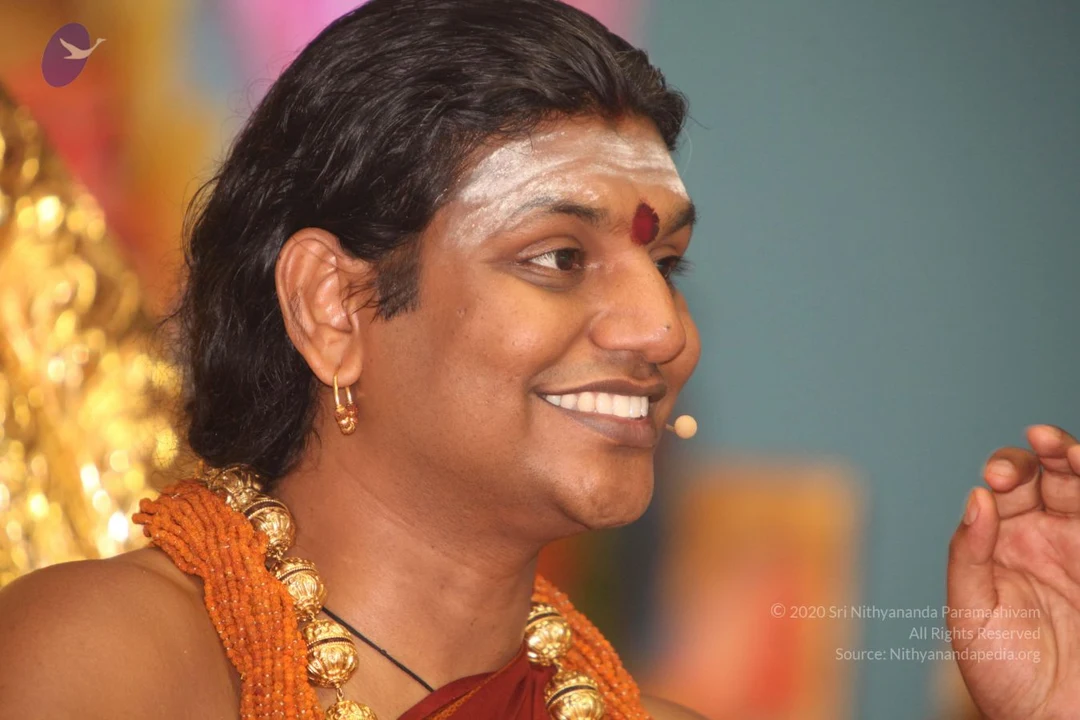
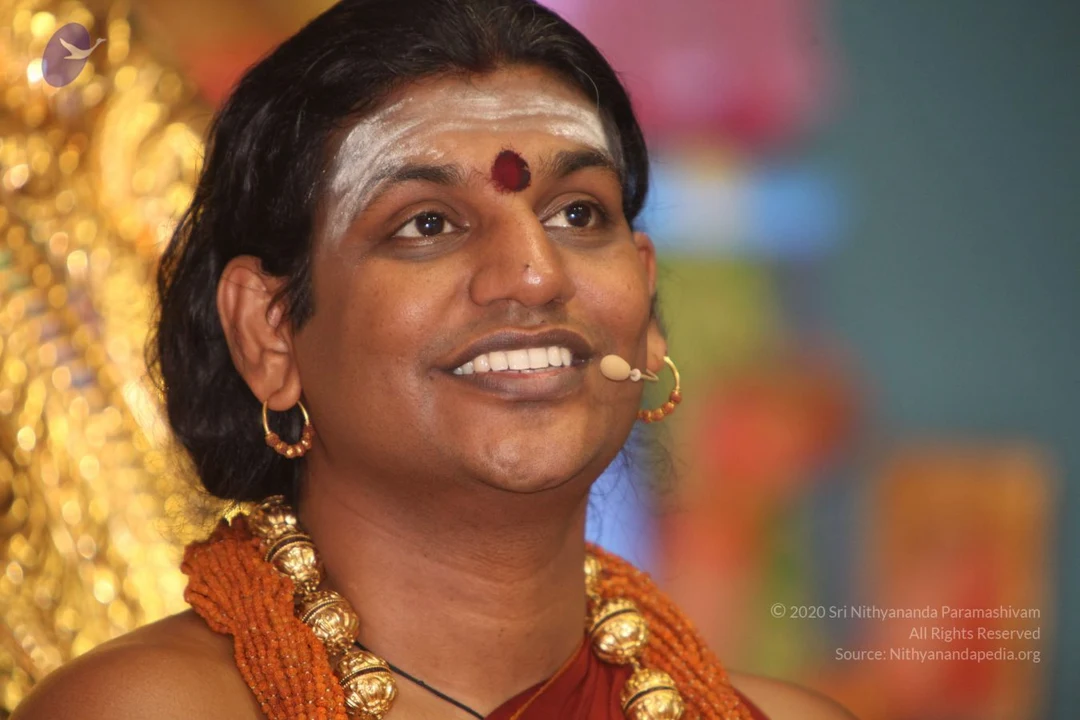
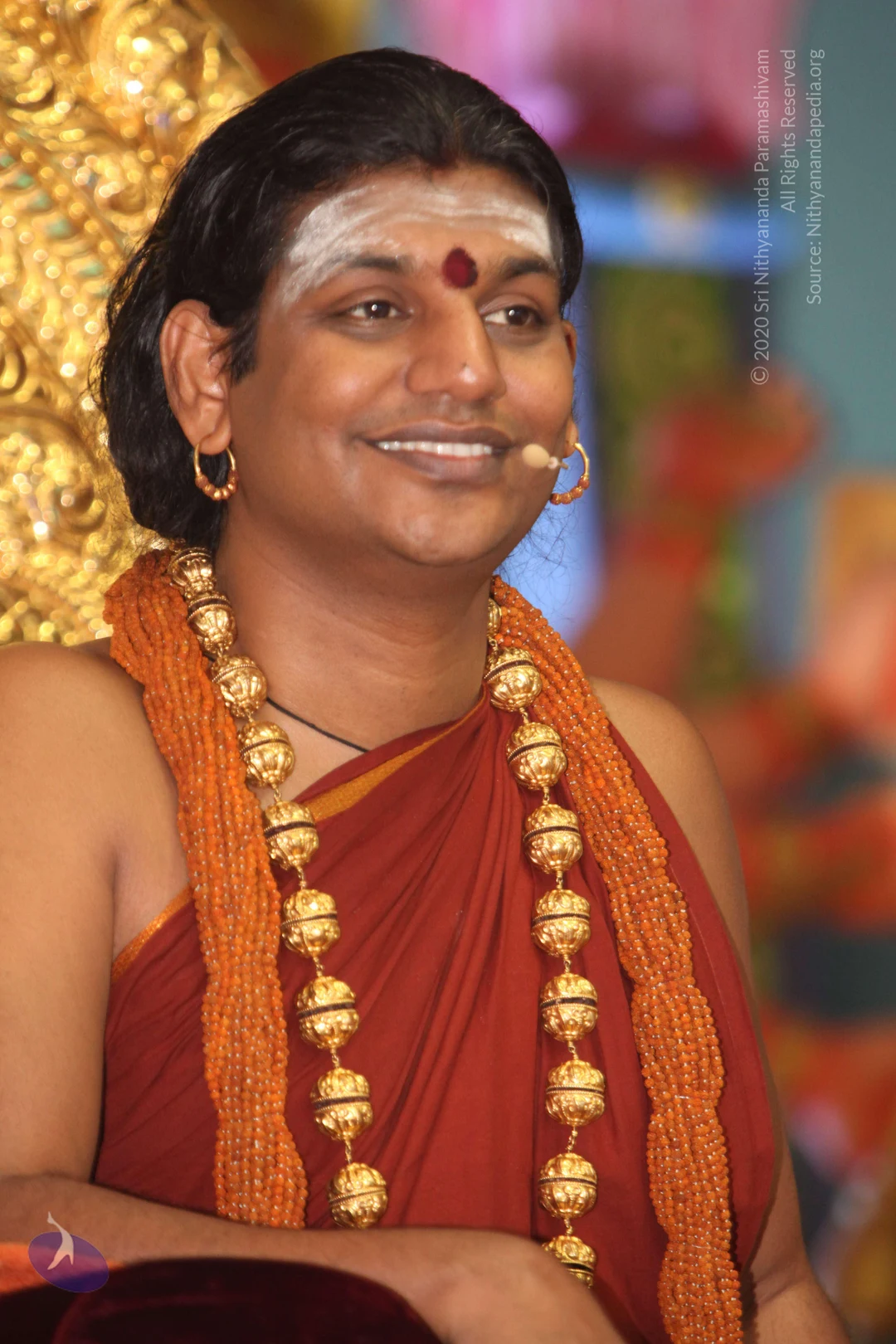
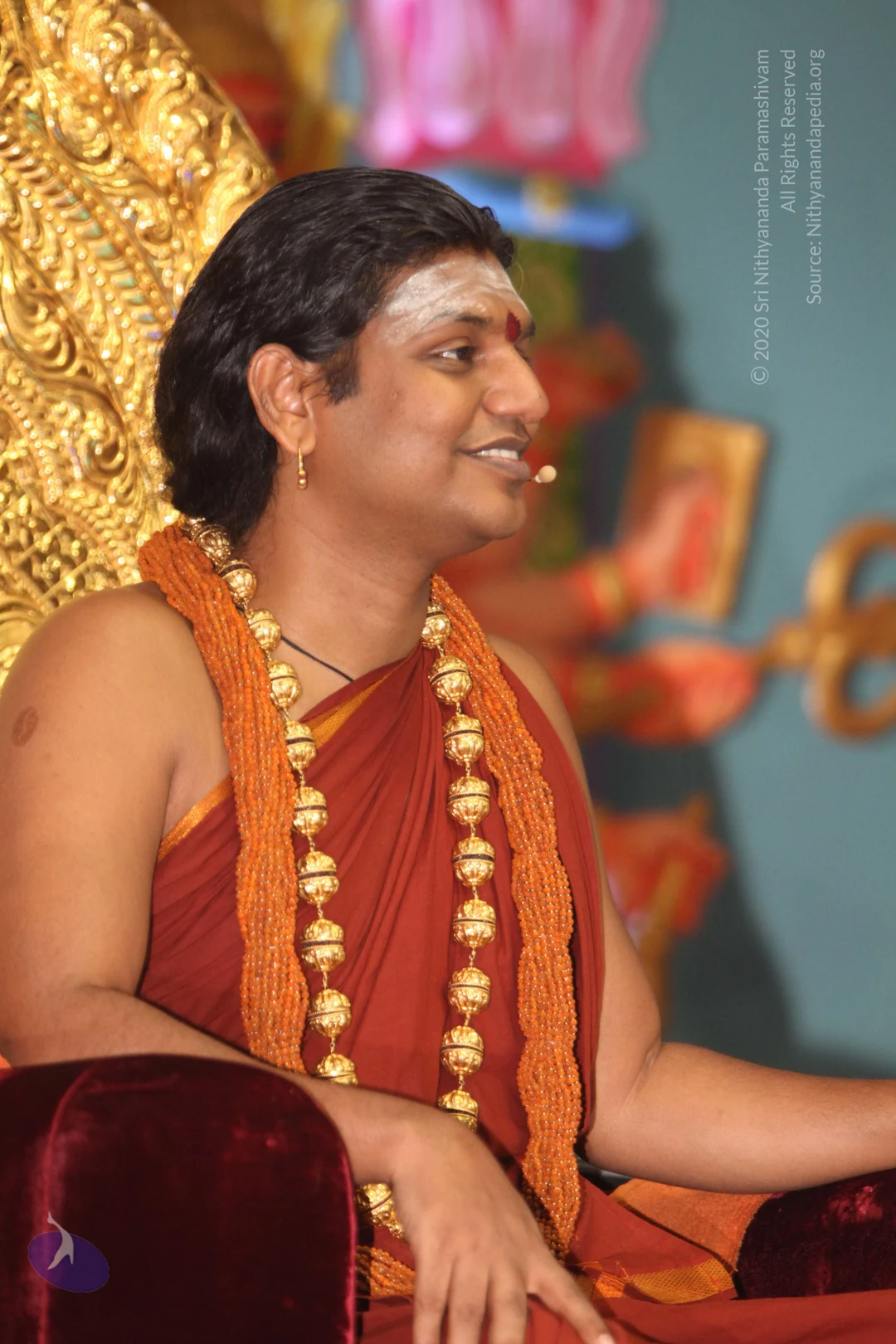
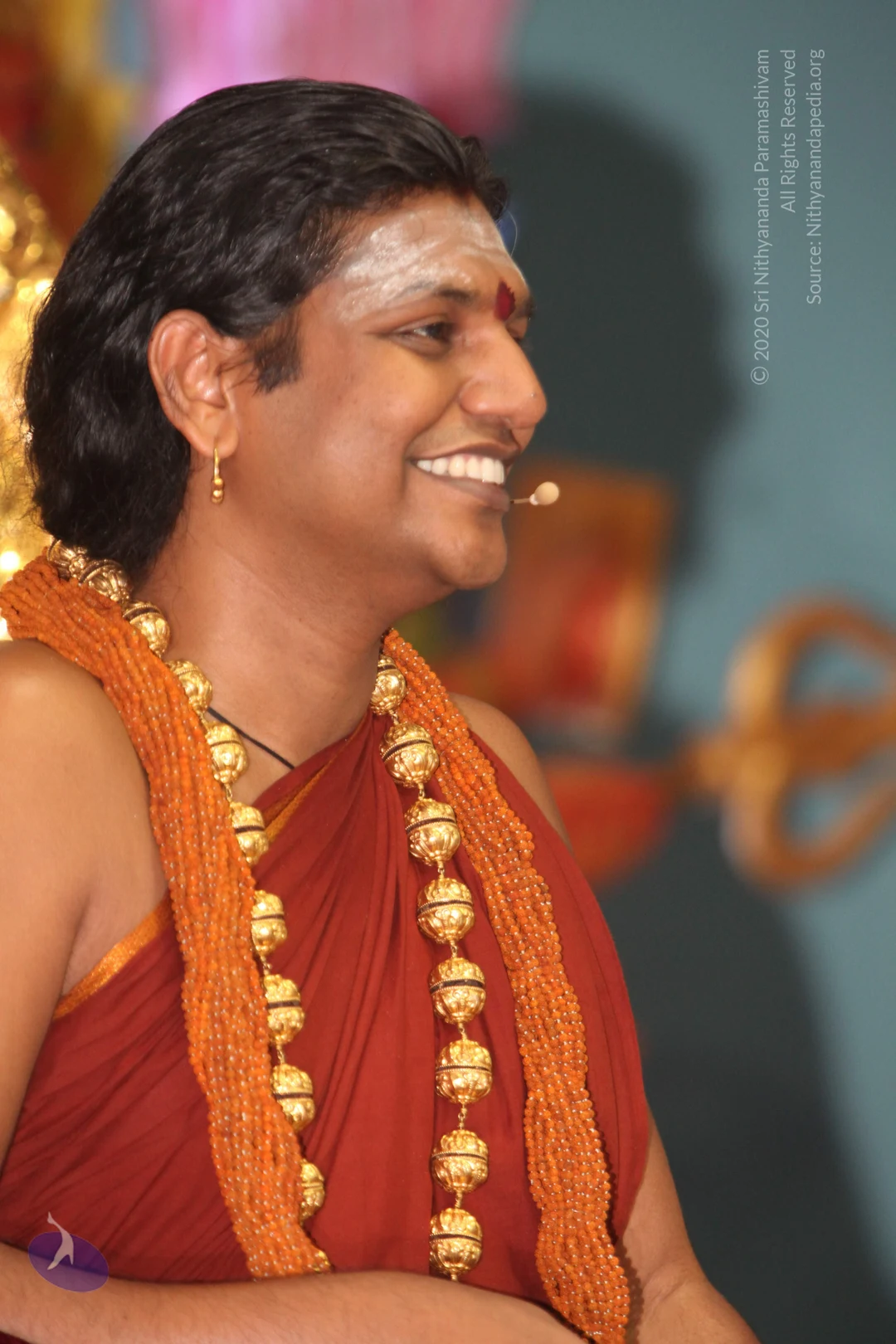
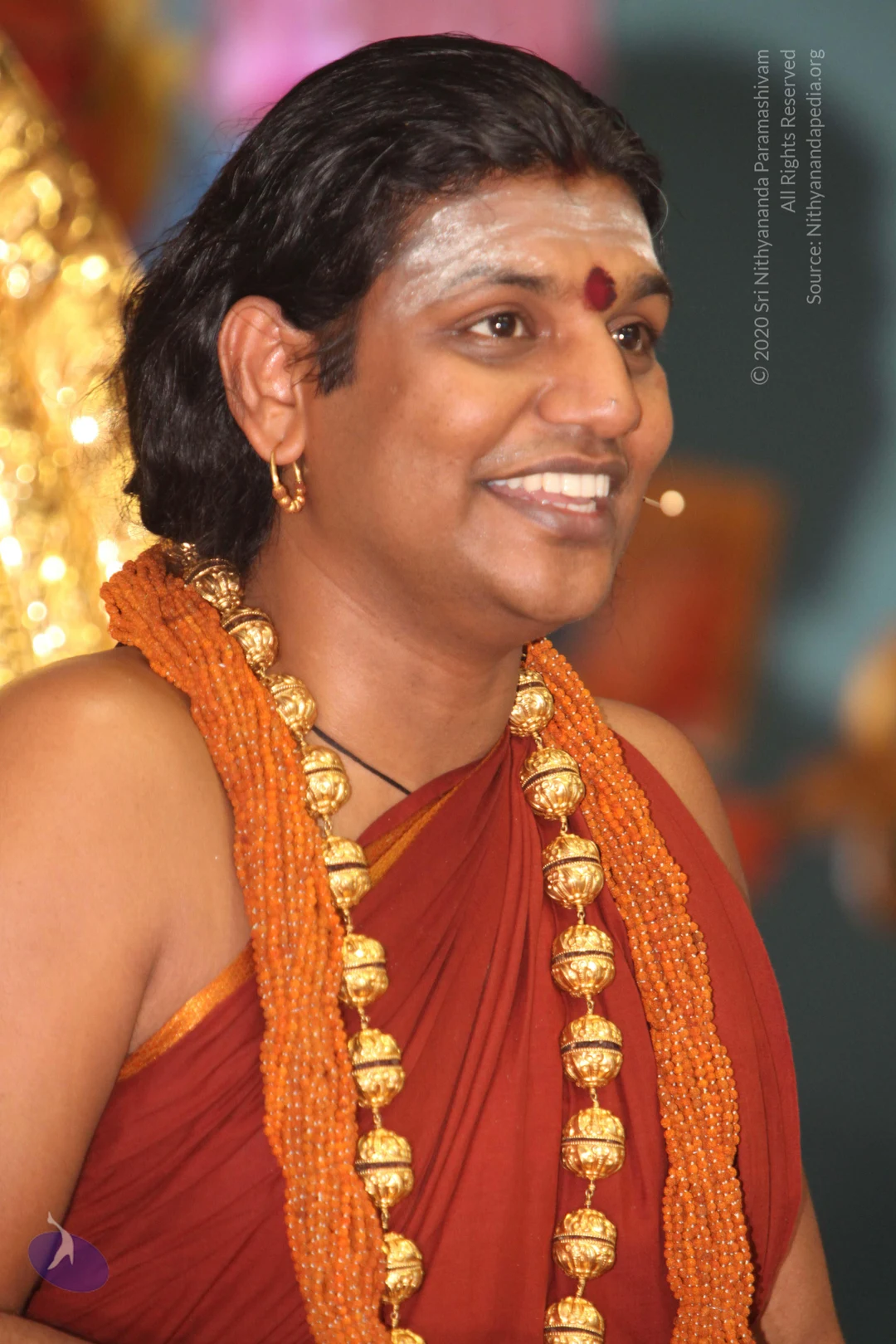
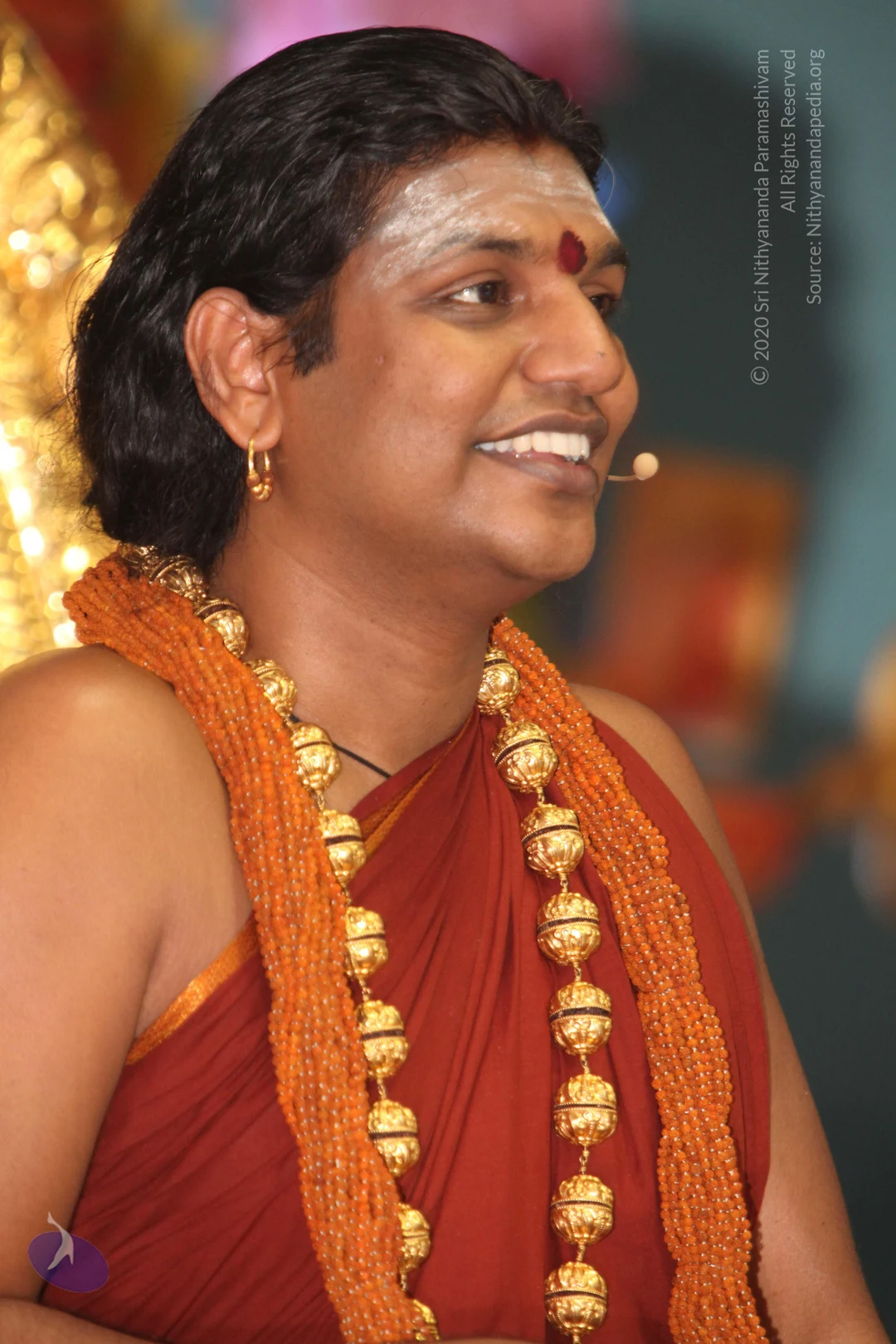
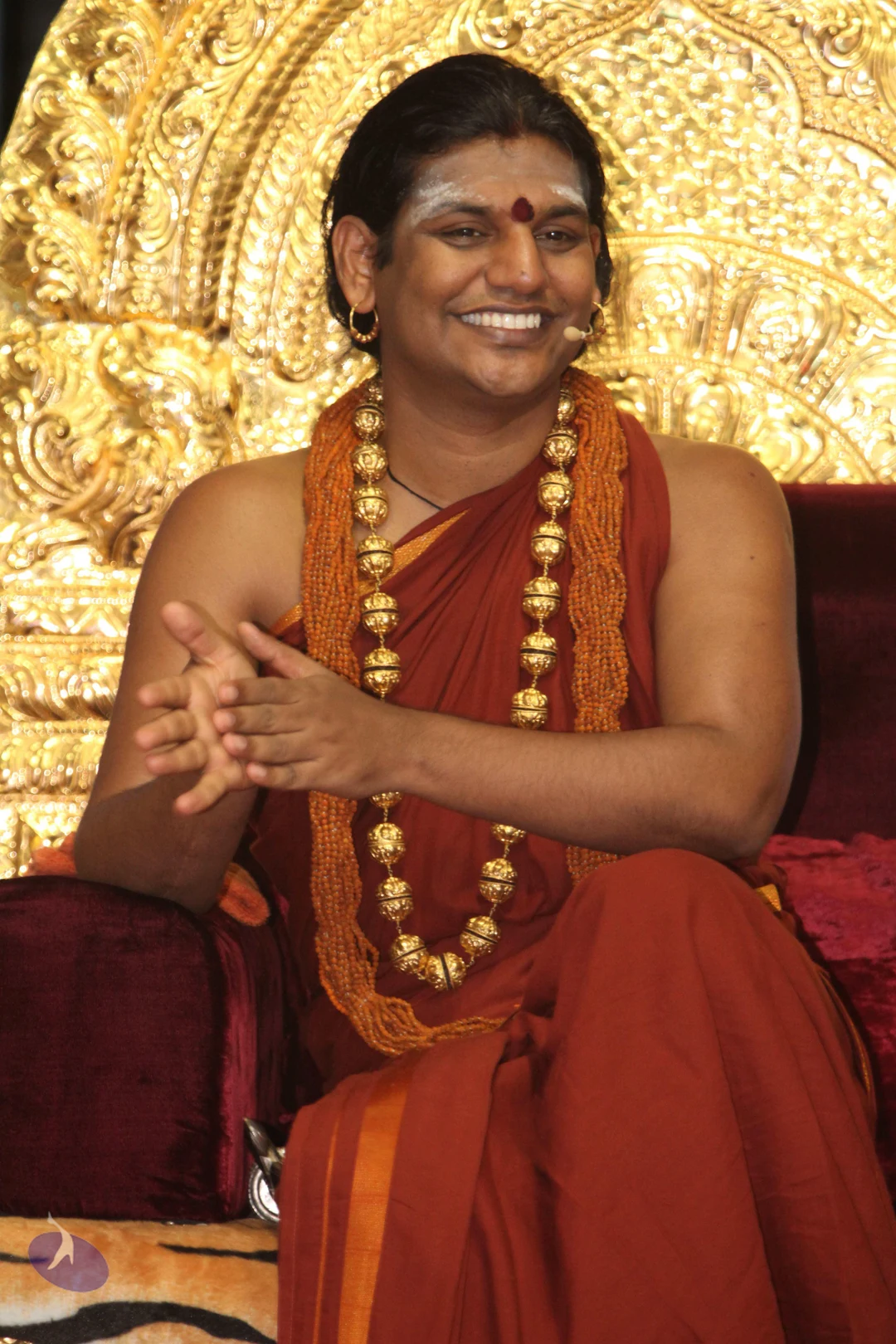
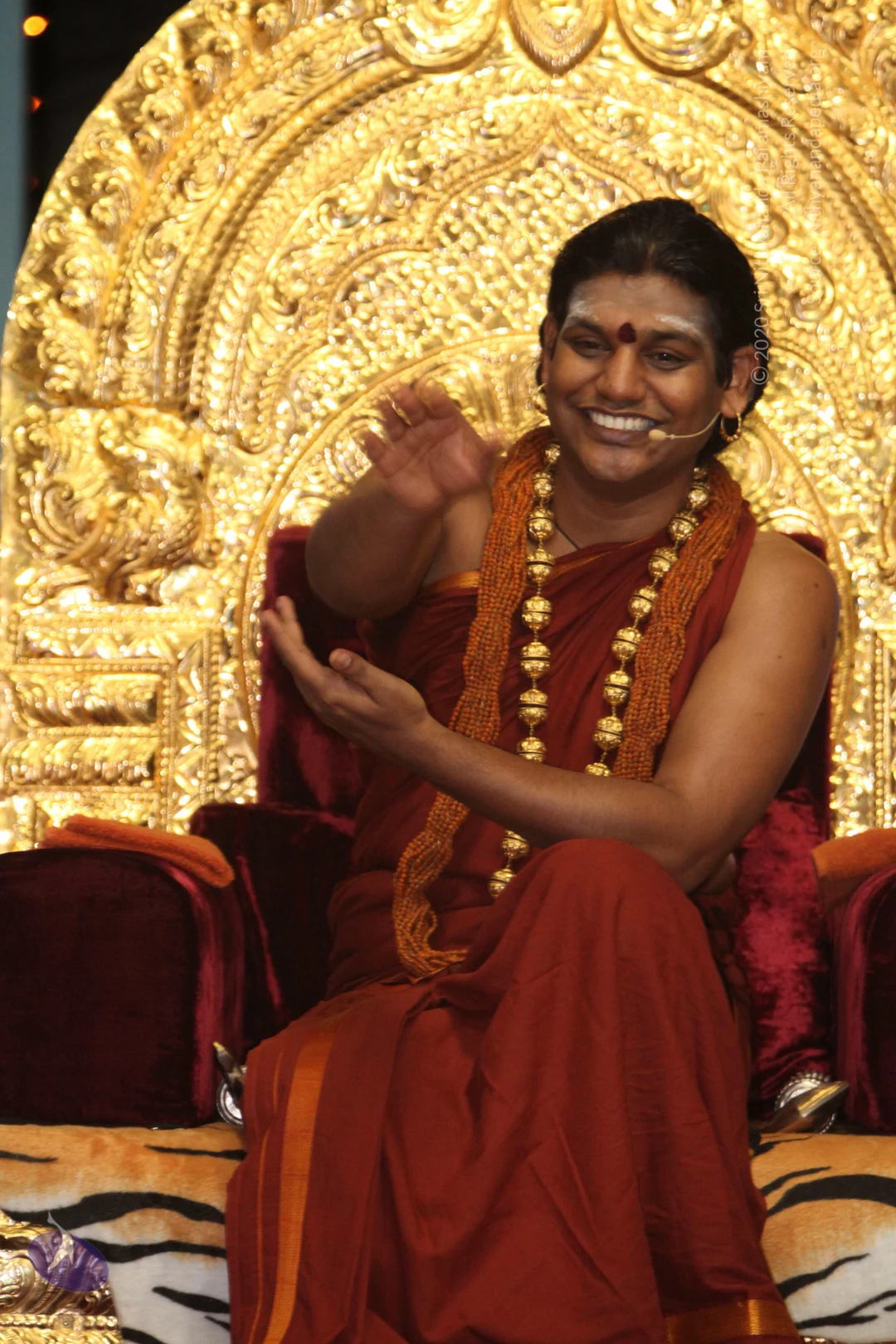
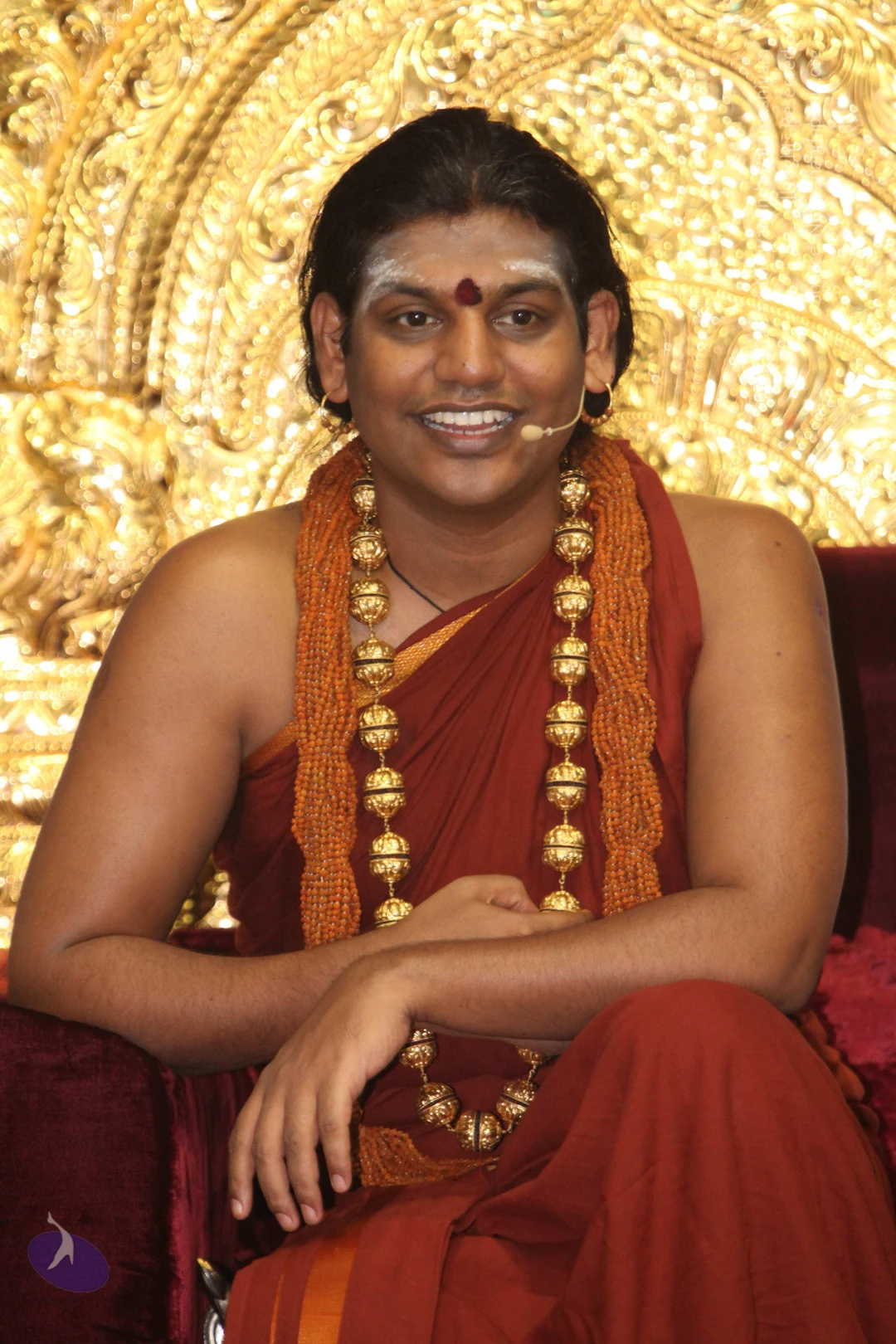
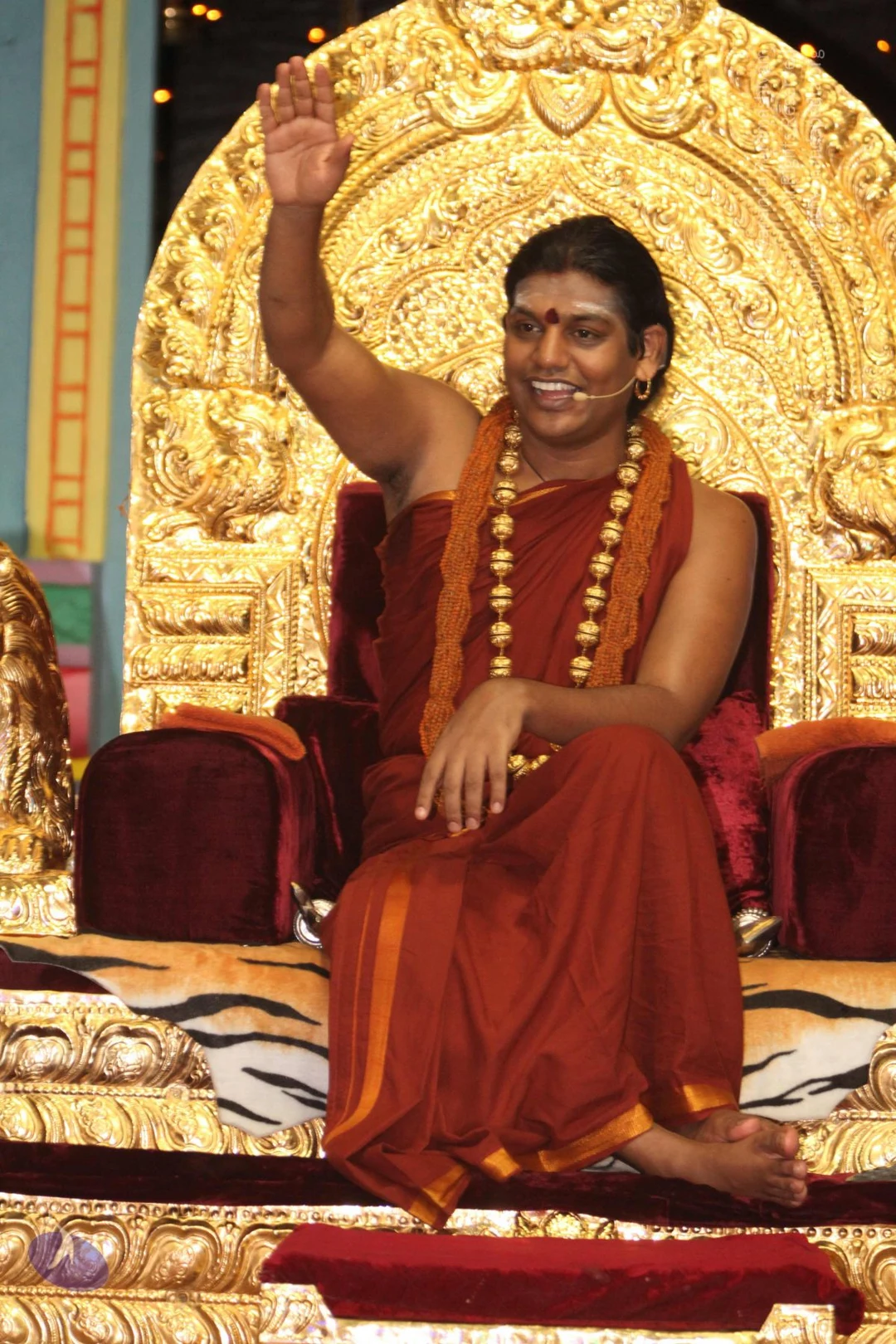
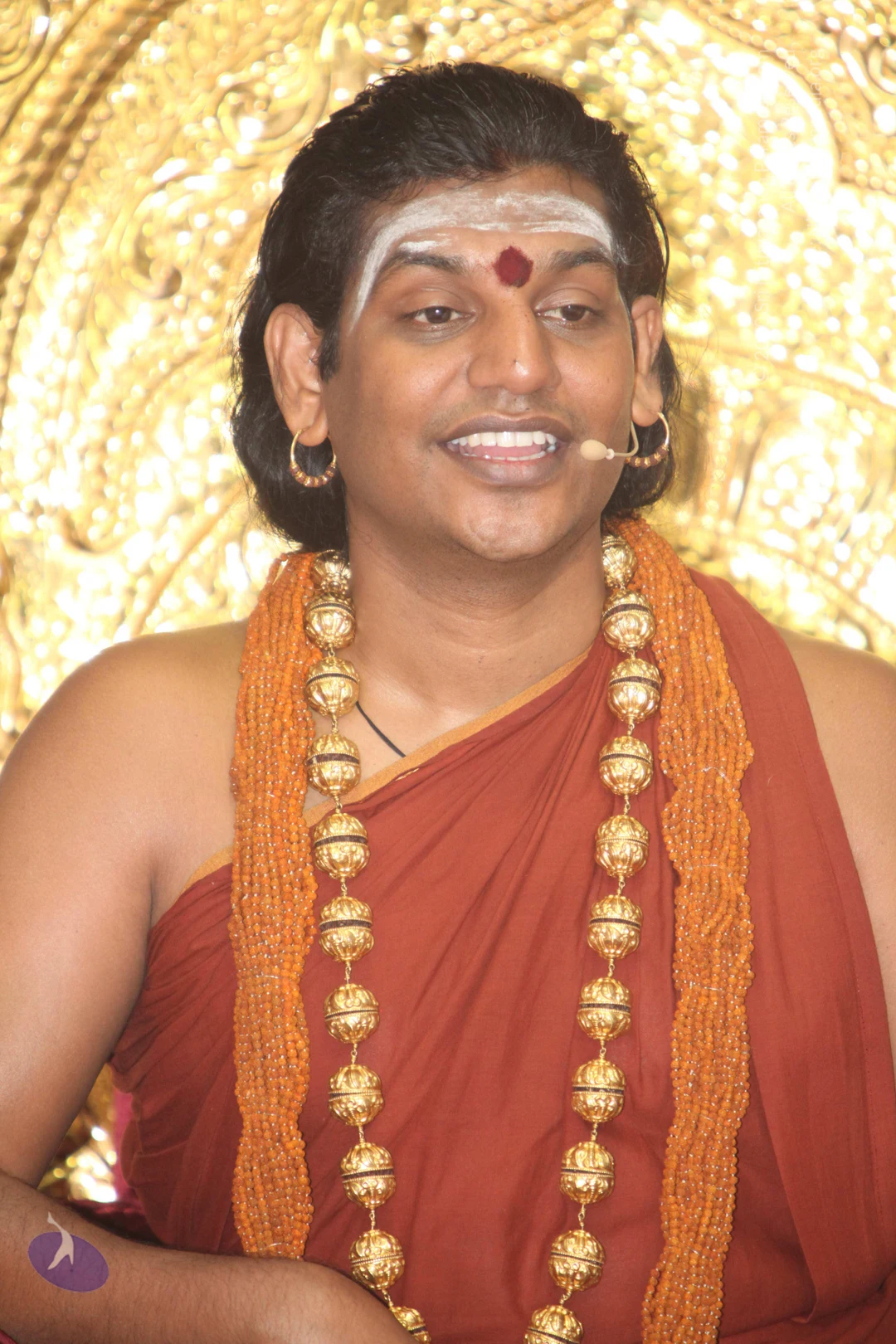
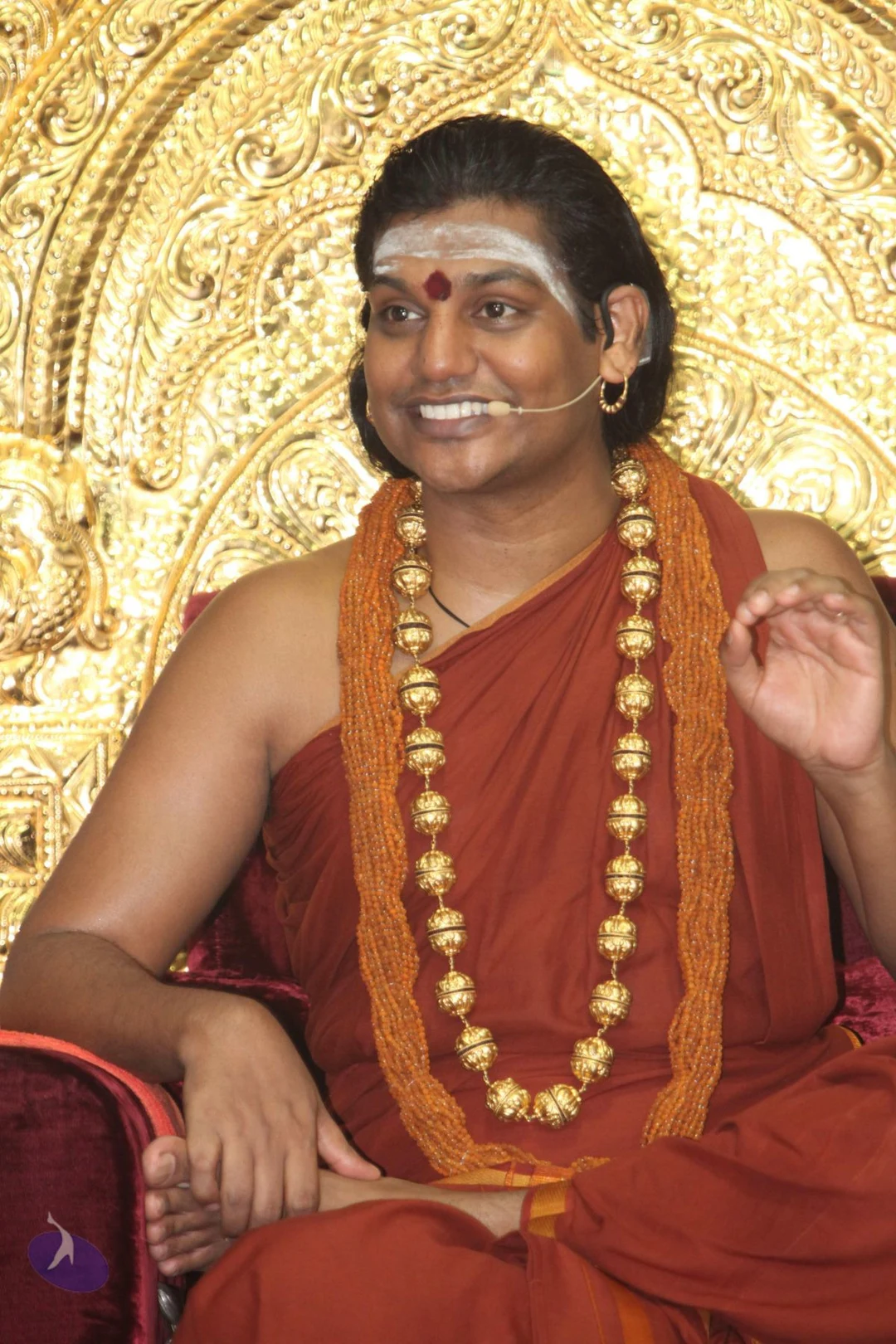
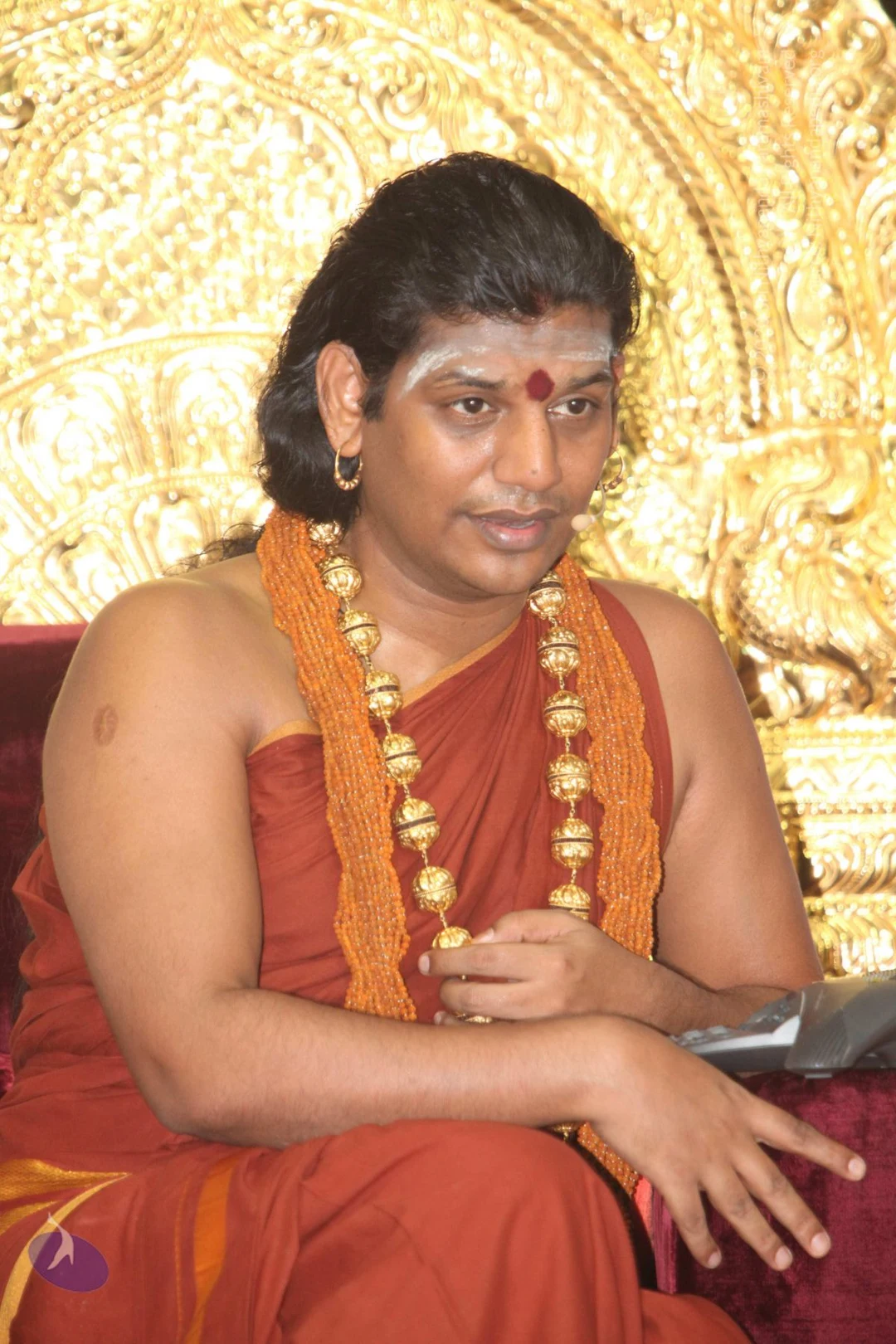
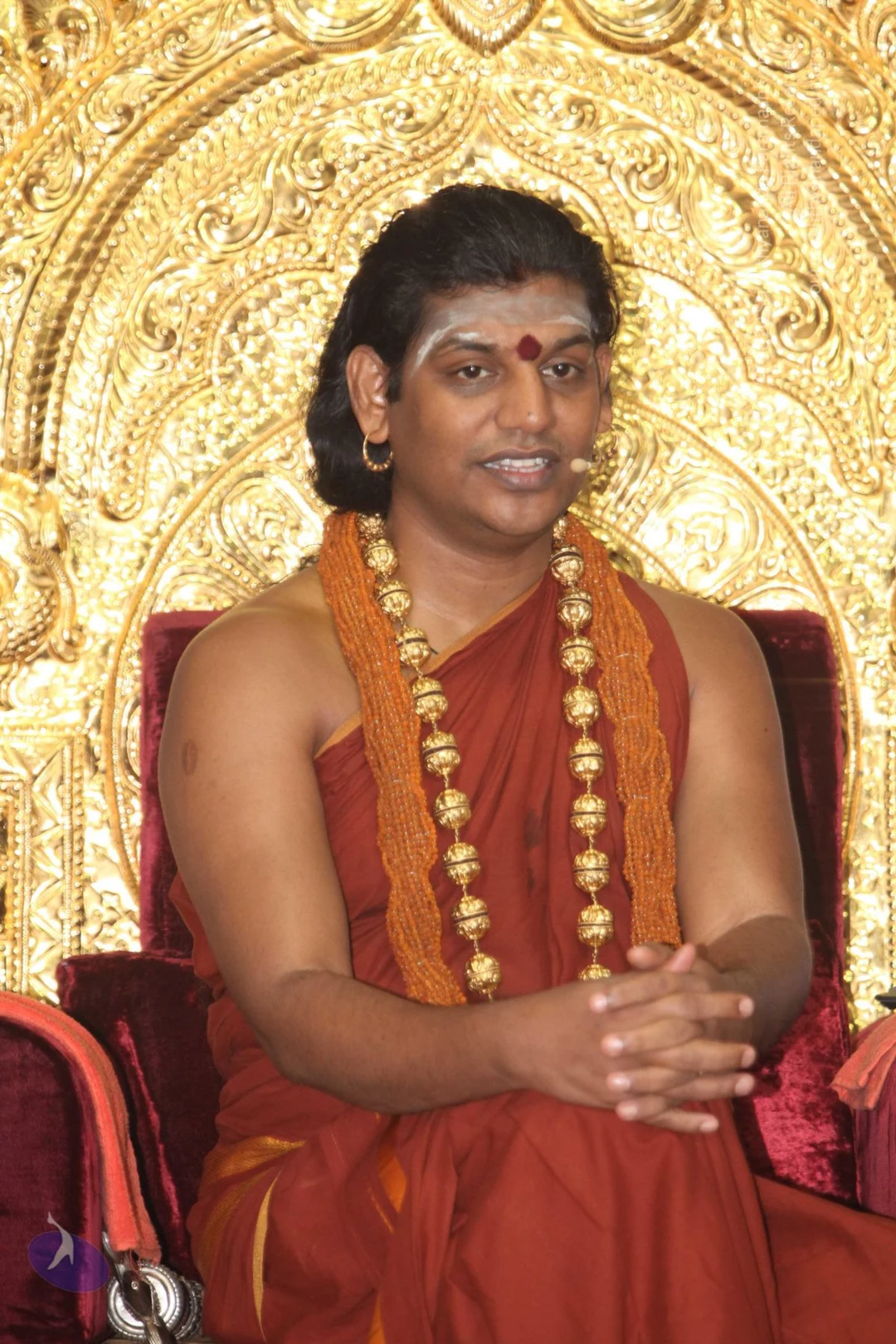
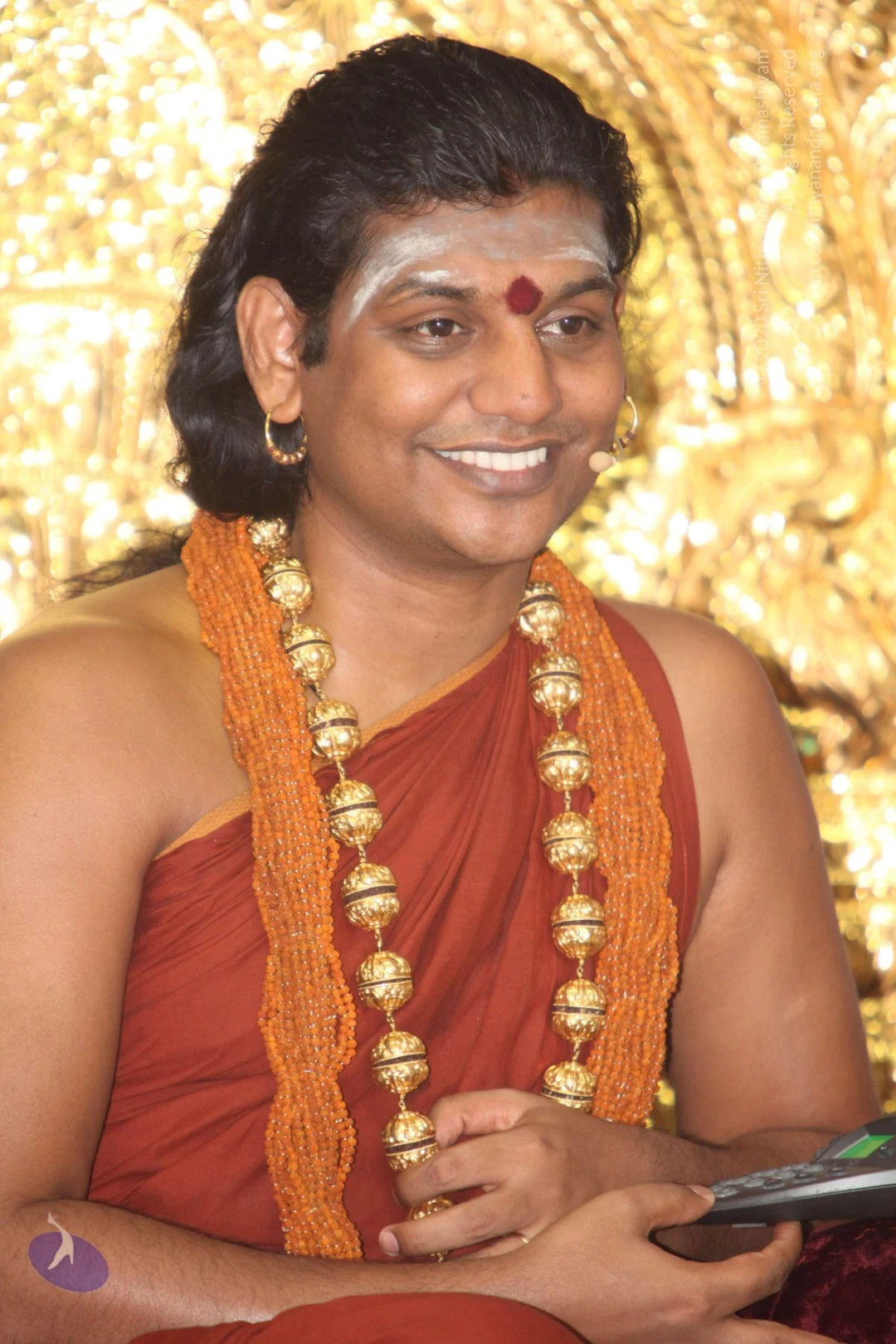
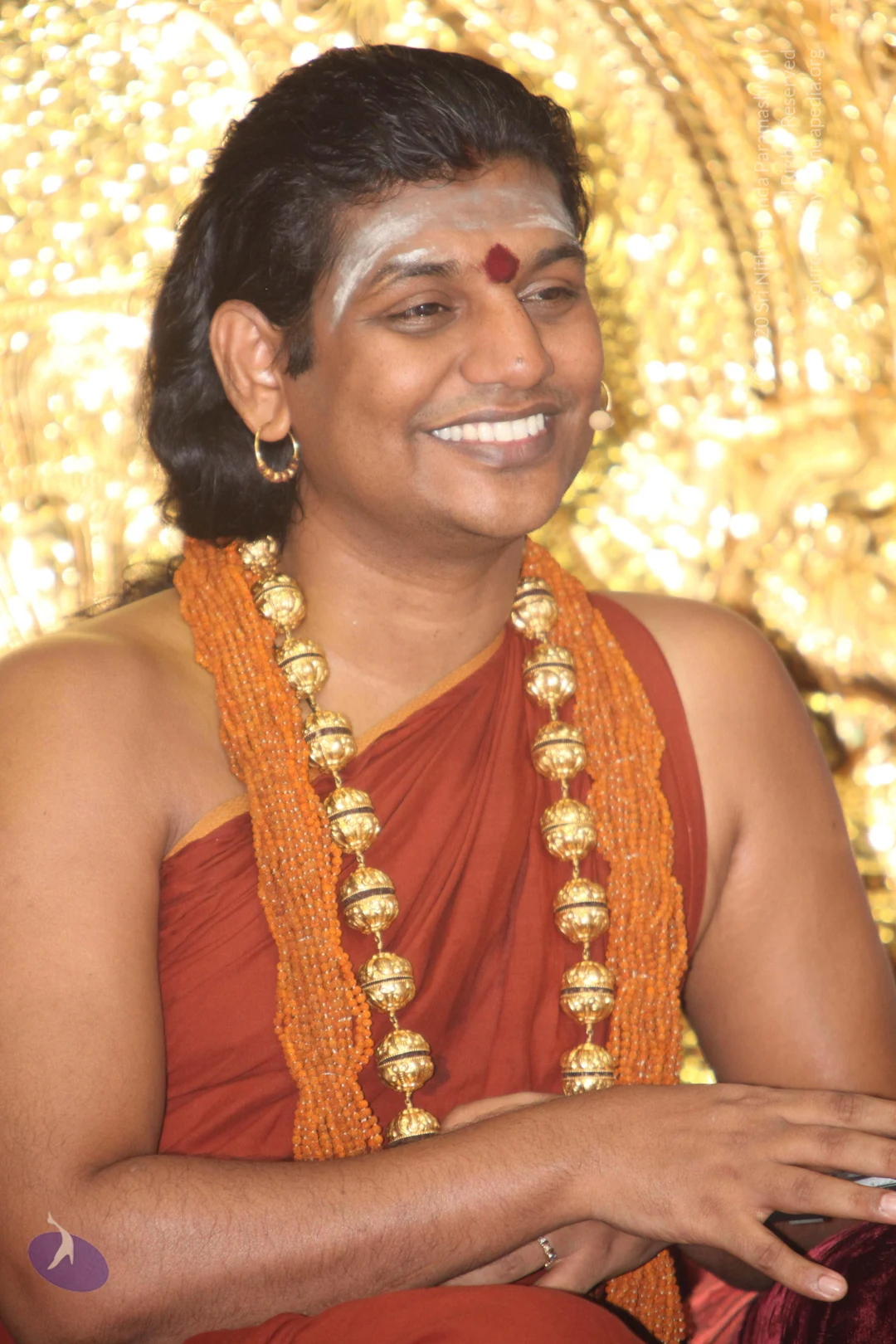
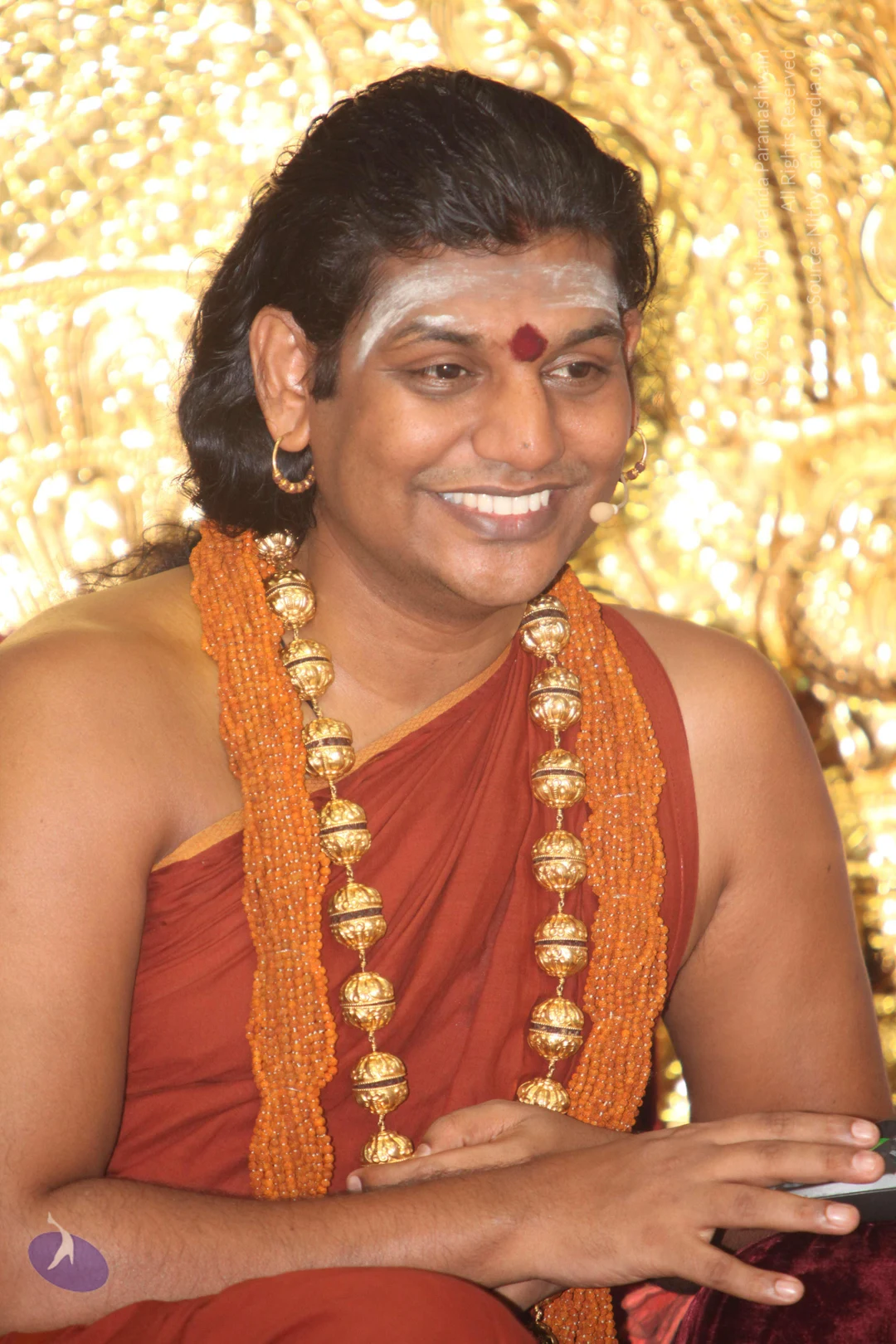
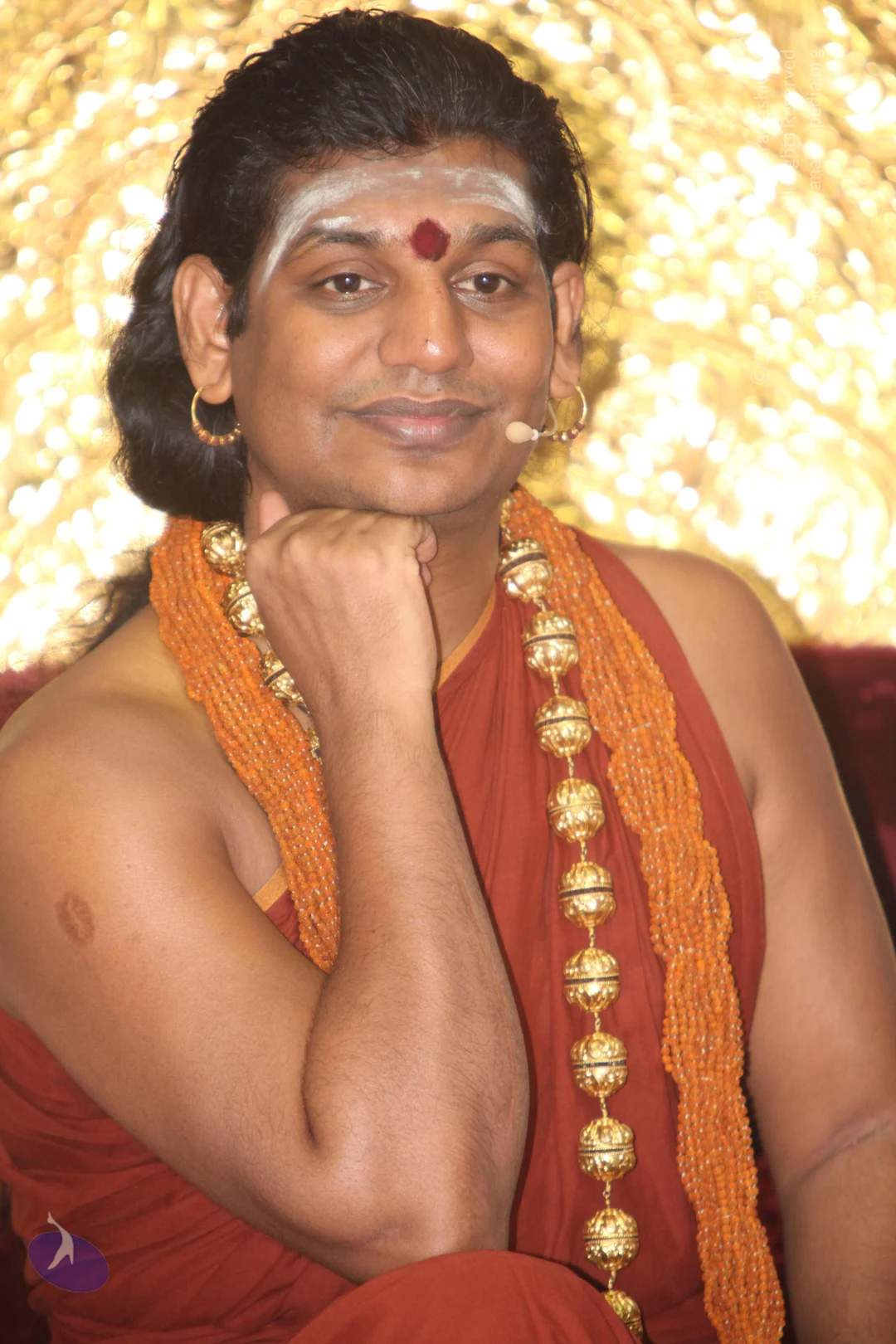
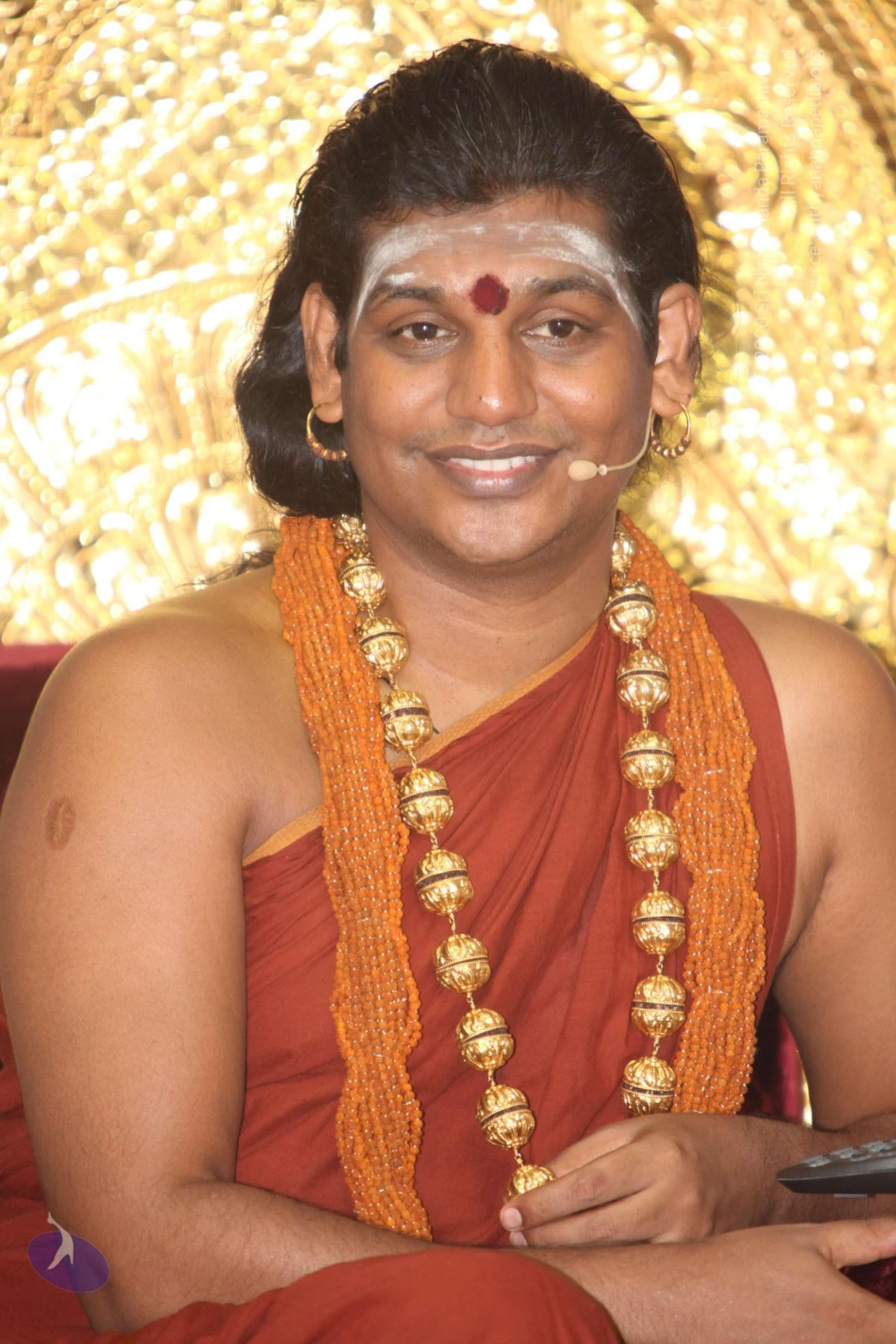
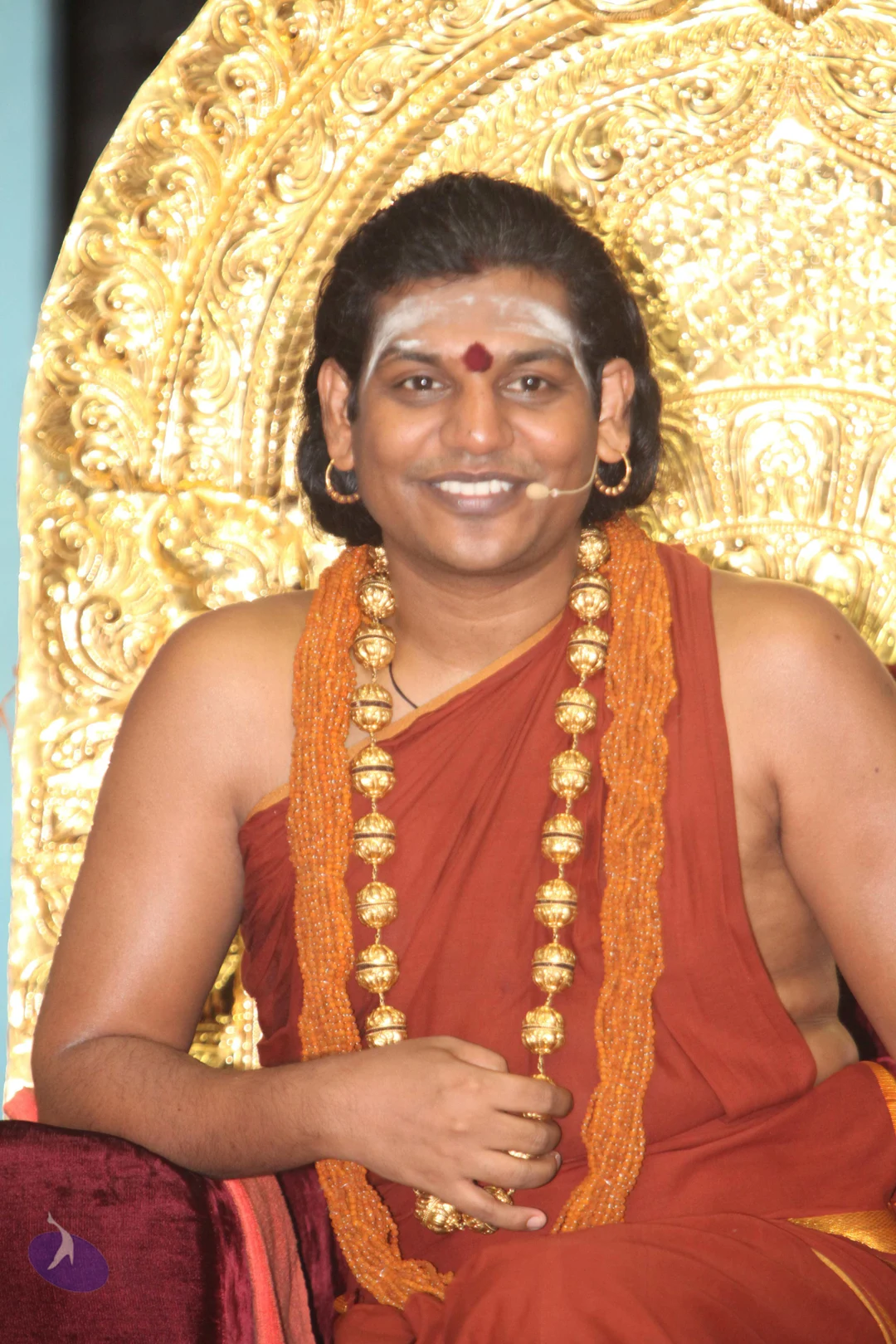
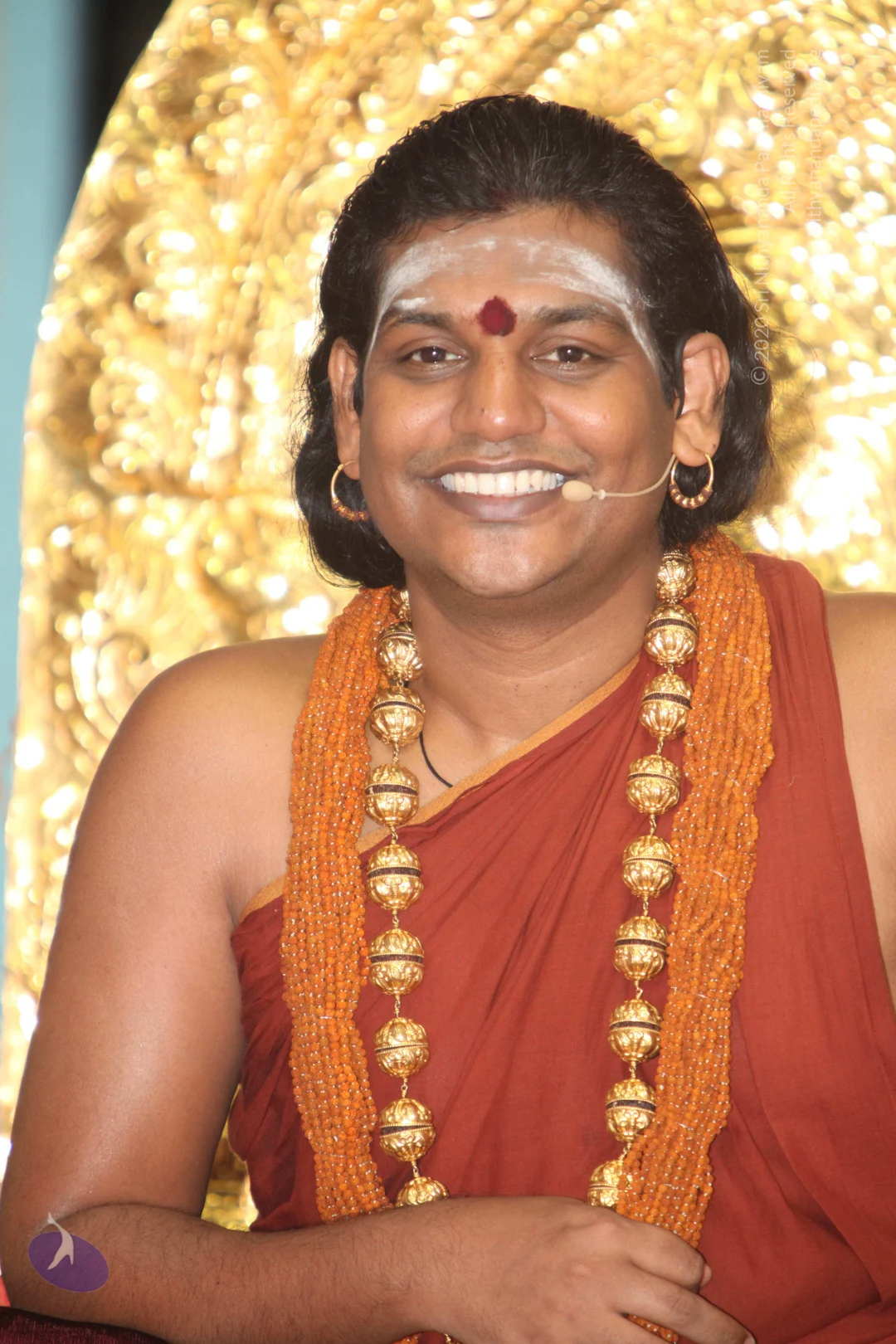
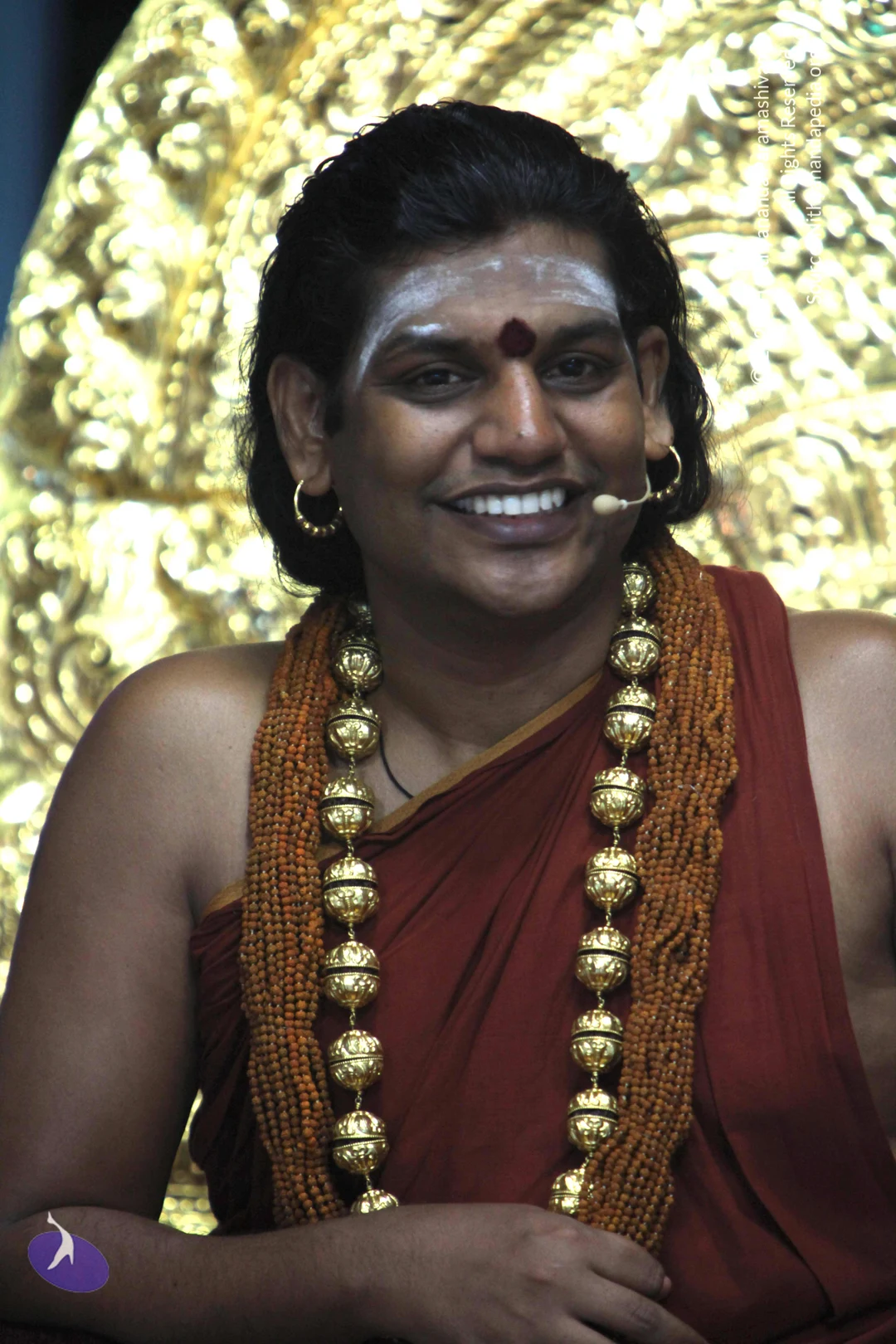
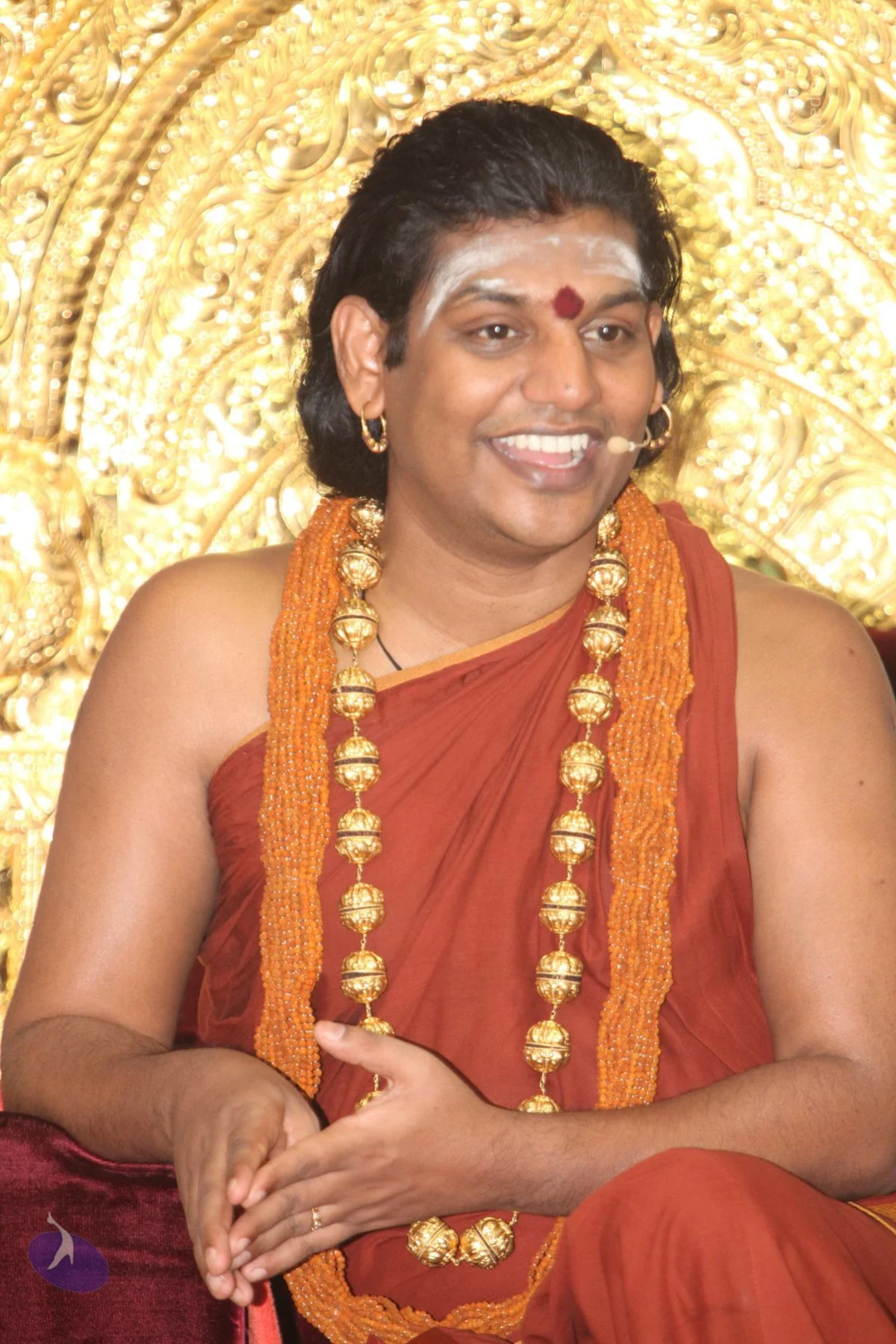
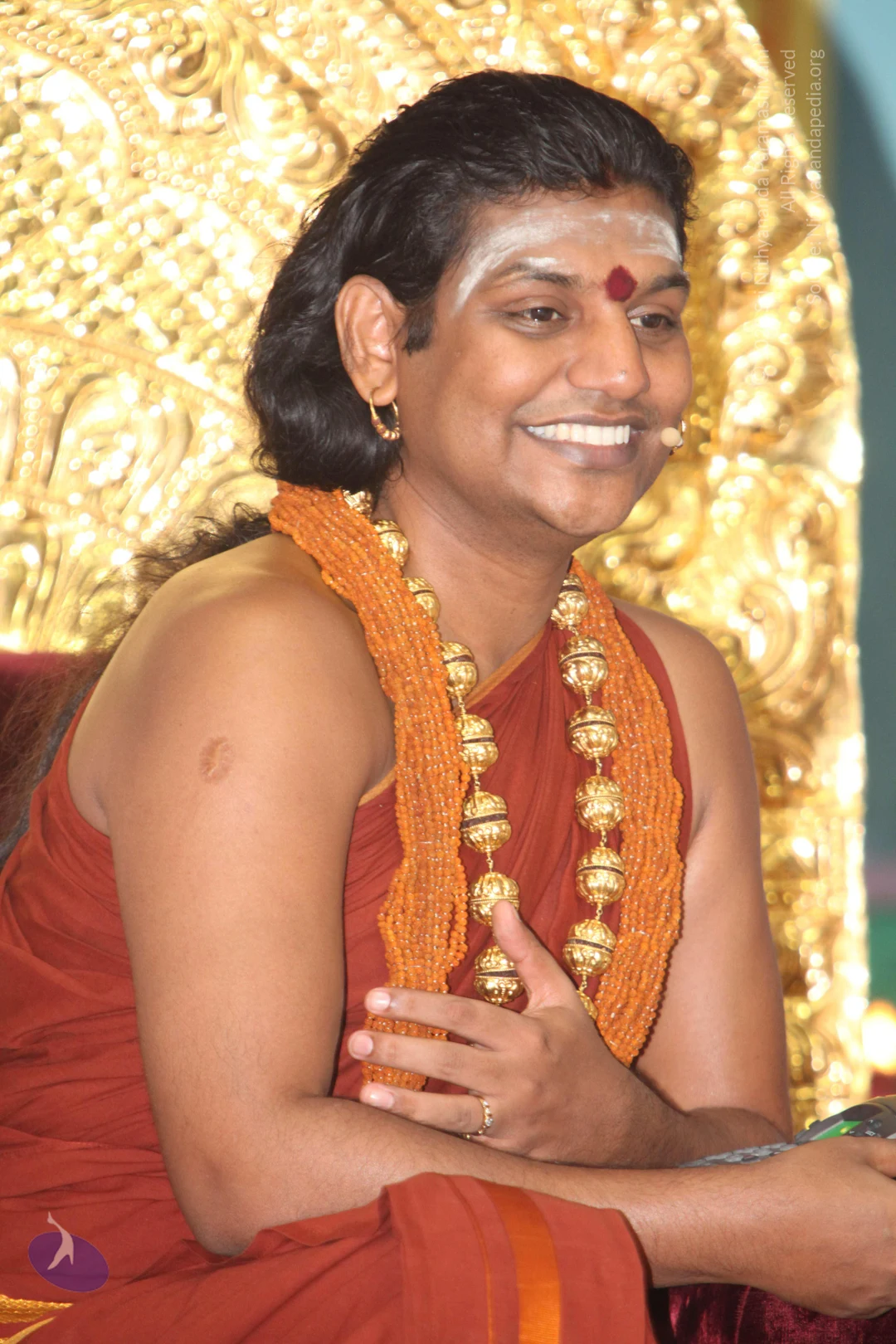
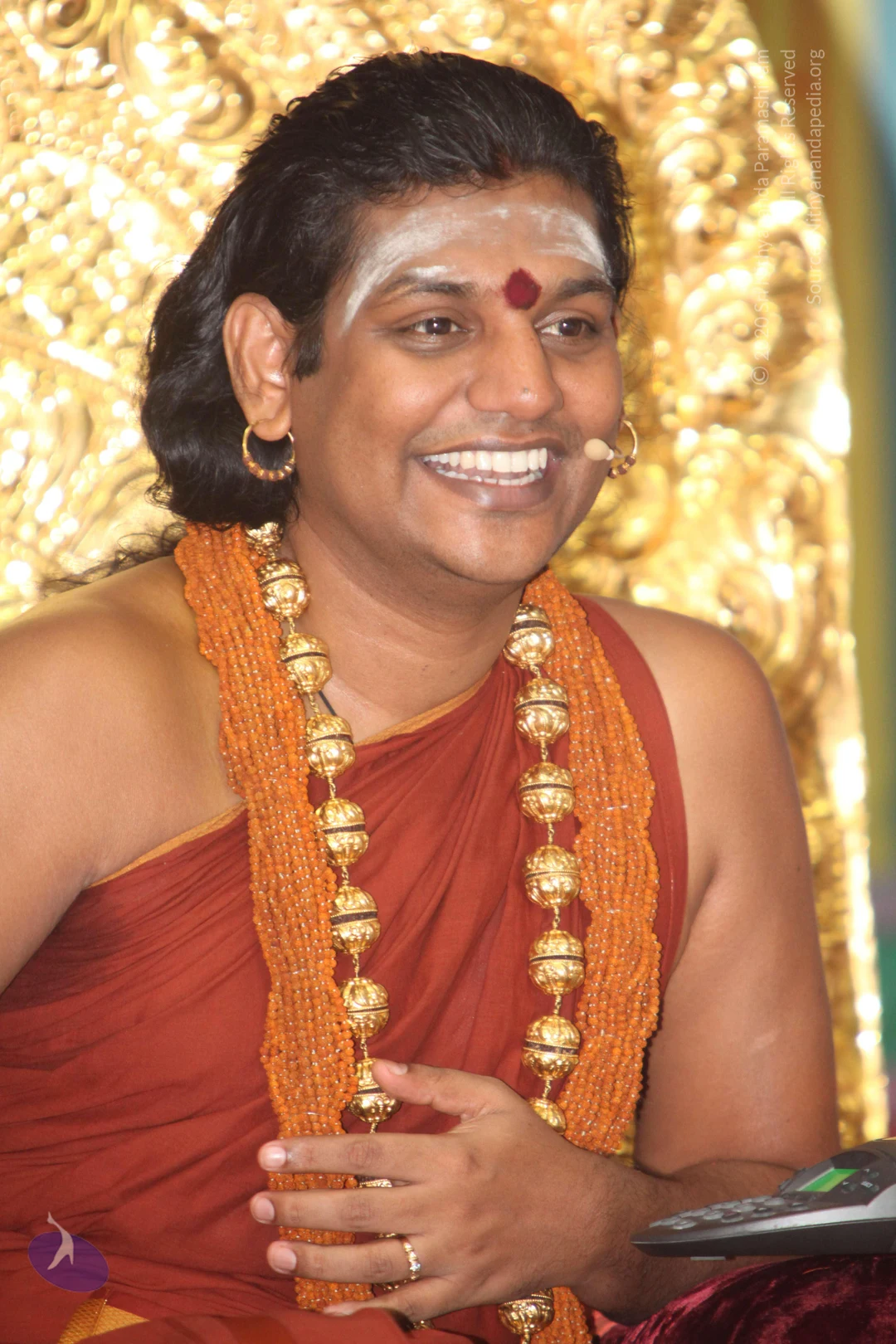
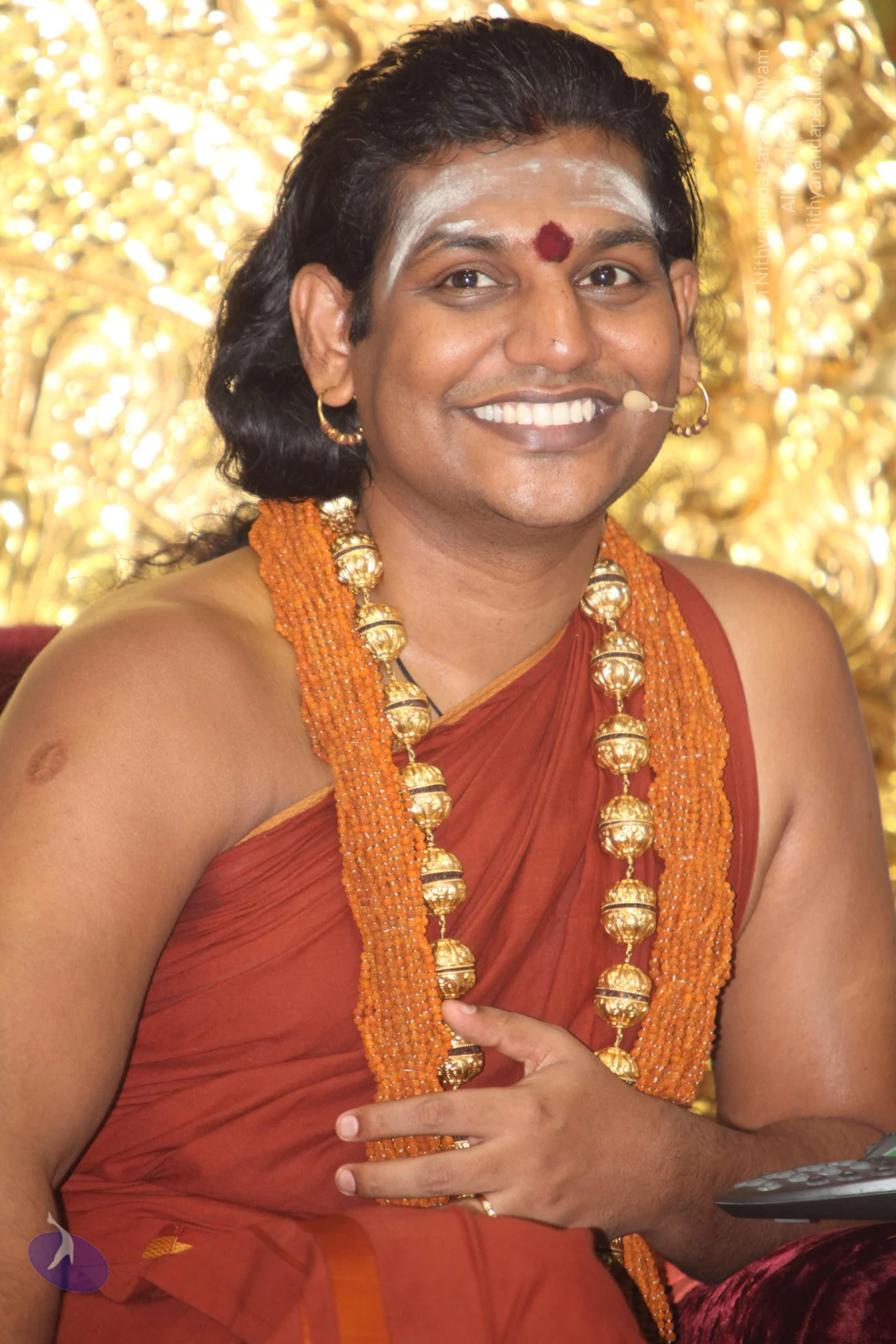
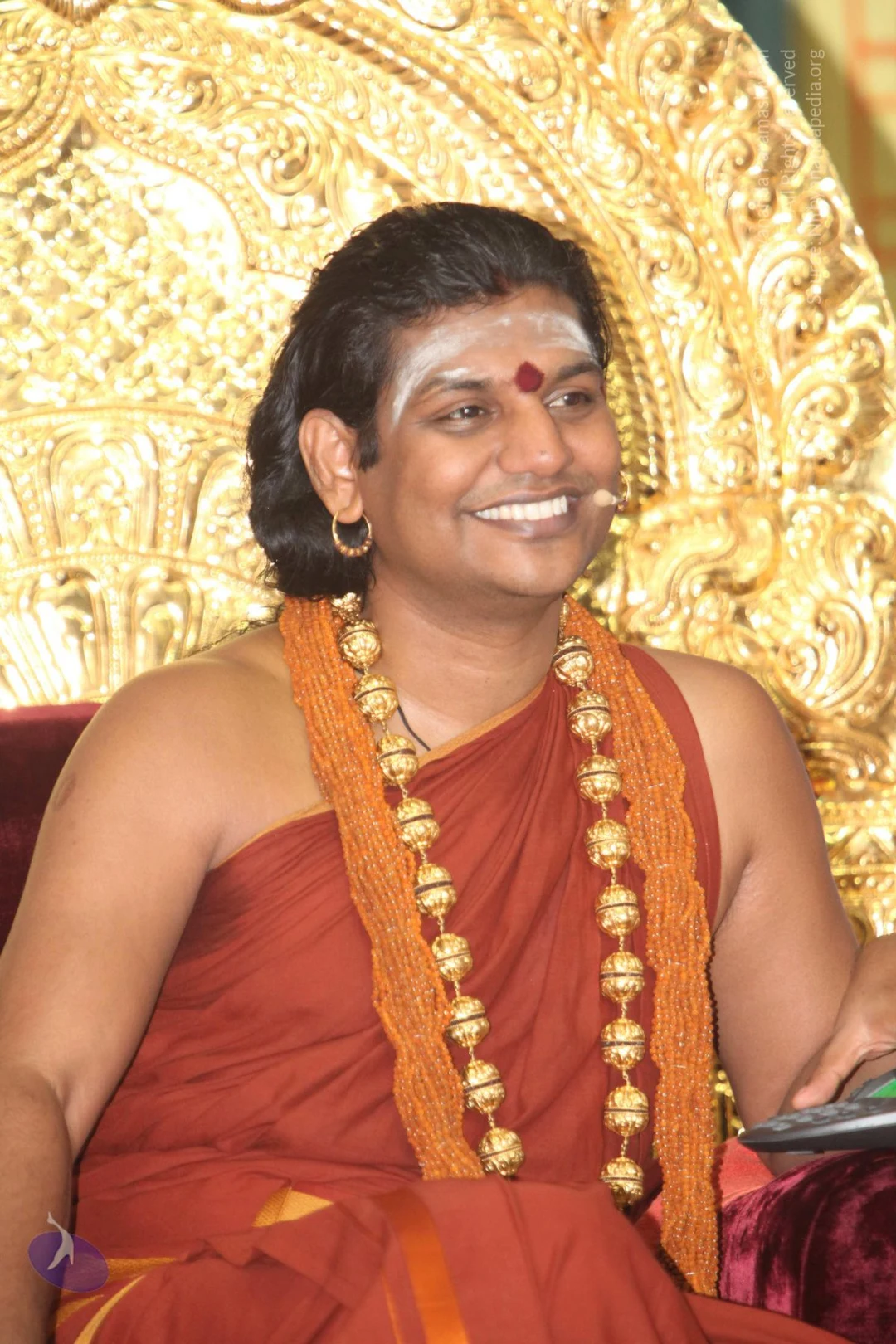
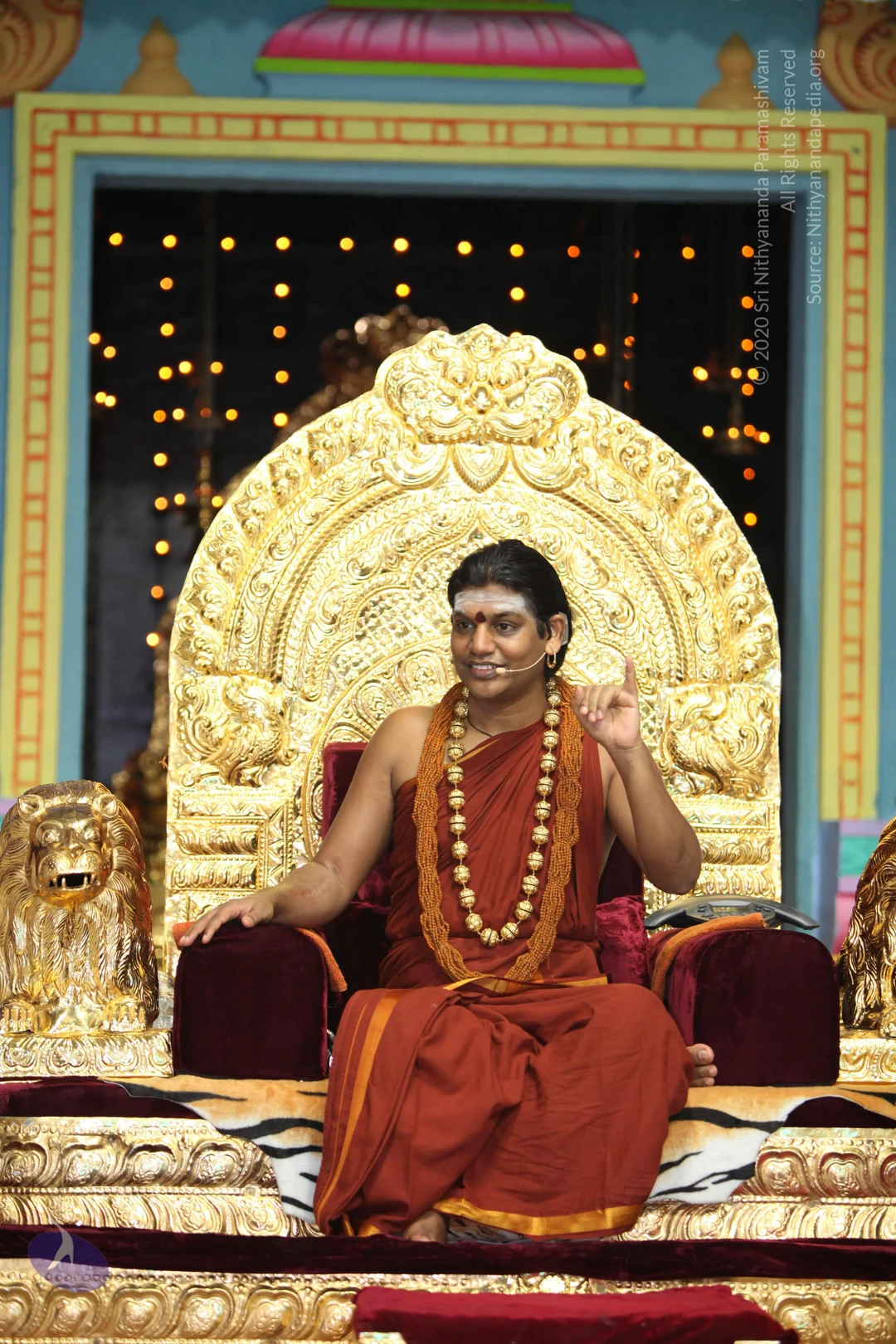
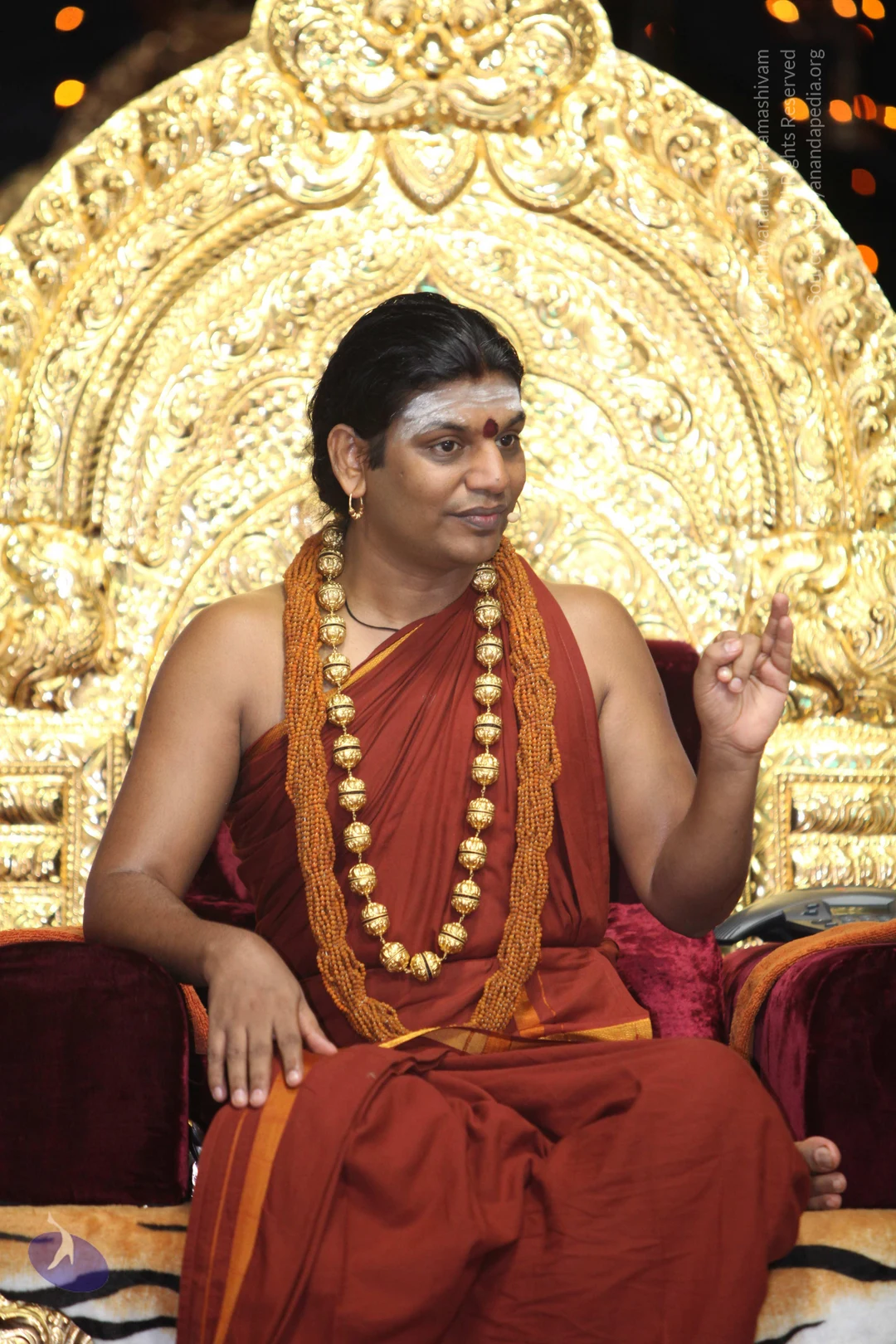
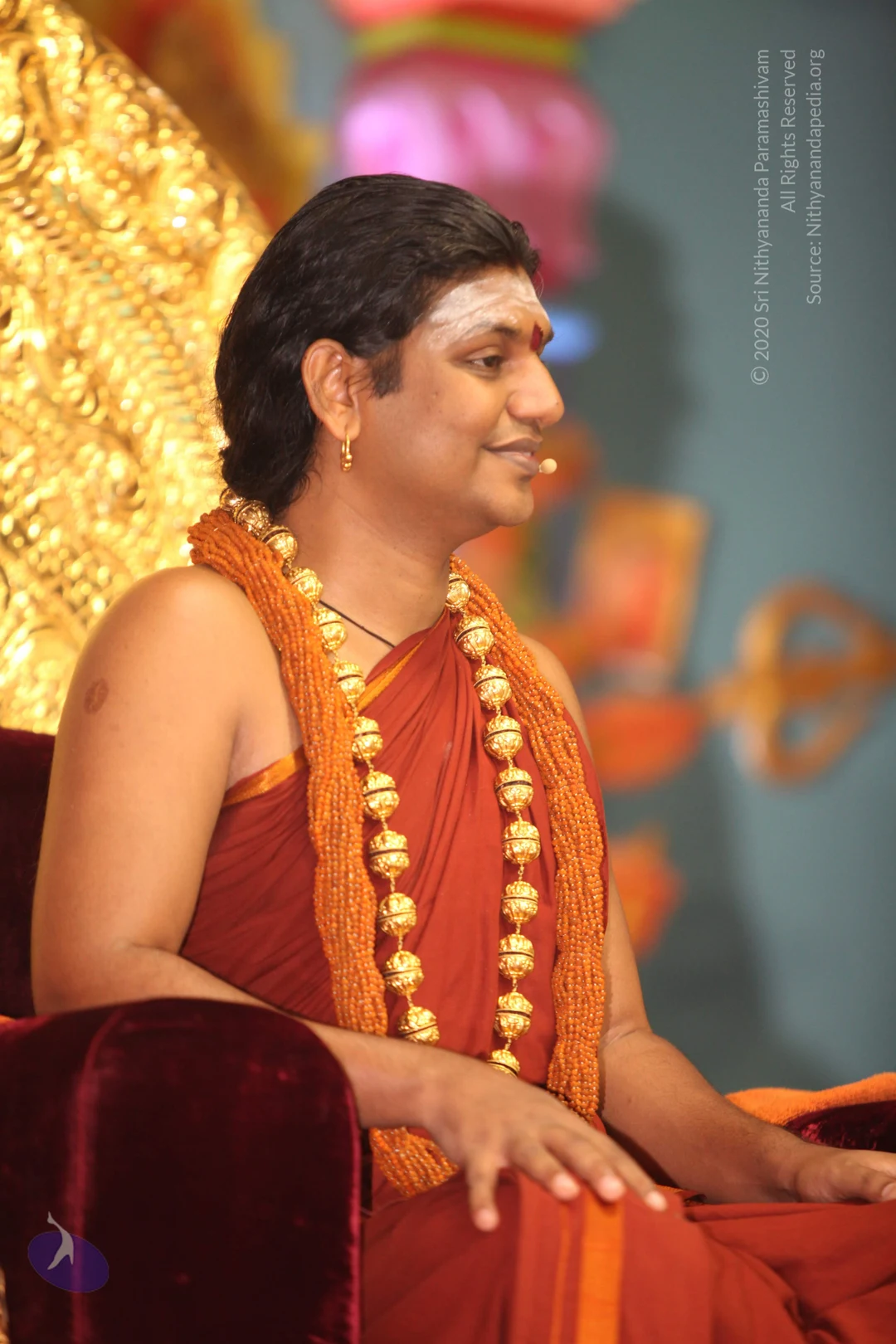
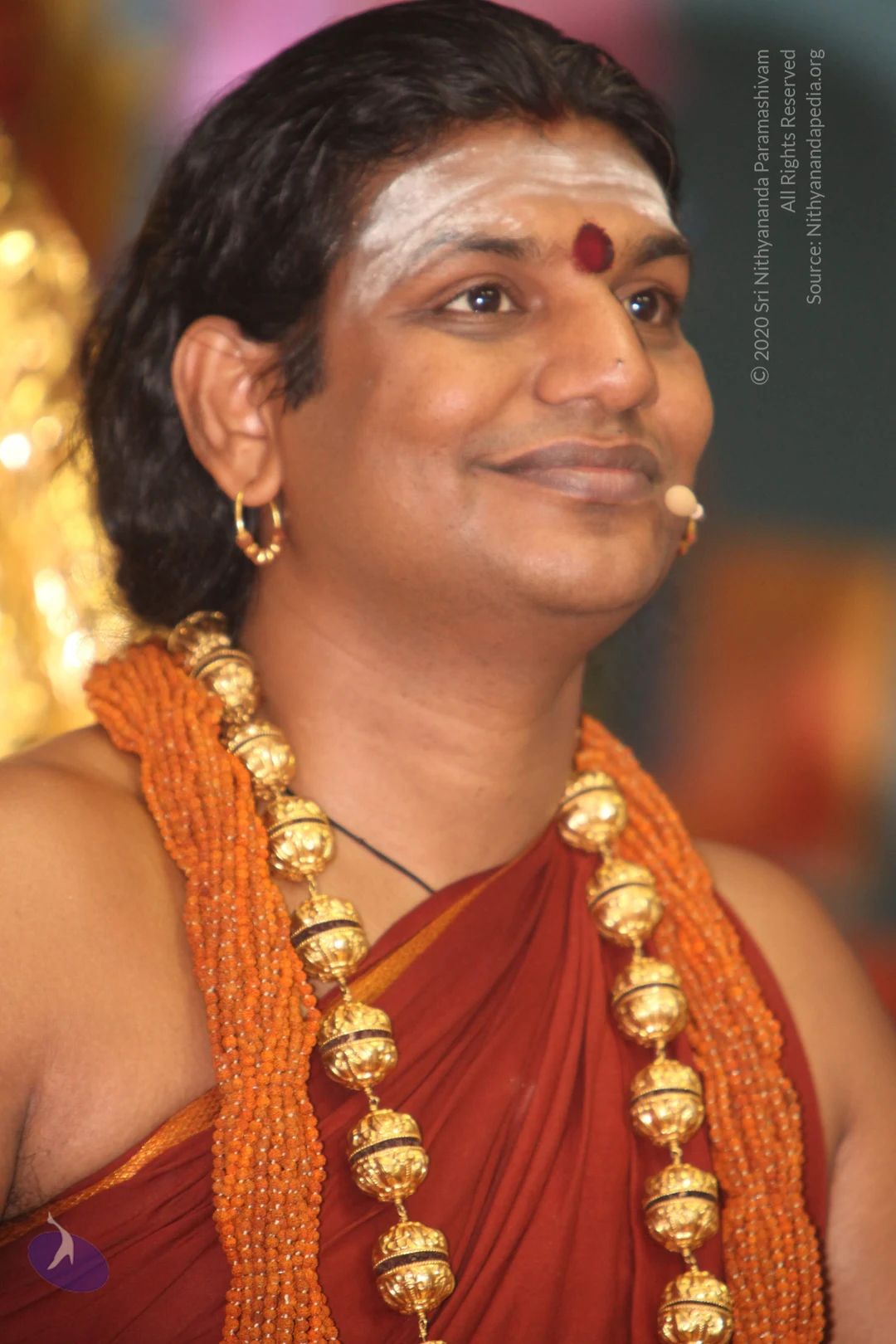
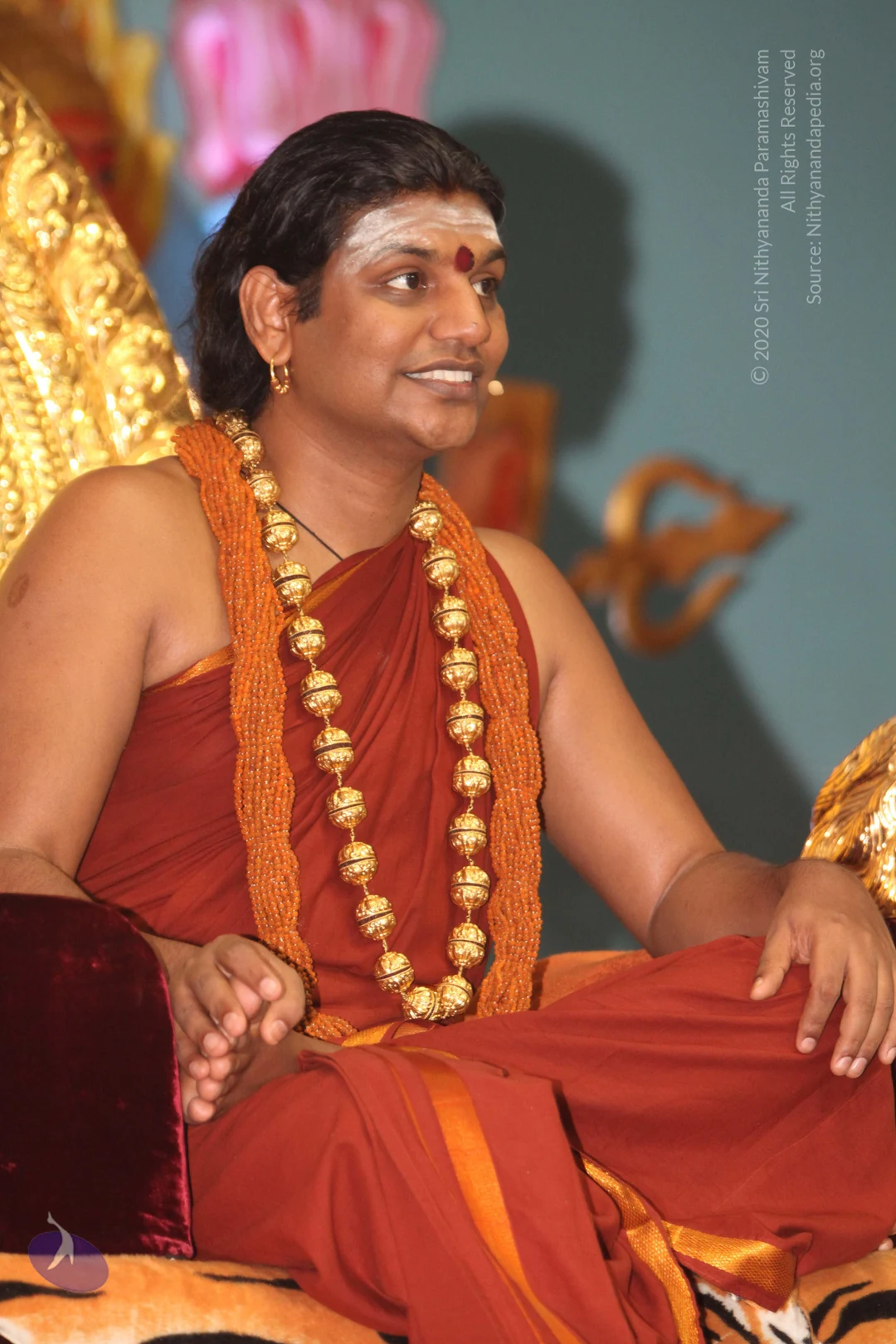
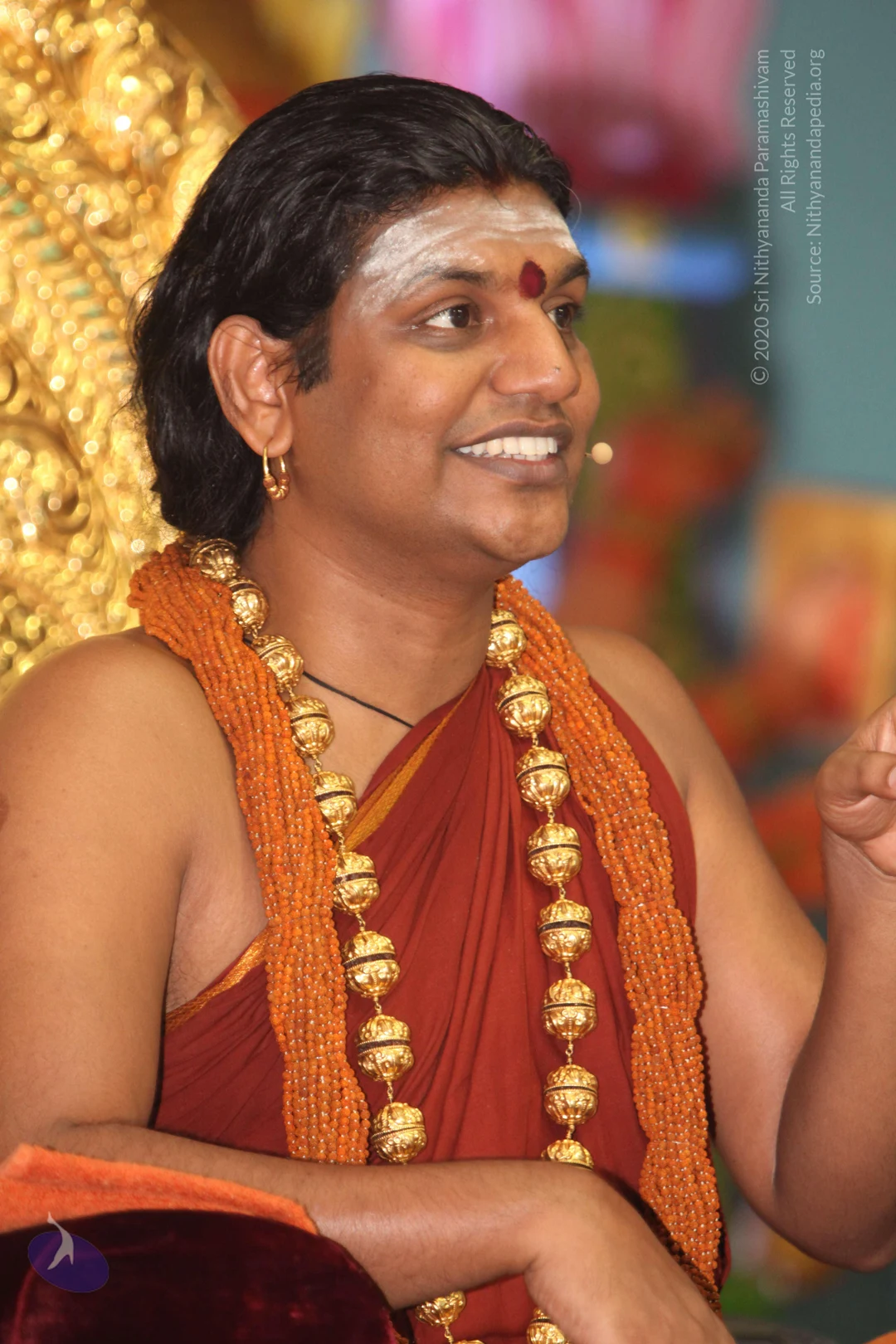
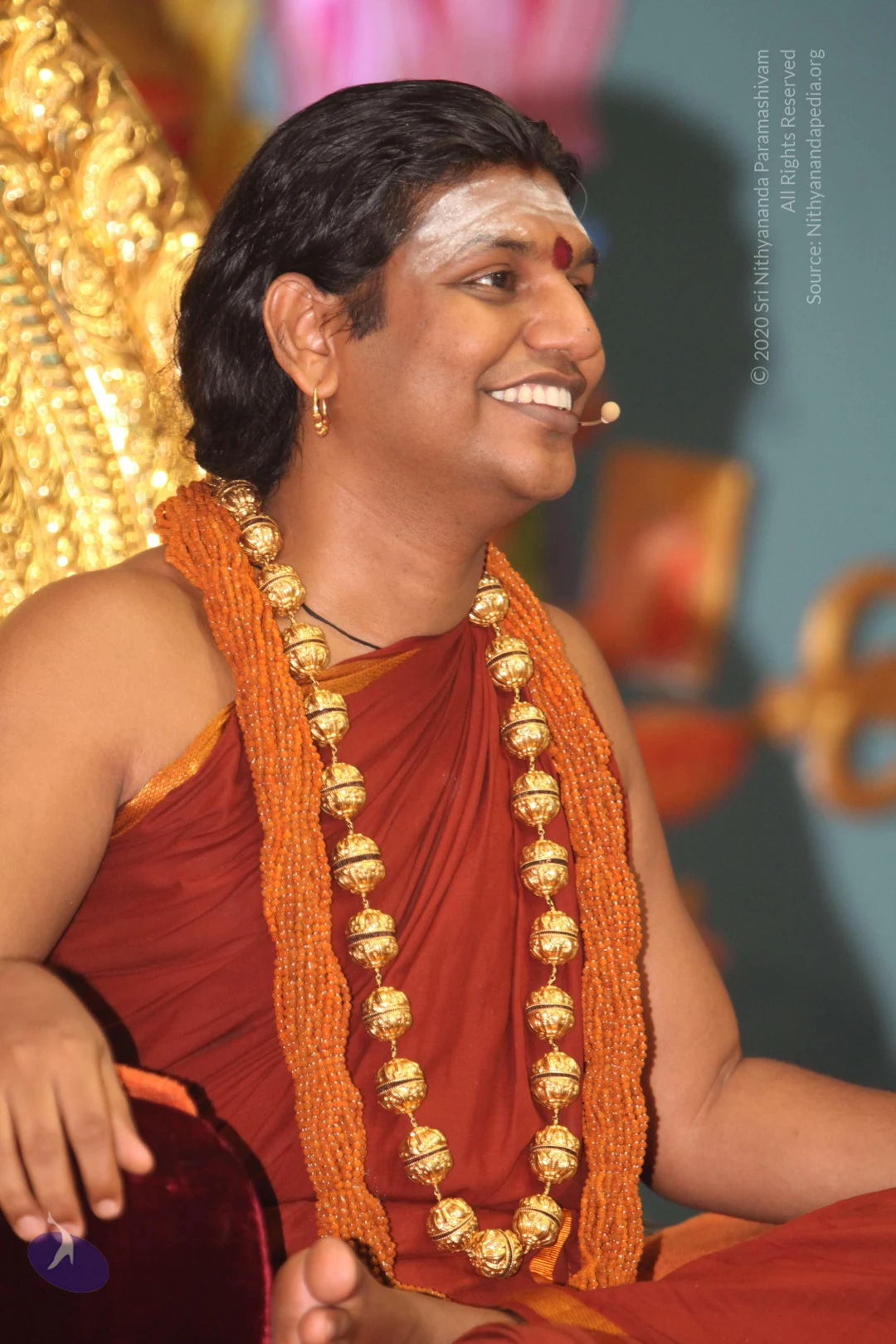
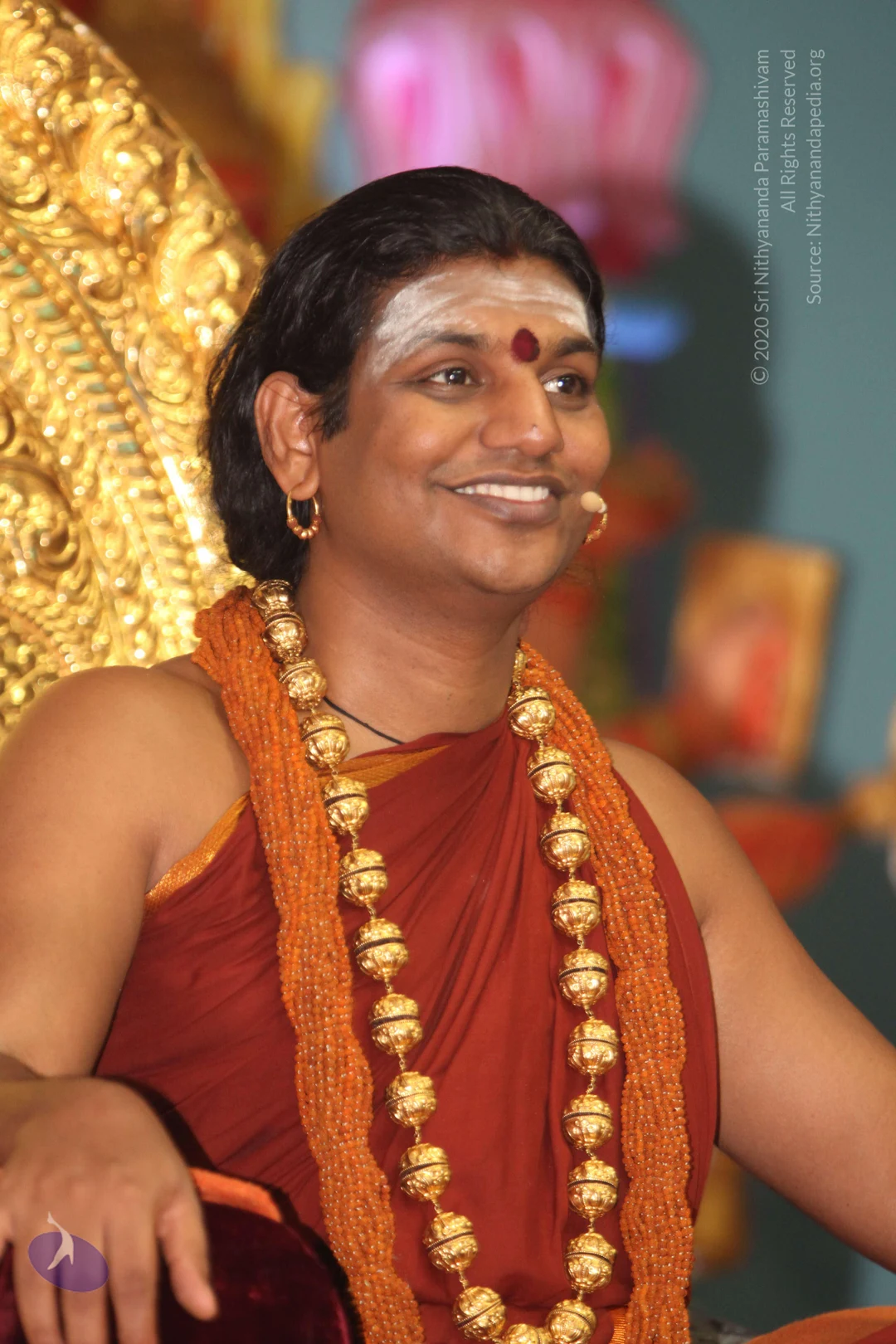
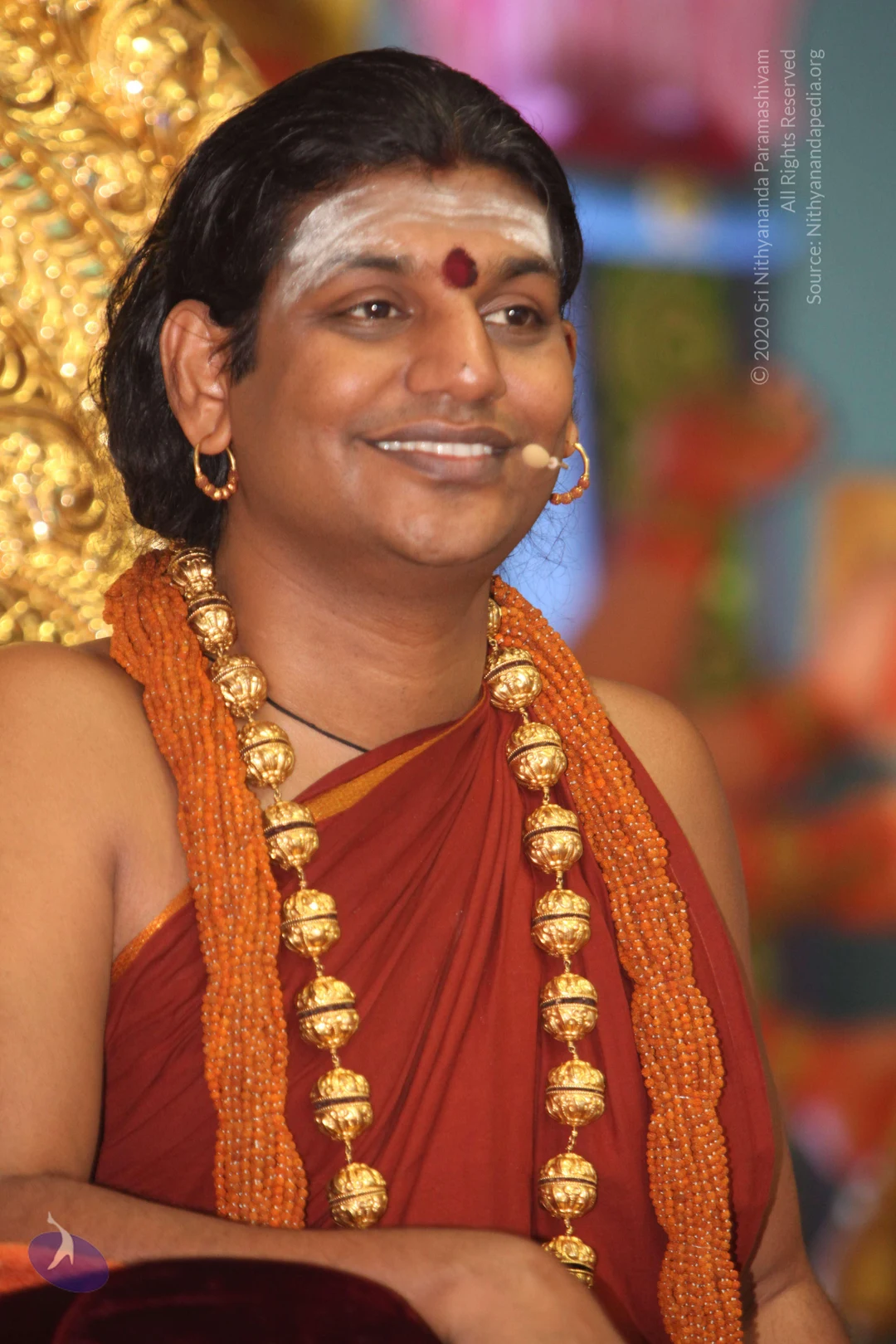
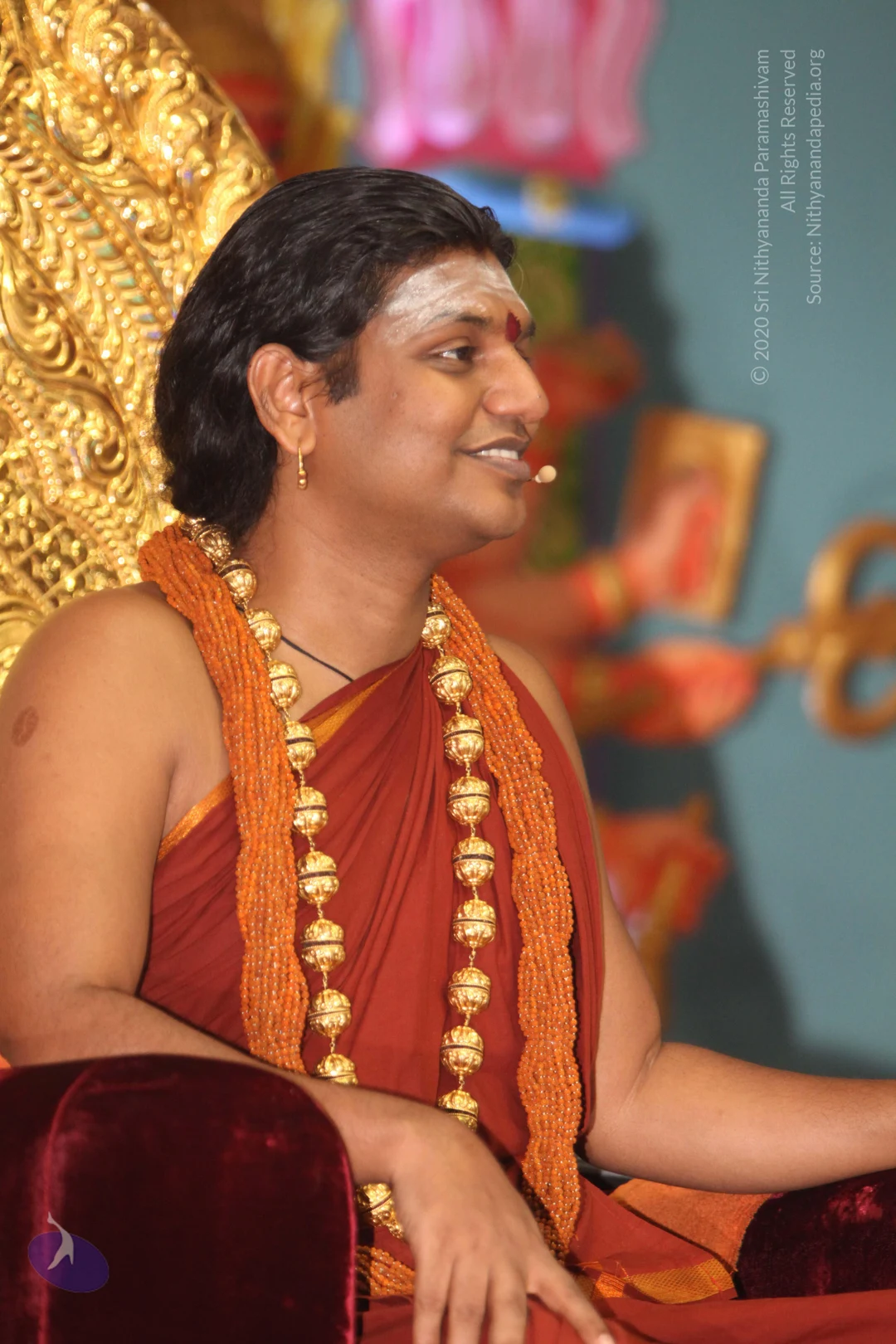
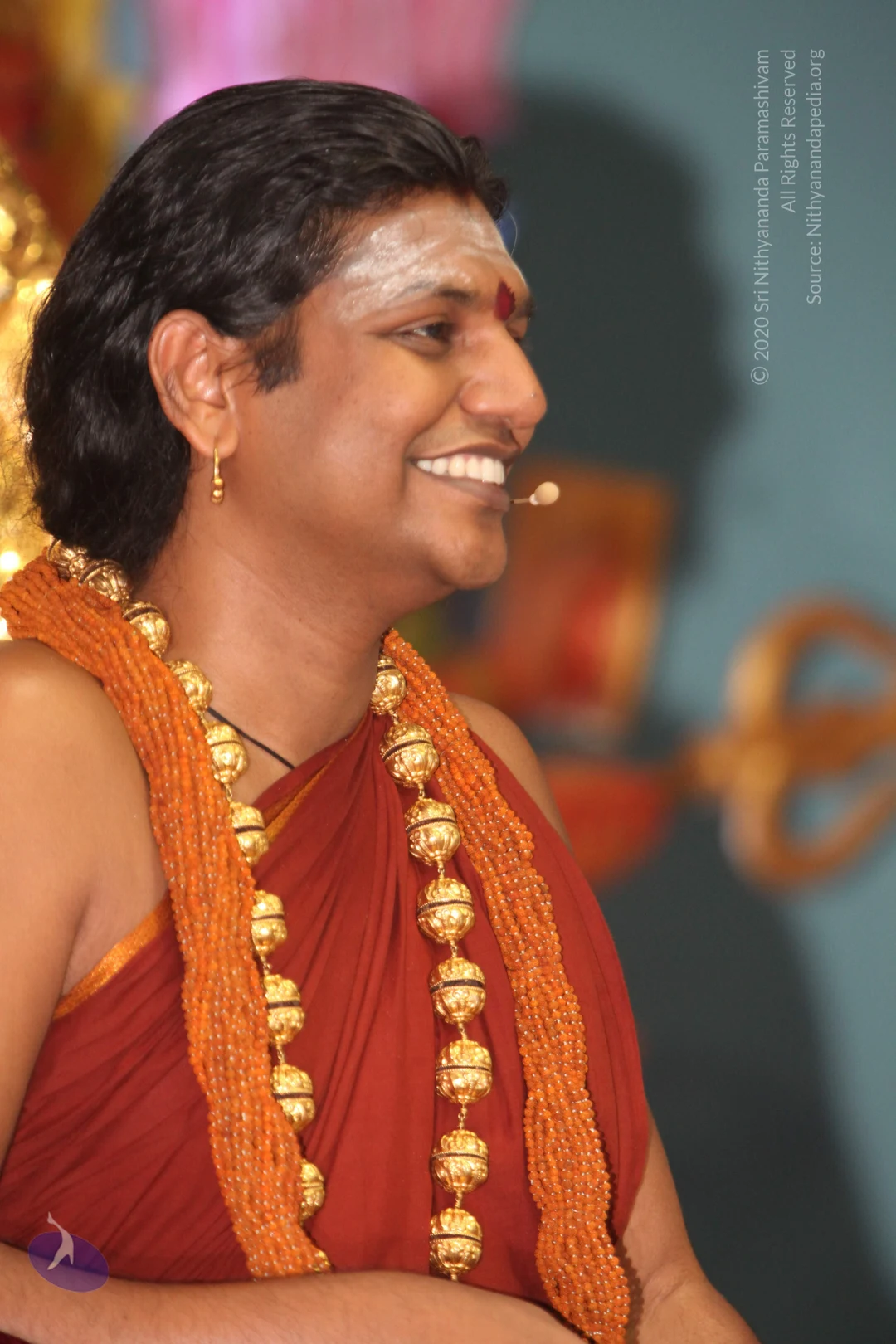
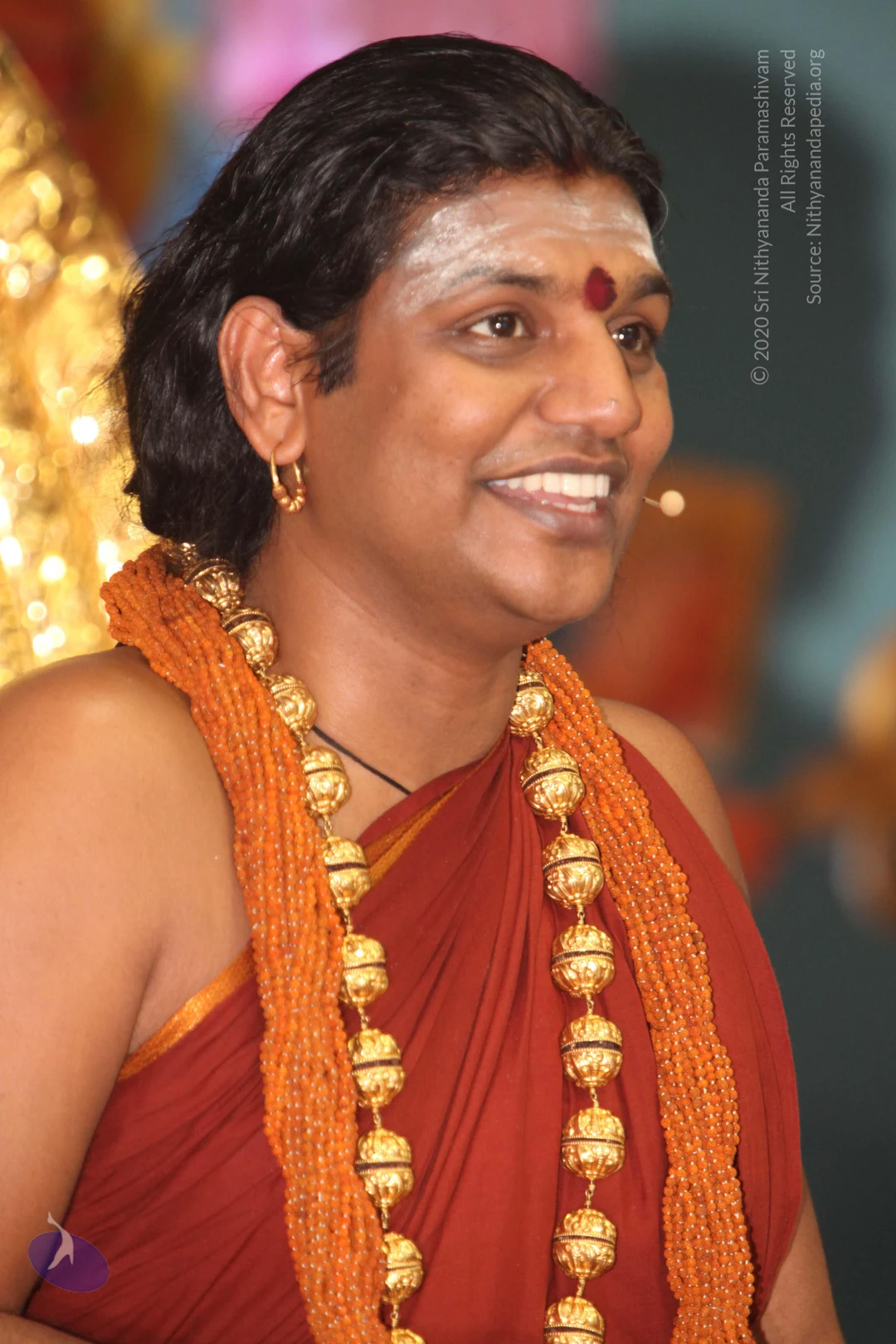
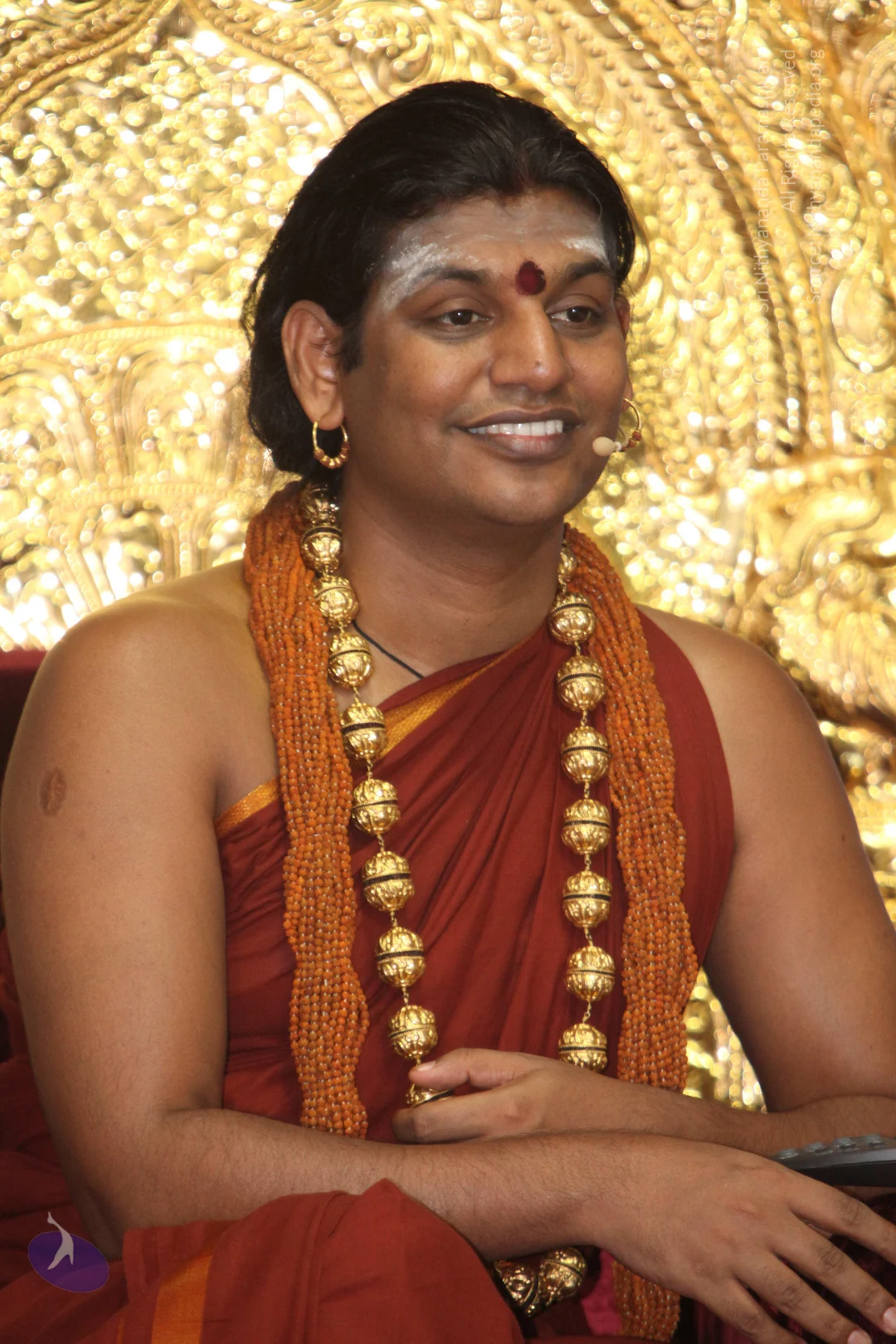
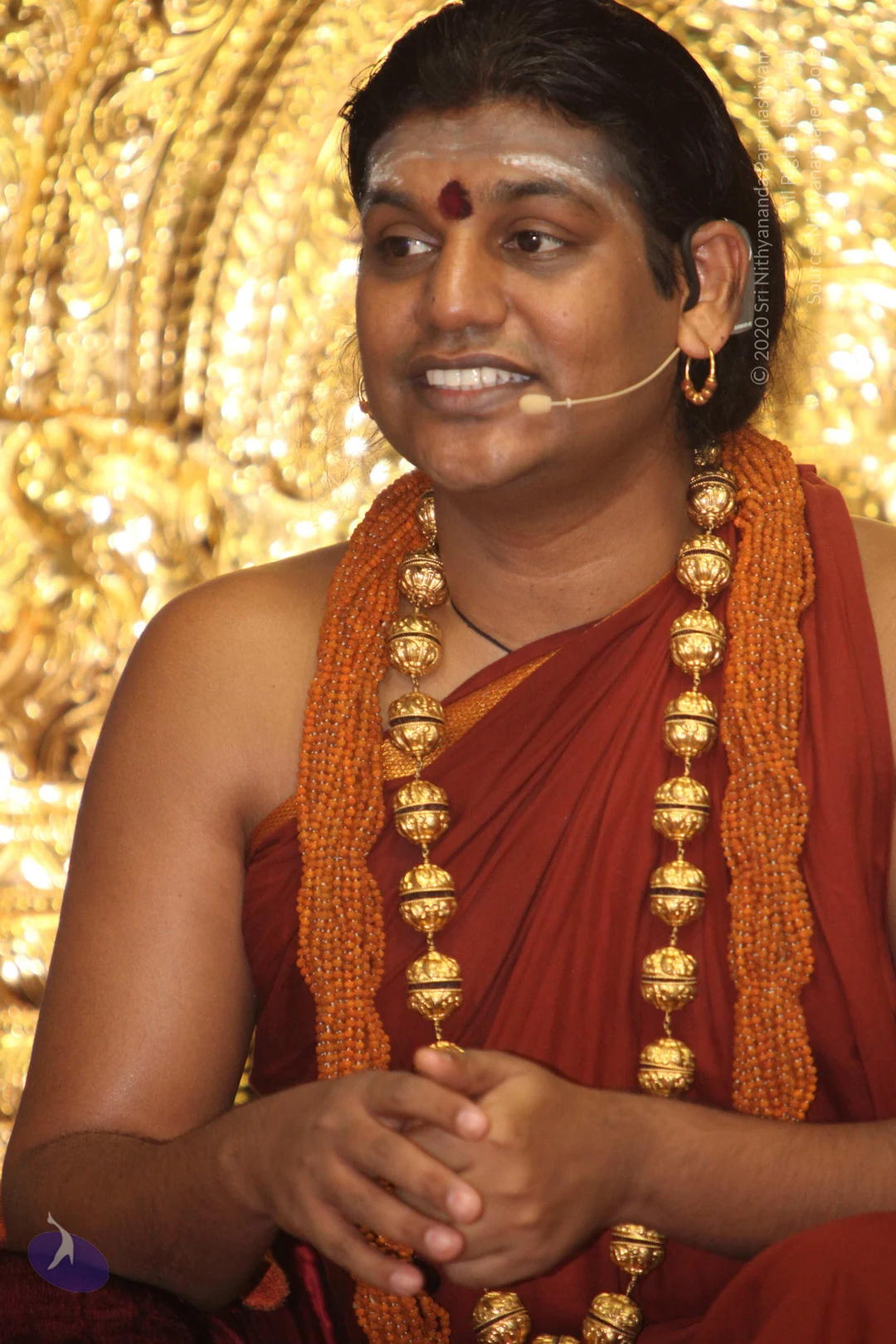
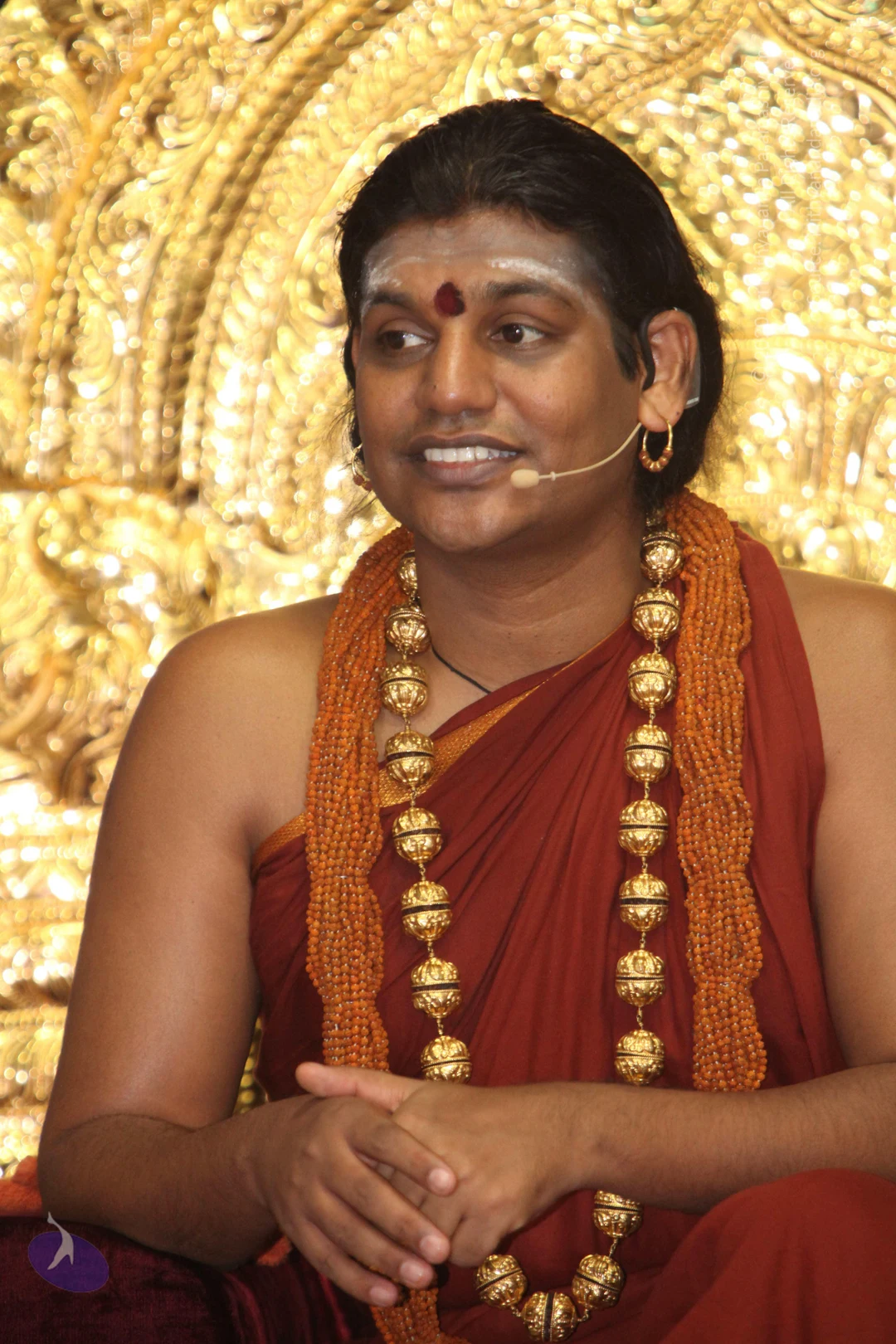
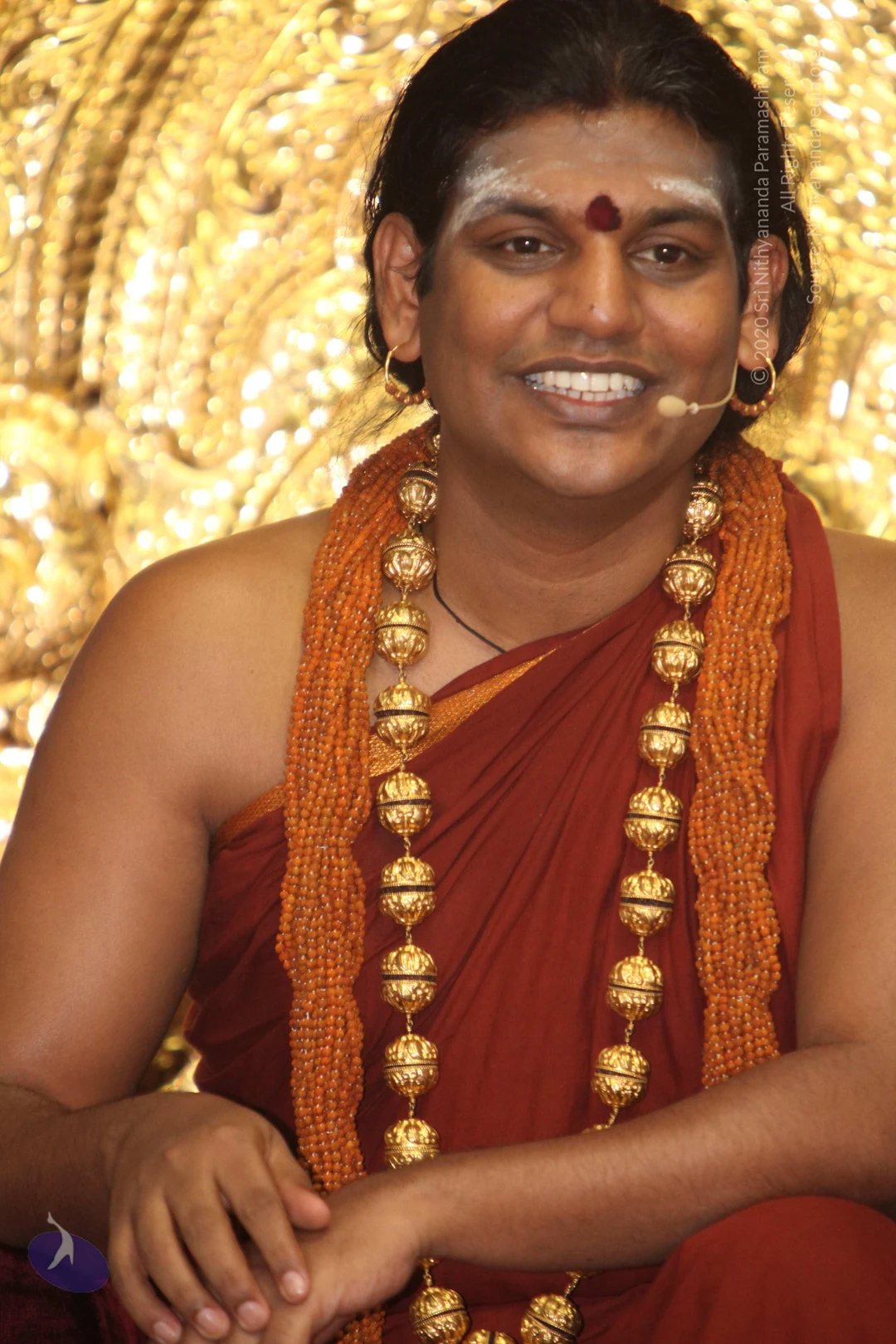
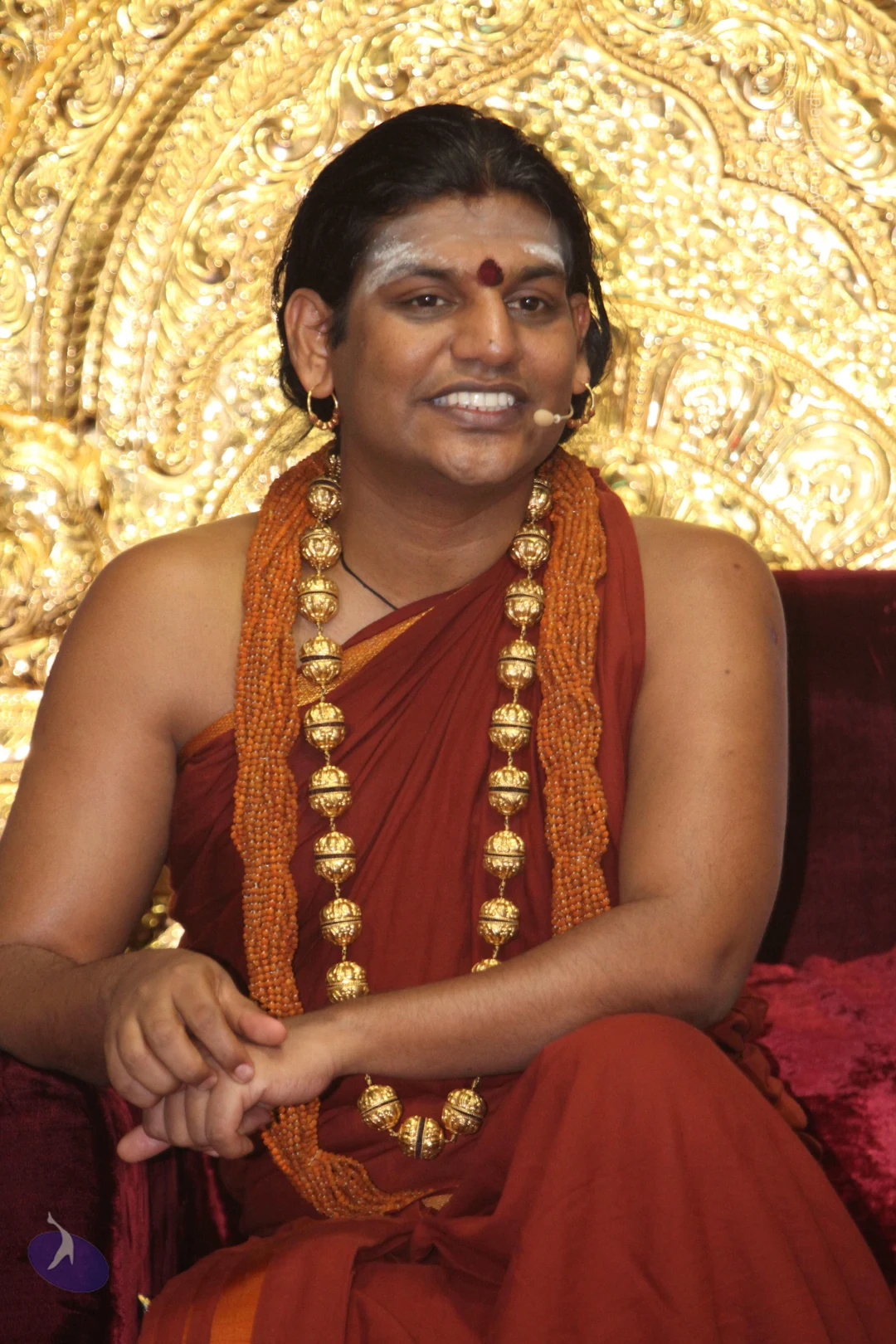
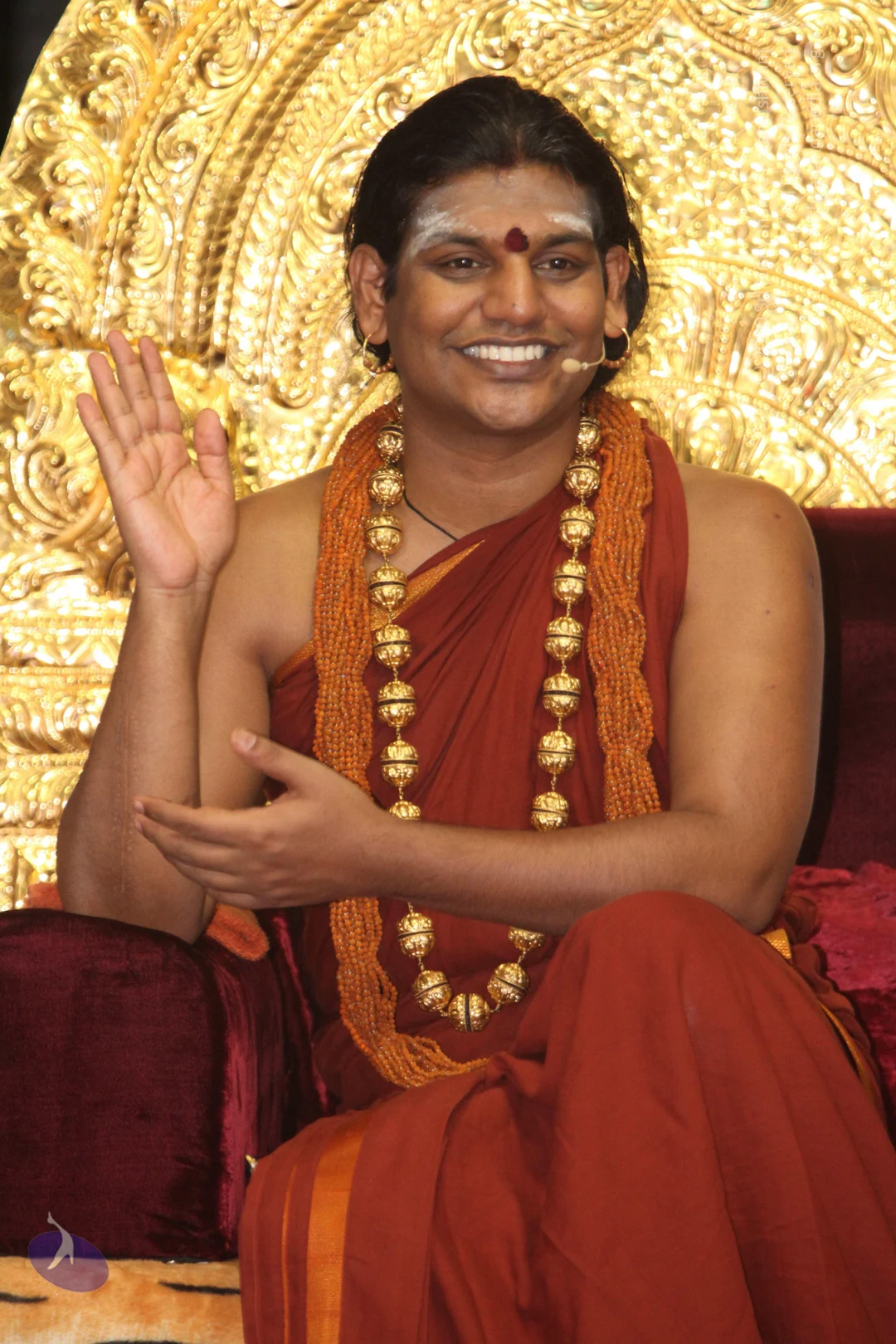
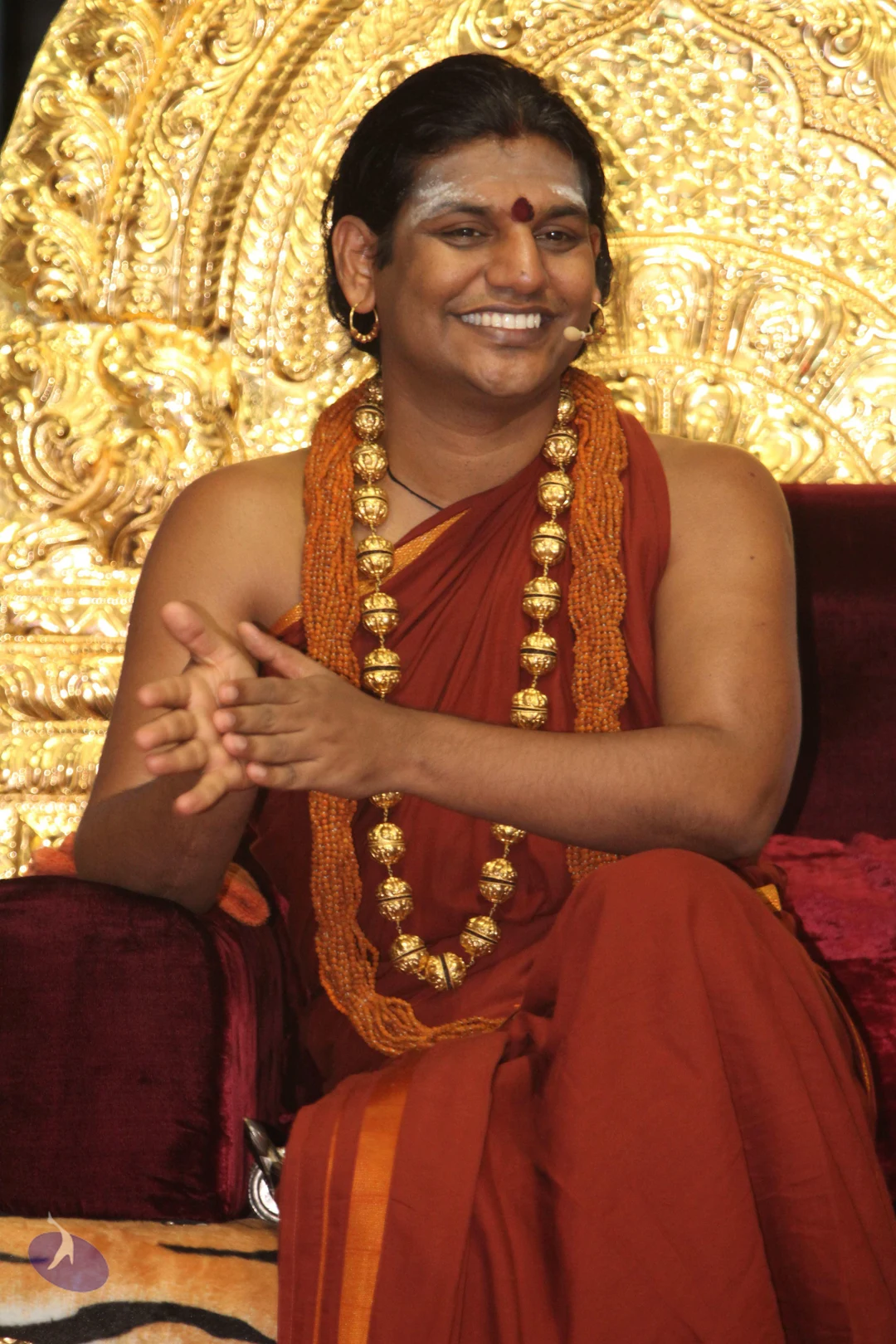
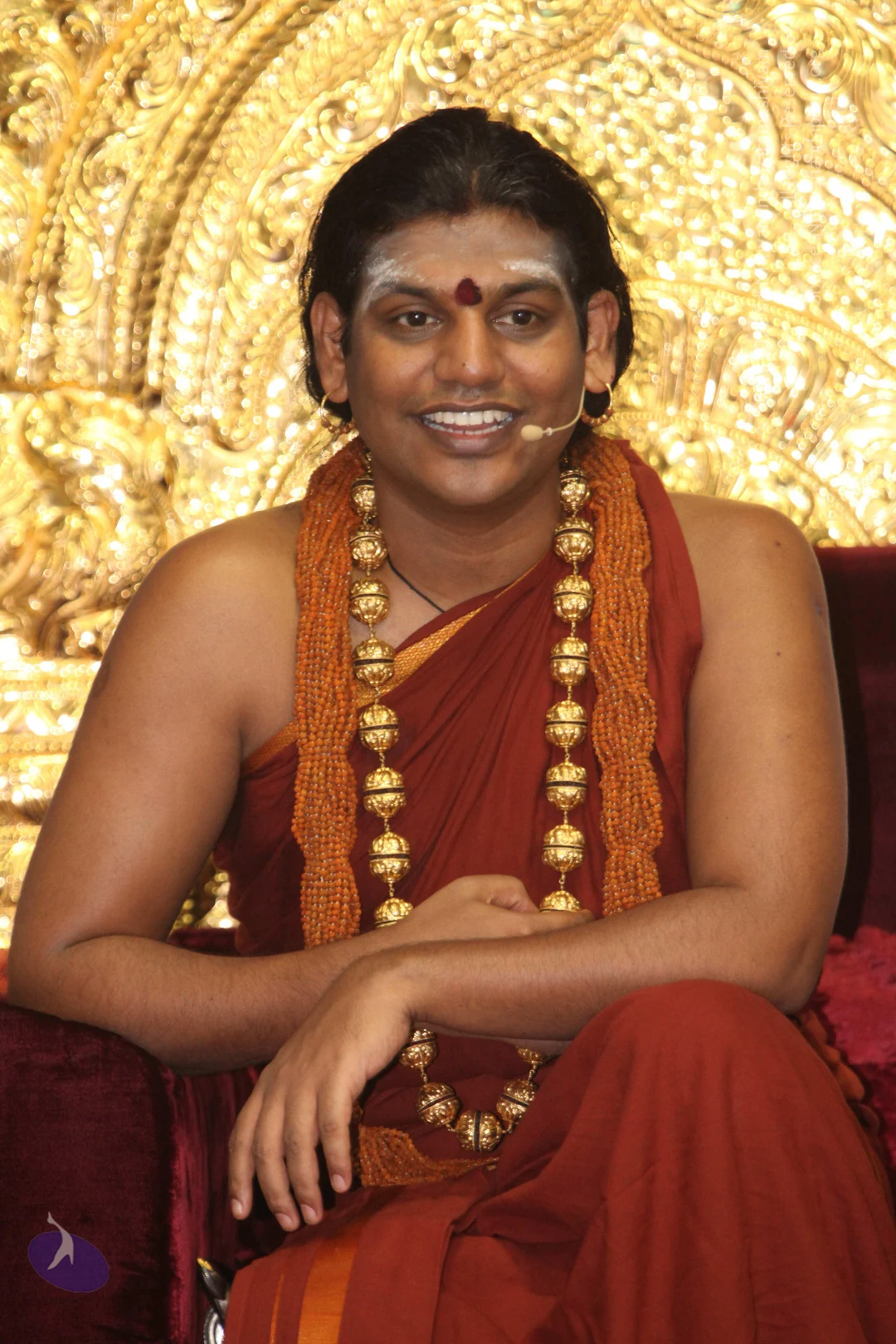
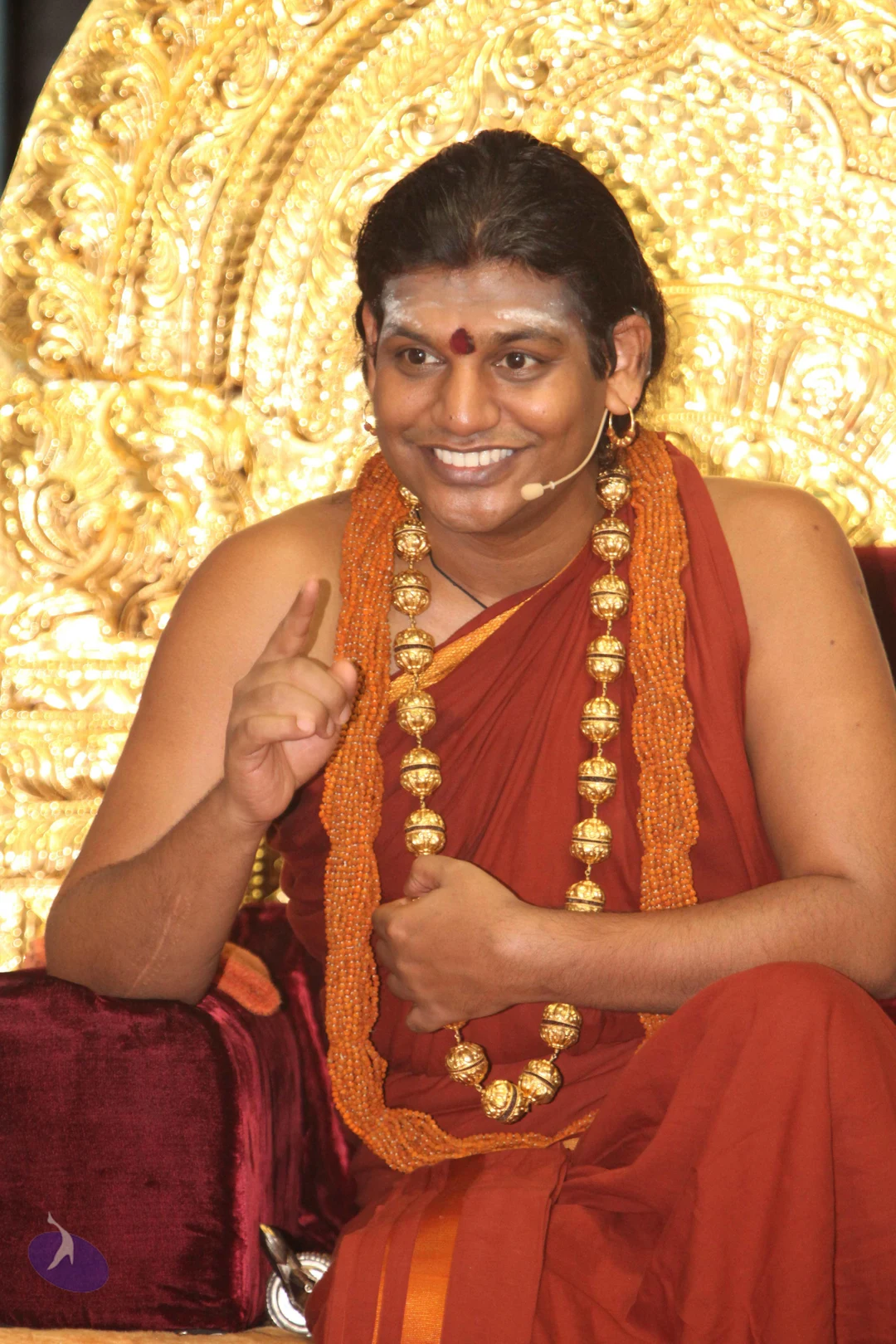
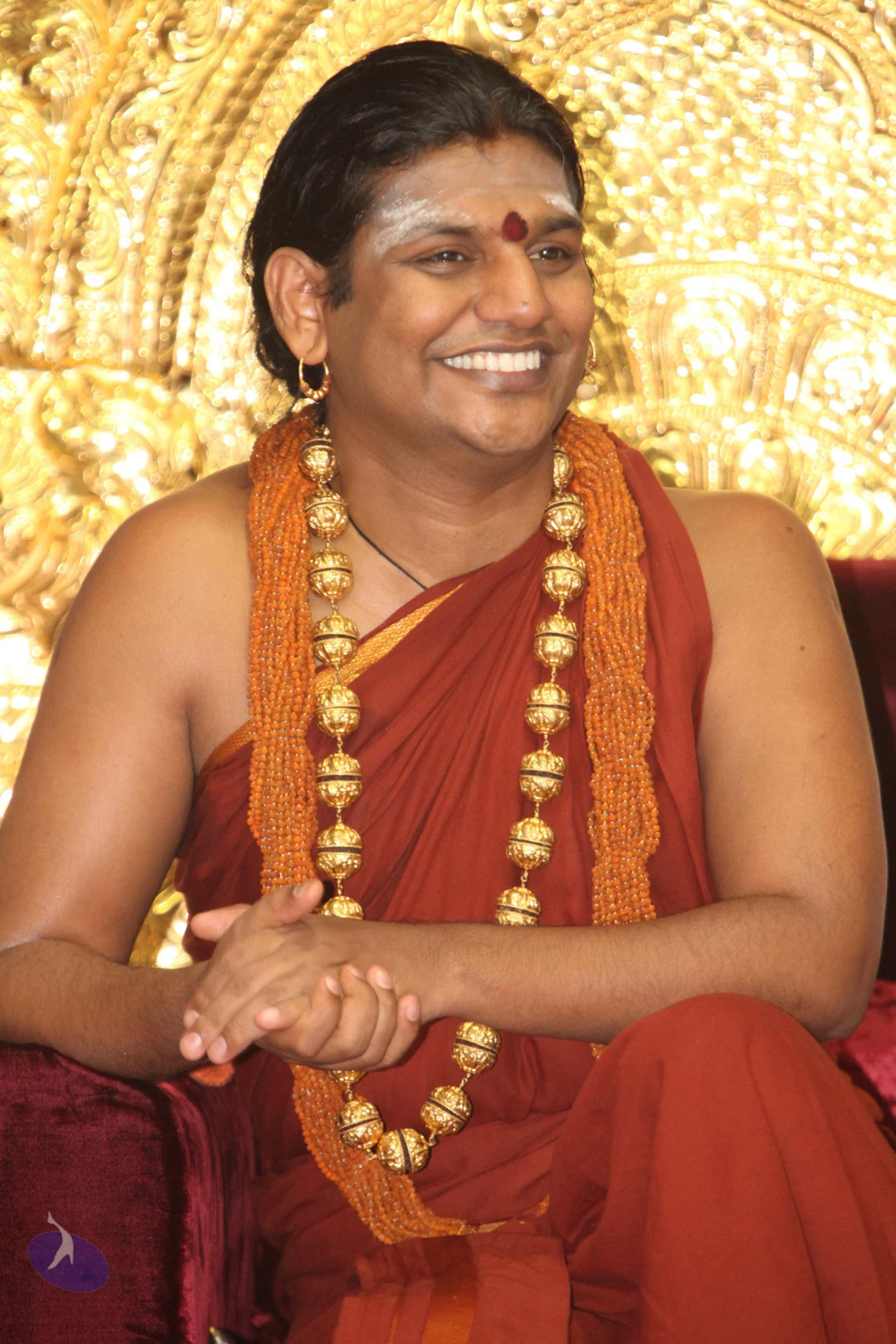
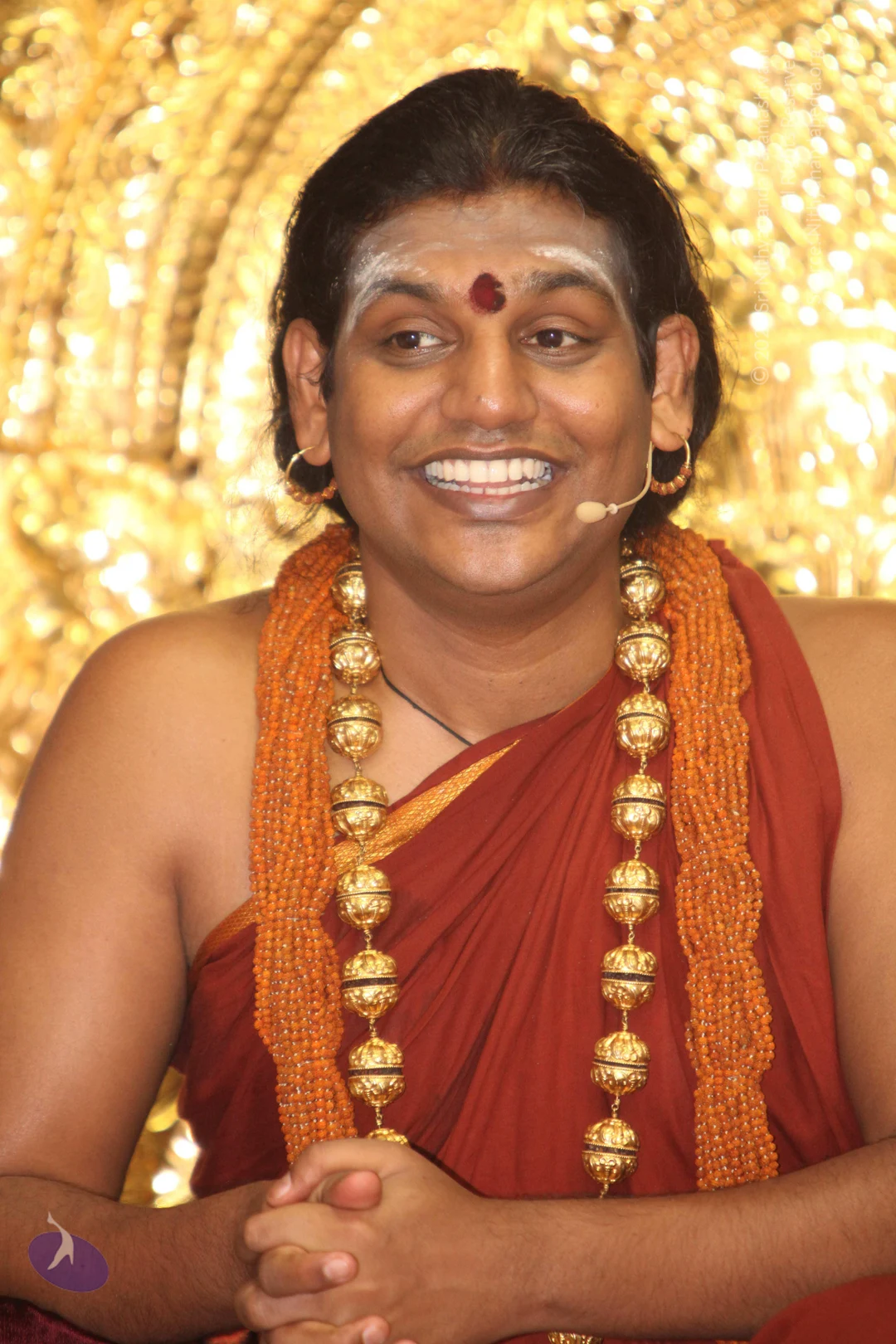
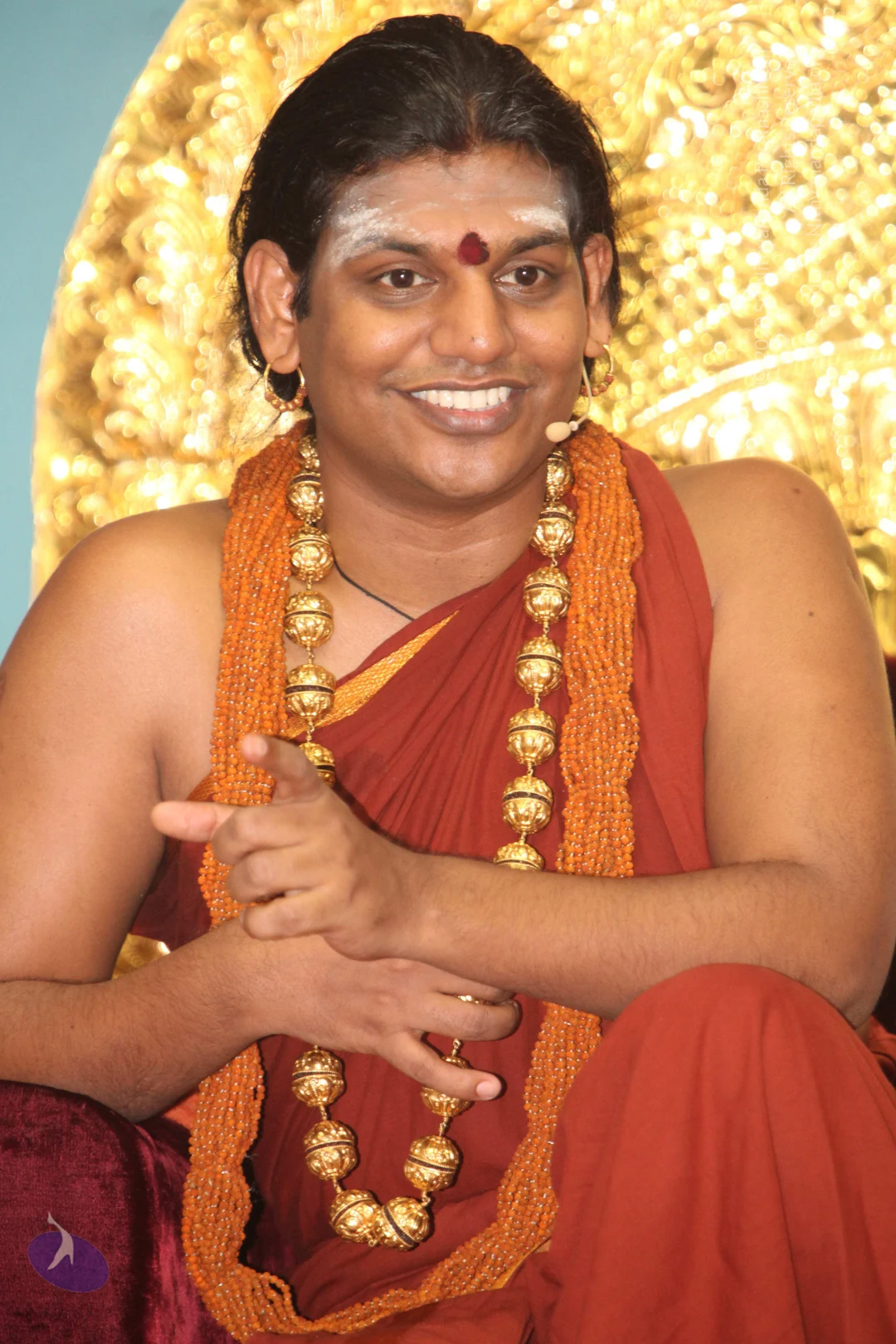
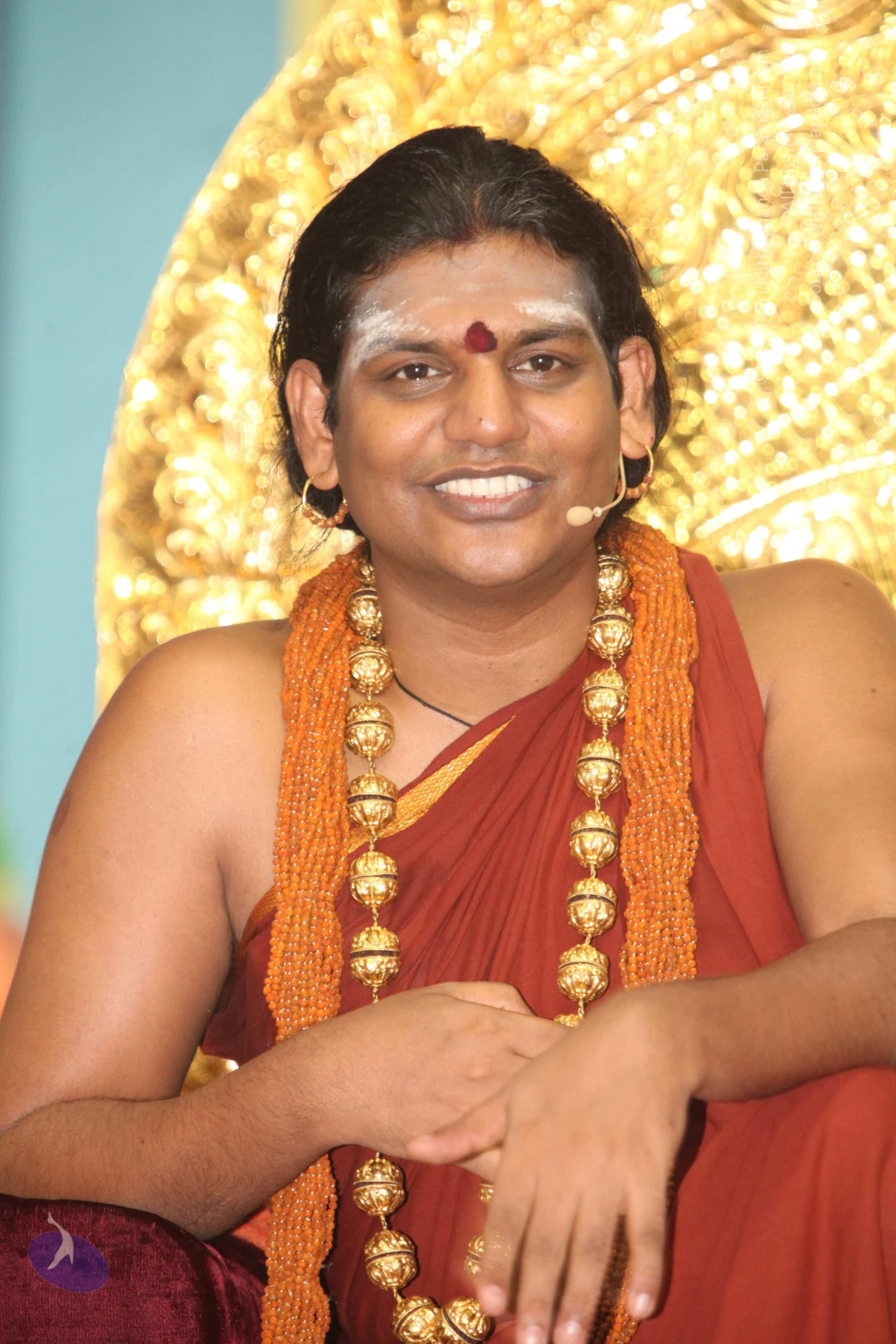
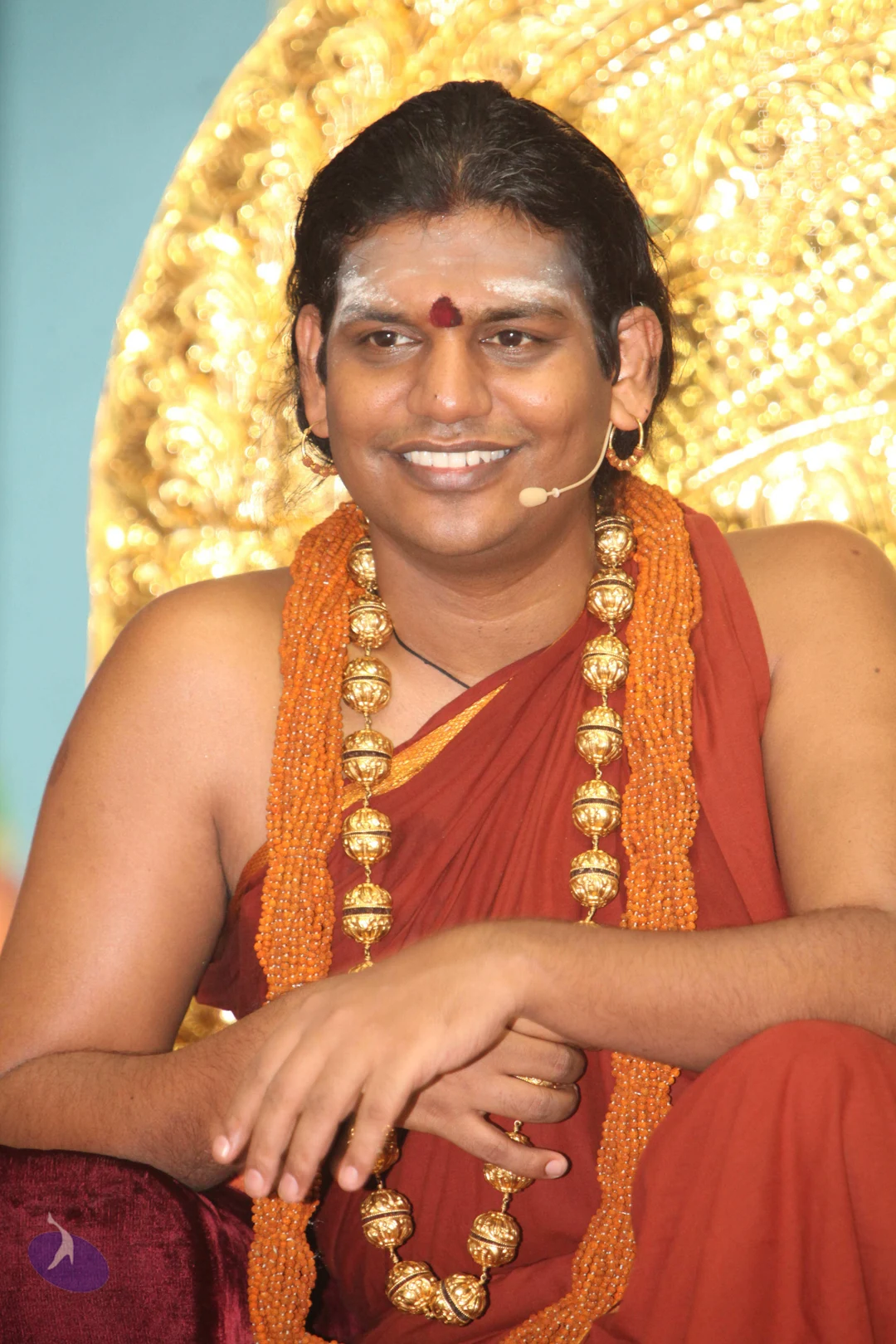
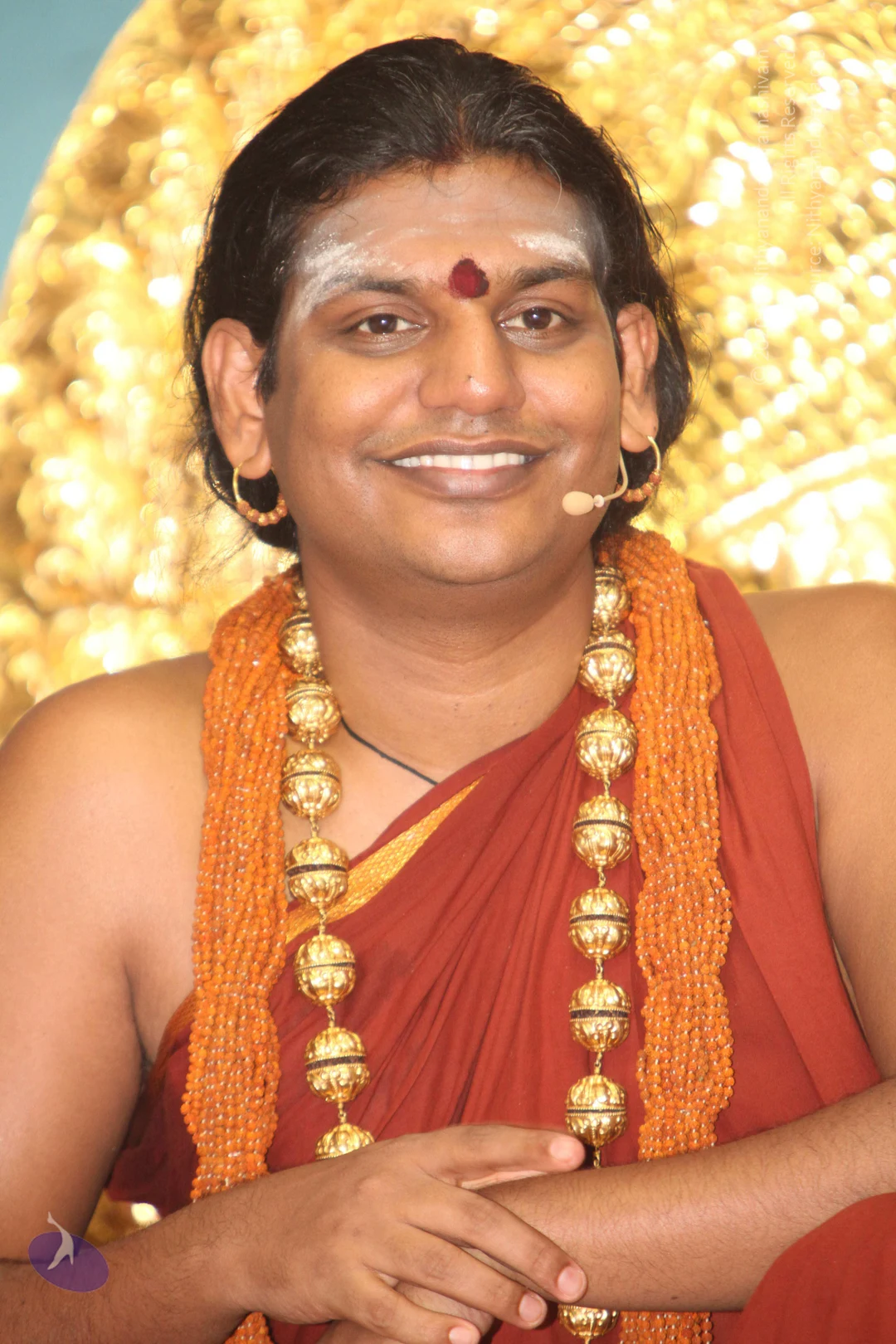
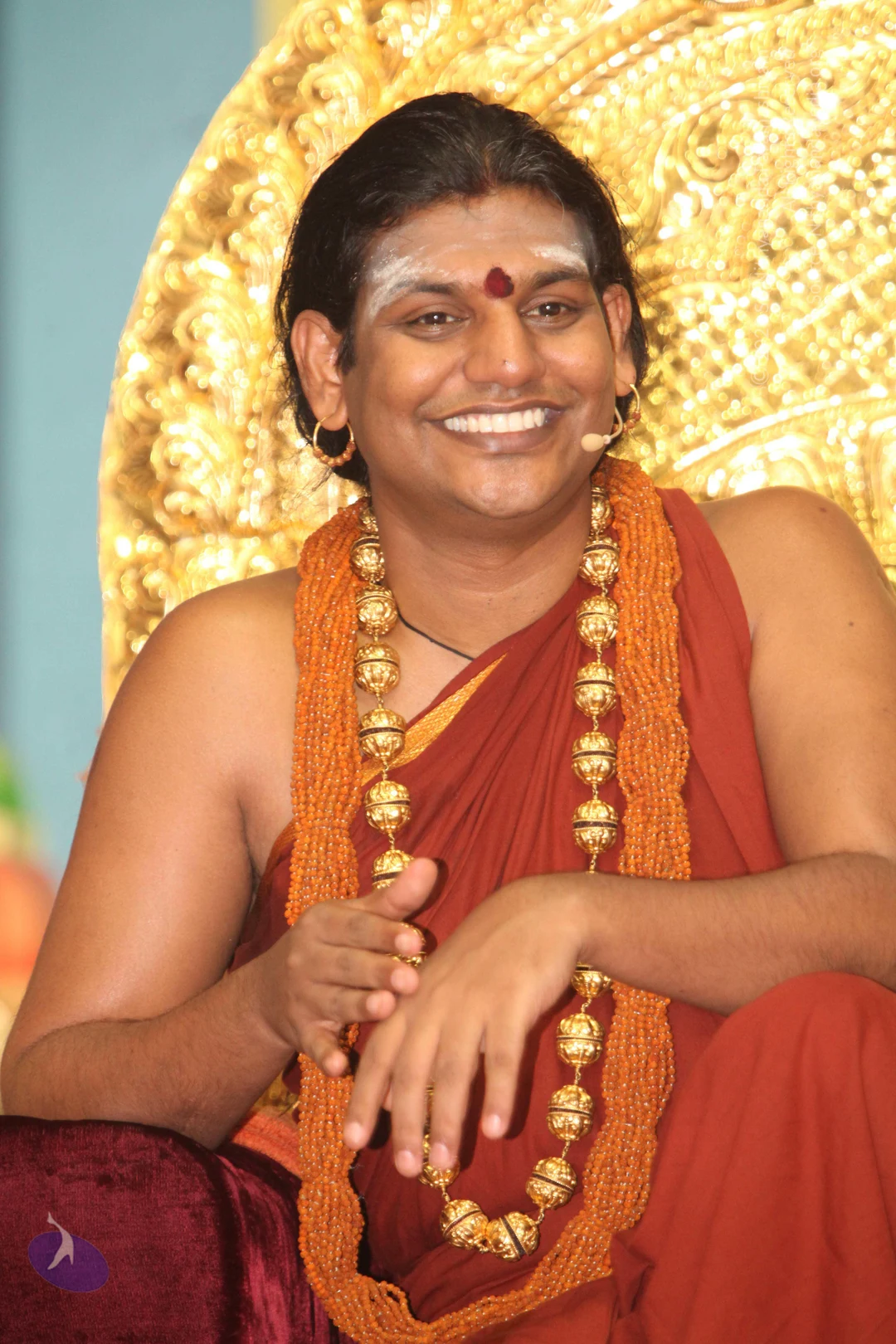
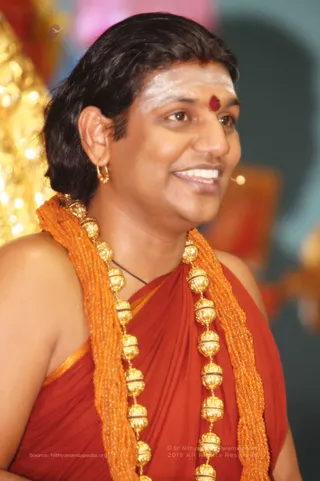
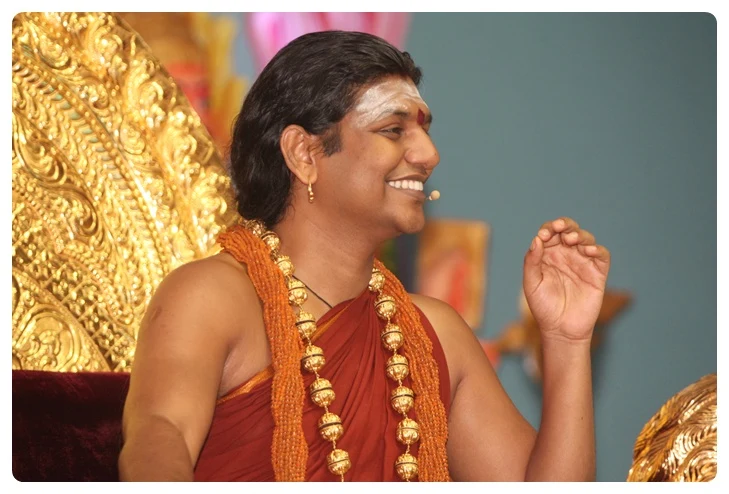
A standing man in an orange-red dhoti and matching shawl with gold-edged borders, wearing a long orange beaded necklace and a larger gold bead garland, stands barefoot on a patterned carpet on a stage. Both hands are raised in a greeting or blessing gesture and he smiles, with a red bindi on his forehead. Behind him stands an ornate golden throne flanked by two golden lion figures, red velvet cushions, a painted blue and red temple-style backdrop, and strings of warm lights. Appearance-based candidate for a person, shown in person in a satsang-style stage setting with his ceremonial orange garments and gold garland.A barefoot man in saffron-orange sannyasi garments stands on a raised stage, one arm extended mid-gesture, wearing a shawl and a white beaded mala with an orange tassel. Behind him is an ornate golden throne with a red velvet cushion, flanked by golden lion figures and a tiger-skin cover, set before a blue and pink painted temple-style backdrop with red velvet curtains and hanging lamps.A smiling man with swept-back dark hair, a red bindi and white forehead marks sits on an ornate golden throne with a red velvet cushion, gesturing with one raised hand. He wears a red-orange sleeveless robe with an orange border, multi-strand orange rudraksha malas, and a long ceremonial gold bead necklace, with a small microphone at his cheek. Beneath him is a tiger-striped fabric draped over the platform. Appearance-based identification: a person, seated in the teaching role of a satsang discourse.A smiling man with swept-back dark hair, a red bindi and white vertical tilak sits on a red velvet seat in front of an ornate gold-embossed backdrop. He wears a red-orange unstitched robe with an orange border, a long multi-strand orange rudraksha mala and a long ceremonial gold bead necklace, plus gold hoop earrings and a small headset microphone. He gestures with both hands clasped together while speaking. Swamiji (probable) appears in person, identified by his long swept-back hair, ornate gold necklace and orange rudraksha mala, with his role as a seated speaker at the event.A seated man in a red-orange saffron robe with a matching orange shawl sits on a red velvet throne against an ornate gold repoussé backdrop. He wears layered orange rudraksha-style beads and a heavy ceremonial gold bead necklace, has white tilak markings with a red bindi on his forehead, and a small head microphone. He smiles and raises his right hand in a gesture while his left hand rests in front of his body, as if speaking to an audience.Close-up photograph of a smiling man with swept-back dark hair, white vertical forehead markings and a red dot, wearing long gold-bead ceremonial necklaces over orange beaded strands and a rust-red garment draped over the shoulder, with a small hoop earring and a small microphone clipped near his cheek against a blurred gold and teal background. Probable Swamiji (appearance cues: swept-back long hair, ornate gold necklaces, orange malas, red-saffron clothing). He stands in a ceremonial setting.
Photos

17 photosSource gallery
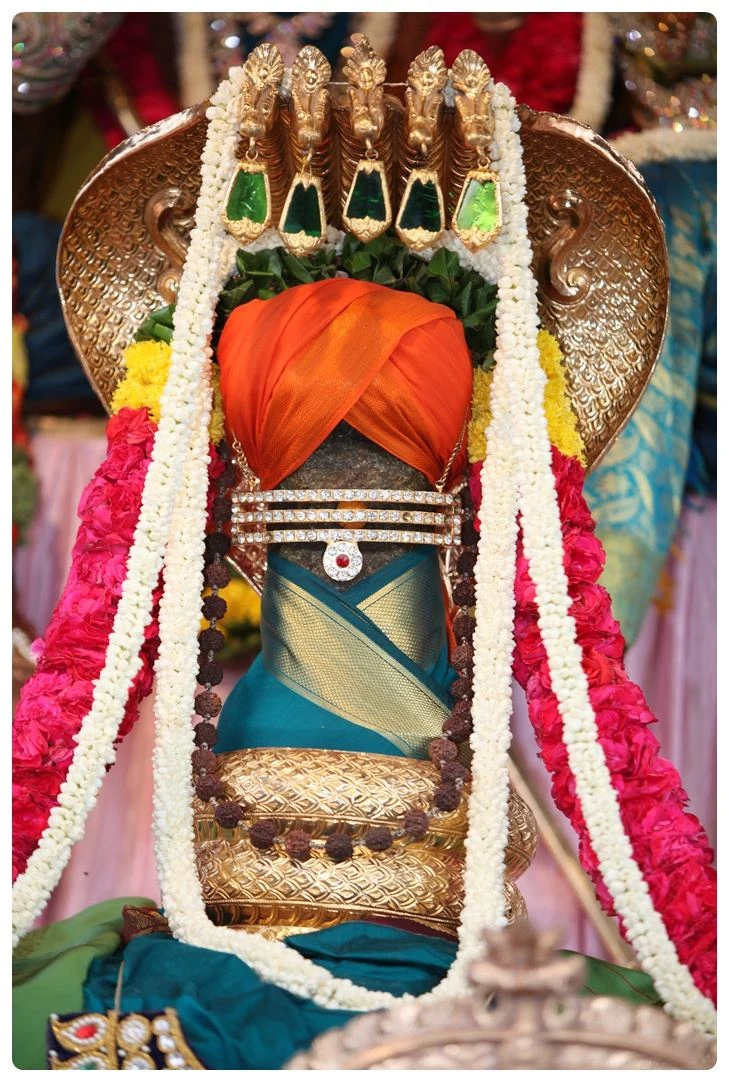
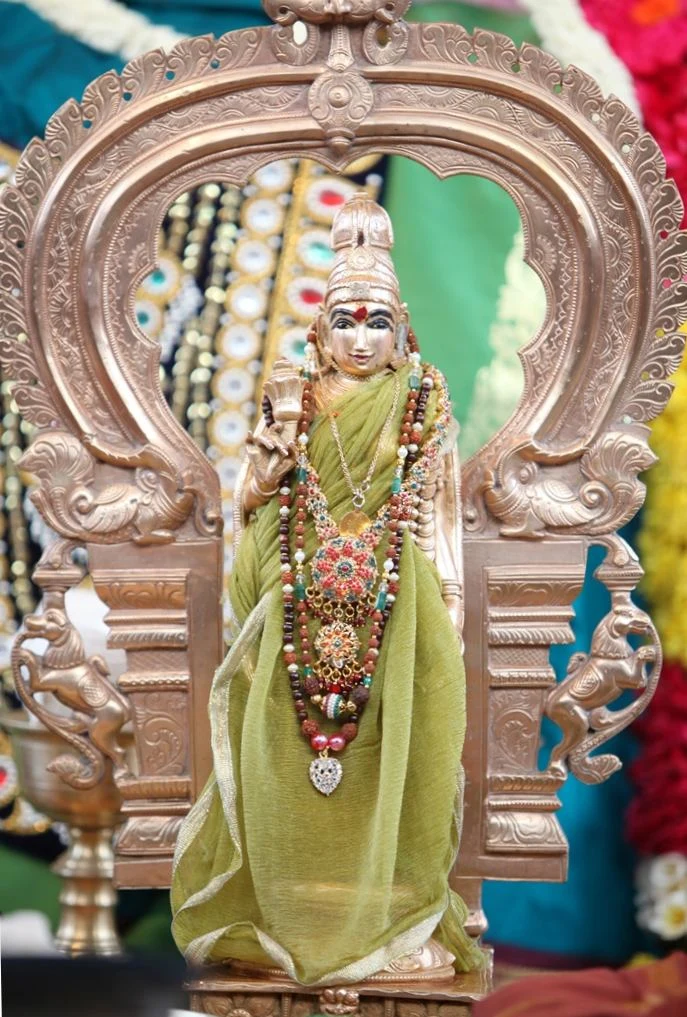
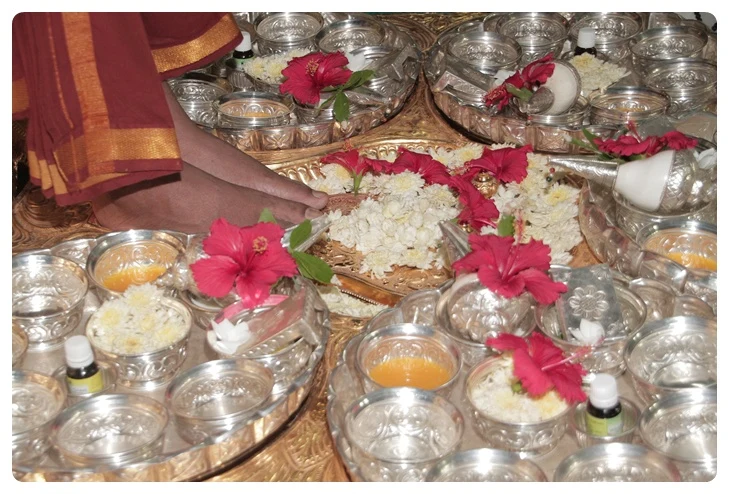
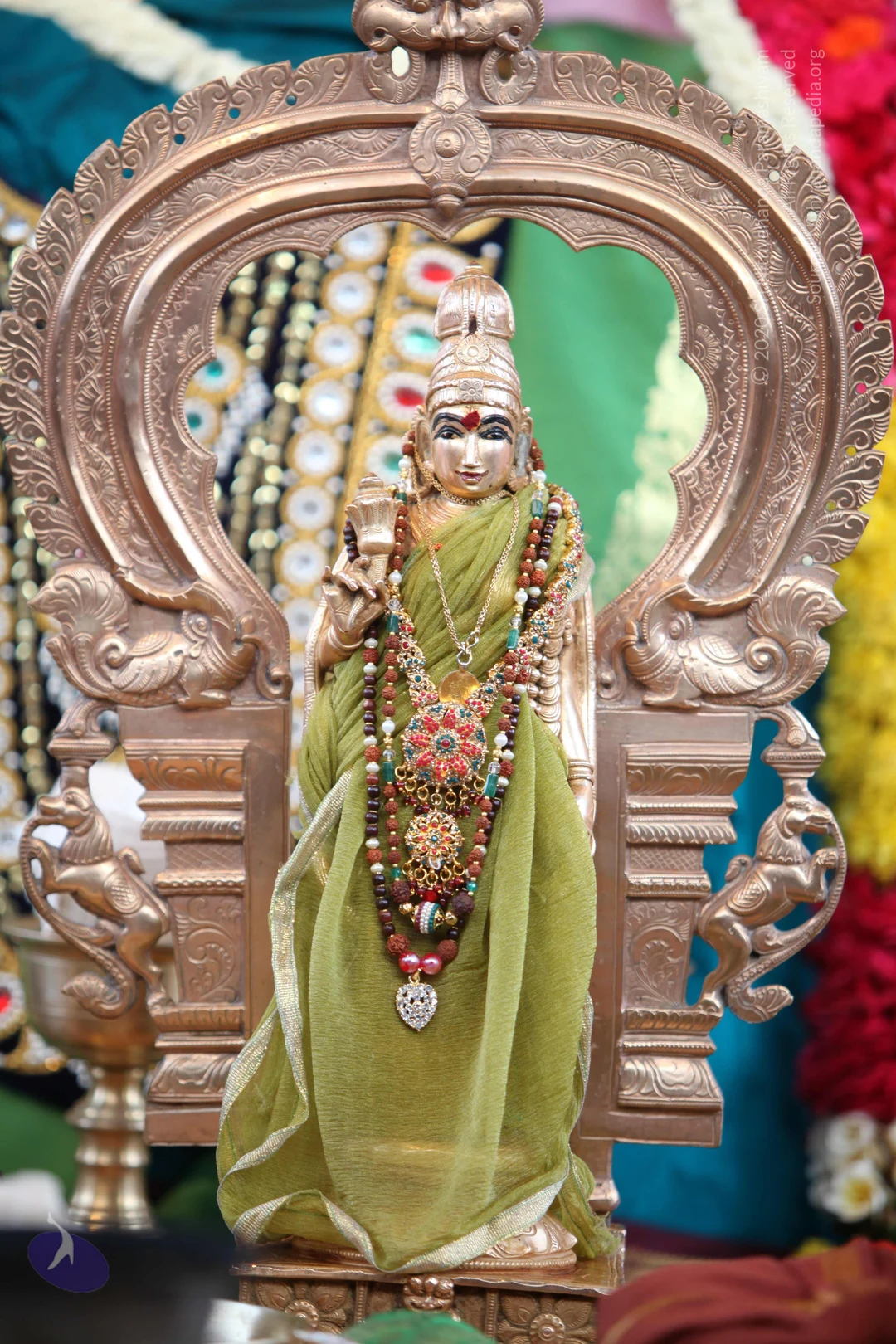
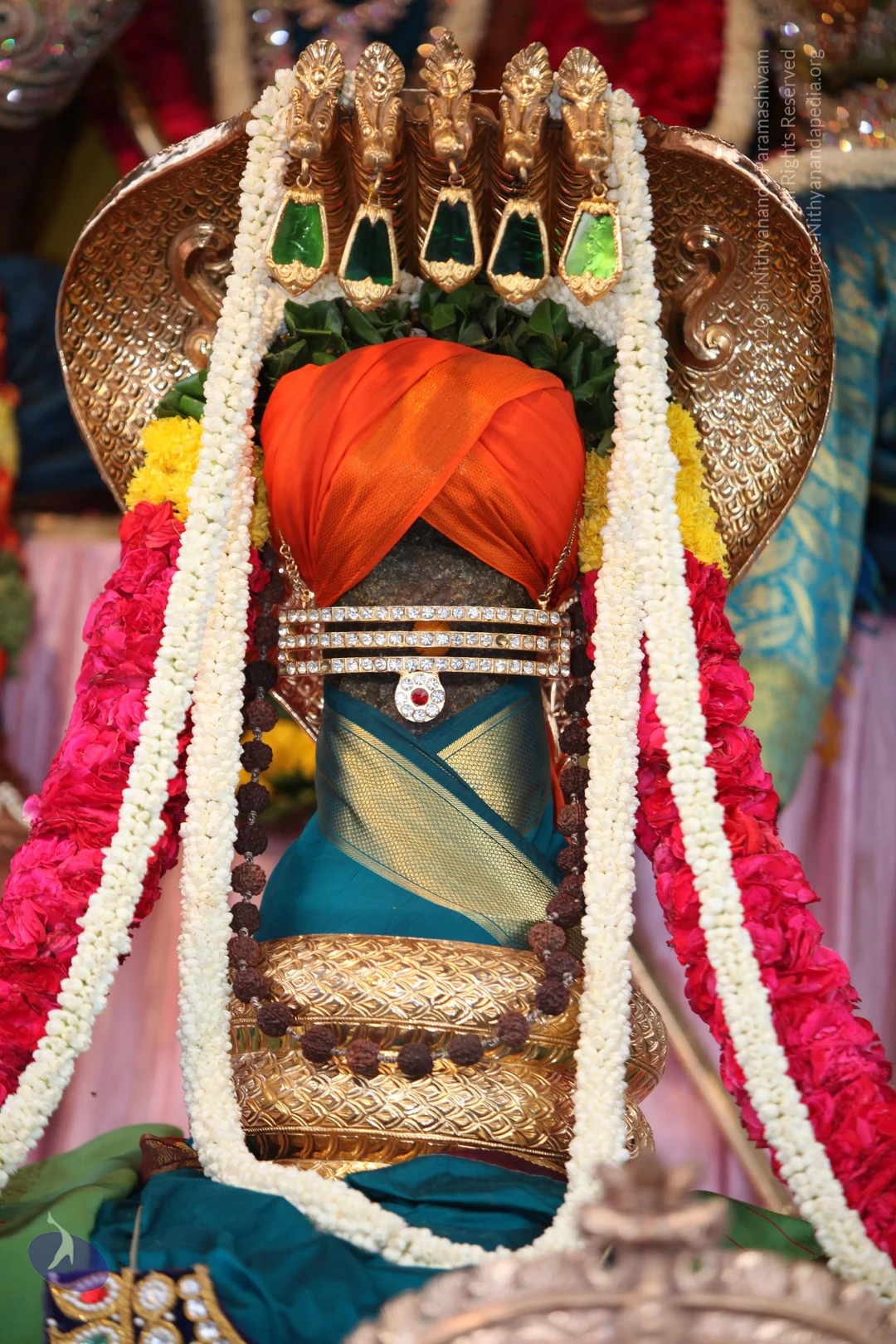
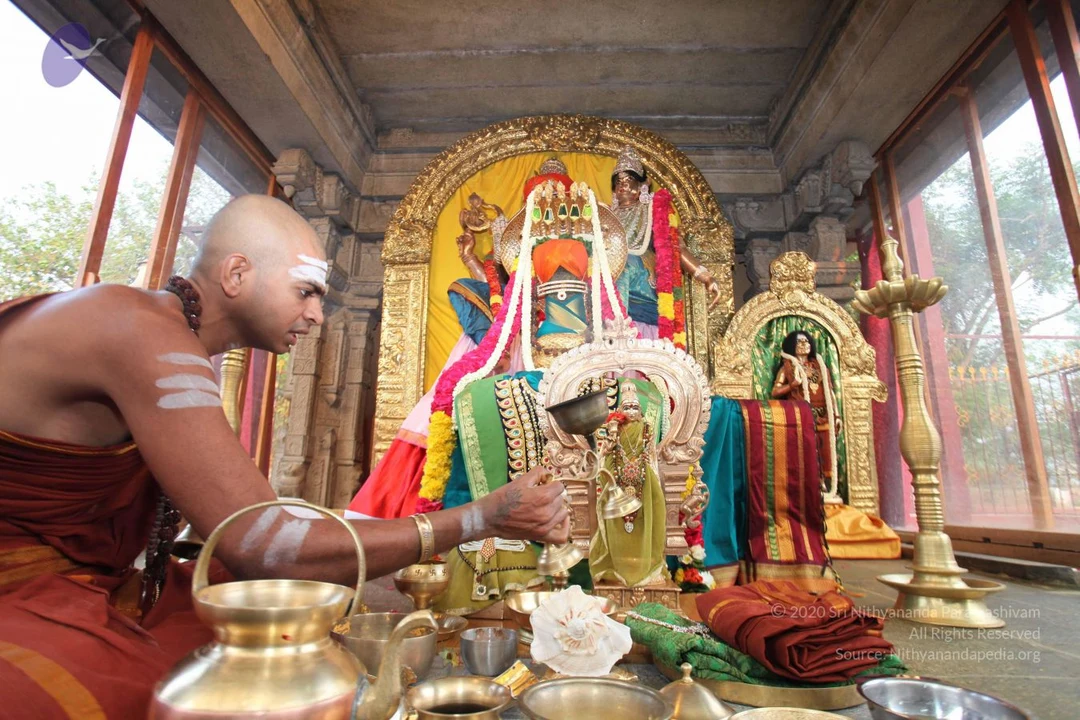
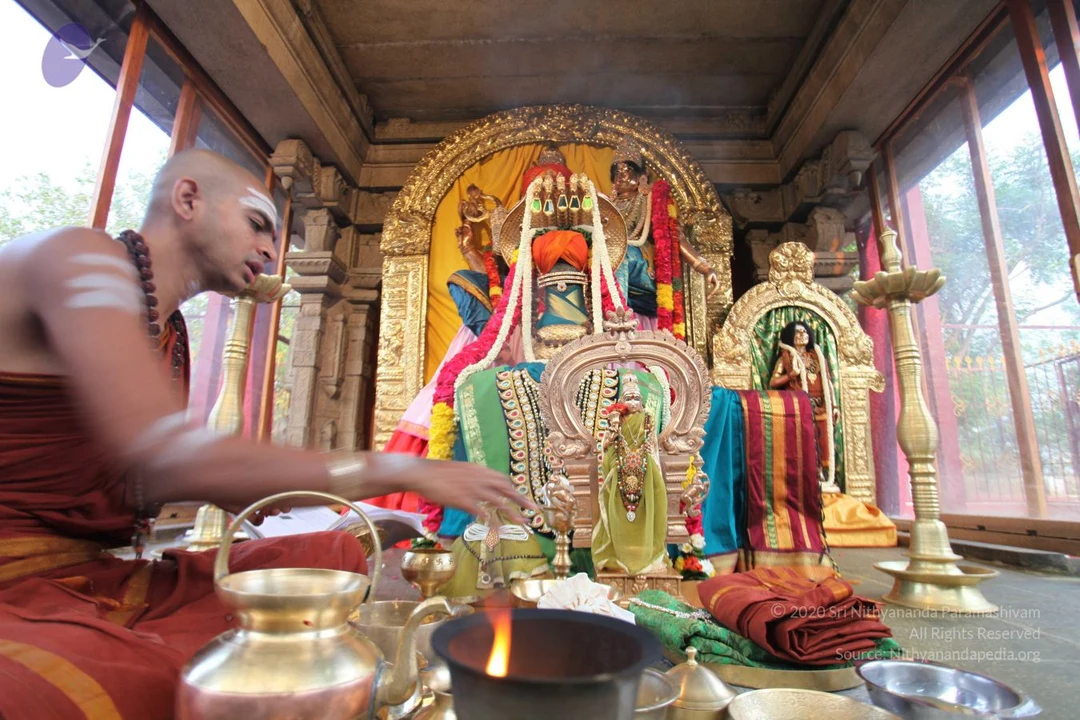
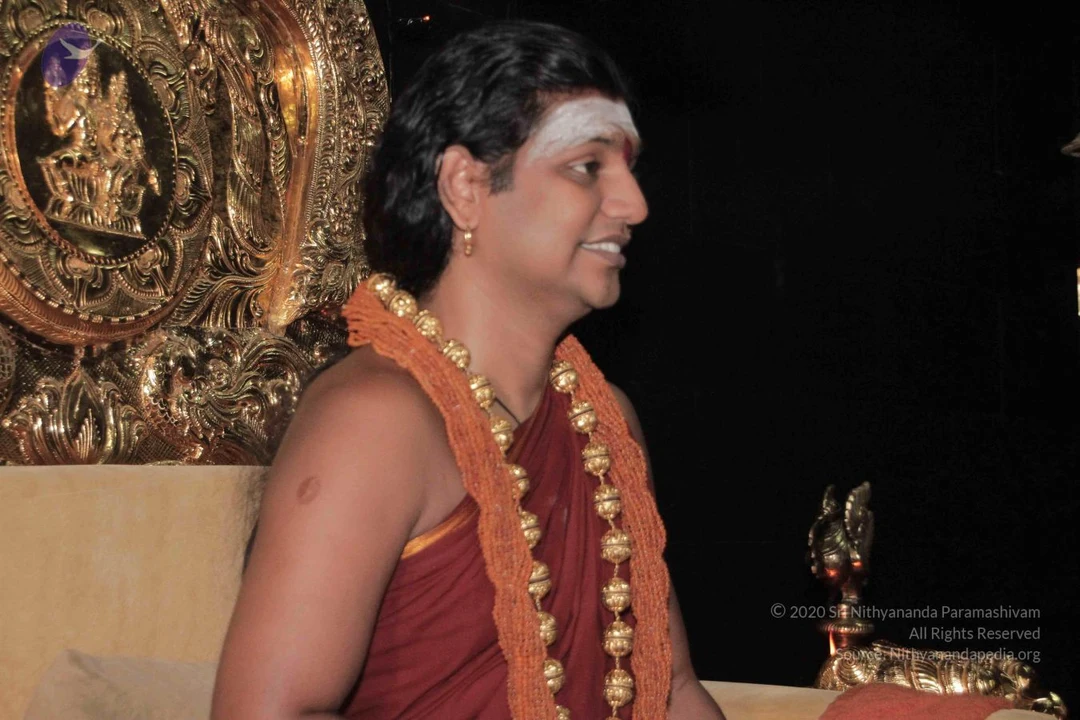
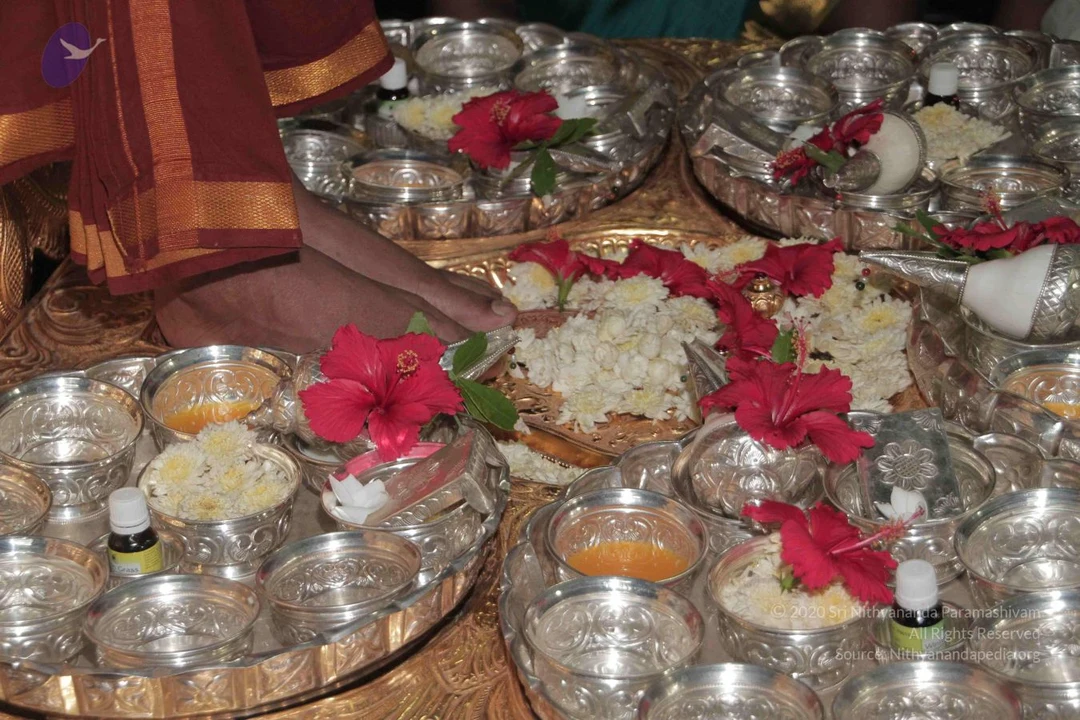
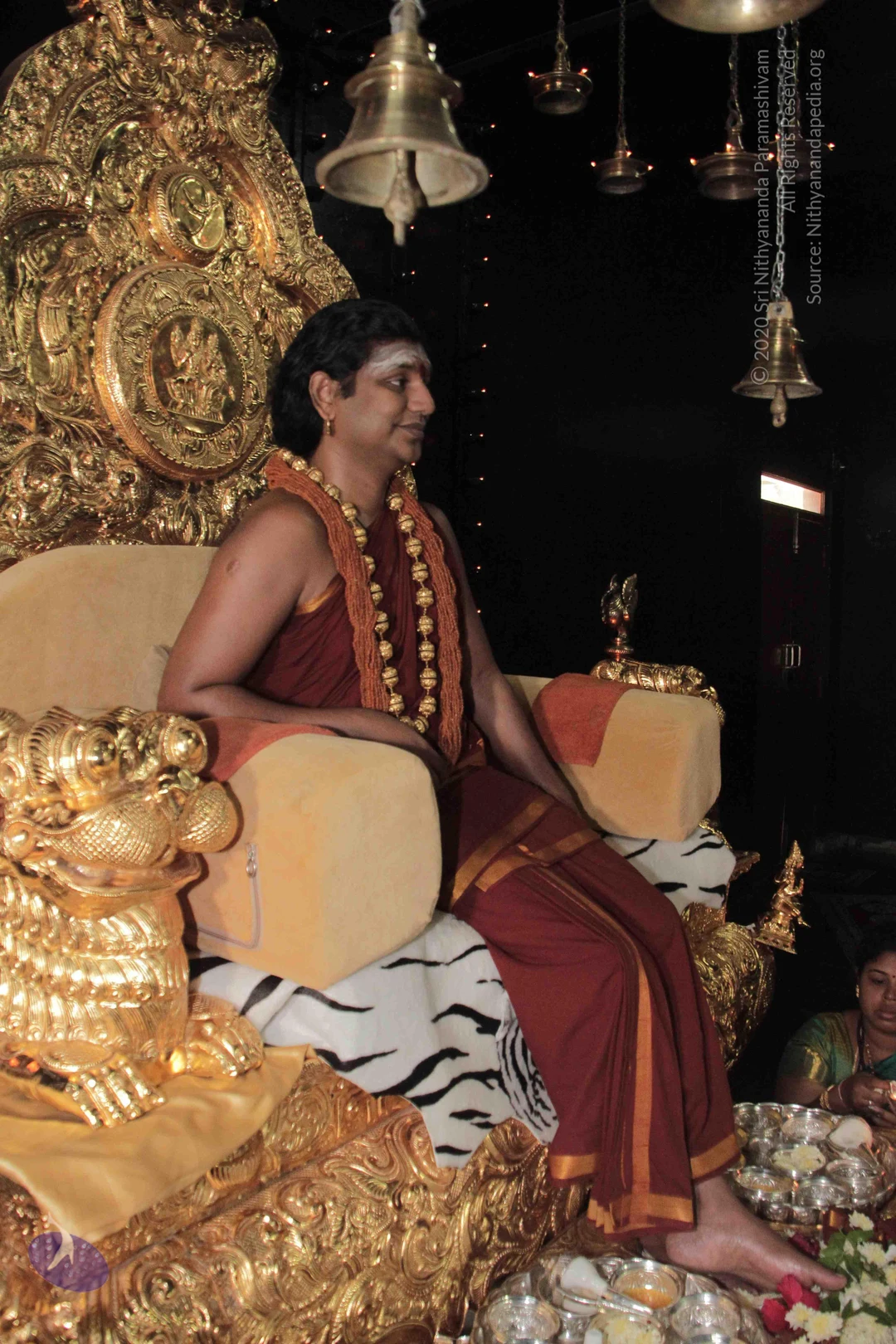
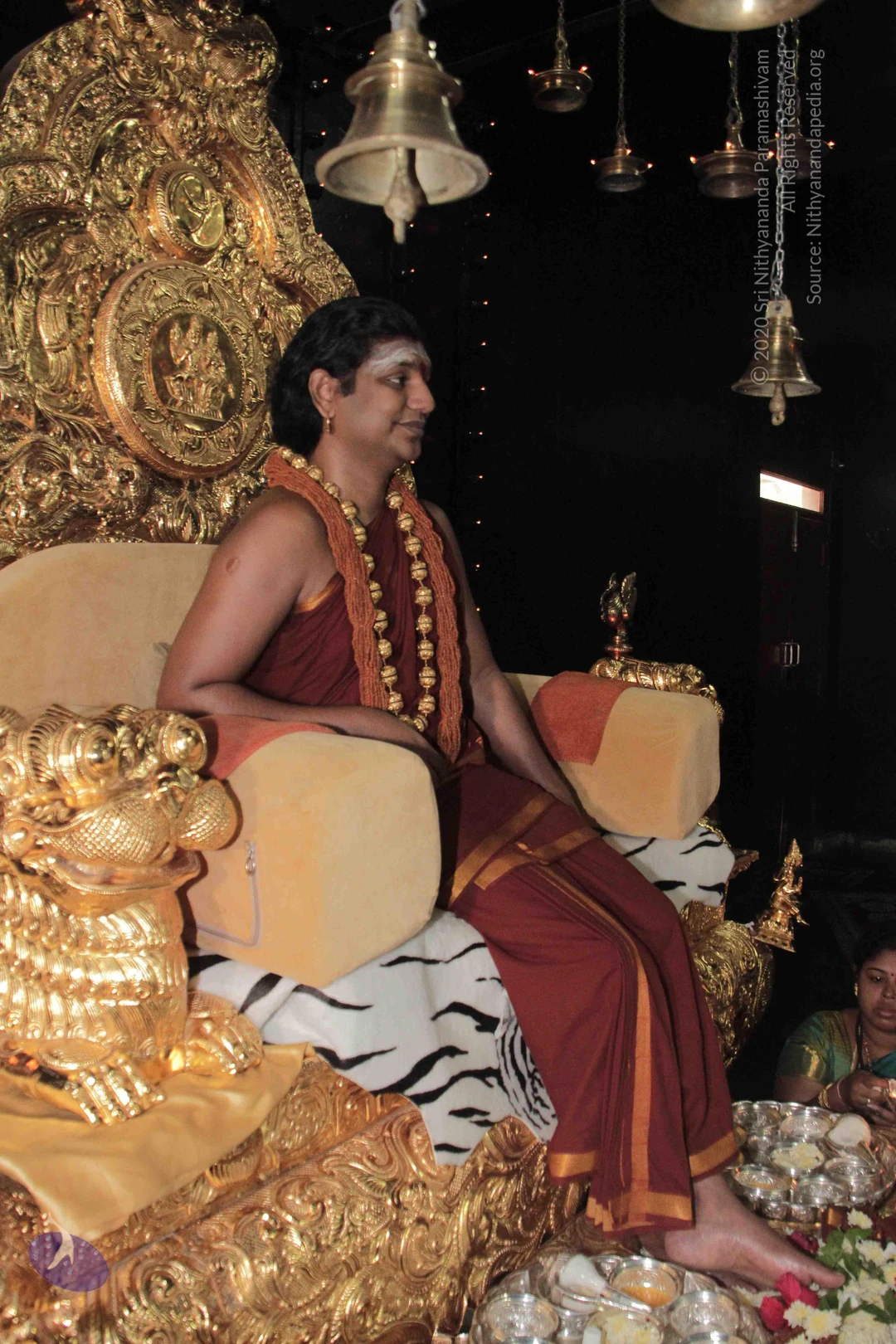
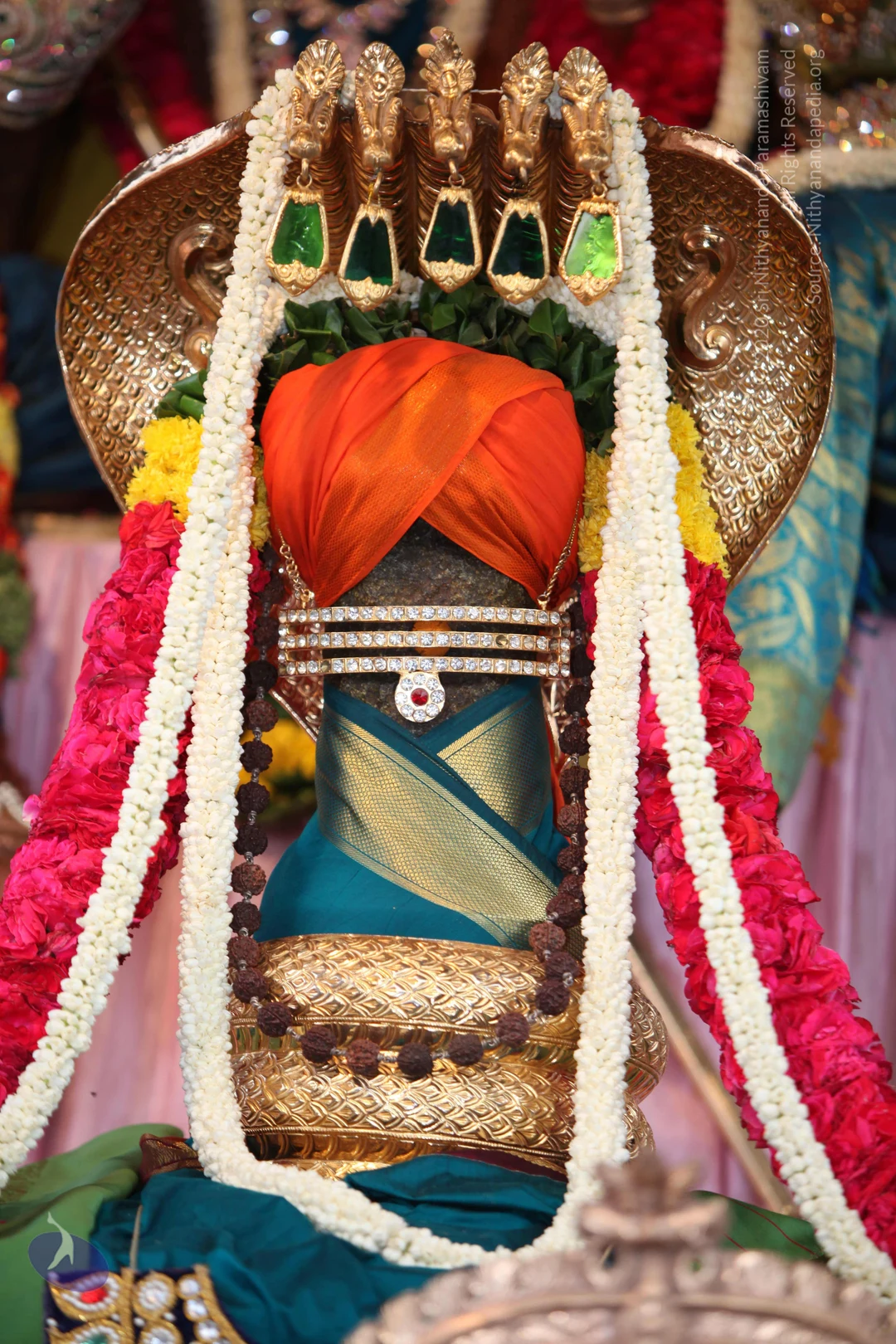
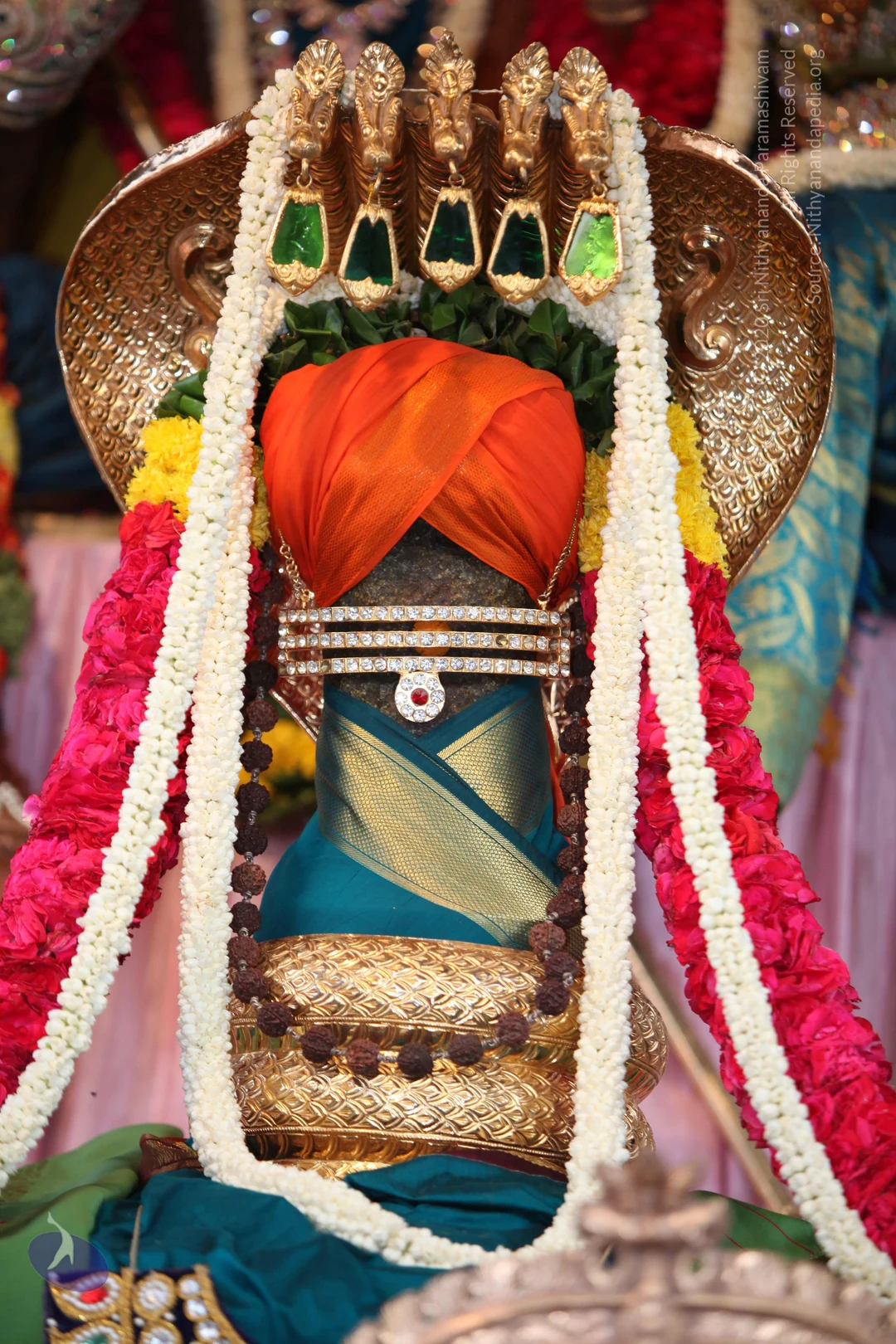
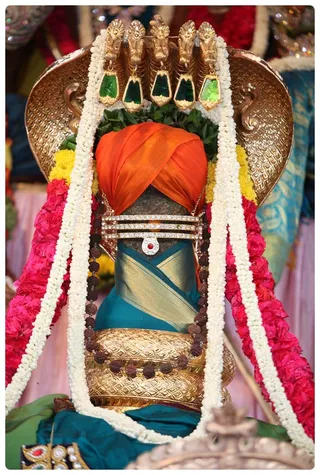
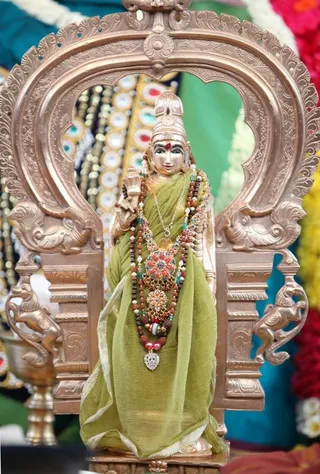
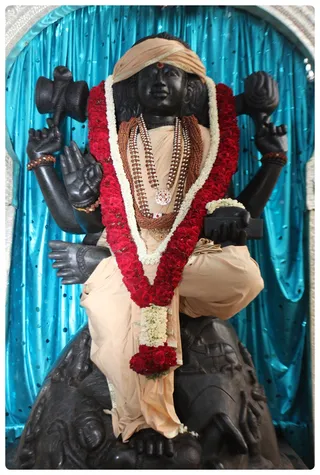
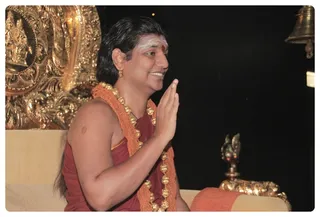
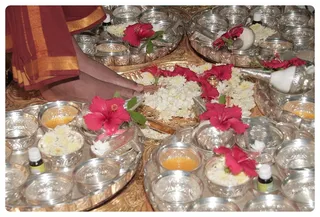
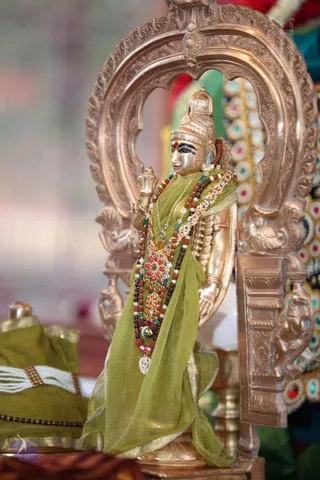
A sunset photograph framed by dark silhouetted palm fronds. A pale orange sun sits low in a hazy pink-lavender sky, with dark tree canopy along the bottom edge. No people, deities or ritual objects are visible.A decorated deity murti of a seated figure, dressed in an orange turban and a teal and gold silk wrap, with a crown-like band studded with diamonds and a red stone at the centre. Five golden cobra hoods with green gem drops rise behind the head, framed by a large golden hooded backdrop. Long white jasmine garlands and pink rose garlands drape down both sides, and rudraksha beads hang across the chest above a broad gold waist ornament. The surrounding setting shows more flowers and ornate fabrics.A bronze-toned metal murti of a female deity stands within an ornate copper arched prabhavali with carved scrollwork and rearing animal supports. The figure wears a sage-green sari draped over the shoulders and a tall crown, with a red kumkum mark on the forehead. Layered rudraksha-style malas, a jewelled pendant and a heart-shaped ornament hang at the chest, and the right hand holds a small ritual object. Behind the murti are bright flower garlands, a teal fabric backdrop and a brass kalasha-style vessel at the left edge. No physical people are visible.A black stone statue of a multi-armed deity is seated on a dark rock base in front of a turquoise sequined backdrop. The statue wears a cream-coloured dhoti and a cream turban with a red bindi on the forehead. Long red and white garlands drape across the chest, with a larger garland hanging to the base. Multiple strands of rudraksha beads and a round pendant hang at the neck, and several hands hold ritual implements, including a trident-like staff. No living people are visible.A seated man in profile smiles and holds his palms together in a namaste gesture. He wears an orange shawl over a maroon garment, a long gold bead necklace, a gold earring, a white forehead marking with a red bindi, and long swept-back hair. Behind him stands an ornate gold-leaf carved panel, a brass bell hangs on the right, and a small brass deity figure sits on a cream surface.Photograph of a ritual arrangement on a brass tray. Silver bowls hold white flowers, yellow powder and orange-yellow paste, with bright red hibiscus blossoms placed among them. Small glass bottles of oil stand at the edges. A person in a maroon garment with gold border sits at the left edge, with one hand reaching toward the flower offerings. Only a sleeve, hand and lower body are visible. No faces show.

Temple-Tour-Nithya-Satsang-DTA-Sarva-Darshan
208 photosSource gallery
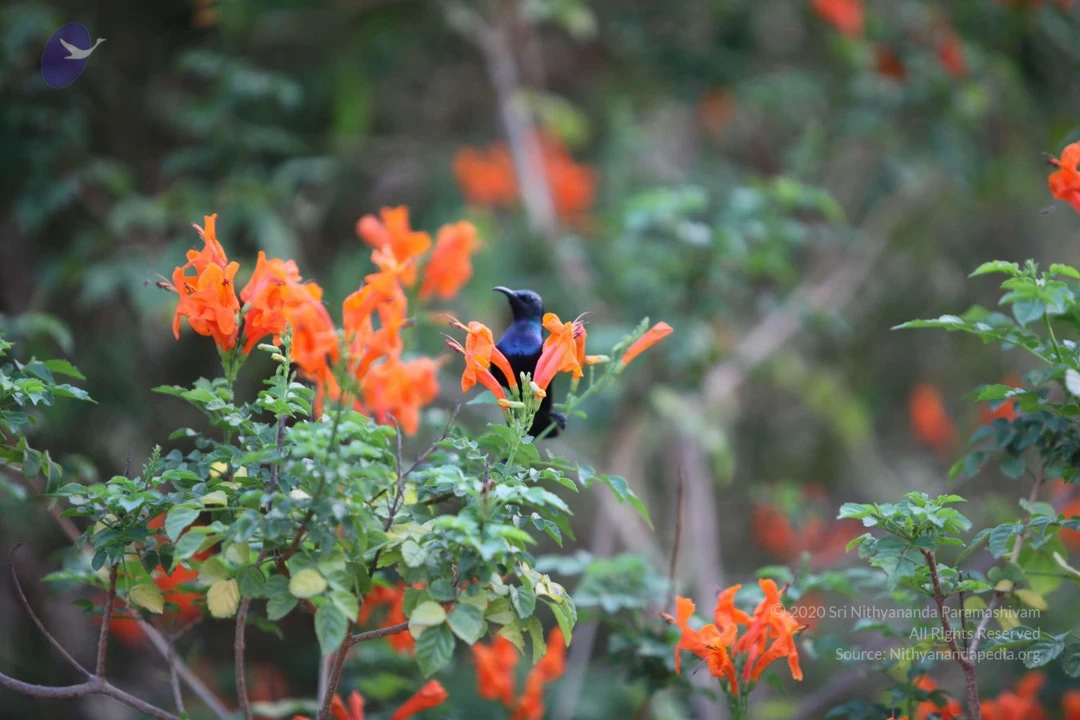
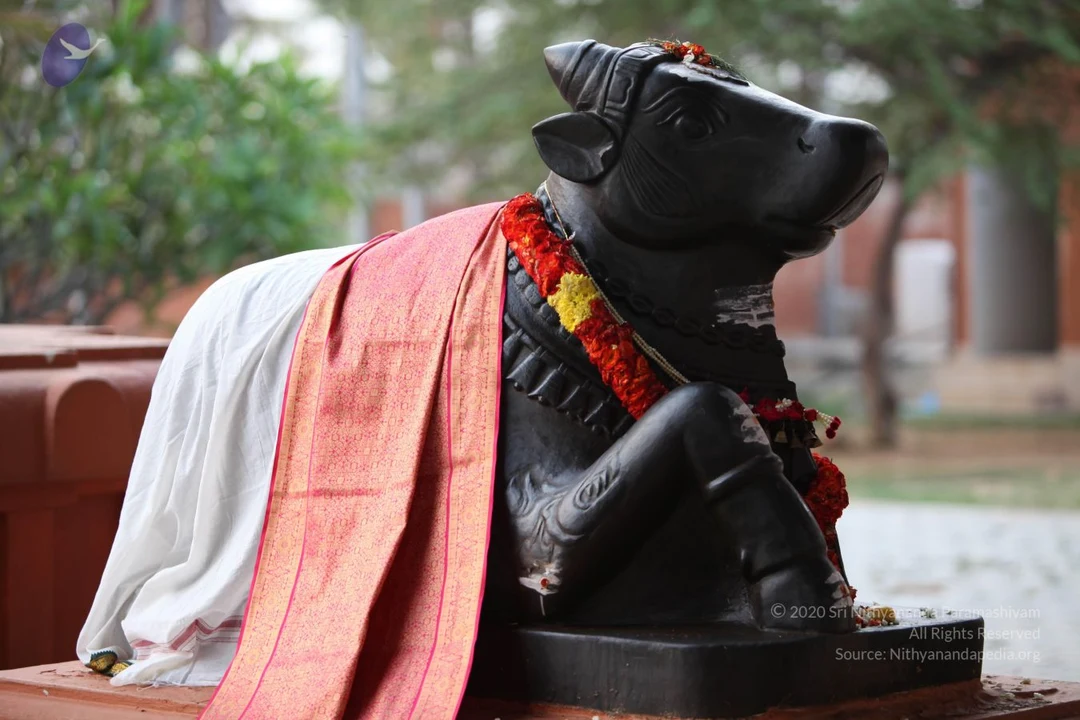
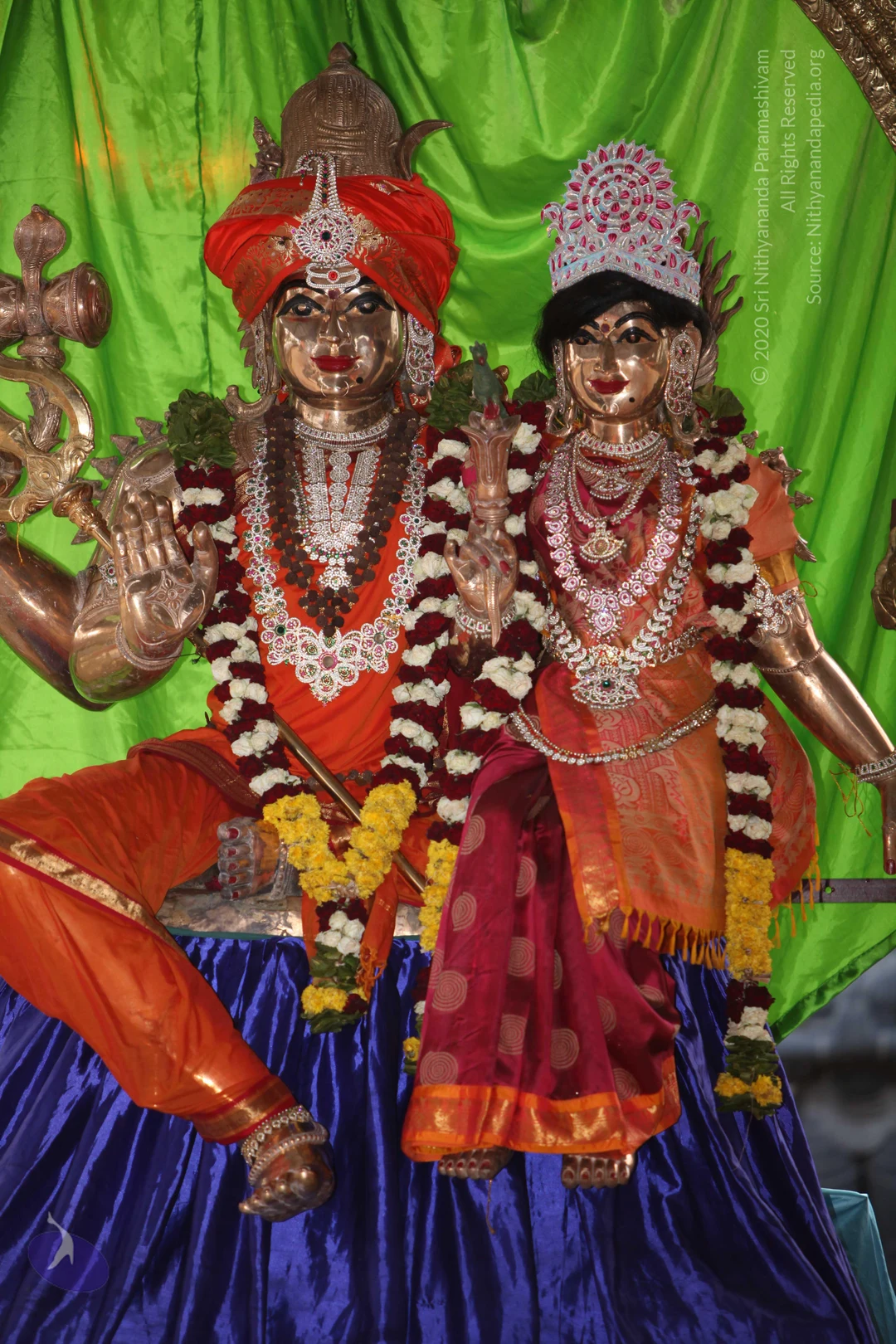
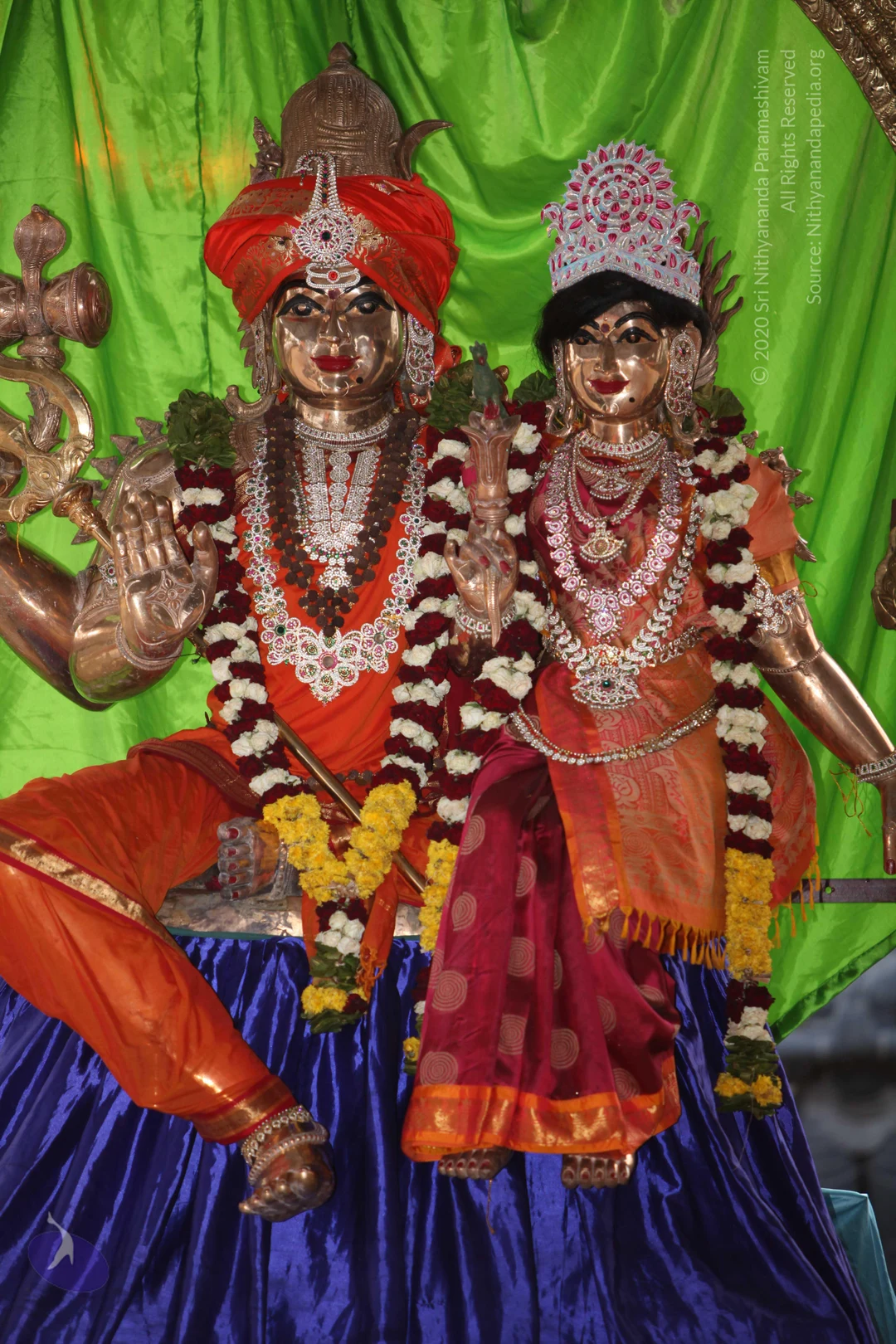
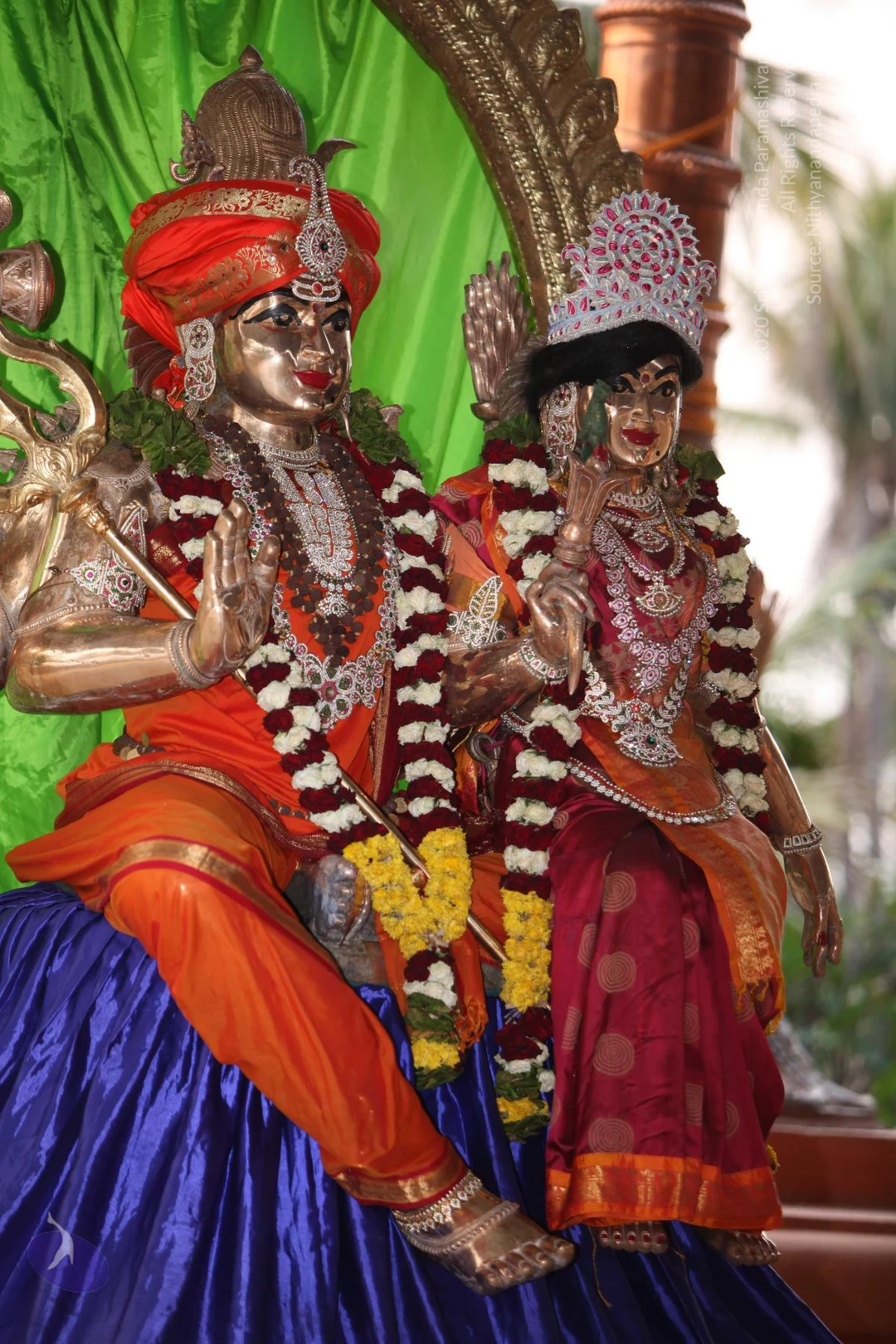
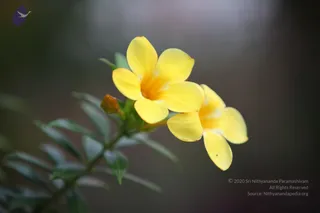
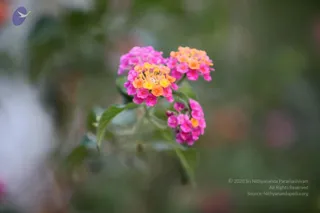
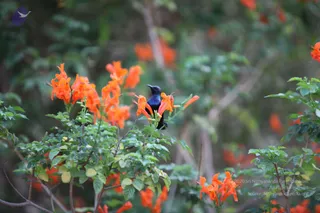
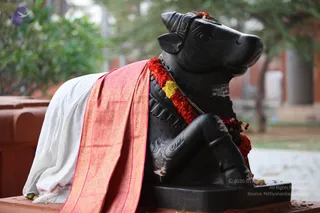
Close-up photograph of two yellow trumpet-shaped flowers on a green stem with pointed dark-green leaves and a small closed brown bud. The background is softly blurred in dark greens and grey, with the flowers in sharp focus. No people, deities or ritual objects are visible.Close-up photograph of a lantana shrub with clusters of small tubular flowers in pink, magenta and orange-yellow, held on slender green stems with broad serrated leaves. The background is softly blurred in green and muted tones. No people, deities or ritual objects are visible.A photograph of a dark blue-black bird perched among clusters of bright orange trumpet-shaped flowers on a green shrub, with blurred green foliage and orange blossoms in the background. No people or ritual scene is visible.A photograph of a black stone Nandi bull statue seated on a dark pedestal outdoors. It wears a garland of red and yellow flowers around its neck and a draped white cloth edged with a red and gold patterned border over its back. Blurred green trees and a brick wall form the background. No people are visible.A photograph of a sunset seen through silhouetted palm fronds, with a bright orange-white sun low in a hazy pink and orange sky. Dark coconut palm leaves frame the left and right edges, and a dark tree canopy sits in the lower foreground. No people, deities or ritual objects are visible.Two metallic murti statues seated side by side in front of a green draped backdrop within an ornate gold arched frame. The left figure, a male deity murti, wears a red-orange turban and a red-orange garment, holds a trident and raises one hand in blessing. The right figure, a female deity murti, wears a silver-pink crown, a red-orange sari, and layered gold and silver necklaces. Both wear rudraksha-style beaded malas and white flower garlands with yellow marigold strands draped across their bodies. This is a photograph of statues, not living people.

Sarva-Darshan

28 photosSource gallery
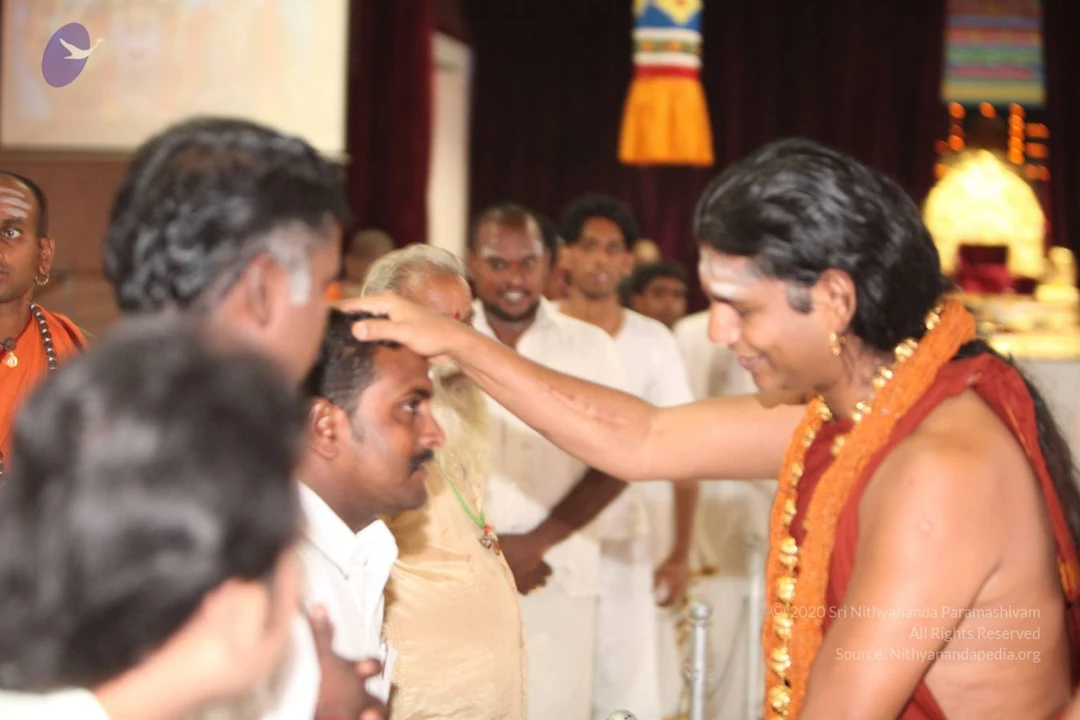
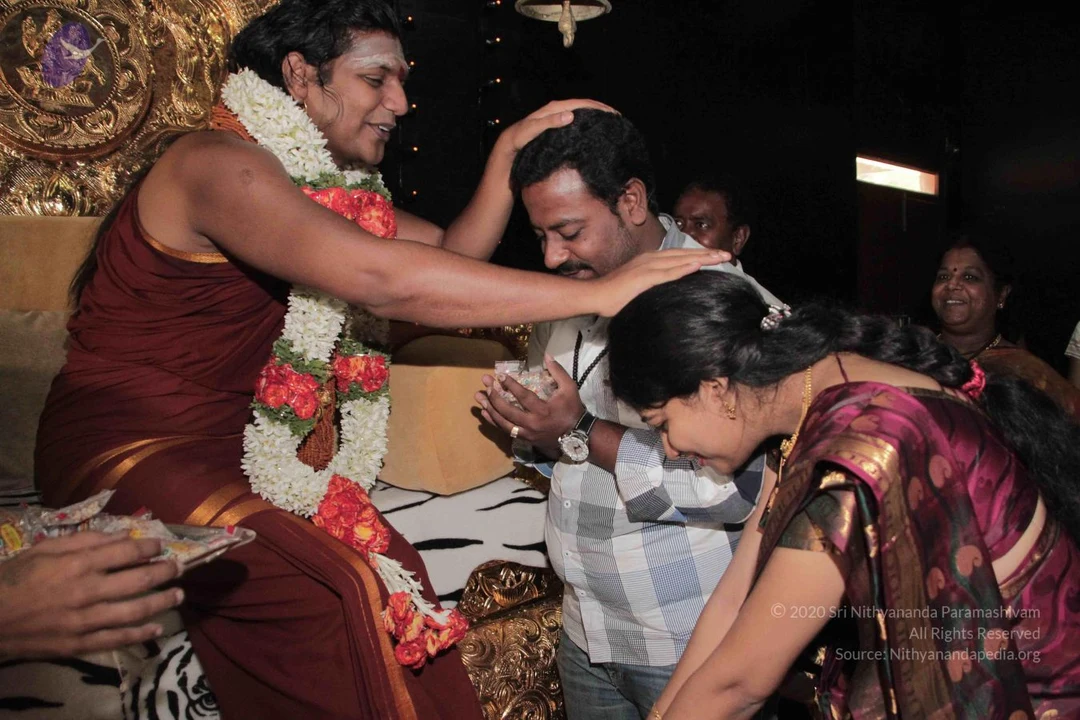
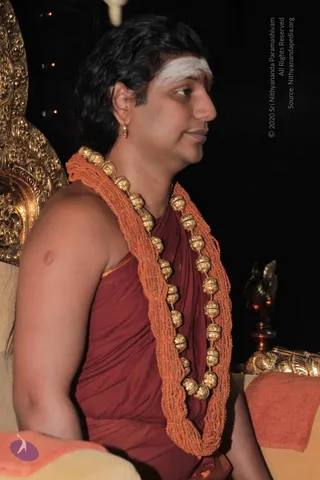
A photograph of a bare-chested man with long swept-back dark hair, wearing a saffron-orange shawl and a gold necklace, touching the forehead of a devotee with his right hand. The devotee has a dark moustache and wears a white shirt. Behind them a robed man in orange and white clothing, a bald man with a white tilak, and several people in white garments stand in a hall with maroon curtains, a gold-framed shrine and a small gold deity figure visible at right.A seated man in profile smiles while facing left against a dark background. He wears a maroon-red wrap over bare shoulders and an orange shawl draped across the chest, with a long string of gold-toned beaded necklaces. He has long swept-back dark hair, a white forehead band with a red central mark, and small gold earrings. An ornate gold-carved throne fills the left edge, and a brass bell hangs at upper right beside a small brass ritual lamp on the right. Appearance cues (long hair, orange shawl, gold beaded necklaces, ceremonial throne) suggest Swamiji (probable), seated in satsang.A man seated in profile on an ornate golden throne, wearing a maroon-red dhoti-style wrap and a long orange-saffron shawl draped over his shoulders, with a heavy strand of gold-toned rudraksha-style beads around his neck and a white vibhuti line with a red mark on his forehead. He has long swept-back dark hair and a small gold earring, and he is smiling as if speaking. Behind him is a gold repoussé backdrop with a carved deity figure, and a brass lamp or ritual object stands at right against a black background. Swamiji (probable): the appearance cues of long swept-back hair, saffron shawl, rudraksha-style beads and ornate gold throne suggest the speaker is Swamiji, presented as in-person satsang teacher on his seat.A seated man in a maroon garment with an orange shawl draped over his shoulders, wearing a multi-strand necklace of large gold-toned beads and rudraksha-style beads. He has a white vertical marking on his forehead and a small earring, smiling toward the left of the frame. Behind him is an ornate gold-toned carved backdrop with a relief of deities, and a small gold-coloured figurine of an animal sits on the right beside a folded orange cloth. a person, seated in a satsang setting, with saffron-orange shawl and rudraksha mala cues.Close view of a puja offering arrangement on a gold-toned tray. Many small ornate silver bowls hold white jasmine flowers, saffron-yellow paste, and small oil bottles. Red hibiscus blossoms with green leaves are placed among the bowls, and a silver conical vessel with flowers sits at right. Only a partial figure is visible at upper left: the lower legs and bare feet in a maroon sari with a gold border, kneeling beside the tray. The scene looks like a preparation for abhishekam or puja offerings.Close view of a ritual offering arrangement on ornate brass and silver trays. A person in a maroon sari with a gold border sits at left, with a hand resting near a heap of white jasmine-like flowers. Red hibiscus blossoms are scattered among silver bowls holding saffron-yellow turmeric paste, white flowers, and small glass oil bottles. A silver kalasha-style vessel appears at upper right. No face is visible, so no a person candidate is identifiable.

Satsang

9 photosSource gallery
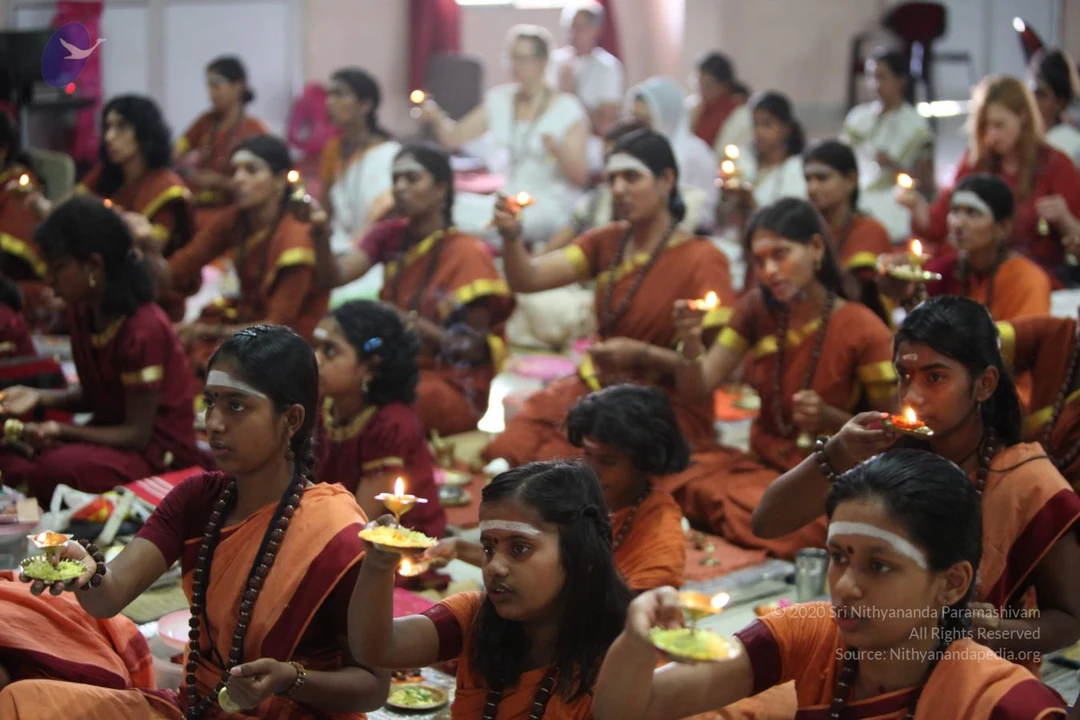
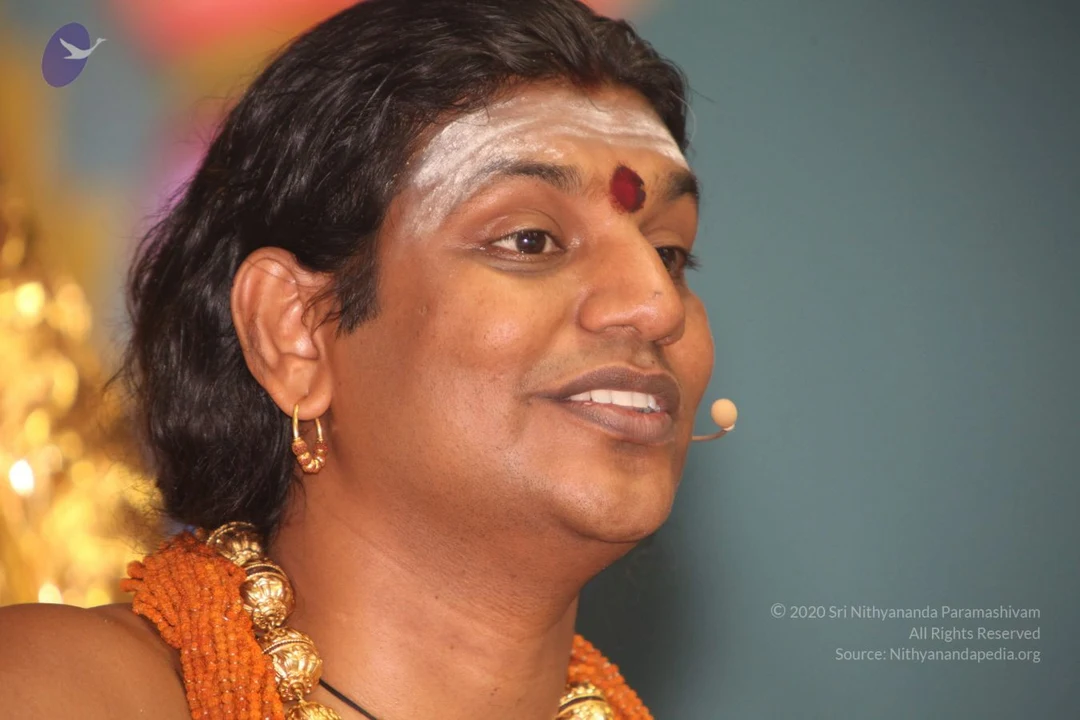
A row of women seated on the floor in orange-red robes with yellow borders, hands pressed together in anjali mudra, eyes closed in meditation or prayer. Several wear rudraksha malas and wrist beads, and some have white forehead markings. A red curtain hangs in the background, and brass puja items and a small lamp sit on a tray at the lower left.A photograph of a television screen showing a split broadcast frame. On the left, a man in a yellow-gold robe and a gold-trimmed headdress sits on an ornate gold throne with a red cushion, gesturing with one raised hand and wearing a beaded necklace. On the right, a man in a pink kurta sits cross-legged with eyes closed, surrounded by seated devotees in white clothing on striped mats. A news ticker scrolls along the bottom of the screen.A television screen displaying a split-screen broadcast, photographed in a dark room. The left panel shows a man with long swept-back hair wearing a crown-like headpiece, a gold ornate garment and a beaded necklace, gesturing with one raised hand while seated on a red cushioned throne against a gilded backdrop; he has a small microphone. The right panel shows an audience of devotees in white clothing seated on the floor, with a man in a pink-orange robe seated in the front centre. A yellow Lotus News ticker runs along the bottom with Tamil text. The screen shows a broadcast of a satsang session.A photograph of a television screen showing a split-screen news broadcast. The left panel shows a man in a cream-coloured robe with a light turban-like headwear and layered beaded necklaces, seated on an ornate gold throne with a red cushion and gesturing with one hand. The right panel shows rows of people in orange and maroon garments with white shawls, some with garlands, seated in a procession-like arrangement. A Tamil-language news ticker runs across the bottom with a Lotus News logo.Close-up photo of a smiling man with long dark hair swept back, wearing a white vibhuti line across the forehead and a red kumkum dot, an earring and a small clip-on microphone. He wears multiple strands of orange-saffron beaded rudraksha-style mala and a heavy gold ceremonial necklace over a red garment, and raises one hand in an animated gesture while speaking. Warm golden fabric blurs at left and a teal wall at right. Appearance-based a person (a person), giving a satsang discourse, with the cues of long swept hair, saffron beaded mala and gold ornaments.A smiling man seated on a golden throne-like chair, photographed in profile against a teal wall. He wears a red-orange draped cloth over bare shoulders, a long orange rudraksha-style bead mala and a heavy ornate gold bead necklace, a small gold earring, and a red-and-white forehead marking with white sacred ash. He has long swept-back dark hair and a small lapel microphone, and raises one hand mid-gesture while speaking. Ornate gold carved decor and a pink floral element are visible behind him. Appearance-based candidate, a person, seated and speaking during a satsang discourse.

Nithya-Puja

42 photosSource gallery
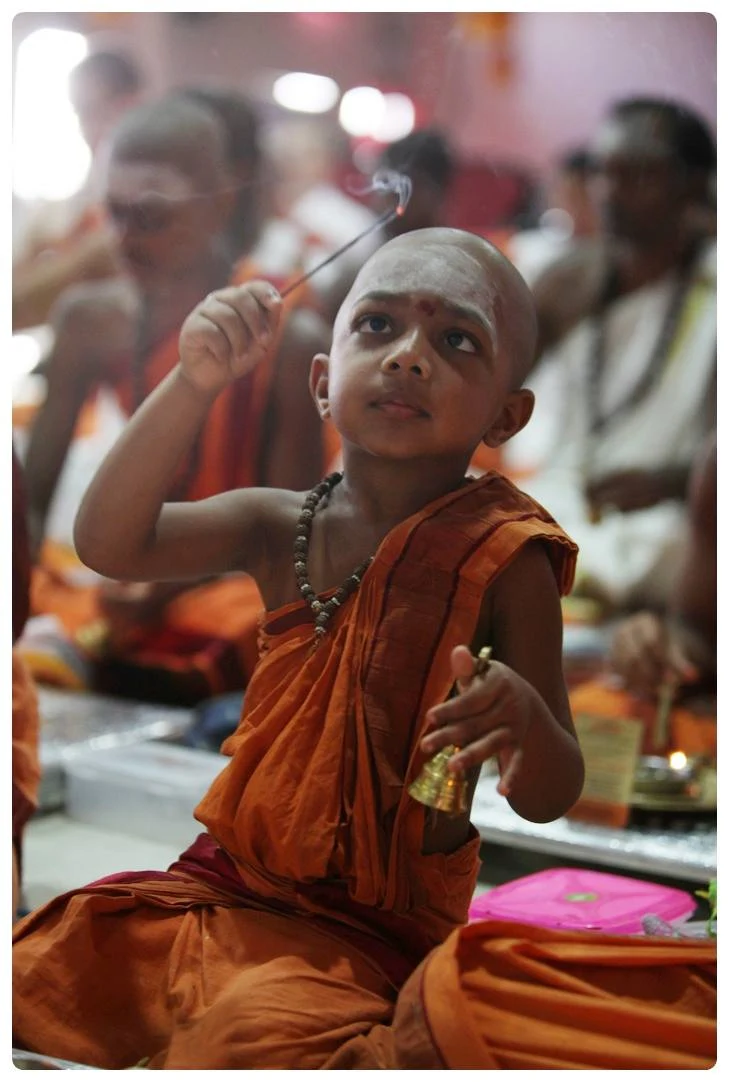
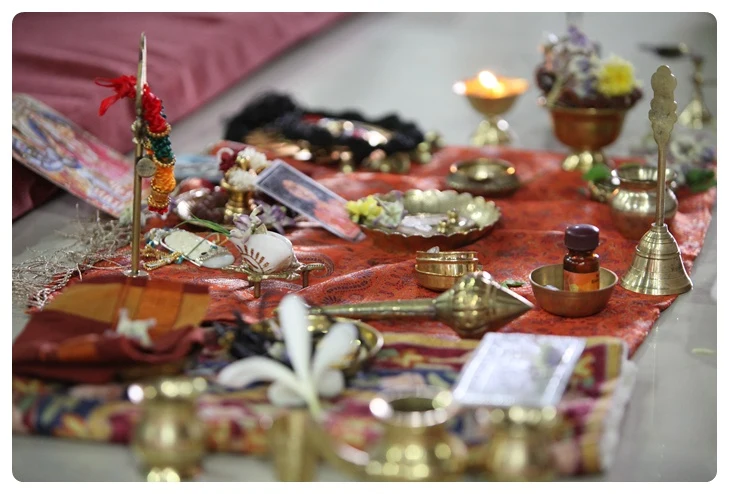
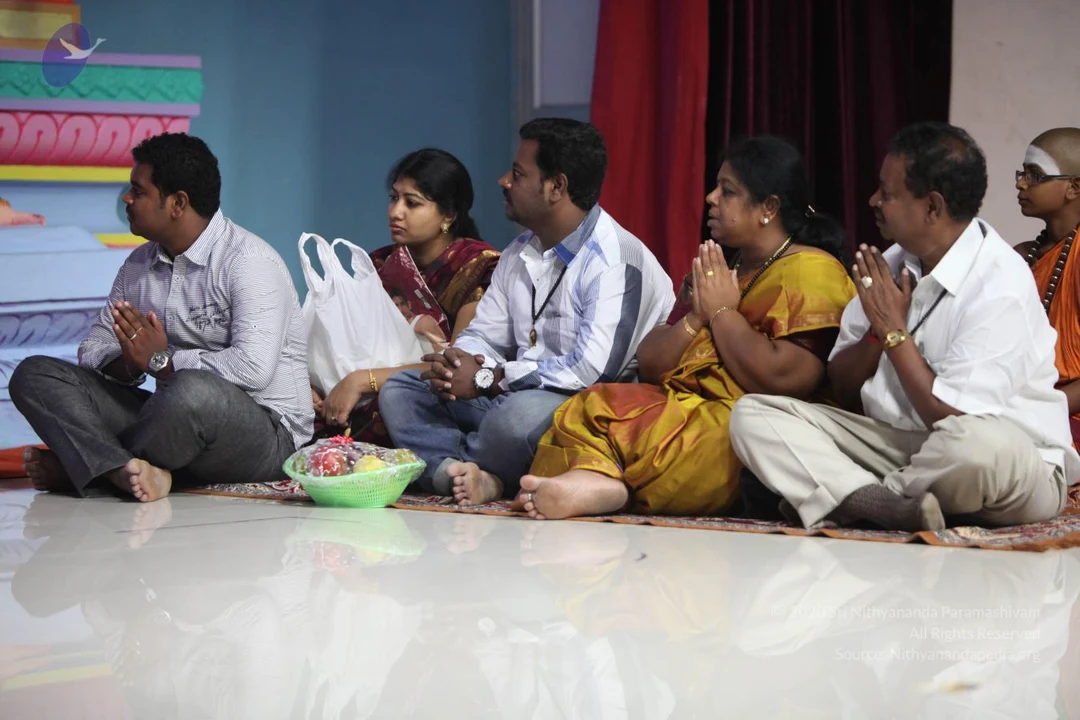
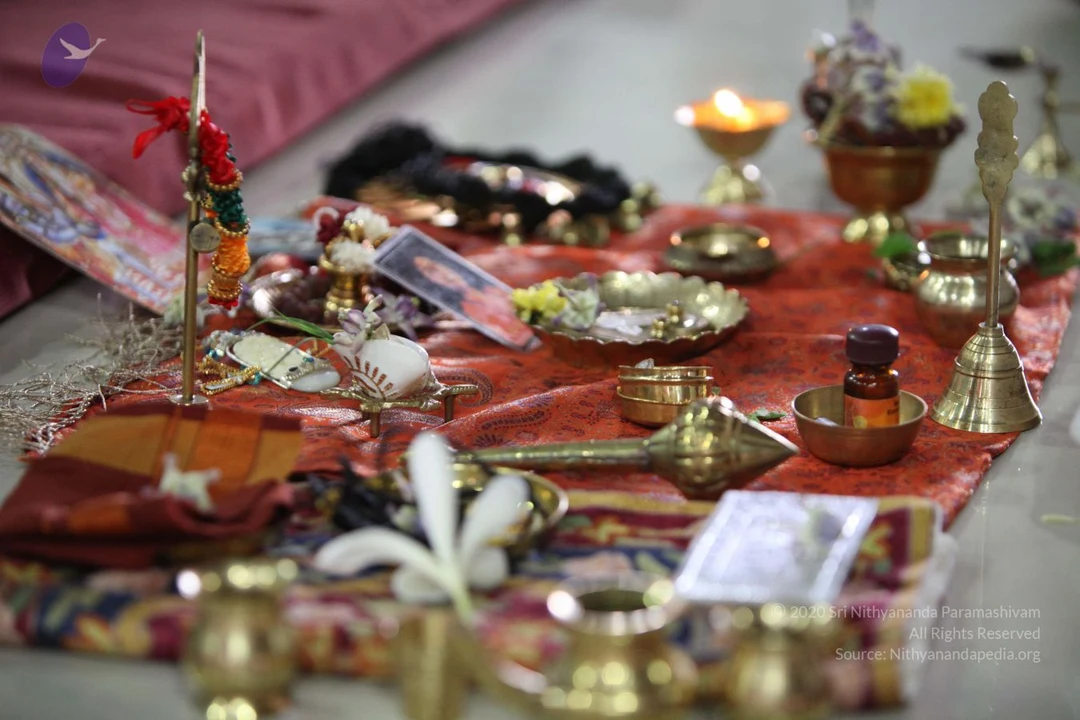
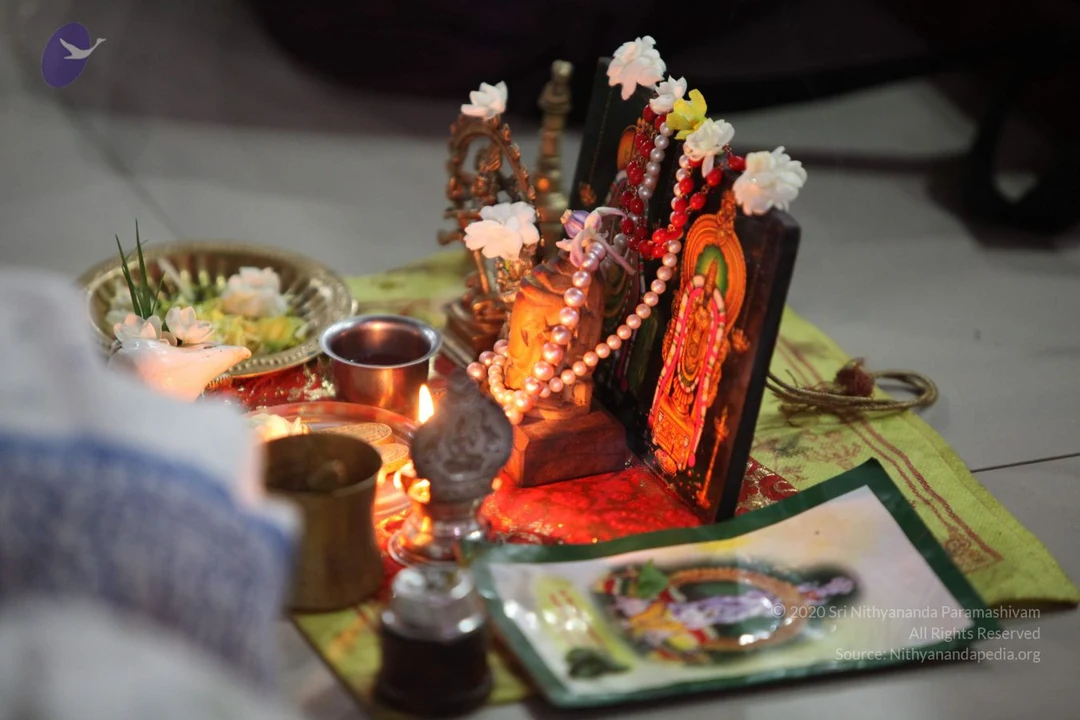
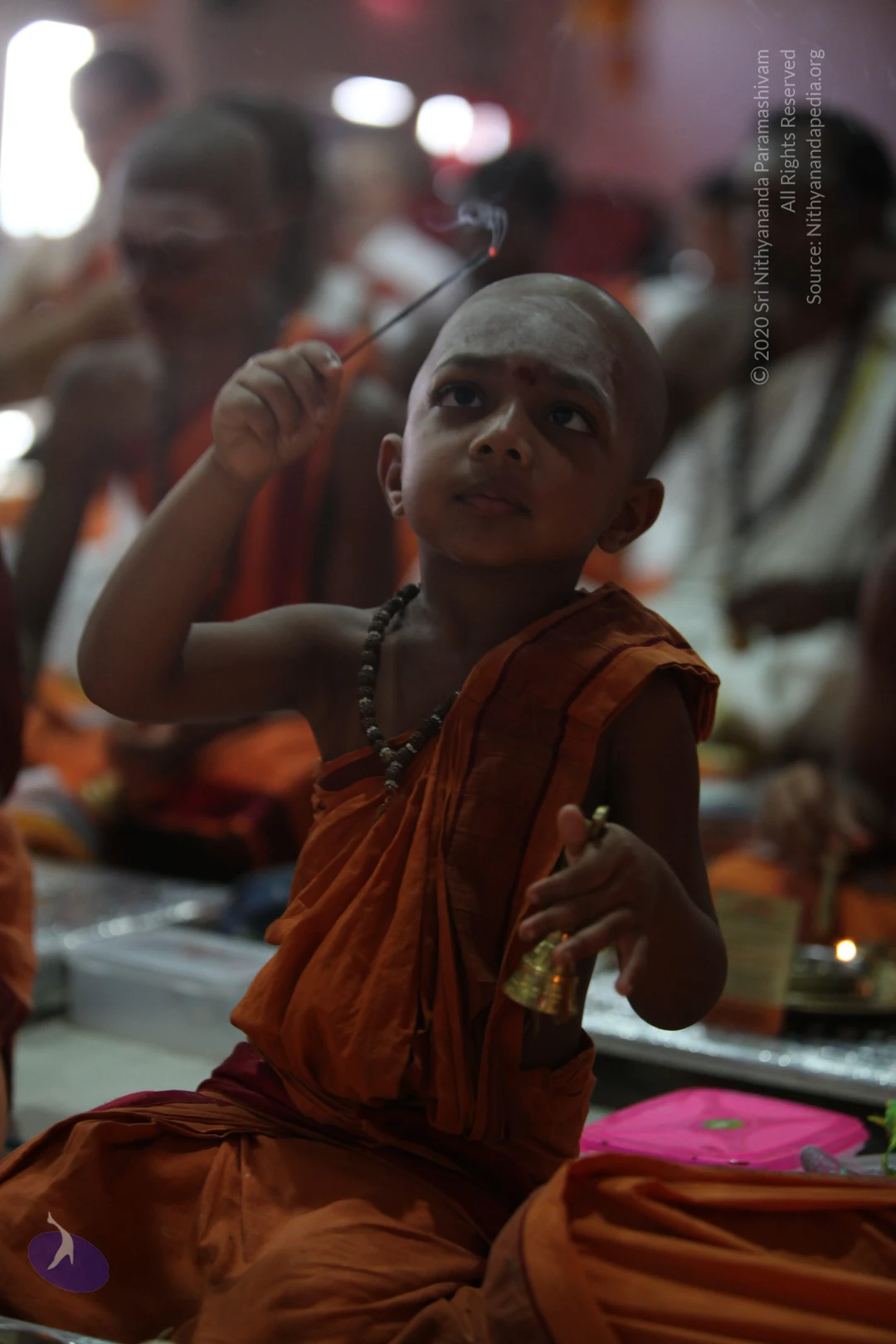
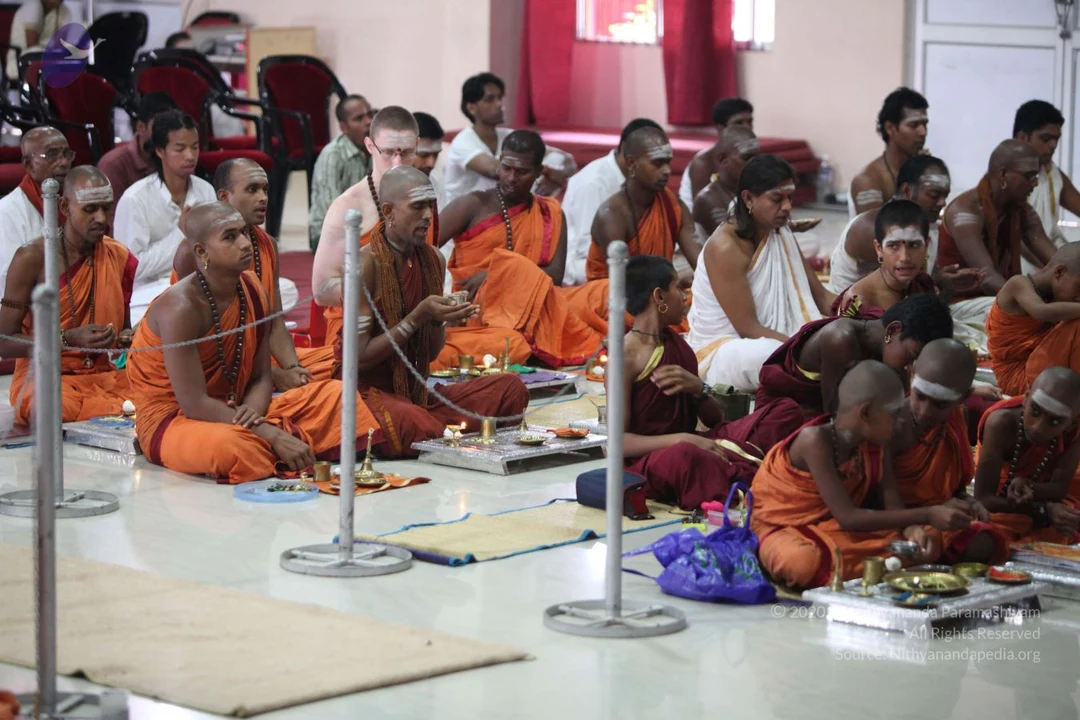
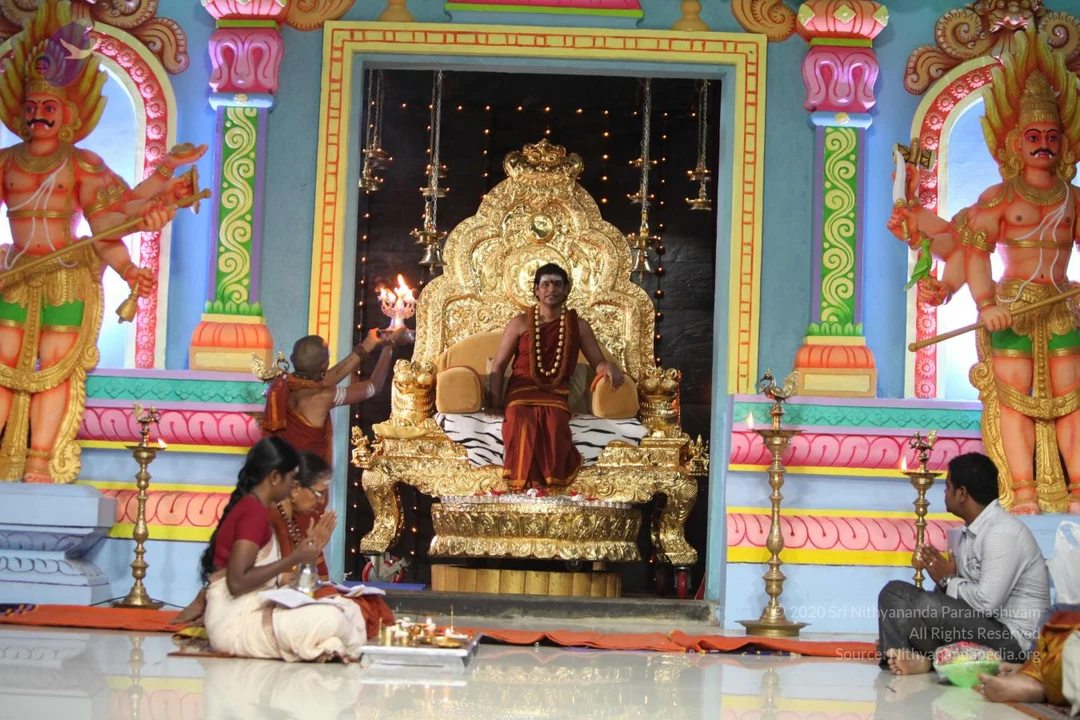
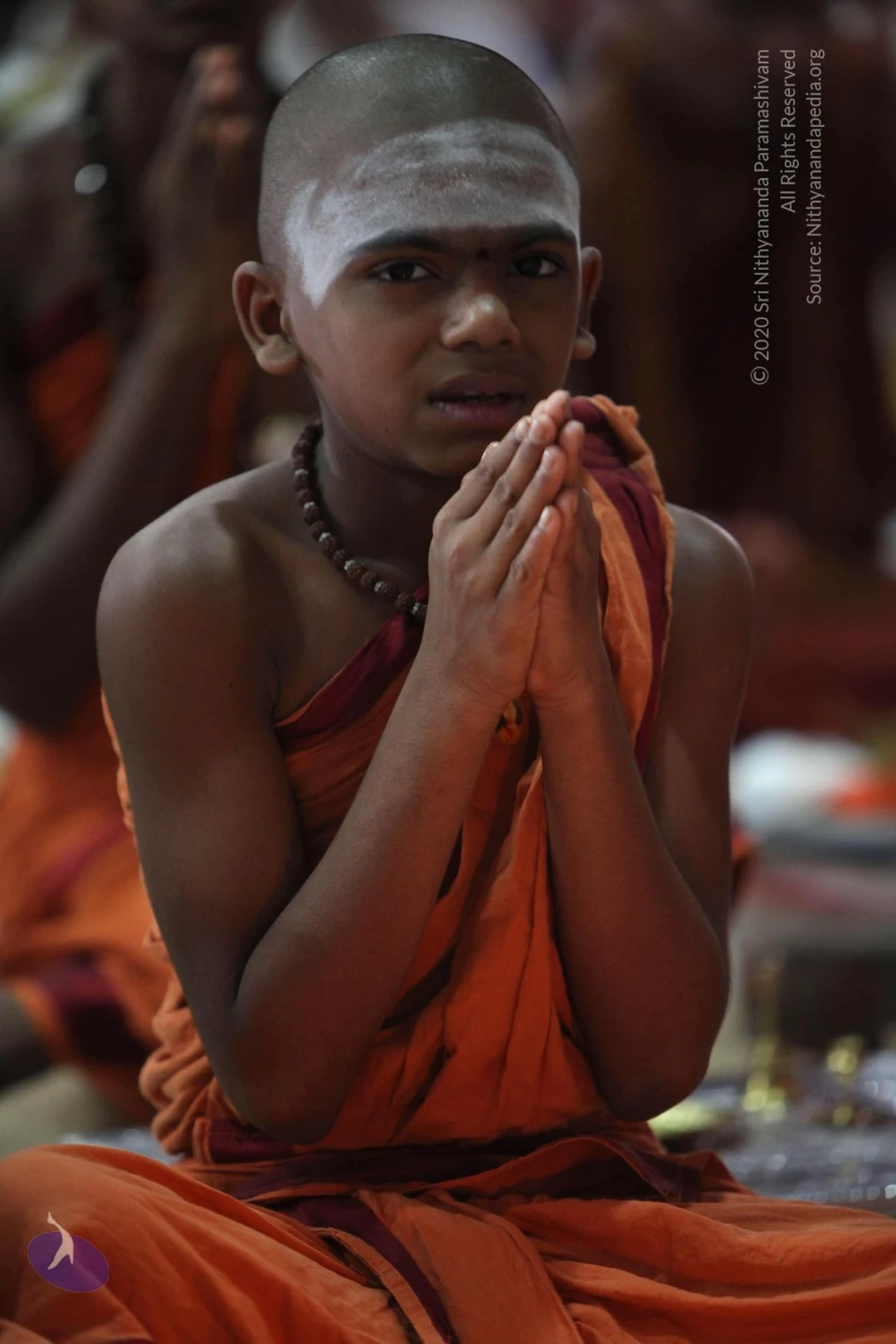
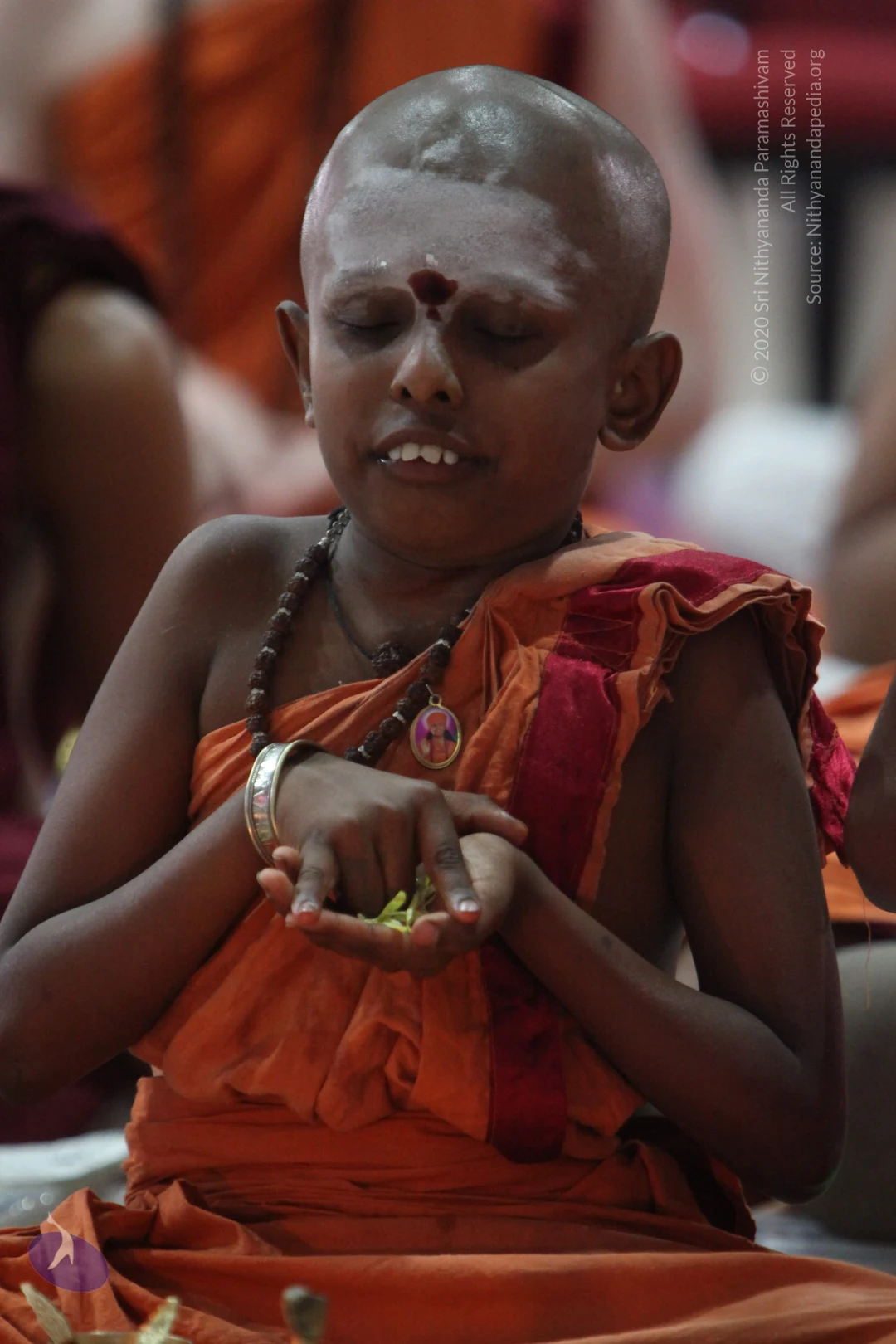
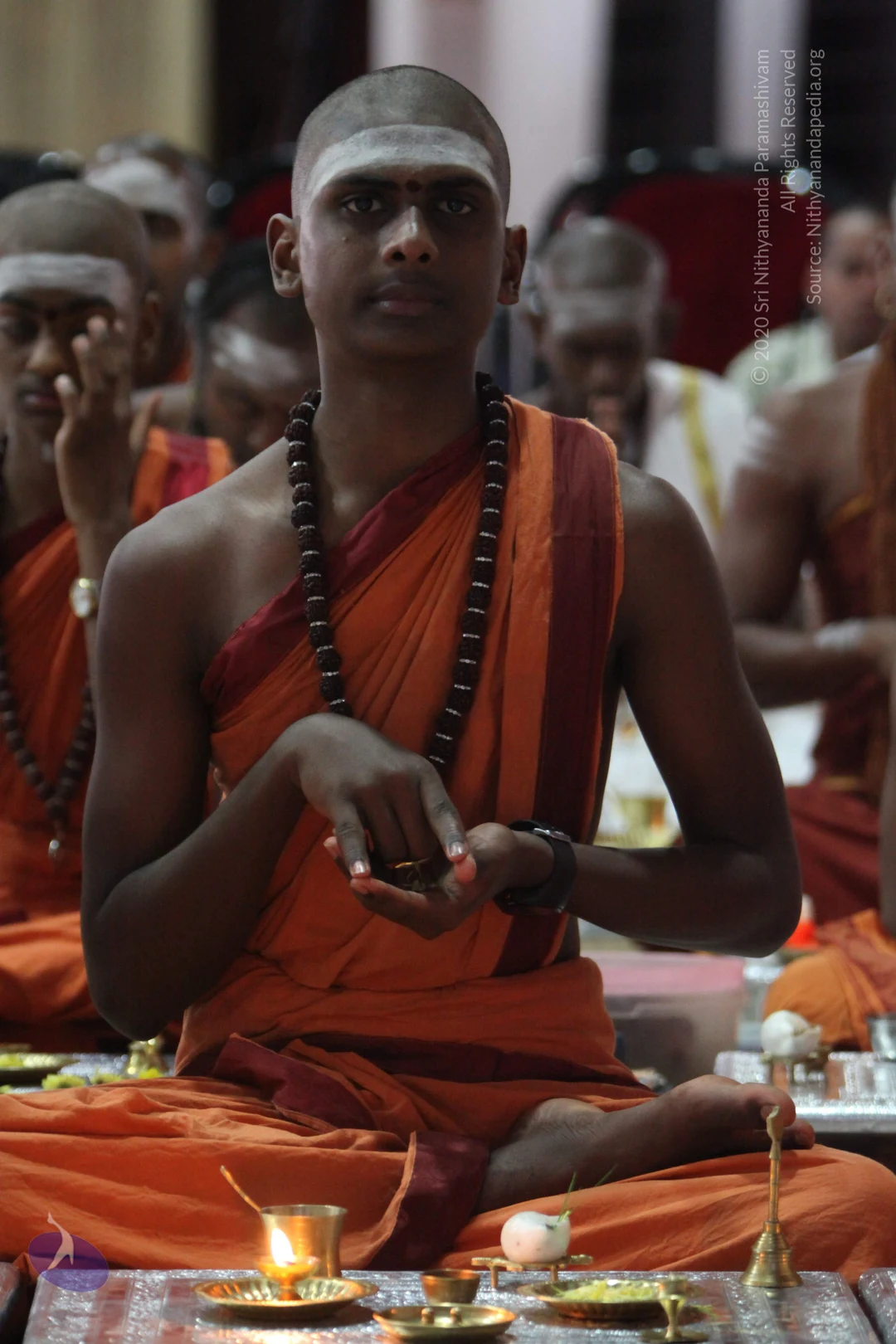
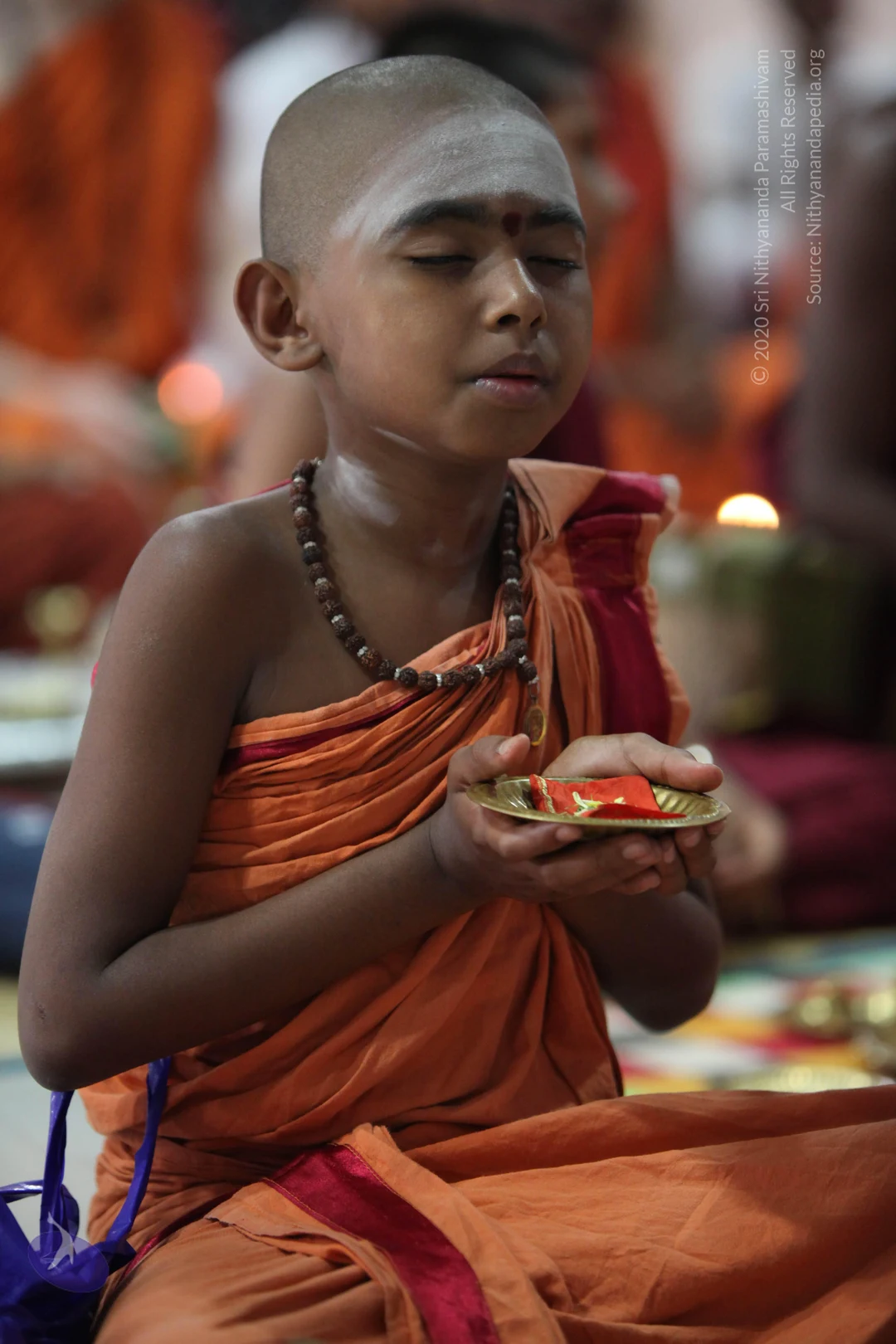
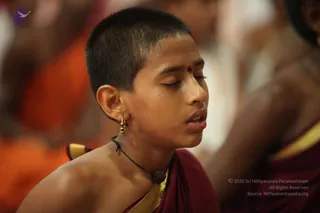
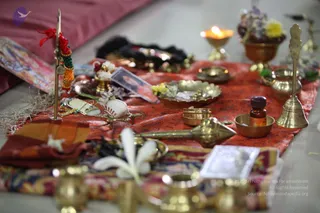
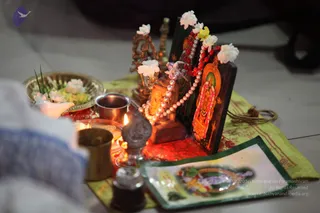
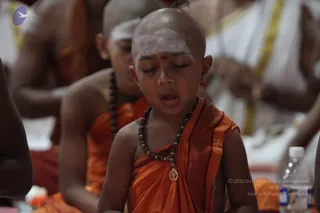
A seated man in a golden ornate throne sits centrally in a colourful temple hall with pink, green and yellow painted pillars. He wears a saffron-orange robe, a rudraksha mala, and rests his hands on the throne's armrests. The throne has a zebra-print cushion and a golden crown-like top. Flanked by two large painted guardian figures holding maces and wearing golden ornaments, the throne sits on a golden pedestal. Brass oil lamps stand on both sides. In the foreground, a shaved-headed man in orange cloth holds a flame near the throne, while two women in white saris sit with folded hands and a man in grey shirt sits at right. The man on the throne has long hair and a saffron robe, consistent with the a person candidate cues, but his appearance is not conclusive.Devotees sit cross-legged on a rug on a glossy white floor, hands pressed together in namaste. A man in a striped white shirt and grey trousers sits at left, a woman in a maroon sari holds a white plastic bag at the centre, a man in a white shirt and jeans sits beside her, and a woman in a gold-and-orange sari wears gold necklaces. At right a man in a white shirt and beige trousers wears a gold watch, and partly visible at the edge a shaved-headed person in saffron robes and wears a white bandage on the forehead and eyeglasses with rudraksha beads. A green basket of fruit sits on the floor in front. Behind them is a painted backdrop of coloured bands and blue walls with red drapes.Close-up photo of a young boy with a shaved head and a red bindi on his forehead, eyes closed in meditation or chanting. He wears a maroon robe with a gold border, a small gold stud earring, and a dark cord necklace with a dark bead pendant. Behind him, blurred figures in orange and white clothing sit in a gathering.Photograph of a ritual setup laid out on a red and gold patterned cloth on the floor. Brass items include a lit oil lamp in the background, a brass bell with a handle, a brass bowl of flower petals, a small brass pot, a brass vessel with a conical top, and a small brass dish holding a brown glass bottle. Marigold-like flowers, a red and gold tassel, a rudraksha-style bead strand, a small silver-toned tray, and a white flower sit among the objects. No people are visible.A small household puja arrangement on a green and red cloth on the floor. A lit oil lamp with a flame sits at center, flanked by a brass cup and a brass plate holding white flowers and green leaves. Behind them stands a dark wooden board with a framed deity image and a small bronze figure, draped with white and red flowers, a pink and white pearl mala and a red bead garland. A small framed picture lies in the foreground, and a blurred person's arm in a blue sleeve appears at the left edge. No people's faces are visible.Close photo of a young shaved-headed boy in saffron-orange robes sitting with eyes closed and mouth open as if chanting, wearing a rudraksha mala with a small round pendant and a white sacred ash line with a red dot on his forehead. Behind him, other saffron-clad young monks and white-clad devotees sit in meditative or chanting postures, and a plastic water bottle is visible at the right edge.

Temple

42 photosSource gallery
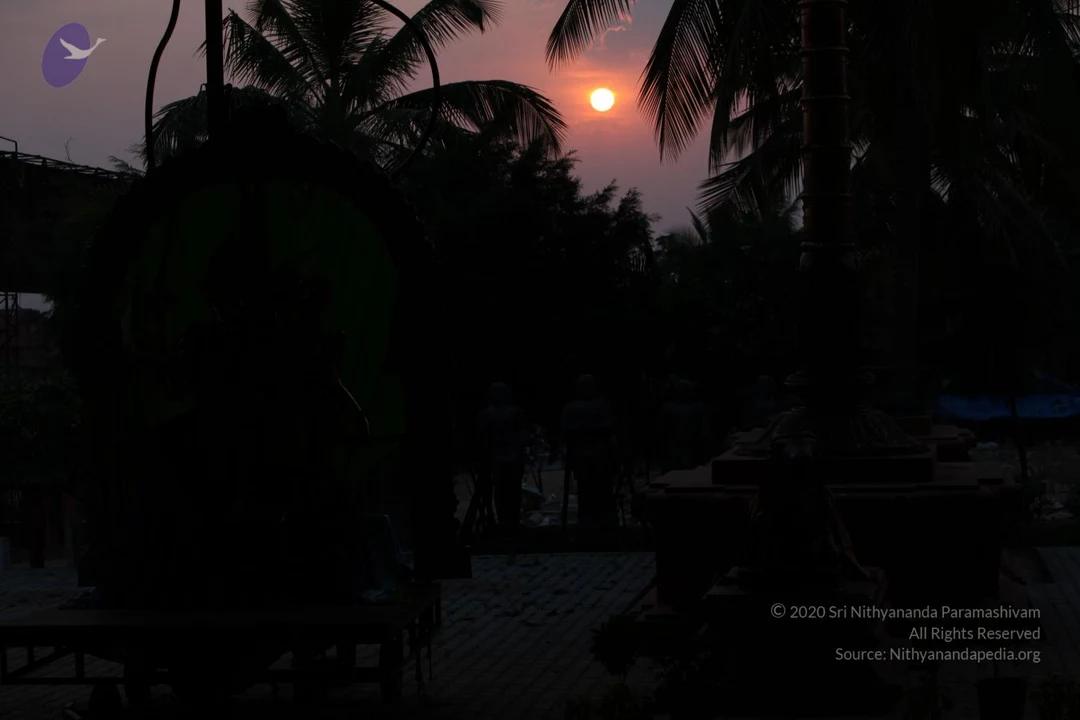
Close-up photograph of two yellow trumpet-shaped flowers on a green stem with pointed dark-green leaves and a small closed brown bud. The background is softly blurred in dark greens and grey, with the flowers in sharp focus. No people, deities or ritual objects are visible.Close-up photograph of a lantana shrub with clusters of small tubular flowers in pink, magenta and orange-yellow, held on slender green stems with broad serrated leaves. The background is softly blurred in green and muted tones. No people, deities or ritual objects are visible.A photograph of a dark blue-black bird perched among clusters of bright orange trumpet-shaped flowers on a green shrub, with blurred green foliage and orange blossoms in the background. No people or ritual scene is visible.A photograph of a black stone Nandi bull statue seated on a dark pedestal outdoors. It wears a garland of red and yellow flowers around its neck and a draped white cloth edged with a red and gold patterned border over its back. Blurred green trees and a brick wall form the background. No people are visible.A photograph of a sunset seen through silhouetted palm fronds, with a bright orange-white sun low in a hazy pink and orange sky. Dark coconut palm leaves frame the left and right edges, and a dark tree canopy sits in the lower foreground. No people, deities or ritual objects are visible.A dim evening scene at sunset in an outdoor courtyard with palm trees silhouetted against a glowing orange-pink sky and a pale sun low on the horizon. A large dark figure, possibly a deity murti or statue, stands on a raised dais on the left, with a dark circular backdrop behind it. Ornate stone pillars and a stone lamp-like structure stand on the right, and paved tiles cover the ground. No clearly visible people are present; the faint shapes in the middle distance appear to be statues.

Sarva-Darshan

7 photosSource gallery
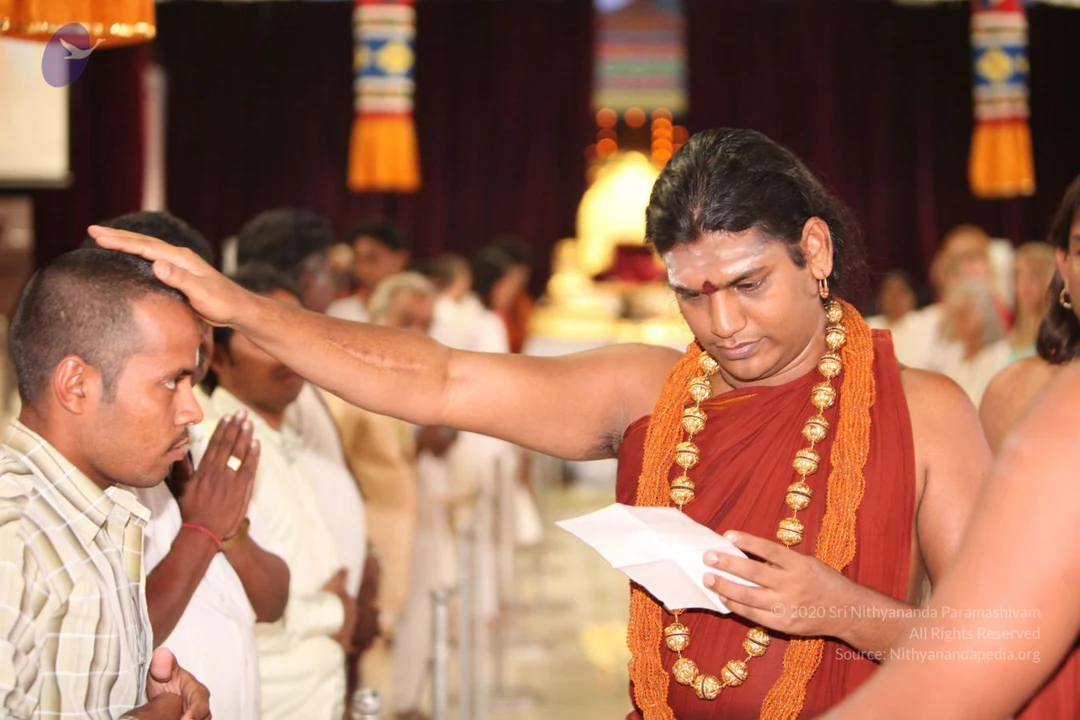
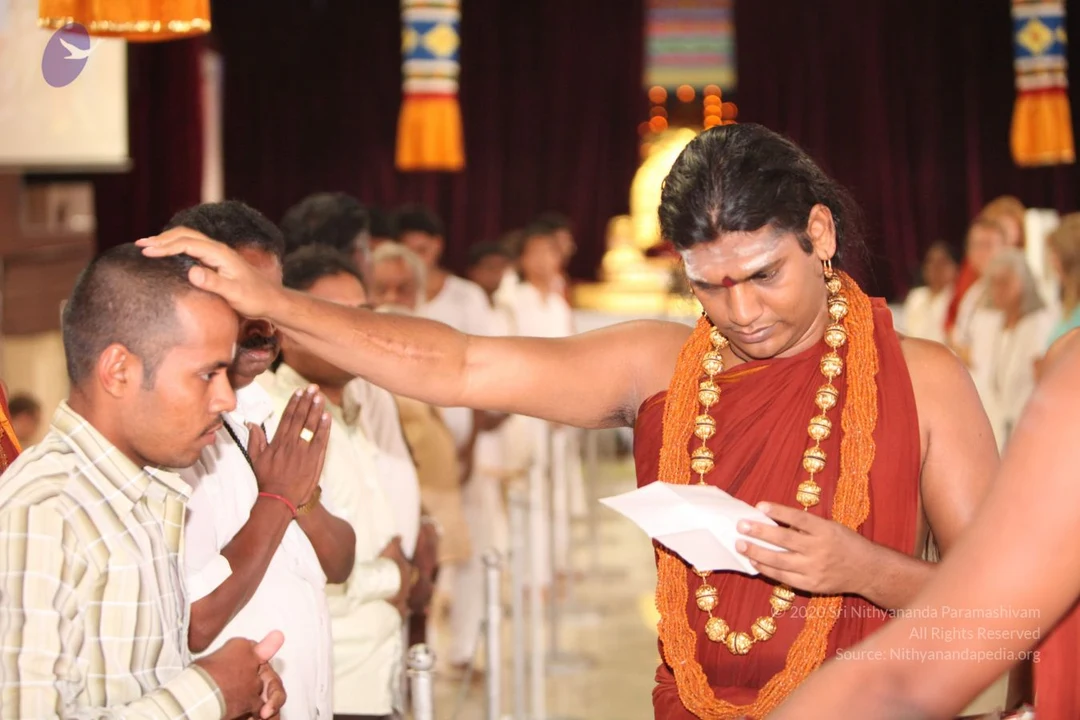
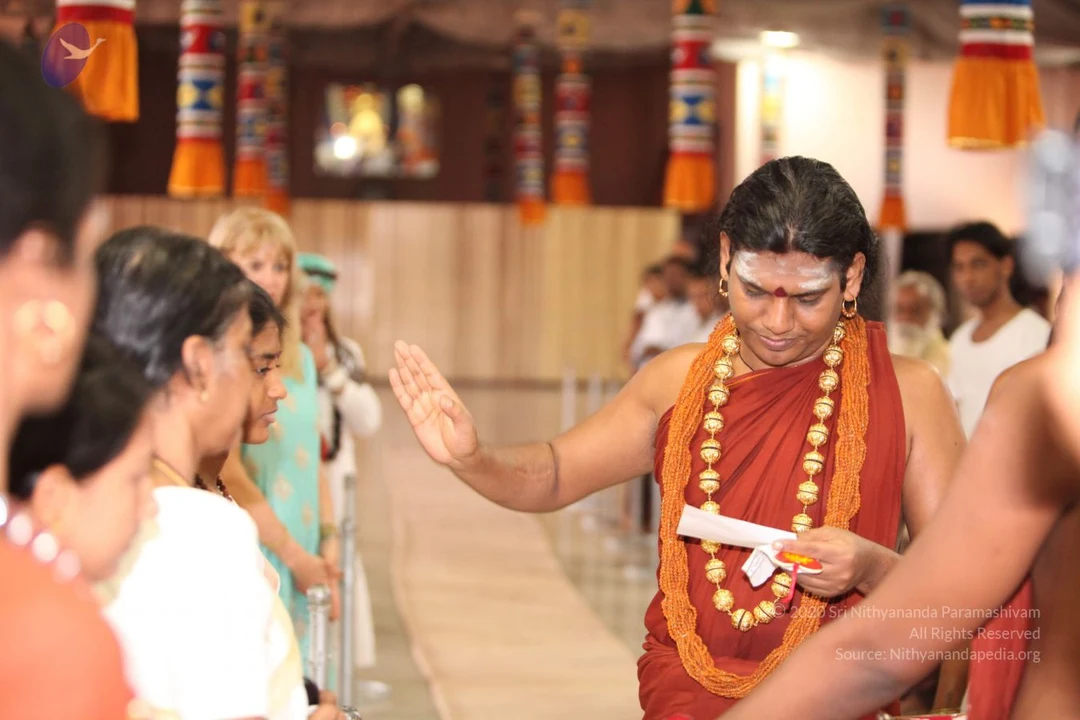
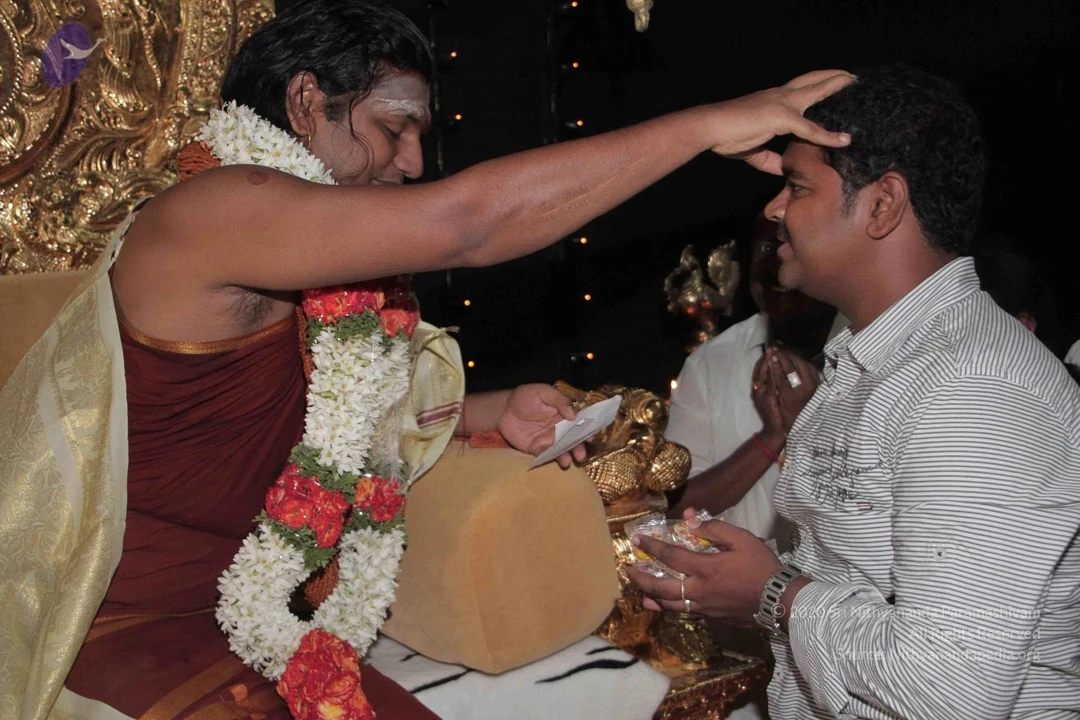
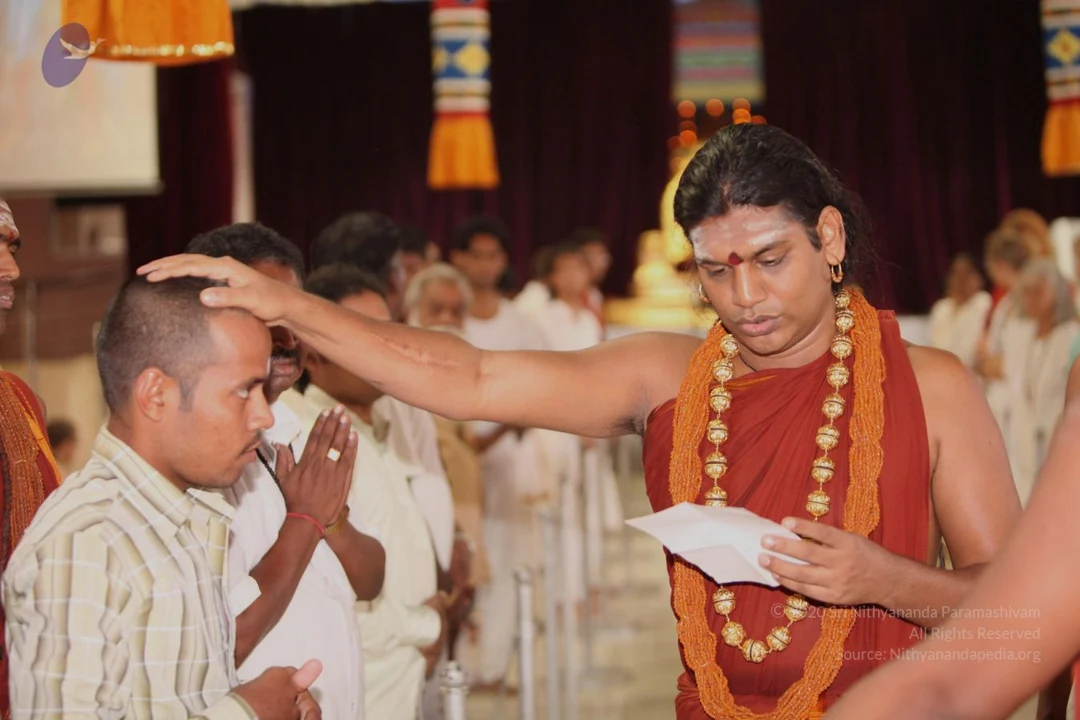
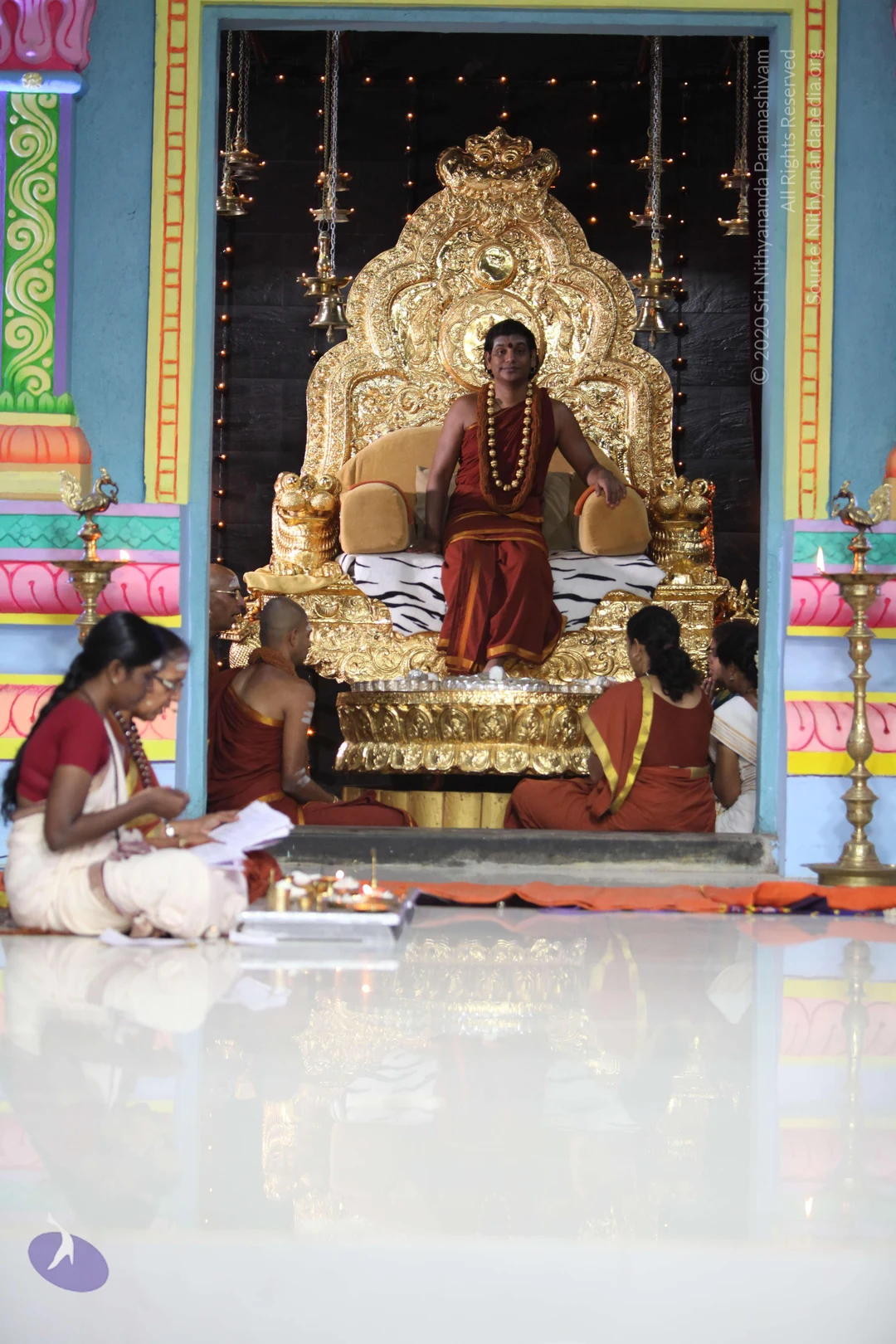
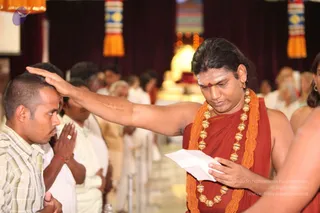
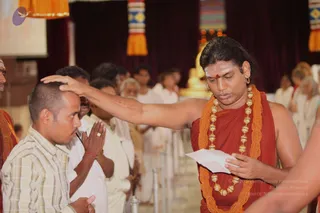
A photograph of a man in a rust-orange robe and orange-and-gold beaded necklace raising his right palm over the forehead of a devotee in a striped shirt. The robed figure holds a folded white paper in his left hand and wears a red tilak and gold earrings, with long dark hair swept back. Behind them, a row of devotees in white clothes stand with palms pressed together, and a golden deity murti glows in the background beneath orange and gold hanging tassels. Swamiji (probable): the robed figure has long swept-back hair, orange ceremonial clothing and a rudraksha-style gold bead necklace, consistent with the page's Swamiji reference.A photograph of a satsang-style blessing in a hall. A man in a long-sleeved red-orange robe with a tall rudraksha-like gold bead necklace and a saffron shawl stands with his right hand raised on the crown of a kneeling man in a plaid collared shirt. The seated man has a shaved head and his hands are pressed together in namaste. The robed figure holds a folded white paper in his left hand and looks down, a red-orange tilak is visible on his forehead. Behind them, devotees in white clothing stand in a line behind metal barrier posts, with a gold-lit deity murti and dark maroon drapes with orange tassels in the background. Several other people, including white-haired elders, watch from the back. The seated man faces the robed figure while others wait their turn.A photograph of a hall with a crowd of devotees in white and a seated man in a checked shirt with hands in anjali. A man in a saffron-red robe with a long gold bead necklace and orange garland places his hand on the head of a shaved-headed devotee, holding a white paper in his other hand. a person: long dark hair swept back, sandalwood and red bindi markings, gold ear studs, and ornate gold necklace. Behind them a golden deity murti and orange-and-red hangings. Several other people in white stand in the background.Side-profile photograph of a man seated on an ornate gilded throne-like chair, wearing a maroon-red draped cloth over one shoulder and bare upper arm, with a long orange-beaded rudraksha-style mala and large gold bead necklace. He has a white vertical tilak on his forehead with a red bindi, long swept-back dark hair and a small gold earring. Behind him are gold-embossed carved panels, a small brass lamp and an orange cloth draped over the armrest. a person in appearance, given the saffron-orange beaded mala, ornate gold necklace and throne setting, seated with a composed expression.A seated man in a maroon and gold-bordered dhoti and shawl sits on a cream upholstered throne with a zebra-striped cover, in front of an ornate gold carved backrest. He wears layered orange rudraksha-style beads and a heavy gold bead necklace, a white forehead mark with a red dot, and small gold earrings. His hands rest in his lap. In the foreground are silver bowls holding oil lamps and orange liquid, with red hibiscus flowers and white jasmine garlands at his feet. Gold-carved stands and a brass bell hang in the dark background. The visible cues are long swept-back hair, orange beads, gold necklace and ritual setting; this appearance-based label is Swamiji (probable), seated in a puja-like setting.A man with swept-back dark hair and a white vibhuti band with a red kumkum dot sits on an ornate gilded throne draped with a zebra-striped white and black cloth and orange-edged cushions. He wears a maroon-red ochre robe with gold-bordered dhoti and a long orange-red beaded necklace with large gold beads. Silver trays holding oil lamps, pink hibiscus flowers and white flower garlands lie at his bare feet. A gold bell hangs in the upper right corner against a dark background. a person by appearance cues: long swept hair, saffron-orange ornate clothing and mala with gold beads, seated in a place of honour.

Satsang

45 photosSource gallery
A seated man in a saffron-orange robe and matching orange rudraksha mala necklaces sits cross-legged on an ornate golden throne with a large gilded arched backrest and a tiger-striped cloth draped over the seat. His hands are pressed together in namaste, and he wears a white vibhuti mark with a red bindi on his forehead, small gold earrings and a headset microphone. The background is dark with hanging golden ornaments. Appearance is consistent with a saffron-clad figure on a throne, but the face cannot be confirmed.Close photo of a smiling man with swept-back dark hair, white vertical tilak and a red dot on the forehead, wearing a rust-red shawl over the shoulder, multiple strands of orange beaded mala and a heavy gold ceremonial necklace of ornate gold beads, plus gold hoop earrings and a small clip-on microphone. Behind him is a glittering gold ornamental backdrop.A seated man in a rust-orange monastic robe sits on a crimson velvet throne with an ornate gilded arched backrest and a tiger-striped fabric draped over the seat. He wears multiple strands of gold beads and an orange-beaded mala across his chest, has a white vertical tilak with a red dot on his forehead, a small gold earring, and a small headset microphone near his face. He smiles and gazes off to one side with an arm extended along the armrest. Swamiji (probable): long dark hair, gold ceremonial necklaces and orange-beaded mala, seated on a gilded throne, and the page identifies him as Swamiji.Close photo of a smiling man seated before an ornate gold-embossed backdrop, wearing a headset microphone over one ear and small gold hoop earrings. He has swept-back dark hair, a white sandal-paste line and a red bindi on his forehead, and wears a rust-orange shawl draped over one shoulder with multi-strand orange rudraksha beads and a long ceremonial gold necklace of bead-like links. a person by the appearance cues of long swept hair, orange clothing, rudraksha malas and ceremonial gold necklace, shown speaking in a satsang setting.A smiling man with swept-back dark hair sits cross-legged on a deep red velvet seat in front of an ornate gold repoussé backdrop. He wears a rust-orange unstitched robe draped over one shoulder, with a long orange beaded necklace and a heavy gold bead mala across his chest. He has a white horizontal tilak and a red dot on his forehead, gold hoop earrings, and a small headset microphone near his cheek. His arms are open and relaxed, and his bare feet rest on a tiger-striped cloth covering the seat.Close-up photo of a smiling man with swept-back dark hair, a white horizontal tilak with a red bindi on his forehead, and a small headset microphone at his cheek. He wears an orange-red sannyasi cloth draped over one shoulder, with layered orange beaded malas and a long necklace of large gold beads. His raised right hand is partly visible. A golden ornate backdrop glows behind him. Swamiji (probable): long swept-back hair, saffron-orange robes and ornate gold necklaces fit the page's reference to Swamiji at this event.

Nithya-Puja

20 photosSource gallery
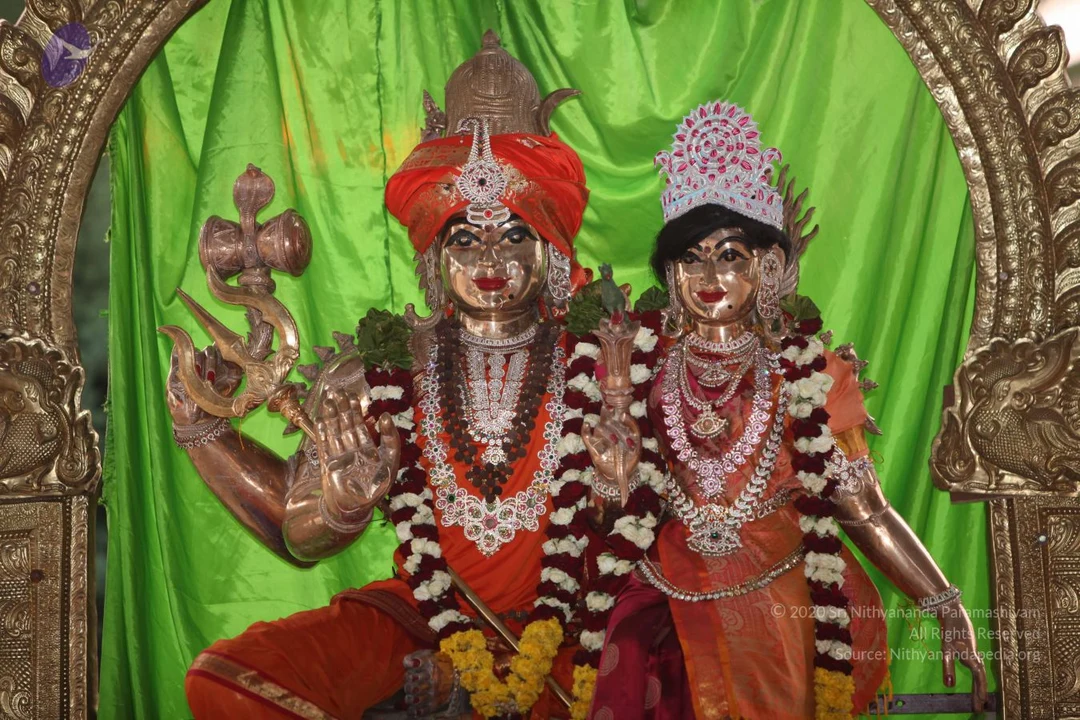
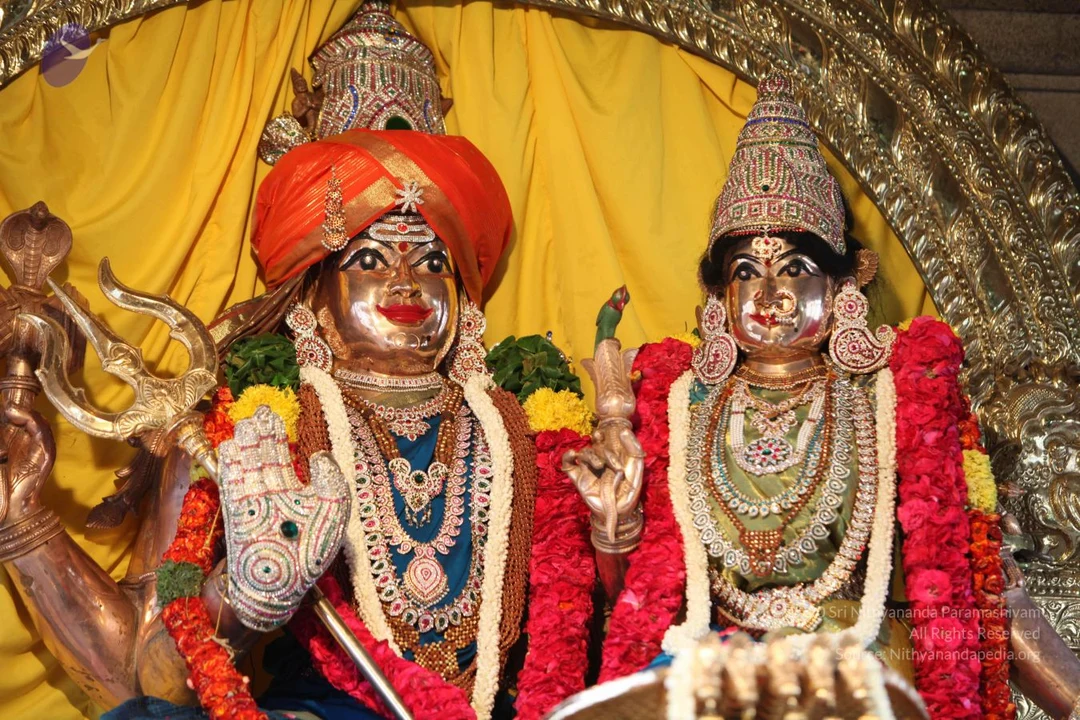
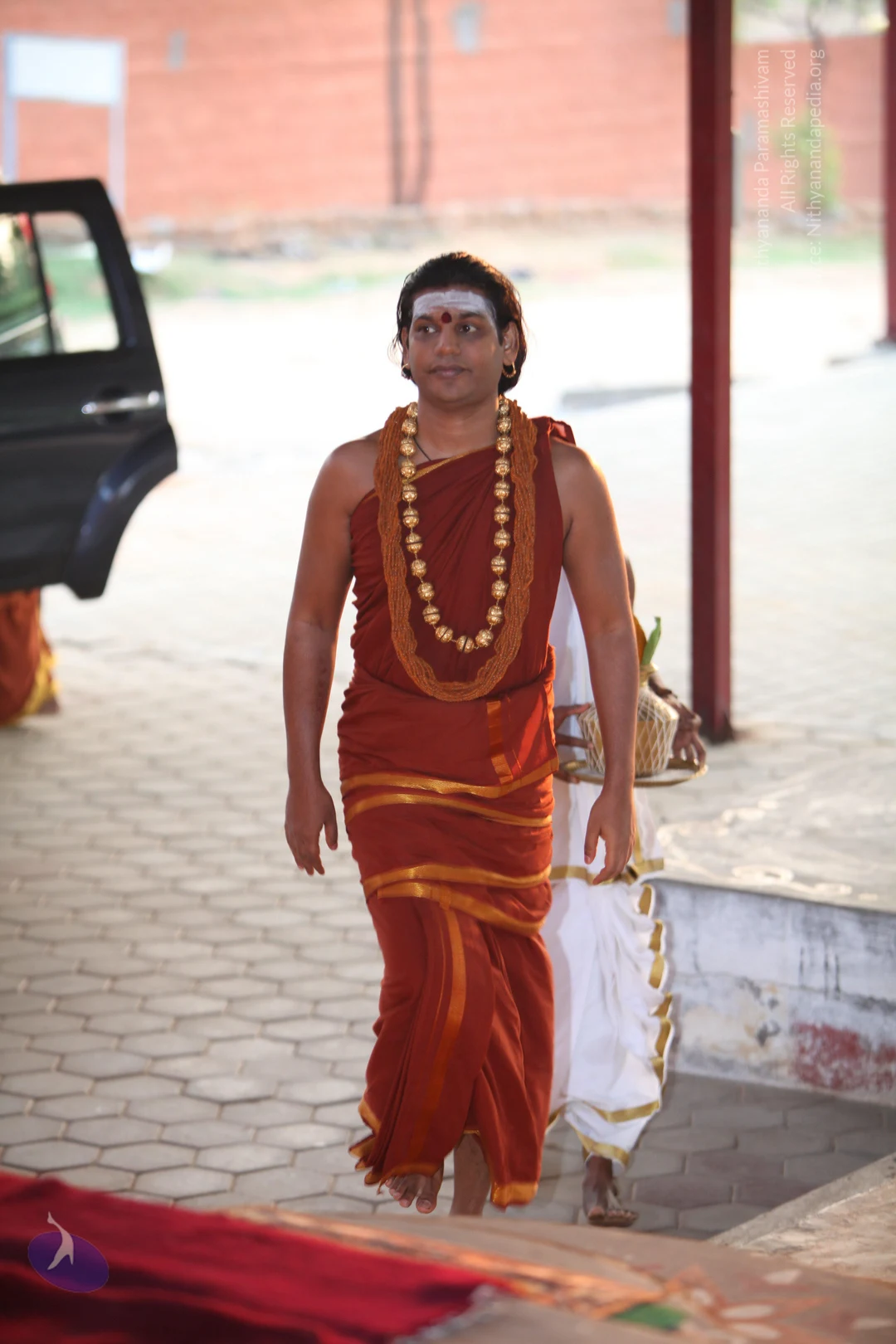
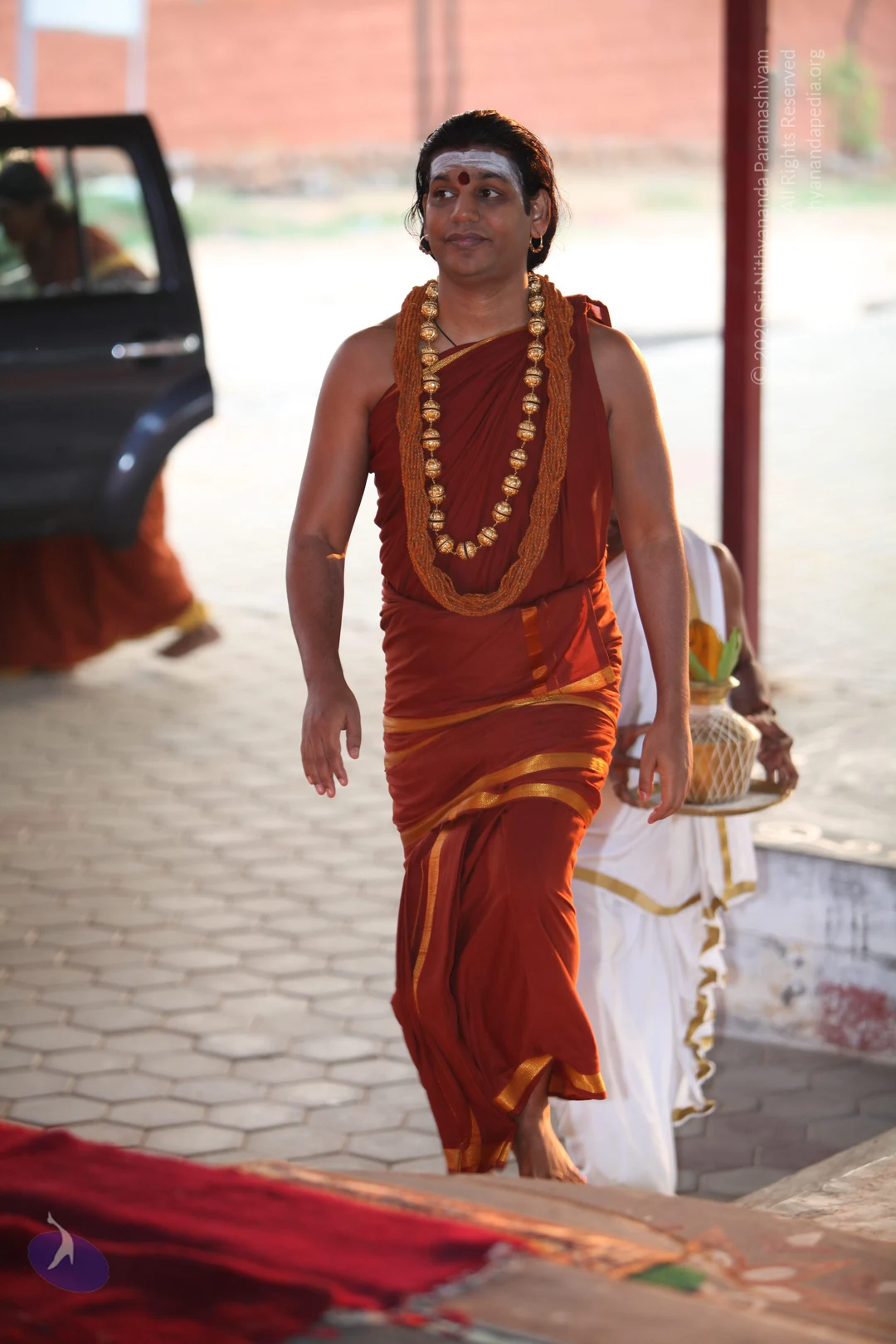
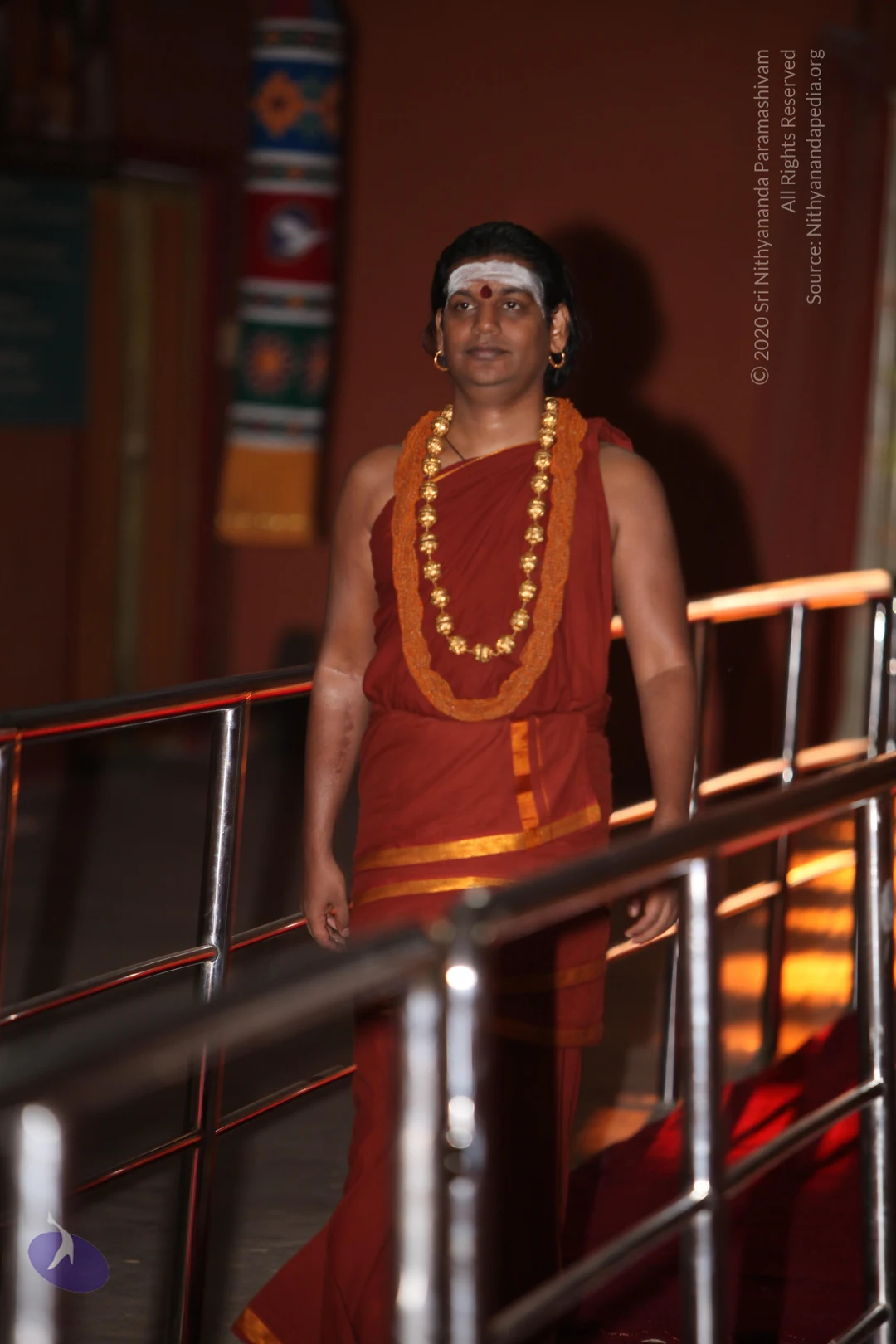
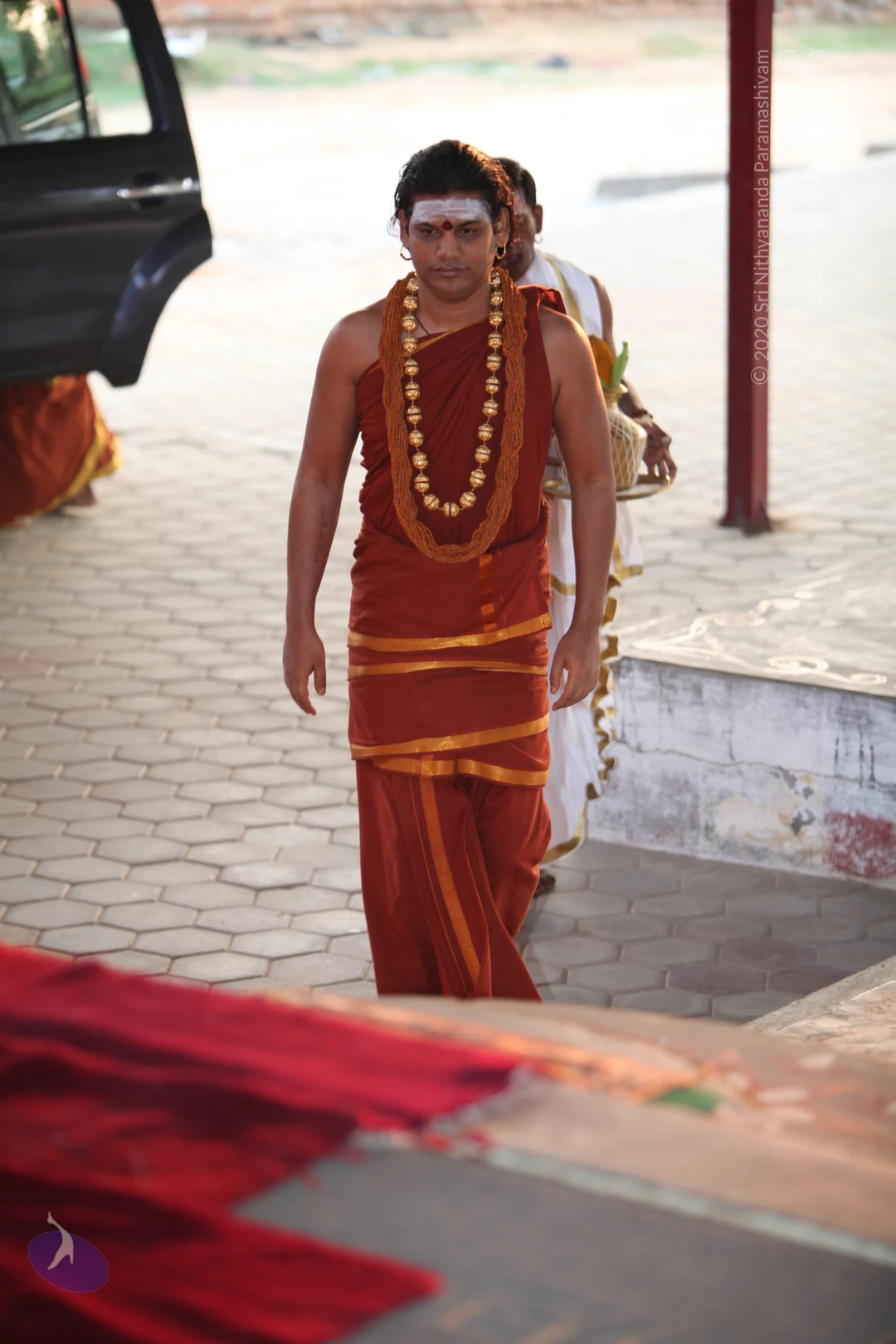
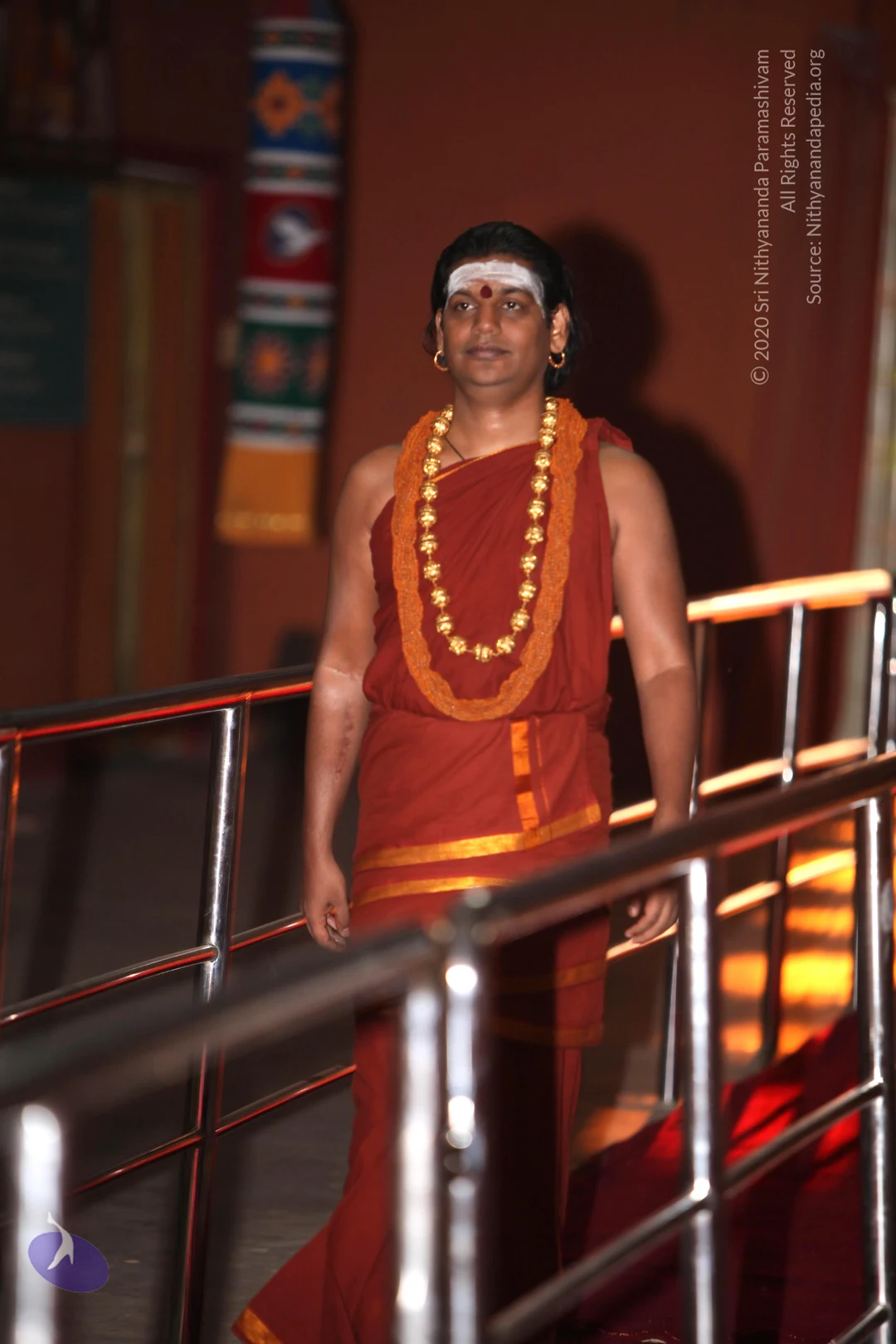
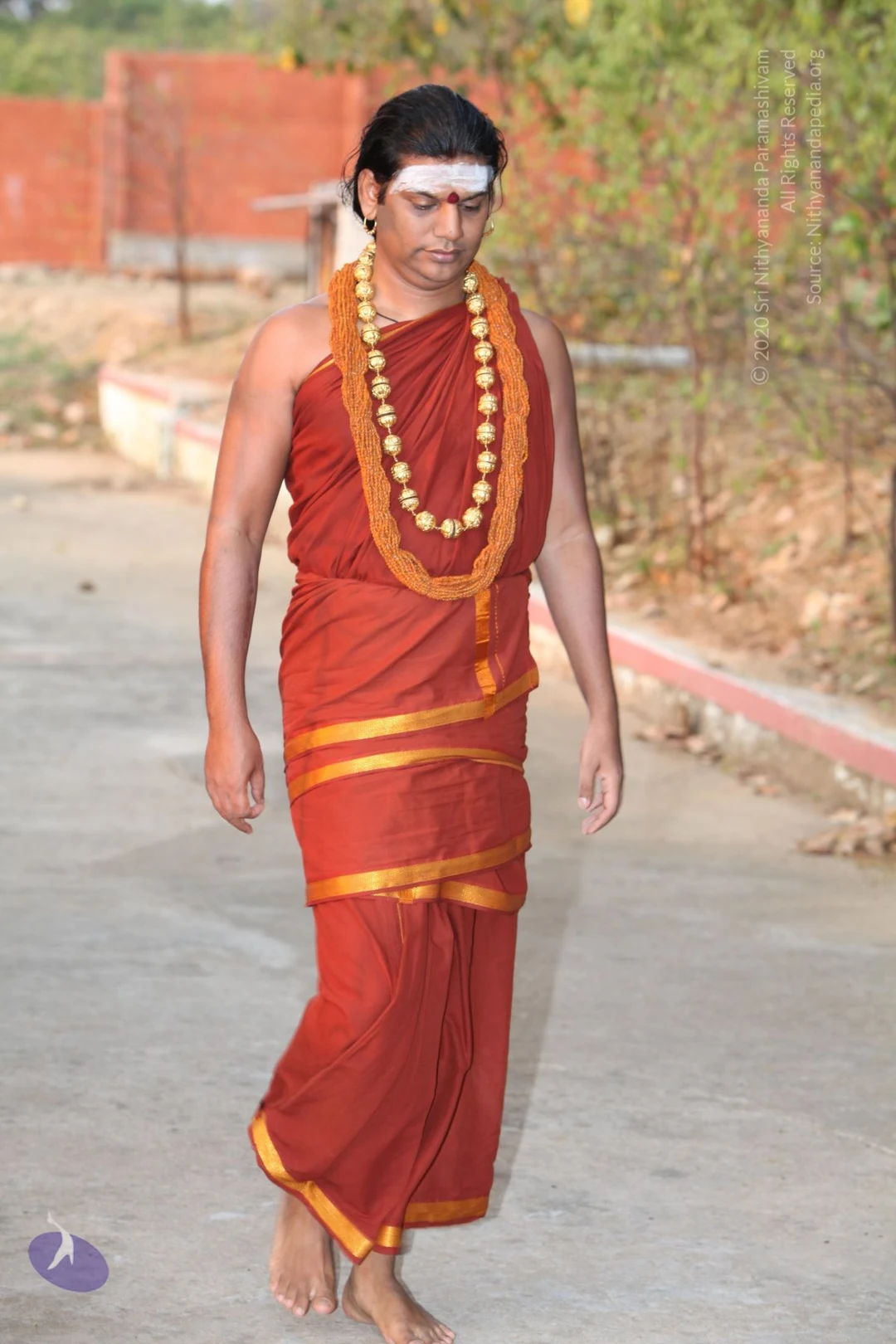
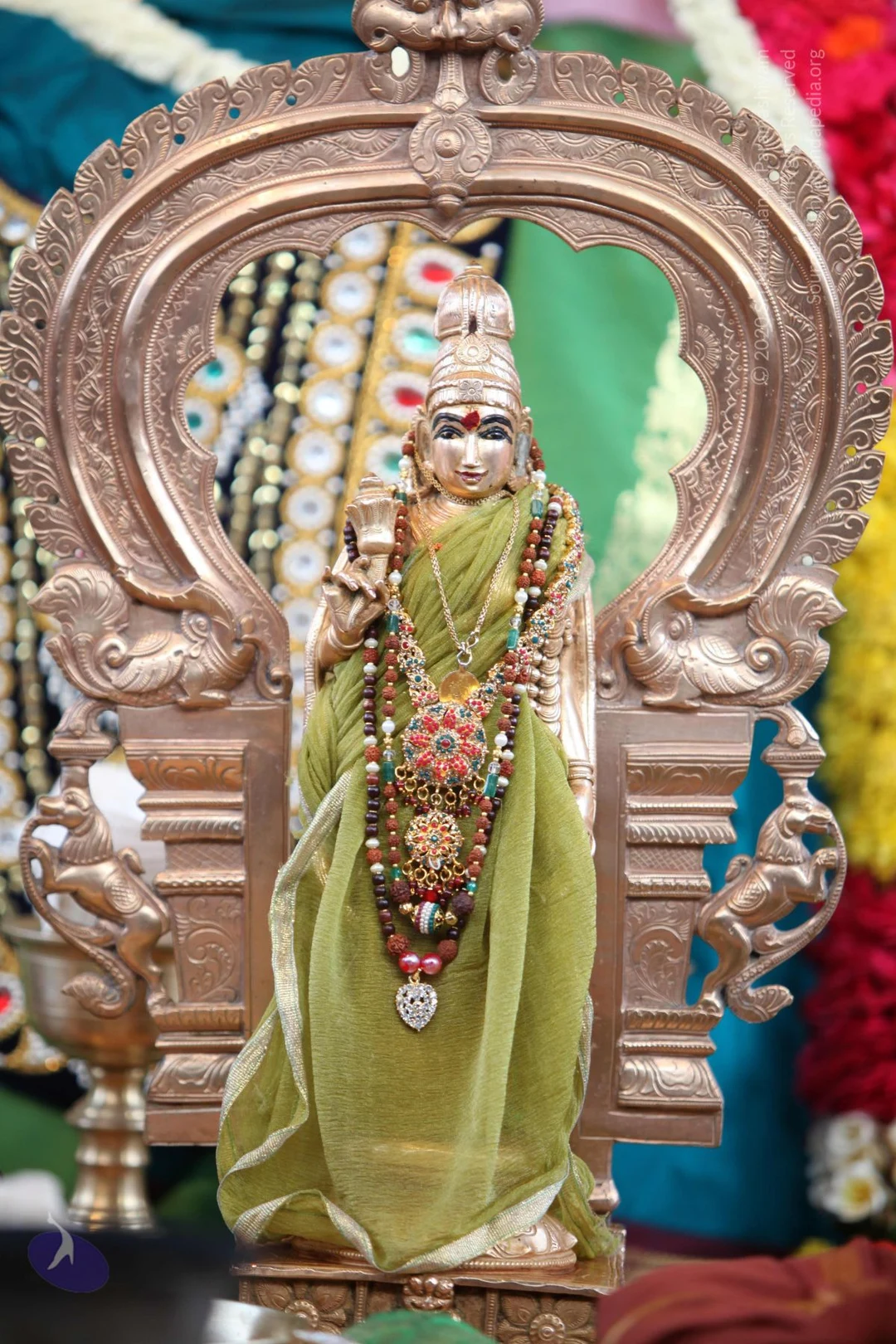
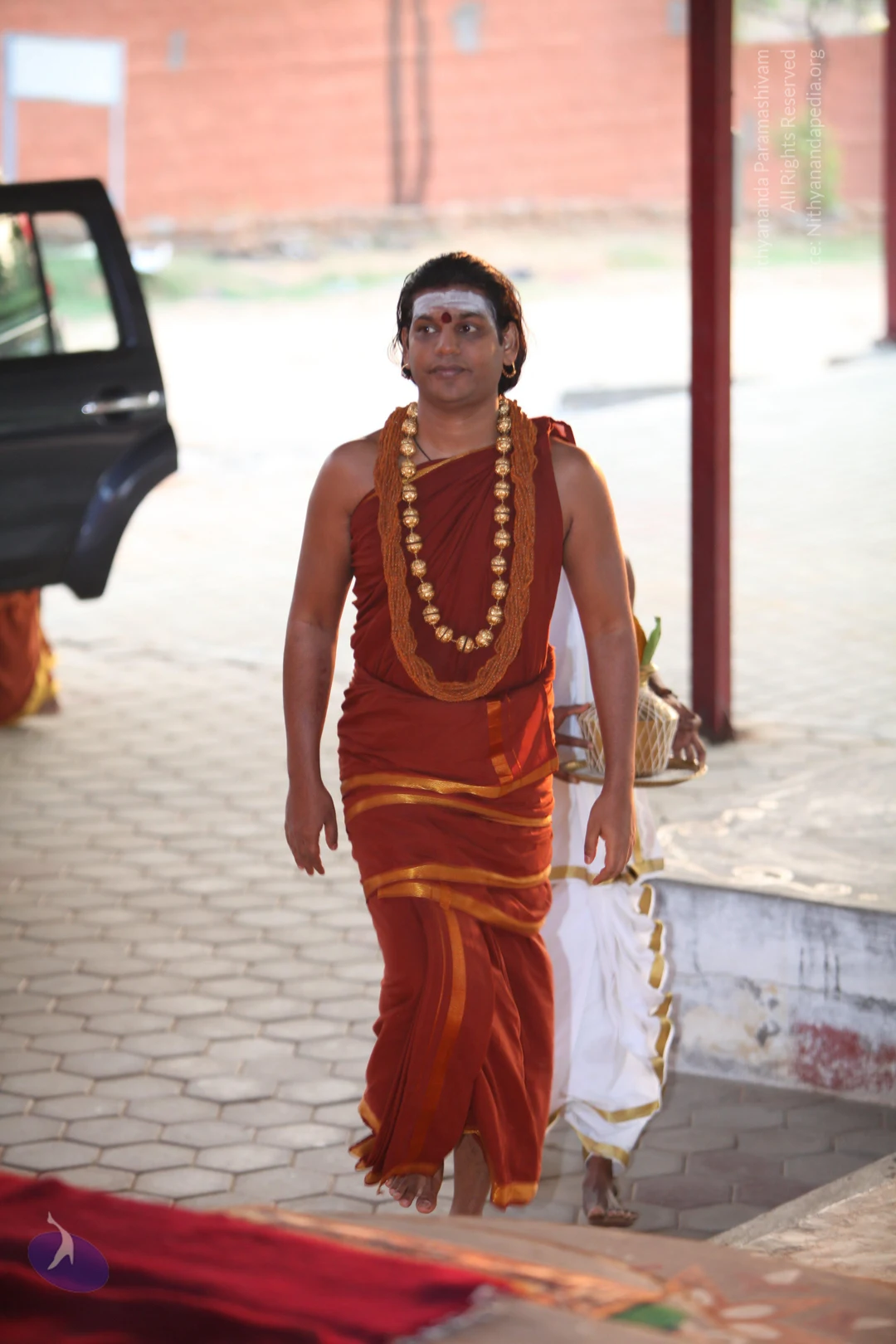
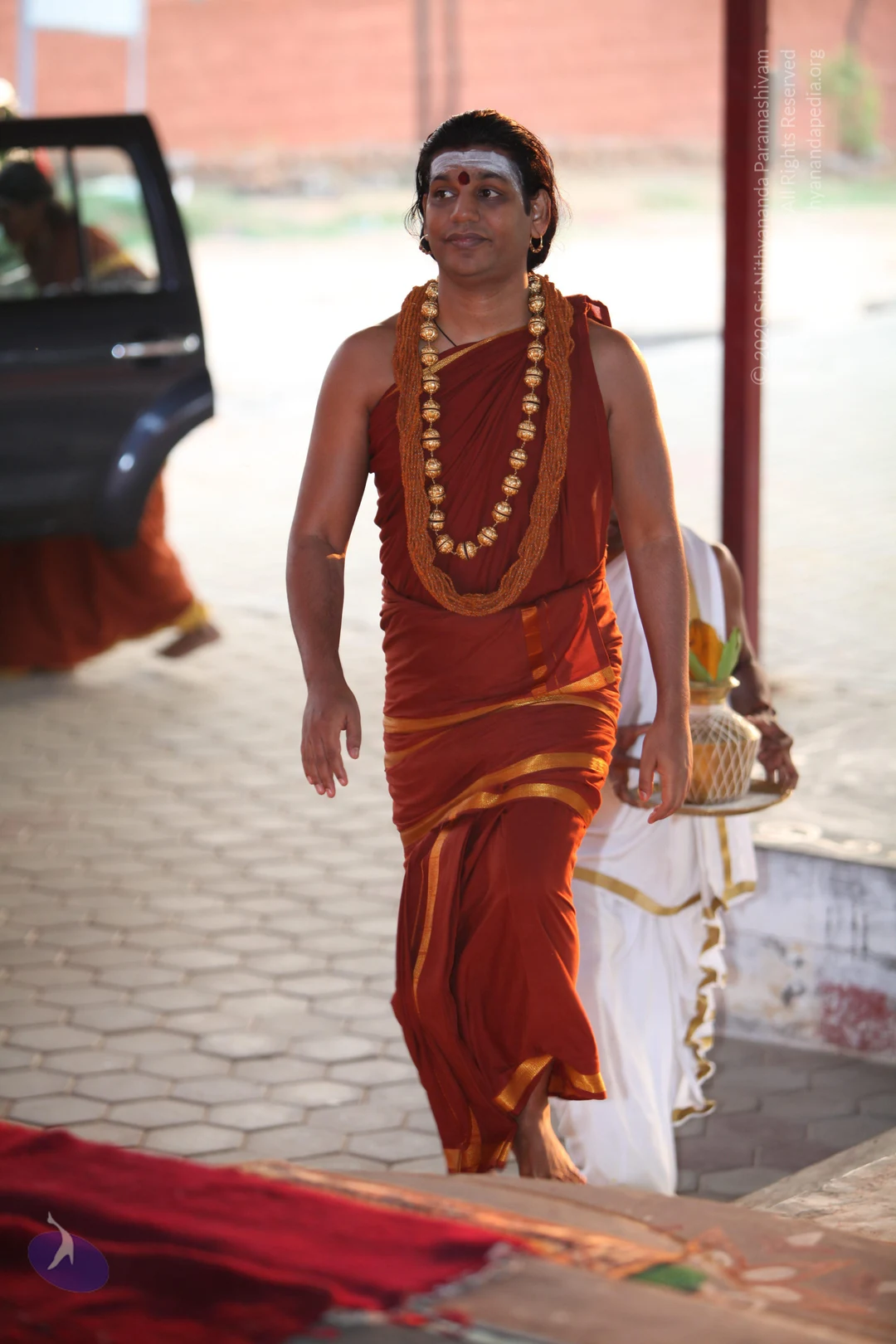
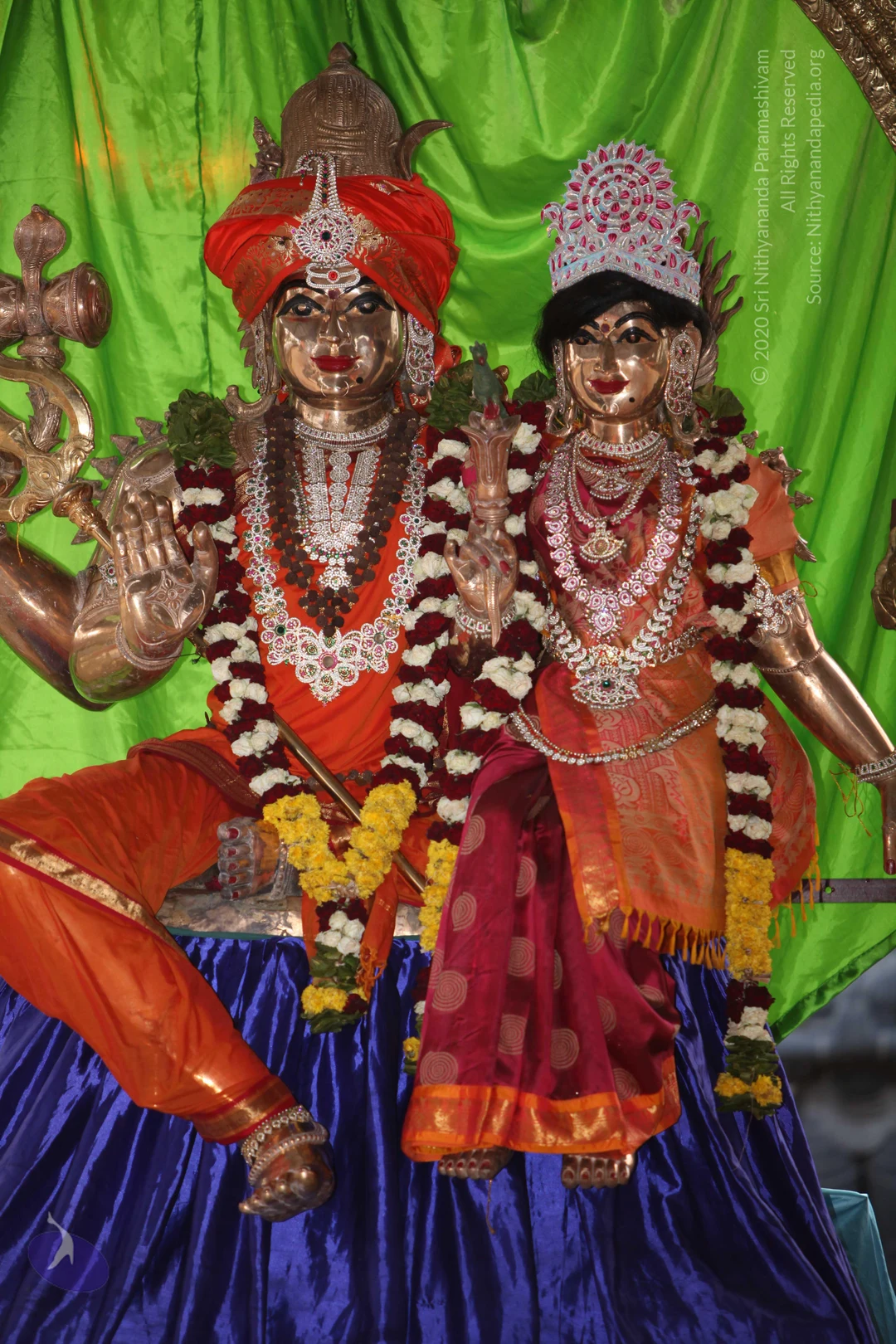
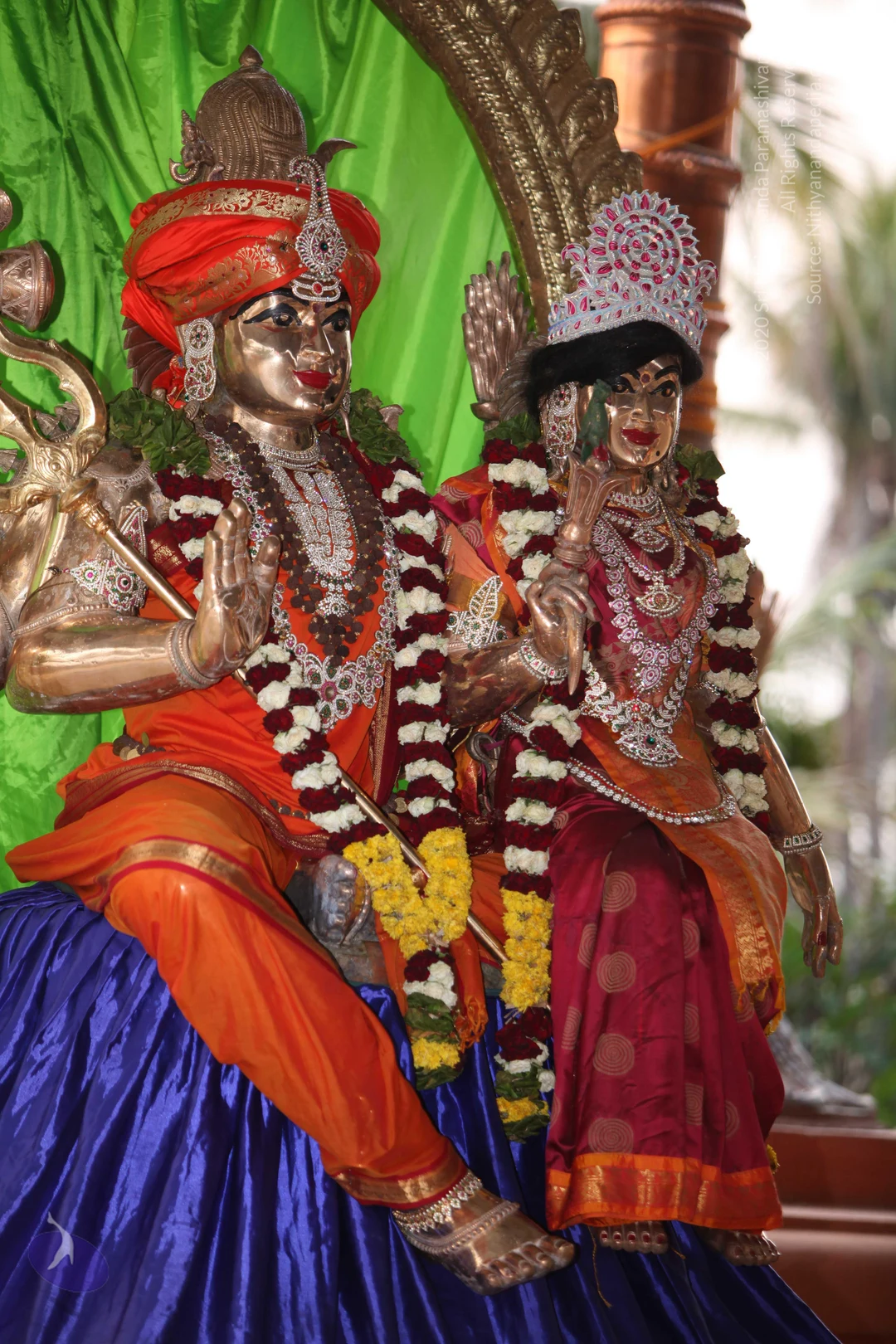
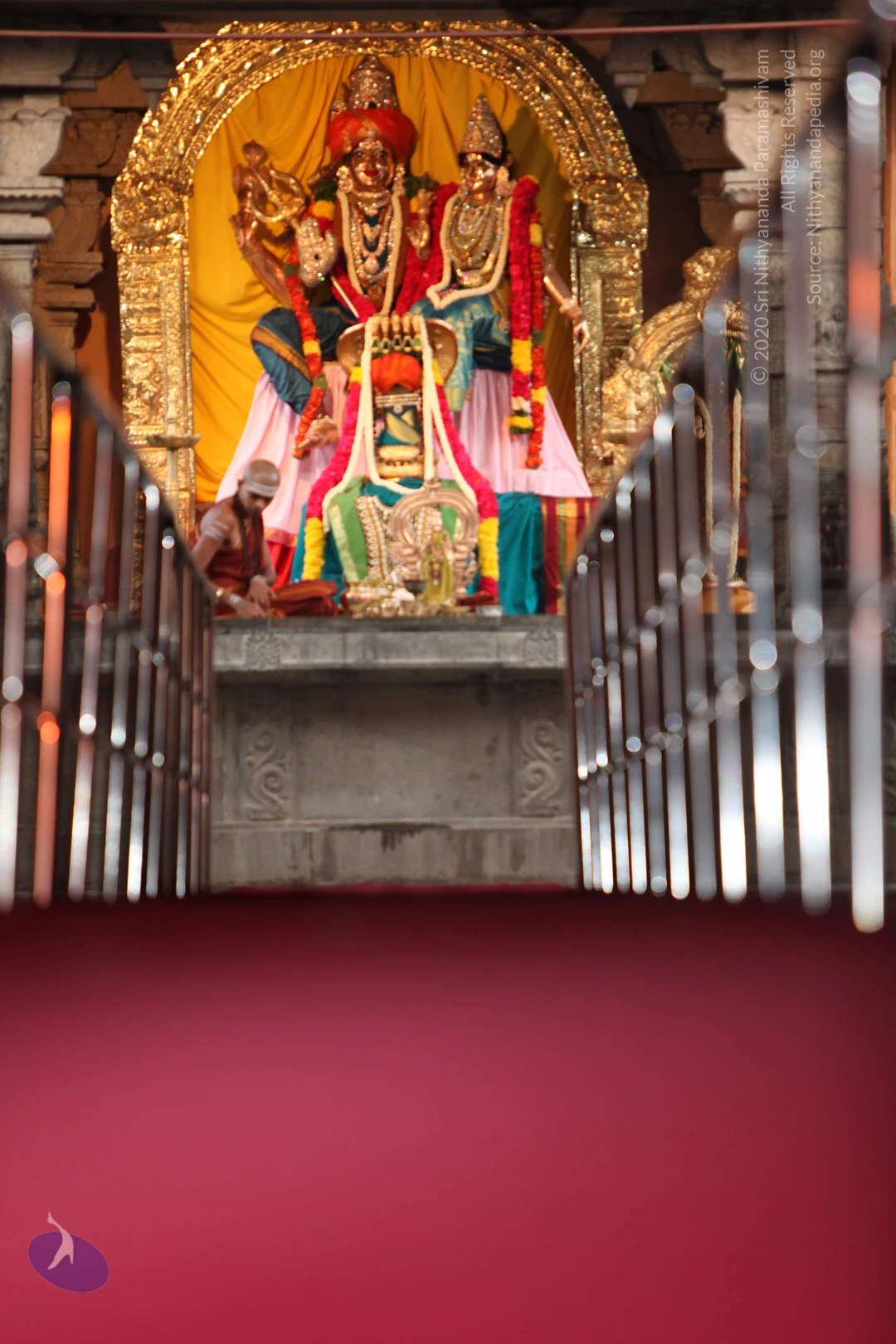
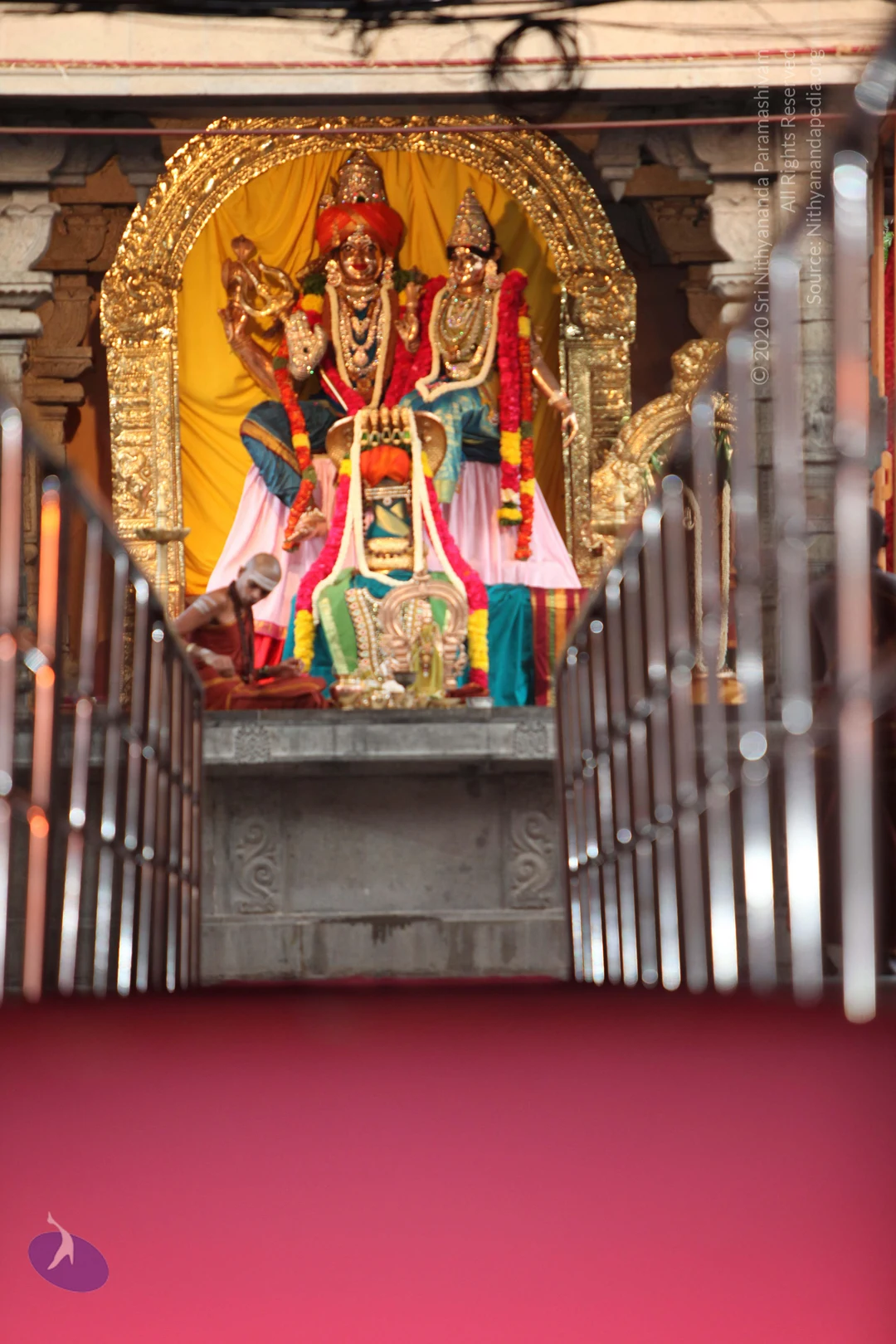
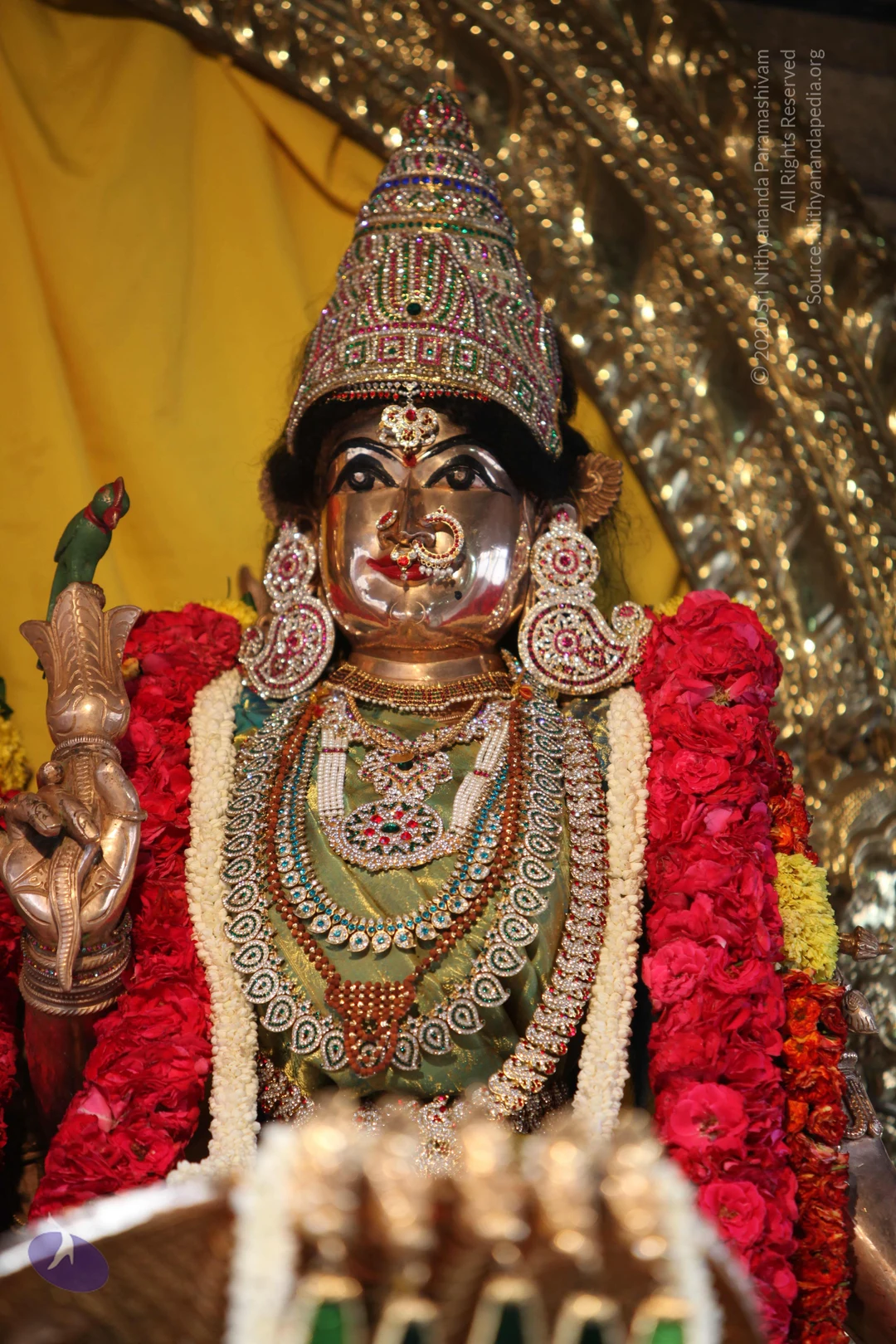
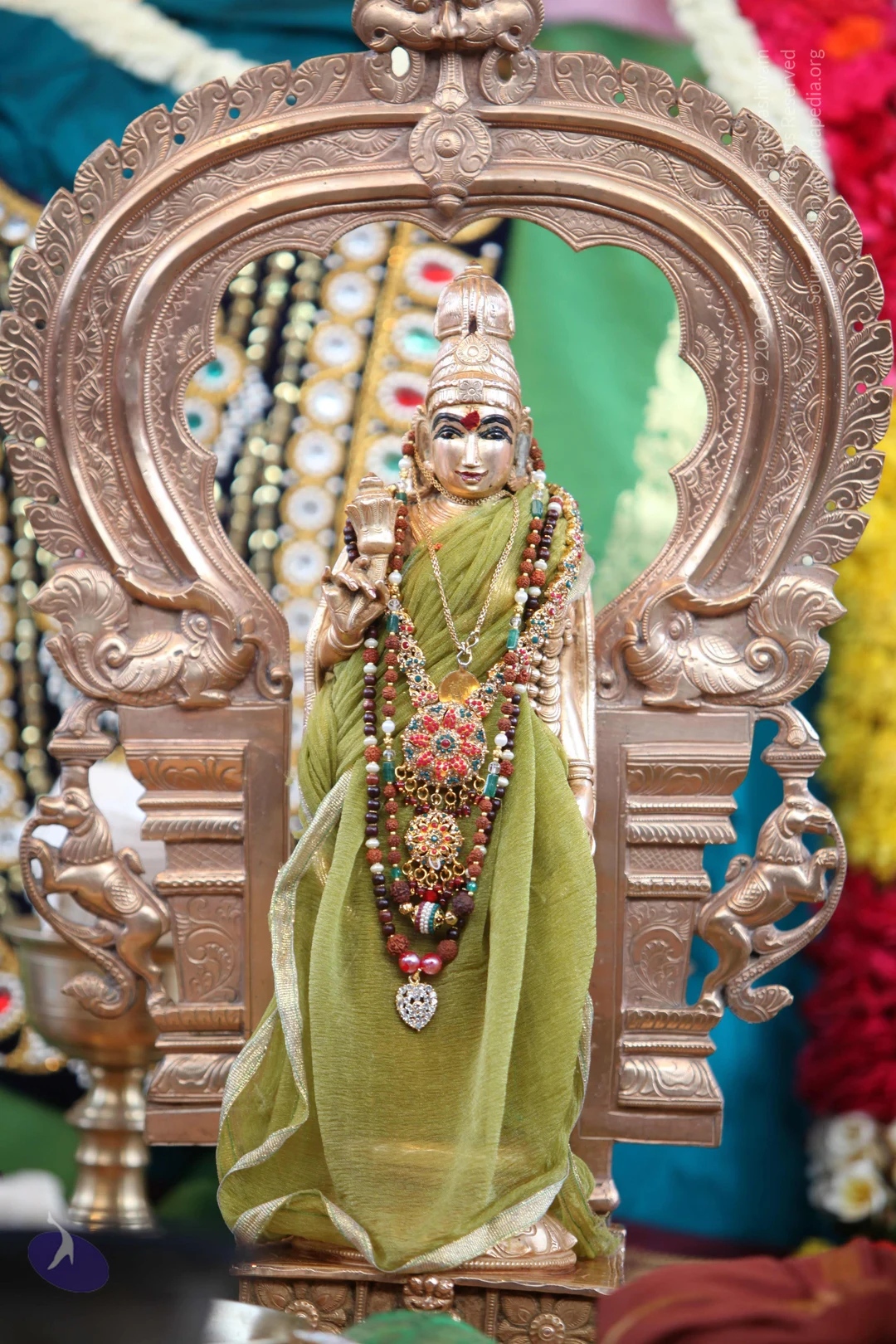
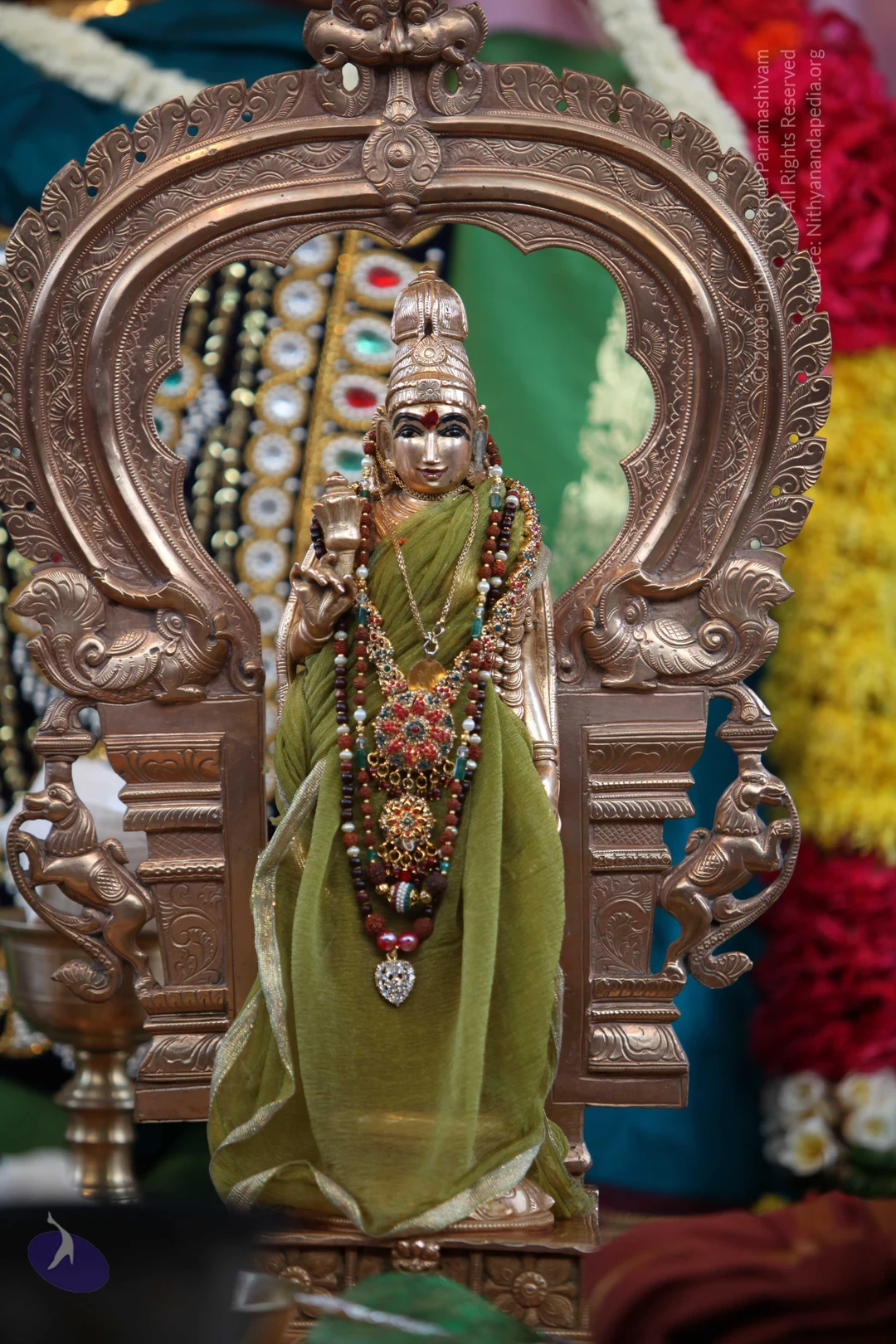
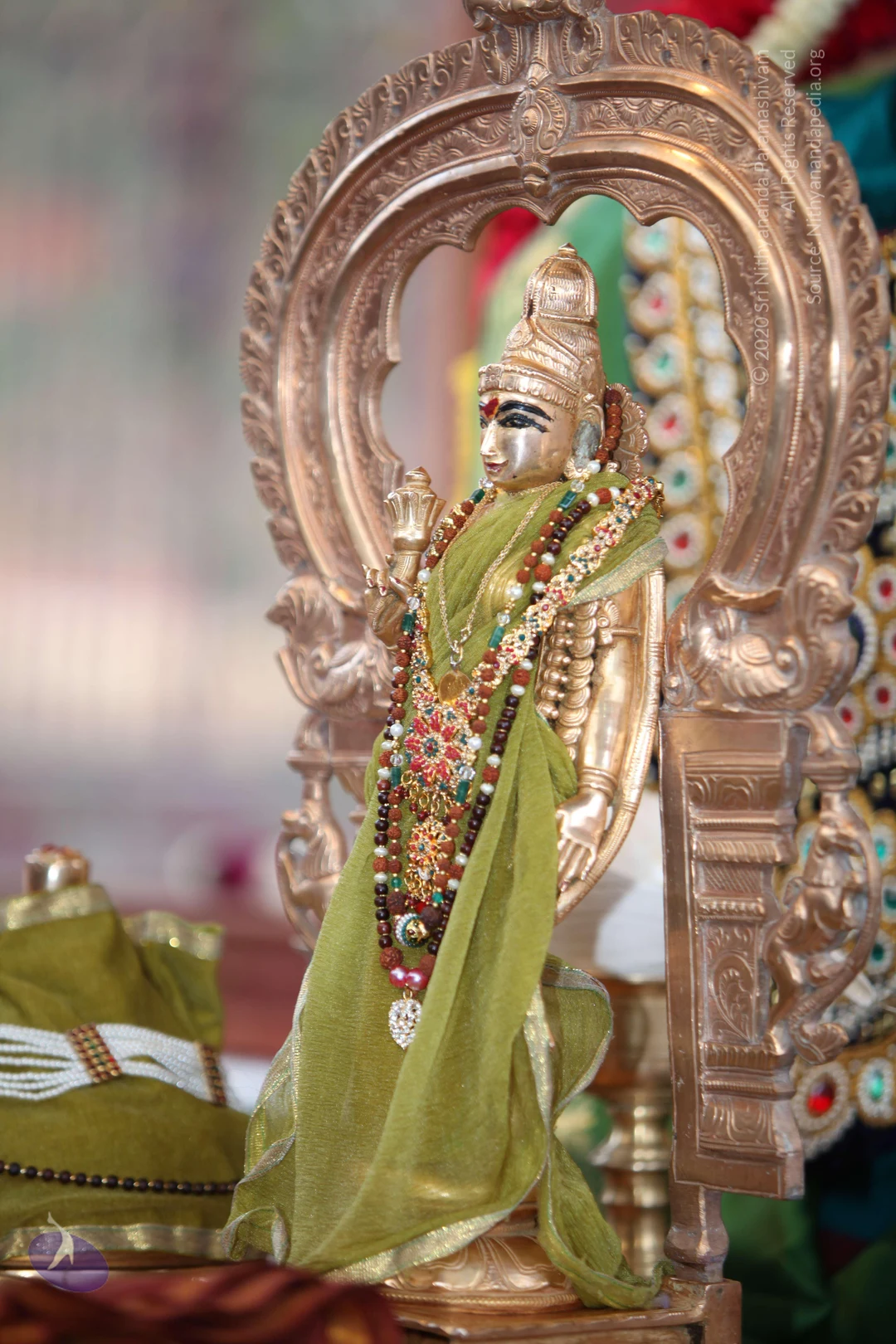
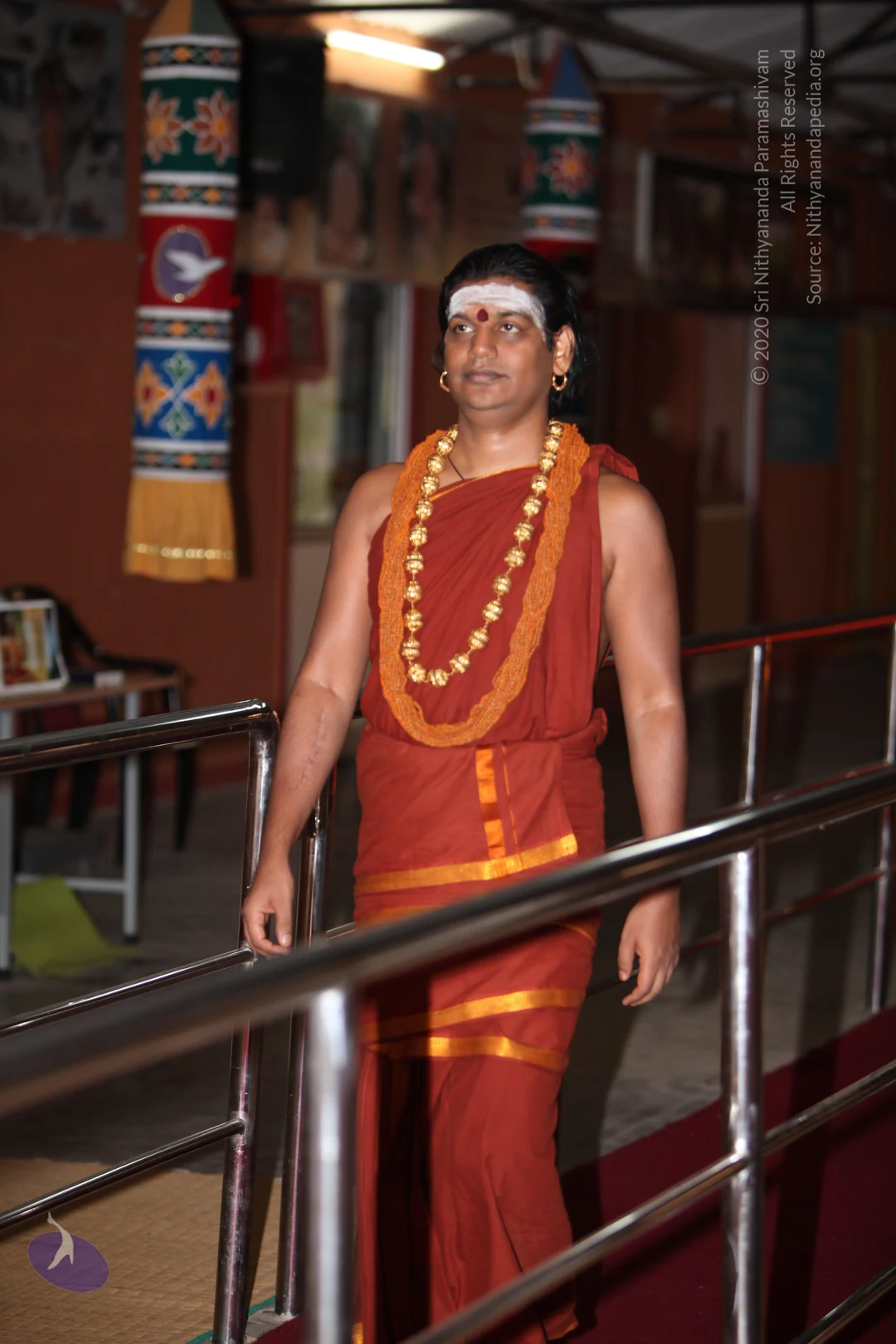
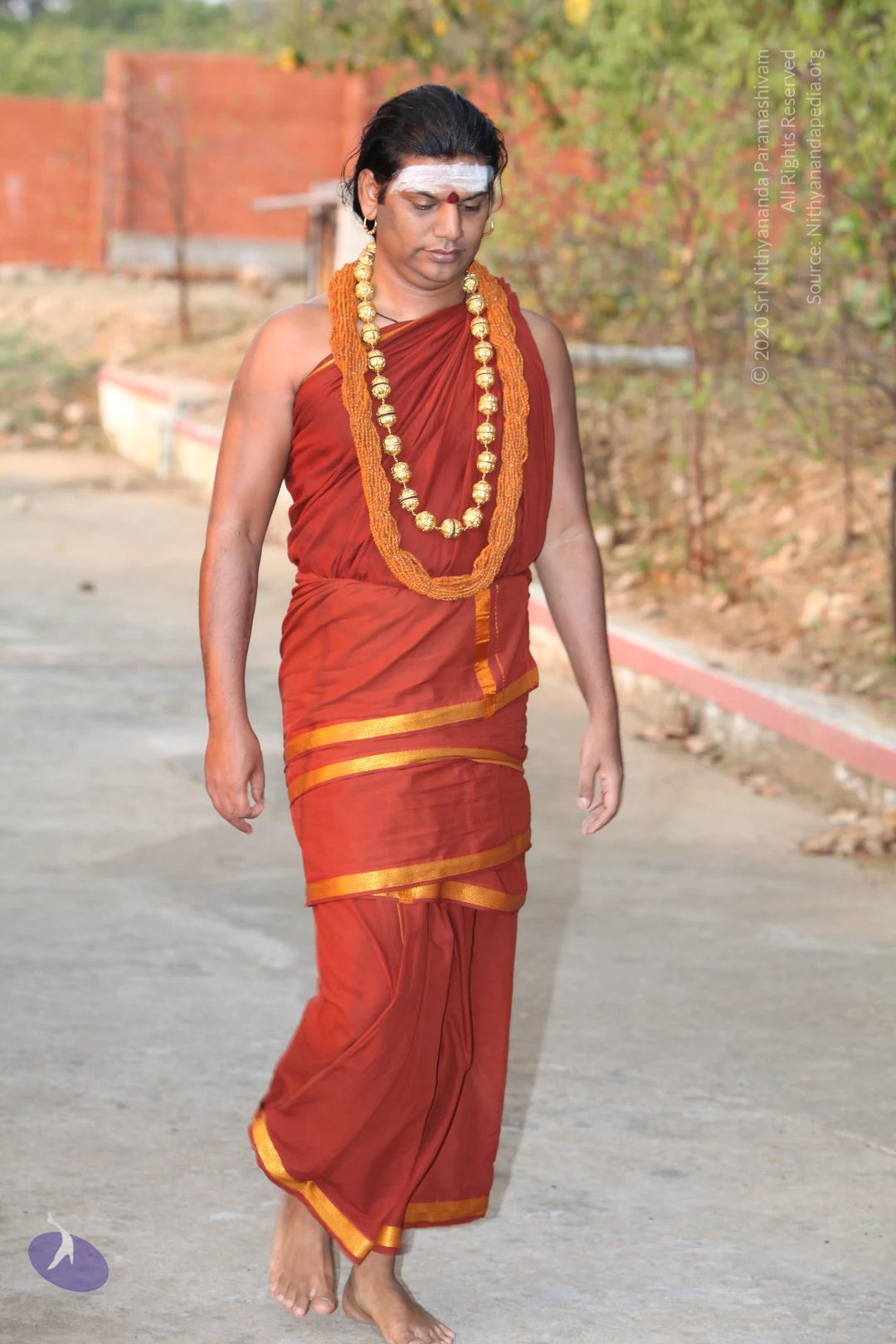
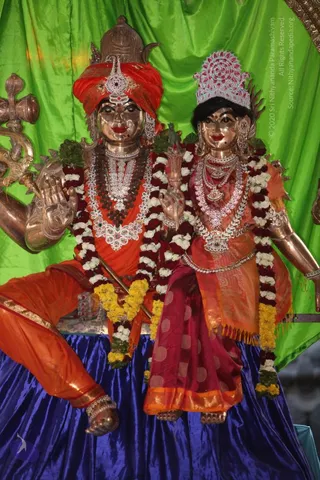
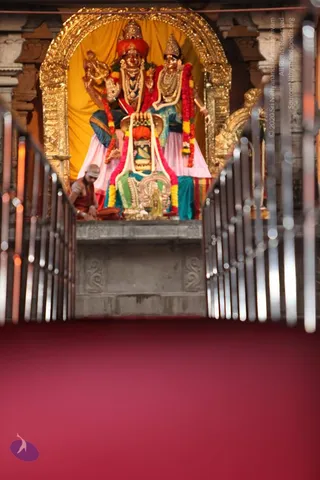
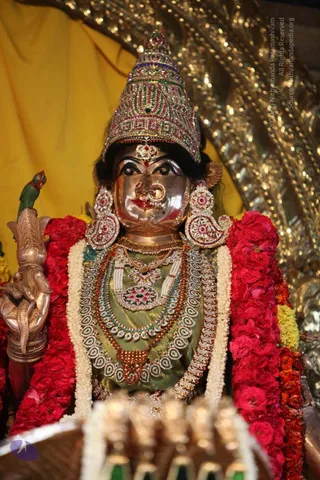
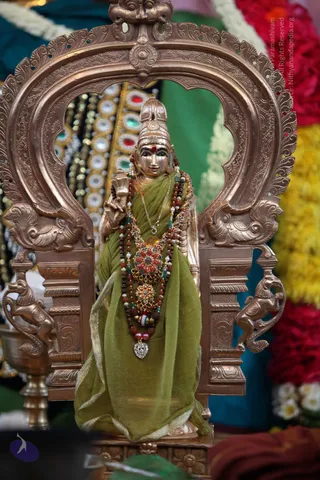
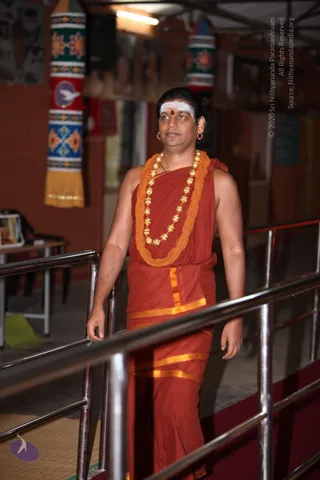
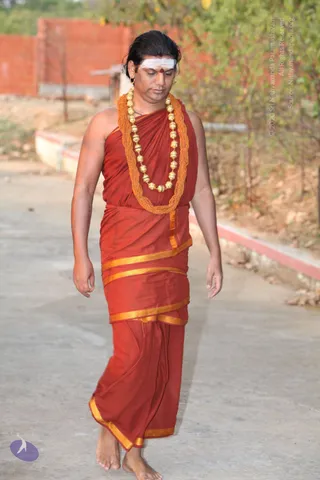
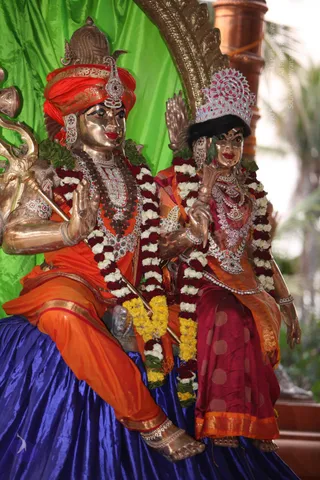
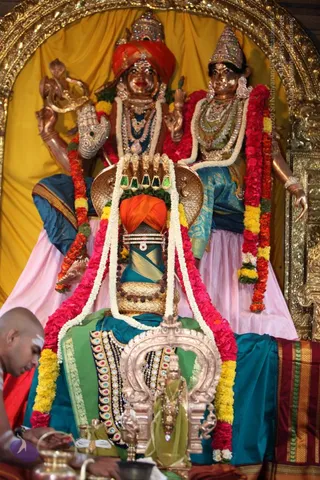
Two metal murti statues of a deity couple seated together on a blue satin-draped platform against a green curtain. The male figure wears a red-orange turban with a jeweled ornament, rudraksha beads, white and gem-studded necklaces, and an orange garment; he holds a trident-like staff and raises one hand in blessing. The female figure wears a silver jeweled crown, layered silver necklaces, and an orange and maroon sari, and holds a small object at her side. Both are adorned with red and white flower garlands with yellow marigold strands, and a green leaf sprig is visible. A small bird perches near the male figure's staff. These are statues, not living people, so the scene contains no physical people.Photograph of a golden-framed shrine with a yellow backdrop holding two seated deity murtis dressed in pink and teal garments, adorned with red and yellow flower garlands and gold jewellery. A crowned figure holds a trident-like weapon at left, and a small seated priest in an orange-red cloth sits at the lower left of the shrine dais beside a stone platform. Silver rods in the foreground frame the view, and a plain red carpet covers the floor below.A metal deity murti, polished copper-gold, is decorated with jewelled crown, large paisley earrings, a nose ring and layered necklaces with red and green stones. It wears a green silk garment and is garlanded with red roses and white jasmine strands, with yellow marigolds at the side. Its right hand holds a metal staff topped with a green parrot figure. A yellow cloth and gold-embossed backdrop frame the figure, and a blurred metal ritual vessel appears in the foreground. No people are visible.A bronze deity murti of a standing goddess stands within an ornate copper-coloured arched frame carved with scrollwork, pairs of mythical lions and floral motifs. The figure wears a green sheer draped sari with a gold border, a red kumkum mark on the forehead, layered rudraksha and bead malas, a jewelled gold pendant necklace and a heart-shaped pendant. Her right hand holds a small object near the chest and the left hand hangs at her side. Marigold garlands in yellow and red and a teal cloth surround the frame. Only the statue is visible, with no physical people present.A man in a rust-red sleeveless sannyasi-style wrap with orange-gold borders stands on a red-carpeted ramp beside a stainless-steel handrail. He wears a long orange shawl layered over a double strand of large gold beads, a white forehead band with a red dot, and gold hoop earrings, and gazes off to the side. Behind him hang red, green and yellow decorative banners with floral and geometric patterns, and a framed picture sits on a table to the left.Photograph of a barefoot man walking along a concrete path past a red brick wall and green shrubs. He wears a rust-red draped robe with gold-bordered edges, a long orange beaded necklace and a heavy gold bead mala, a white band with a red dot on the forehead, and small earrings.

Temple

8 photosSource gallery
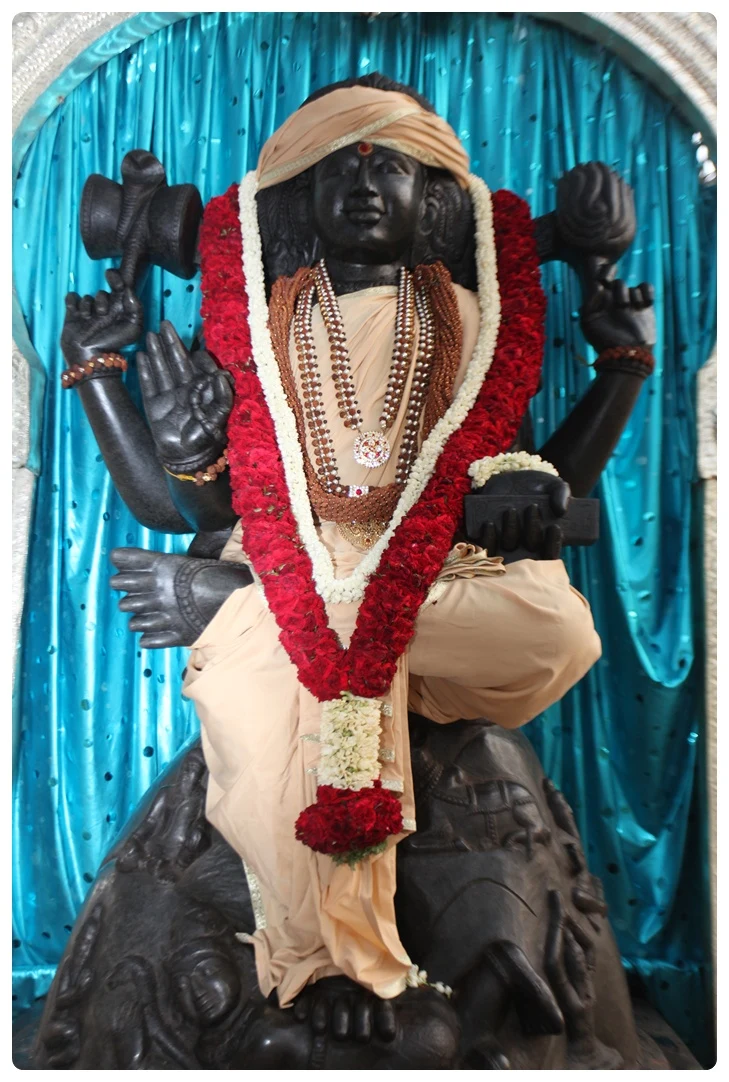
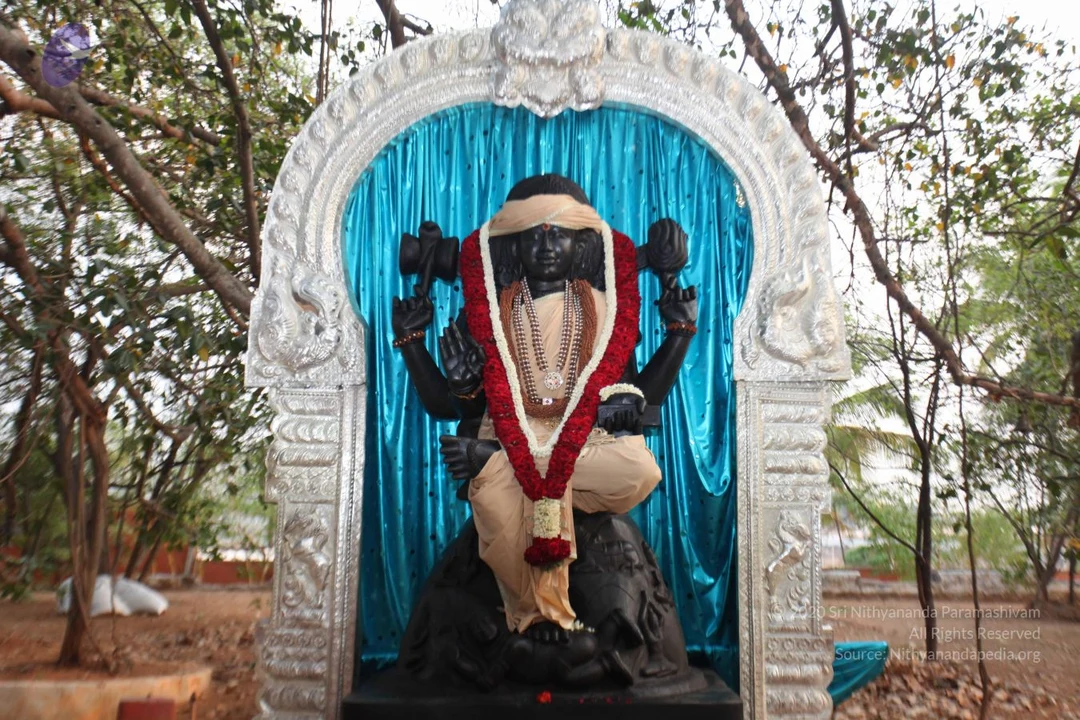
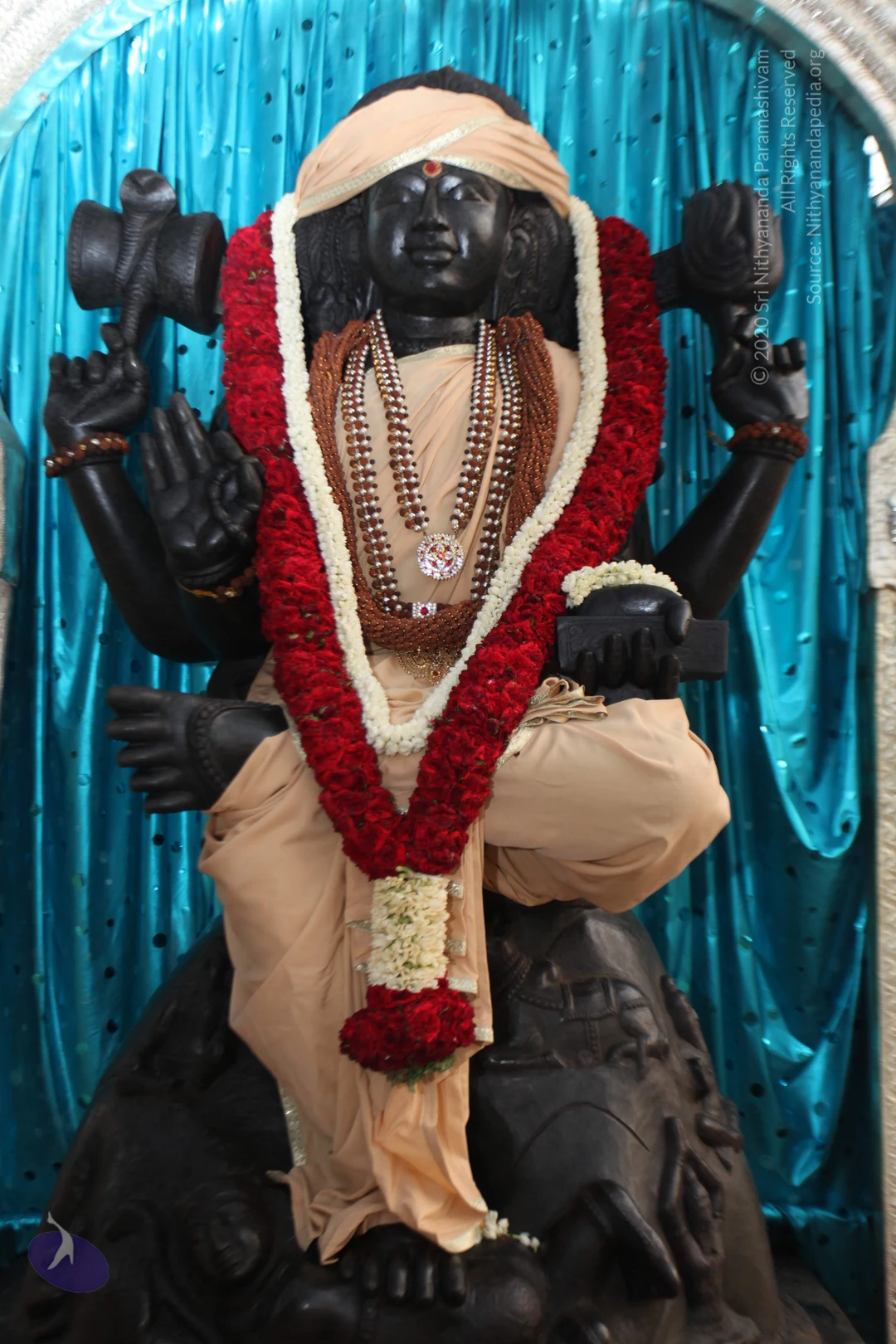
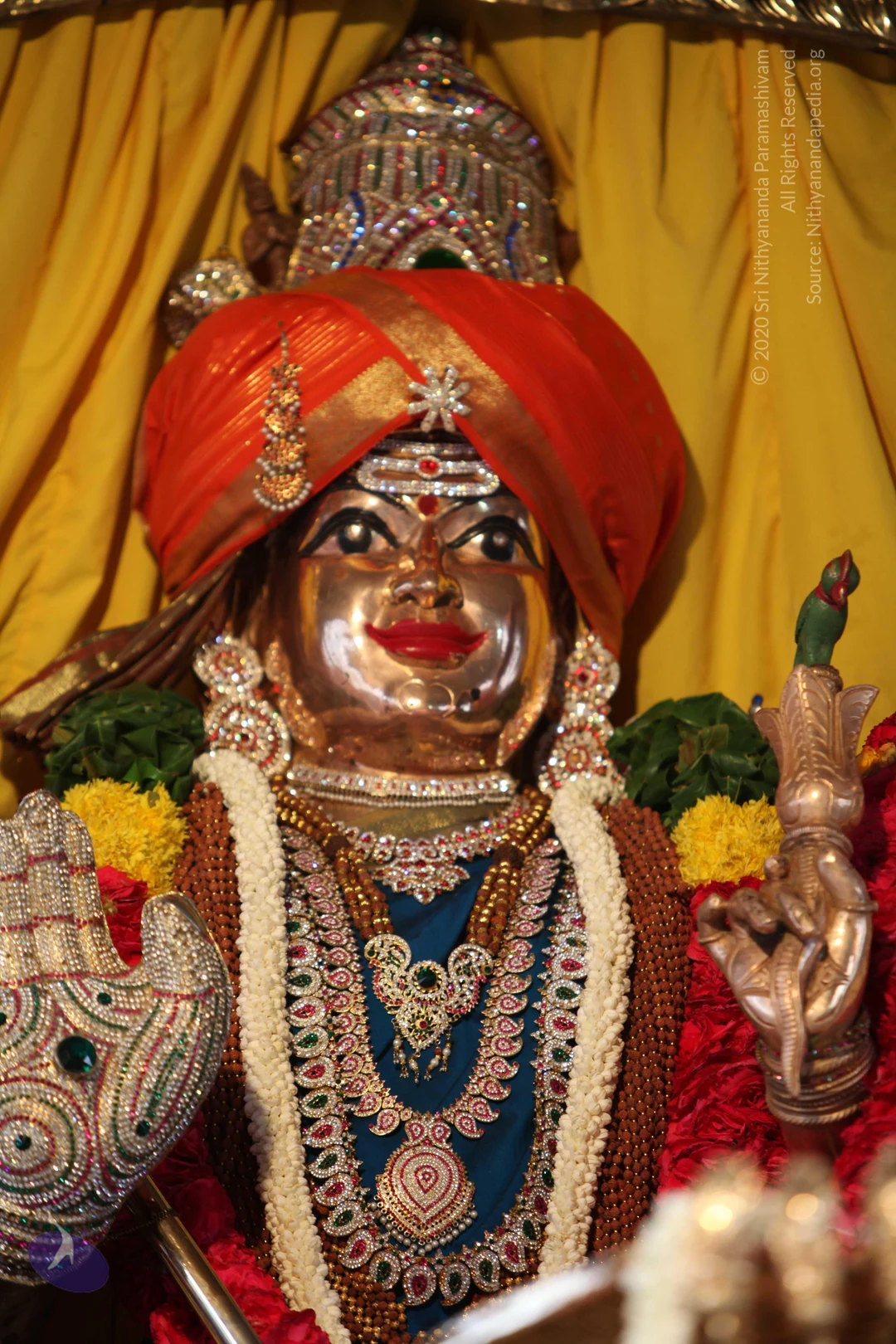
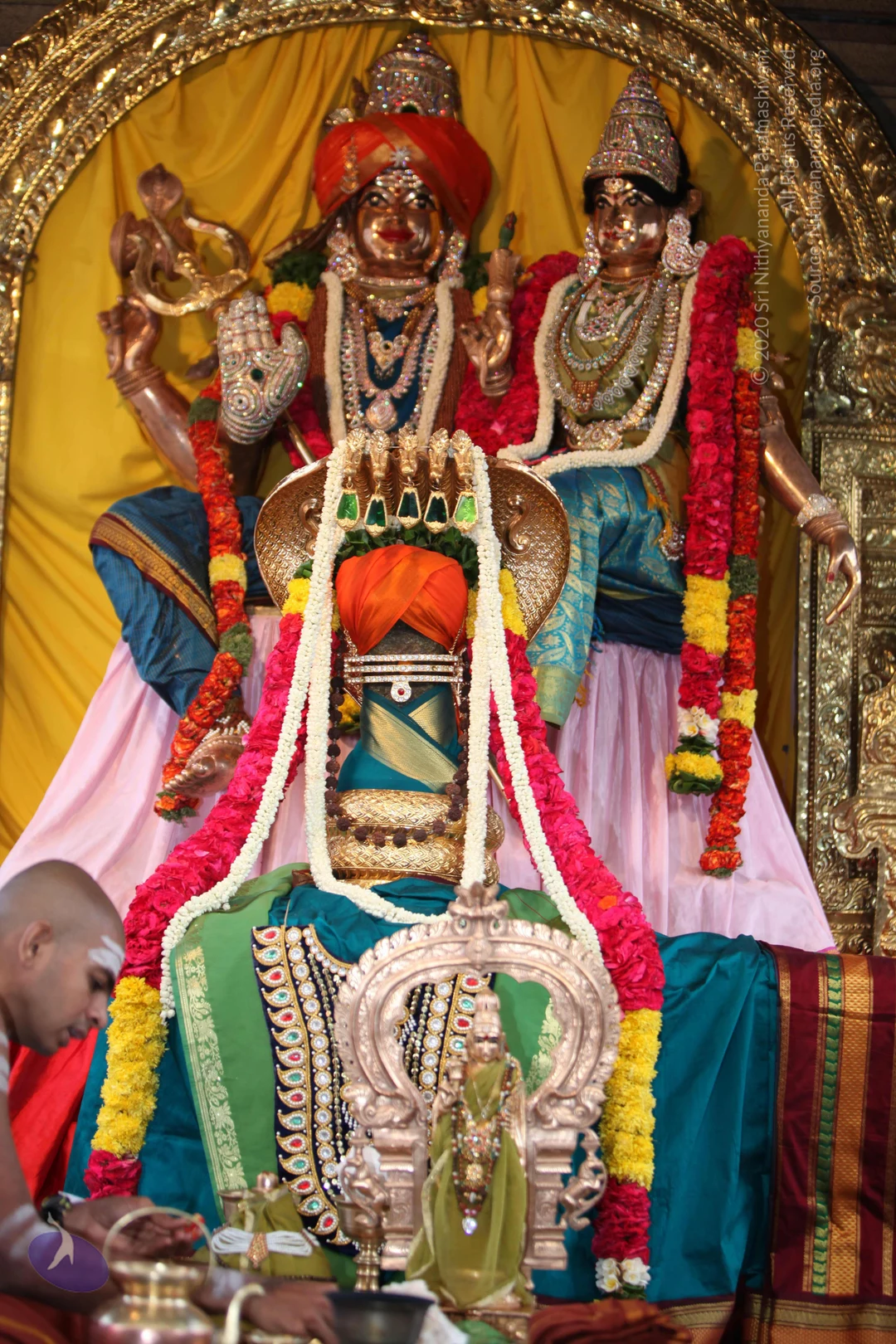
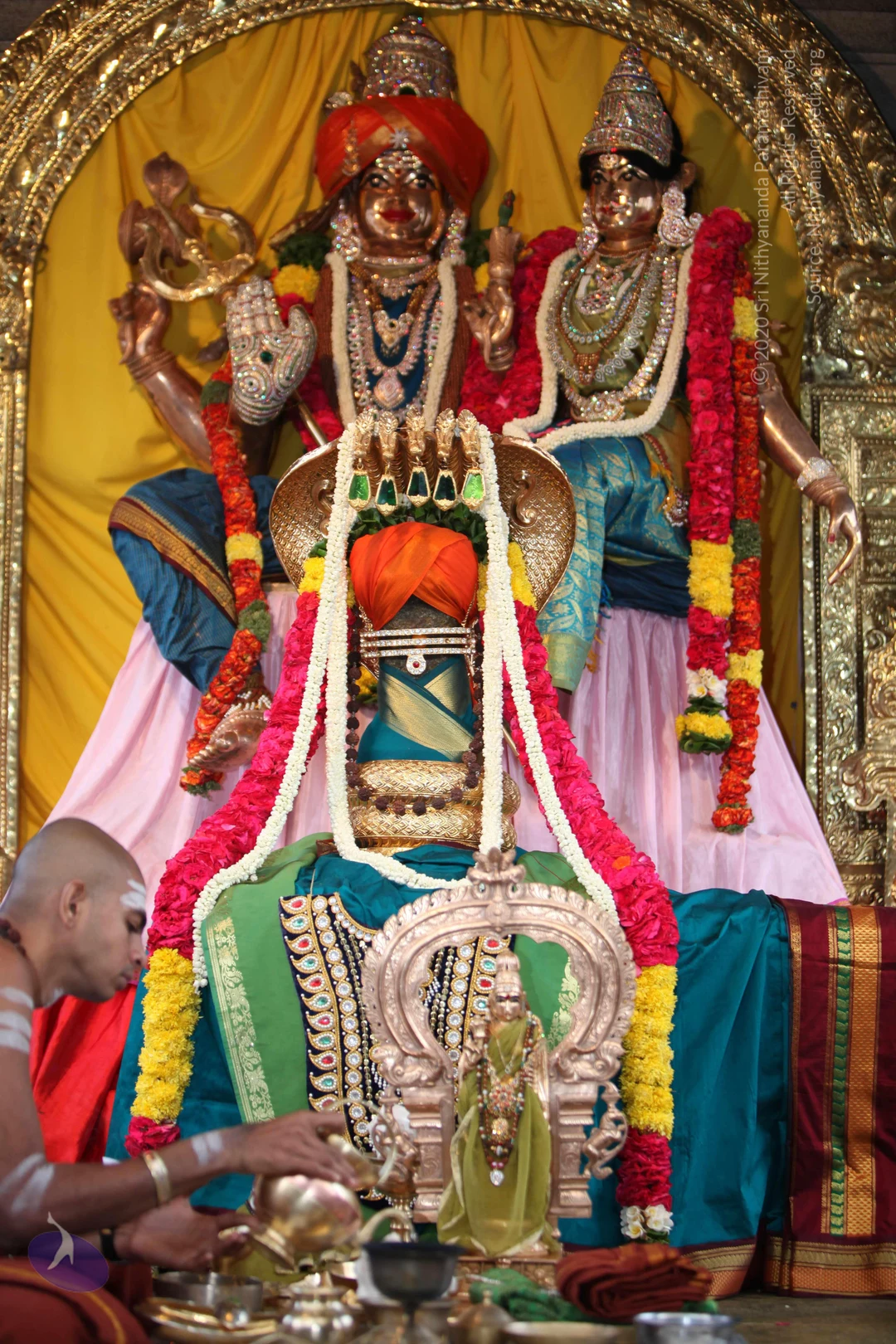
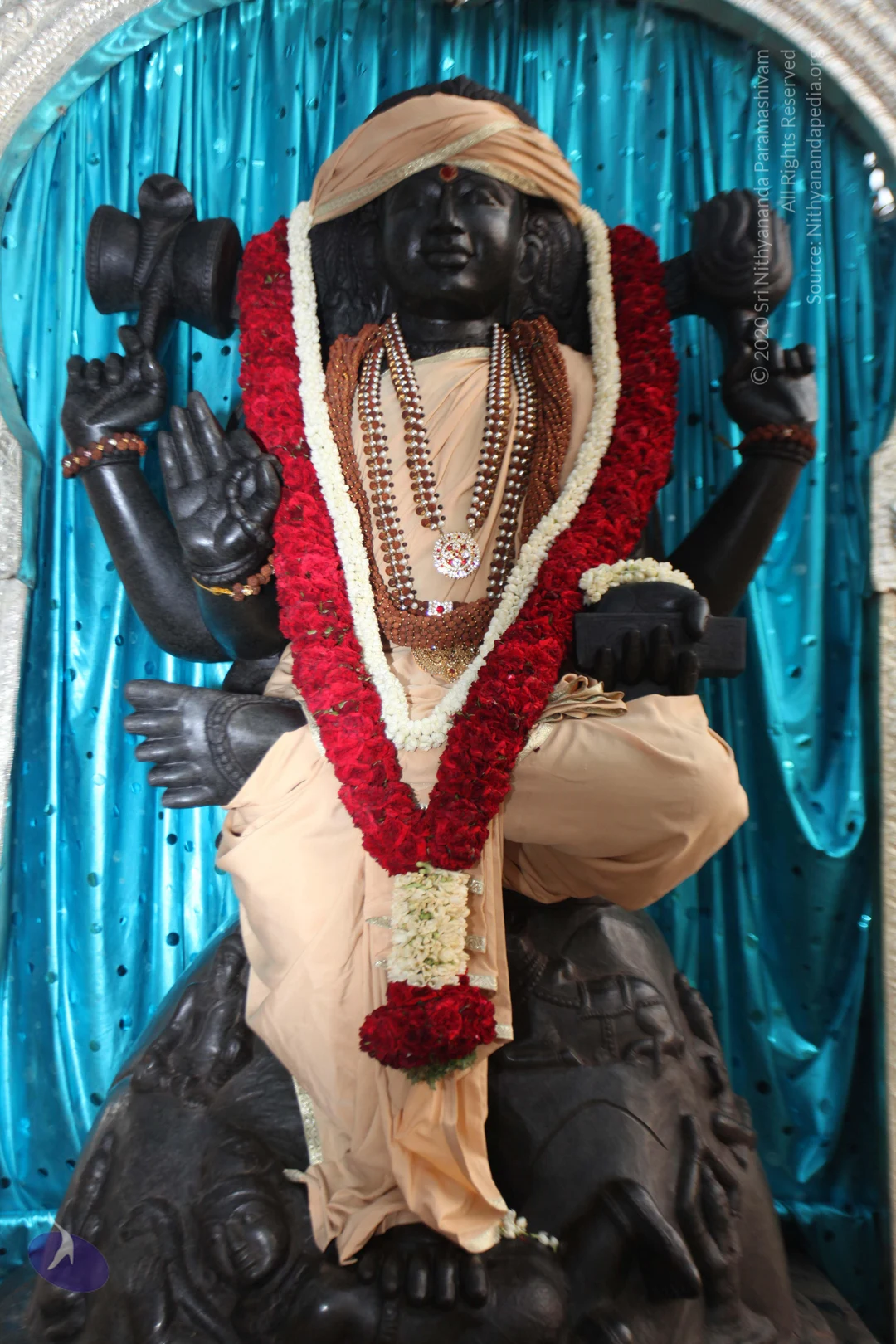
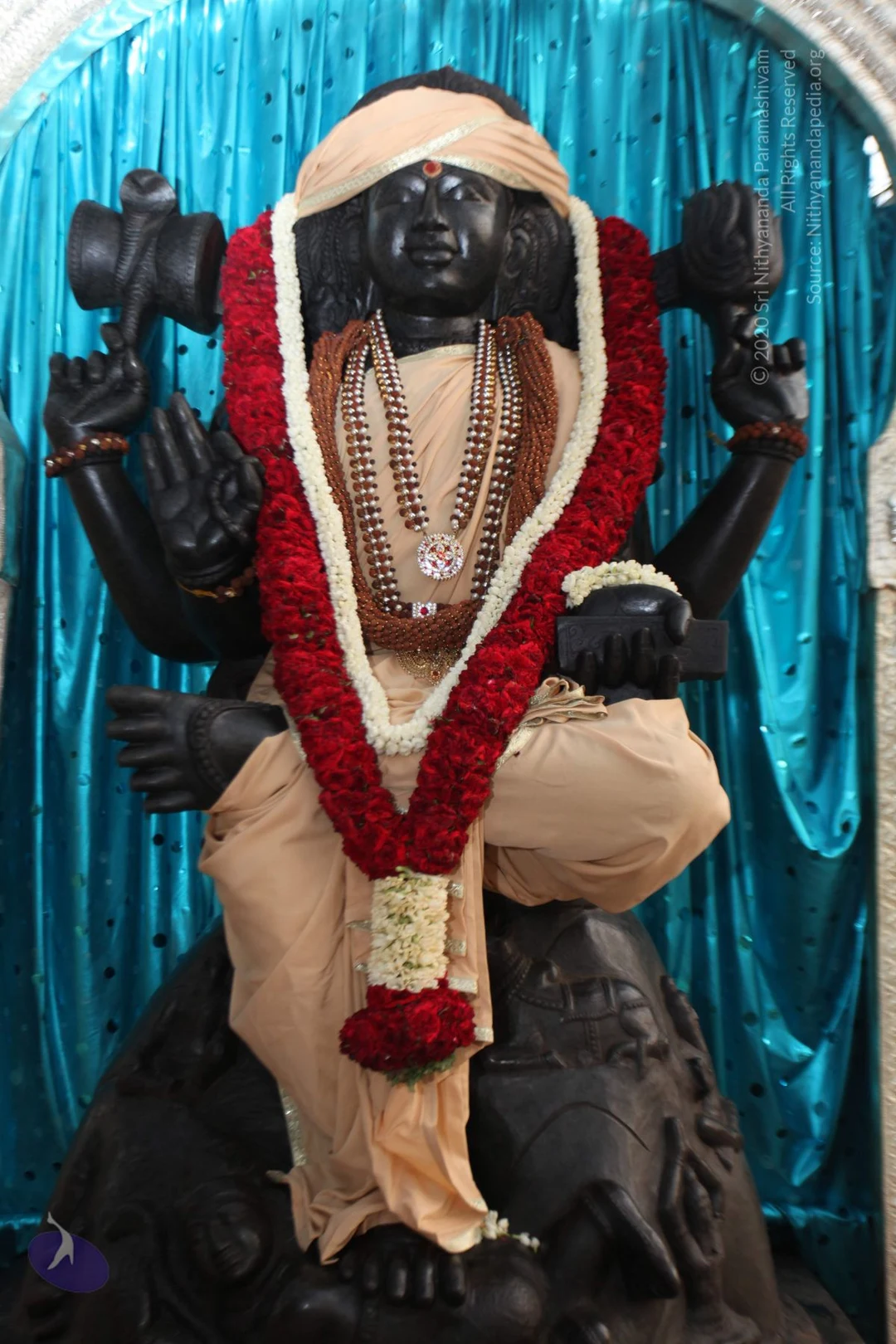
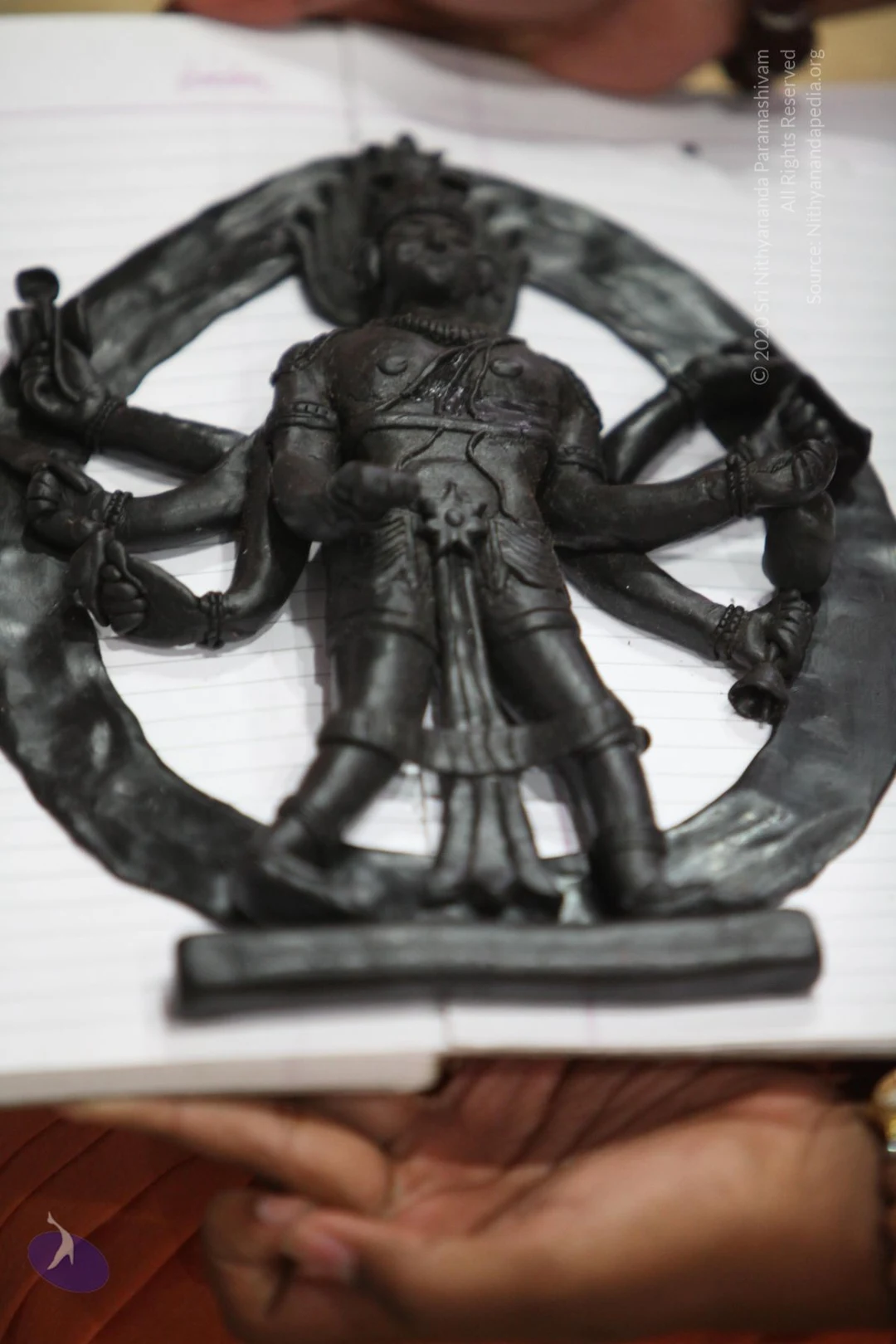
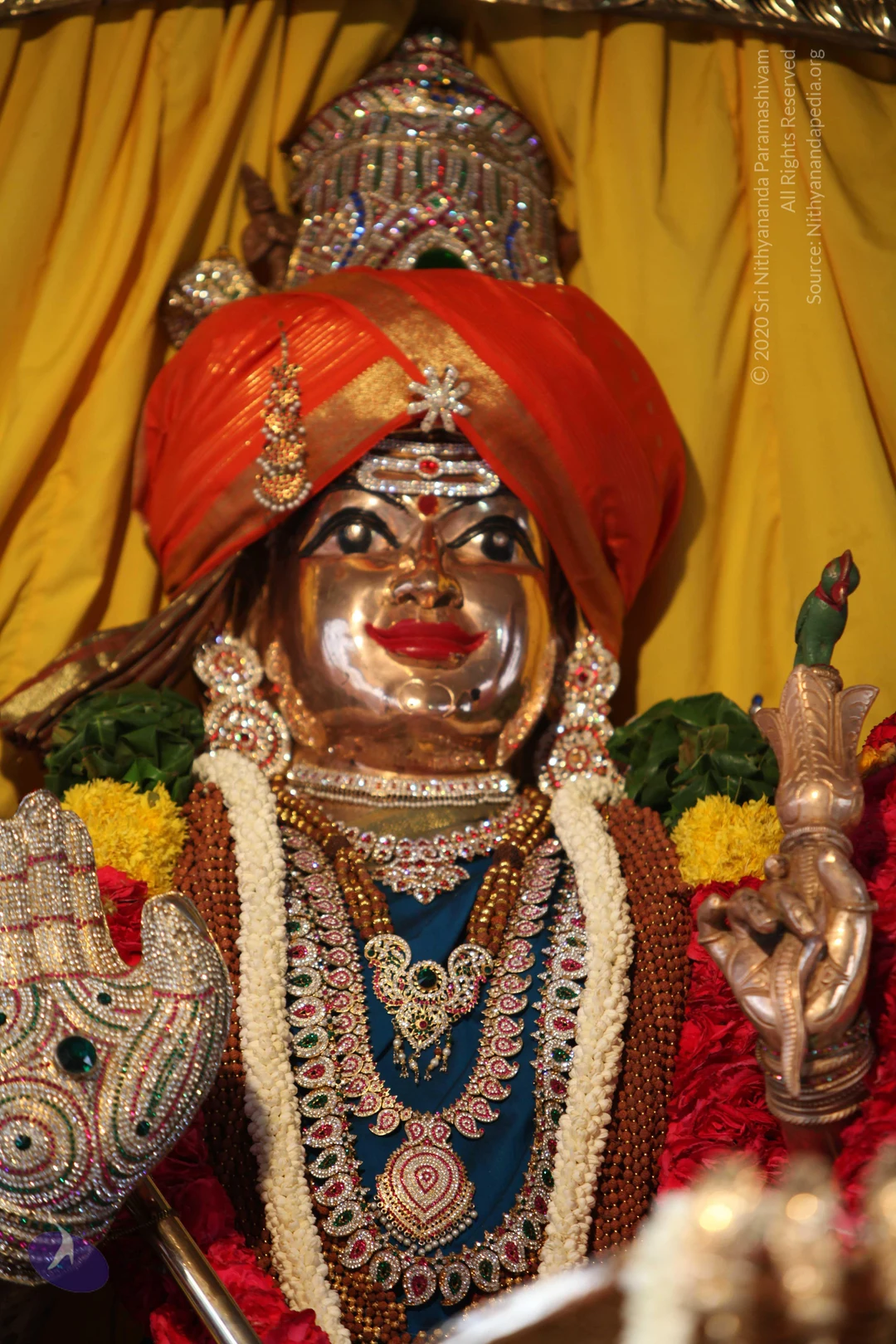
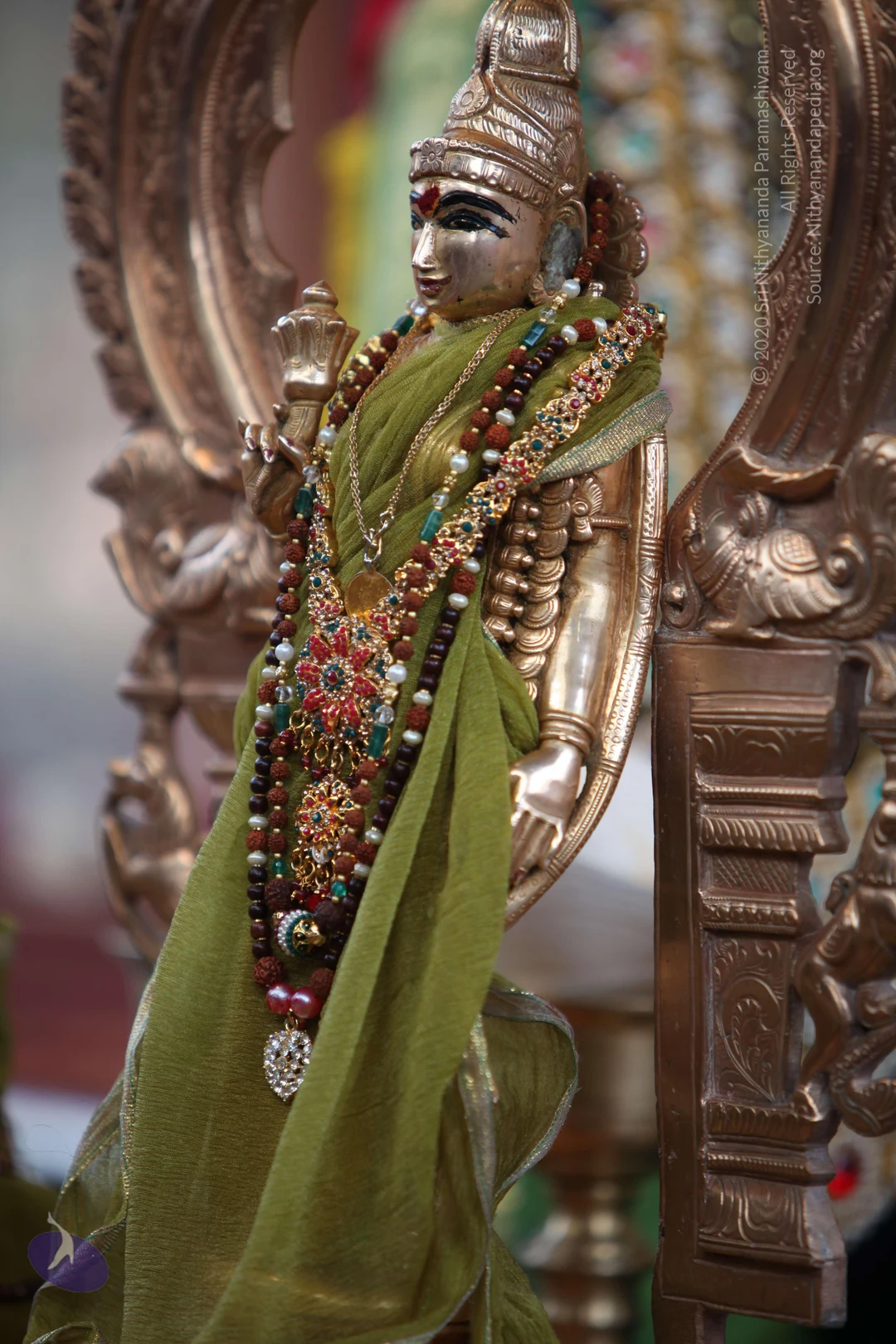
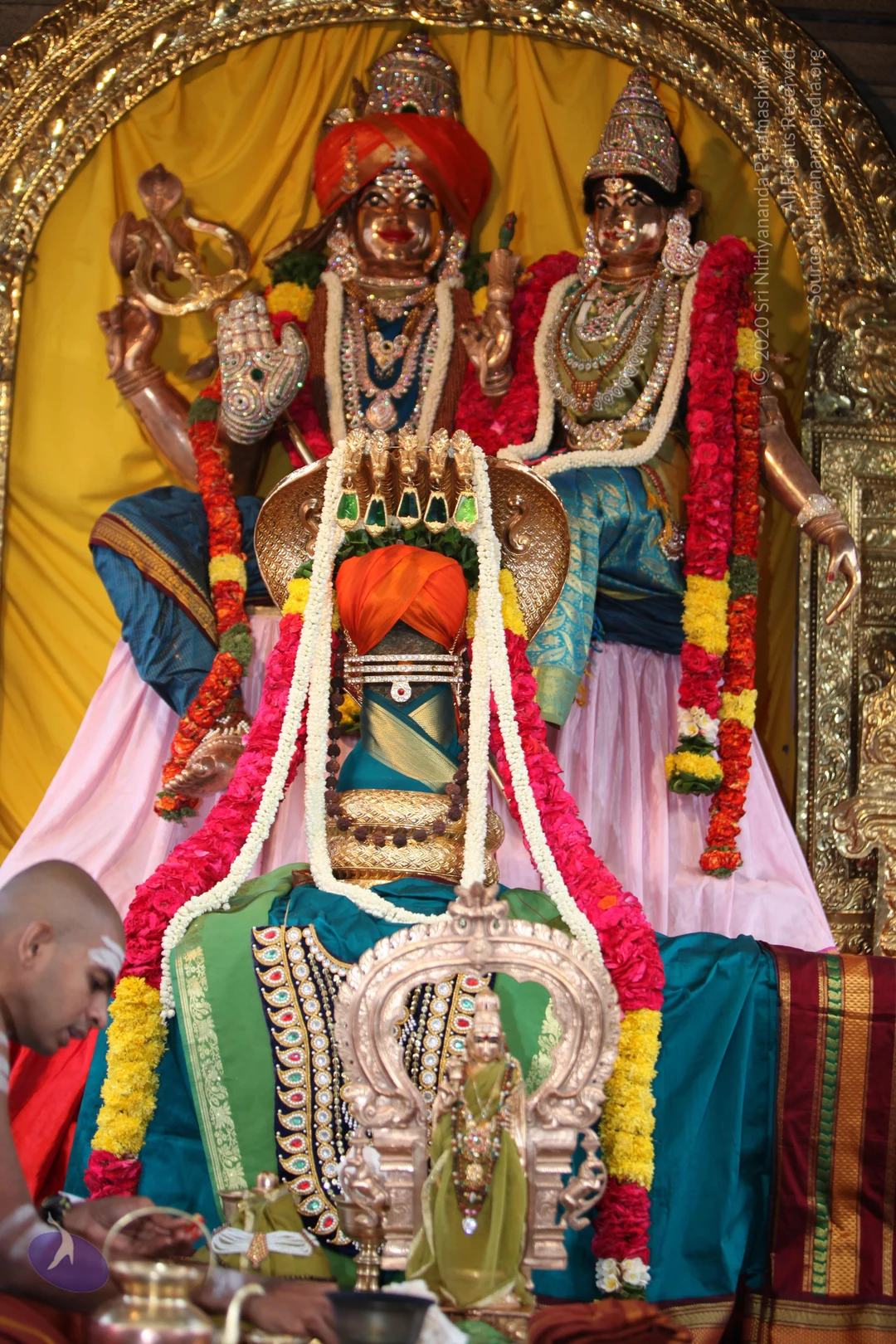
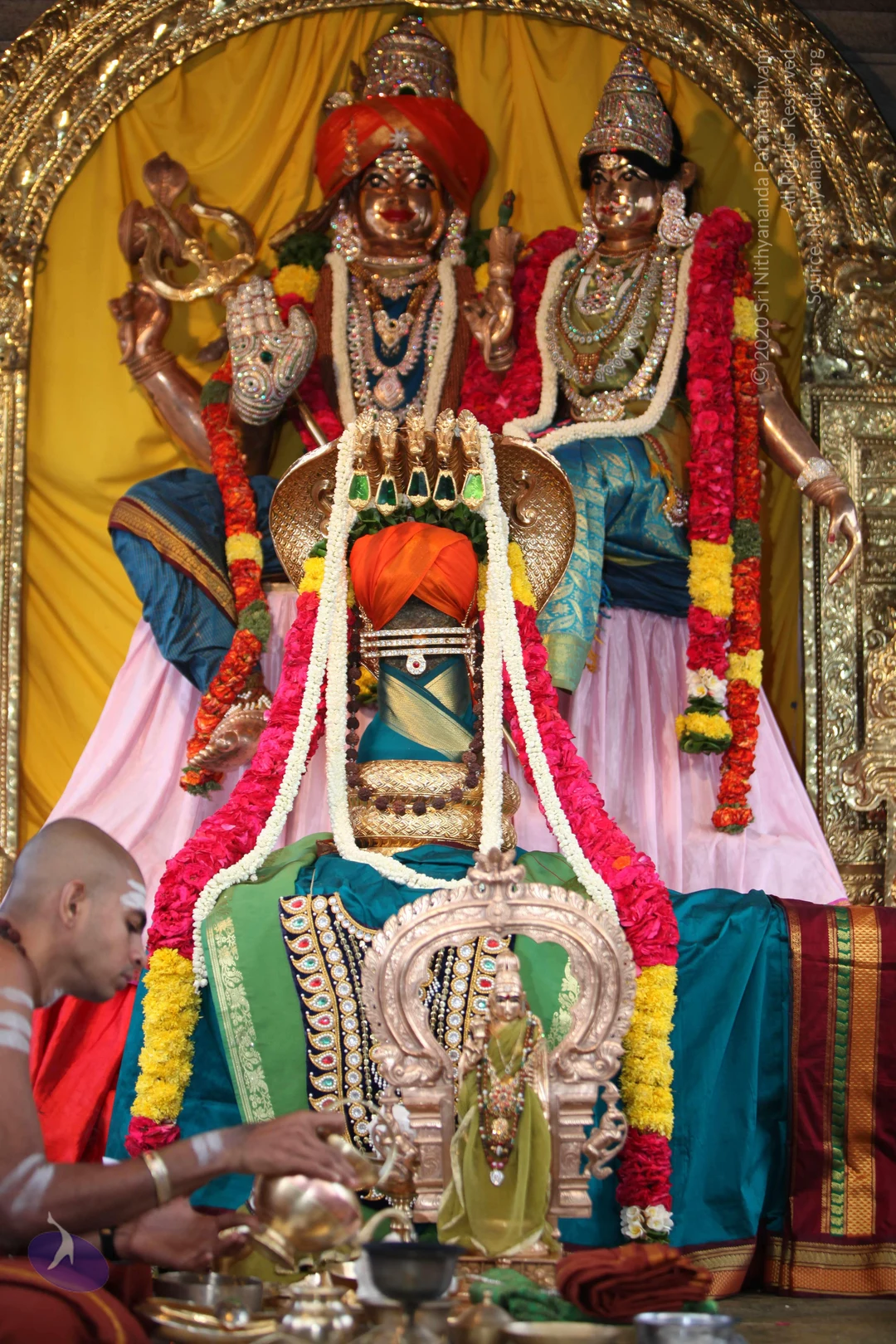
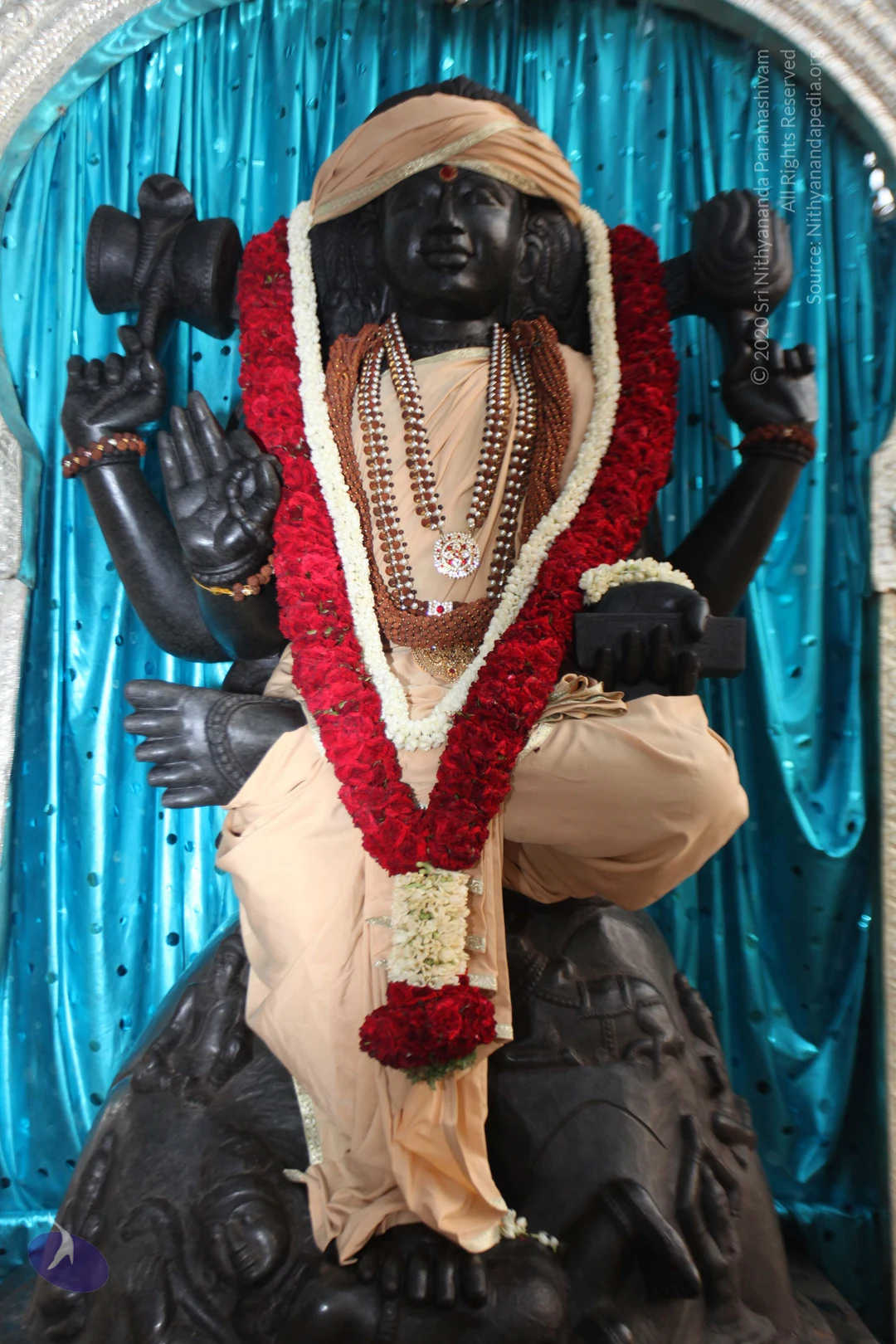
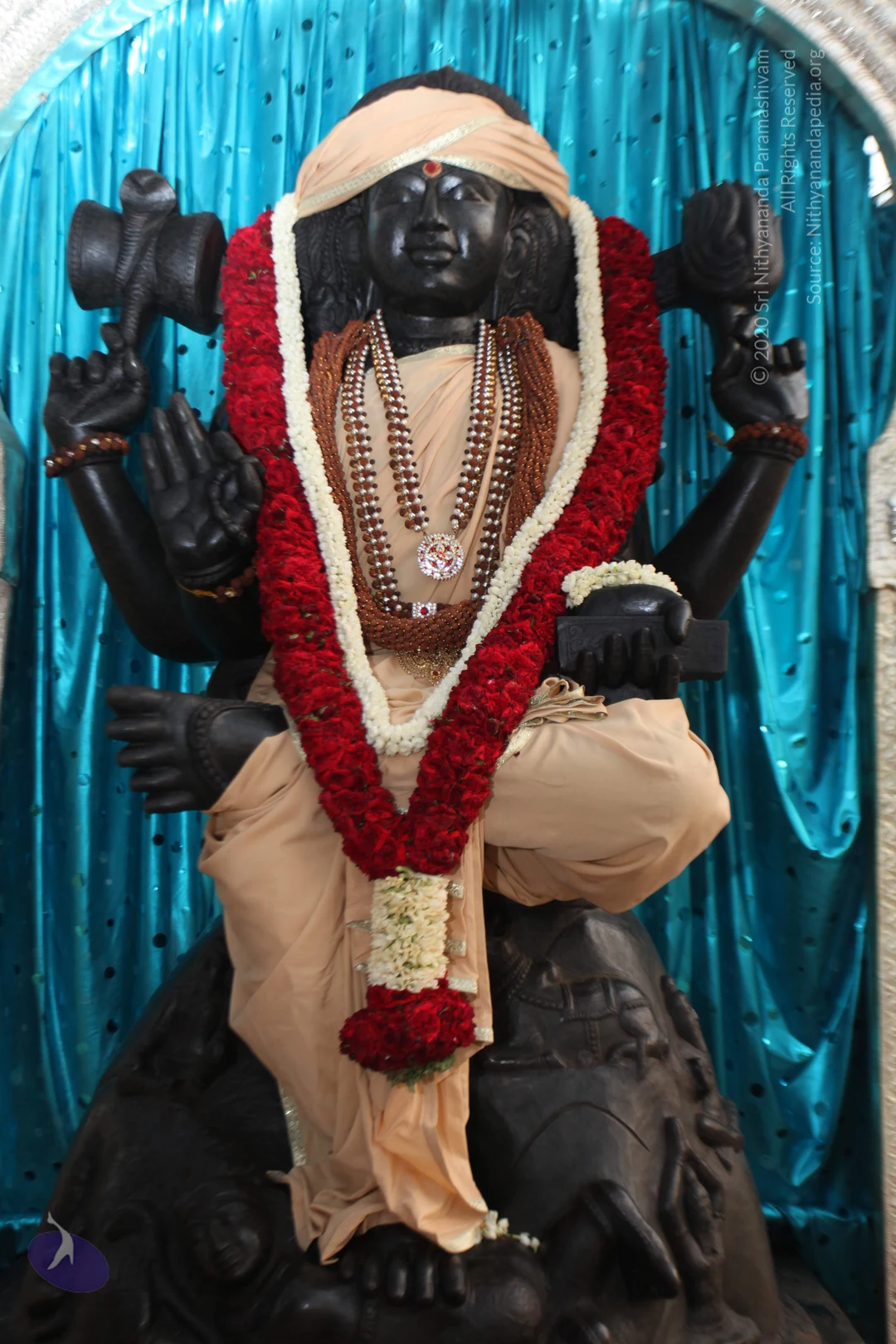
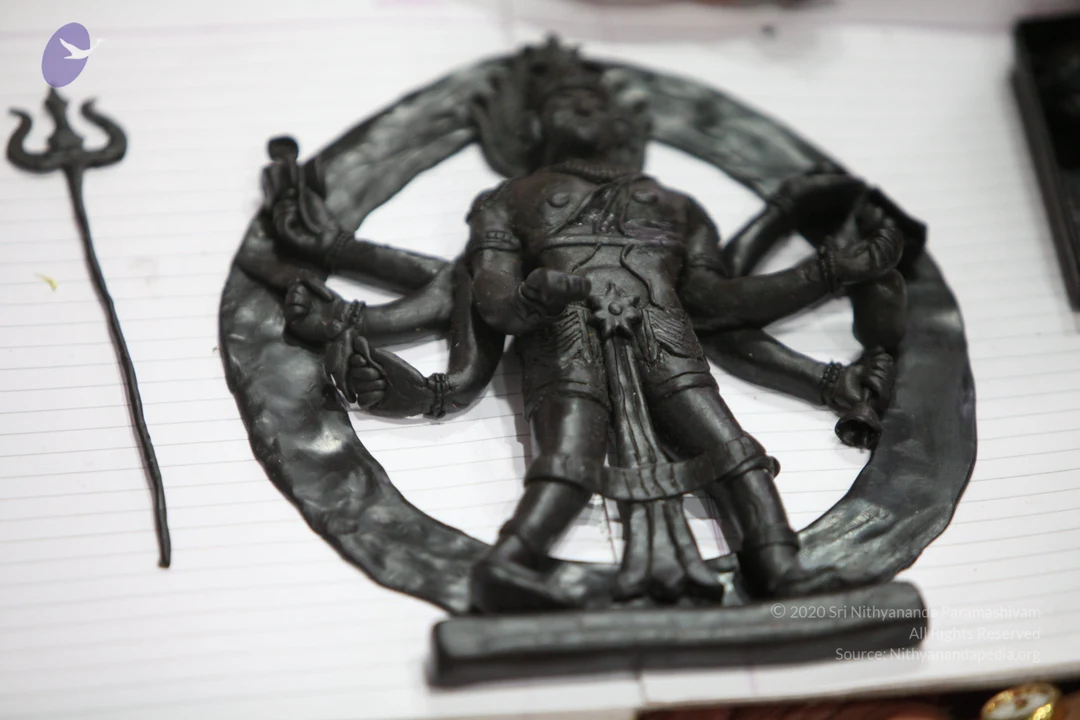
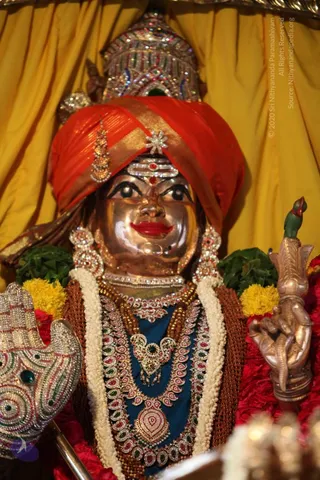
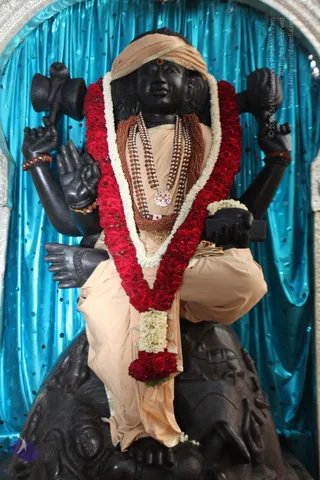
Two metallic deity murti statues seated side by side on a blue draped base before a green backdrop. The figure on the left wears a red-orange turban with a jewelled ornament, an orange garment, a long rudraksha mala and a bright red-orange and gold dress, and holds a trident-like staff; the figure on the right wears a silver jewelled crown, a maroon and gold sari, layered necklaces and holds a staff. Both are adorned with marigold and white flower garlands and silver ornaments. The image is a photograph of statues, with no physical people visible.A close-up photograph of a copper-coloured deity murti, possibly a utsava figure, dressed for worship. It wears a tall red and gold turban with a jewelled crown above, a red tilak and jewelled forehead band, and large sparkling earrings. Thick garlands of white jasmine, yellow marigolds and red flowers, plus green leaves, drape the shoulders. Rudraksha beads and layered gem-set gold necklaces adorn the chest over a deep blue cloth. It holds a silver hand-shaped ornament and a silver staff topped with a green-tipped finial, in front of a yellow draped cloth backdrop. No people are visible.A gilt bronze murti of a standing deity in an ornate arched metal frame with carved foliage and birds. The figure wears a green chiffon sari with gold border, layered rudraksha and bead malas, a red-and-green jewelled necklace, and a pendant. The left hand holds a small vessel, and a red tilak marks the forehead. A green draped cushion with a white bead strand sits at the left edge. Blurred flowers and jewelled garlands appear behind. No physical people are visible.A decorated shrine with large copper-coloured statues of a male and female deity seated on a pink-draped throne against a golden yellow backdrop. The male figure wears an orange turban and a jewelled crown, holds a trident, and the female figure wears a teal sari and a layered jewelled headdress. Between them stands a silver-and-gold deity murti with an orange turban, a teal cloth and a Shiva-linga-like form, with a cobra hood above it and green gem-set adornments. Garlands of red, yellow and white flowers drape the figures. In the foreground, a shaved-headed priest in white with a white tilak sits at the lower left beside a brass kalasha and an ornate silver peetha, performing puja. The scene is a temple-style puja at the shrine.A black stone murti of a multi-armed deity seated on a carved dark stone base before a turquoise sequined backdrop. The figure wears a peach-coloured draped cloth, a peach turban with a red bindi, and garlands of red roses and white jasmine that hang across the chest. Layered rudraksha-style beaded malas and a large ornate pendant rest on the chest, and the upraised hands hold ritual objects. No living people are visible; the figure is a statue, so the a person field is depiction only if an appearance-based candidate is clearly shown, which it is not here.A dark stone statue of a multi-armed deity form sits on a carved black pedestal in front of a turquoise draped backdrop. The figure wears a peach-coloured cloth wrapped around the body and a peach turban with a gold border and red bindi. Thick red and white flower garlands hang across the chest, and multiple strands of brown and silver beaded rudraksha-style malas with a jewelled pendant adorn the neck. Several hands hold ritual objects, including a snake-topped club or staff. No living people are visible; the subject is a deity murti in a shrine setting.

01-Temple-Tour-Morning-Message-DTA-Sarva-Darshan
6 photosSource gallery
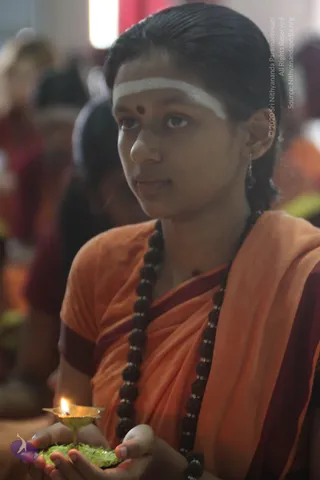
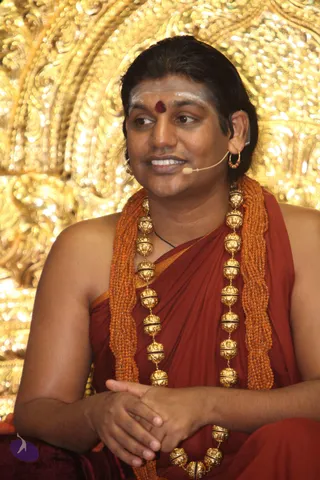
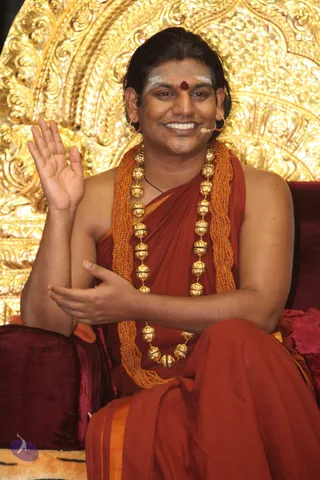
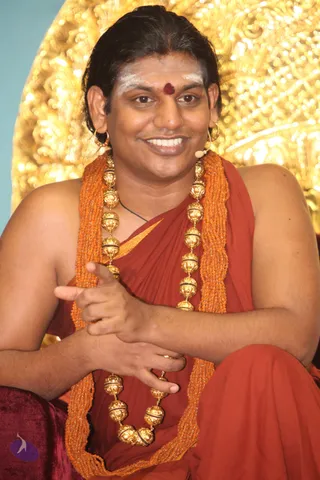
Close photograph of a young woman in an orange saffron sari with a dark maroon border, wearing a white vertical tilak stripe and a red bindi on her forehead. She wears a long rudraksha mala with silver spacers around her neck and holds a small brass oil lamp with a lit flame on a green leaf in both hands. Background shows blurred seated devotees in orange and red clothing in a hall.A seated man in a red-orange ochre robe draped over his shoulders, wearing multiple strands of orange rudraksha beads and long ornate gold bead necklaces. He has a red bindi and white vertical marks on his forehead, a small headset microphone, and gold earrings. His hands are clasped in his lap as he speaks, against a gold repoussé backdrop. Swamiji (probable) appears in person: long swept-back dark hair, saffron-orange robe, rudraksha malas and ceremonial gold necklaces.A smiling man seated on a red velvet throne in front of an ornate gold carved backdrop, raising his right hand in a gesture while his left hand rests in front of him. He wears an orange-red robe draped over one shoulder, long strands of orange beaded necklaces and heavy gold bead necklaces, gold hoop earrings, and a headset microphone. A red bindi and white markings are on his forehead, and his hair is swept back. Appearance-based probable Swamiji: long swept-back hair, orange-red robes, gold ceremonial necklaces and rudraksha-style beads, seated in a ceremonial setting as a speaker giving a morning satsang.A seated man in a rust-red sannyasi drape over bare shoulders wears long orange beaded mala strands with large gold ornamental beads, gold hoop earrings and a small red tilak with white ash markings on his forehead. He smiles and gestures with his hands while seated before a shimmering gold ornamented backdrop, with a small clip-on microphone visible near his ear. Swamiji (probable): long swept-back dark hair, saffron-orange malas and ceremonial gold necklace, consistent with the page's listing of a morning satsang.A smiling man in a rust-red sannyasi wrap sits before an ornate gold-leaf backdrop. He wears a thick orange rudraksha-style mala with large gold beads, a red bindi and white forehead markings, long swept-back dark hair, a small headset microphone and gold hoop earrings. His hands rest clasped in his lap. A probable Swamiji candidate in person, identified only by appearance cues: long swept-back hair, orange beaded mala with gold ceremonial beads and a saffron-toned wrap.An empty ornate golden throne (peetha) on a raised stage, with a gilded arched back and carved details, a crimson velvet seat and cushion, golden lion sculptures flanking each side, a tiger-skin rug draped over the platform, and a small golden footstool before it. Crimson velvet curtains frame the scene, a painted blue and pink backdrop with decorative arches sits behind, and a dark niche glows with strings of small lights and hanging lamps. No people are visible.