Skip to content
Wednesday

10 April 2013

Don't Let Your Past Swallow Your Future

Dated photos
287
Source pages
1
Media
3
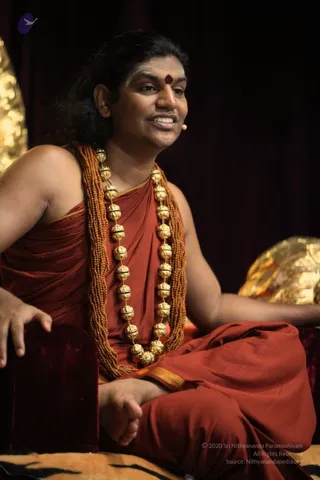
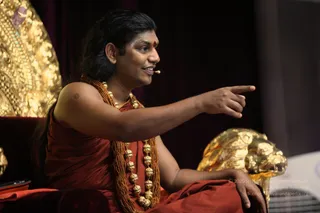
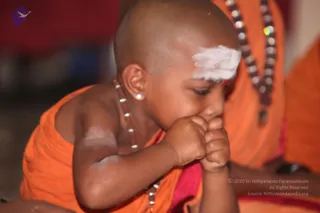
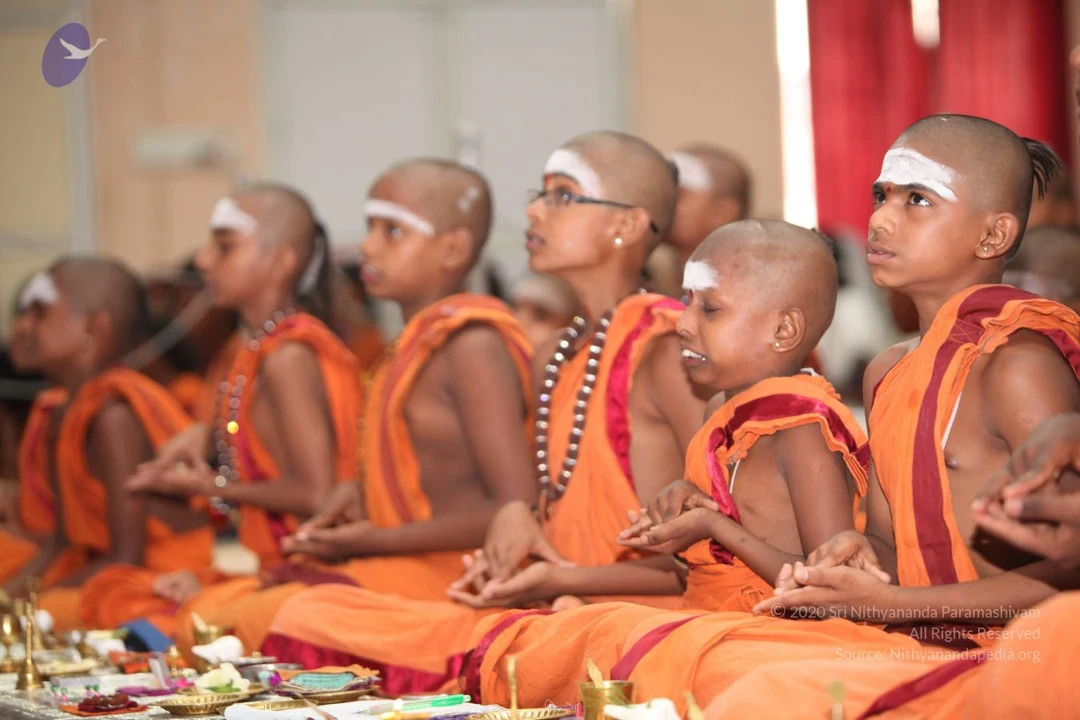
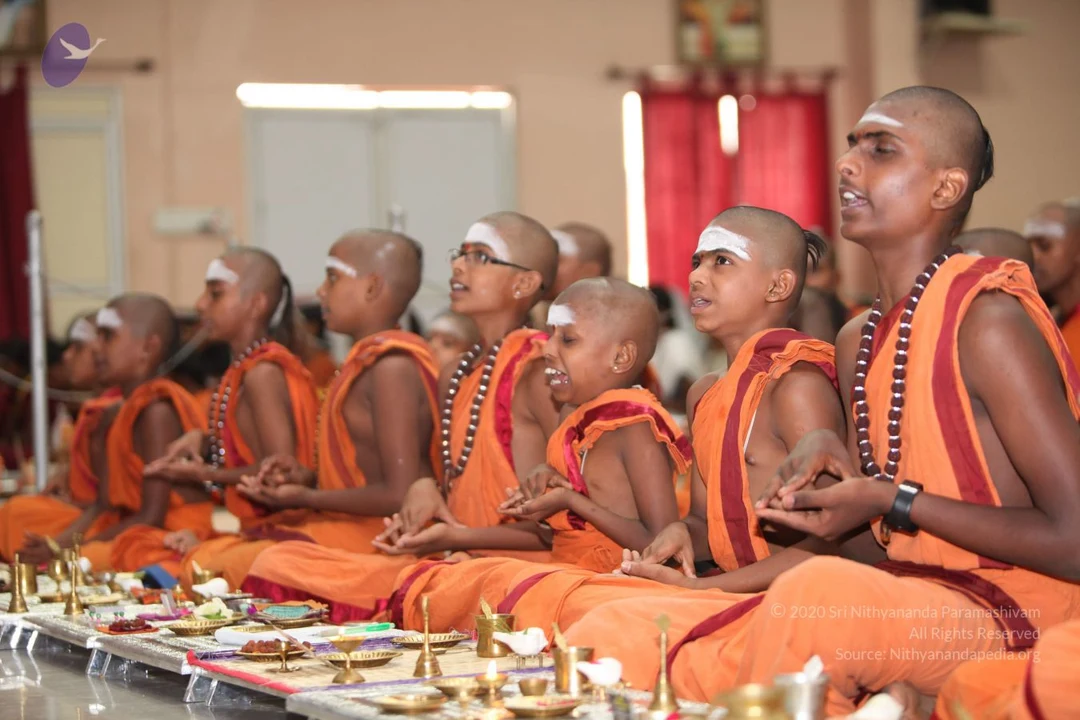
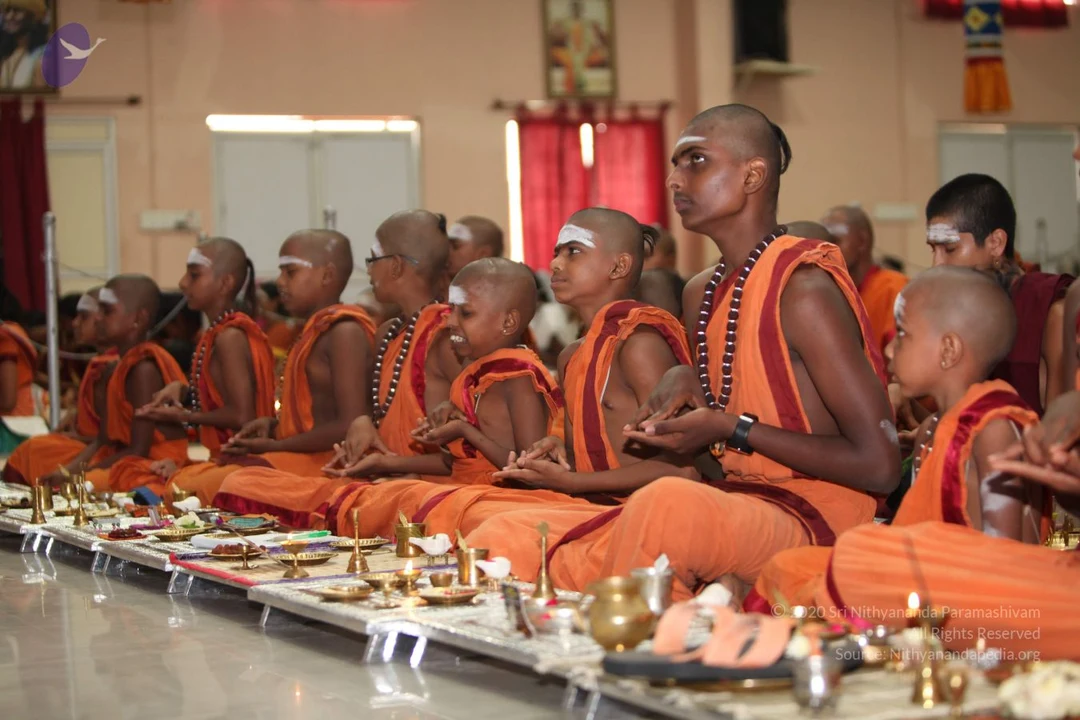
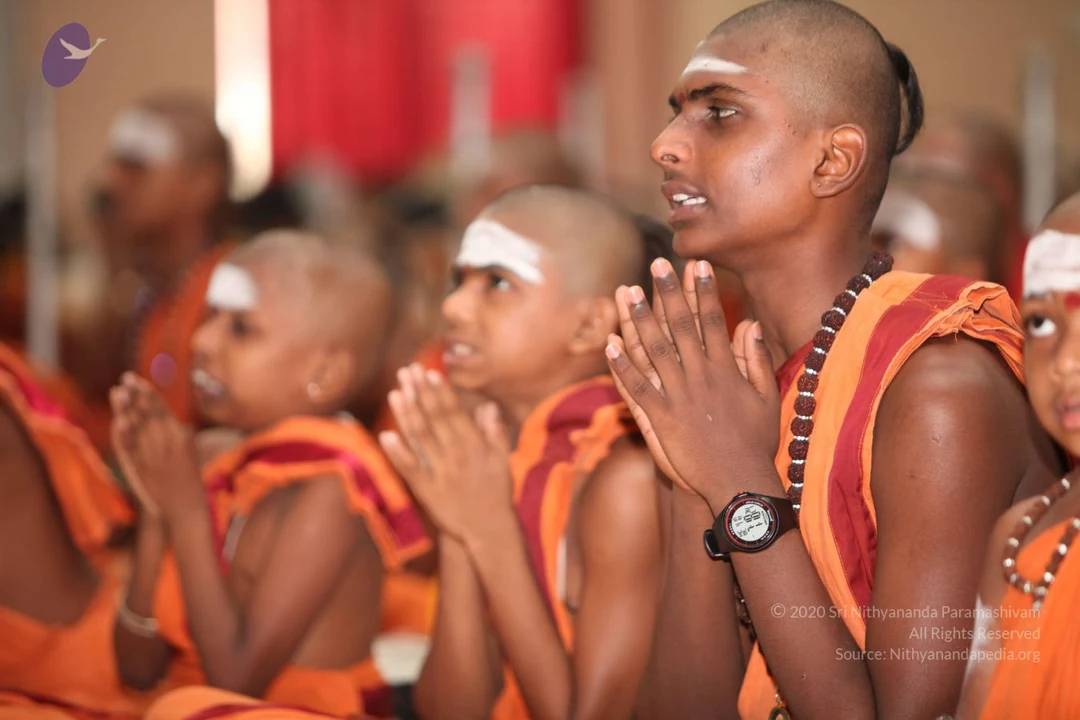
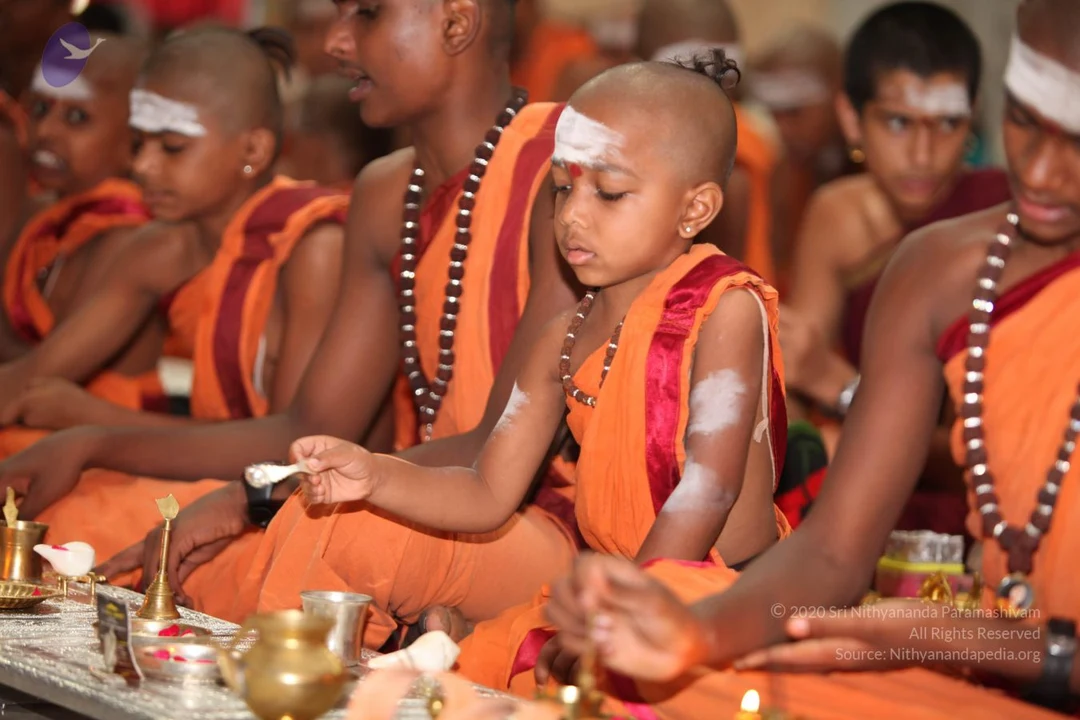
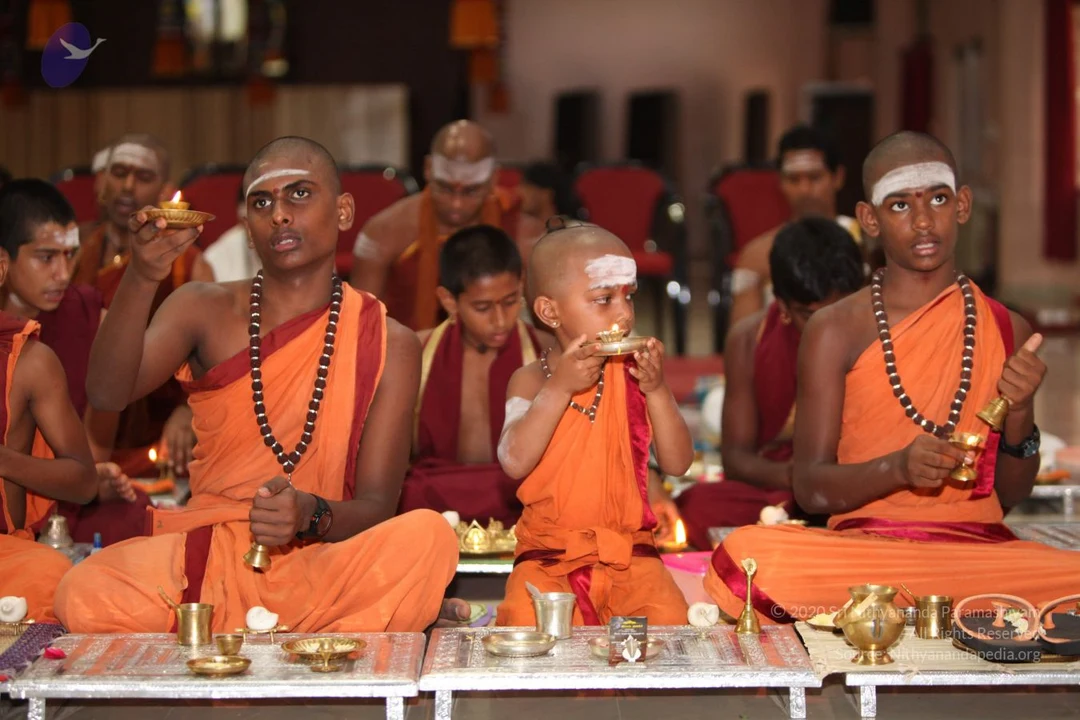
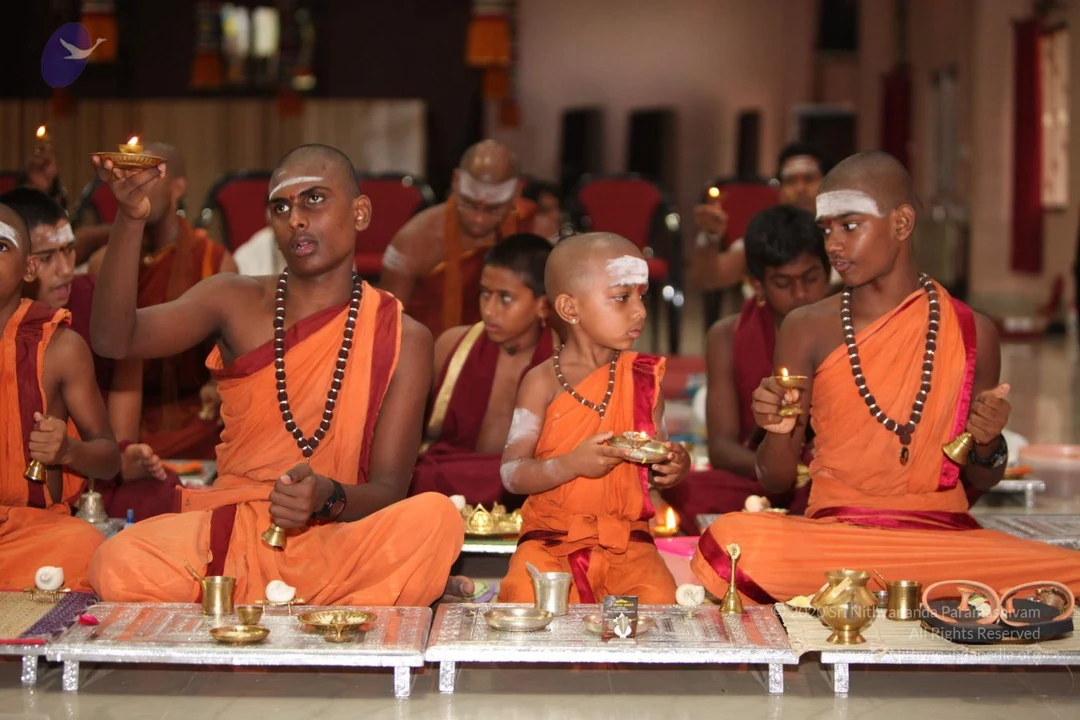
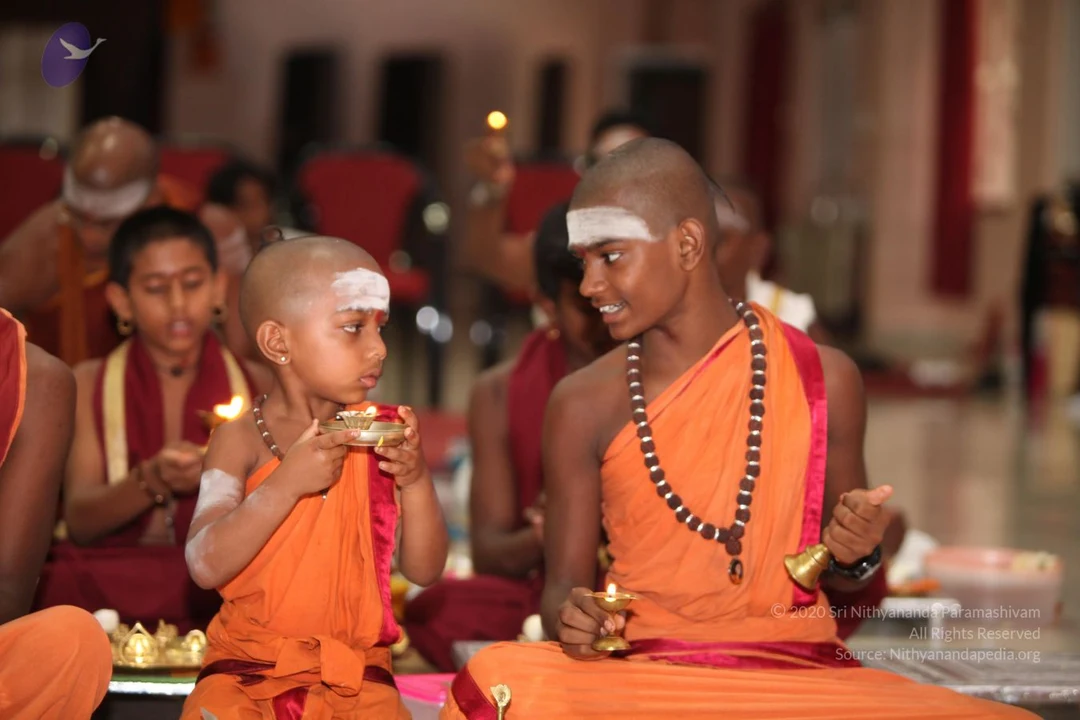
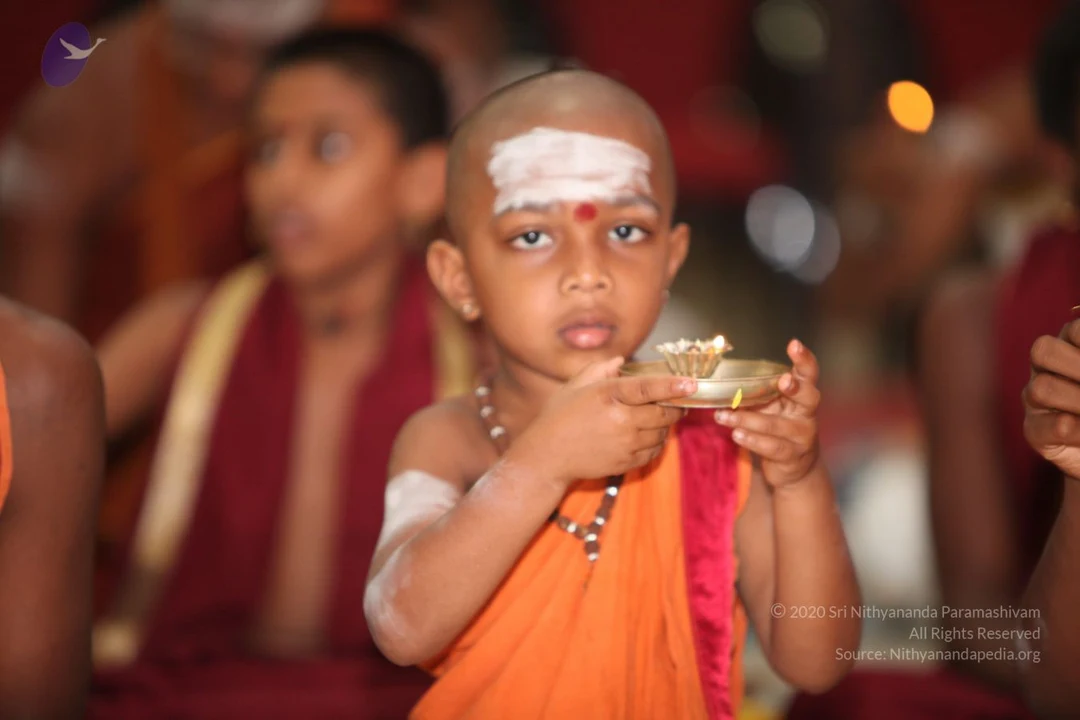
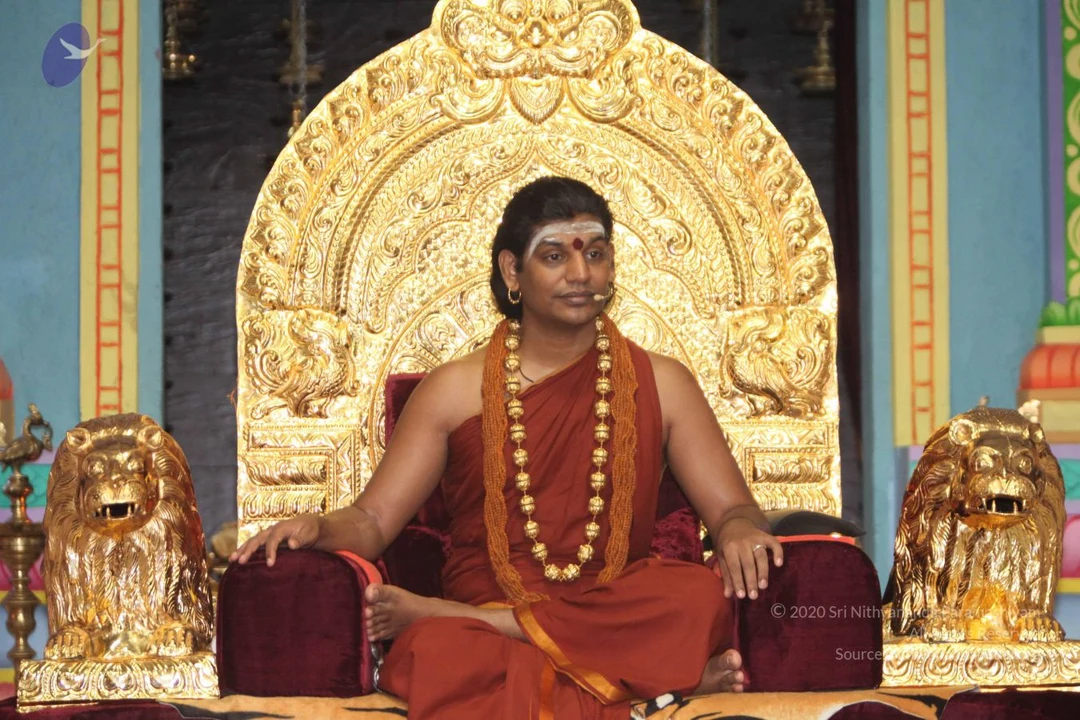
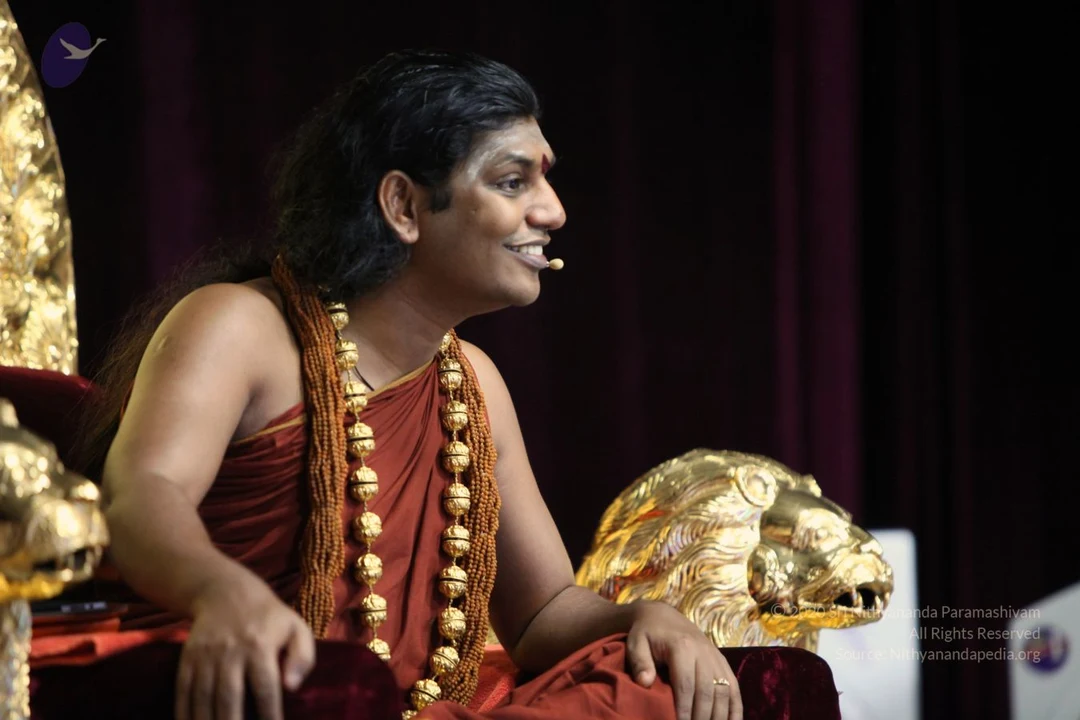
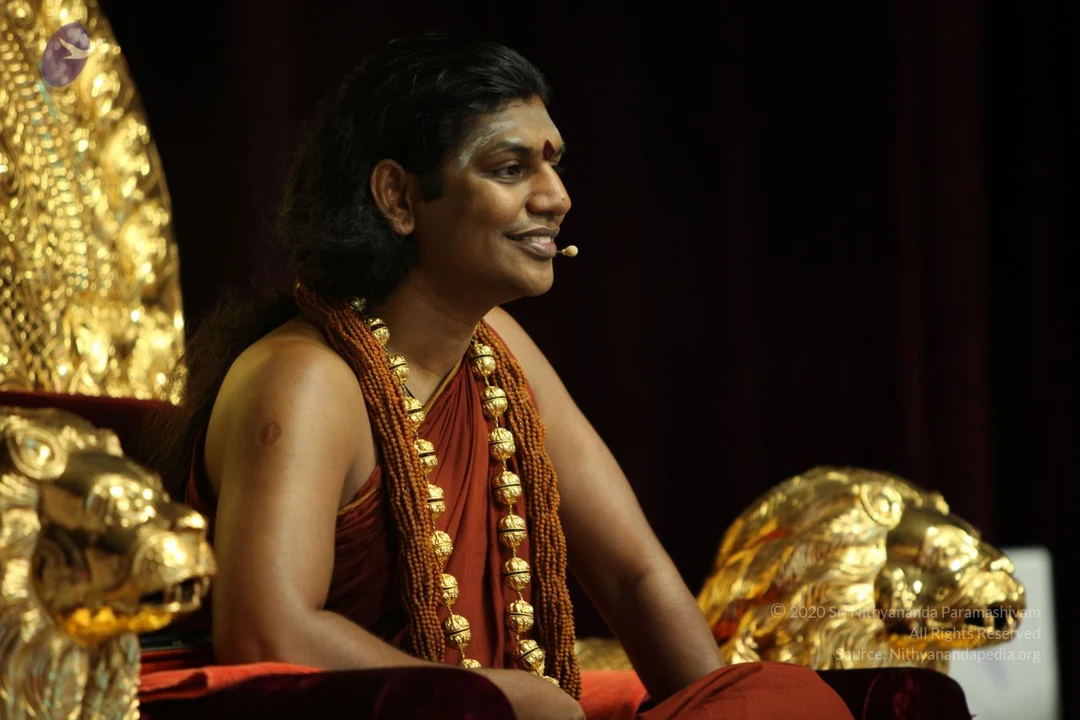
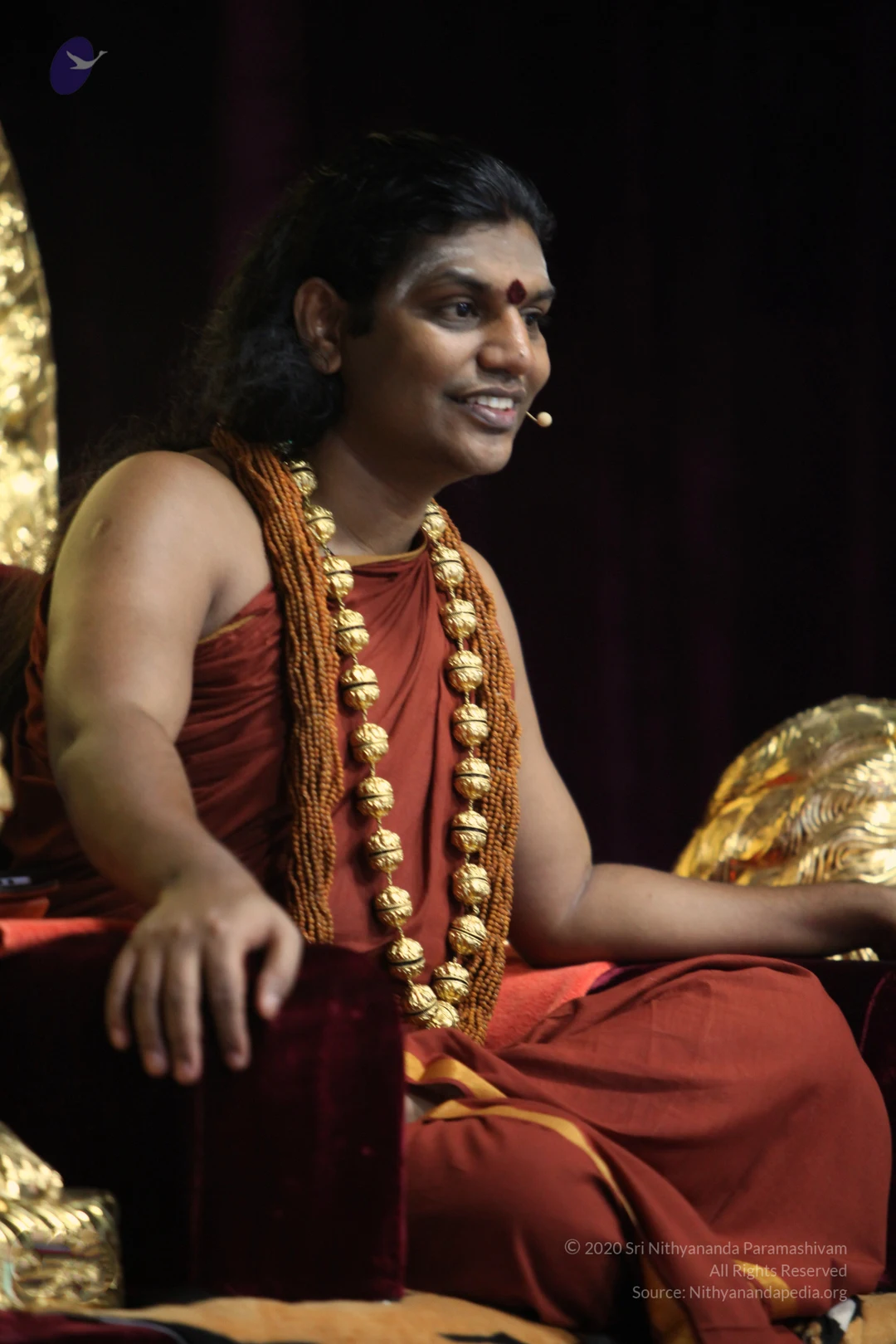
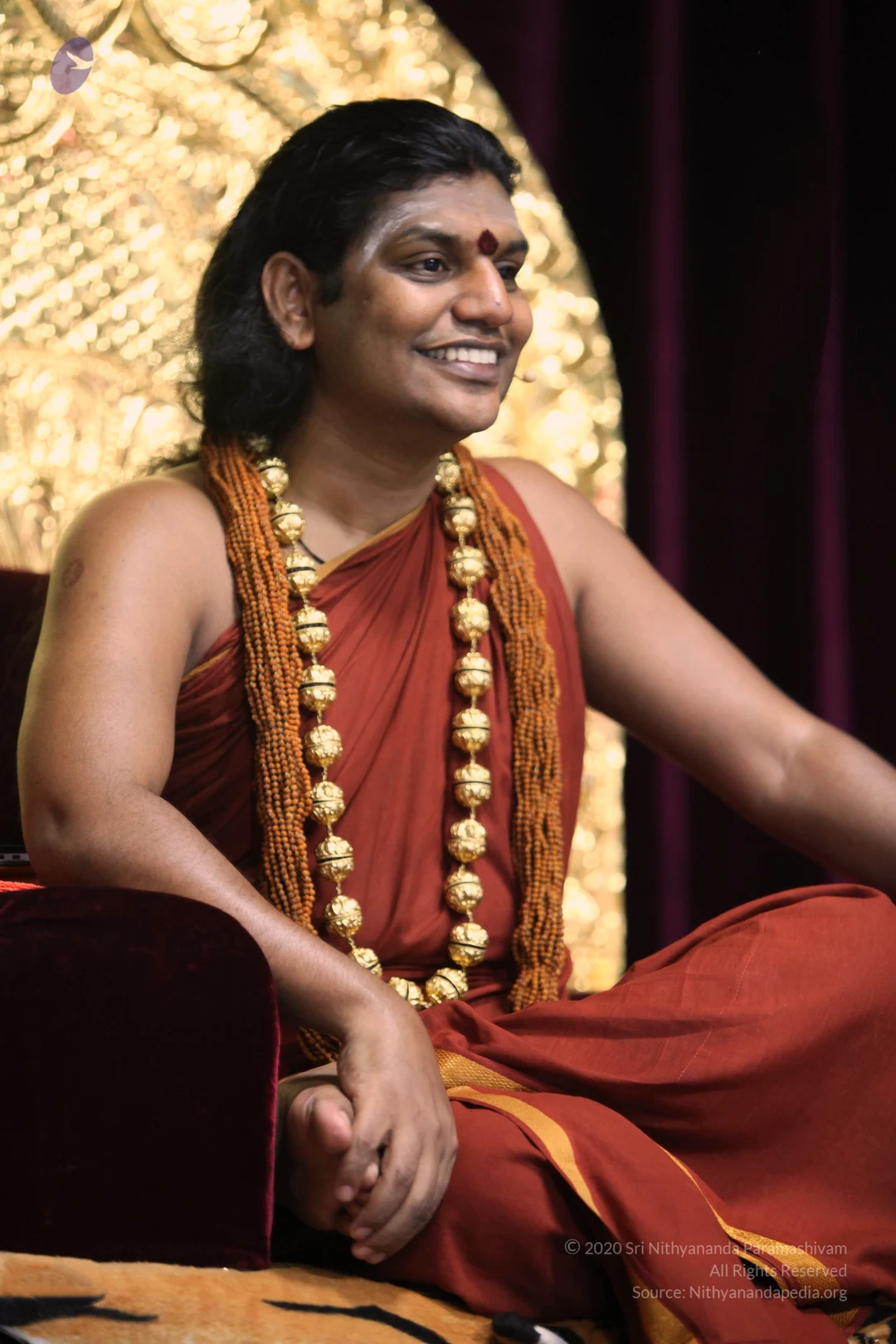
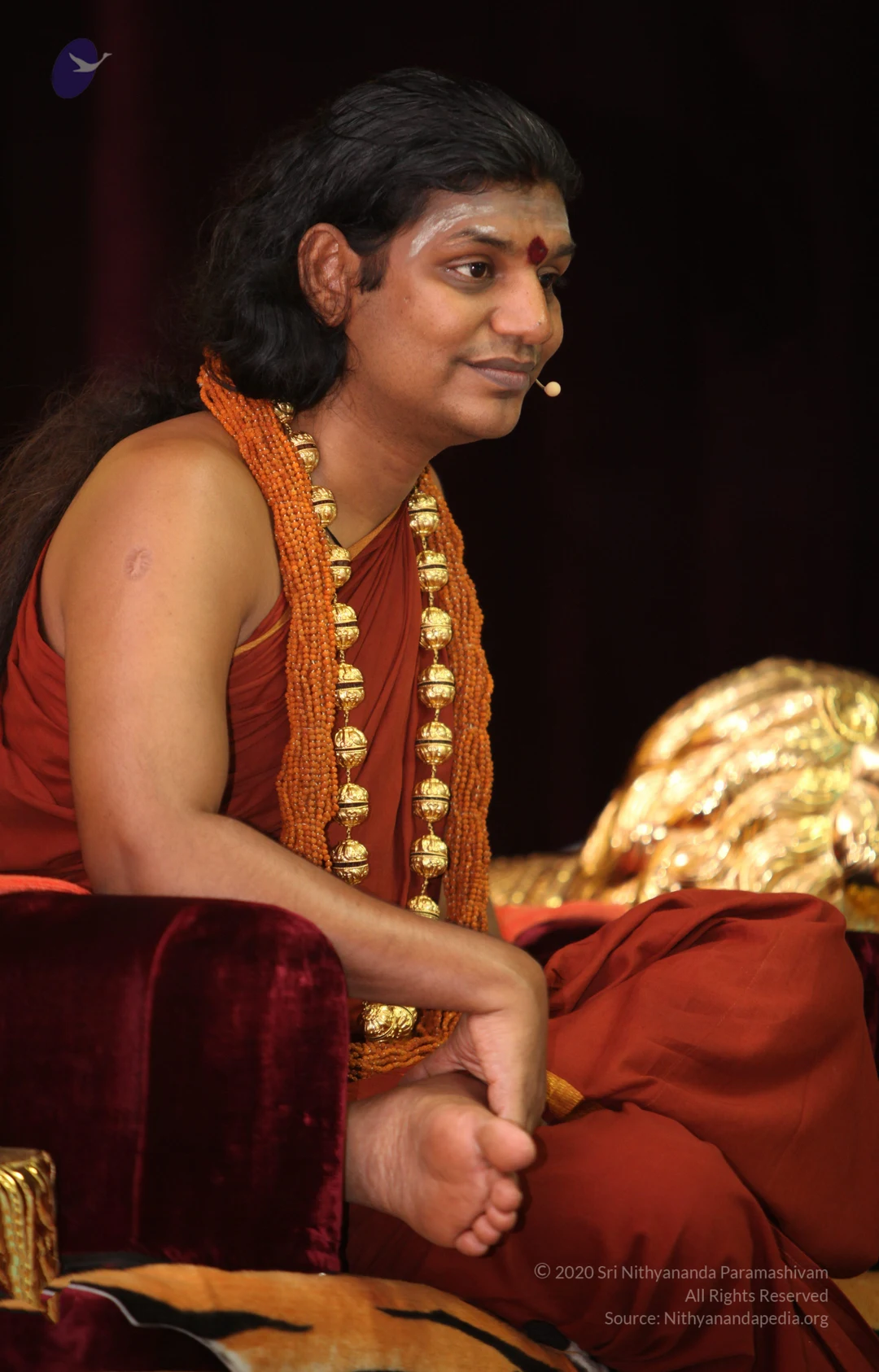
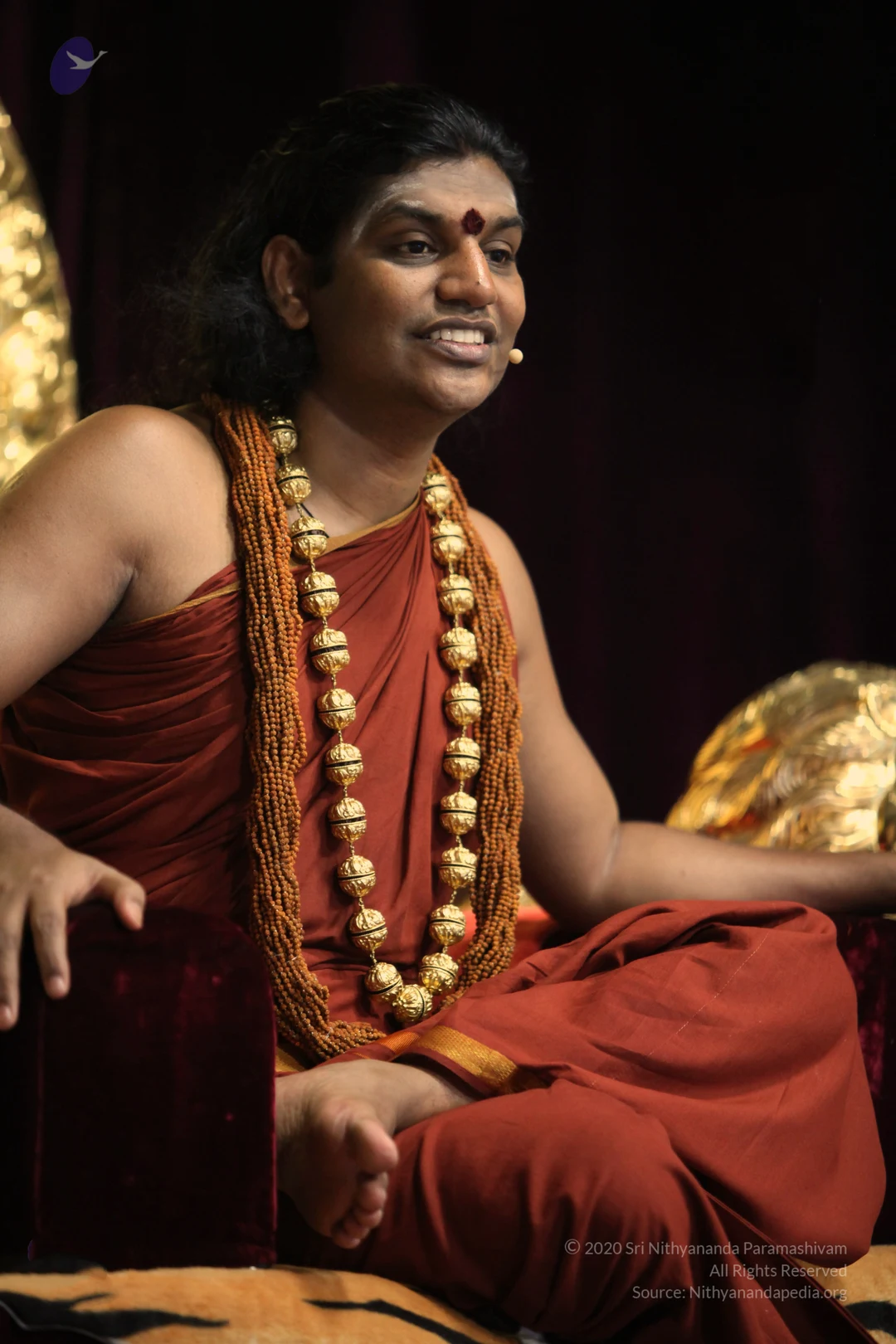
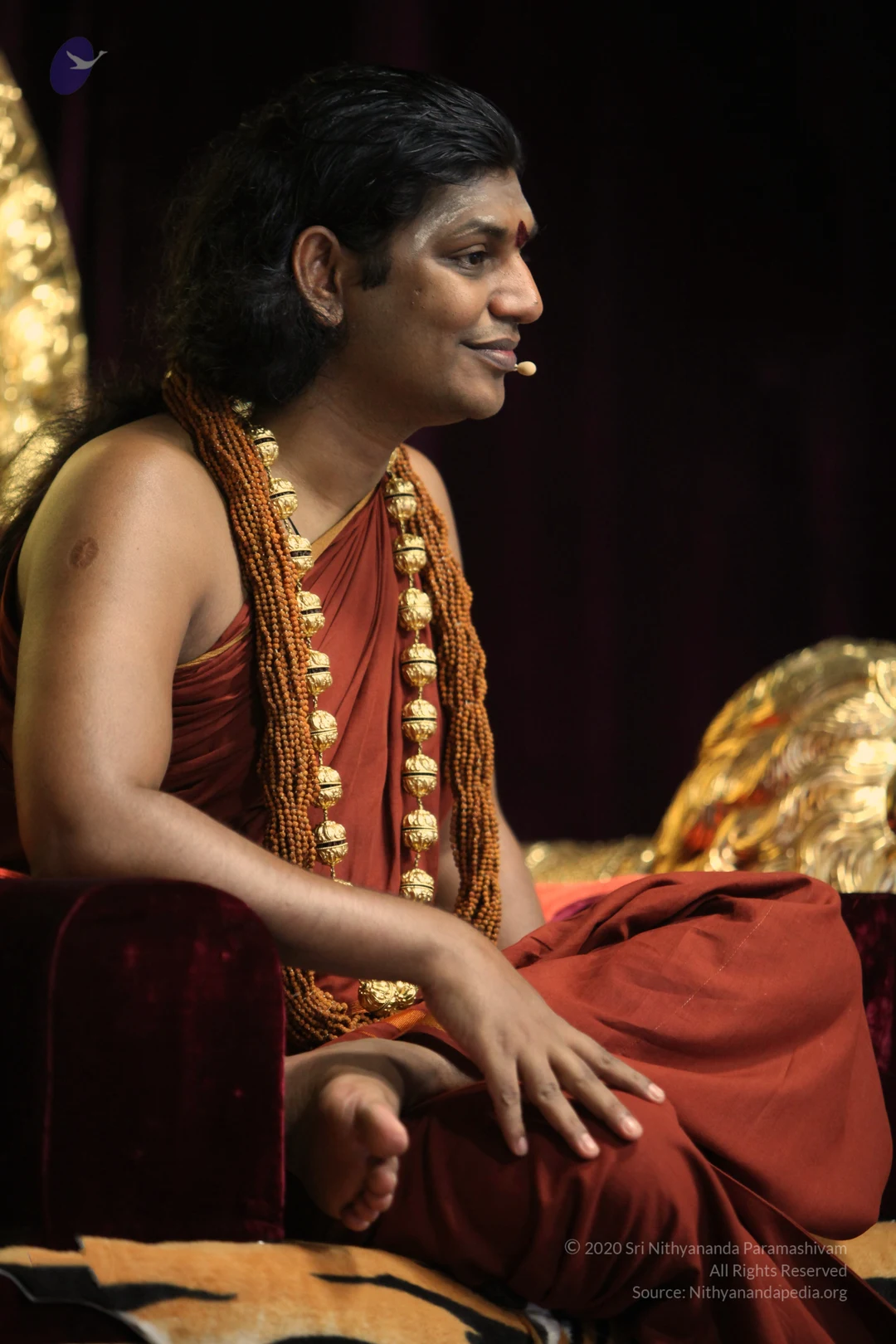
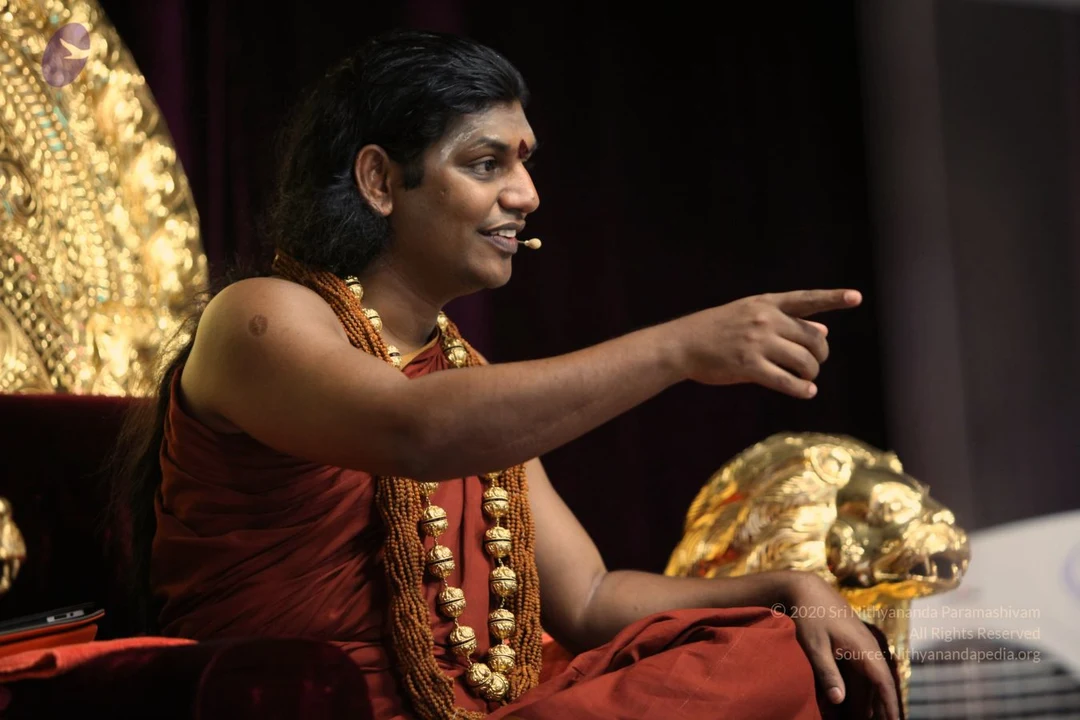
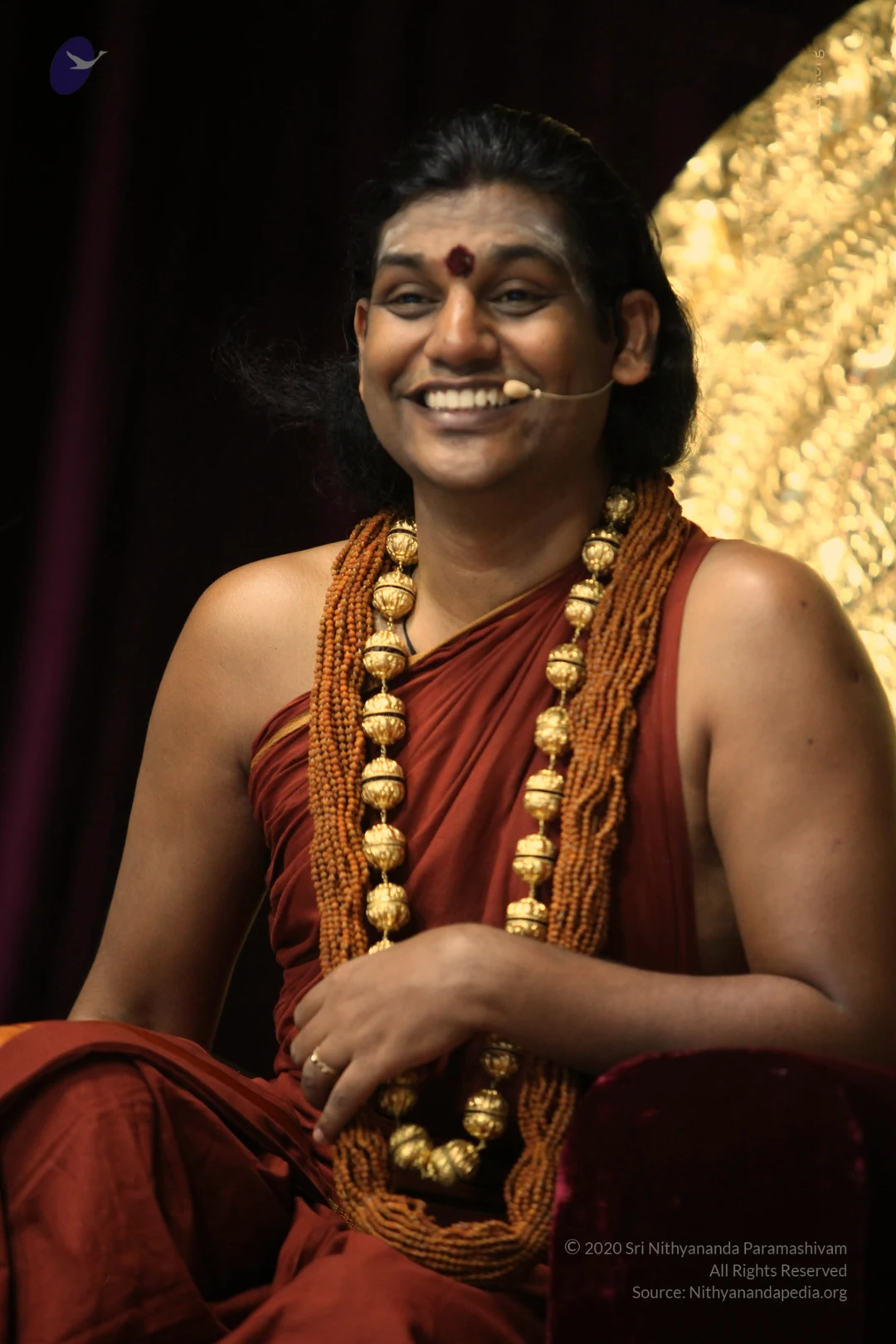
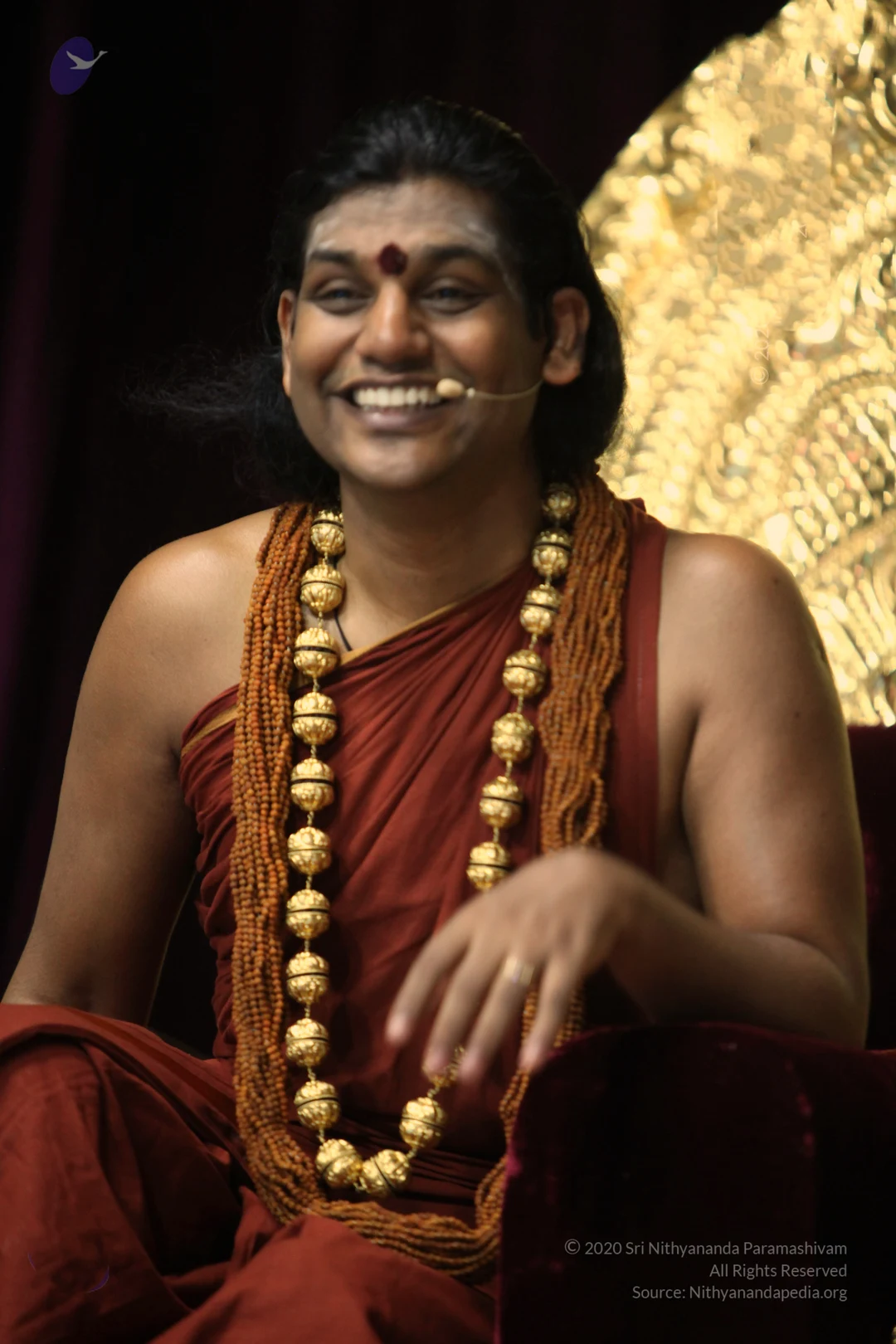
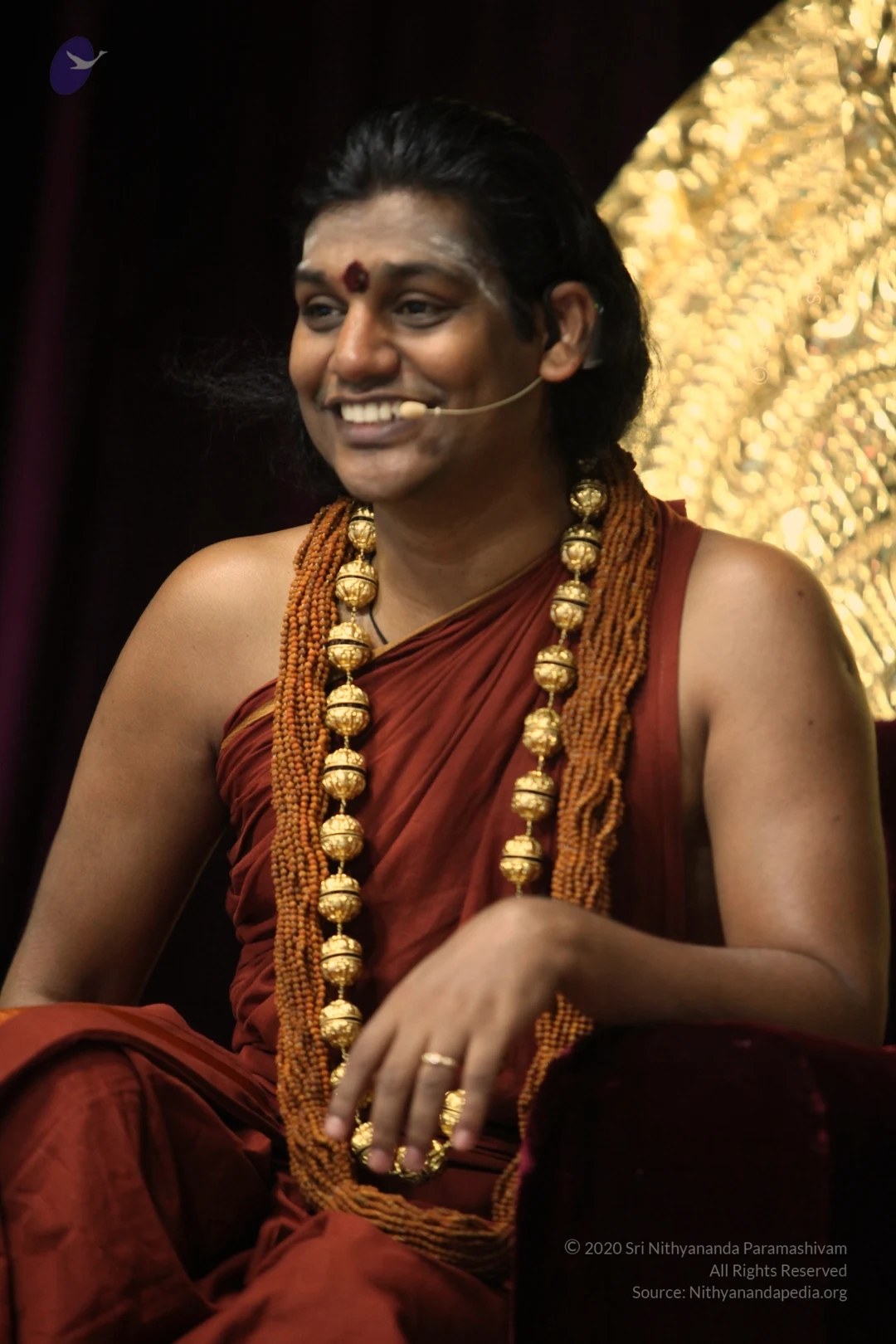
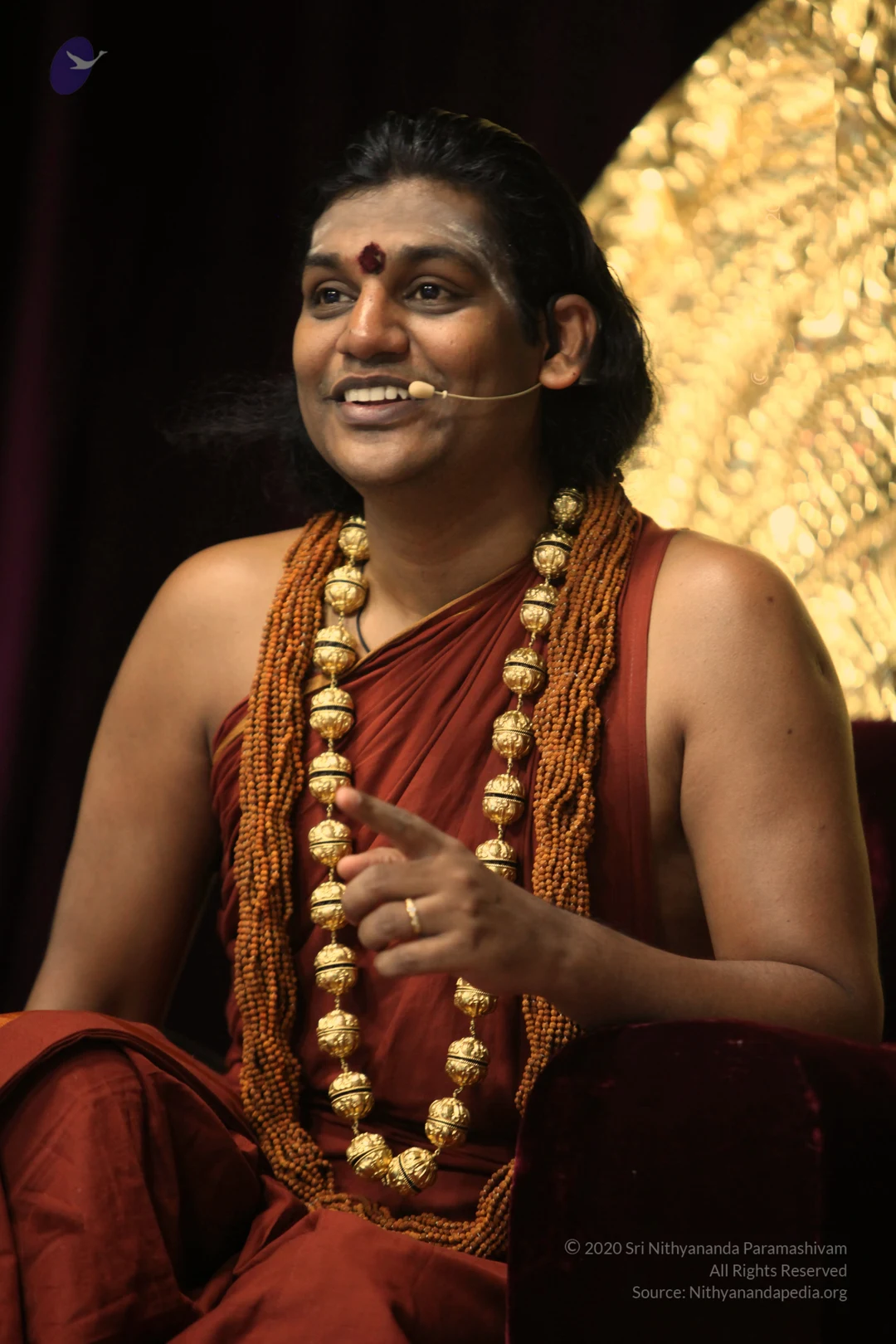
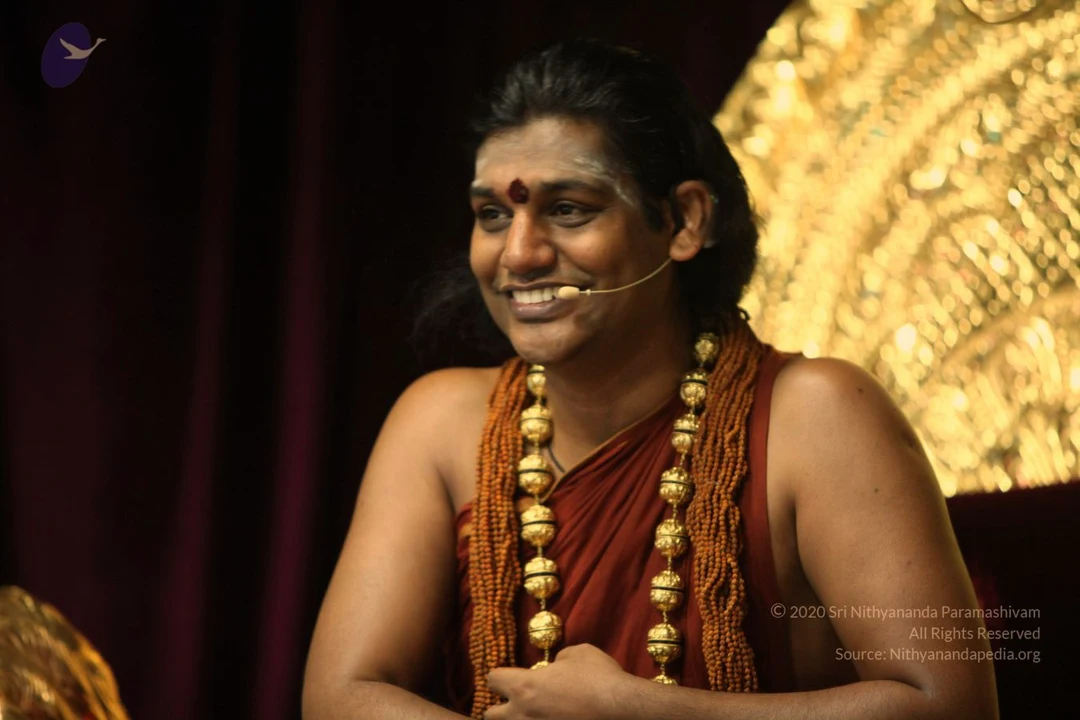
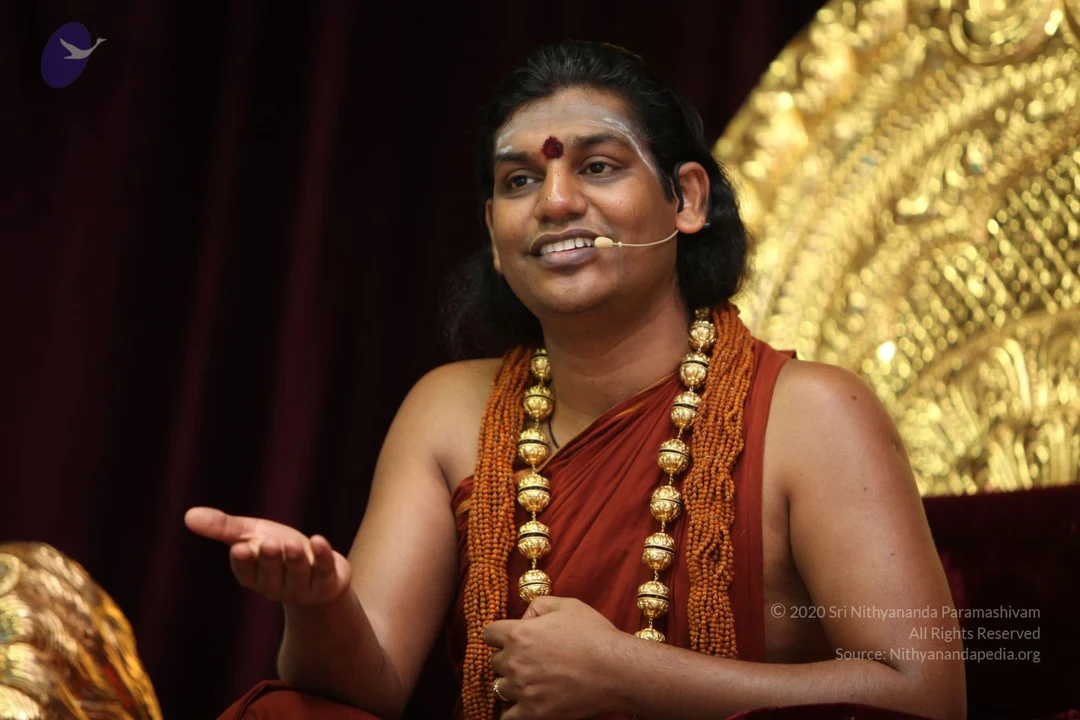
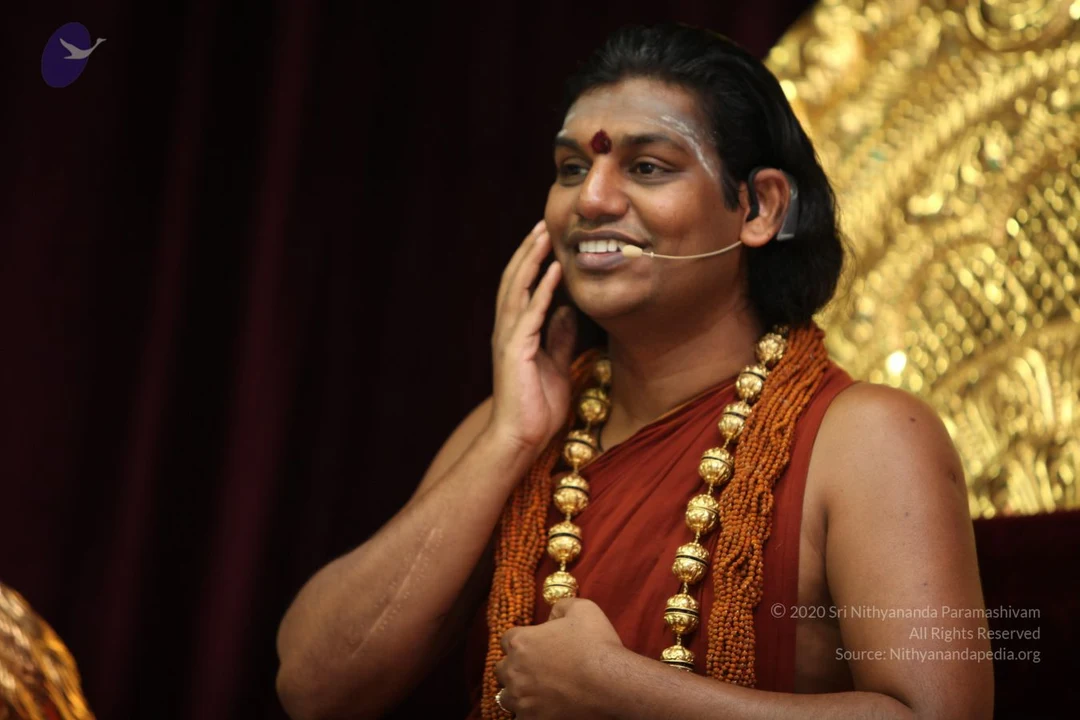
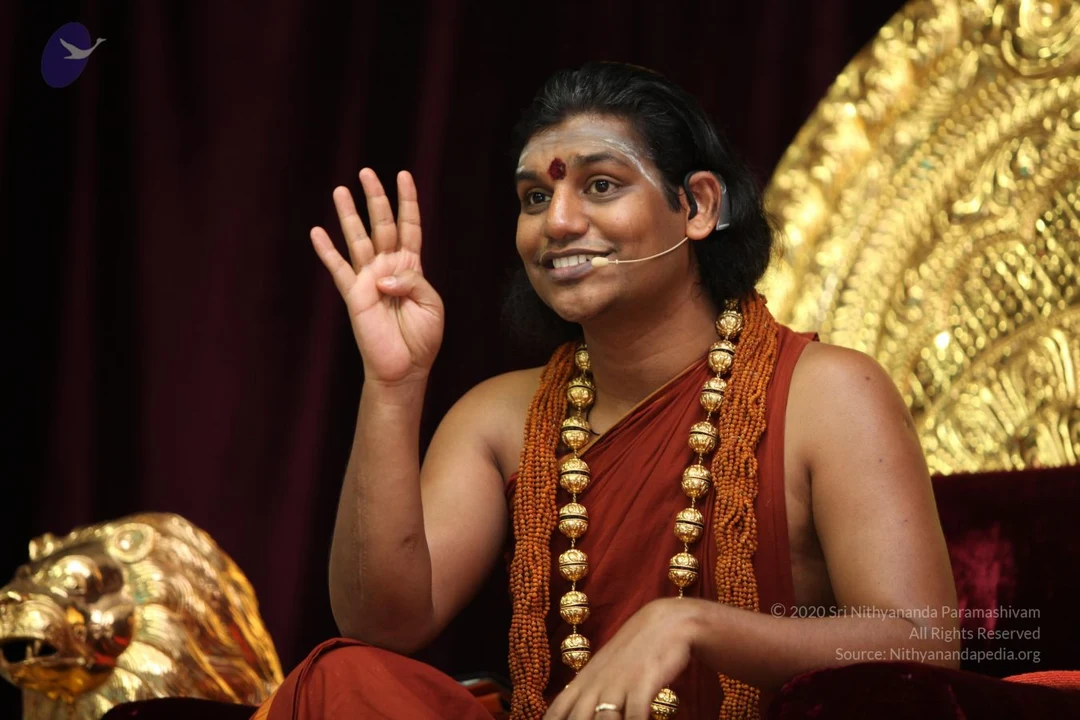
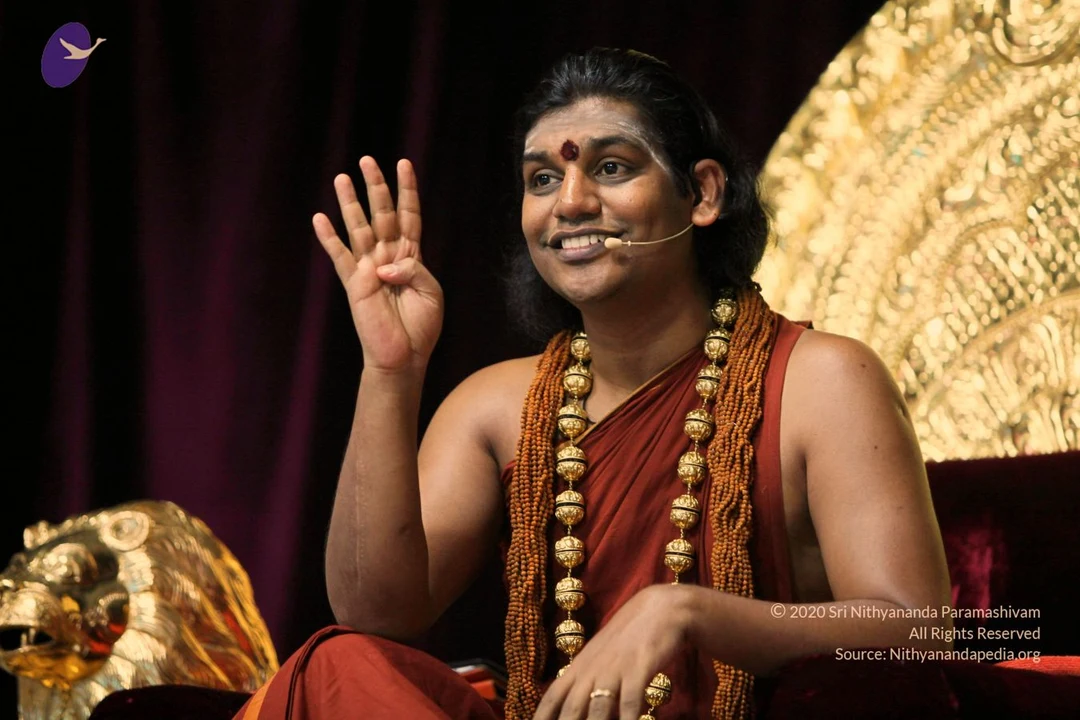
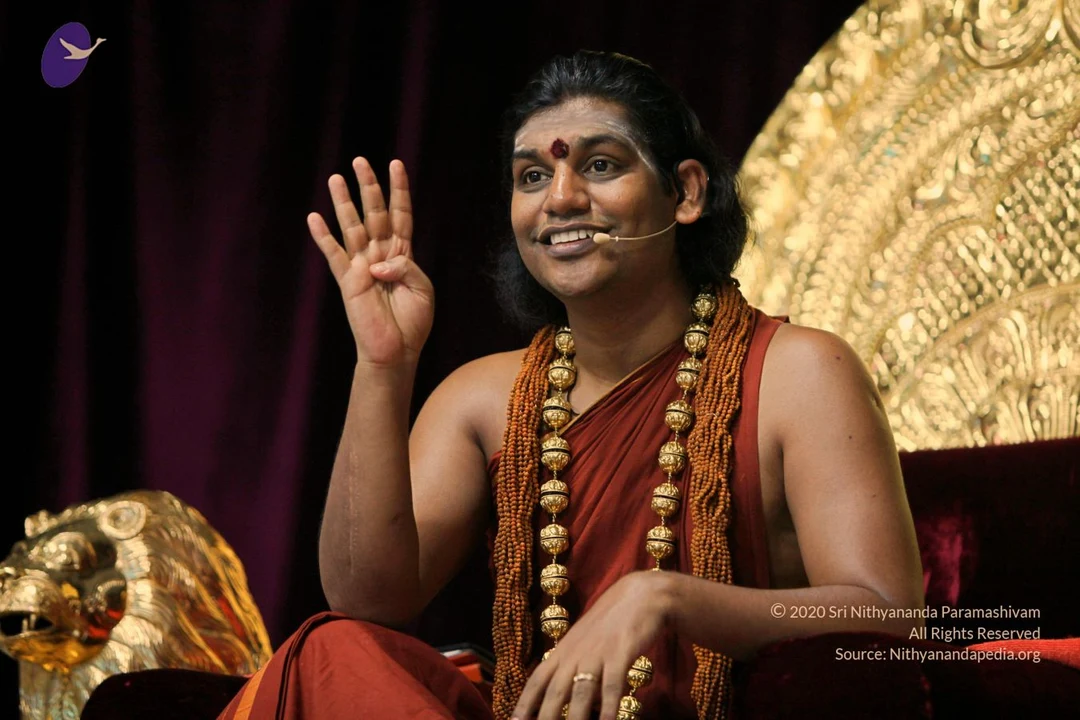
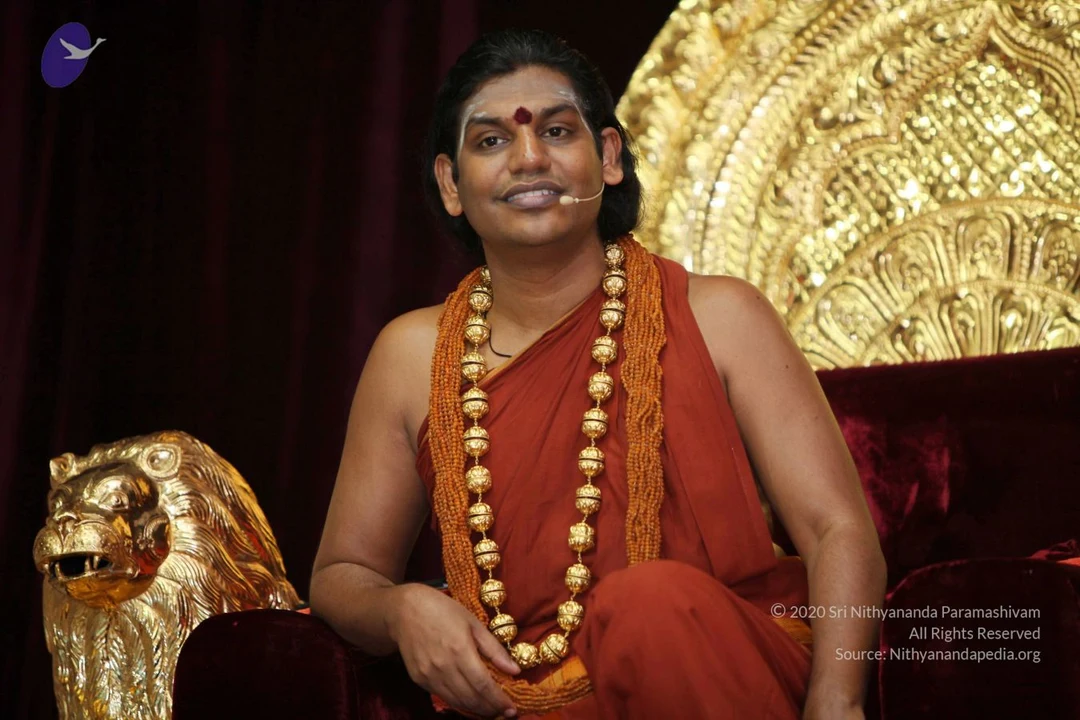
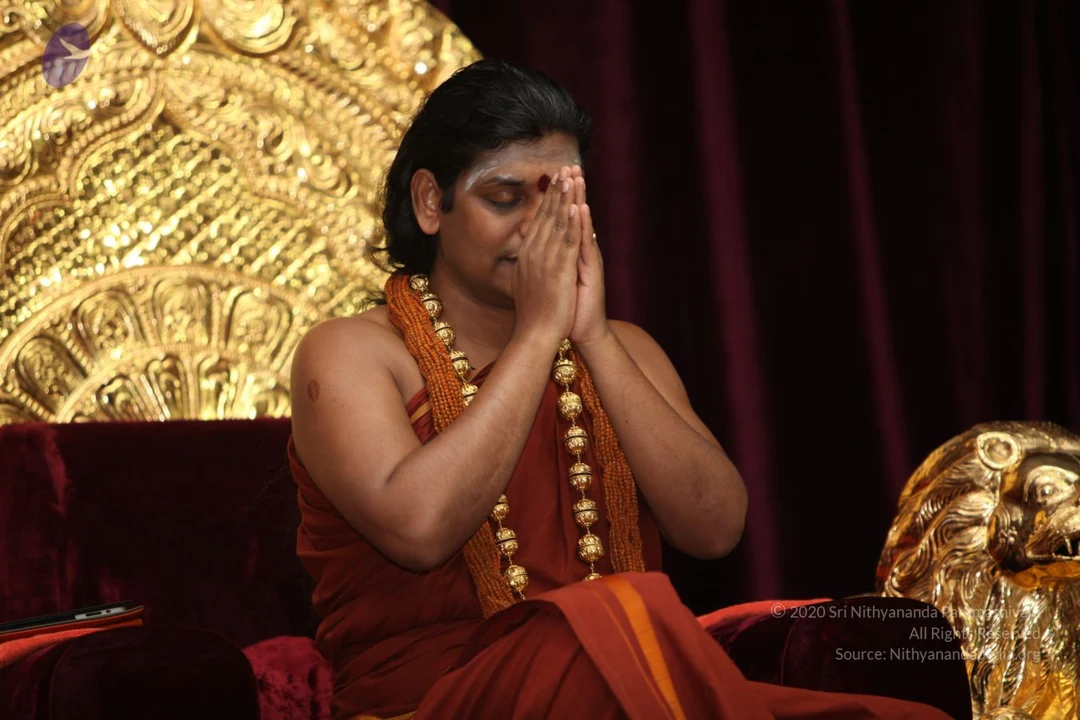
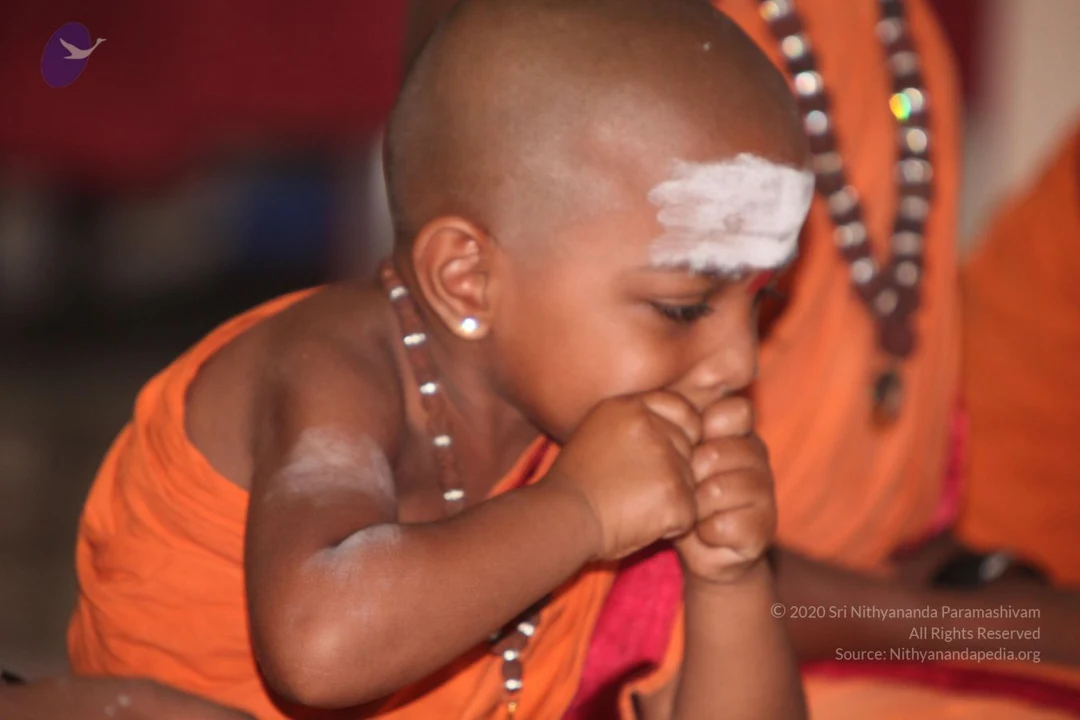
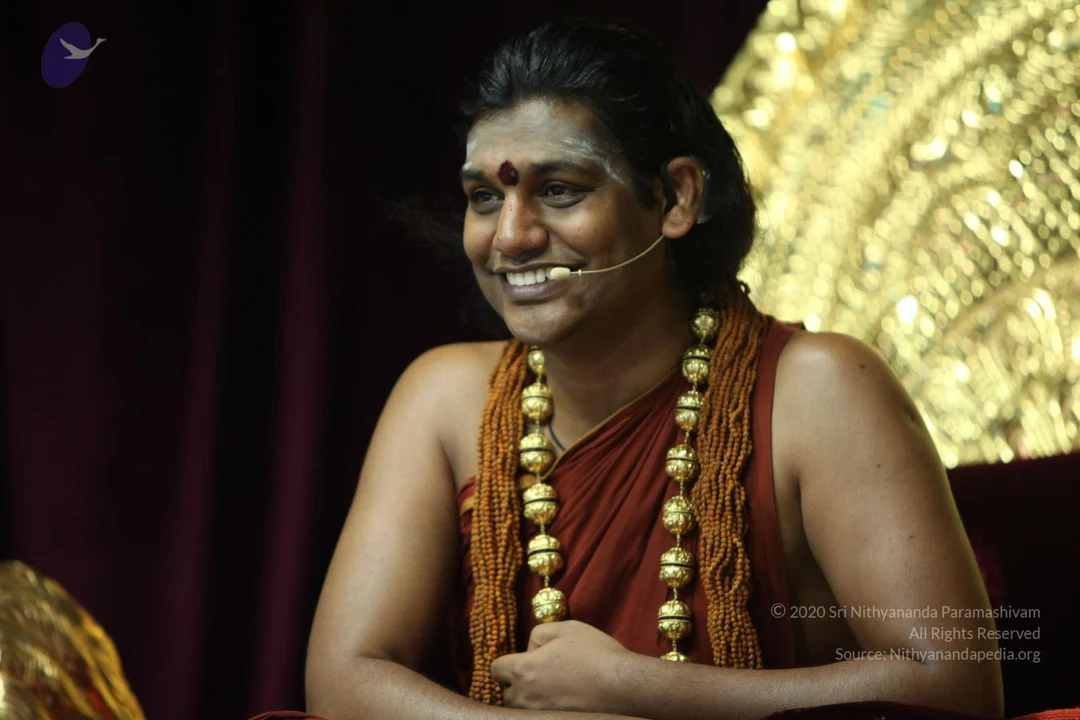
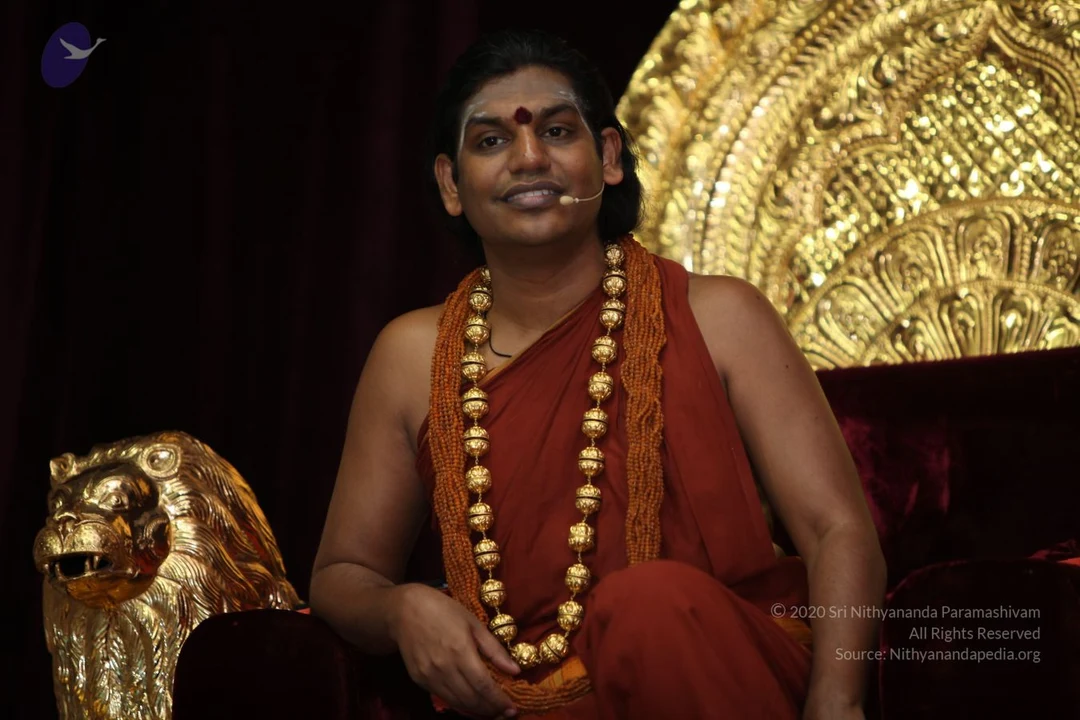
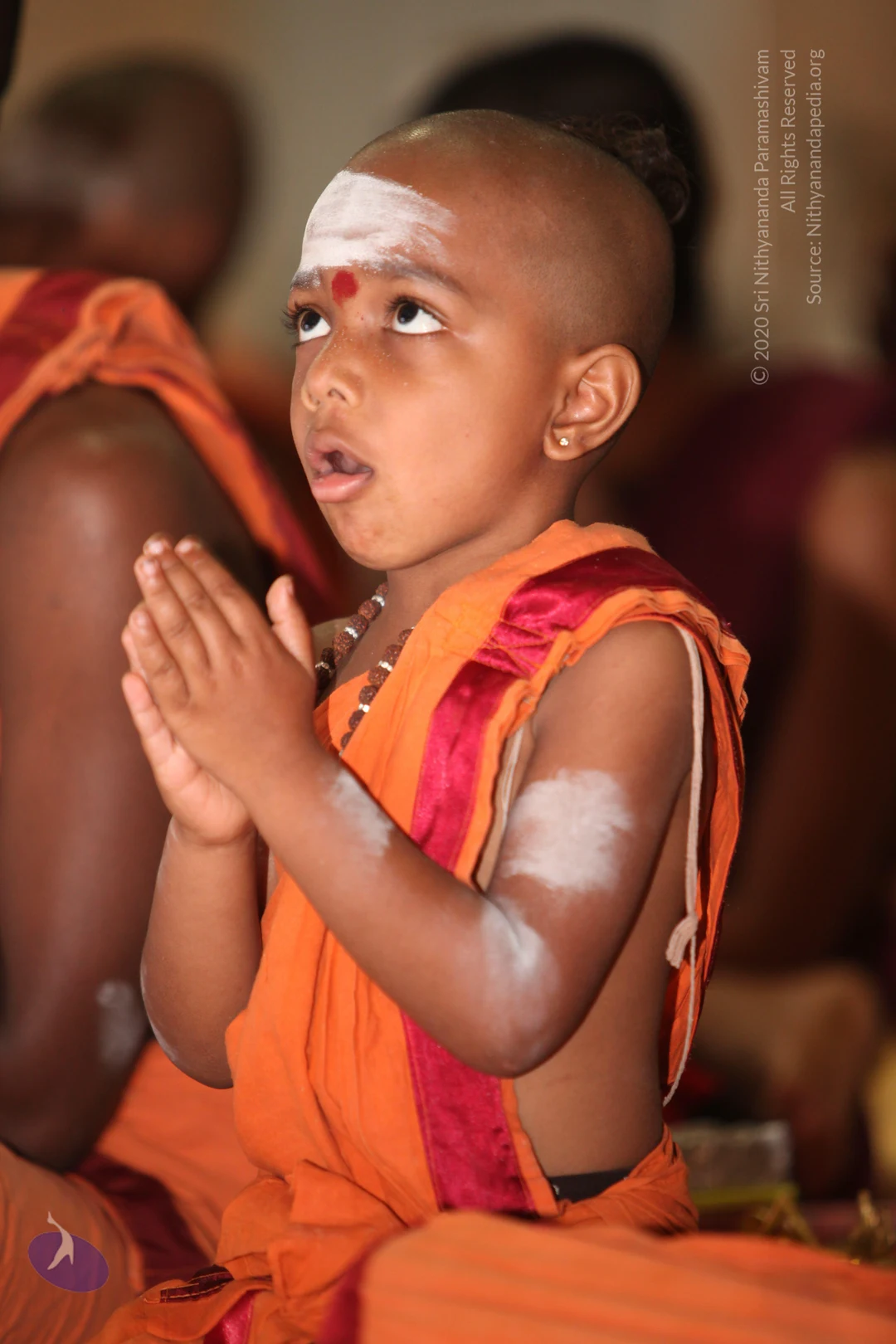
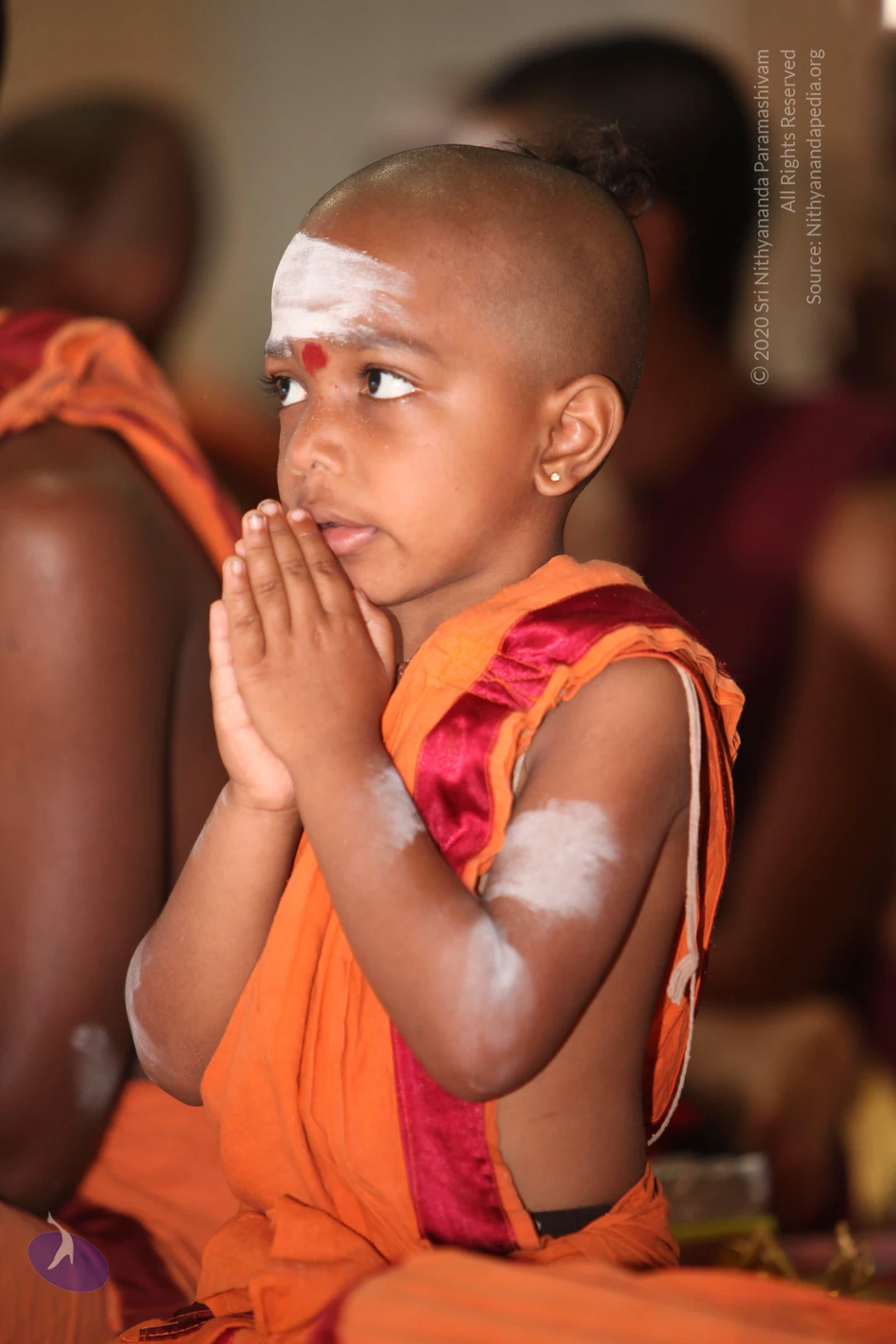
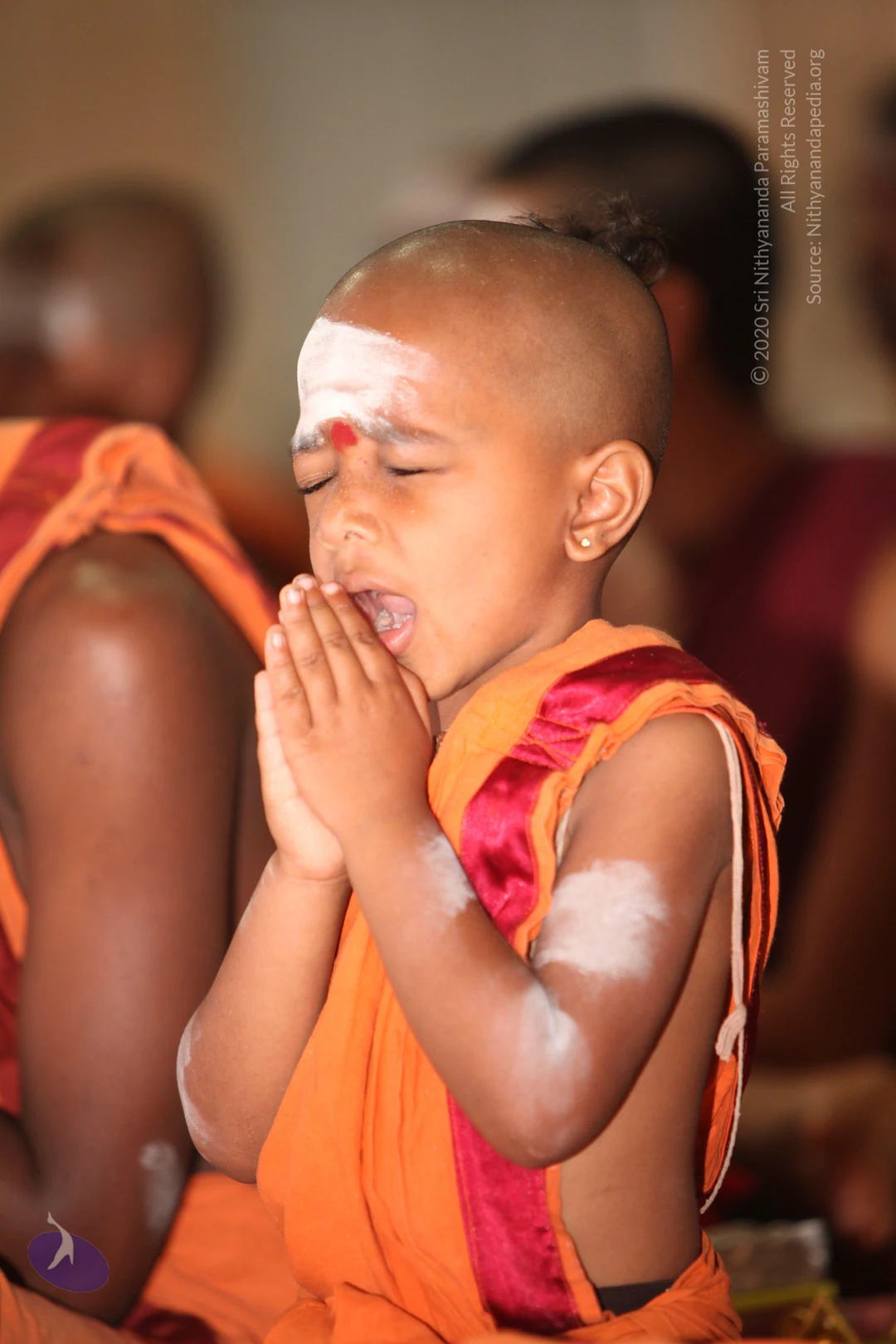
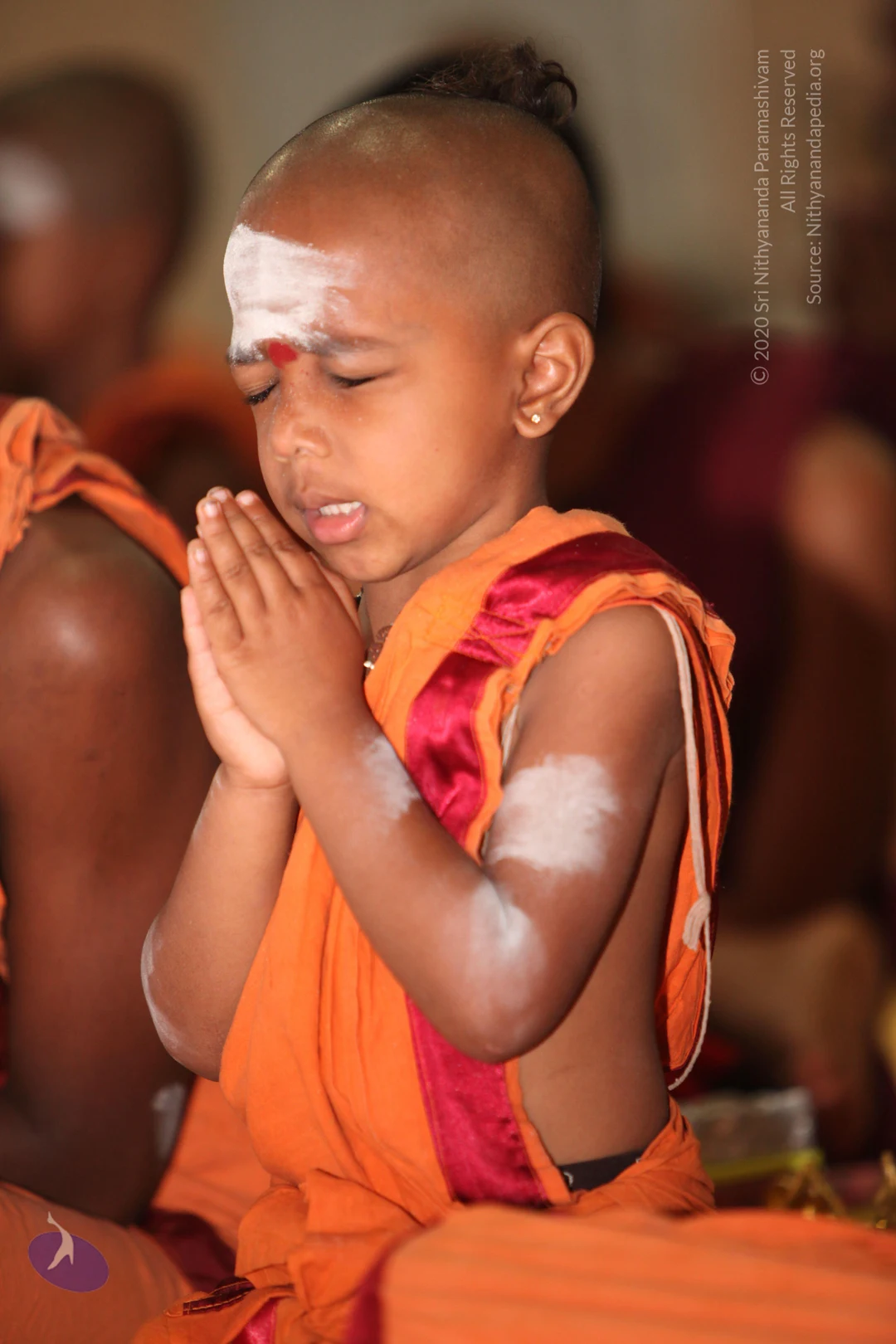
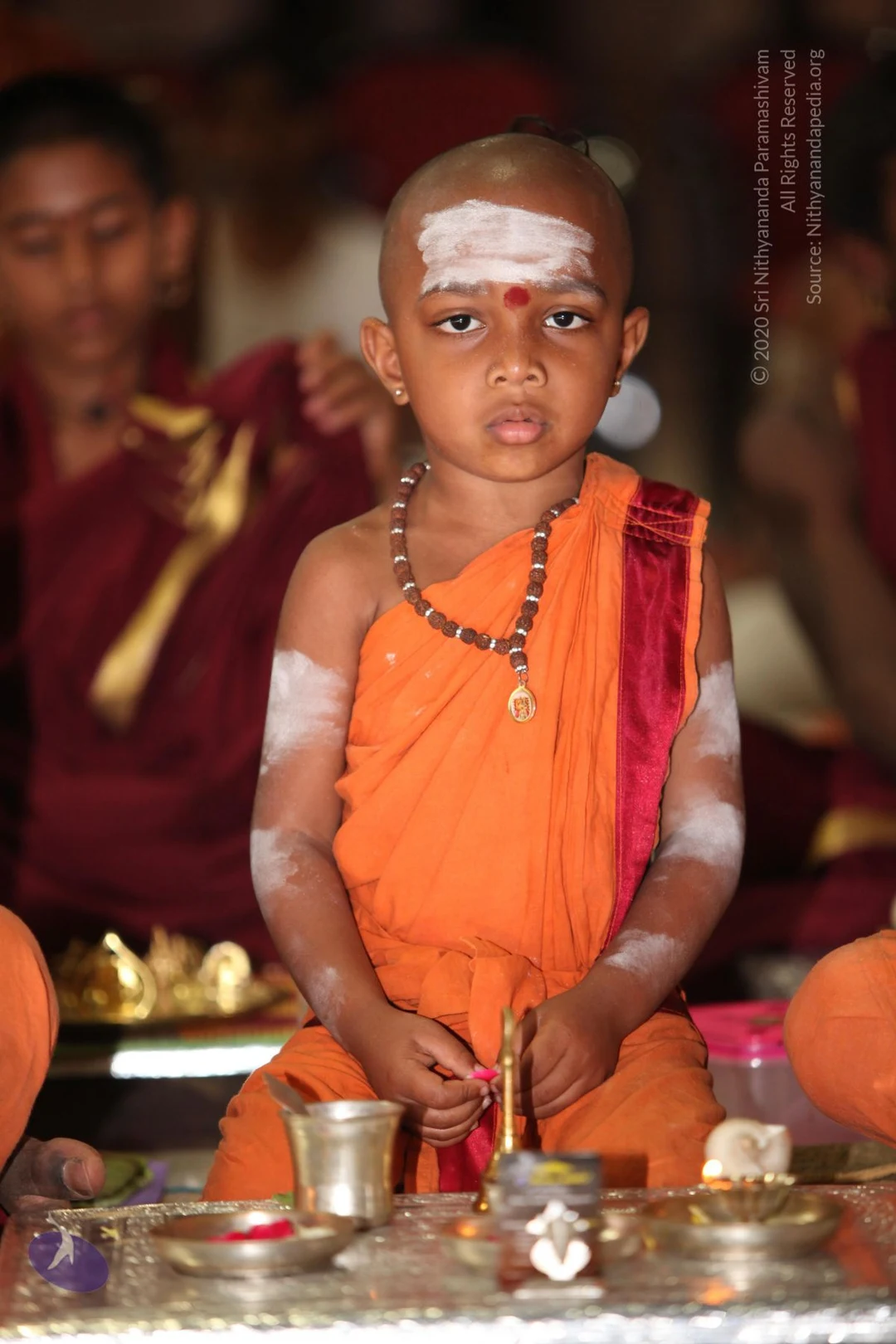
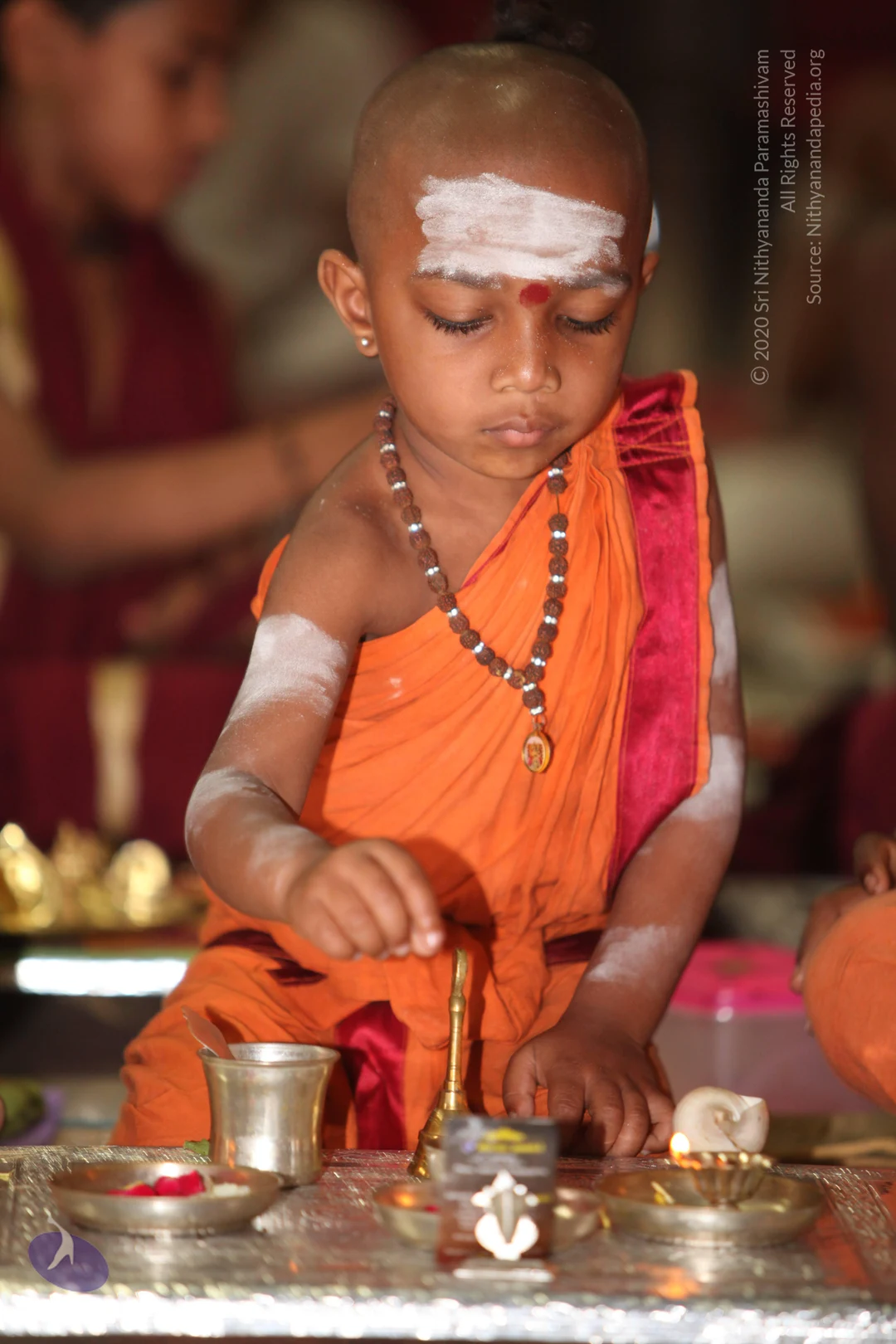
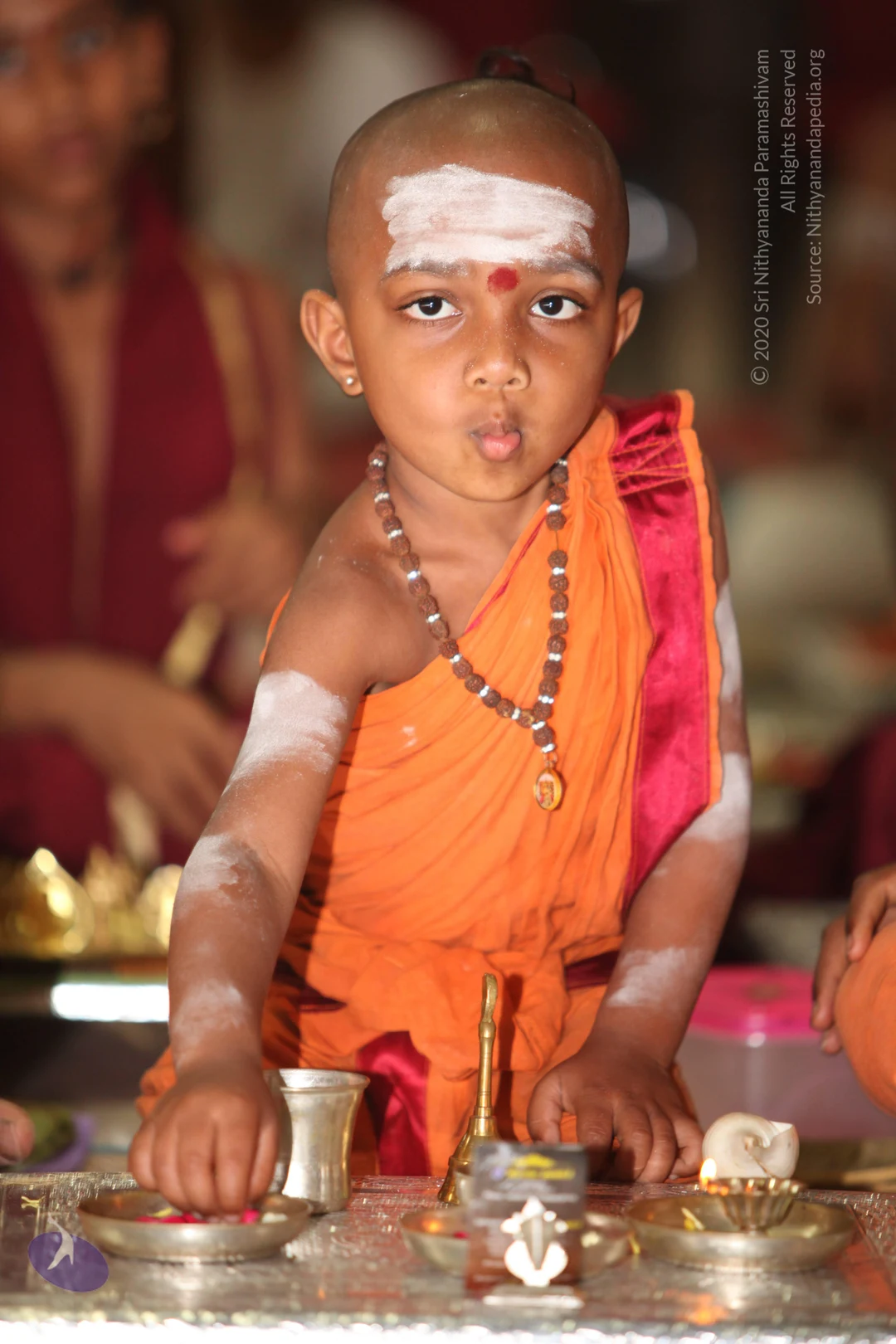
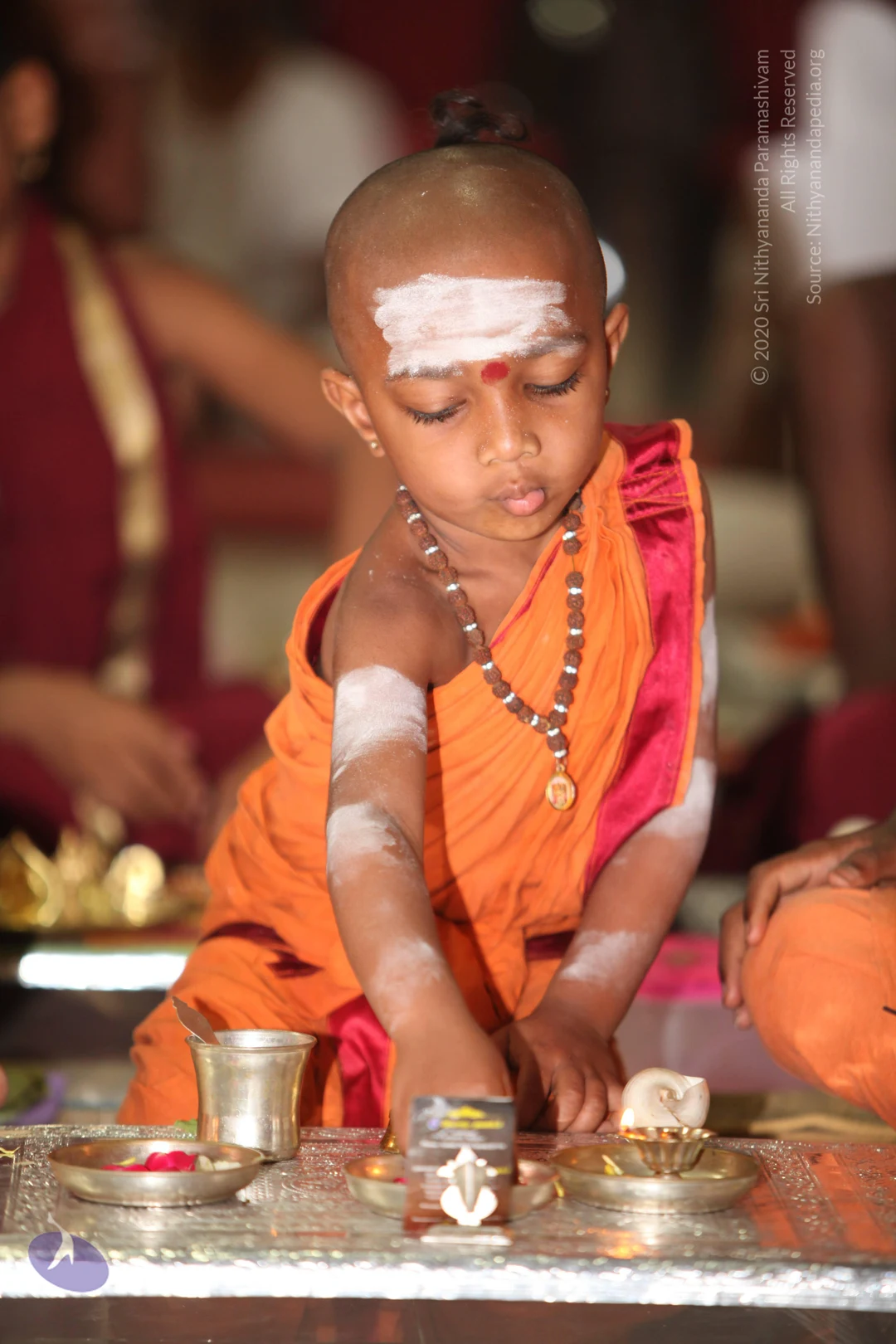
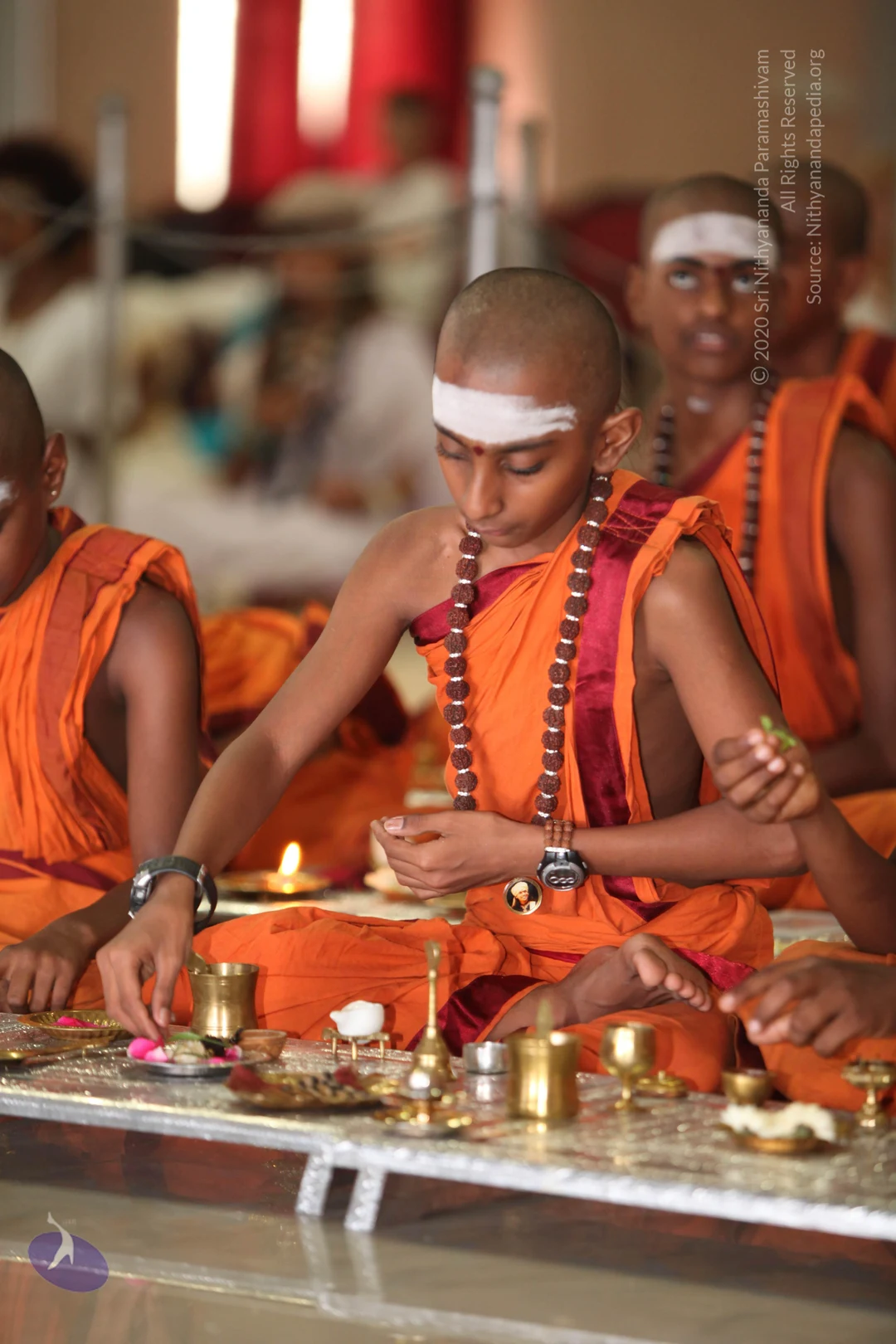
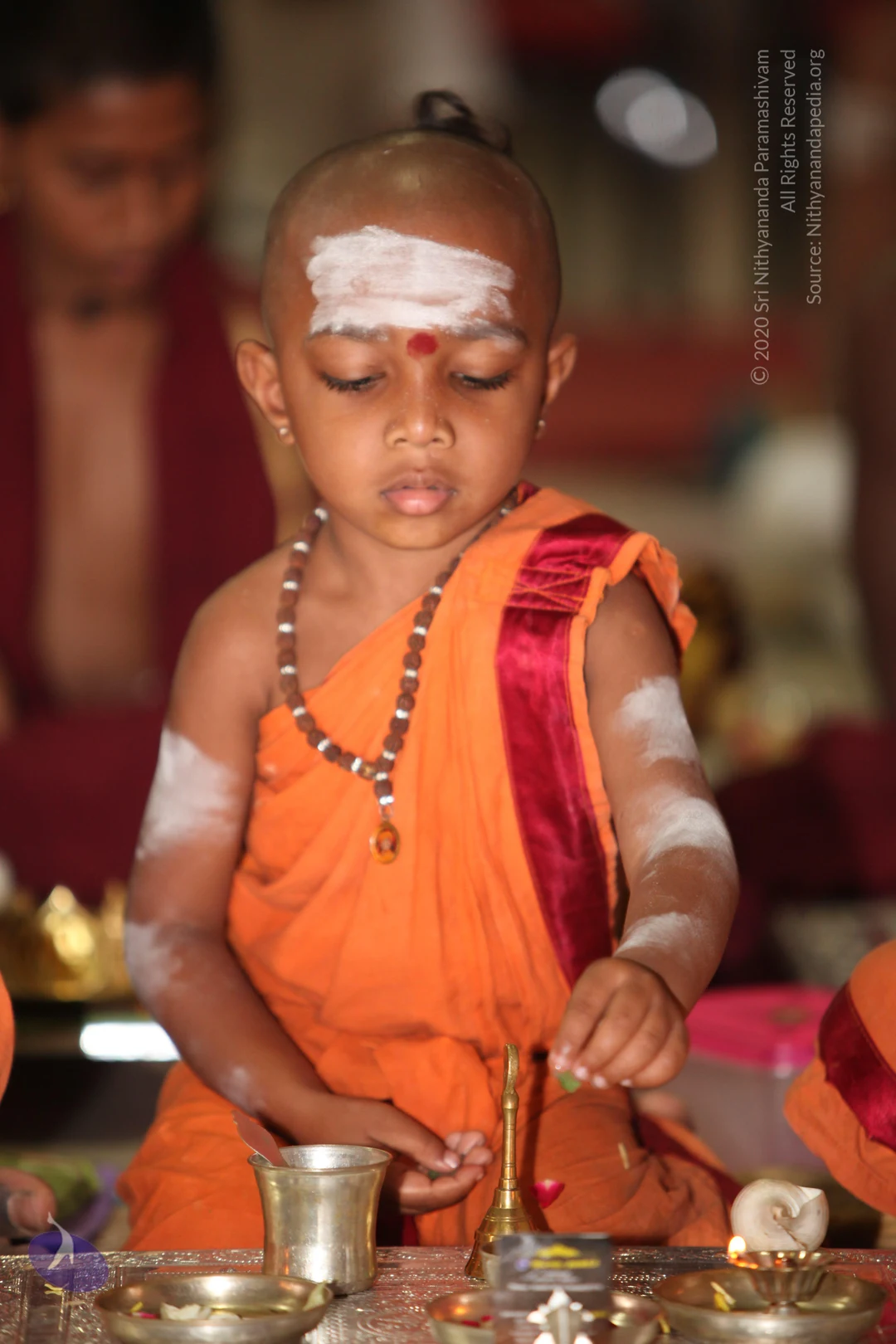
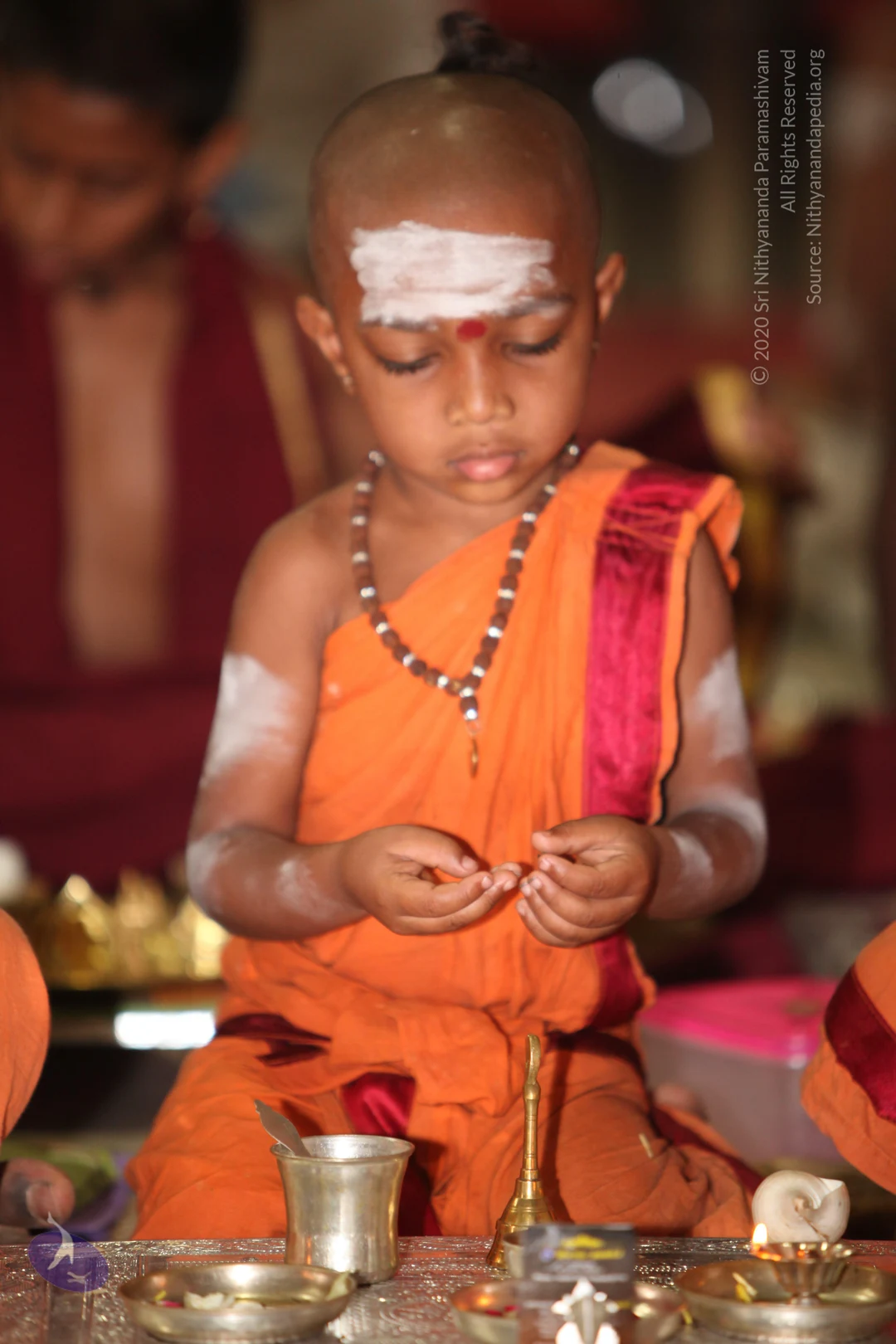
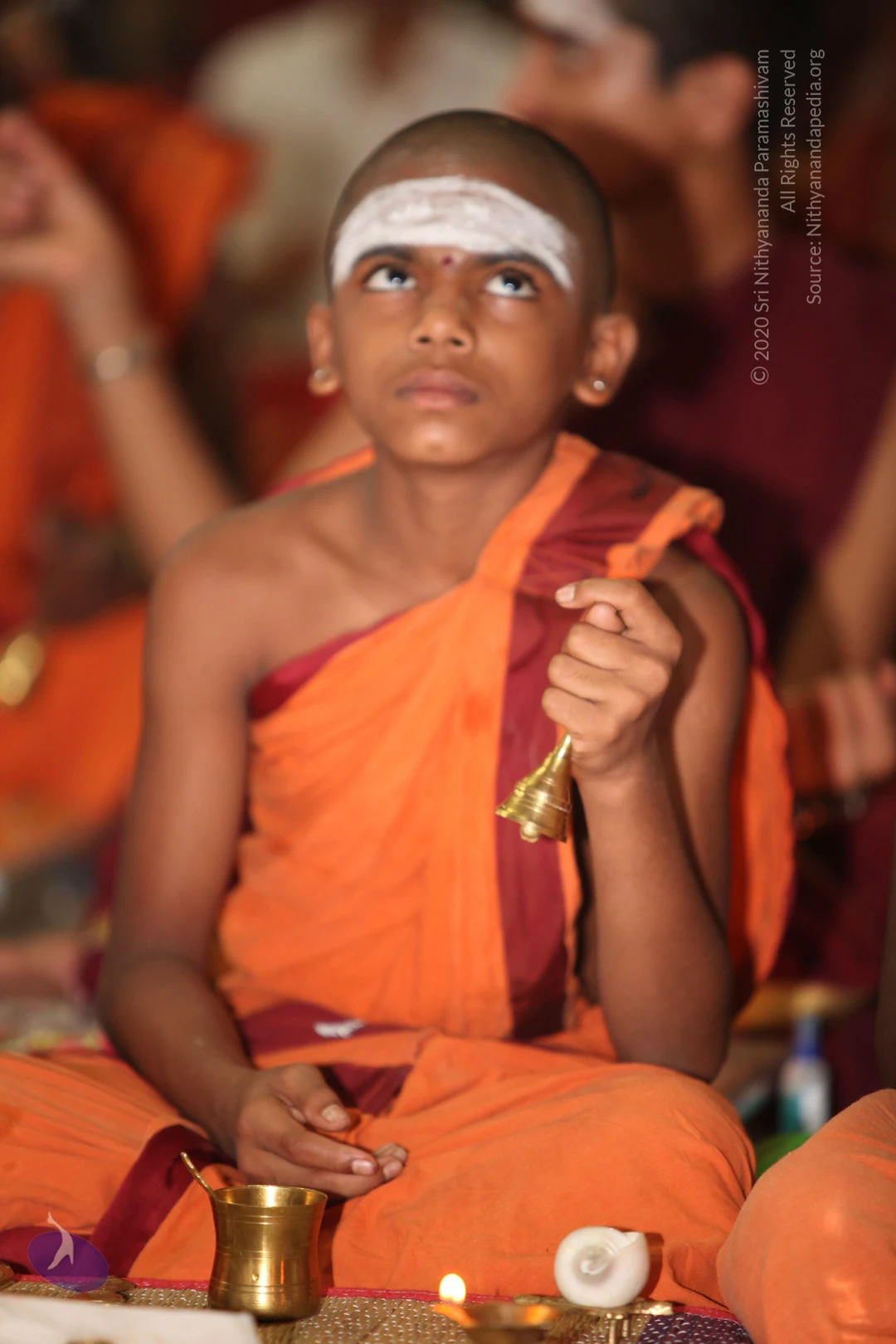
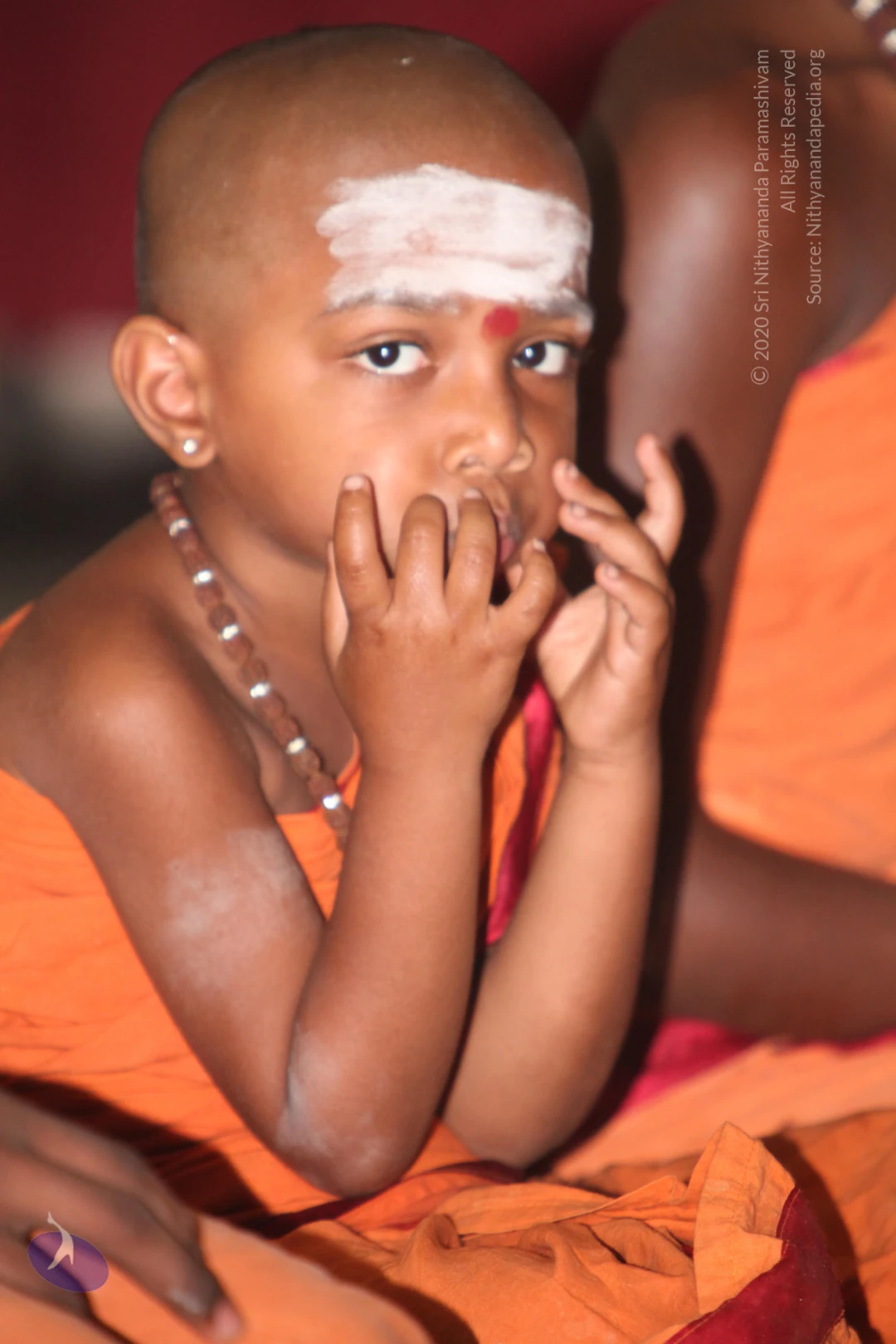
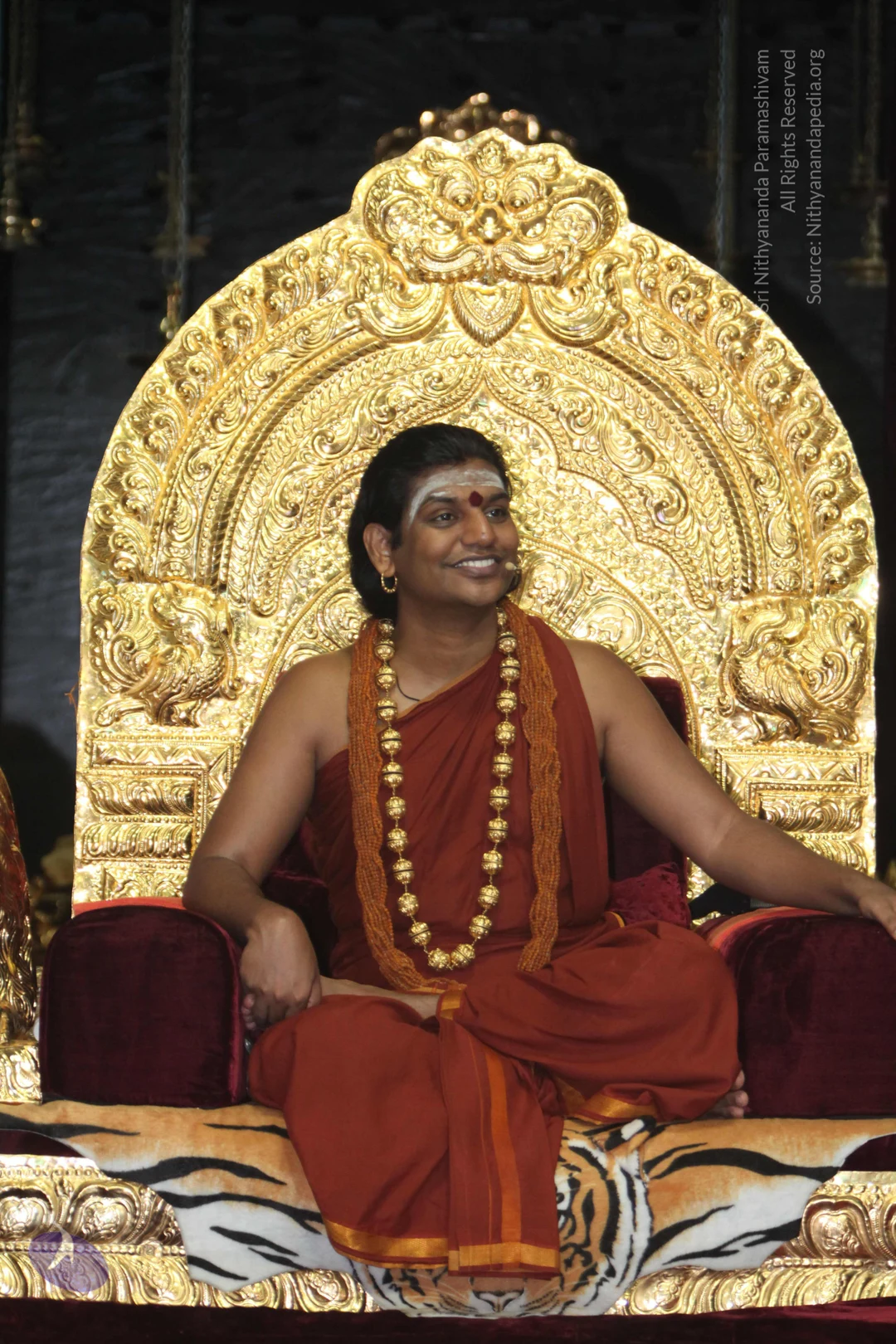
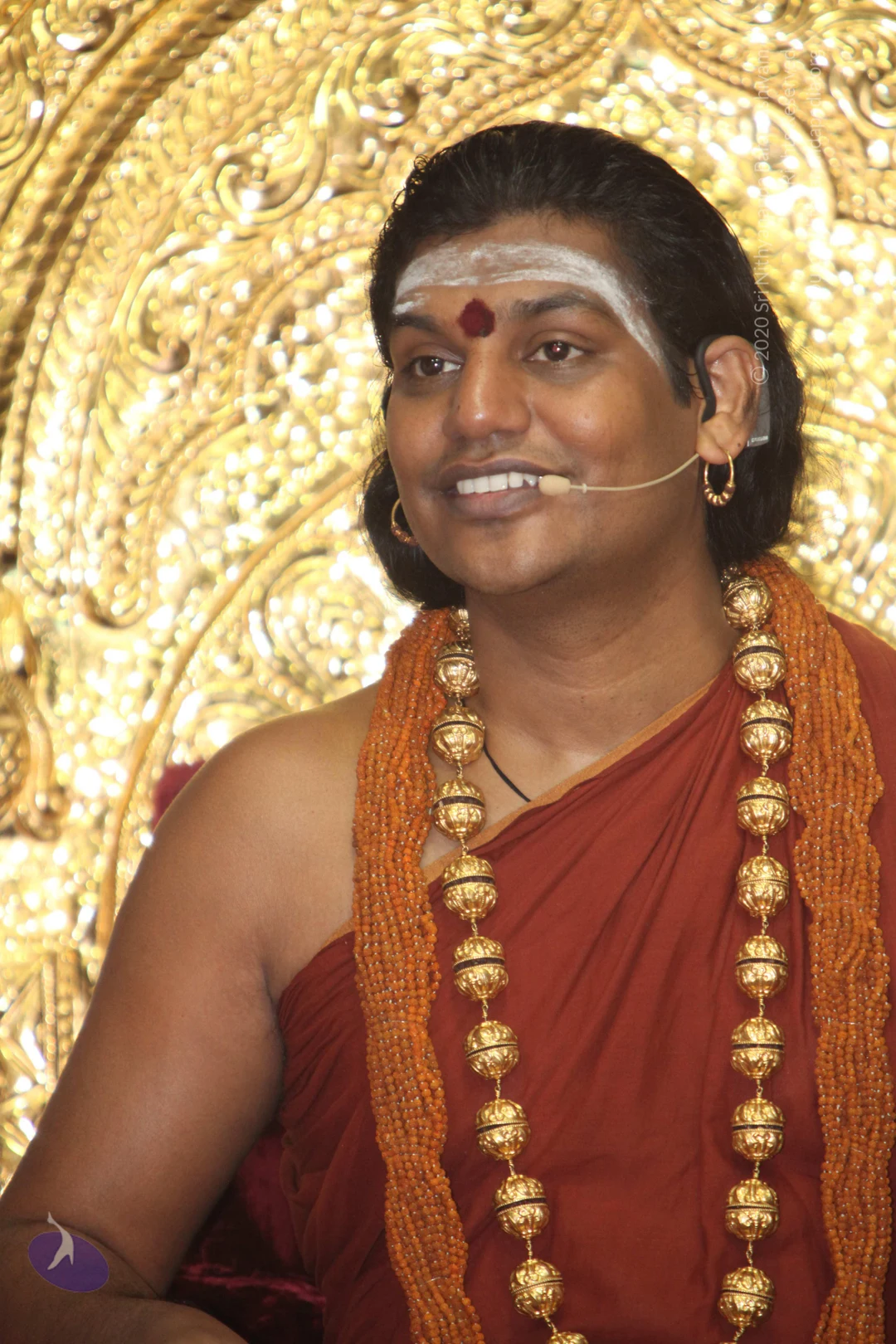
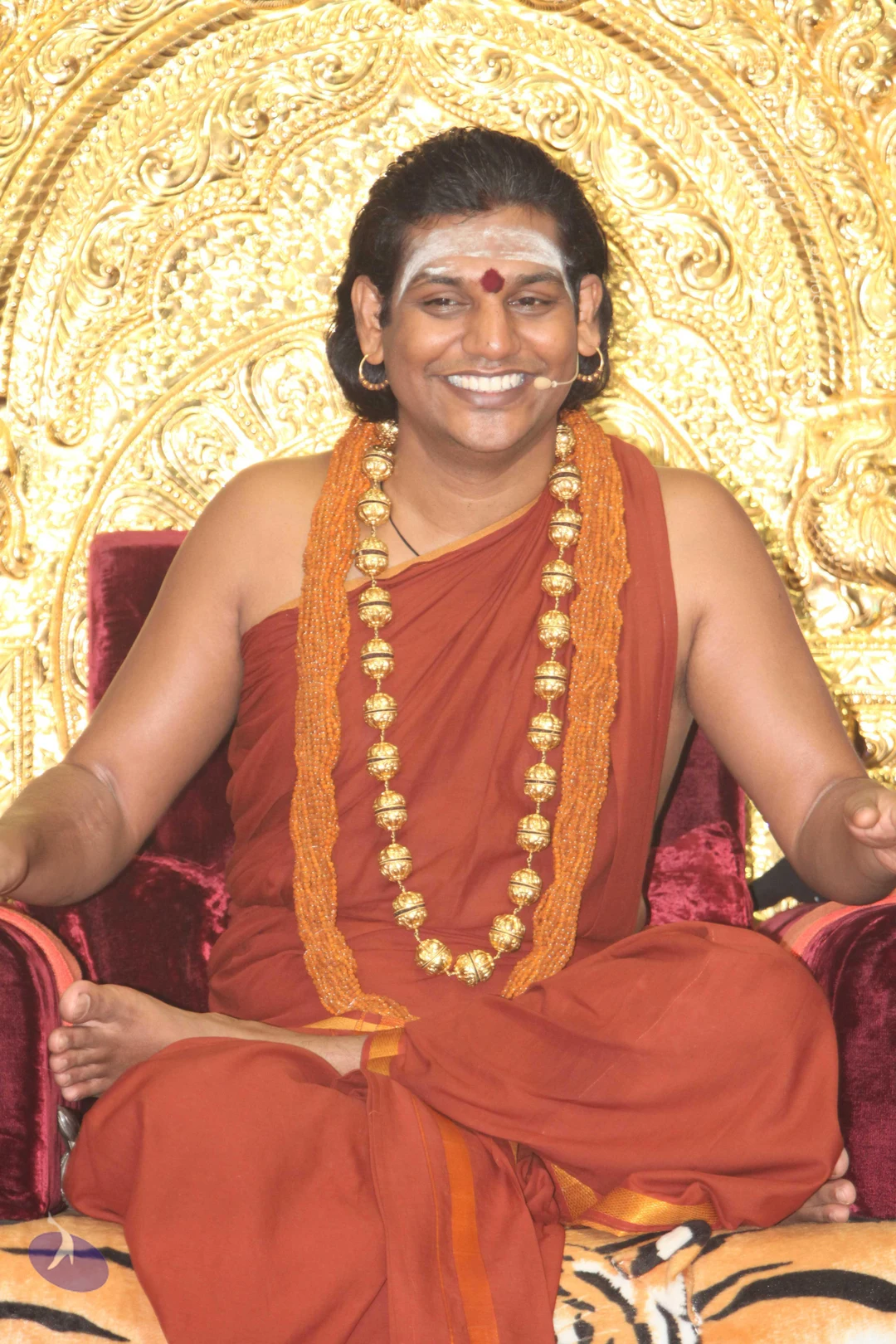
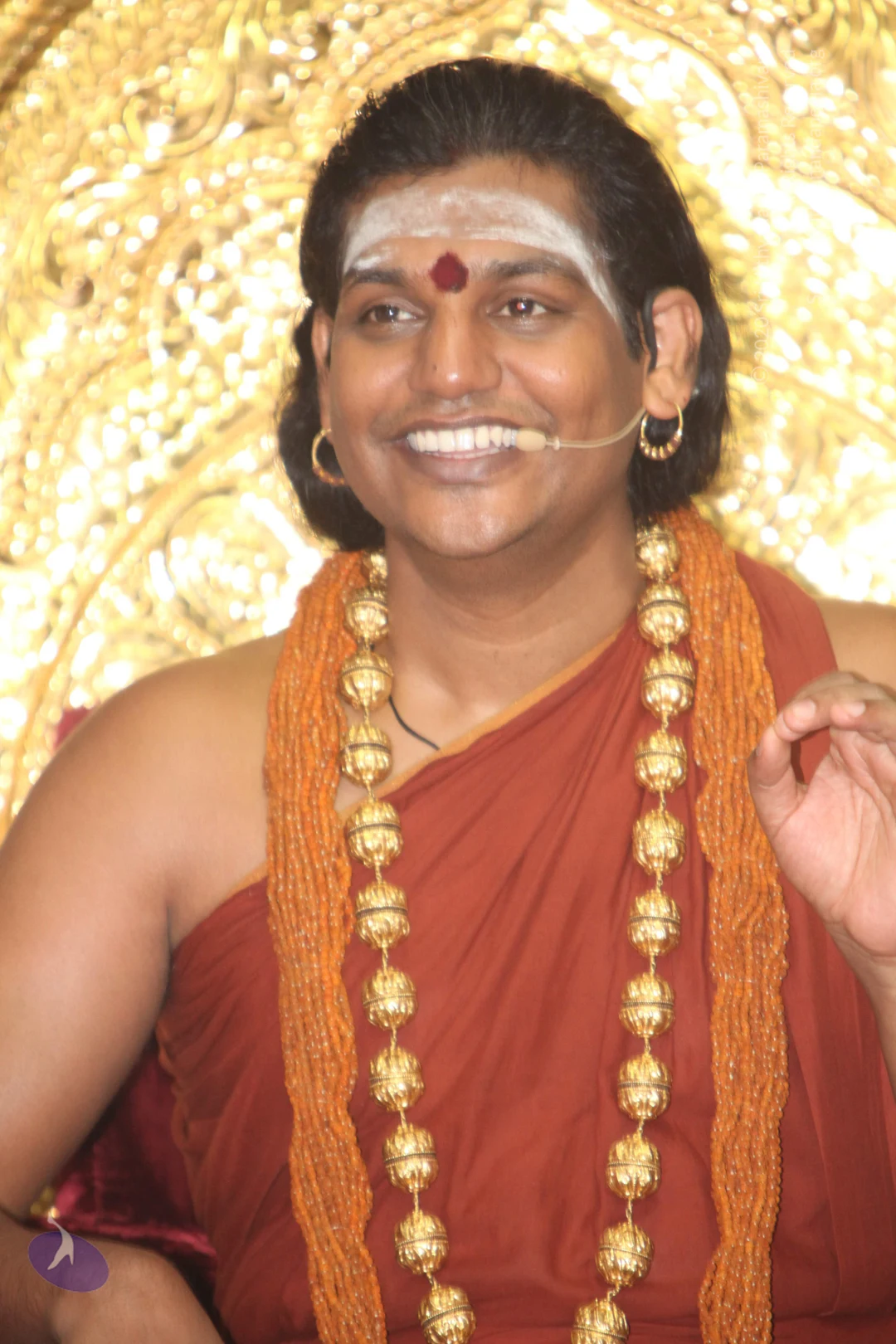
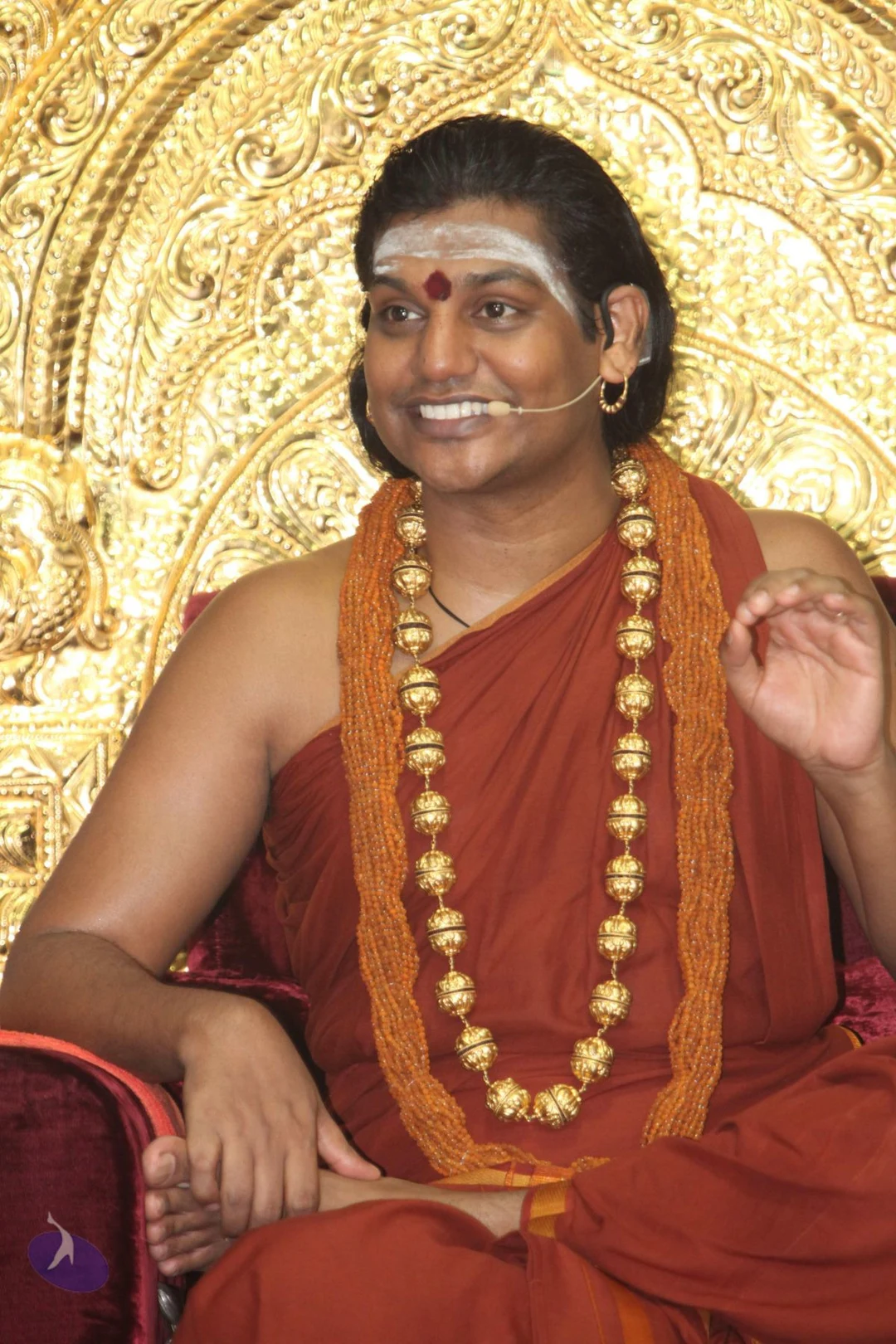
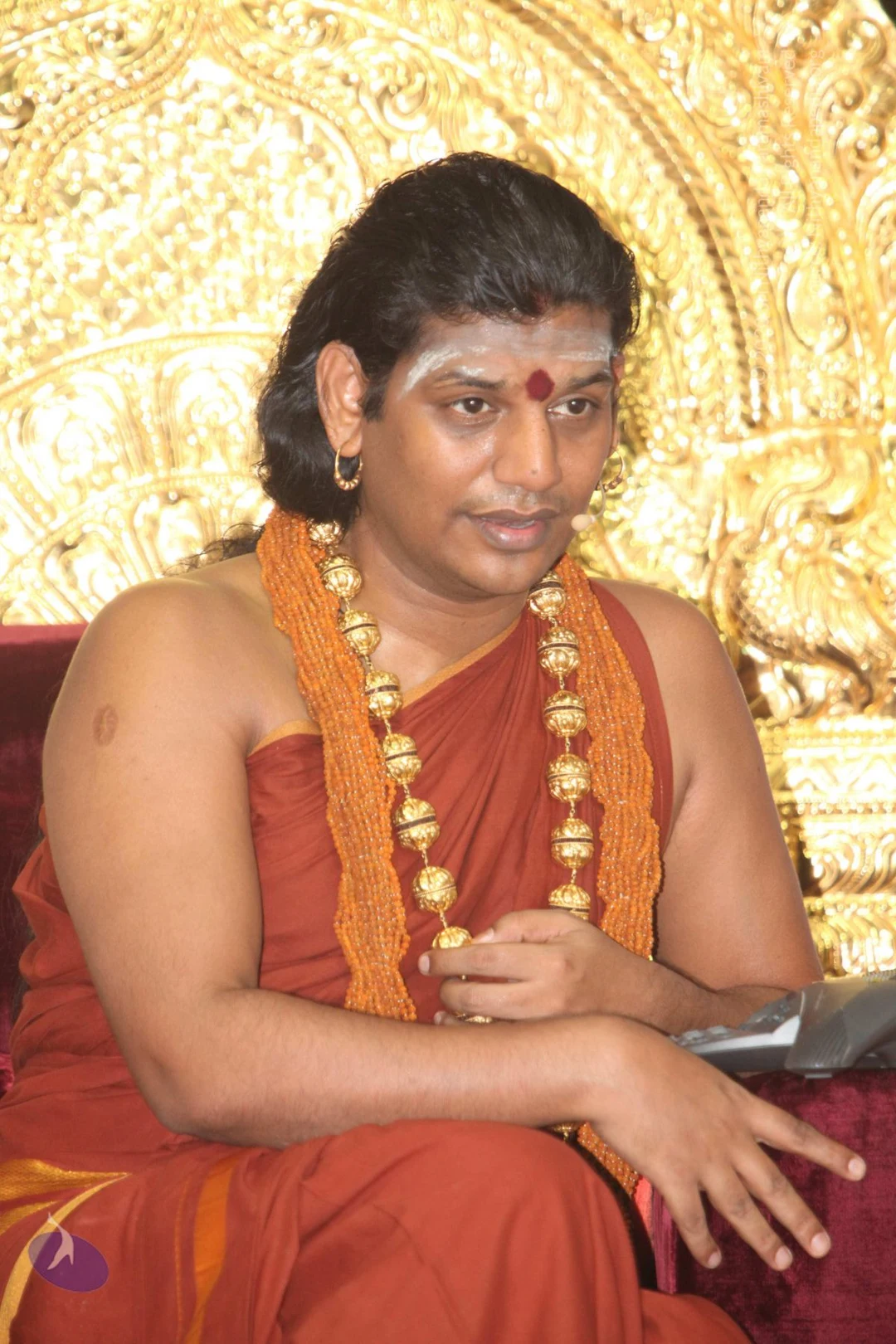
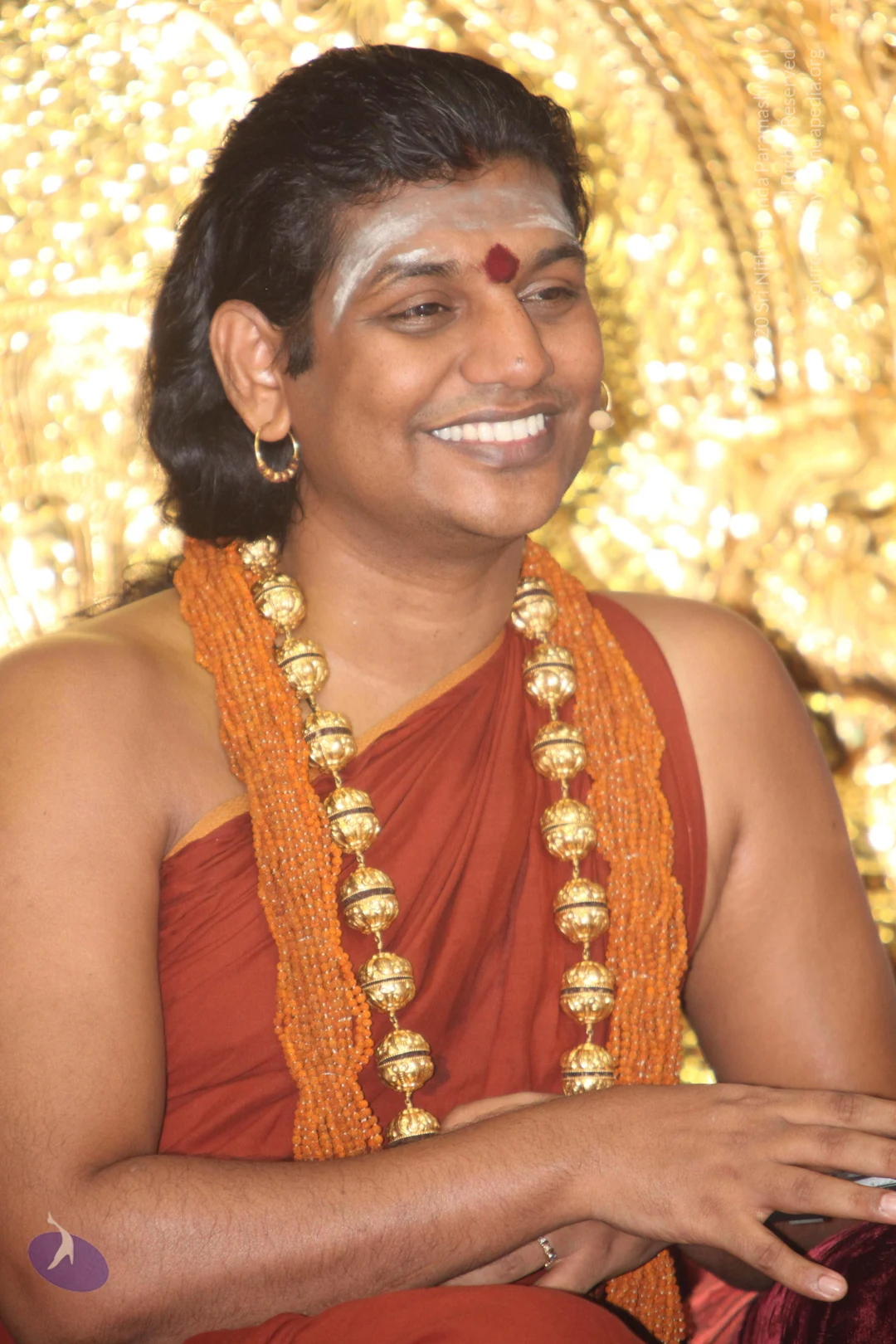
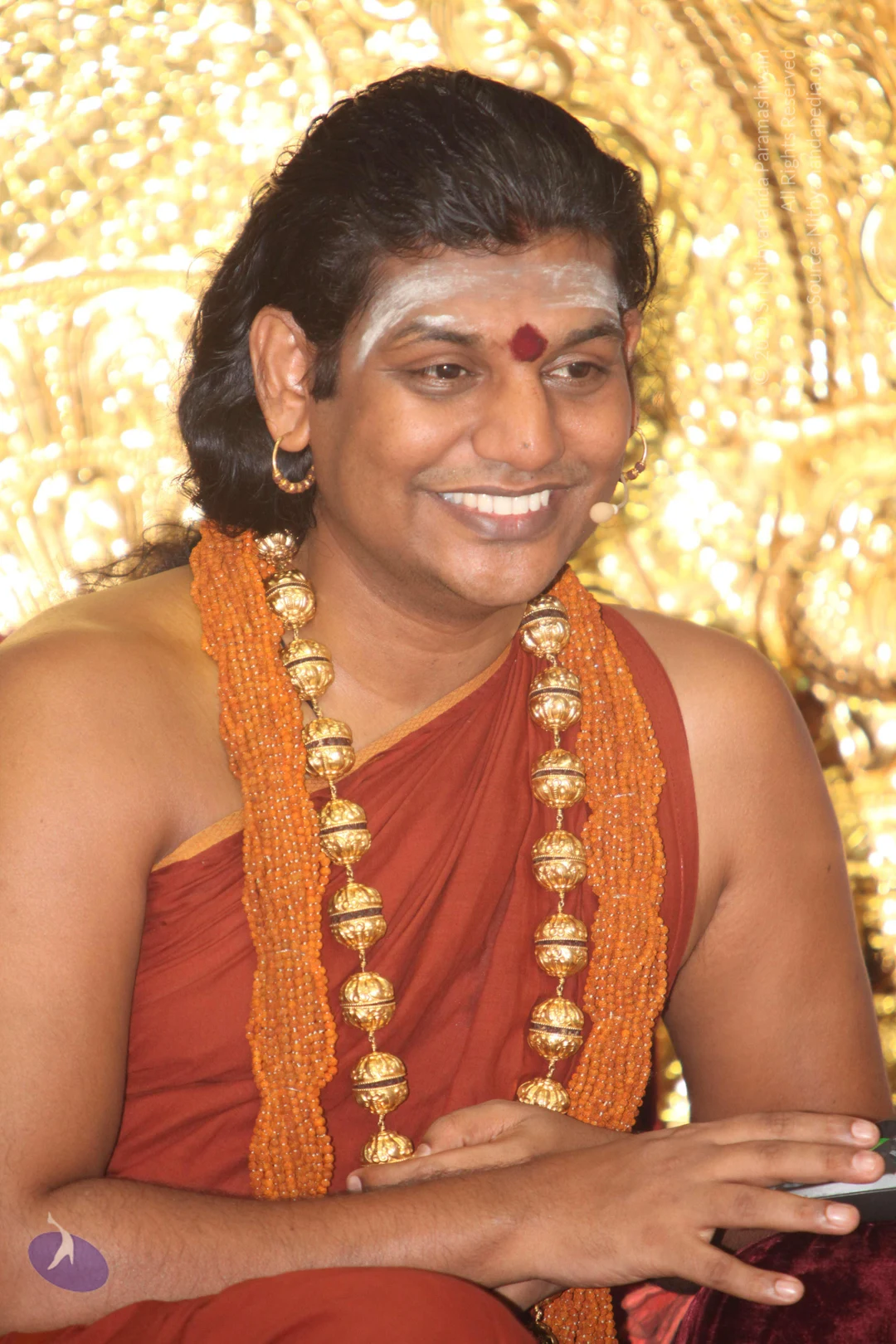
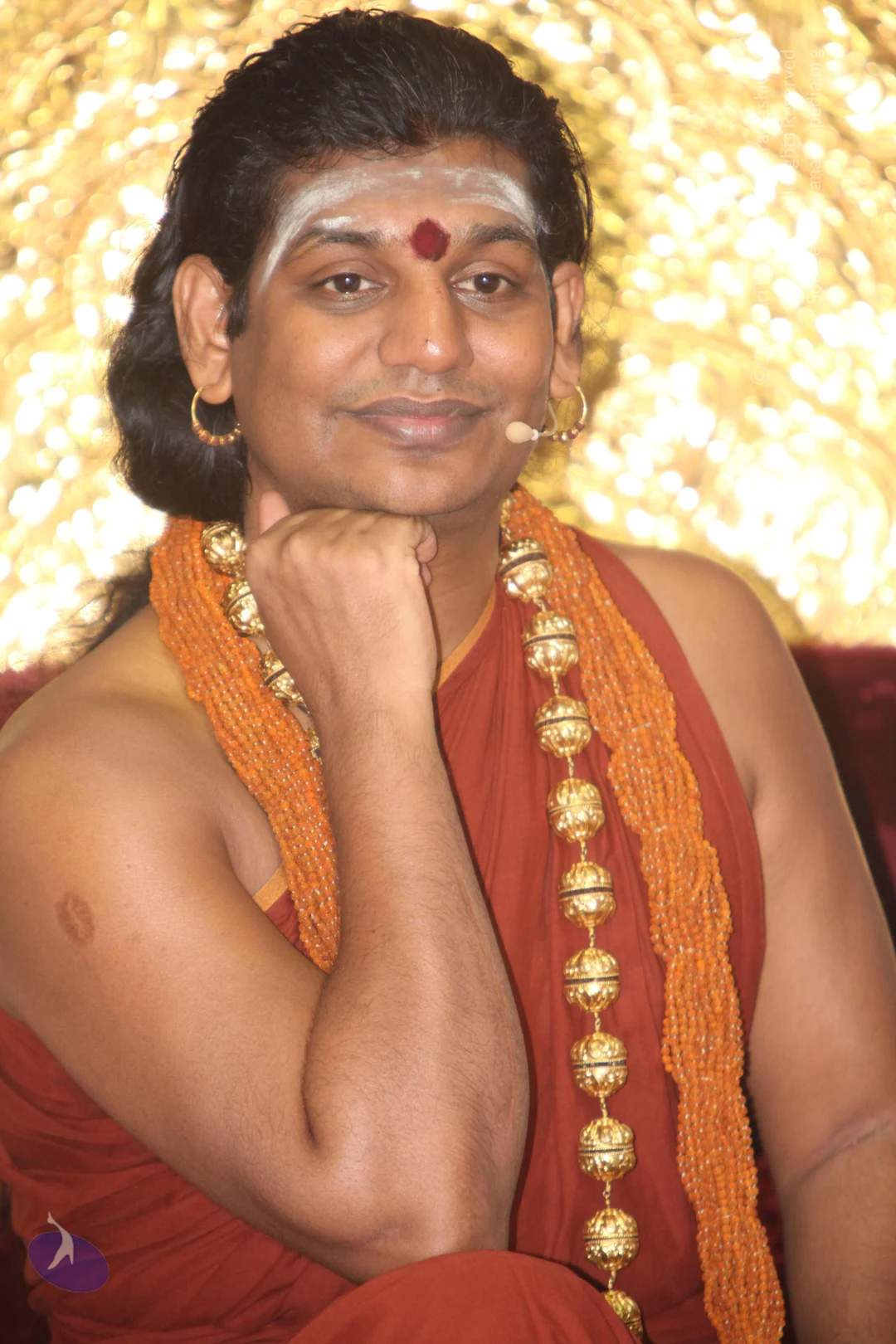
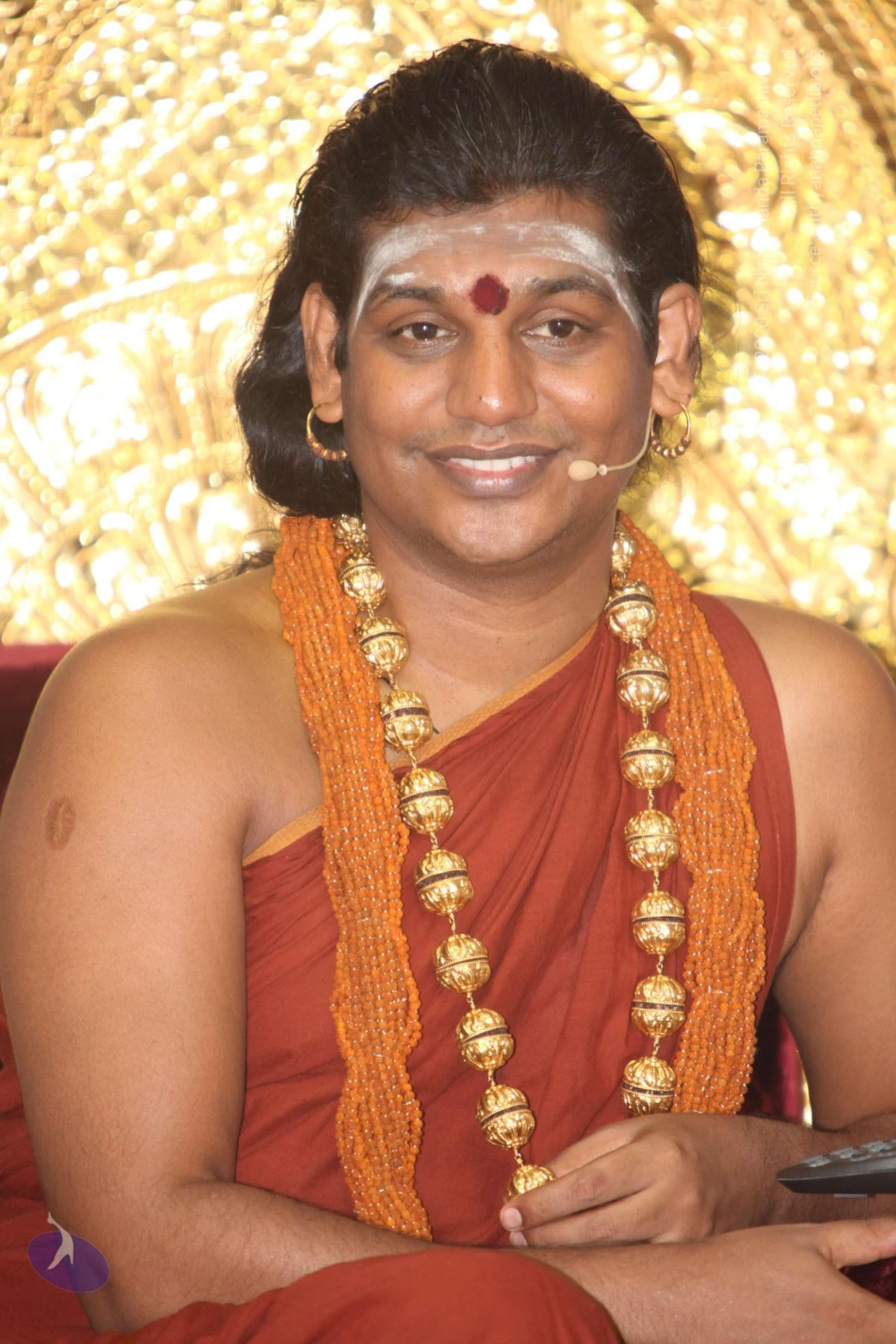
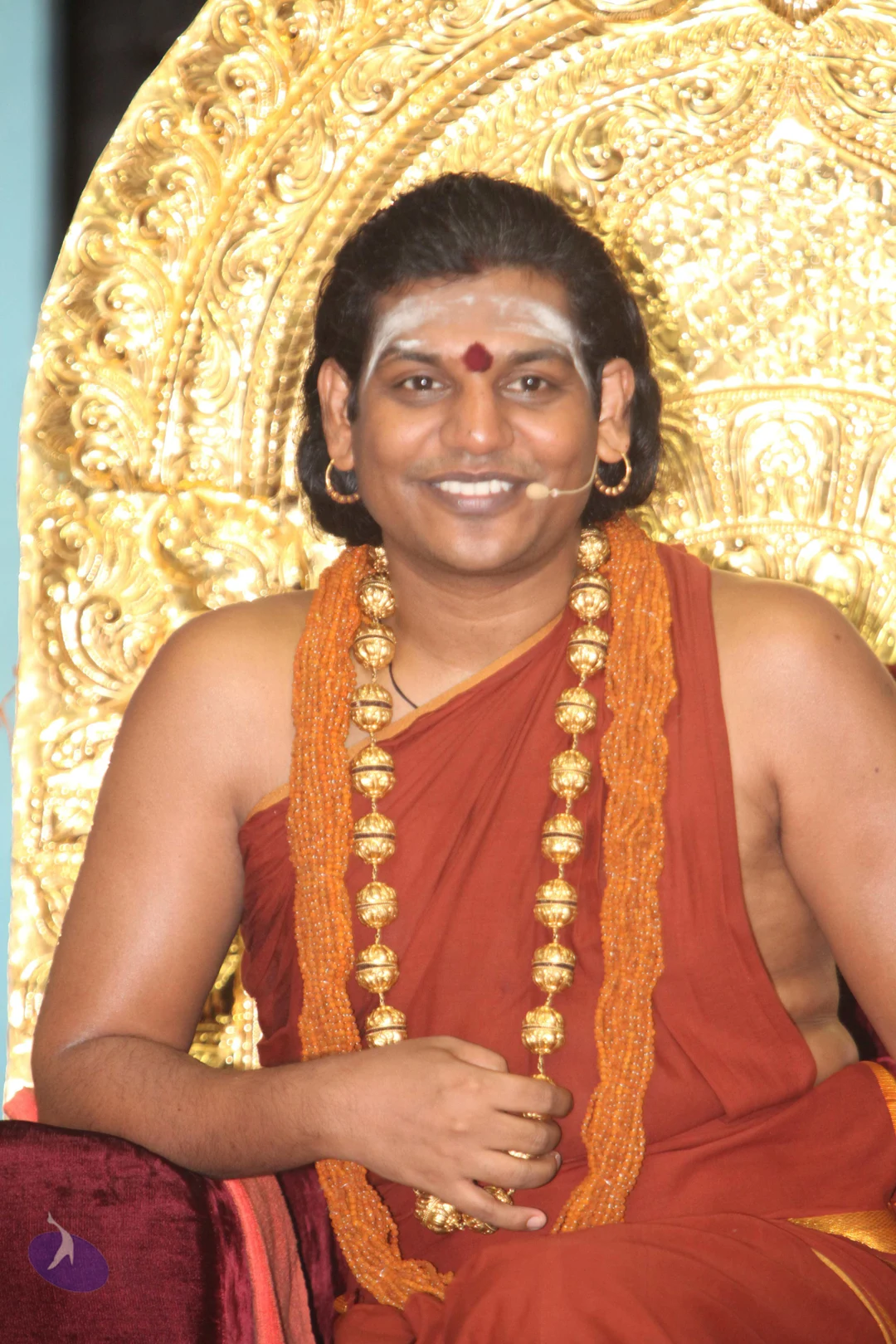
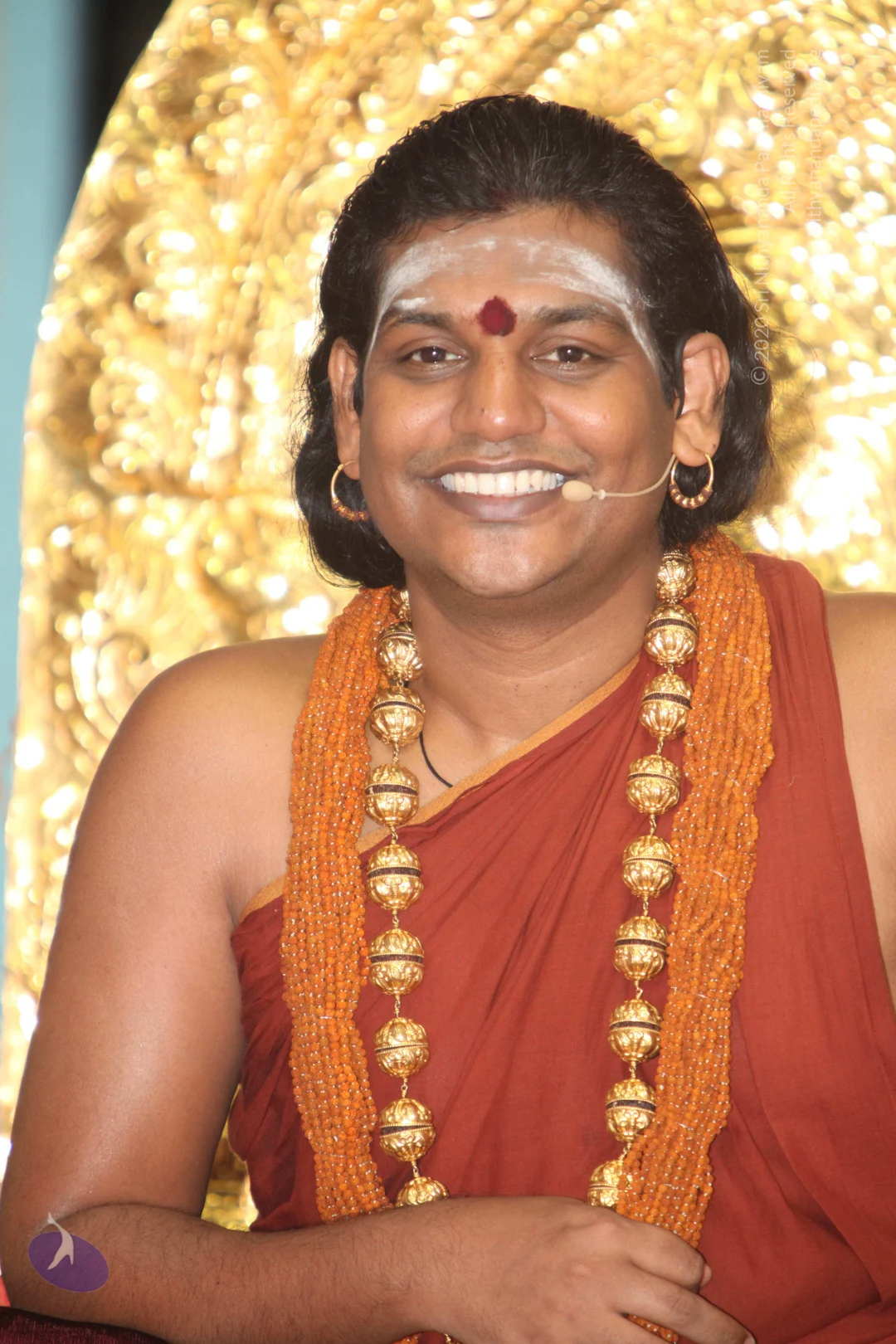
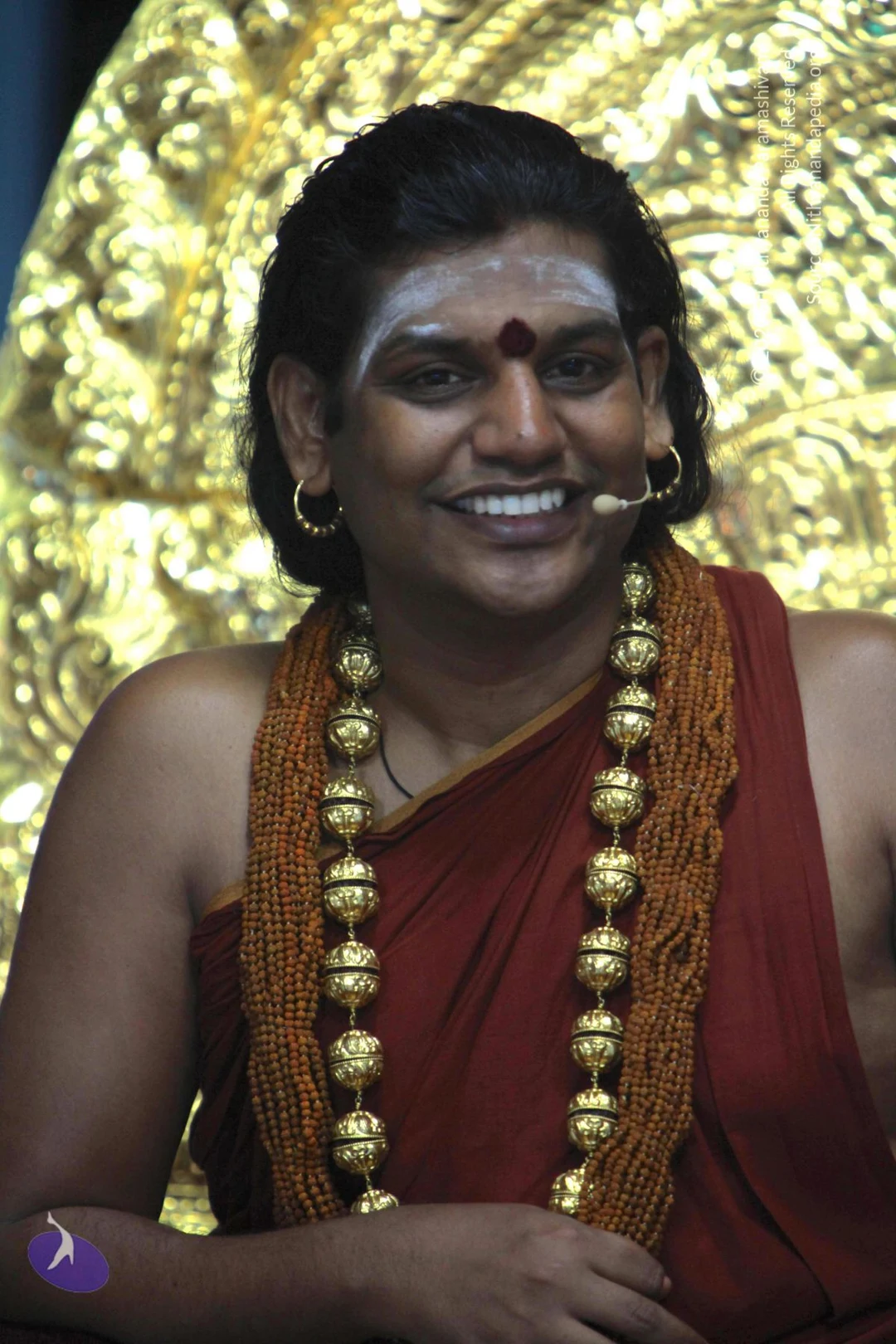
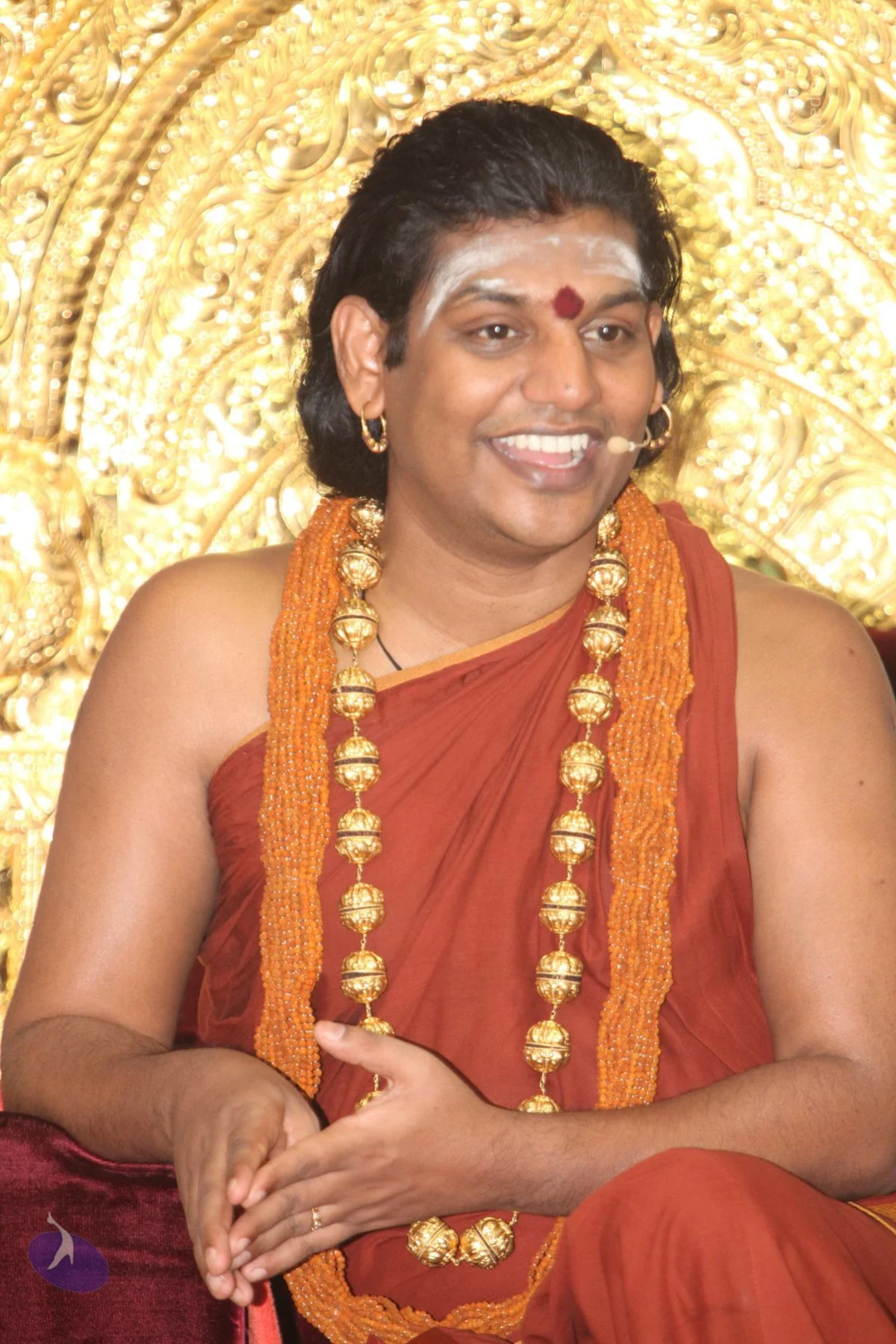
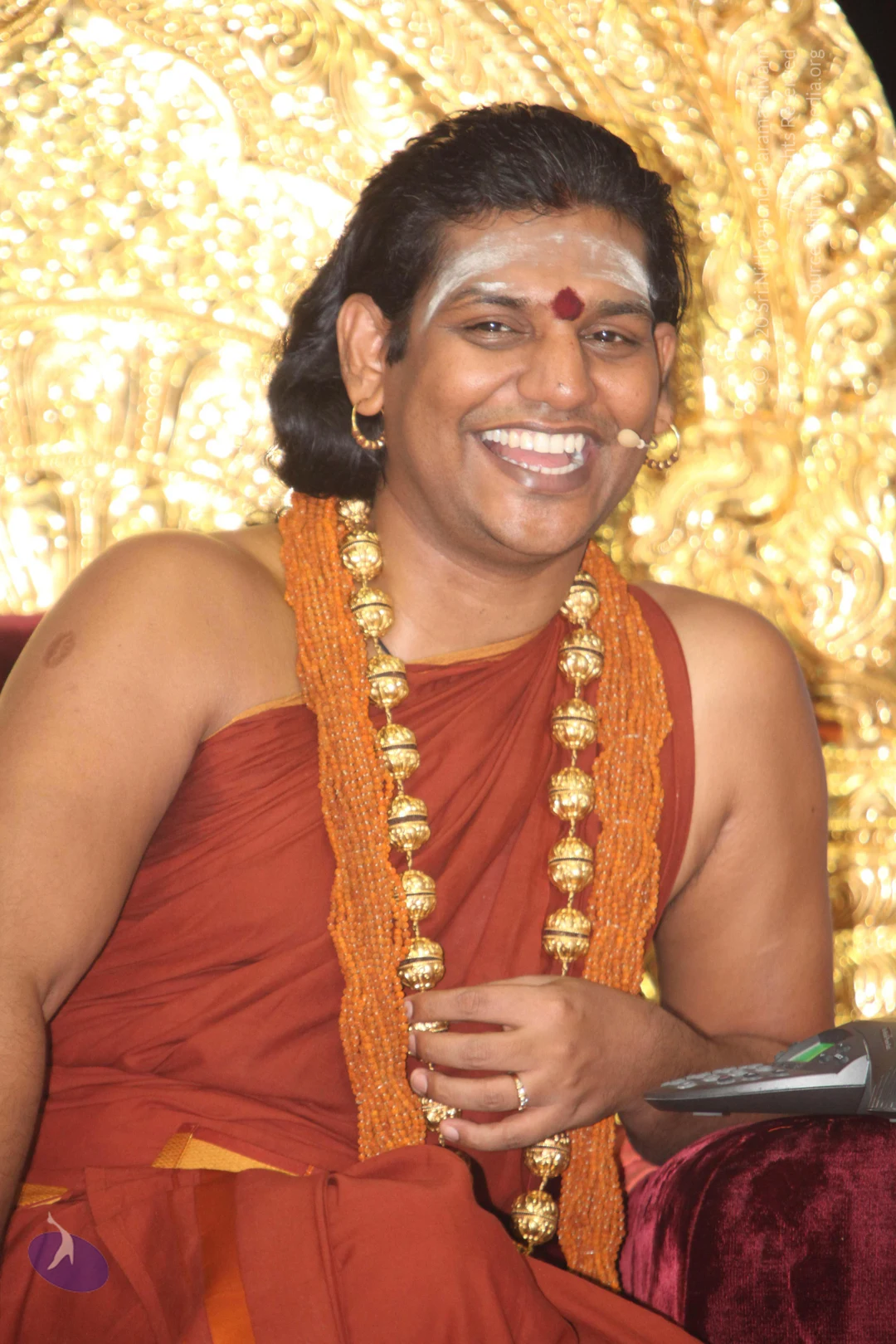
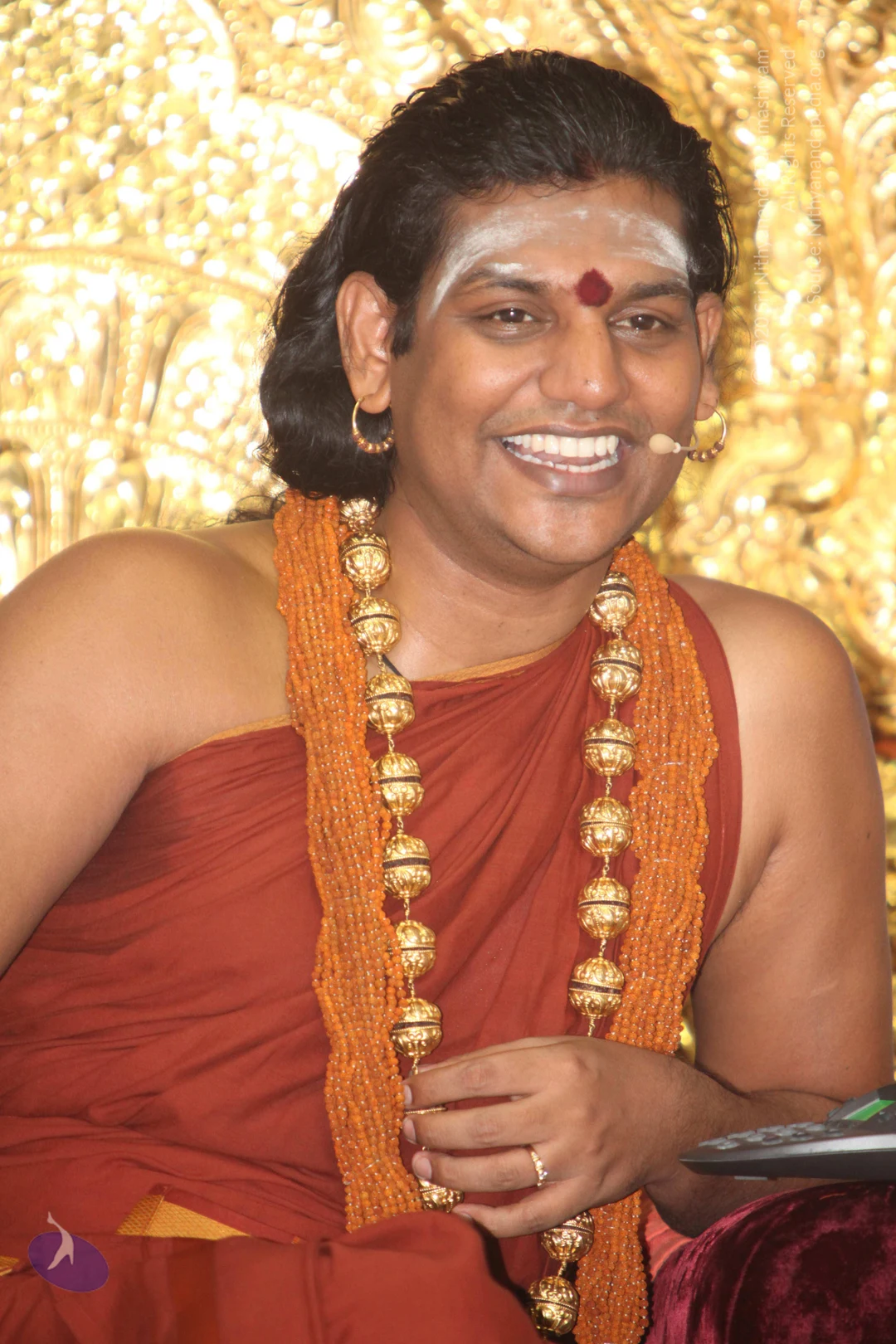
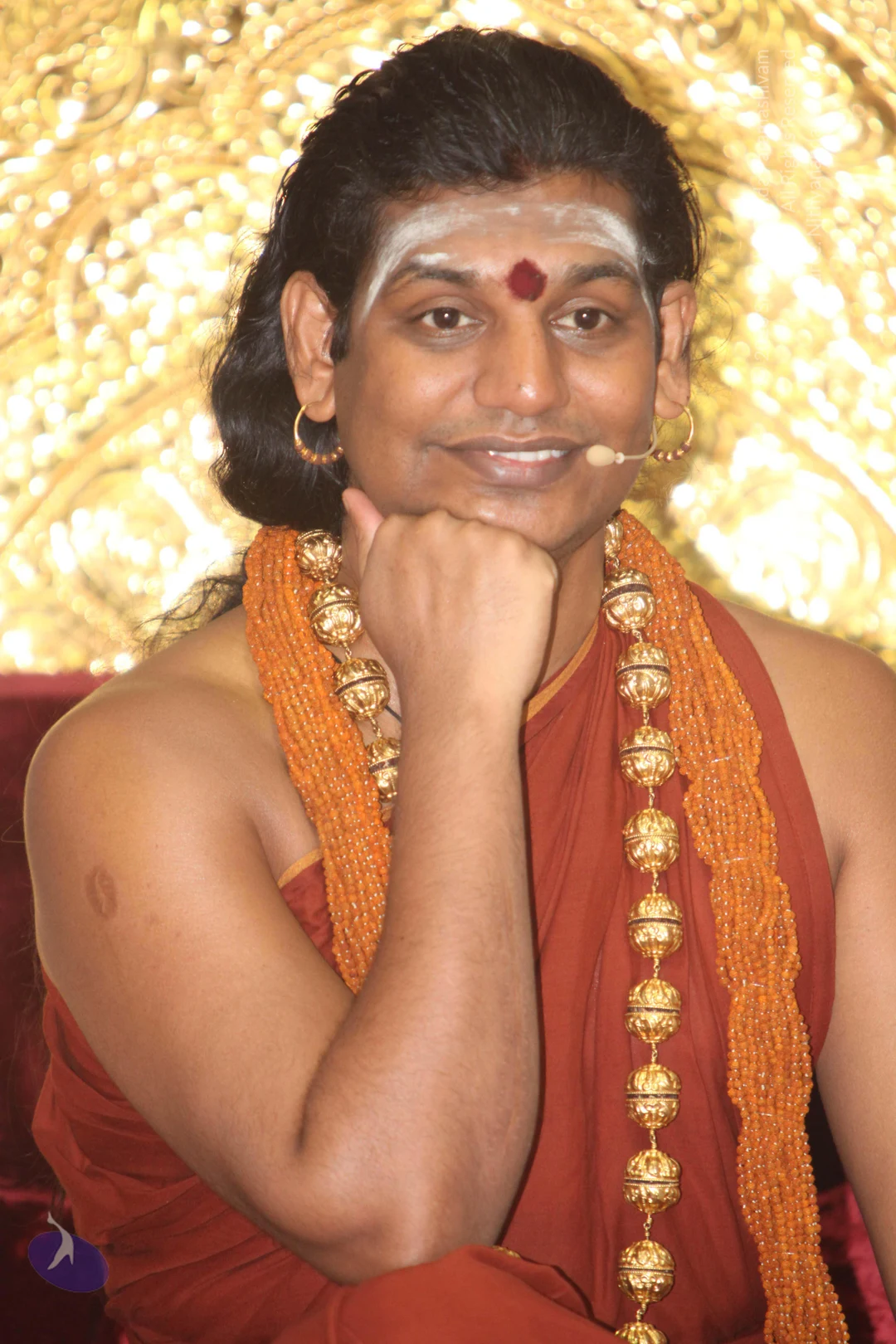
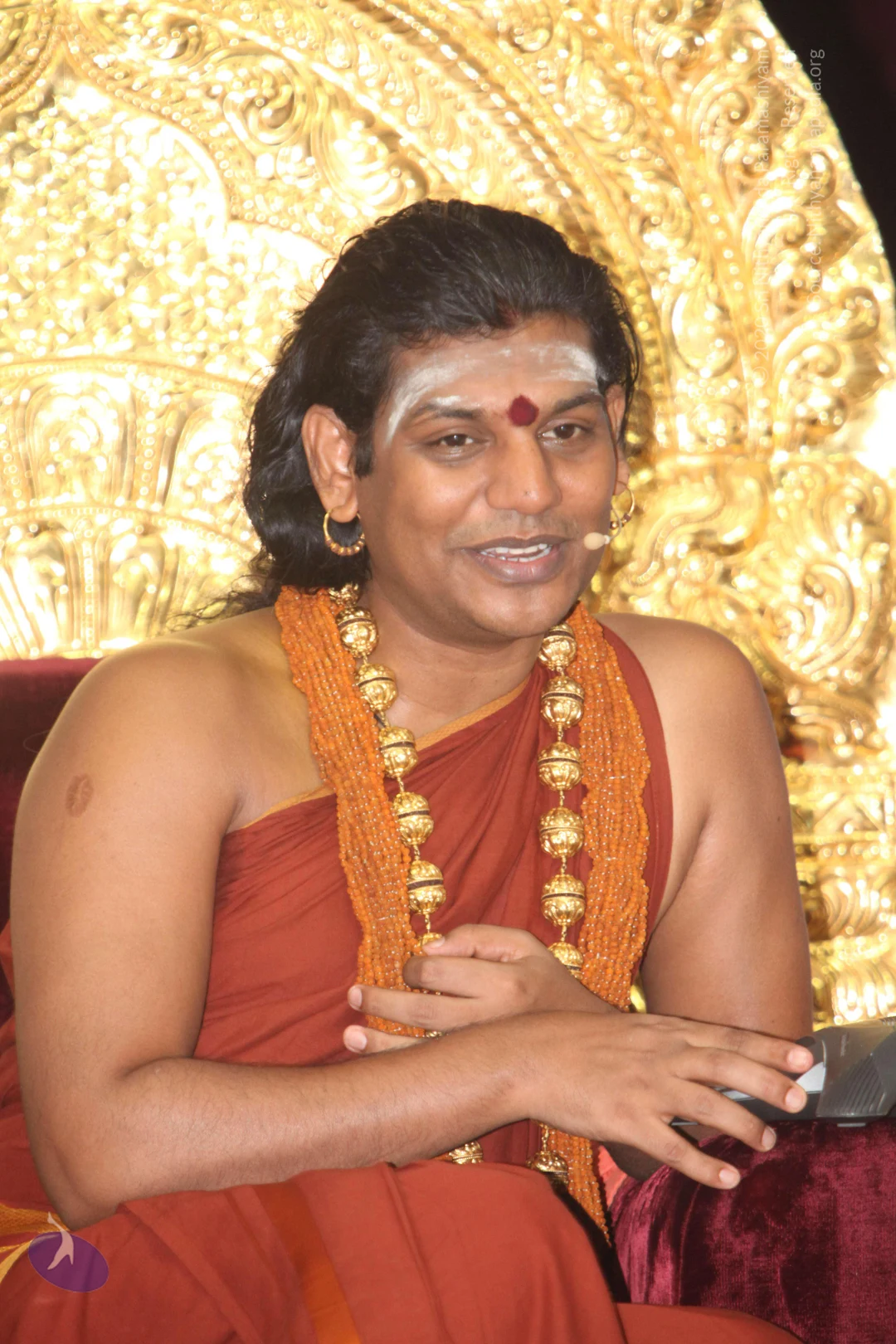
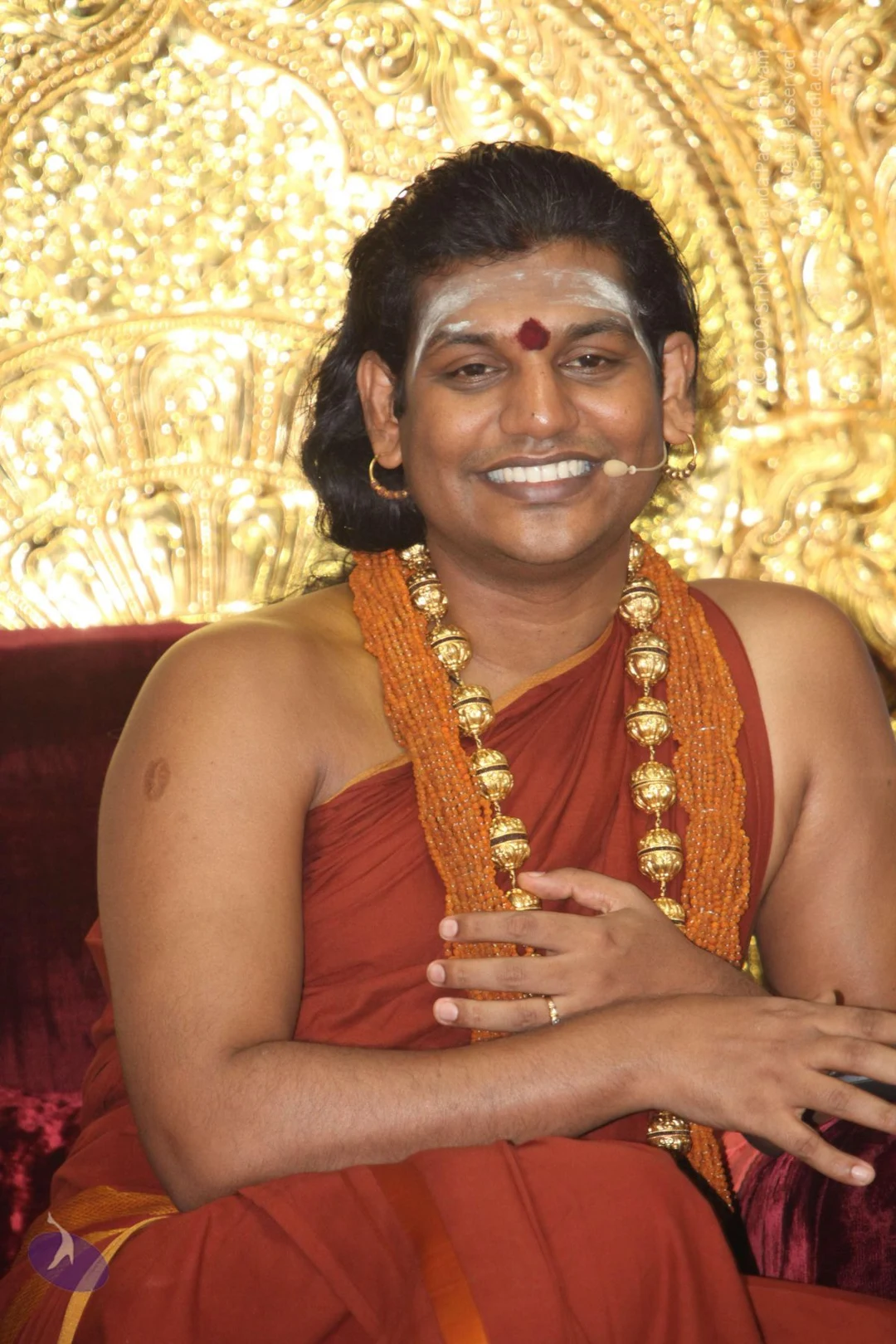
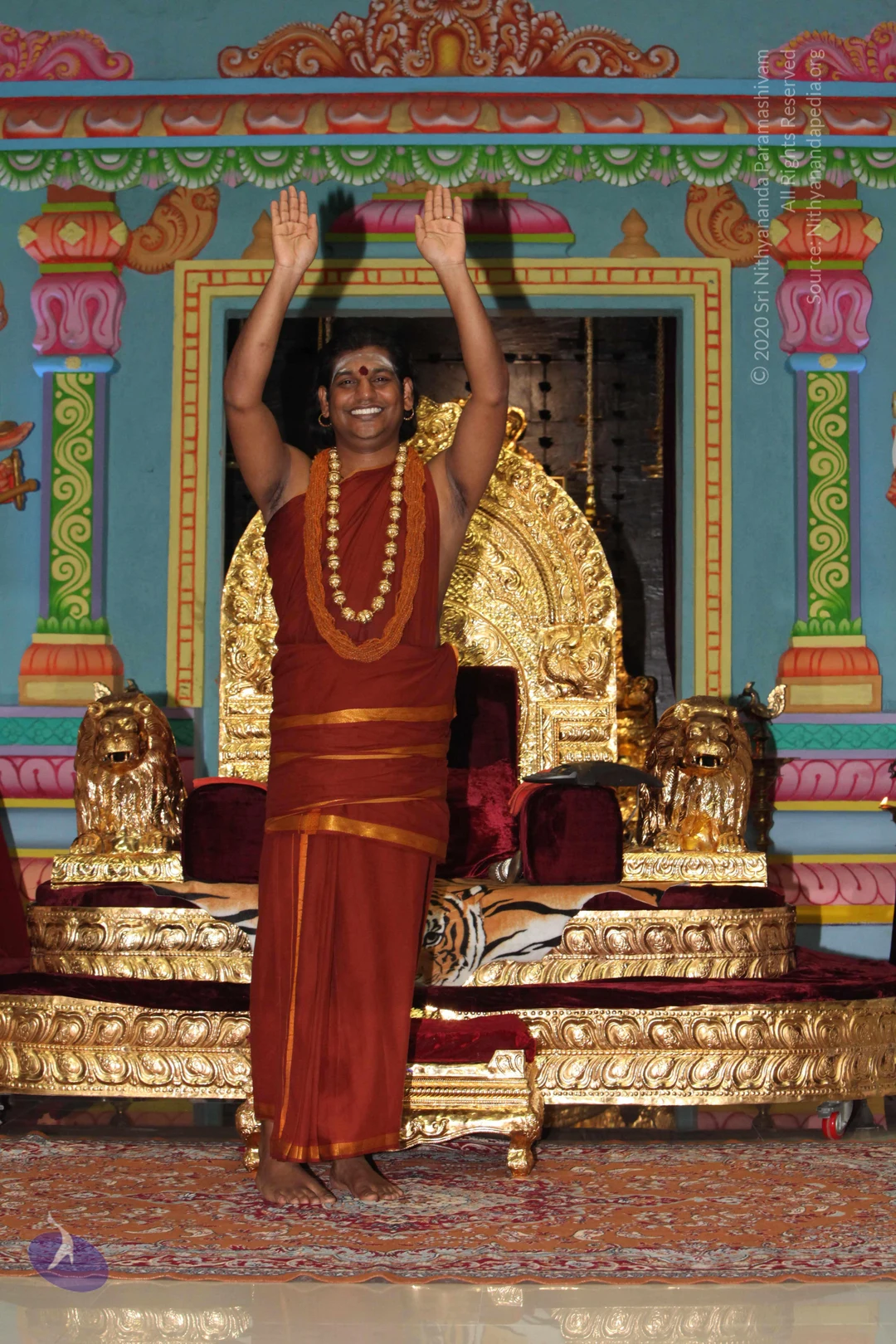
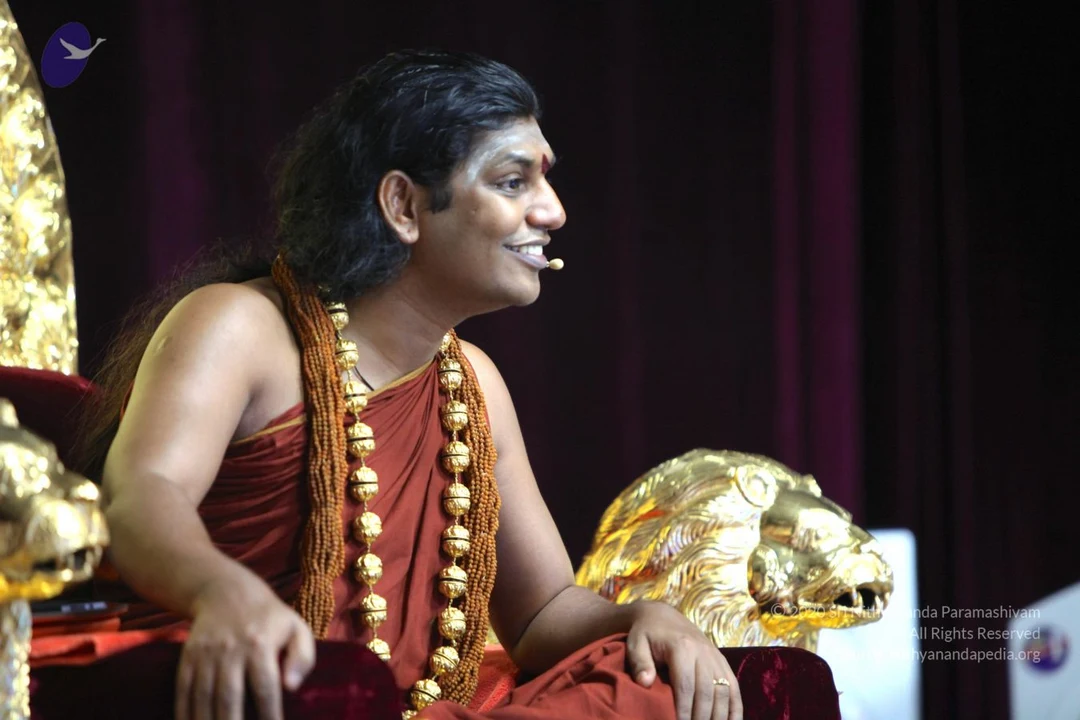
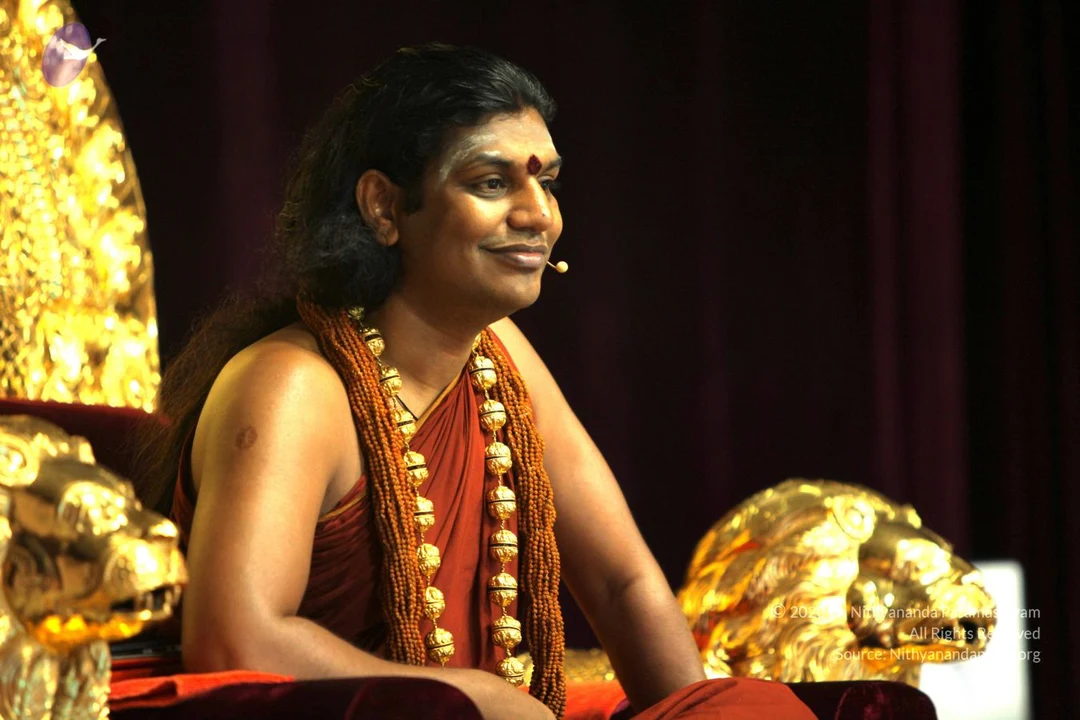
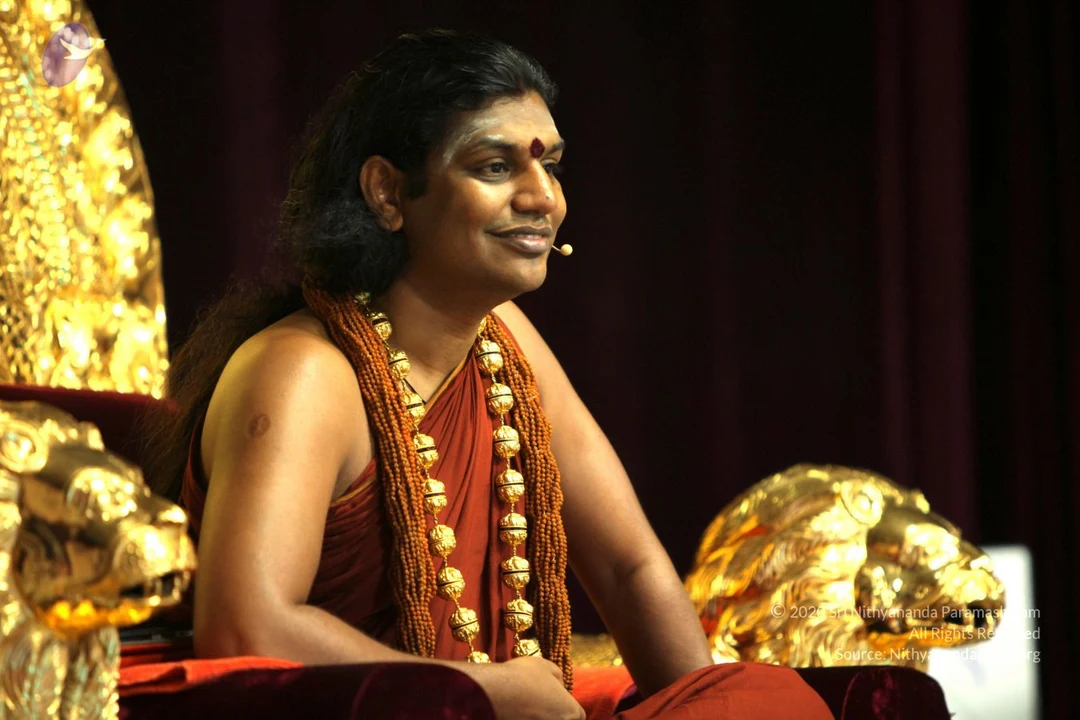
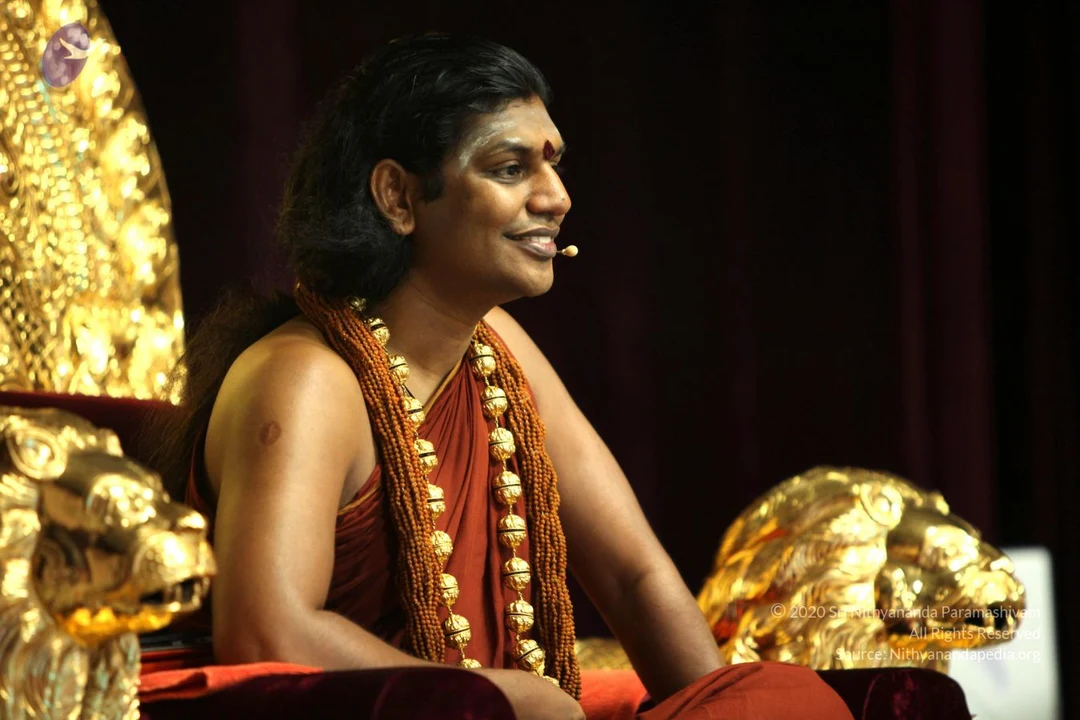
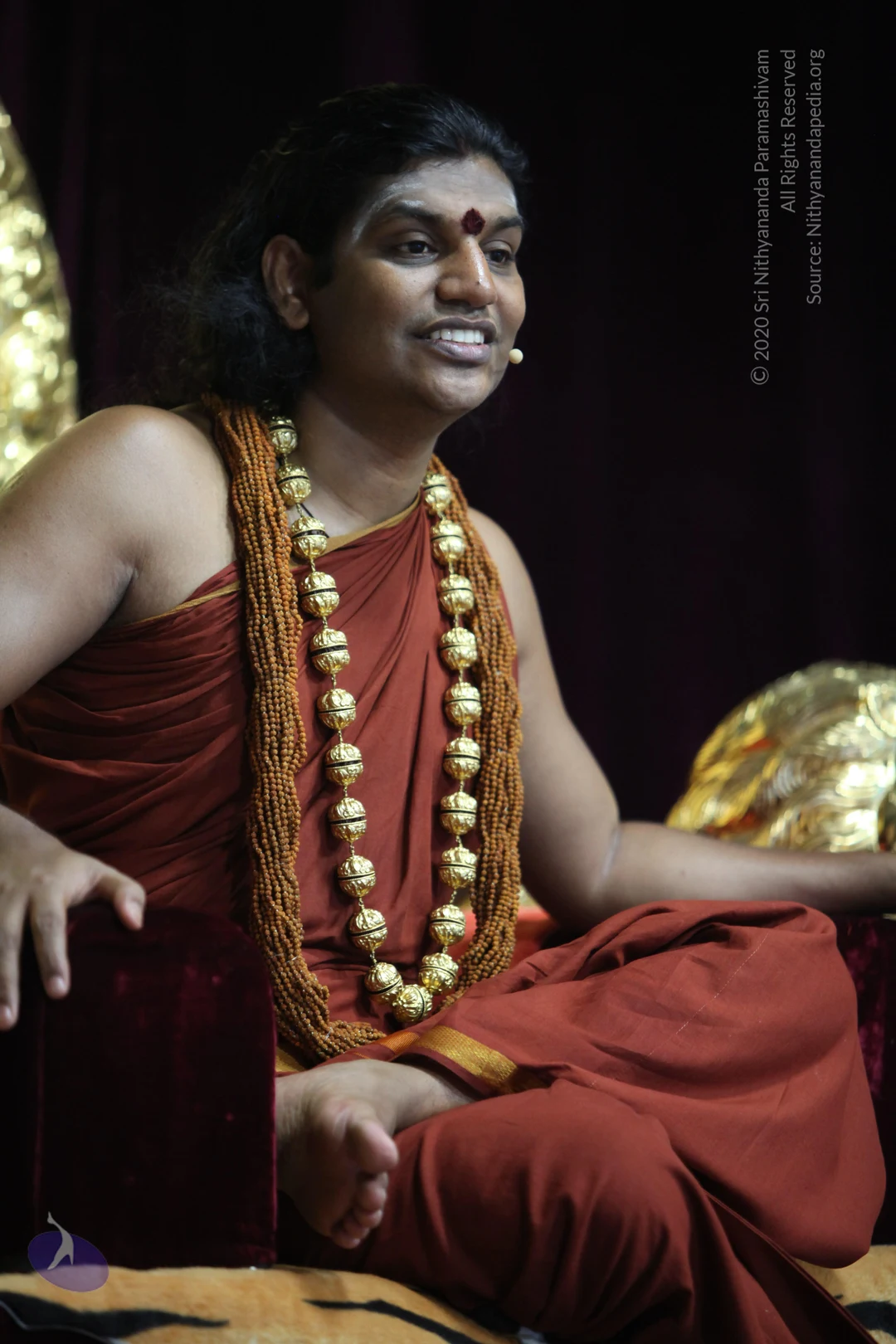
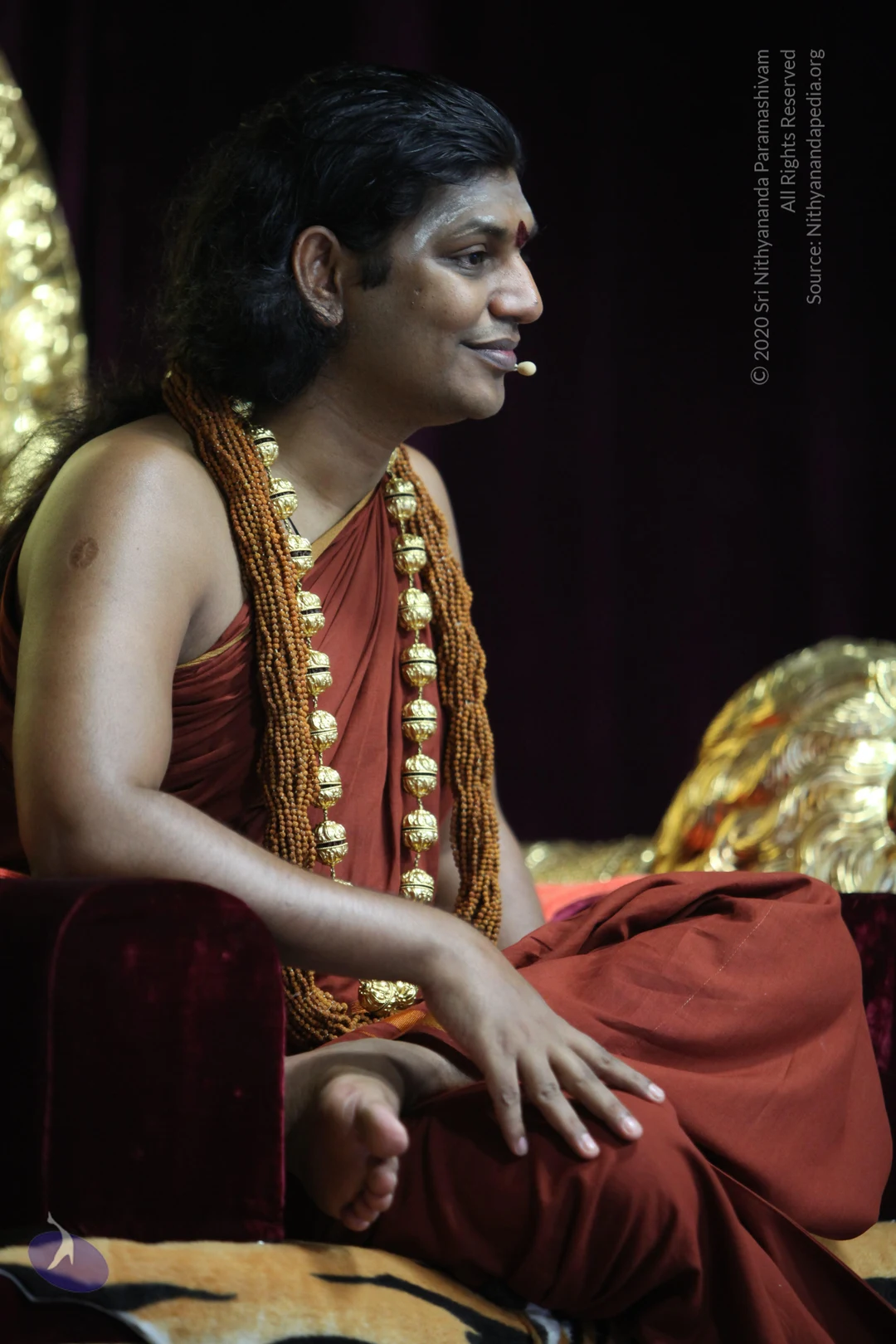
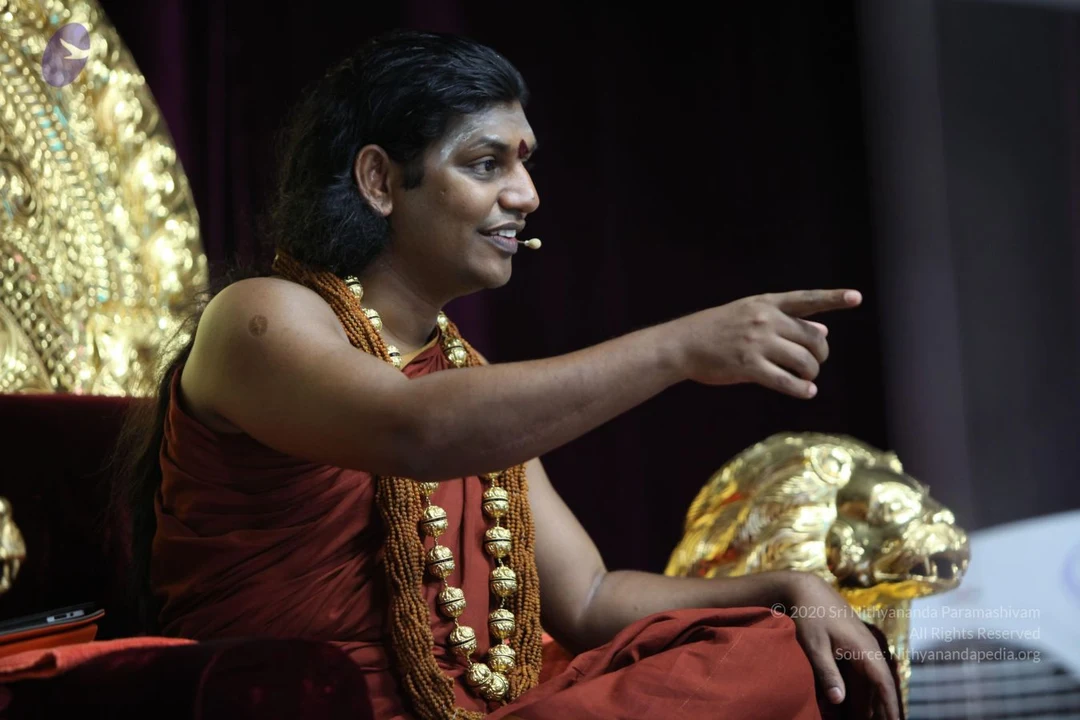
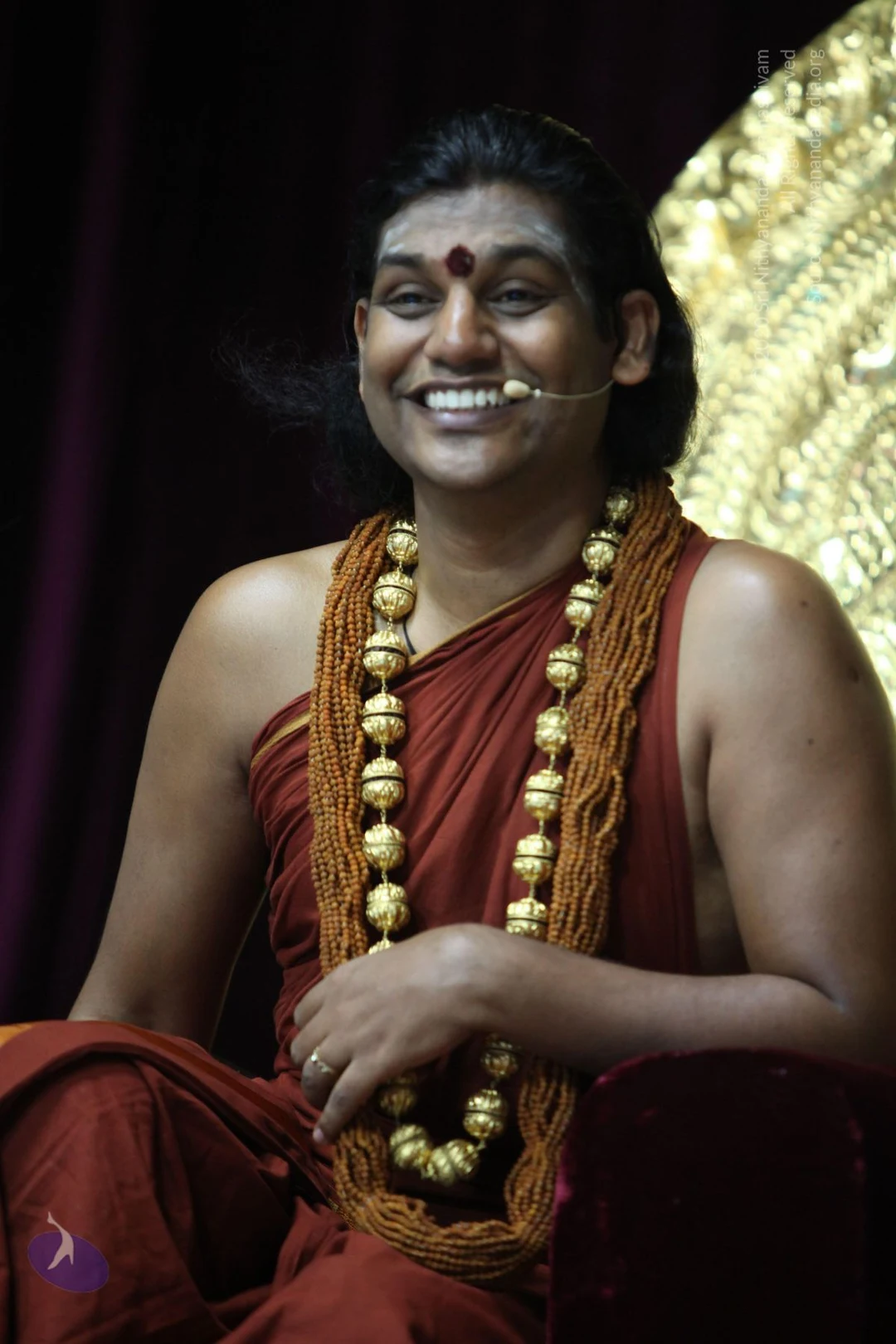
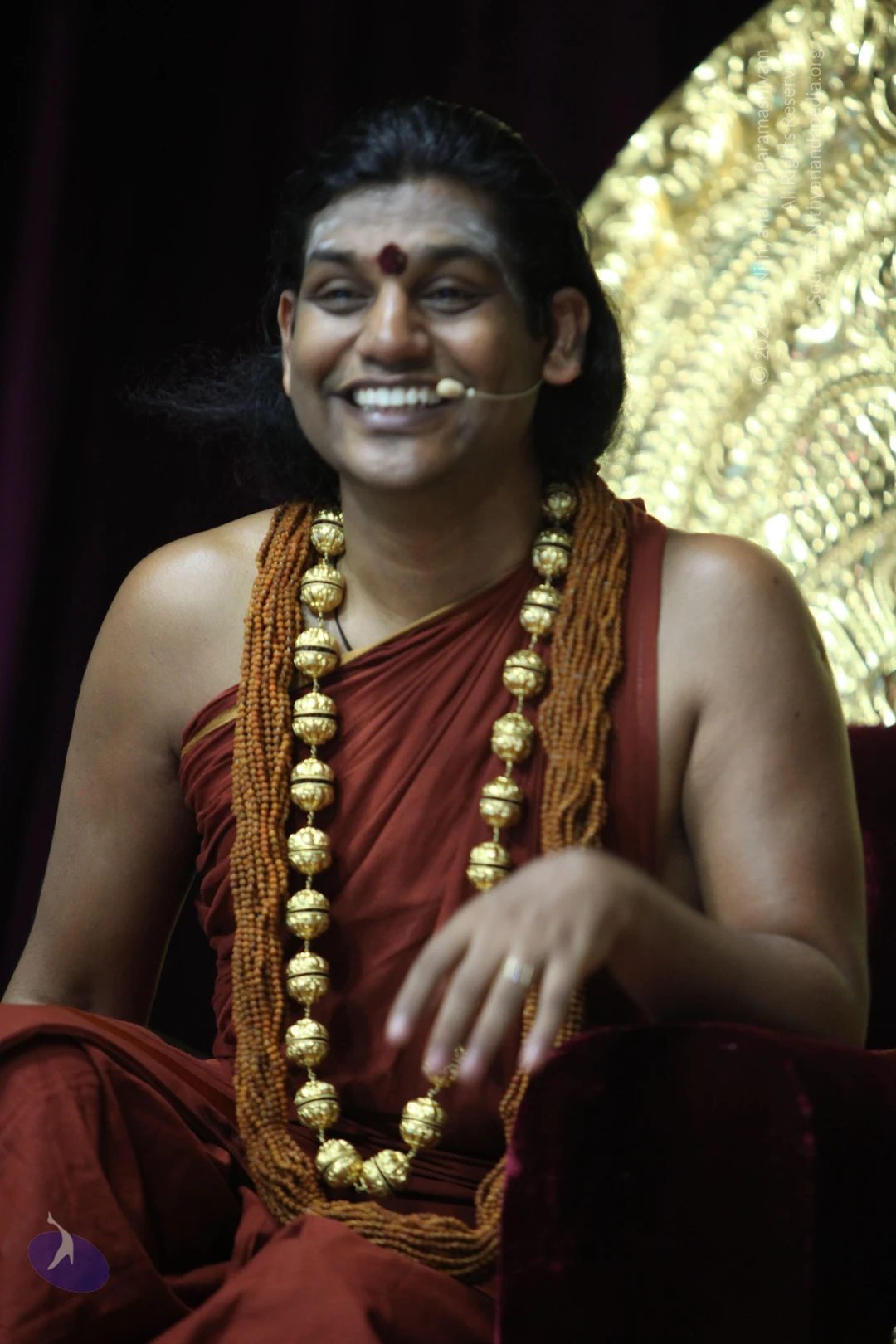
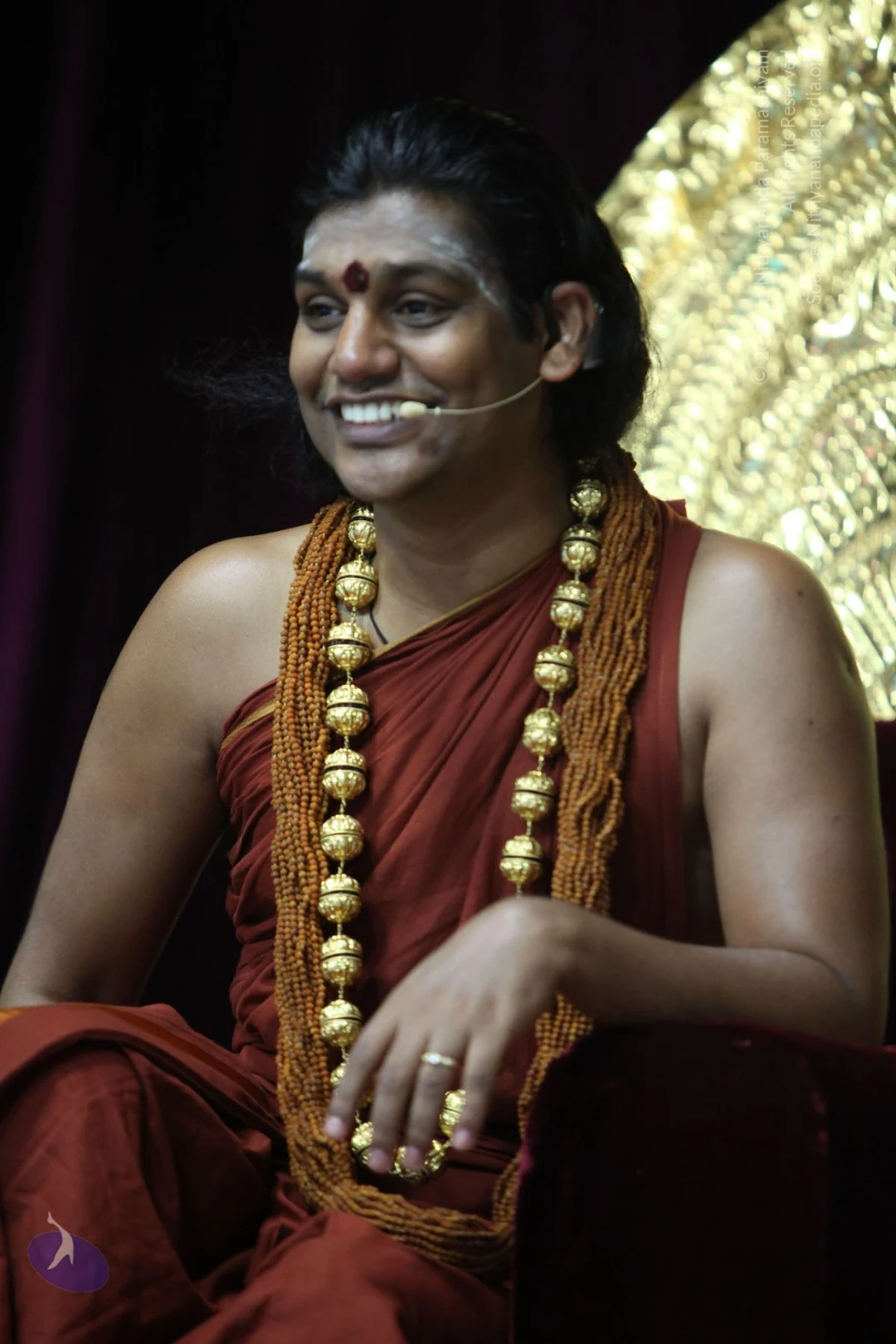
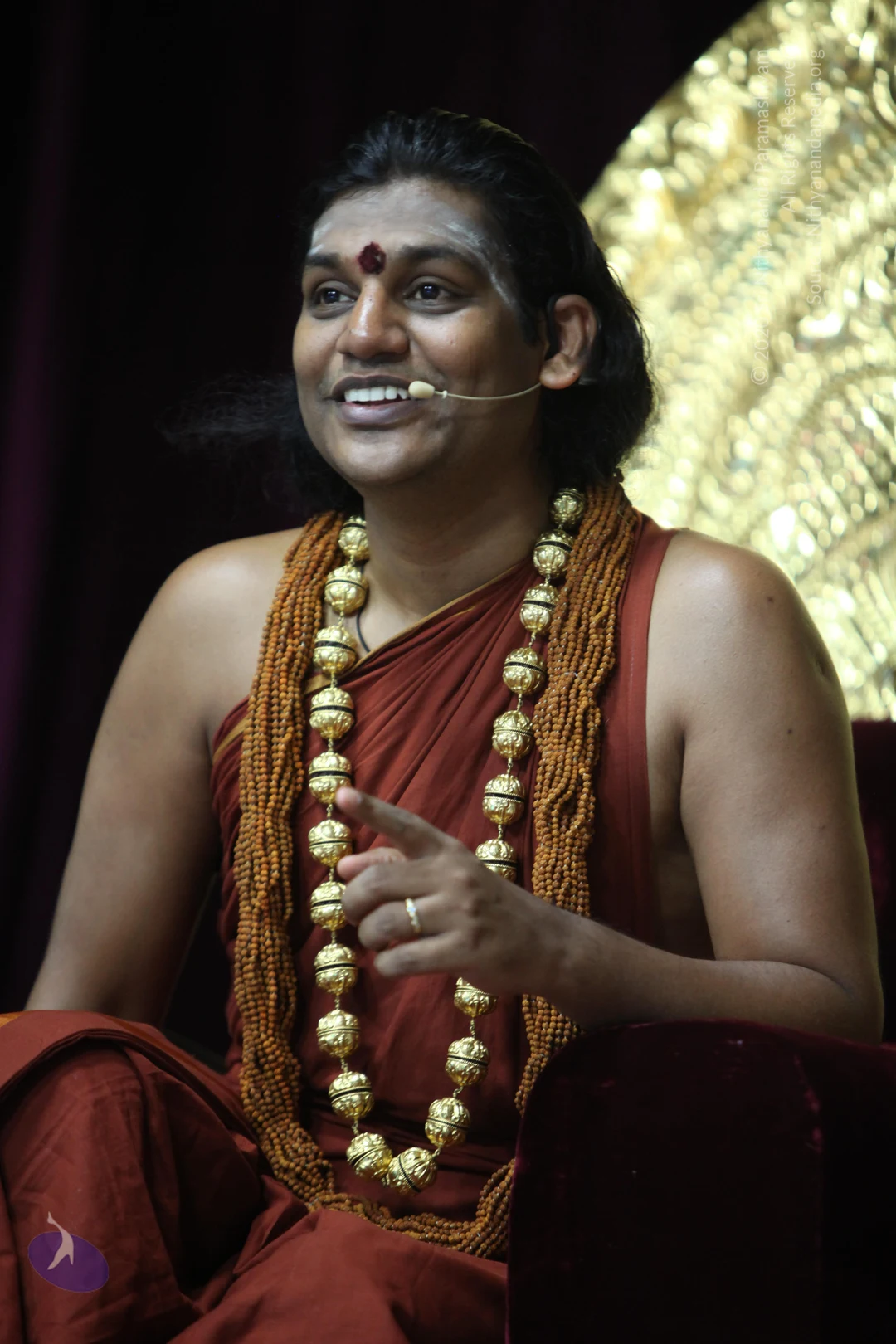
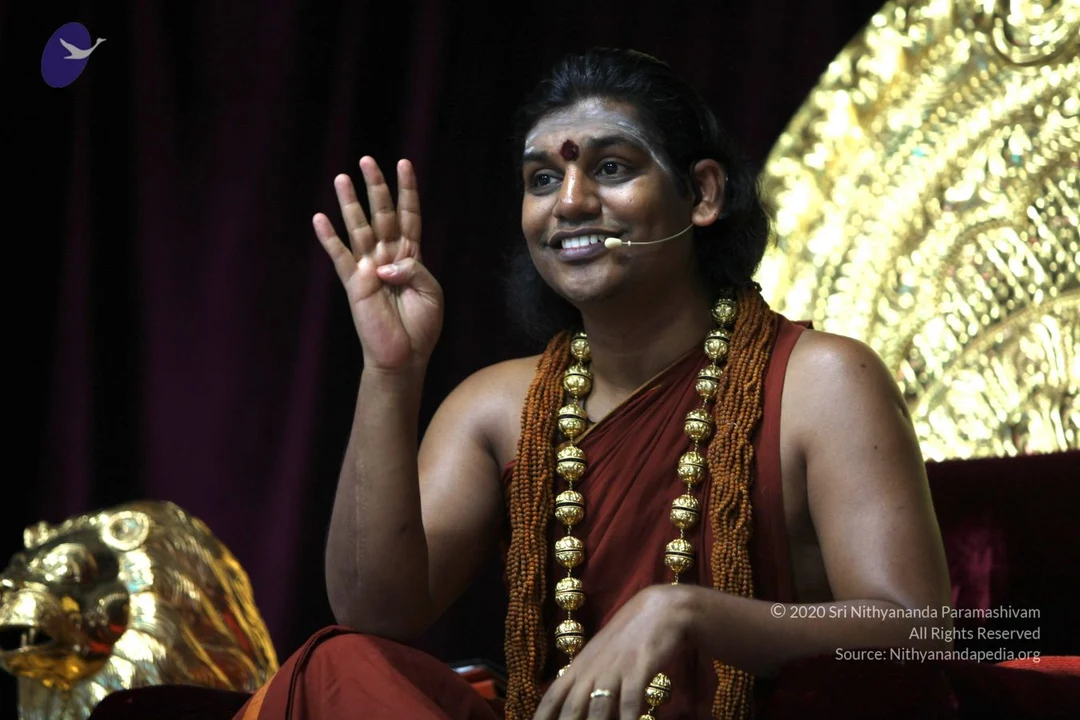
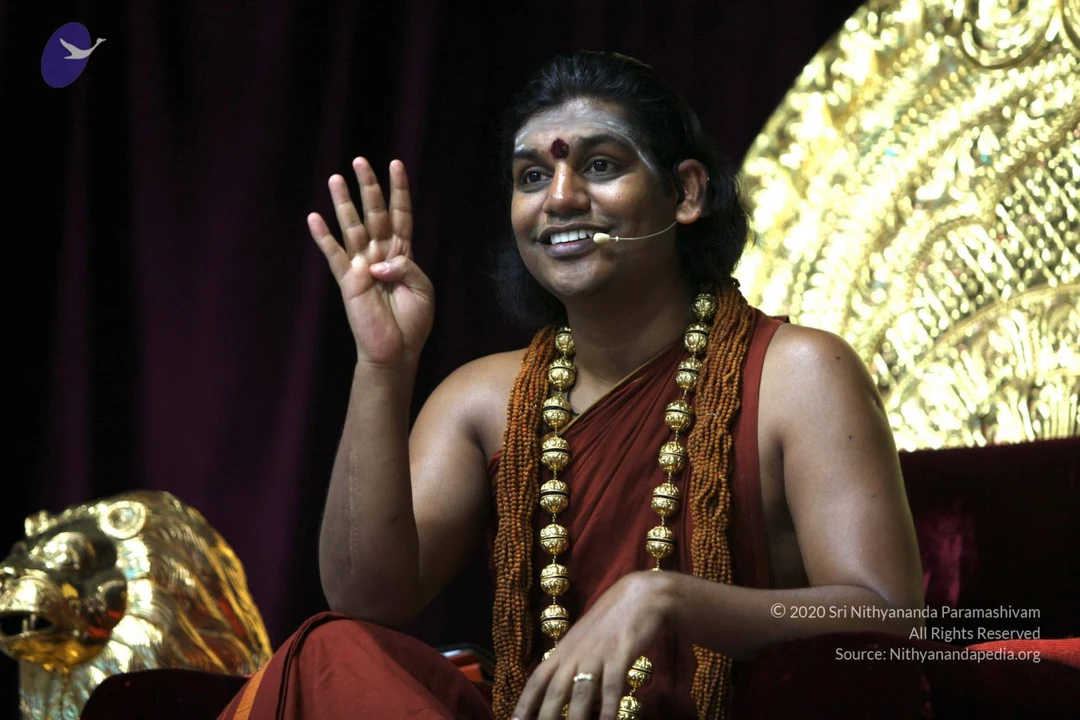
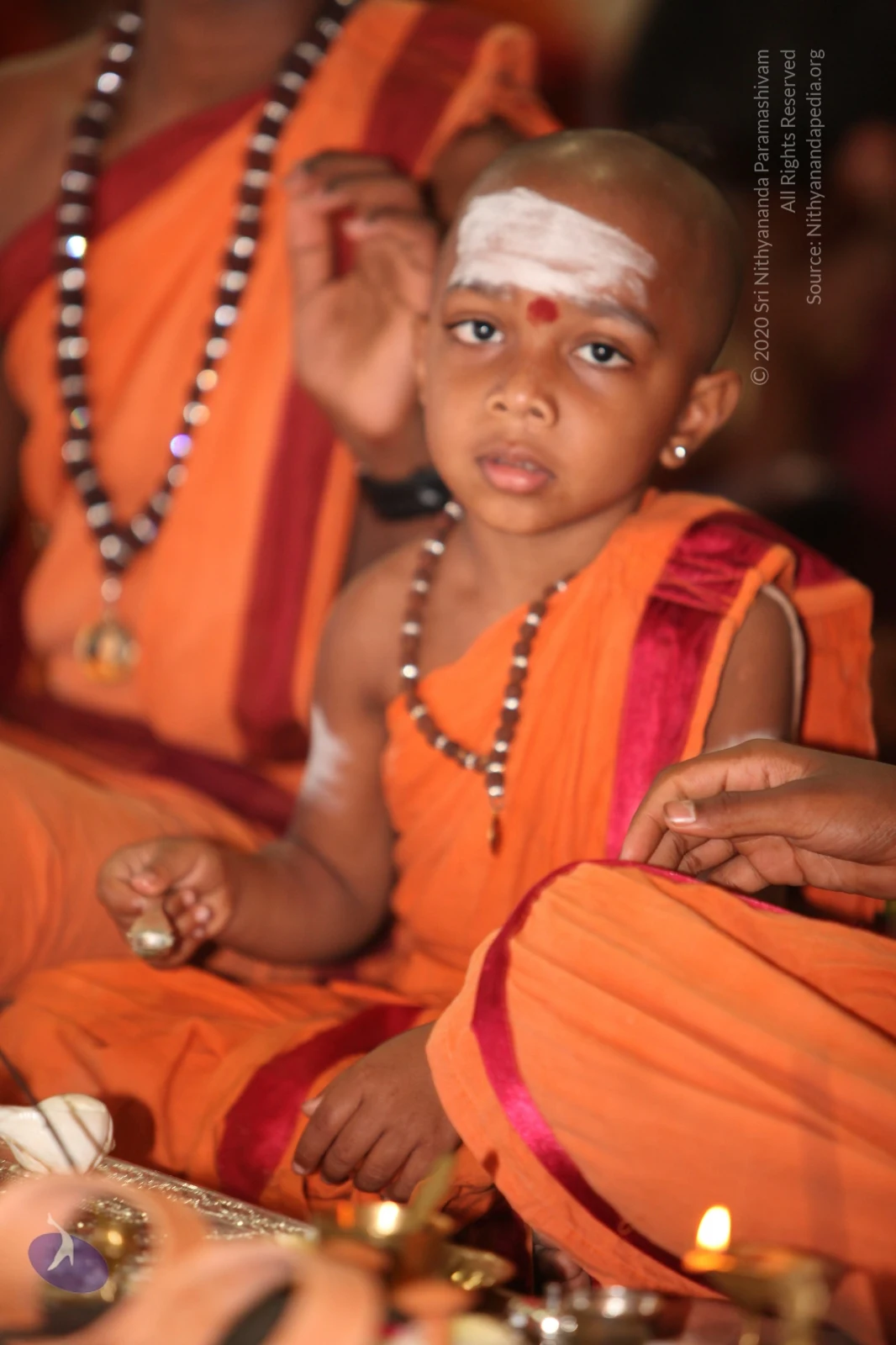
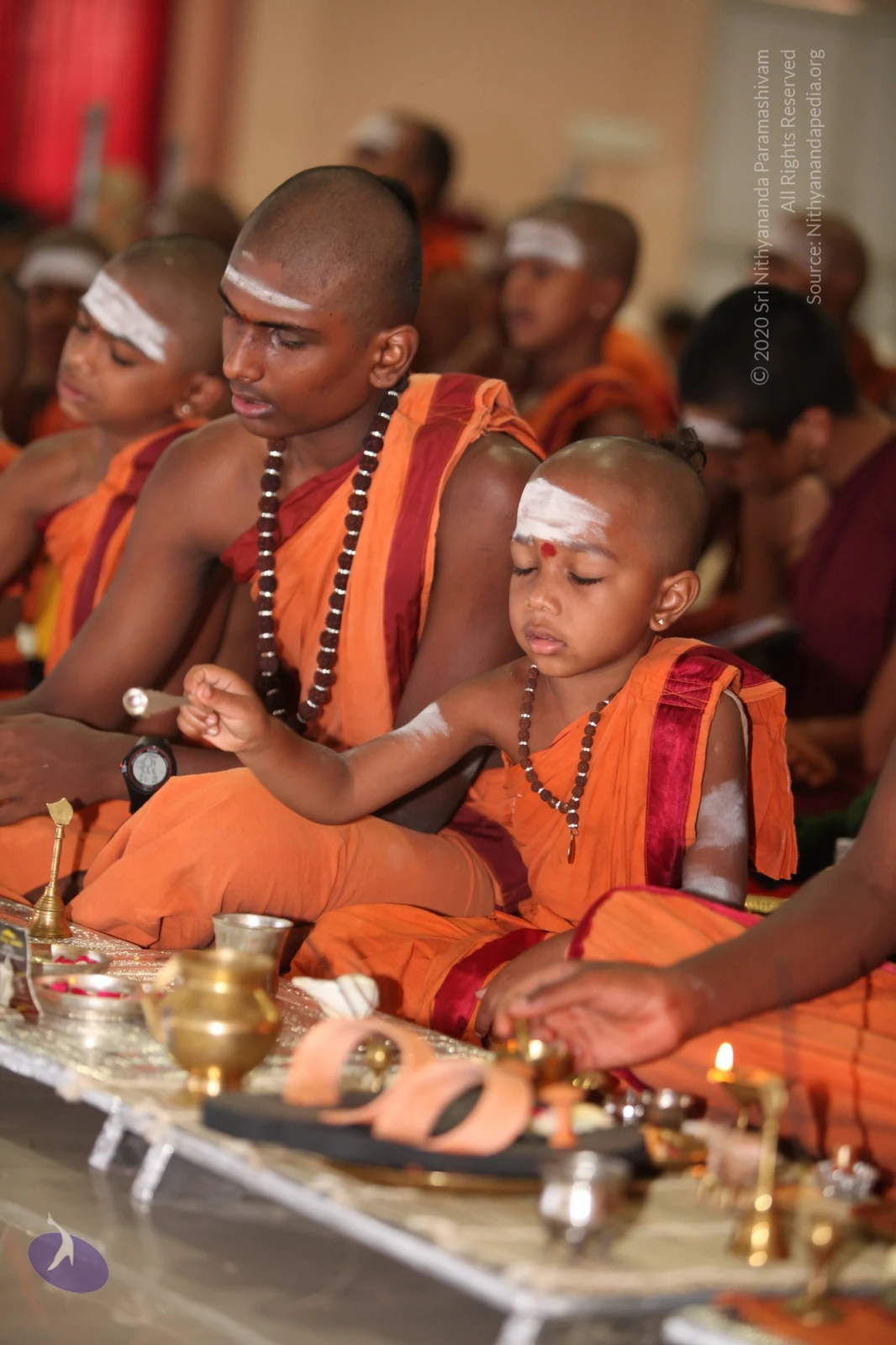
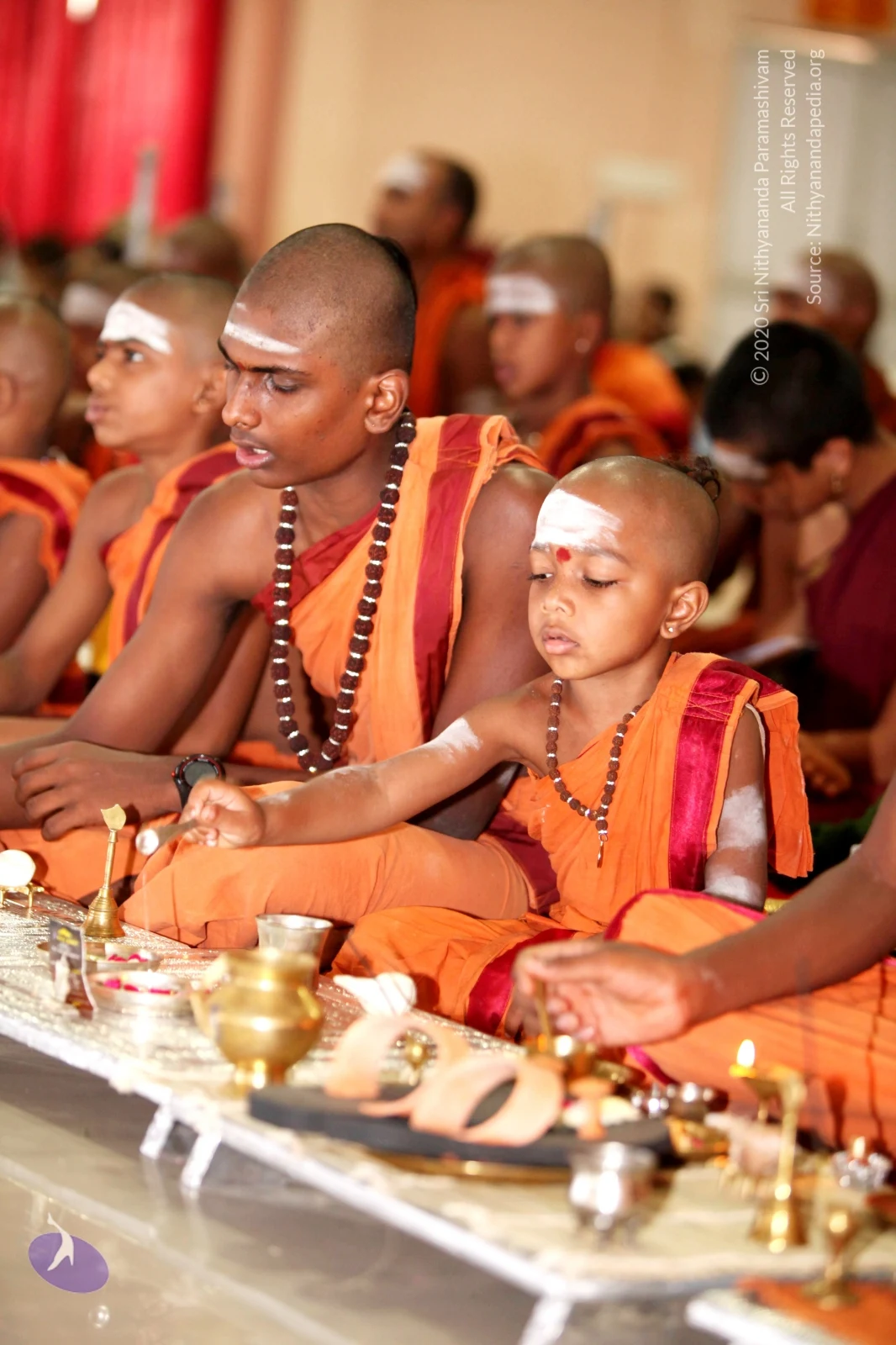
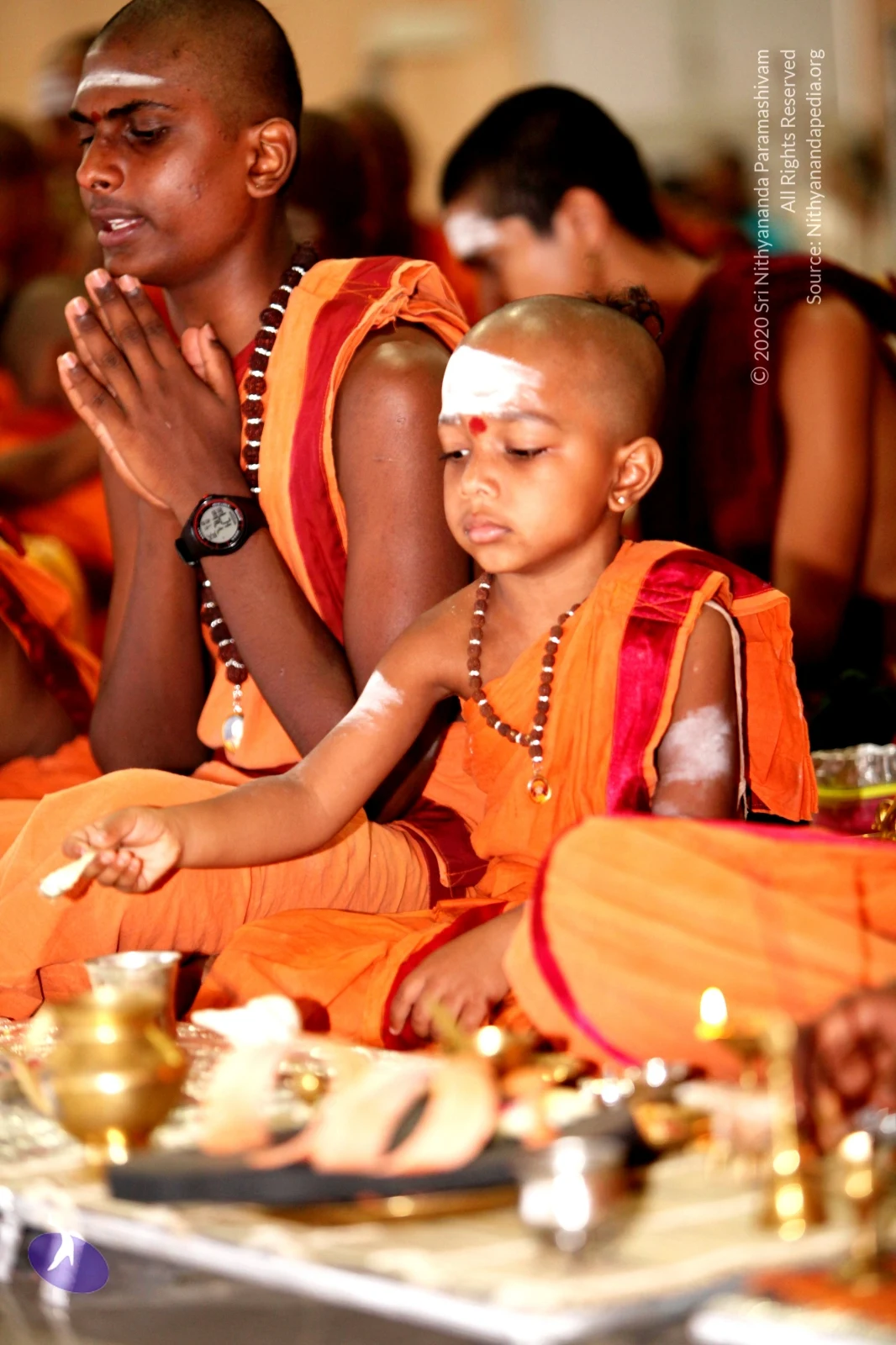
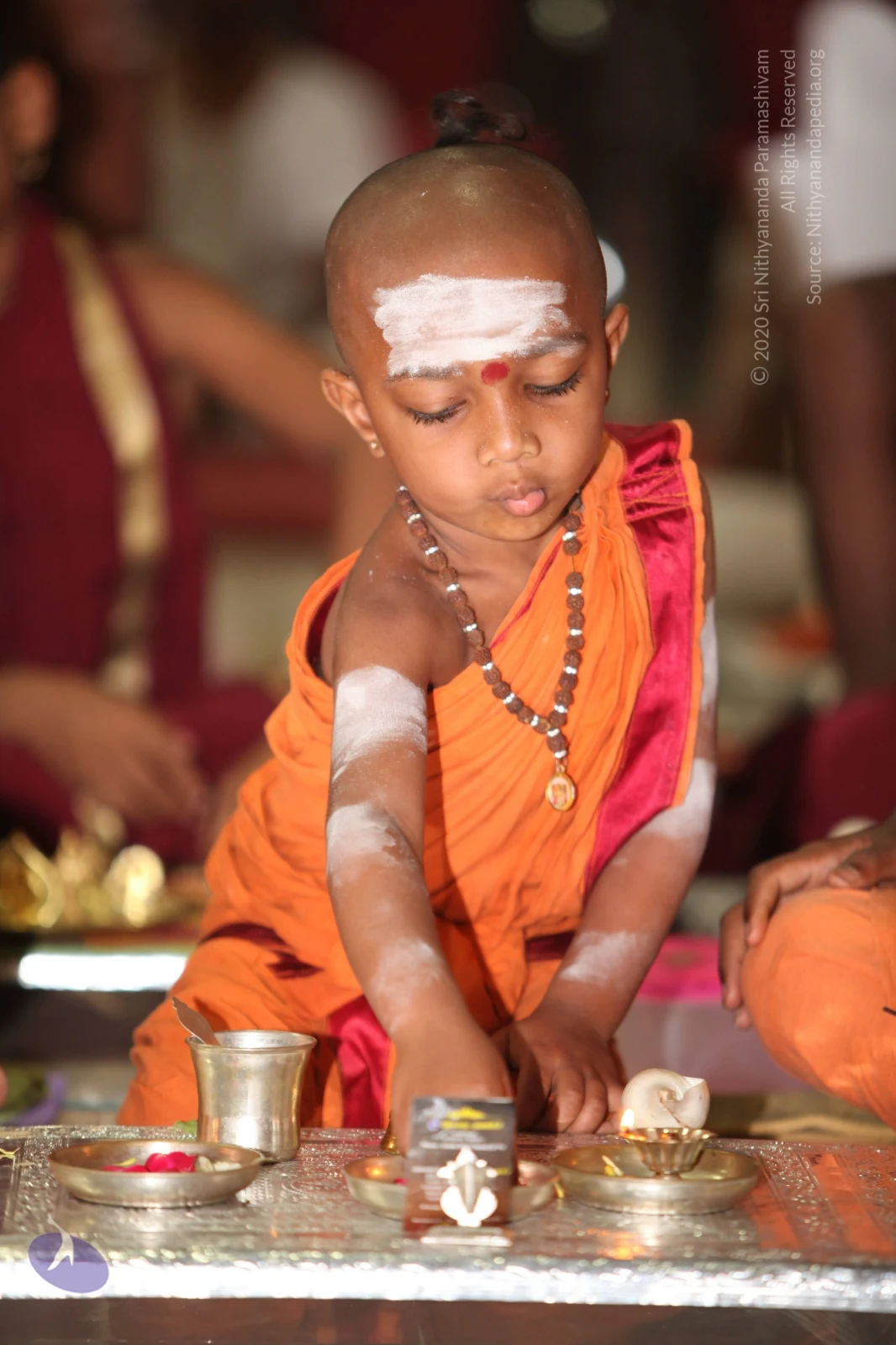
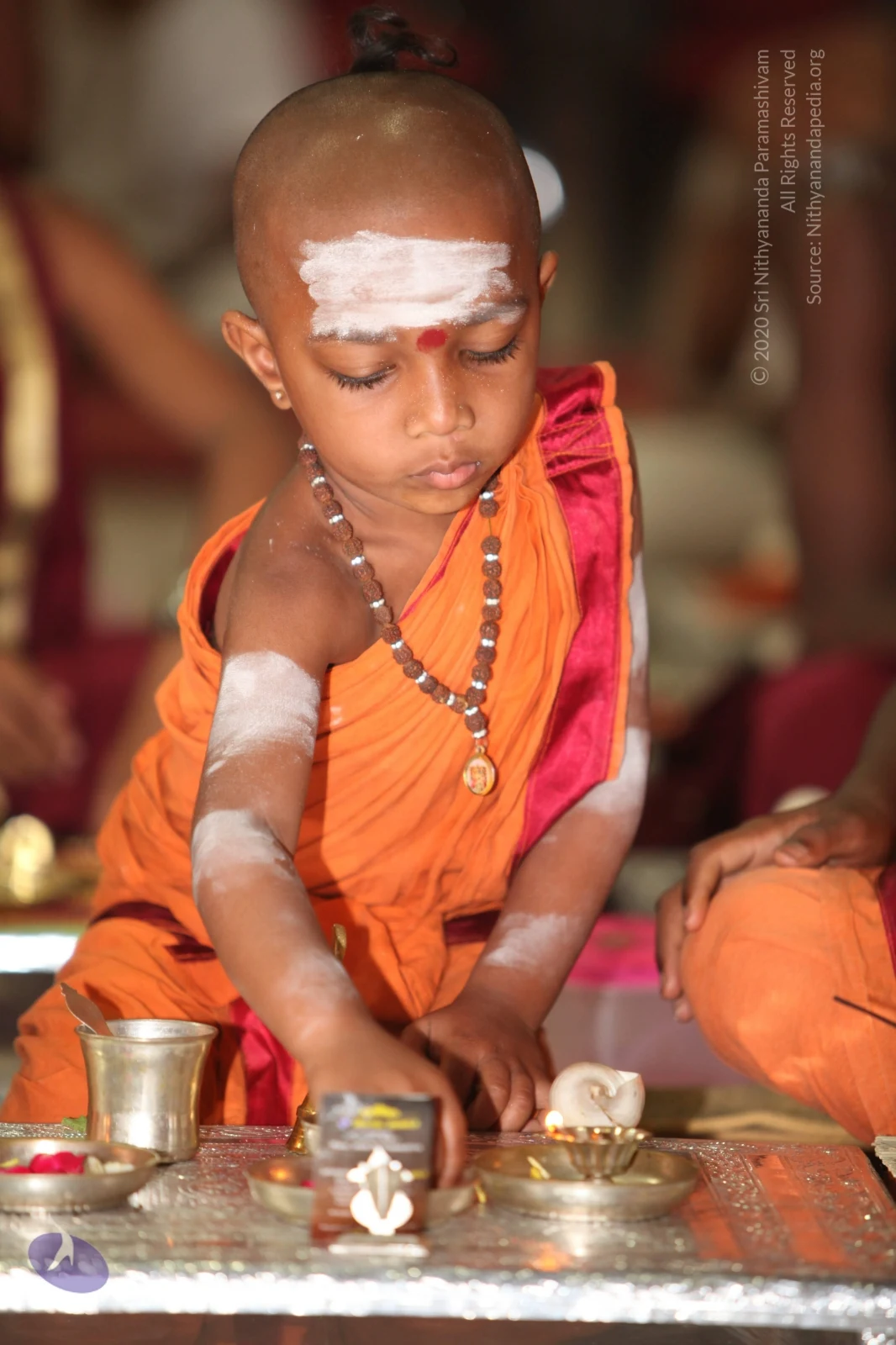
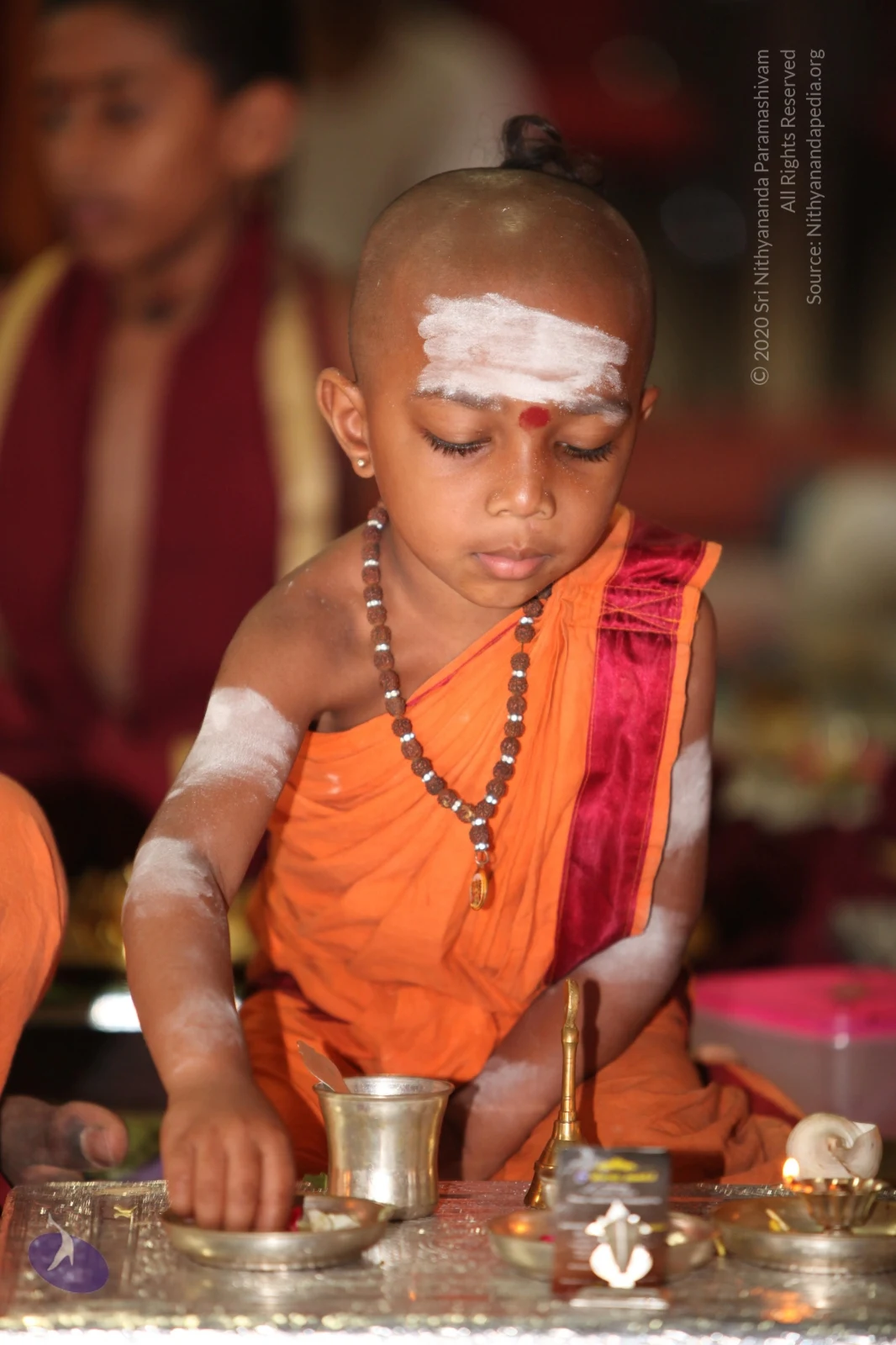
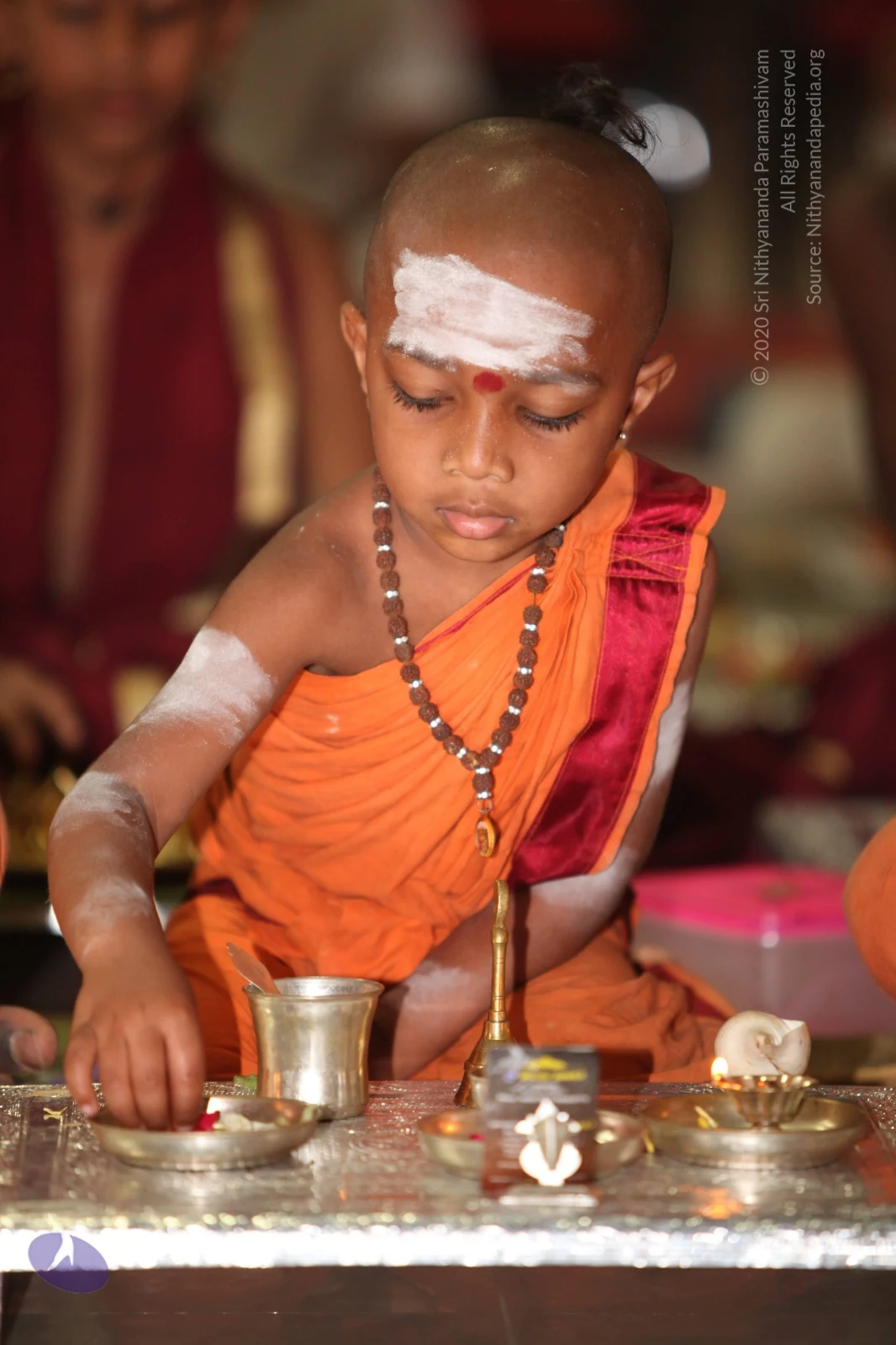
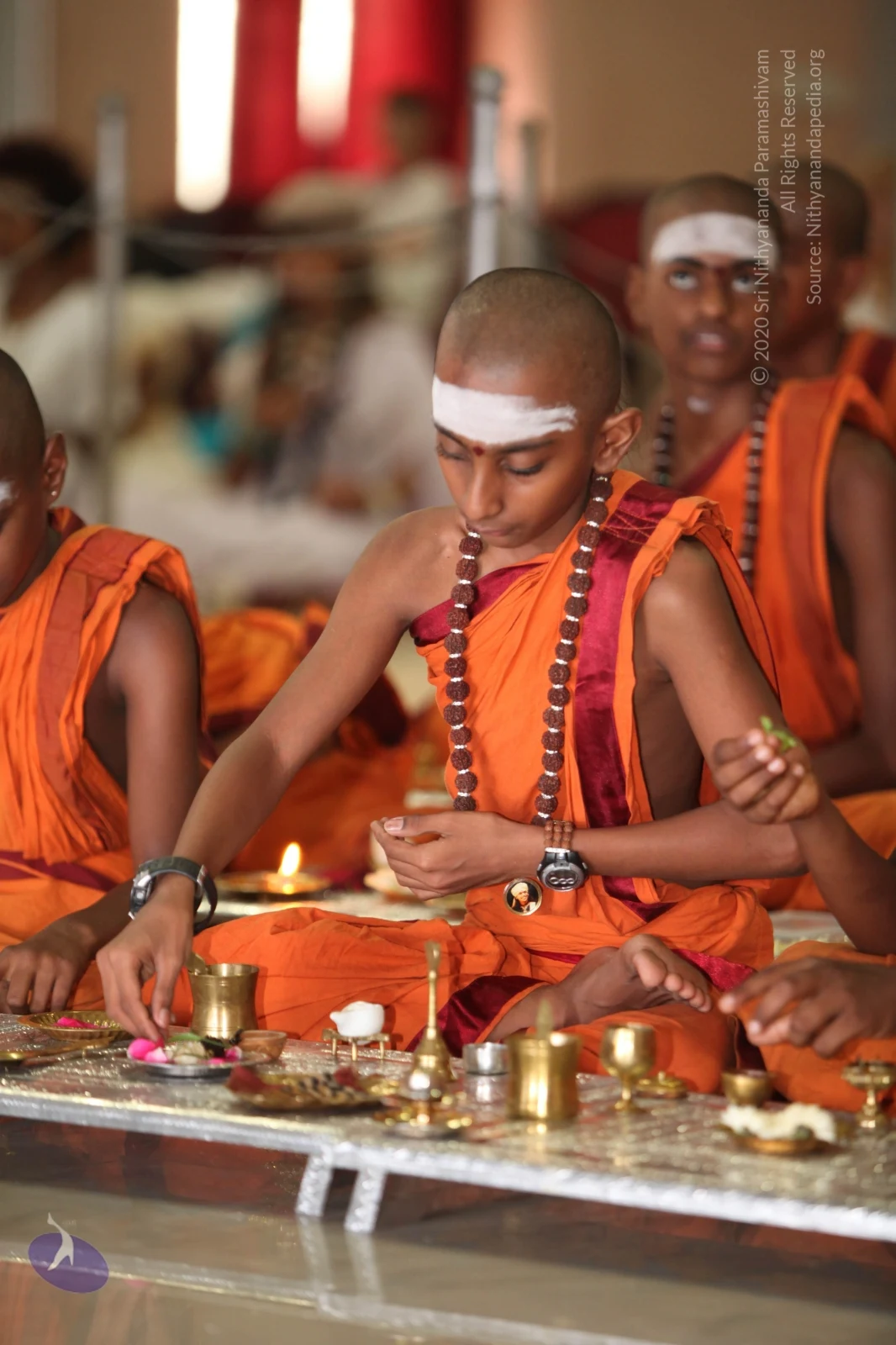
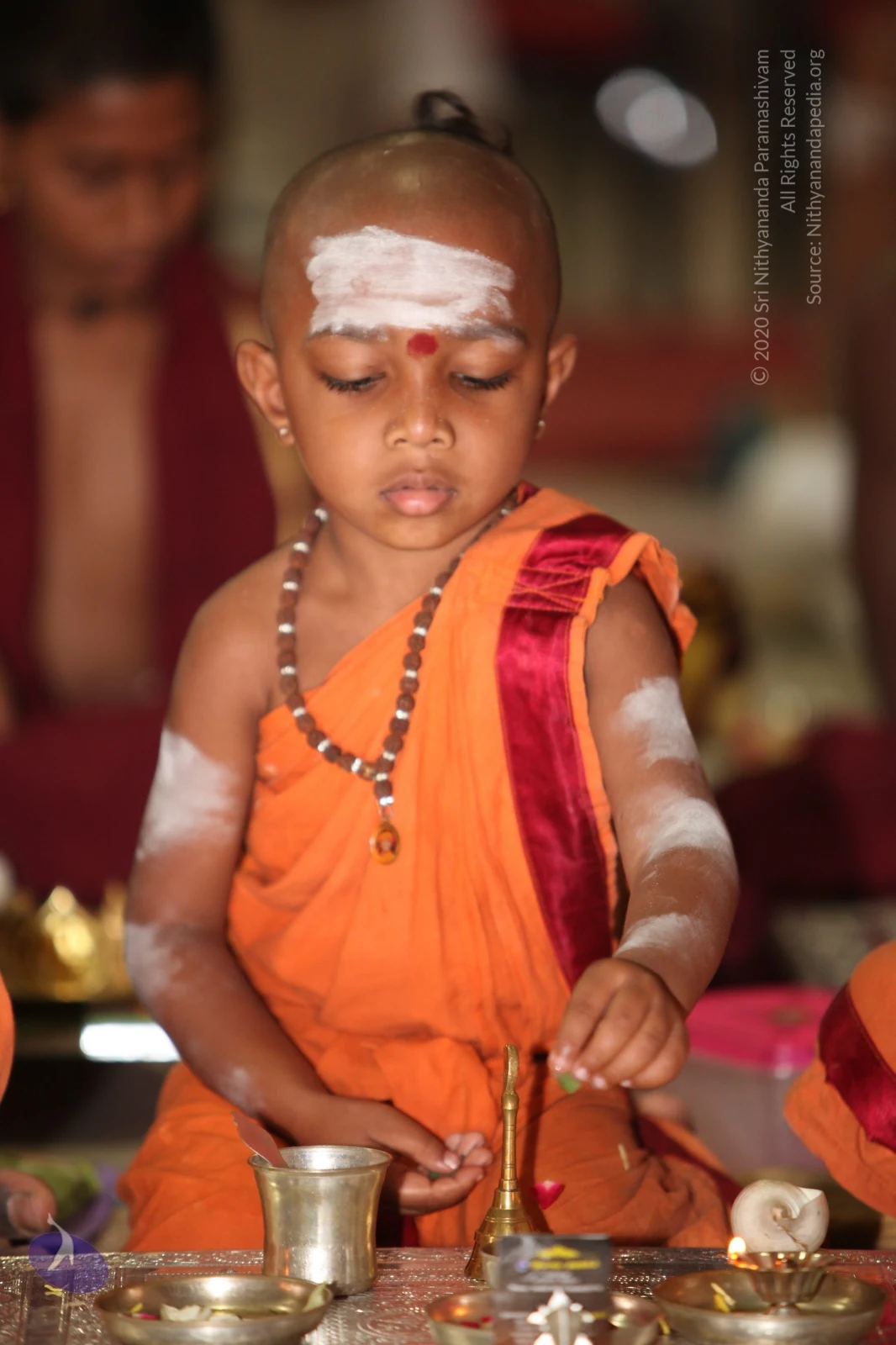
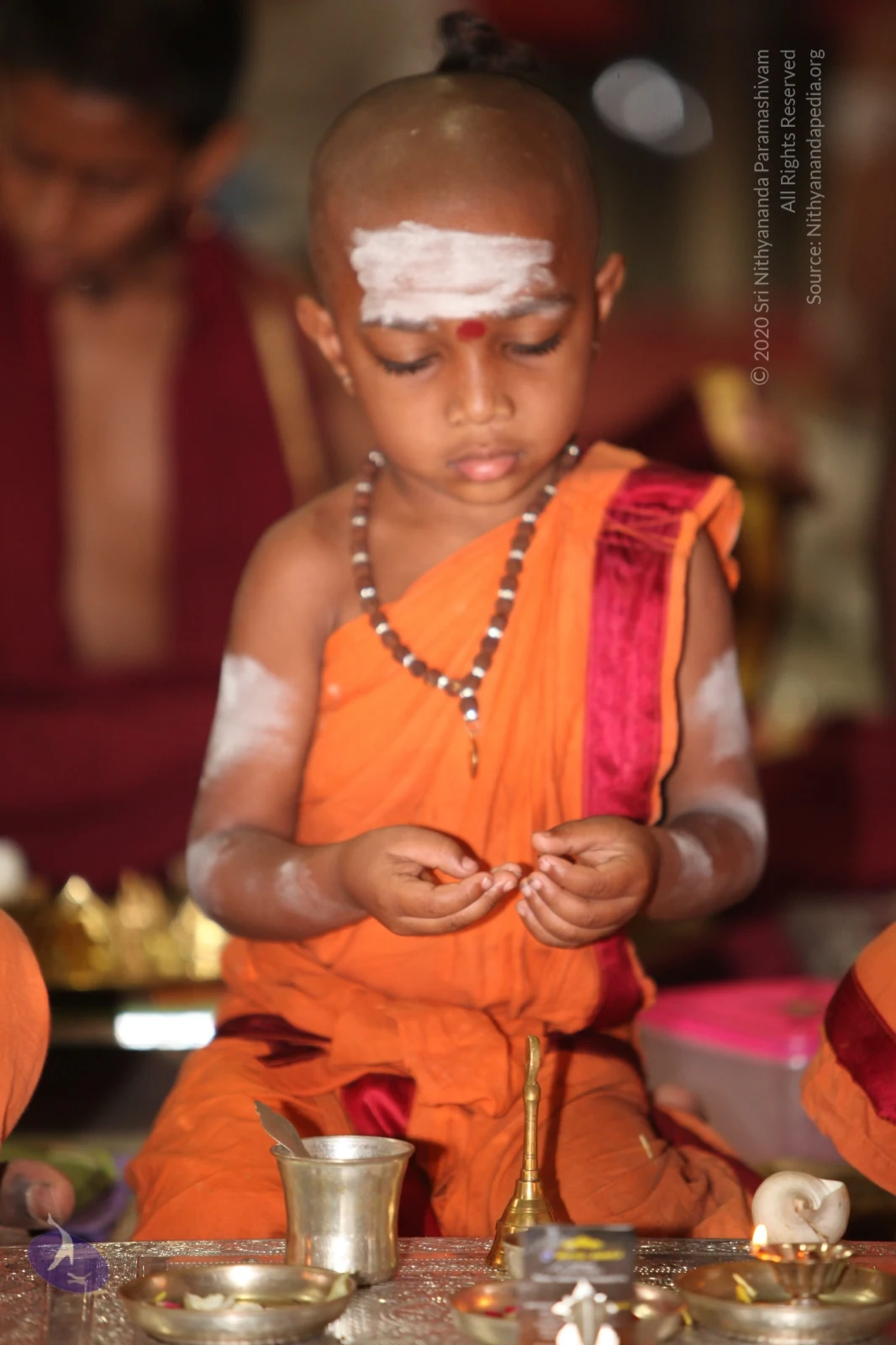
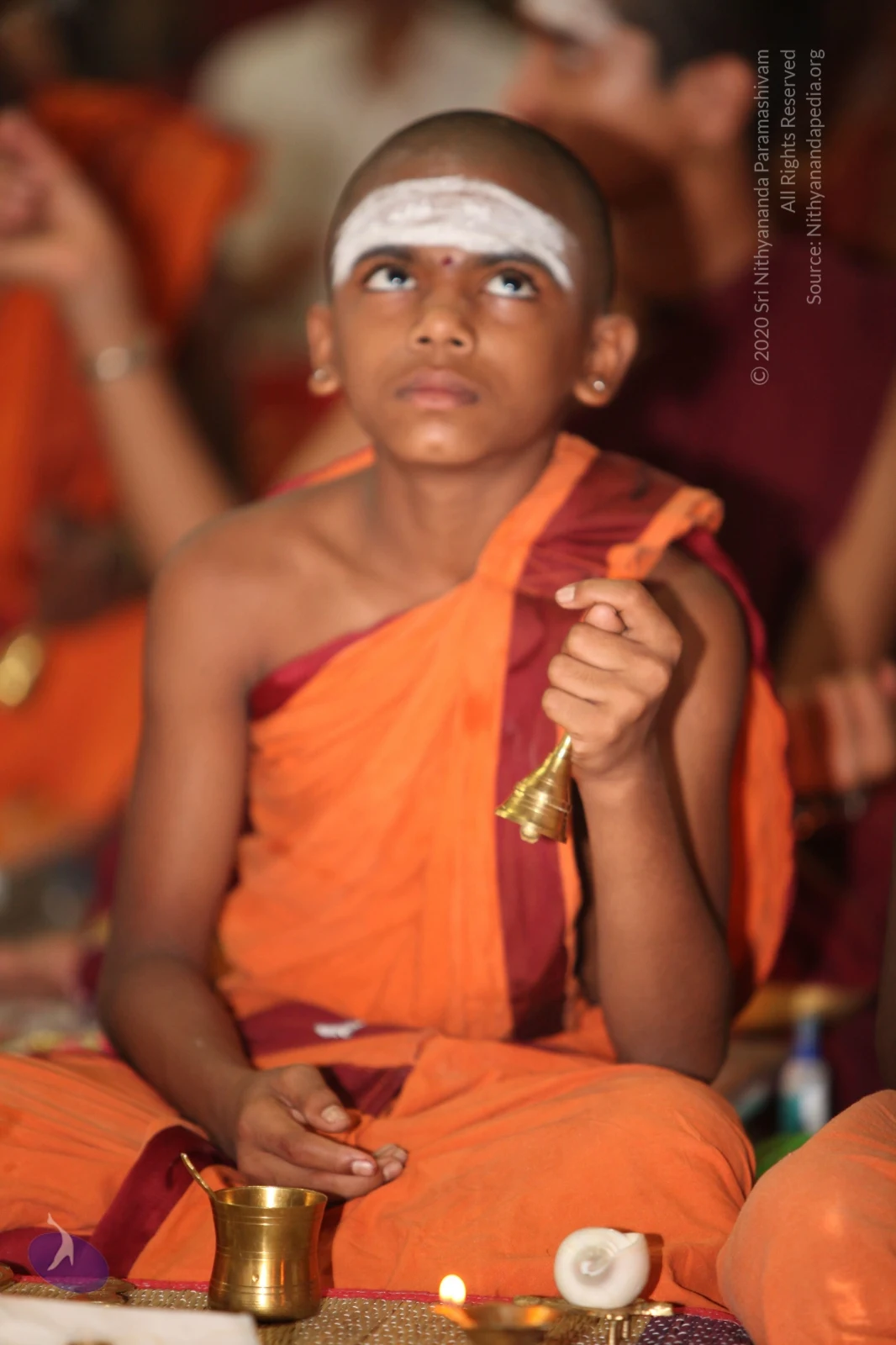
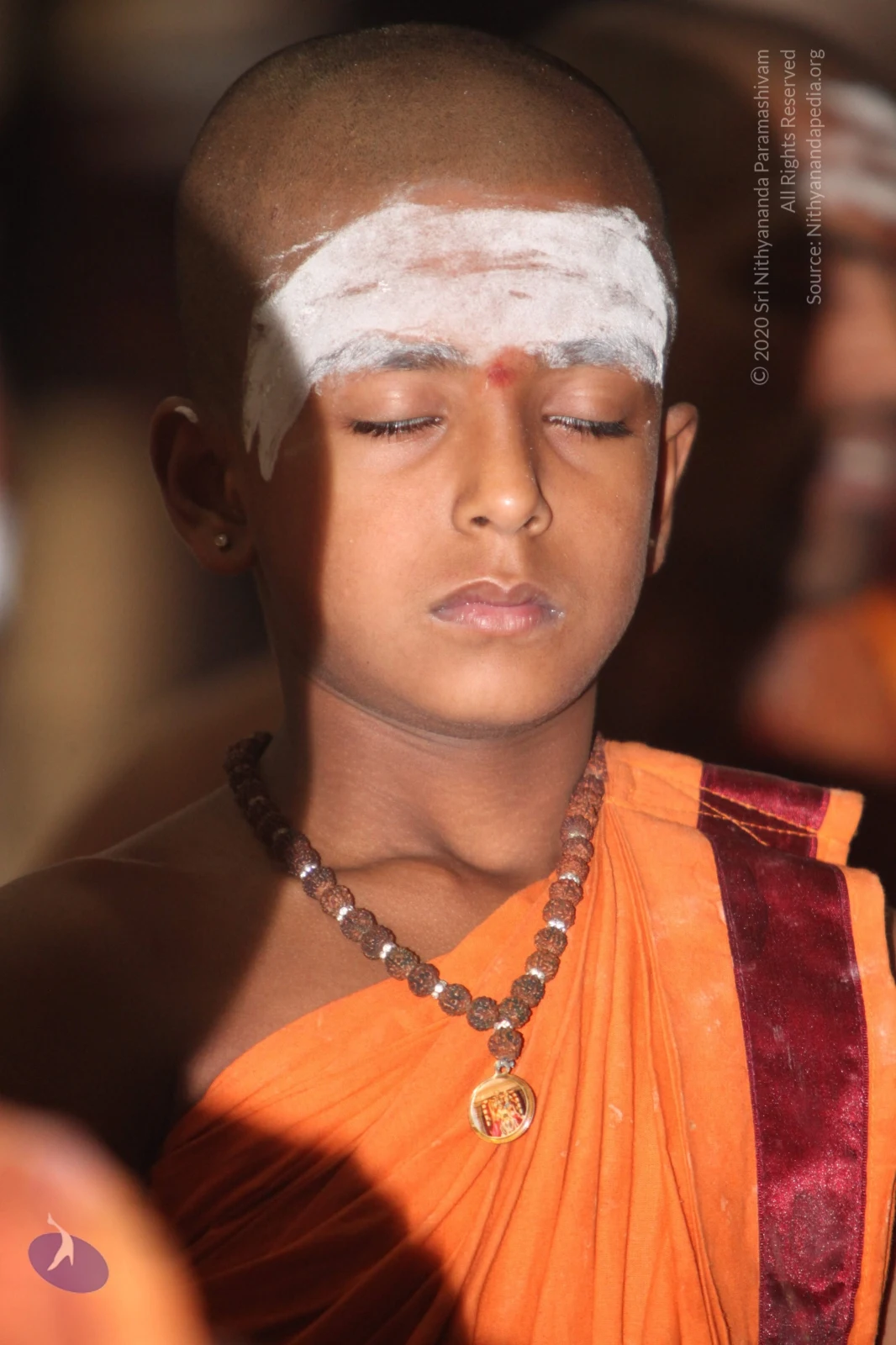
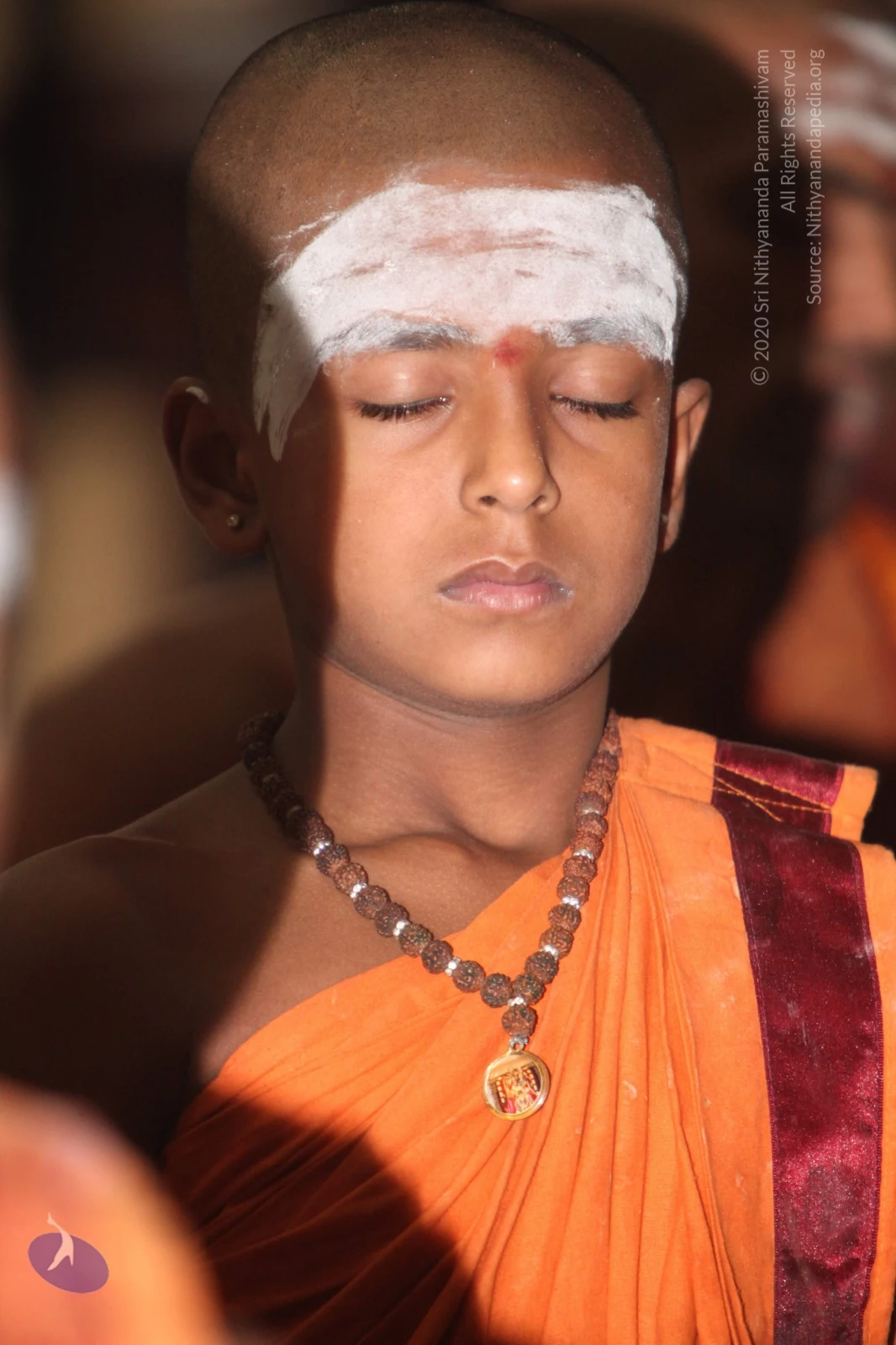
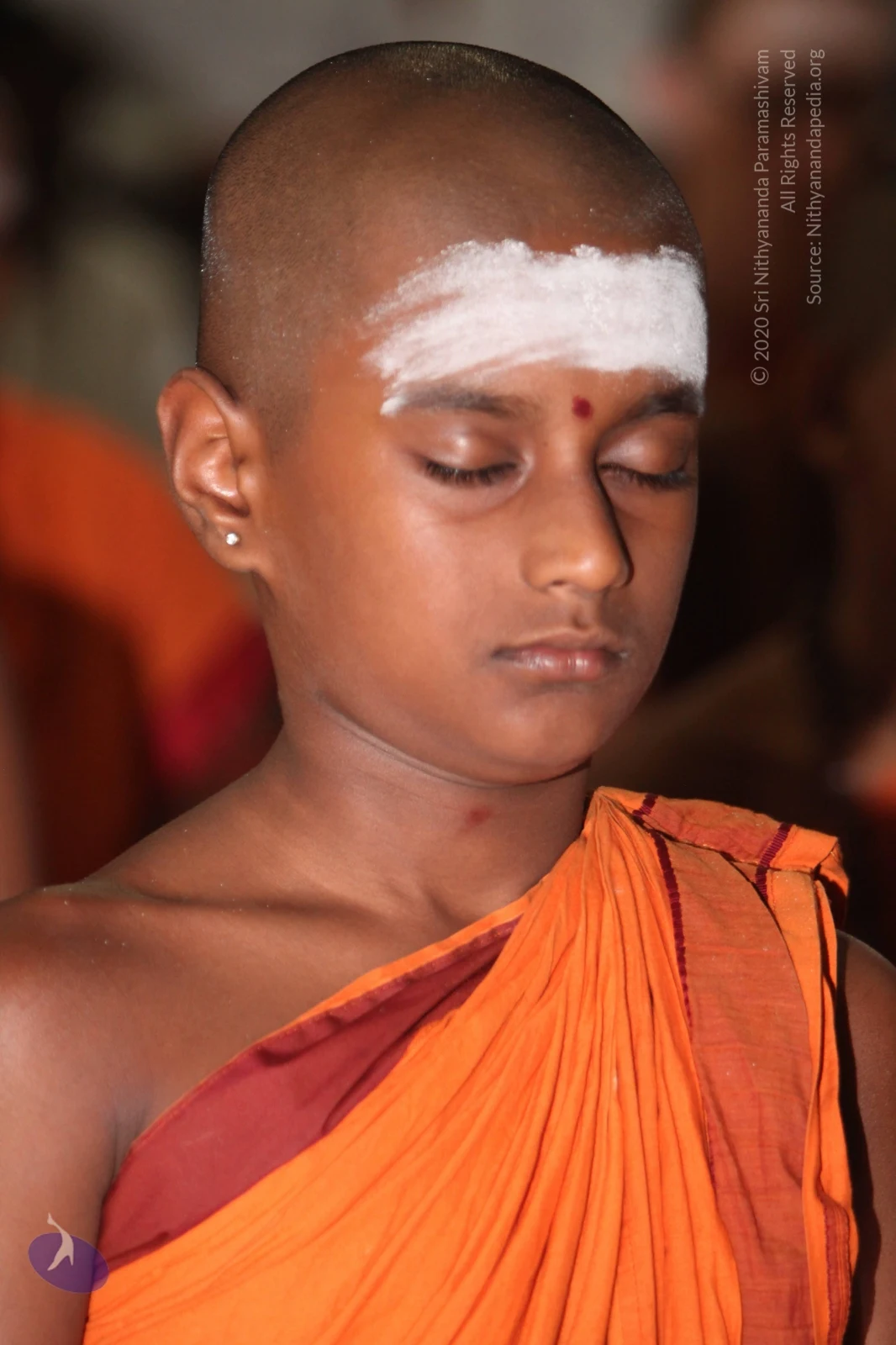
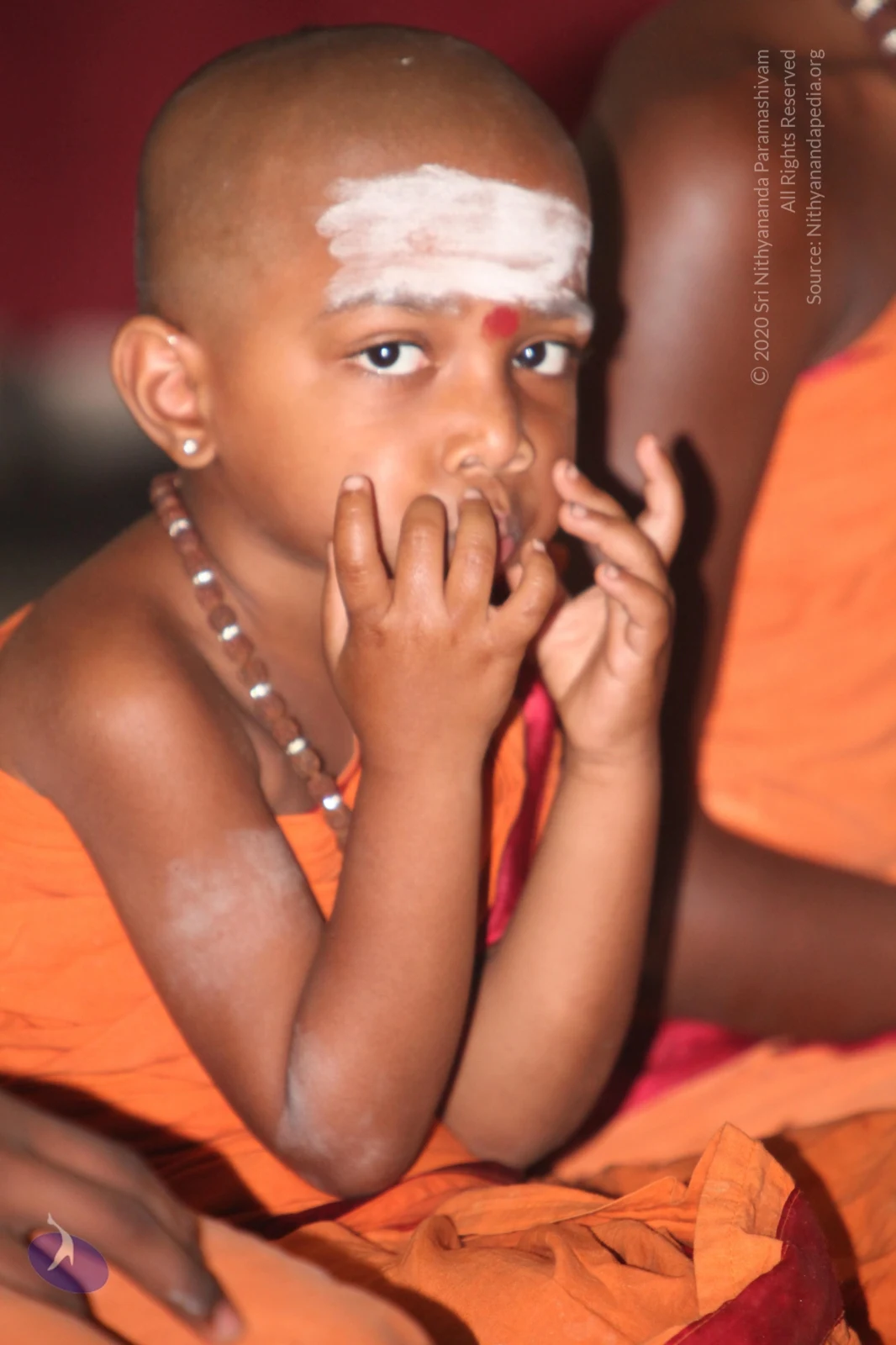
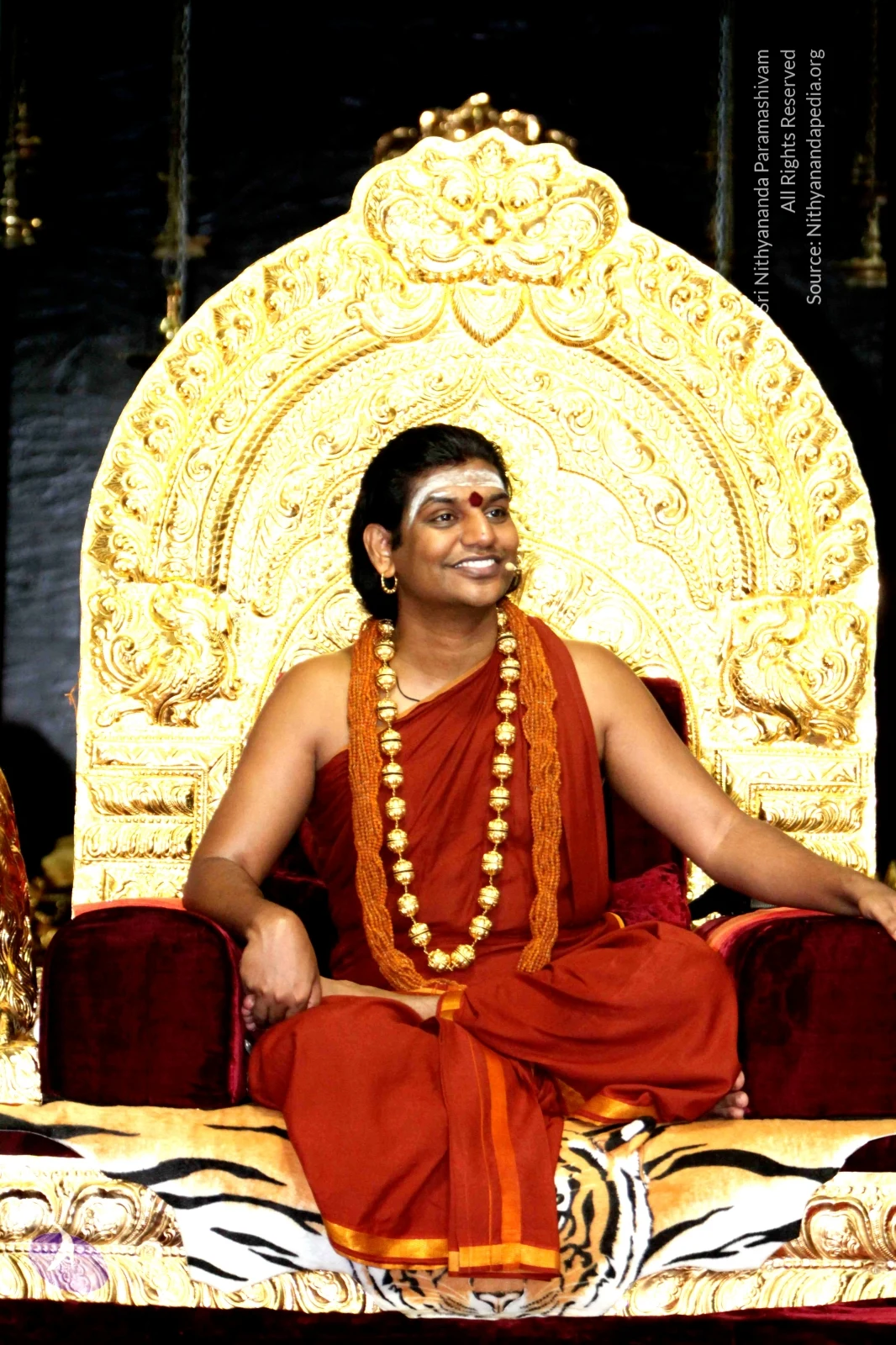
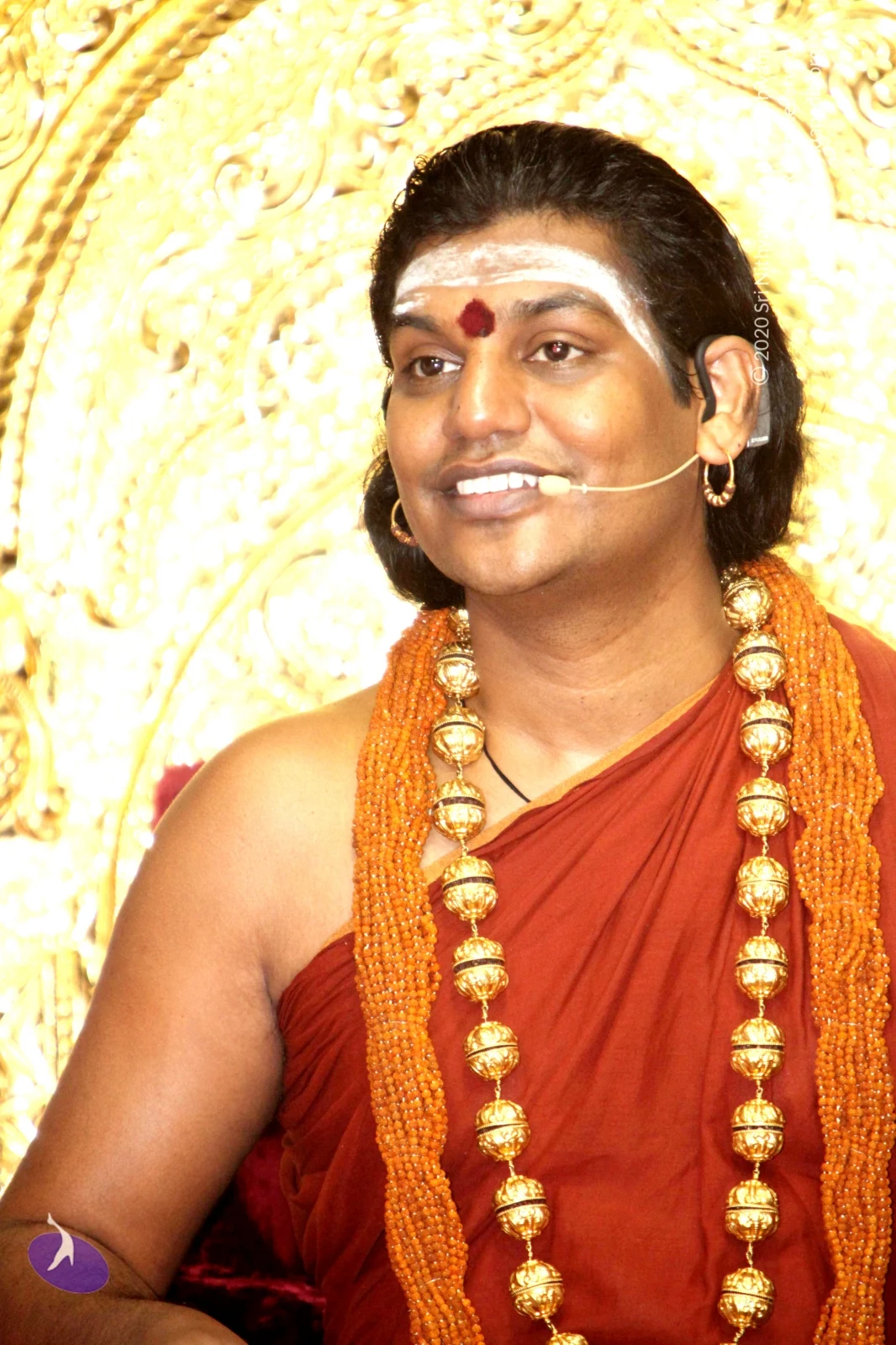
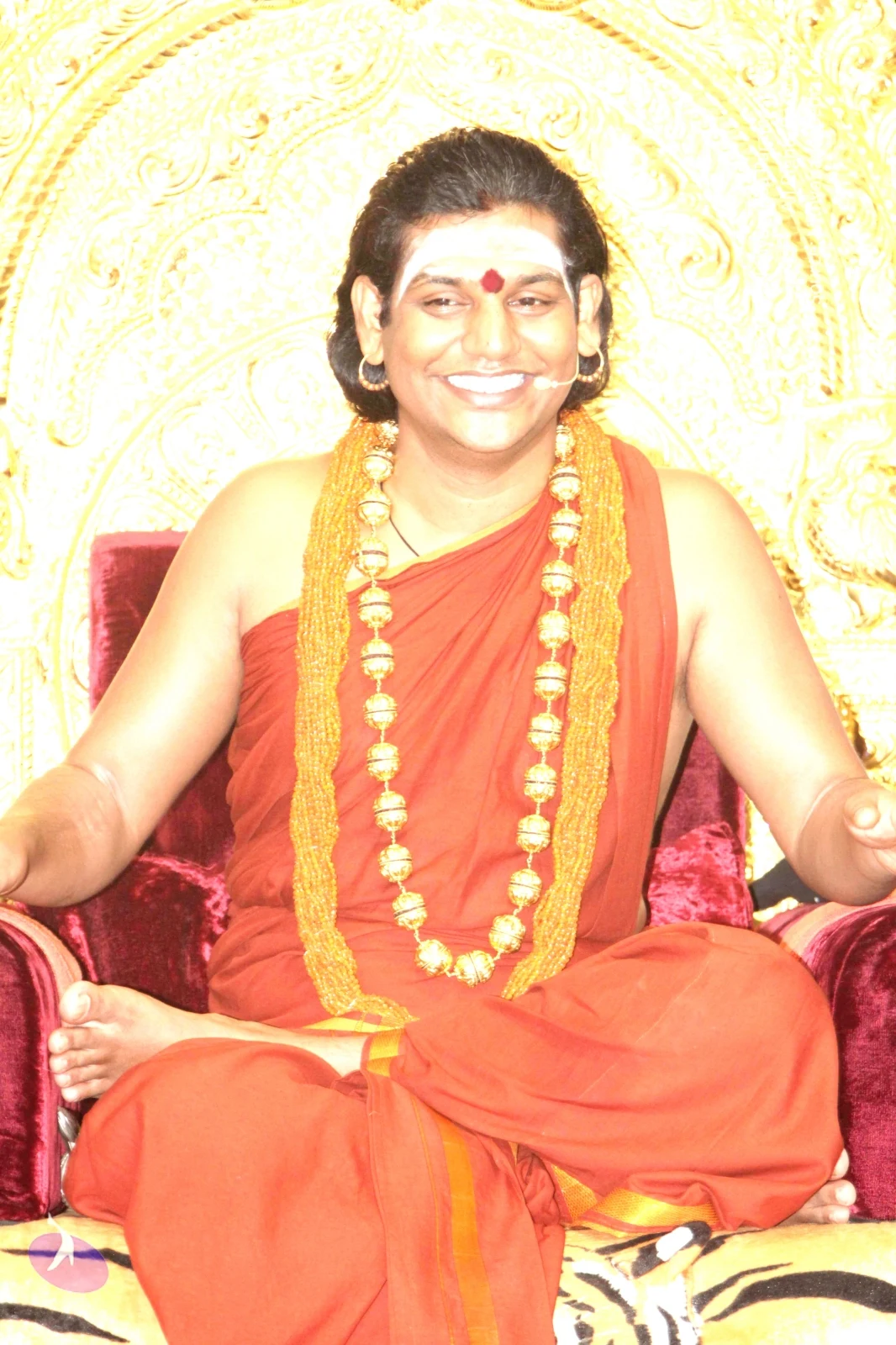
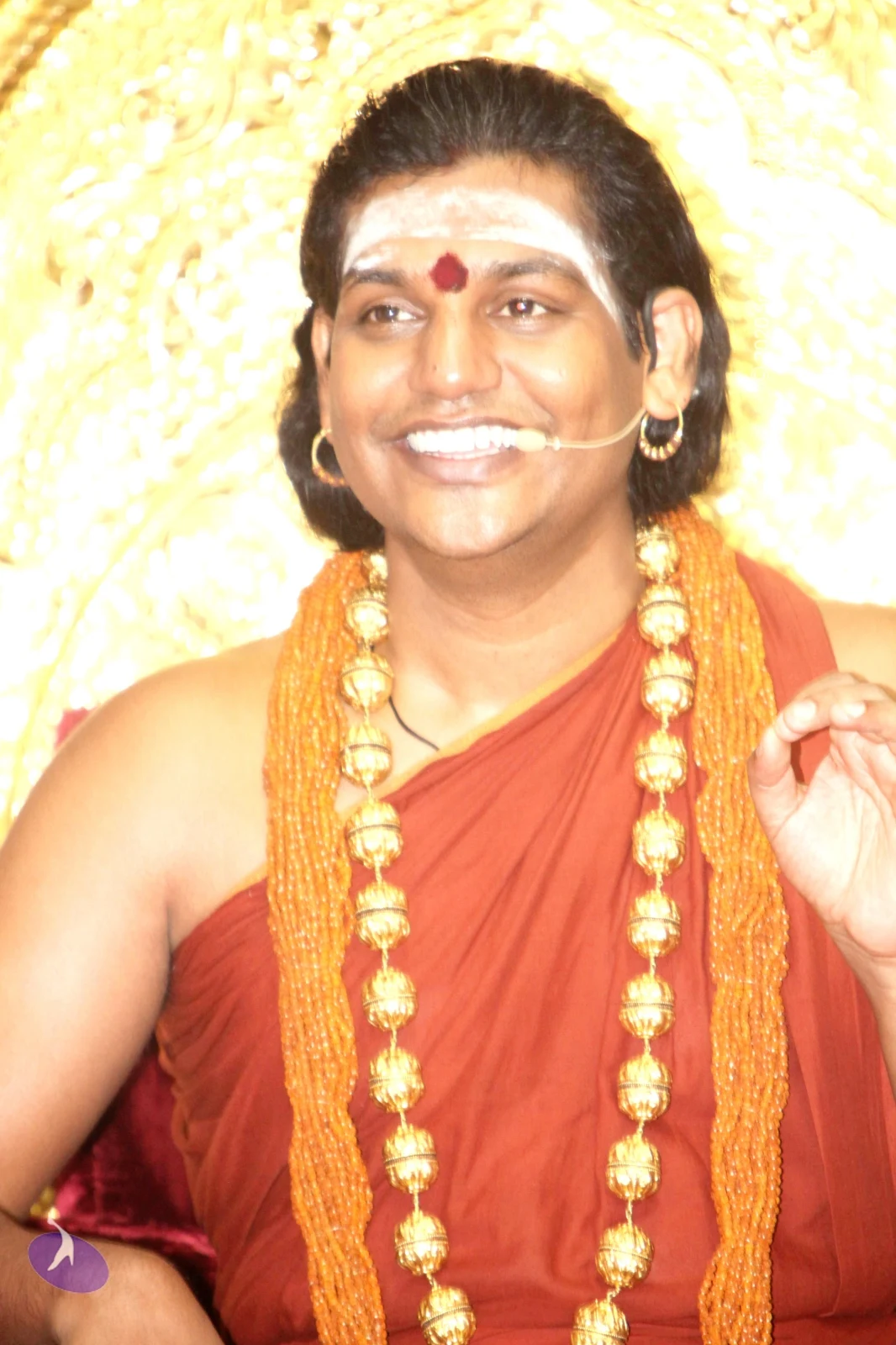
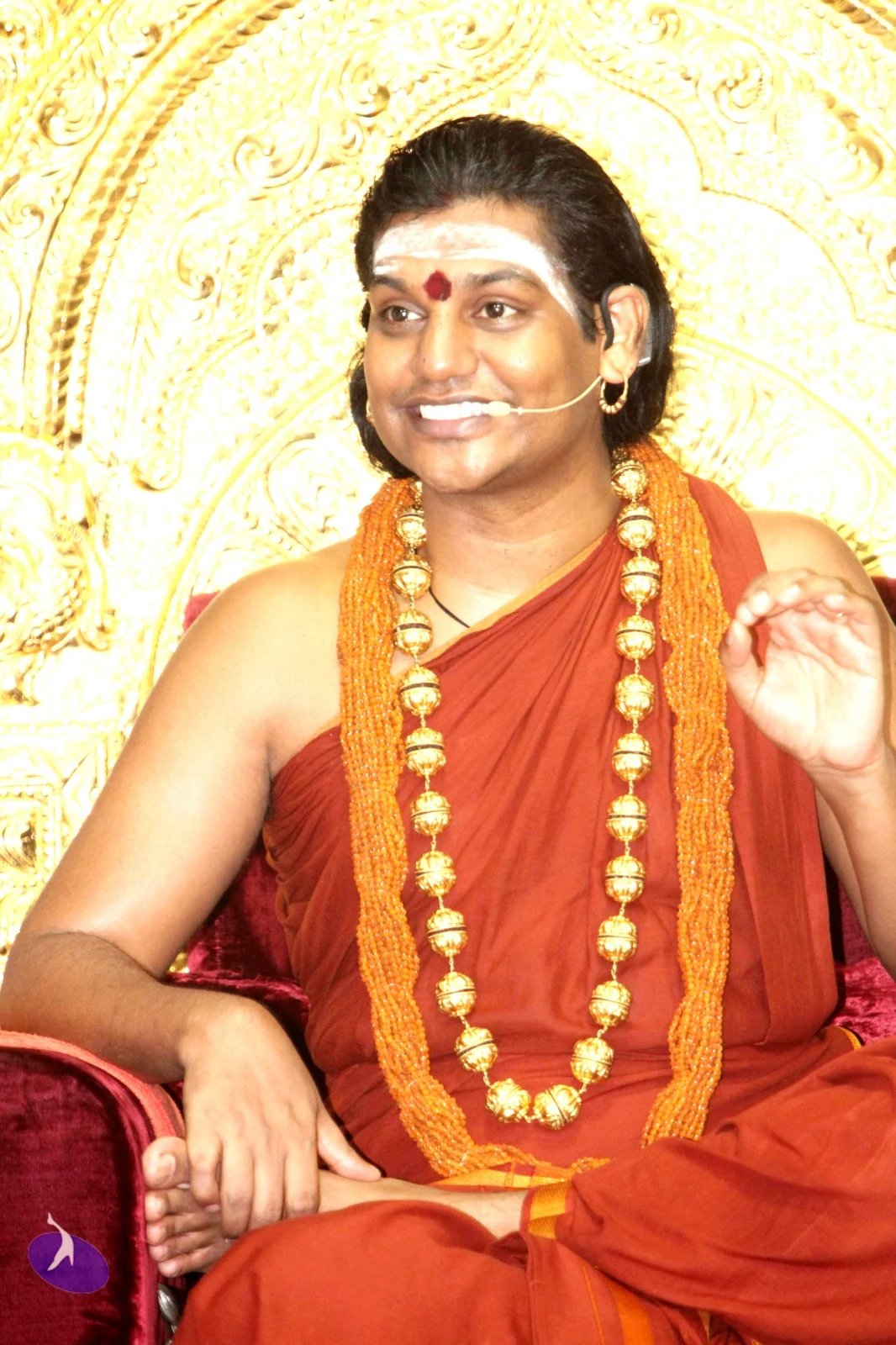
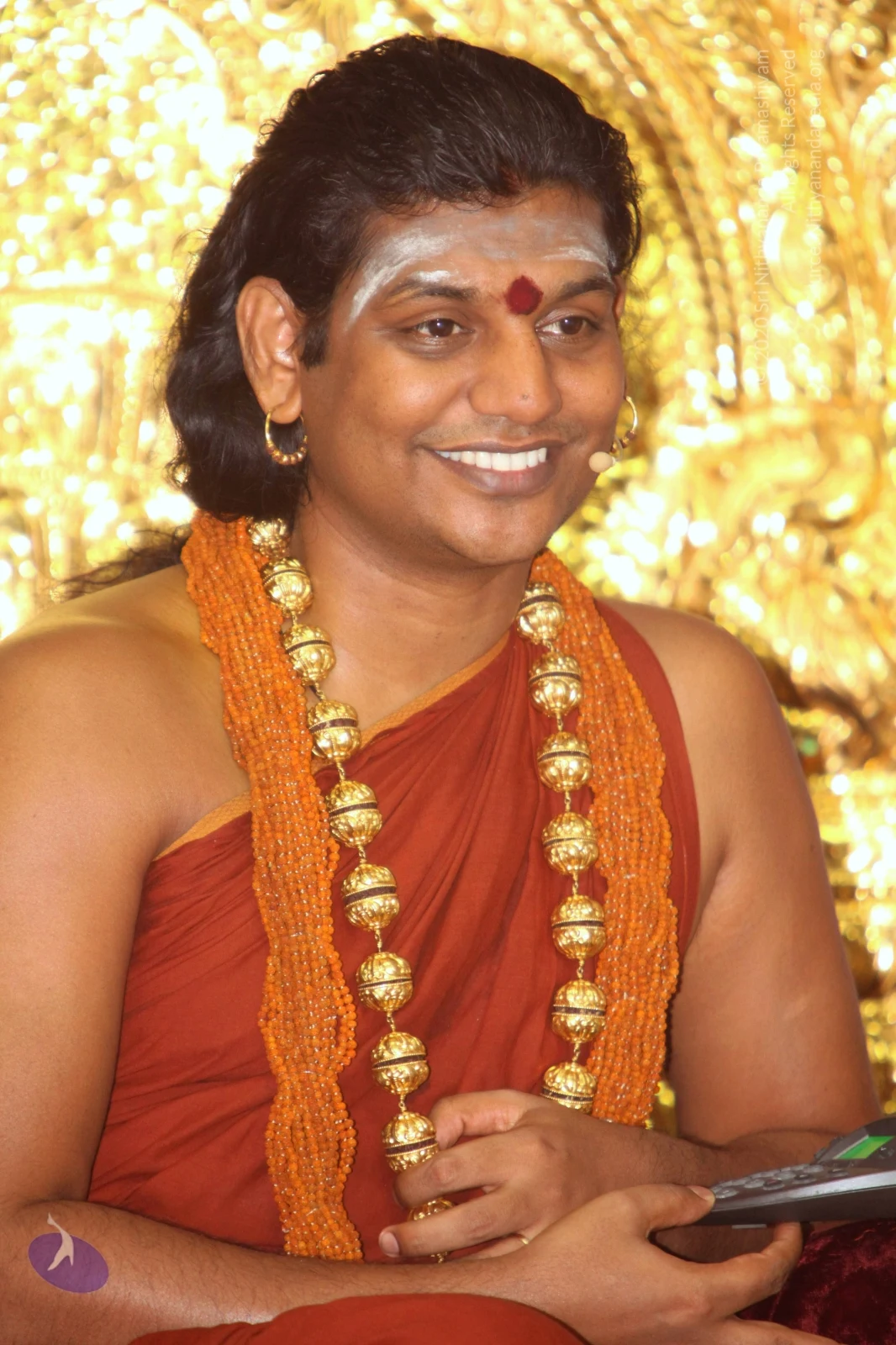
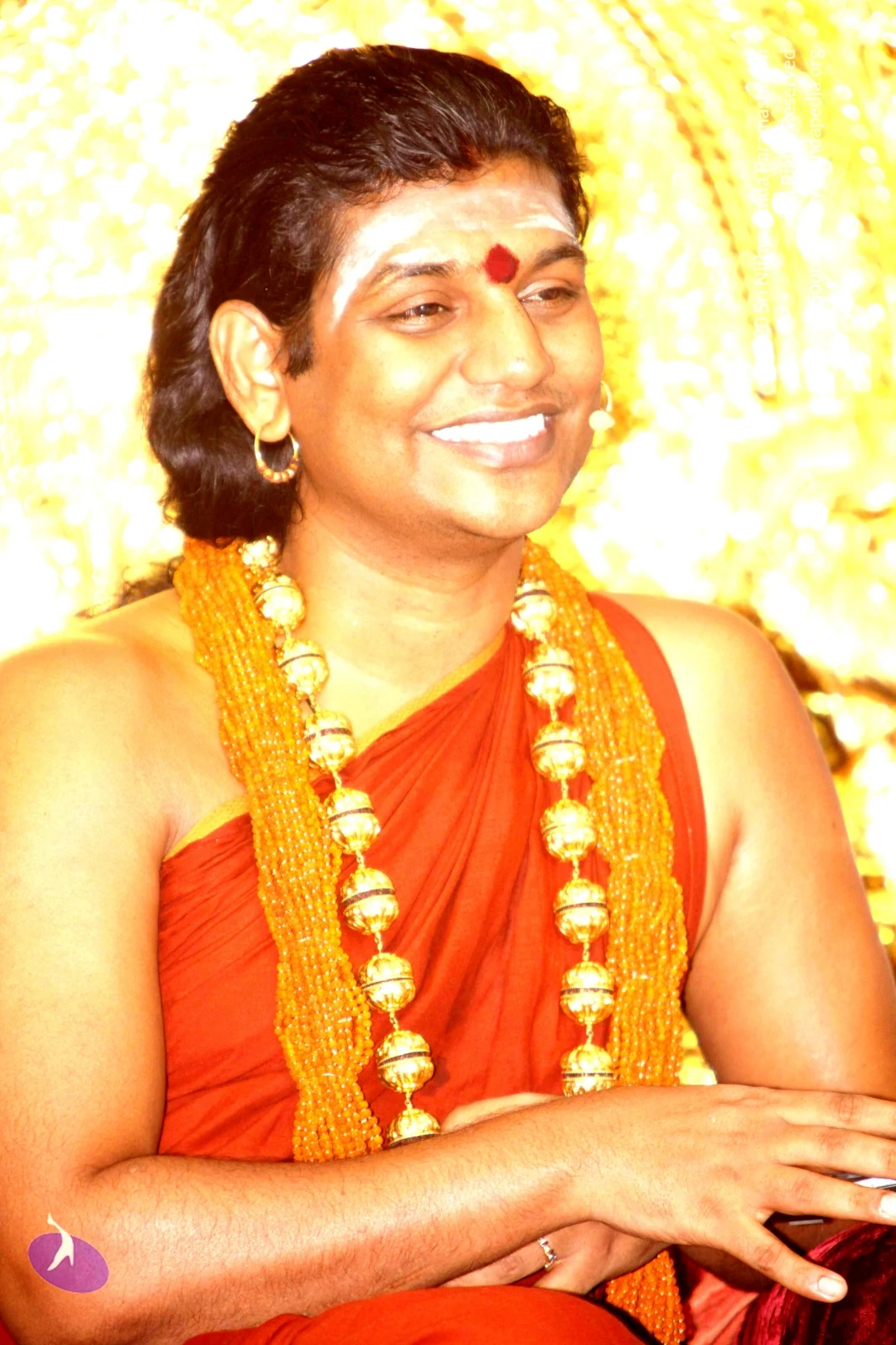
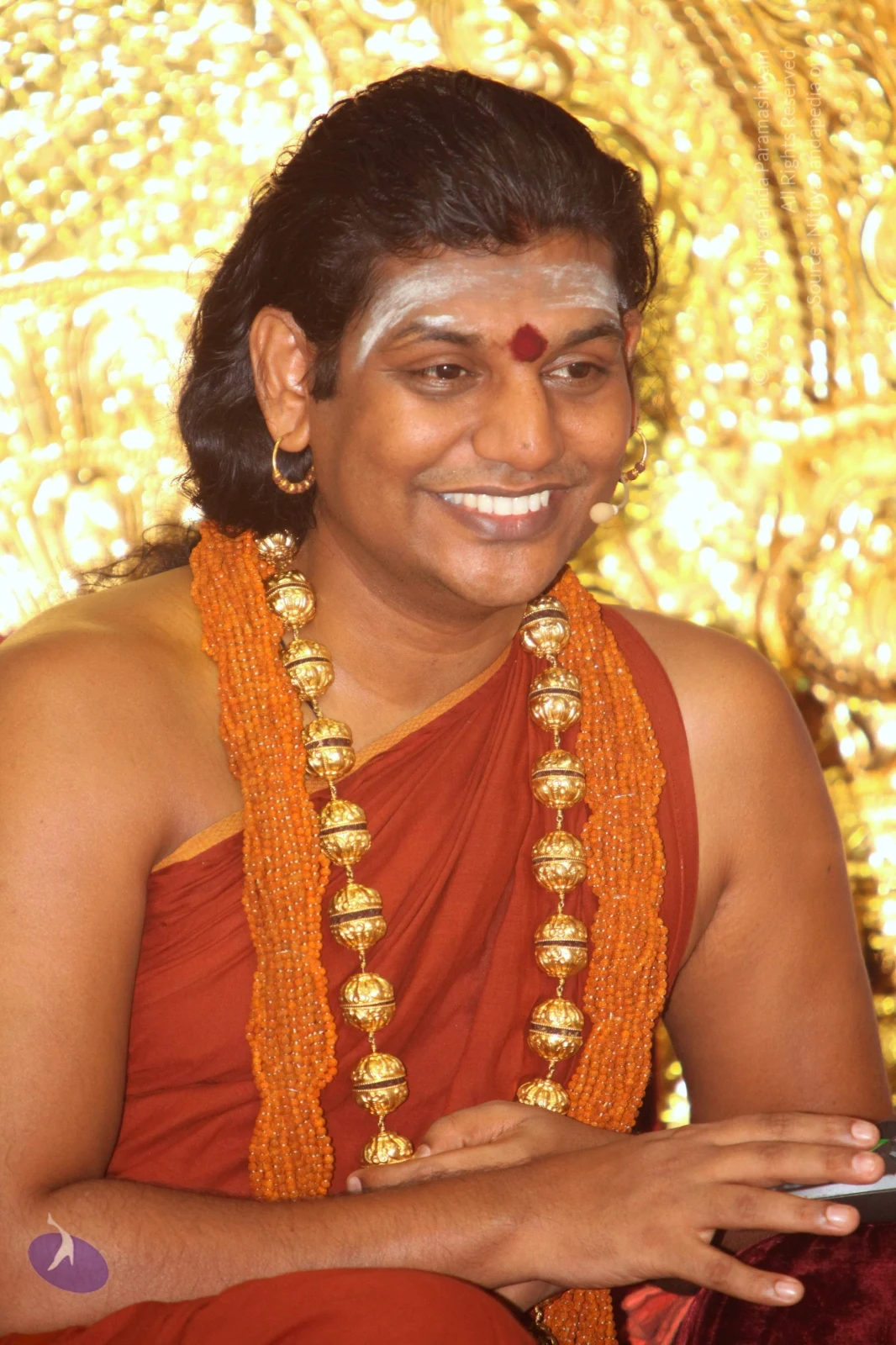
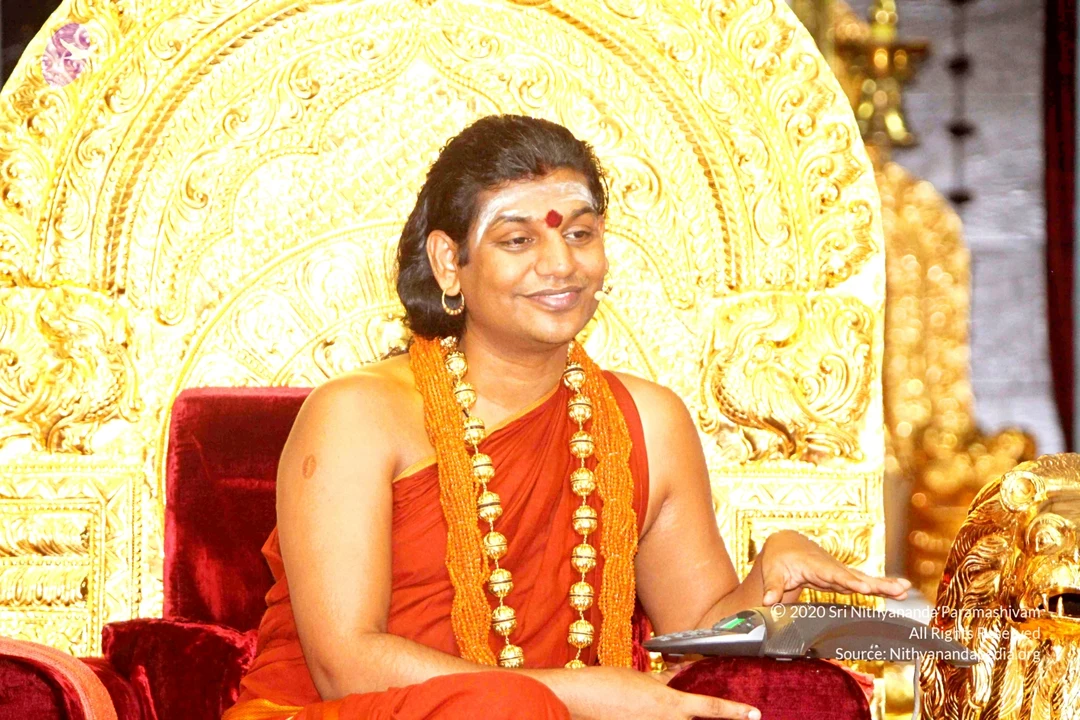
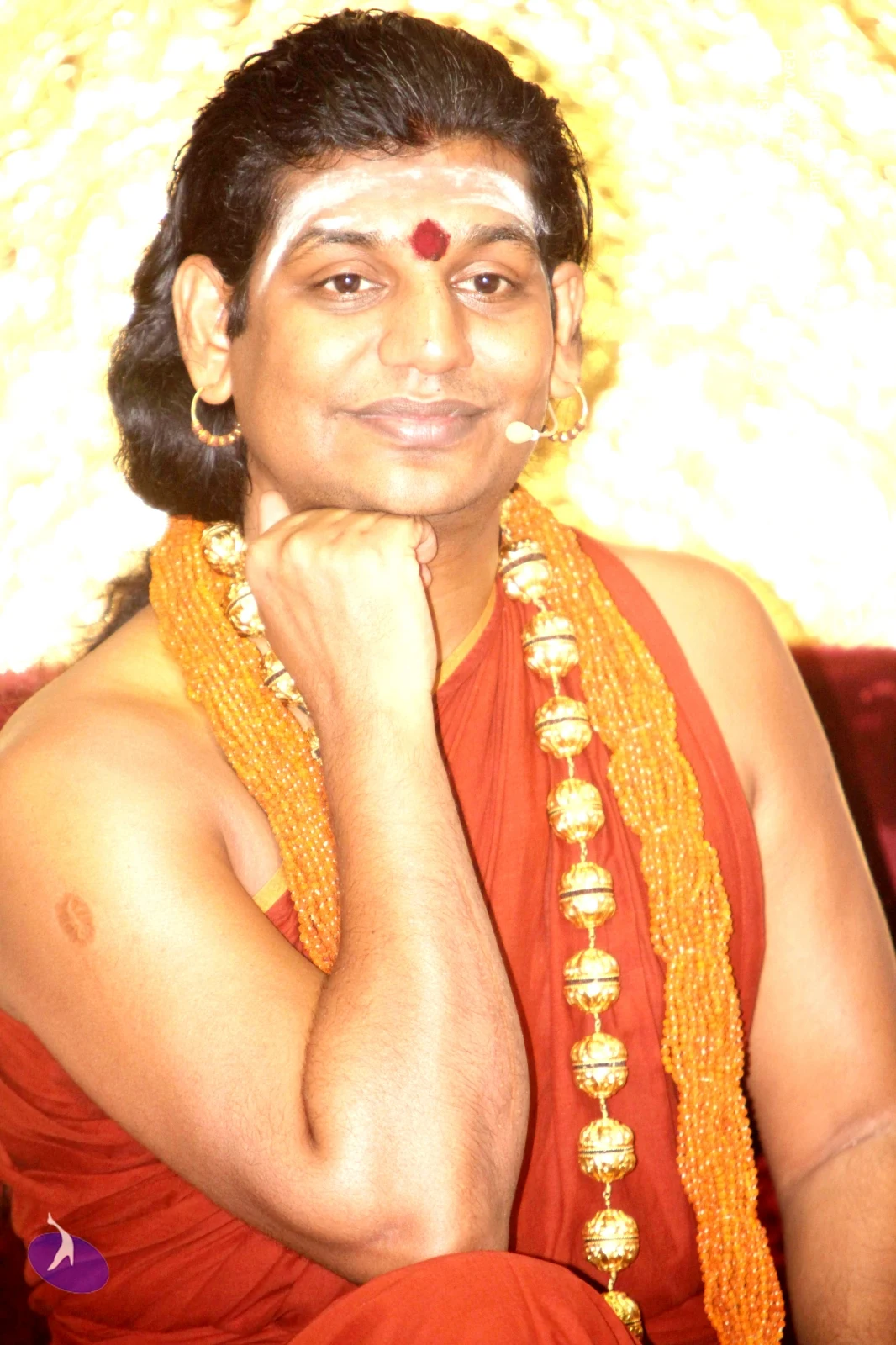
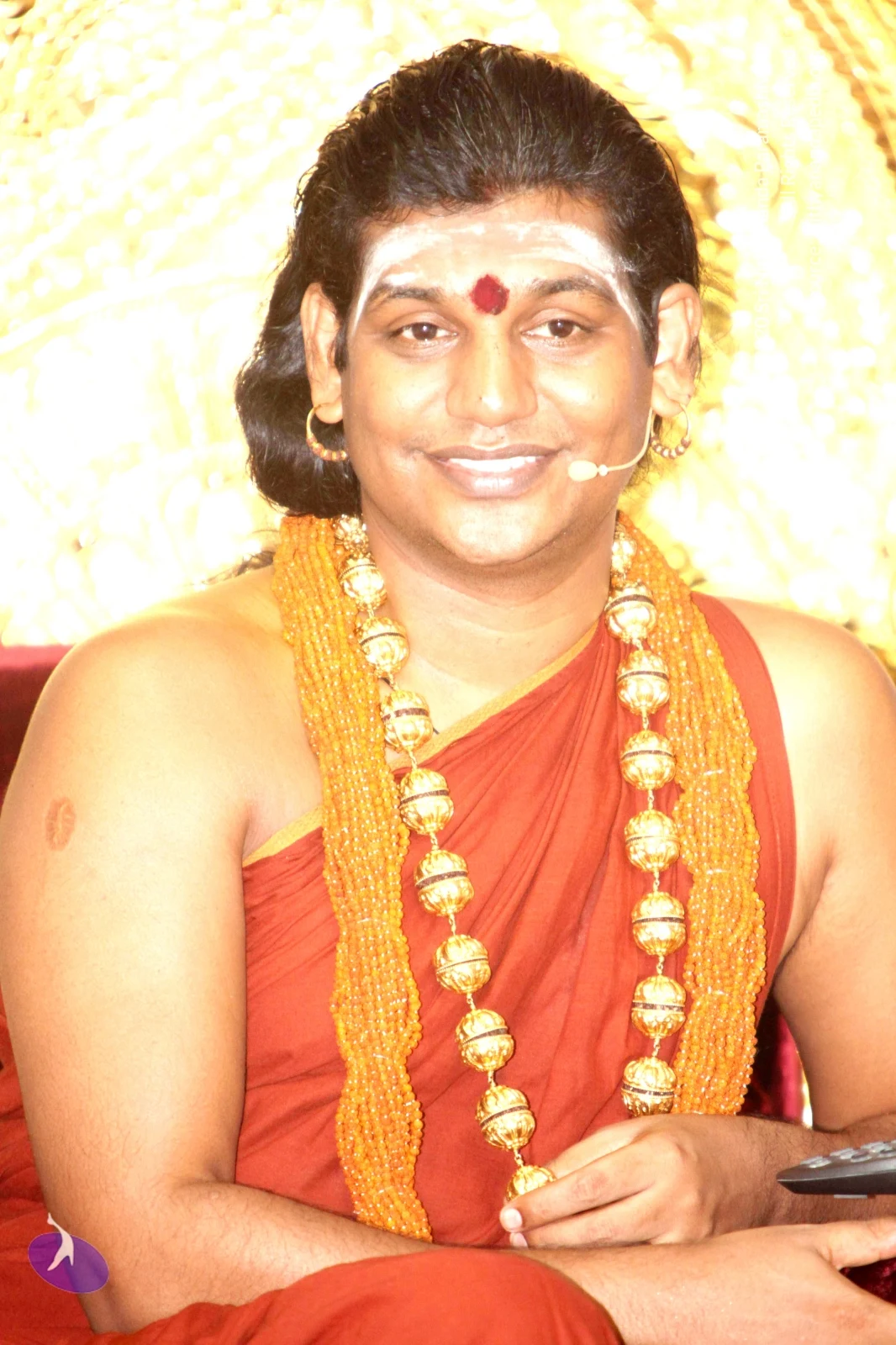
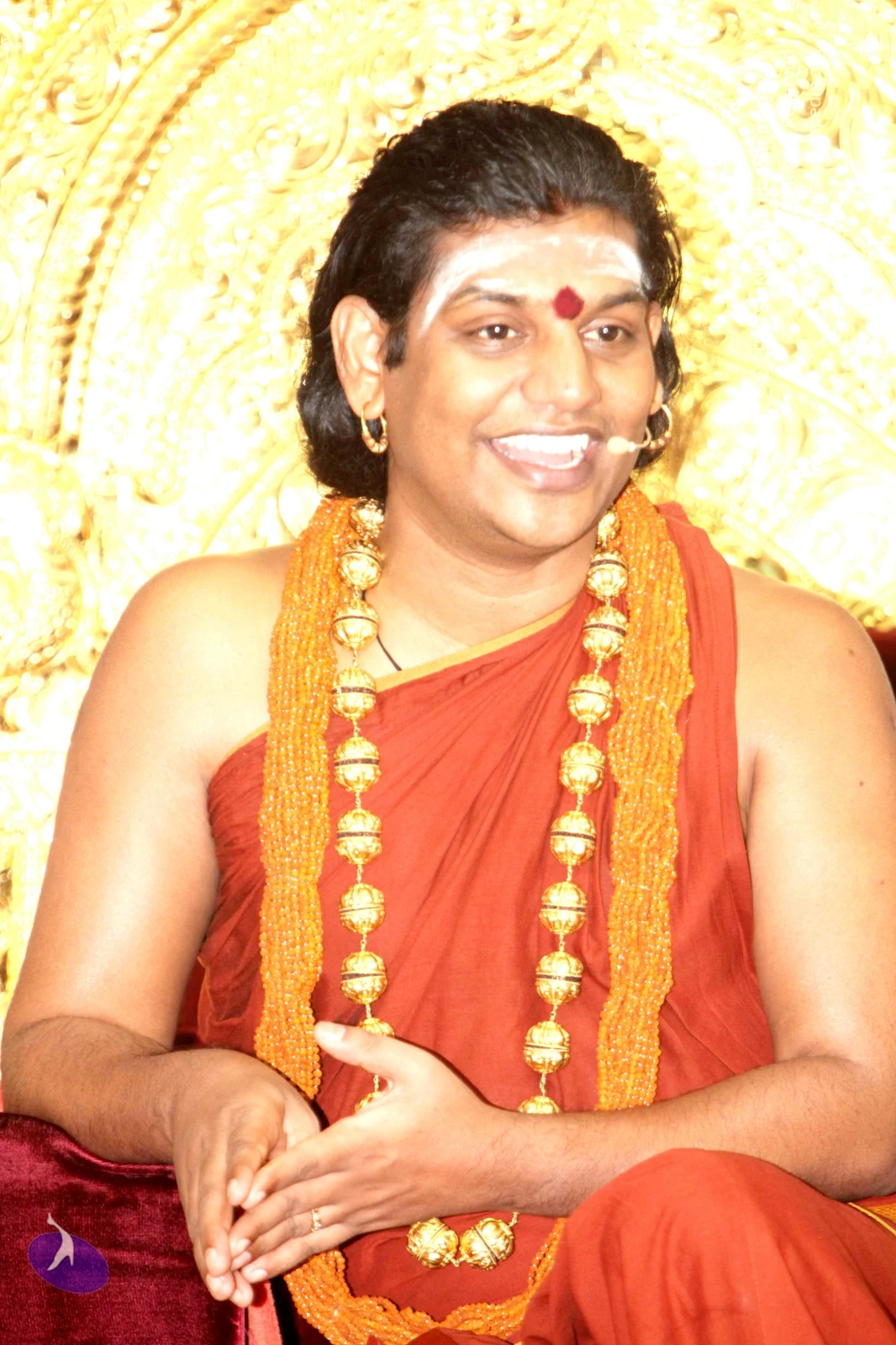
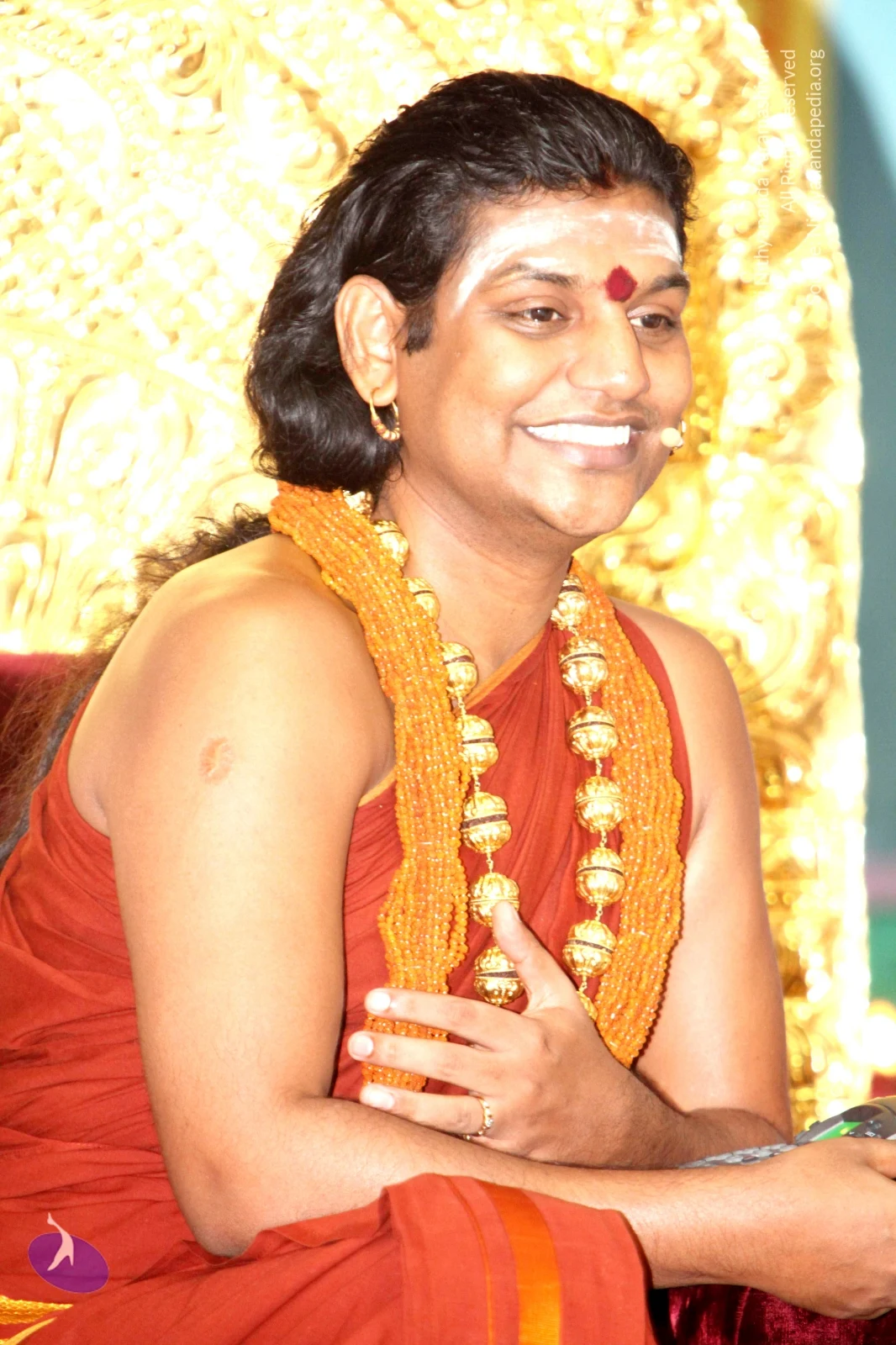
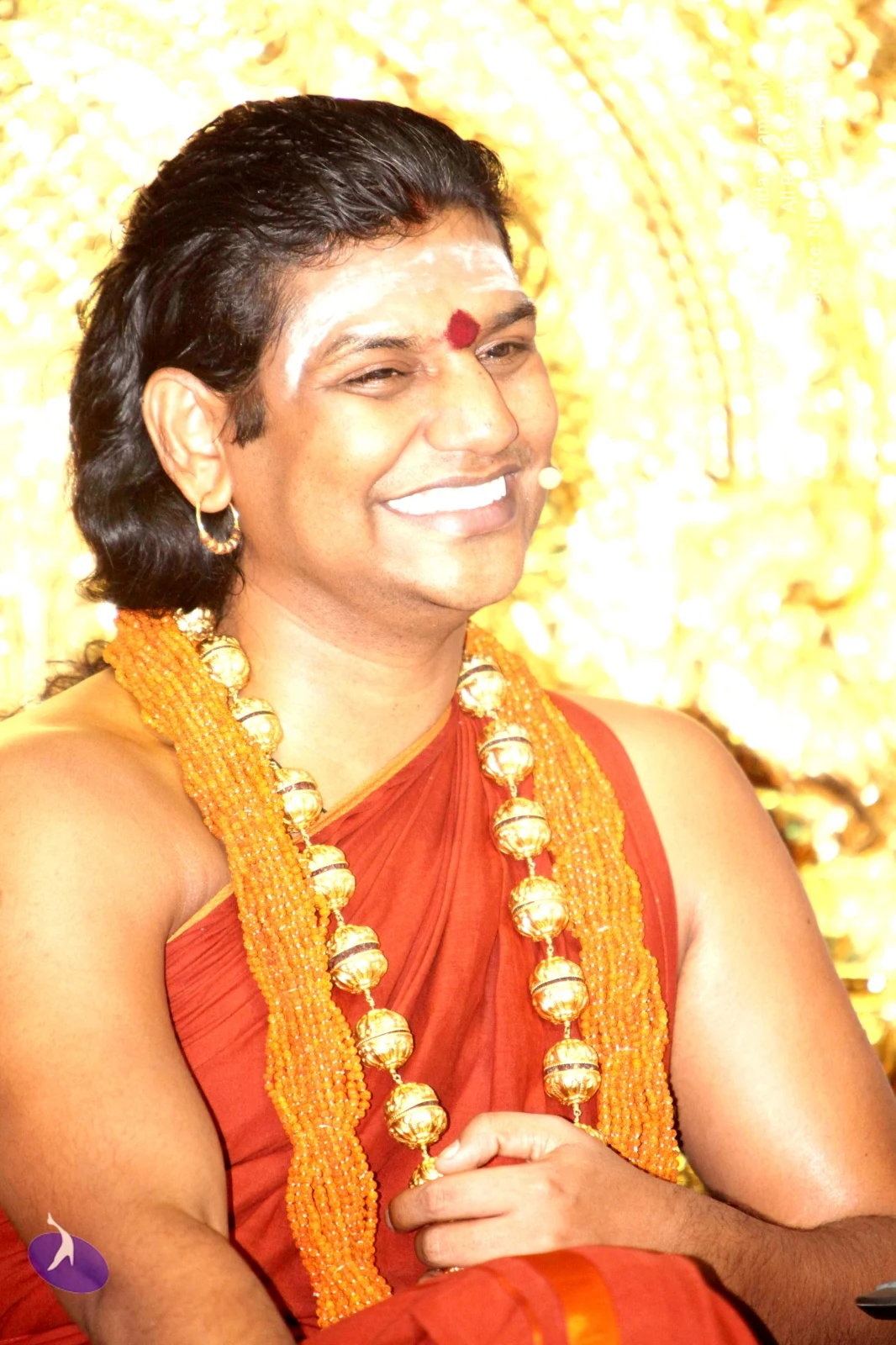
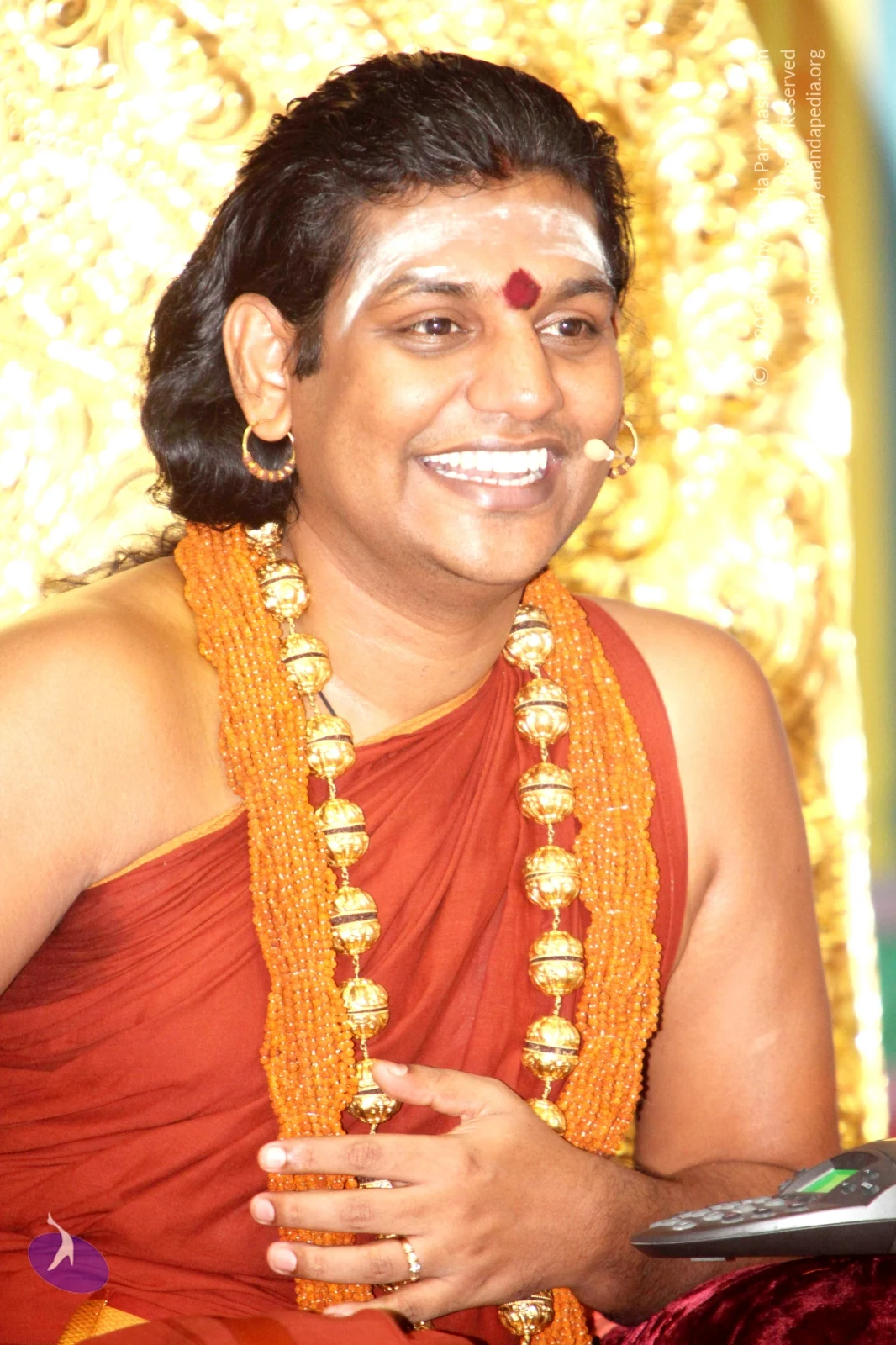
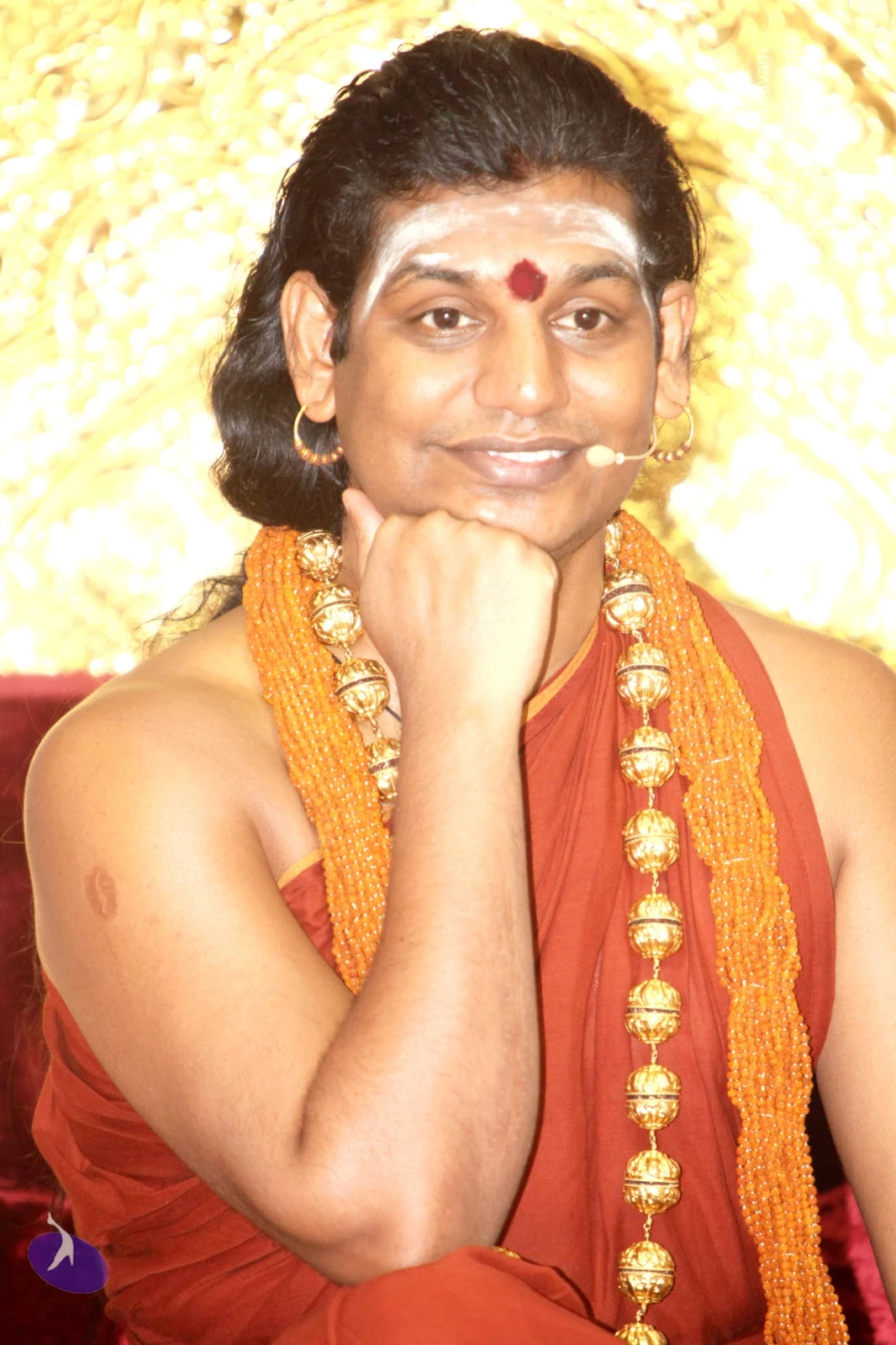
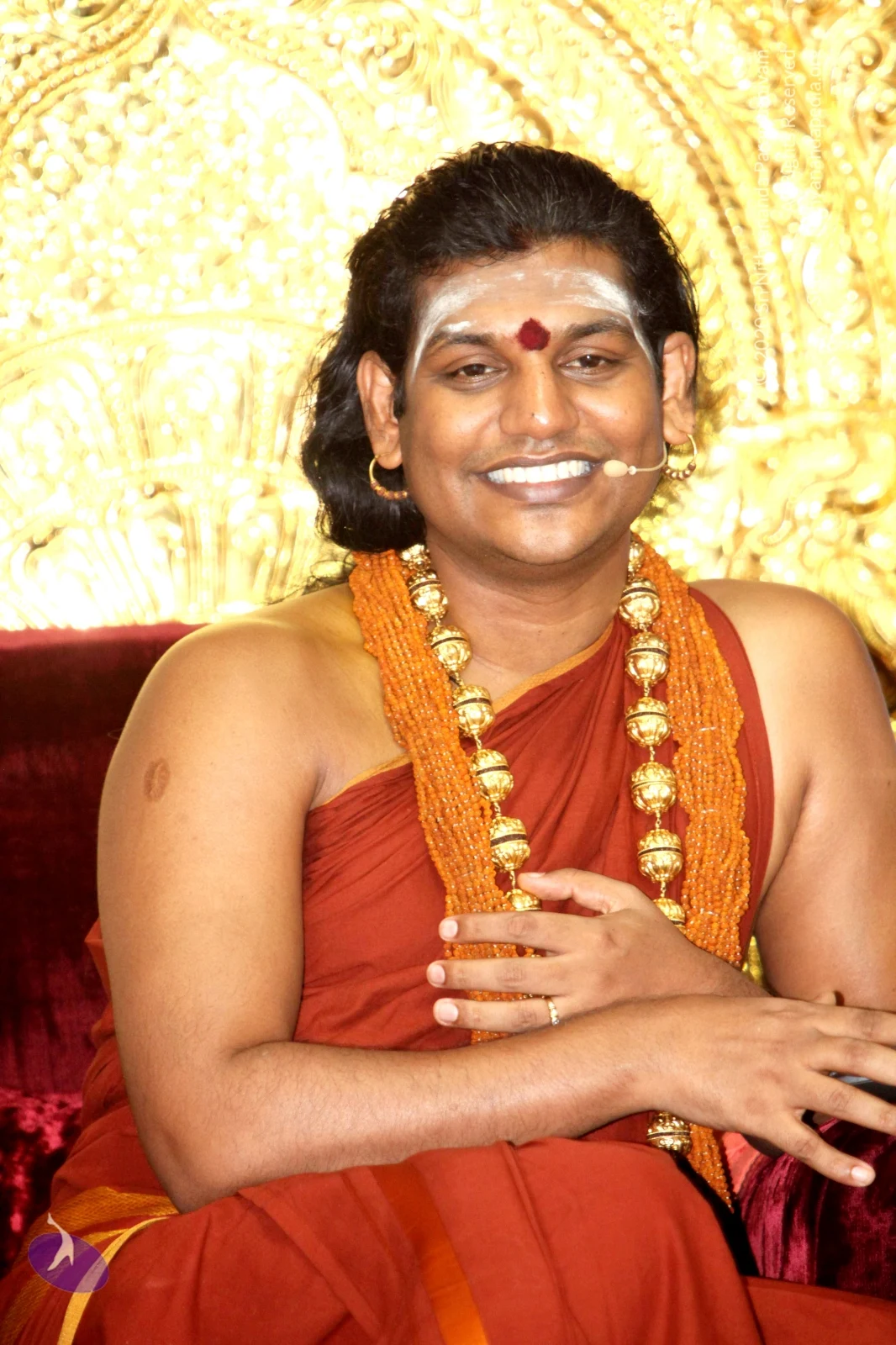
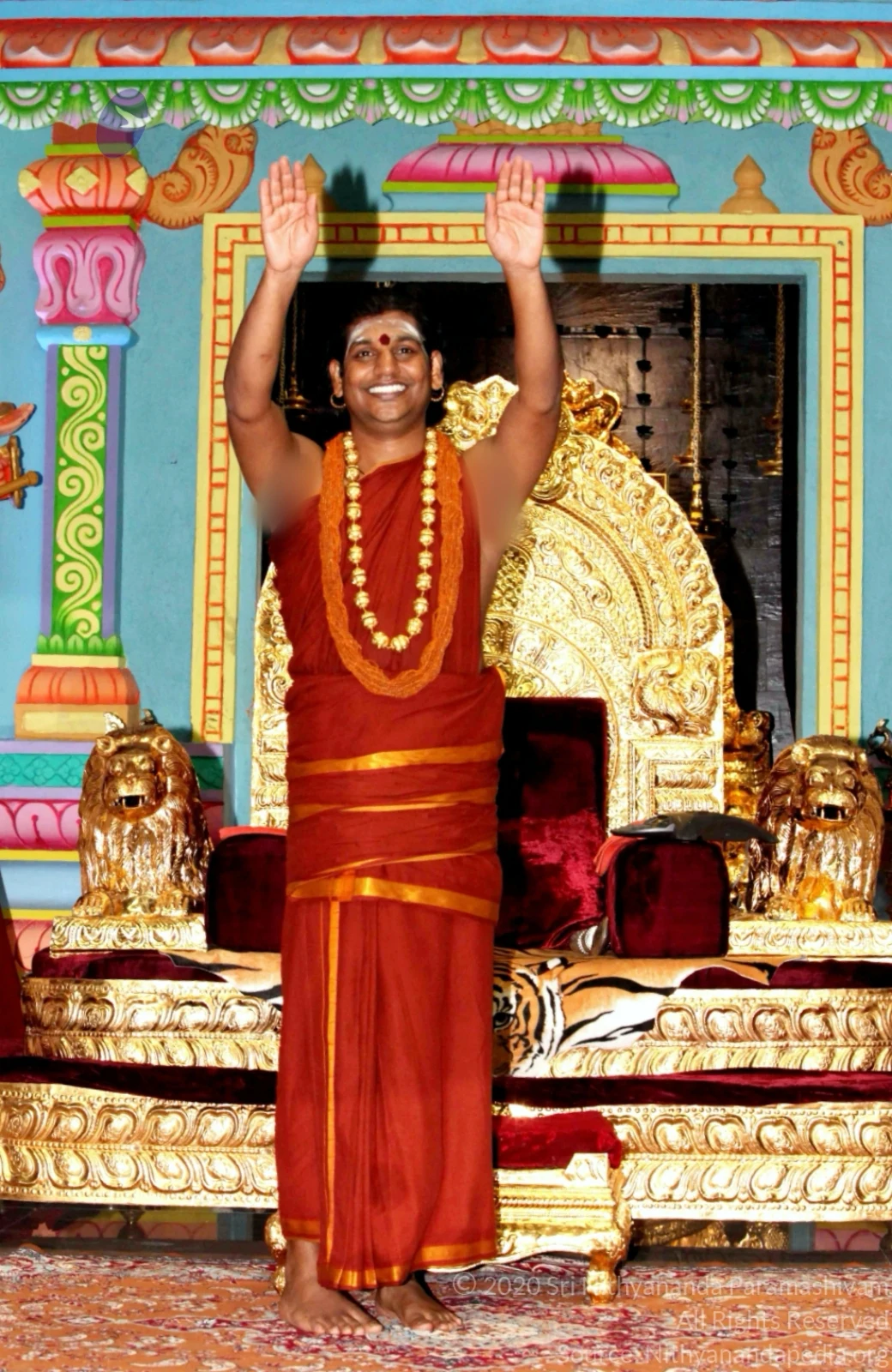
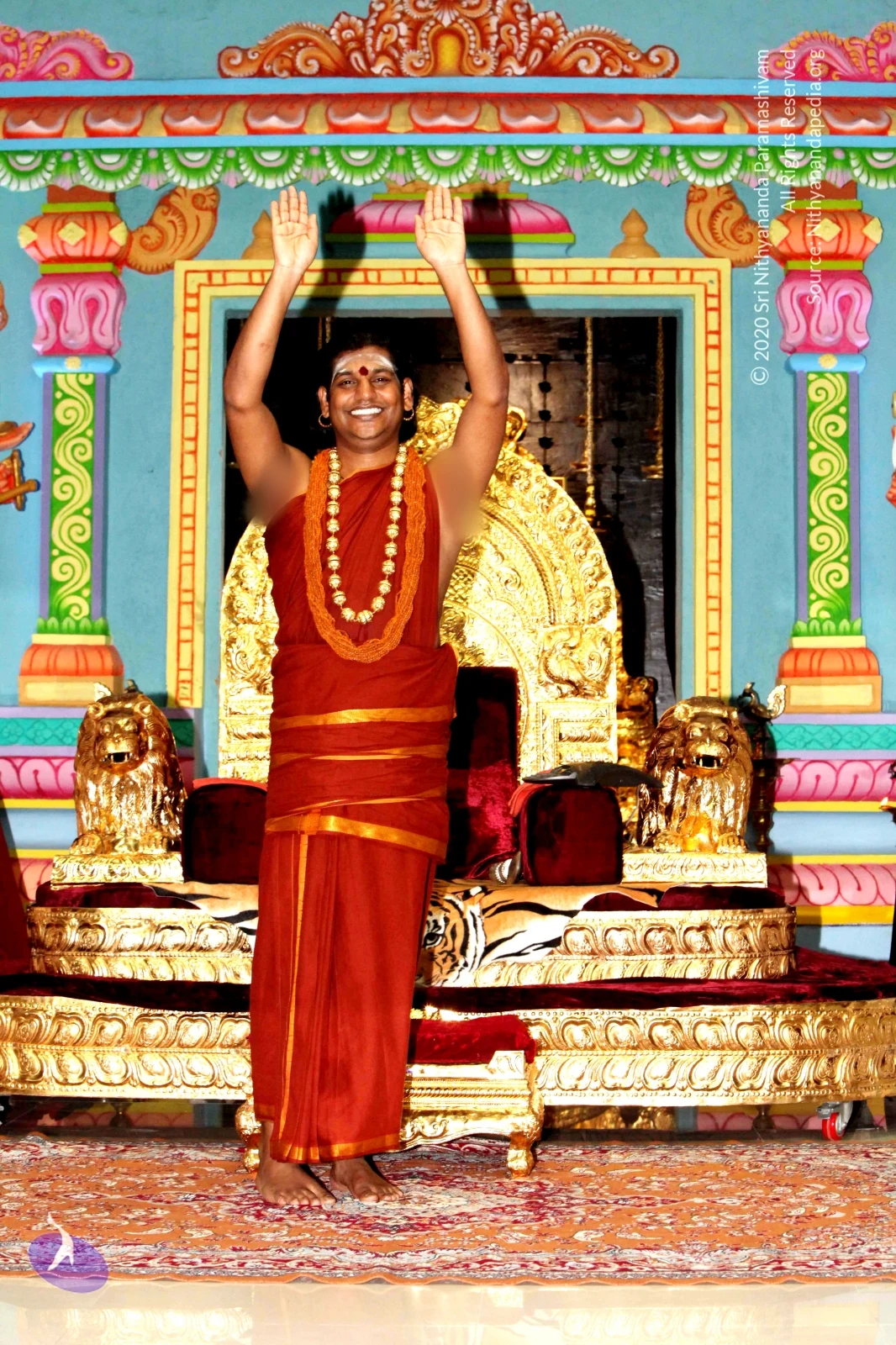
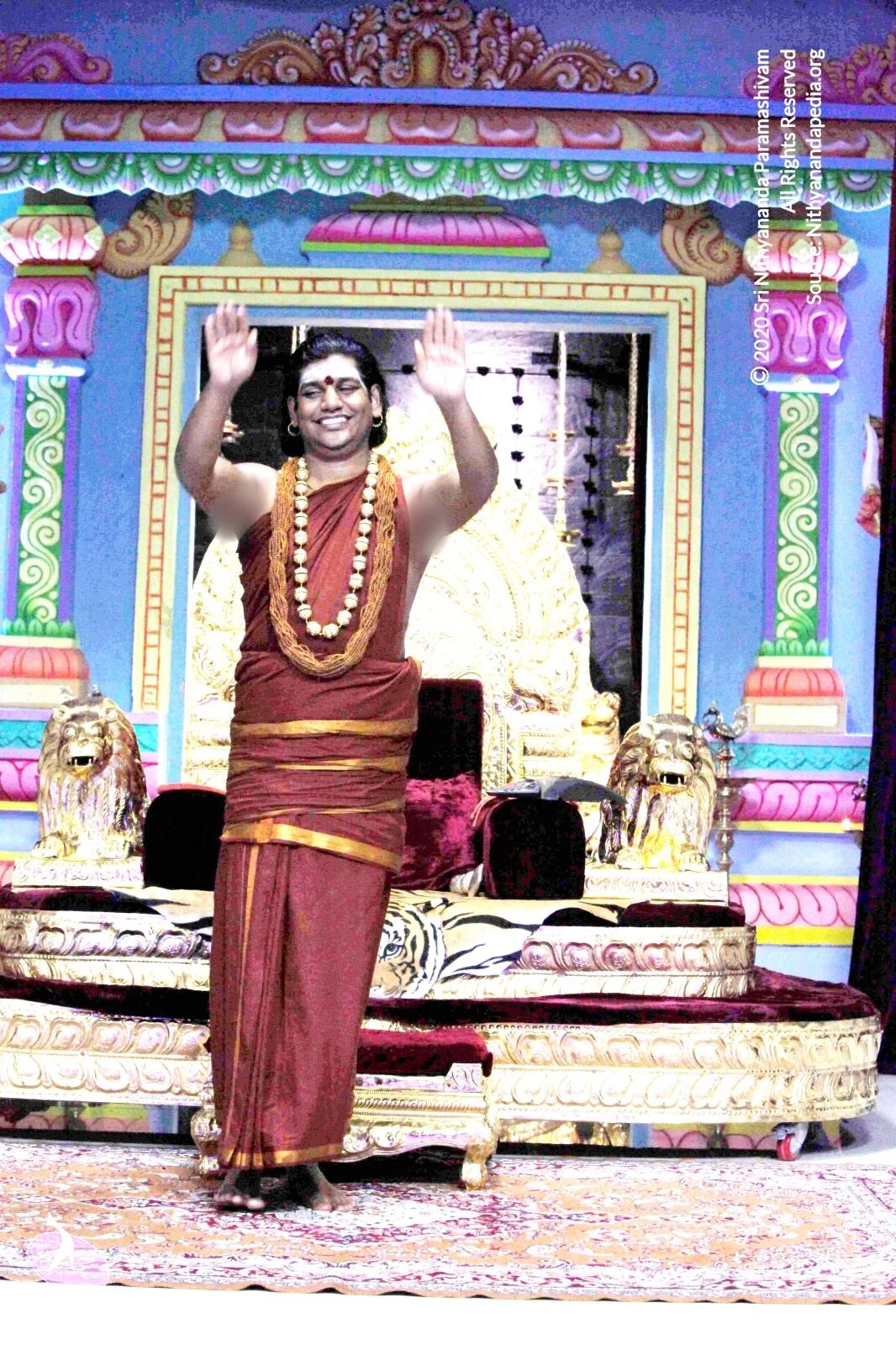
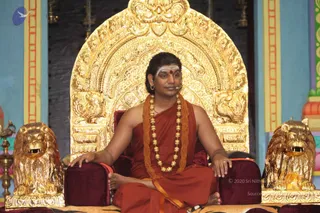
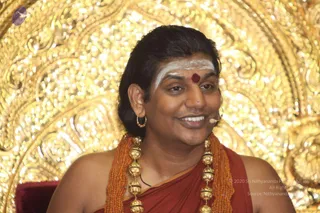
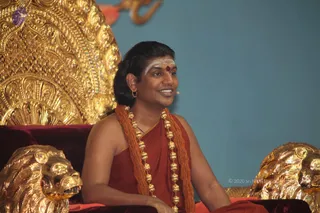
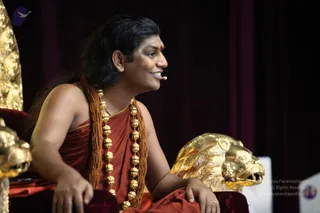
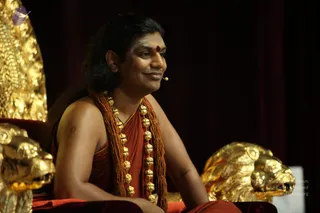
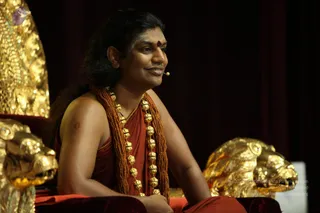
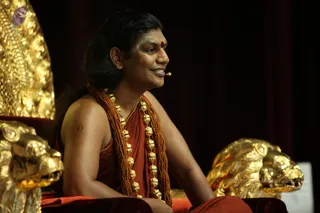
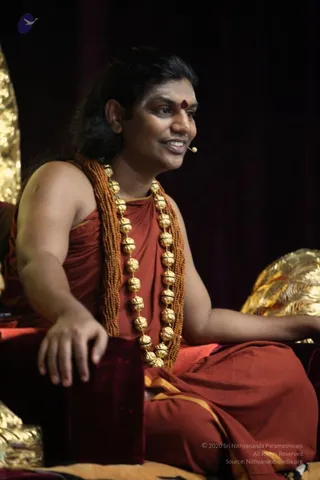
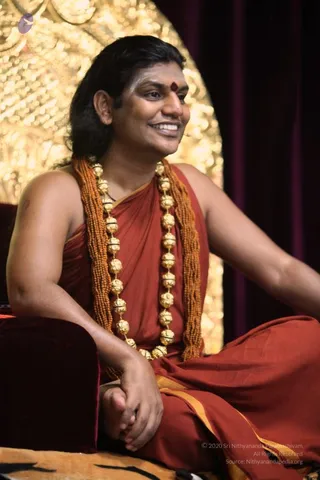
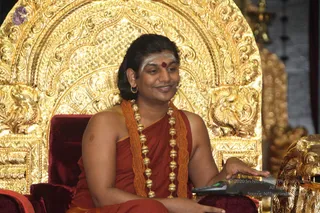
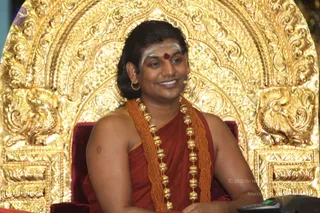
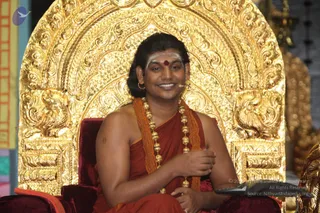
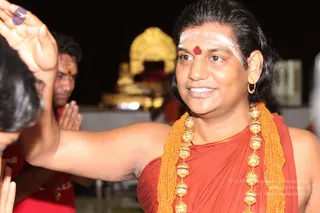
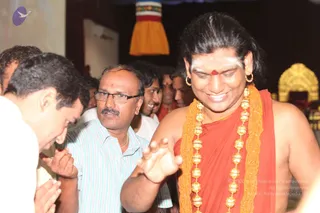
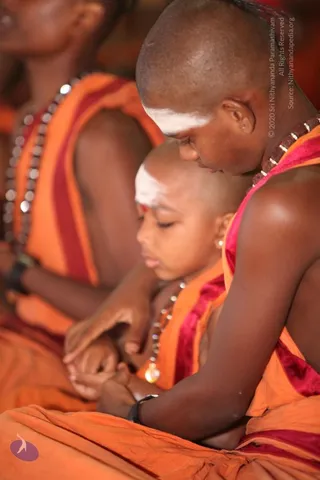
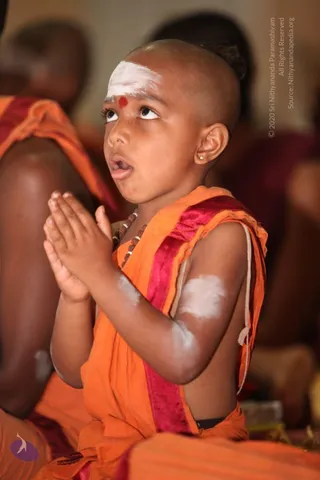
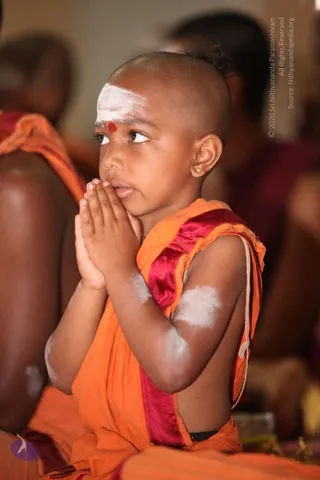
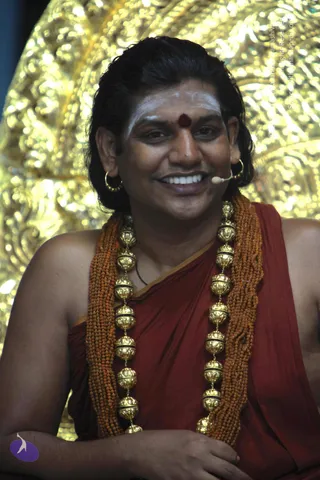
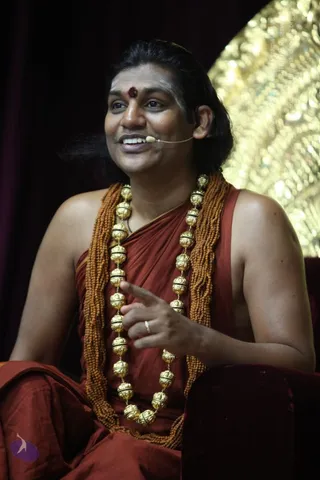
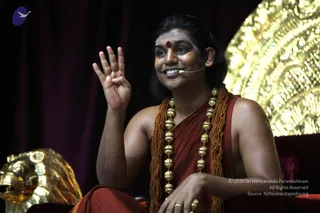
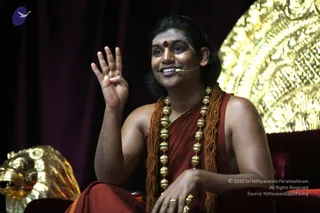
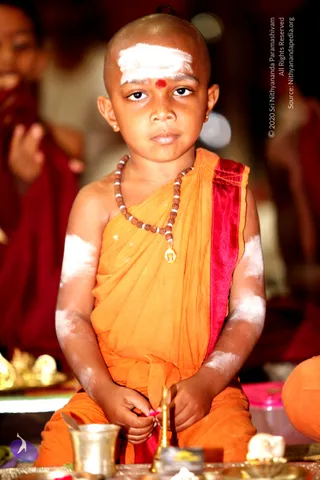
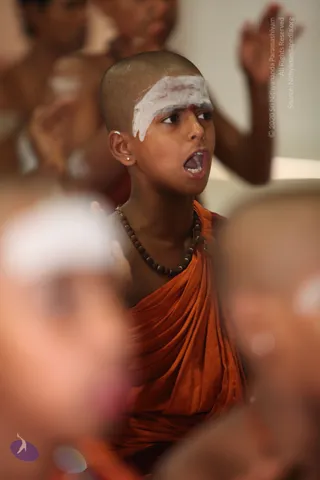
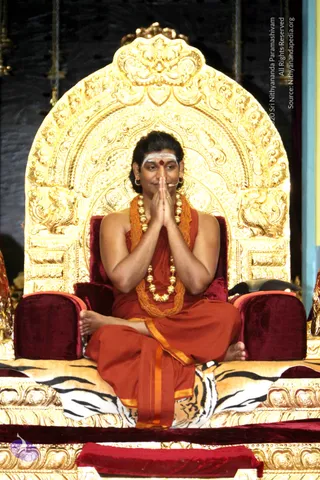
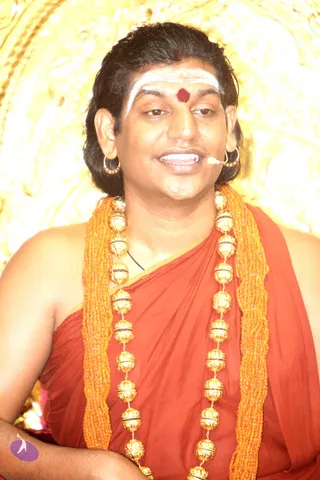
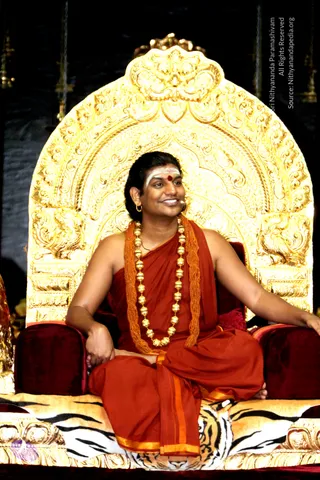
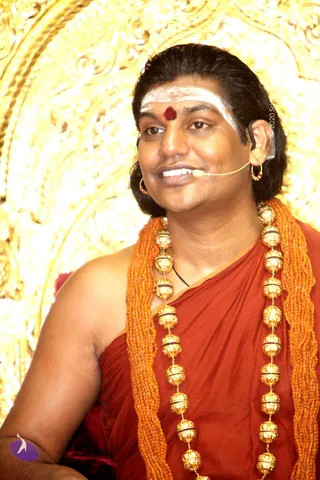
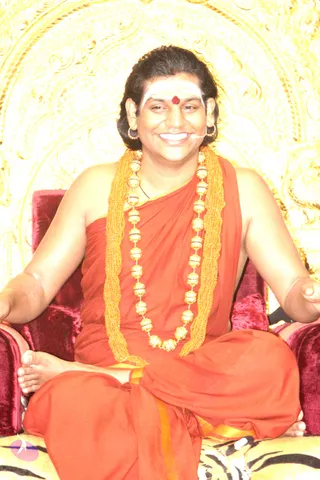
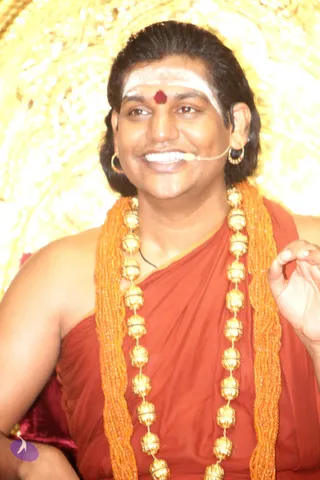
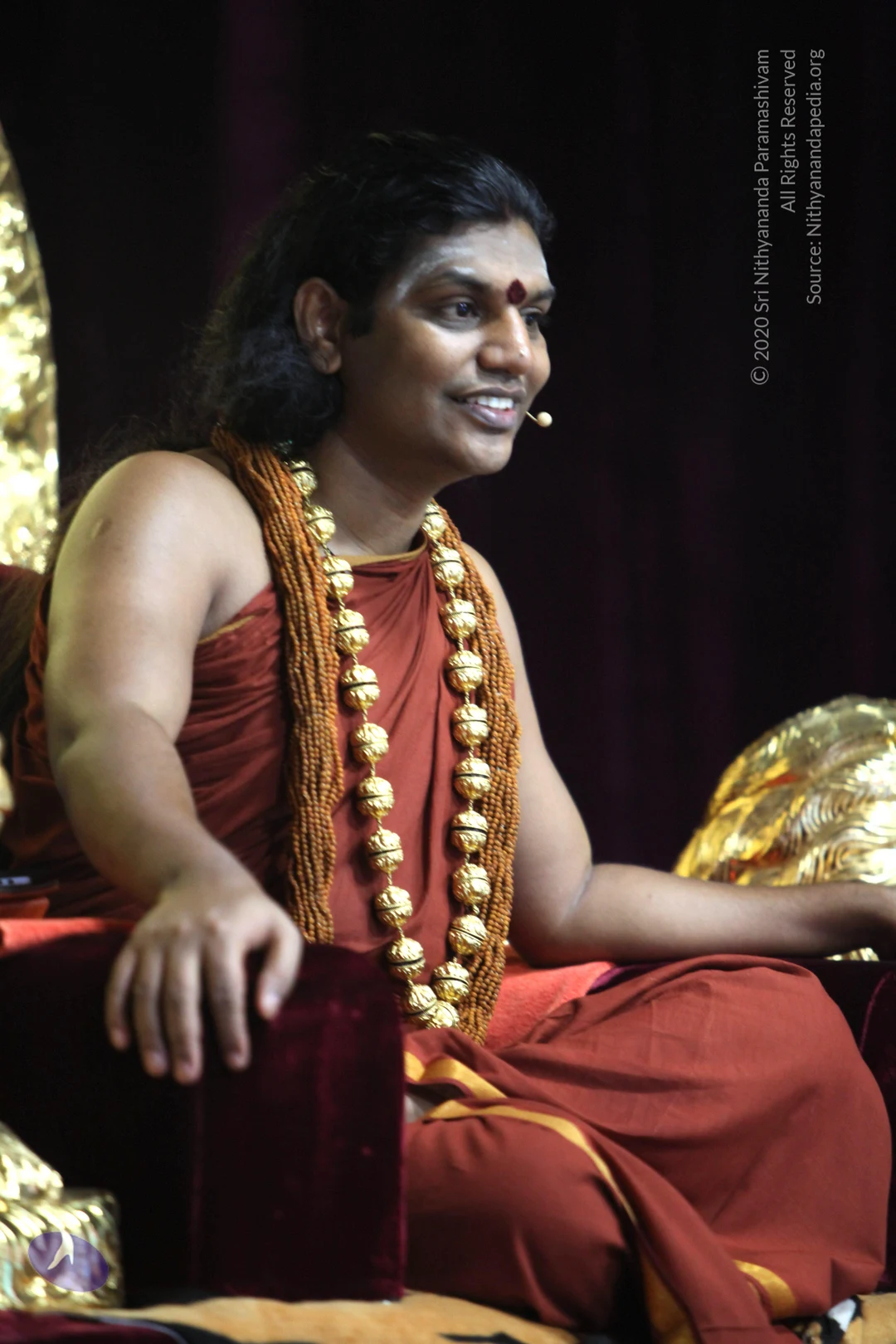
A seated man in a rust-red sannyasi-style wrap and dhoti sits on a dark velvet throne with gold-embossed backrest, speaking into a small lapel microphone. He wears multiple strands of orange-brown rudraksha beads and a long ceremonial necklace of large gold beads, with a red tilak on his forehead. His hair falls past his shoulders and he sits cross-legged with bare feet visible, against a deep maroon curtain.A man with long dark hair sits on an ornate gold-and-red throne, speaking into a small clip microphone while pointing his right arm toward the right side of the frame. He wears a rust-orange wrap over bare shoulders, a long necklace of rudraksha beads with gold bead accents, and a small red bindi on his forehead. Beside him is a gold carved lion head, and behind him are dark maroon drapes and gold carved panels. Swamiji (probable): long swept-back hair, orange-red wrap, rudraksha mala with gold beads and a seated discourse setting.A close photograph of a young shaven-headed child in orange saffron robes sits with both fists pressed together near the mouth, eyes lowered in a meditative or prayerful pose. A white vertical tilak mark is painted on the forehead, and white ash marks appear on the upper arm. The child wears a beaded rudraksha-style mala with small silver-toned beads around the neck, and small earrings. Another person in orange robes with a beaded mala sits blurred in the background at right.

April 10 2013

Original wiki page
Contents

Title

Don't Let Your Past Swallow Your Future

Description:

In today’s morning satsang, Paramahamsa Nithyananda unveils the key to the rejuvenation of life. The past is a dead weight. It sits on us like a corpse, pulling us down into spiritual stagnation. Past memories are weeds choking the new flowering of our future. When we bring integrity to our inner space we shed our fears, which are rooted in the past. Then we can create the future to be whatever we want, freed from negative remembrances. Nithyananda exhorts us to build our future on Satchitananda: Sat is knowledge, Chit is inspiration, Ananda is the life we create from knowledge and inspiration. Once we generate Sat and Chit from integrity and authenticity, life will happens automatically, without the burden of the past.

Link to Video:

Part - I

VideoAudio

Transcript:

[00:19]

Is samaay hamare saath upastith sabhi darshako aur Bhaktho ko mein prem aevam ashirvaadh saahith svagaath karta hoon. Aaj ham ateeth varthamaan bavishya evam aapki vasthaviktha ke beech mein jo pratyaksha sambandh hai uske baare mein baat karenge.

[00:45]

I will expand on the relationship with your past, present, future and the reality of your life, and how it can be handled and altered with these four principles, four tattvas. From listening starts the whole spiritual life. When you are completely drowned inside your past, when your past is sitting on you as a dead weight, you will never be able to listen. Only when you want to responsibly work on your future, you start listening. Dead past never lets you listen. Past by its very nature does not have life, and if you try to indulge continuously in the past it swallows the future also. Sunne se hi koi aadhyaatmik jeevan aarambh hotha hai. Jab aap ateeth me puree tharah say doob chukey hai tab aap kabhi bhi sun nahin payenge keval jab aap apne bavishya ke upar utthardayithva ke saath kaam karna chahthe hein aap sunne lagthey hain.

[02:43]

Whether you like it or not, you want it or not, by the way you are hardwired you will hold only yourself responsible for your life. Listen! You will hold only yourself as responsible for your life. Nobody else can be responsible. Only you are responsible for your life. Aapka mruth ateeth kabhi sunne nahin dethaan hai. ateeth apne svabhaav ke roop se hi jeevan heen hai yadhi aap lagathar ateeth me dube huin hai ateeth aapke bavishya ko nigal jaatha hey. Adhyaapak ne poocha “jo maanav sunntha nahin hai use kyaa kehh sakthe hein”. Sant ne samadhaan diya use kuch bhi keh sakthe hein kyun ki vo sun nahi saktha.

[04:08]

Listen! Whatever you call, he won’t listen! He is not going to hear anything! Sometimes, human-beings live like that. Bahuth baar maanav jaise hee jeethe hey. When you iron out your inner space with Integrity, please listen, first thing, integrity will do to you, it will remove all the negative weeds constantly you are cherishing which are rooted in your past. Negativity needs past evidence as a support for it to survive. Negativity cannot be based in future. Are you clear? How many of you cognize negativity can be rooted only in the past? So, when weeding happens by the Integrity, you are free from past. Listen! All your negative thinking, fears, everything is rooted in past. It is rooted in past. If you look a little deep, you will understand when you become aware of your thinking, when you become integrated with your thinking, your past has no more power over your future, over your inner space. For any negativity, for example, if you are thinking you will fail in examination or your business, that negative thought can become strong only if your past experiences are constantly reminded to you and they are supported with your cognition.

[06:50]

Listen! Negativity cannot grow in your inner space, cannot have power over your inner space, cannot have strength on your inner space, if your past memories are not continuously supplied as evidence. When you become integrated, first thing you will understand, your past failures are not failures. Your failures does not make you failure. And the number of times you remember your failure is the real problem, not the failure itself. It is like you go to some vacation only for one or two days and come back, but the number of days you show that photograph to everyone and brood over, and number of days you see that photograph and drool over, and the amount of importance you bring to those memories, makes the vacation as too big. I have seen people drooling over their marriage albums! No, really! I have seen with My own mother, even after twenty-five years of marriage, she will feel shy to see that album! When she sees, she will blush seeing the album! Just few years before her sannyas, some archival reasons we were seeing that album, we were showing, I could see the whole face was blushing! Then I understood Oh, God! Typical village lady! Even after 25-30 years, when you see your marriage album, you blush you blushed … sorry you blush.

[09:13]

Life, life is just moving, but your photographic memories, and holding on to those memories, that is where the problem starts! That is where the problem starts! The lack of integrity, brooding over your past is one and the same. The more your past occupies you, your inner space, the more you will not have integrity. Negativity has its roots only in your past. If you don’t remember your past again and again and again, first thing will happen, you will be free from your past and you will be integrated in your thinking. Your inner space will be available for your responsible future or future responsibility. Nakaaraatmak ke jaD atiit mein hote hai. keval sampurti ke saath hii wah jaD ko nikaalaa ja sakta hai. tabhi aap apne ateeth se mukt hote hai. Aapki atiit ki viphaltayen viphalta nahi hai, aapki viphaltaiyen aapko viphal nahi banaati hei. Jitni baar aap aapni viphaltaaon ko smaraN karte hai, wohi sahi samasya hai, wo viphalta hii apne aapme samasya nahi hei. Jab aap sampurti mein rehti hai tab pehli baath jo aap samjhenge woh hai ki aapki ateeth ki viphalta viphalta nahi hai aur aapki viphalta aapko viphal nahi banaati hai. Sampurti mein na rehna aur apne ateeth ki chinta karna dono samaan hai.

[12:09]

When you become authentic you will forget you had a past. Listen, not just ordinary forgetting; forgetting because it is wiped off from your inner space, because it is no more part of your inner space. Decide to become authentic from now. Constantly be authentic, you will see so much, so much can be done to your inner space. It is your past memories does not allow you to become authentic, your past ideas about your failure. I tell you, sometime even your fears about failure without failure makes you feel you are failure. Your fears about failure without failure makes you feel as failure. So, this kind of fears of failure and the past is responsible for making you inauthentic. Why you become inauthentic? Because your past very powerfully tells you, ‘you can’t be authentic, I know about you.’ Your past is a permanent comedian staying inside you, laughing at you making you as a comedian instead of hero. You always want to be a hero, but end up being comedian.

[14:50]

Even if you end up being a villain it is okay. But don’t end up being comedian. Many time you end up being comedian because your inner space constantly makes fun of you quoting or misquoting your past. It says, ‘I know you, you are not going to be successful, why are you unnecessarily struggling.’ Man who is not tired of his own past is enlightened, jivanmukta. The day when you start living without your past making you tired, you are a jivanmukta. If your past cannot make you inauthentic, you are a jivanmukta. Jab aap shraddha mein sthith hote hein tab aap apne ateeth ko bhool jaayenge. Aapke ateeth ke yaaden aapko shraddha mein sthir hone nahi denge. Aap jab sampurti ke saath swayam ke antar aakaash mein geheraayi se dekthe hei pehli cheez sampurti aapki ke saath karenge wo hai wah saare nakaaraatmak maatham aapke andarse jise poshaN detein hei use wah nikaal dengi.

[16:52]

Your past stays inside you and makes you a comedian instead of hero. Aapkaa ateeth aap ke bheetar reh kar aap ko abhinetaa banaane ke bajaay aap ko ek haasya abhinetaa banati hai. Nakaaraatmakataa aap ke ateeth me hi neehit hai. isliye jab aap ke andar sampoorti ke dvara nirahi karate hai tab aap apane ateeth se mukt hai.

[17:37]

Listen! Your past failures constantly hanging on you makes you inauthentic; does not let you take further steps. Just yesterday suddenly I announced to My construction team… In our sangha construction department is the department suffering most, because in all other departments I have the intelligence directly. In that department, because I do not have a direct knowledge, it is suffering. Just yesterday I announced - I am going to study construction by Myself directly. I am going to spend time on it. I am going to get books, magazines, related to Architect’s designing, engineering. You will see now, in next one year the whole construction will be done. I tell you, for anything you are responsible. If something is not happening outside, the knowledge and interest is not happening inside.

[19:15]

Sat and Chit – Sat is the knowledge; Chit is the interest; Ananda is happening. If Sat and Chitt happens in you, life will happen to you. If money is not happening around you, please be very clear you neither have knowledge nor have interest. In these two, you will not be having some one. You may have interest, you may not have knowledge. So anything - you are responsible. Just yesterday I remembered, yes, if the construction is not happening, I wanted to build a beautiful temple for Shiva here, for last few years. I was thinking, then why, why is it not happening? Now, I realized, it is Me! I am responsible! I am responsible! If I take up responsibly, once this knowledge and interest enters into My inner space, simply it will happen in the outer space. But when, listen… when you do not take the responsibility for knowledge or the interest, it doesn’t happen in your life how much ever you try or wait for it. Unless the knowledge and interest happens in your life, nothing can become reality in your life. Aapki pichli nakaamiyaa jo aap ke undar lagaataar ghar kar gayi hai, lagaataar vo aap ko ashraddha ki sthiti me rakhti hai aur aage ke kadam nahi lene deti. Satchidananda ka artha yahi hai - gyaan ke saath jab aap dilchaspi lete hai, koi bhi ghatana ka aap malik ban jaate hai. Sat gyaan hai, Chit dilchaspi hai, aur Ananda ghatana hai. Satchidananda ka artha yahi hai …. Gyaan ke sath jab aap dilchaspi lete hai tab koi bhi ghatanaka aap malik ban jaate hai.

[23:00]

Only when your inner space becomes responsible as a knowledge and interest, you will see anything becomes reality in you! It becomes reality in you! Abhi shraddhaa se jeene ka nirnay leejiye, lagaataar shraddhaa me rahiye. Aap dekhenge ki aap ke antarman ko kaise poorna kar sakate hai. Kabhi kabhi vifalta ka bhay jab aap vastav me vifal nahi bhi huve hai, phir Bhi aap ko vifalataka anubhav deta hai. Keval jab aapki antarik antariksh aisee cheej ka uttardayitva leta hai aur gyaan aur dilchaspi ke saath oose parakh ta hai, tabhi vaha cheej aapke jeevan me vastvikataa ban jaati hai.

[24:17]

Use this morning satsang time for intense listening. The way I speak itself, I give you enough time for intranalyzing also. Sometime people ask Me, “Swamiji, why sometime satsangs you are so forceful, powerful, loud, continuous like flowing forest river, wild river, sometime you are slow, mild, with a lot of gaps?” Listen! If the principle I am talking about needs intranalyzing, I give you time for intranalyzing, space for intranalyzing. If the principle I am talking, you just need to drink it, dive in it, disappear in it, I send that on you like a Ganga, wild forest river. When you are not tired of your own past, you are a jivanmukta. Listen! I am not tired of My own past. That is why I can repeat the same principles any number of times without changing a word, without changing the tone, any number of classes. Listen! Listen! If I am giving gap, talking very slowly, means the principles I am talking needs intranalyzing. Analyzing for the purpose of internalizing is intranalyzing. Analyze this truth for the purpose of internalizing. You are listening to these truths and internalizing to these truths.

[26:48]

Whole day try to apply these truths in you, because your thinking needed to be completely become new. The cognitive shift need to happen in you. The cognitive shift happening in you is the first step of transformation. Just like you need to maintain your body, you need to maintain your cognition. Your cognition needs to be purified every day. Your cognition needs to be purified every day. Even if it is gold vessel, it need to be polished every day, otherwise it will lose its shiny. Whether it is copper, or silver, or gold, it needs to be polished every day. Whether your authenticity level is low, middle or high, you need to re-awaken, rekindle your inspiration, spirit, every day. Suniye! In chaar tattvon ka upyog kar ke sabse pehle aap ke samajh ko har din shuddha kijiye.

[28:53]

Essence of what I wanted to teach you today is: Only if the load of your past is reduced on you, you can practice integrity and authenticity. Only if you practice integrity and authenticity, the load of the past in your thinking will reduce. It is like a one is depending on the other. So start practicing integrity and authenticity and start reducing your past load on your inner space. Do both simultaneously. One will help other. Agar mai aap ko jo siddhaant ke bare me baat kar rahaa hun, use aapko keval nigal jaanaa hai. usme keval gota lagana hai. unhe mai aapki aur Gangaa ki tarah pahal va anya nadee ki tarah bhejta hun. Jab aap swayam ke ateeth se thake hue nahi hai, aap jeevanmukta hai. Keval jab aapke ateeth kaa bhoj kam hoga tab aapke sampoorti evam shraddha me vriddhi hotee hai. Aur jab aap ke sampoorti evam shraddha me vriddhi hogi tab aapke ateeth ka bhoj kam hota jayega.

[30:40]

Internalize! Internalize! Internalize! Sometimes the statements I am making are loaded with layers of meaning. Only when you internalize them, you will understand. That is why, people sometime ask Me, ‘Why, Swamiji, why all, only socially successful people are attracted towards you? Only they become Your disciples, followers?’ Because, even to understand what I am saying, you need to be socially successful. Only Devatas can go to Kailash! Only Devatas will feel attracted to Shiva! Only when you are successful in what you want, your brain evolves such subtle grooves where these higher truths are just like that realized, grasped. Har subah ke satsang ke samay in satyon ko sune aur samjhe aur apane jeevan ka bhaag banaane ke liye upayog keejiye. Poorey din in satyon ka apne jeevan me upayog keejiye.

[32:18]

Only when the cognitive shift happens, life is experienced in you, life starts in you, you become Being, real Being! Don’t allow, when you practice integrity, your past to come and interfere. Don’t allow, when you practice authenticity, your past to come and pull you down. Don’t allow when you practice responsibility, your past to upset you. Don’t allow, when you practice enriching, your past to distract you! Whether your lack of integrity or inauthenticity or irresponsibility or non-enrichment, the only enemy, only reason is your past, waiting to argue, debunk anything you propose newly, anything you want to achieve newly. Any new leaf, your past memory does not allow it to flower. Chaahe asampoorti ho ya ashraddha ho ya gair jimmedari ho, aapme ho rahe har vifalata ka kaaran hai aapka ateet! Past sits on you as dead weight! Us ateeth se mukt ho jaaiye aur safalataa ki oar chaliye. Us ateeth se mukta ho jaaiye aur safalataa ki oar chaliye.

[34:54]

Understand, what I am talking is the most practical principle of life. Every moment, the load of your past does not allow you to progress. The load of your past is a huge chain tied to your leg with a big iron ball! How long you can drag and move? Main jo aapse baat kar rahaa hun wo jeevan ka sabse vyavaharik siddhant hai. Aapka ateeth hee aap ke jeevan me kisi bhi nayaa panne ko, fulane ko nahi deta hai.

[35:51]

Even your breathing becomes shallow when you are drowned in the past. Your memory becomes dull when you are drowned in the past. Your awareness falls into lowest frequency when you are drowned in the past. Only when you become responsible for your future, listen, only when you become responsible for your future, starts your life! Only then the real integrity, authenticity, responsibility and enriching starts happening! Any responsible space in society, you can see, needs high level of integrity. Any responsible place in society needs high level of authenticity. That is why I tell you, the very world flows with these four principle of integrity, authenticity, responsibility and enriching. That is why the leaders and politicians are always questioned even if they miss one word! A common man is not questioned if he talks today one thing, tomorrow another one thing! A joker is never questioned if he talks today one thing, tomorrow one thing! But, a hero will be questioned if he talks today one thing, tomorrow another thing! Because hero has to be with integrity! A leader will be questioned if he continuously does not develop himself and his capabilities and his deliverables. If somebody is starting his career as MLA politically, and continuuuuuuuuuuues to be MLA for next fifty years, people WILL question him! ‘Where is your authenticity?’

[38:36]

Keval jab aap swayamko apne ateeth se mukta karte hai, tabhi aapne sahi maineme sampoorti, shraddha, uttardaayitva evam laabhaanvit karne ki sthiti me rehte hai aur vishwa me koi bhi pad me rehne ke liye in chaar tattvon ka maulik aavashyakta hai. Jab aap sampoorti ka abhyas kar rahe hai, apne ateeth ko hastakshep karane ki anumati mat deejiye. Jab aap shraddha ke siddhant ka abhyaas karte hai, apne ateeth ko aap ko neeche kheechane ki anumati mat dijiye. Jab aap jimmedaari ka abhyaas karte hai, apne ateeth ko aapko pareshaan karne ki anumati mat dijiye. Jab aap laabhaanvit karne ke siddhant ka abhyaas karte hai, apne ateeth ko aapko vichaleet karne ki anumati mat dijiye. Keval jab aap swayam ko apne ateeth se mukt karte hai tabhi aapme sabhi maineme sampoorti, shraddha, uttardaayitva evam laabhaanvit karne ki sthiti me rehte hai aur vishwa me koi bhi pad me rehne ke liye in chaar tattvon ka maulik aavashyakta hai. Aaj satsang ka saransh hai:

[40:25]

Continuously practice integrity and authenticity. Don’t allow yourself to be brooding over your past. You are capable of only taking responsibility for your future. You can’t do anything with your past!

[40:50]

Aaj ke satsang ka saransh hai: Aap ke ateeth ko Shakti naa deejiye. Lagaataar sampoorti evam shraddha ke saath aap ke jeevan me ho rahe har ghatanaa ko gyaan evam ruchi ke saath parakhne ka abhyaas keejiye. Tabhi aap apne vartaman evam bhavishya me ho rahe har ghatana ka swami banenge aur apni iccha anusaar apni vastavikata ka nirman lagataar kar payenge. Jab aap ateeth me doobe huey hai, aap ka shwas uthala ho jaata hai. Jab aap ateeth me doobe huey hai, aap ki smaranshakti susth ho jaati hai. Jab aap ateeth me doobe huey hai, aap ki jagrutta kam ho jaati hai. Keval jab aap uttardayitva ke saath apne bhavishya ko dekhte hai, aapme jeevan ka aarambh hota hai. Tabhi apme sabhi sampoorti, shraddha, uttardaayitva evam laabhaanvit karanaa aarambh hota hai.

[42:10]

Title:

Enriching is Rejuvenation || Inner Awakening || 10 April 2013

Link to Video:

Transcript:

(00:15)

I welcome you all.. with My love and blessings.

(00:21)

See, I just wanted to say only few things to you guys. Listen. Enriching burns all the past karmas. If you have been lack of integrity and inauthenticity, irresponsibility and created some problem for yourself, by enriching that karmas gets burnt, that's all I can say.

(00:50)

Listen, with responsibility and enriching… not only your future gets built, your past gets burnt. I tell you, in My own life, enriching - that is the only thing withstood, took care of Me when all the attacks from all the corners were sent towards Me. Listen. This biggest gift of morning satsang itself I started, only after this whole prosecution started. So all of you listen, the only thing which saved Me and the Sangha is enriching.

(01:41)

I tell you, all the IA graduates, please listen, each one of you should conduct free Inner Awakening for the people live around you. Means while you are working, living if somebody lives around you for three months they should have done complete Inner Awakening from you. They should have heard everything, every concept, Truth.

(02:14)

They should, when they come to Inner Awakening they only should know that they are going to experience whatever they heard from their friend or family. That is what is real enriching, that is what is real enriching. And even the devotees please listen, if you are IA graduate, you should go on taking classes, sessions. It does not need to be organized. While you are doing some work on your table, if your boss is standing and talking to you, start the session on completion. So literally all the people who live around you should listen to all the truths you learnt in Inner Awakening.

(03:07)

Listen, only by enriching, you will expand, all the things which you never imagined will start happening to you. See what this morning satsang has done now, to millions of your lives. Just today I received a call. One guy, he says just after listening to yesterday's satsang through Sadhana TV; he fell, he says “My whole past is dropped. I am feeling so fresh and alive, after that declaration.”

(03:41)

Female delegate: …. finish and I was waiting the next day.

(03:44)

So He is feeling that “Now I’m waiting for everyday satsang.” Only thing I wanted all of you to know: Enrich, enrich, enrich. That can bring so much of auspiciousness in you. Kalbhairava’s grace in you. Kalbhairava graces people who enrich. Enriching is rejuvenation.

(04:09)

Listen, Kalbhairava’s direct work is rejuvenation. So he blesses you when you take up his responsibility. You are the Brahma, you are the Brahman of your life - Creator. Creator of your ultimate reality of your life. You are the Vishnu to maintain and you are the Mahadeva, Bhairava to Rejuvenate.

(04:43)

Enrich people. I tell you, enriching takes away all your problems. Just because of enriching only, all the problems are disappearing. We are just getting established more and more and more.

(05:01)

Understand, manifest Minakshi by enriching people. Minakshi will manifest in you when you enrich. Manifest Minakshi through enriching. You can test the power of this truth. Listen. With integrity, authenticity, responsibility and enriching, I declare it is enriching which saved Me and the Sangha from the religious persecution we were going through. You can test the power of this truth. I also declare with integrity, authenticity, responsibility and enriching. It is enriching which will save you from any problem. You will be free from any problem.

(06:03)

If you want promotion, just enrich five people. You will have promotion. If you want the relationship problem to be solved, enrich ten people. You will see relationship problem is solved. Anything you want achieve in the life. If you want you to be healed, enrich twenty people, you will have the healing happening in your body. Anything you want in your life, just enrich. You will achieve it and you can test the power of this truth Today.

(06:39)

You will see, power of enriching should be experienced, more than speaking it should be experienced. When I started the morning satsang, the wheel started and now just see for how many of you morning satsang is like a food, without that you will miss something seriously that day. See…. this is the way millions are living around the world. Millions are living around the world.

(07:18)

So Understand, just this one act I decided to do to enrich the world. See the effect of it now. See the effect of this one step. The effect of it in My life and all your life. Understand? So all of you understand this one truth: Enriching…. saves you, heals you, raises you, makes you…. to experience your peak in every possibility and helps others. And helps others.

(08:17)

Integrity, authenticity, responsibility and enriching. Integrity creates a space of positivity, authenticity creates a space of possibility, responsibility creates a space of leadership and enriching creates a space of Enlightenment itself. It is enriching, enriching, enriching - that makes the life alive. Whenever you talk to people continuously and enrich them, you become strong in these ideas. You become strong in life.

(09:05)

So…. My blessings for Enriching. And with you all… let you all…. radiate with integrity, authenticity, responsibility and enriching, with Eternal Bliss. Nithyananda. Thank you.

(9:36)

Photos Of The Day:

Temple
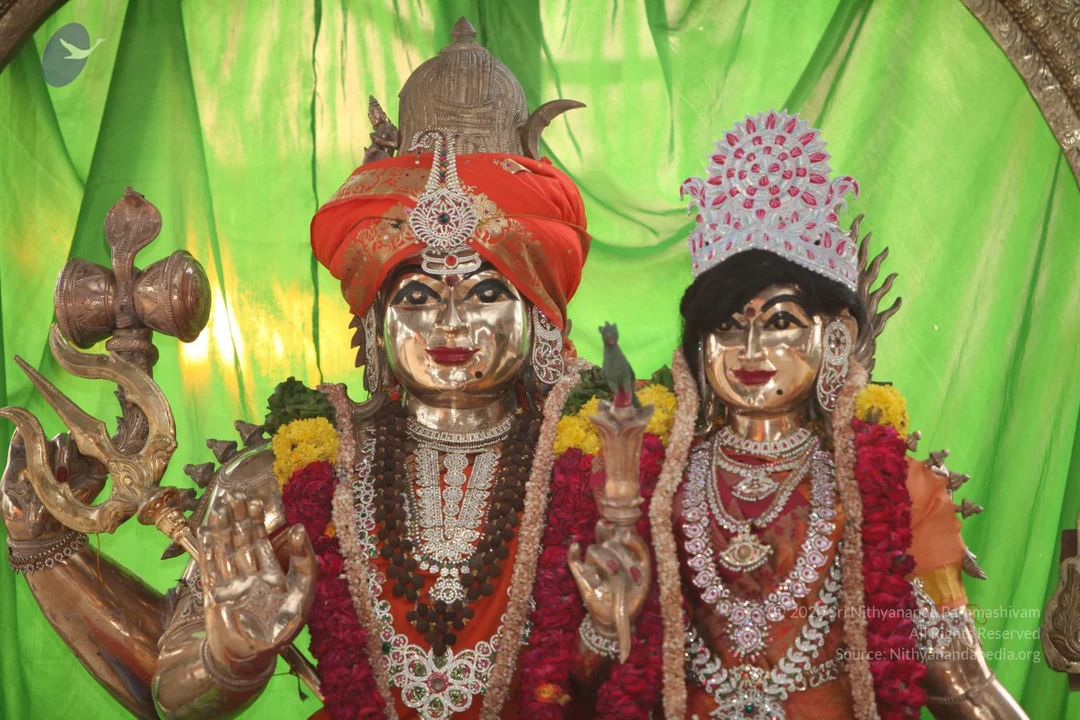
Paduka Puja
Nithya Satsang

Inner Awakening Grad Reunion

Tags:

Paramahamsa Nithyananda, rejuvenation, life, dead, weight, spiritual, memories, future, integrity, fear, past, create, negative, Satchitananda, knowledge, inspiration, authenticity.

Photos Of The Day:

Nithya-Puja

Satsang

Sarva-Darshan

Temple

Pada-Puja

Photos Of The Day:

Nithya-Puja

Satsang

Sarva-Darshan

Temple

1-Bidadi-Deities

2-Pada-Puja

3-Satsang

Photos from this day

View all 287 photos

Temple

22 photosSource gallery
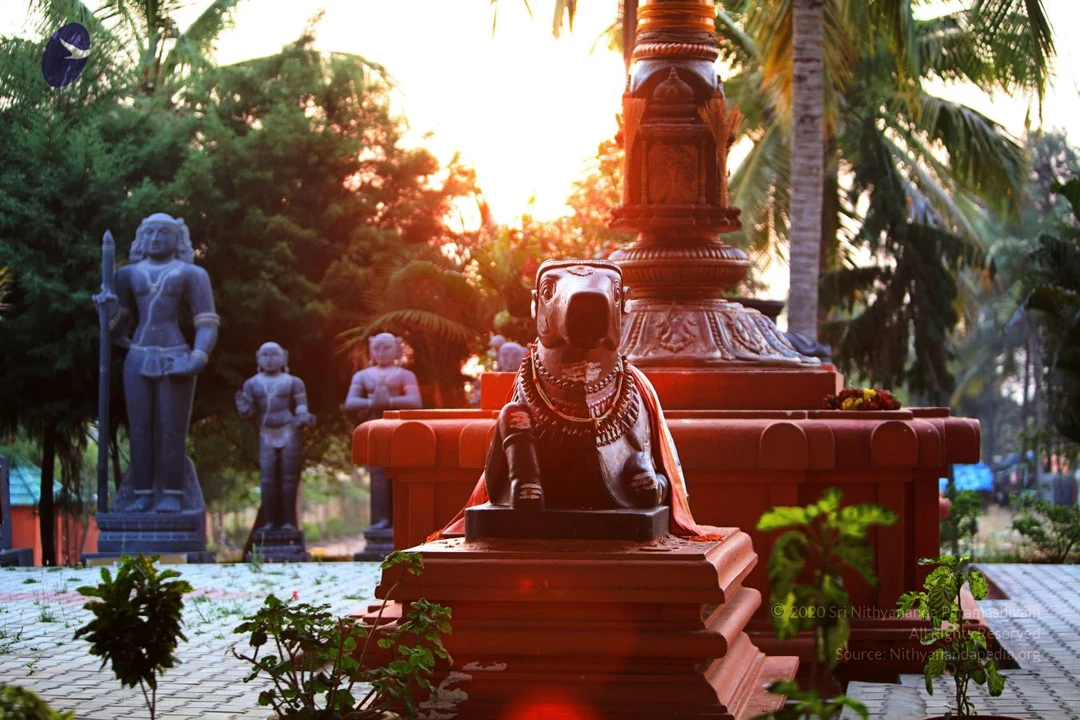
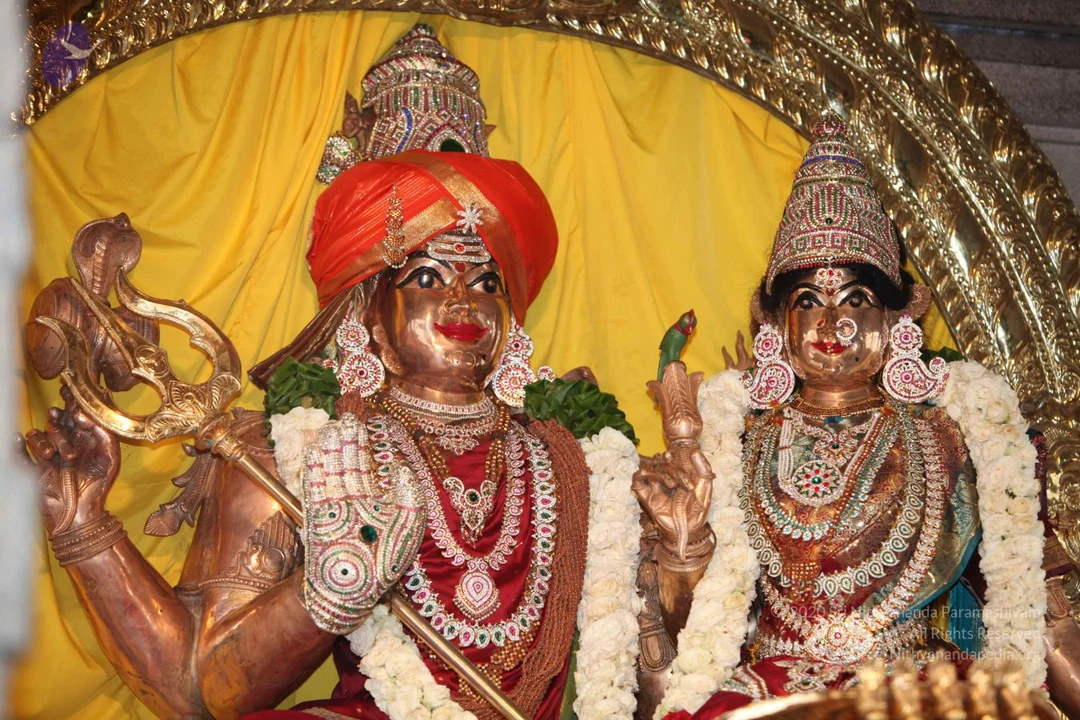
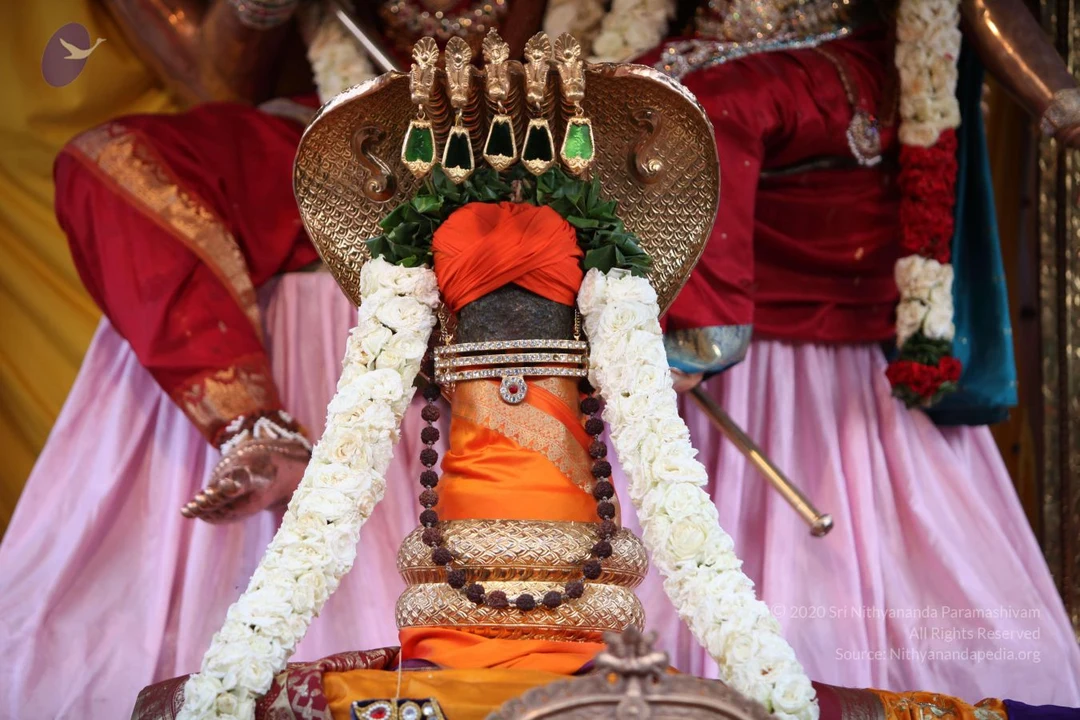
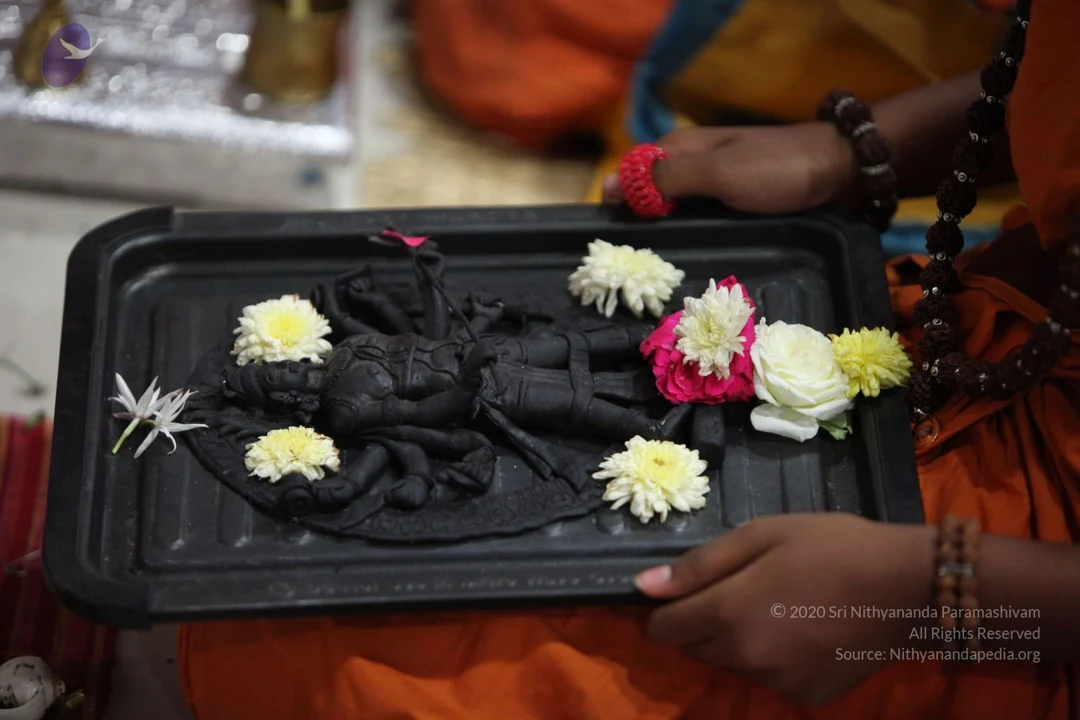
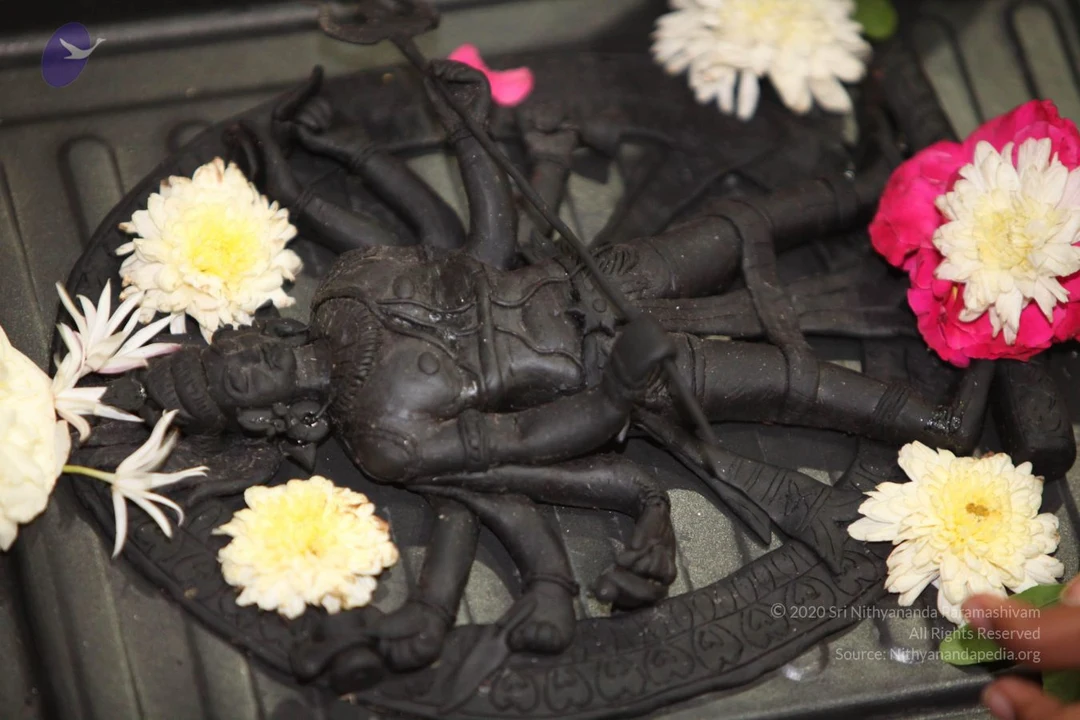
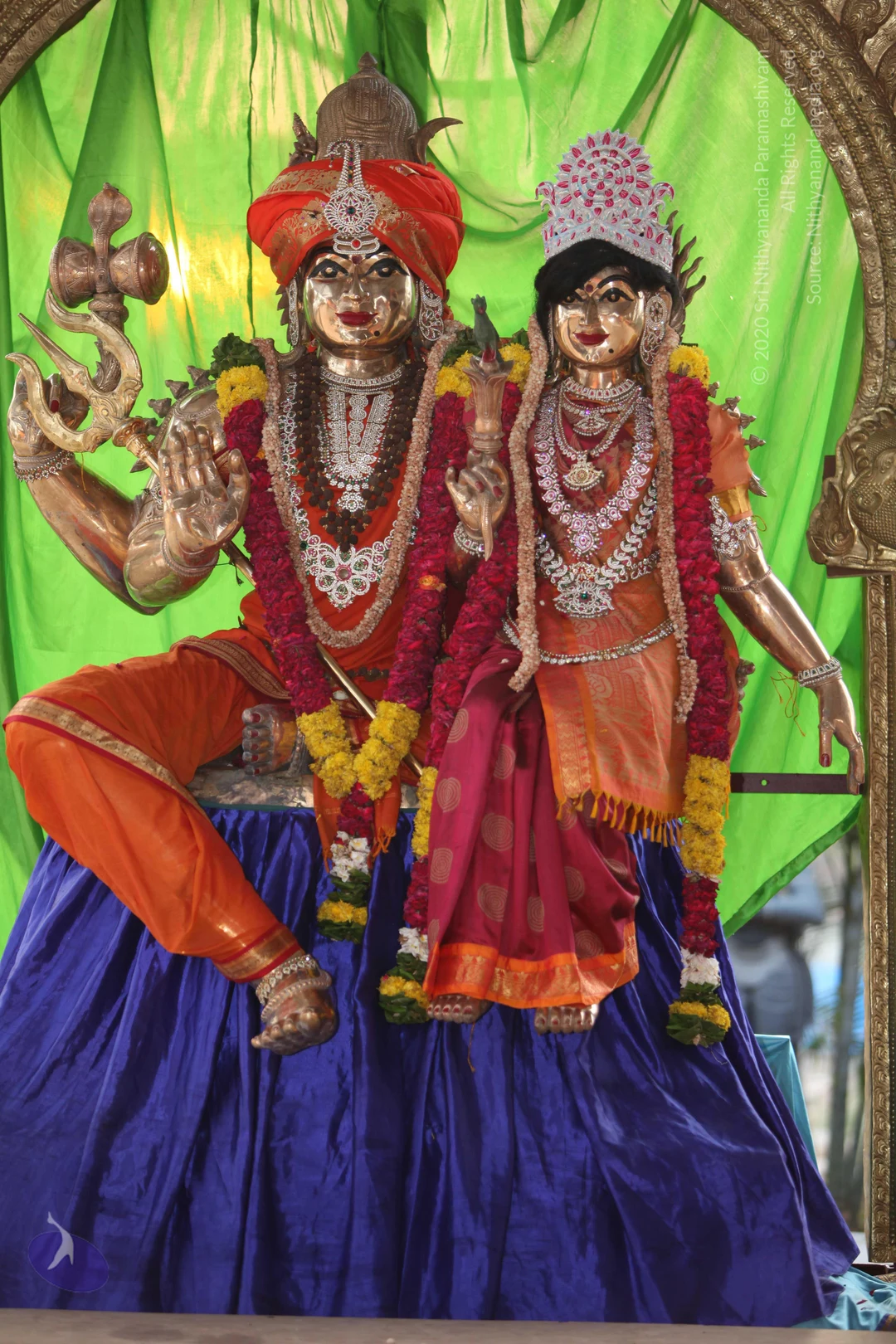
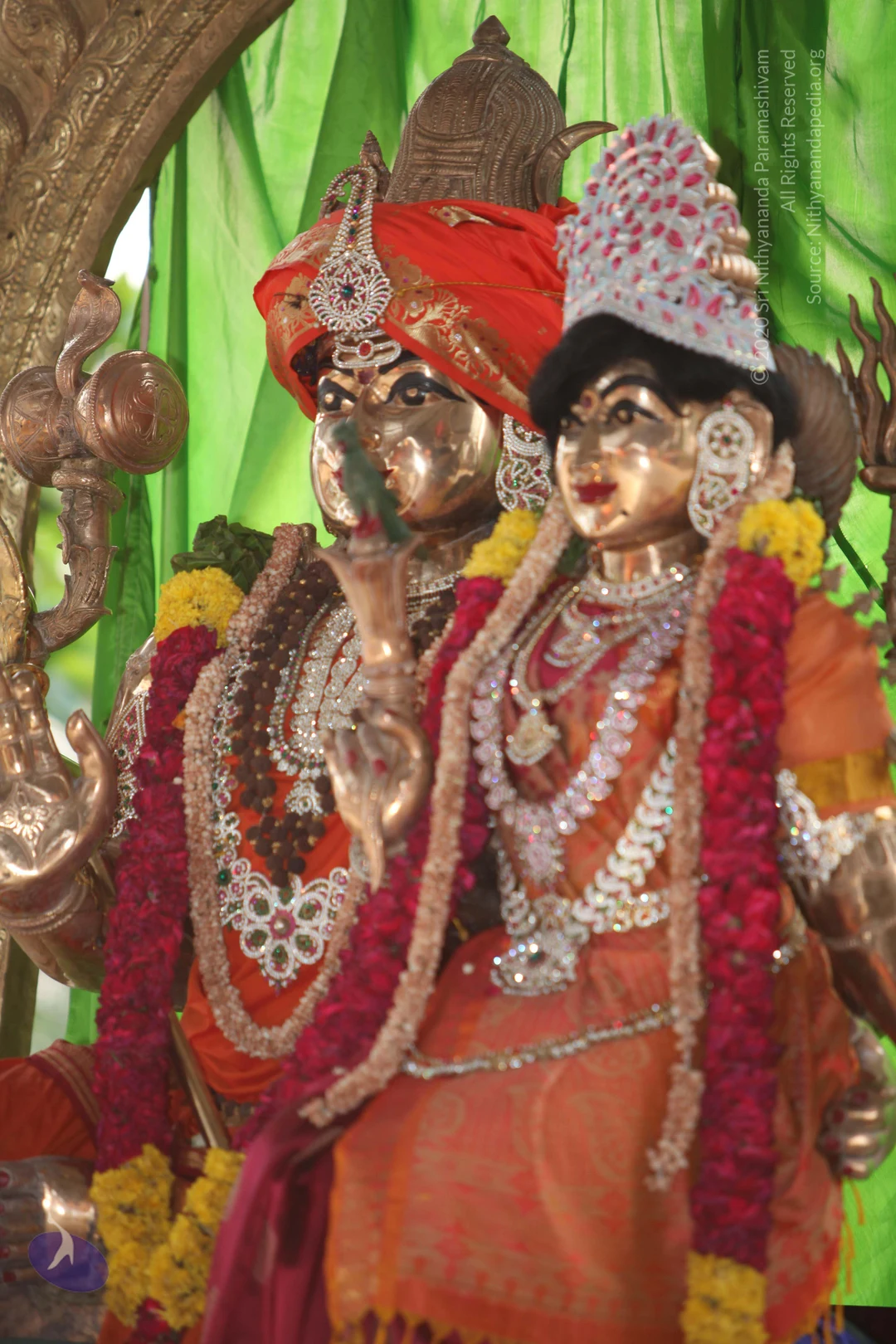
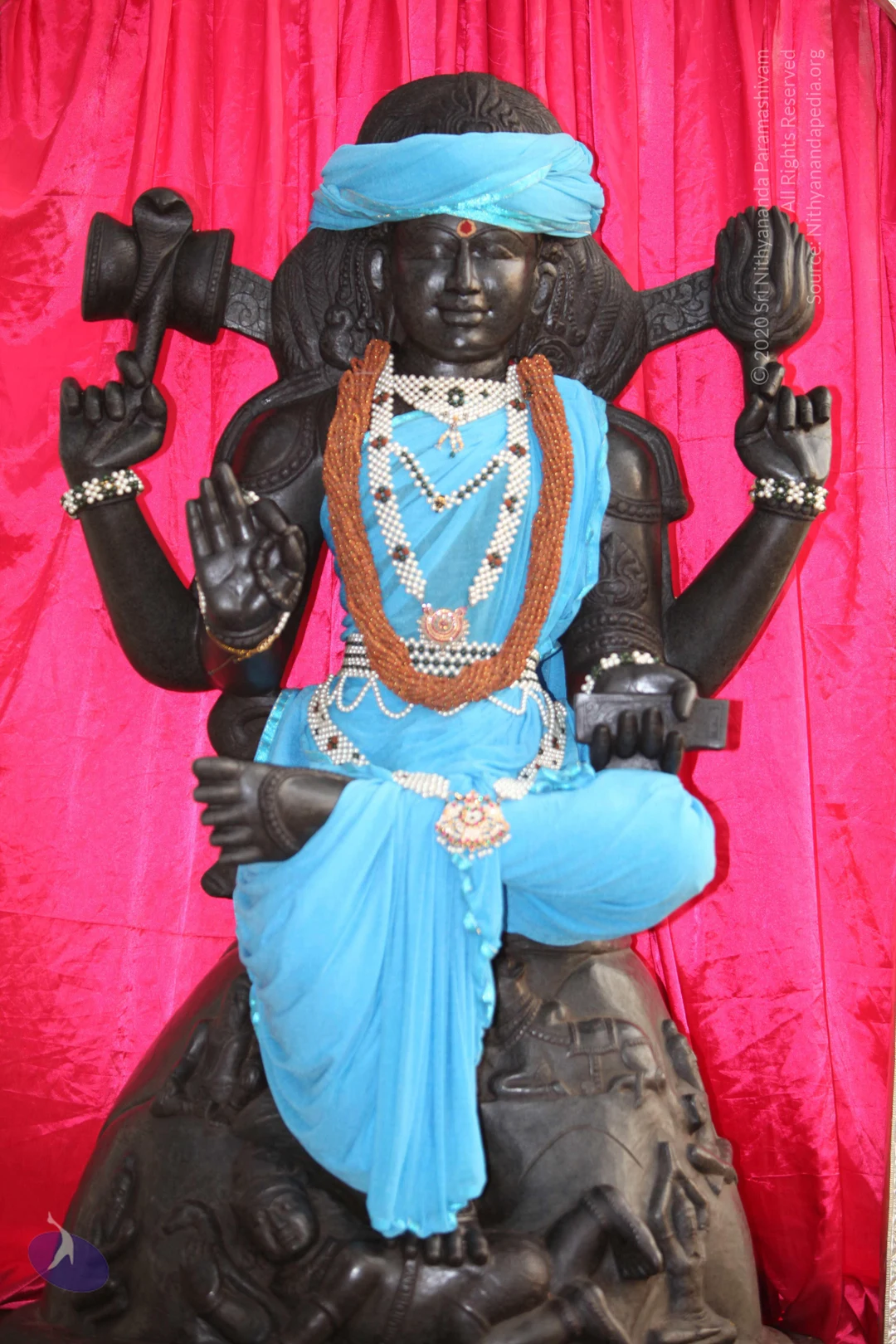
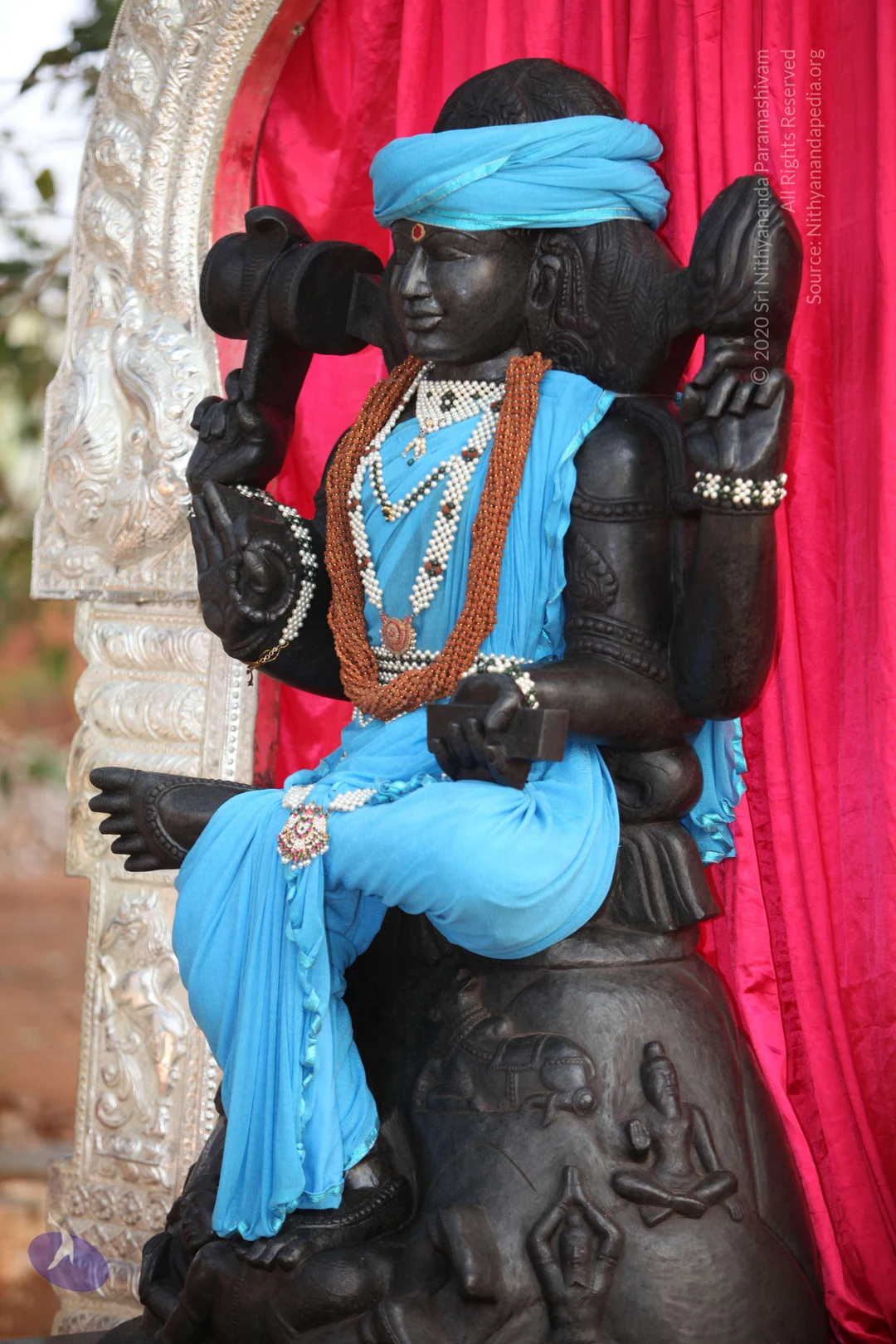
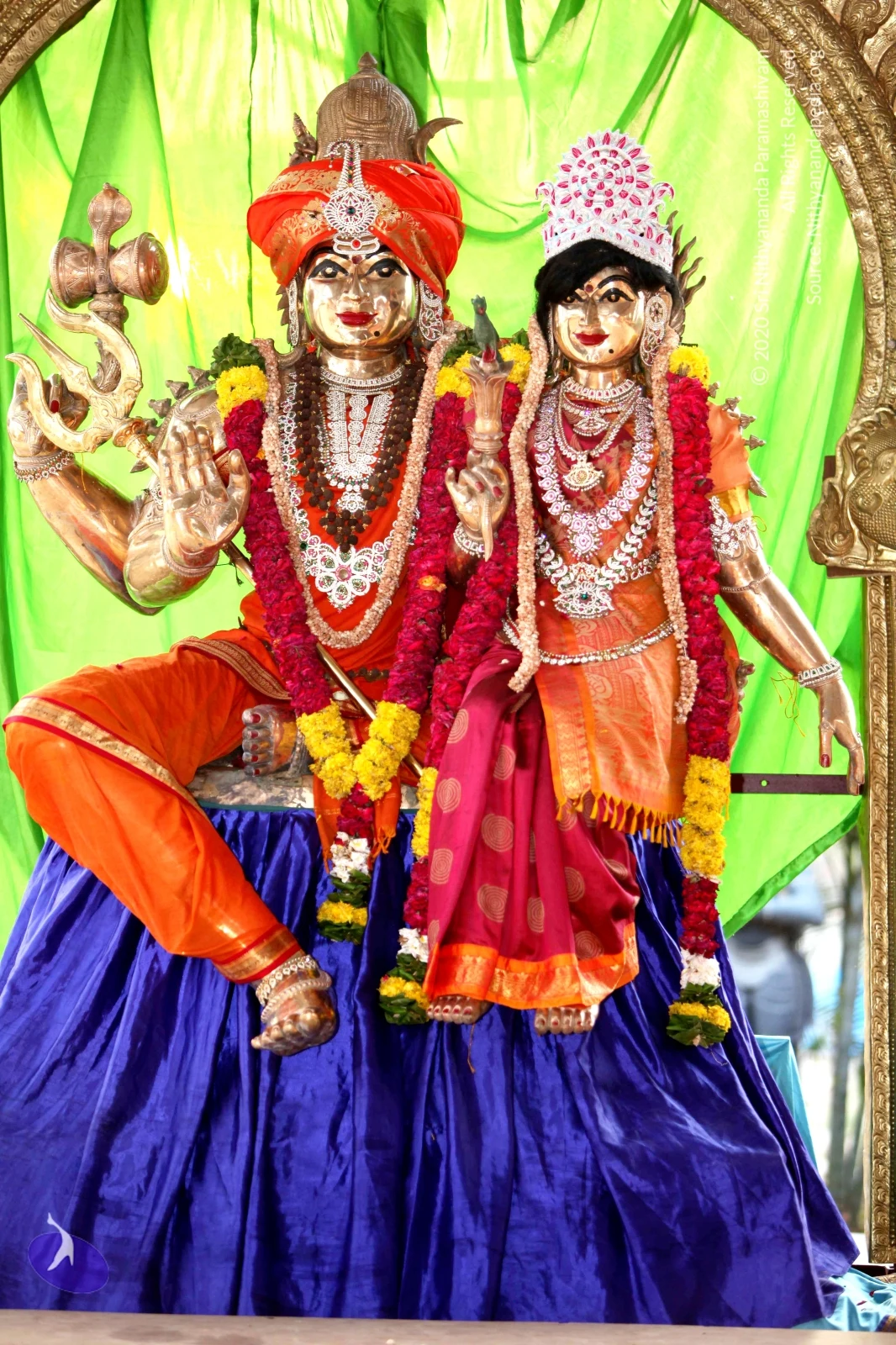
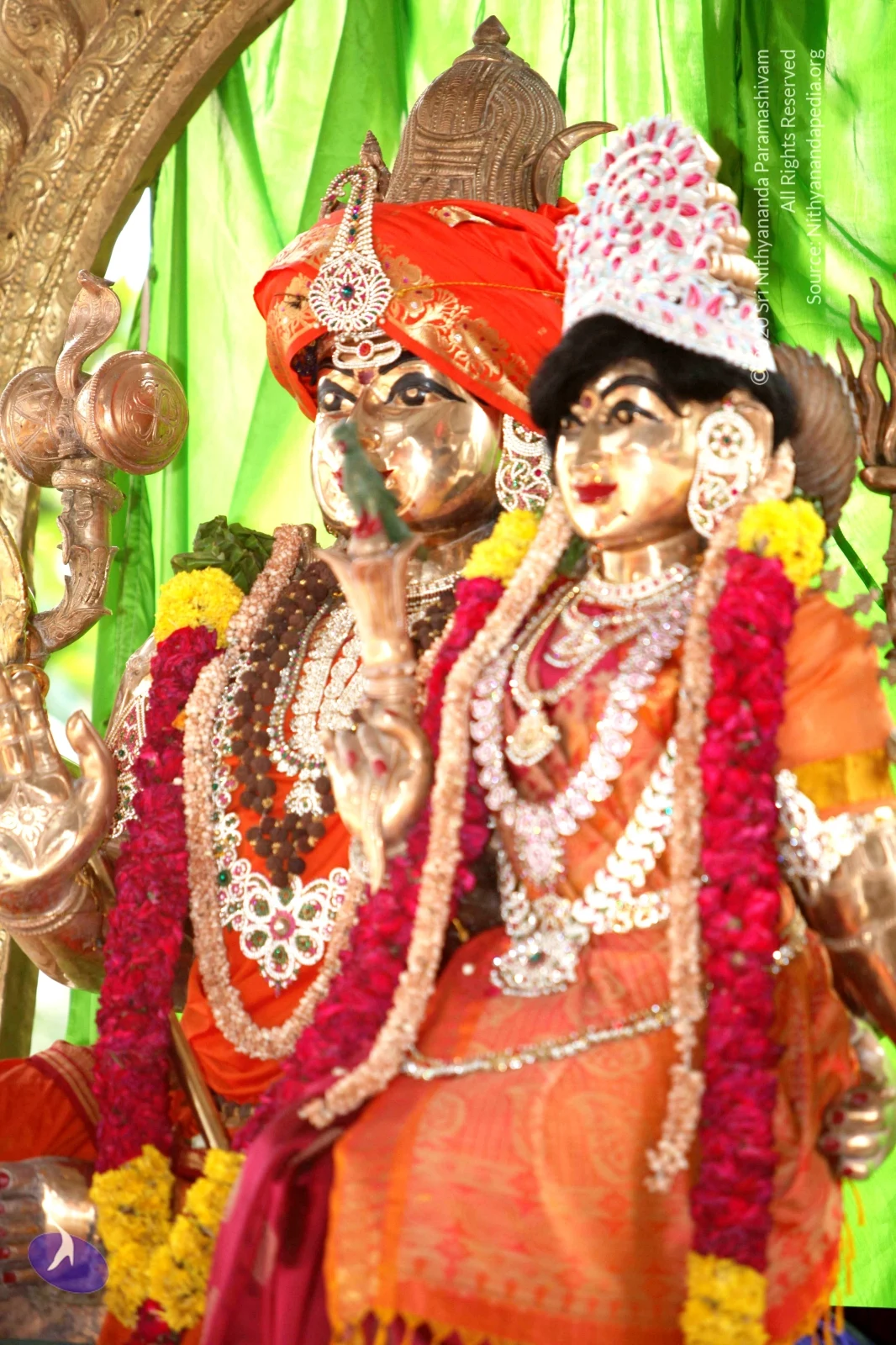
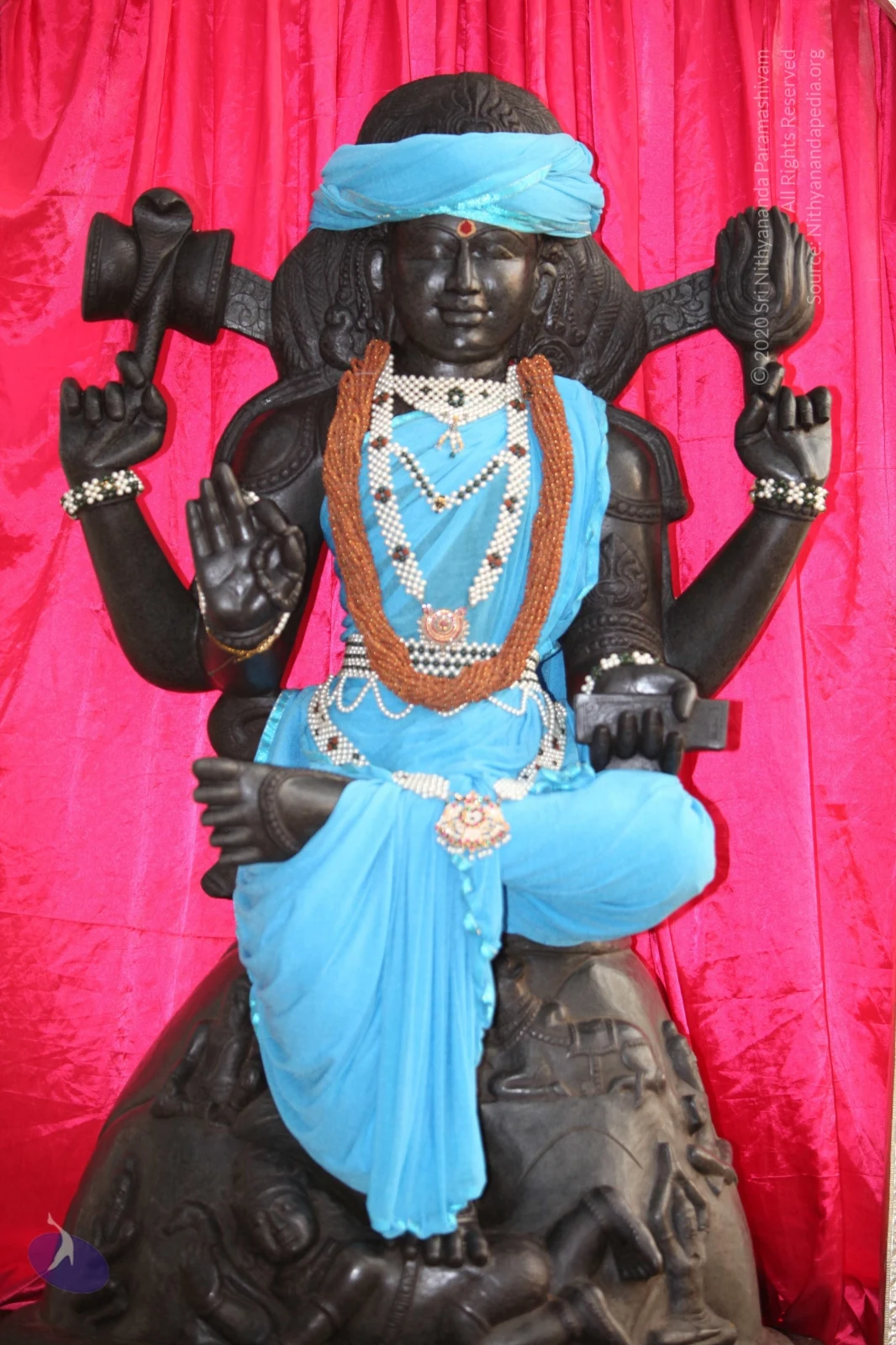
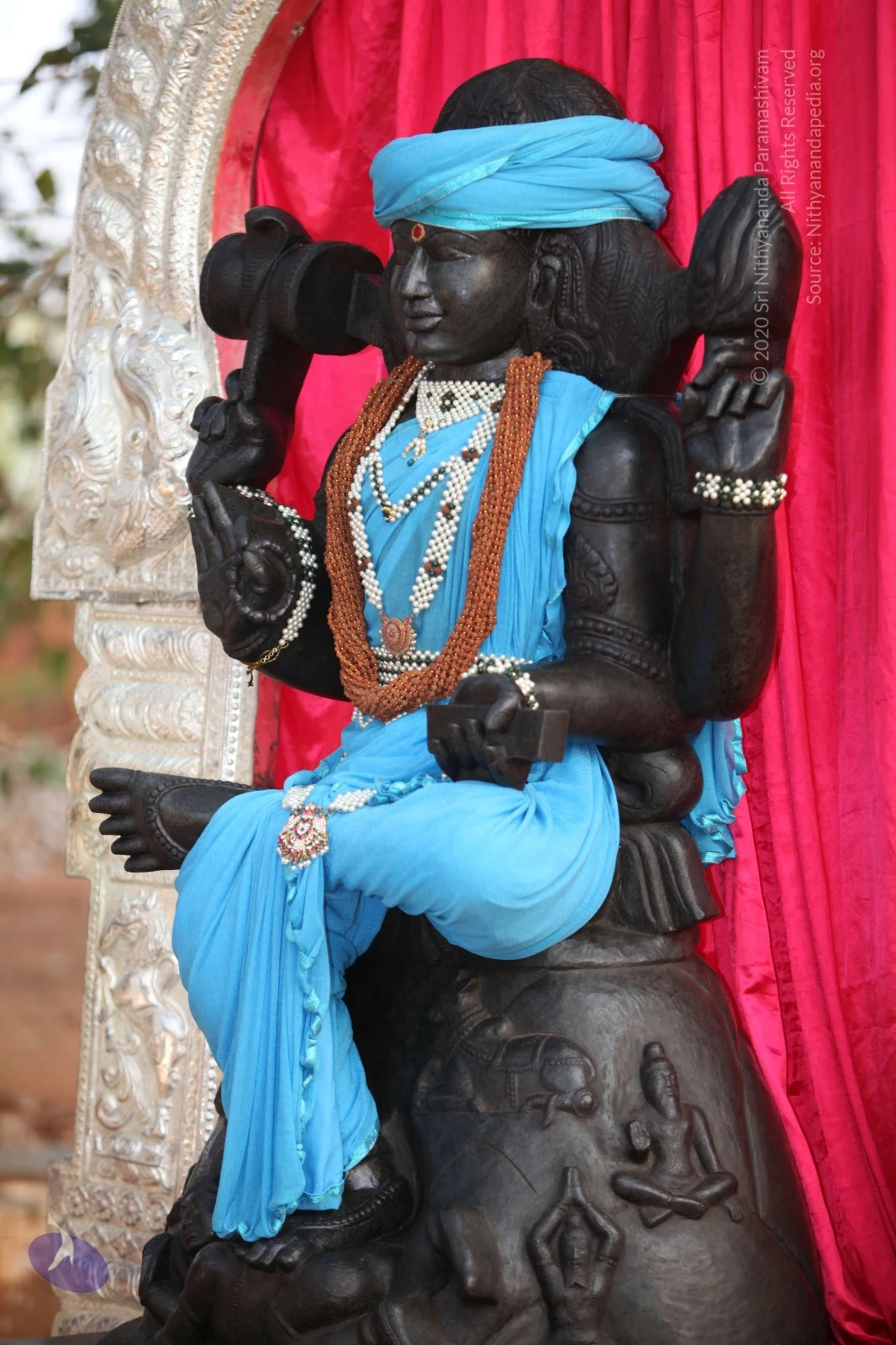
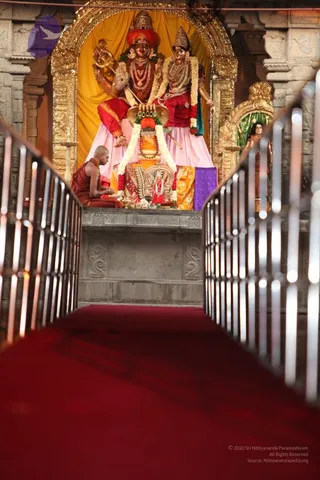
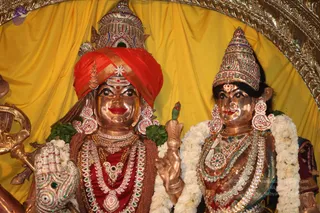
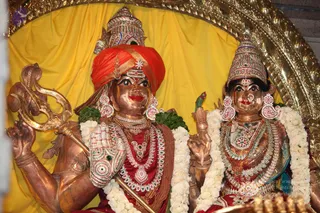
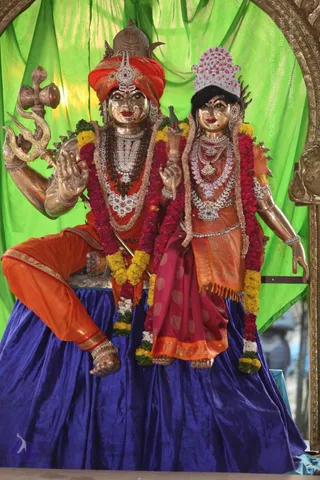
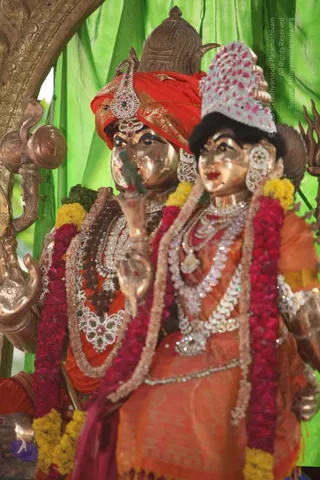
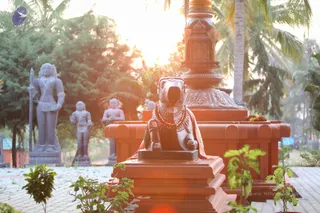
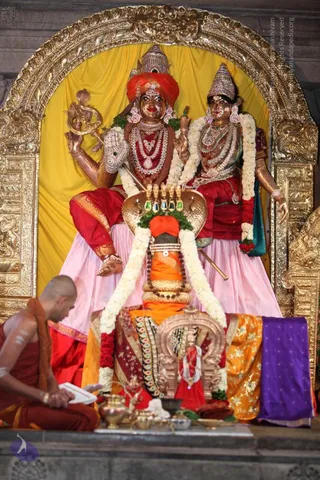
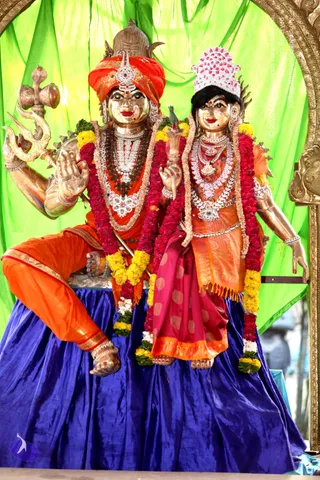
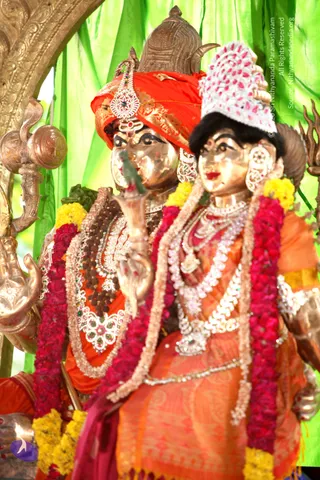
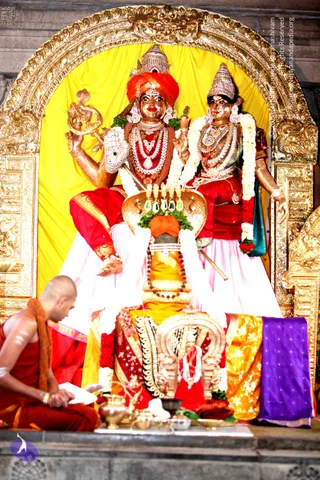
Two metal deity murtis stand against a bright green draped cloth backdrop, garlanded with red and yellow flower malas. The left figure has a red-orange turban with a jewelled ornament and a cobra-topped trident-like staff held in one hand, wearing a rudraksha mala and ornate silver necklaces. The right figure wears a silver-and-pink jewelled crown and layered necklaces with an orange-red garment. Both faces are gold-toned. A small carved figure sits atop the staff. The scene is an ornamental altar display of deity murtis.A sunlit outdoor temple courtyard at sunset with a dark stone Nandi bull statue seated on a terracotta-coloured pedestal, draped with an orange cloth and wearing a beaded necklace. Behind it stands a tall ornate red pillar with a carved kalasha-like top. To the left are grey stone deity murti statues, including a standing figure holding a trident-like staff and smaller devotee figures in prayer pose. Palm trees and green foliage frame the scene, with flower offerings visible on the pedestal. No living people are visible.Photograph of a temple sanctum with a red carpet runner leading between polished steel railings toward a golden arched shrine. Two large painted deity murti stand behind a dark orange and yellow linga-like form adorned with white and orange garlands, a red kumkum mark and fresh flowers. One figure wears a red turban and holds a trident; the other wears a pink skirt and a red blouse with jewelry. A seated man in an orange-red robe sits cross-legged at the left beside brass lamps and offerings, with a small figure in a green sari on the right. Gilded carvings and stone pillars frame the shrine.Photograph inside a temple shrine viewed down a narrow red-carpeted aisle flanked by metal railings. A large deity murti with a red and gold crown, red garments and white flower garlands stands on a stone platform backed by a golden arch and yellow cloth. A shaven-headed monk in saffron-orange robes sits cross-legged at the base of the platform, hands raised in devotion before an altar bearing a decorated throne, orange and white flowers and brass lamps. Only the monk and a partially visible figure at the left edge are physically present; the rest is sculpture.Two gilded metal murti statues of deities stand side by side before a yellow draped backdrop with an ornate silver-gold arch. The figure on the left wears a bright red turban with a gold band, a jewelled crown-like headpiece, and heavy red, green and gold necklaces and earrings, holding a ceremonial staff. The figure on the right wears a silver jewelled conical crown, a teal and gold sari with beaded necklaces, and white flower garlands drape both figures. Bright green leaves are tucked near the shoulders.Close view of a pair of golden-bronze deity murtis on a yellow draped backdrop with a gilded arch. The left figure wears a bright red turban, red and gold garments, layered beaded necklaces and a trident-like staff, with a green parrot perched near the right figure's raised hand. The right figure wears a jewelled crown, large ornate earrings, a nose ring, layered necklaces and a white flower garland, with a green leaf garland draped over the left figure. Ceremonial dressing and garlands suggest a shrine display. No living people are visible.

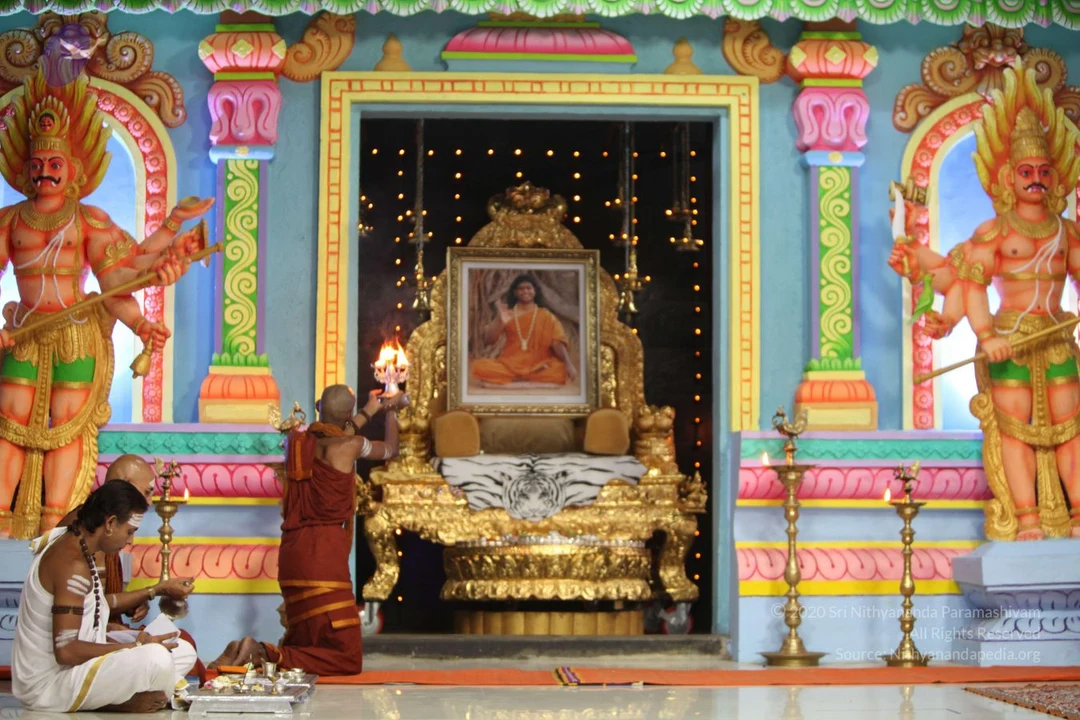
Paduka Puja
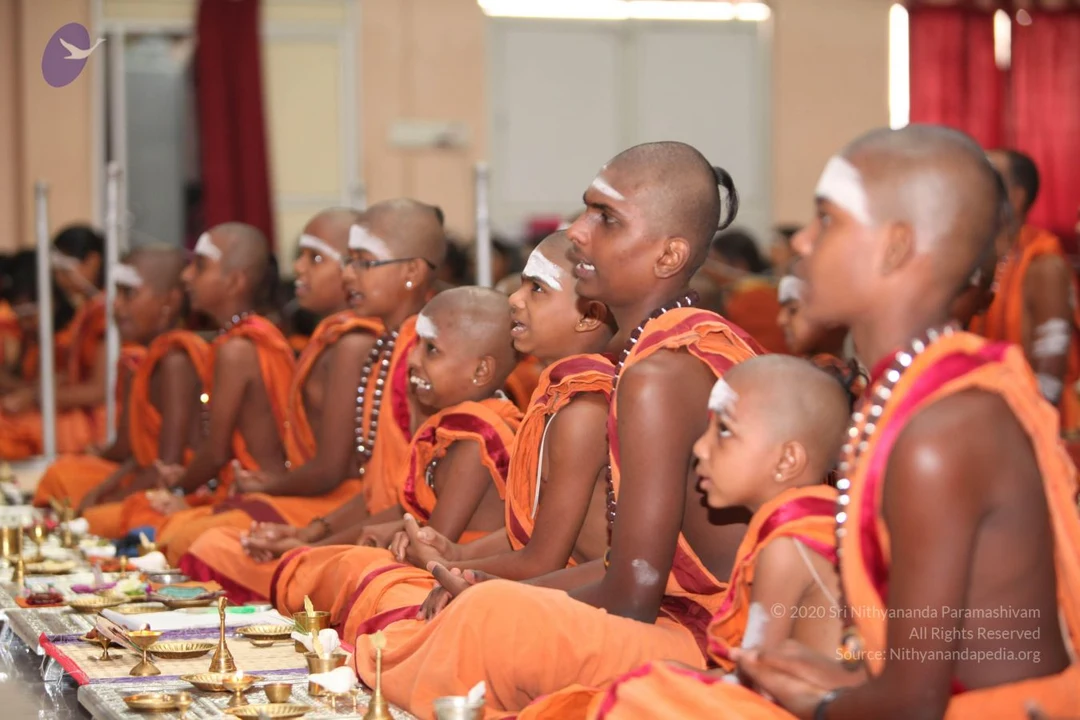
61 photosSource gallery
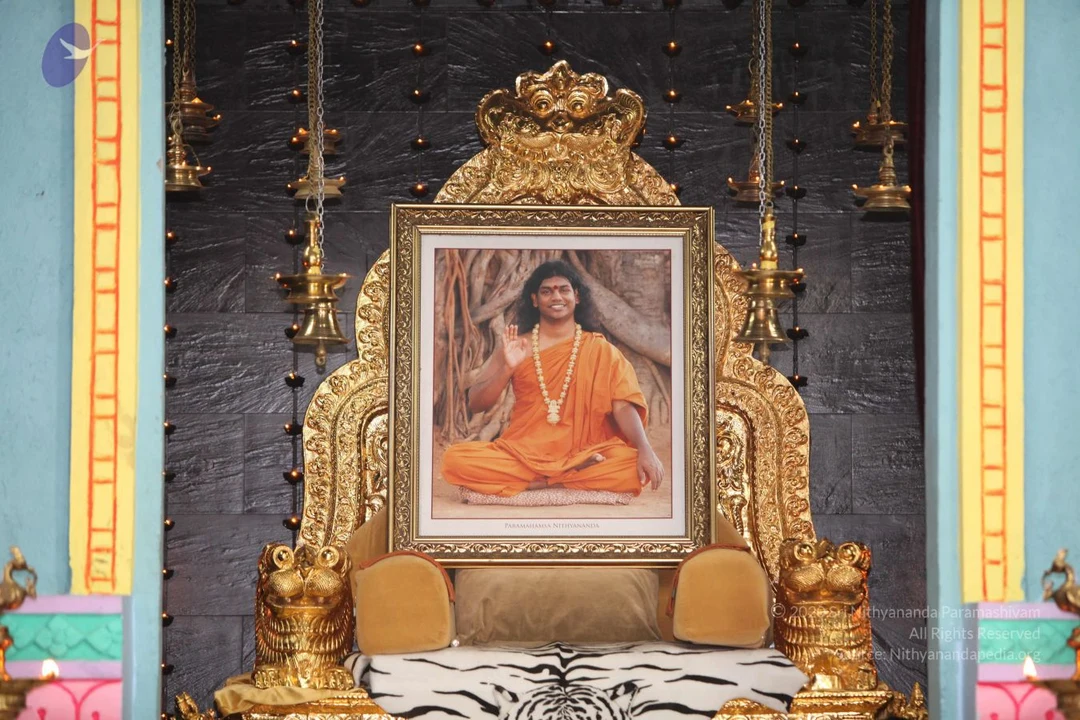
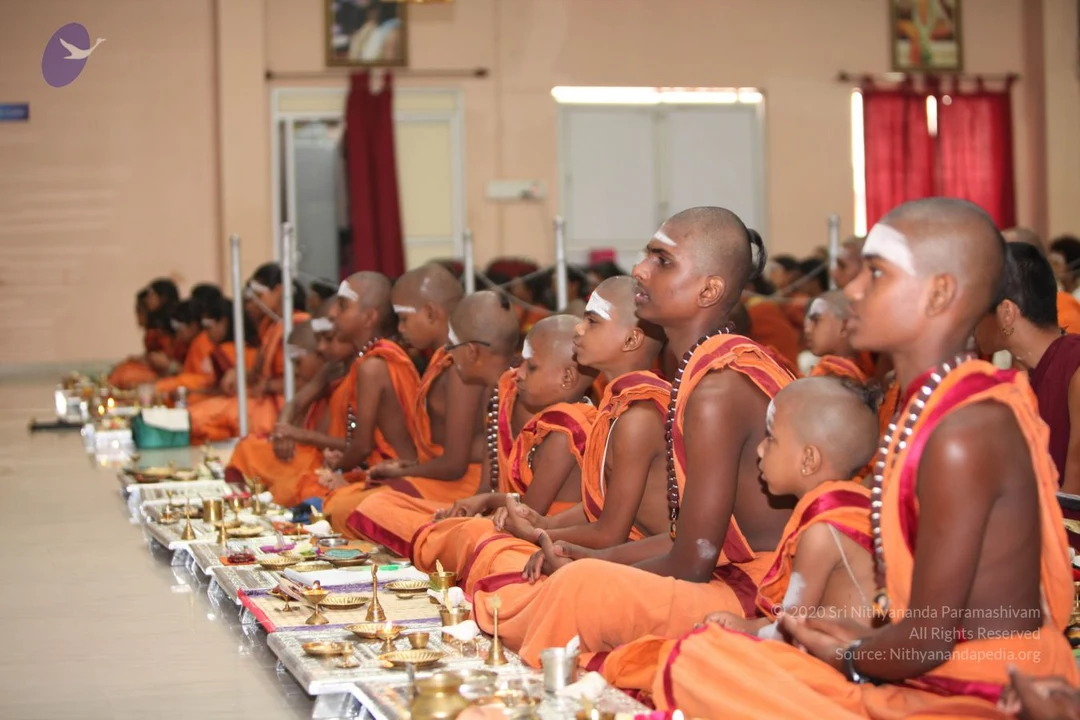
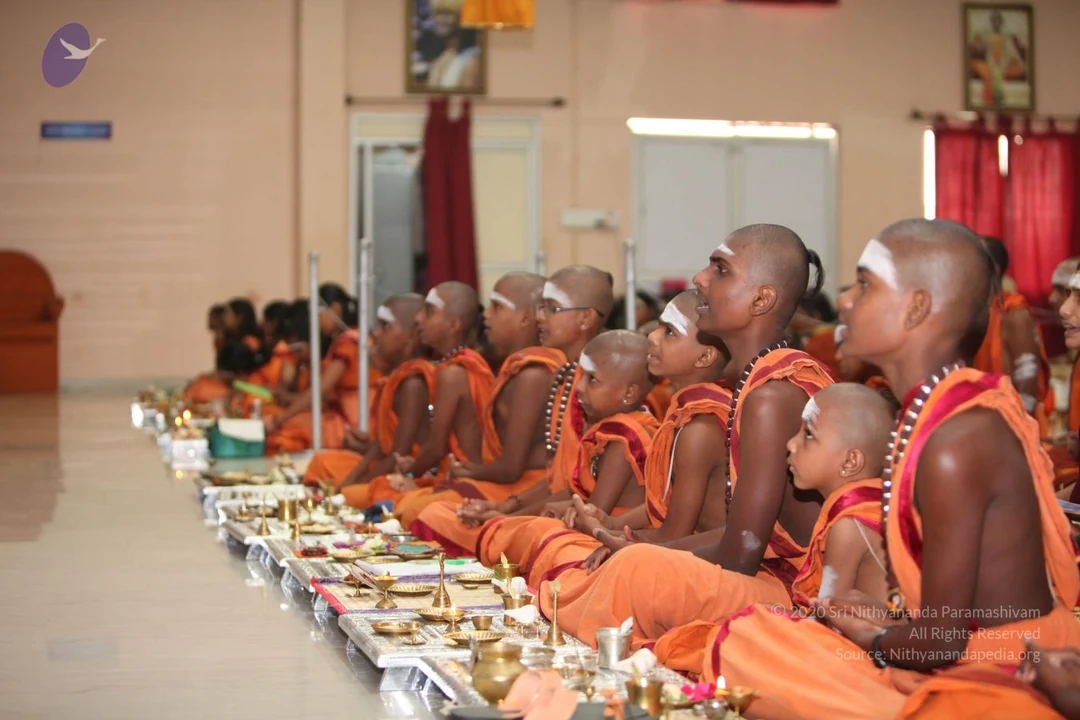
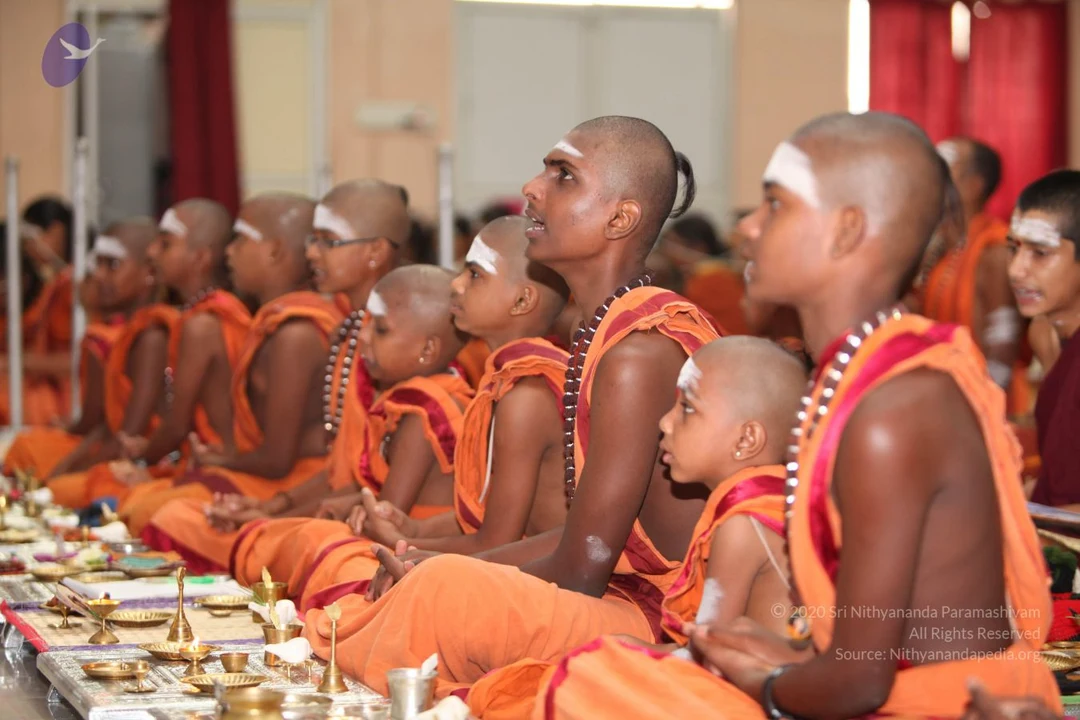
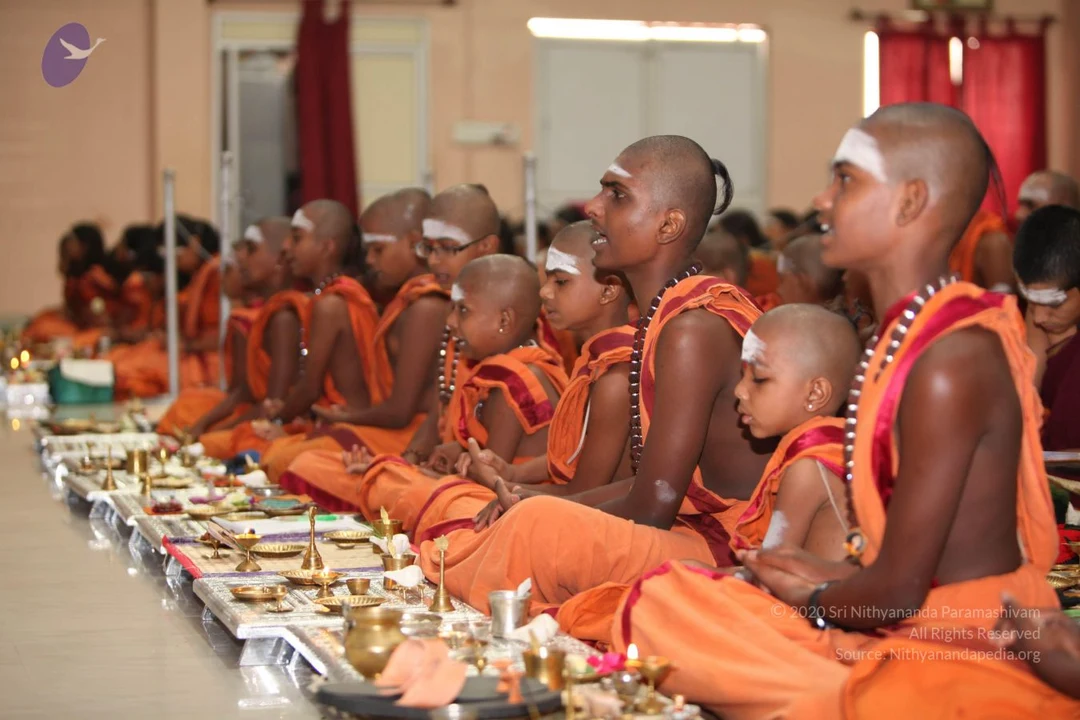
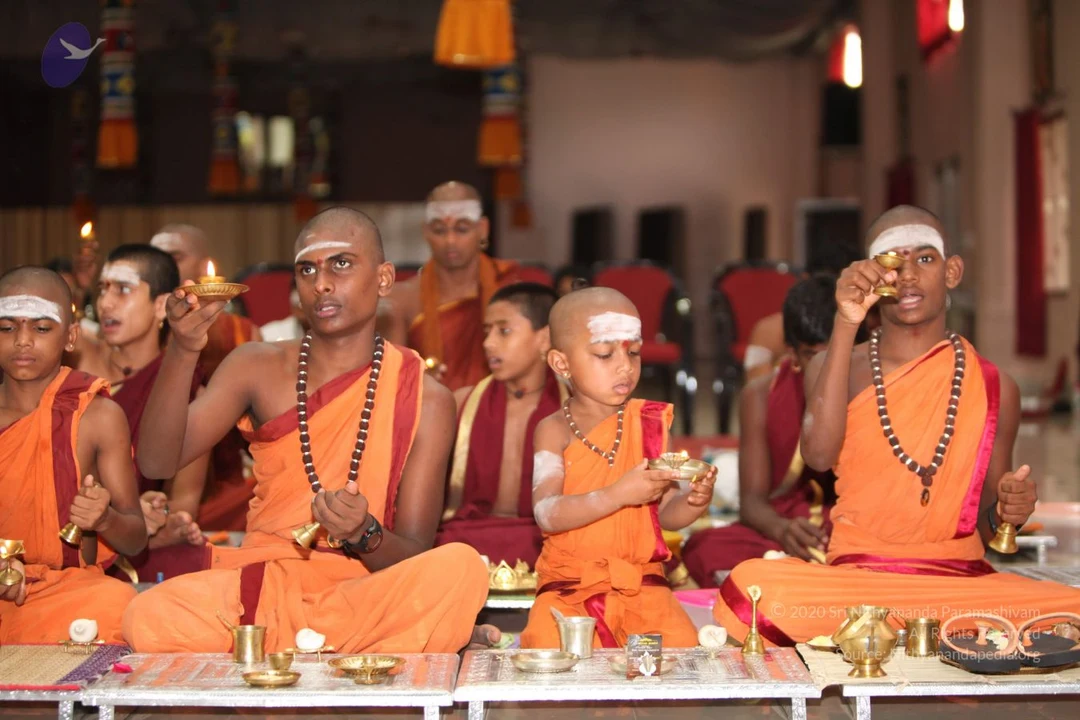
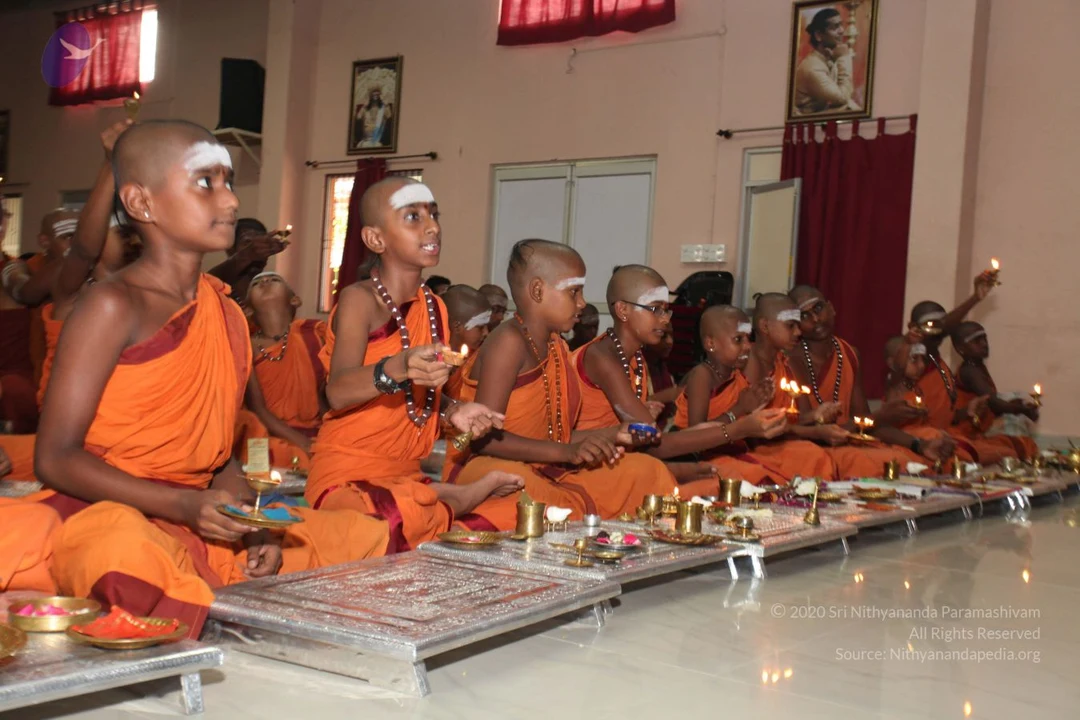
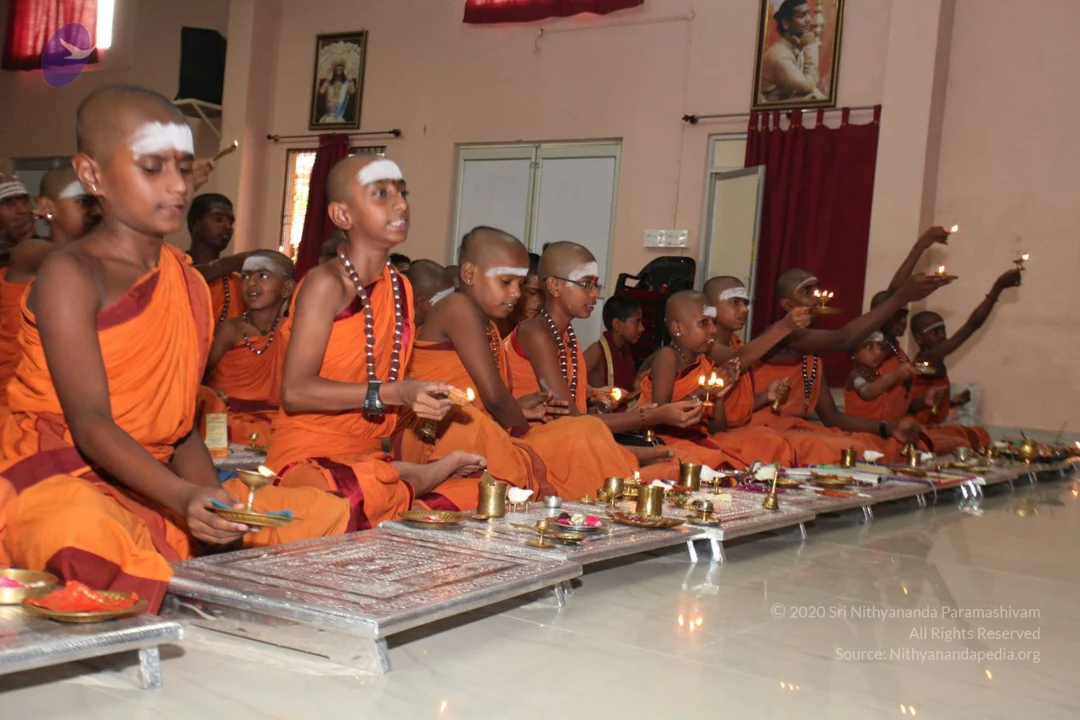
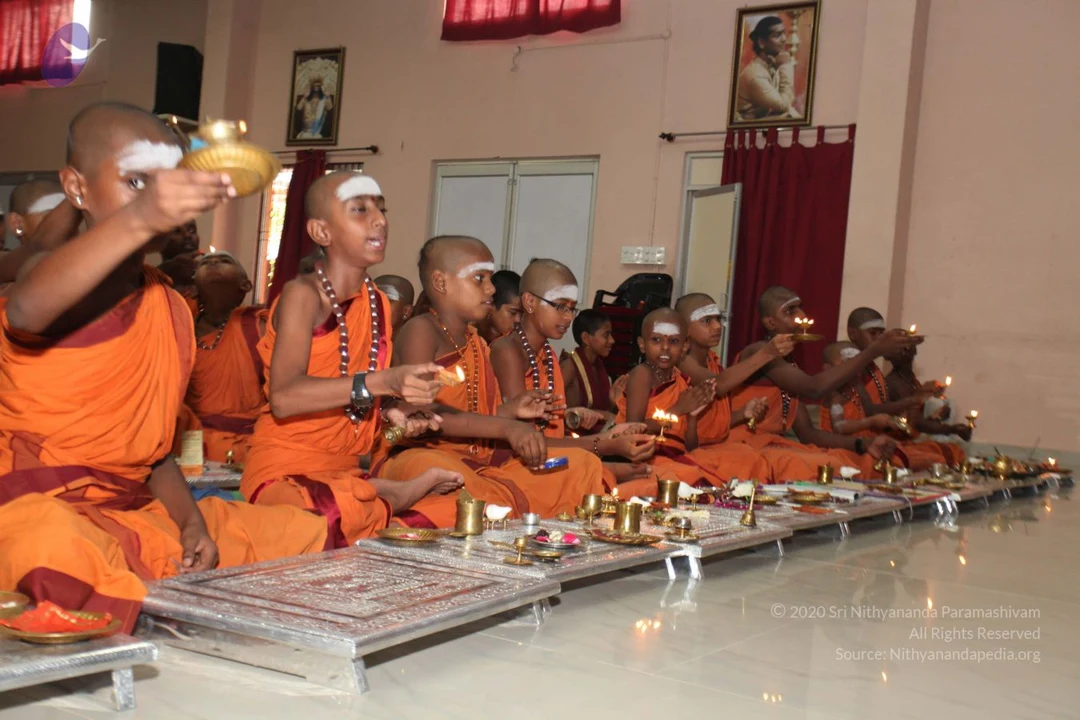
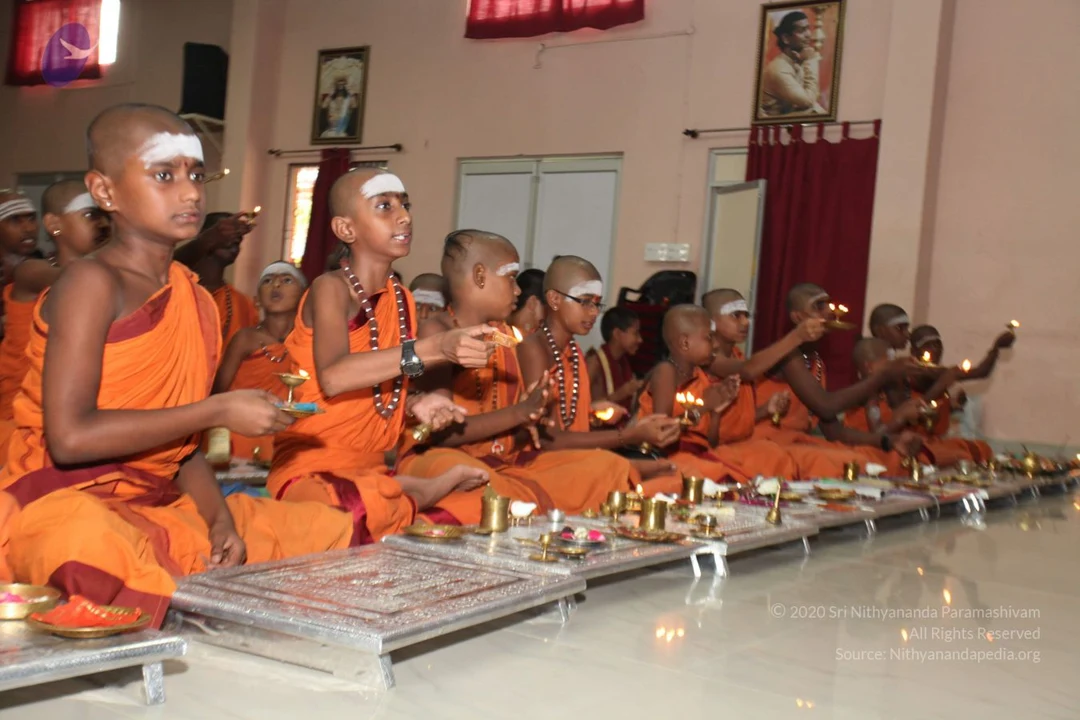
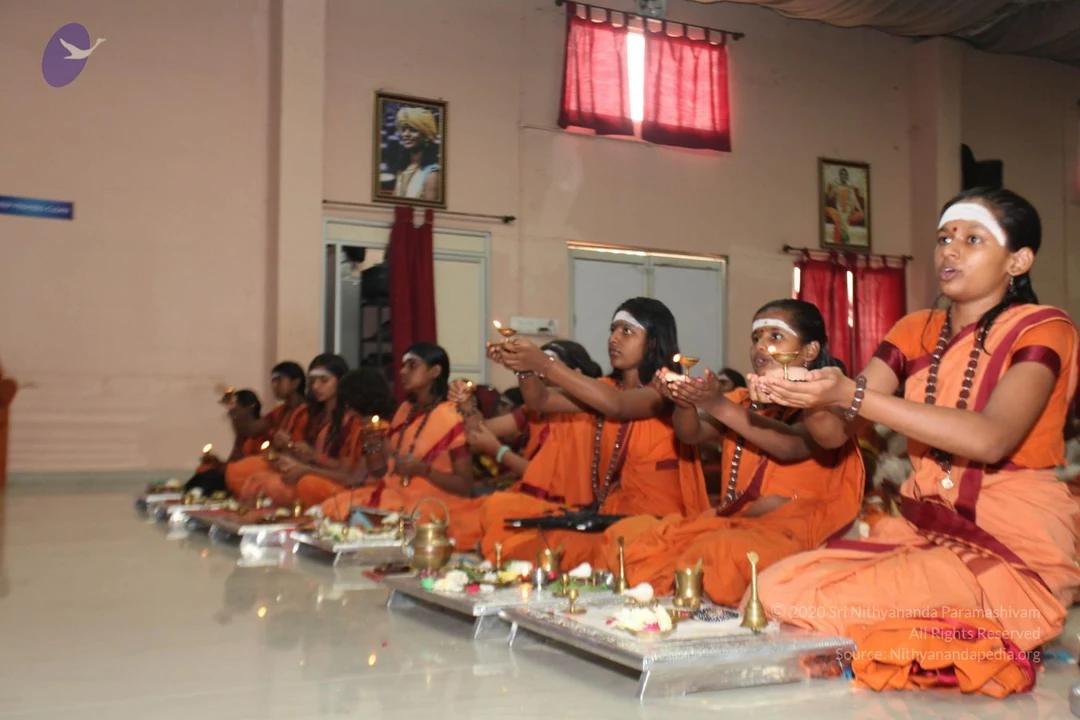
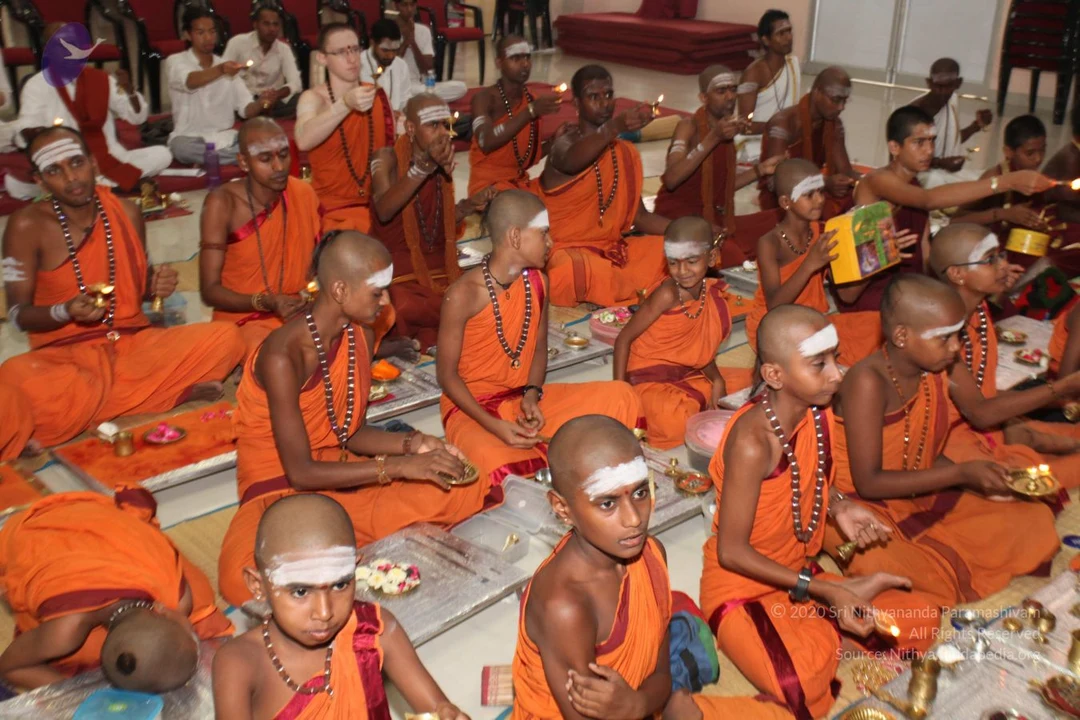
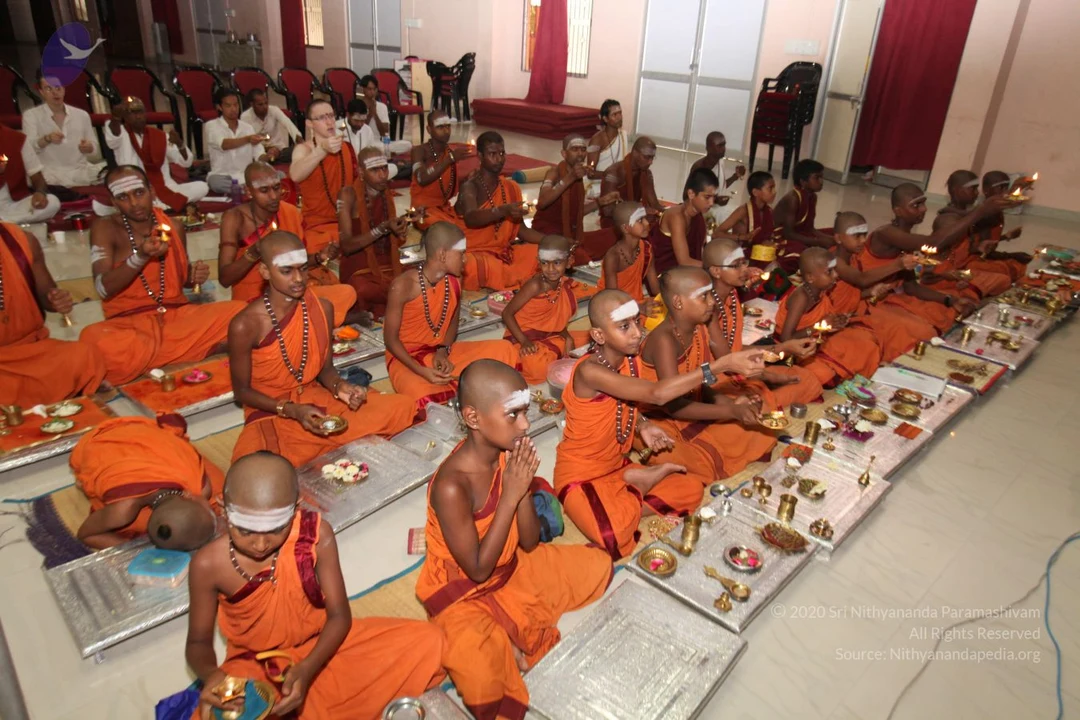
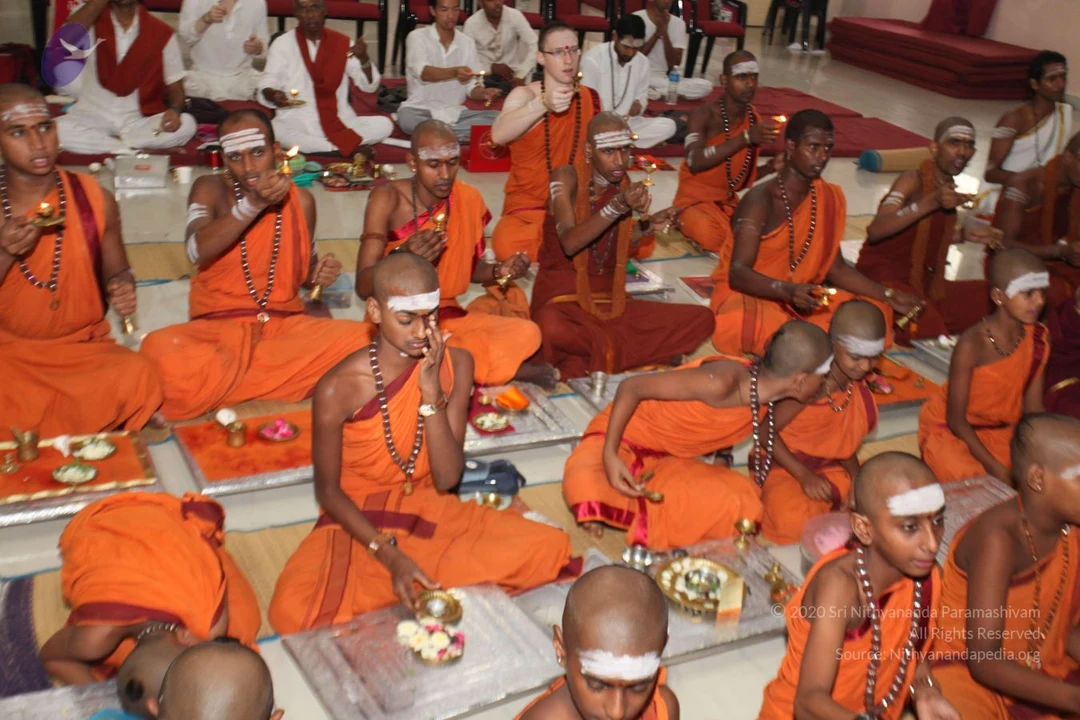
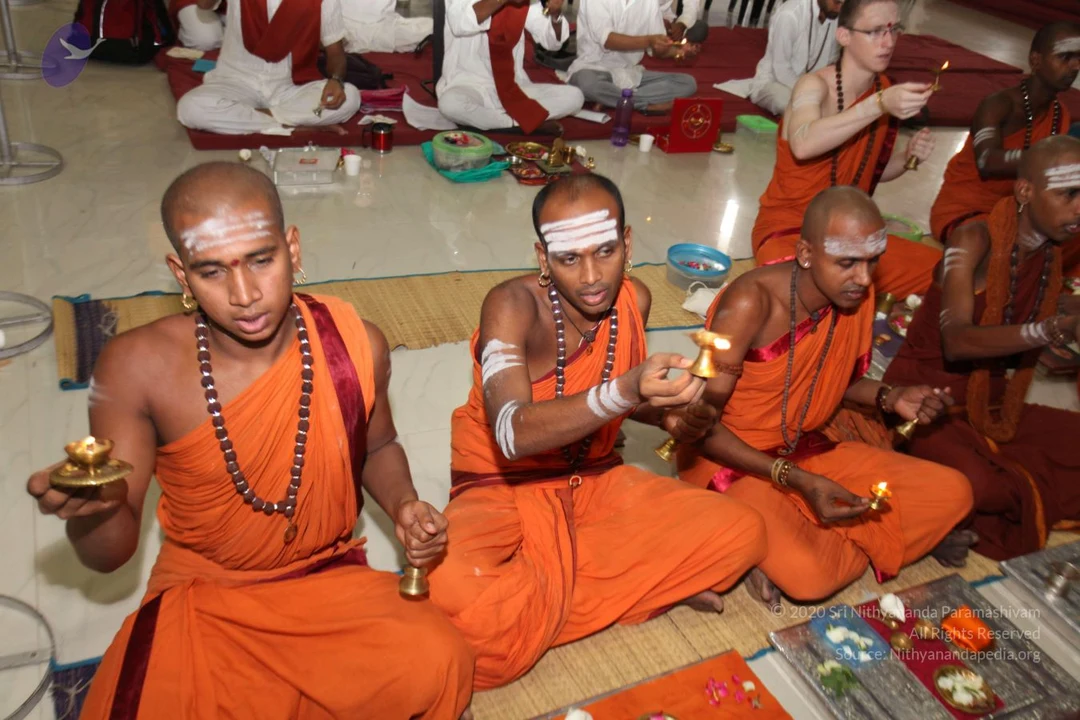
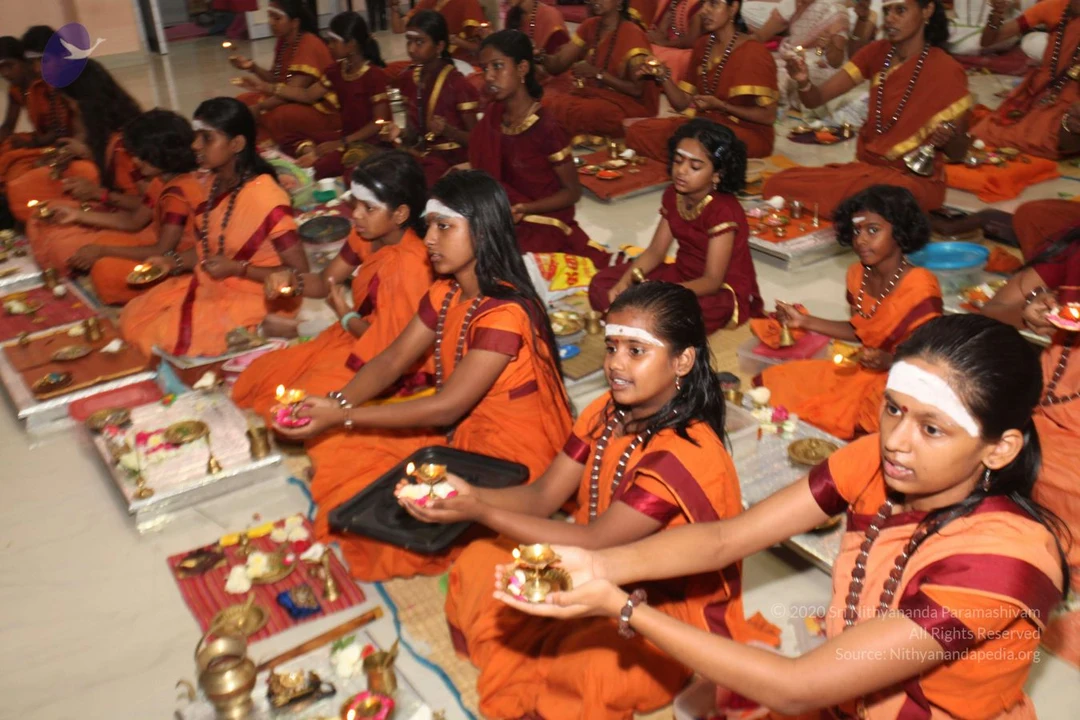
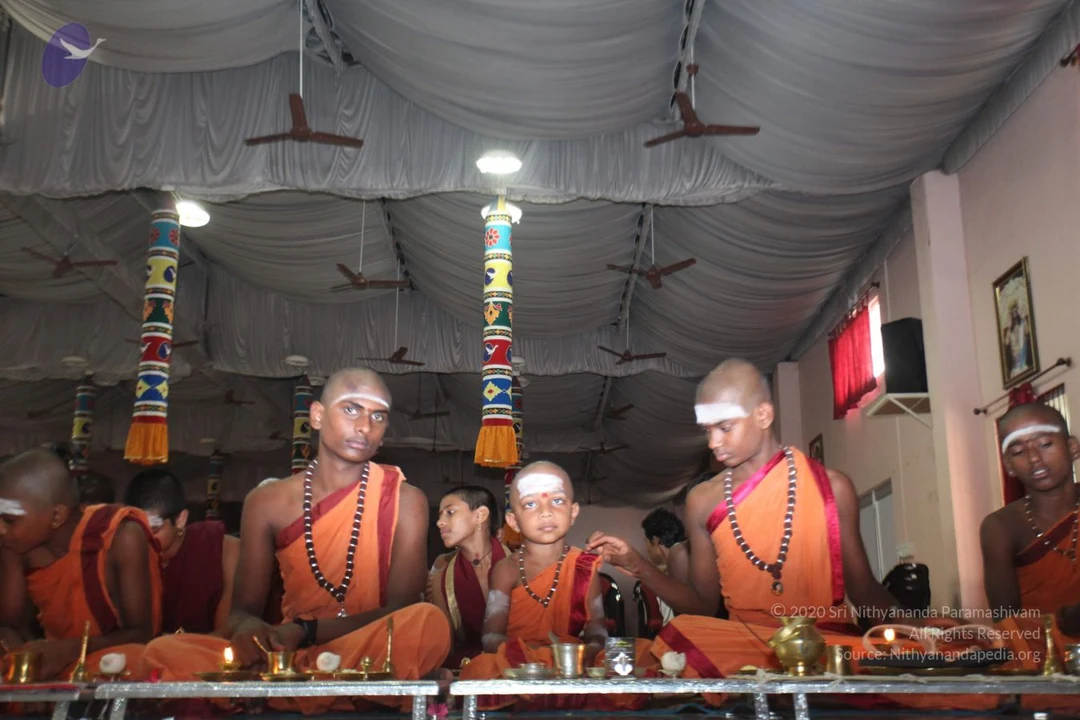
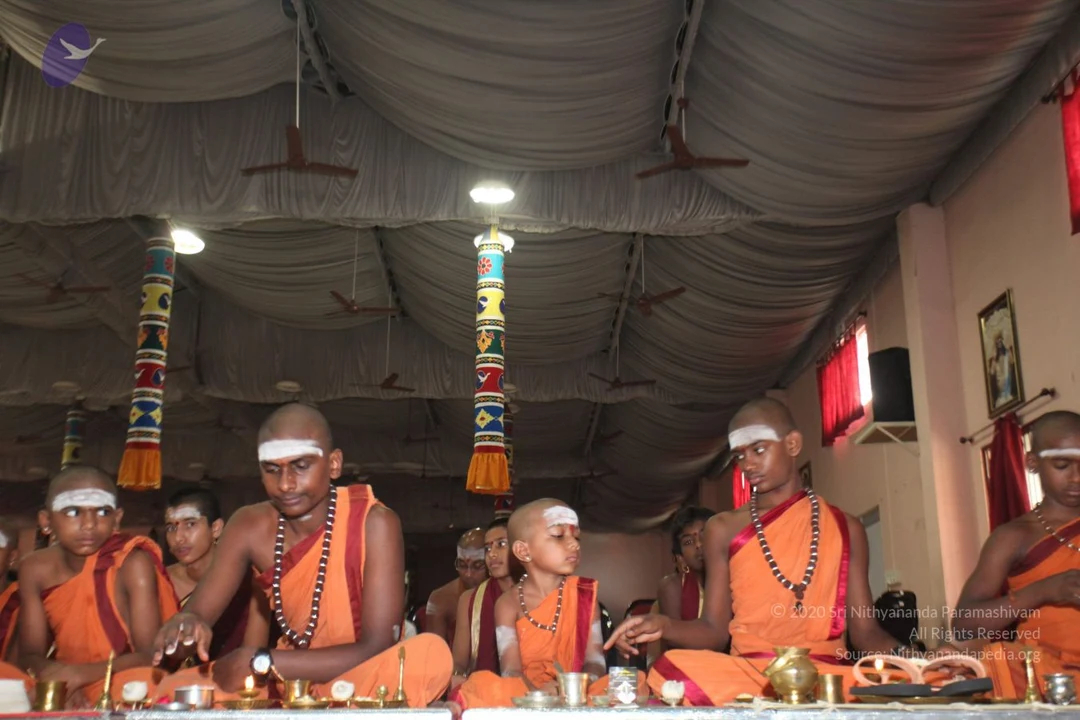
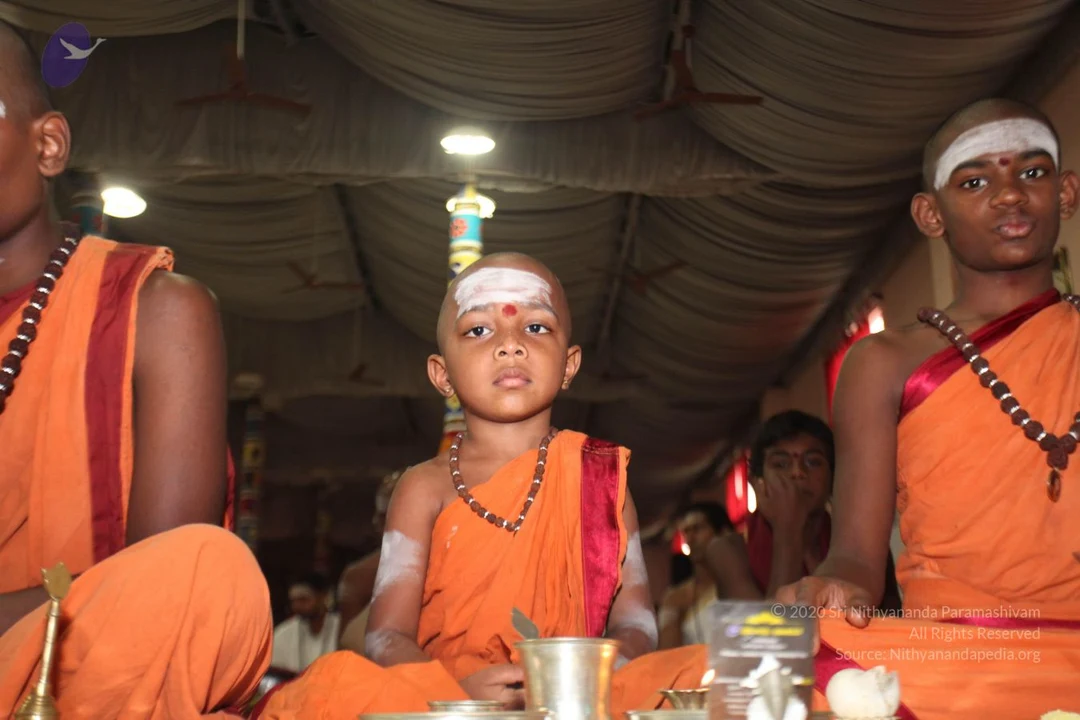
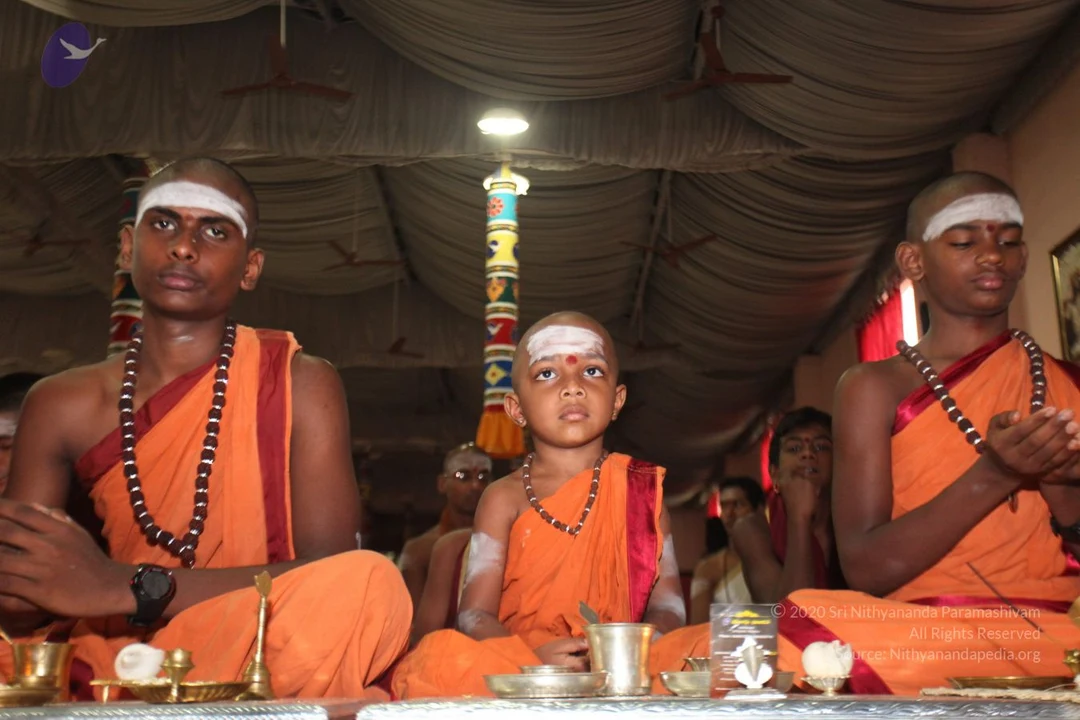
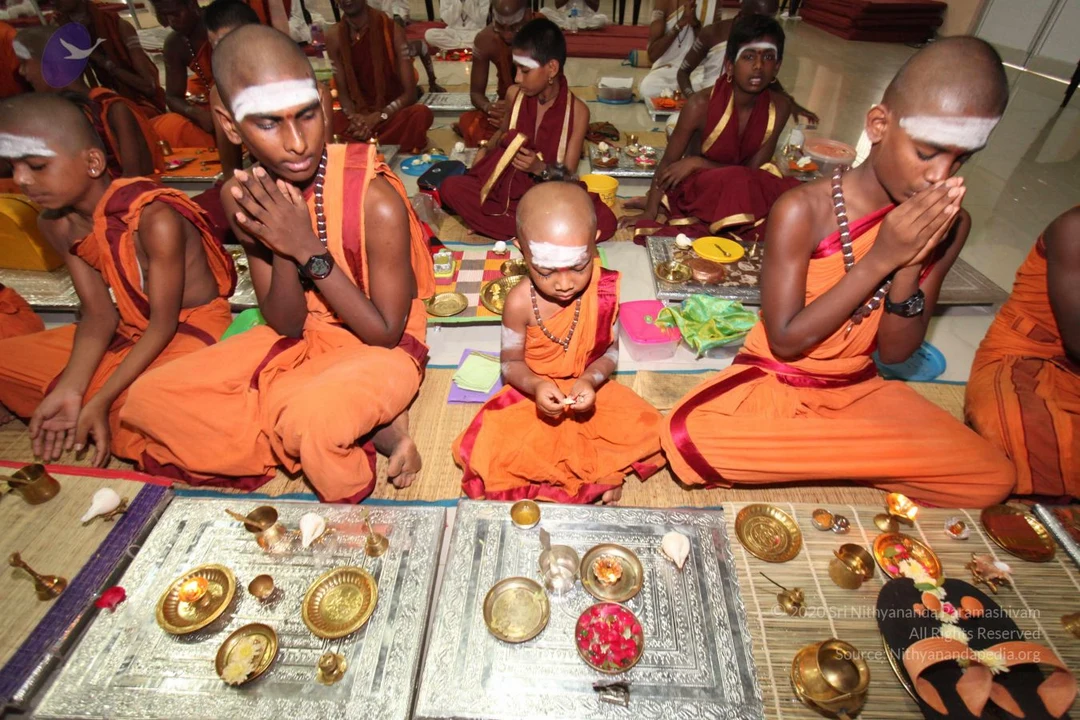
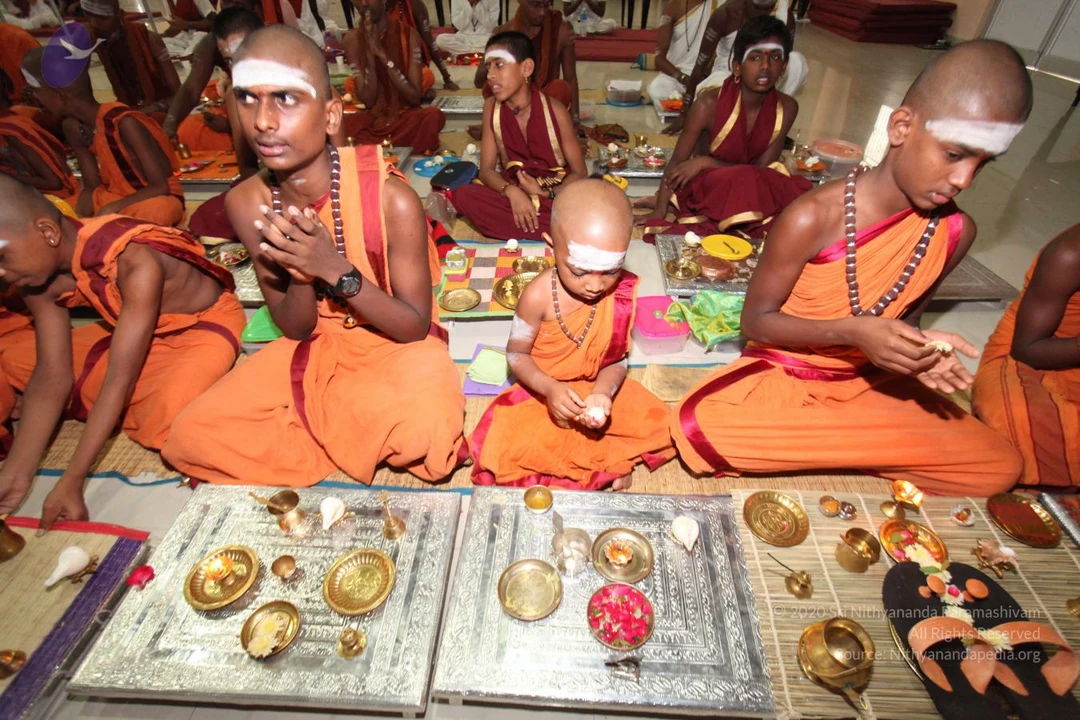
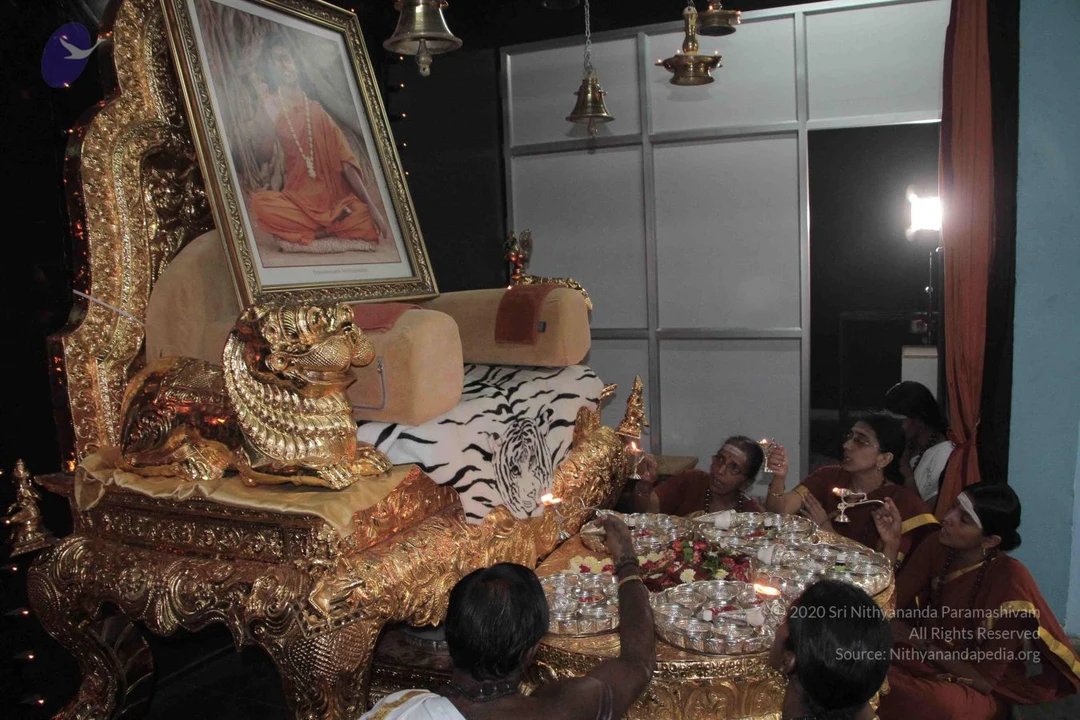
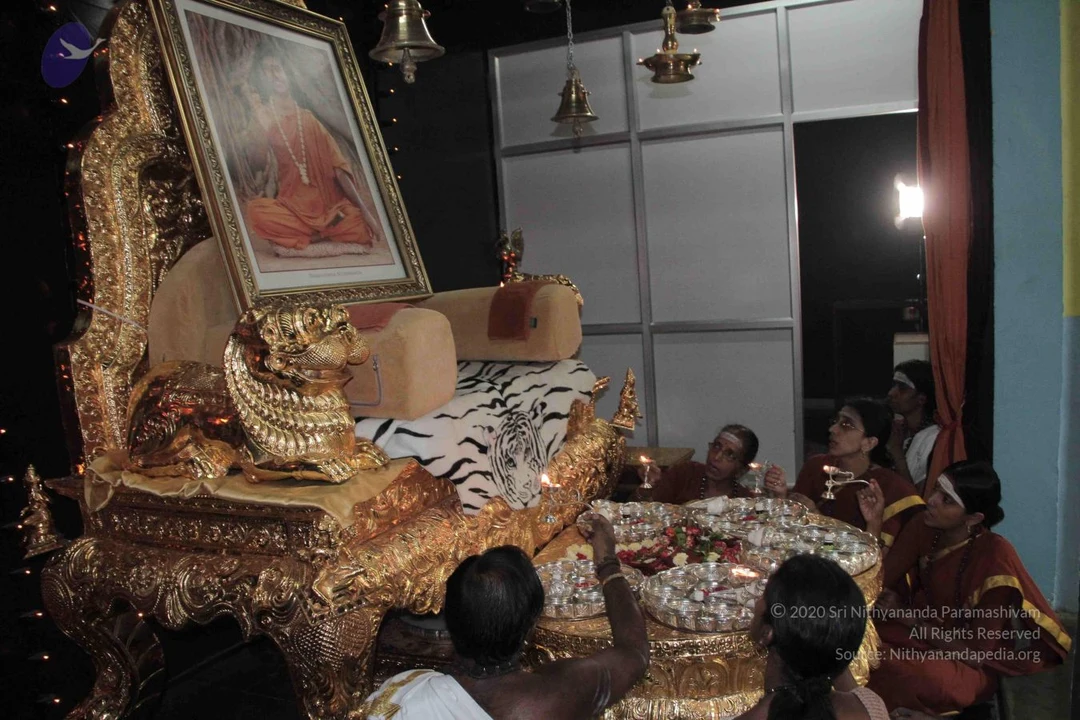
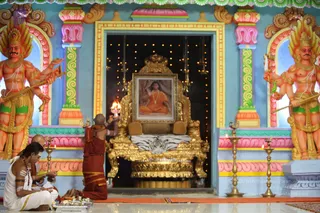
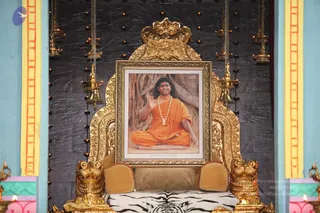
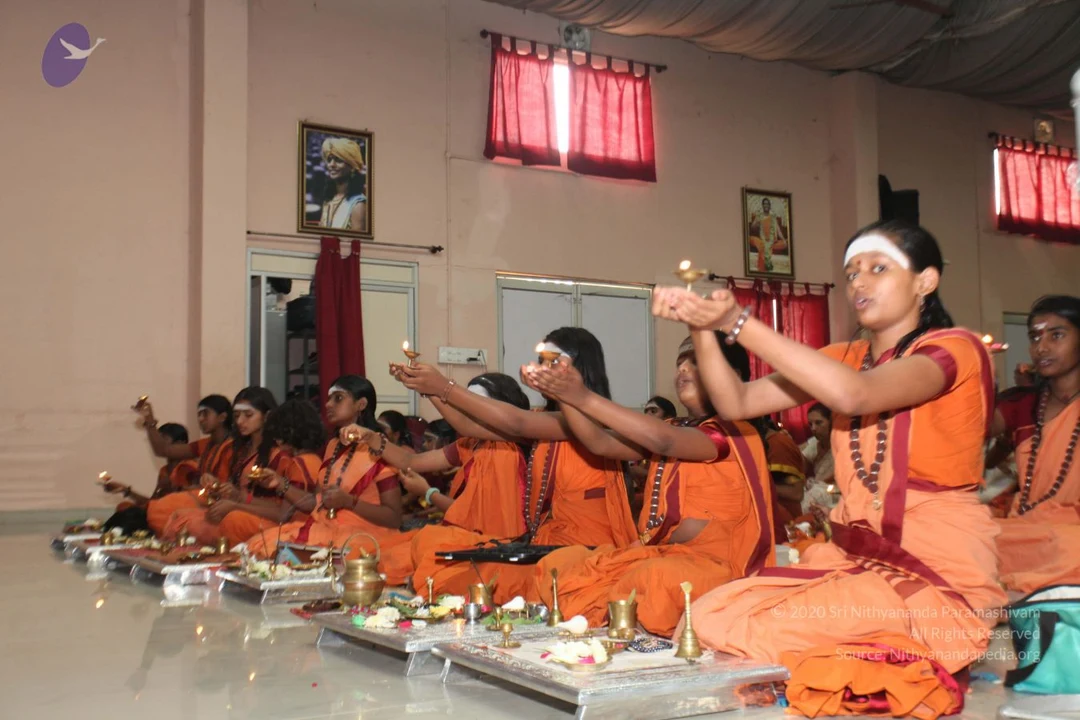
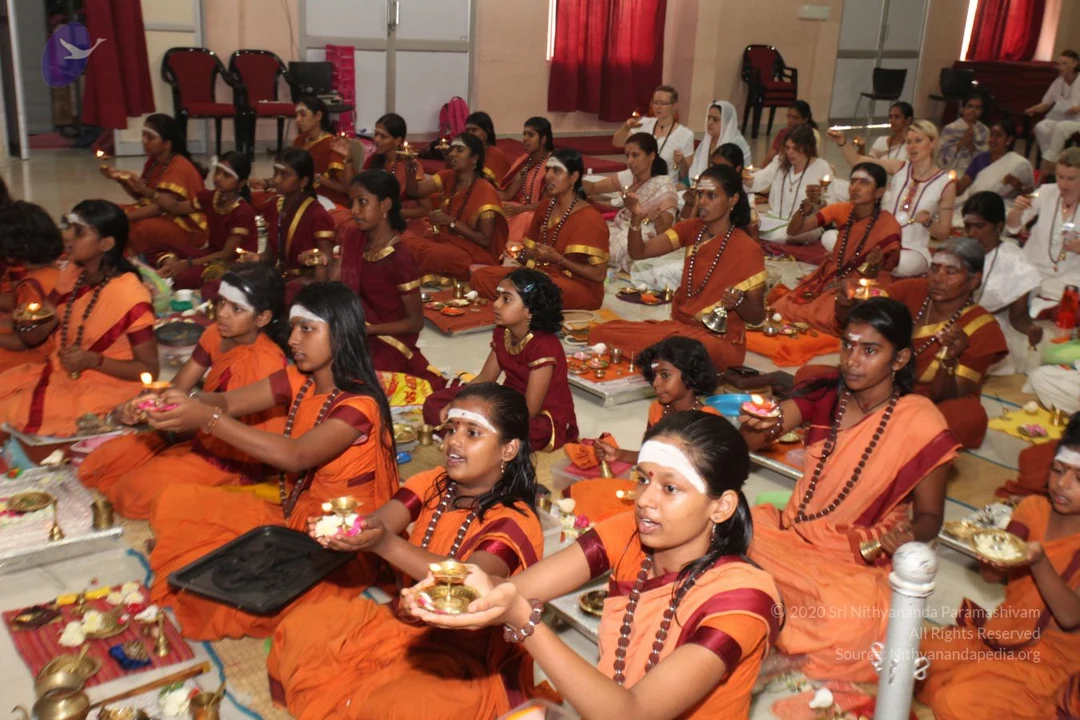
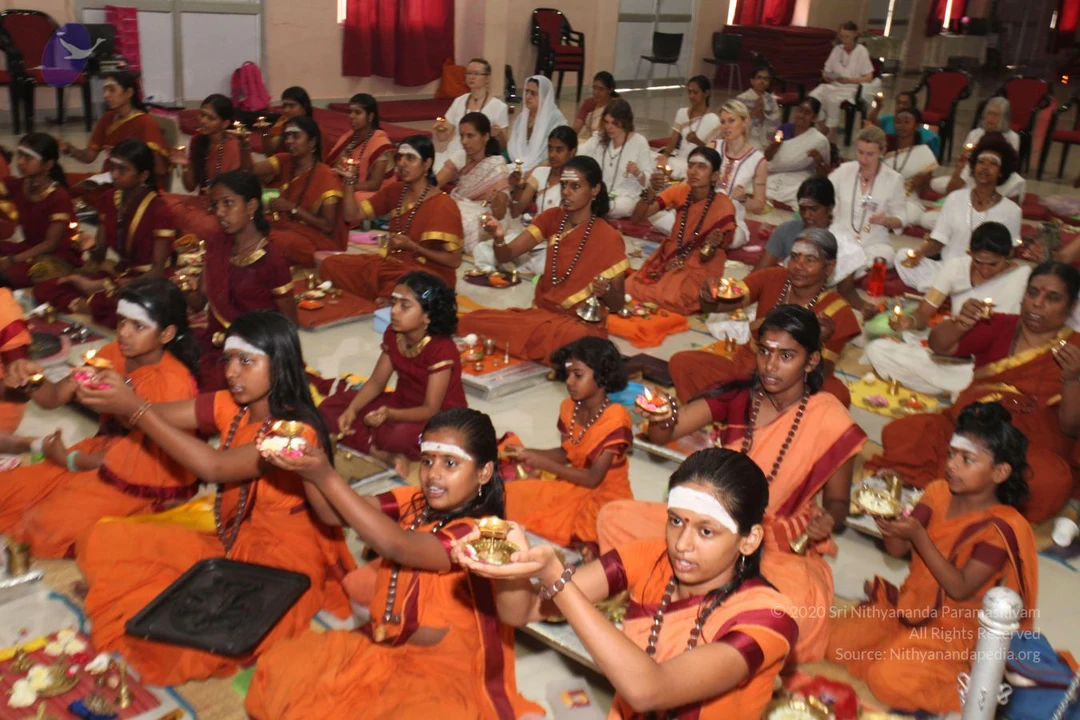
Inside a colourfully painted shrine hall, a priest in saffron-orange robes holds a lit camphor flame aloft before a golden throne with a tiger-skin cloth. Above the throne hangs a framed portrait labelled "Paramahamsa Nithyananda" showing a figure in orange robes with a rudraksha mala. Flanking the entrance are large painted guardian figures holding staffs, with rows of small lamps and brass lamp stands on the floor. At lower left, two seated priests in white dhotis with white body markings and a tray of puja items perform the ritual. Six small oil lamps and a tray of offerings sit in front of the throne area.A framed portrait labelled "Paramahamsa Nithyananda" sits on an ornate gold throne with carved lion heads and a zebra-striped cushion. The printed portrait shows a smiling figure with long dark hair wearing an orange robe and a long white-and-gold bead necklace, seated in lotus-style posture before a banyan tree root backdrop. The figure raises one hand in blessing. Hanging brass oil lamps and dark beaded strings surround the throne against a dark stone wall, with turquoise and yellow painted pillars at the sides. No physical people are present in the scene; the figure appears only in the printed portrait.A row of shaved-headed young sannyasi-style monks sits cross-legged on a hall floor, wearing saffron-orange robes with red borders and rudraksha malas, with white vertical tilak marks on their foreheads. Brass lamps, small kalasha-style vessels and plates of offerings are arranged on low tables before them. Behind them, seated devotees in orange and maroon clothes fill the room, with red curtains at the windows. Several monks sit upright and attentive, facing forward.A photograph of a row of shaved-headed young sannyasis seated on the floor of a hall, wearing saffron-orange robes with red borders and rudraksha malas, with white sacred ash marks on their foreheads. In front of them stand brass puja plates, kalasha-style vessels, small oil lamps and a brass pot, indicating a ritual in progress. Several of the seated men gaze forward attentively. Behind them, other devotees in orange sit along the wall beneath red curtains and framed portraits. Roughly a dozen or more people are visible.A row of young shaved-headed boys and youths in saffron-orange robes sit cross-legged on the floor during a satsang-style gathering. Several wear white vibhuti or sandalwood tilaks on their foreheads, and some wear rudraksha mala necklaces. Brass oil lamps, small brass vessels and offering plates line a low table in the foreground. Other seated devotees in orange appear in the background of a plain room with pale walls and red curtains.A seated group of young male monastics in saffron-orange robes with red-and-maroon borders sits in rows in a hall with red curtains. Many have shaved heads, white vertical tilak marks on their foreheads and rudraksha malas around their necks. The foreground figures look upward attentively. In front of them on a low table are brass oil lamps, small brass vessels, a steel tumbler and flower offerings. No one in the image is clearly identifiable as a person from appearance alone.

Nithya Satsang

5 photosSource gallery
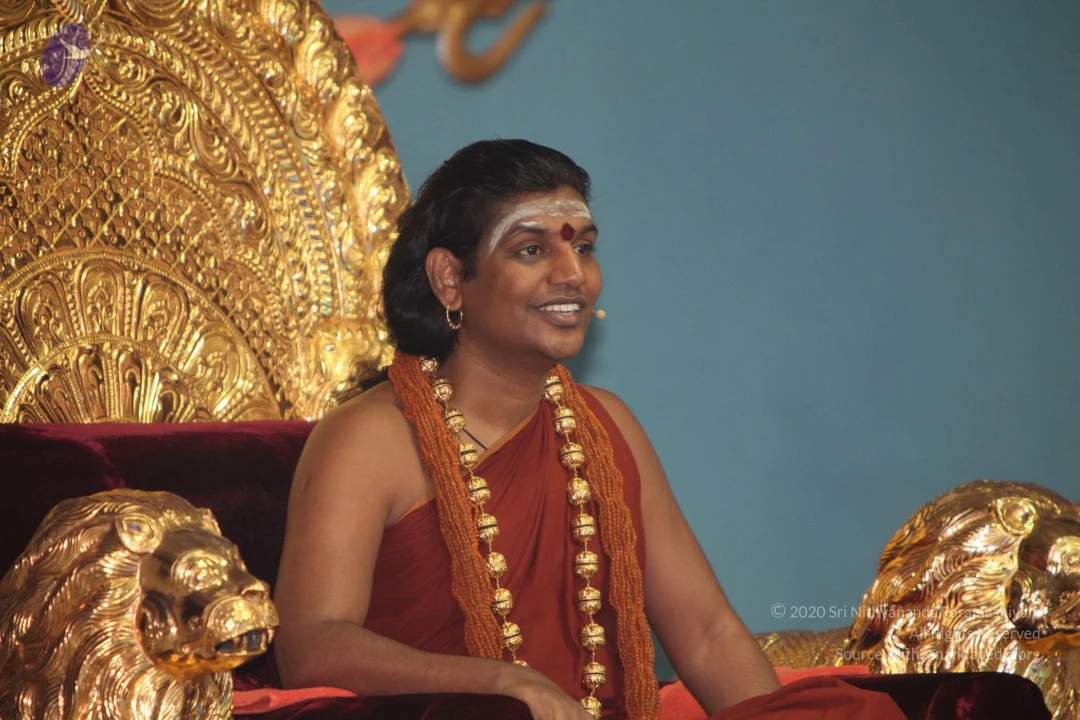
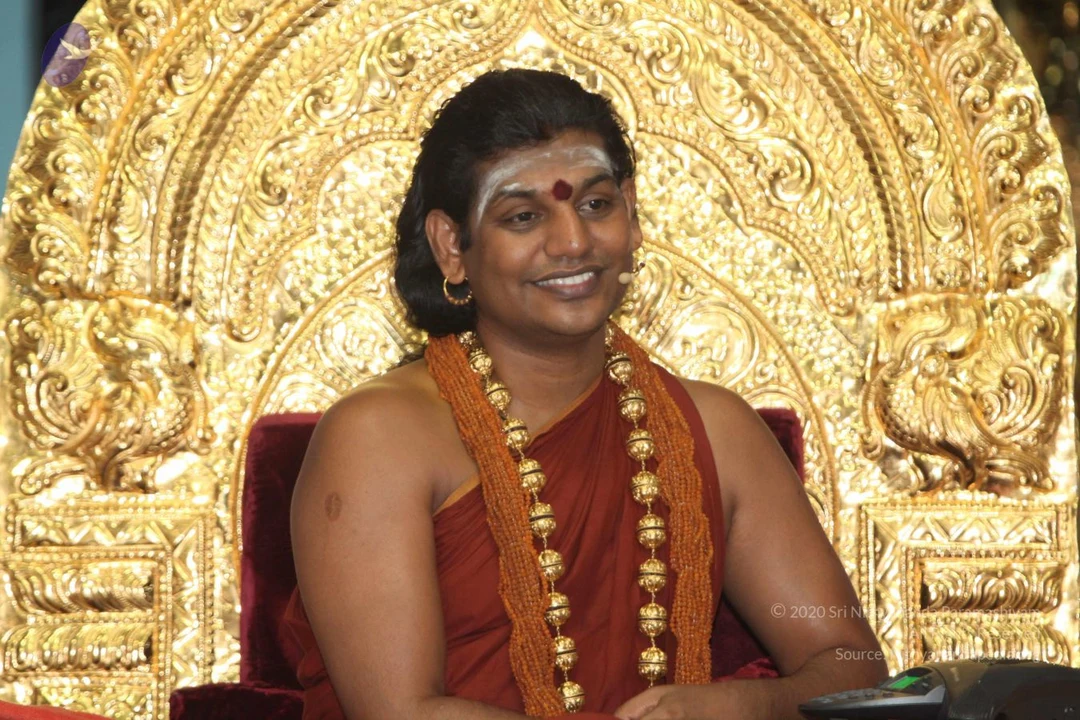
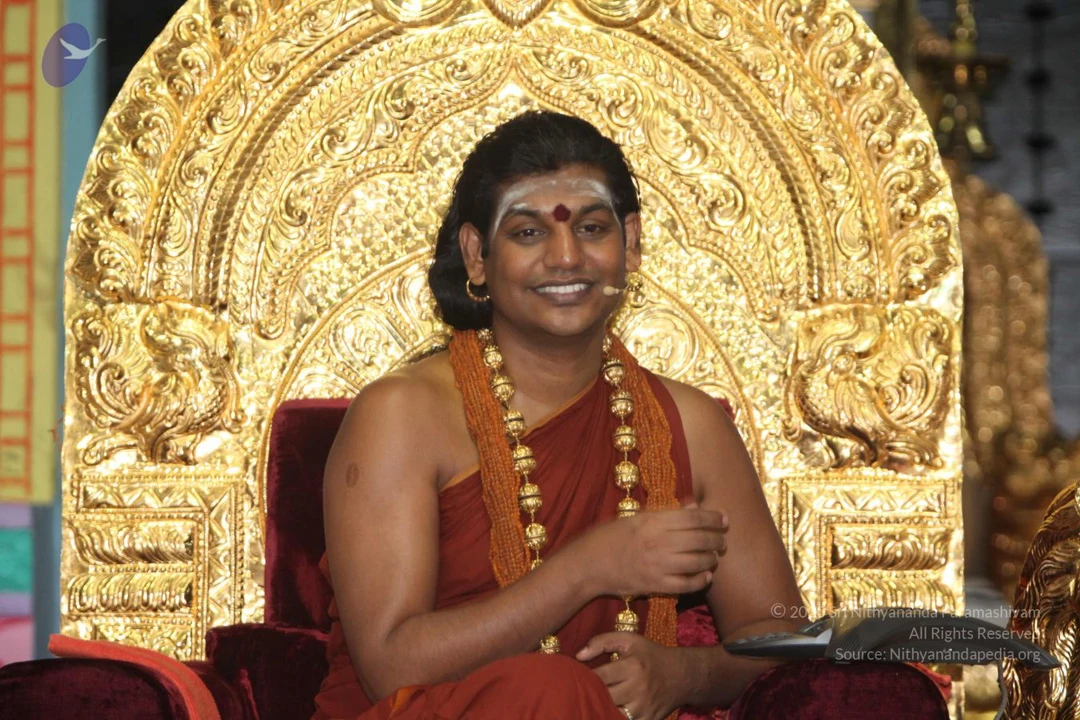
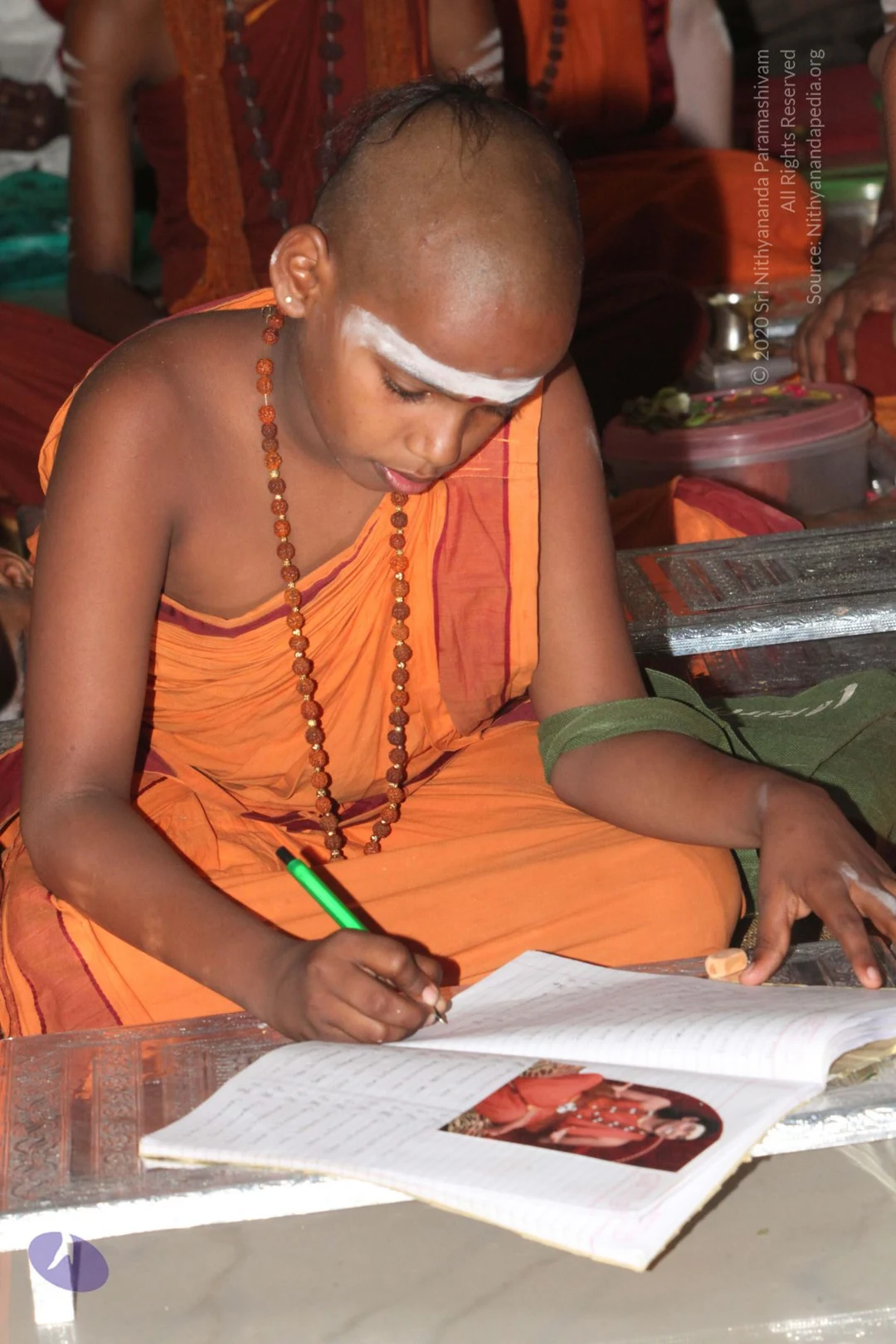
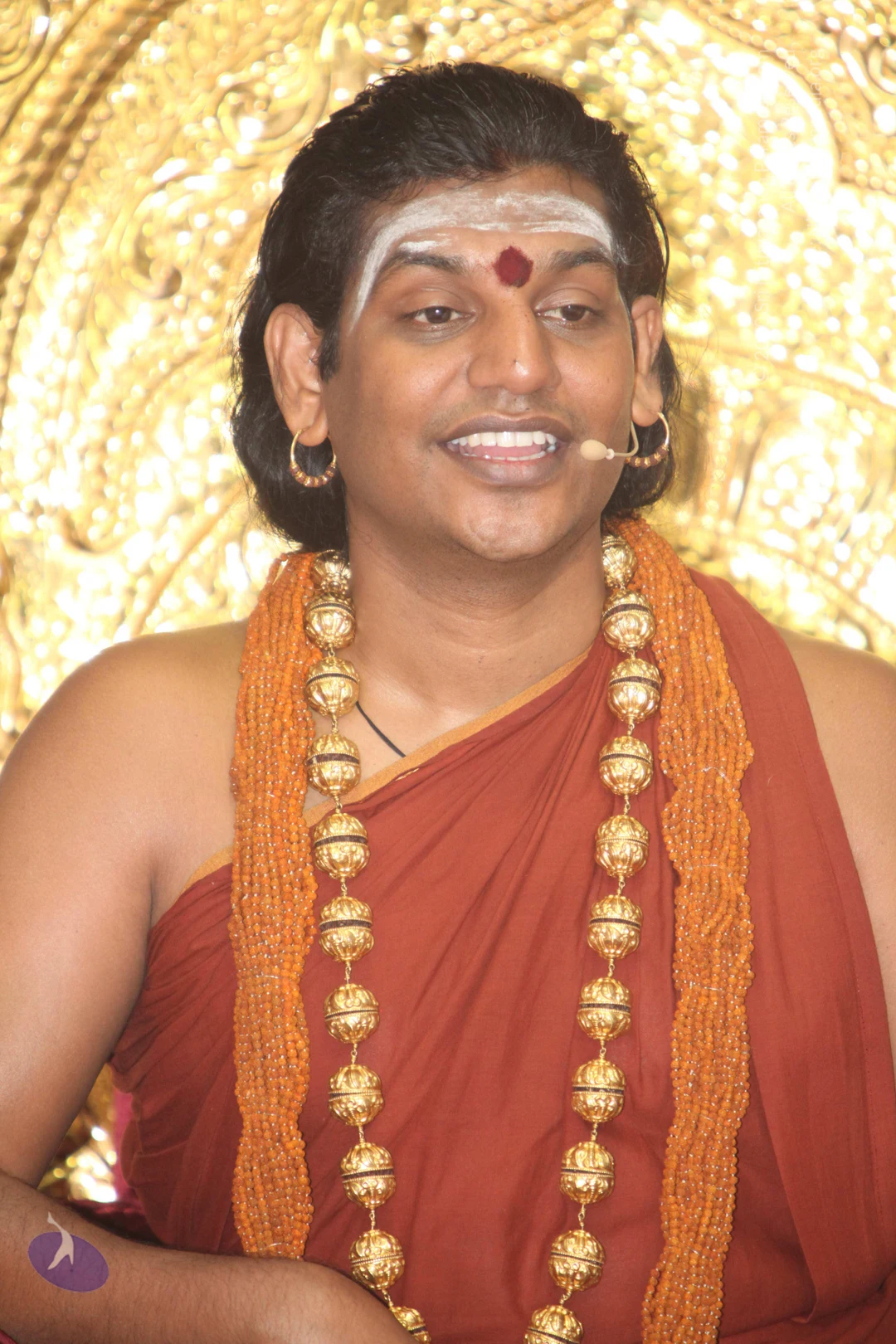
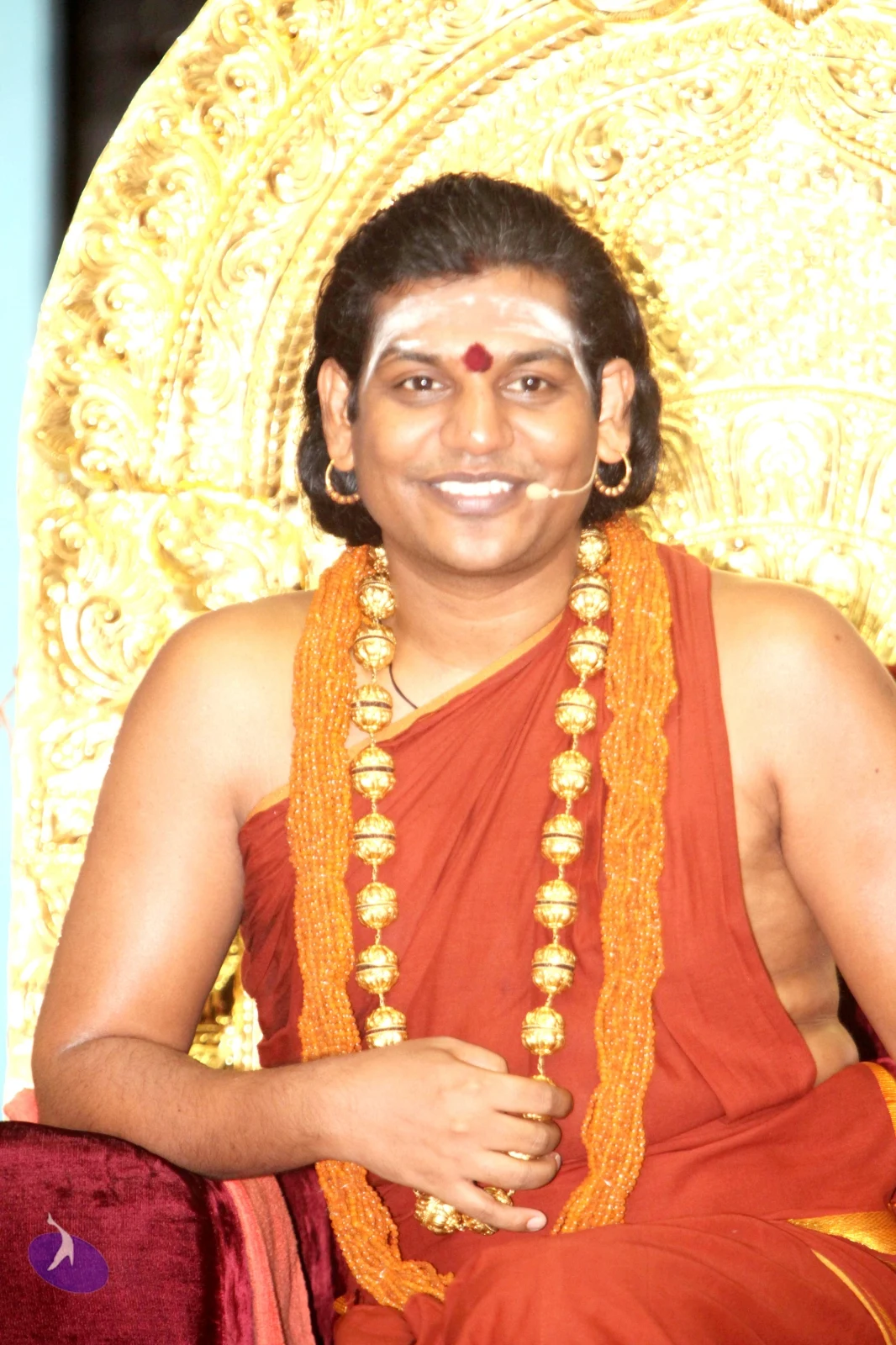
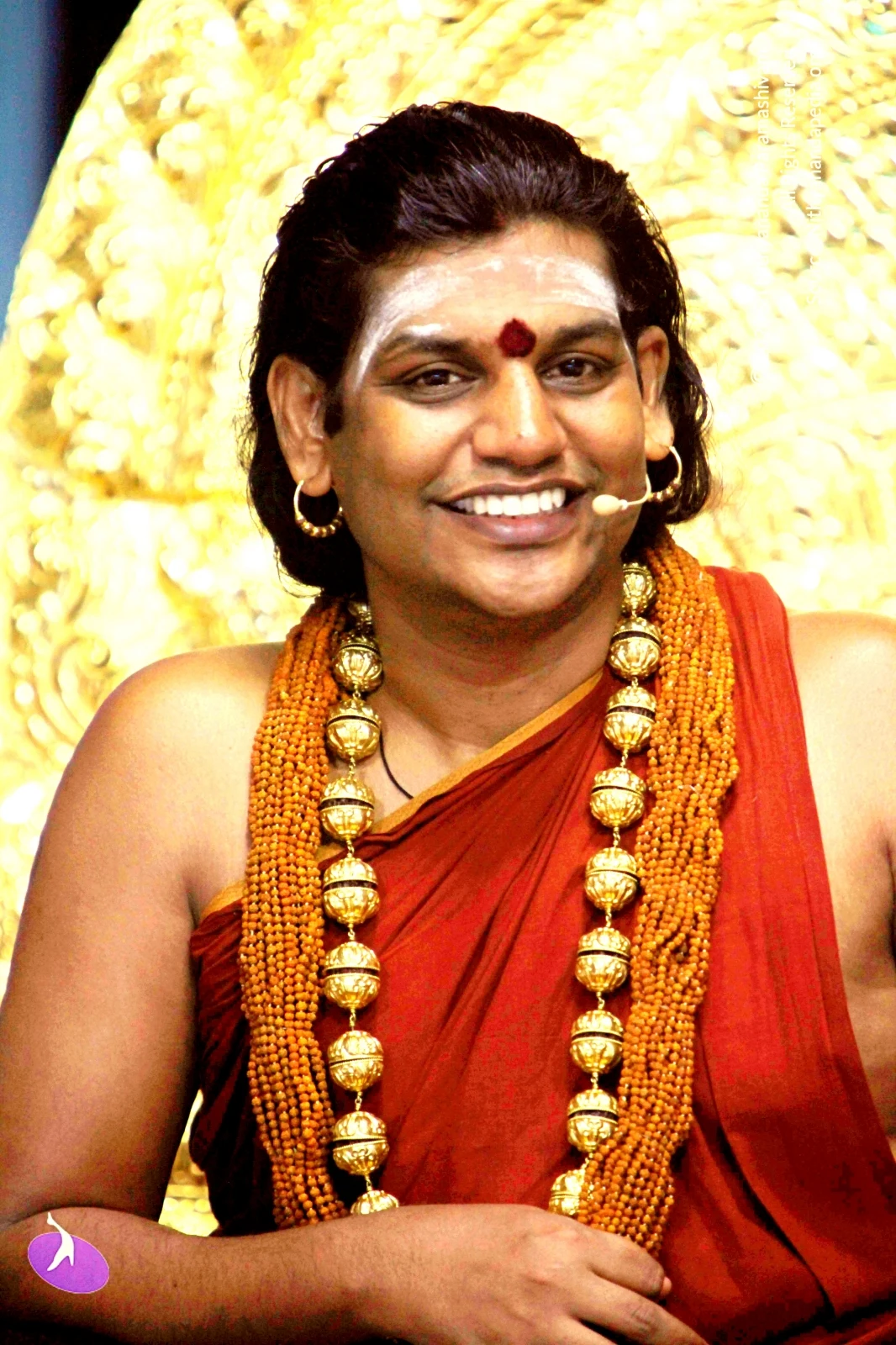
A man sits cross-legged on an ornate gold throne with a large arched gilded back and two golden lion sculptures on the arms. He wears a rust-orange saffron robe with a matching shawl, a long gold bead necklace, and a small gold hoop earring, with a white horizontal tilak and red dot on his forehead. His hands rest on the velvet maroon armrests and a small microphone is clipped near his face. Behind him stand blue and red painted panels and a brass lamp at the left edge. Appearance cues with the saffron robe, gold necklace and throne suggest a person, seated as the speaker at a satsang.A shaved-headed young monk in saffron-orange robes with a red border and rudraksha beads sits on a mat, writing with a green pen in an open notebook on a metal low table. A white vertical tilak mark is on his forehead. Behind him, other saffron-robed monks sit with folded hands. On the table sit a pink-and-red decorated pouch, a small brass bell or lamp, and a woven cloth. The notebook page shows a small printed photo of robed figures.A shaved-headed young boy in saffron-orange robes with a red border sits cross-legged on a mat, writing in a notebook with a green pen. He wears a rudraksha mala around his neck and has a white horizontal tilak on his forehead. Beside him, other saffron-robed people sit on the floor, and a metal tray holds a small brass vessel and decorative items.A photograph of a smiling man seated before an ornate golden repoussé backdrop. He has a white tilak across his forehead with a red bindi at the centre, short dark hair swept back, a small gold hoop earring and a clip-on headset microphone. He wears a saffron-orange shawl over bare shoulders and a long orange rudraksha mala with ornate gold beads hanging to his chest. Appearance-based candidate, a person, seated in a discourse setting with a red-upholstered chair edge visible at lower left.A man seated on an ornate gold throne with carved lion-head armrests and a large gilded backrest, against a teal wall. He wears a rust-red sleeveless robe with an orange-saffron shawl draped over one shoulder and a long necklace of gold beads and rudraksha-style gold ornaments. He has a white vertical tilak with a red dot on his forehead, a gold hoop earring, and a small microphone clipped near his face. He is smiling and gazing to the side, appearing to speak to an audience.

Inner Awakening Grad Reunion

22 photosSource gallery
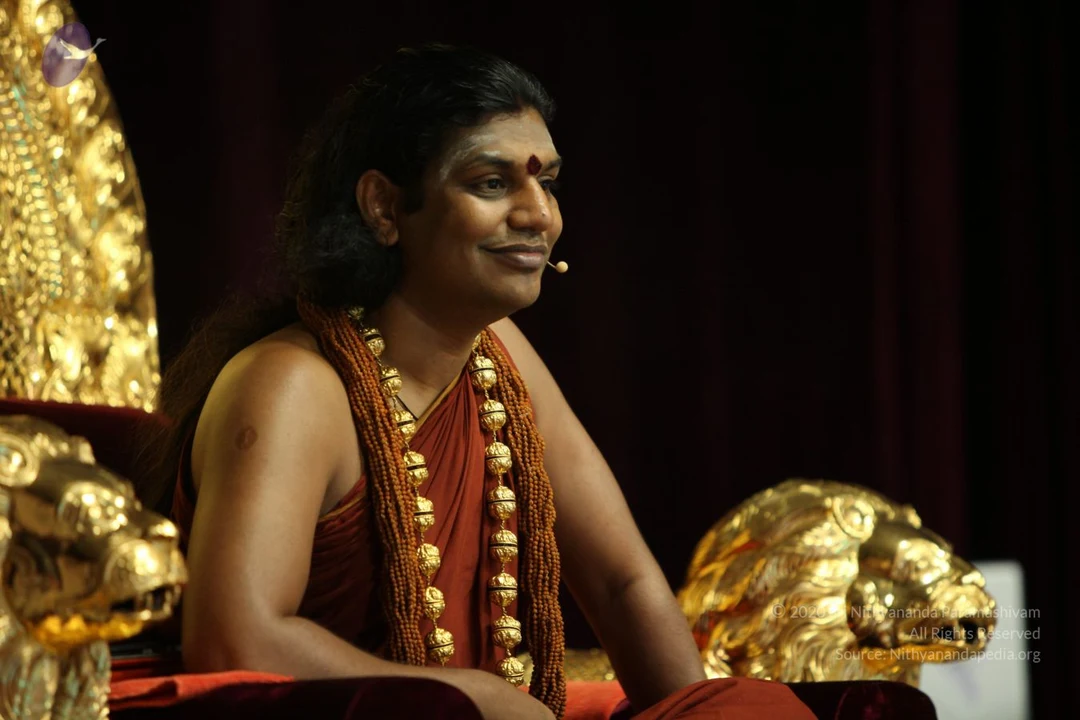
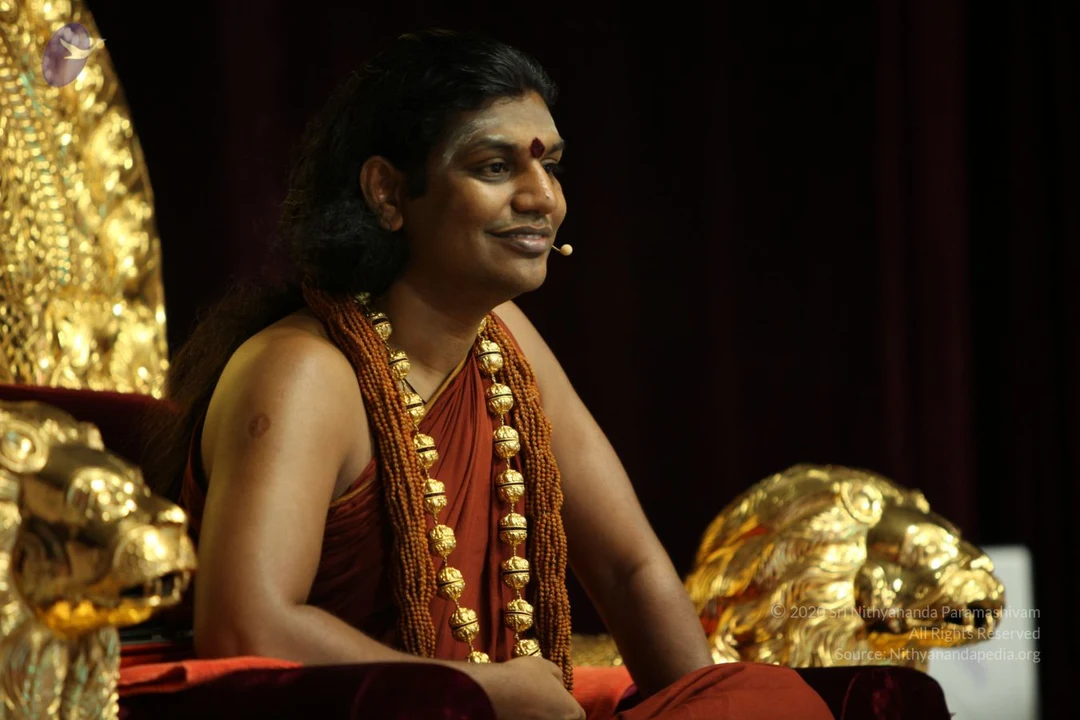
A man seated on an ornate gold-and-red throne with carved golden lion-head armrests, speaking into a headset microphone while looking to his right and smiling. He has long dark hair swept back, a red-orange vibhuti or kumkum mark on his forehead, and wears a rust-orange wrap over his shoulder with a rudraksha mala and a long ceremonial necklace of gold beads. Dark burgundy drapes form the backdrop of the stage. A single person is visible, appearing to give a satsang discourse.A man seated on an ornate golden throne with carved lion-head armrests against a dark maroon curtain, wearing a small microphone at his cheek. He has long dark hair swept back, a red bindi on his forehead, and bare shoulders draped in an orange-red cloth. Multiple strands of rudraksha beads and large gold bead necklaces hang across his chest. He faces right with a slight smile, as during a satsang discourse. Swamiji (probable): long swept-back hair, saffron-orange draped cloth, rudraksha malas and ceremonial gold necklaces, seated on a throne during a satsang.A man with long dark hair sits on an ornate golden throne with carved golden lion heads at the armrests against a dark maroon backdrop. He wears an orange-red shawl over bare shoulders, a long necklace of golden beads and orange rudraksha malas, and a small red bindi on his forehead, with a clip-on microphone at his cheek. He smiles and looks to the side with his hands resting in his lap. The image is a photograph of a satsang discourse setting. Swamiji (probable): the seated speaker's appearance matches the page's Swamiji claim through his long hair, saffron-orange shawl, rudraksha malas and ornate gold necklace, seated on a throne. The scene shows one seated speaker and no other visible people.A smiling man with long dark swept-back hair and a red bindi sits cross-legged on a dark red velvet seat before a large gold ornamental backdrop, wearing a rust-red wrap and dhoti with a gold border. He wears multiple strands of orange rudraksha beads and ornate gold bead necklaces, and rests one hand on his foot.

Nithya-Puja

71 photosSource gallery
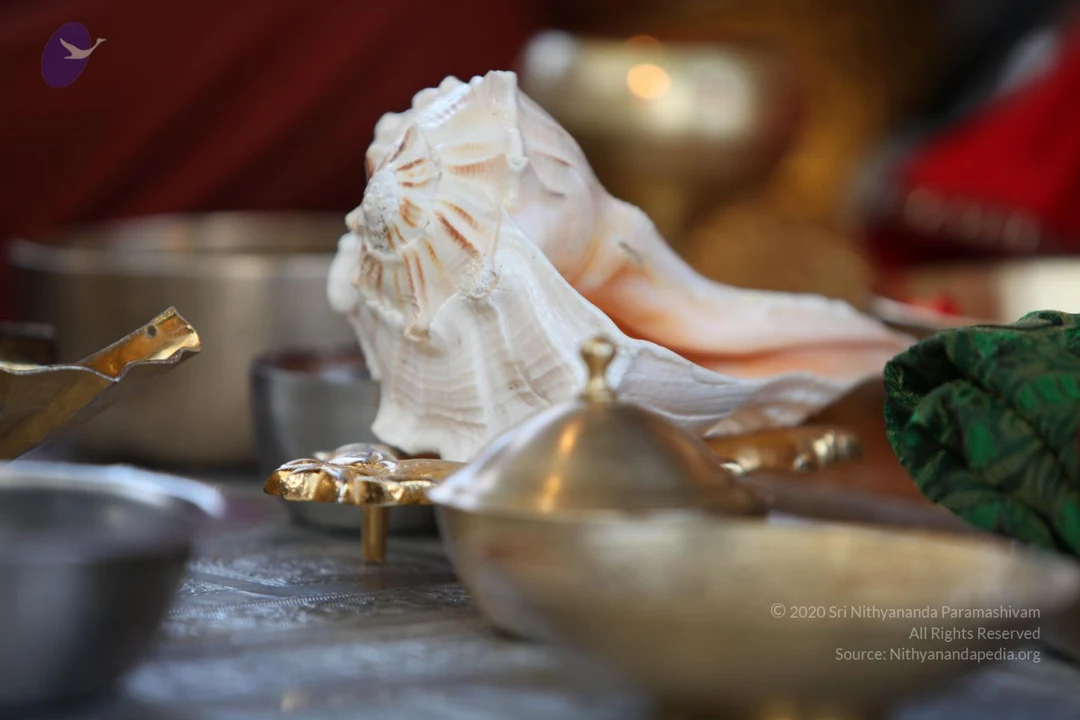
Close-up photo of ritual implements on a metal tray: a large pale conch shell with ridged, flared lip, beside brass vessels with lids, a small brass stand with a flower-shaped base, and a silver bowl. A folded green embroidered cloth lies at the right edge, with blurred warm lamp light and a red fabric in the background. No people are visible.Inside a colourfully painted shrine hall, a priest in saffron-orange robes holds a lit camphor flame aloft before a golden throne with a tiger-skin cloth. Above the throne hangs a framed portrait labelled "Paramahamsa Nithyananda" showing a figure in orange robes with a rudraksha mala. Flanking the entrance are large painted guardian figures holding staffs, with rows of small lamps and brass lamp stands on the floor. At lower left, two seated priests in white dhotis with white body markings and a tray of puja items perform the ritual. Six small oil lamps and a tray of offerings sit in front of the throne area.A framed portrait labelled "Paramahamsa Nithyananda" sits on an ornate gold throne with carved lion heads and a zebra-striped cushion. The printed portrait shows a smiling figure with long dark hair wearing an orange robe and a long white-and-gold bead necklace, seated in lotus-style posture before a banyan tree root backdrop. The figure raises one hand in blessing. Hanging brass oil lamps and dark beaded strings surround the throne against a dark stone wall, with turquoise and yellow painted pillars at the sides. No physical people are present in the scene; the figure appears only in the printed portrait.A row of shaved-headed young sannyasi-style monks sits cross-legged on a hall floor, wearing saffron-orange robes with red borders and rudraksha malas, with white vertical tilak marks on their foreheads. Brass lamps, small kalasha-style vessels and plates of offerings are arranged on low tables before them. Behind them, seated devotees in orange and maroon clothes fill the room, with red curtains at the windows. Several monks sit upright and attentive, facing forward.A photograph of a row of shaved-headed young sannyasis seated on the floor of a hall, wearing saffron-orange robes with red borders and rudraksha malas, with white sacred ash marks on their foreheads. In front of them stand brass puja plates, kalasha-style vessels, small oil lamps and a brass pot, indicating a ritual in progress. Several of the seated men gaze forward attentively. Behind them, other devotees in orange sit along the wall beneath red curtains and framed portraits. Roughly a dozen or more people are visible.A row of young shaved-headed boys and youths in saffron-orange robes sit cross-legged on the floor during a satsang-style gathering. Several wear white vibhuti or sandalwood tilaks on their foreheads, and some wear rudraksha mala necklaces. Brass oil lamps, small brass vessels and offering plates line a low table in the foreground. Other seated devotees in orange appear in the background of a plain room with pale walls and red curtains.

Satsang

15 photosSource gallery
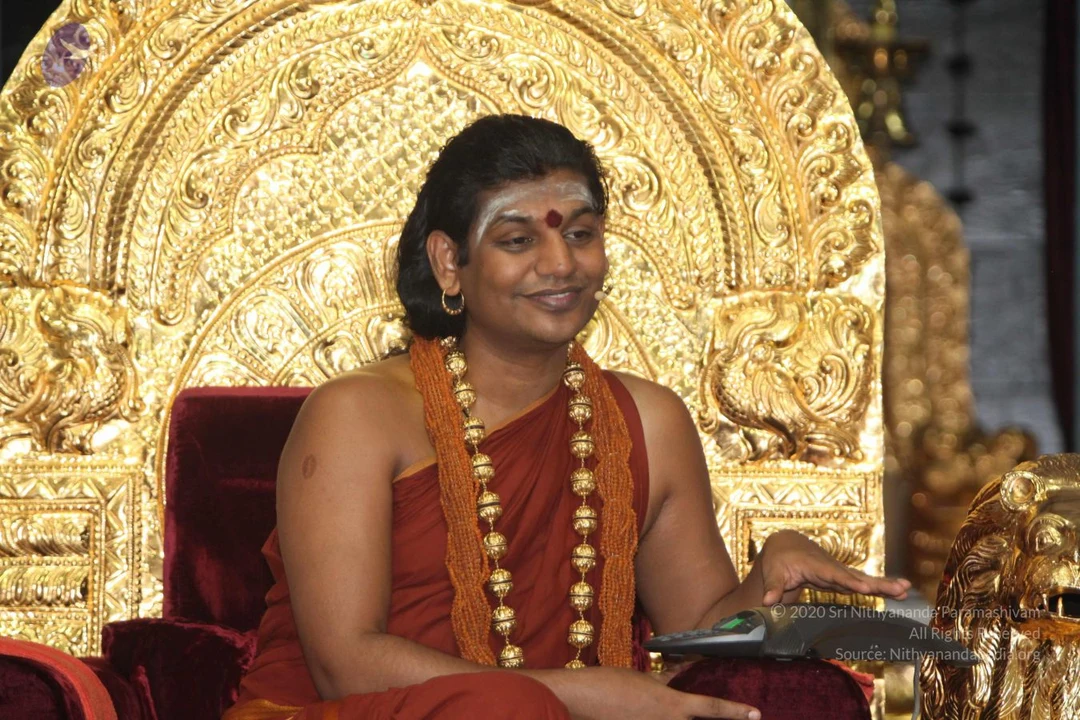
A man sits cross-legged on an ornate gold throne with a large arched gilded back and two golden lion sculptures on the arms. He wears a rust-orange saffron robe with a matching shawl, a long gold bead necklace, and a small gold hoop earring, with a white horizontal tilak and red dot on his forehead. His hands rest on the velvet maroon armrests and a small microphone is clipped near his face. Behind him stand blue and red painted panels and a brass lamp at the left edge. Appearance cues with the saffron robe, gold necklace and throne suggest a person, seated as the speaker at a satsang.A photograph of a smiling man seated before an ornate golden repoussé backdrop. He has a white tilak across his forehead with a red bindi at the centre, short dark hair swept back, a small gold hoop earring and a clip-on headset microphone. He wears a saffron-orange shawl over bare shoulders and a long orange rudraksha mala with ornate gold beads hanging to his chest. Appearance-based candidate, a person, seated in a discourse setting with a red-upholstered chair edge visible at lower left.A man seated on an ornate gold throne with carved lion-head armrests and a large gilded backrest, against a teal wall. He wears a rust-red sleeveless robe with an orange-saffron shawl draped over one shoulder and a long necklace of gold beads and rudraksha-style gold ornaments. He has a white vertical tilak with a red dot on his forehead, a gold hoop earring, and a small microphone clipped near his face. He is smiling and gazing to the side, appearing to speak to an audience.A seated man in a red-orange robe sits on a plush red velvet chair in front of an ornate gold throne with carved floral and scrollwork. He wears a rudraksha-style necklace of beads with ceremonial gold beads and orange-red bead strands, gold hoop earring, white vibhuti across the forehead with a red kumkum dot, and his hand rests on a microphone-like device near a golden lion-head ornament. Swamiji (probable): long swept-back dark hair, orange-red robe, ornate gold necklace and rudraksha malas, seated on a throne, matching the page's note that Swamiji is present. The setting appears to be a satsang discourse.A seated man in a maroon-red robe with a bare shoulder sits on a deep red cushioned seat in front of an ornate golden throne with embossed floral and scroll carvings. He wears layered orange rudraksha malas and a long chain of large gold beads, a white tilak with a red bindi on his forehead, and a small gold earring, smiling while a microphone clips near his face. A microphone and a small black device rest on a table at his right side. Appearance-based a person seated in a discourse setting, with the throne and malas as cues.A smiling man sits on an ornate gold throne with carved scrollwork and a red velvet seat cushion during a seated talk. He wears a rust-red robe over bare shoulders, a long orange-red beaded necklace, and multiple large gold bead necklaces. A white forehead marking and a red bindi are visible, and a small microphone is clipped near his face. His hands rest together in his lap. Swamiji (probable): long swept-back hair, rudraksha mala and ceremonial gold necklaces, saffron-orange clothing, seated on a throne.

Sarva-Darshan

21 photosSource gallery
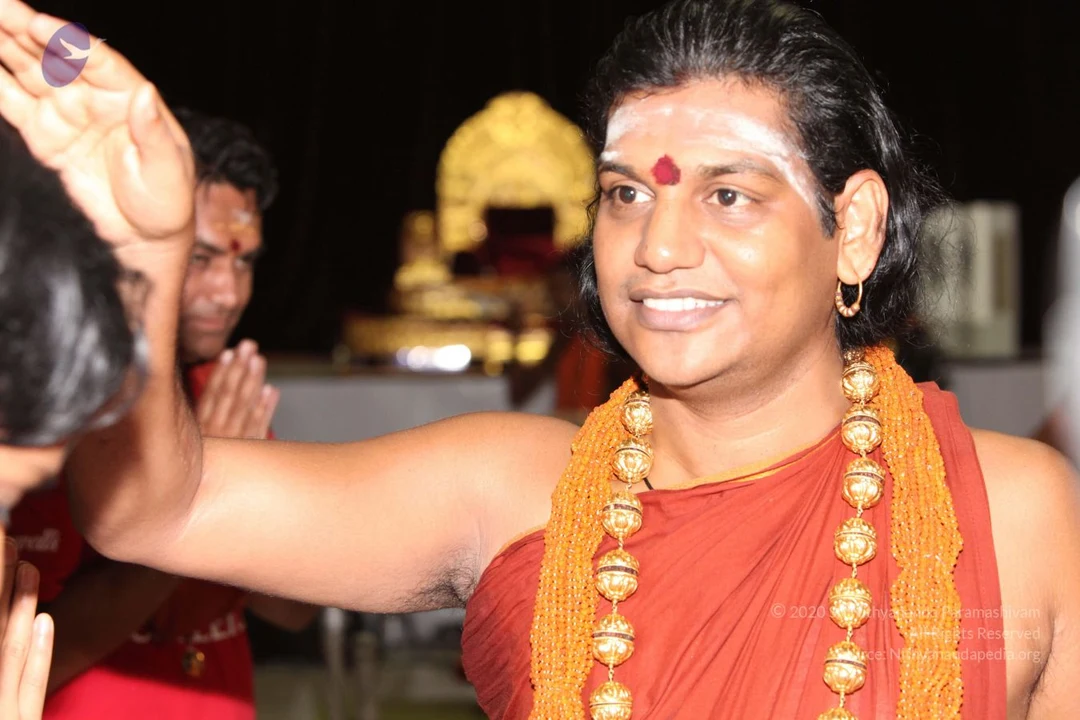
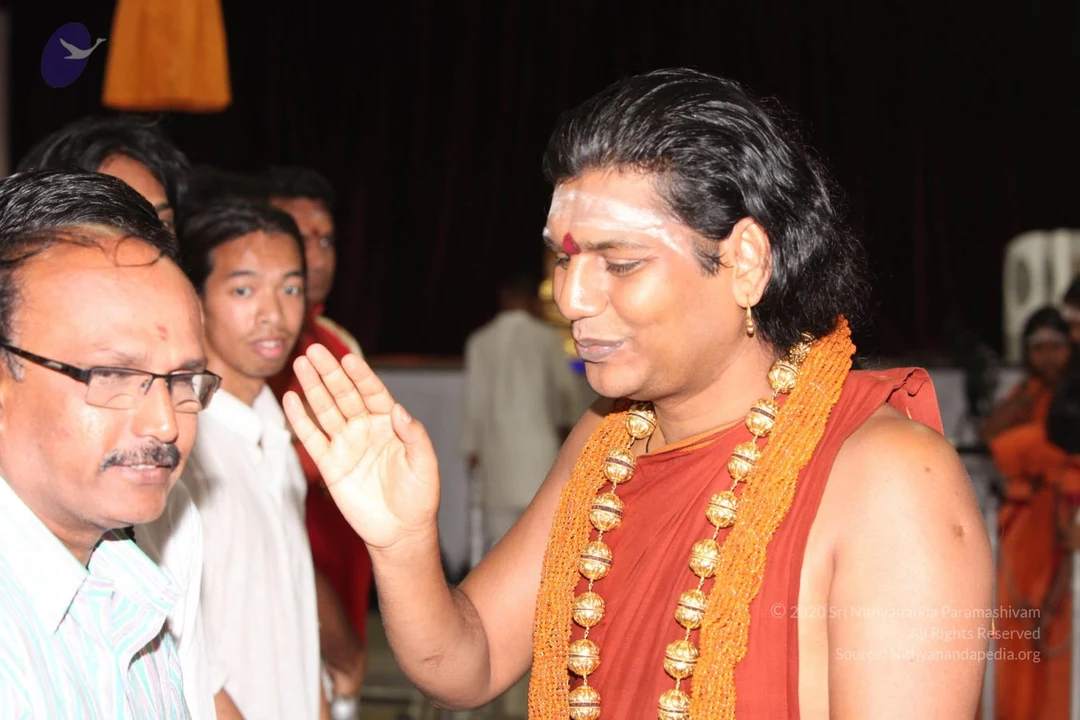
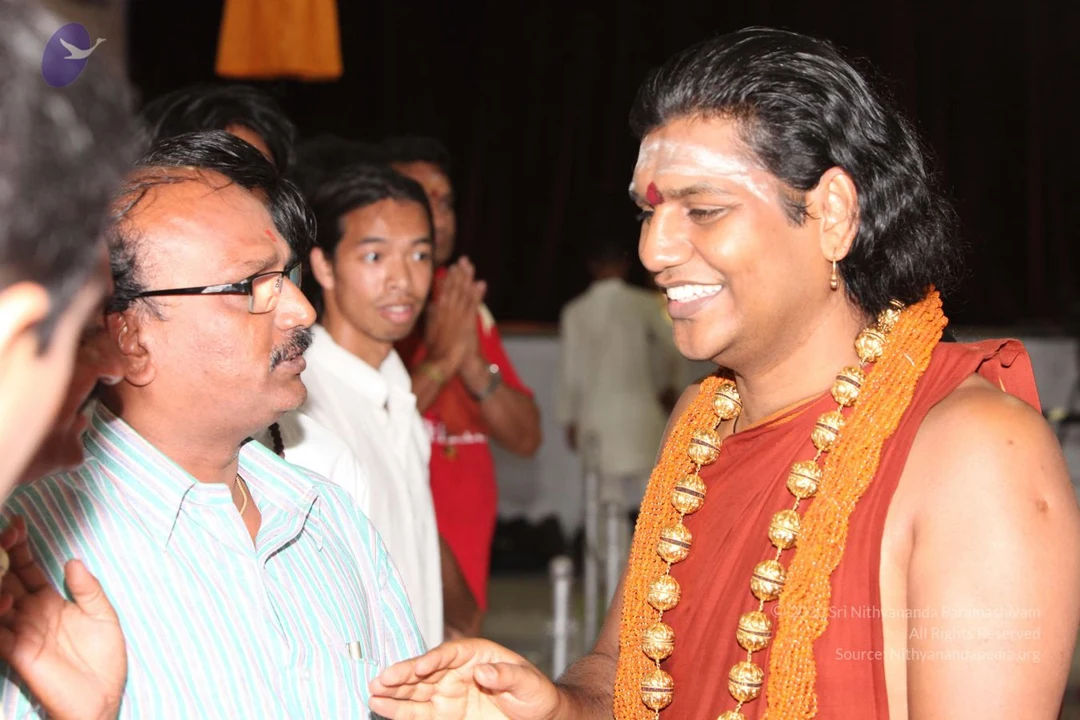
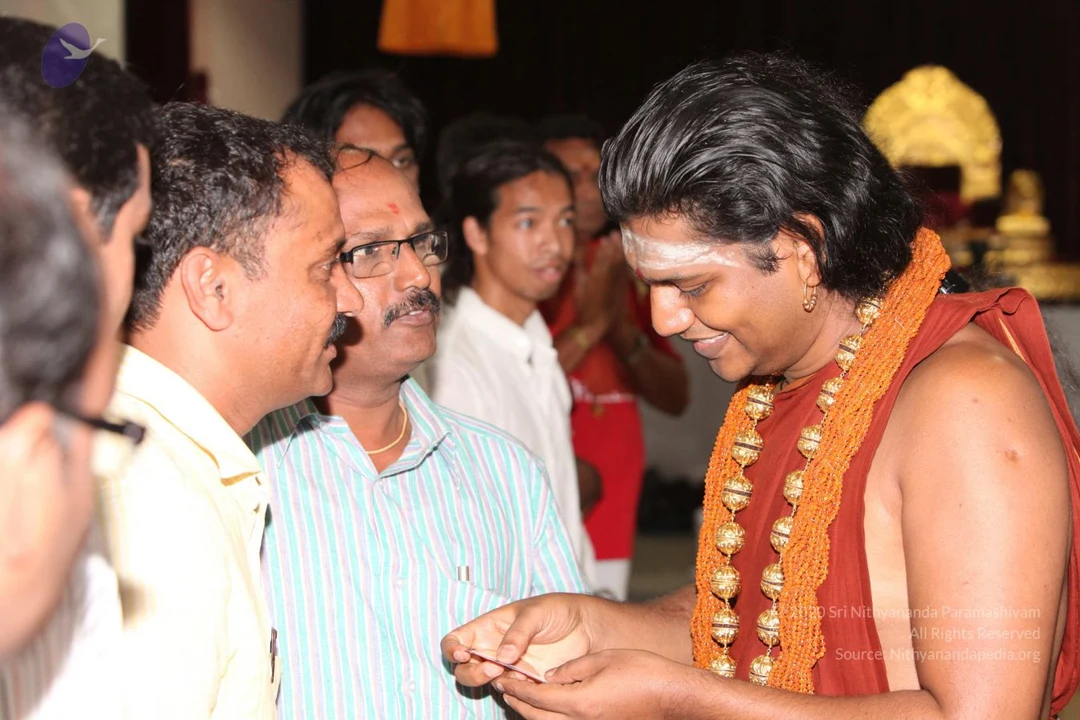
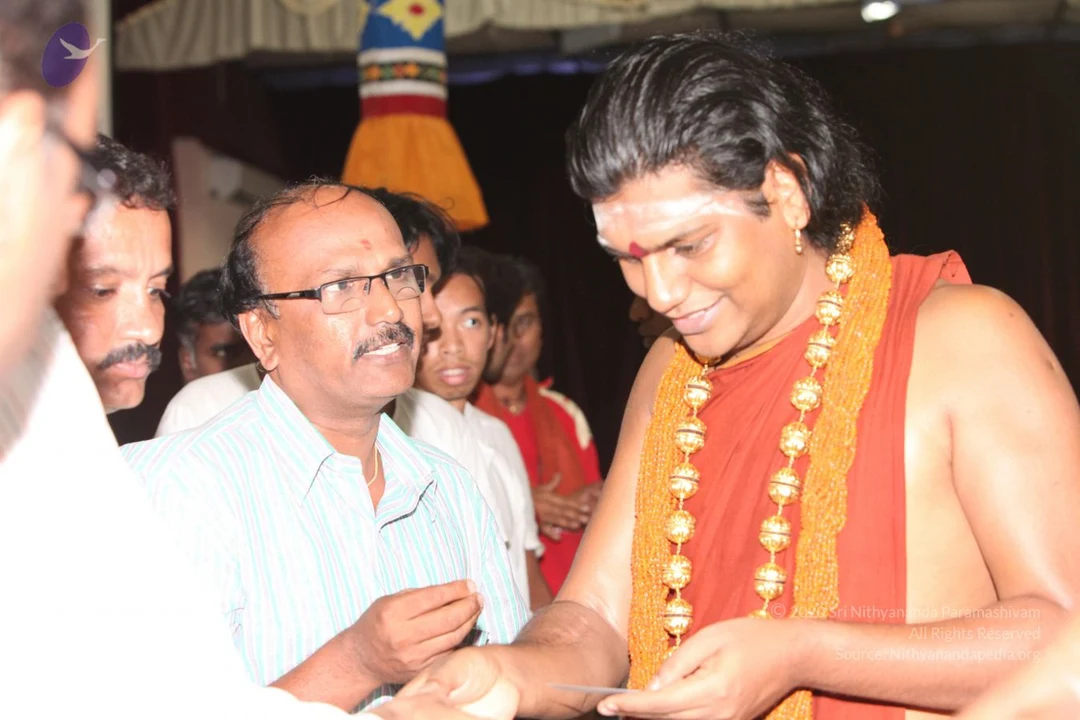
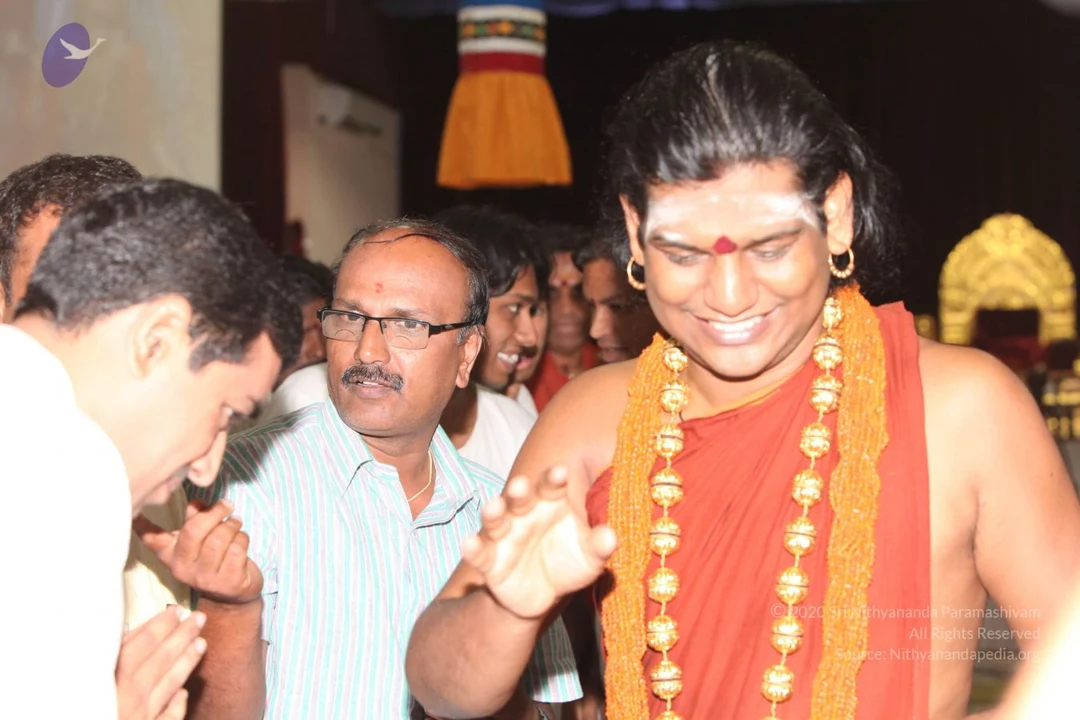
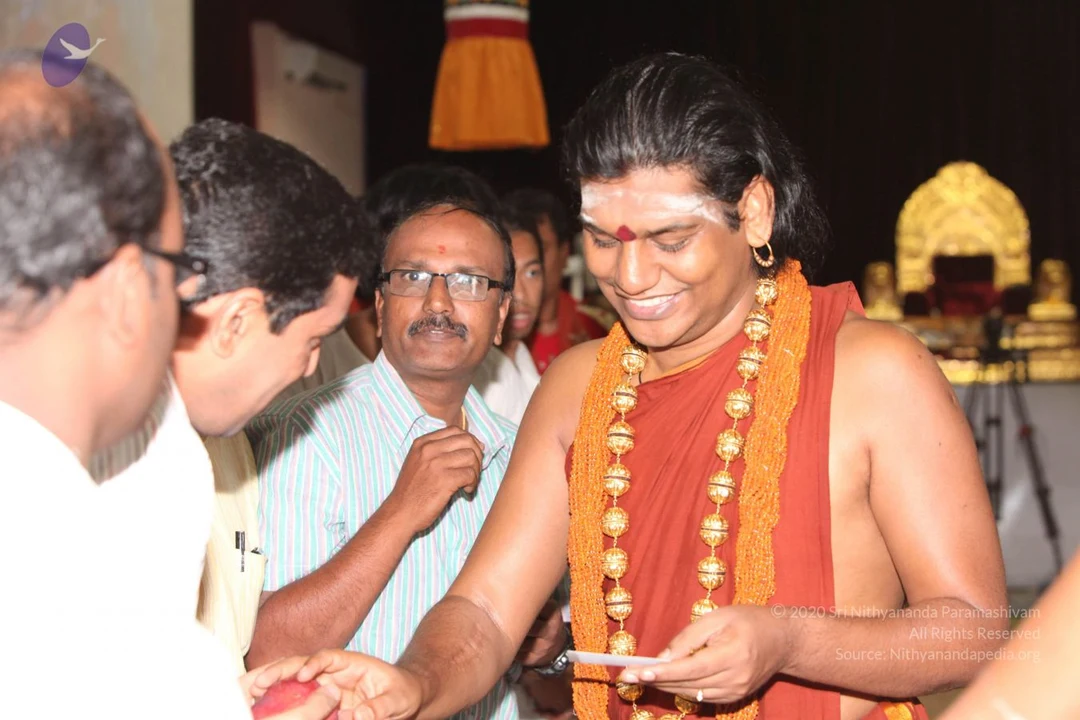
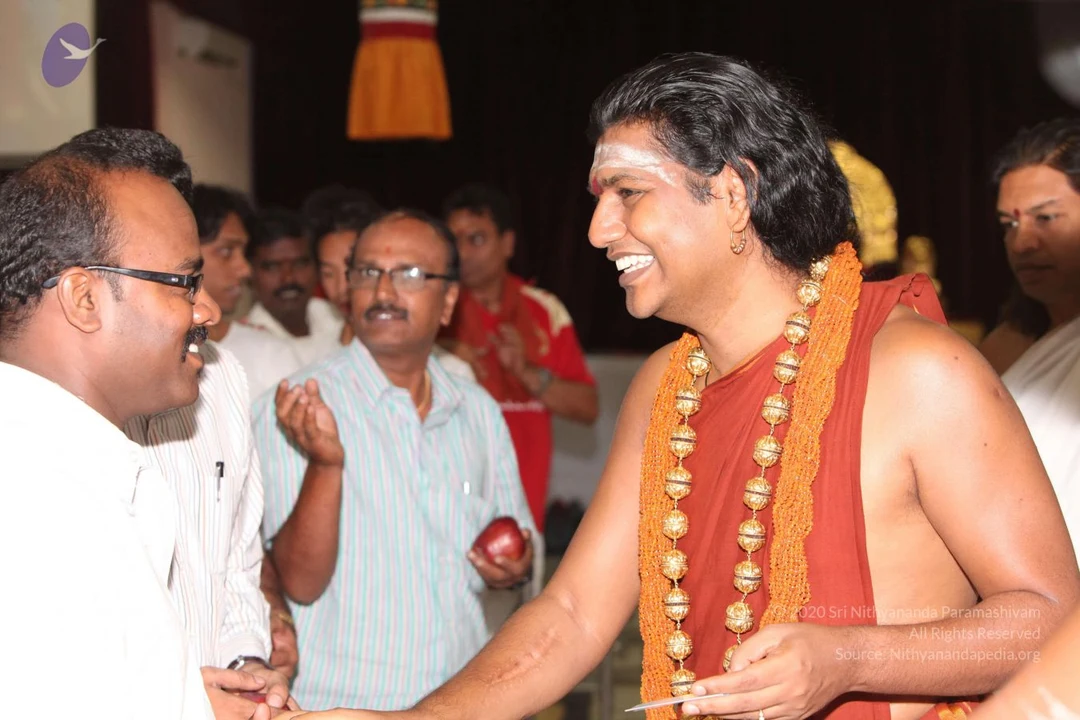
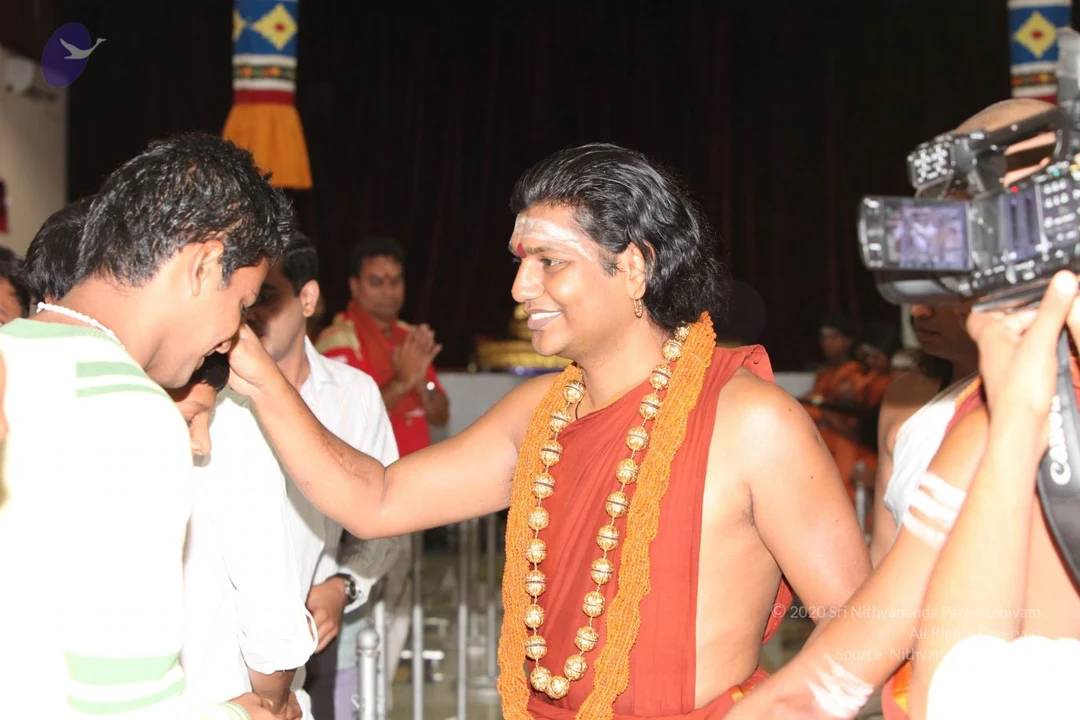
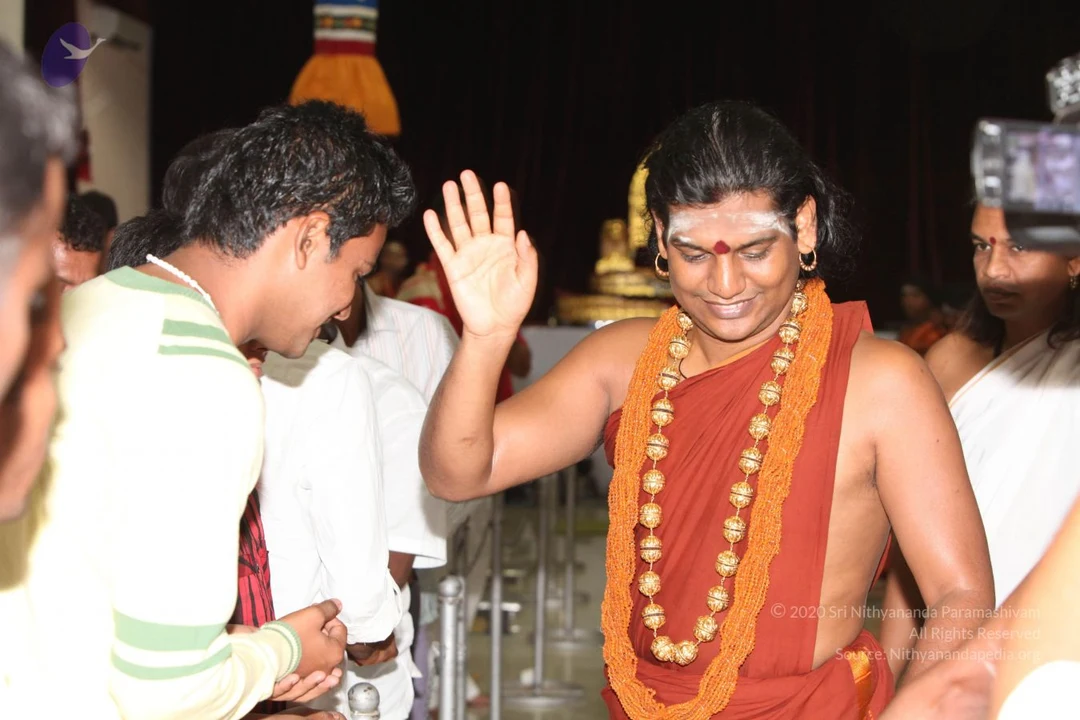
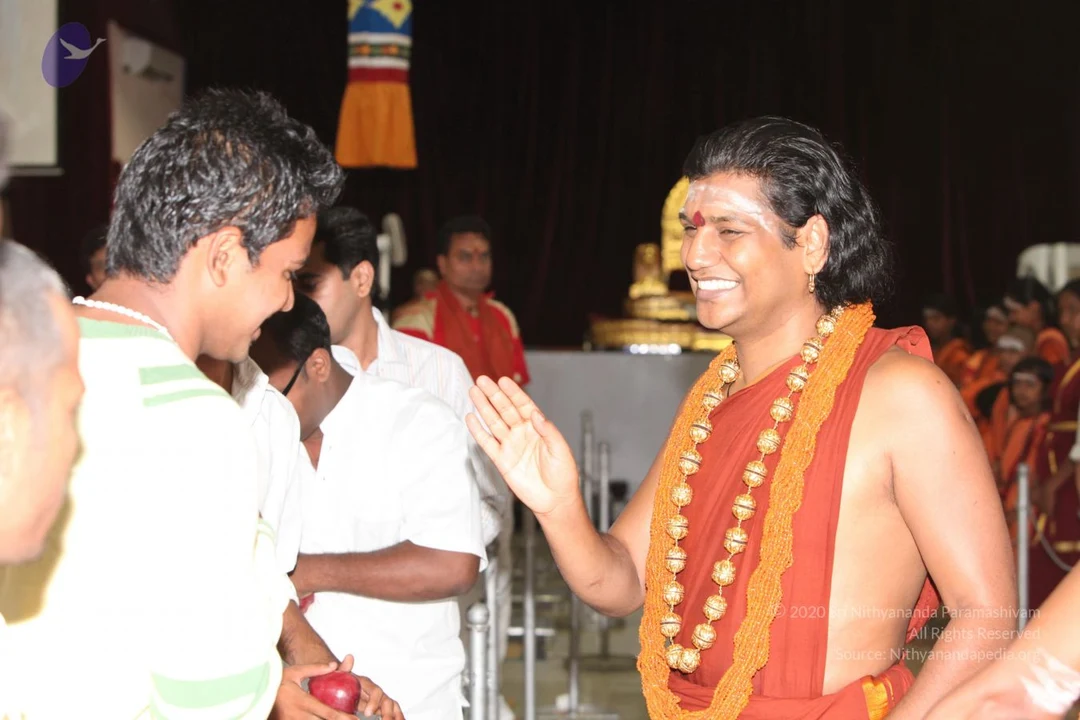
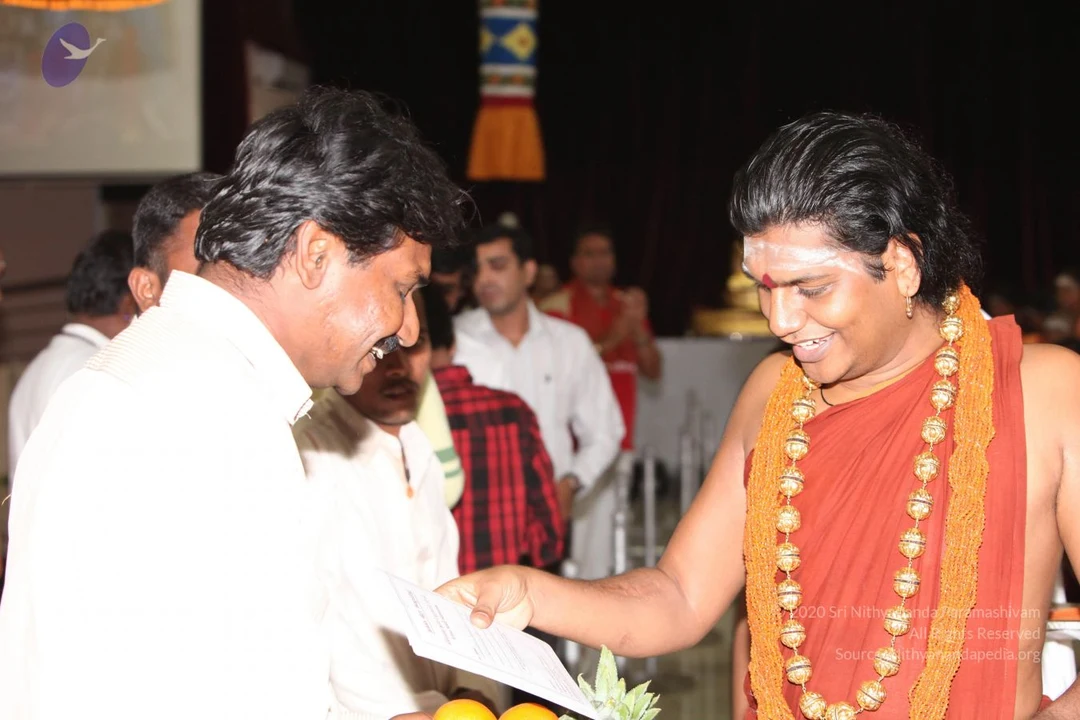
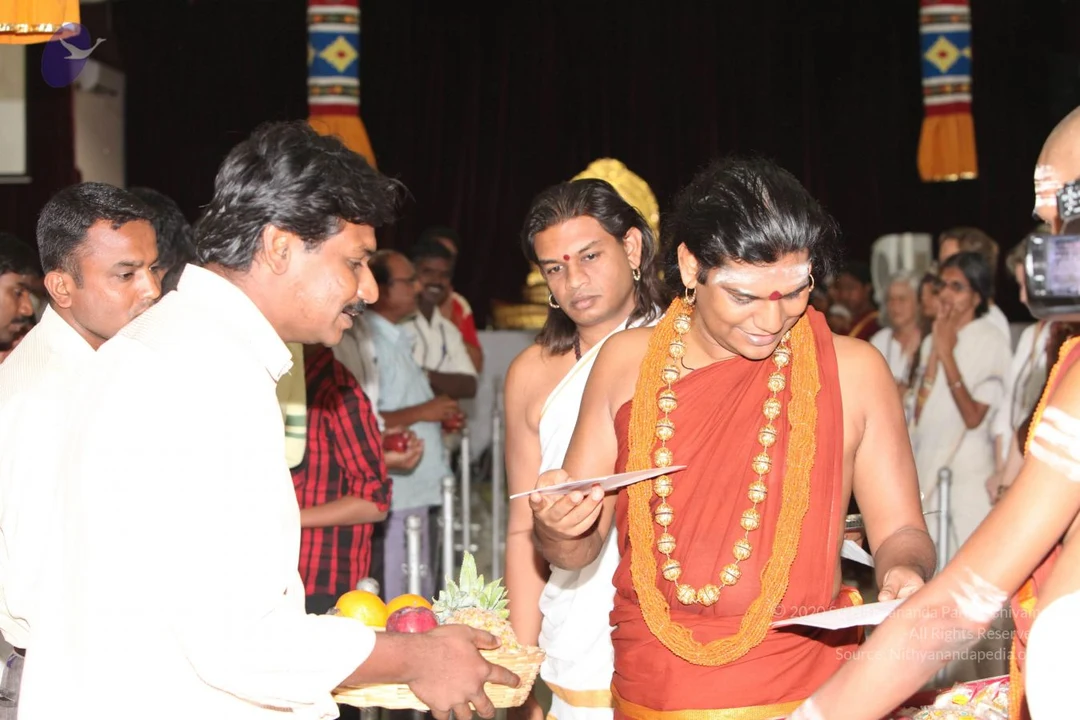
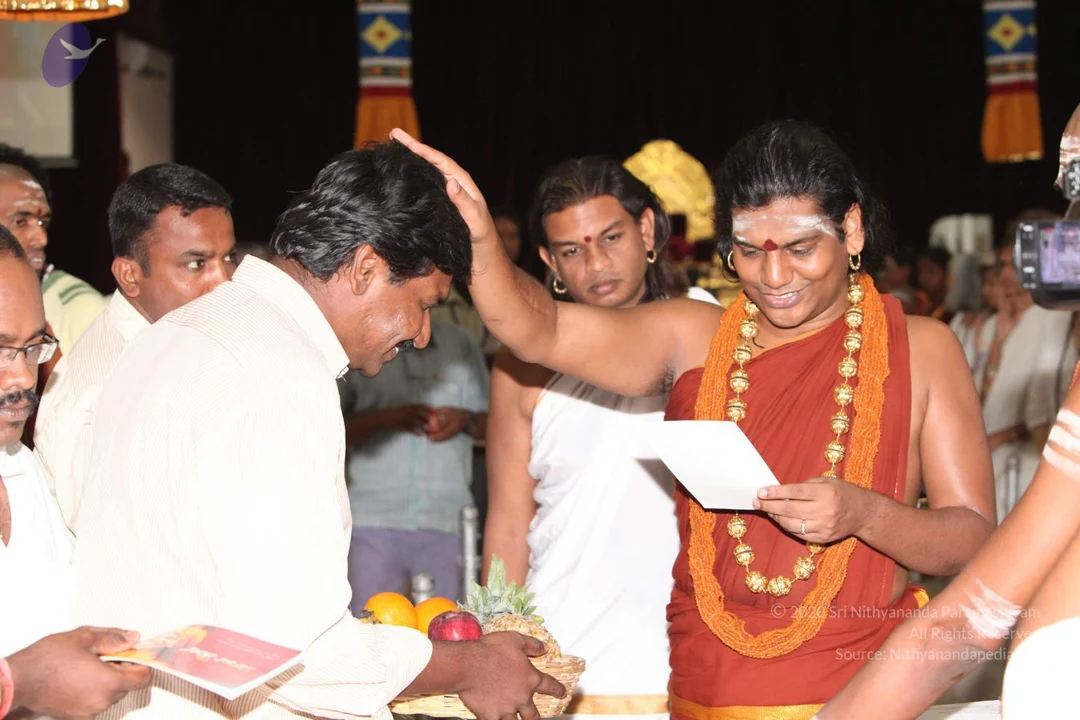
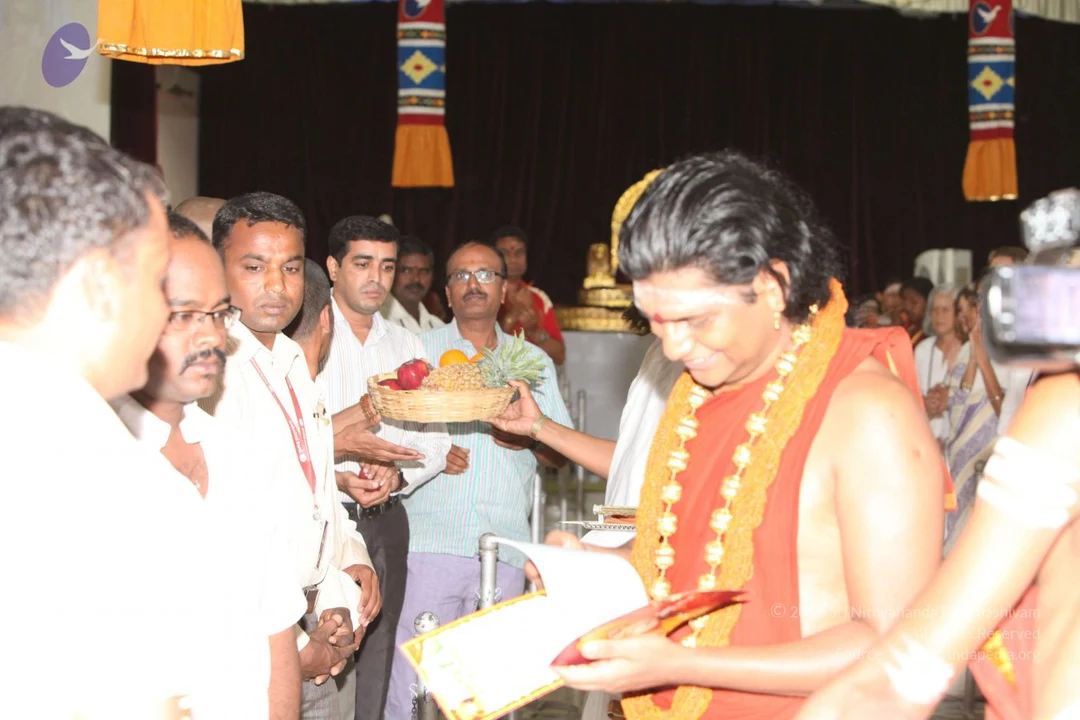
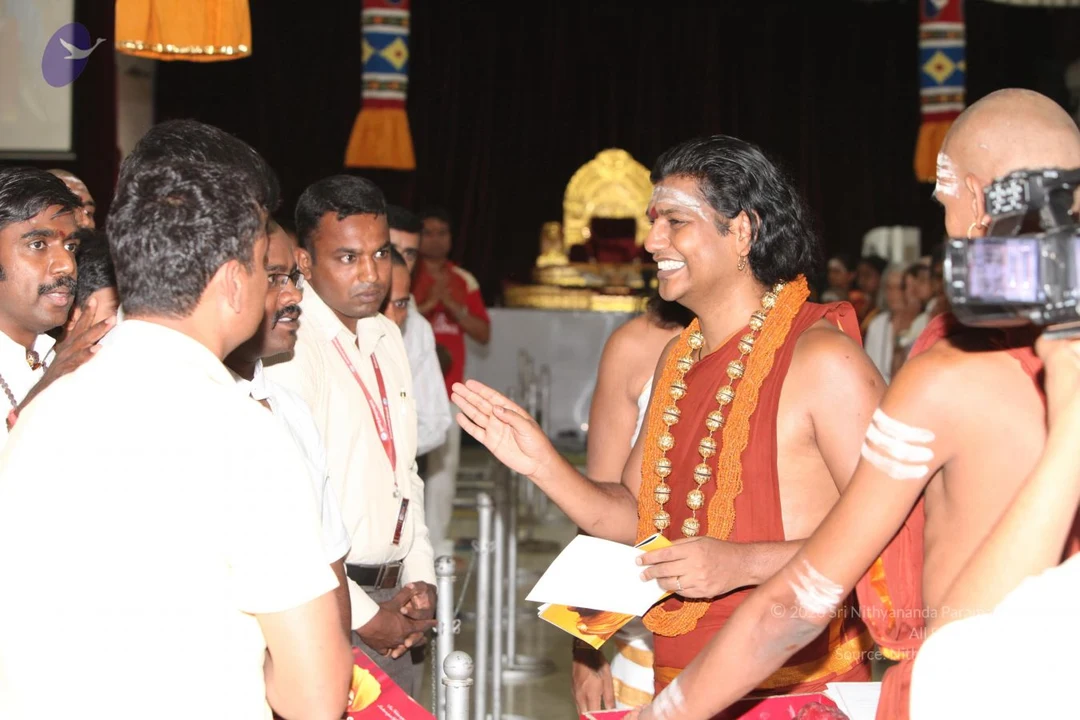
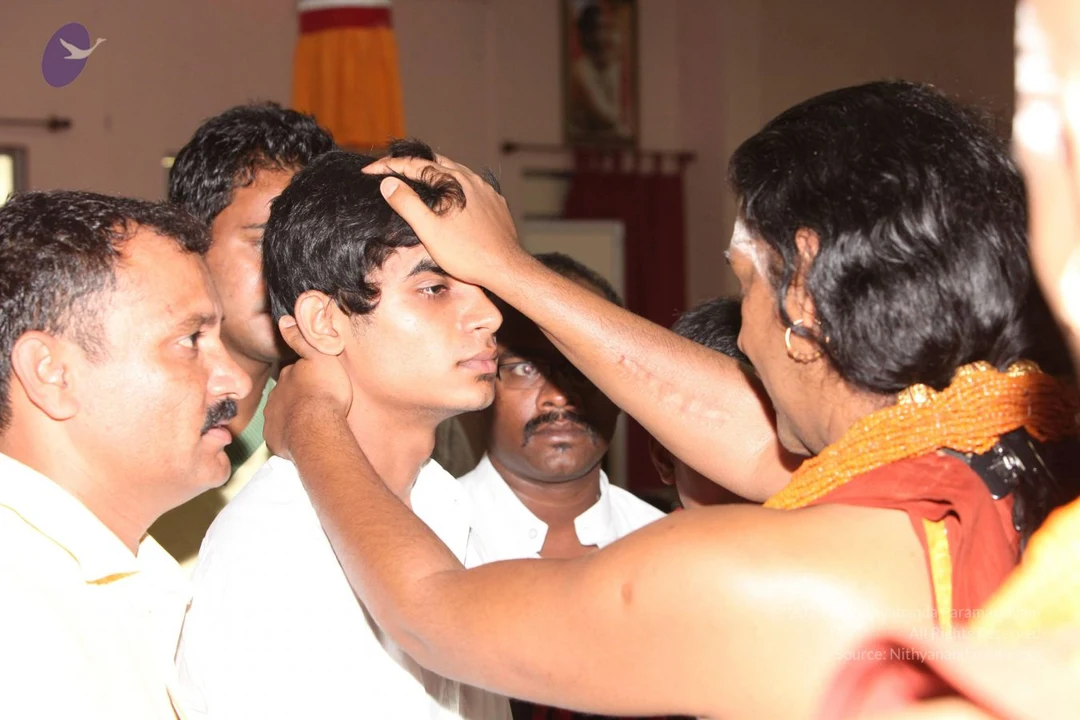
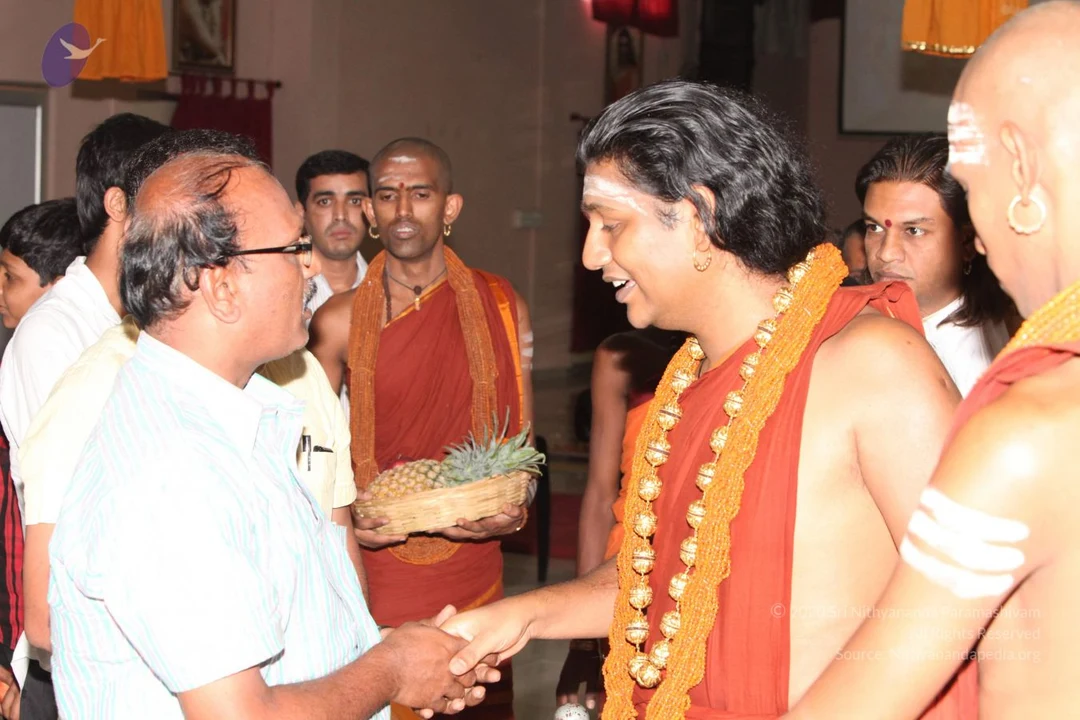
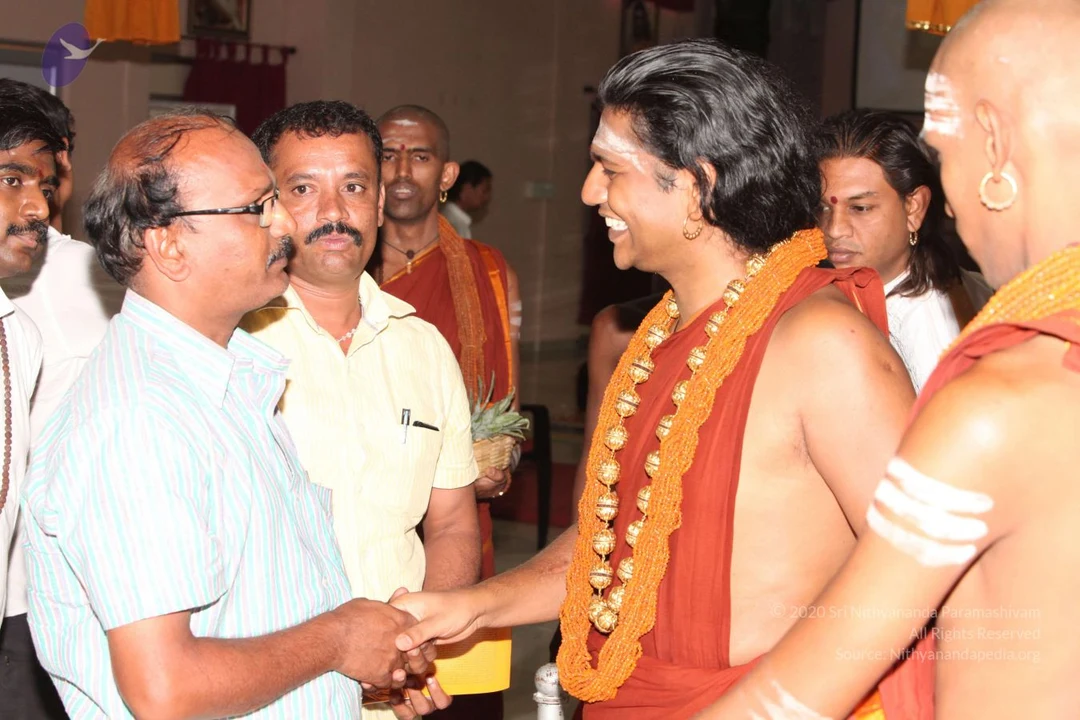
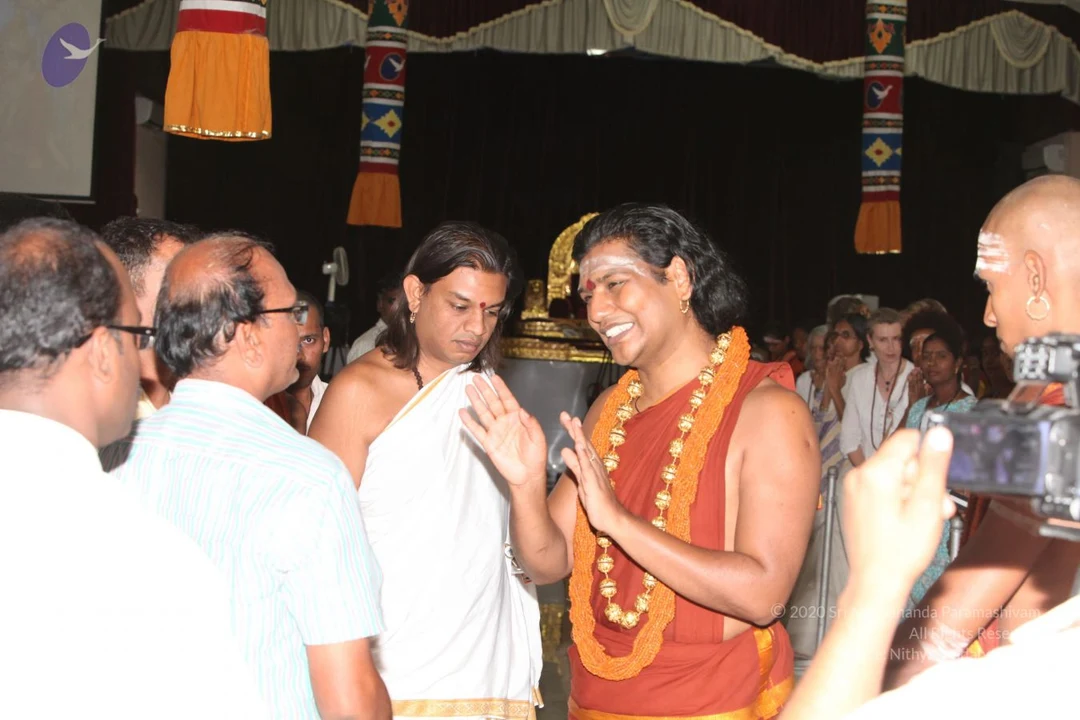
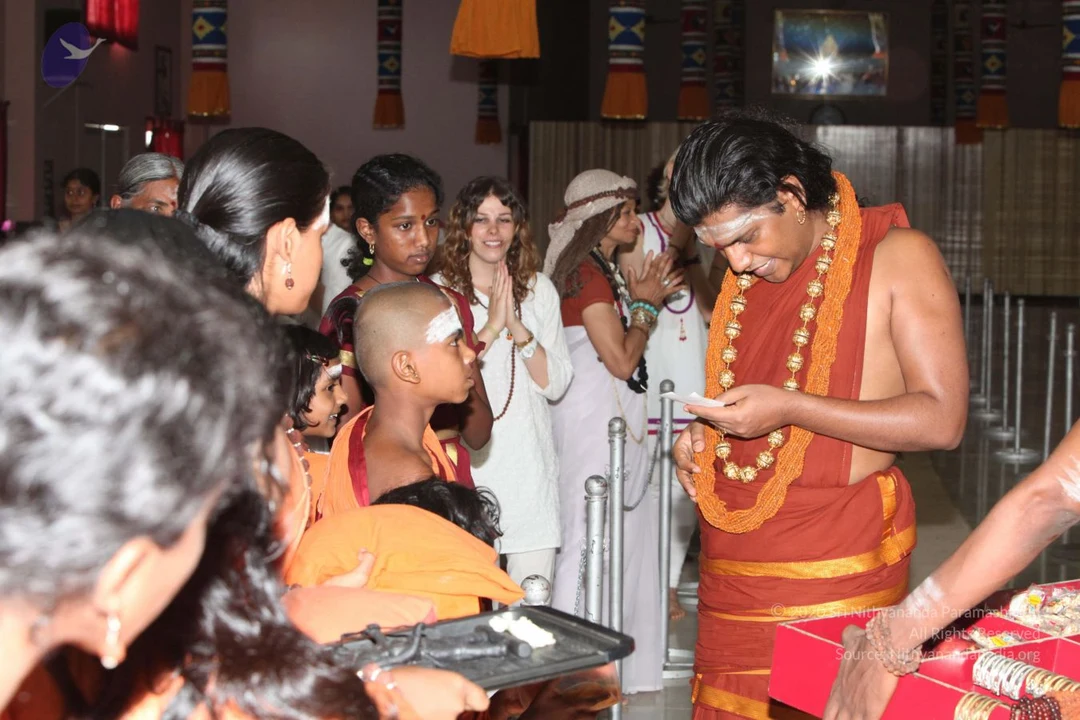
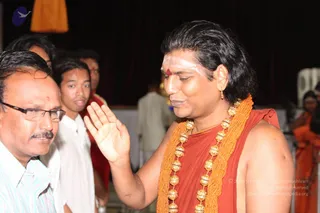
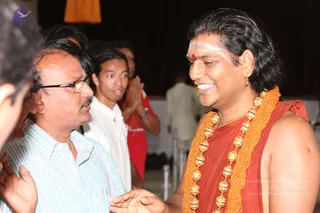
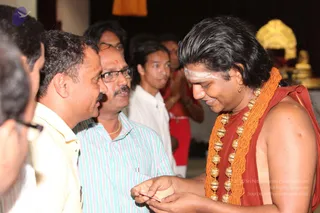
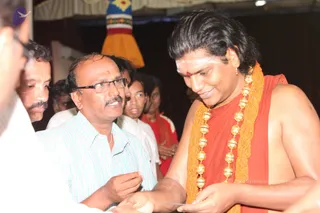
Close photo of a smiling man with long swept-back black hair, white and red tilak on his forehead, a gold-bead necklace and orange beaded mala, and an orange-red robe worn bare-shouldered. He raises his right arm toward the frame. Behind him a second man in red with a red tilak stands with palms joined, and a gilded shrine or throne stands in the dark background. Swamiji (probable): the distinctive long hair, saffron-orange robe, rudraksha-style malas and gold necklace fit the page's description of Nithyananda at this satsang.Indoor photo of a man in a rust-red sleeveless robe with an orange shawl and a heavy necklace of large gold beads and orange rudraksha-style beads. He has long swept-back black hair, white markings on his forehead and a red dot between his brows, and raises one hand in a blessing gesture toward a man on the left wearing glasses and a light striped shirt. Behind them stand other people, including one in white and others in orange and red, with dark drapes and a blurred stage area in the background. a person with a visible gesture of blessing toward a devotee.A candid photograph of a smiling man with long swept-back dark hair, white ash markings and a red bindi on his forehead, wearing a rust-red robe, an orange beaded necklace and large ornate gold-bead necklaces. He faces and gestures toward a bespectacled man in a striped light-blue shirt with a red forehead mark, who is speaking to him. Behind them, a young man in a white shirt and a man in red stand near the edge of the frame with hands folded in greeting, and a few other people are partly visible in the dark background. Two people are clearly visible in the foreground, with several more partially visible.A photograph of a long-haired man in a rust-red shawl and orange-beaded garland with gold bell-shaped ornaments, forehead marked with white vibhuti, bare-chested, smiling as he receives or hands over a small folded paper or card held in both hands. Around him, several men in shirts stand close, one in a yellow shirt on the left, one in a striped shirt with glasses, and a younger man in white behind. The background shows a golden deity murti and a dark hall. Probable Swamiji (probable) is the man in the rust shawl with long swept-back hair, distinctive gold ornaments and ornate beaded garland, shown in person giving or receiving a paper.A photograph of a bare-chested man in an orange-red dhoti-style wrap and a long orange beaded necklace with gold ceremonial beads, bearing a red bindi and white forehead markings, smiling as he handles a small card held toward him by a man. The man in front wears glasses, a light blue striped shirt and a red mark on his forehead and speaks while gesturing. Several onlookers in white and red garments stand behind them, and a striped orange-and-white canopy and an orange-and-white decorative structure appear in the background. A candidate matching the page's a person cues (swept-back long hair, saffron clothing, ornate beaded necklace) is present, but identity is uncertain from appearance alone.A smiling man with long swept-back dark hair, white forehead markings, a red bindi, gold hoop earrings, orange beaded necklaces and multiple gold-bead rudraksha-style malas, wearing an orange-red shawl over bare shoulders, extends his hand forward. a person is the central figure in this photograph. Beside him a man in glasses and a striped blue shirt looks on, and a man in white leans in with hands pressed together. Several more people stand behind in a crowd, and an ornate golden shrine arch and a hanging orange-and-white decorated banner appear in the background.

Temple

20 photosSource gallery
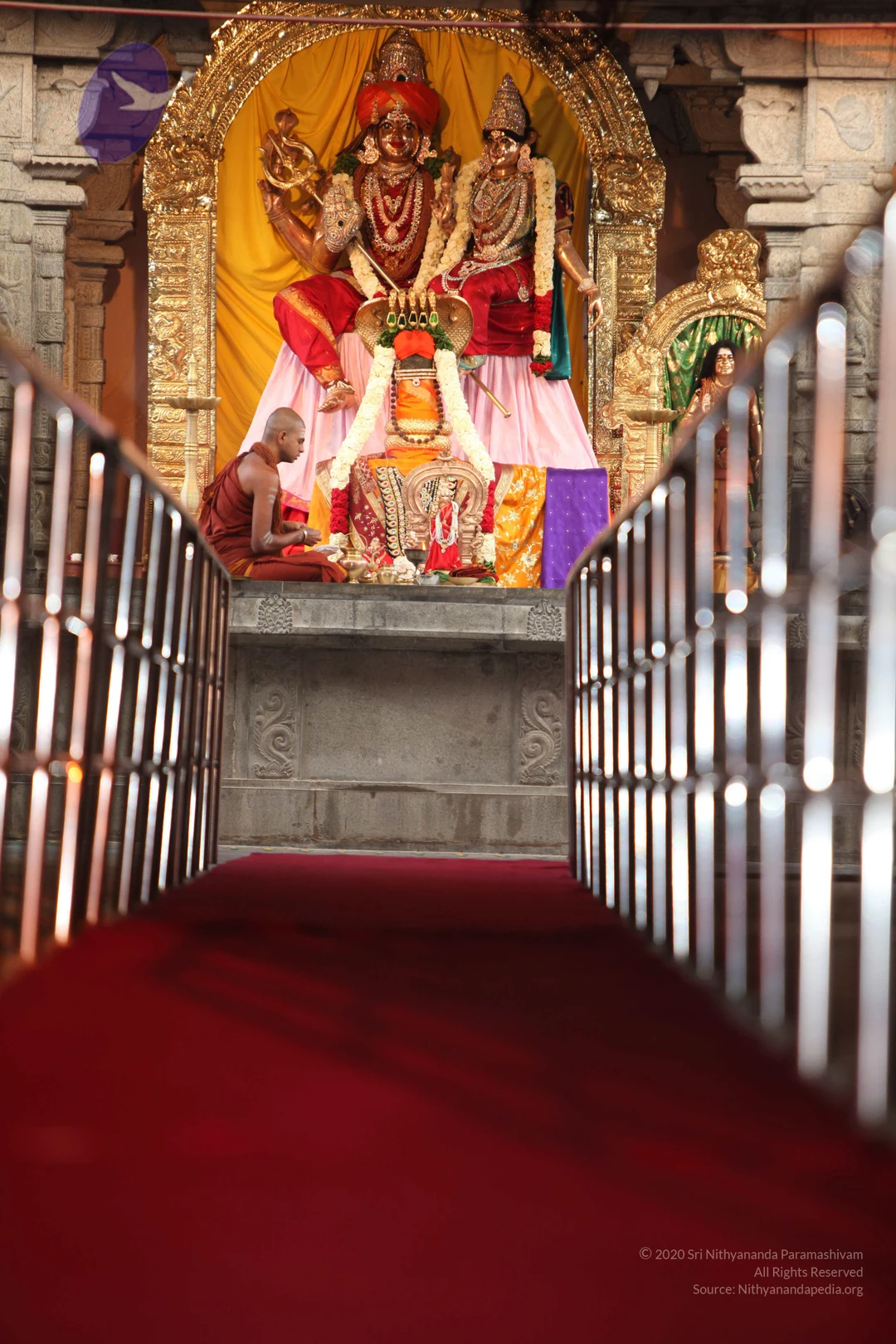
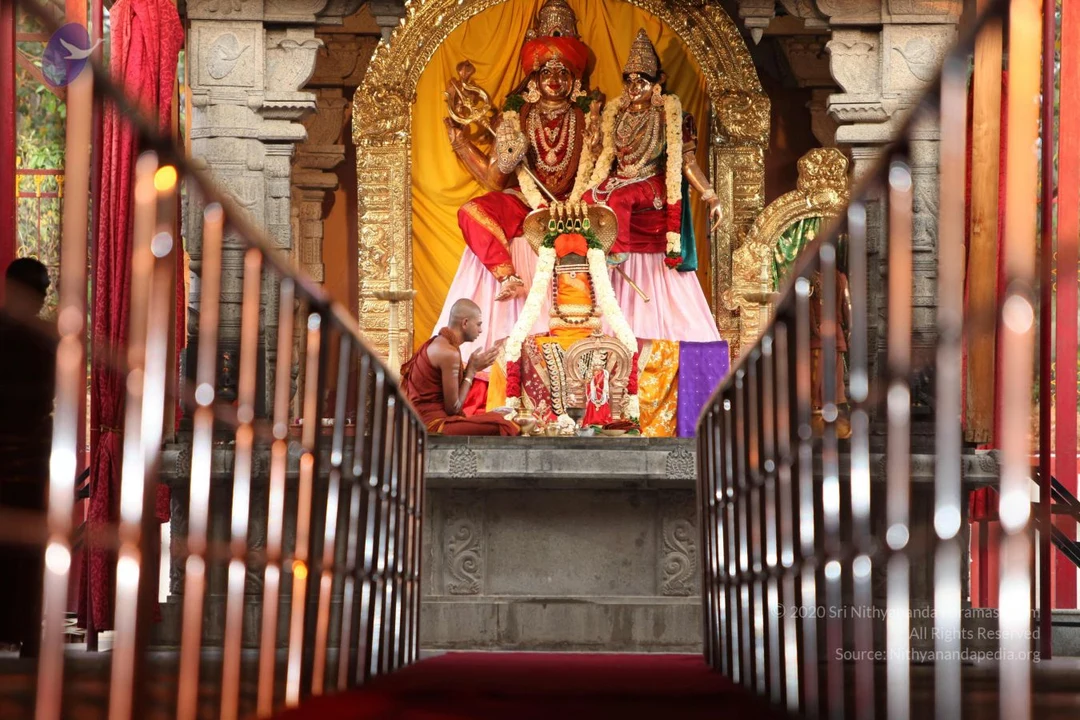
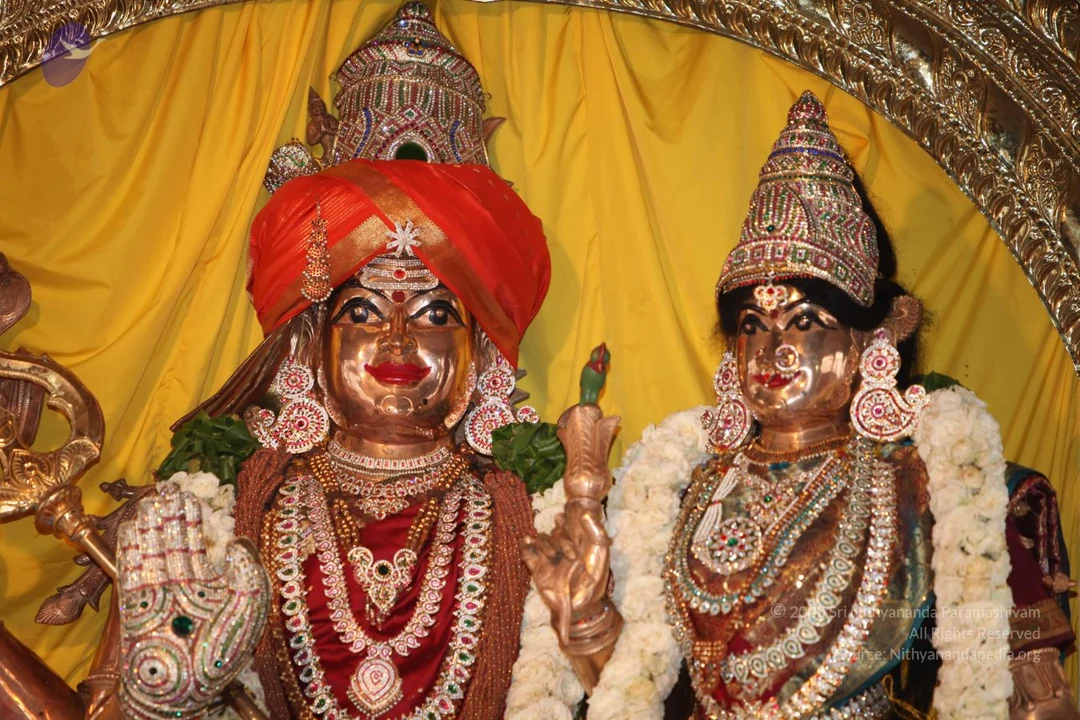
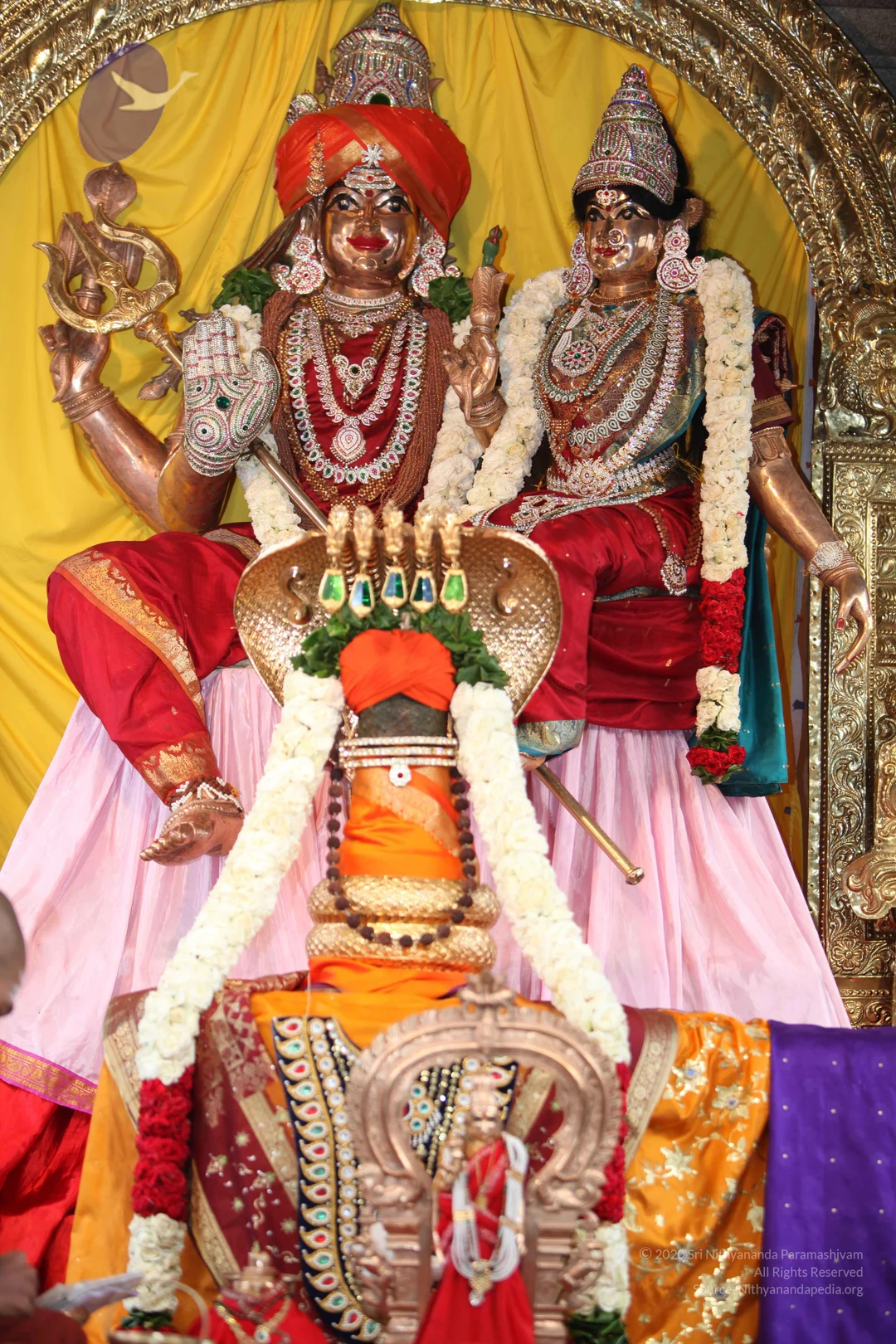
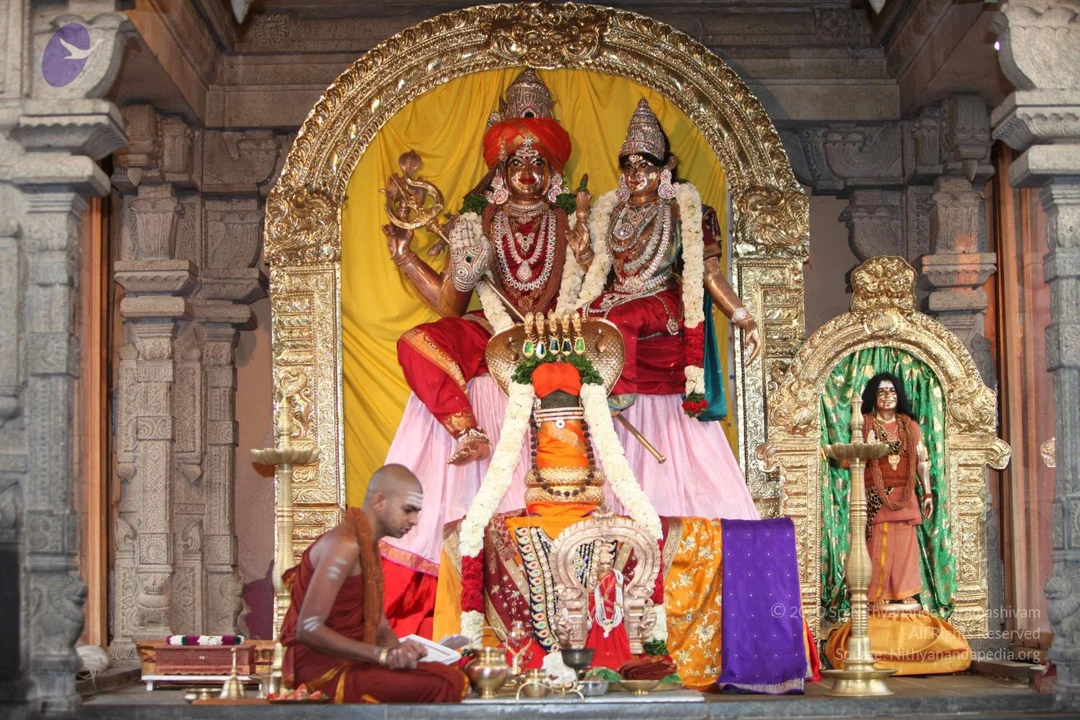
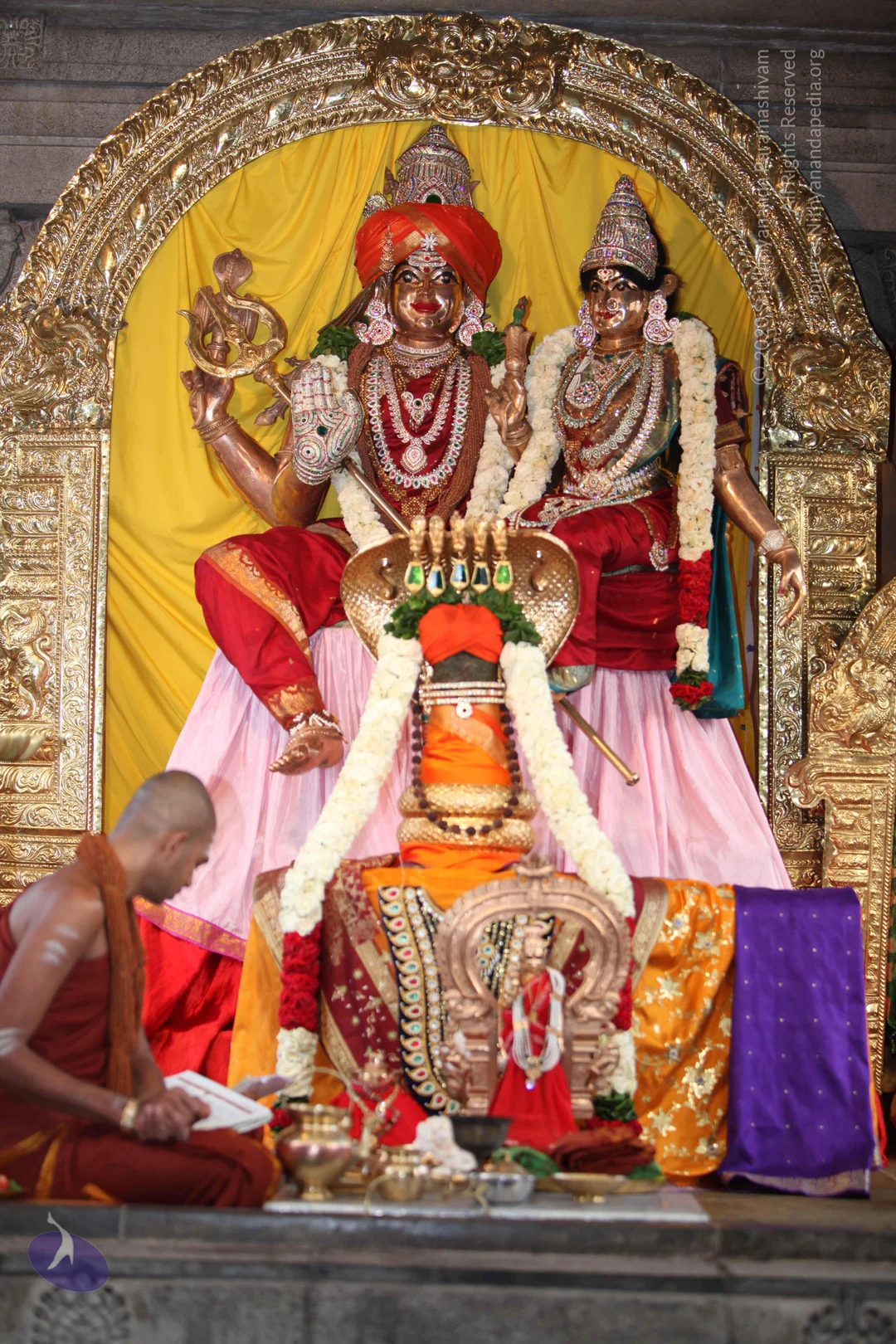
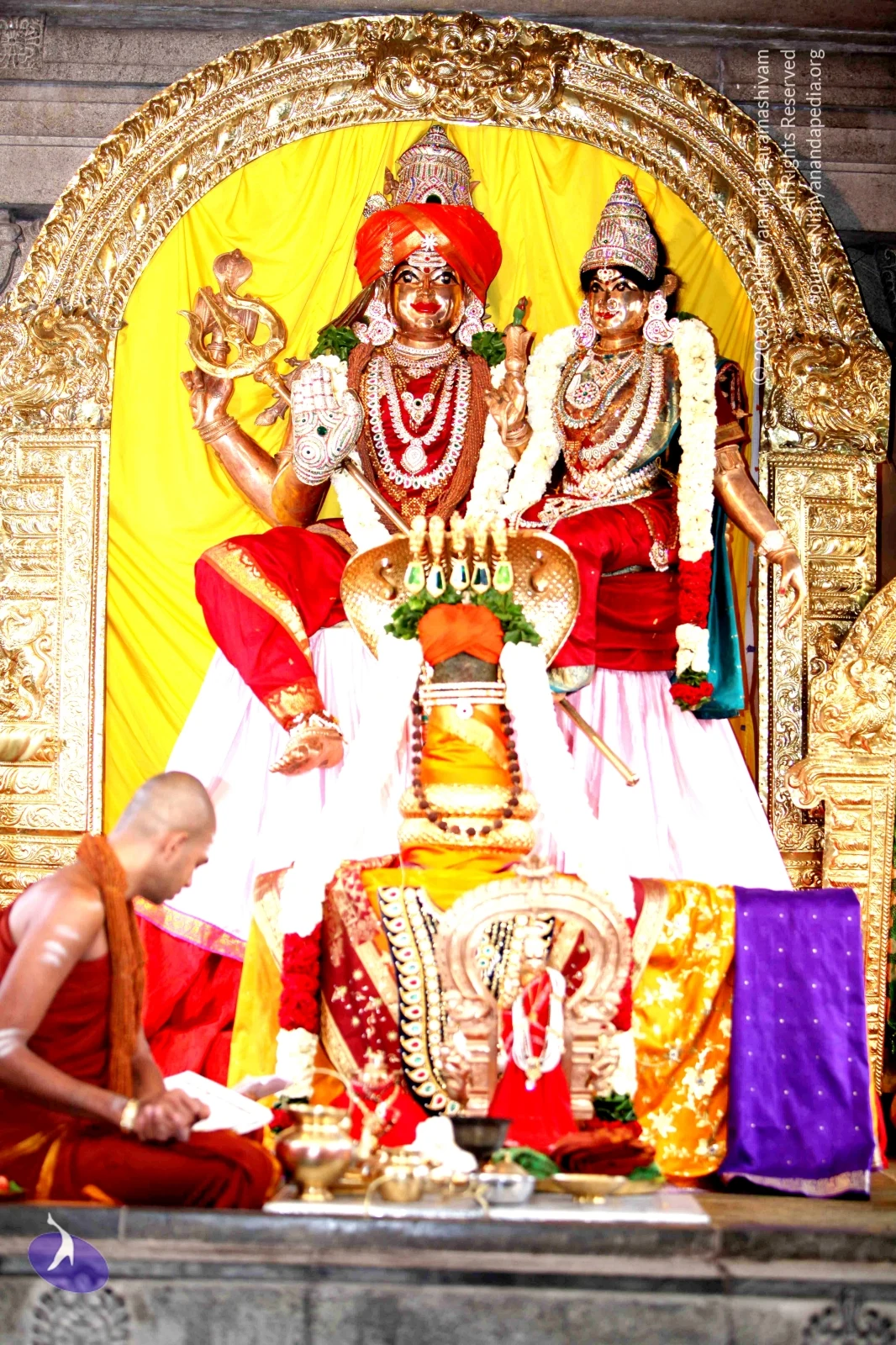
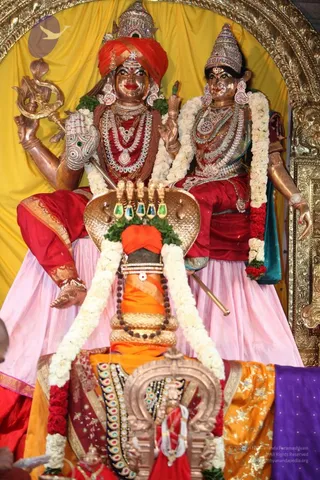
Two metal deity murtis stand against a bright green draped cloth backdrop, garlanded with red and yellow flower malas. The left figure has a red-orange turban with a jewelled ornament and a cobra-topped trident-like staff held in one hand, wearing a rudraksha mala and ornate silver necklaces. The right figure wears a silver-and-pink jewelled crown and layered necklaces with an orange-red garment. Both faces are gold-toned. A small carved figure sits atop the staff. The scene is an ornamental altar display of deity murtis.Photograph of a temple sanctum with a red carpet runner leading between polished steel railings toward a golden arched shrine. Two large painted deity murti stand behind a dark orange and yellow linga-like form adorned with white and orange garlands, a red kumkum mark and fresh flowers. One figure wears a red turban and holds a trident; the other wears a pink skirt and a red blouse with jewelry. A seated man in an orange-red robe sits cross-legged at the left beside brass lamps and offerings, with a small figure in a green sari on the right. Gilded carvings and stone pillars frame the shrine.Photograph inside a temple shrine viewed down a narrow red-carpeted aisle flanked by metal railings. A large deity murti with a red and gold crown, red garments and white flower garlands stands on a stone platform backed by a golden arch and yellow cloth. A shaven-headed monk in saffron-orange robes sits cross-legged at the base of the platform, hands raised in devotion before an altar bearing a decorated throne, orange and white flowers and brass lamps. Only the monk and a partially visible figure at the left edge are physically present; the rest is sculpture.Two gilded metal murti statues of deities stand side by side before a yellow draped backdrop with an ornate silver-gold arch. The figure on the left wears a bright red turban with a gold band, a jewelled crown-like headpiece, and heavy red, green and gold necklaces and earrings, holding a ceremonial staff. The figure on the right wears a silver jewelled conical crown, a teal and gold sari with beaded necklaces, and white flower garlands drape both figures. Bright green leaves are tucked near the shoulders.Close view of a pair of golden-bronze deity murtis on a yellow draped backdrop with a gilded arch. The left figure wears a bright red turban, red and gold garments, layered beaded necklaces and a trident-like staff, with a green parrot perched near the right figure's raised hand. The right figure wears a jewelled crown, large ornate earrings, a nose ring, layered necklaces and a white flower garland, with a green leaf garland draped over the left figure. Ceremonial dressing and garlands suggest a shrine display. No living people are visible.Photograph of a large metal murti of a seated deity couple, Shiva and Parvati, on a golden seat before a yellow cloth backdrop with ornate gold frame. The male figure wears a red turban and heavy jewelled necklaces, holds a trident, and the female figure wears a teal and red sari with white and red flower garlands draped across both figures. In front stands a tall orange-wrapped lingam with white jasmine garlands, a rudraksha mala, a silver band and green gem-like finials. No living people are visible, and the scene is a deity murti rather than a person depiction.

Pada-Puja

21 photosSource gallery
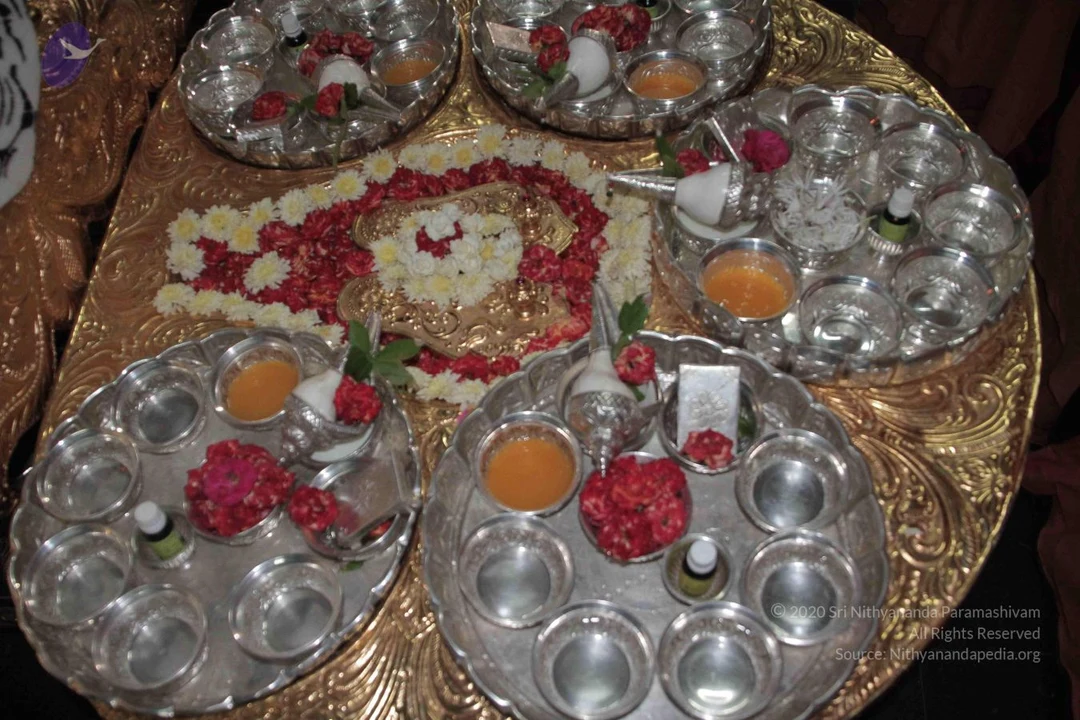
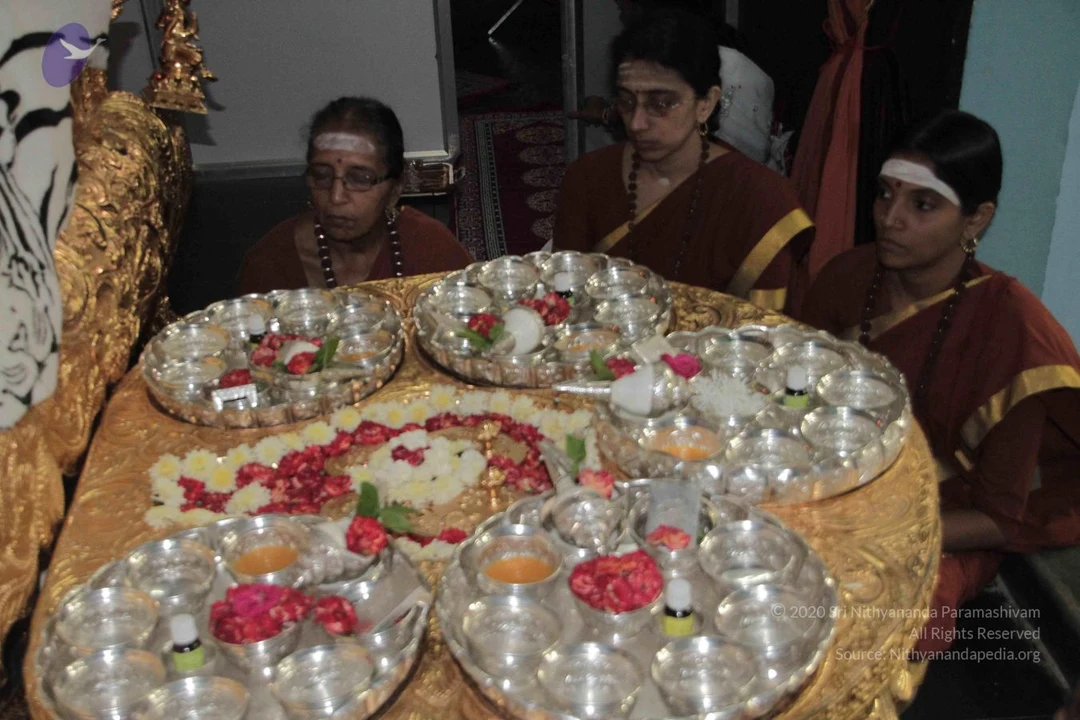
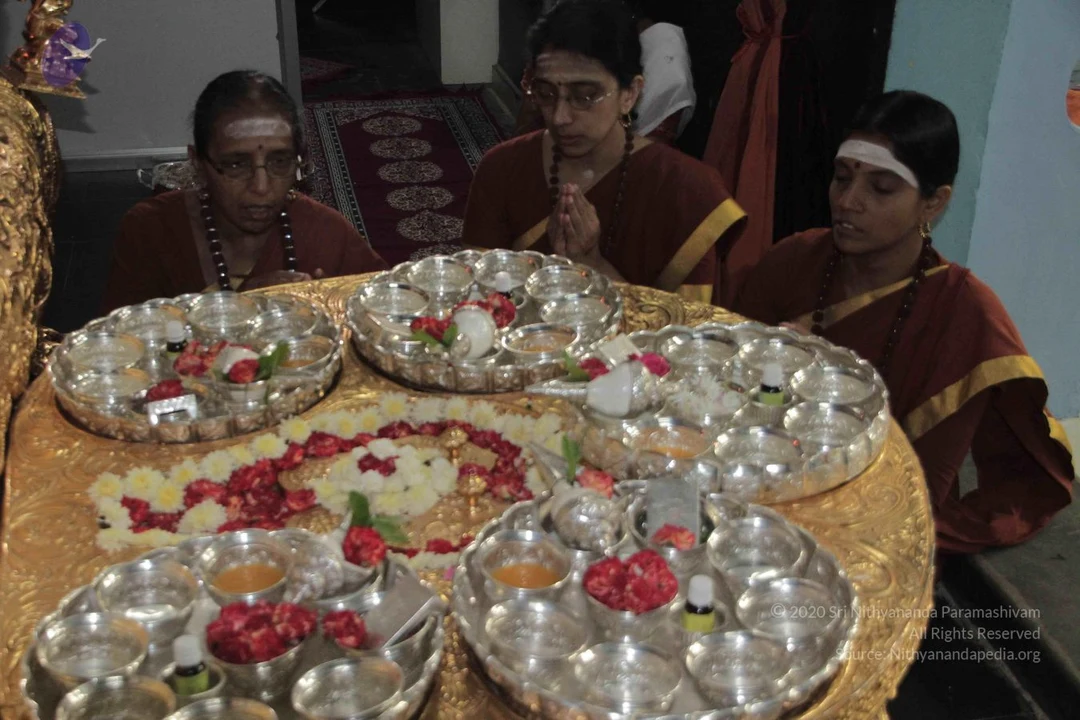
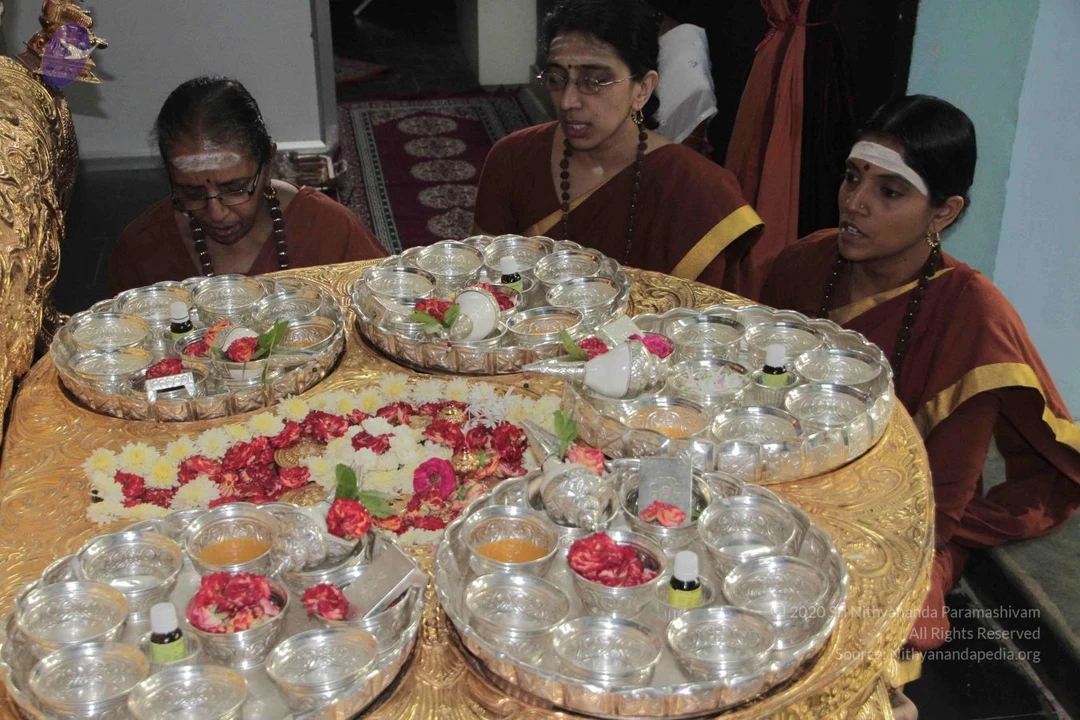
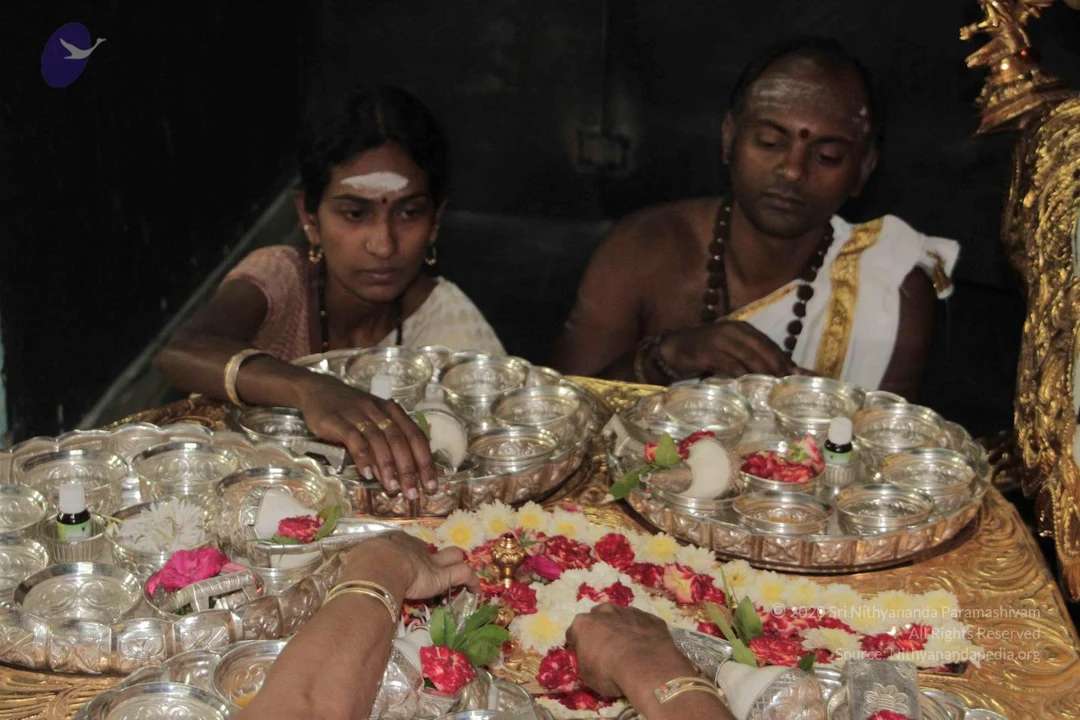
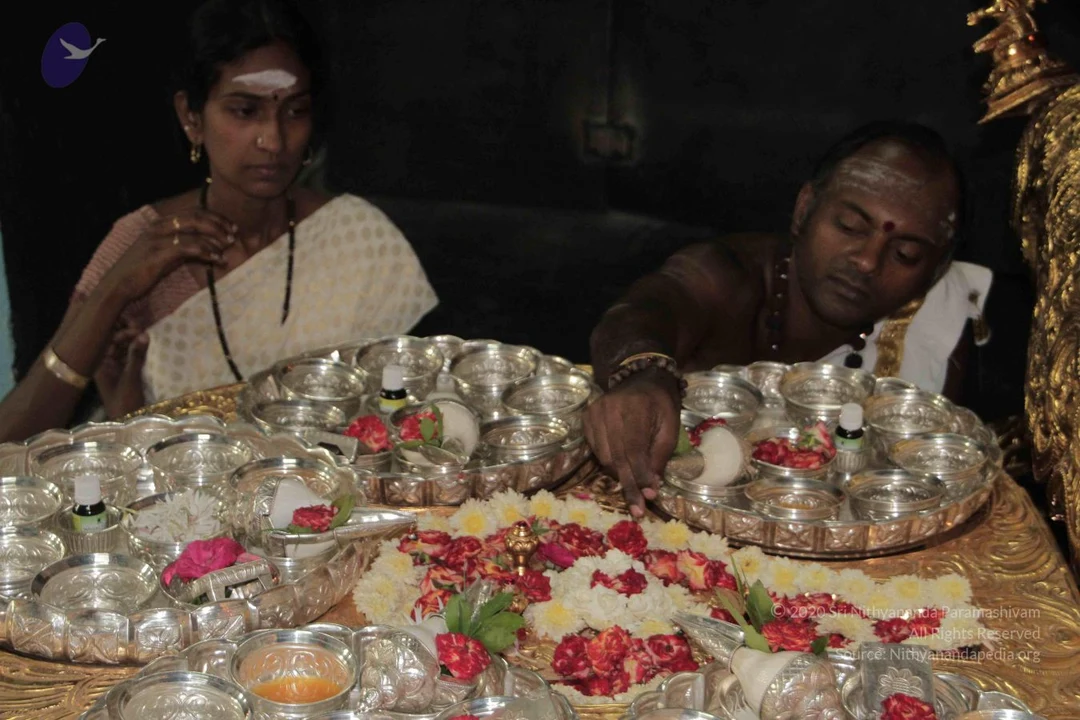
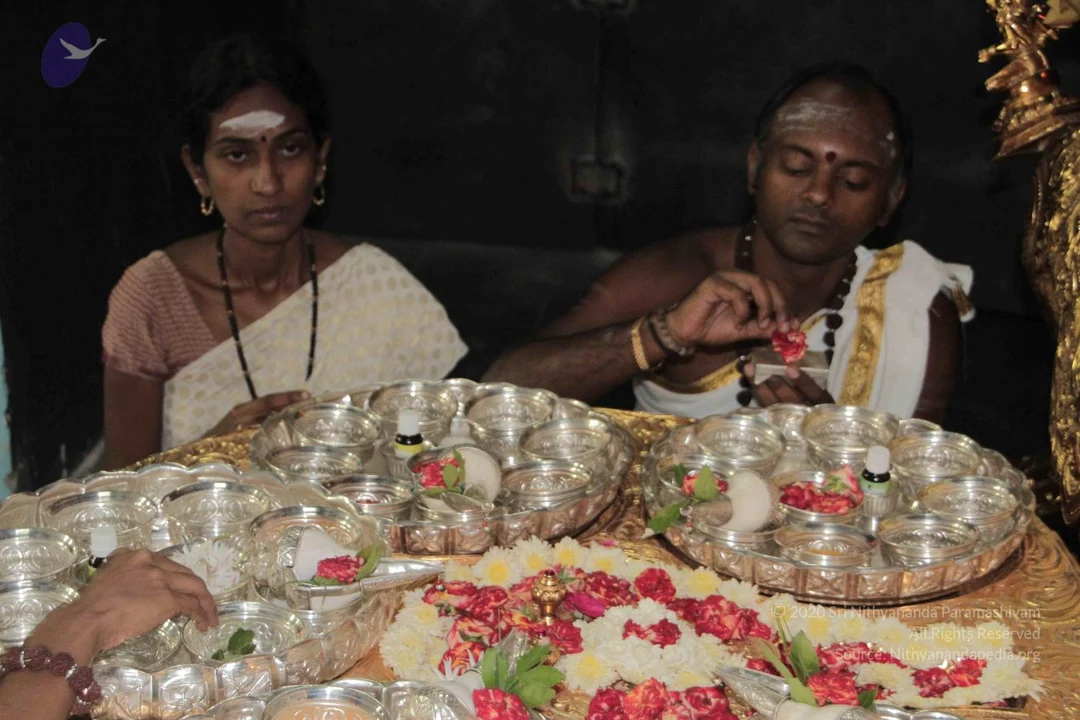
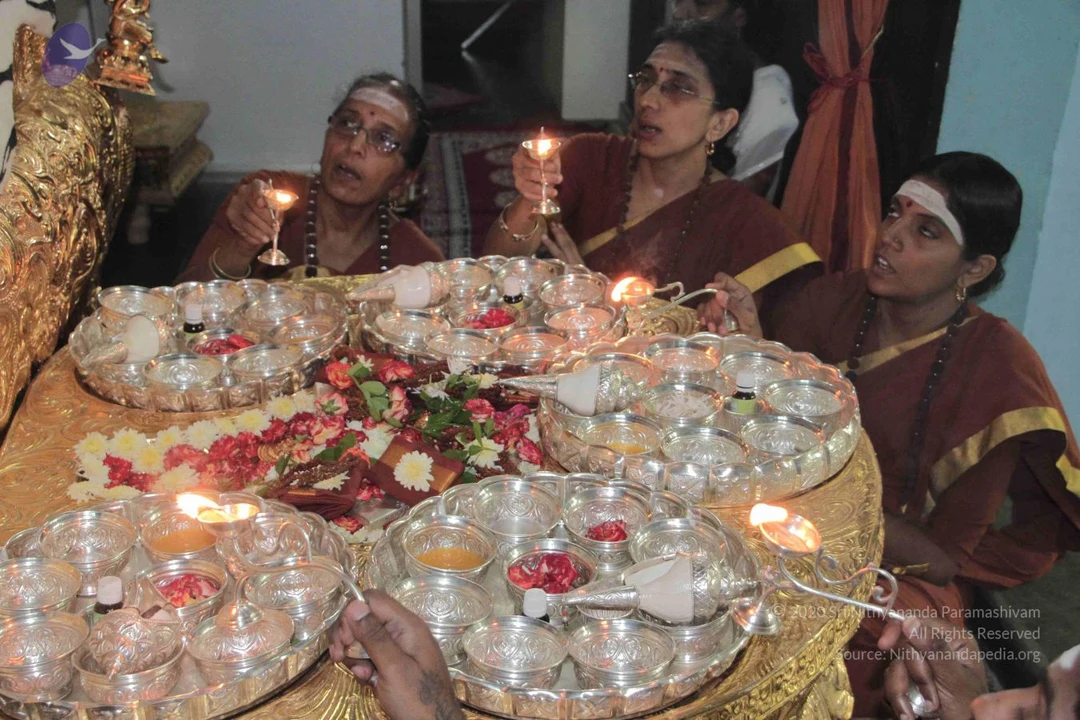
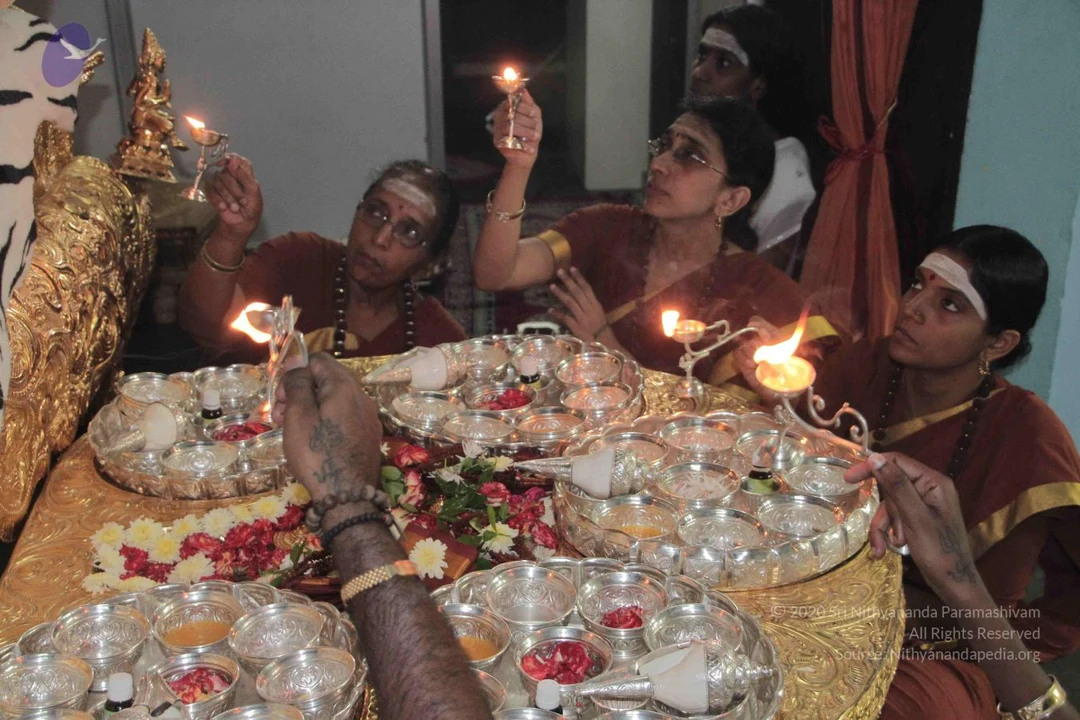
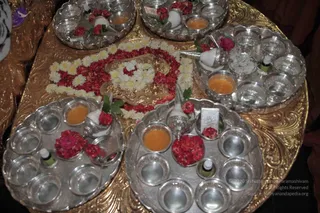
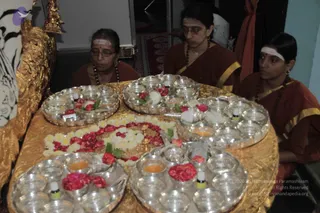
Overhead view of a ritual offering arrangement on a gold-embossed tray. Silver bowls hold saffron-coloured liquid, small silver cups, and bottles with green caps. Red and white flower petals are arranged in a rangoli-like pattern around a gold ornamental plate. Silver trays with red roses, a silver kalasha-style vessel with a coconut and mango leaves, and clear glasses surround the central pattern. No people are visible.Three women in saffron-red and orange-bordered sarees sit behind a golden table laden with silver puja thalis. The thalis hold rose and marigold petals, white flowers, betel leaves, kumkum, small bowls of orange paste and oil bottles. White vibhuti marks are on their foreheads, and rudraksha malas hang at their necks. Floral arrangements with white and red blooms decorate the table, and an ornate gold-carved panel stands at the left edge.A ritual puja scene with three women in maroon and rust-red saris with gold borders seated behind a large round gold tray. The tray holds many silver bowls and plates containing red flowers, white flowers, green leaves, kumkum-like orange paste, small oil bottles and a silver vessel. The woman in the center has her palms pressed together in anjali mudra and wears a rudraksha mala. The woman on the left wears glasses and a white forehead mark, and the woman on the right wears a white headband and gold earrings. A gold ornamented object stands at the left edge, and a red cloth hangs in the background. The arrangement suggests a padapuja or puja offering.Three women in dark red-maroon saris with gold borders stand and kneel behind a golden-bordered table laden with offerings. Silver bowls and trays hold flower petals in red and white, orange and yellow liquids, small glass oil bottles and mango leaves. The woman on the left wears white tripundra forehead marks and glasses, the middle woman wears glasses and rudraksha beads, and the woman on the right wears a white forehead band, rudraksha mala and a gold earring. Gold ornate panels and a red cloth are visible behind them. No man is pictured in the scene.A temple ritual preparation photo: a woman with a white vertical tilak on her forehead, wearing a pink blouse and white sari, and a bare-chested priest with a white tilak, red bindi, rudraksha-style beads and a white dhoti with gold border, sit behind a table of silver and brass bowls filled with white flowers, red roses and green leaves. A small silver lamp and bottles stand among the bowls, and a golden ornamented object is visible at the right. In the foreground a hand with gold bangles rests on the flowers. Only two physical people are visible; no candidate for a person is clearly identifiable from appearance.A photograph of a ritual arrangement on a gold-coloured cloth-covered table. A man with a shaved head, bare-chested and wearing a white dhoti with a red bindi and white forehead markings, leans over the table and places items on silver plates. Beside him a woman in a white sari with a pink border, black beaded necklace and gold bangles sits with a white forehead mark. The table holds silver bowls and plates with red roses, white chrysanthemums, green leaves, small glass bottles, coconut halves and a brass lamp. A gold ornament is visible at the top right. The setting is a dark room, consistent with a puja or offering preparation.

Nithya-Puja

55 photosSource gallery
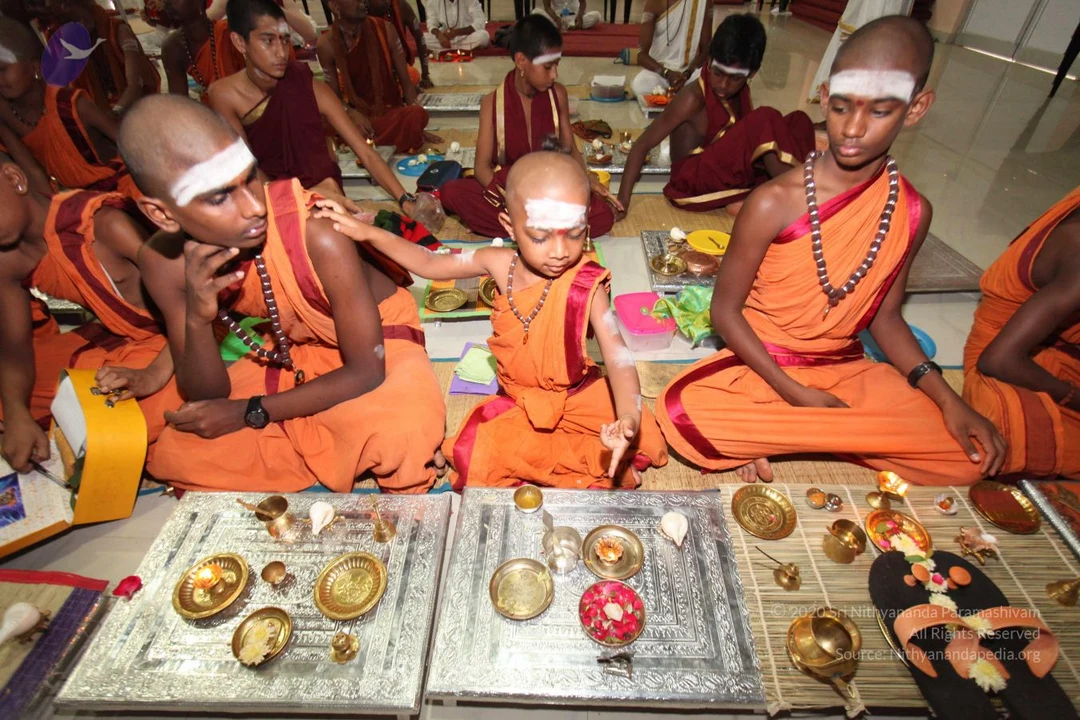
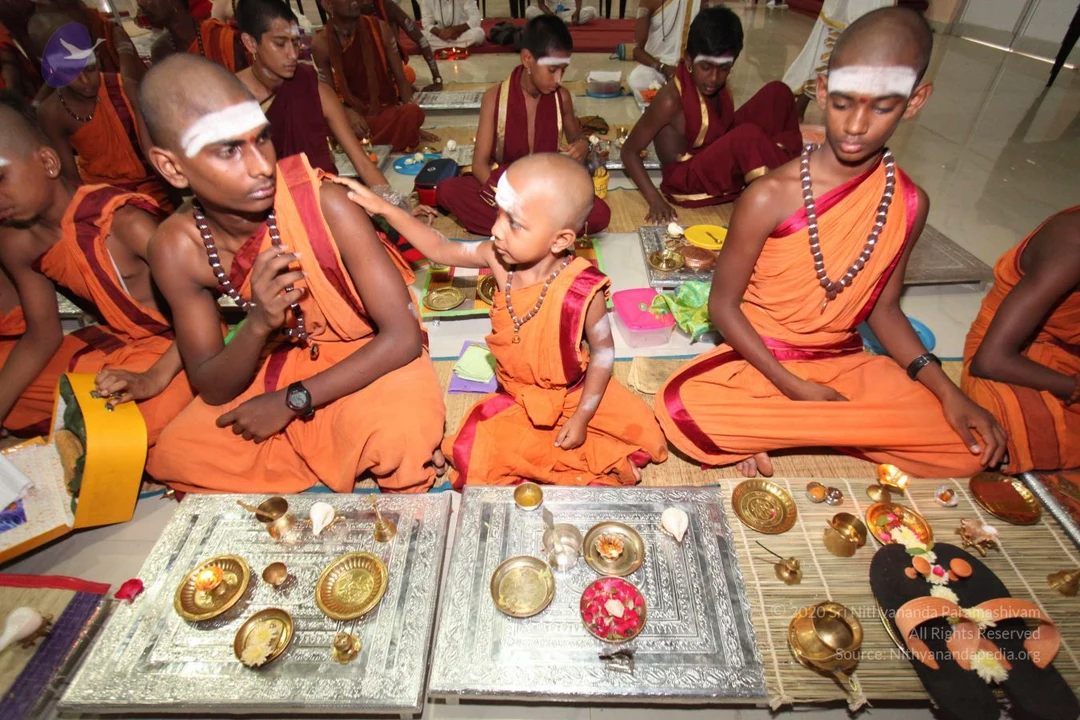
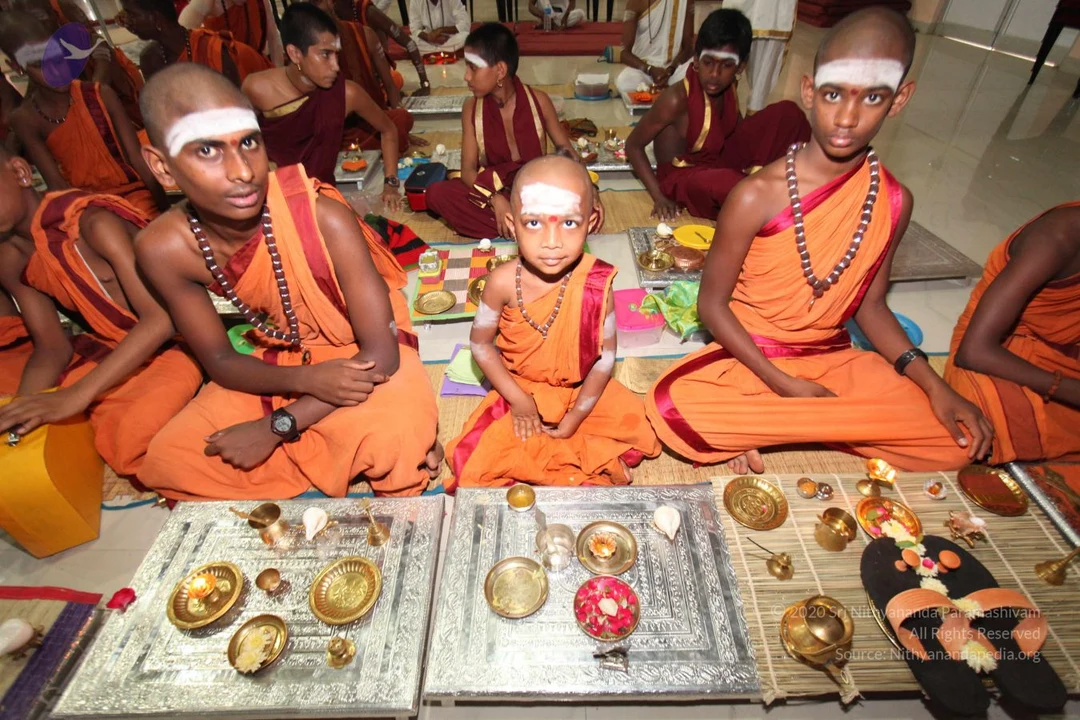
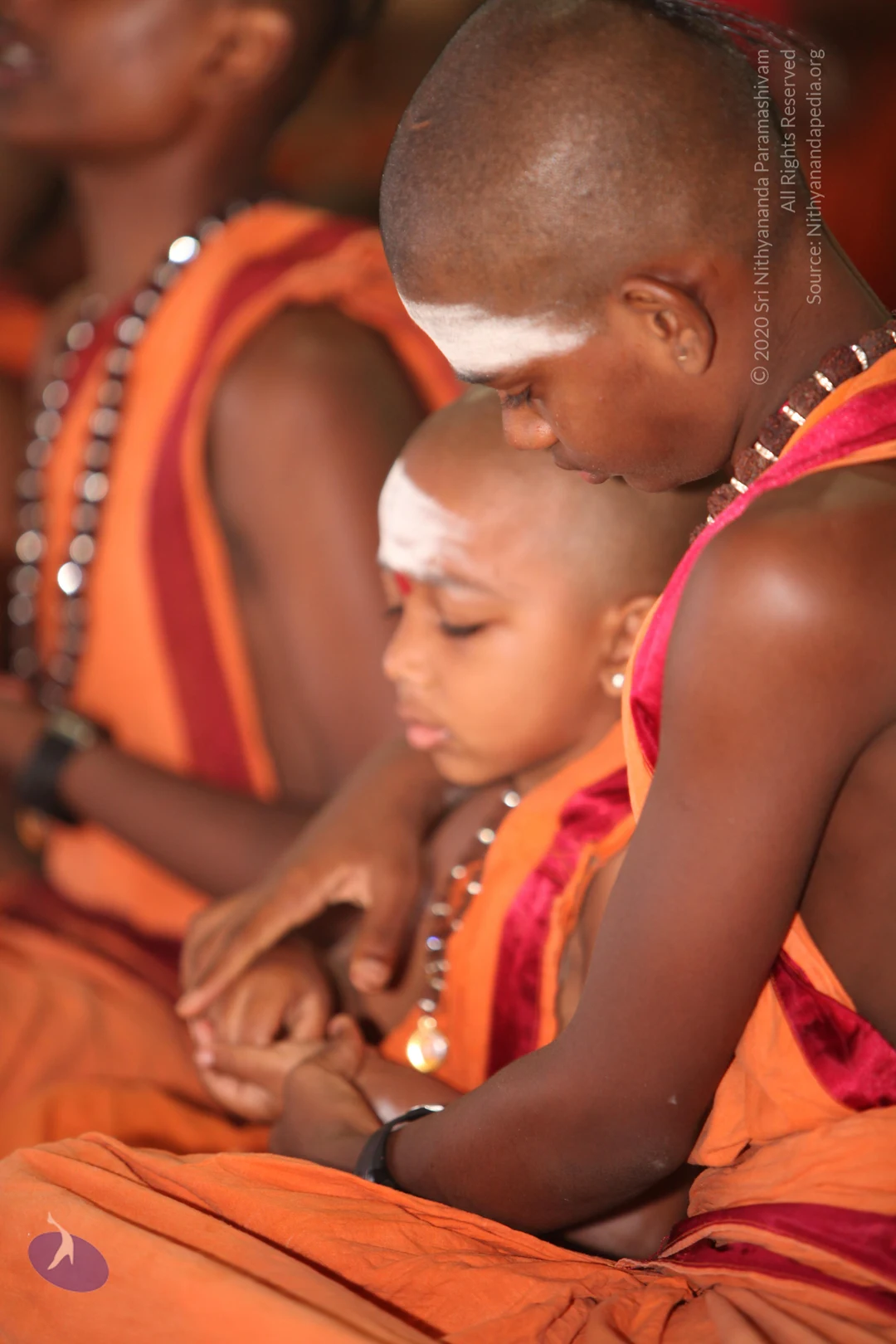
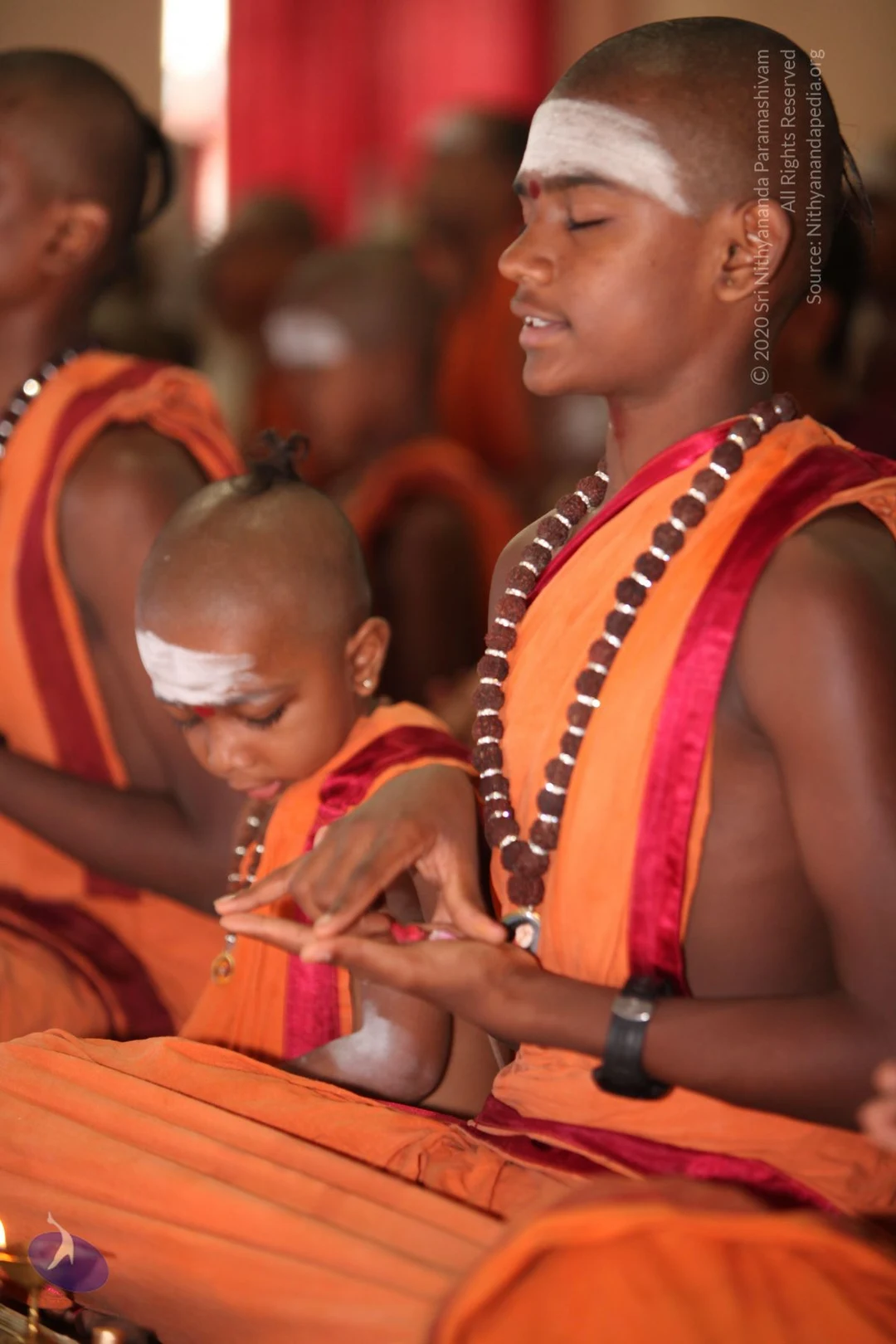
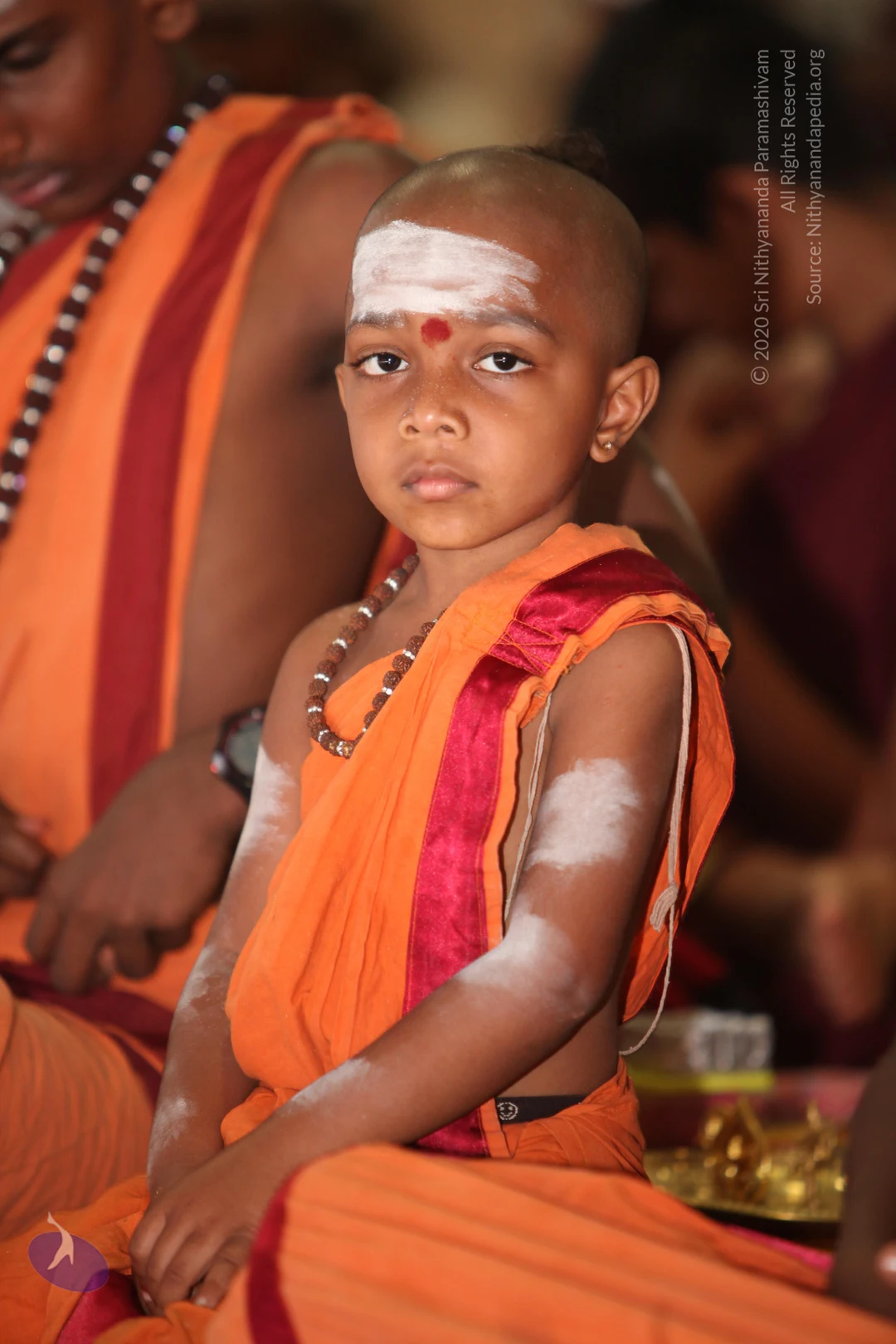
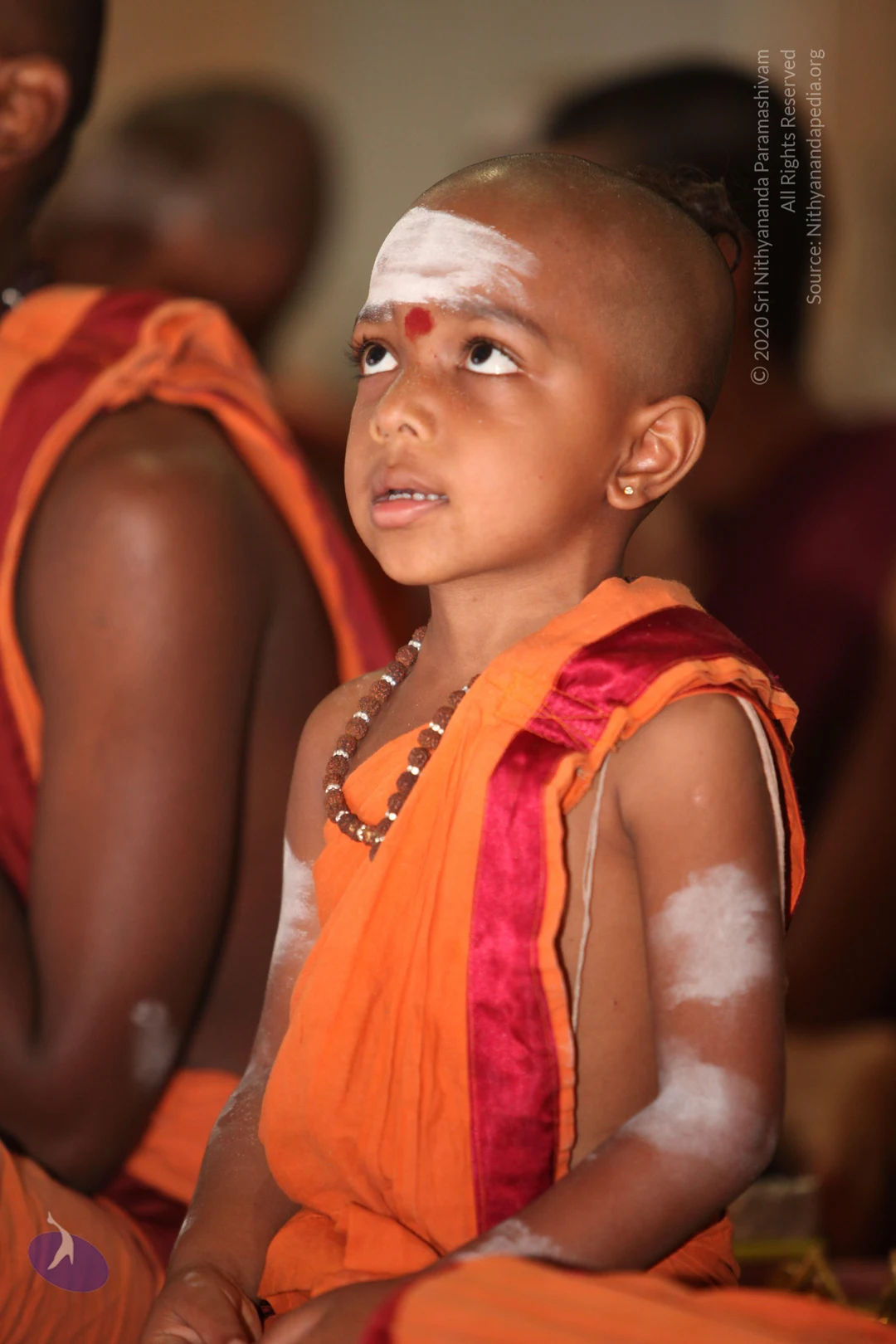
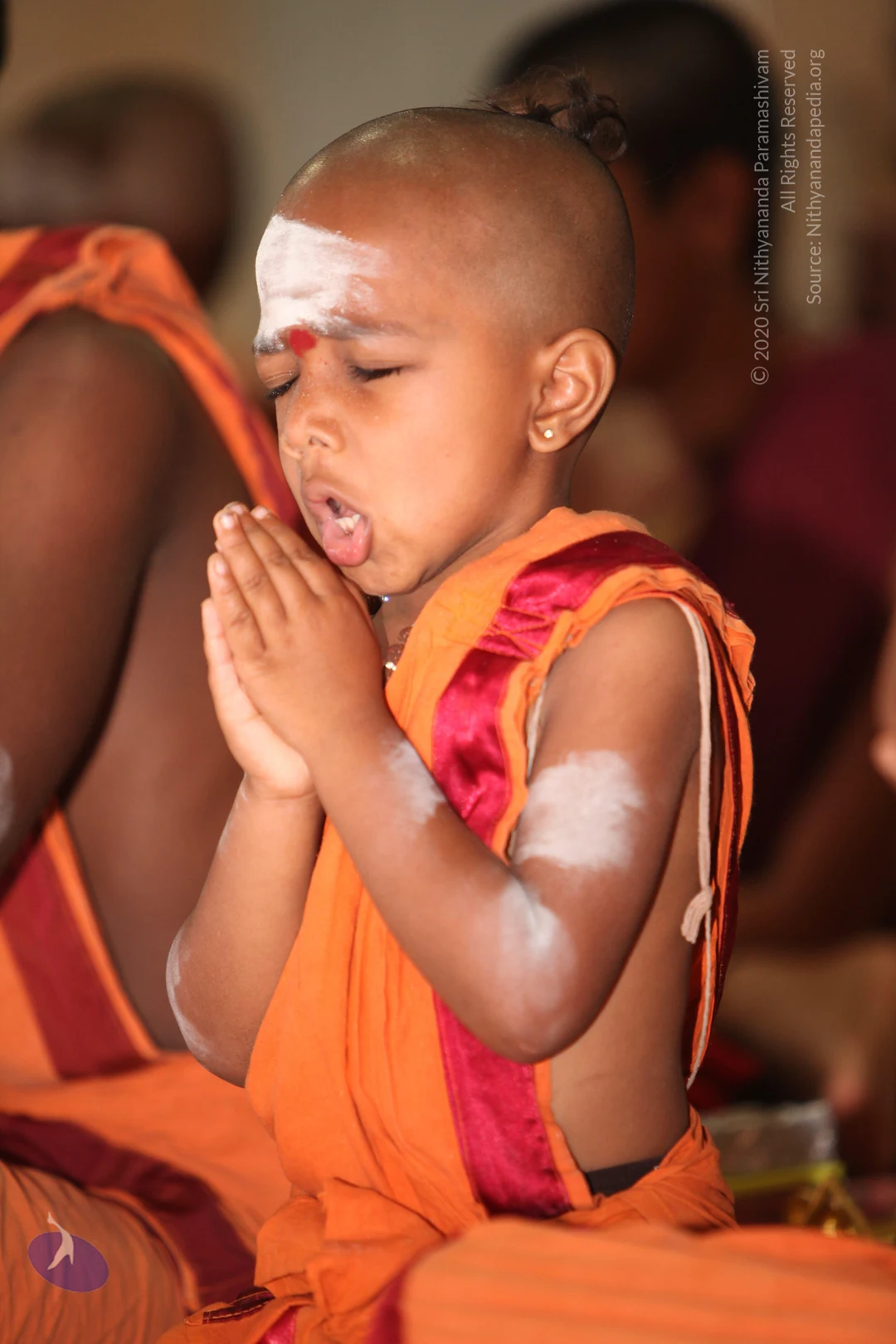
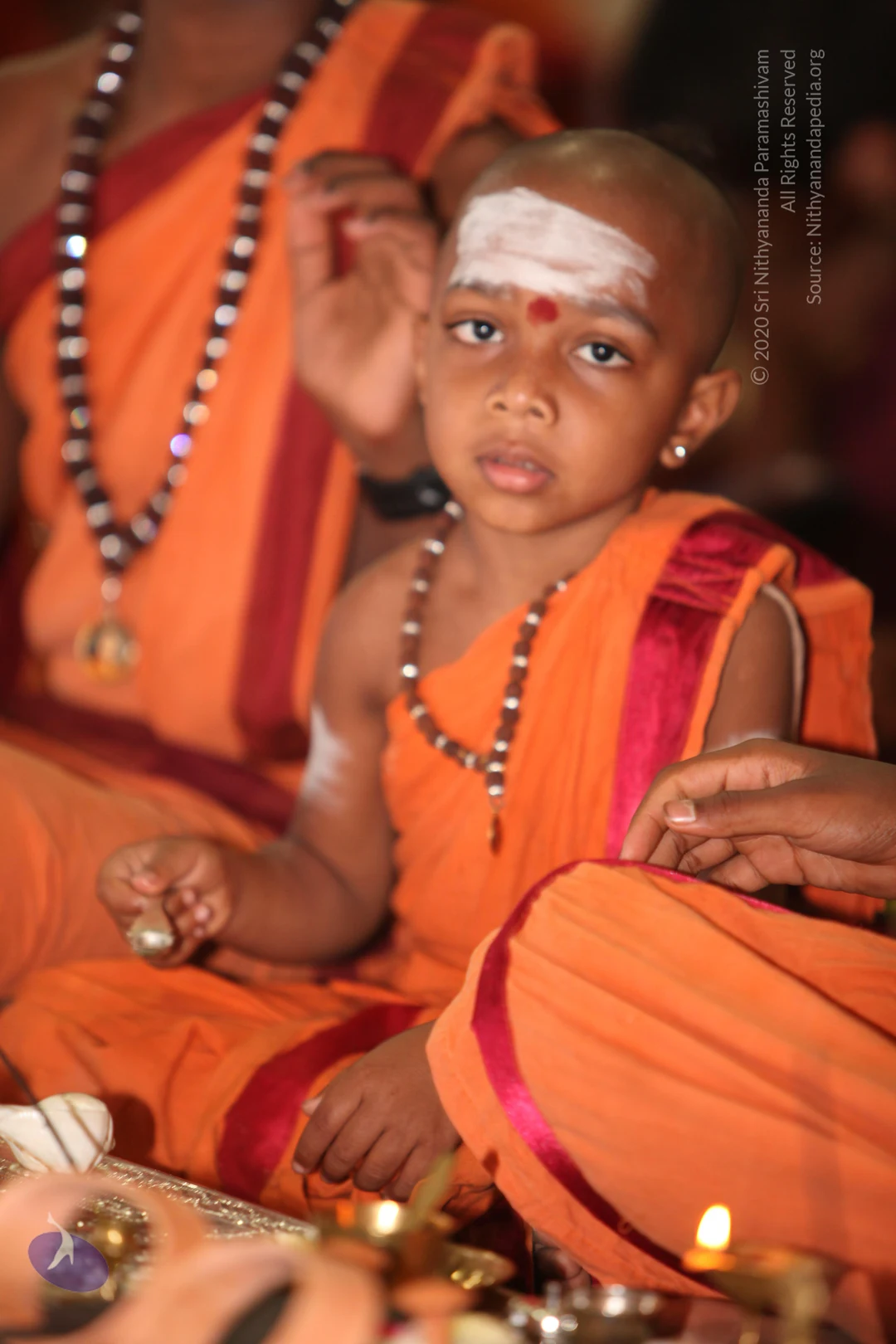
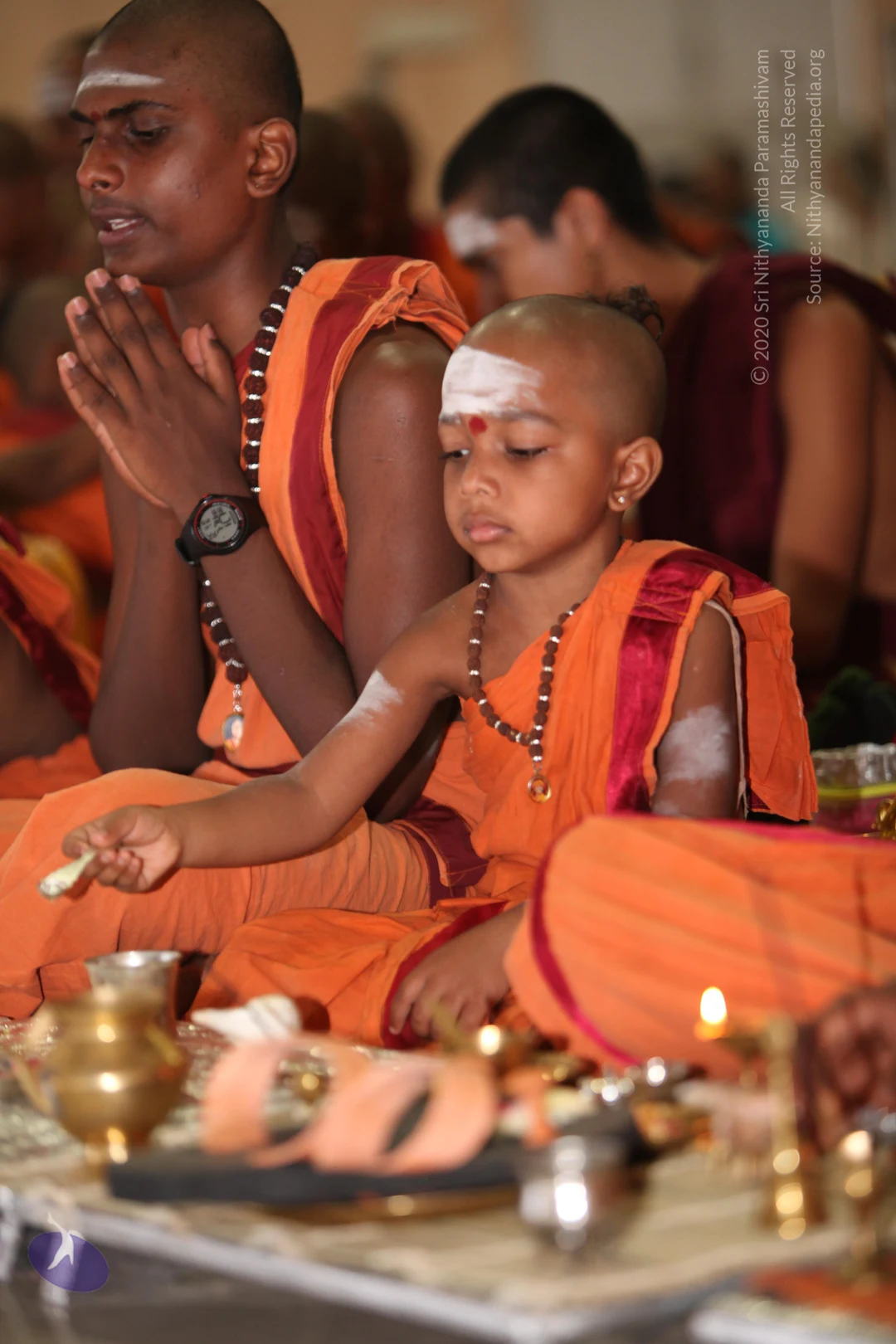
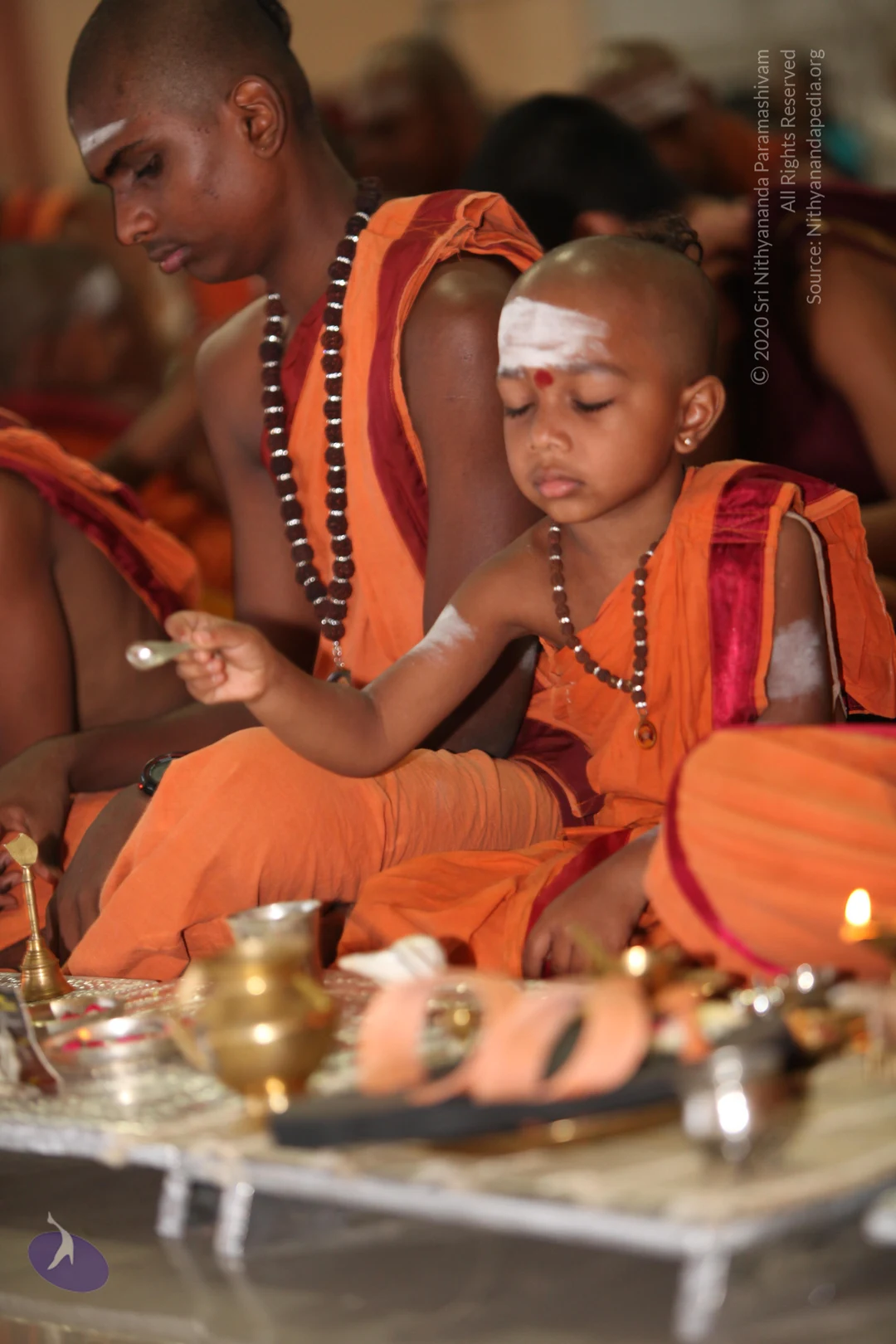
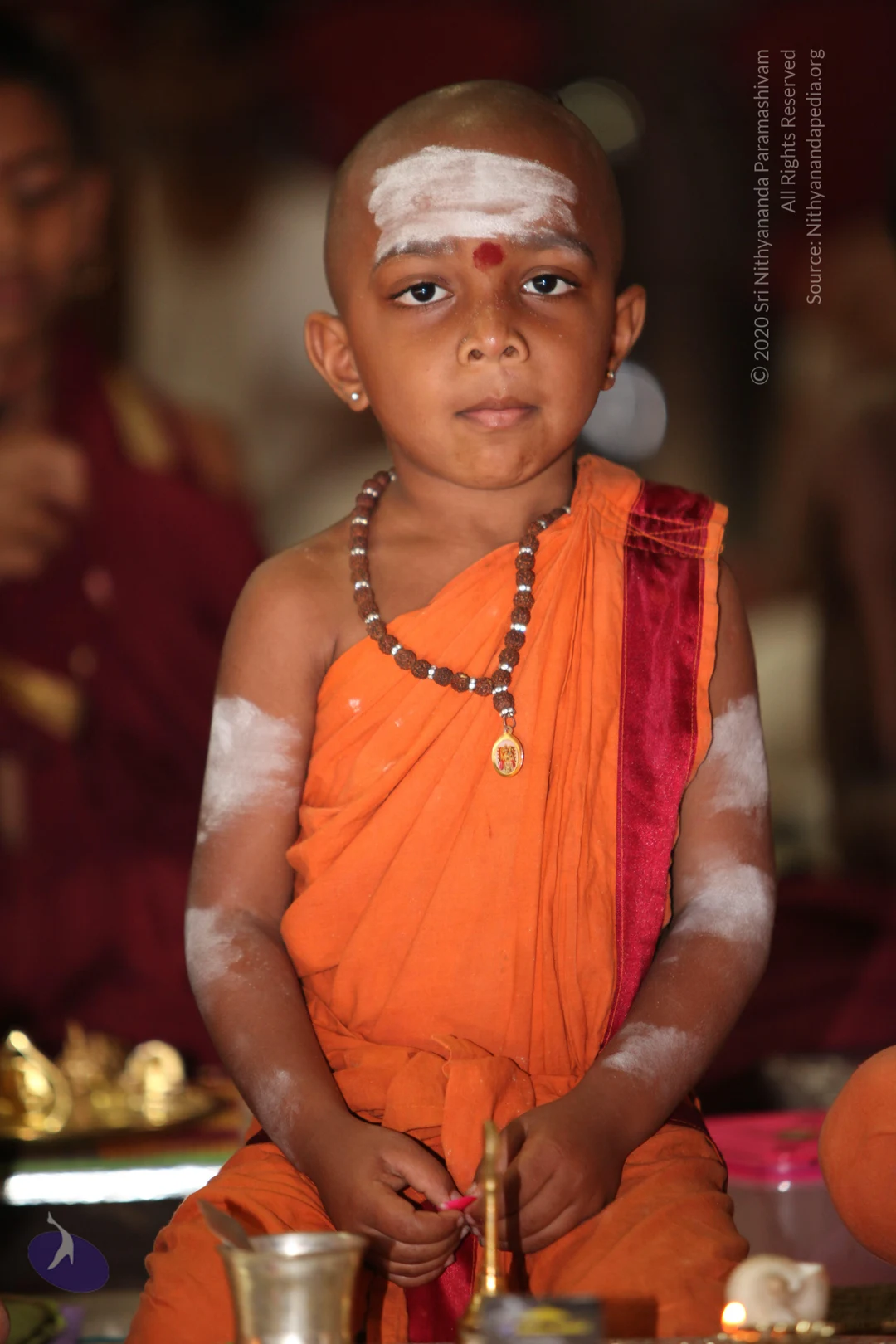
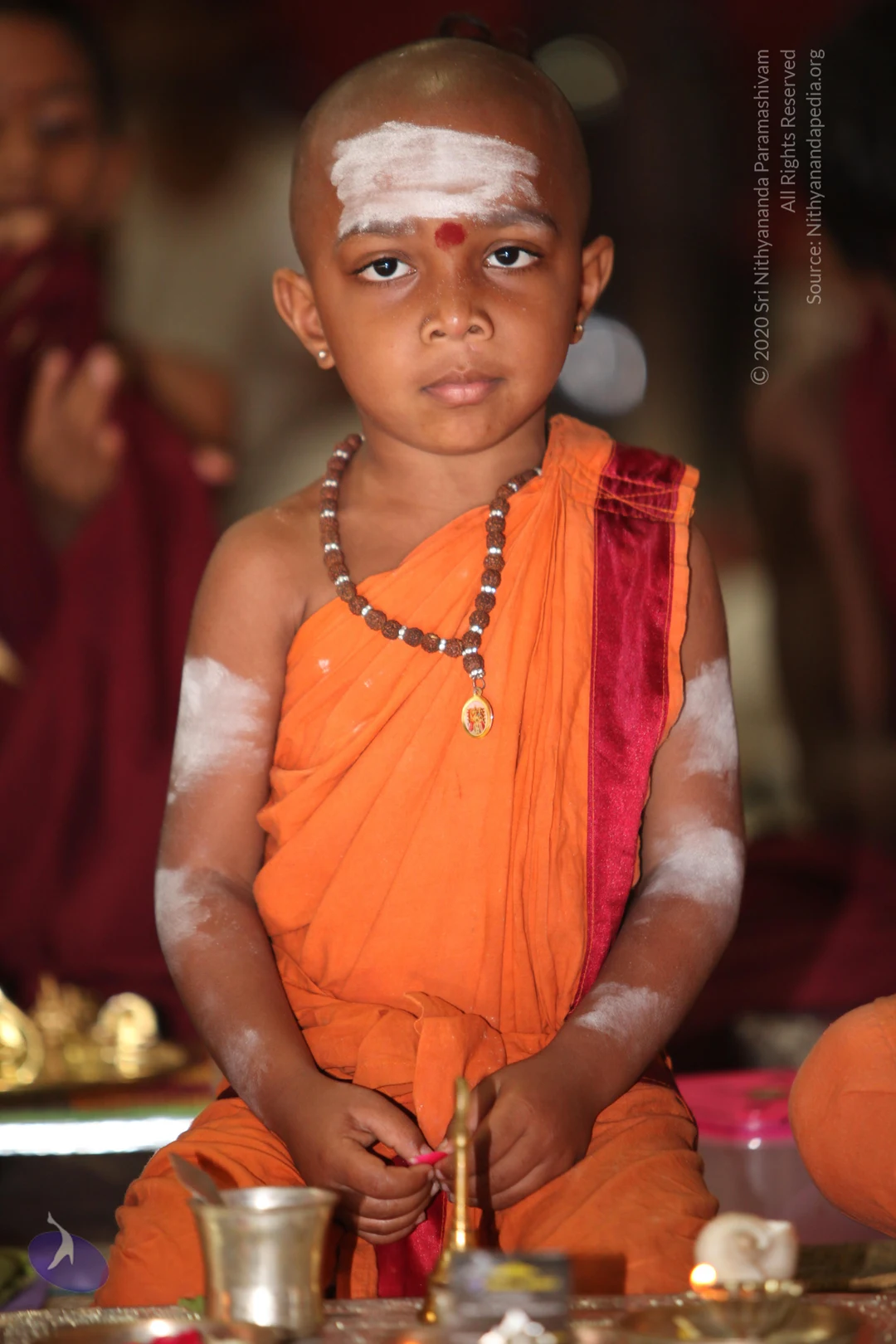
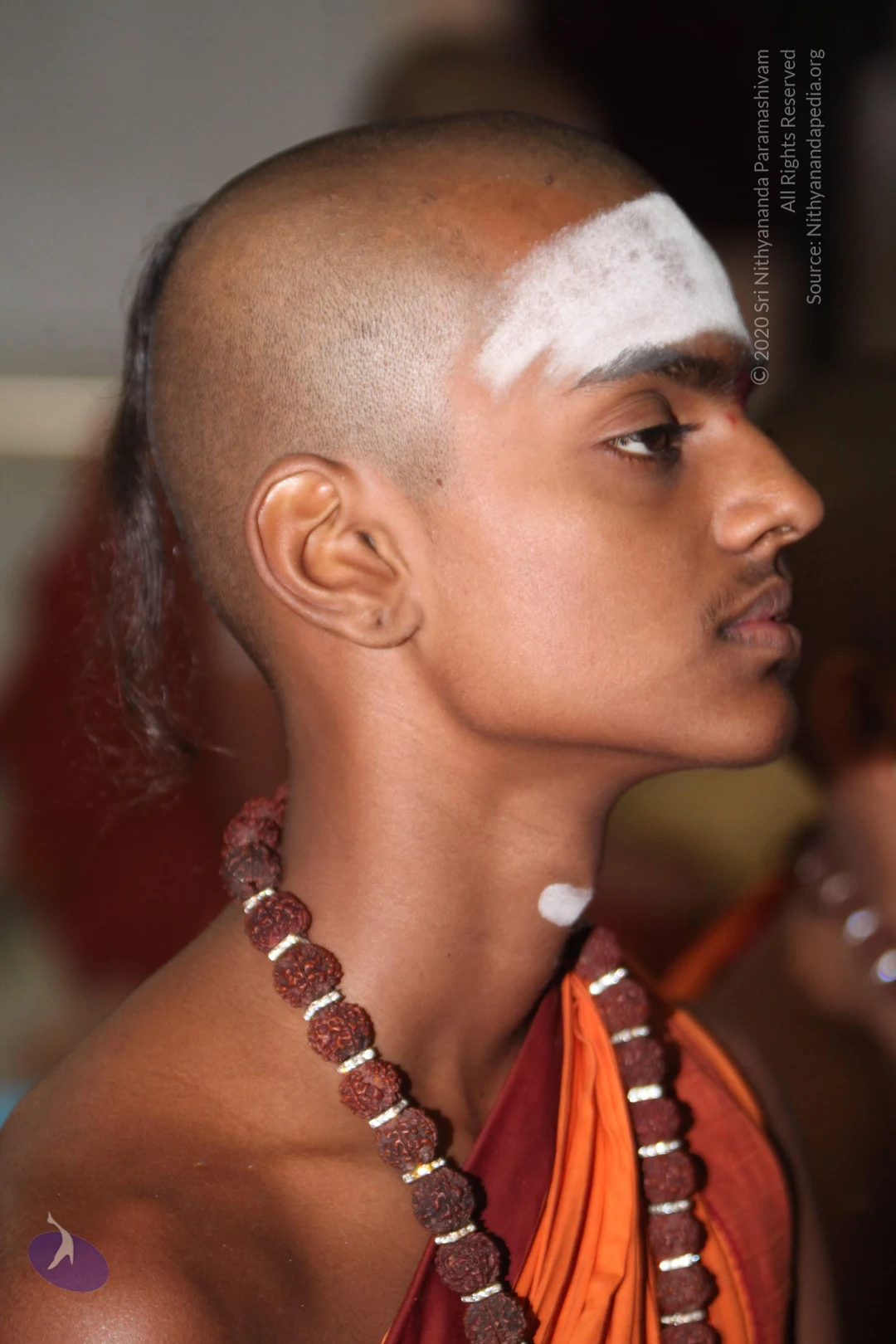
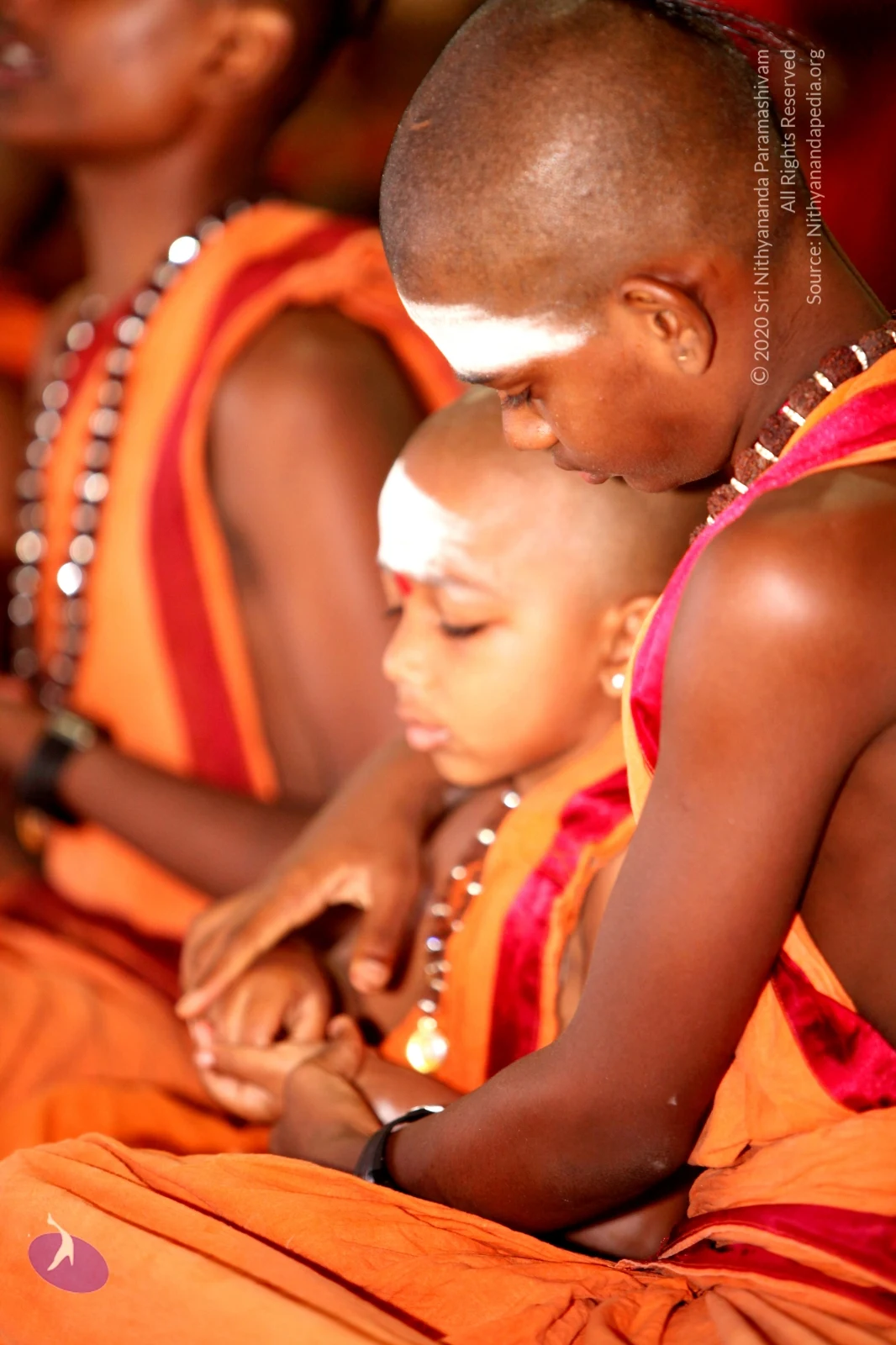
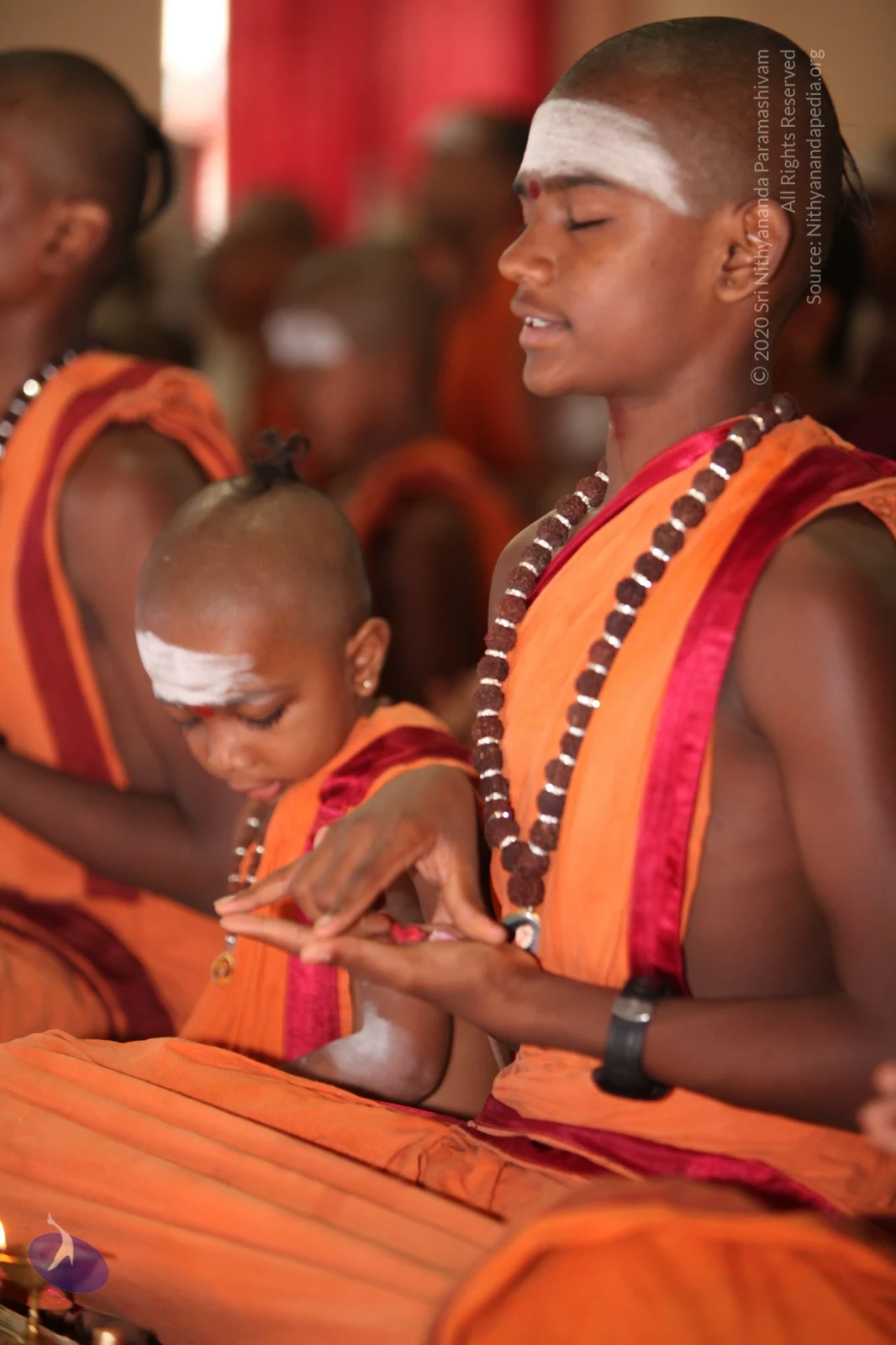
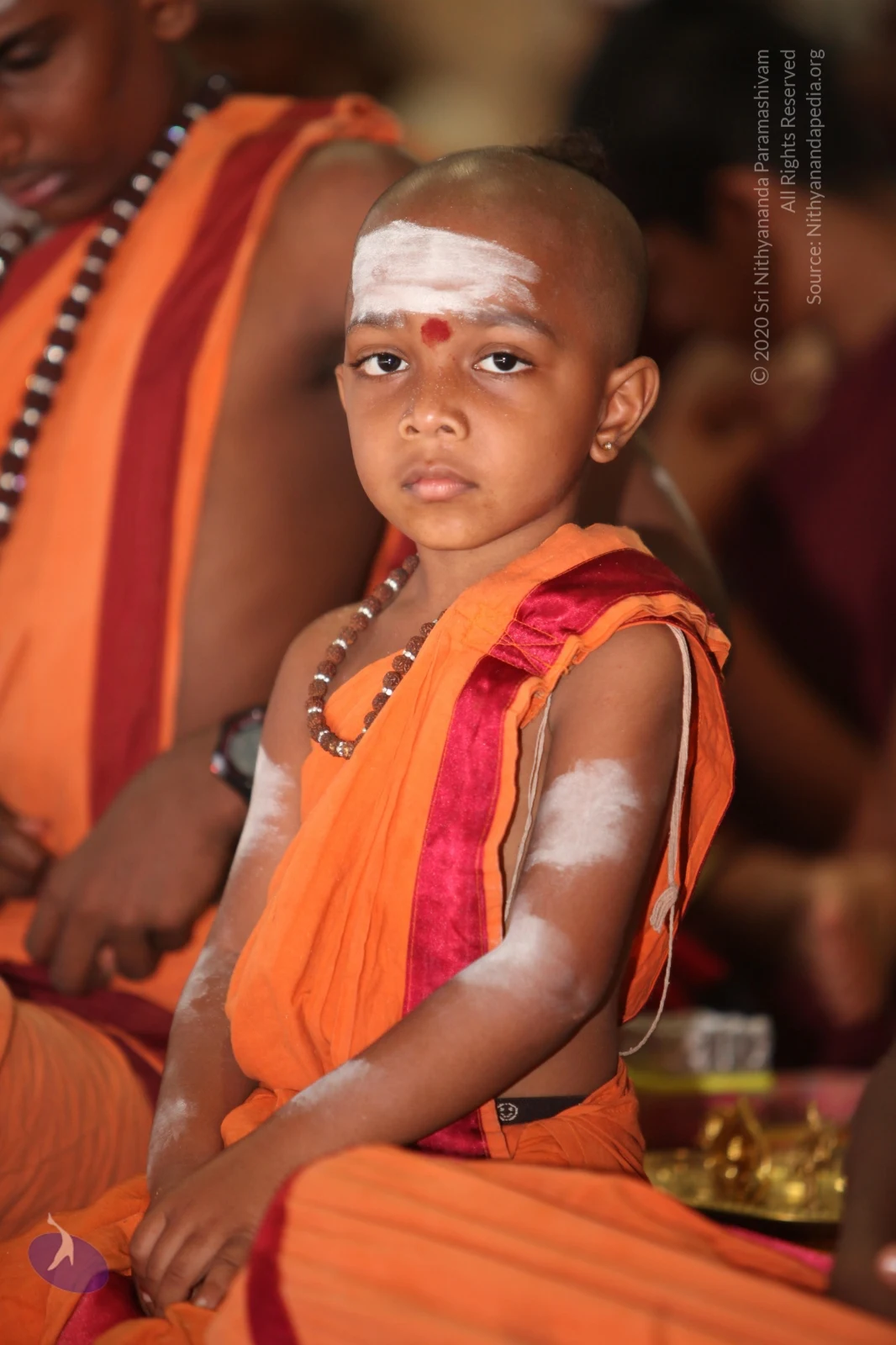
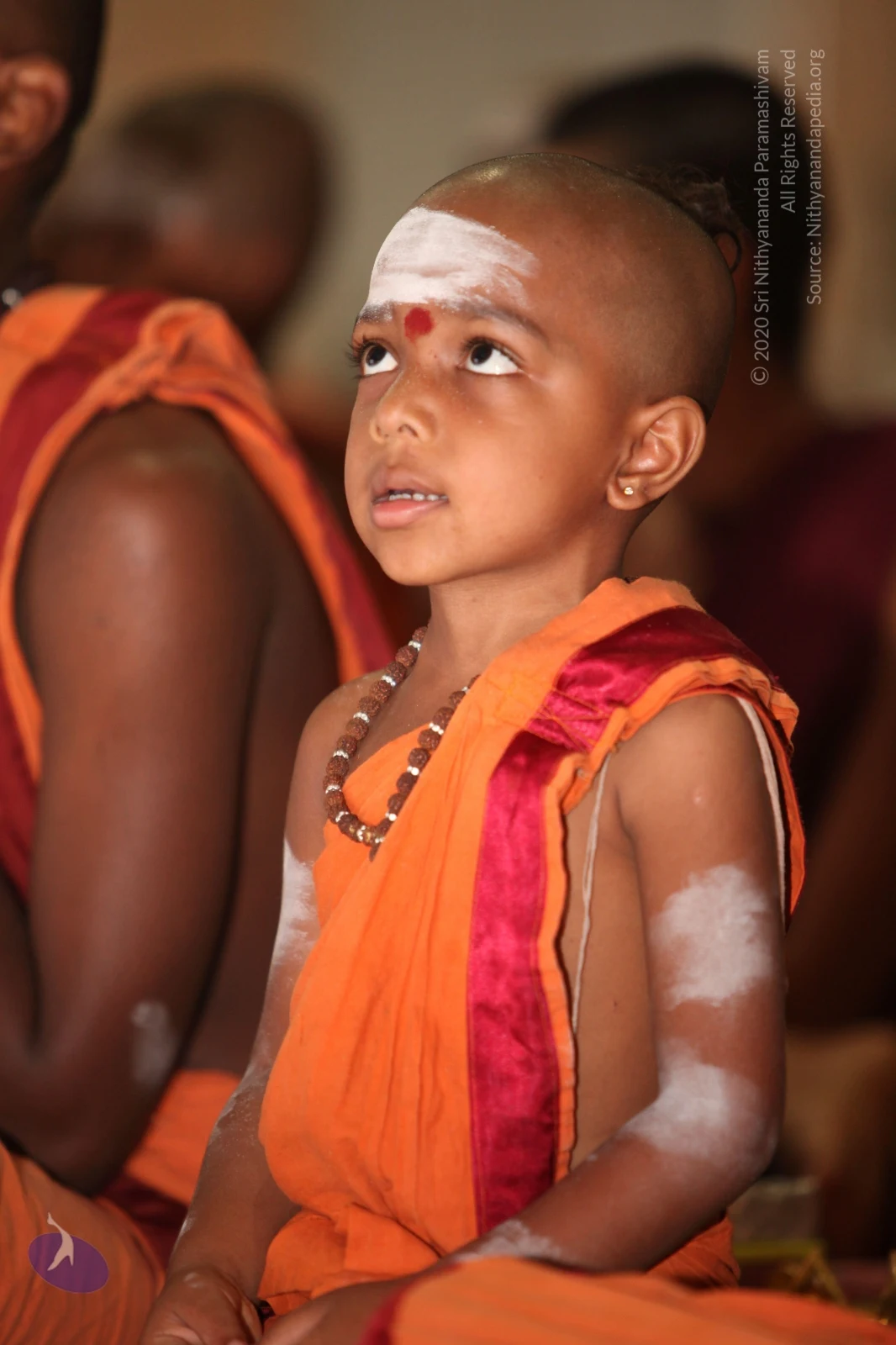
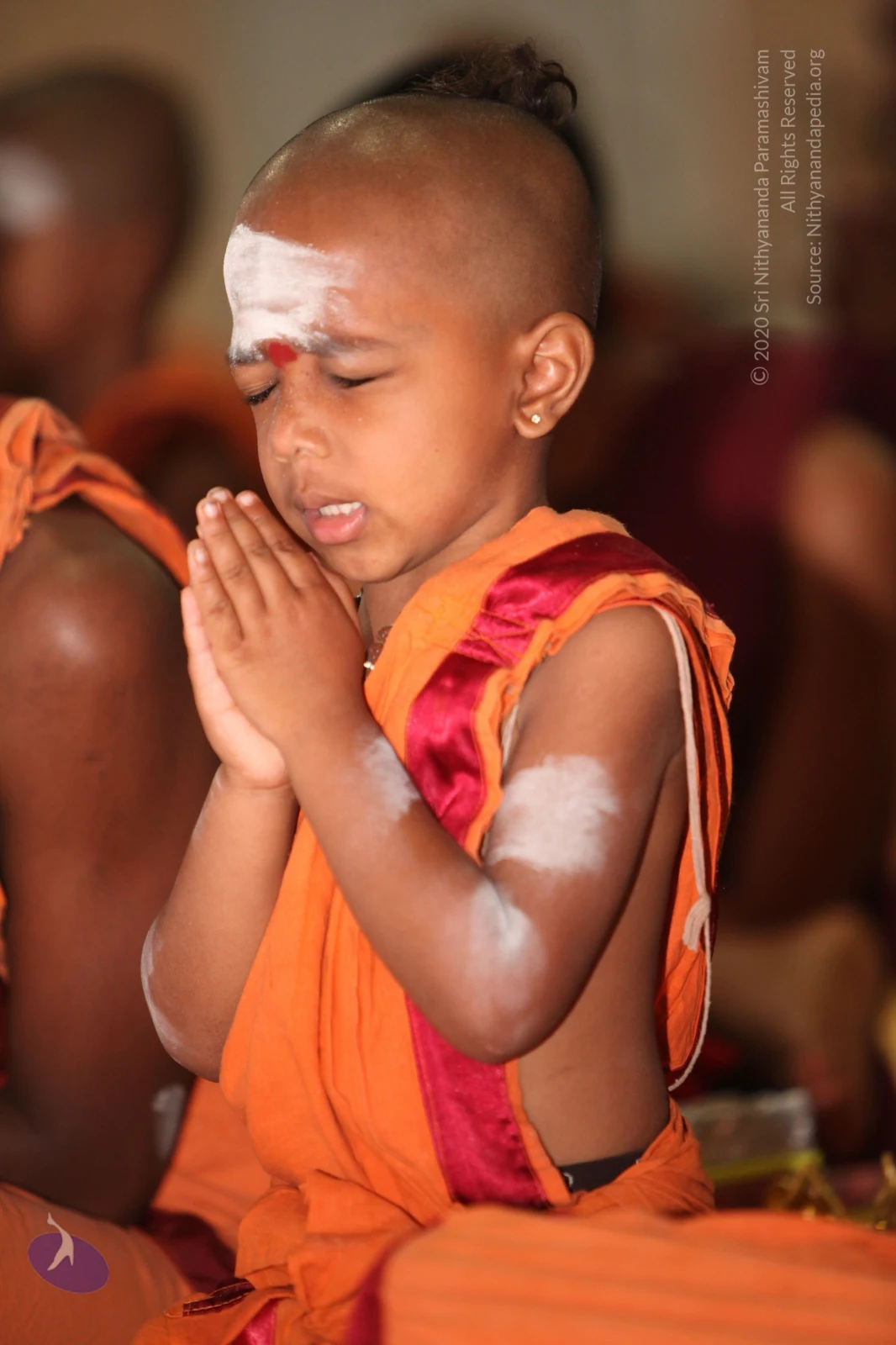
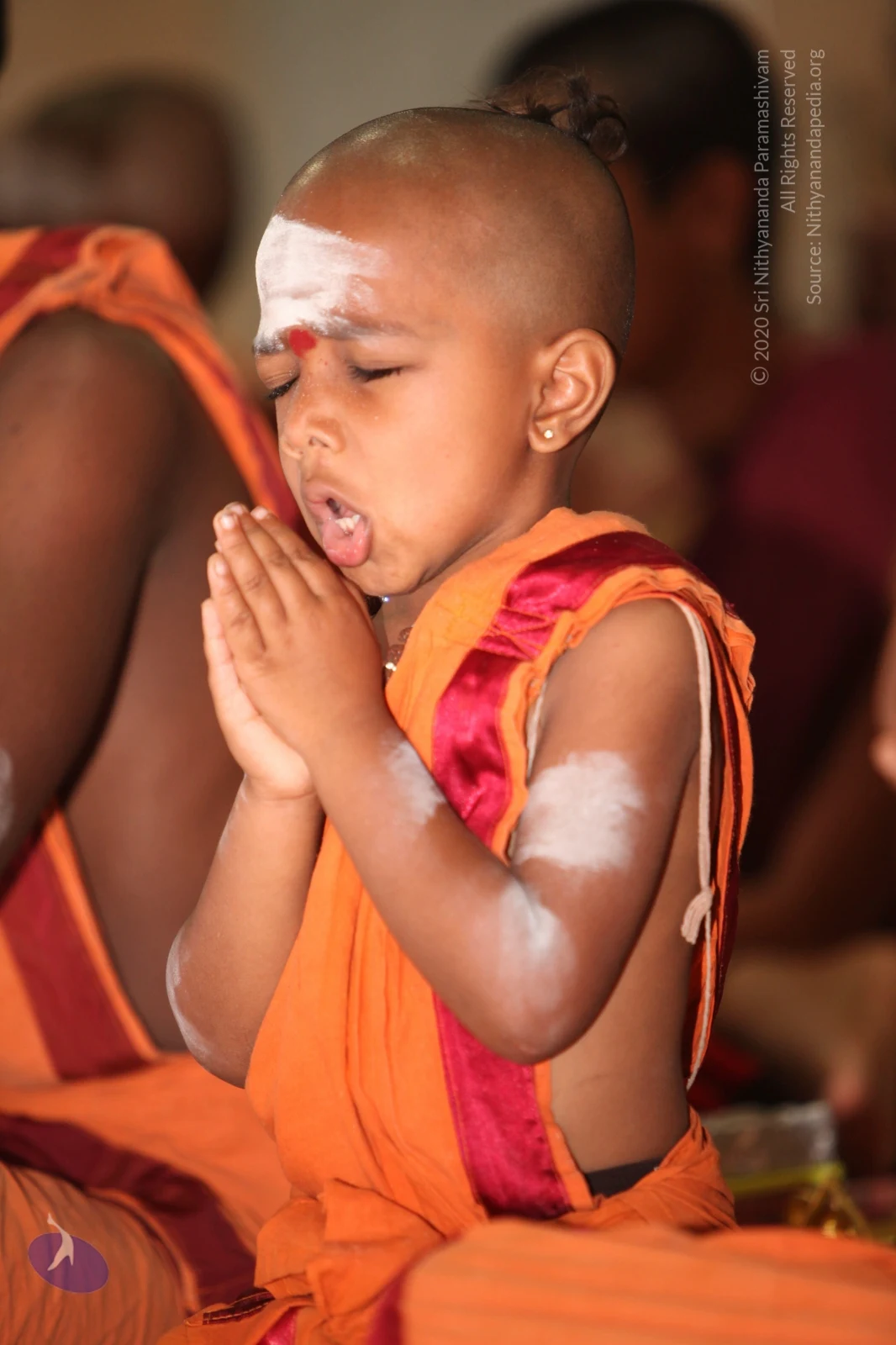
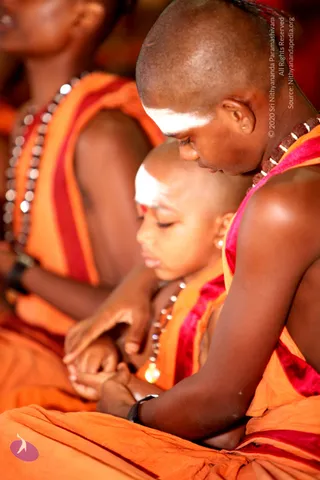
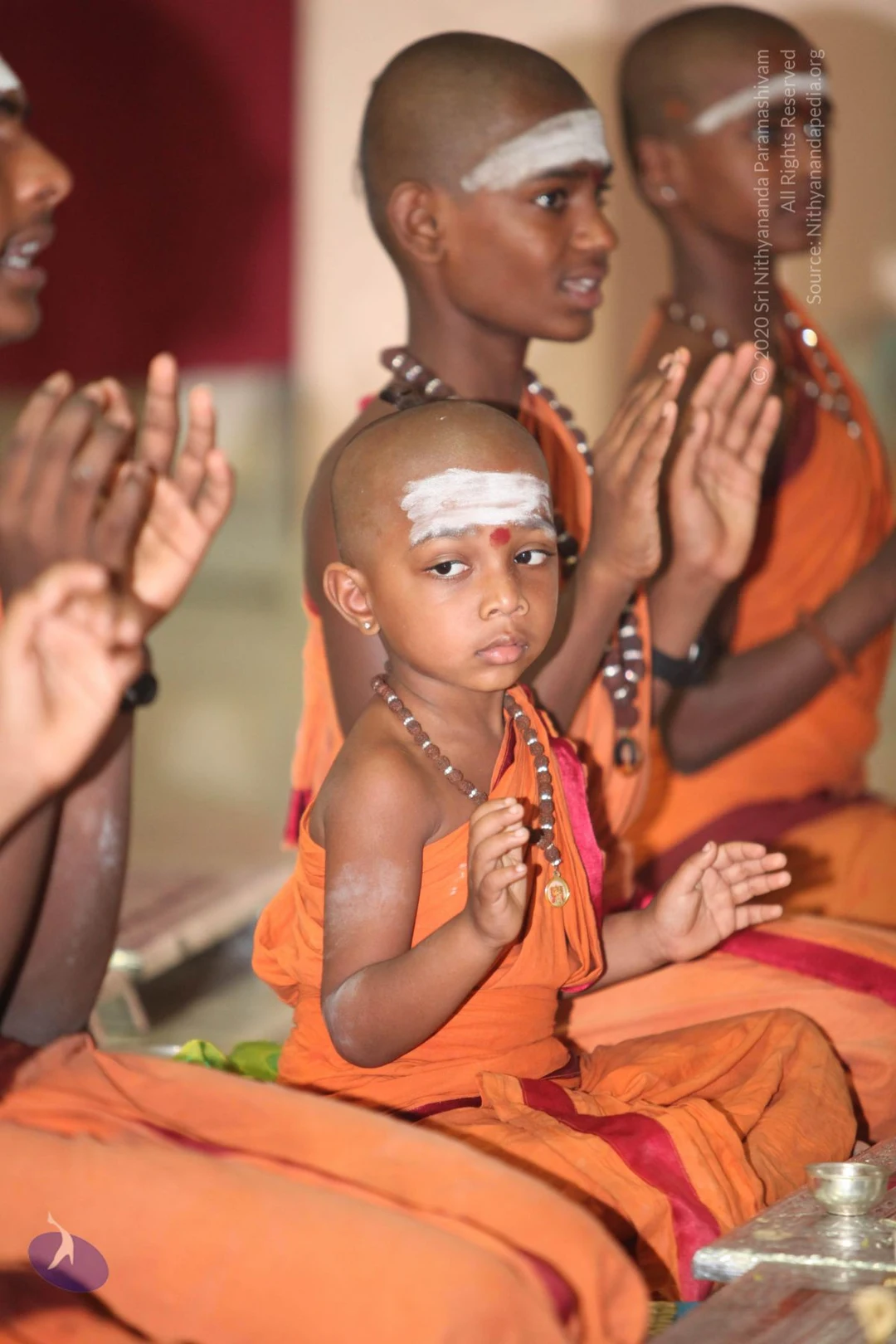
Close photo of two young boys in orange and red-trimmed robes seated side by side, bare-headed with white forehead markings, wearing beaded necklaces; the older boy in front leans his head toward the younger one, whose eyes are closed, and their hands rest together in their laps. A third seated figure in orange is partly visible at left.Close photograph of young boys seated in meditation or chanting posture, dressed in saffron-orange robes with red edge bands and wearing rudraksha malas. White sacred ash marks cross their foreheads with red kumkum dots. The foreground boy has eyes closed and hands extended, while a smaller boy beside him looks down with hands near his lap. Other seated figures in orange blur in the background against a red curtain, and an oil lamp glows in the lower left corner.A young shaved-headed boy sits in the foreground wearing orange saffron robes with a red border and a rudraksha mala with silver beads. He has a white horizontal tilak across his forehead with a red dot, and white ash marks on his upper arms. Behind him, an older monk in orange robes and a rudraksha necklace sits partly visible, with other seated people and brass items in the blurred background.A young shaven-headed boy in an orange saffron cloth with a red border sits upright gazing upward attentively, wearing a rudraksha mala necklace, with white sandalwood paste on his forehead and arms and a red bindi on his brow. Other seated figures in orange and maroon robes blur in the background. The boy appears to be a child novice or disciple at a satsang gathering.A close photograph of a young shaven-headed boy seated with palms pressed together in anjali mudra, gazing upward. He wears an orange cloth wrapped over one shoulder with a red border and a rudraksha mala at his neck. A white horizontal tilak and red bindi mark his forehead, and white paste is smeared on his upper arms. Other orange-robed figures are blurred in the background. No identifiable a person appearance is visible, so the boy is described by role only.A young shaved-headed boy sits with palms pressed together in anjali mudra, wearing an orange cloth wrap with a red-and-maroon border and a white vertical tilak with a red bindi on his forehead. His gaze is turned to the side, and white marks dot his upper arms. Other seated people in orange and maroon robes are blurred in the background.

Satsang

4 photosSource gallery
A smiling man sits in front of a large gold-embossed ornate backdrop, wearing a headset microphone. He has a white tilak with a red kumkum dot on his forehead, hoop earrings, and long swept-back dark hair. He wears a deep red-maroon robe draped over one shoulder and multiple strands of orange rudraksha malas with ornate gold bead necklaces. His hands rest folded in his lap. The appearance is consistent with a person, shown as a seated speaker at a satsang-style event.A photograph of a seated man in a rust-red robe, bare-shouldered, with long swept-back dark hair, a red bindi on his forehead, and a headset microphone. He wears layered orange-brown rudraksha malas and a long ceremonial necklace of gold beads. He smiles and gestures with one raised finger while speaking, seated on a dark maroon velvet chair. Behind him a large gold-toned ornamental backdrop catches the light. Swamiji (probable): long swept-back hair, rudraksha malas and gold ceremonial necklace, speaking at a satsang-style discourse.A seated man in a rust-red saffron wrap, bare-shouldered, gives a discourse with his right hand raised and fingers spread. He wears a dark maroon bindi, a white forehead marking, multiple strands of rudraksha beads and a heavy gold ceremonial necklace with ornate bead pendants, plus a gold ring. A small headset microphone is at his mouth. He sits on a red velvet seat beside a gold lion-head sculpture, with a maroon curtain and an ornate gold backdrop behind him.A seated man in a red-orange garment speaks while gesturing with his raised right hand, with a lapel microphone clipped near his mouth. He wears long rudraksha malas and heavy gold ceremonial beads over his shoulders and chest, a red bindi on his forehead and a ring on one finger. Behind him is a large gold ornate decorative panel, and at left a gold lion-headed carved seat ornament rests beside a dark plum velvet cushion. a person appears as the speaker, consistent with a satsang discourse.

Sarva-Darshan

2 photosSource gallery
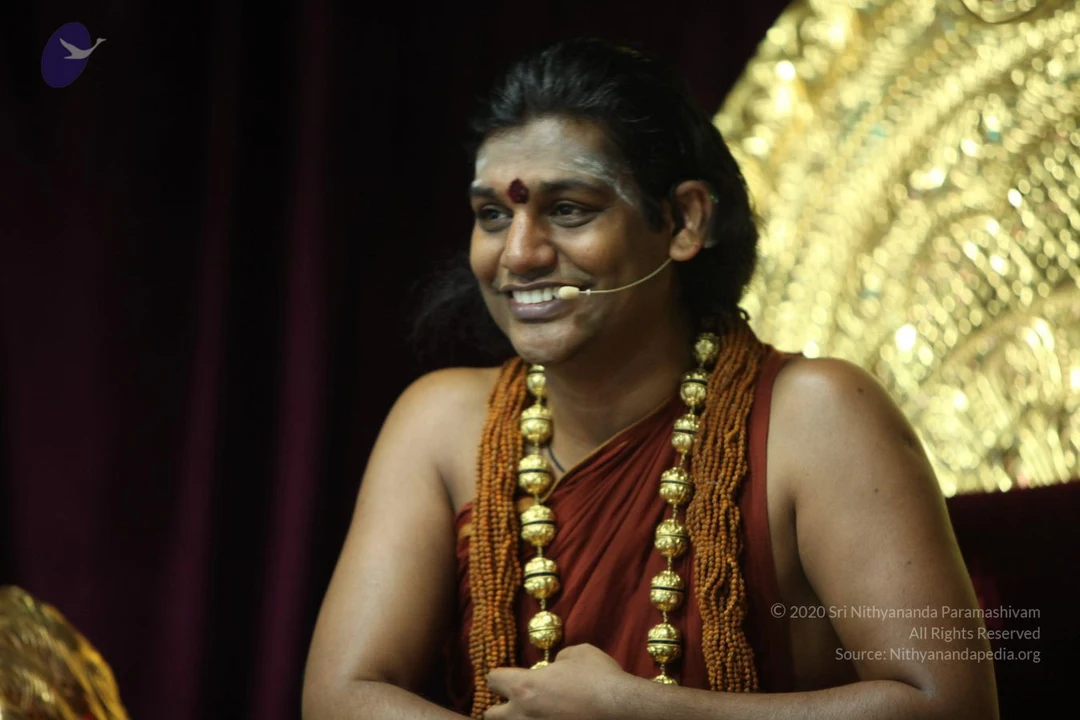
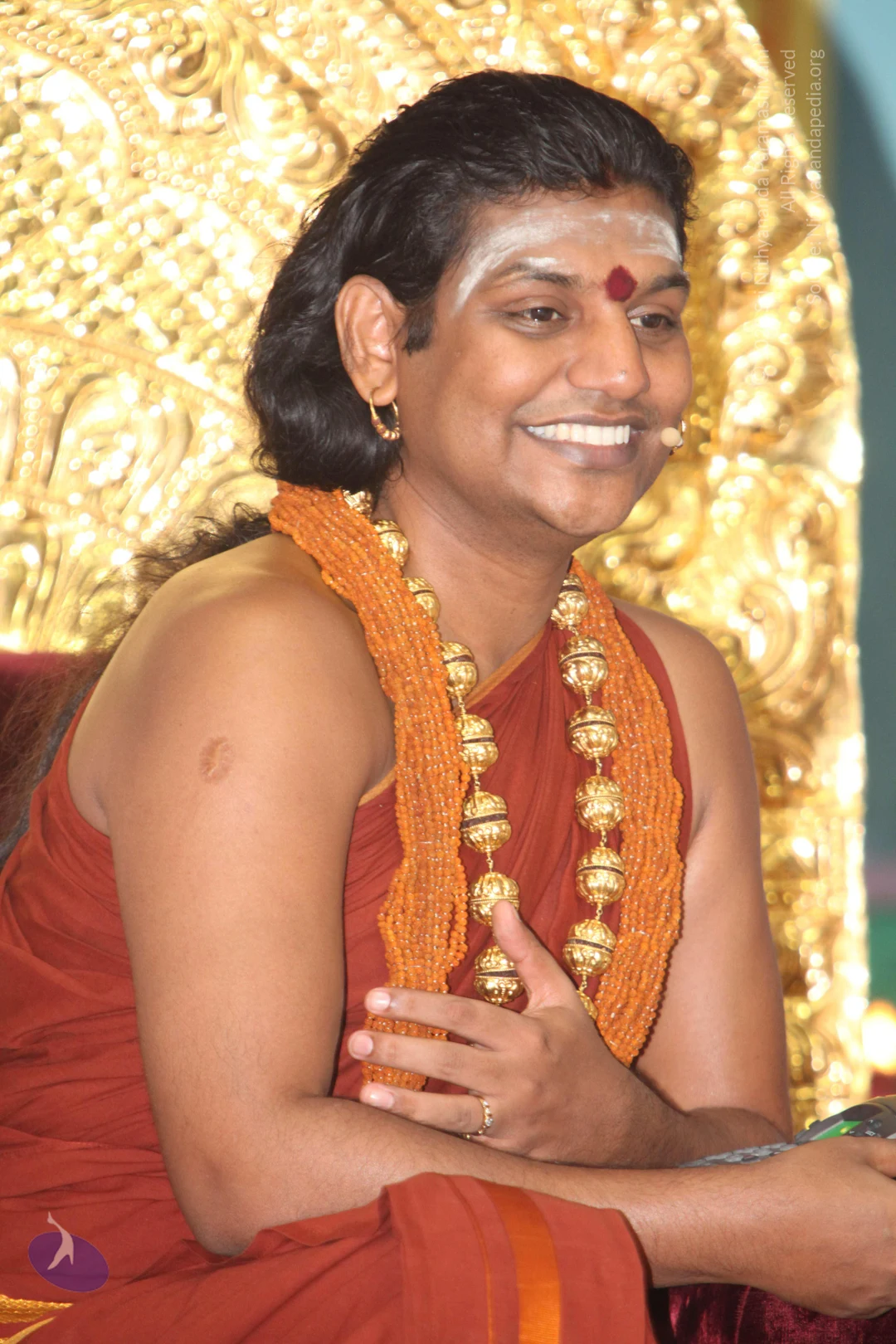
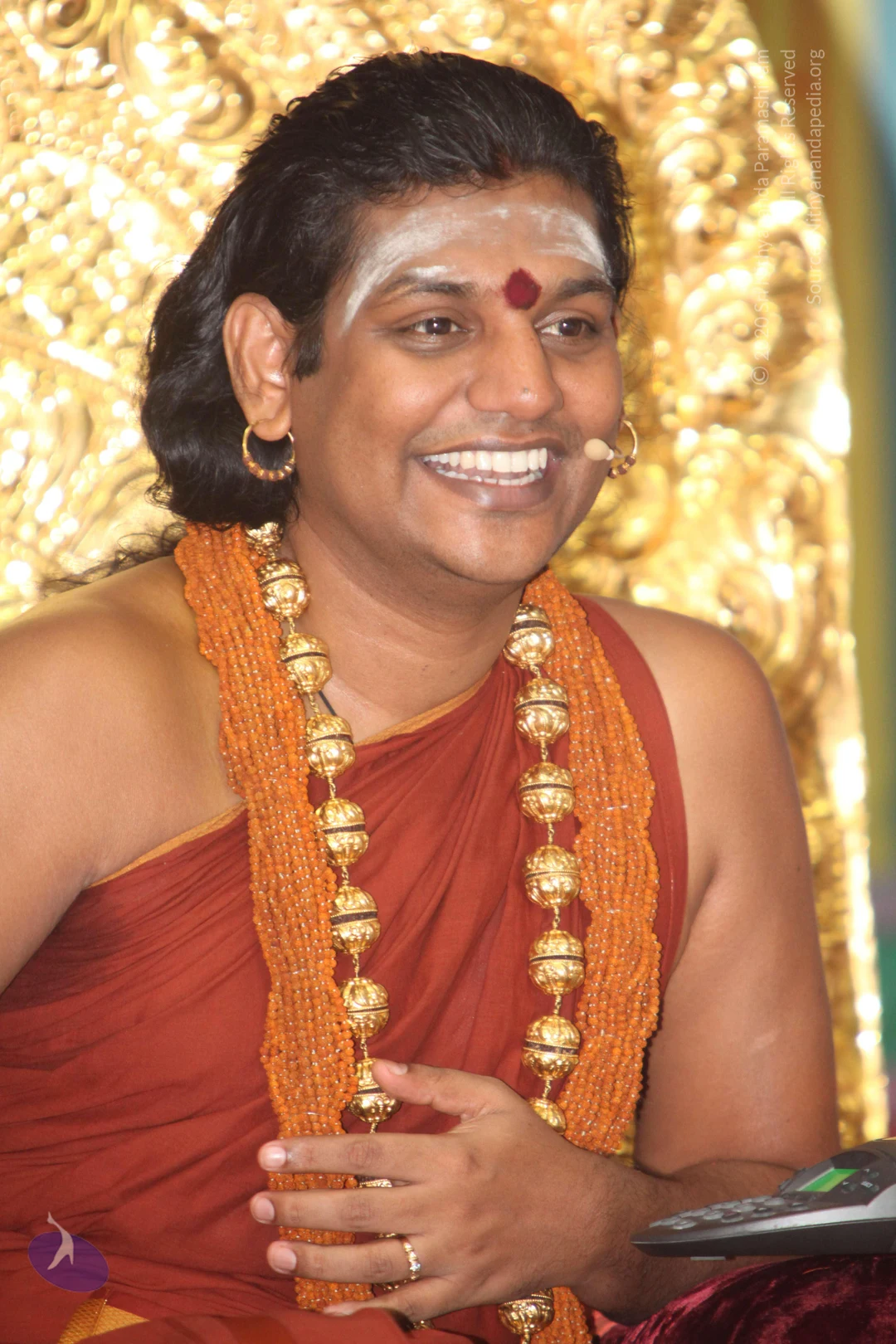
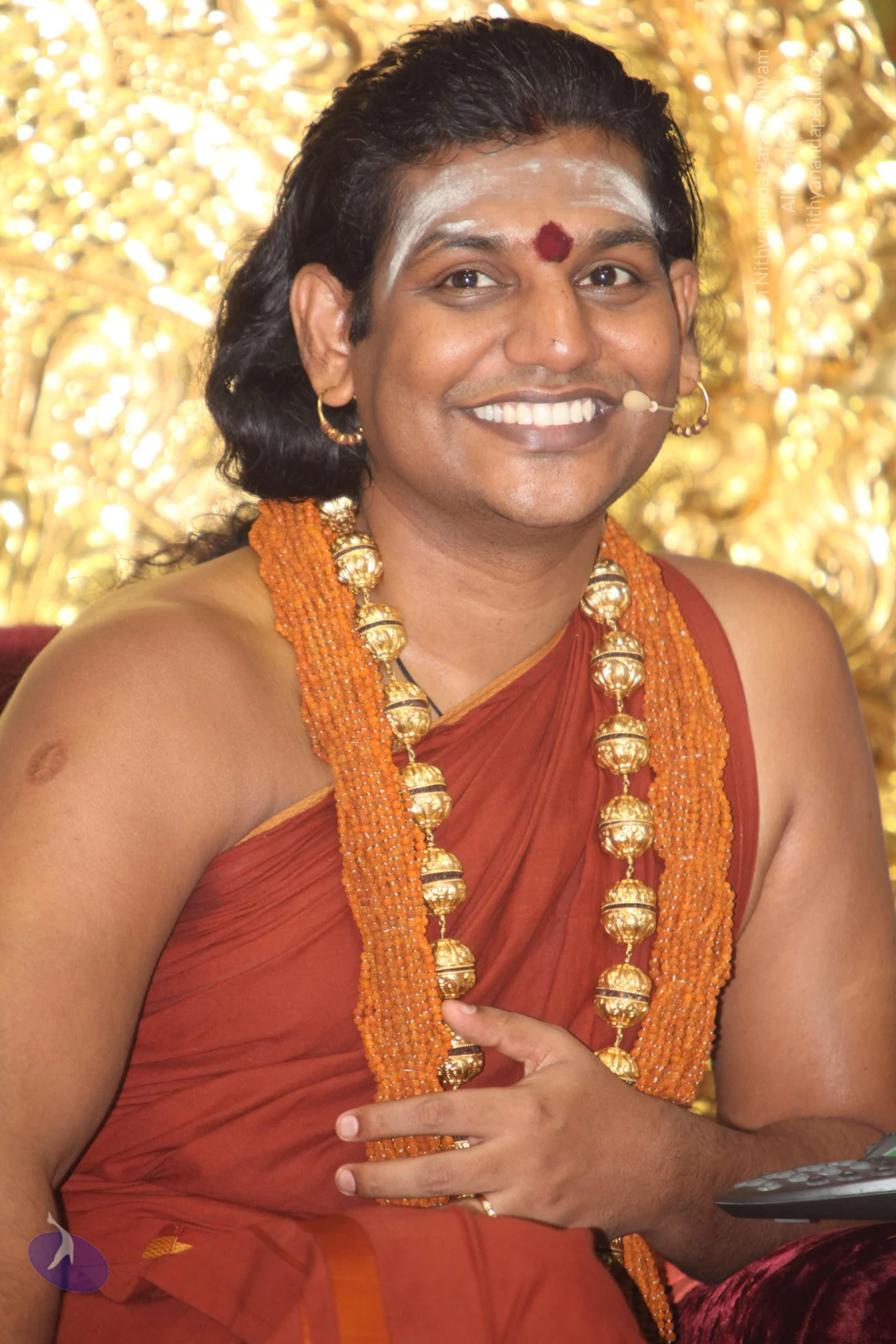
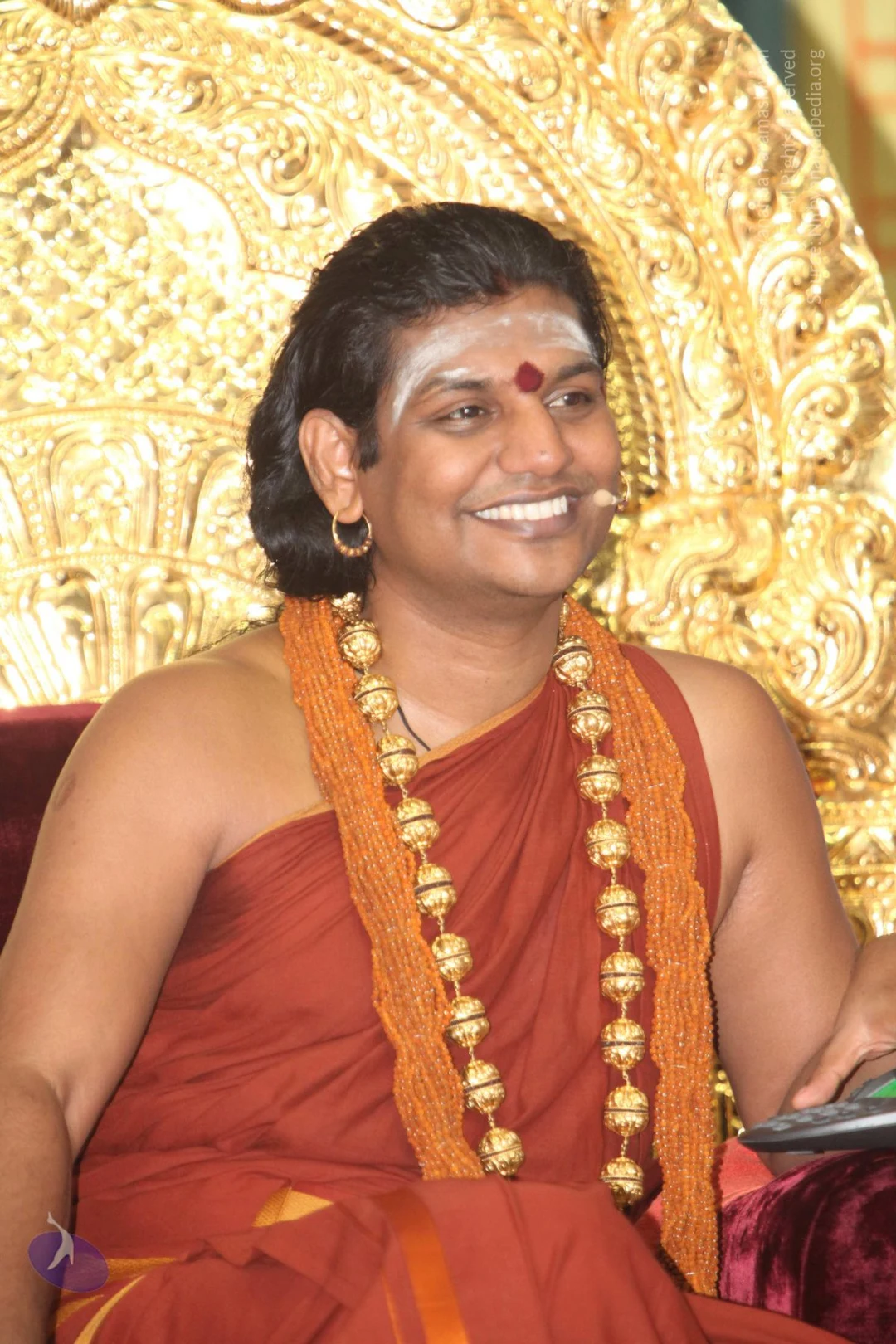
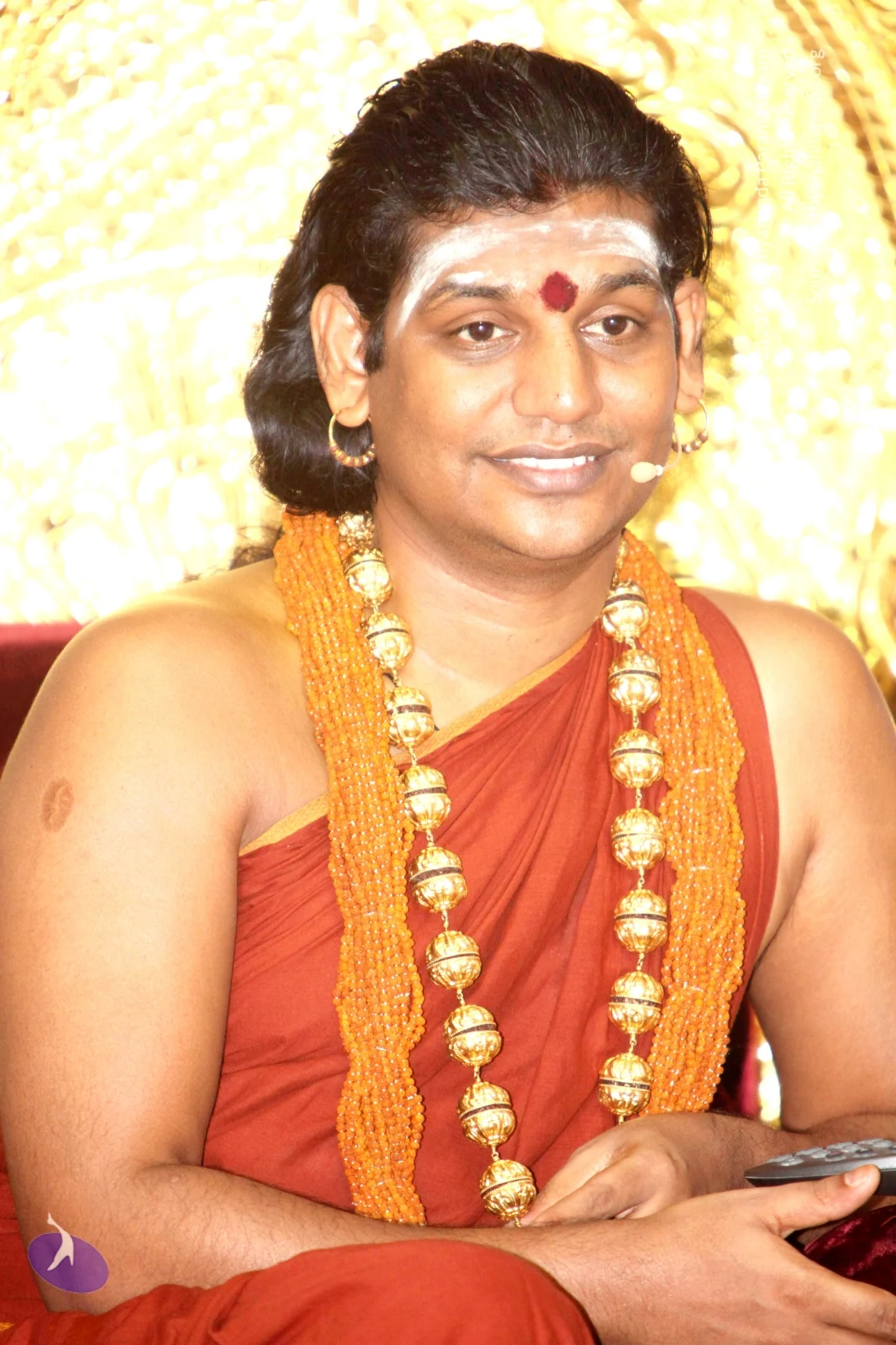
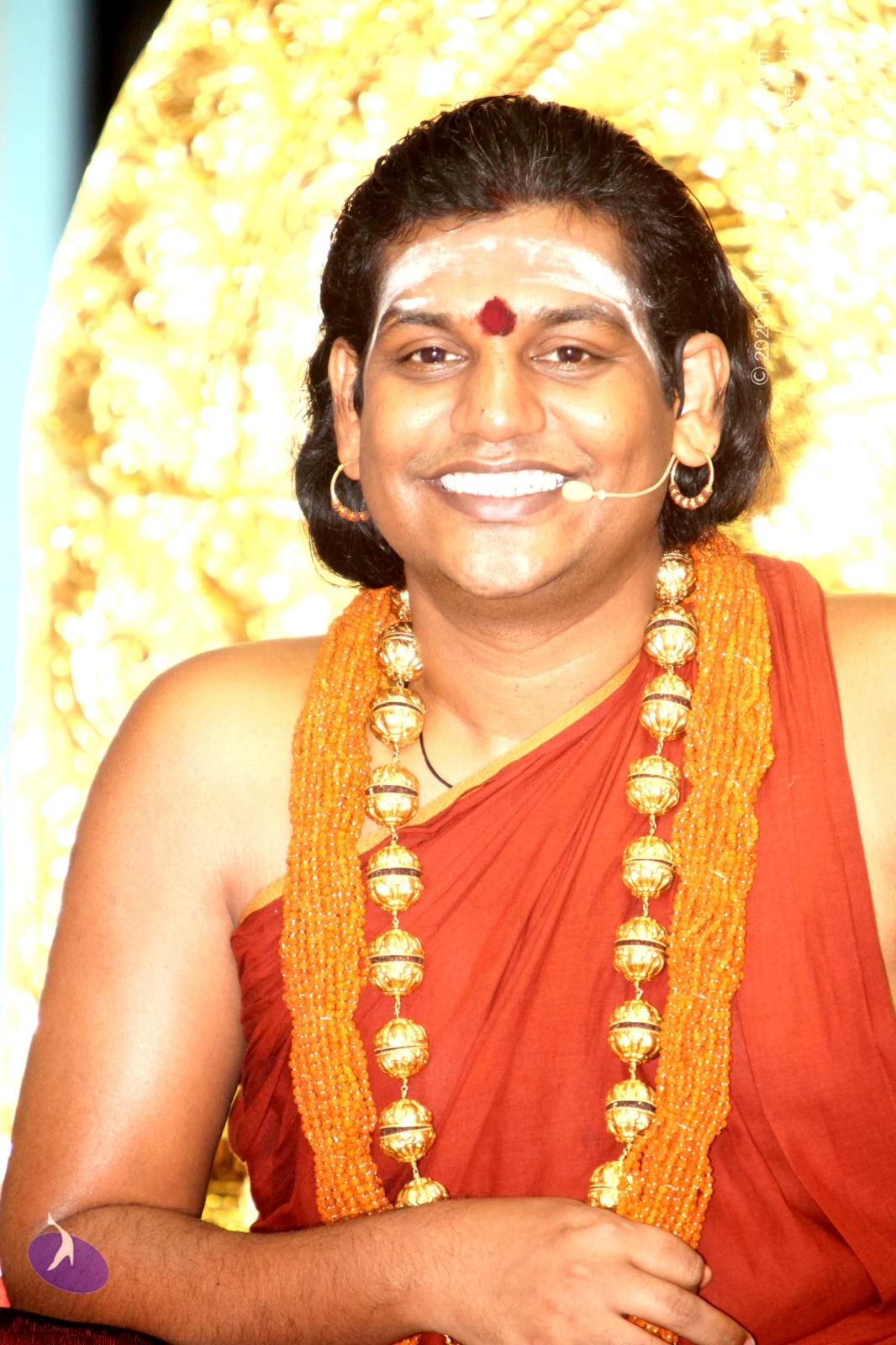
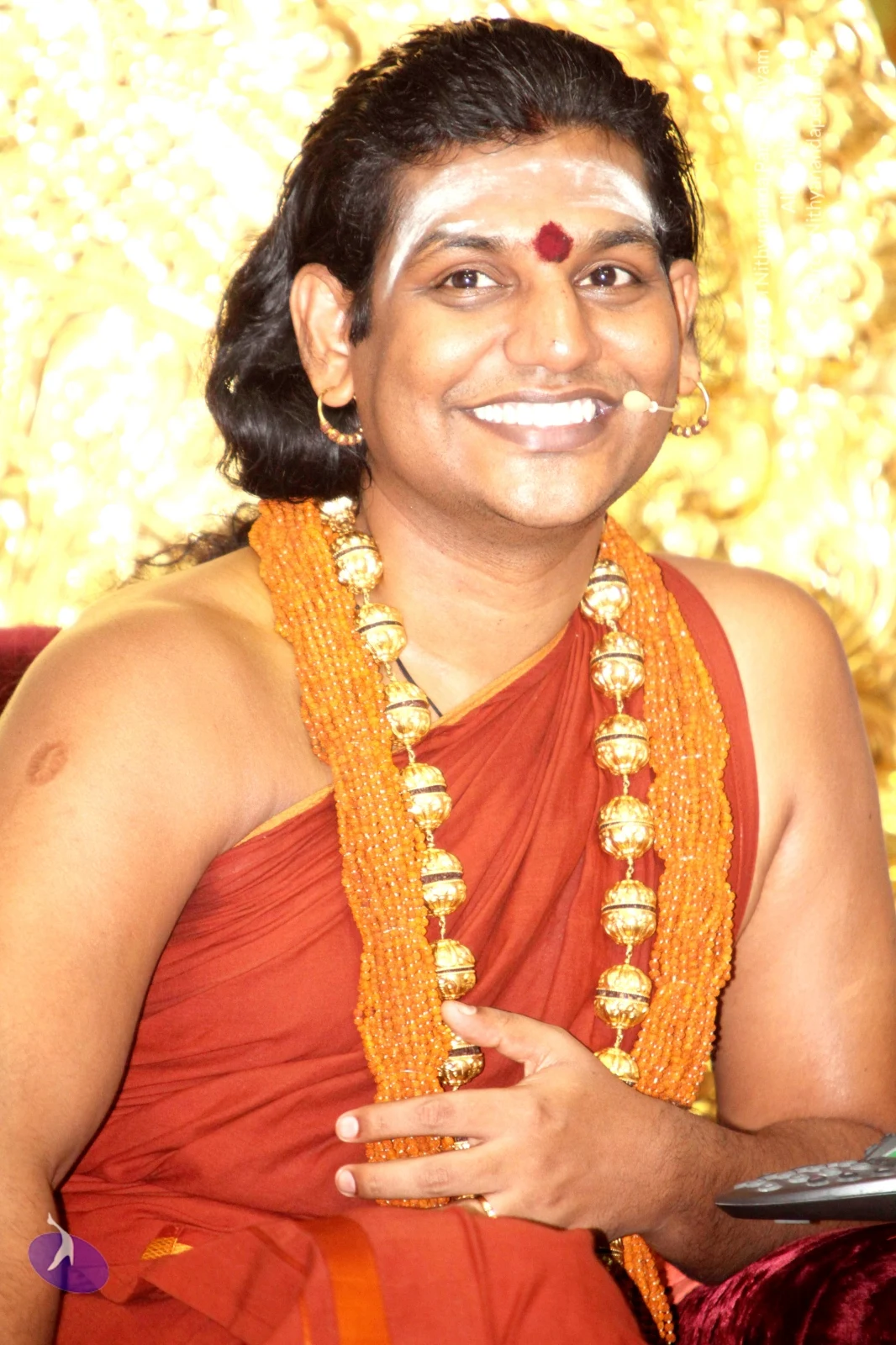
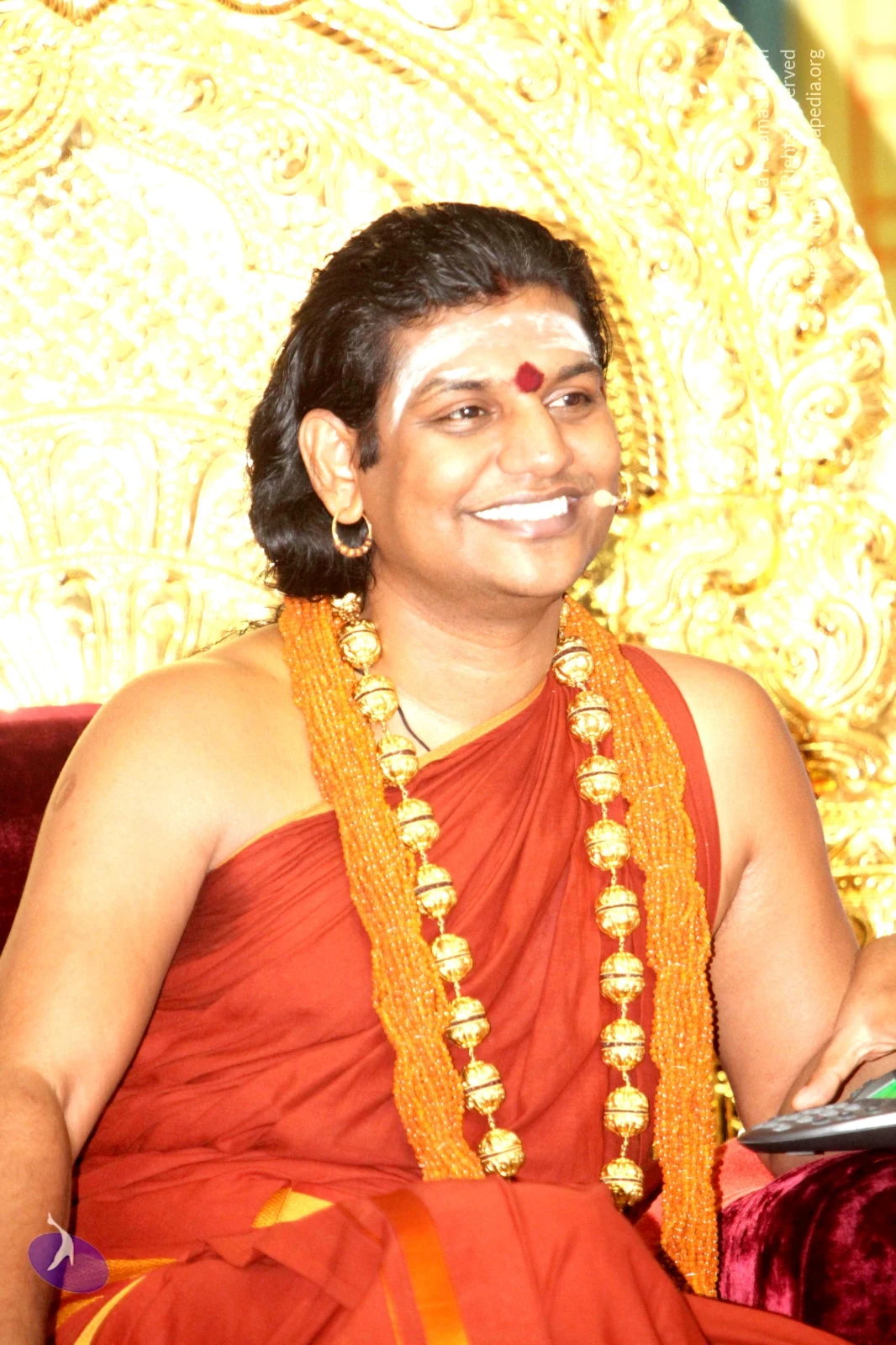
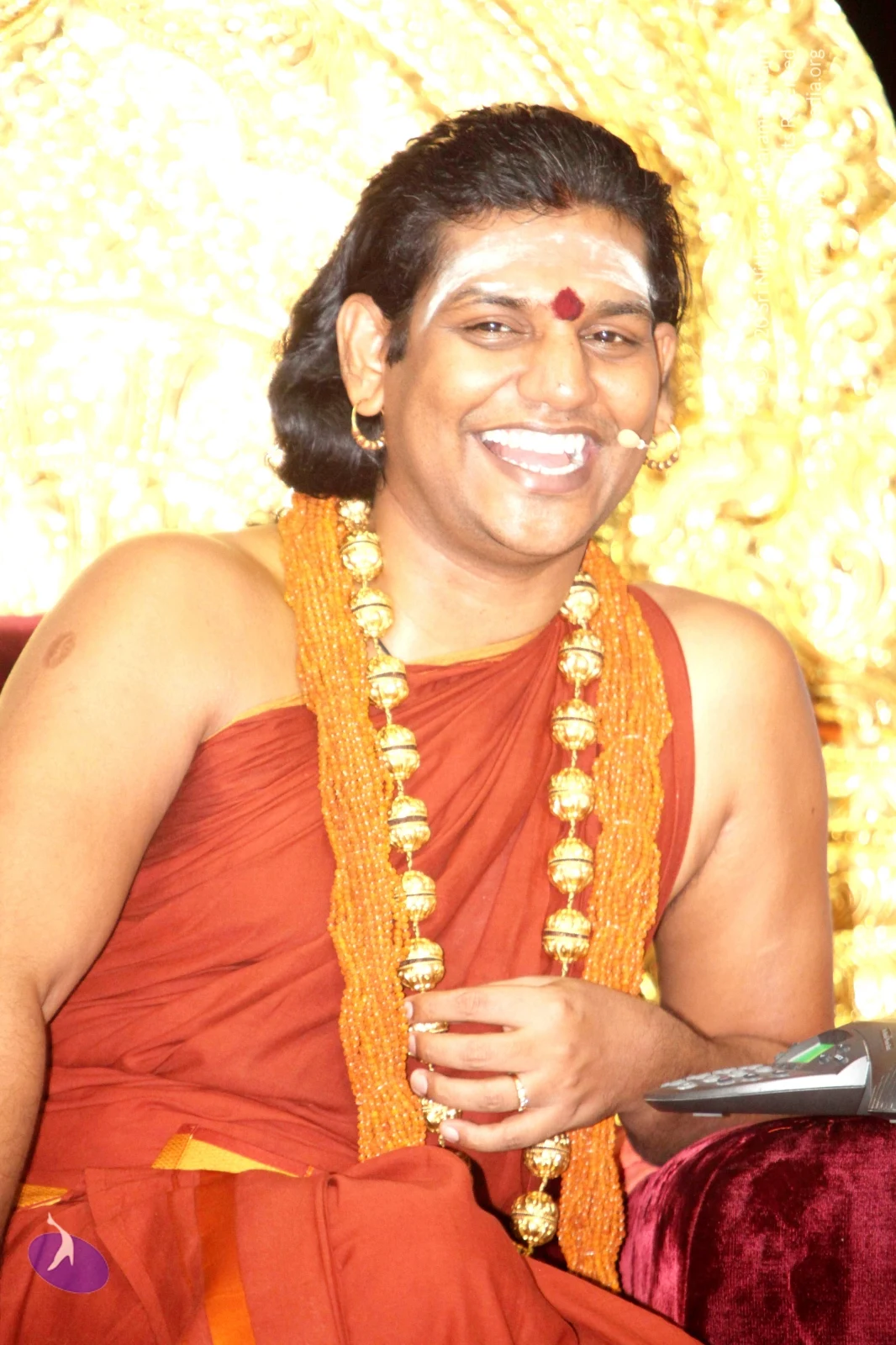
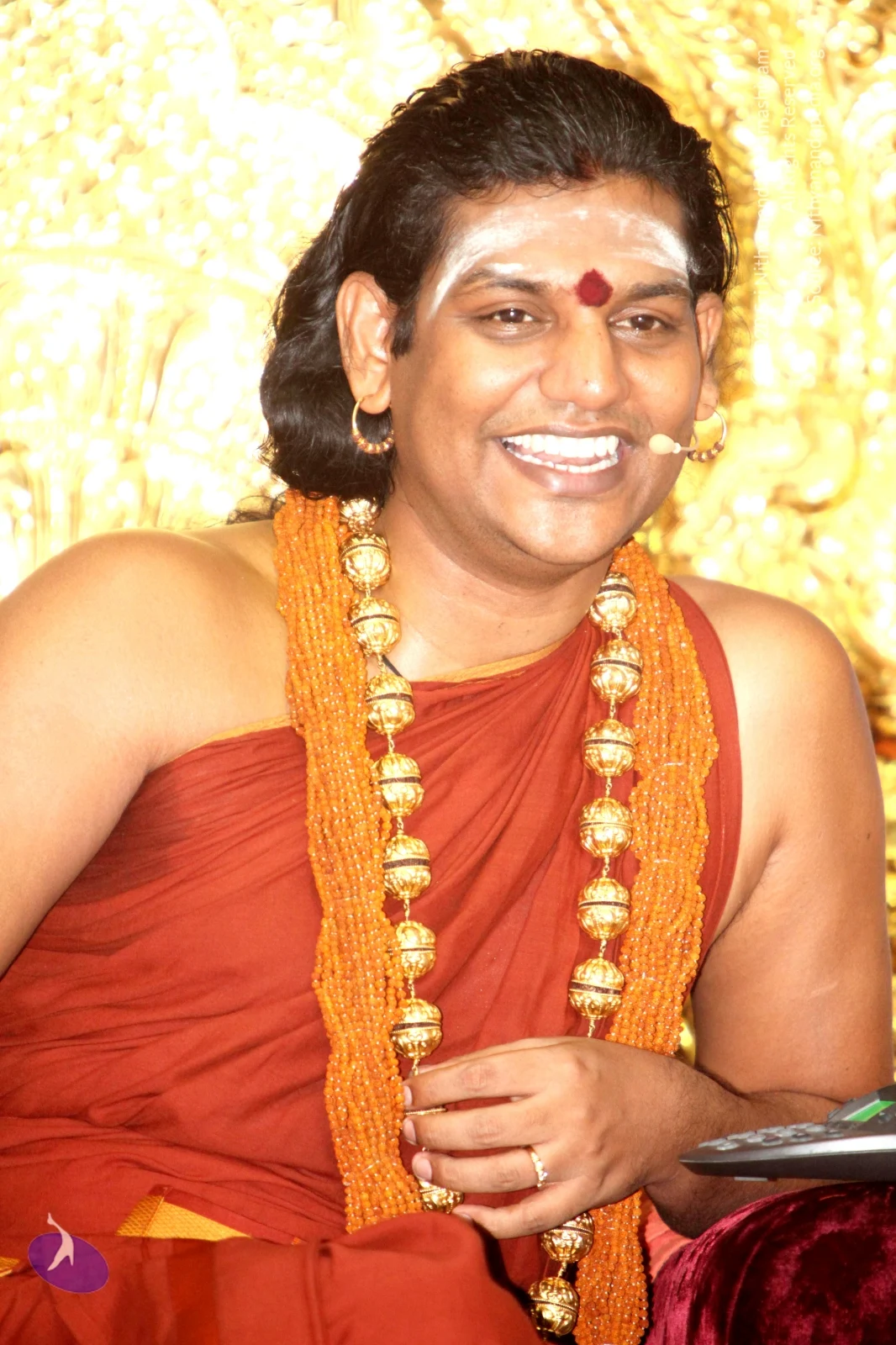
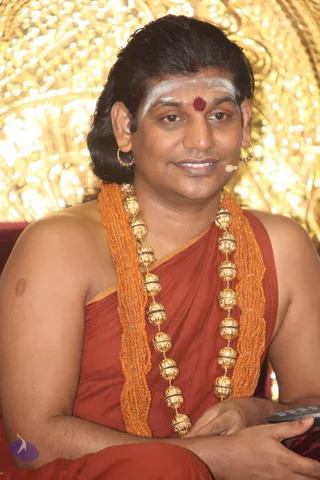
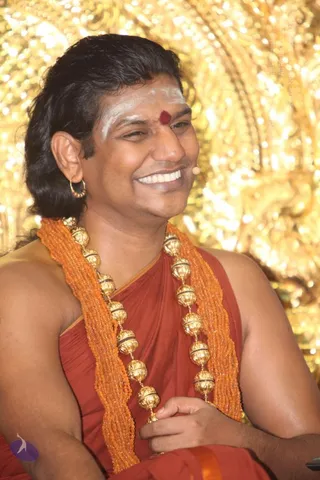
A man sits in front of a gold embossed backdrop, smiling slightly, with a small microphone clipped near his face. He wears a saffron-red shawl over his shoulders, long orange rudraksha-style beaded malas, and heavy ornate gold bead necklaces, with gold hoop earrings. He has a white horizontal tilak with a red bindi on his forehead and long swept-back dark hair, and holds a black remote control in his lap.a person seated close-up, smiling broadly, with swept-back black hair, a small hoop earring, white vertical forehead markings and a red kumkum dot. He wears a rust-orange unstitched cloth draped over bare shoulders, an orange-beaded necklace with large gold ornamental beads, and a small clip-on microphone near his mouth. His hand rests at his chest. The background is a shimmering gold-embossed backdrop. Photo shows one person.

Temple

10 photosSource gallery
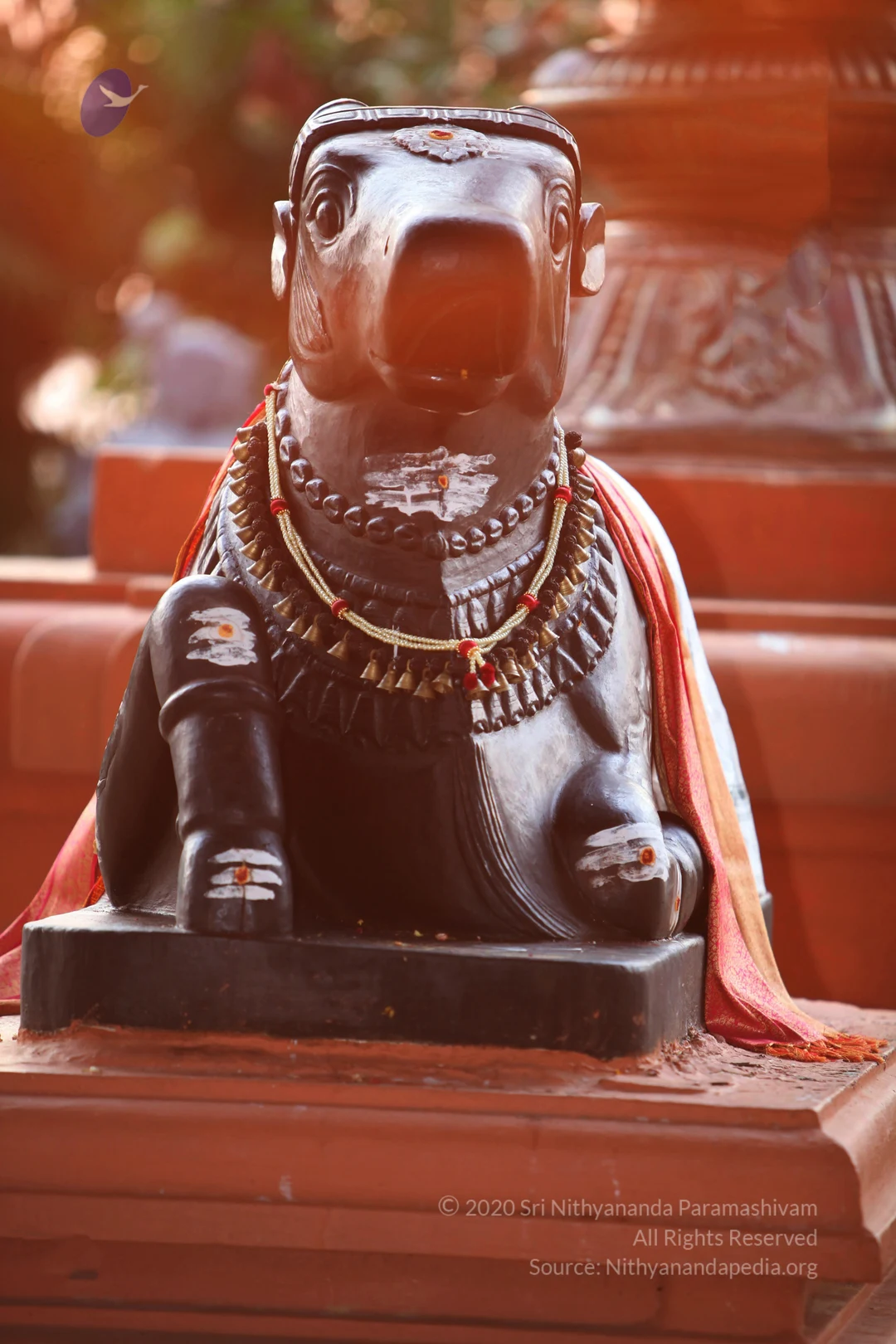
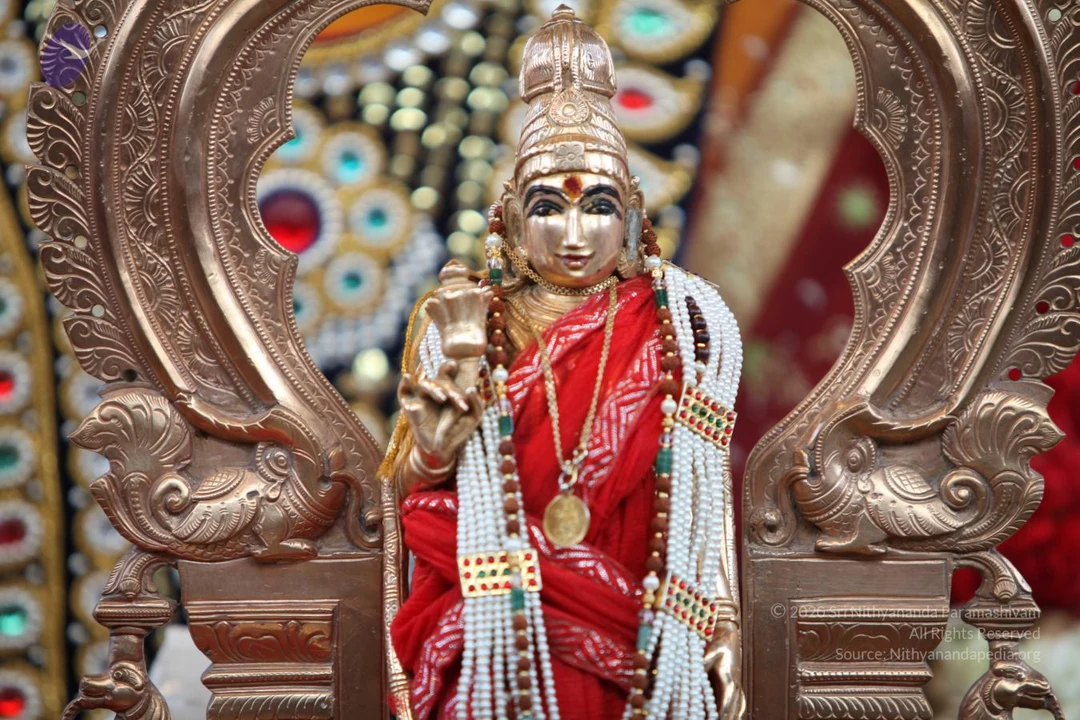
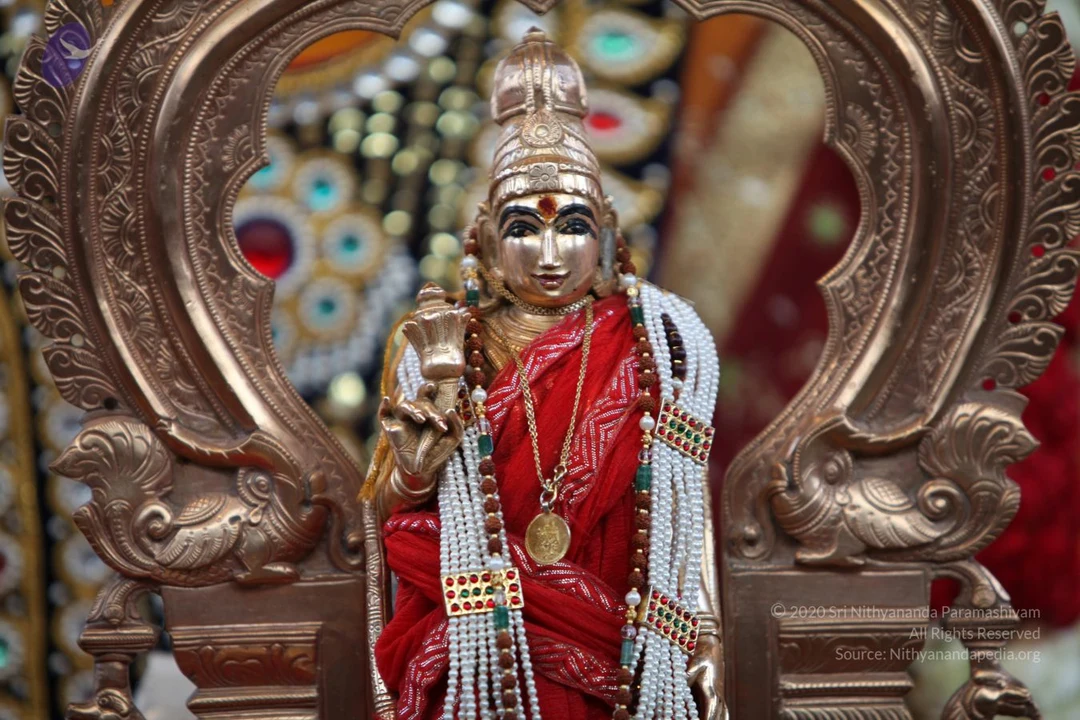
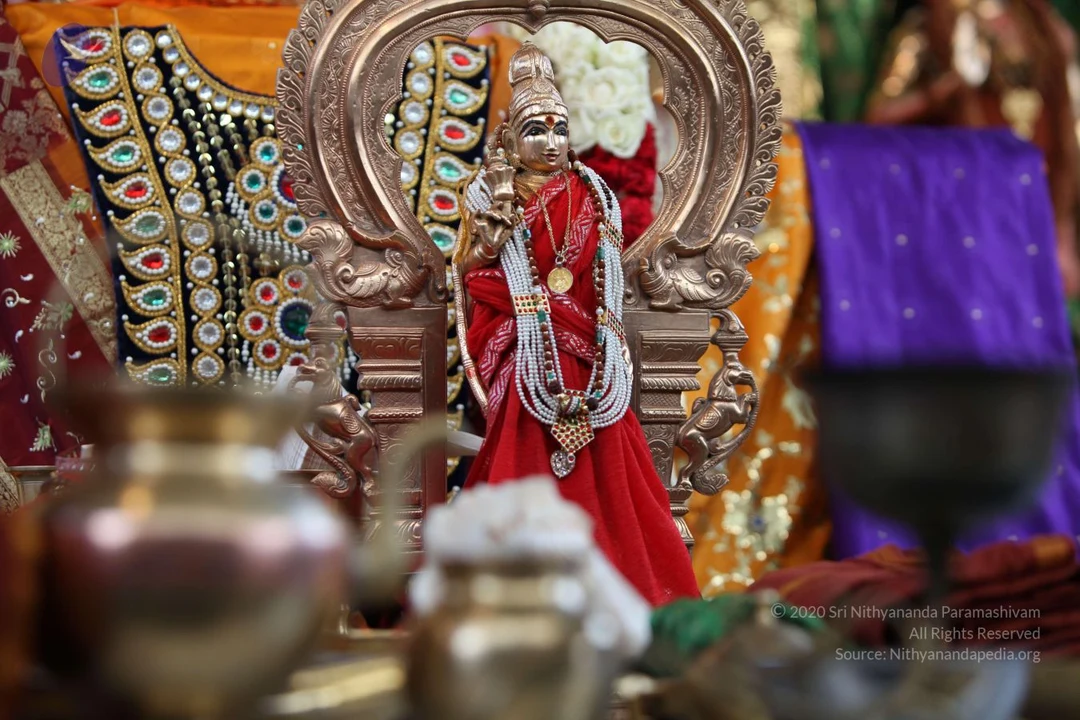
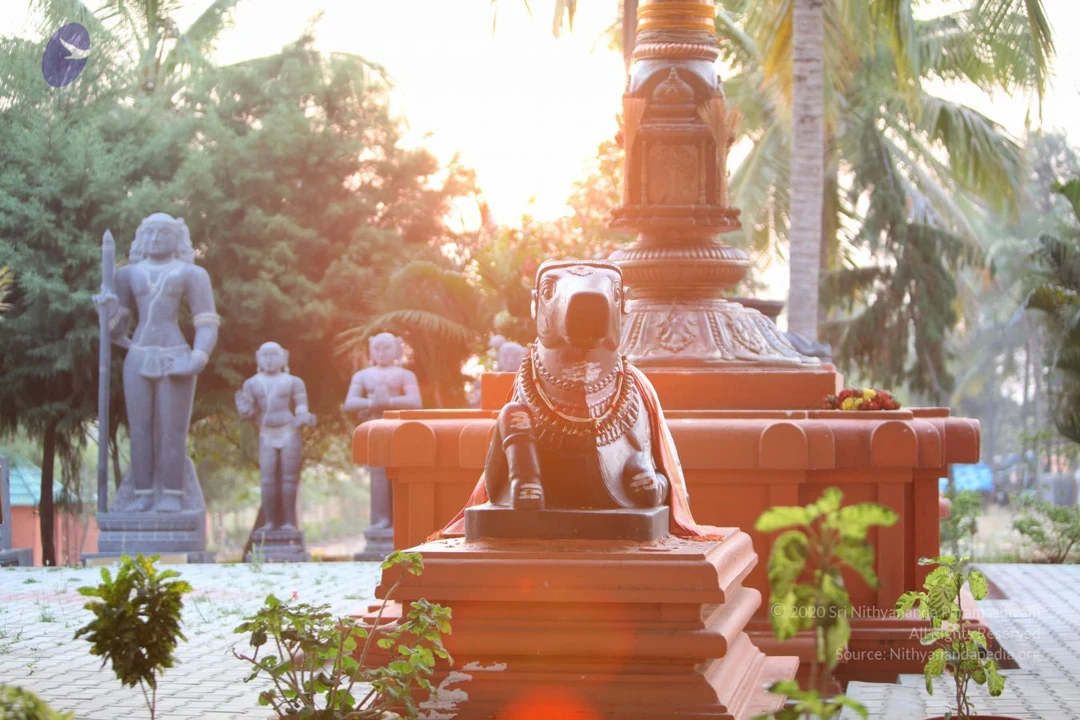
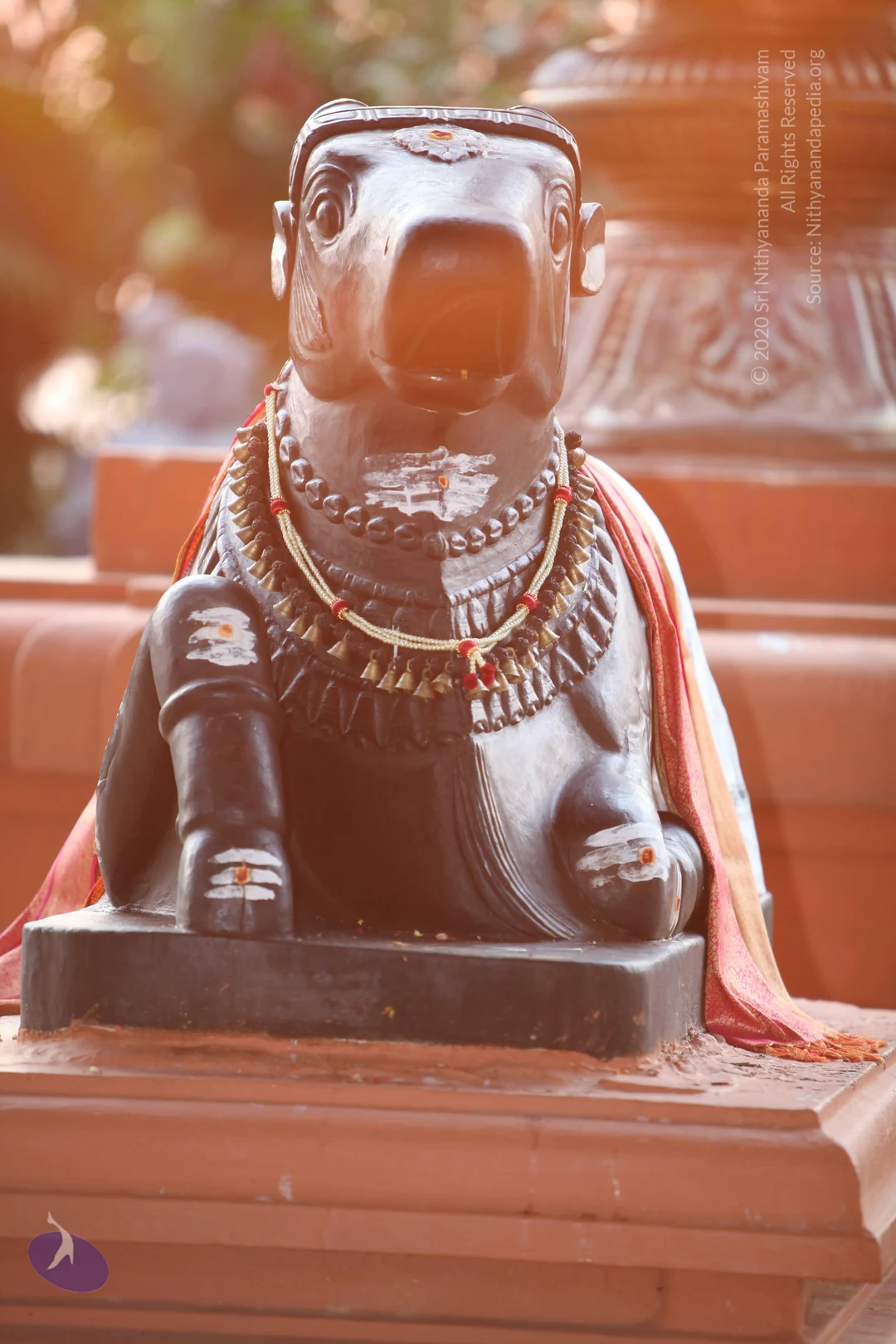
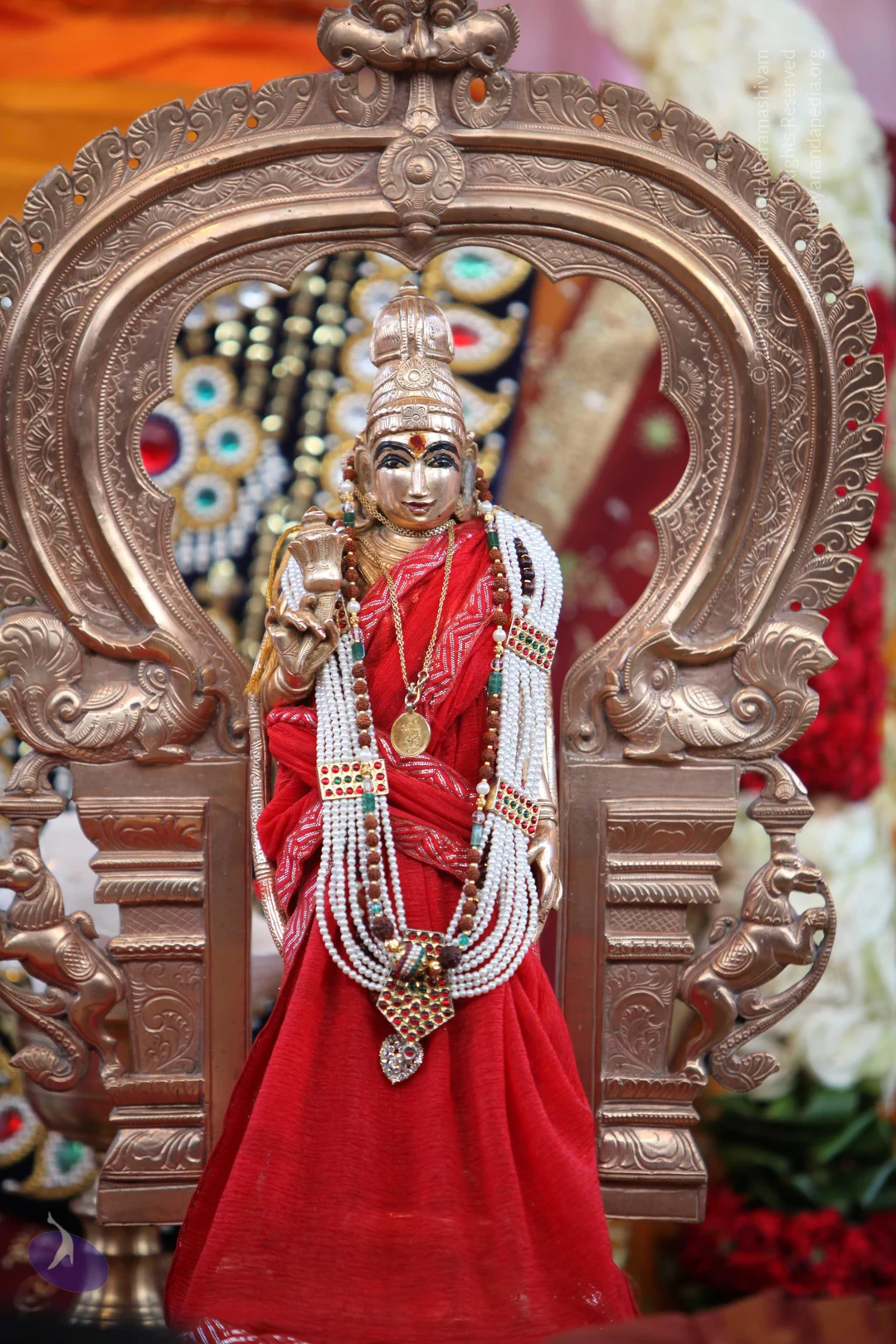
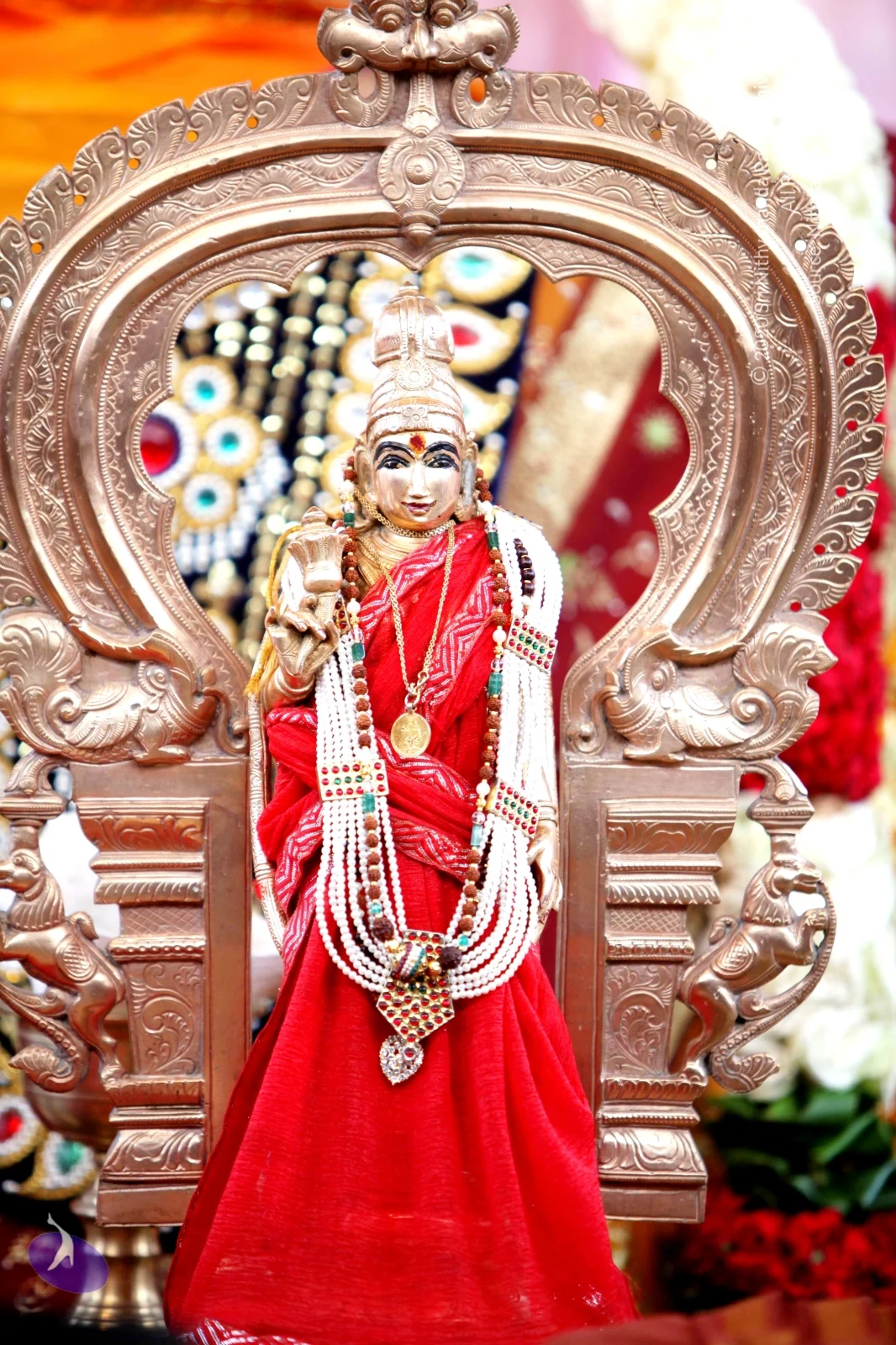
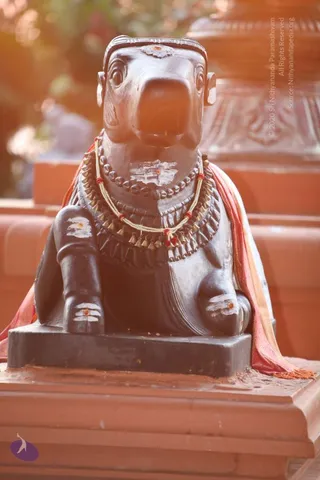
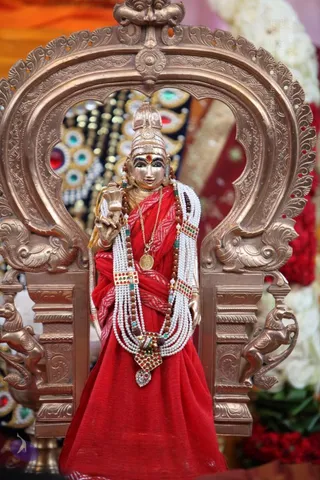
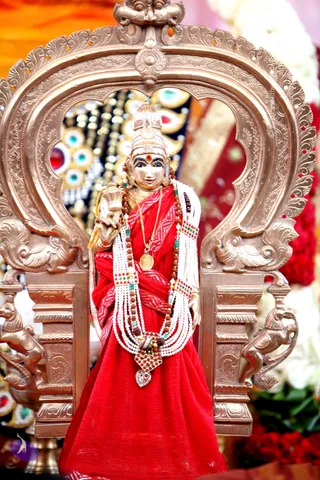
Two gilded metal deity murtis seated side by side on a blue silk-draped platform against a green cloth backdrop. The figure on the left wears a red turban, a rudraksha mala and ornate silver jewellery, and holds a trident and a small drum-like object, with orange dhoti and garlands of red roses and yellow marigolds. The figure on the right wears a silver crown, layered silver and pink-gemmed necklaces, an orange and magenta sari and marigold garlands. No living people are visible.Two gilded metal murti statues of a divine couple stand in a decorated shrine before green draped fabric. The male figure wears a red and gold turban with a jewelled ornament, a rudraksha mala and layered jewelled necklaces, and holds a ceremonial staff. The female figure wears a silver-and-pink jewelled crown, an orange sari, pearl-like garlands and large earrings. Both are heavily garlanded with red roses and yellow marigolds, and a trident and a metal lamp-like vessel stand at the sides. Their clothes and ornaments reflect a festival or abhishekam-style decoration.A sunlit temple garden at sunset with a dark stone Nandi bull seated on a terracotta-coloured pedestal in the foreground, draped with an orange cloth and wearing a beaded necklace. Behind it stands a tall terracotta lamp or column with a decorated top. To the left, grey stone statues of deity figures, including a standing figure holding a trident-like staff, stand among palm and tropical trees. Paved ground with small potted plants lies in front. No people are visible.A dark stone Nandi bull statue sits on a terracotta-coloured plinth, facing the viewer. It wears a gold-and-red beaded necklace hung with small brass bells, a rudraksha-style bead collar, and a draped pink and orange cloth over its back. White tripundra marks and red bindi dots decorate its forehead, neck and legs. Blurred greenery and a carved stone pillar appear in the warm-toned background. No people are visible.A gilded arched shrine frames a pair of copper-toned deity murtis seated on a raised platform against a yellow backdrop. The male murti wears a red turban, red and gold garments, layered beaded necklaces and a trident-like staff, while the female murti wears a teal-and-red sari, jewelled ornaments and white flower garlands. In front, a tall orange-draped linga-shaped form is adorned with white and red garlands and green leaves, flanked by a brass kalasha, a small oil lamp and a copper arch. At lower left a shaven-headed priest in ochre robes and sandalwood markings reads from an open book. A purple cloth lies at the right edge of the shrine.A bronze-finished deity murti stands within an ornate copper-coloured arched frame carved with foliage and rearing animal figures. The figure wears a red draped garment with white and red patterned borders, layered white pearl strands, rudraksha beads, green and red jewelled ornaments on the arms, and a gold pendant. A tall crown-like headdress and a raised hand holding a small object are visible. Red and white flower garlands and jewelled fabric form the background. No physical people are visible.

1-Bidadi-Deities

6 photosSource gallery
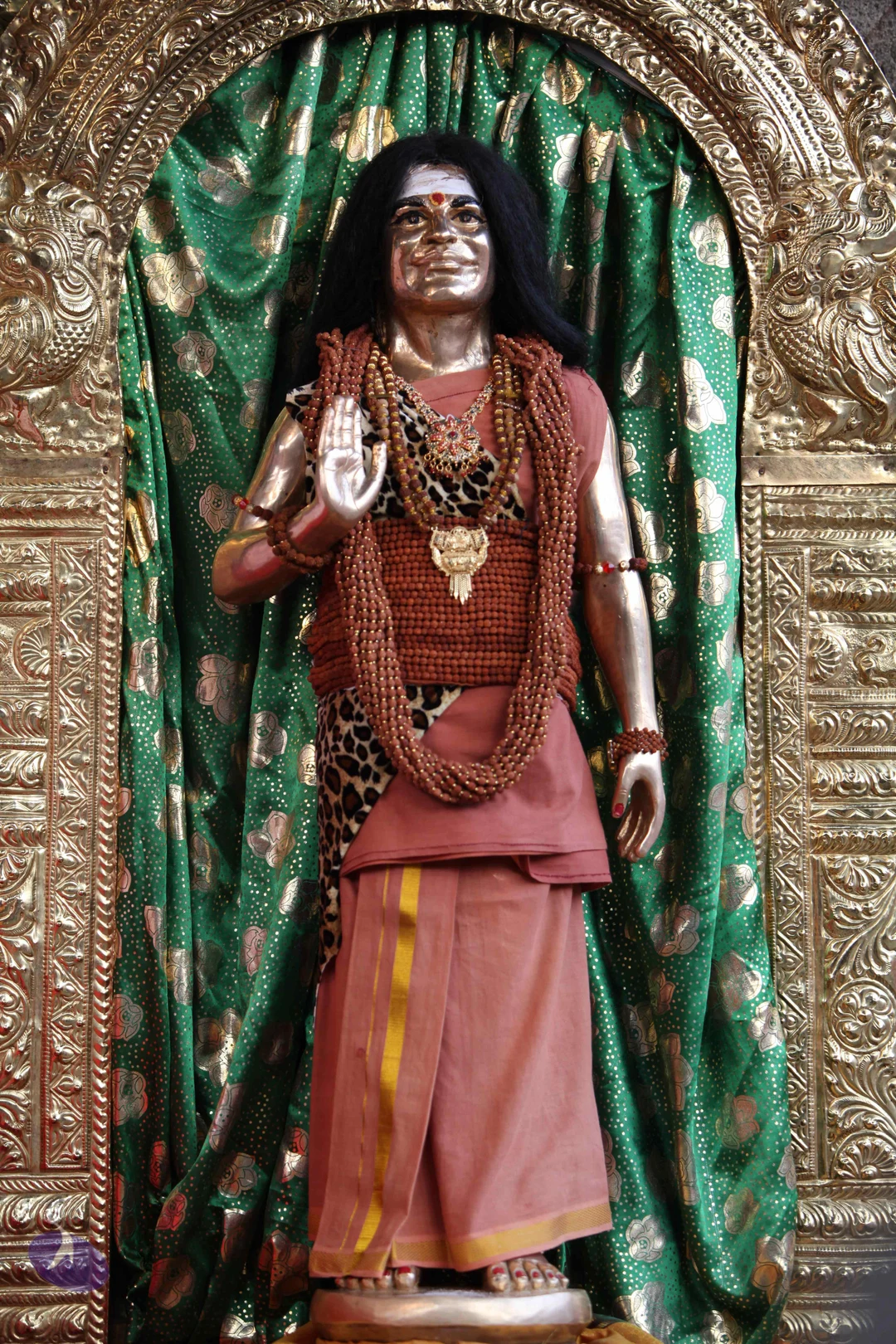
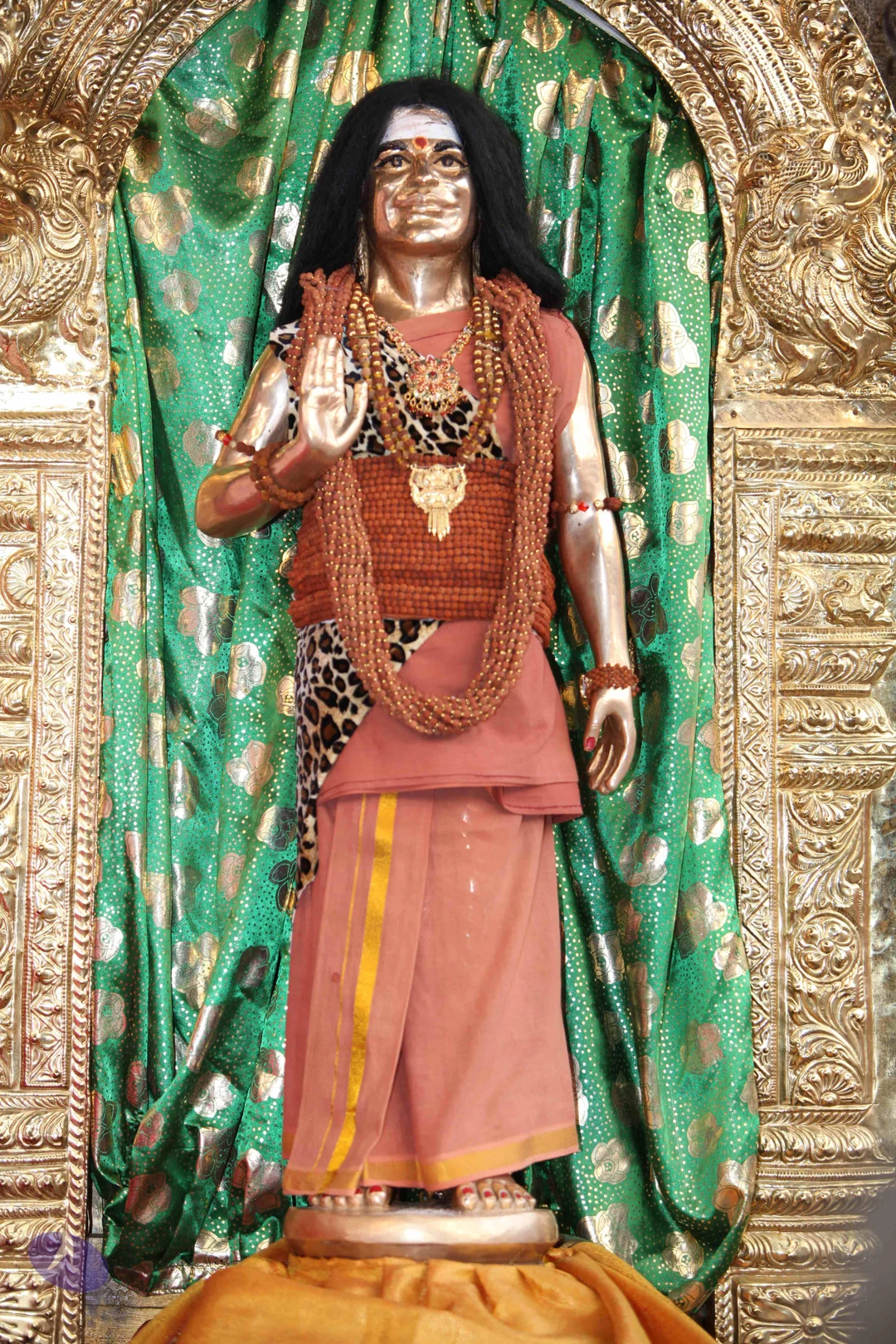
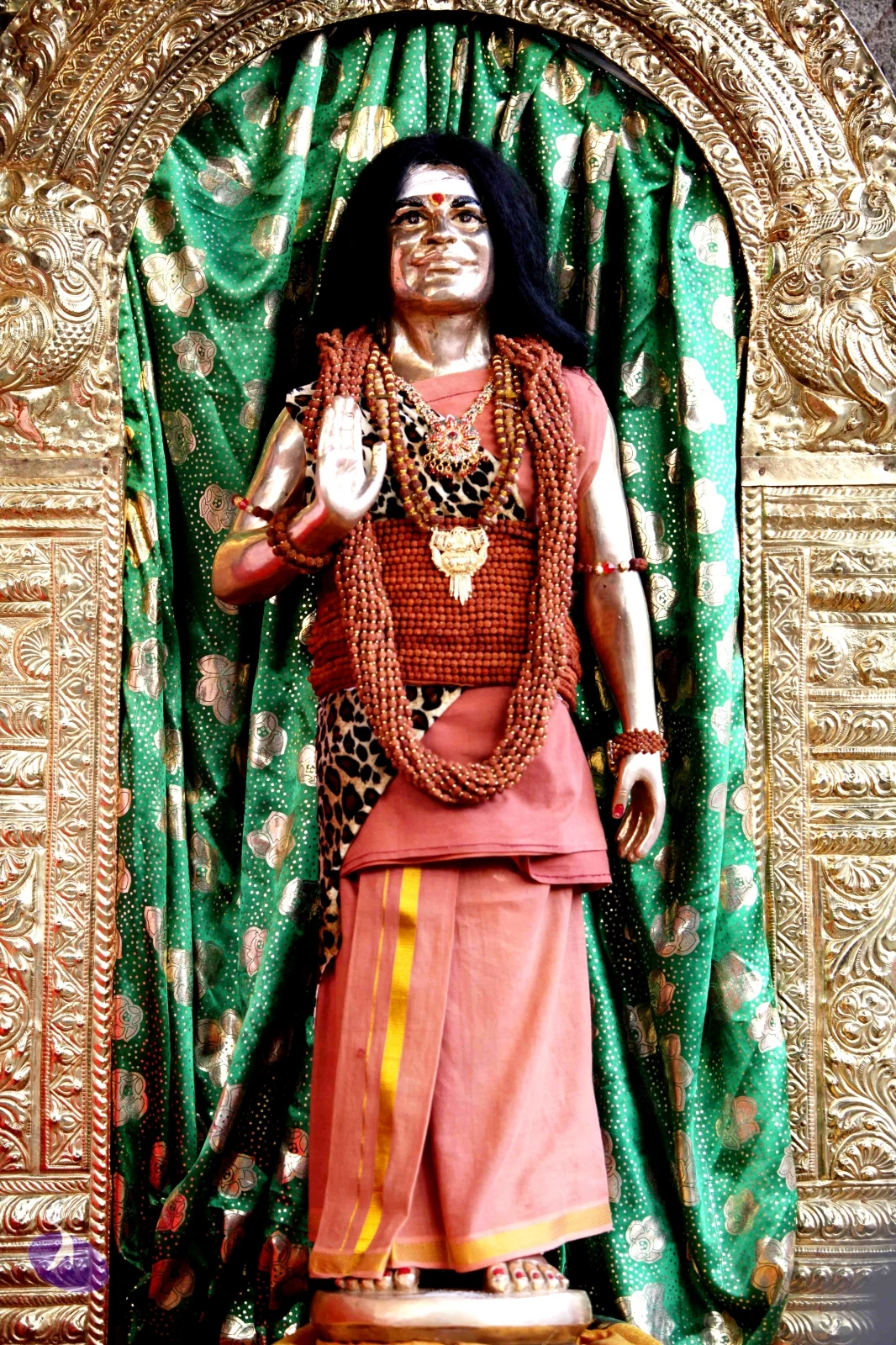
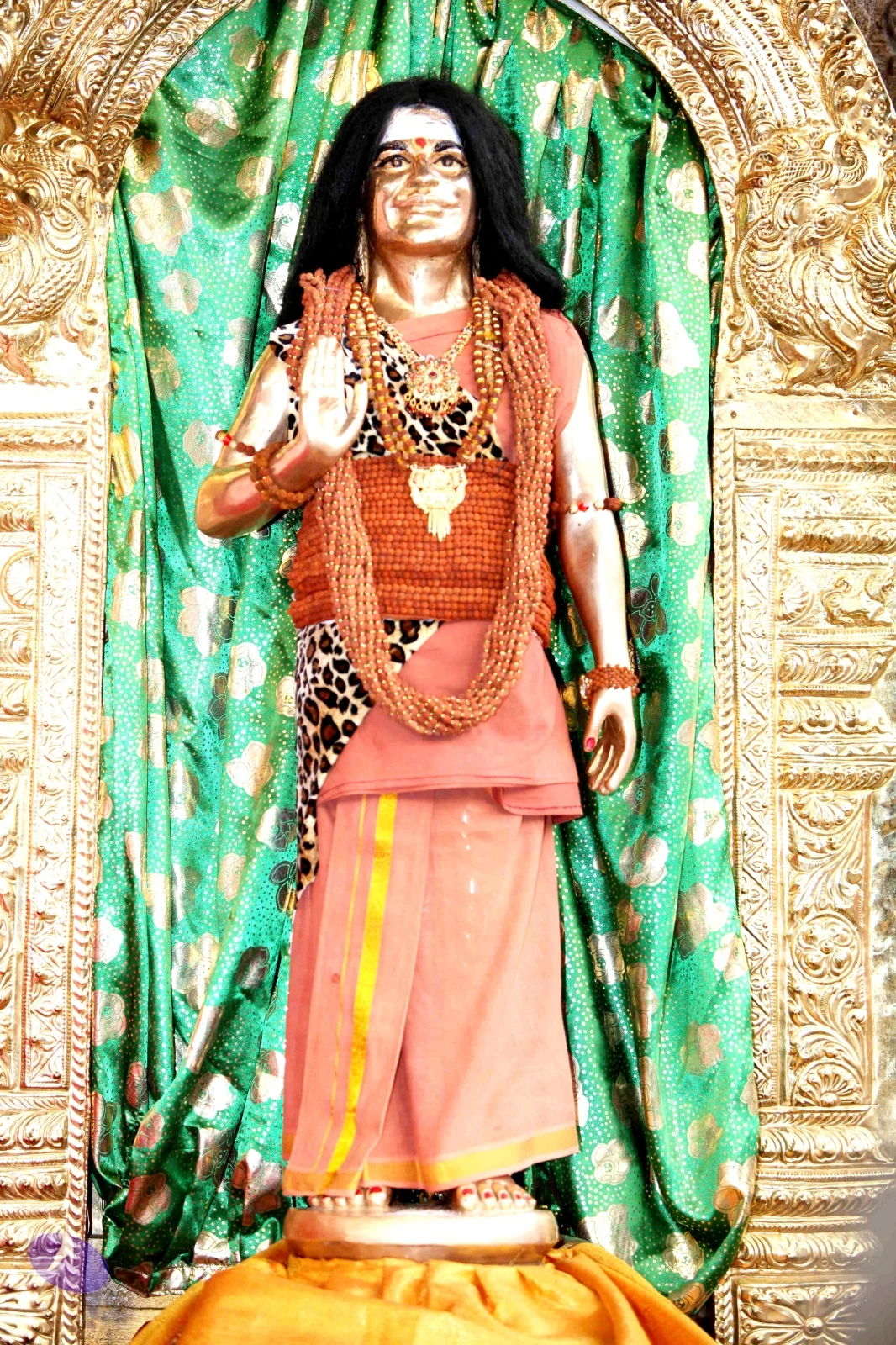
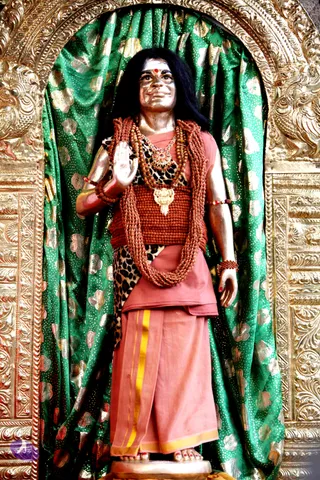
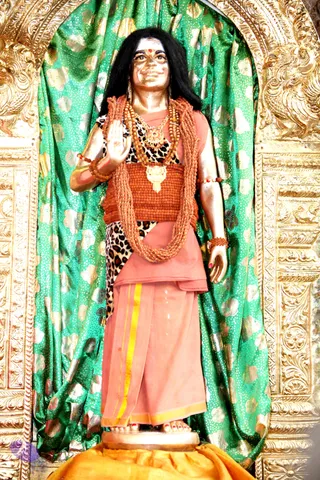
Photograph of a pair of gilded metal murti deities seated on a blue draped pedestal in front of a bright green cloth backdrop and an ornate gold arch. The left figure has a red turban, a trident, a damaru-style drum, a rudraksha mala and orange dhoti; the right figure wears a silver crown, a pink-and-orange sari and layered silver necklaces. Both are heavily garlanded with red and yellow flower malas and hold ritual objects. This is a statue, not a living person, and no living person is visible.Close photograph of two golden metal murti statues of deities seated side by side before a green draped backdrop. The figure on the left wears a red-orange turban with a jeweled ornament and holds a trident-like staff, with rudraksha beads and ornate necklaces. The figure on the right wears a tall white jeweled crown, an orange sari and layered silver necklaces. Both are decorated with thick garlands of red roses, yellow marigolds and white flower strands. A golden peetha or throne frame and a metal kalasha-style ornament appear at the left edge. The statues are not living people, so no physical persons are present.A photograph of a gilded shrine with two large deity murti seated on a raised dais before a yellow backdrop. The taller figure wears a red turban and carries a trident, with rudraksha-style strands and jewelled necklaces; the consort figure wears a red and white sari, white garland and crown. In front, a Shivalinga-like form is draped in orange and gold cloth with garlands. At lower left, a shaved-headed priest in orange-red robes with white marks sits reading from a book beside brass pots and offerings. The scene is a temple-style worship display; no clearly identifiable a person appearance is present among physical people.A metal deity murti stands within an ornate gilded bronze arched frame with lion-figure supports, dressed in a red sari with a red-and-white patterned shawl. It wears layered white pearl necklaces with rudraksha beads, a gold pendant and a jewelled pendant, and holds a small object in one hand. Red flowers and jewelled decorations fill the background. No physical people are visible.A gilded statue of a long-haired sadhu figure stands in an ornate gold-framed niche draped with green fabric printed with gold flowers. The statue has a red bindi and tilak, long black hair, and a raised right palm in blessing. It wears layered rudraksha malas, a gold pendant necklace, a leopard-print undergarment, a rust-red shawl over the torso, and a rust-red dhoti with a gold border. No living people are visible.A gilded statue of a standing male figure with long black hair, a red tilak and rudraksha mala garlands, raised right hand in blessing, wearing a salmon-pink dhoti with gold border and leopard-print cloth. The statue stands within an ornate gold arch against green and gold patterned fabric. Its status is a statue, not a living person.

2-Pada-Puja

14 photosSource gallery
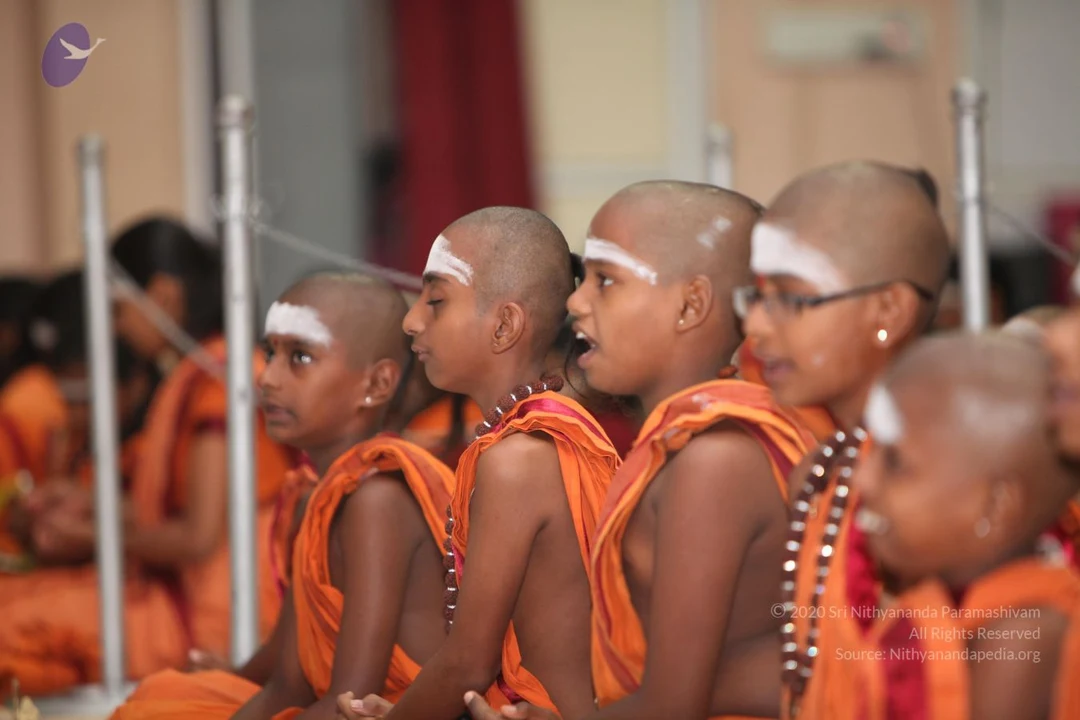
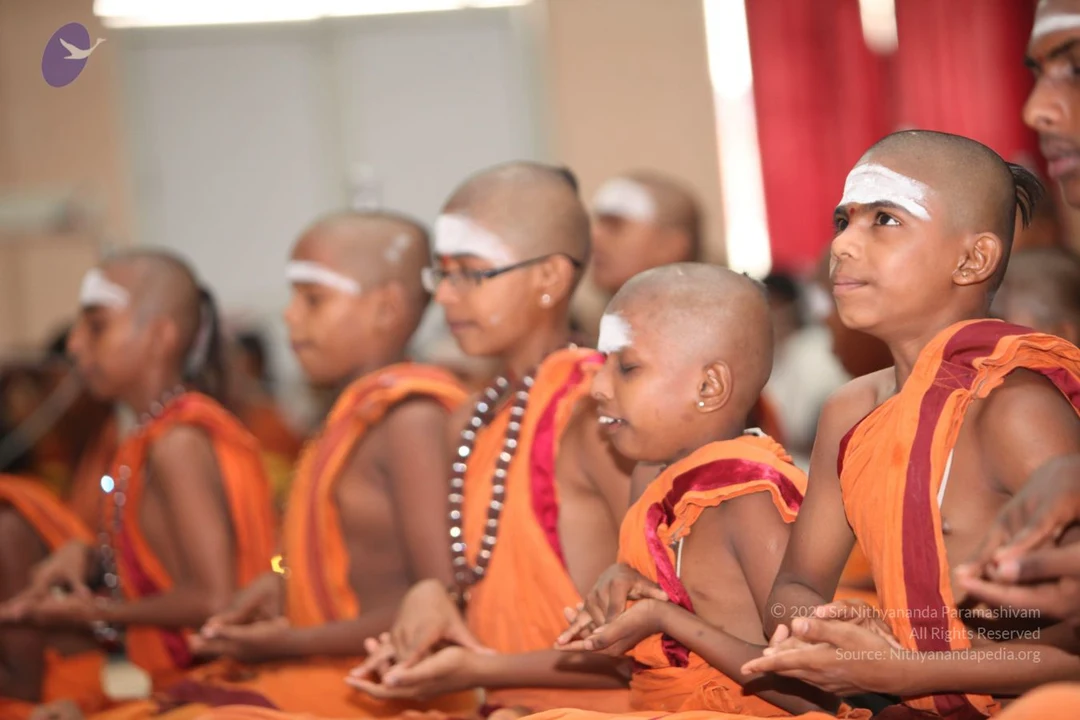
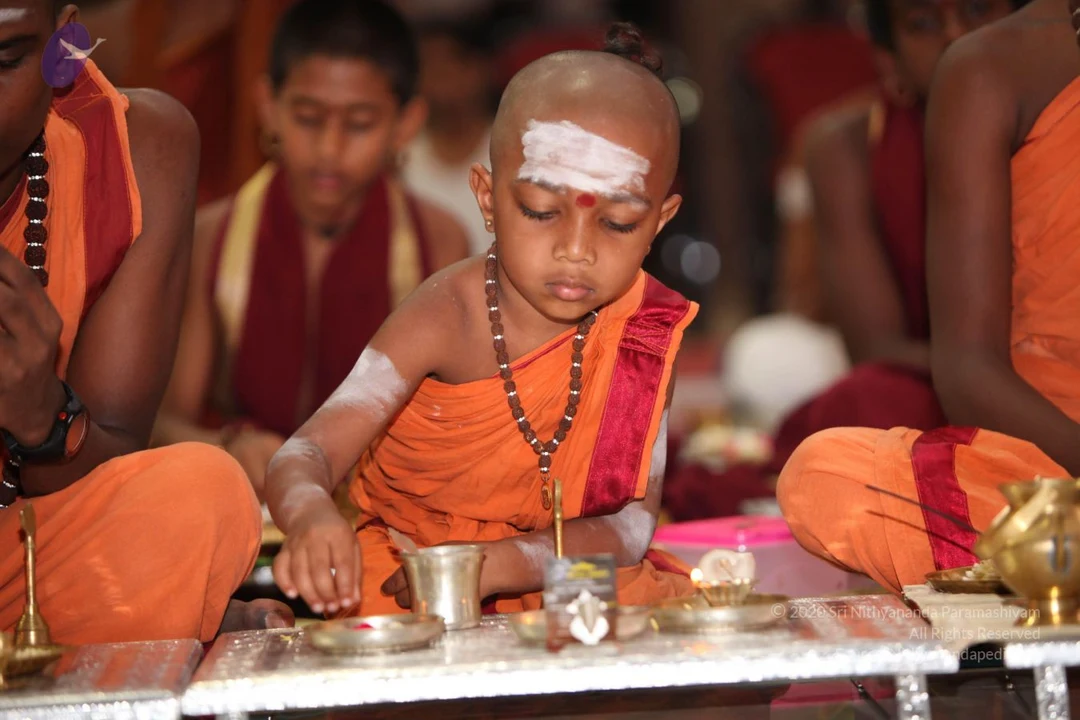
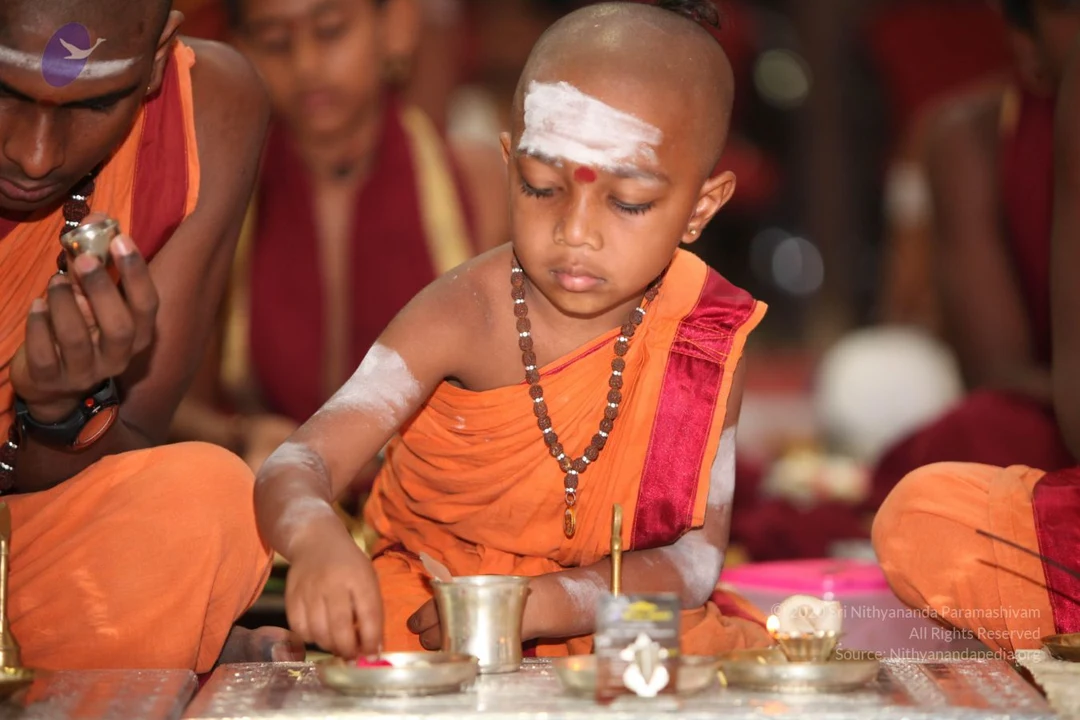
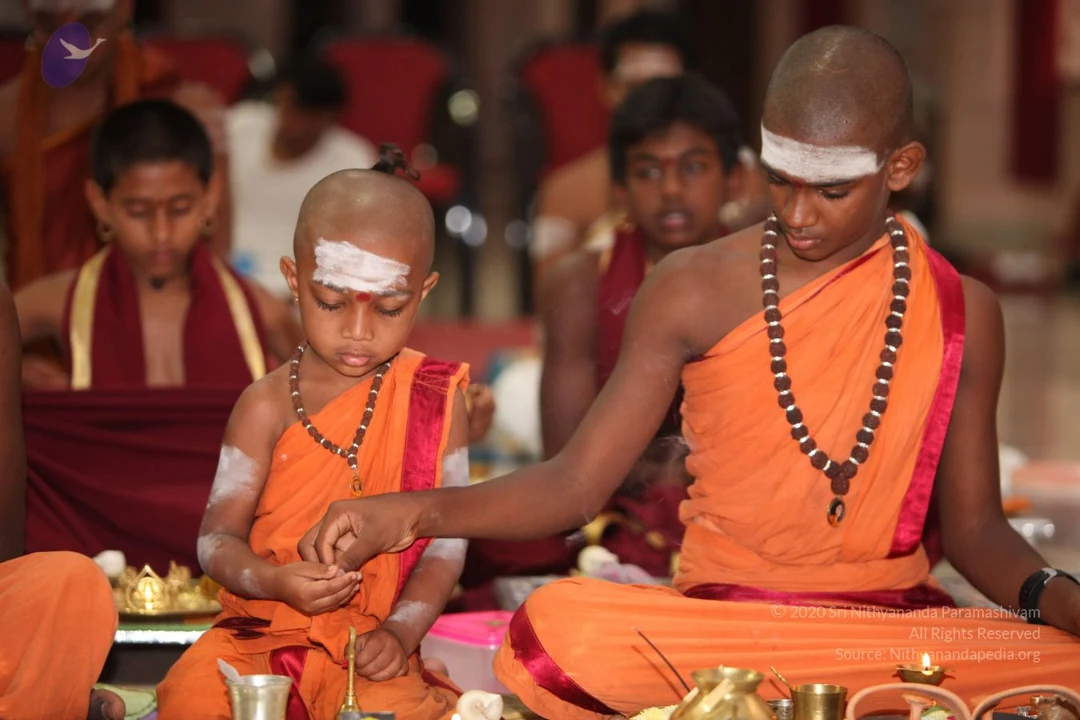
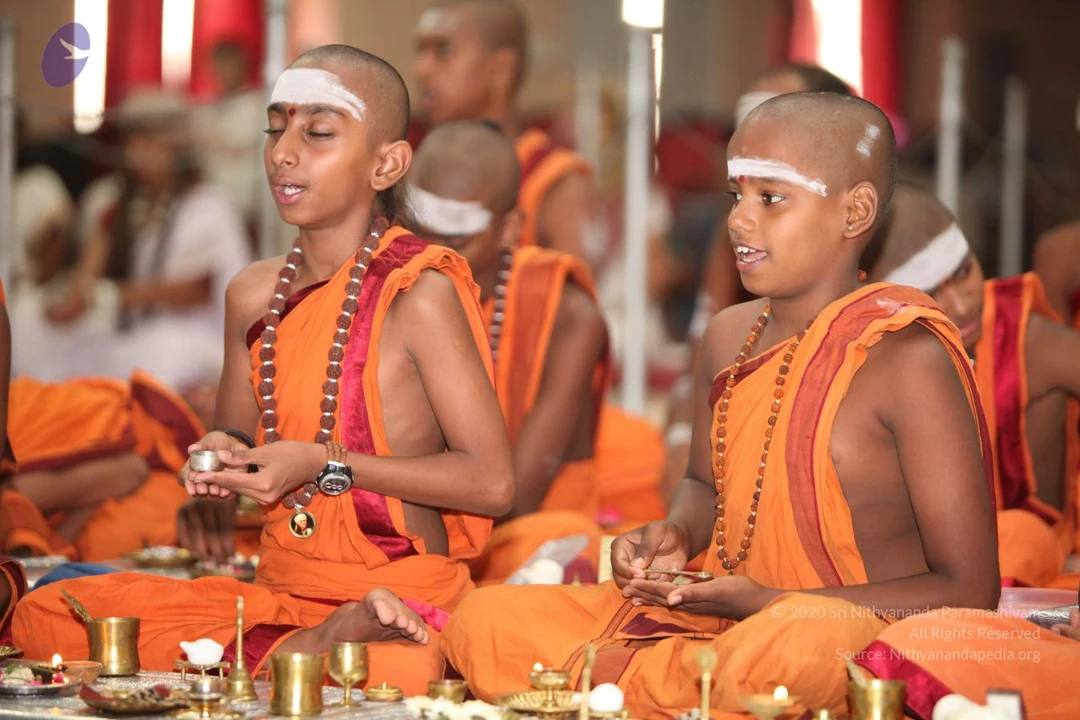
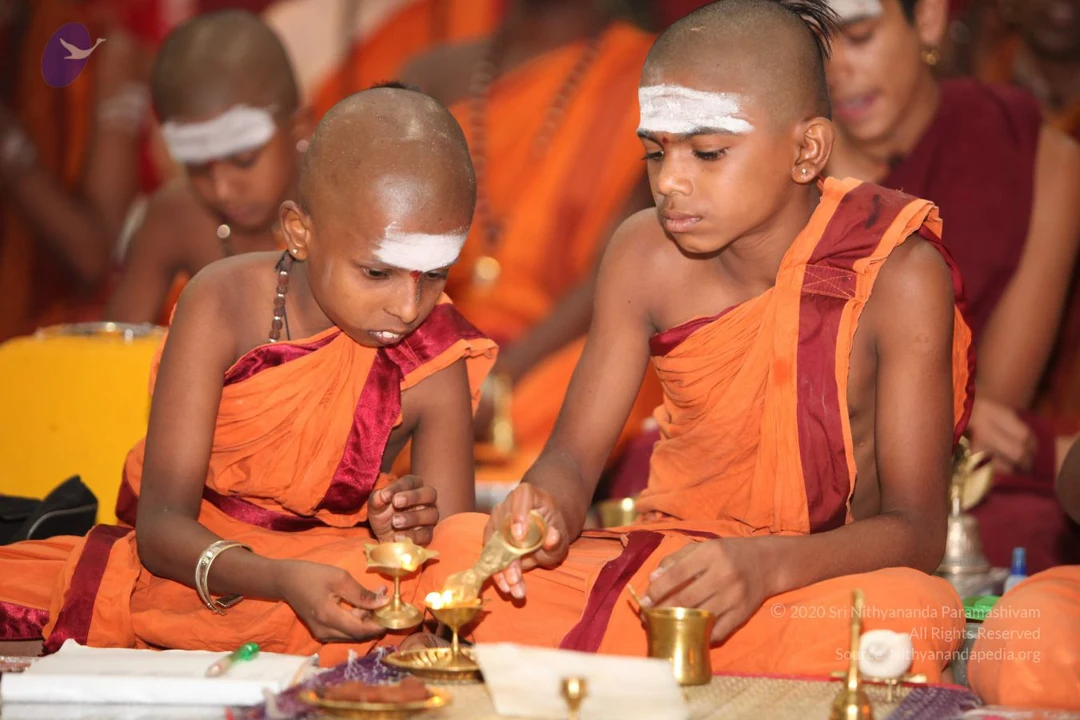
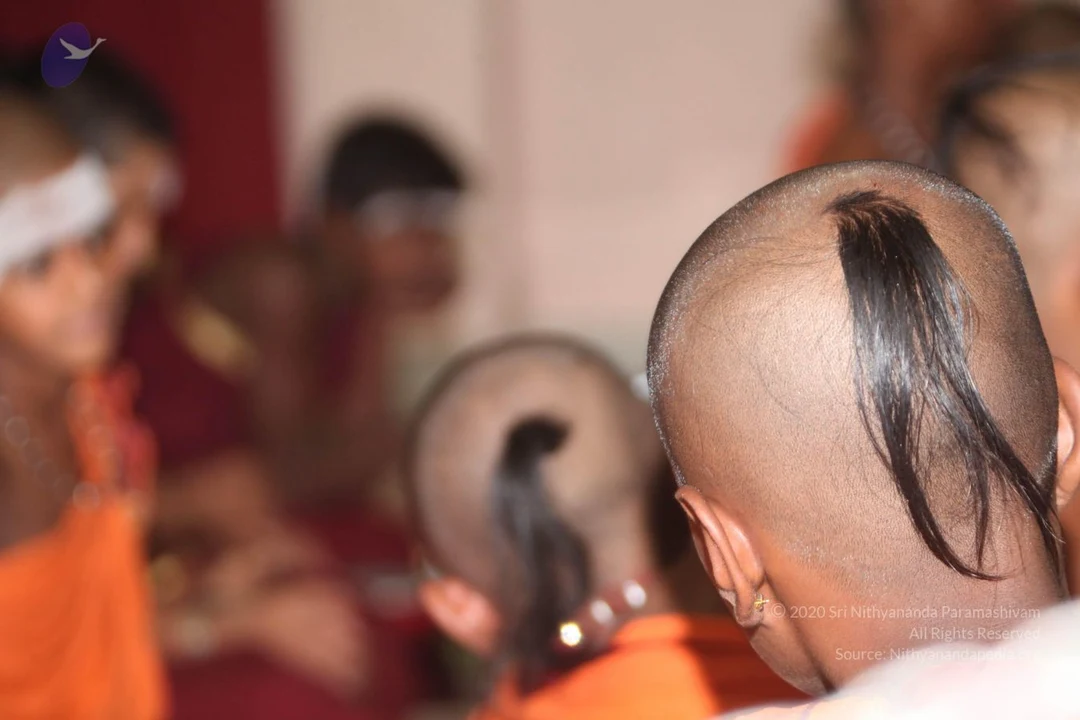
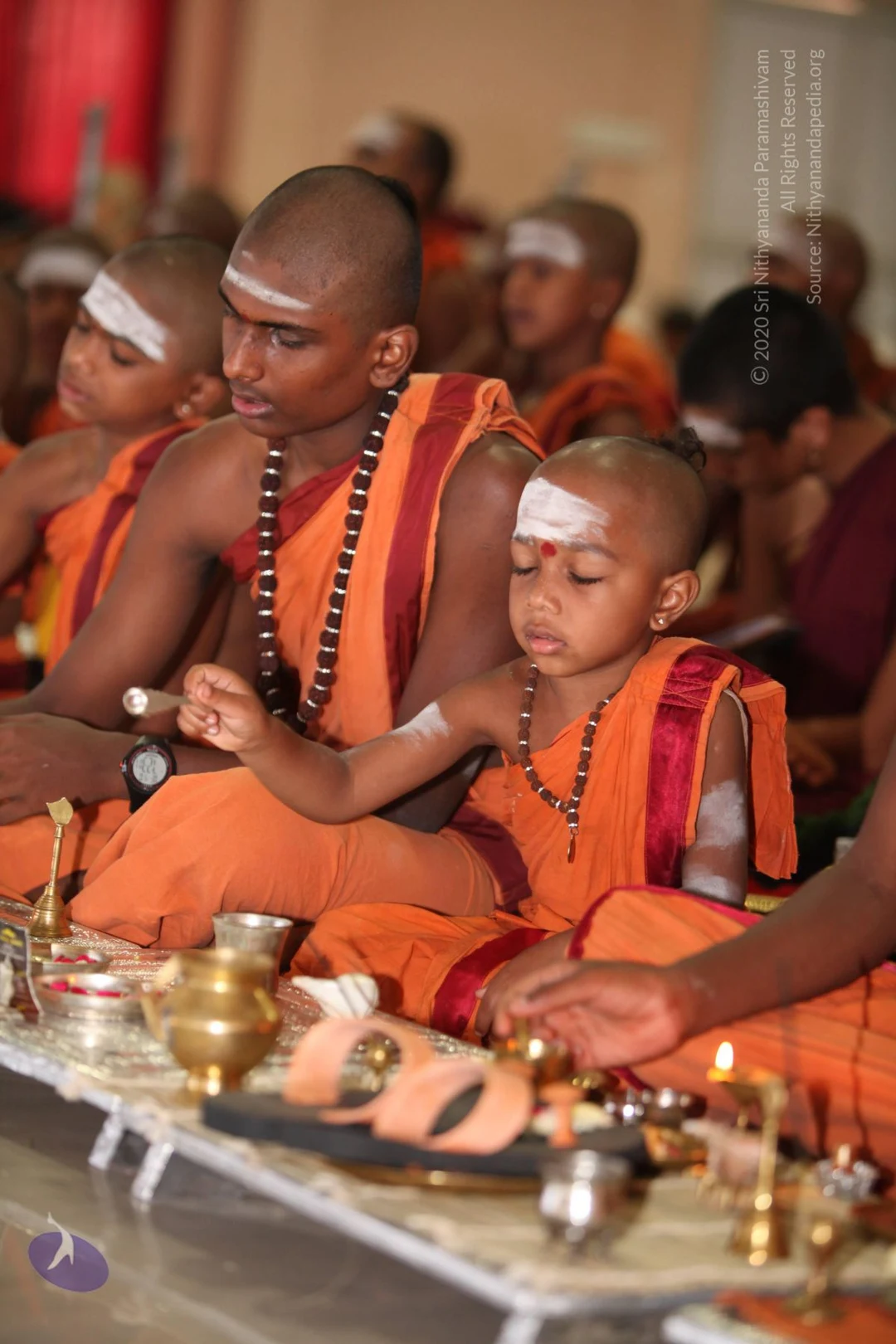
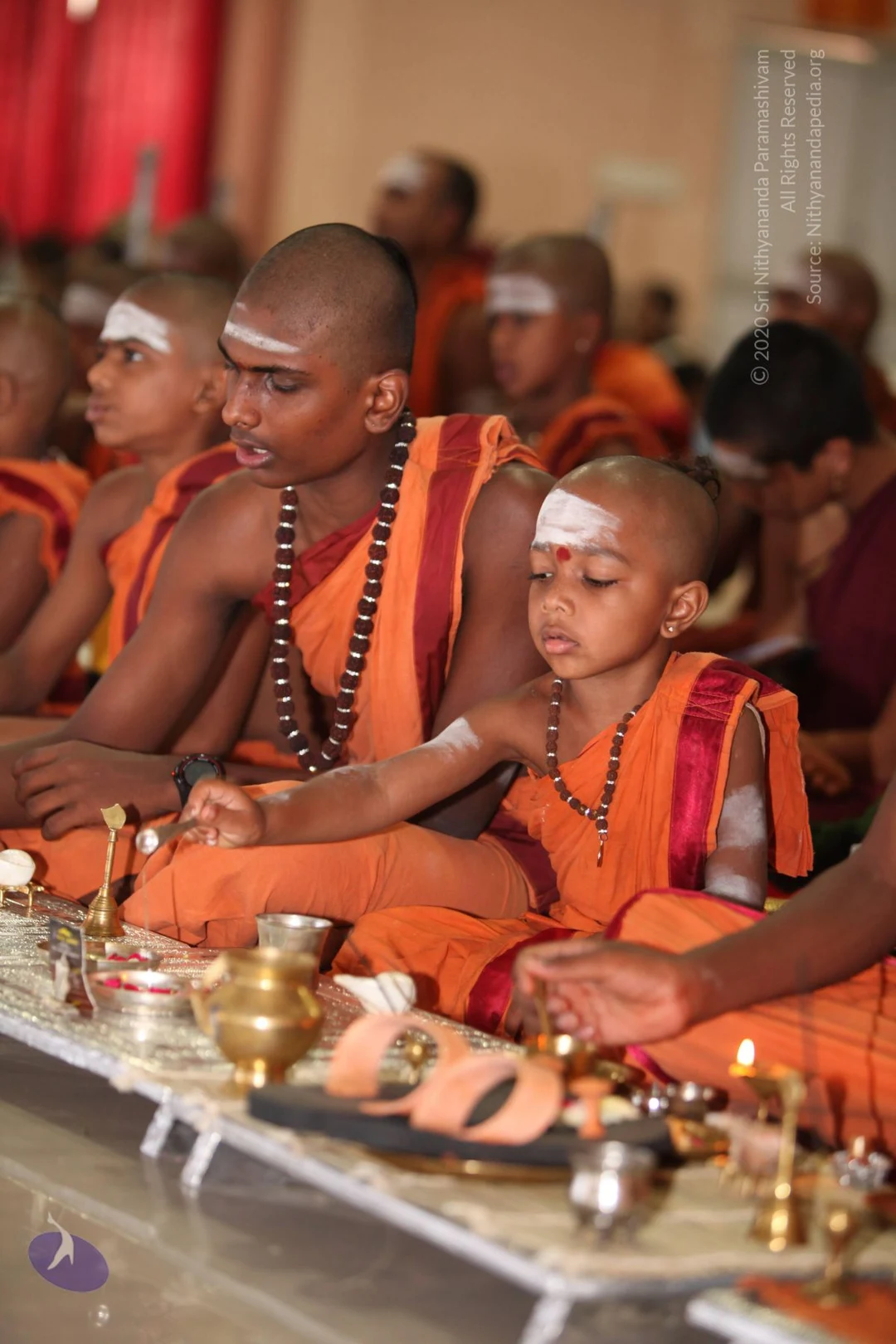
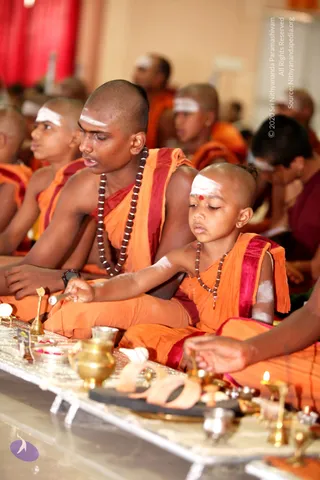
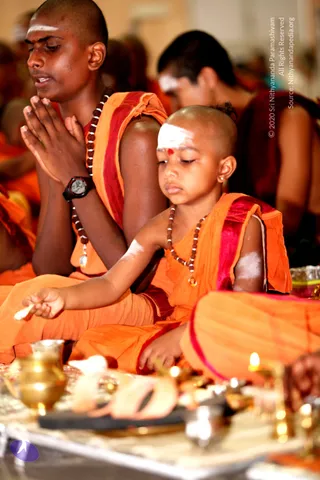
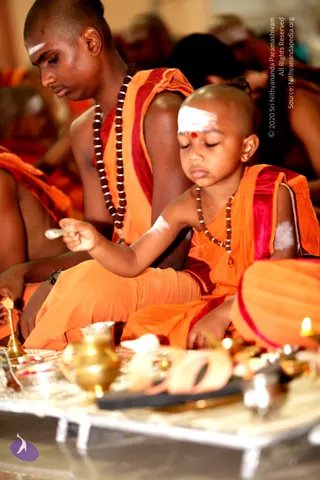
Close photograph of young monks seated in a row, dressed in orange and red robes with rudraksha beads. A shaved-headed young monk in the foreground leans his head forward toward a smaller child monk beside him, both with white vertical tilak on their foreheads. The child has eyes closed and hands clasped in his lap. Another seated monk in orange is partly visible at left. Pale background.Photograph of shaved-headed young monks in saffron-orange robes with red borders and rudraksha malas, seated in a row during a ritual. The boy in front has a white vibhuti line and red bindi and is reaching toward brass vessels and oil lamps on a low silver-covered table. An older youth beside him, with a white forehead mark and dark wooden beads, sits attentively. Behind them, more monks in orange and maroon sit in rows, and red curtains hang at the back of the hall.A photograph of a Pada Puja ritual with saffron-robed participants seated on the floor. In the foreground a young shaven-headed boy in orange robes with a red edged shawl and rudraksha mala has a white vibhuti line and red kumkum dot, reaching toward a brass plate. Behind him an older youth with shaved head, white tilak and red-orange robes sits with palms pressed together in namaskar. Brass vessels, a small oil lamp and an offering tray with flower petals sit in front. Other saffron-robed people are seated in the background.Photograph of a puja at a sitting ritual gathering. A young boy with a shaved head, white tilak and red bindi, wearing orange clothing with red borders and a rudraksha mala, holds a small spoon and reaches toward a tray of brass vessels and offerings. Behind him an older young man in orange with a rudraksha mala sits attentively, and other seated devotees in orange appear blurred in the background. In the foreground are a brass kalasha, a brass bell, flower offerings and a lit oil lamp. The setting suggests a padapuja style ceremony.A young shaven-headed boy sits cross-legged in a monastic setting, wearing an orange saffron robe with a red border and a rudraksha mala with a small gold pendant. White sandalwood paste marks his forehead and both upper arms, with a red kumkum dot between his brows. He holds a small gold oil lamp in front of him, with a brass cup and gold-coloured ritual vessels on the plate nearby. Other people in red robes are blurred in the background.A young shaved-headed boy in an orange saffron robe sits in a crowd, singing or chanting with his mouth open and gaze lifted to the side. He wears a dark rudraksha mala necklace and has a broad white paste stripe across his forehead with a small red bindi. Several blurred figures in similar orange robes, some with raised hands, surround him.
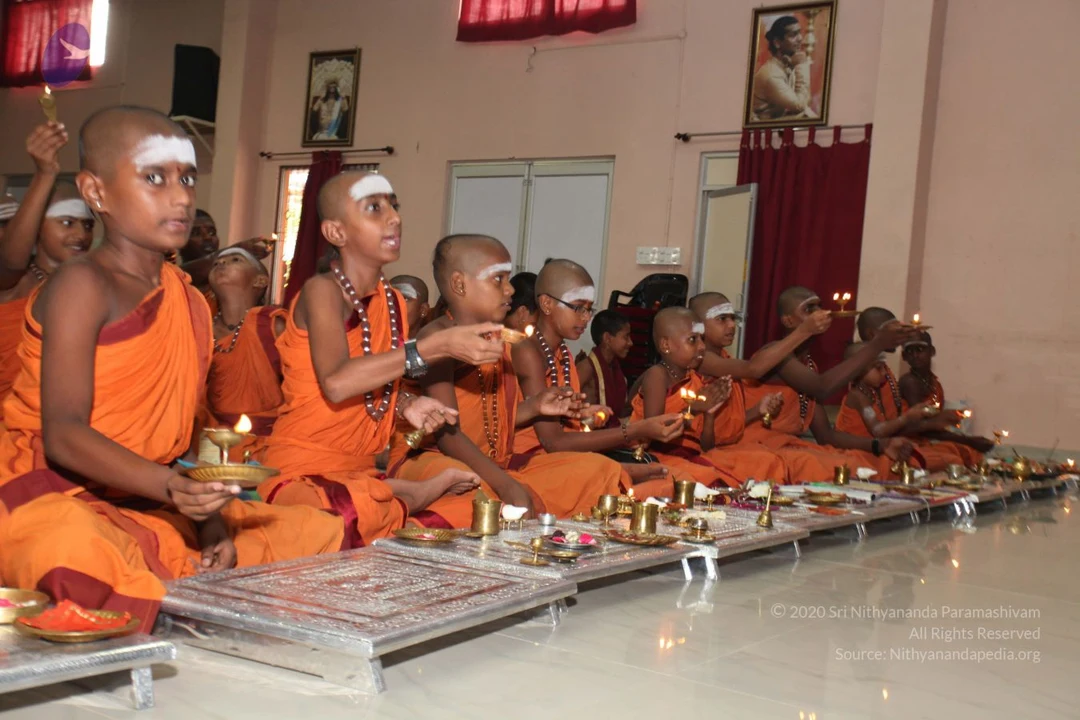
3-Satsang
31 photosSource gallery
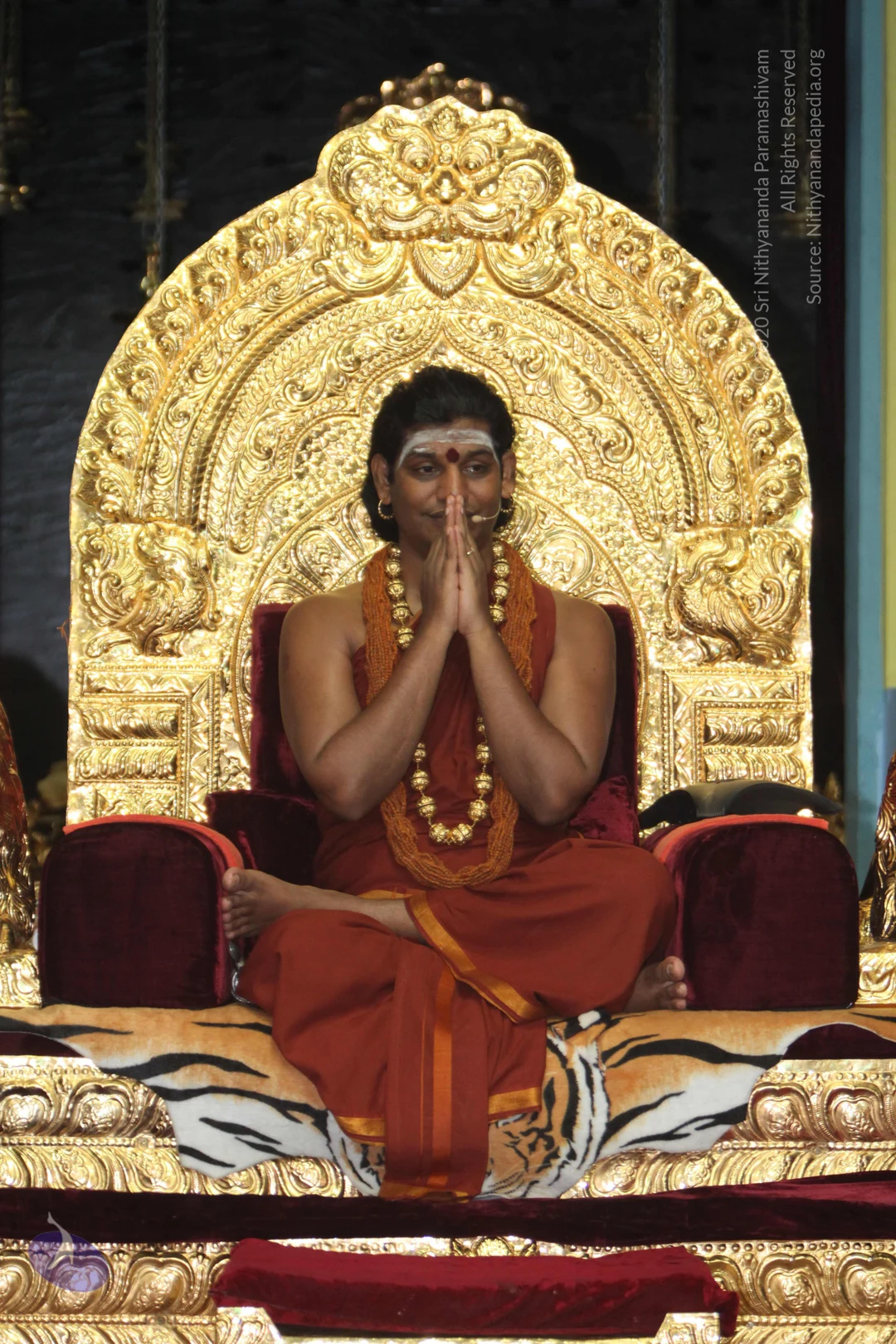
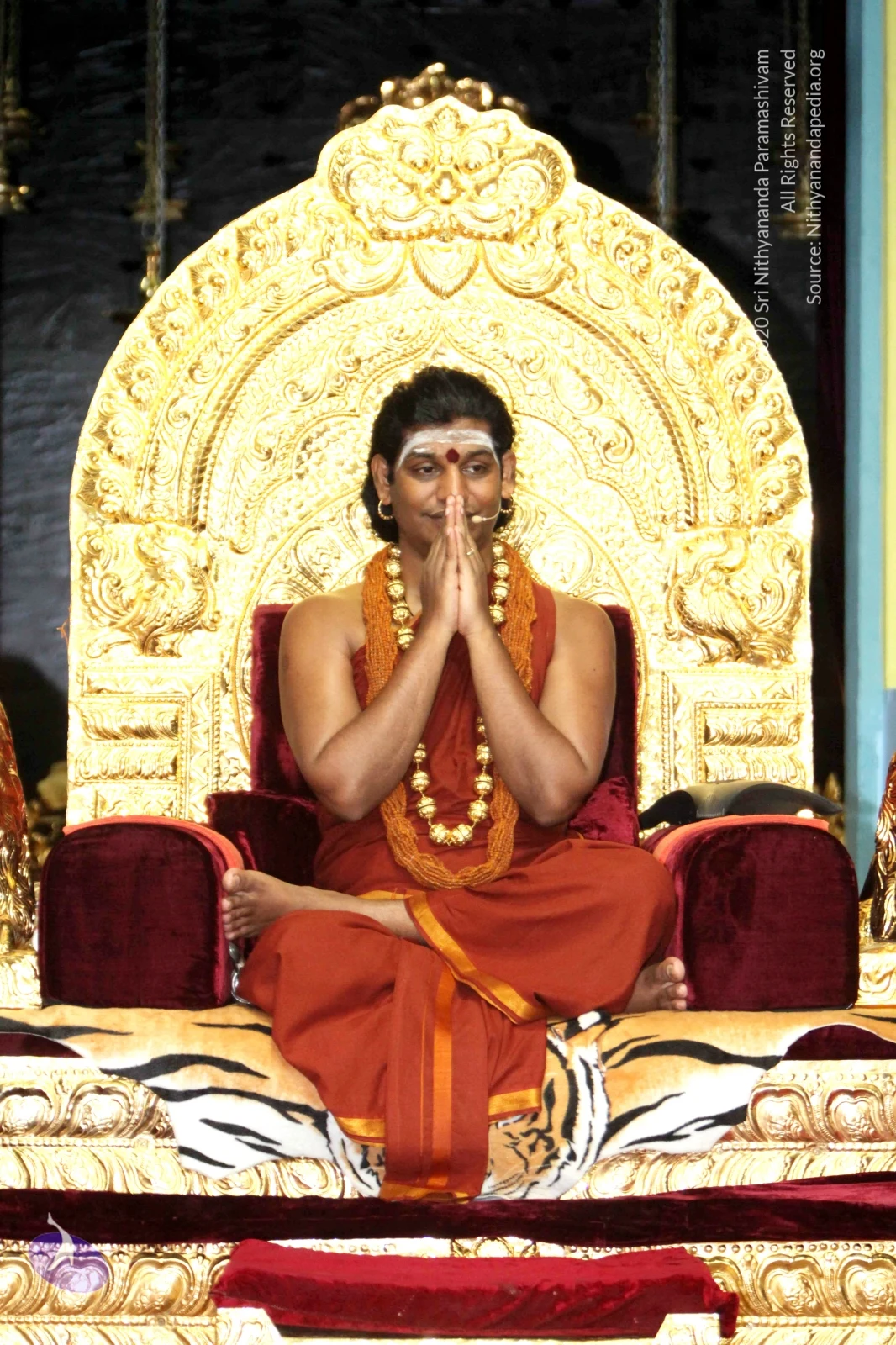
A seated man in an ornate gilded throne with a carved arched backrest and red velvet armrests sits on a striped tiger-skin covering in a satsang setting. He wears an orange-red dhoti and shawl, a long ochre rudraksha mala, a heavy gold bead necklace, and a white and red tilak on his forehead. He presses his palms together in anjali mudra, a small headset microphone is visible near his ear, and he is barefoot. The image is a photograph taken during a discourse, with the throne and gold-toned fittings dominating the frame.Close-up photograph of a smiling man with shoulder-length swept-back dark hair, white vertical forehead markings and a red dot at the centre of the forehead, wearing a small microphone clipped near his mouth and hoop earrings. He wears a rust-red wrap over one shoulder and is draped with multiple strands of orange beads and heavy gold bead necklaces with dark accents. Behind him is an ornate gold embossed backdrop. Appearance cues include long swept-back hair, saffron-orange beads and ornate gold necklaces, consistent with the page's Swamiji reference (probable), seated speaking to an audience during satsang.A photograph of a man seated cross-legged on an ornate golden throne with a tall arched back carved with floral and scroll motifs, draped over a tiger-striped cloth. He wears a saffron-orange dhoti and shawl, a long multi-strand gold bead necklace, a white vibhuti line with a red kumkum dot on the forehead, and a small hoop earring, with a head microphone. He smiles and looks to his right, one arm resting on a maroon velvet armrest. a person: the saffron/orange clothing, rudraksha-style gold bead mala, forehead markings and central seated throne position are the qualifying cues in this discourse-setting photograph.Close photo of a smiling man with swept-back dark hair, white vertical tilak and red bindi on his forehead, wearing a small headset microphone and gold hoop earrings. He wears a rust-red shawl over one shoulder, layered orange beaded malas and heavy gold bead necklaces, against a bright gold ornate backdrop. Probable Swamiji (Paramahamsa Nithyananda), shown in a satsang setting; appearance cues include swept-back hair, ornate gold necklaces, orange malas and a red-orange shawl.A smiling man sits cross-legged on a red velvet throne against an ornate gold embossed backdrop, barefoot, in a saffron-orange robe draped over one shoulder with an orange-and-gold dhoti. He wears long strands of golden beads and a multi-strand gold rudraksha-style mala, a white vibhuti stripe across the forehead with a red kumkum dot, and gold hoop earrings; a small clip-on microphone is visible near his face. A tiger-striped cloth covers the seat below. a person, seated in satsang: saffron clothing, a rudraksha mala and ceremonial gold necklaces, with the page's satsang context noted. He rests his hands open on his knees mid-discourse.Close-up photo of a smiling man with long dark hair swept back, wearing a small red bindi and a white sandalwood band across his forehead. He wears a small headset microphone at his ear, gold hoop earrings, a saffron-red shawl draped over one shoulder, and multiple strands of orange beaded mala with large gold ornamental beads. His right hand is raised in a gesture while speaking, and a golden ornate backdrop fills the background. Cues including the saffron shawl, long swept-back hair, and ornate gold necklaces are consistent with the page's identification as Swamiji (probable), shown in the role of a speaker giving satsang.