Skip to content
Sunday

10 April 2016

Kundalini Current #5: Seeking is not Alternative Lifestyle, but Native Lifestyle to keep in Altar

Dated photos
655
Source pages
1
Media
3
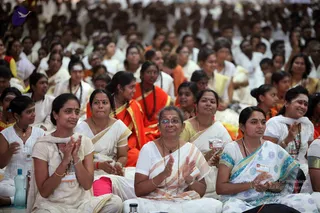
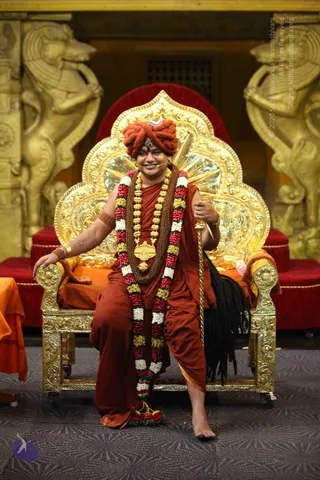
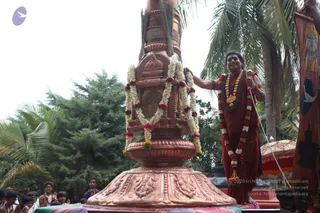
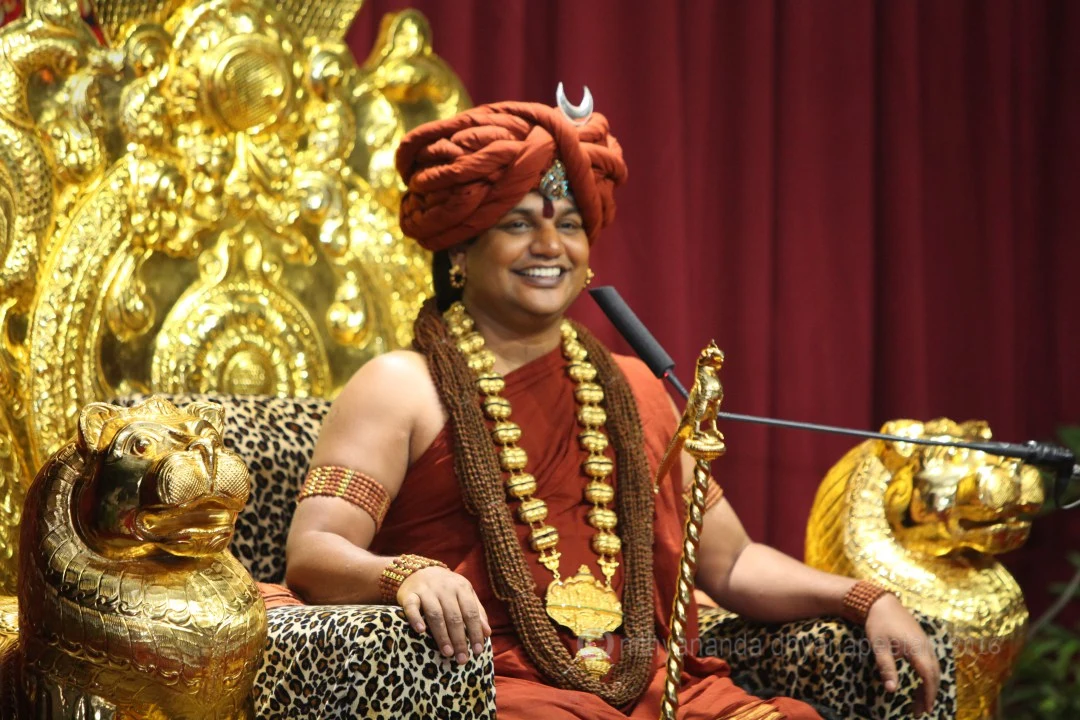
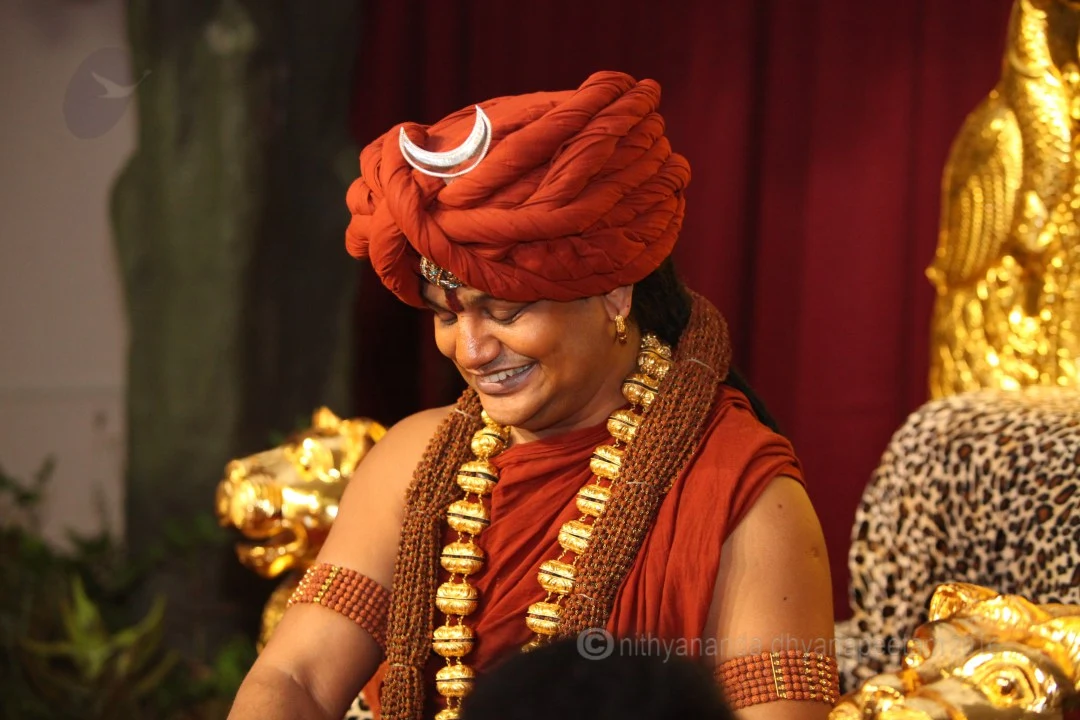
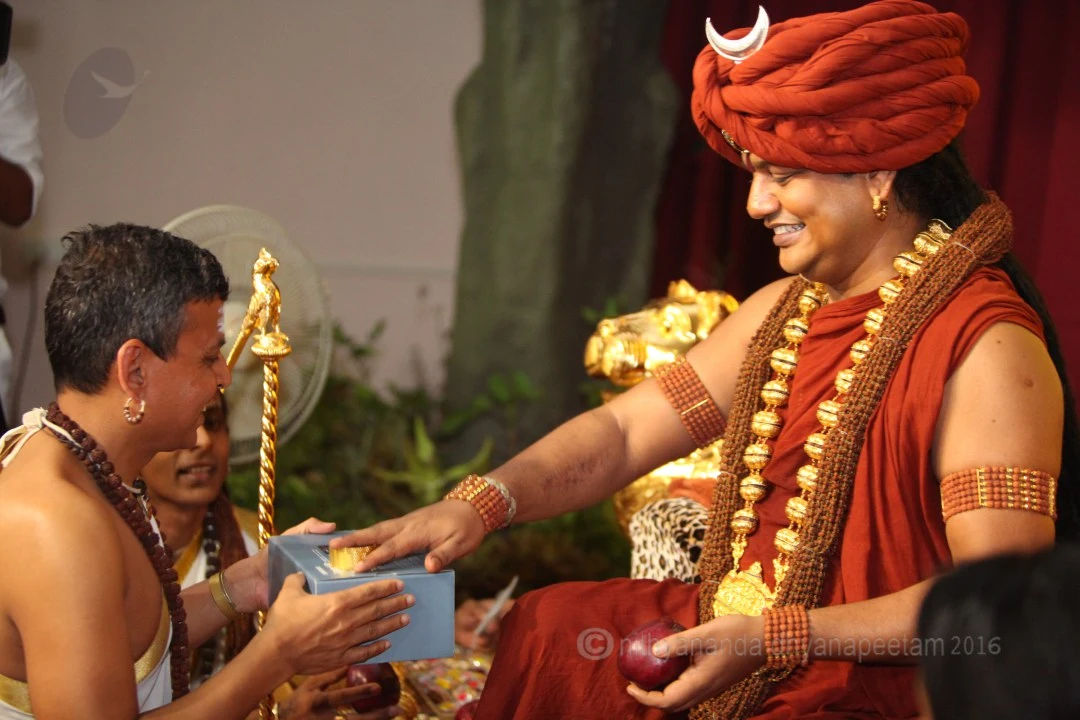
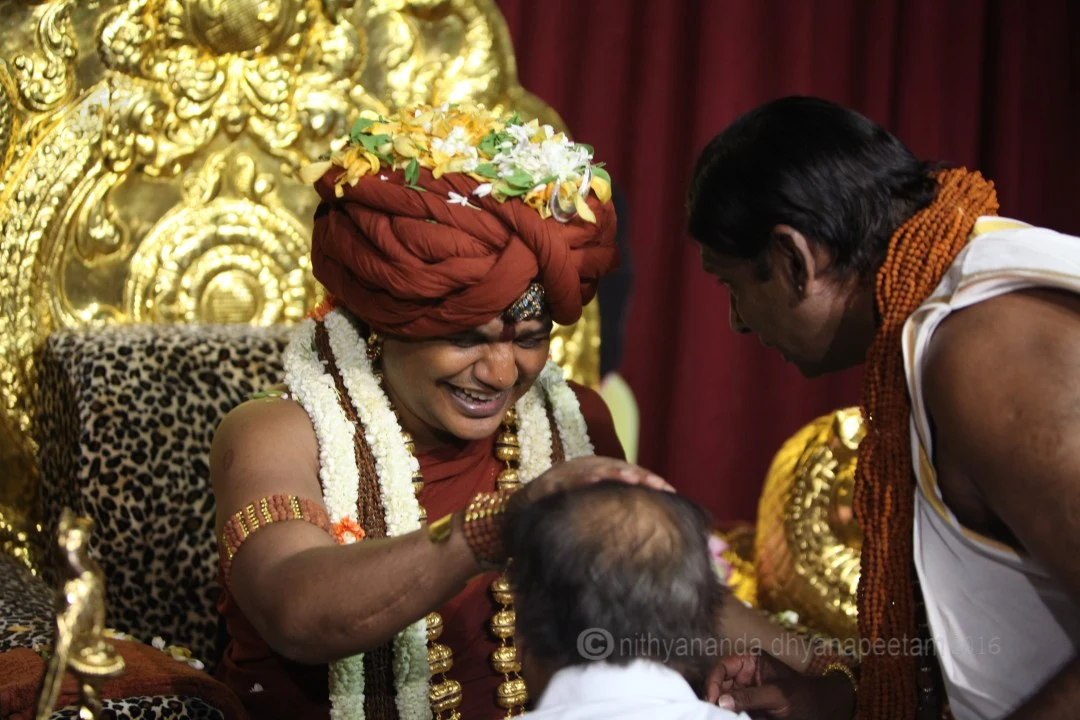
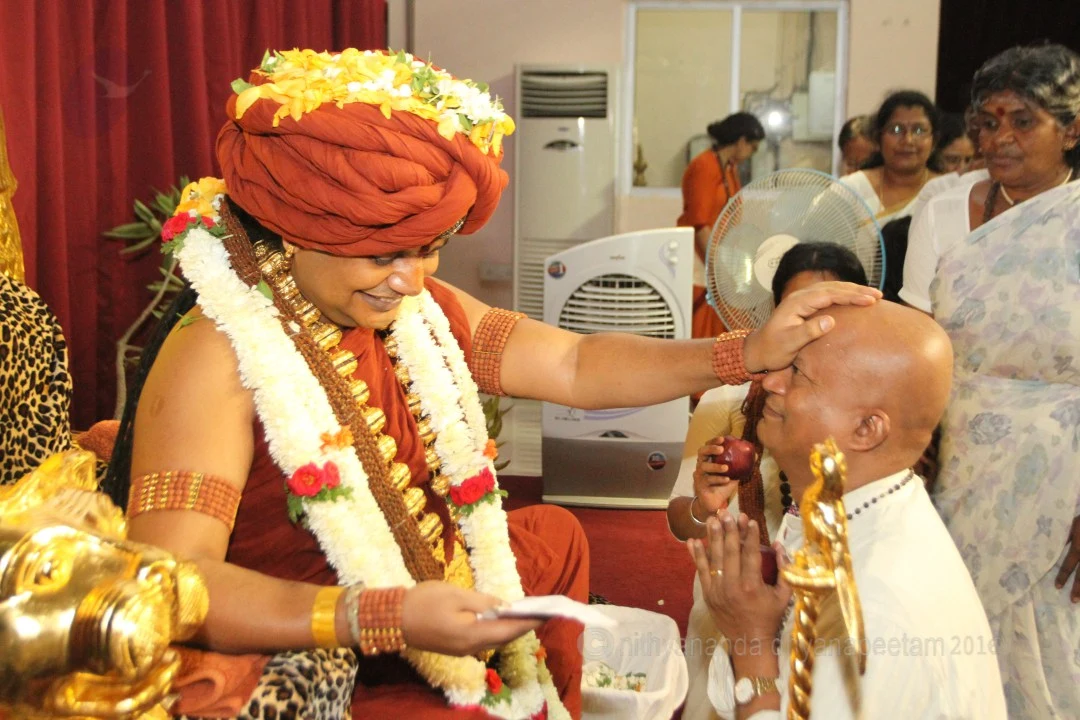
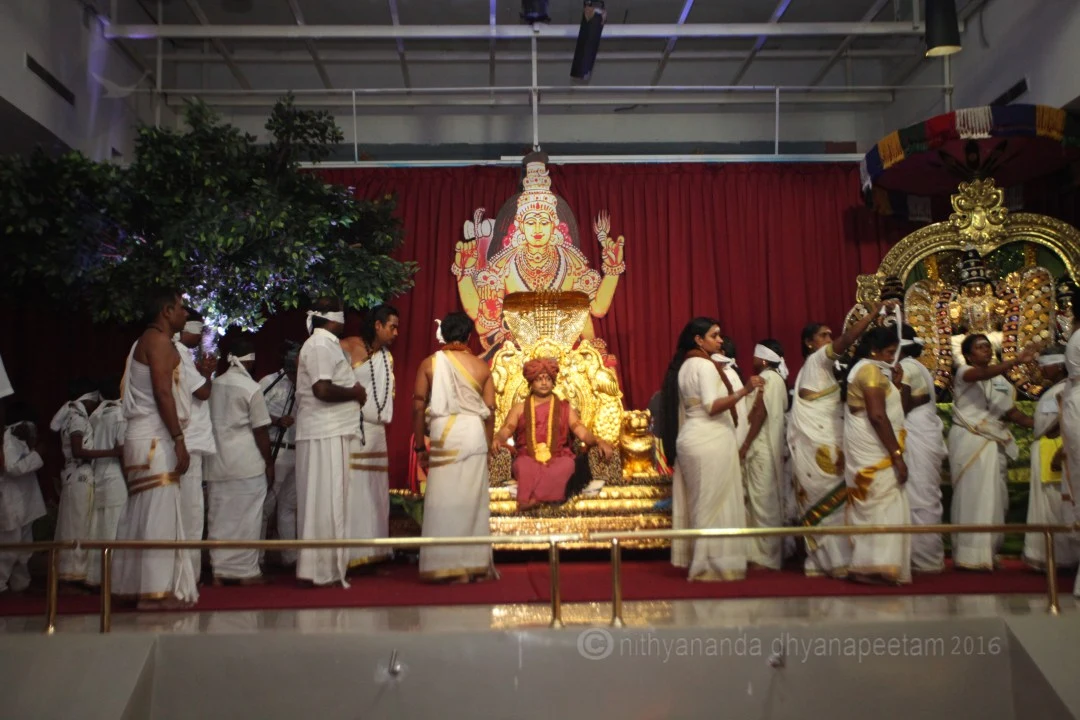
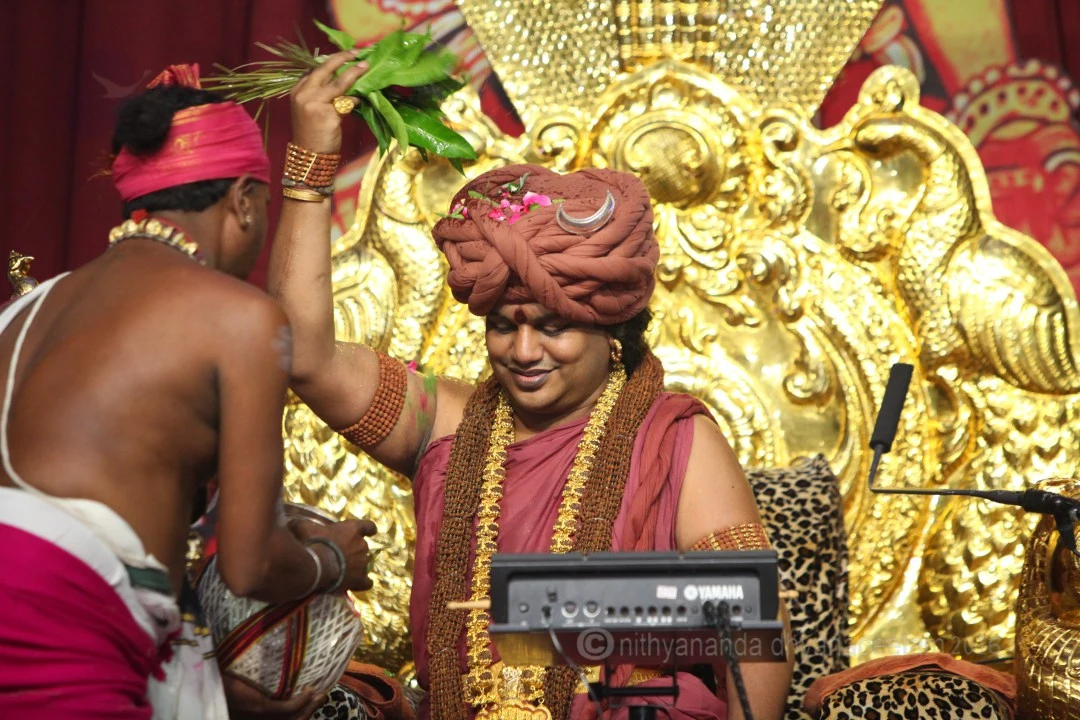
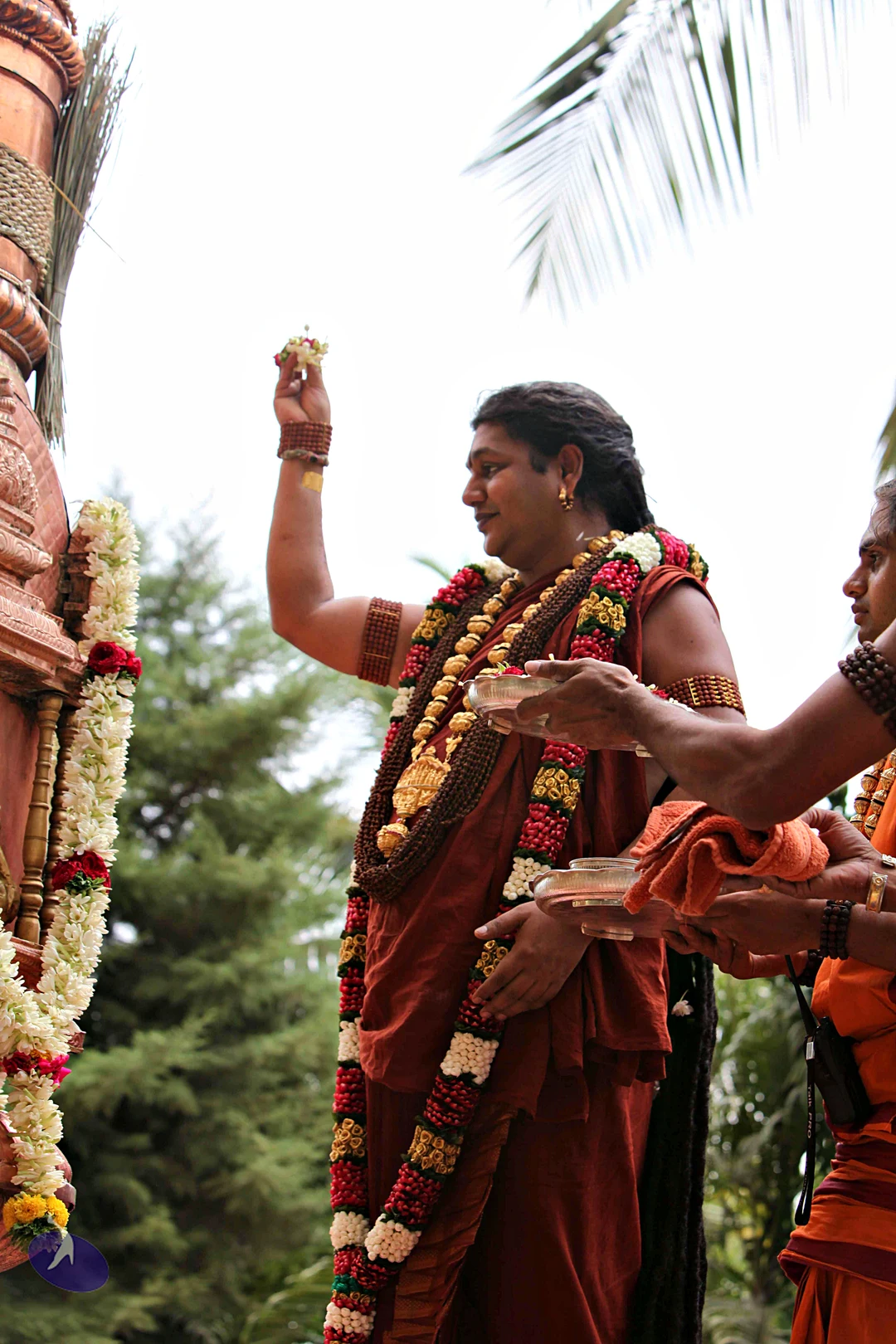
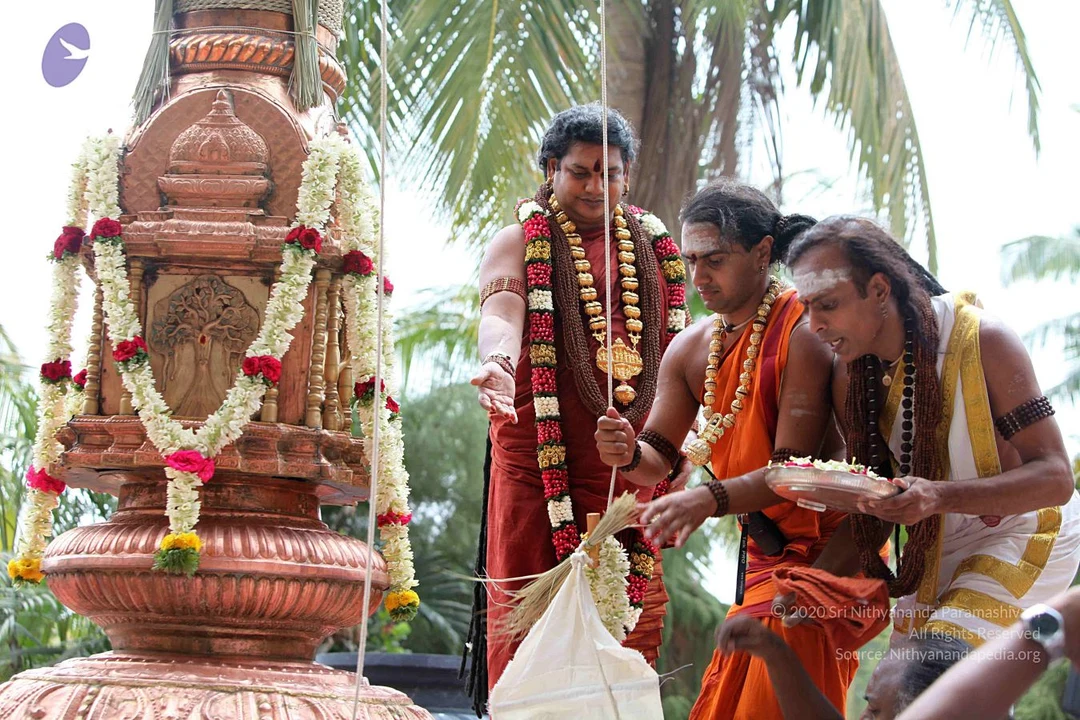
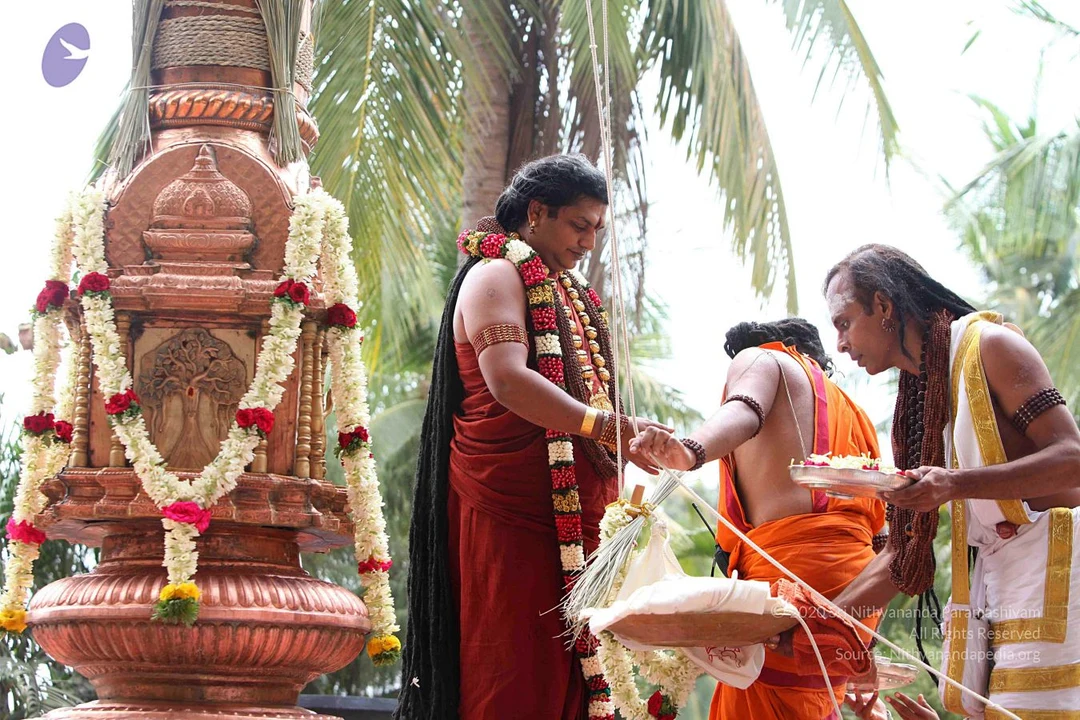
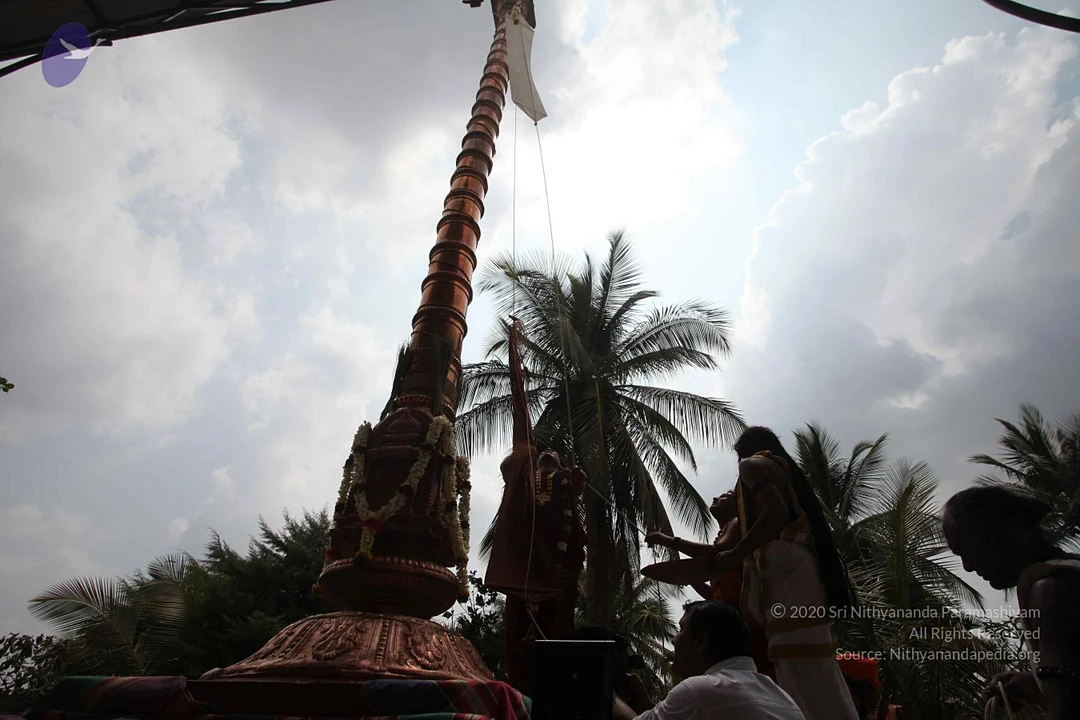
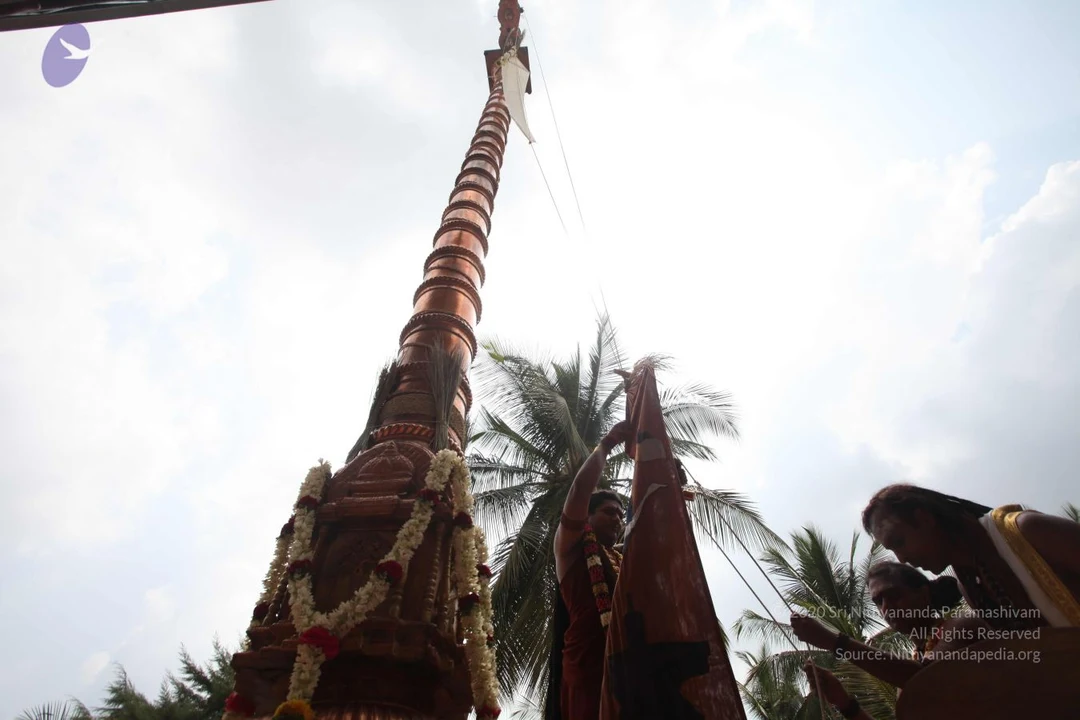
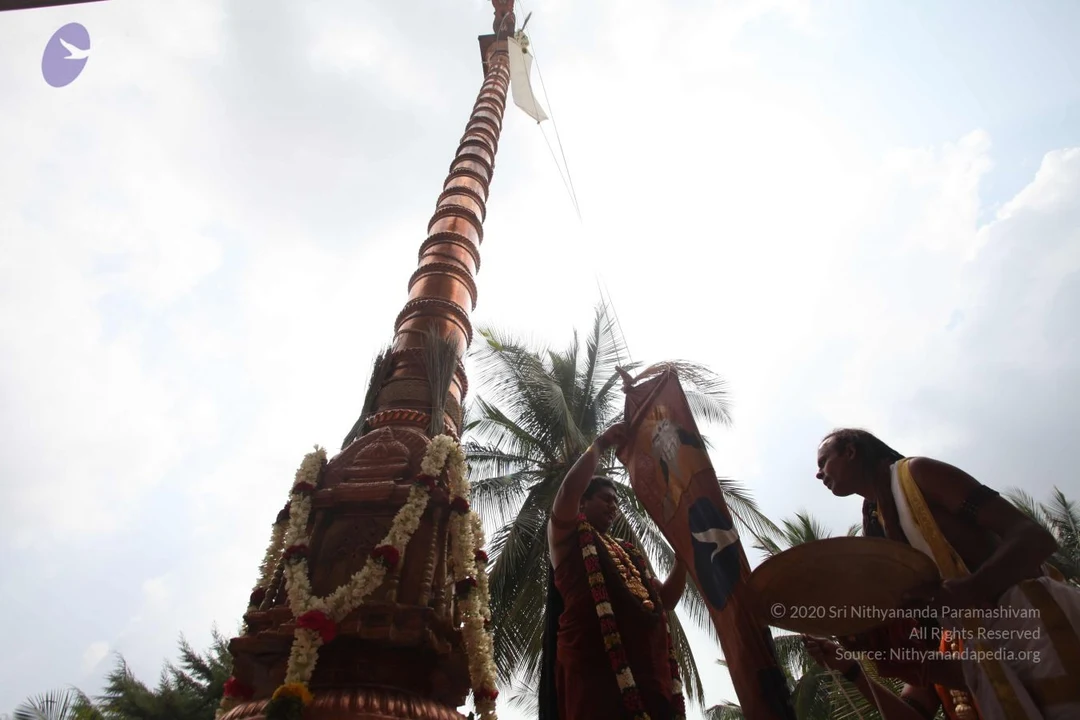
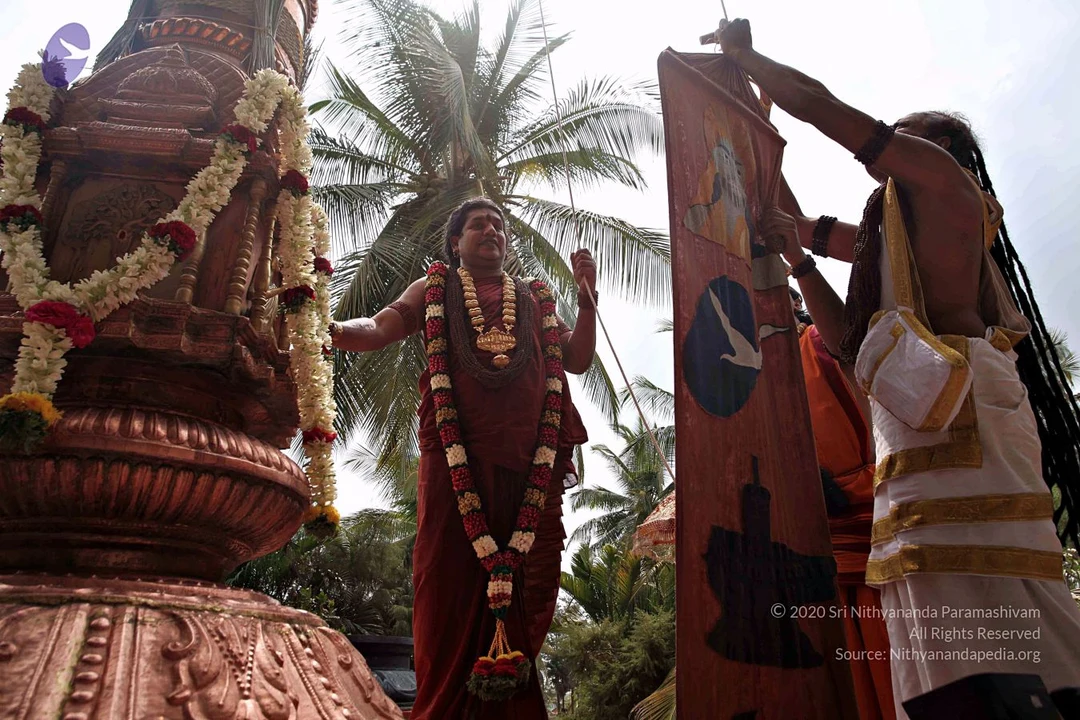
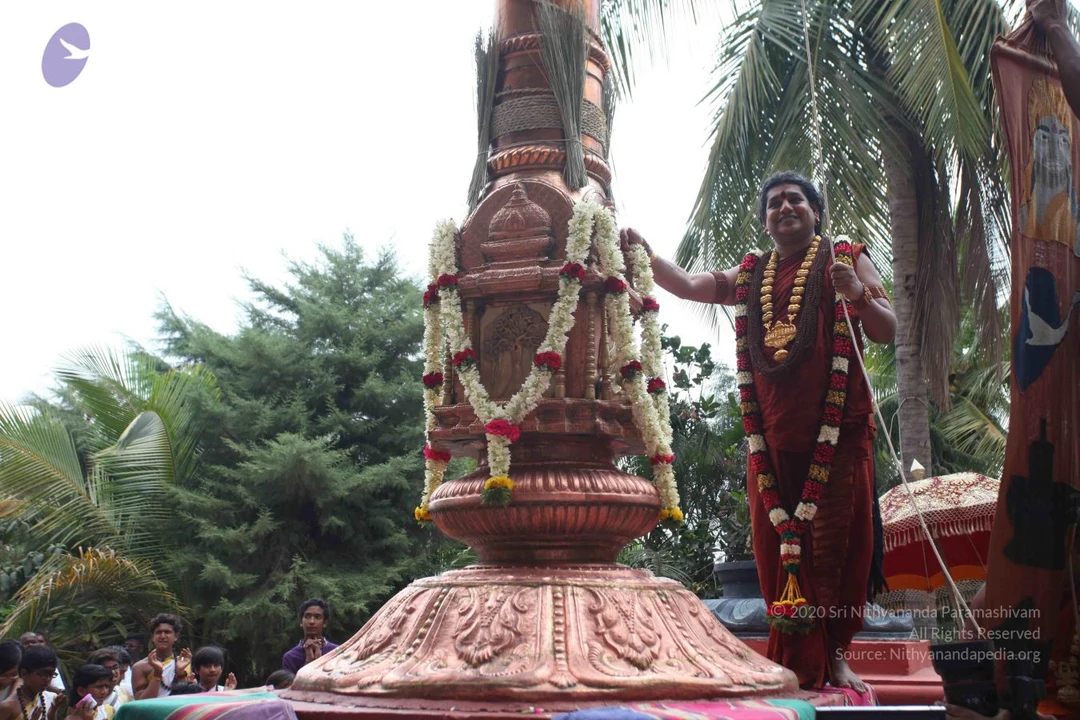
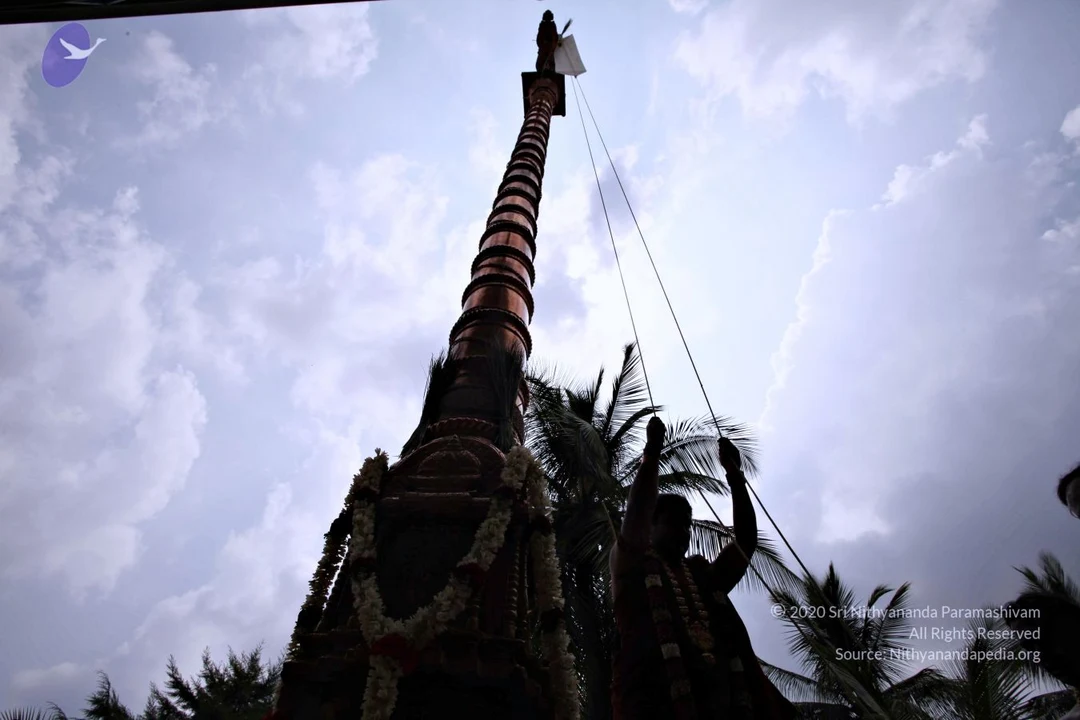
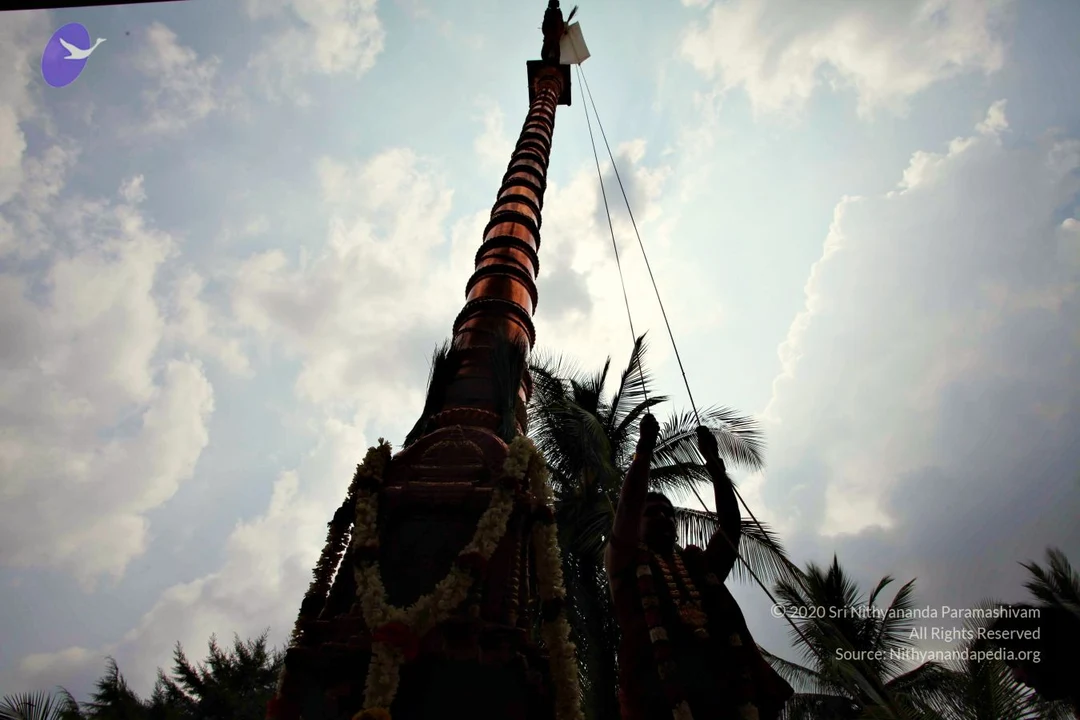
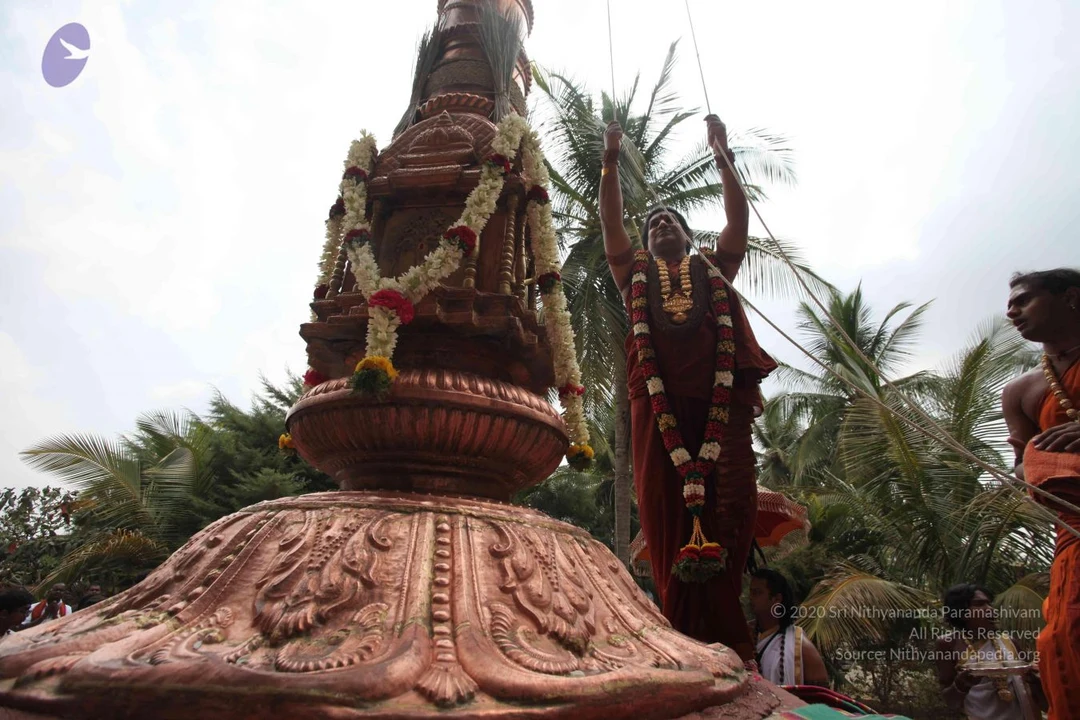
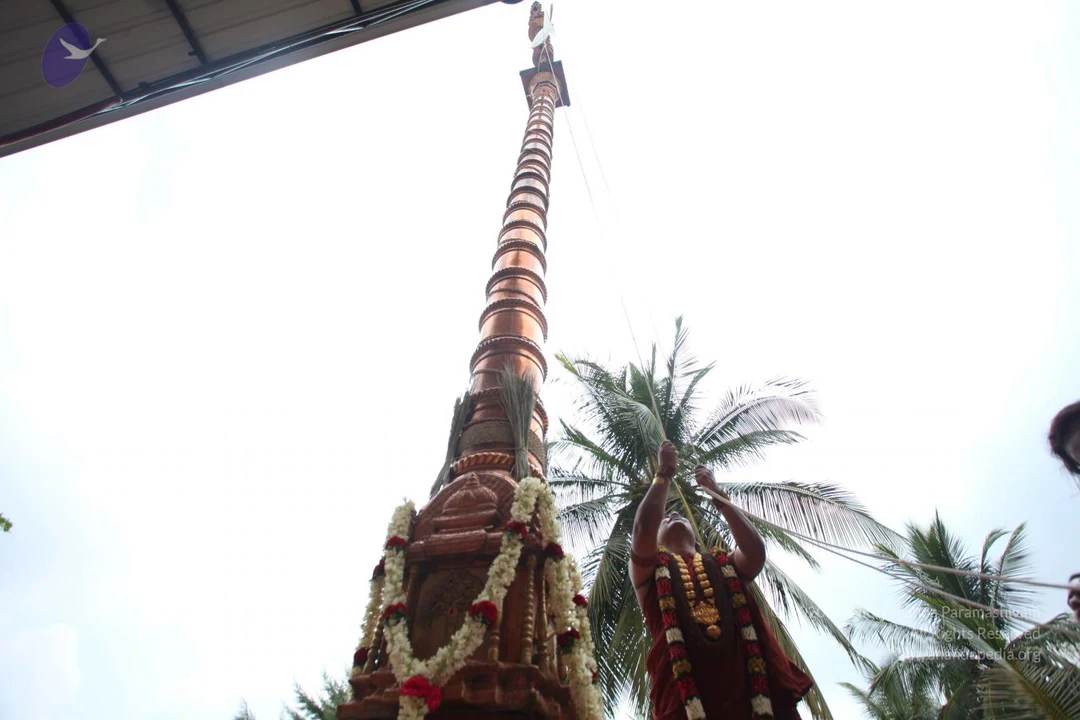
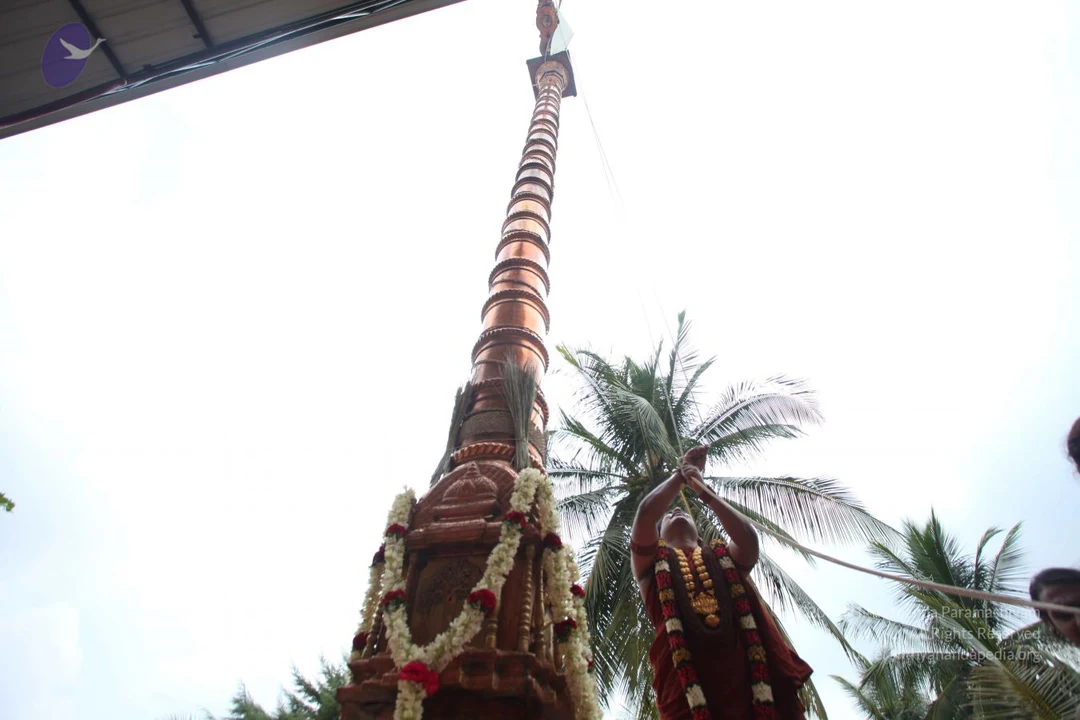
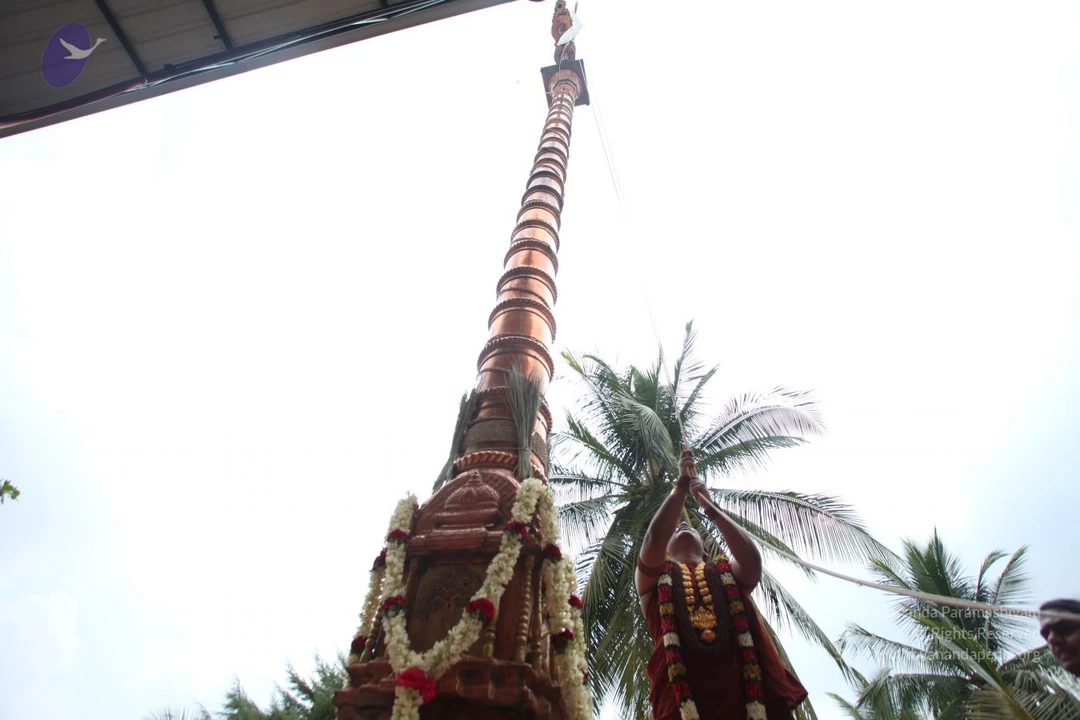
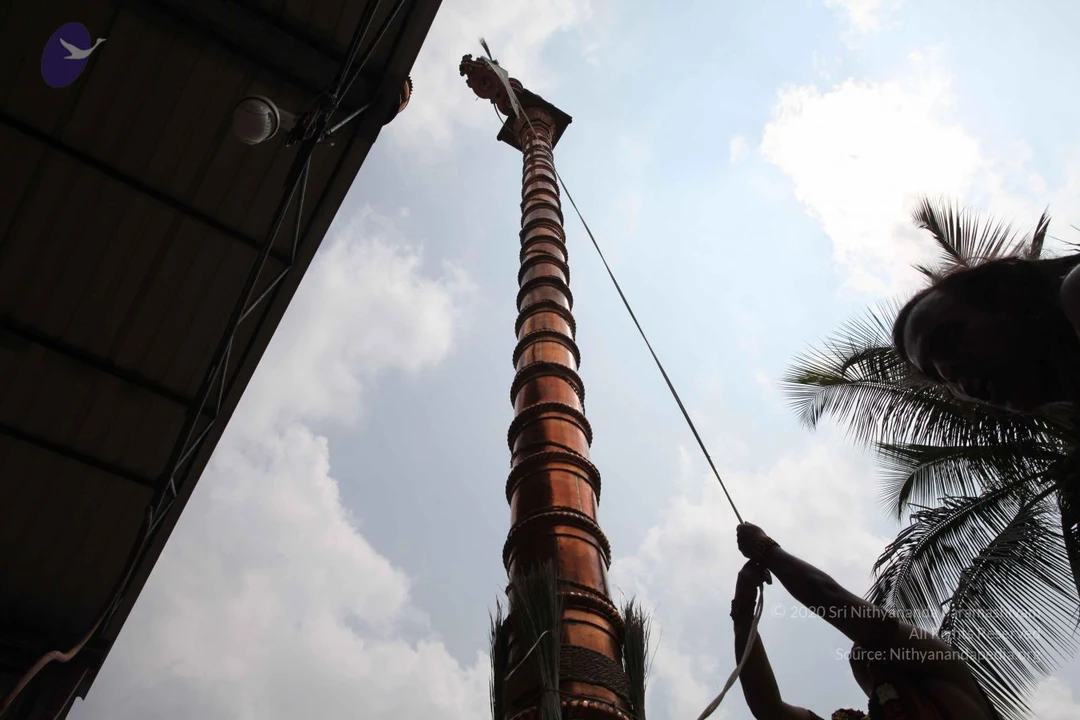
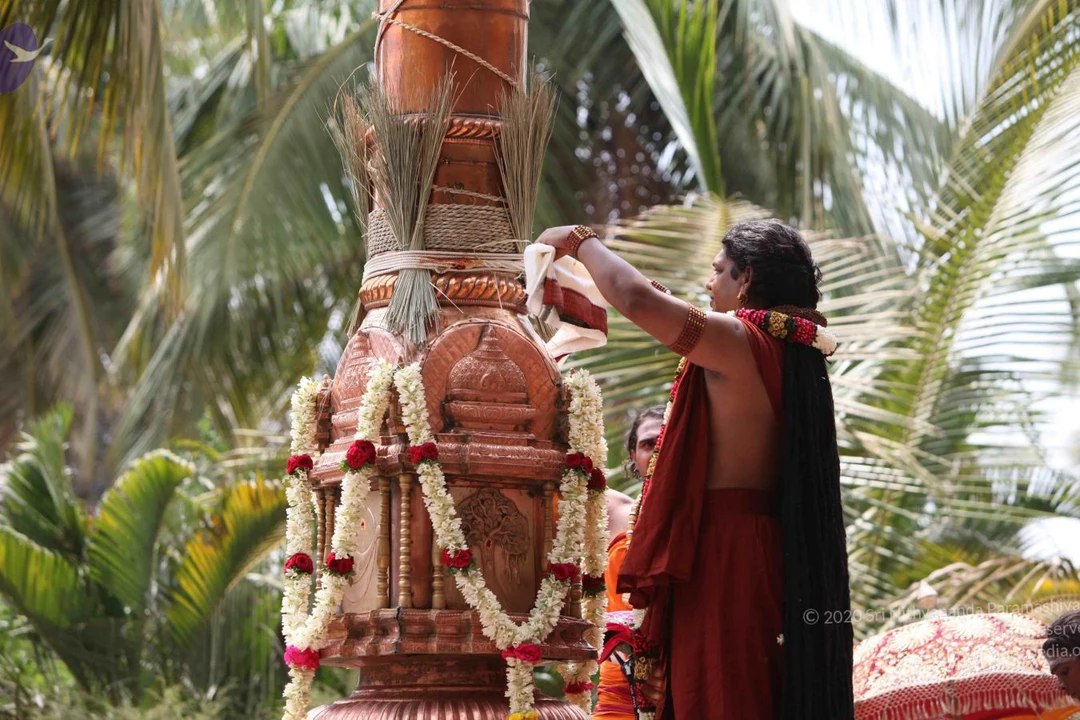
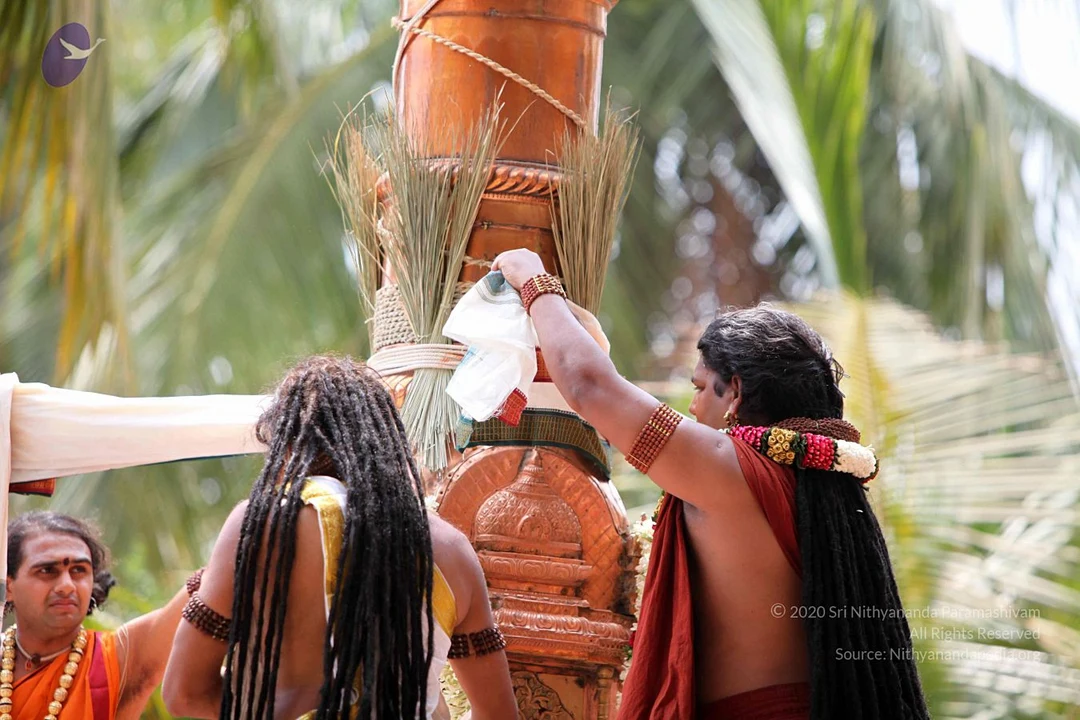
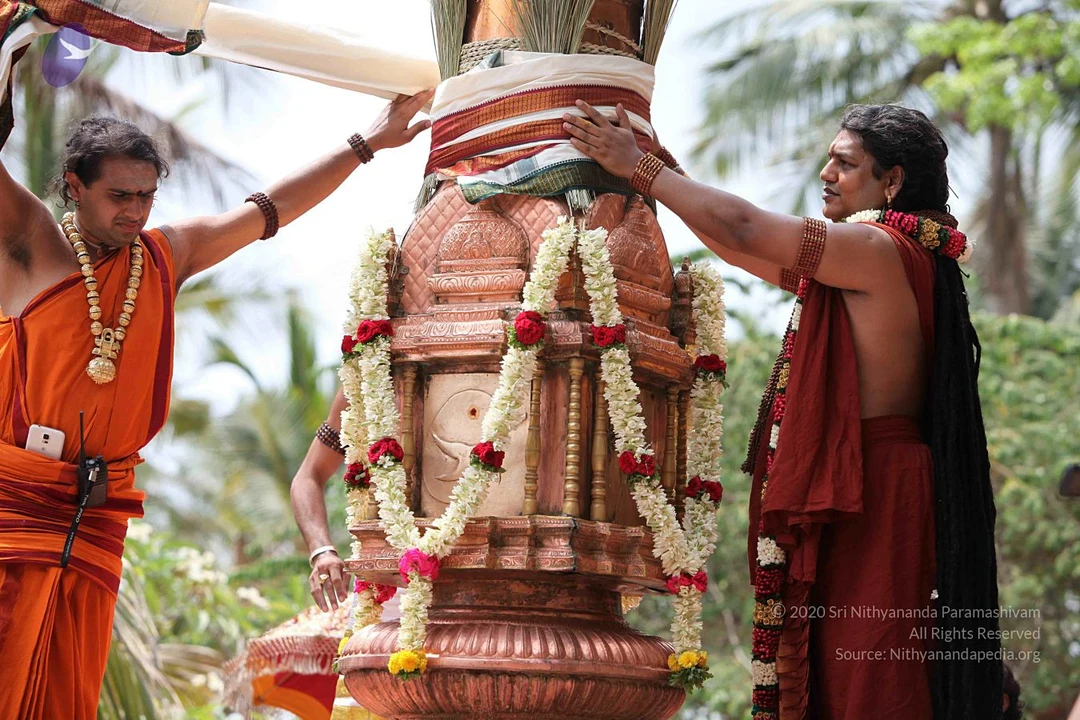
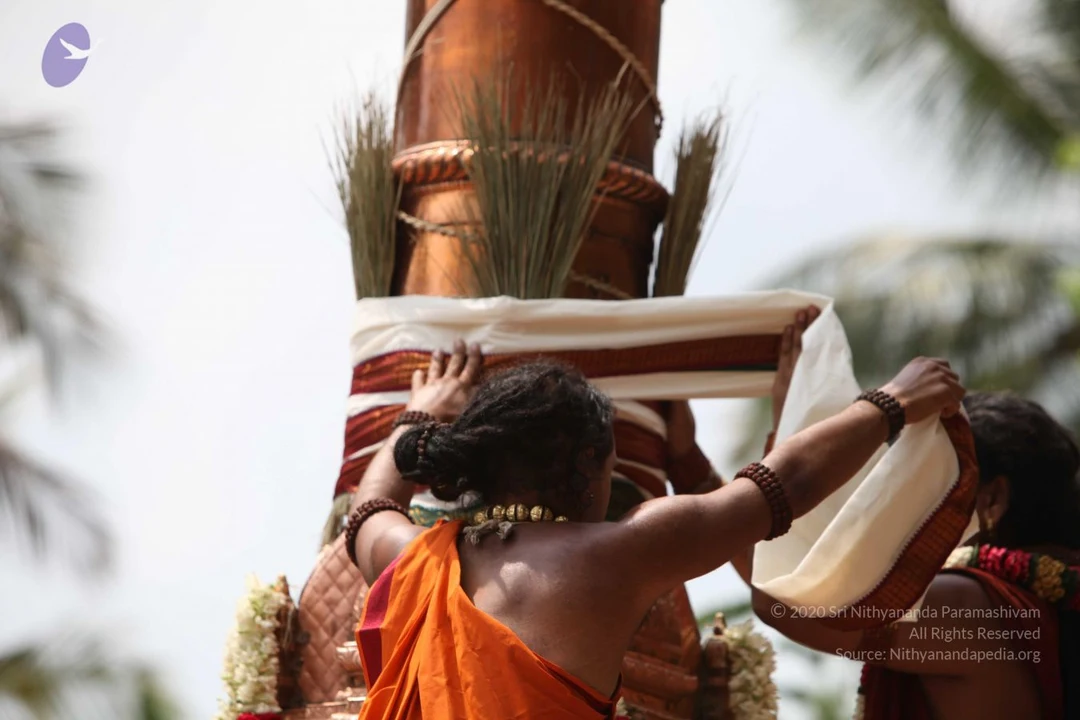
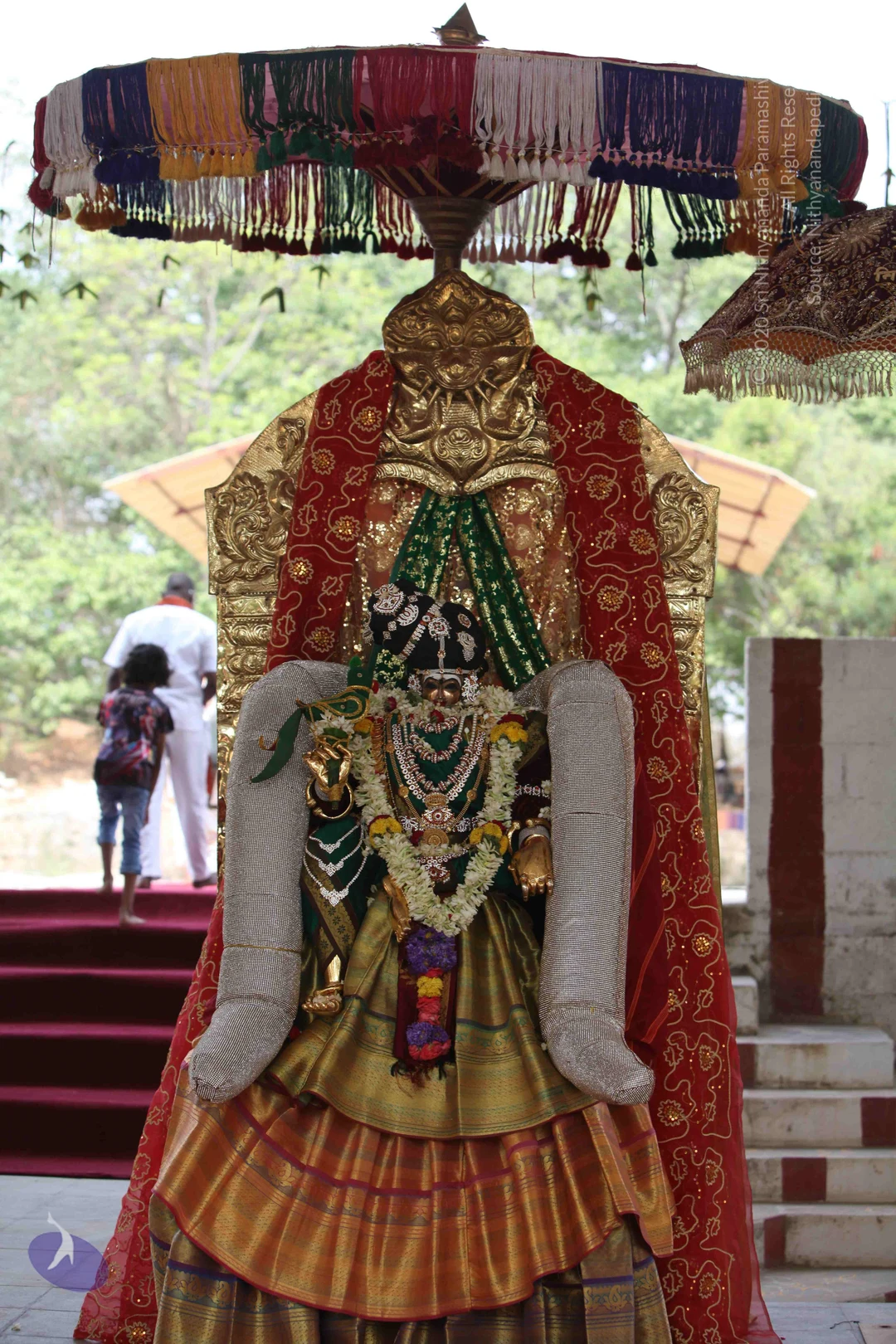
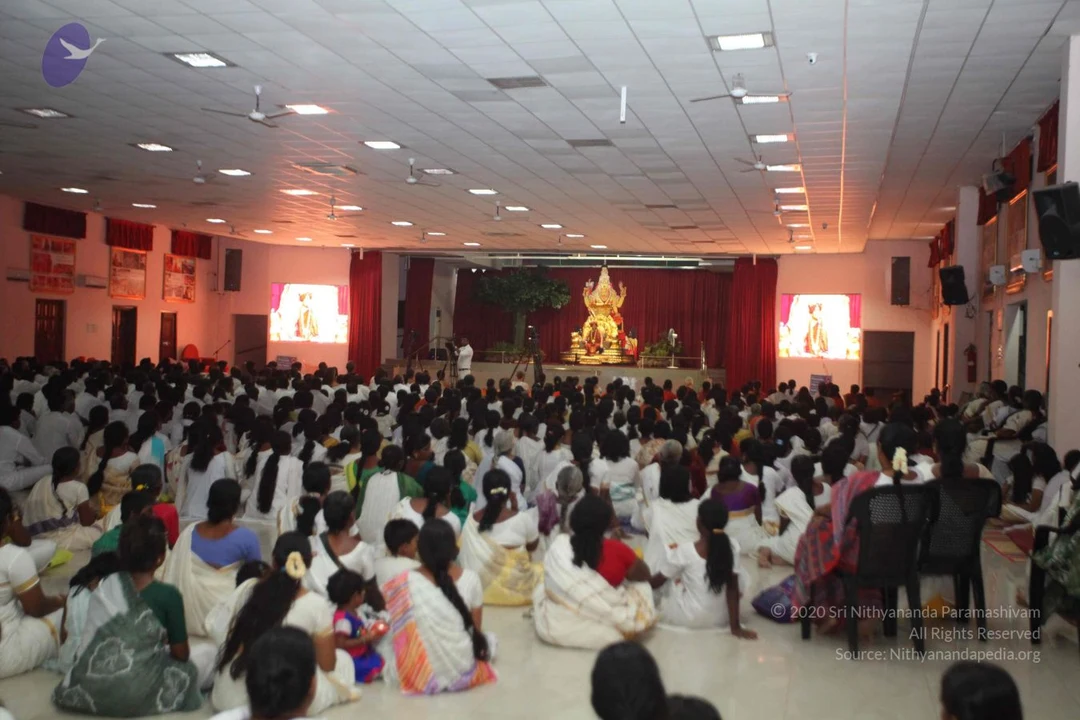
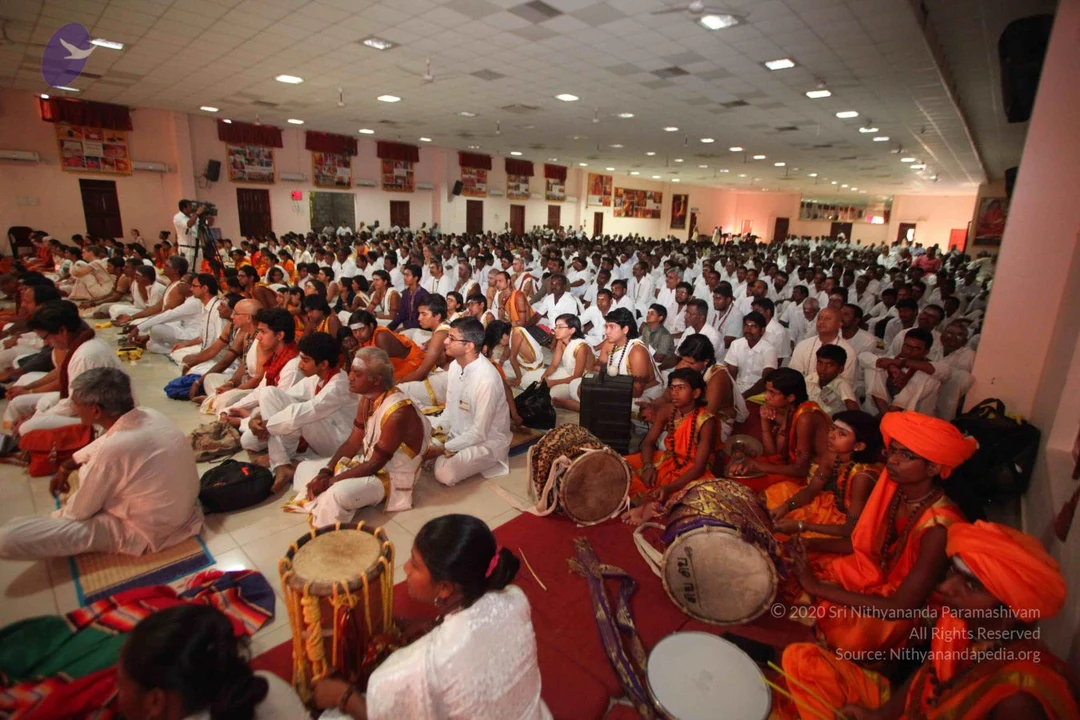
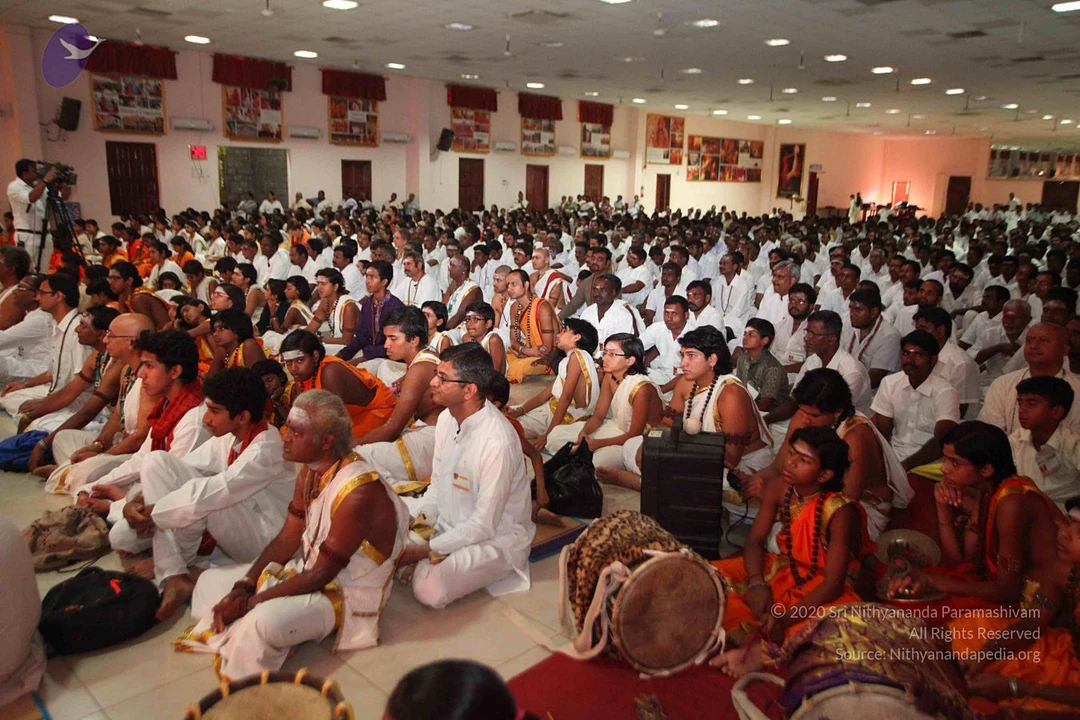
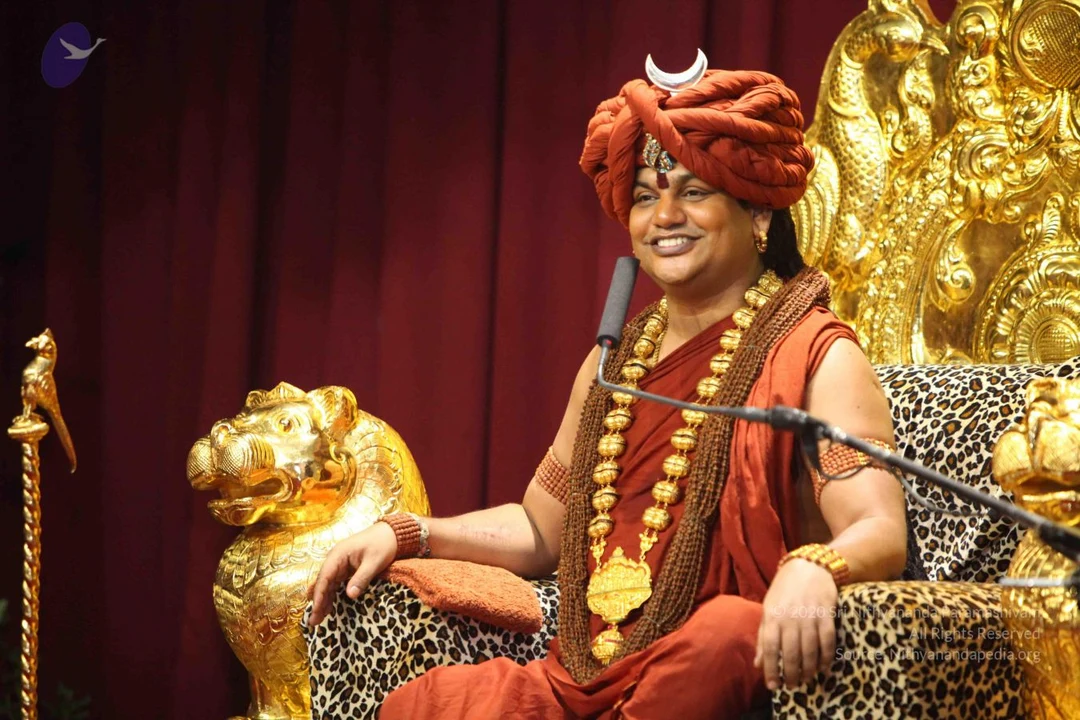
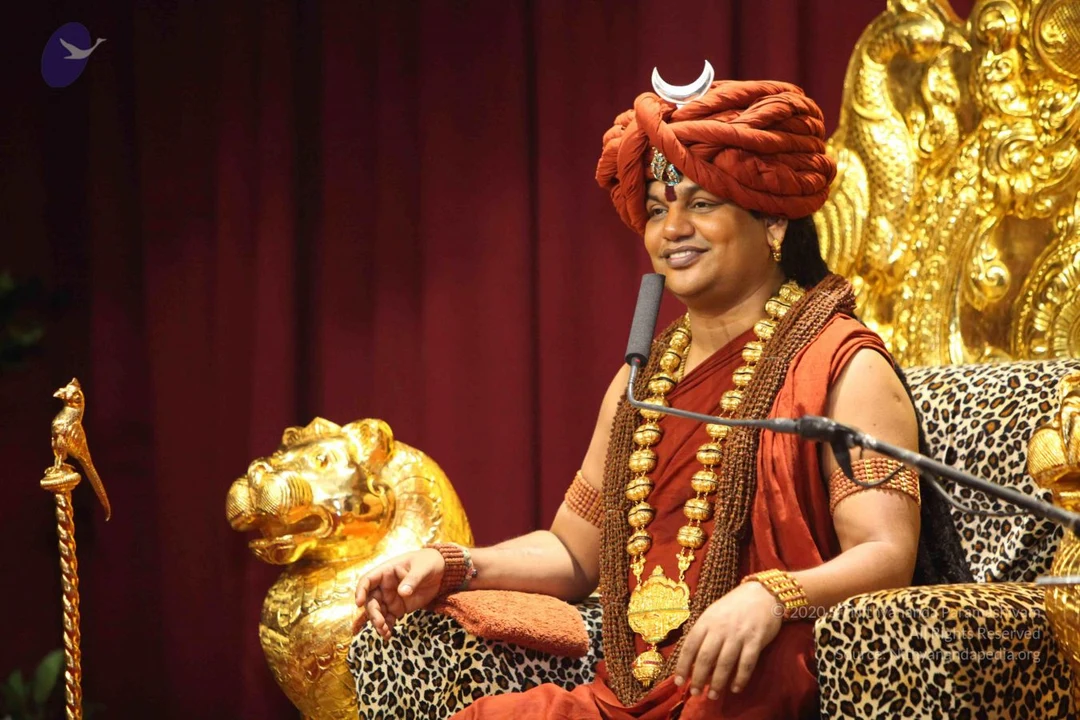
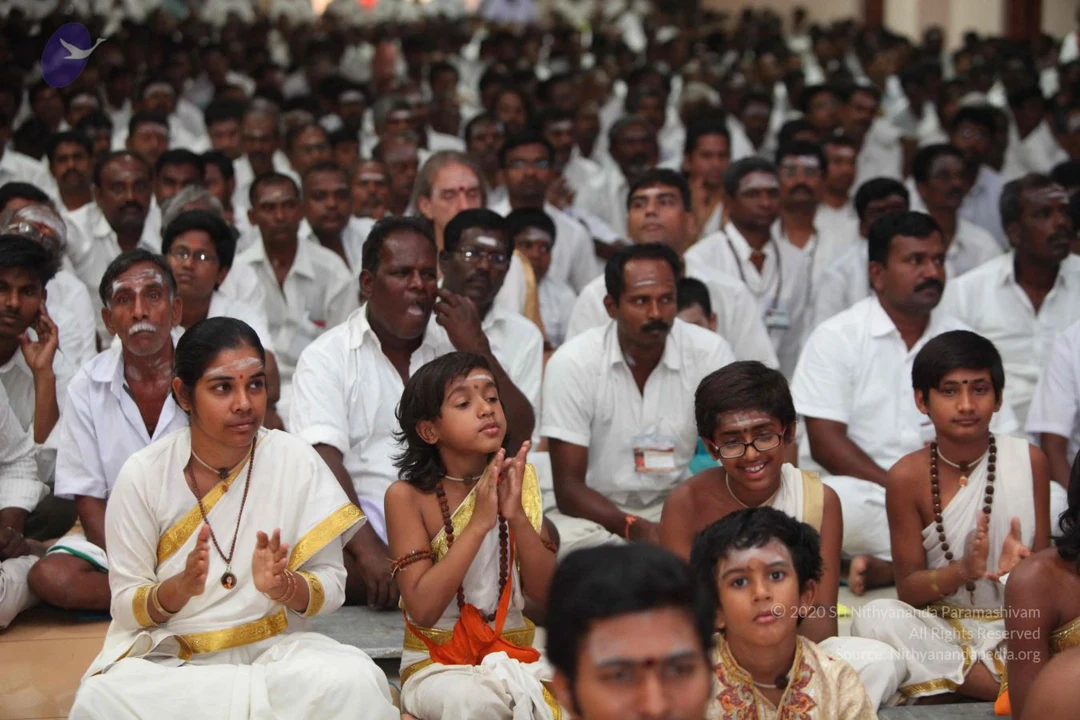
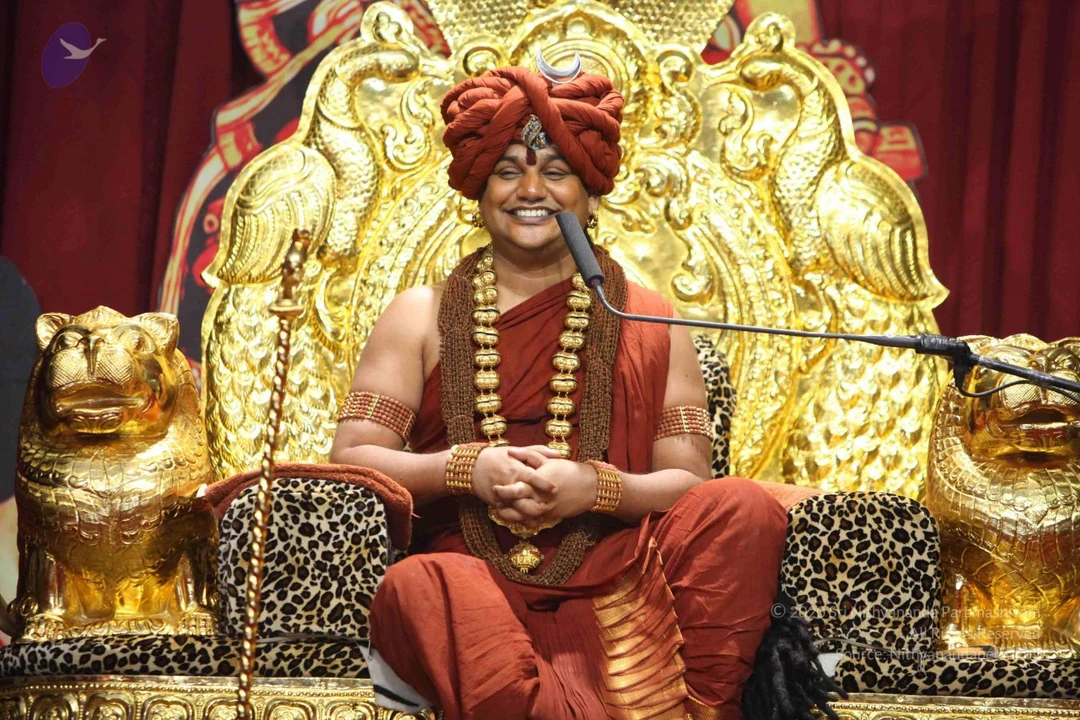
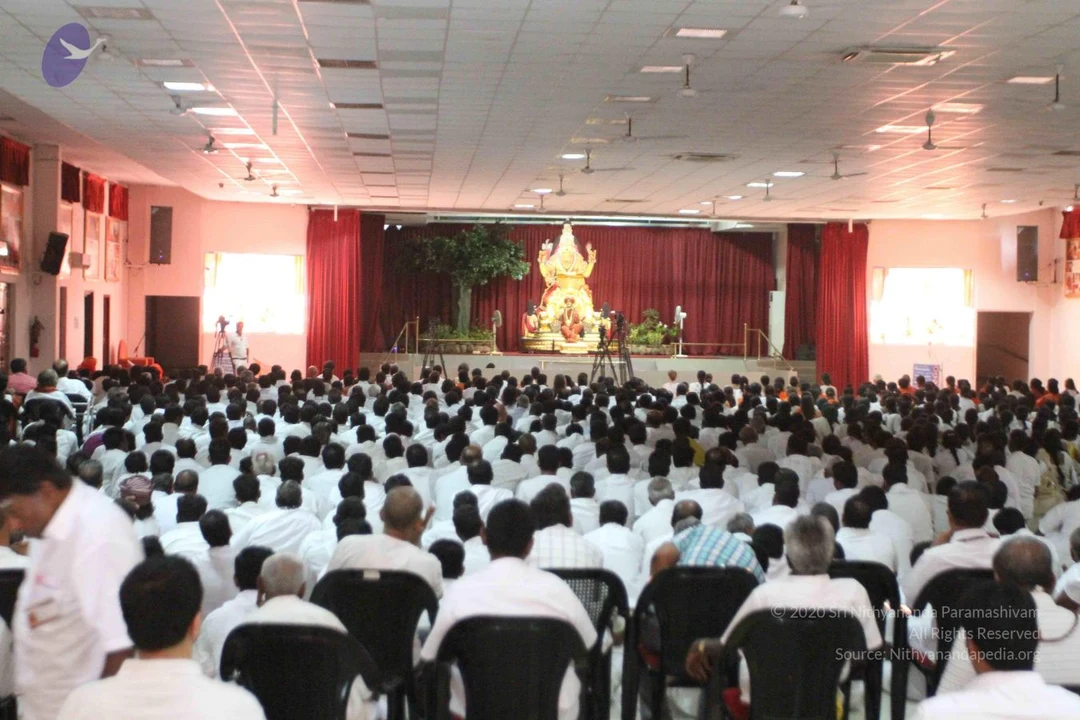
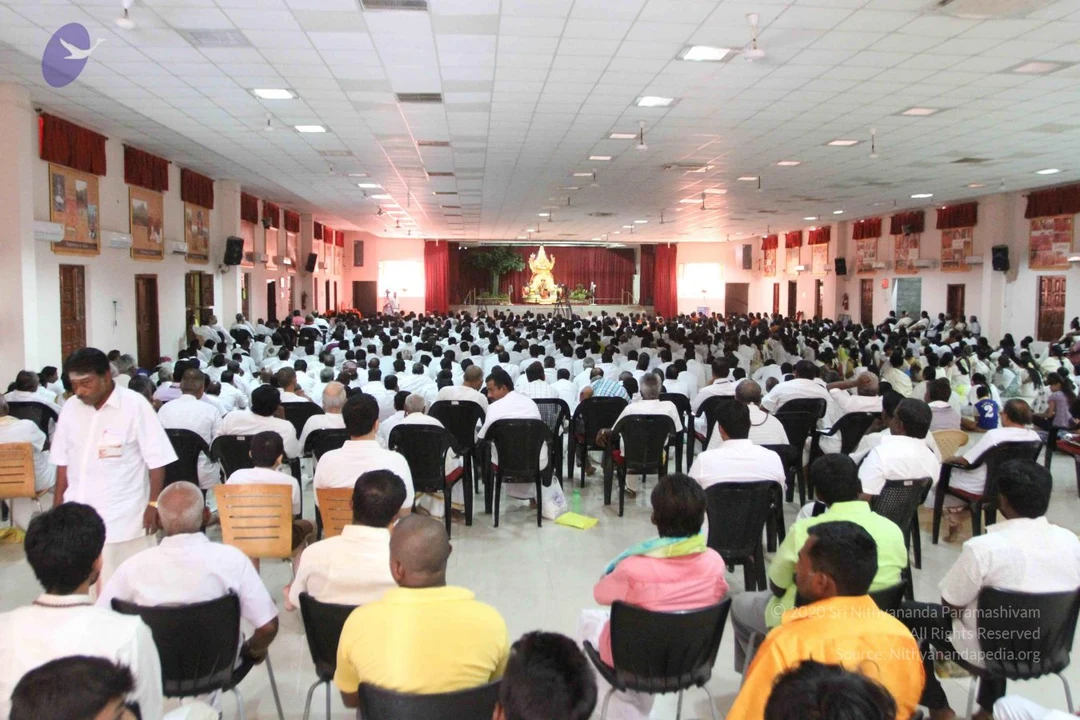
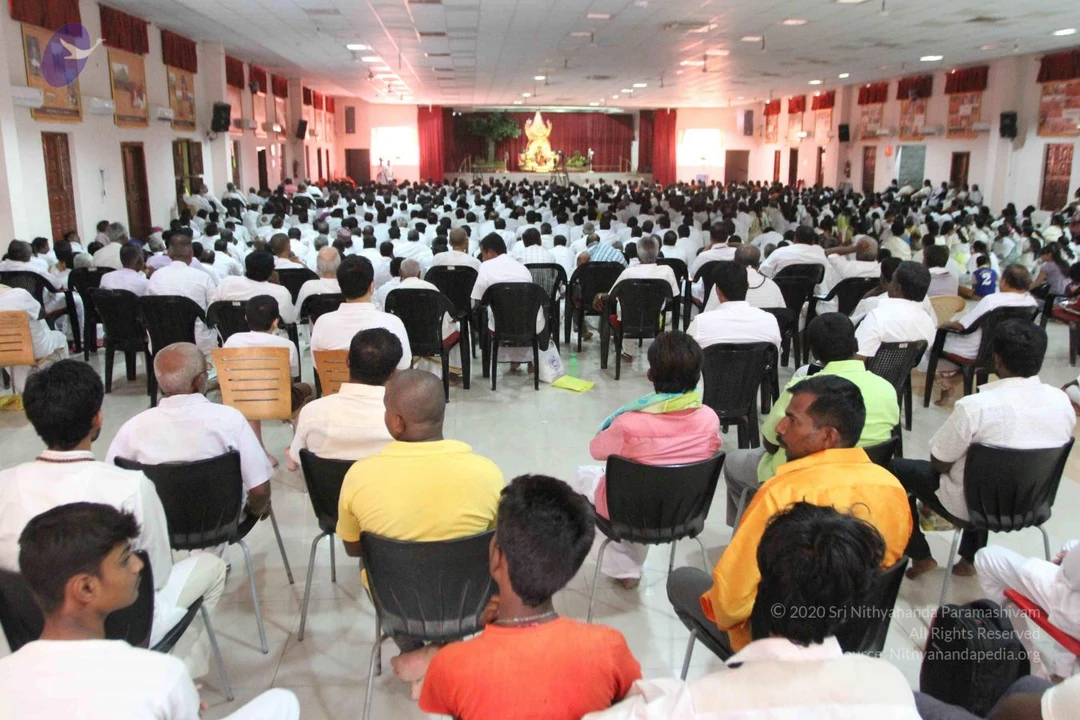
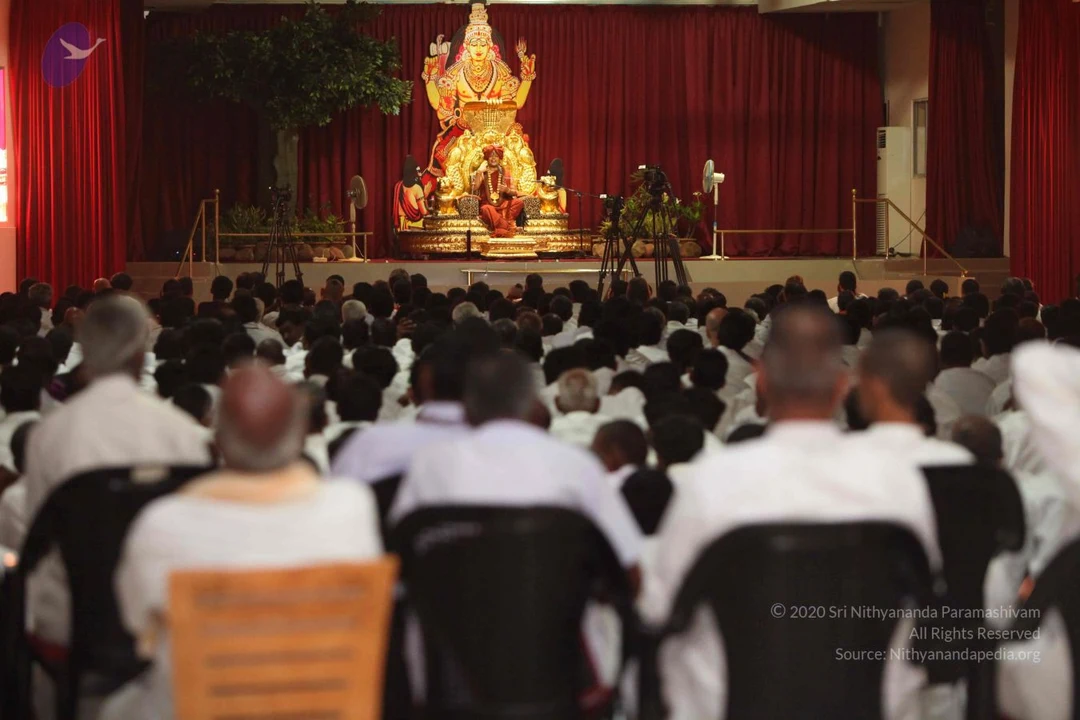
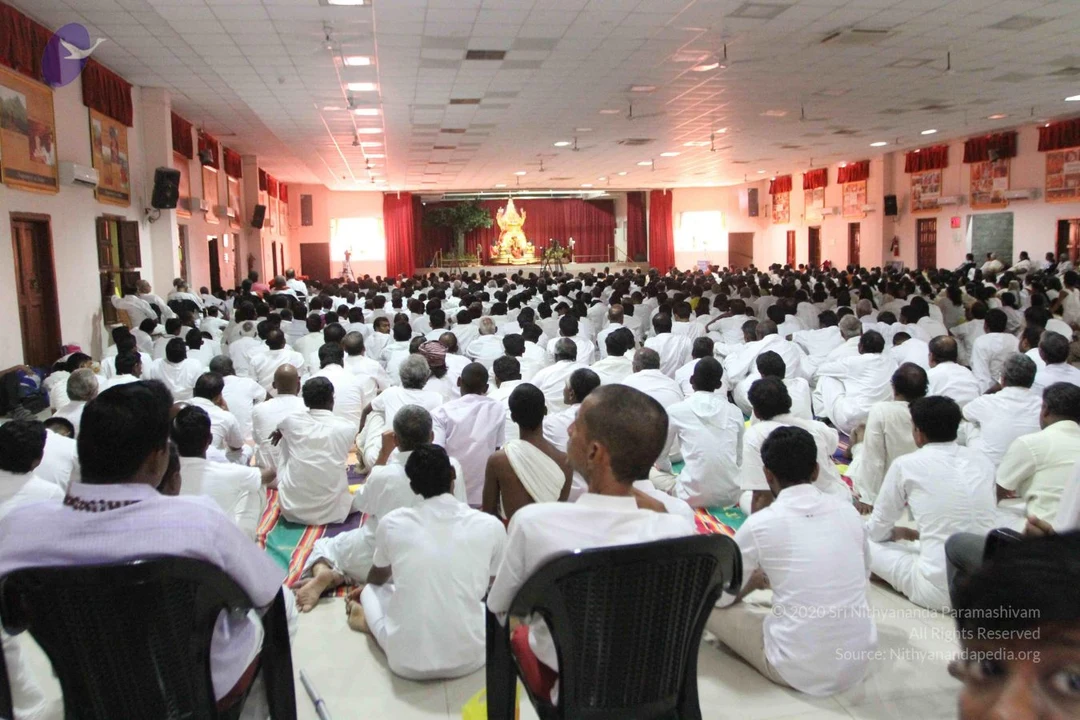
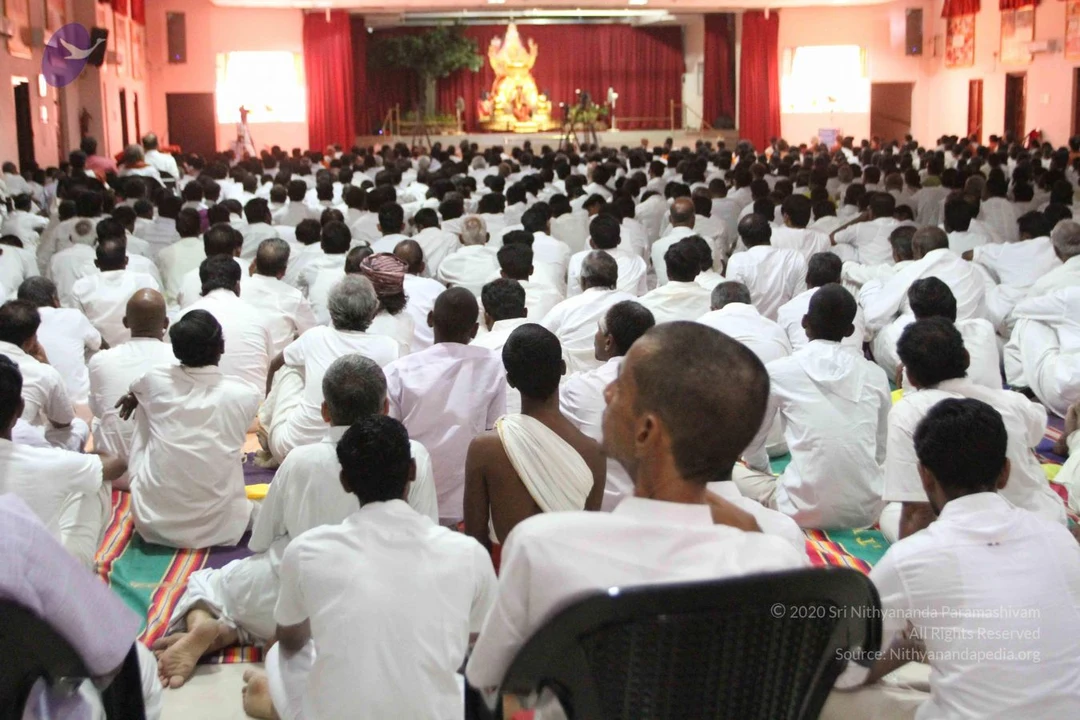
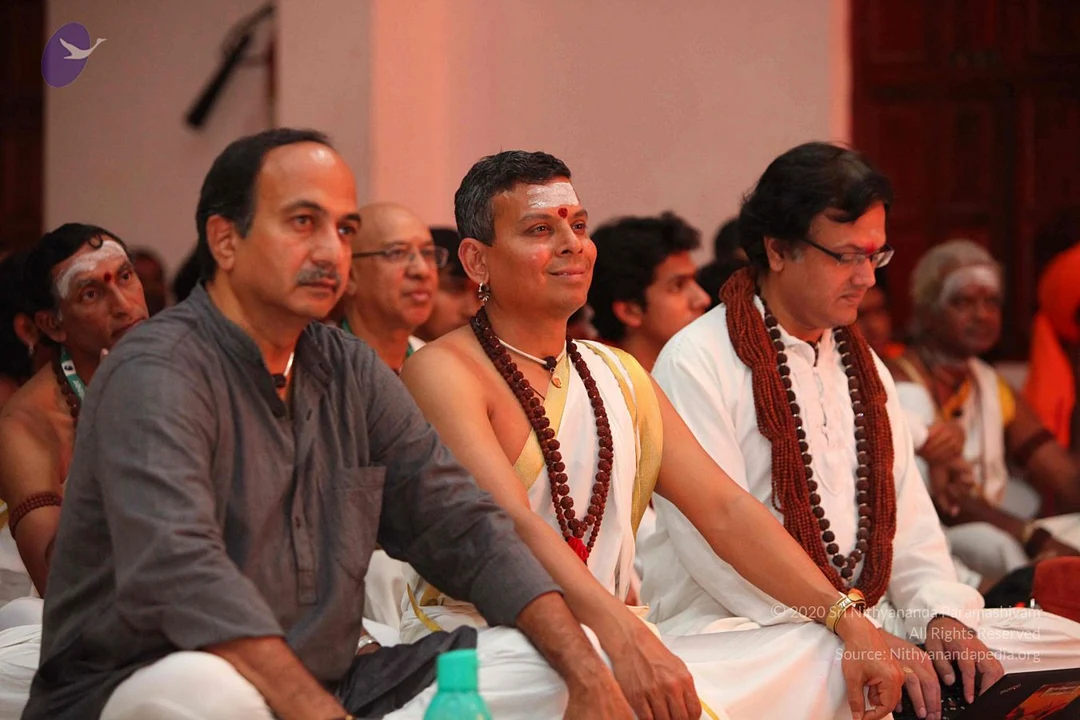
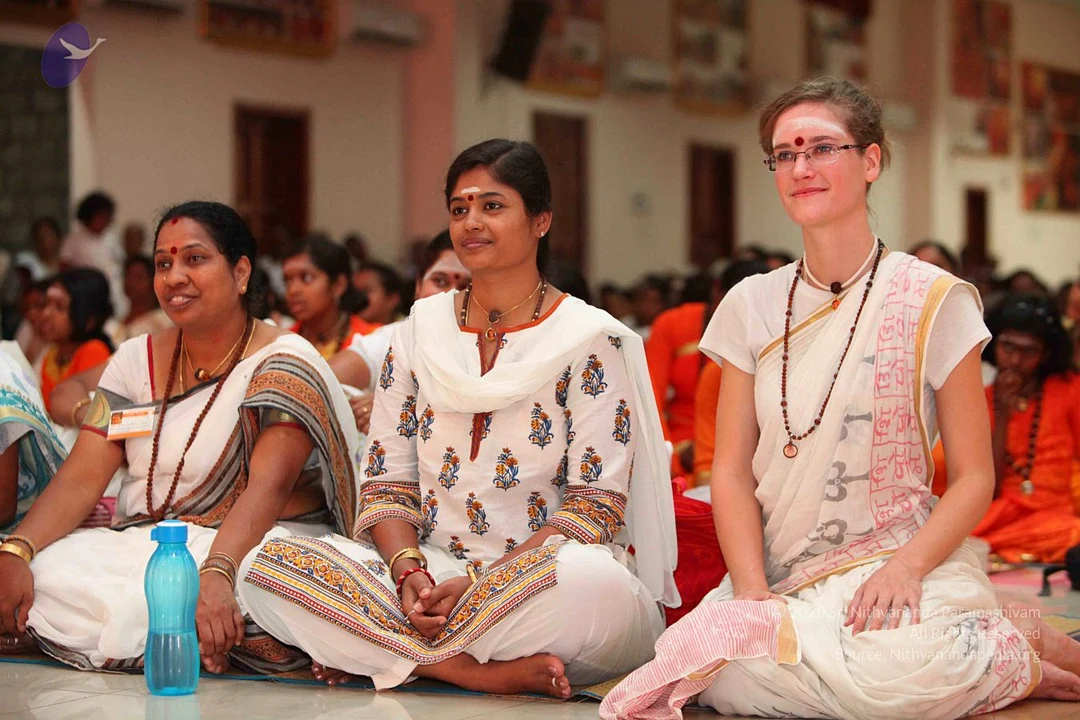
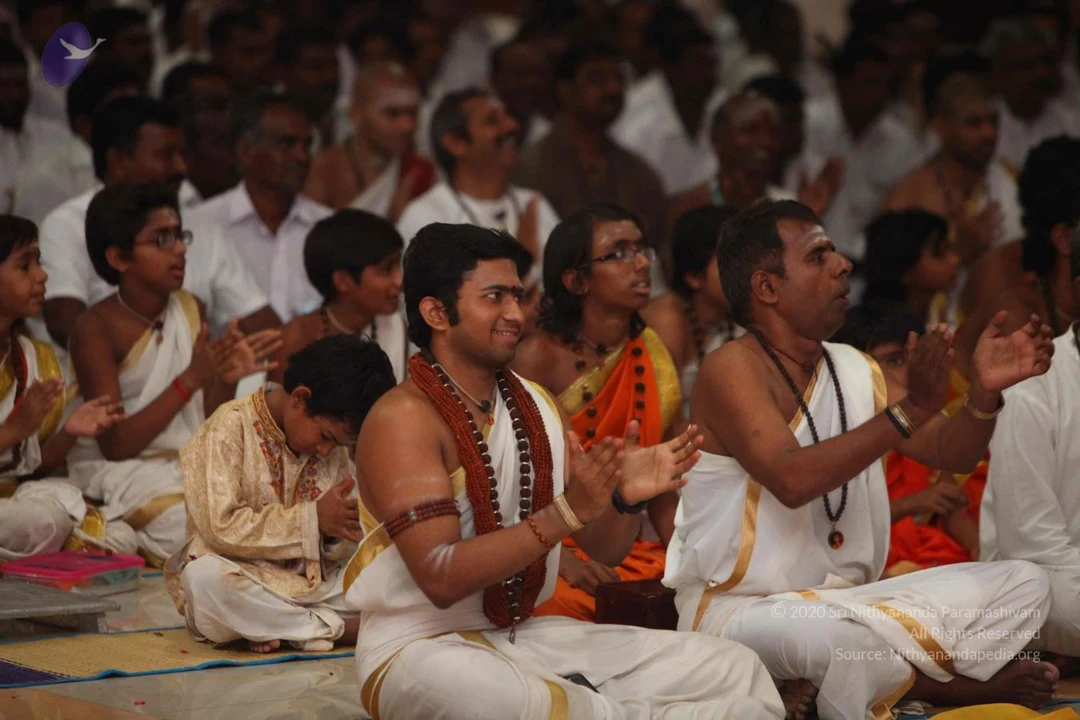
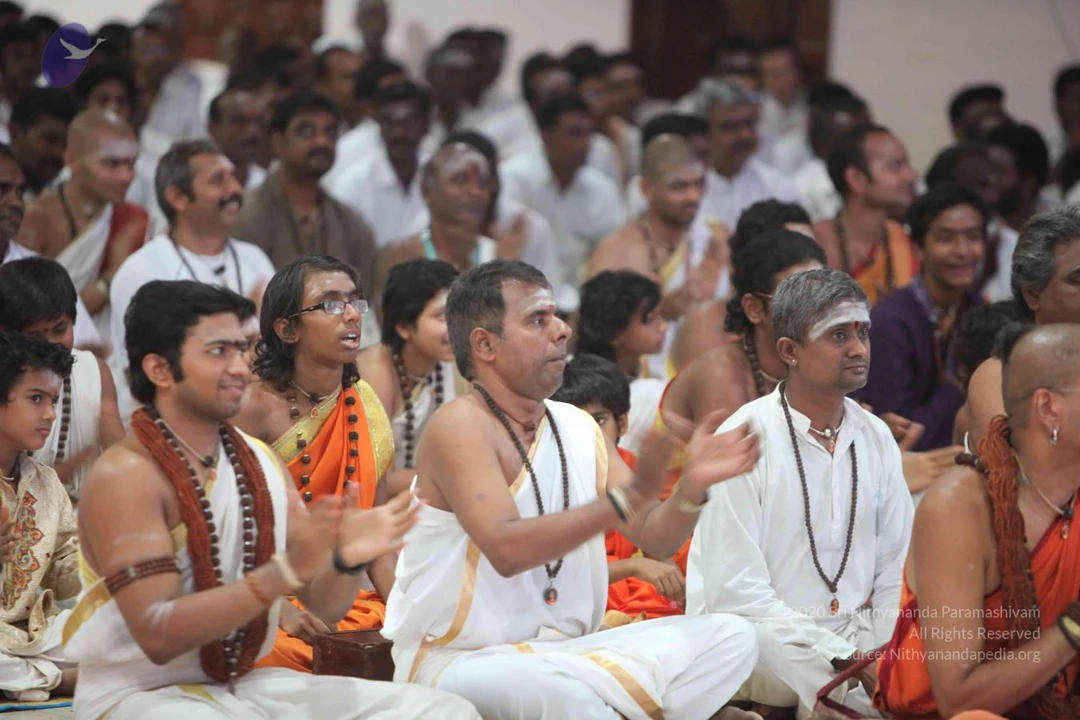
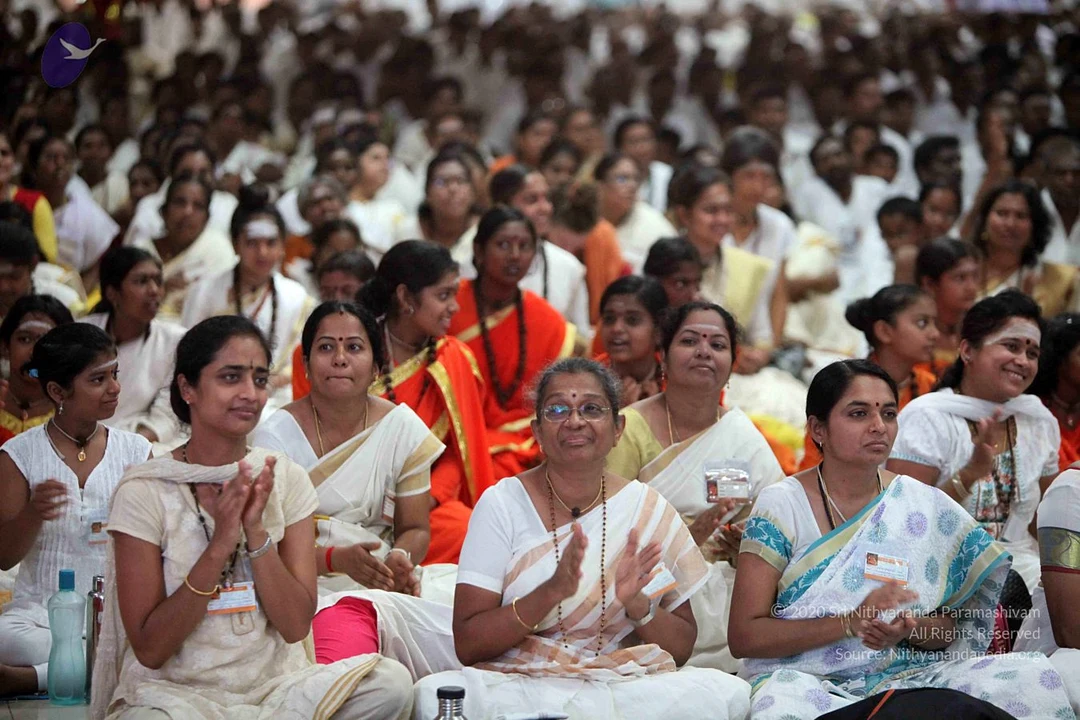
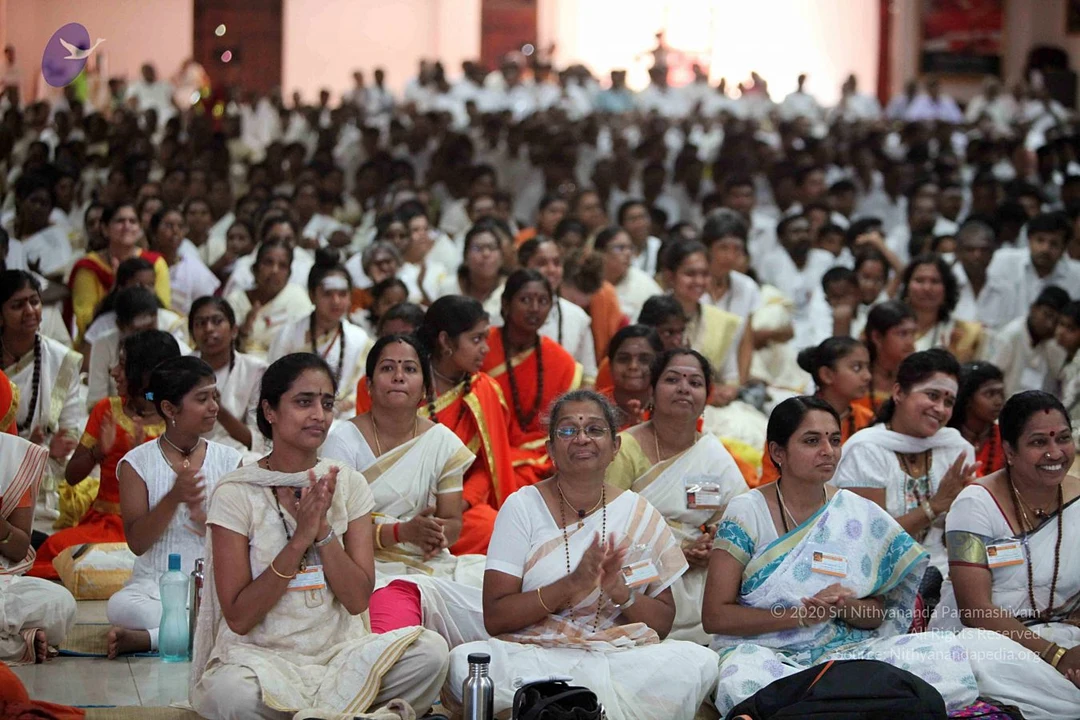
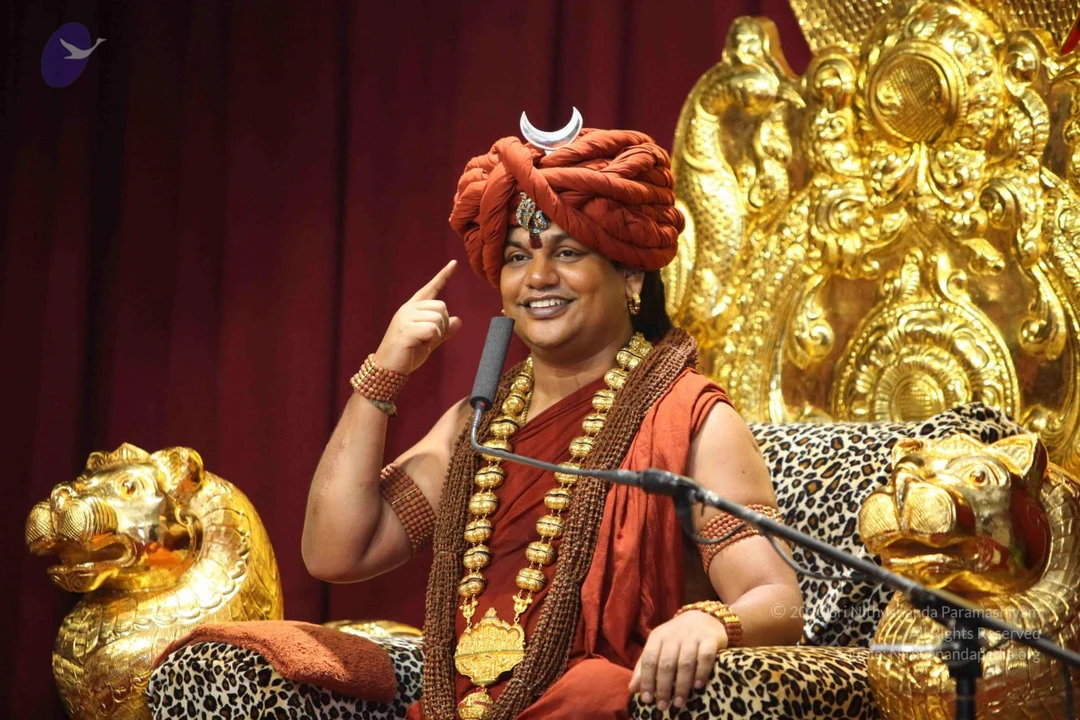
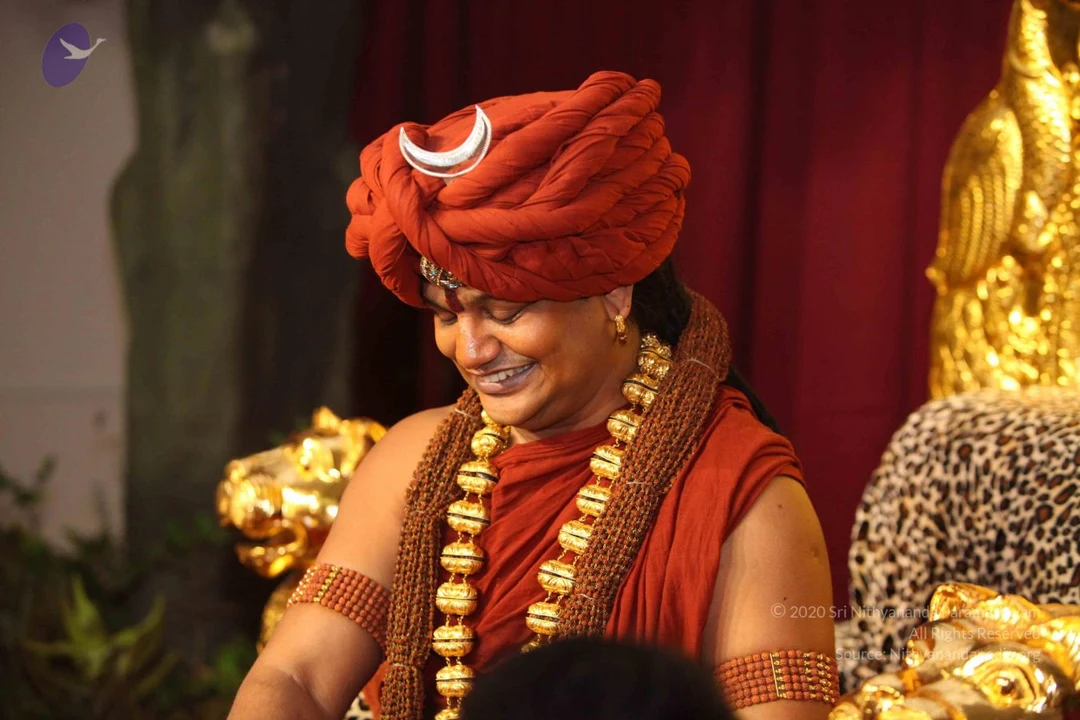
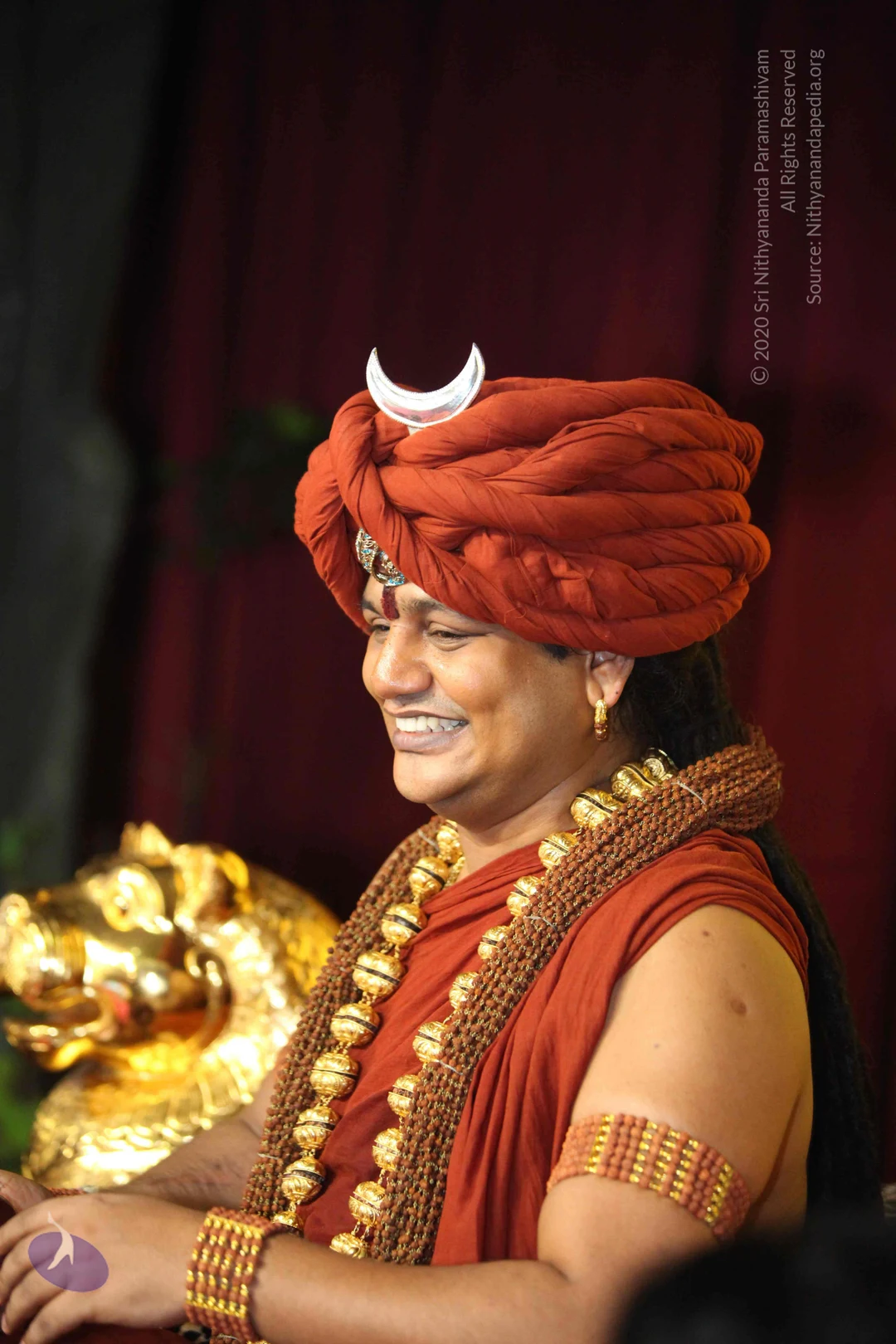
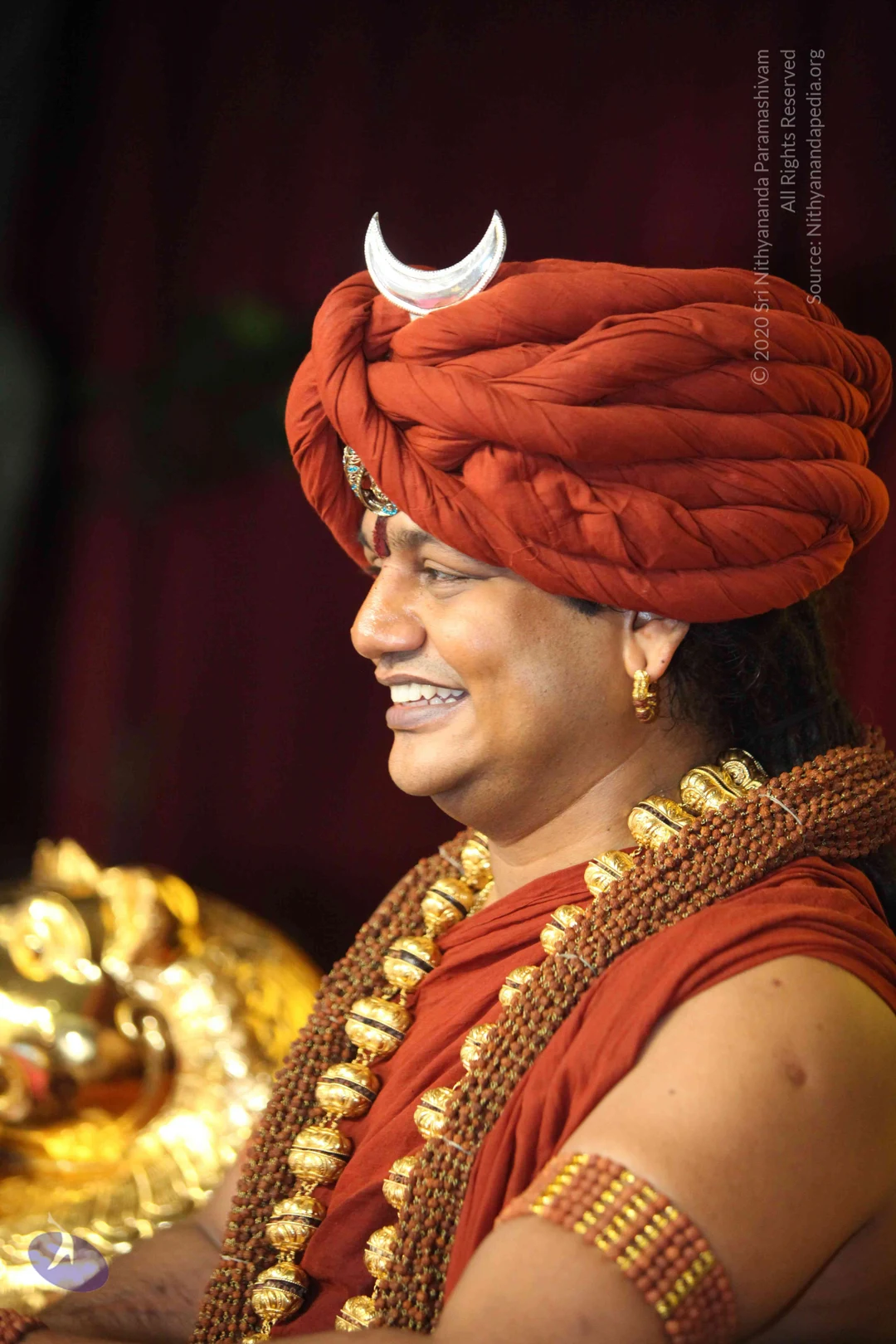
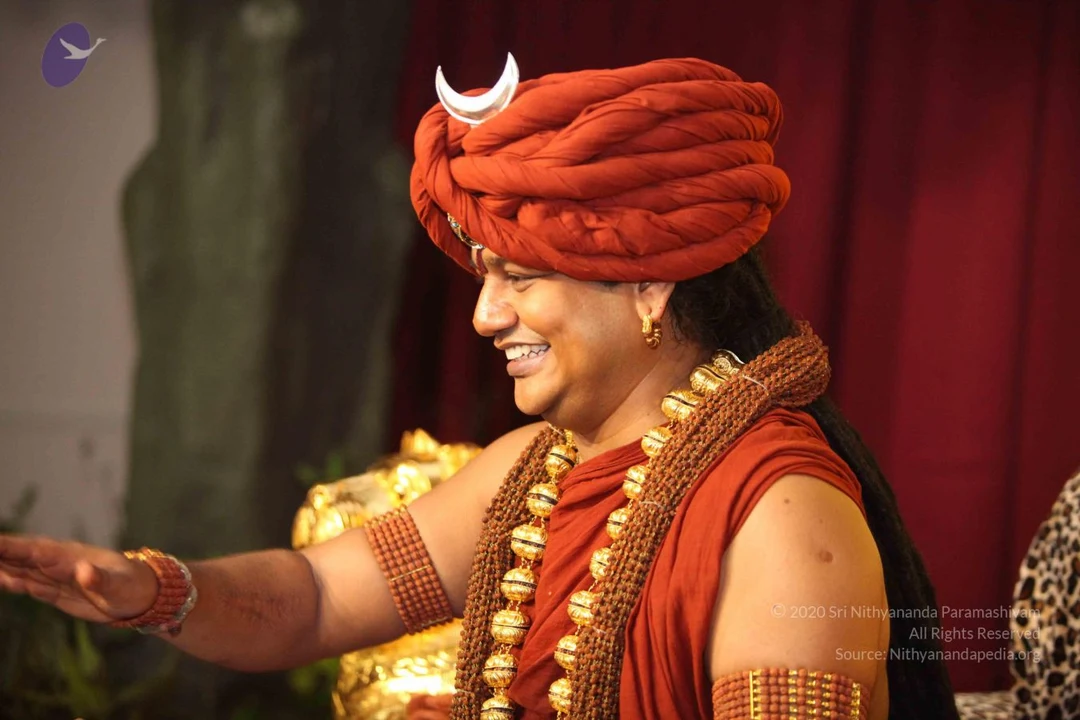
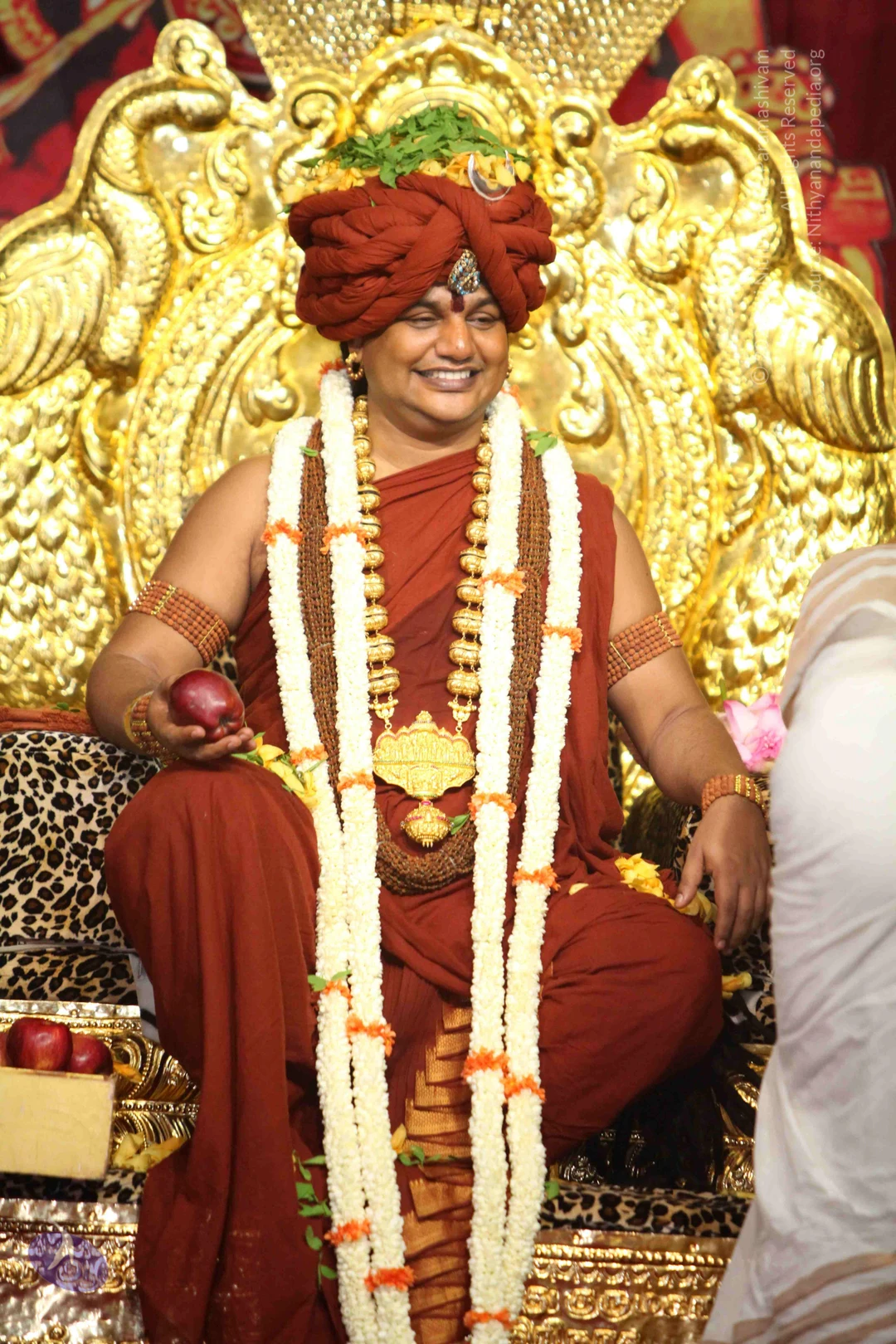
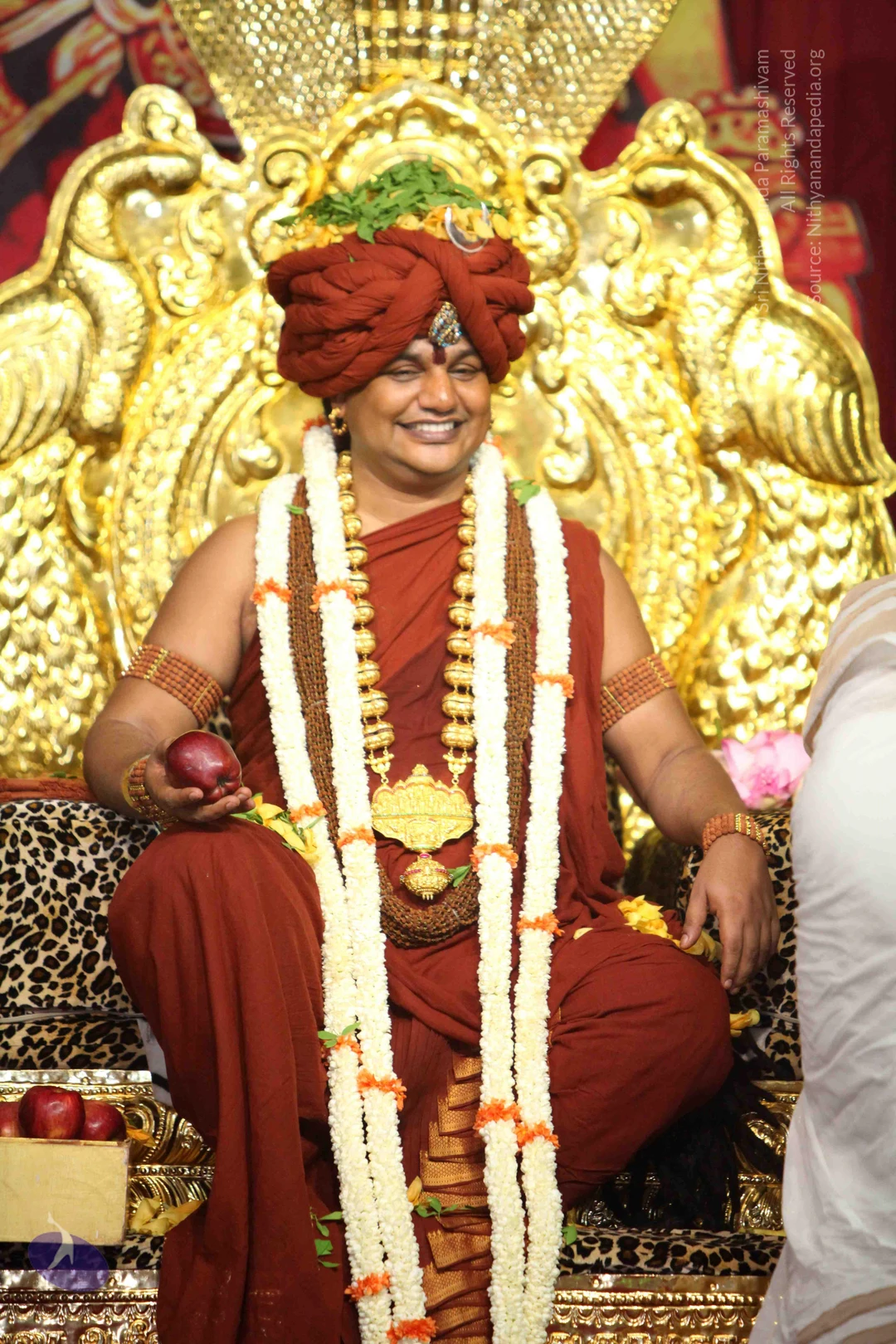
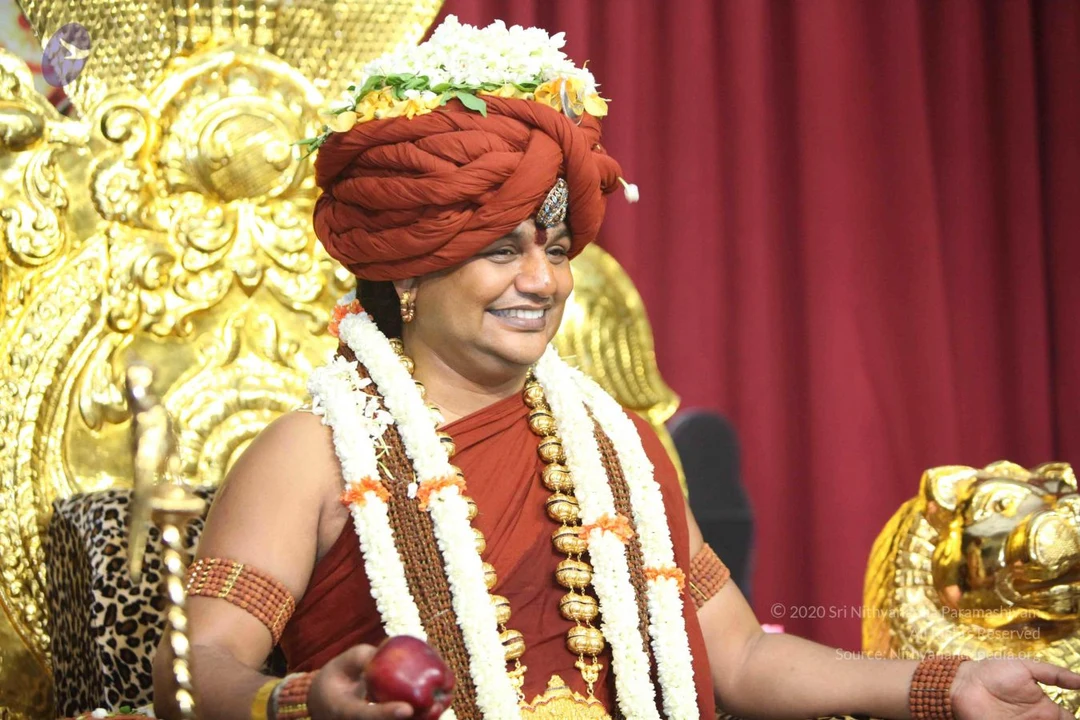
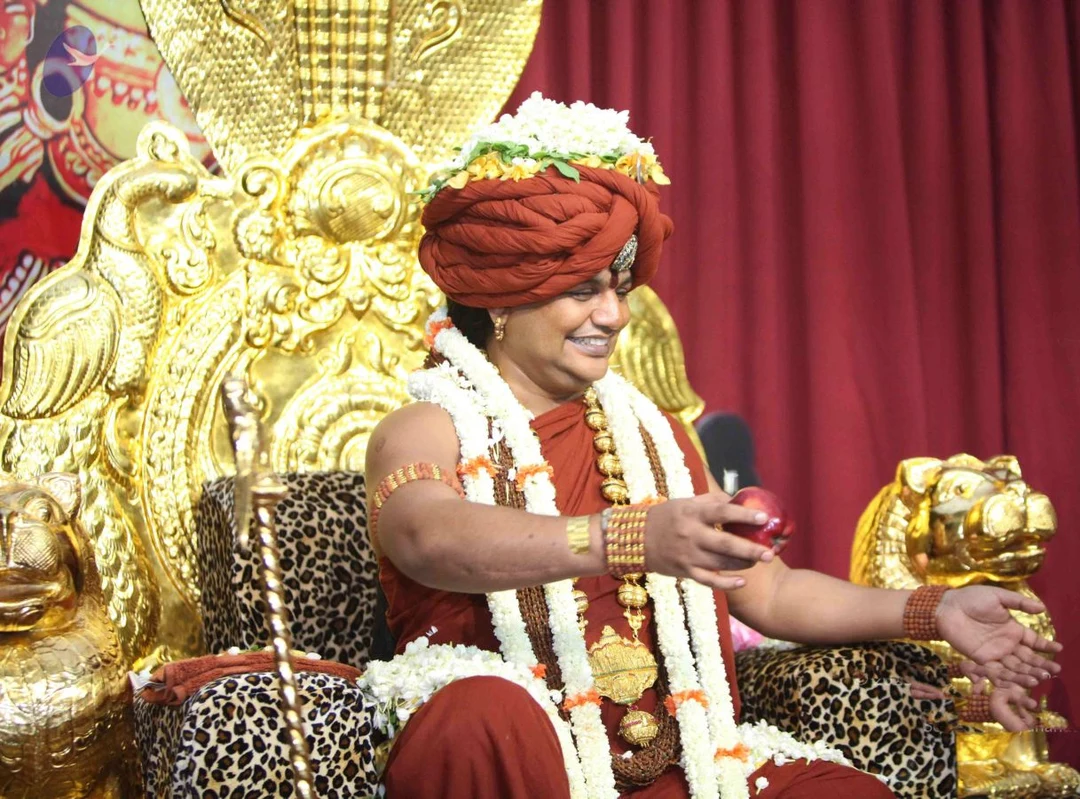
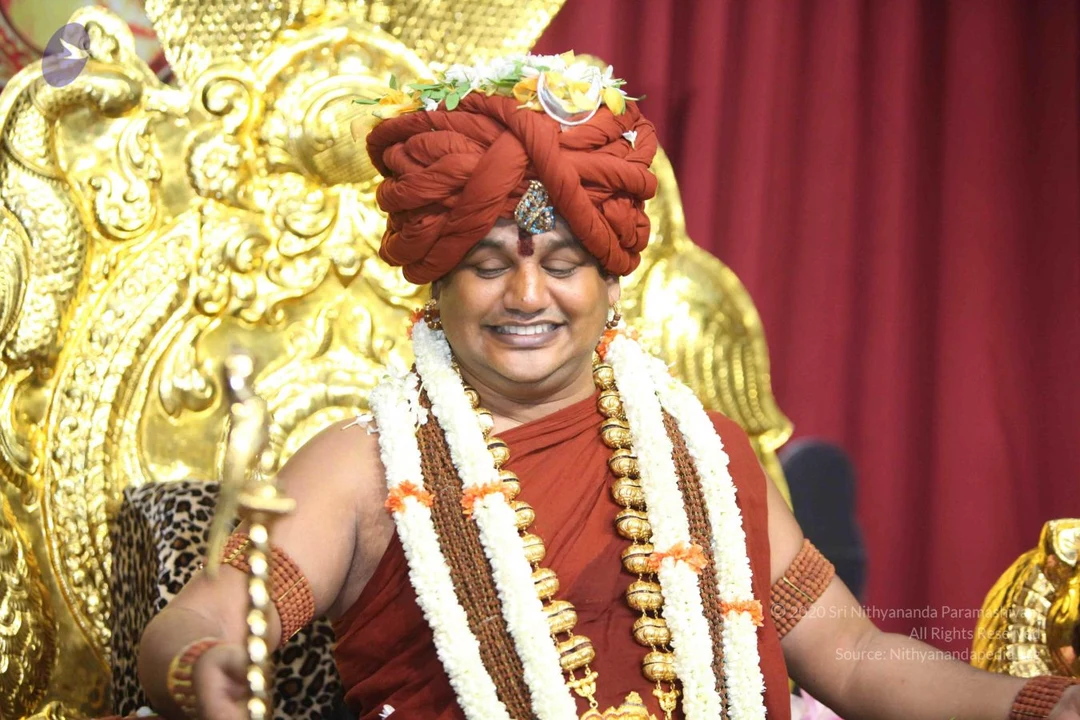
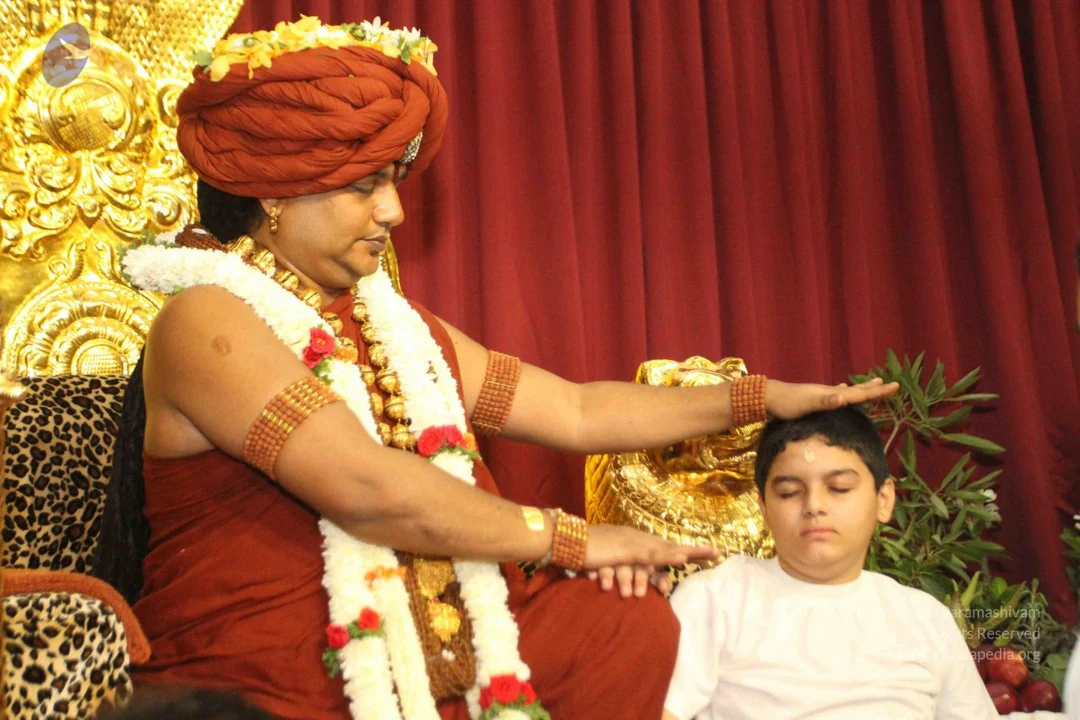
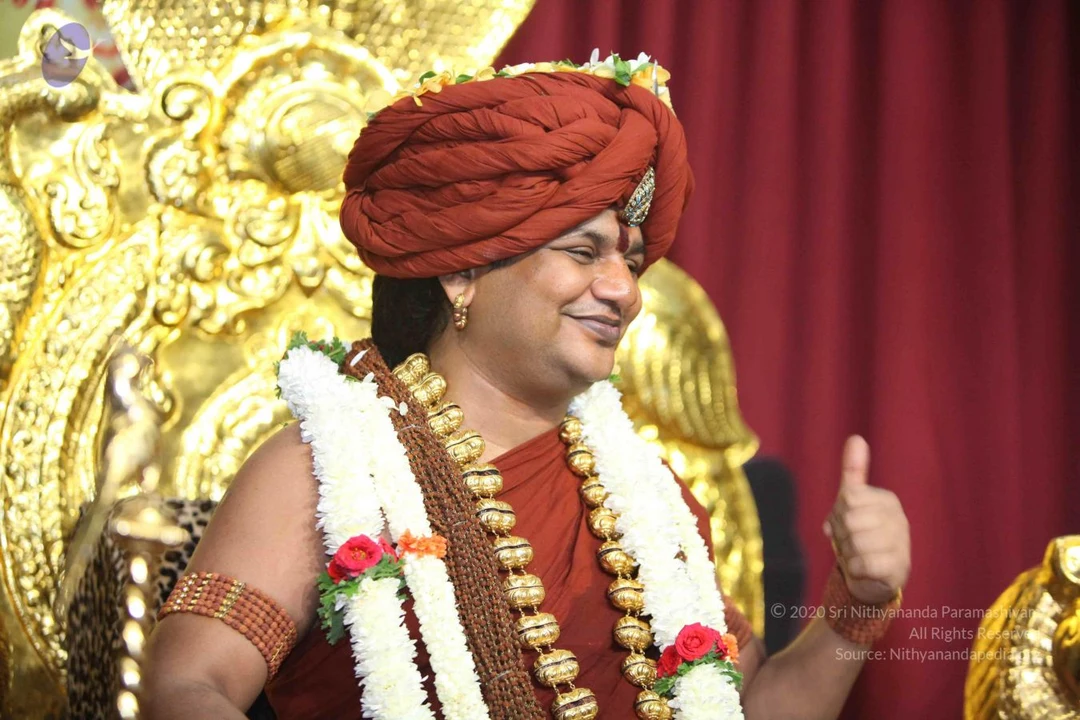
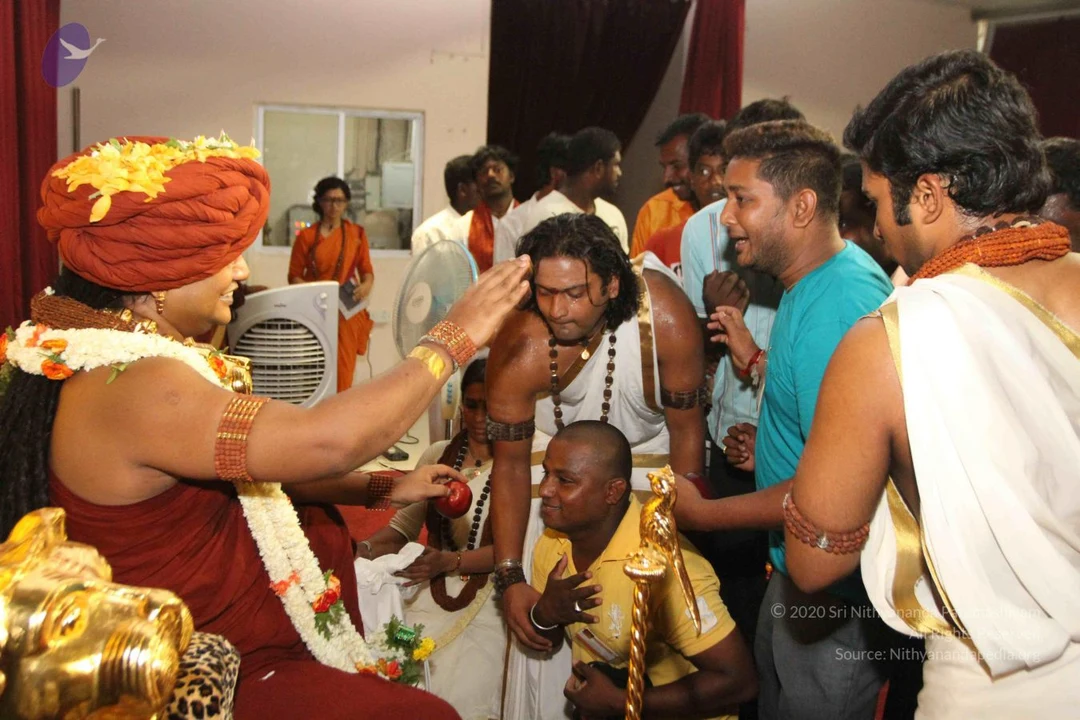
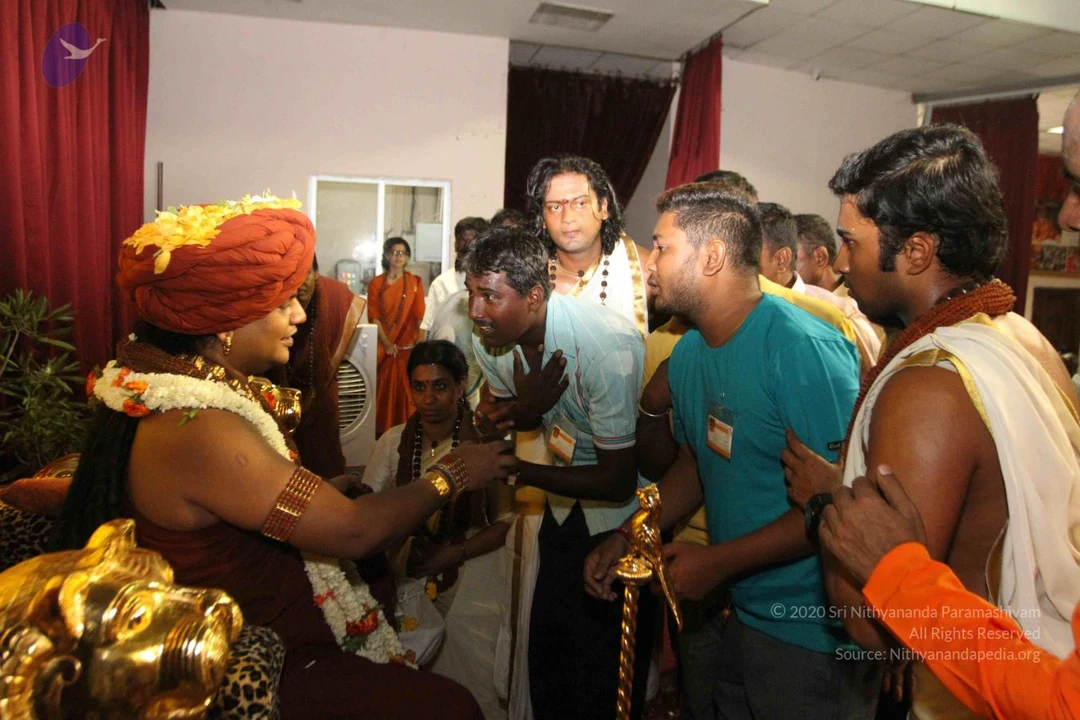
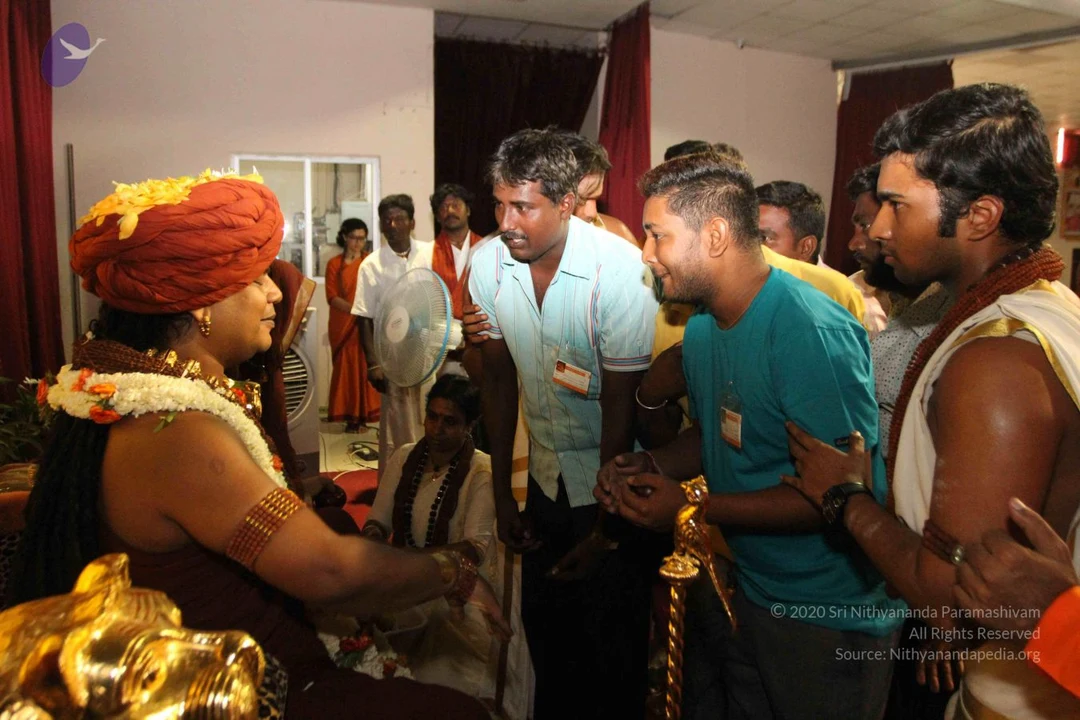
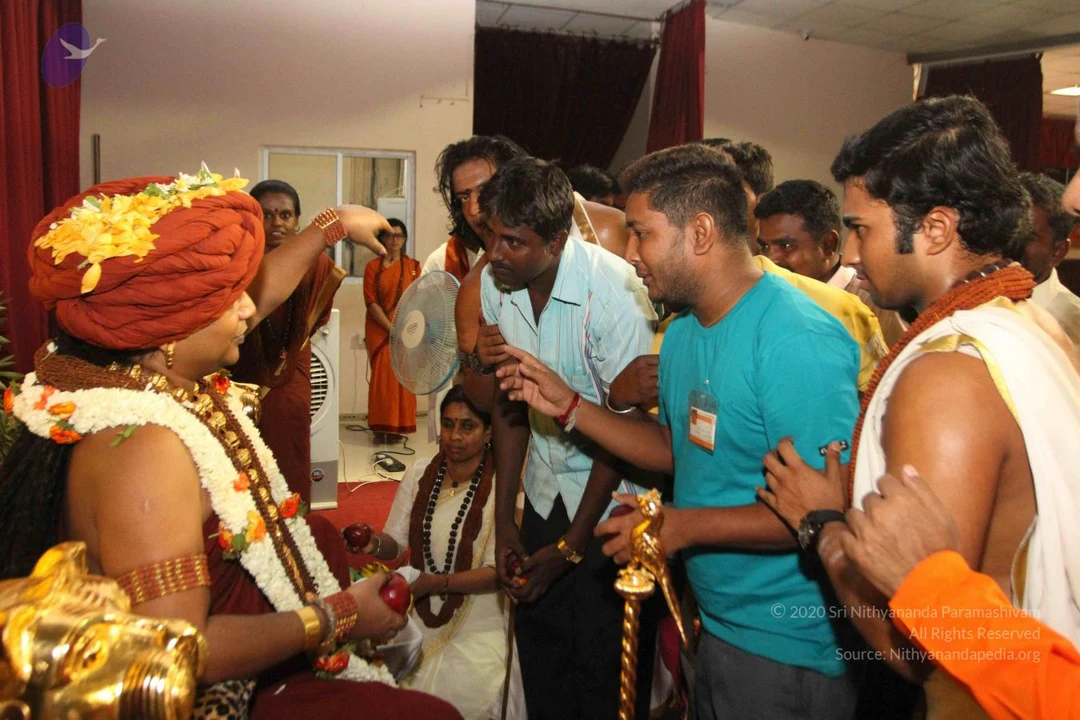
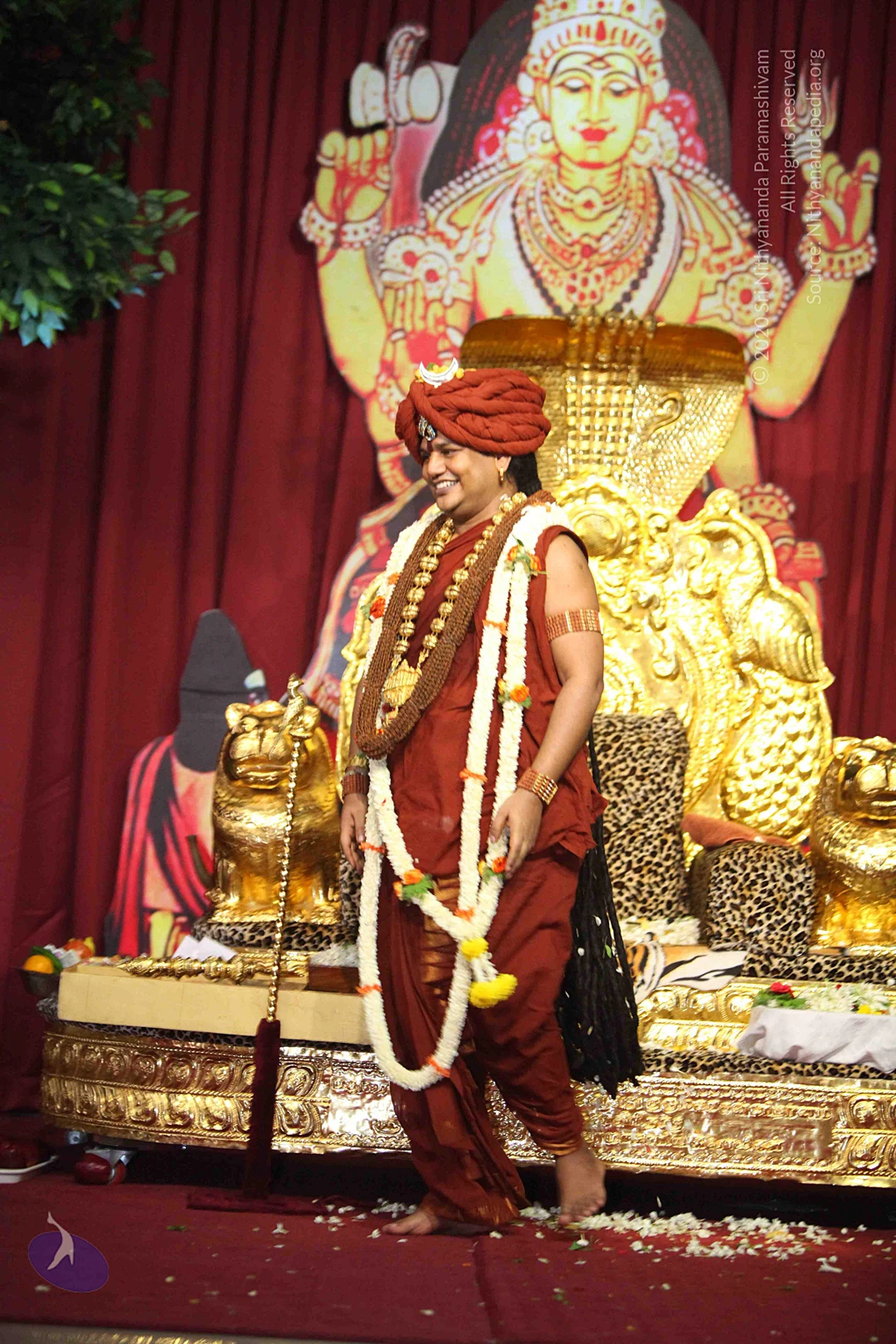
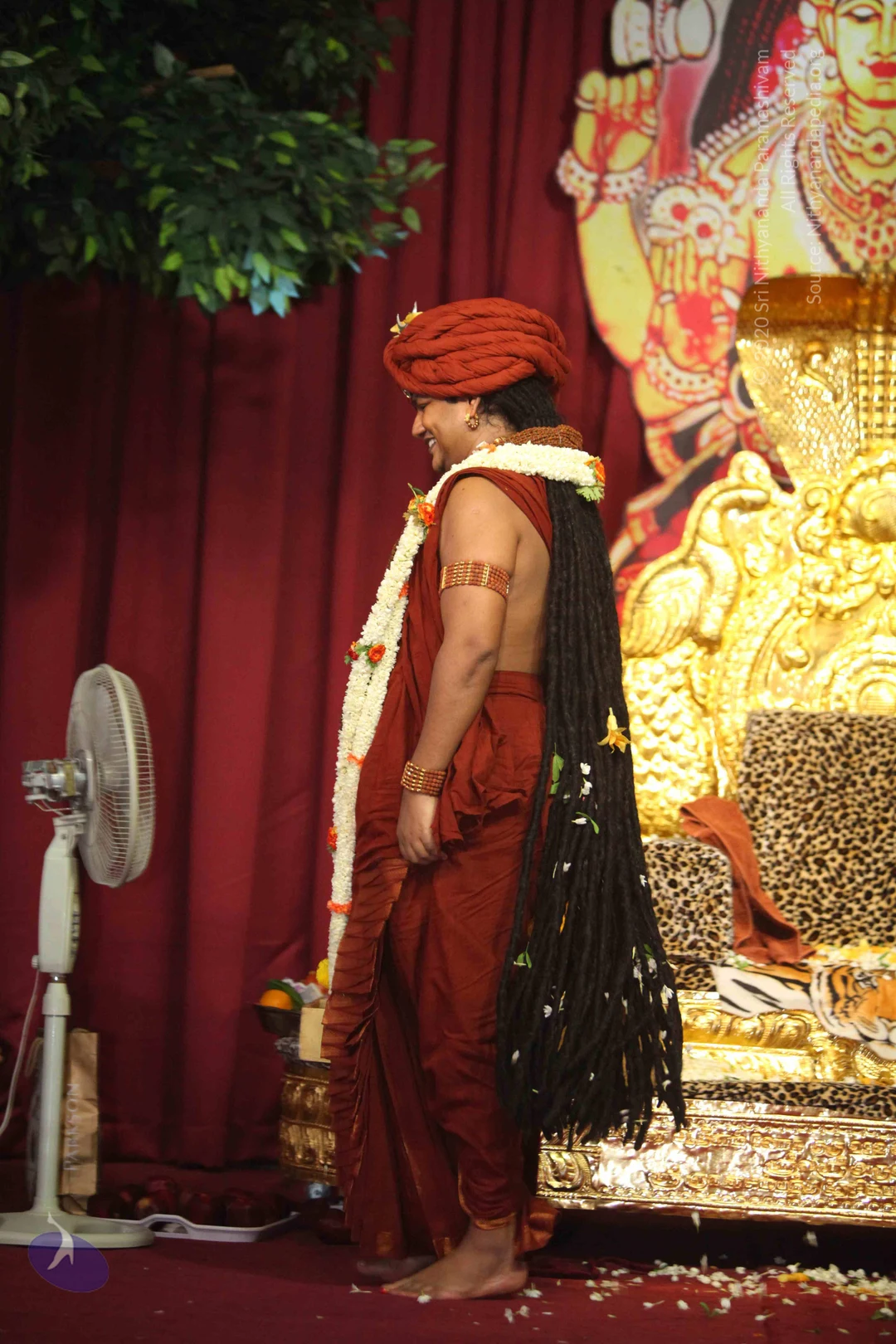
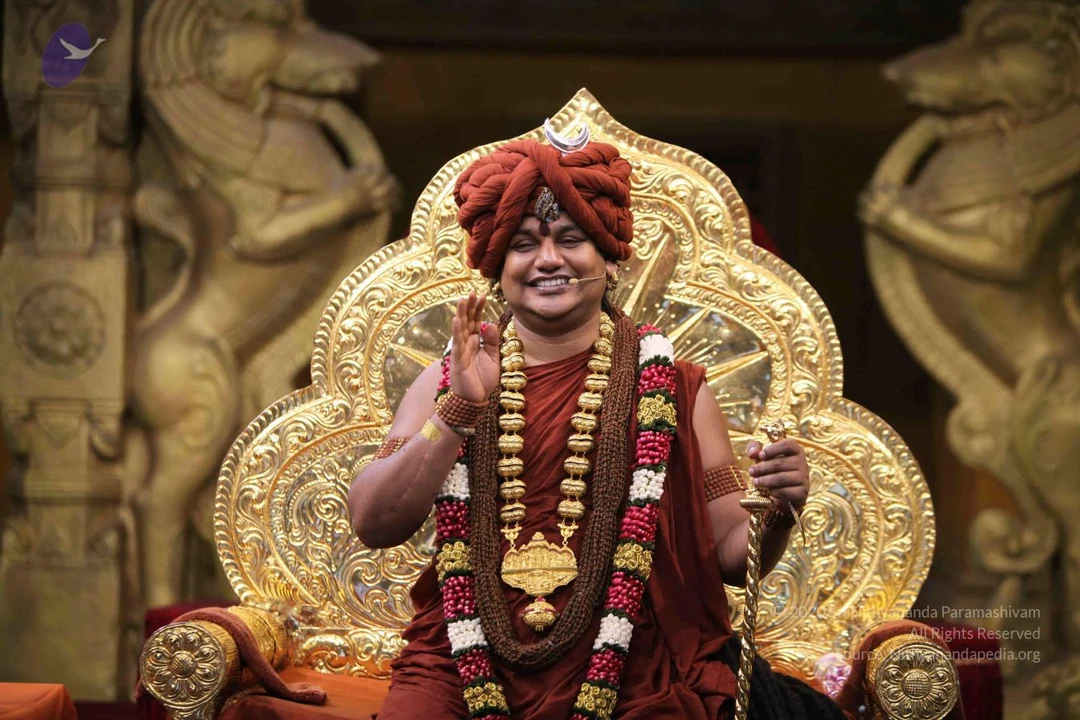
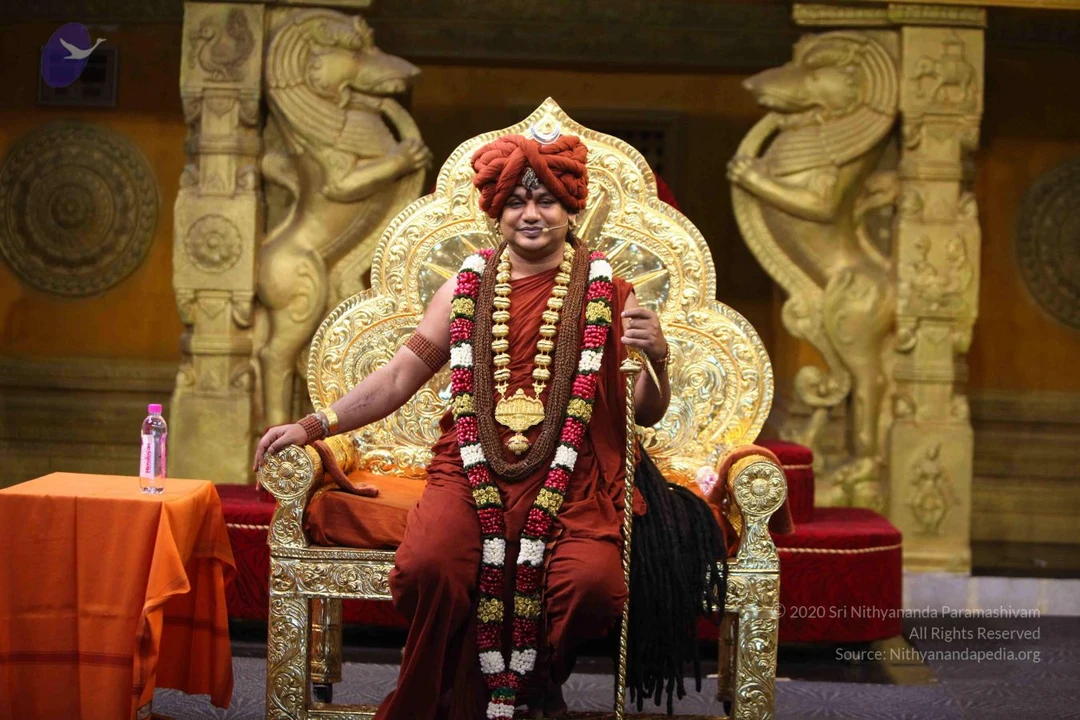
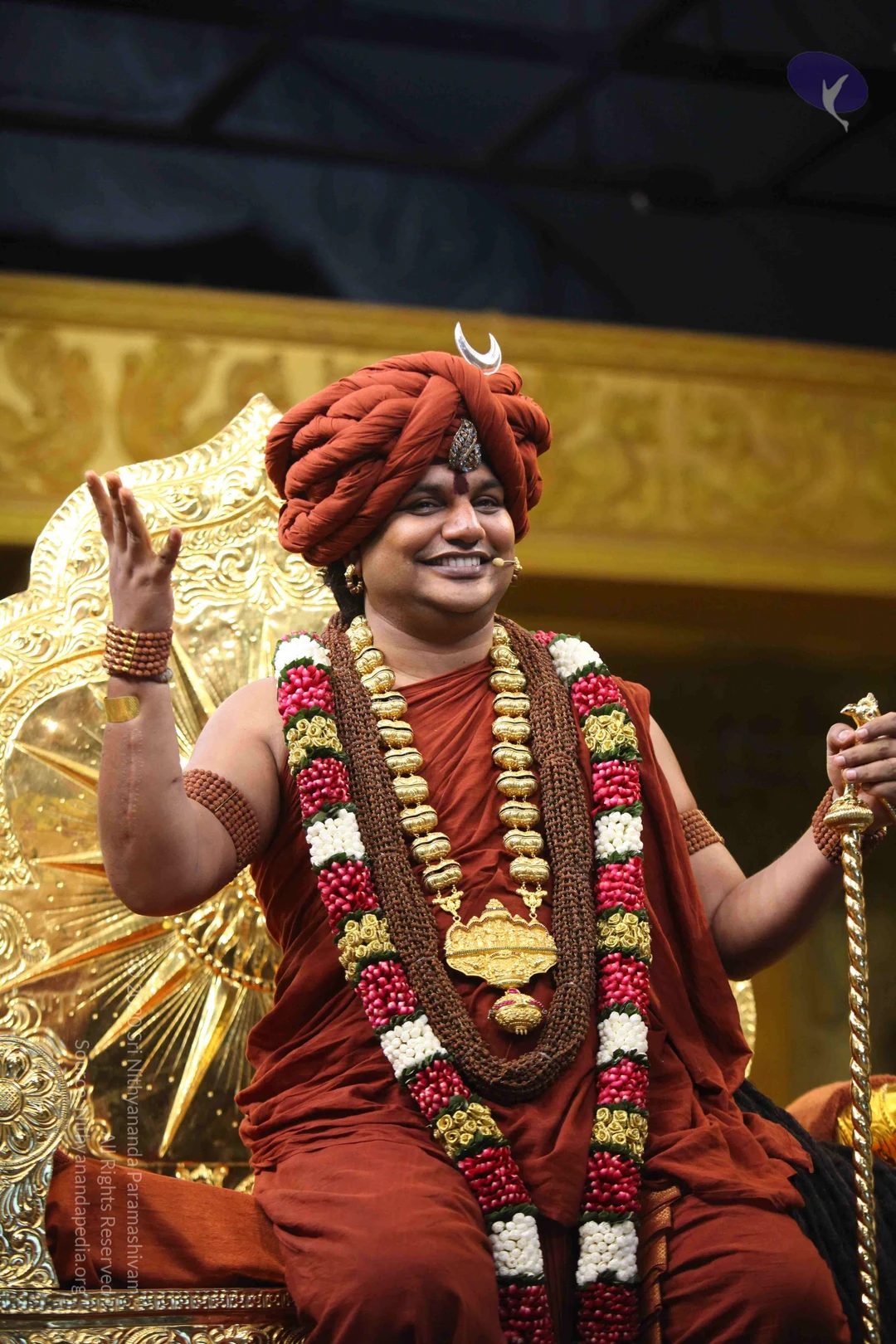
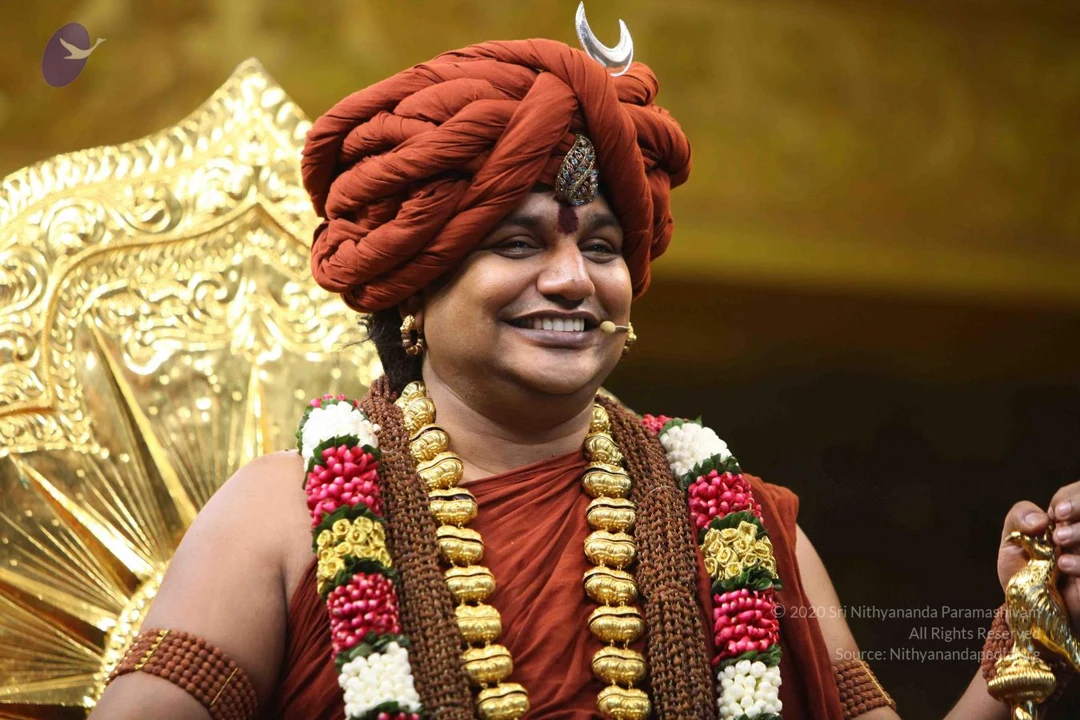
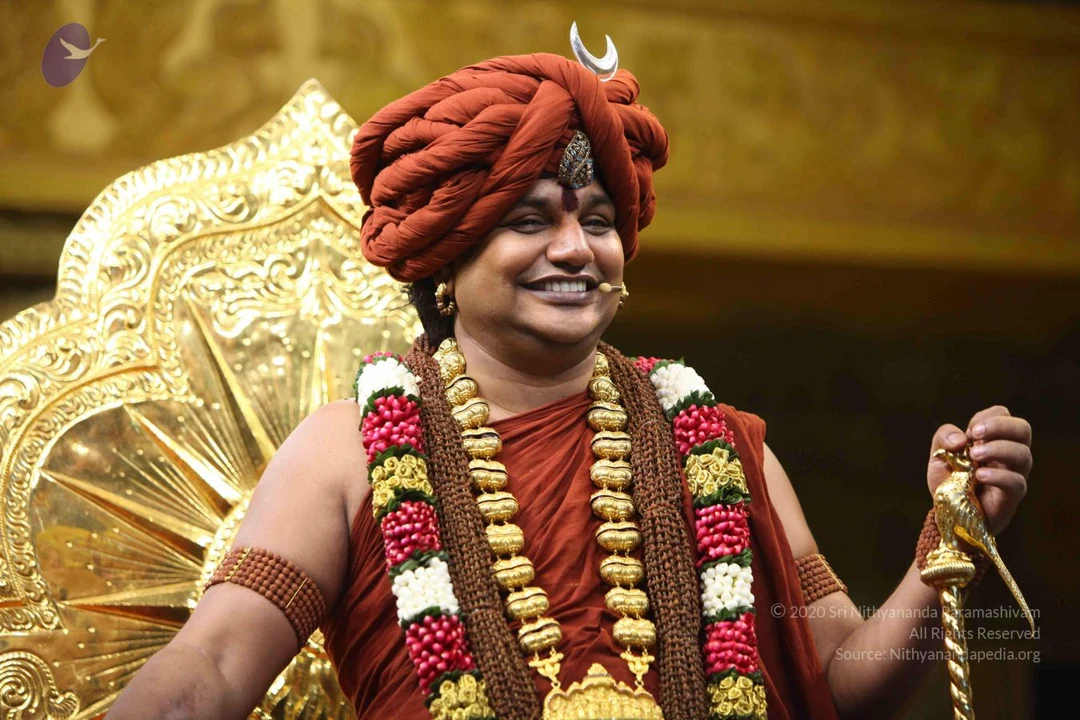
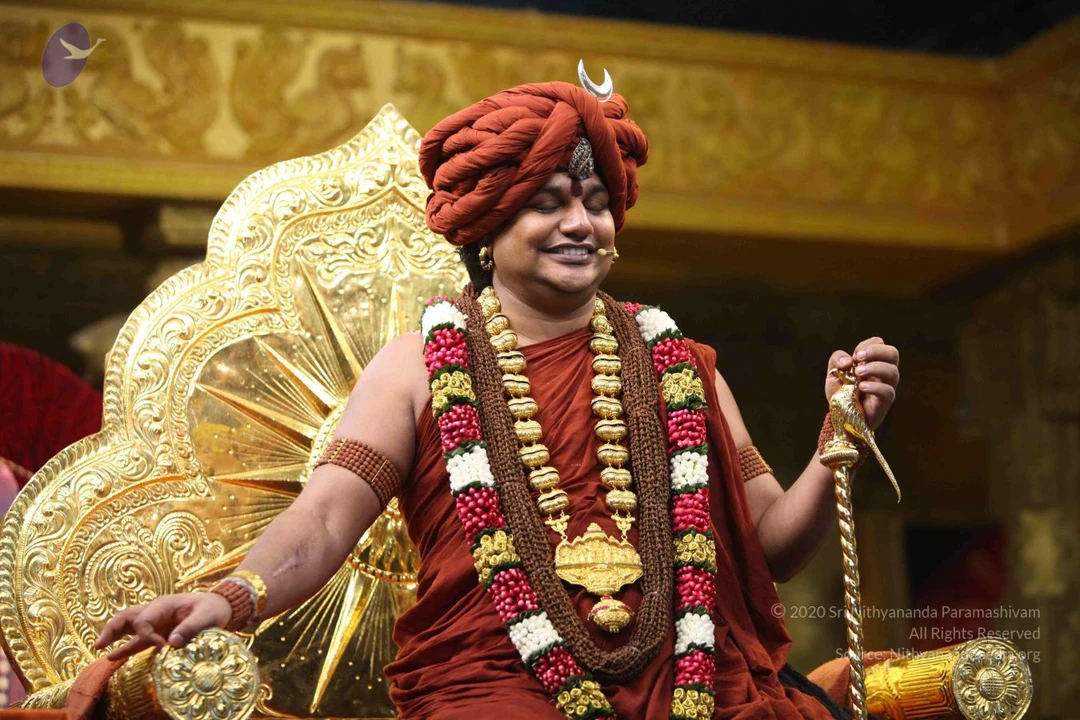
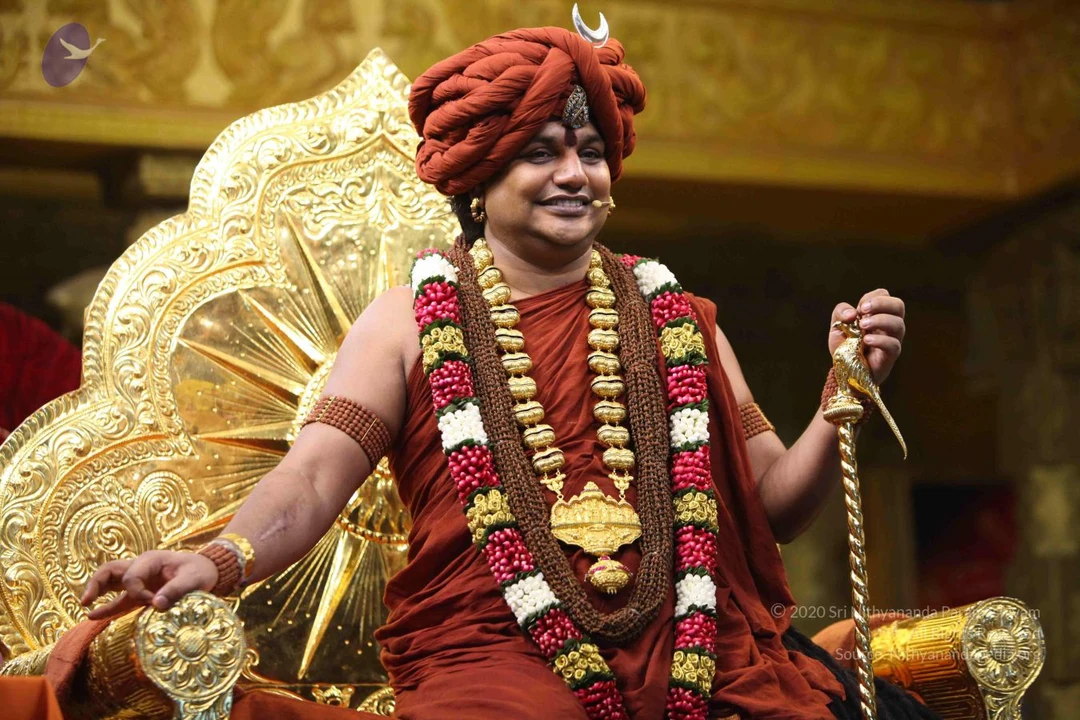
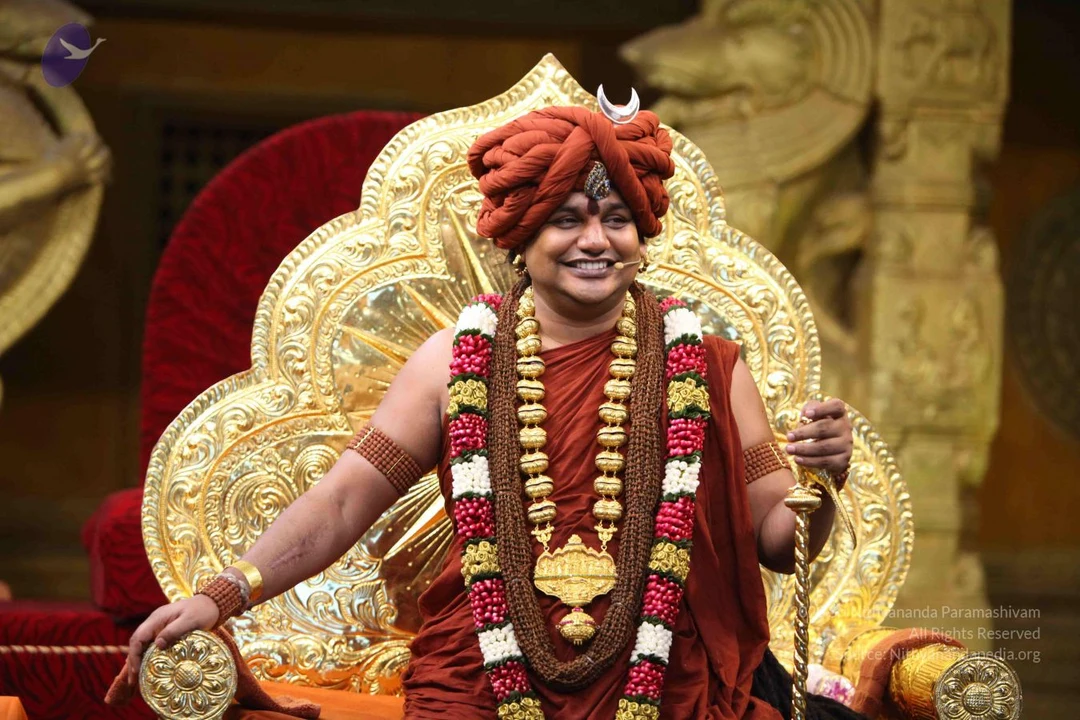
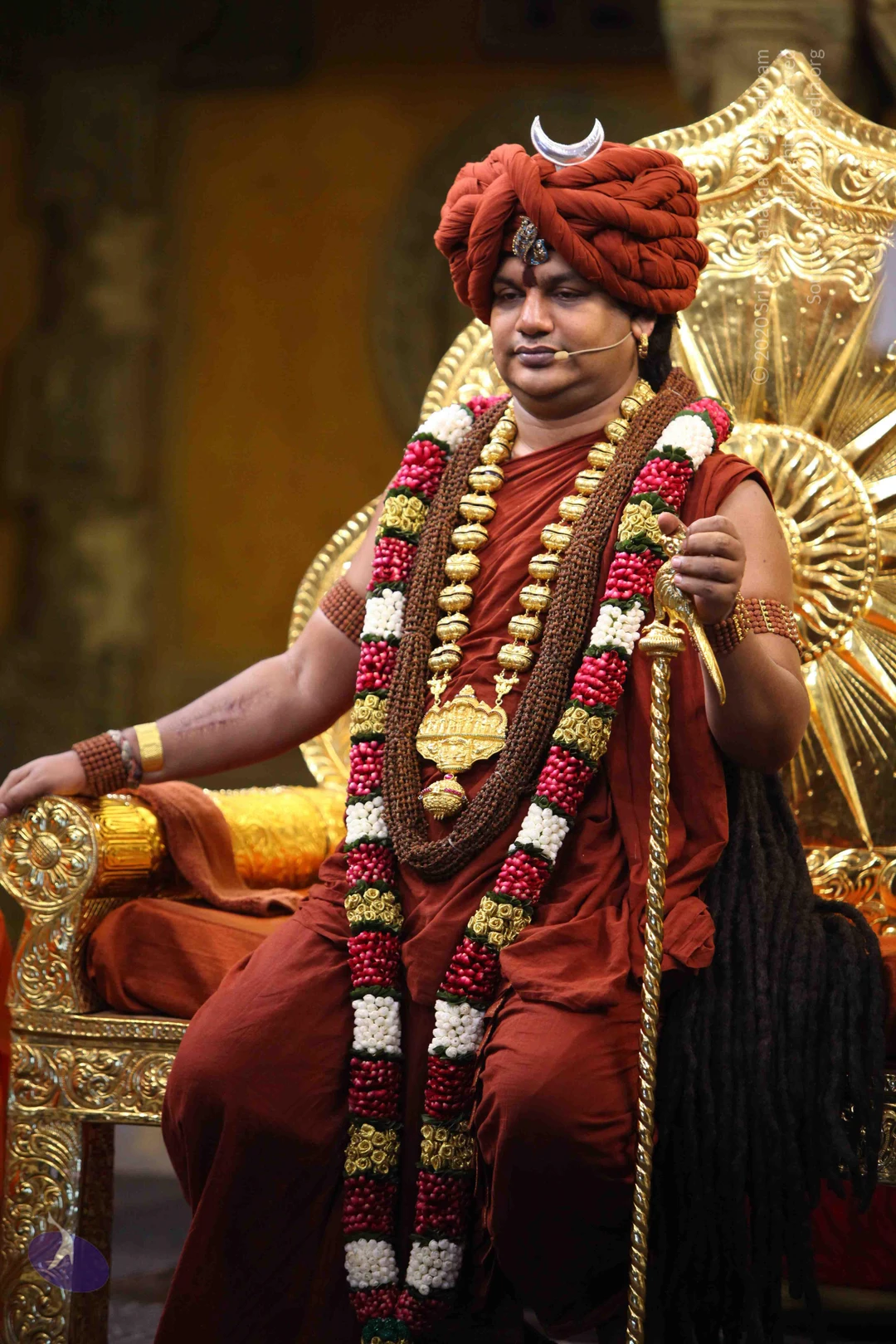
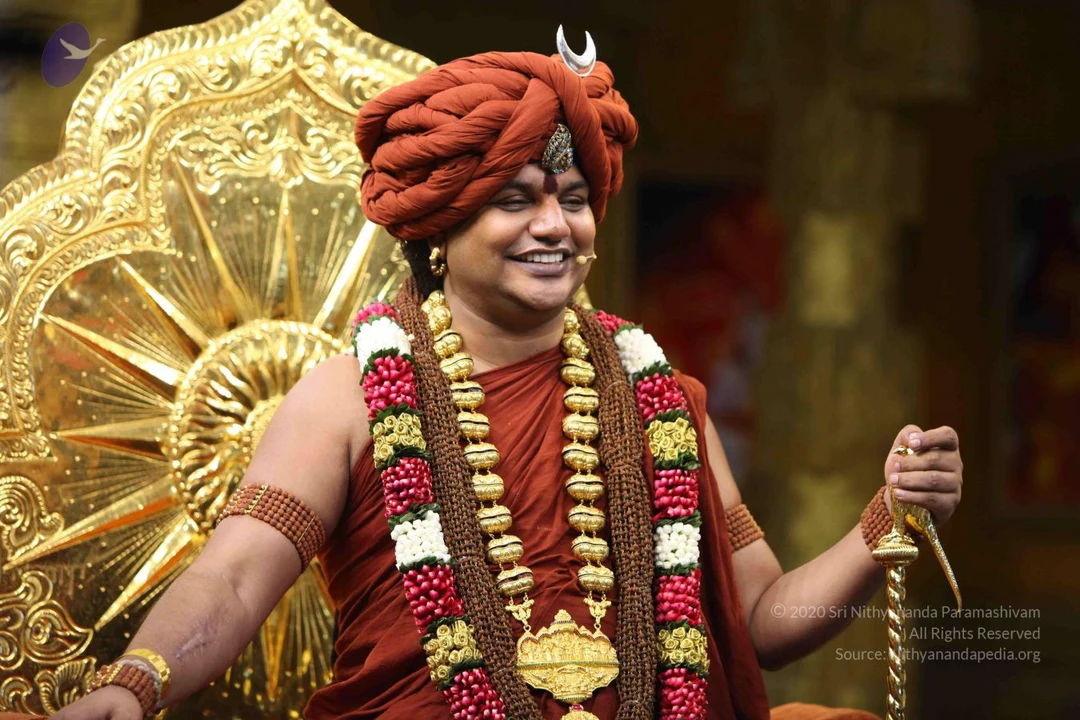
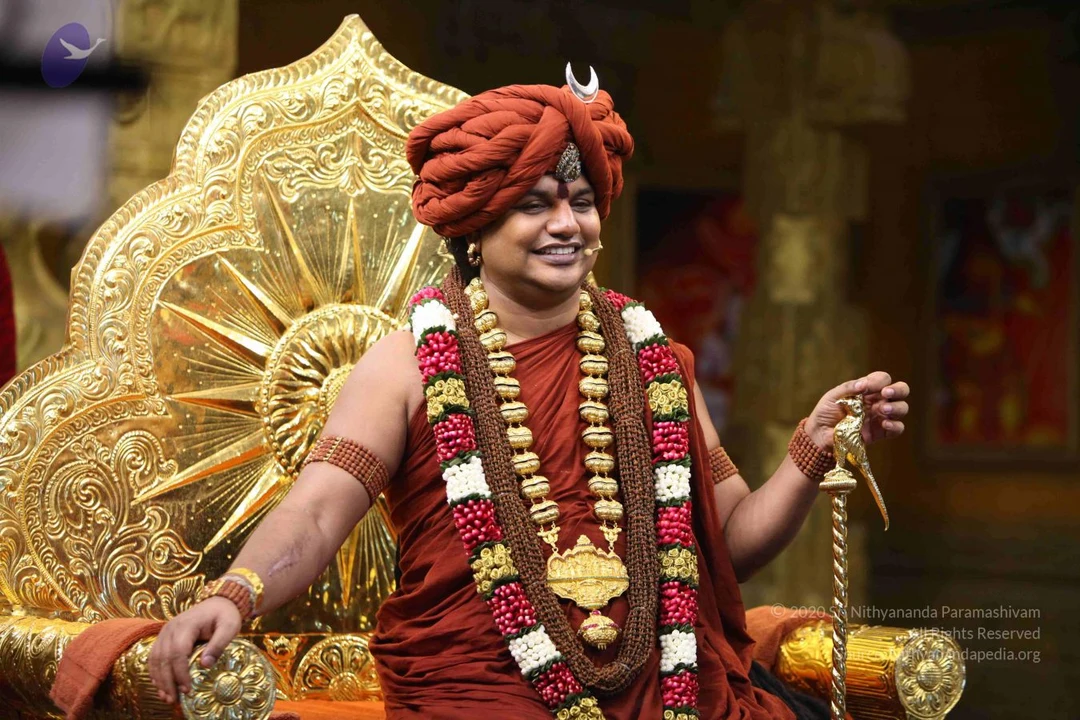
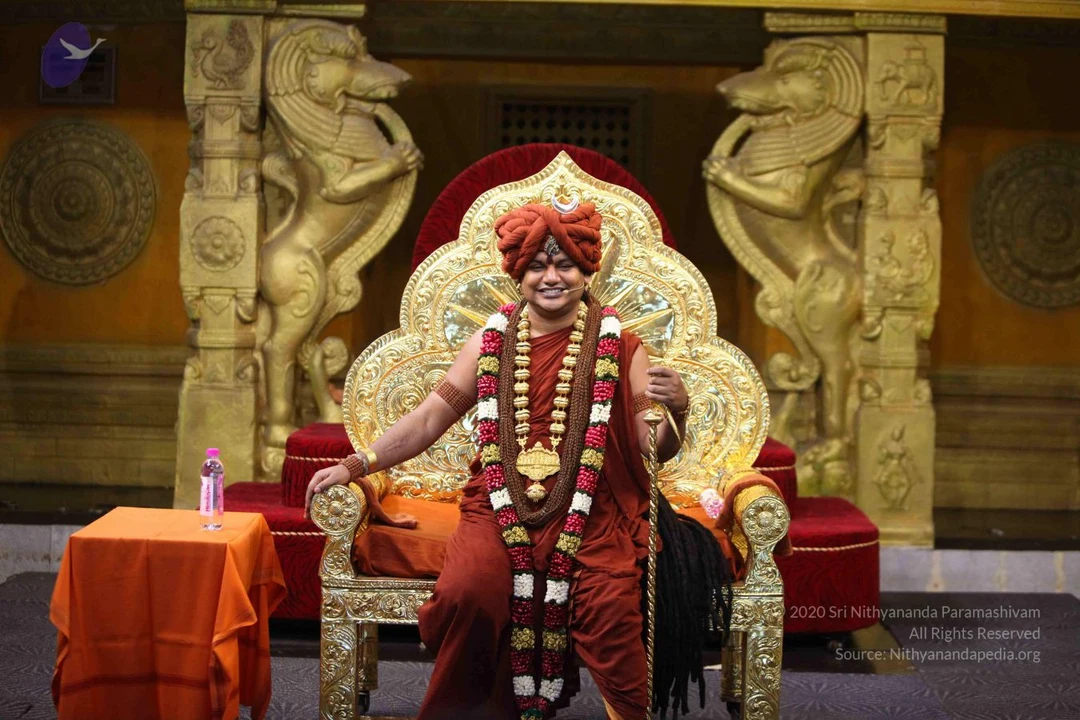
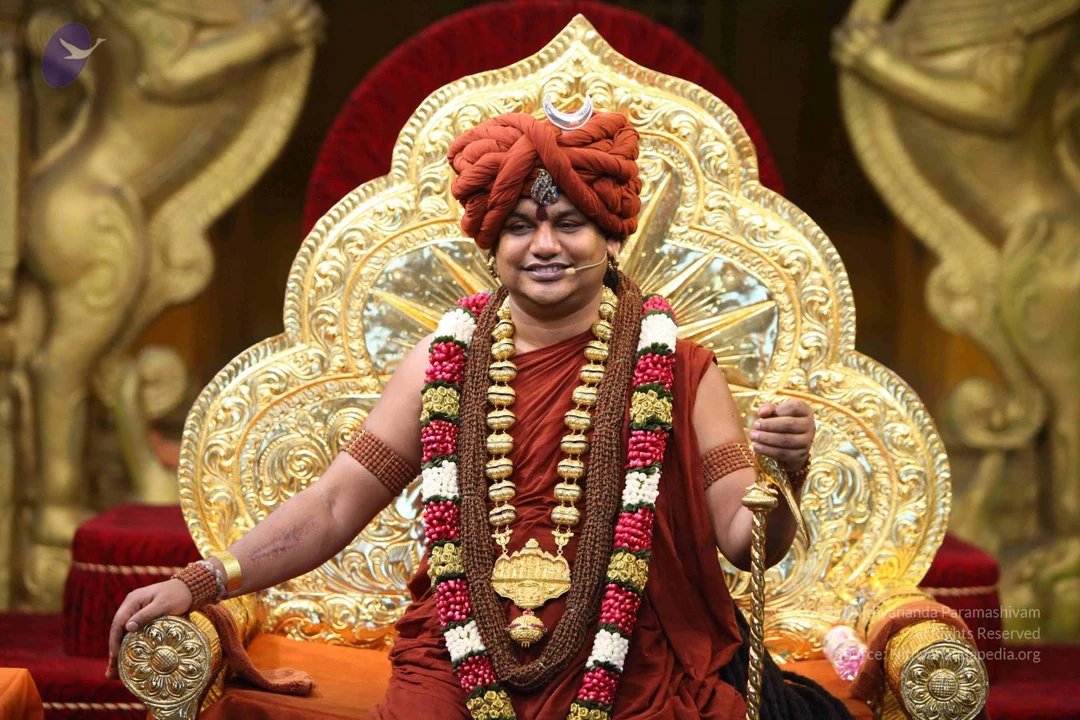
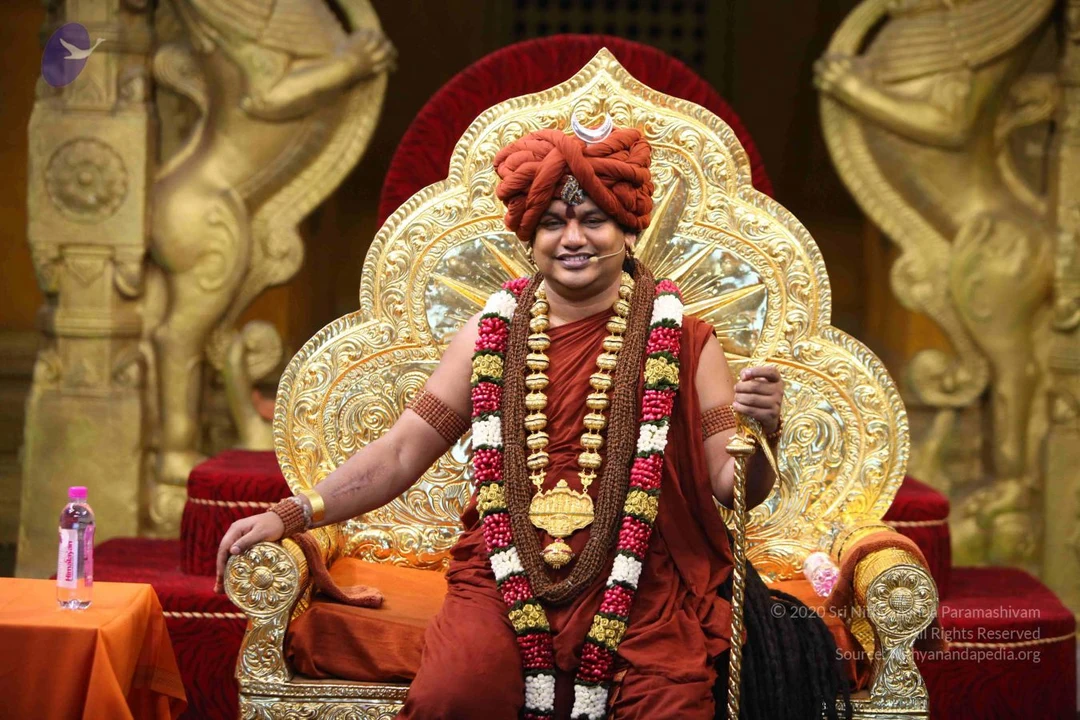
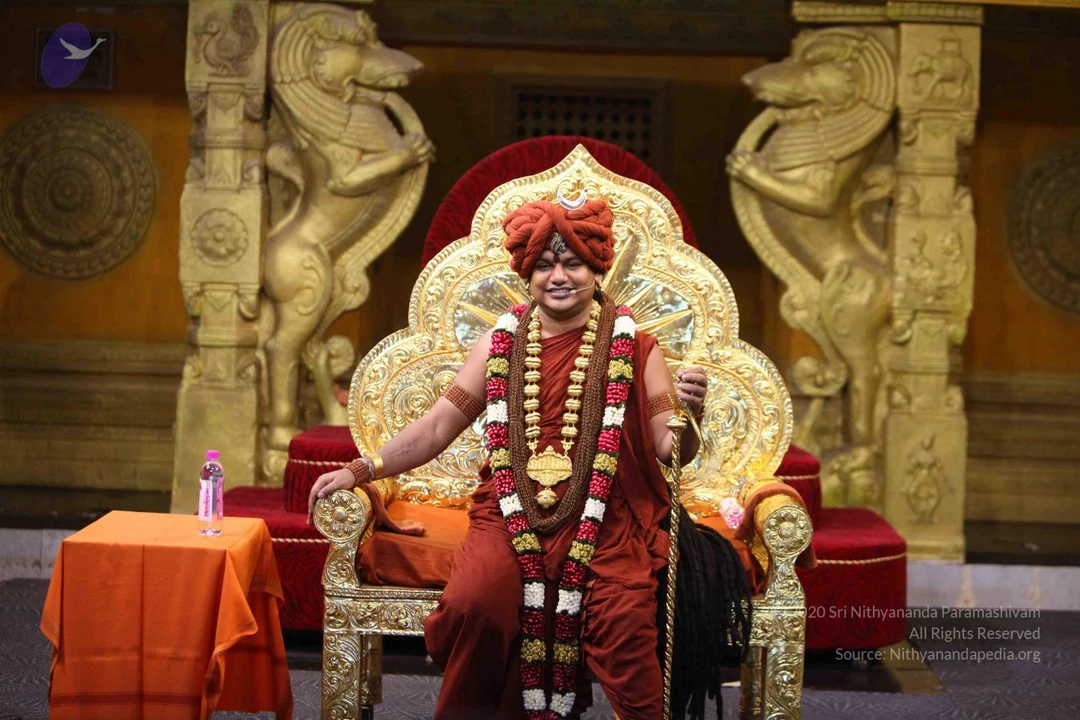
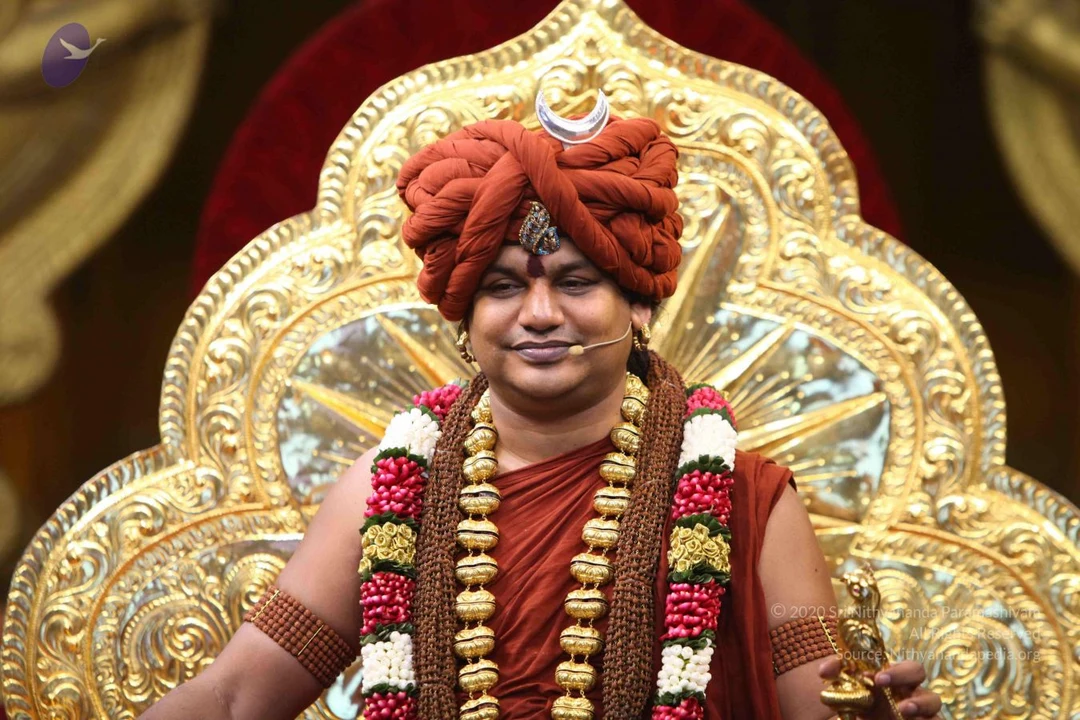
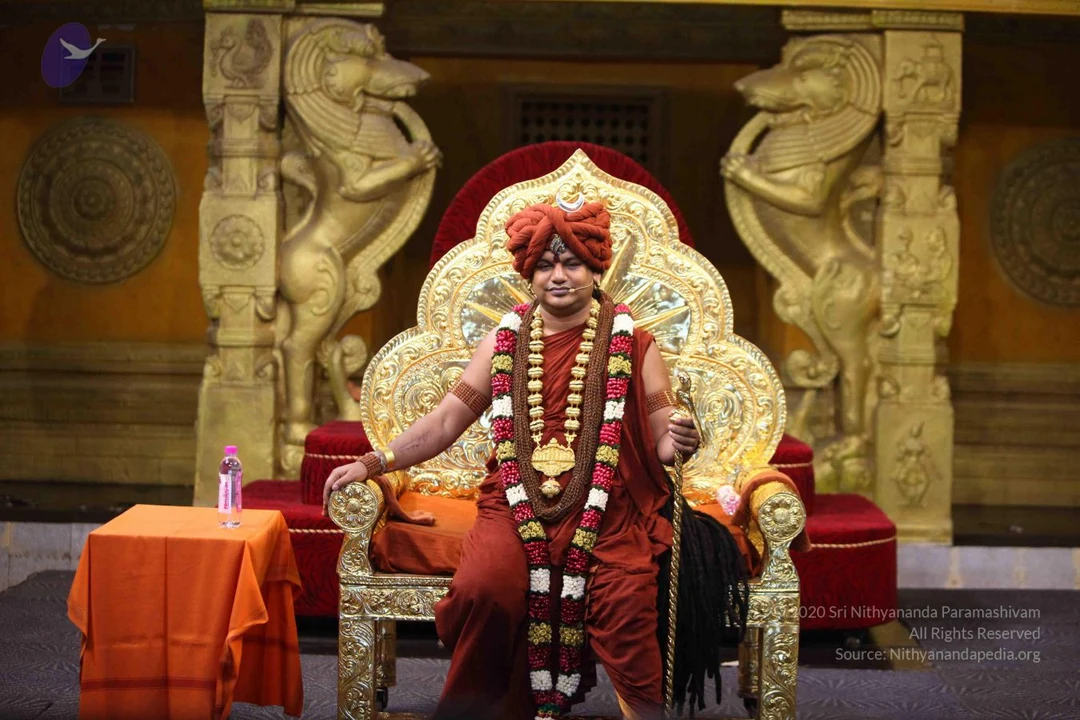
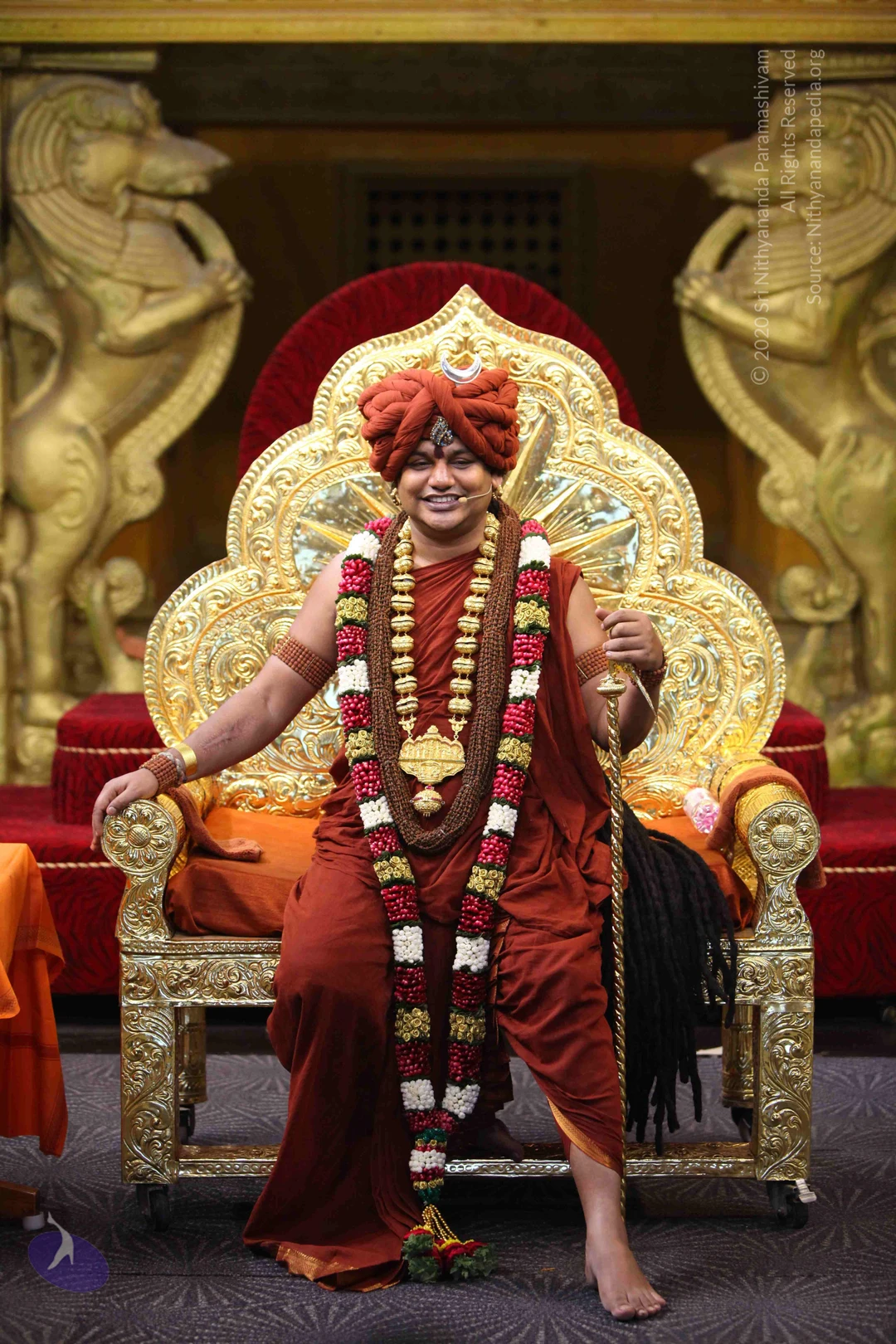
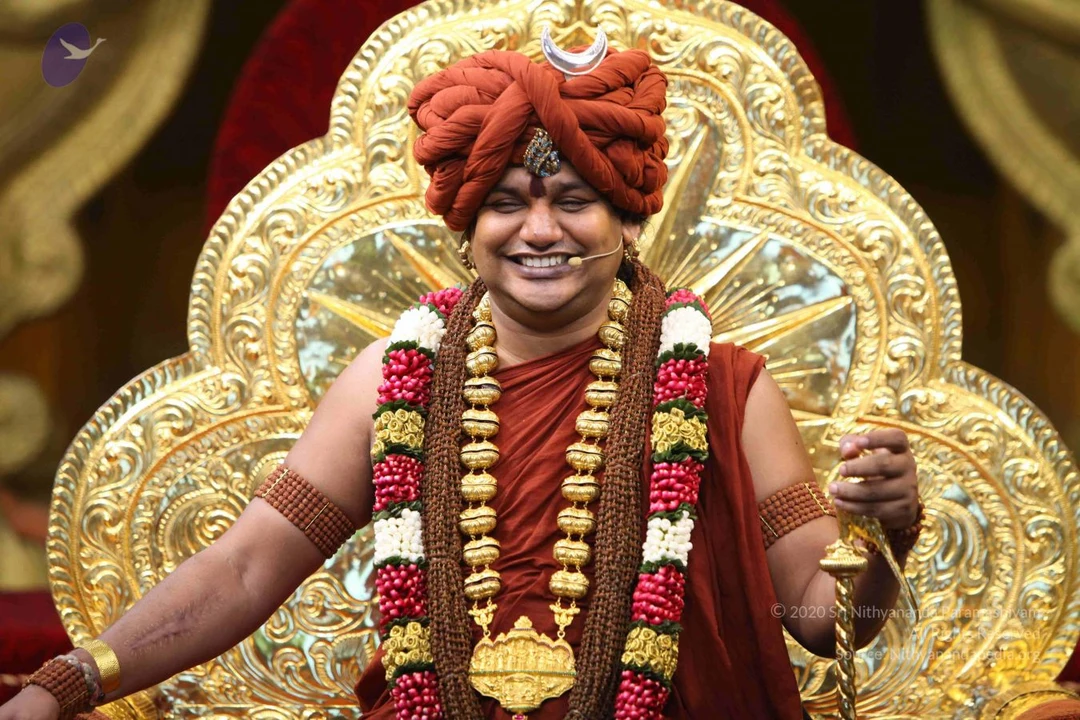
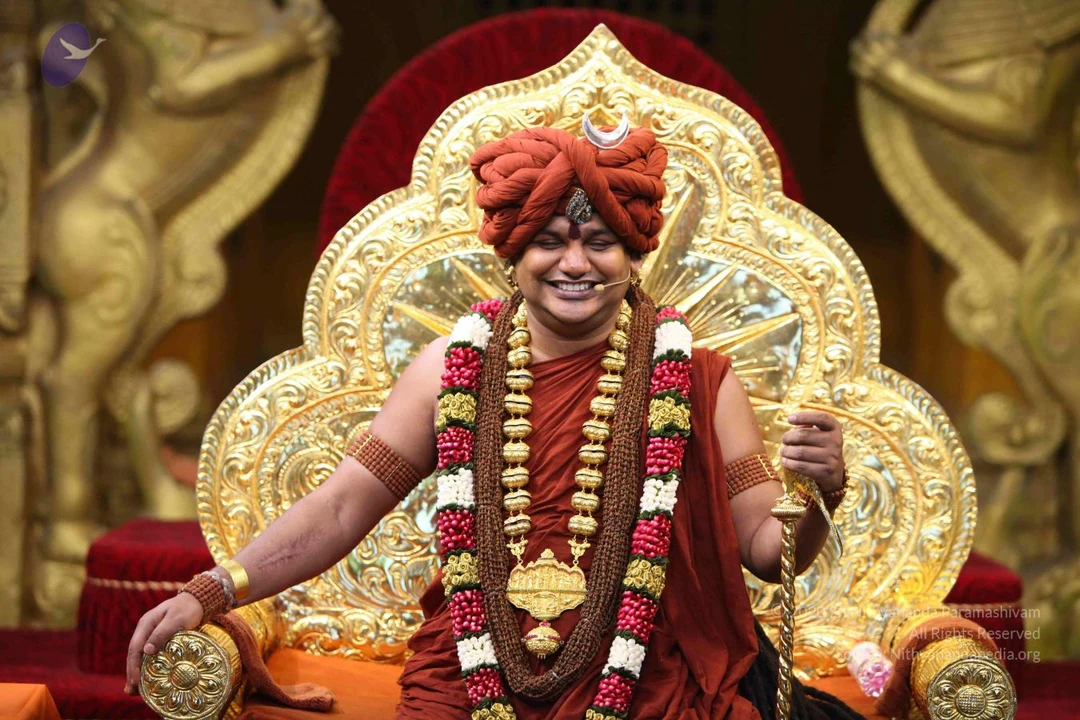
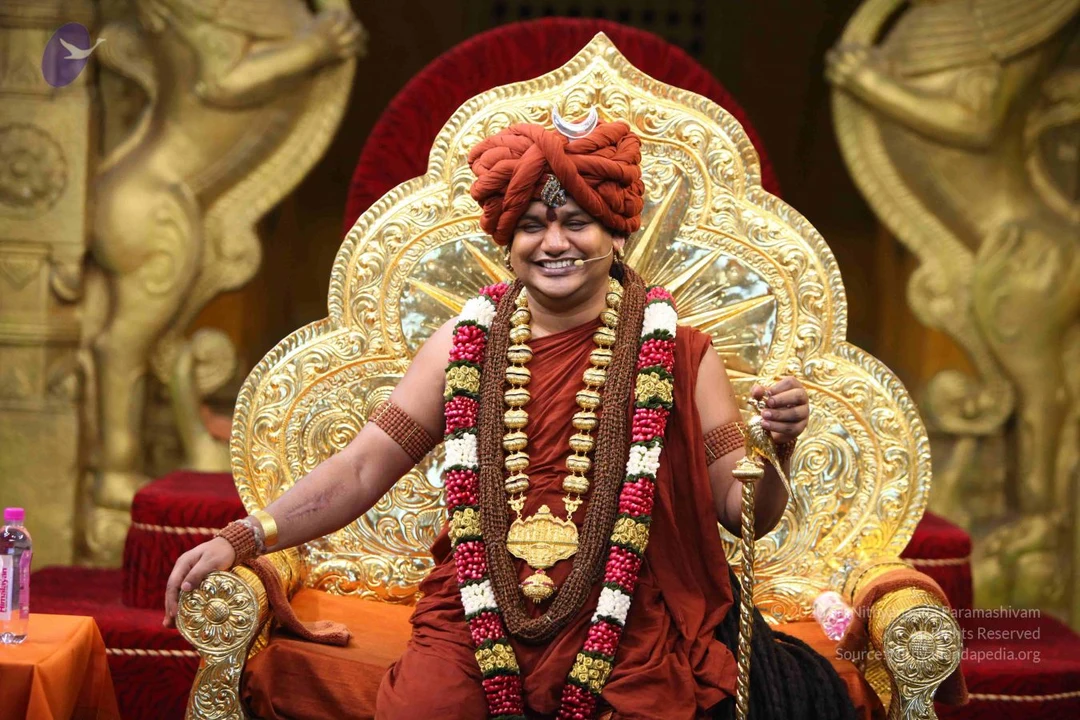
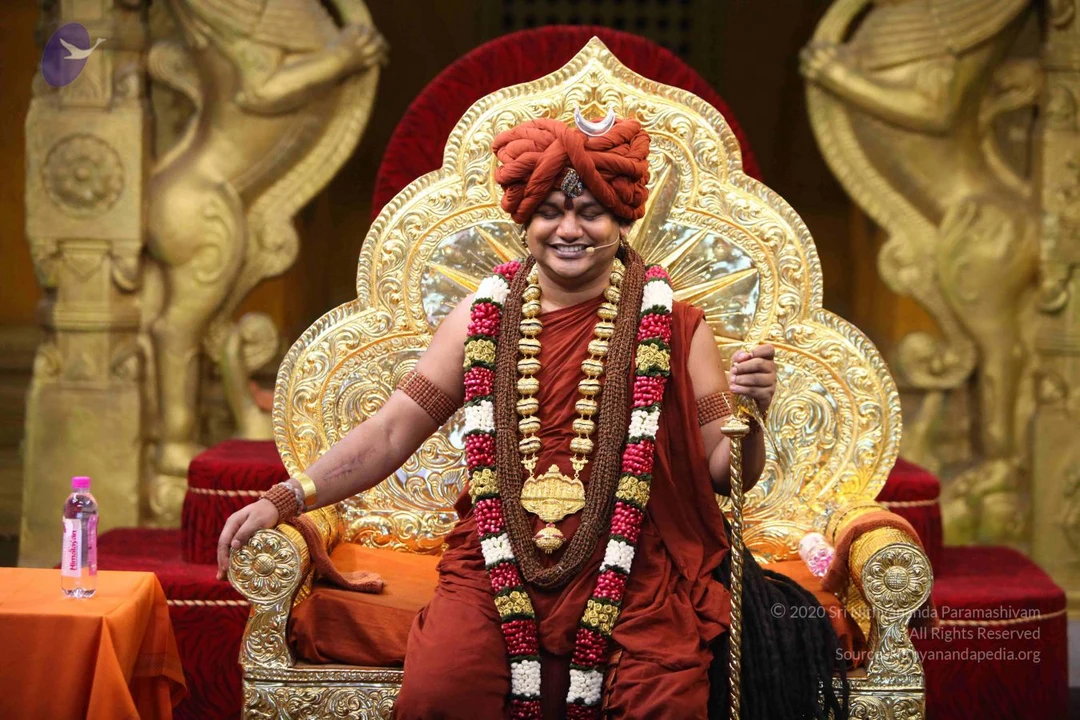
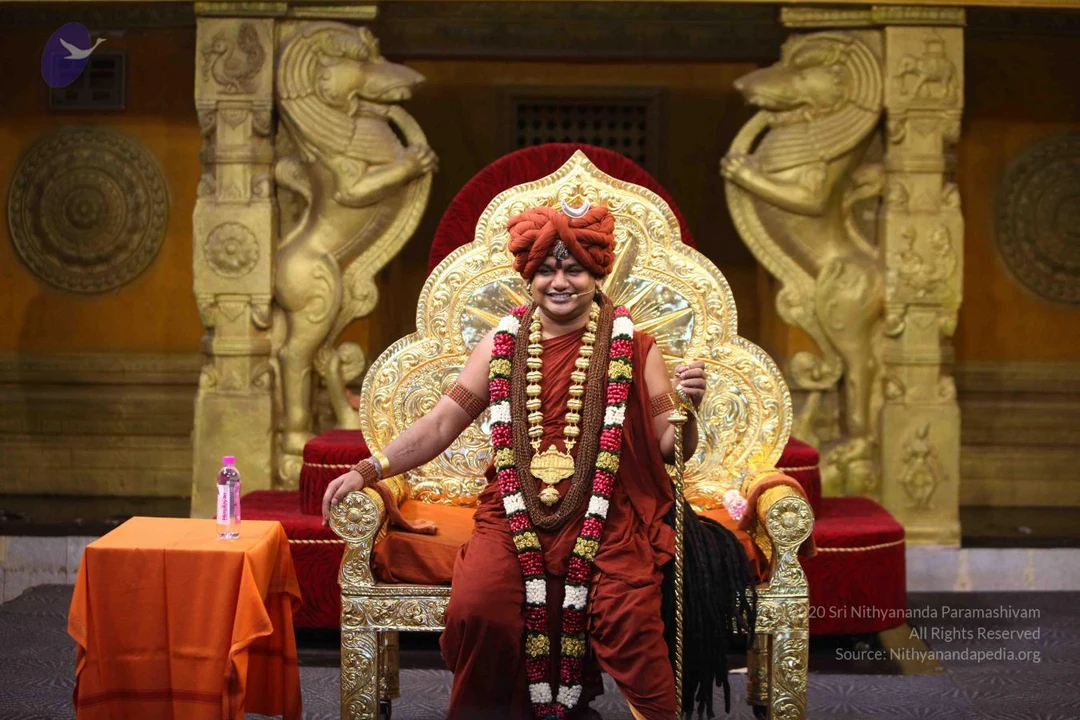
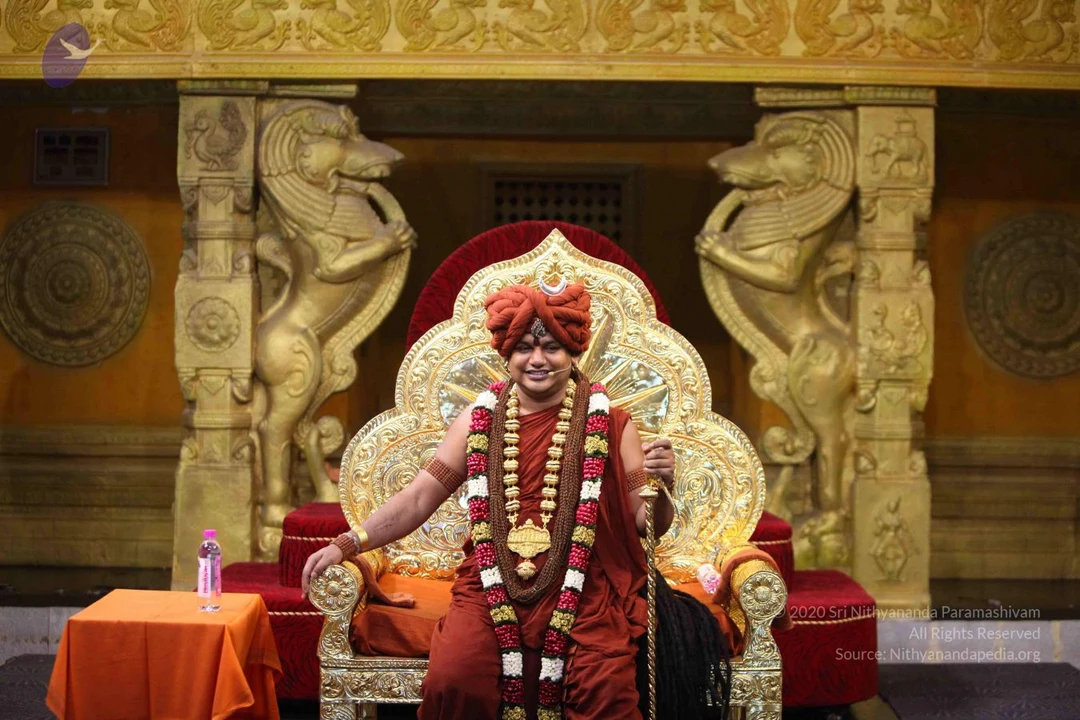
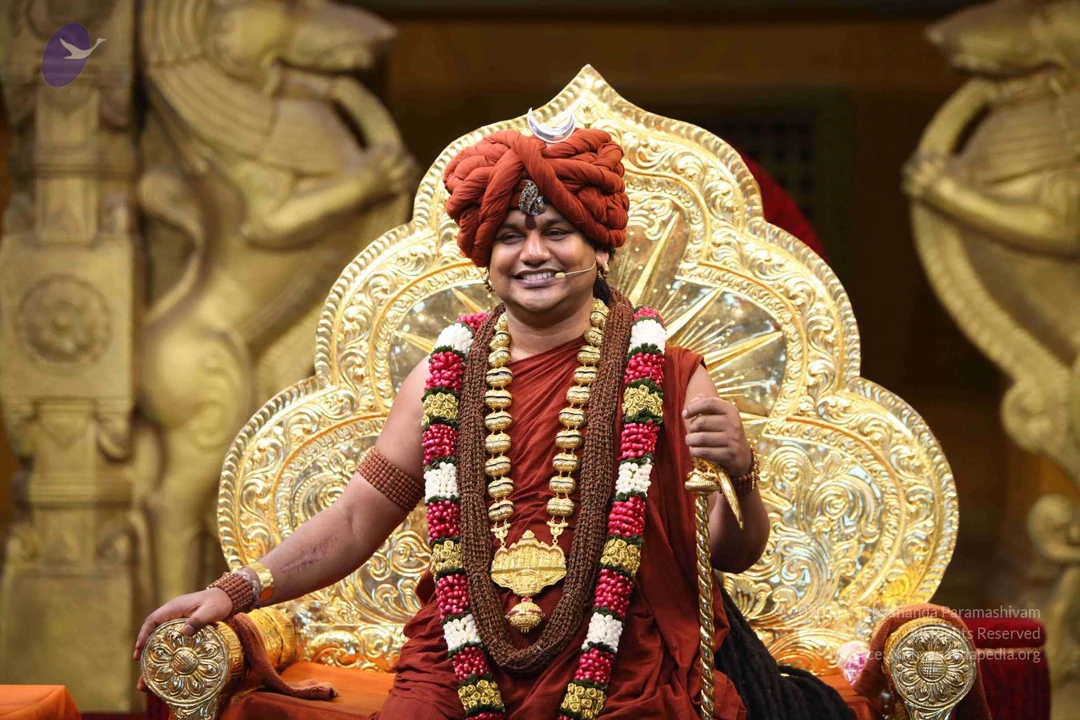
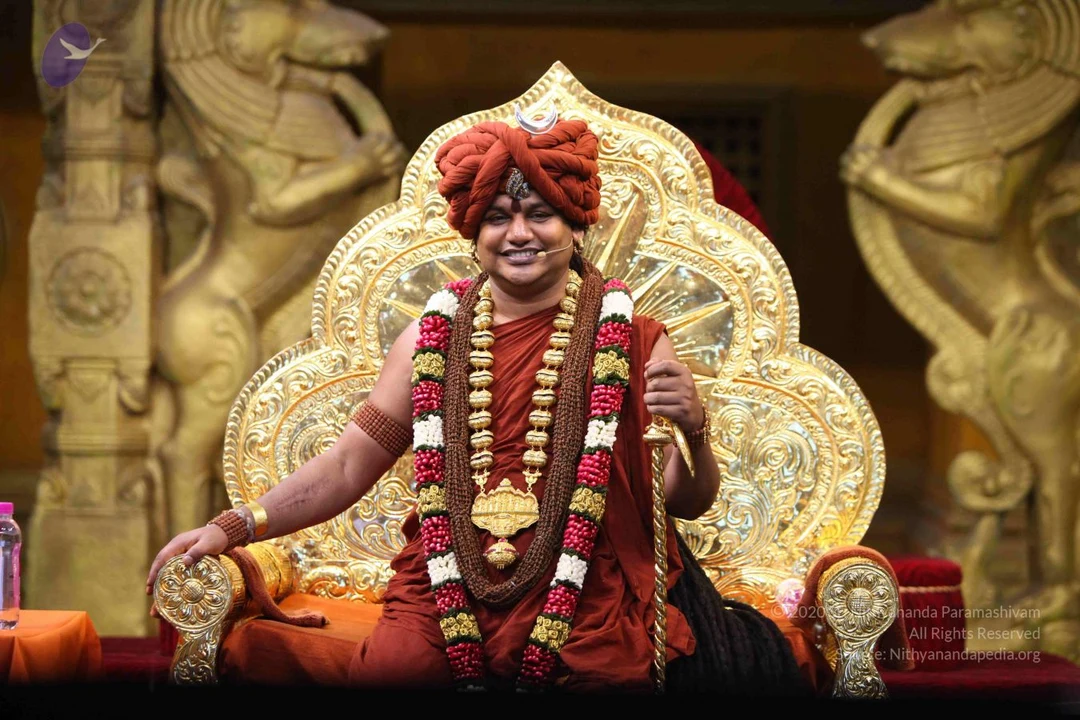
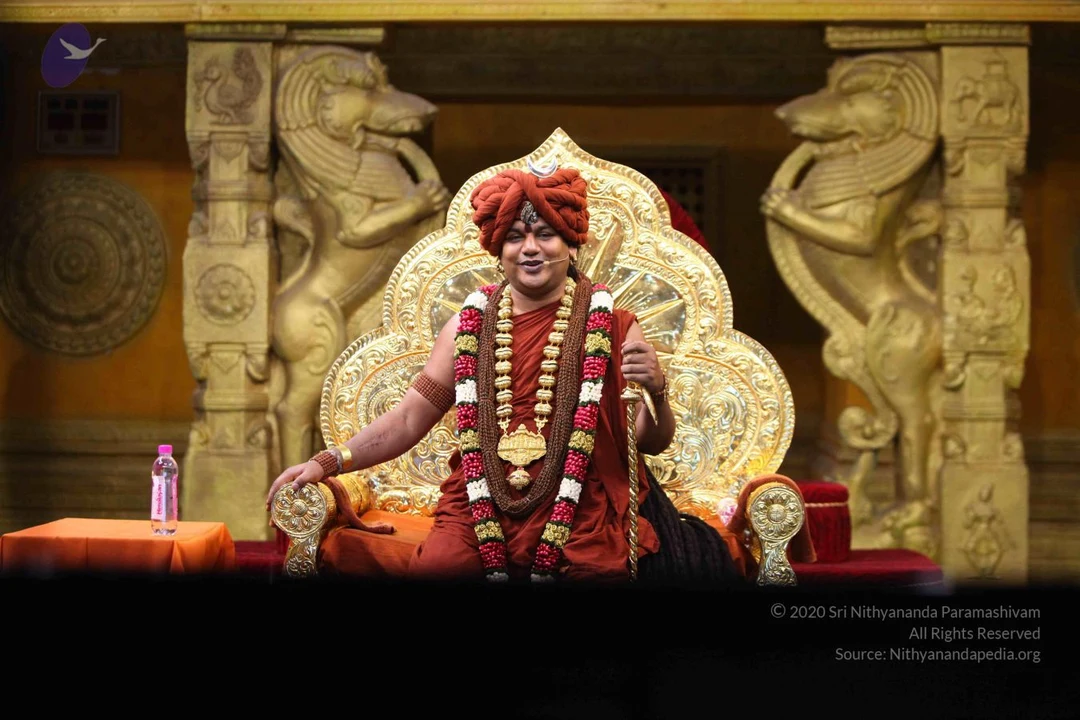
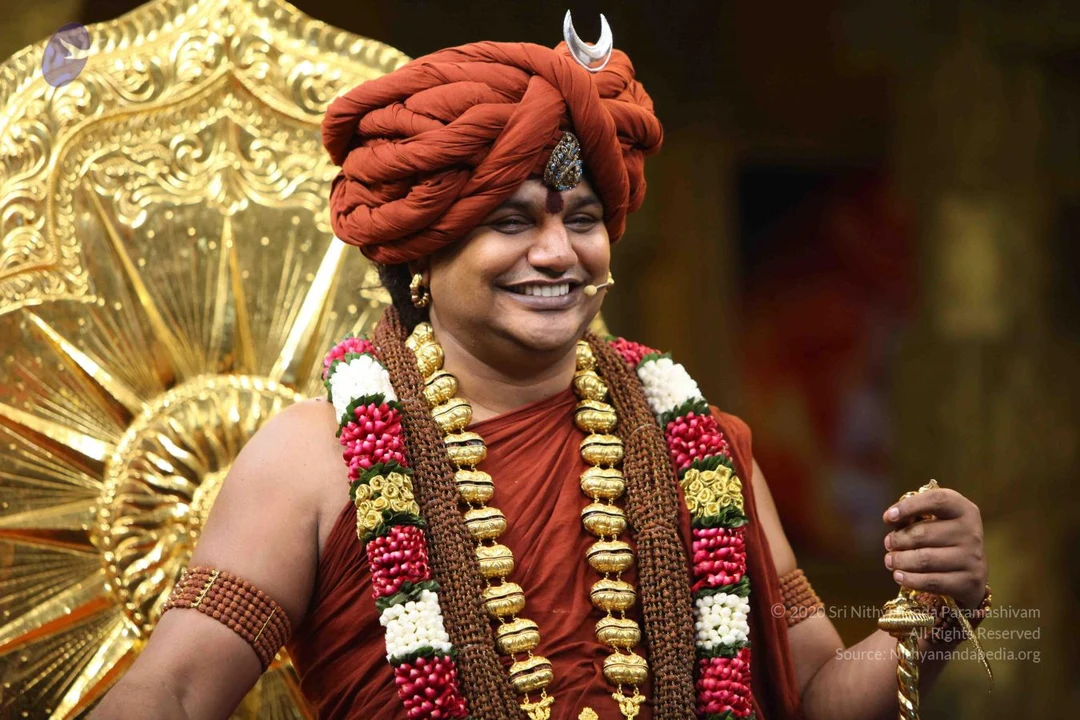
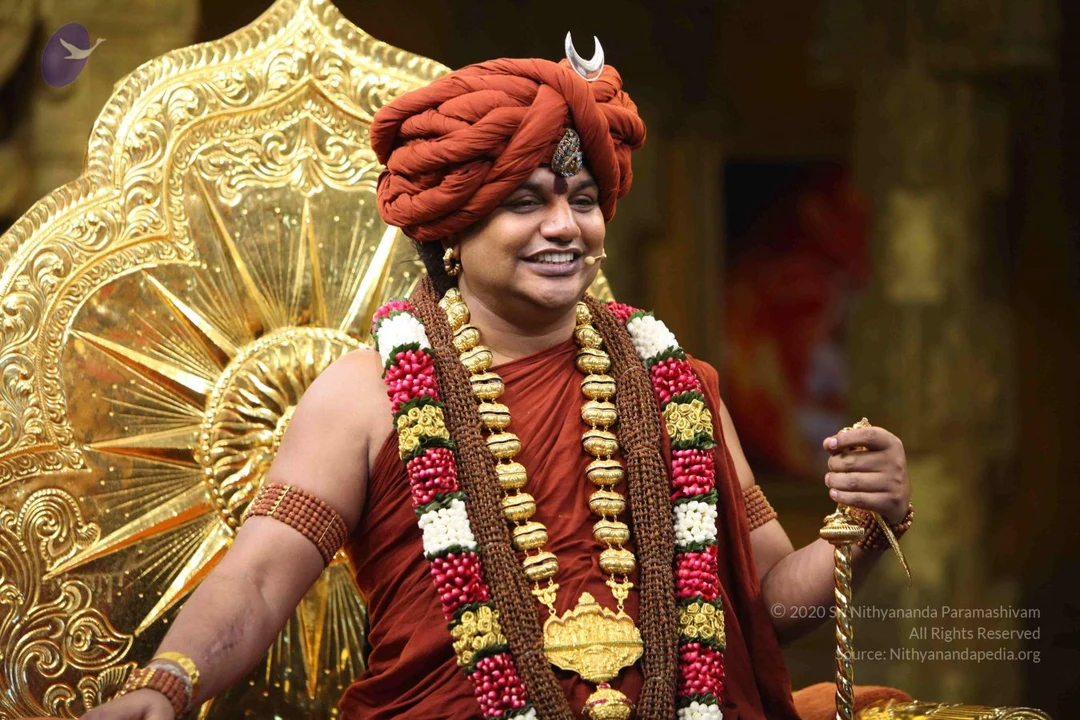
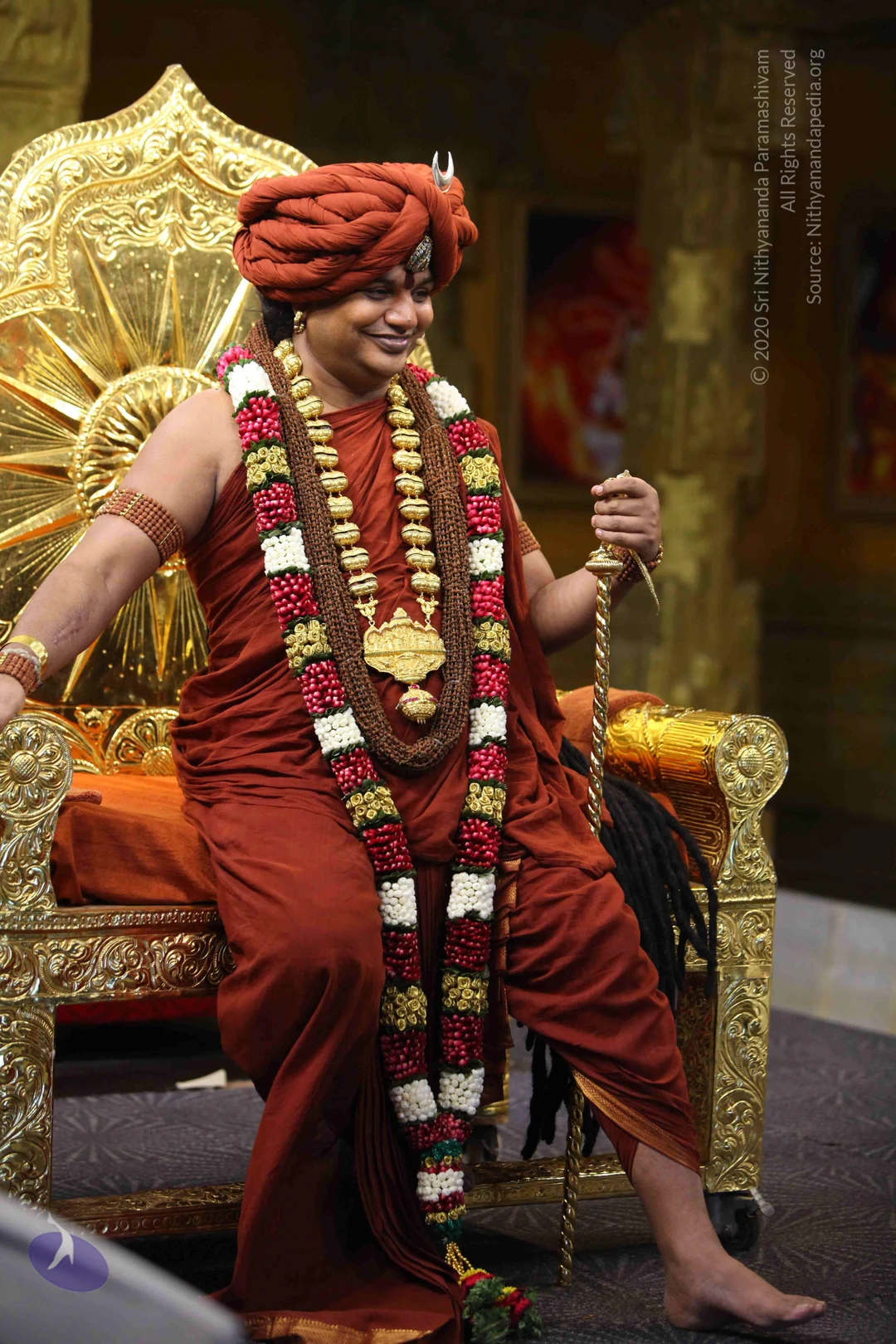
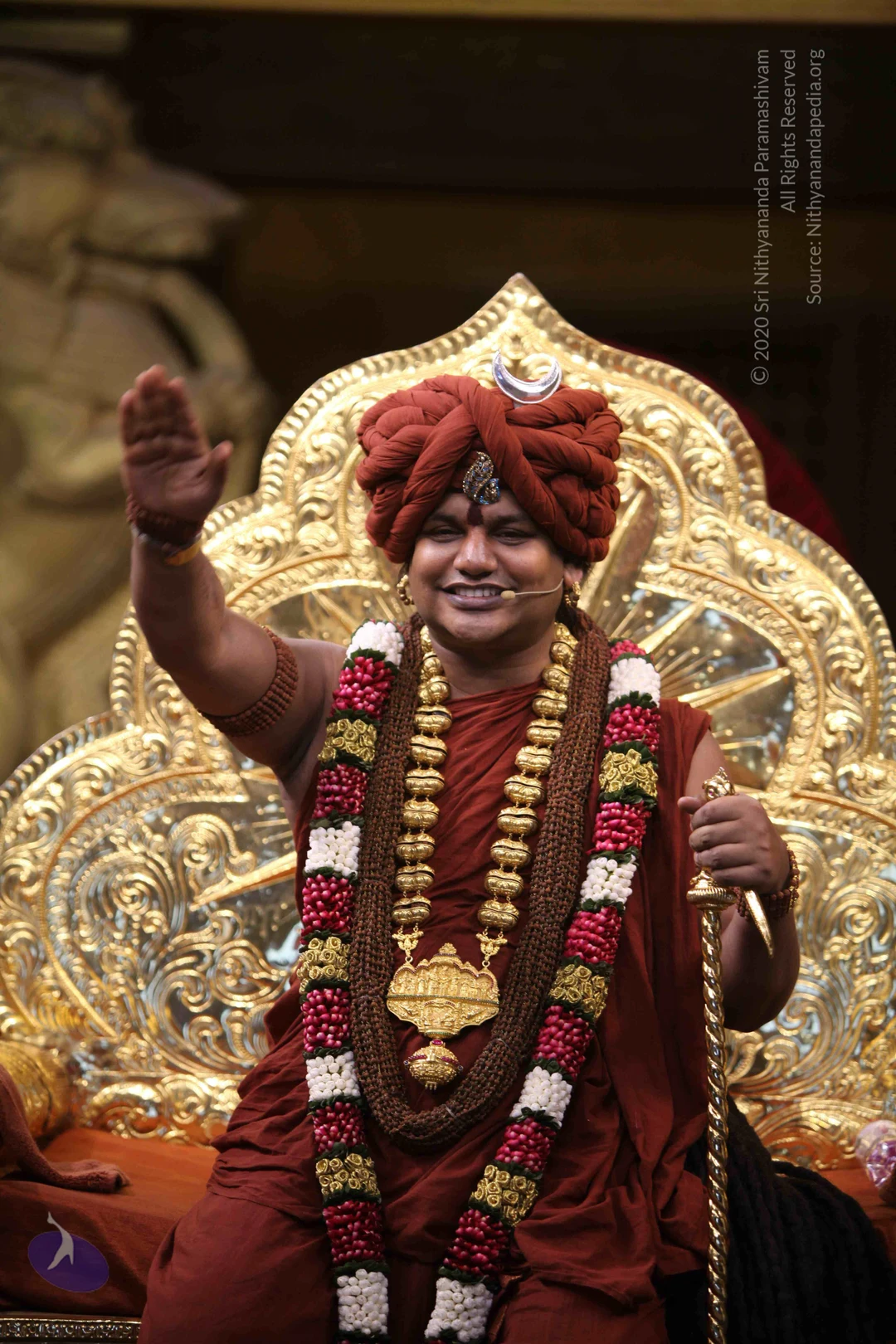
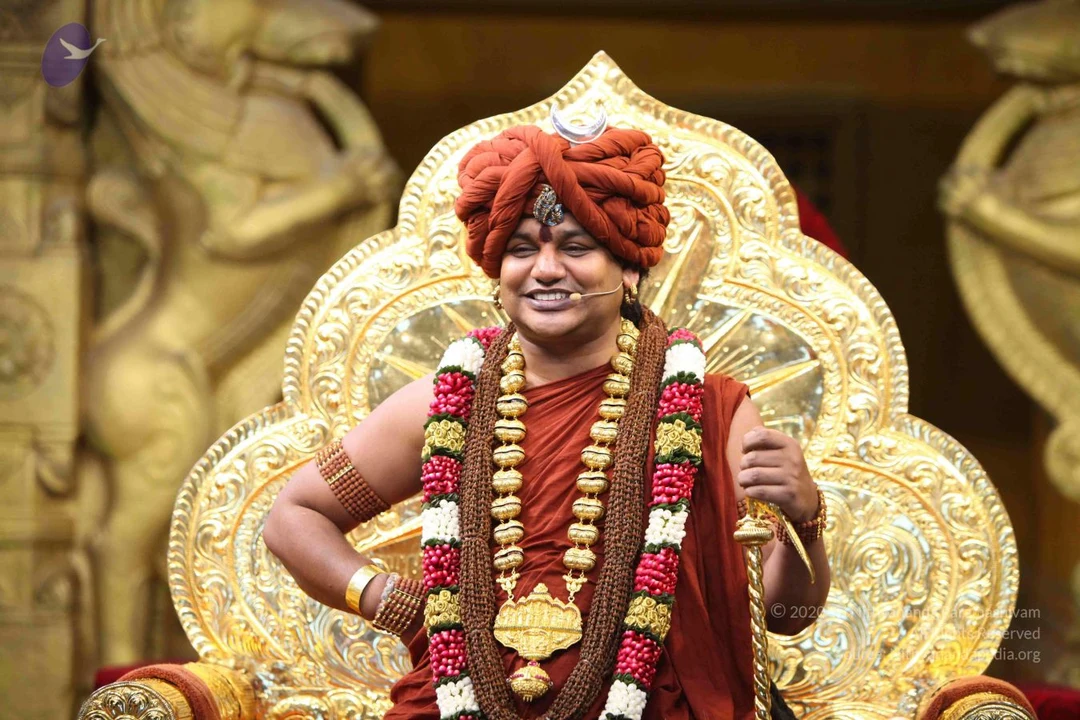
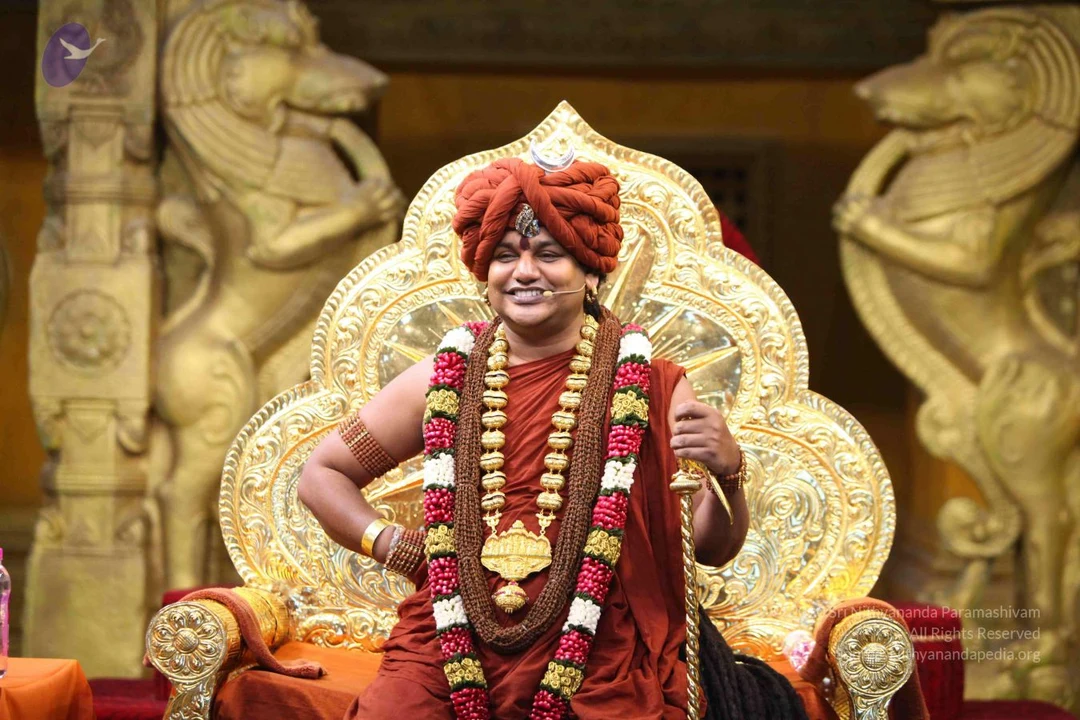
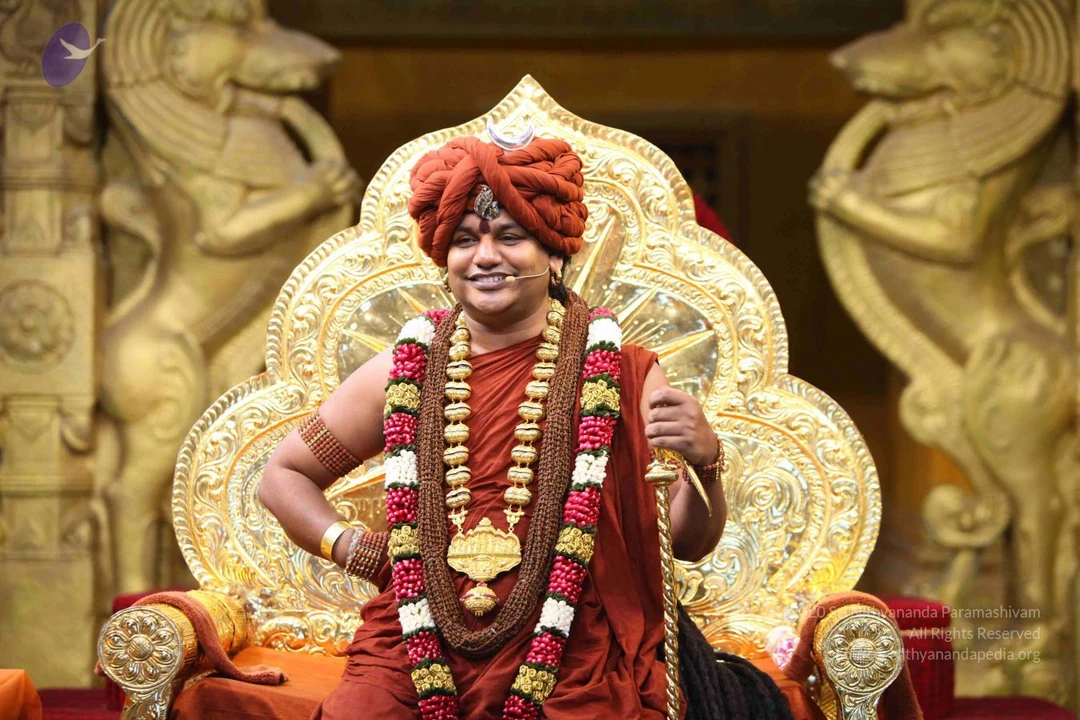
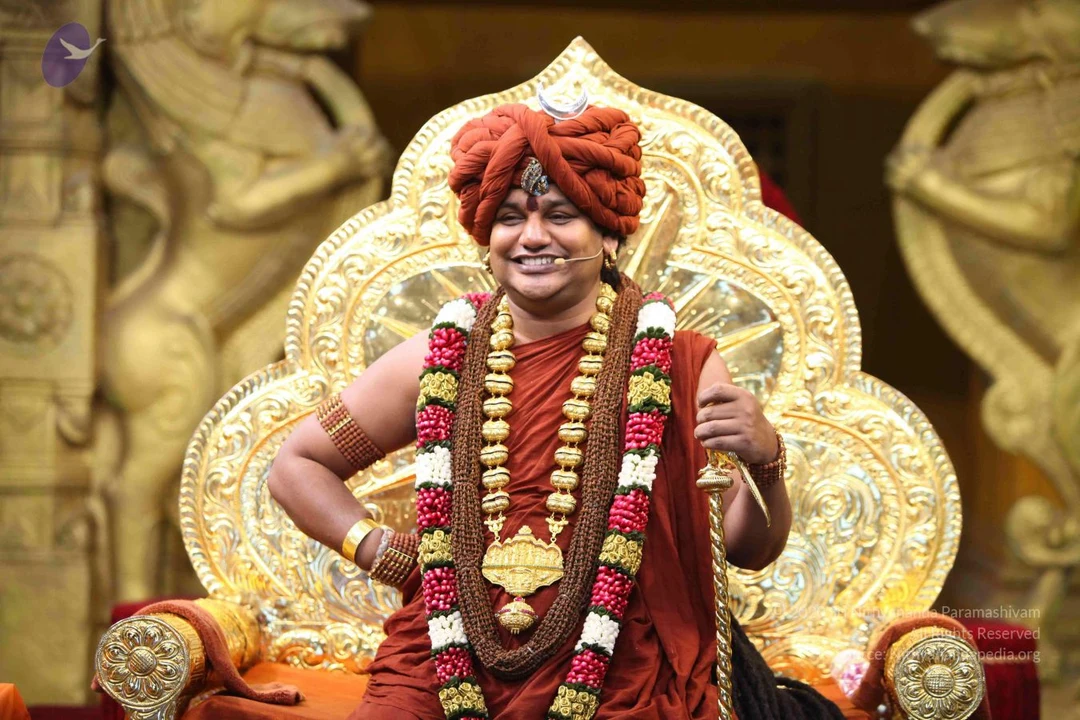
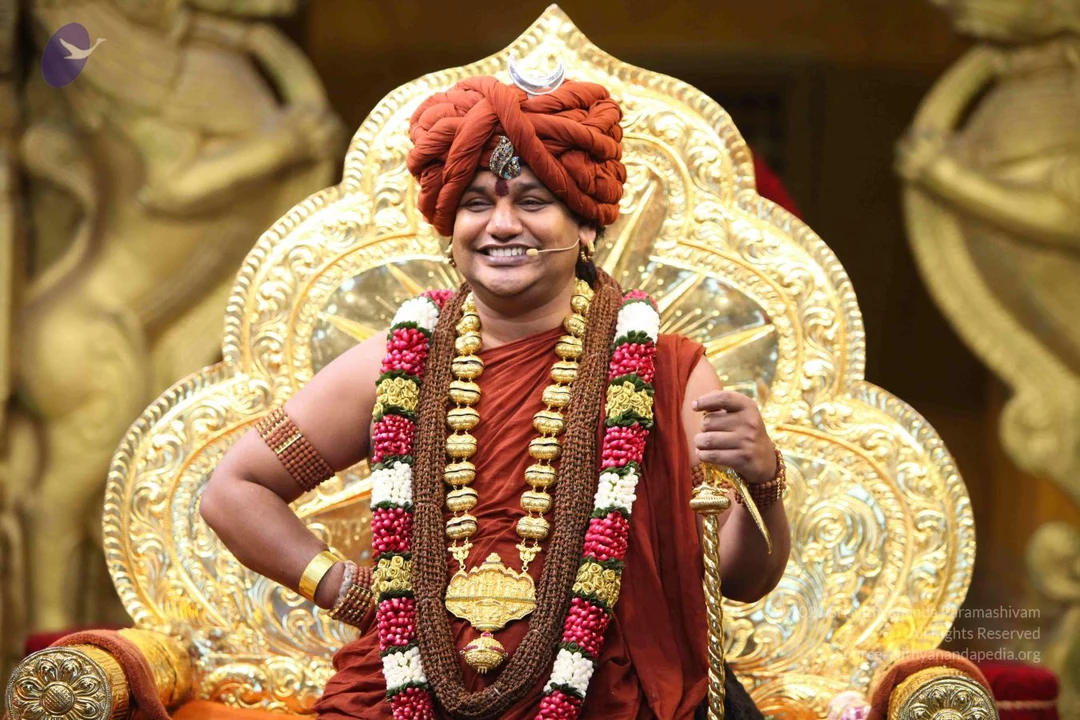
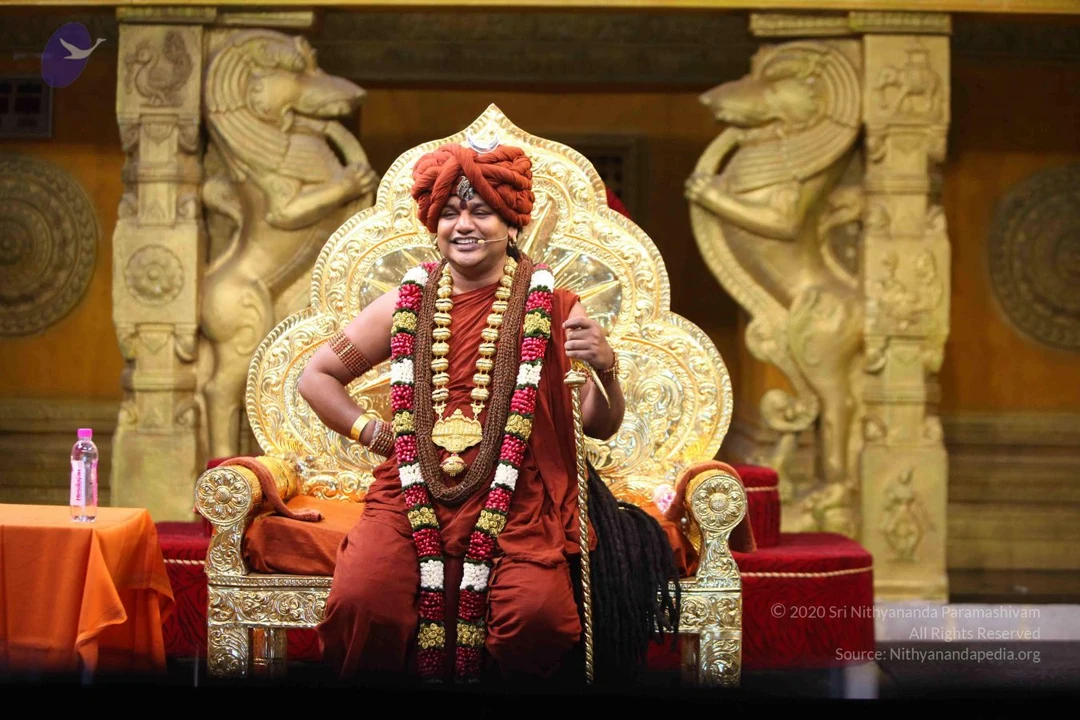
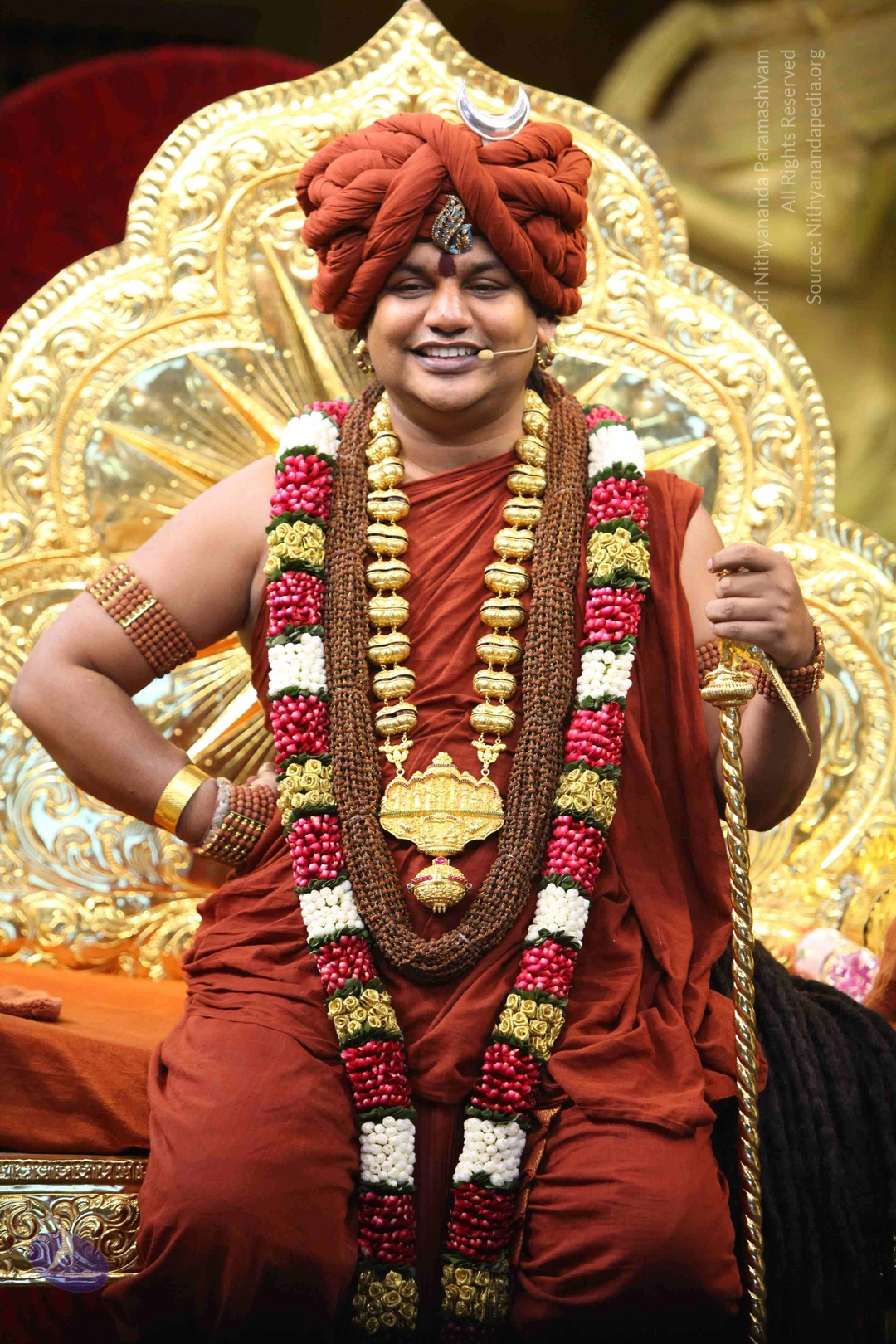
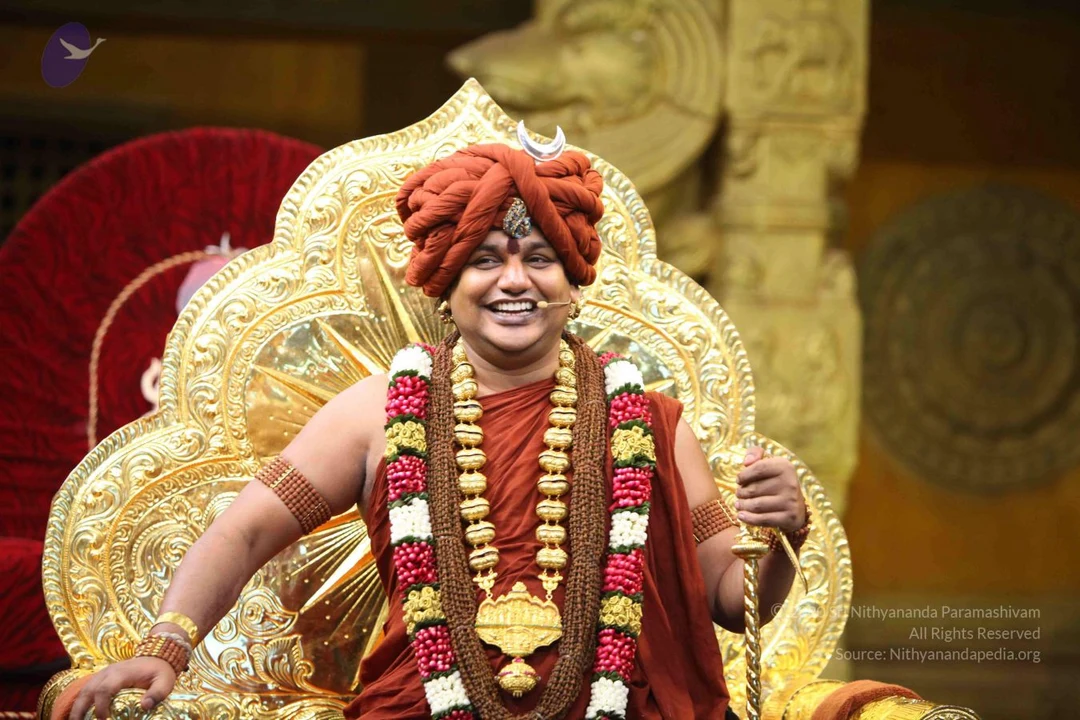
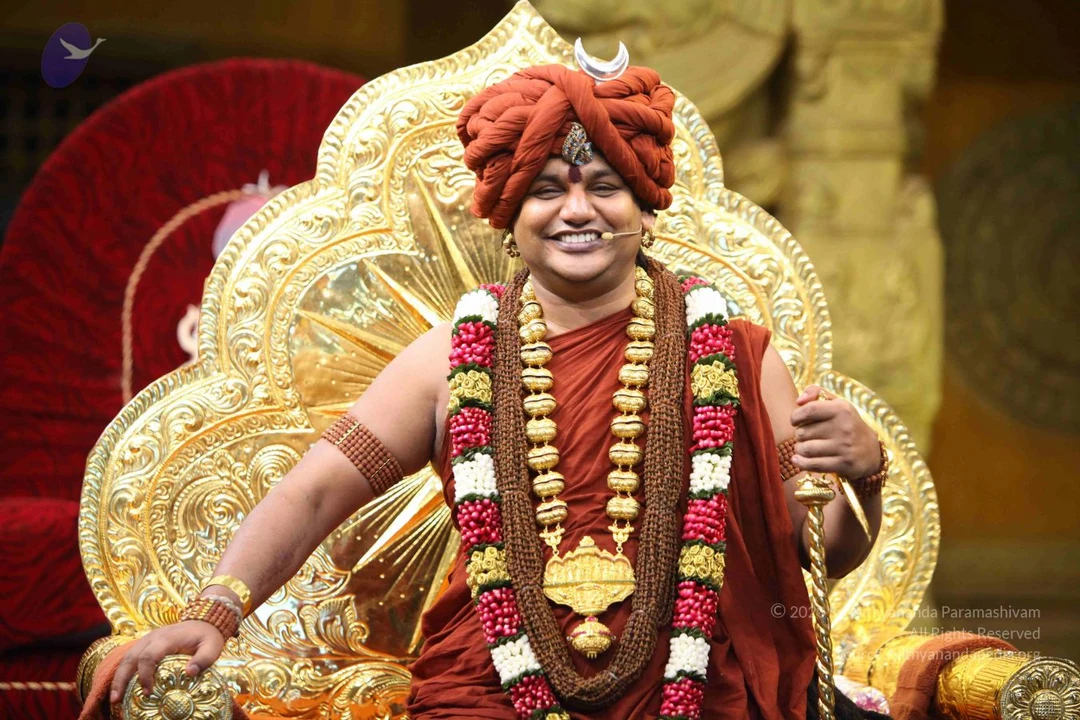
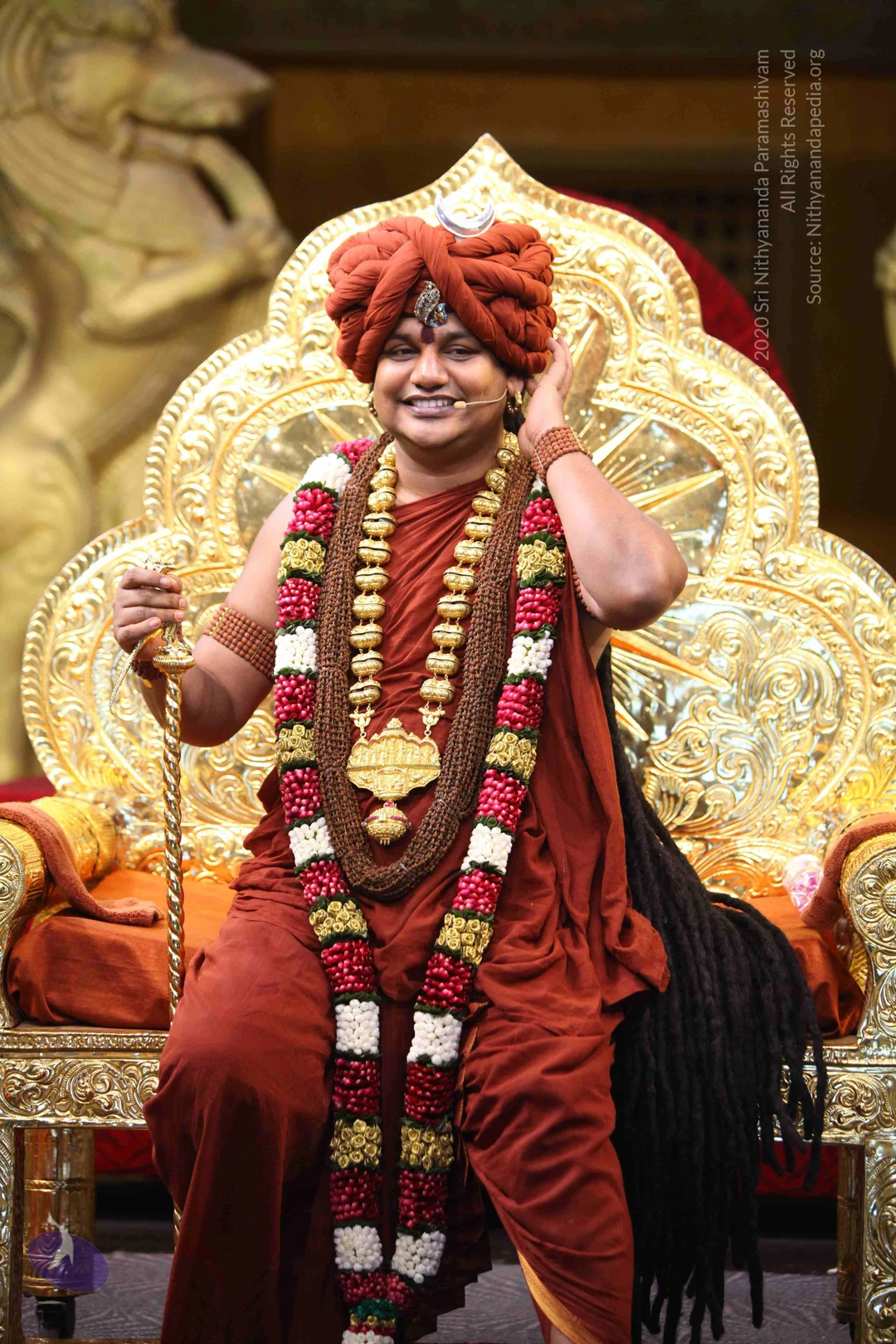
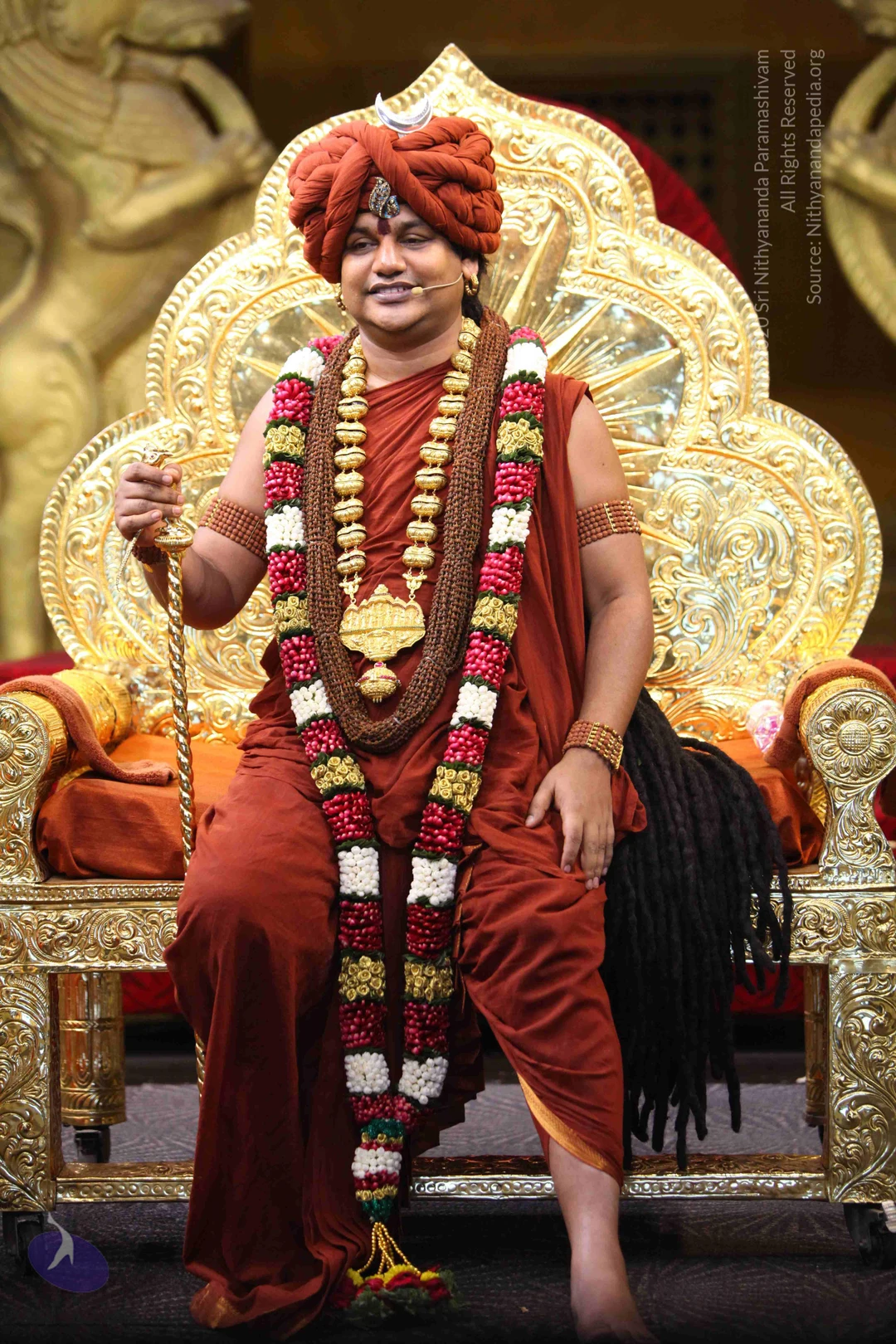
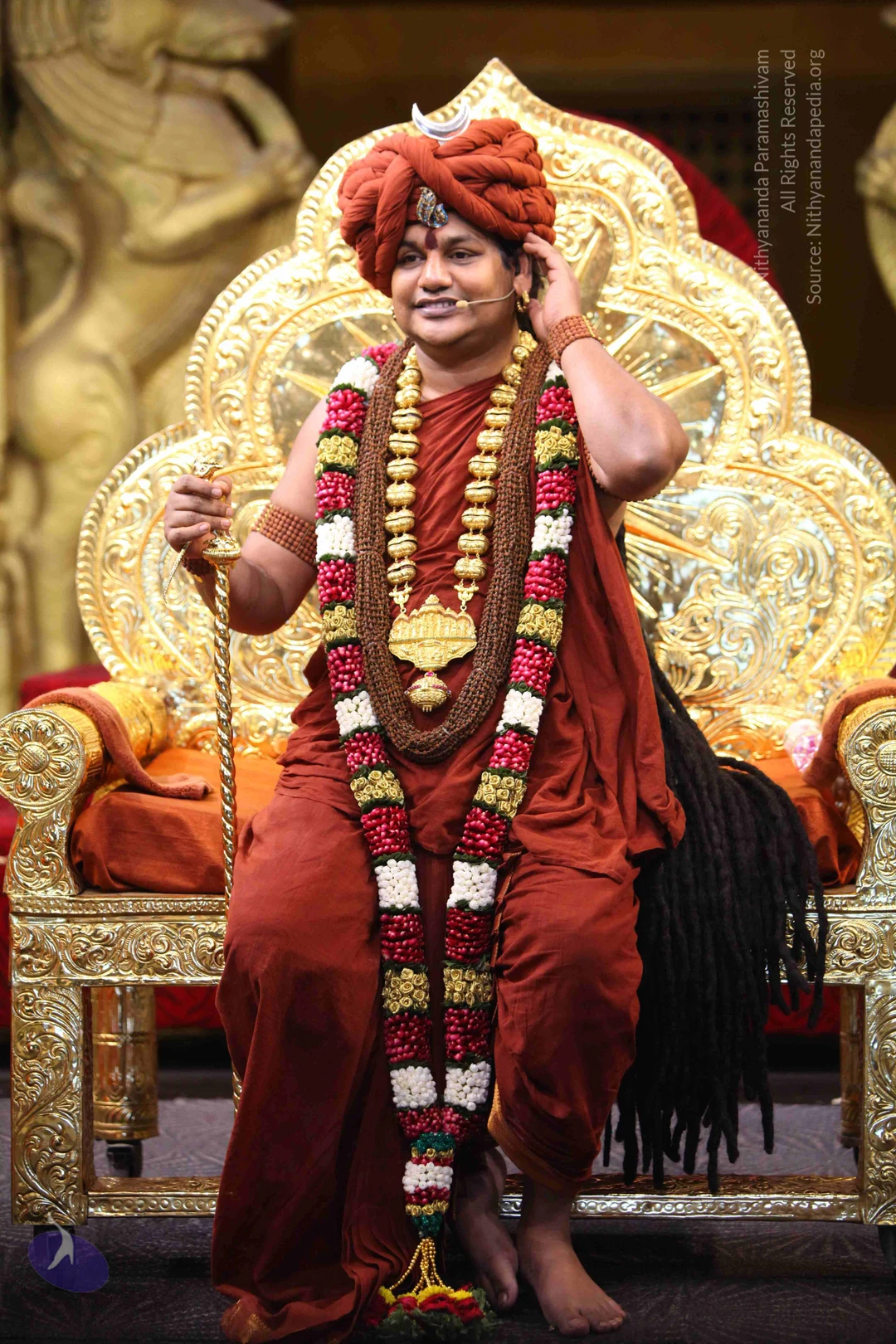
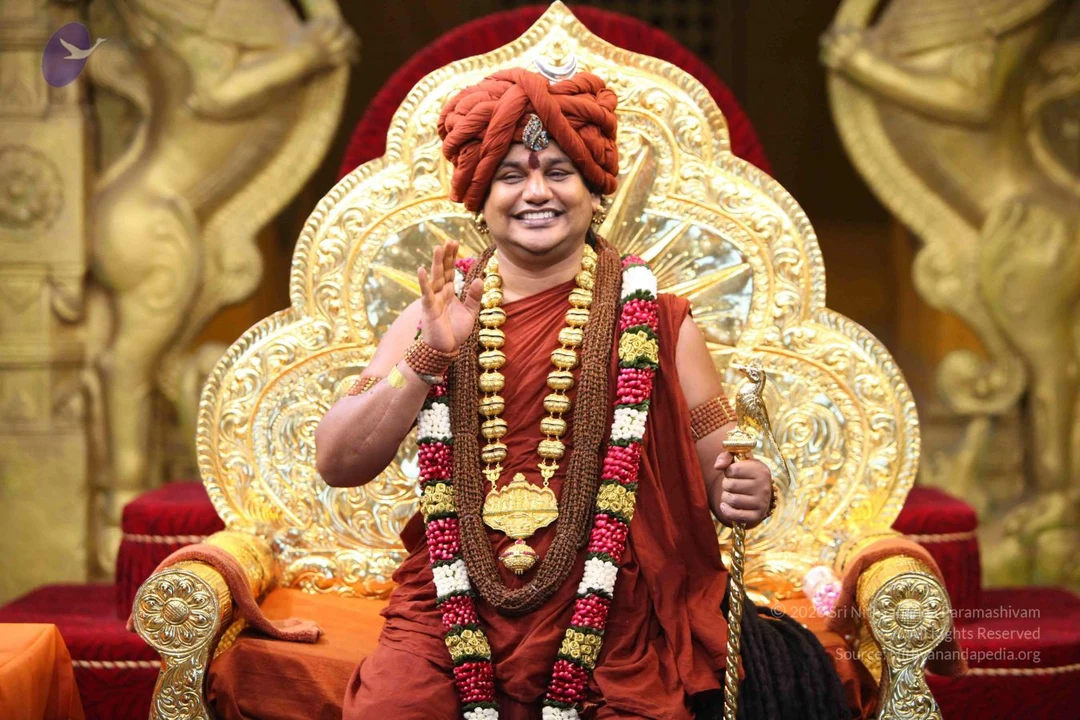
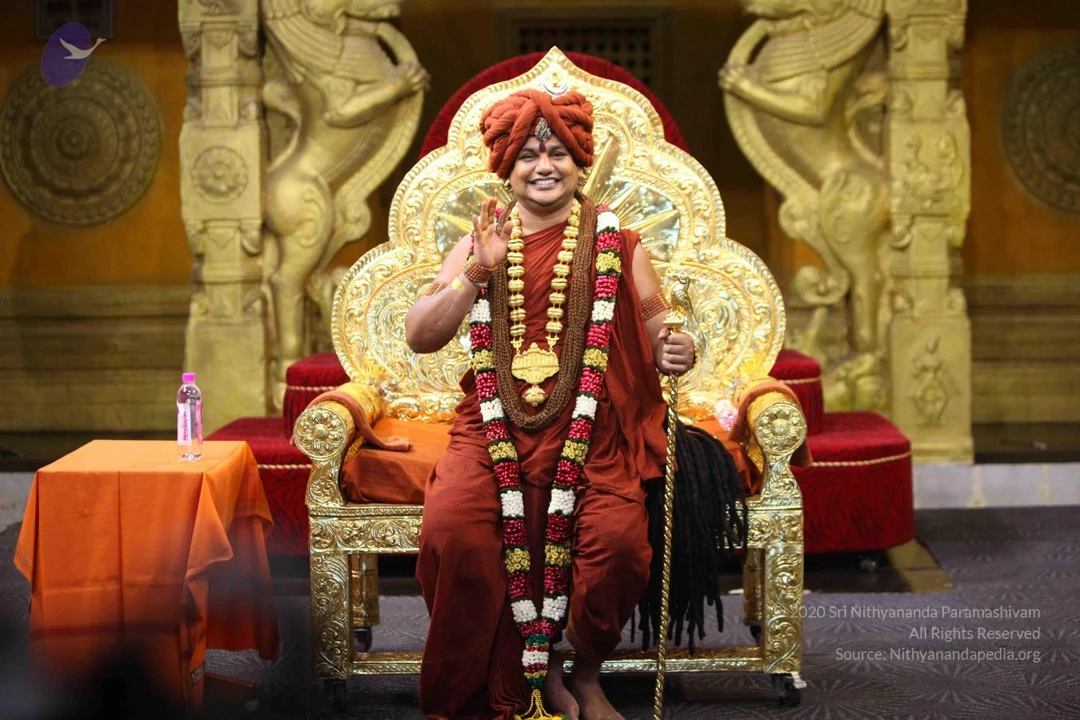
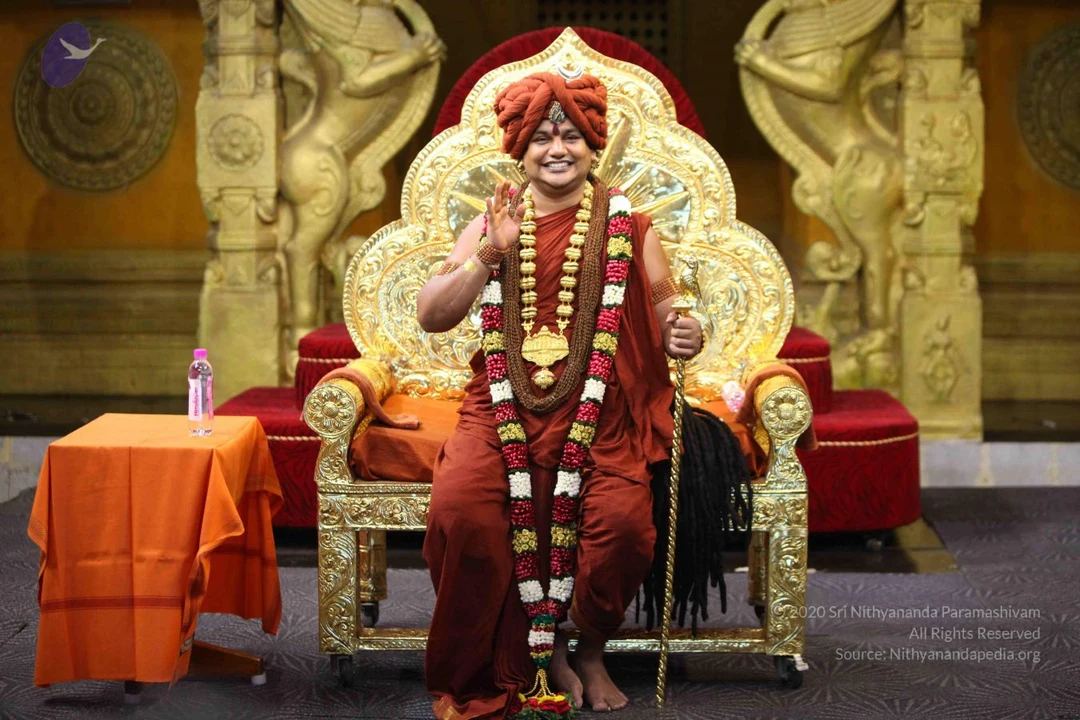
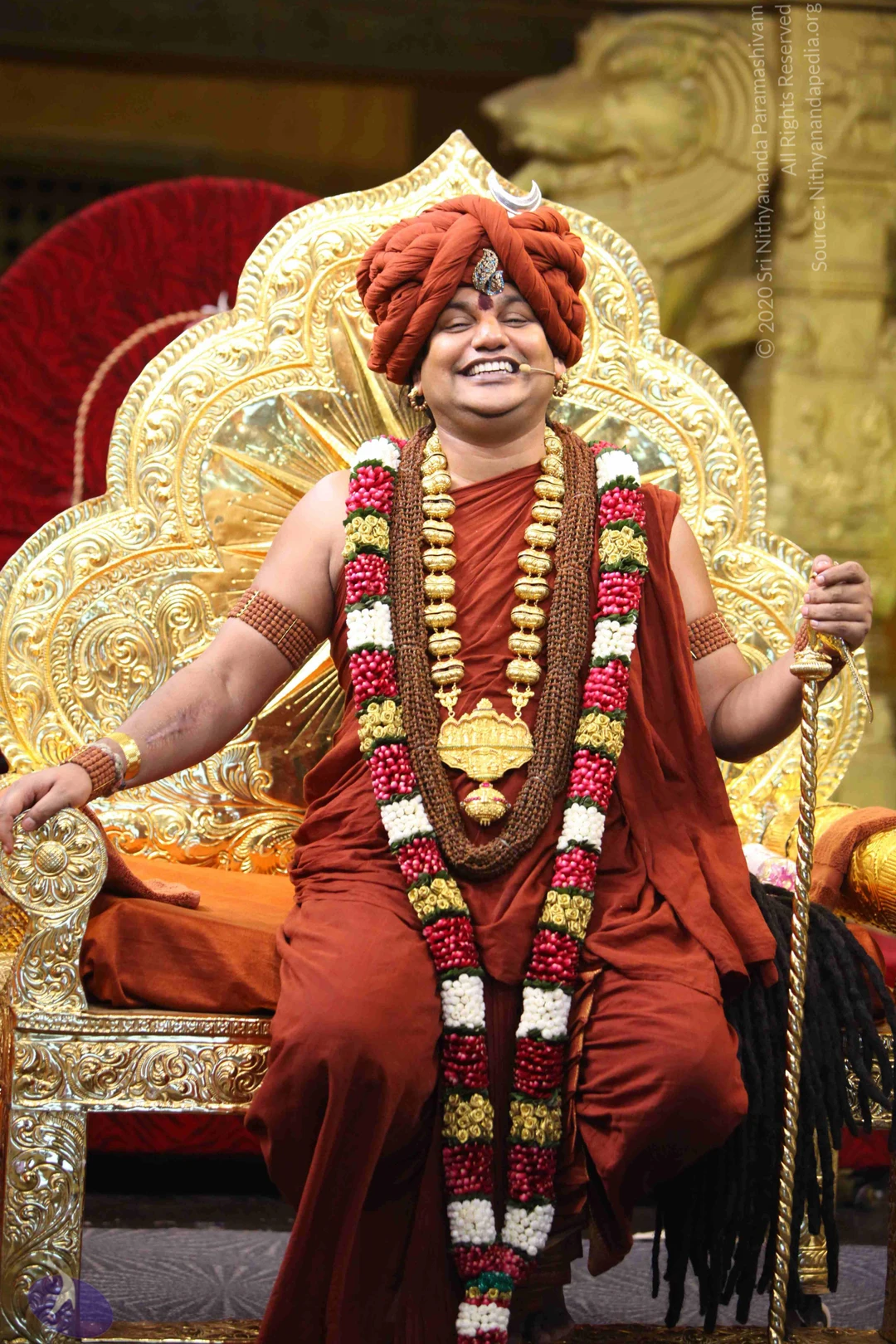
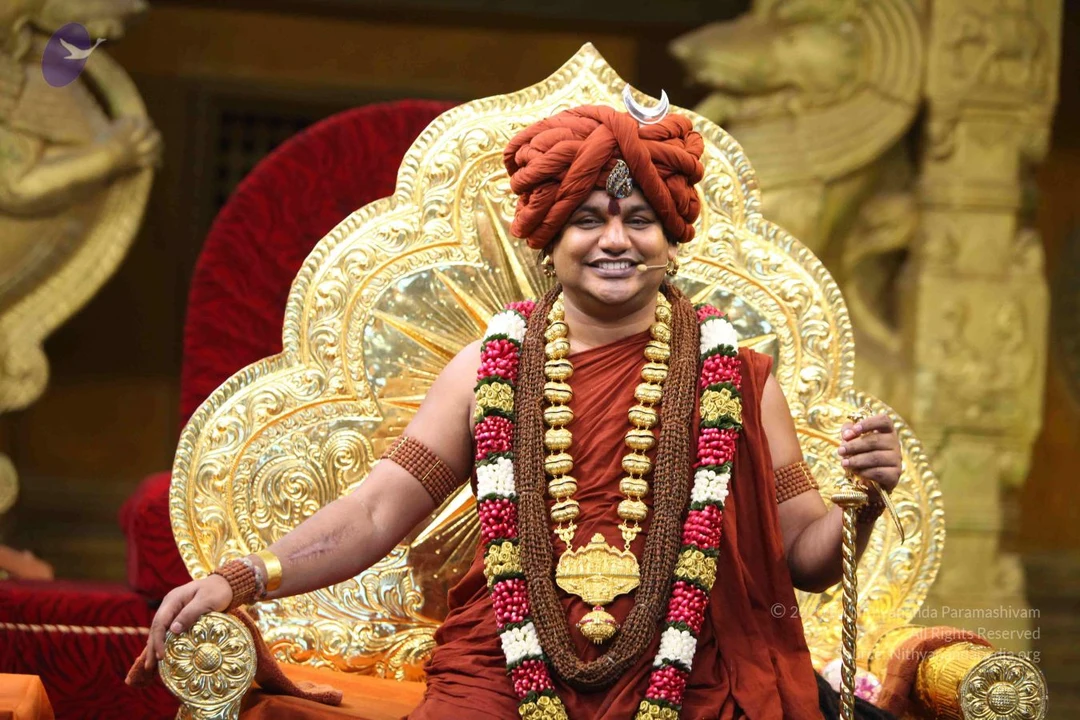
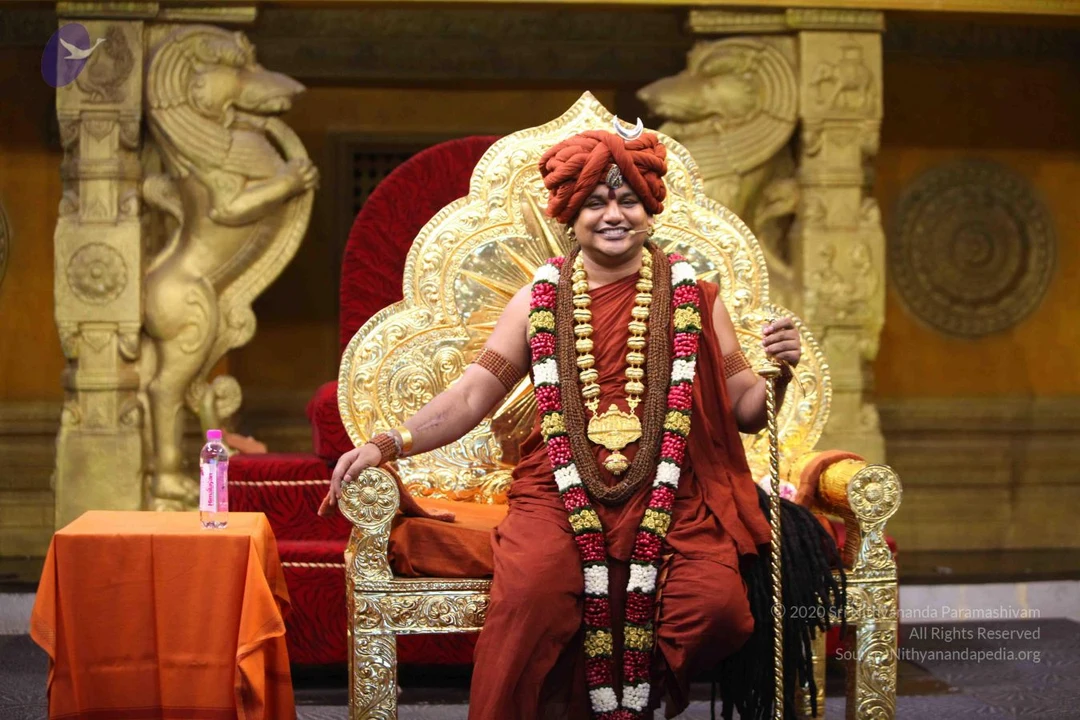
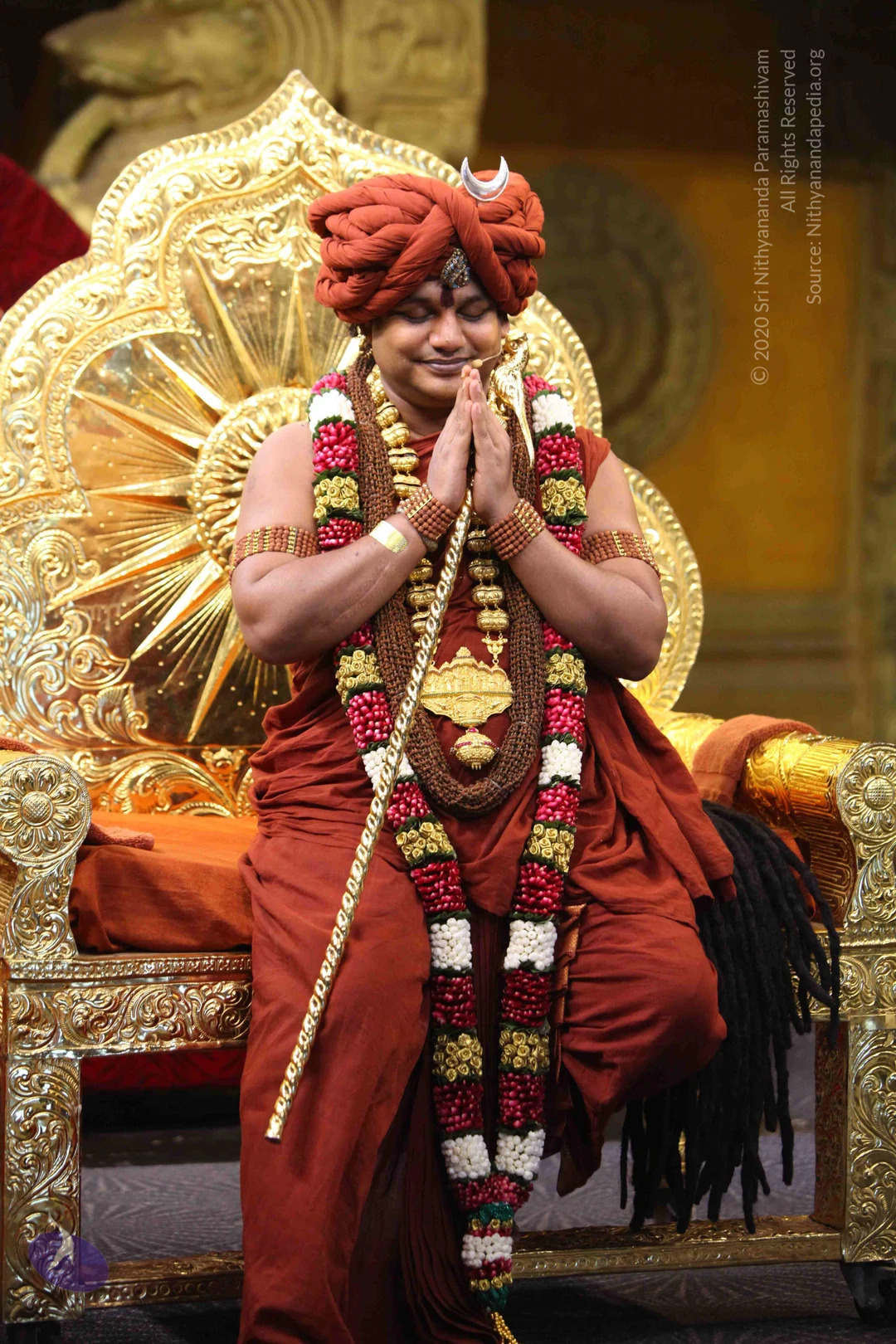
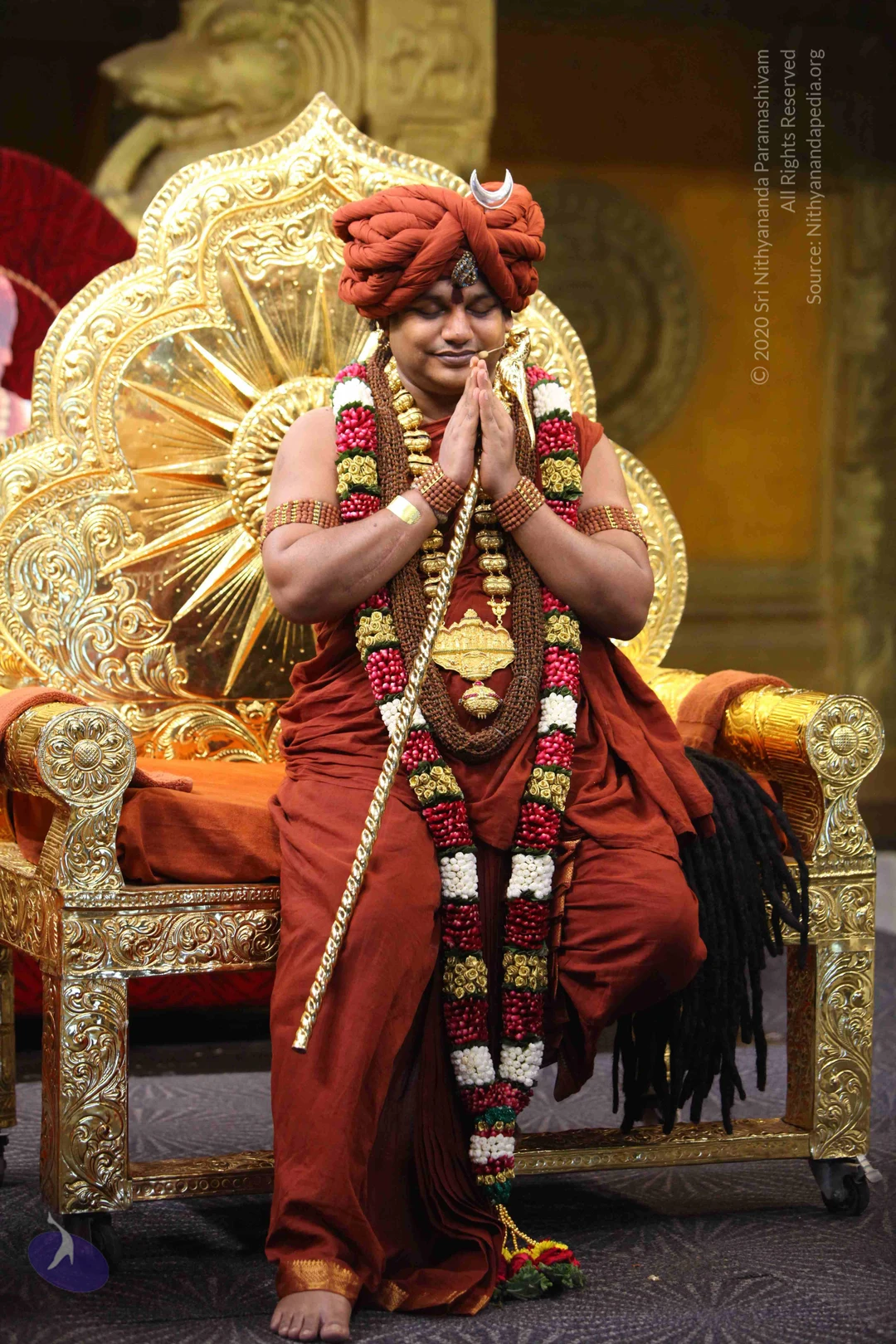
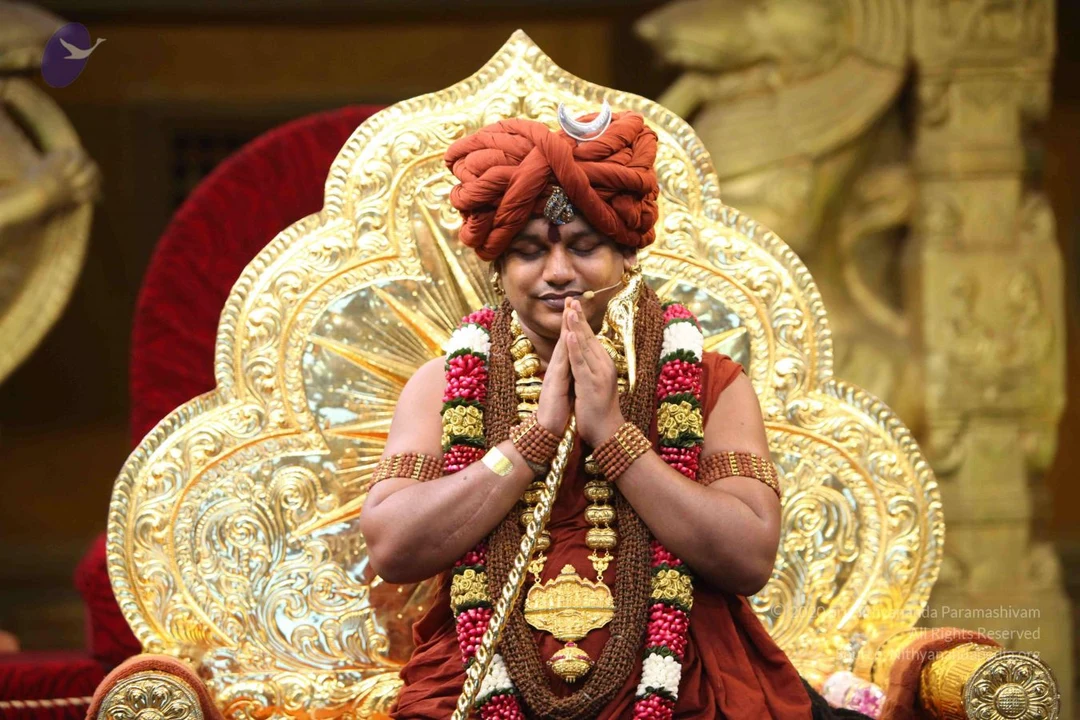
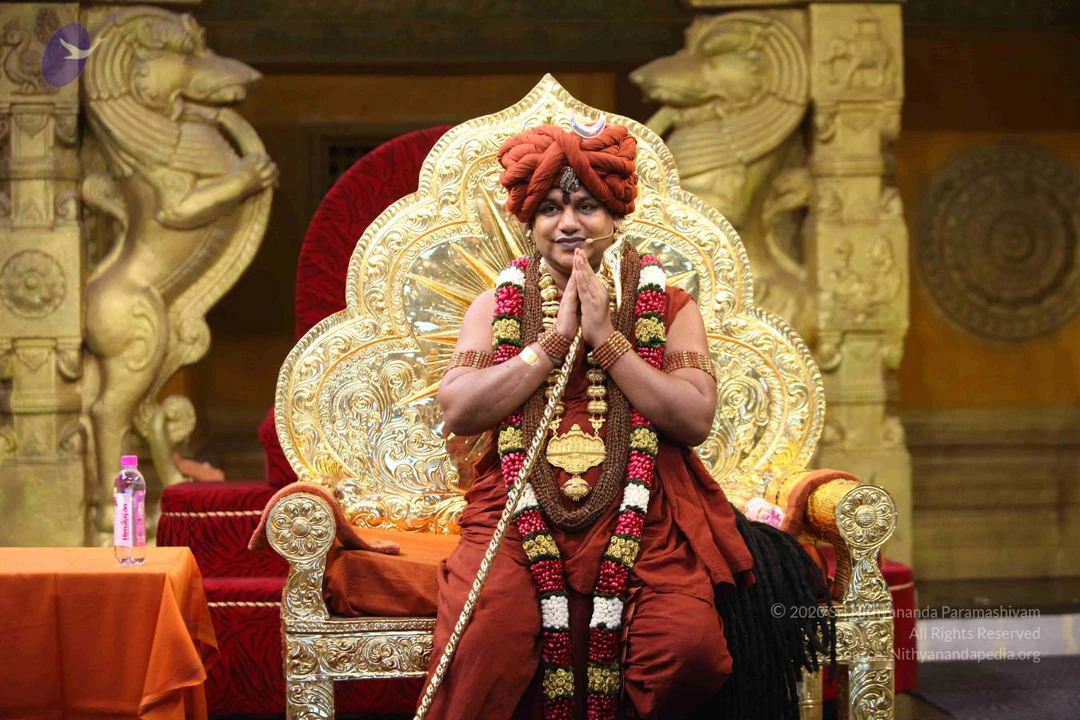
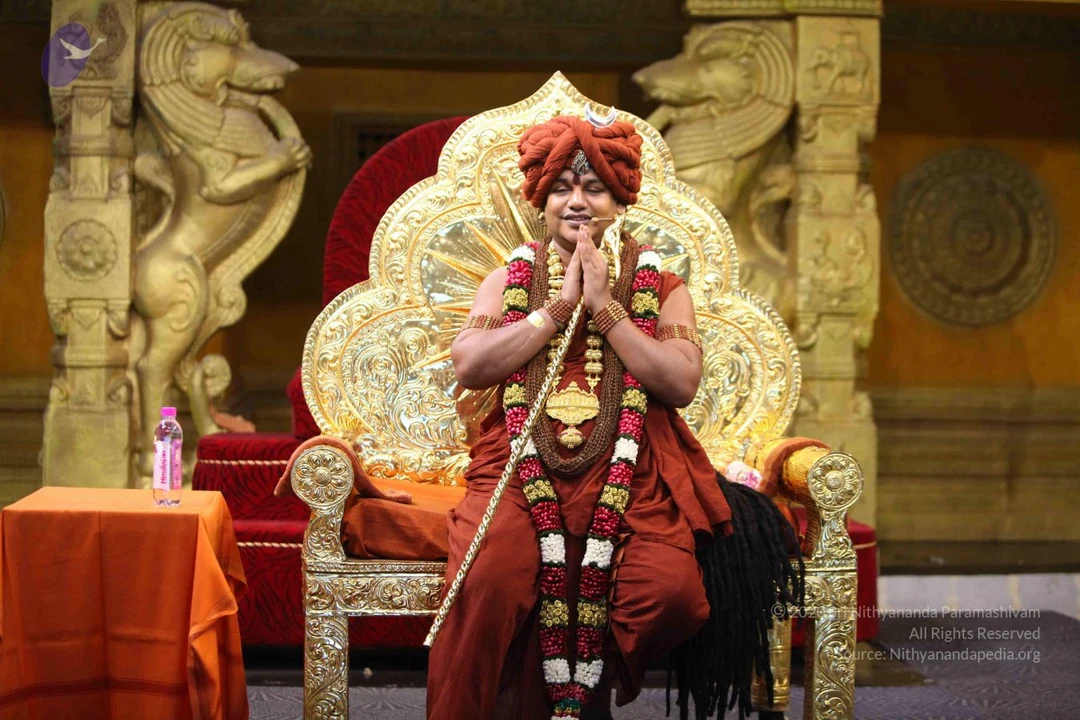
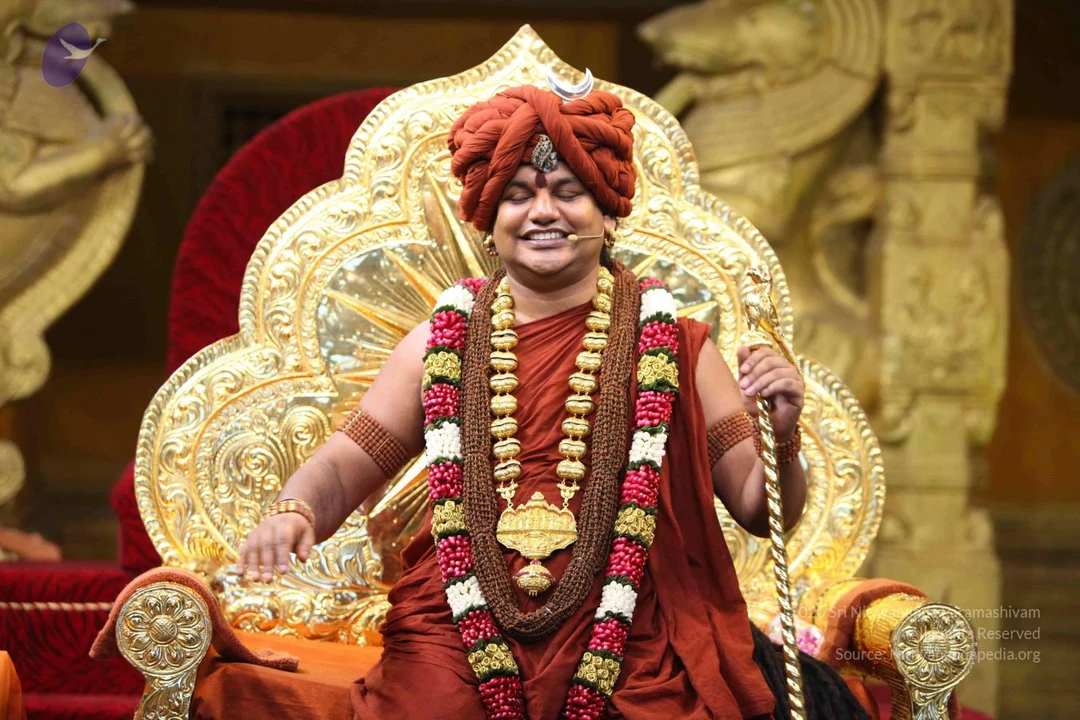
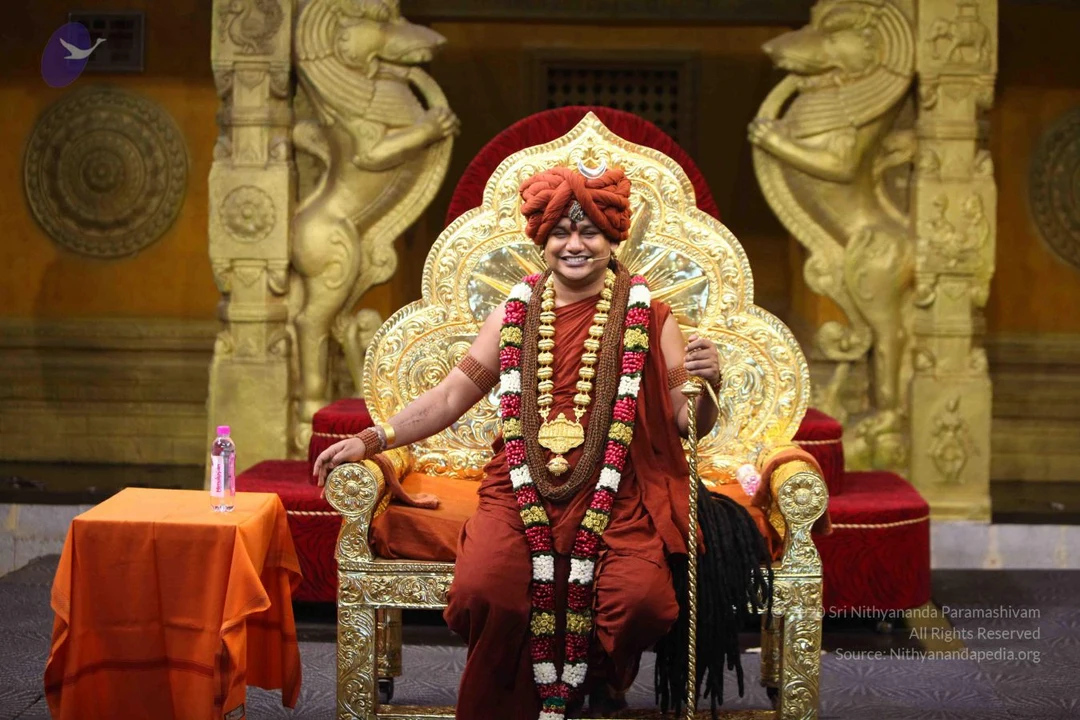
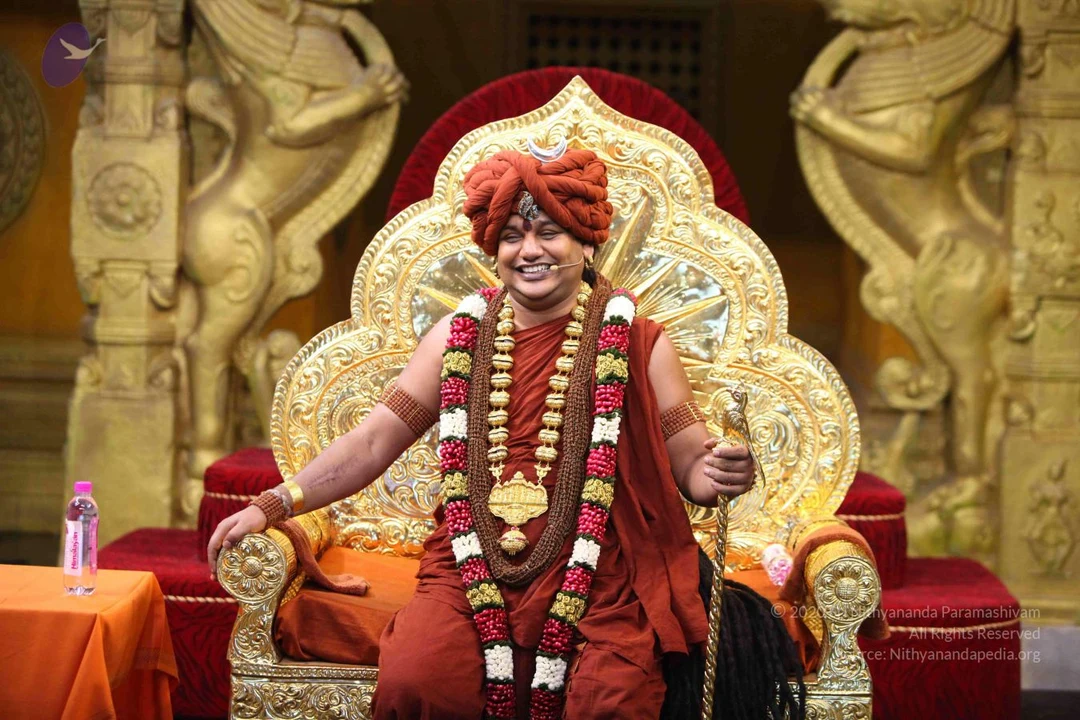
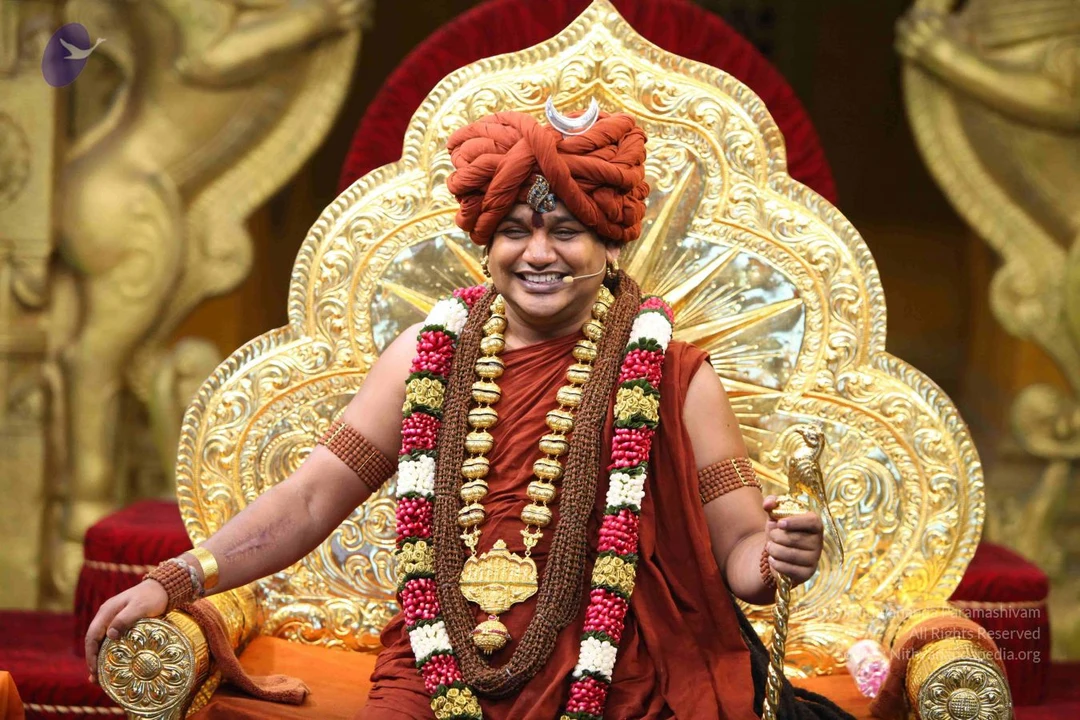
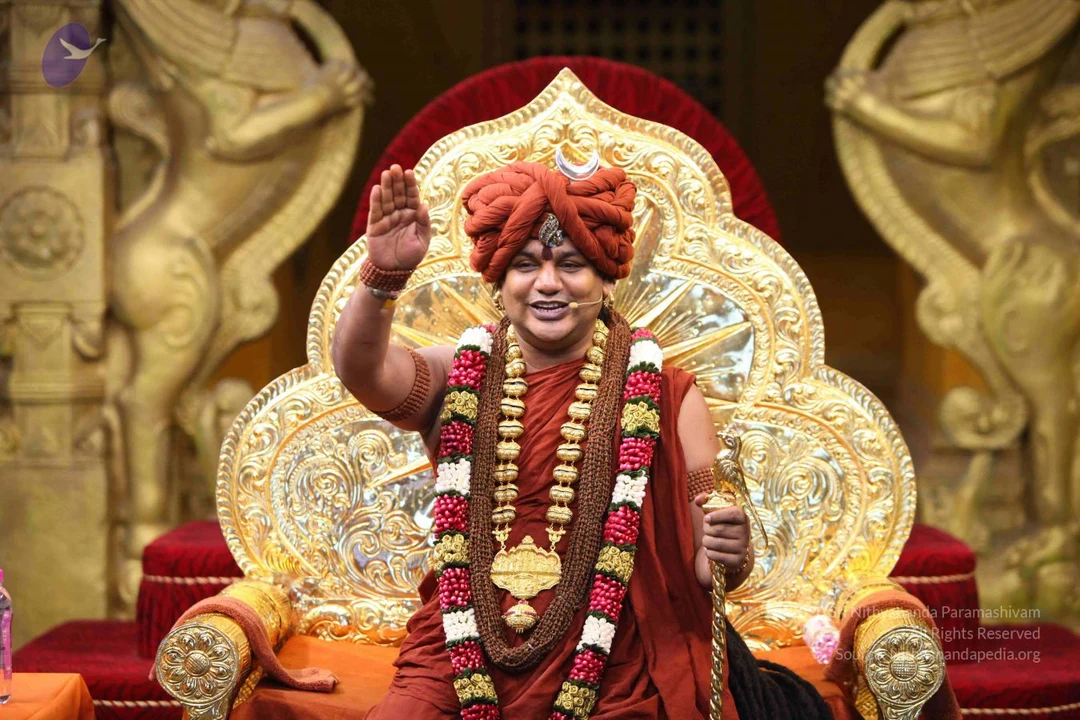
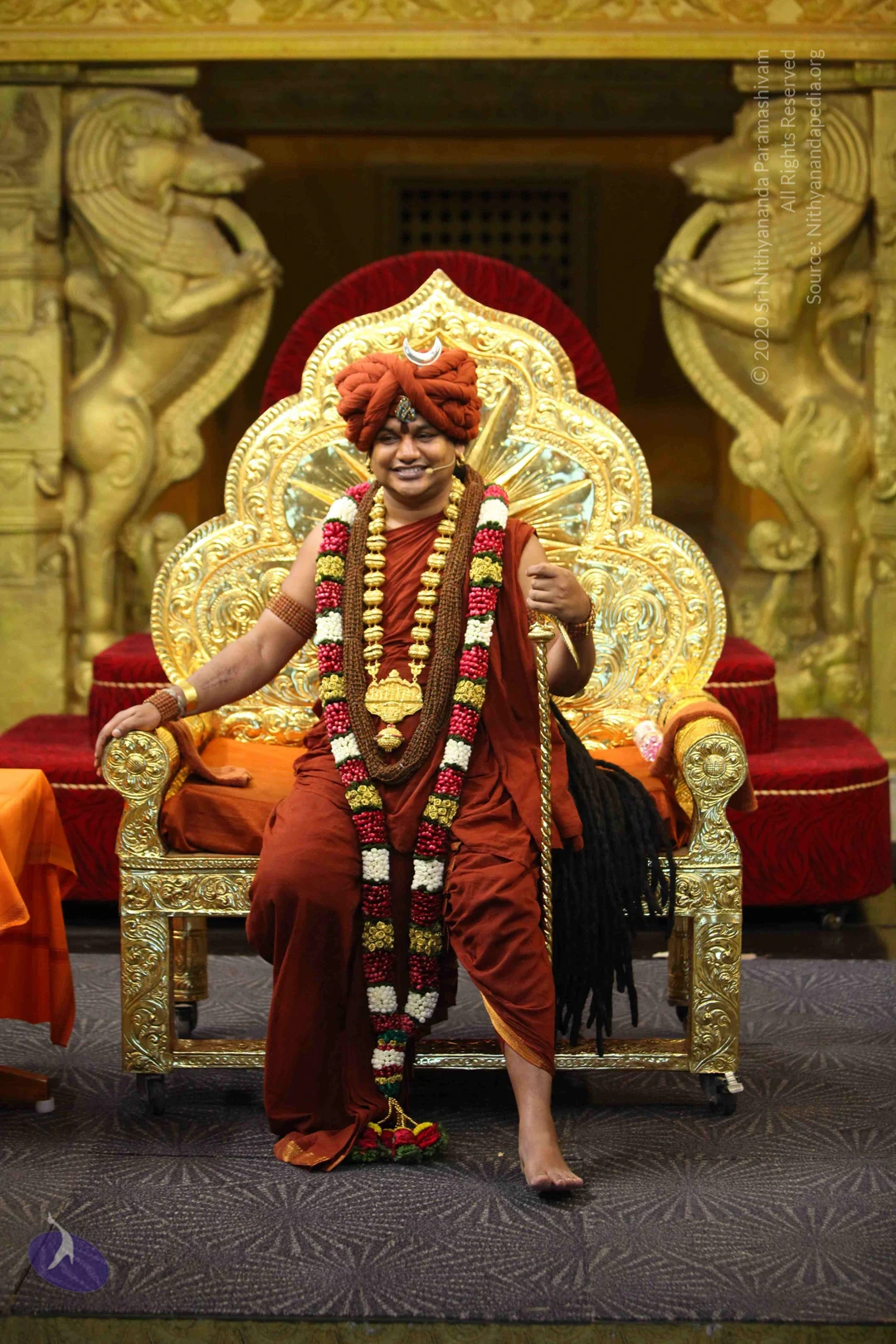
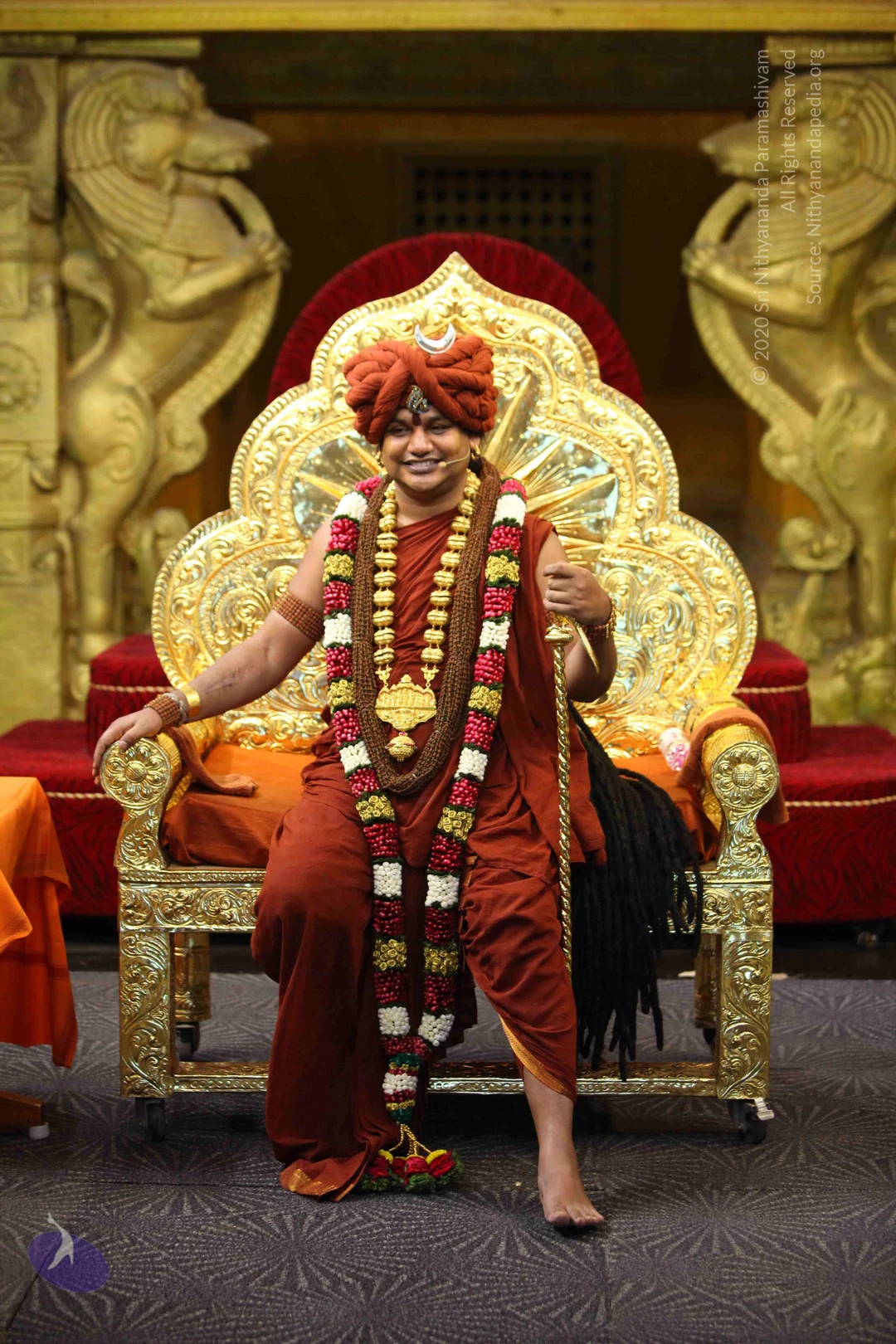
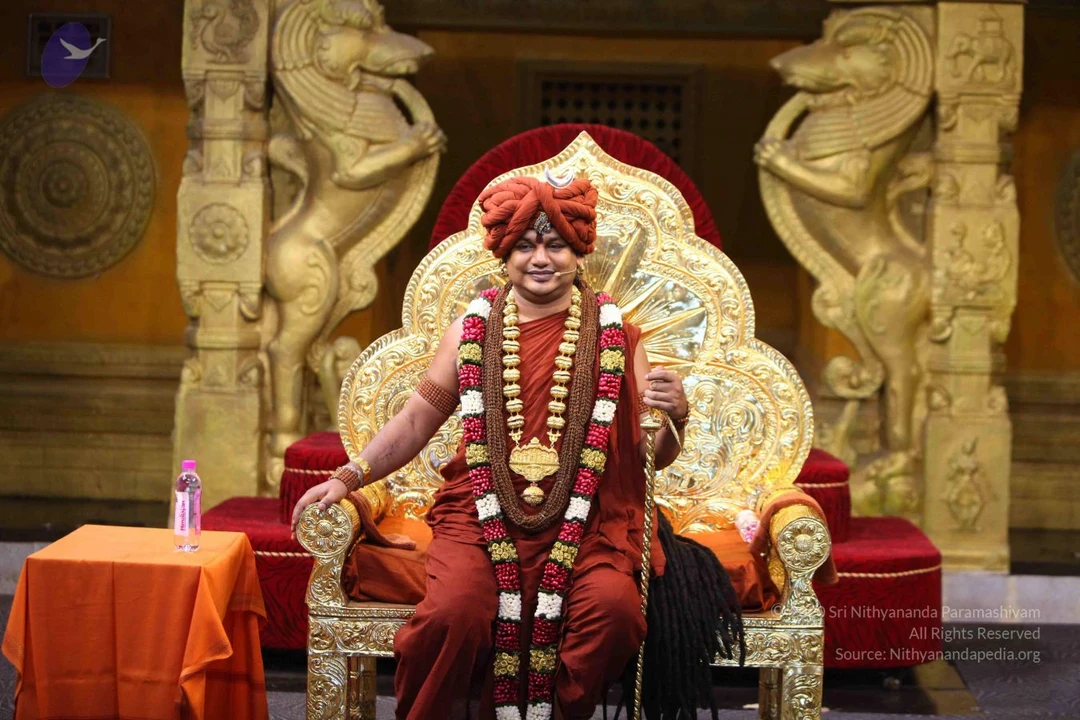
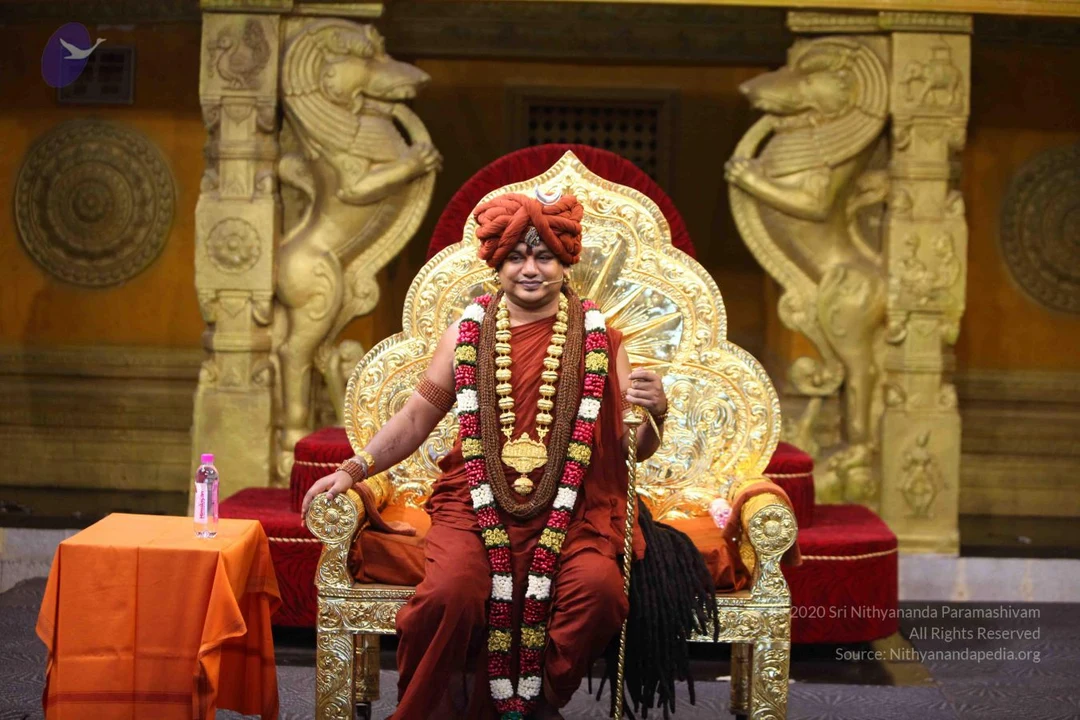
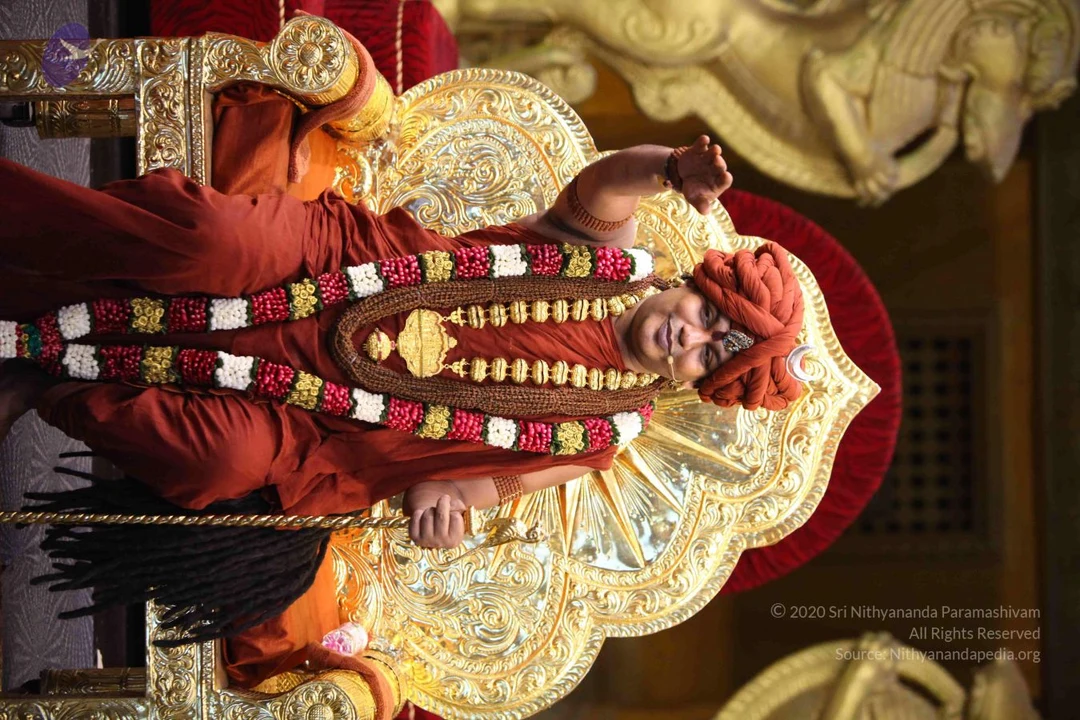
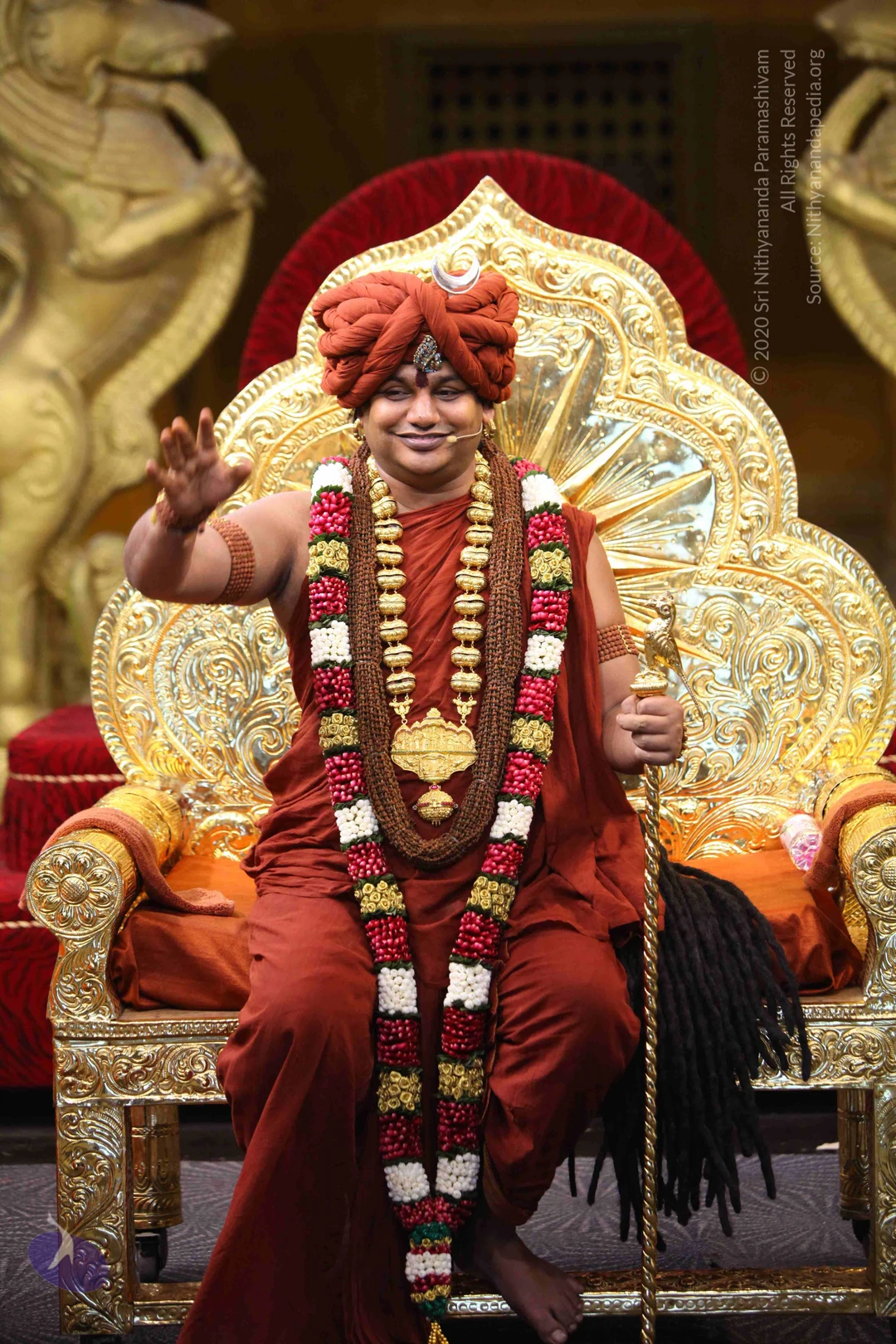
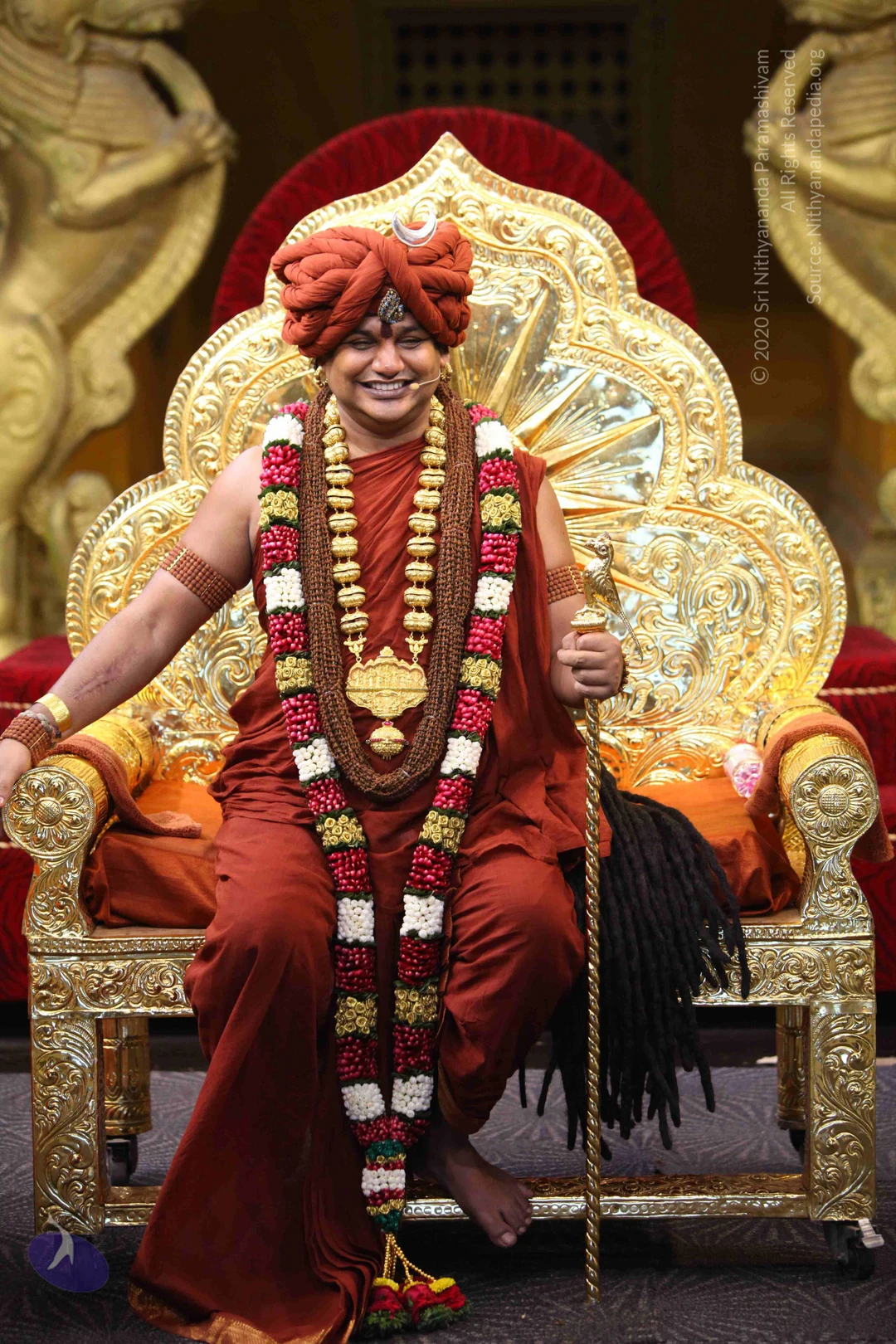
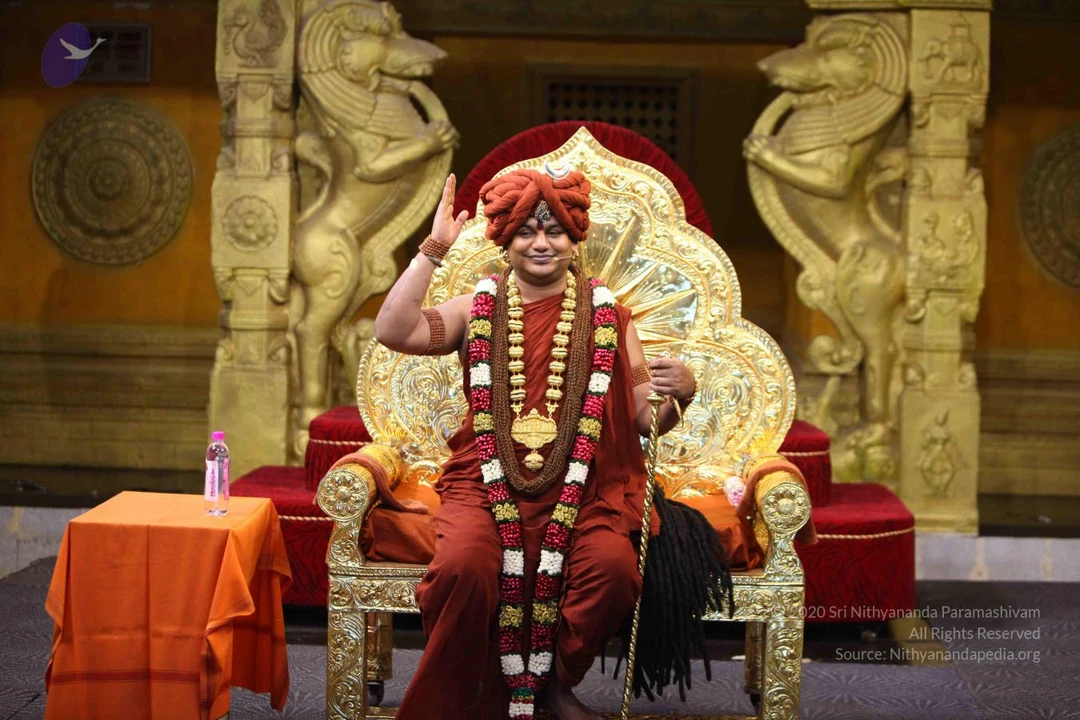
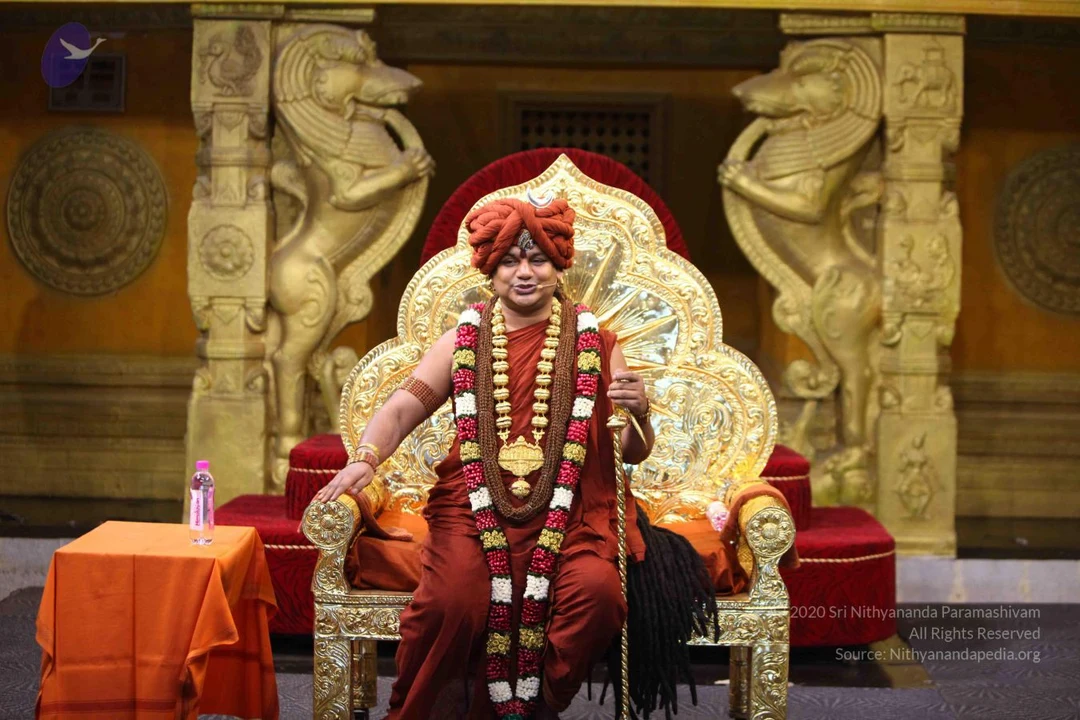
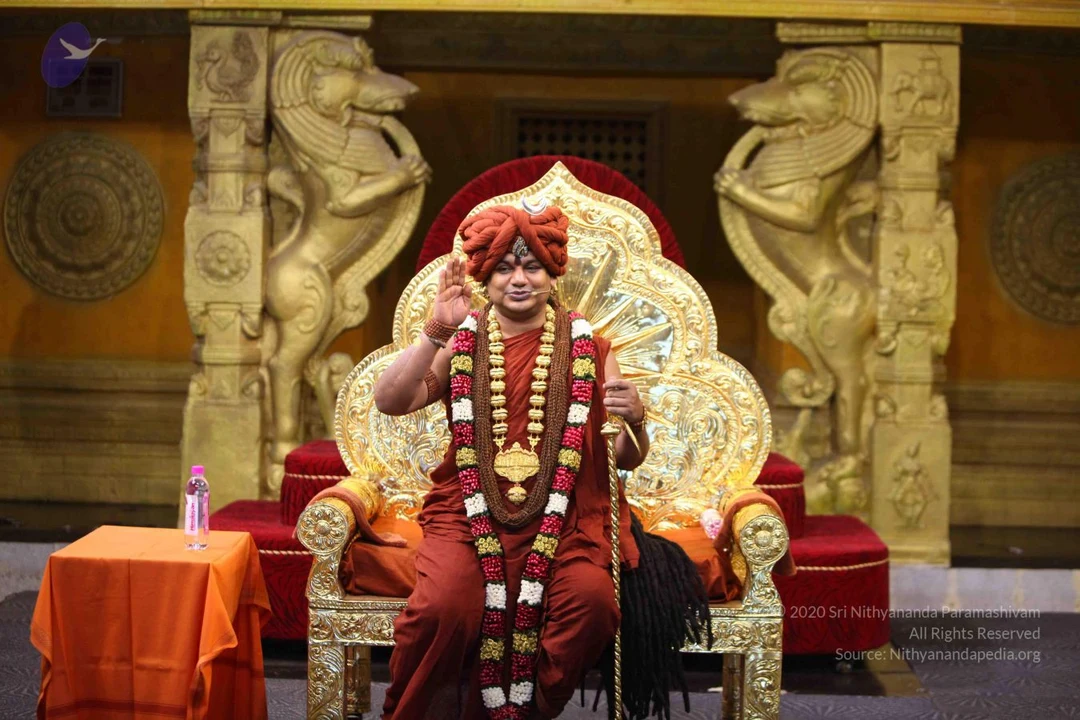
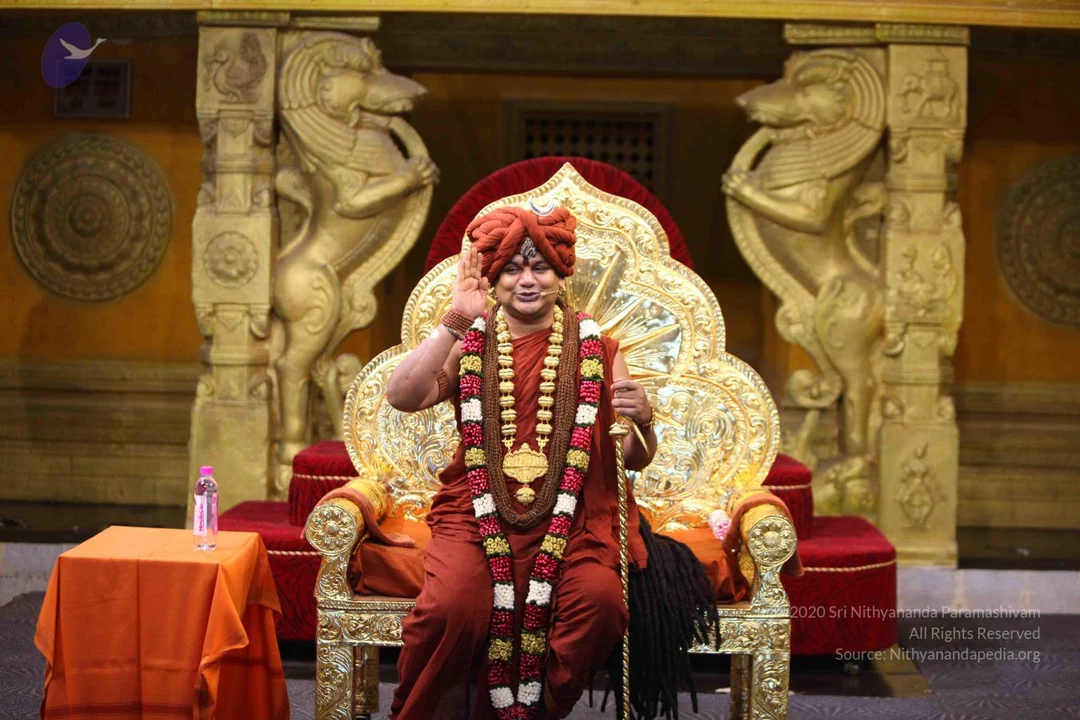
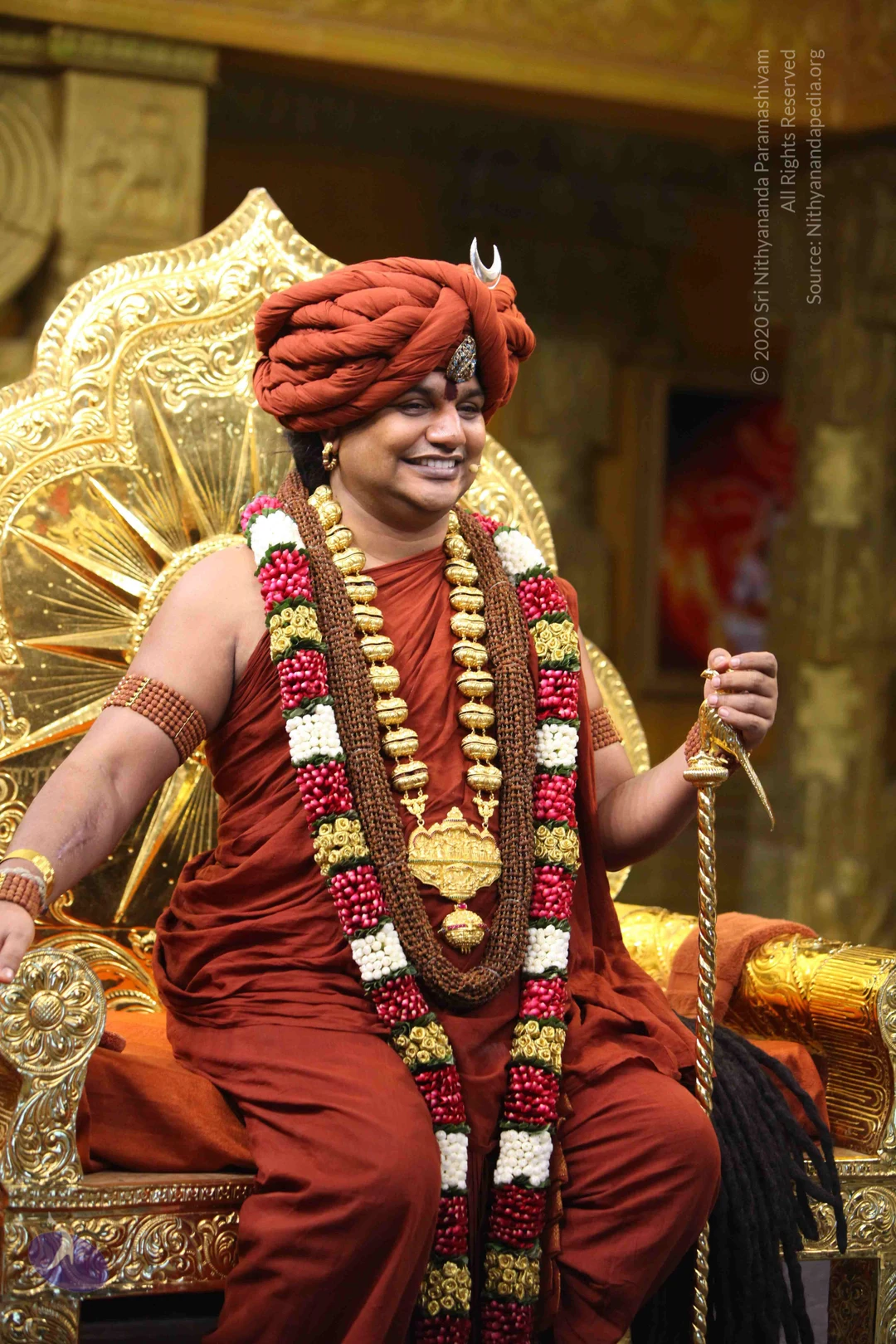
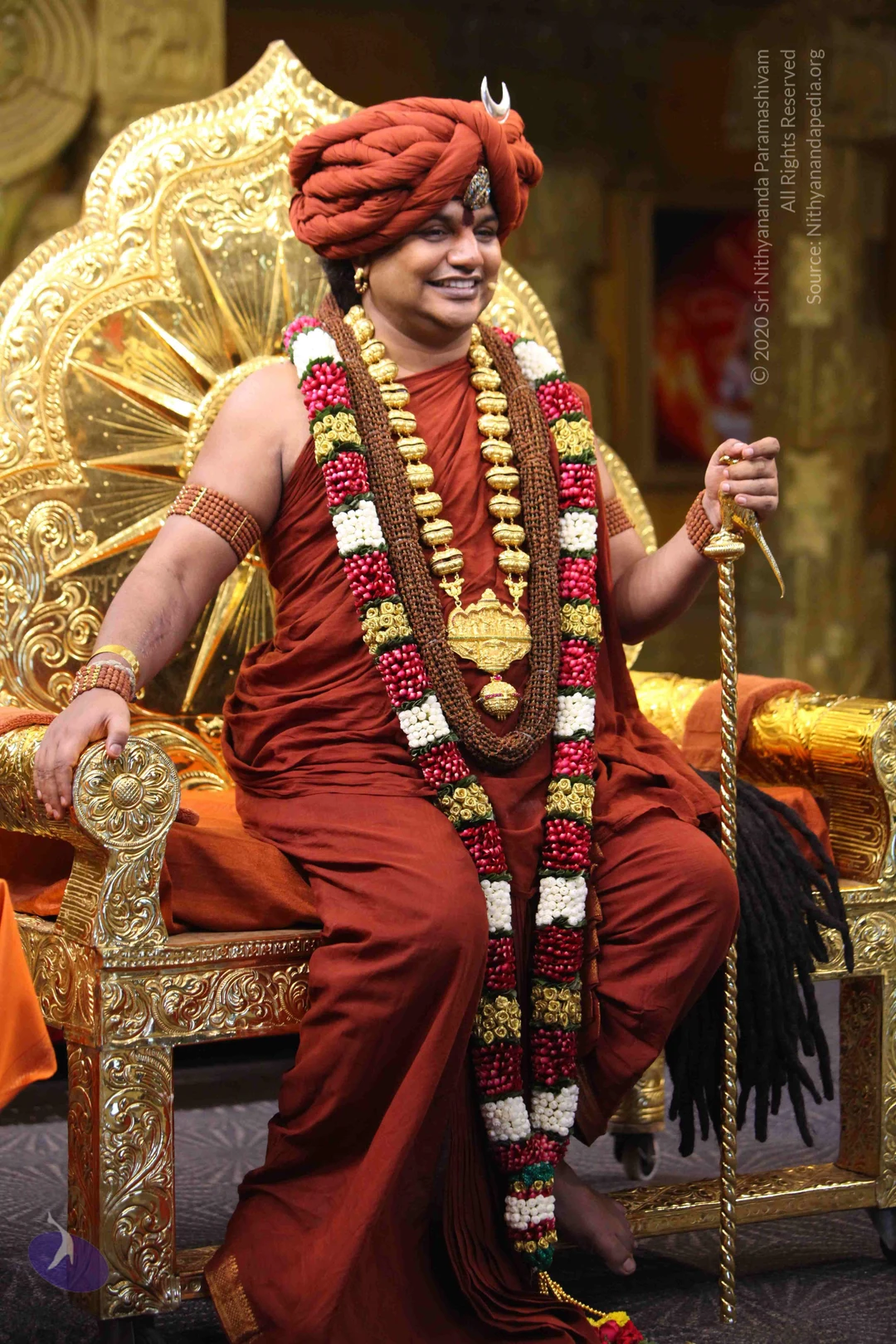
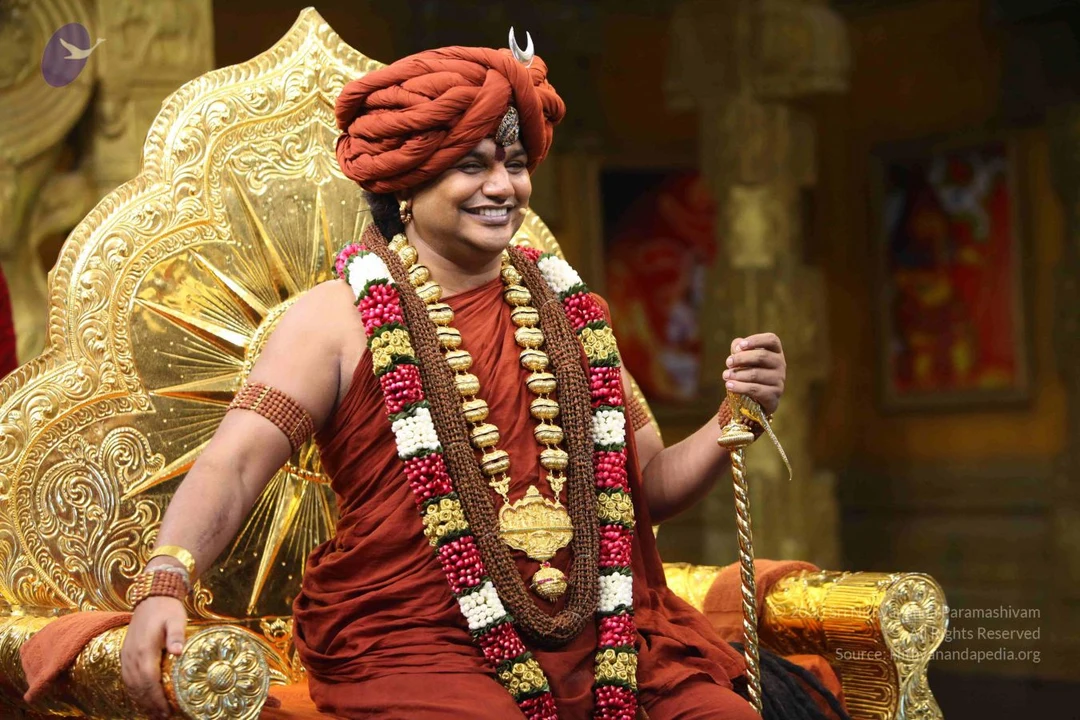
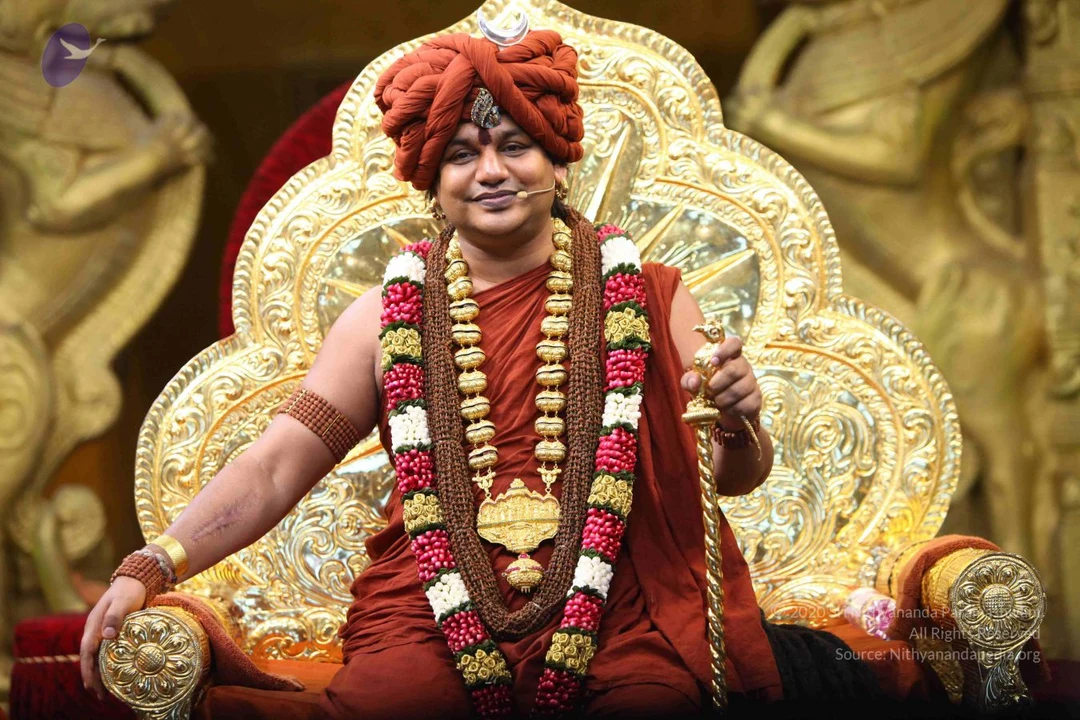
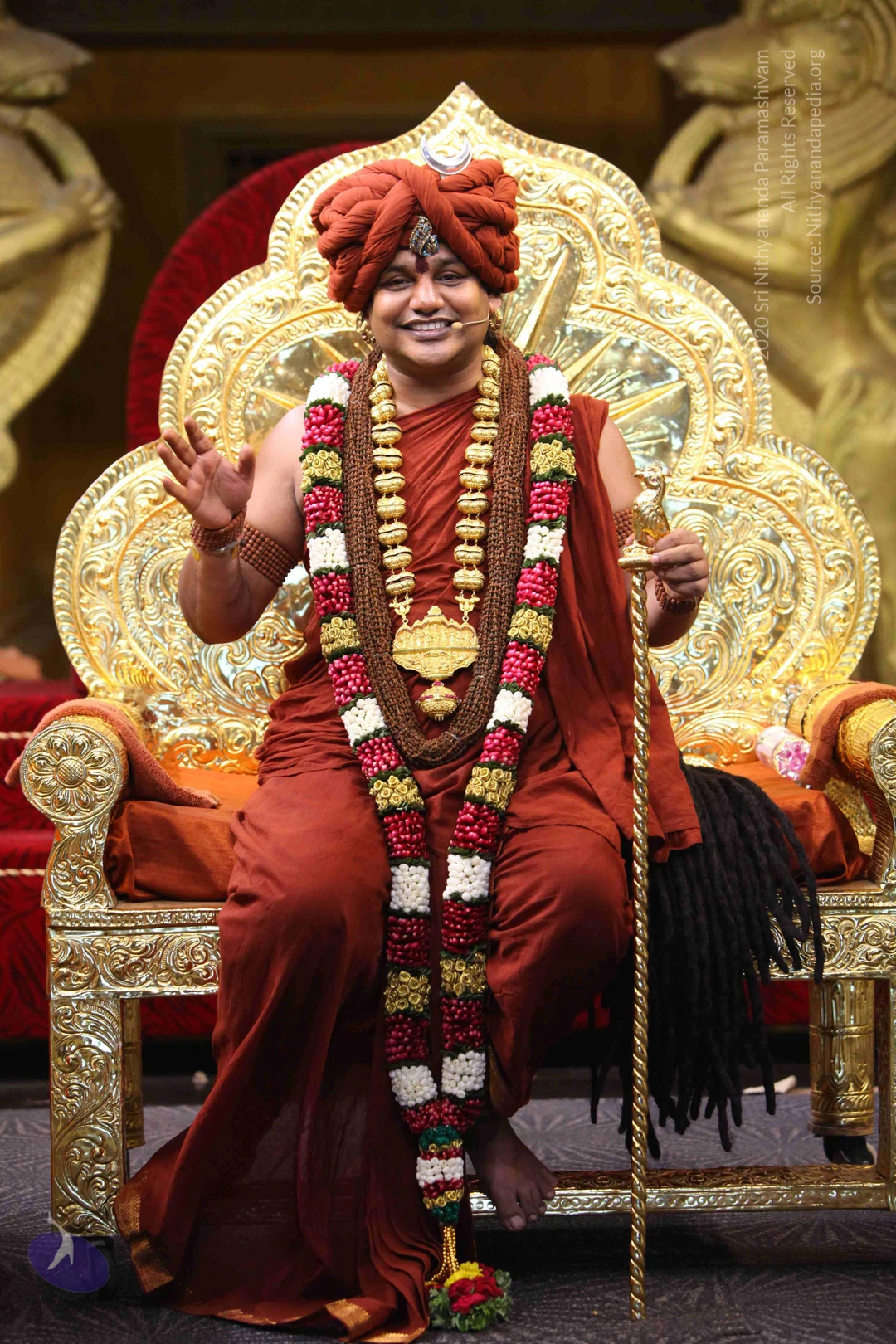
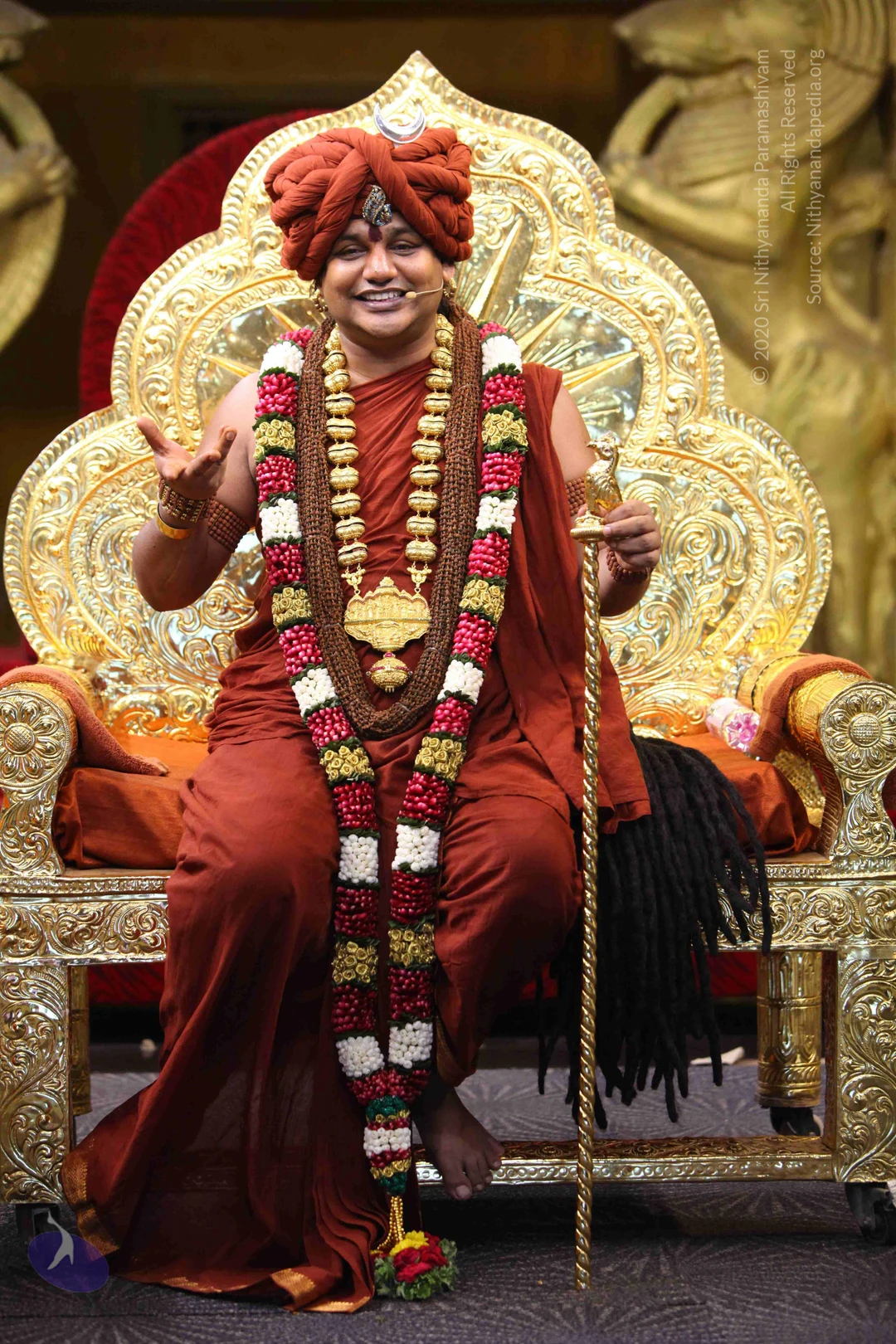
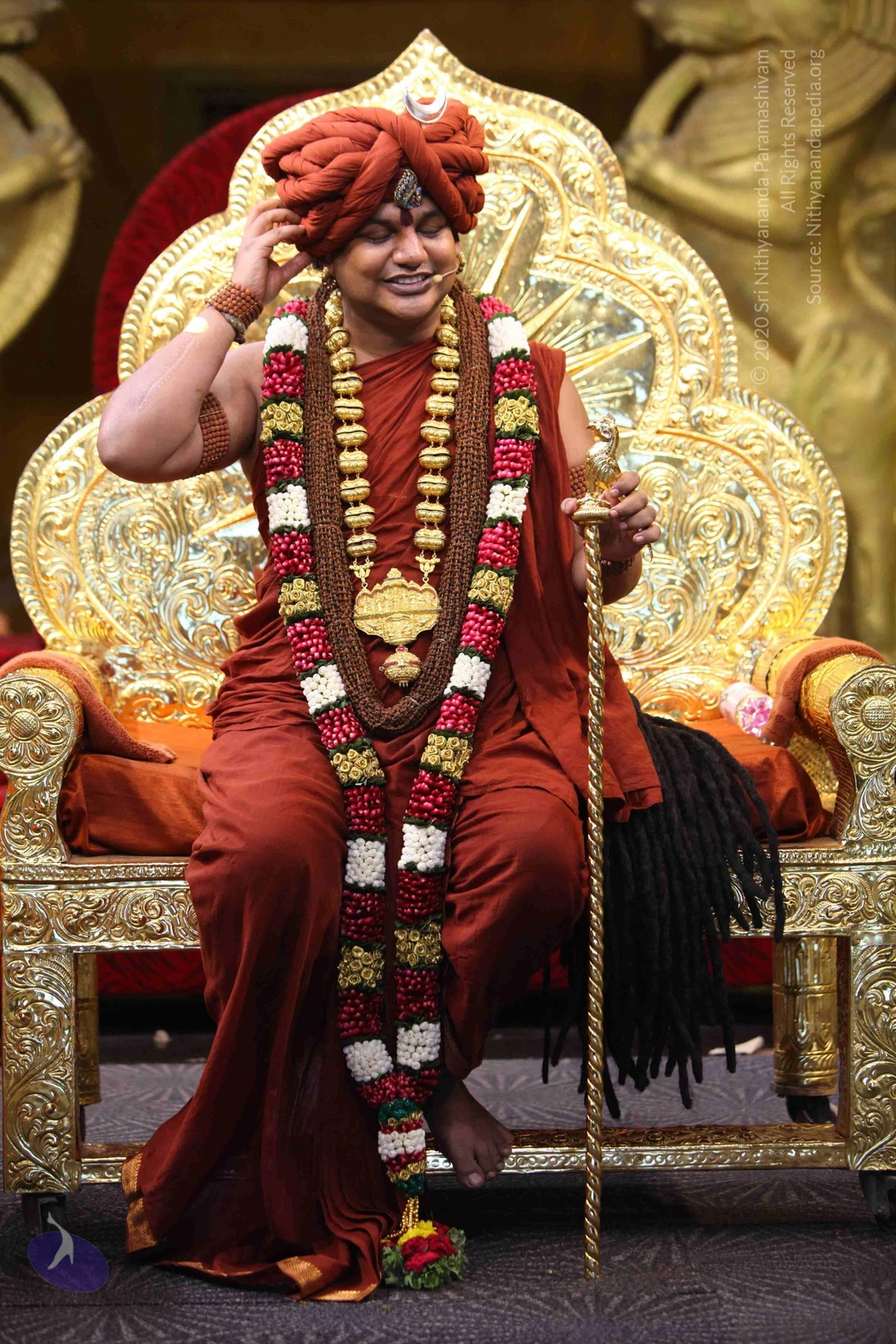
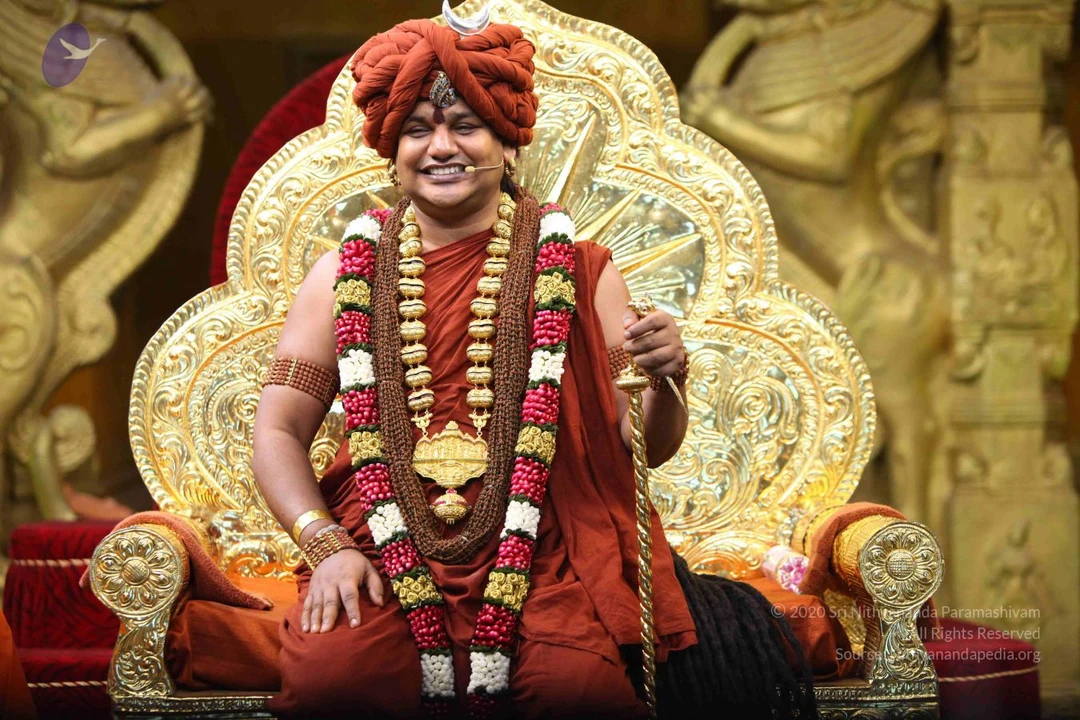
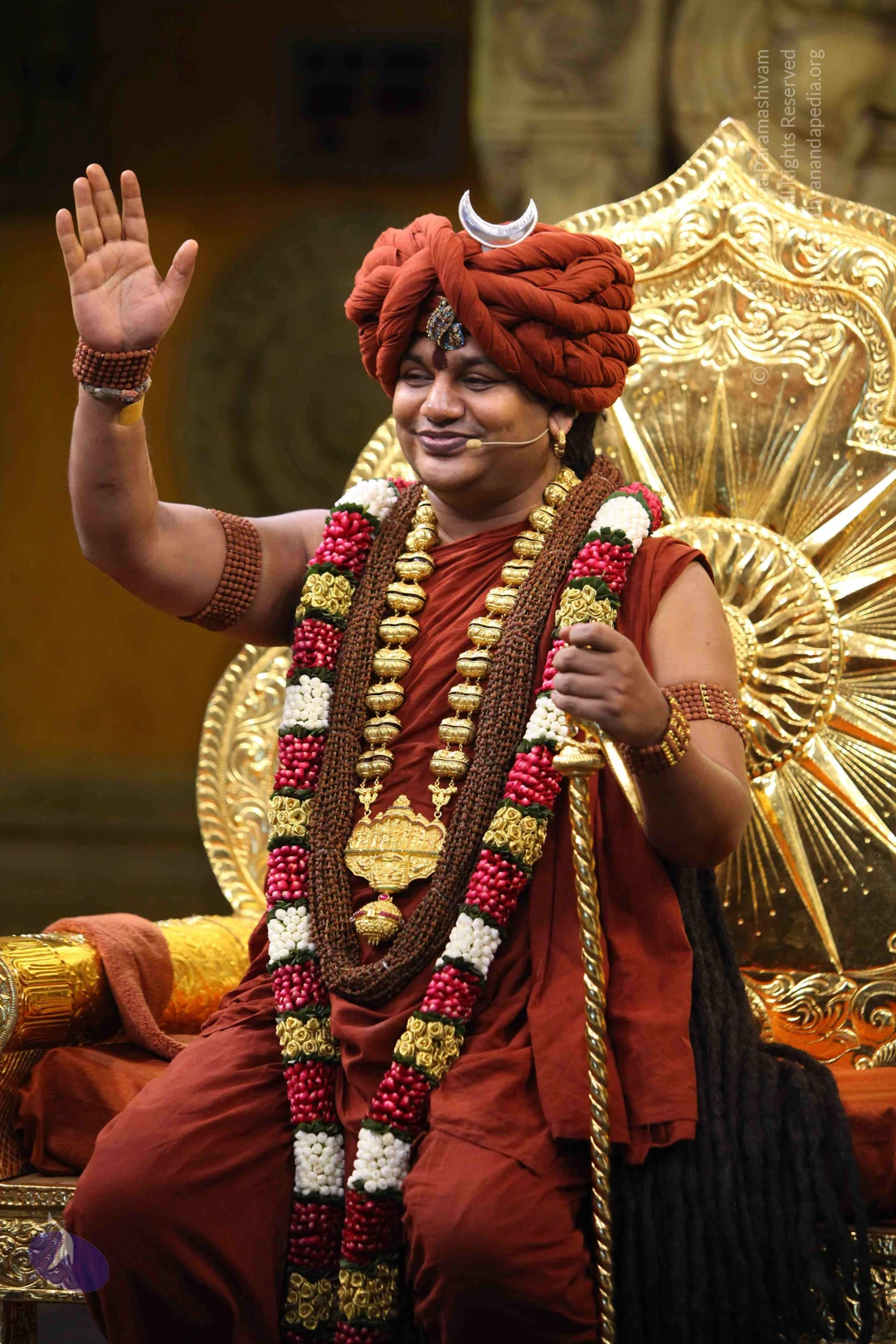
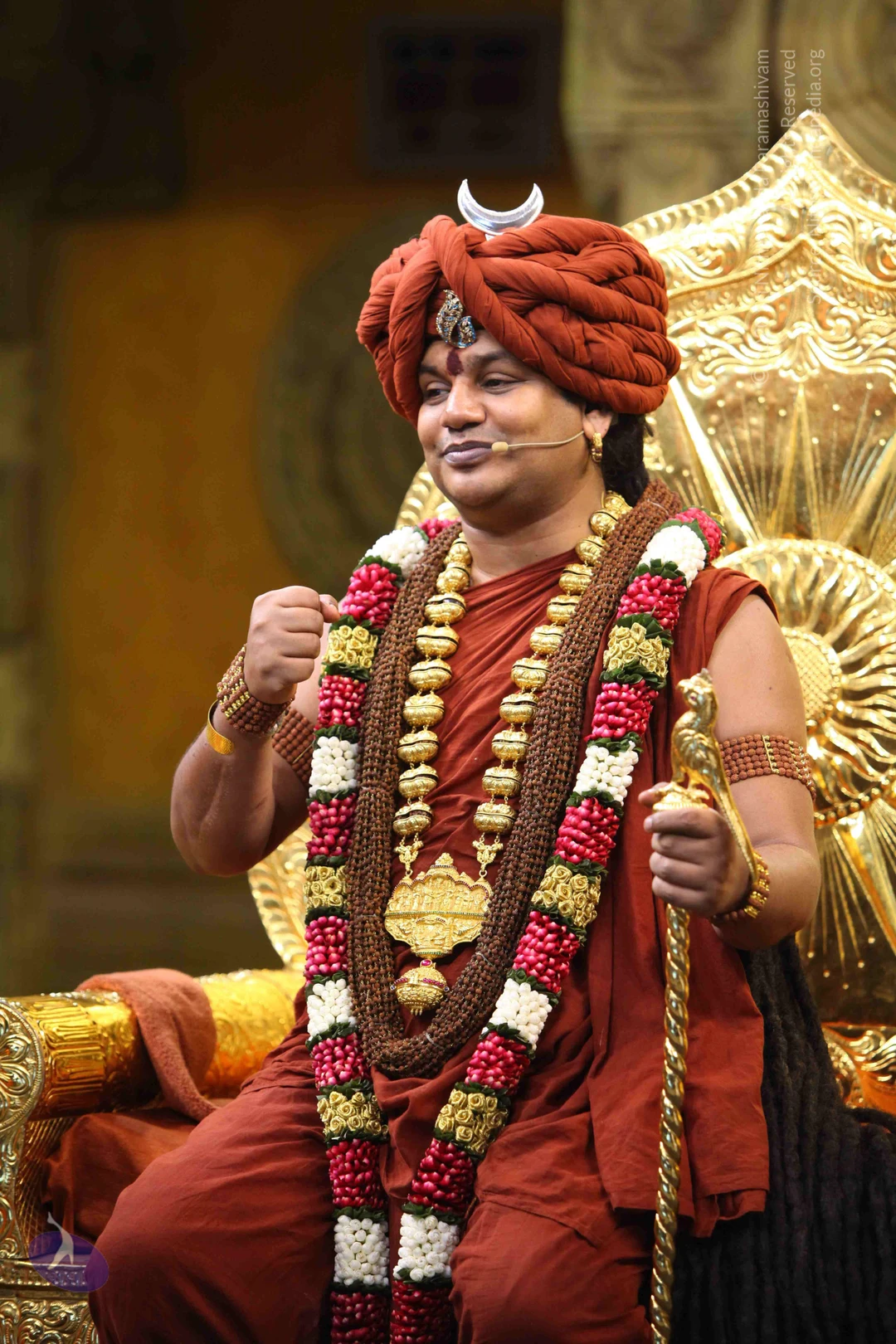
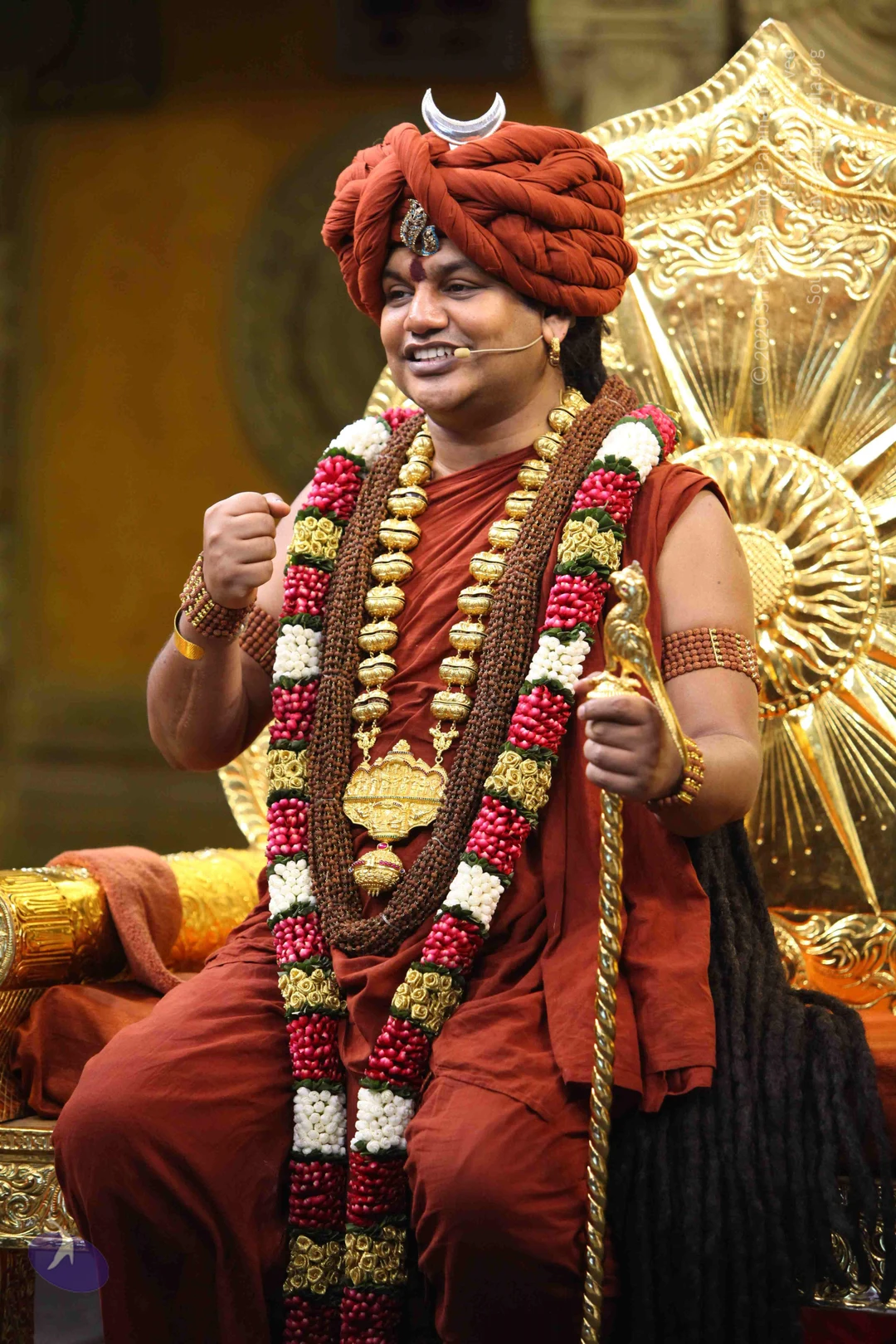
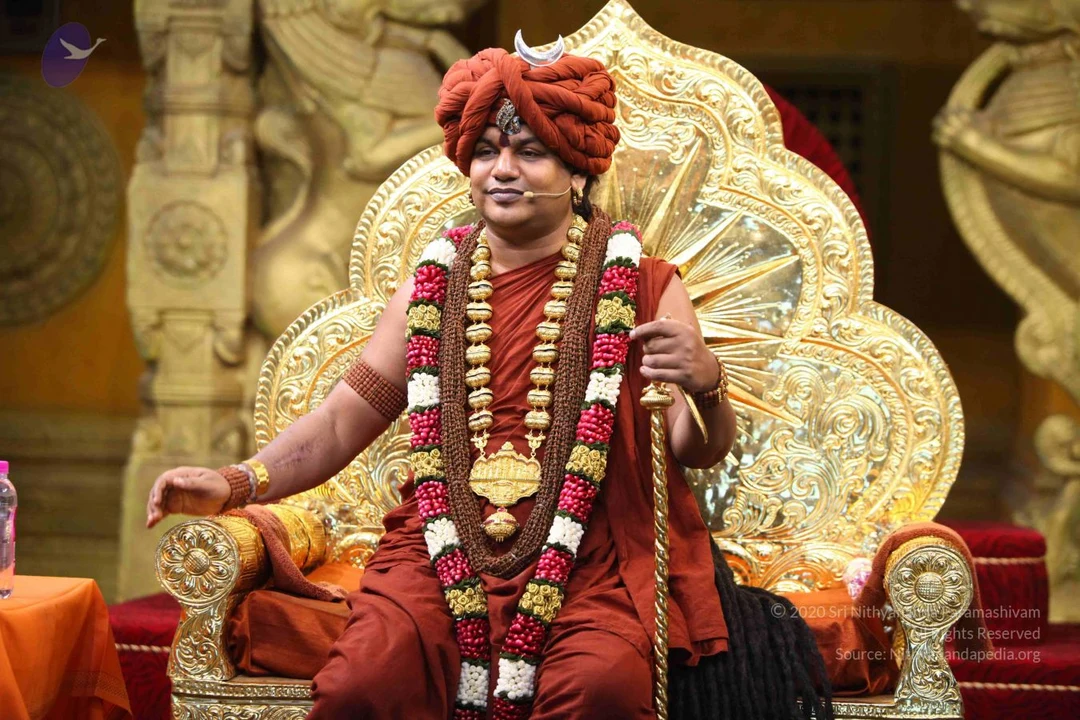
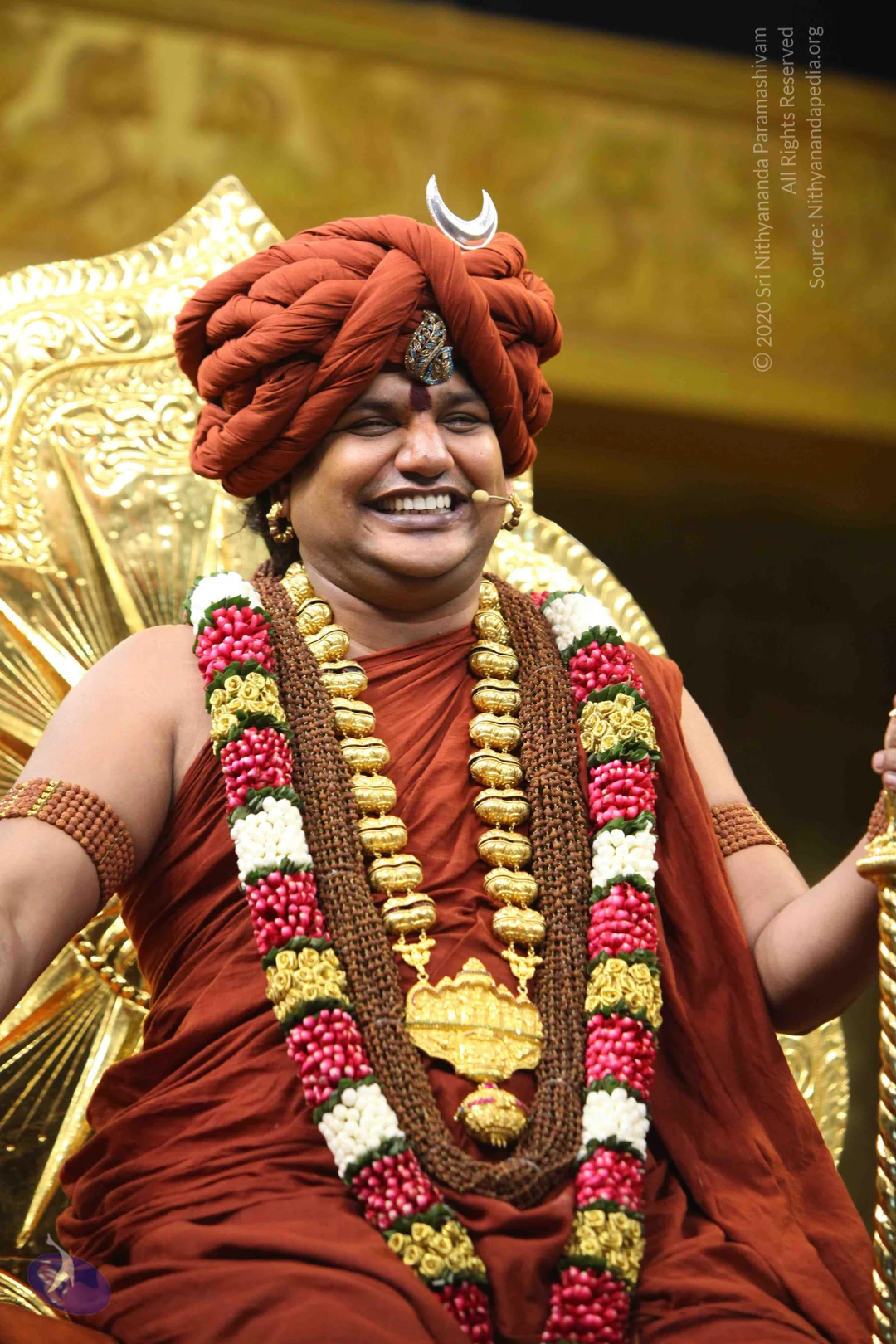
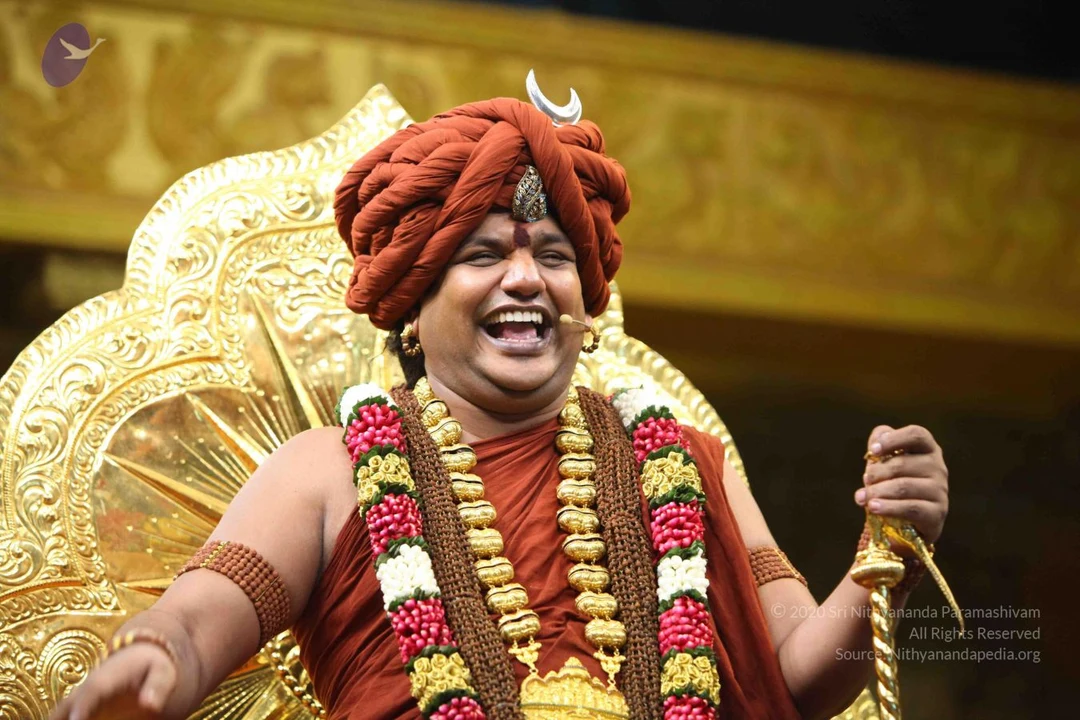
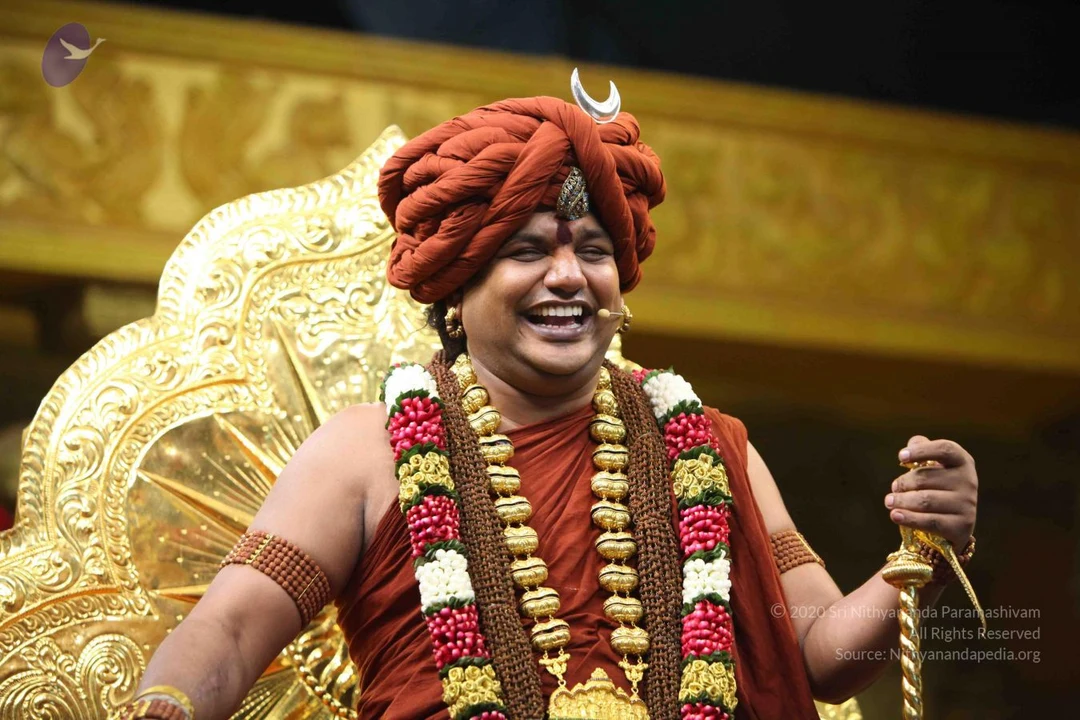
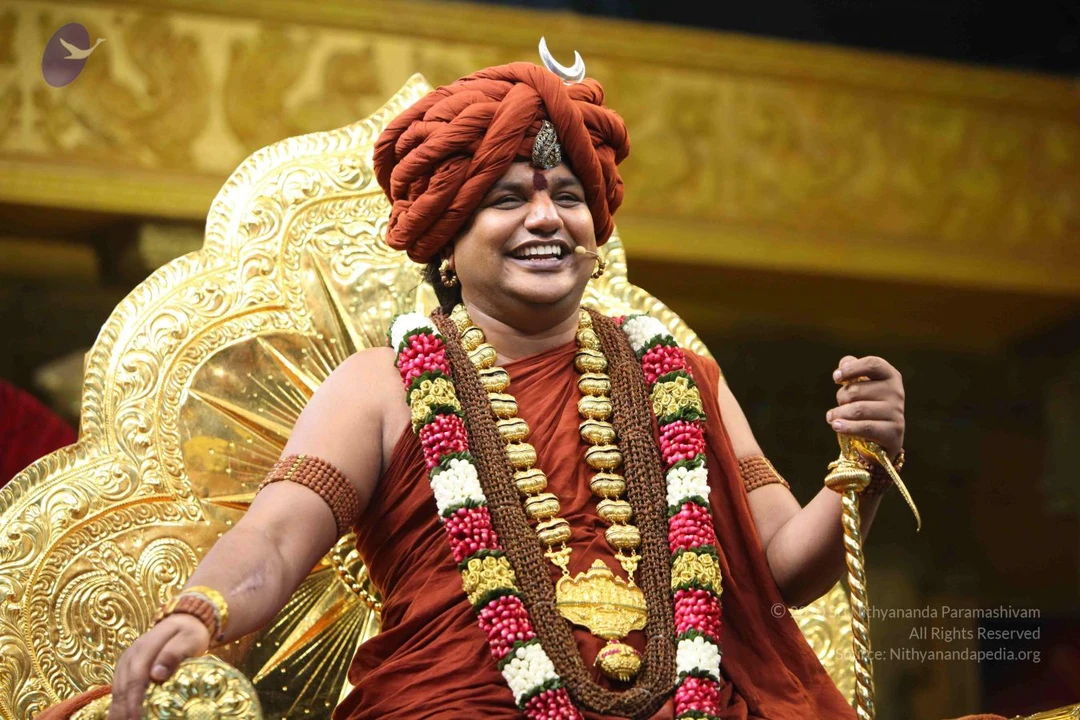
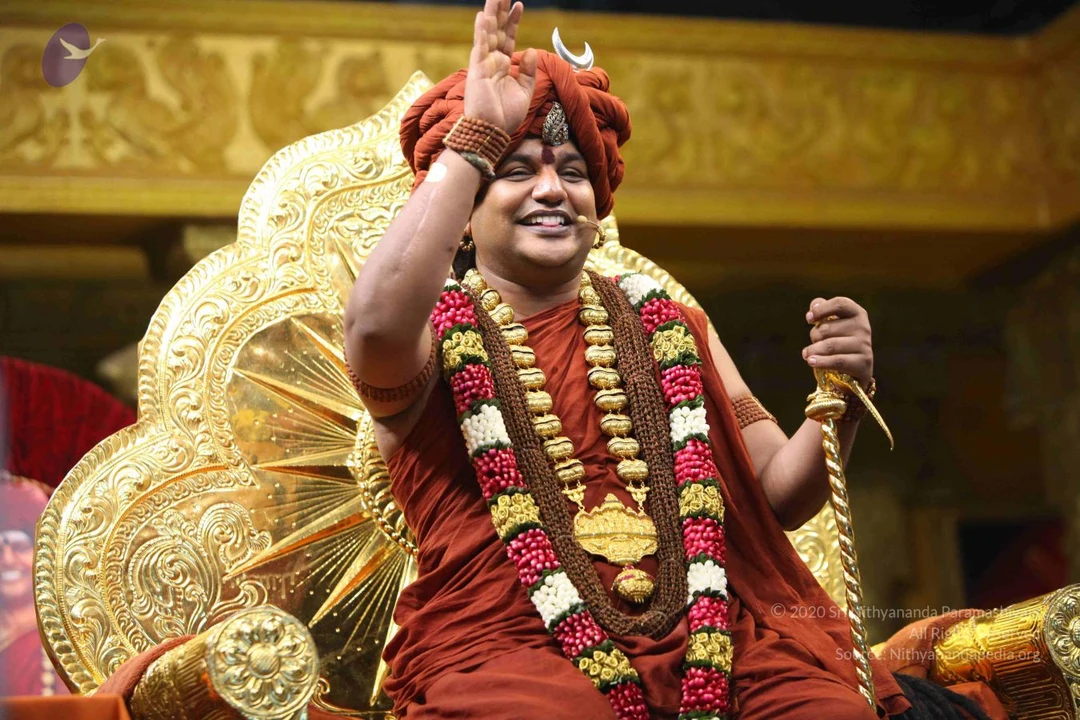
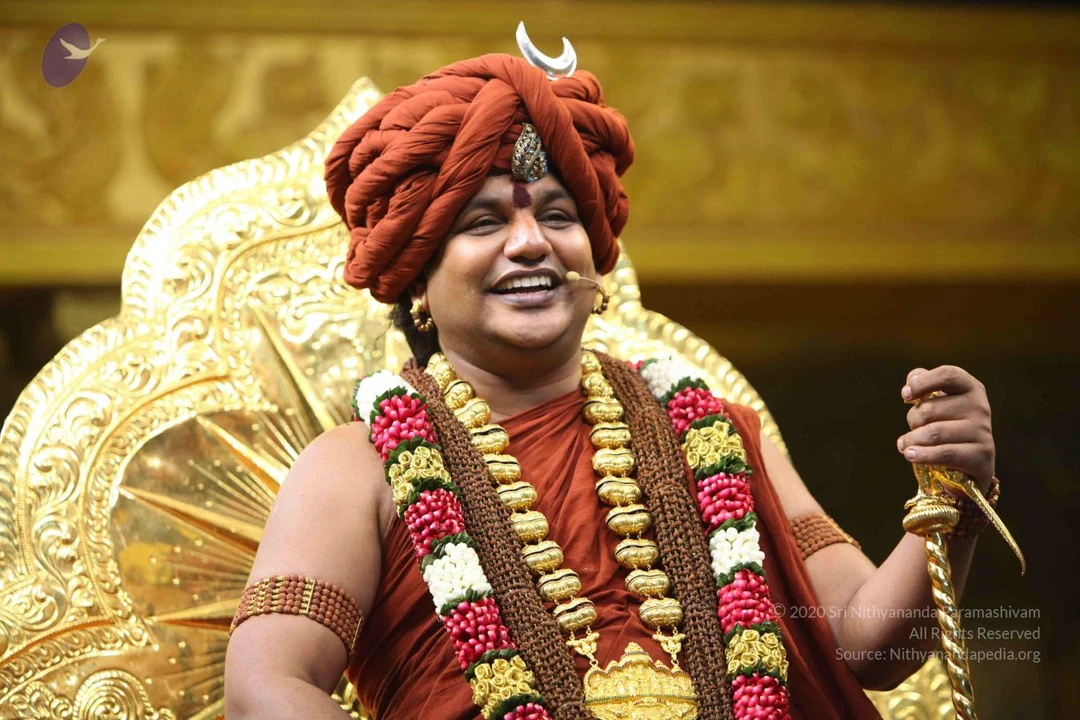
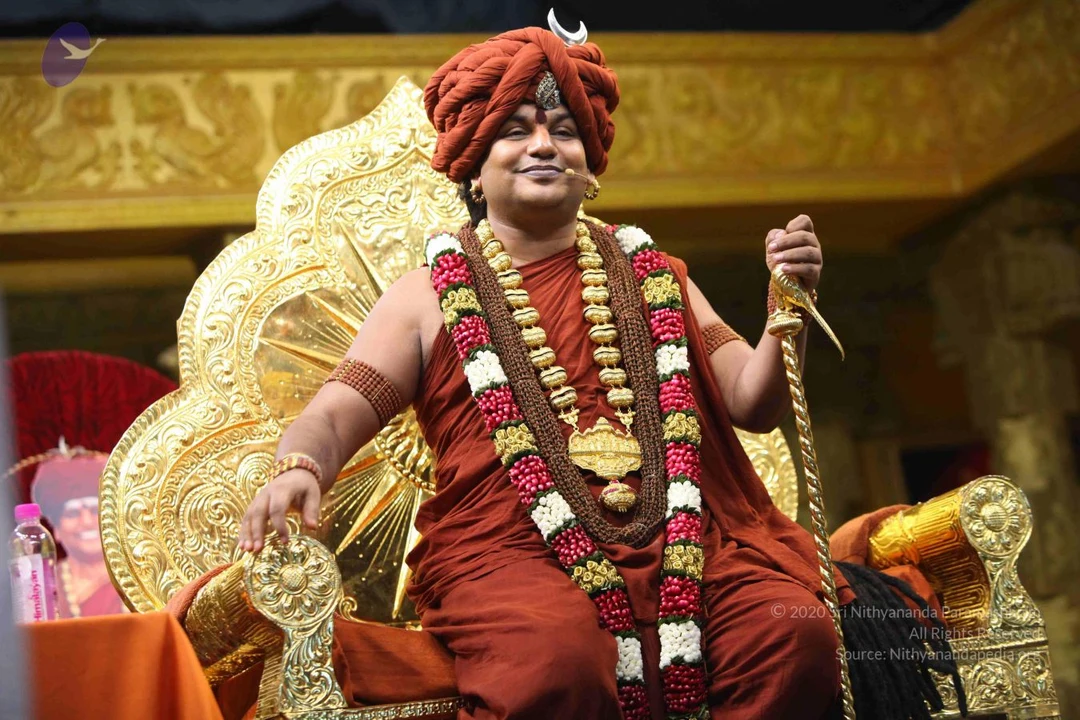
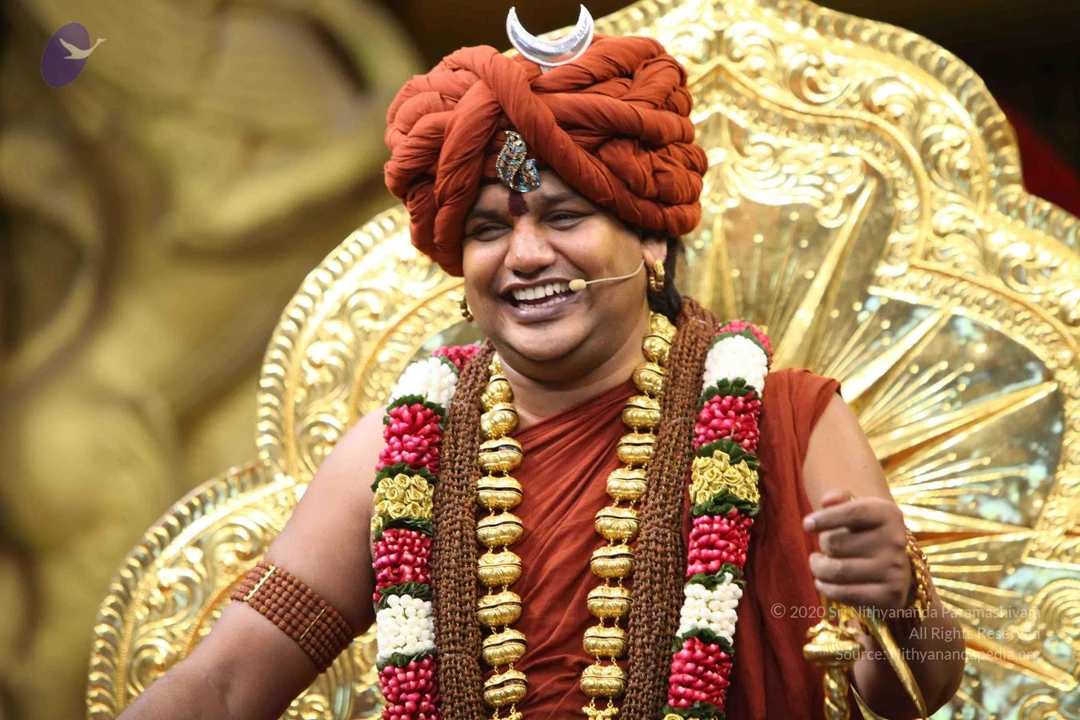
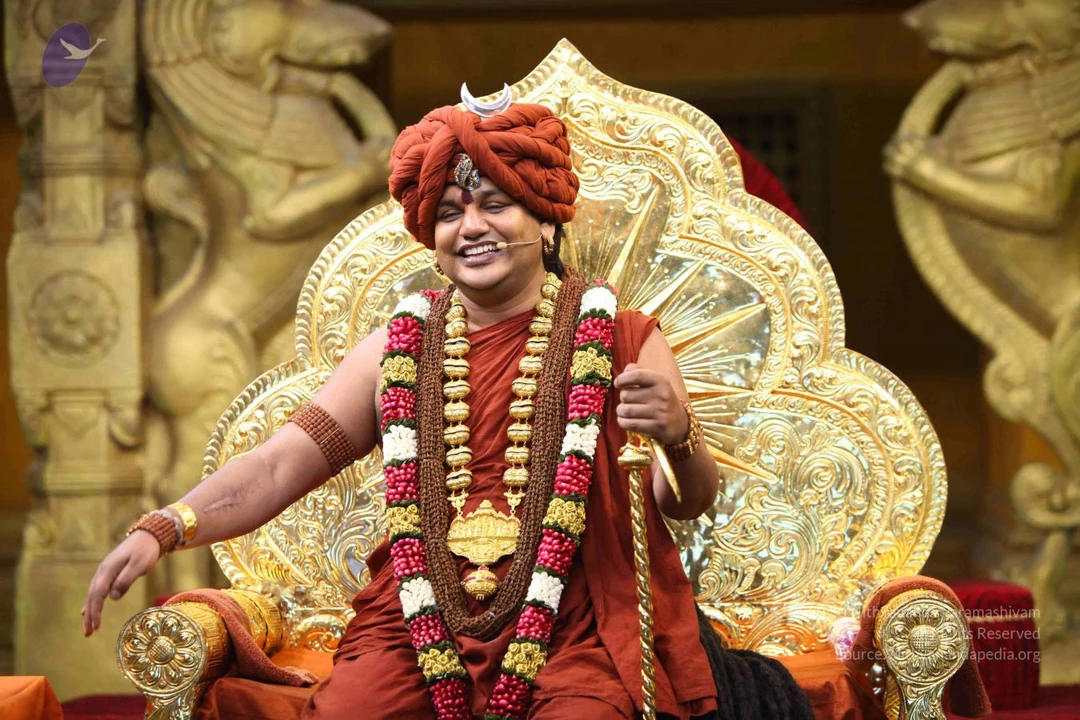
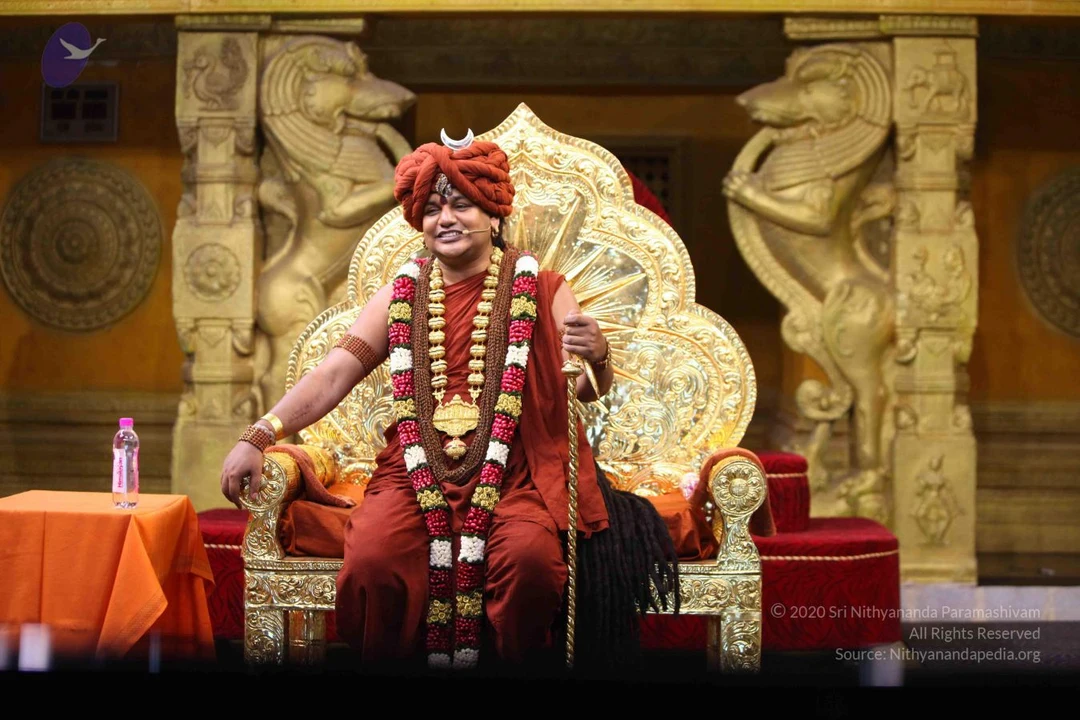
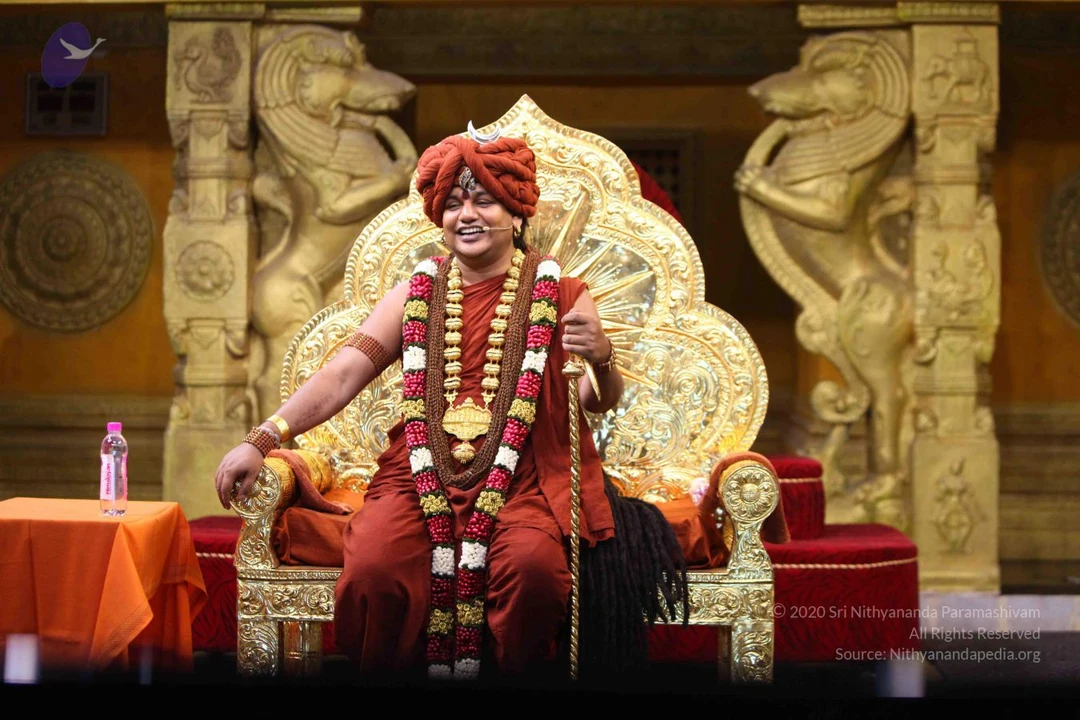
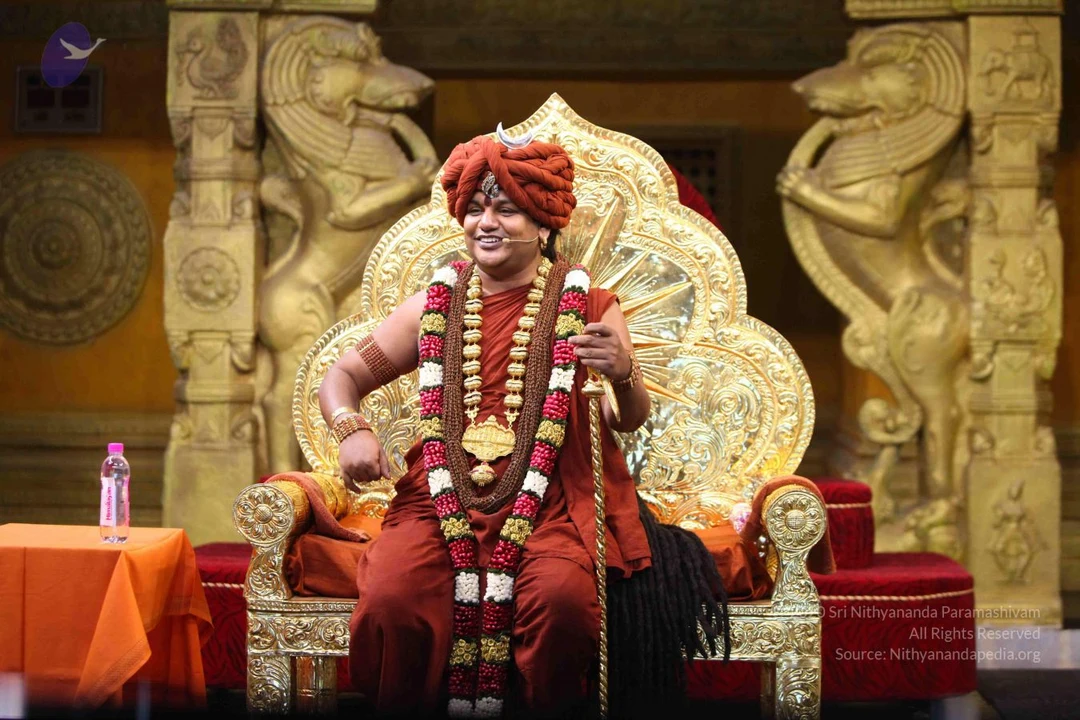
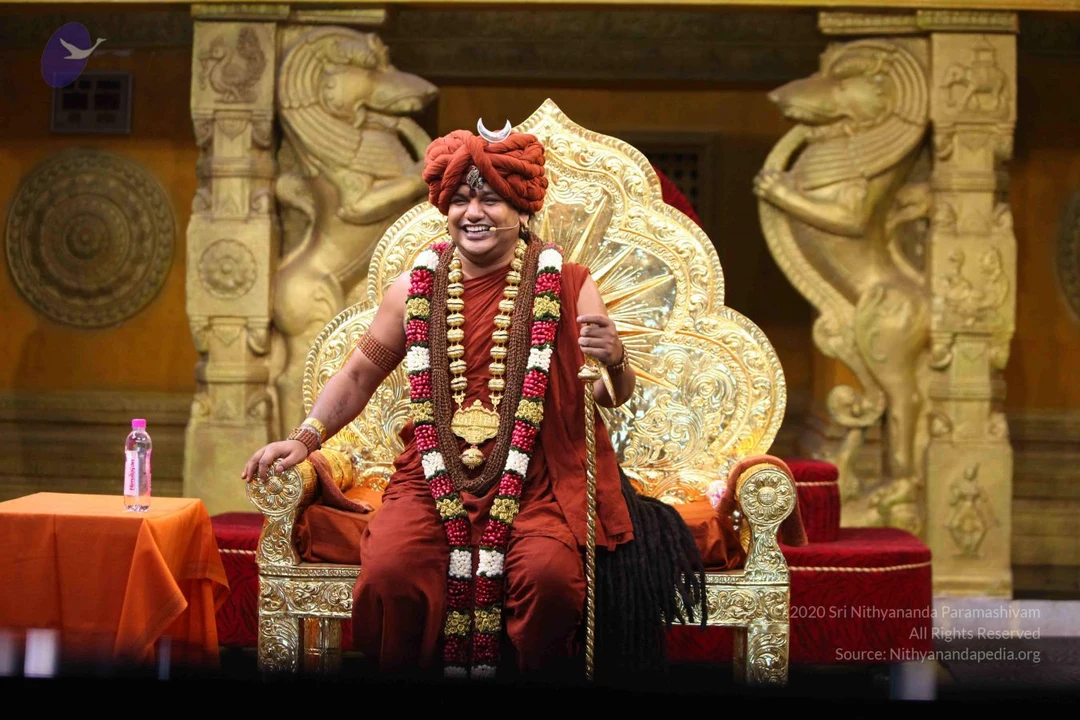
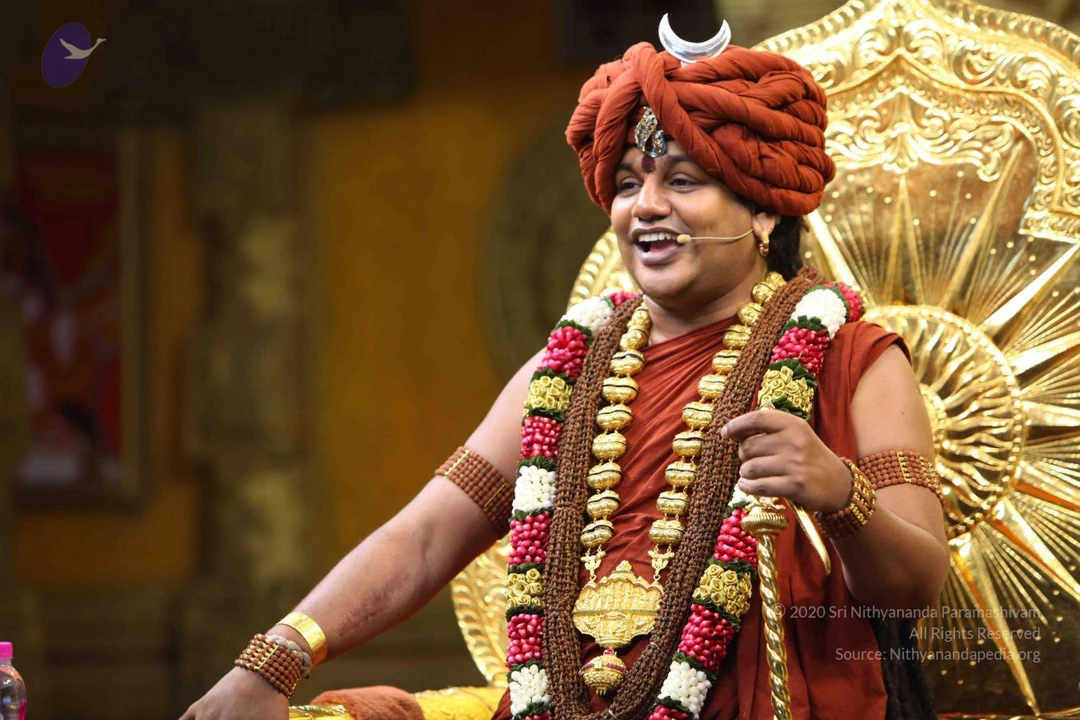
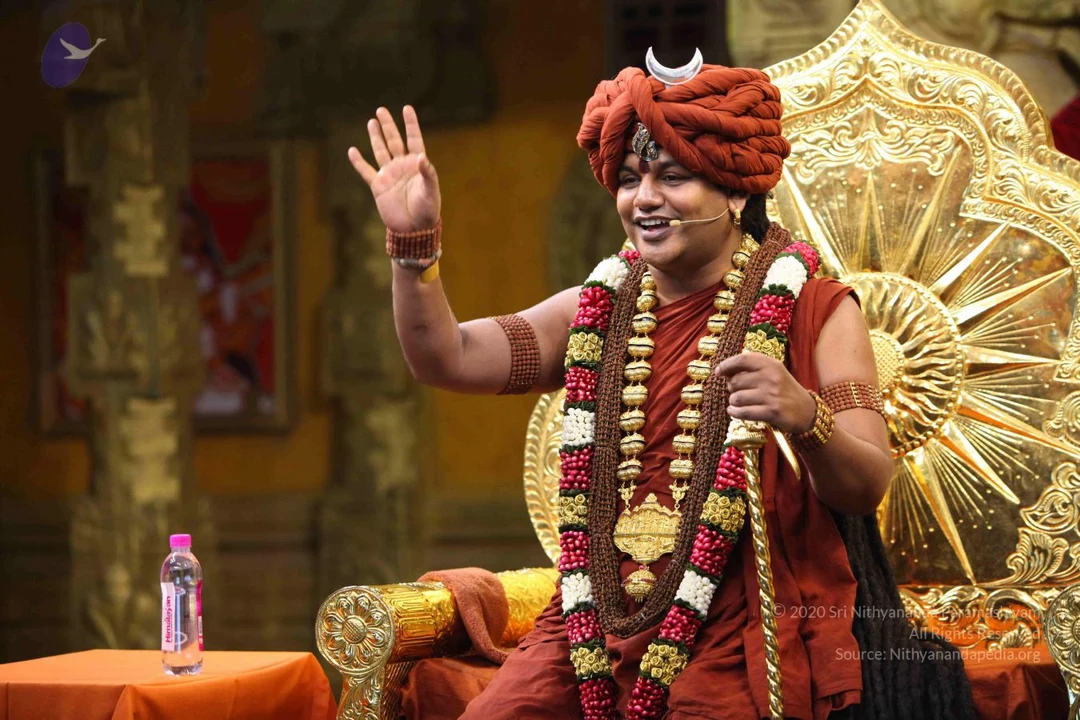
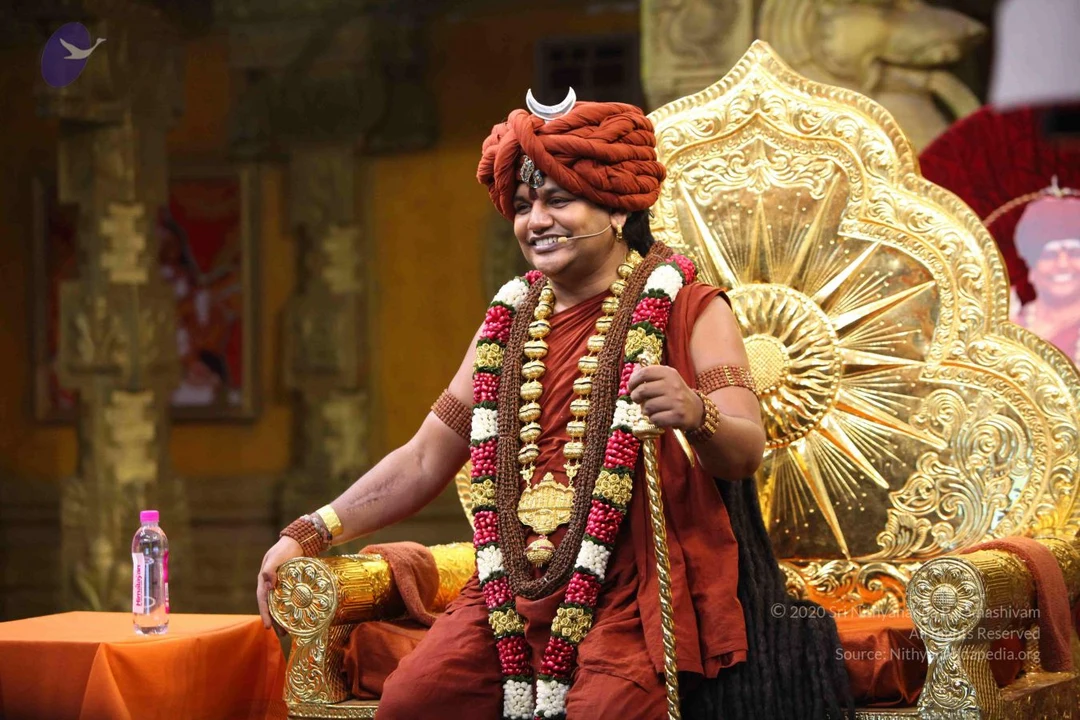
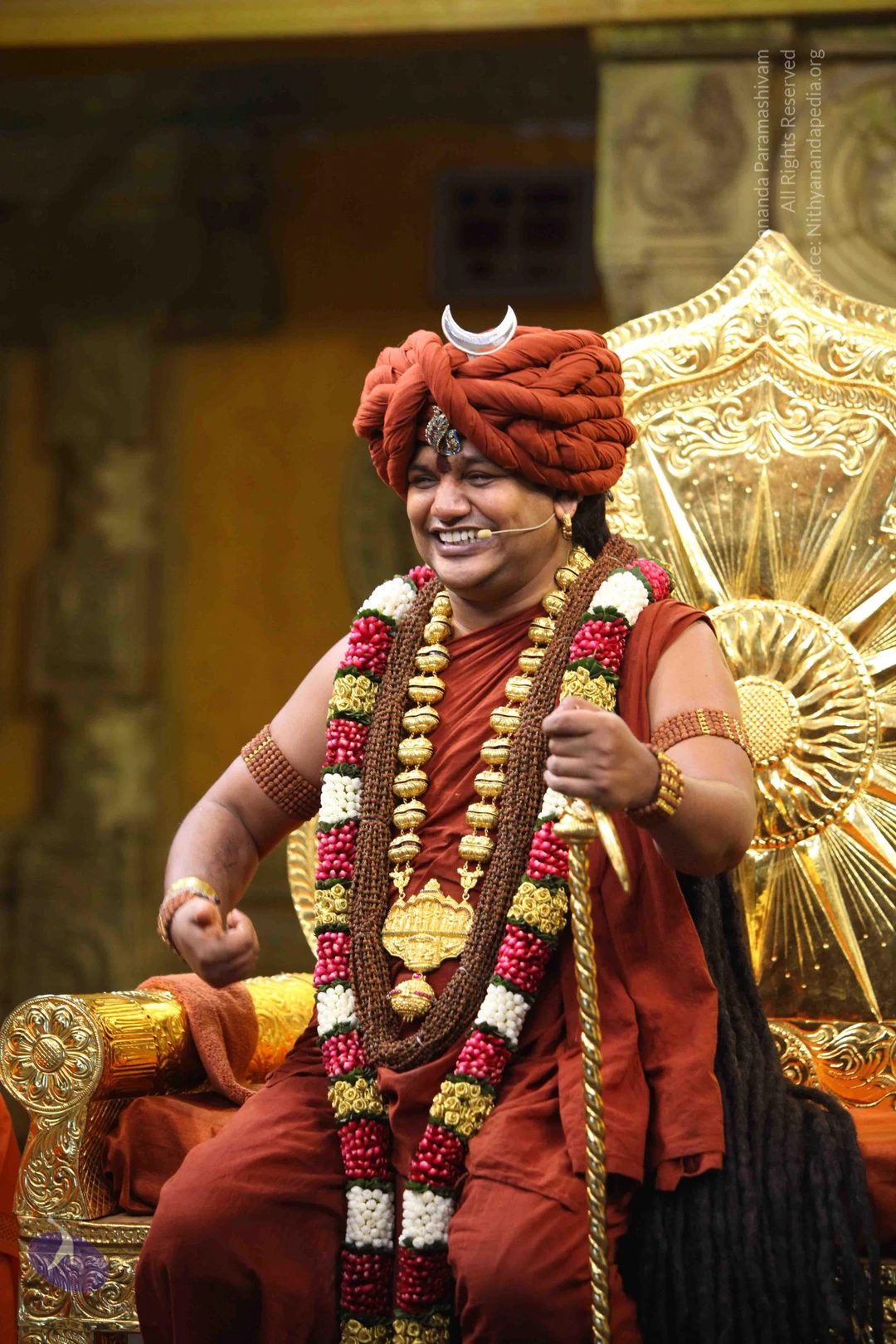
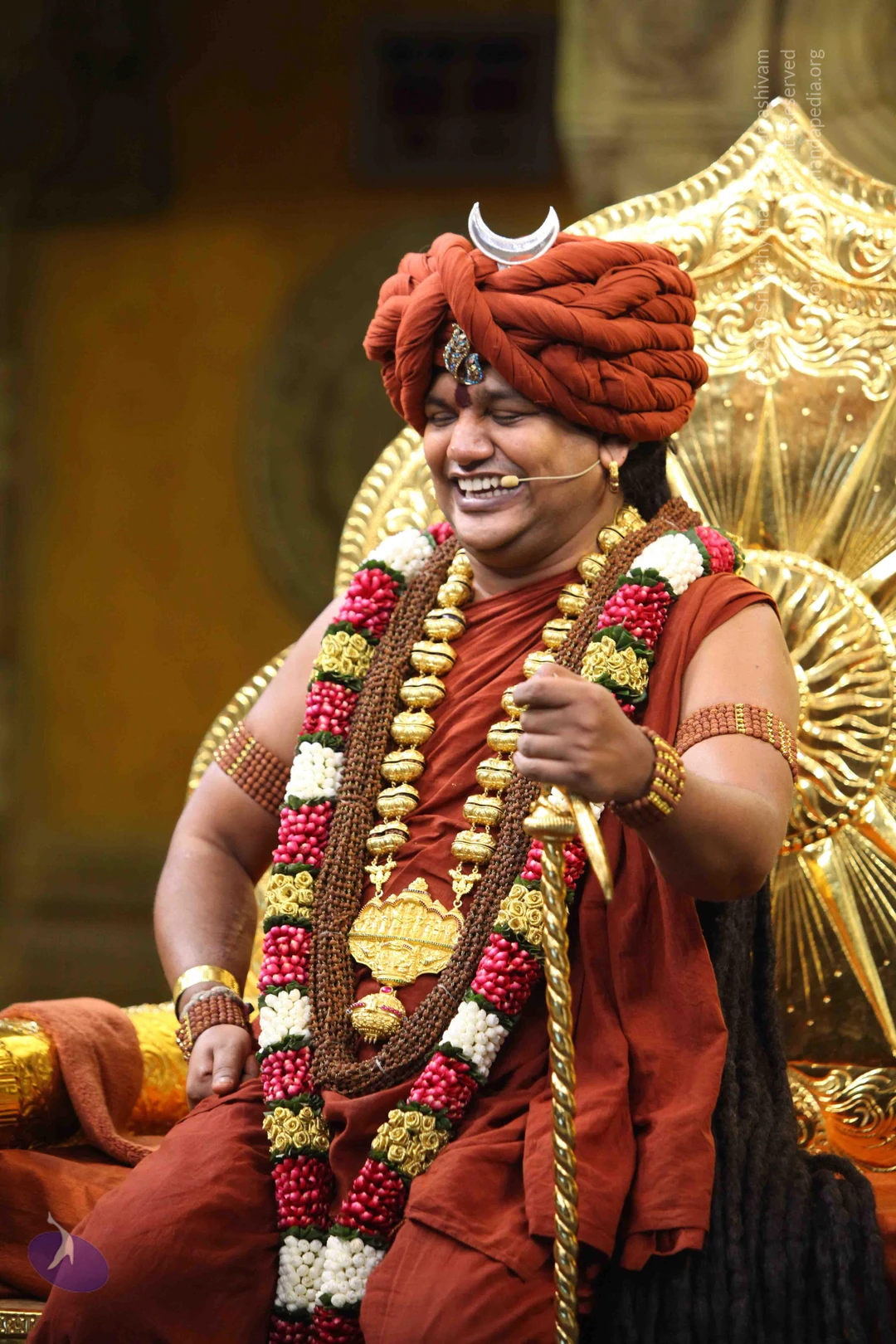
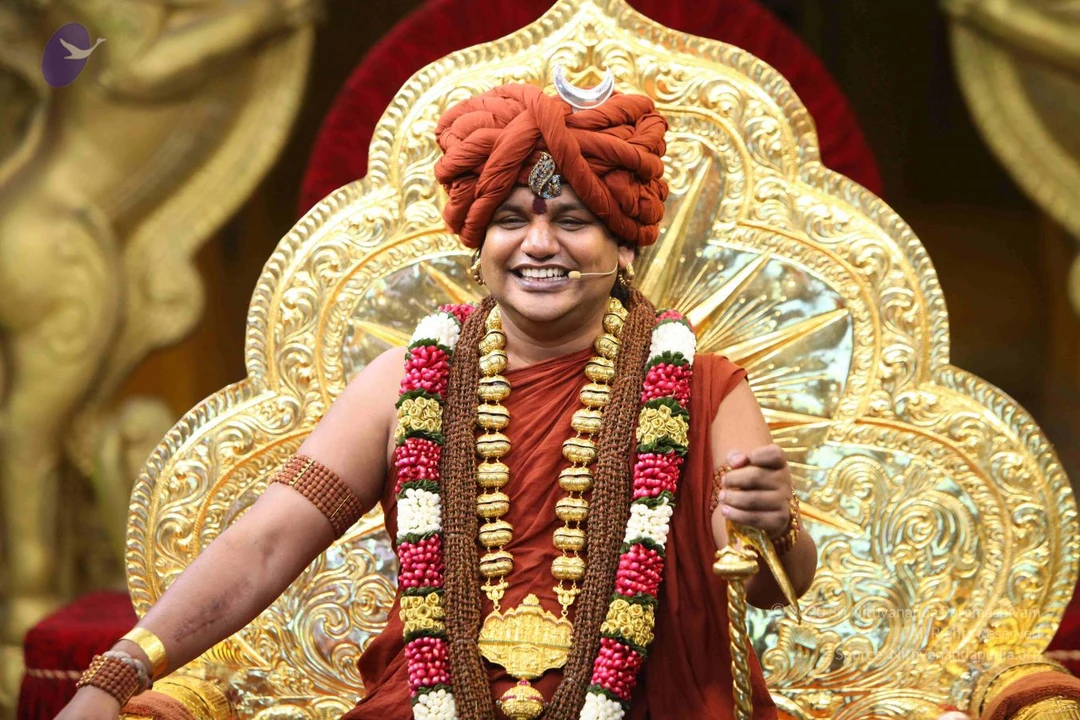
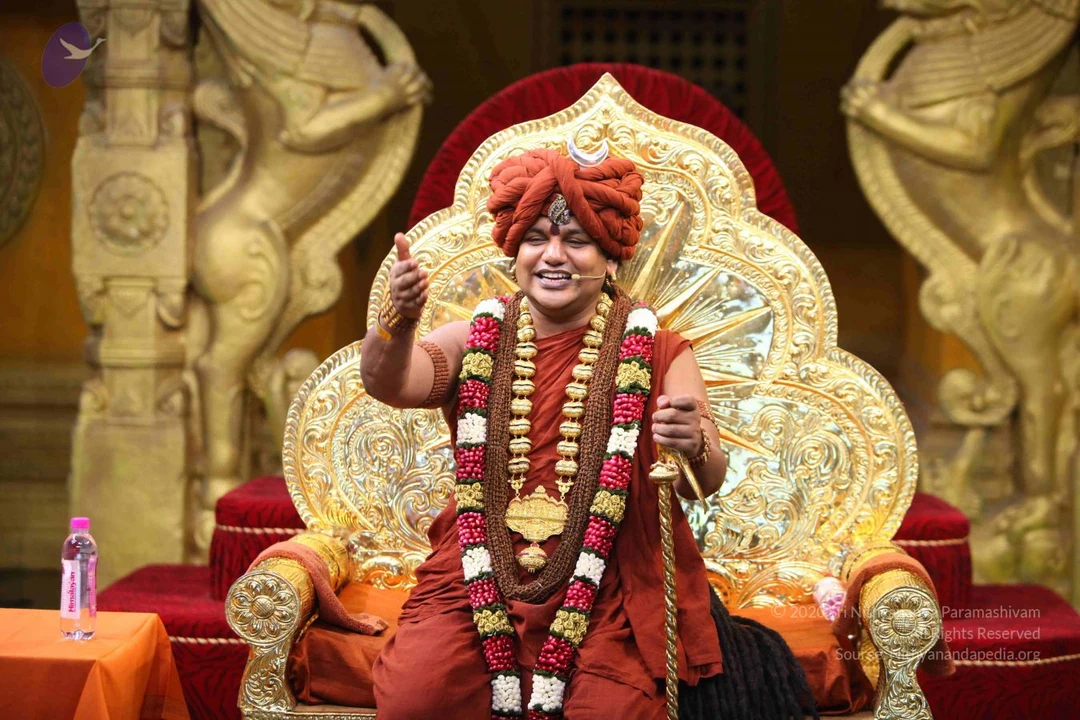
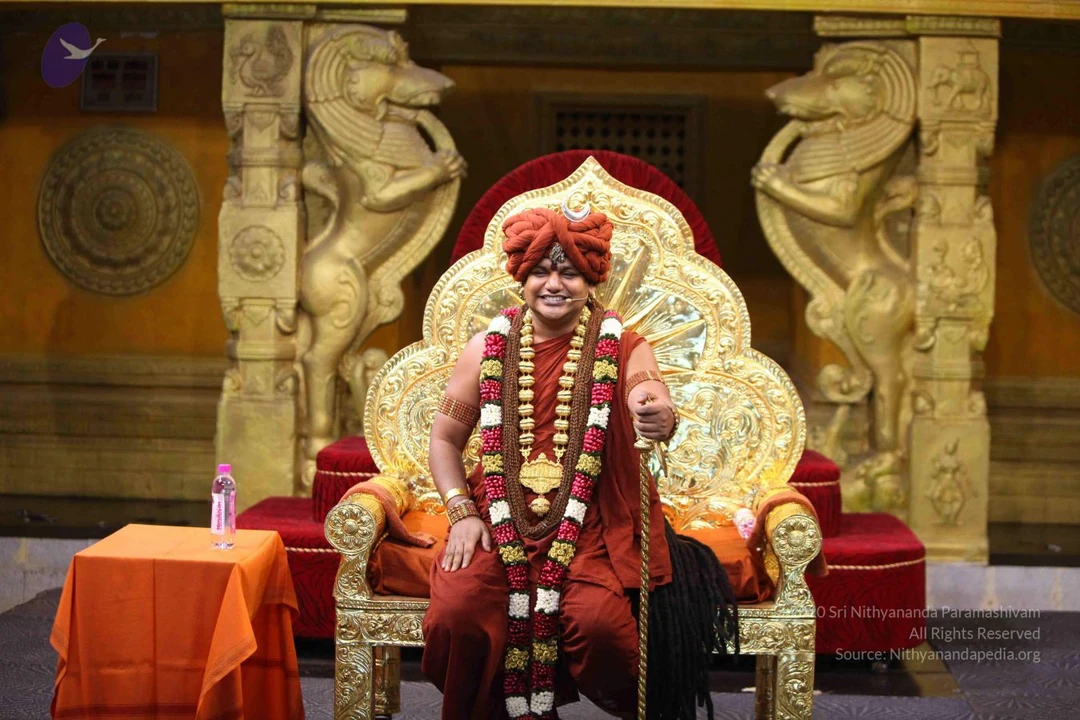
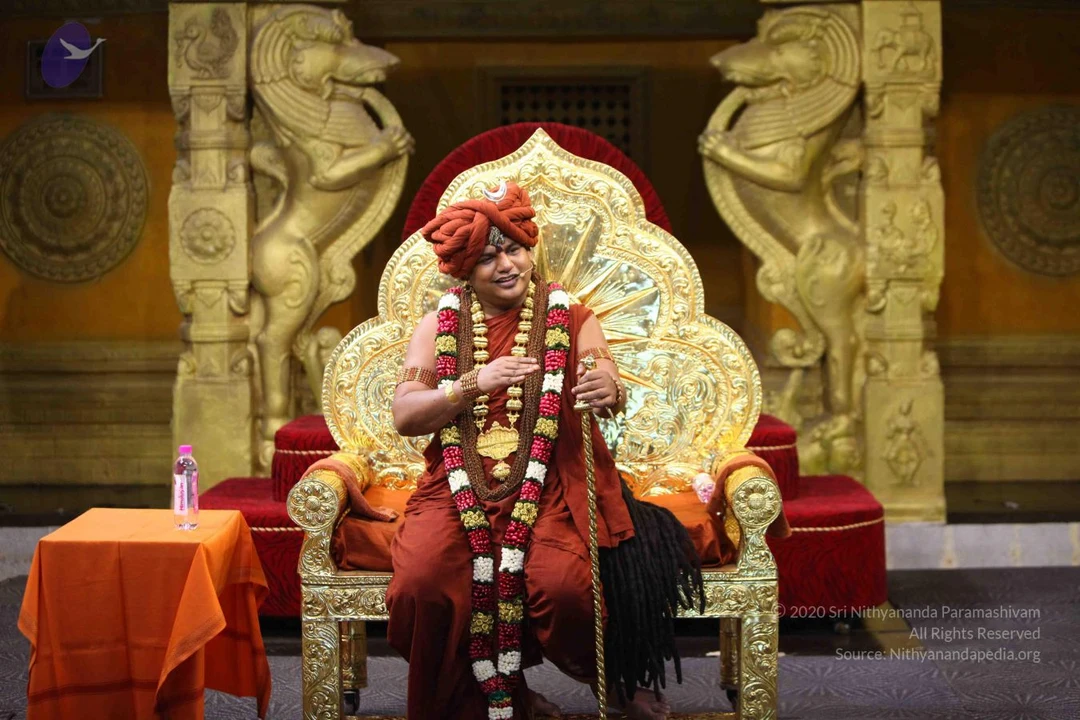
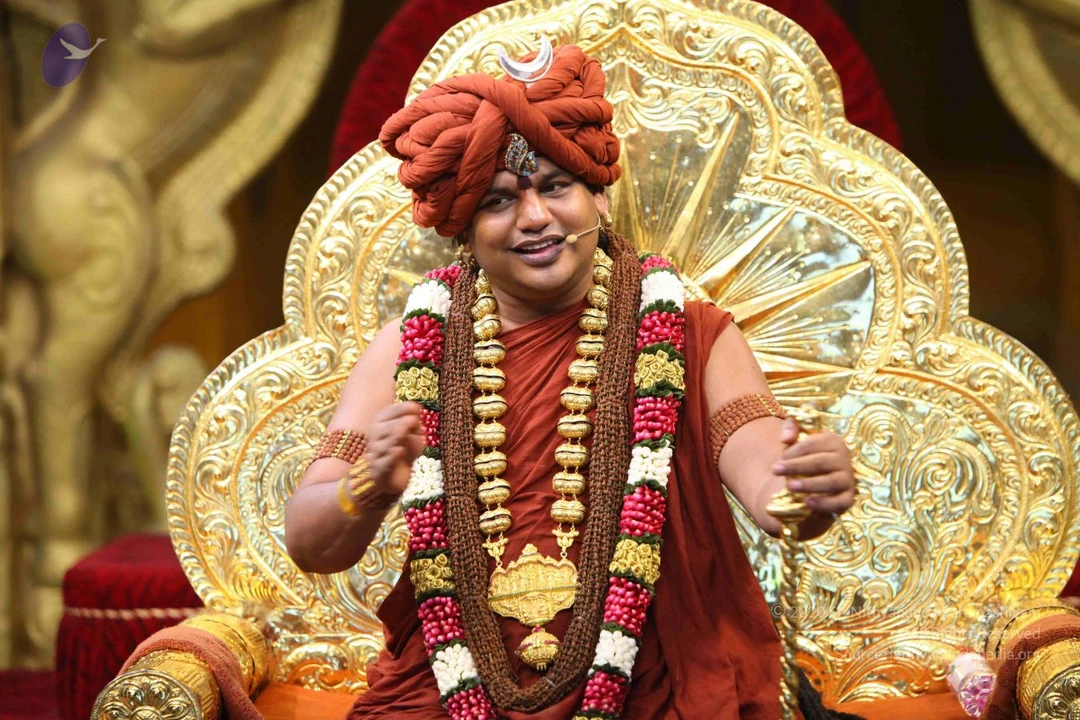
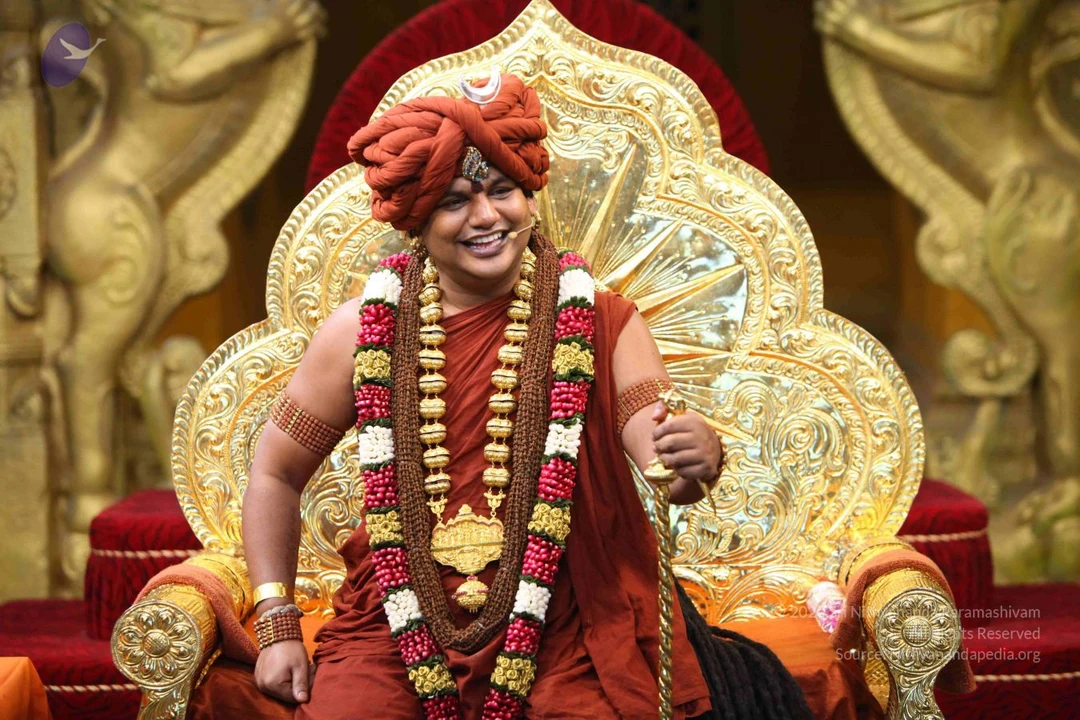
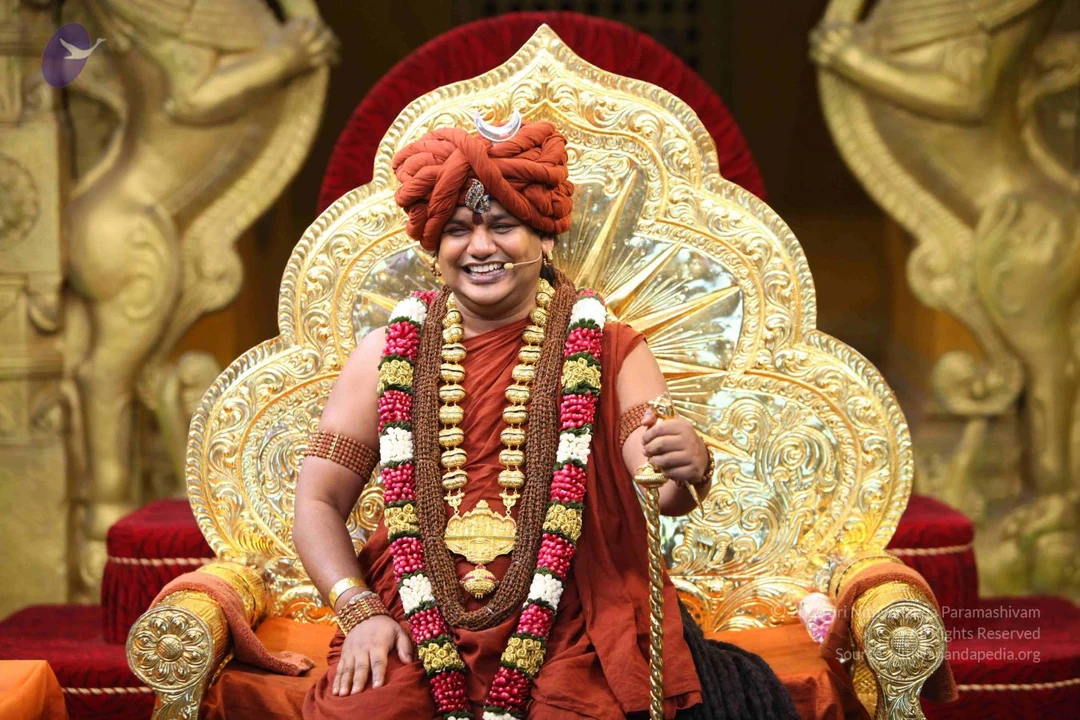
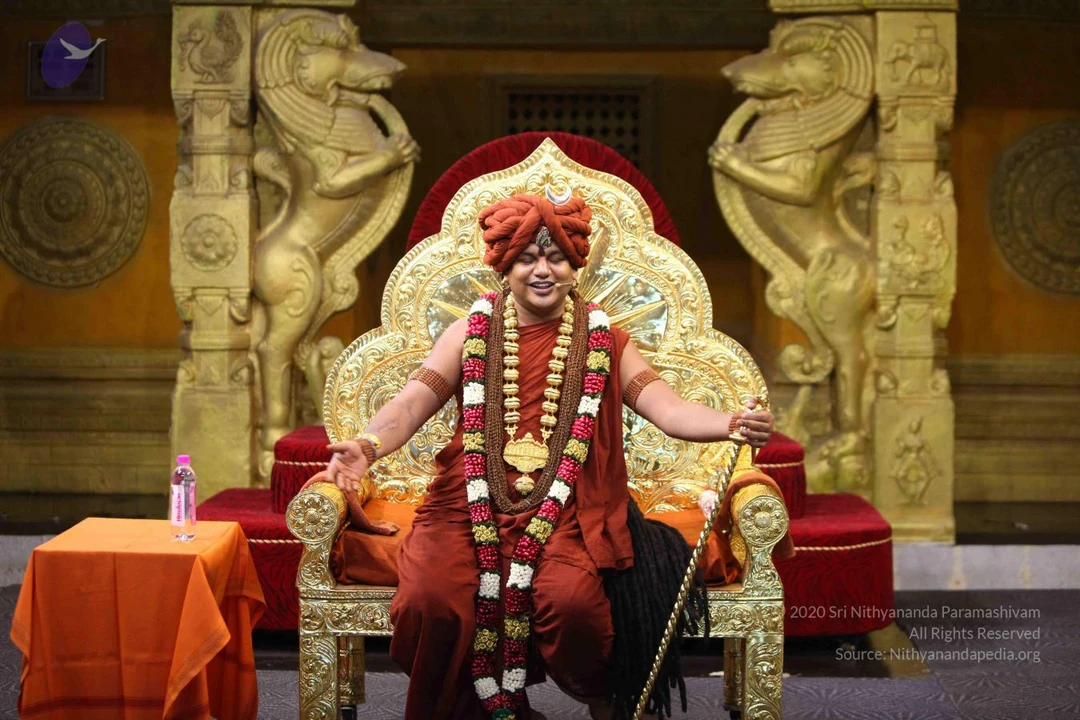
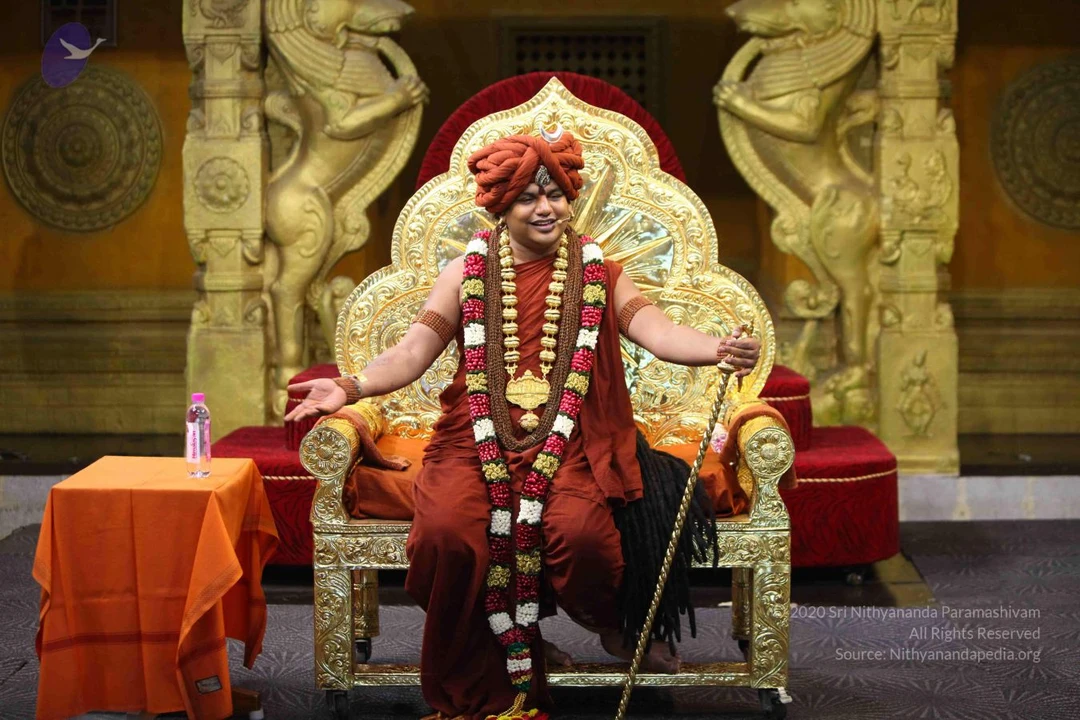
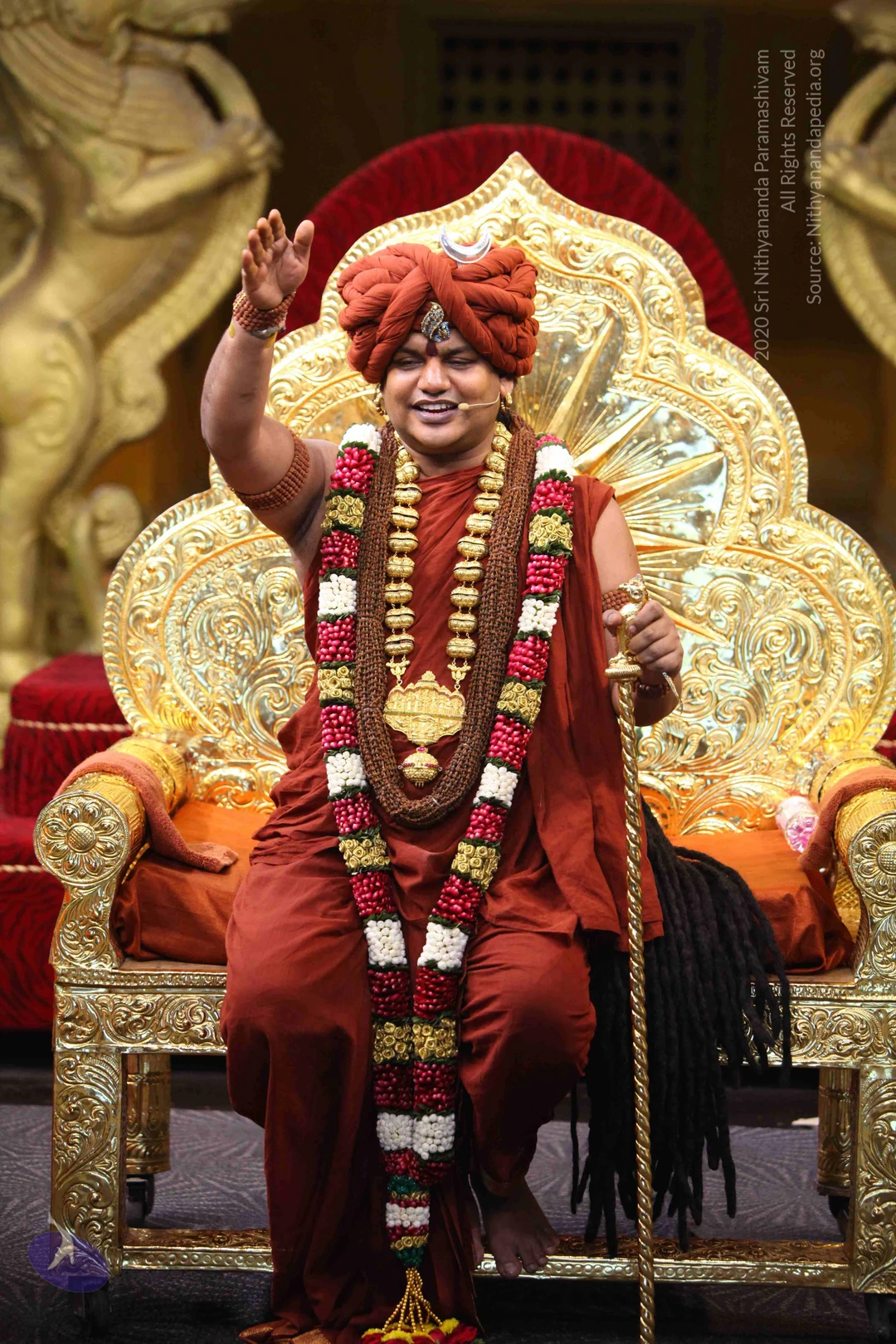
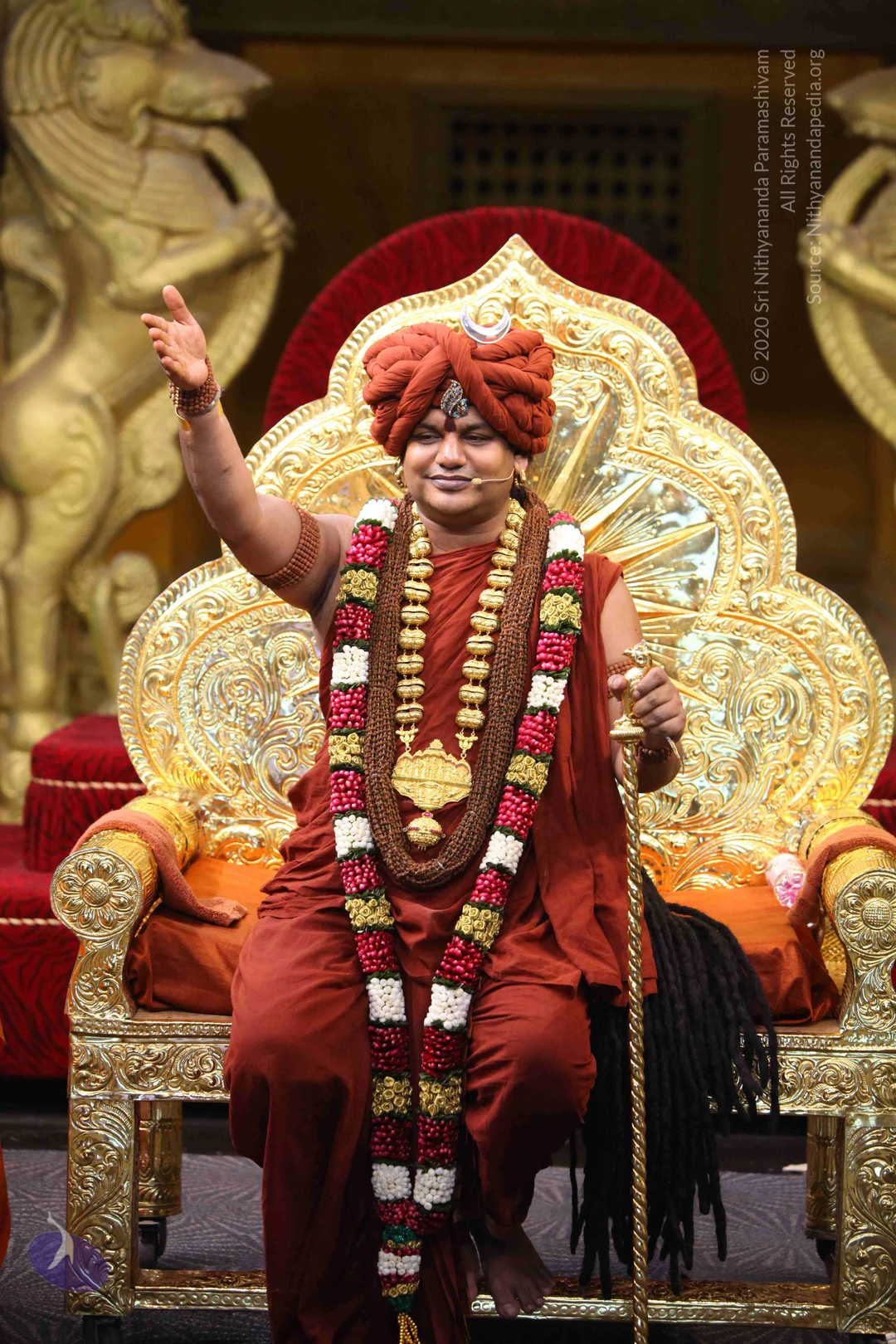
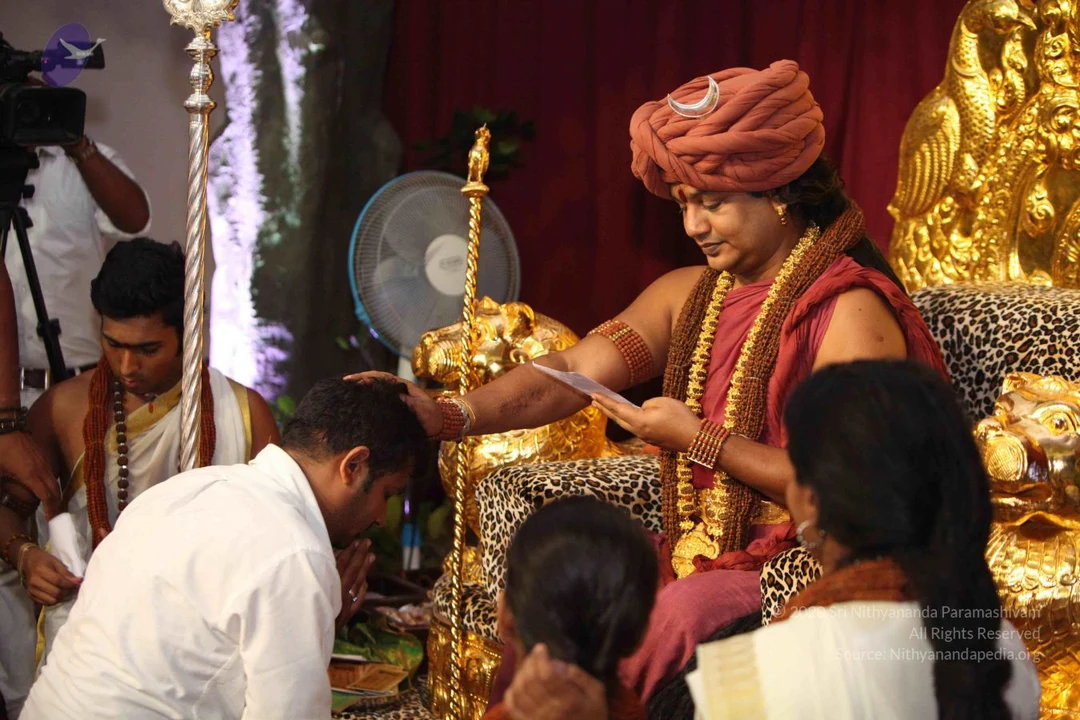
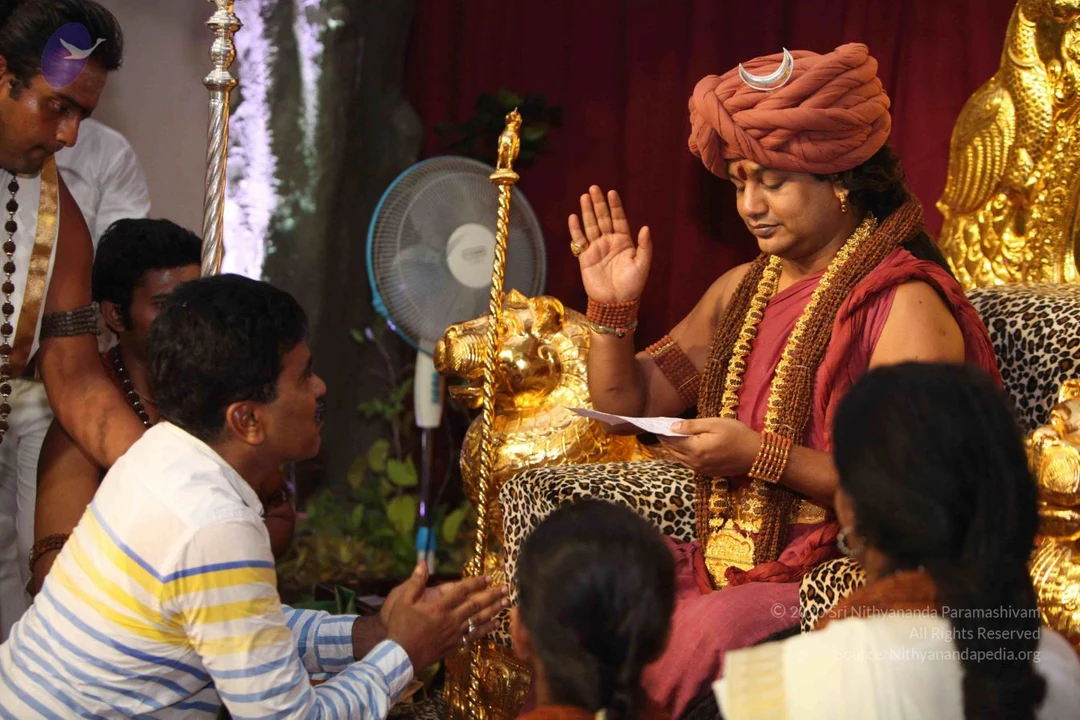
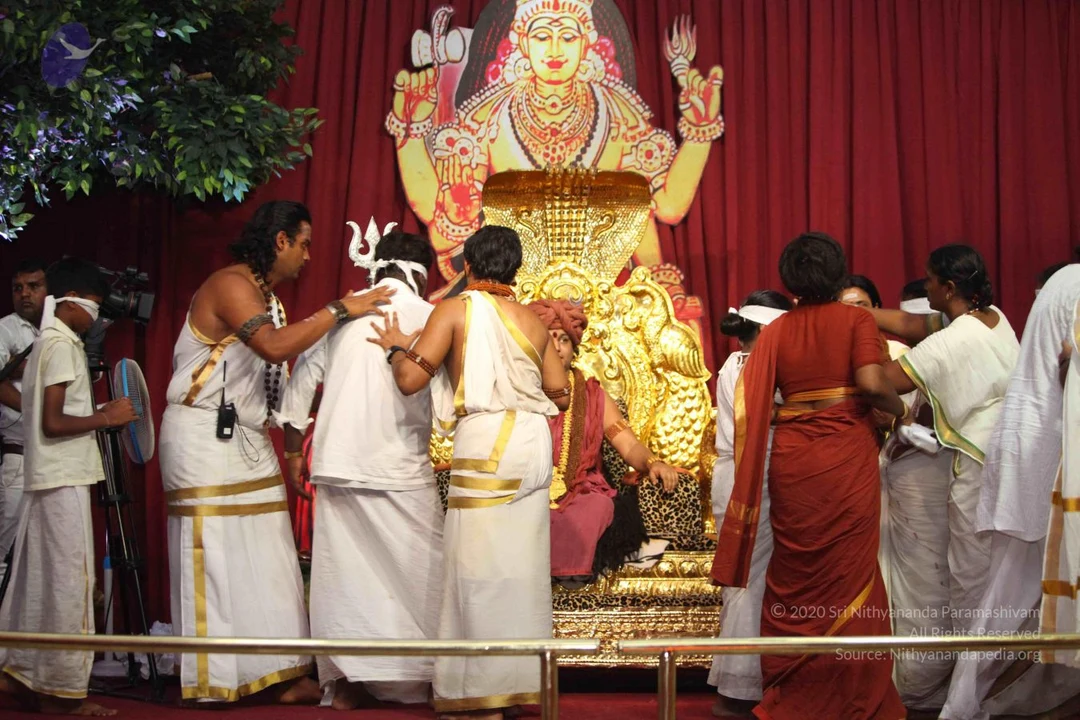
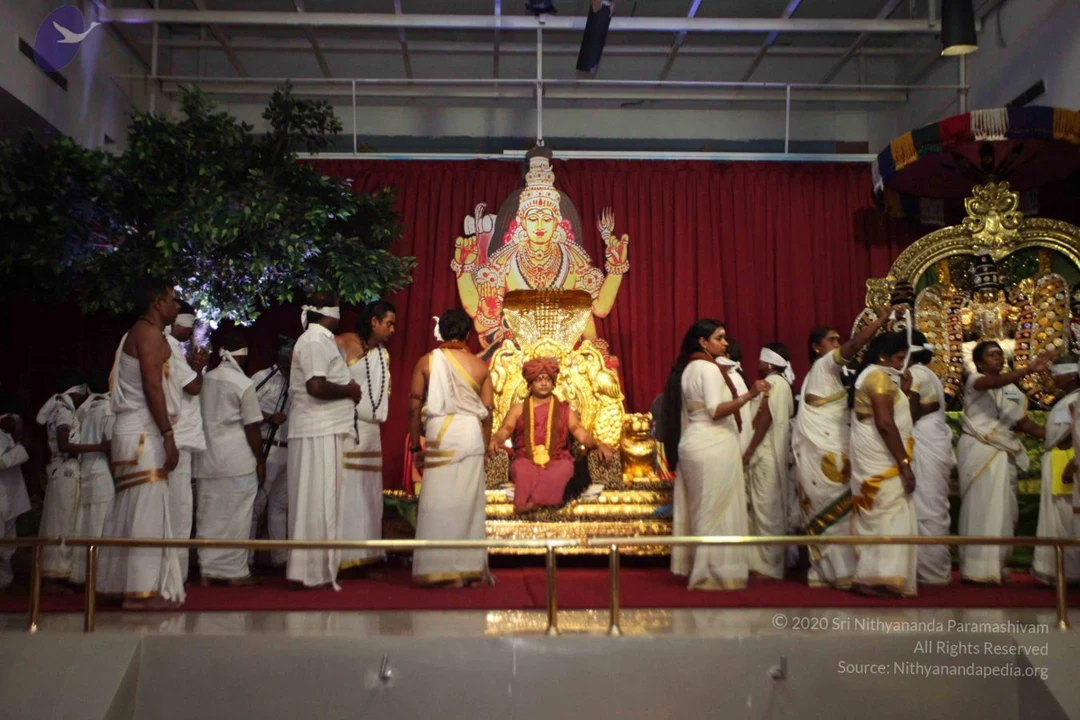
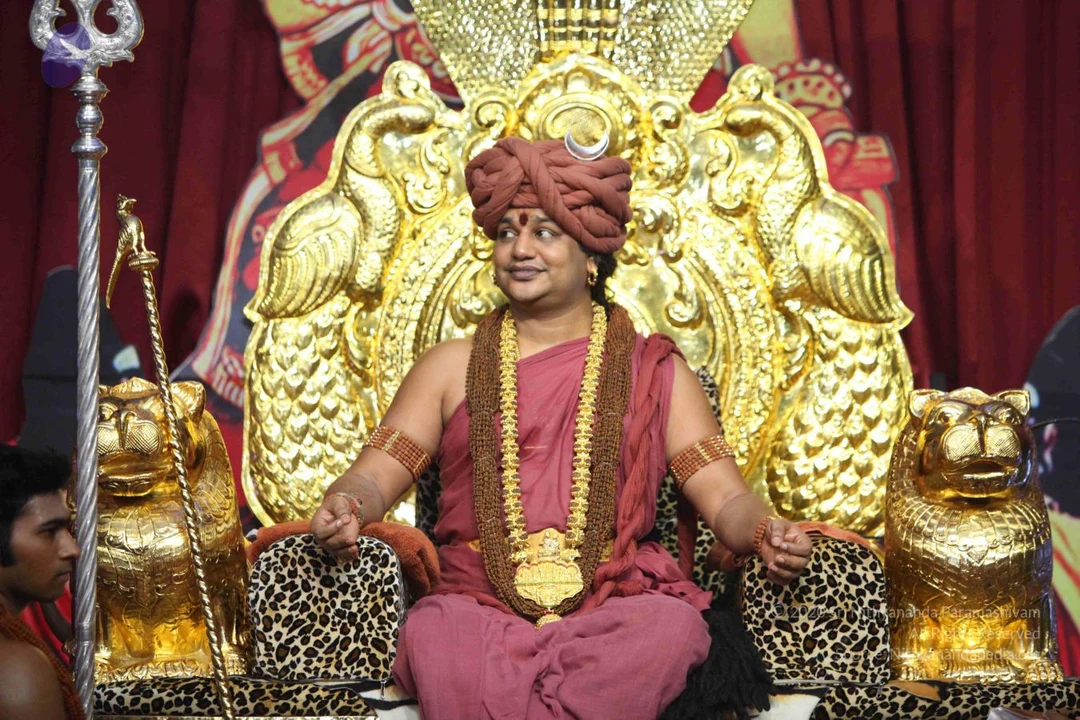
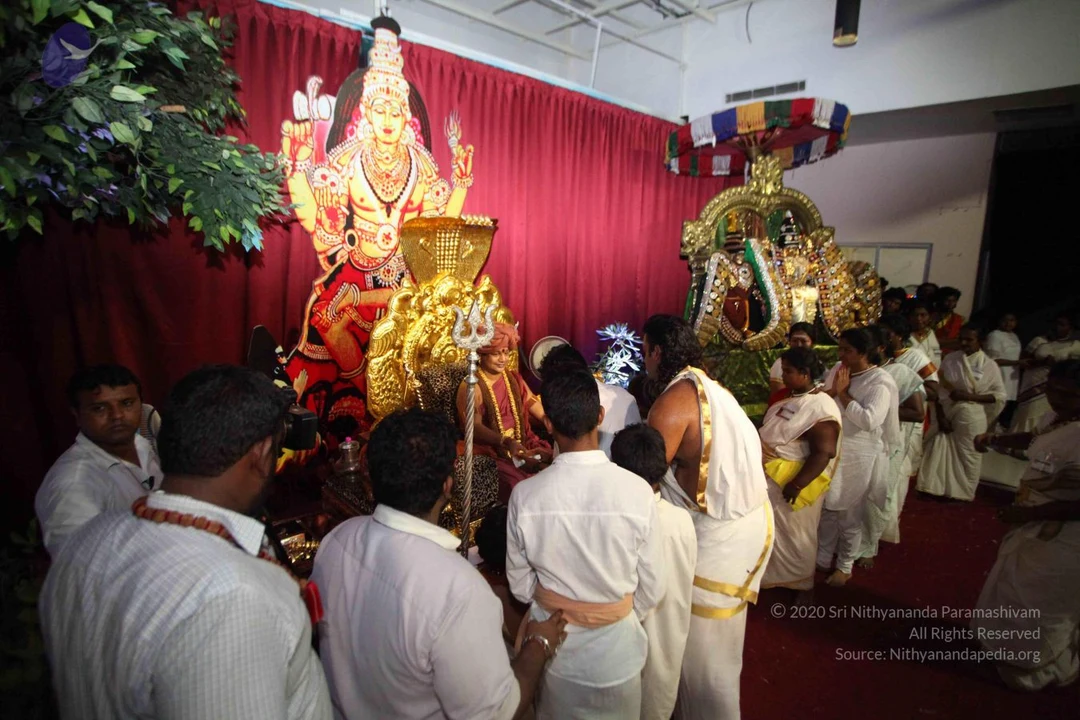
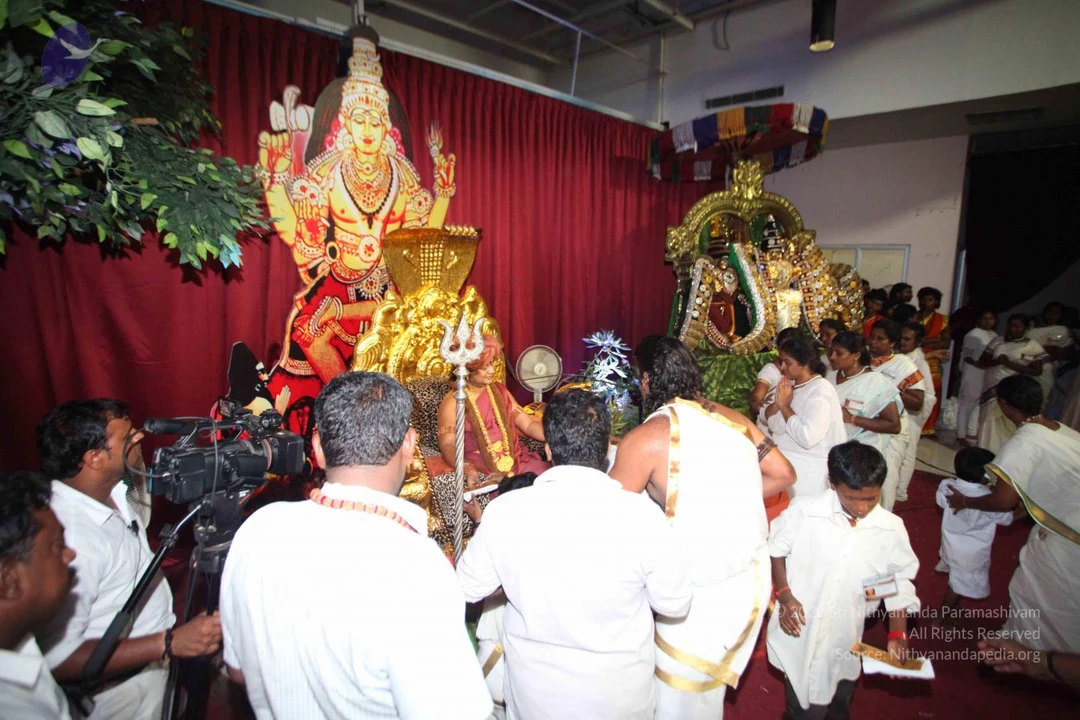
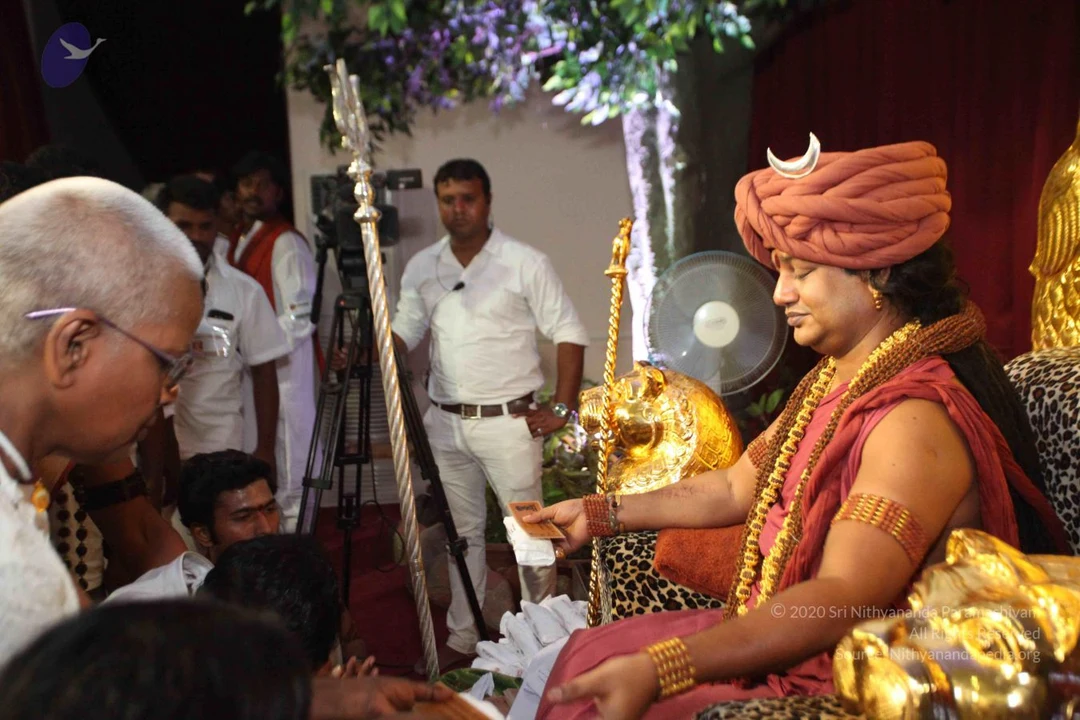
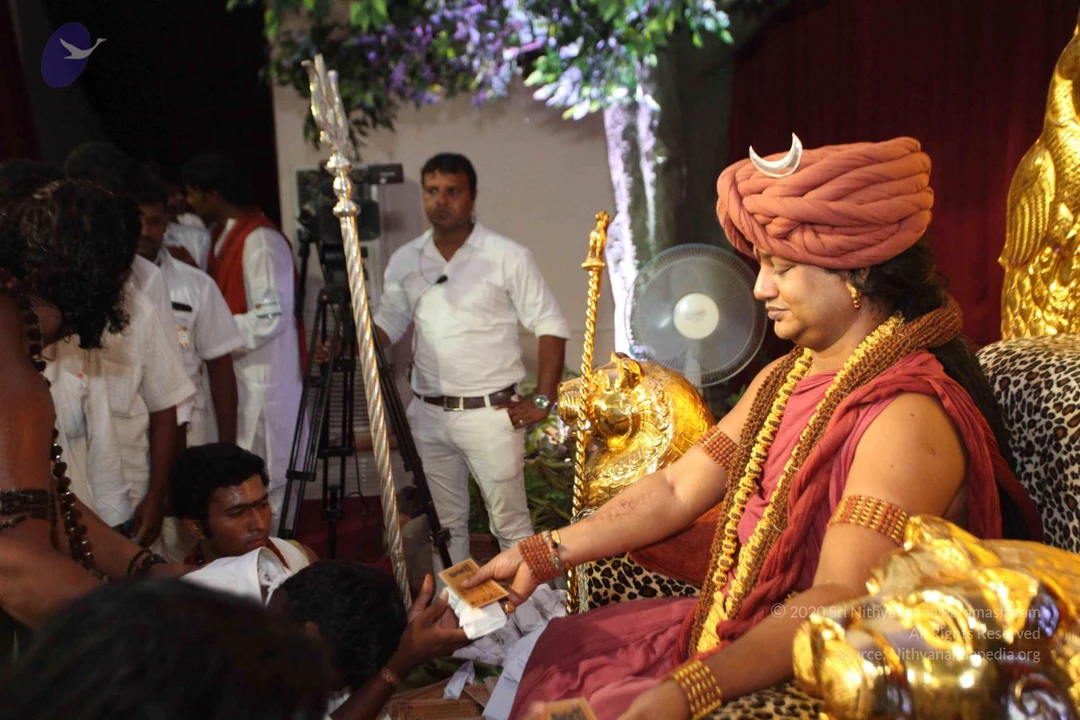
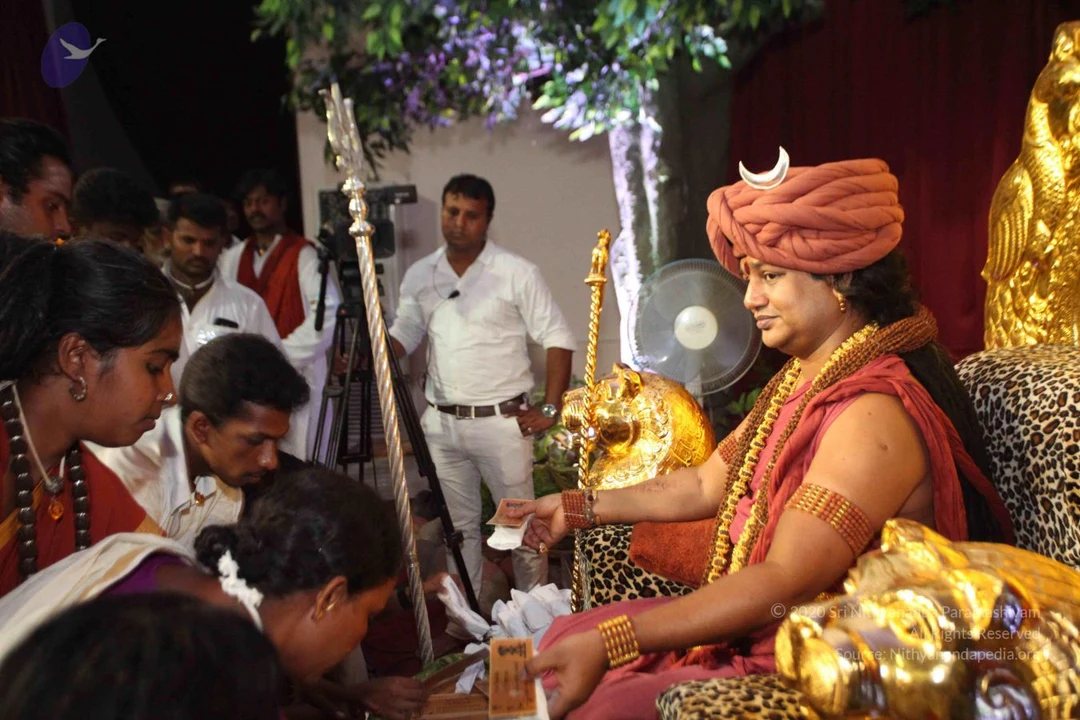
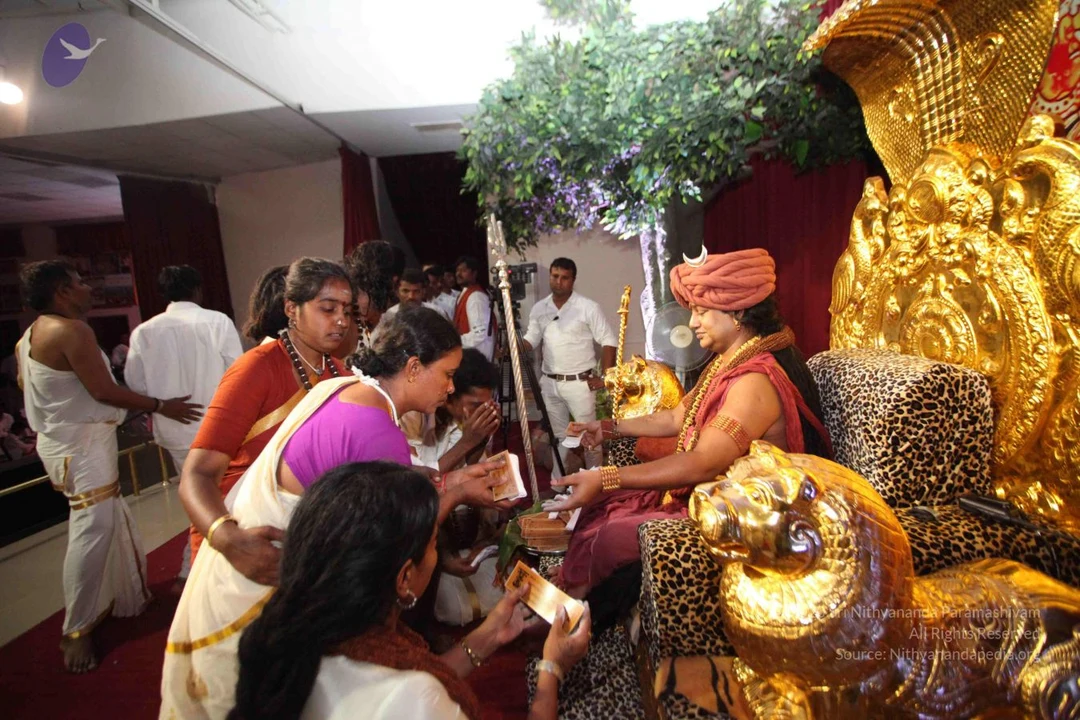
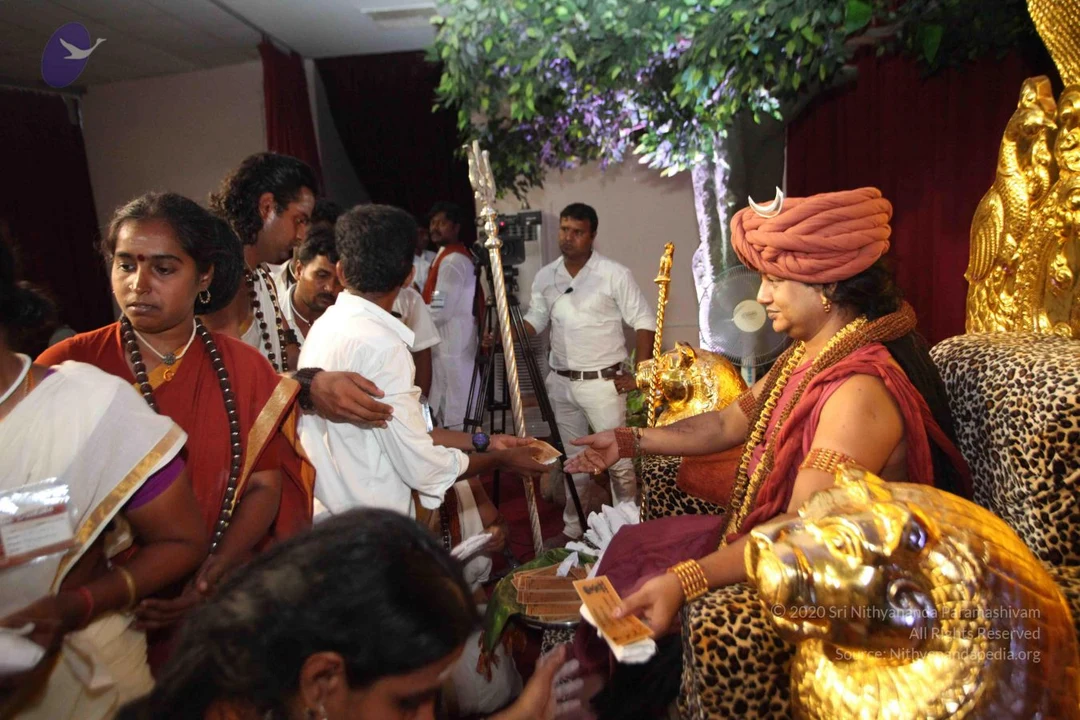
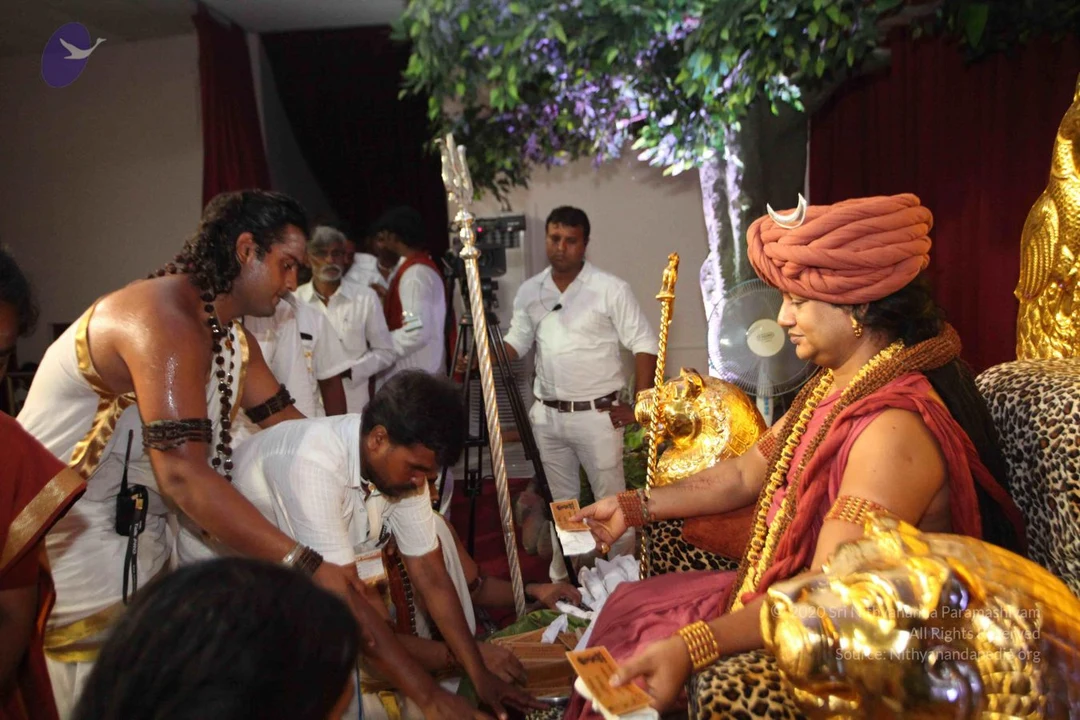
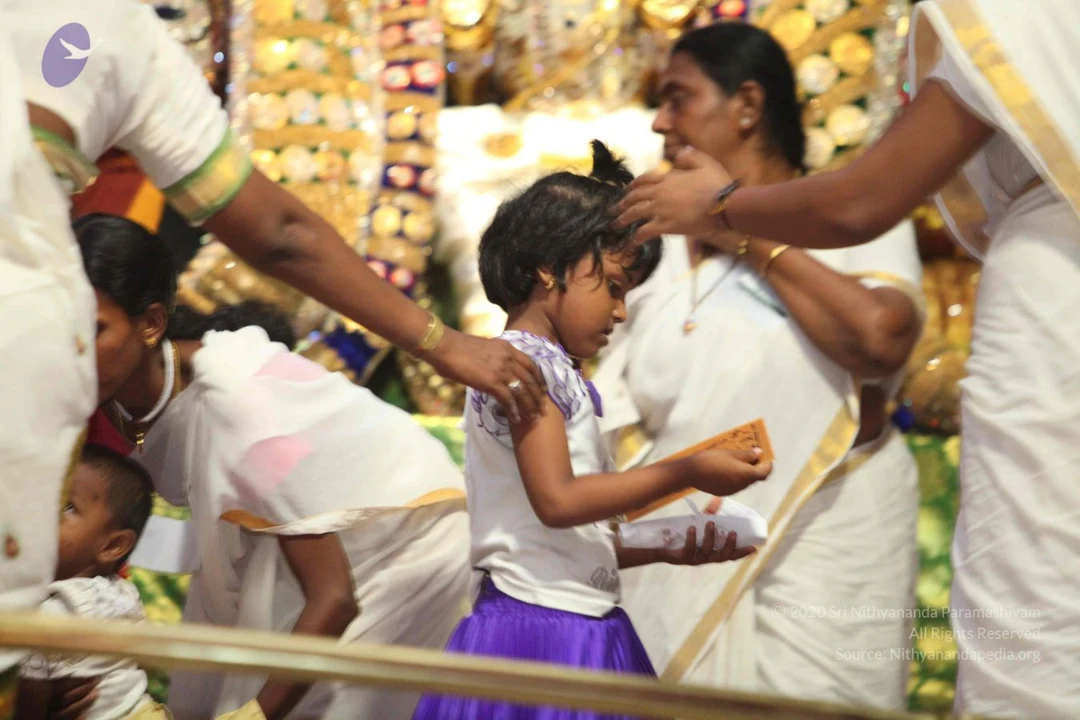
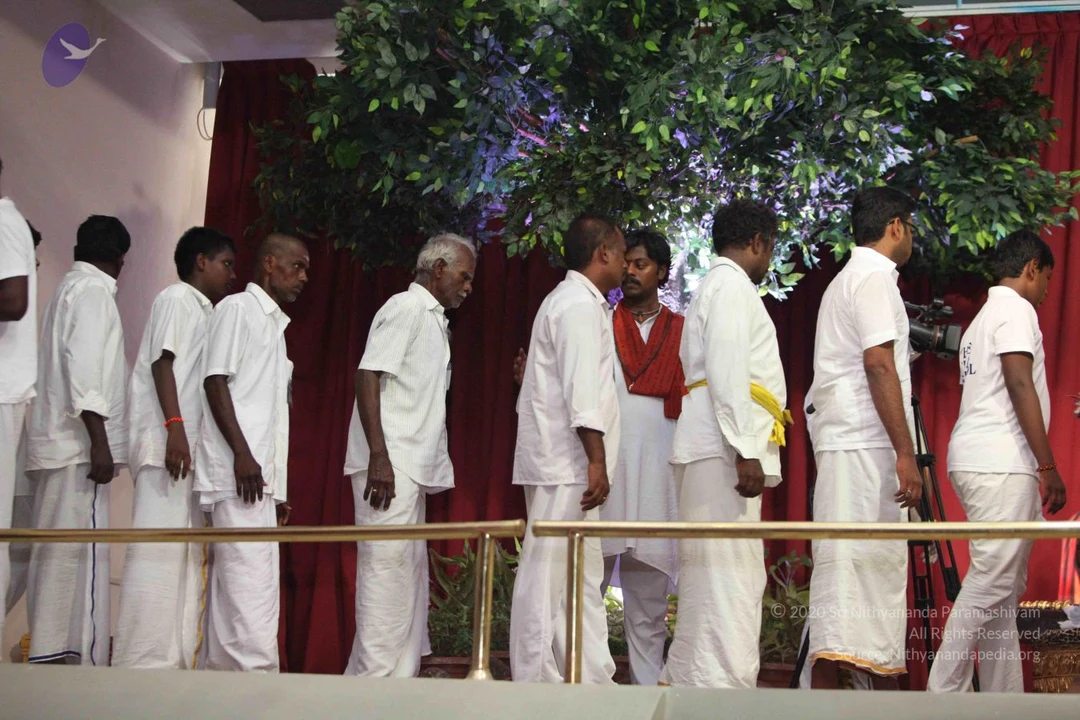
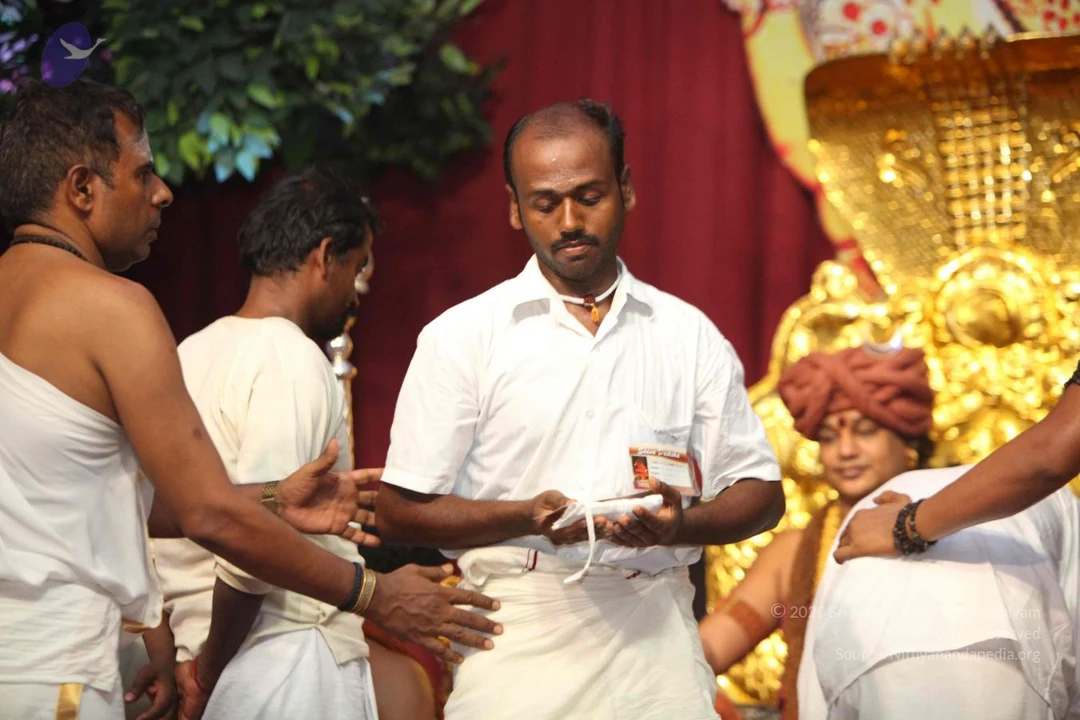
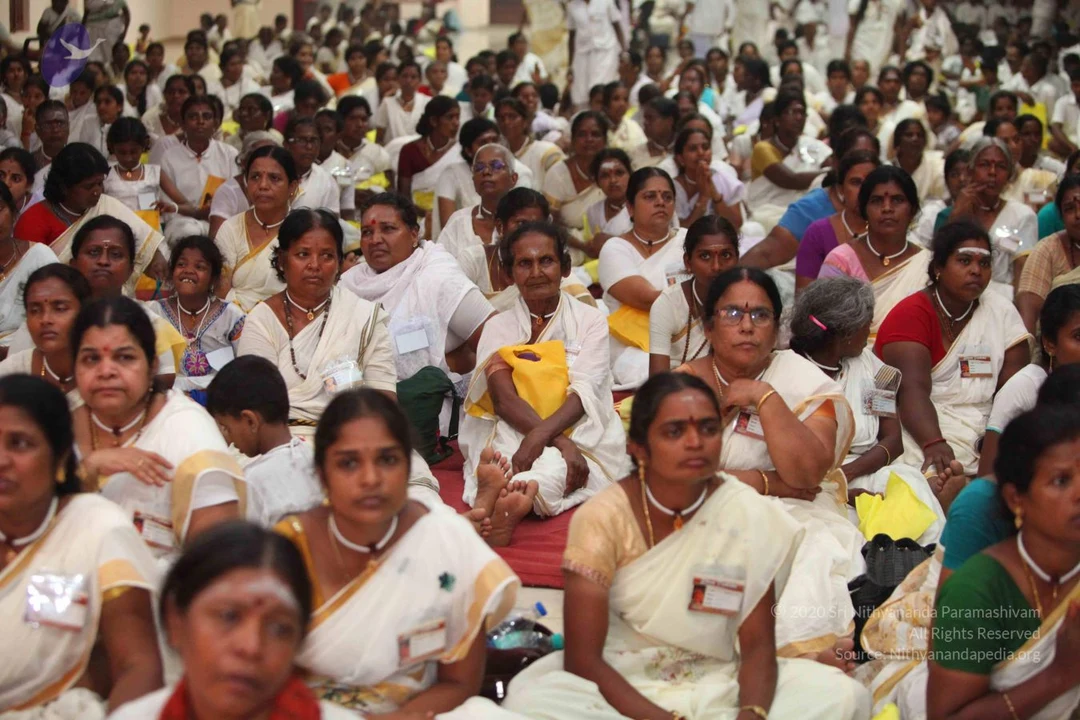
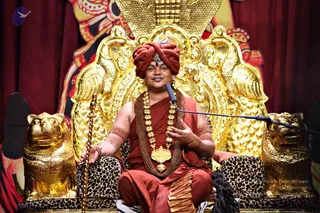
A large seated audience fills a hall, mostly women in white and cream saris and salwar with gold necklaces, some in orange or peach saris and a few in teal-patterned sari. In the front row, several women clap with palms together, one in a cream sari with a light-coloured border holding a clear water bottle, another in a white sari with a gold border at centre and wearing spectacles and a beaded mala, and a woman at right in a blue-green patterned sari with a white bindi.A seated figure on an ornate gilded throne with a red cushioned base, flanked by carved golden lion-like guardian figures. The person wears a rust-orange turban with a small crescent ornament, rust-orange robes, a long multi-strand gold necklace and a brown rudraksha mala, plus a large gold pendant. A multicolour garland of red, white and green flowers hangs from the shoulders, and a wrist mala and gold bangles are visible. Long dark dreadlock-like hair falls behind the throne arm. The person is barefoot on a grey patterned carpet, smiling, with a small headset microphone at the mouth. Swamiji (probable) based on the turban, long hair, saffron-orange robes and rudraksha mala with ceremonial gold necklace; seated on a throne as a person being honoured on stage.Outdoor scene beside a tall copper-coloured ornate pillar or dhvaja-style column, its base decorated with floral relief, wrapped with white and red flower garlands and hung with a palm frond. A man in a dark red-maroon dhoti and matching shawl, wearing a gold pendant necklace, multiple rudraksha-style beaded malas and a flower garland, stands barefoot at the right, one hand resting on the pillar and the other on a rope, smiling. Palm trees and a leafy tree fill the background, a red-and-cream umbrella is partly visible at right, and a saffron banner with a painted figure hangs at the far right edge. Several children in white and a few adults stand at the lower left on a striped cloth. a person: the man is a devotee-style figure whose ceremonial gold and beaded adornments match the in-person candidate cues.

April 10 2016

Original wiki page
Contents

Title

Kundalini Current #5: Seeking is not Alternative Lifestyle, but Native Lifestyle to keep in Altar

Description:

In this Kundalini Current number 5, delivered on 10 April 2016, Paramahamsa Nithyananda starts out to address some common misunderstandings people carry after internalising the truths shared in the Kundalini Current sessions. In the Vakyartha Sadhas, the discussing, contemplating and internalising of the Kundalini Thought Currents which has happened till now, Paramahamsa Nithyananda sees that people tend to address seeking as an alternative lifestyle. He explains: when you compare different angles of a Kundalini Current to see what is the ultimate approach, then that is good. But if you compare the lifestyle of seeking to your life before seeking, then you miss. Seeking is not an alternative lifestyle. It is with seeking only that life starts. Only when seeking happens in you, life happens. Not an alternative lifestyle, but seeking is the native lifestyle which we should keep in altar! Before seeking, we carry a pseudo-silence. With seeking, this pseudo-silence gets stirred up and churning begins, you have to realign yourself. This doesn't mean before seeking, life was more peaceful. It was just more piece fulls - full of pieces. Paramahamsa Nithyananda says: don't approach seeking with an attitude of comparison - with seeking only your life starts. Watch, Share and Subscribe to our channel to be notified of the next upload click http://www.youtube.com/subscription_center?add_user=lifeblissfoundation to subscribe. visit: http://www.nithyananda.org http://www.nithyananda.tv http://www.innerawakening.org https://www.youtube.com/user/LifeBlissFoundation https://twitter.com/SriNithyananda https://www.facebook.com/ParamahamsaNithyananda https://plus.google.com/104086565286265959836/posts

Link to Video:

VideoAudio

Transcript:

(0:11)

Only when the Seeking enters into you, Life starts happening. I am seeing many people discuss, express in such a way, they think the lifestyle of Seeking is an alternative lifestyle. No! No! It is not alternative lifestyle, it is native lifestyle. There is no ‘alter’ for it, there is only ‘altar’ for It. It is a native lifestyle to be worshipped in the altar. There is no alternative actually. This is one of the major thought current with which many of the Vaakyartha Sadas participants are stuck. I went through many of the Vaakyartha Sadas. Today I wanted to clear some of these important points where you are stuck. Please understand, if you say – “Should I practice this Kundalini thought current in this way or should I practice it in this way? Is this ultimate or is that ultimate?” Its great. Vaakyartha Sadas is going well. But if you think – “Is my old lifestyle better or this is better?” You are gone.

Please understand, only when the Seeking enters the Life itself starts in you. Till then, whatever you may have, may be ‘style’ but not LIFE. Understand. May be ‘style’ but not LIFE. Don’t call that as lifestyle.

Seeking integrates you. Seeking evolves you. Seeking awakens you. Seeking aligns who you are to yourself.

I tell you, till the Seeking starts, even you will not experience what you call as YOU. I know the stupid human beings who think they are rich by having only money. Understand. Poor are those who have only money. Uneducated are those who are educated only in schools.

(3.34 mins)

Seeking sets the right standard, right expectation about life. All these words have no meaning till Seeking enters into you, till you start questioning your very existence, till you start analyzing genesis of your identity. Till you start looking. Please understand, I am not saying – till you find answers. No. Because Seeking can never answer, it can only find experience. A Seeking, please understand, Seeker never finds answers, he finds only experience. Seeking actually awakens the seeker to his original state. Seeker never finds answer, he only finds his nature – Sadashivatva. Till seeking penetrates your thinking system, till seeking becomes an important component of your cognition, Life has not started in you. Life starts when Seeking becomes your cognition. When the Seeking becomes your cognition, everything, everything, everything becomes sweet – thinking, feeling, working, living, loving, caring, even fighting, everything becomes juicy; because you have a purpose, you have a reason, you are NEEDED. Look into this important pattern in which all of you are stuck. All of you are constantly comparing the lifestyle and thought current which develops after seeking, its plus and minus, and the lifestyle before the seeking and its plus and minus. If you are doing that, you are stupid. Then you are comparing like an adult’s life’s plus and minus and kid’s life’s plus and minus. Yes, surely kid’s life has some plus which adult’s life does not have, but that does not mean you can remain as kid forever, that is a disease. That is sickness. That is immaturity. Being childlike is different, being ‘childish’ is different. You are trying to be ‘childish’ and you think your ‘childishness’ should be ‘celebrated’ as cute. No. No!

(7.25 mins)

Ignorance is not celebrated in the Life. Childishness cannot be celebrated as cute. A responsible childishness is ‘childlikeness’. You are comparing of non-seeking lifestyle of plus-minus and seeking lifestyle’s plus and minus. No. May look cute but not cute. Your expectation is your ignorance, childishness should be celebrated as cute. No! Life celebrates only ‘childlikeness’ which comes out of complete responsibility. Not childishness which comes out of ignorance. So understand the comparison. Sometimes when the Seeking has not started in you, you may have a kind of a pseudo silence. When the Seeking has started in you, the whole churning happens, when you need to realign yourself to your authenticity. You think, “Oh God! Life before seemed to be peaceful.” ‘Piece-fuls’ not peaceful, PEACE. PIECEFULS its P-I-E-C-E FULLS. Piece-fuls is different; Peaceful is different. When there are to many pieces filles, fulls.

The idea you have, the cognition you have, don’t compare that with the cognitions you have after the Seeking is awakened in you. Please understand, don’t approach Seeking with the attitude of comparison. It is stupidity. Don’t approach Sadashiva with the attitude of comparison. “Before SadaShiva in my life! After SadaShiva in my life! After SadaShiva in my life, will I clear all my debts? Will I clear all my this? Will I clear all my that?” Arre, you will clear you itself. Your debt will become irrelevant. It’s very unfortunate. No. Look into your life. Do not engage, entertain with the thought currents of comparing life before seeking, life after seeking because with Seeking only Life itself starts in you.

Truth of the Life, sacred secret of the Life, the satya of SadaShiva, the satya of existence is SEEKING. You can have this as today’s thought current. Me clarifying your doubts and questions, the points where you are stuck, that is the best kundalini current you can have, what else?

Seeking is LIFE. With Seeking life enters in you. Seeking is not alternative lifestyle; it is native lifestyle need to be kept in altar.

(13:18)

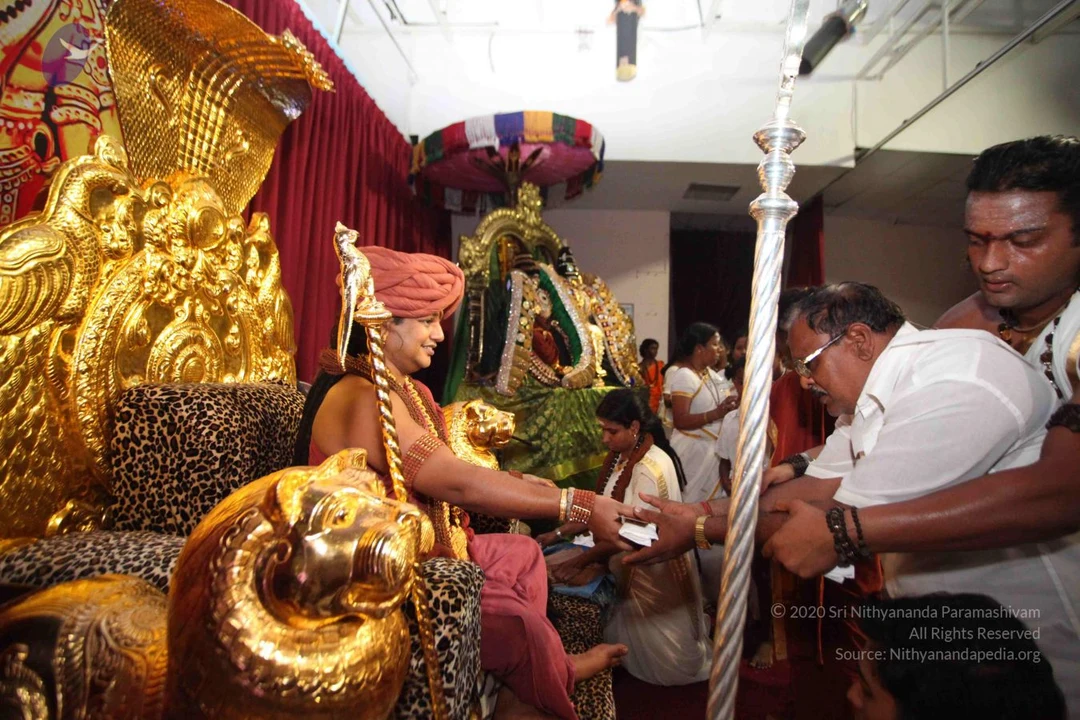
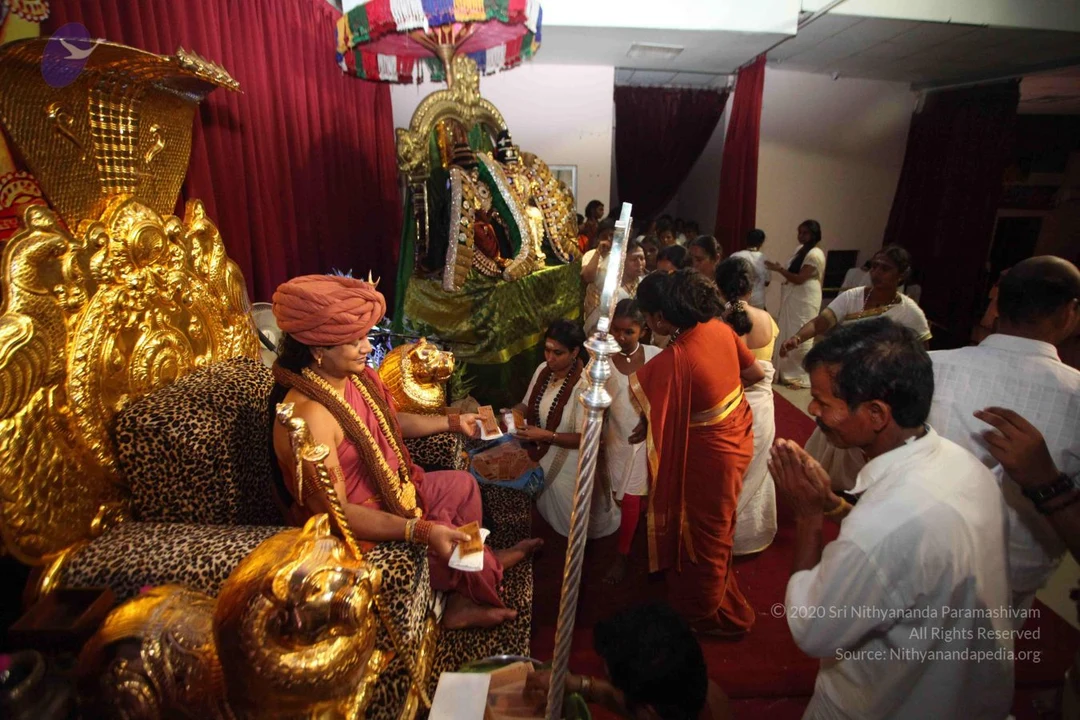
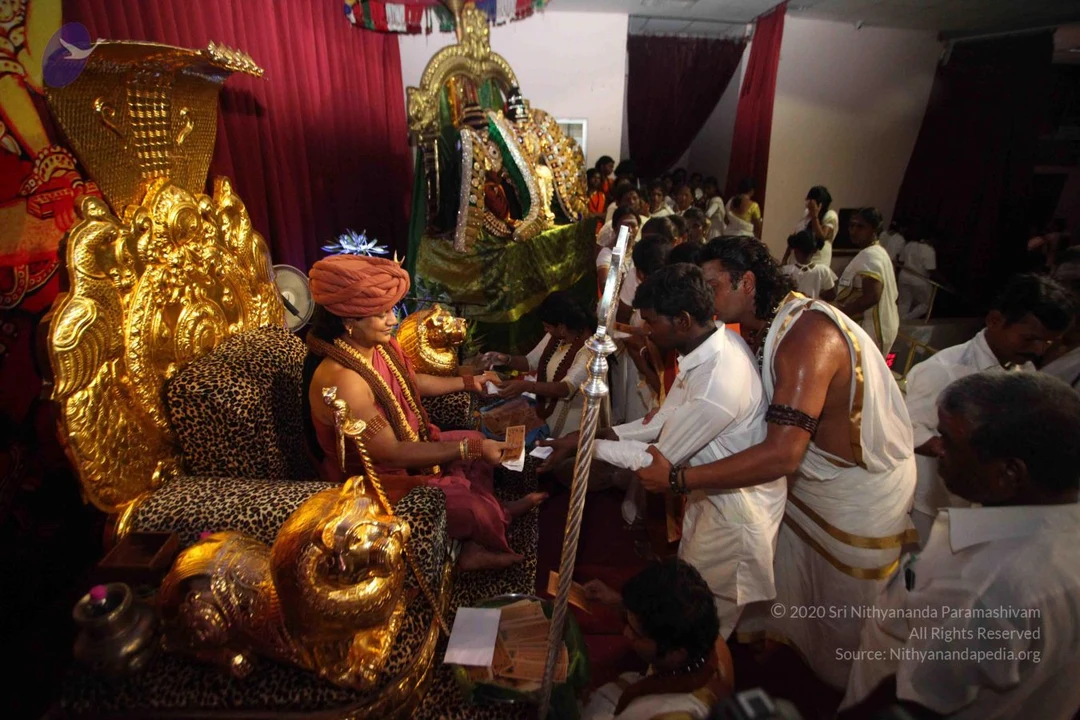
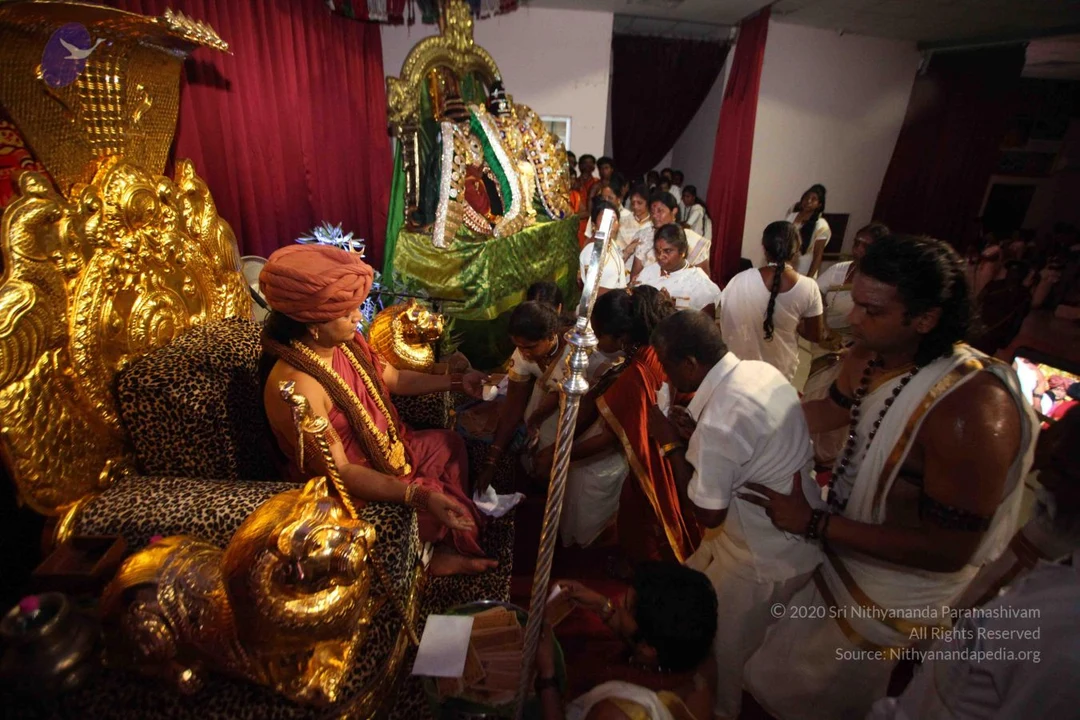
Photos From The Day:

Live Shuddhadvaita Process
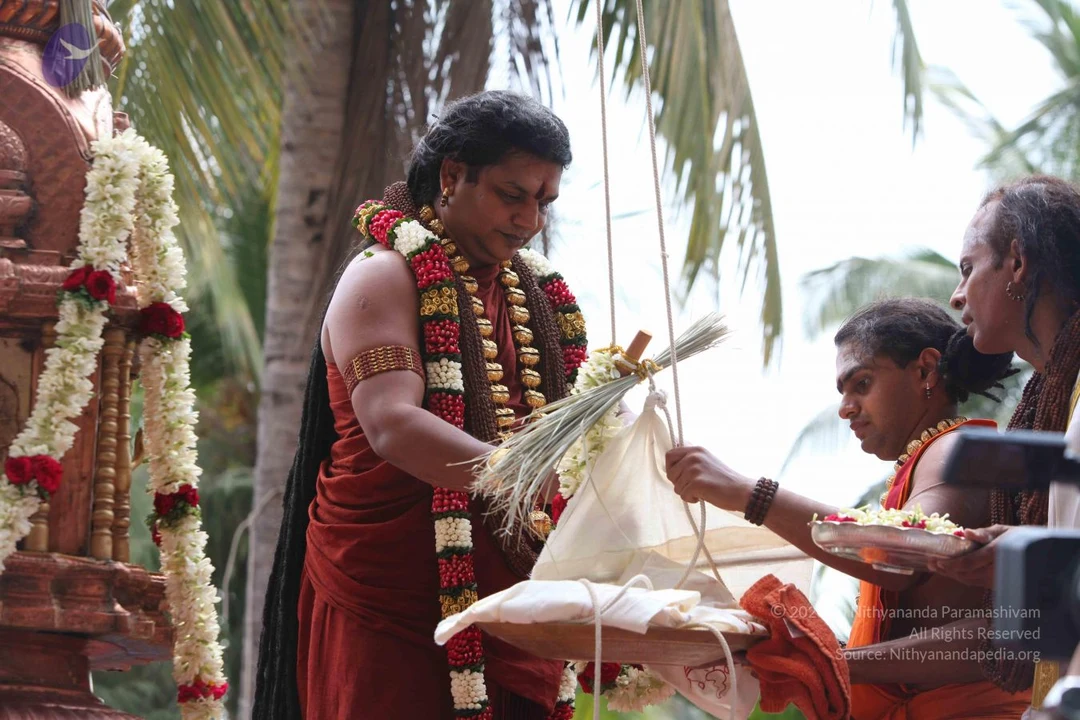
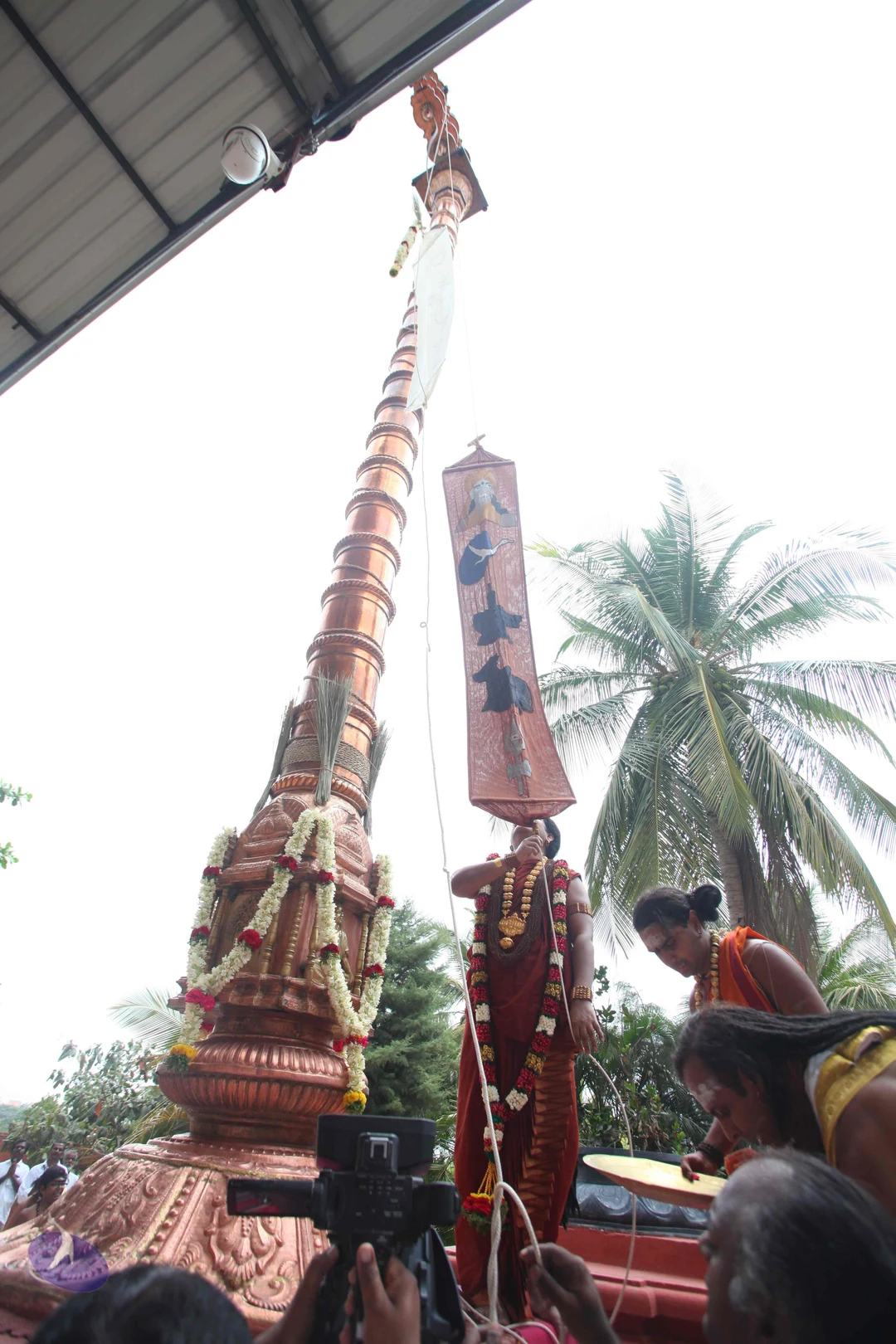
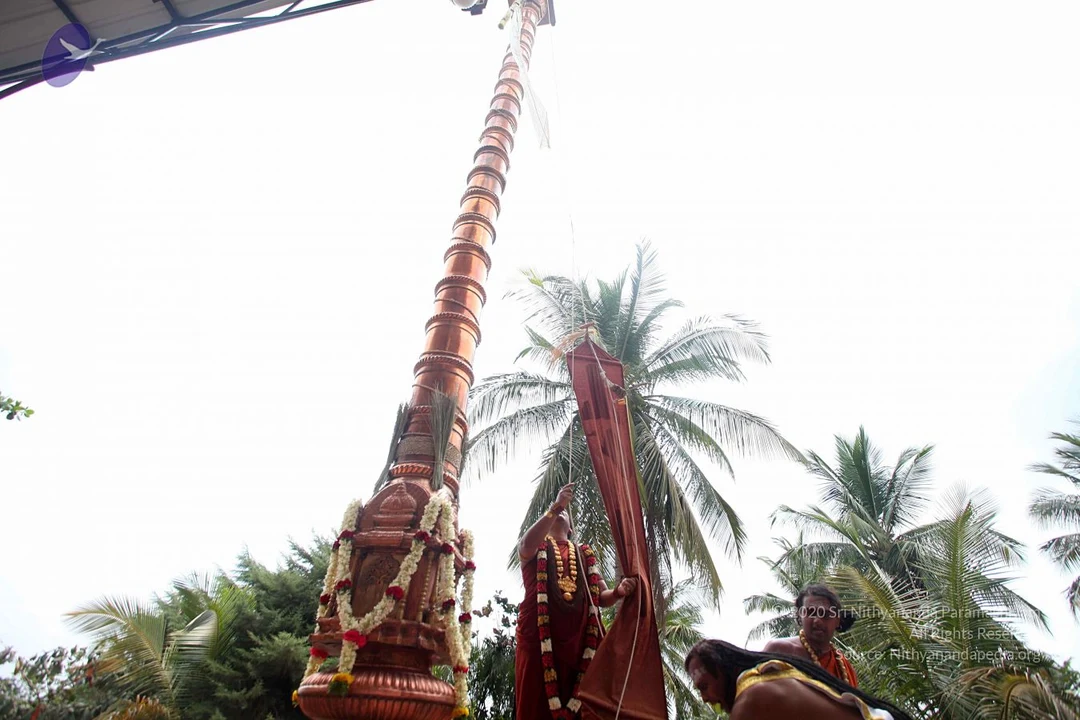
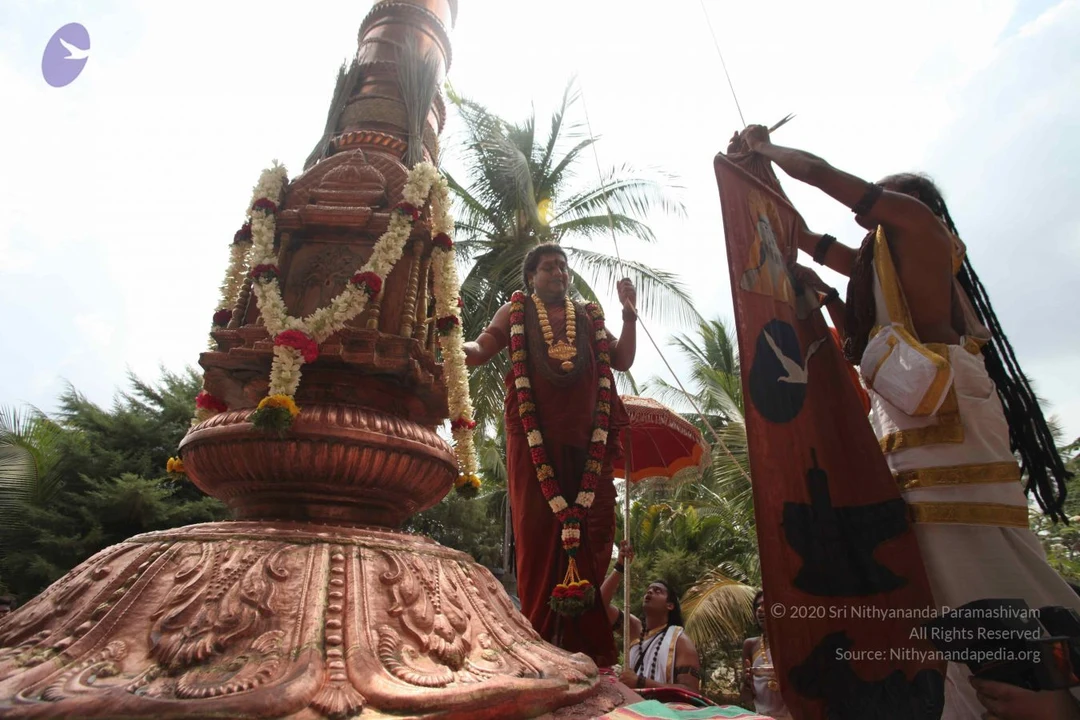
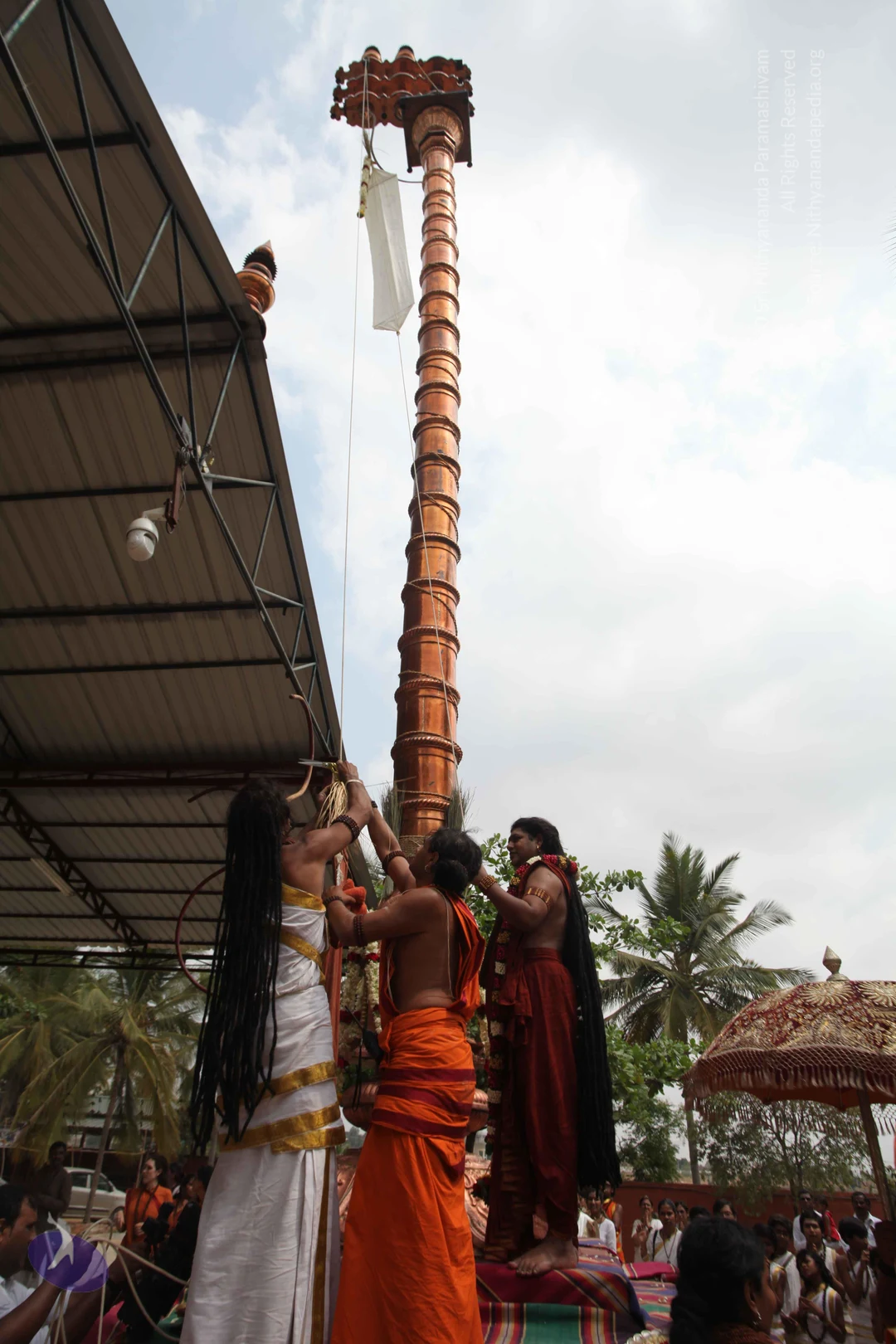
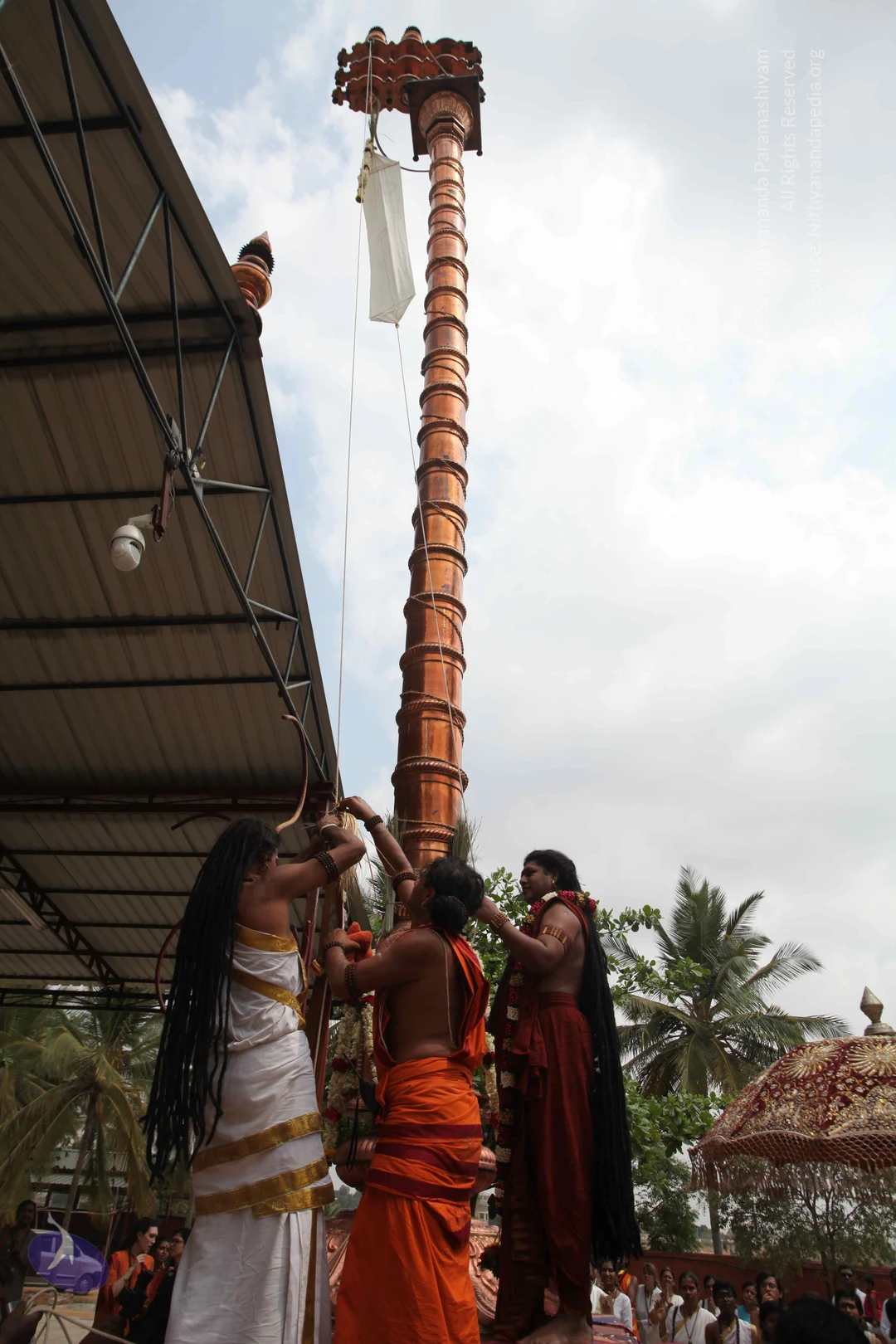
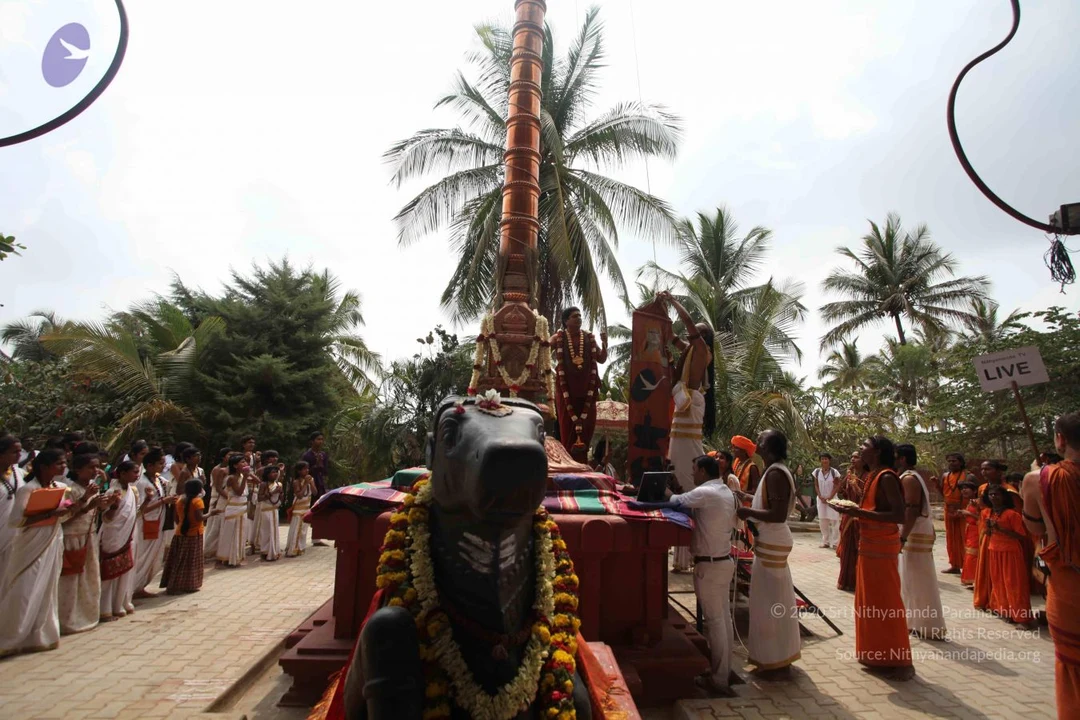
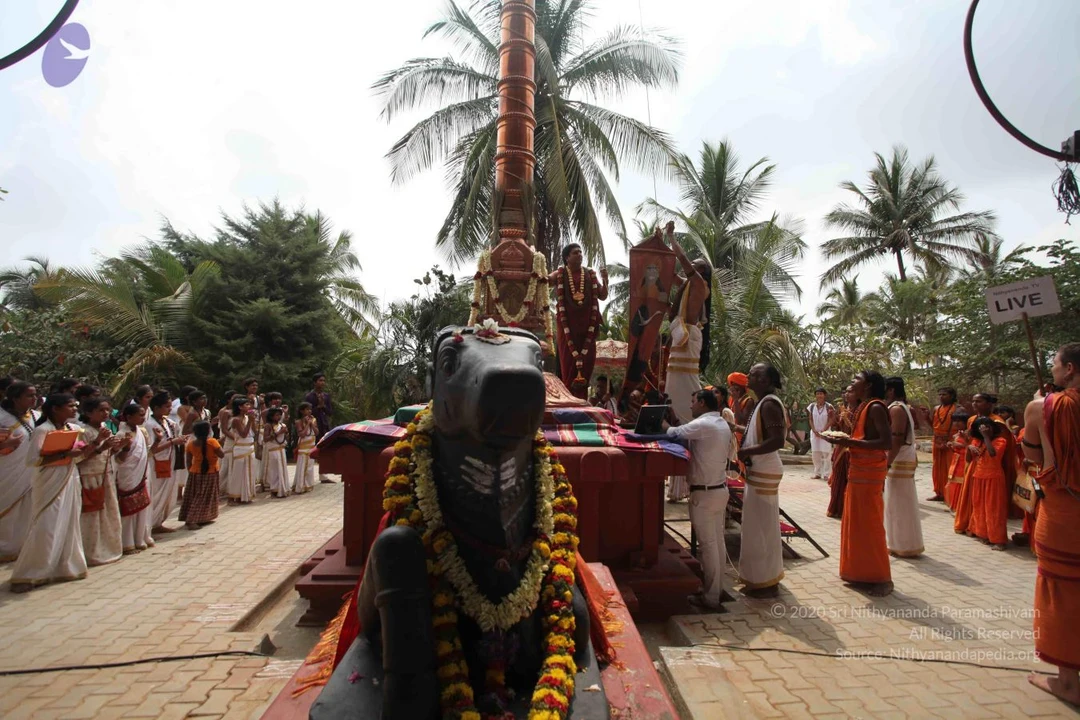
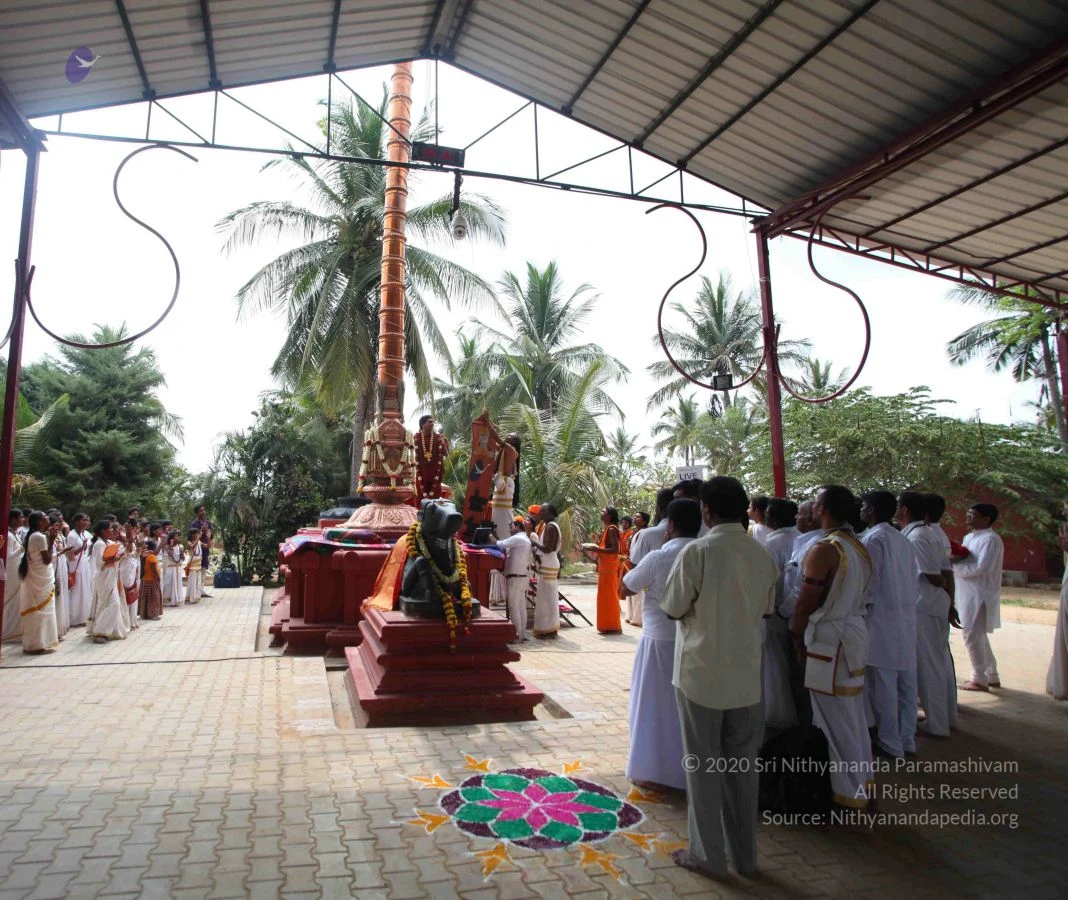
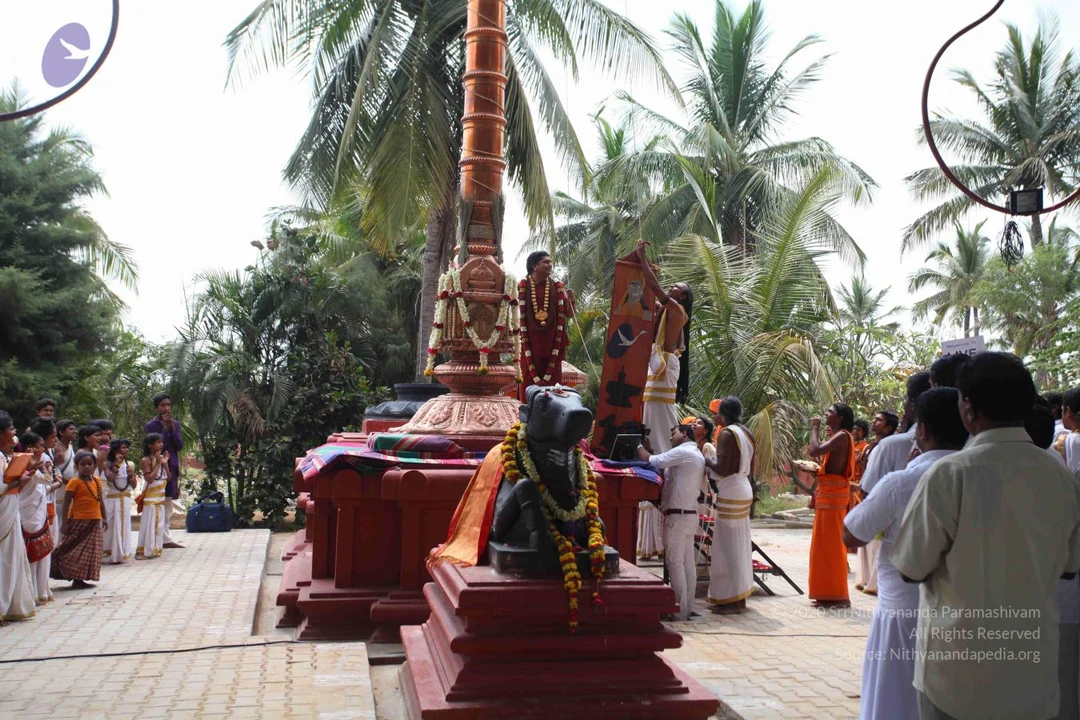
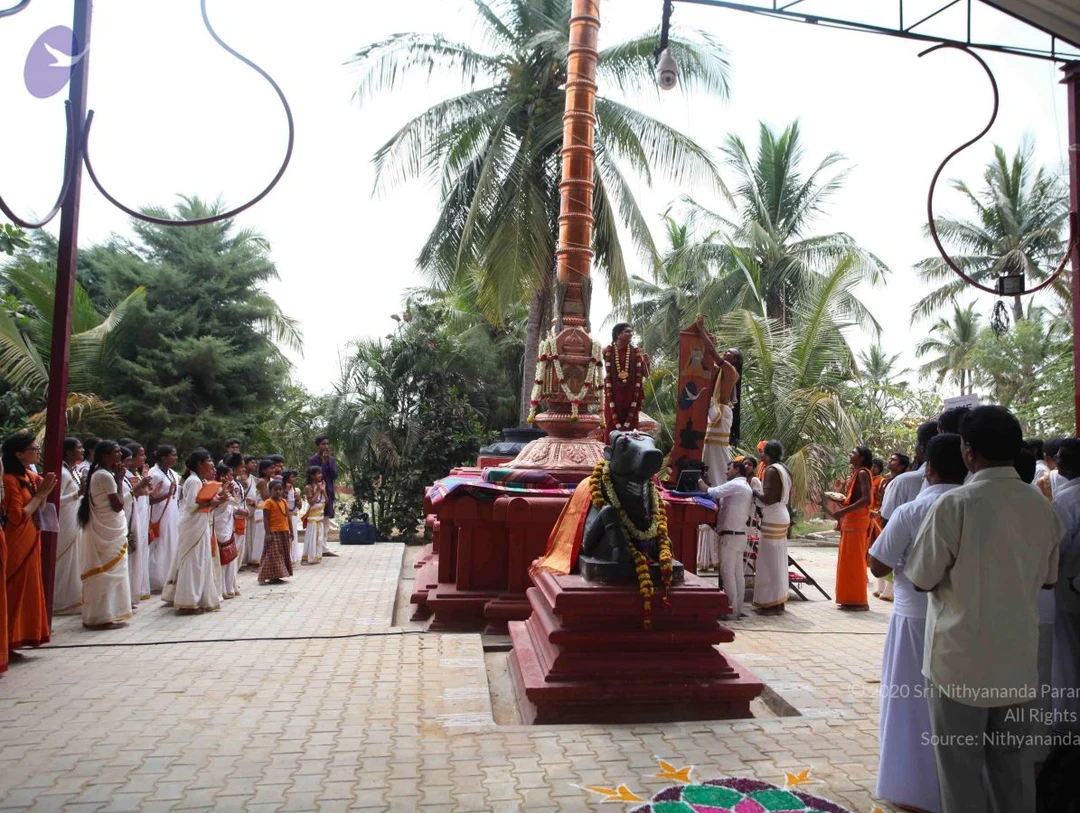
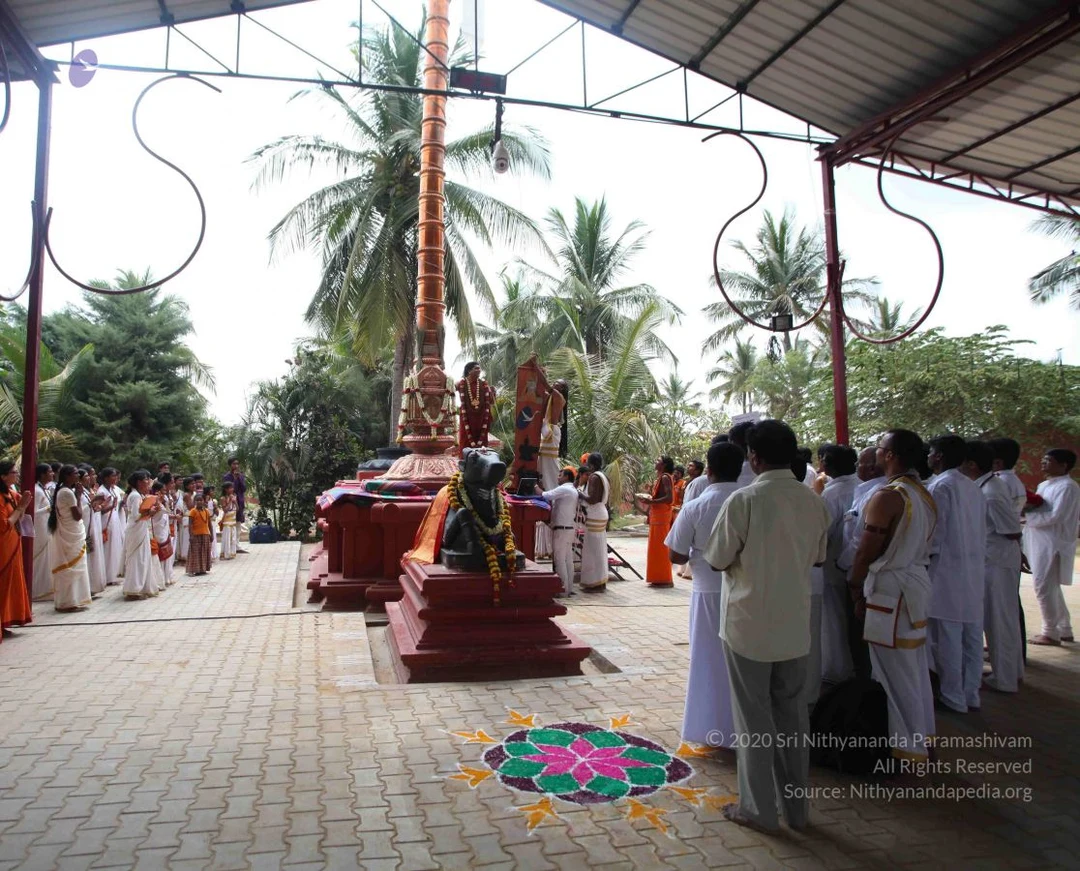
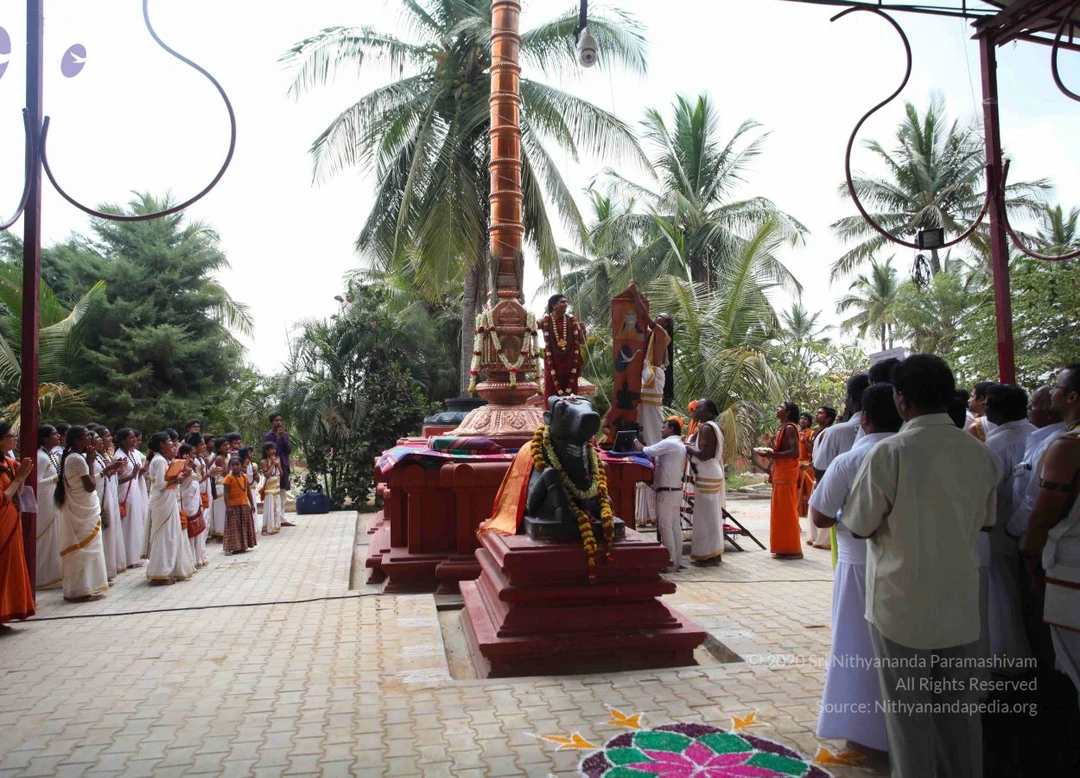
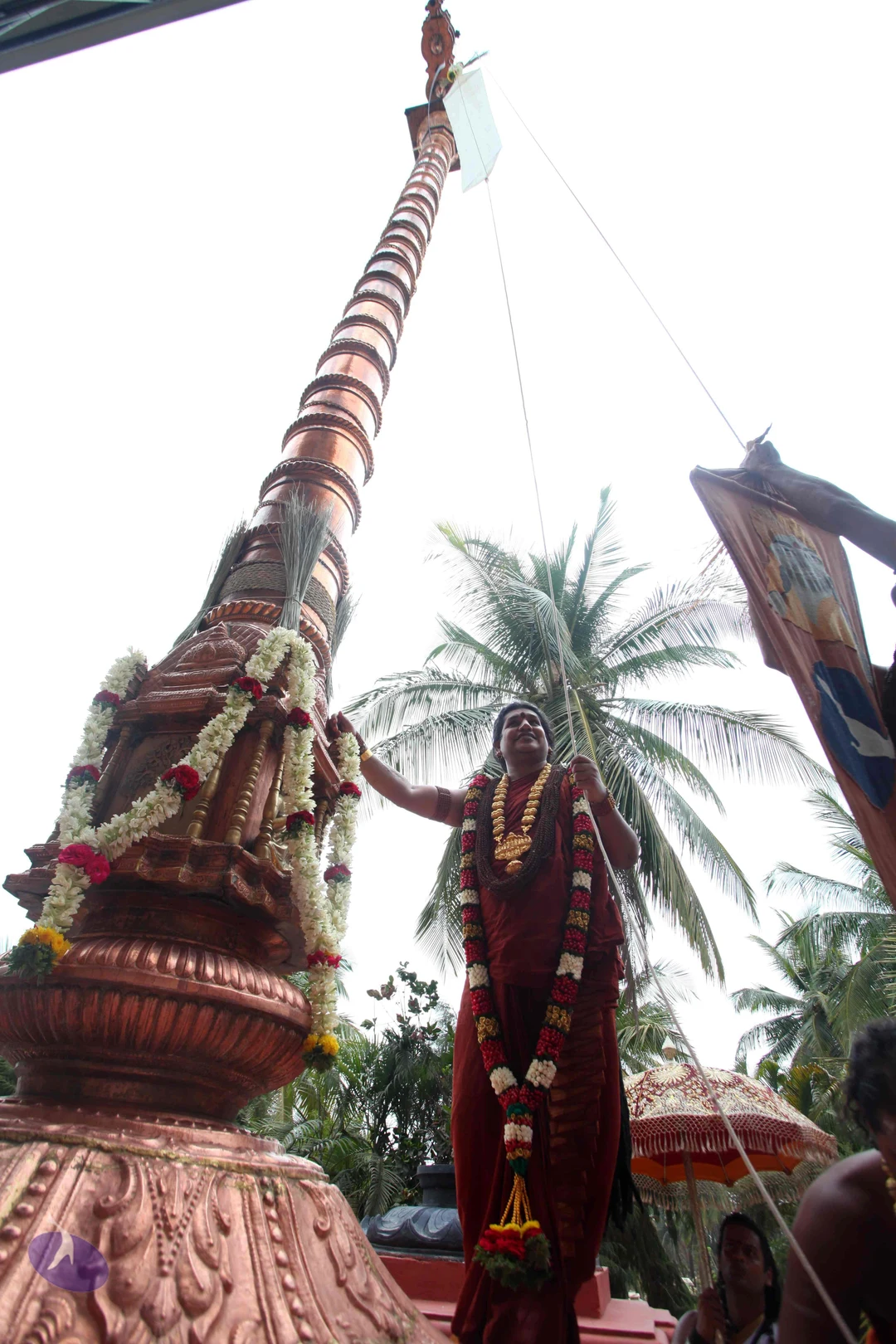
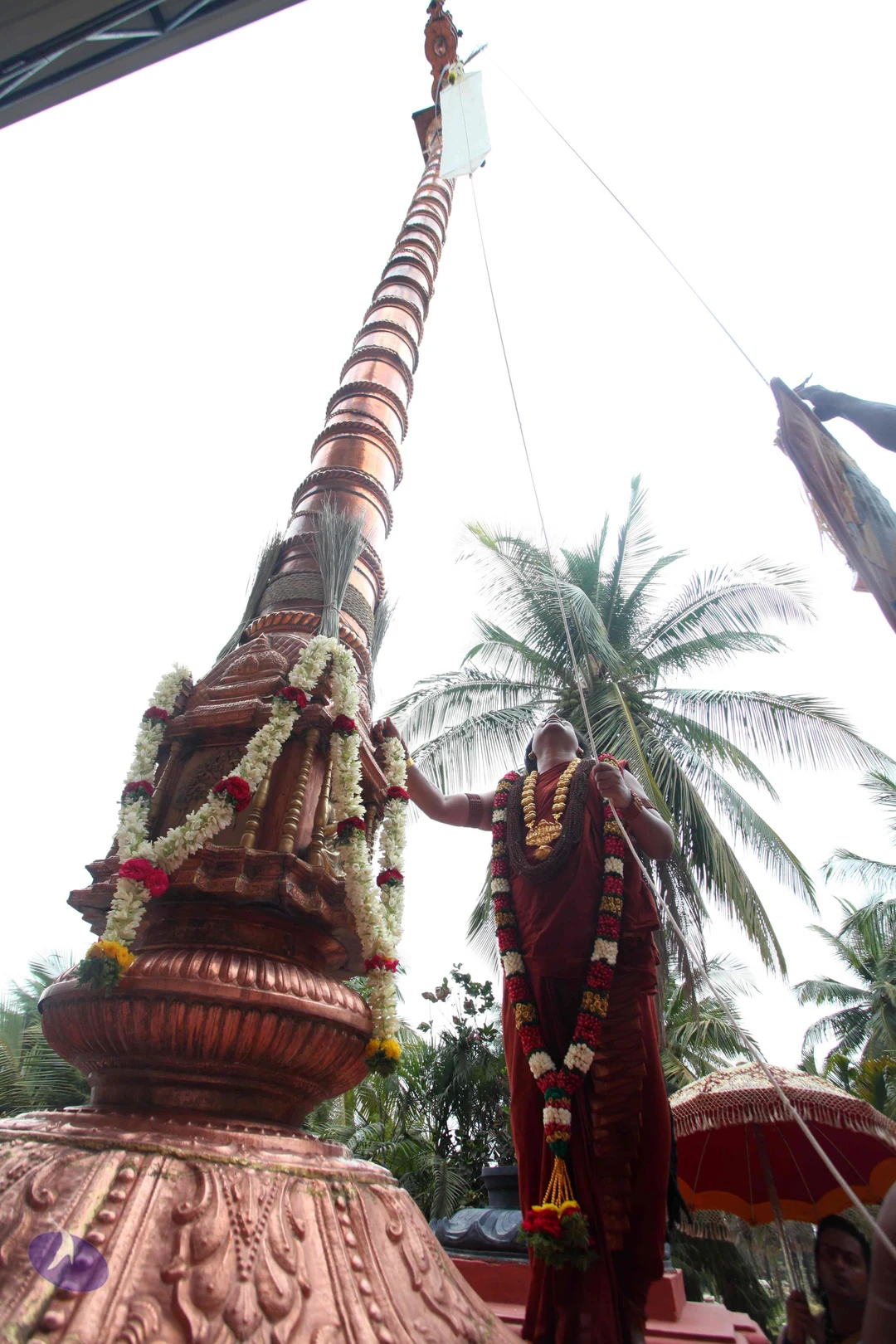
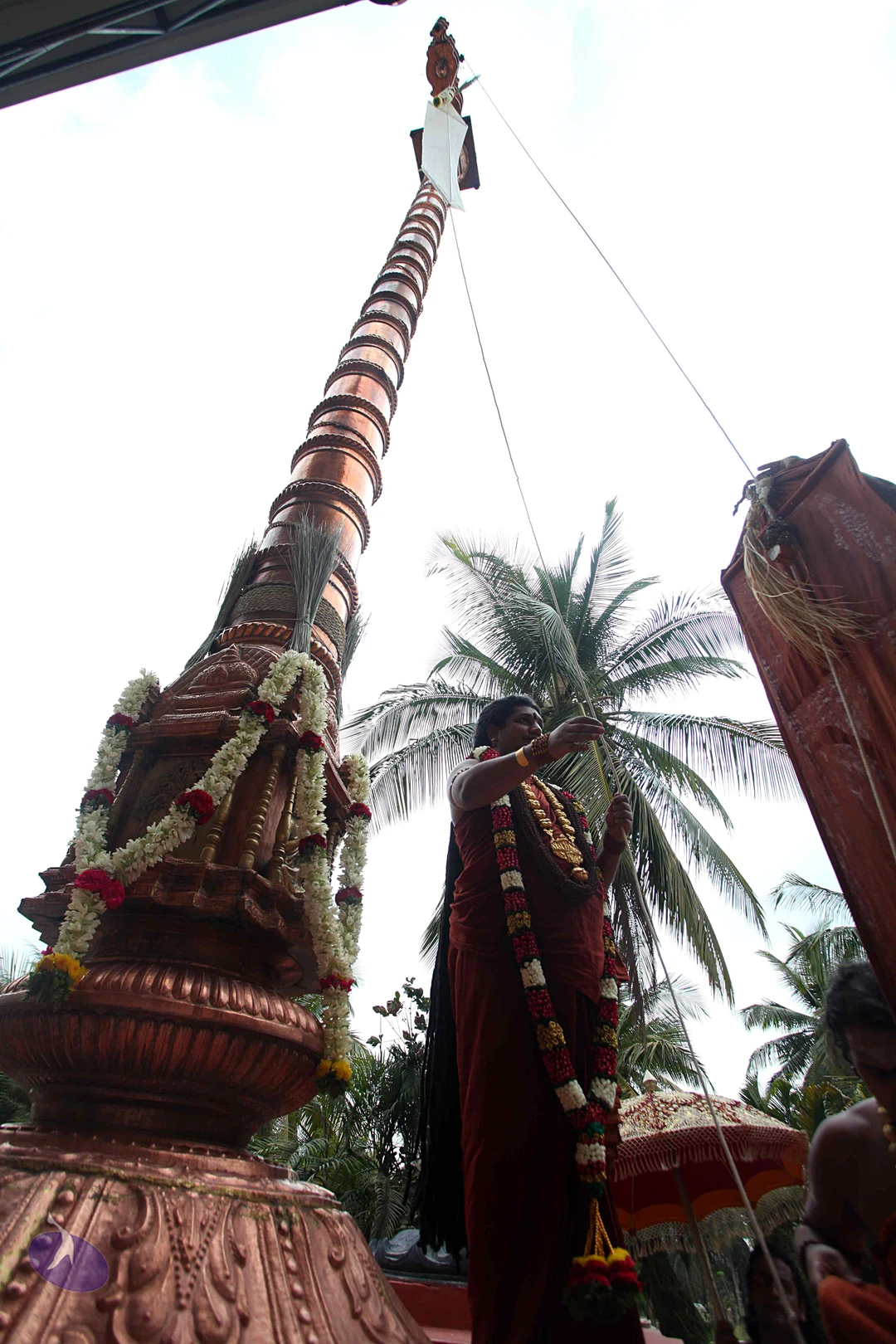
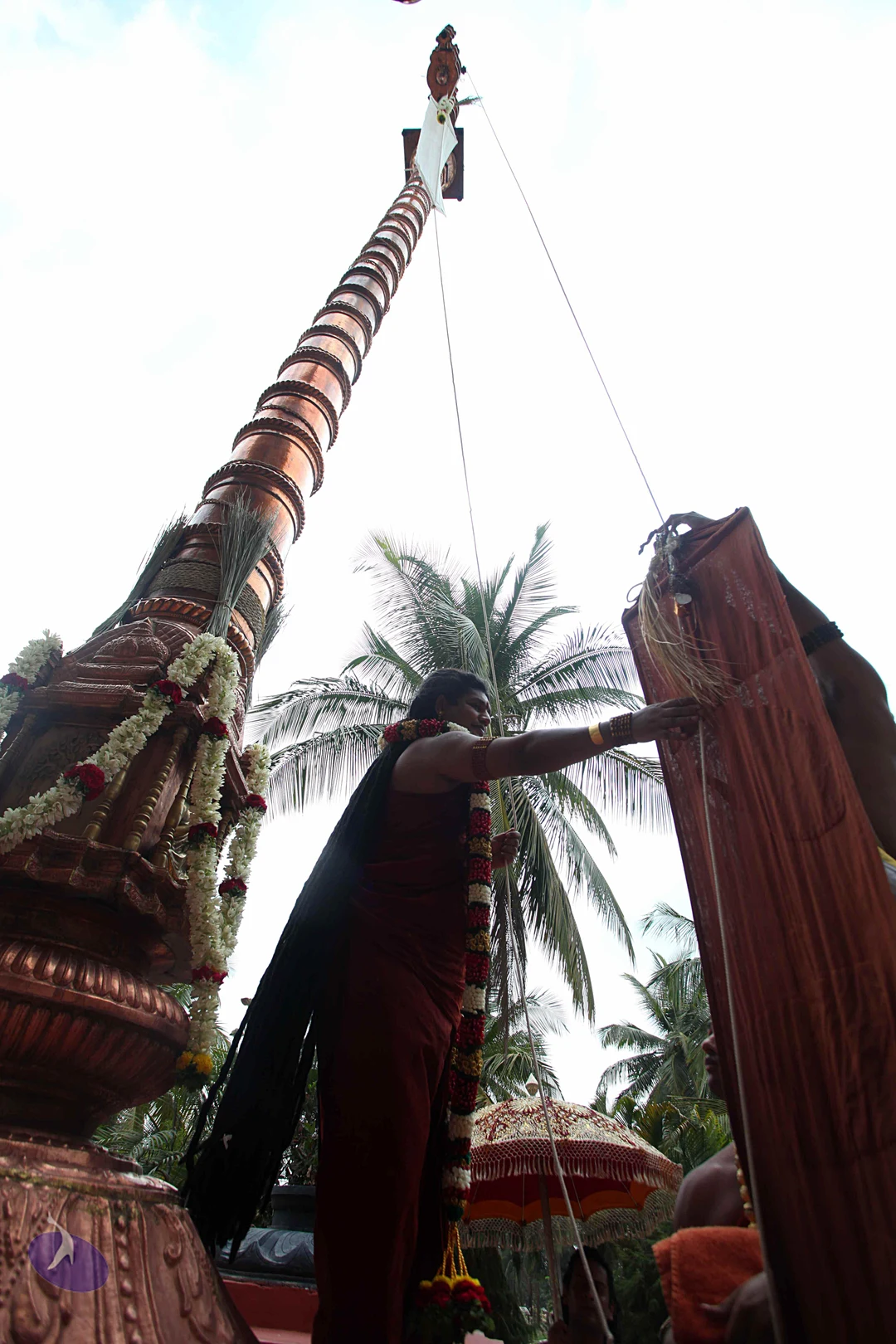
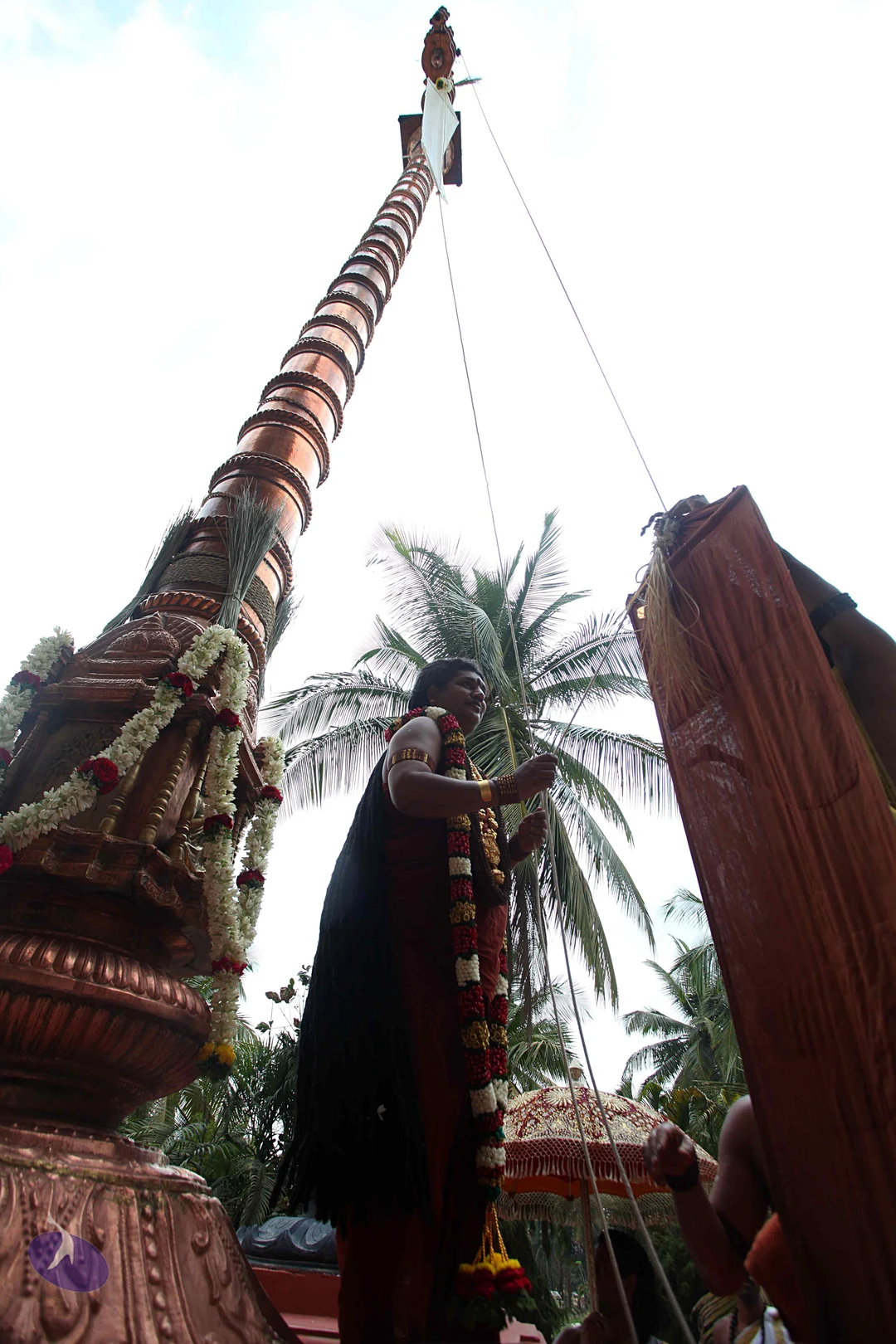
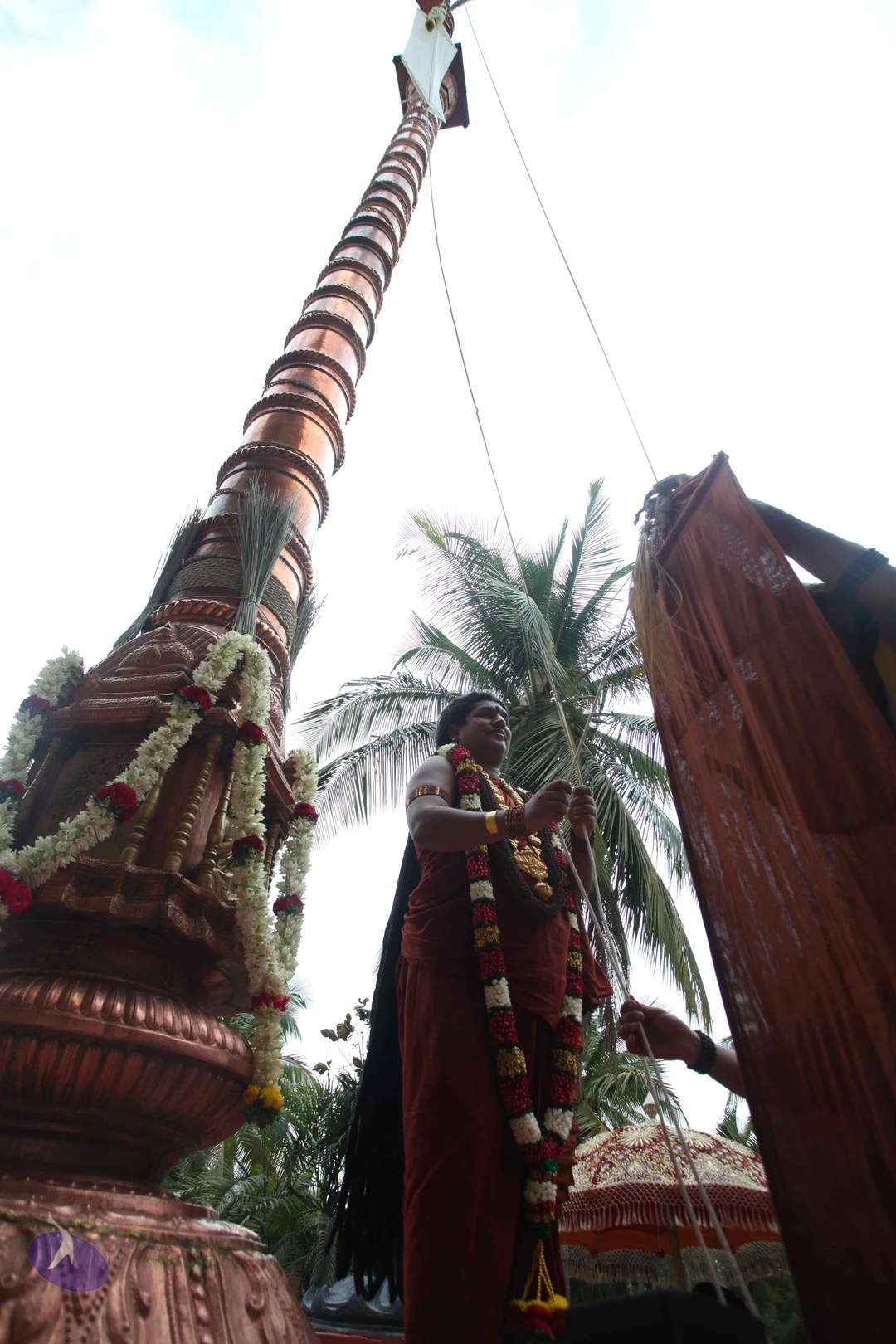
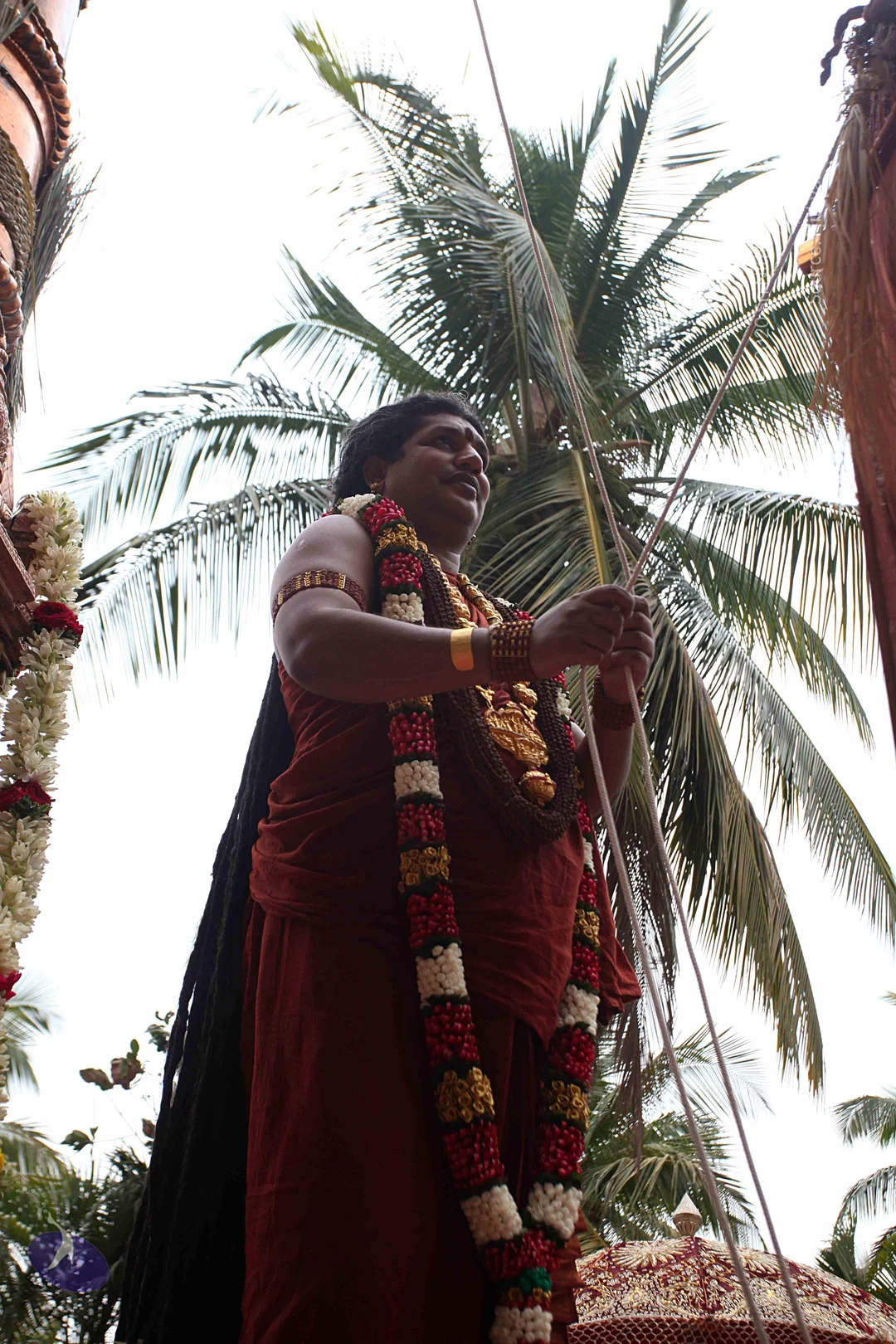
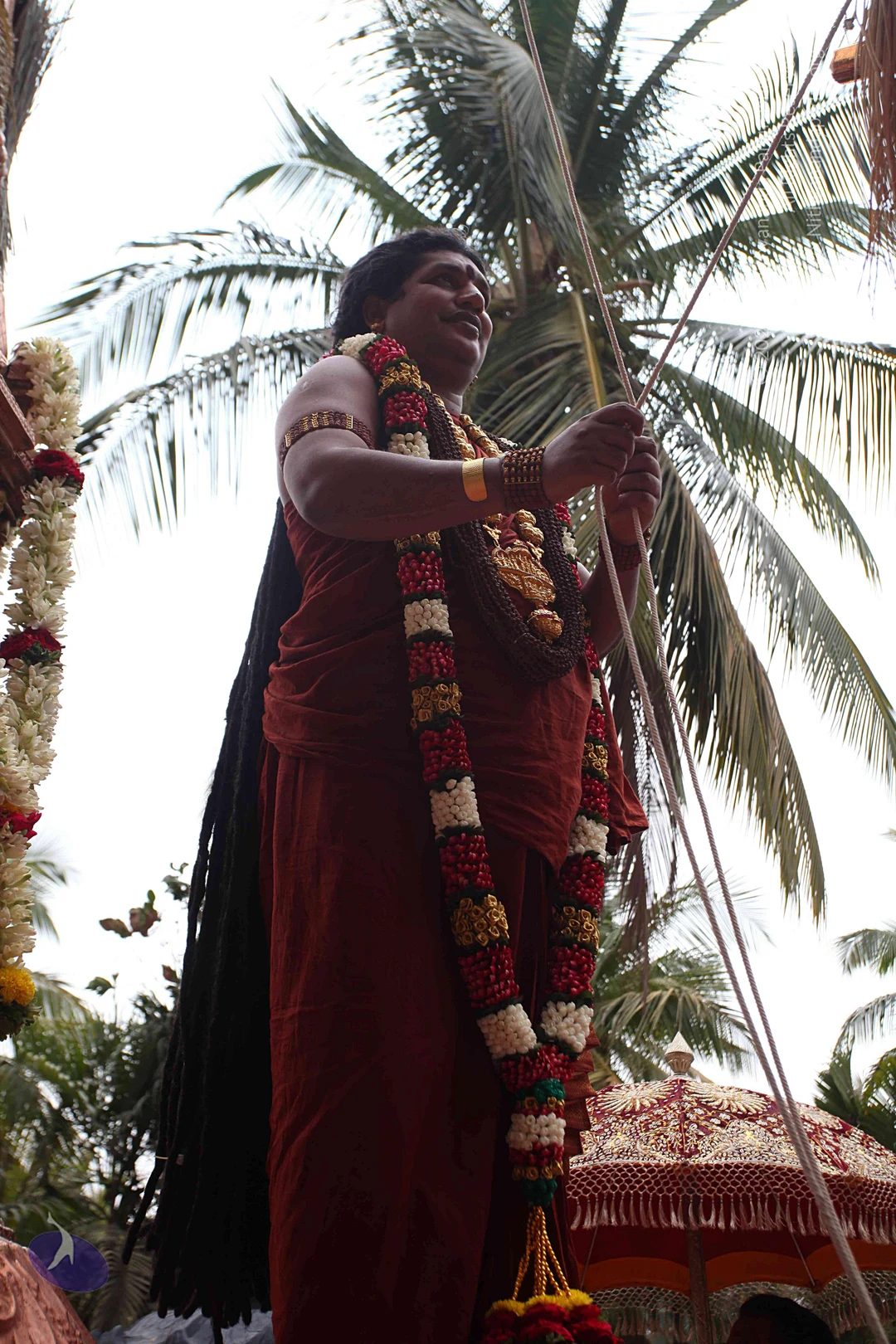
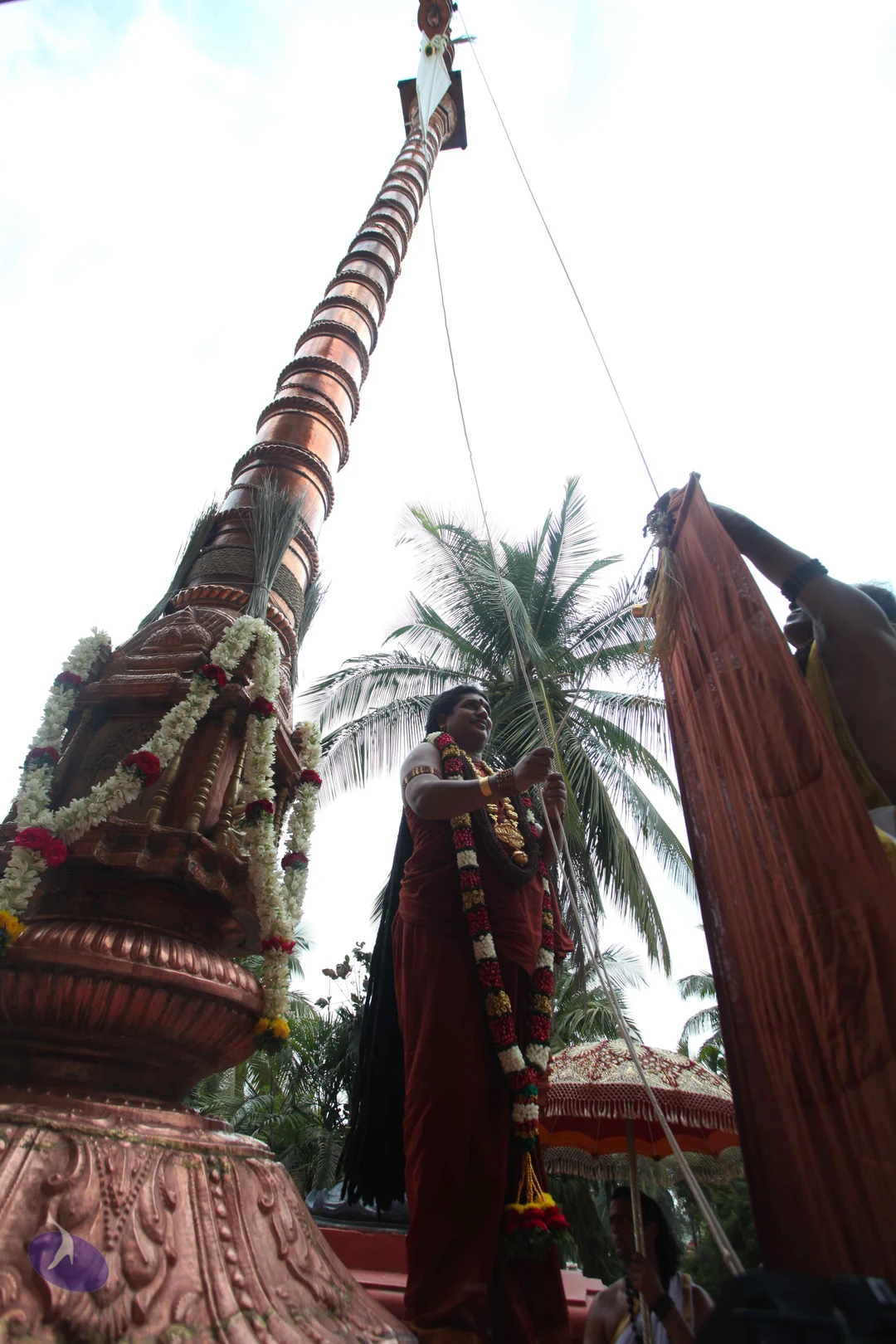
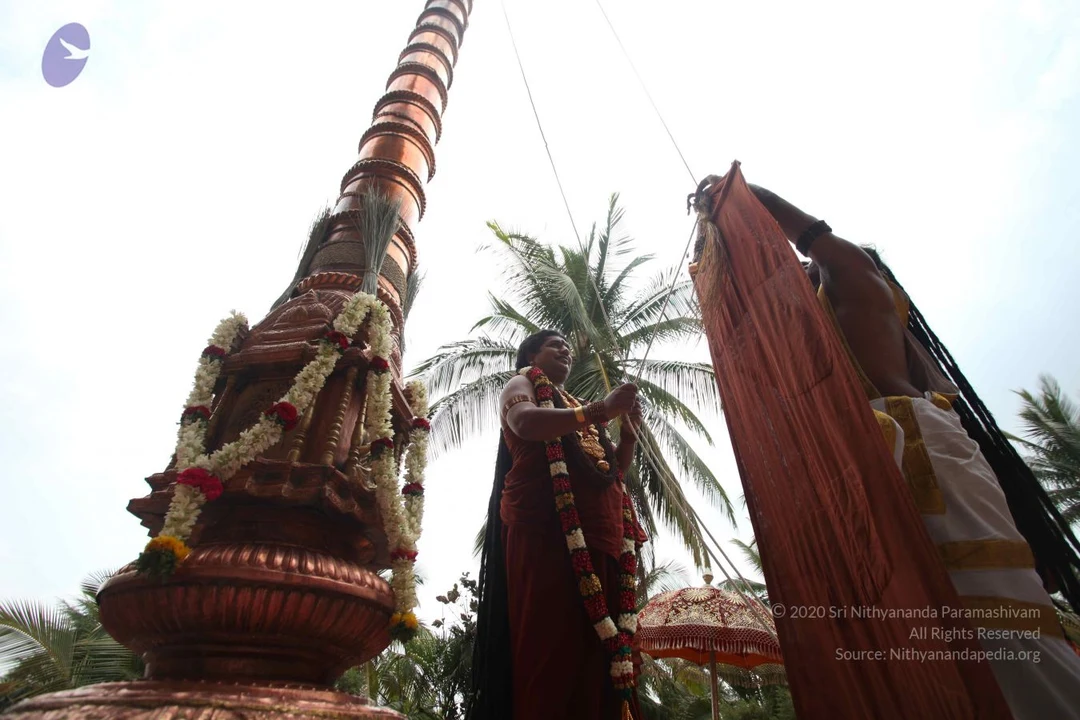
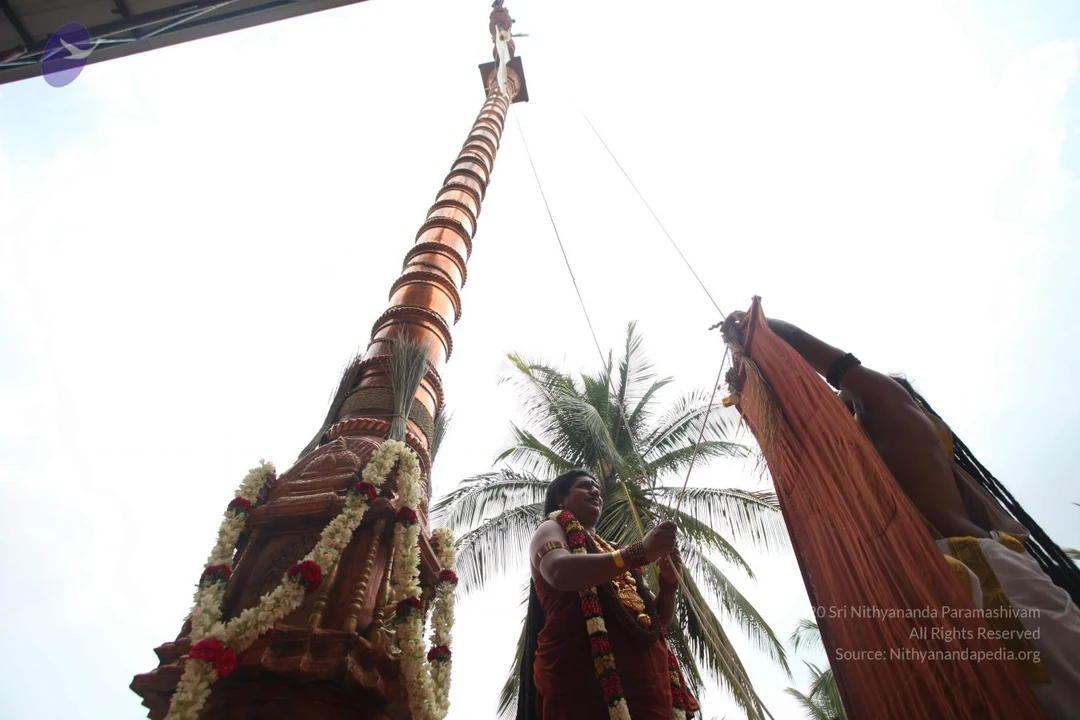
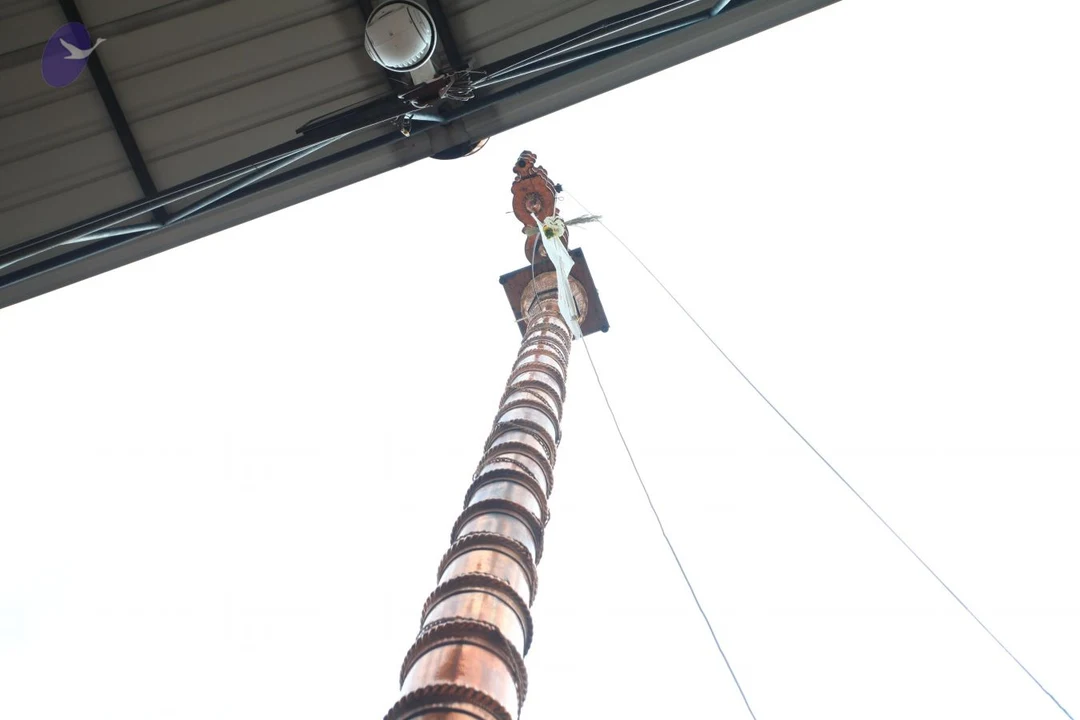
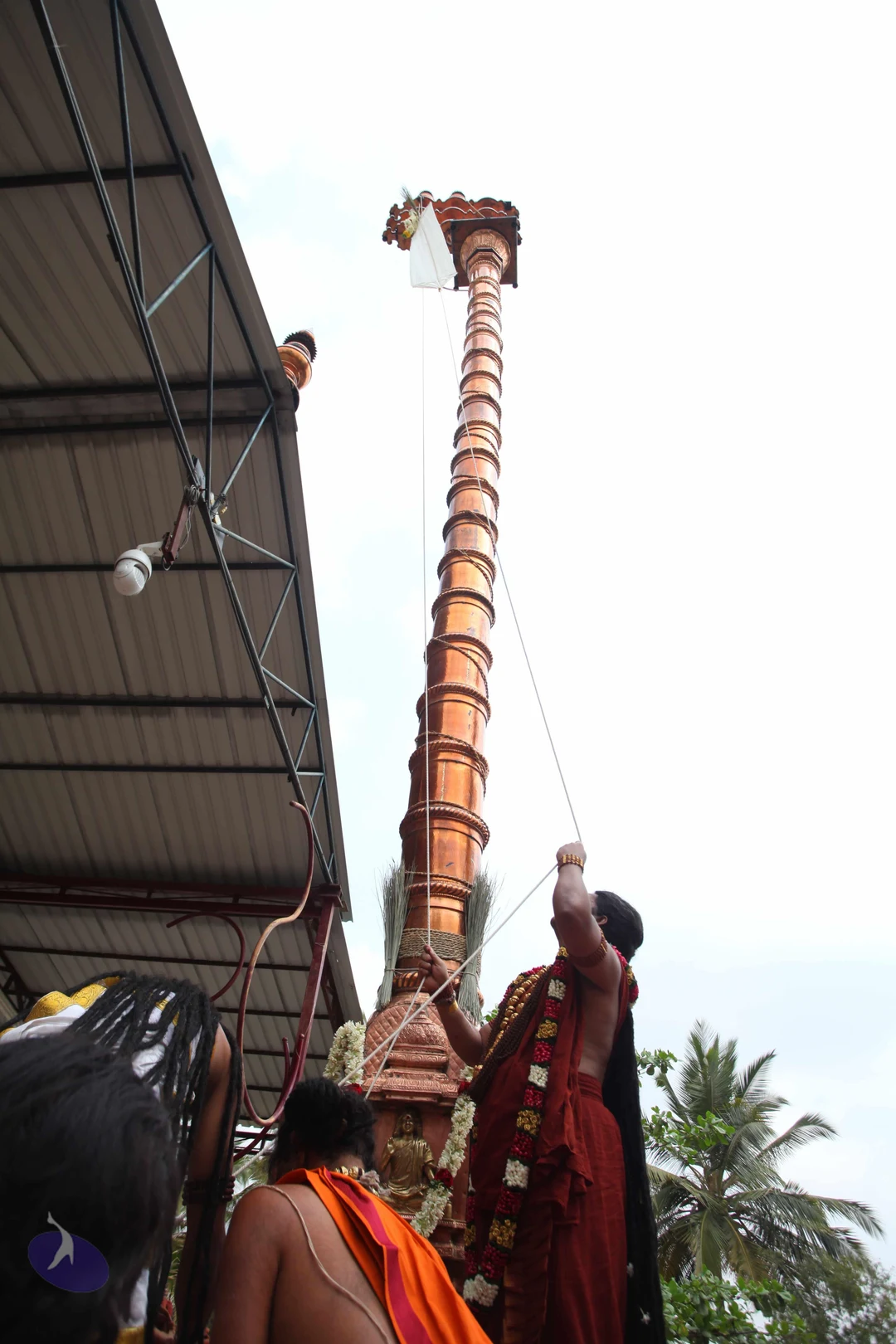
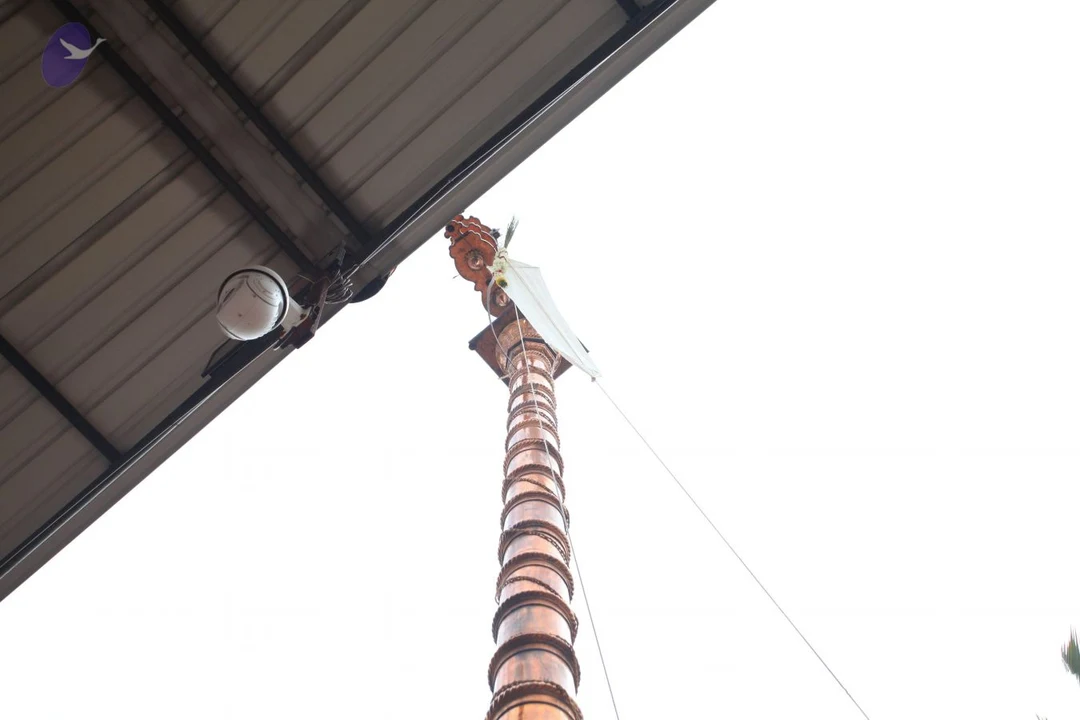
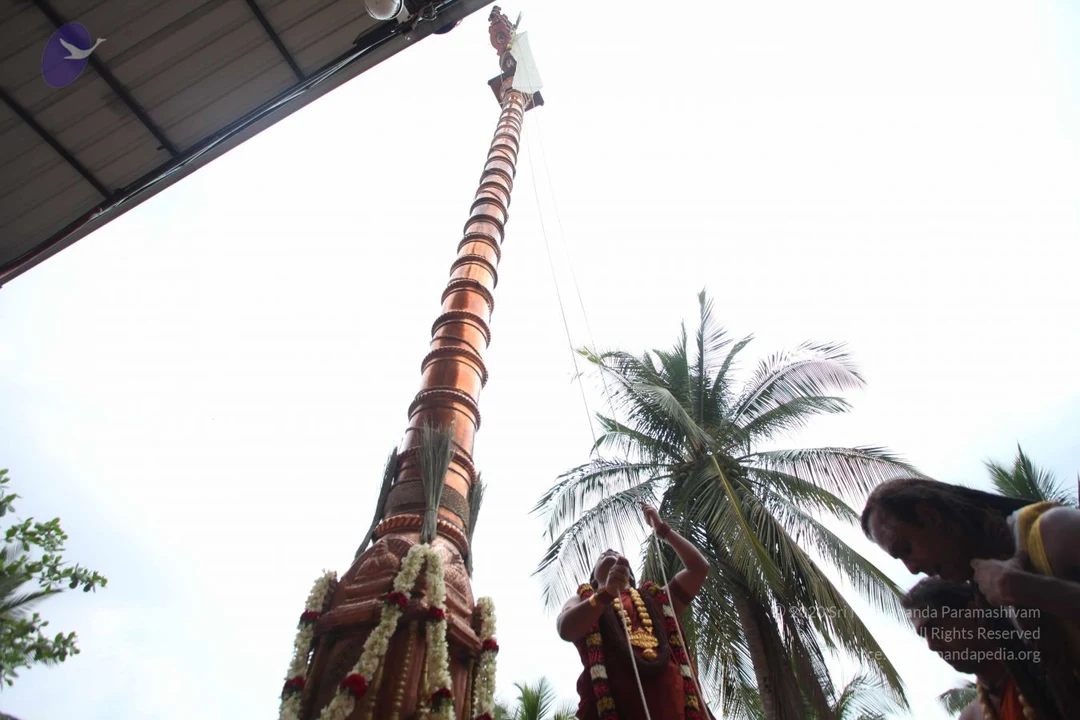
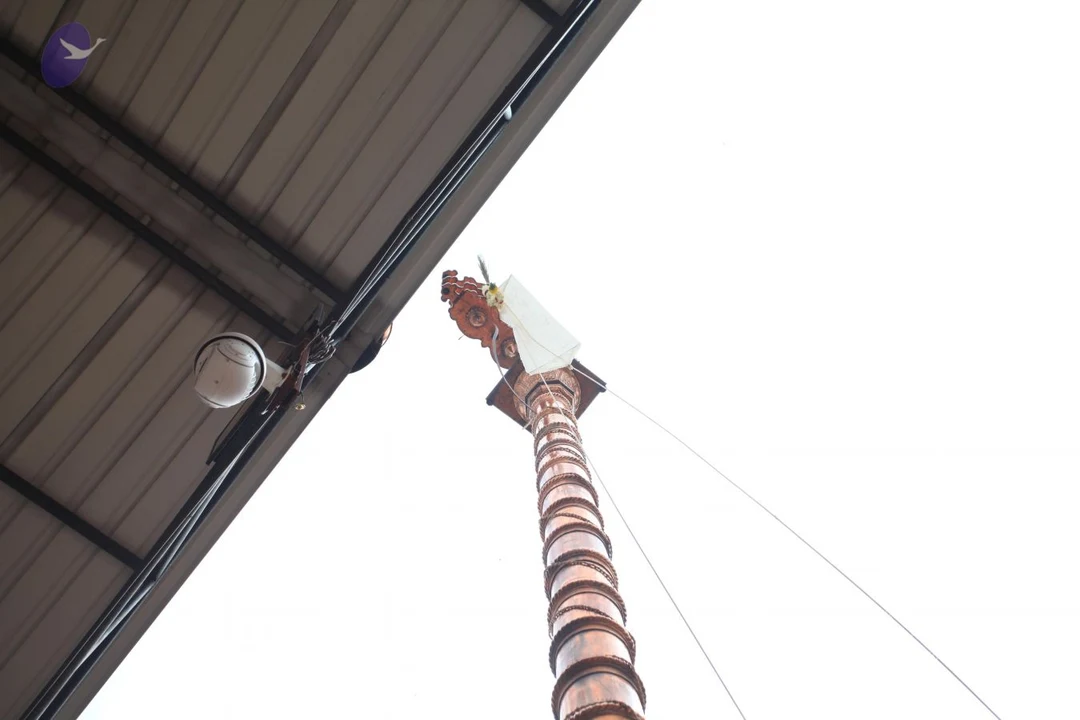
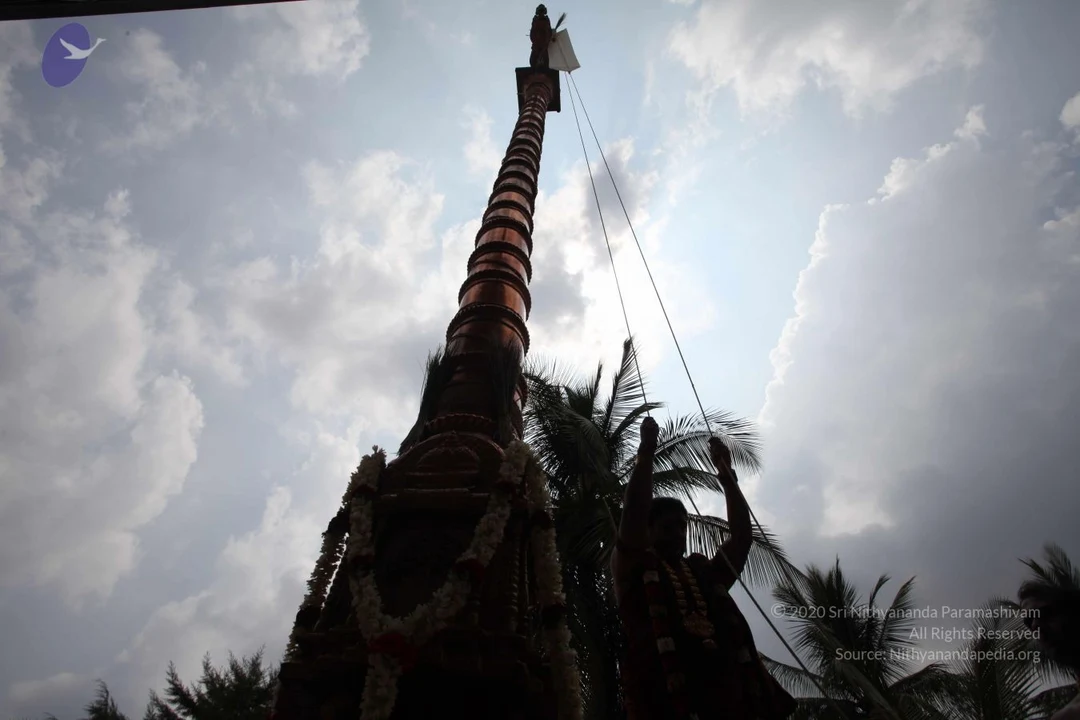
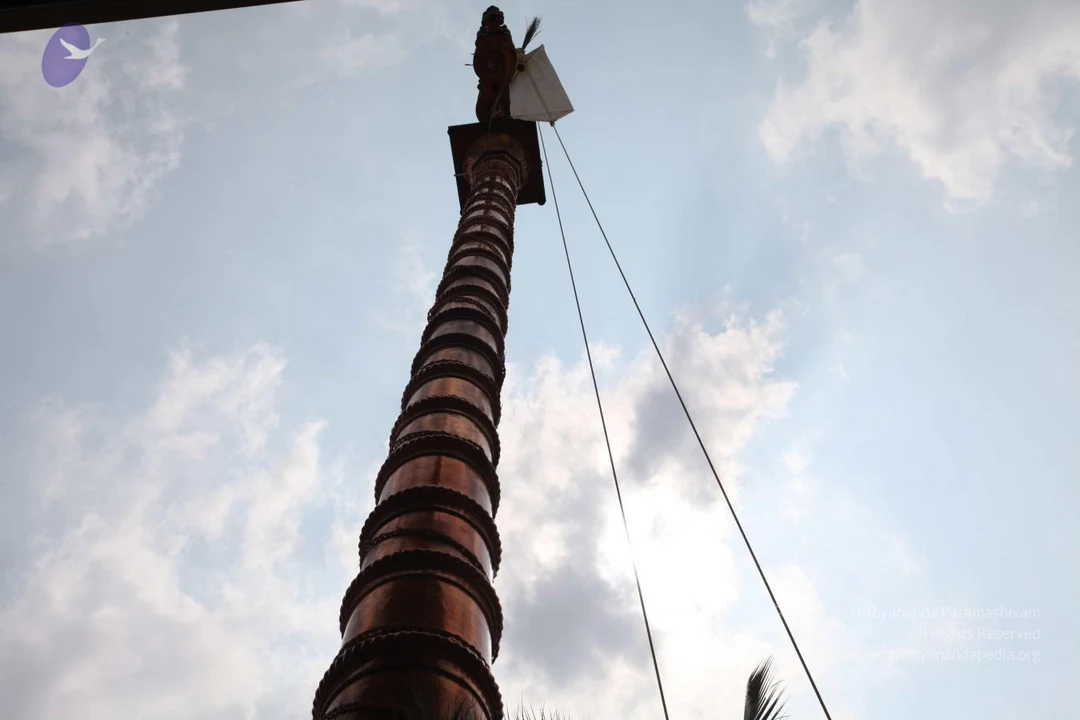
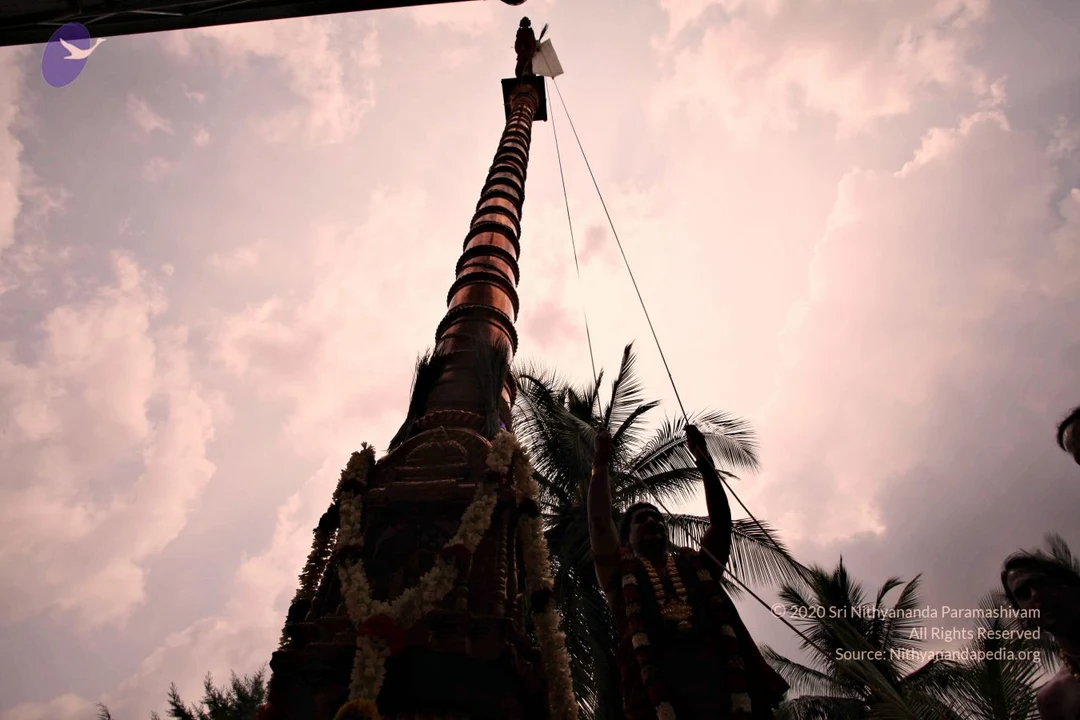
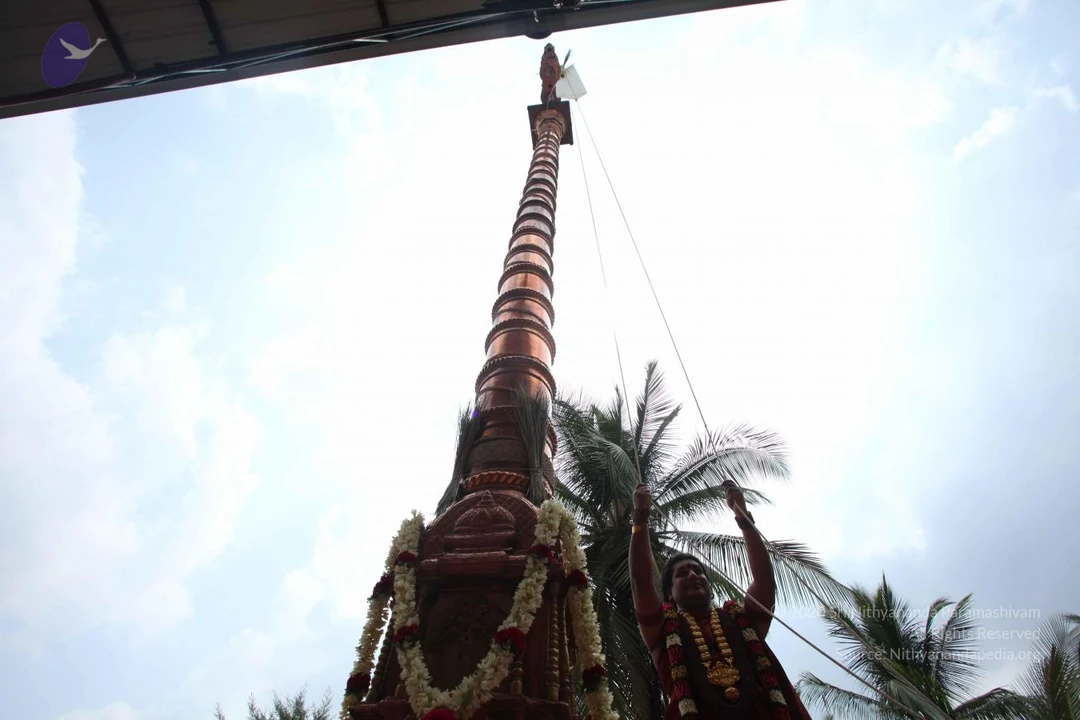
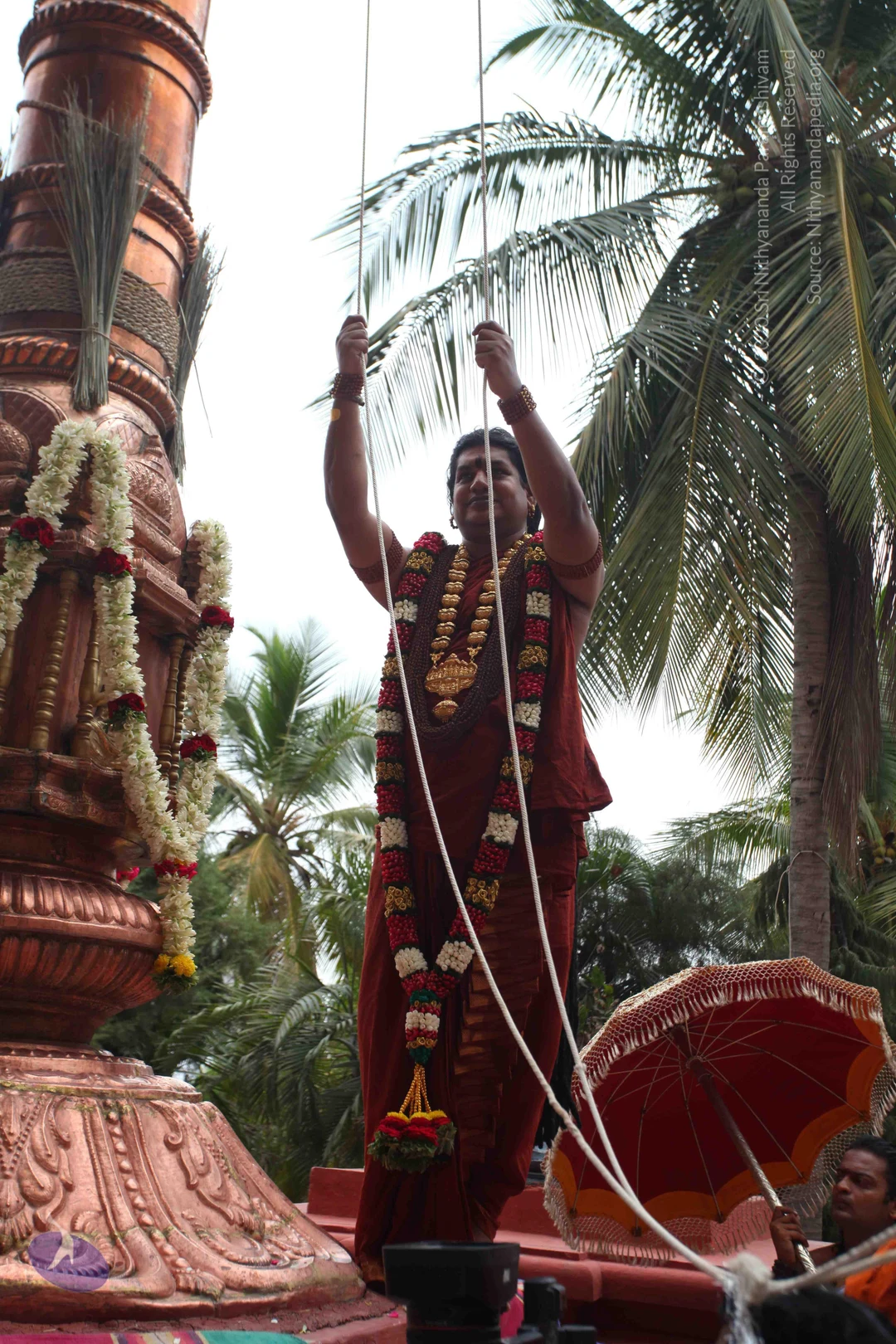
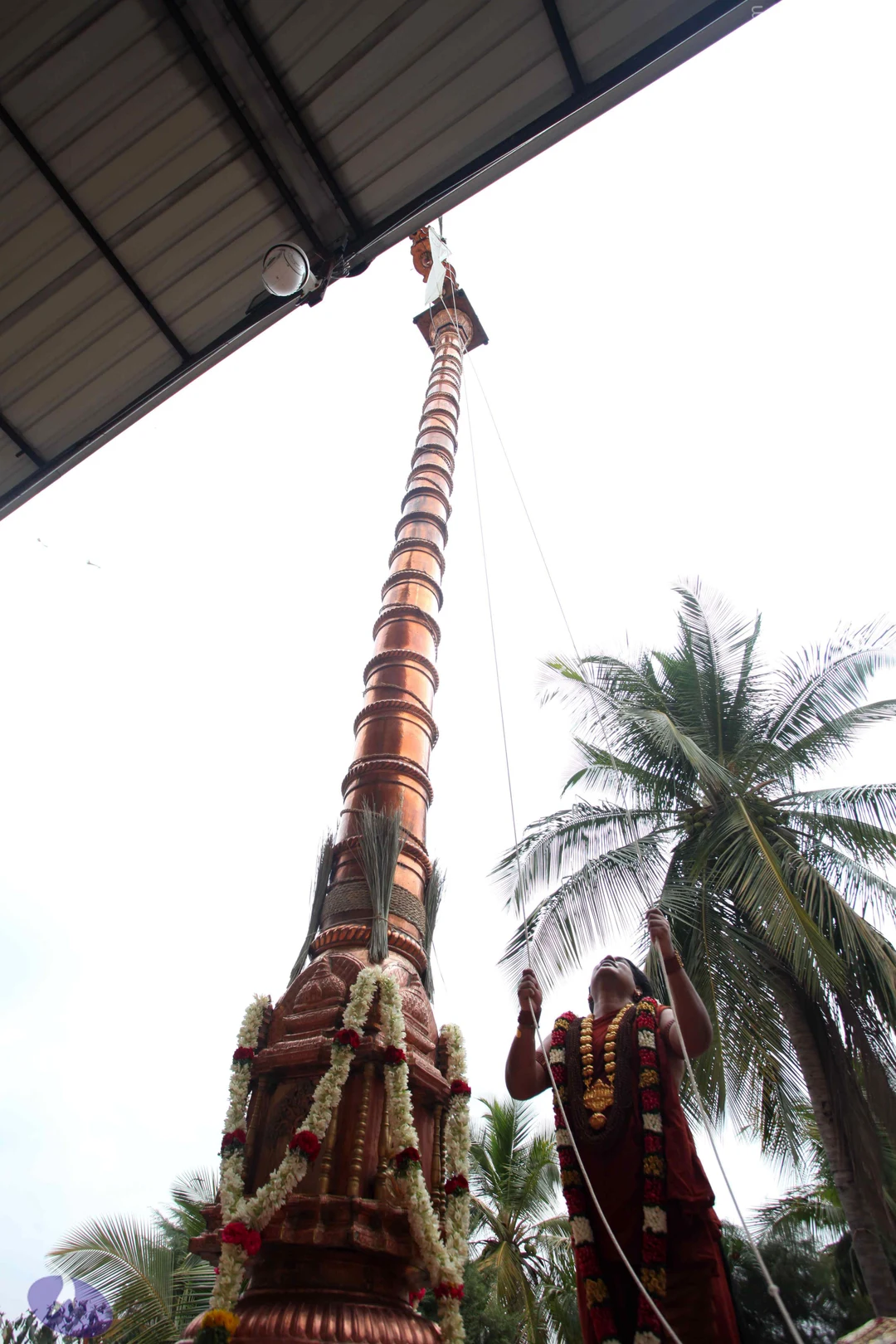
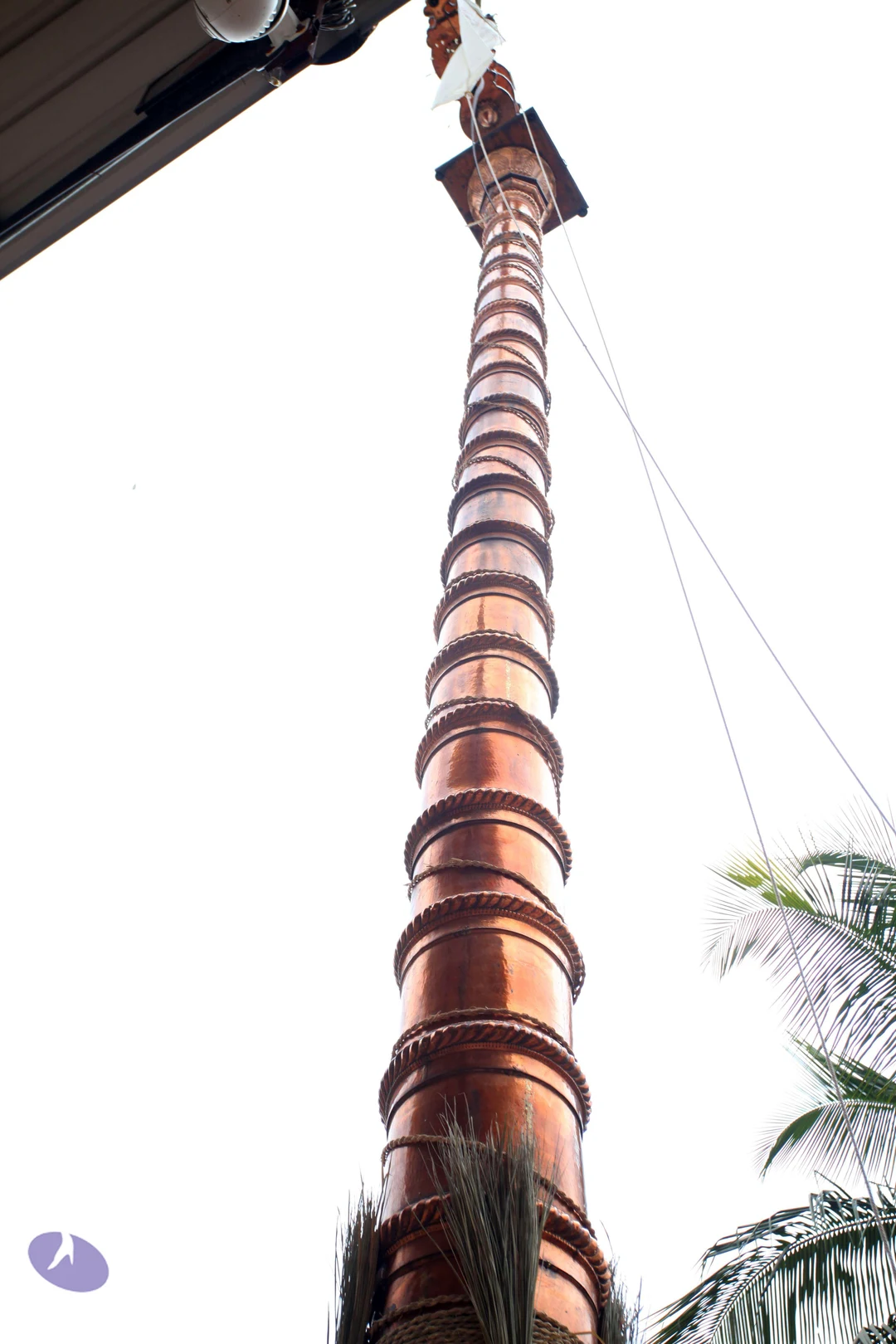
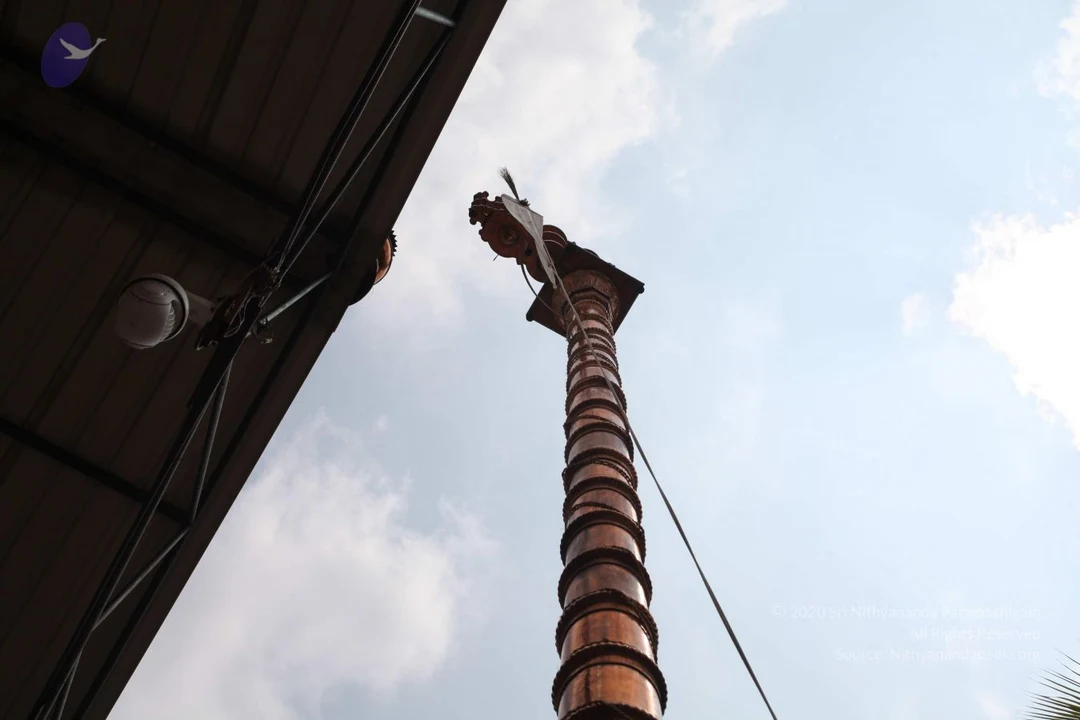
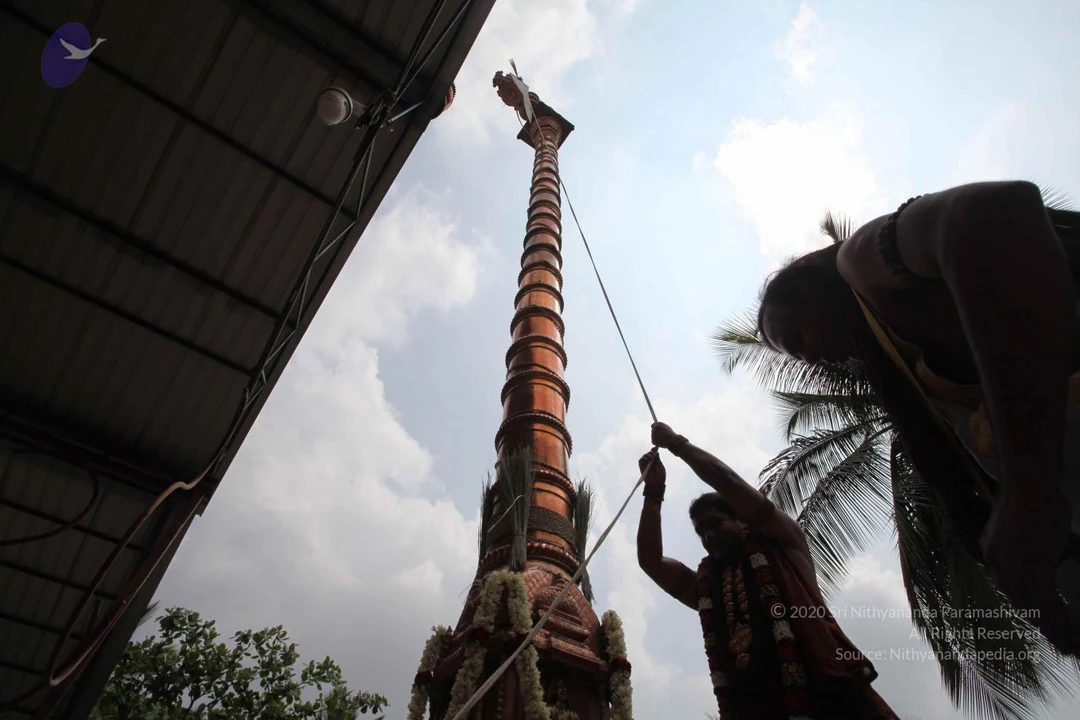
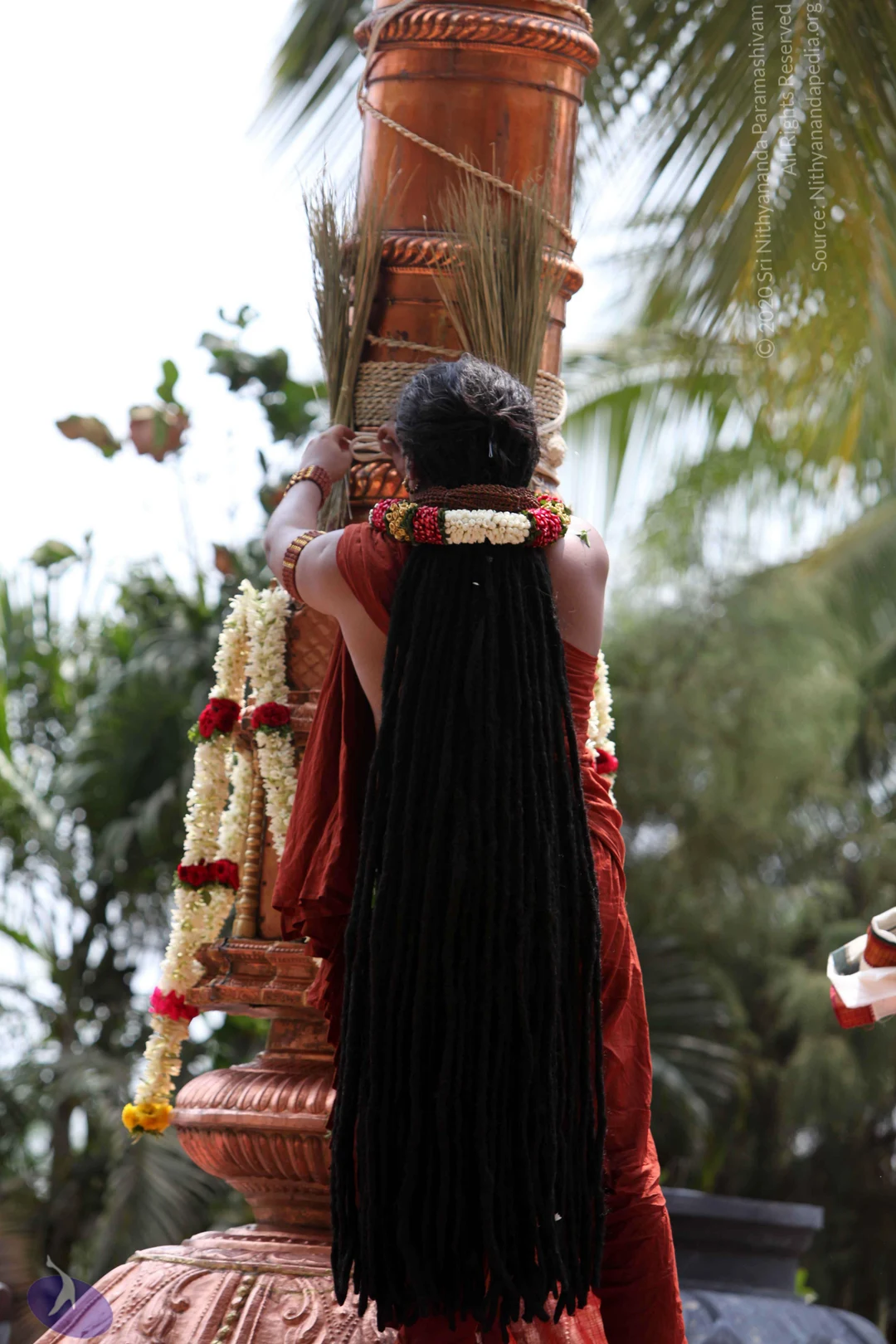
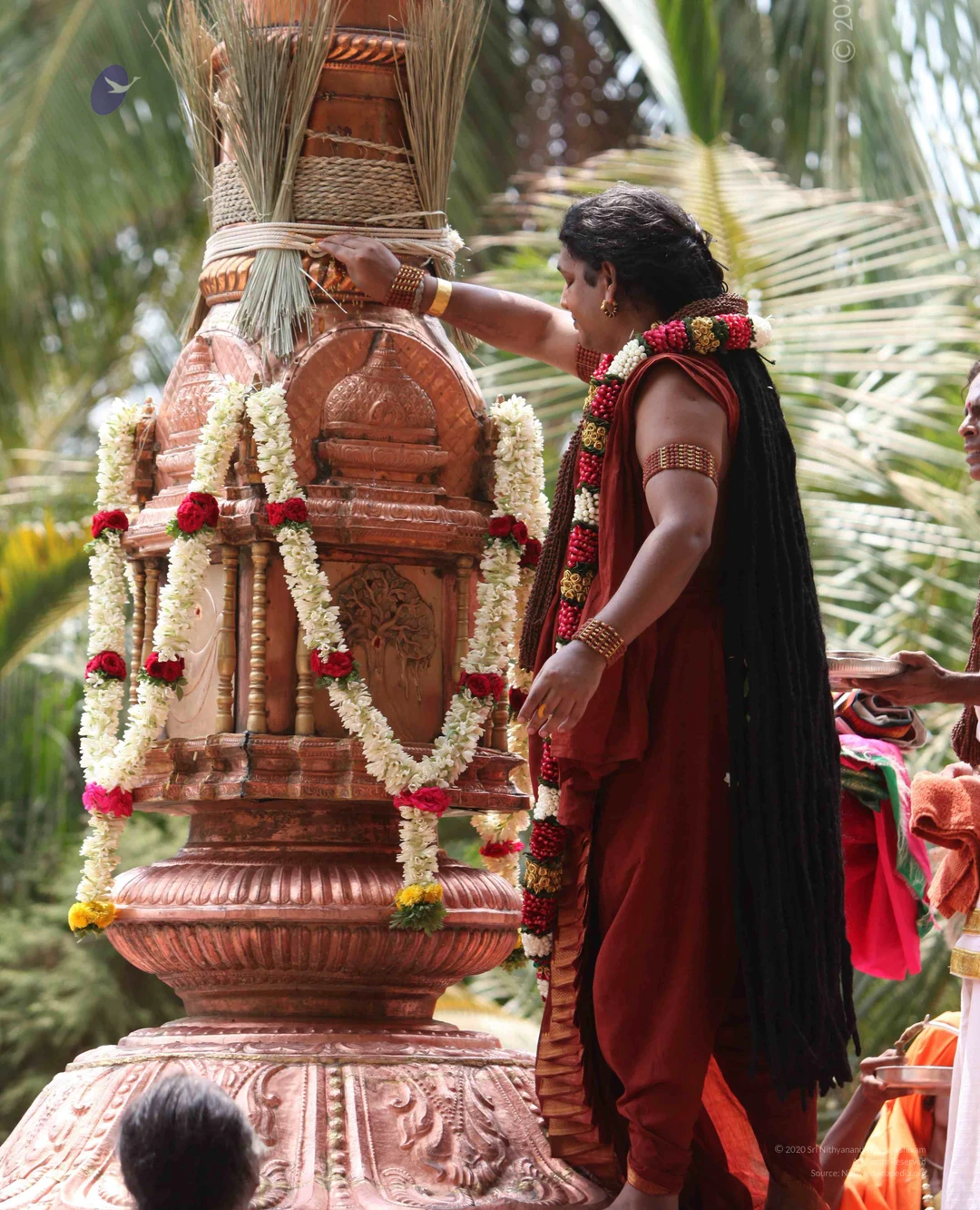
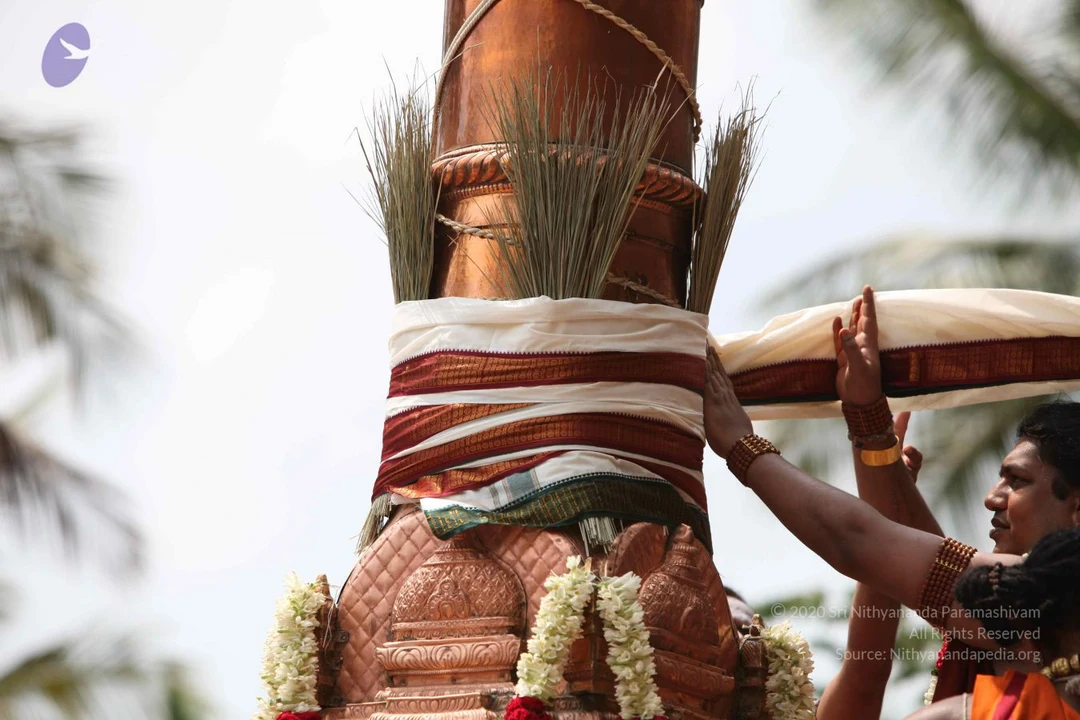
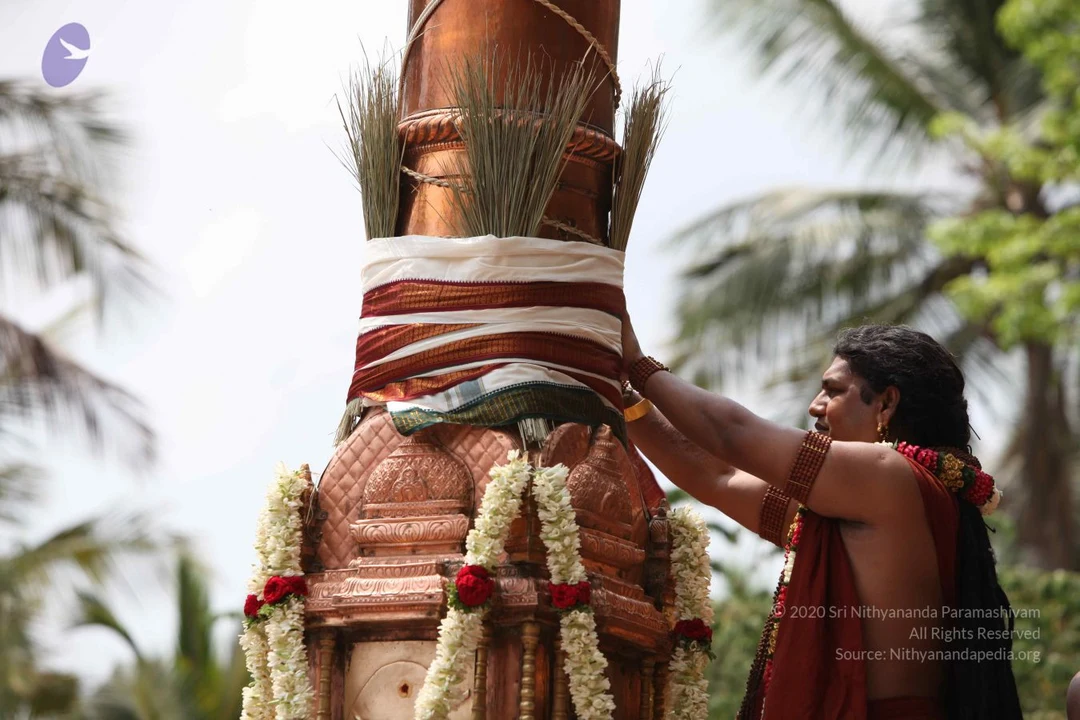
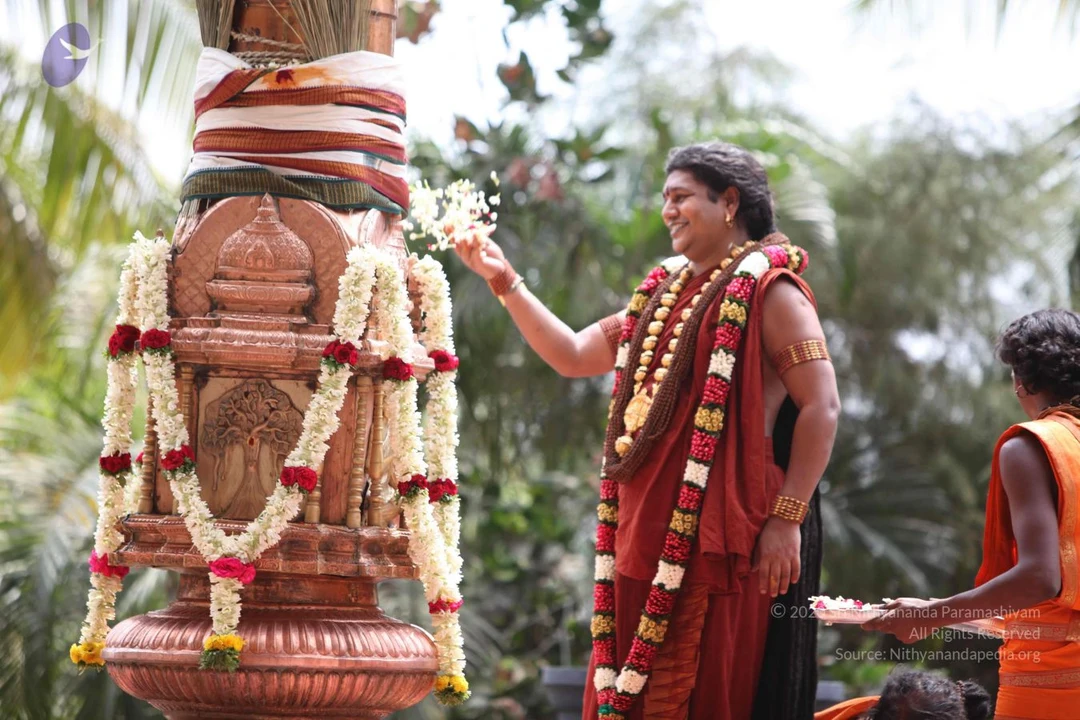
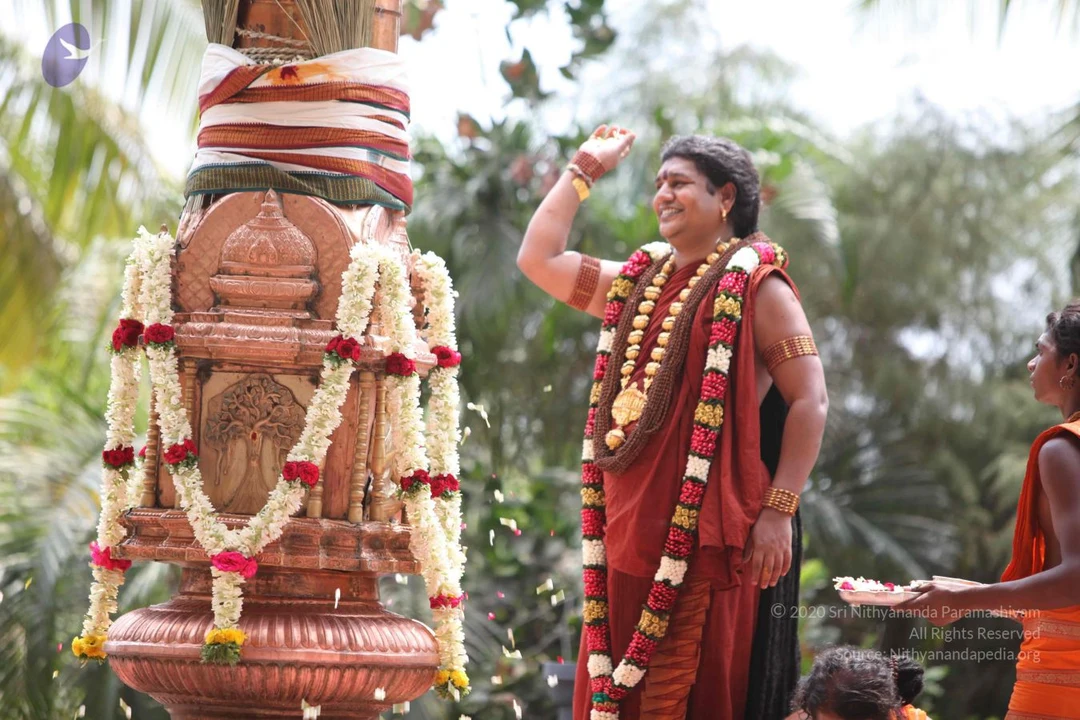
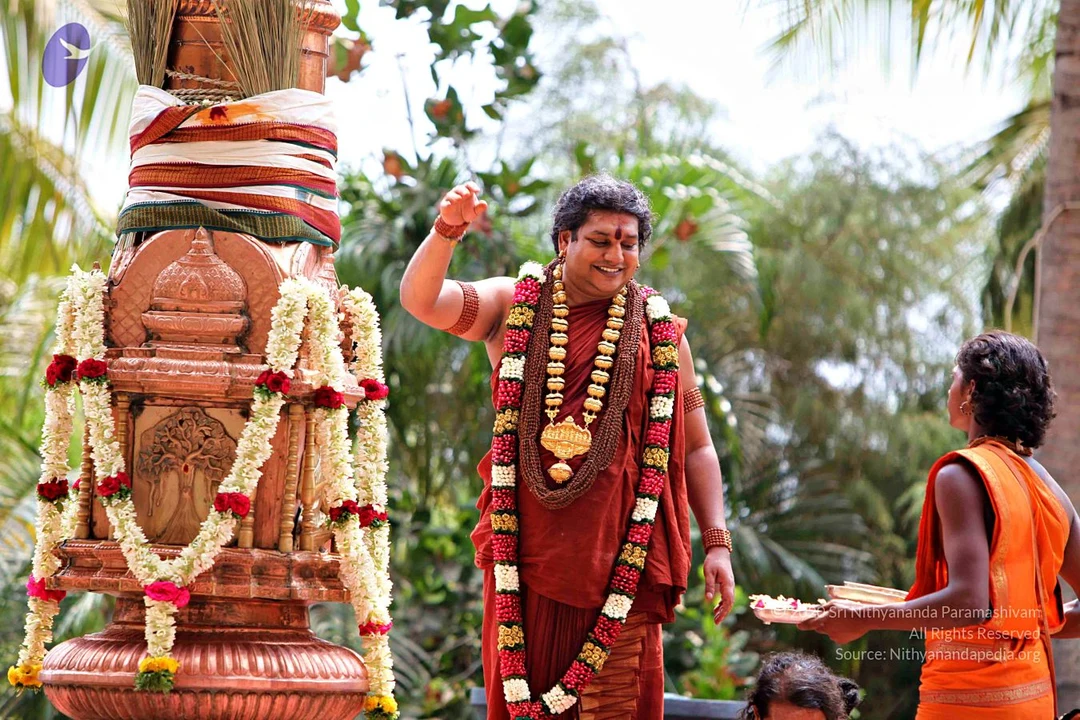
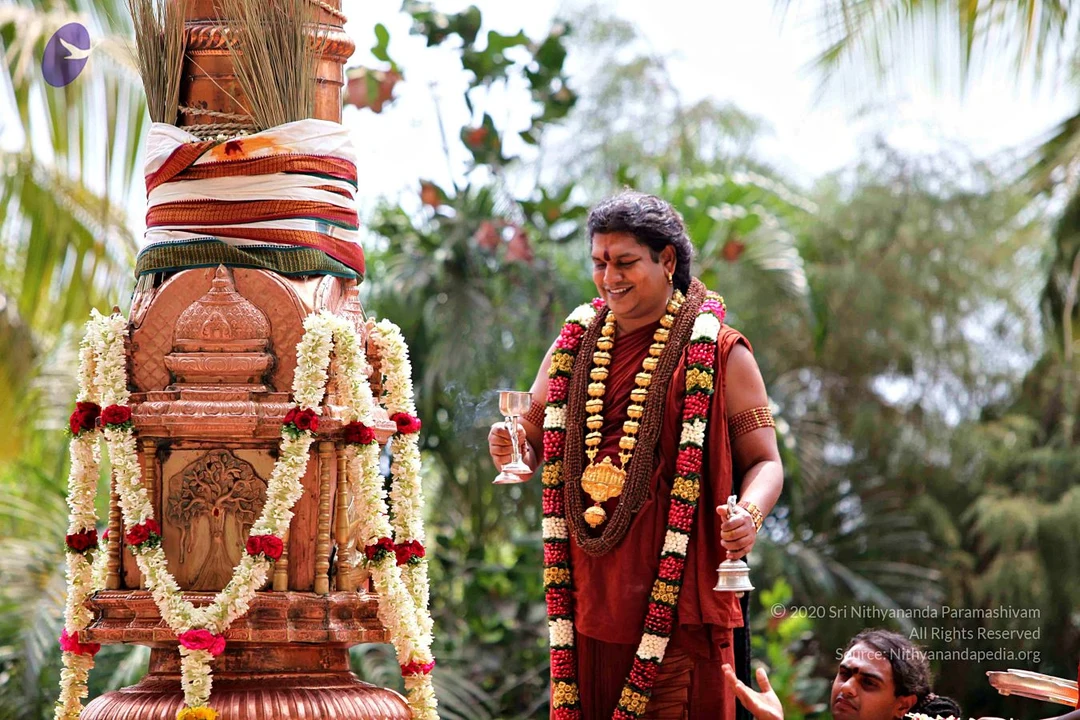
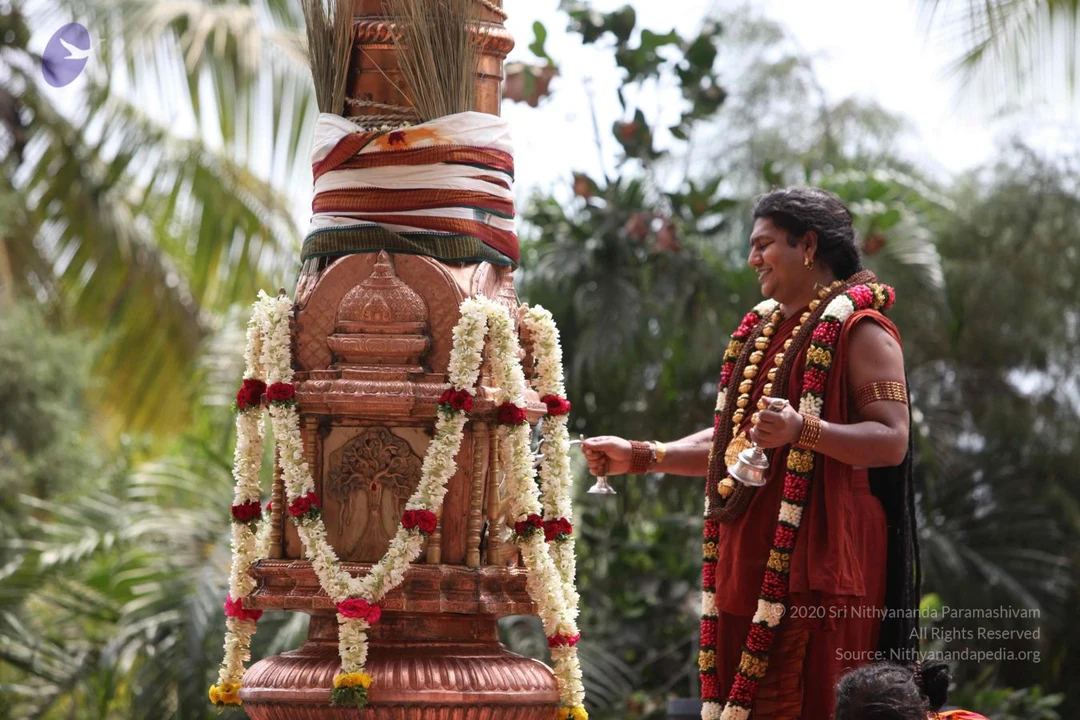
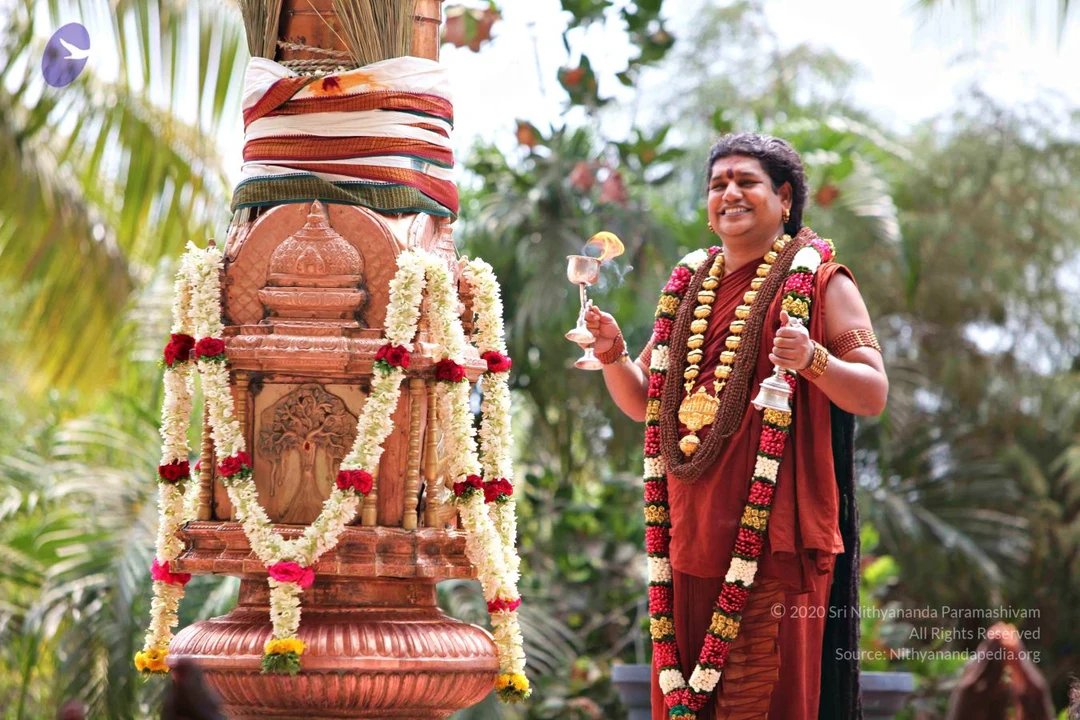
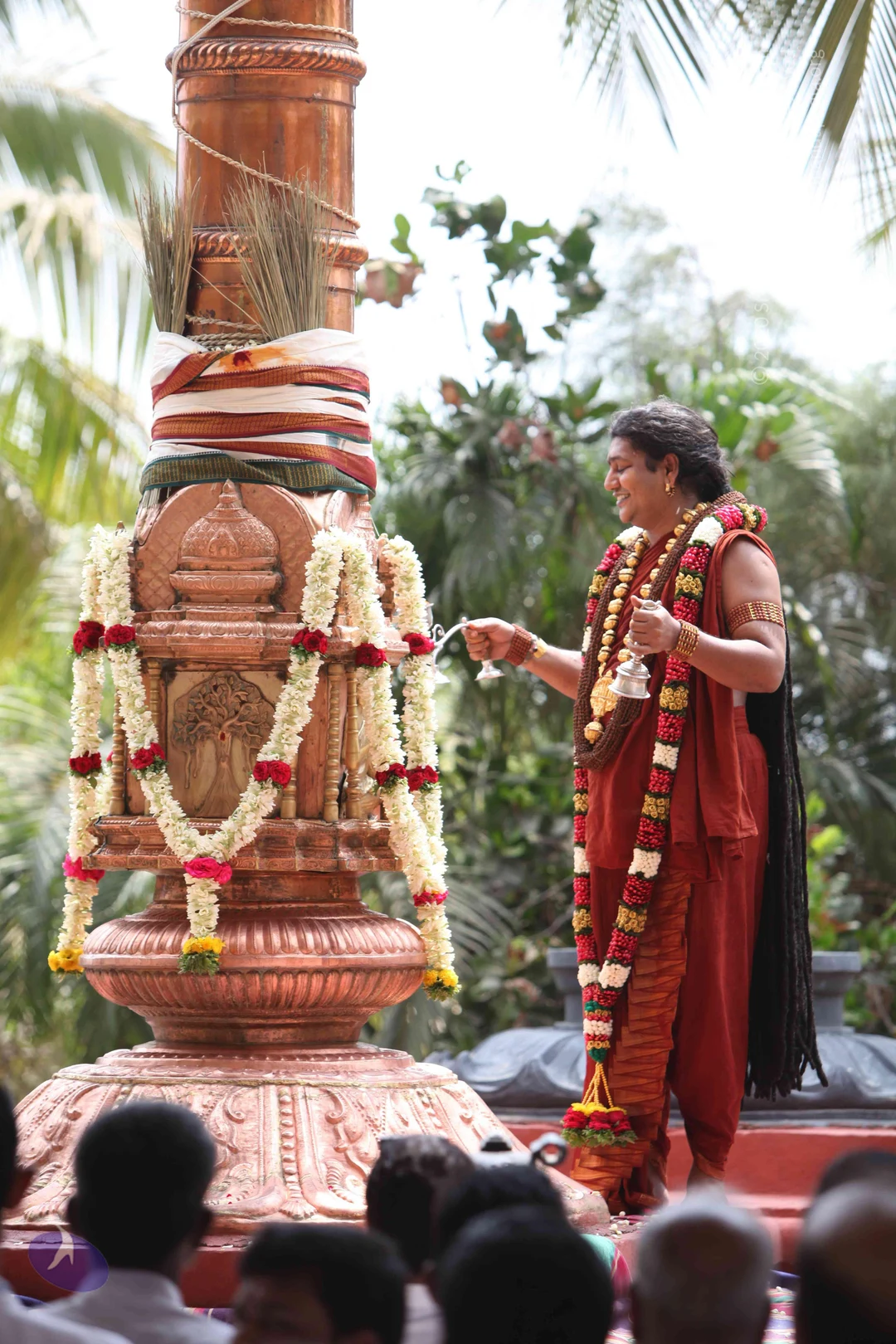
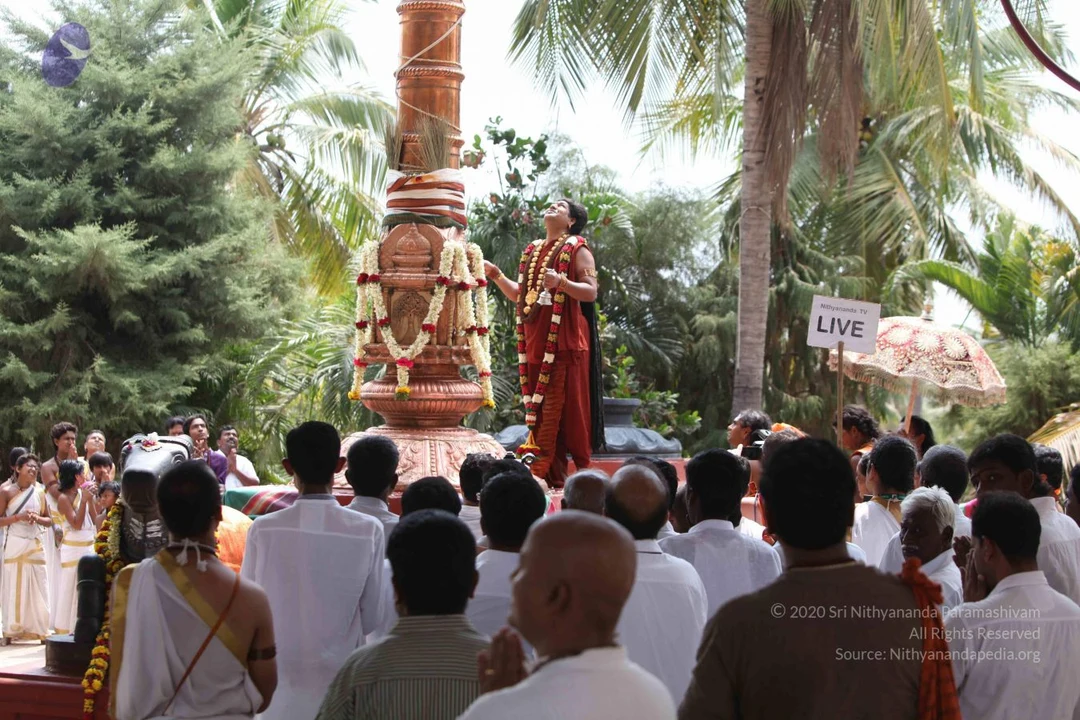
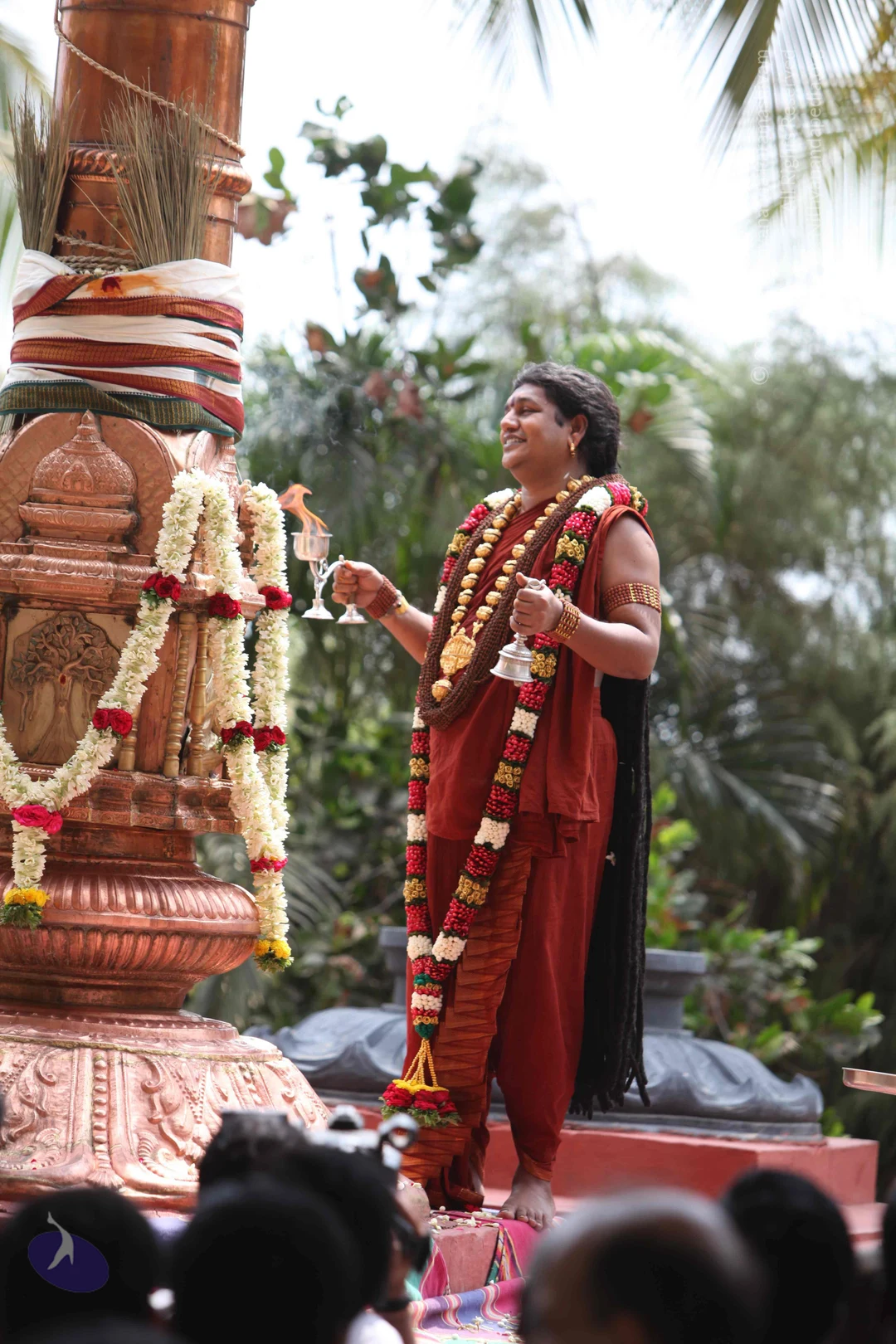
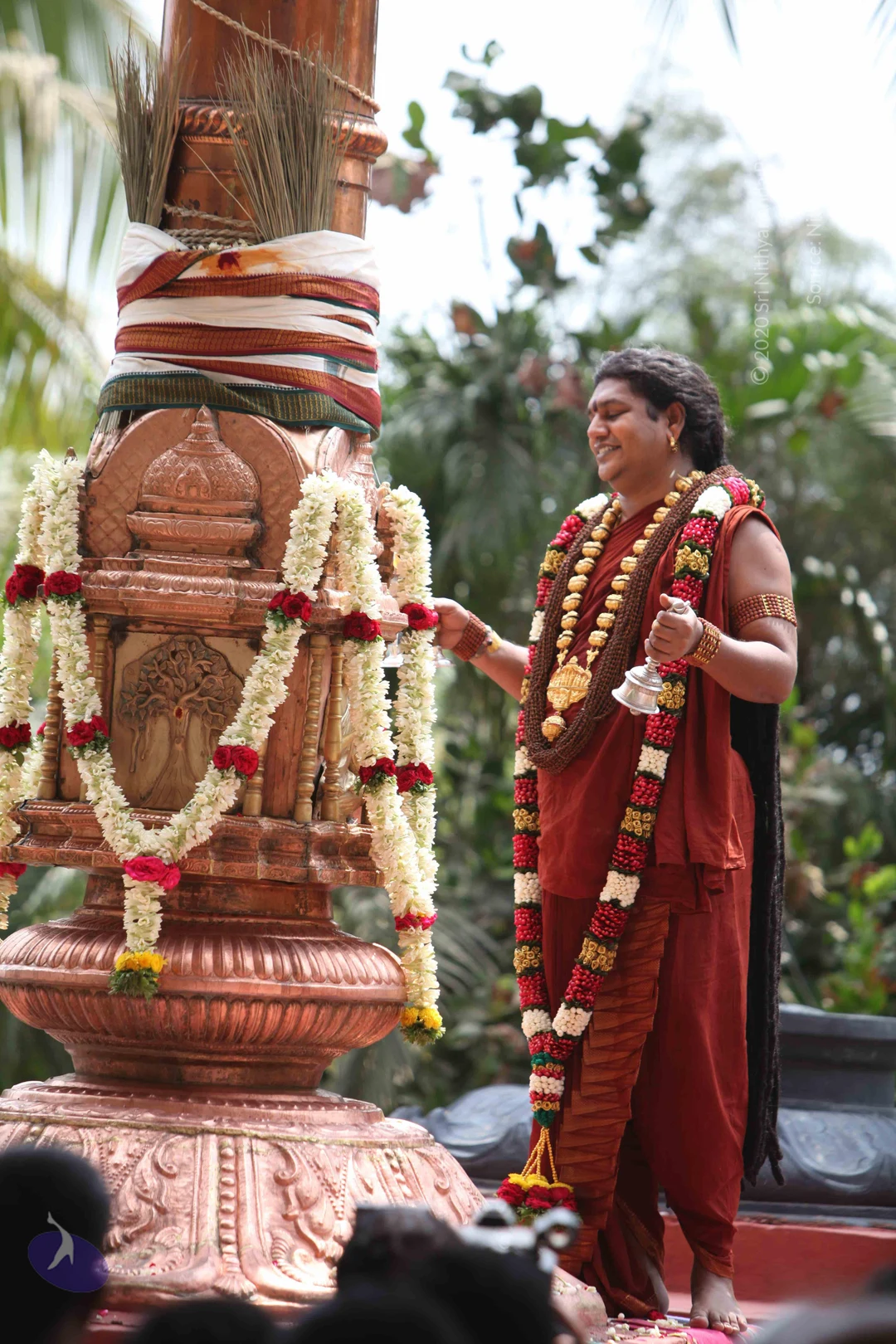
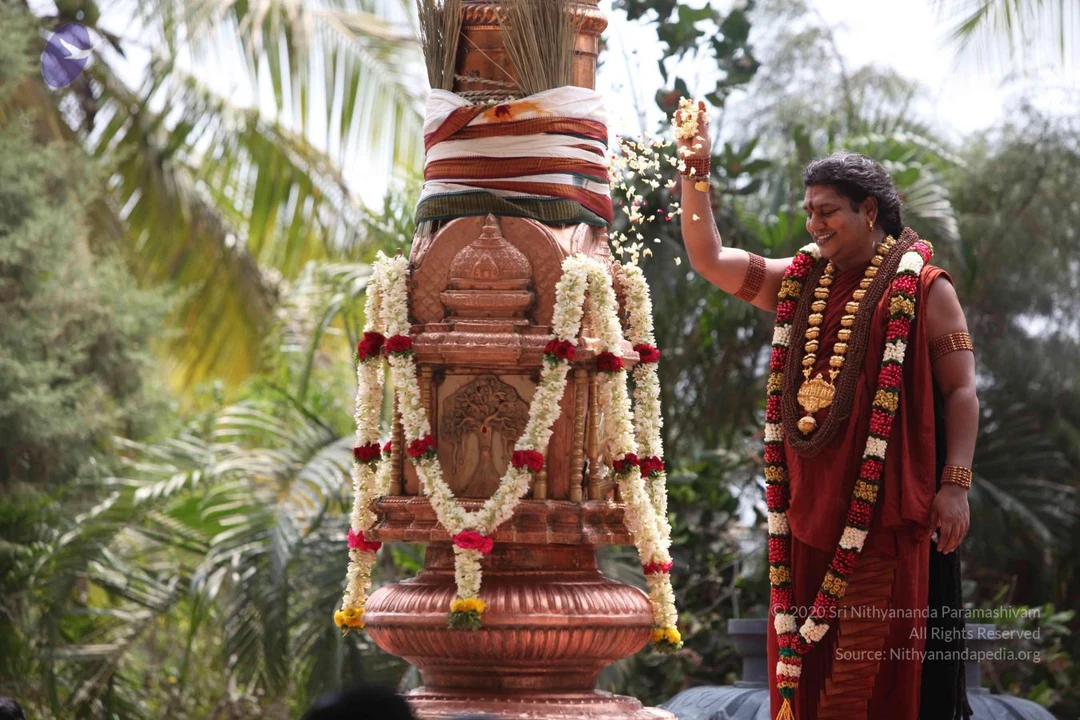
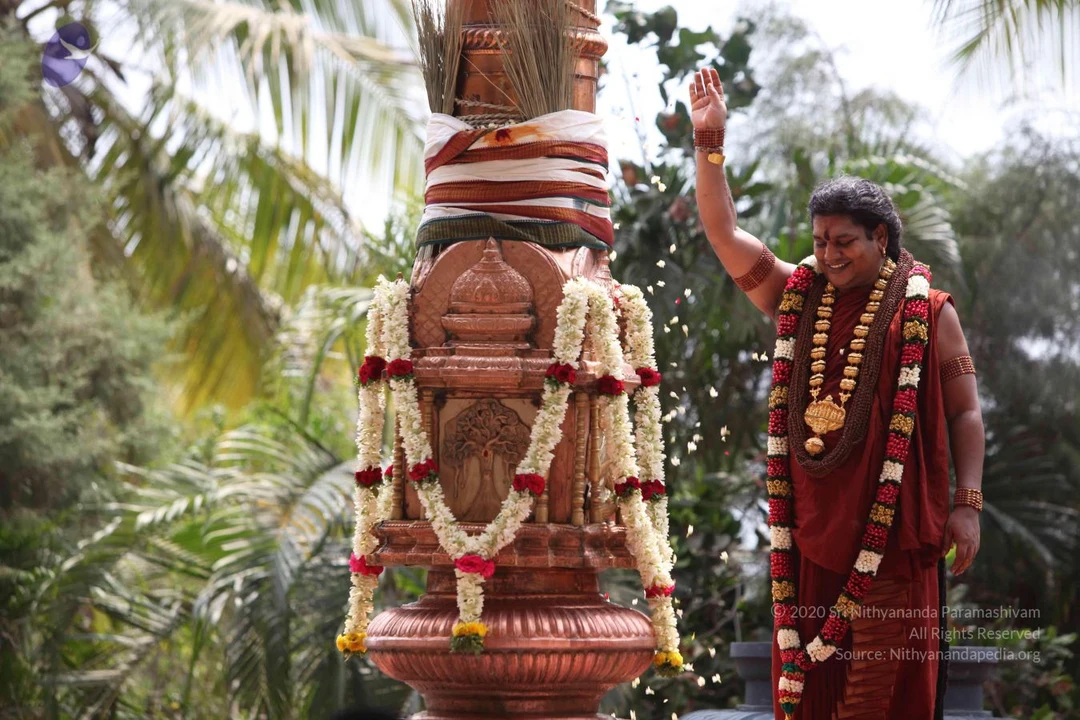
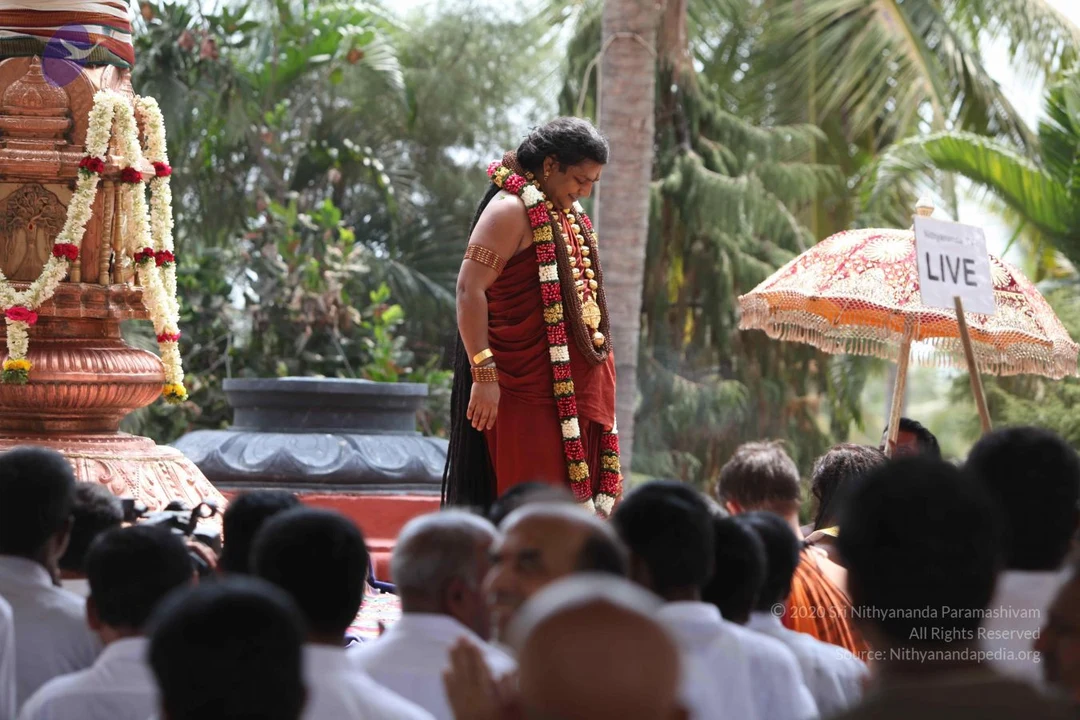
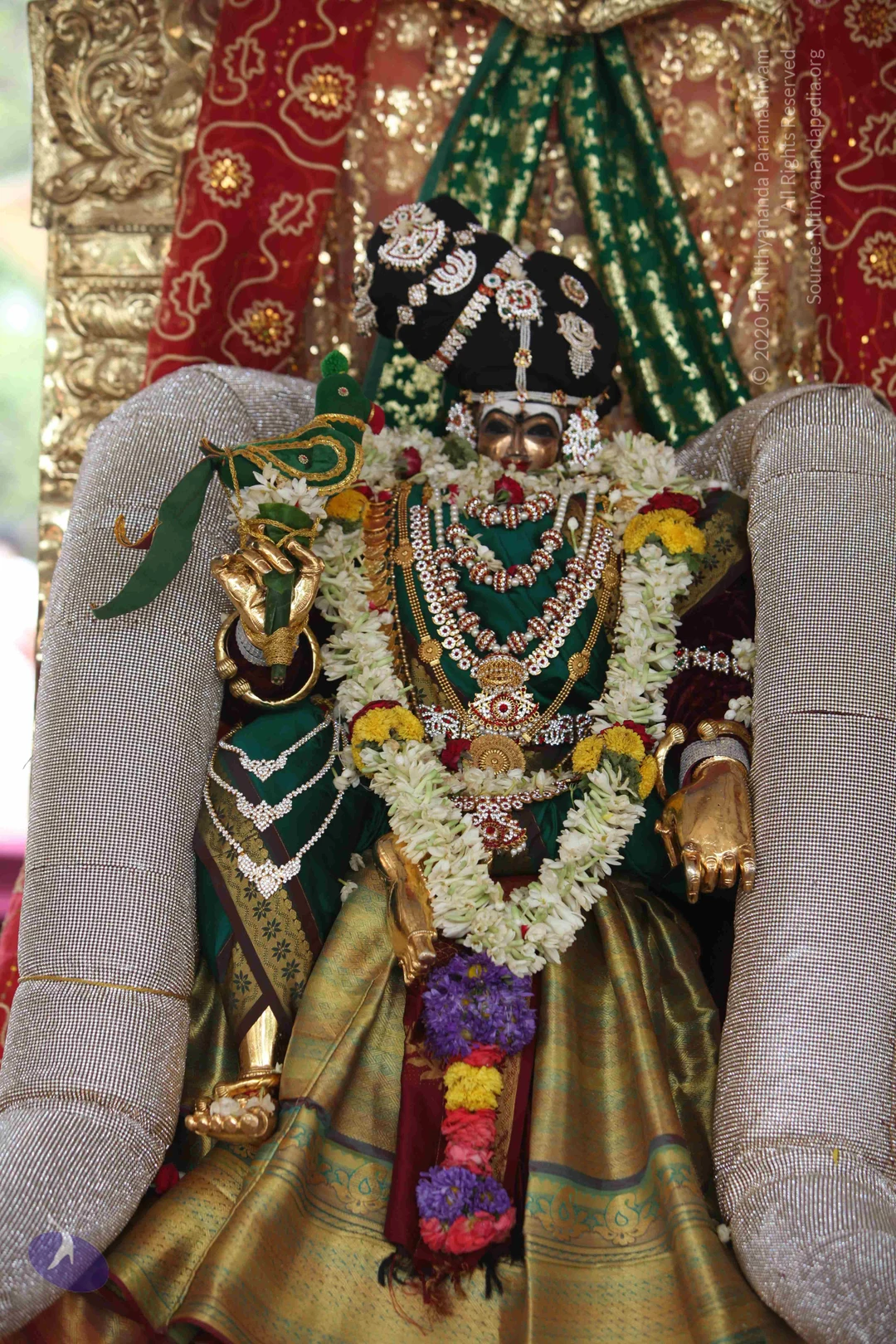
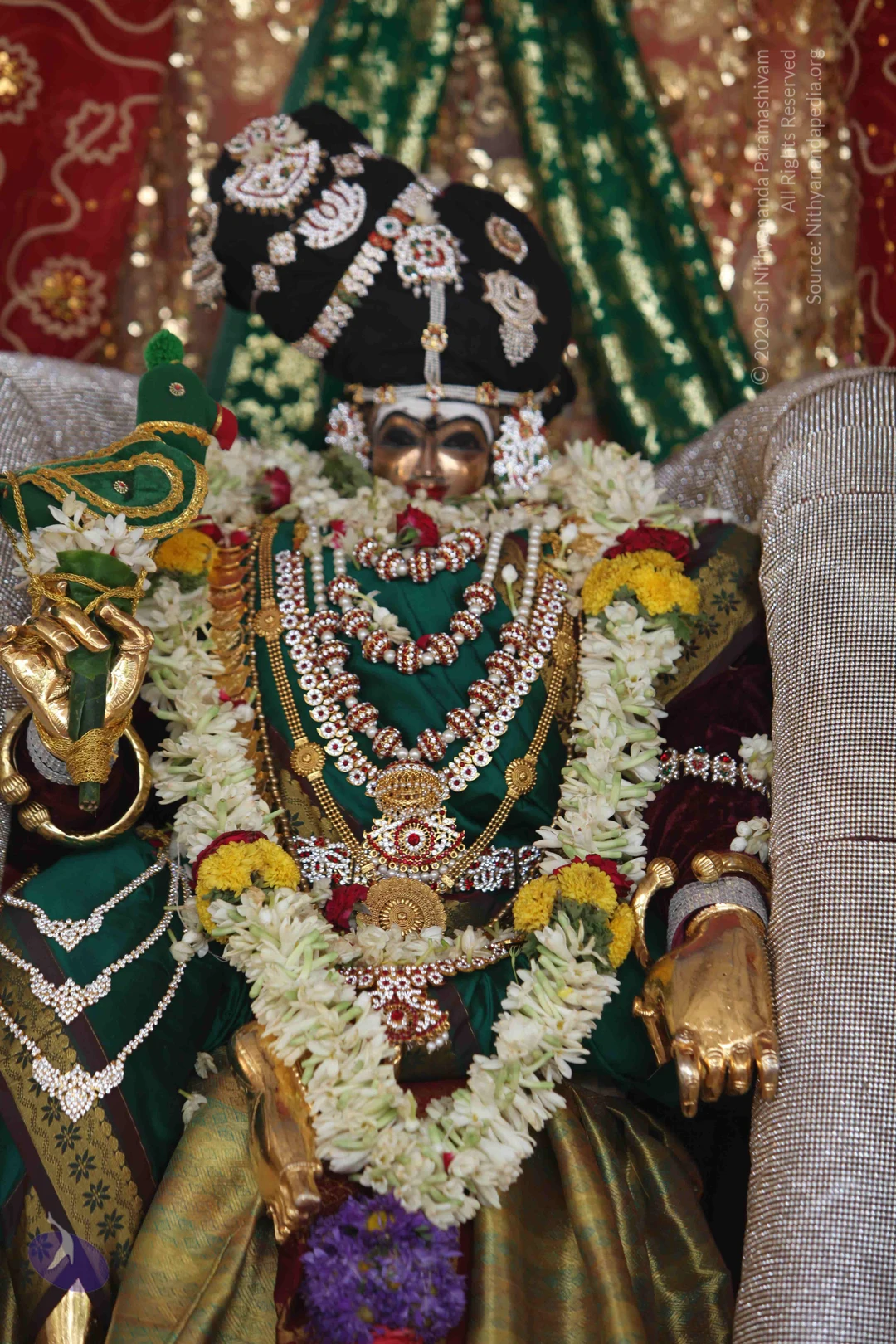
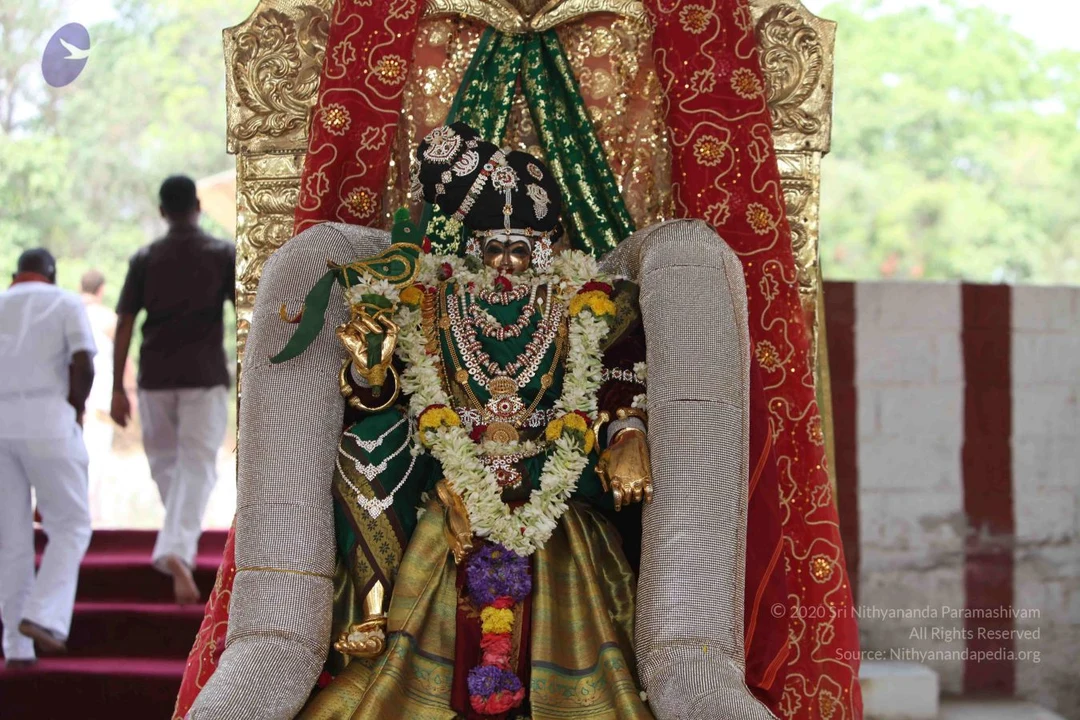
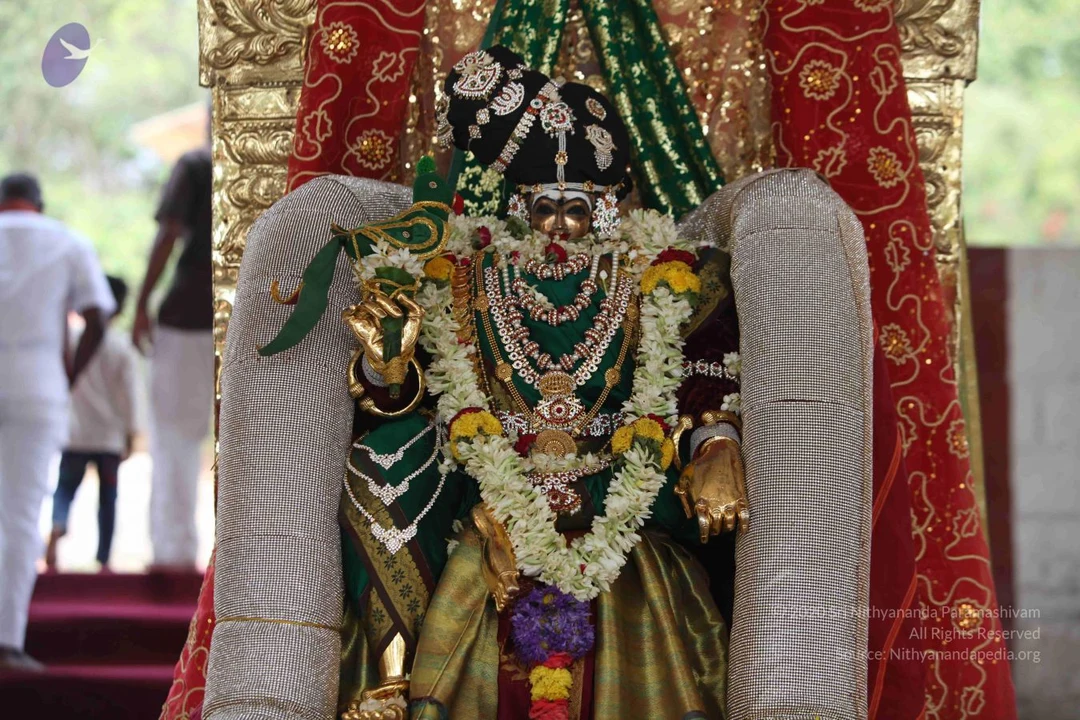
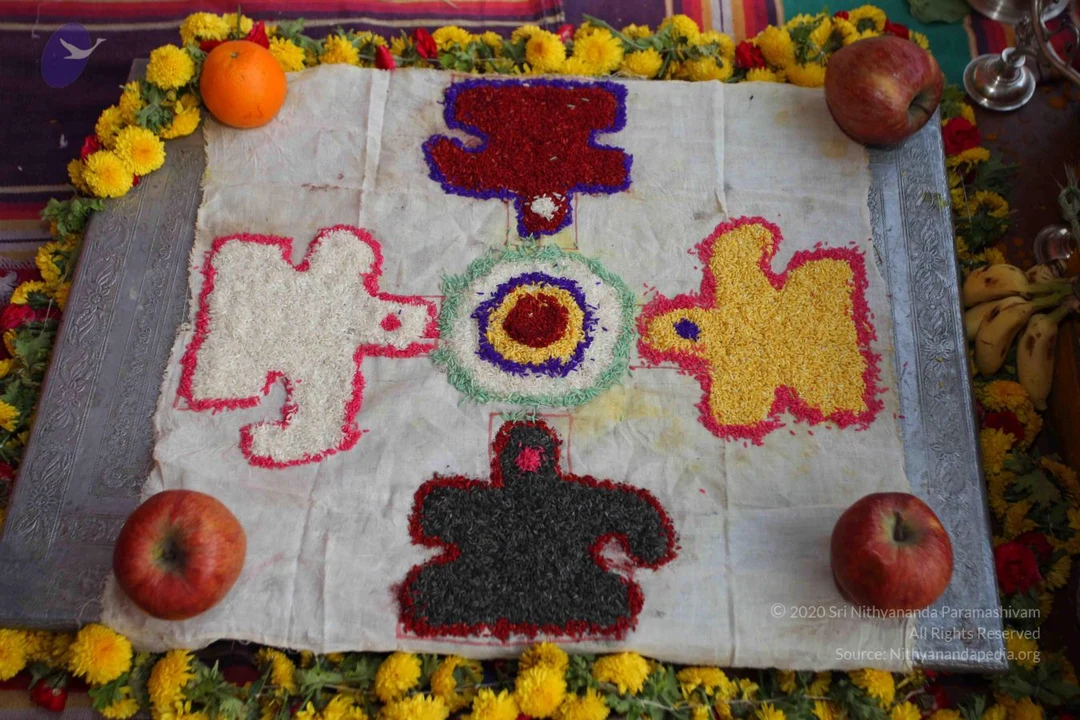
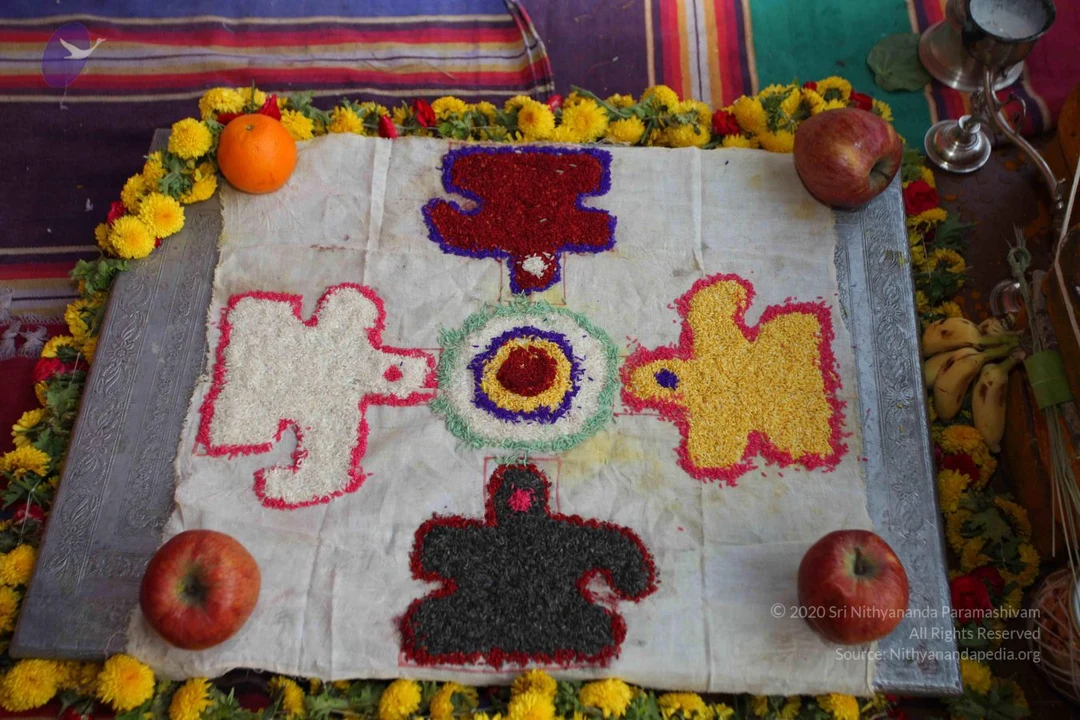
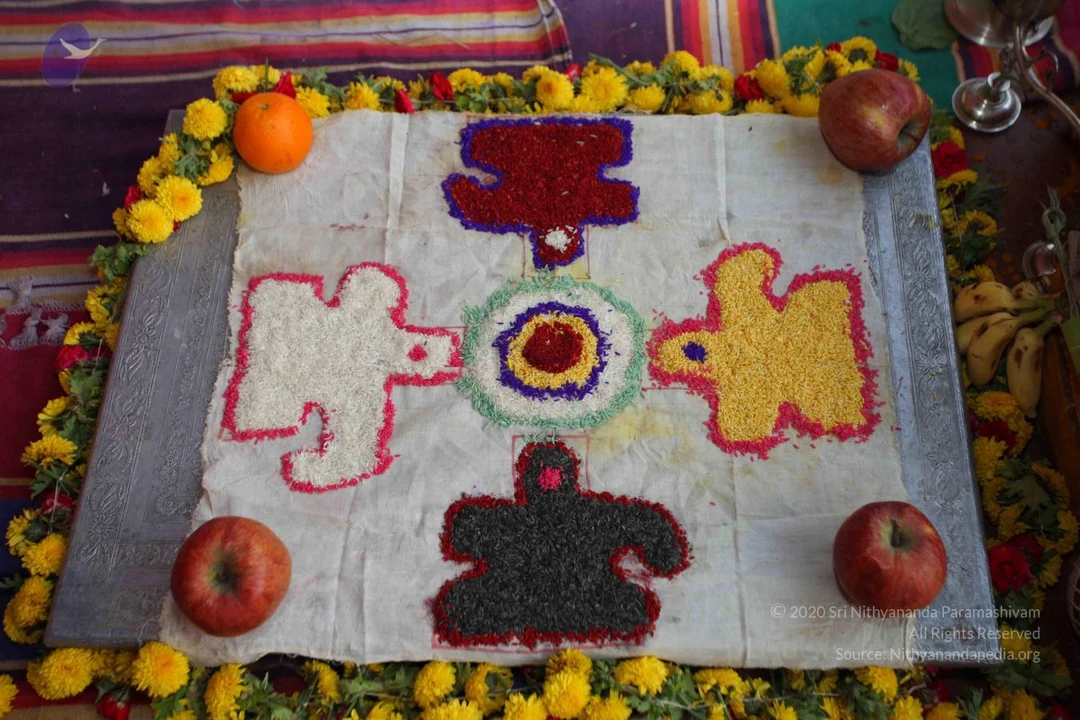
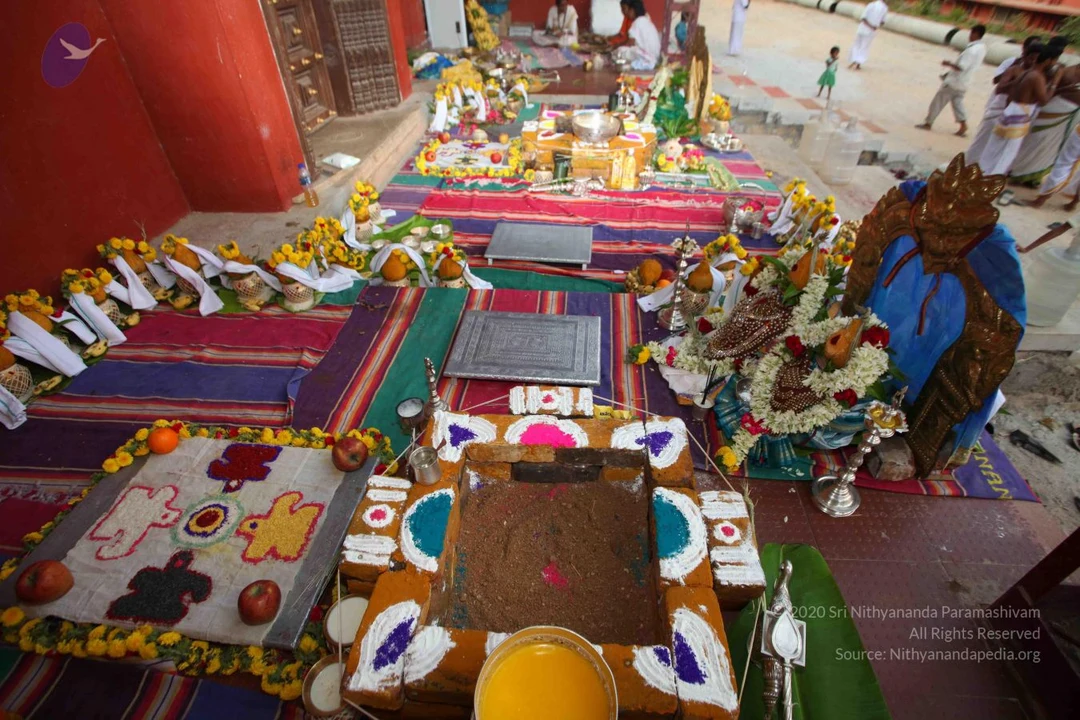
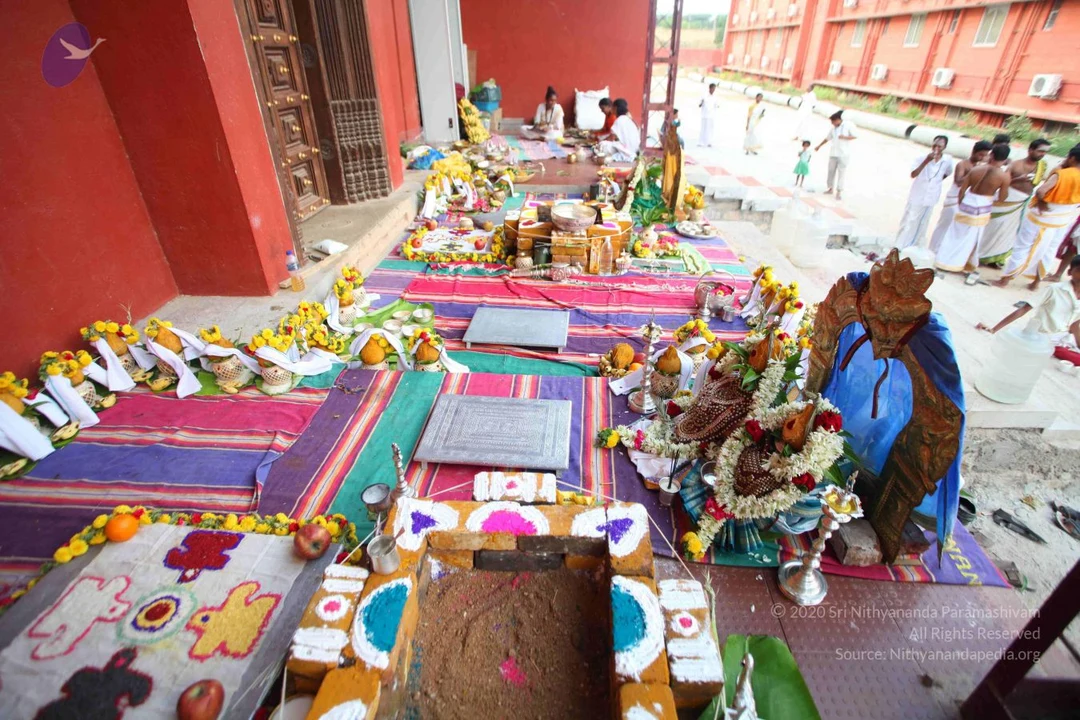
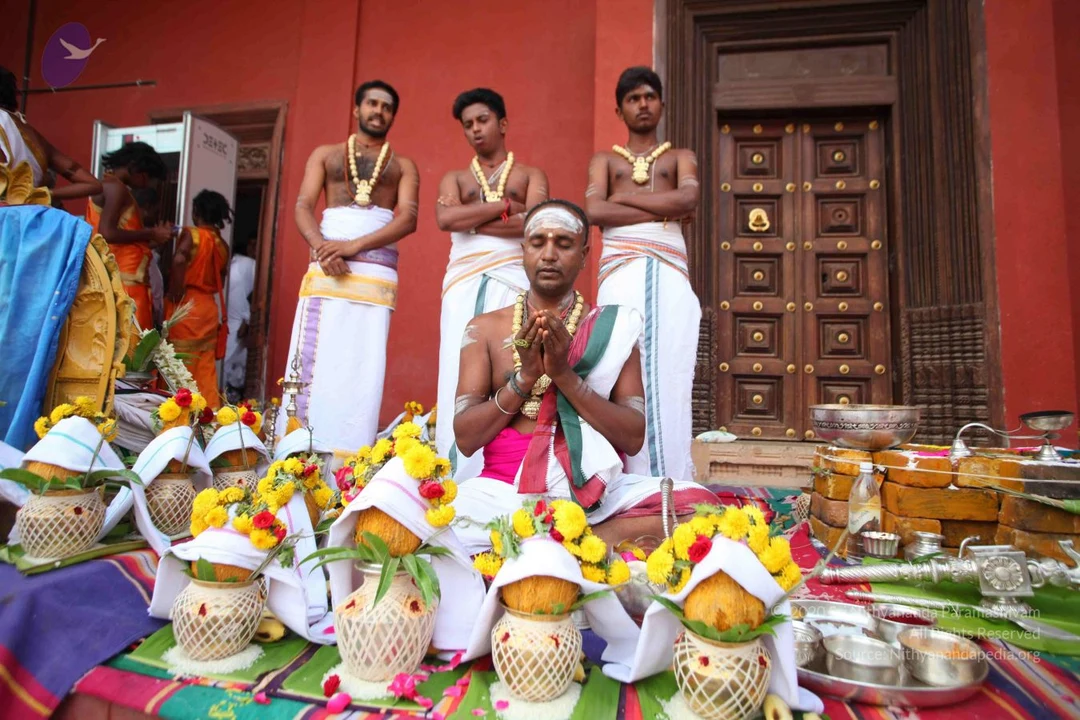
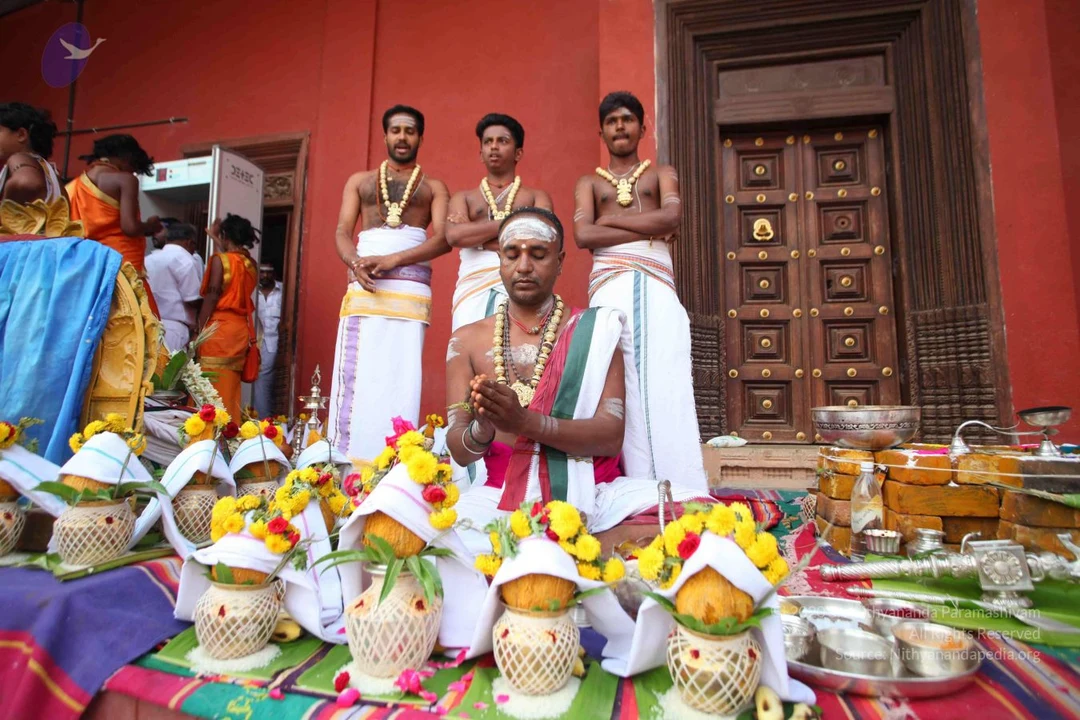
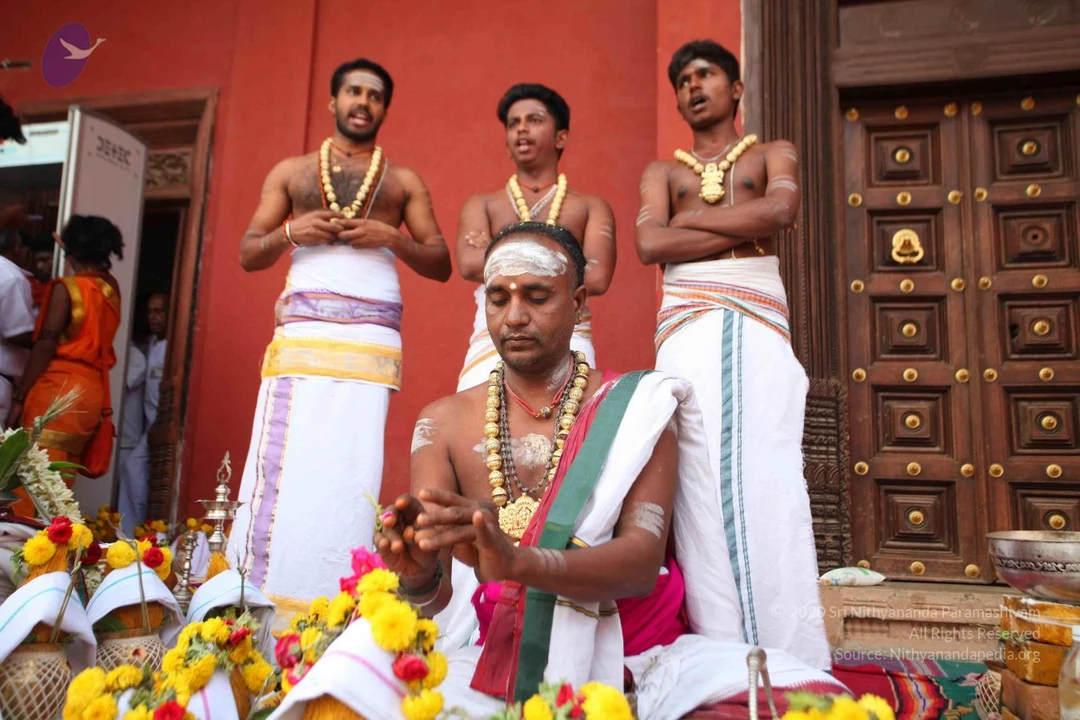
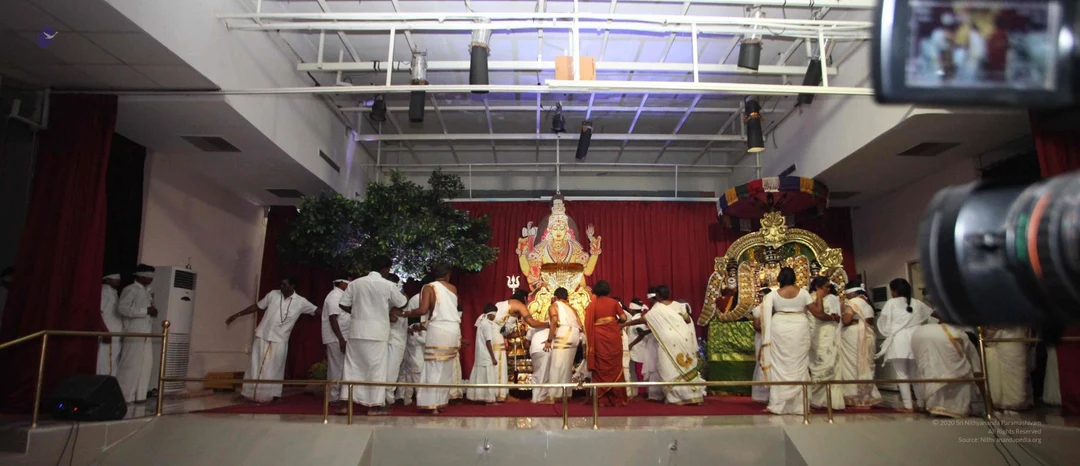
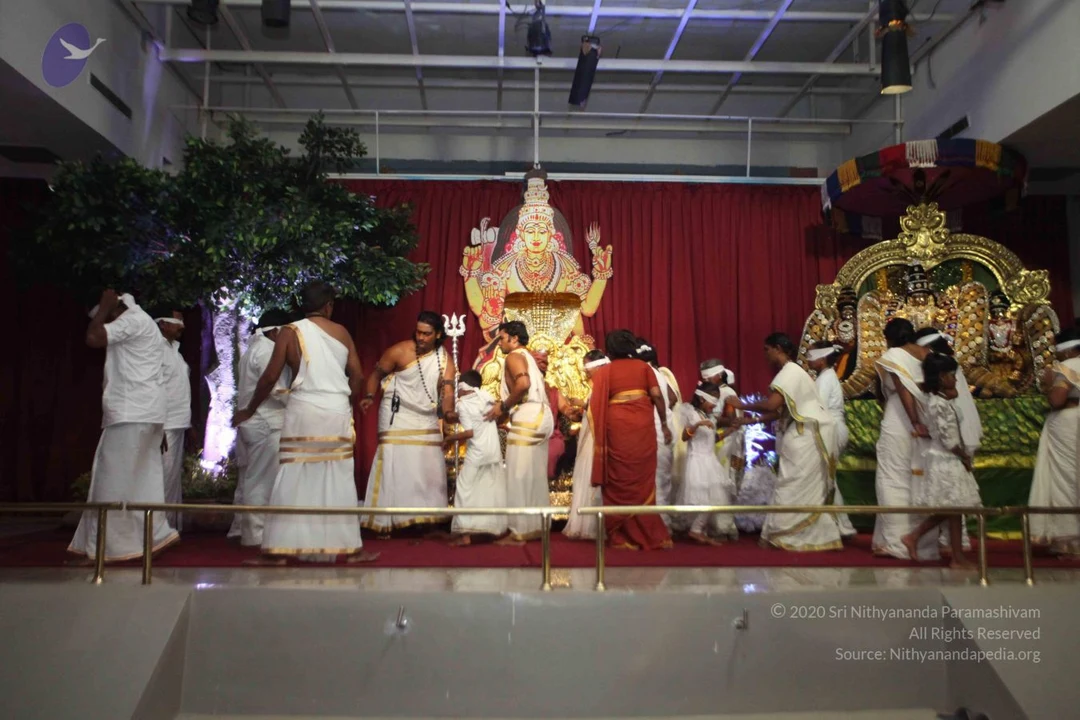
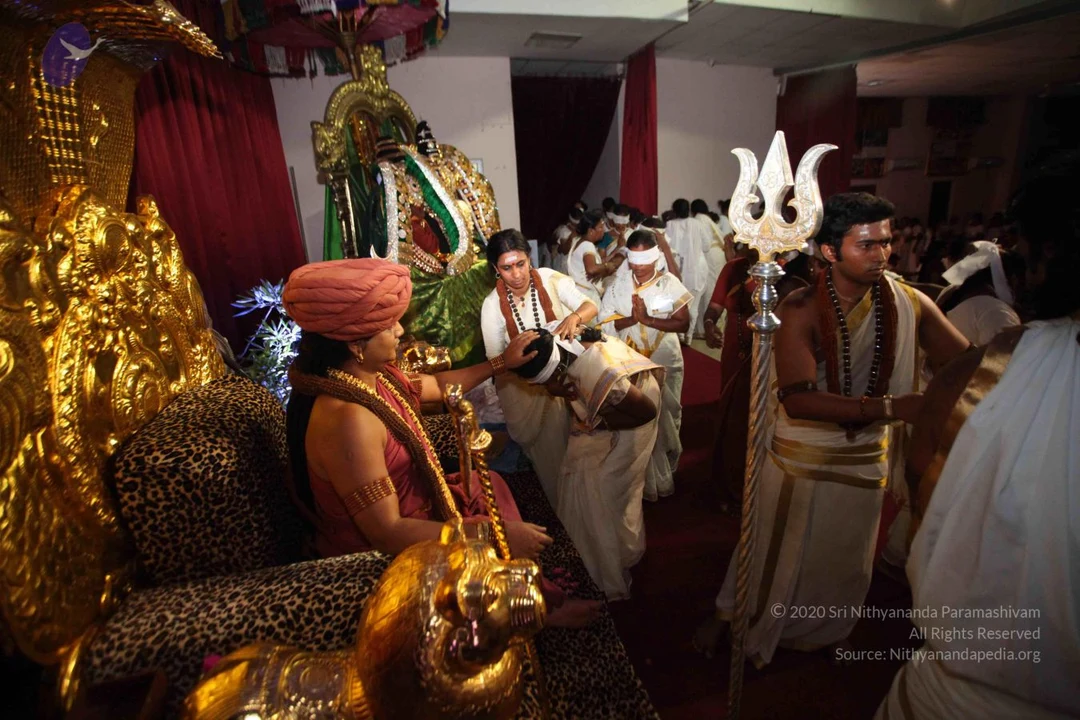
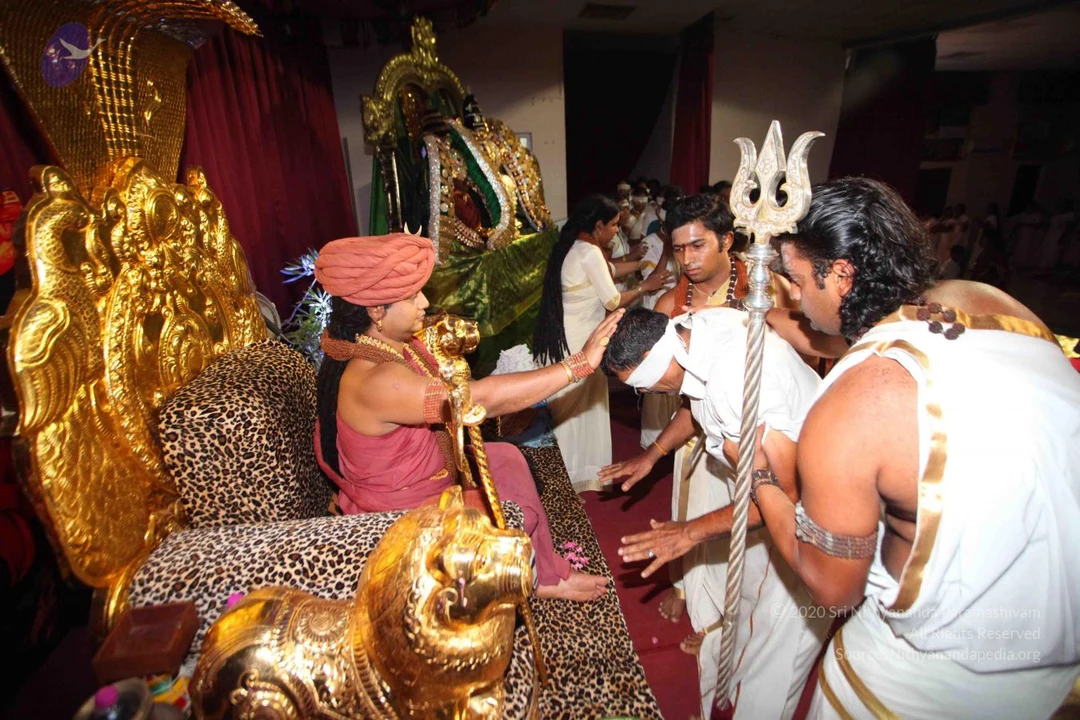
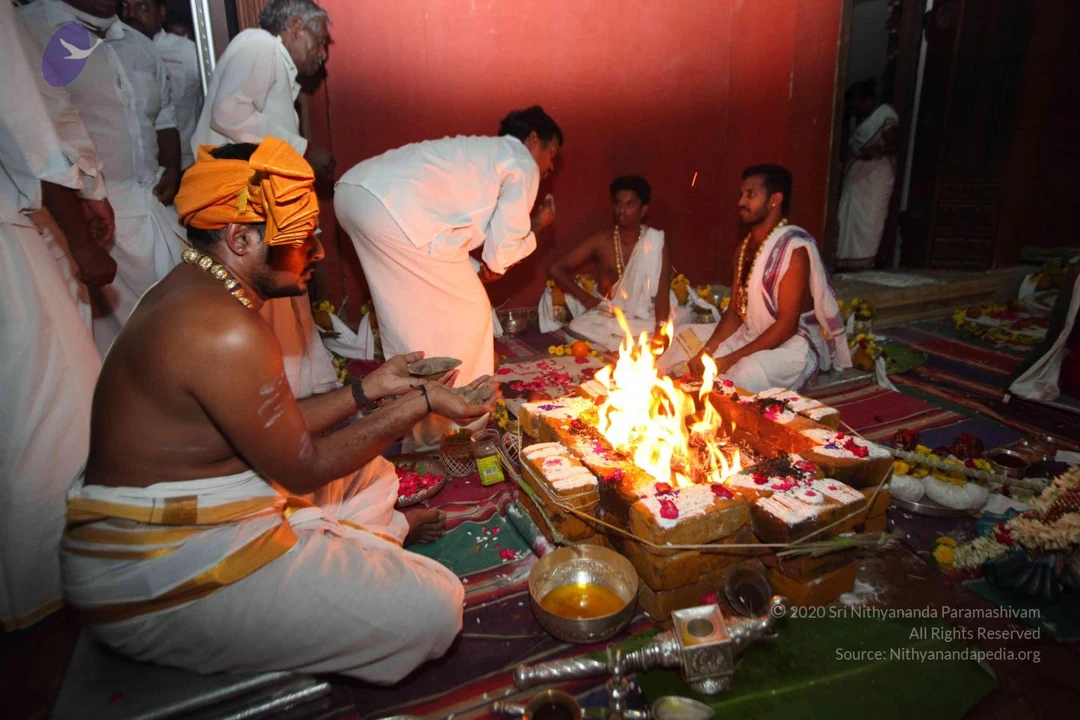
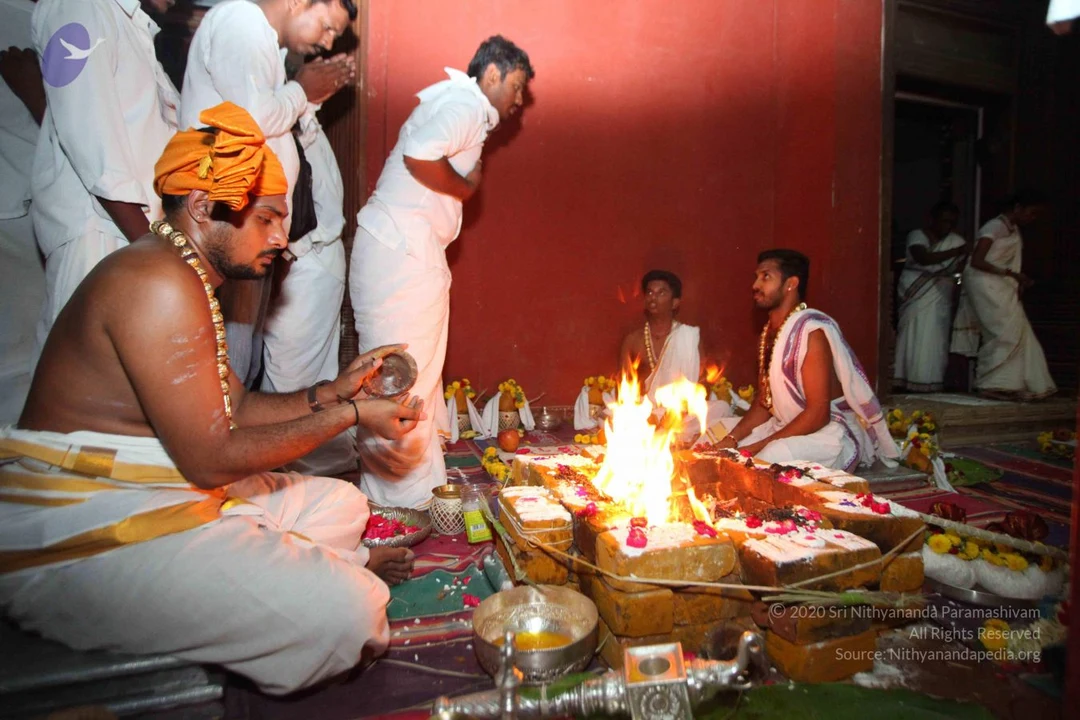
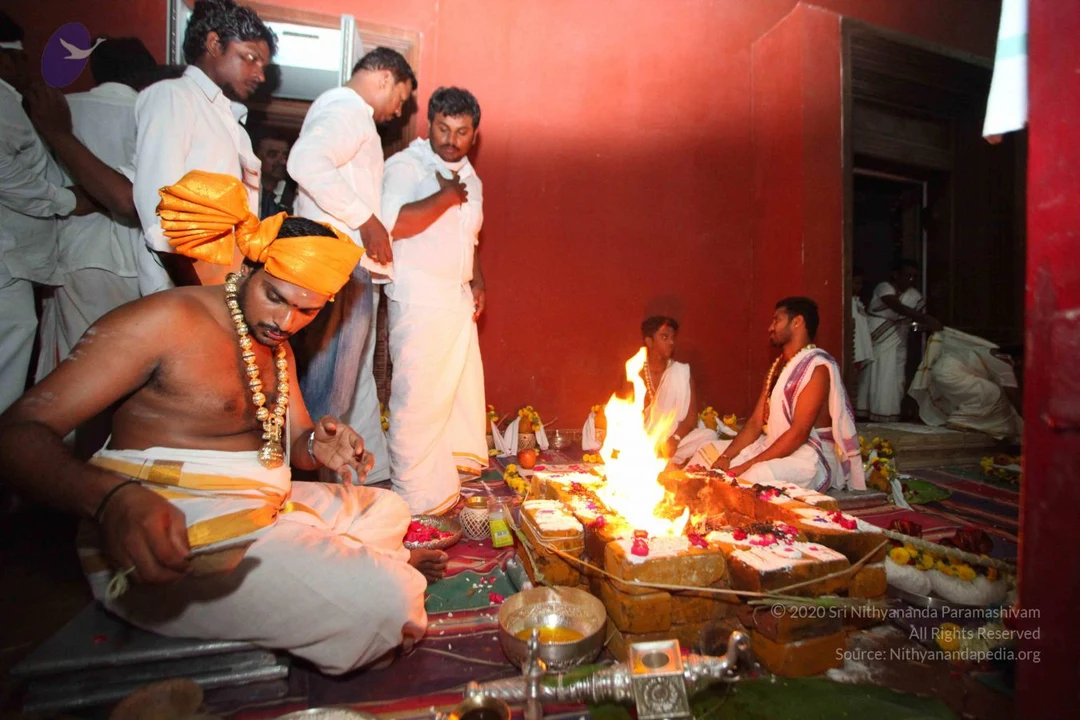
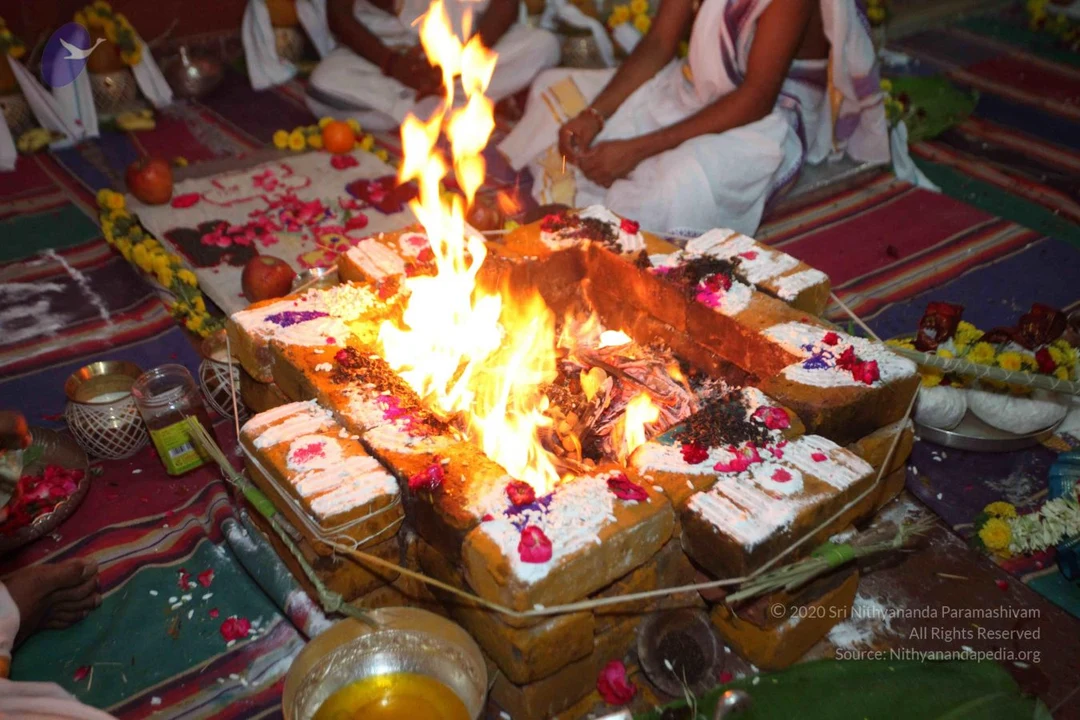
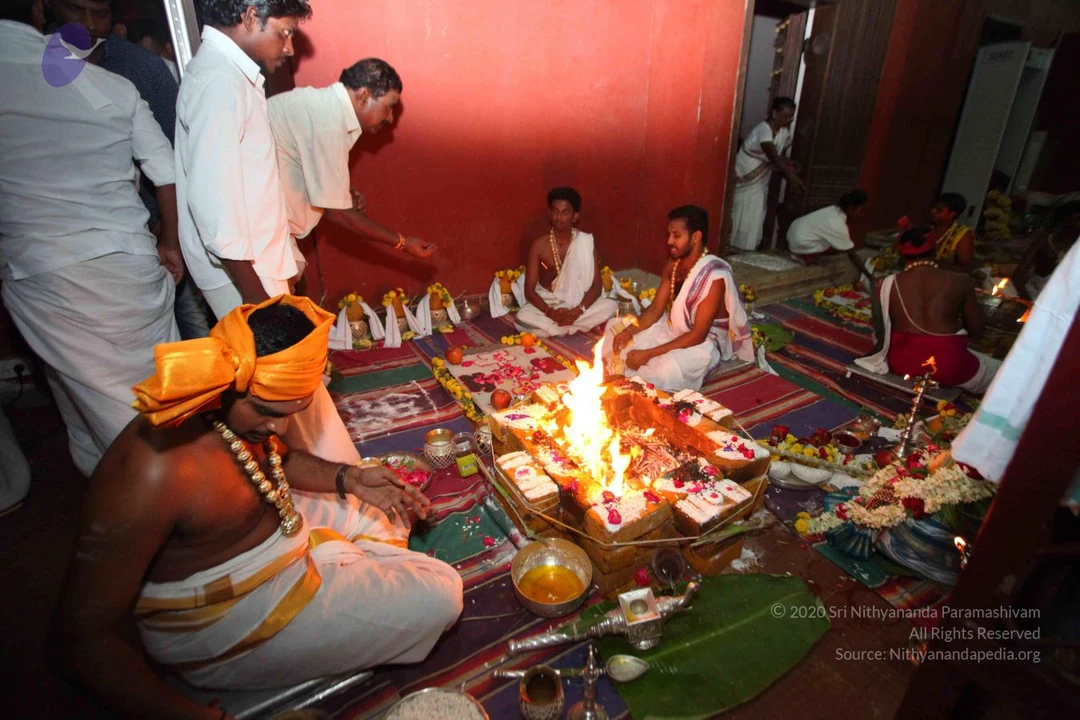
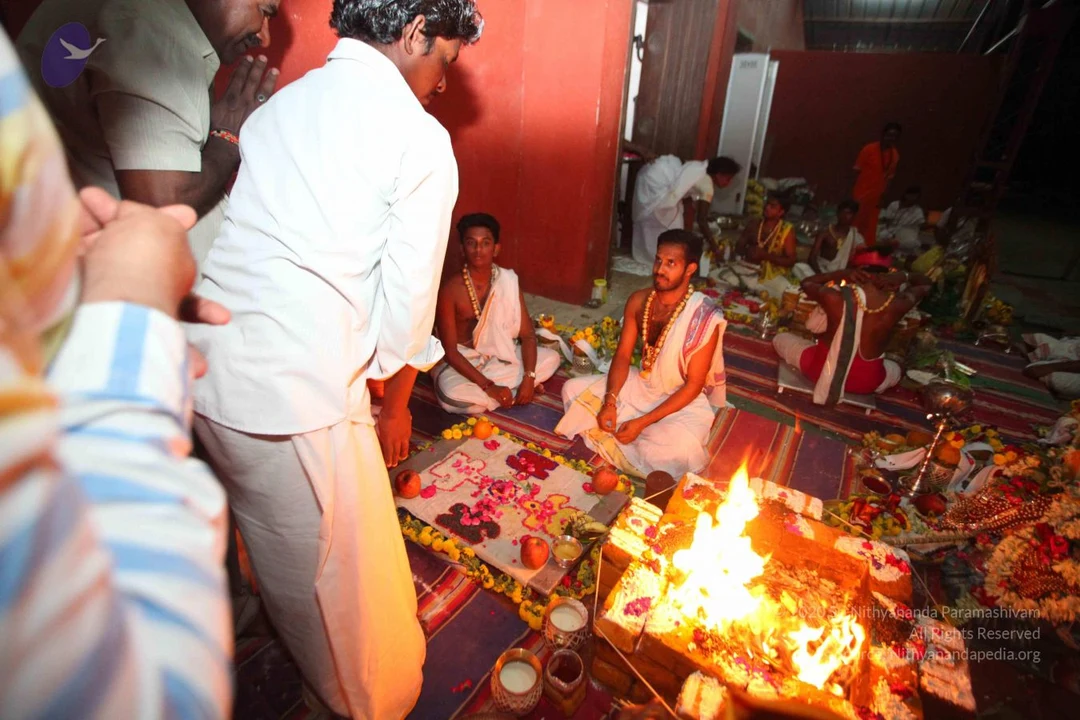
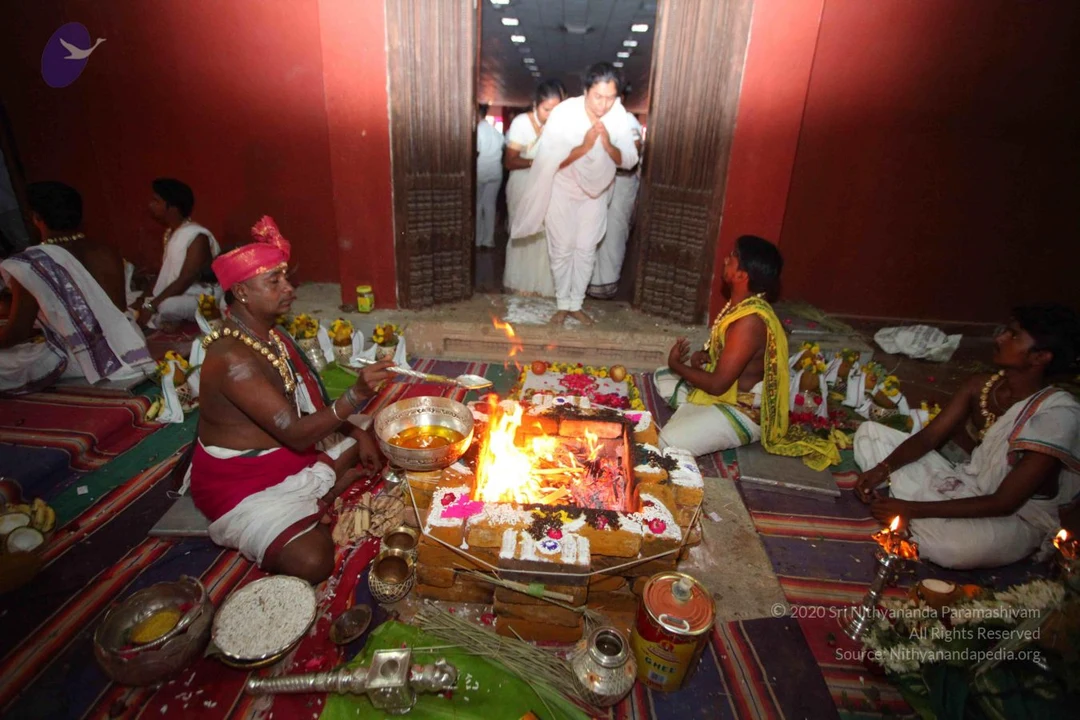
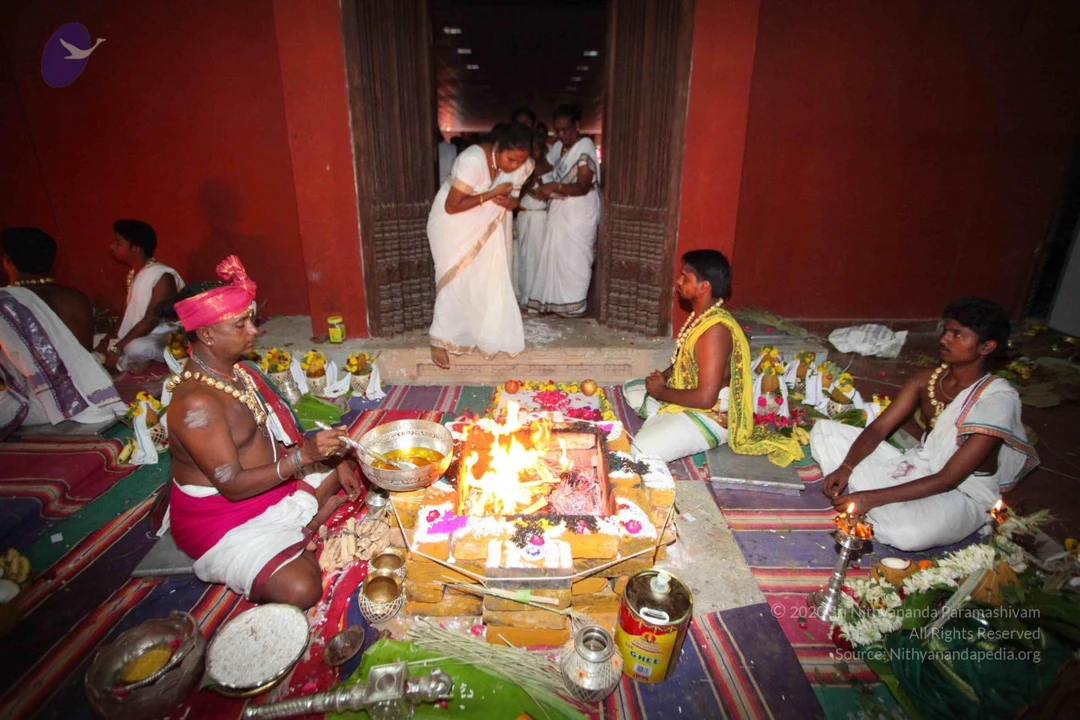
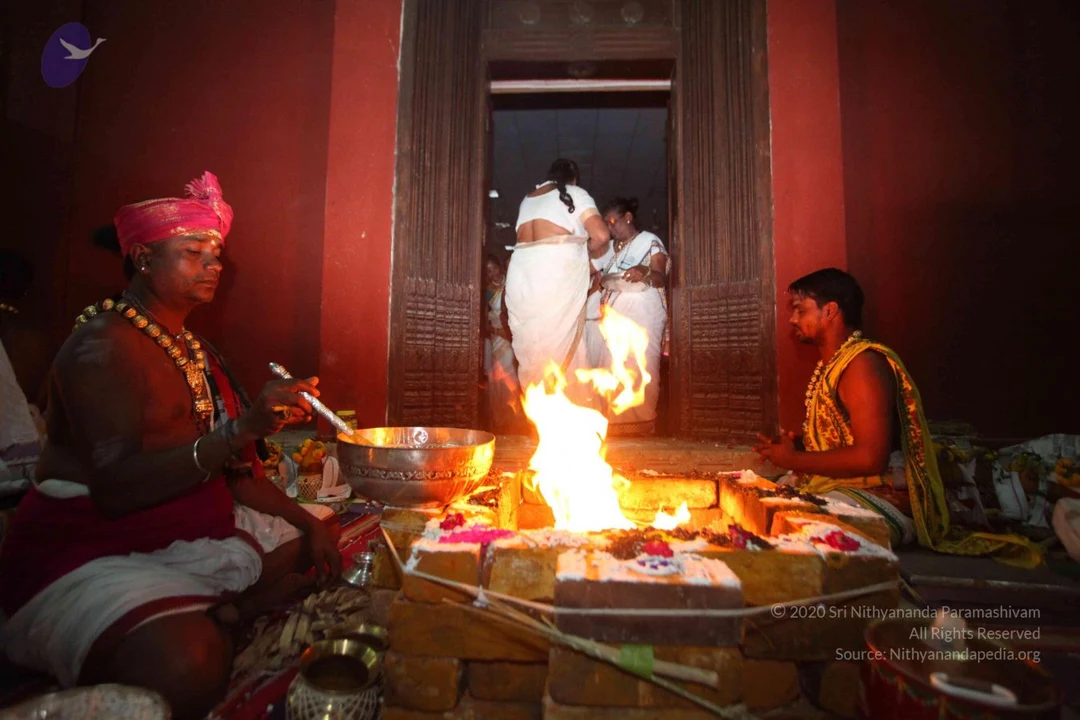
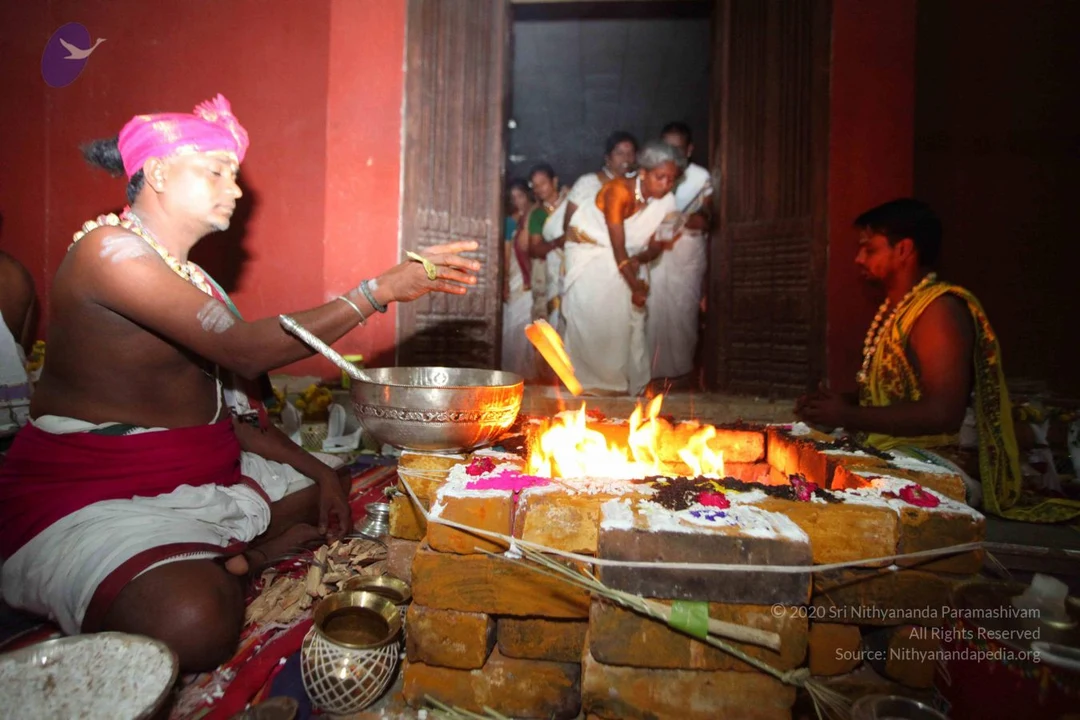
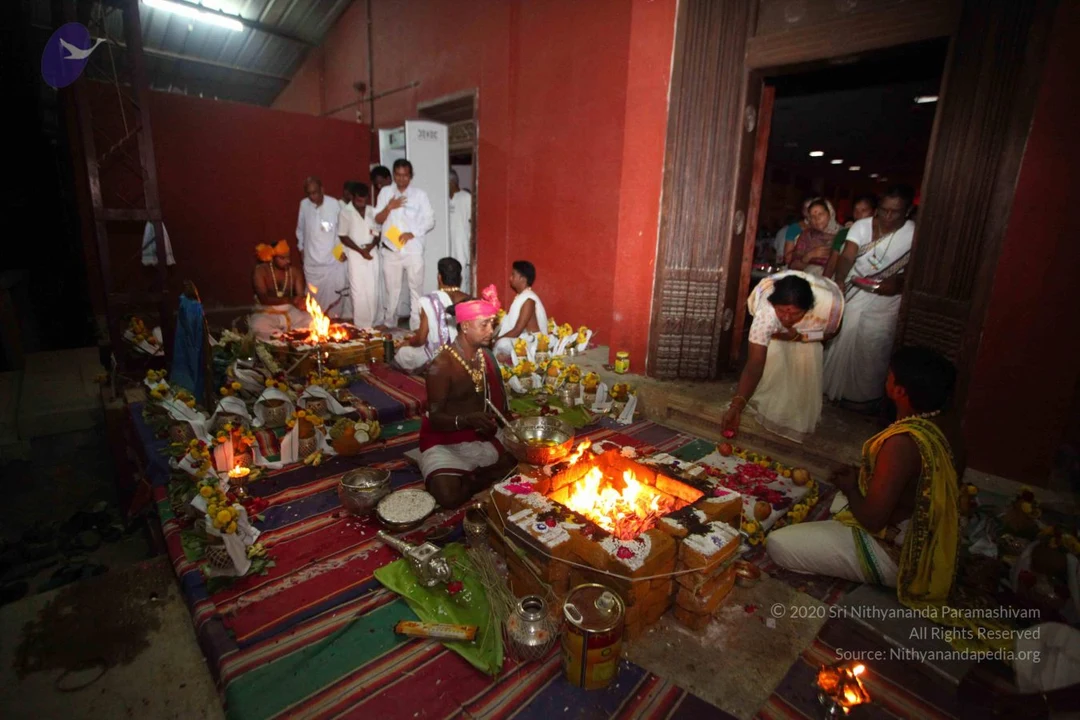
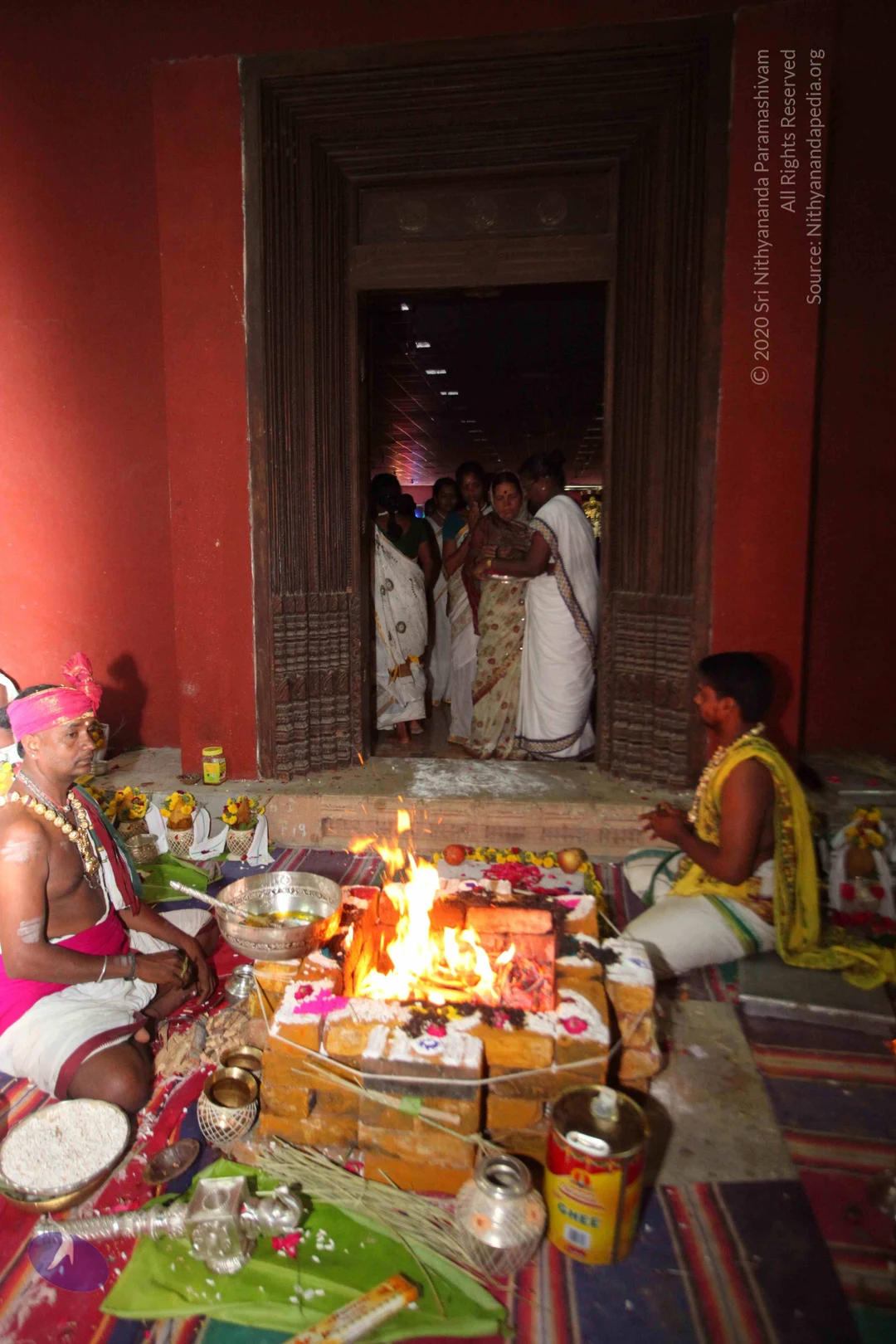
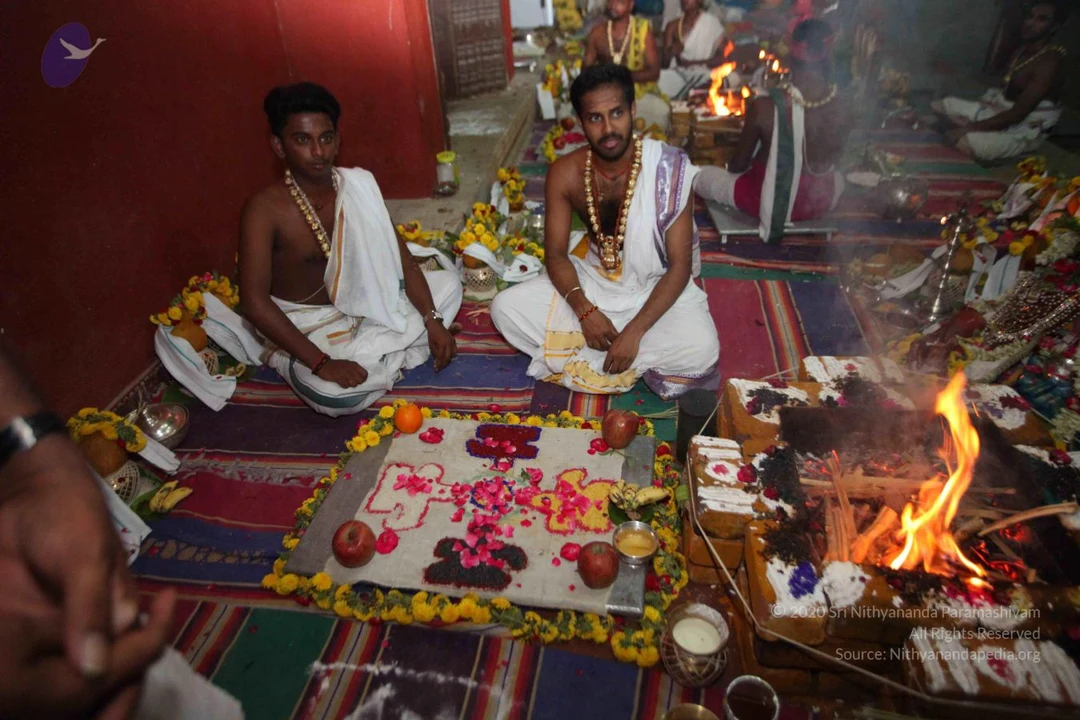
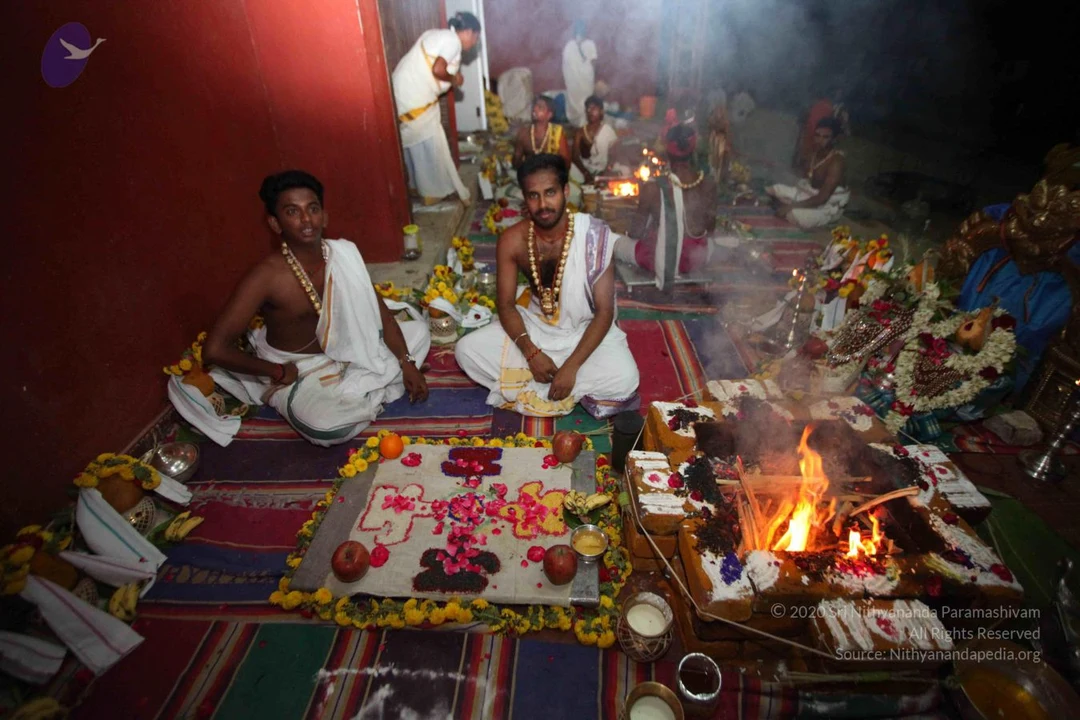
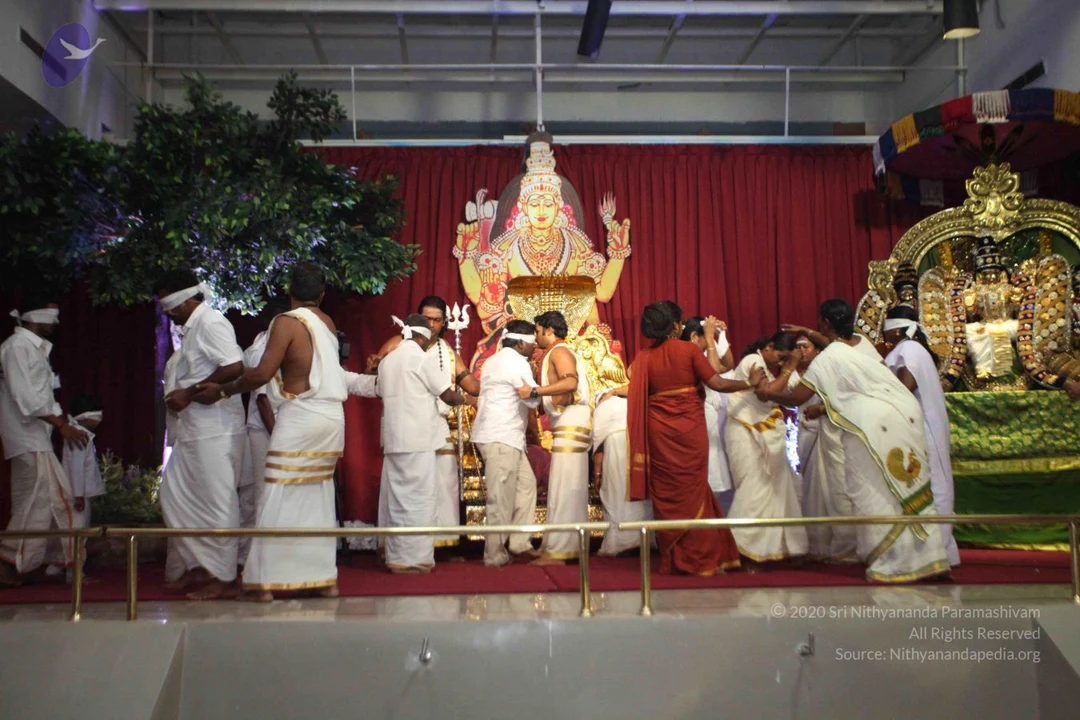
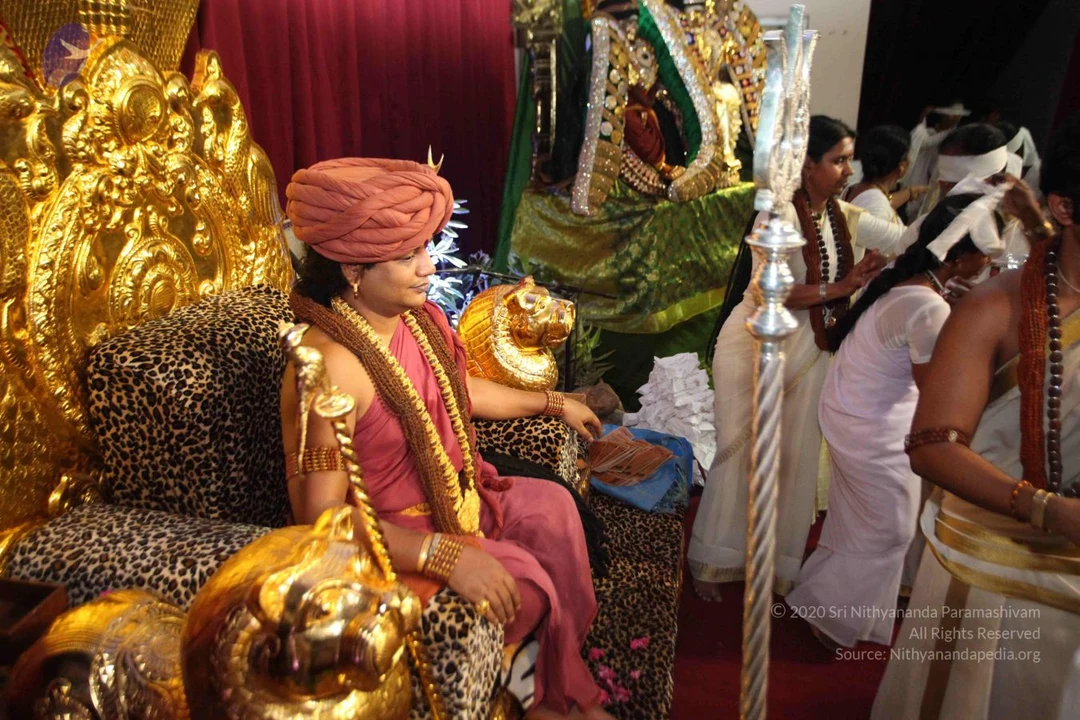
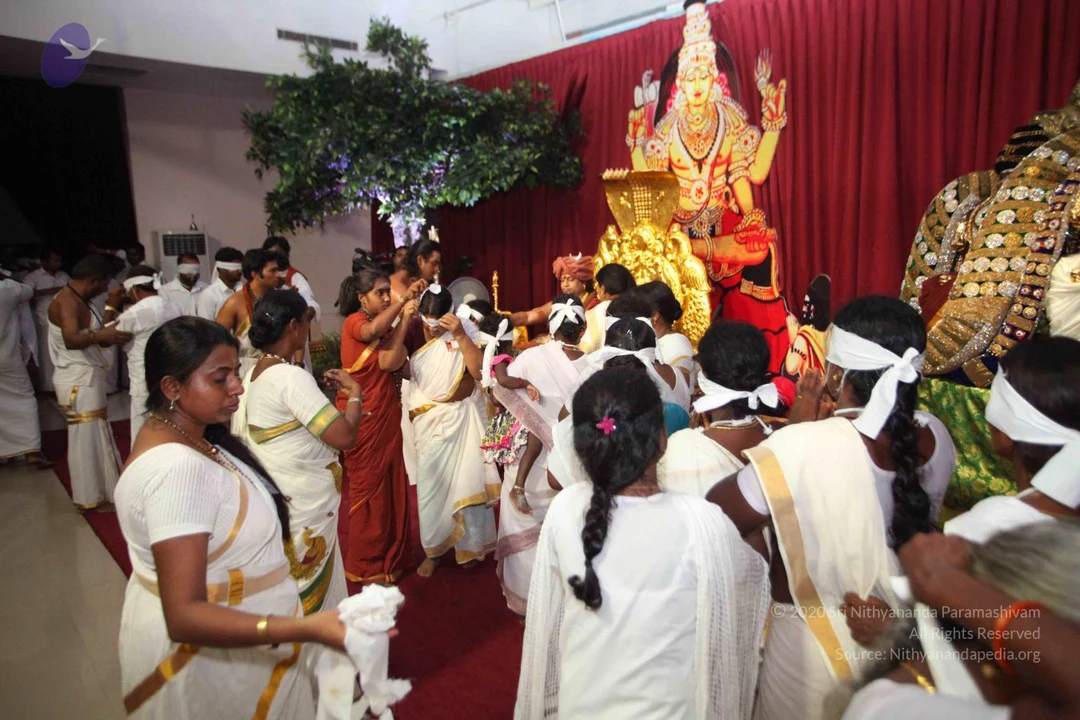
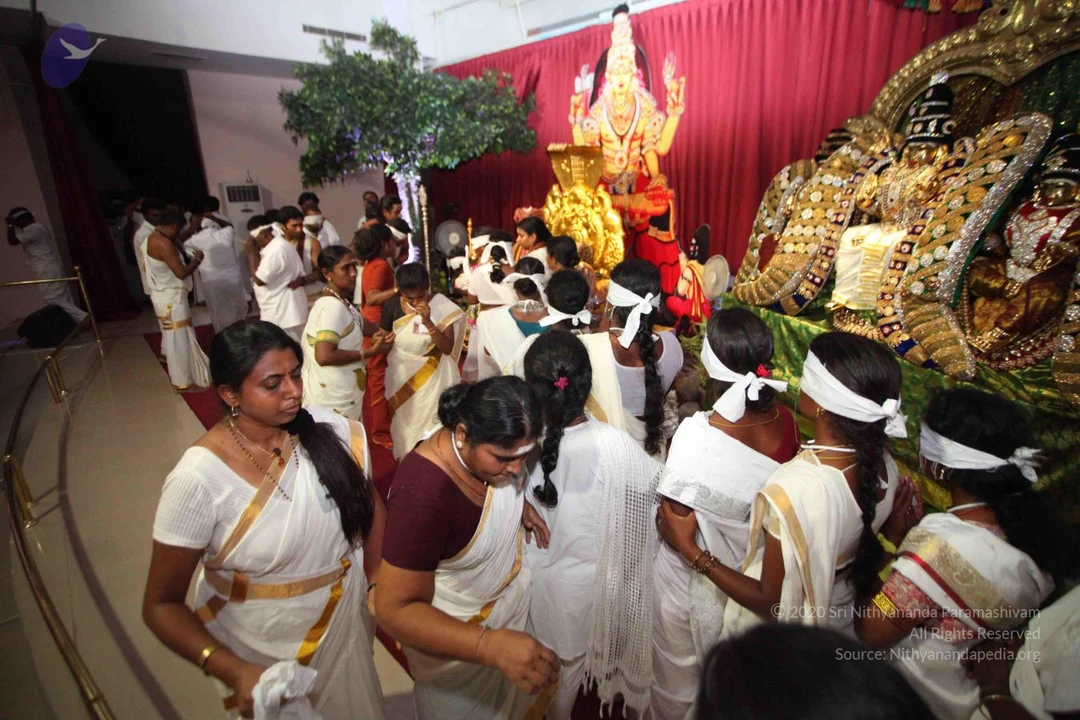
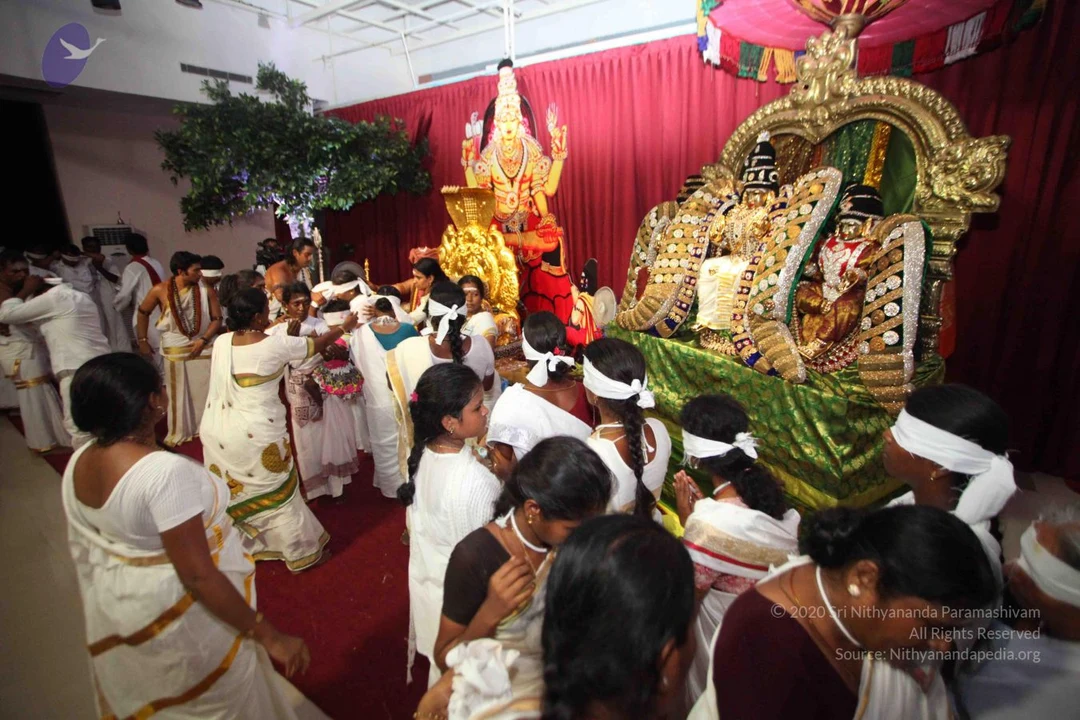
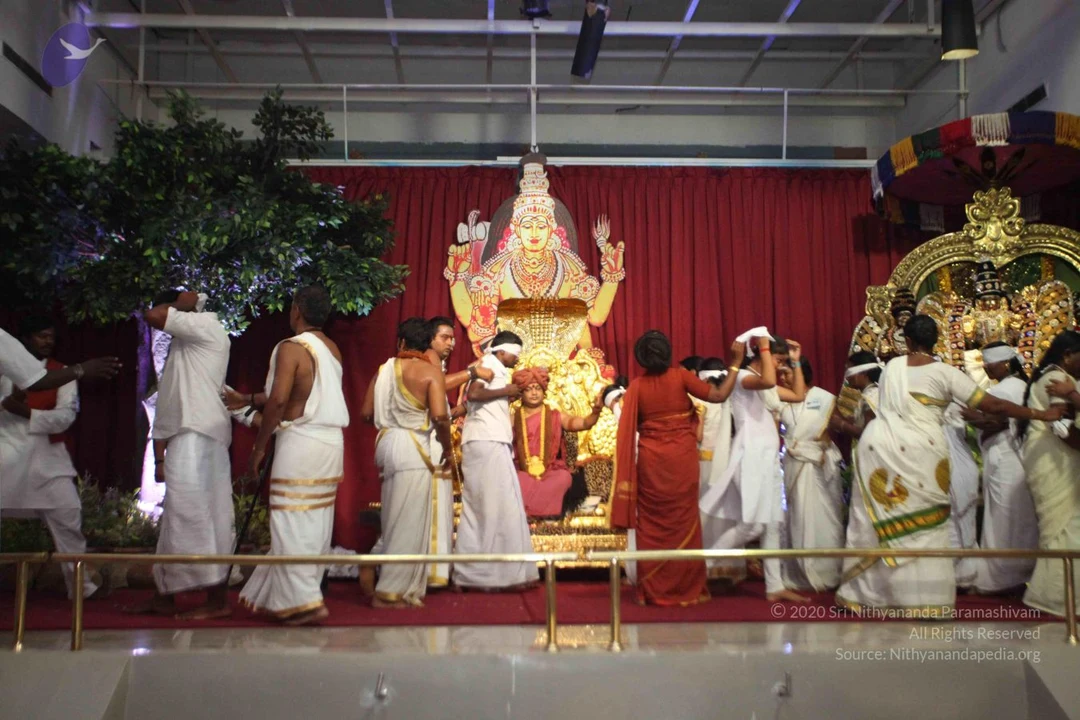
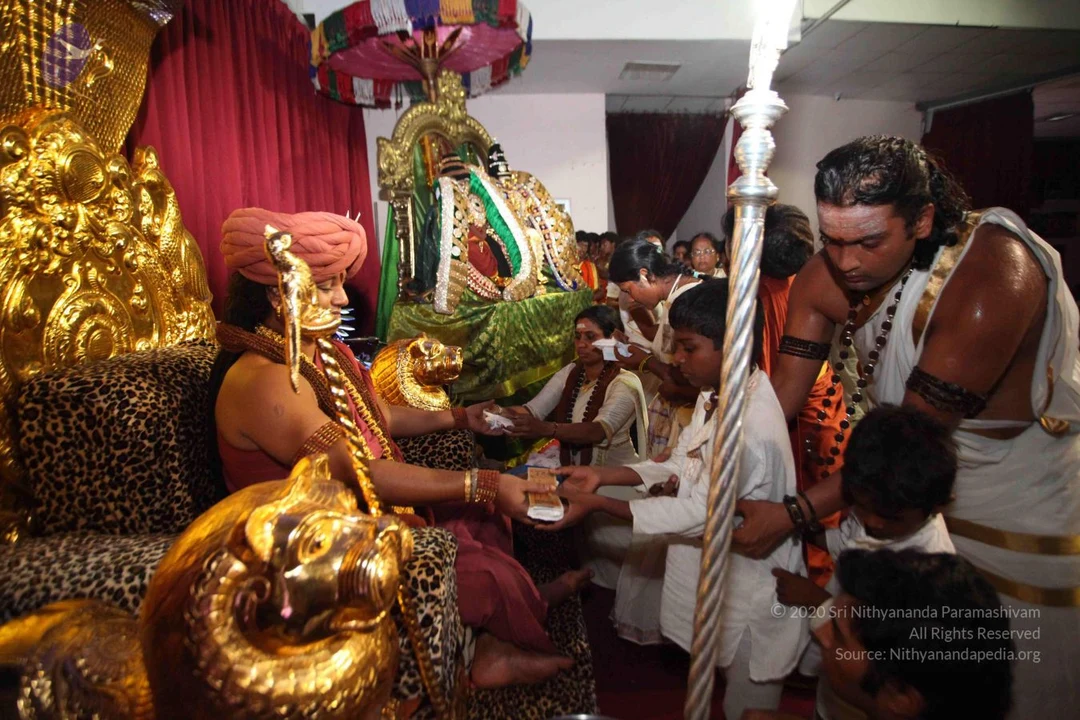
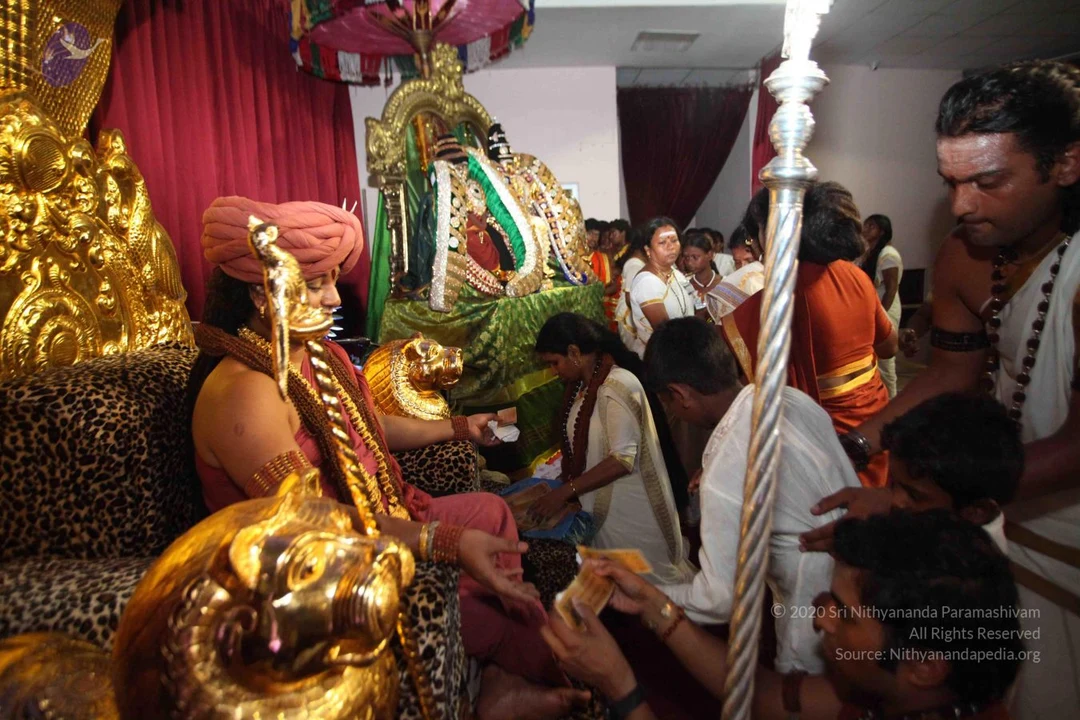
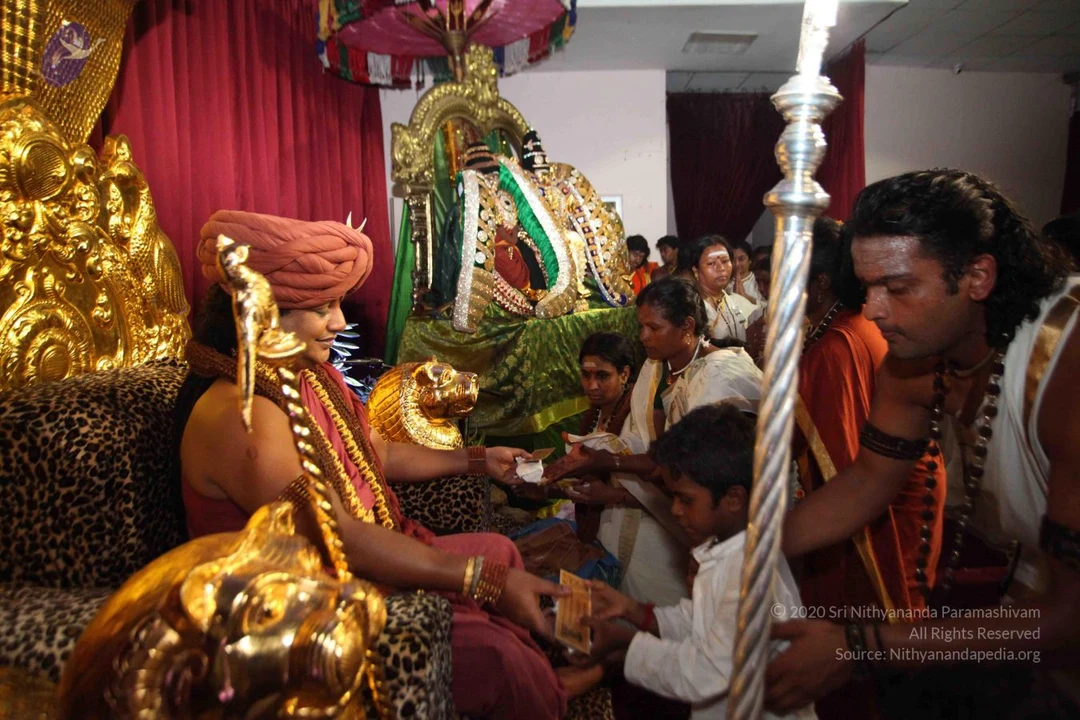
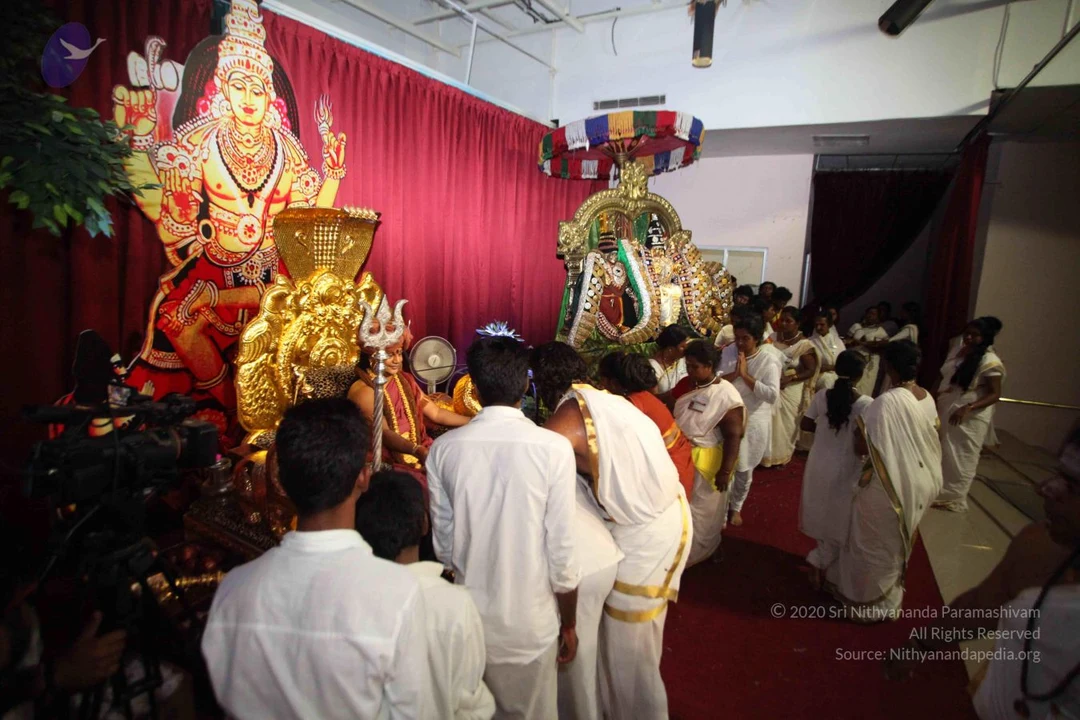
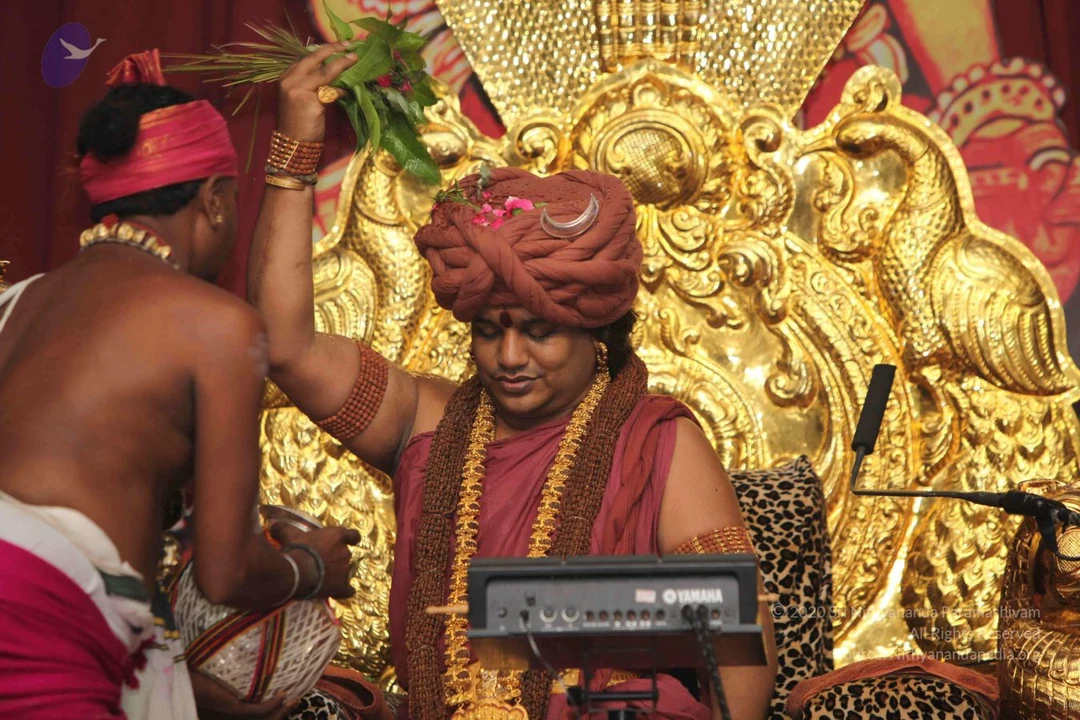
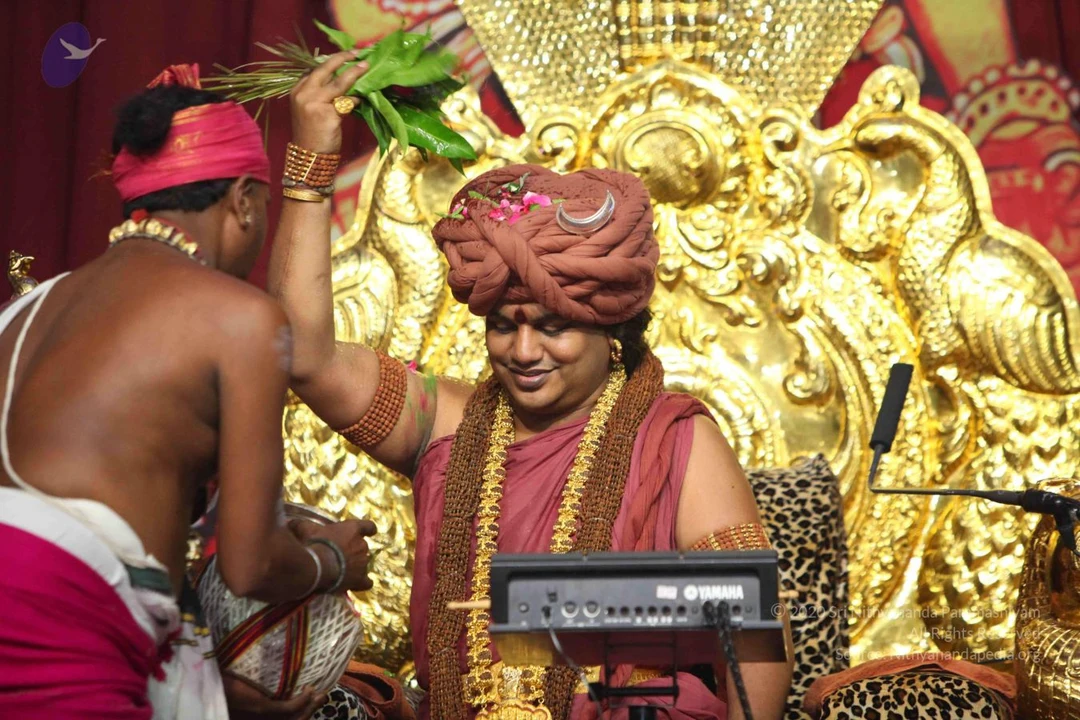
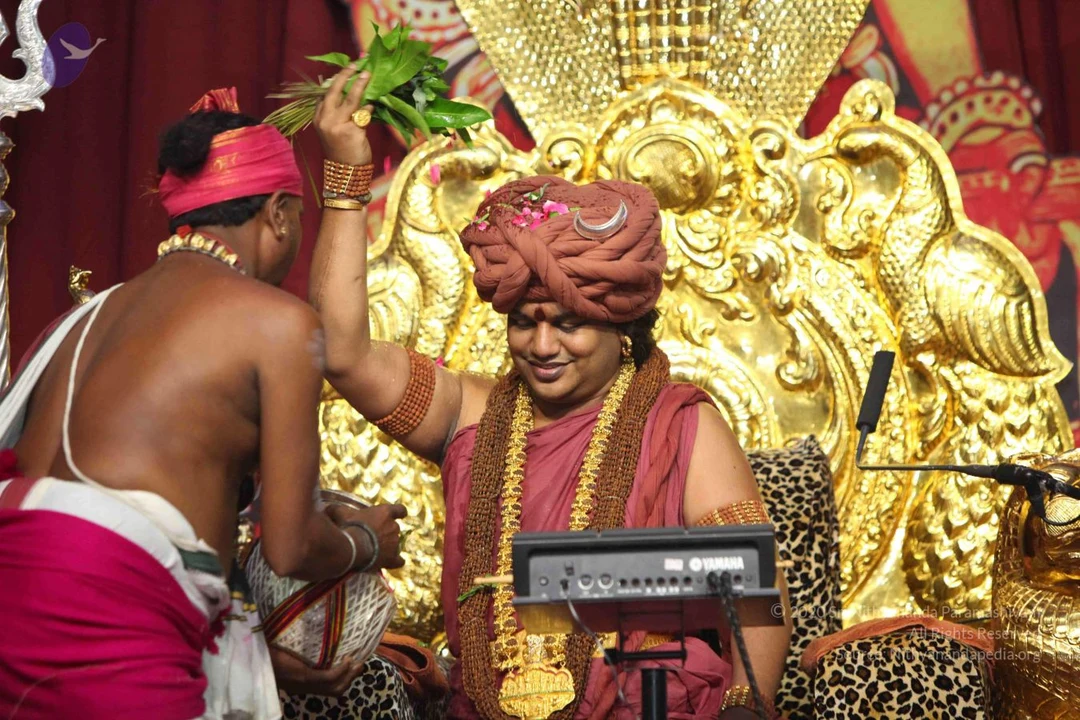
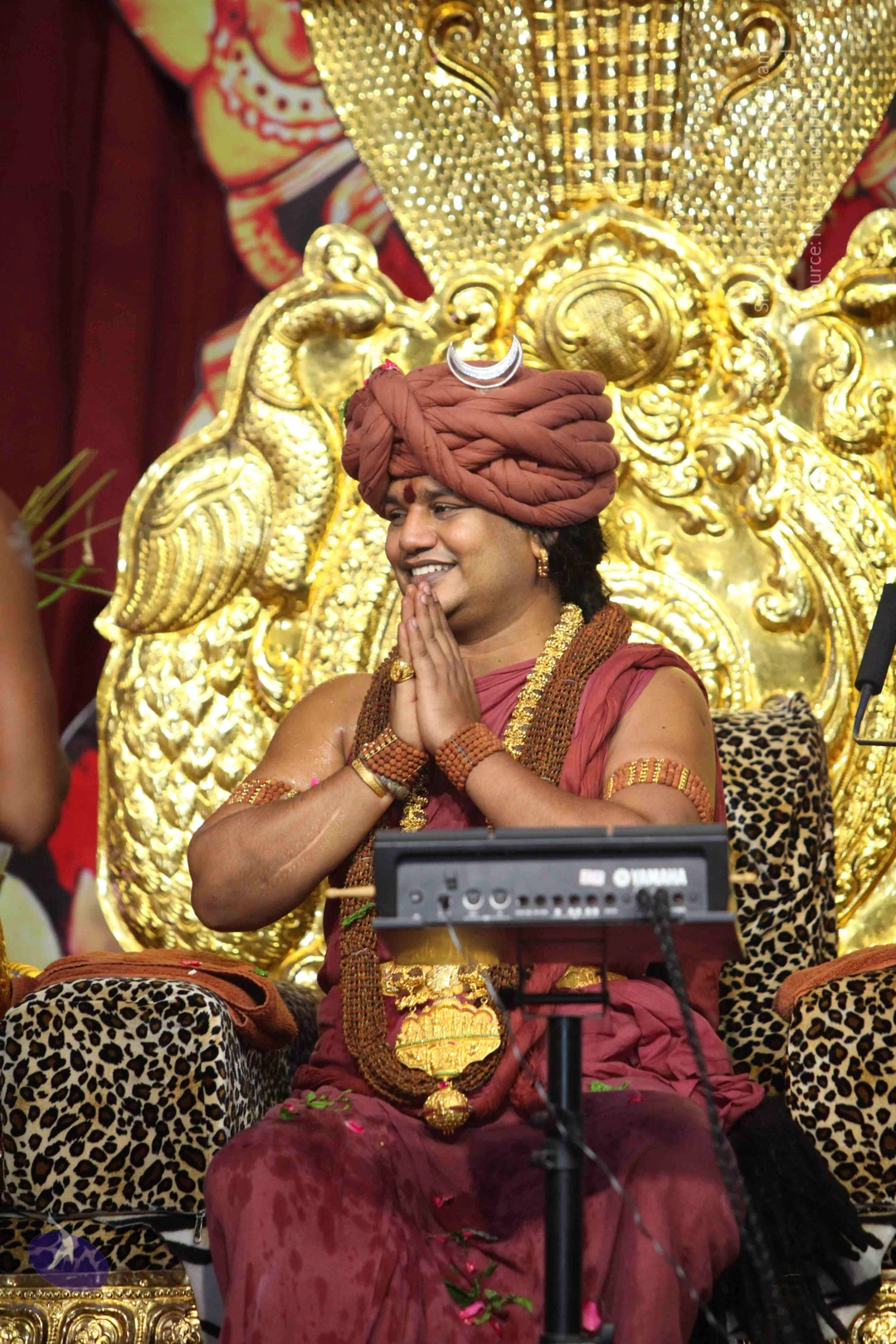
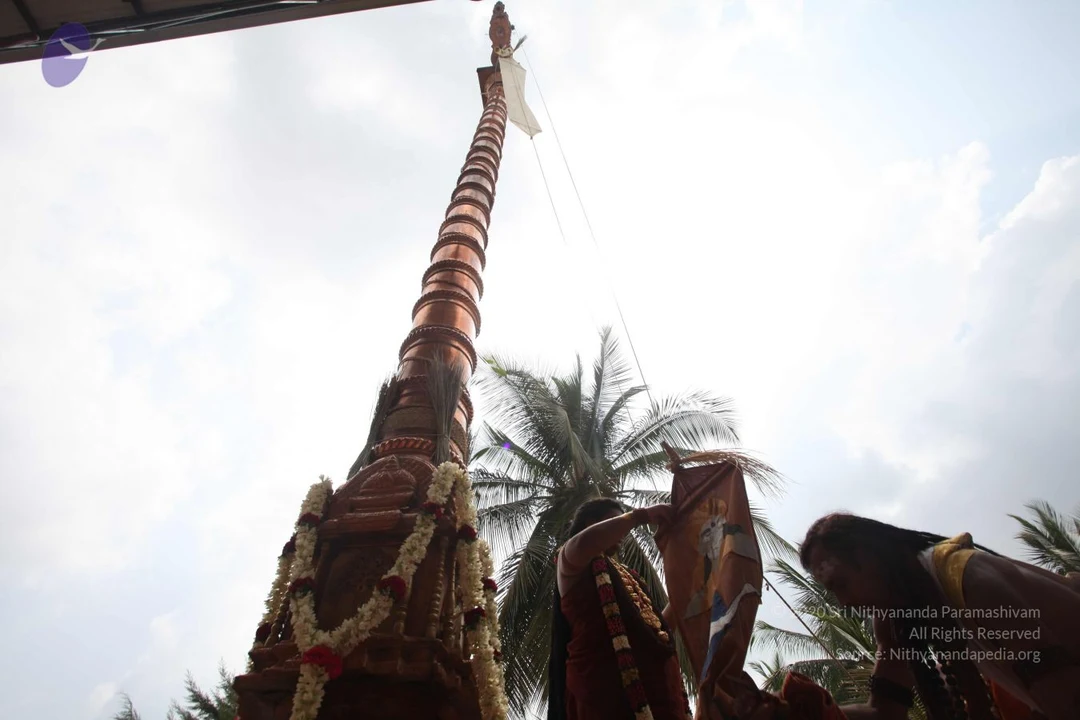
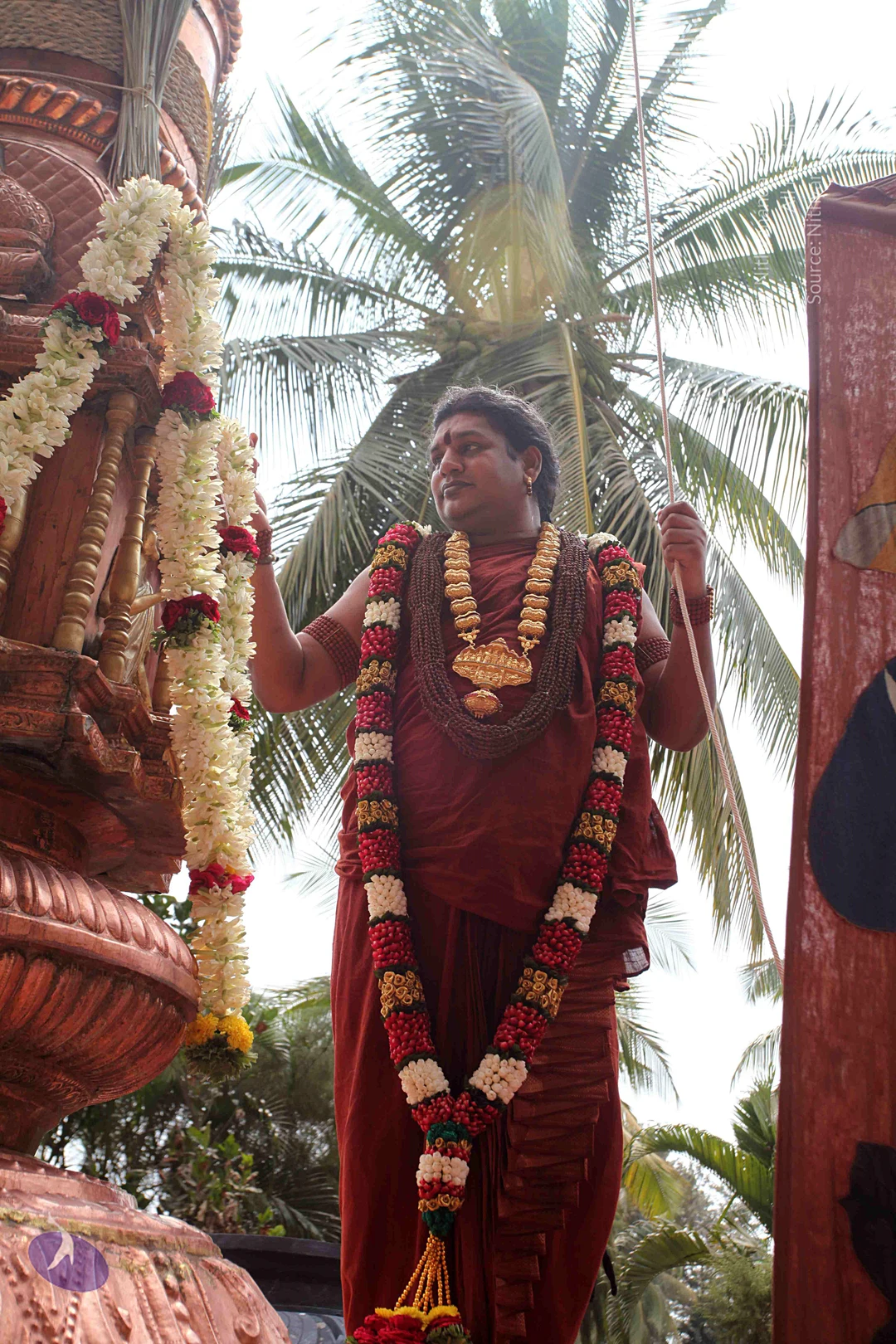
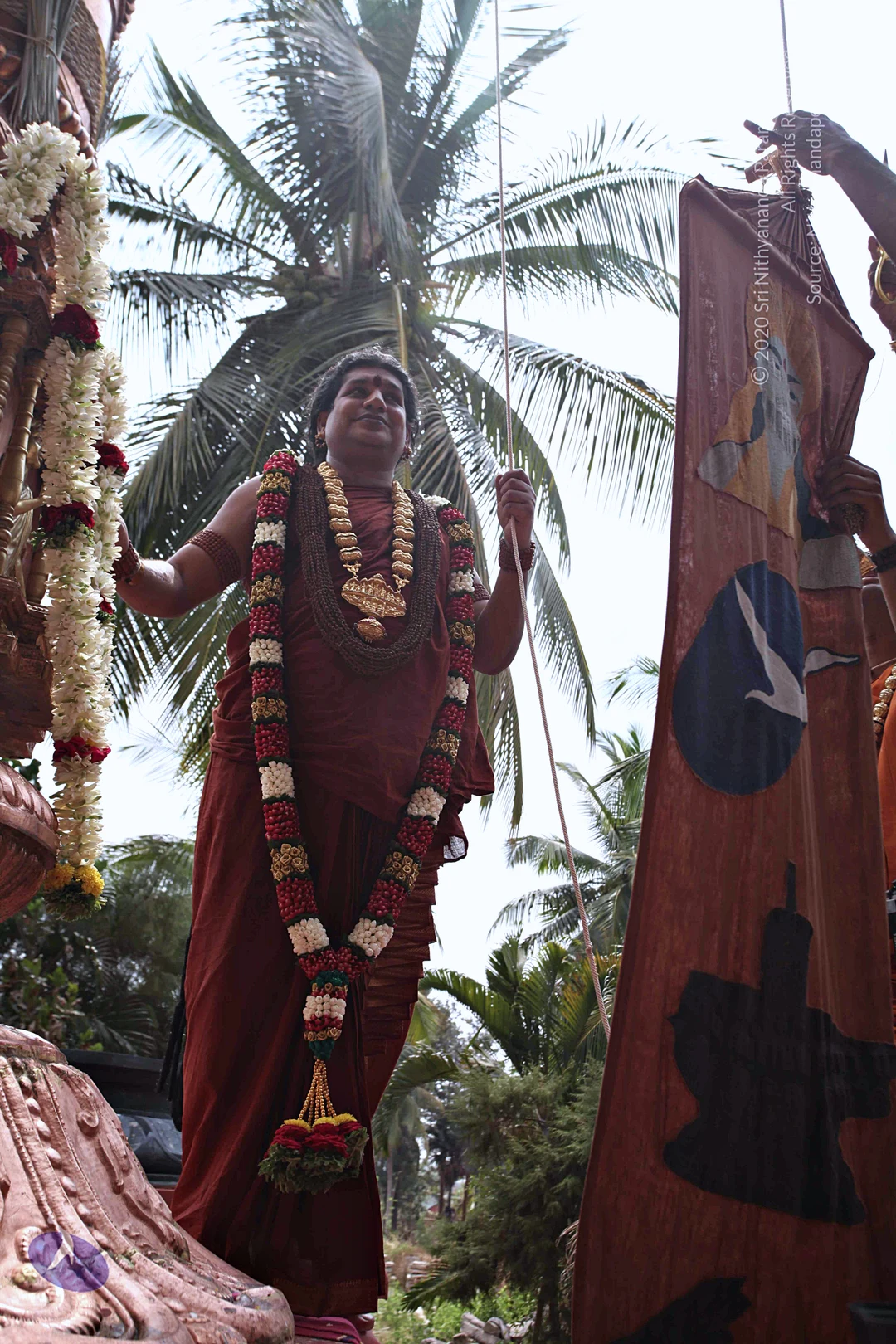
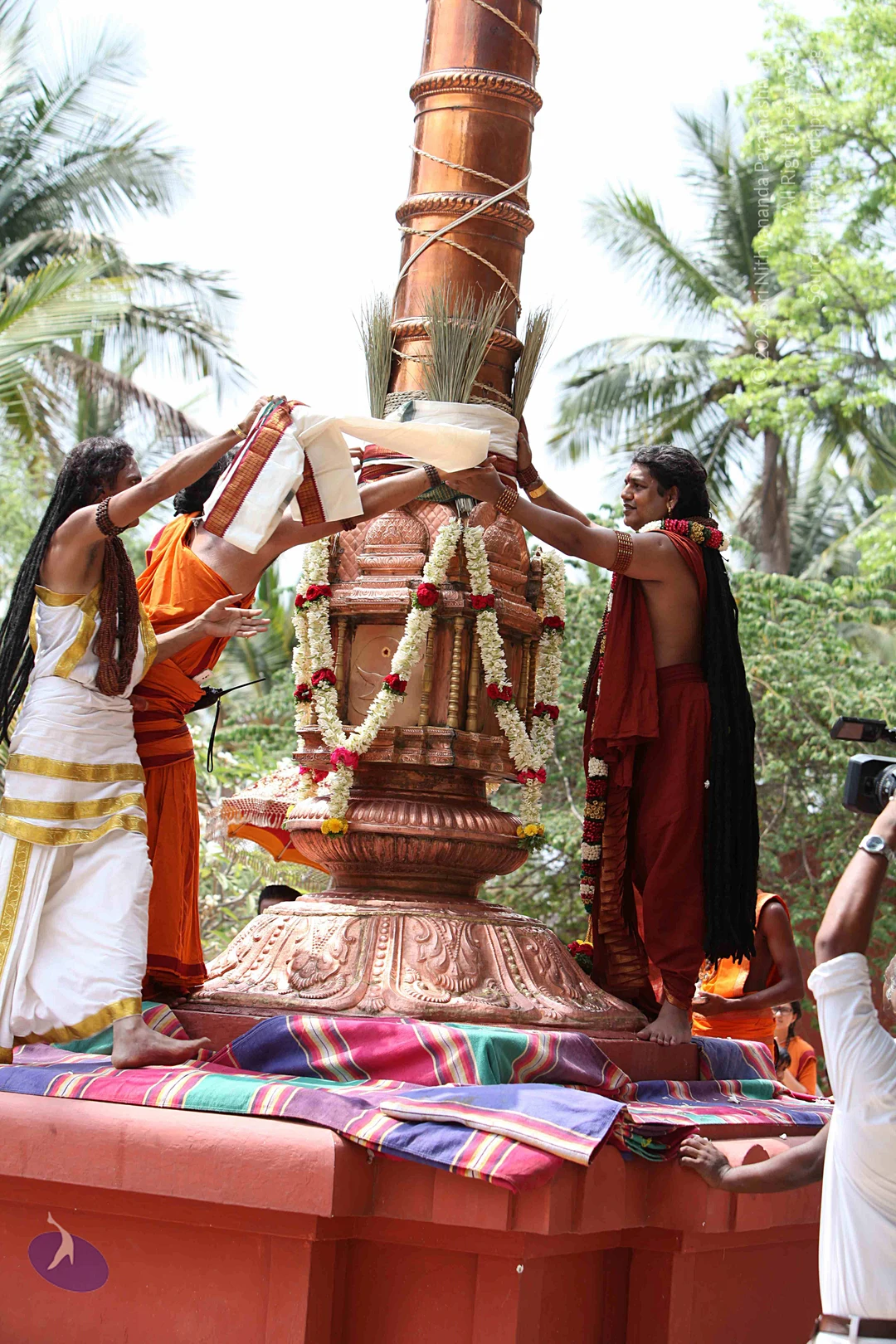
Dwajarohanam

Dwajarohanam for Meenakshi

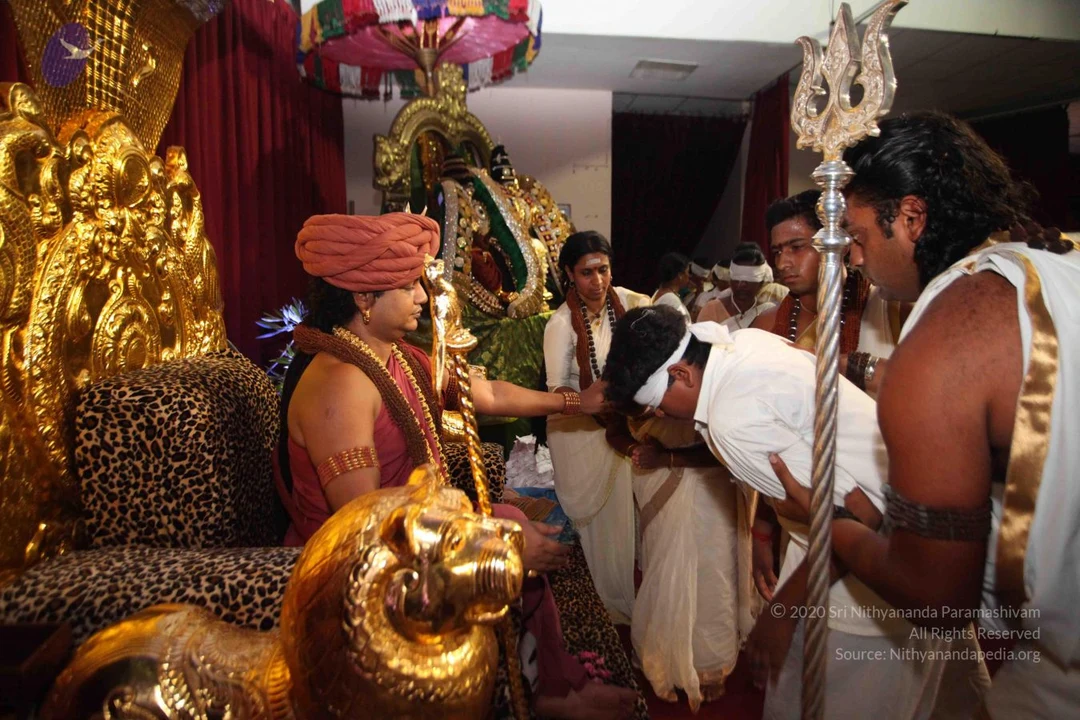
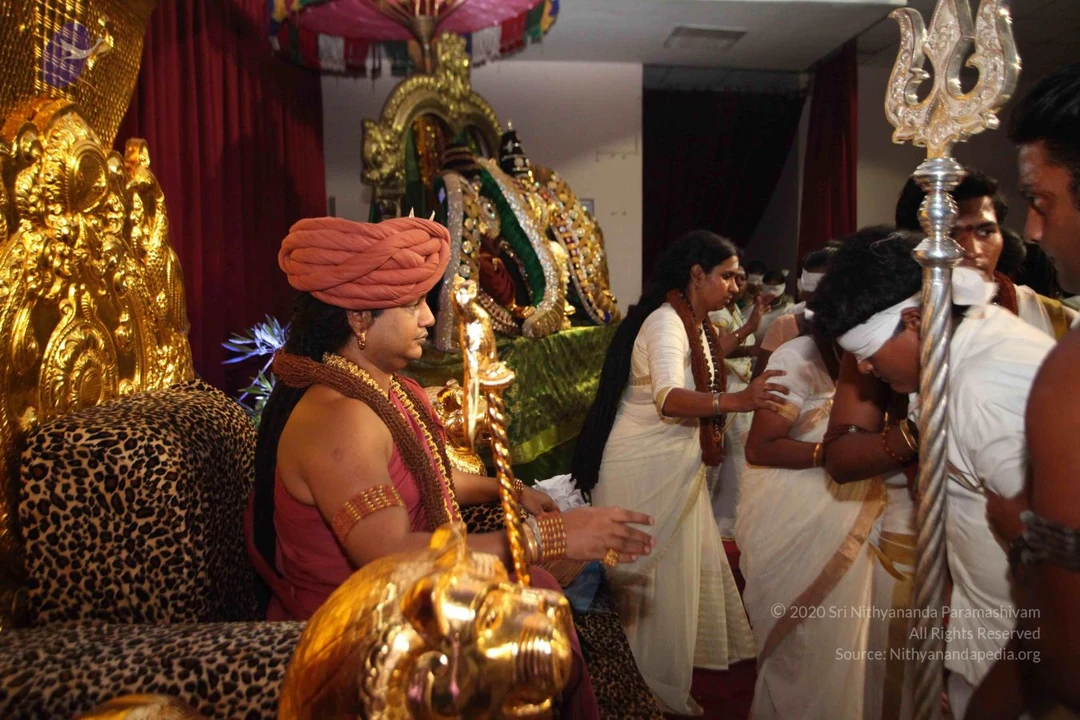
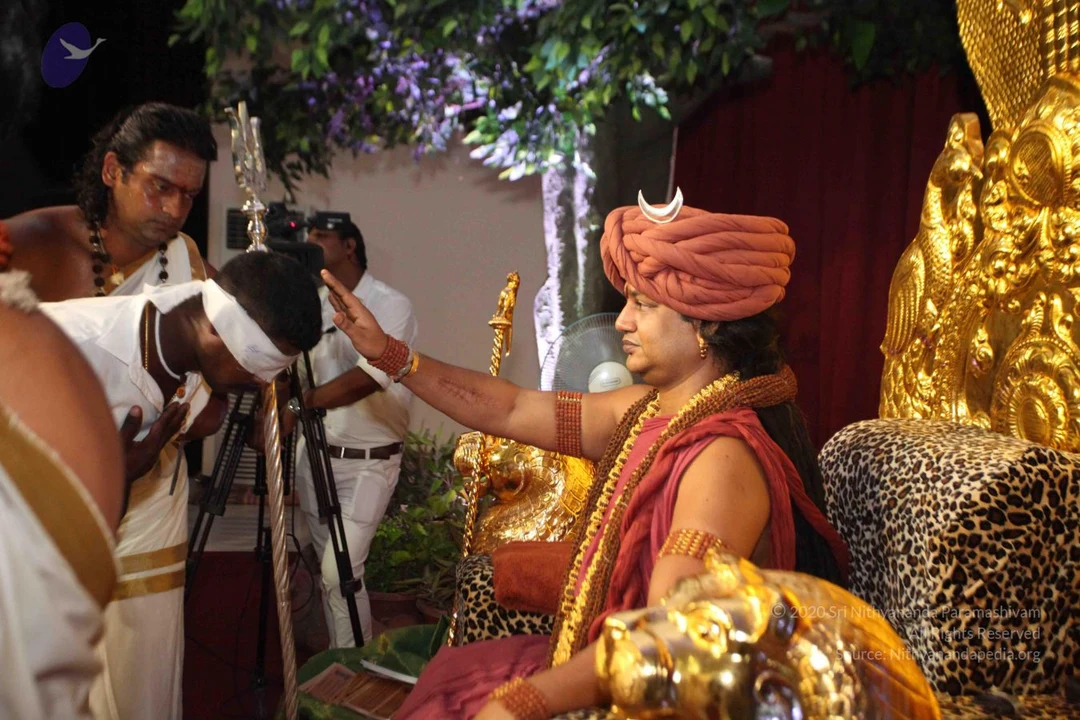
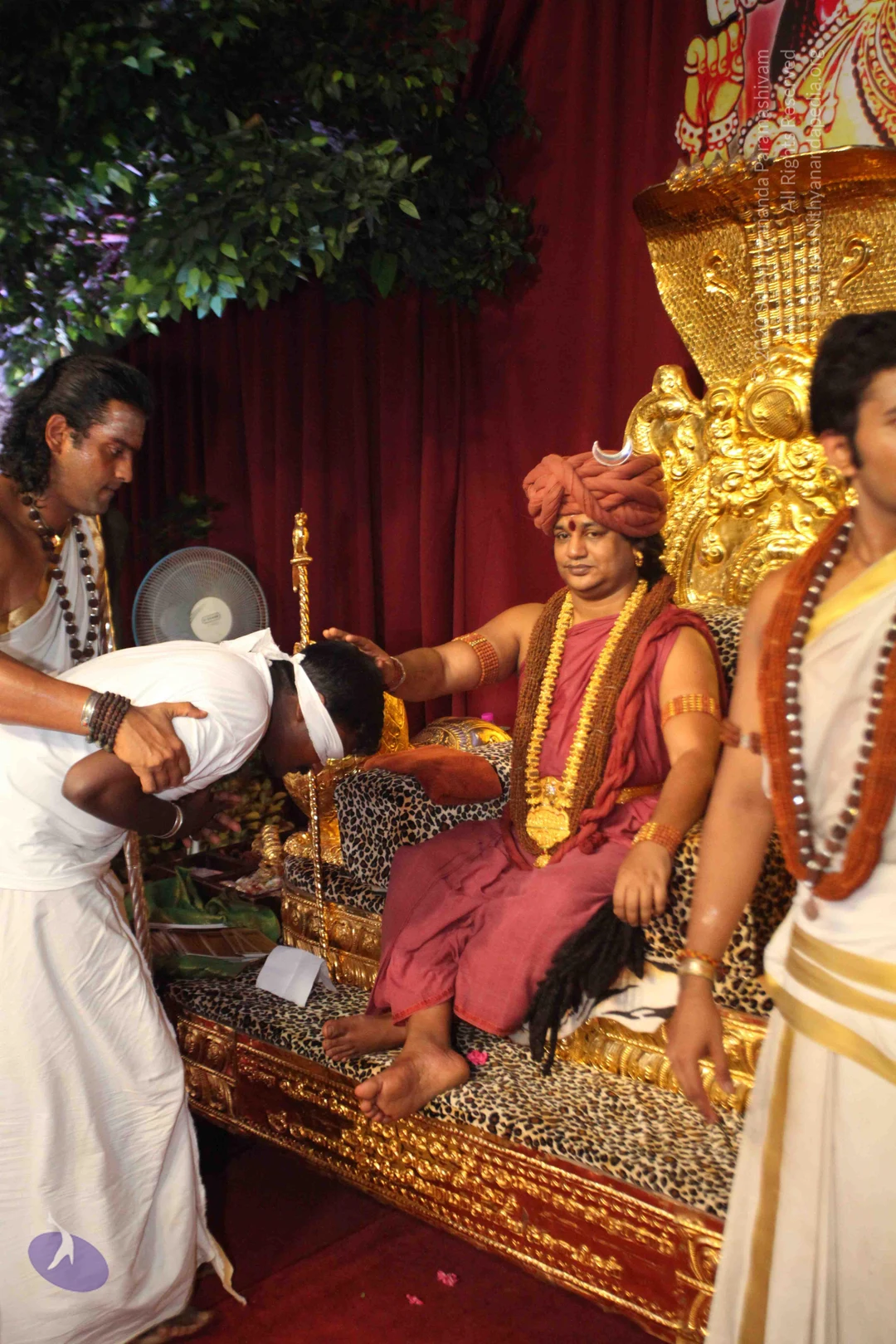
Shiva Deeksha

Tags:

Kundalini Current, Thought Current, Seeking, SadaShiva, Sadashivatva, Altar, Lifestyle, Alternative Lifestyle, Native Lifestyle, Genesis of Your Identity

Sakshi Pramana:

Sharing from Kumbh Mela Program

Photos Of The Day:

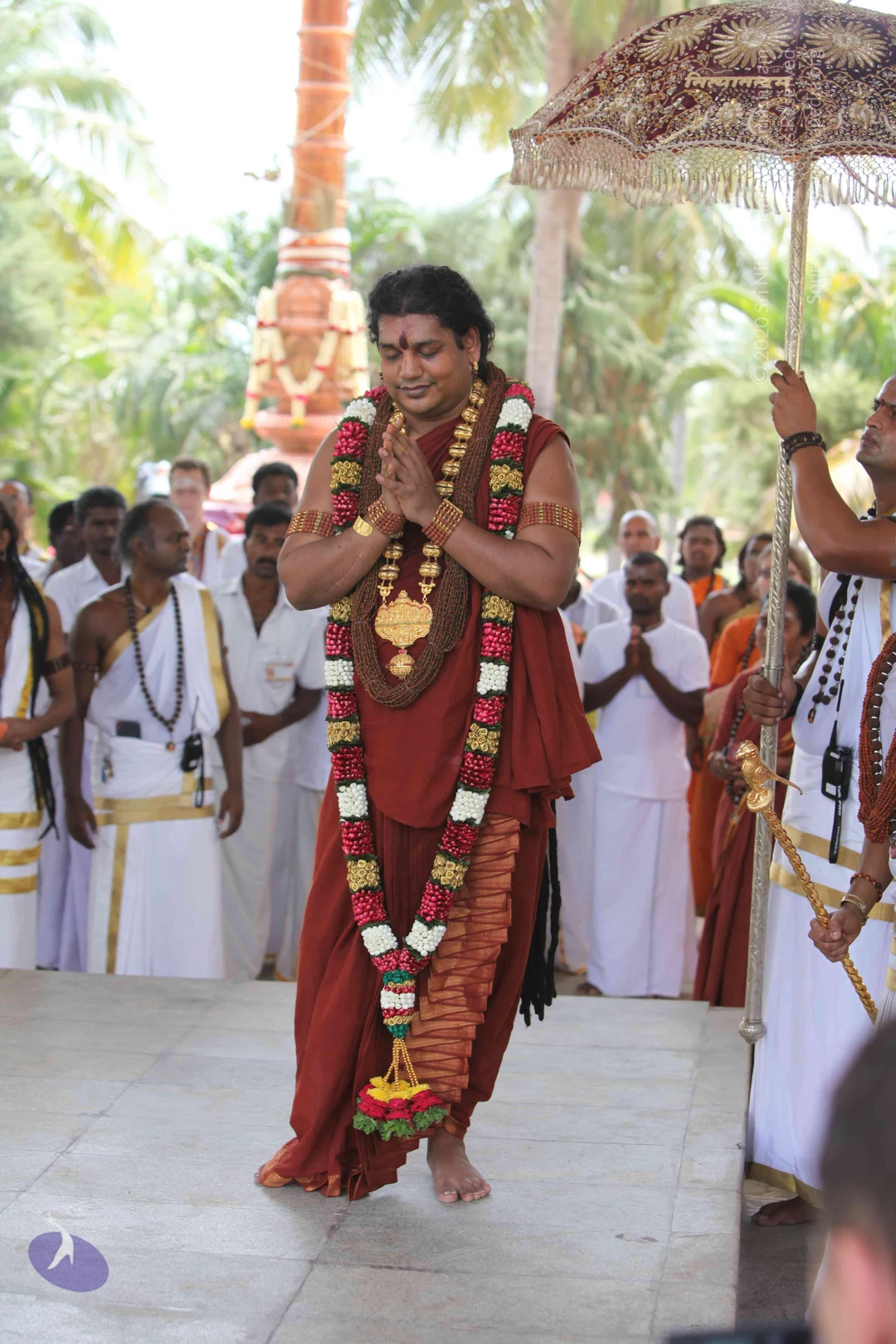
Flag-Hoisting
E-Kalpataru

Samayadeeksha-Darshan

Photos from this day

View all 655 photos

Flag-Hoisting
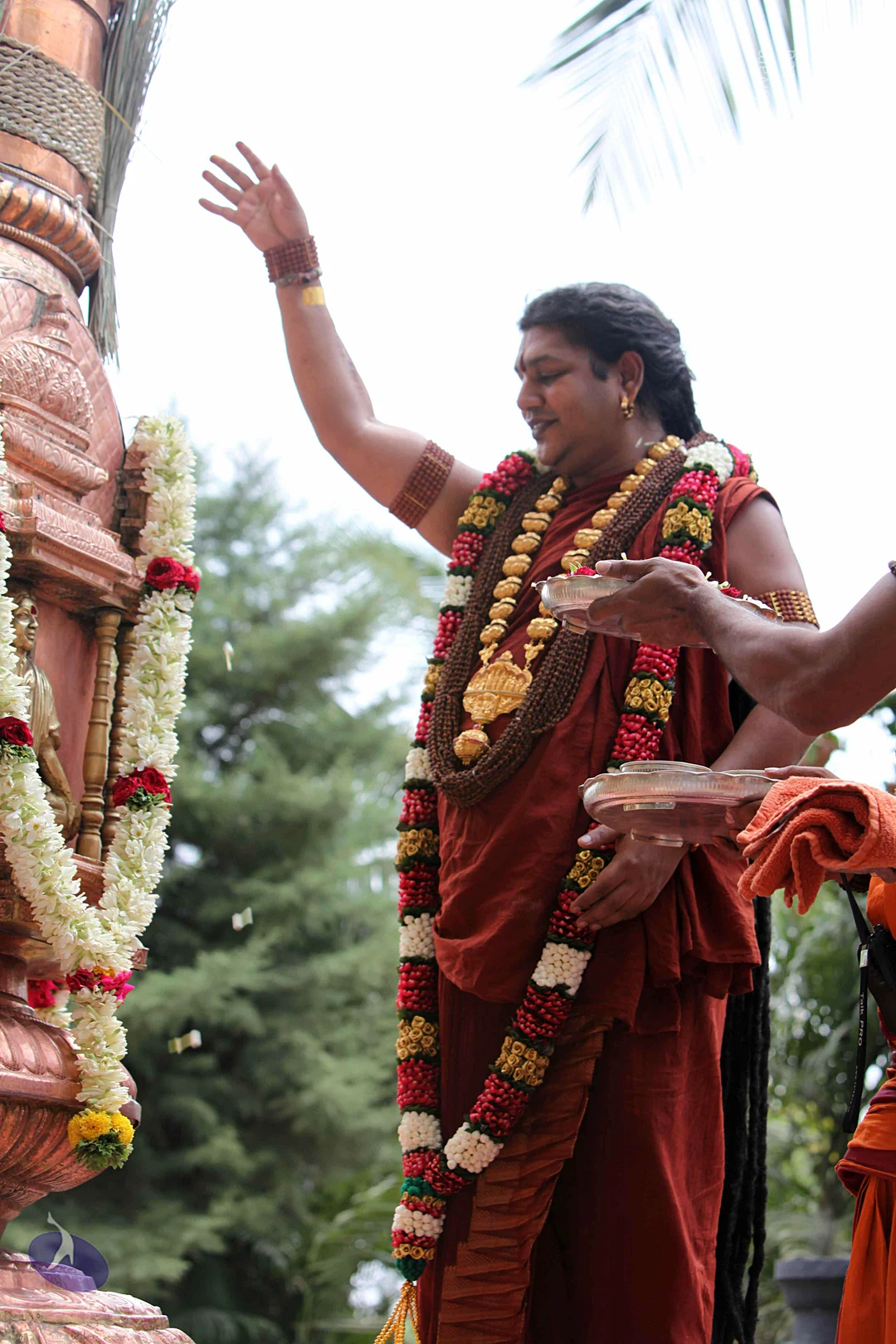
94 photosSource gallery
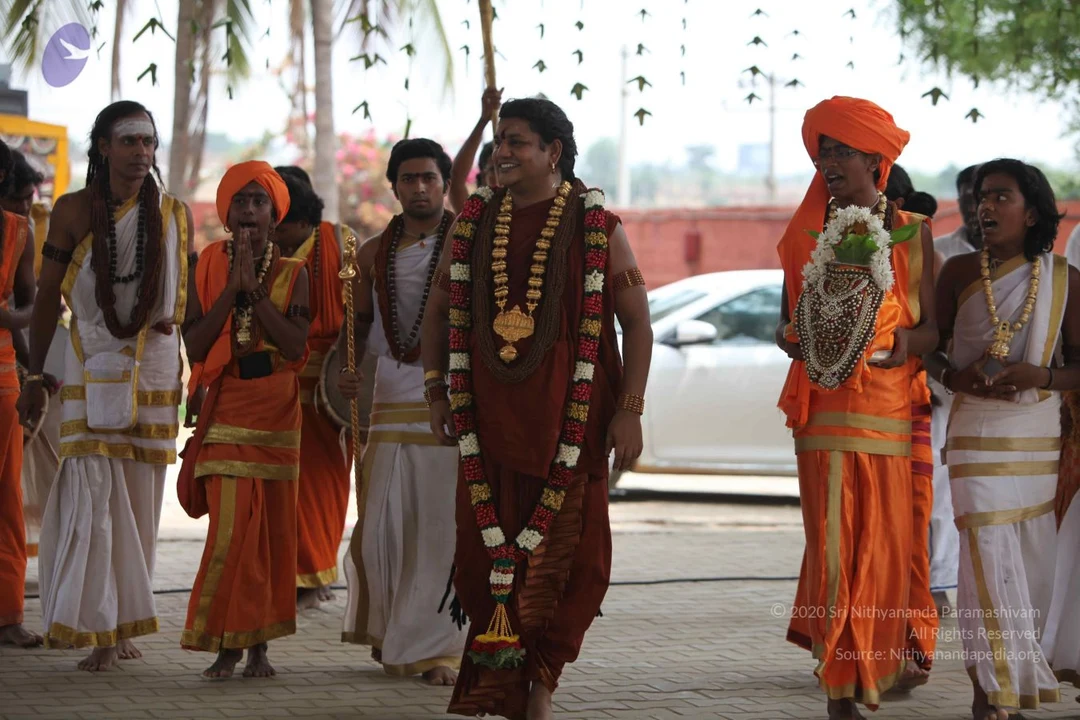
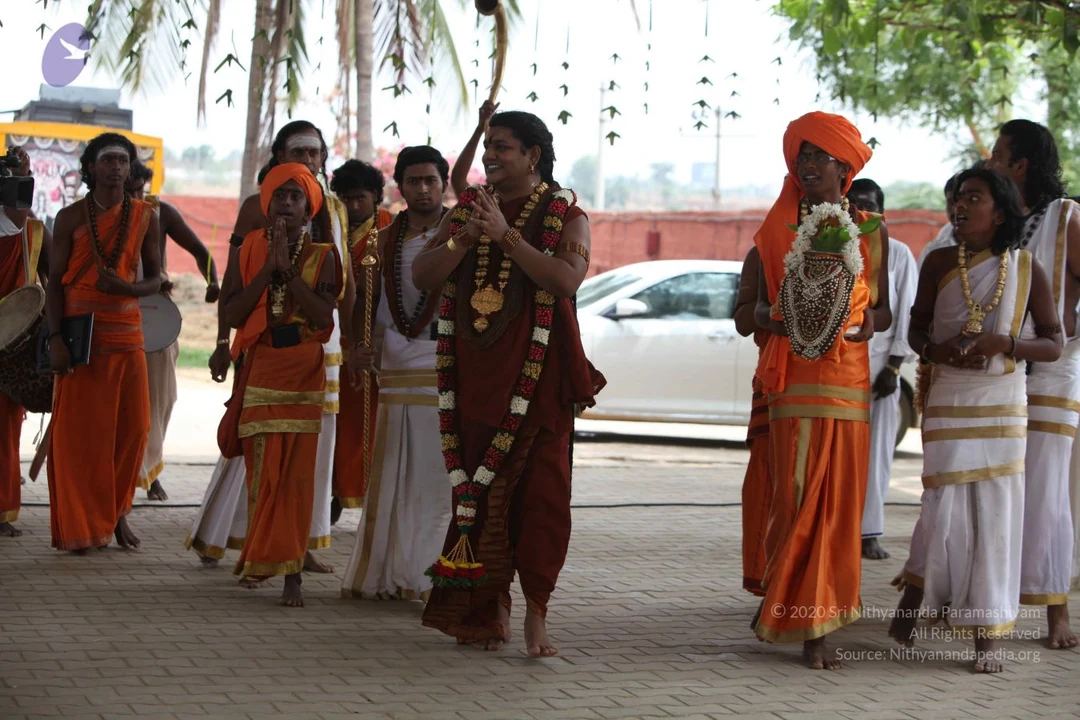
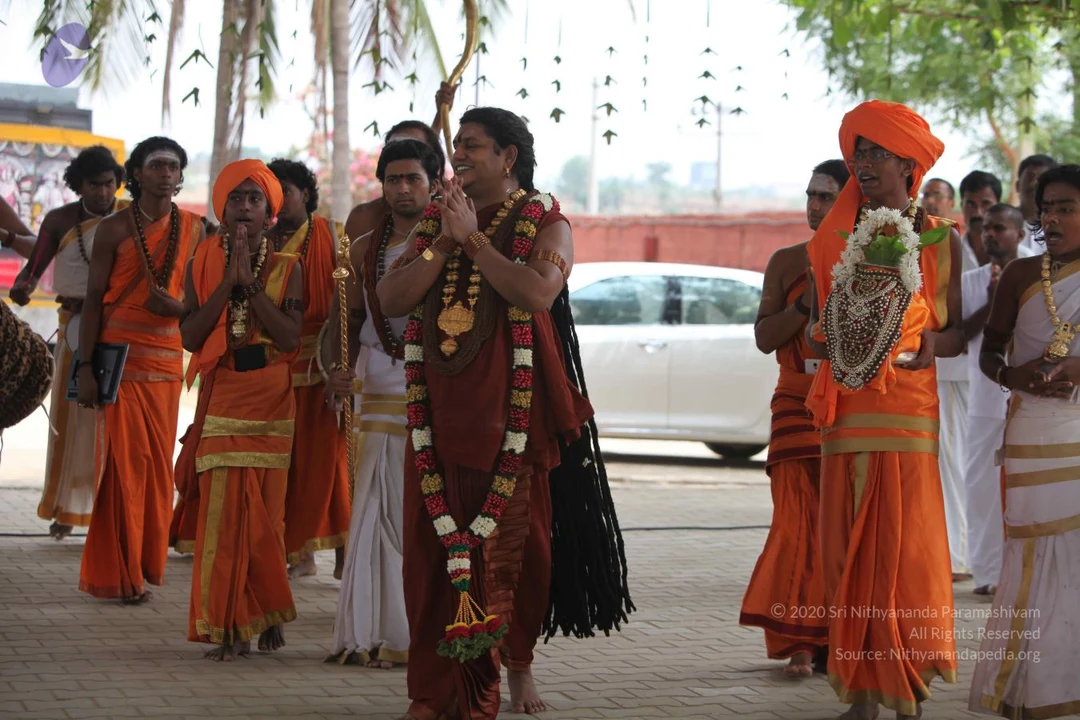
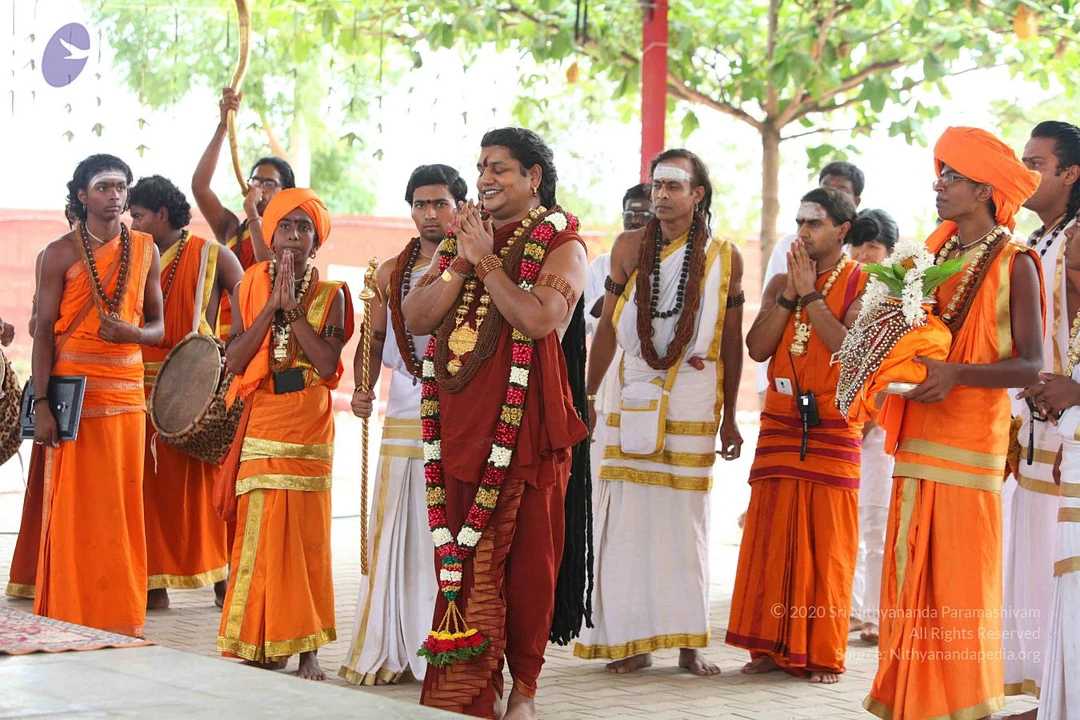
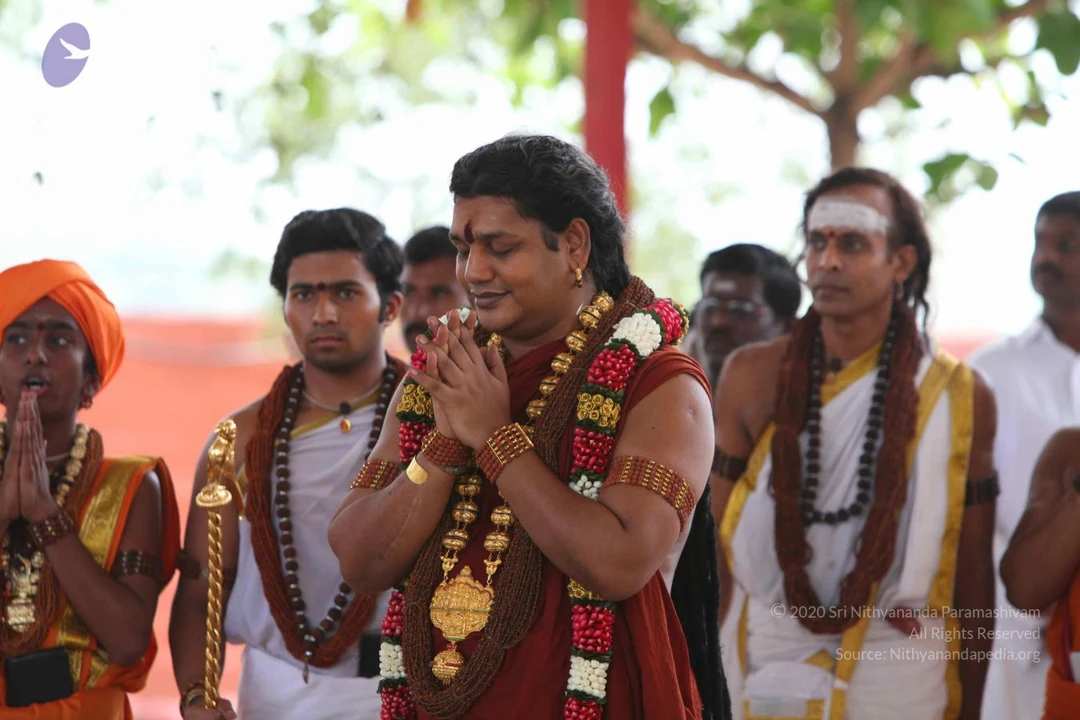
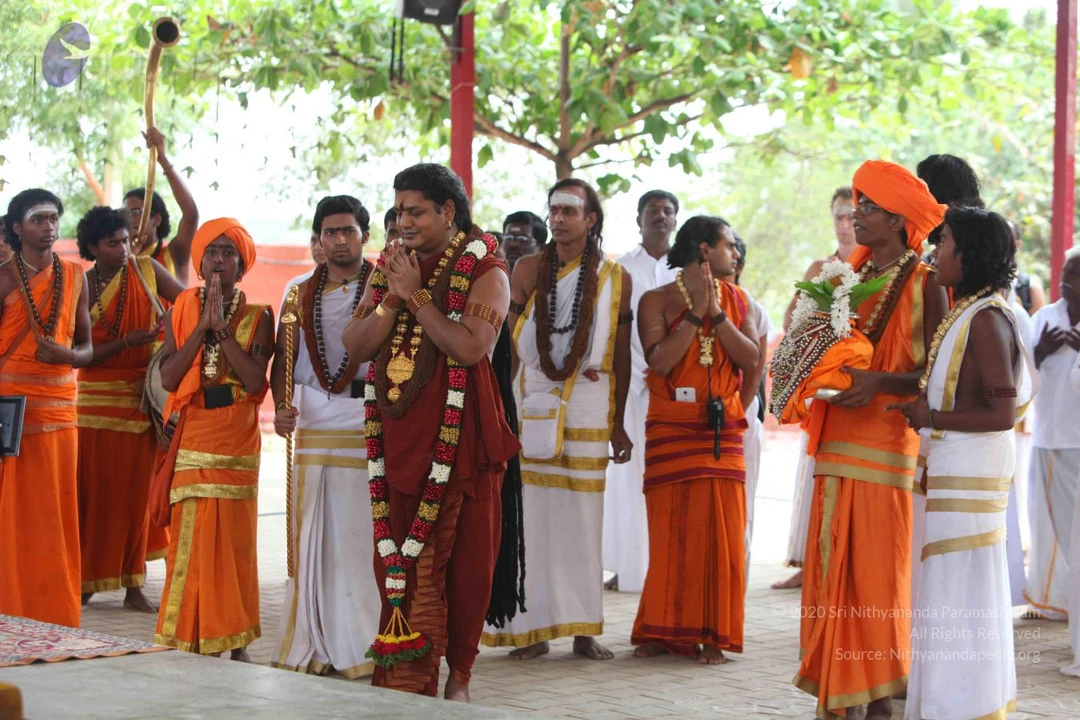
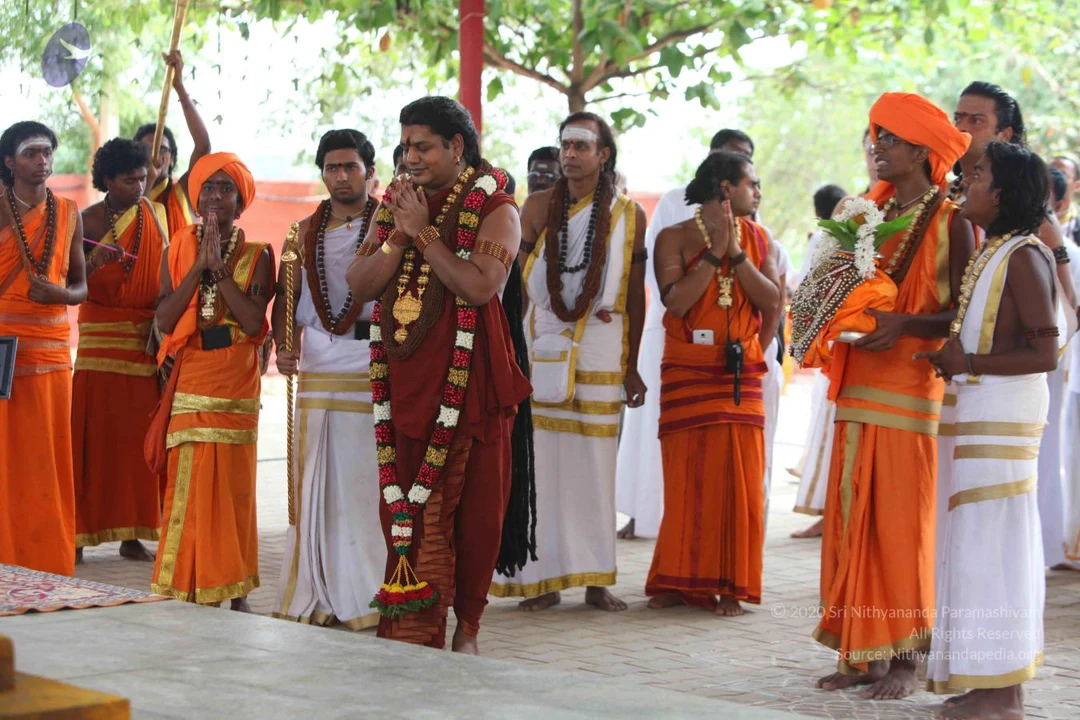
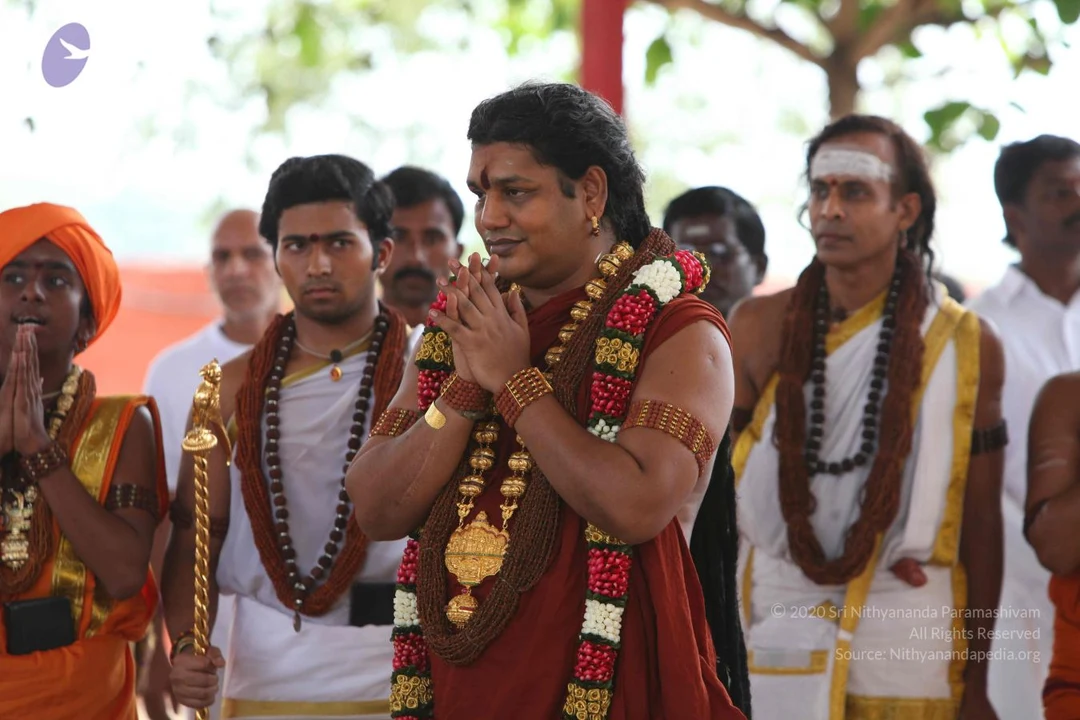
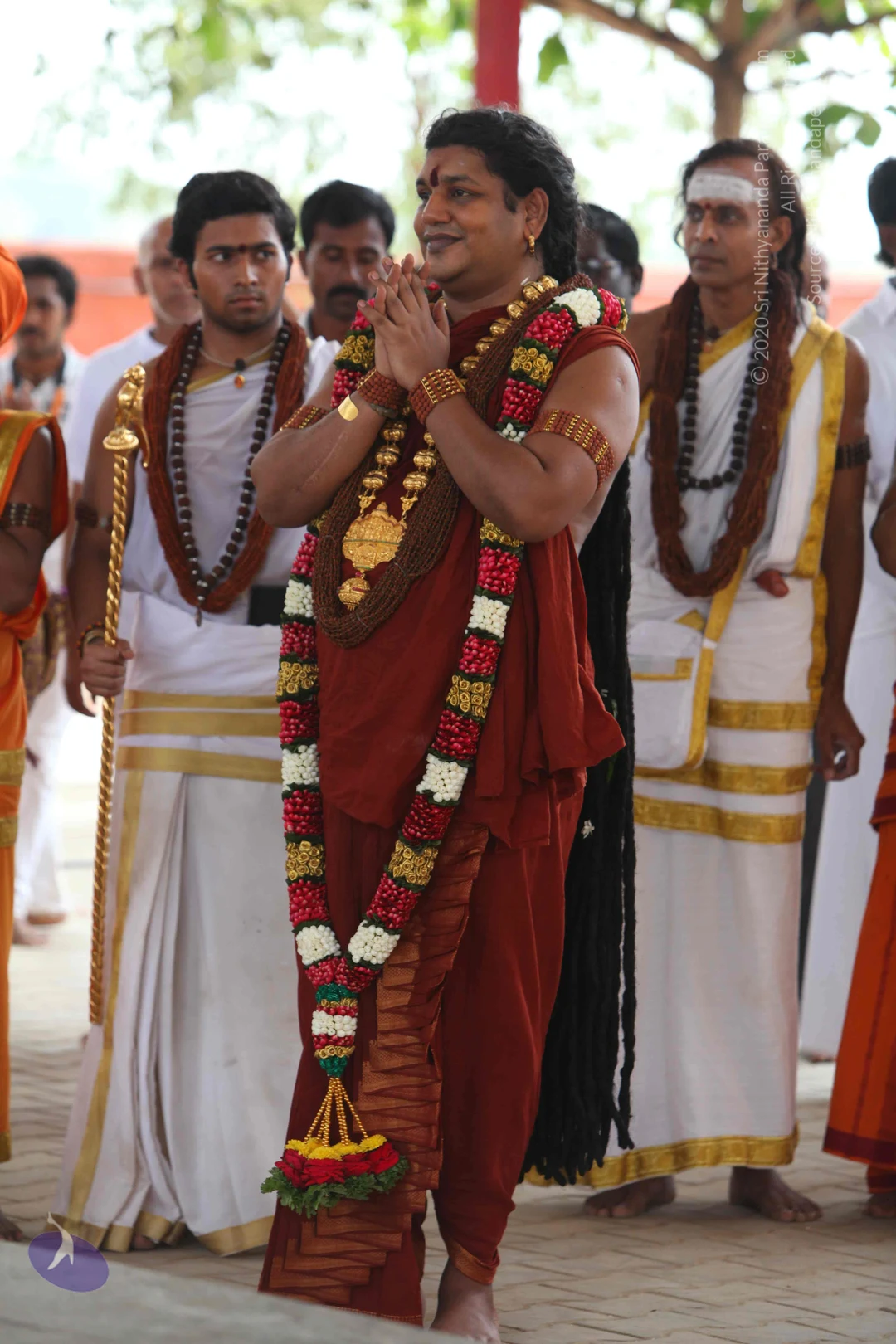
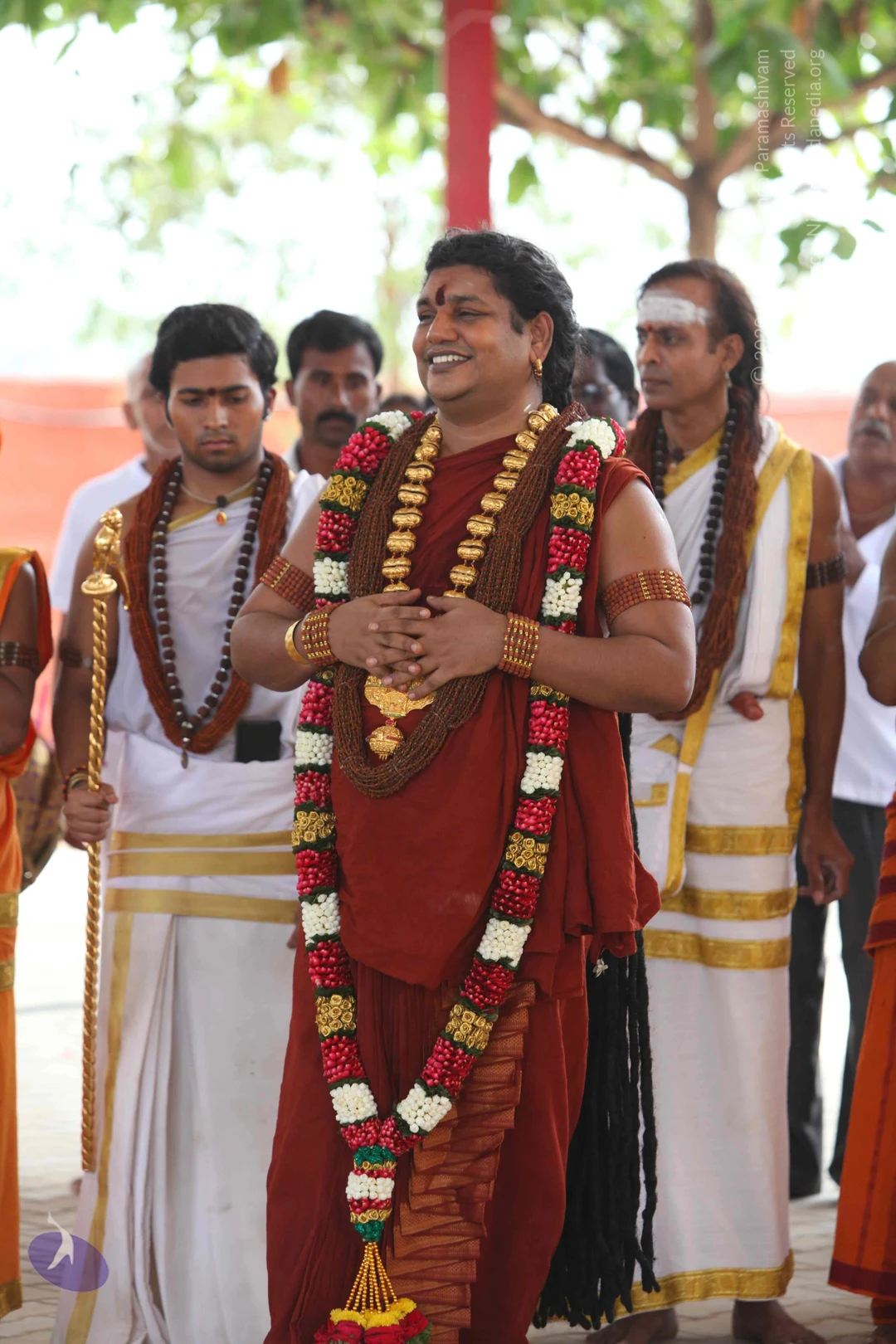
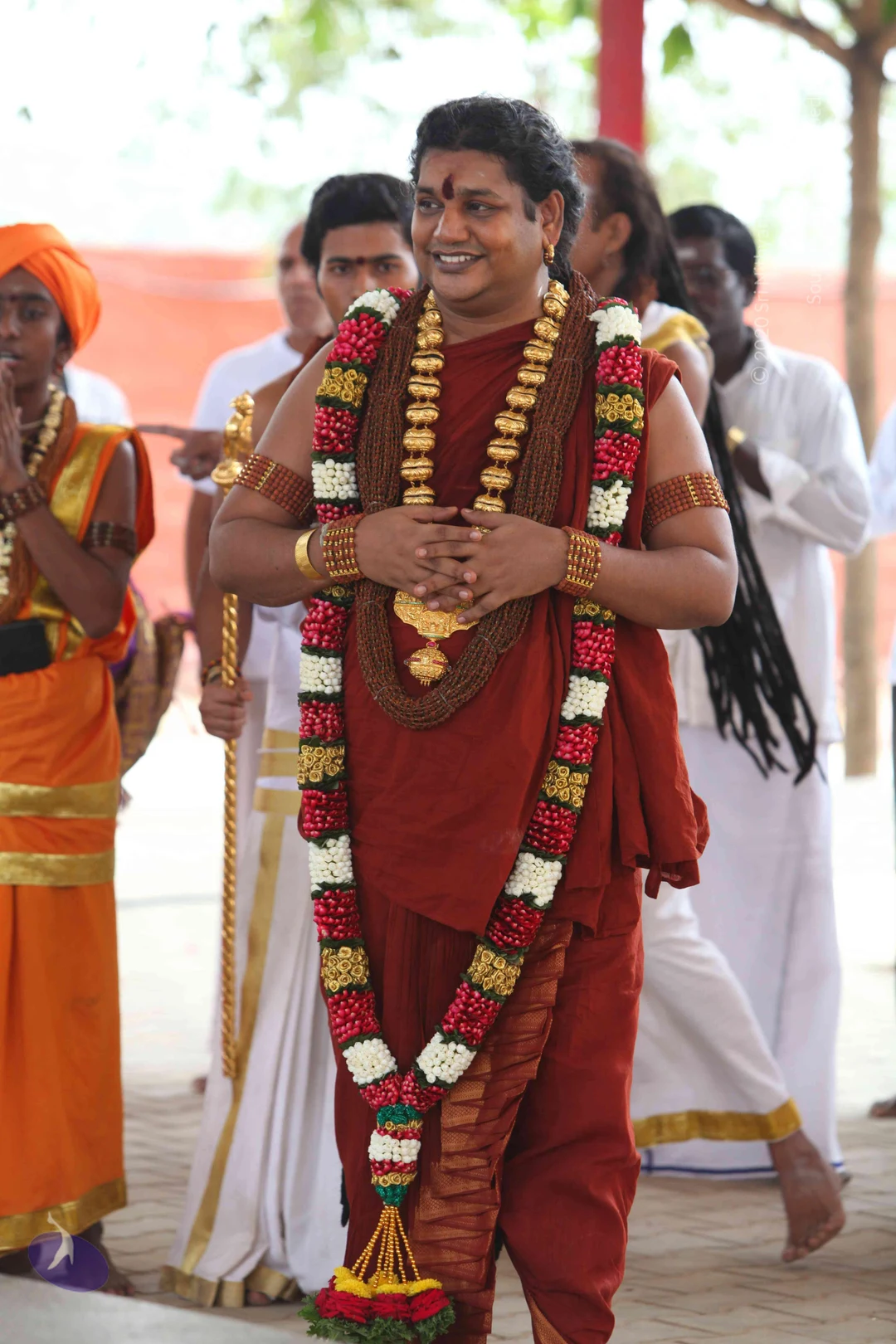
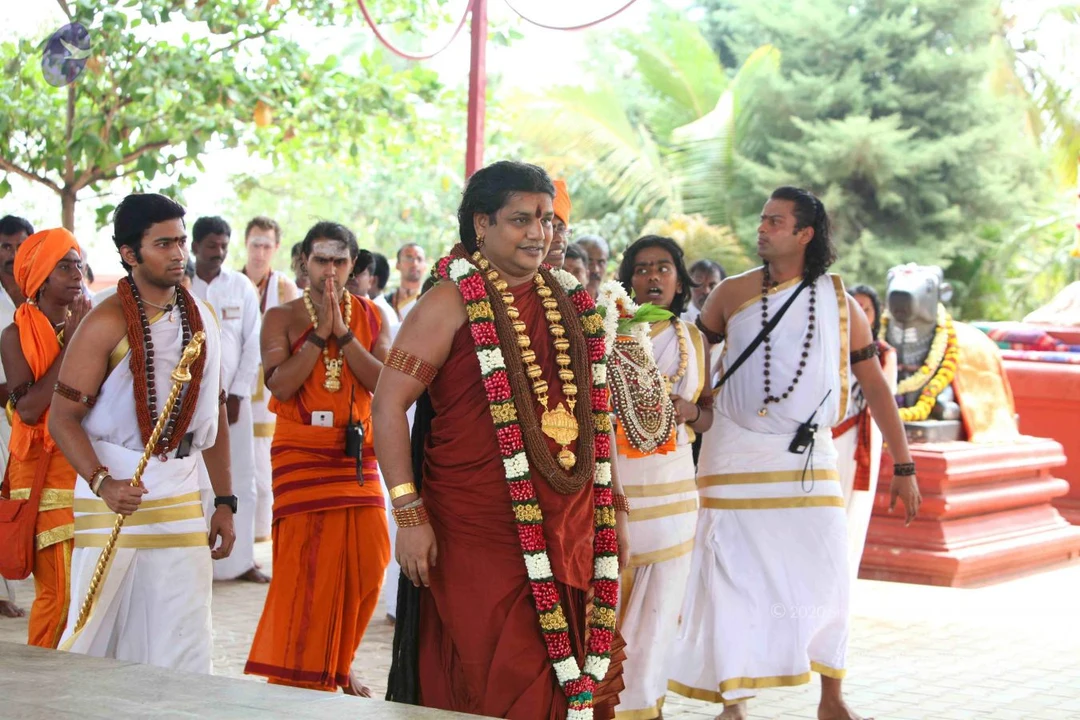
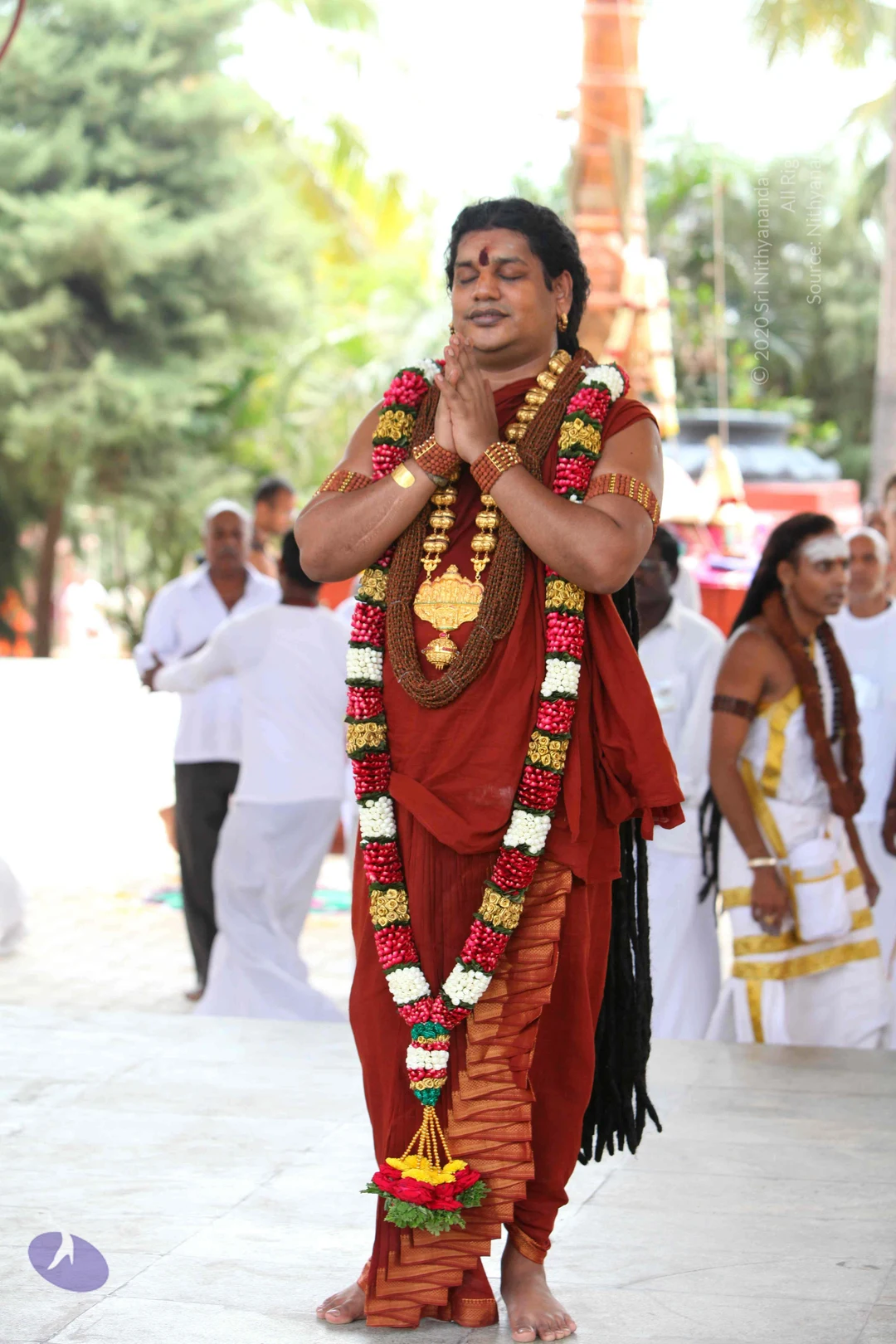
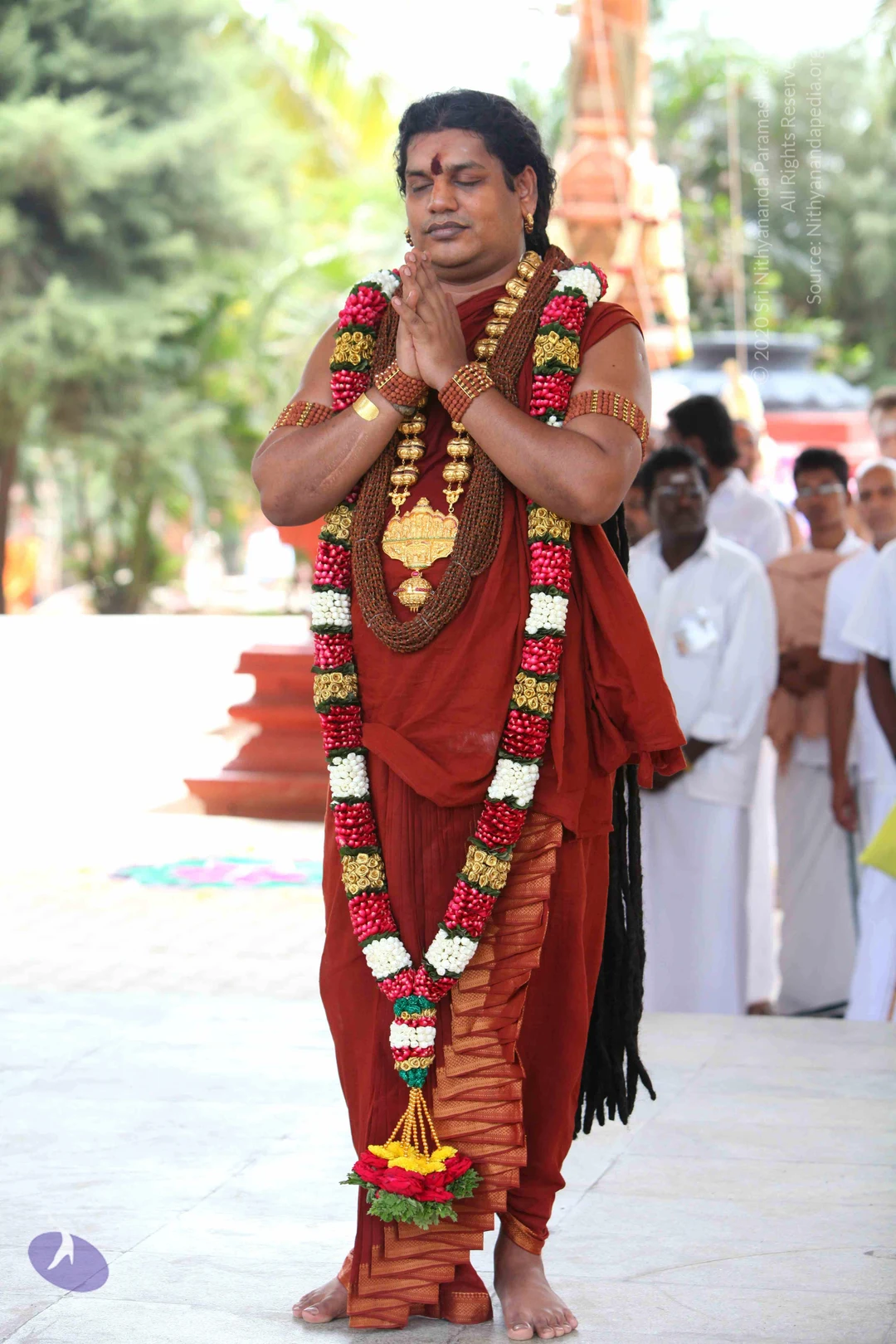
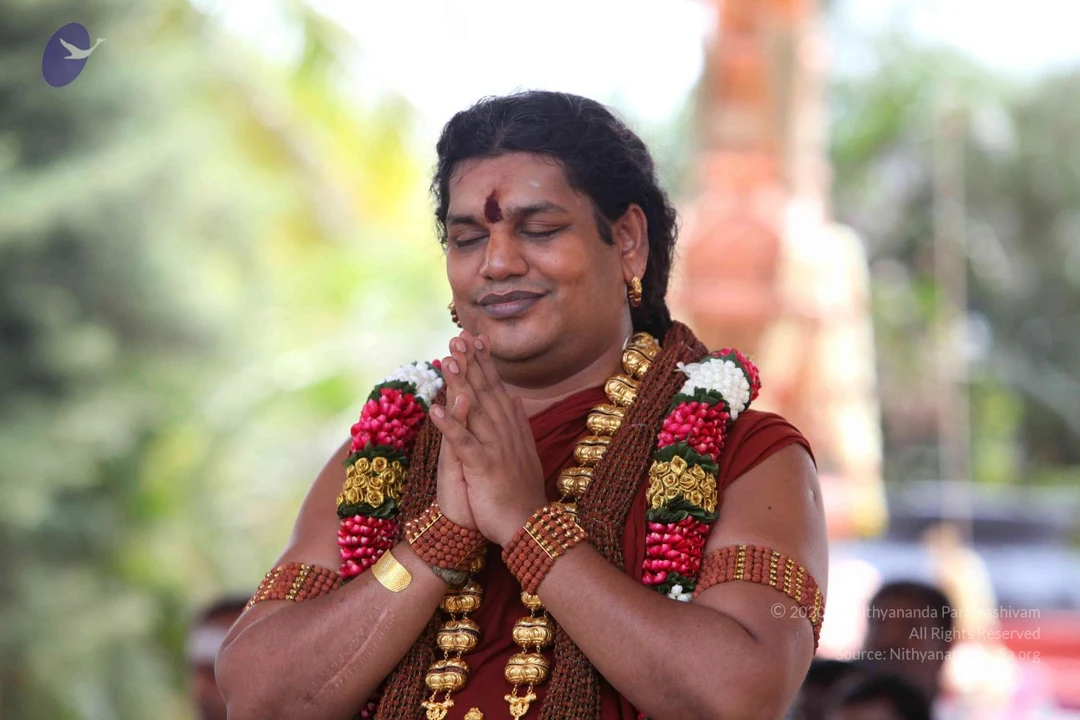
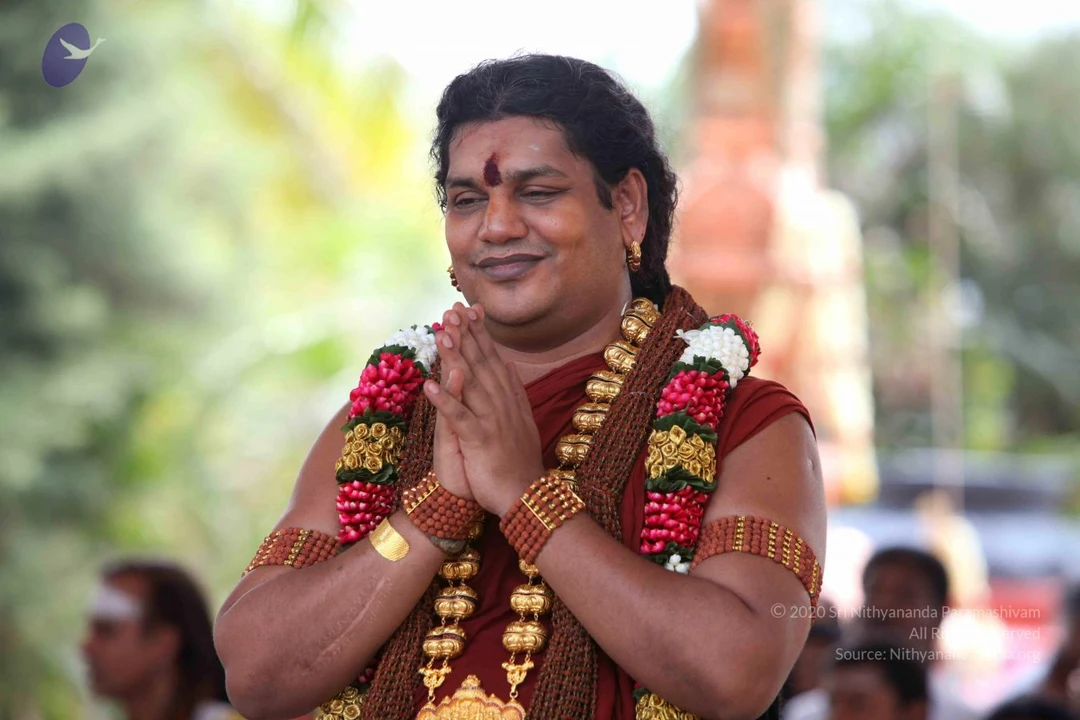
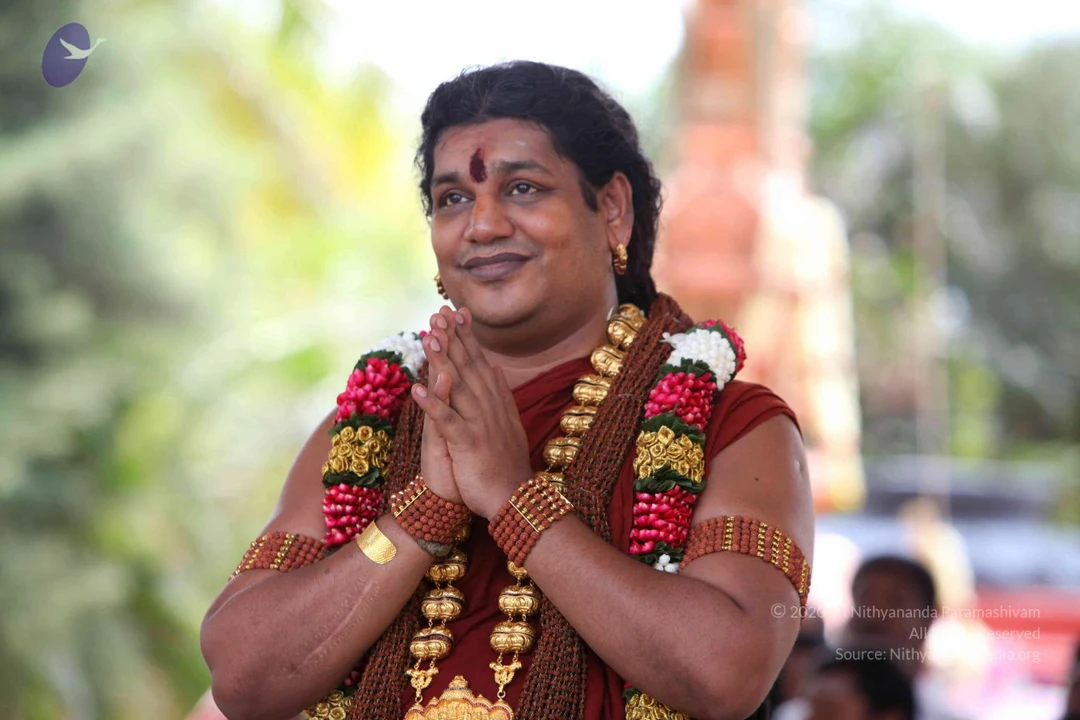
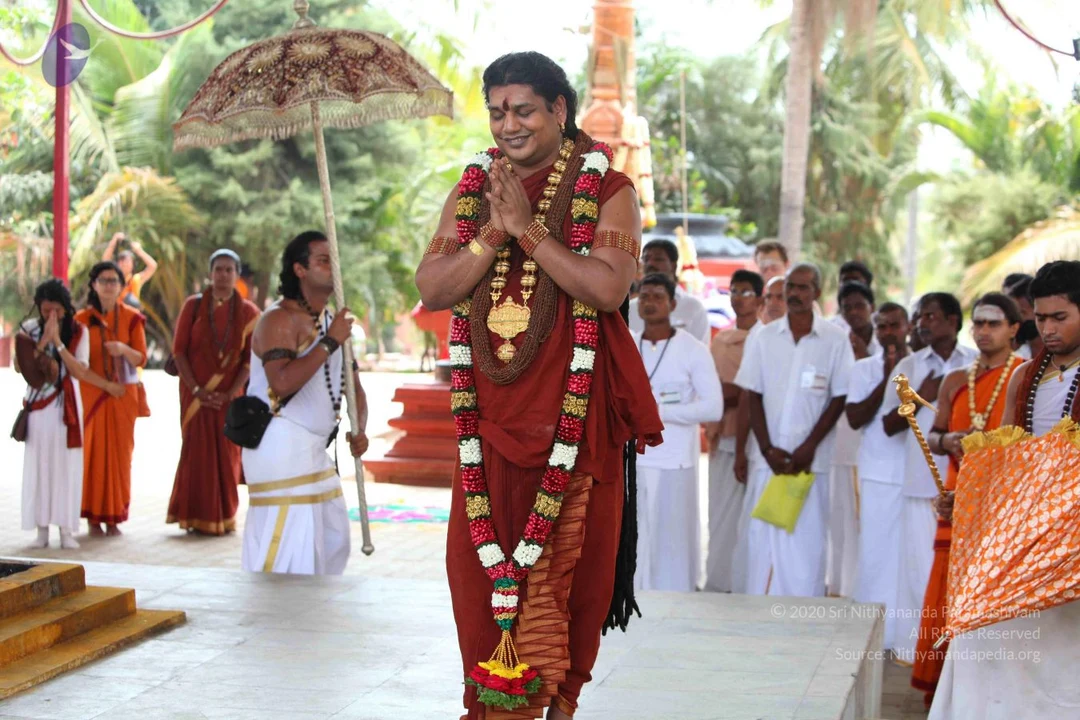
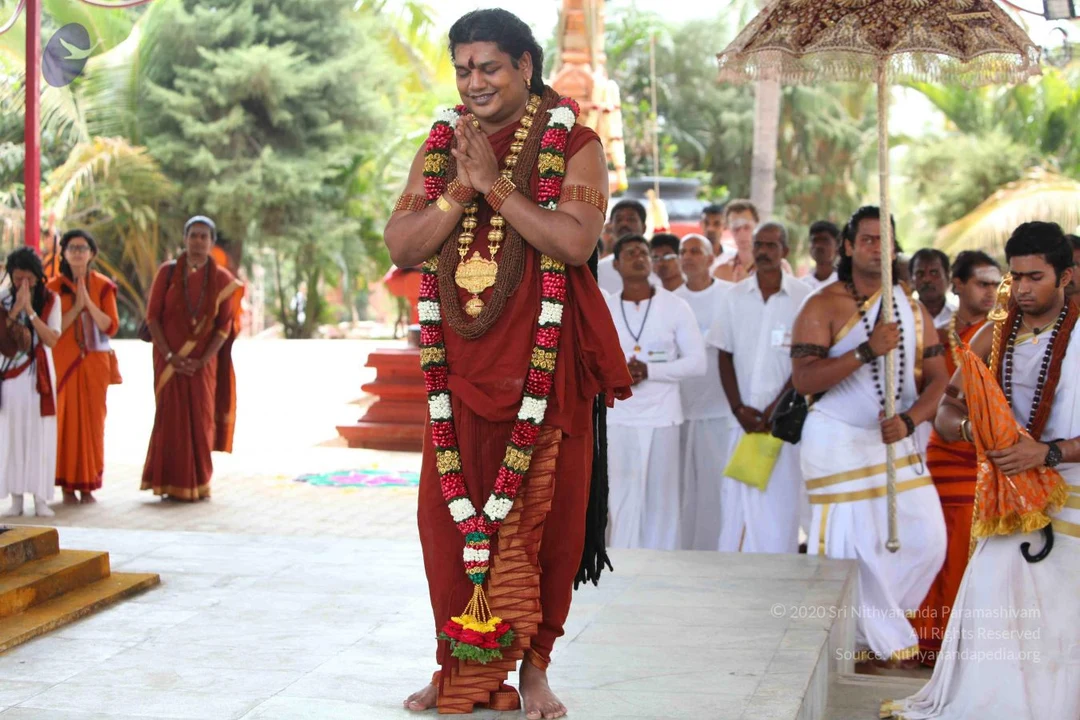
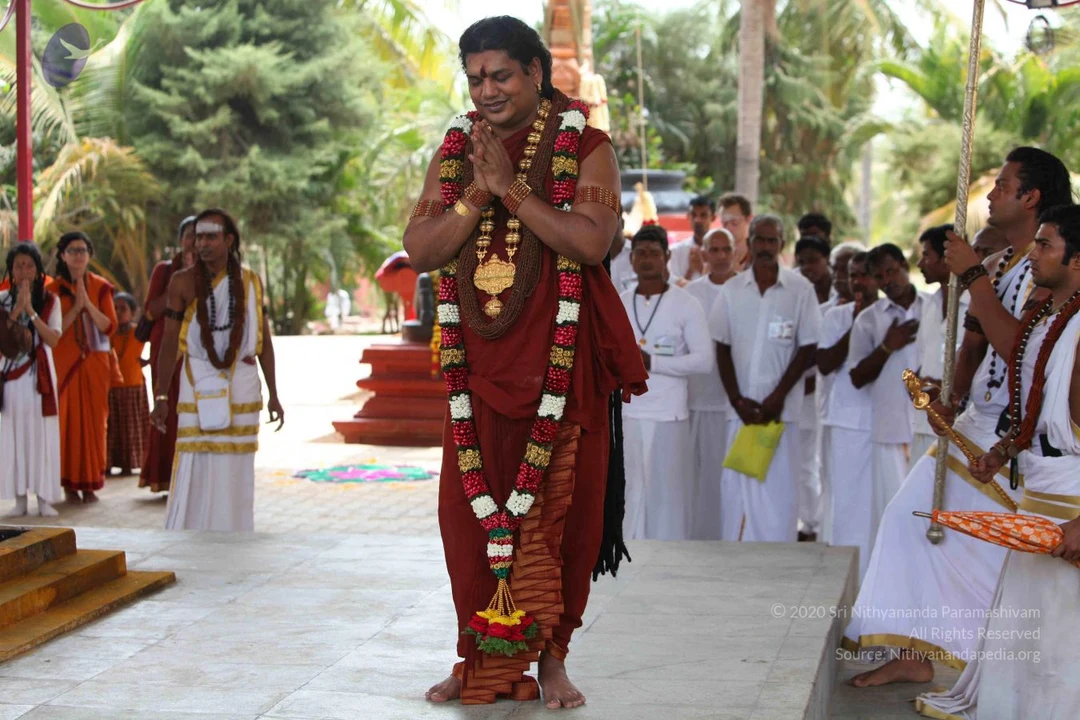
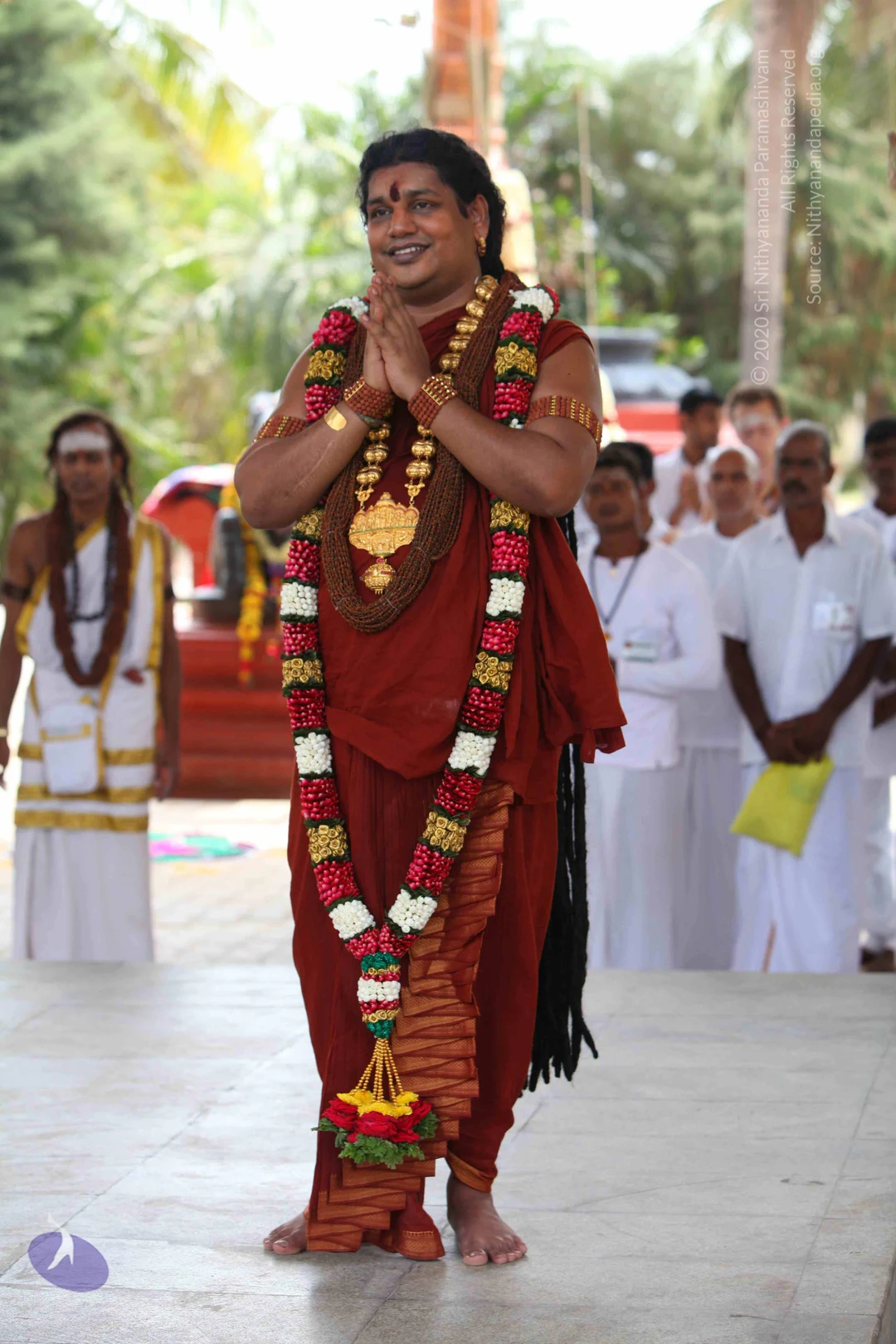
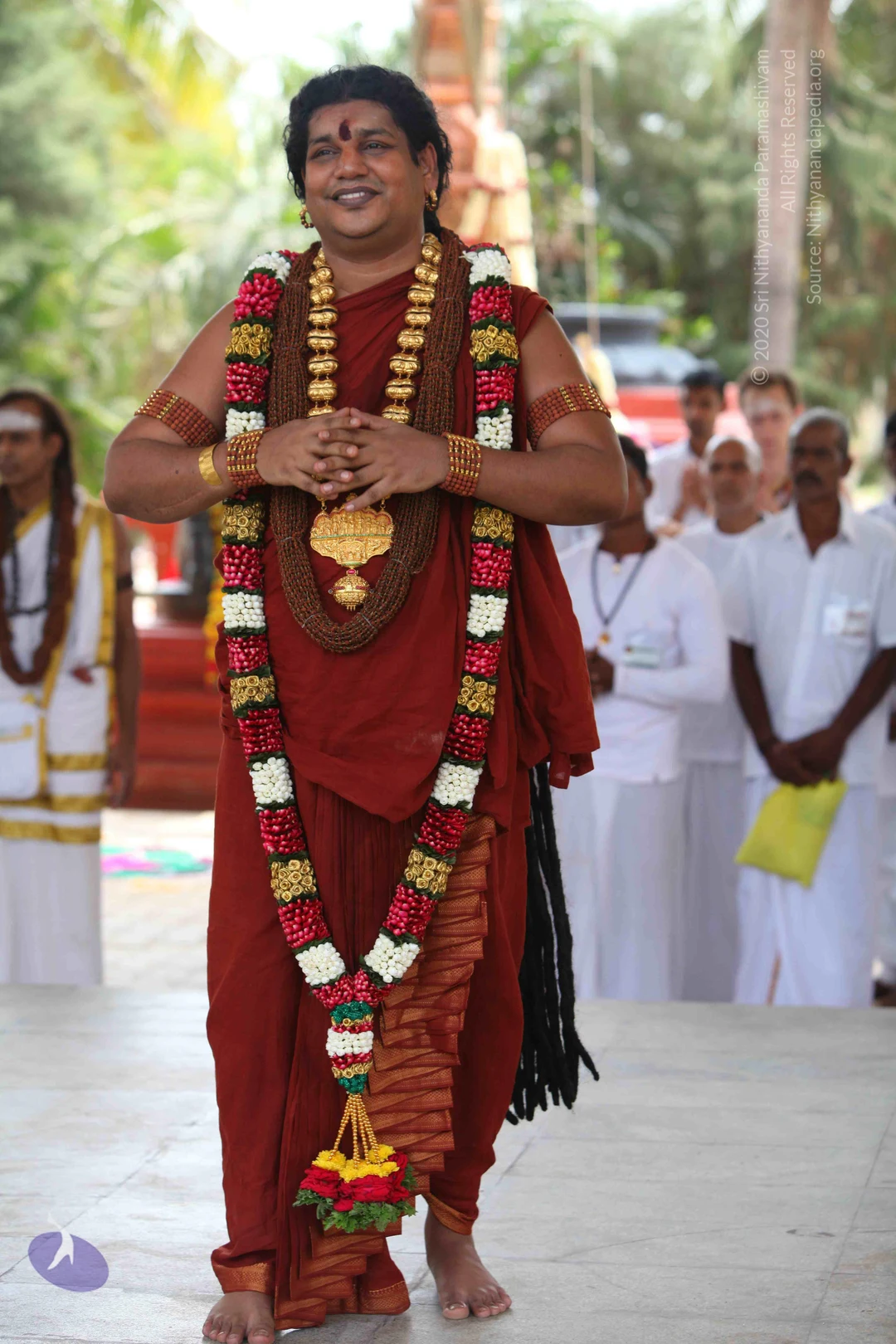
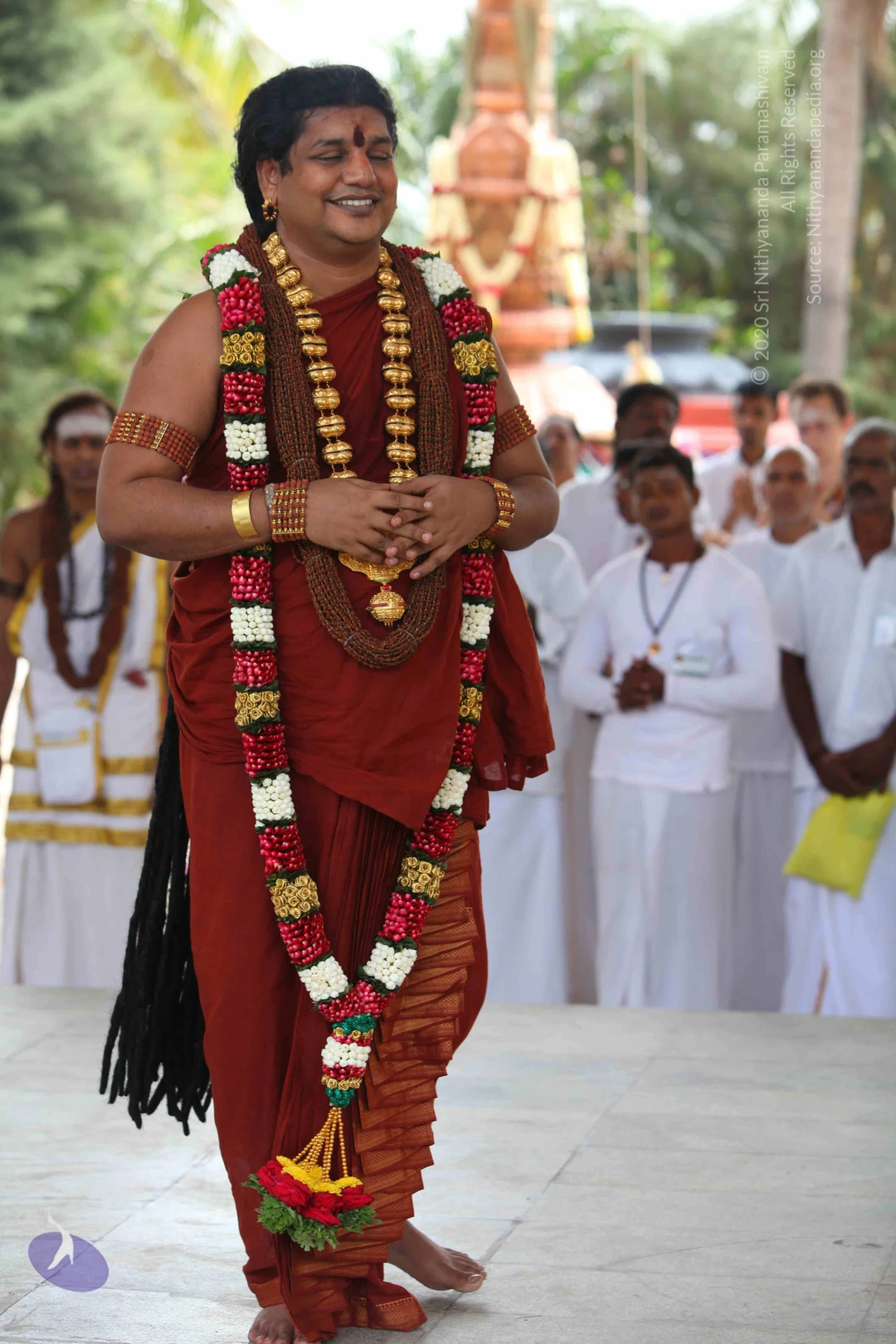
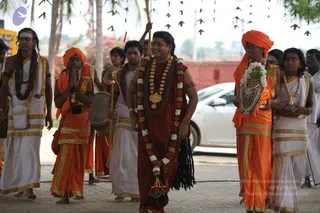
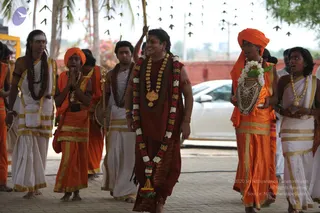
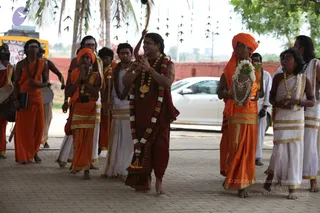
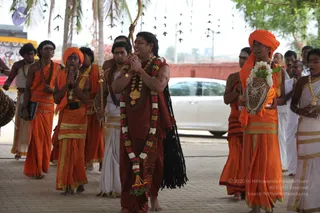
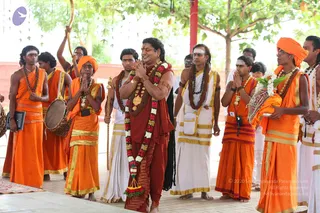
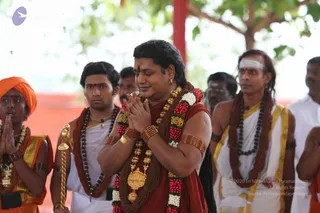
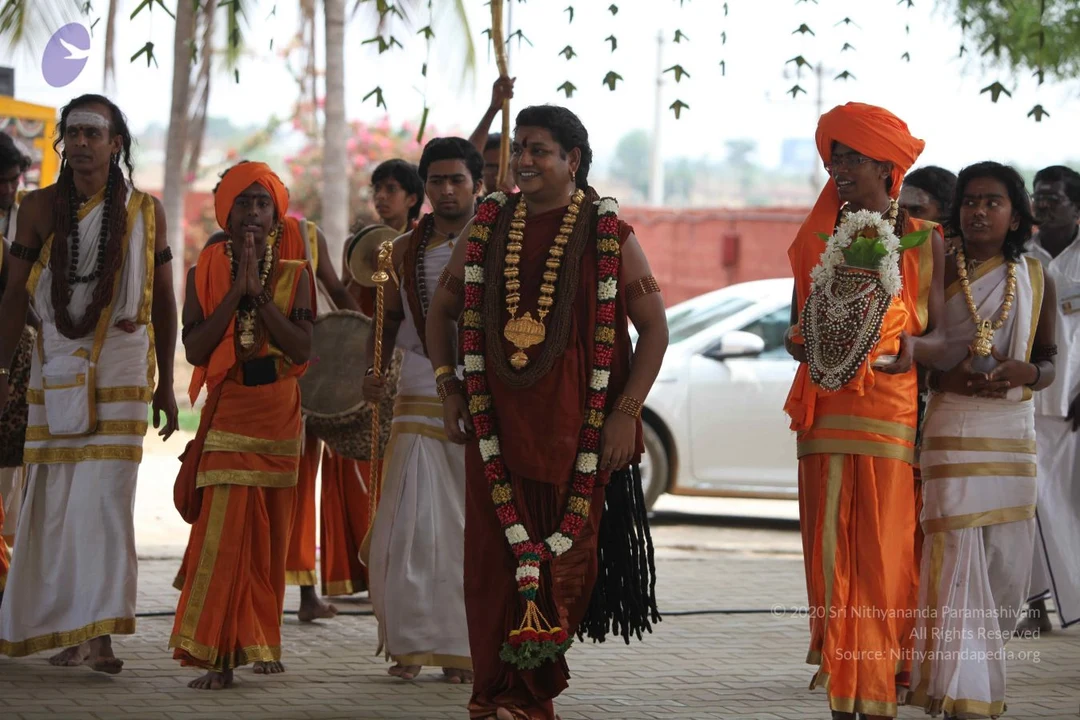
A procession of devotees in saffron and white ritual dress walks along a paved path outside a building. At centre, a man in a rust-red robe wears a long multi-strand garland of white and red flowers, a gold pendant on a beaded necklace, and a dark rudraksha-style mala; the bare-chested figure has distinctive long swept-back hair and gold armbands. Flanking him, a man in orange with a white turban holds a ceremonial staff, and a figure in orange with a flower-decorated pot at chest height walks beside him. Other devotees in white dhotis with gold borders, orange shawls and white vibhuti marks follow, one drummer partly visible, and a white car is parked behind. Hanging green leaf strings decorate the entrance above.A procession on a paved courtyard path lined with palm trees and hanging green decorations. In the centre, a man in a rust-brown robe wears a long multicoloured flower garland of red, white and pink blooms, a large gold pendant on a bead necklace, and an orange-gold shawl. He is smiling and walking forward. Around him, attendants in saffron and orange robes with gold borders and white dhotis, some wearing orange turbans, carry a staff, a decorated kalasha pot with white flowers, and hold hands together in anjali. A white car is parked behind them beside a red wall.A procession on a paved courtyard under a covered pavilion with palm fronds and hanging decorations. In the centre, a smiling figure with long dark hair wears a deep maroon-brown robe, a long garland of white and red flowers, a large gold pendant and gold bangles, with palms pressed together in greeting. Beside and around them, devotees in saffron-orange robes and orange turbans carry a kalasha-like ornate headpiece with white flower garland, a drum and a ceremonial staff, while others in white dhotis with gold borders and gold necklaces walk alongside. A white car and a red brick wall are visible behind.Outdoor procession on a paved brick walkway with palm fronds and a white car behind. At centre, a man in a maroon-brown robe with a long multi-coloured marigold and white flower garland and a gold pendant walks with palms pressed together in greeting and a long black braided shawl hanging at his back. Around him, several men and youths wear saffron-orange dhotis and turbans, some carrying a ceremonial staff, bead malas and gold chains, one with a book. On the right, a figure in orange with a white floral garland and an ornate jewelled necklace holds a decorated tray. White-clad attendants in dhotis with gold-bordered shawls walk alongside, some singing. a person cues: long swept-back hair, ornate gold pendant and garland, maroon ceremonial robe, with his role as the central figure leading the procession.Outdoor photo of a devotional procession under a pavilion of trees. At centre, a smiling man with long dark hair and a red-brown garment stands with palms joined in namaste, wearing a large red and white flower garland and a gold pendant. Around him, devotees wear saffron-orange robes with gold borders and orange turbans; some hold a long staff and a drum, and others wear white dhotis with rudraksha malas and white forehead markings. Several people have bare-chested or white-clad attire and folded hands. The ground is paved and a tree and red wall are in the background.Outdoor photo of a central man with hands pressed together in anjali, eyes closed, wearing a deep red-maroon robe over a rudraksha mala and a long multi-strand necklace of red and white flower garlands with gold ornaments, gold bangles on his upper arms and wrists, and a gold pendant. Long dark hair falls past his shoulders and a red tilak marks his forehead. Around him, devotees in orange and white attire stand with hands folded; a woman at left wears an orange head covering and an orange-and-gold sari with a gold ceremonial staff nearby. A man at right with a white forehead band and rudraksha malas wears a white dhoti with gold border, and other attendees in white stand behind. Trees and a red pillar appear in the background. Probable Swamiji (probable) at the centre, with long swept-back hair, ornate gold necklace and red-maroon robe with rudraksha mala.
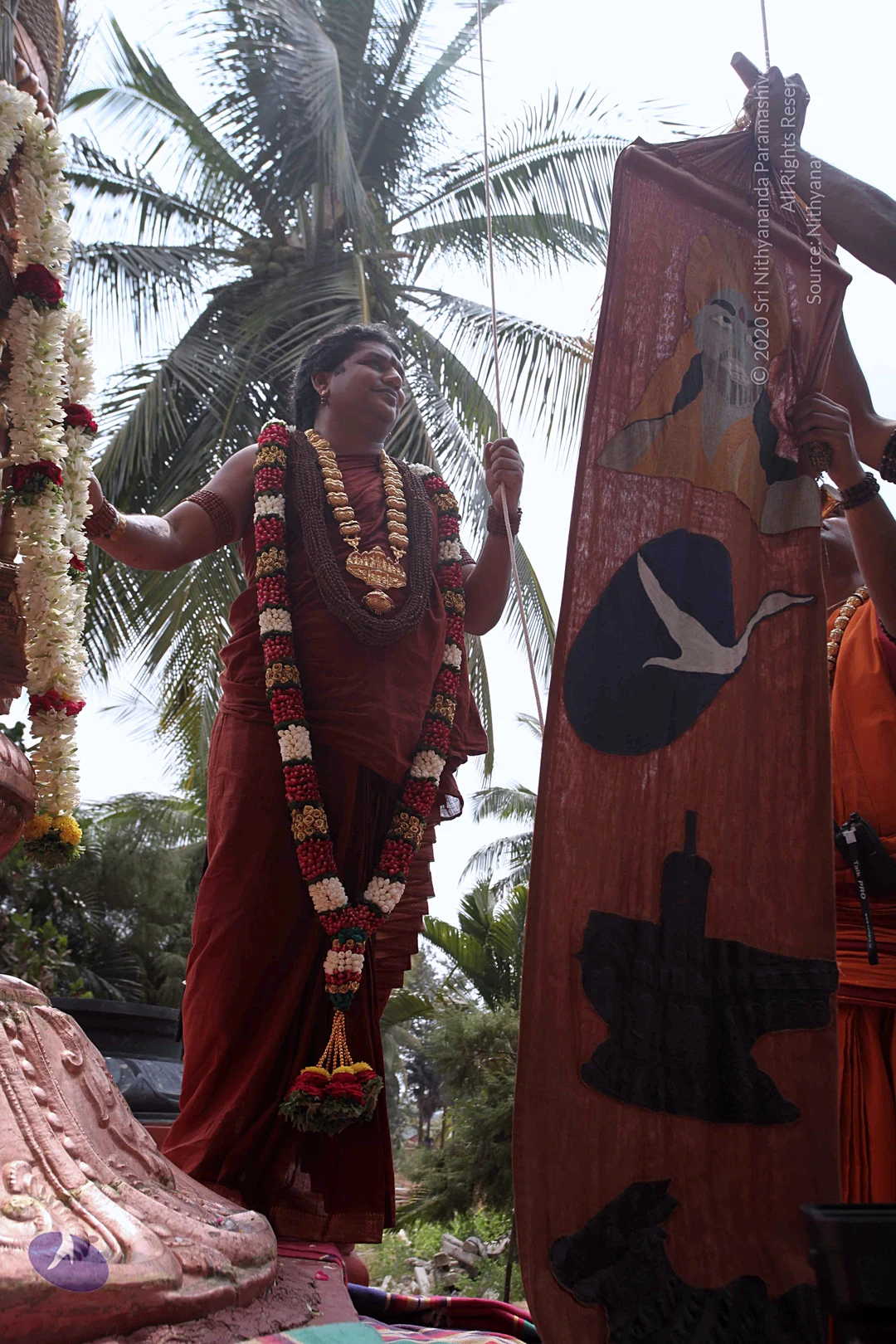
E-Kalpataru

295 photosSource gallery
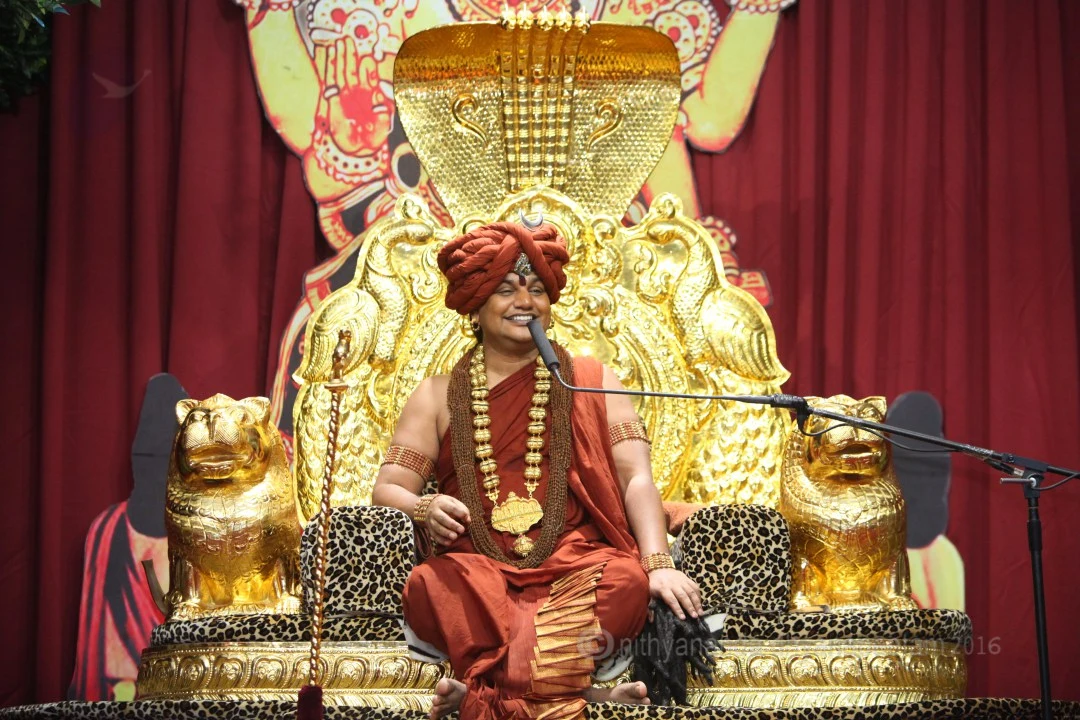
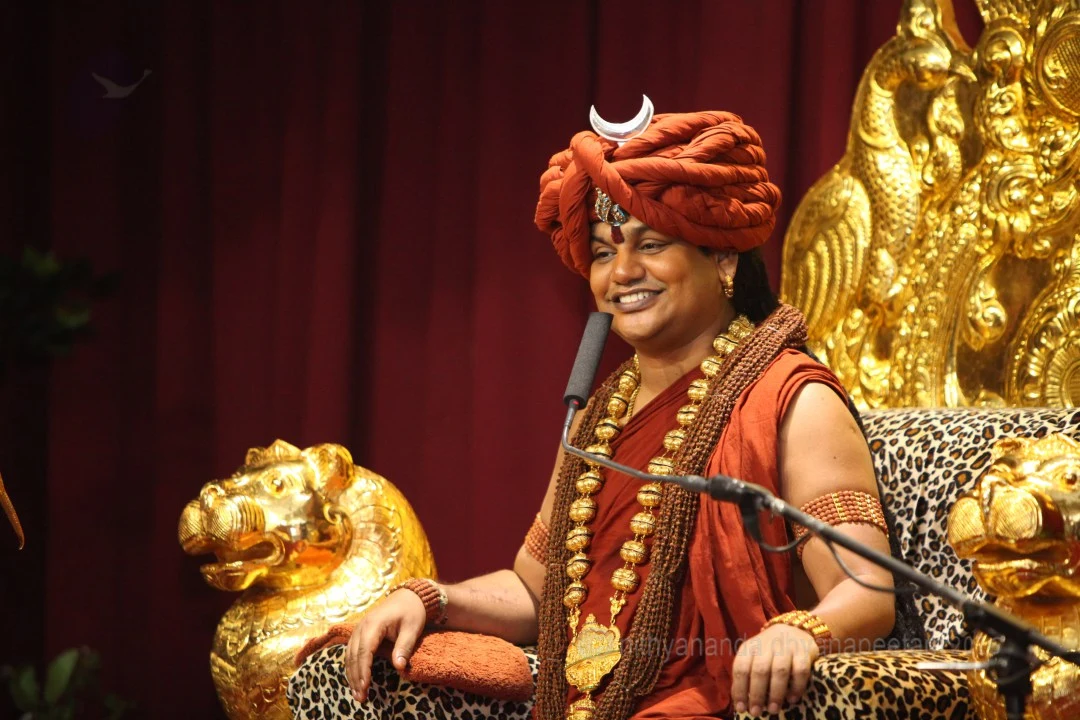
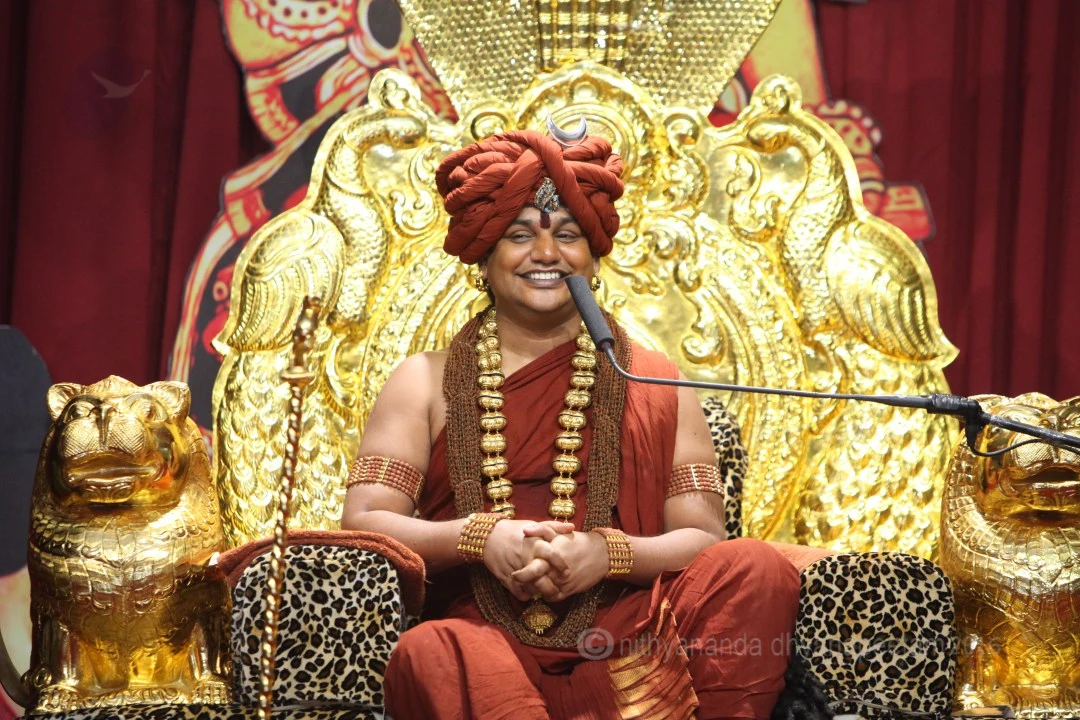
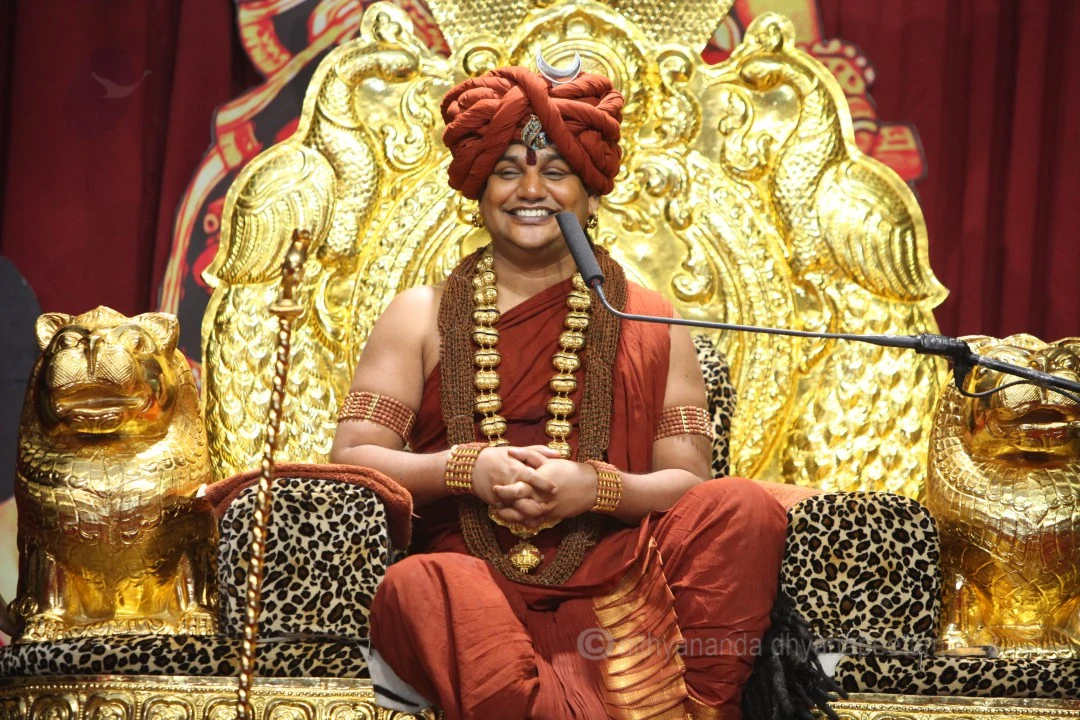
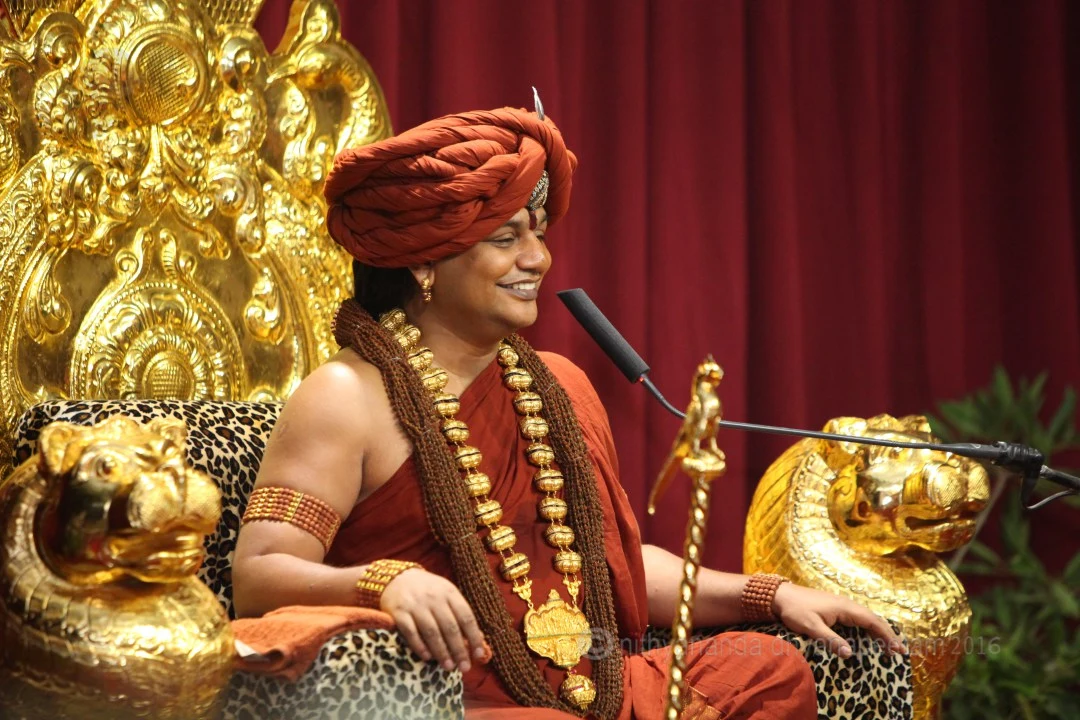
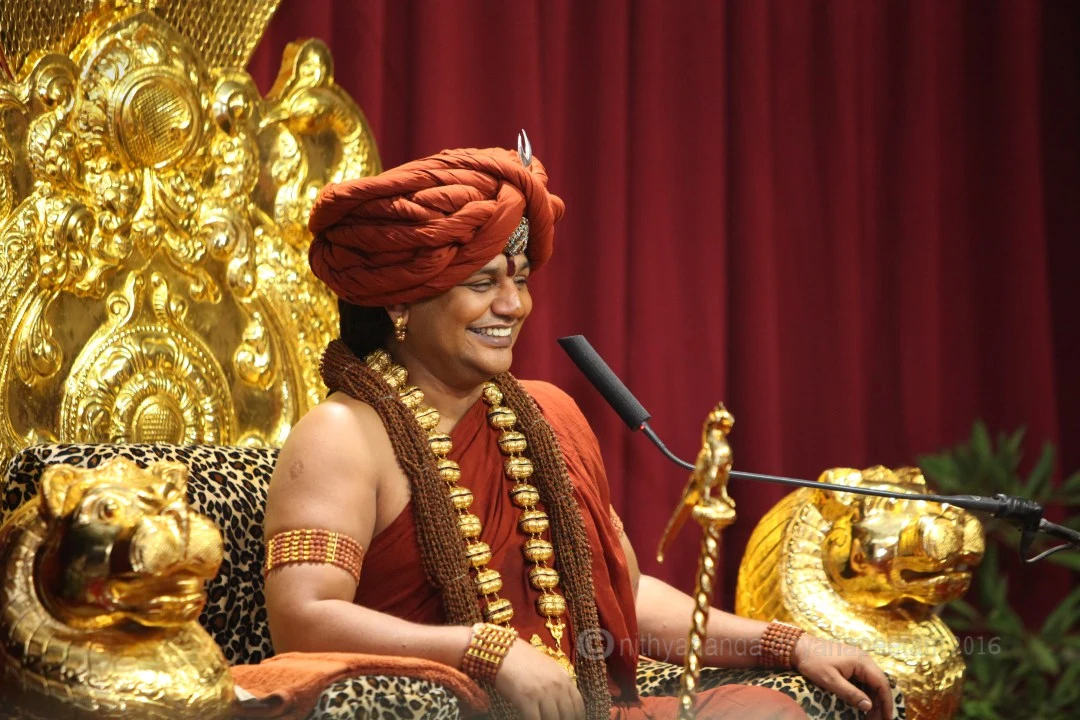
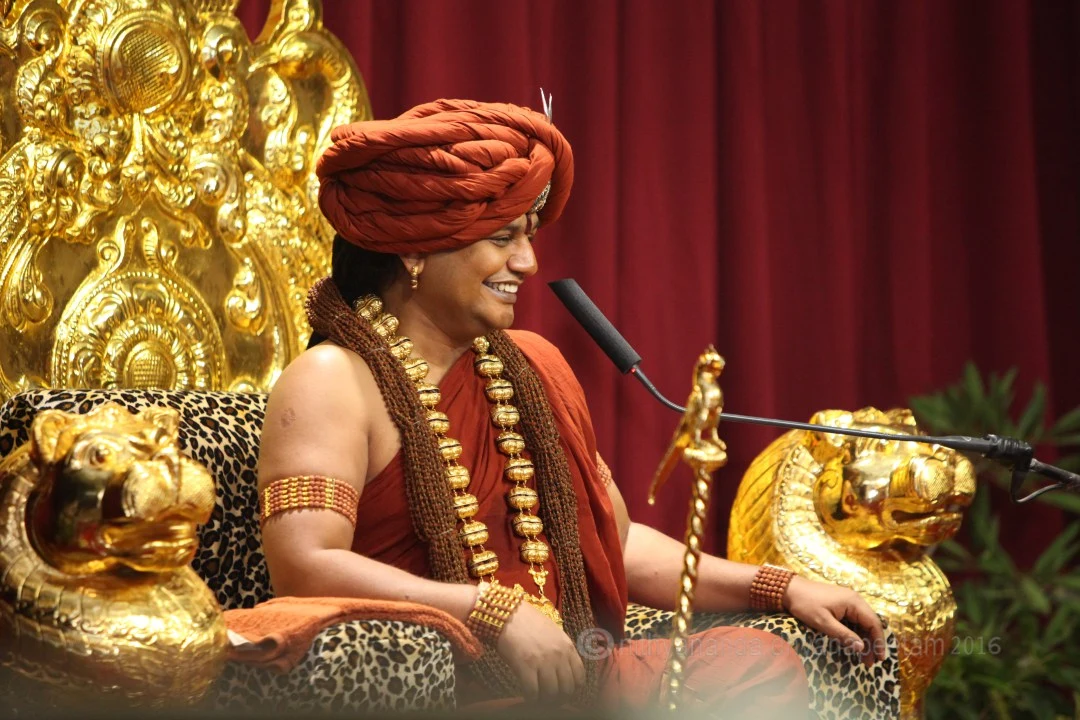
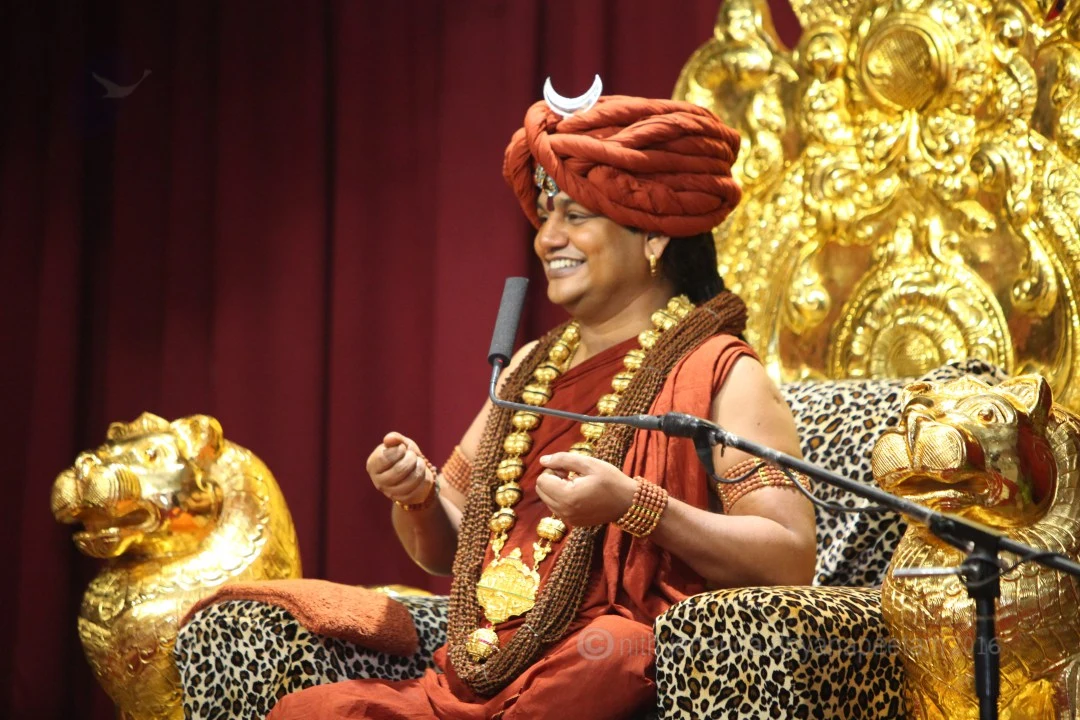
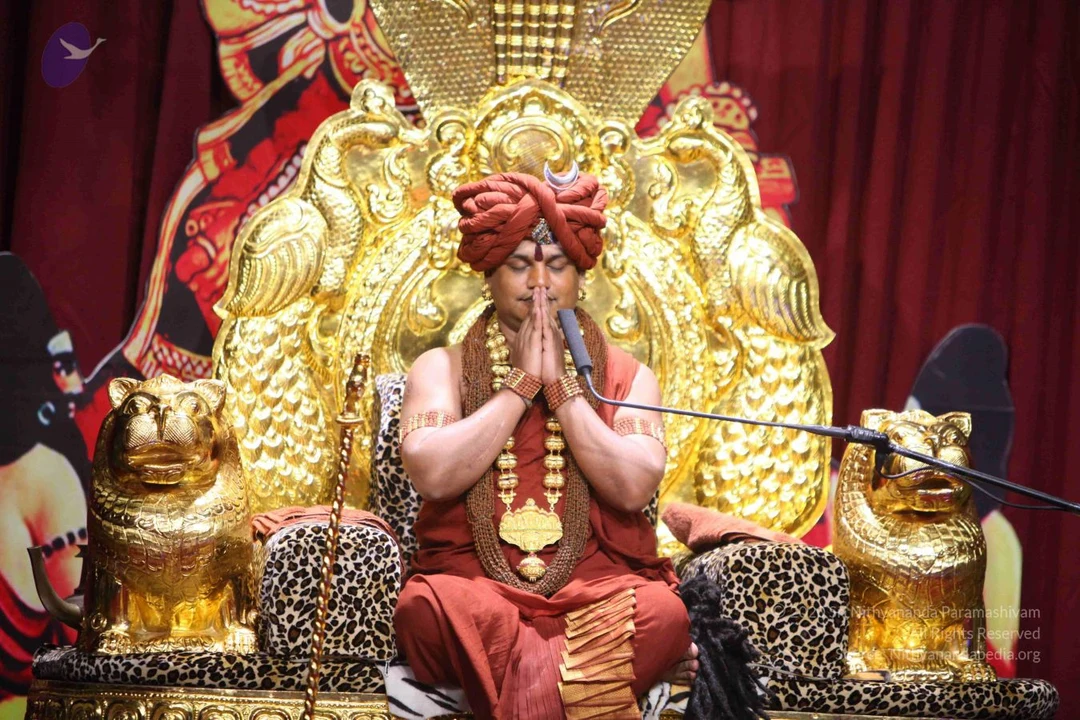
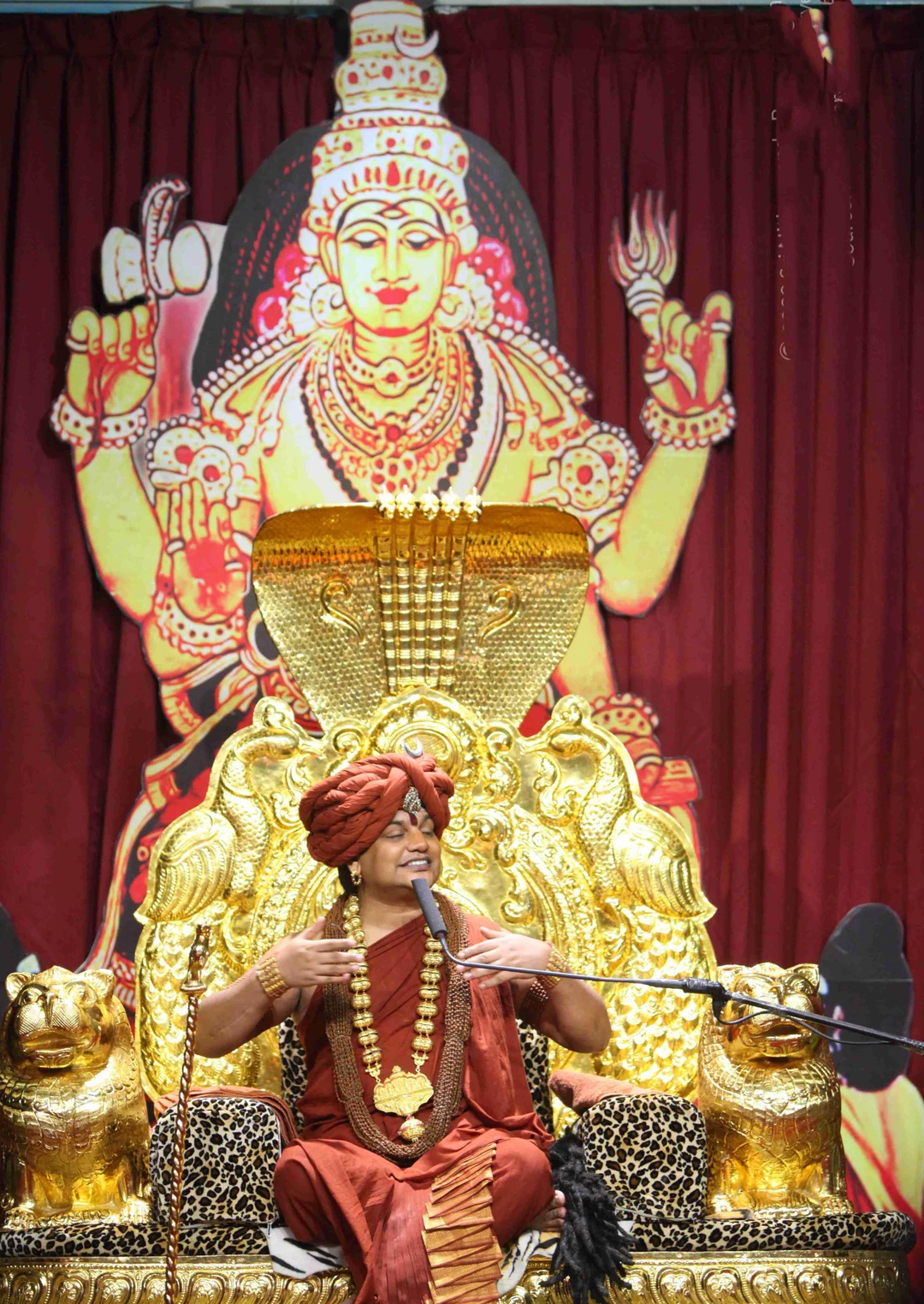
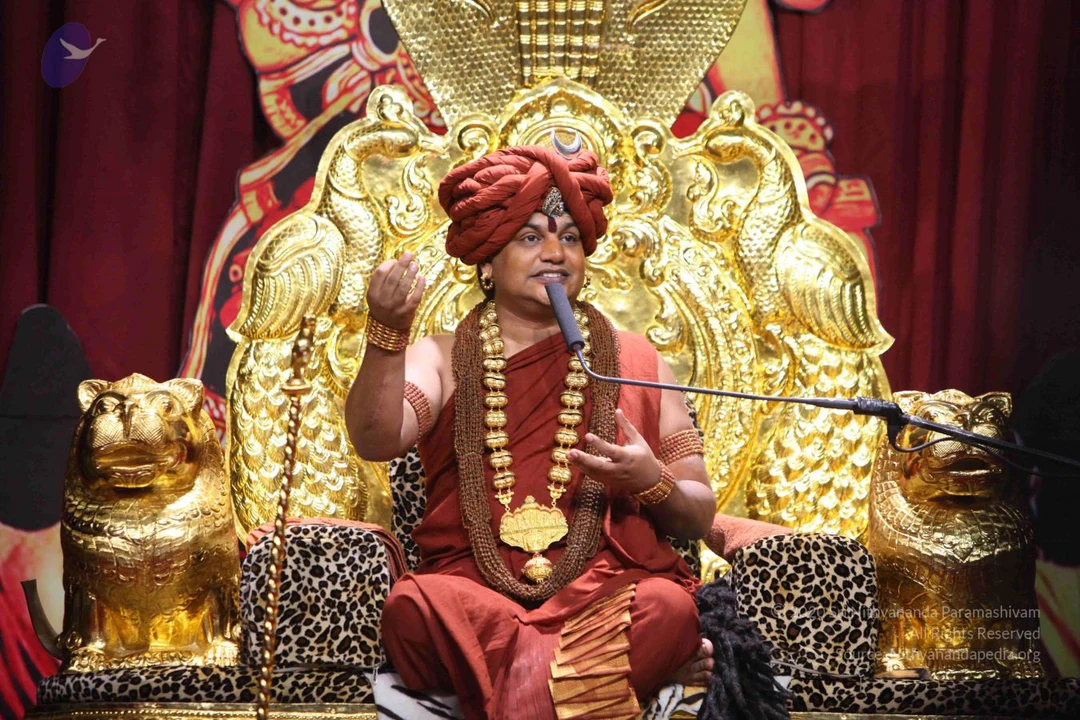
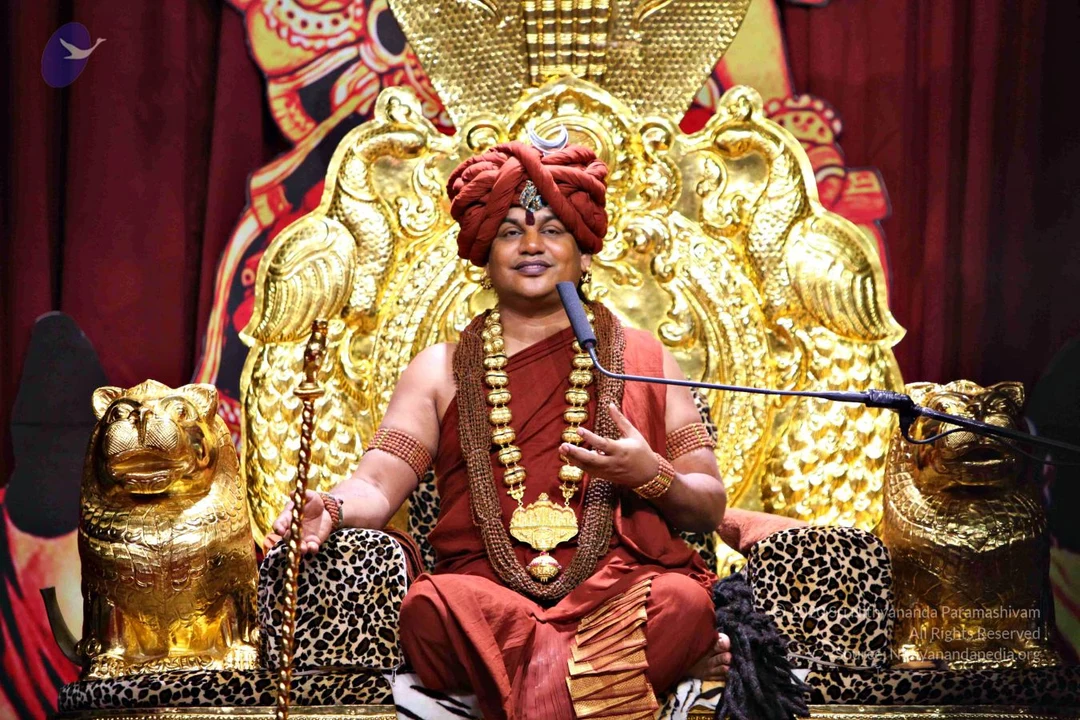
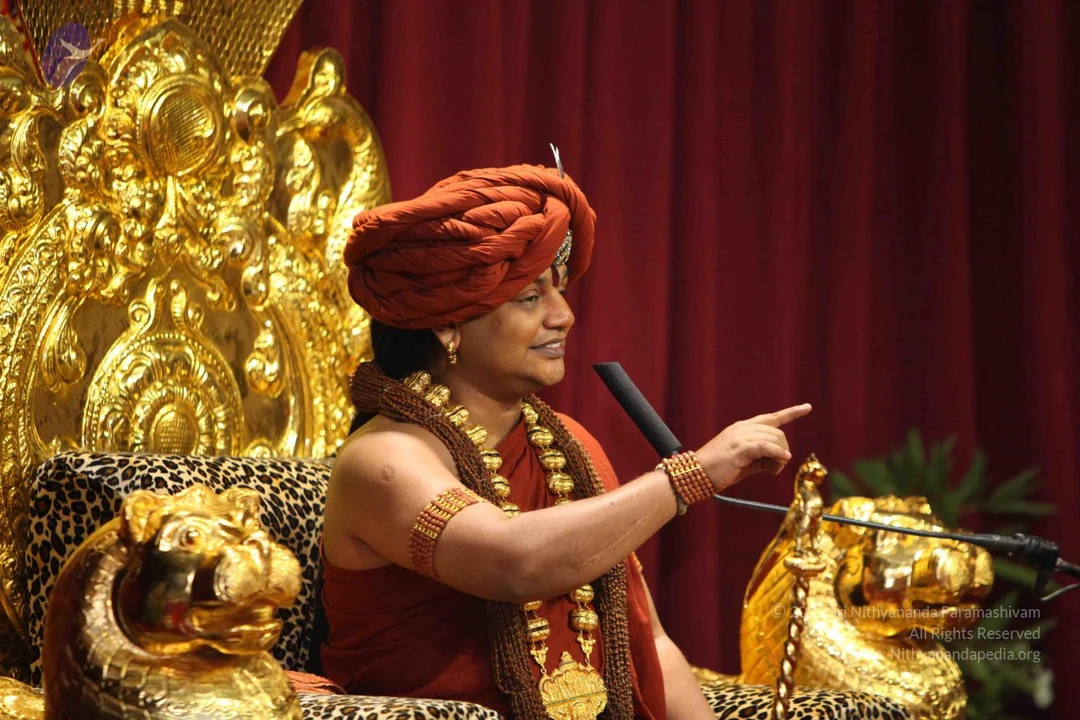
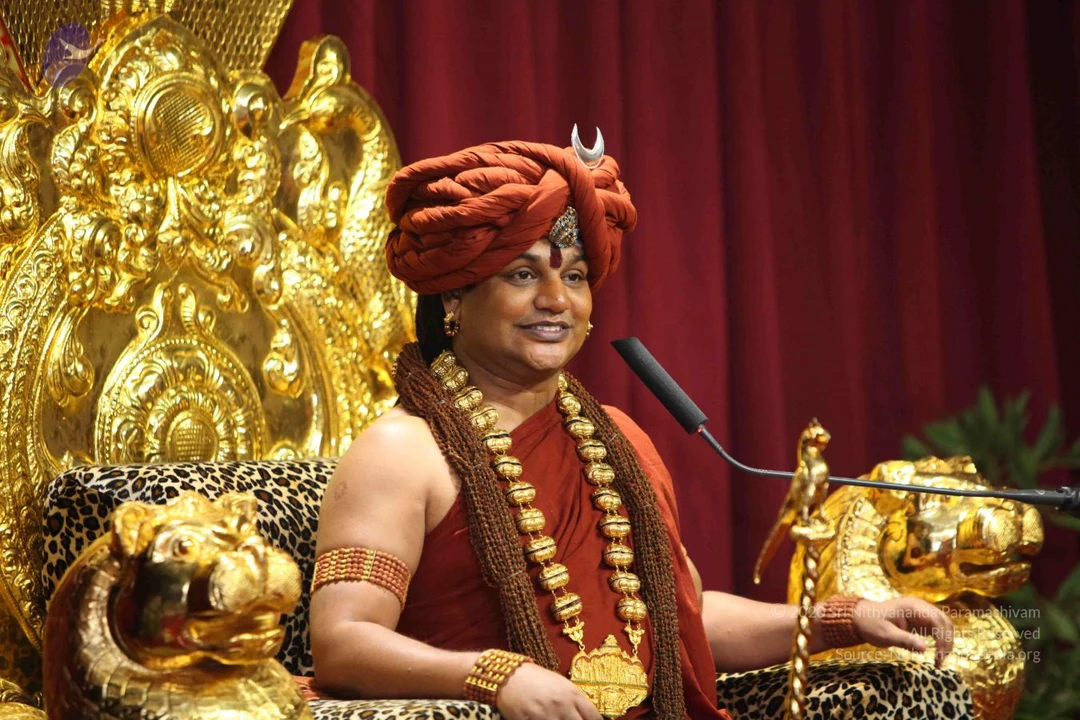
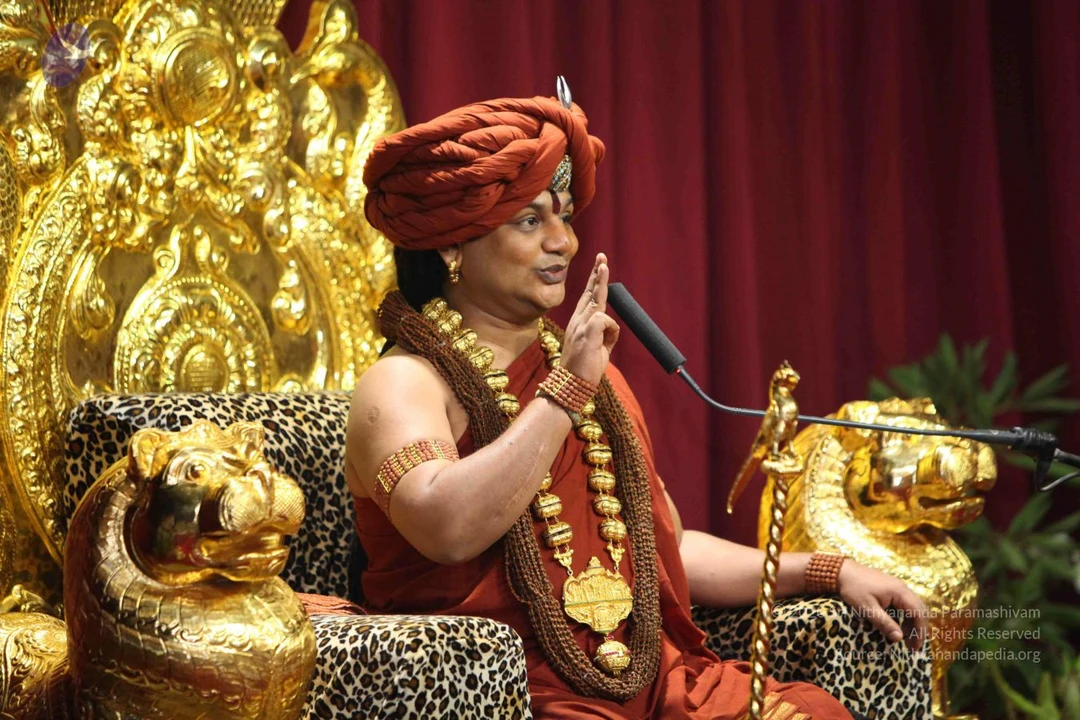
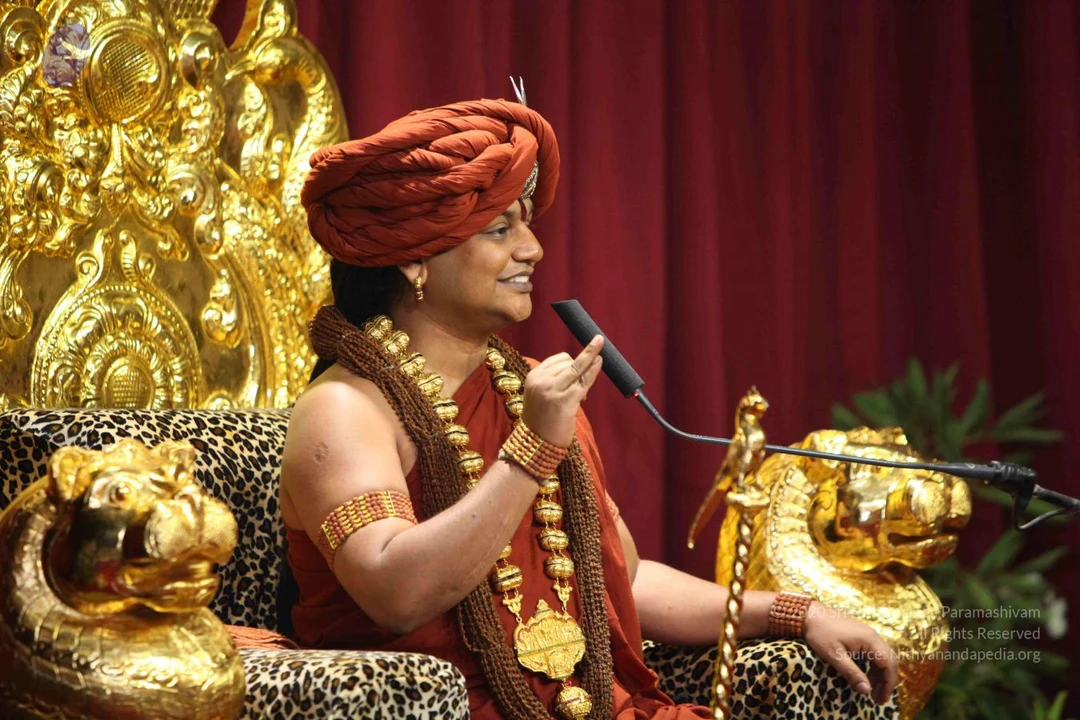
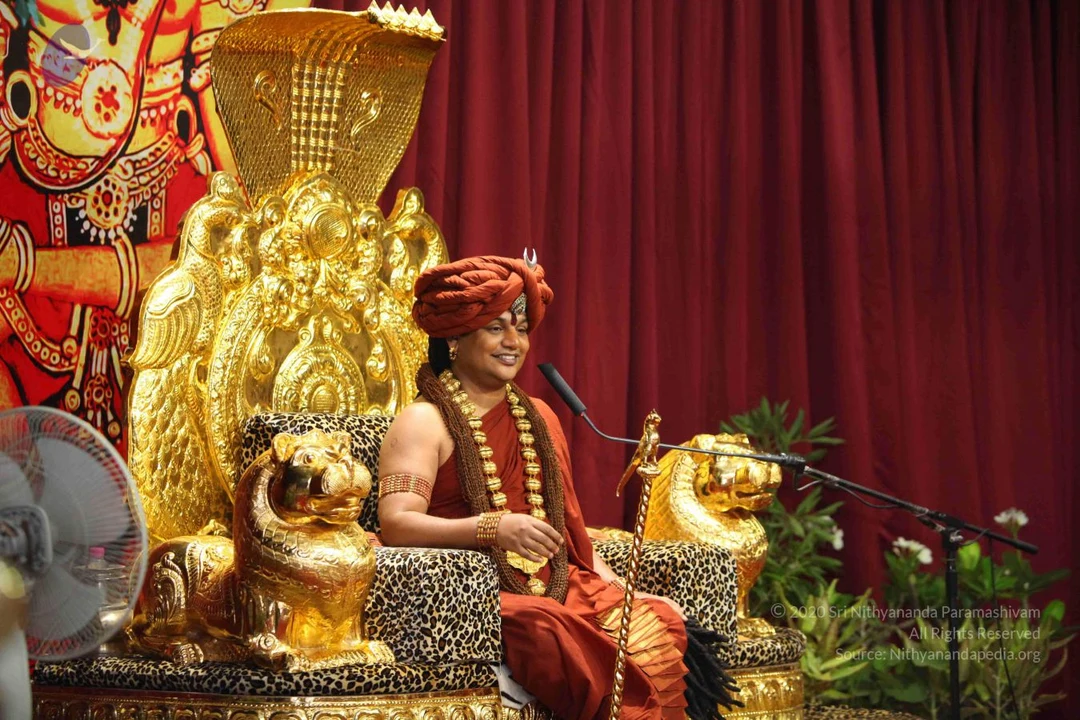
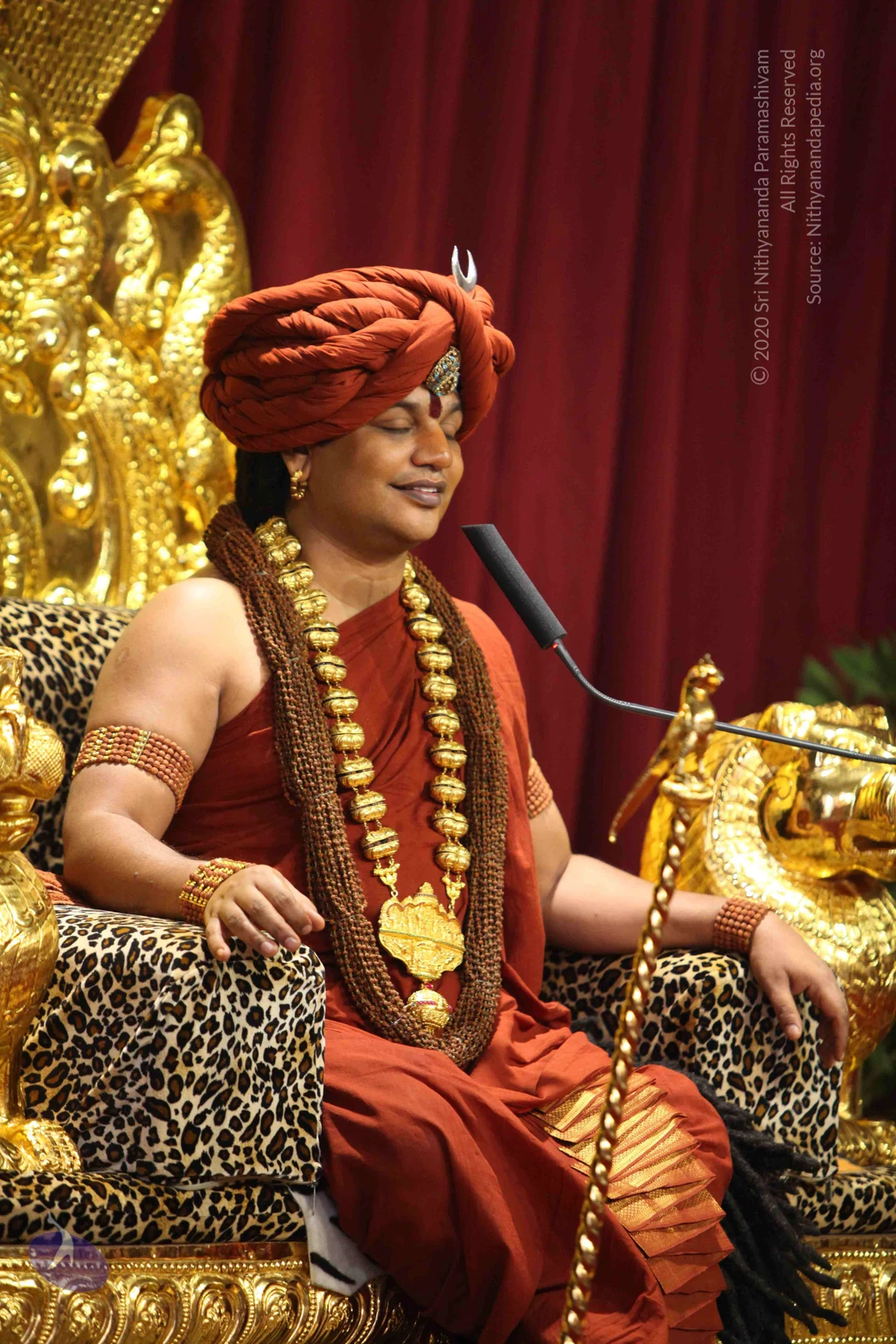
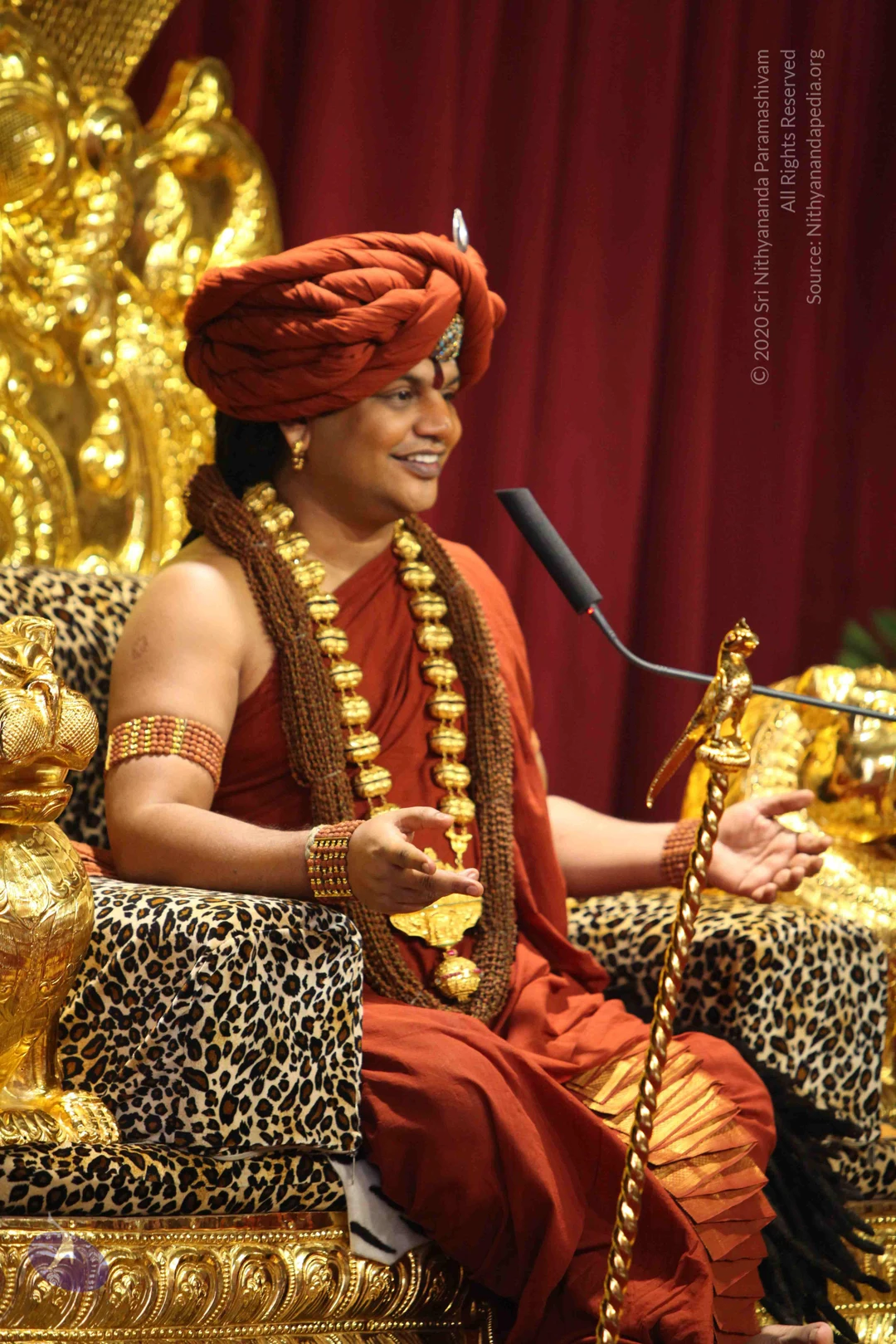
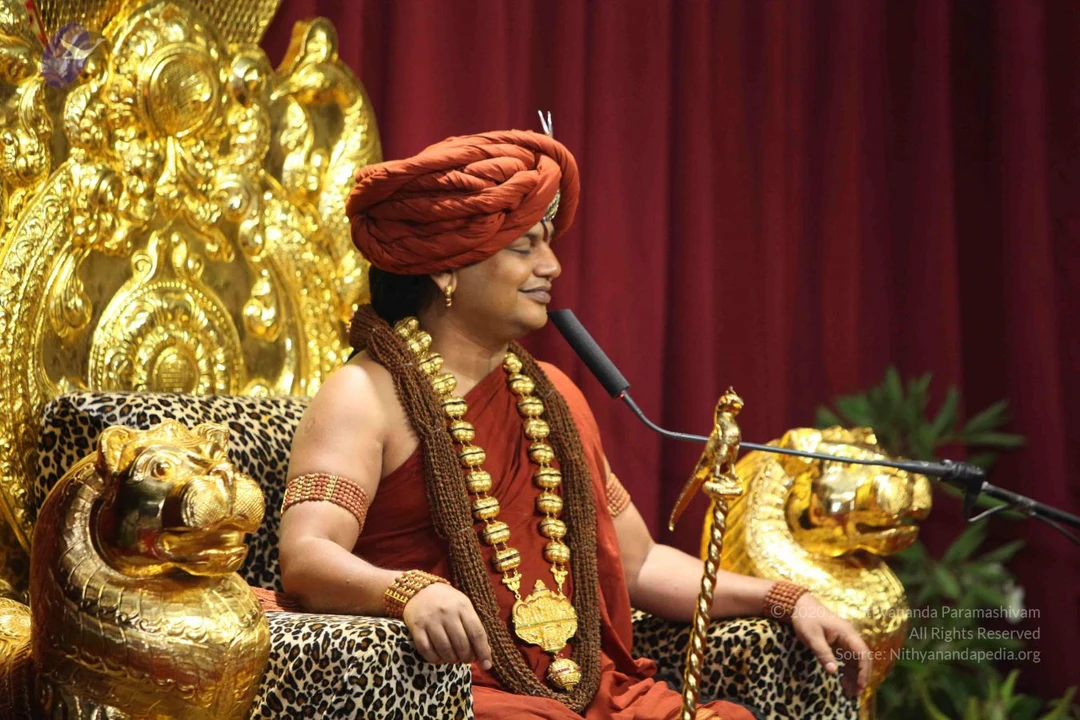
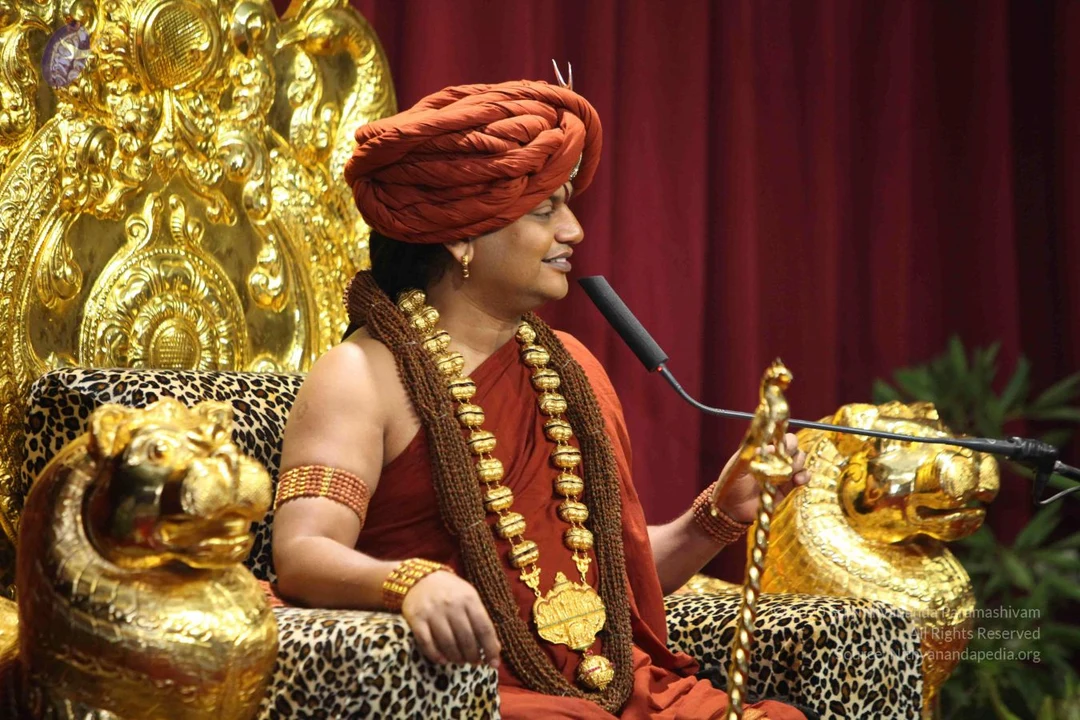
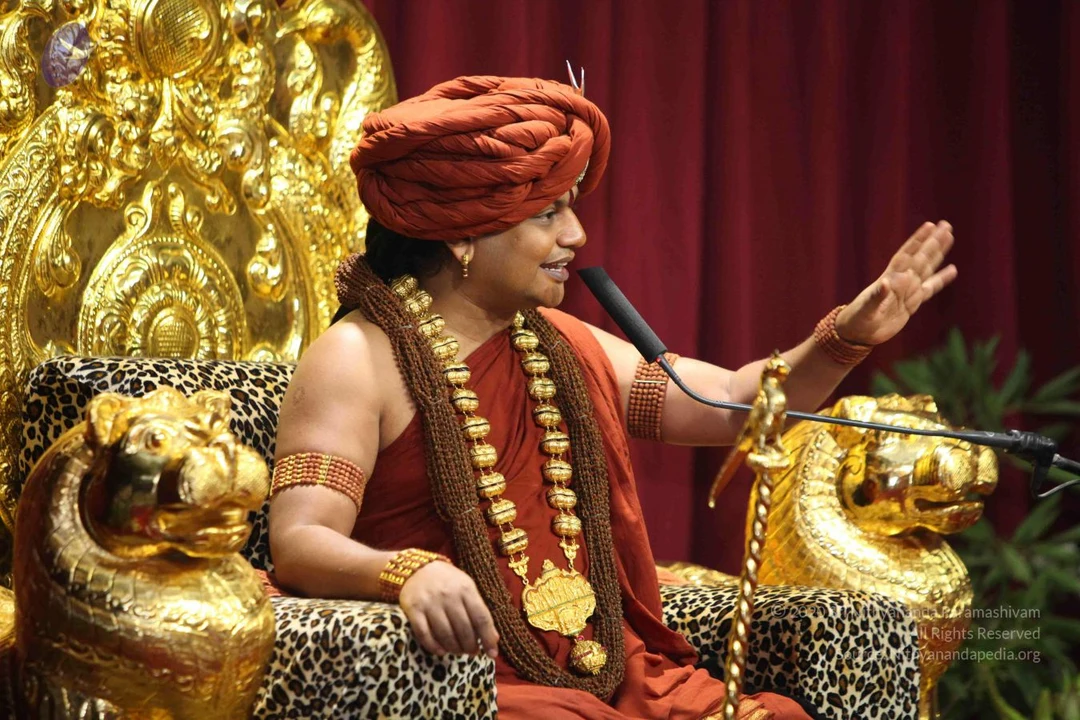
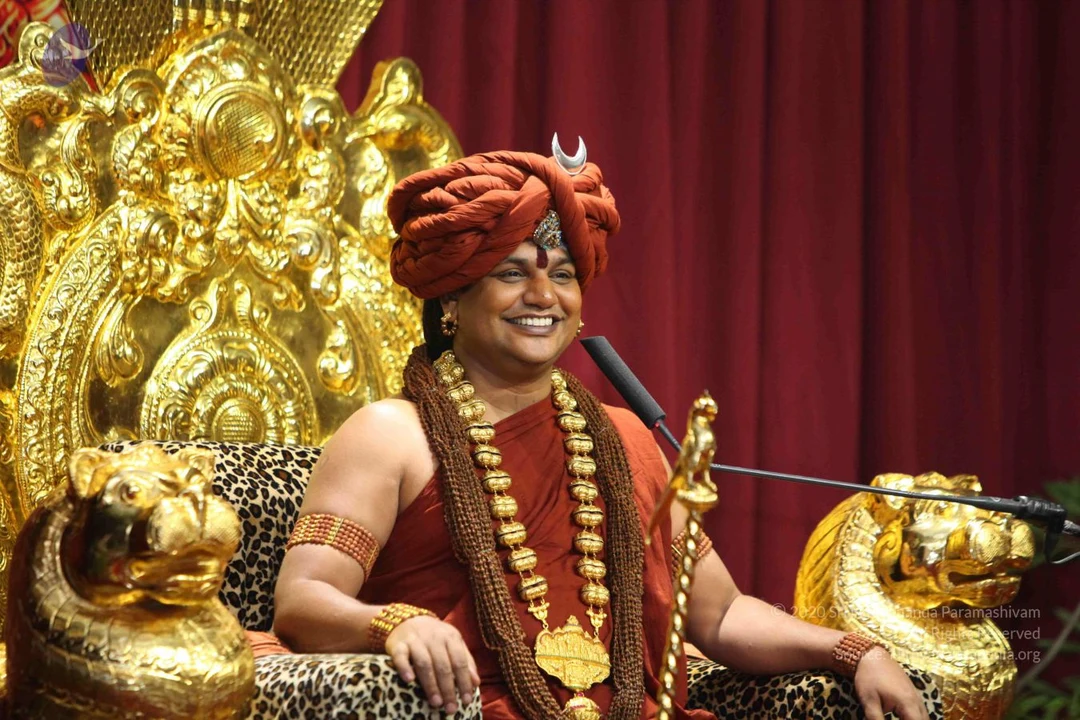
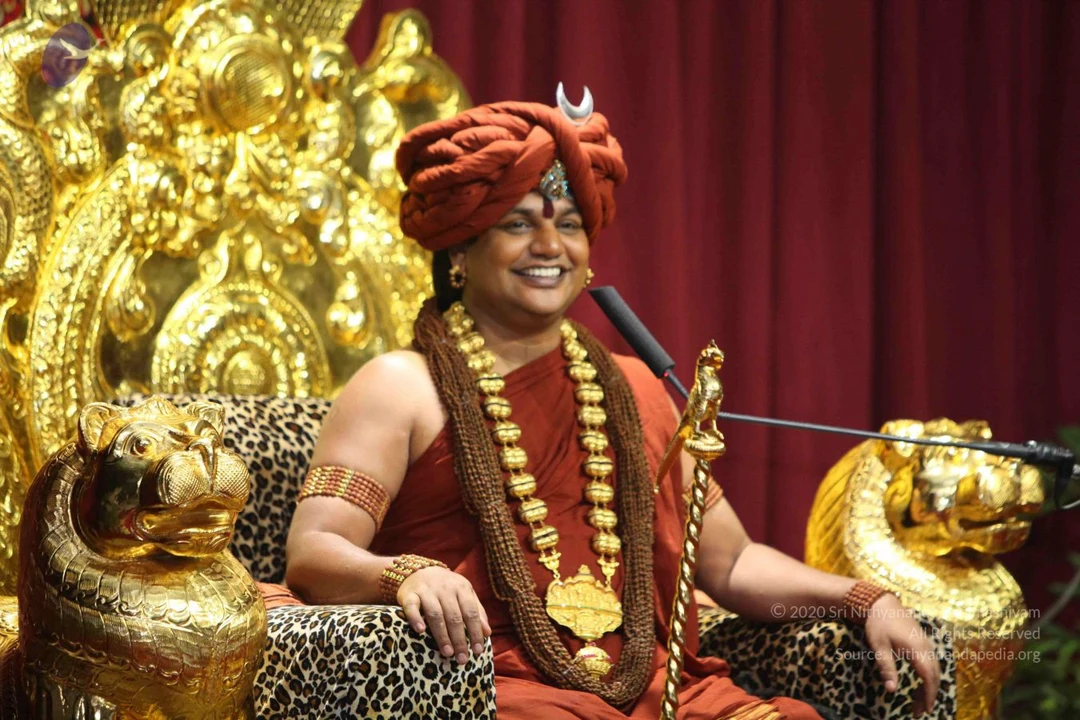
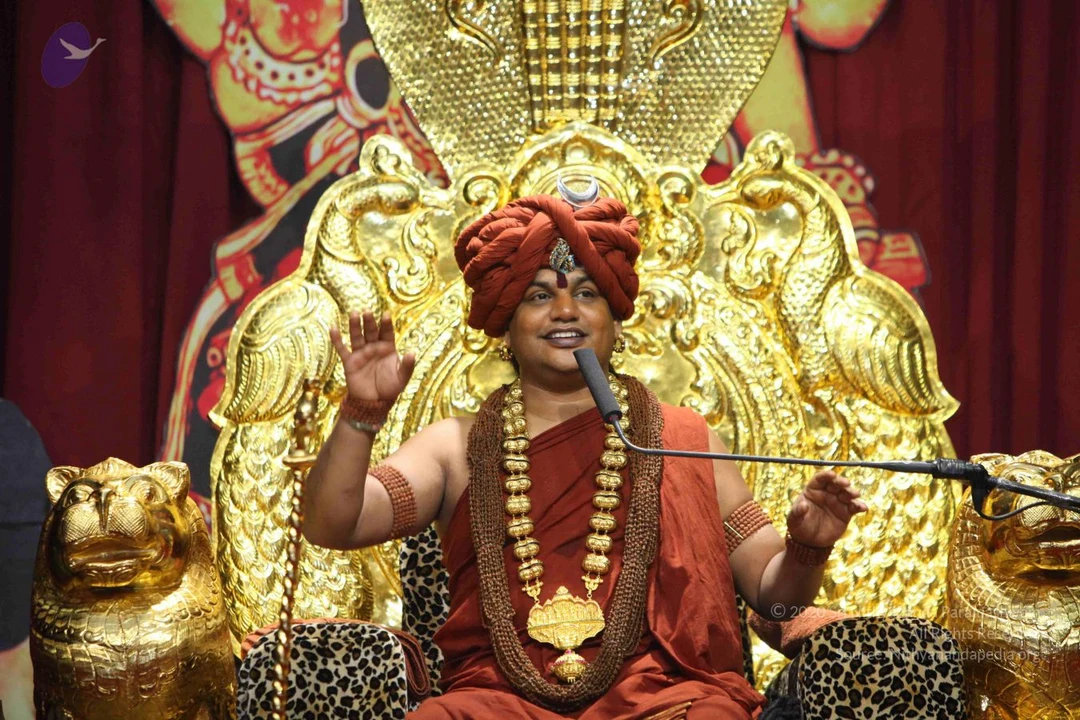
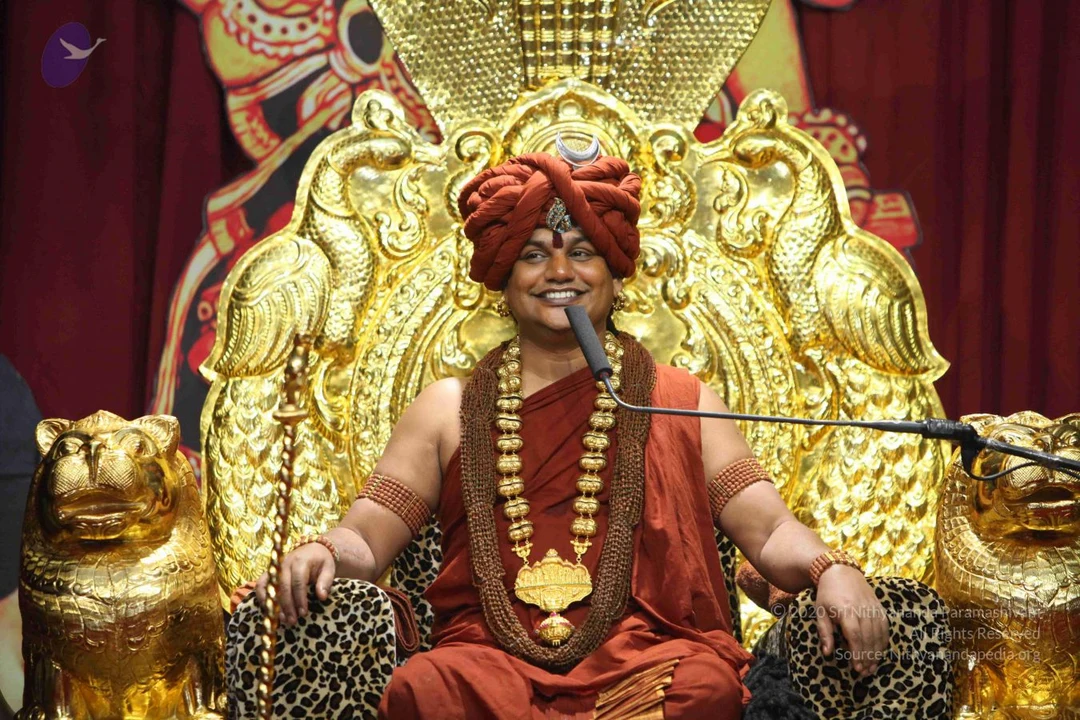
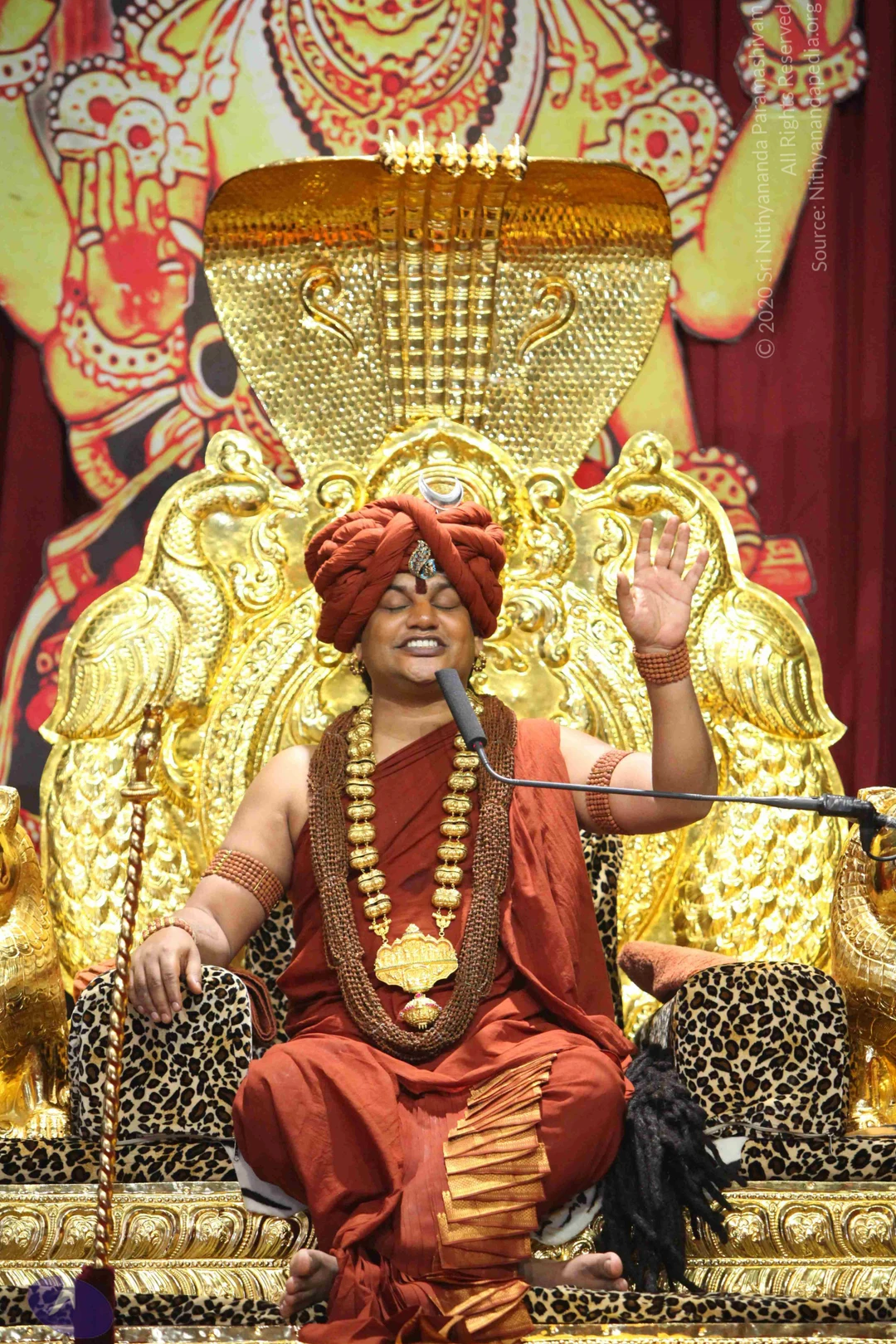
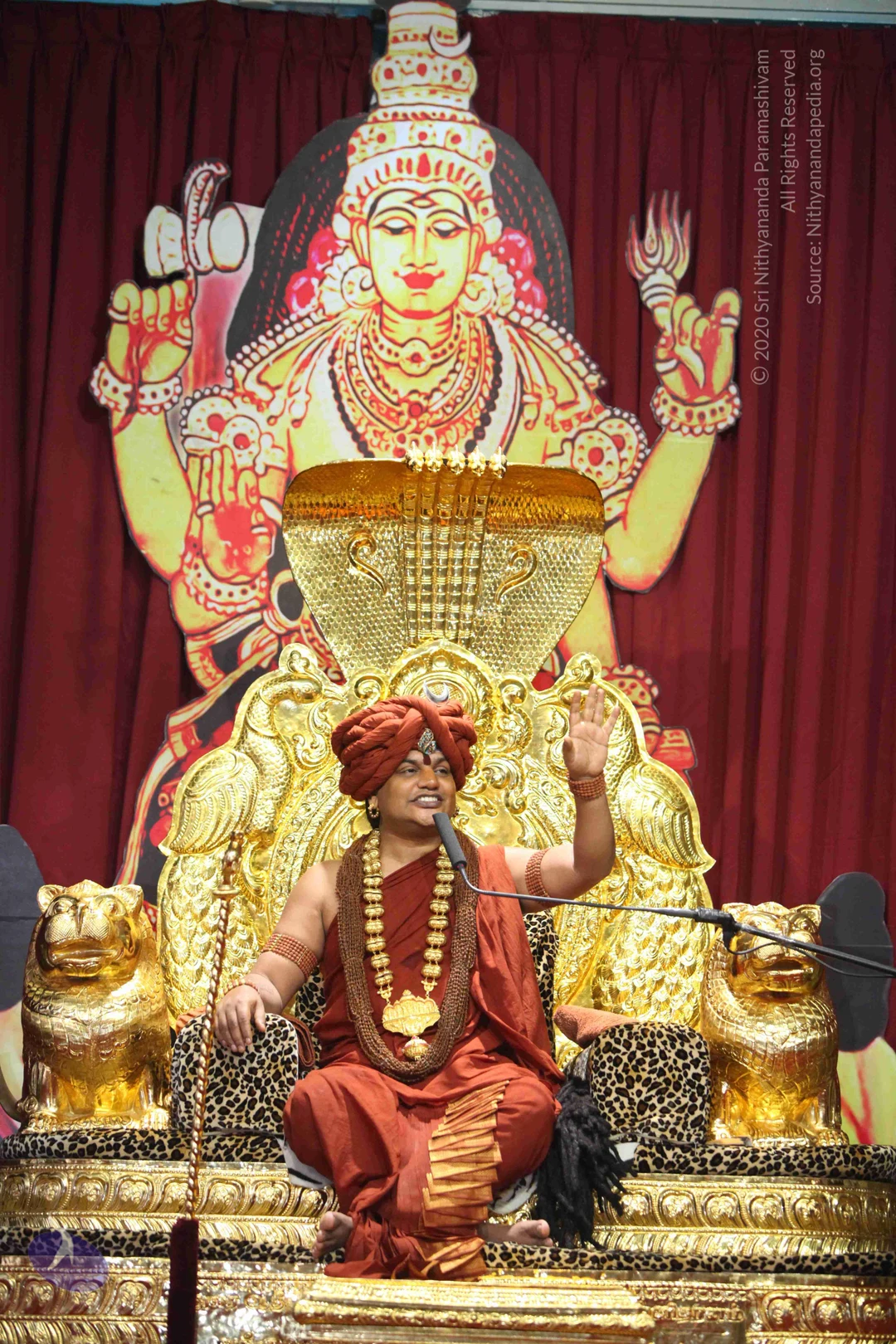
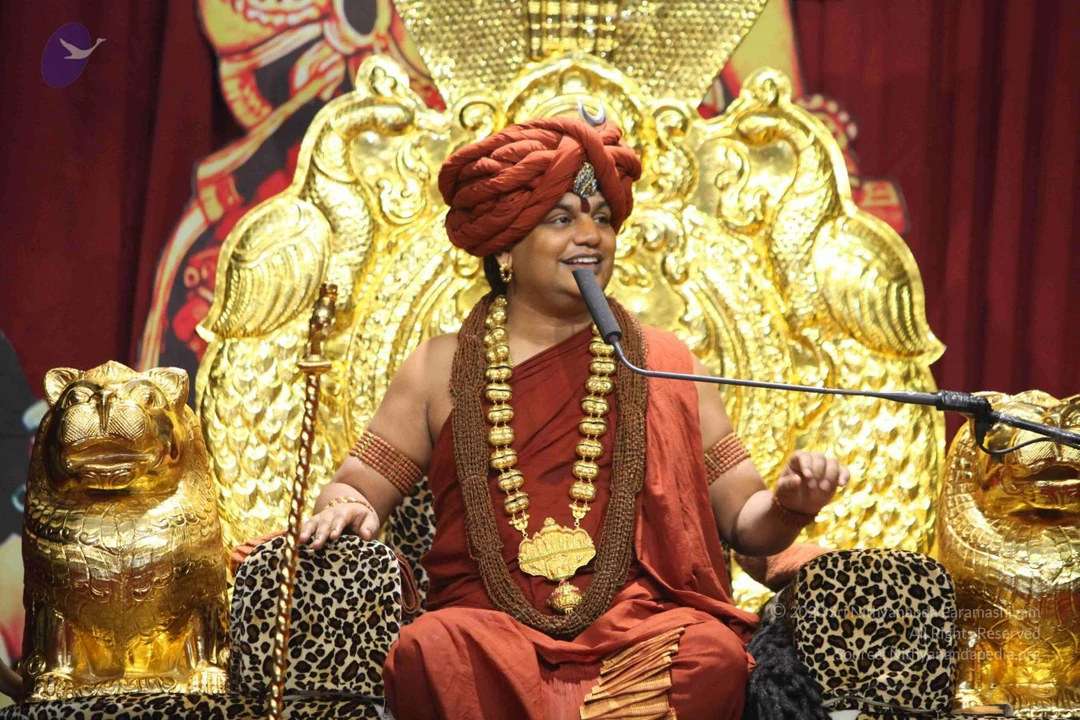
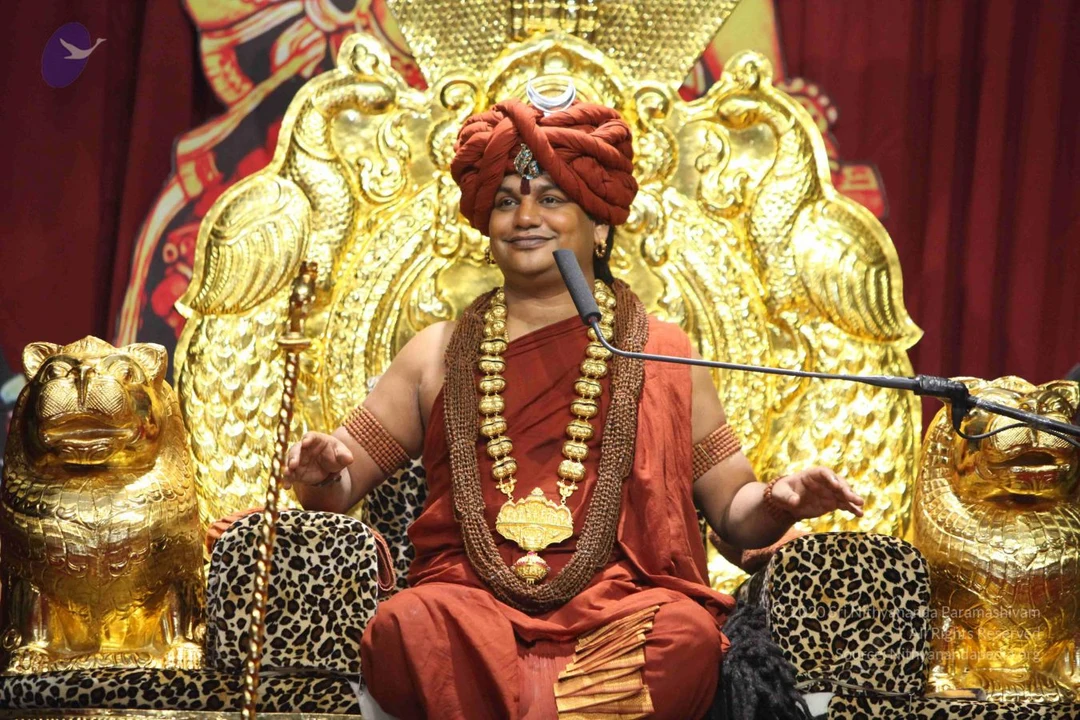
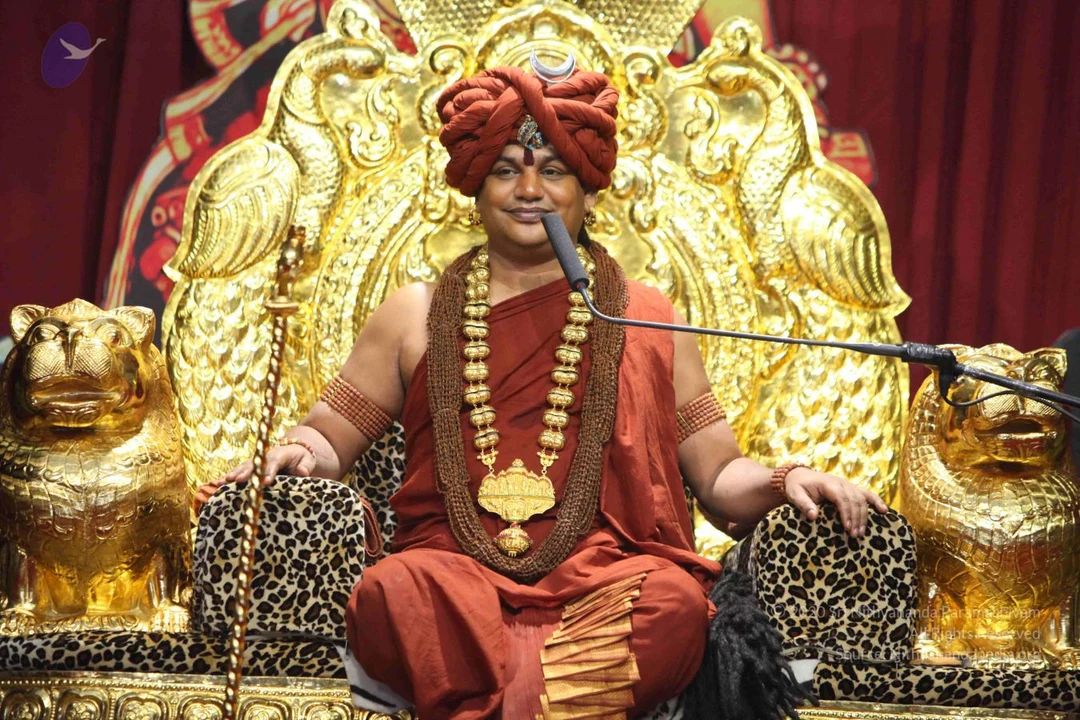
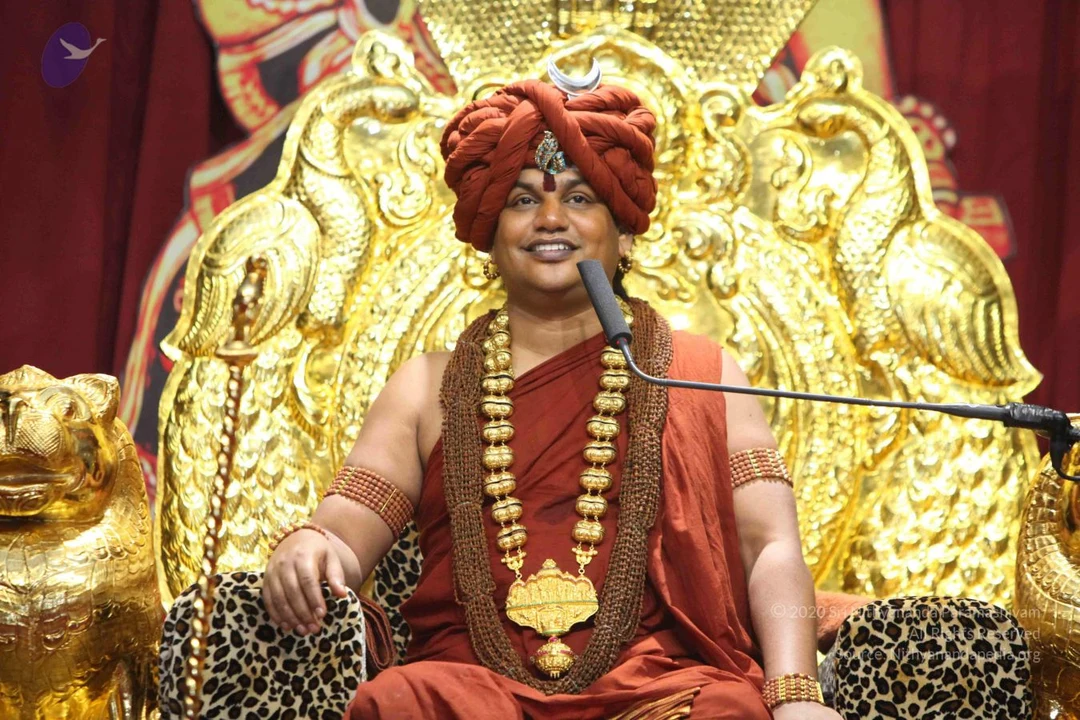
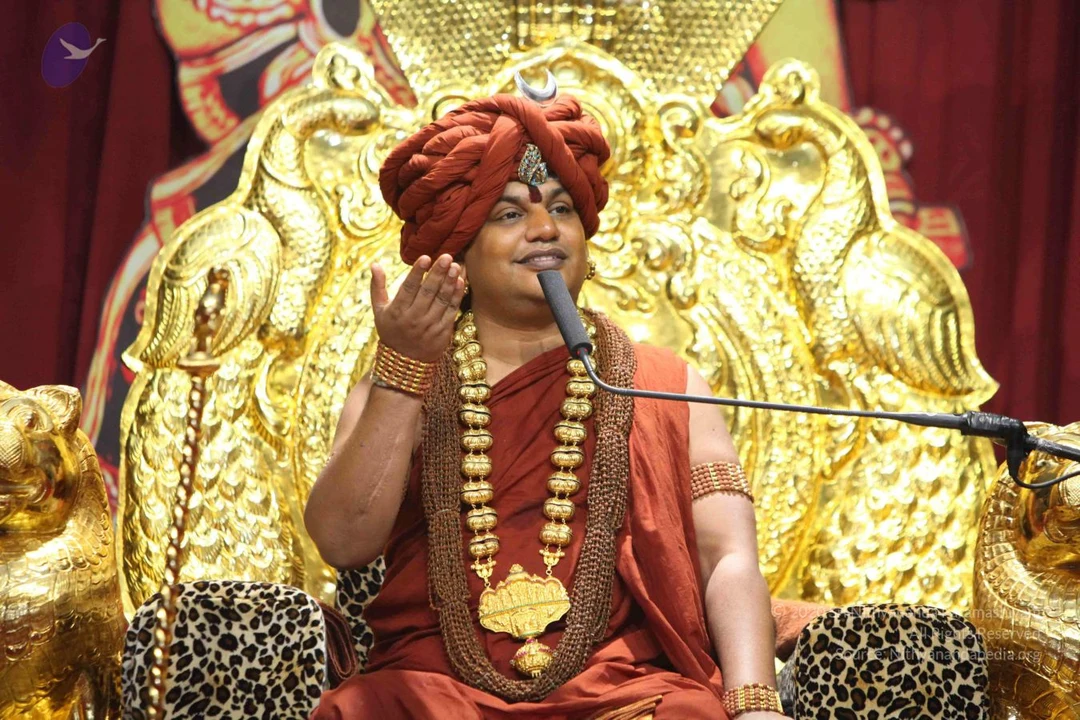
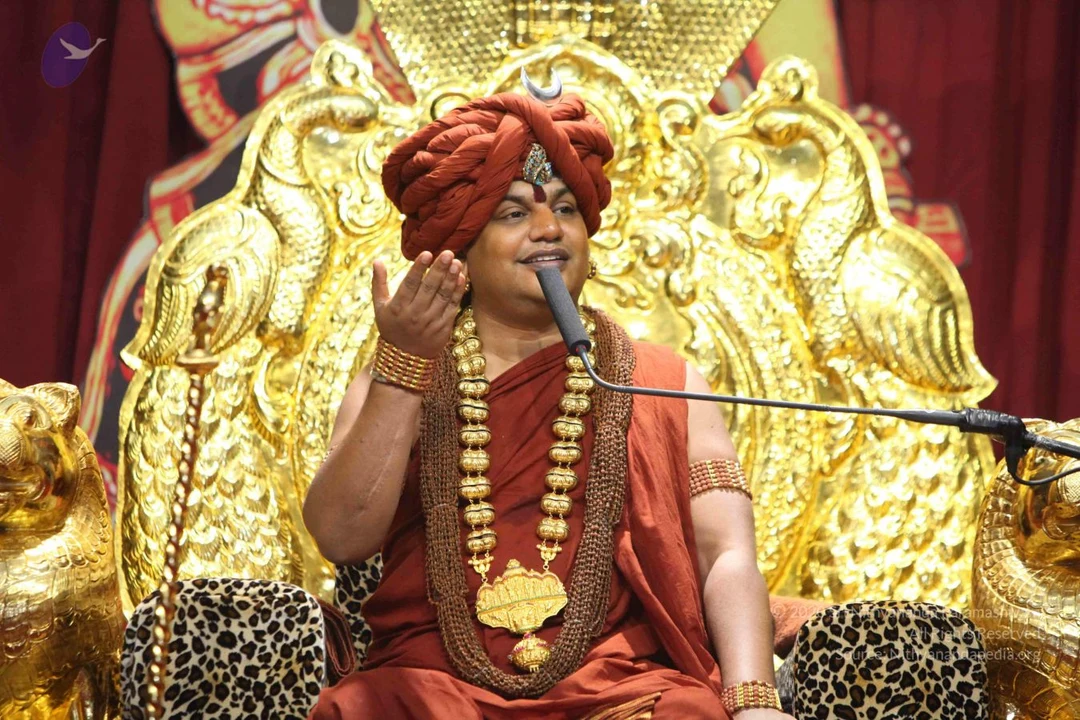
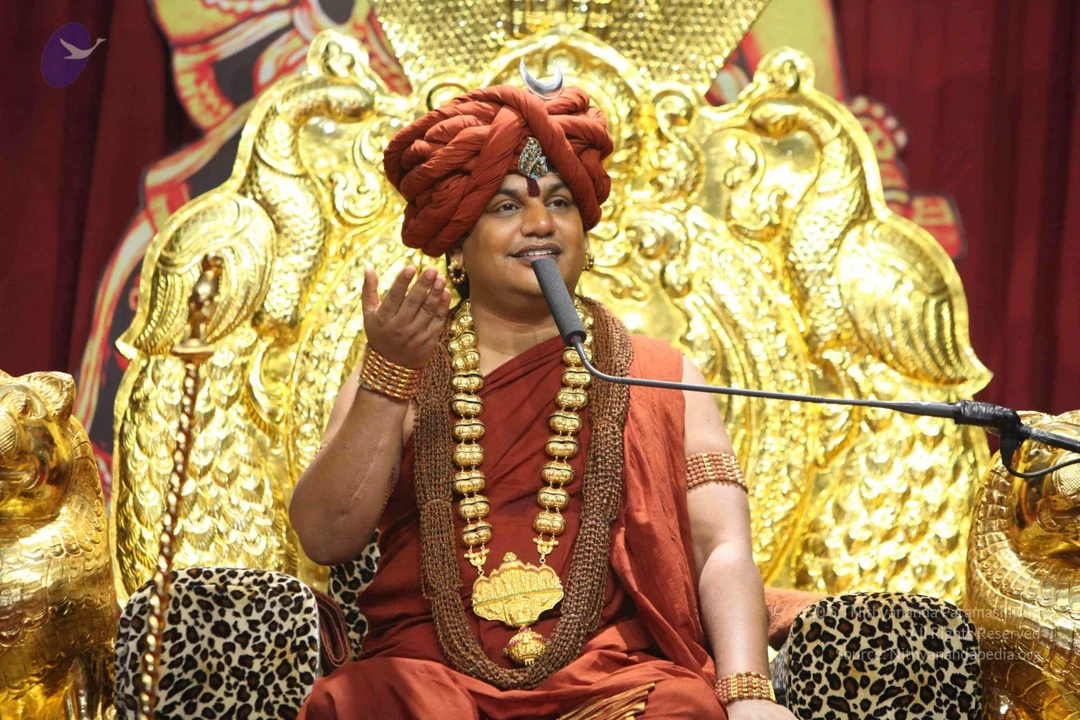
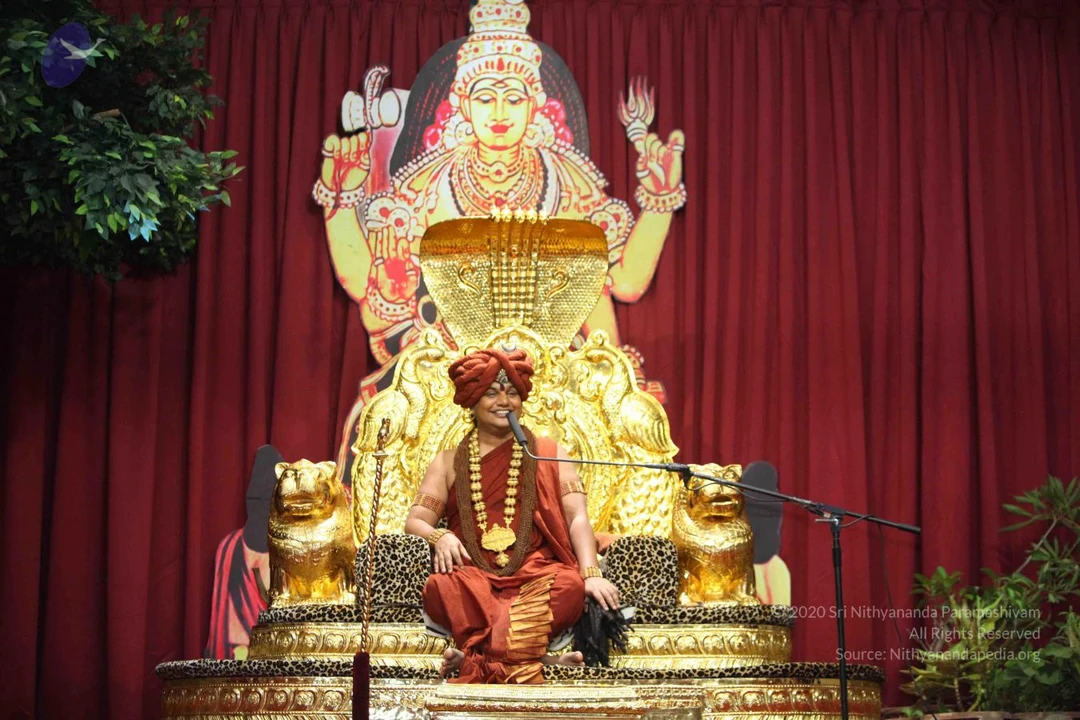
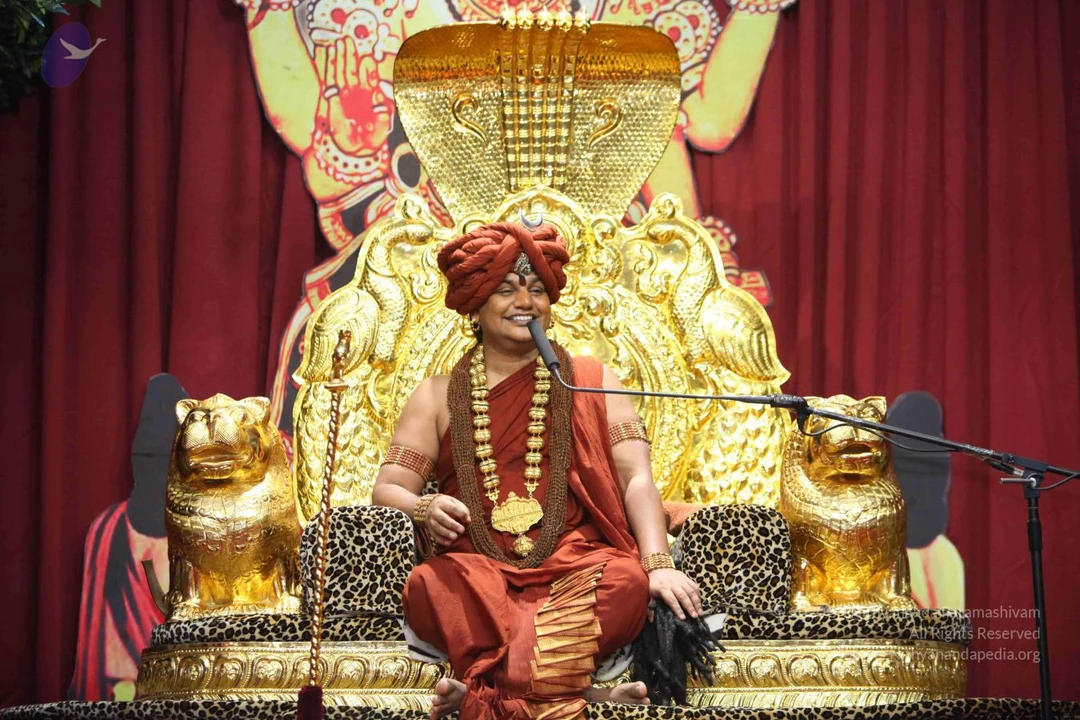
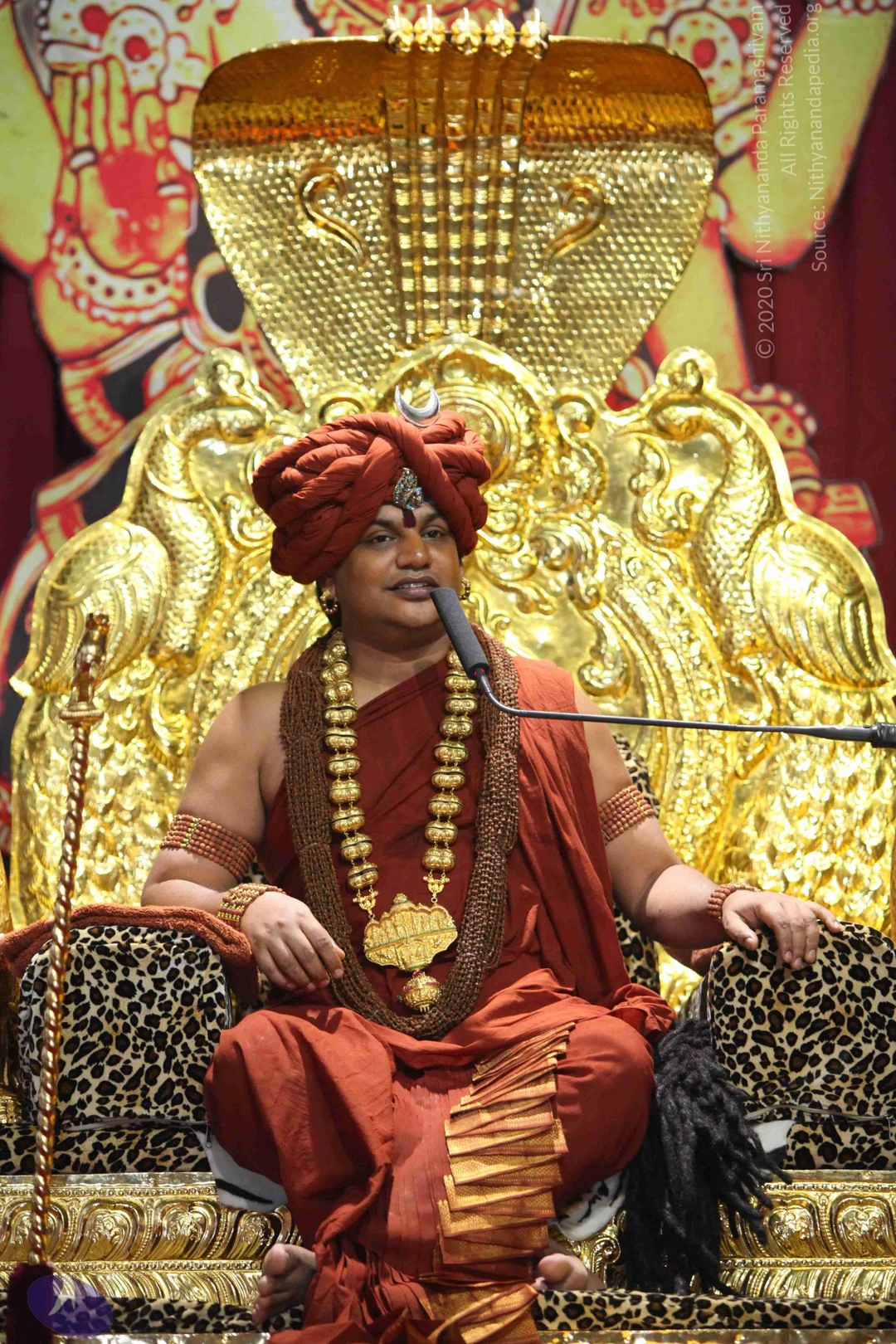
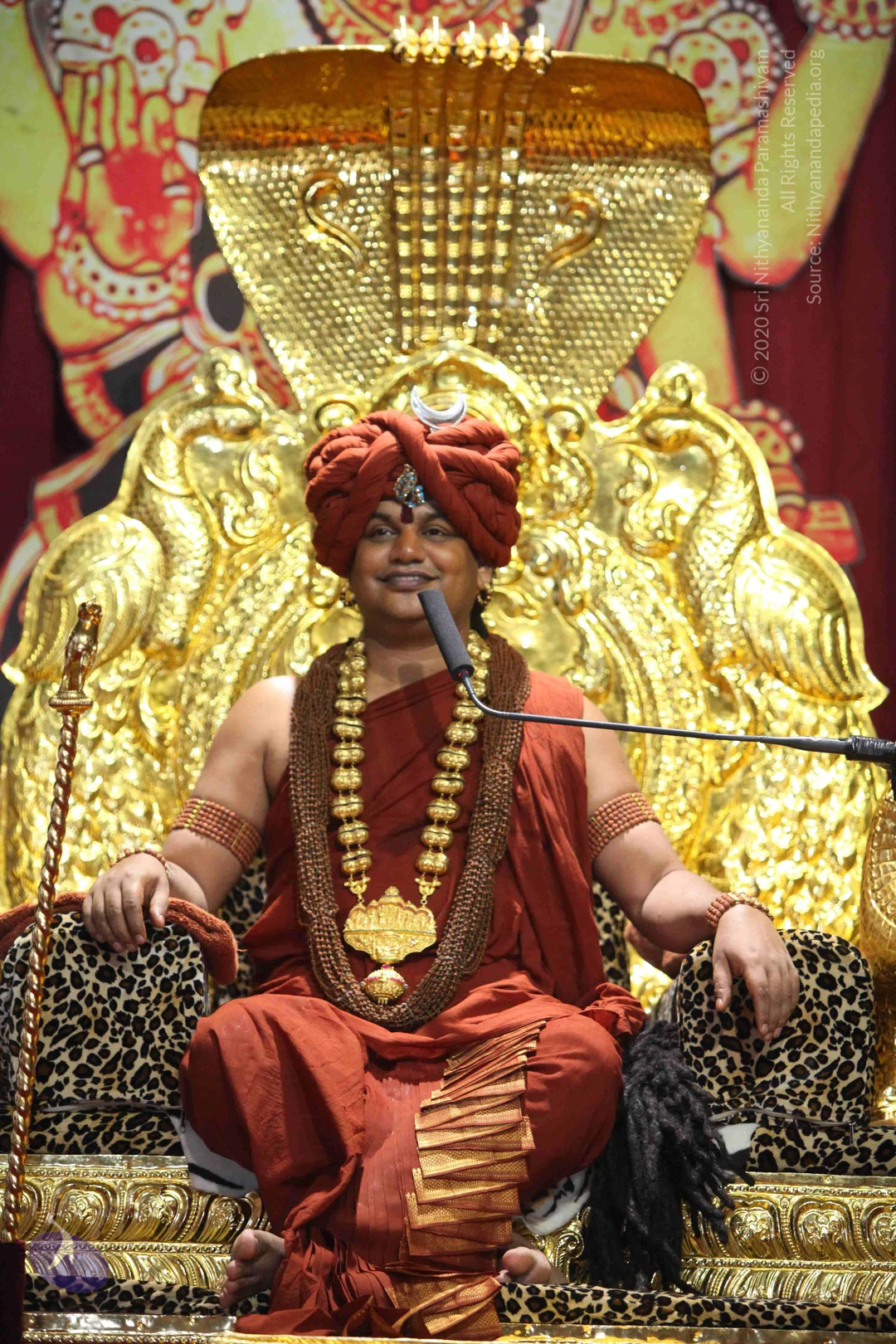
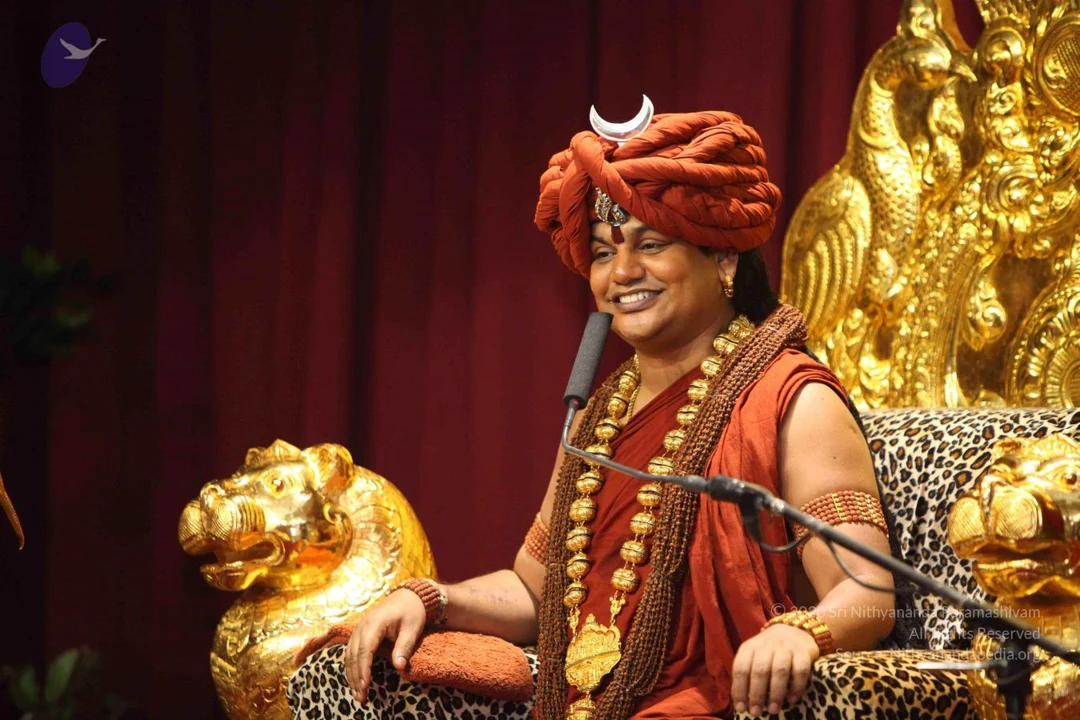
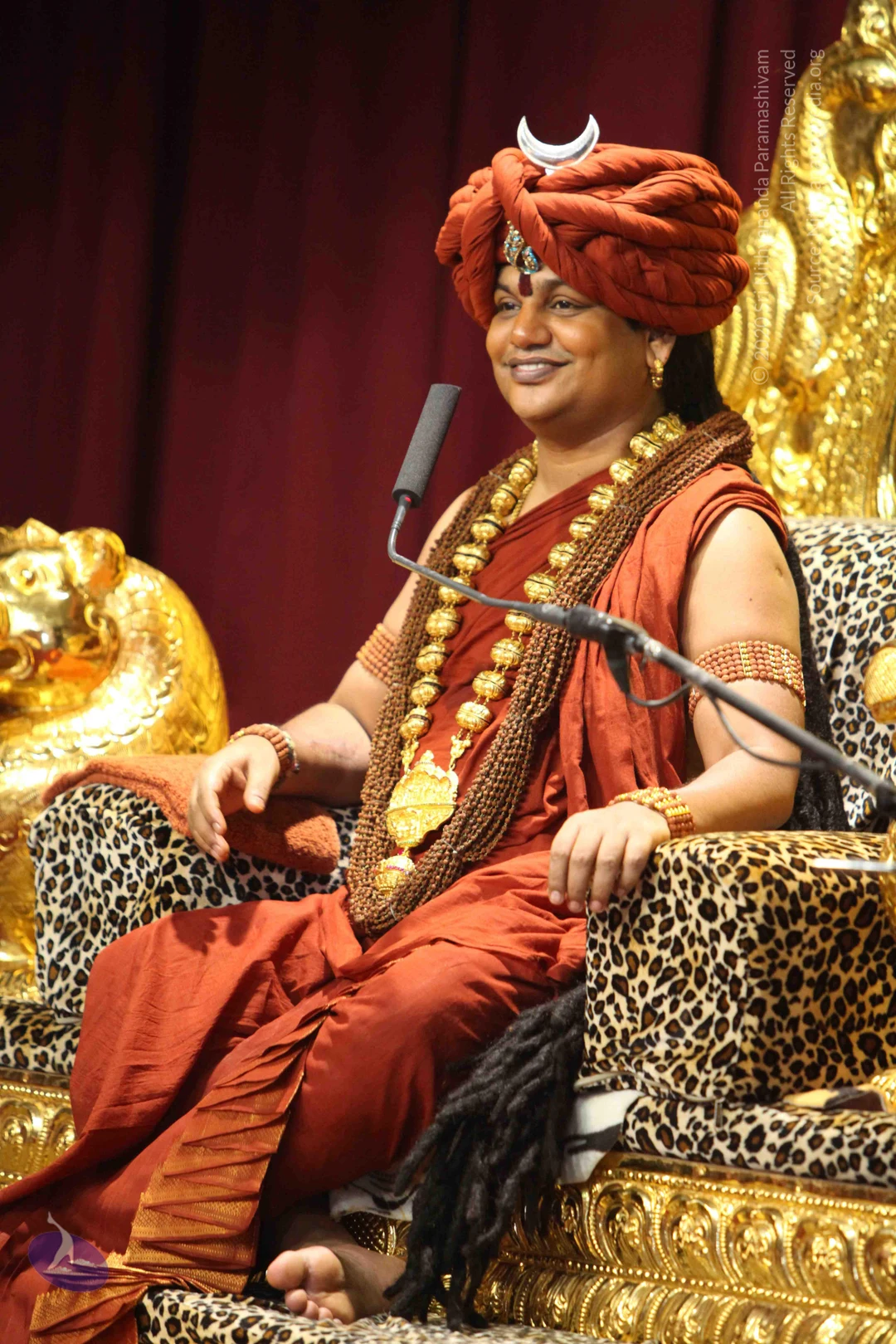
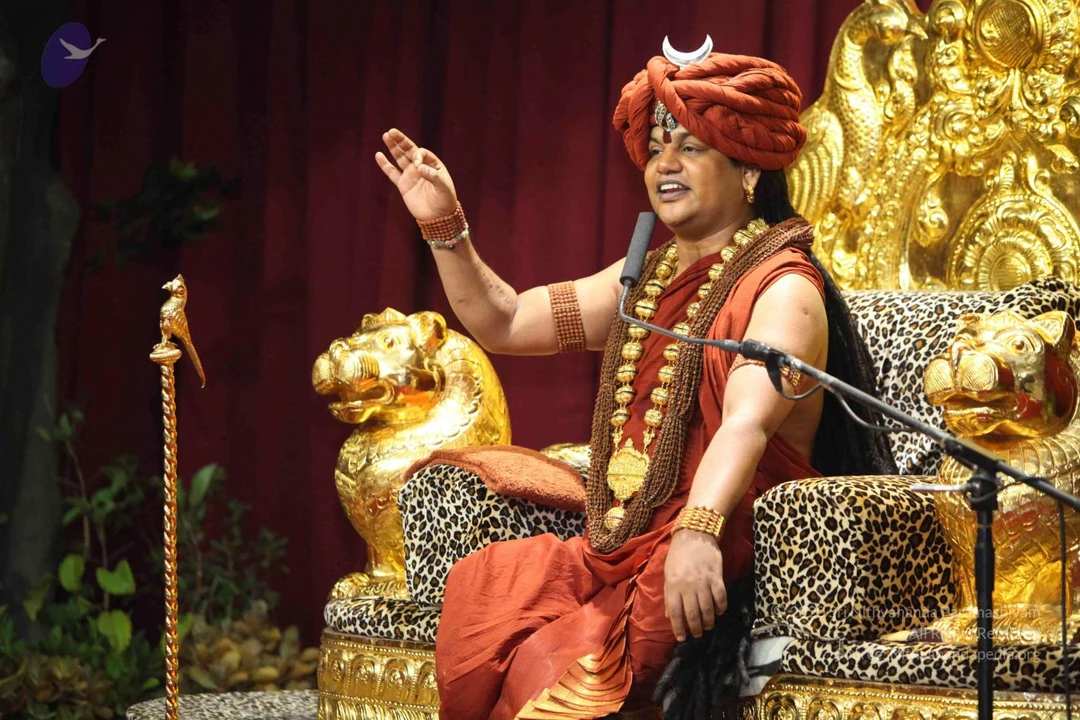
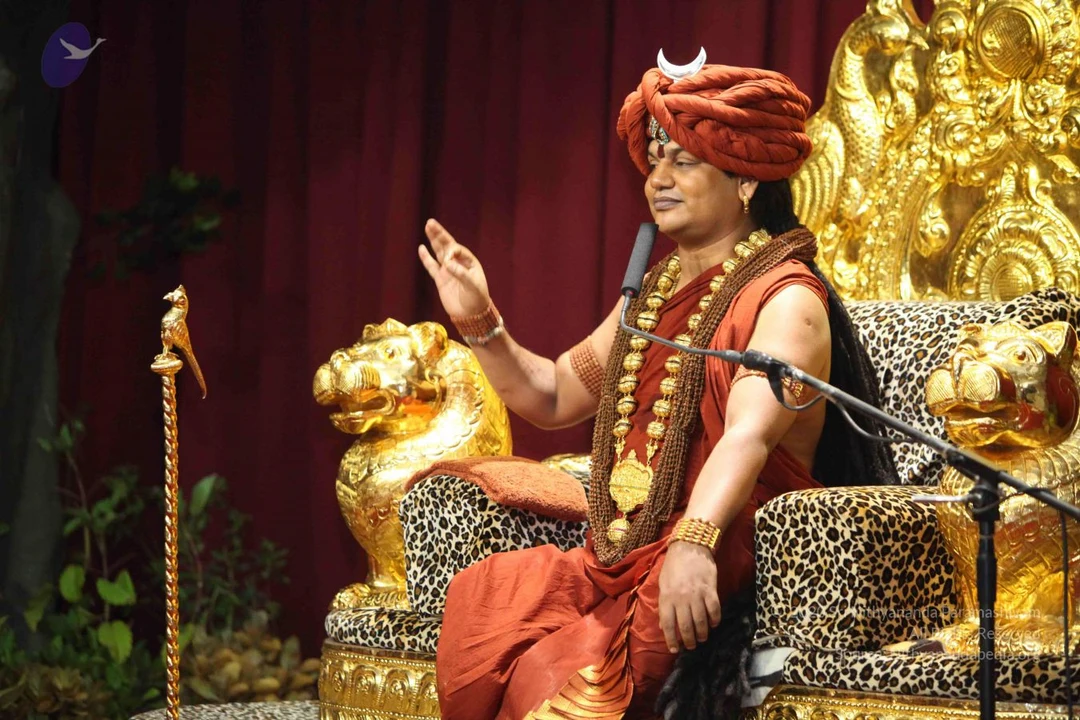
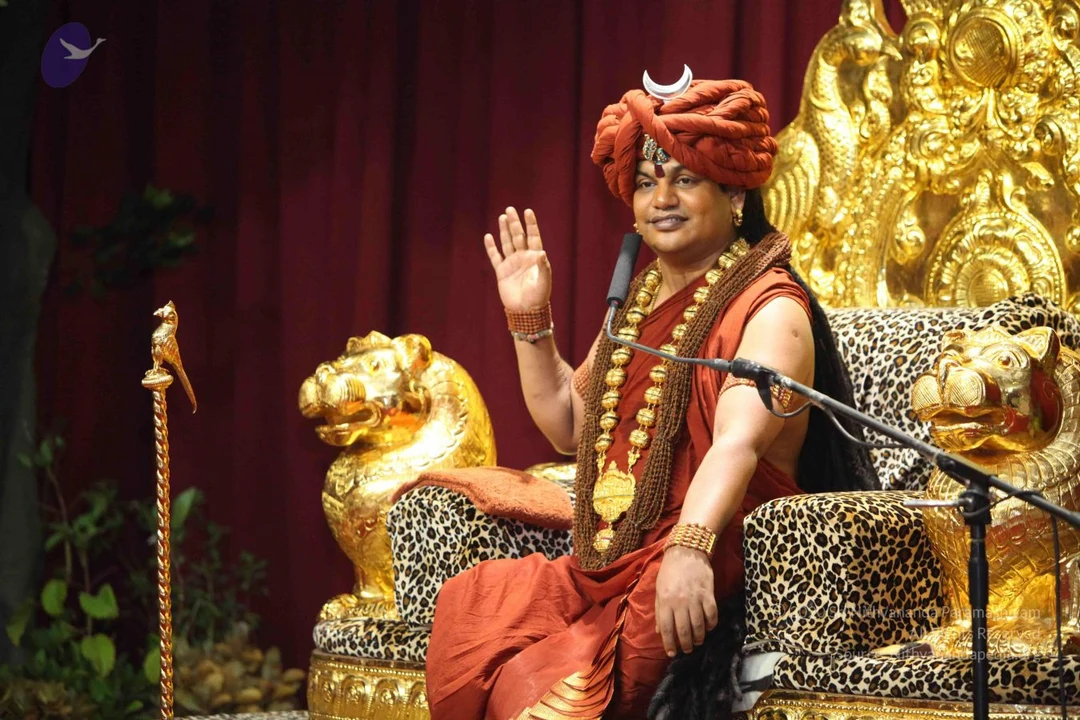
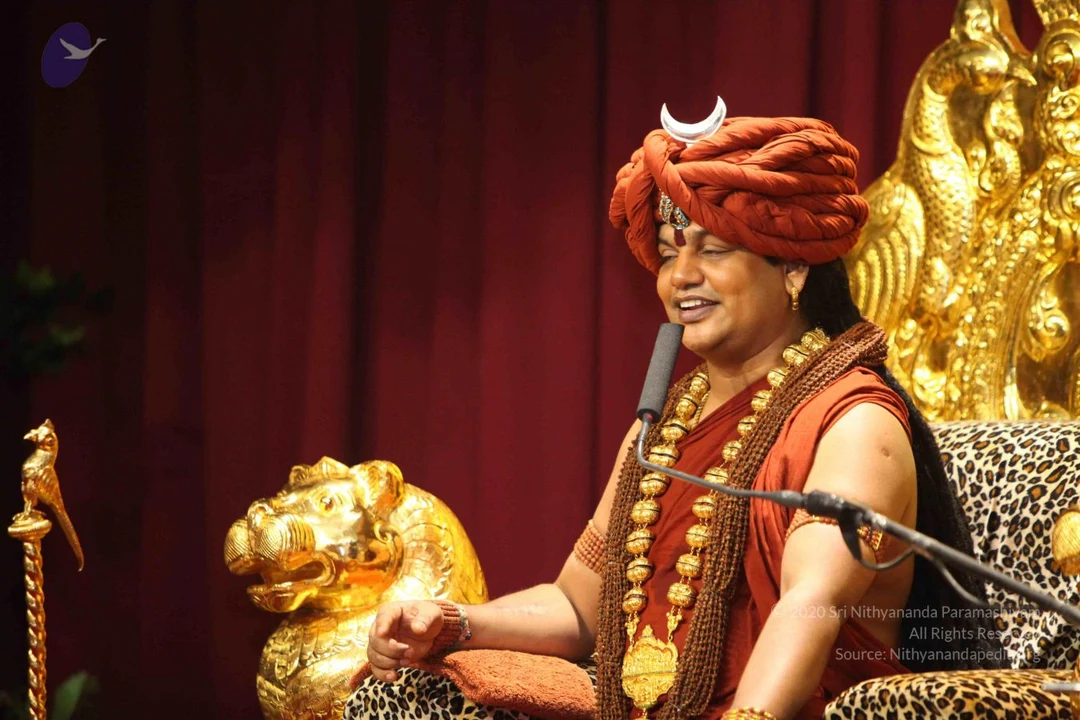
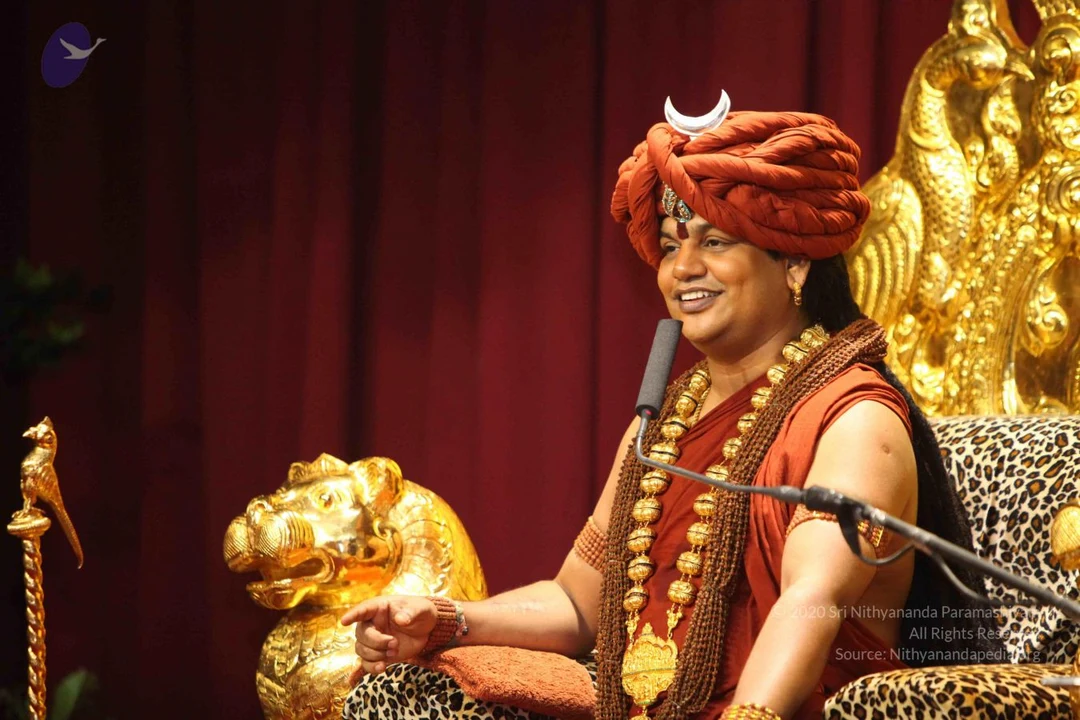
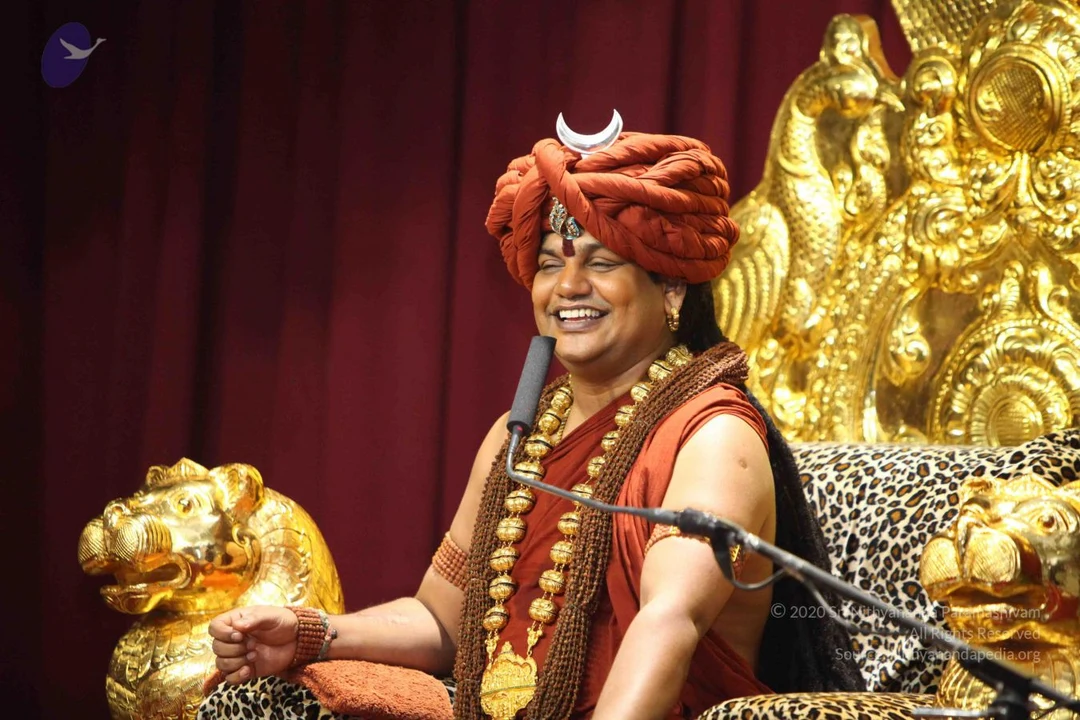
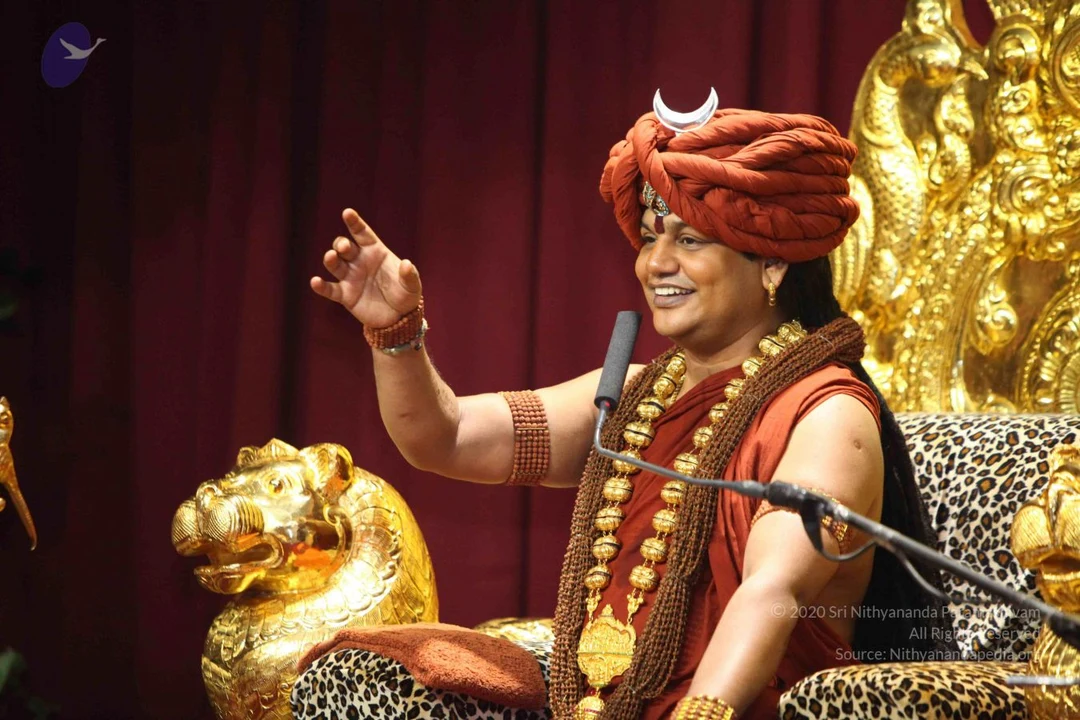
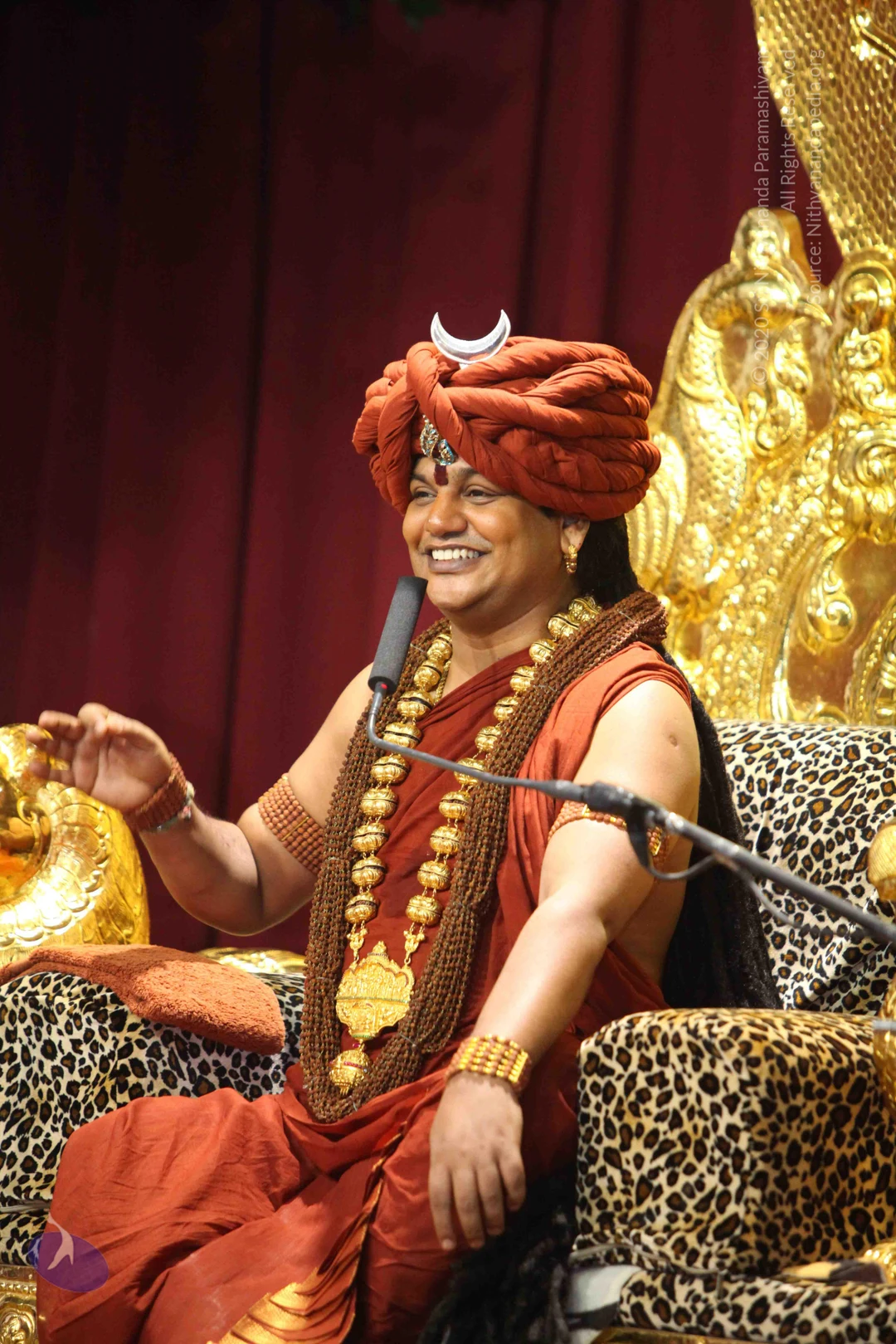
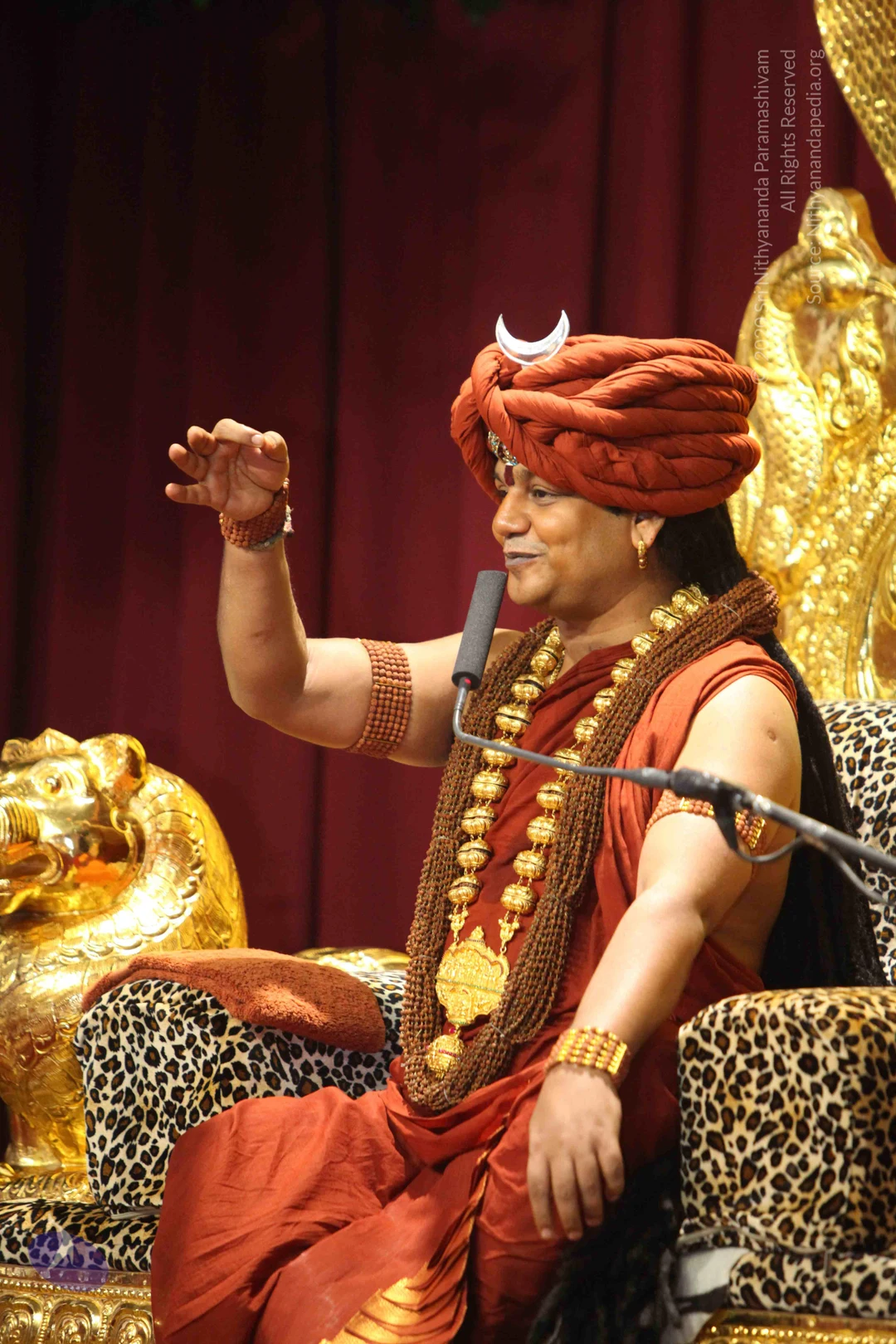
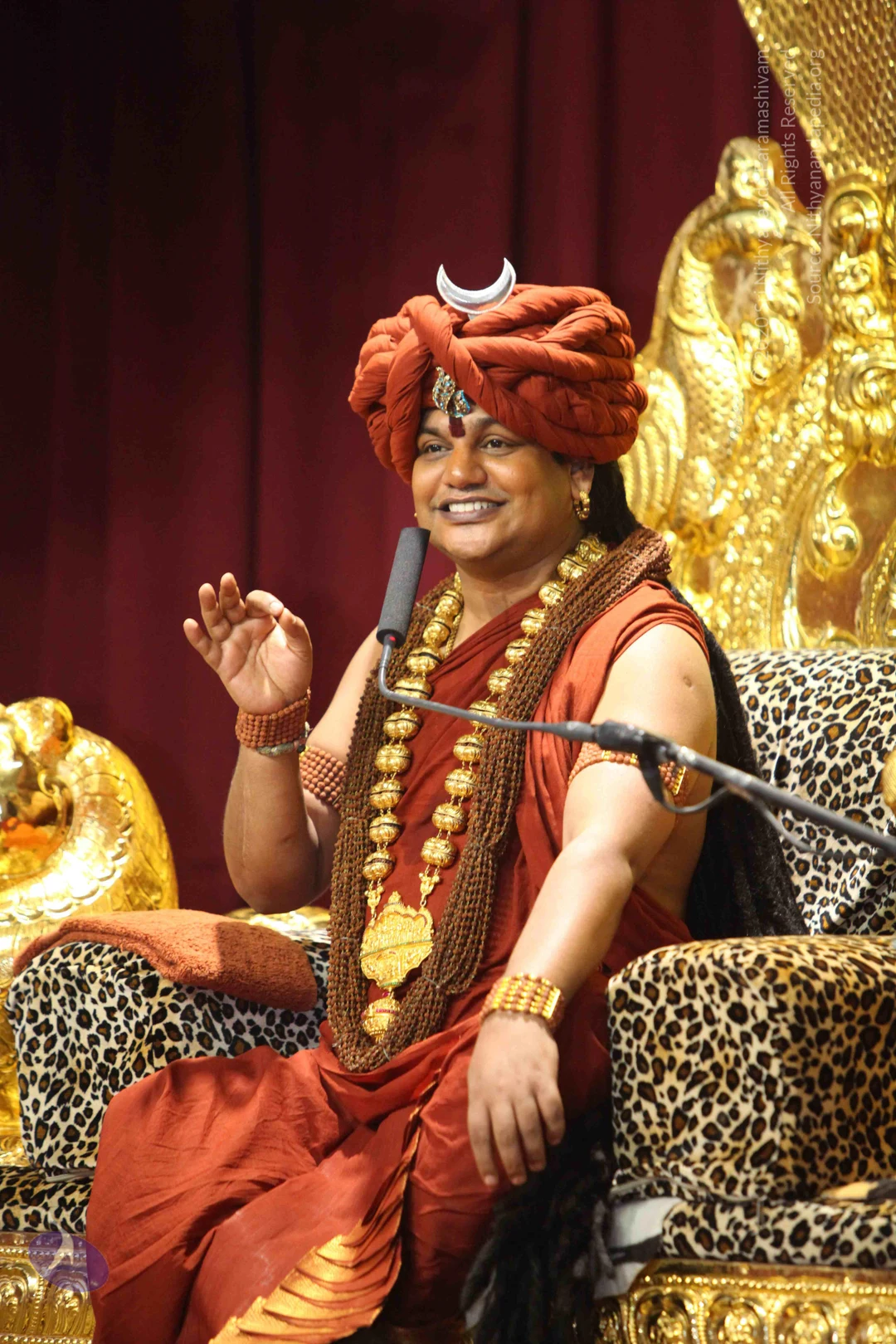
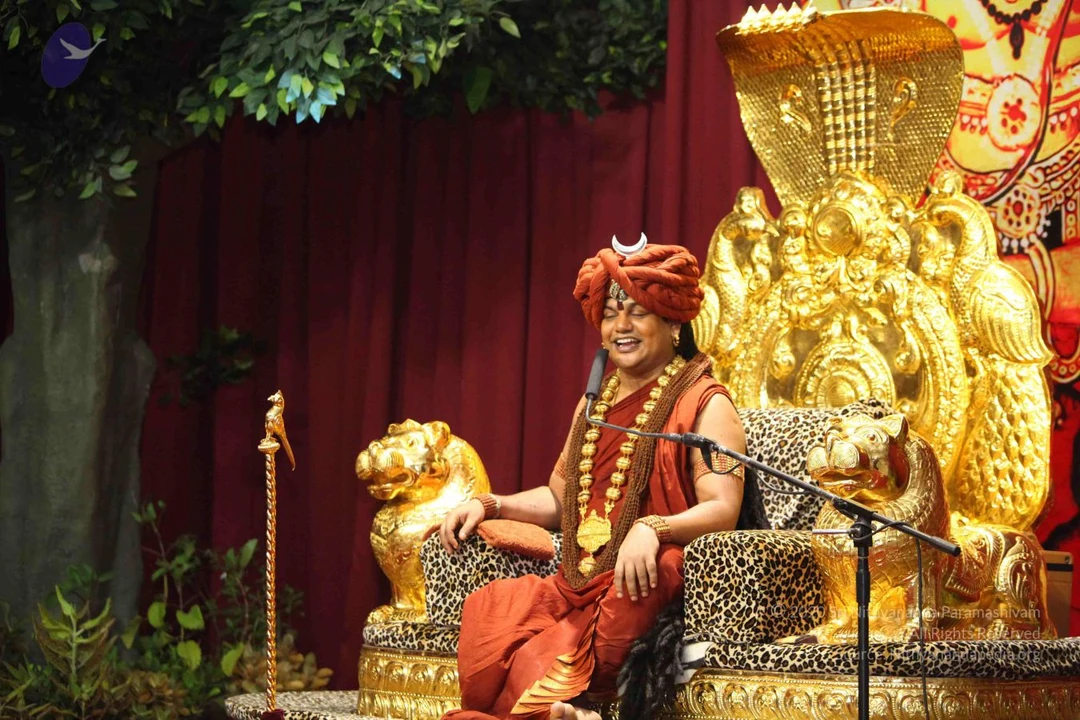
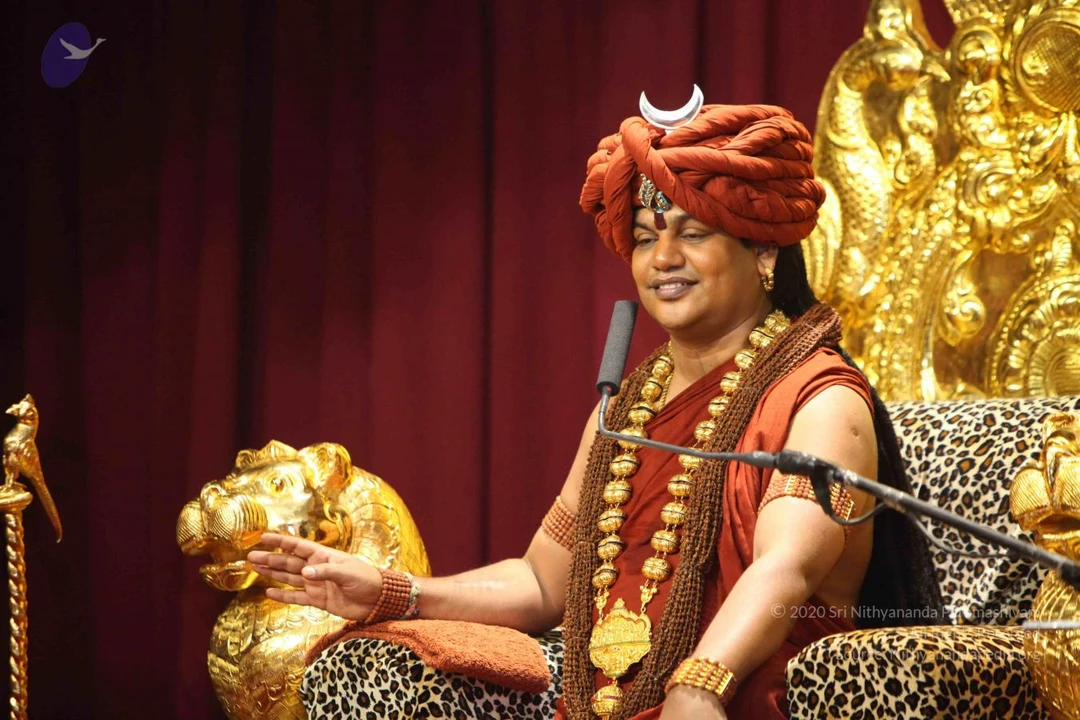
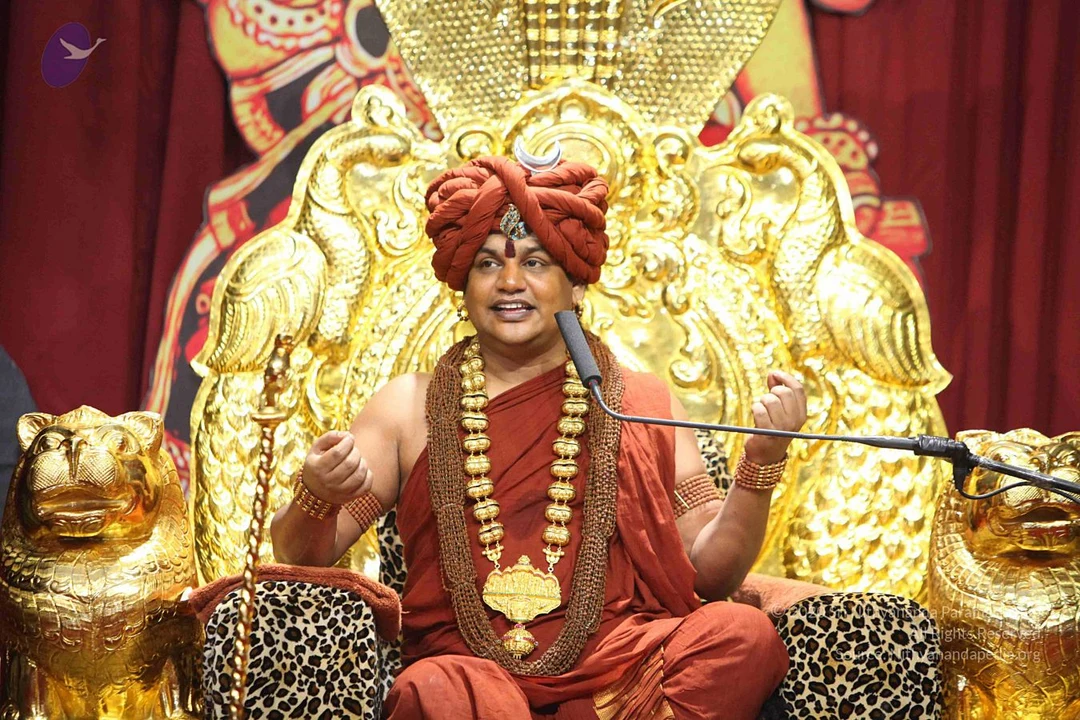
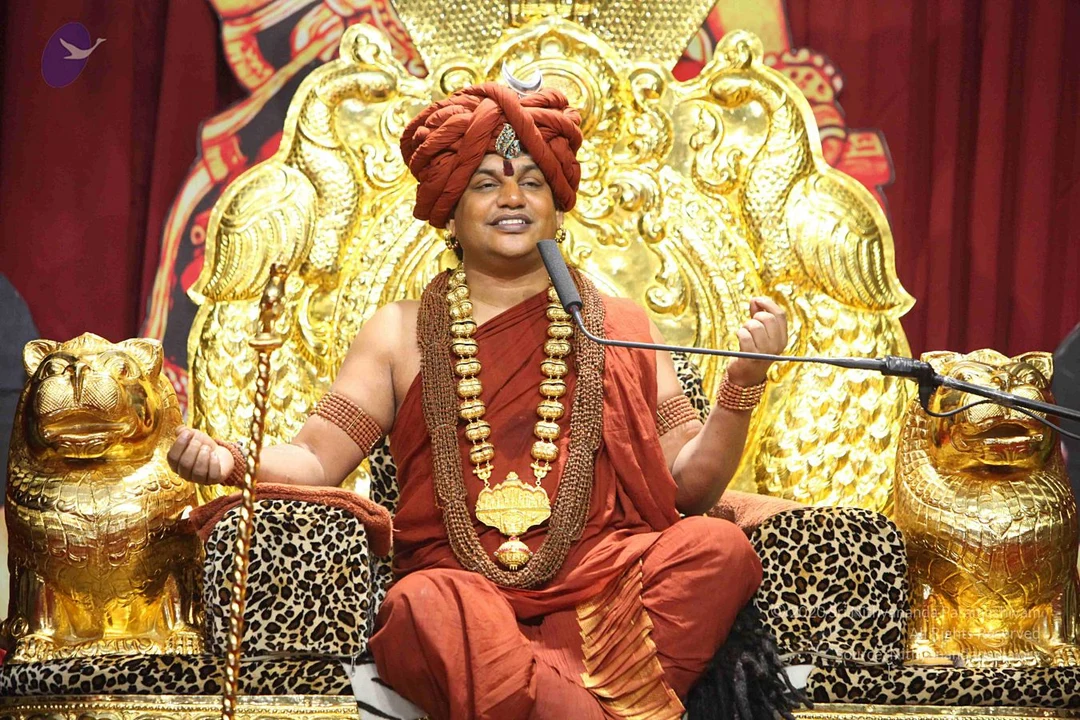
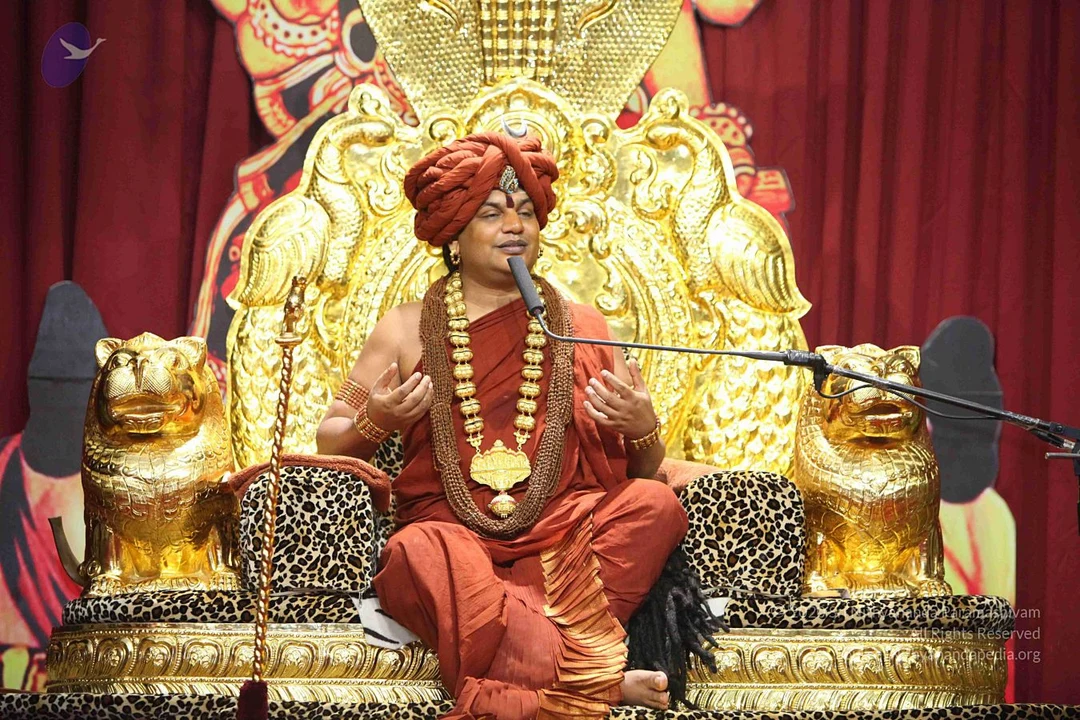
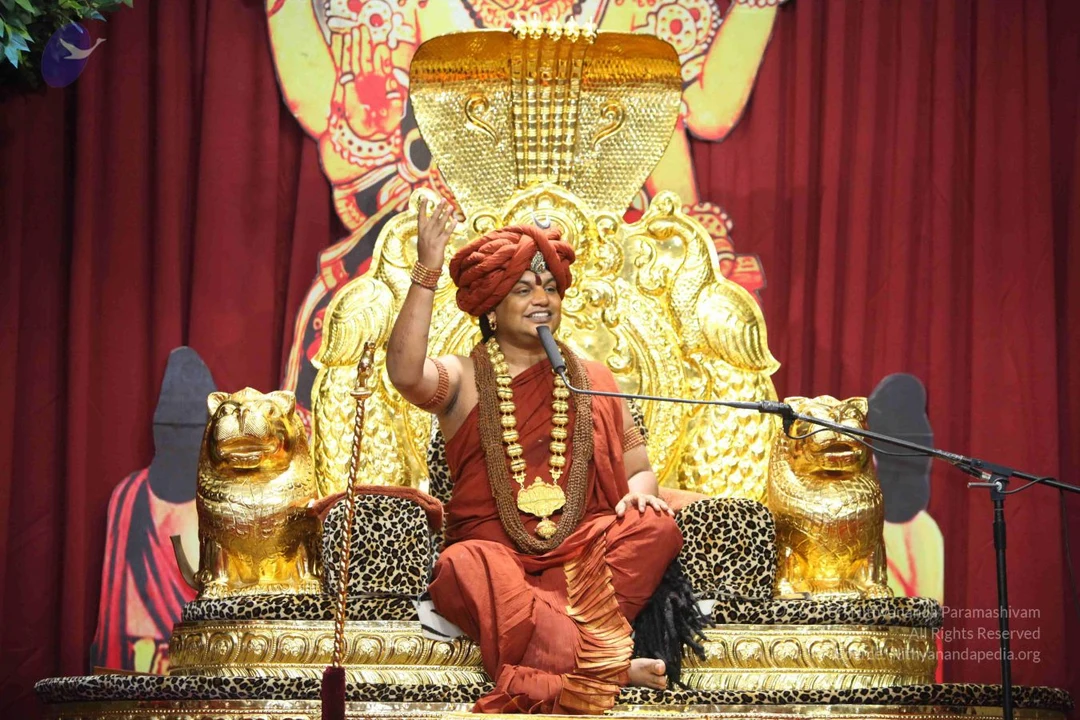
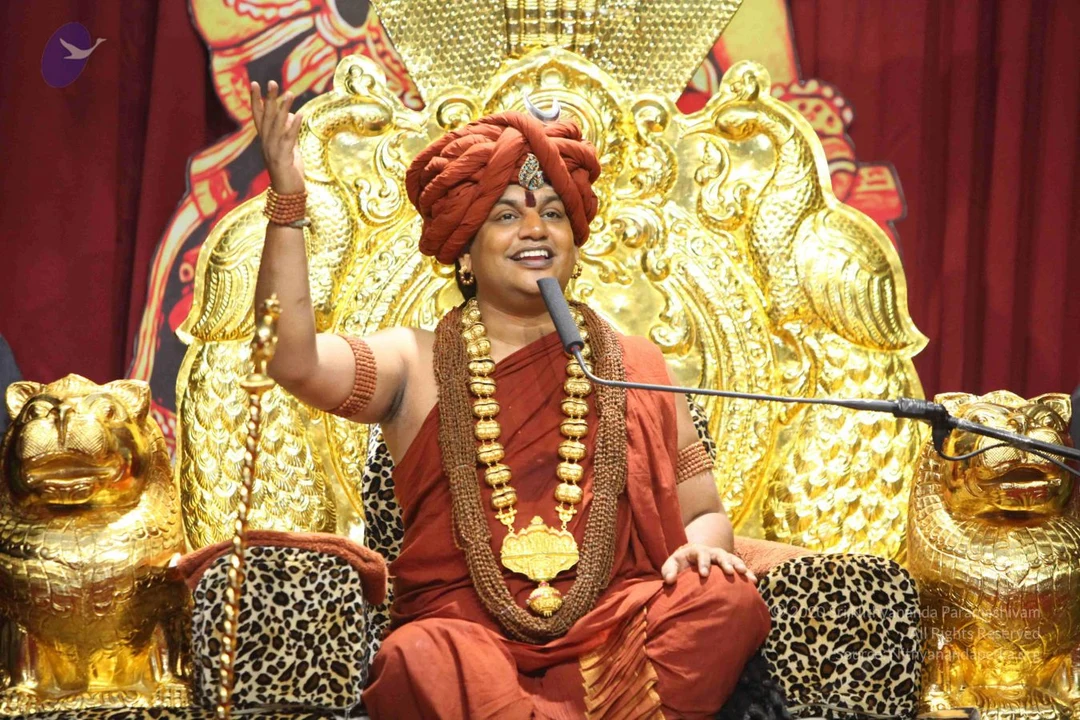
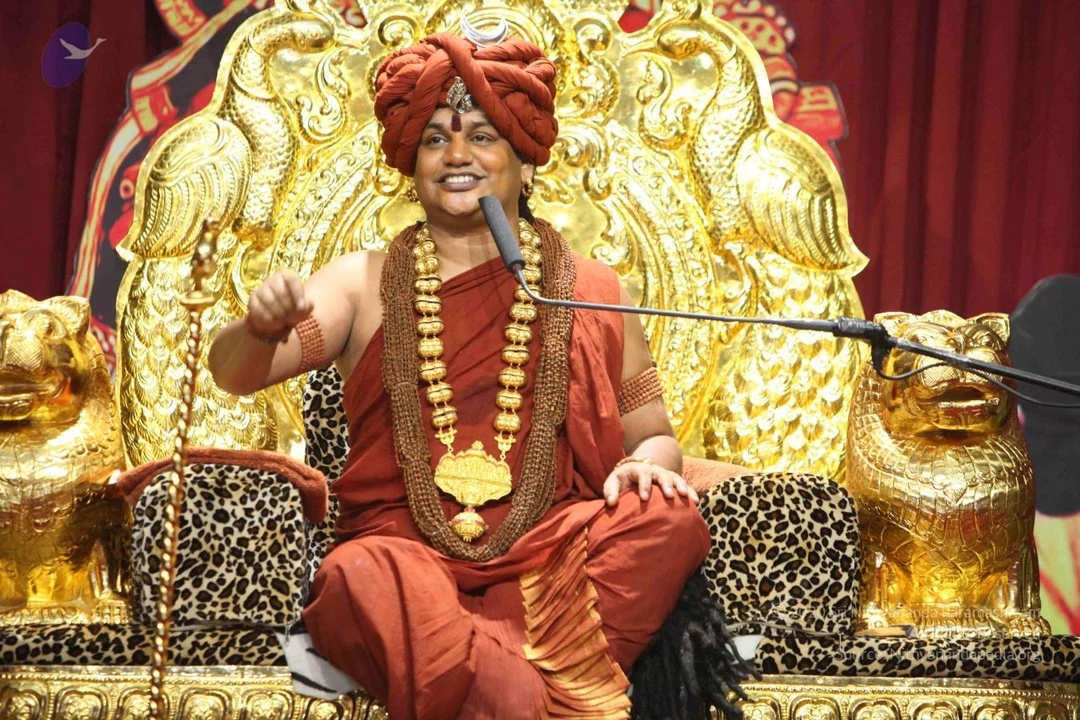
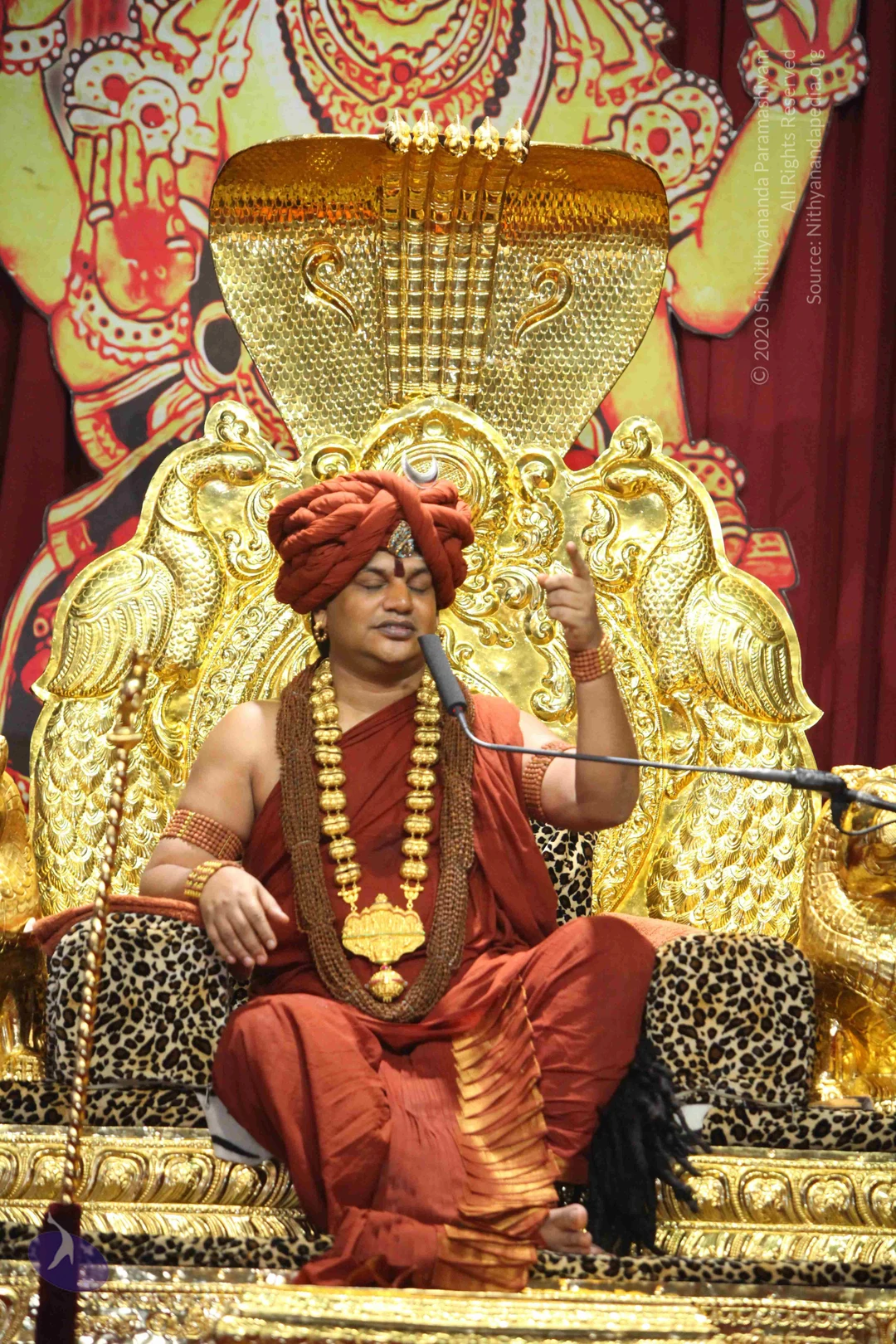
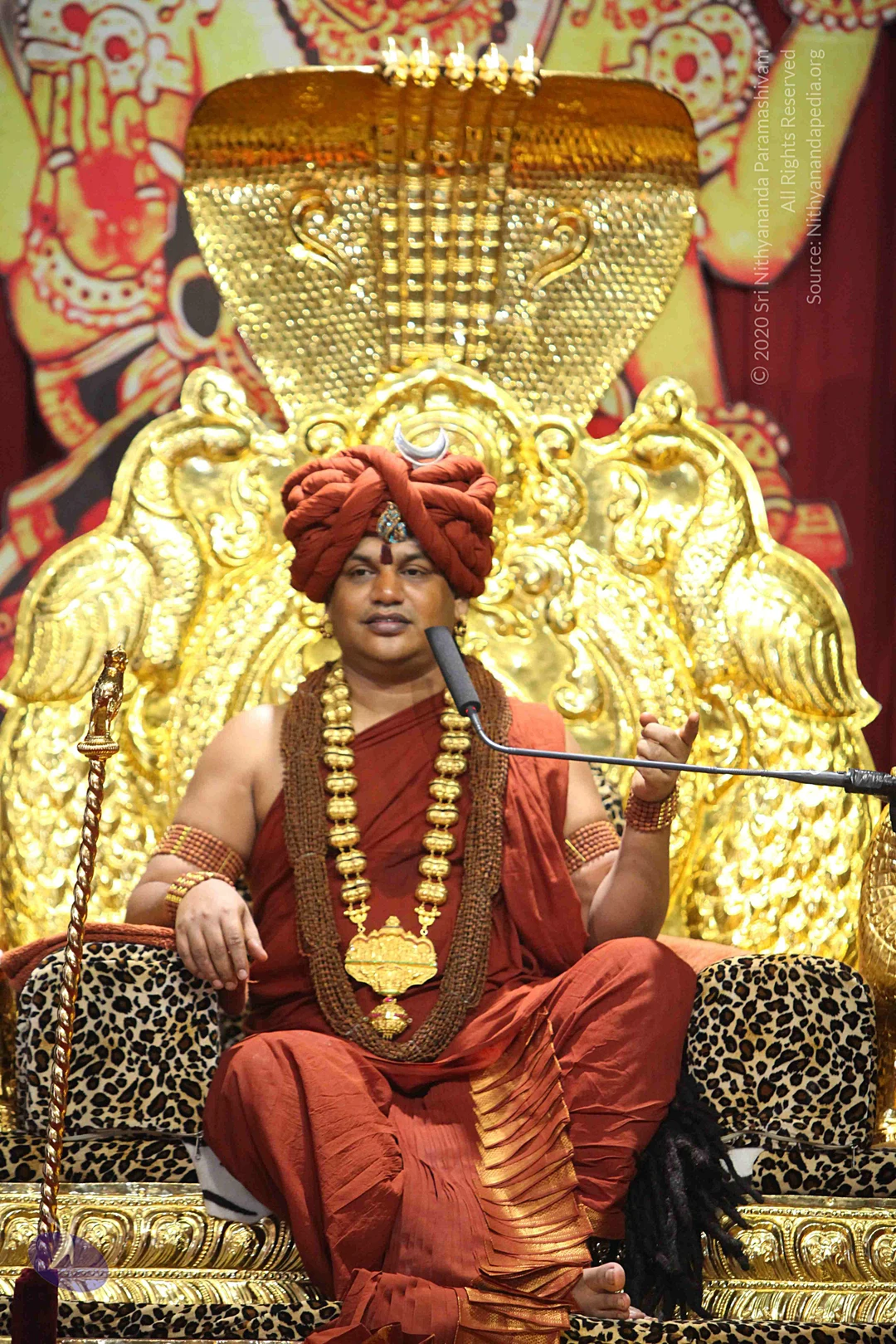
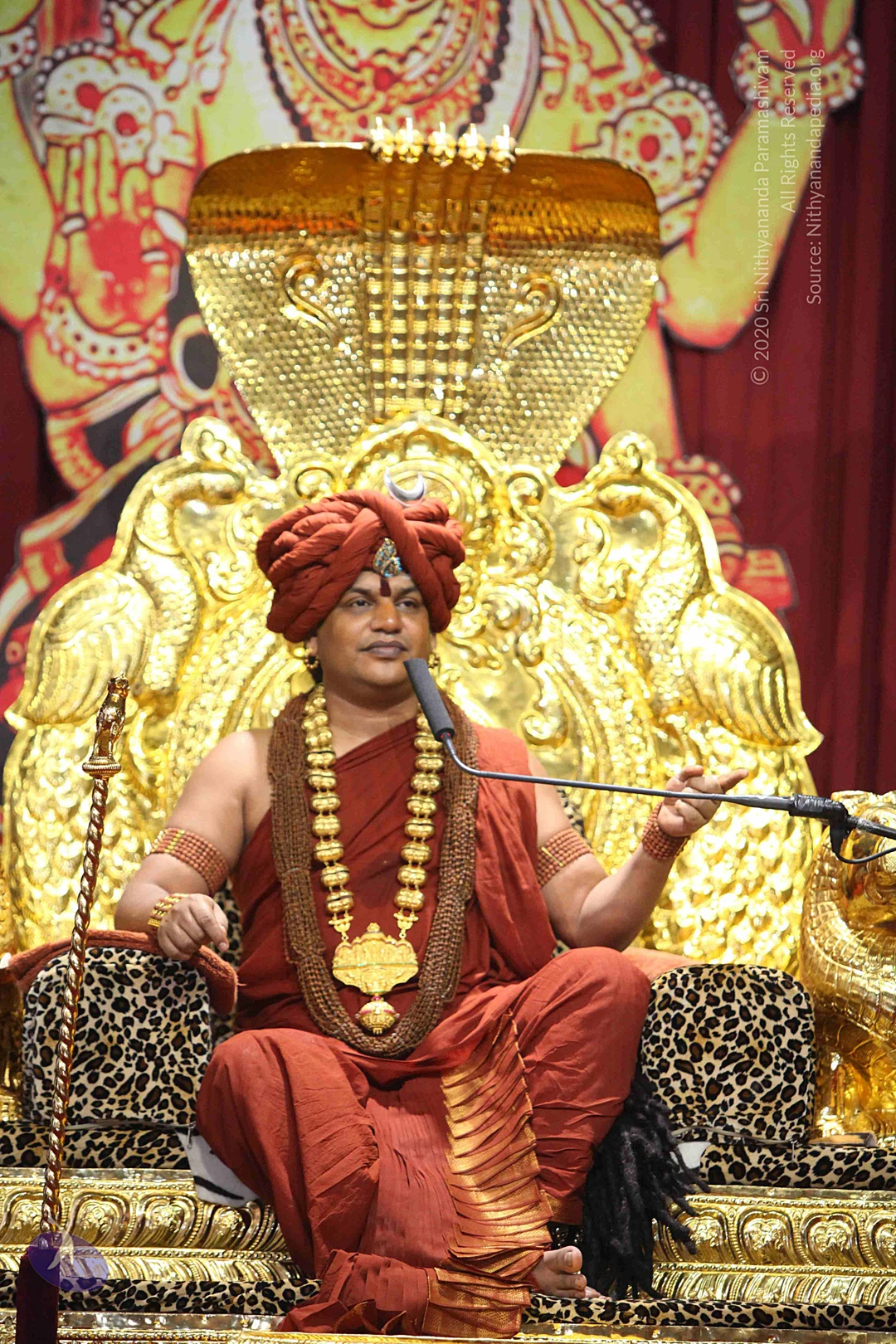
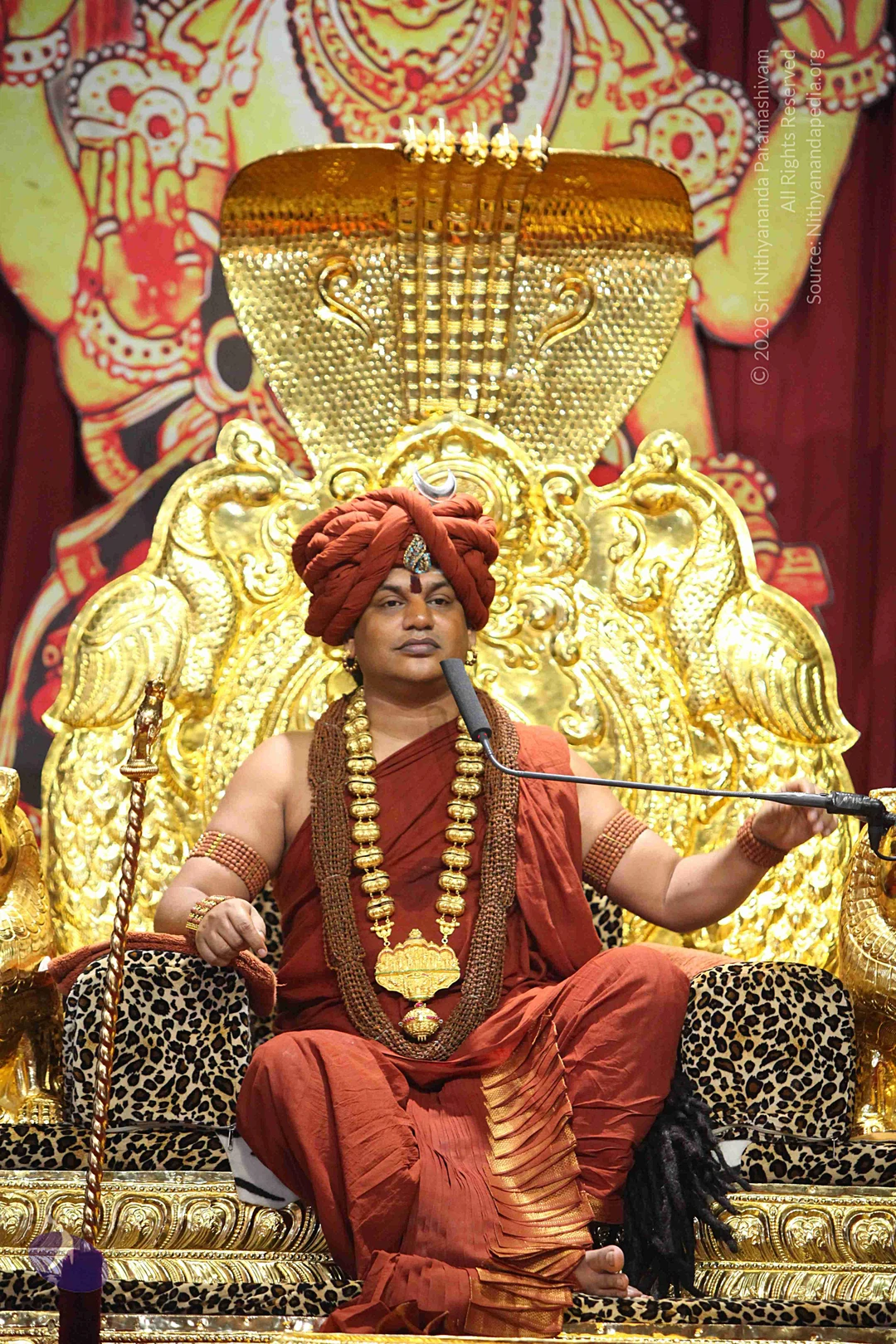
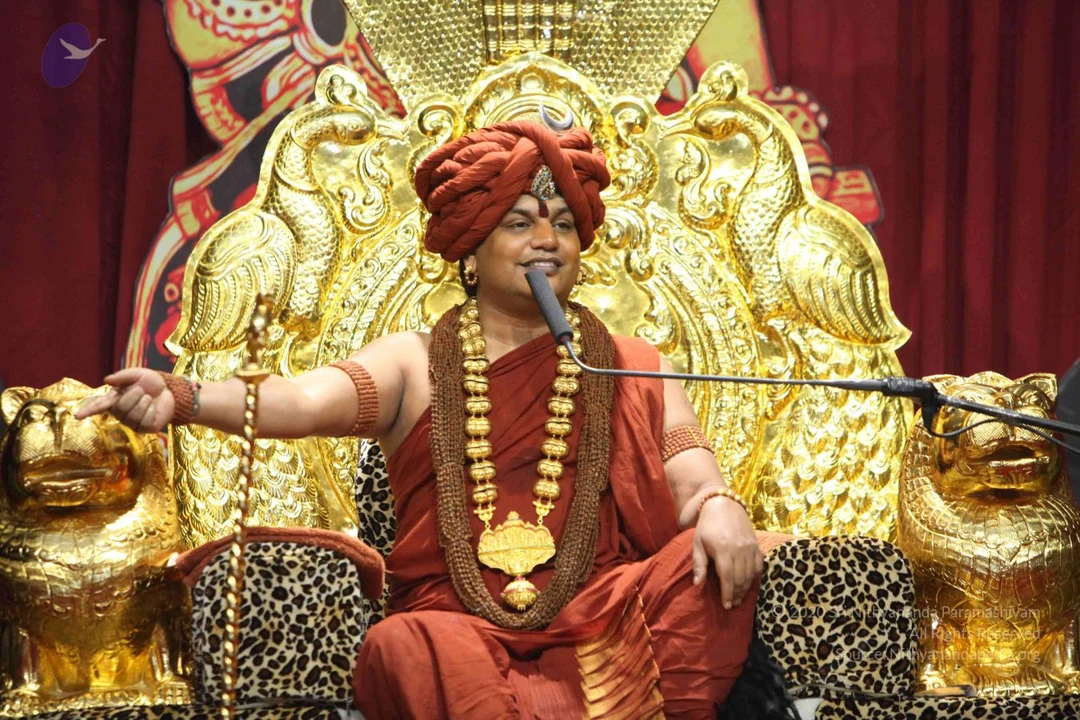
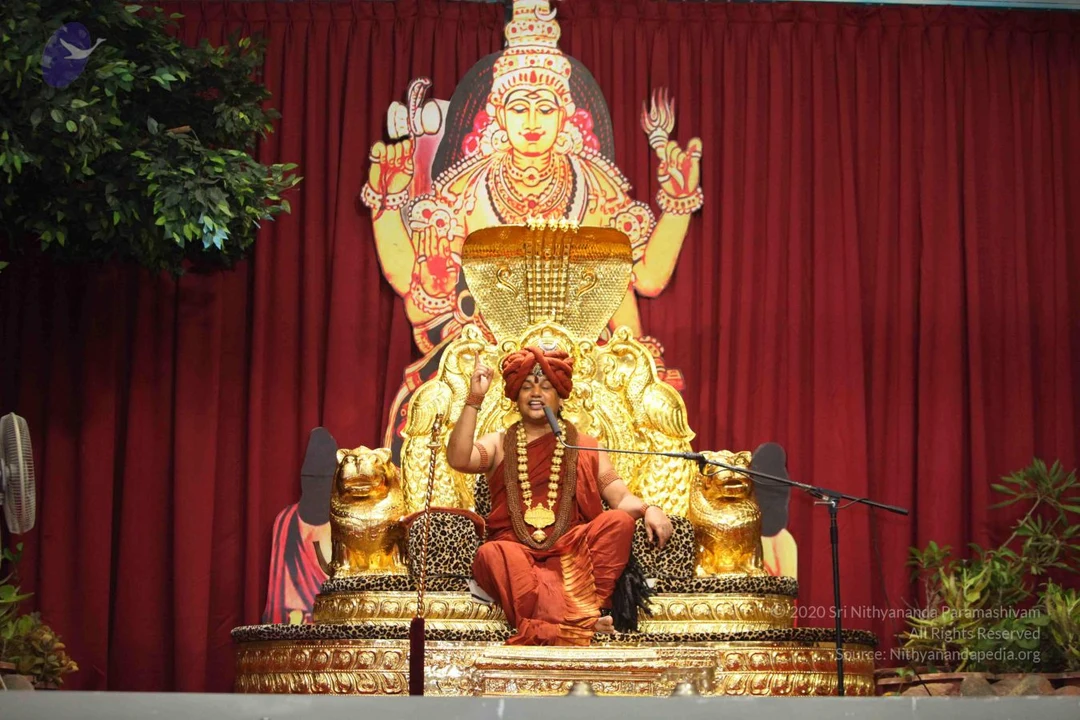
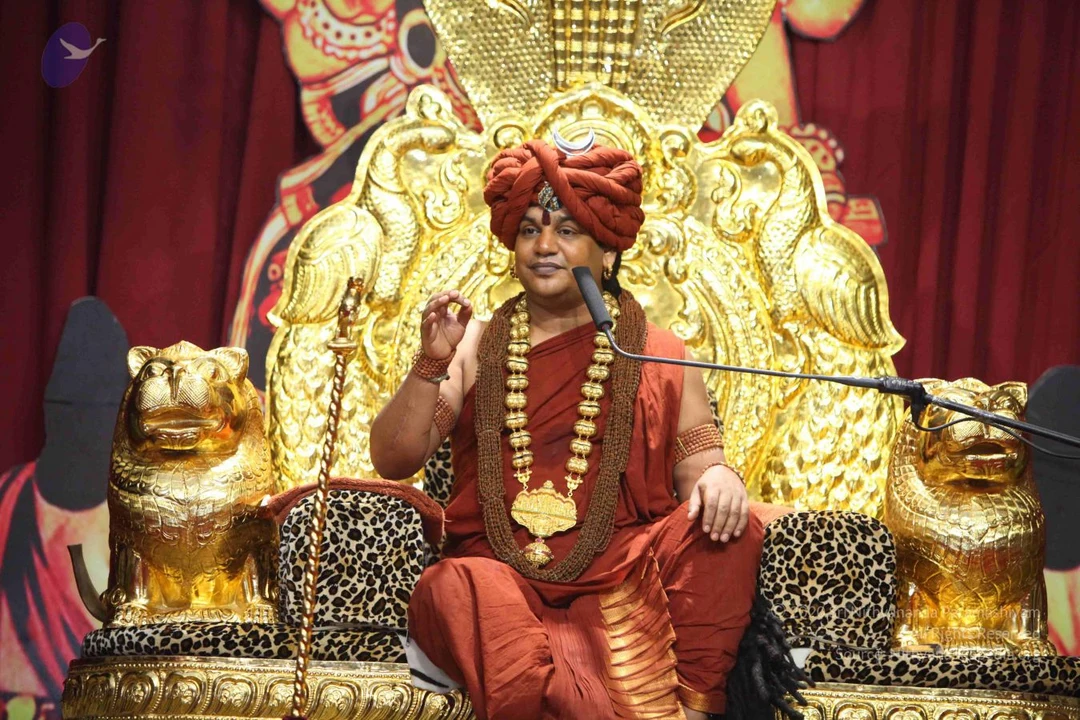
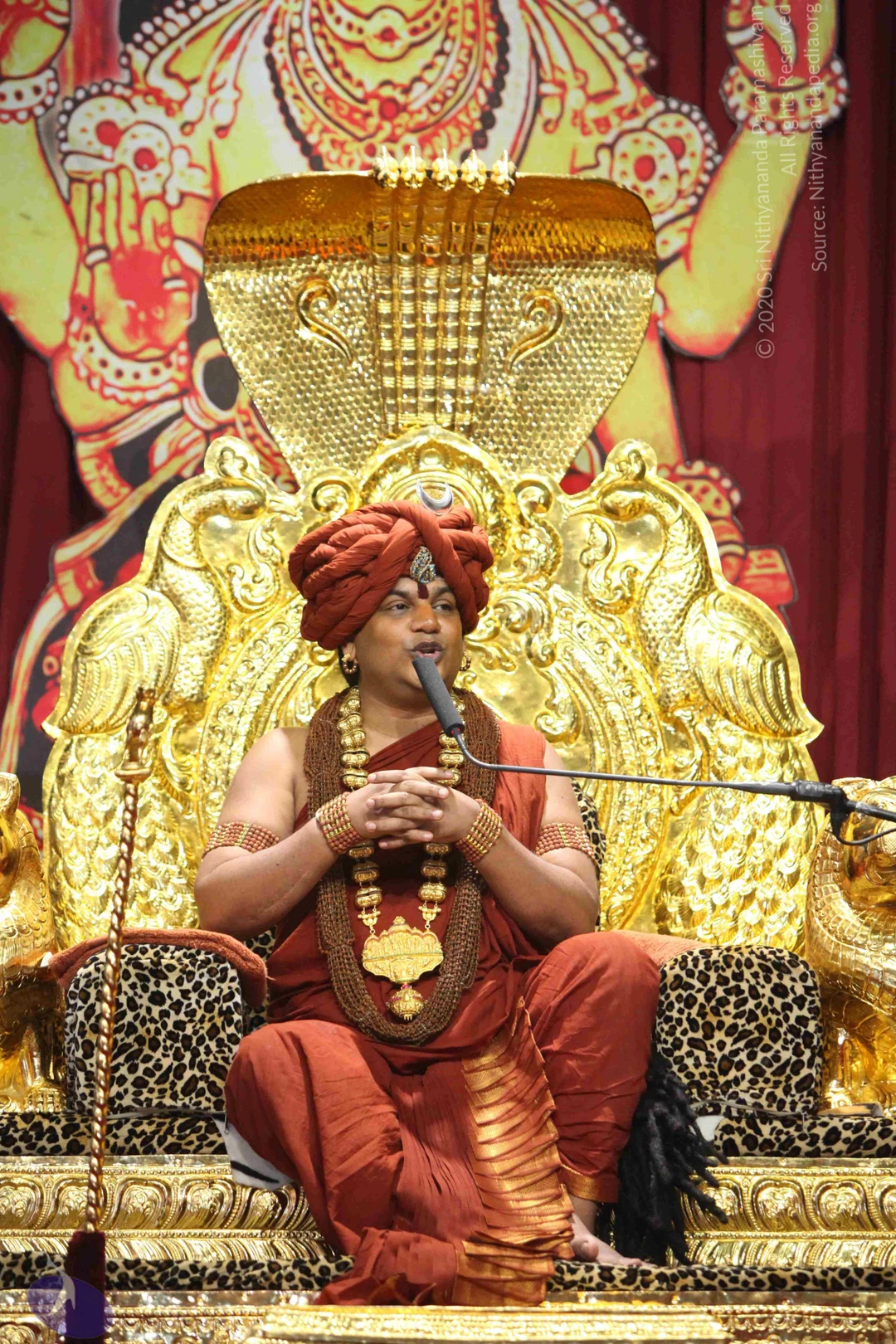
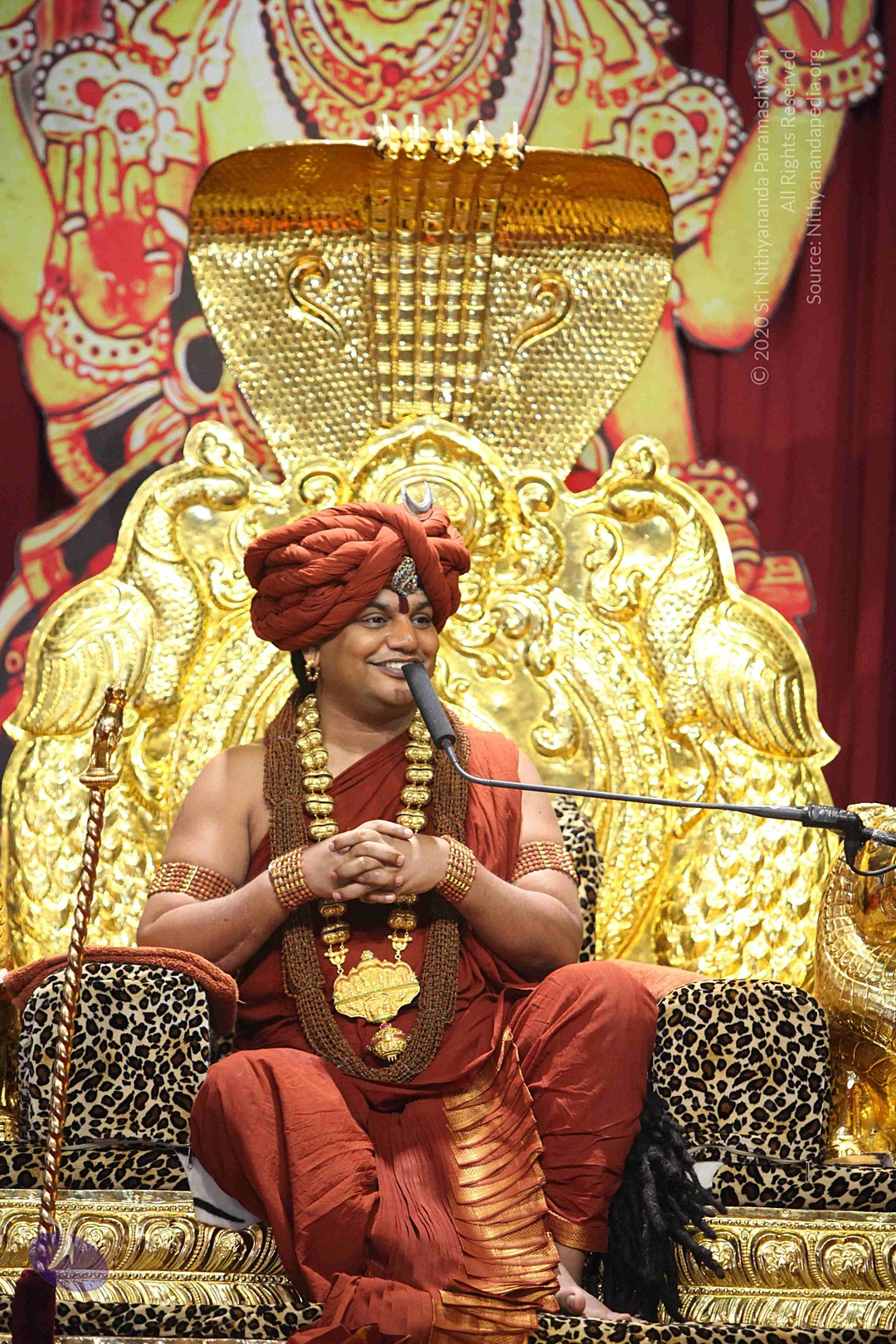
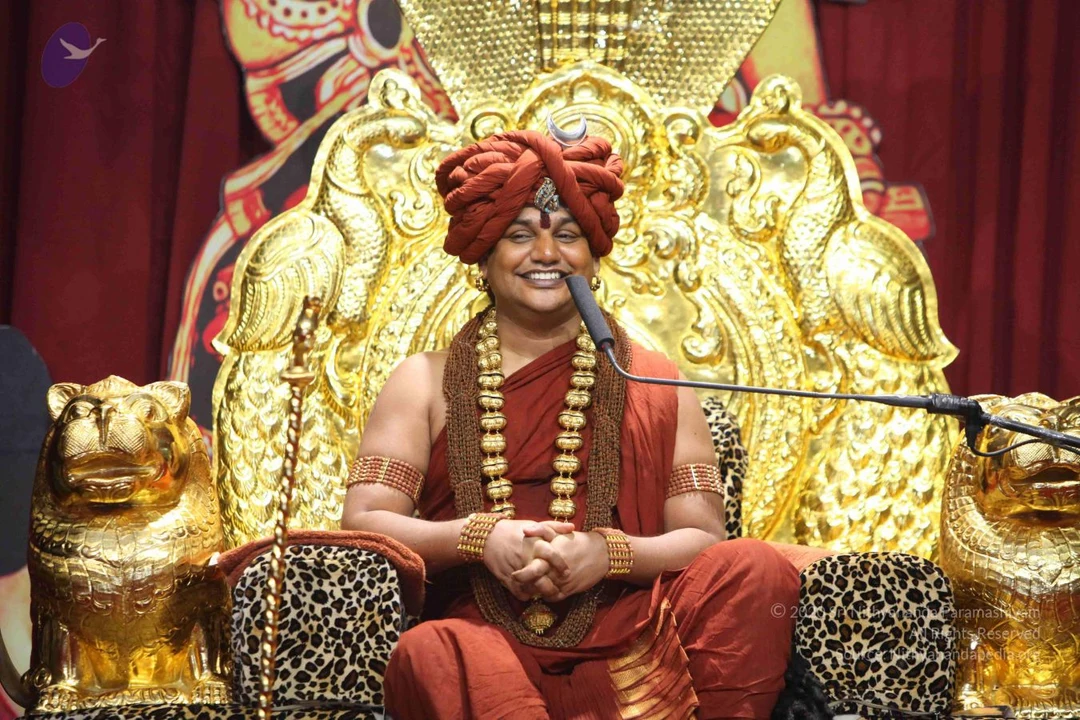
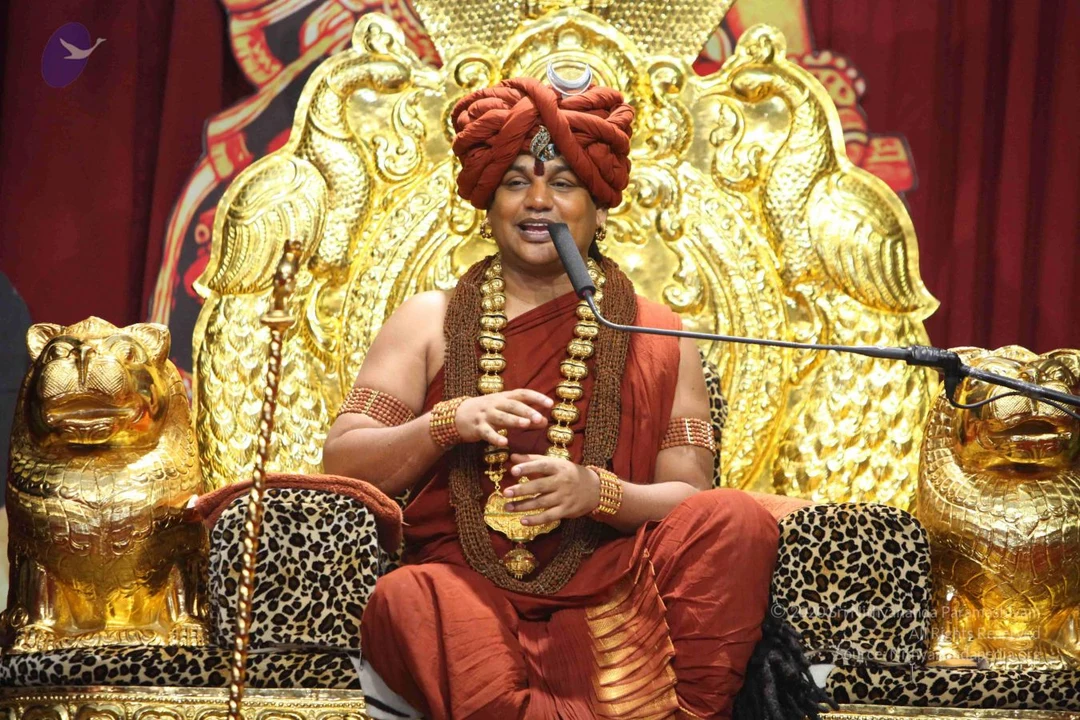
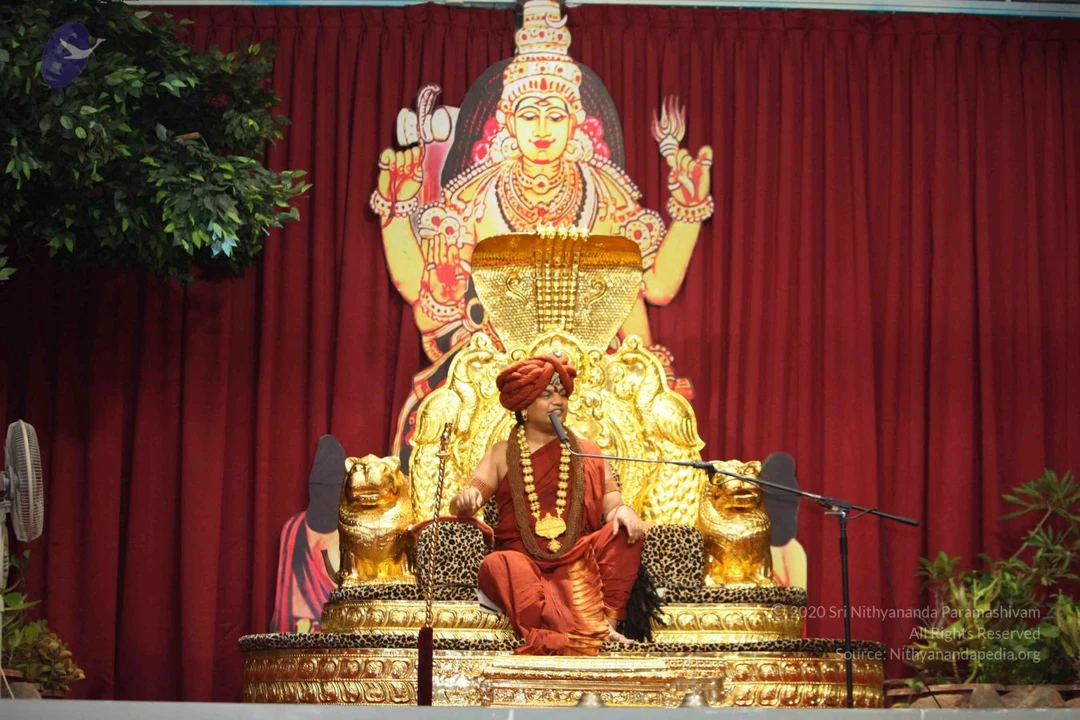
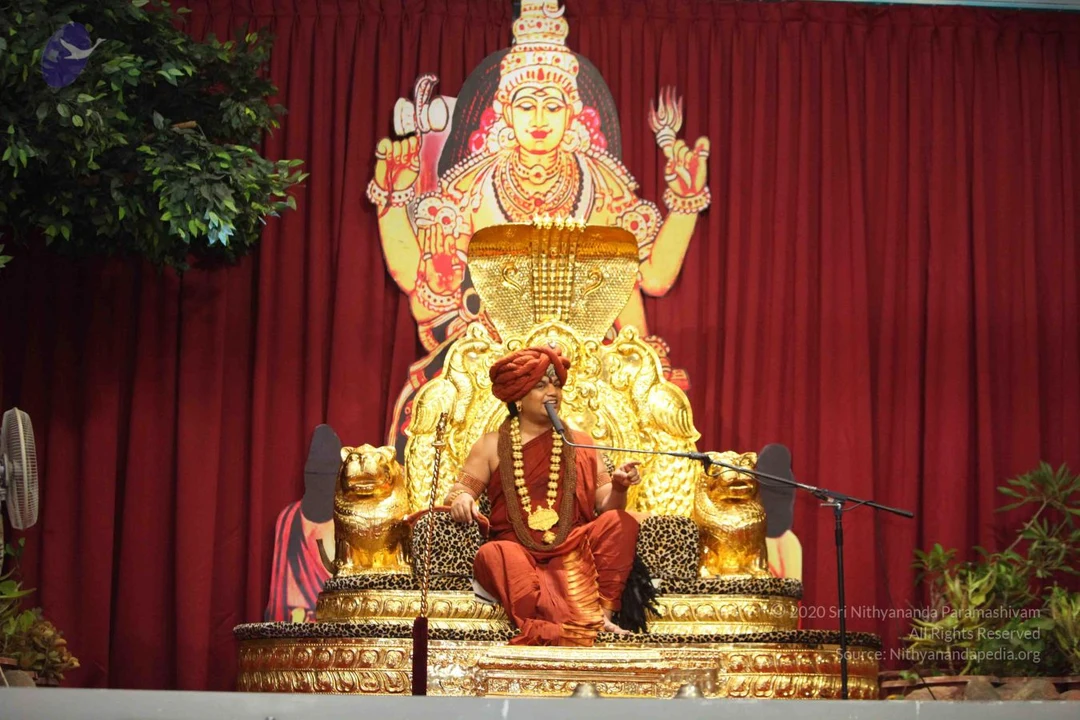
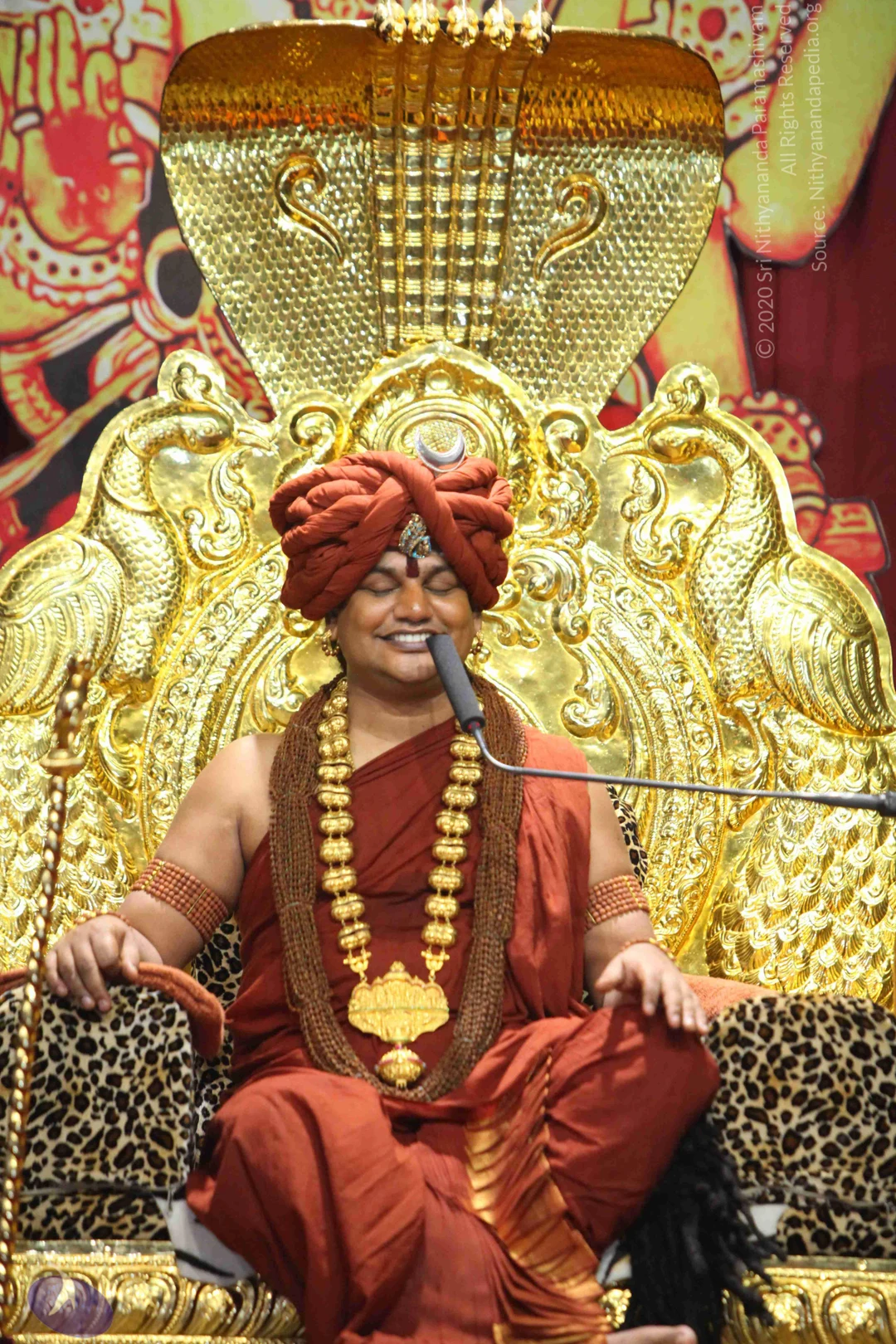
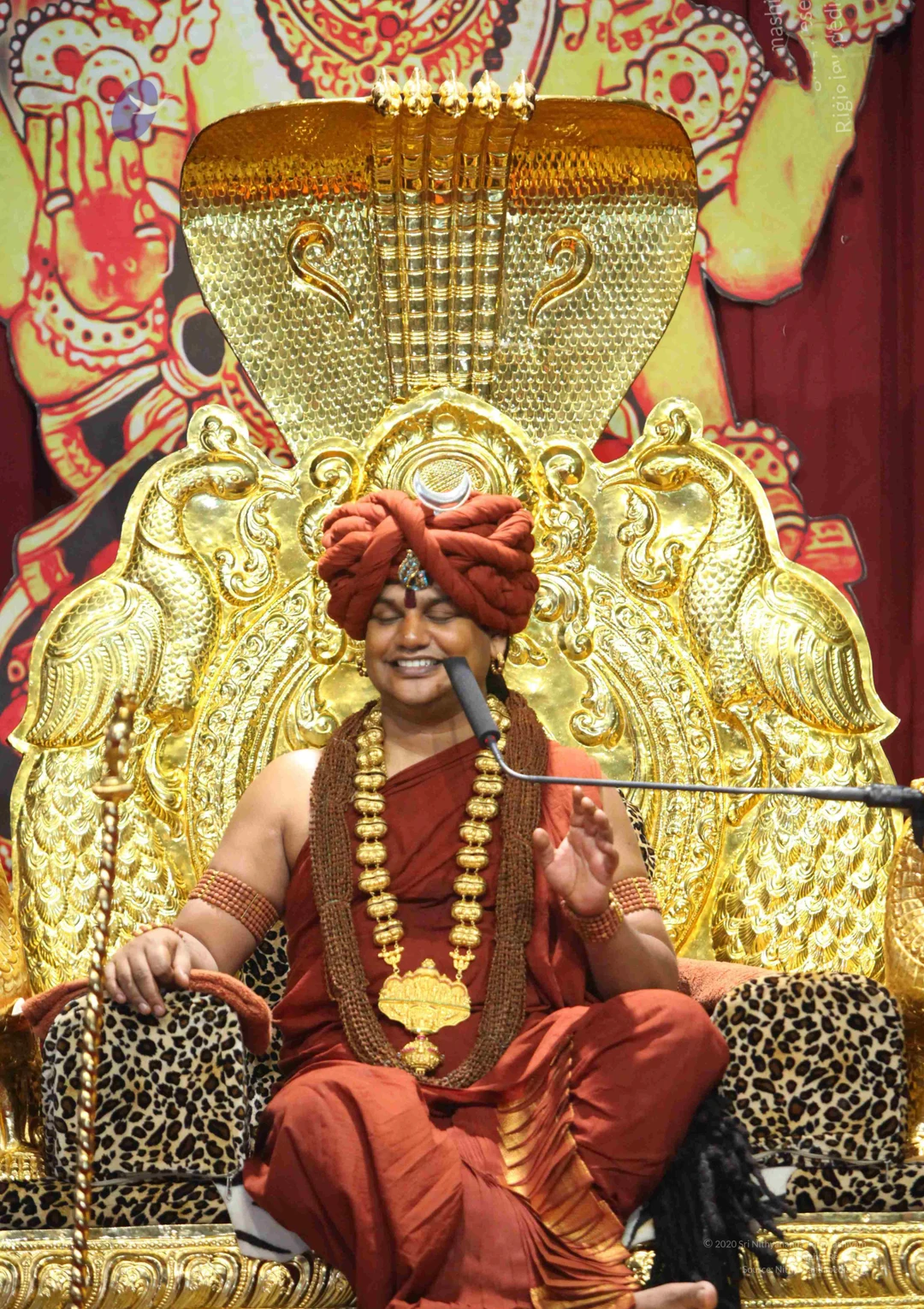
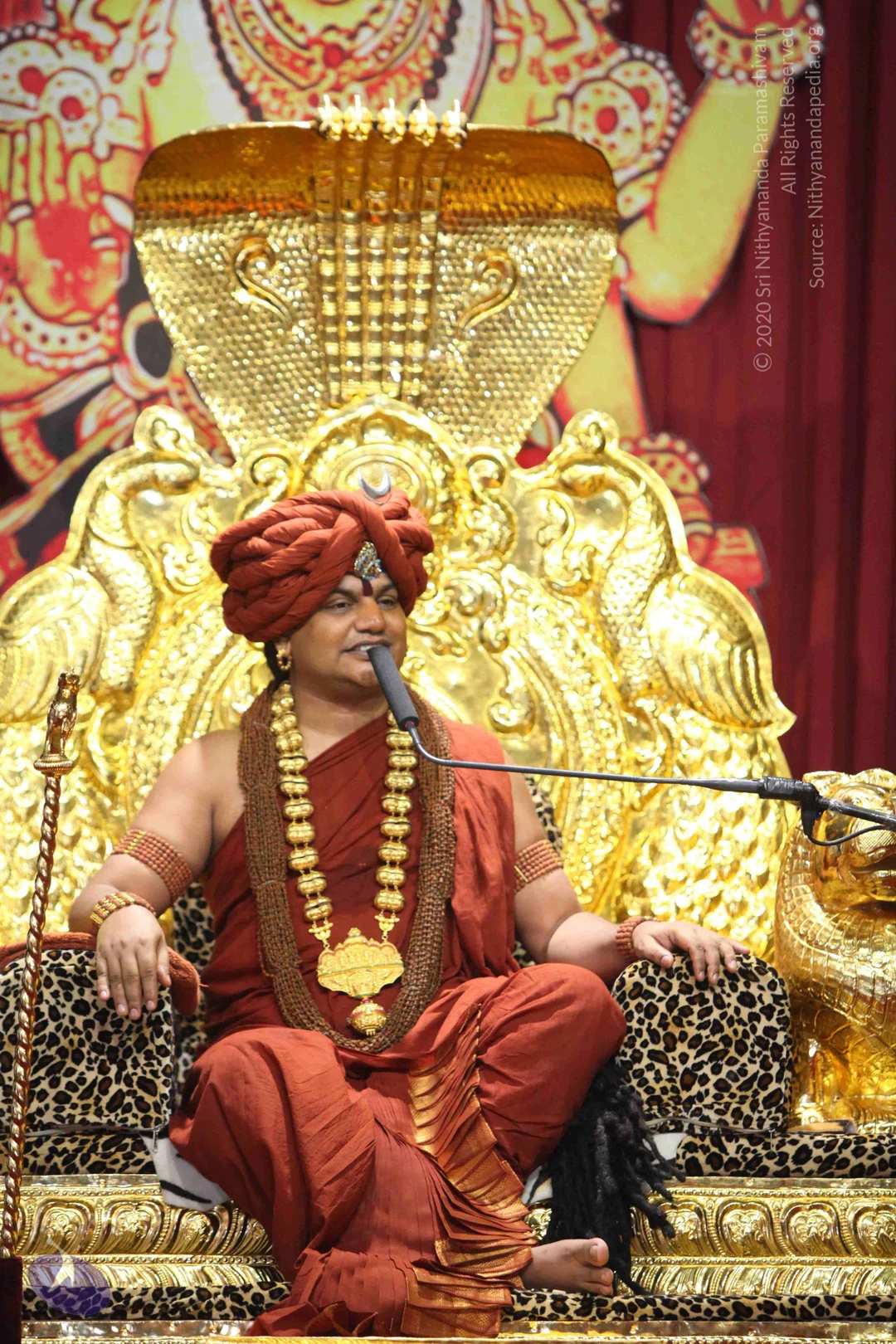
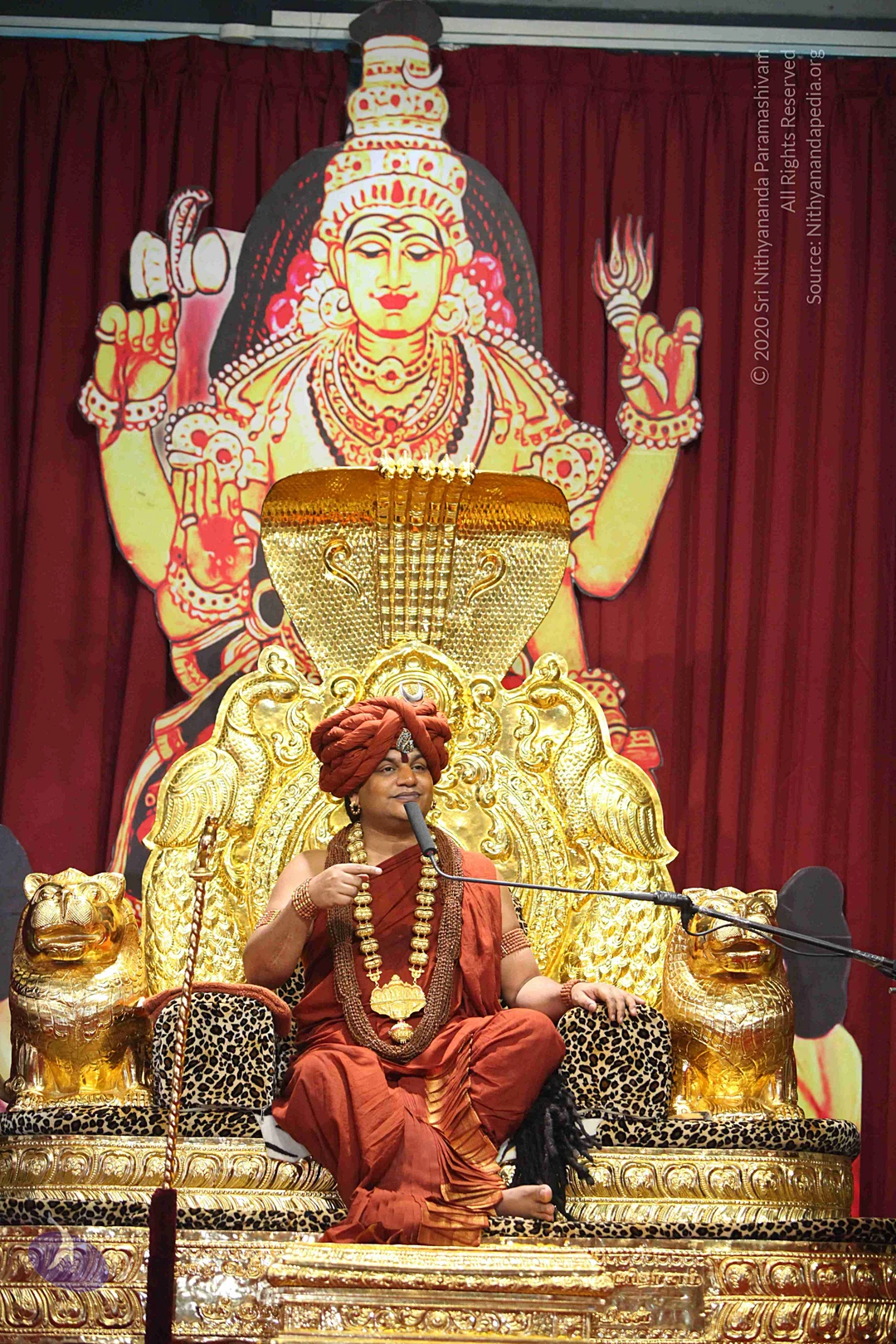
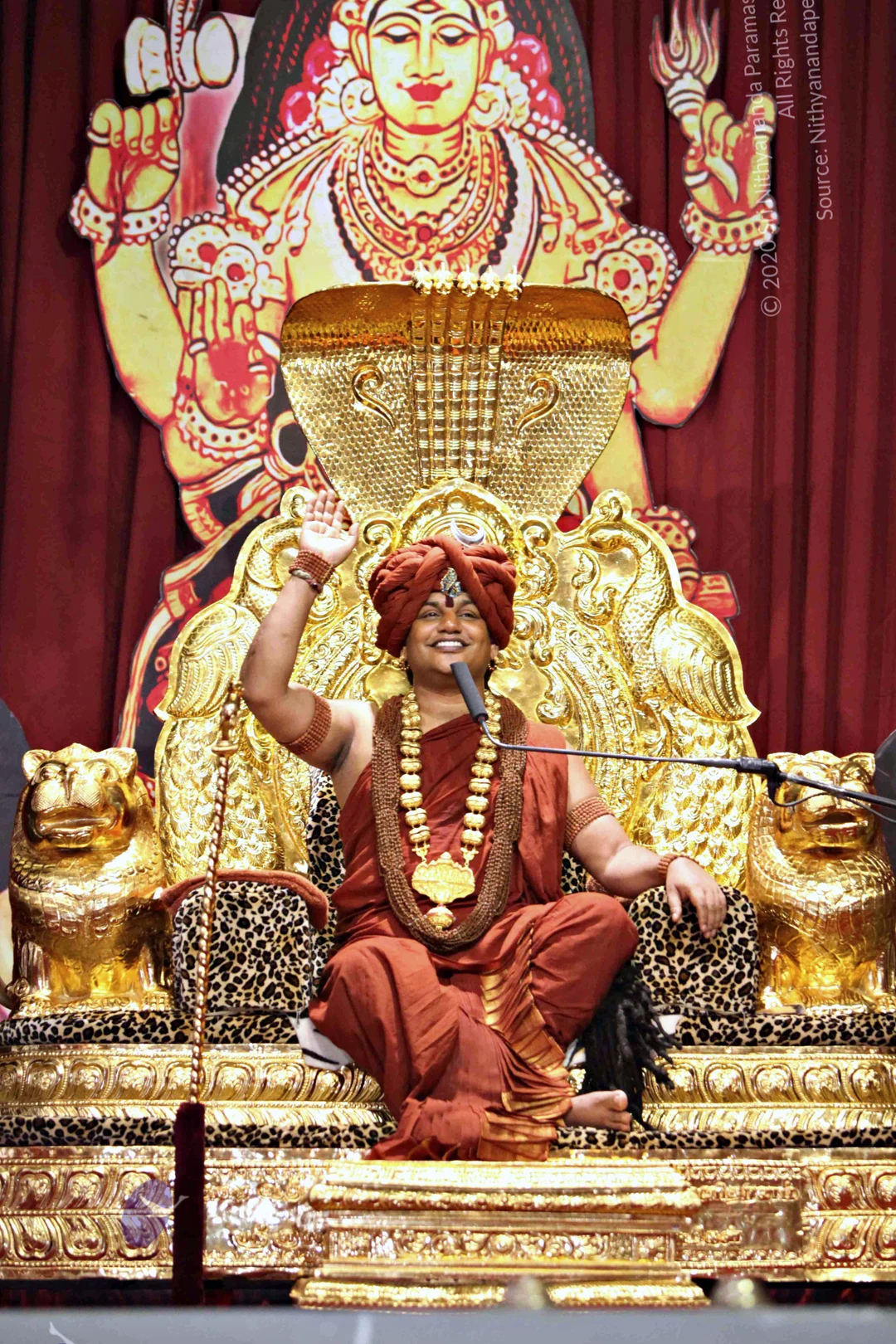
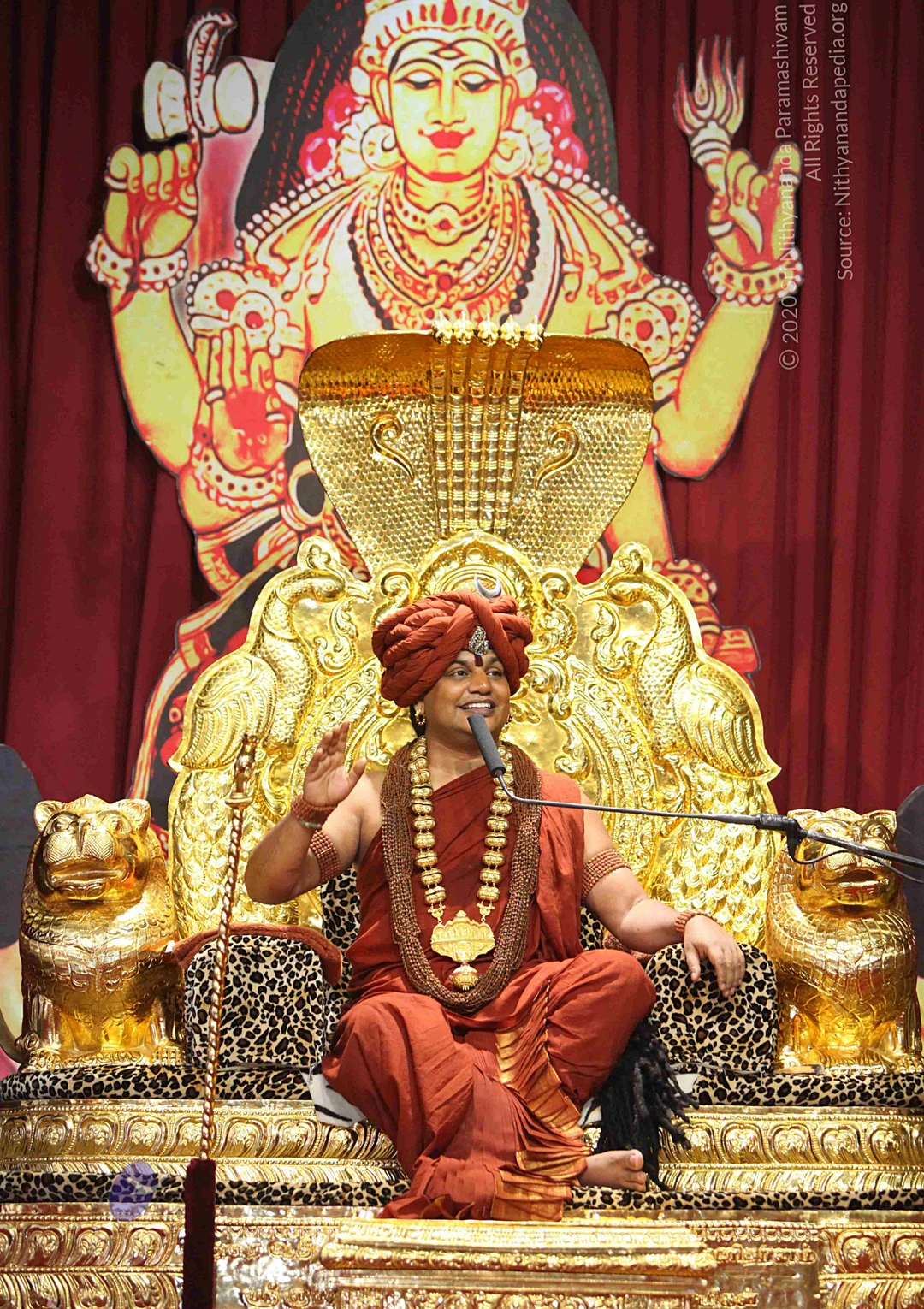
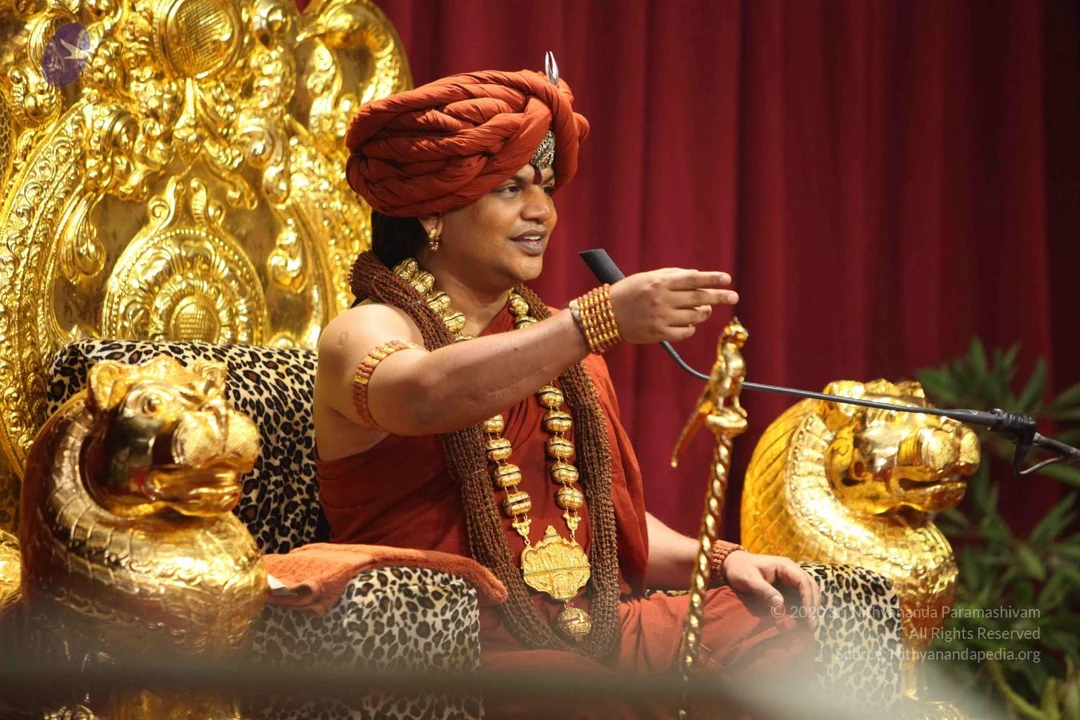
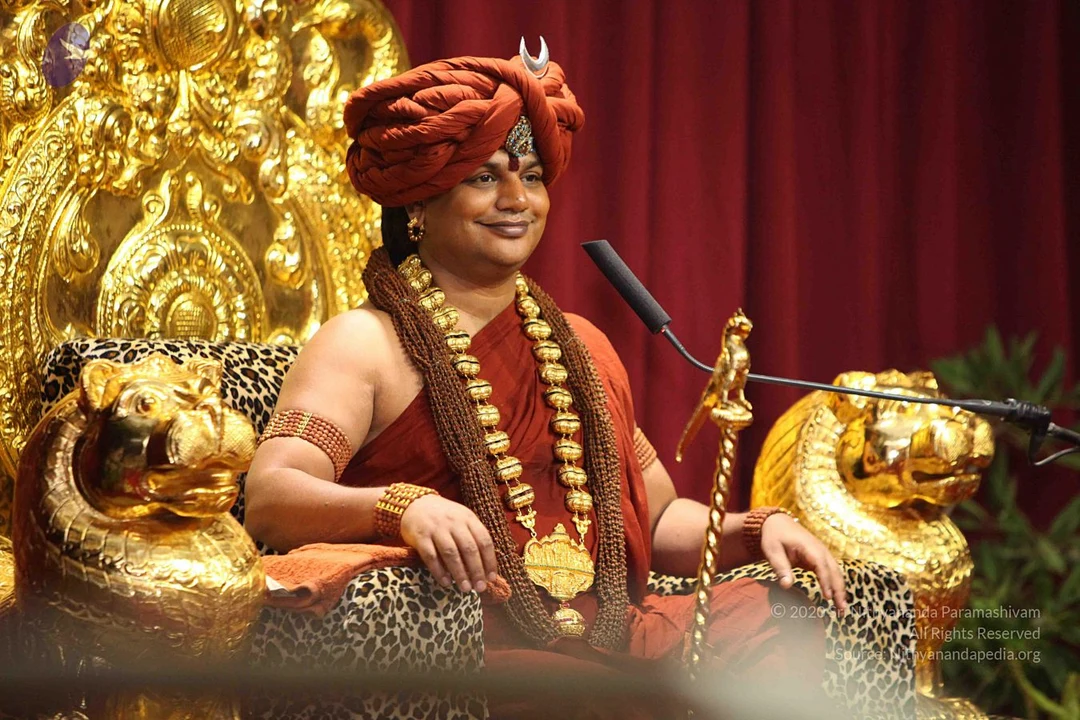
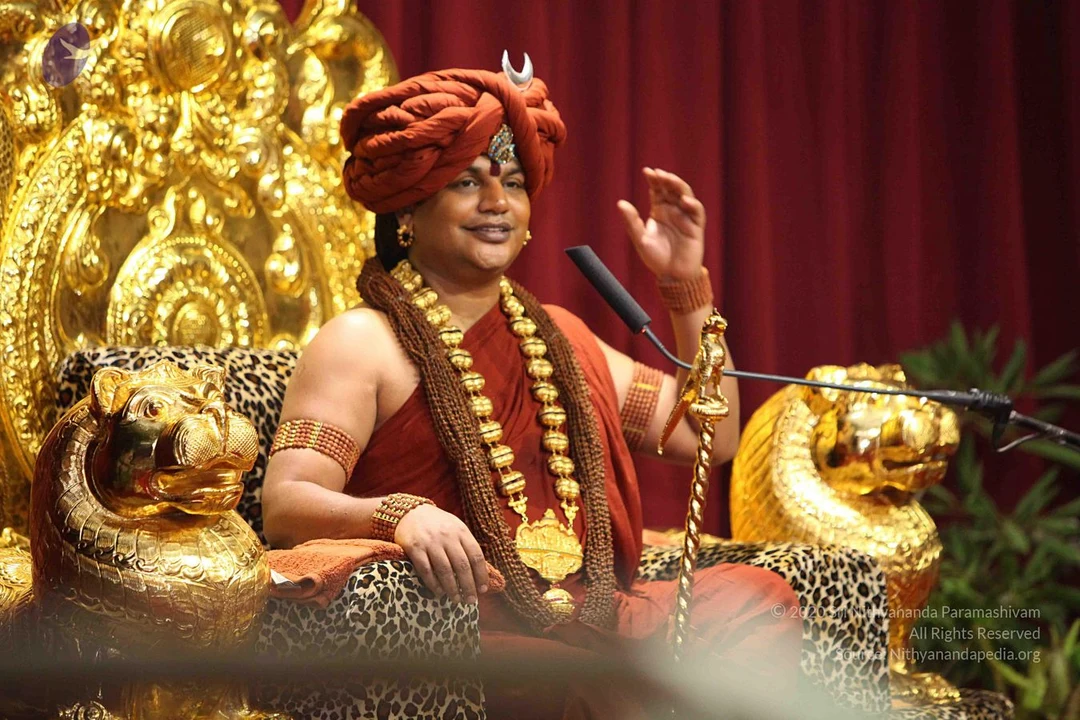
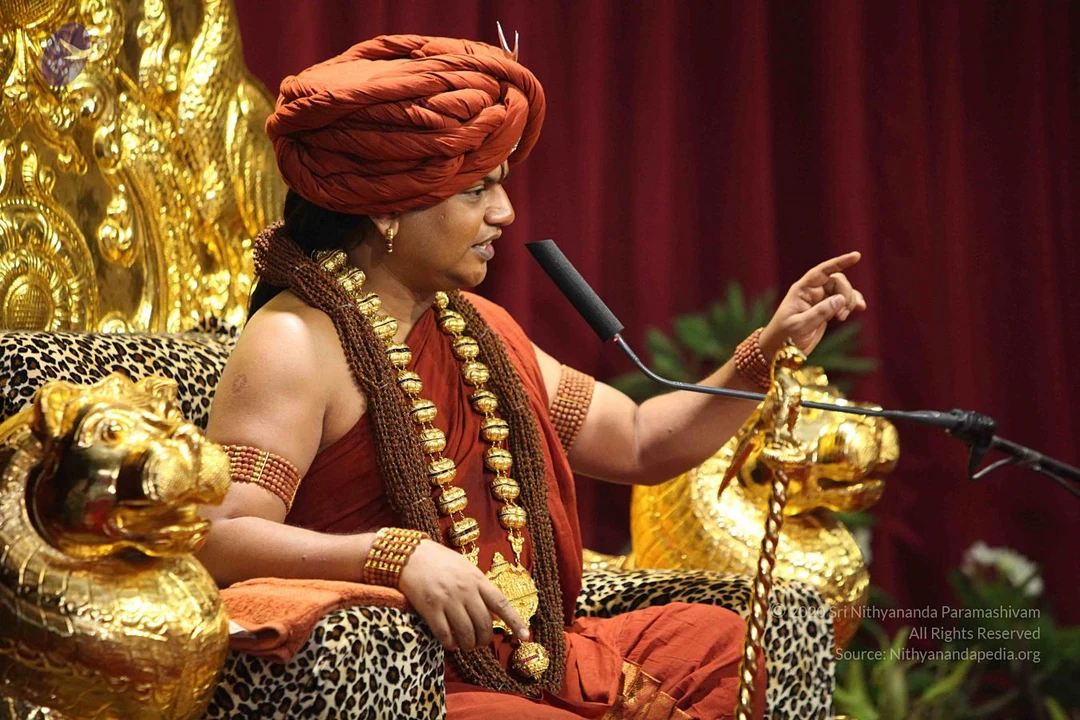
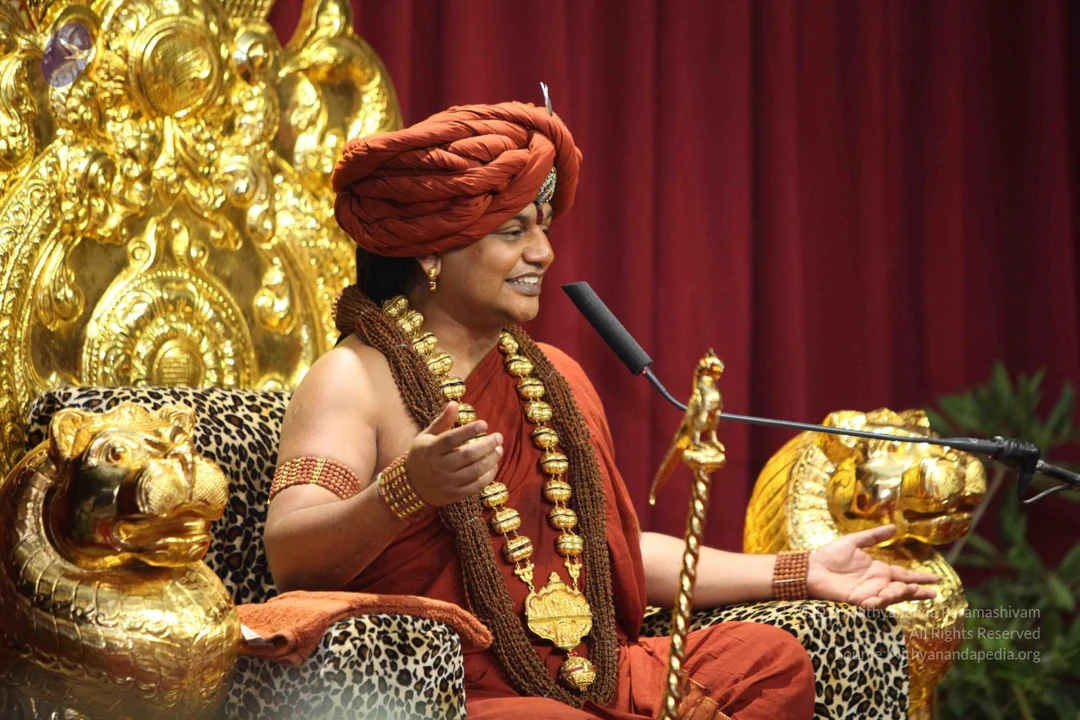
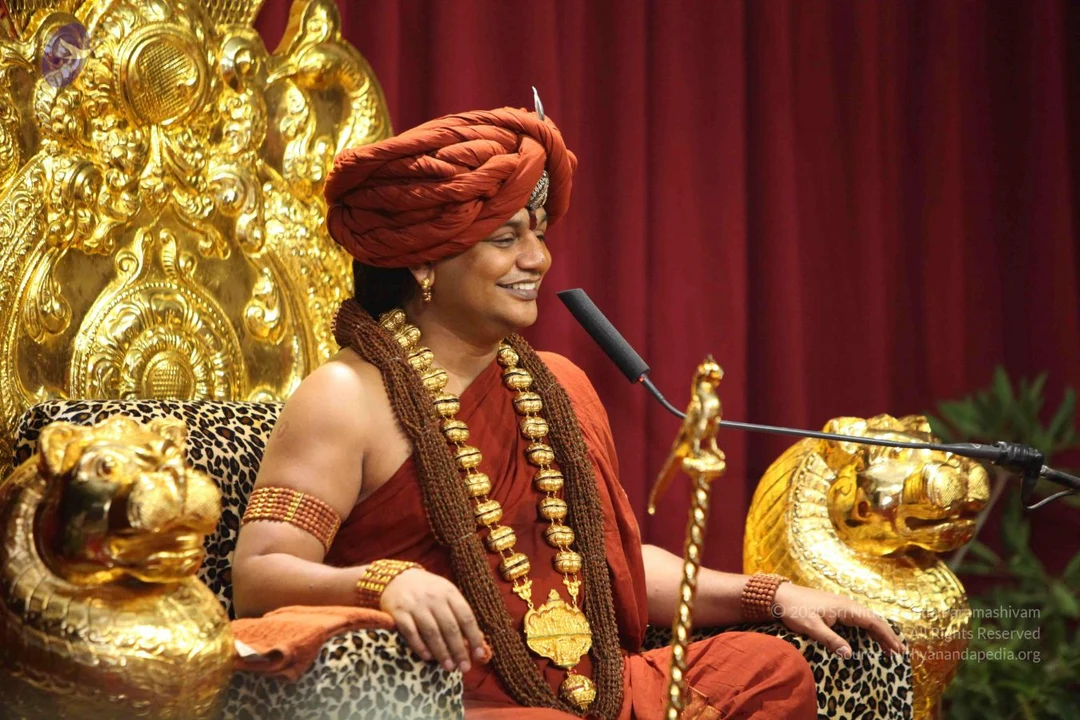
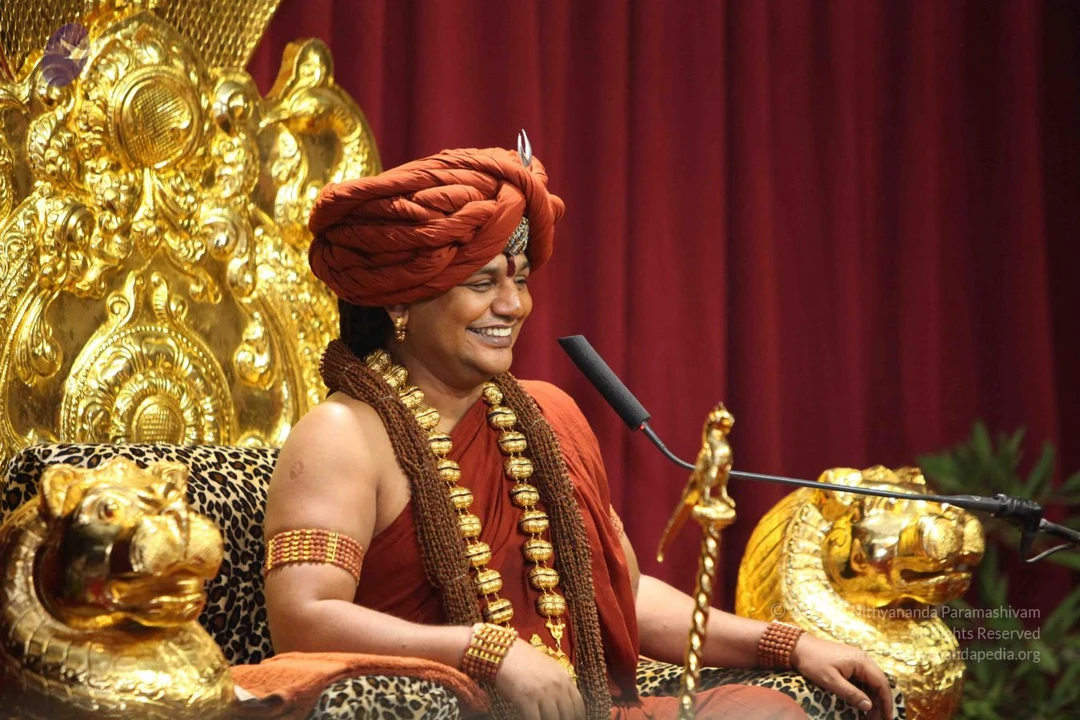
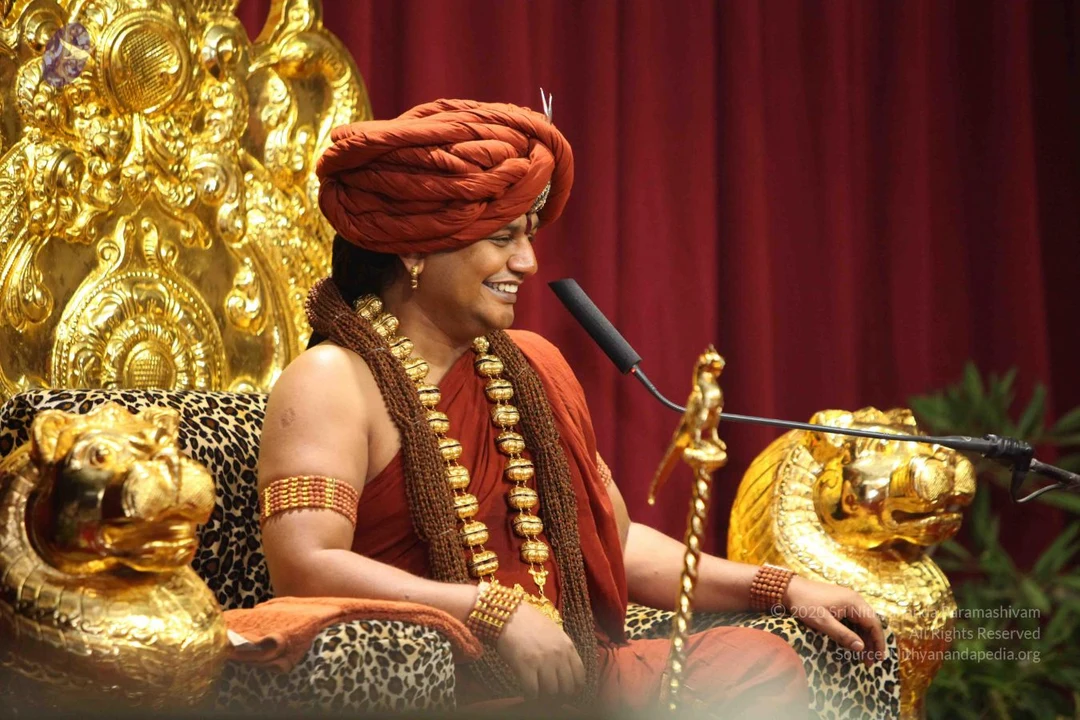
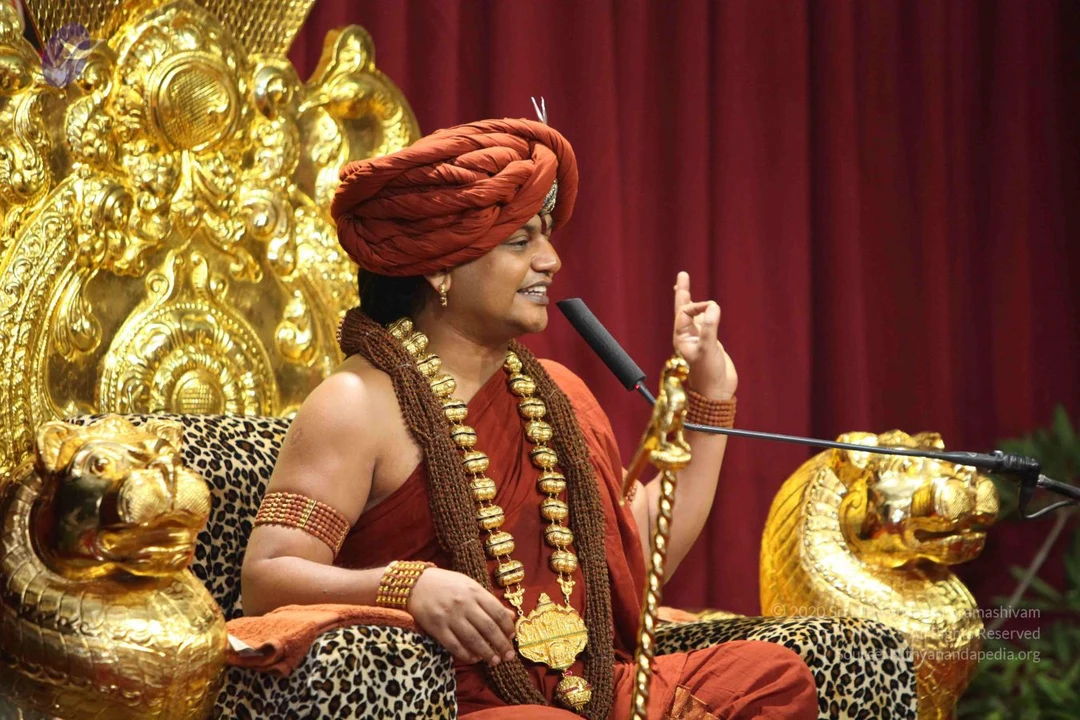
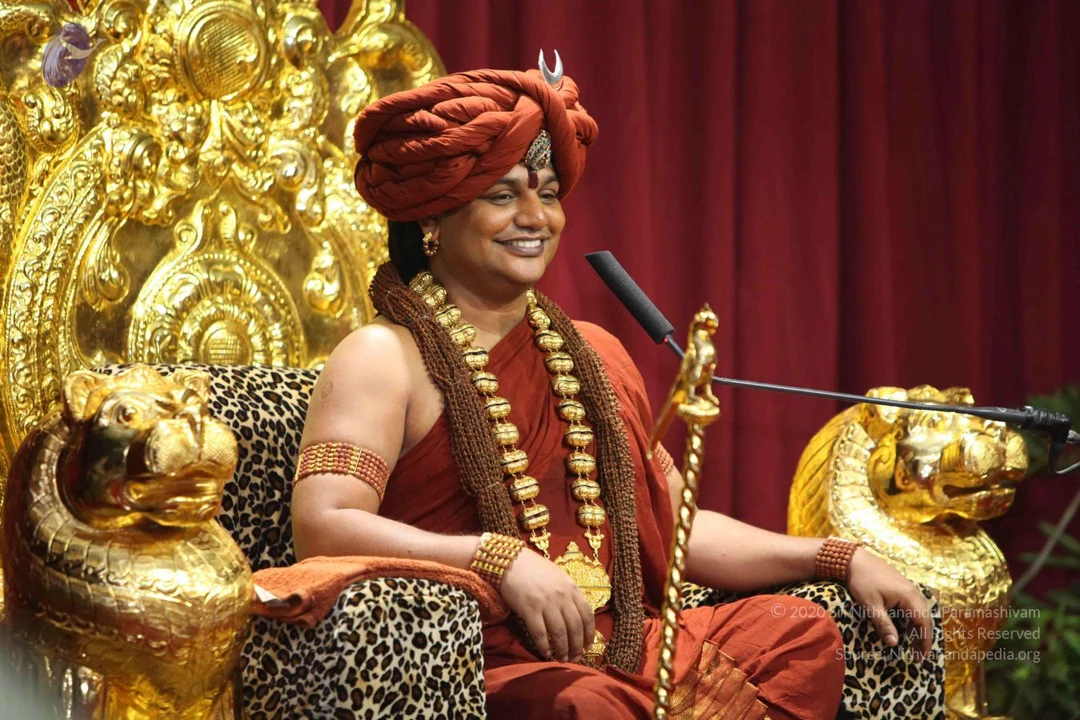
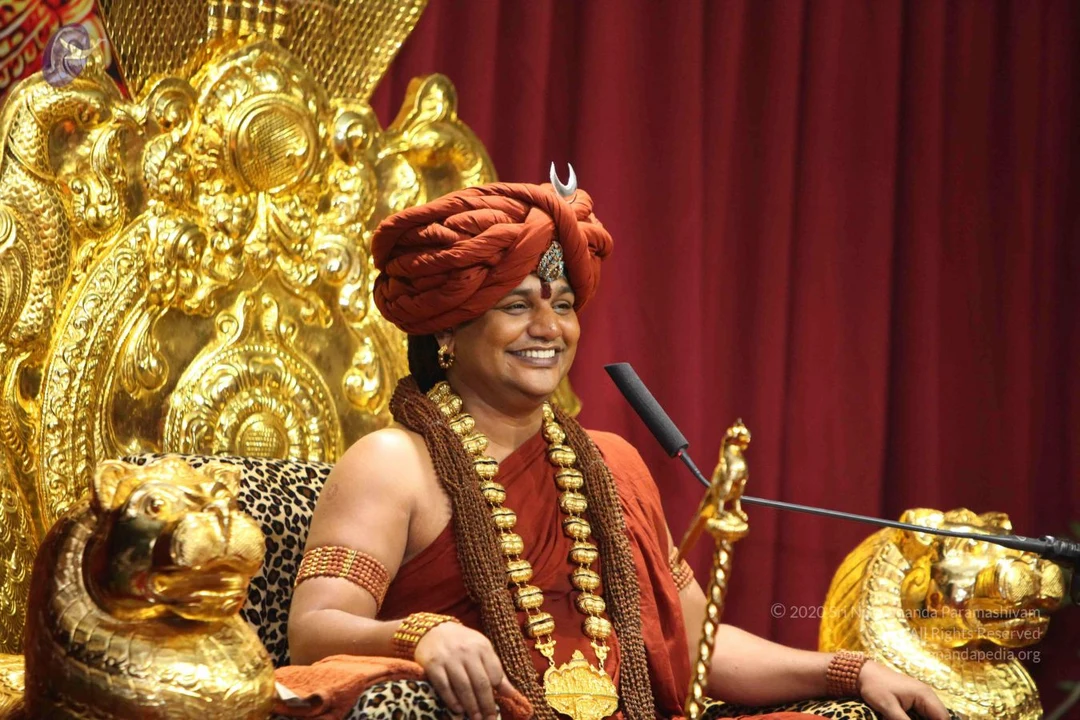
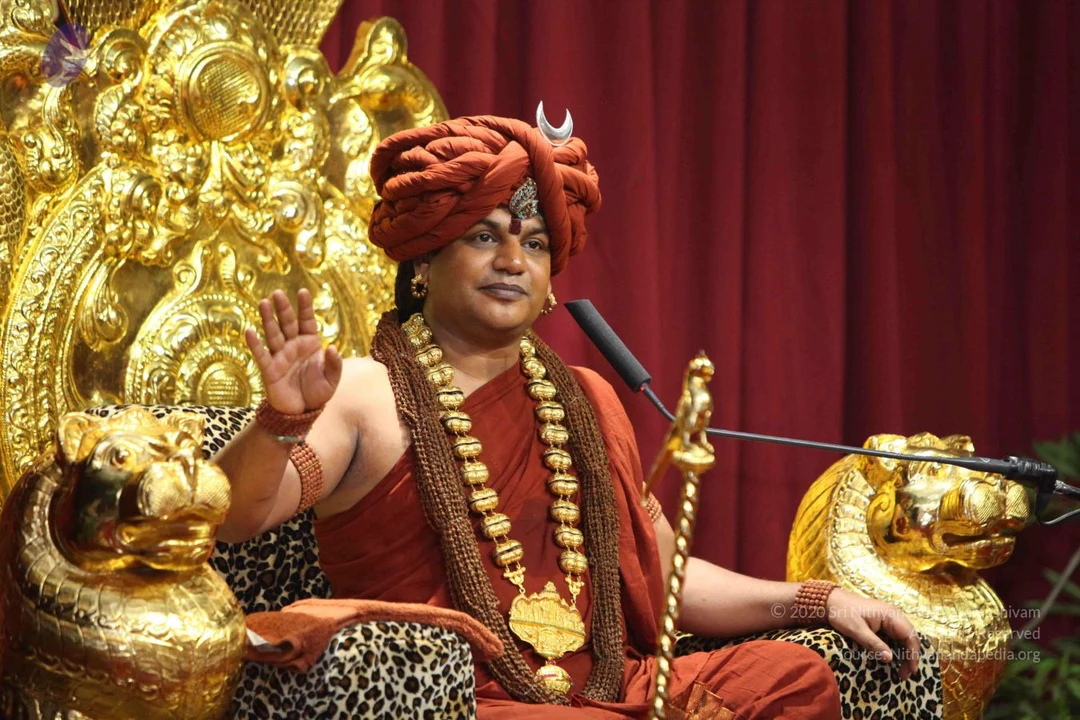
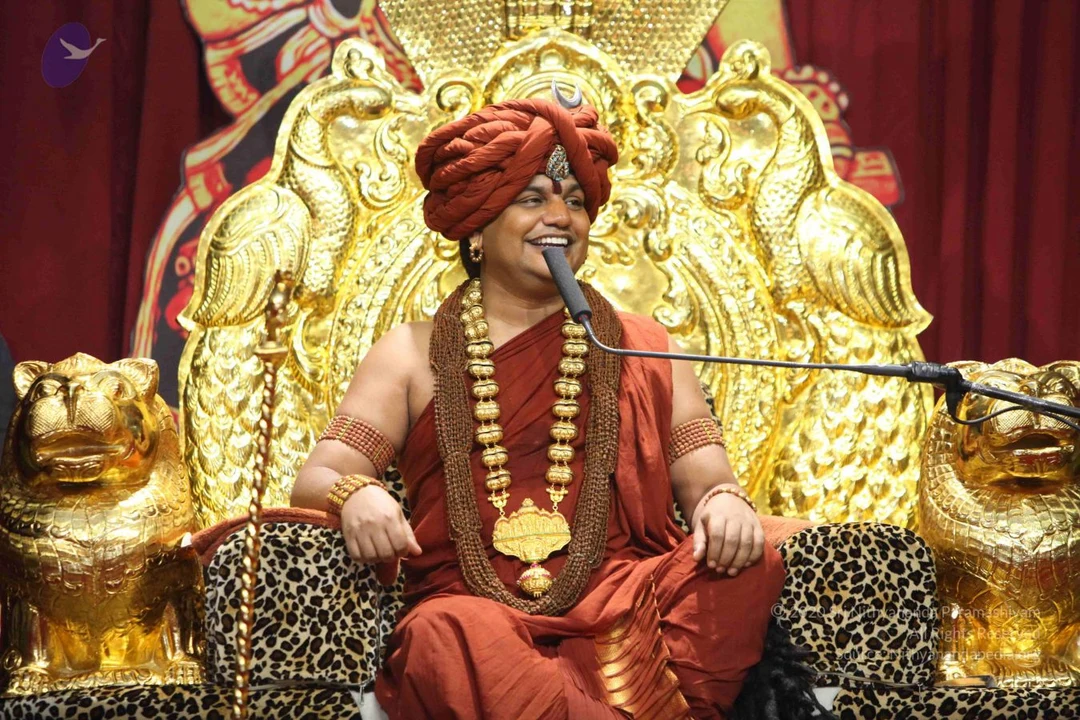
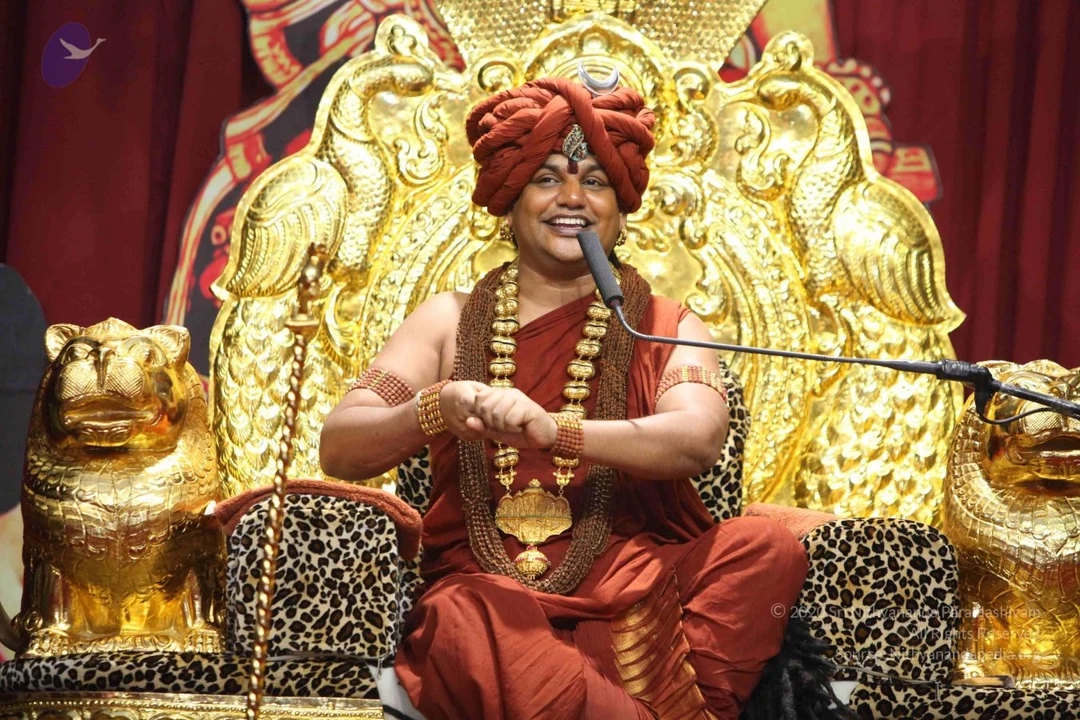
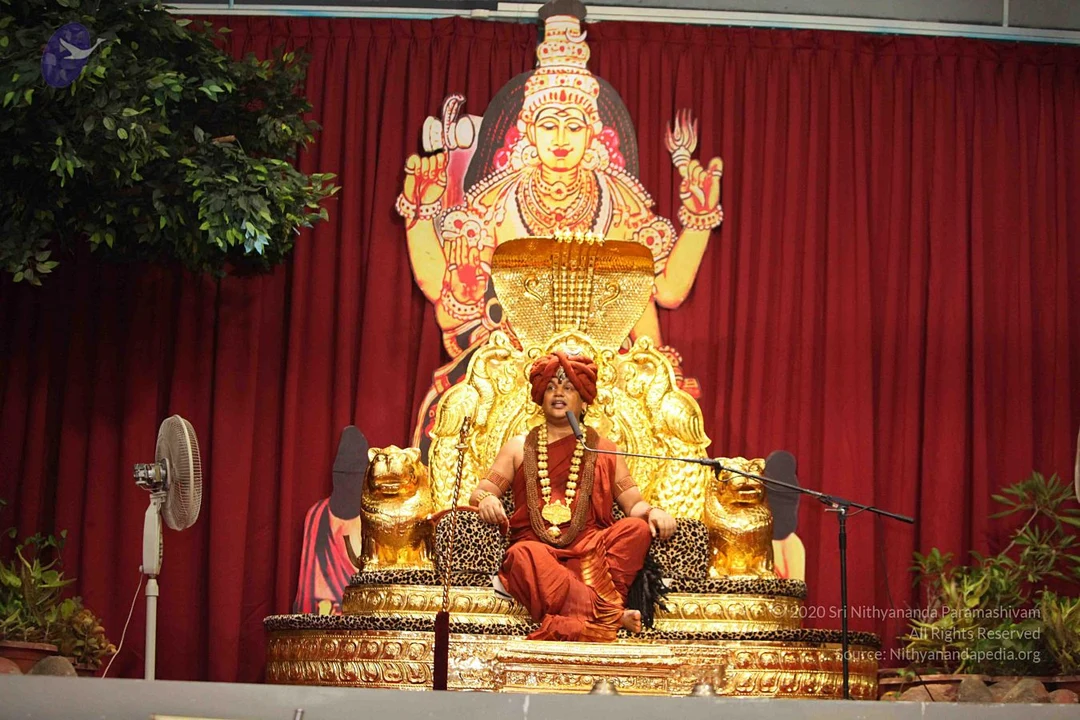
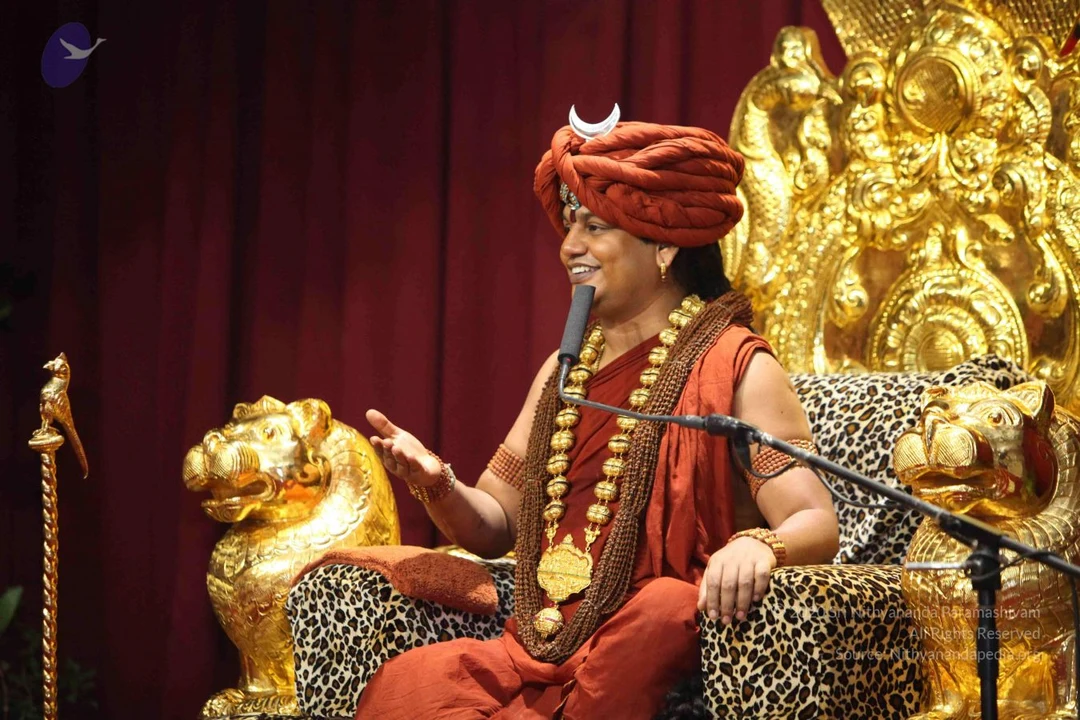
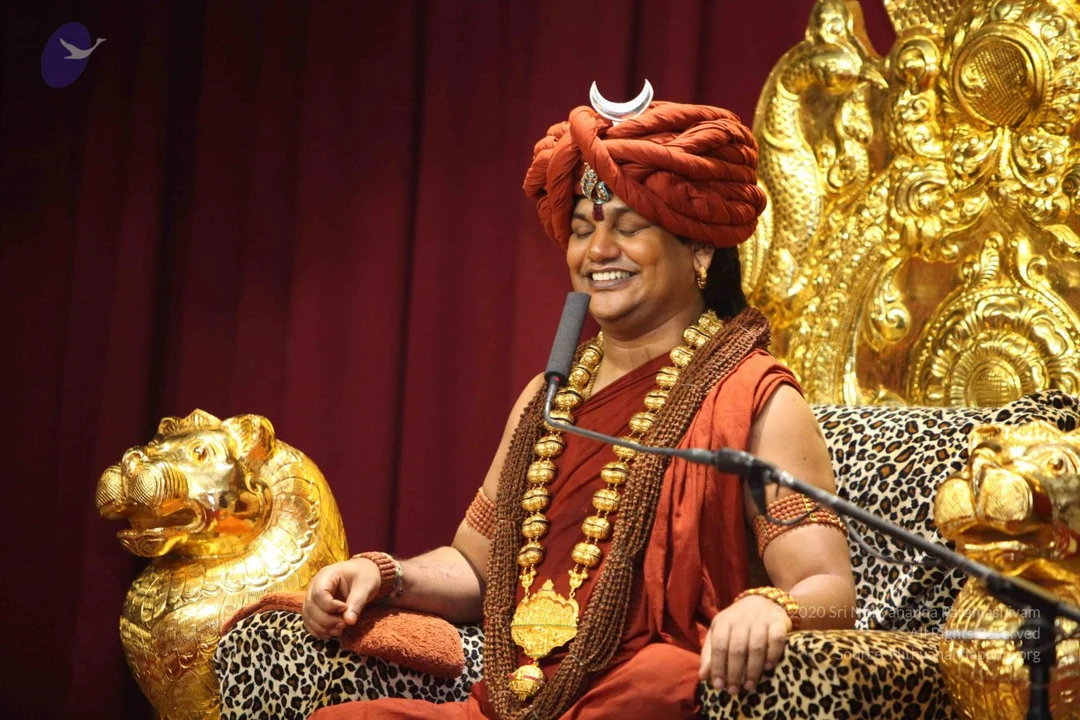
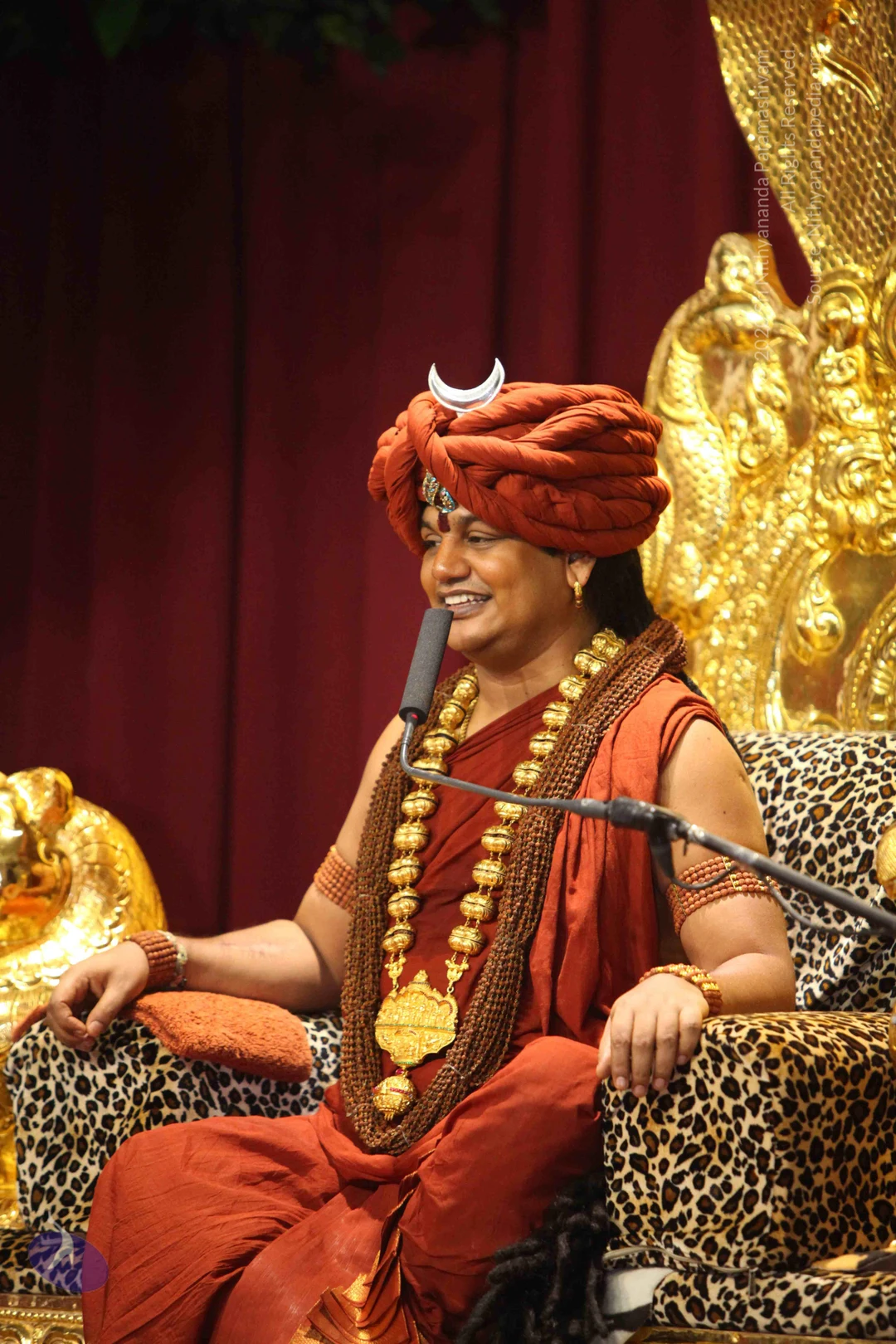
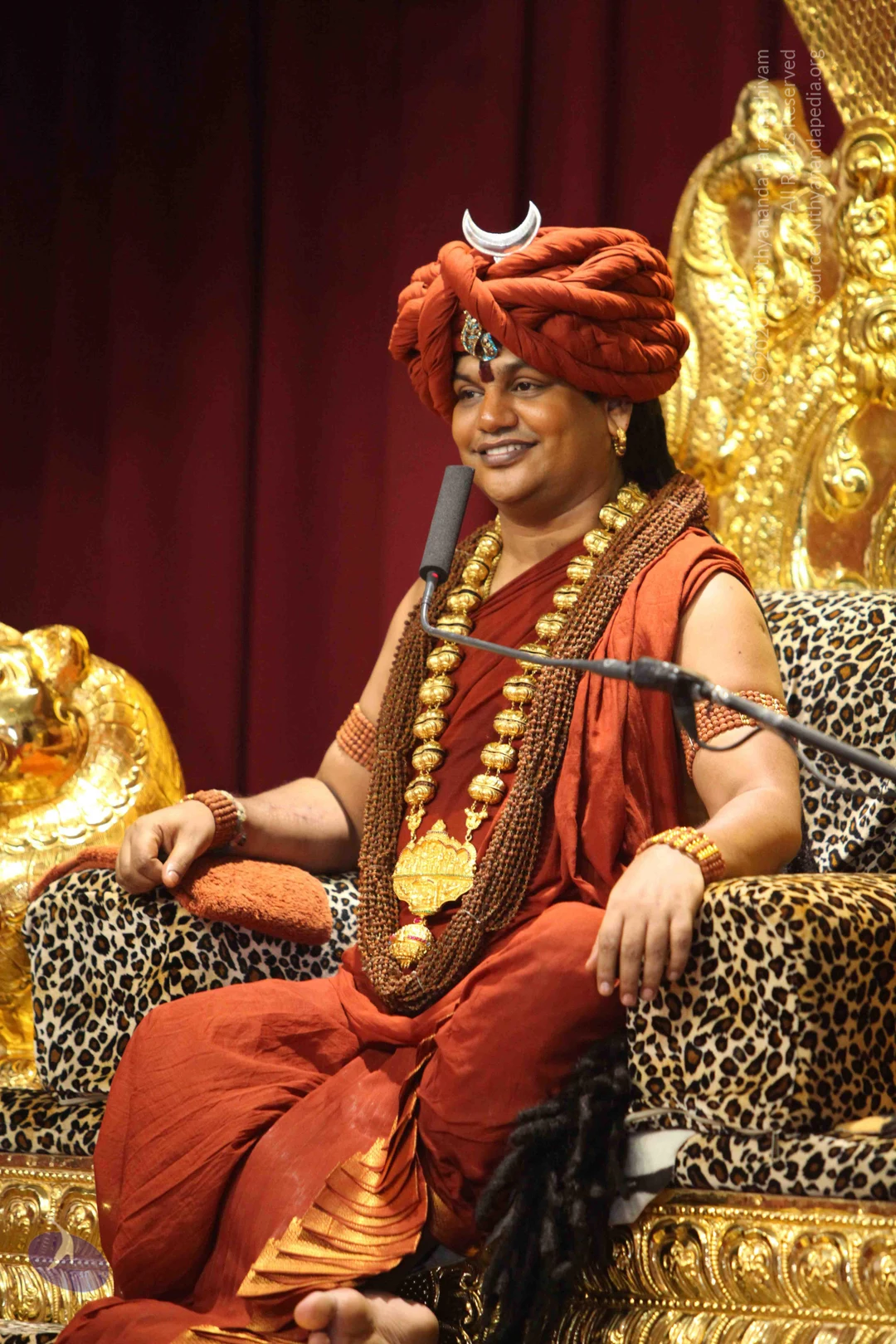
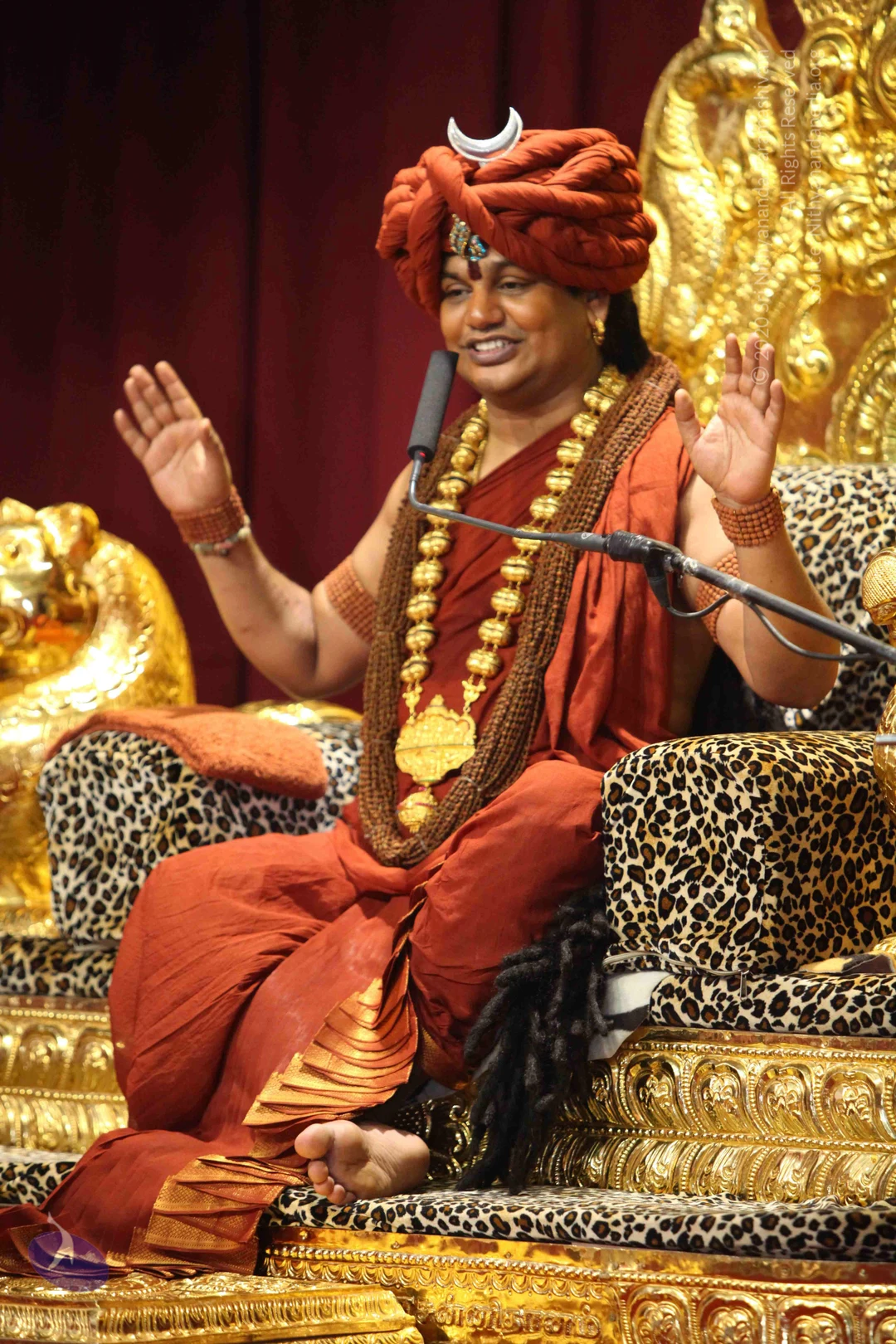
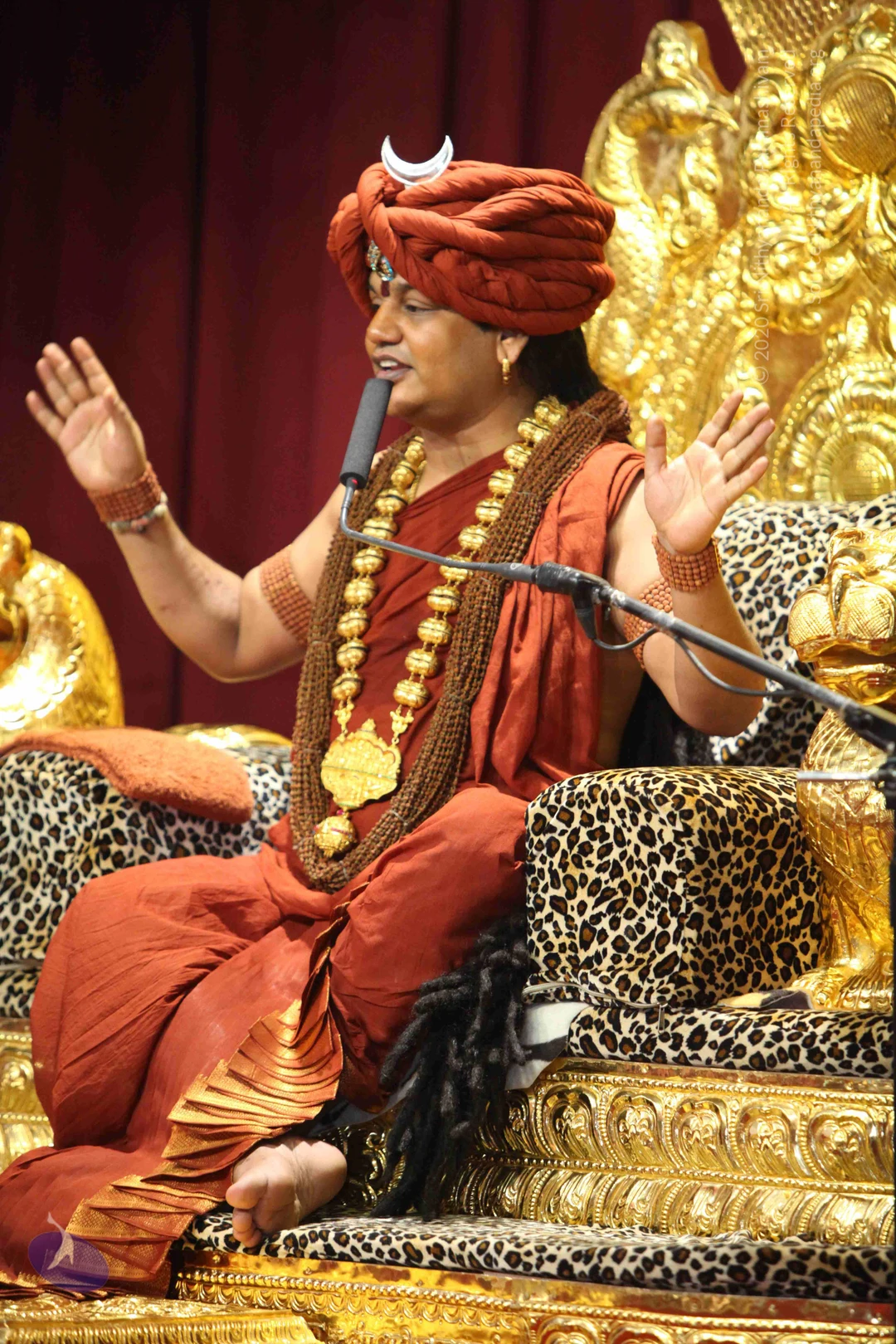
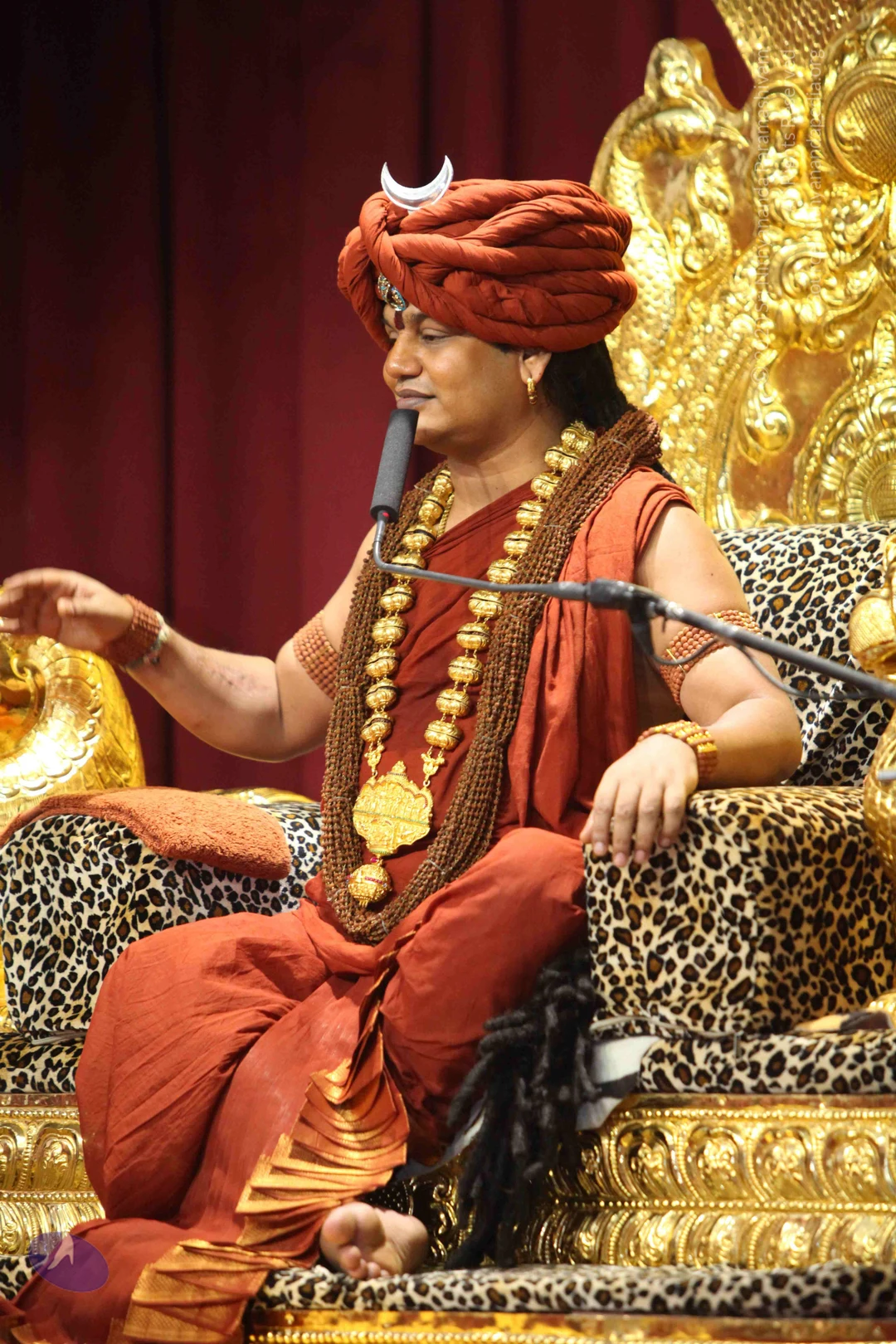
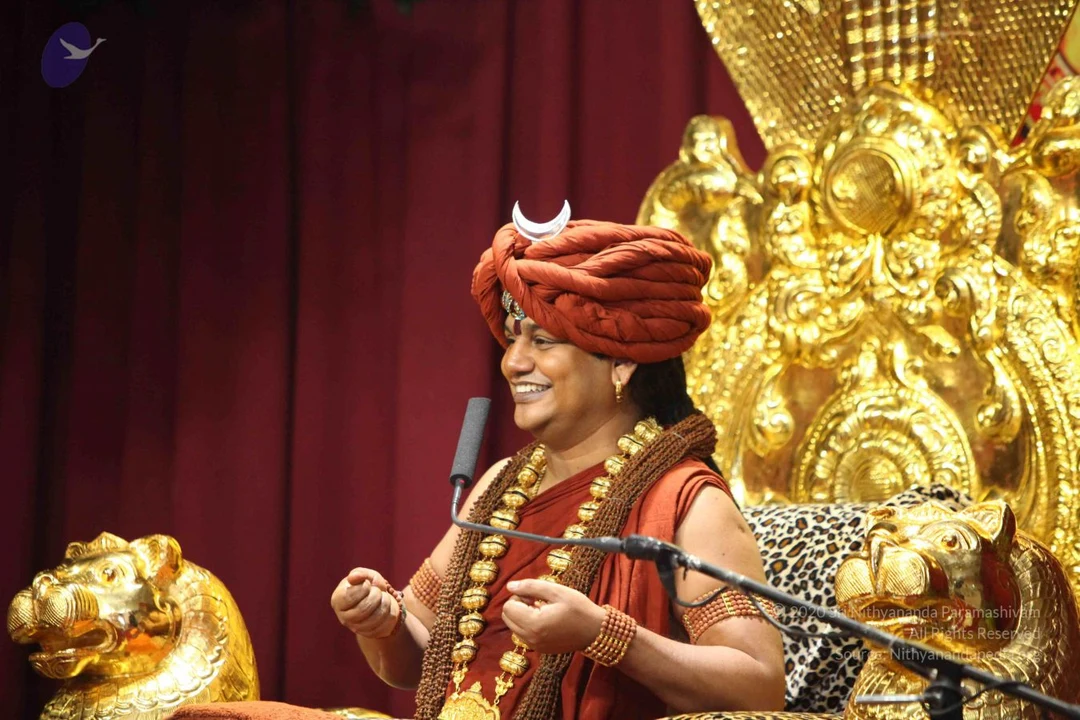
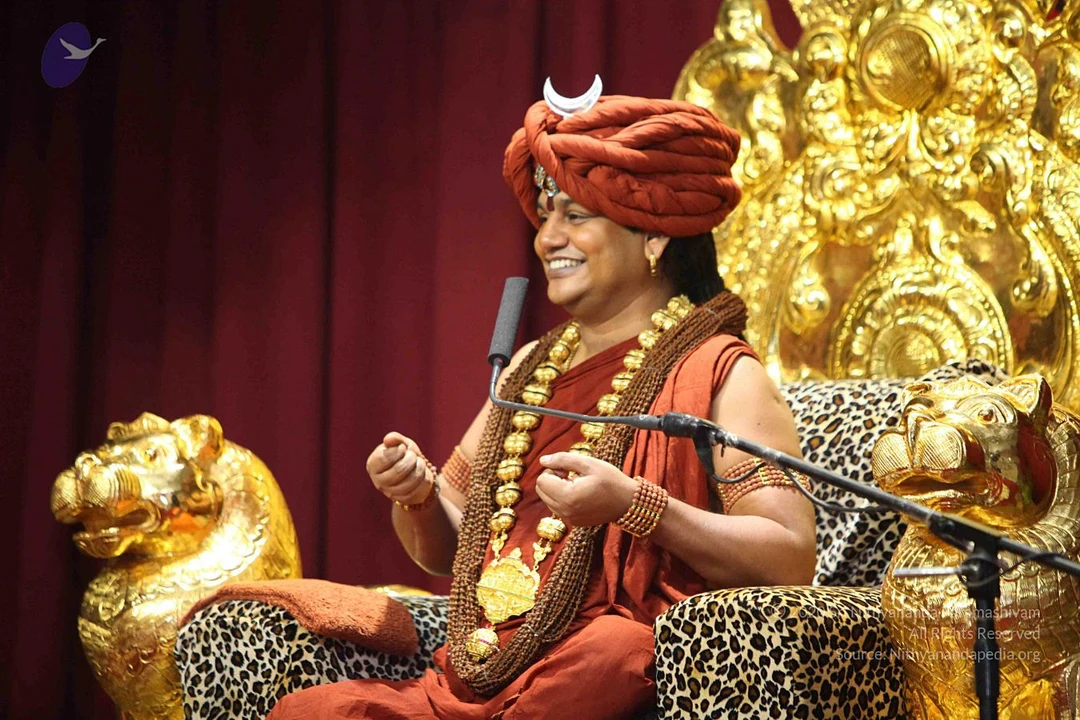
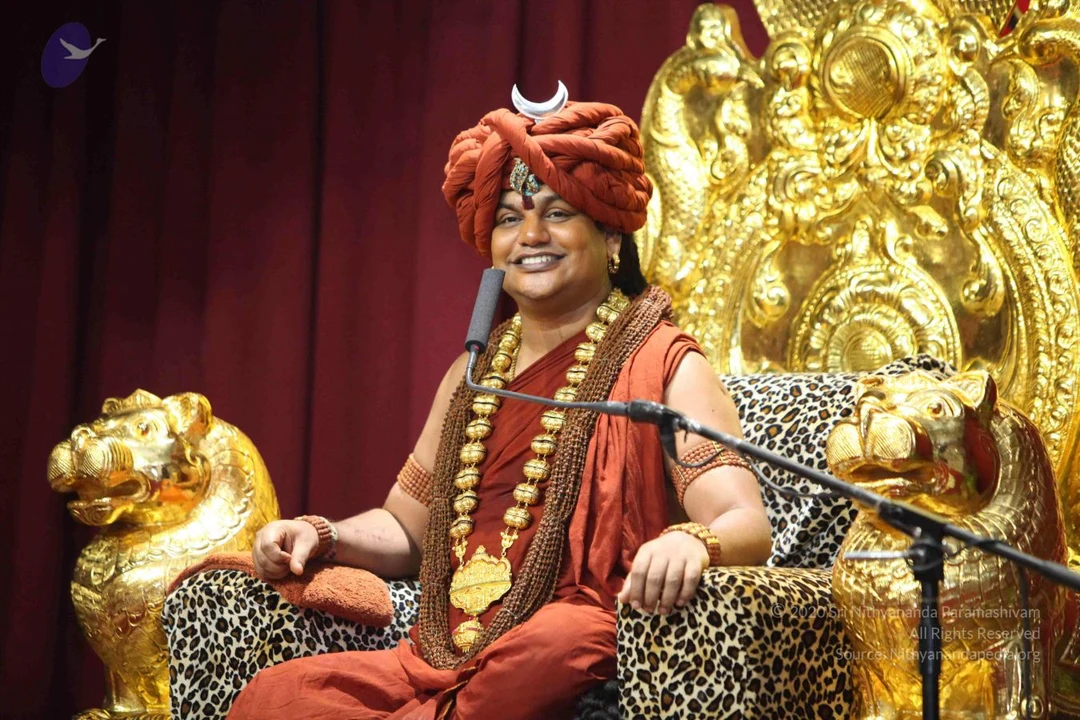
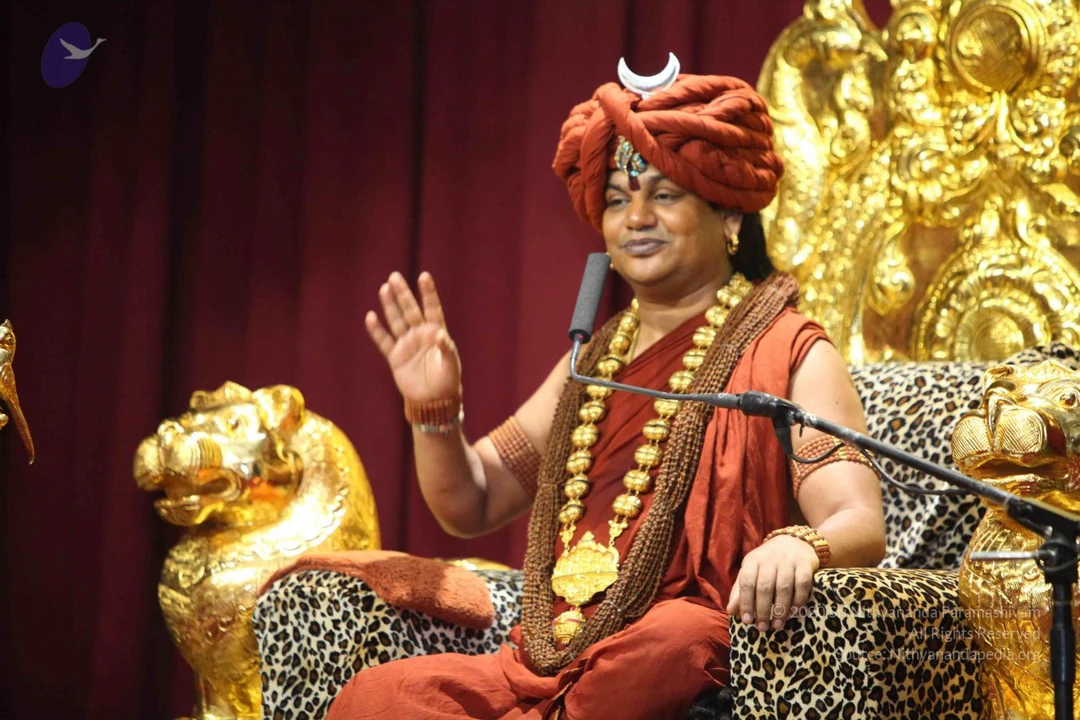
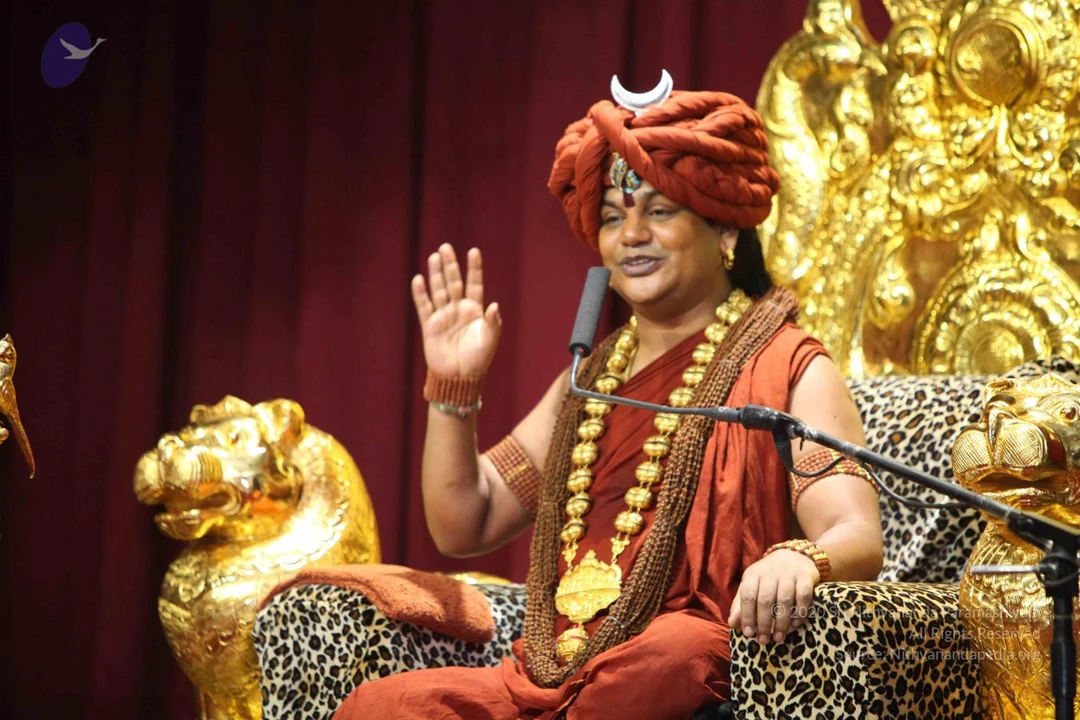
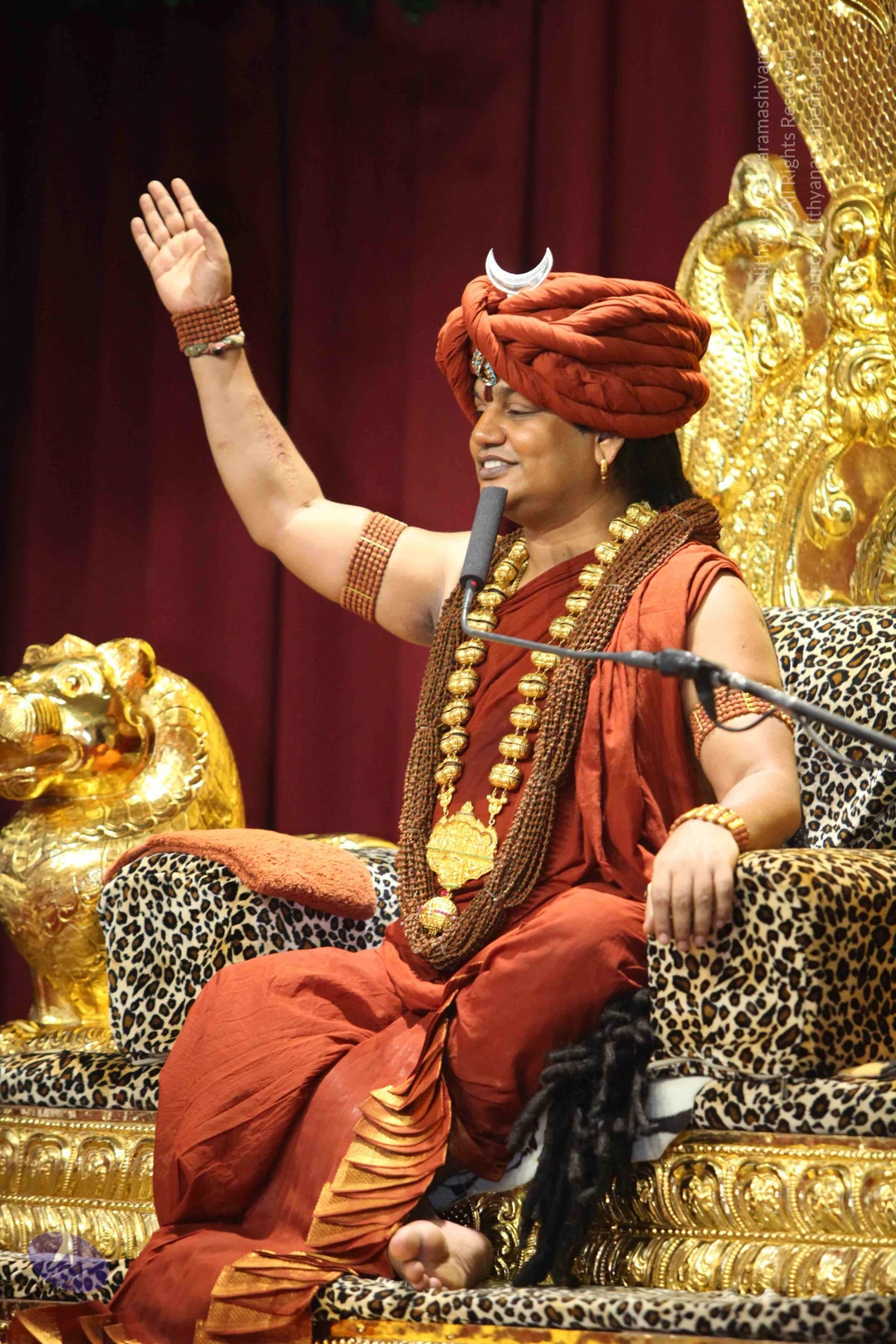
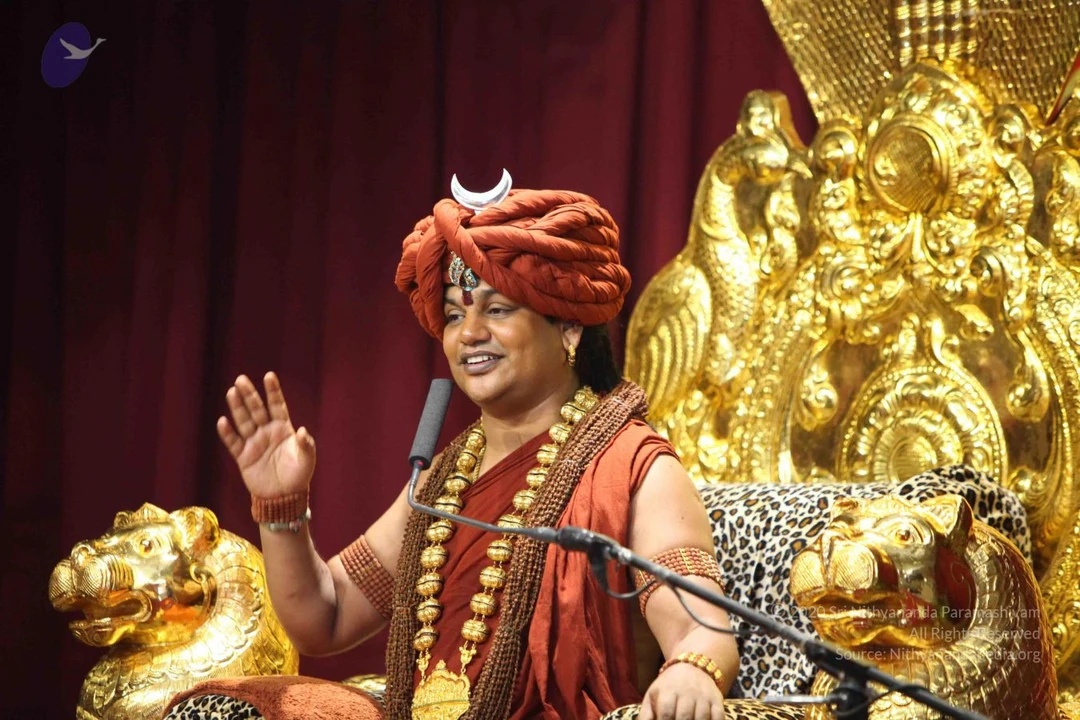
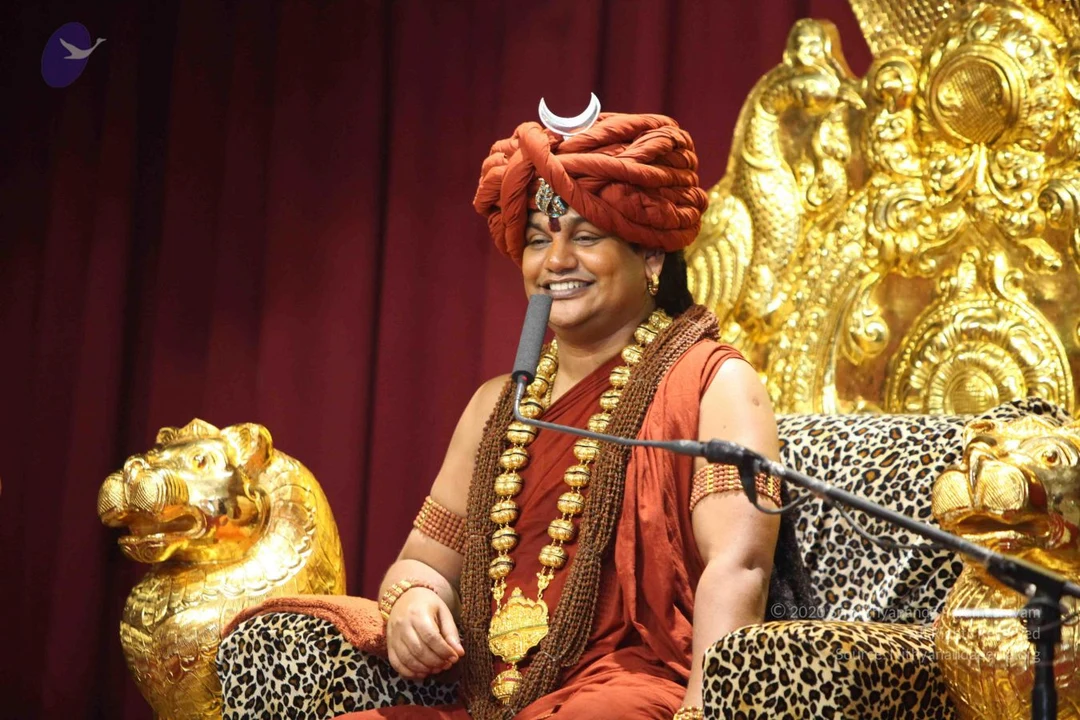
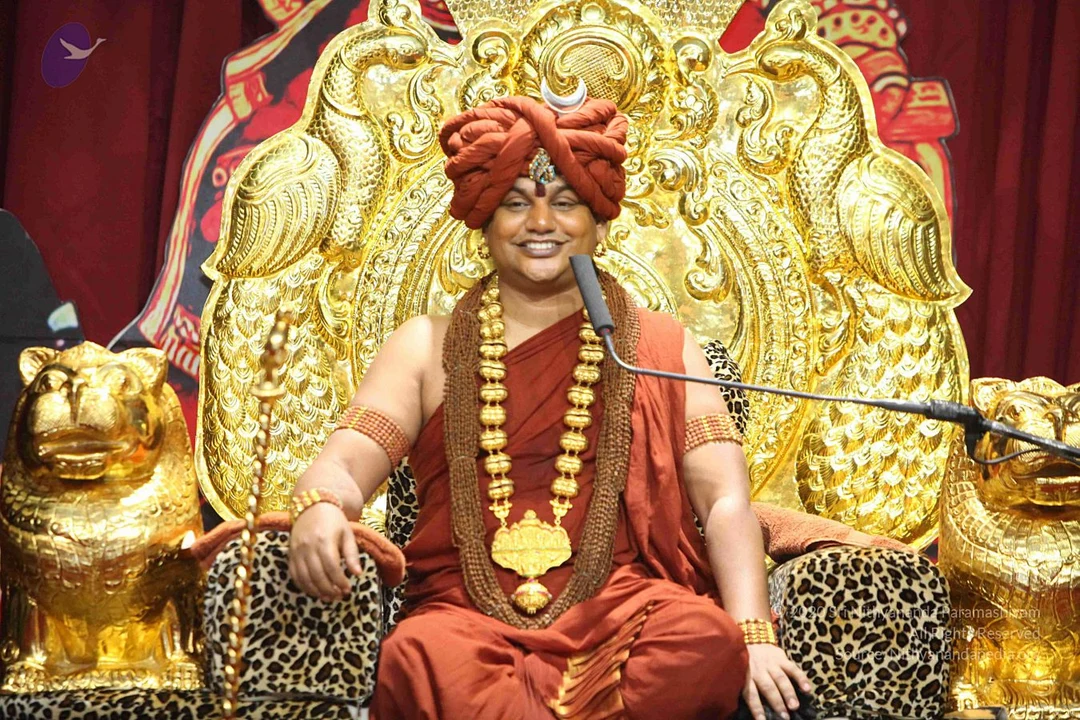
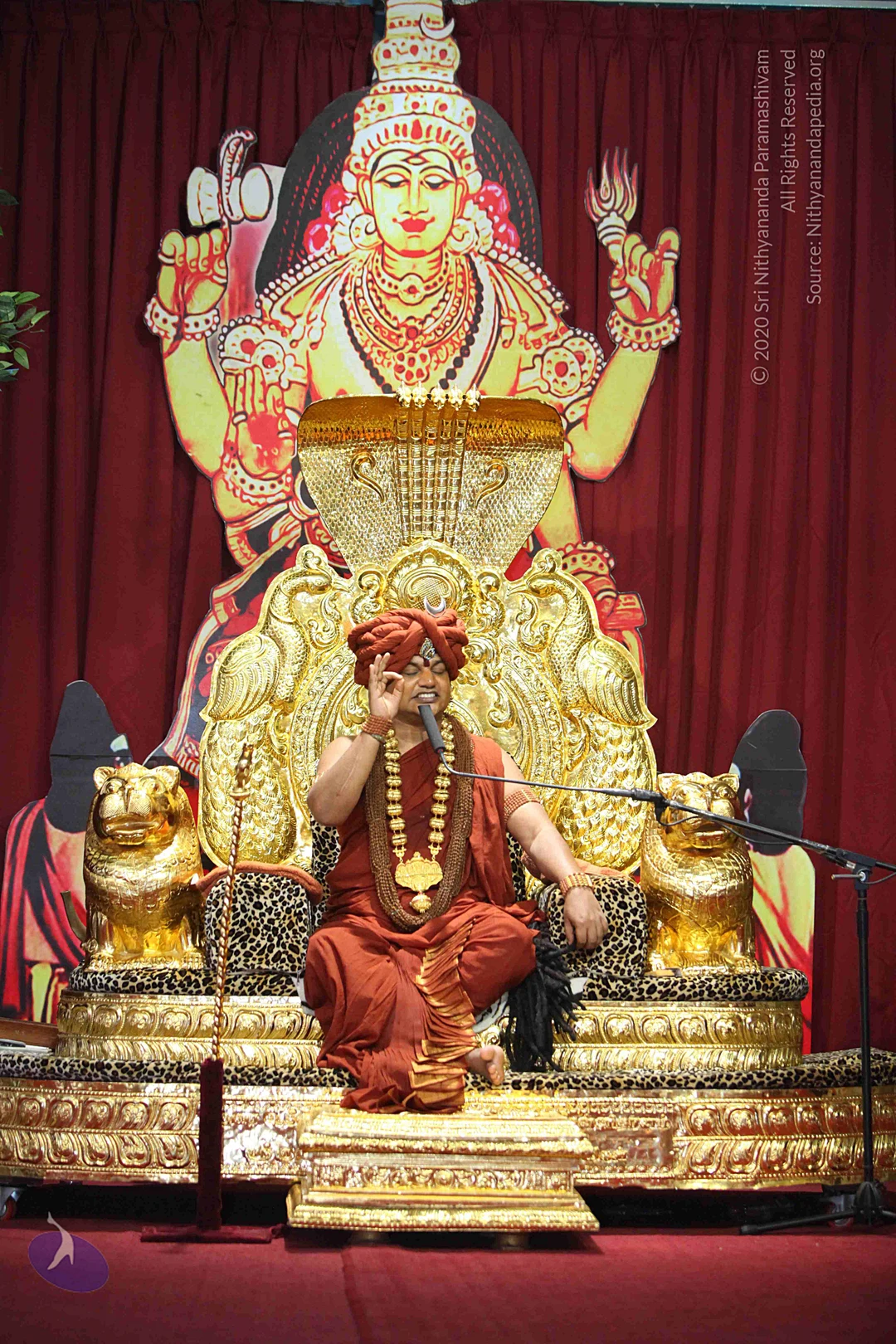
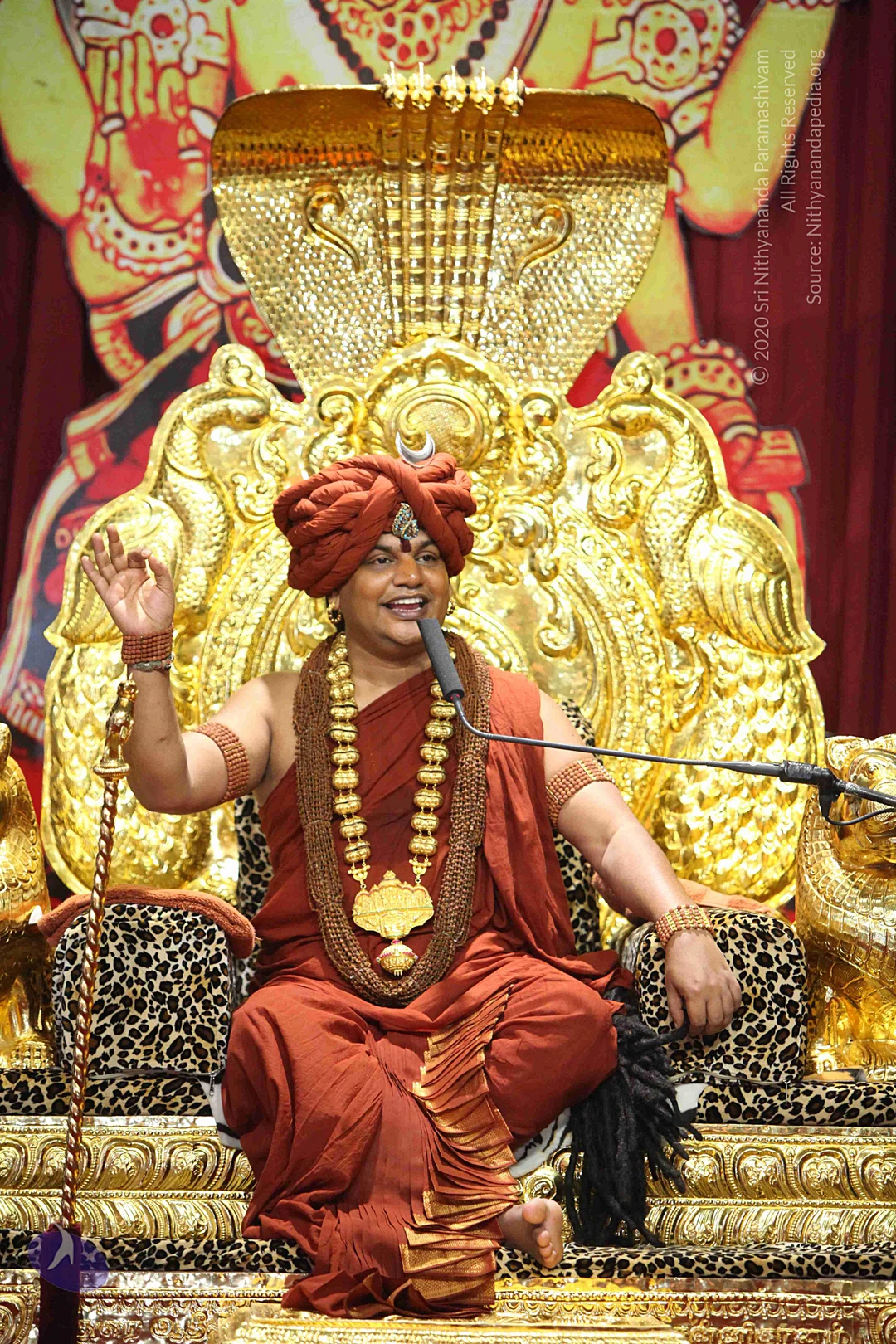
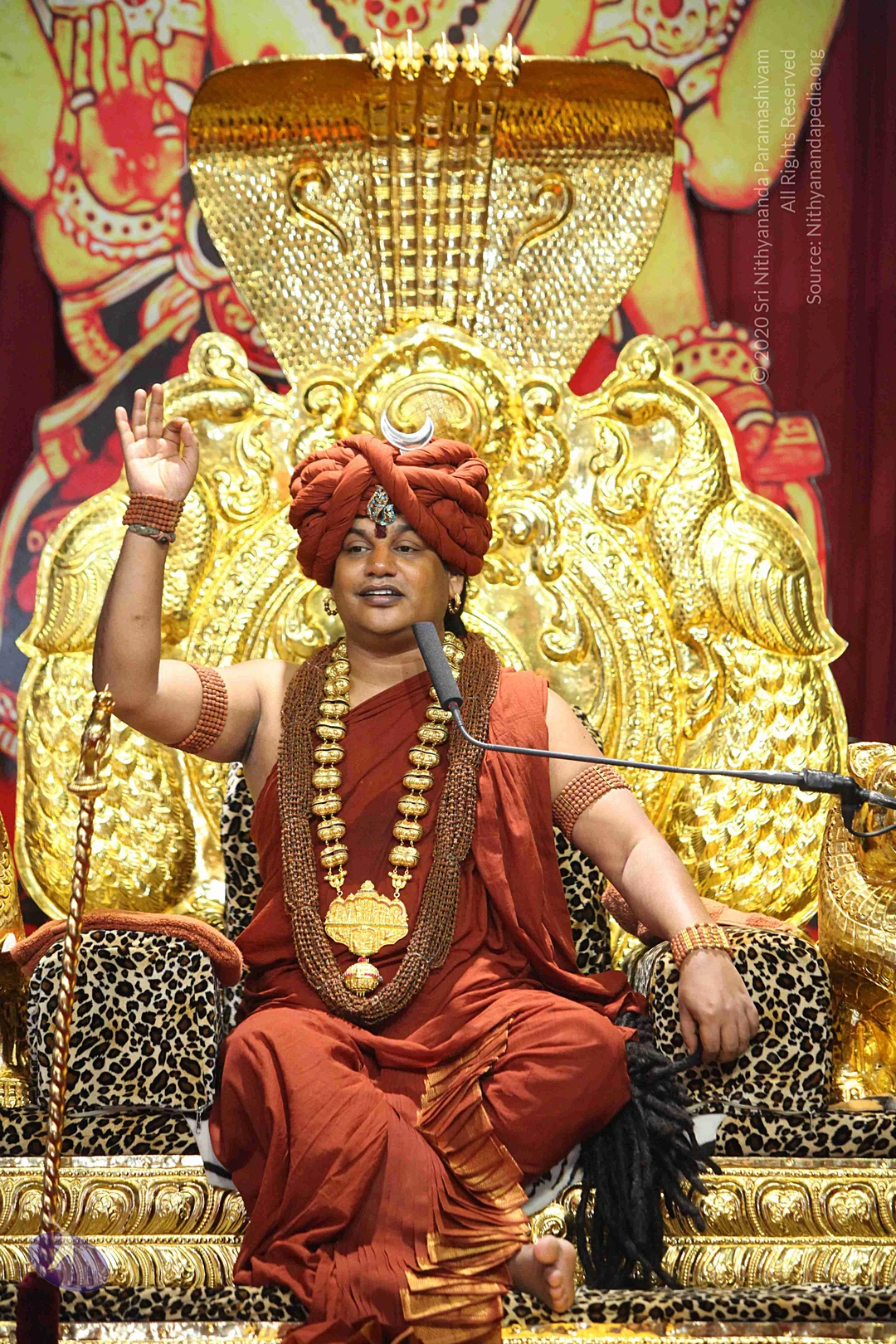
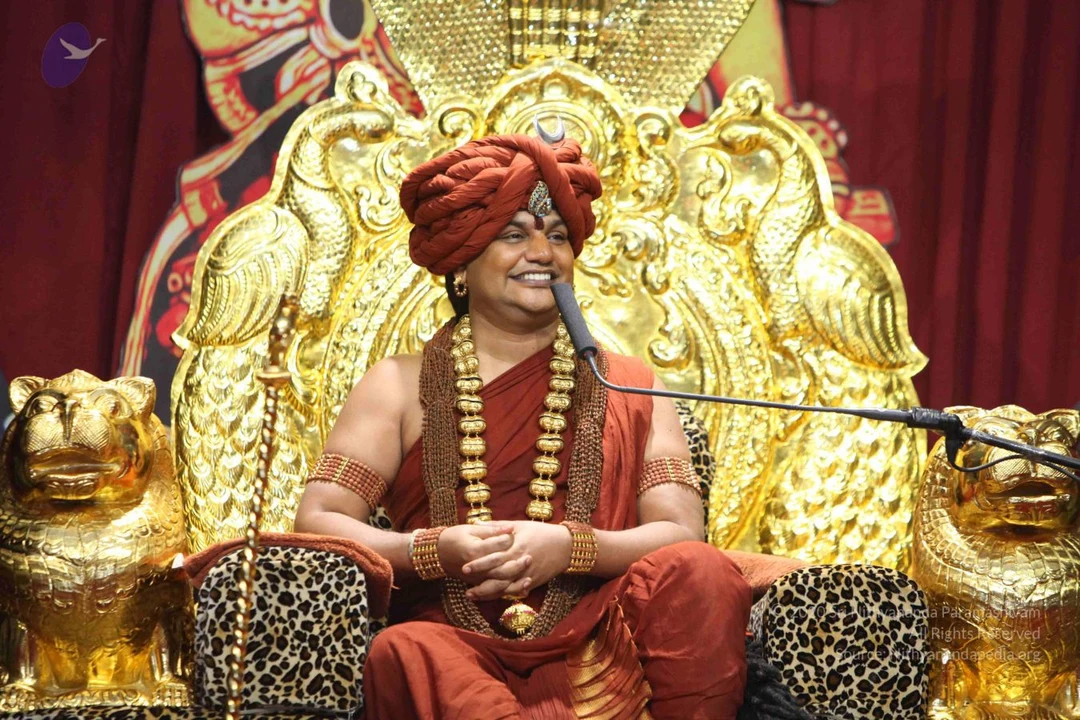
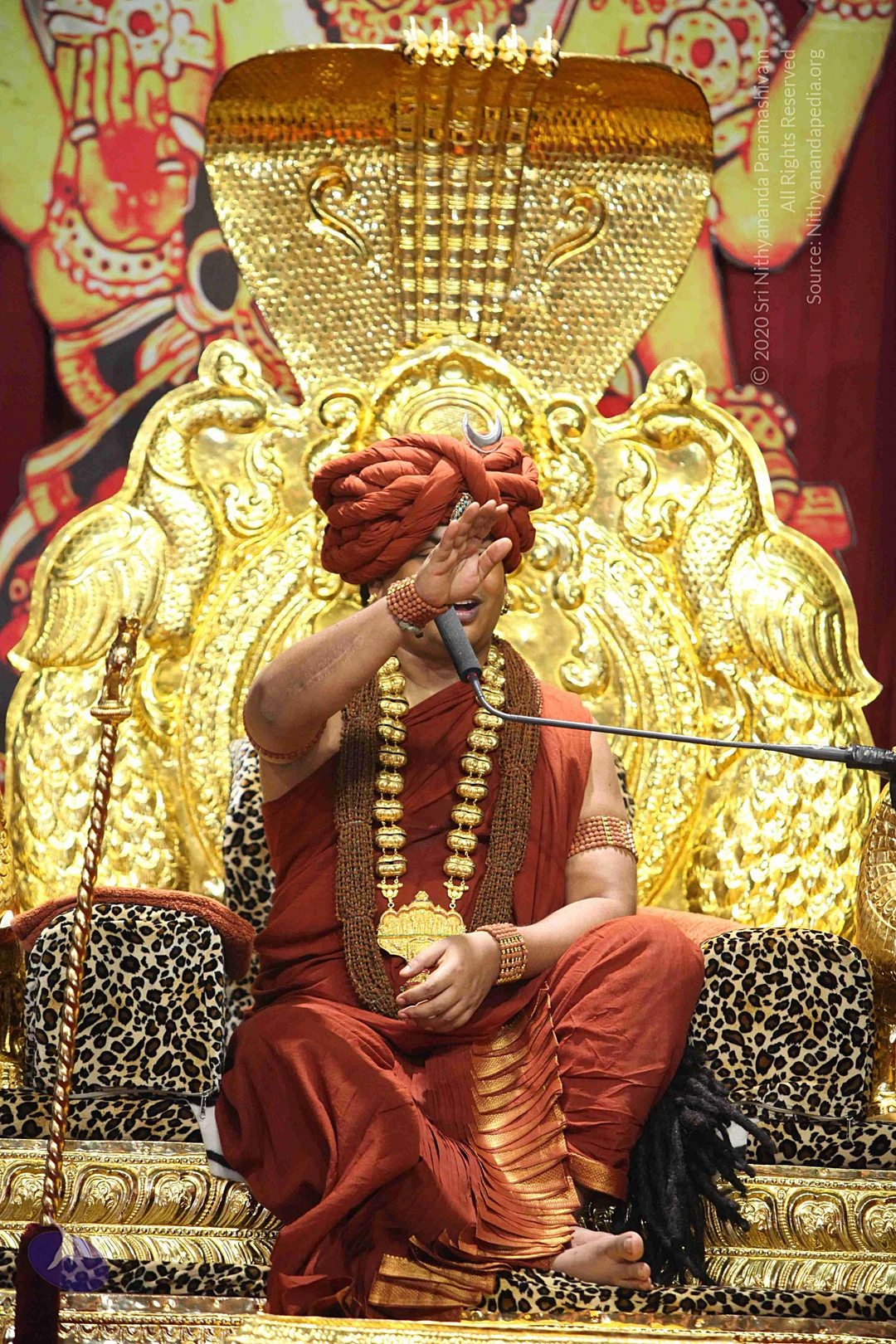
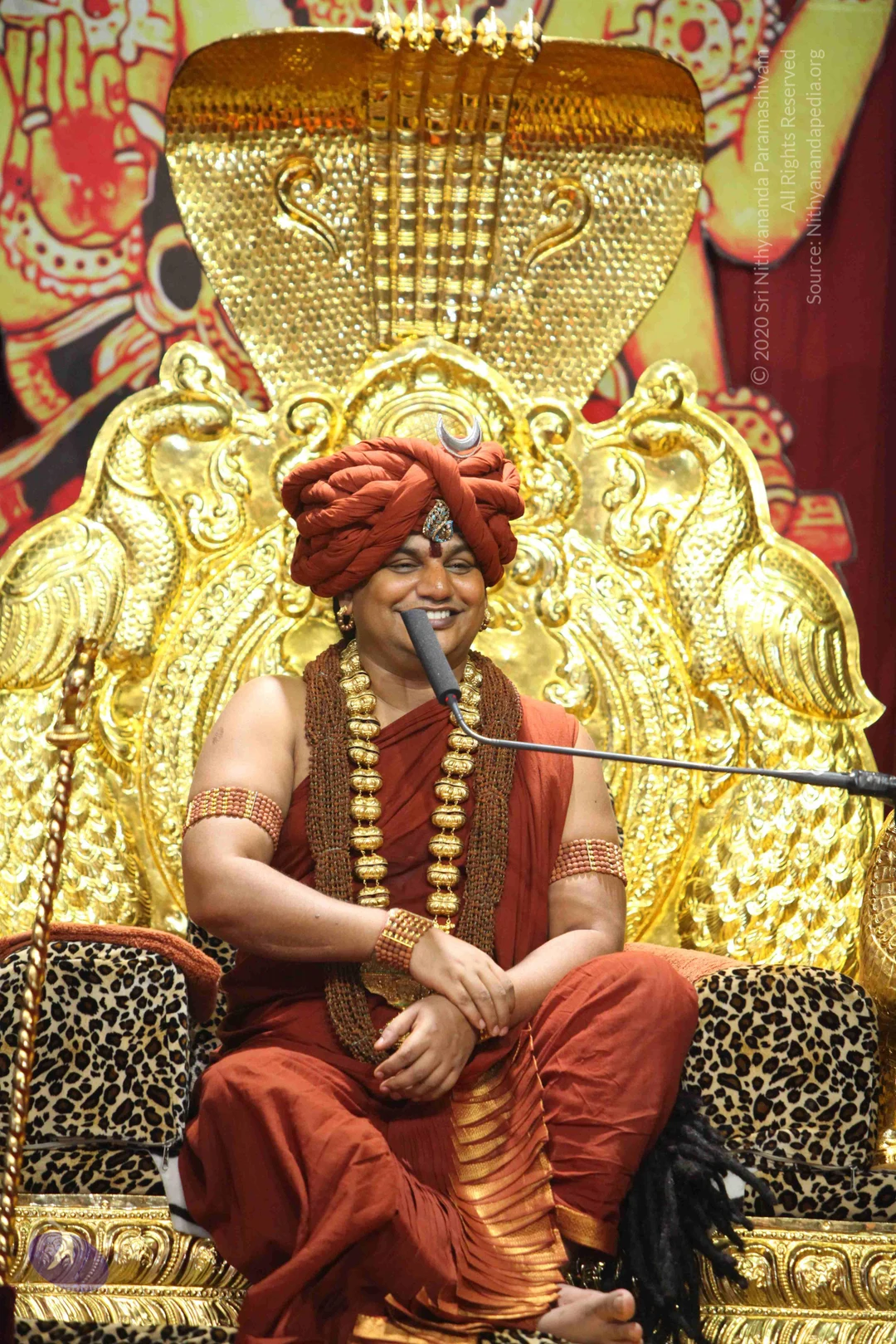
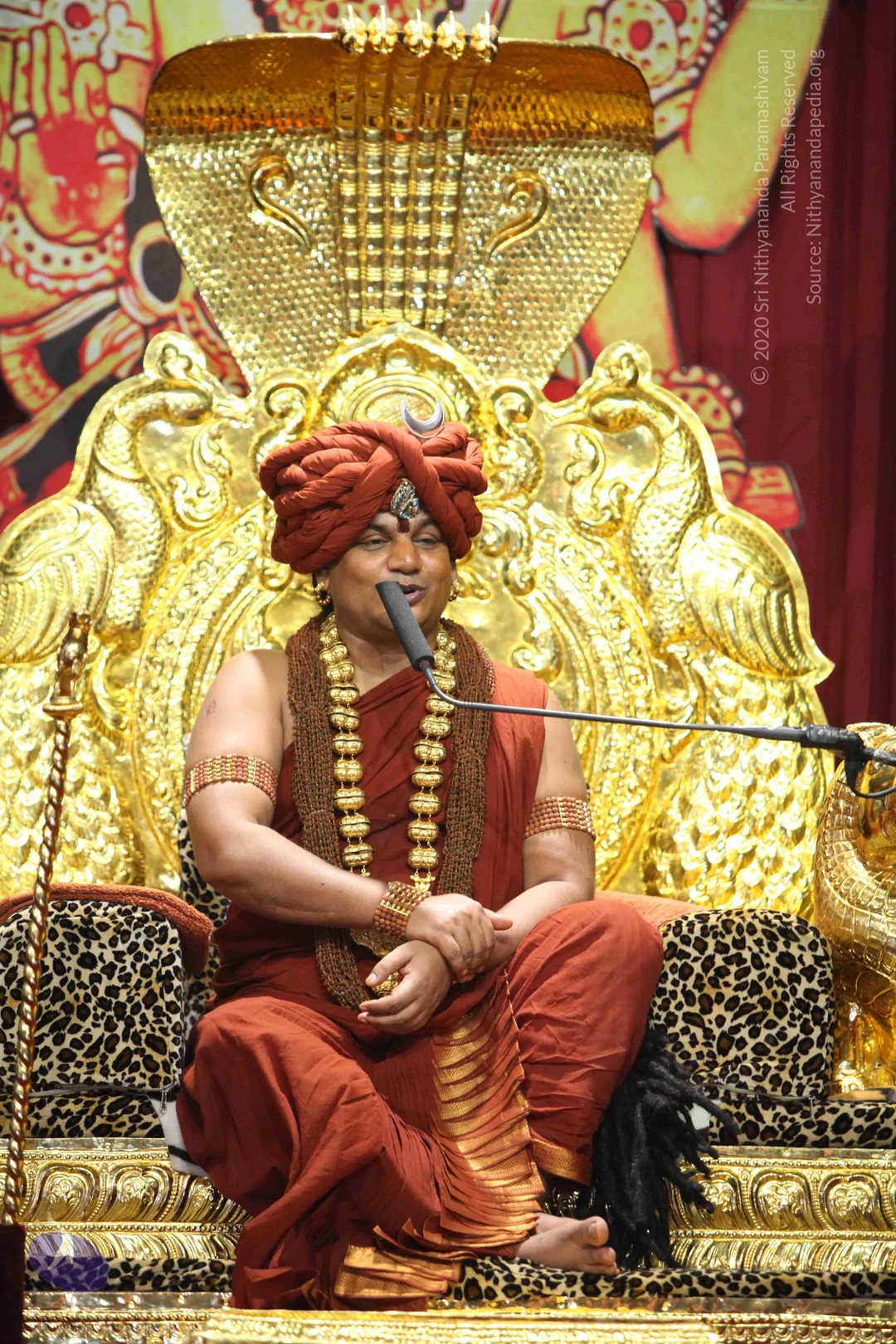
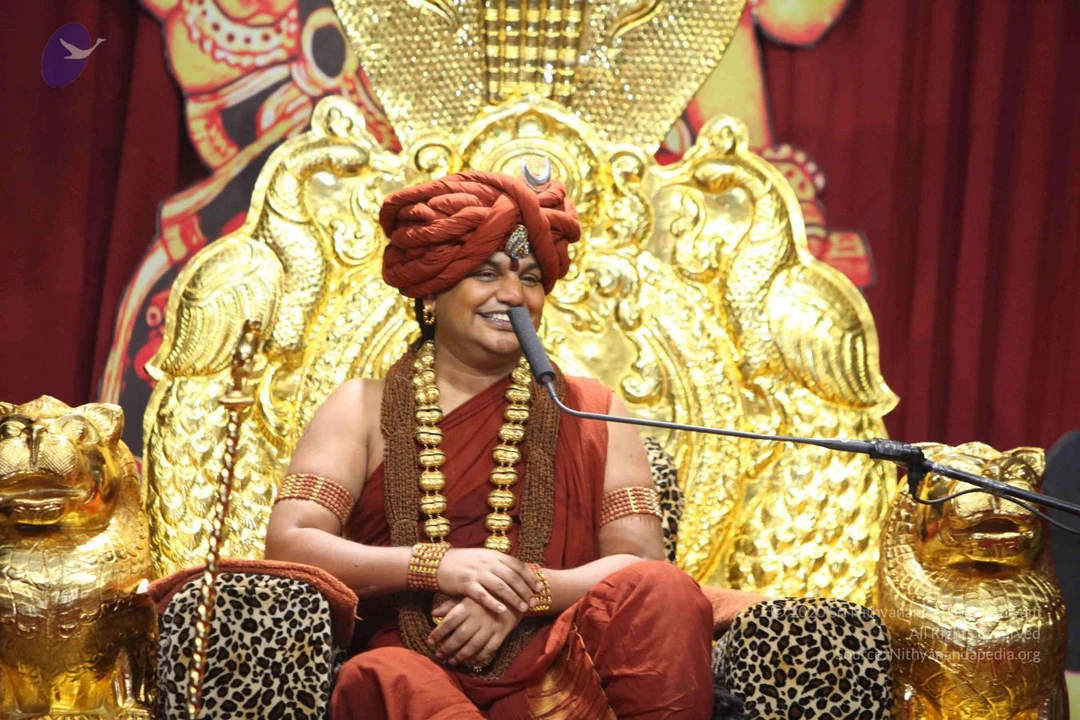
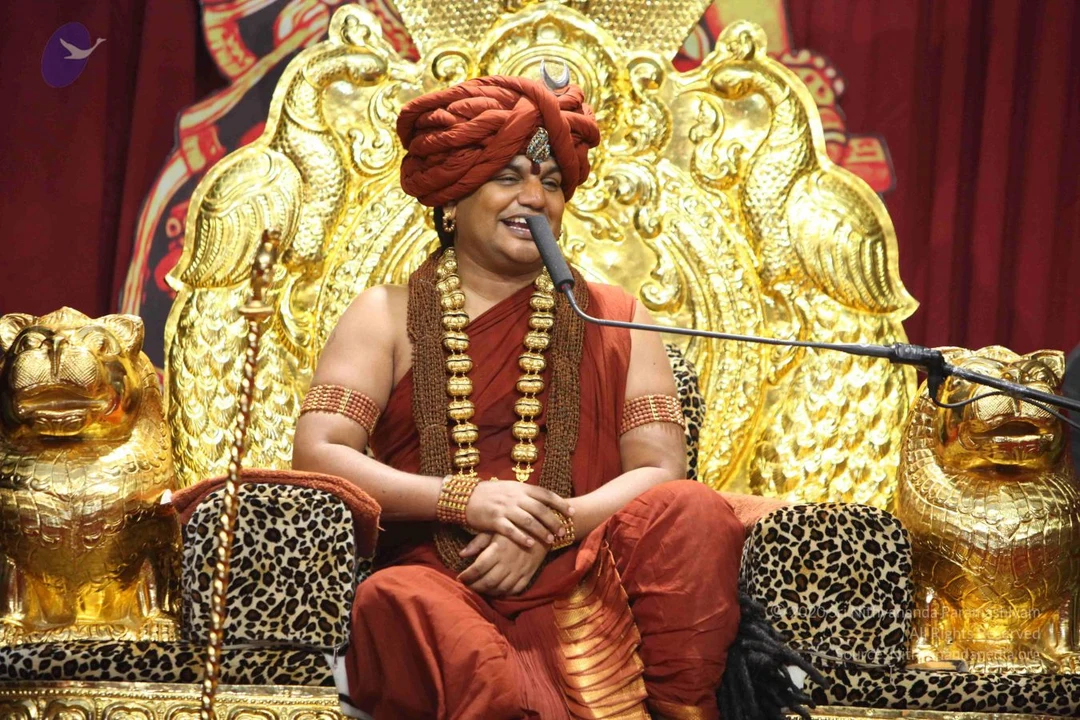
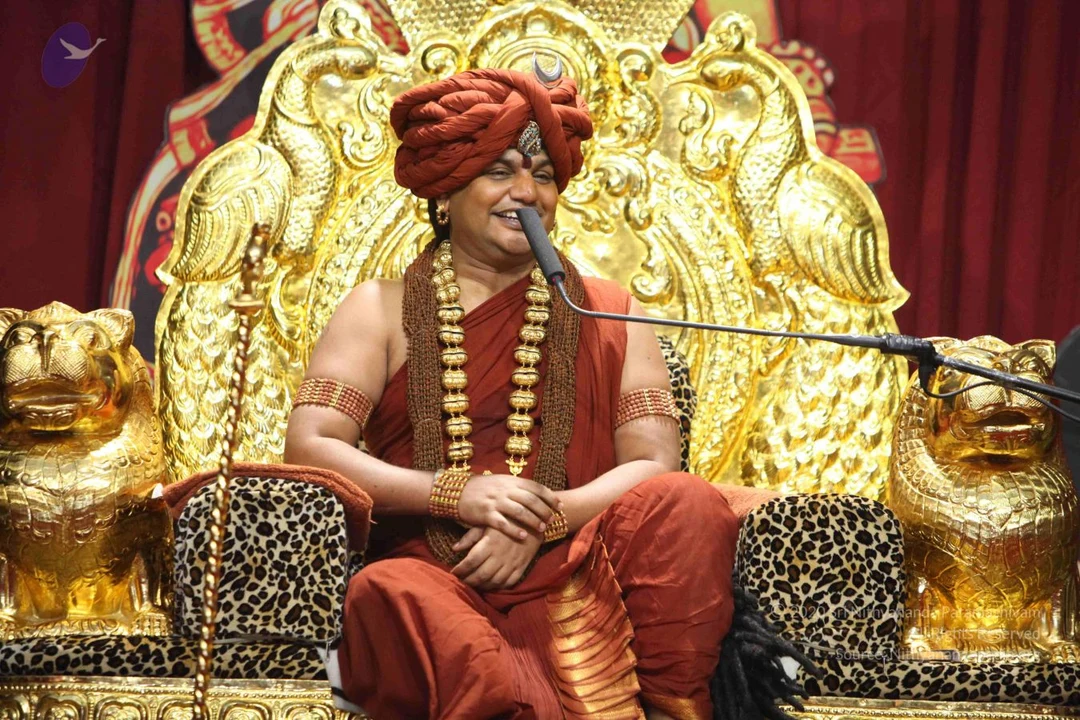
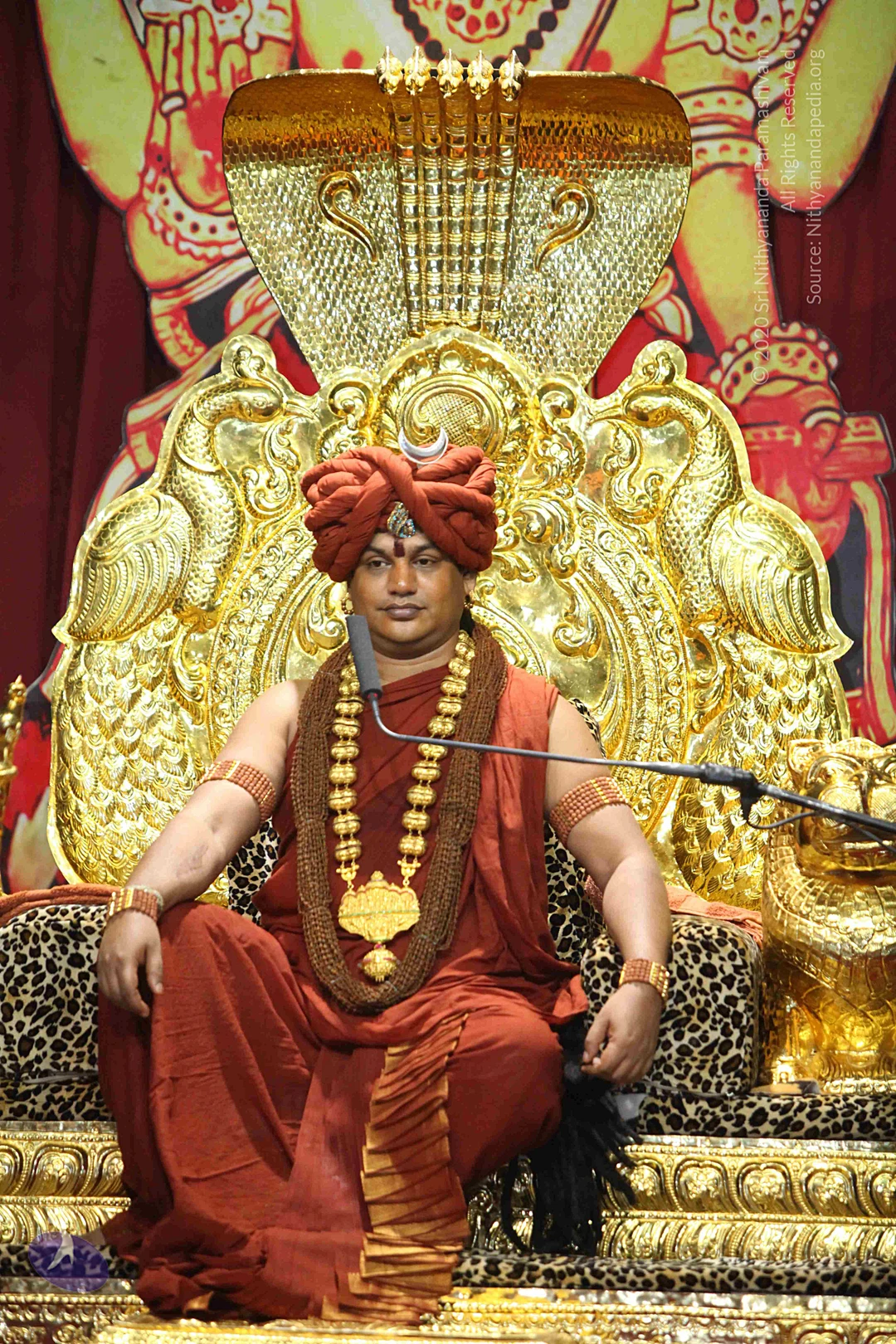
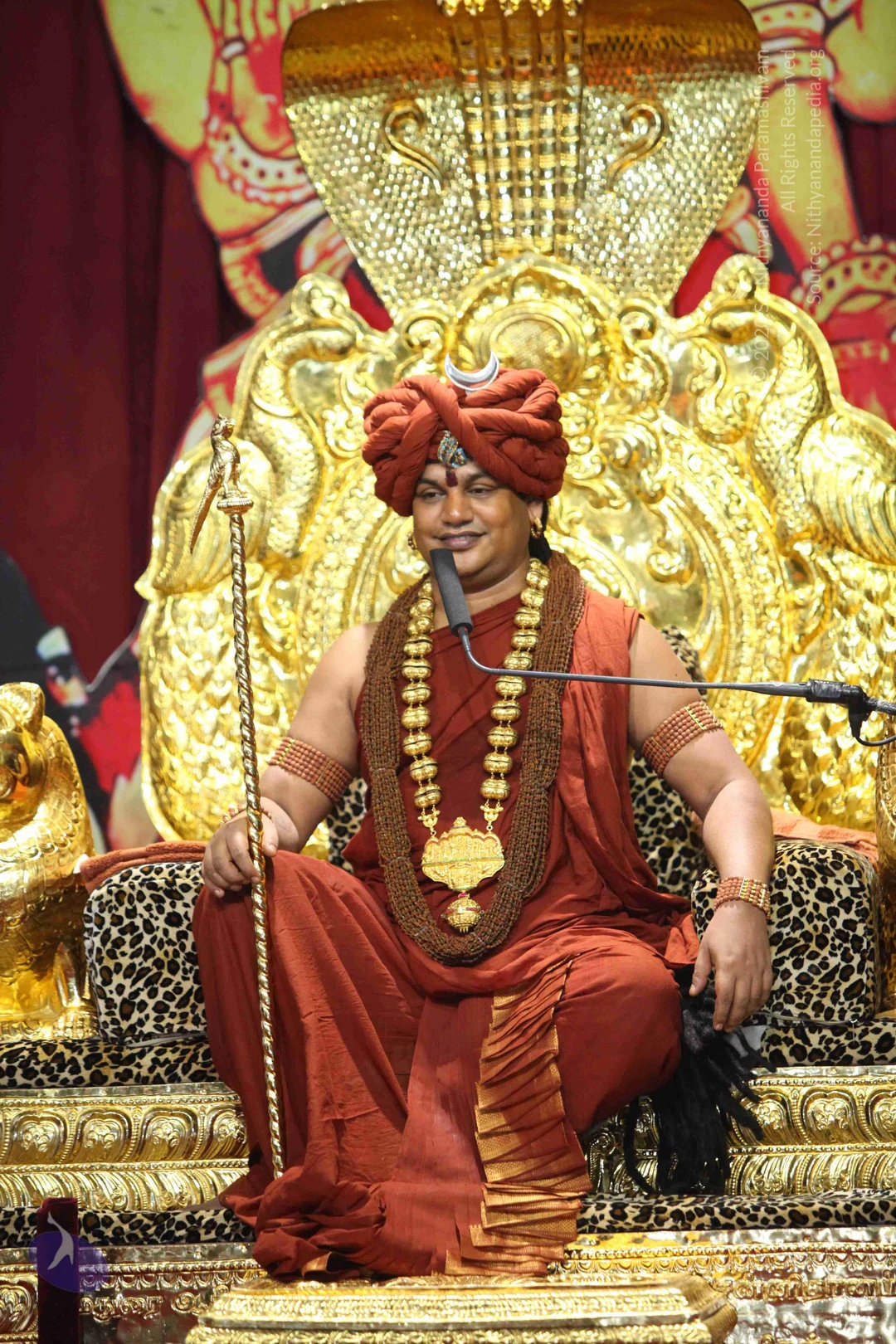
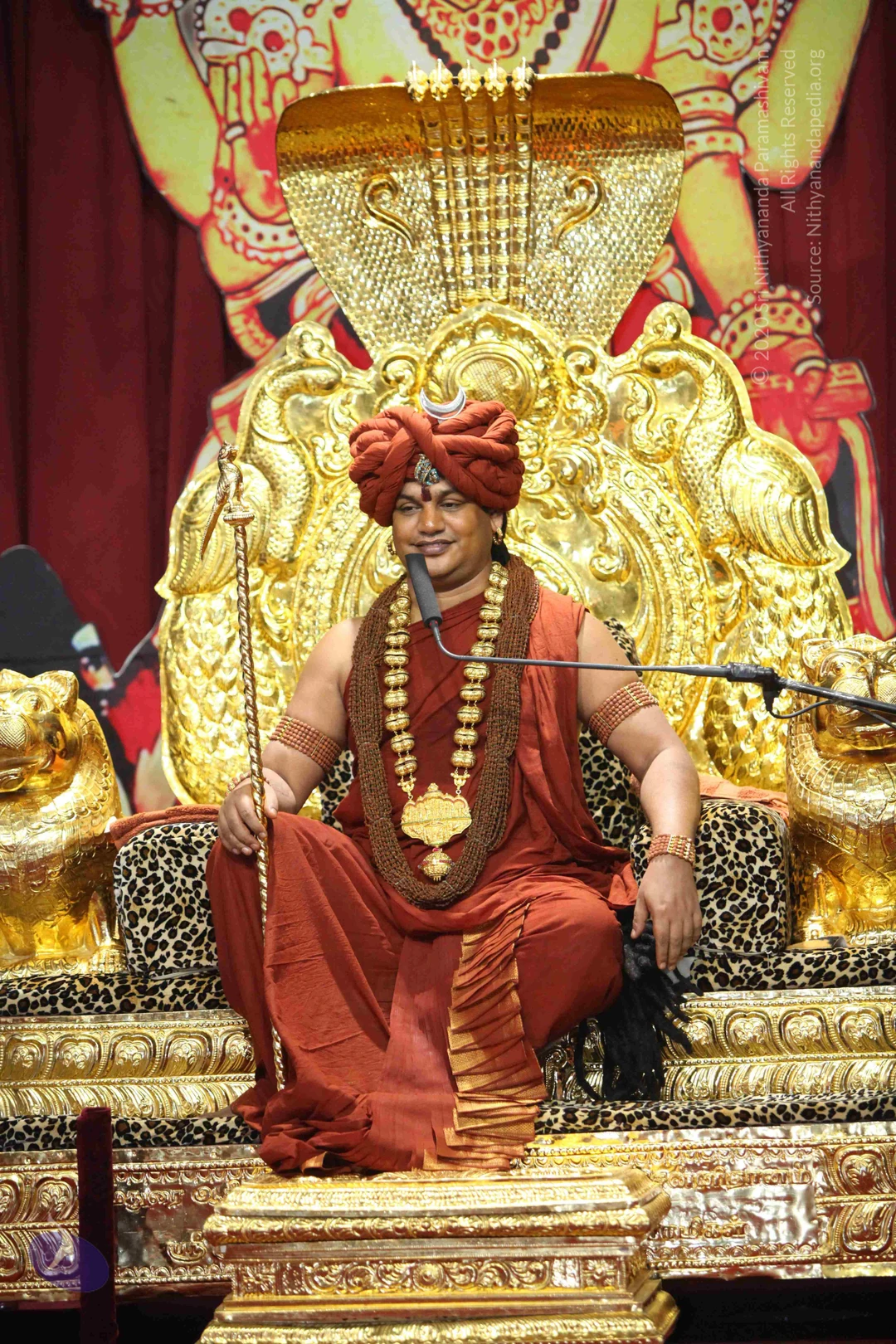
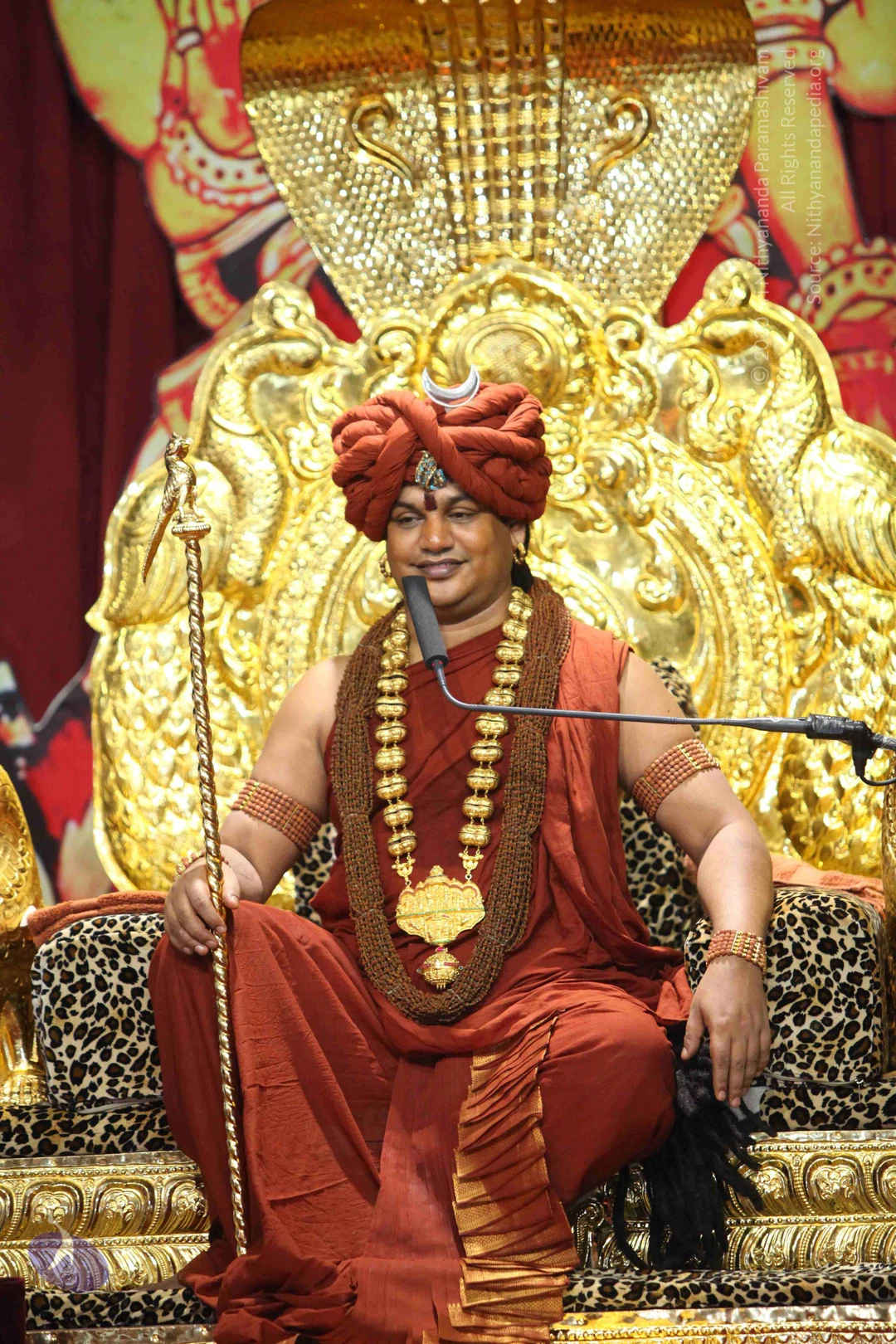
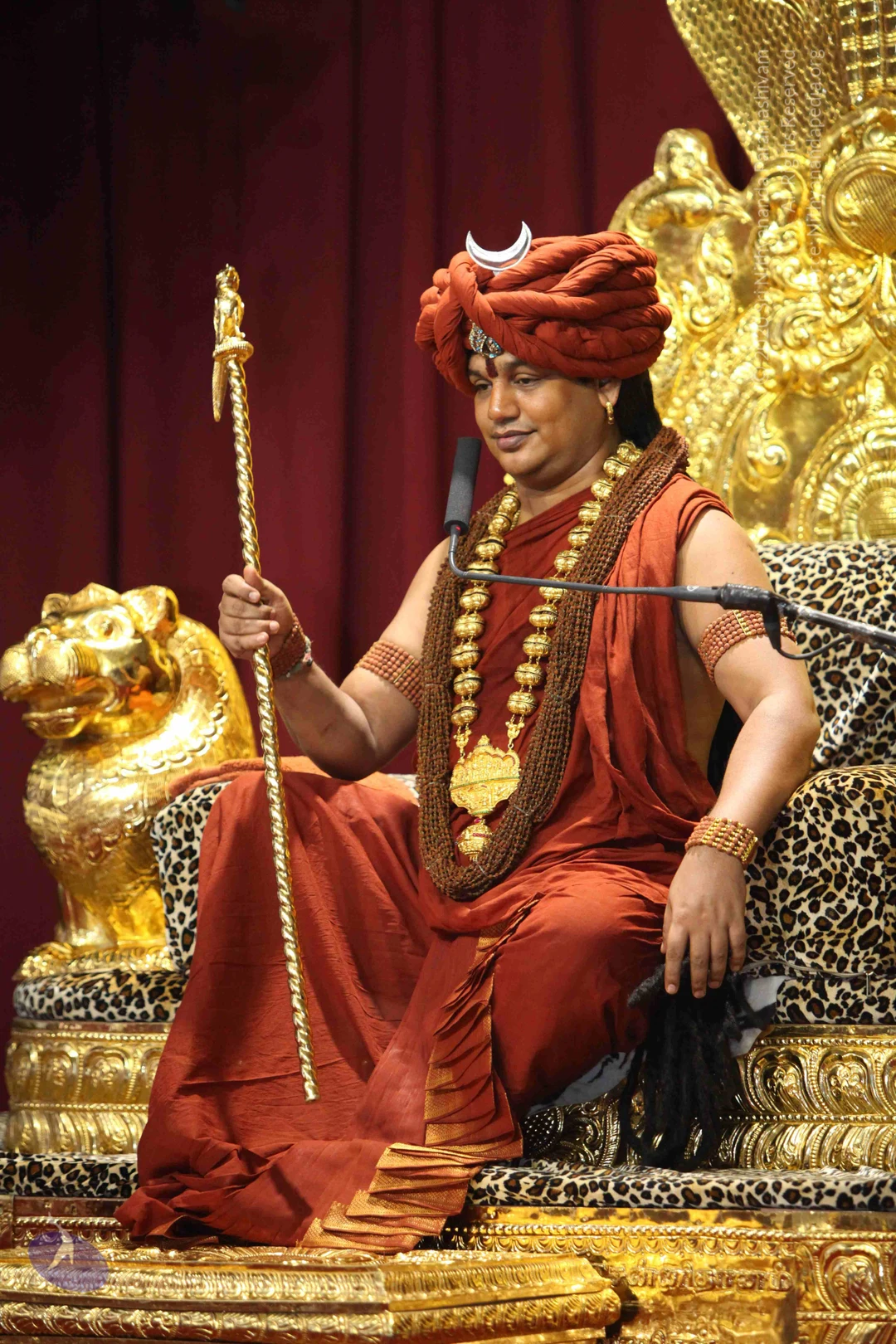
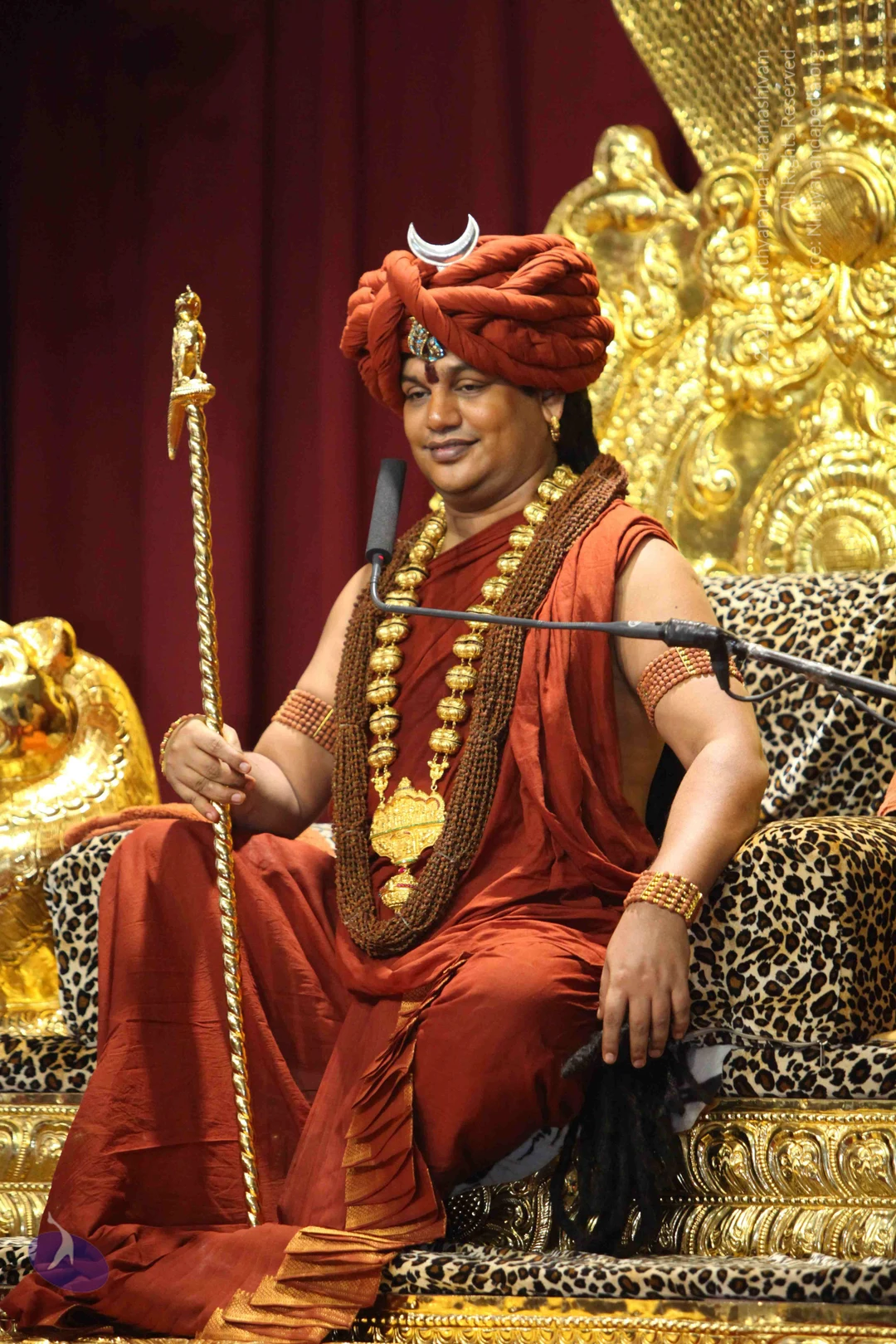
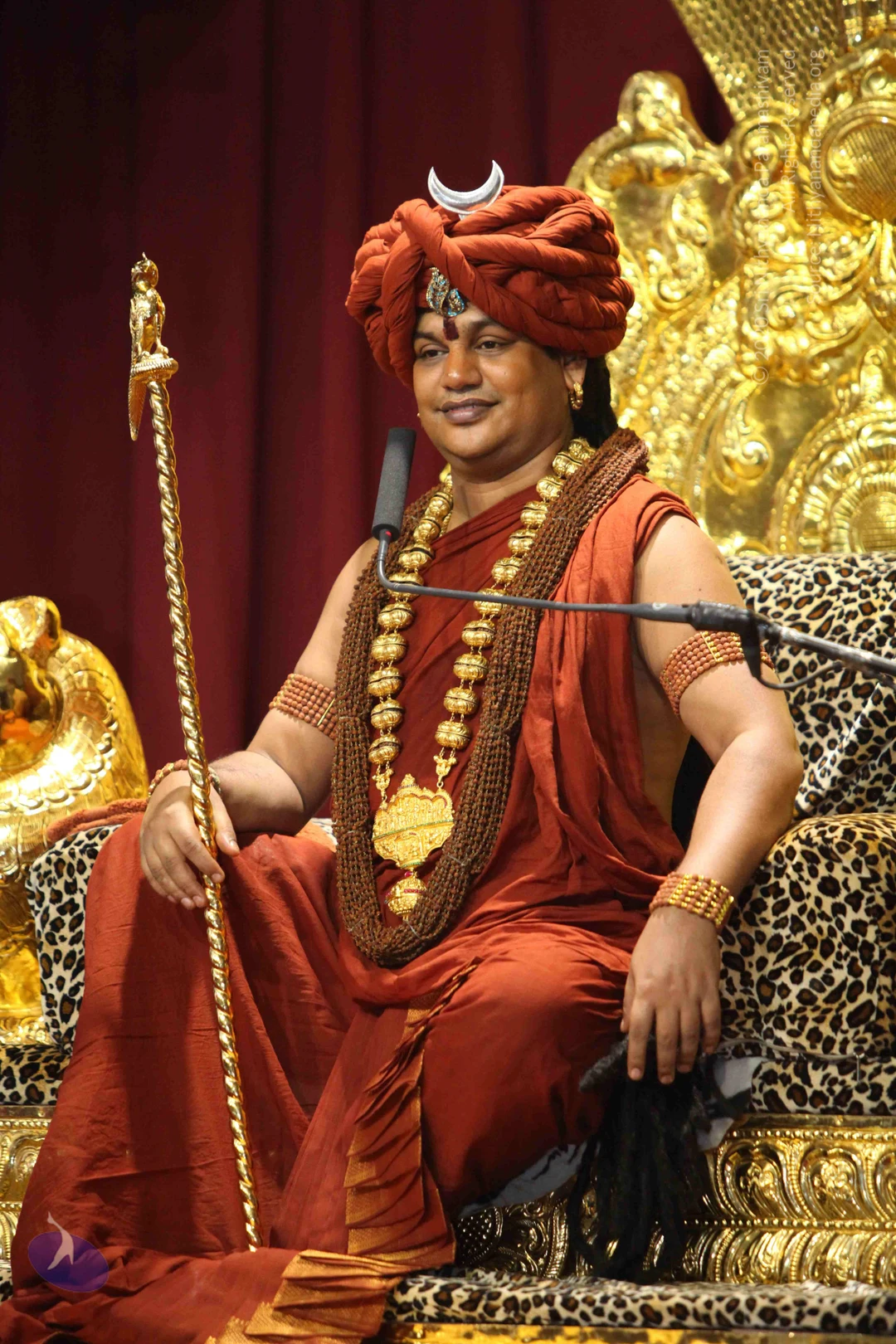
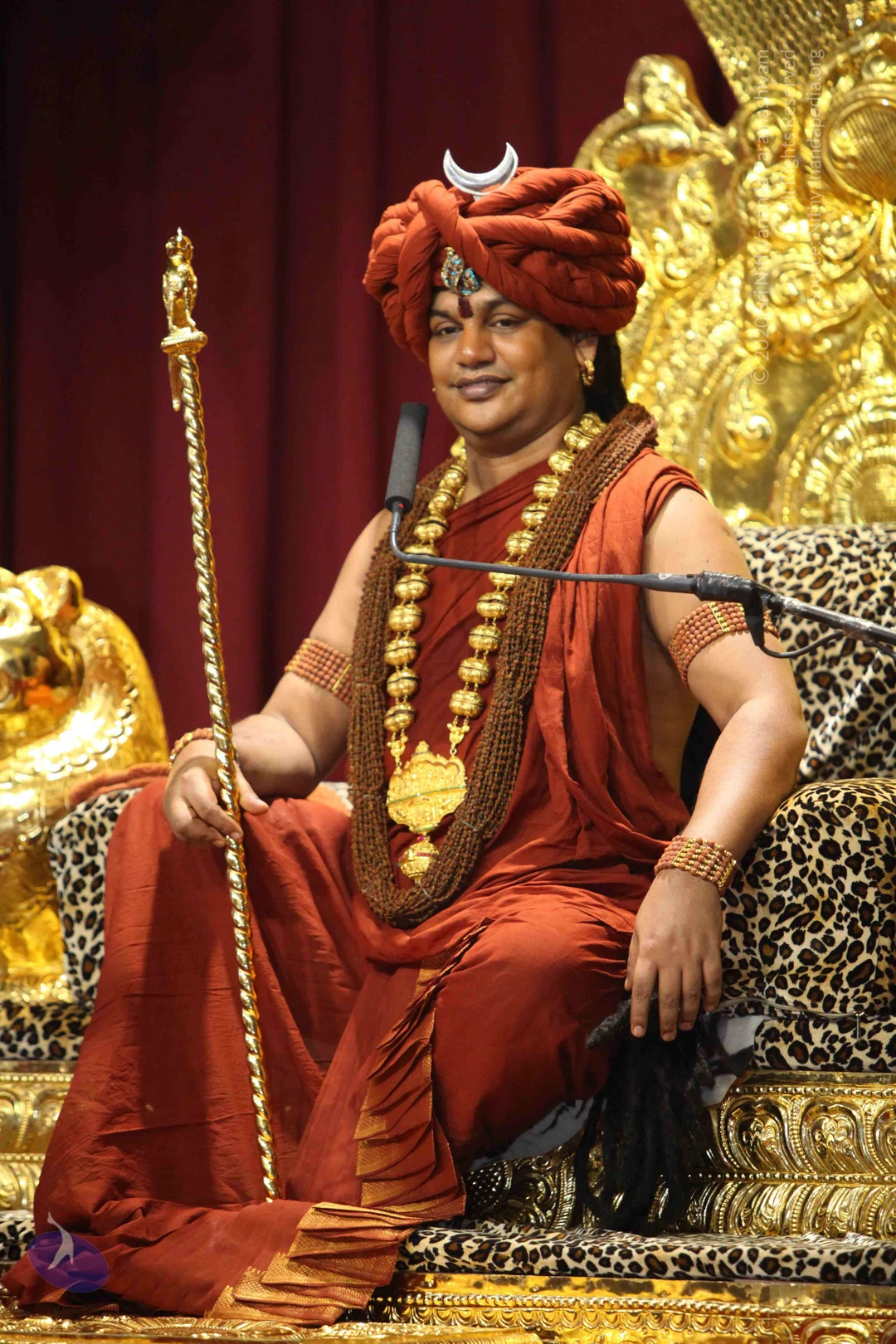
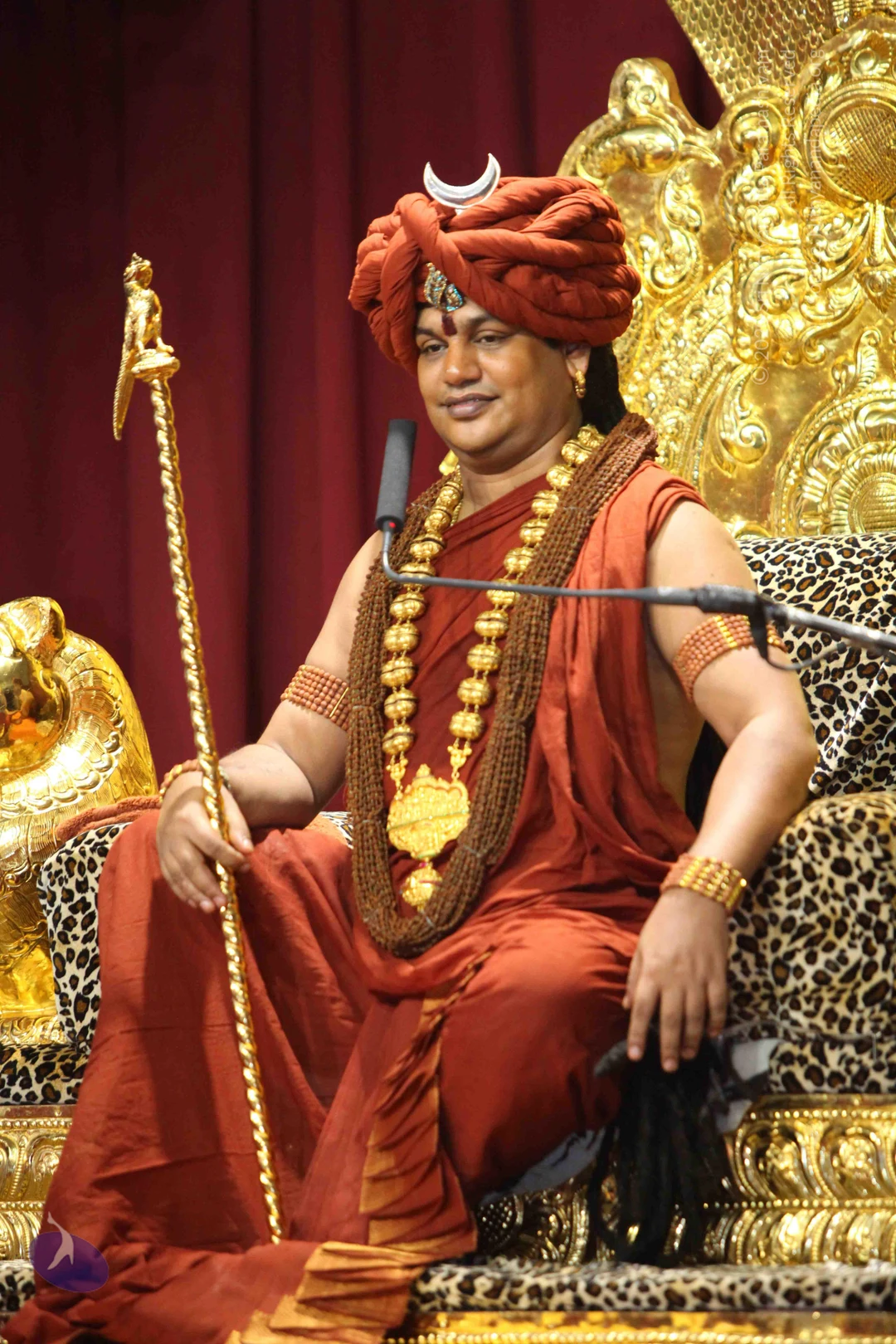
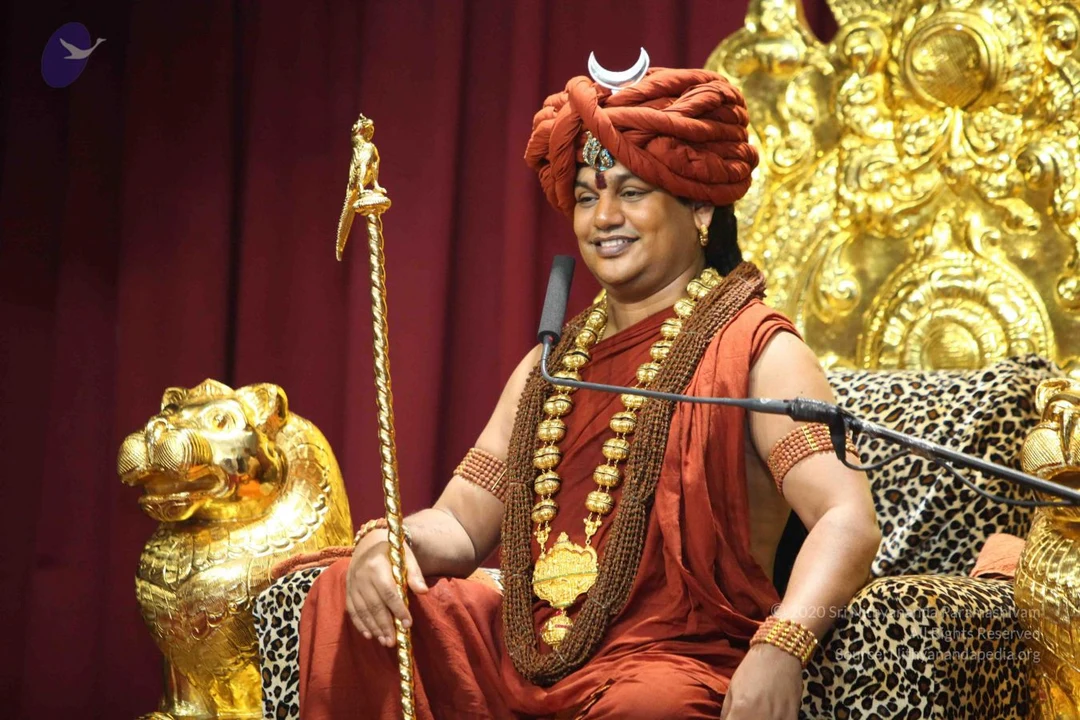
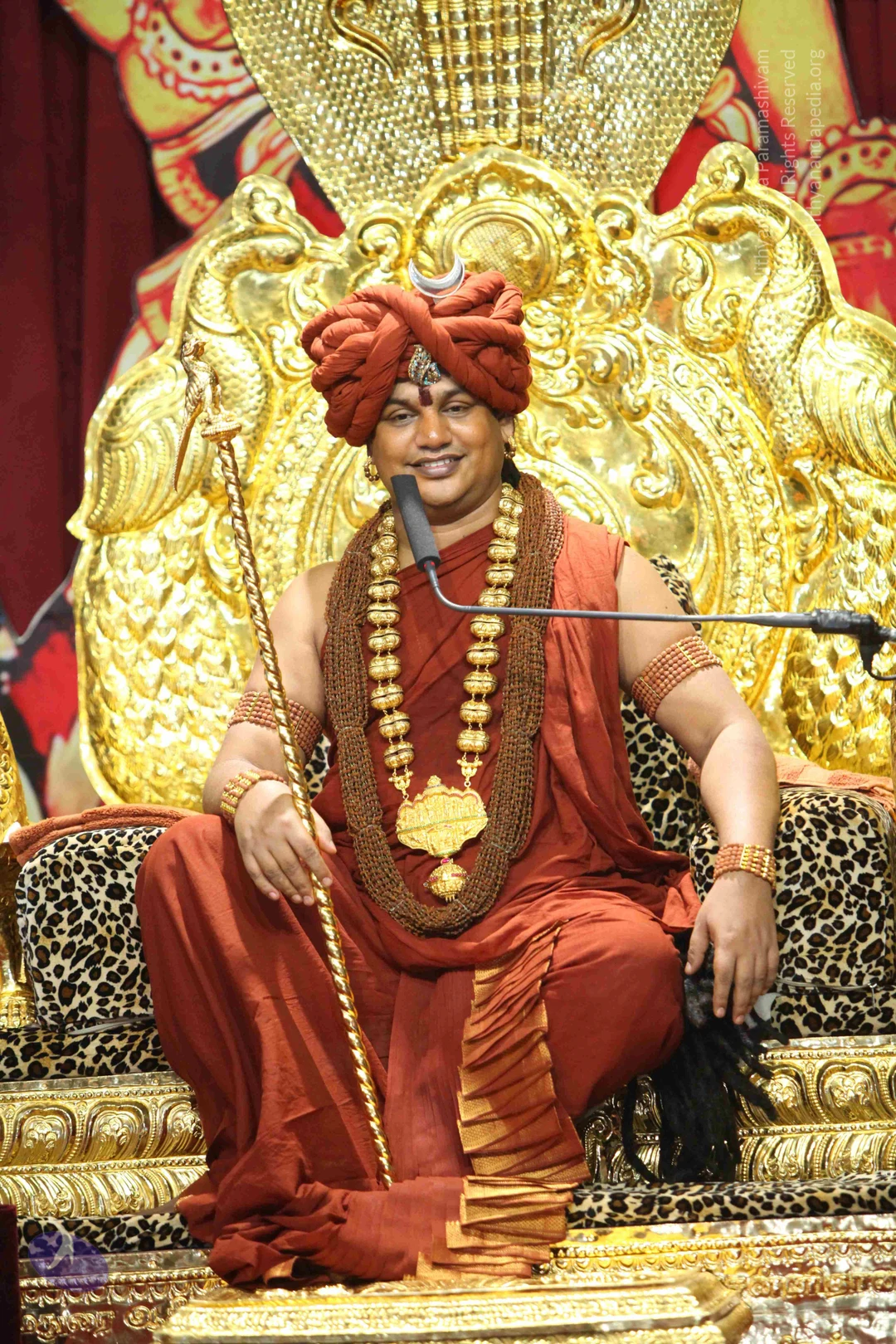
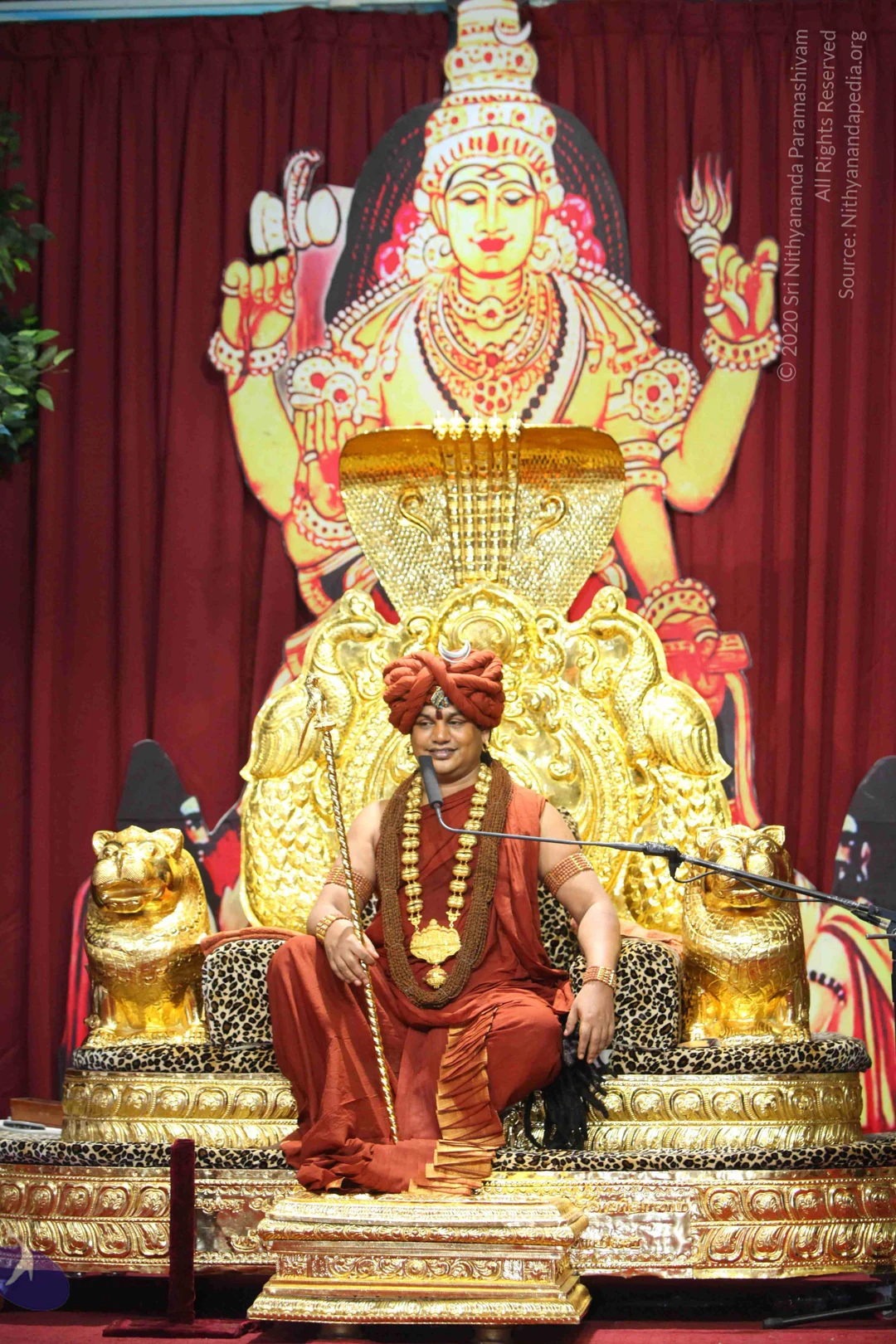
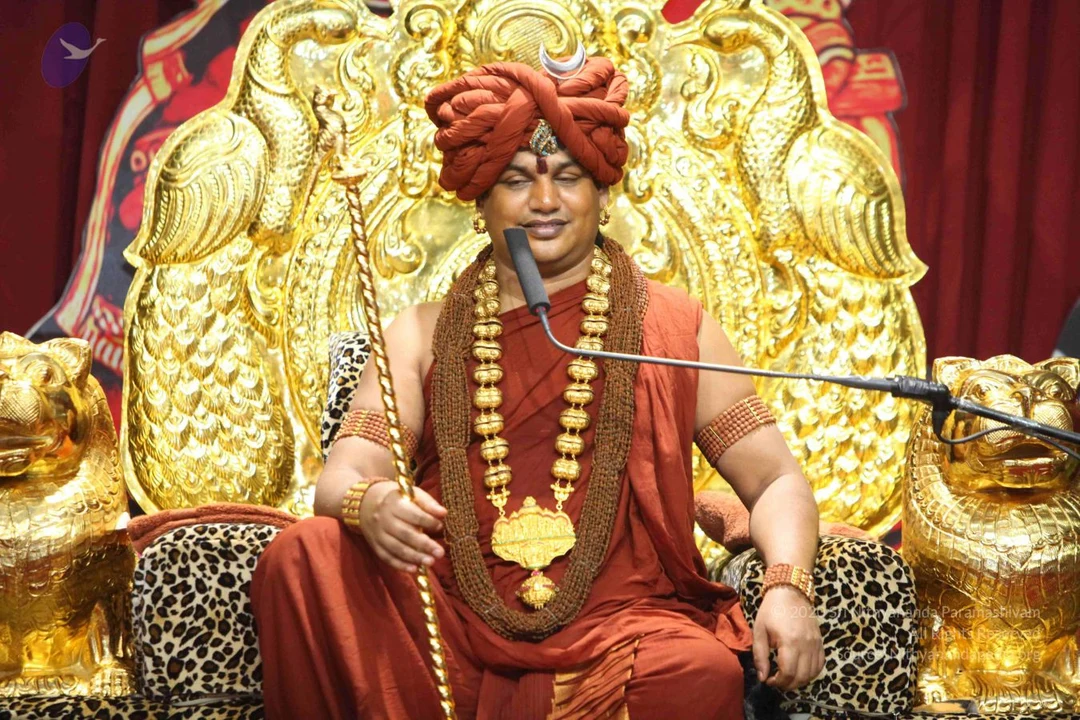
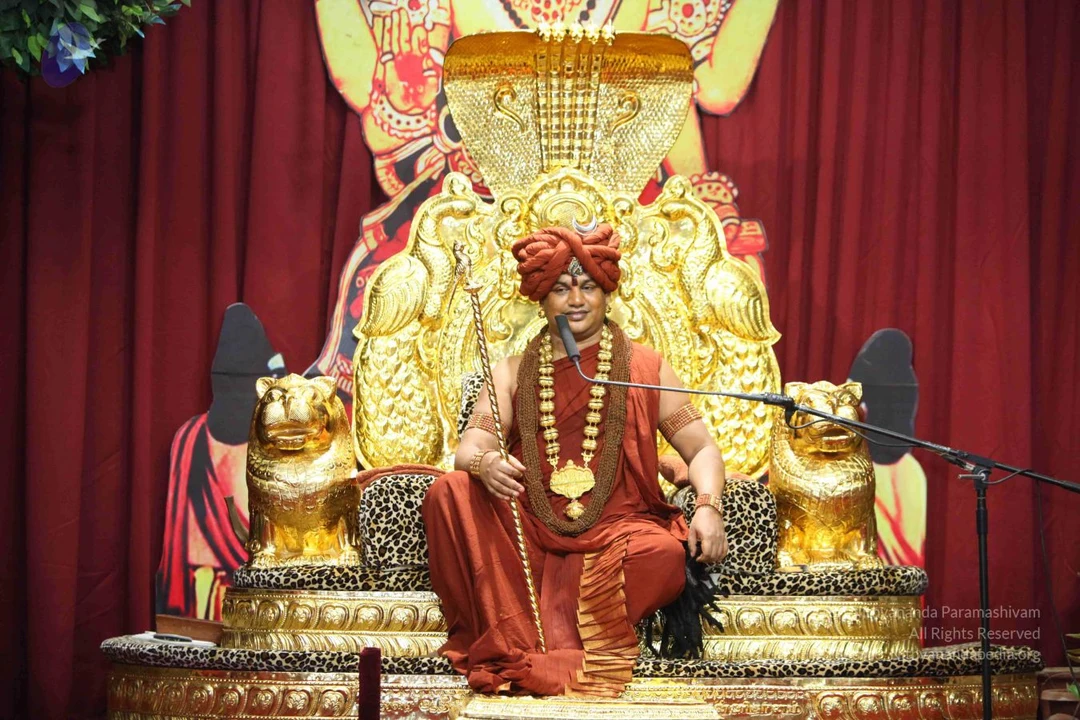
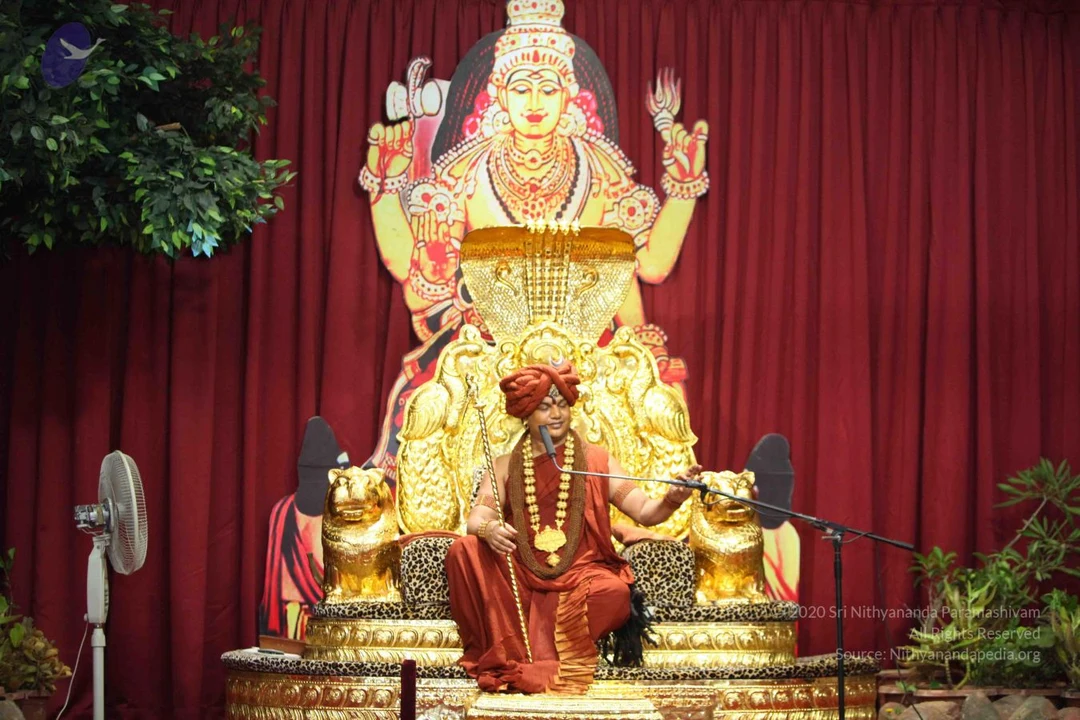
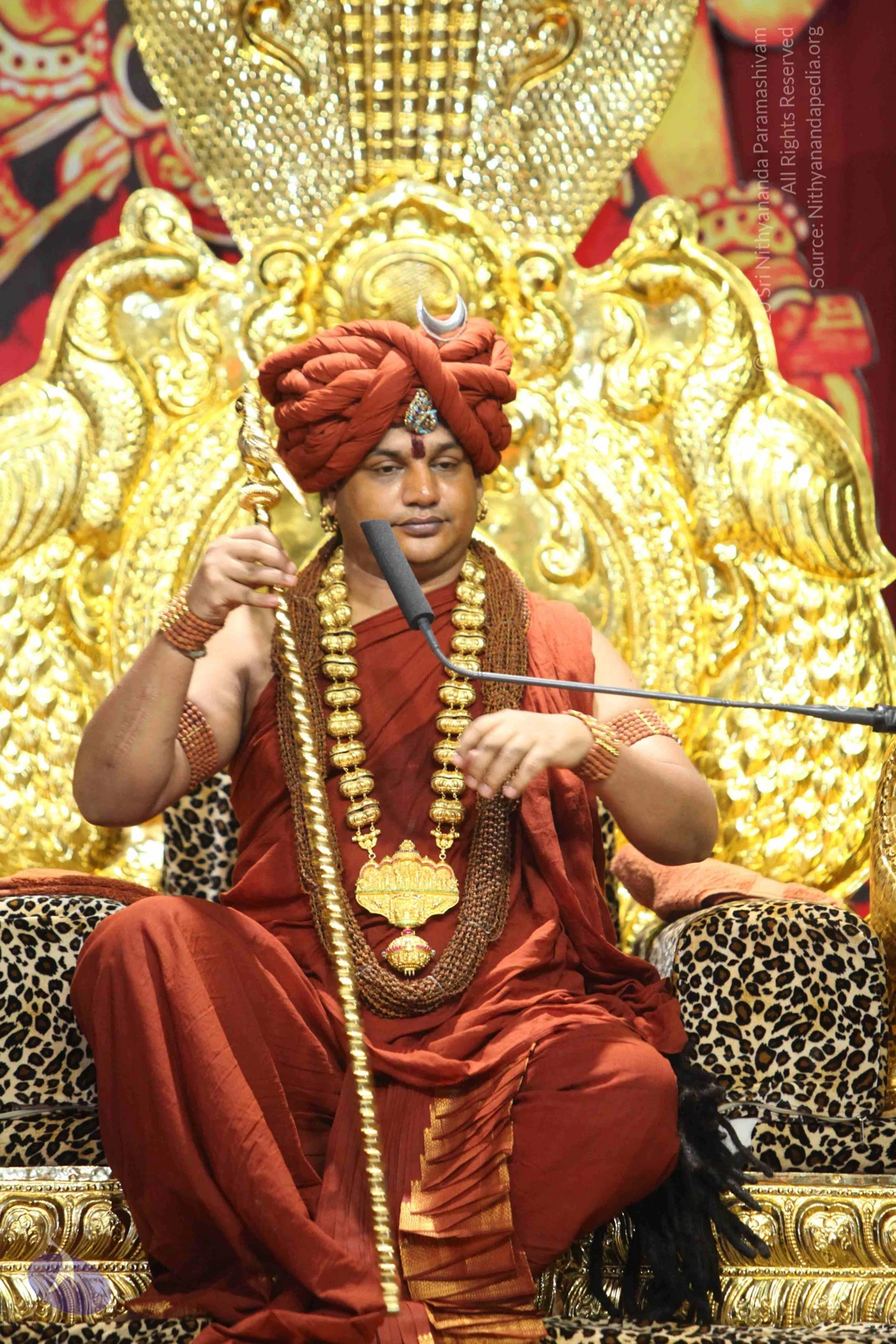
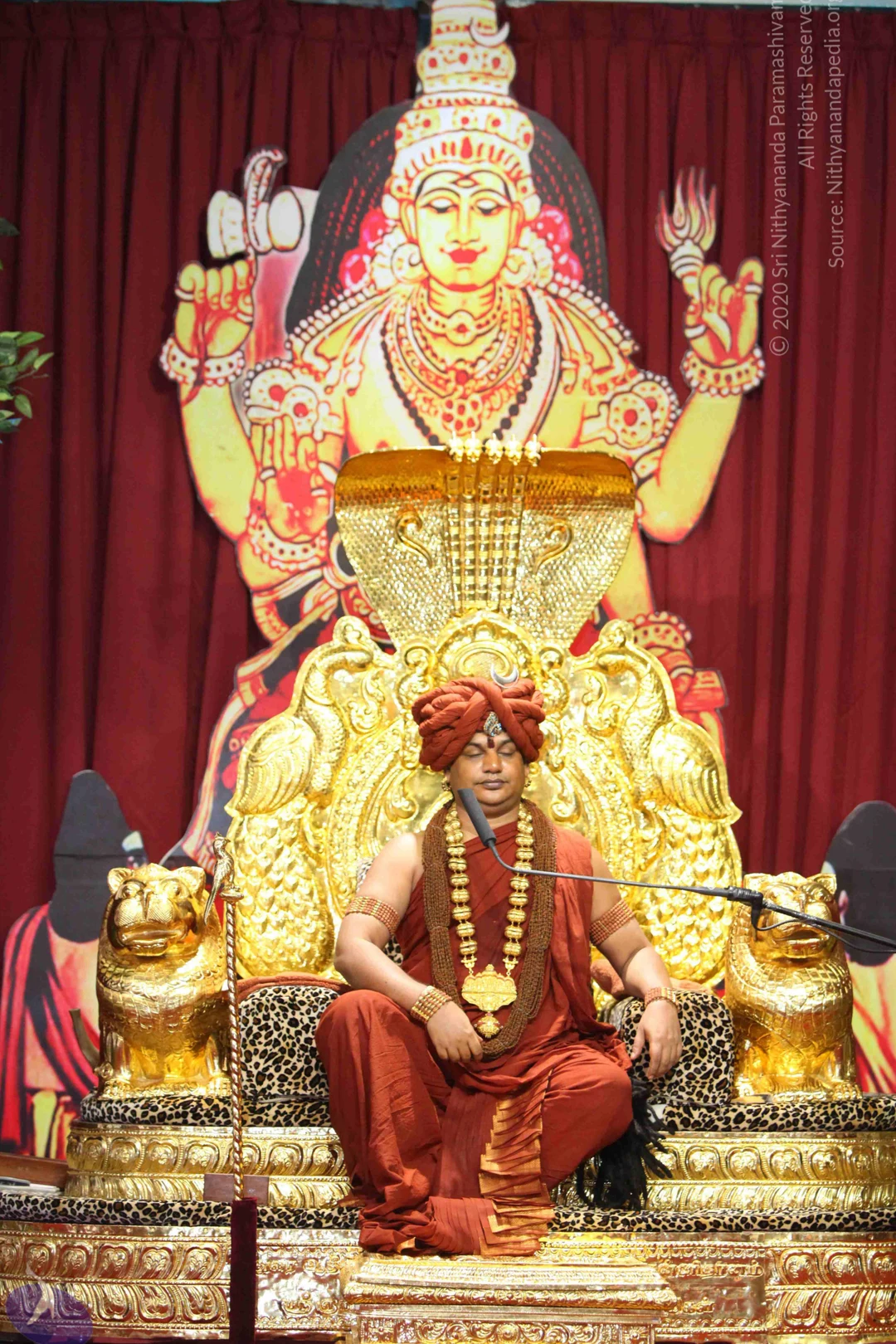
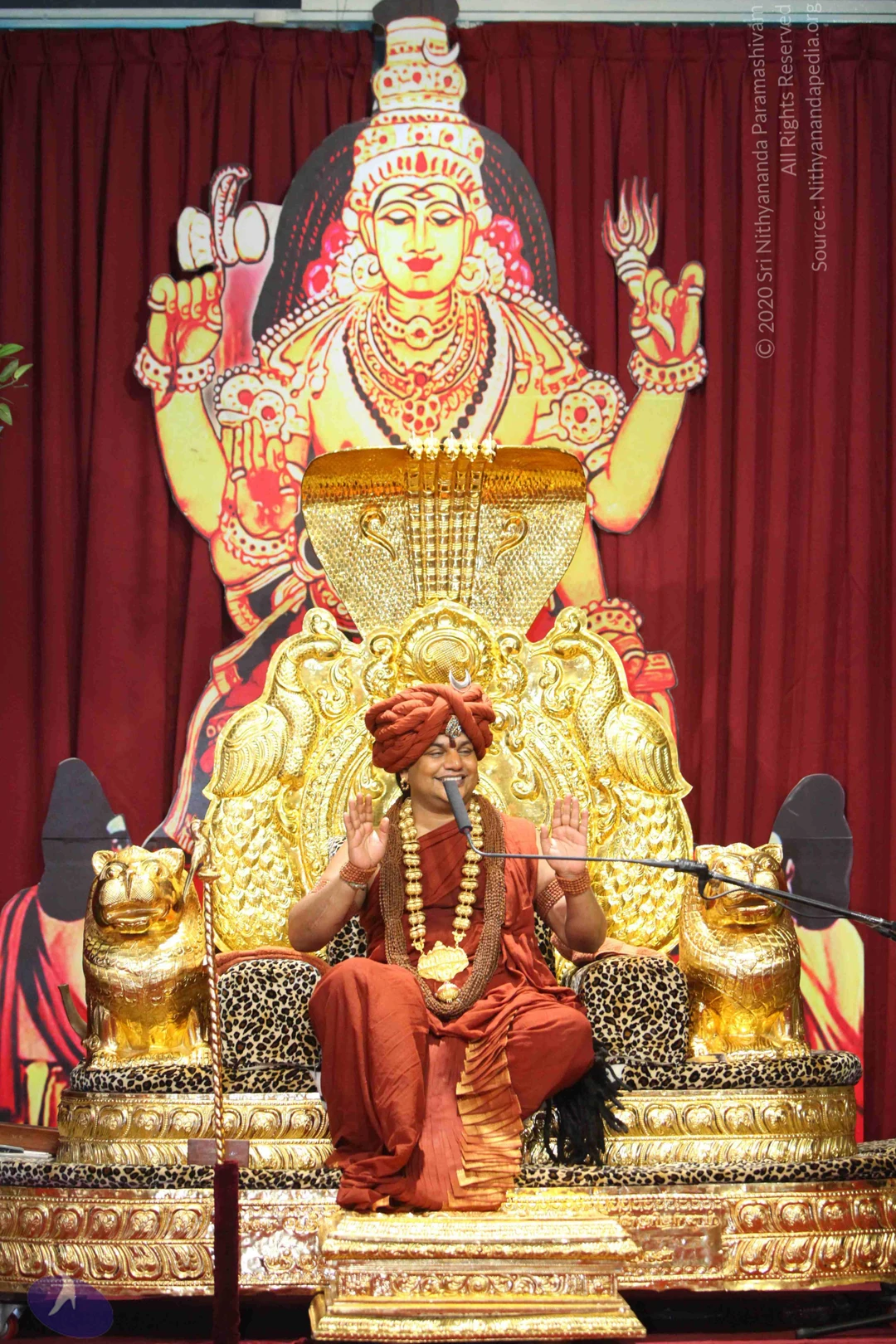
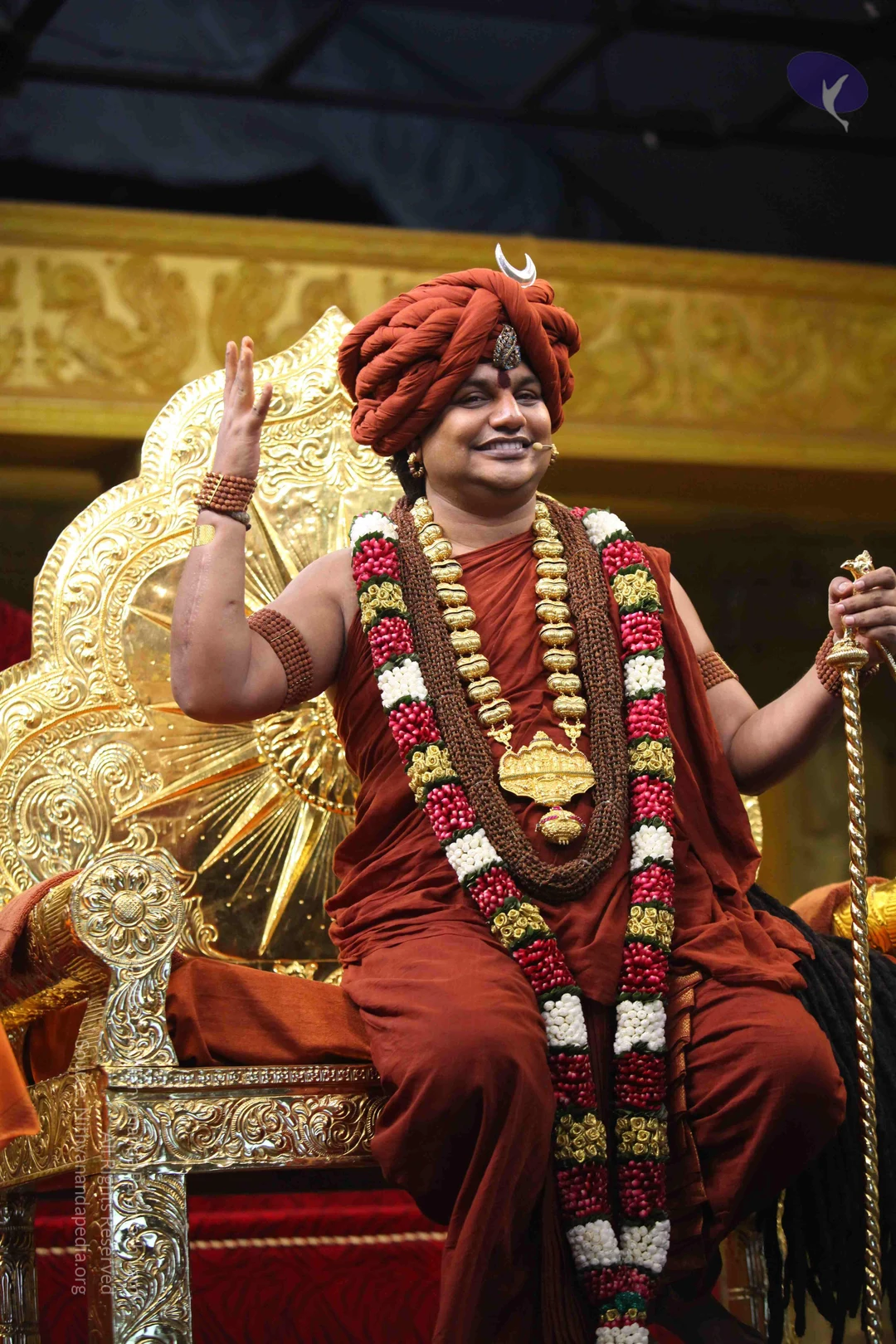
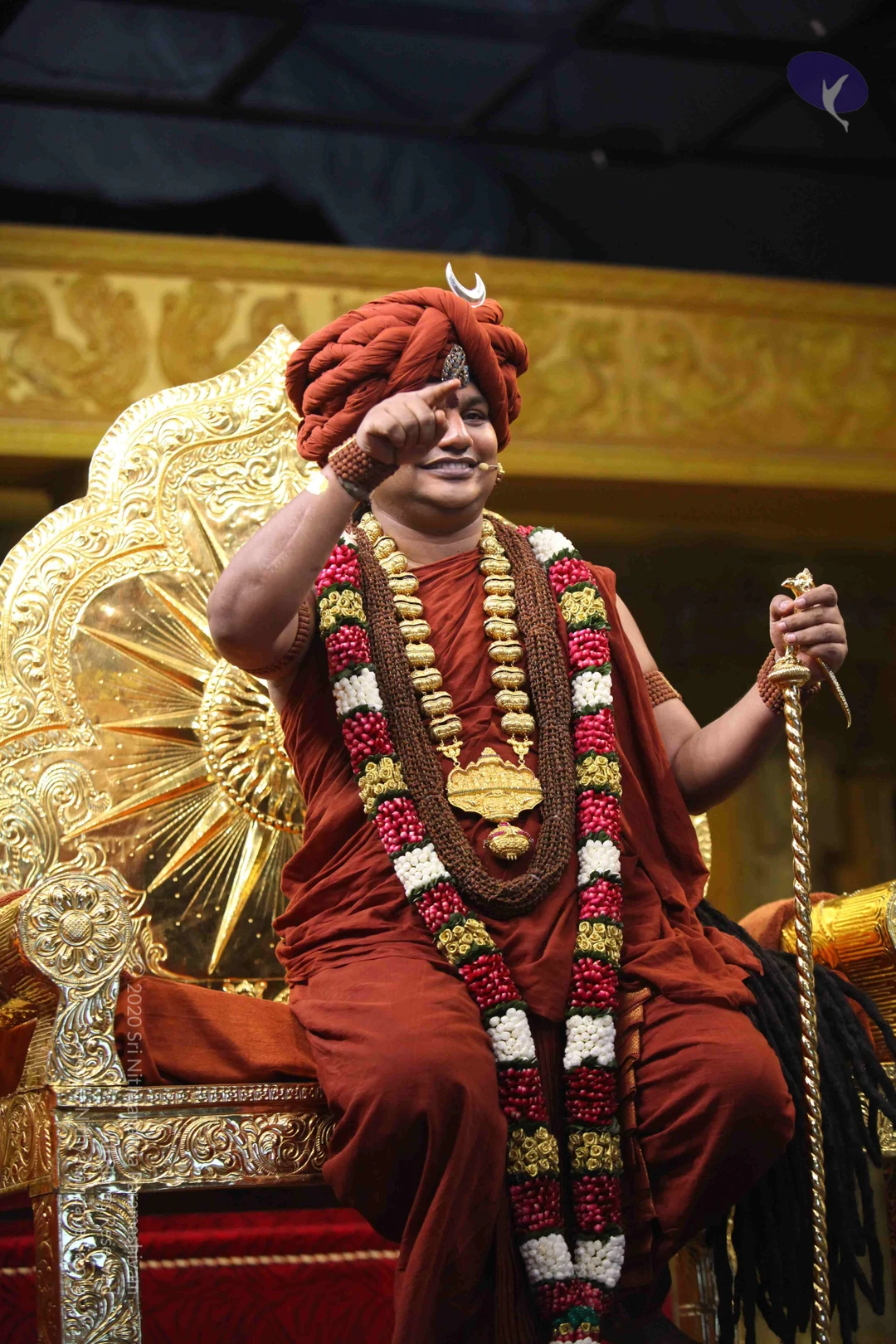
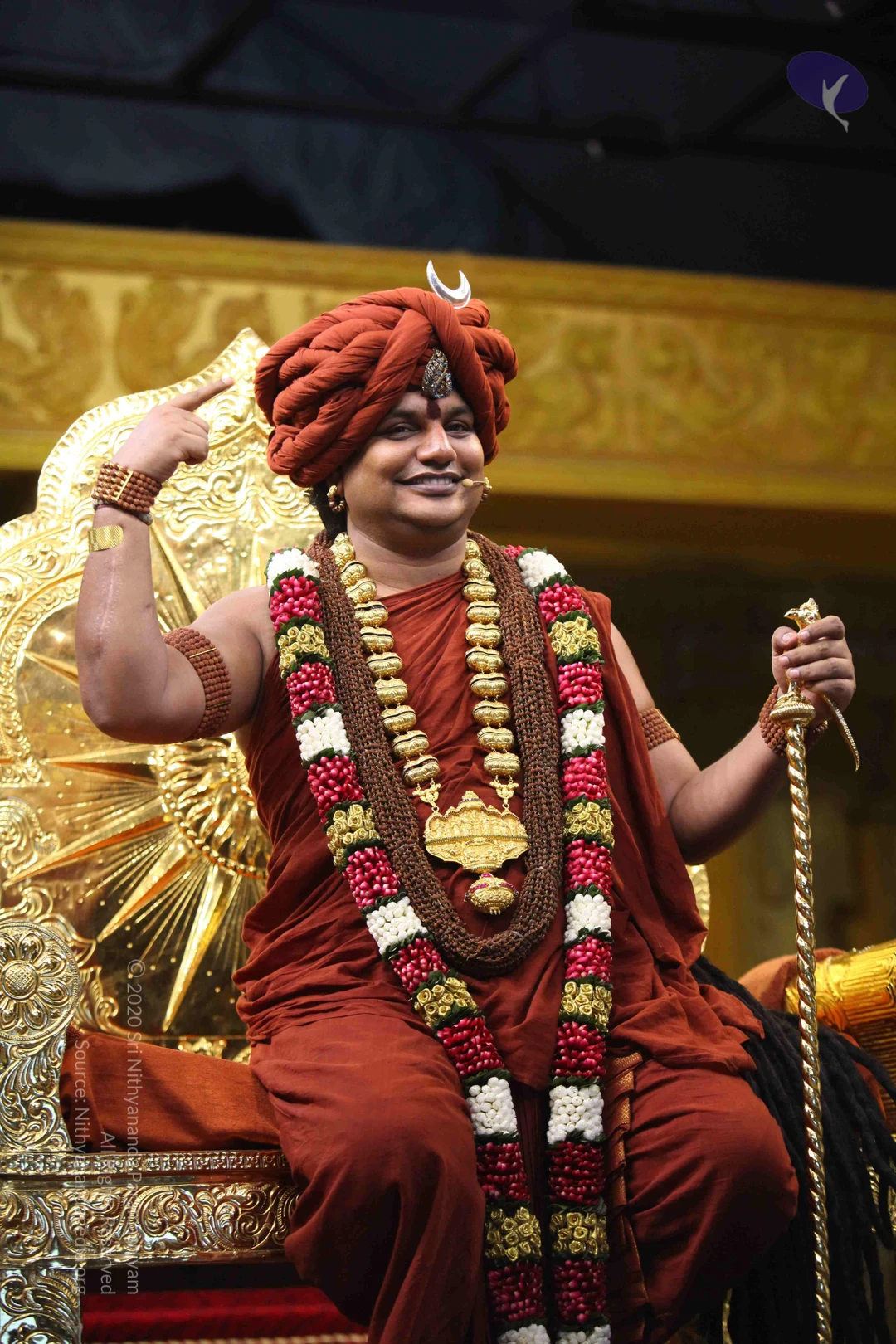
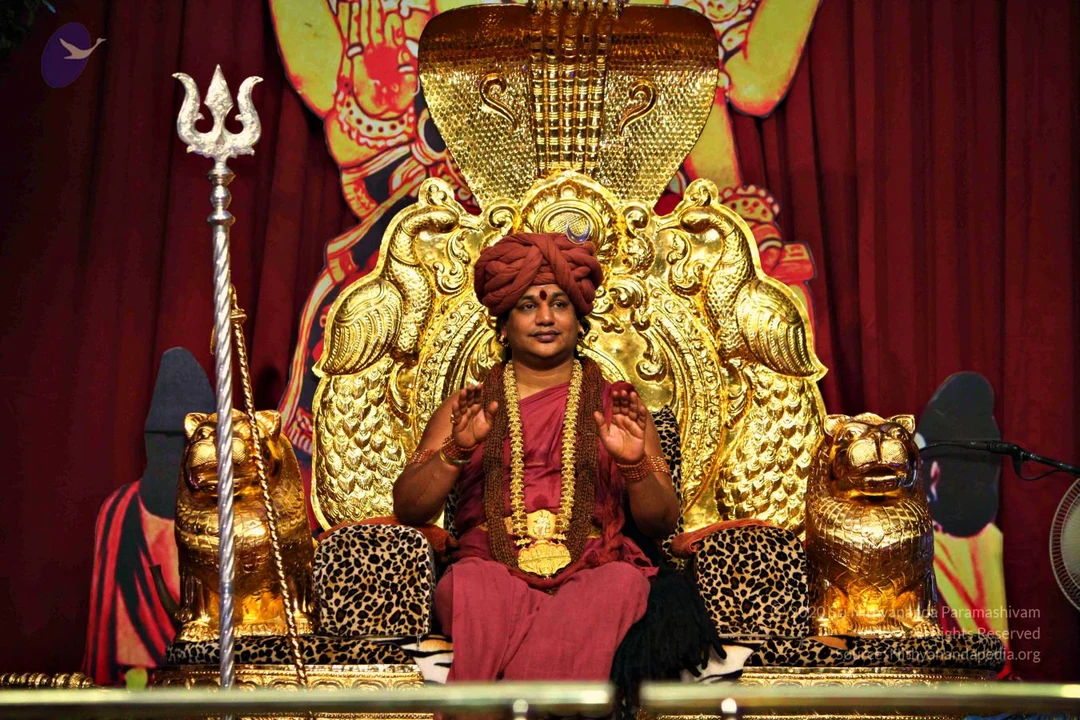
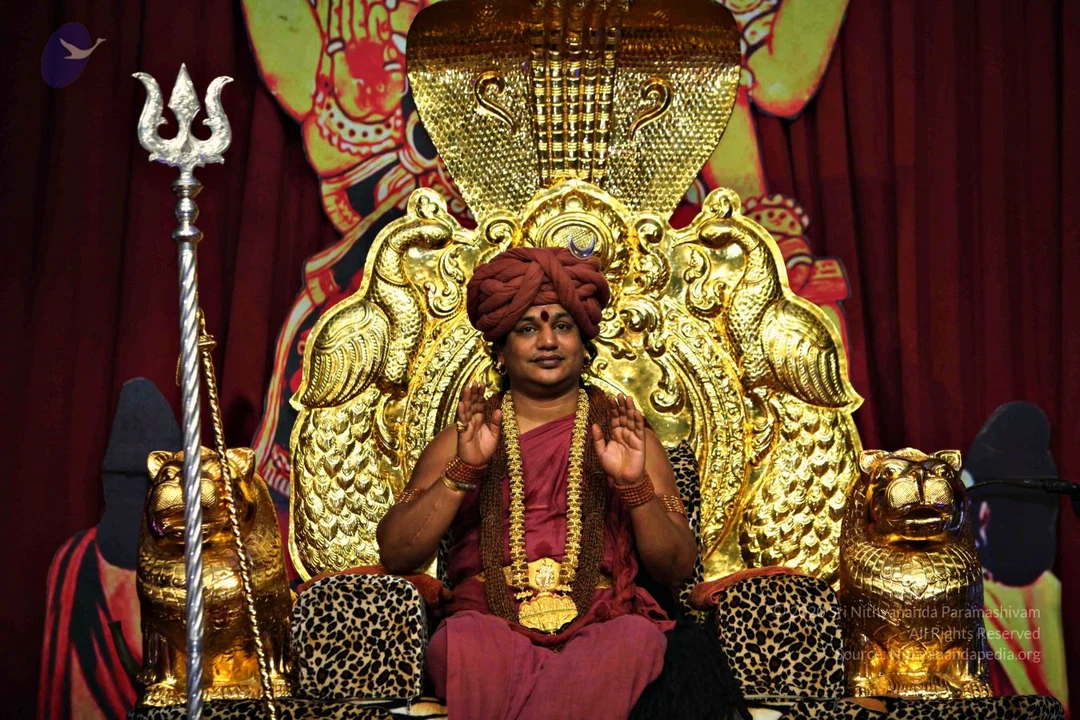
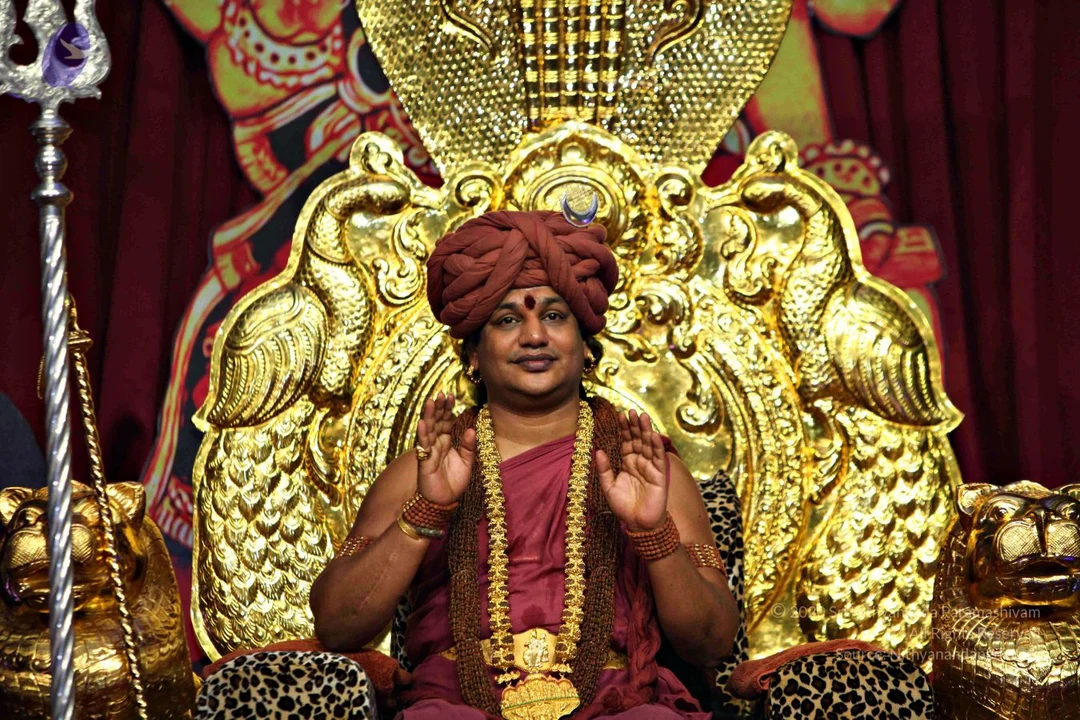
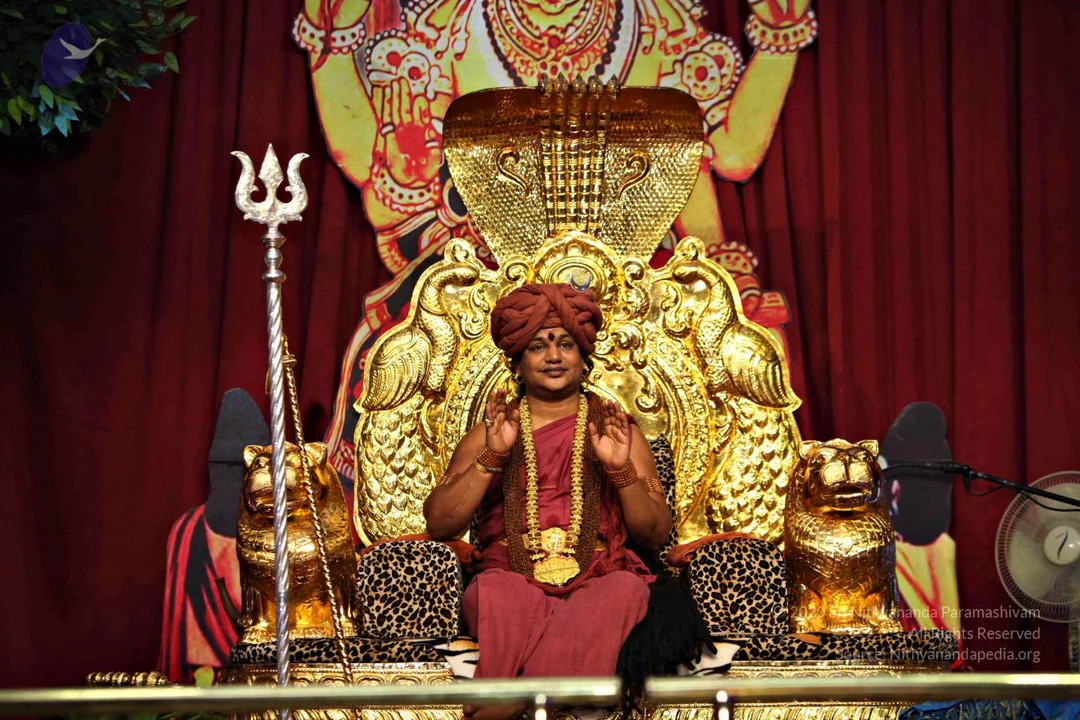
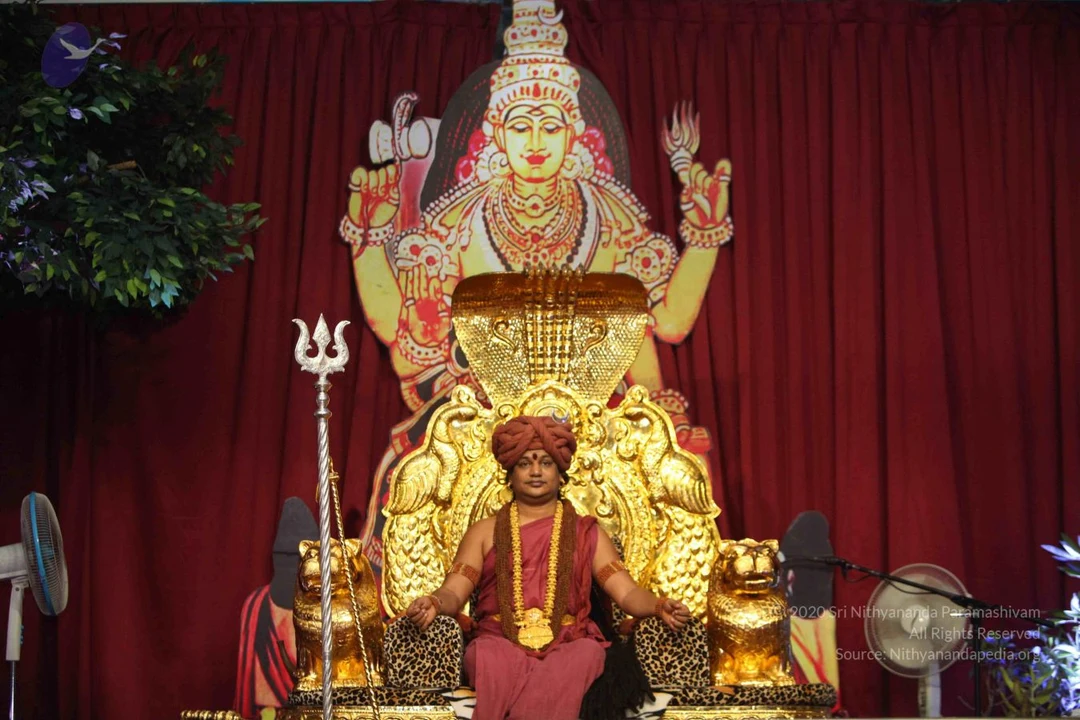
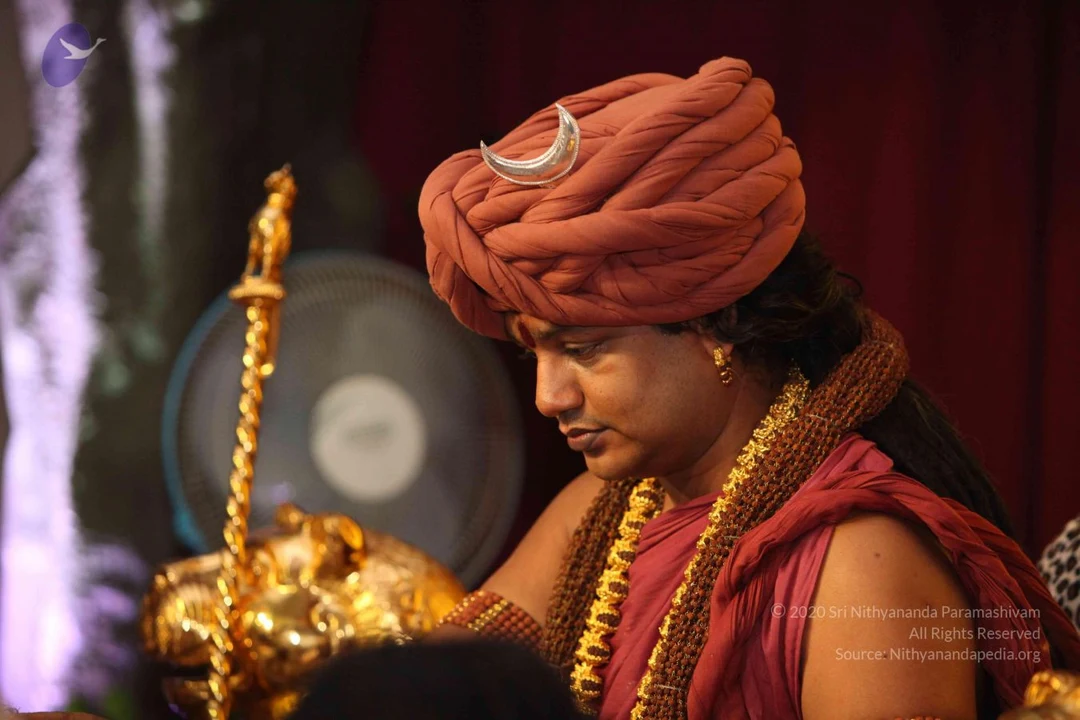
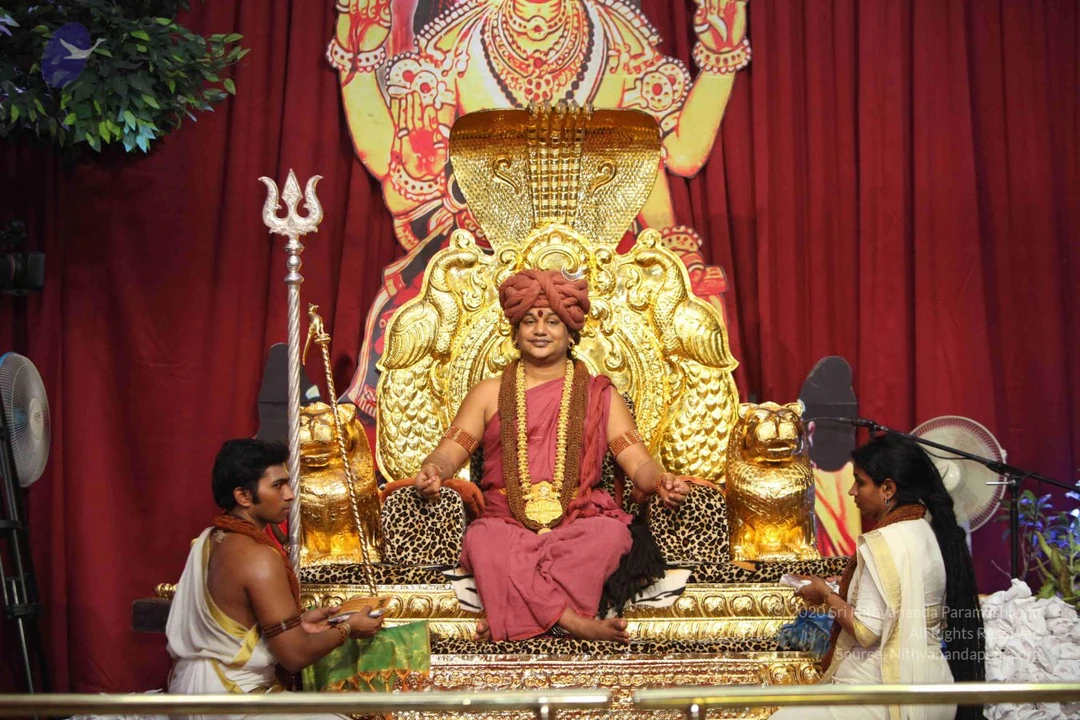
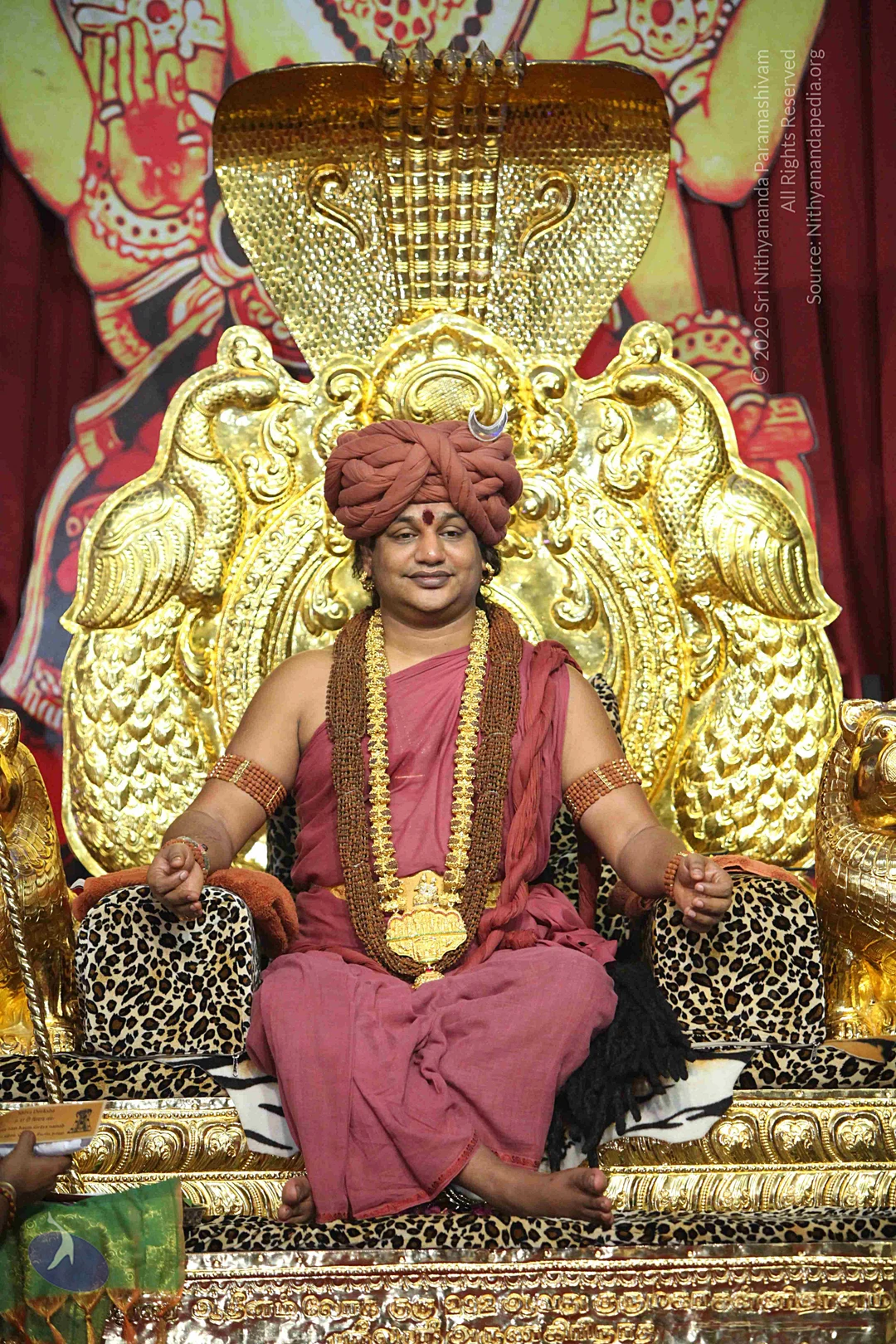
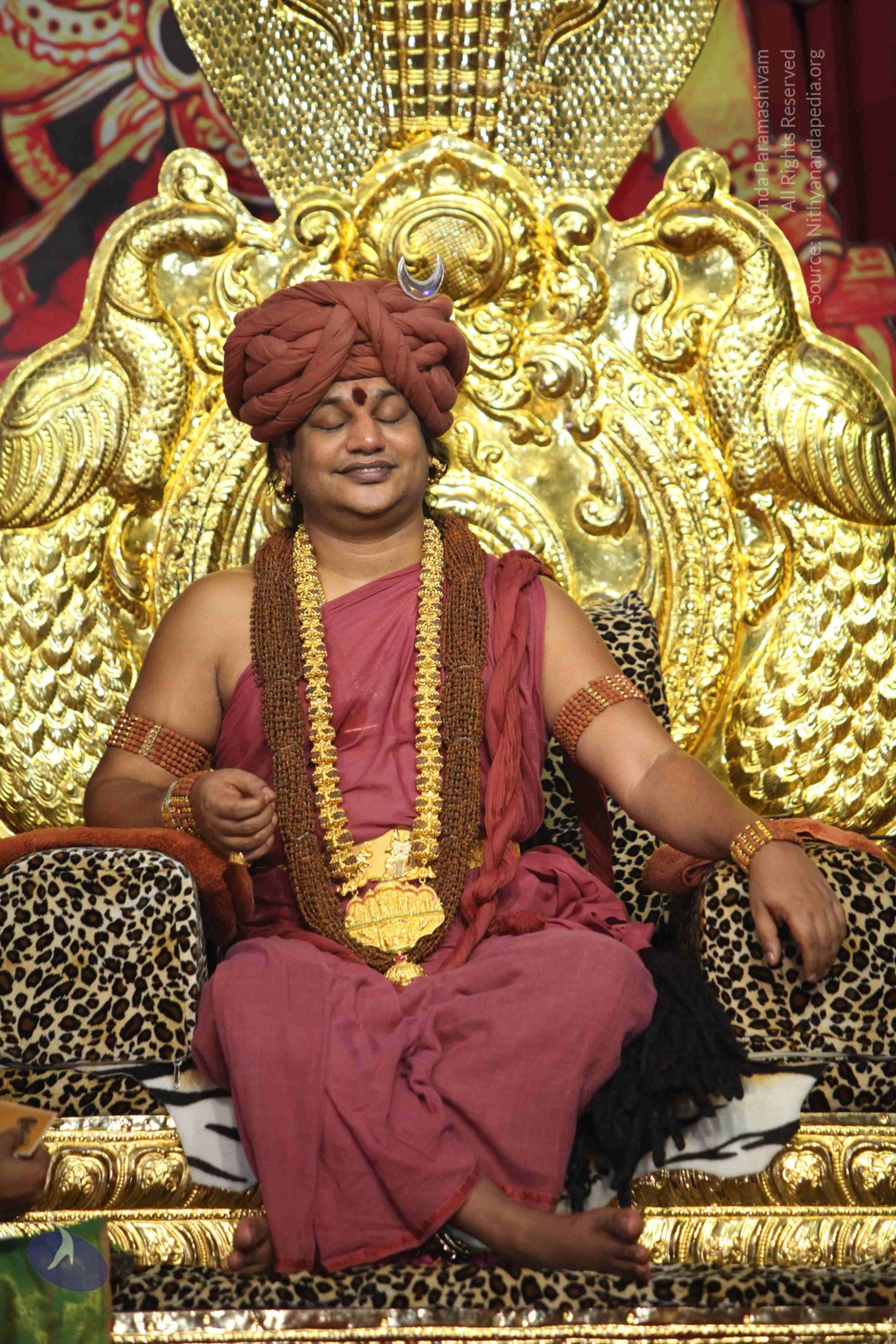
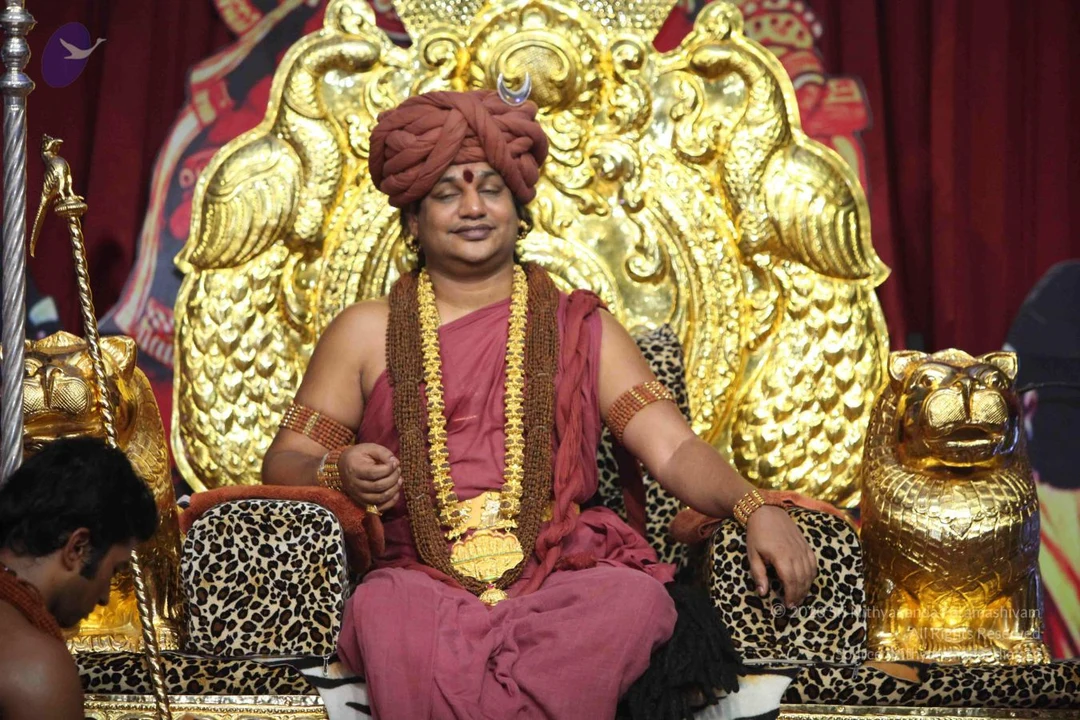
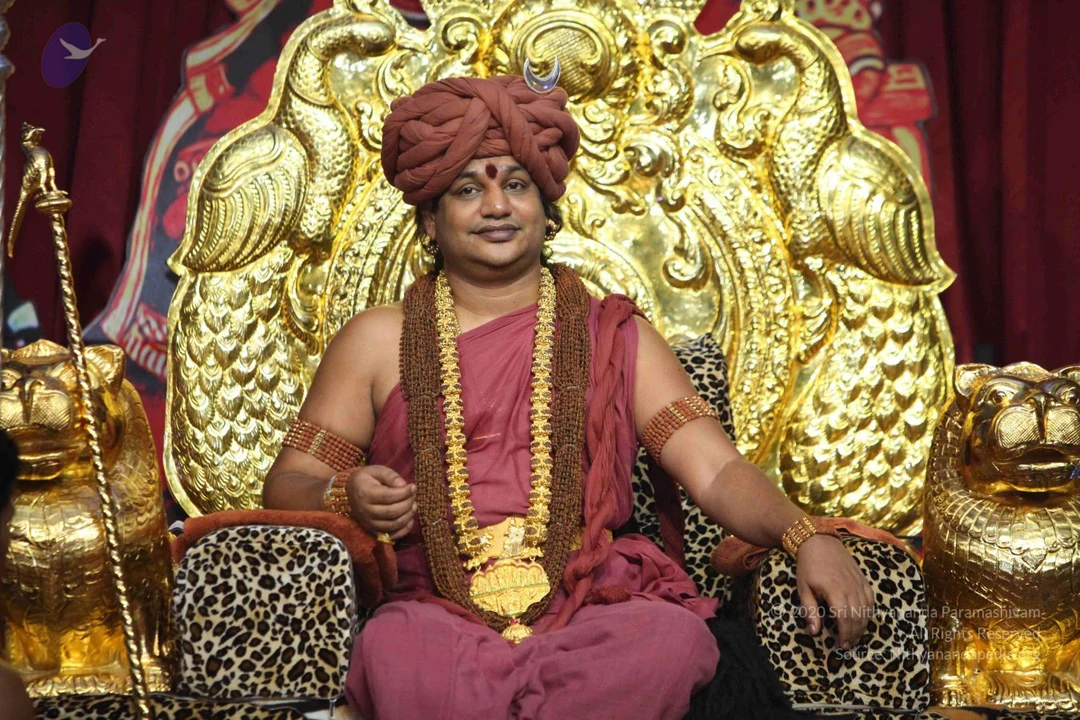
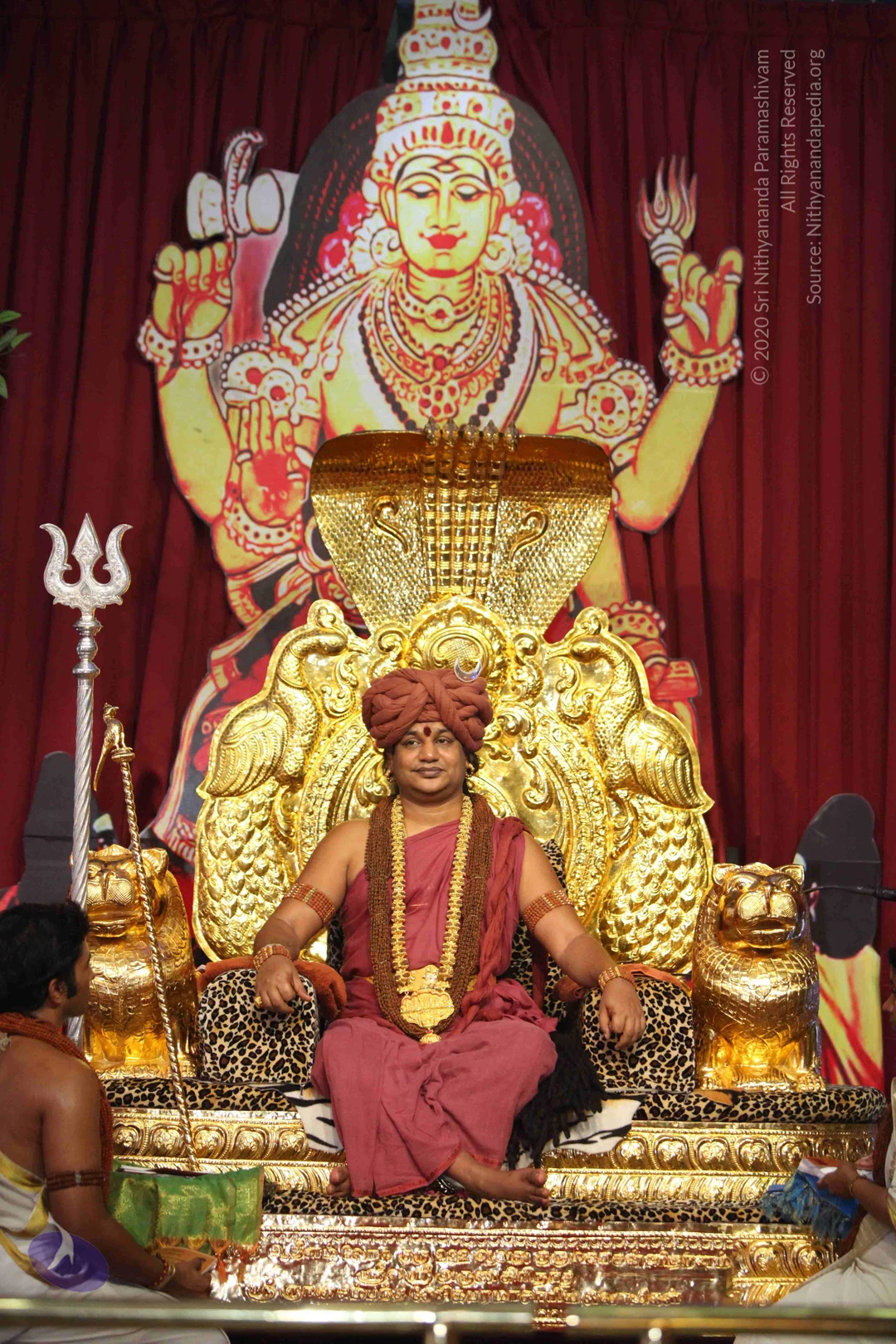
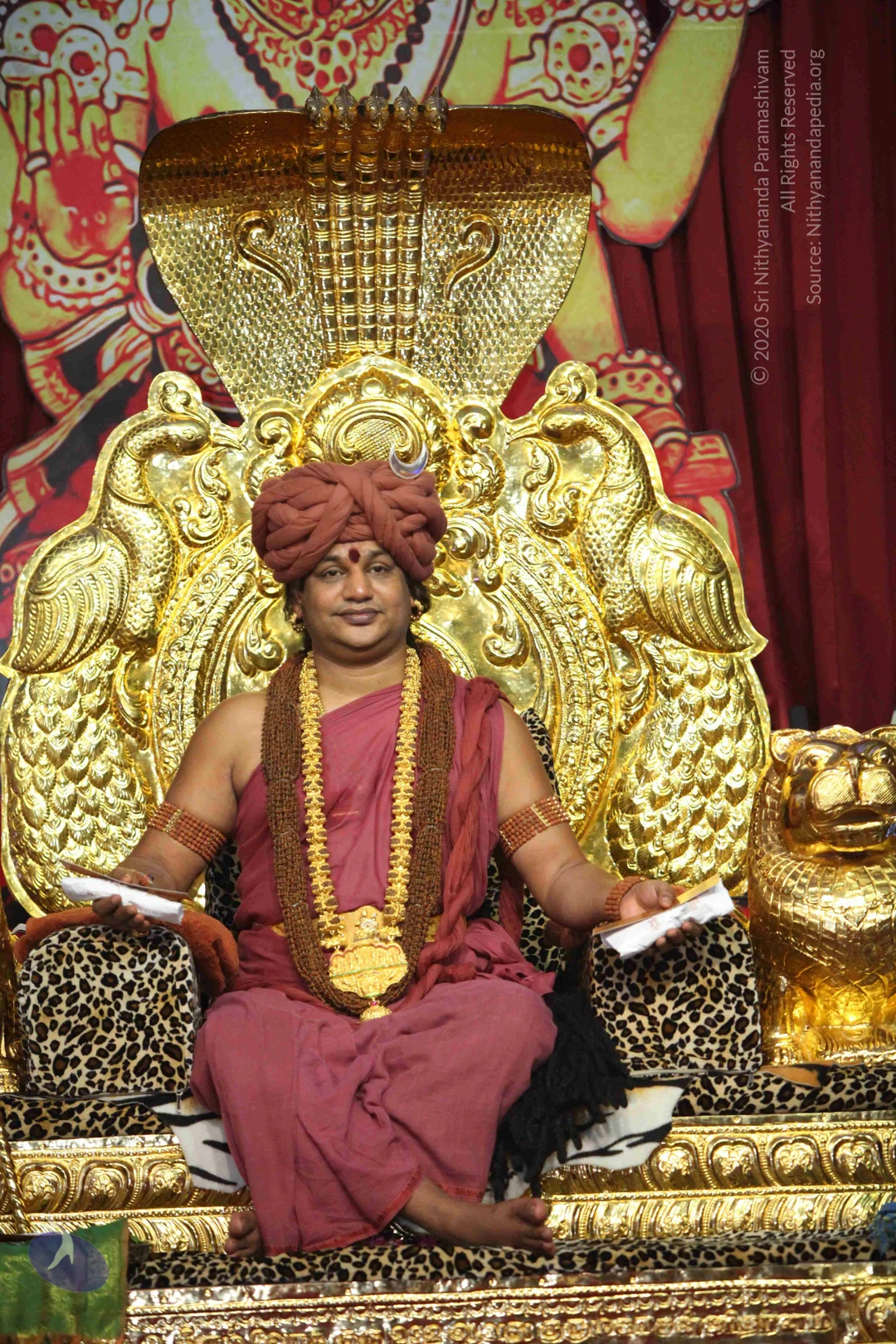
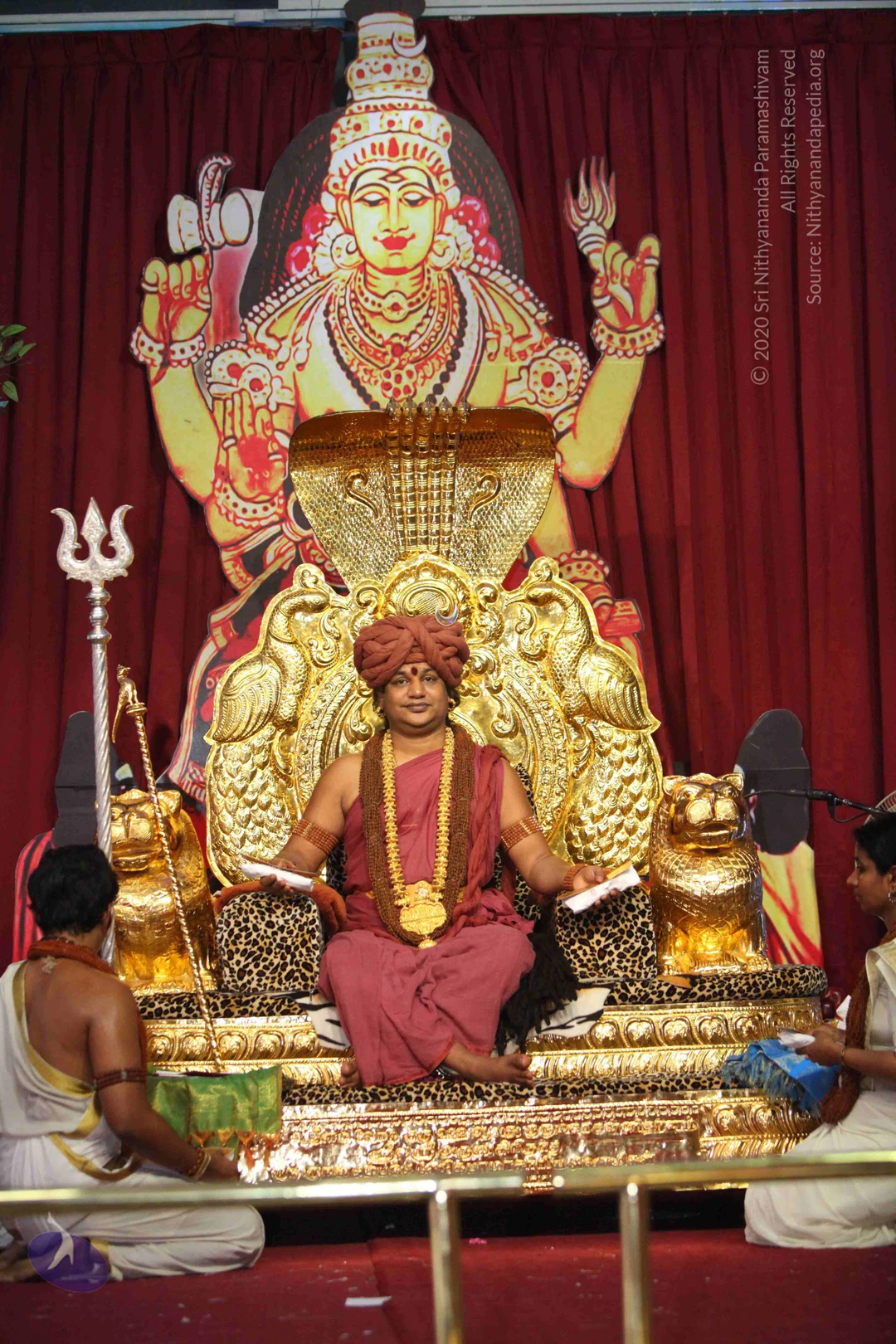
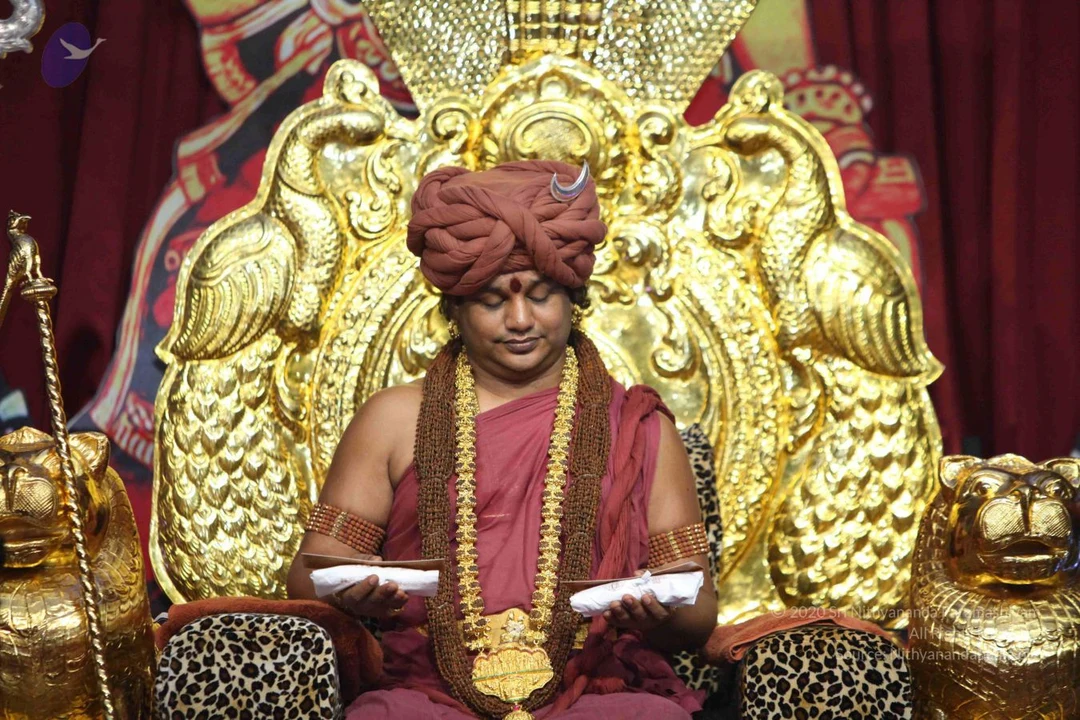
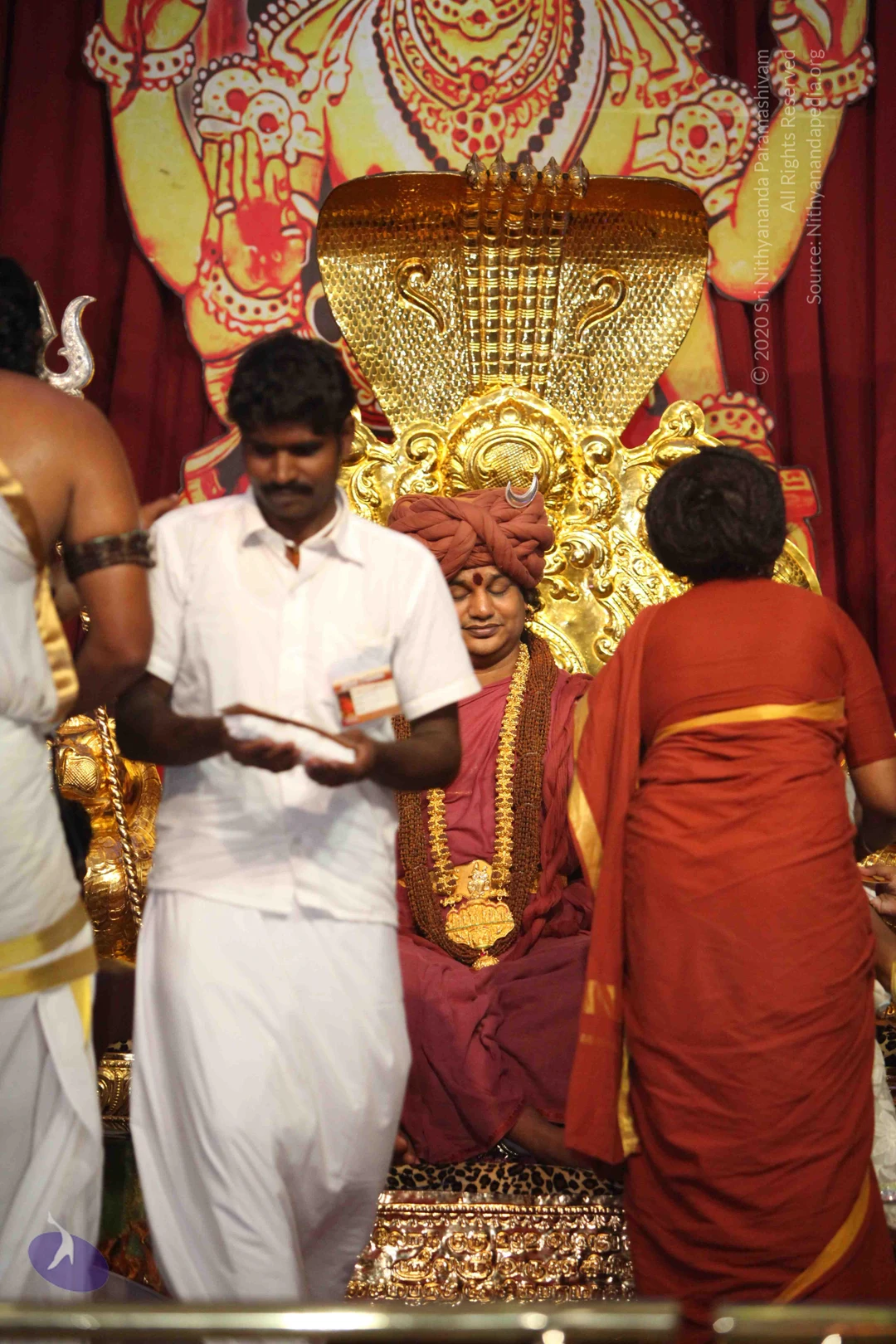
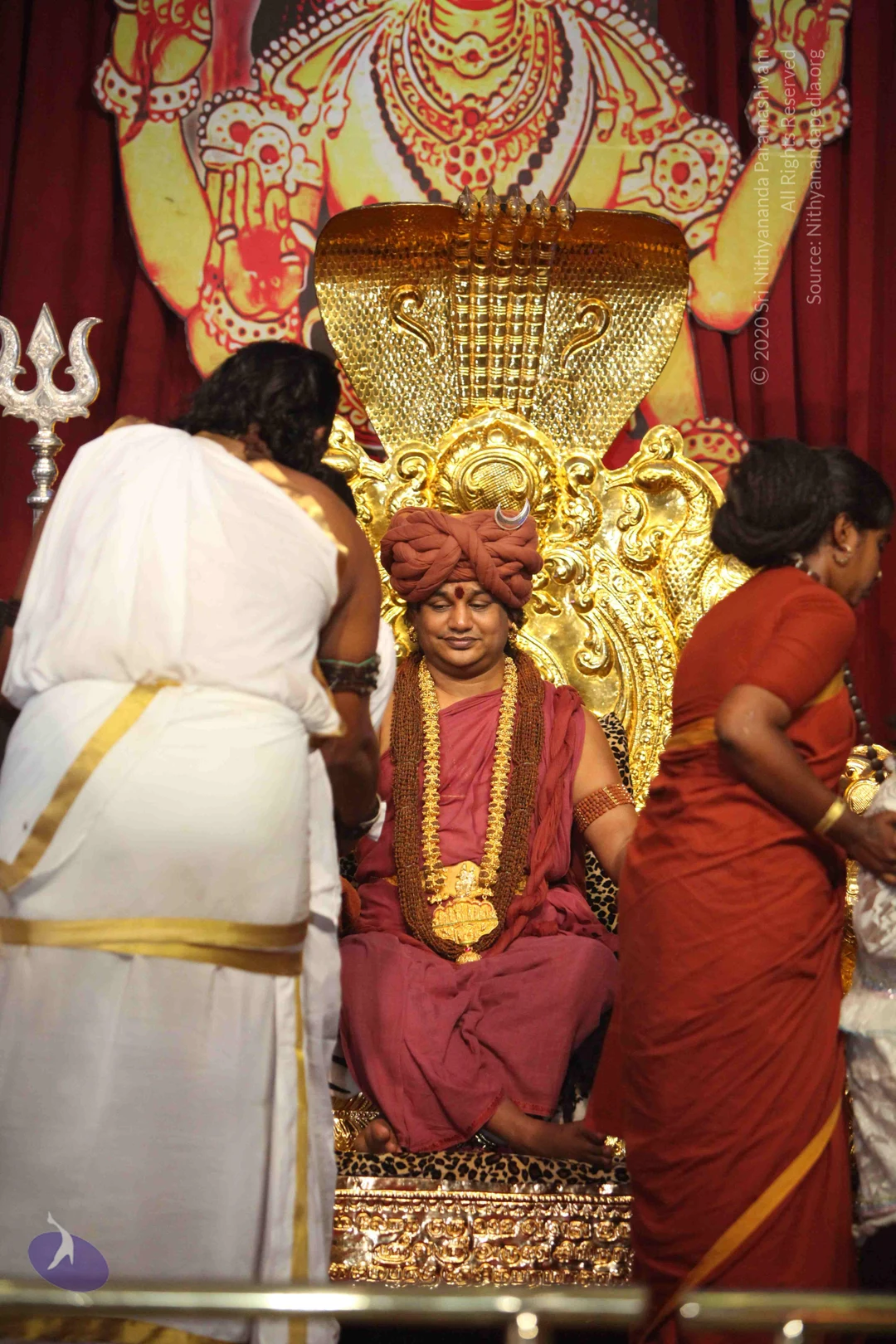
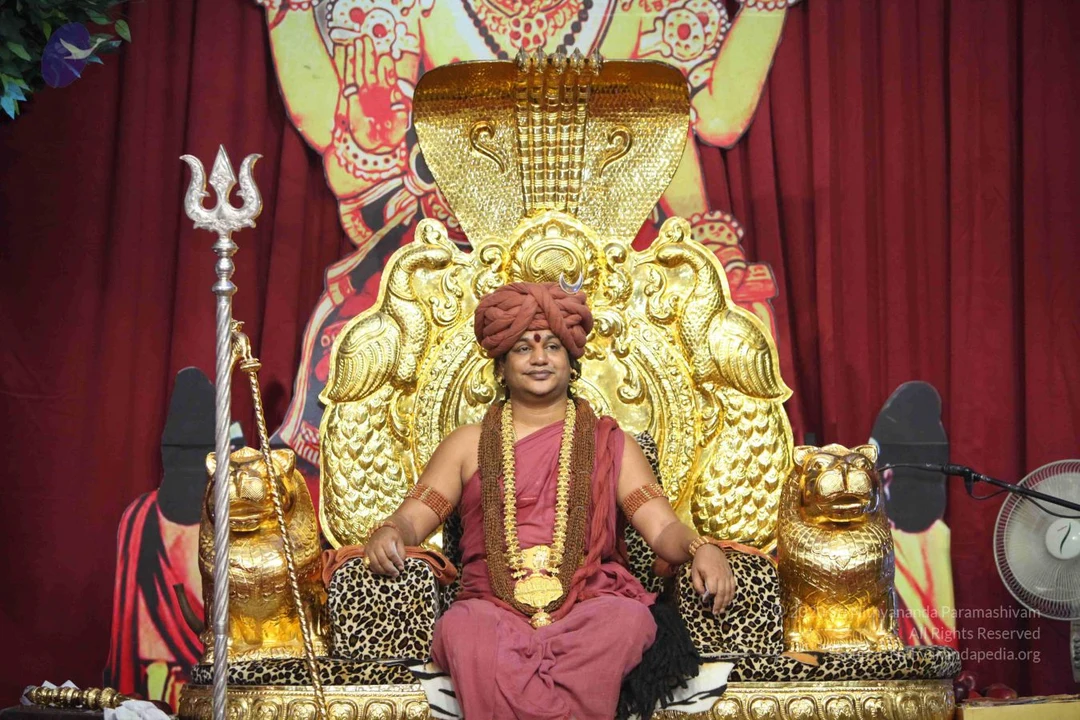
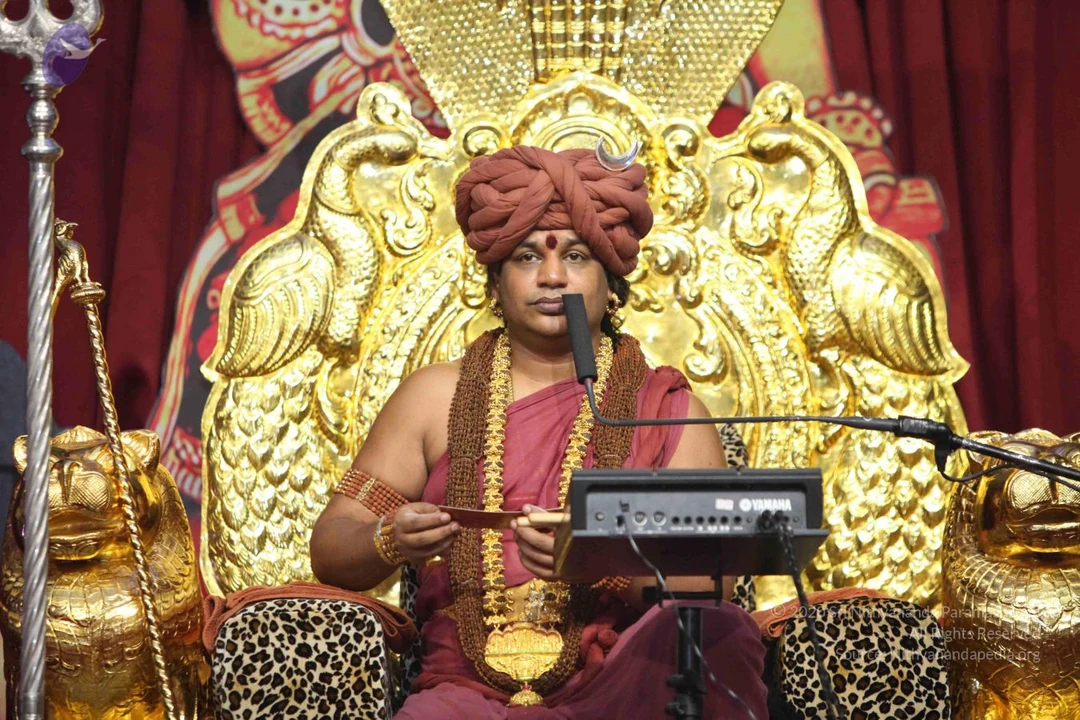
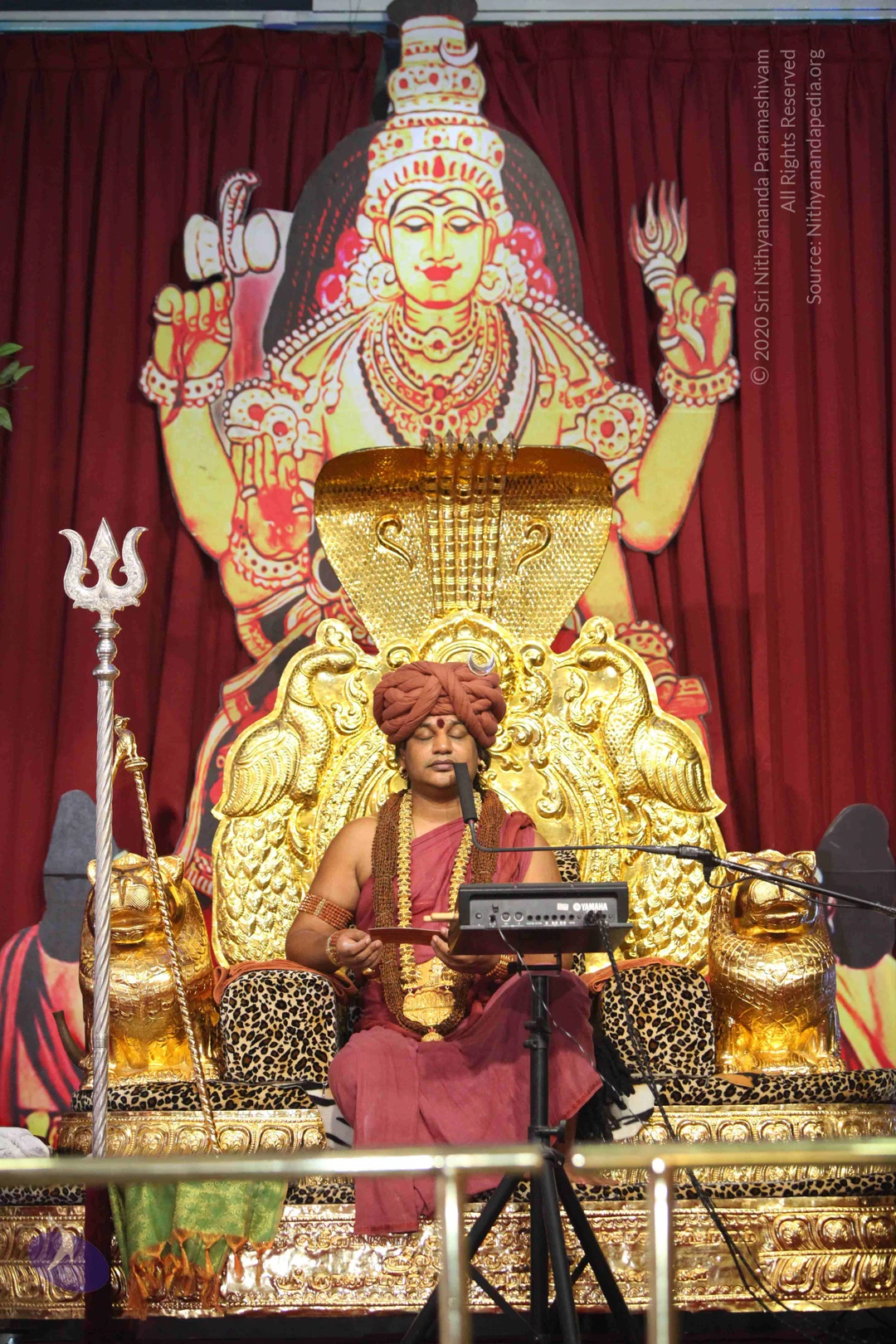
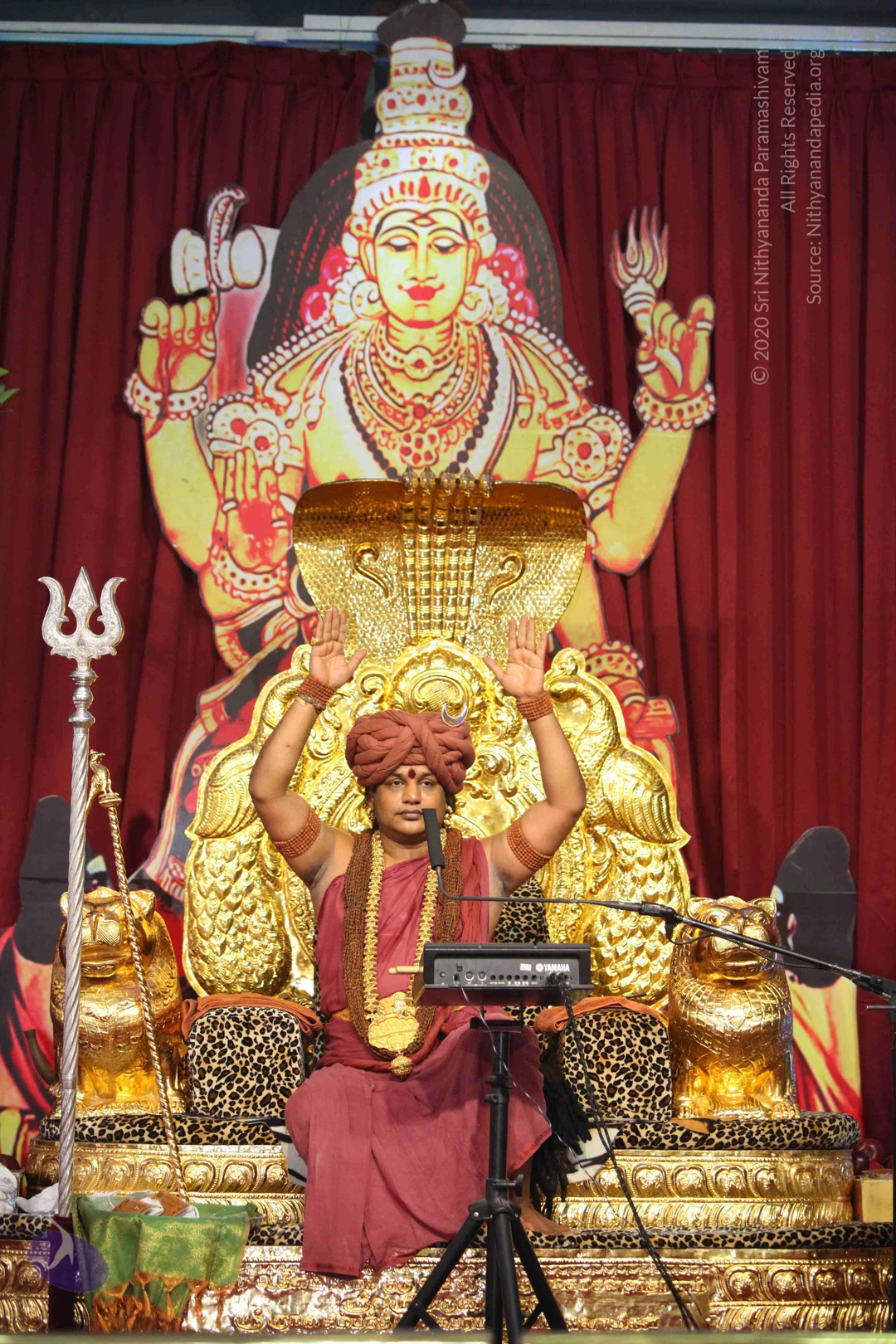
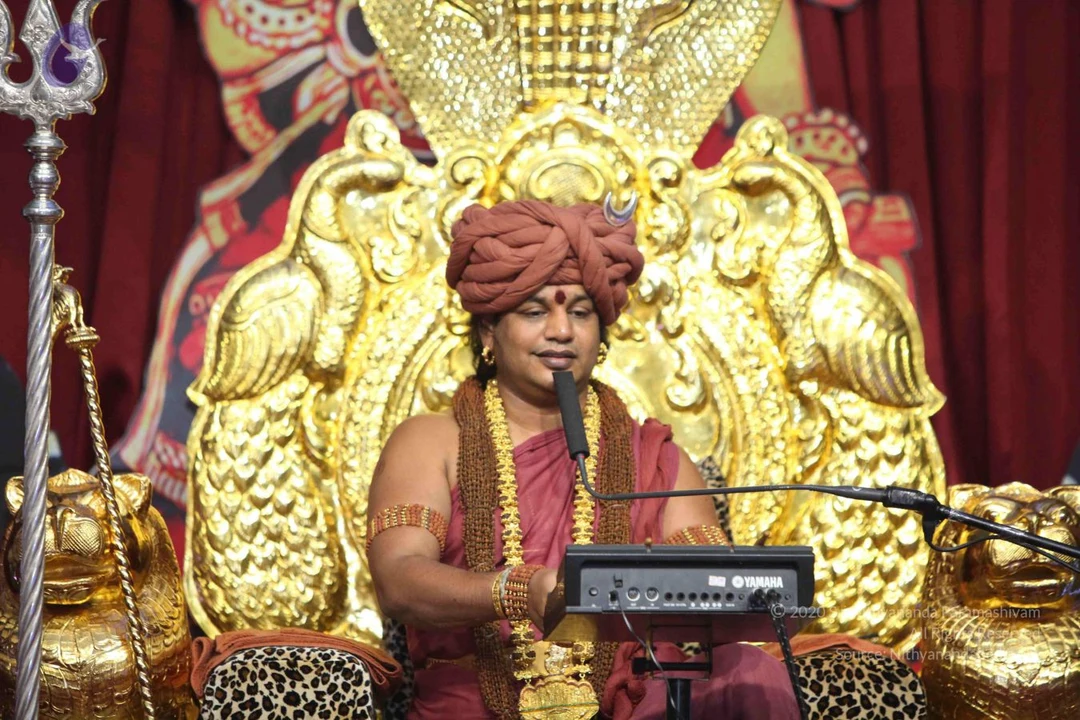
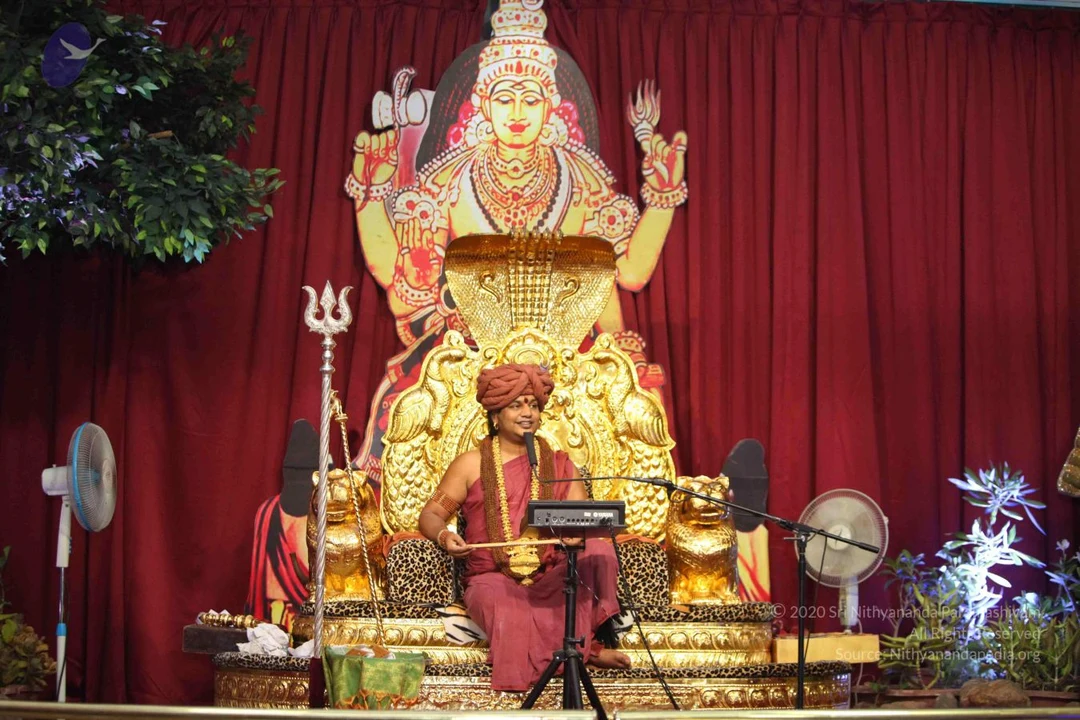
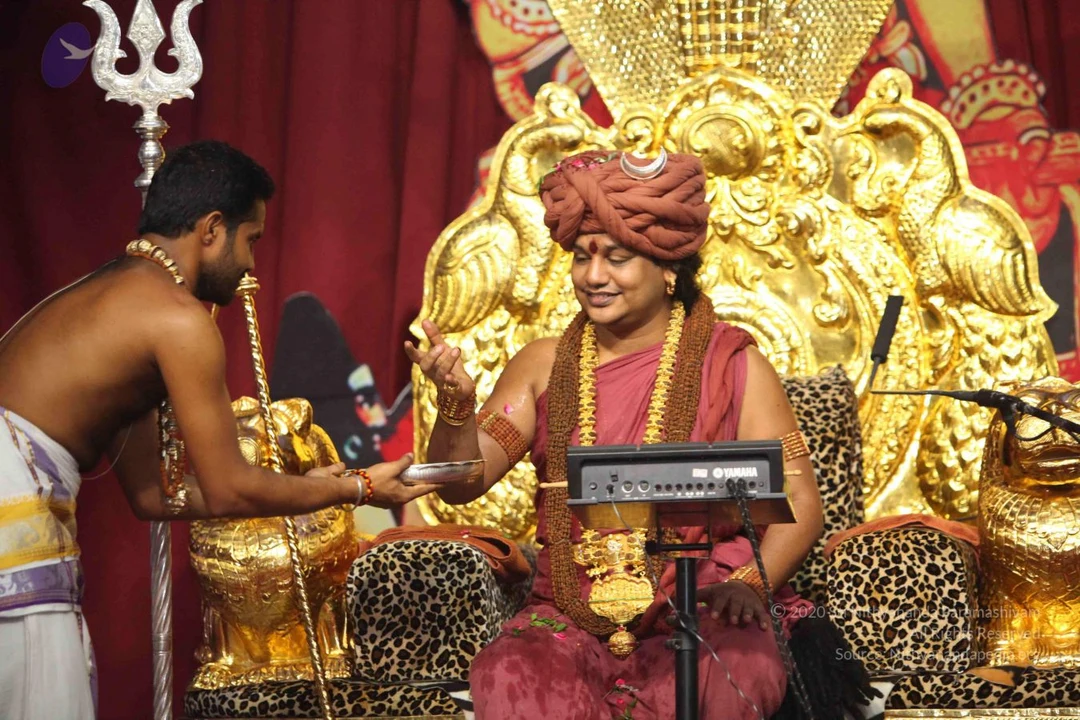
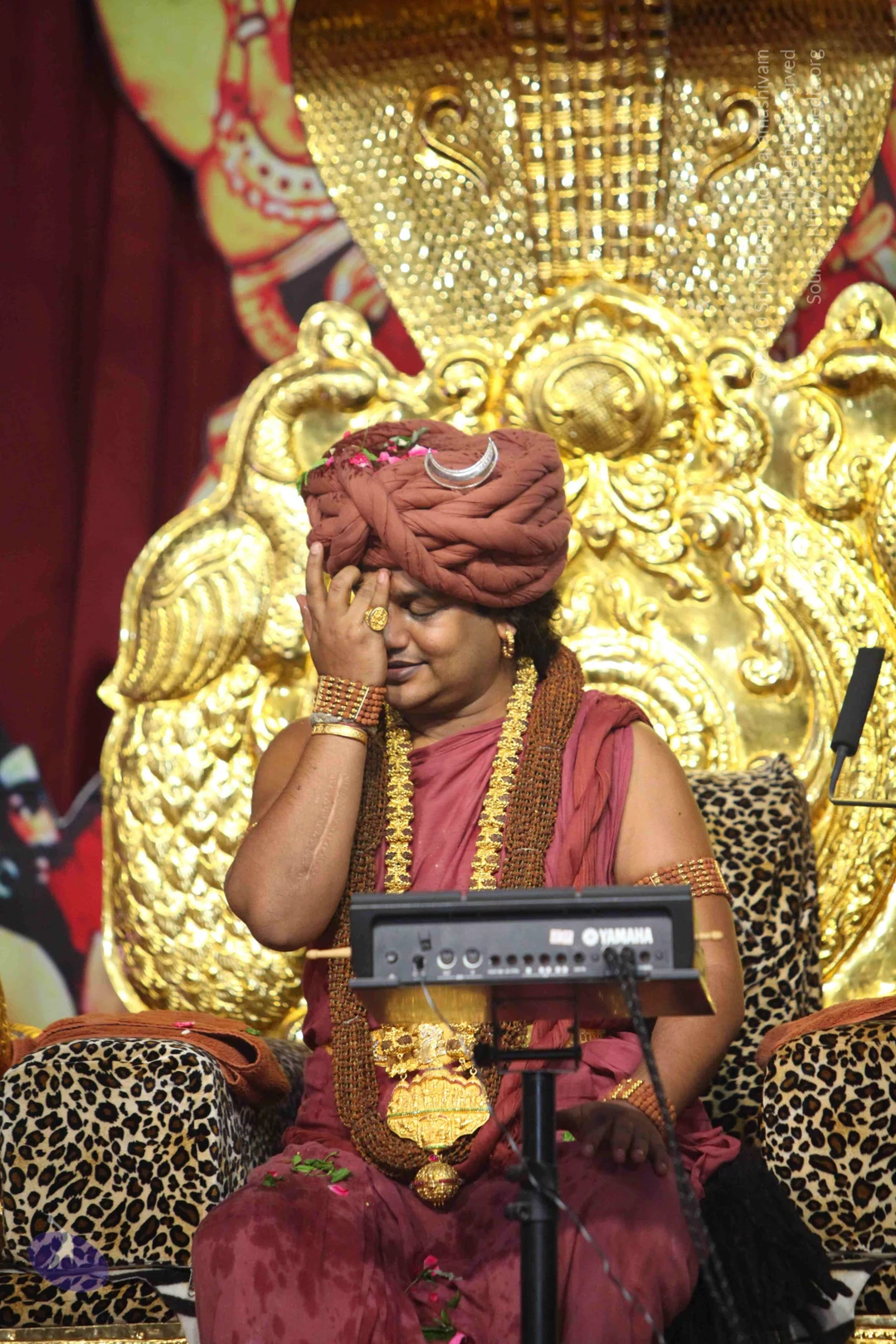
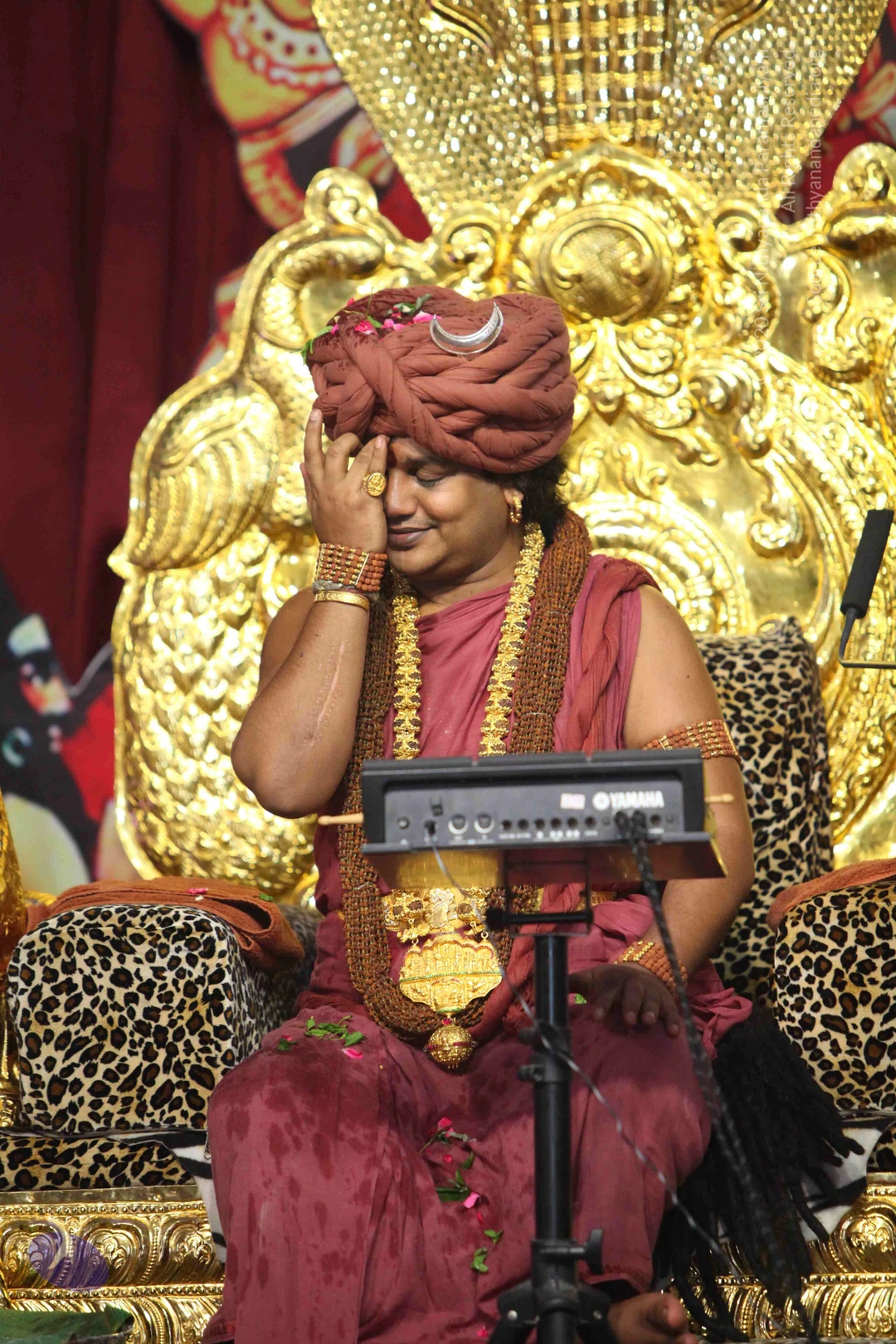
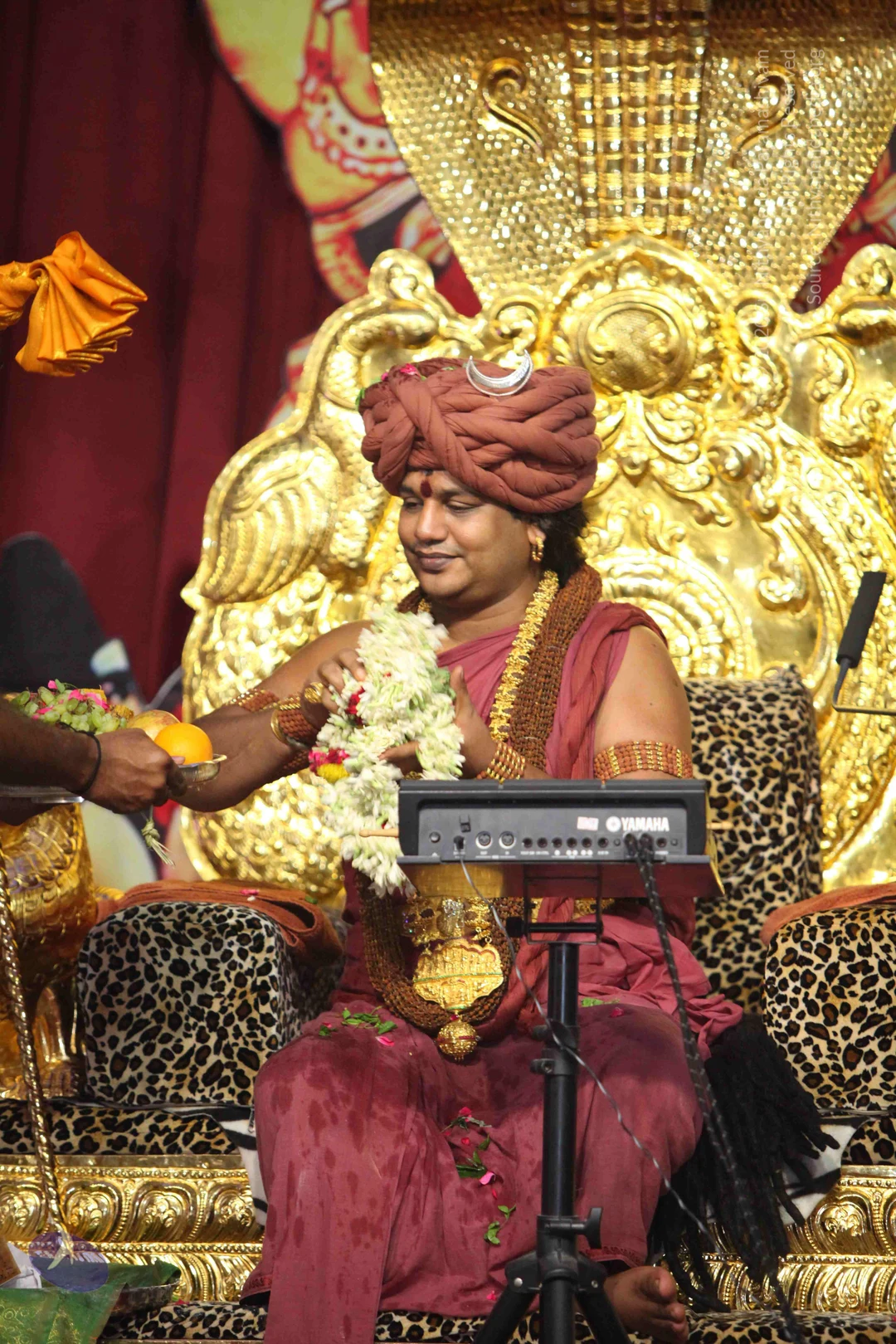
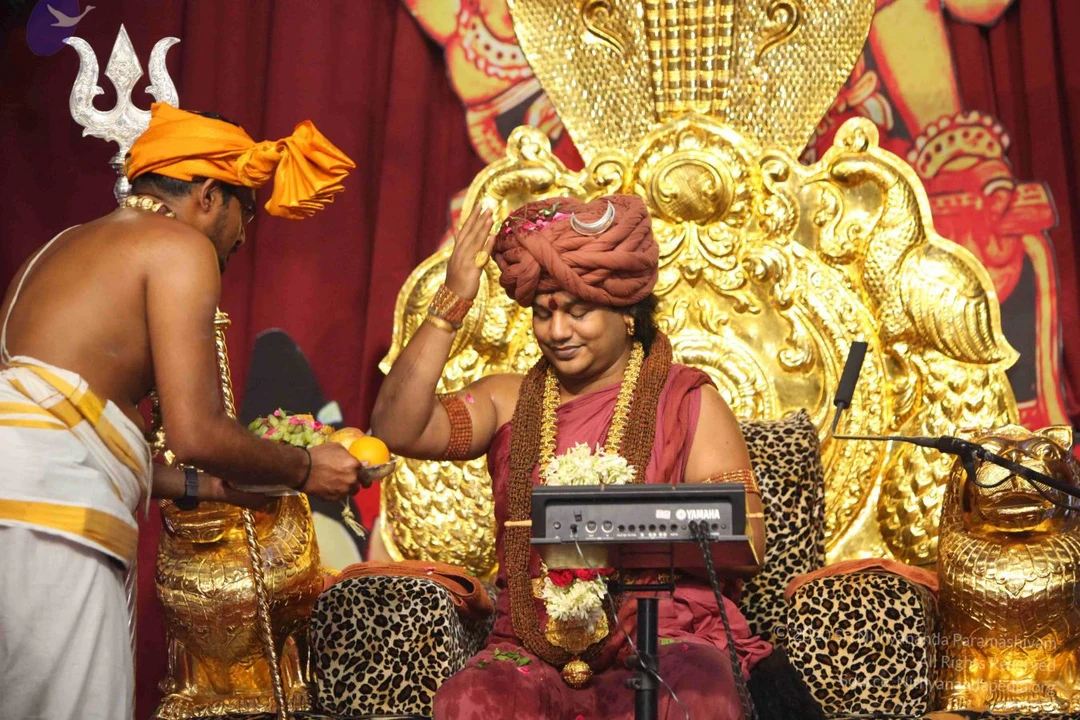
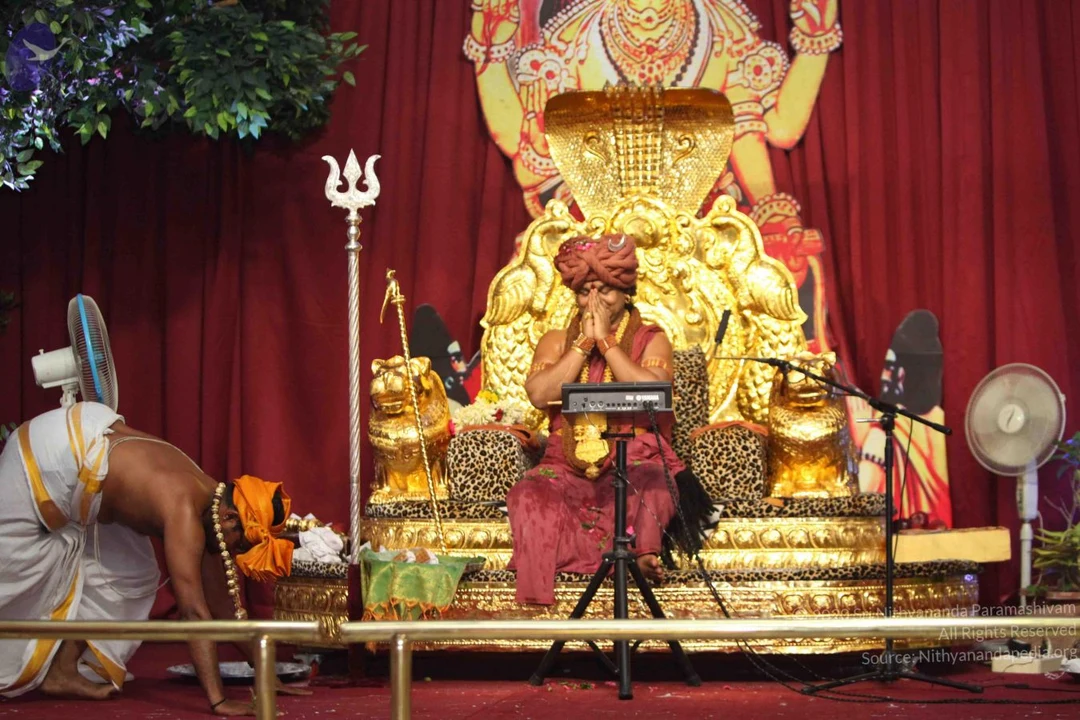
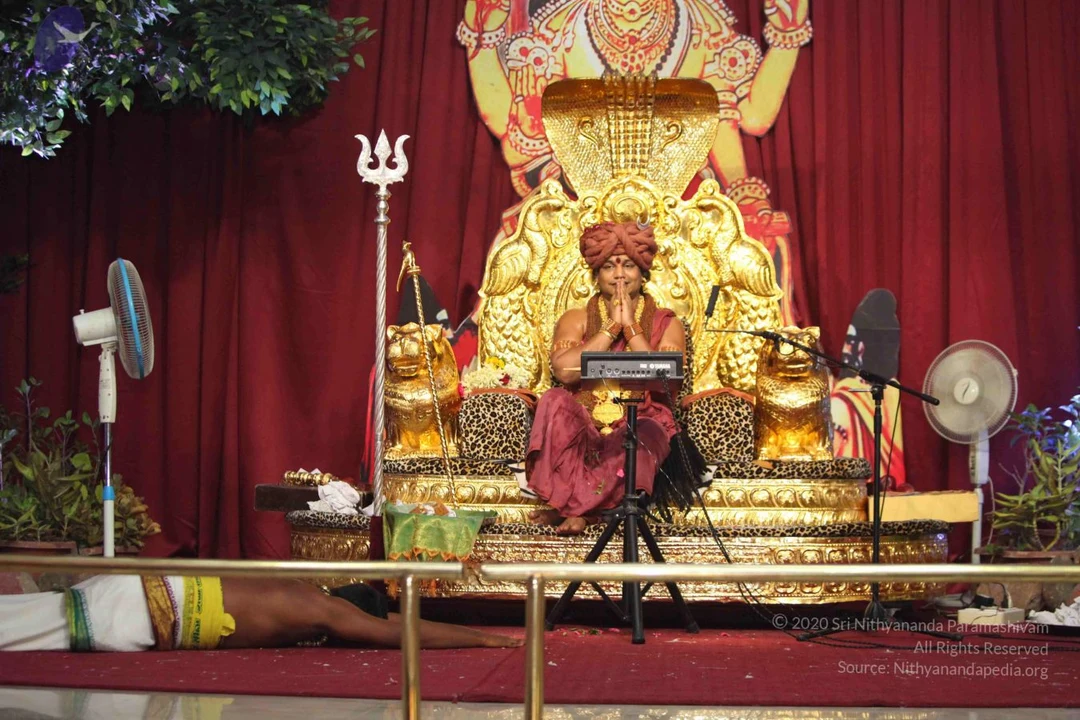
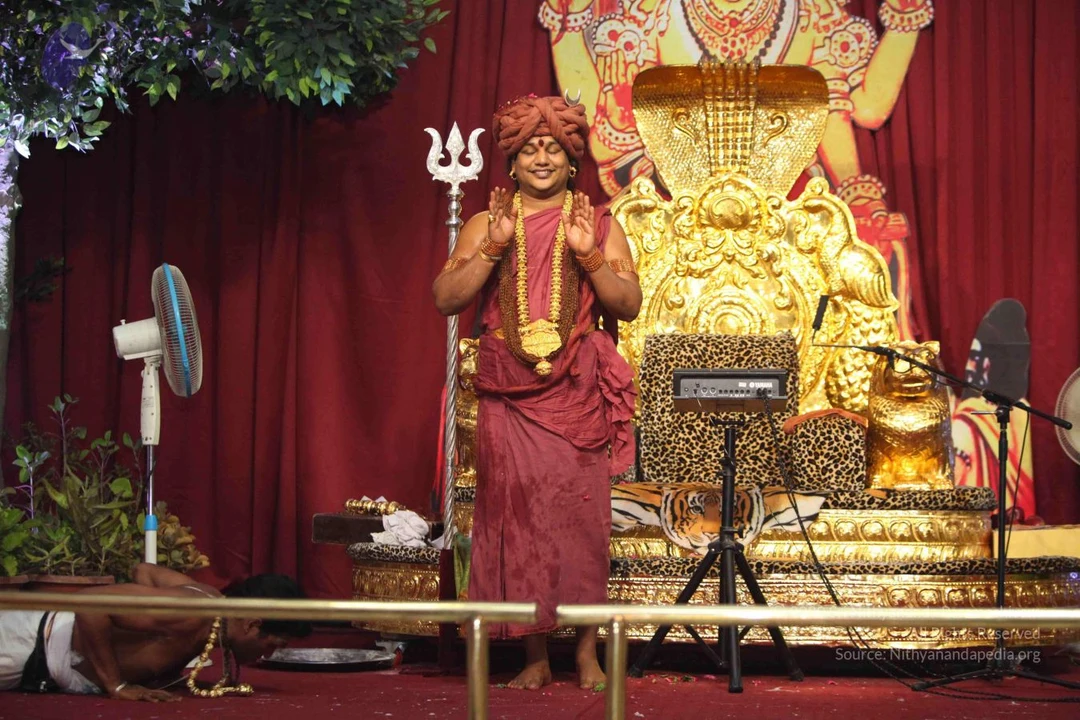
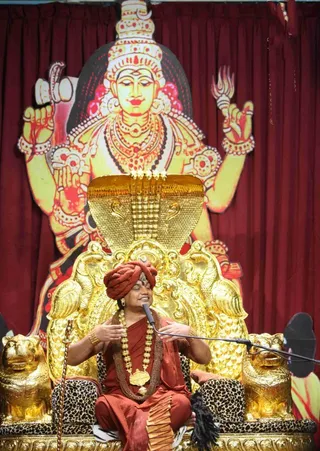
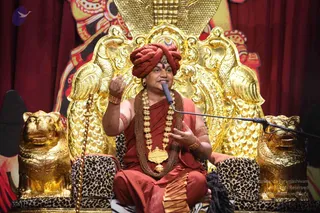
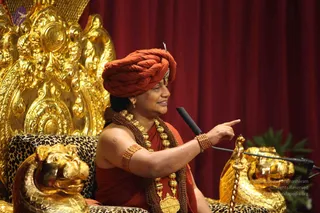
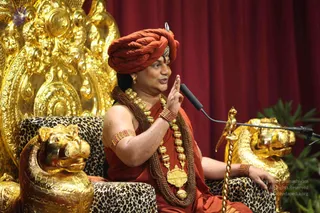
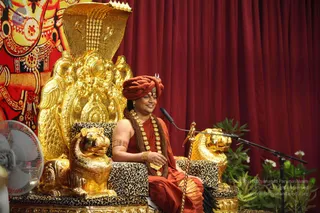
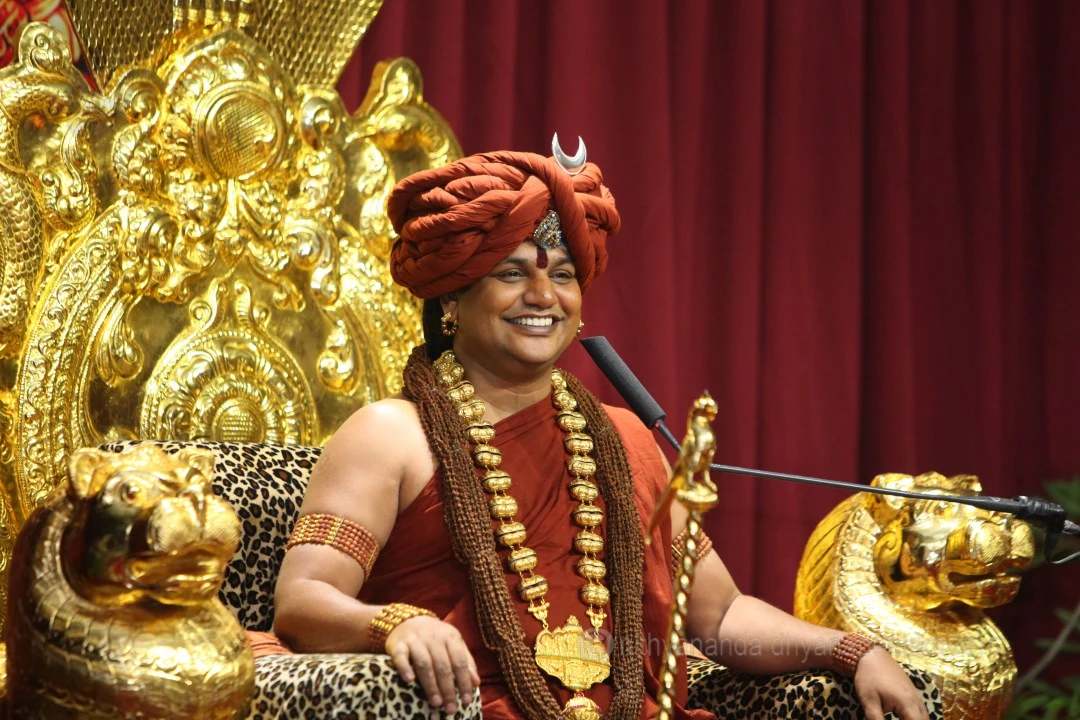
A seated speaker on a gold throne with a cobra-hood backrest and gold lion armrests, in front of a large painted deity murti with multiple arms holding a trident-like weapon and other implements, against a deep red drape. The person wears a rust-orange turban, an orange-red robe, a long gold bead necklace and a gold pendant, and gold bangles; leopard-print cushions sit on the throne. He sits cross-legged with hands gesturing toward a microphone on a stand, mid-discourse. Appearance-based candidate: Swamiji (probable), with long dark hair visible at the side, a rust turban, gold necklaces and orange robes, seated on a ceremonial throne as the speaker.A seated man in a red-orange turban and matching saffron-red robe speaks into a microphone while gesturing with both hands. He sits on an ornate gold throne with carved peacock-like motifs, flanked by two golden lion sculptures and leopard-print cushions. He wears a heavy beaded rudraksha-style mala and a large ceremonial gold pendant necklace, gold bangles and an armlet, and a small ornament at the turban's centre. Behind him hangs a red curtain with a painted deity image and a gold kalasha-like crown motif. A small bird logo appears at the upper left. This is a discourse setting on a stage.A man seated on an ornate gold throne with carved lion-head armrests, a leopard-print cushion and a microphone on a stand before him. He wears a red-maroon turban with a crescent emblem, a rust-red robe, layered beaded and gold-pendant necklaces, and bangles, and gestures with one hand while holding a tall gold-and-red staff. Red draped curtains and a painted backdrop of a deity figure in red and gold fill the background.A seated figure in an ornate gilded throne with leopard-print cushion, facing a red velvet curtain. The person wears a rust-orange turban with a small silver ornament, a saffron-orange robe draped over one shoulder, a brown rudraksha-style mala and a heavy gold necklace with bead and pendant ornaments, plus gold and red beaded bracelets. The right arm is extended pointing forward while holding a black microphone; gold lion-head armrests flank the throne. Appearance-based candidate: a person, seated in the discourse role on the throne.A seated man speaks into a microphone on an ornate gilded throne with lion-head armrests and a leopard-print cushion, against a deep red curtain. He wears an orange-red turban with a silver crest, an orange-red robe, a long brown rudraksha mala and a heavy gold necklace with a pendant, plus gold bangles and an armband. He raises one hand in a gesture of teaching. A gold staff with a bird-topped finial rests beside him. Swamiji (probable): the turban, orange robe, rudraksha mala and gold ornaments fit the page's presentation; appearance is the basis for this label.A seated figure in a red-orange robe and matching orange turban sits on an ornate gold throne carved with a cobra hood and lion-shaped armrests, draped in a leopard-print cushion. He wears layered gold necklaces, a rudraksha mala, gold bangles and an armband, and smiles while speaking into a microphone on a stand. Behind him hang a deep red curtain and a painted deity panel in red and gold, with white flowers at his side. A pedestal fan stands at the left edge. Appearance cues are consistent with the page's a person candidate, but the face and presentation are not fully clear, so this is an uncertain candidate. One person is visible.
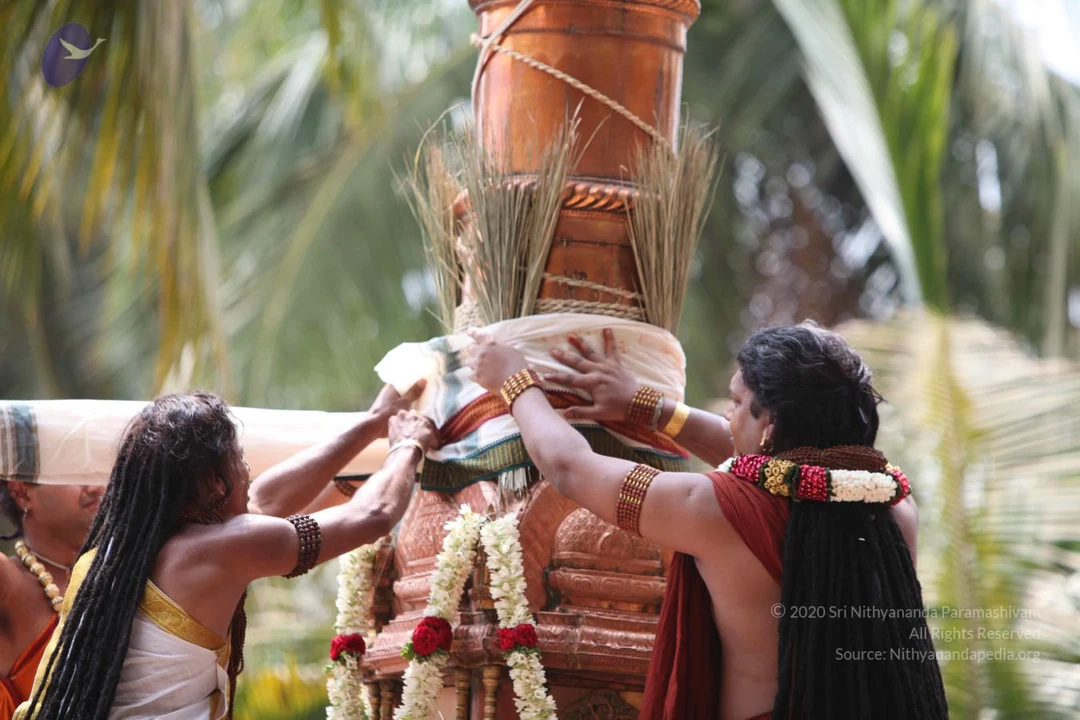
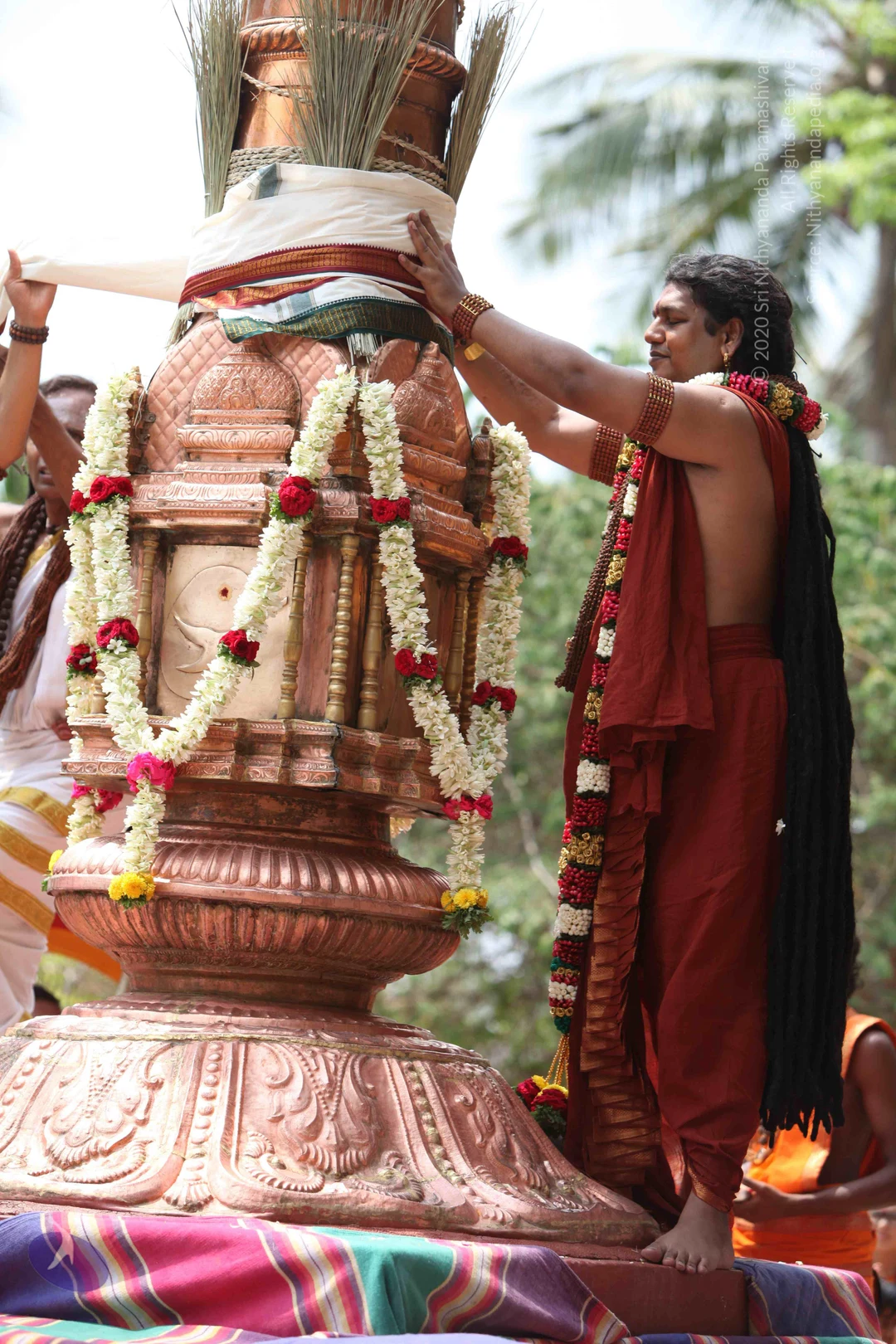
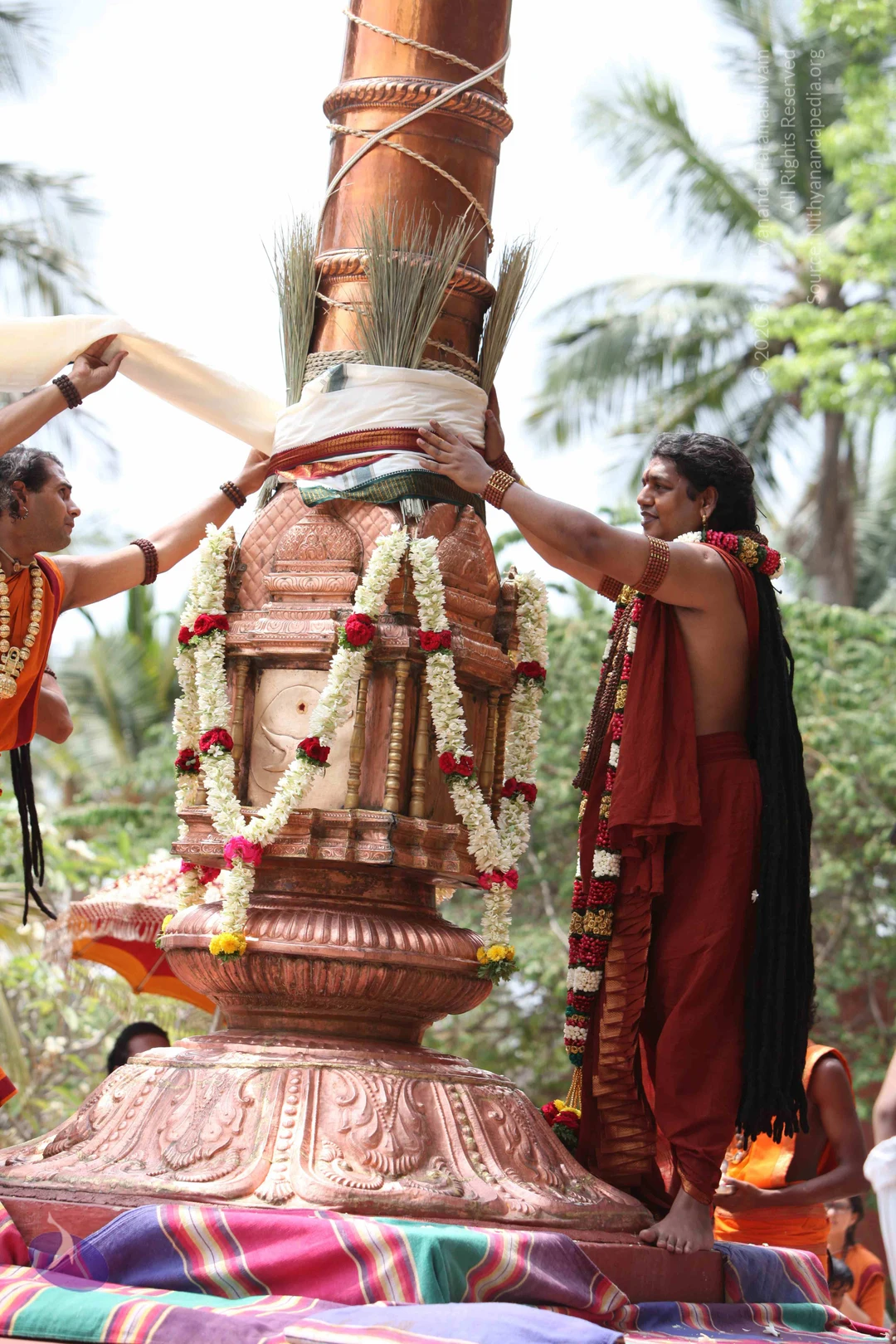
Samayadeeksha-Darshan
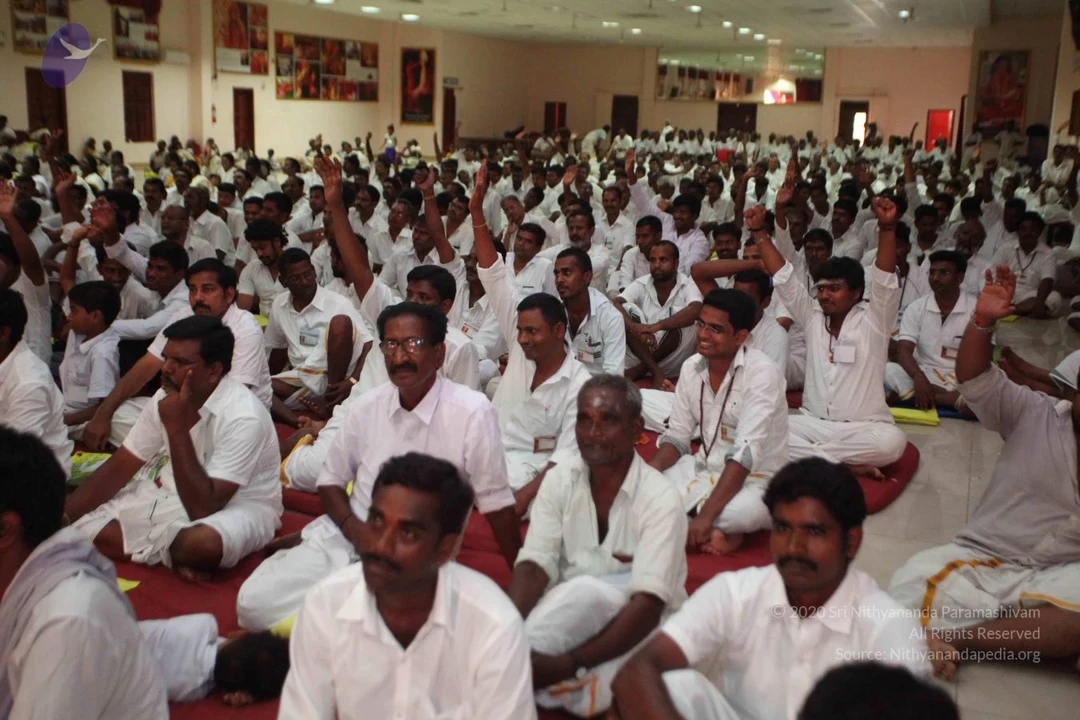
111 photosSource gallery
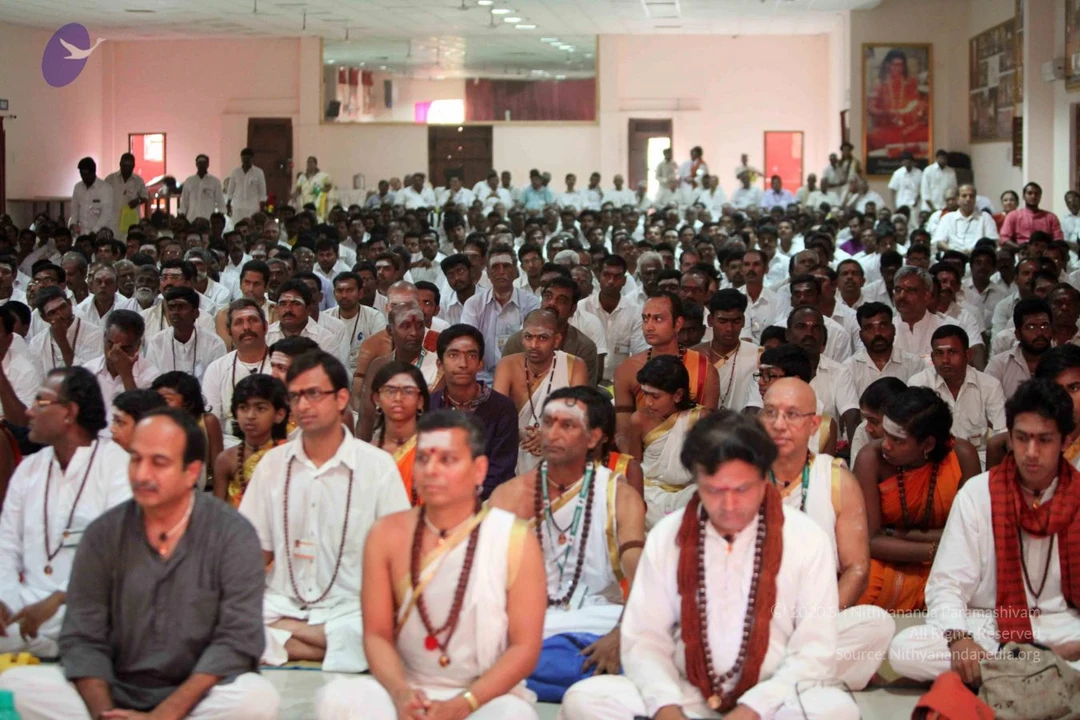
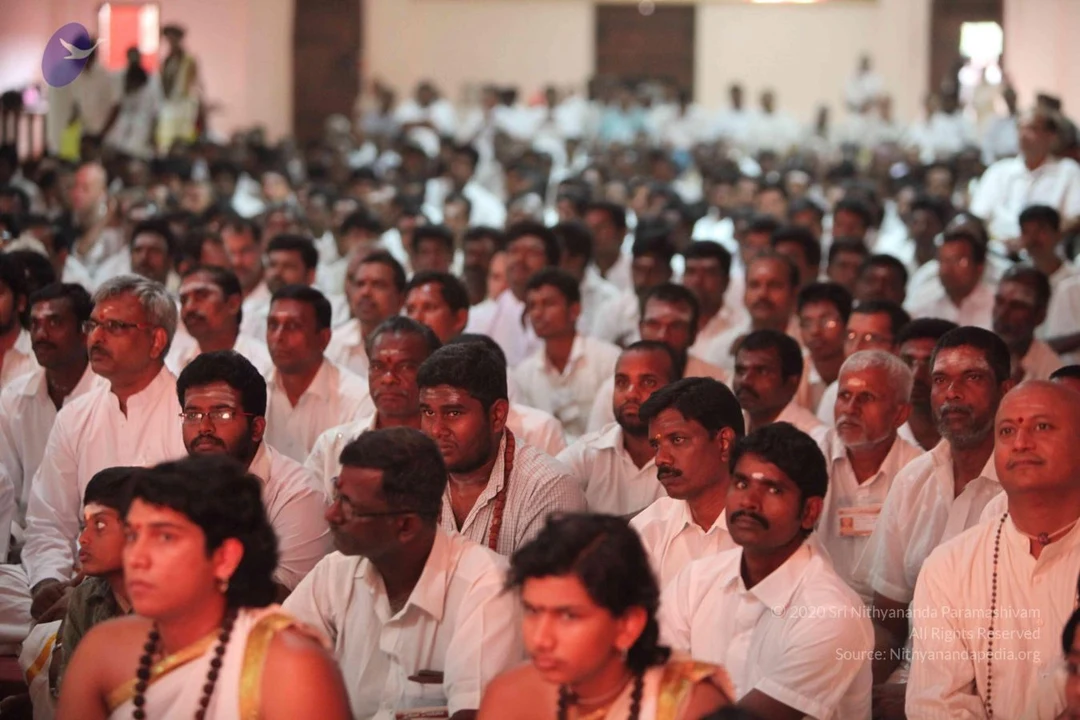
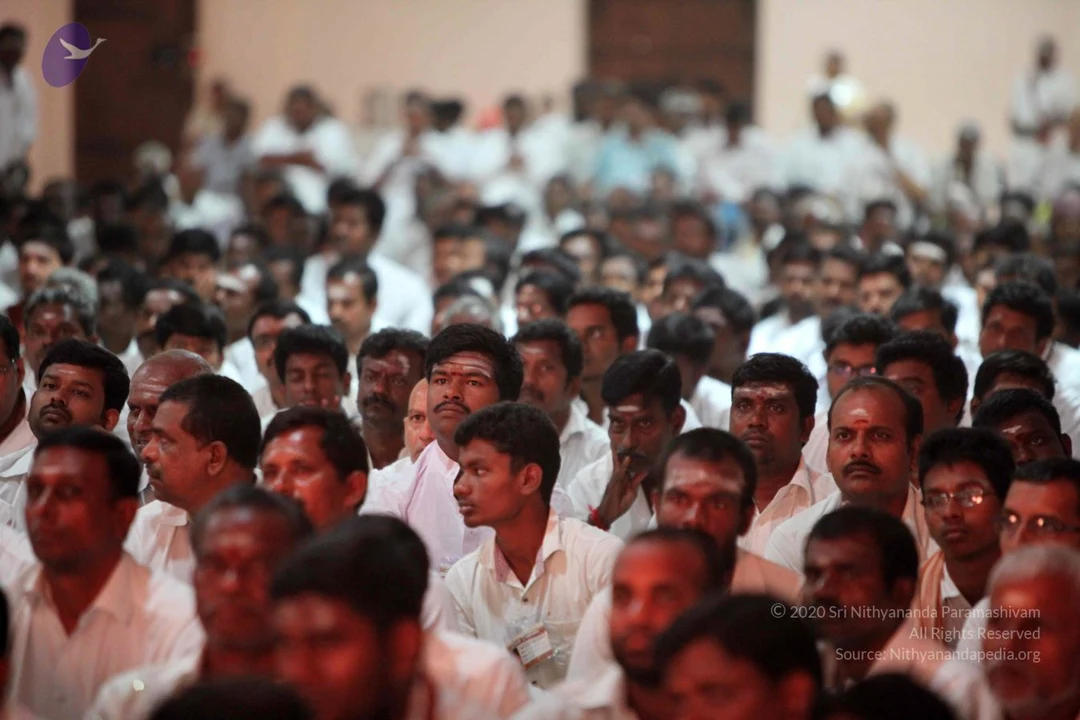
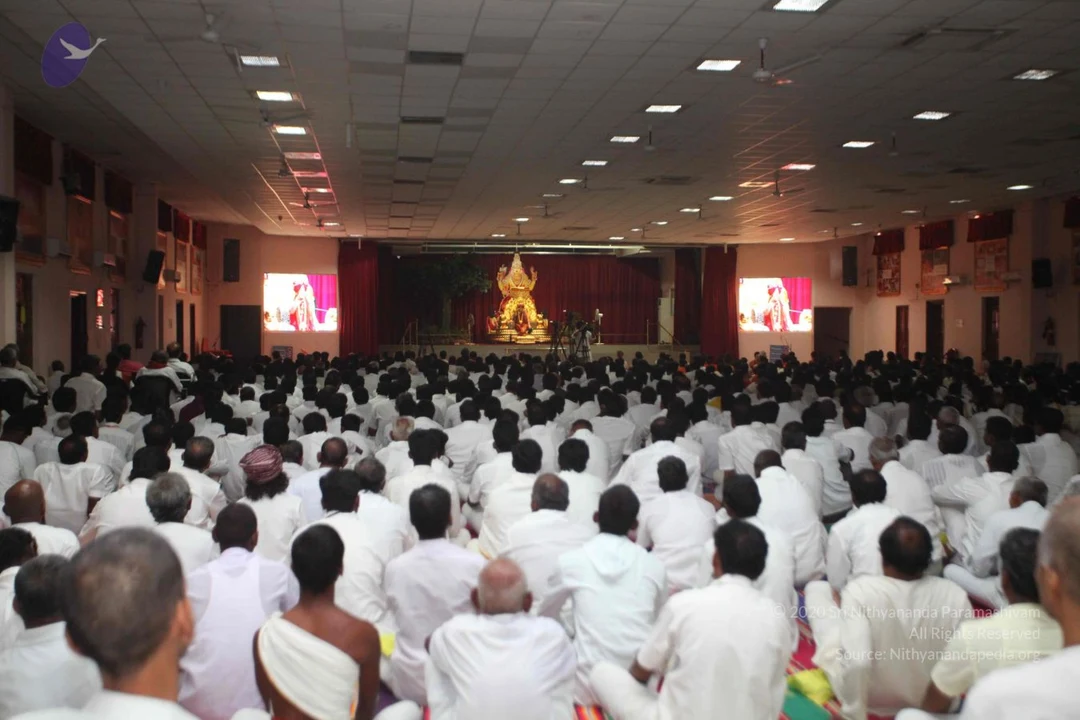
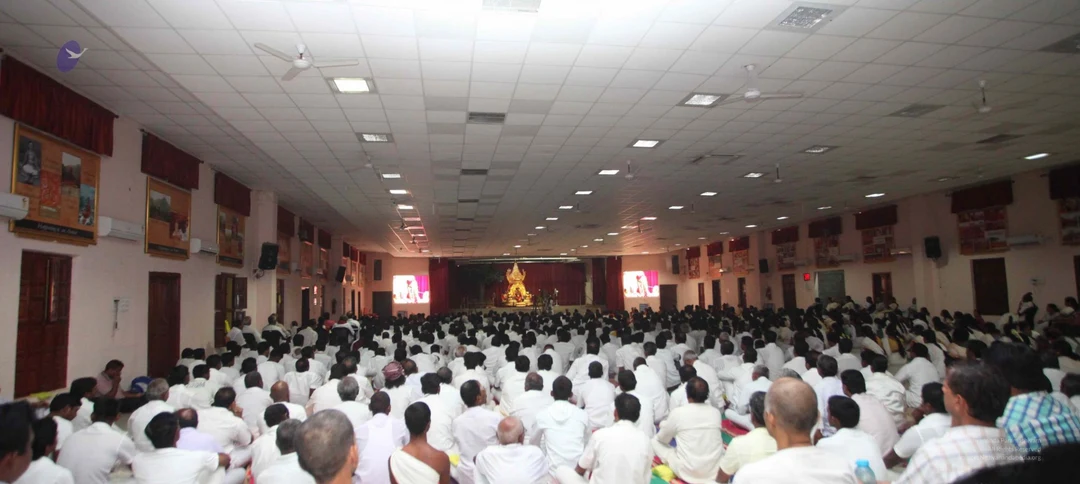
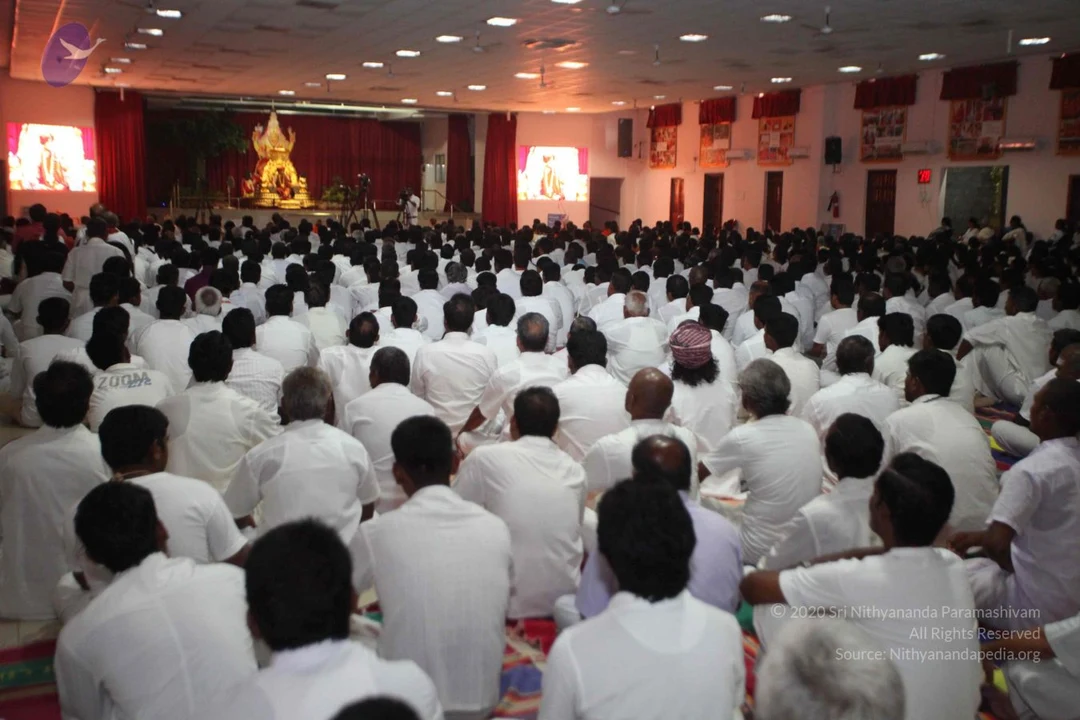
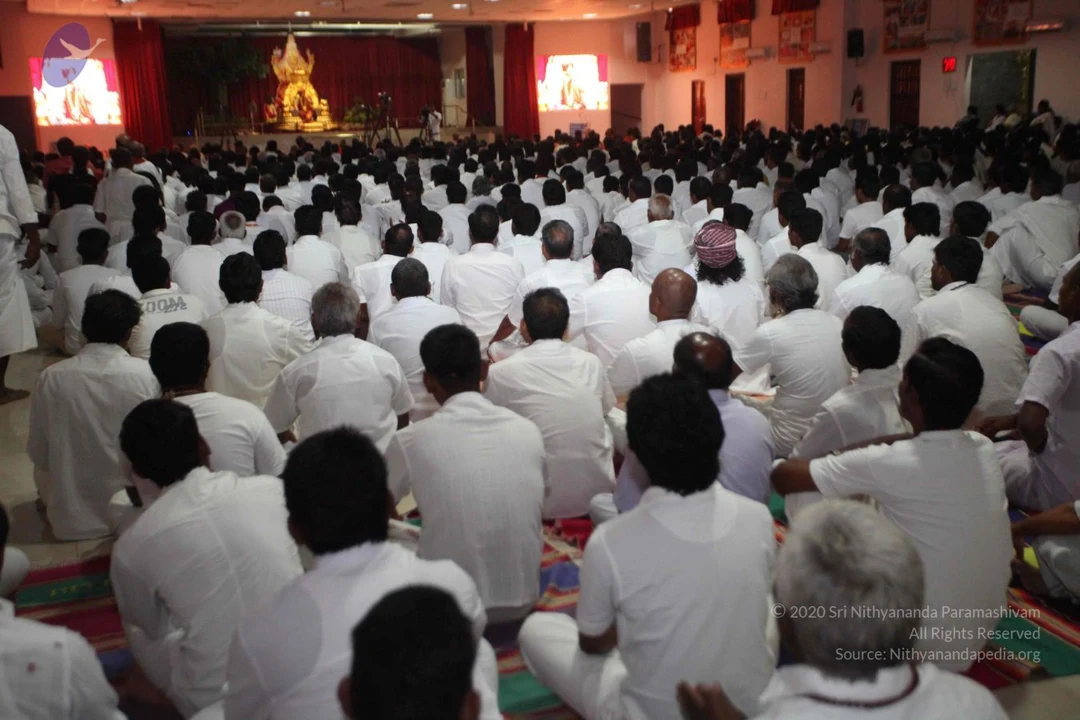
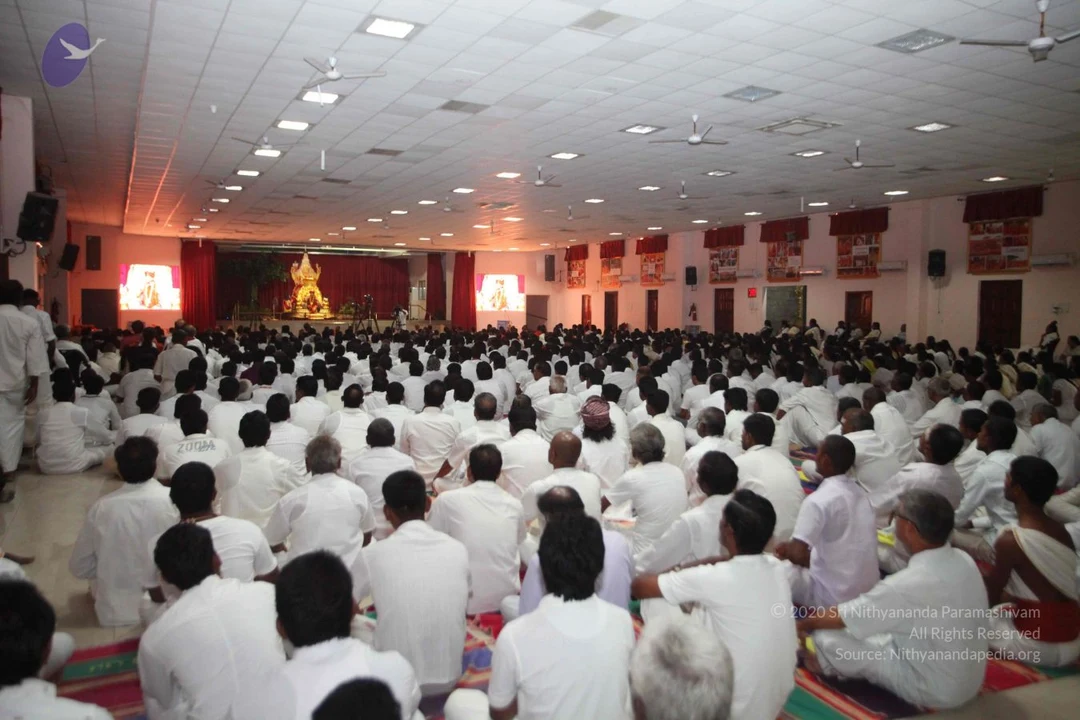
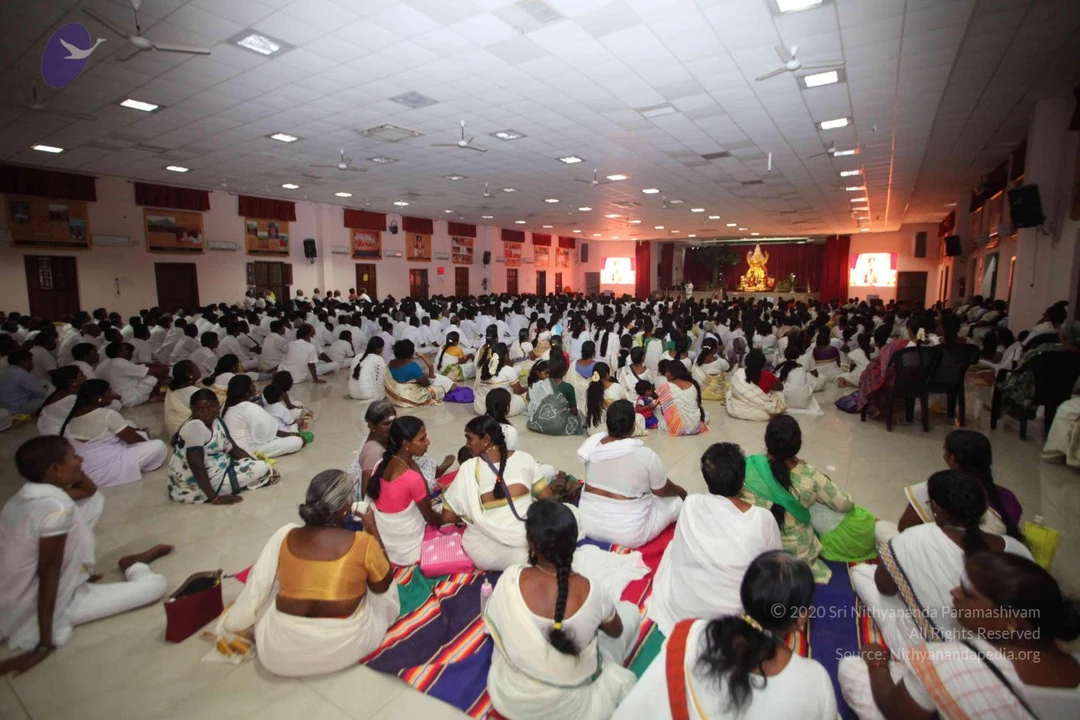
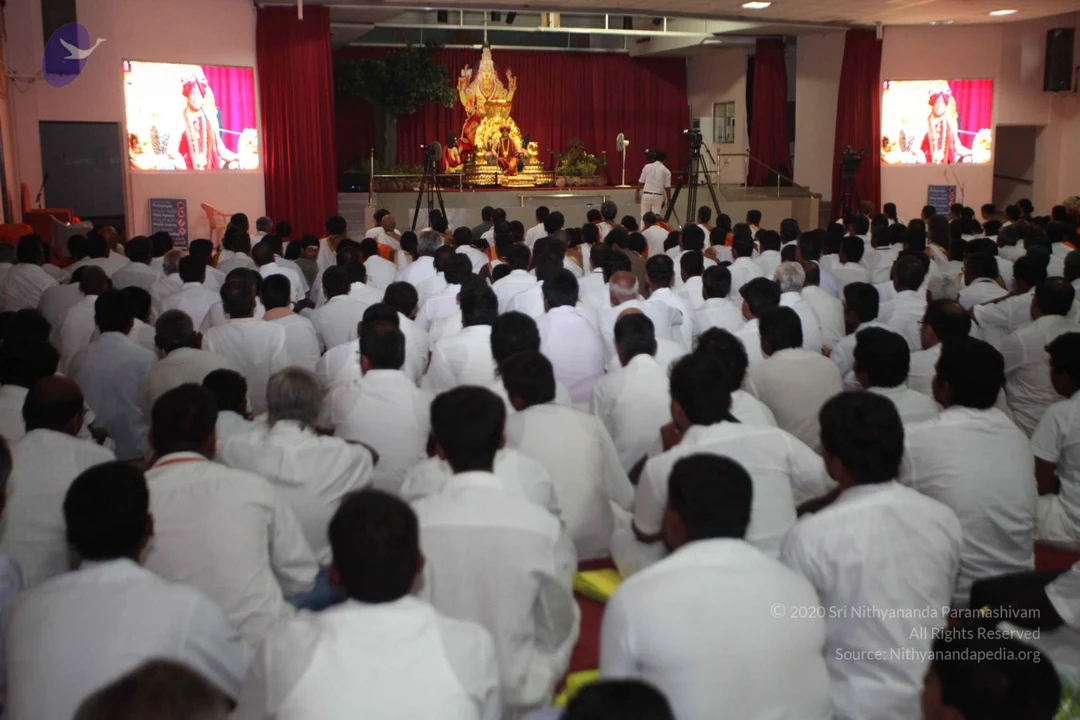
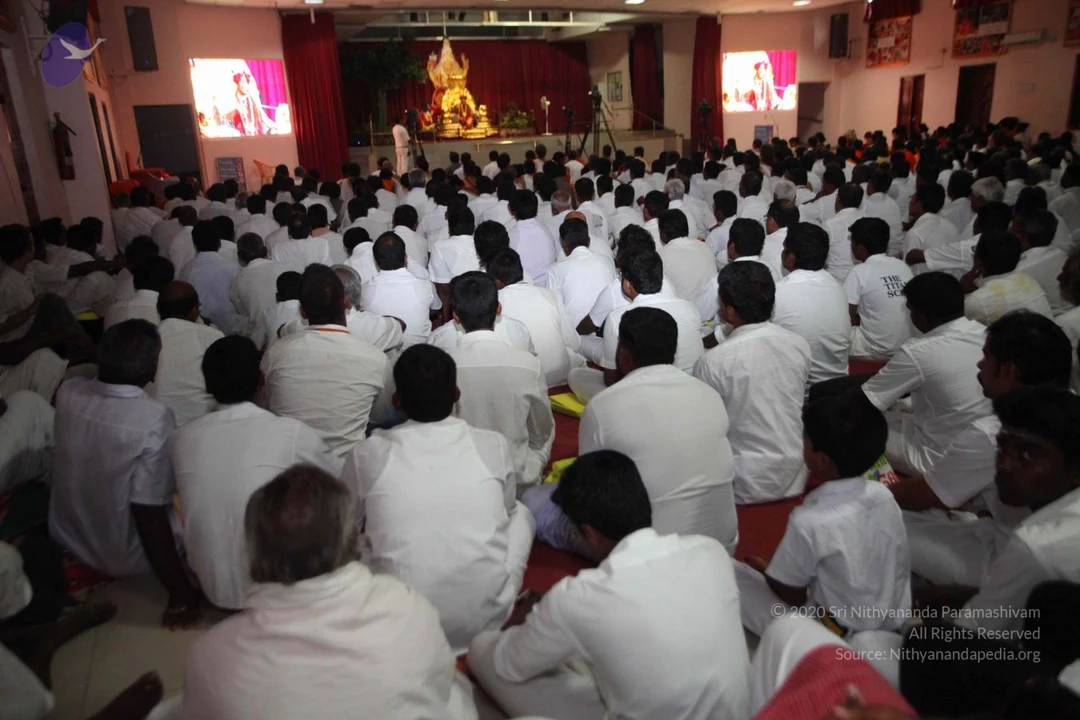
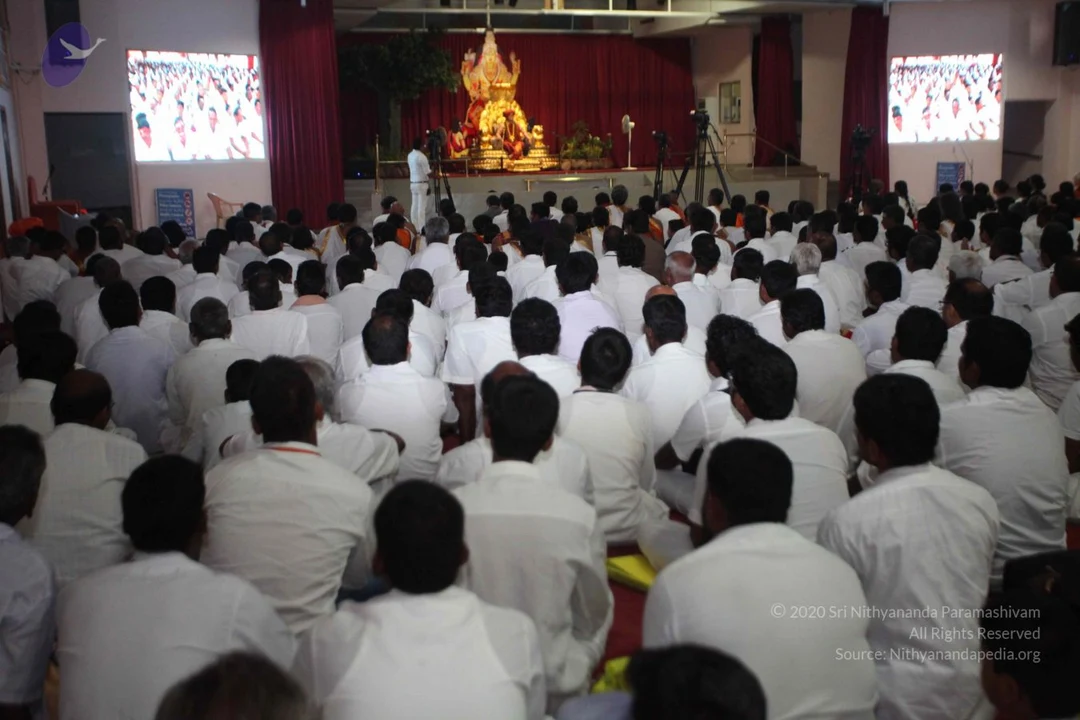
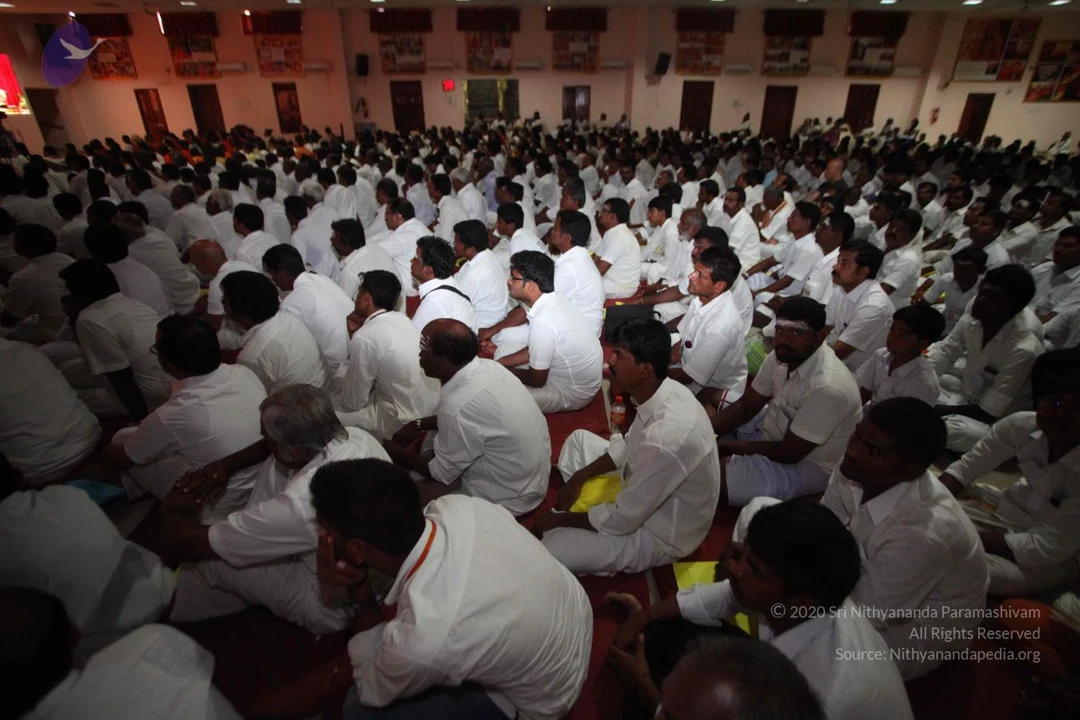
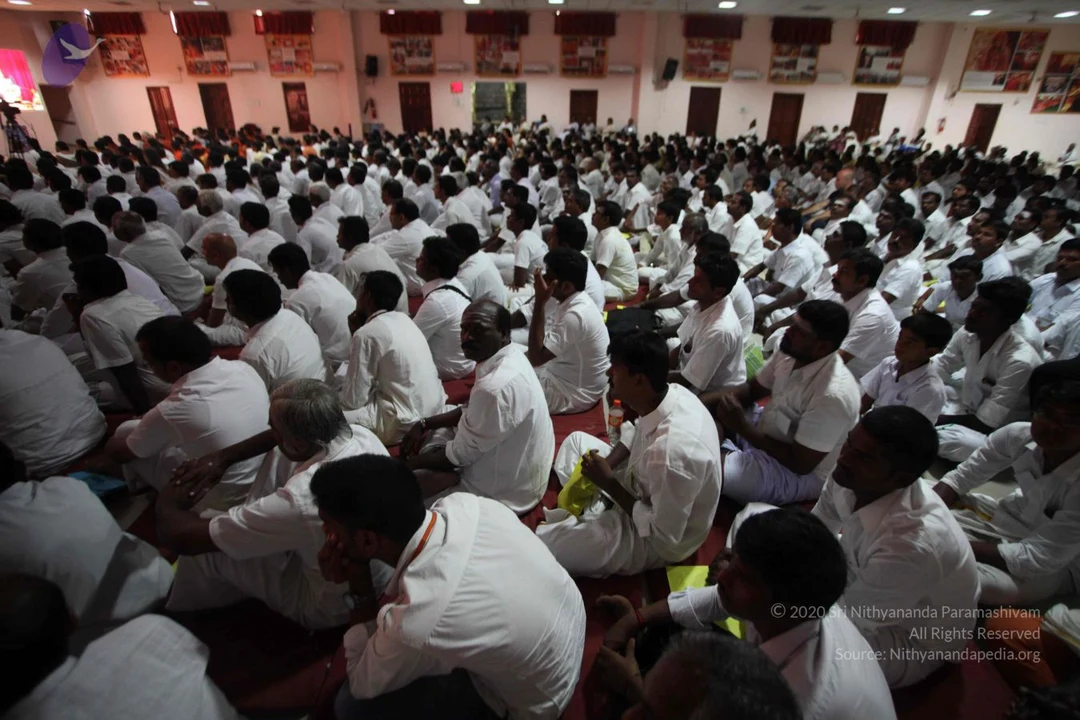
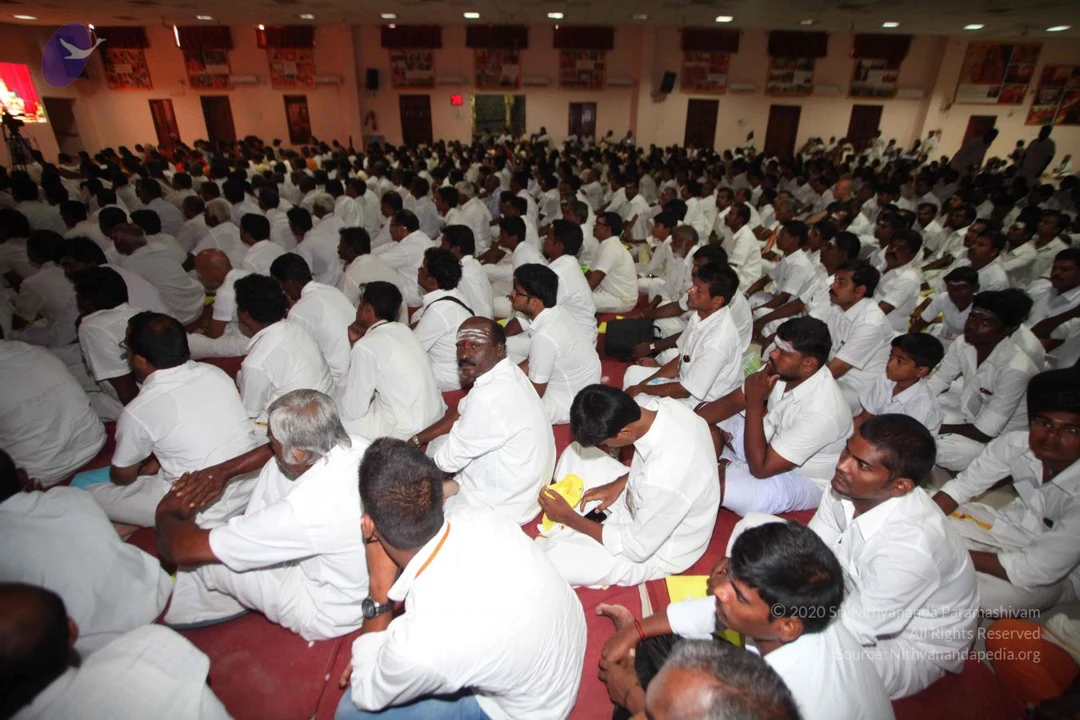
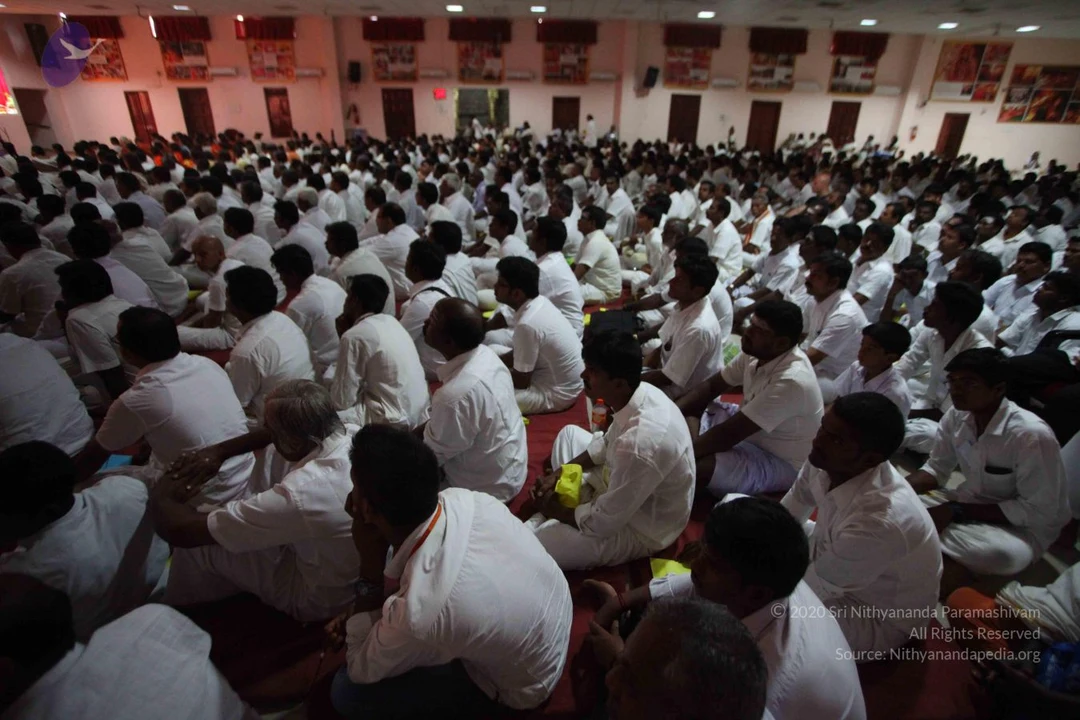
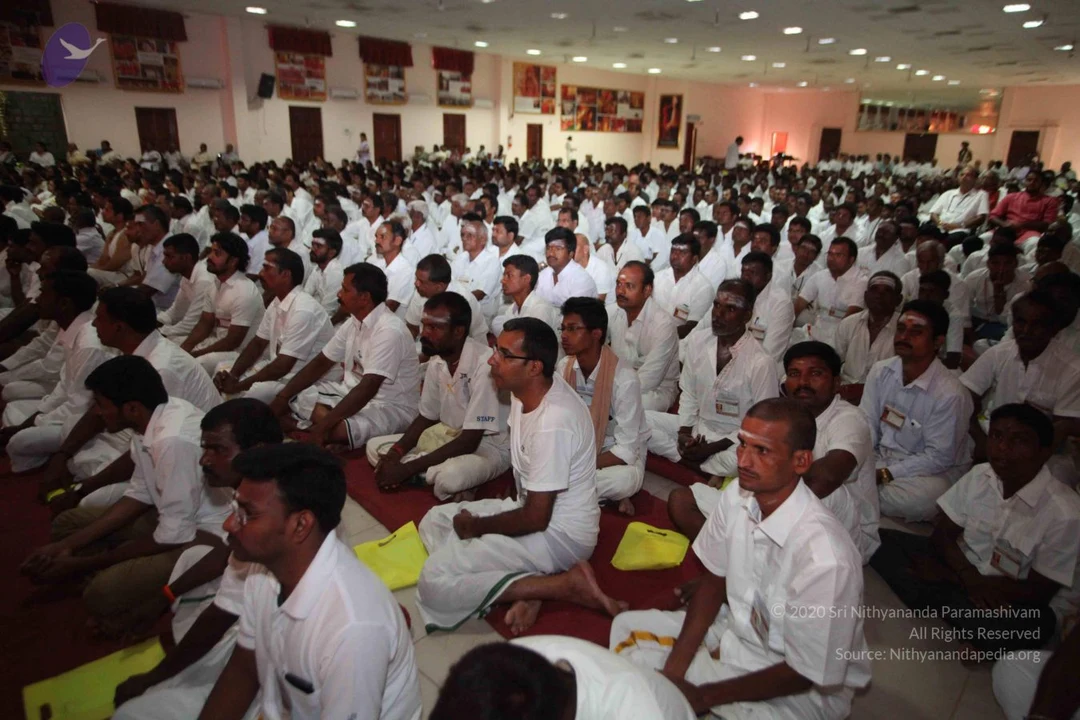
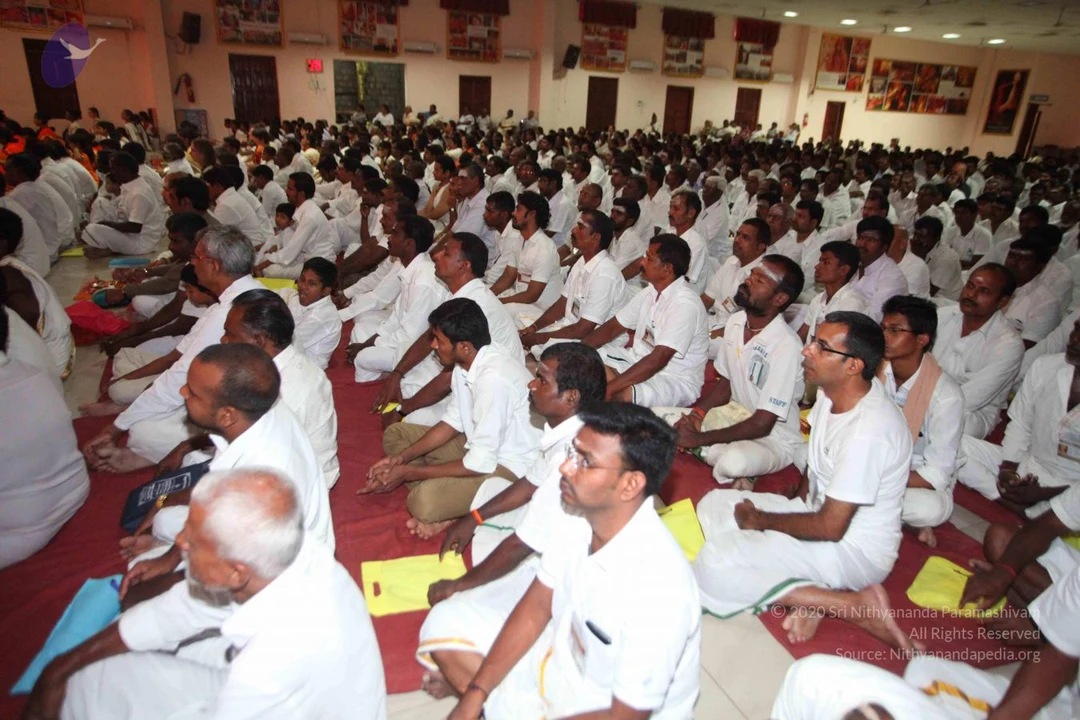
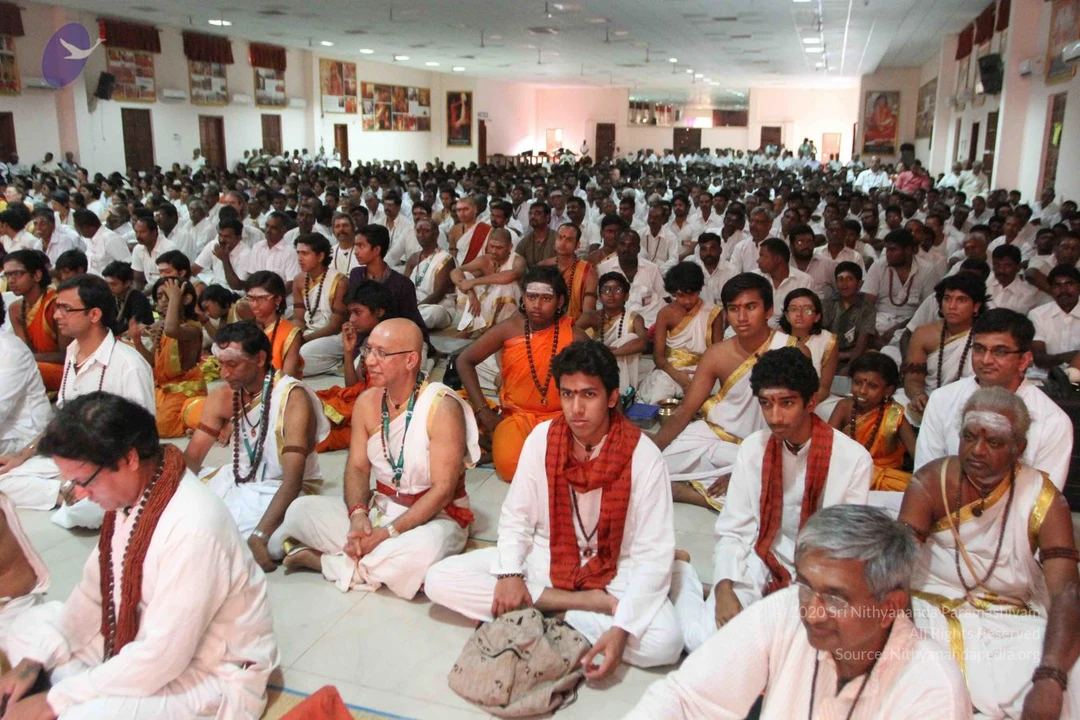
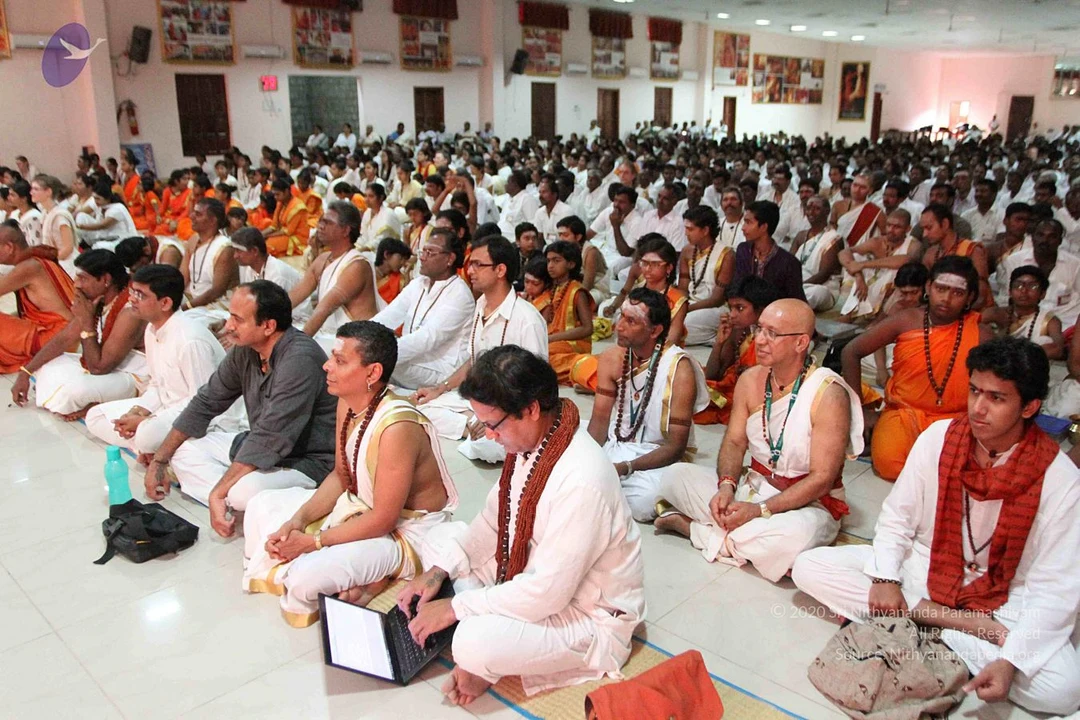
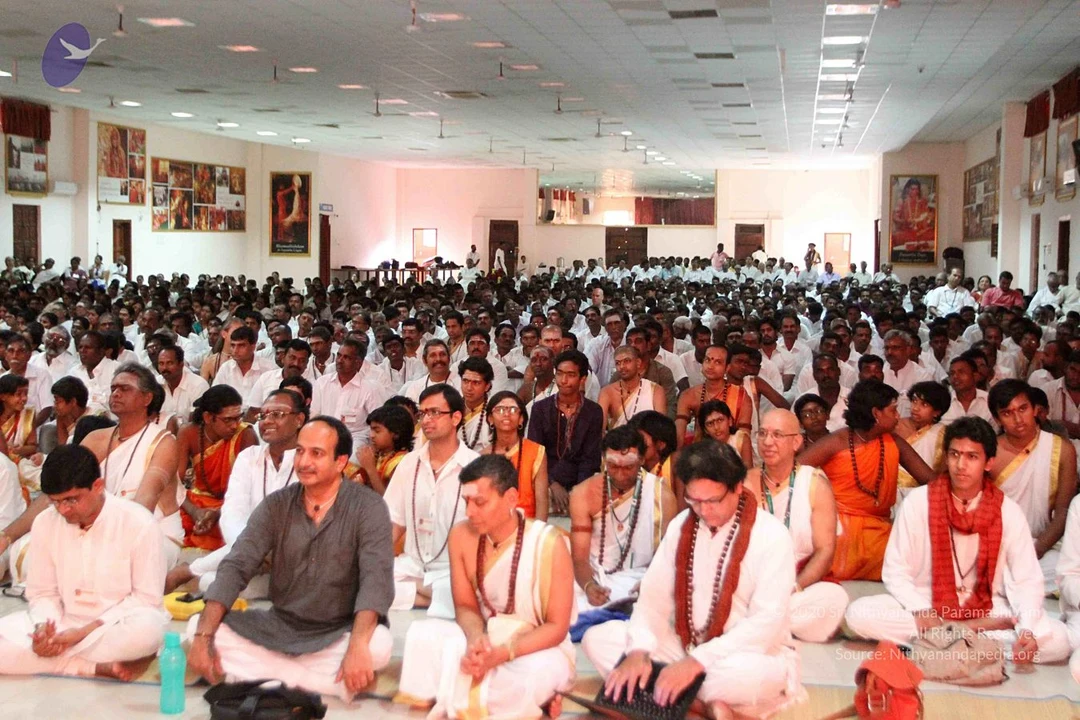
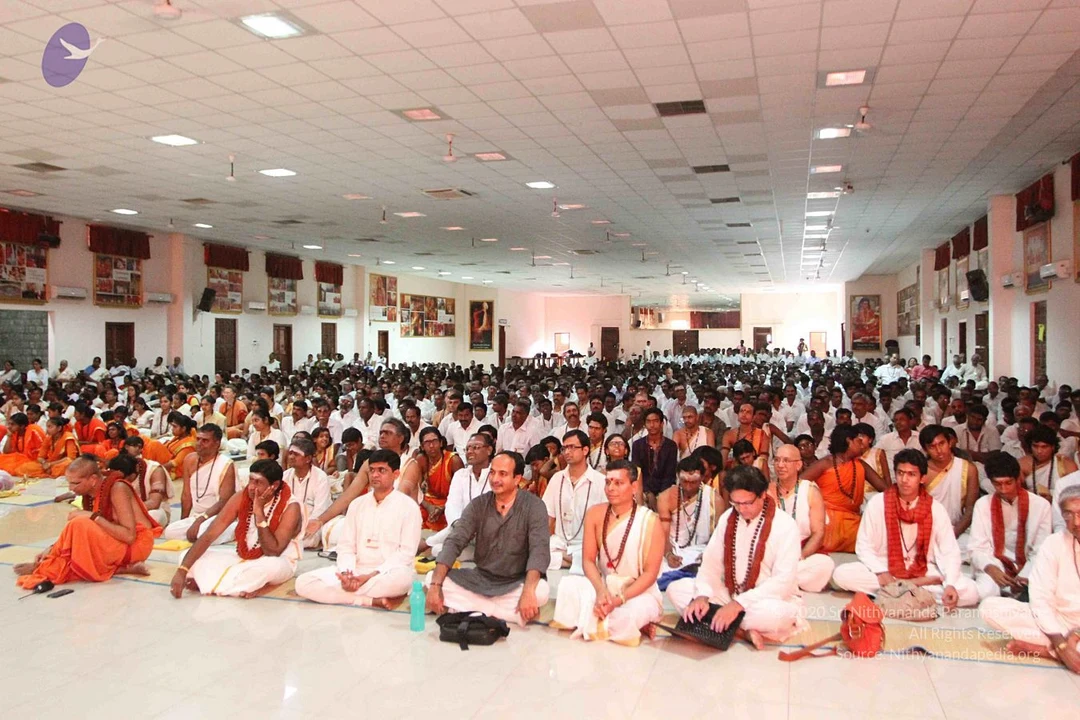
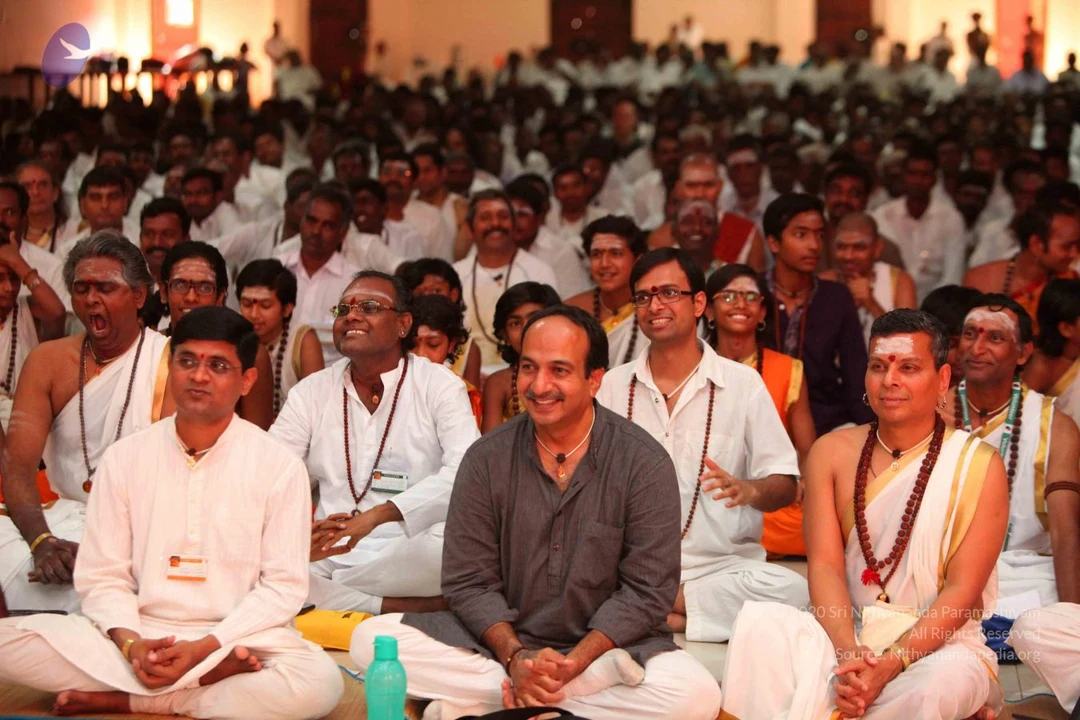
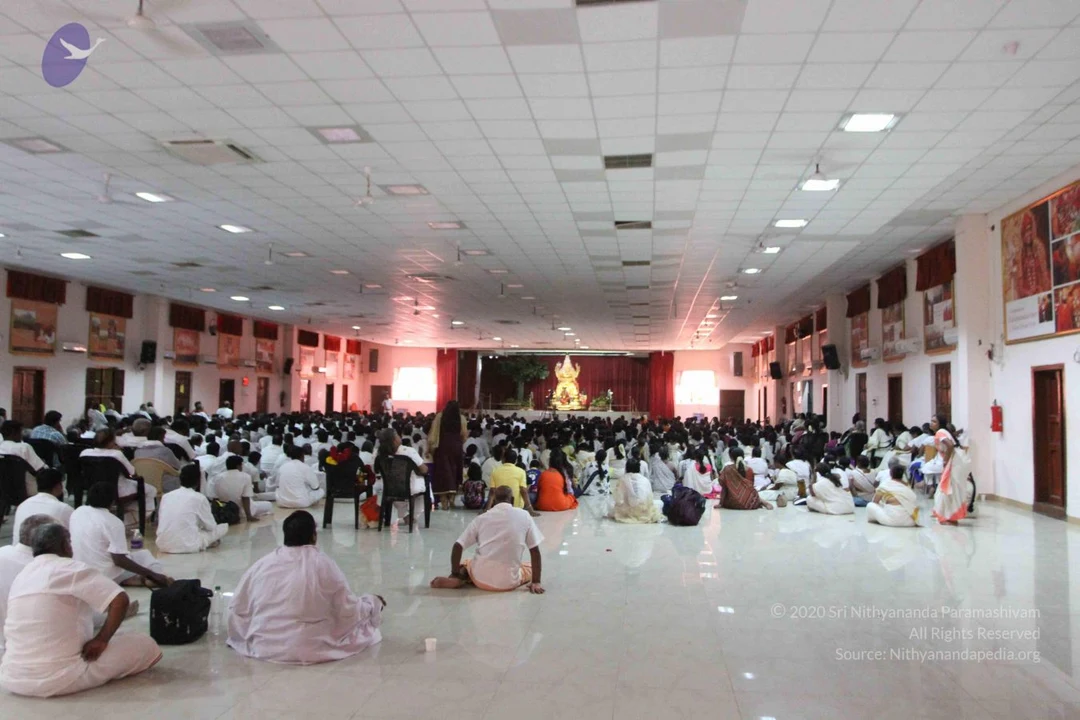
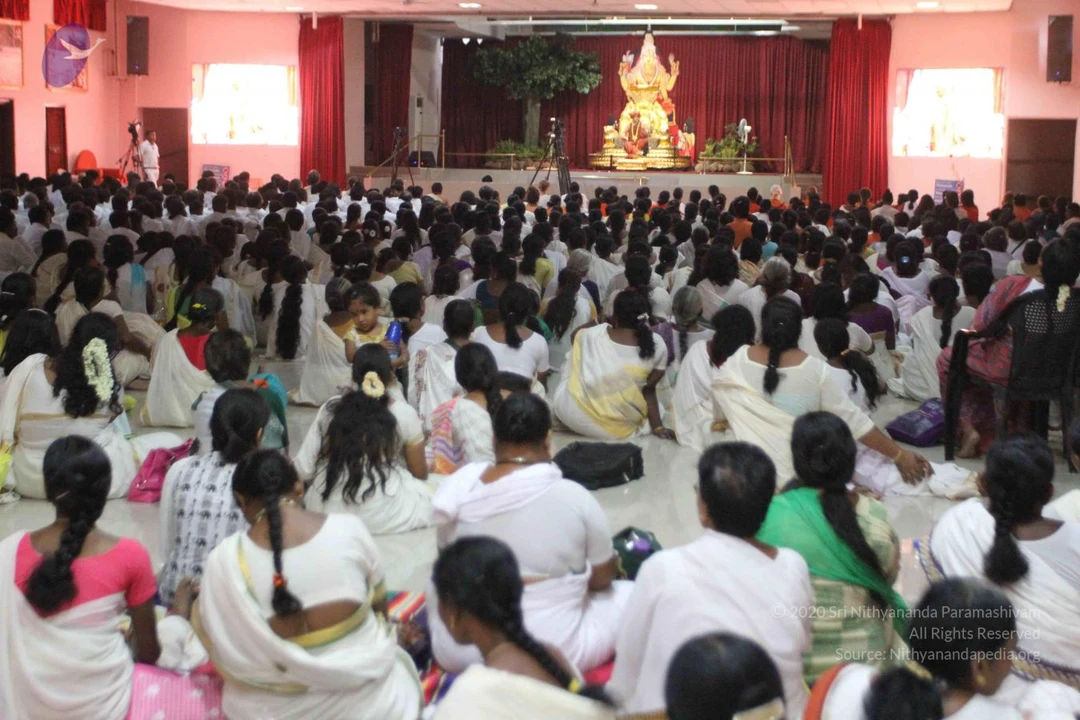
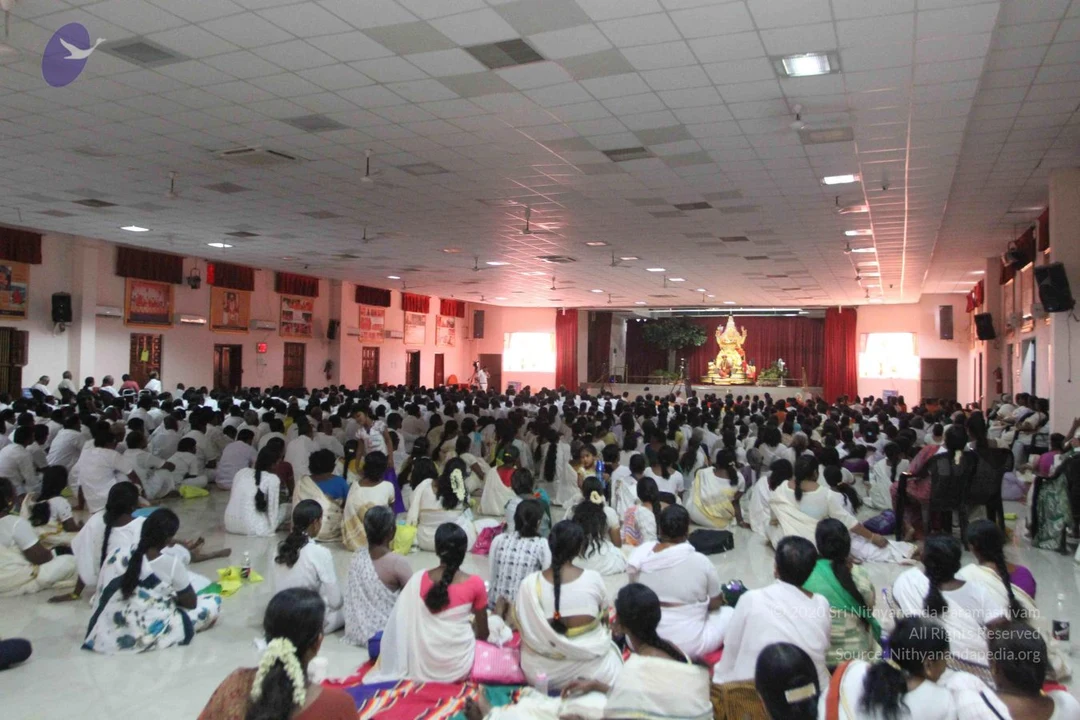
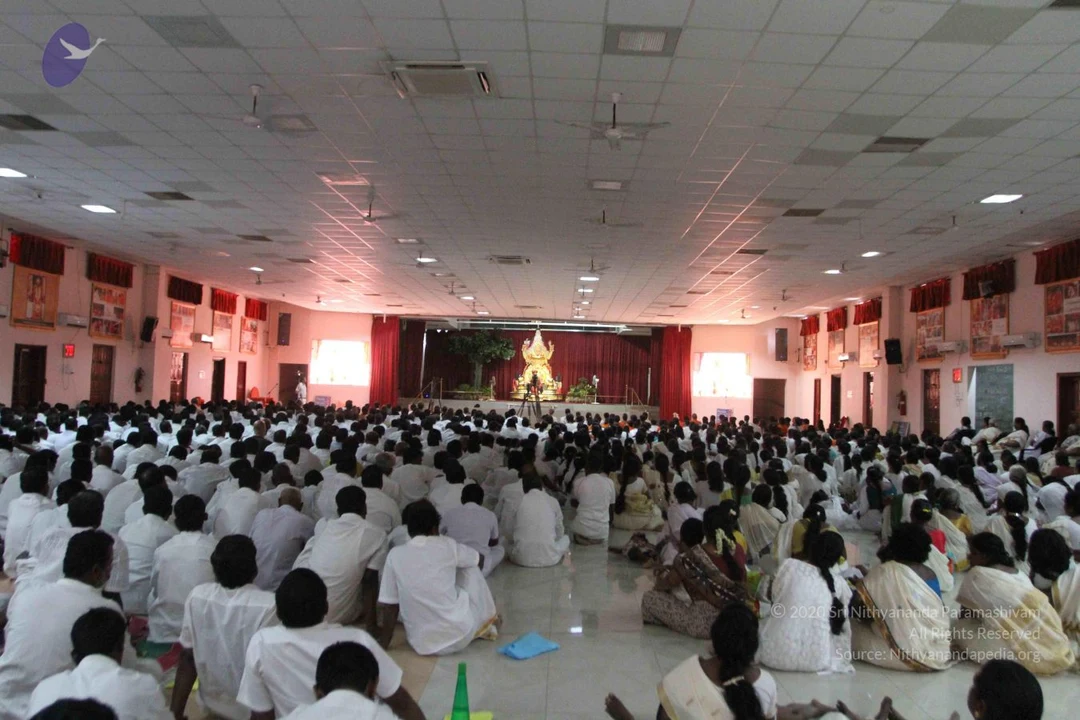
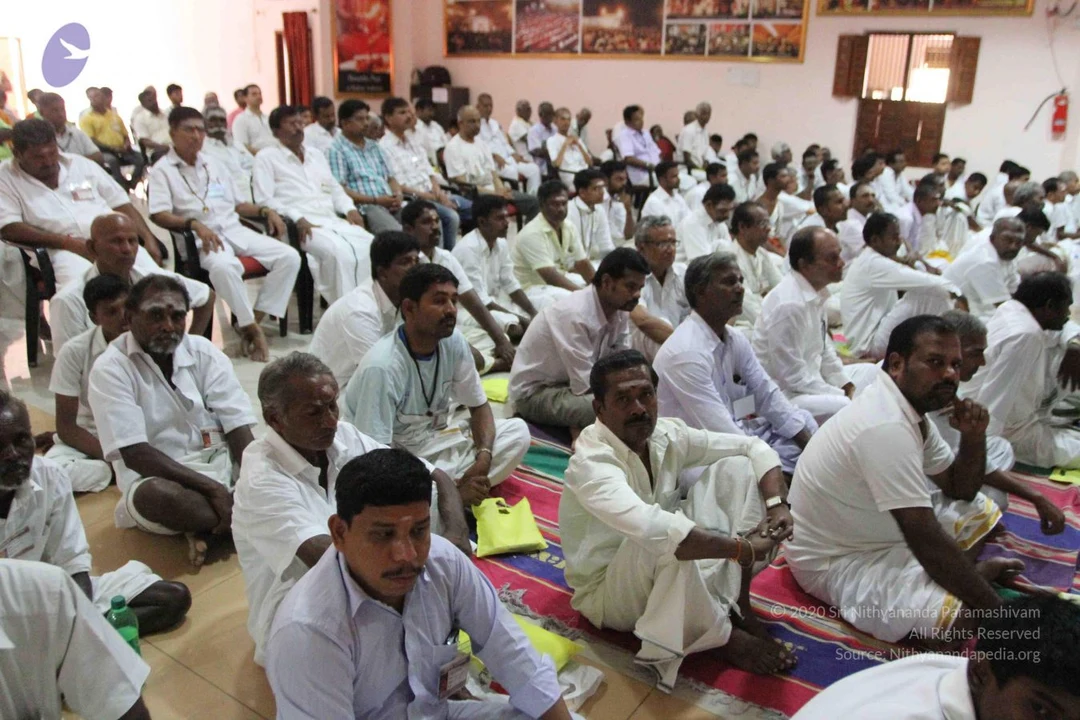
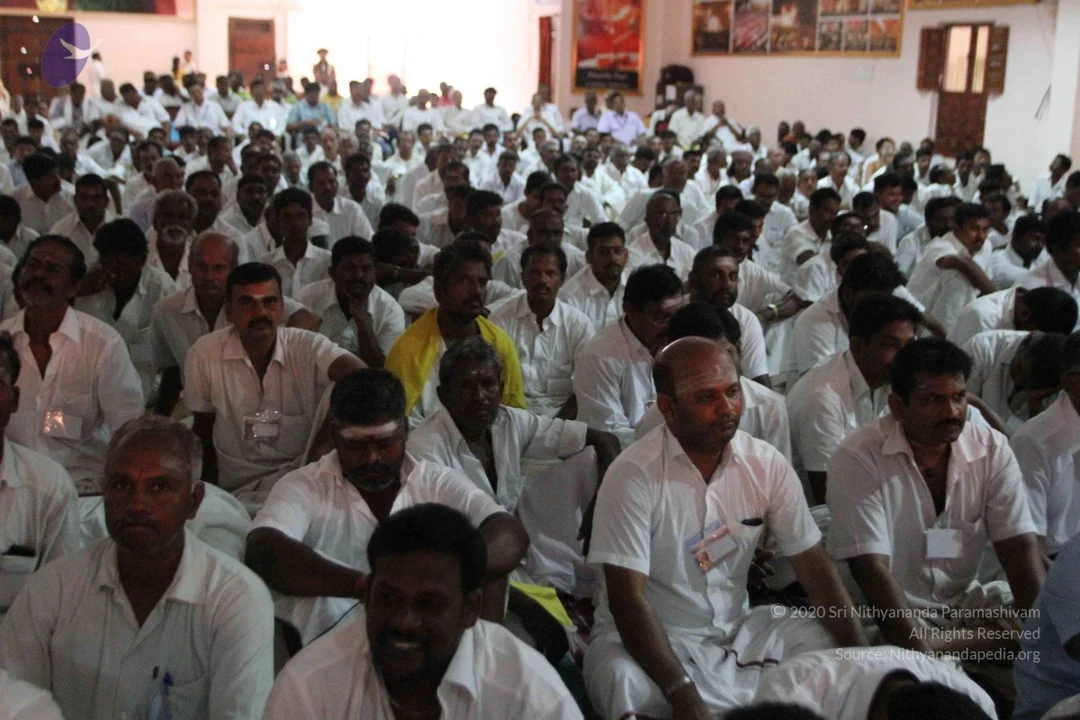
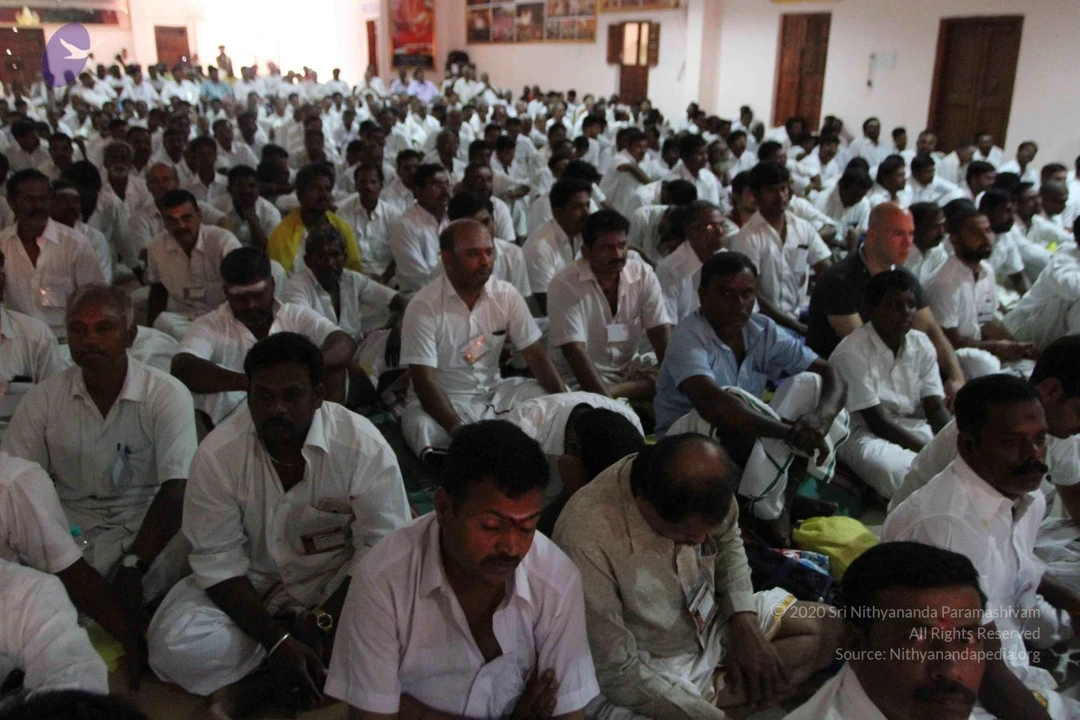
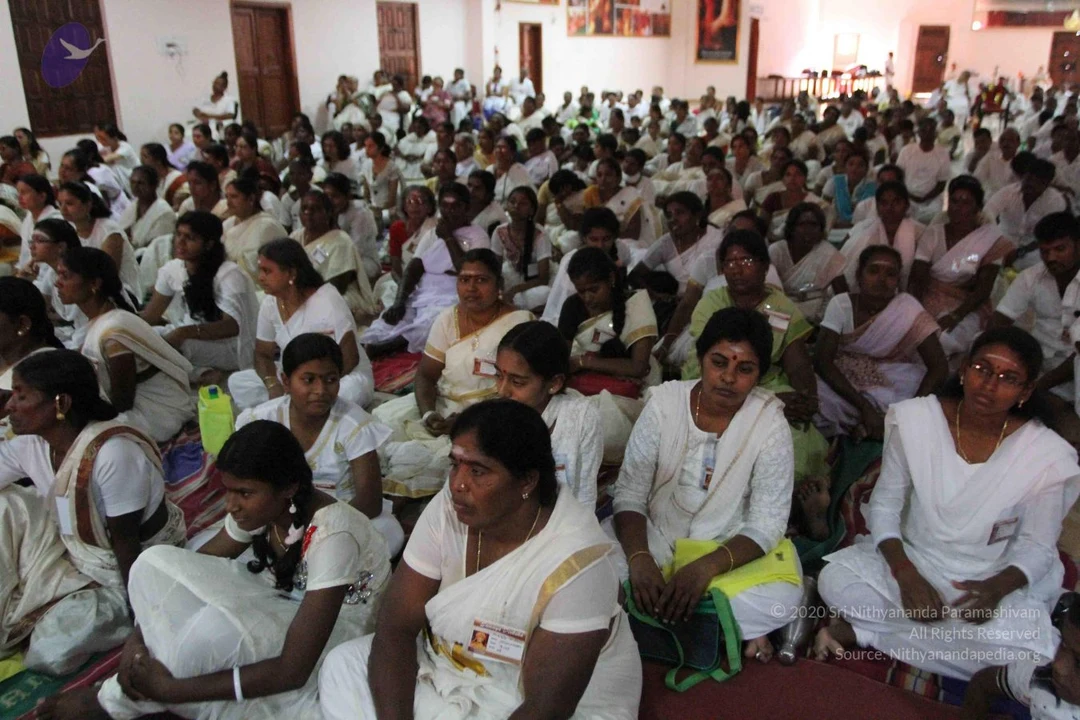
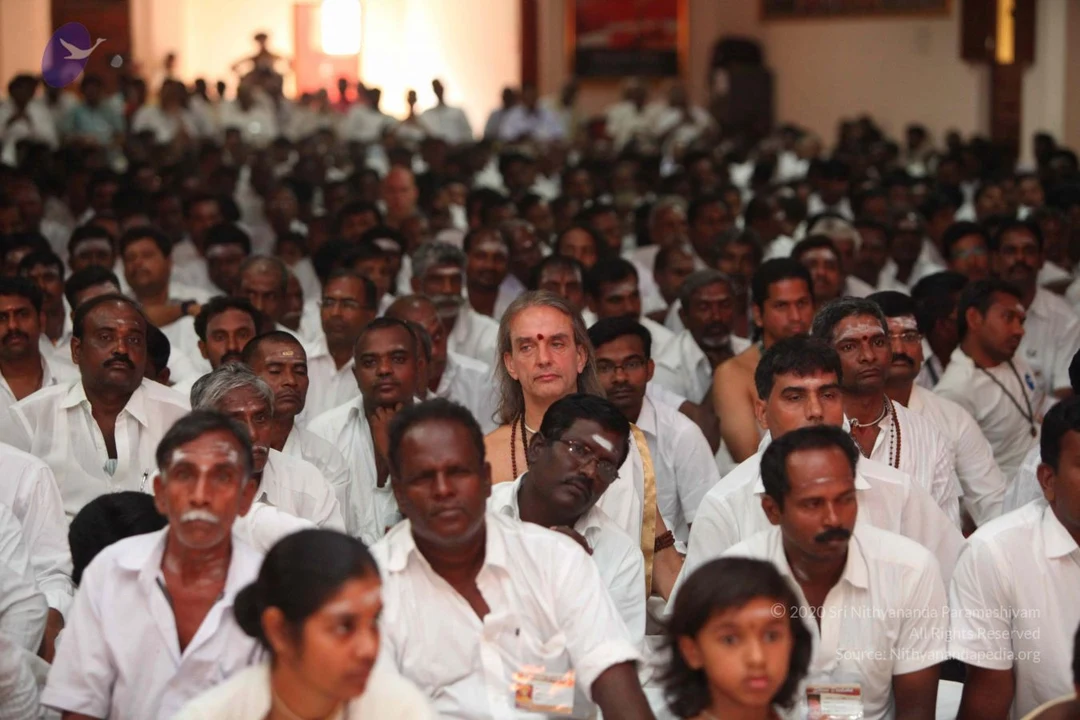
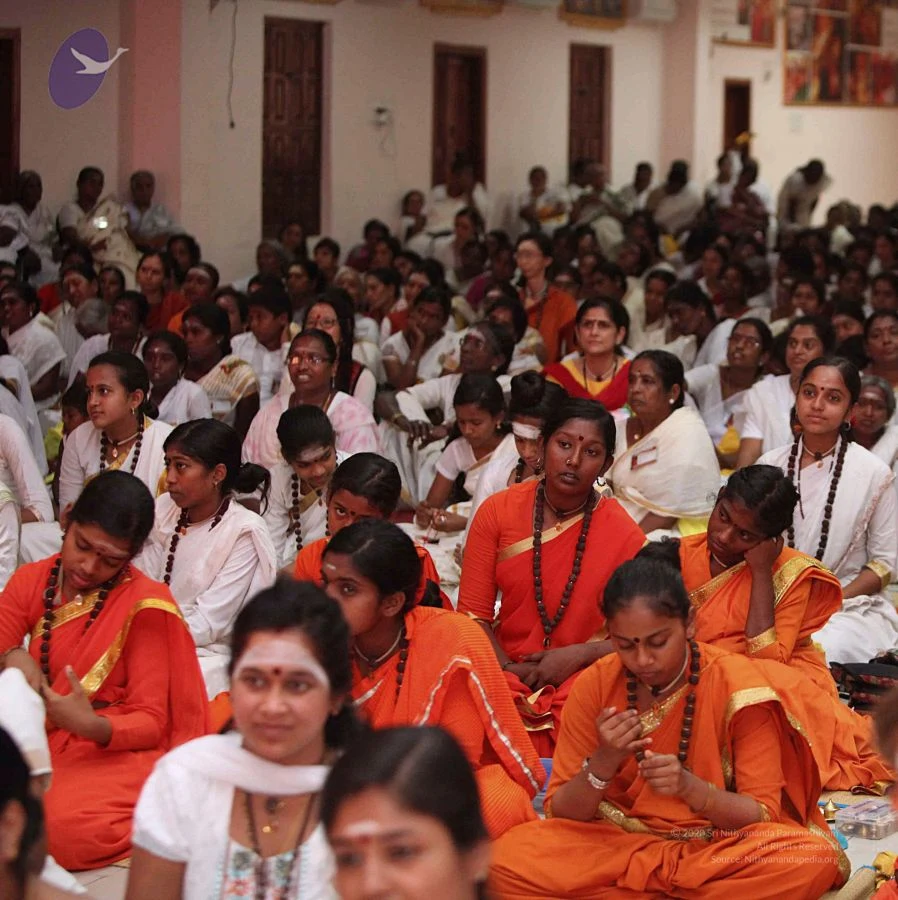
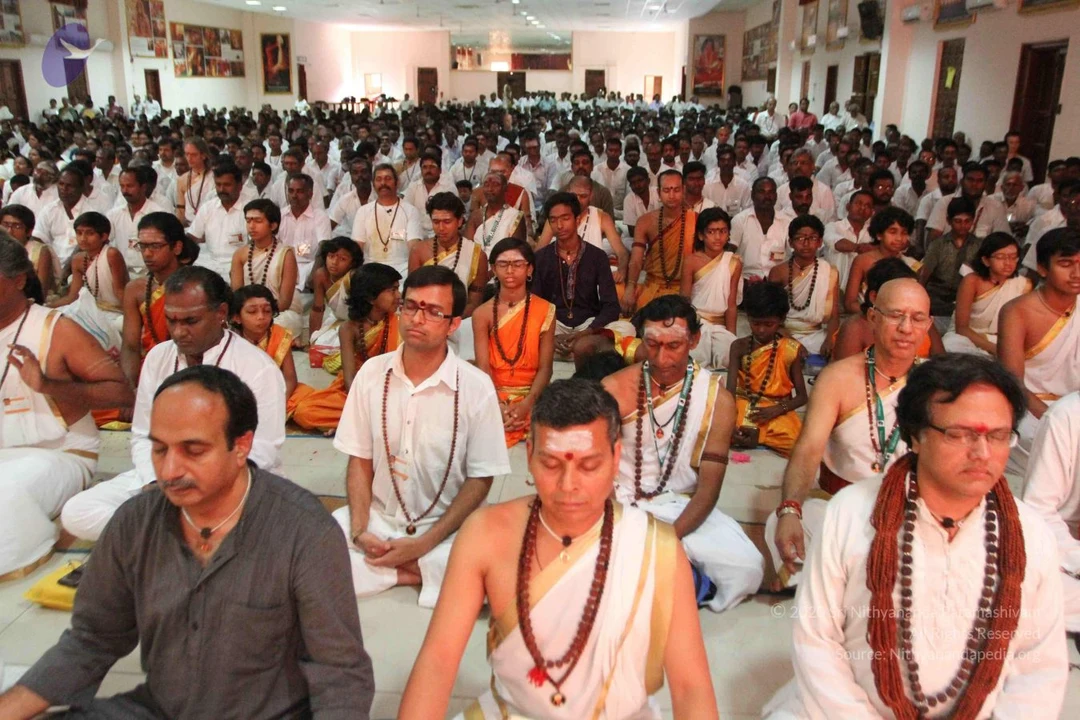
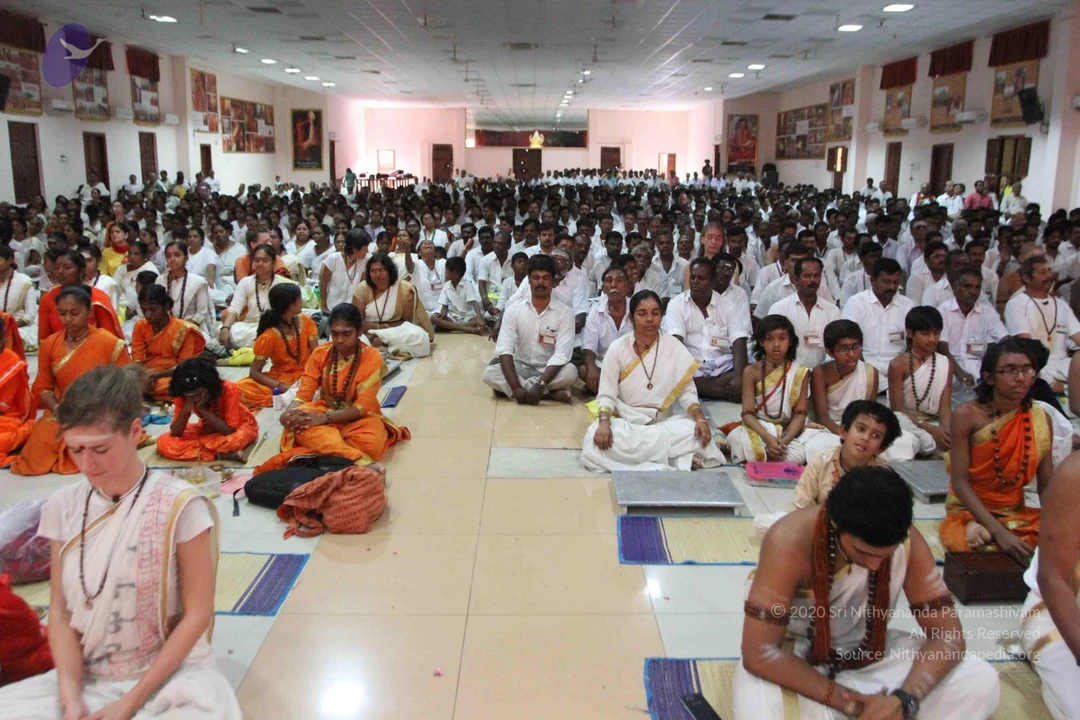
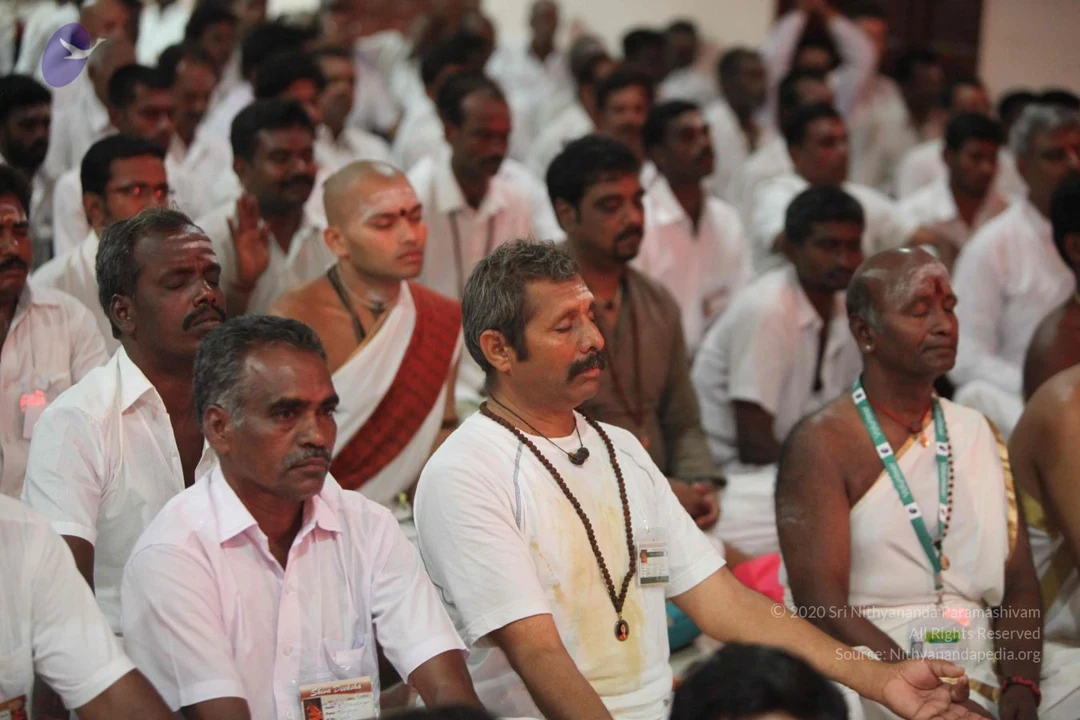
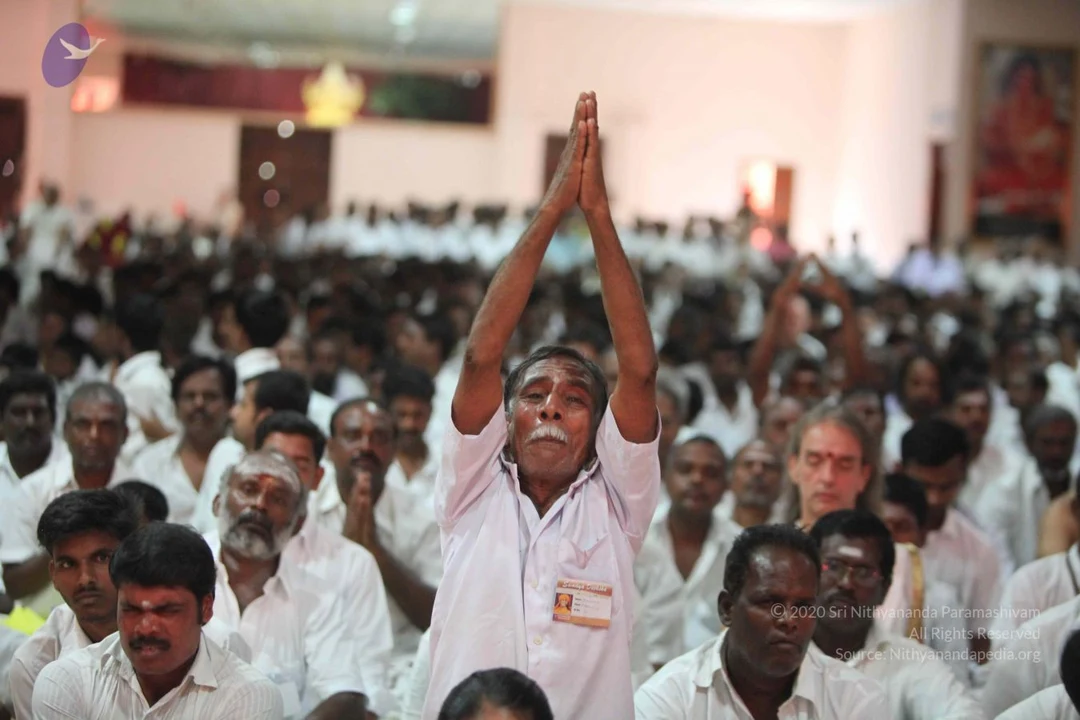
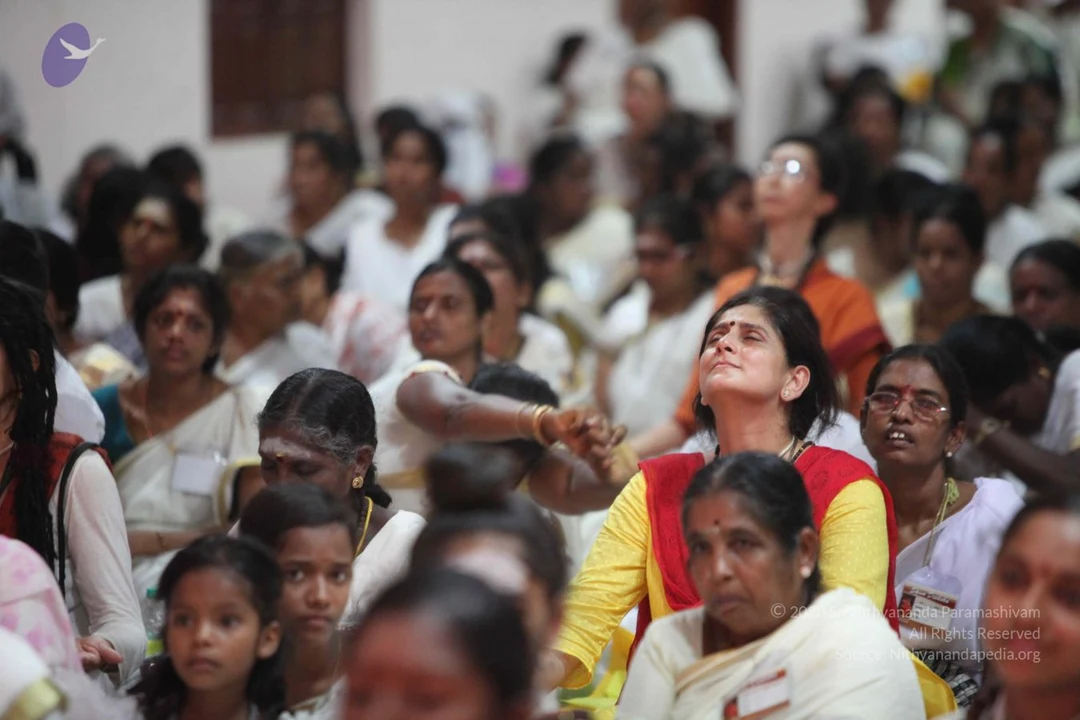
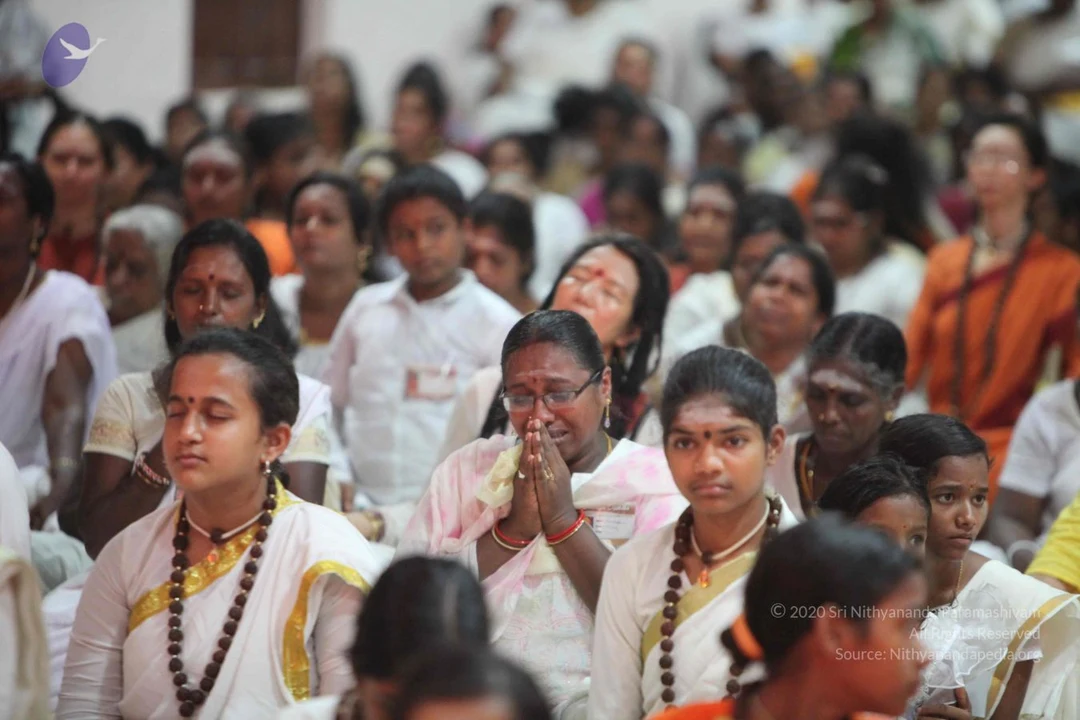
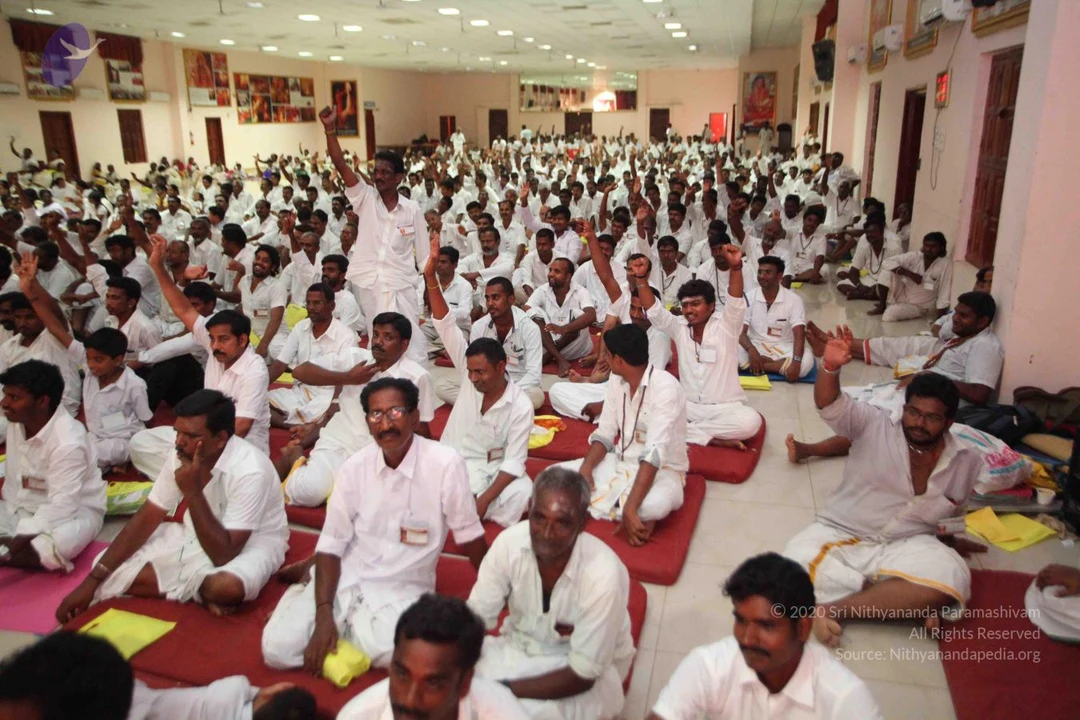
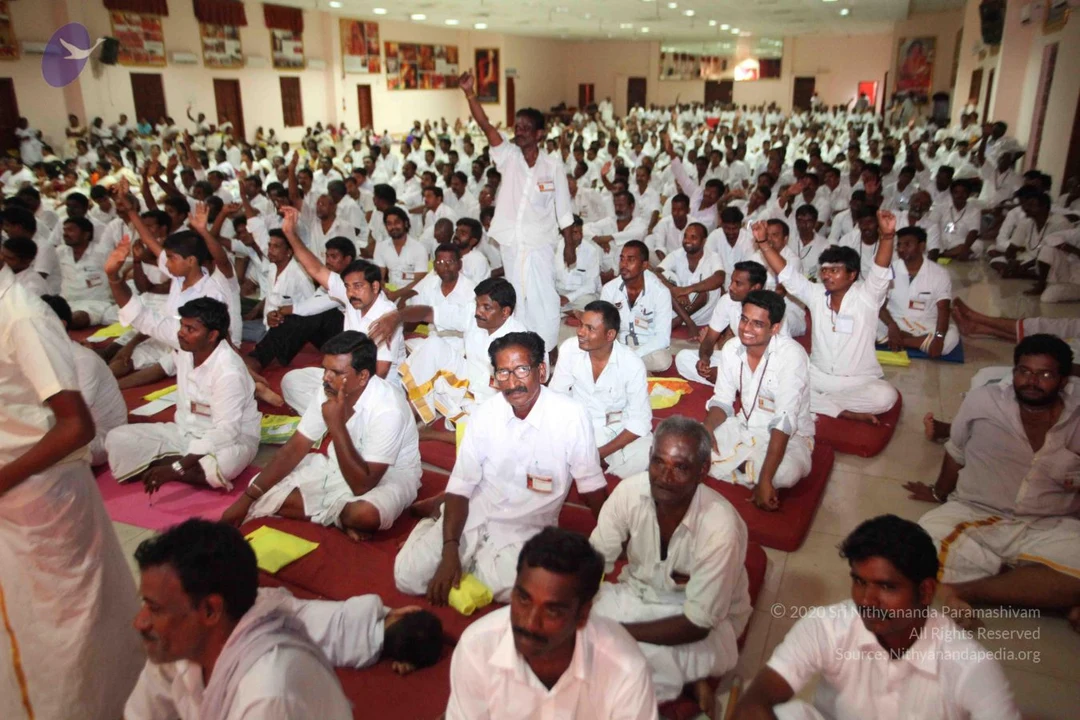
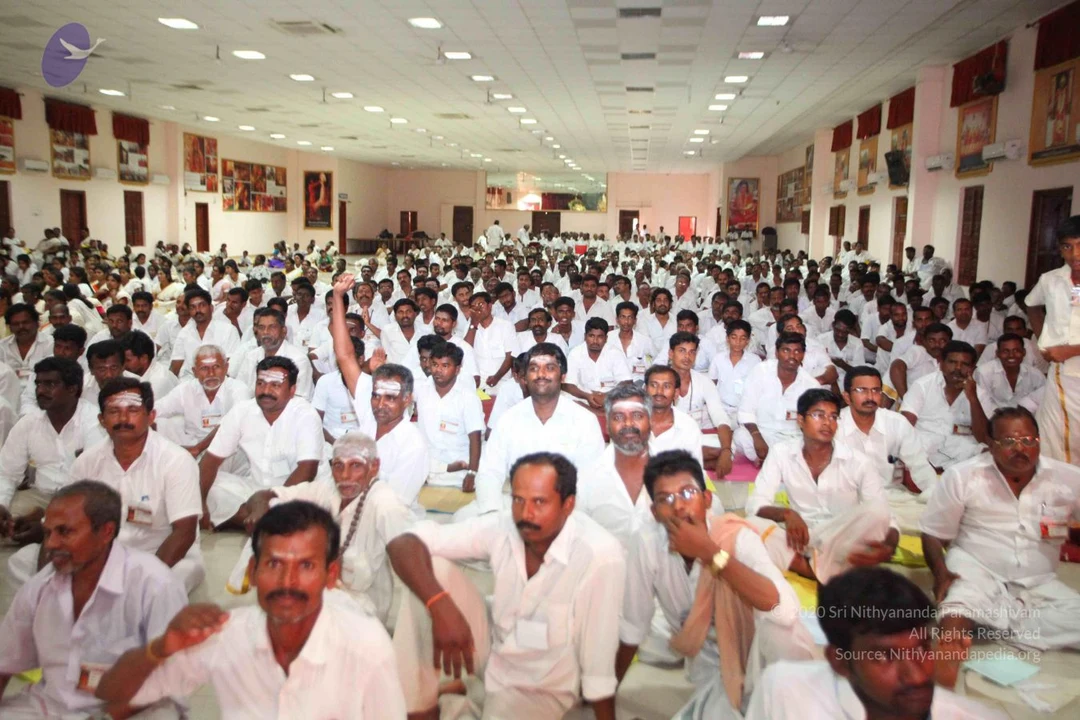
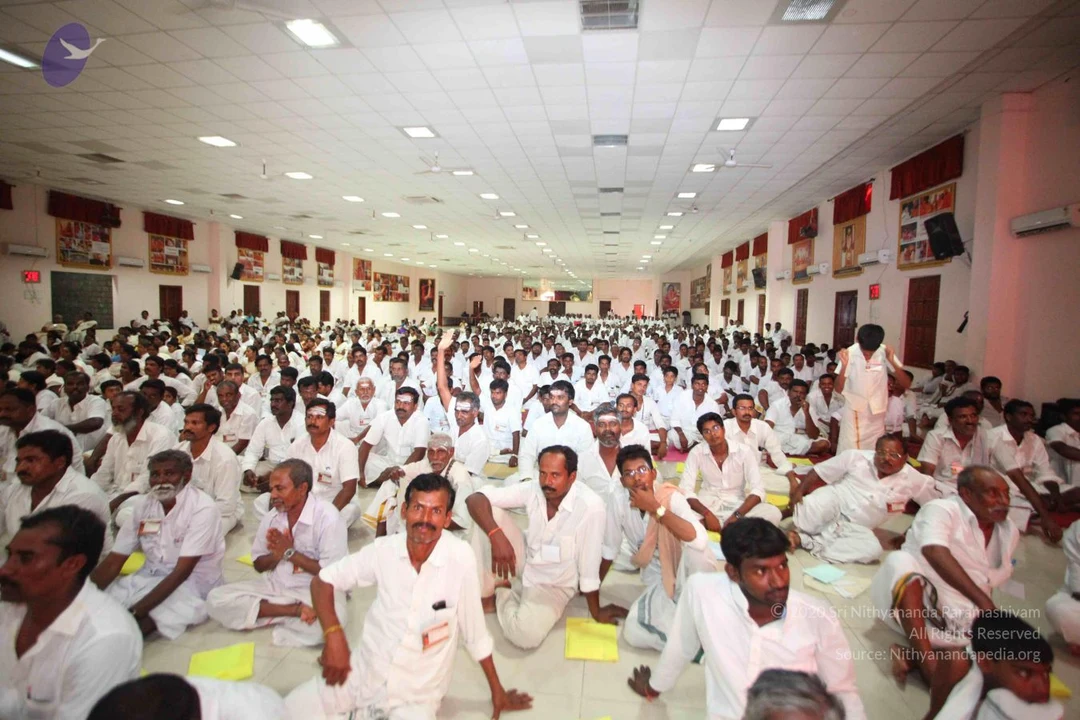
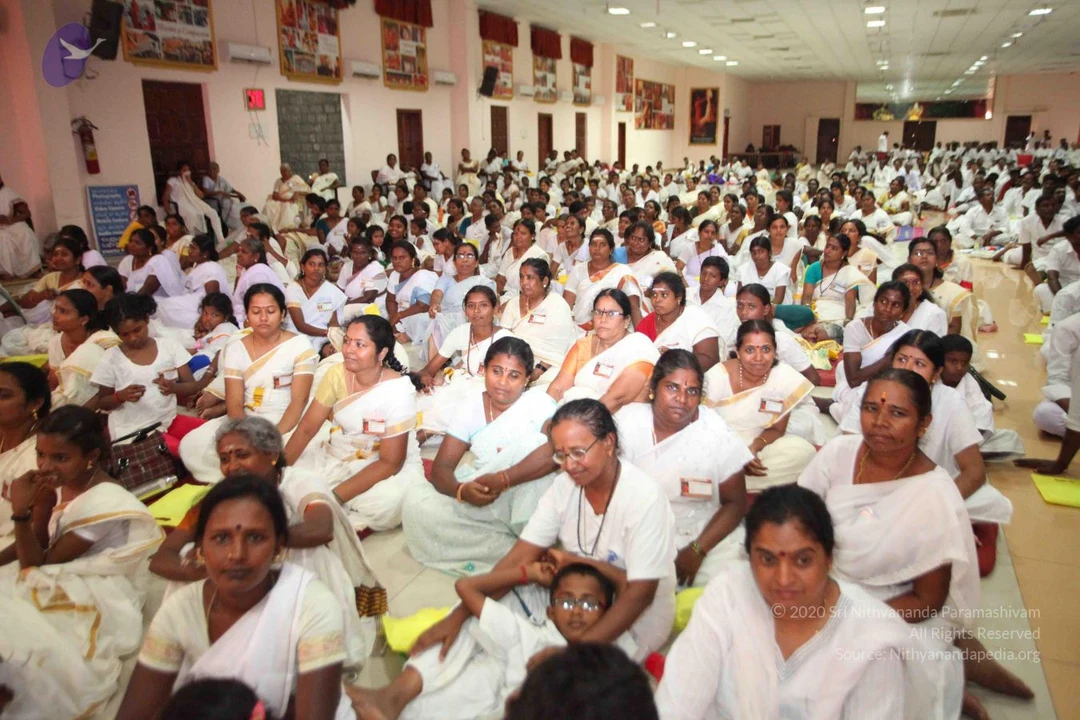
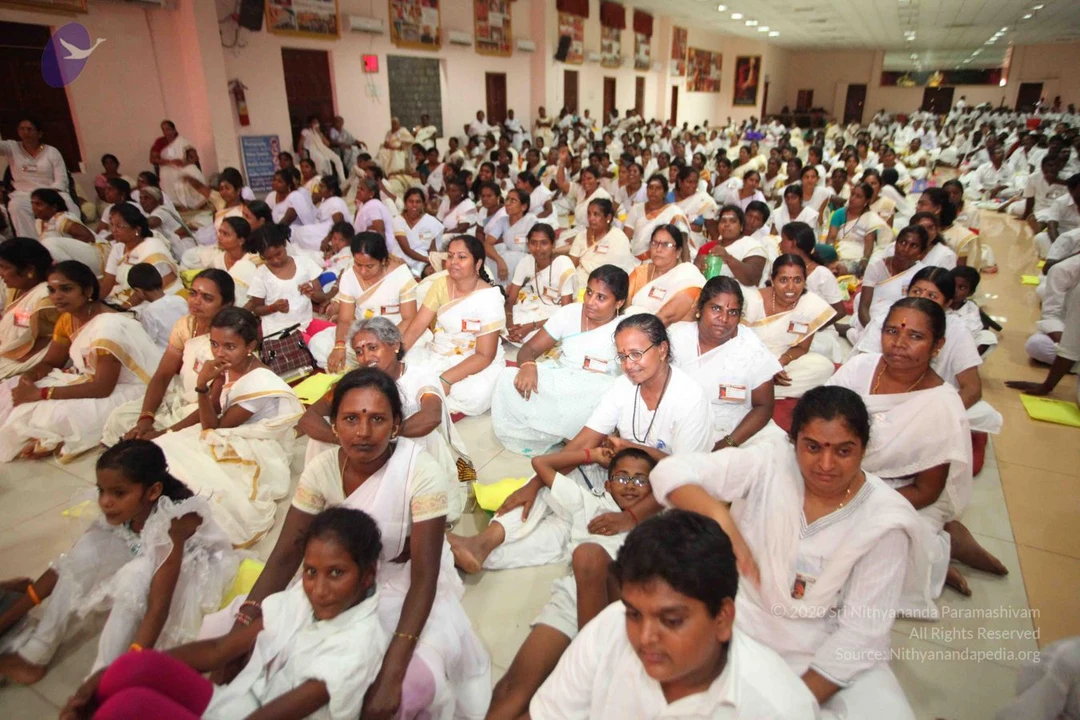
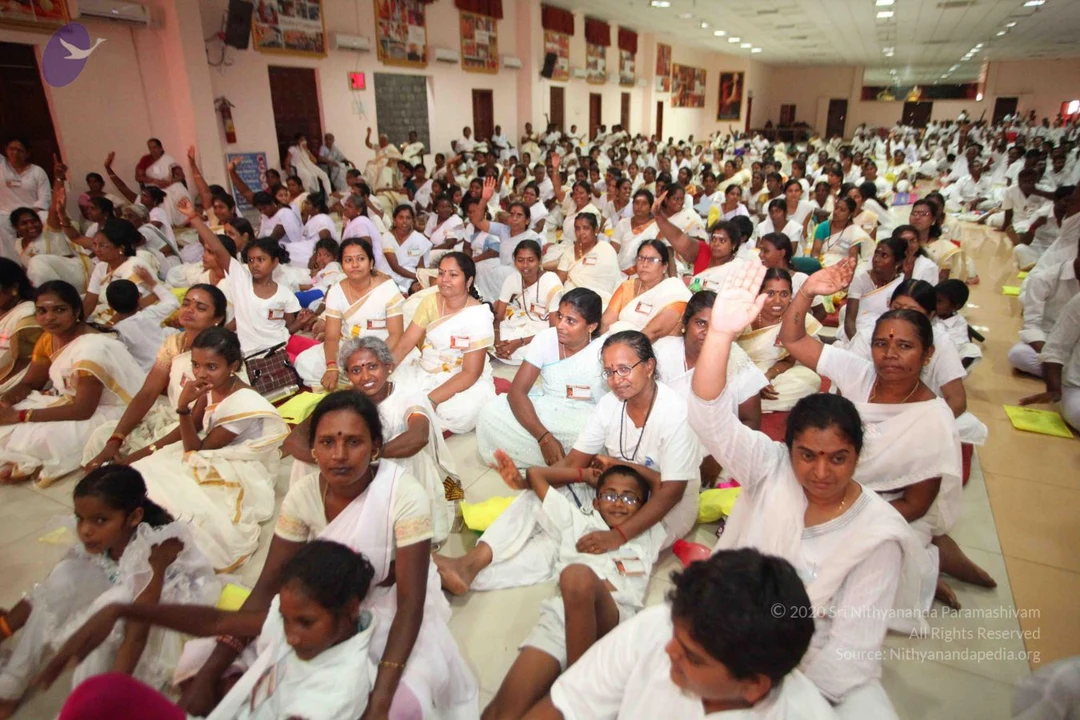
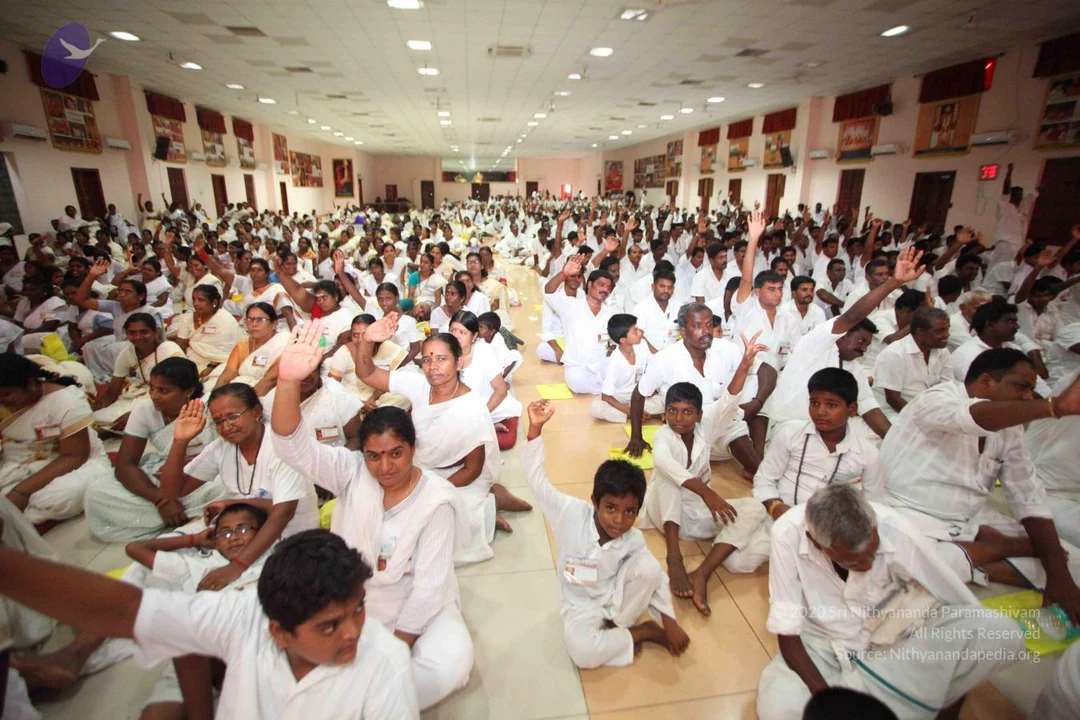
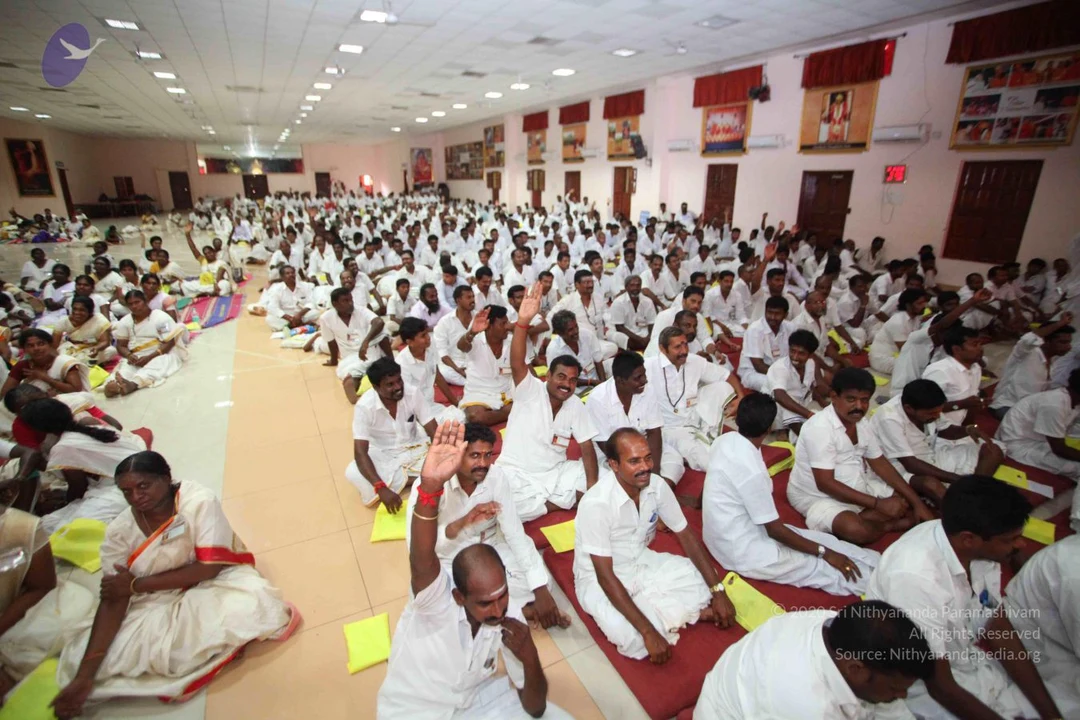
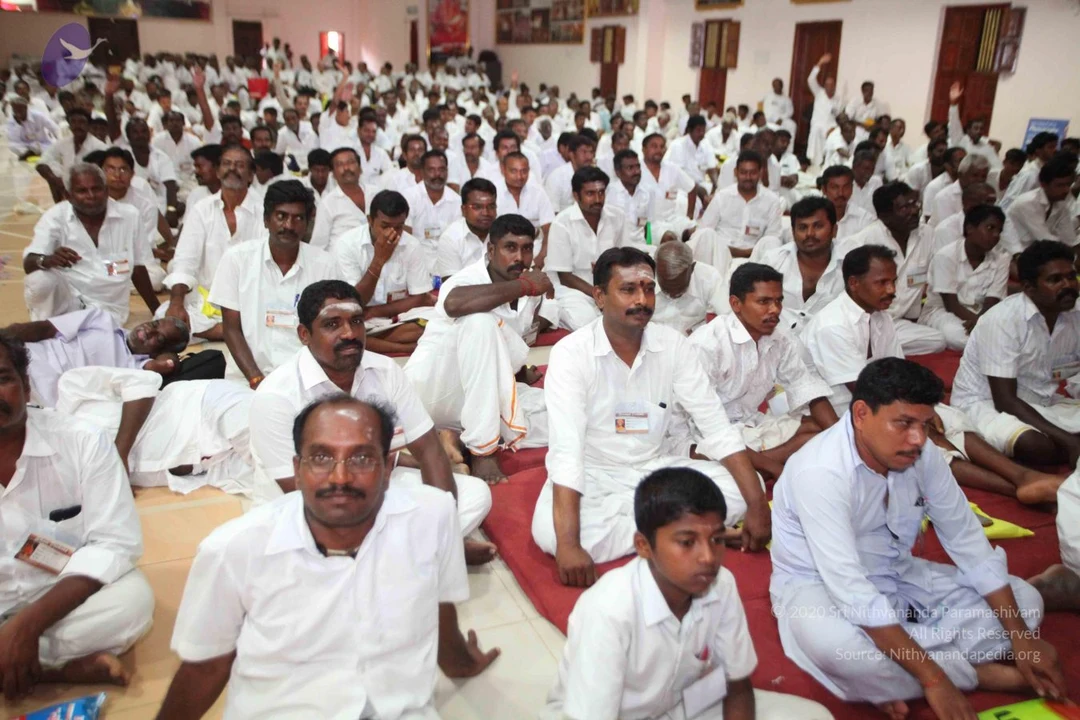
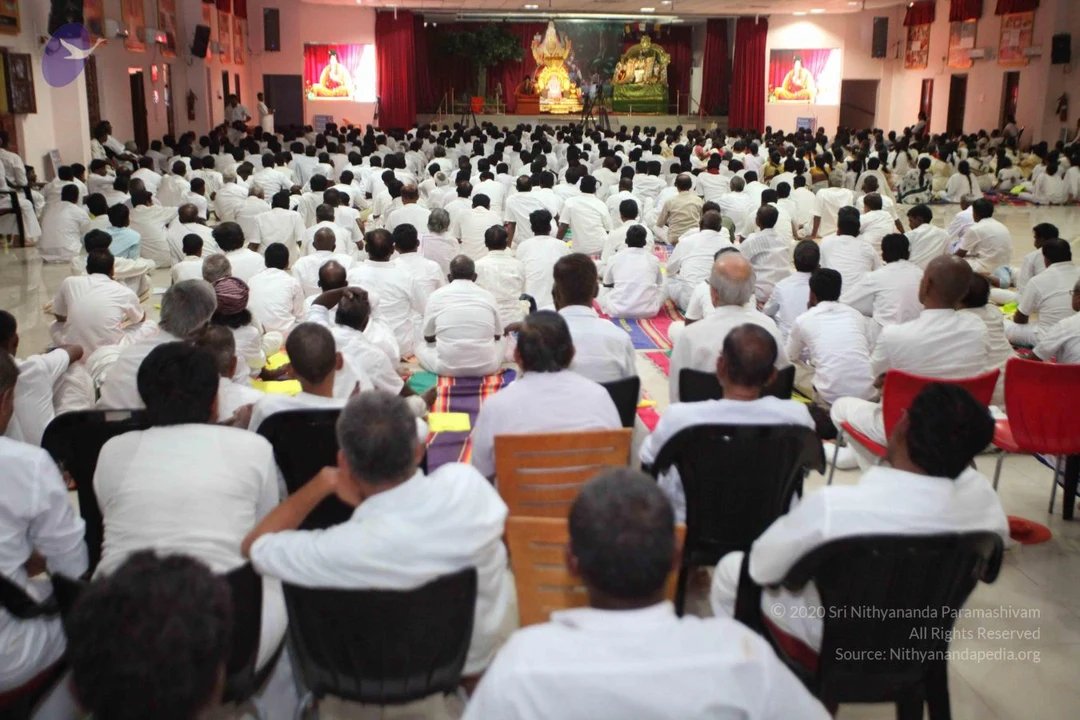
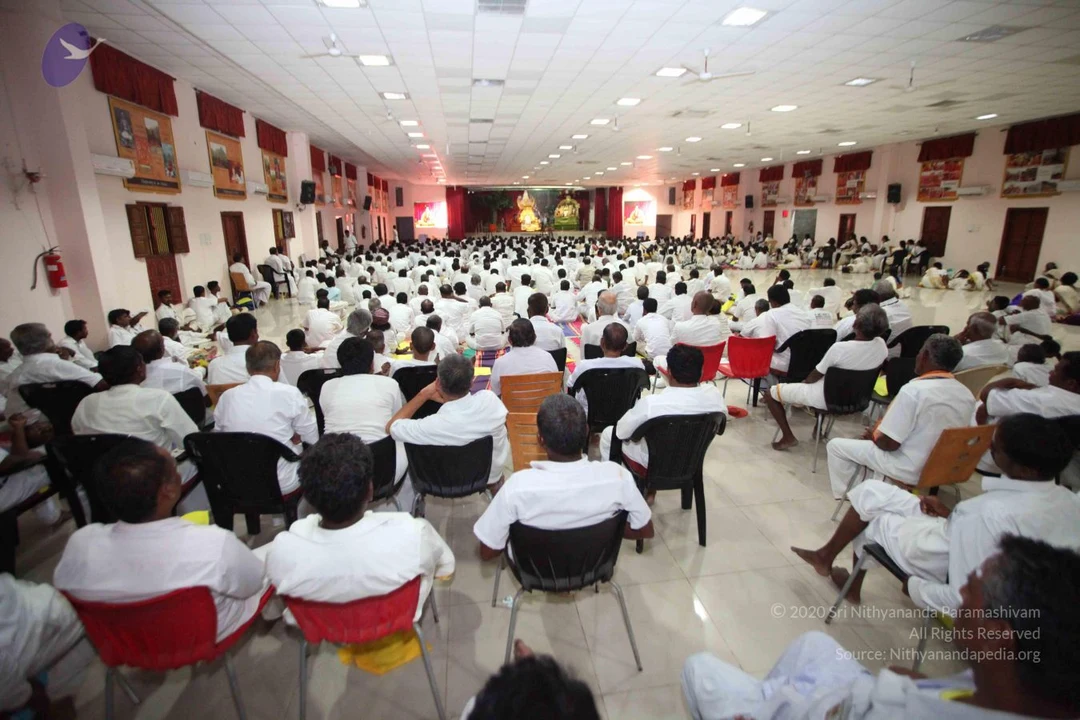
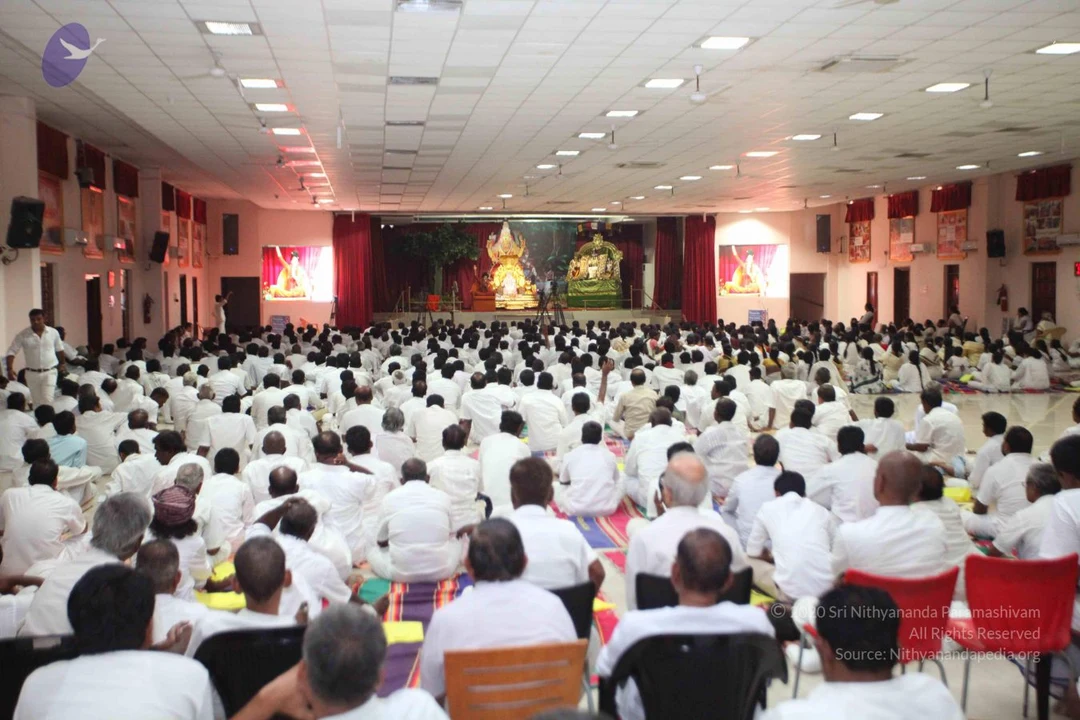
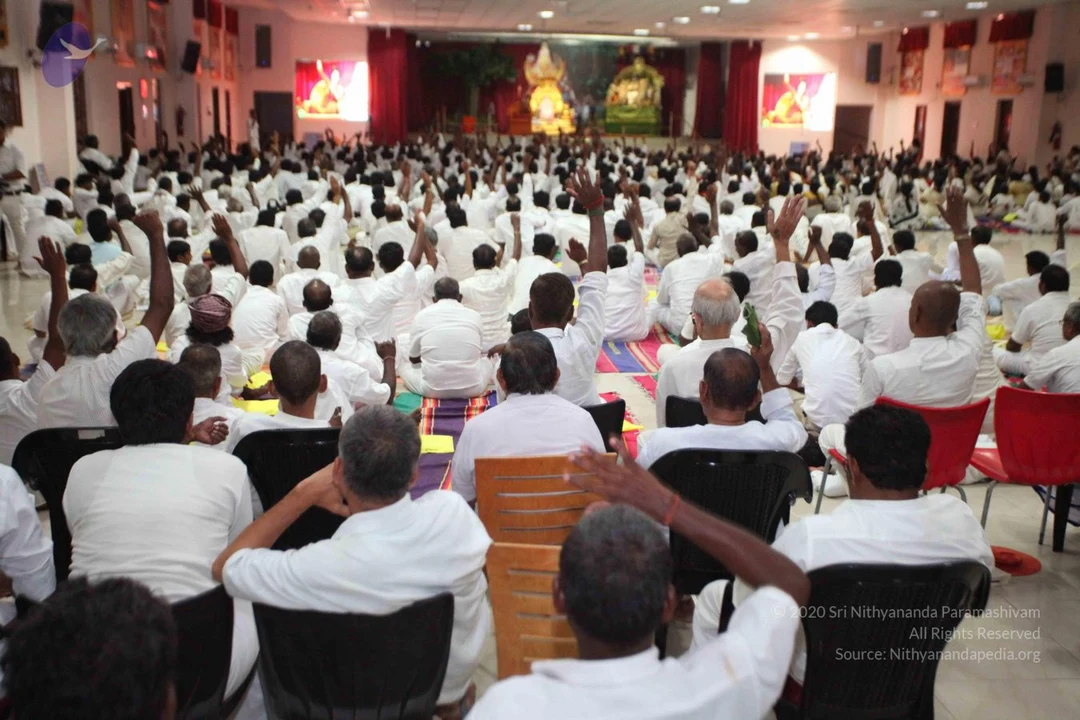
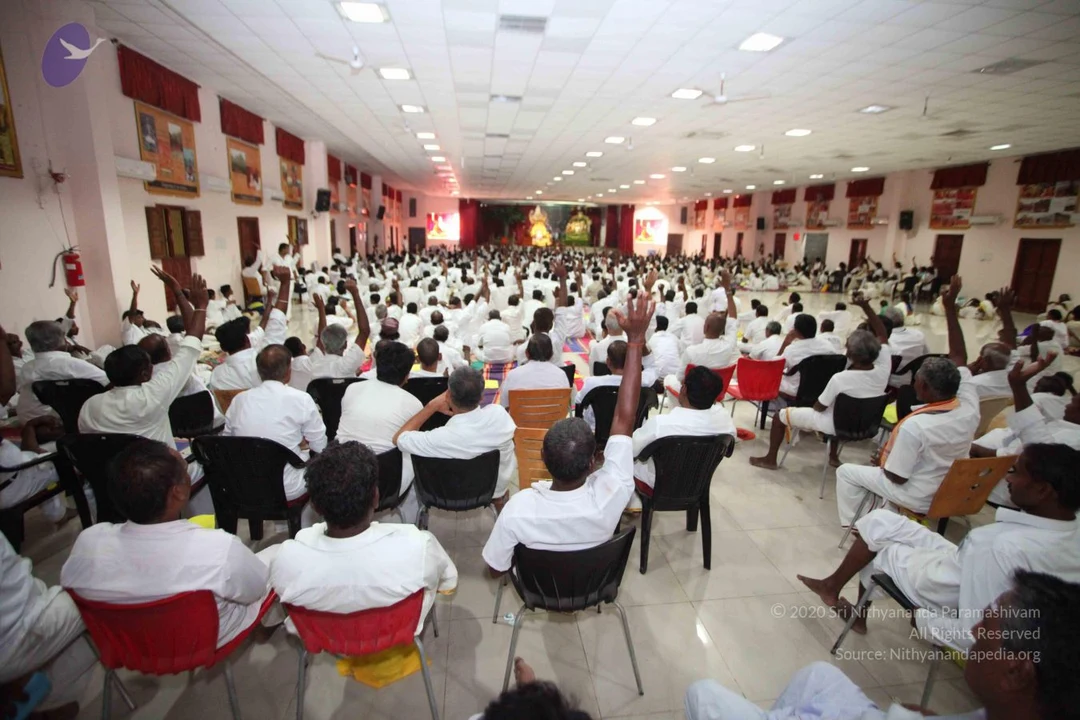
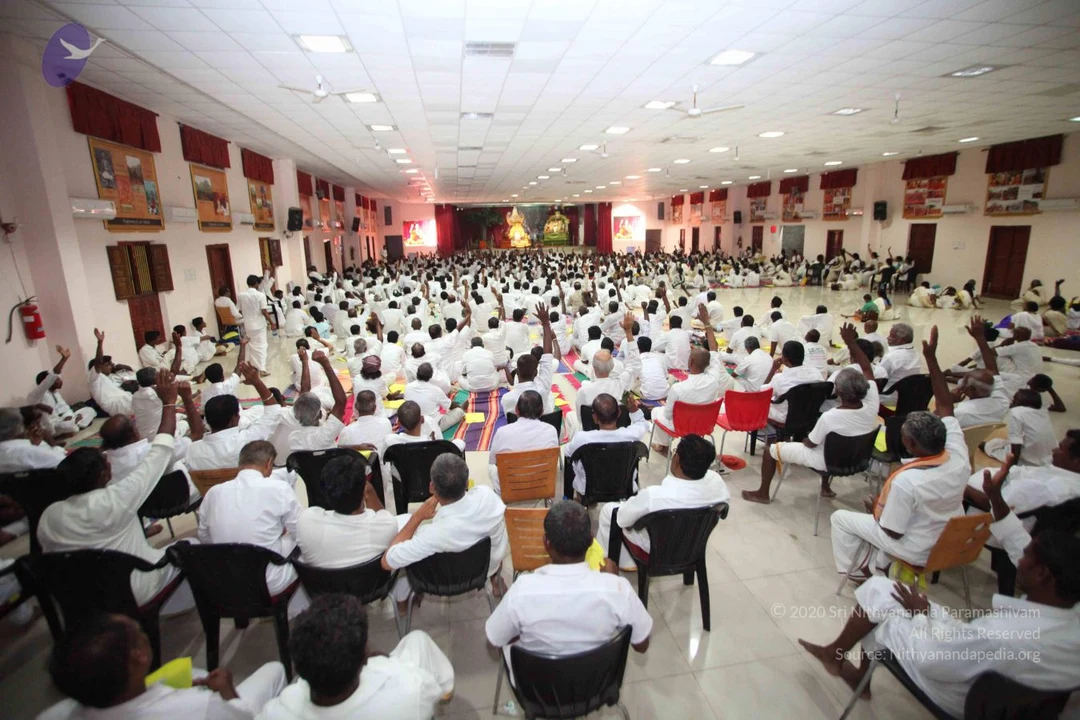
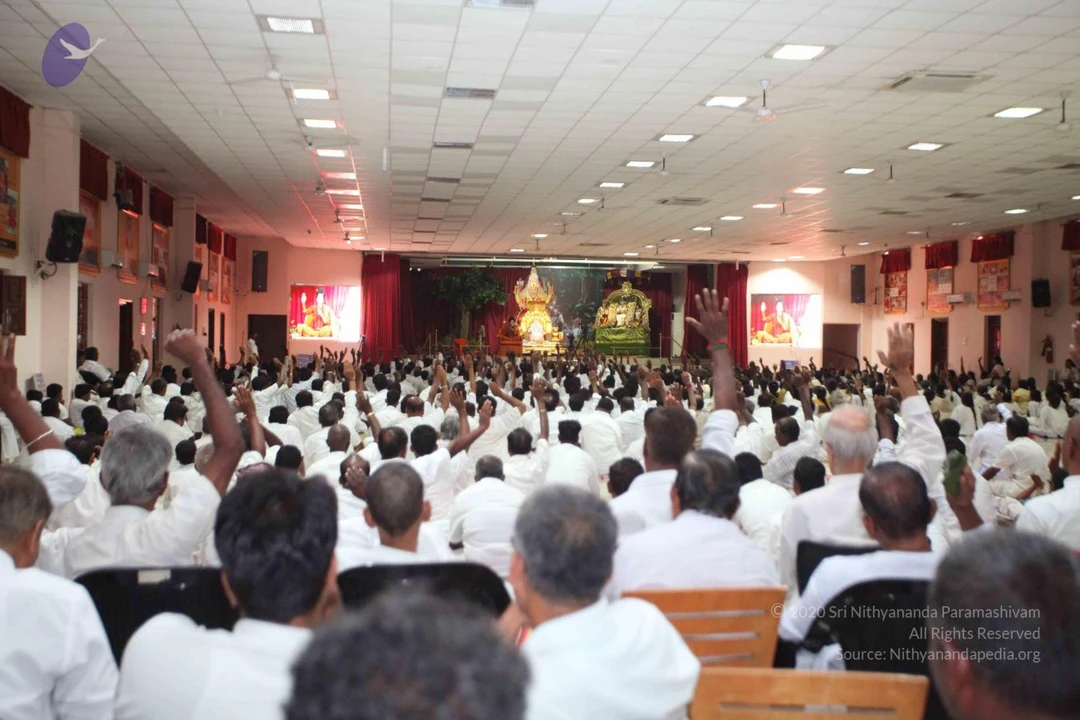
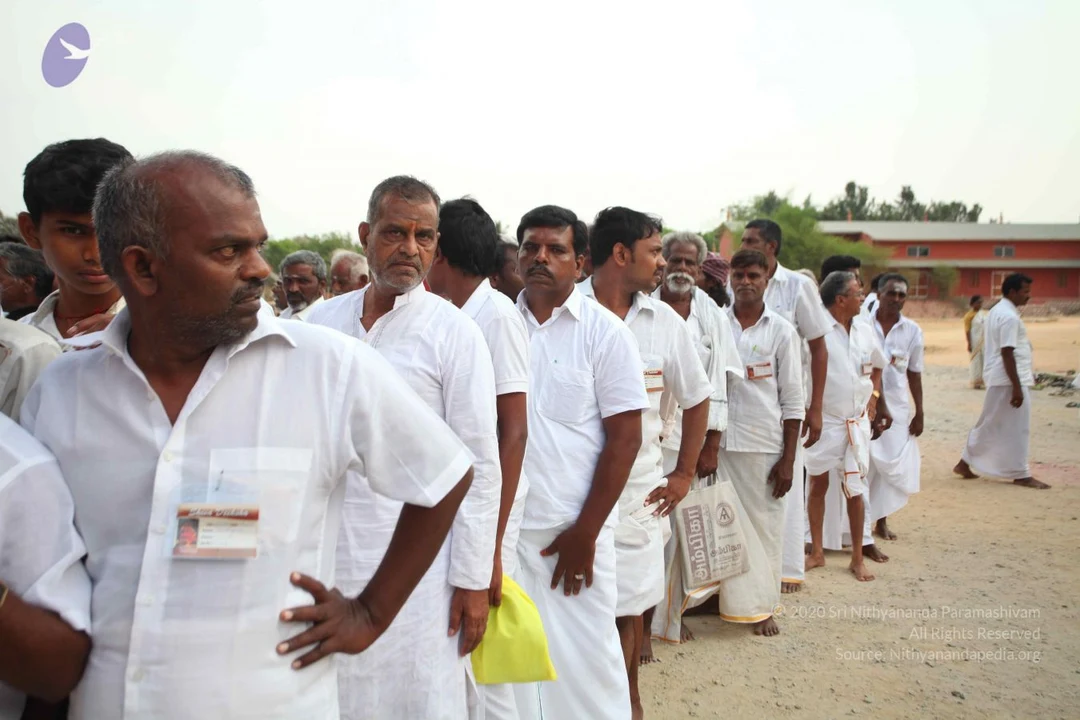
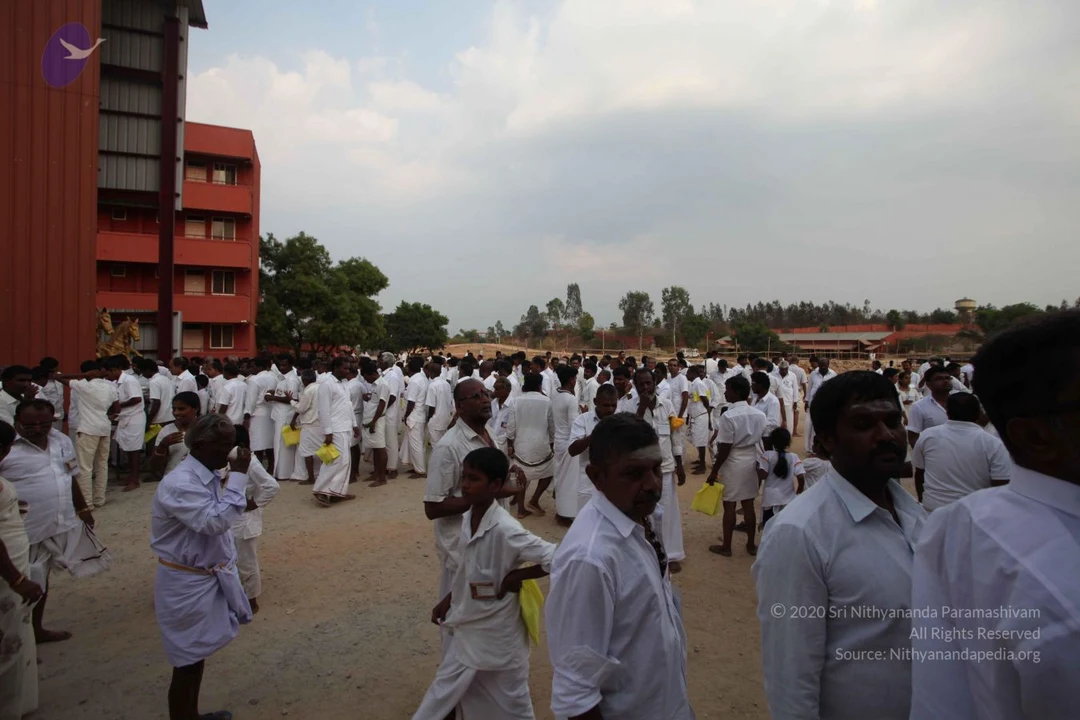
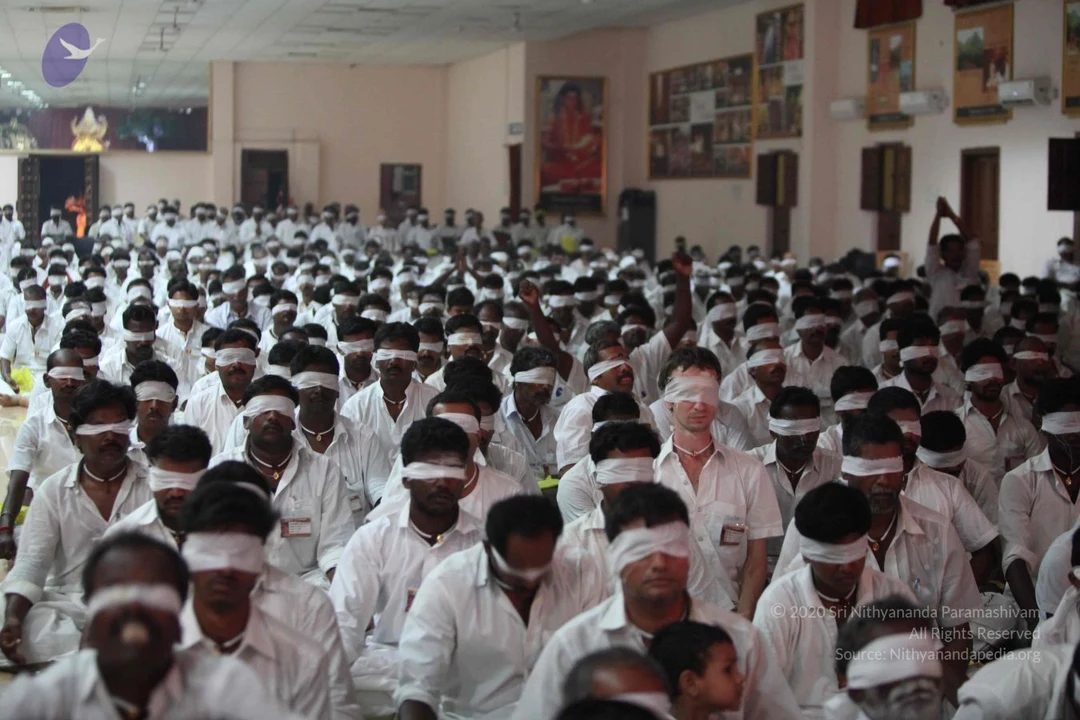
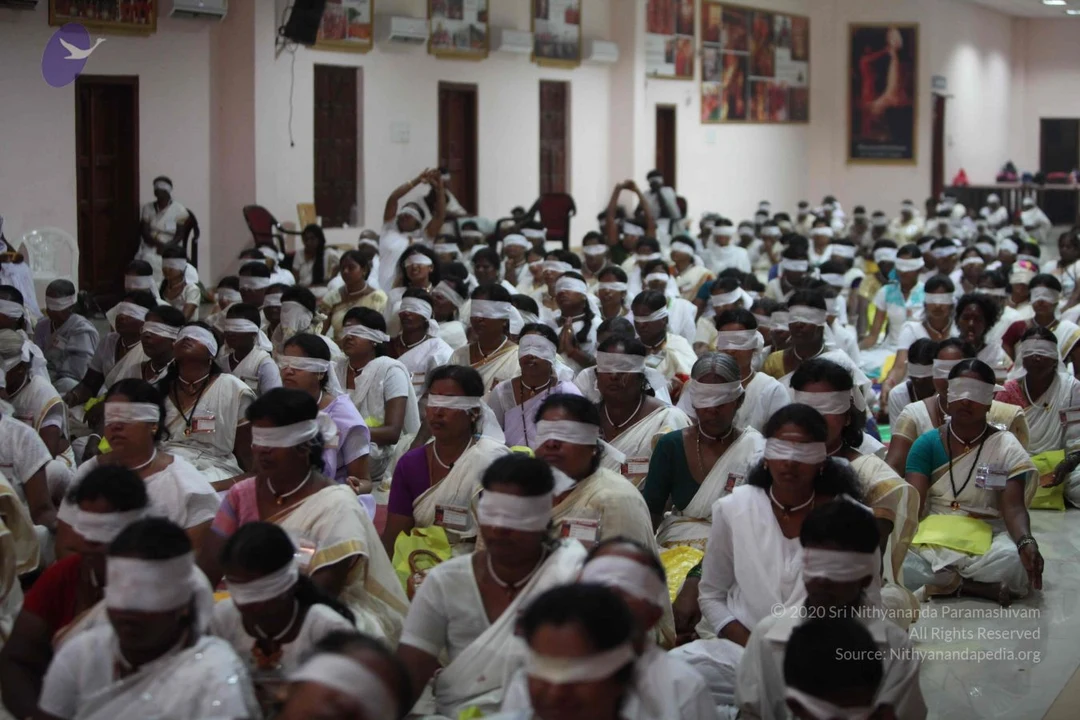
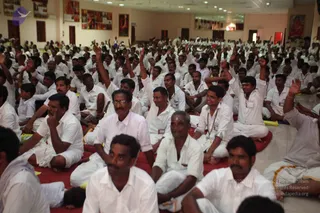
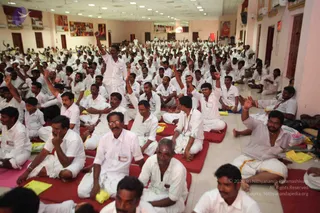
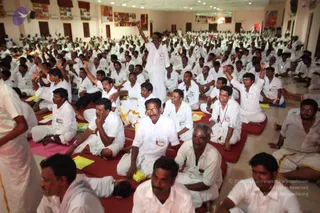
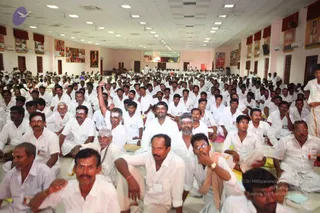
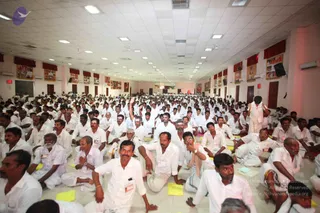
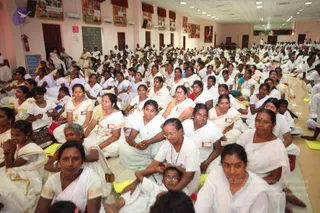
A large seated assembly of men in white shirts and white dhotis sits on red cushions across a bright hall, many raising their hands high. Several men in front wear white shirts and glasses, and some wear lanyards. Wall posters and framed images line the back of the hall.A large hall filled with many men seated on red floor mats, nearly all dressed in white shirts and white dhotis, many with lanyard badges and yellow papers on their laps. Many raise their arms and fists in the air. Framed pictures and banners hang on the walls, and a deity image appears at the far right. No single a person candidate is clearly identifiable among the seated crowd, and the standing man in front wears a white shirt and dhoti with a raised fist.A large indoor hall filled with hundreds of men dressed entirely in white shirts and white dhotis, most seated on red floor cushions and some on pink and blue mats. Many raise their arms in the air, a standing man in the centre-back holds one fist high, and several seated men wear white identity badges on lanyards. Some hold yellow folders or papers. Red and yellow banners with framed pictures hang on the wall behind them, and a few people stand near the left edge. A satsang-style assembly with participants responding to a speaker.A large hall packed with seated men dressed entirely in white dhotis and white shirts, many wearing white vibhuti or tilak marks on their foreheads and name badges on their chests. Several men in the foreground raise a hand or sit cross-legged on mats, one with an orange cloth over his shoulder and a wristwatch. Pale walls display framed portraits and religious pictures, and red valances hang along the windows. Rows of ceiling lights illuminate the room. No stage figure is clearly visible in this frame, so no a person candidate is identified.A large indoor hall filled with hundreds of men seated on the floor in white dhotis and white shirts, many wearing name badges and sitting on yellow cushions or notepads. A few men raise hands, and one man stands at the far right in white dhoti and shawl near a wall. Framed photographs hang along the pink walls under red valances, and the ceiling has rows of fluorescent lights and ceiling fans. No identifiable a person appearance is visible among those pictured. The scene suggests a satsang or discourse session.A large seated congregation of devotees fills a hall, mostly women dressed in white sarees with light borders and white attire, many wearing name badges on their clothing. Several wear red bindis, gold chains and bangles. Some sit on yellow mats along the floor, and a few older women sit near the front-left. Pink walls display framed photographs and banners, and ceiling lights and a fire extinguisher are visible. The people face forward in a satsang or discourse setting, with no speaker or a person clearly visible in the frame.