Skip to content
Tuesday

10 April 2018

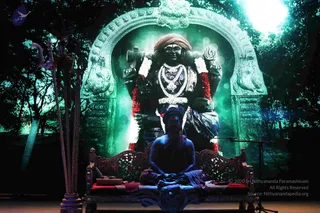
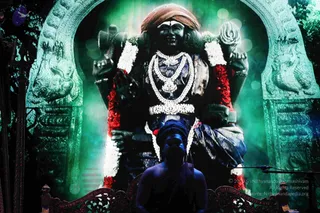
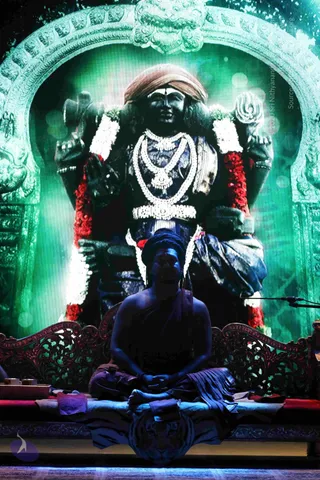
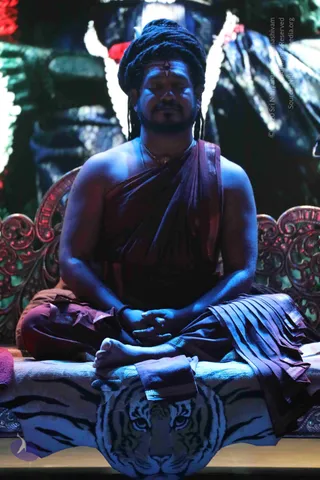
Sound and Anti-Sound || Initiation and Processes leading into Vidya Tatva || Initiation of Shivohum process, awakening Kundalini Shakti || Day 10 of Mahasadashivohum ||

Dated photos
140
Source pages
1
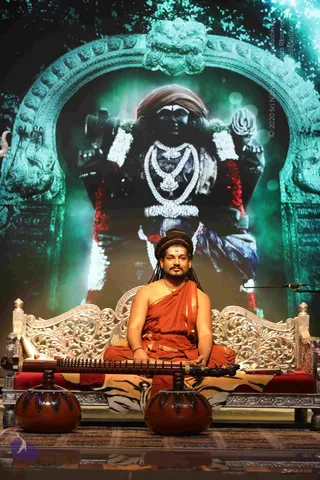
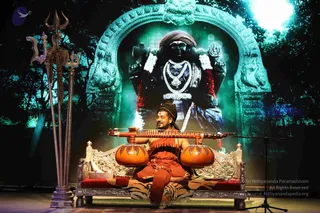
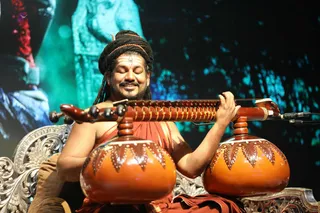
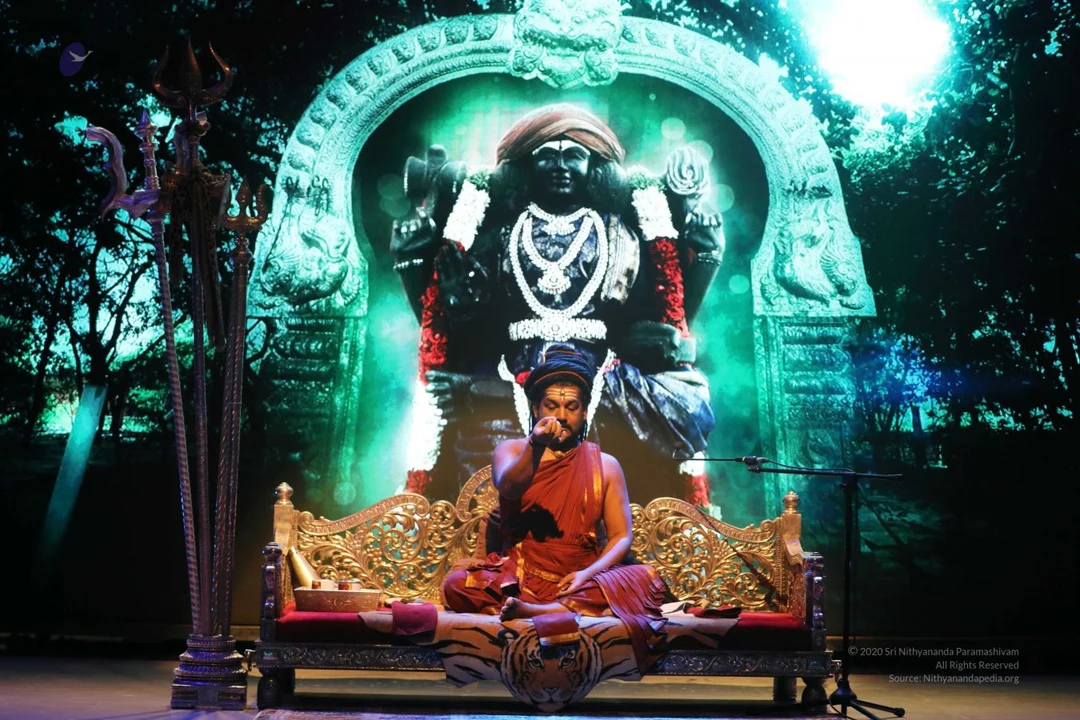
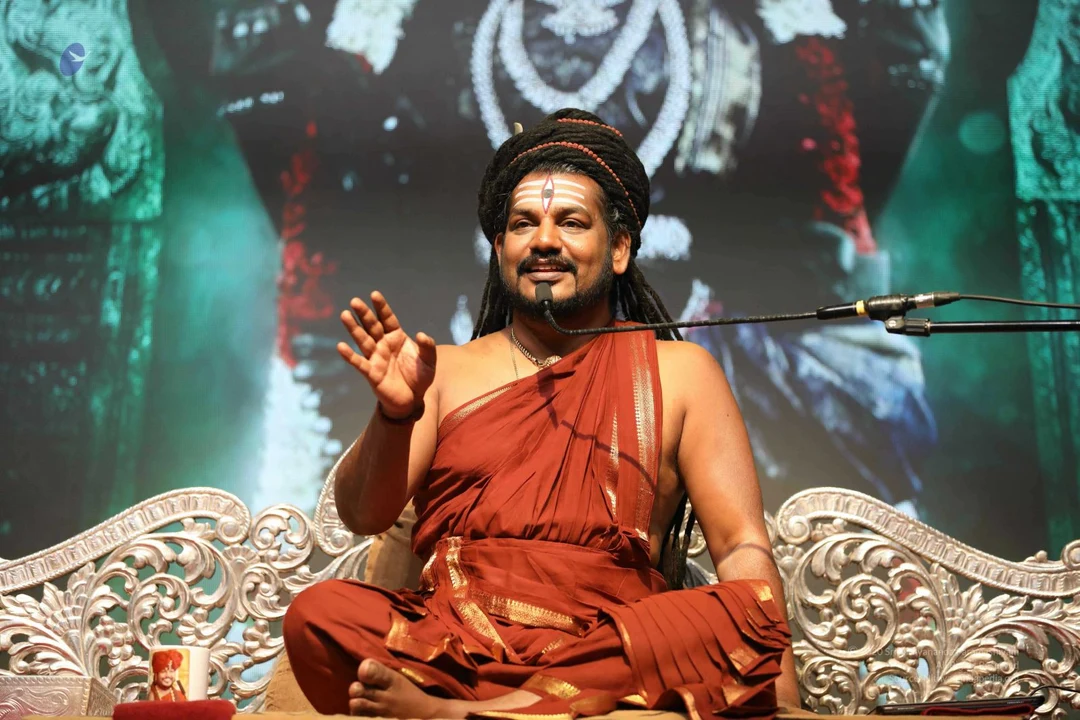
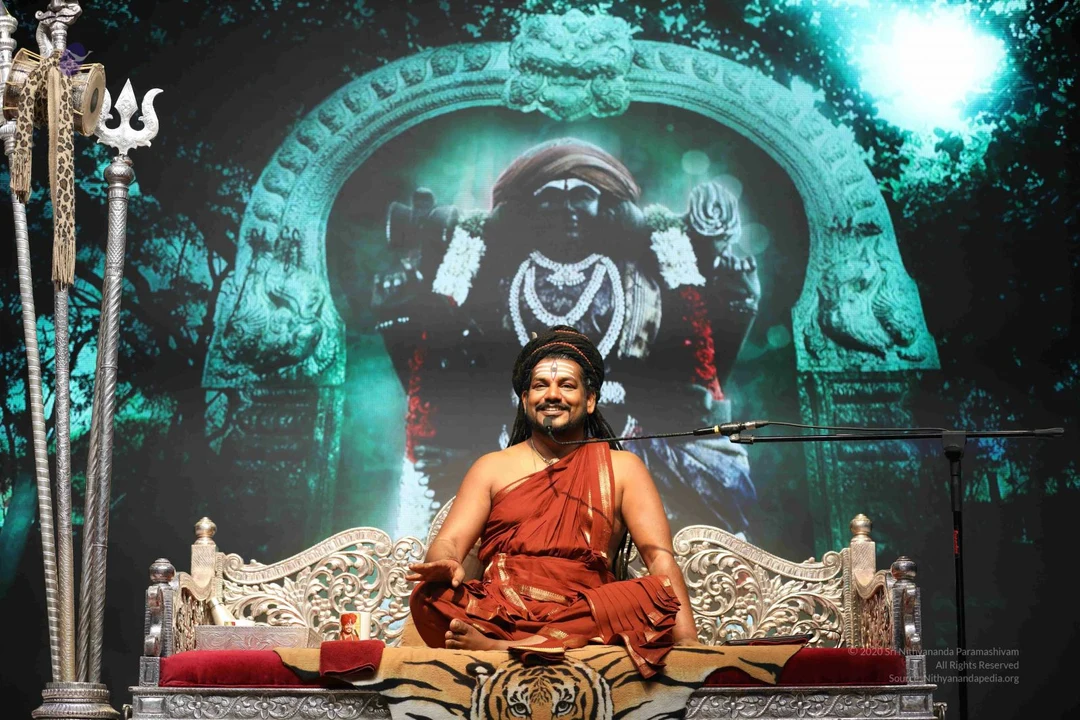
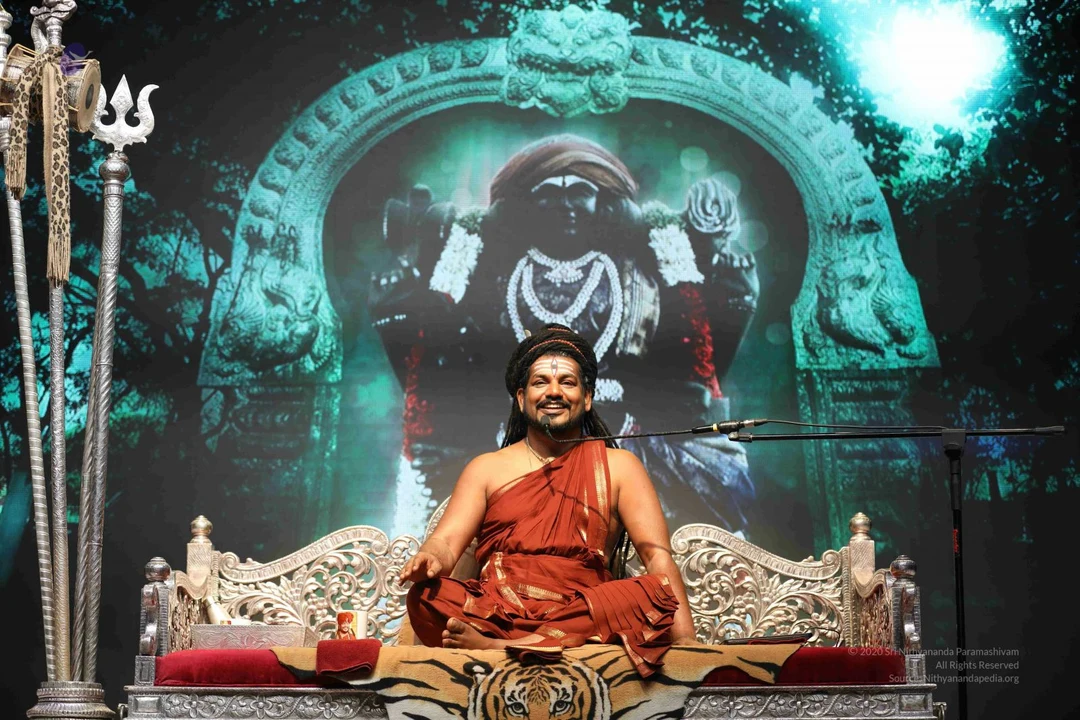
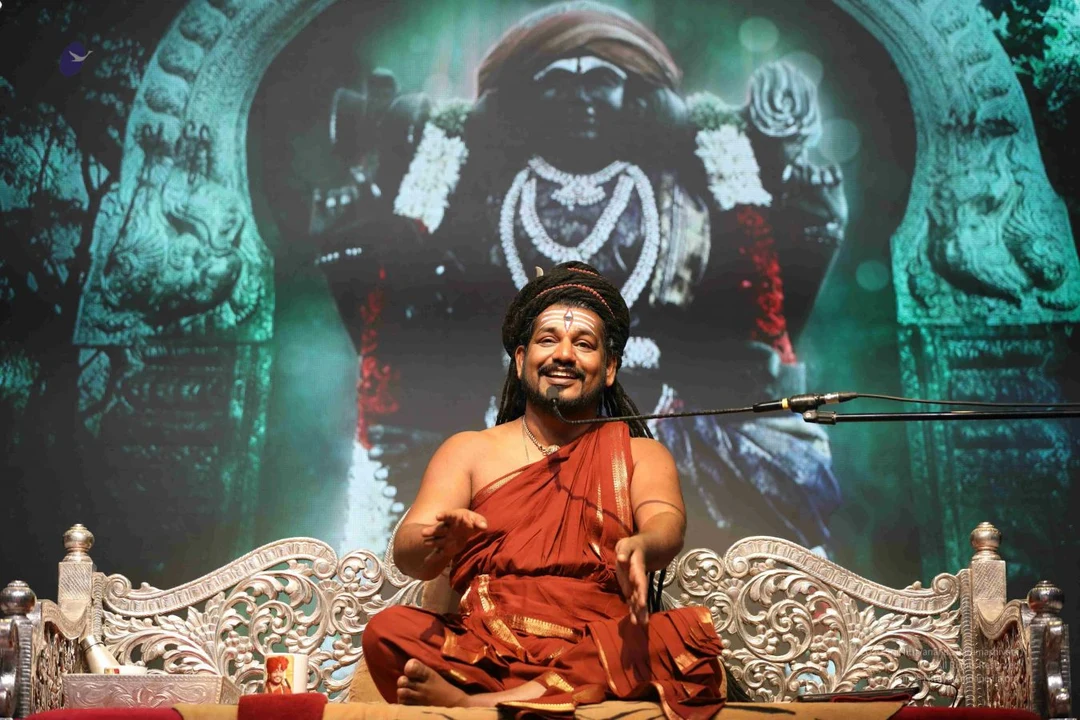
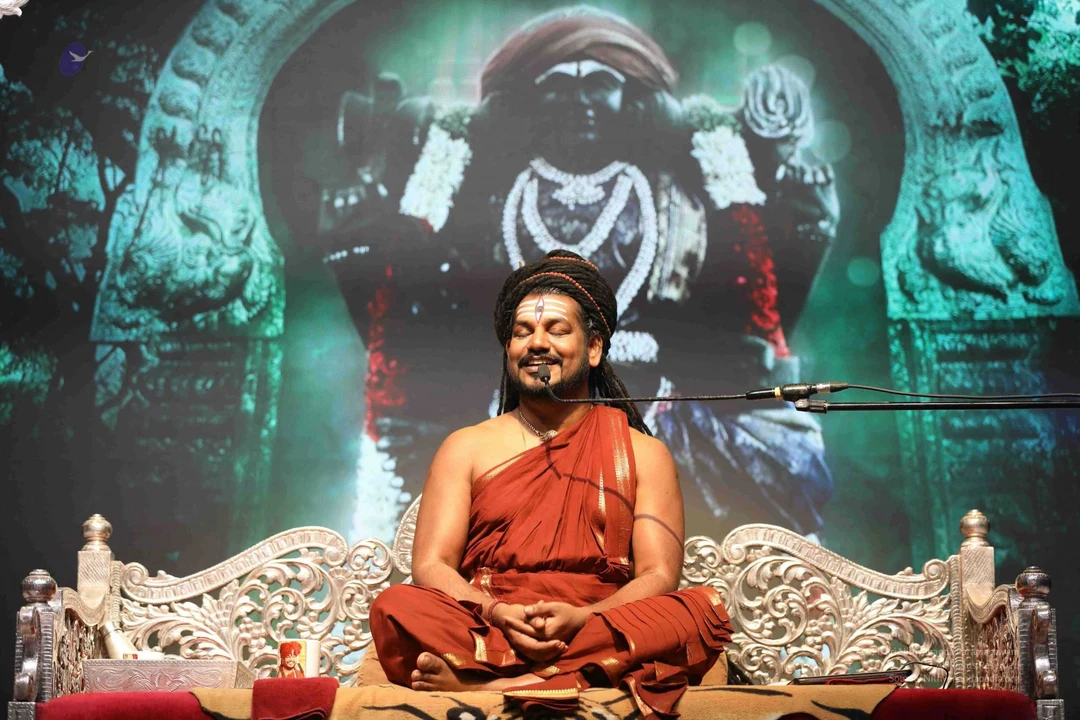
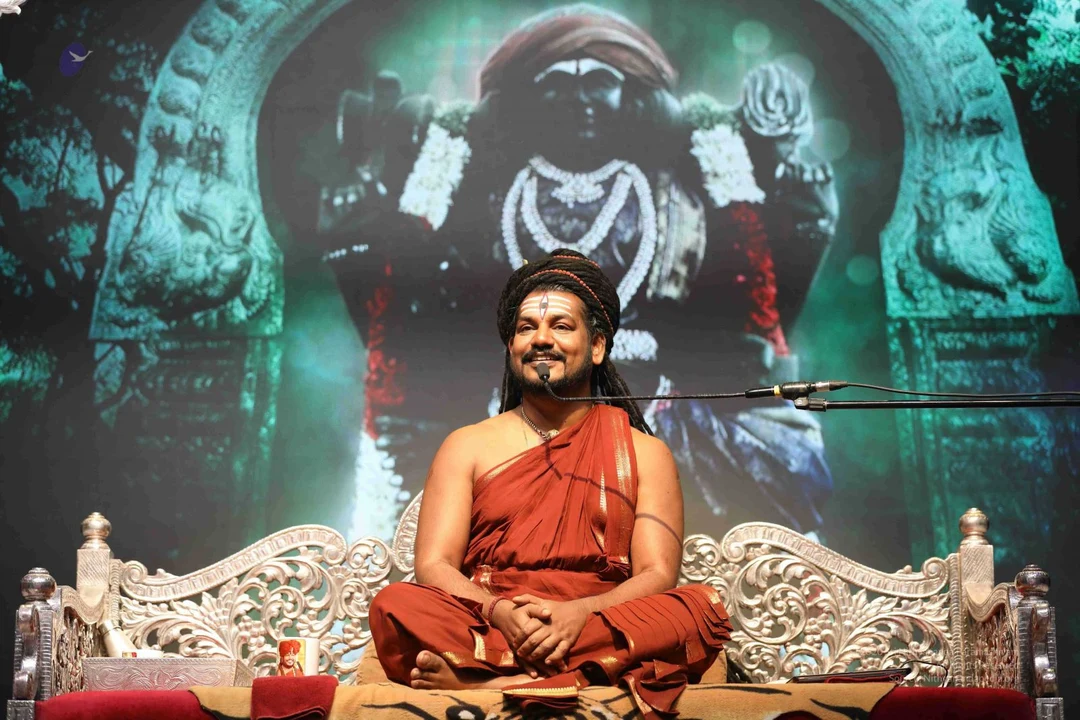
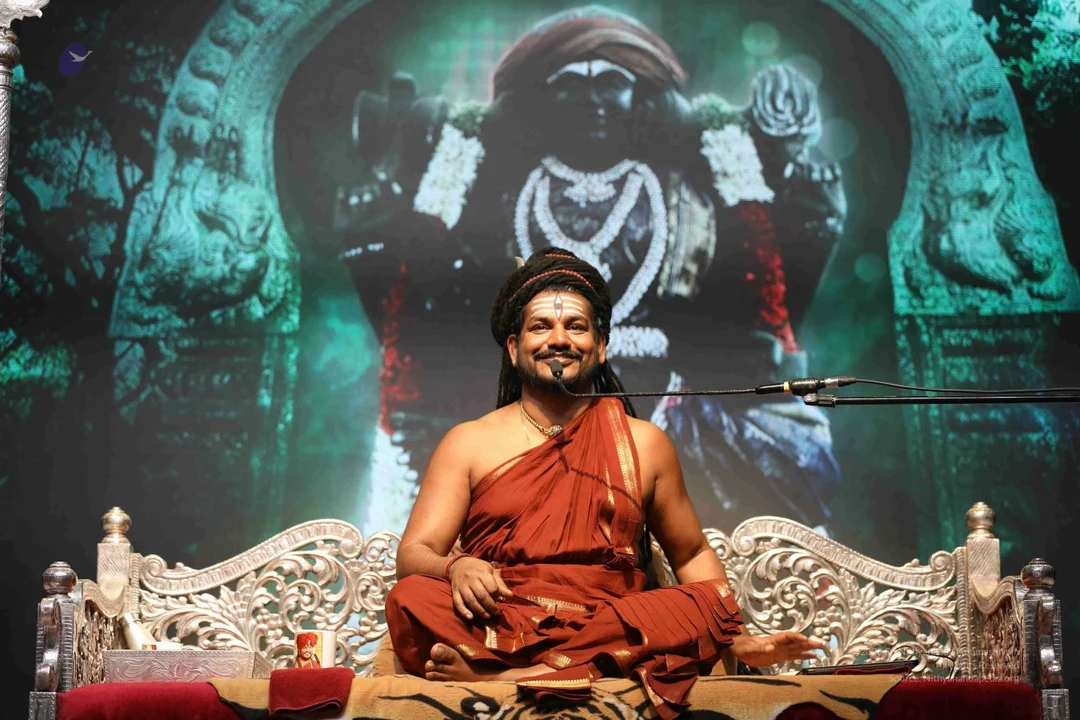
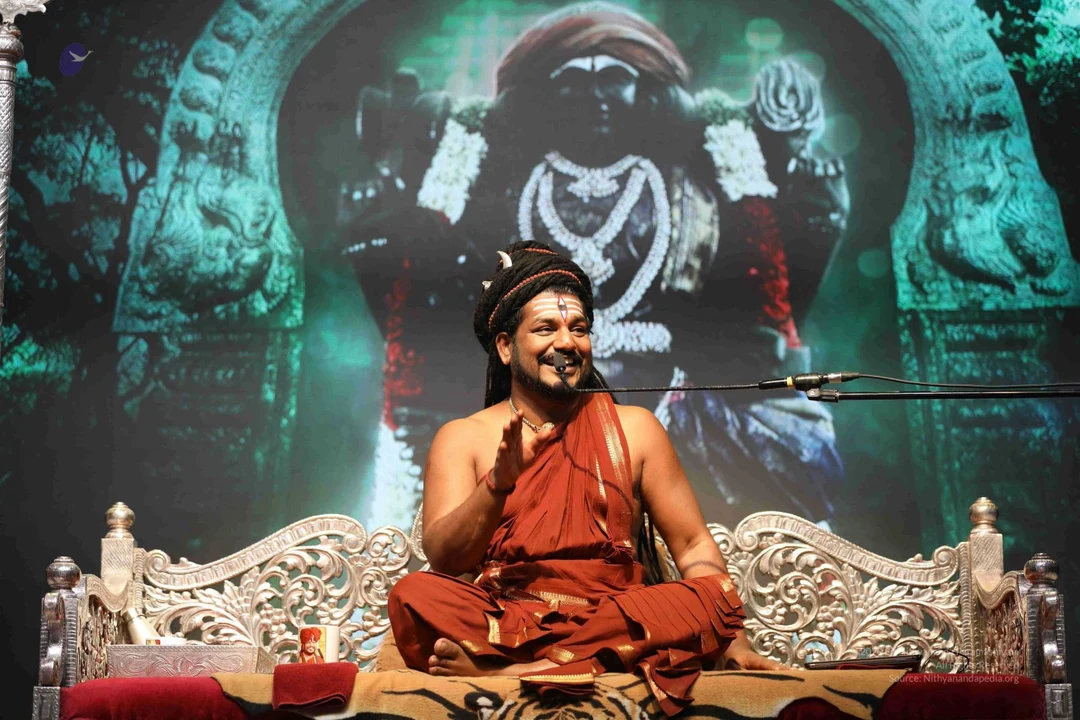
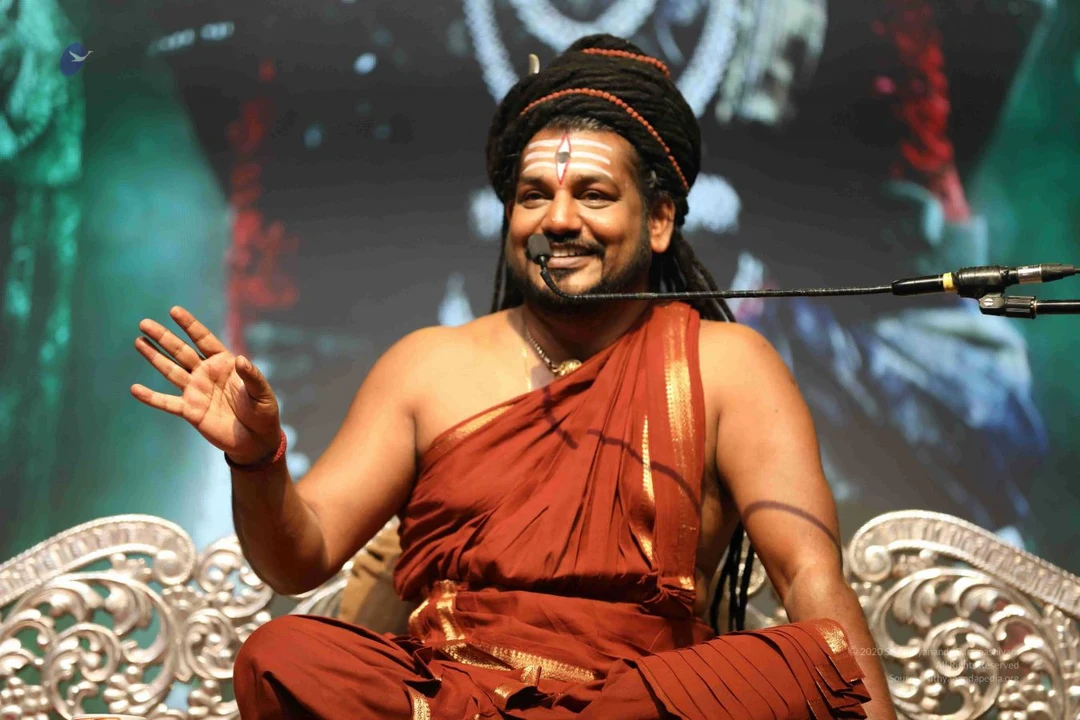
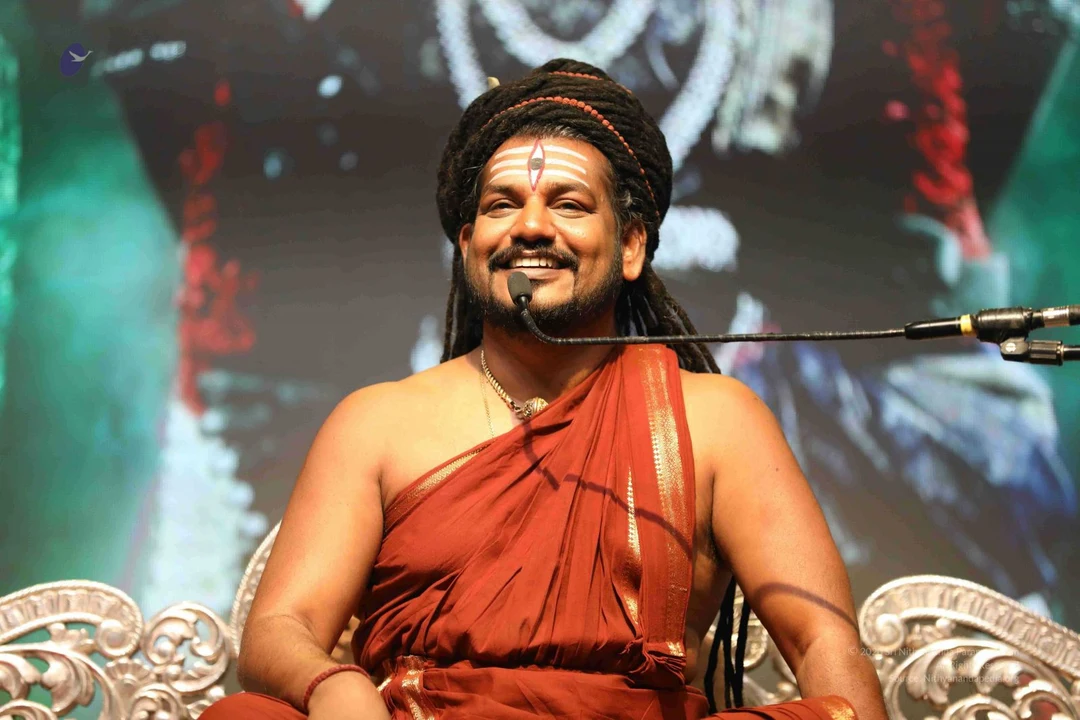
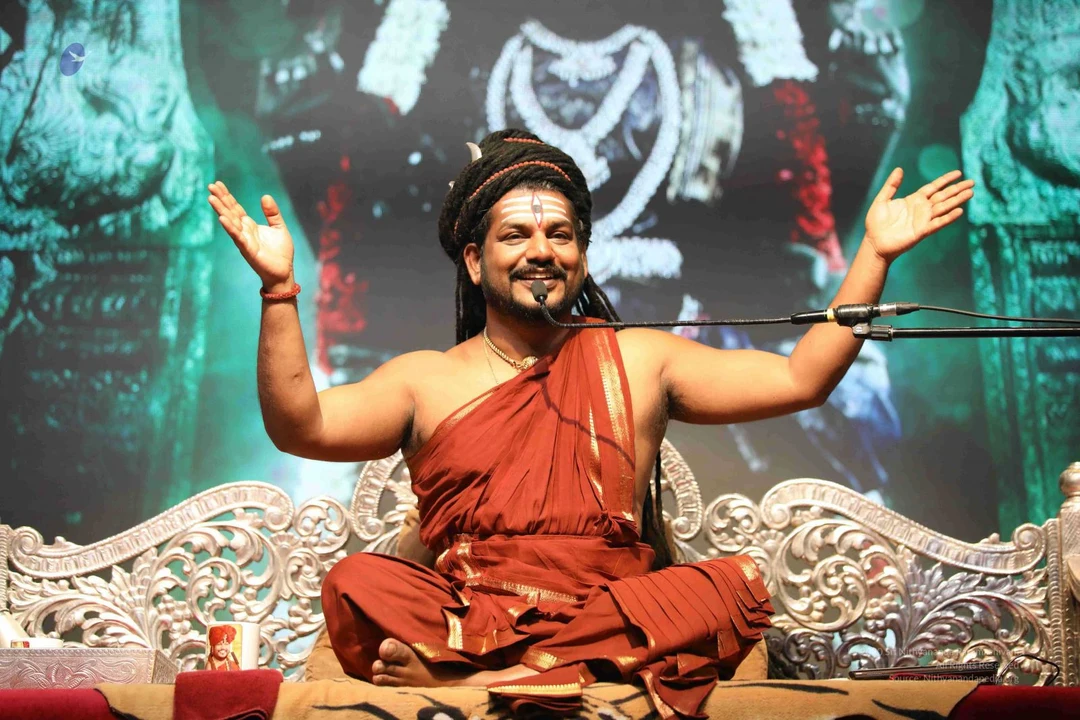
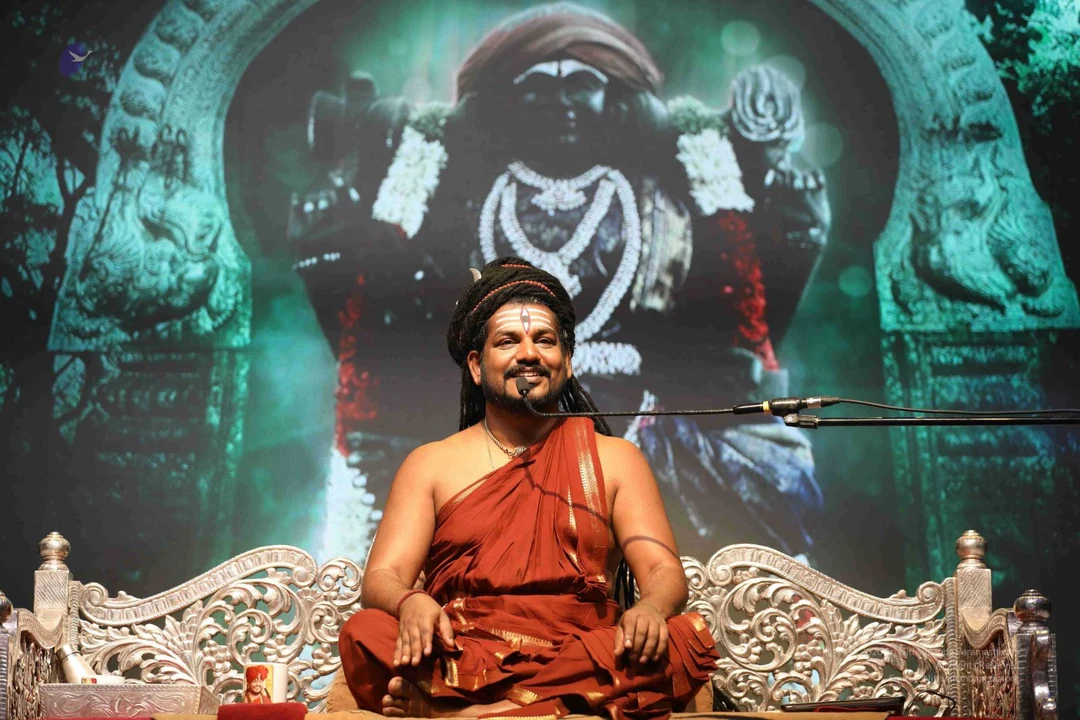
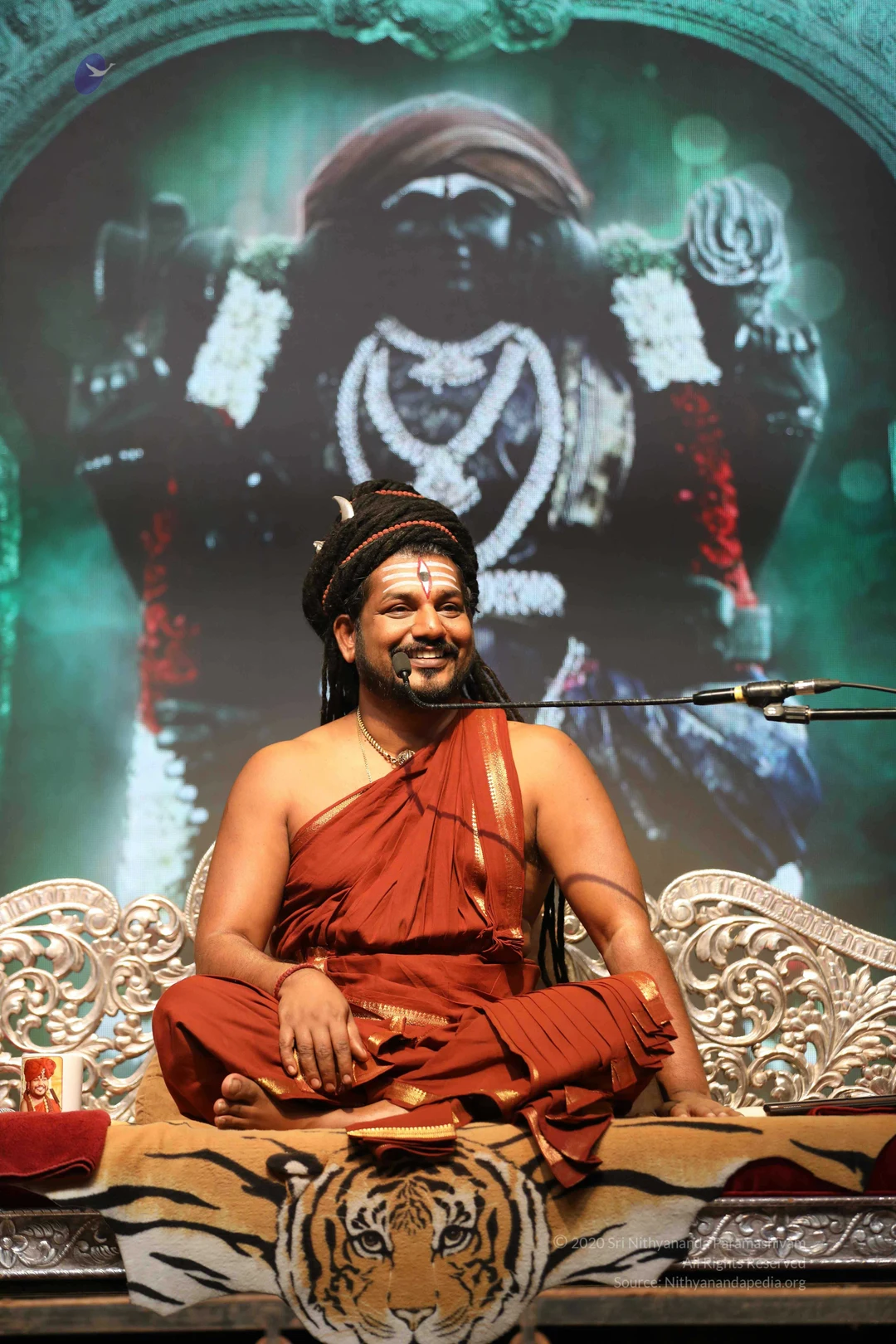
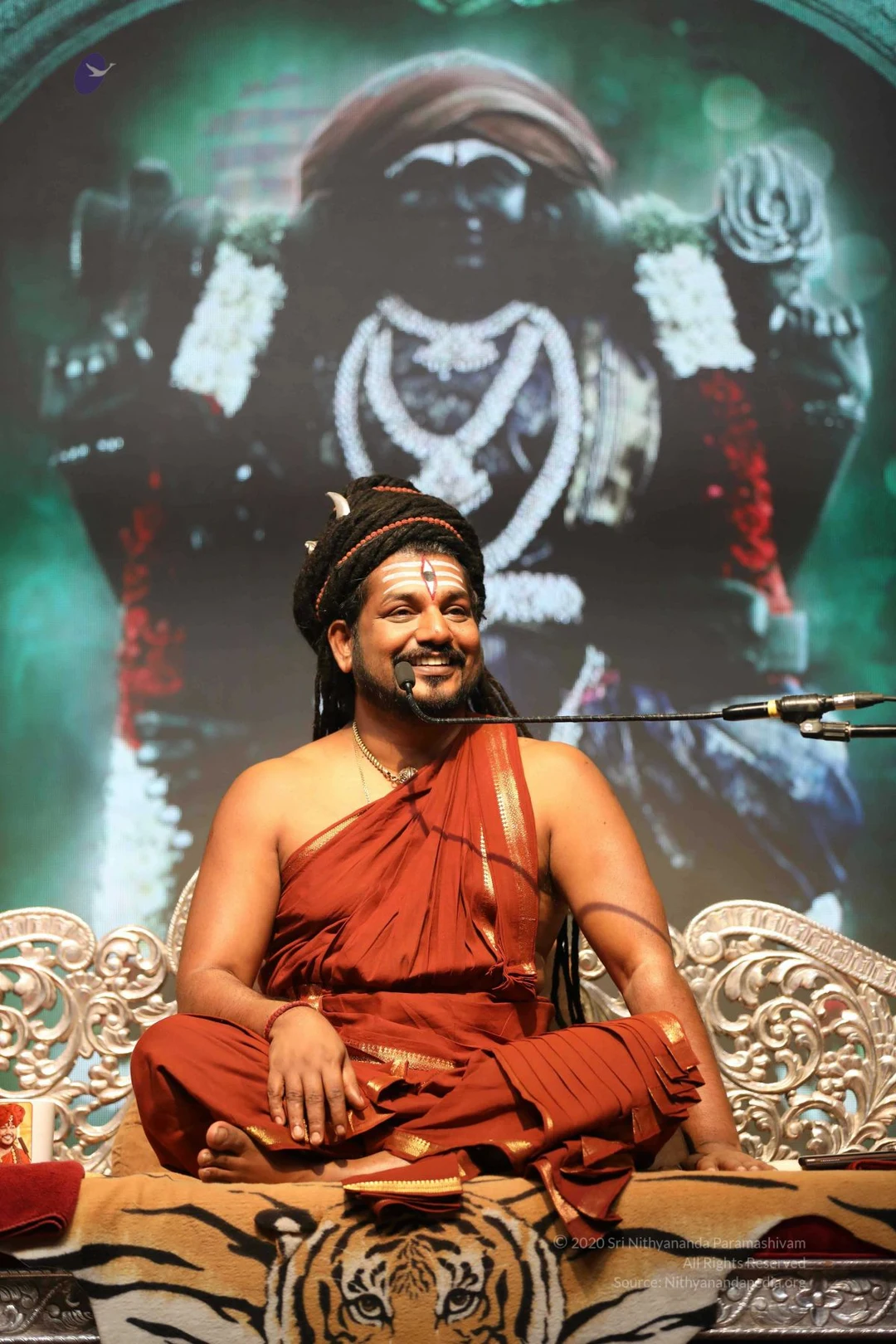
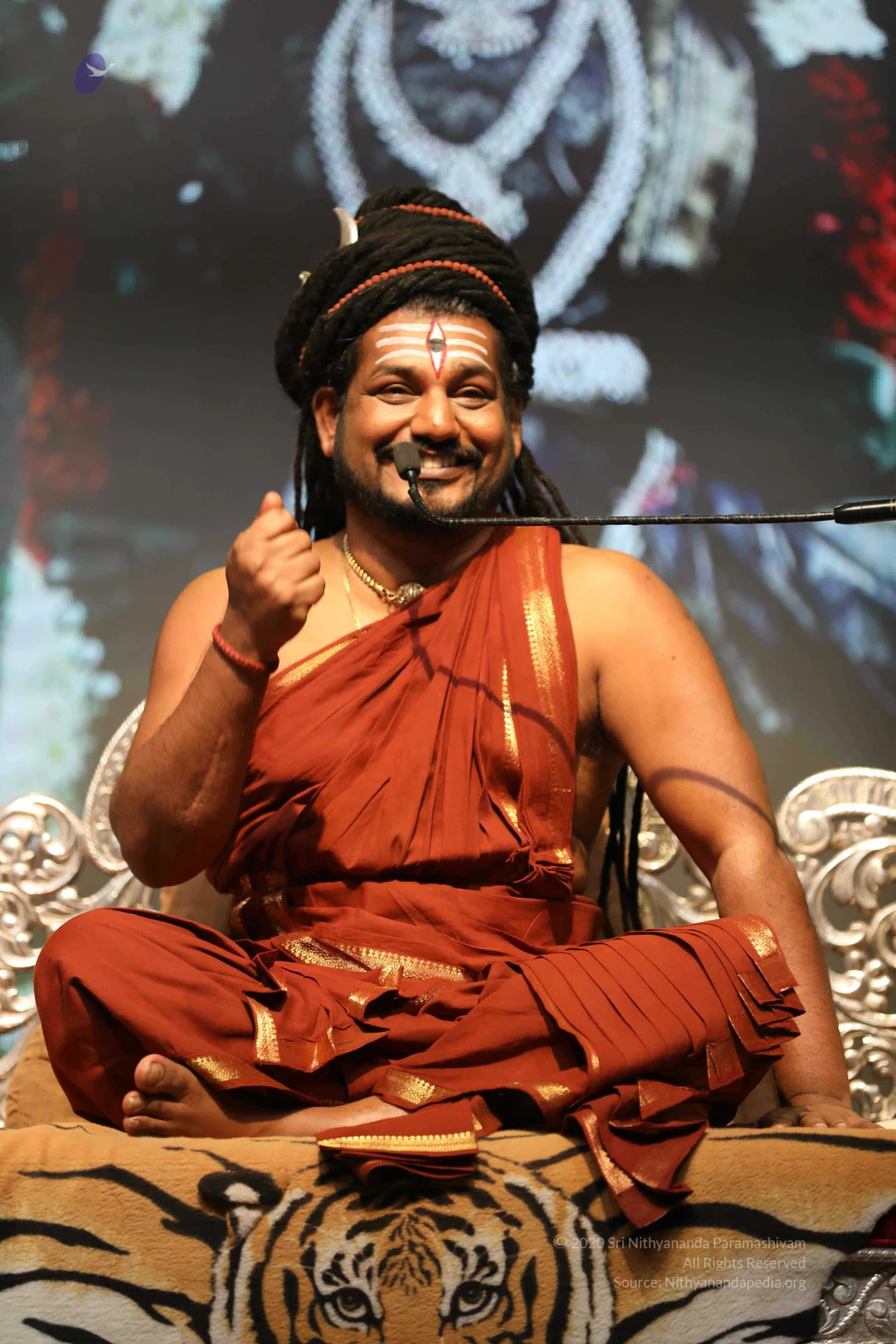
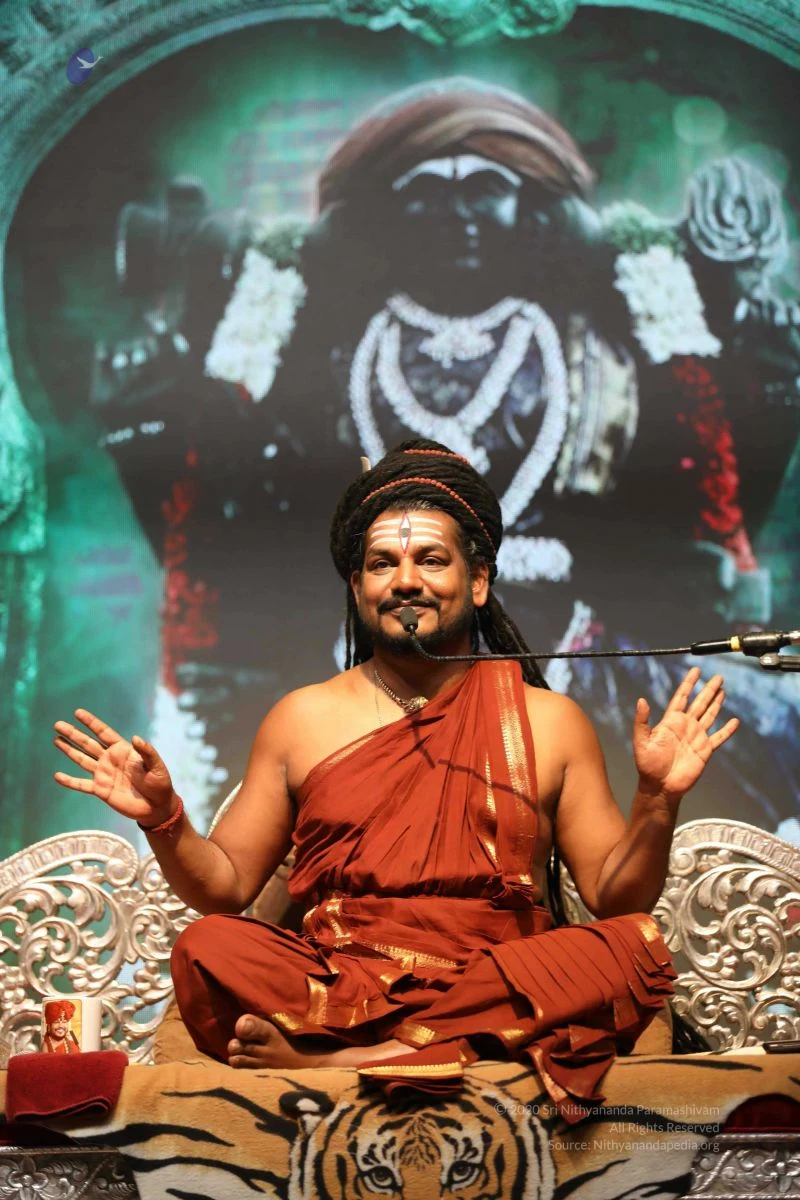
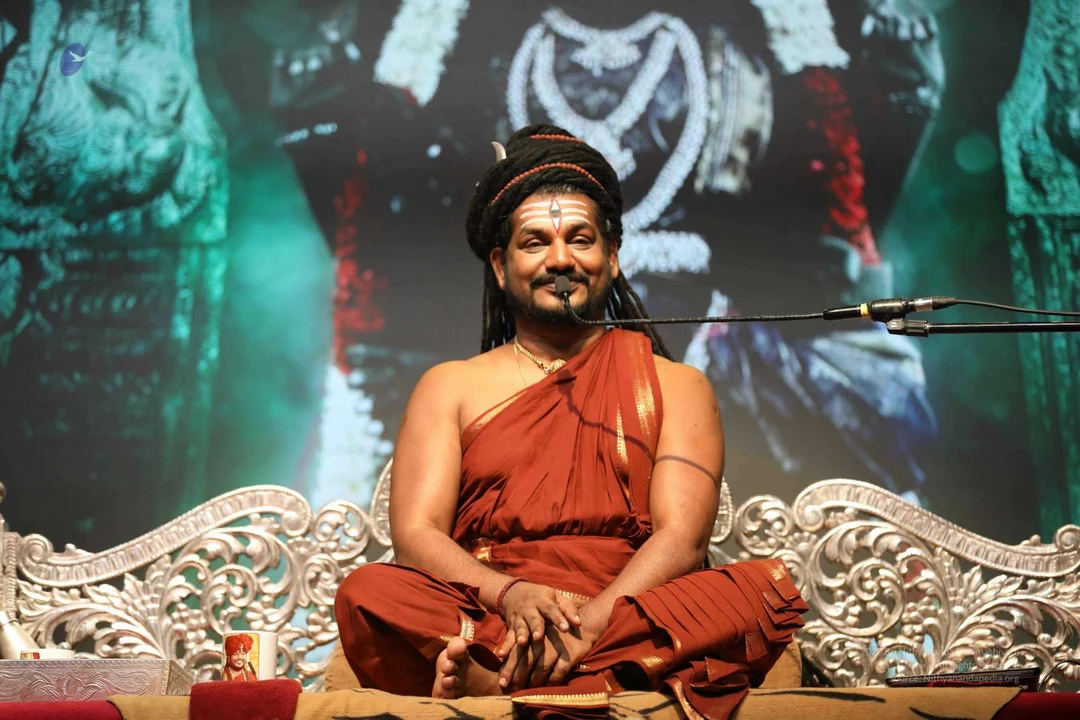
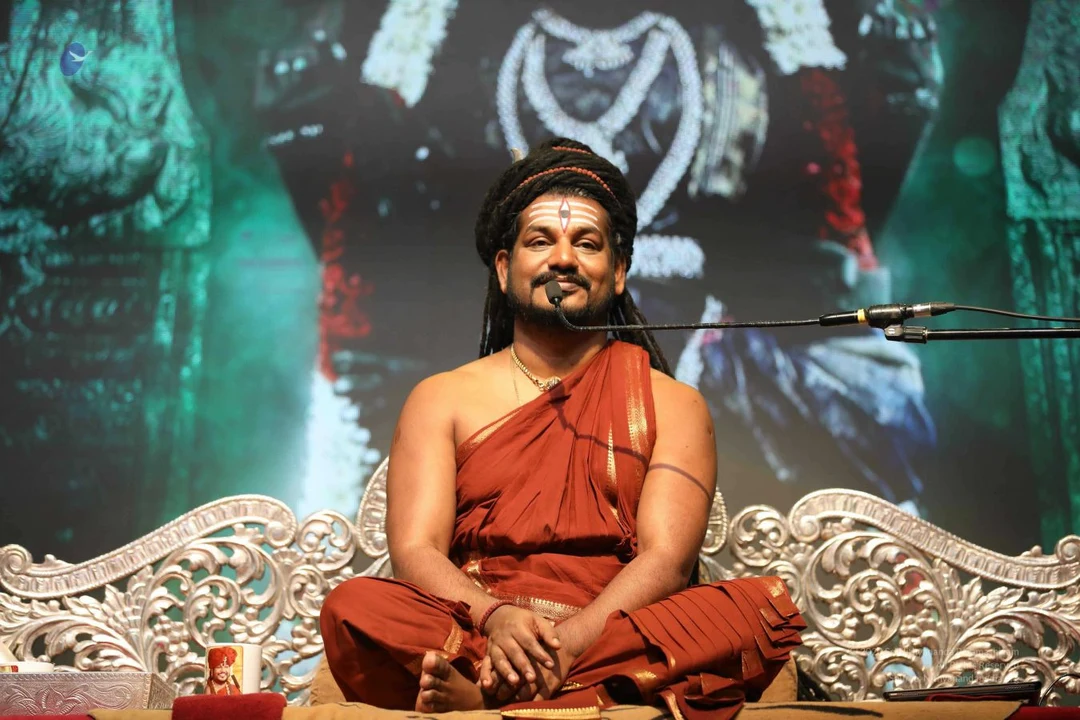
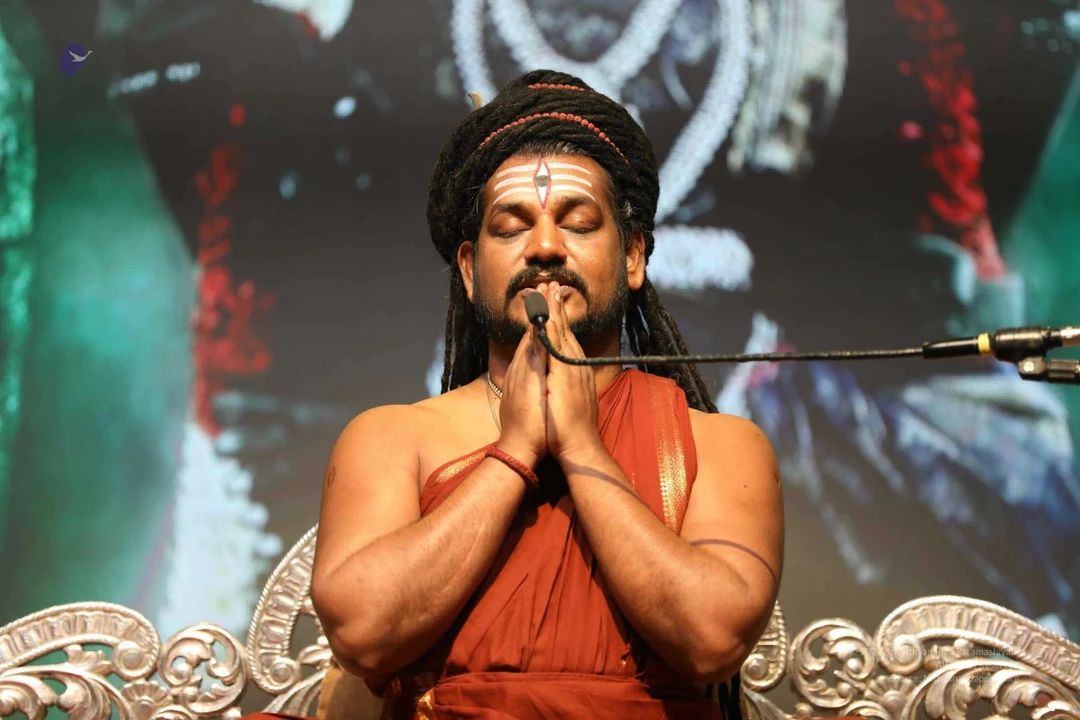
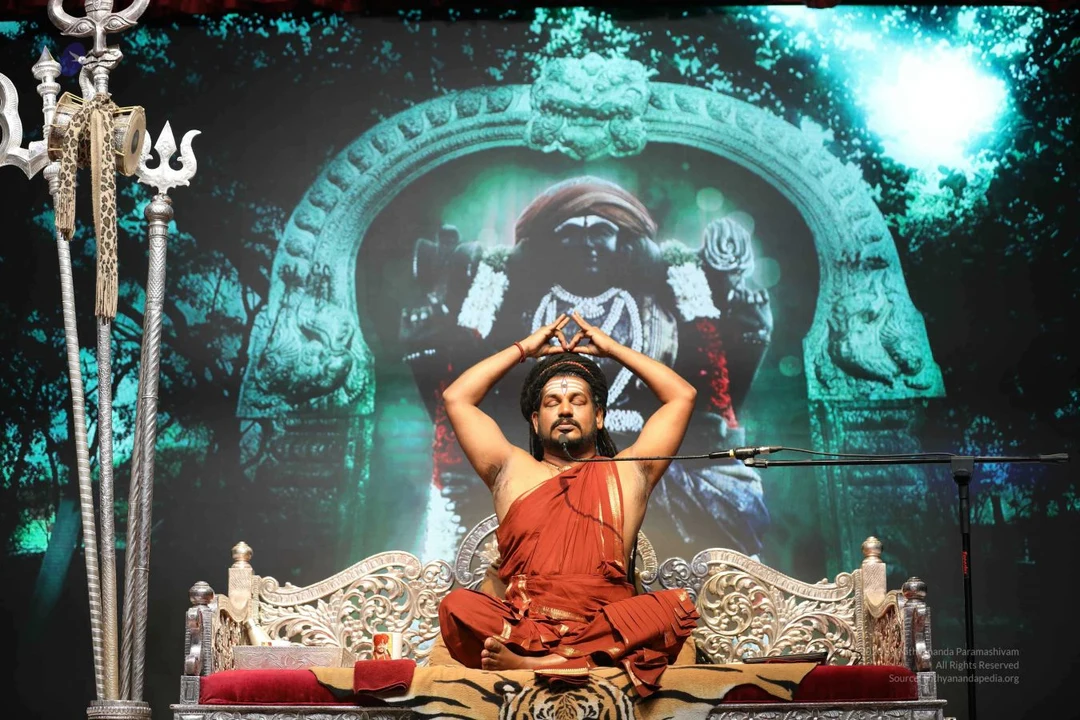
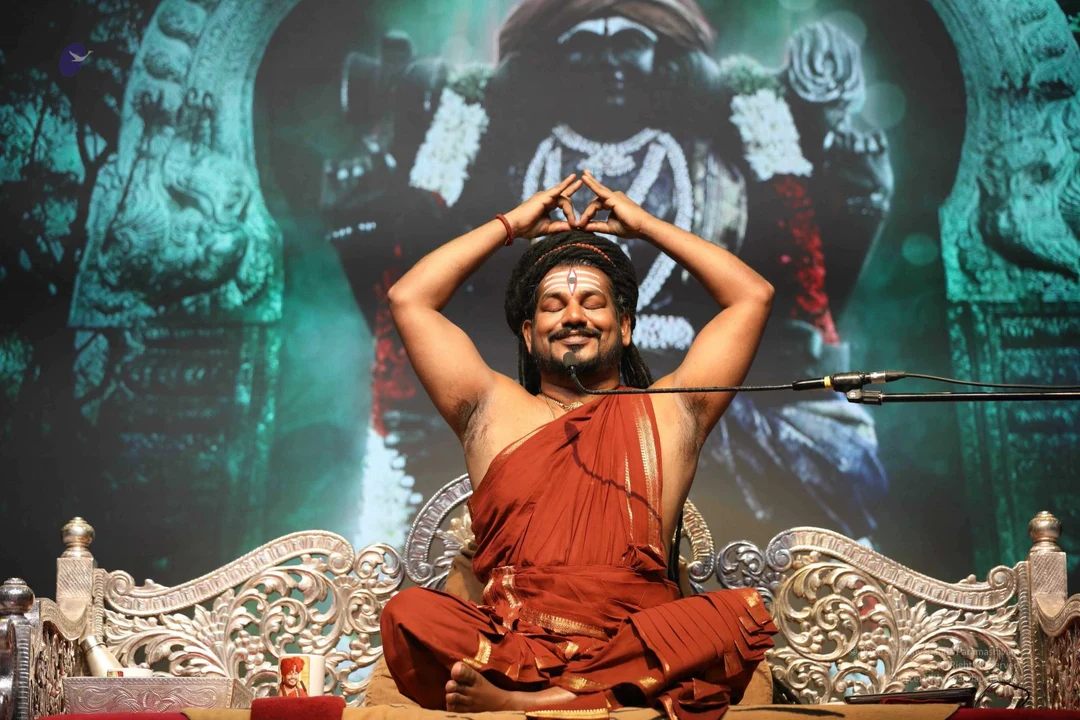
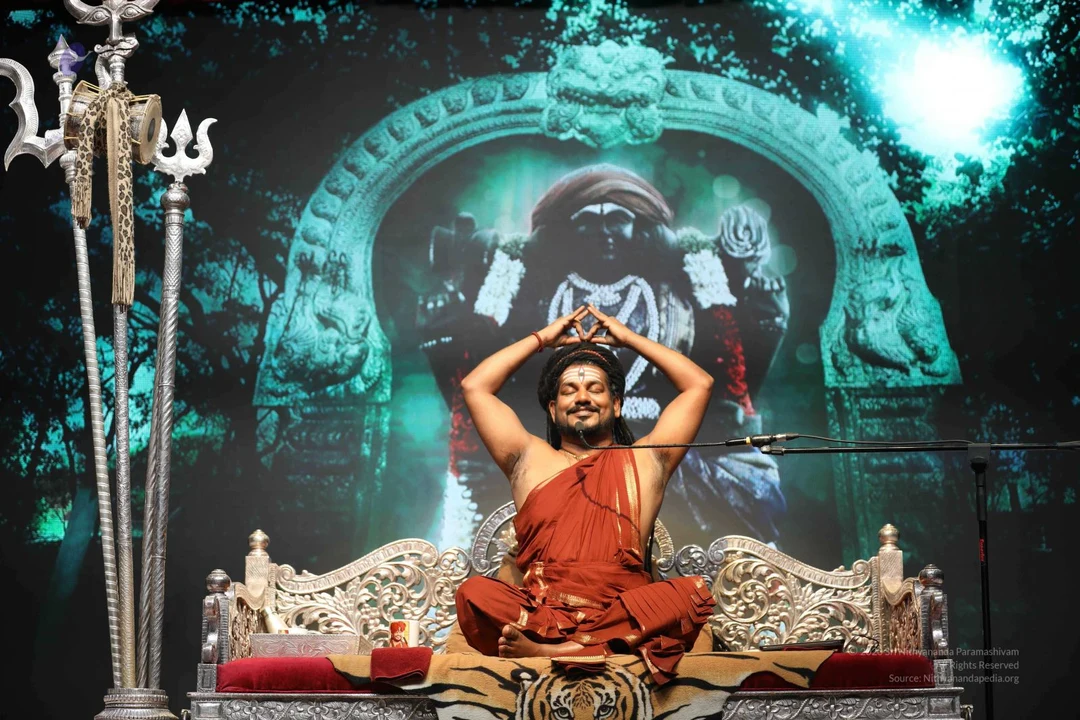
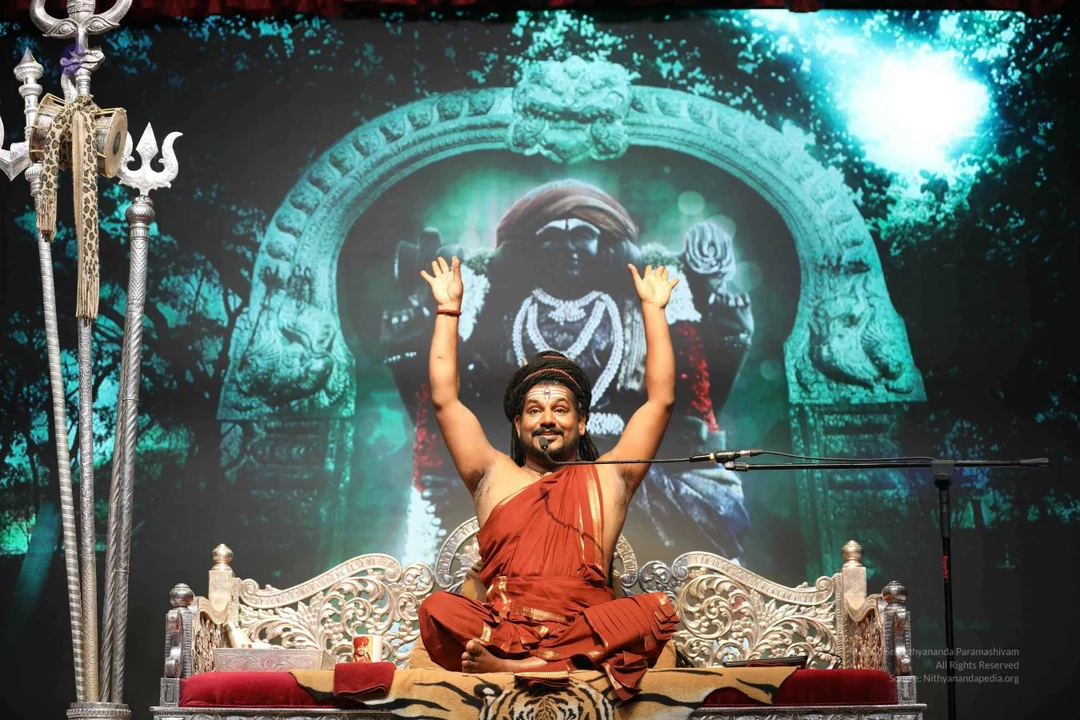
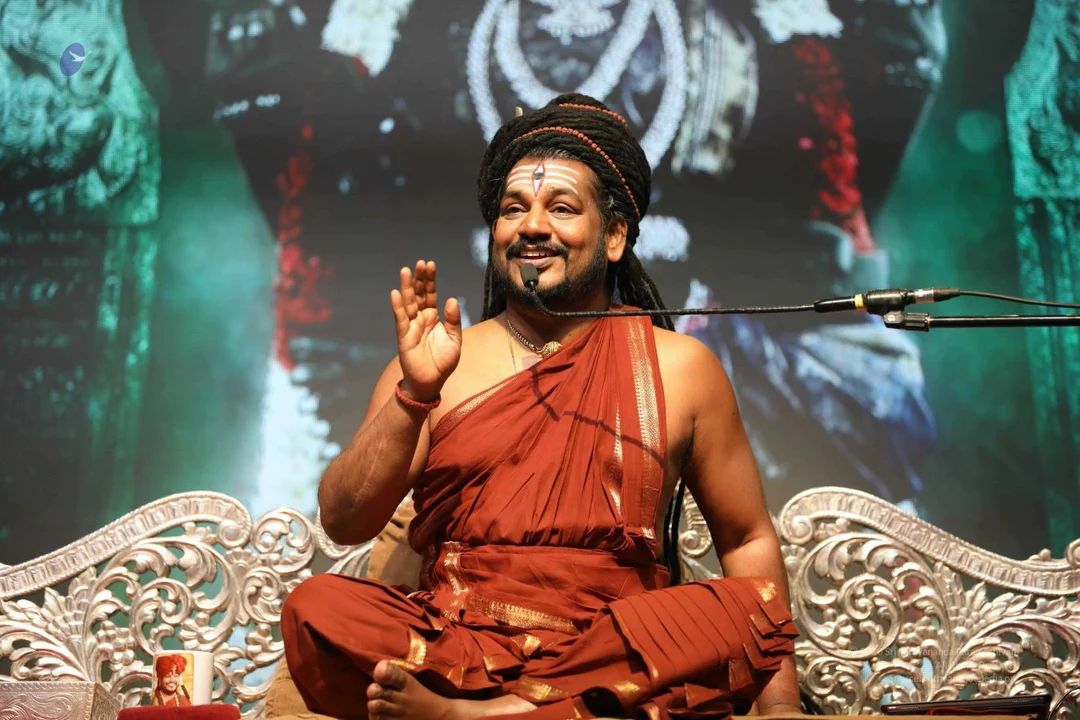
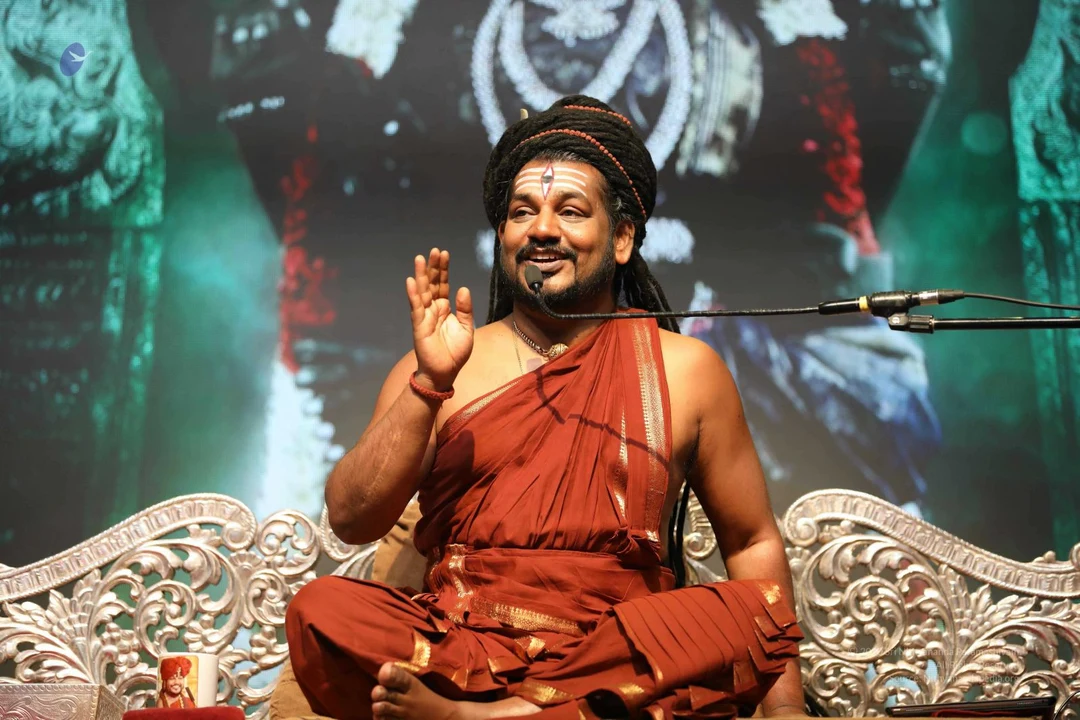
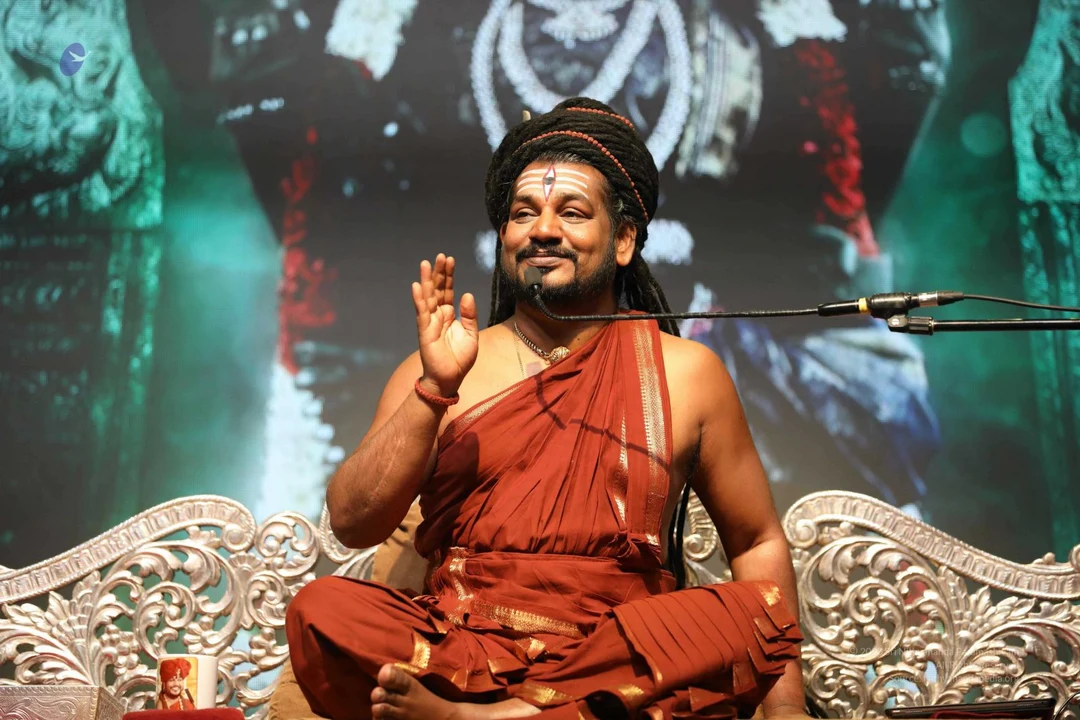
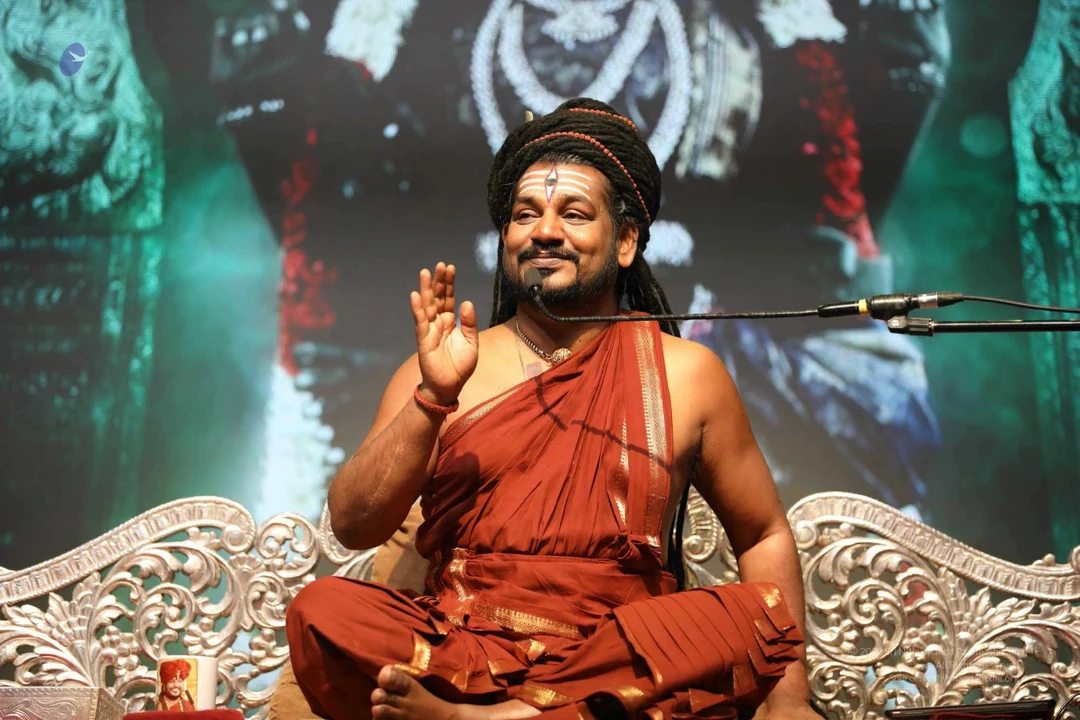
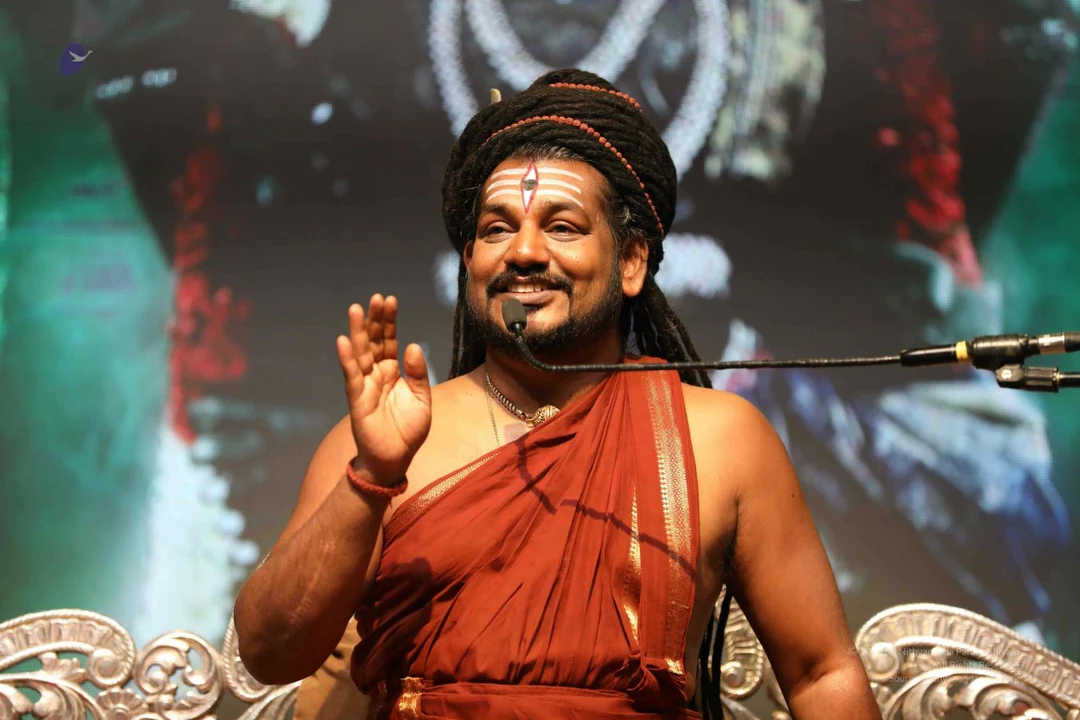
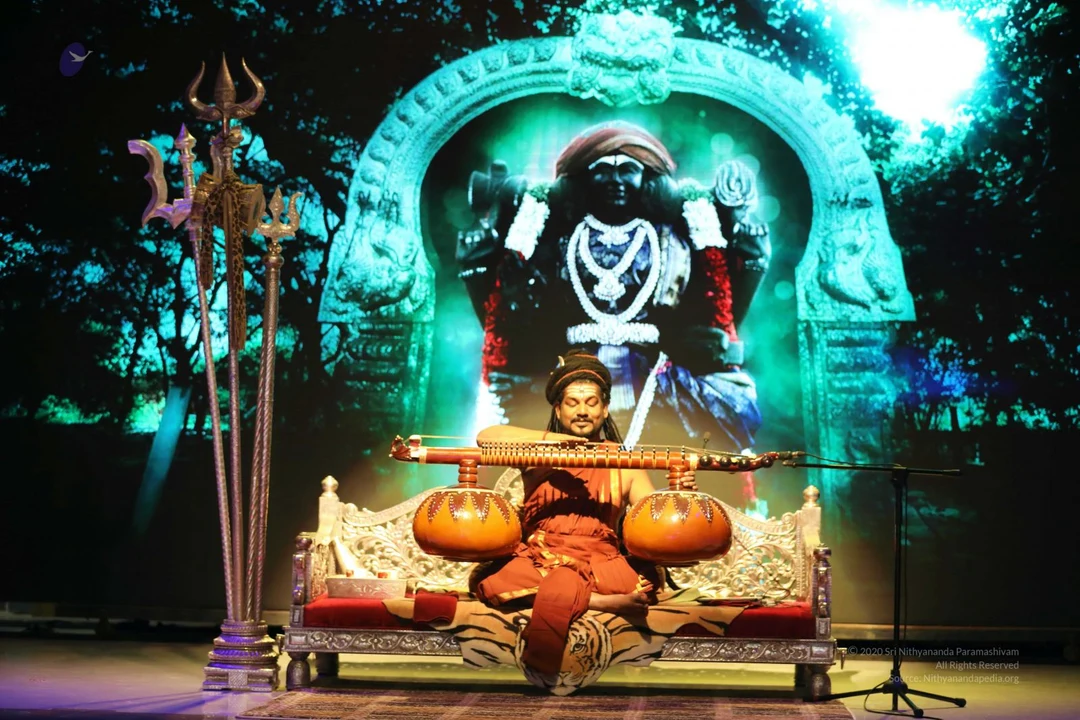
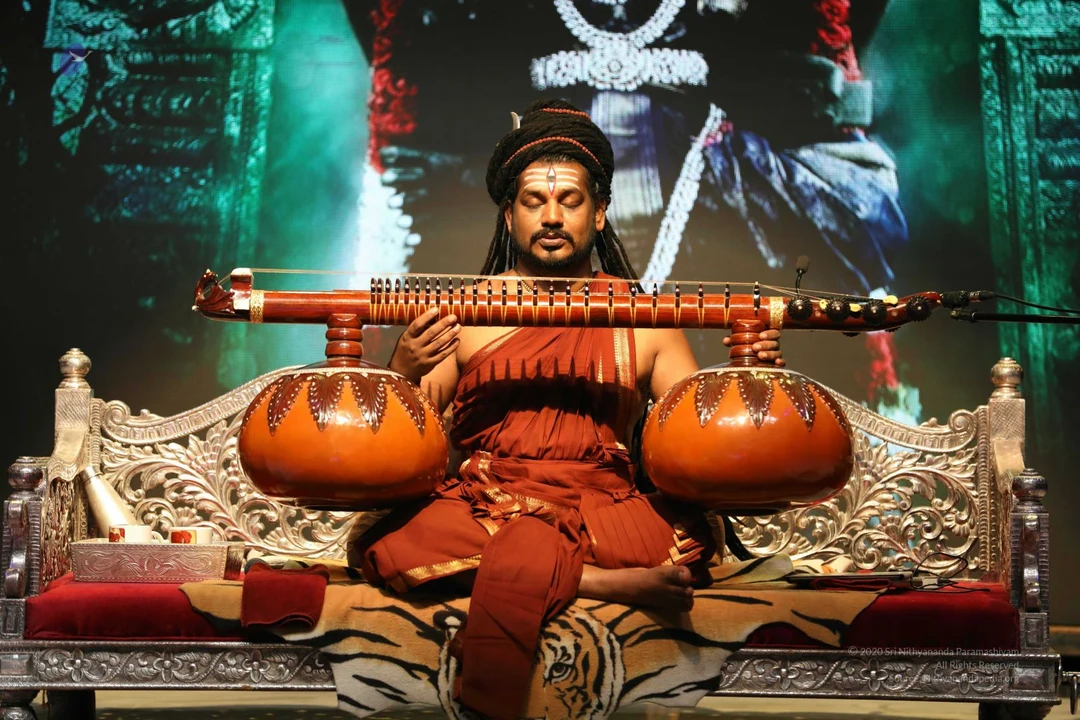
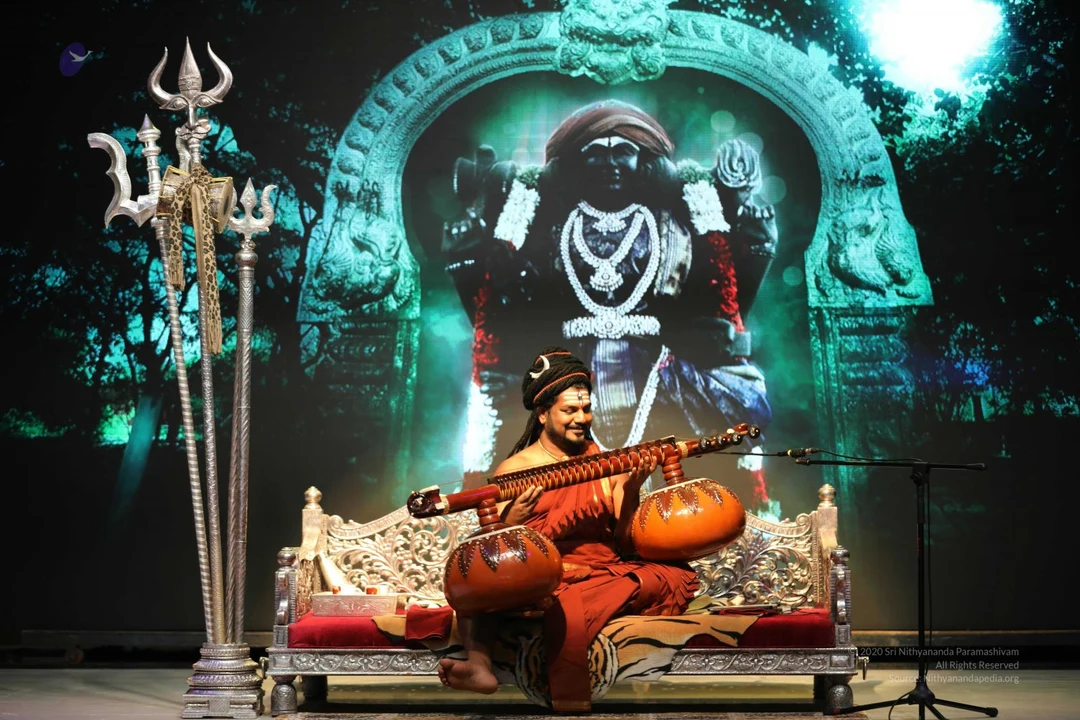
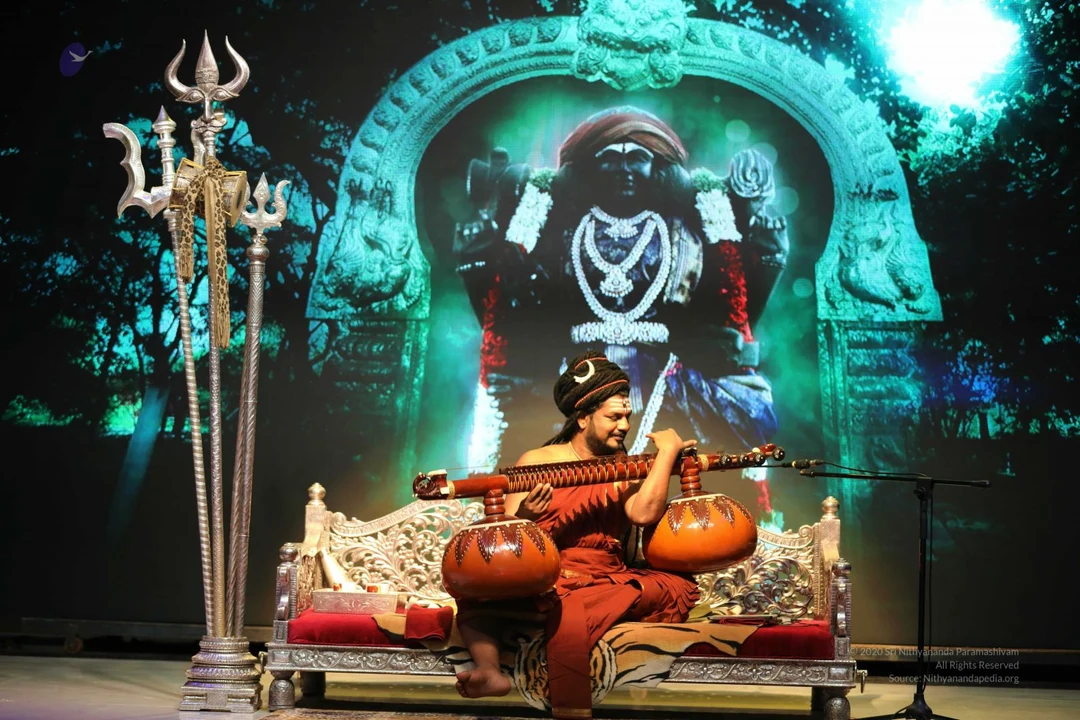
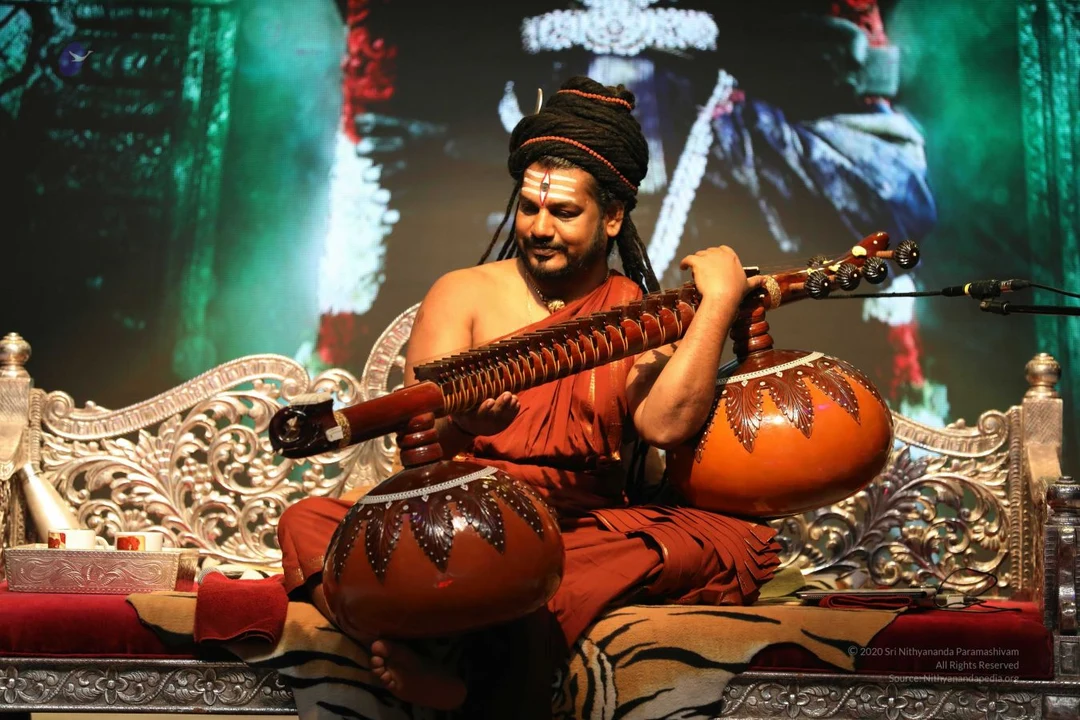
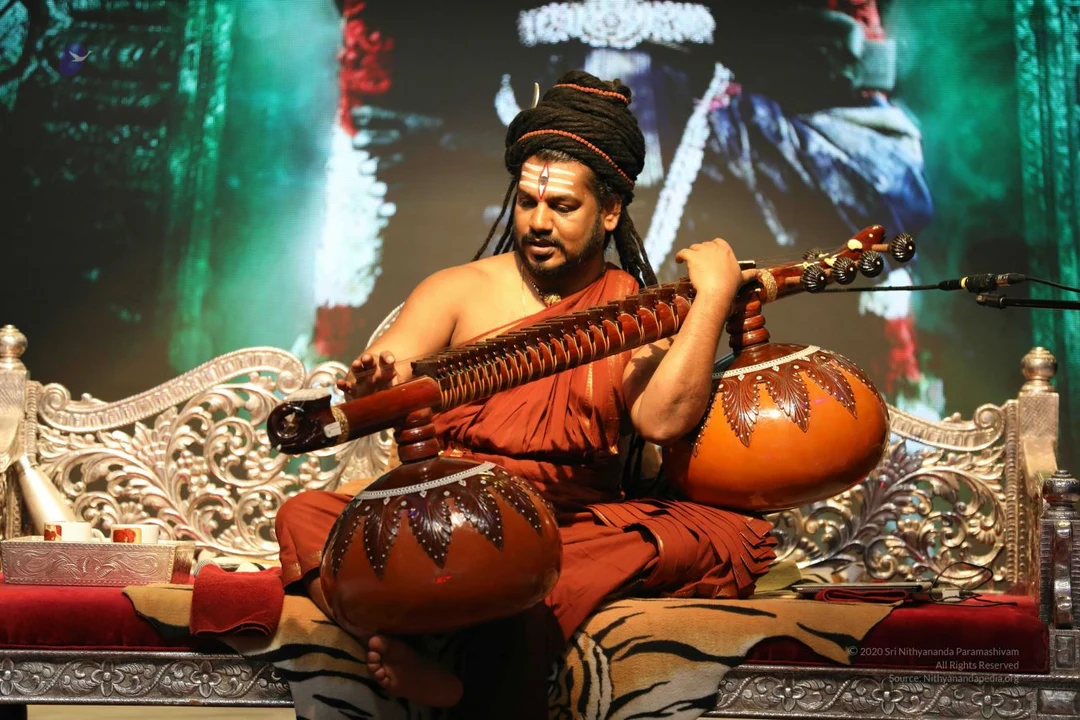
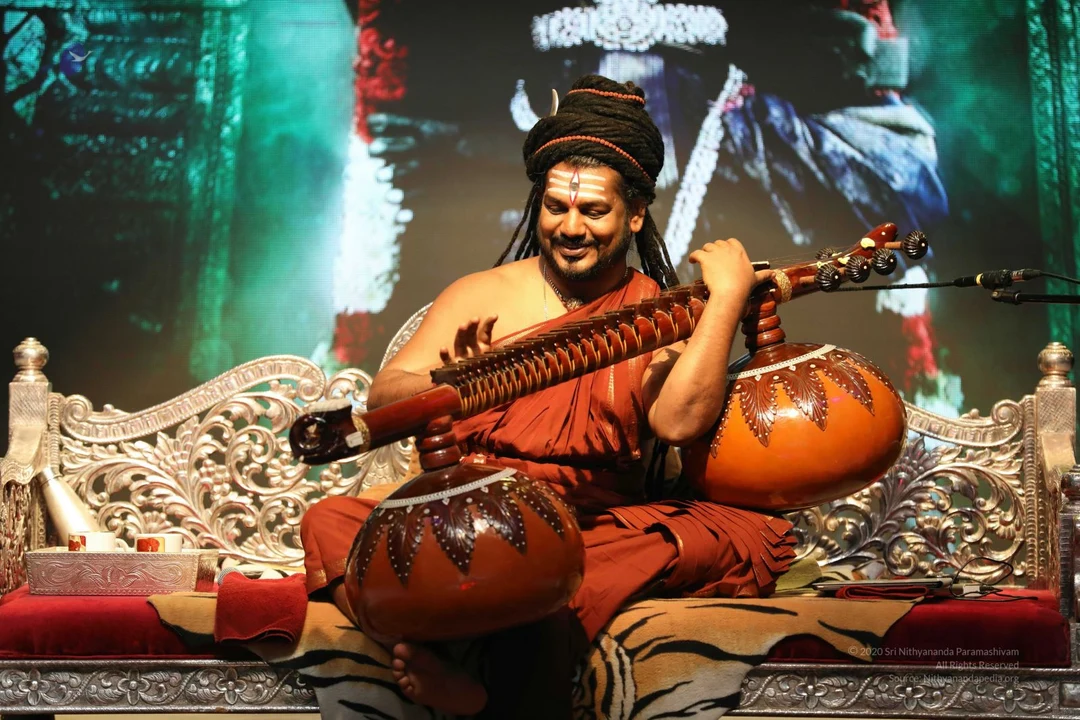
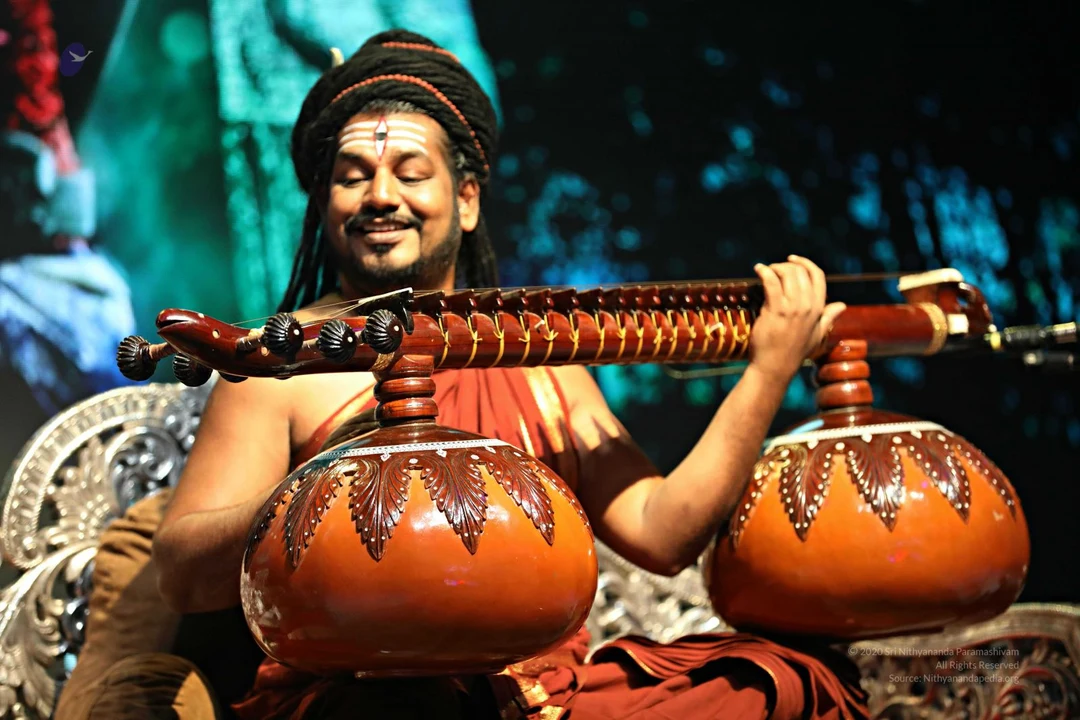
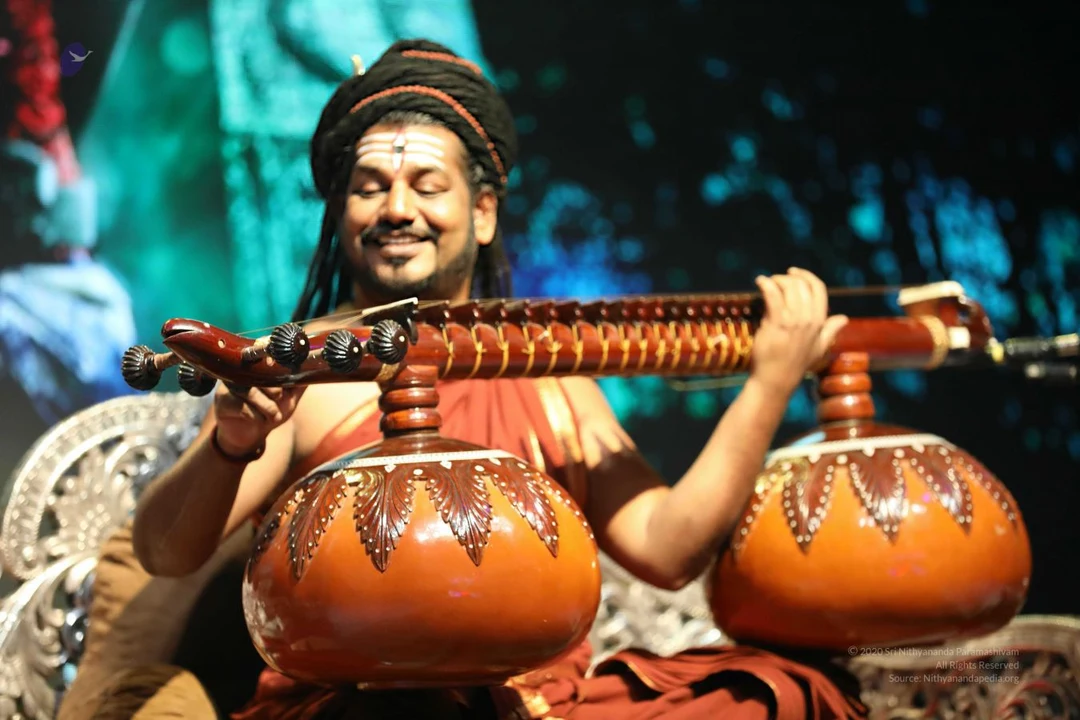
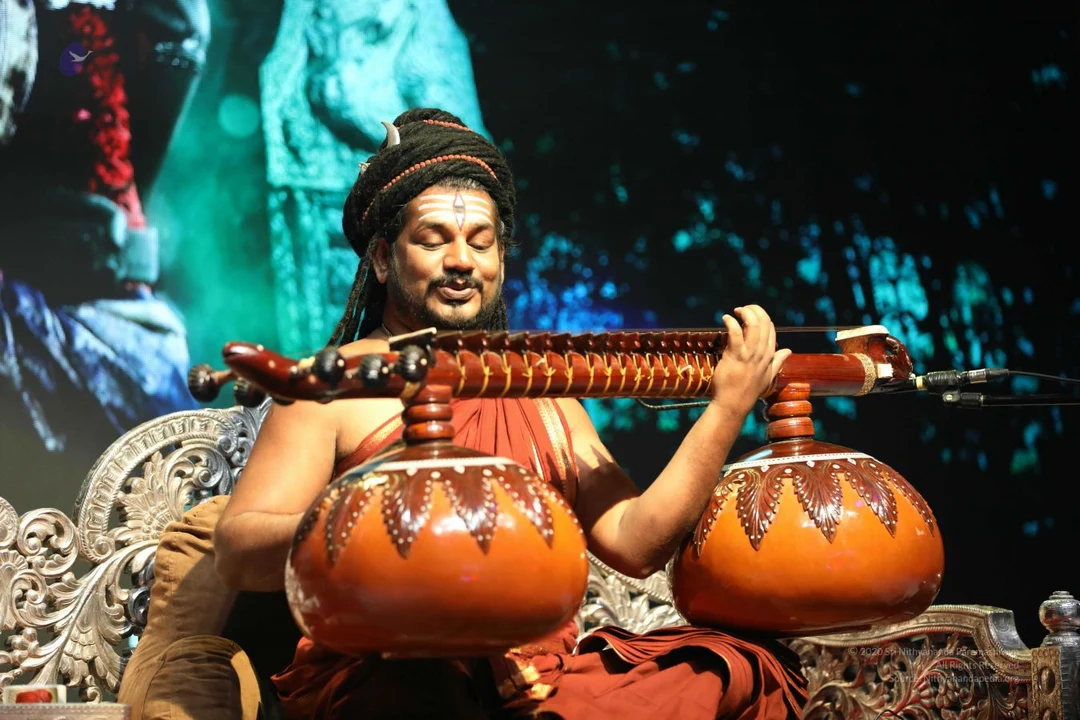
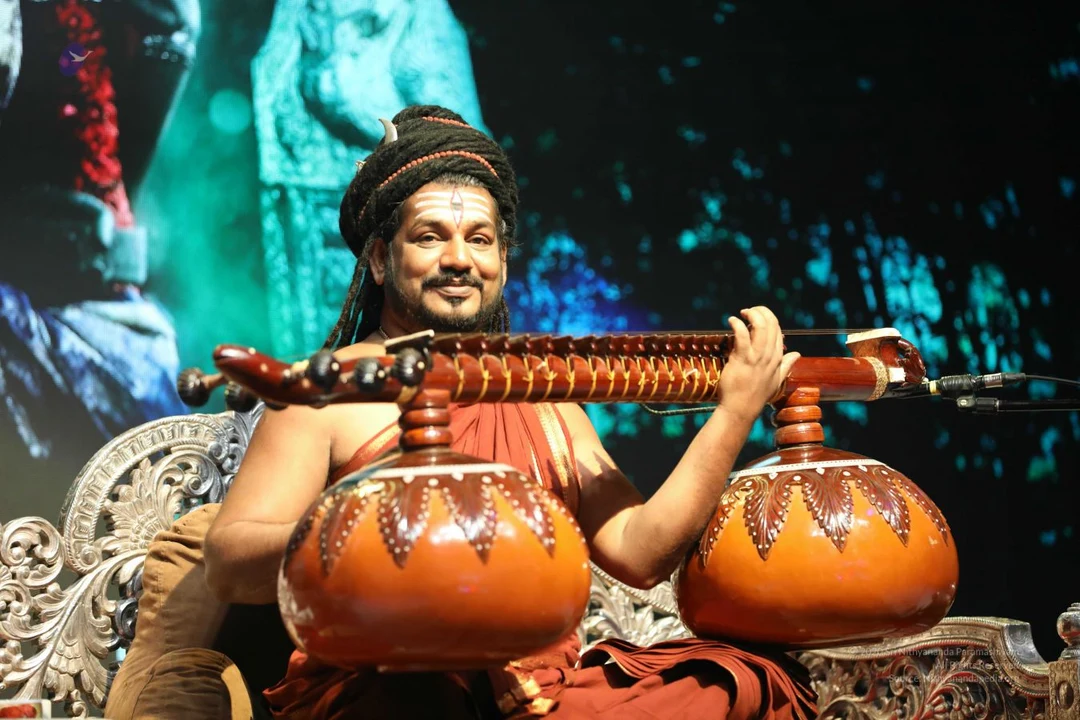
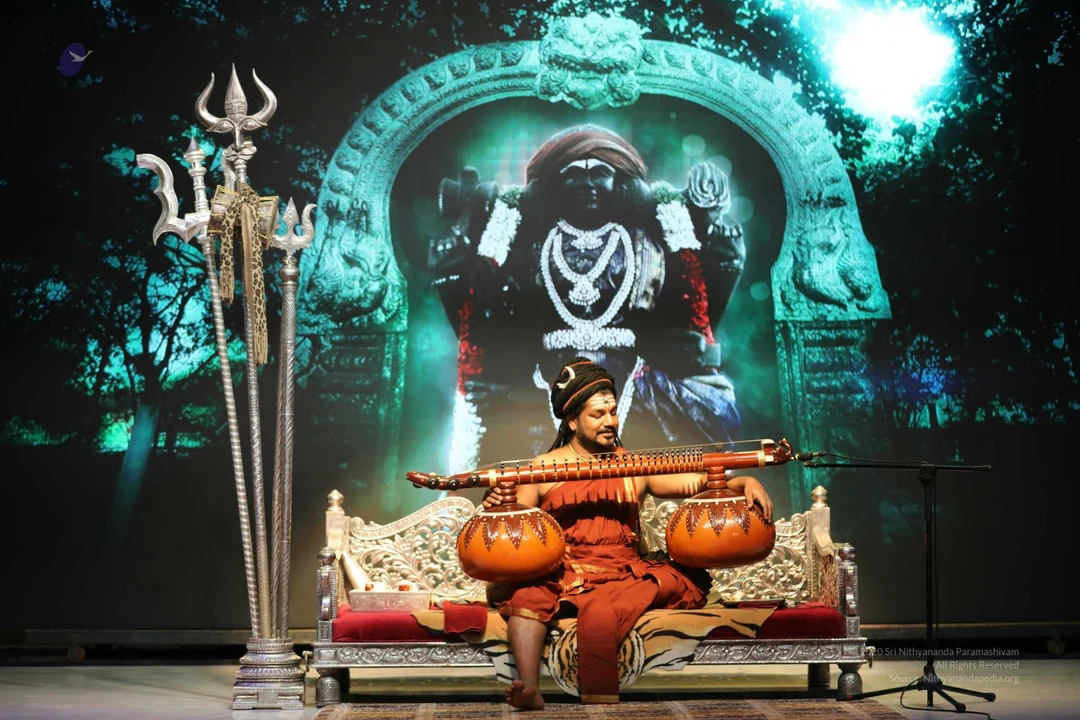
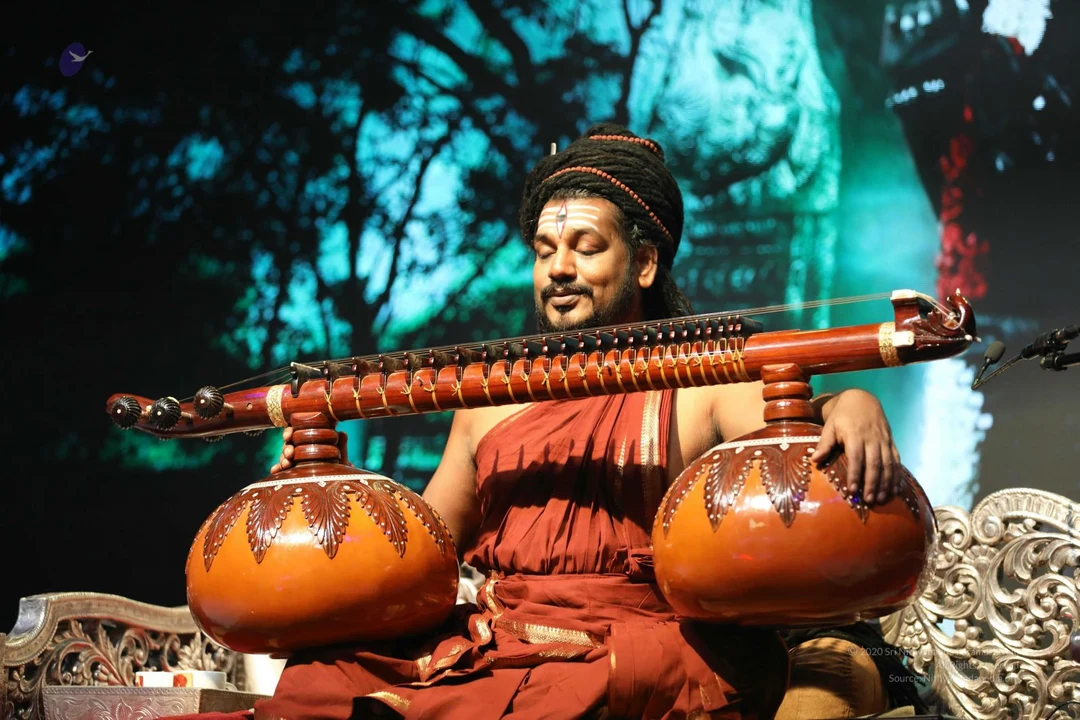
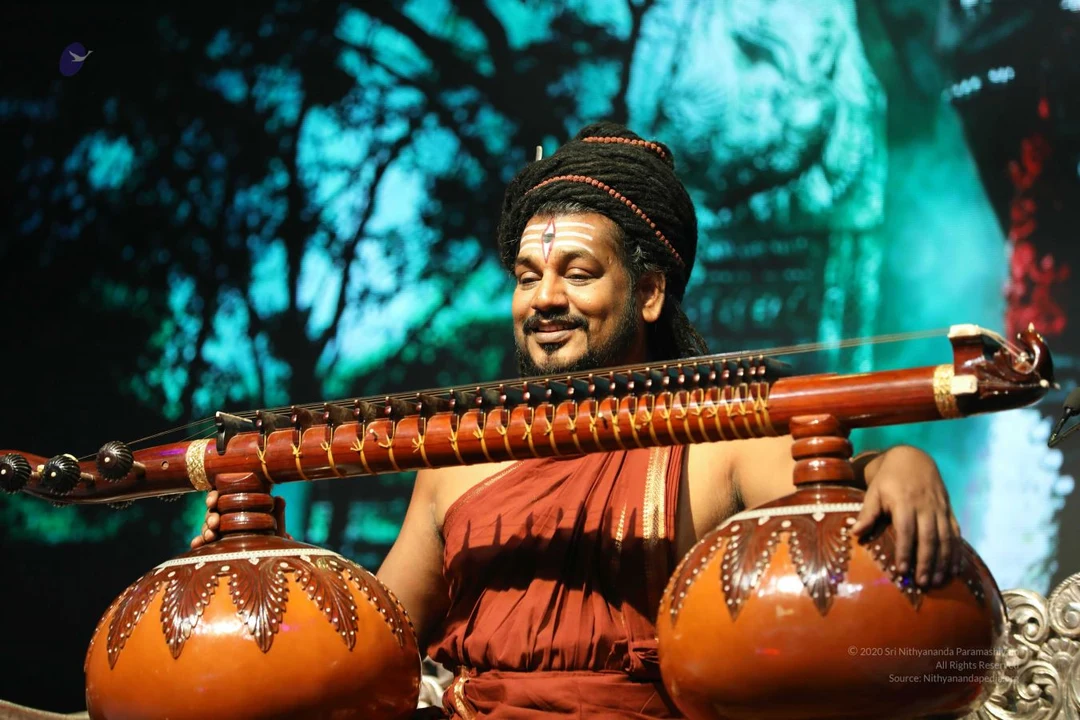
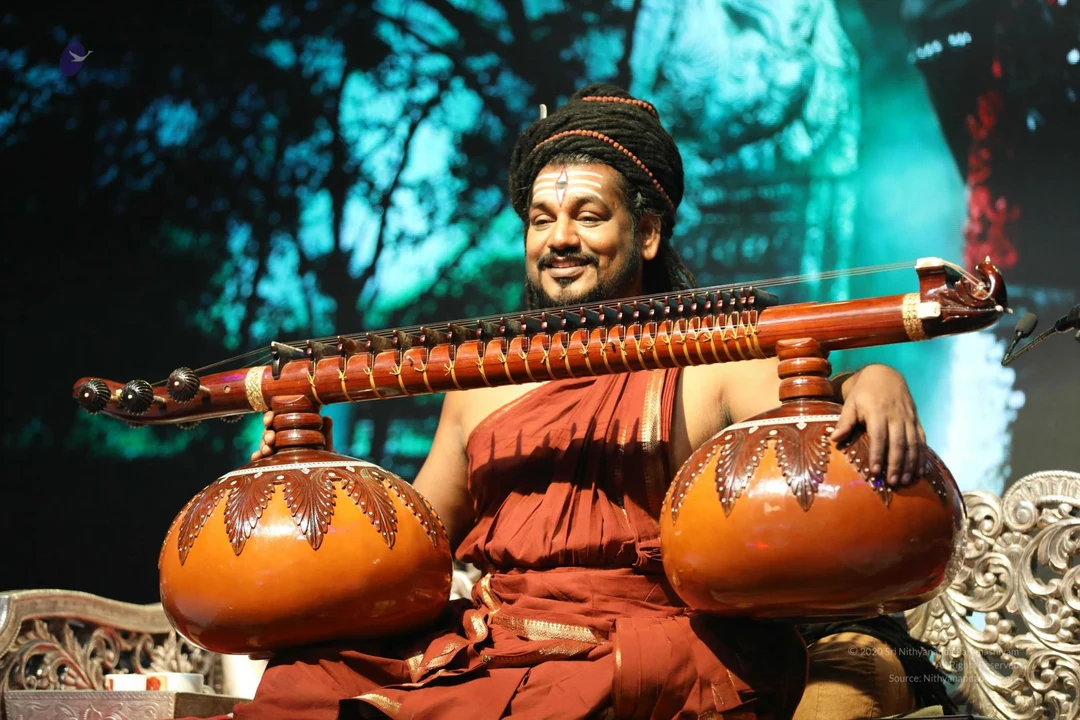
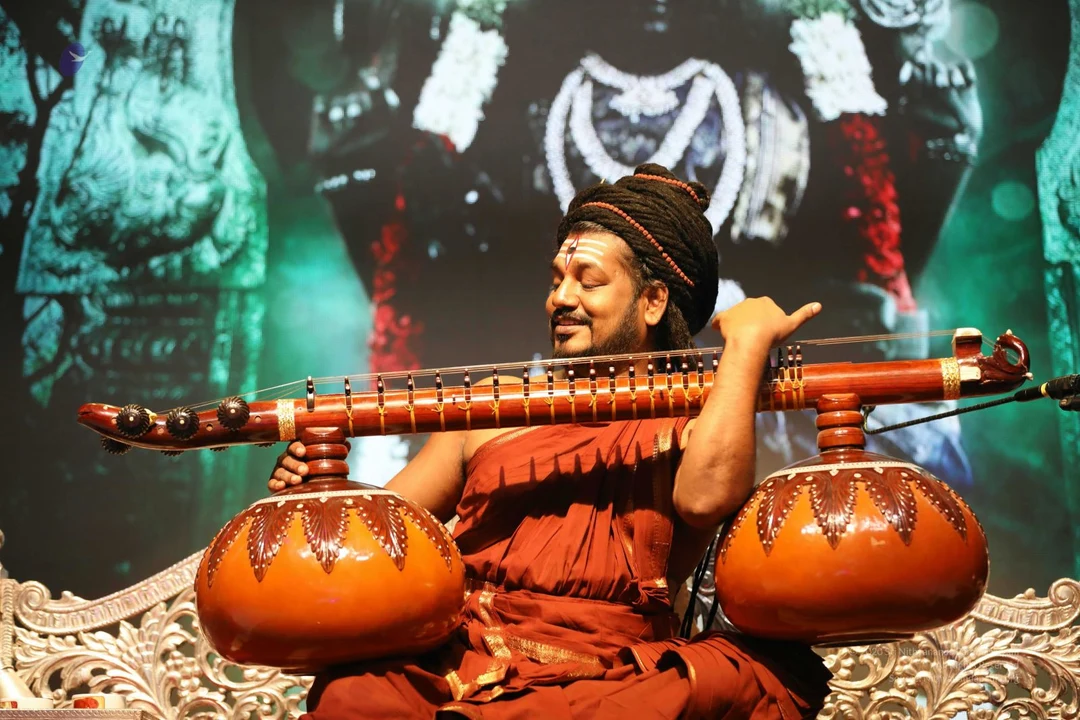
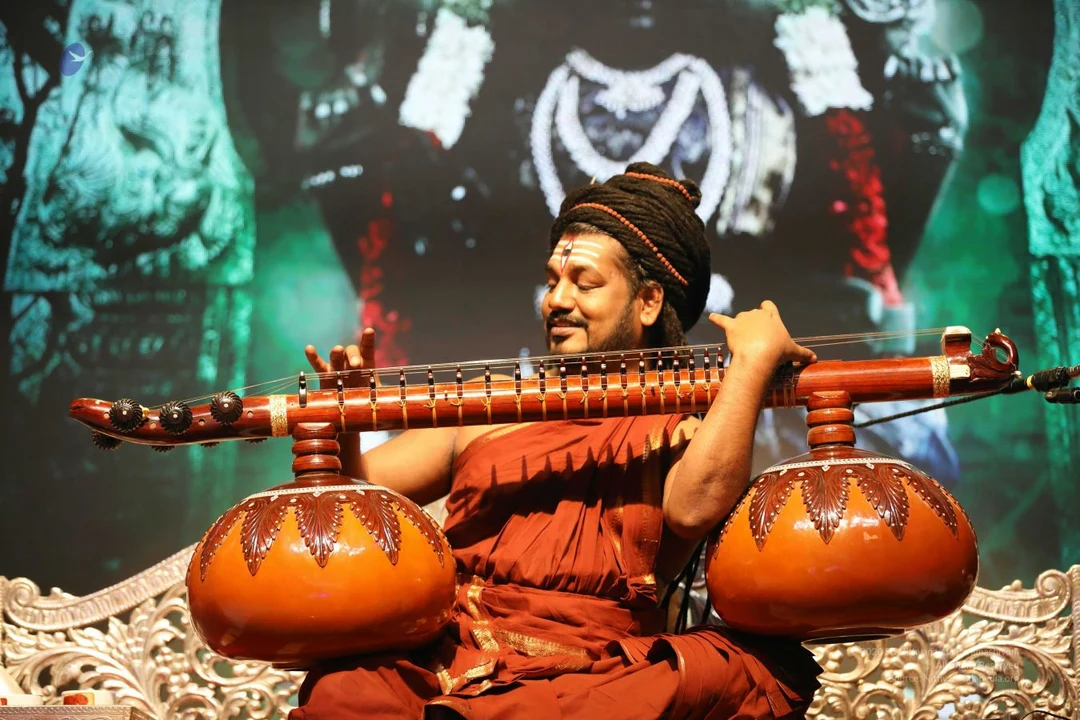
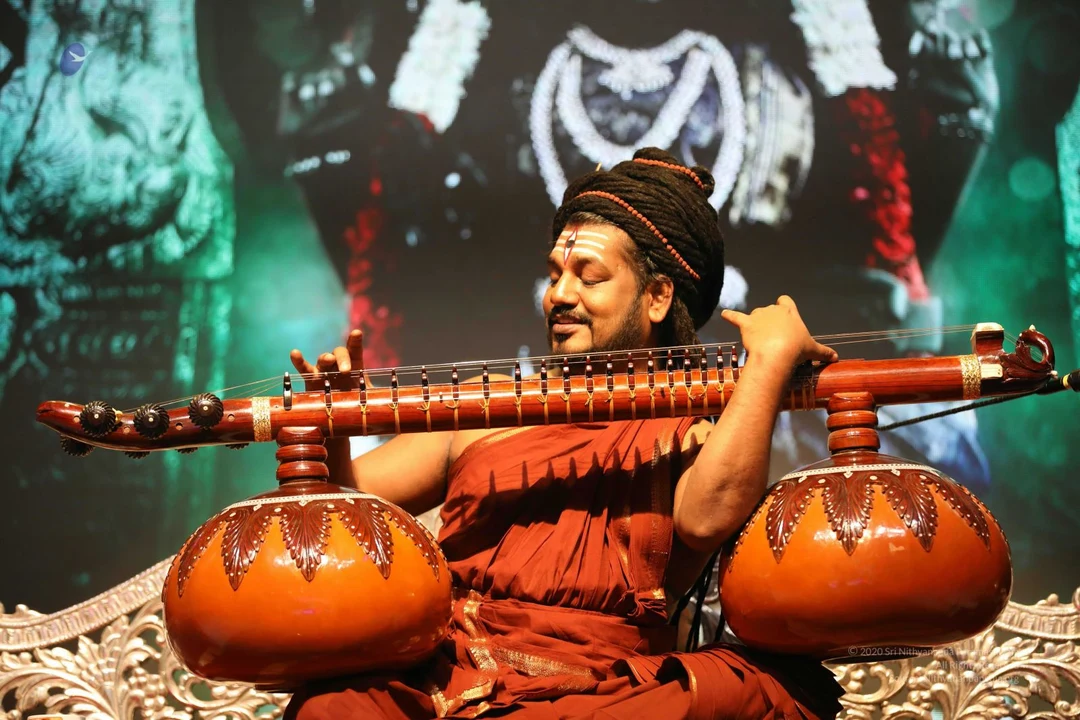
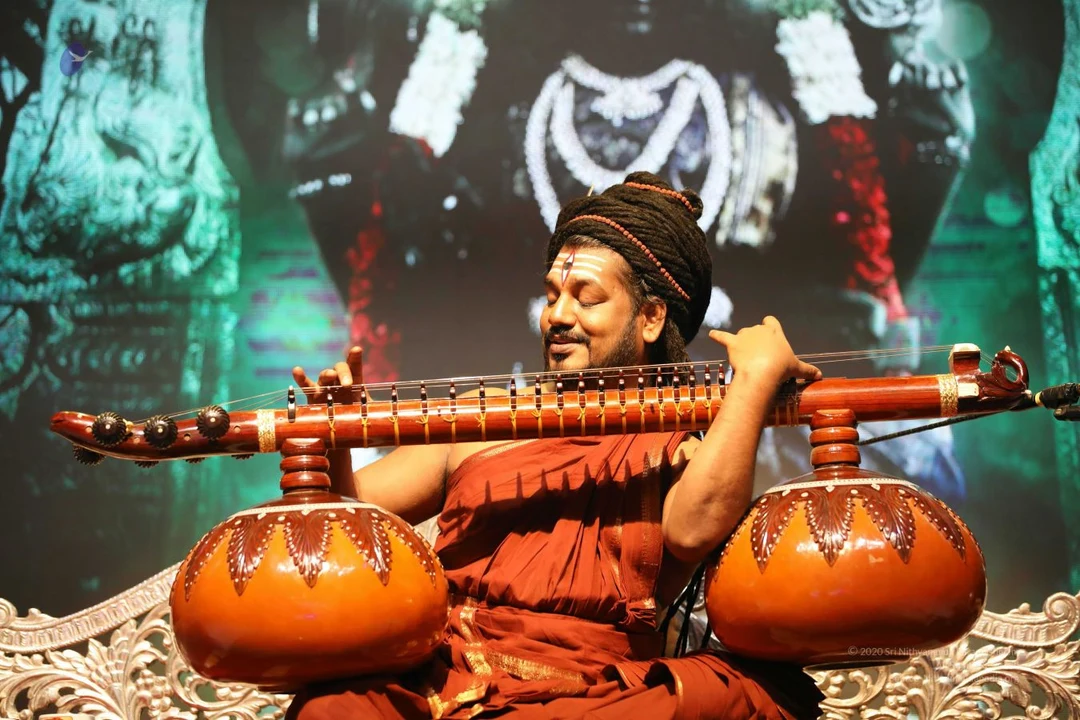
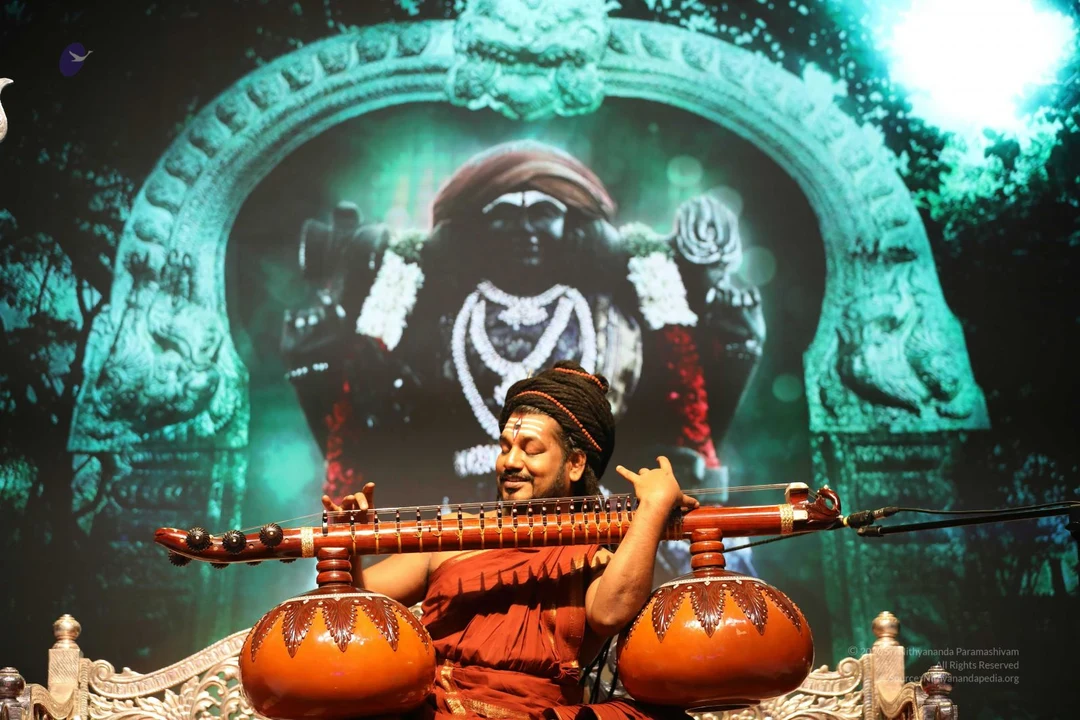
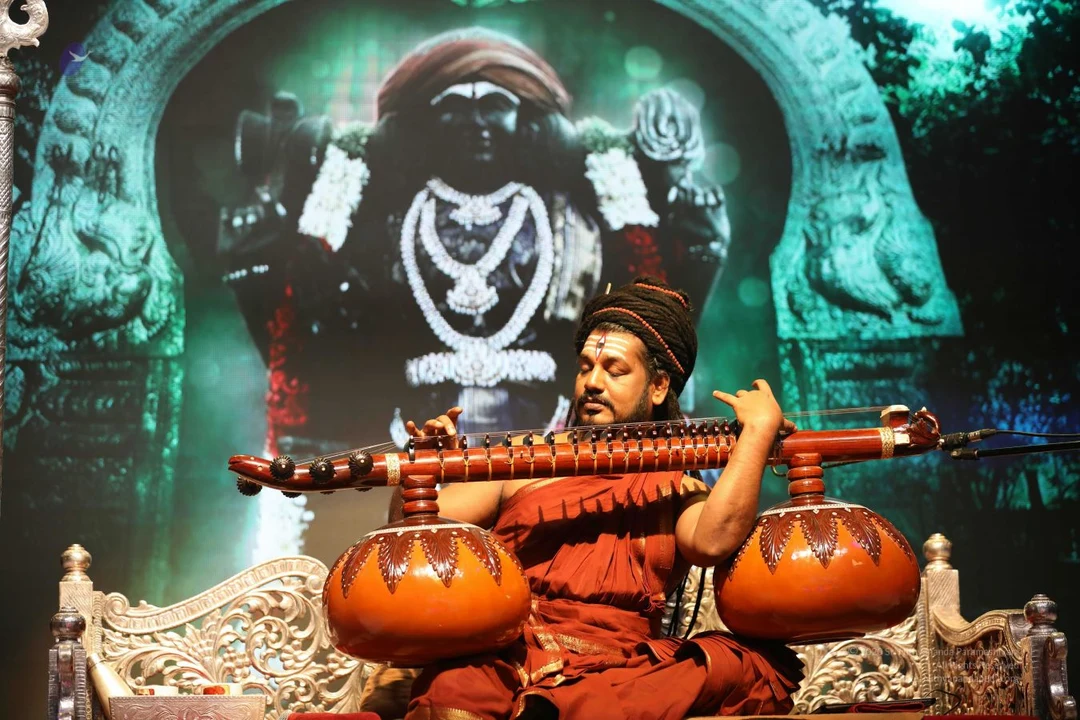
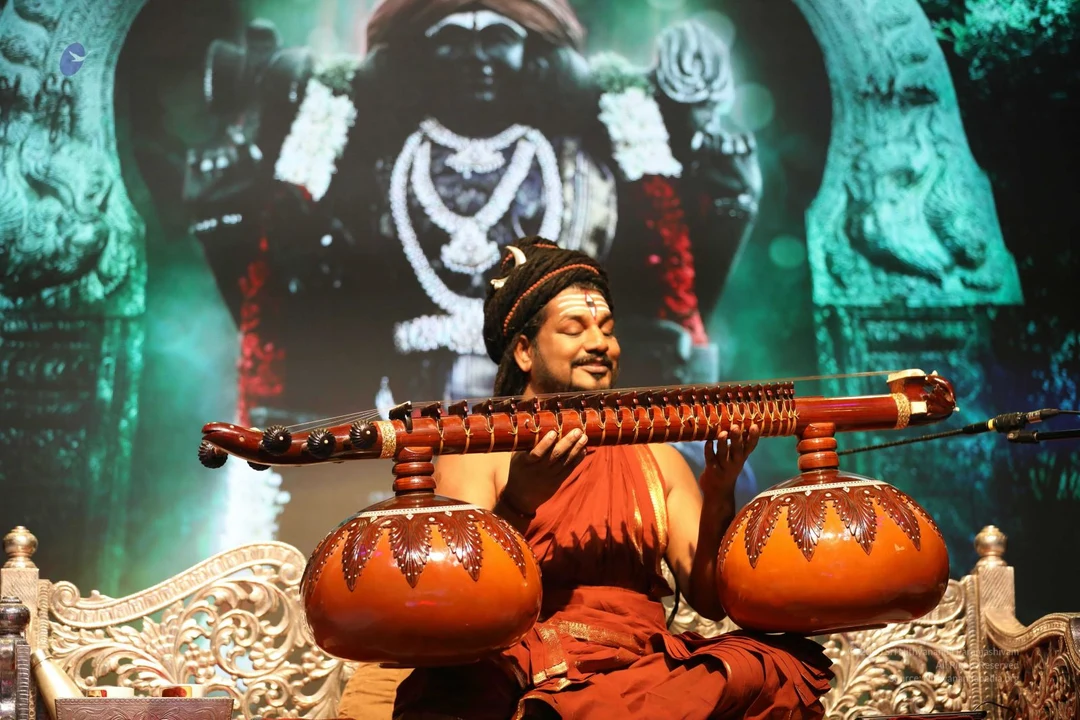
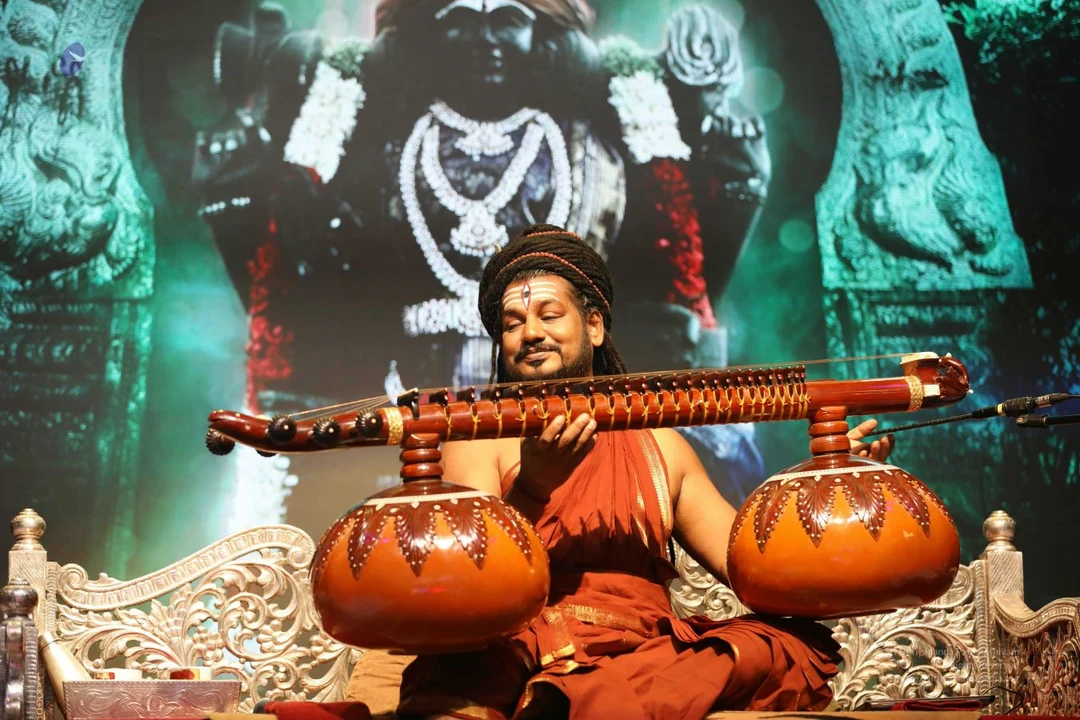
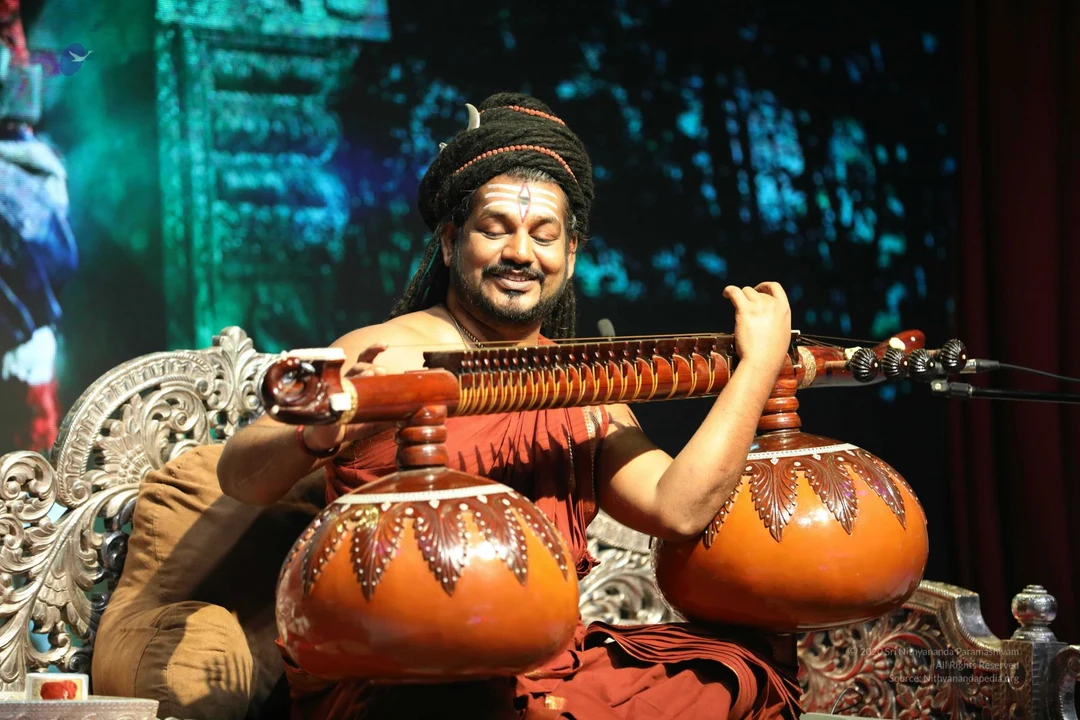
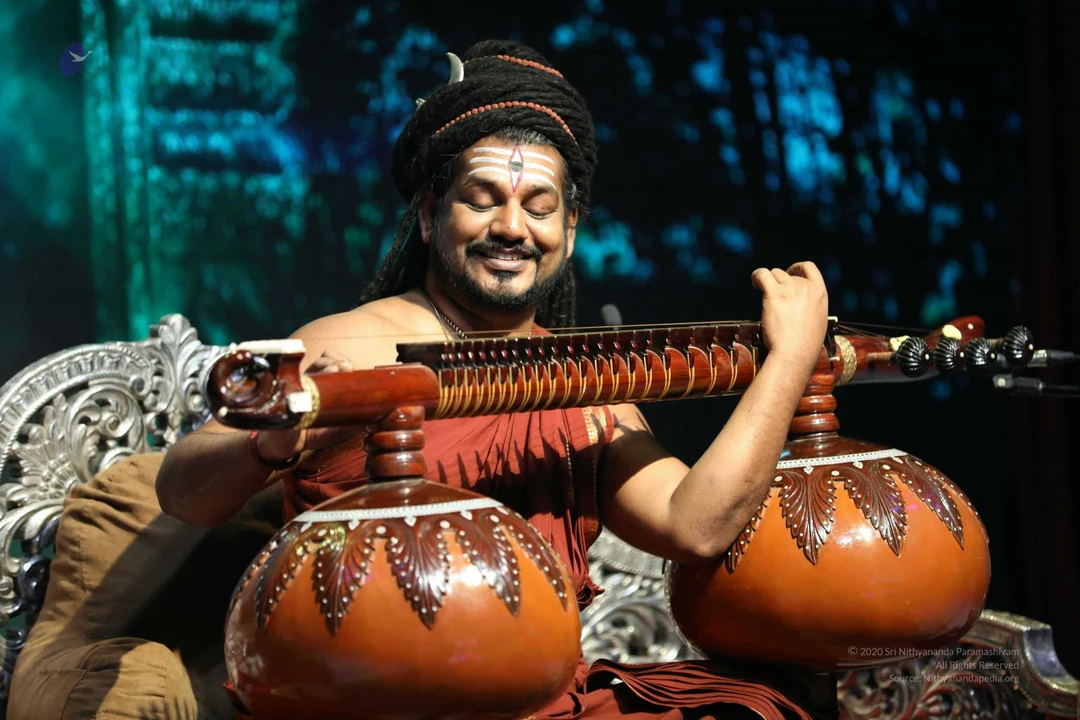
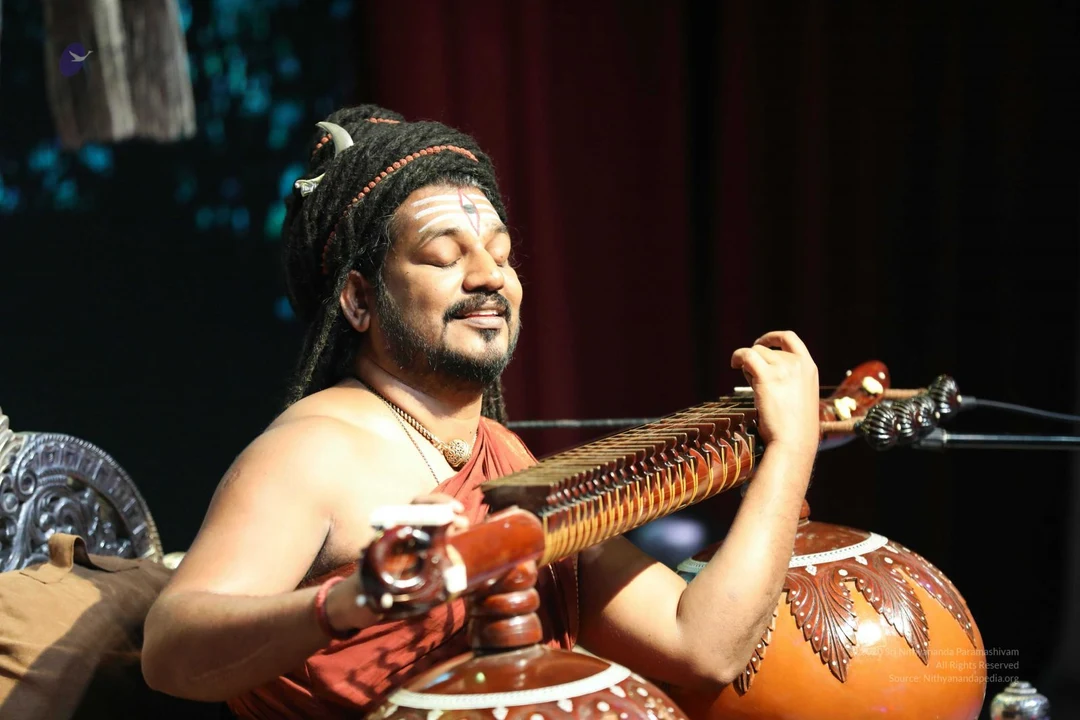
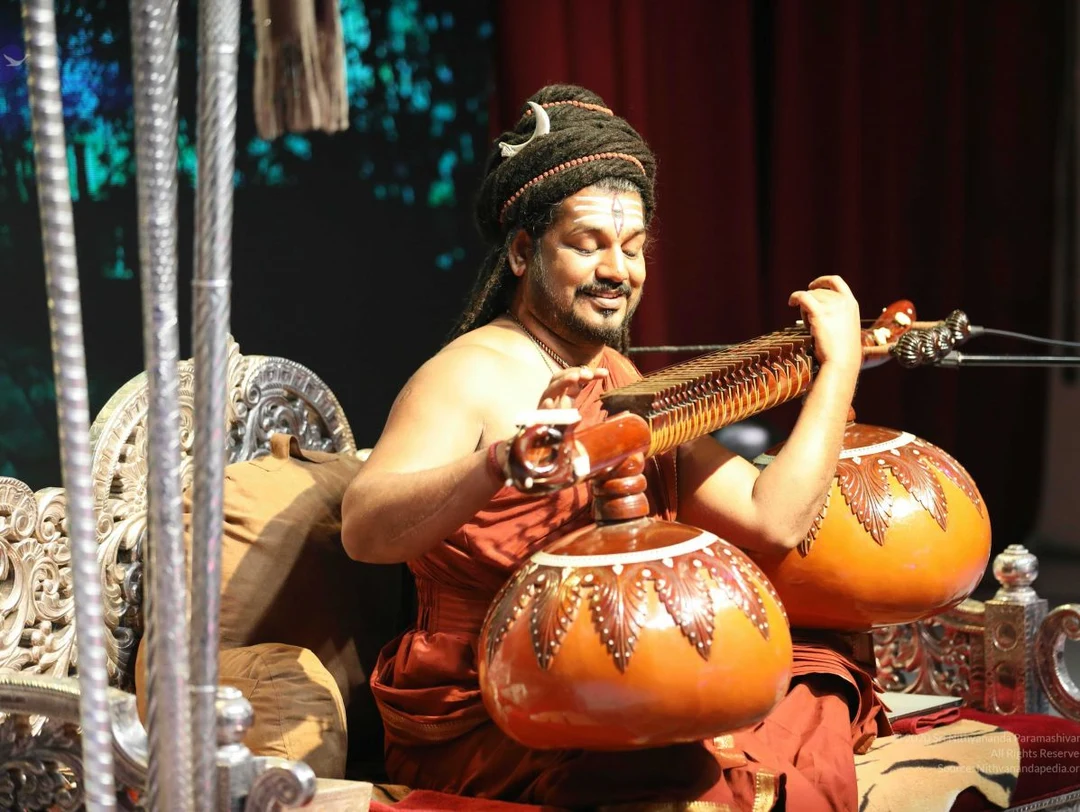
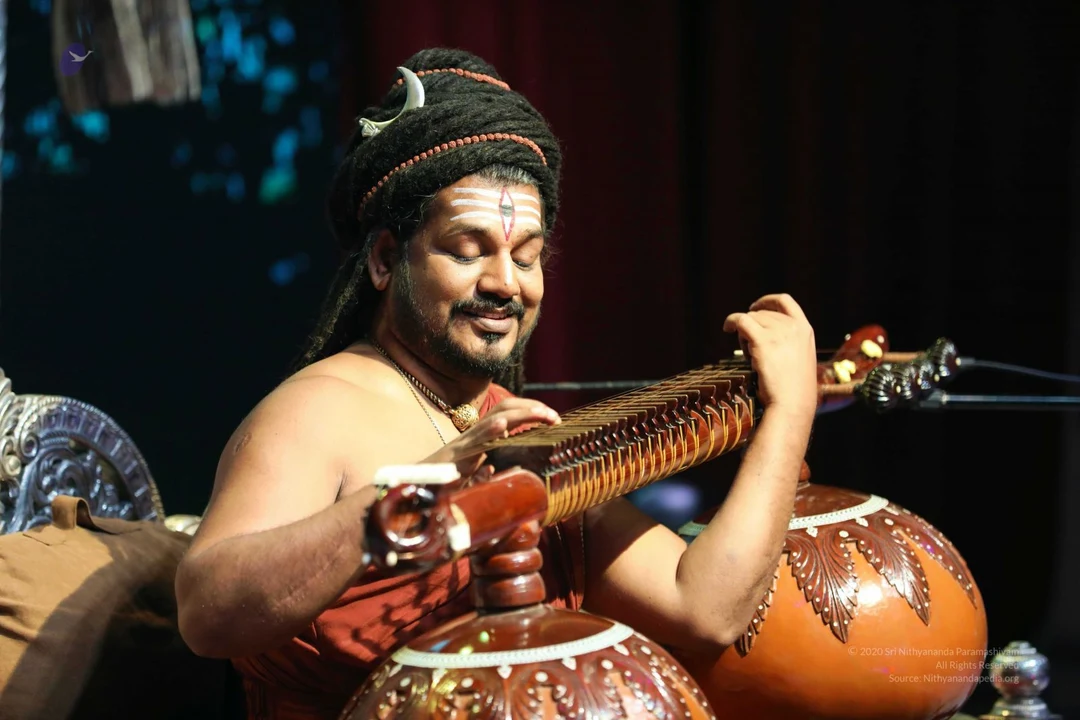
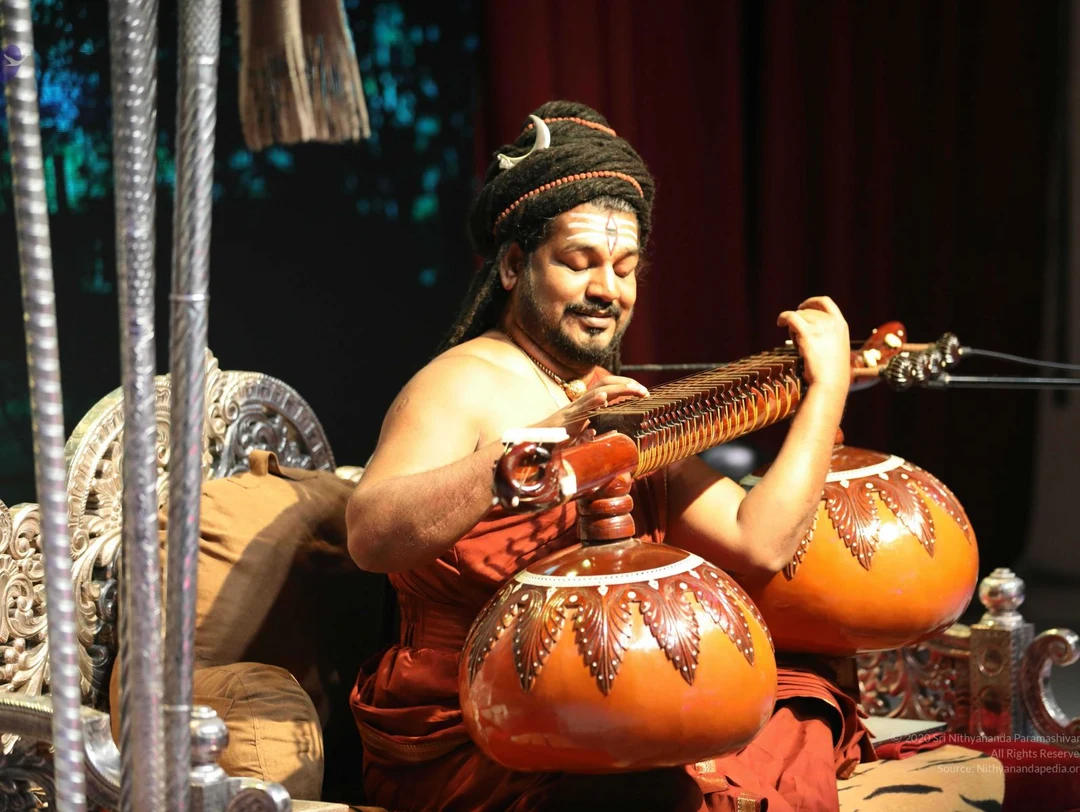
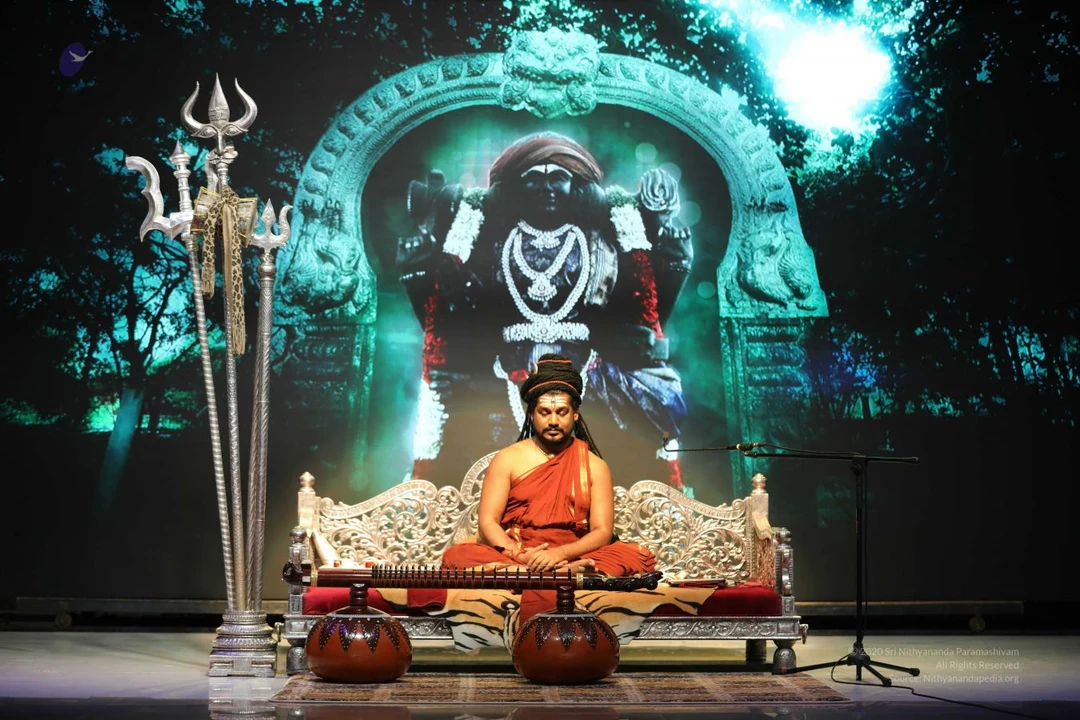
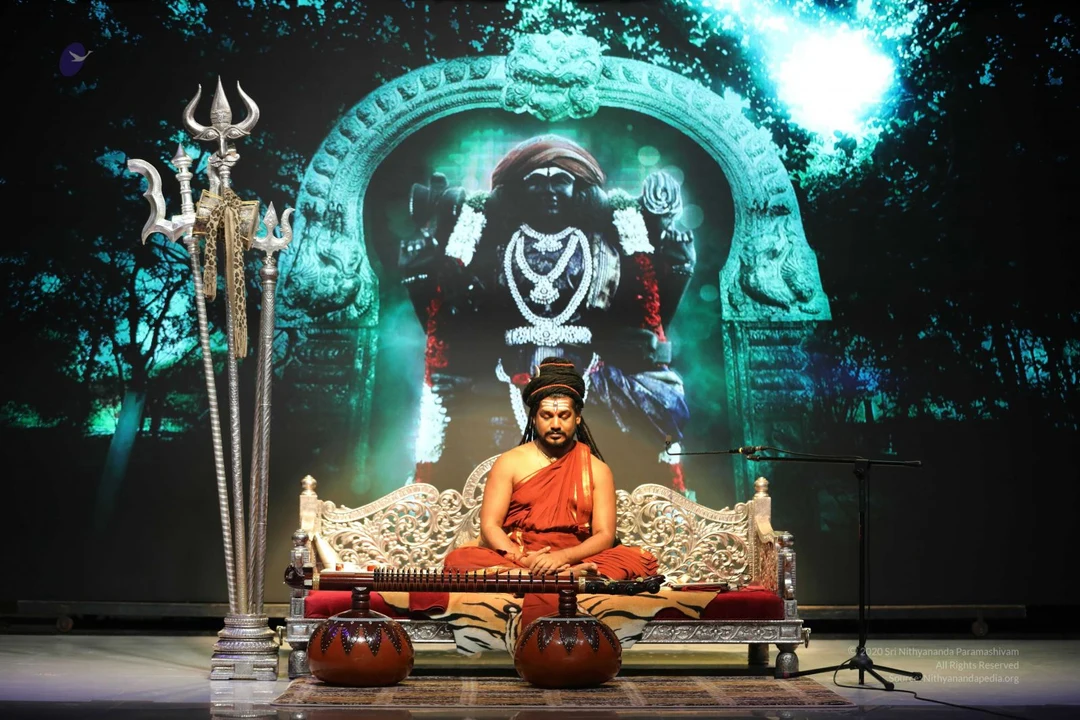
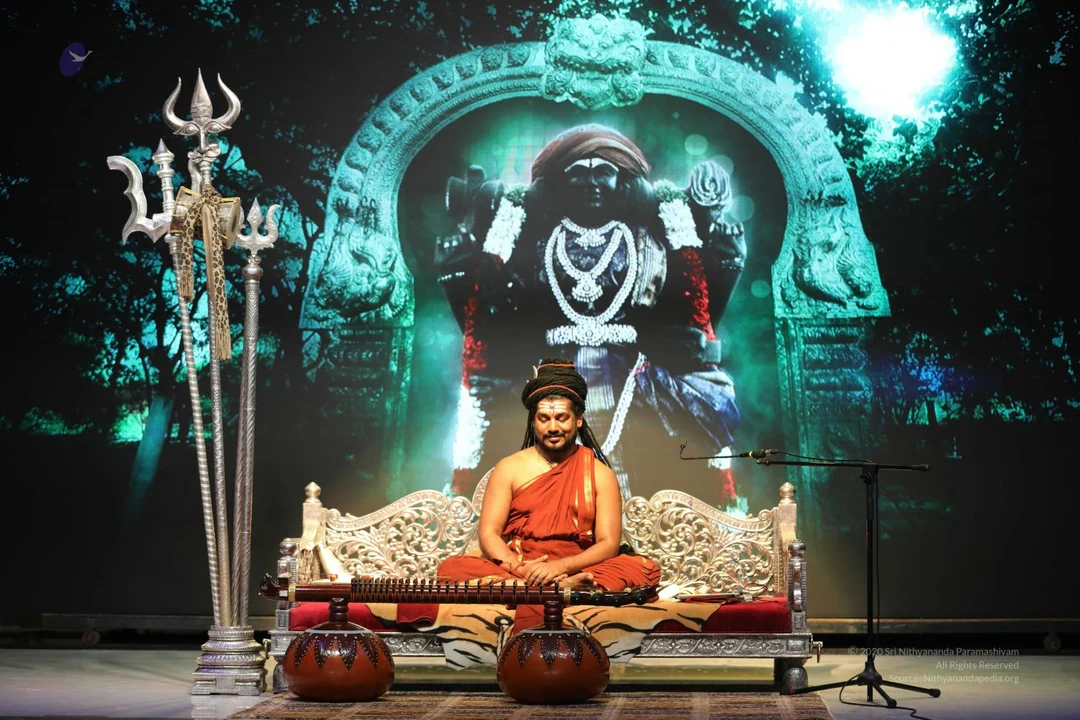
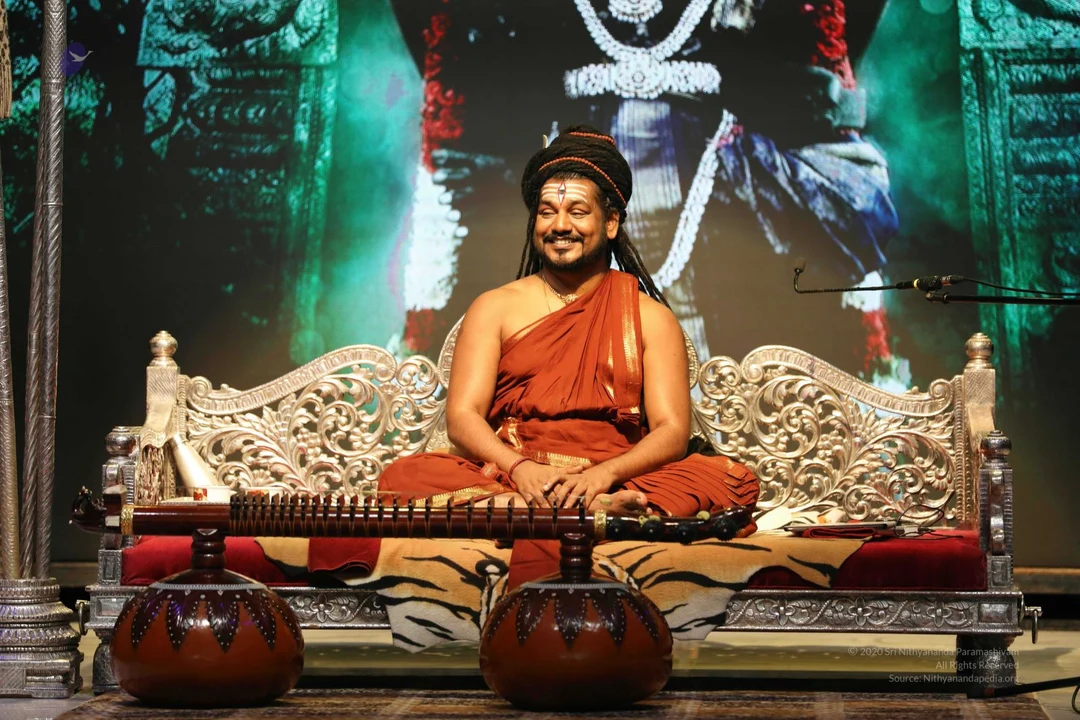
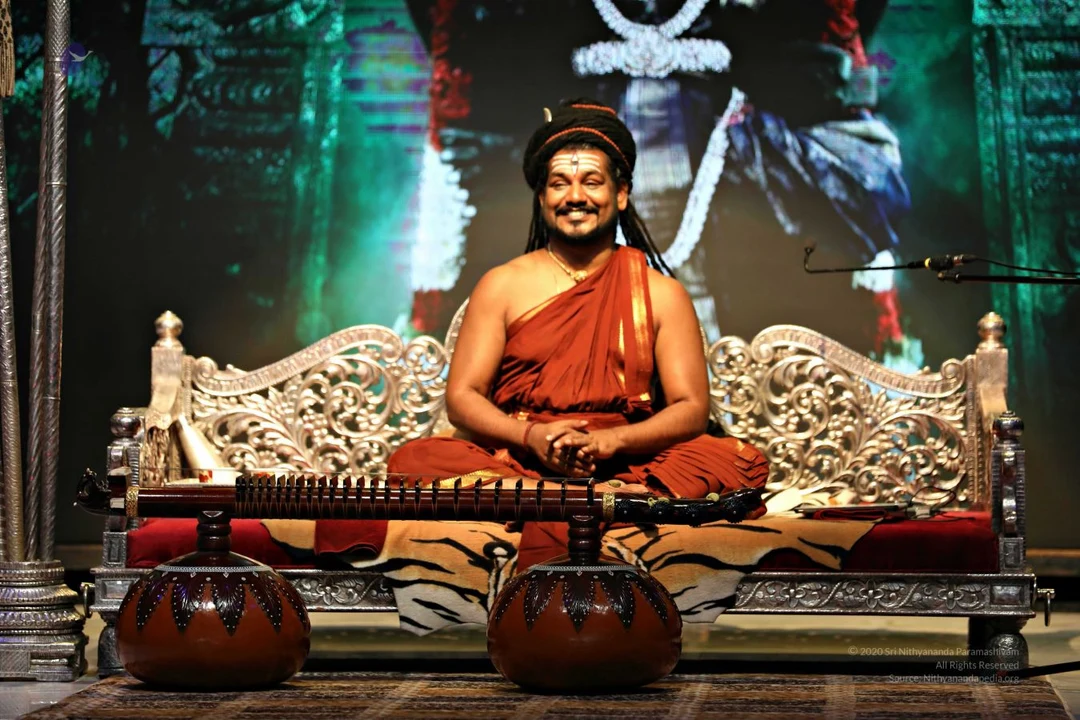
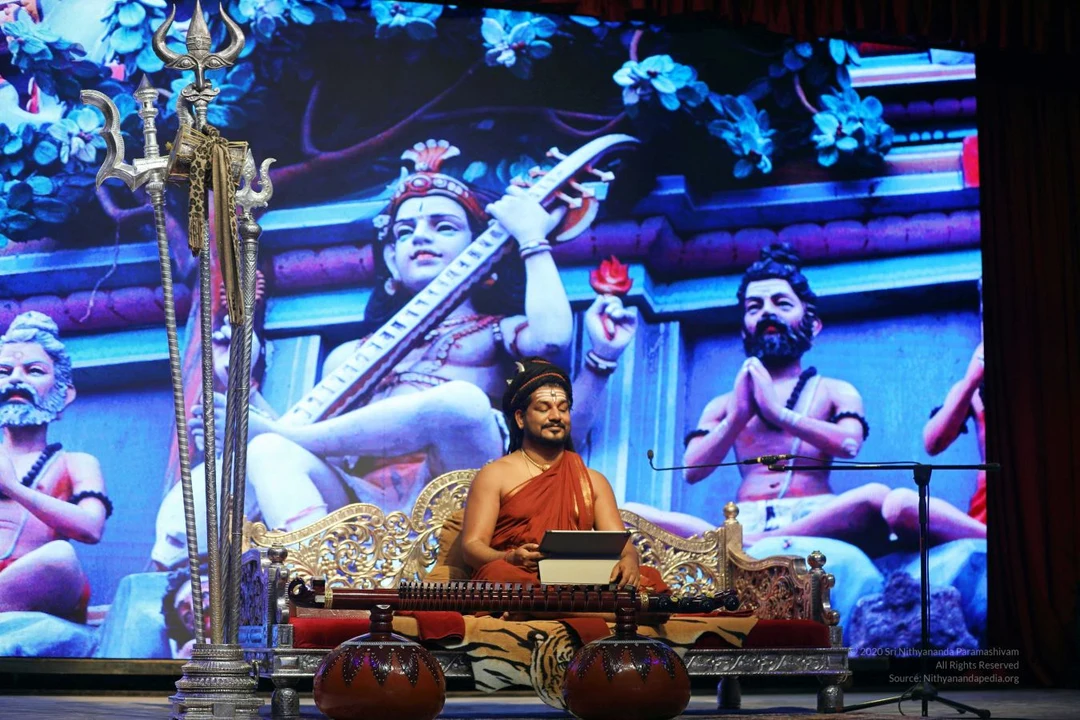
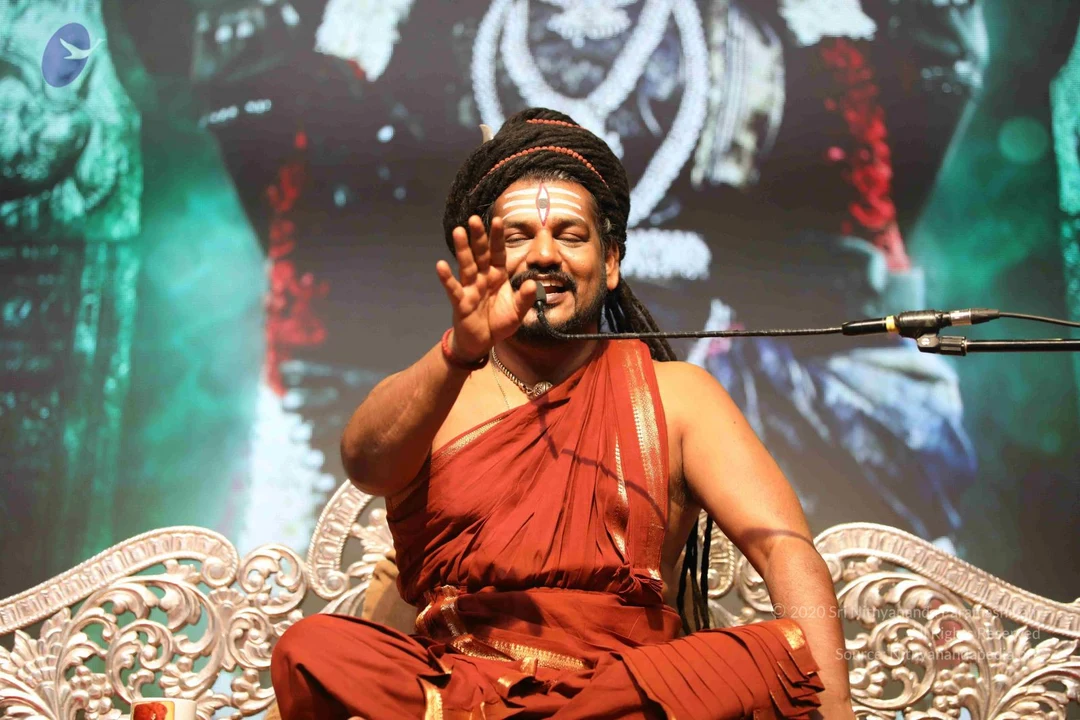
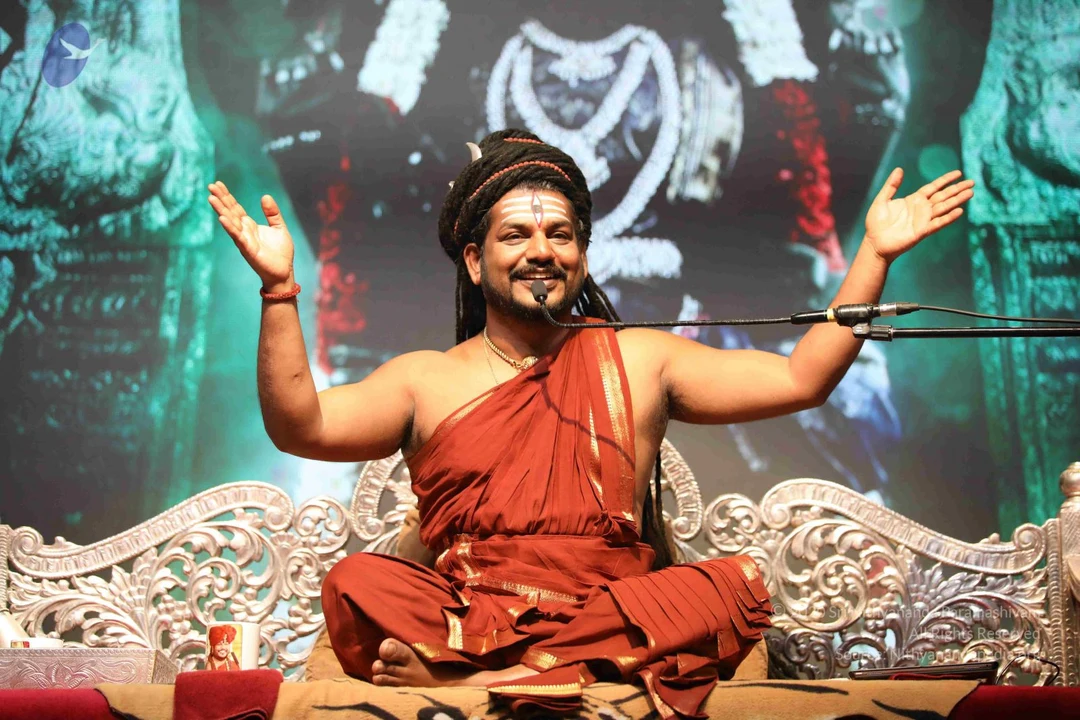
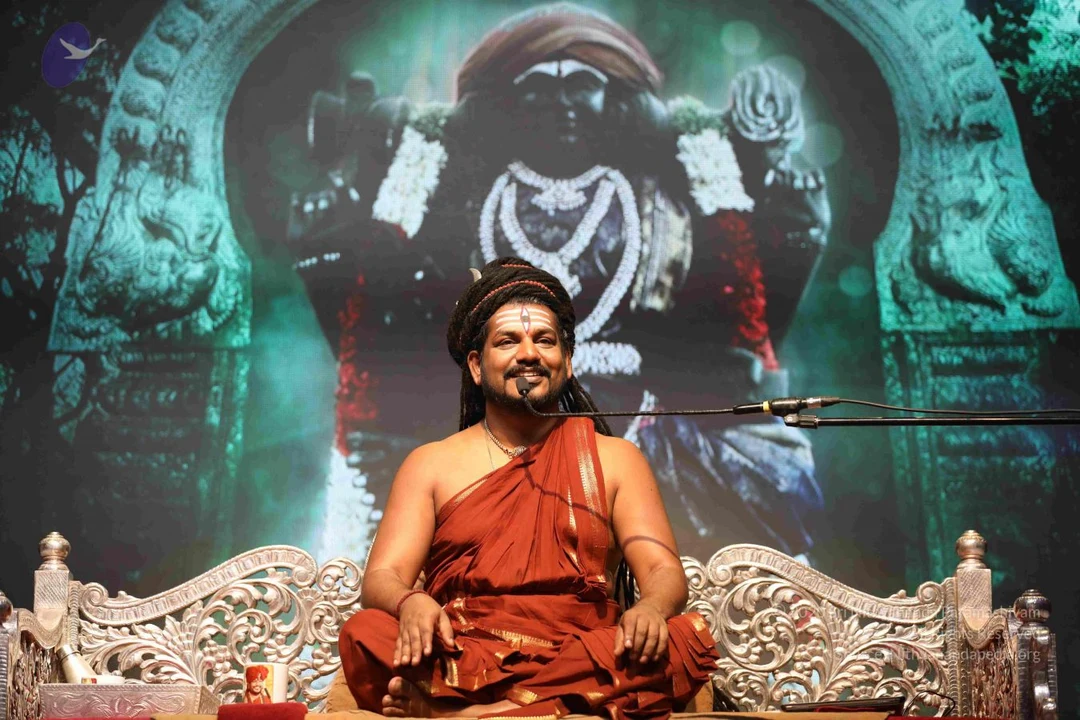
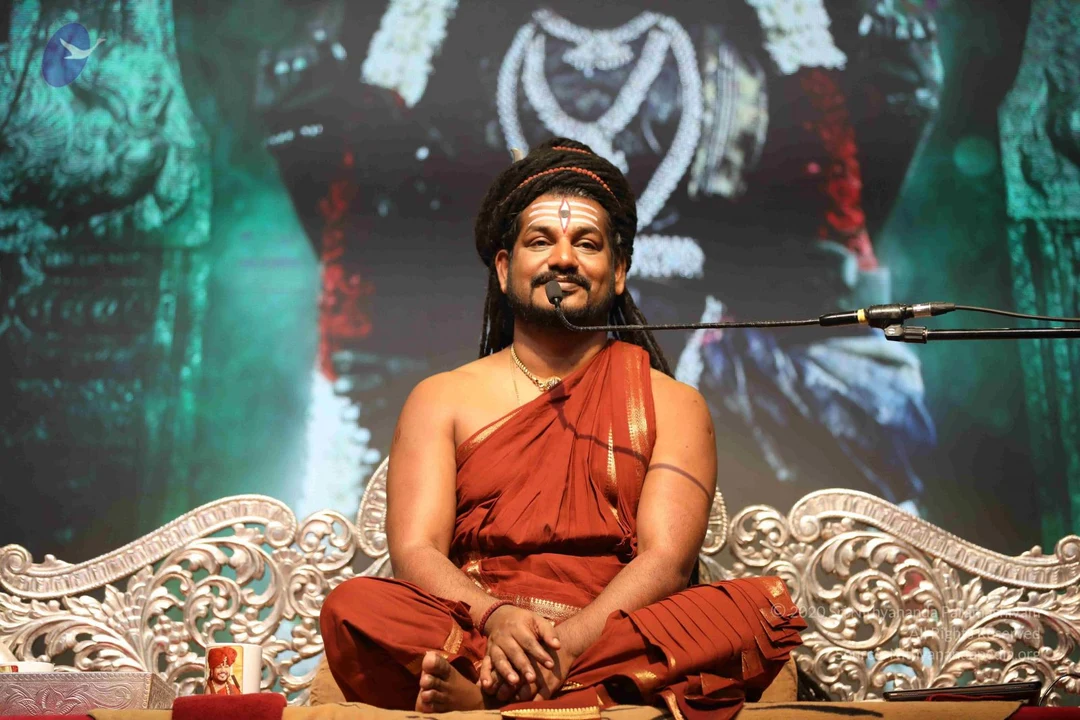
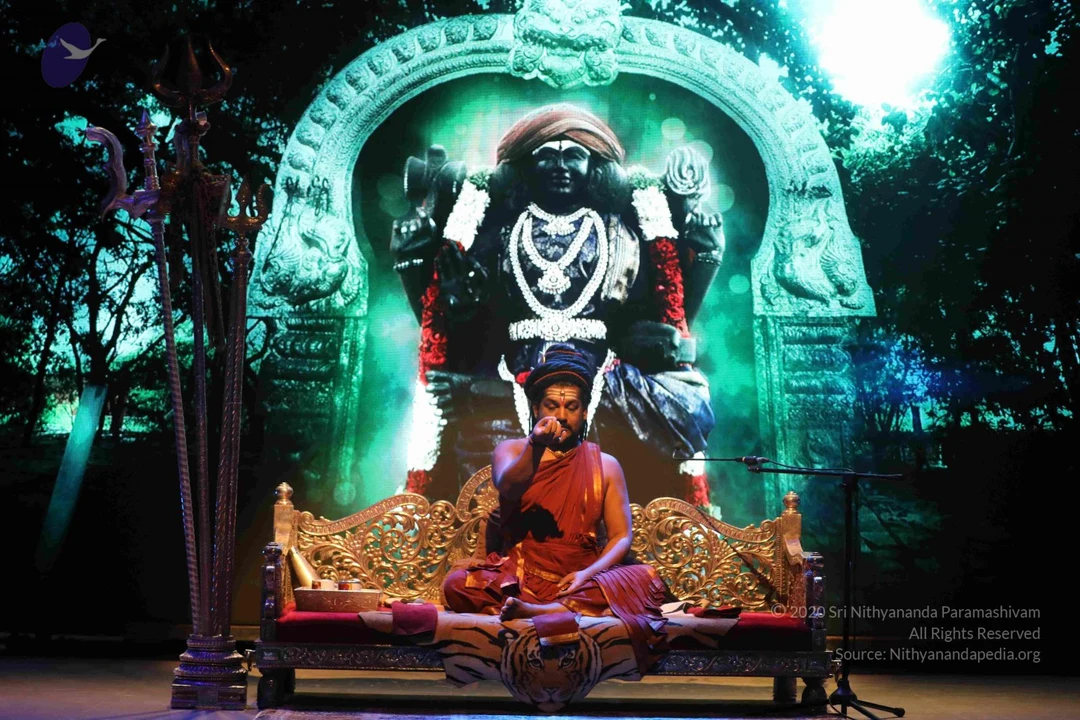
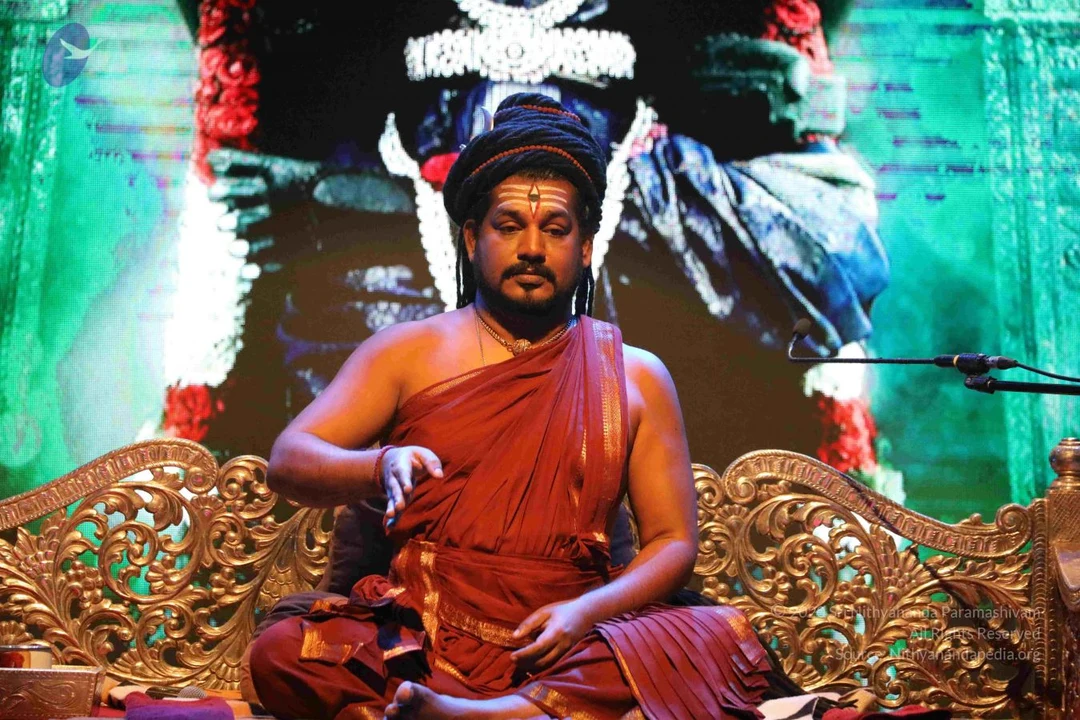
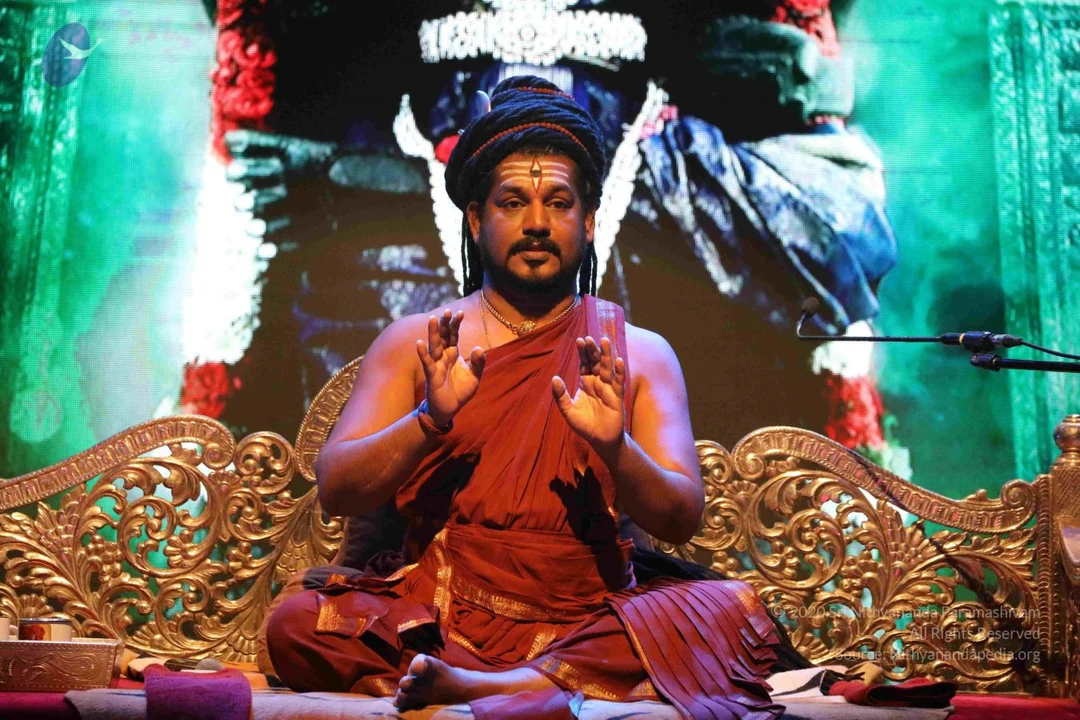
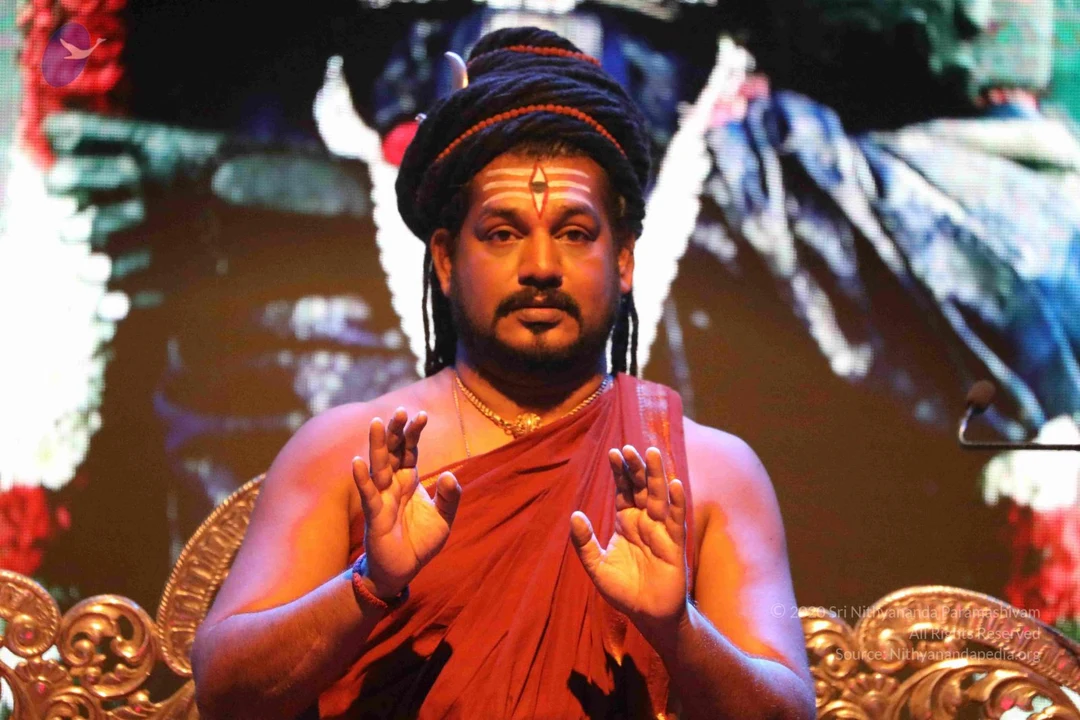
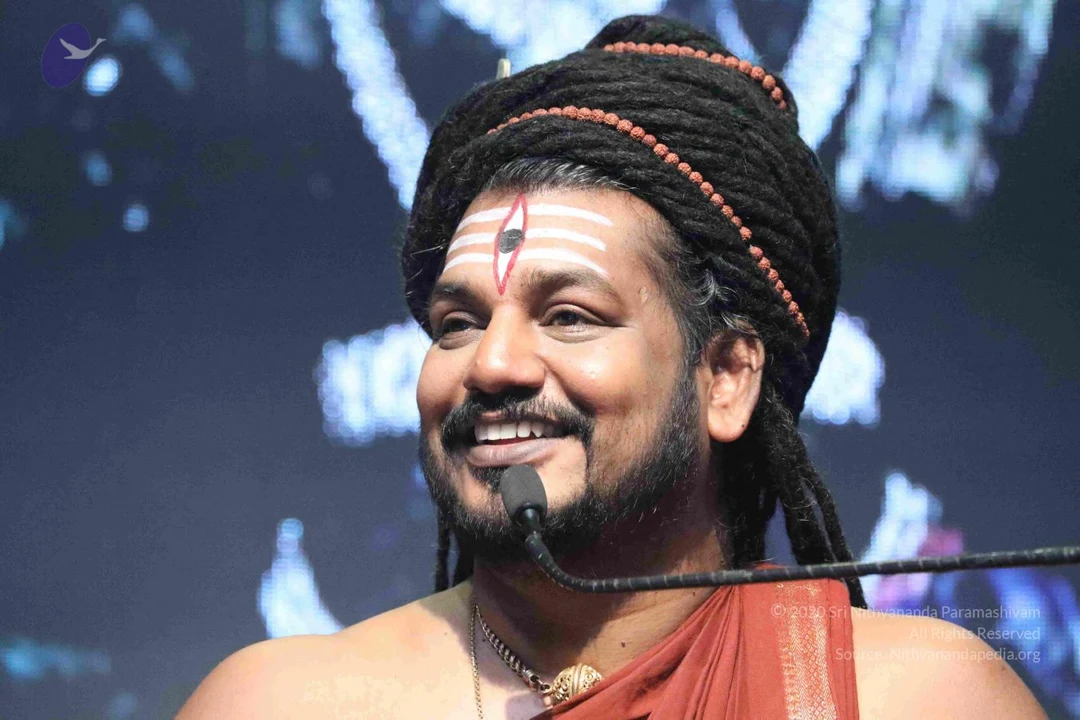
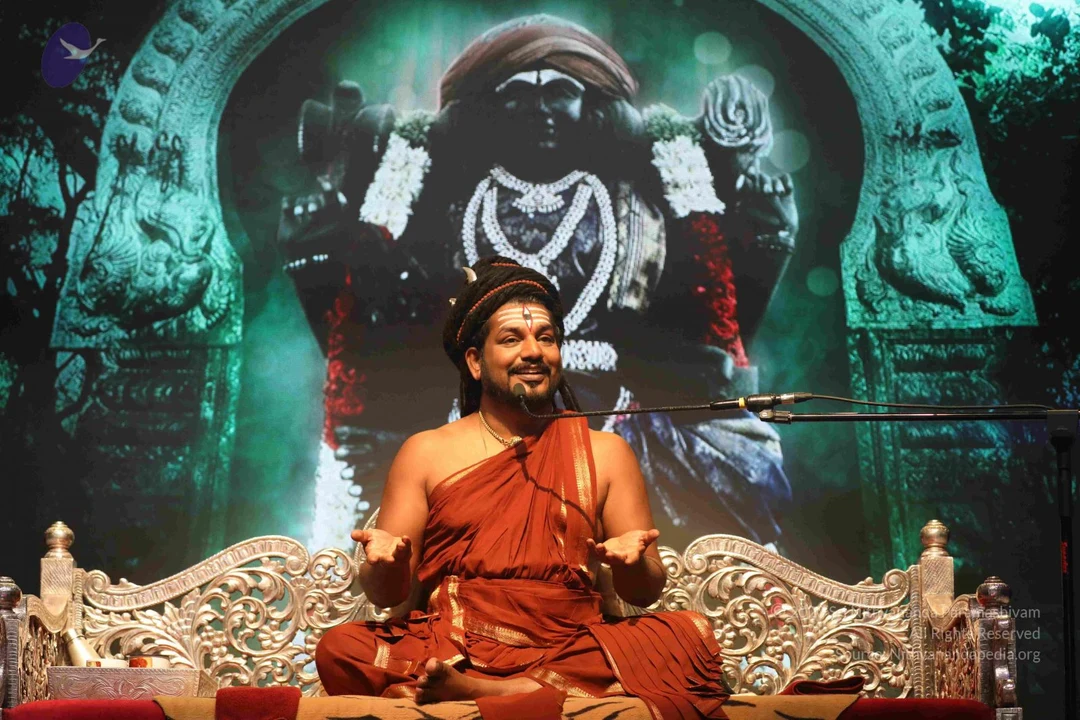
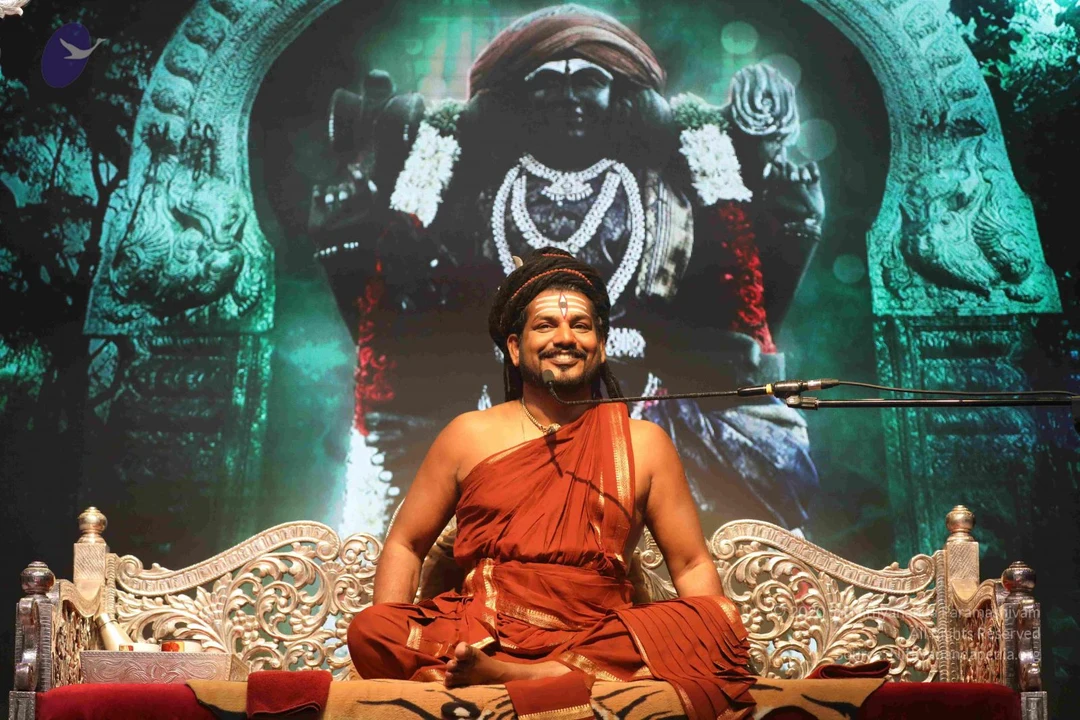
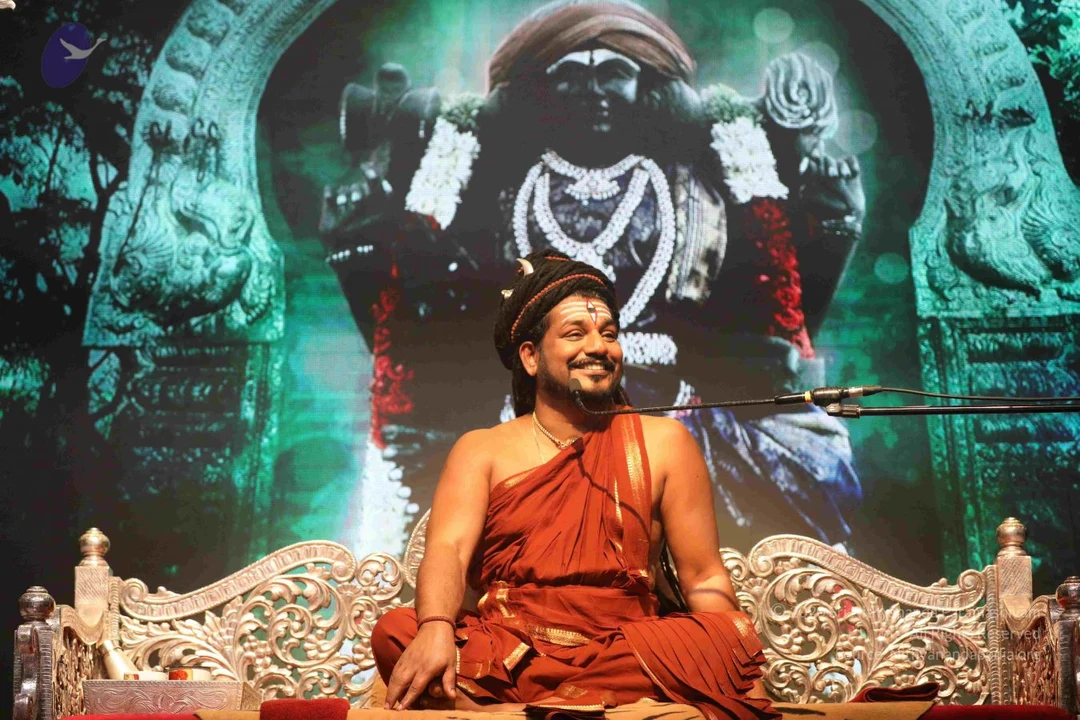
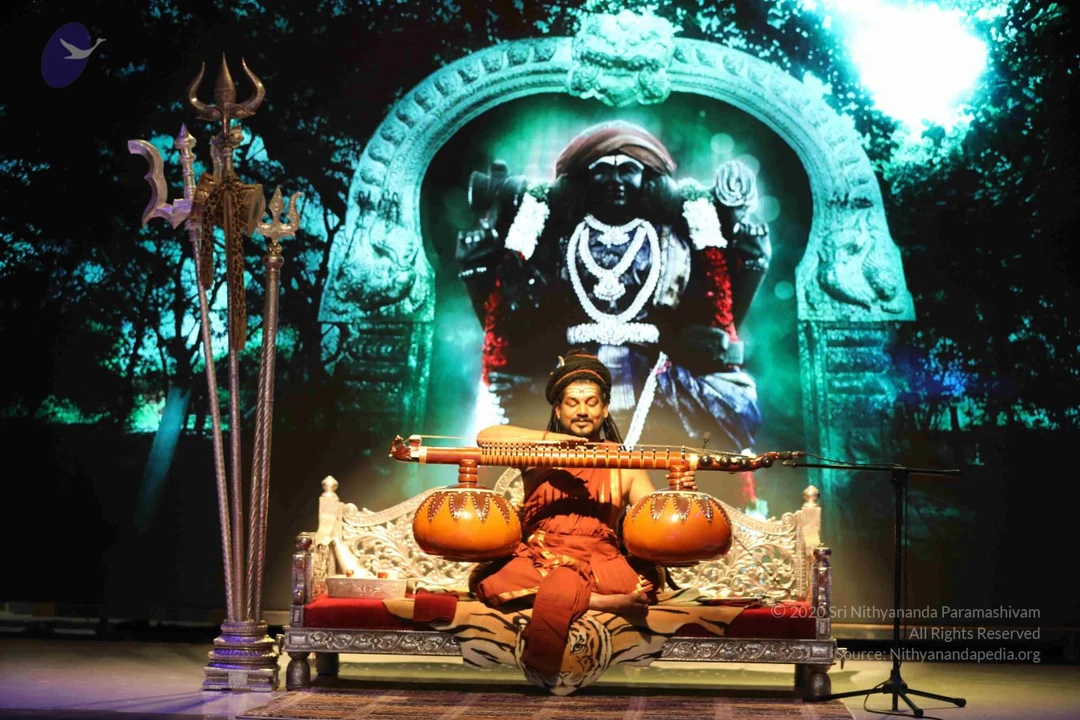
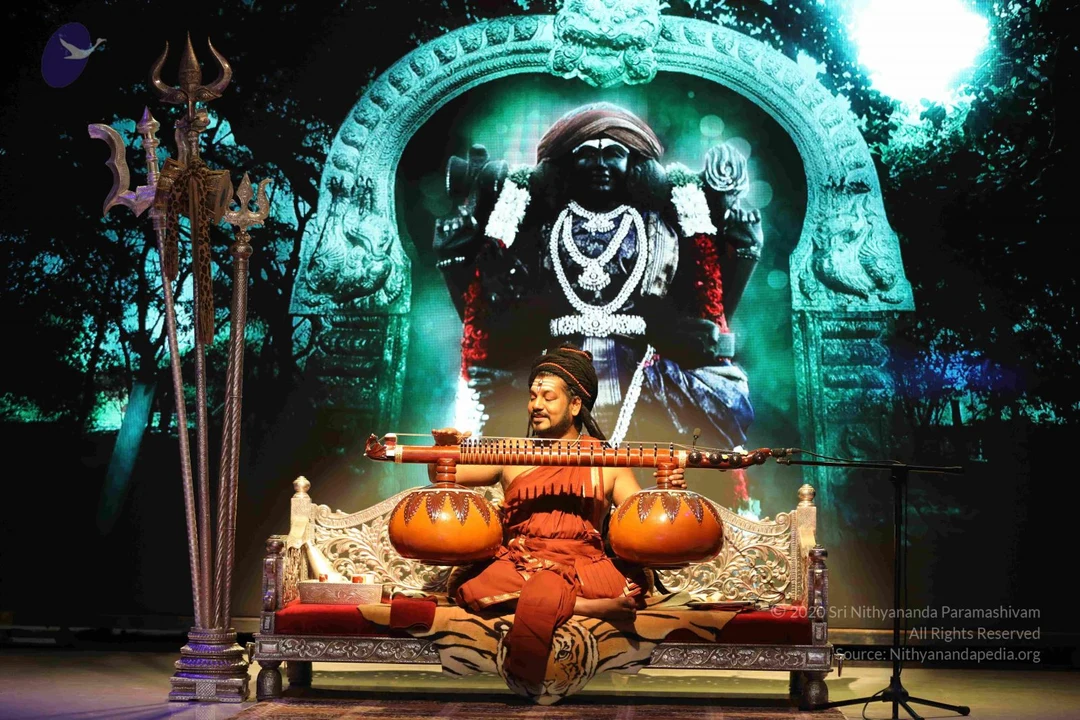
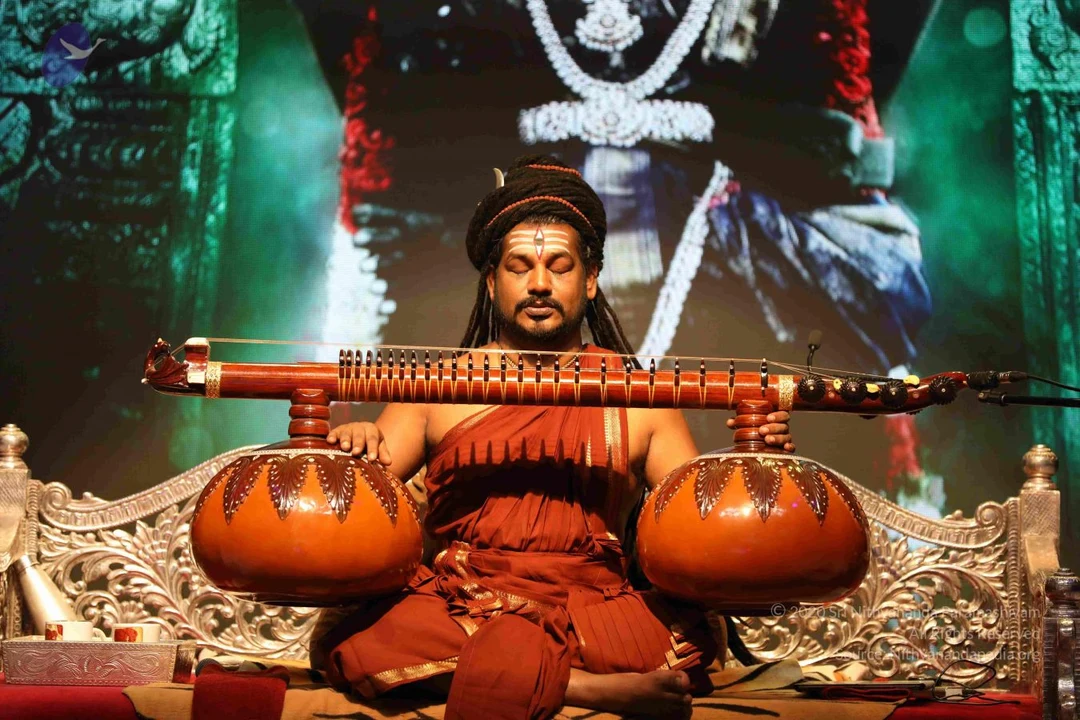
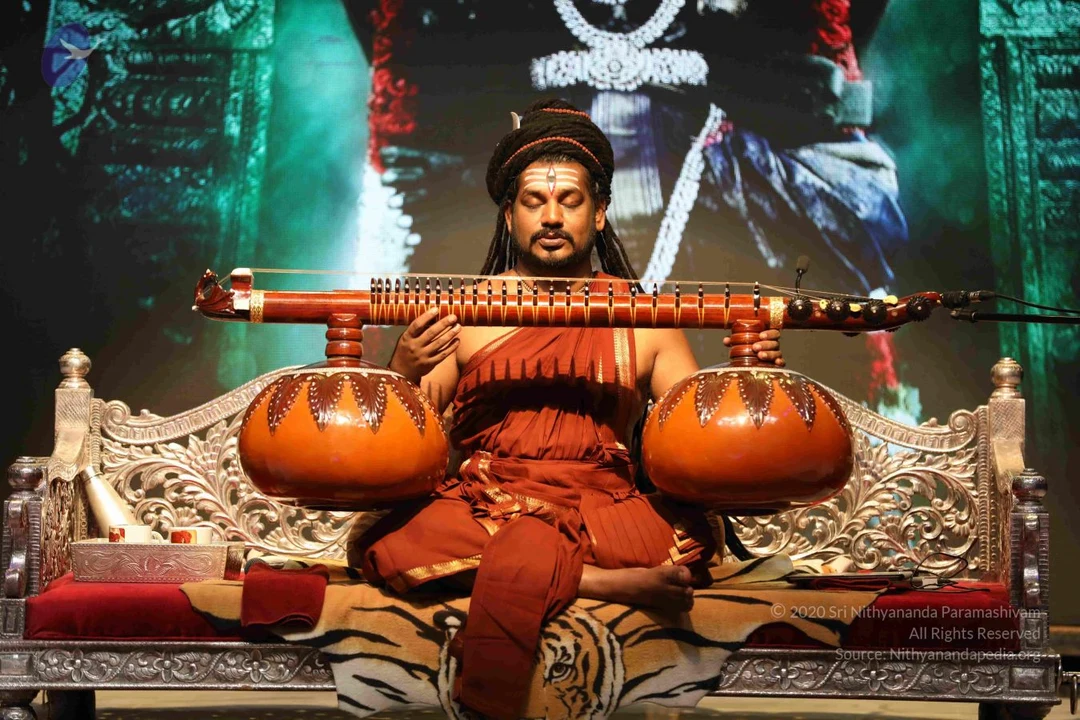
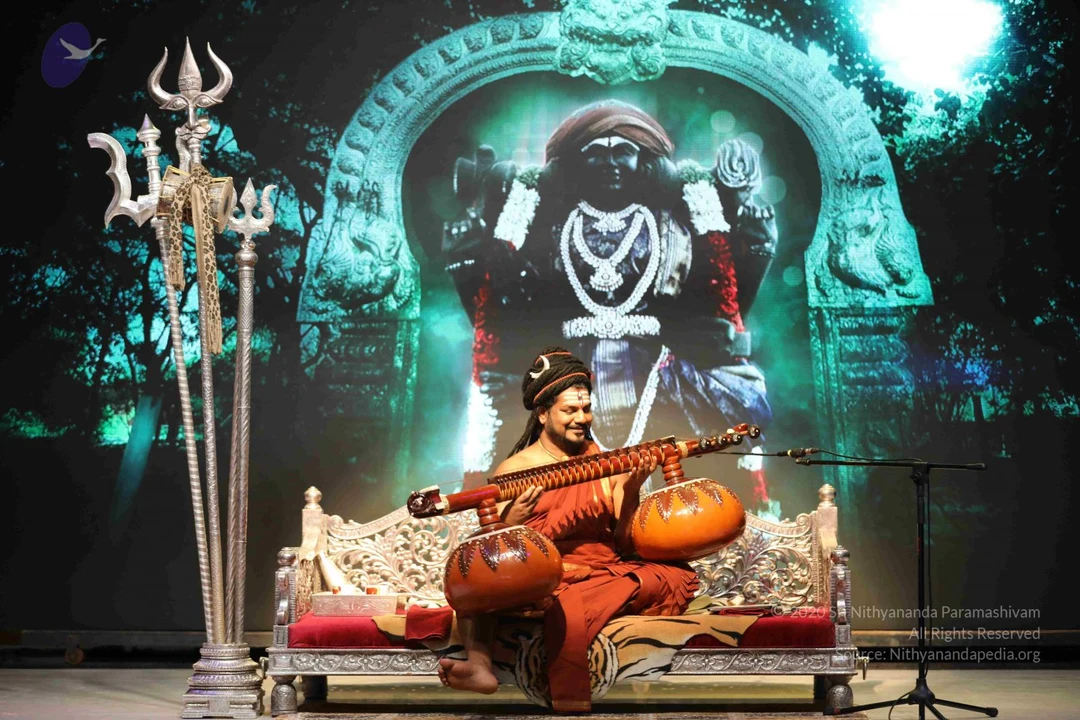
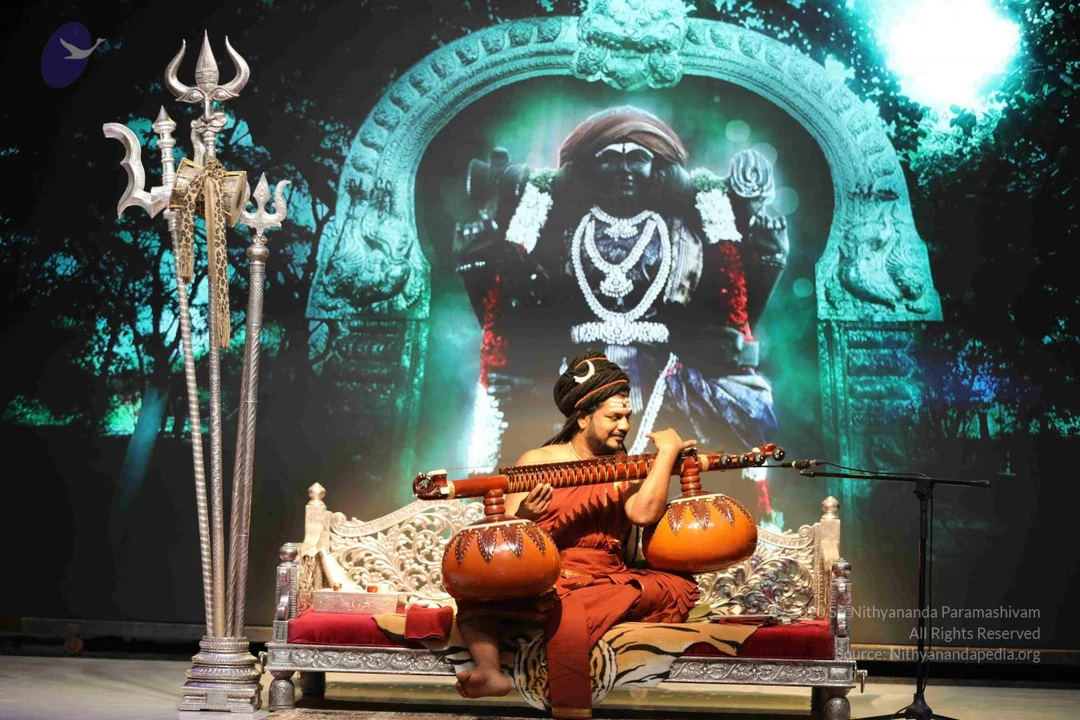
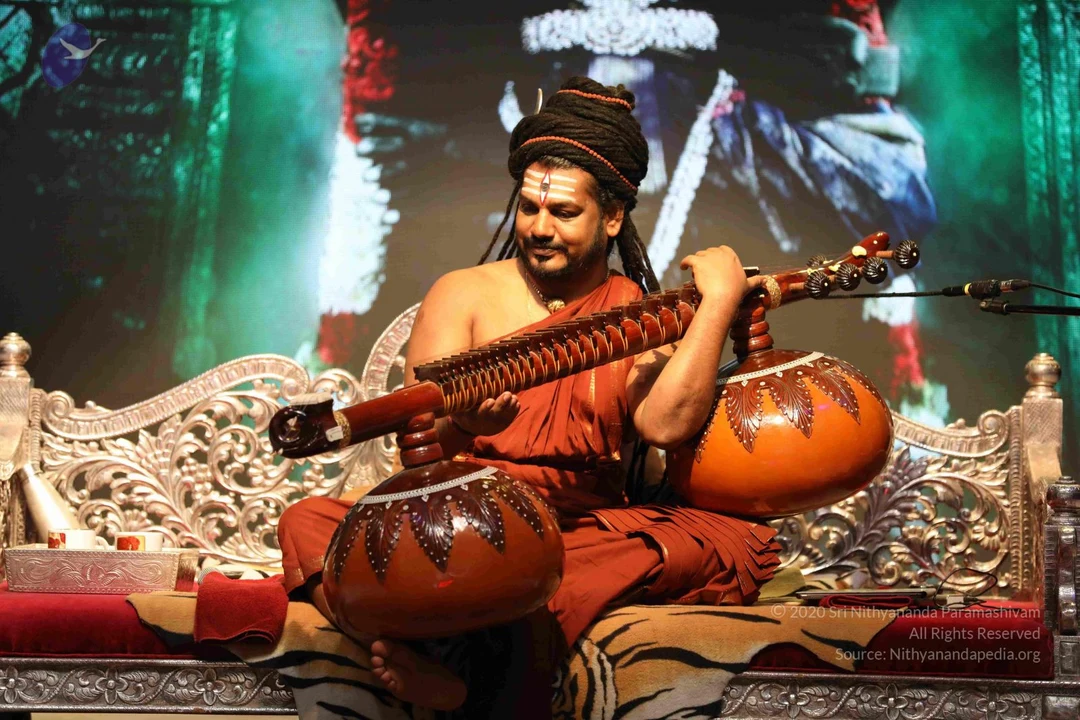
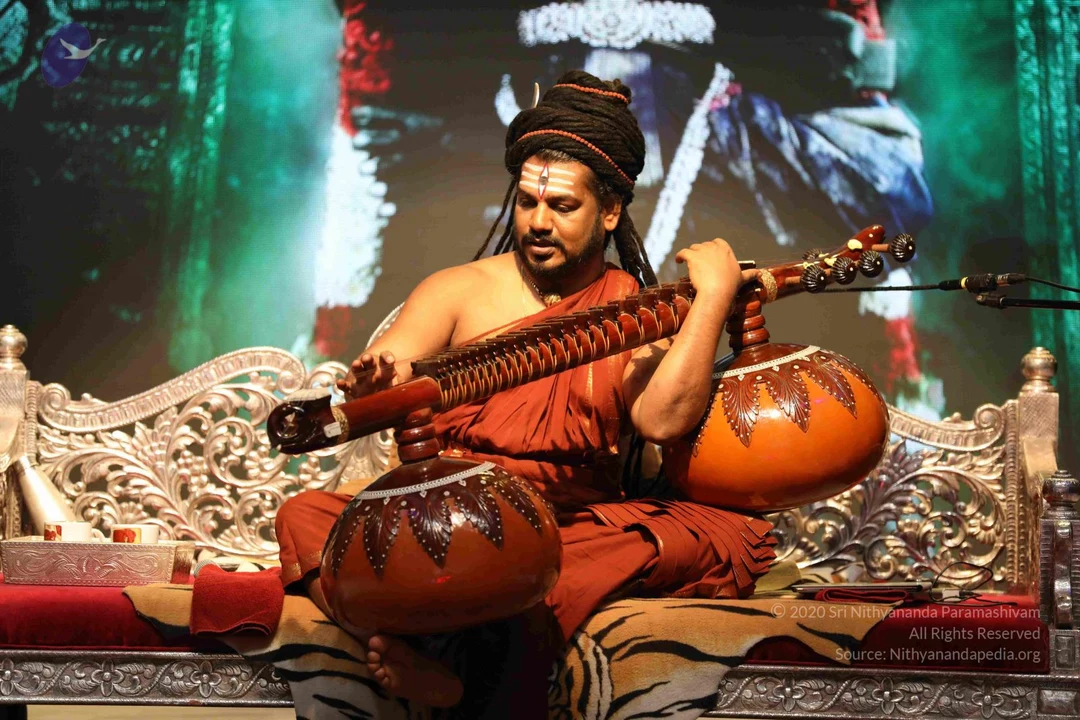
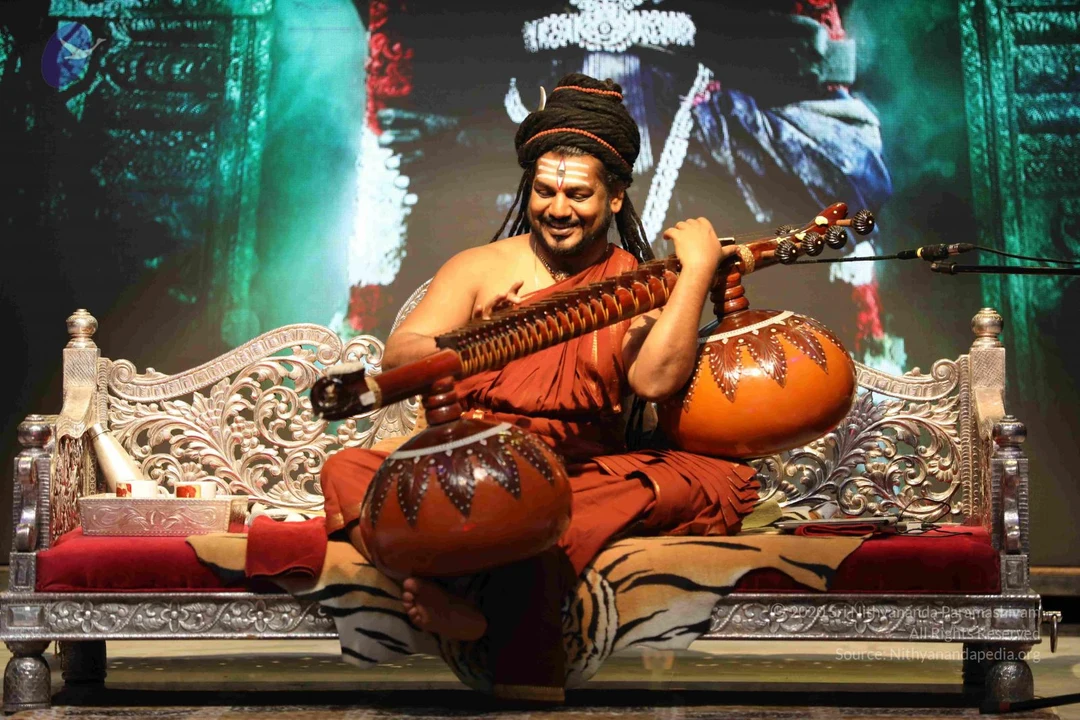
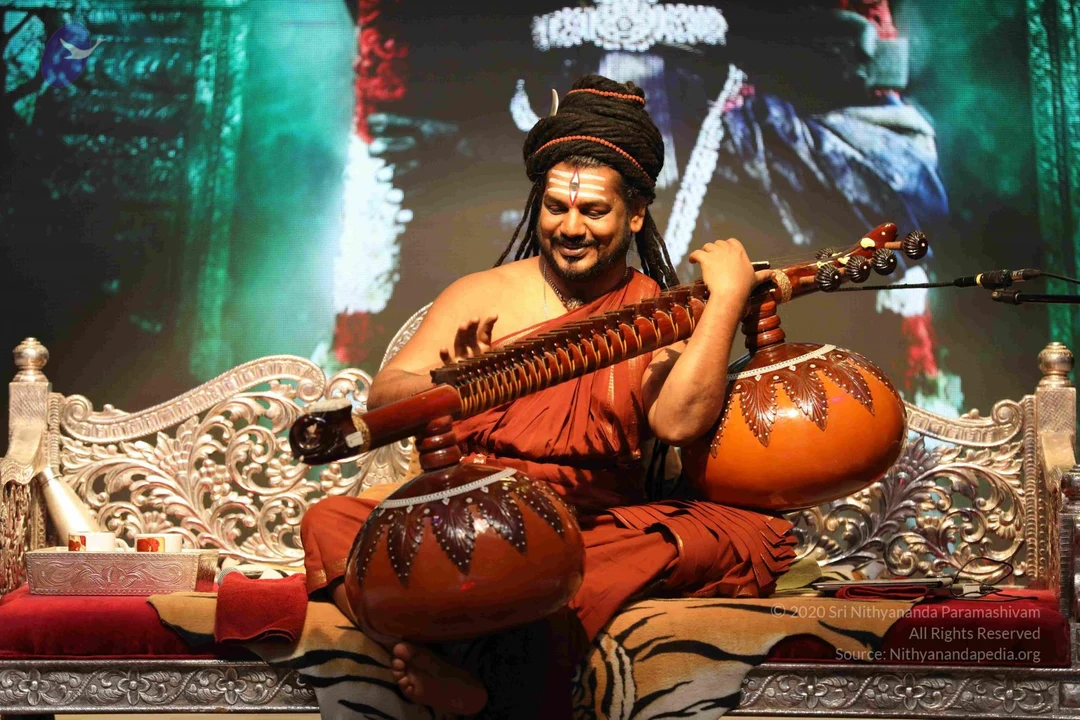
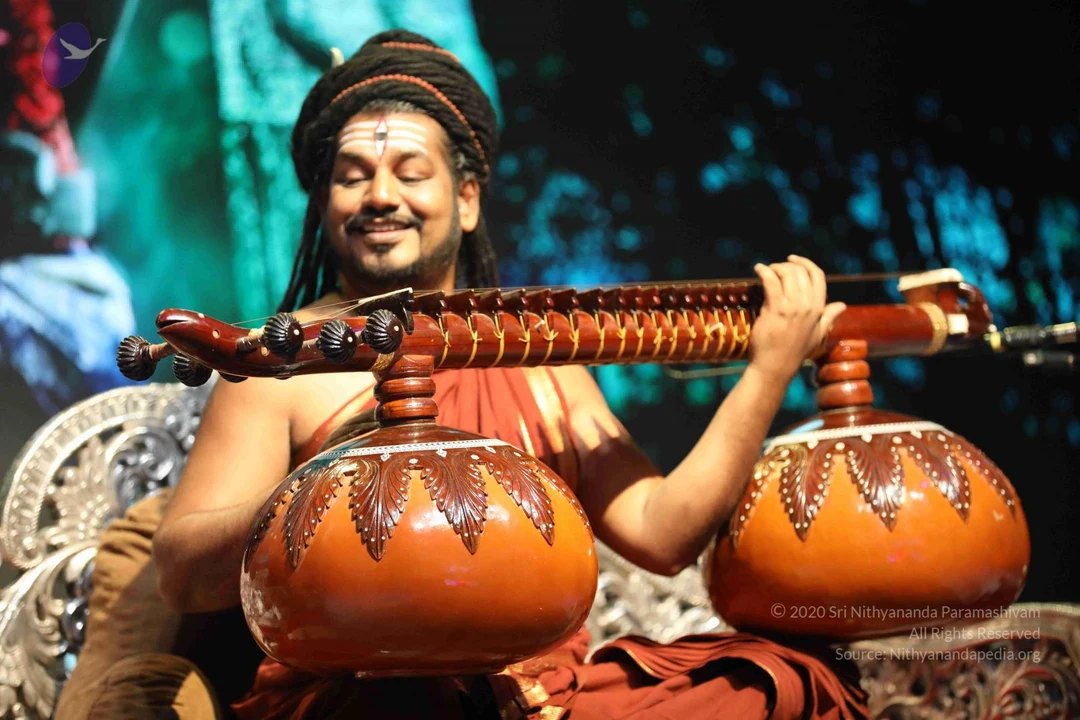
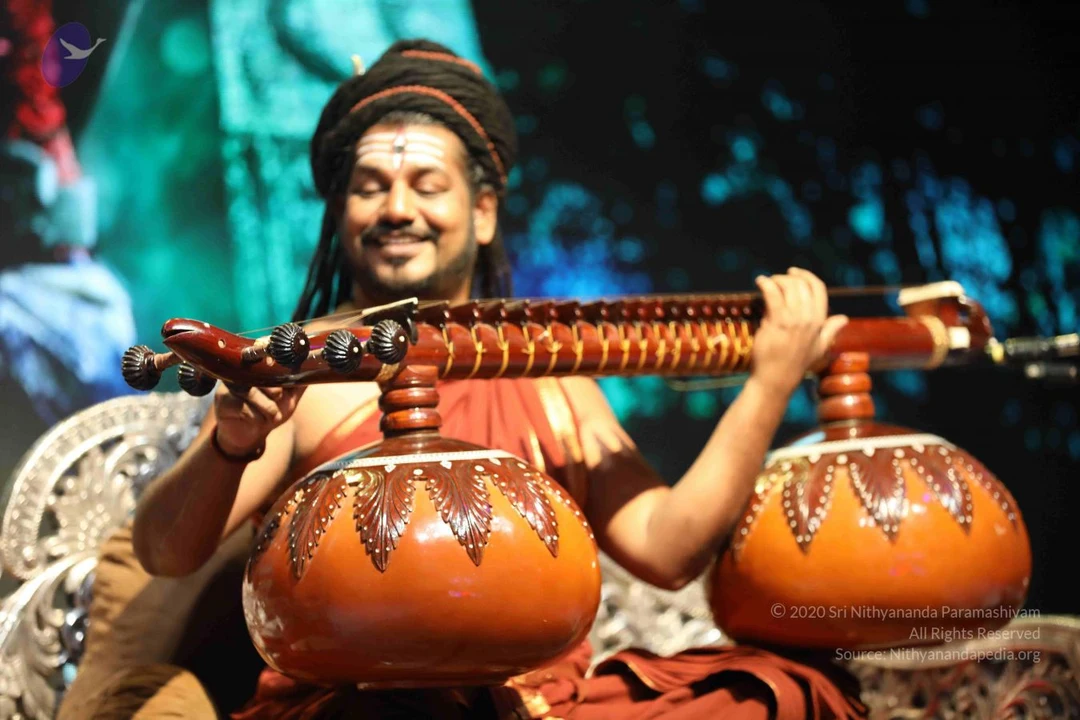
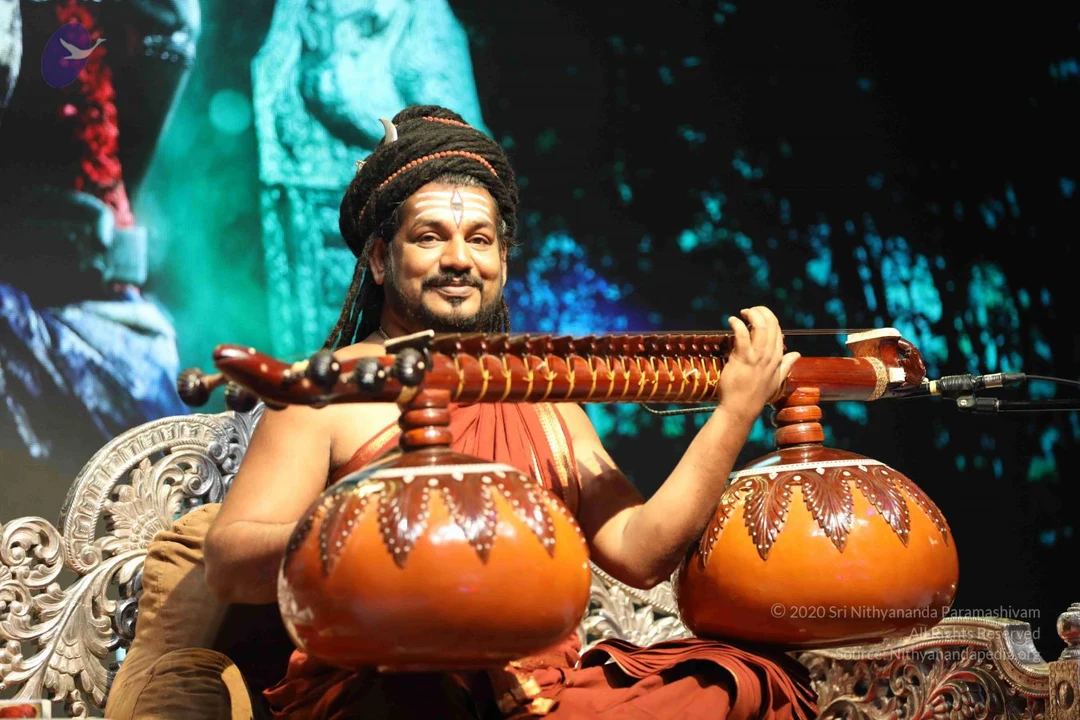
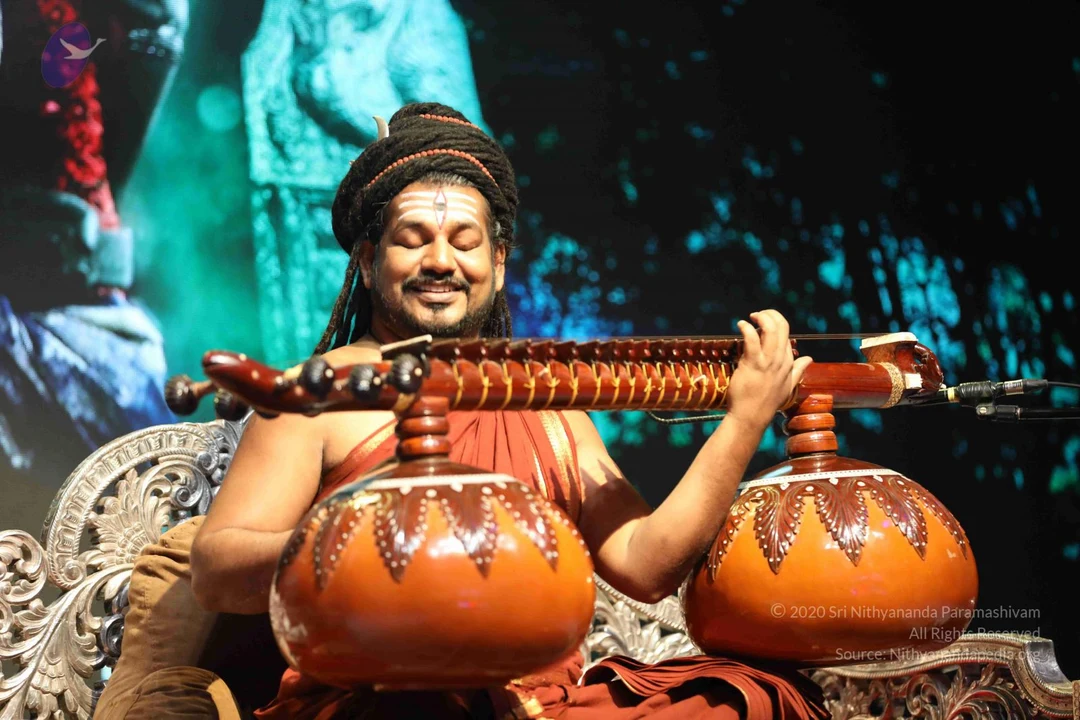
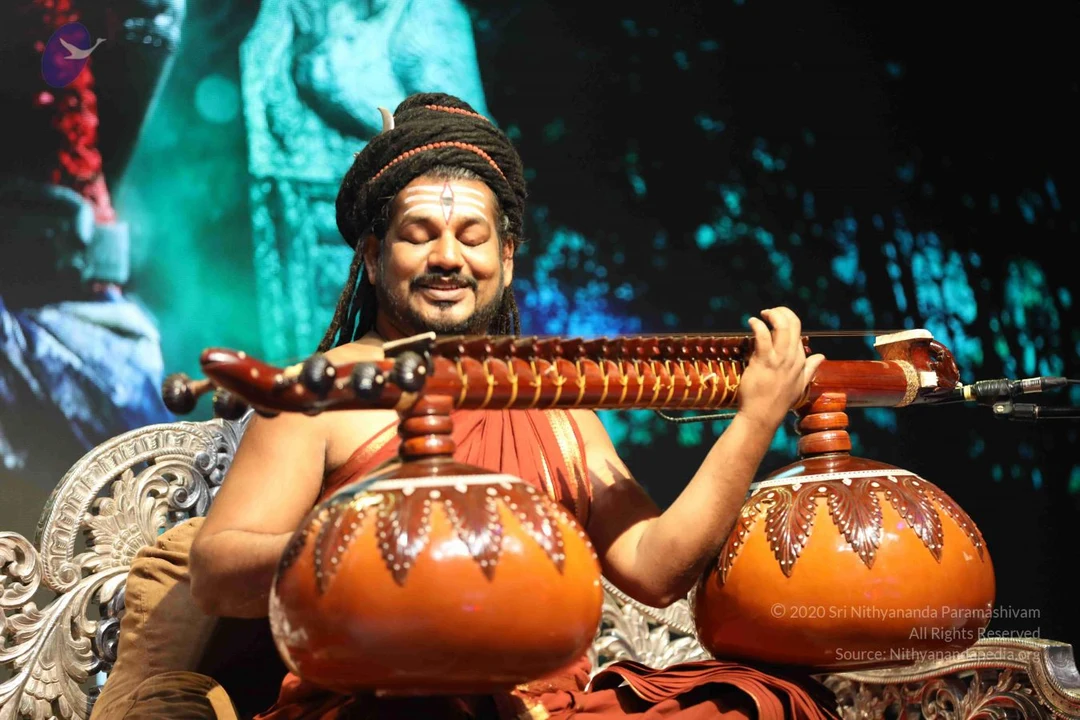
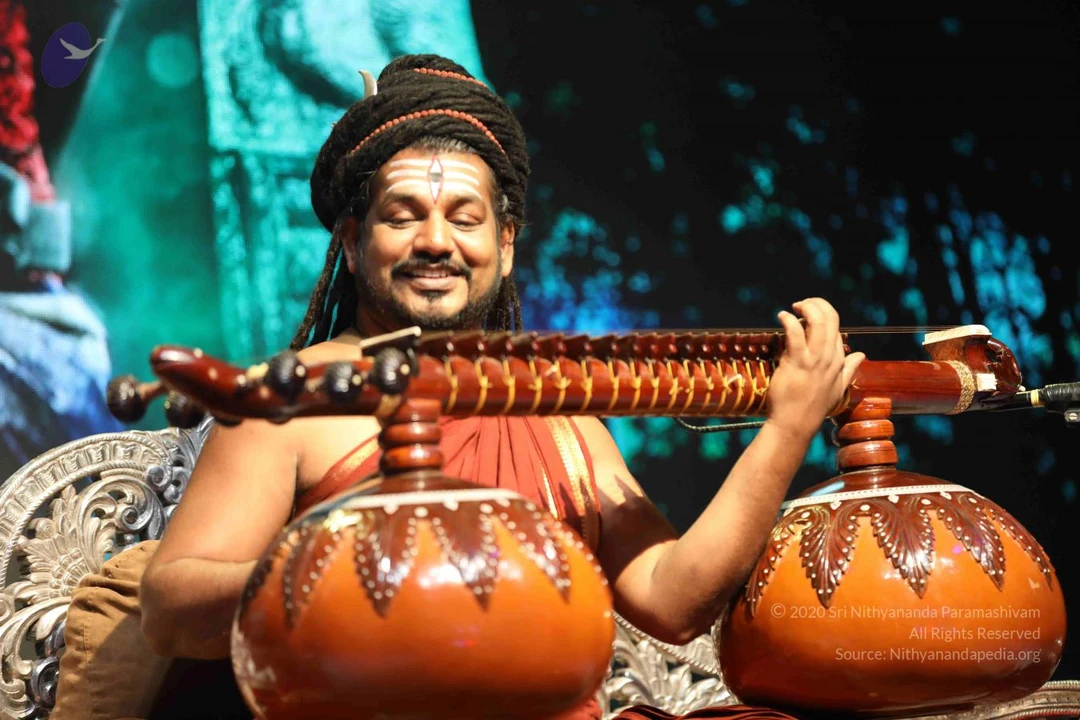
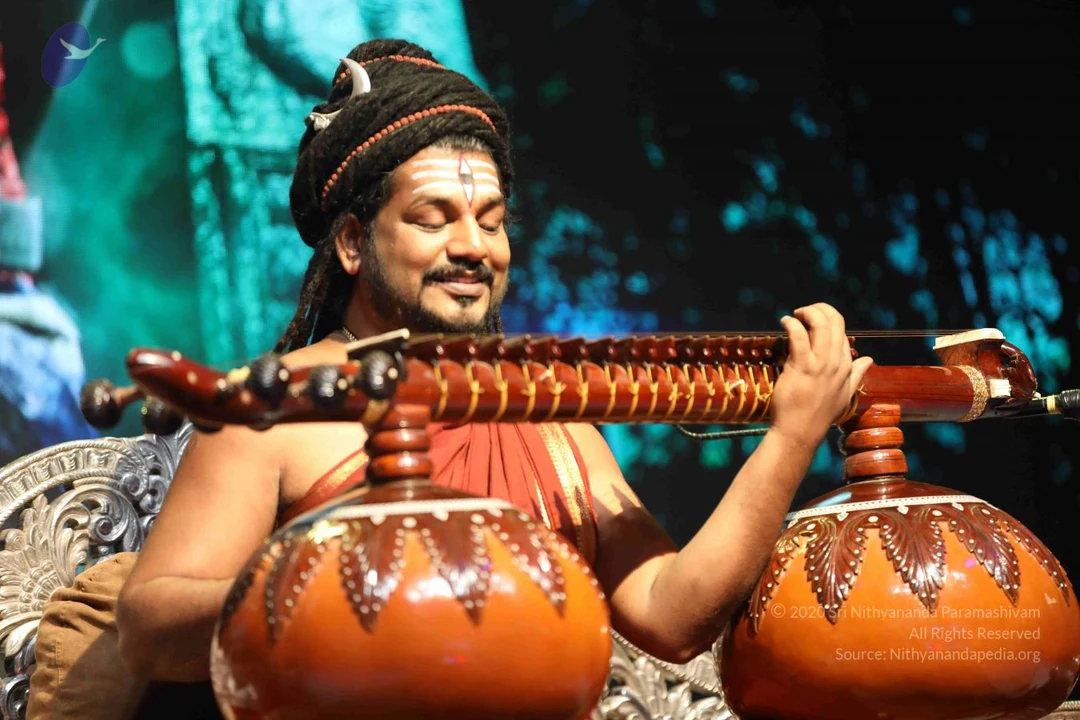
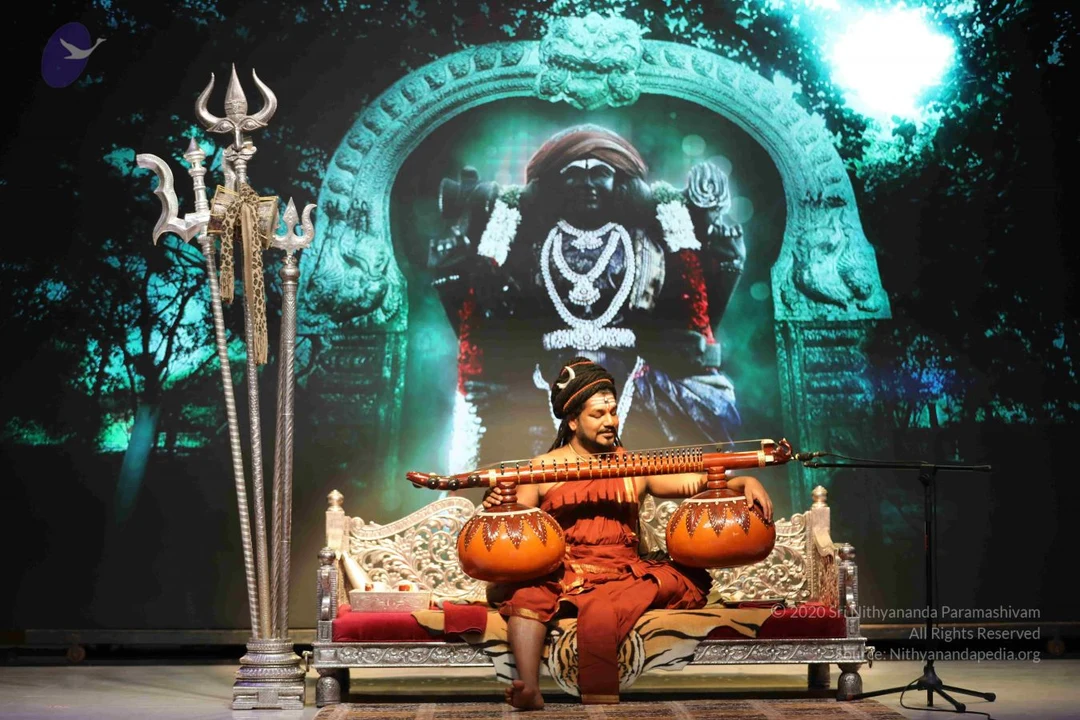
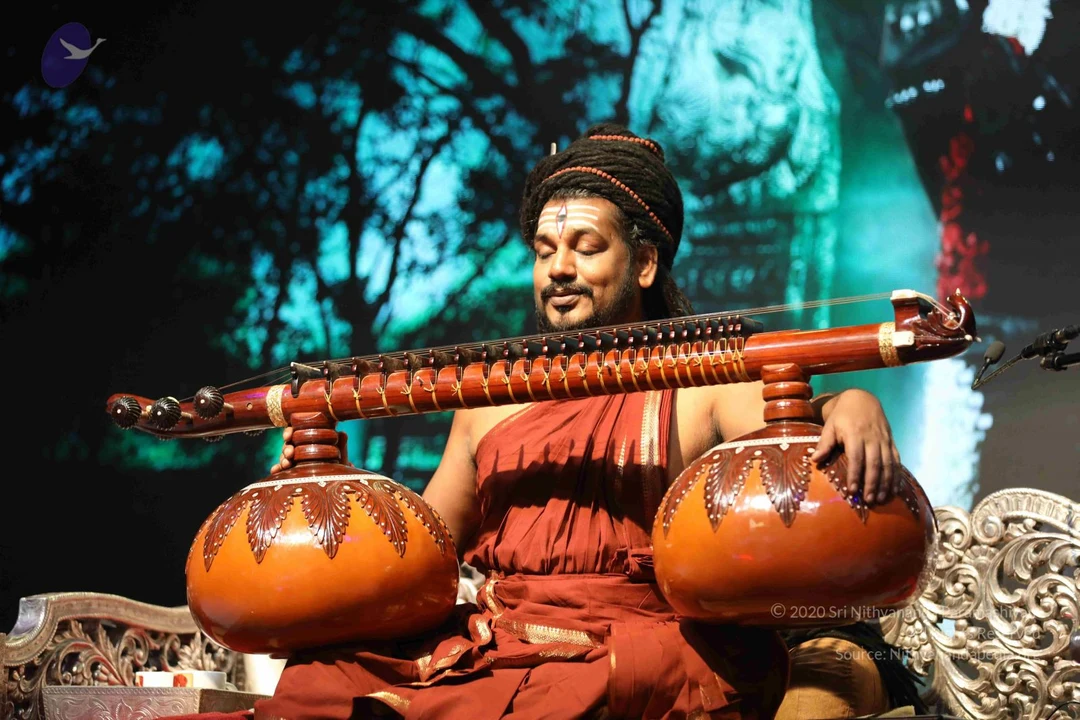
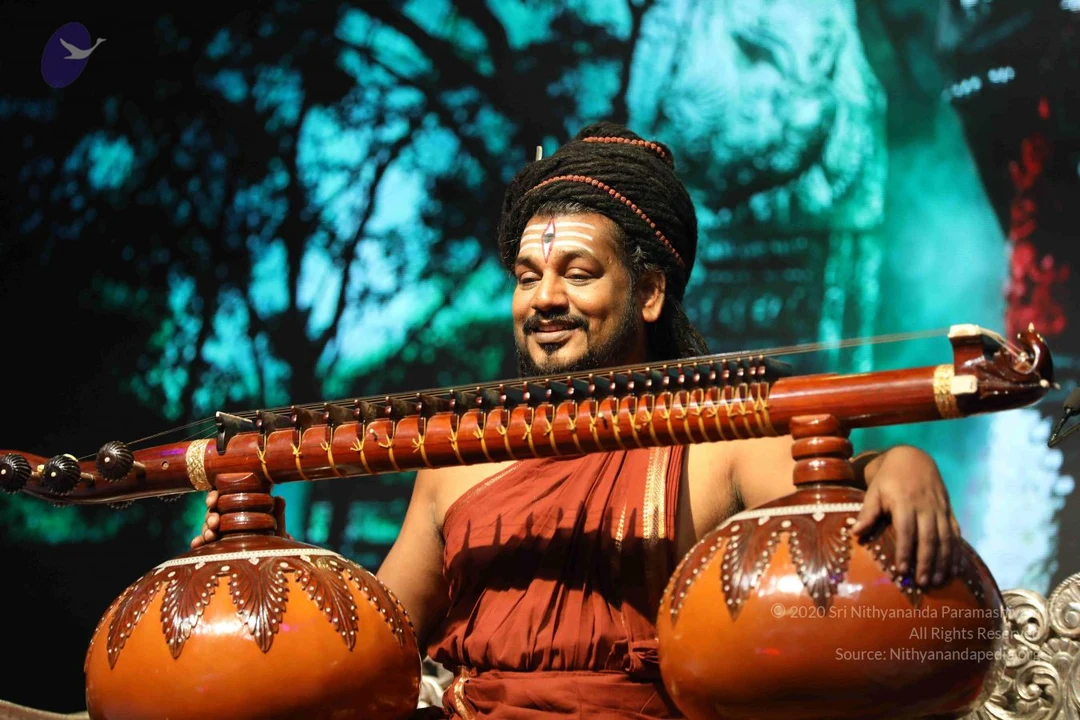
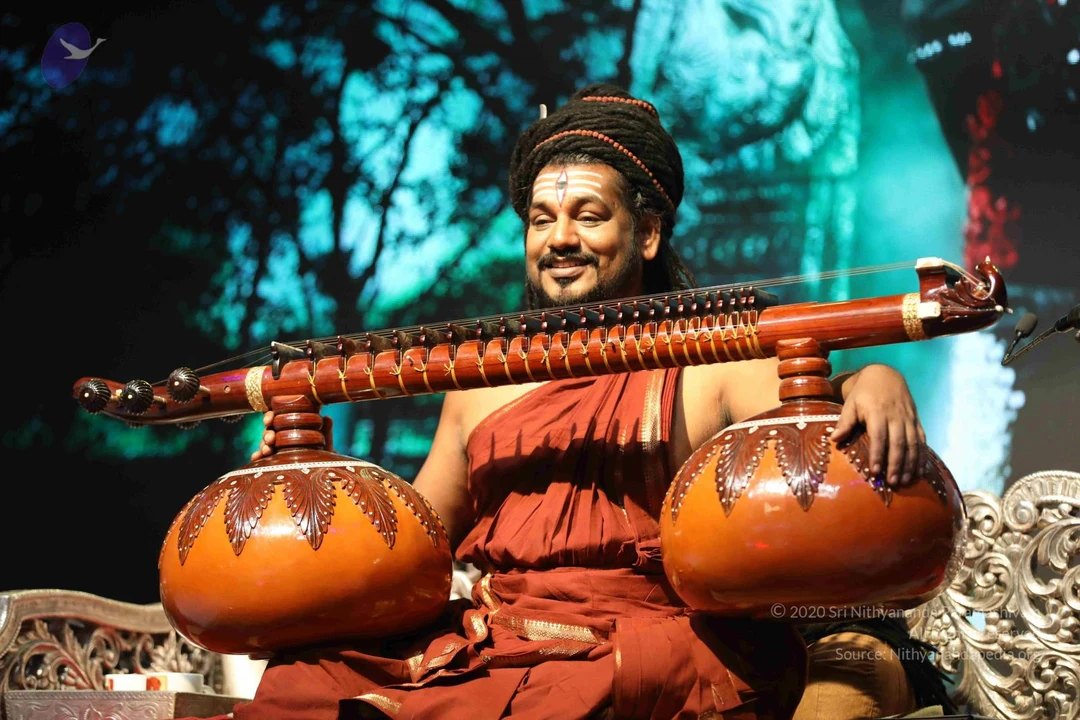
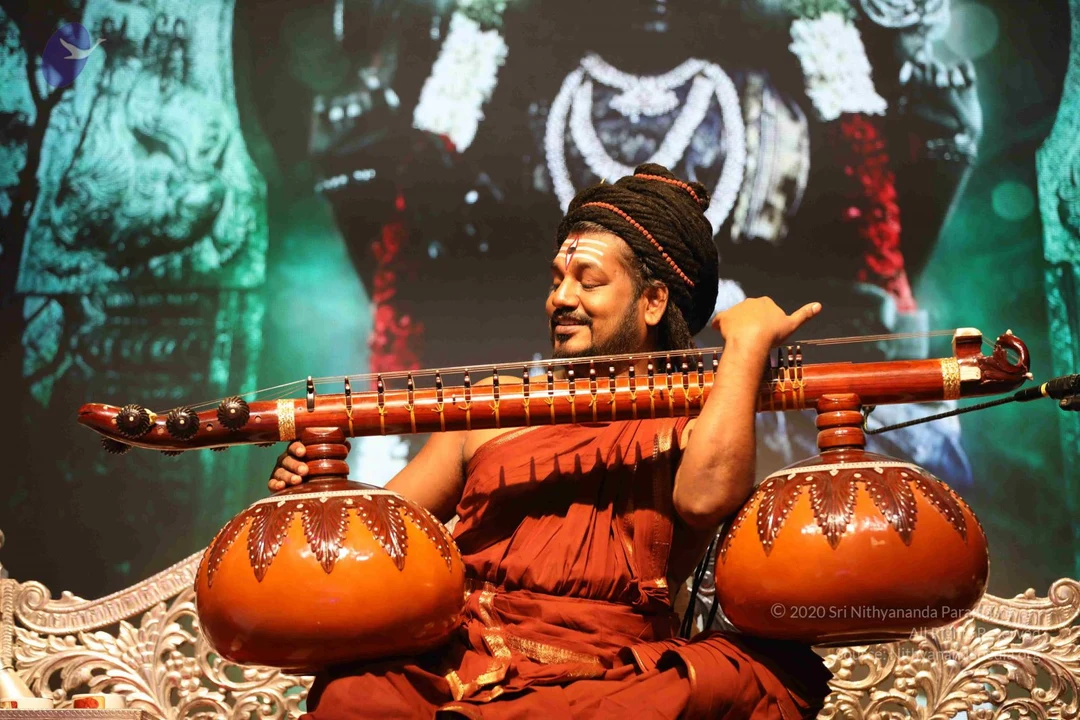
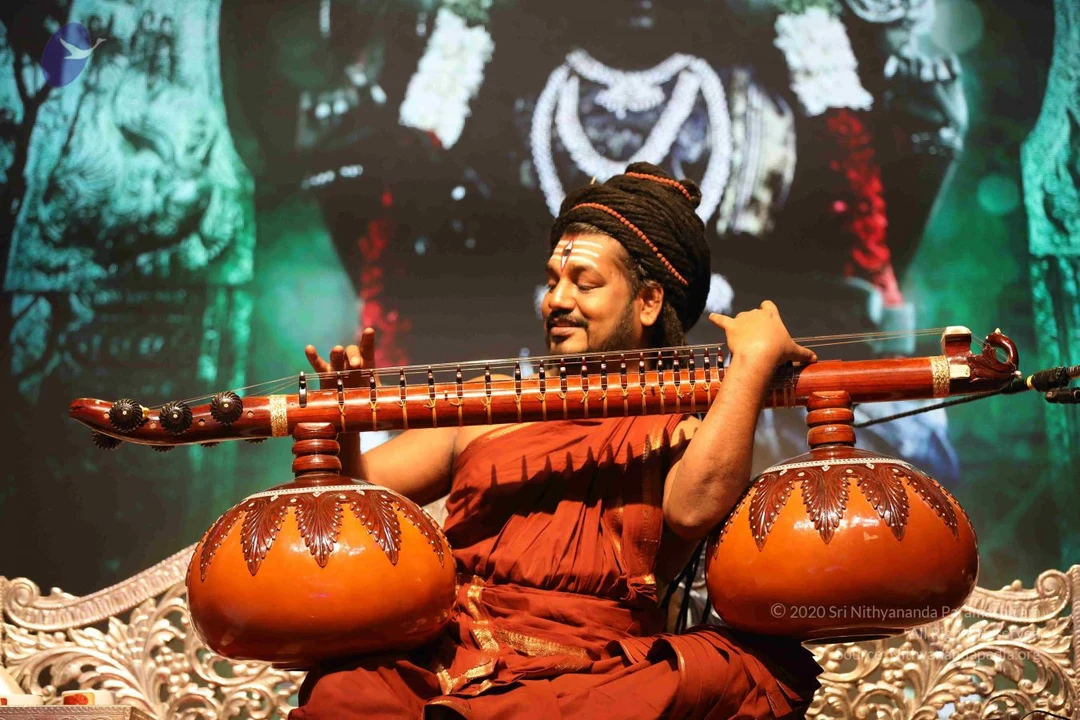
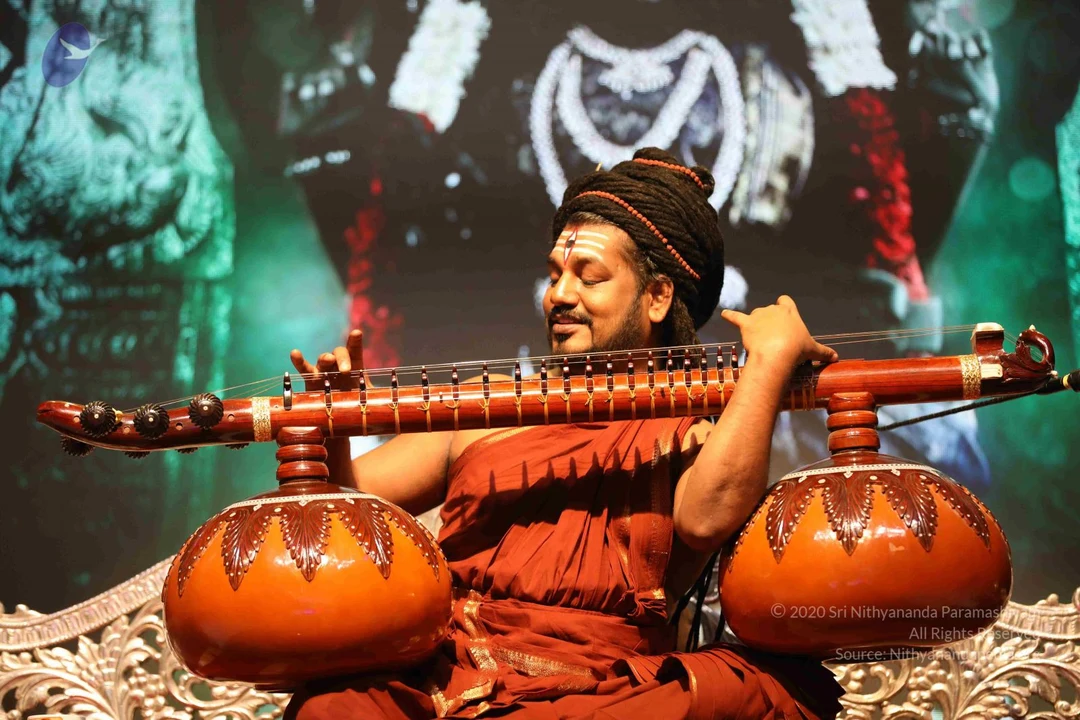
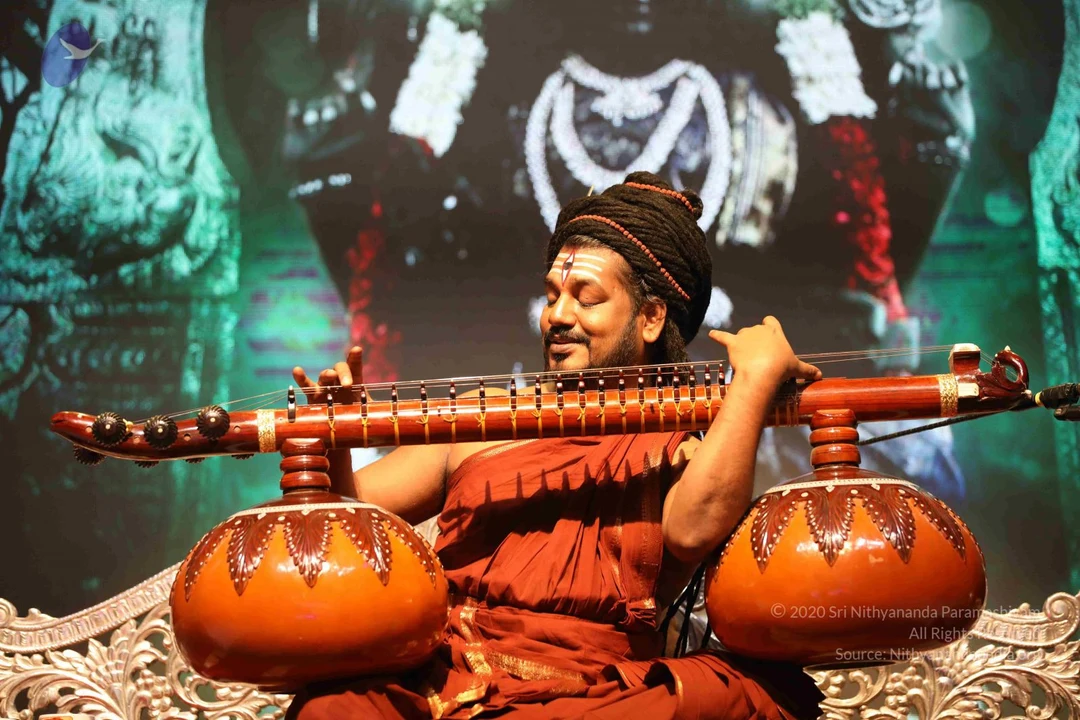
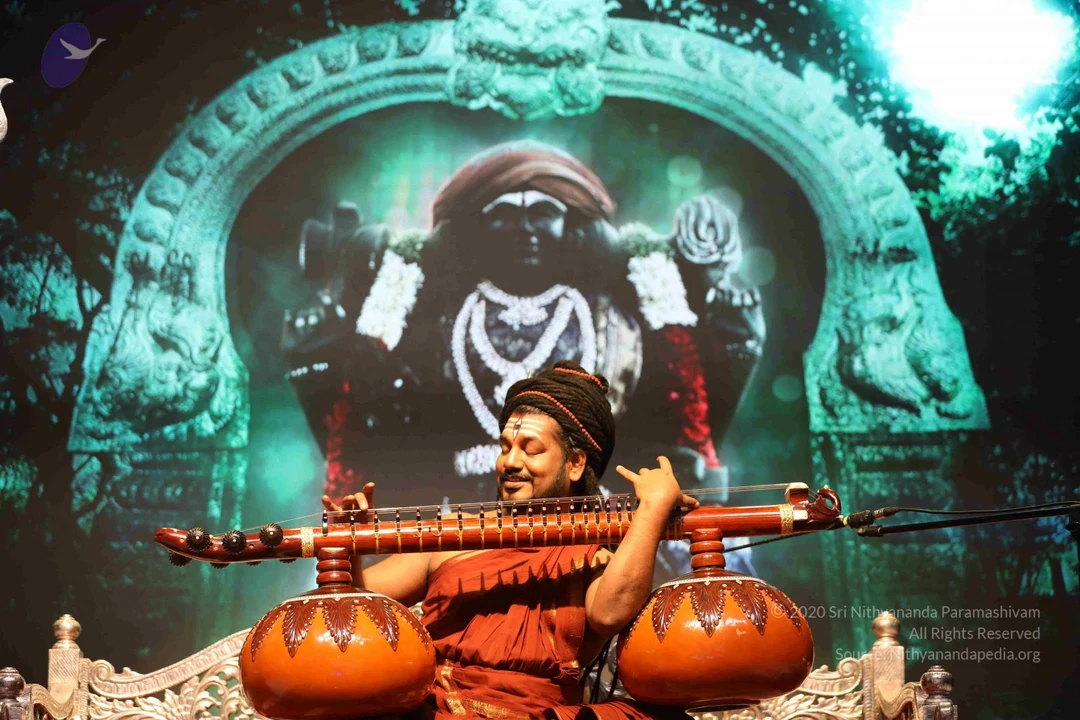
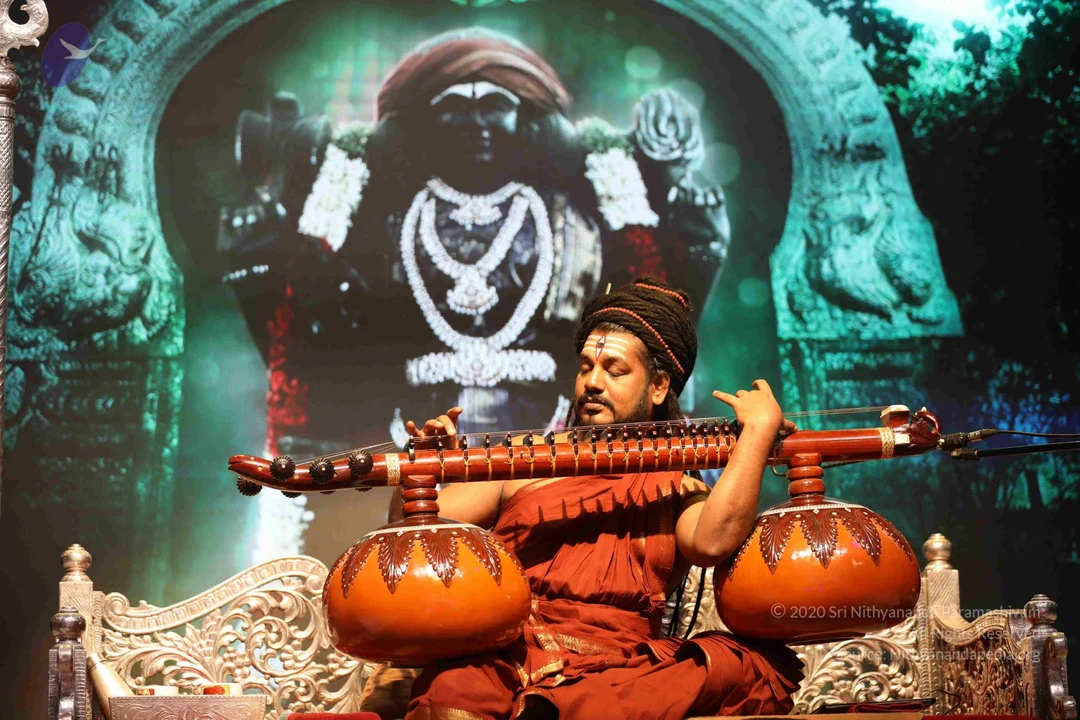
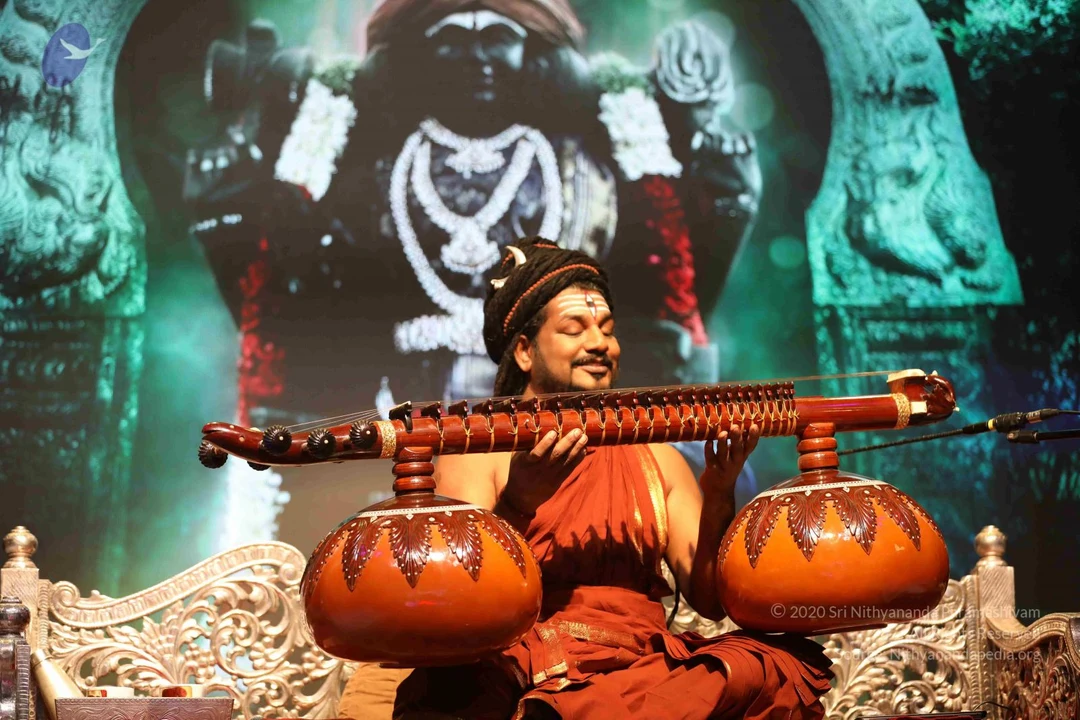
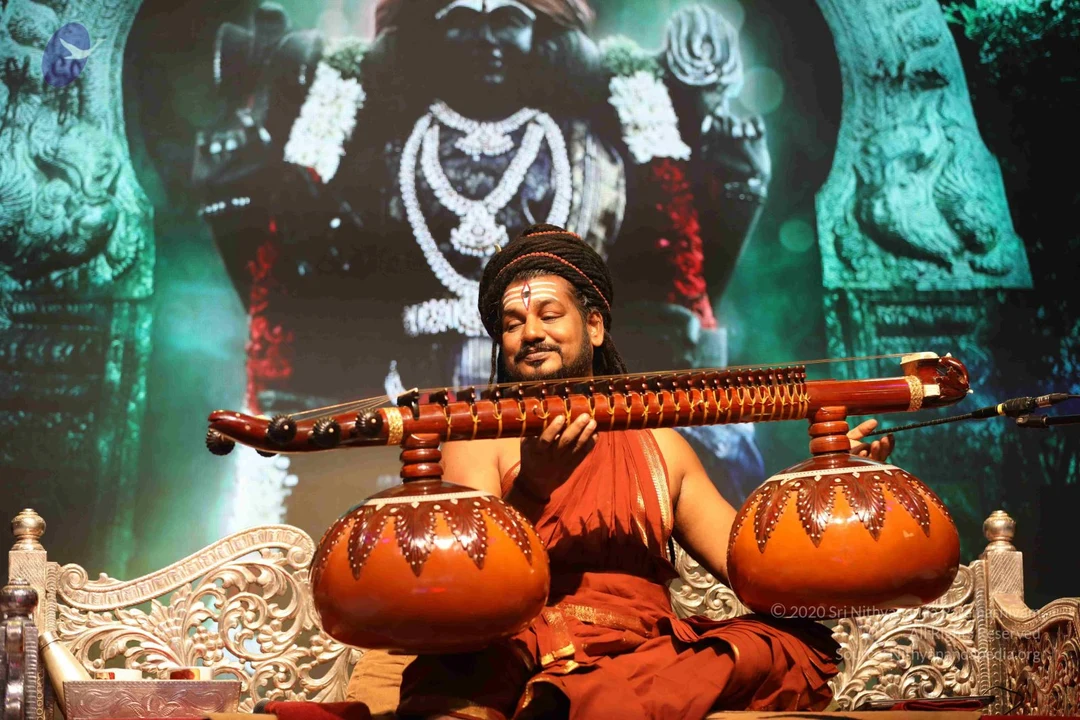
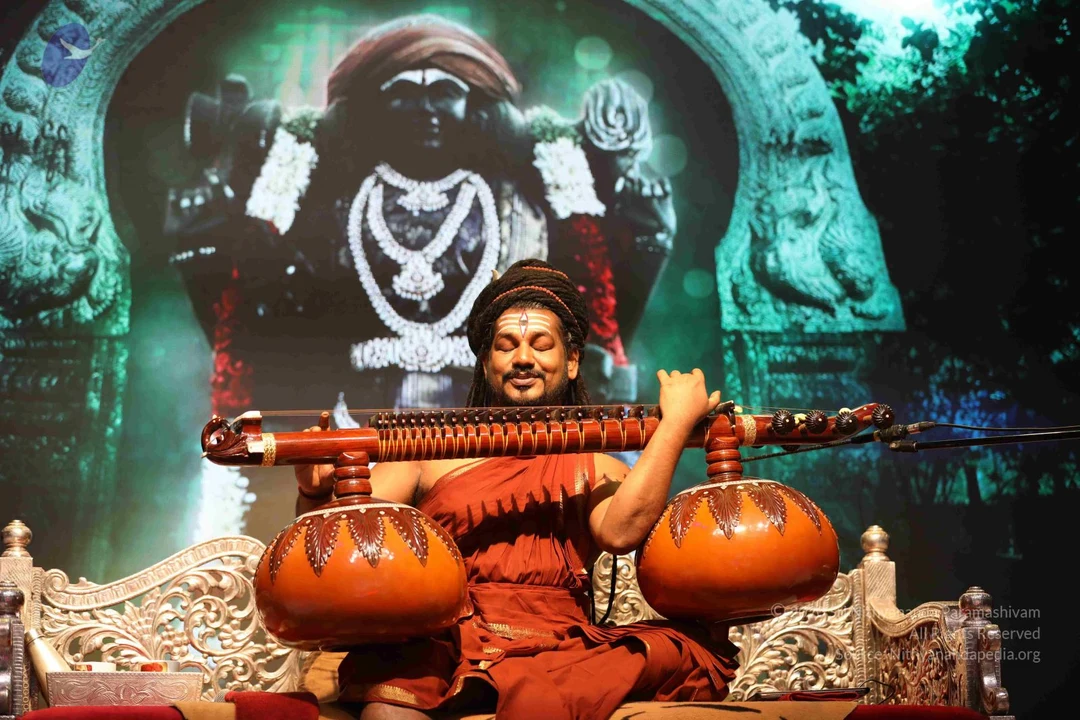
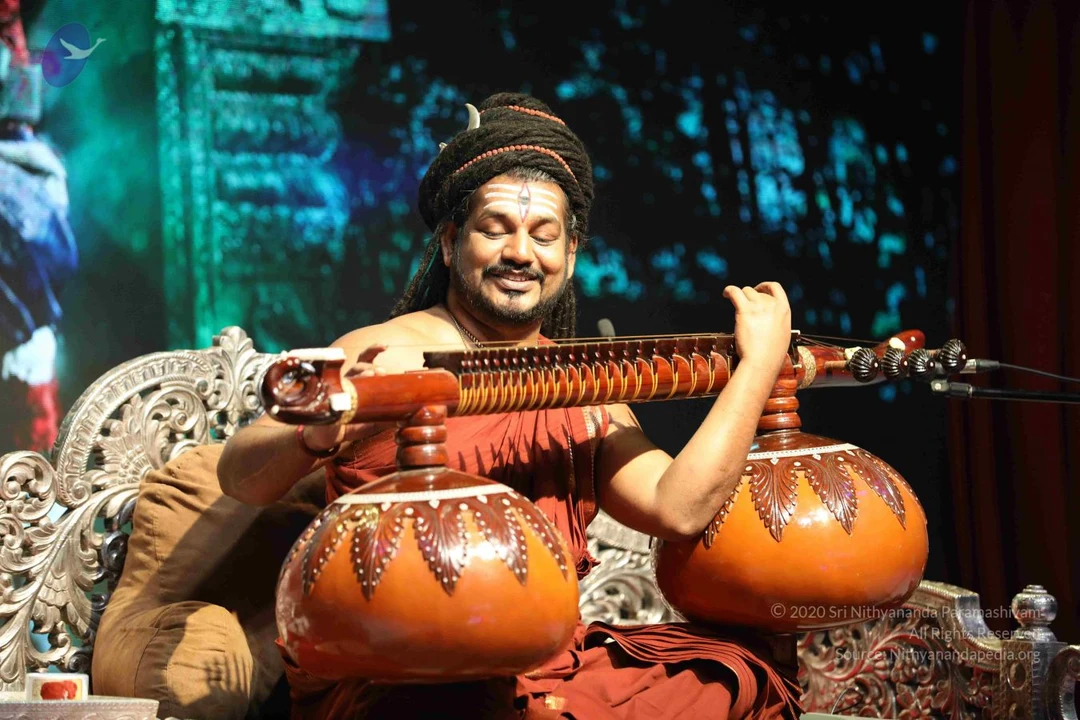
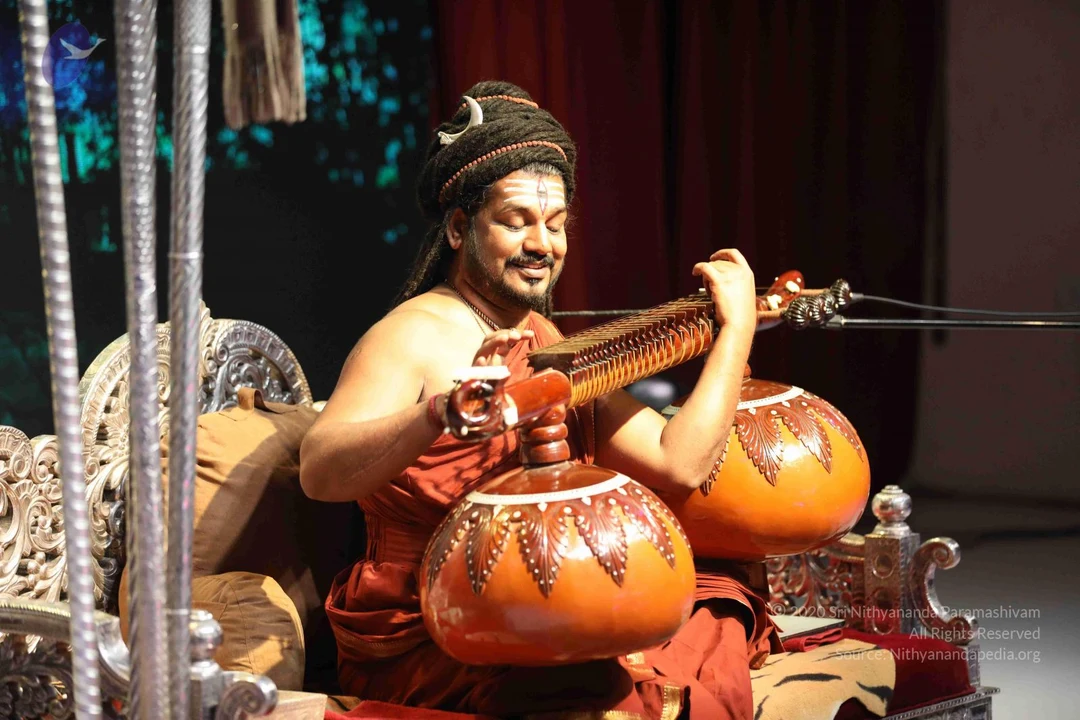
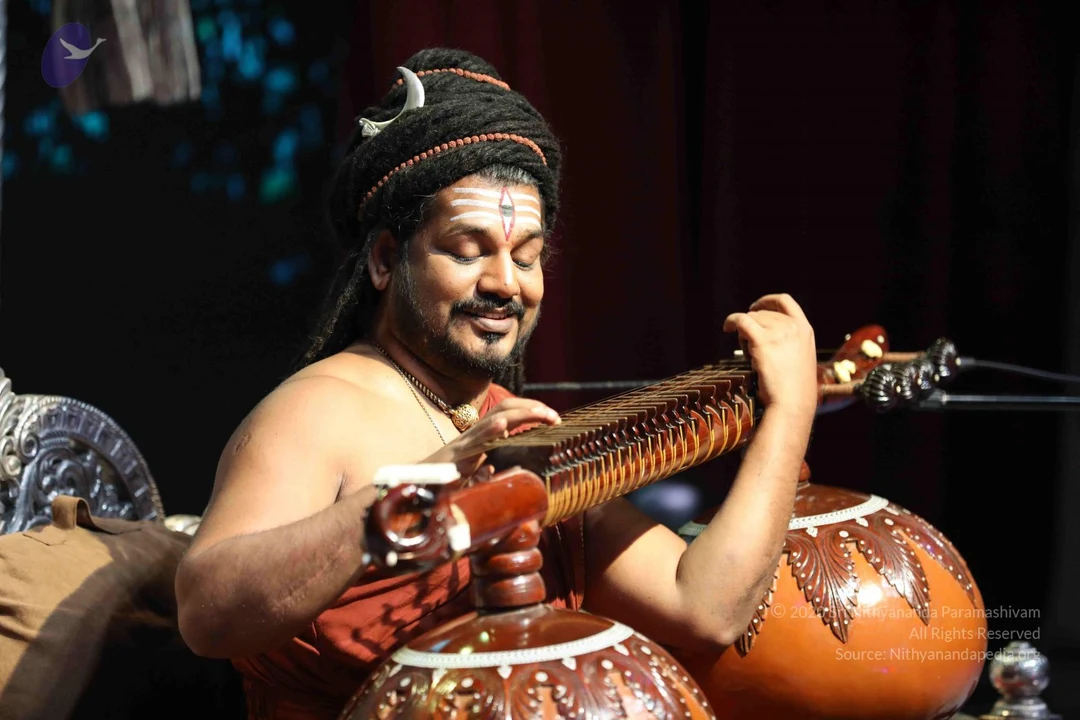
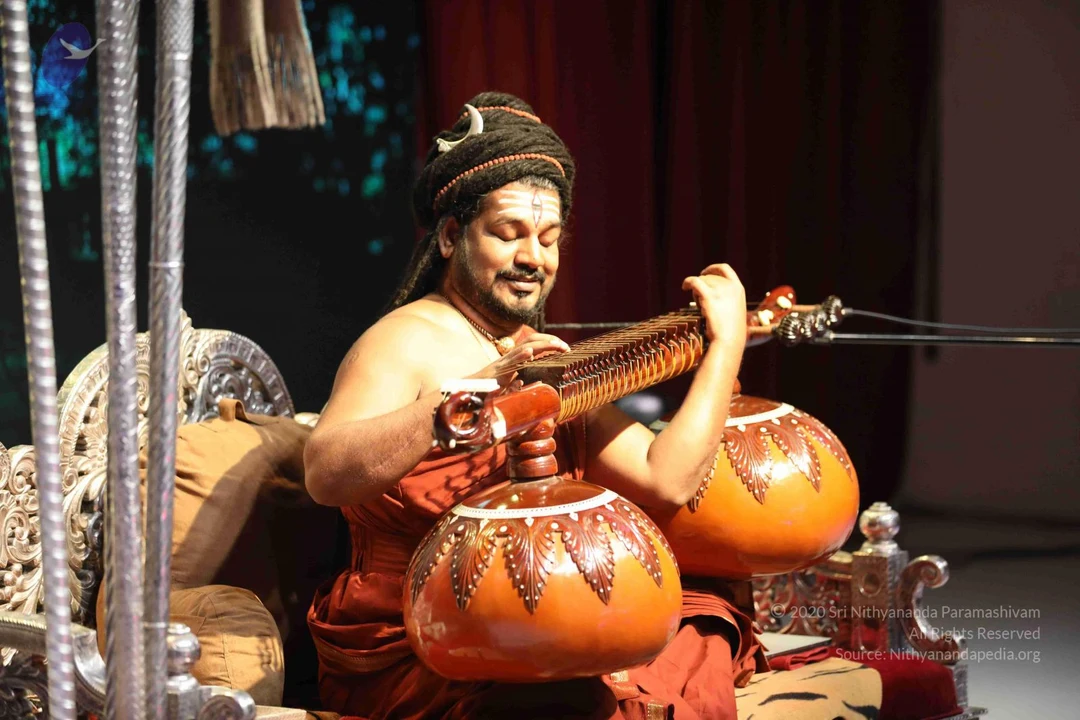
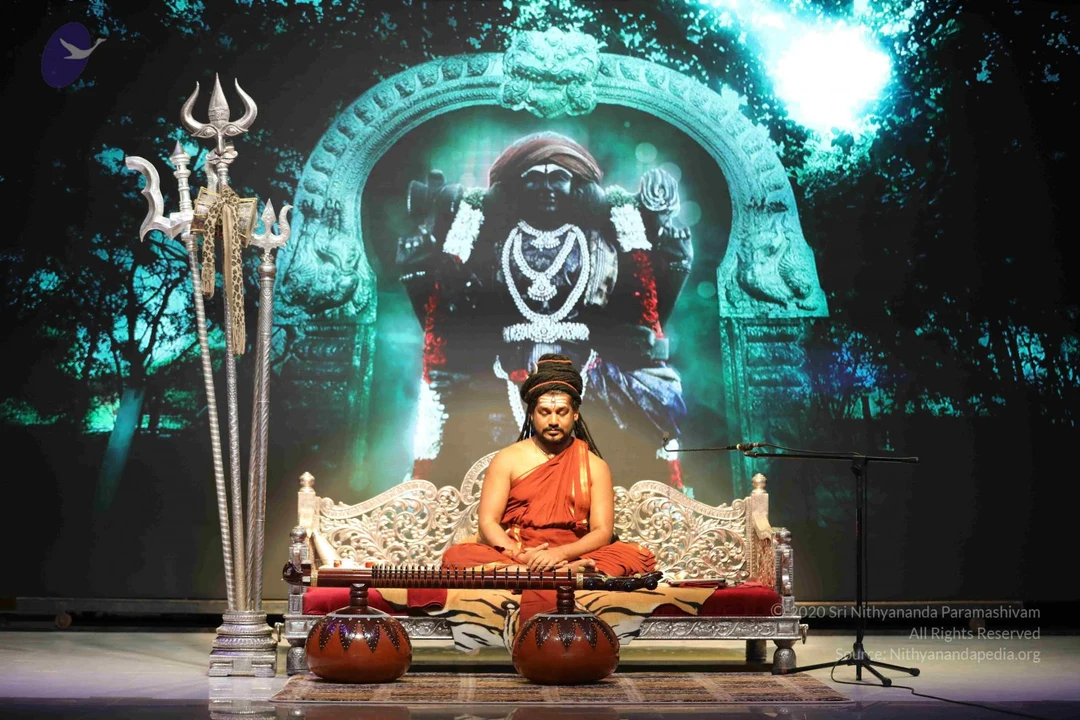
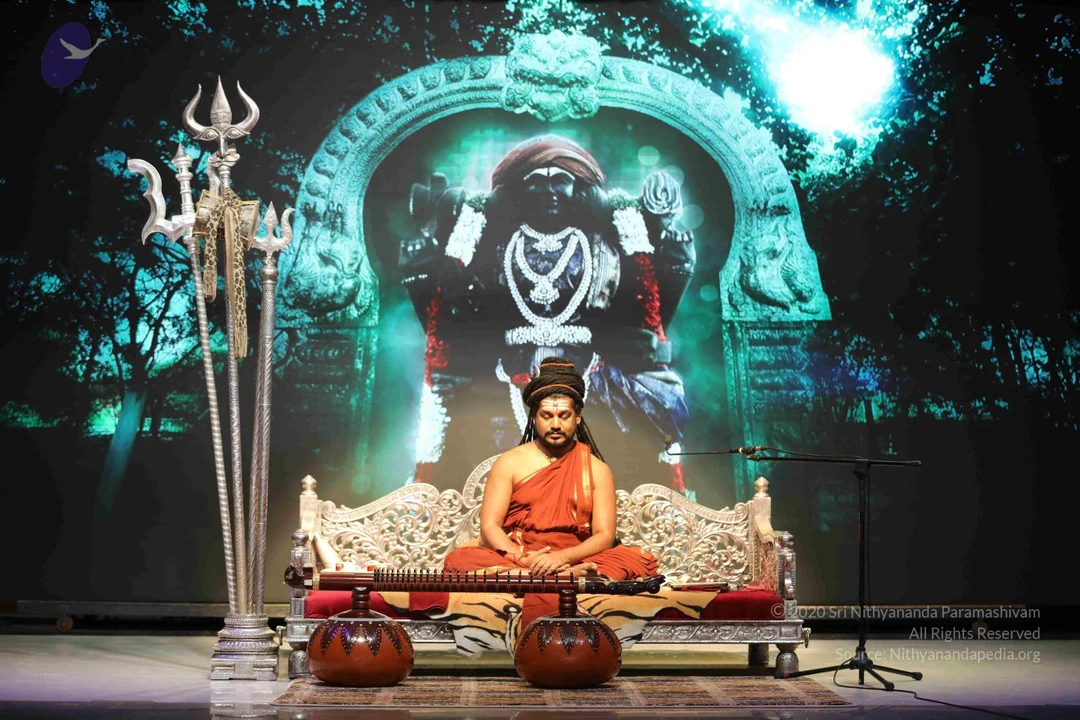
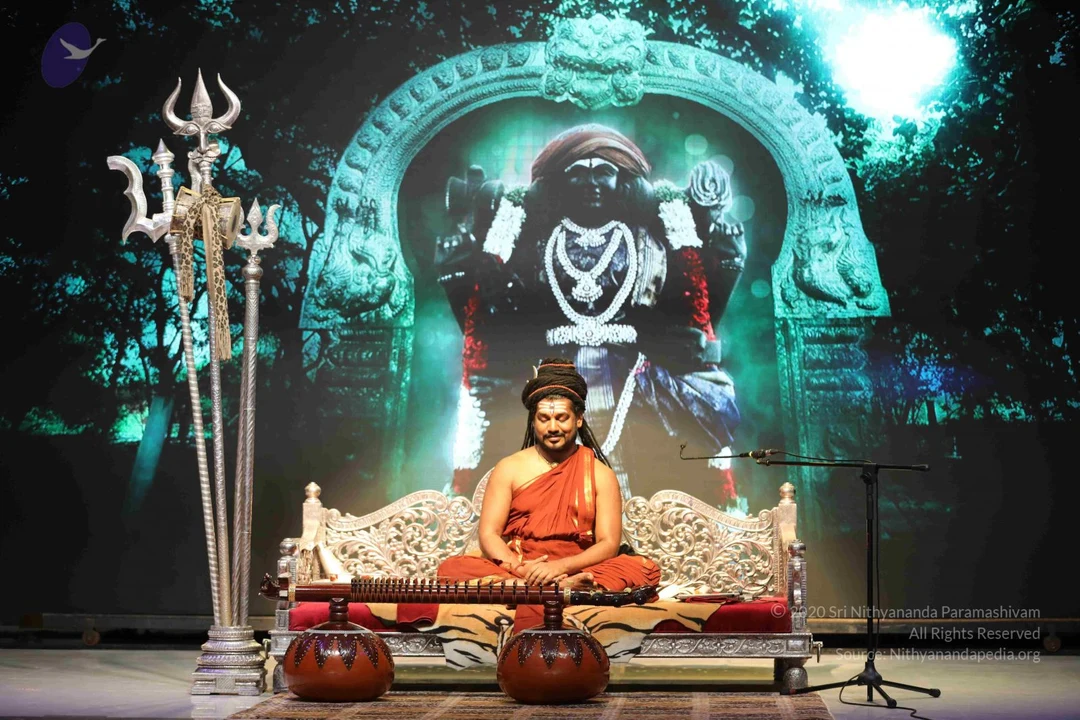
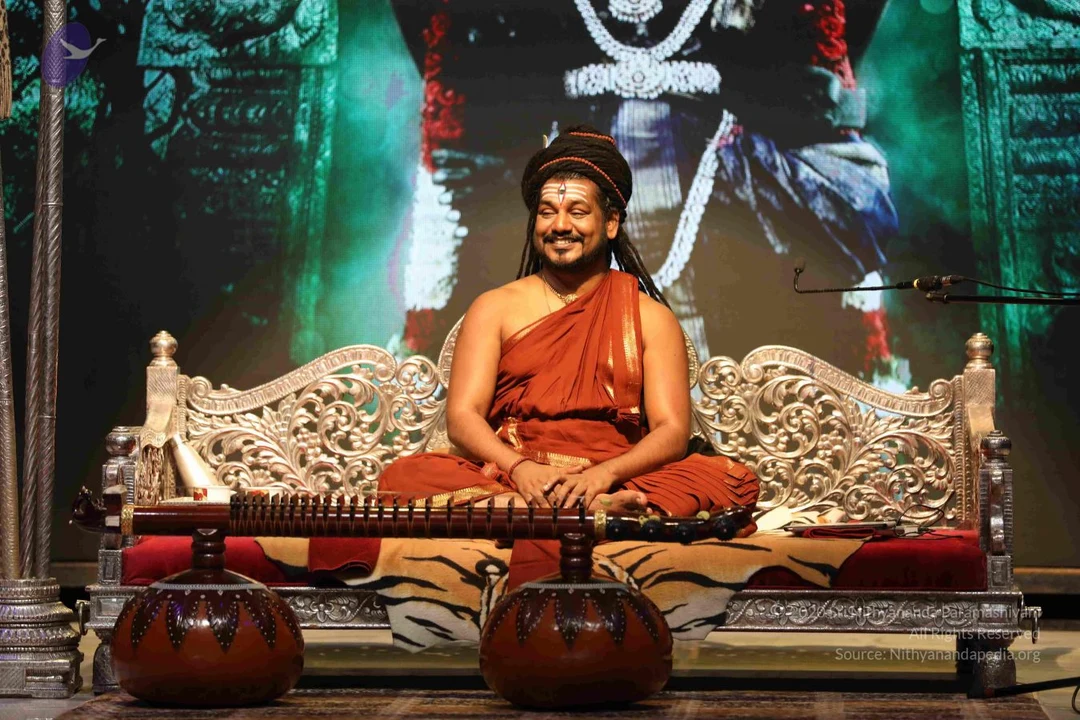
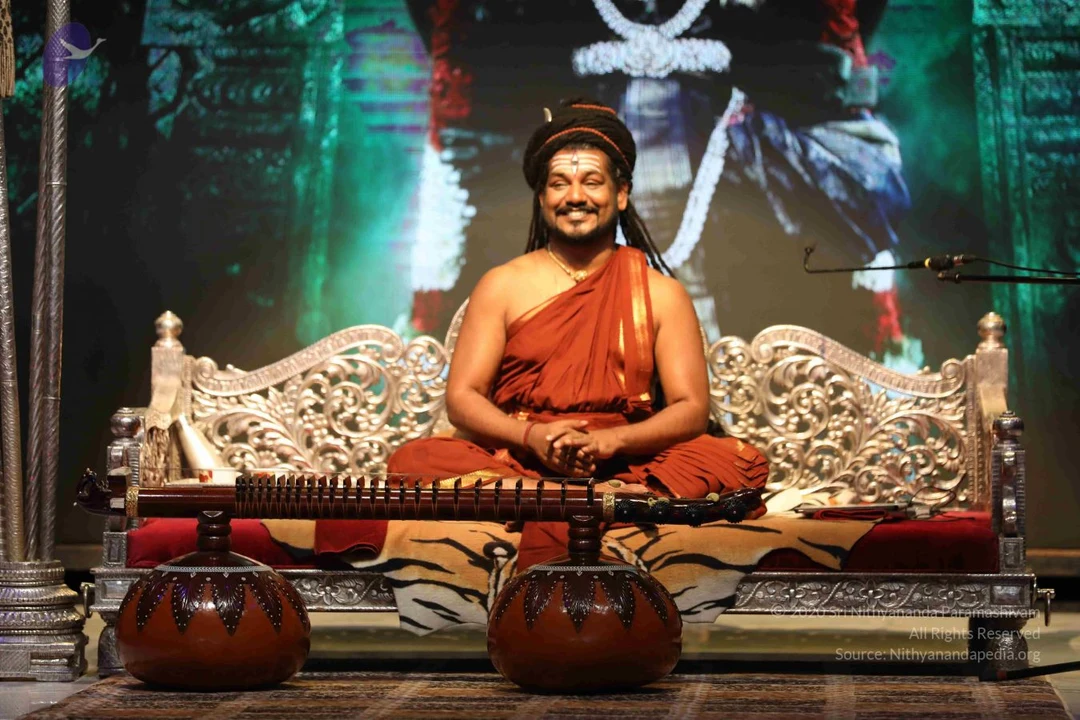
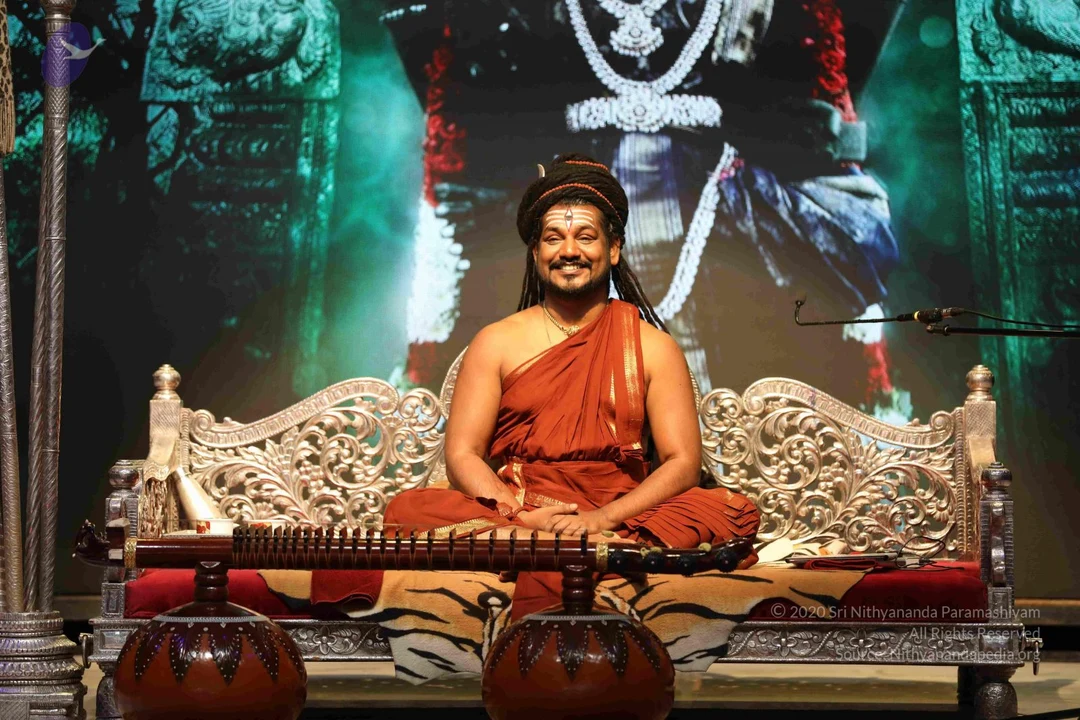
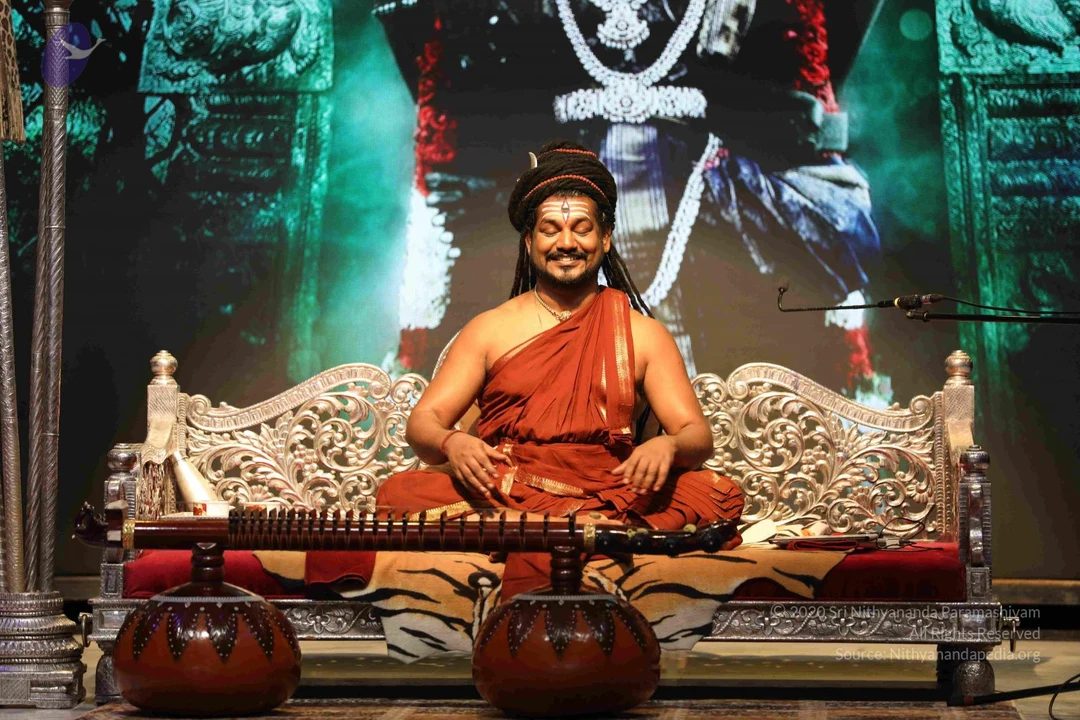
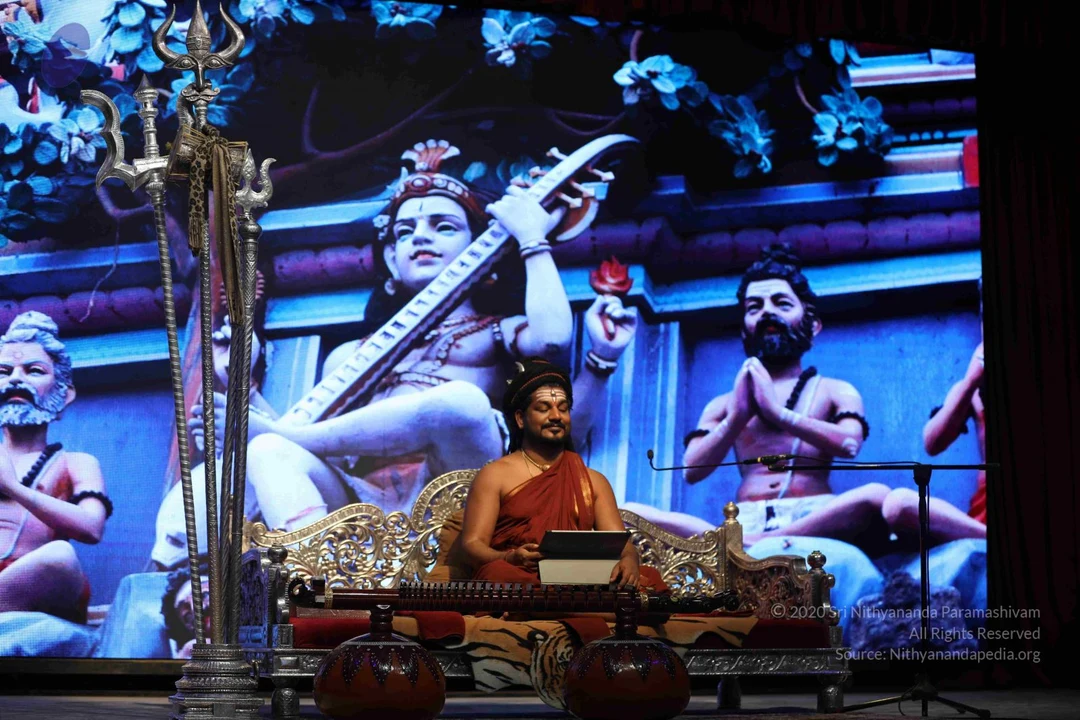
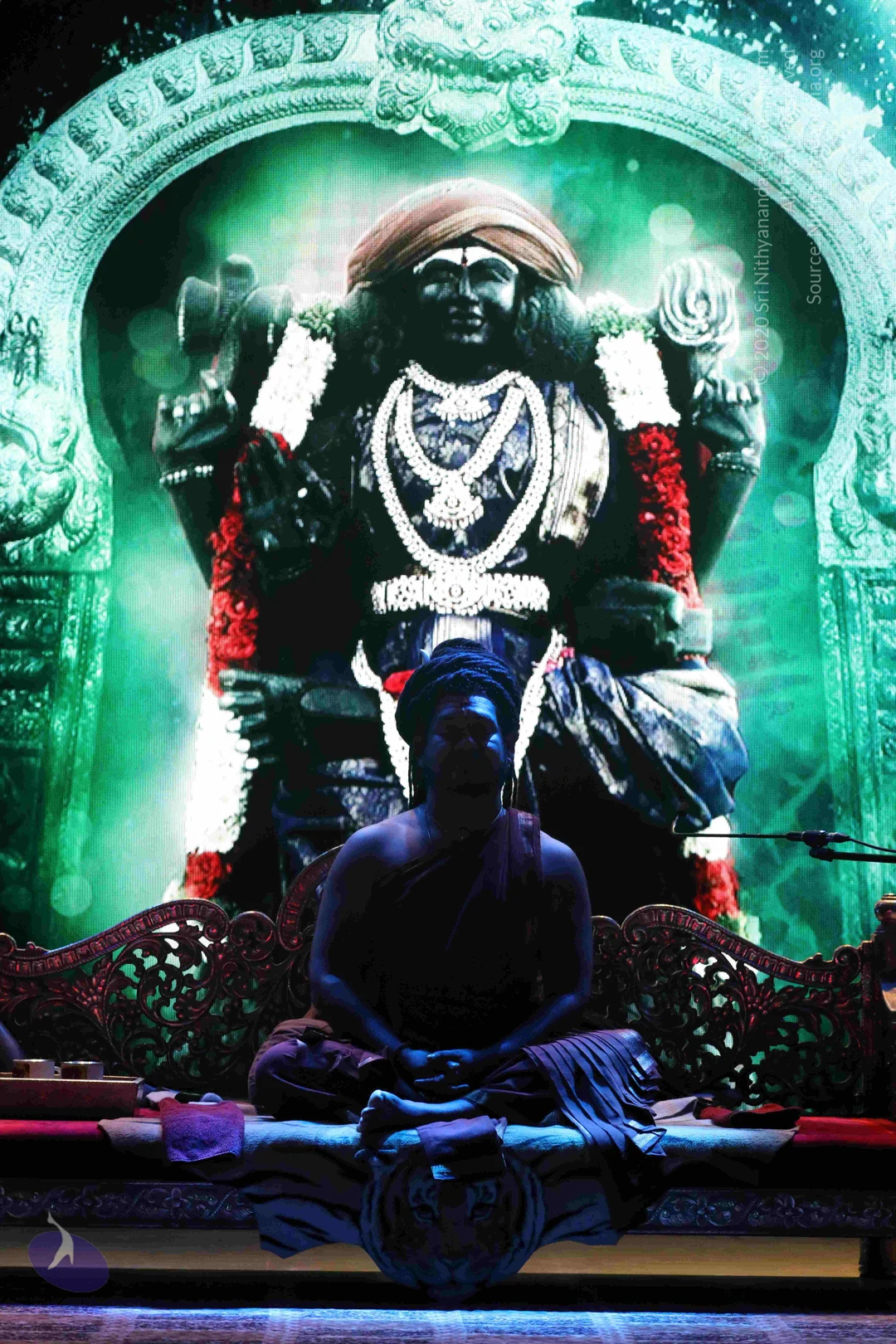
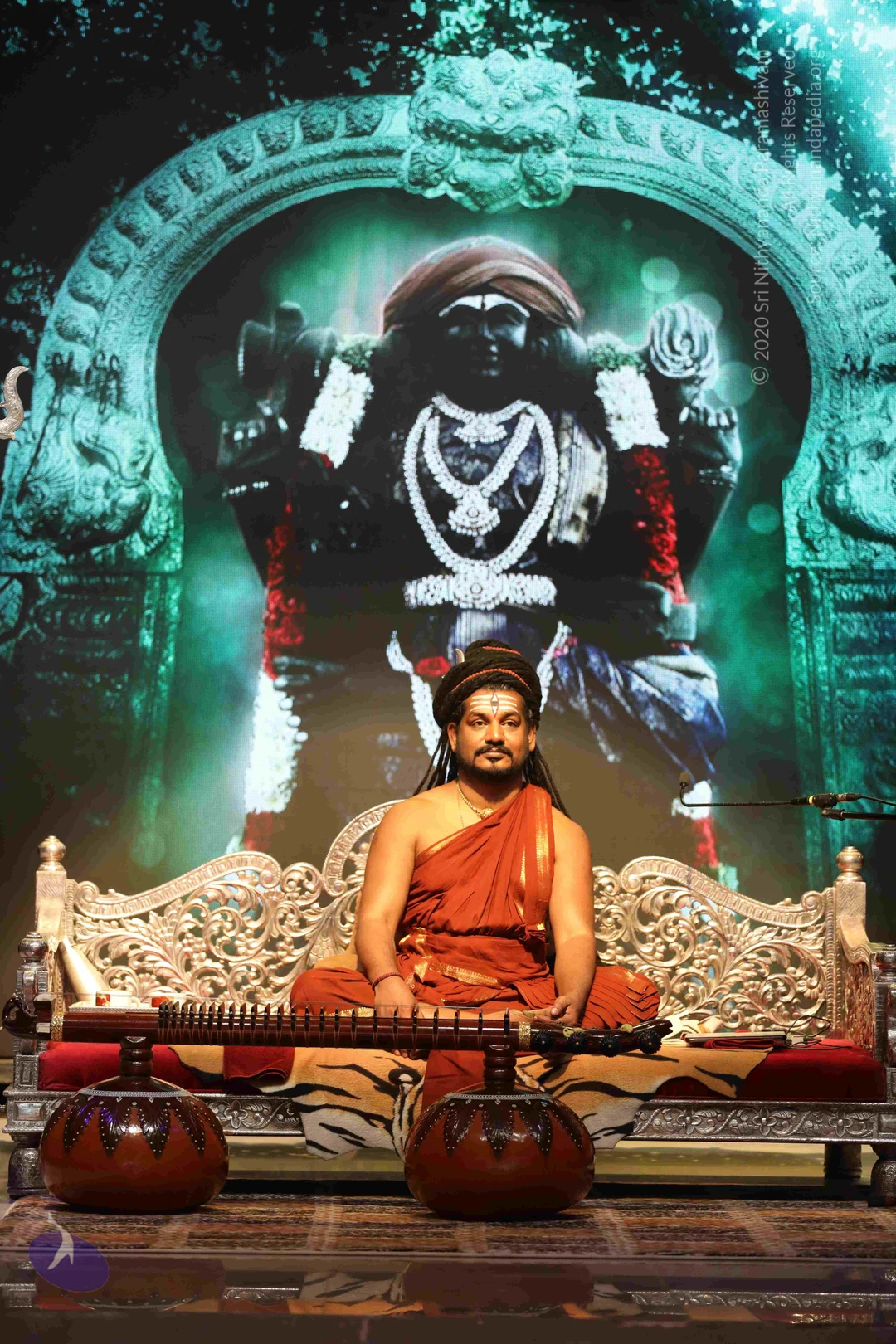
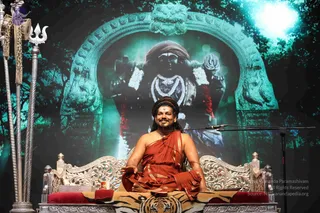
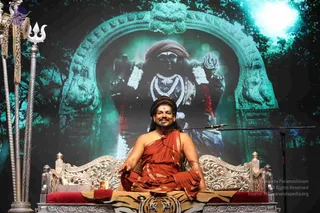
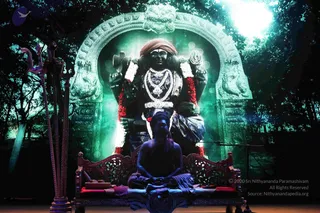
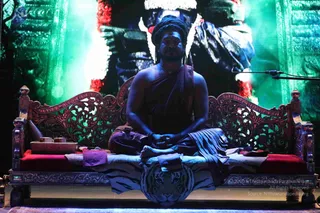
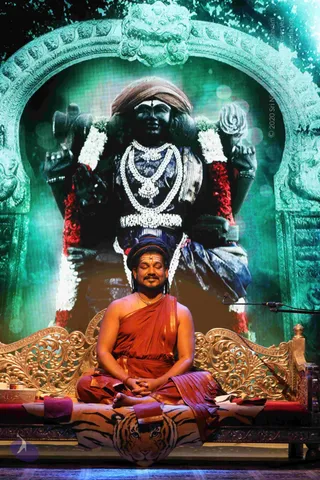
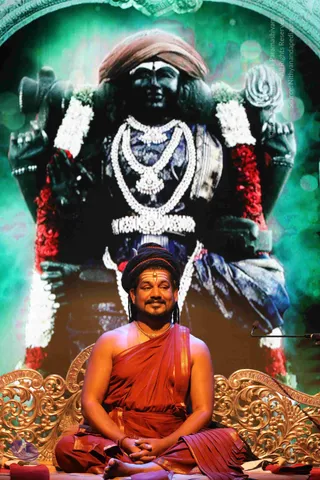
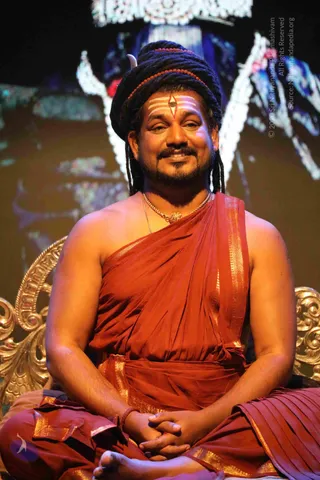
A man with long dreadlocks and a white tilak on his forehead sits cross-legged on an ornate silver throne with floral filigree, draped over a tiger-skin rug. He wears an orange-saffron robe with gold border and a gold chain, and holds a long wooden Rudra Veena across his lap. Two large carved wooden pots flank the stage. Behind him a large screen shows a dark statue of a deity with crown, white floral garlands, layered white jewelled necklaces and a red and white floral garland, framed by a green stone arch. A microphone stand is visible at right. The man is a person, identified by his long dreadlocks, saffron robe, gold chain and seated throne presentation.A seated man in a saffron-orange garment and matching turban plays a large Rudra Veena instrument on an ornate silver-and-gold throne upheld on a tiger skin, with three tall trident-topped staffs standing at the left. Behind him a large screen shows a figure in a dark turban wearing a white pearl necklace and white and red floral garlands, framed by a carved green stone arch. The man appears to be Swamiji (probable) based on his swept-back hair, saffron clothing and ceremonial adornment; the rudraksha-style ornamentation and turban are visible, and he sits on the central throne with an instrument. A microphone stand stands at the right. One physical person is visible; the screen figure is a depiction.A seated man in a dark-red saffron-toned garment plays a large wooden Rudra Veena, its two bulbous orange-brown resonators resting on his lap. He has long dreadlocked hair wrapped in a headpiece with a red band, a white tilak on his forehead, and his eyes are closed in a serene smile. He sits on an ornate silver-toned throne with carved scrolls. Behind him a large dark teal backdrop shows a partial portrait and a stone carving. Probable Swamiji cues: long dreadlocks with a crown-like head wrap, saffron clothing and ornate seating, playing the Rudra Veena during a sound initiation presentation.

April 10 2018

Original wiki page
Contents

Title

Sound and Anti-Sound || Initiation and Processes leading into Vidya Tatva || Initiation of Shivohum process, awakening Kundalini Shakti || Day 10 of Mahasadashivohum ||

Narration

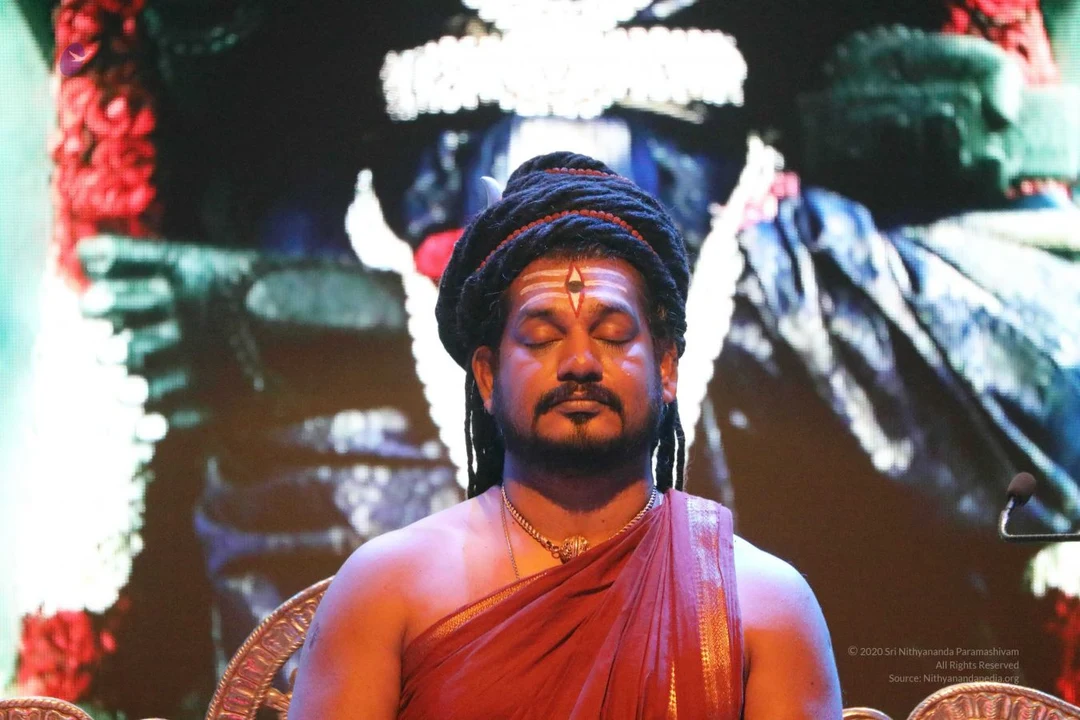
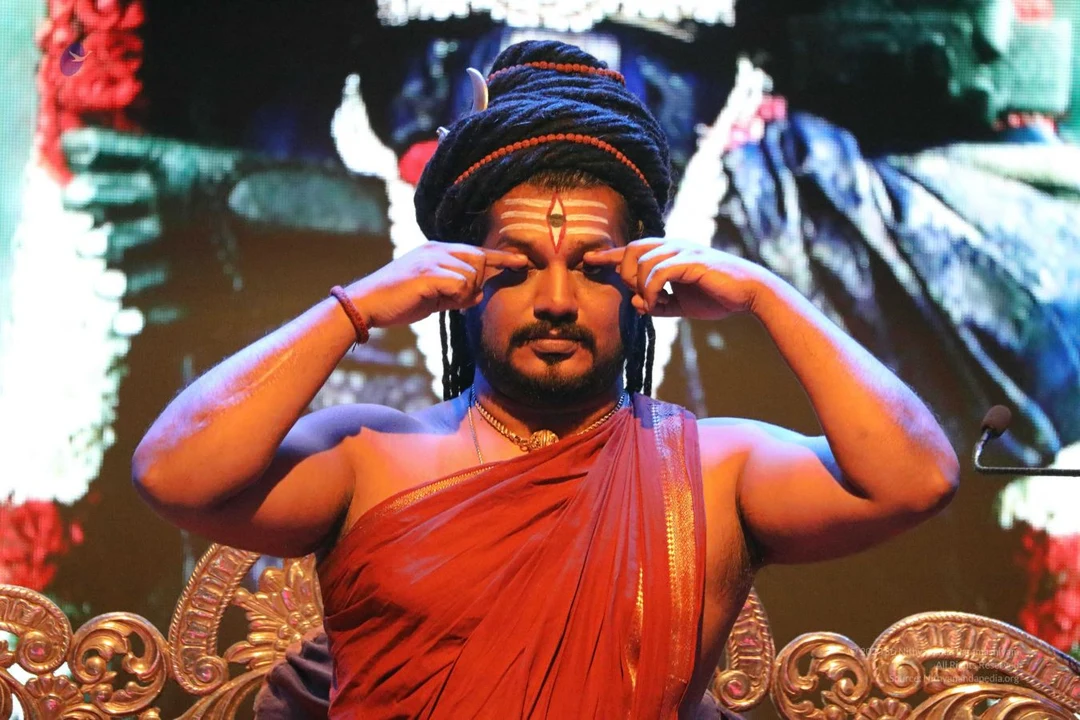
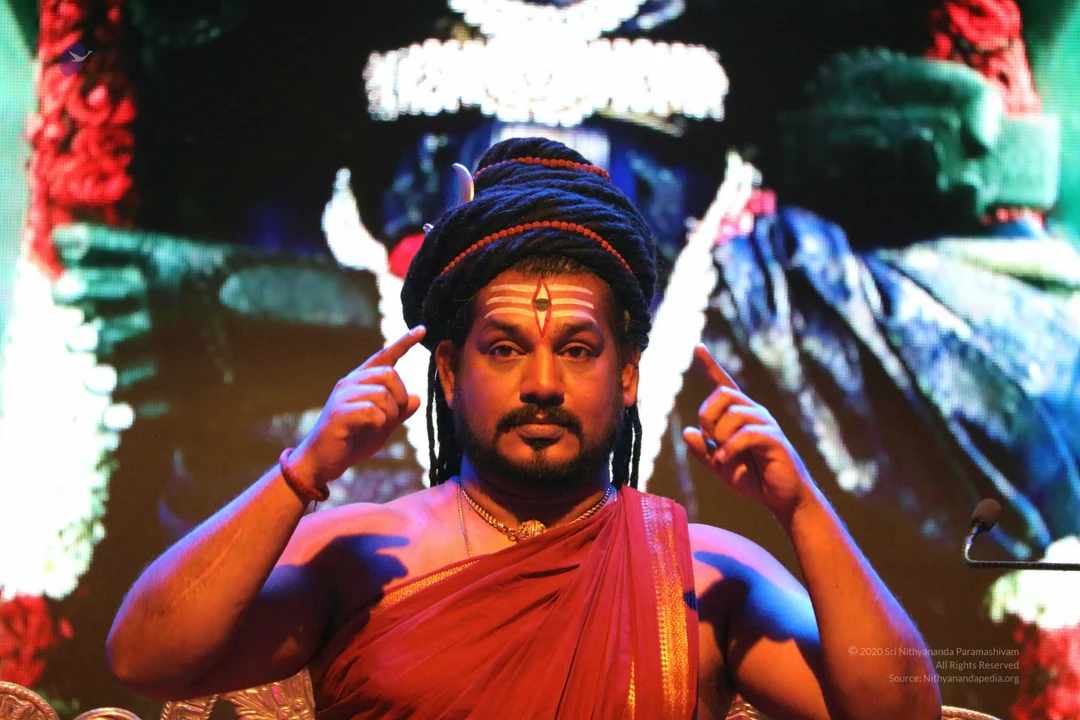
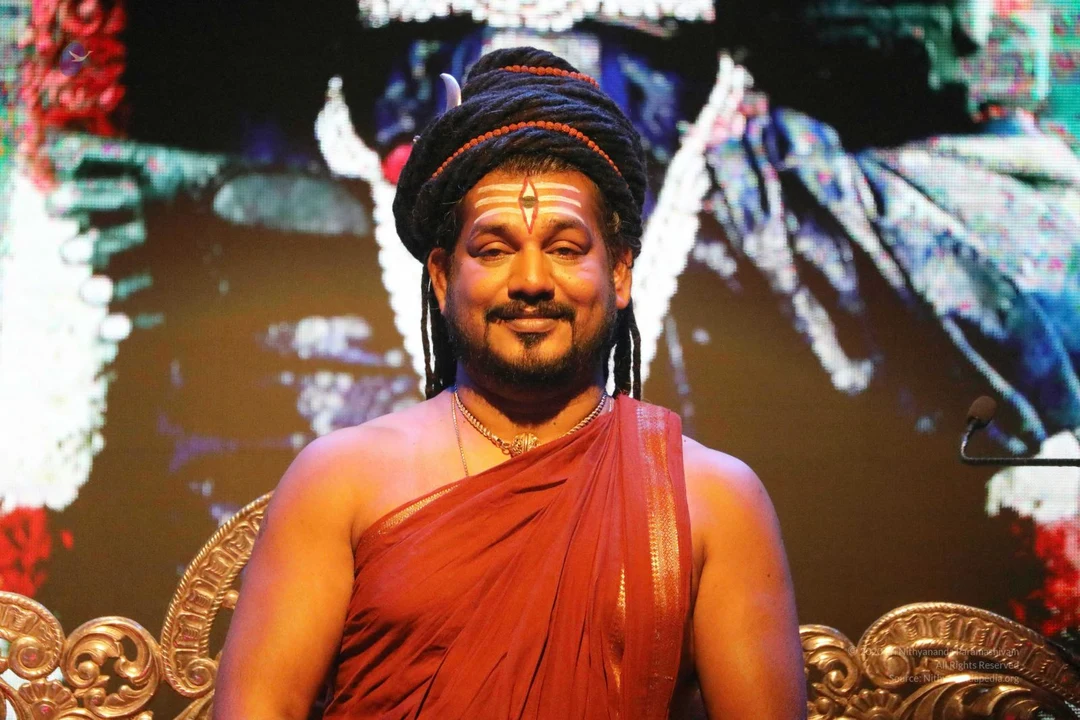
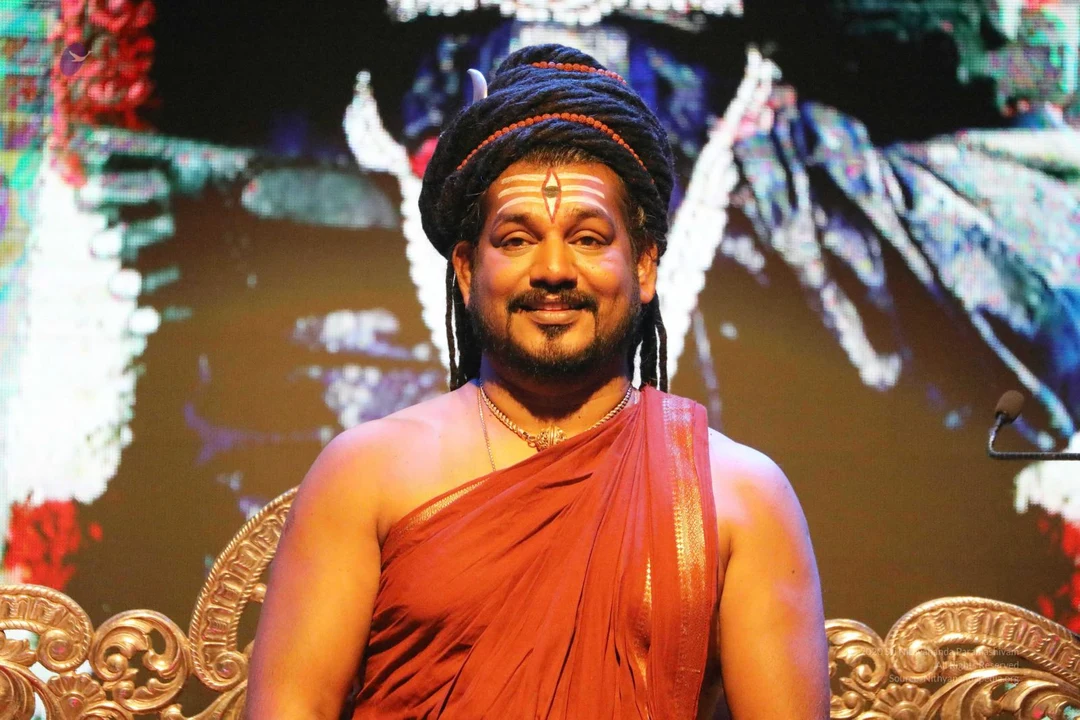
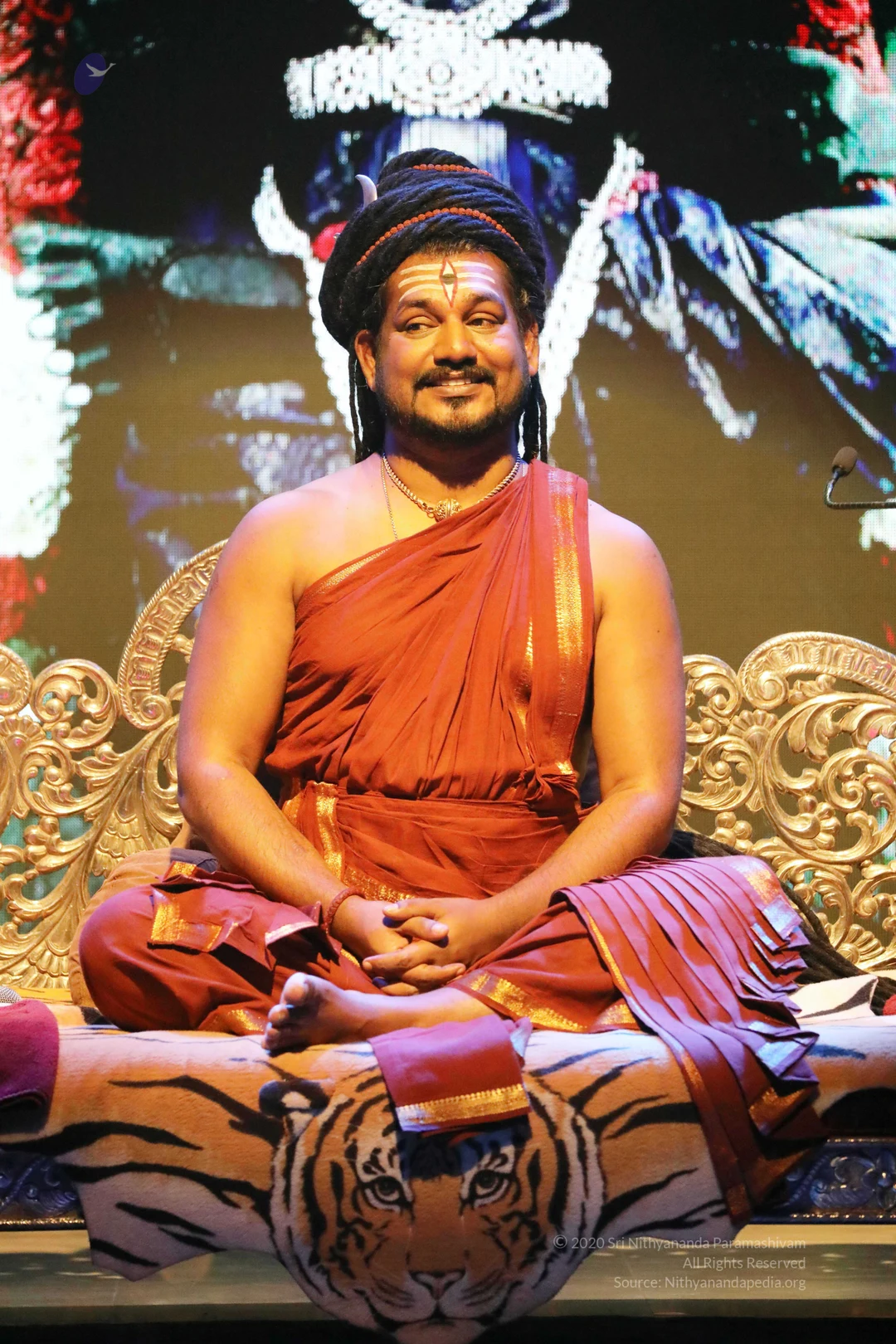
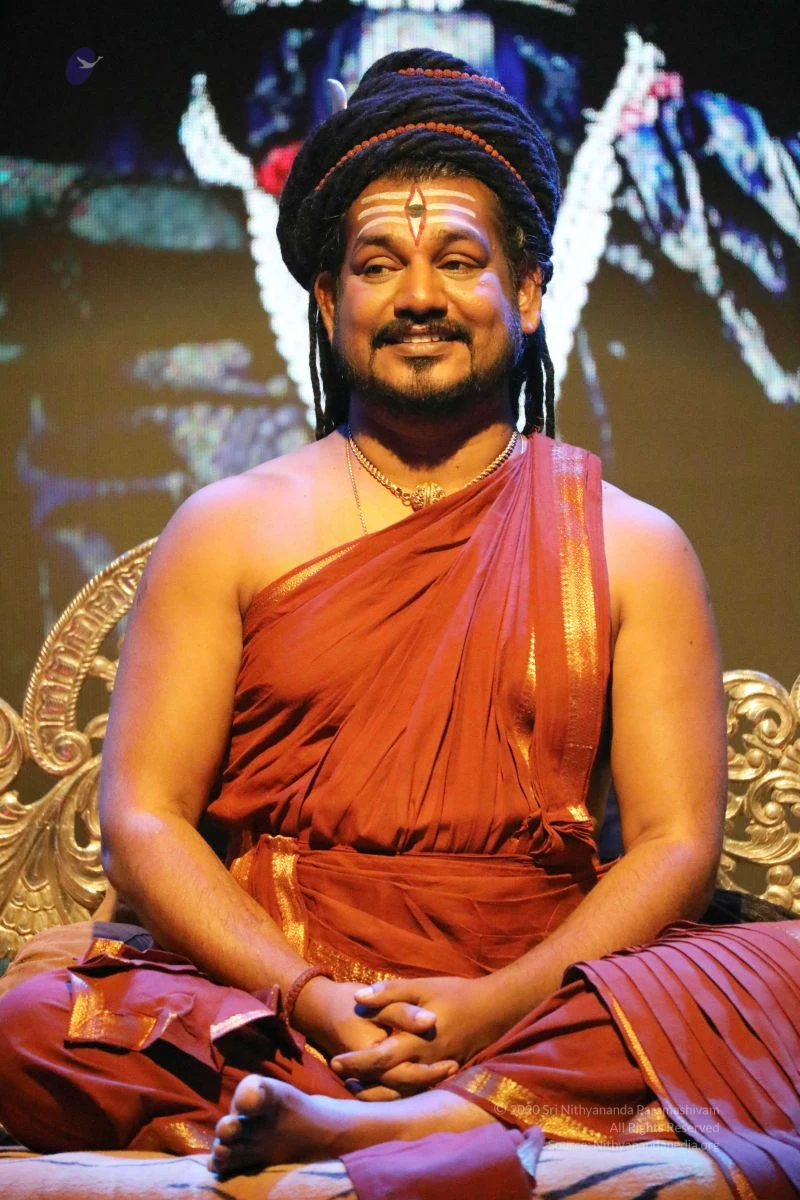
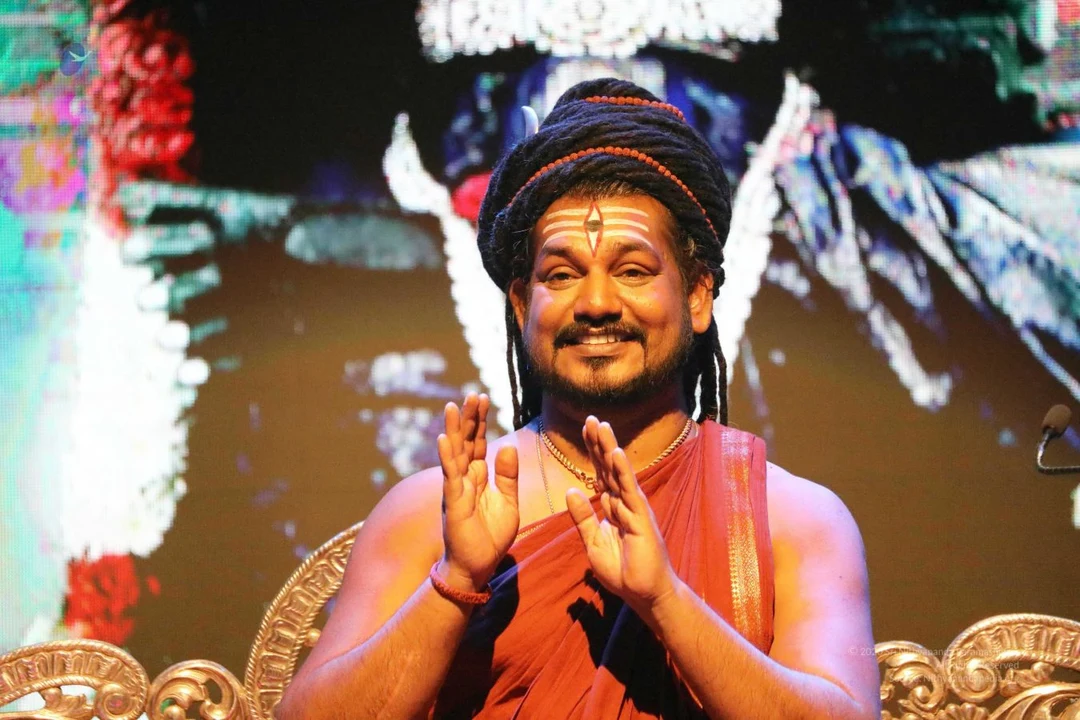
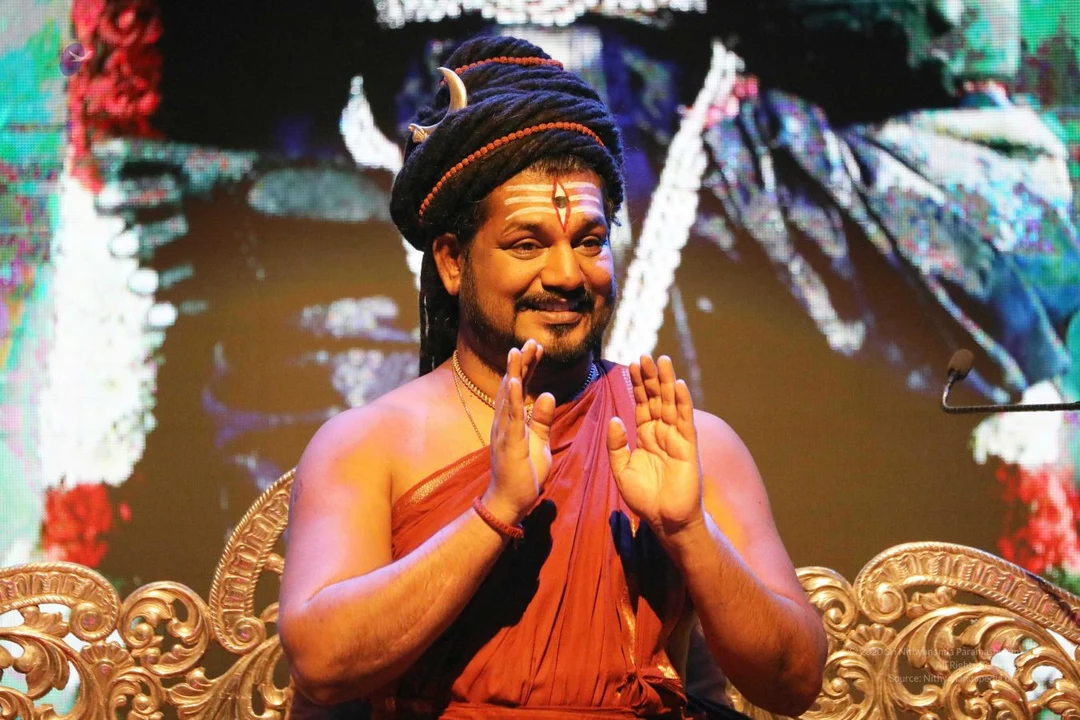
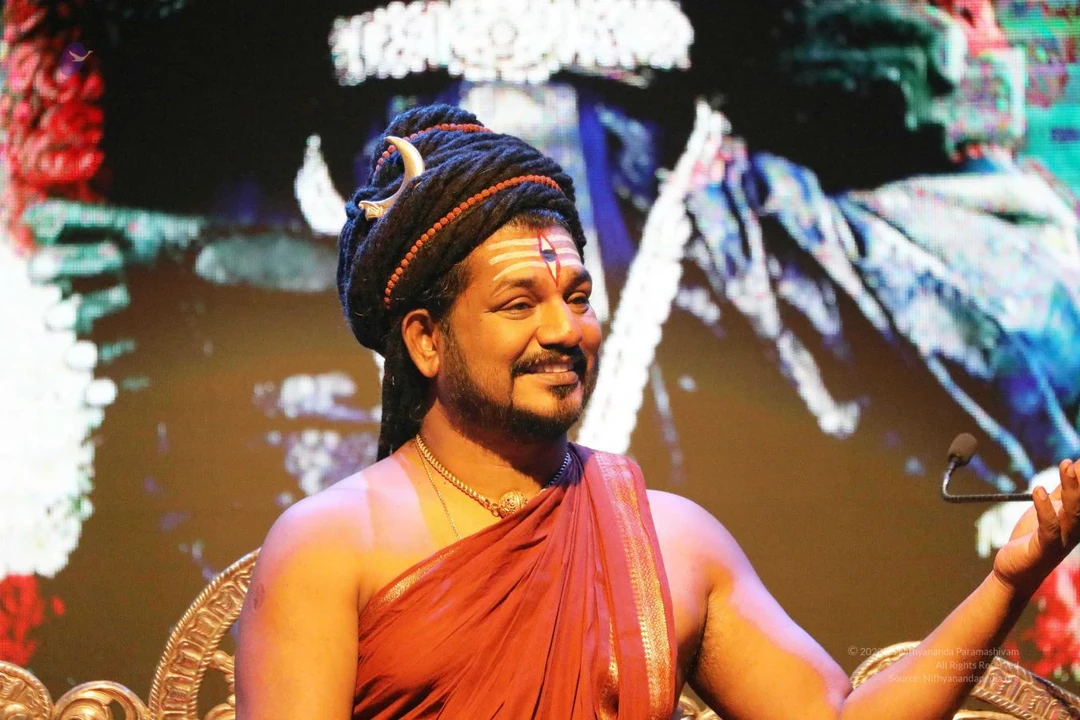
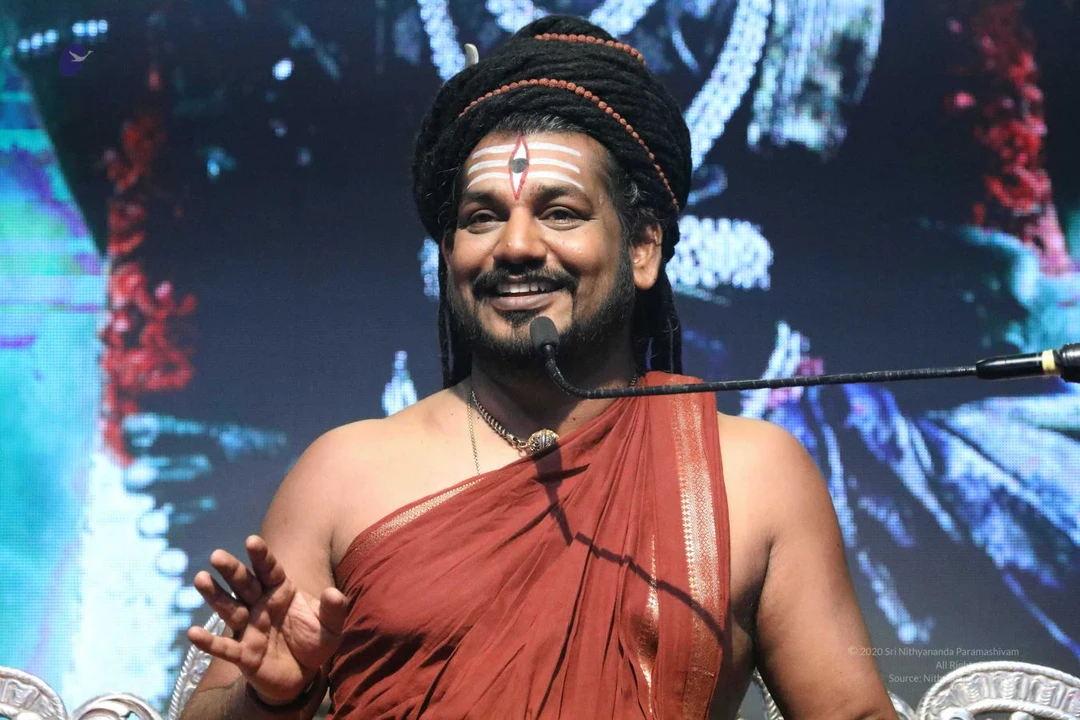
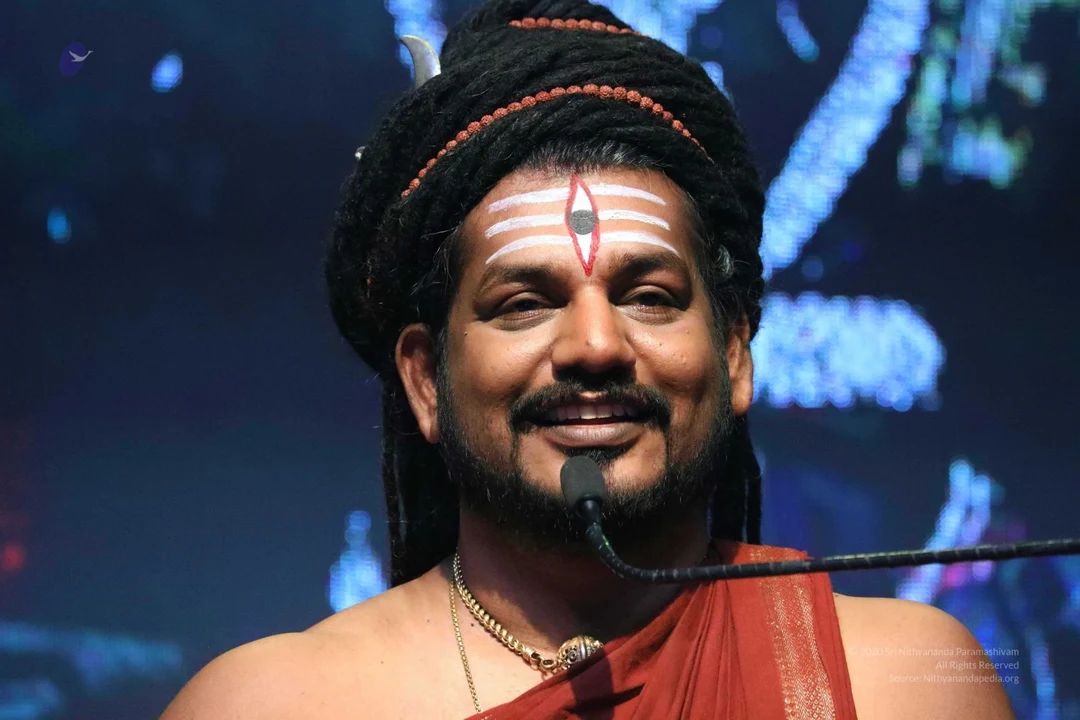
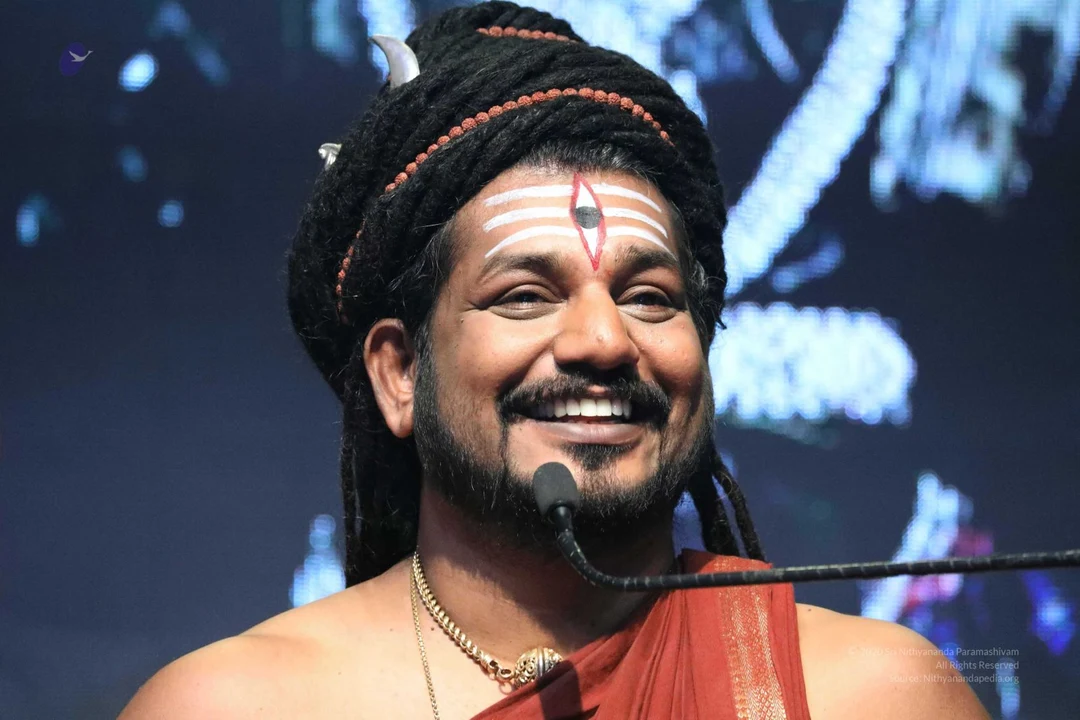
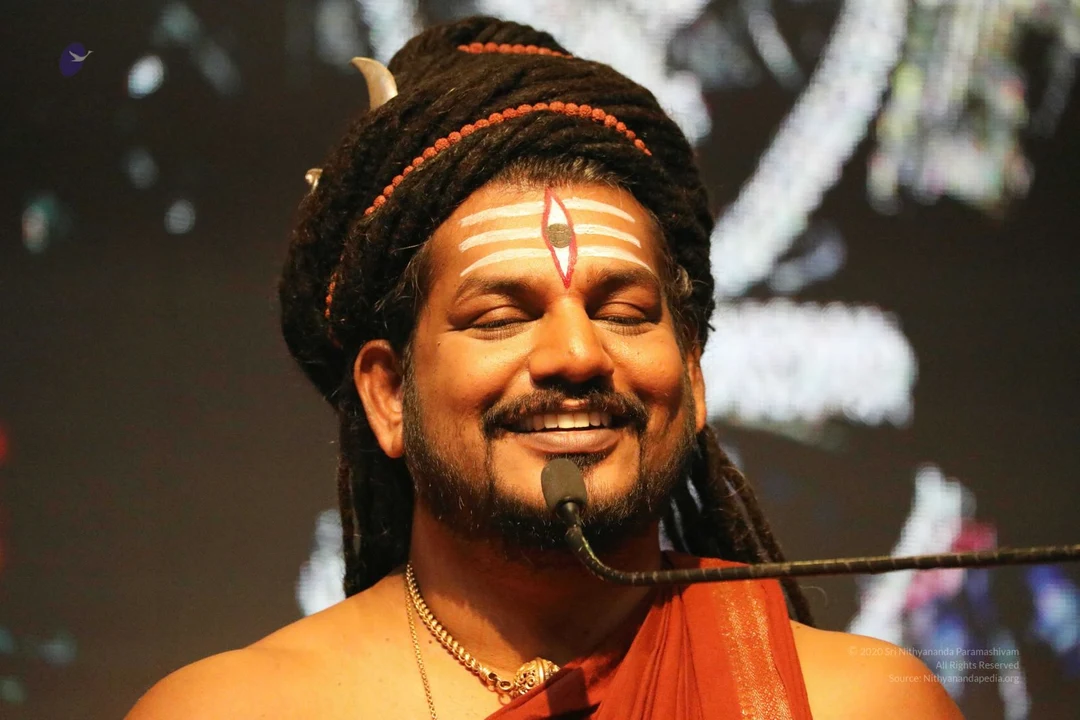
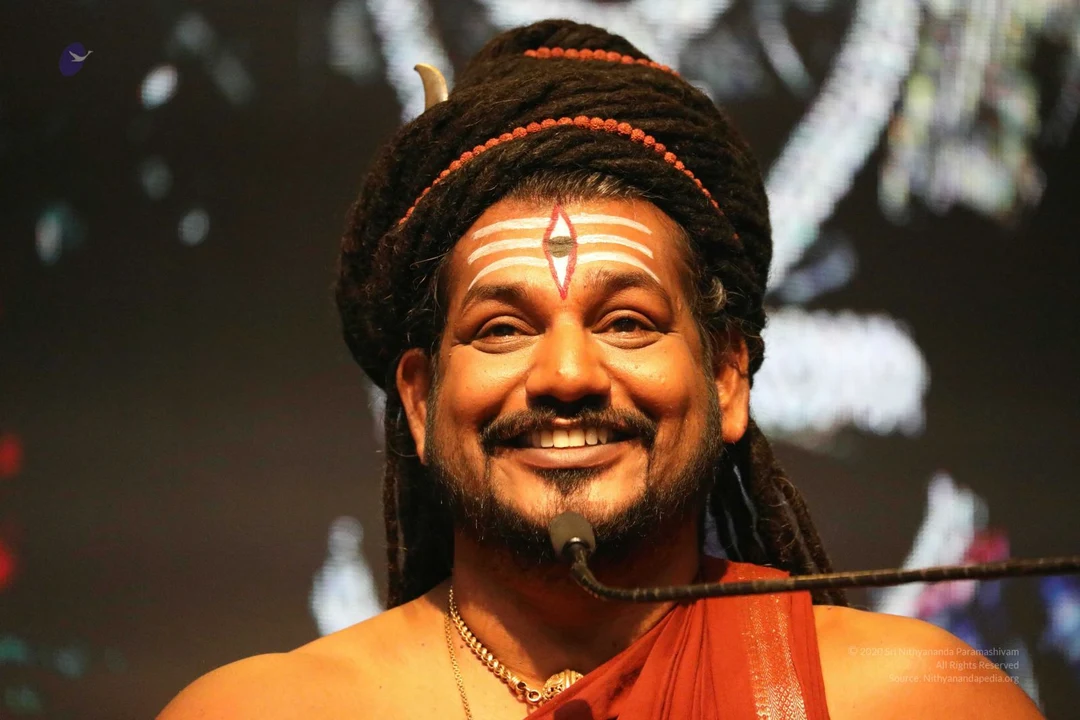
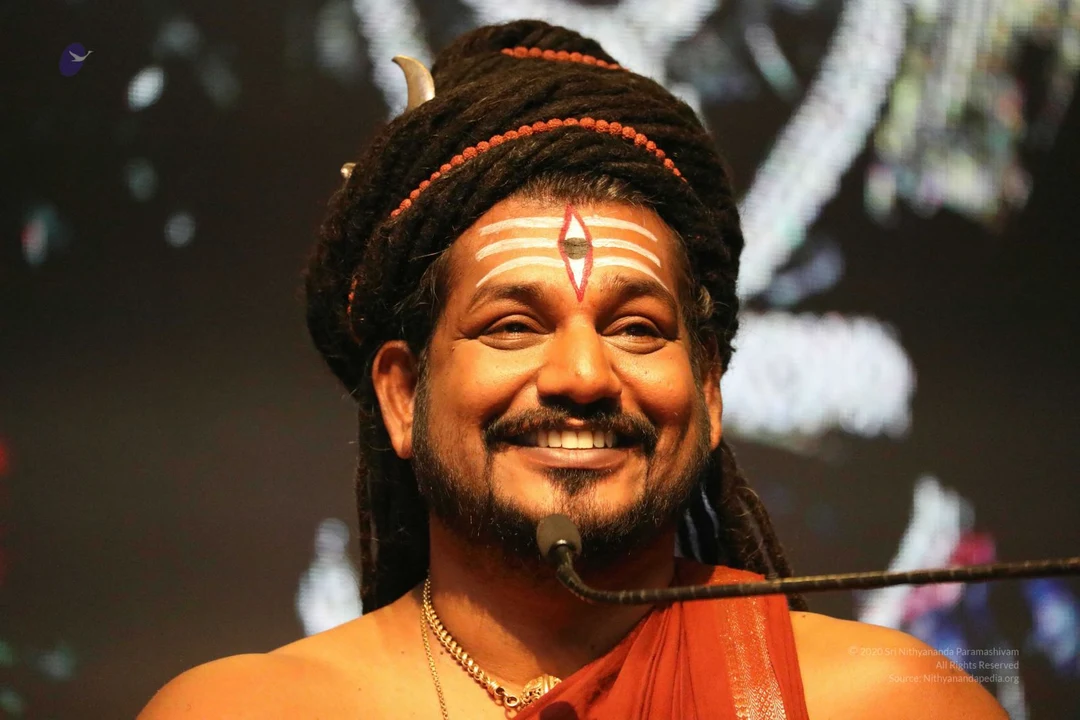
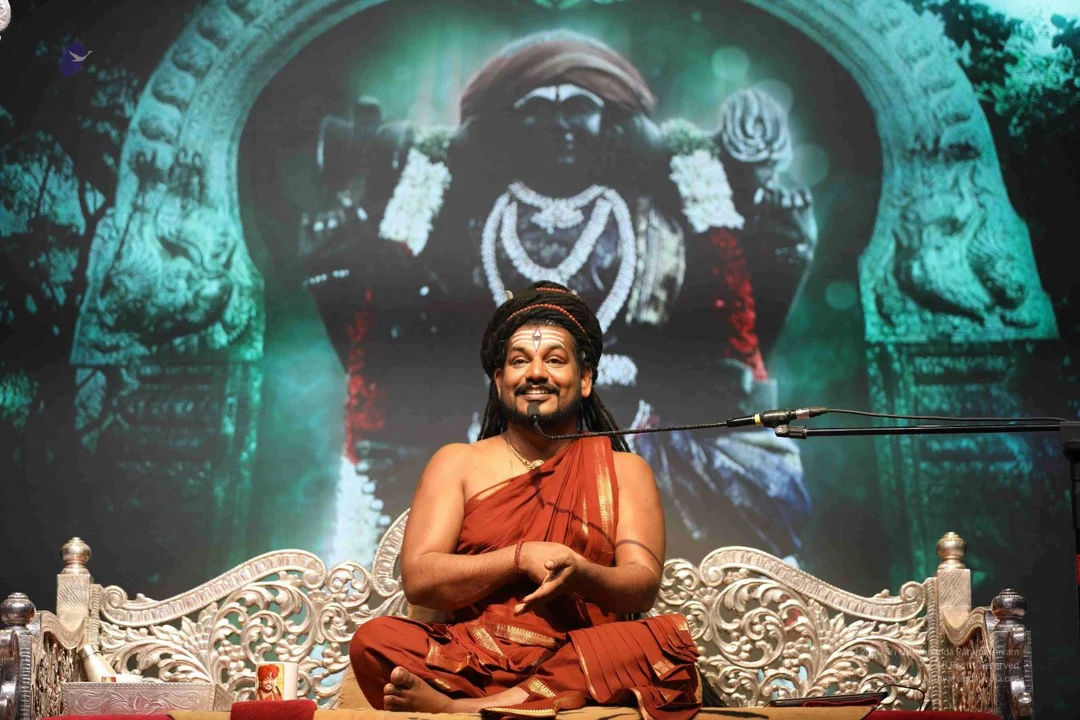
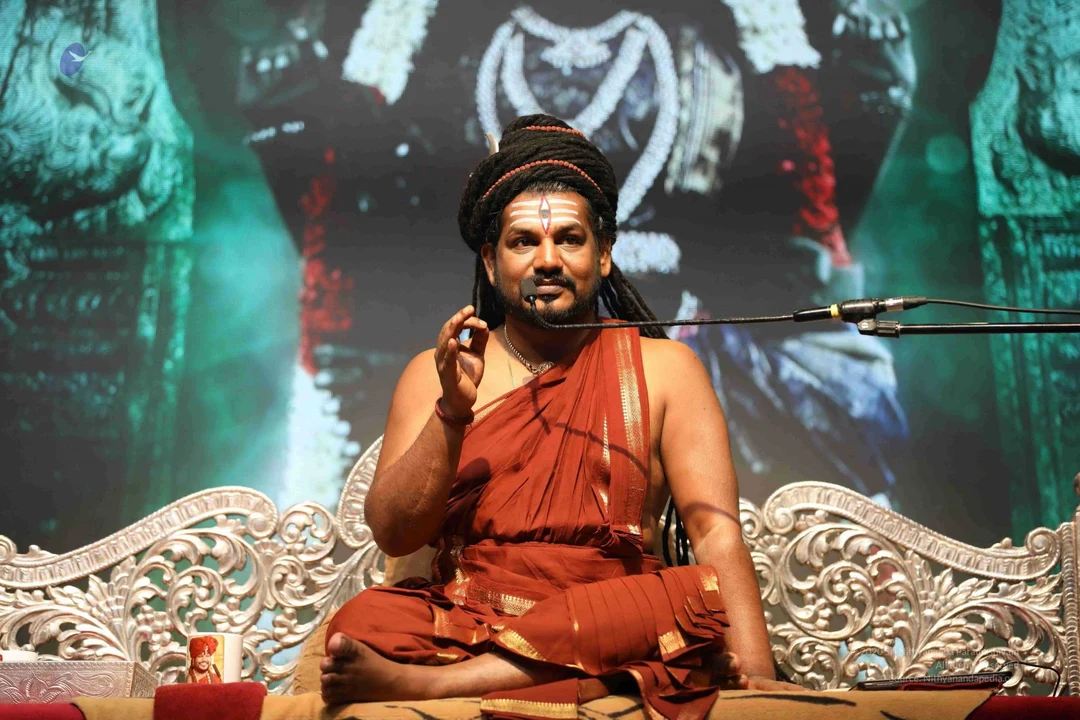
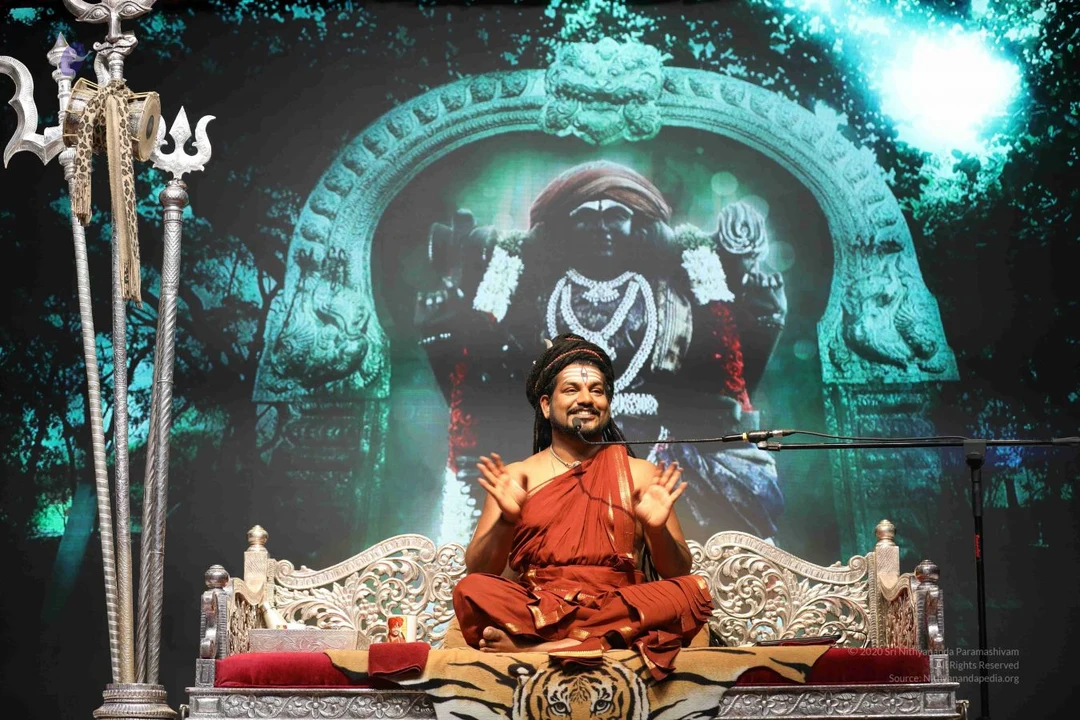
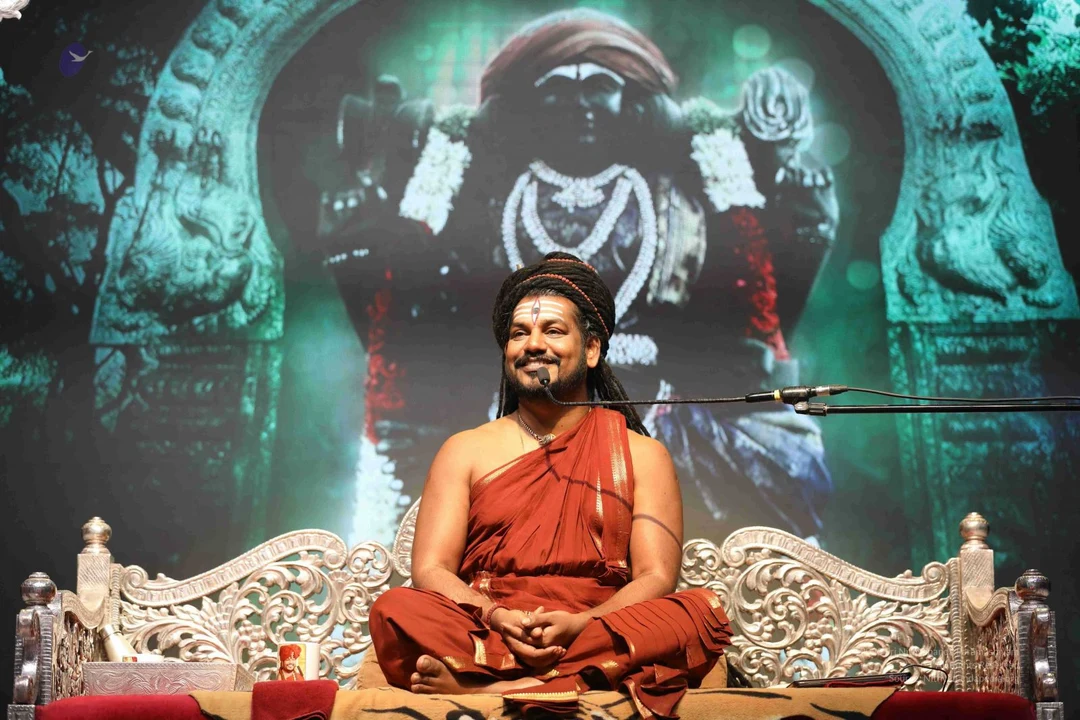
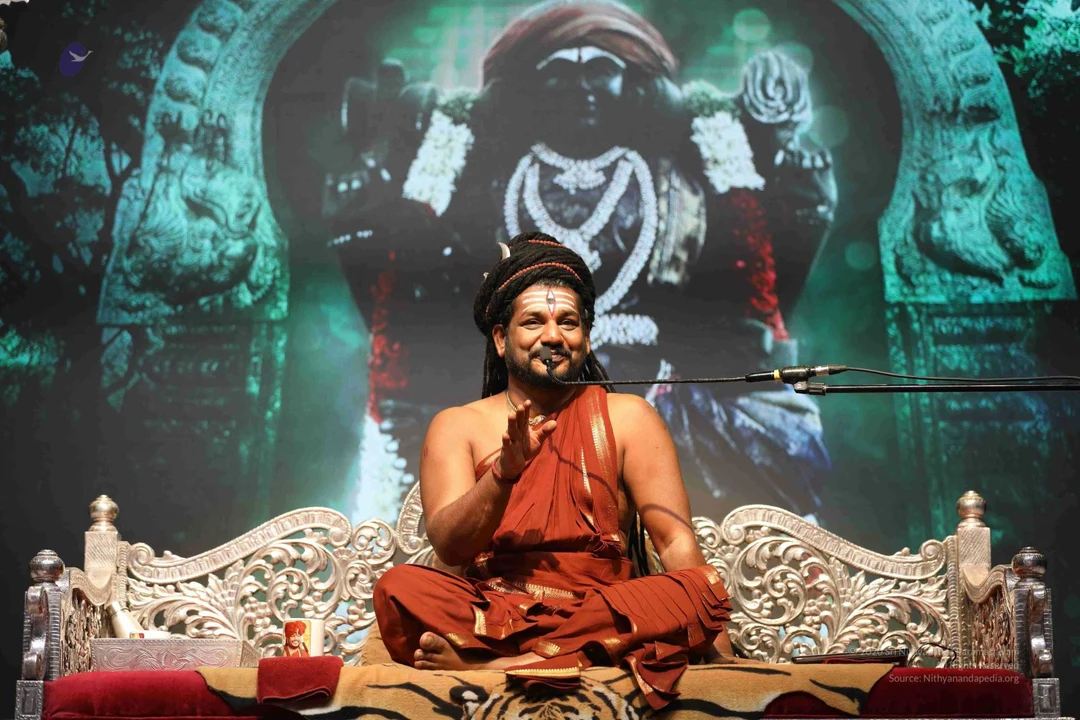
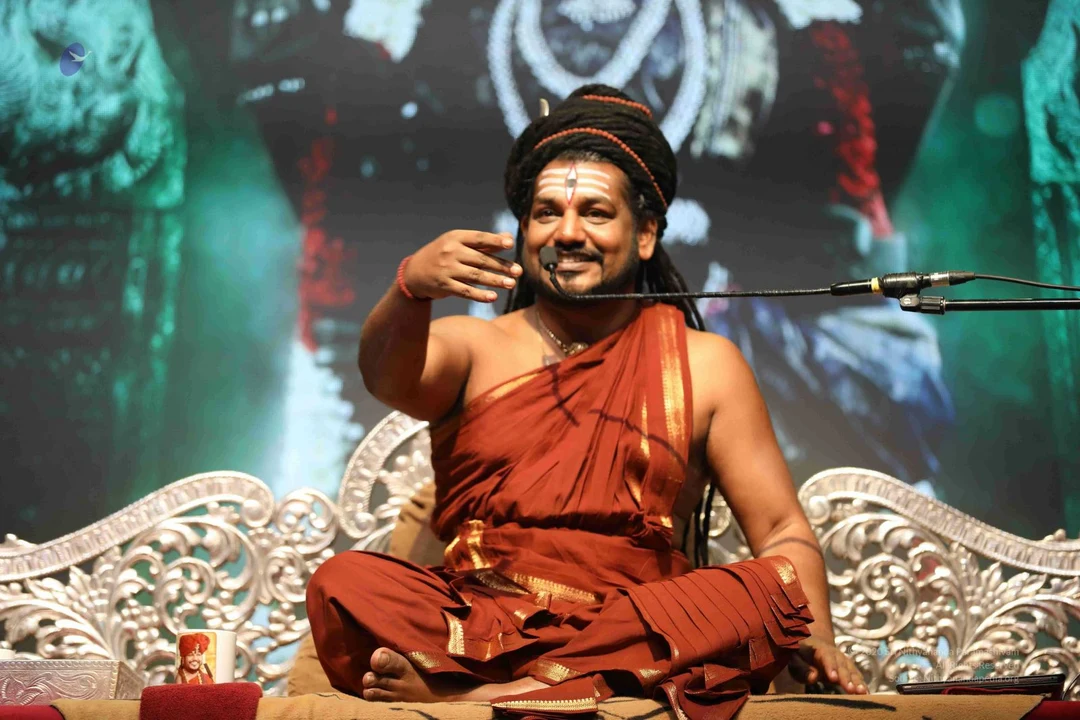
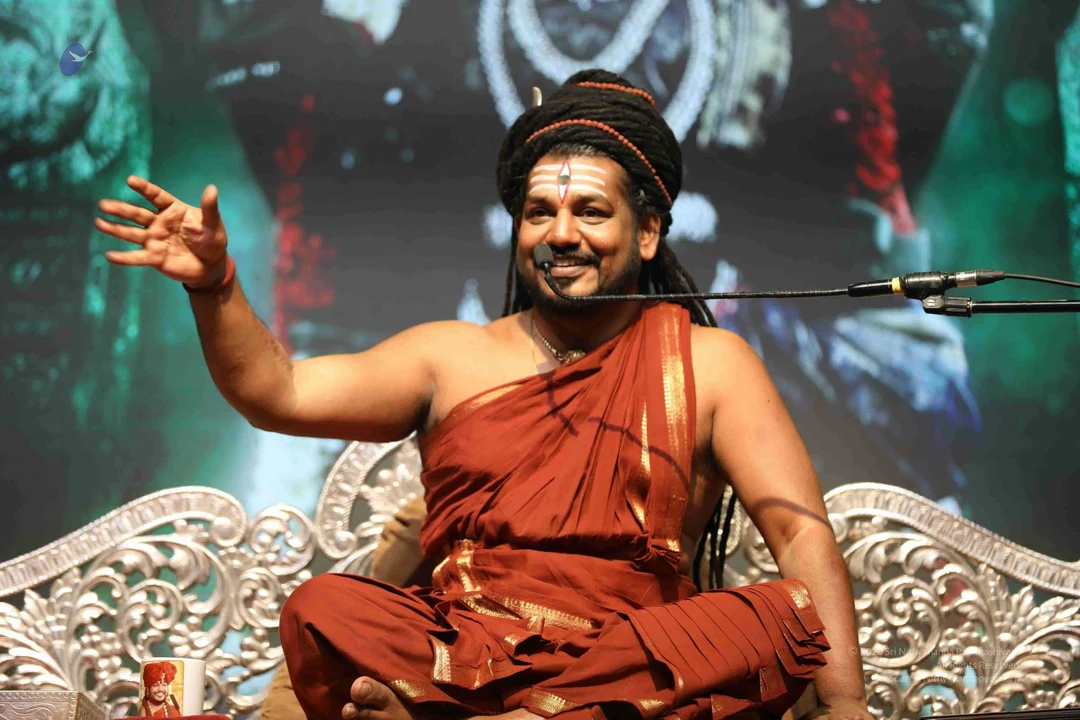
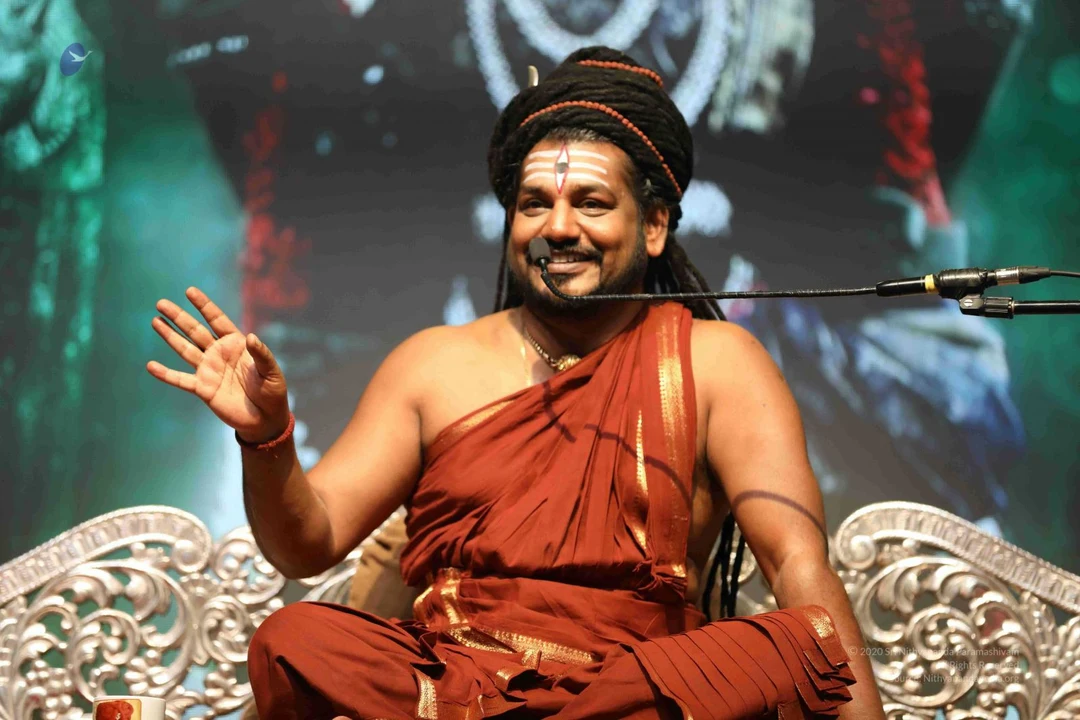
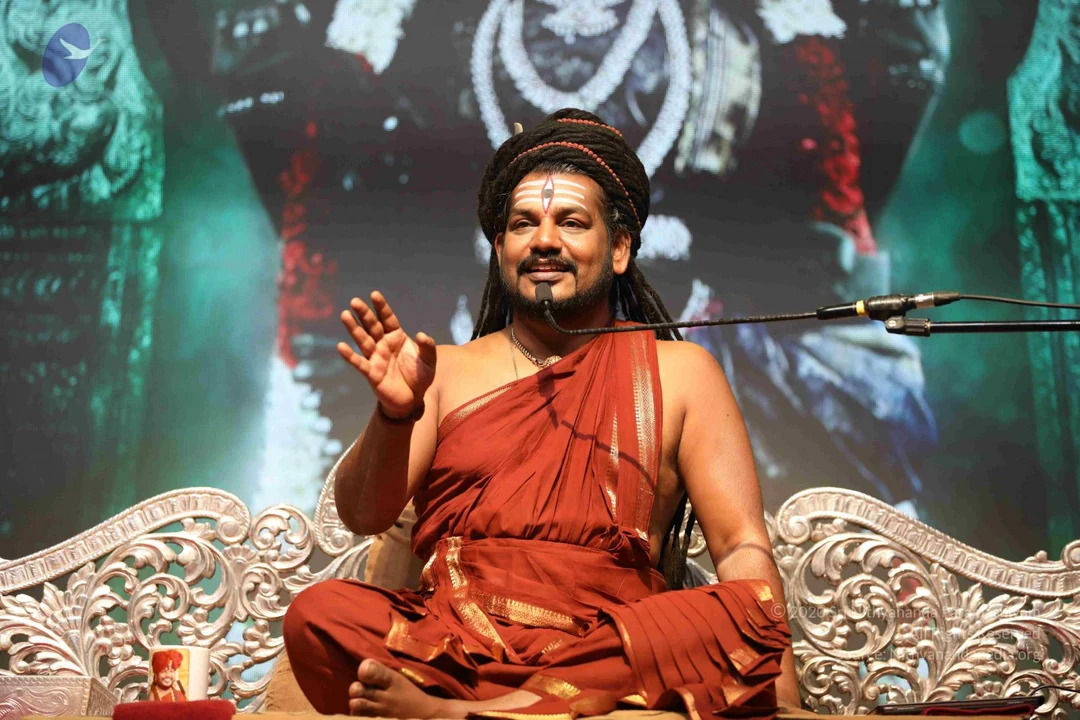
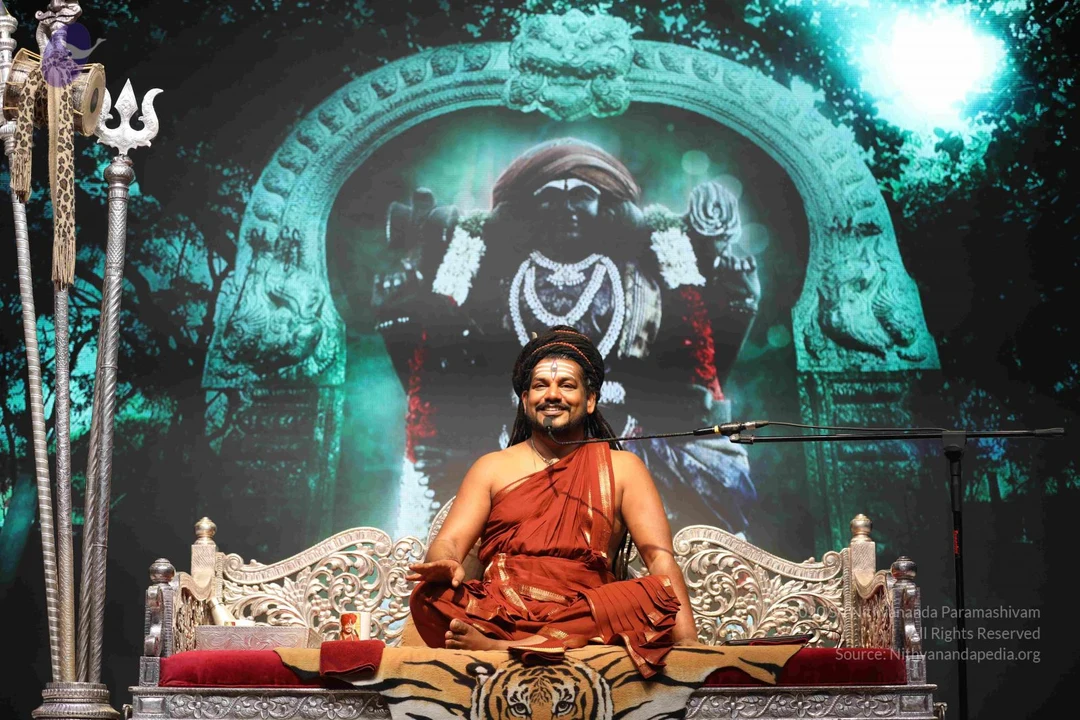
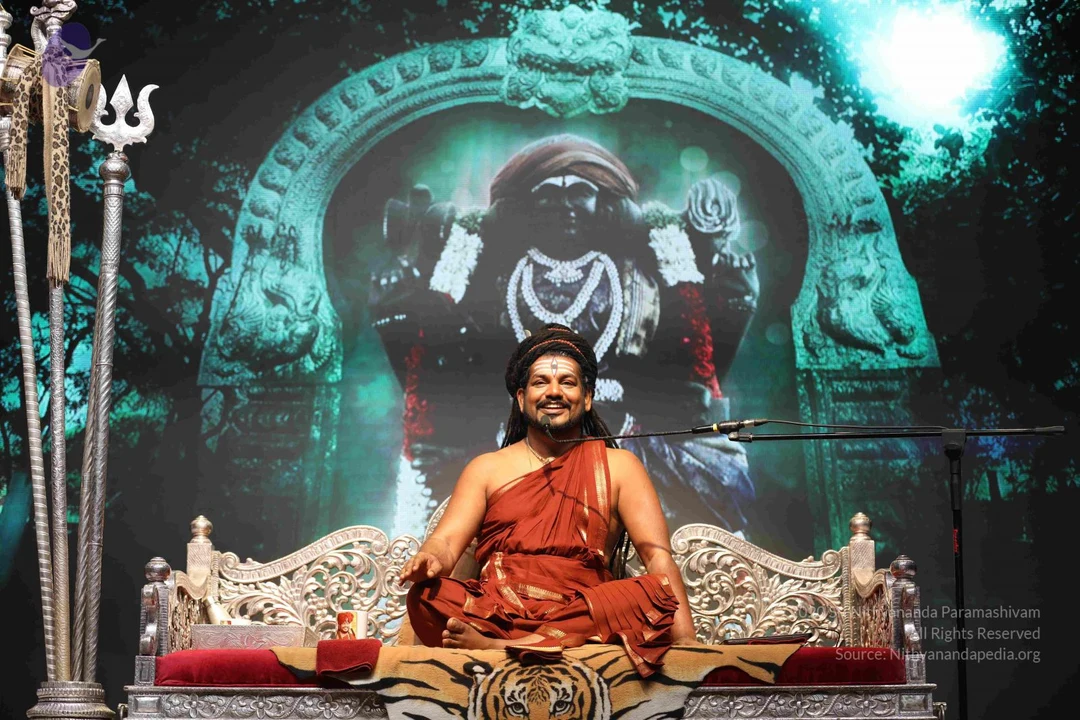
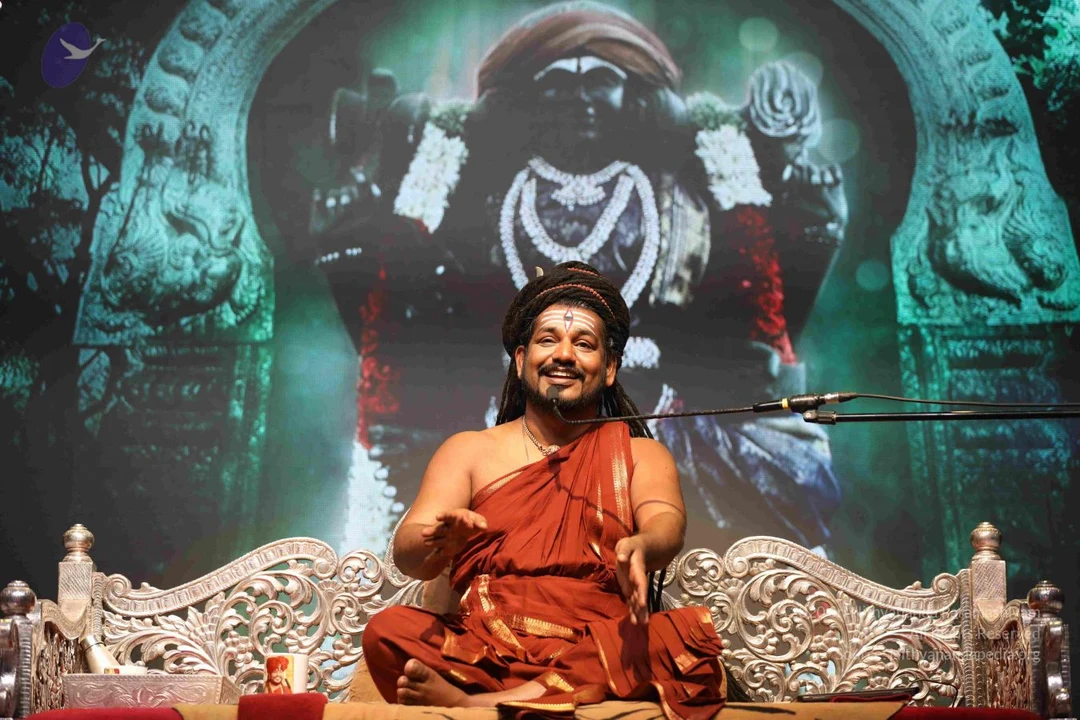
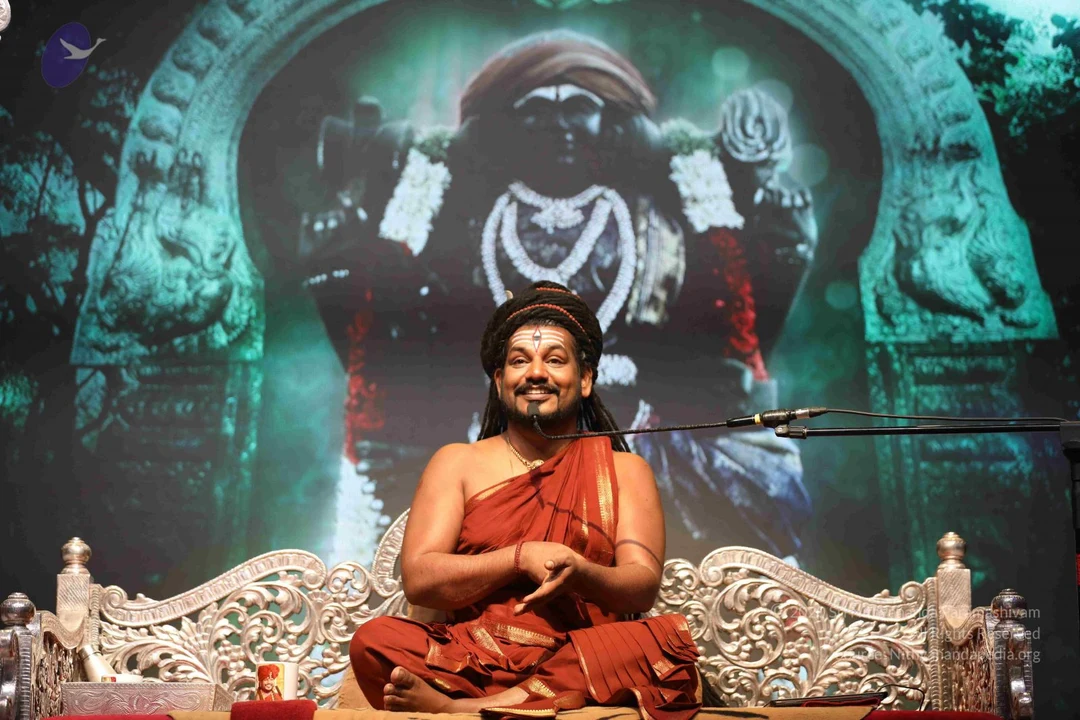
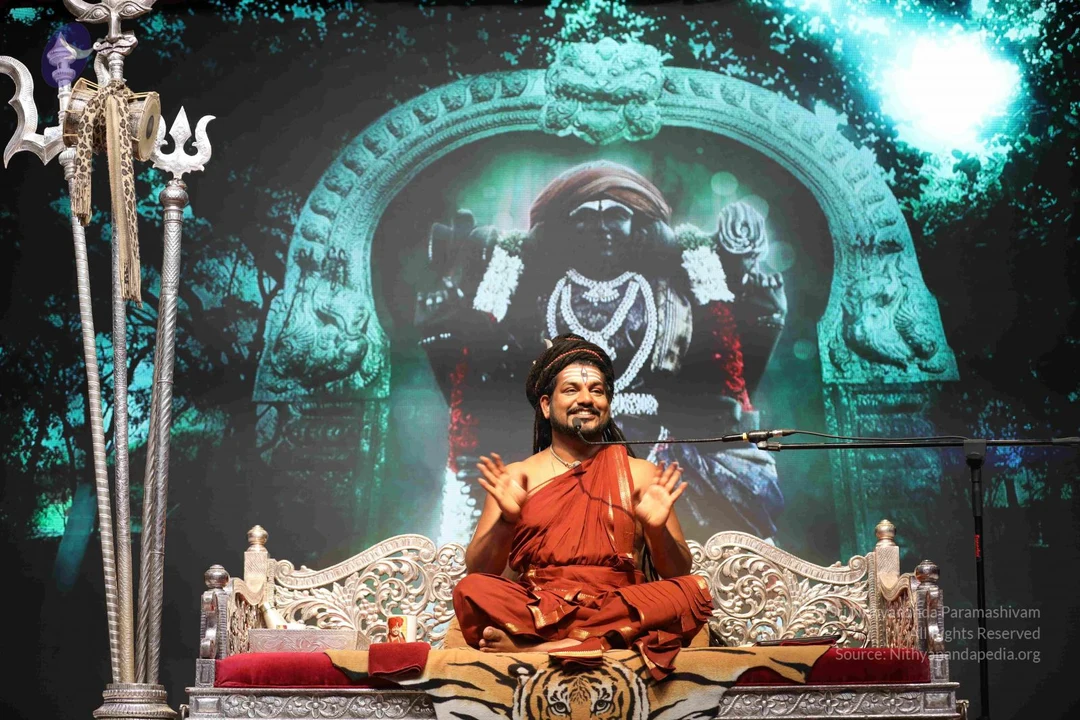
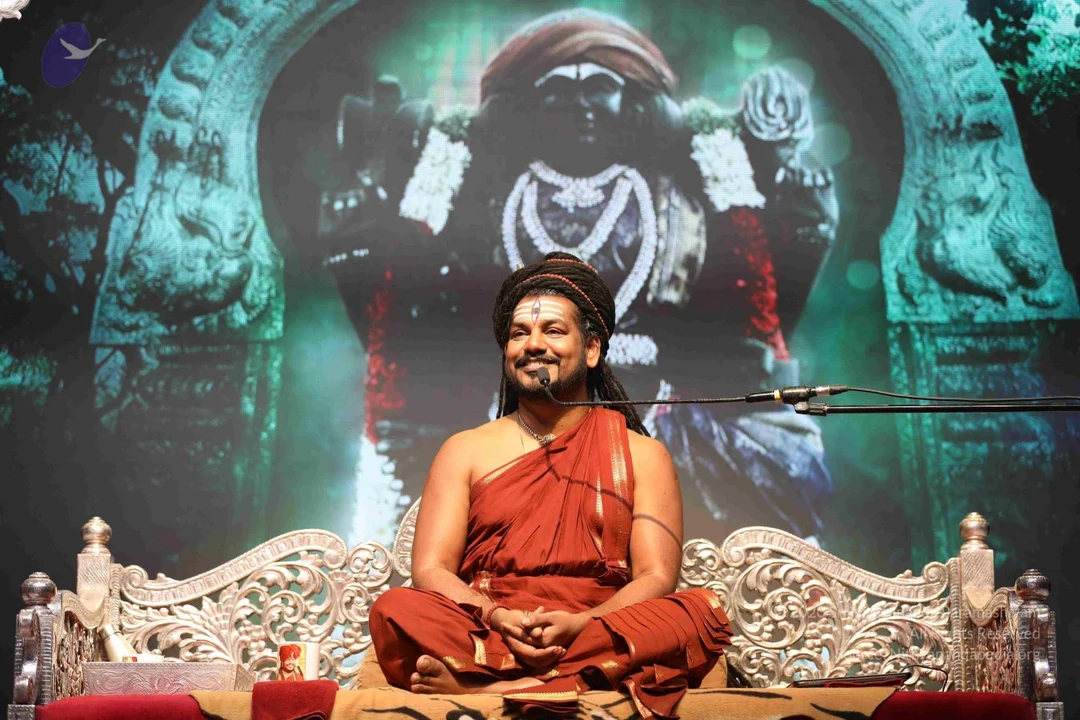
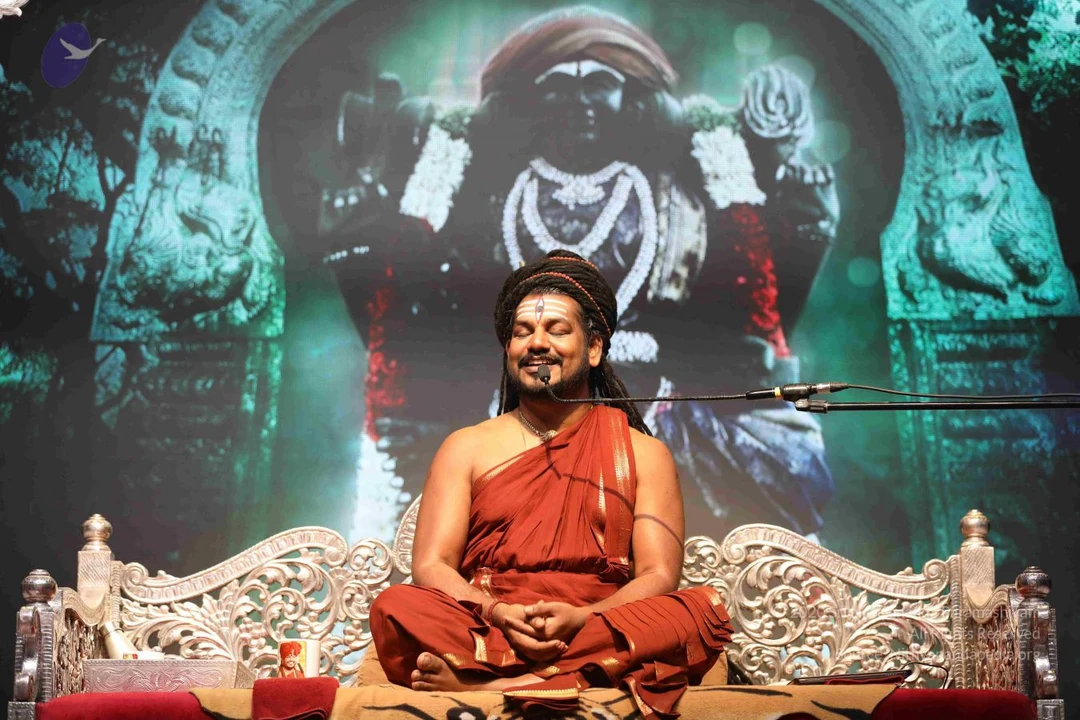
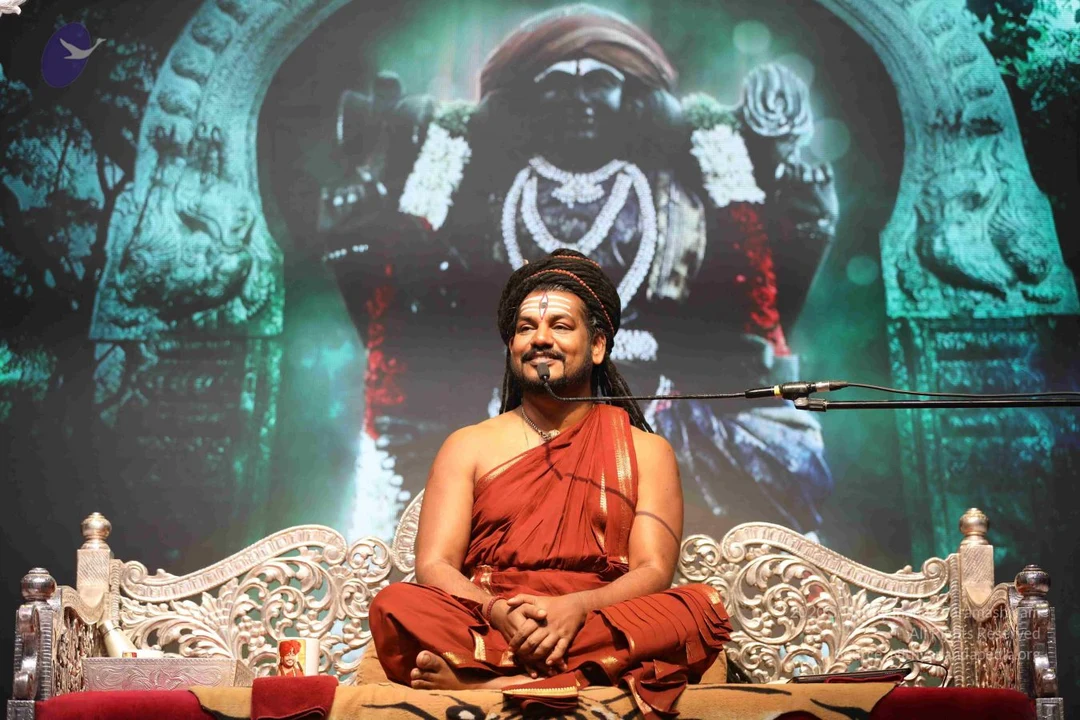
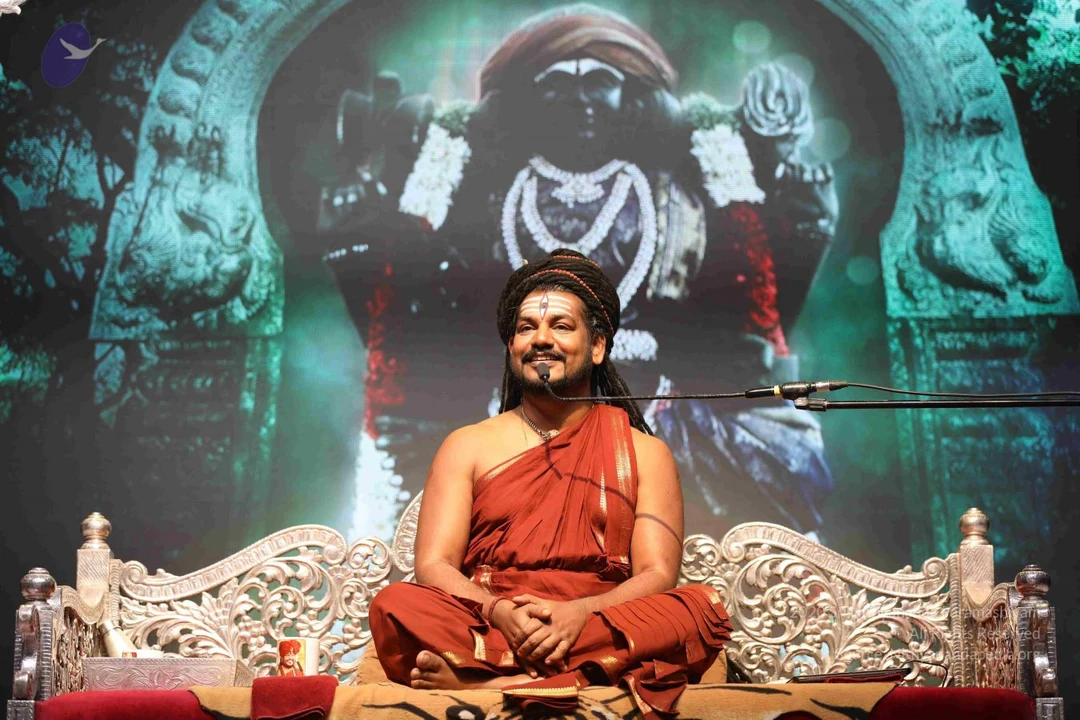
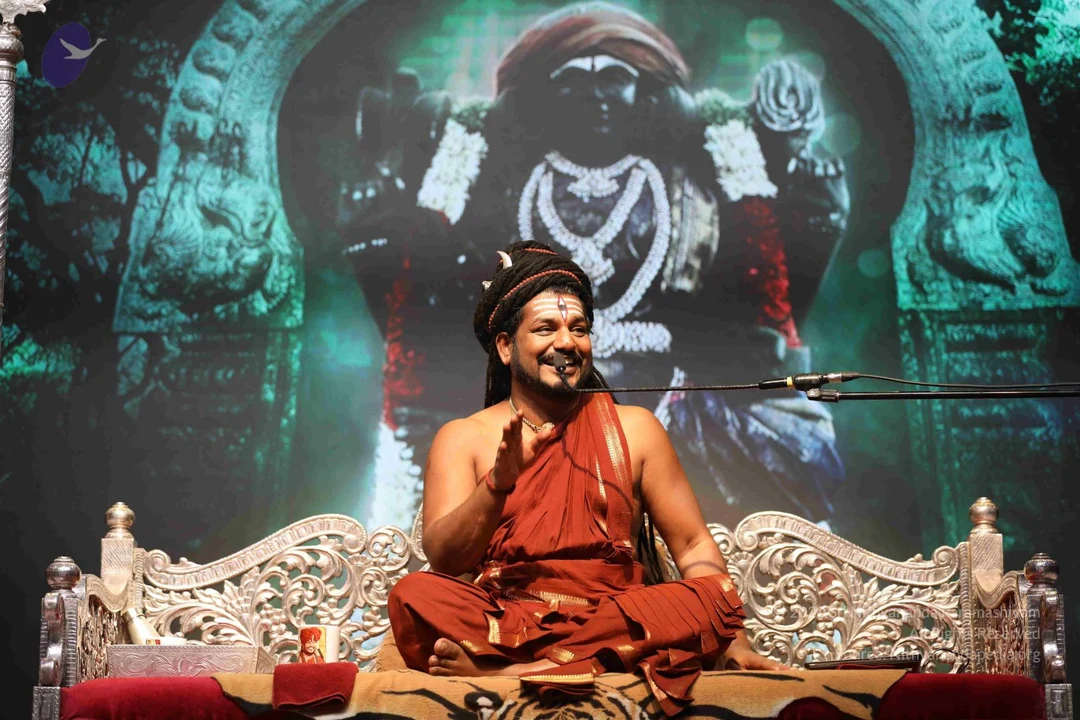
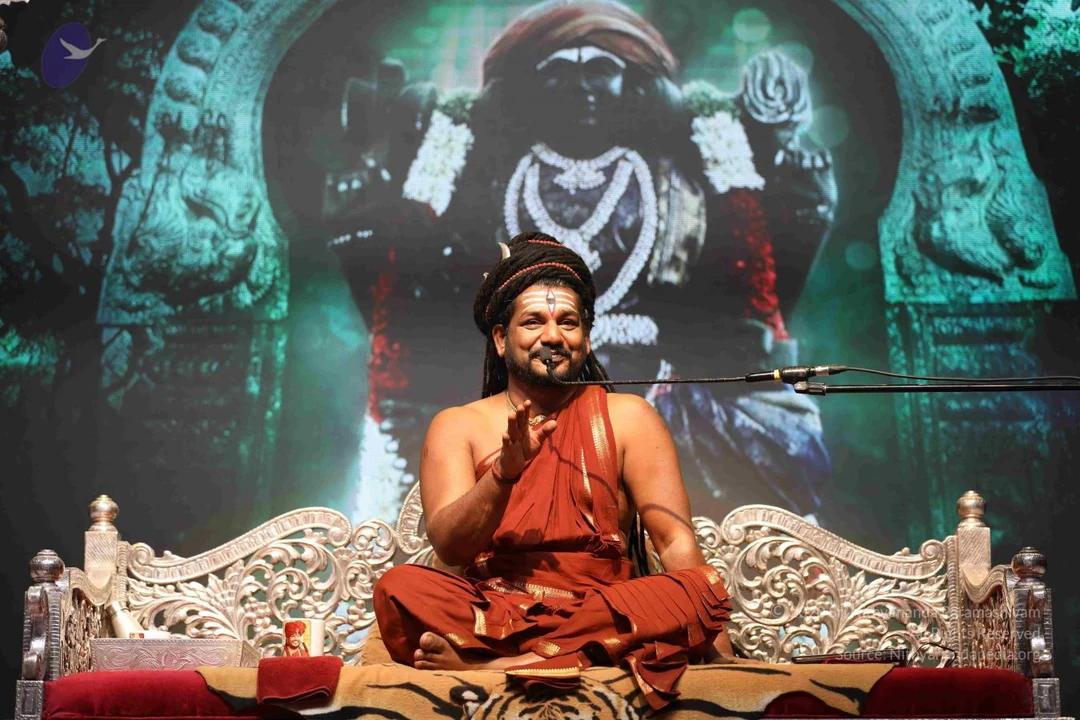
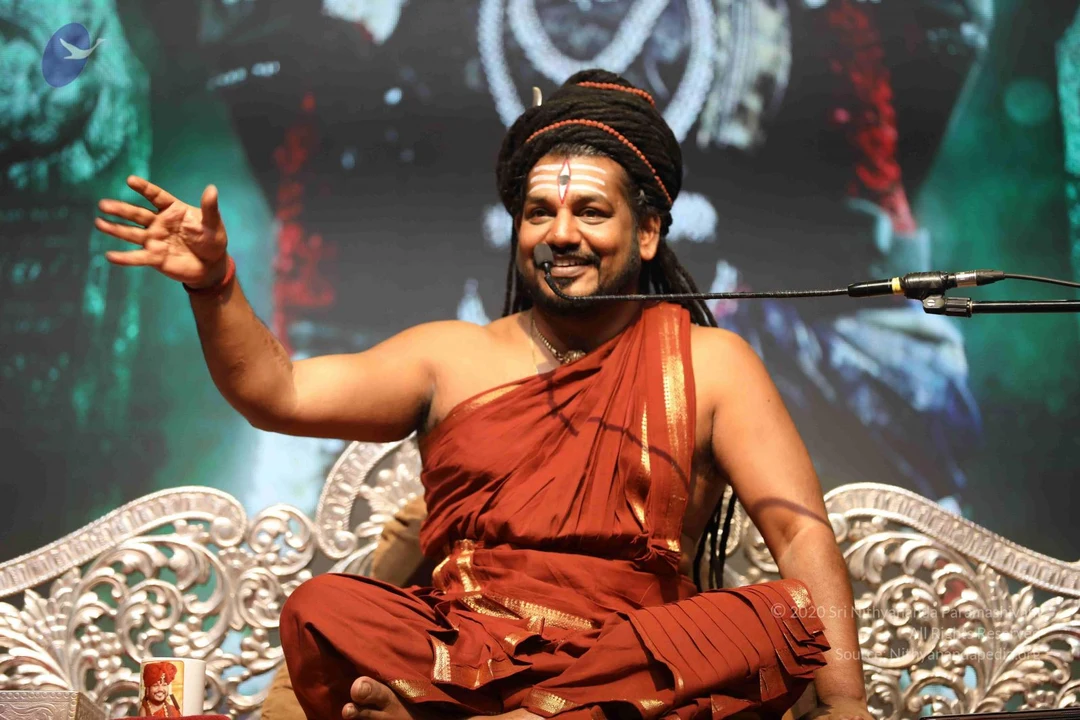
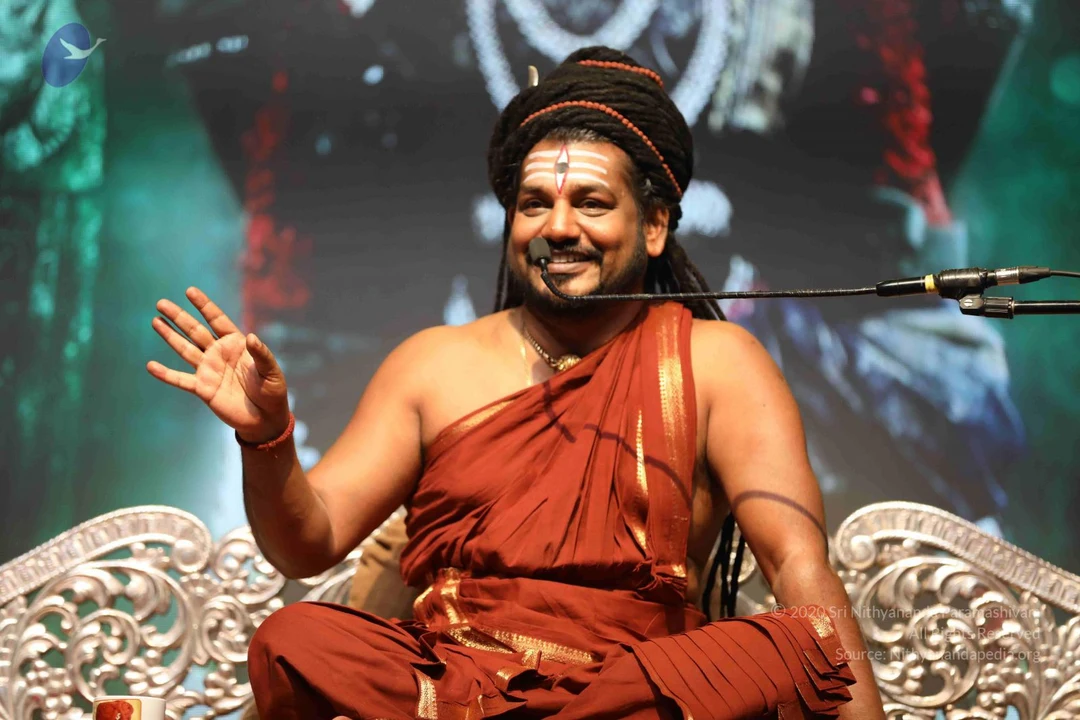
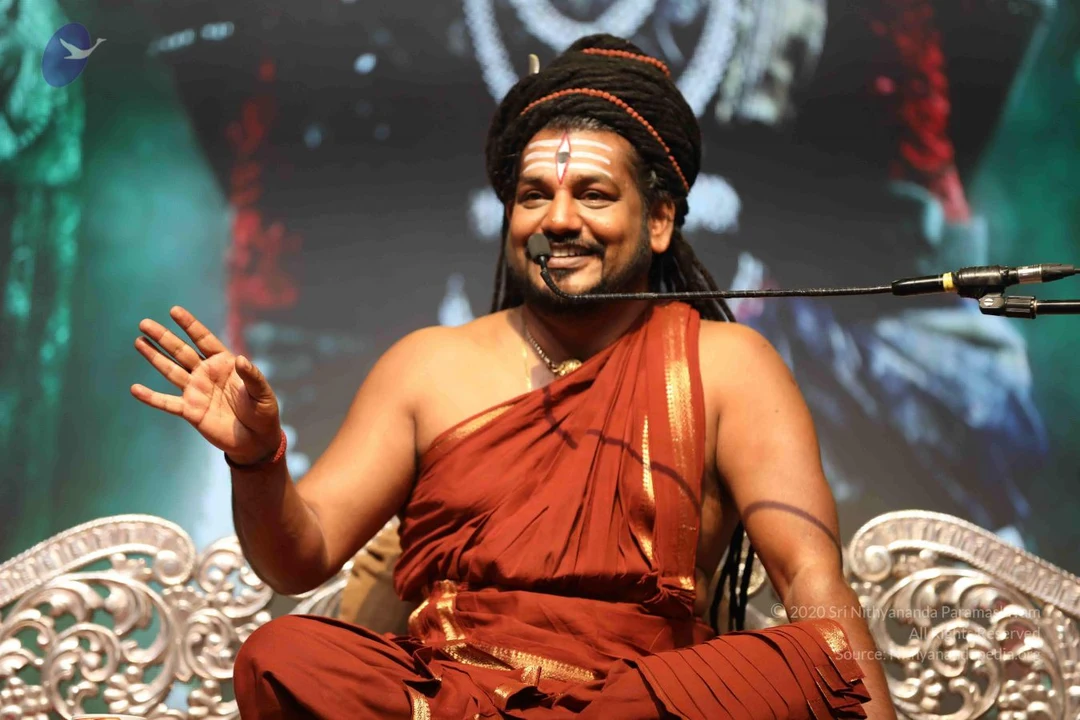
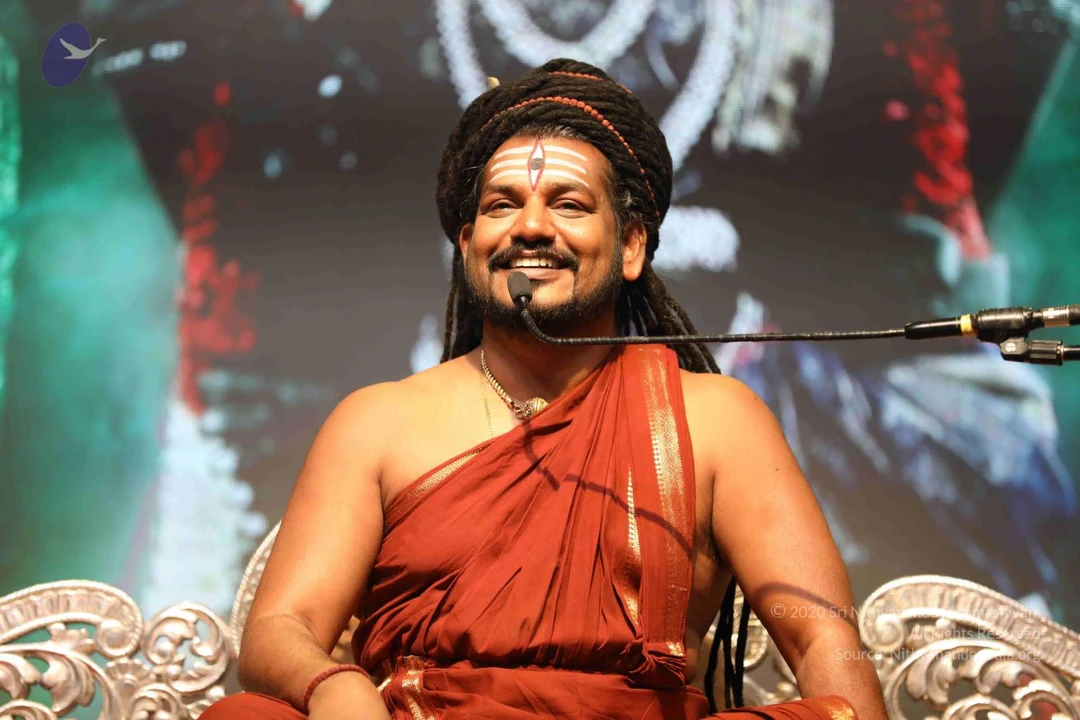
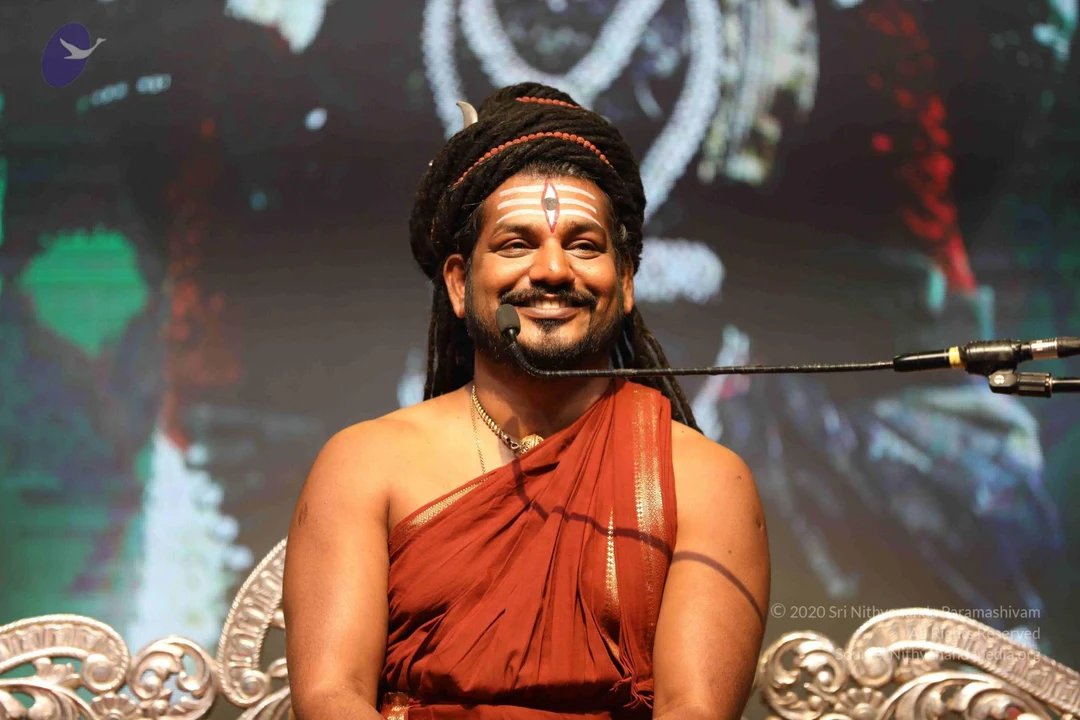
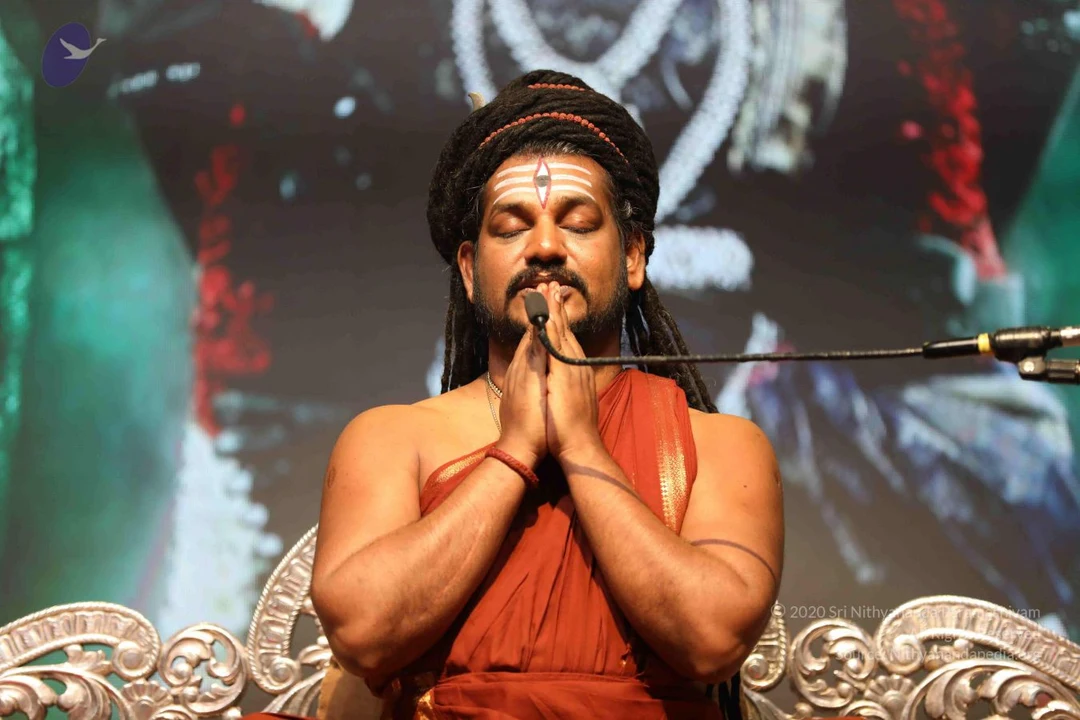
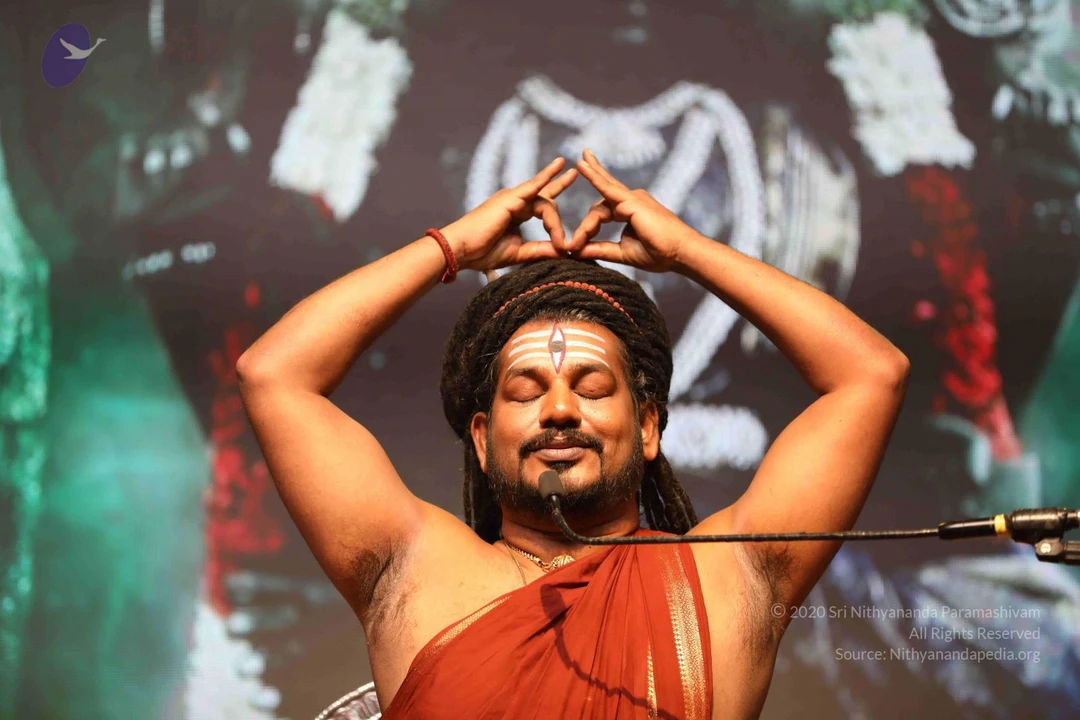
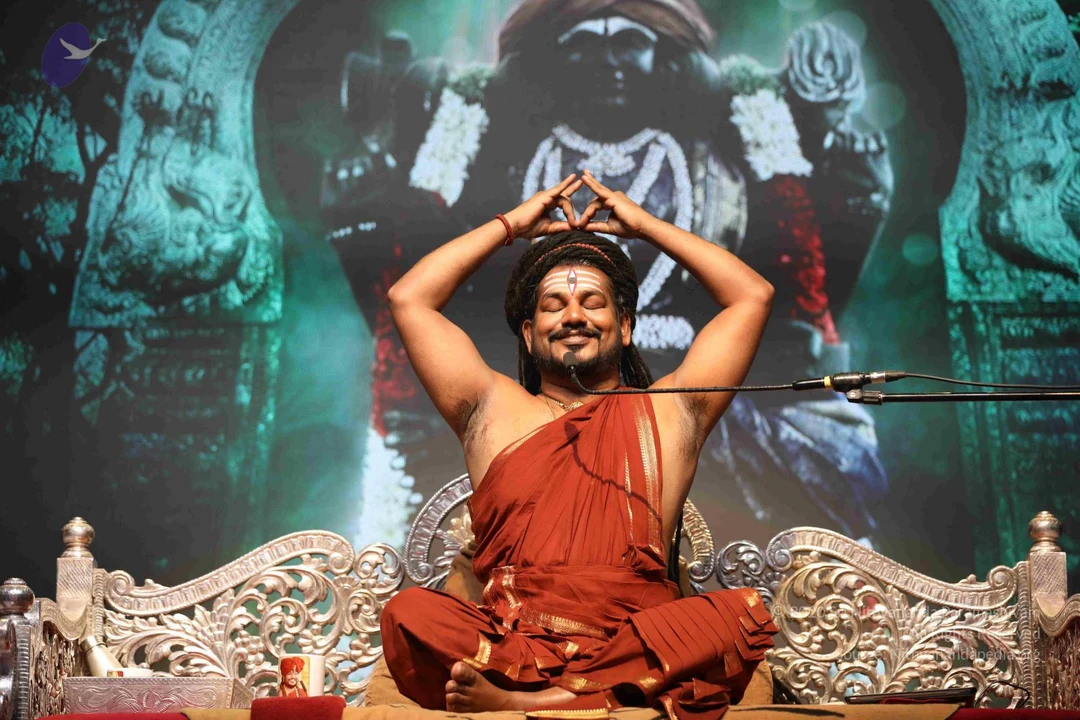
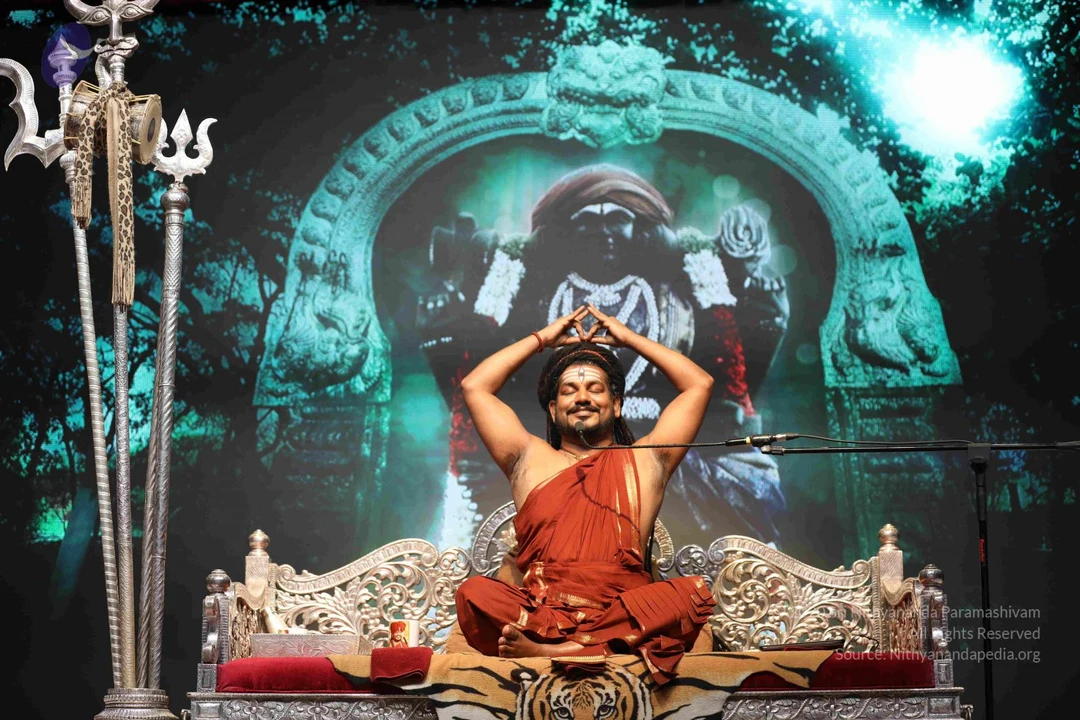
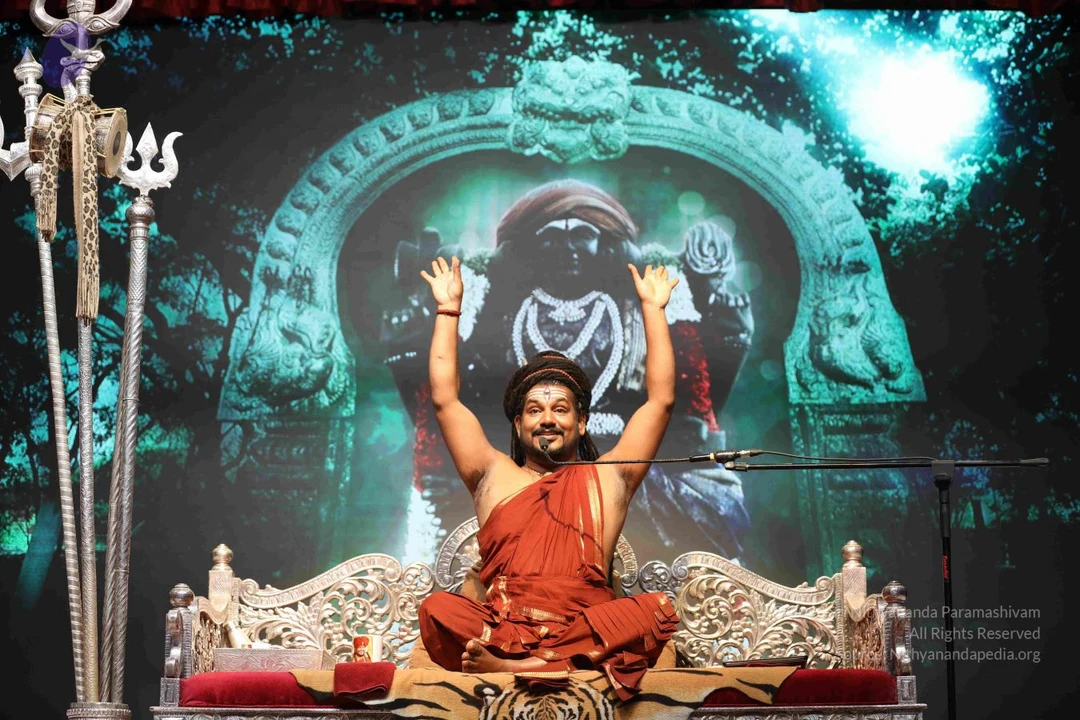
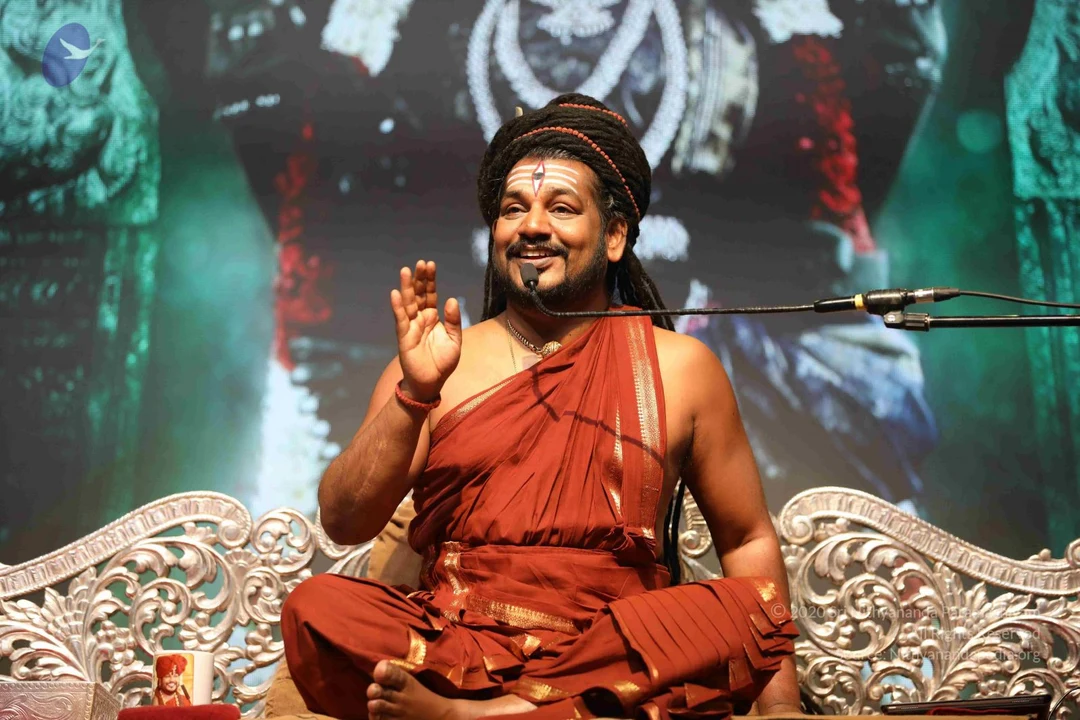
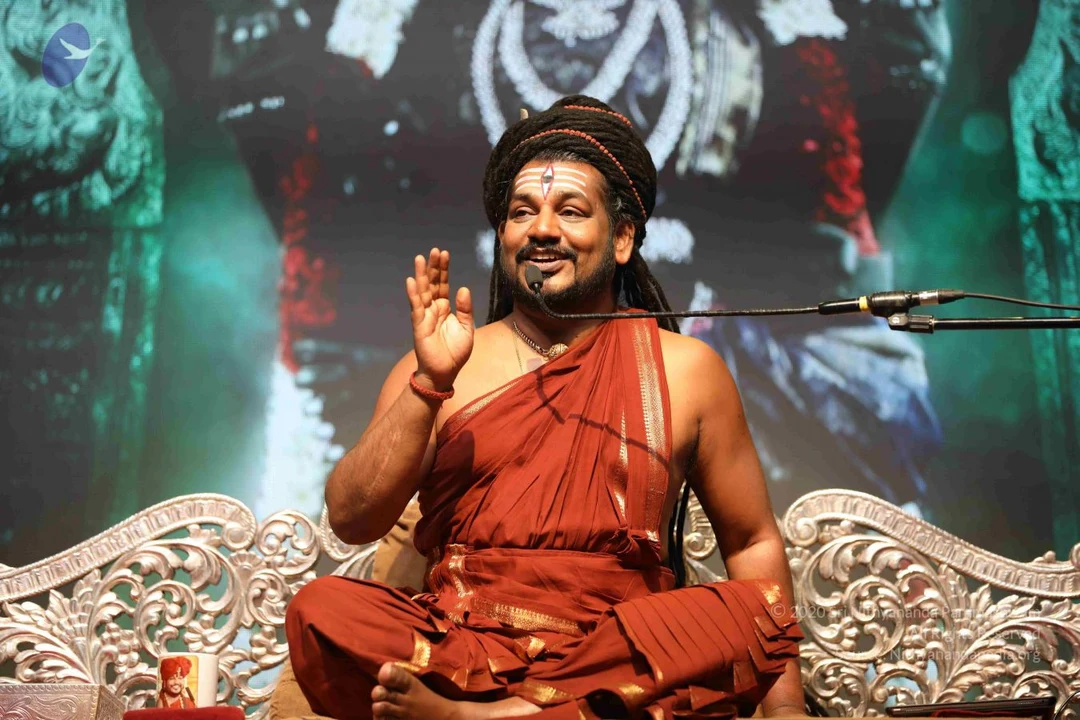
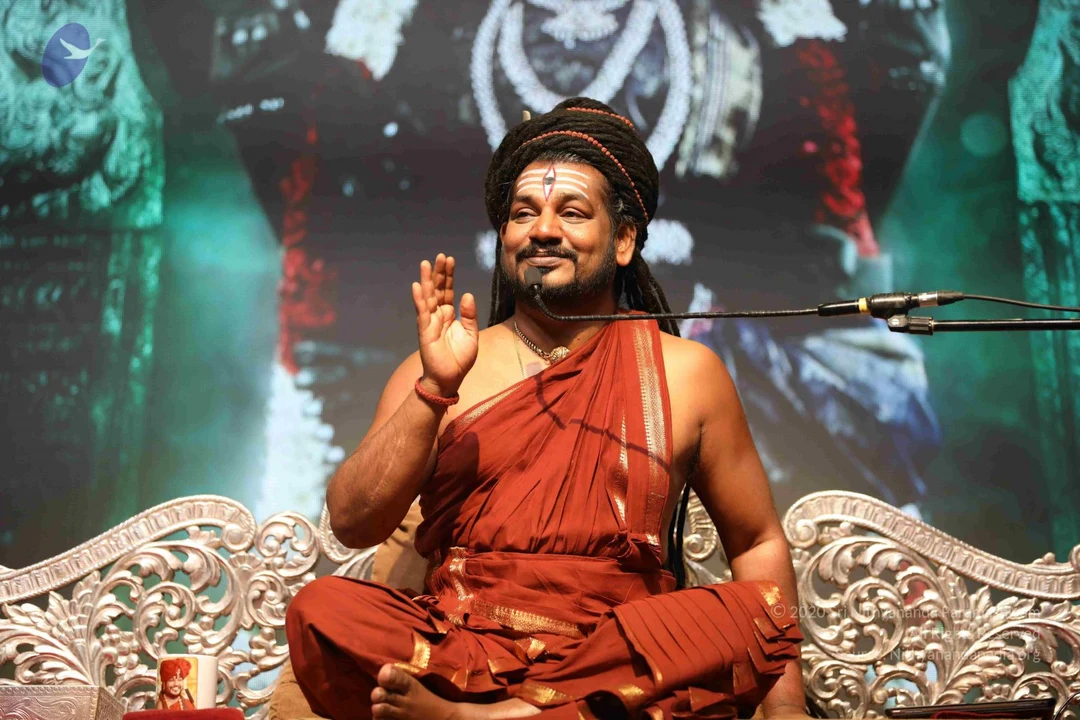
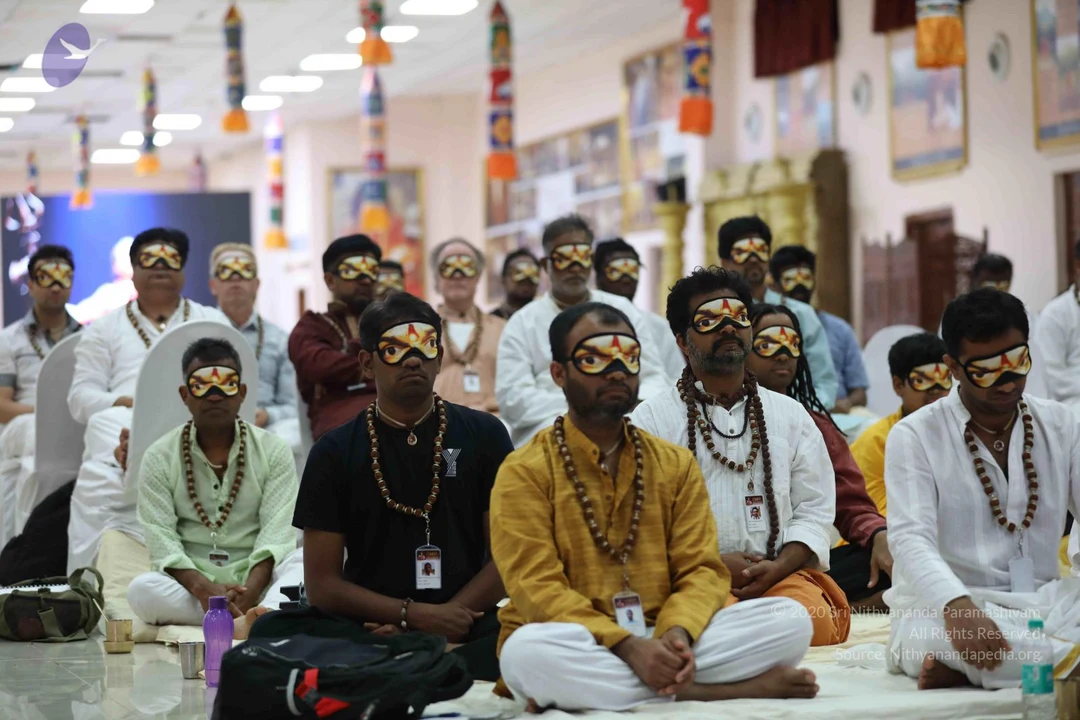
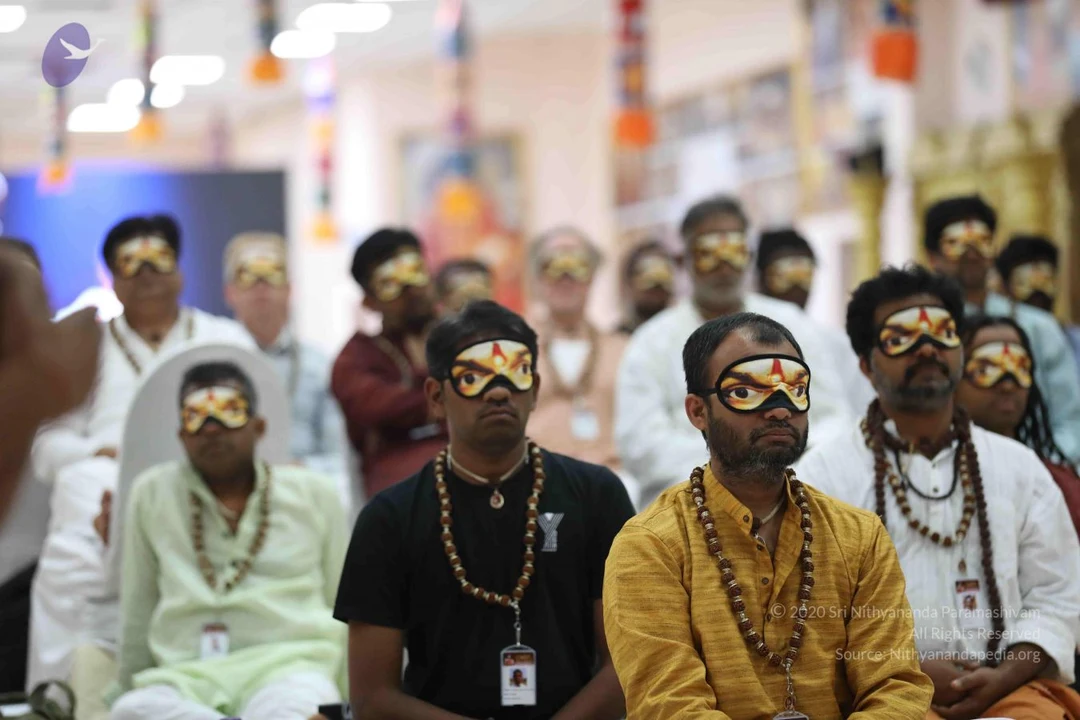
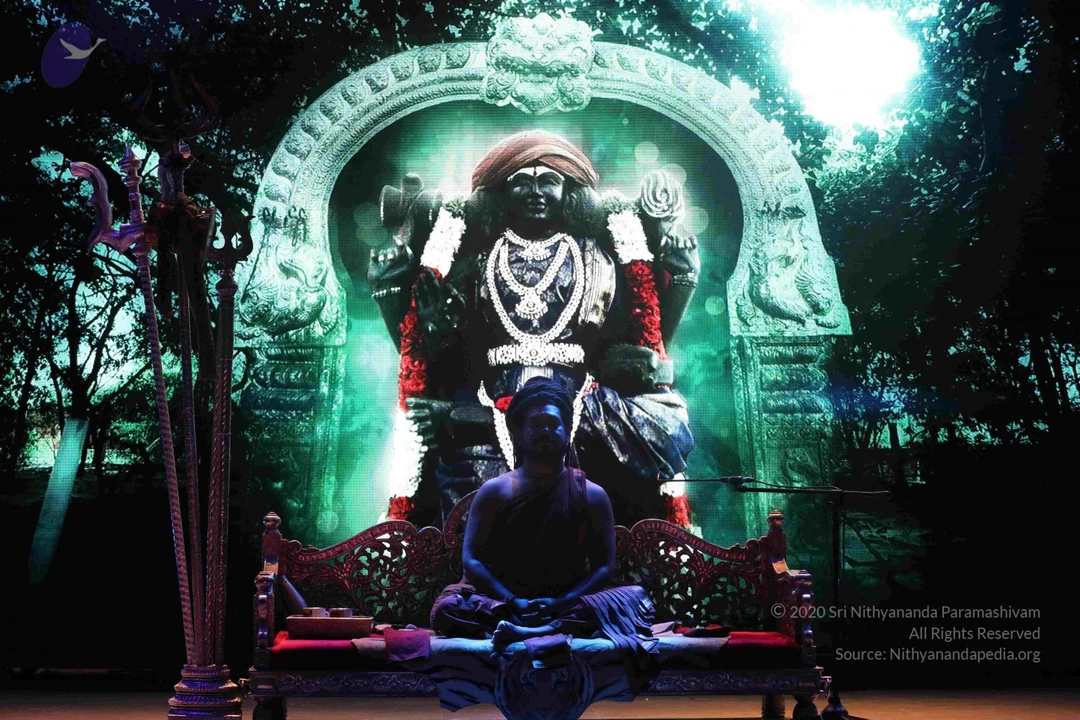
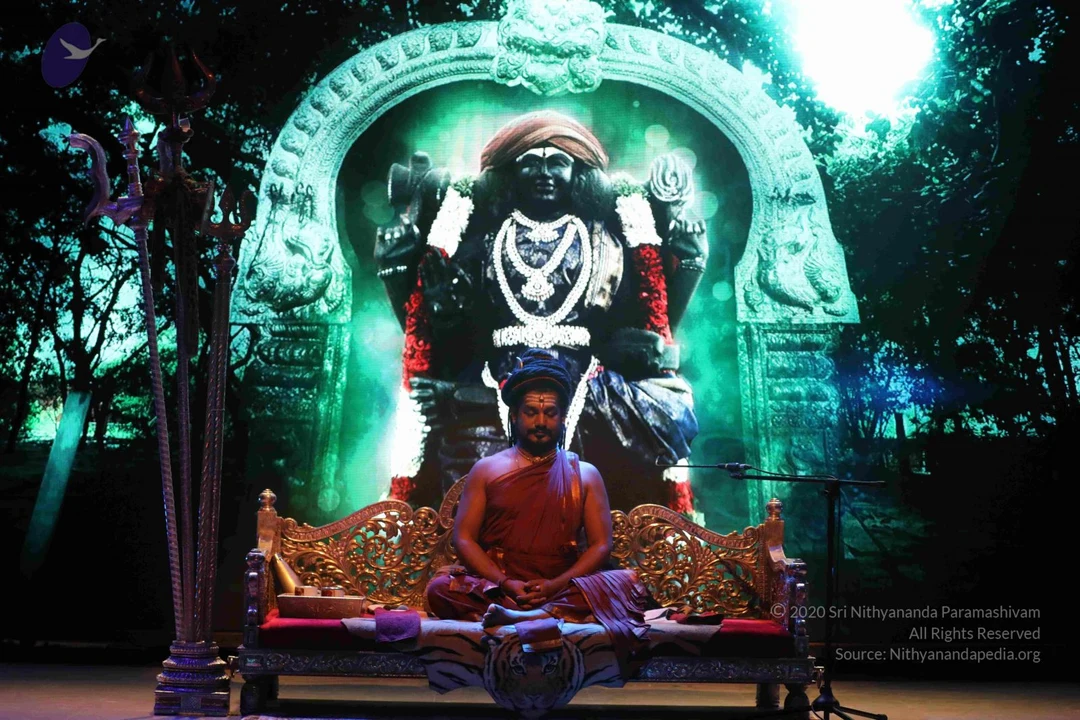
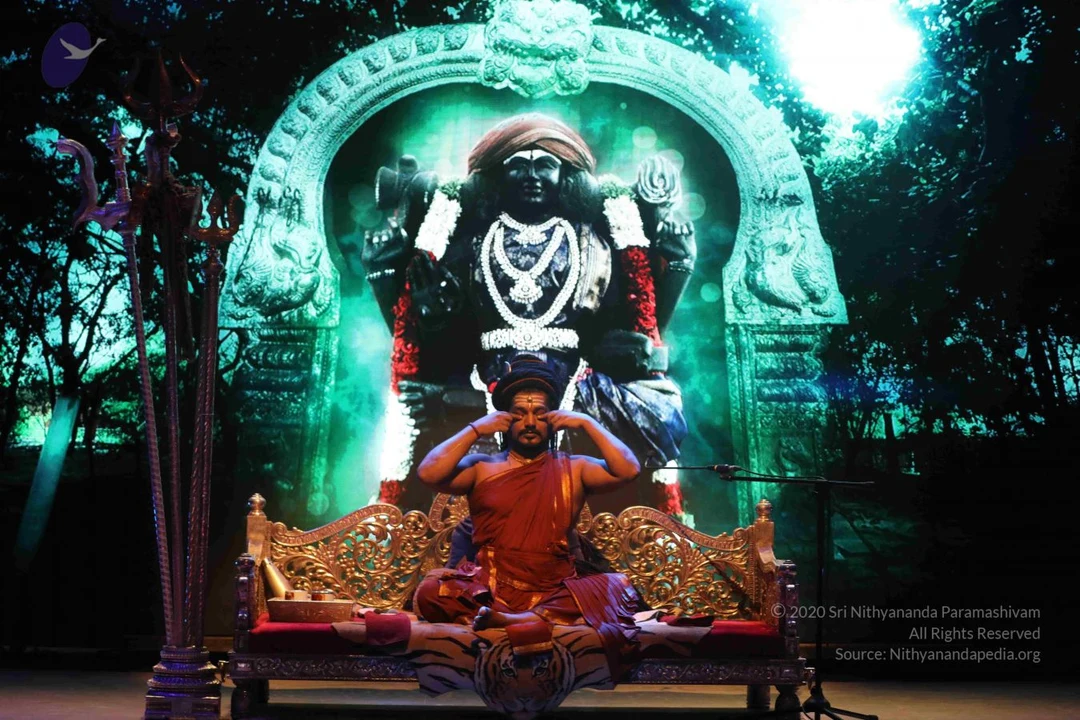
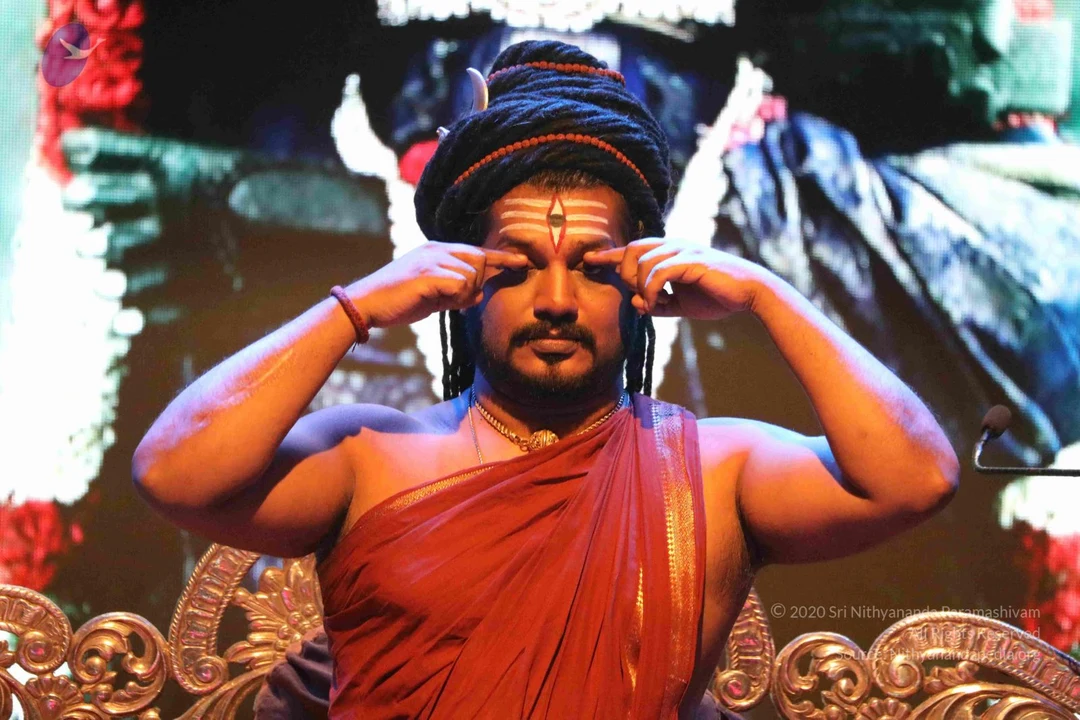
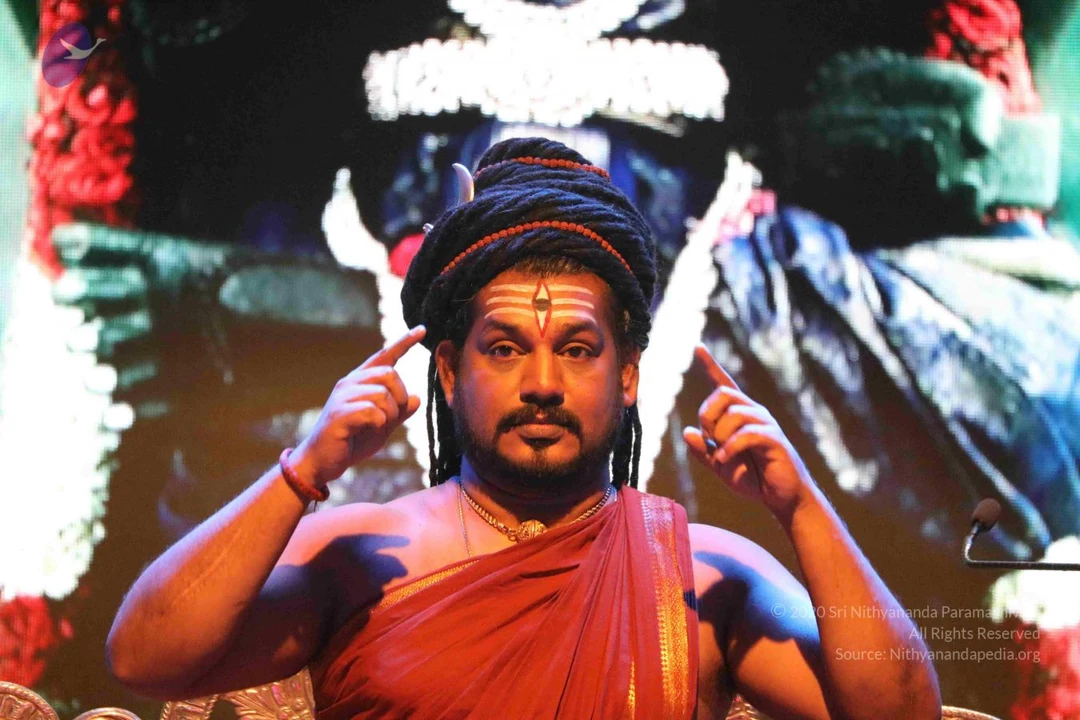
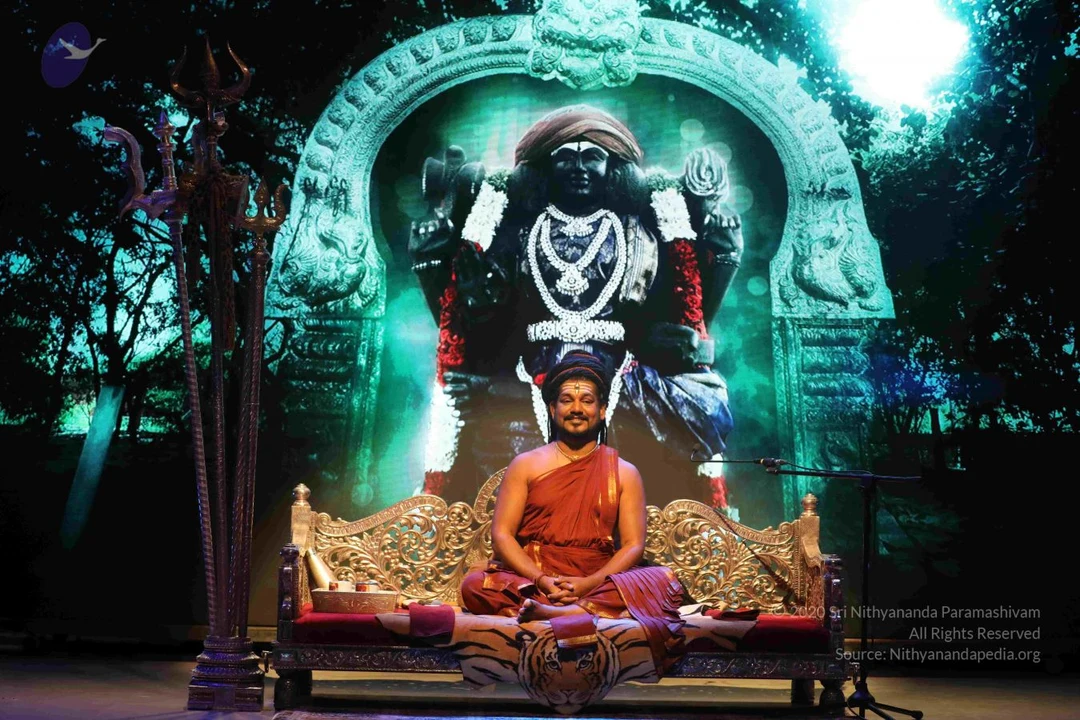
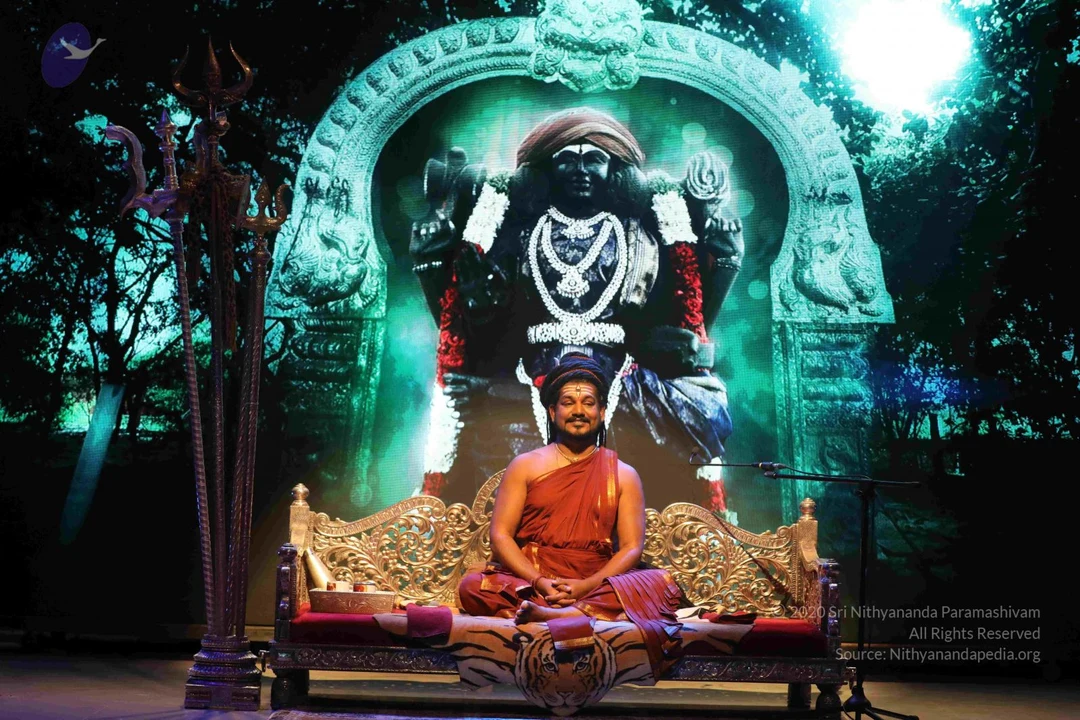
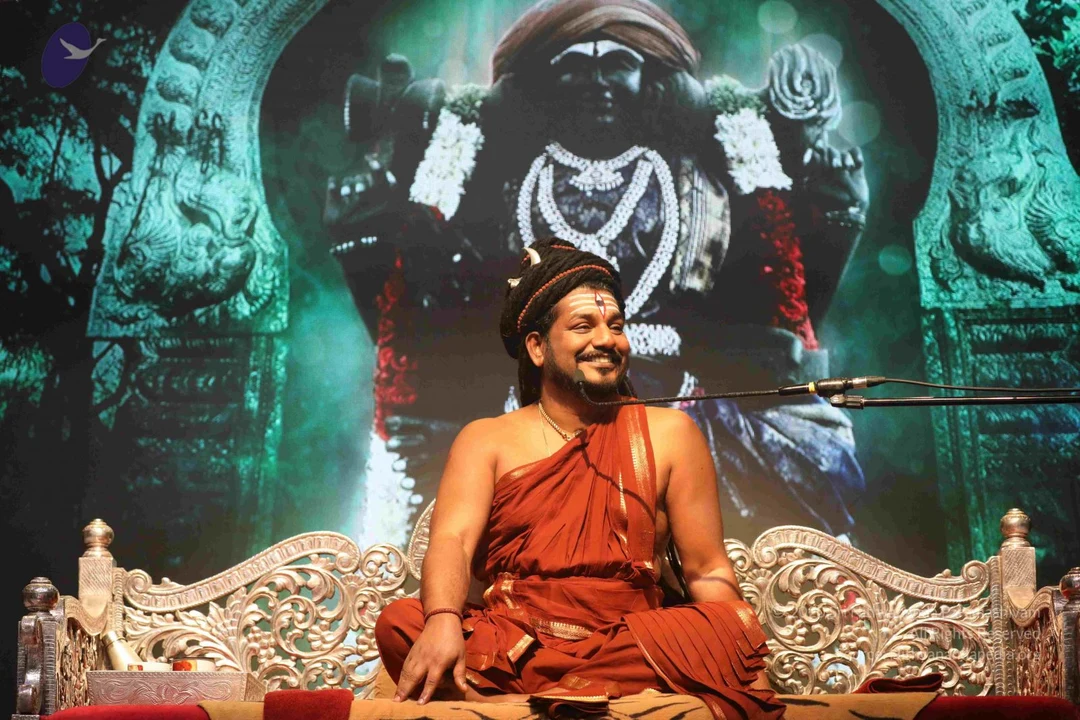
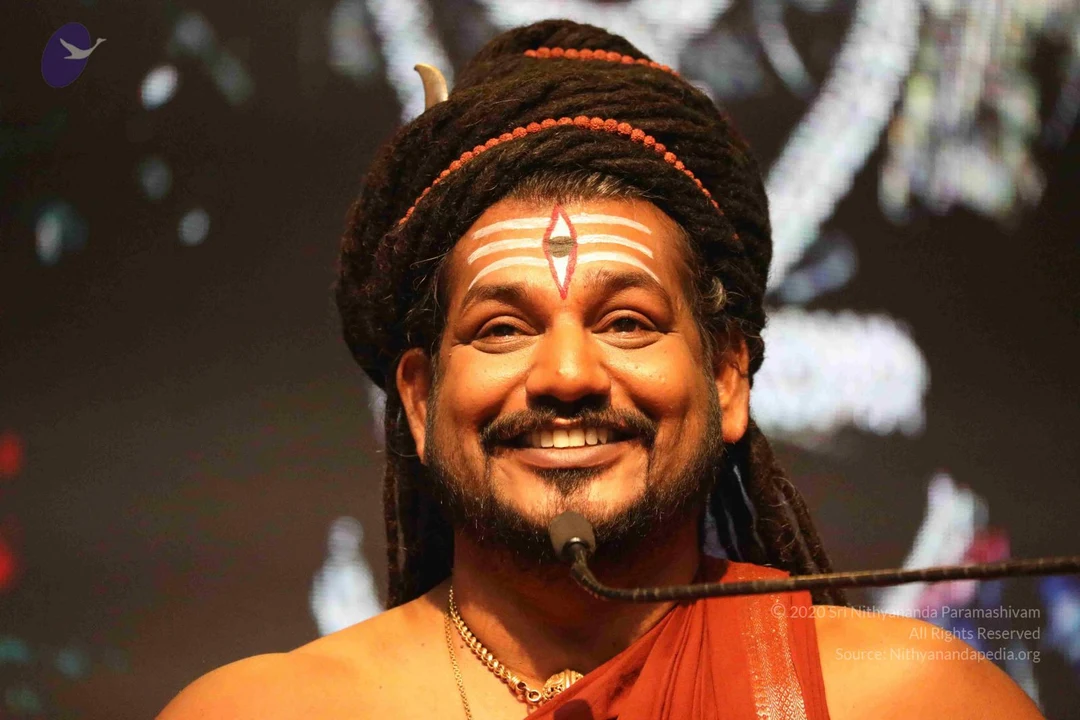
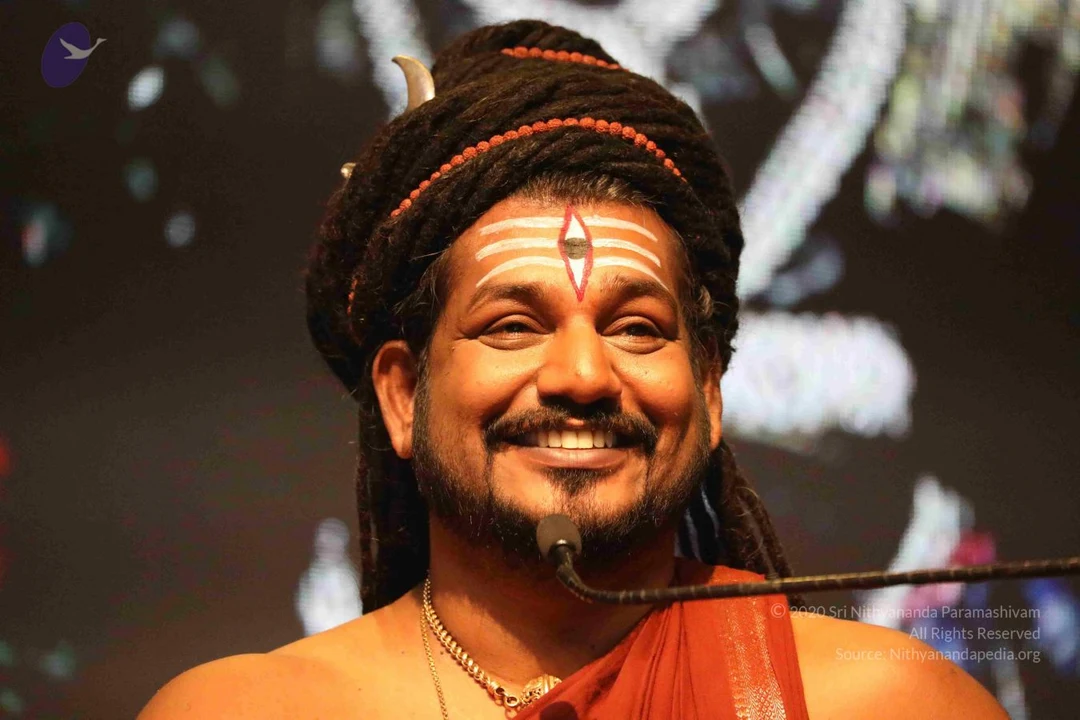
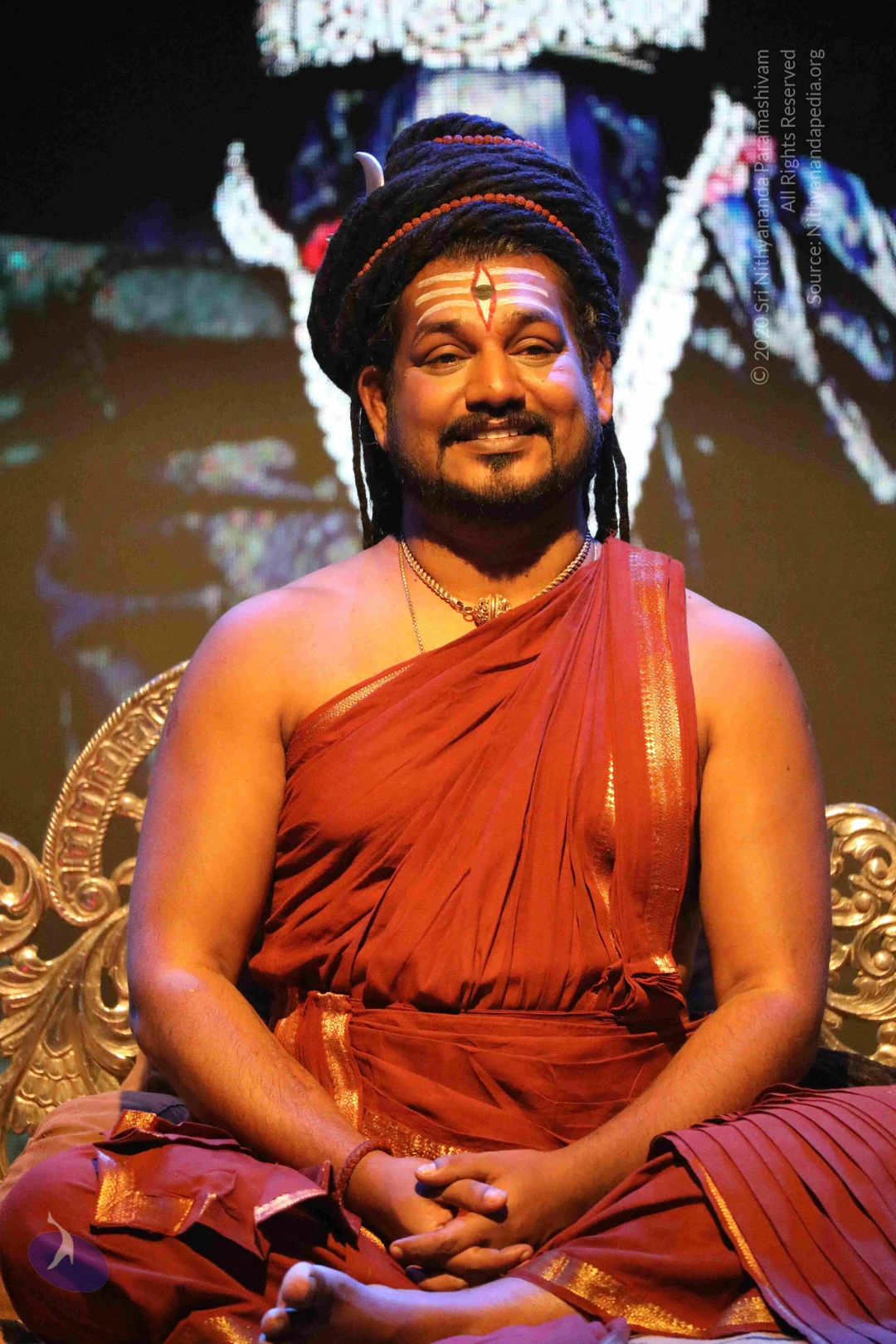
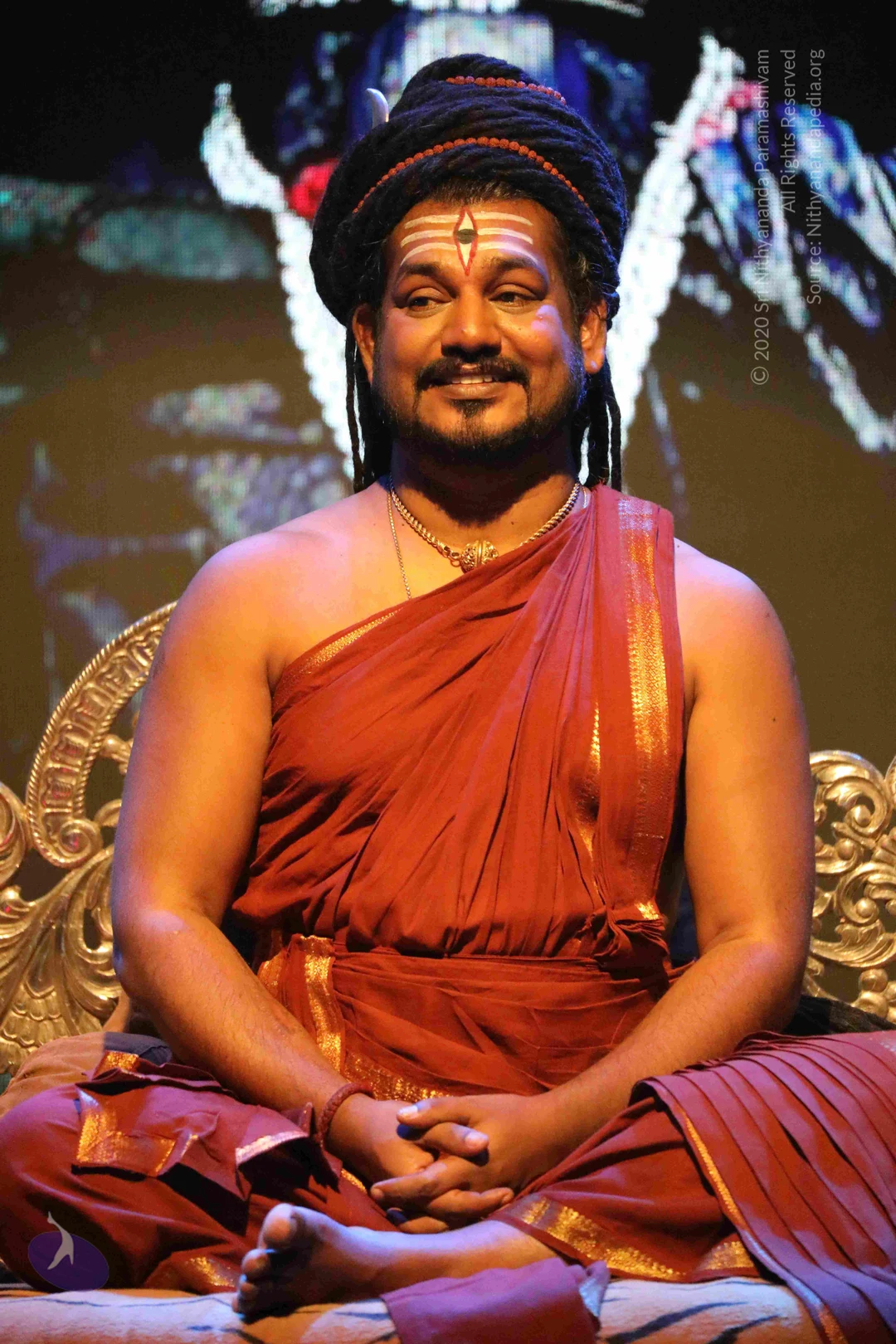
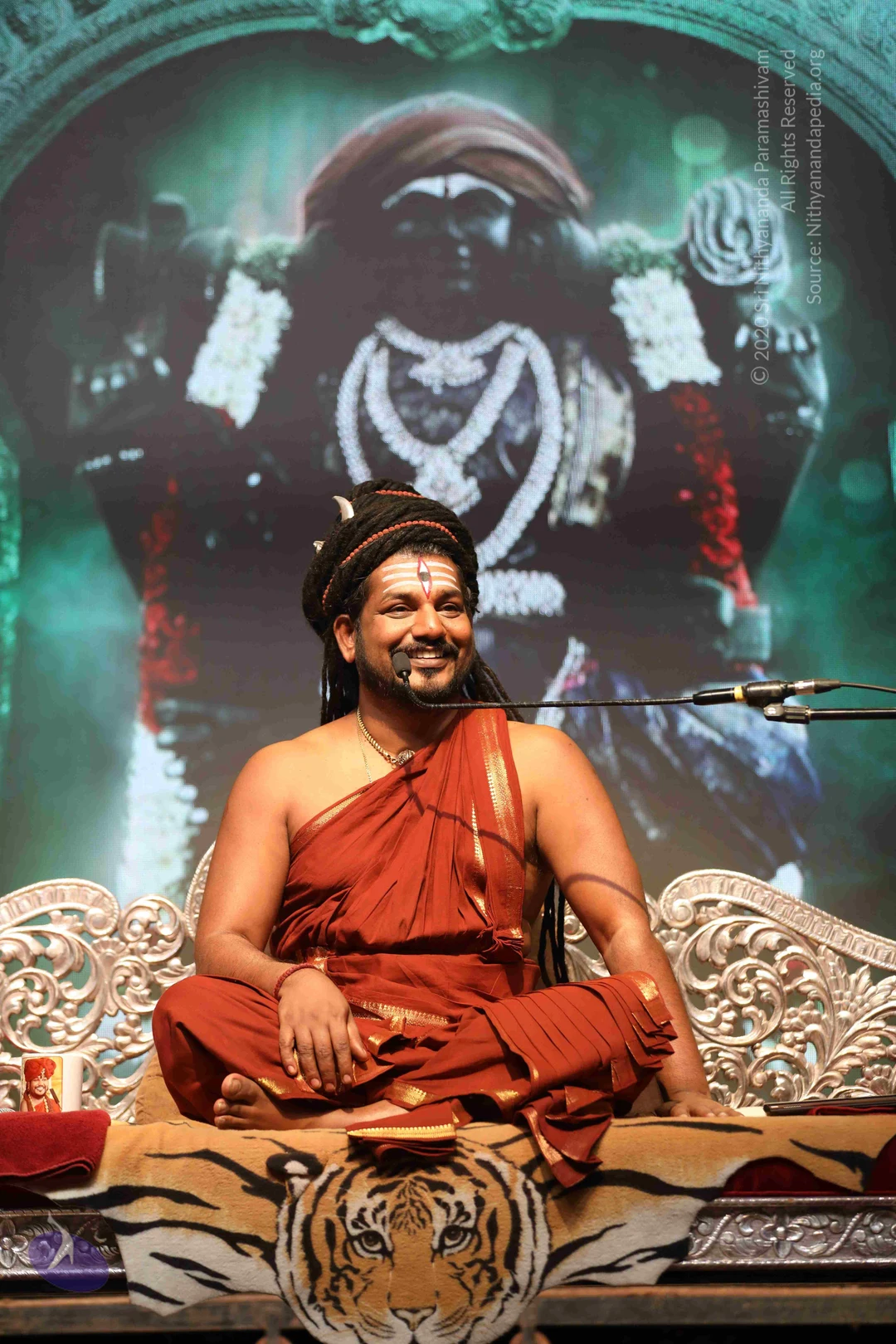
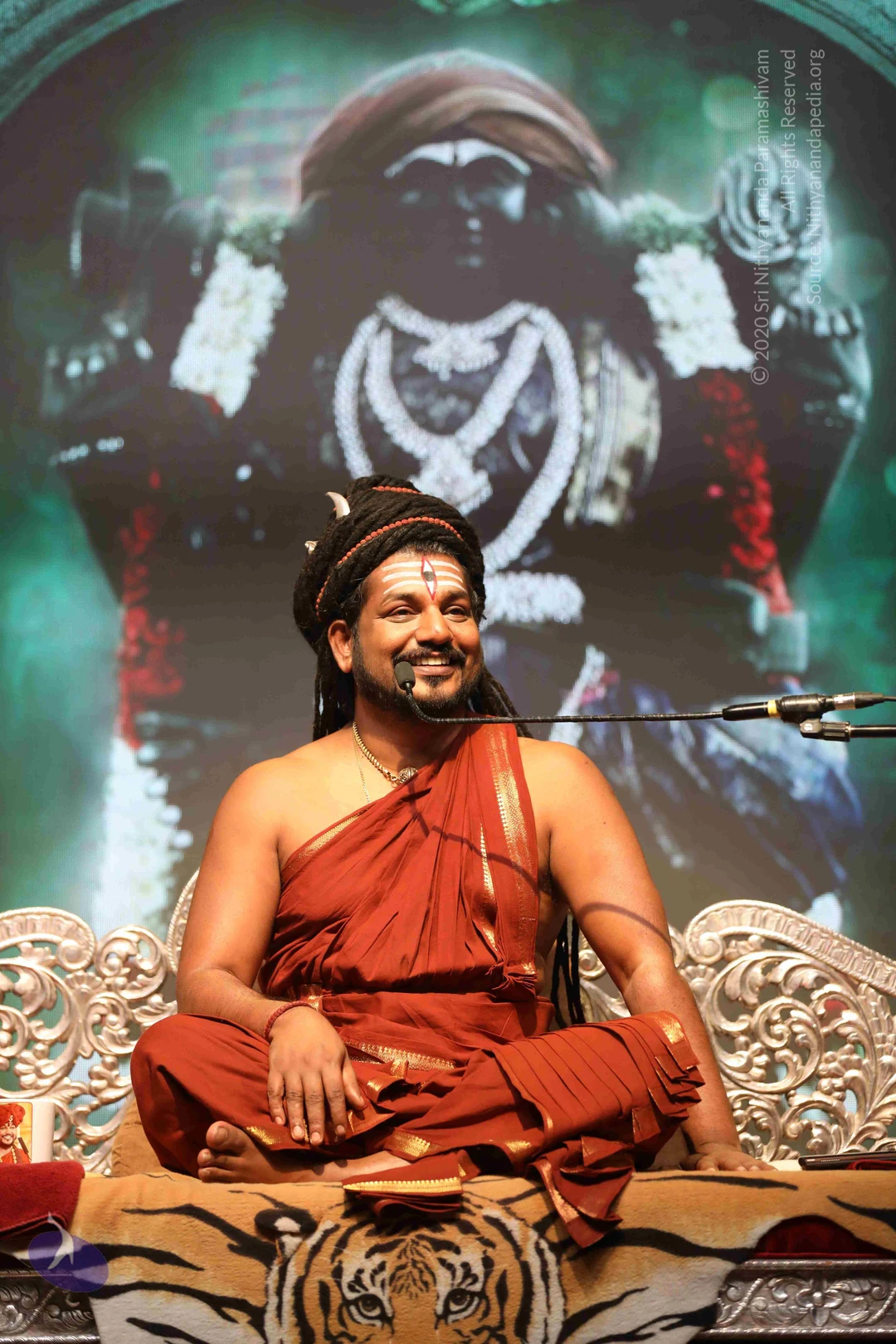
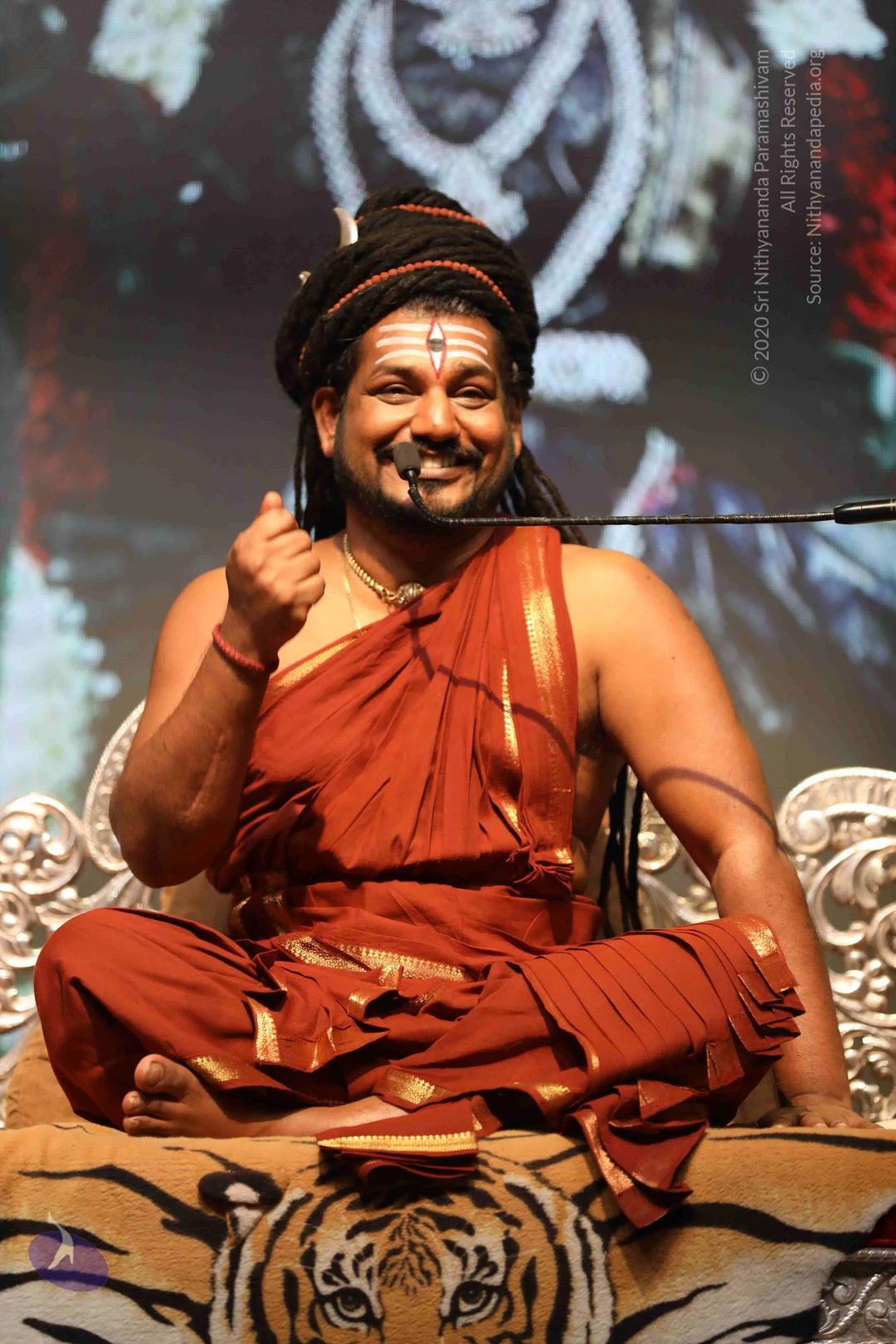
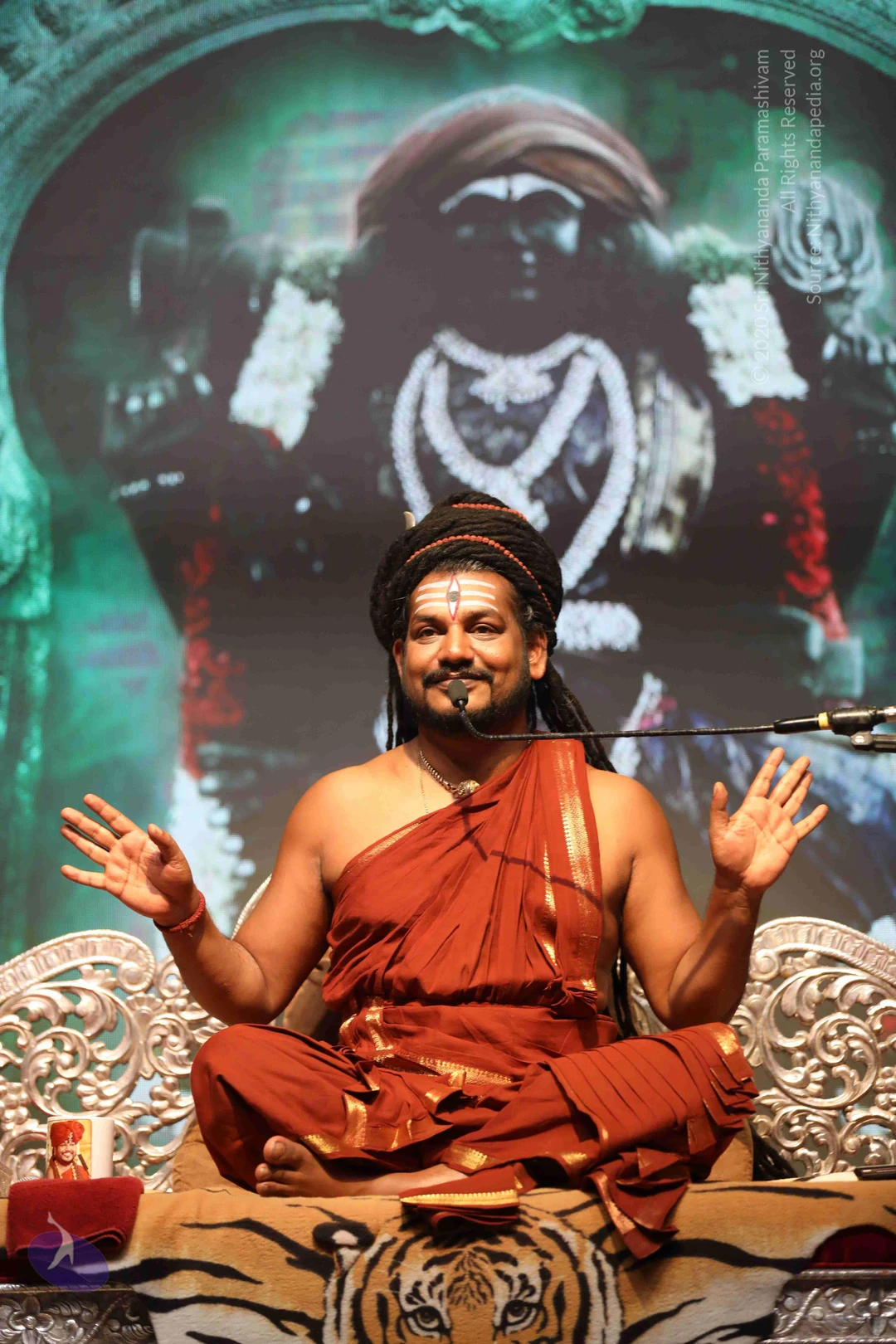
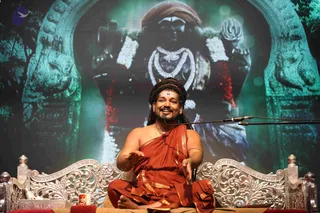
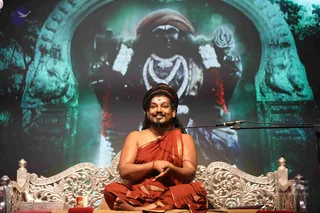
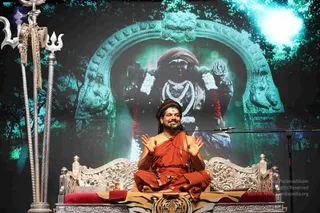
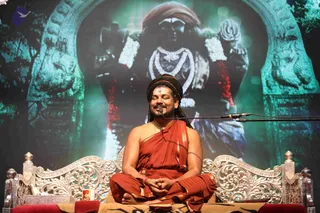
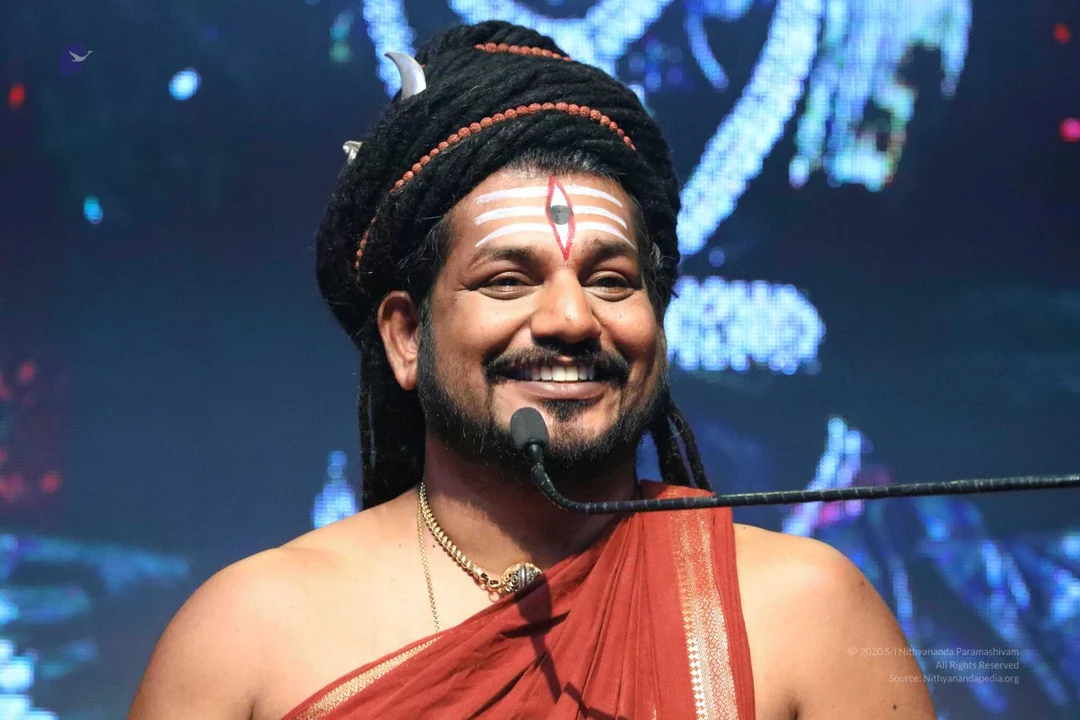
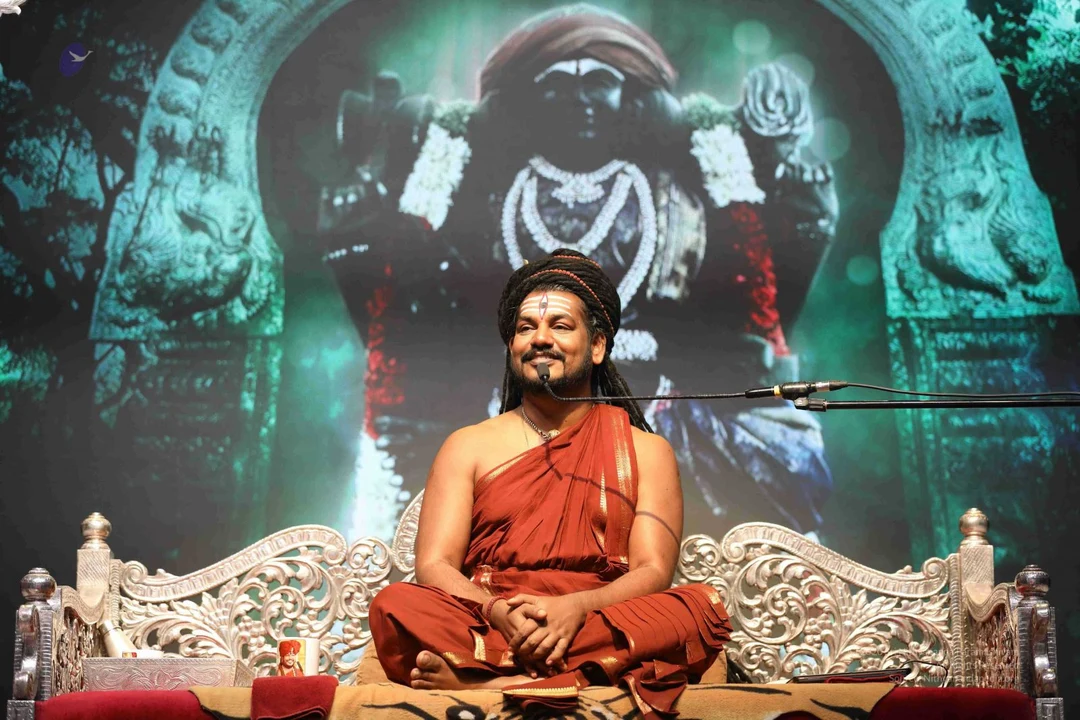
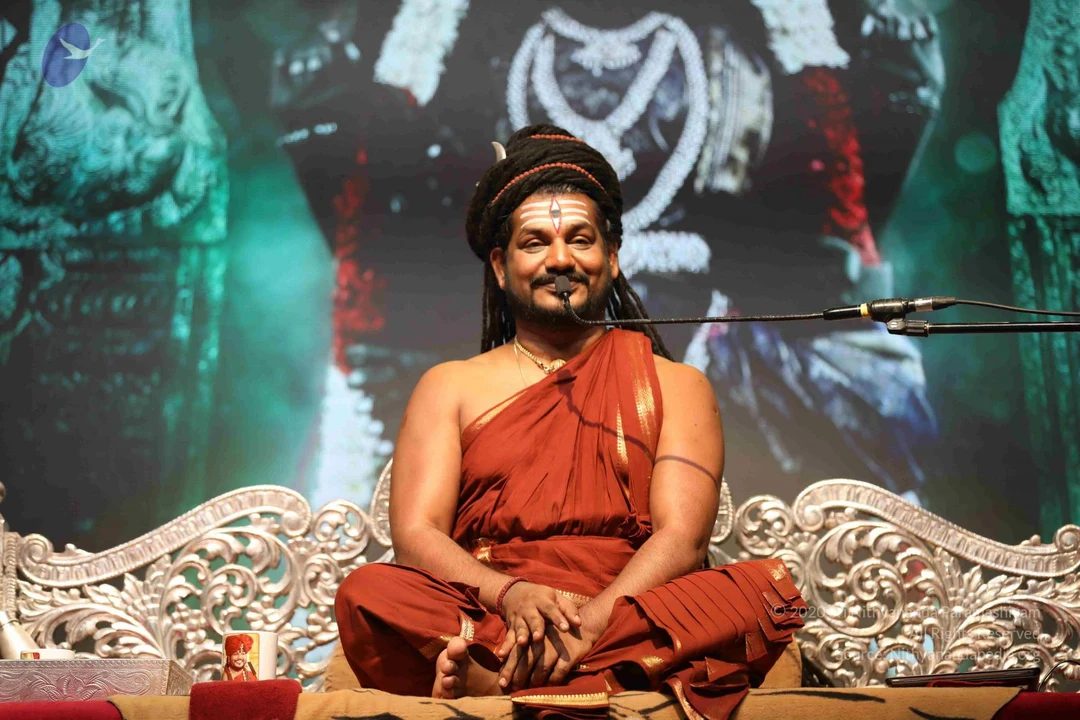
The Supreme Pontiff of Hinduism, Jagatguru Mahasannidhanam, His Divine Holiness, Bhagavan Nithyananda Paramashivam, is the visionary through whom this whole revival of KAILASA is made possible. Today, Day 10 of the ultimate spiritual Mahasadashivoham Program, His Divine Holiness (HDH) gave special Initiations and processes using sound and Anti Sound Energy. Delegates were led into the Vidya Tattva leg of Mahasadashivoham.

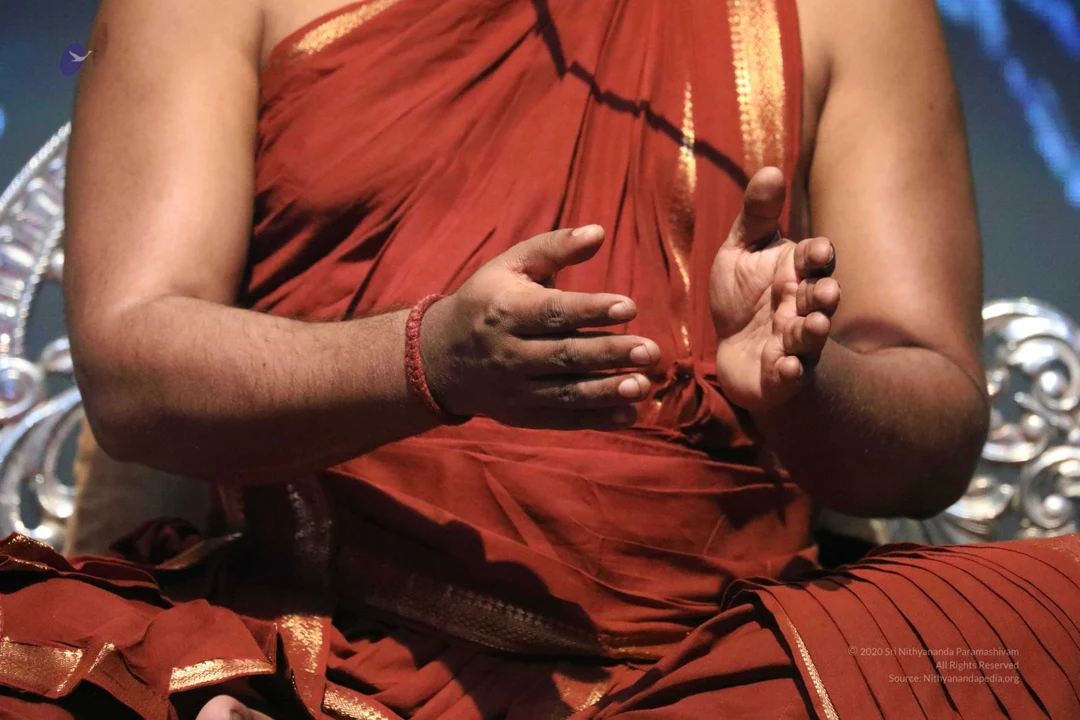
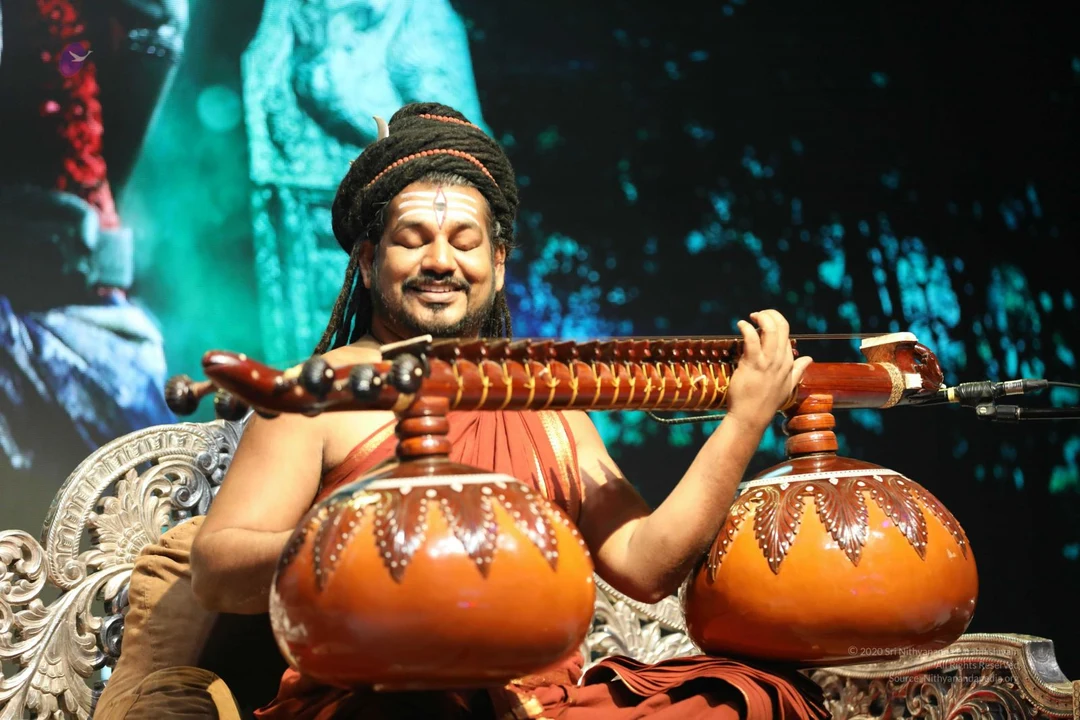
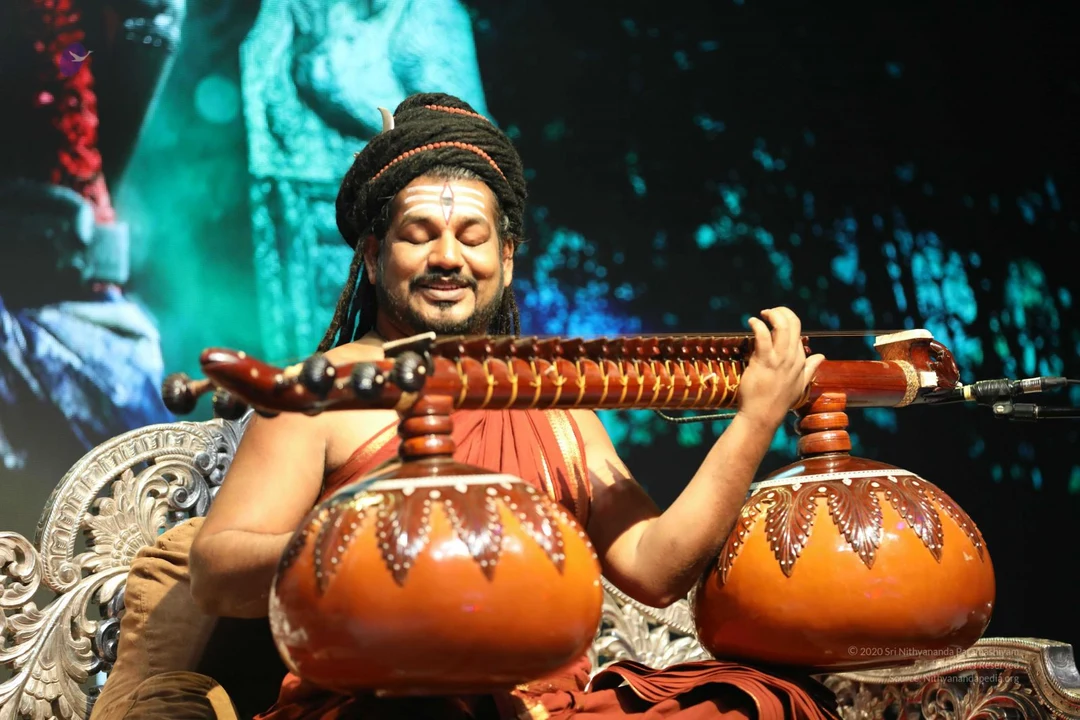
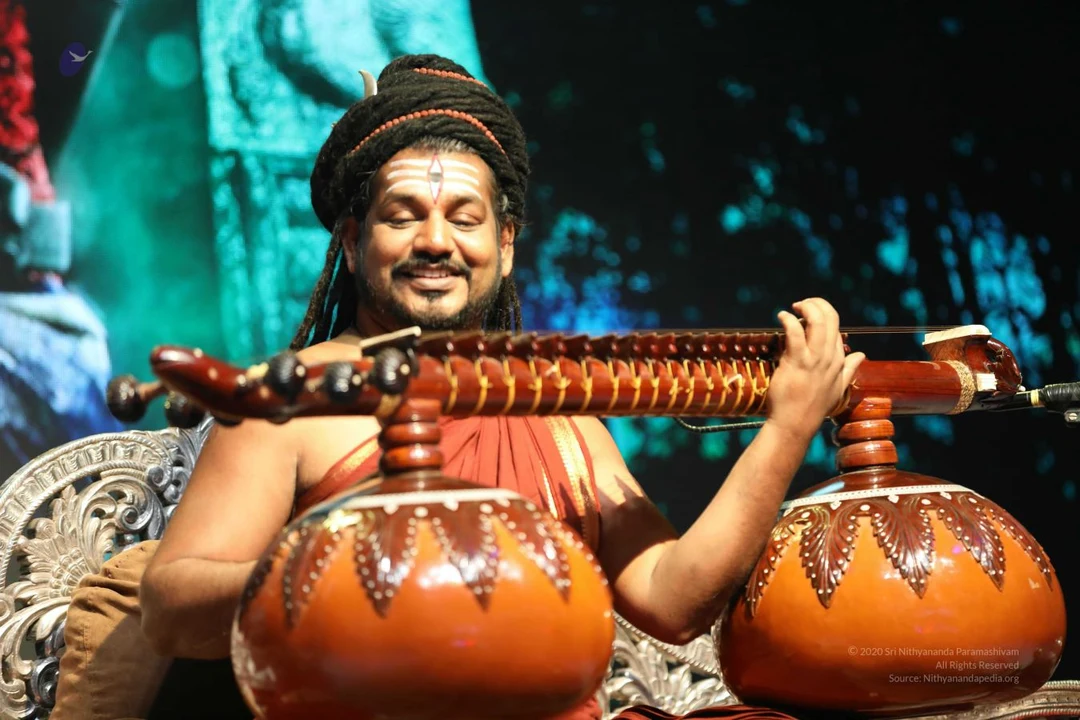
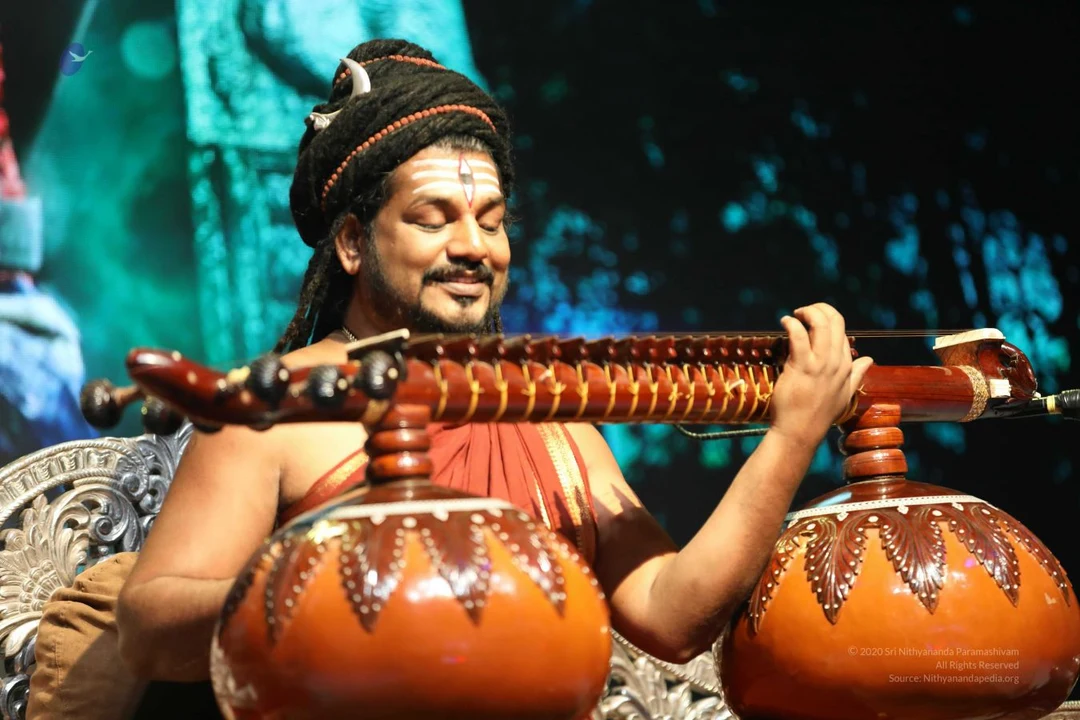
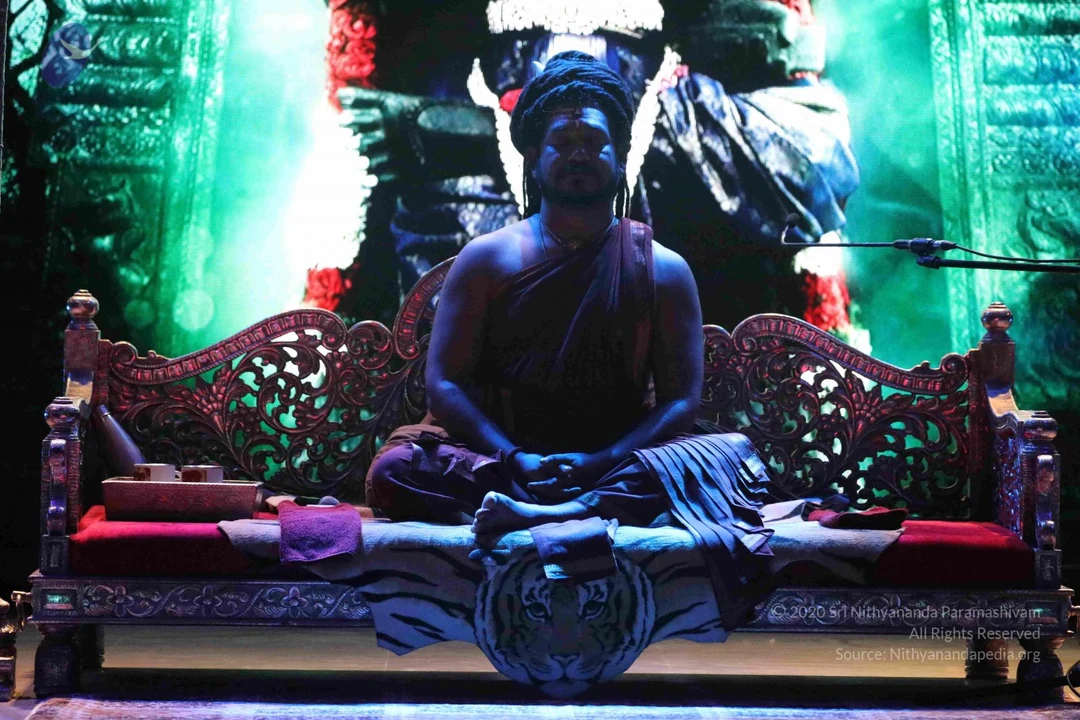
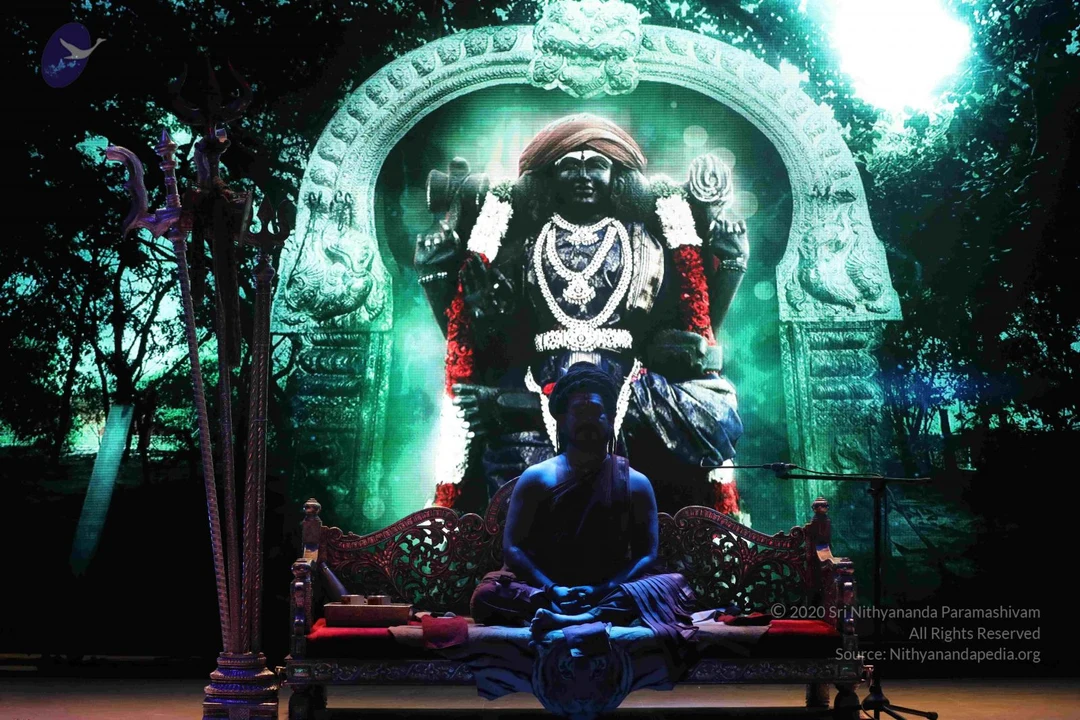
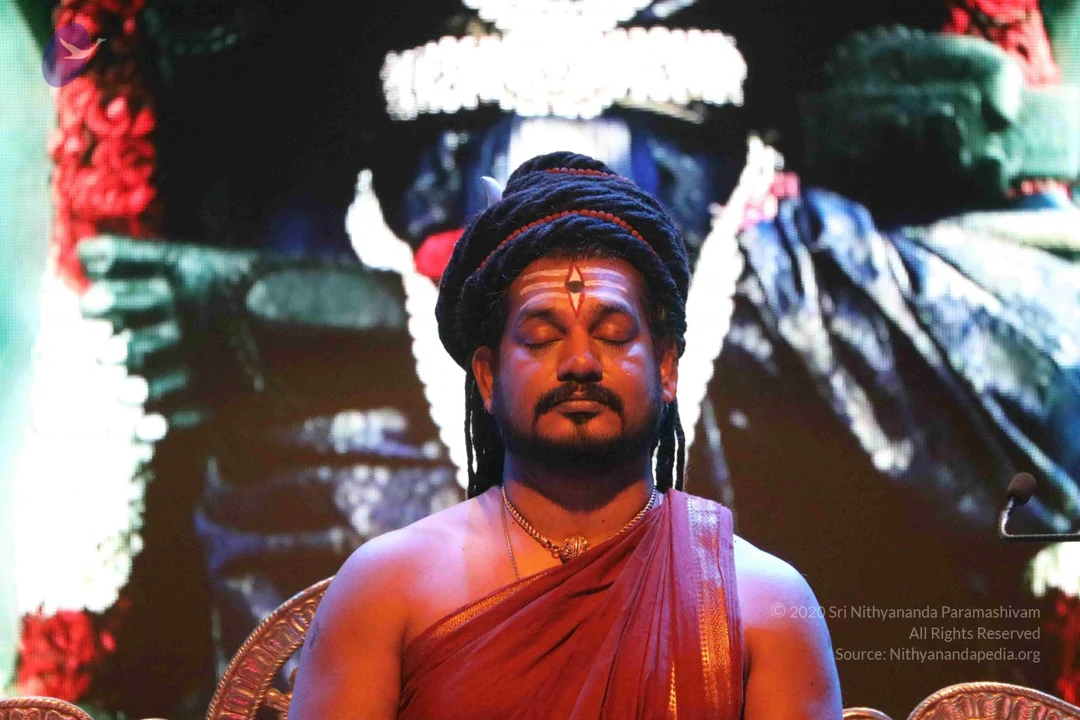
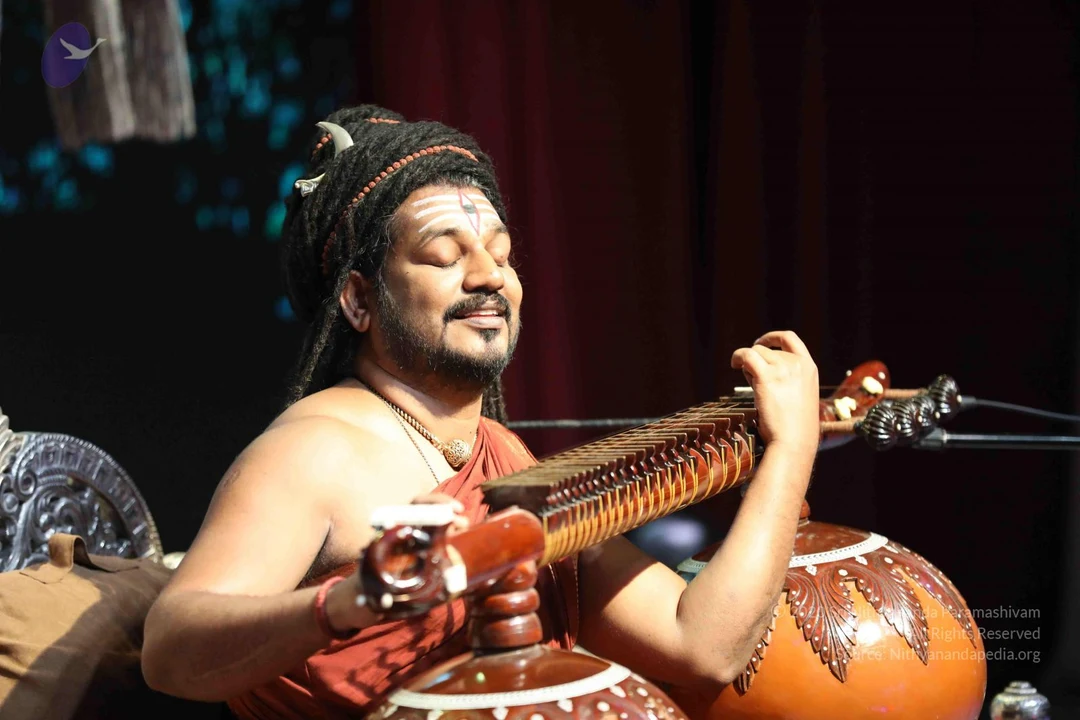
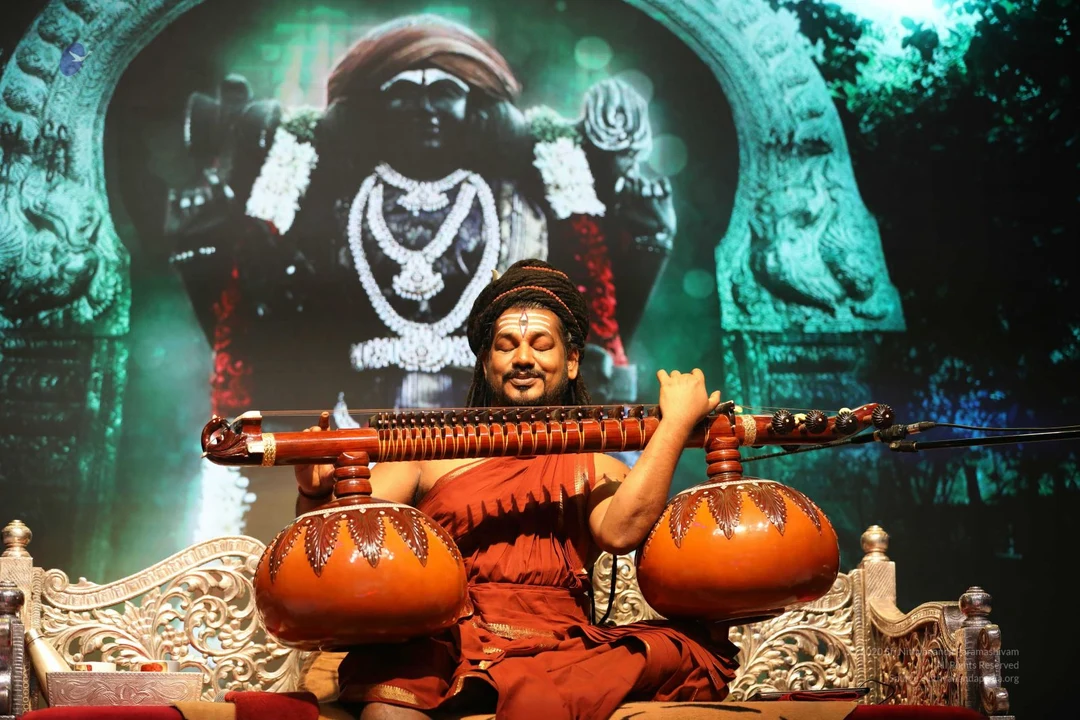
On this day His Divine Holiness gave a powerful Initiation of Shivoham Process and intensely awakened the Kundalini Shakti of all present. By playing the Rudra Veena in the opposite direction - with the screws facing downwards, His Divine Holiness initiated all delegates into a process creating ‘minus decibels’ or anti sound, which sucks all the pain patterns from their systems. (Sadashiva Himself records and mentions in the Agama, the use of the Rudra Veena in this way for initiation. The Supreme Pontiff of Hinduism removed all patterns, including pain patterns, from the systems of delegates.

Photos

Vidya Tattva
Link to Facebook Page

https://www.facebook.com/ParamahamsaNithyananda/posts/1707292249358618 https://www.facebook.com/ParamahamsaNithyananda/posts/1708295959258247

Photos Of The Day:

Maha-sadashivoham

Maha-Sadashivoham

01-VIDYA-TATTVA

Photos from this day

View all 140 photos

Vidya Tattva
68 photosSource gallery
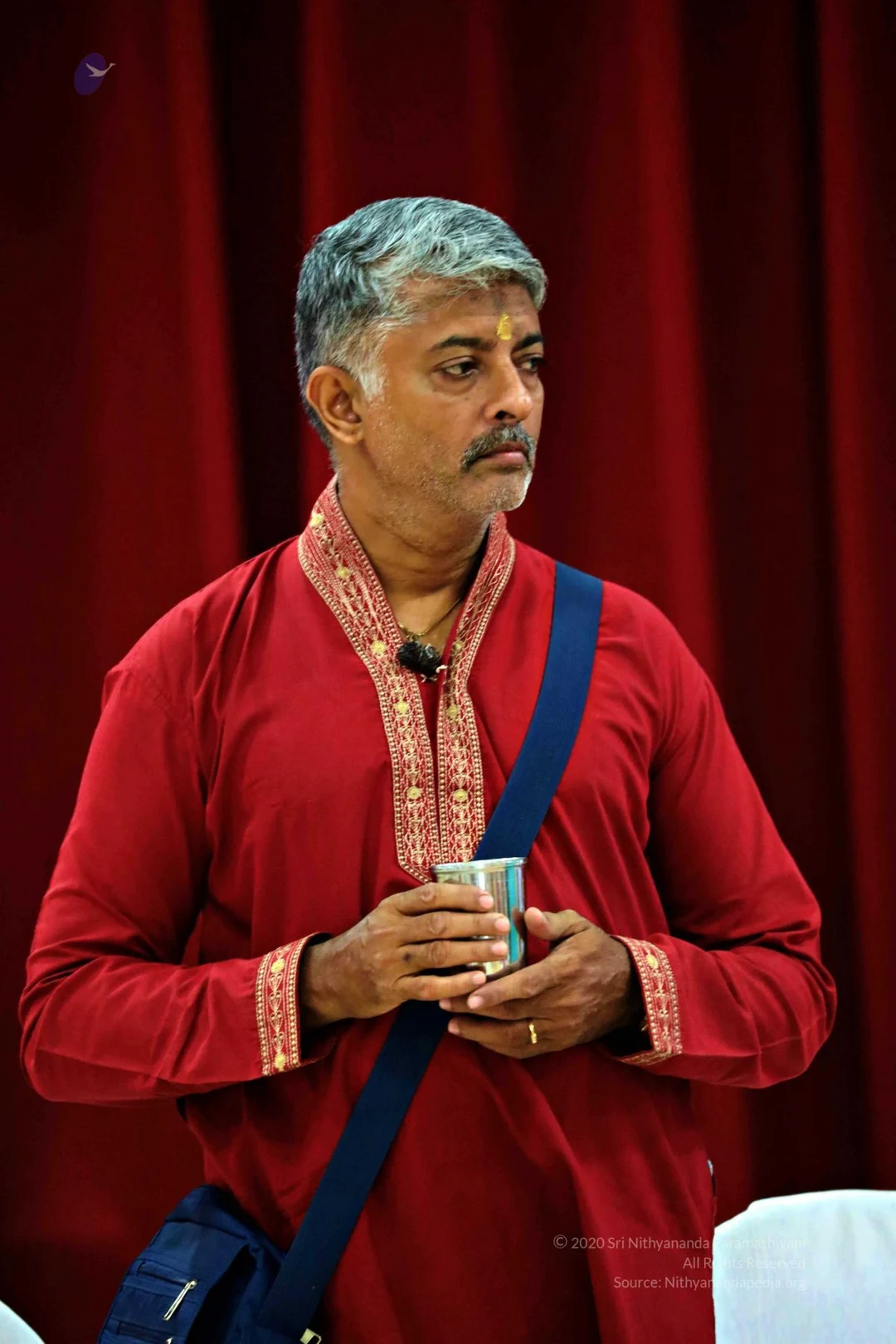
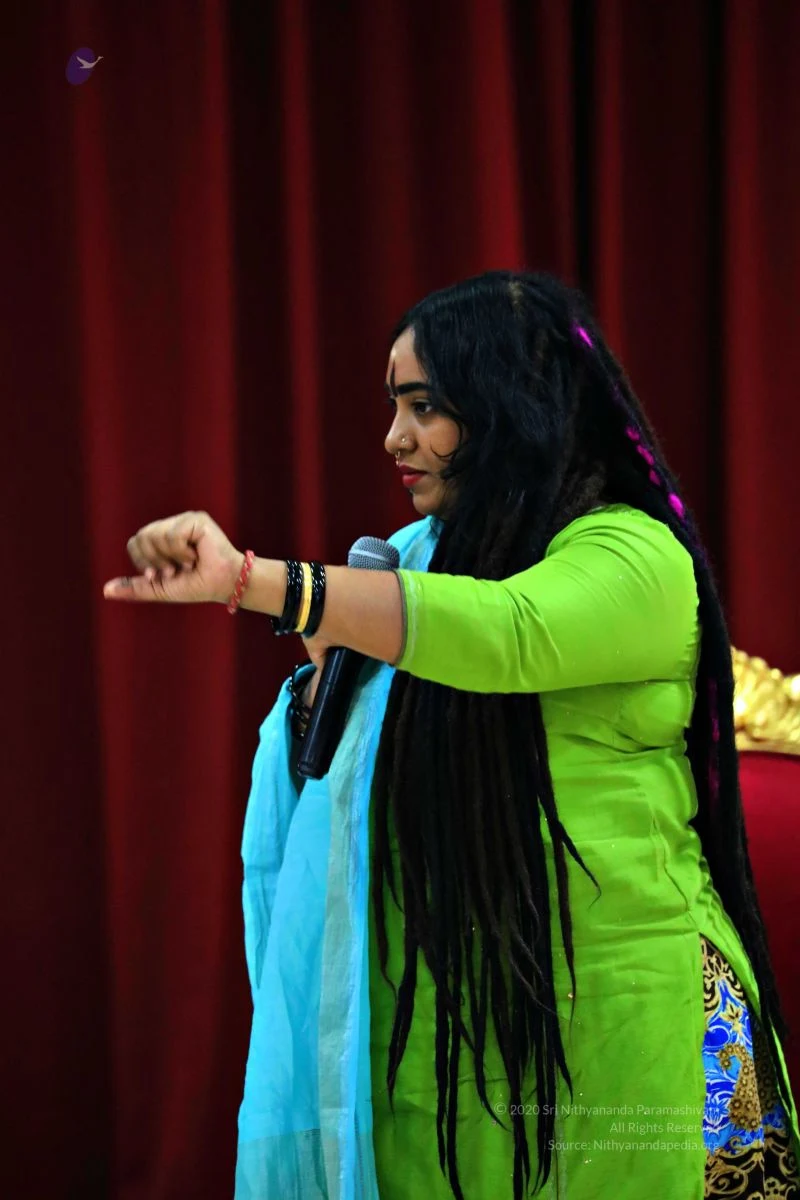
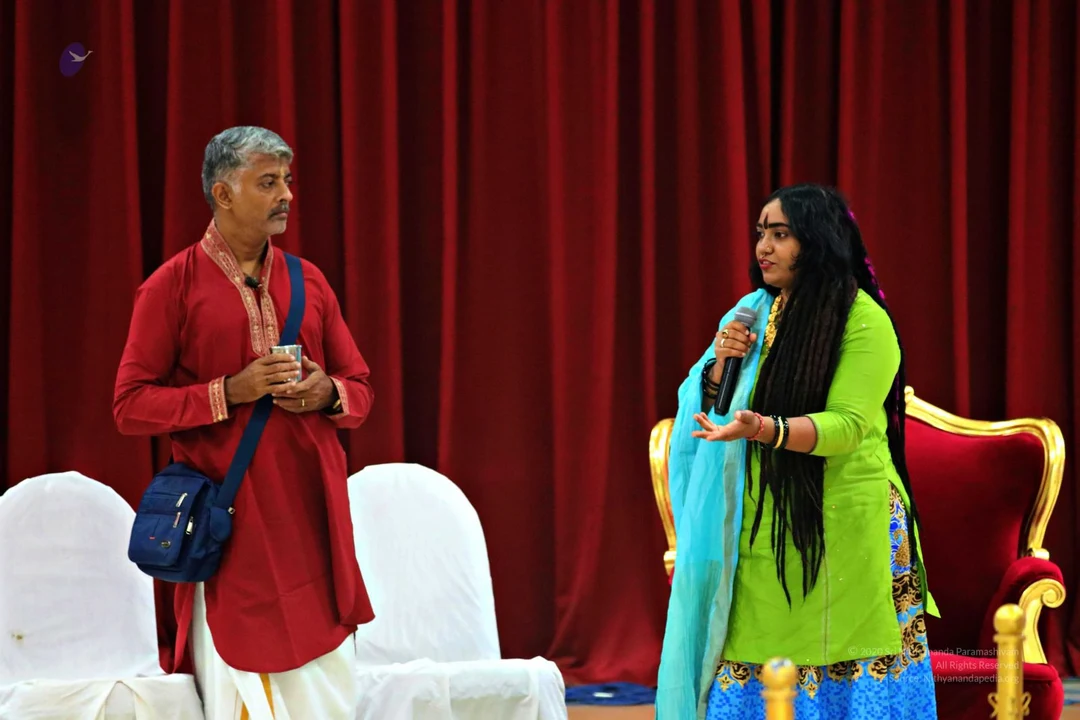
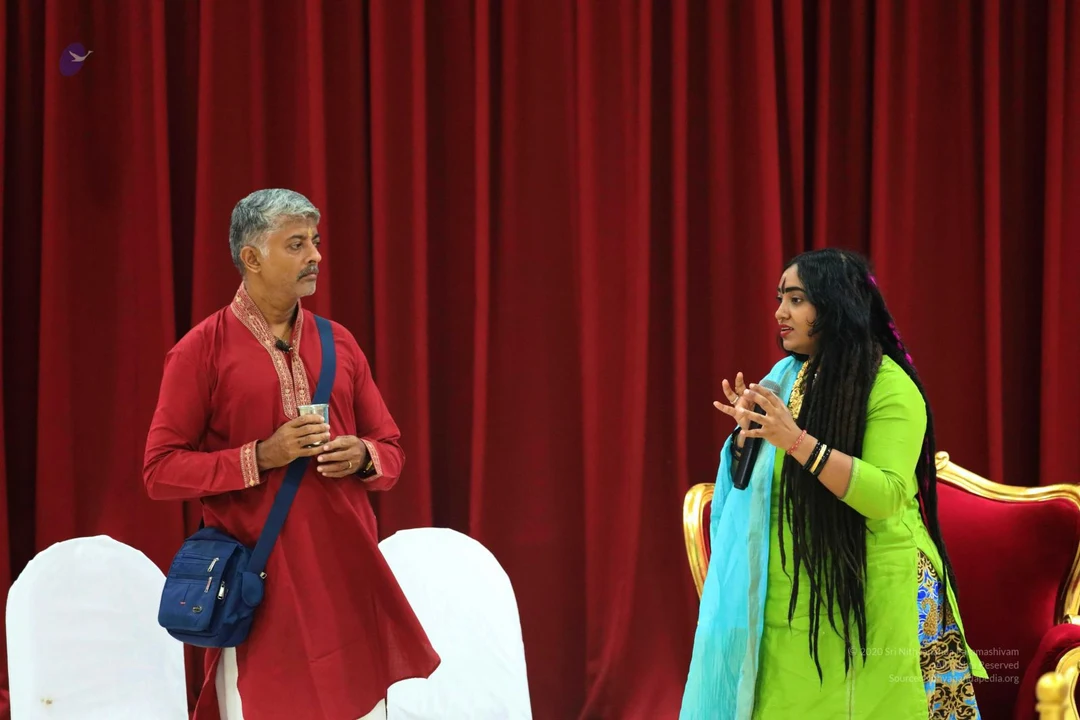
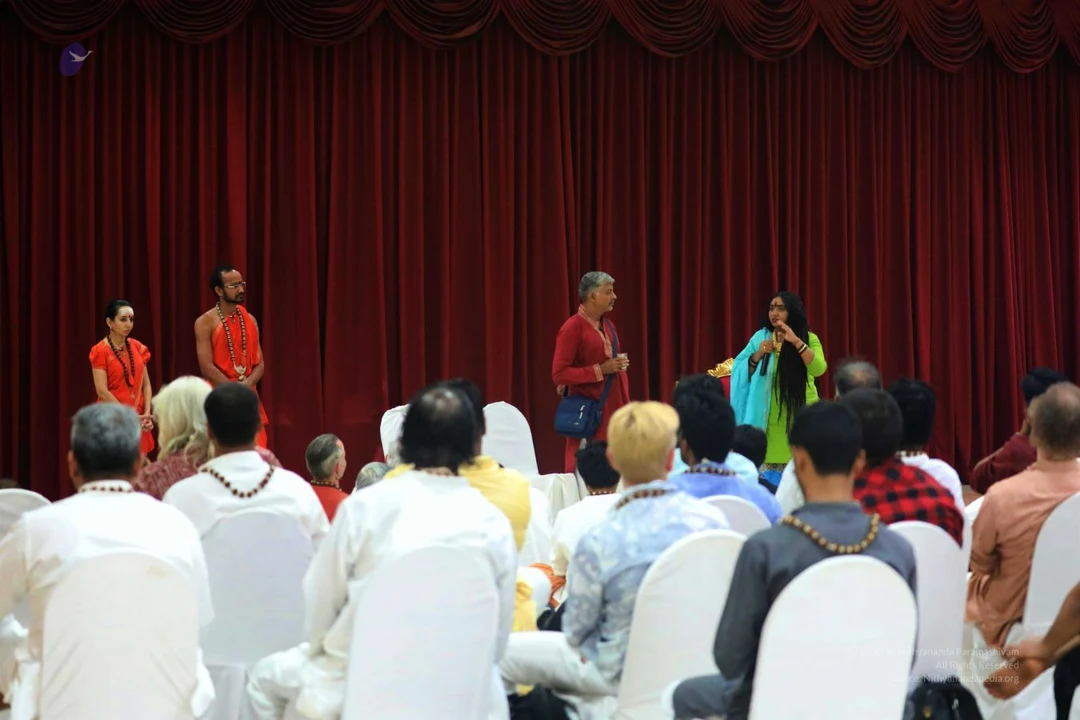
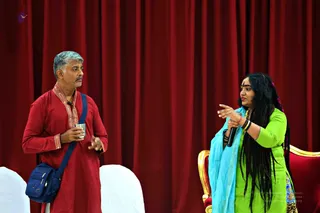
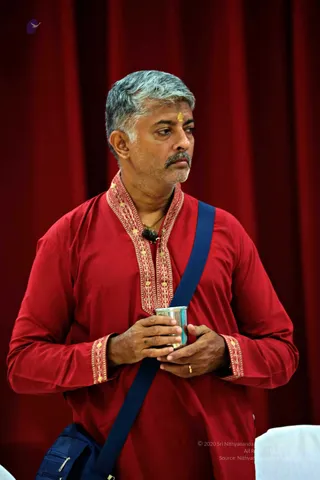
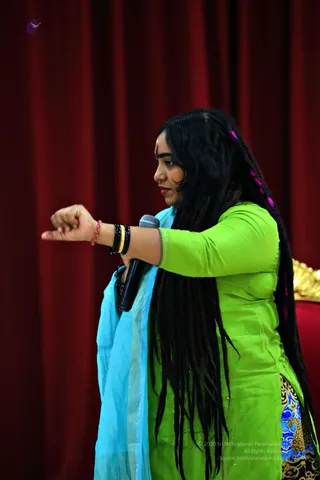
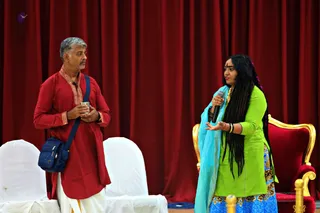
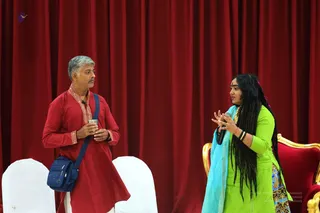
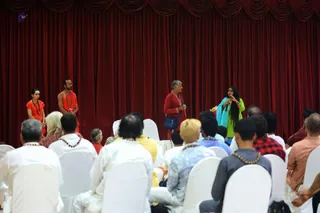
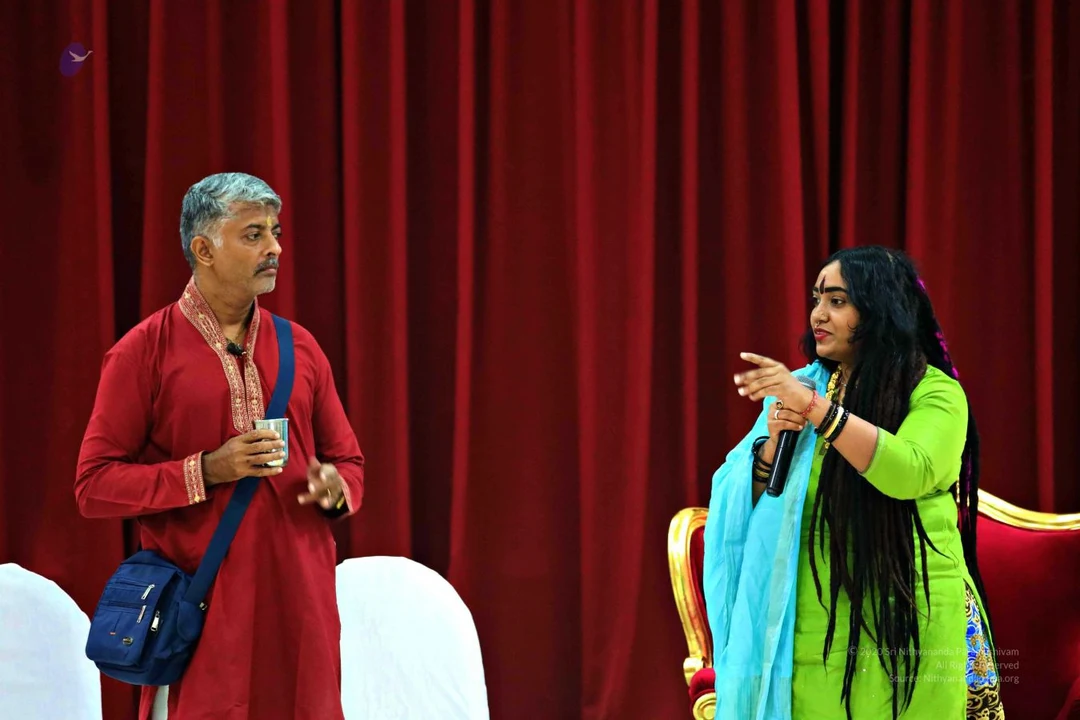
A stage photograph with a deep red velvet curtain behind two people. On the left, a grey-haired man in a red kurta with gold embroidered collar and cuffs, a navy shoulder bag, and a glass of water in his hand, is looking toward the woman. On the right, a woman with long dark hair, a bindi and bangles, wearing a lime-green kurta and a turquoise dupatta, holds a microphone in one hand while gesturing with the other. She sits on a red and gold armchair. White chairs with covers are visible at lower left.A man with short greying hair and a moustache stands before a deep red curtain, wearing a red kurta with gold embroidered neckline and cuffs. He has a small orange-yellow tilak mark on his forehead and a dark bead necklace visible at his throat, and holds a steel tumbler in both hands while a navy shoulder bag crosses his chest. A white chair edge appears at the lower right. He appears to be a devotee or attendee; no distinctive a person cues such as long swept-back hair, crown, saffron robes or ornate ceremonial gold necklaces are visible, so the identity cannot be confirmed from appearance.A woman with long dark dreadlocks stands in profile before a deep red velvet curtain, holding a black handheld microphone in her right hand while extending her left arm forward with the palm turned down. She wears a bright lime-green kurta with a pale blue sheer dupatta draped over one shoulder, a red thread bracelet and black and gold bangles, a nose ring, and a small forehead mark. Behind her a gold-and-red throne-like chair is partly visible. The setting suggests a stage presentation or demonstration during a spiritual programme.A stage event before a dark red draped curtain. On the left, a grey-haired man in a red kurta with gold border and white dhoti stands holding a small cup and wears a navy shoulder bag. On the right, a woman with long dark hair and a bindi wears a lime-green kurta with a turquoise dupatta and blue patterned skirt, holding a microphone and gesturing with her other hand. Beside her is a red velvet chair with gold trim, and white-covered chairs sit at left. No candidate is visibly identifiable from appearance alone, so the speakers are described by role only.A photograph on a stage with deep red velvet curtains. A man with short grey hair and a moustache, wearing a red kurta with gold embroidered trim and a navy shoulder bag, stands at left holding a small glass. At right, a woman with long dark dreadlocked hair, wearing a lime-green kurta with a turquoise dupatta and bangles, holds a microphone and gestures while speaking. Gold-framed red velvet chairs and white chair covers sit on the stage. No candidate for a person is visible, so the speakers are described by role only.A photograph of a seated audience facing a stage with deep red velvet drapes and a gathered red swag valance. Four people stand on stage: at left a woman in orange robes with rudraksha beads, beside a man in orange with a bare upper body and a rudraksha mala; at centre a man in a red shirt and dark trousers with a blue crossbody bag holds a microphone; at right a woman with long dark hair in a teal blue shawl and lime green top speaks into a microphone. Behind her a small golden item sits on a seat. Many seated attendees in white, cream and pastel shirts, several wearing rudraksha malas, sit in white chairs in the foreground.
Maha-sadashivoham
18 photosSource gallery
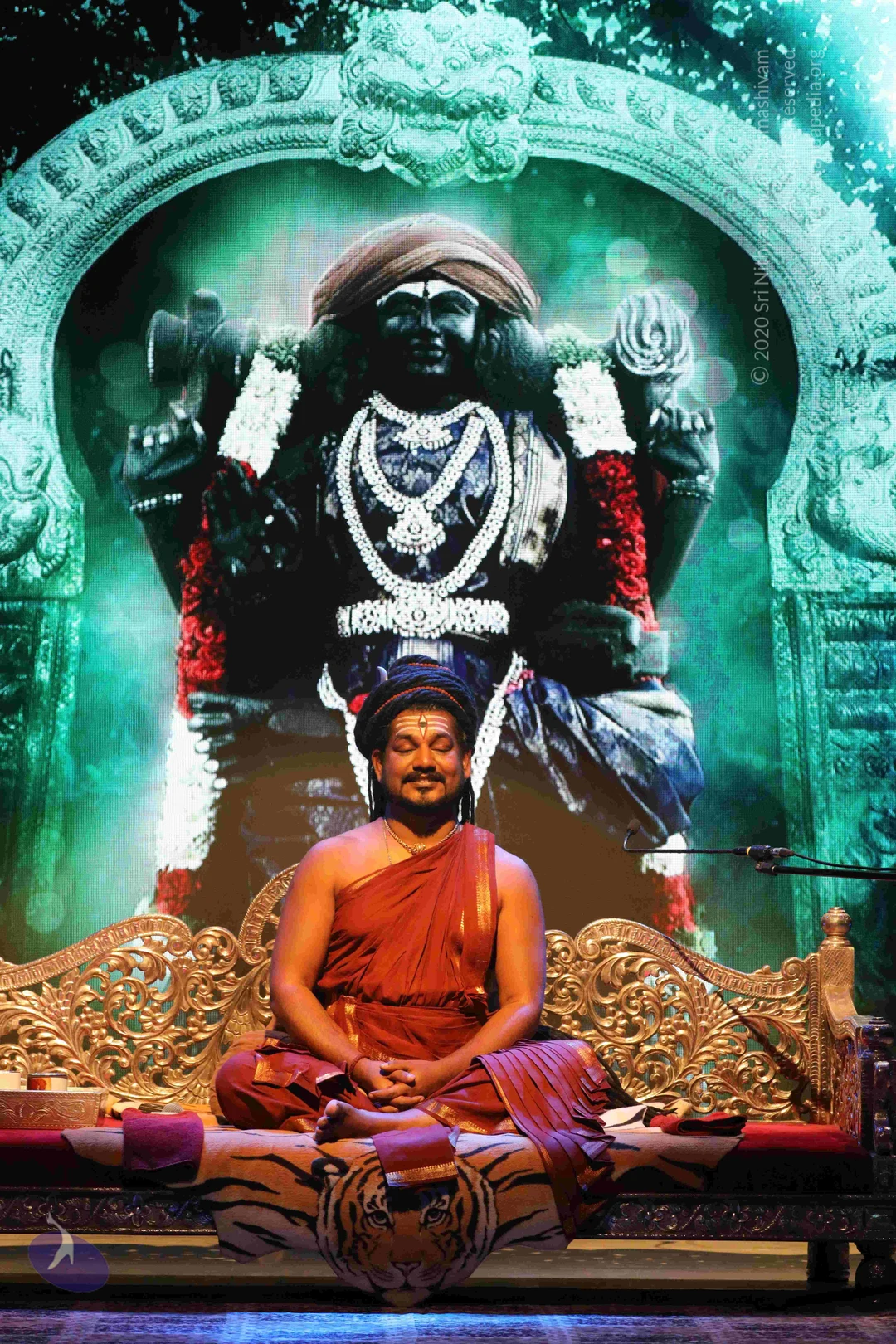
A seated man in a saffron-orange dhoti and shawl with gold-striped borders sits cross-legged on an ornate silver throne with floral filigree and red cushions, draped with a tiger-skin rug. He has long dark hair swept back under a dark turban-like wrap, a white tilak on his forehead, and a rudraksha-style necklace, smiling as he sits before a microphone stand. Beside him stand tall silver ceremonial staffs with a trident finial and a leopard-print fabric streamer. Behind him a large projected backdrop shows a deity murti with garlands, white beaded necklaces and a green stone archway. Swamiji (probable) is shown in the appearance-based cues of long swept-back hair, saffron clothing and ceremonial adornment, seated on the throne as the event's speaker.A seated man in an orange-red saffron dhoti and shawl sits cross-legged on an ornate silver throne draped with a tiger-skin cloth and red cushions. He has long dark hair with a headband, a tilak on his forehead, and a bead necklace, and he holds his hands in a meditative mudra. A microphone stands before him. Behind him, a large projected backdrop shows a stone torana arch with lion carvings and a deity murti adorned with white garlands, pearl necklaces and red flowers. Silver trident-topped staffs stand at the left edge of the stage. Swamiji (probable) is seated on the throne, identified by his long swept-back hair, orange saffron clothing, and rudraksha-style beads, and is presenting a discourse during a stage programme.A seated man in a saffron-orange dhoti and shawl sits cross-legged on an ornate silver carved throne, gesturing with both hands while speaking into a microphone on a stand. He wears a crown-style orange turban, a white tilak on his forehead, a rudraksha mala and a gold chain, with long dark hair. Behind him a large screen shows a darkened deity murti adorned with white jasmine garlands and a white flower necklace, framed by stone carvings. A small red-and-white item sits near the lower left of the throne.A seated man in an orange-red saffron wrap and dhoti sits cross-legged on an ornate silver-white carved throne with floral filigree, hands held together in front of his chest, smiling at a microphone on a stand. He has long dreadlocked hair, a white tilak on his forehead, a rudraksha-style necklace and a gold chain. Behind him a large screen shows a deity murti decorated with white flower garlands, a white beaded necklace and red fabric, framed by carved stone arches and green-toned foliage. A small framed picture and a red-cushioned tray sit at the lower left of the throne. Appearance-based label: a person, seated in his role as the speaker at a satsang-style teaching.A seated man in an orange-red saffron wrap sits cross-legged on an ornate silver throne draped with a tiger-striped cloth and red cushions. His hair is long and swept up, and he has his palms raised in an animated gesture while speaking into a microphone on a stand. Silver trident-topped staffs stand to the left. Behind him a large projected screen shows a teal arched stone frame with a carved deity figure adorned with white flower garlands and pearl-style necklaces.A photograph of a seated man in a red-orange saffron wrap and dhoti, with long dreadlocked hair and a tilak on his forehead, sitting cross-legged on an ornate silver-carved throne with red cushions. His eyes are closed and his hands are folded in his lap, a microphone stand in front of him. Behind him a large projected screen shows a green-tinted image of a deity figure adorned with white flower garlands, a white beaded necklace, and a crown-like headdress, framed by carved stone arches. A small framed portrait sits on a red cloth at the lower left. The setting suggests a discourse or satsang on a stage. a person: the seated man has long dreadlocked hair, saffron wrap and rudraksha-style adornment, matching the page's description of a discourse event.

Maha-Sadashivoham

48 photosSource gallery
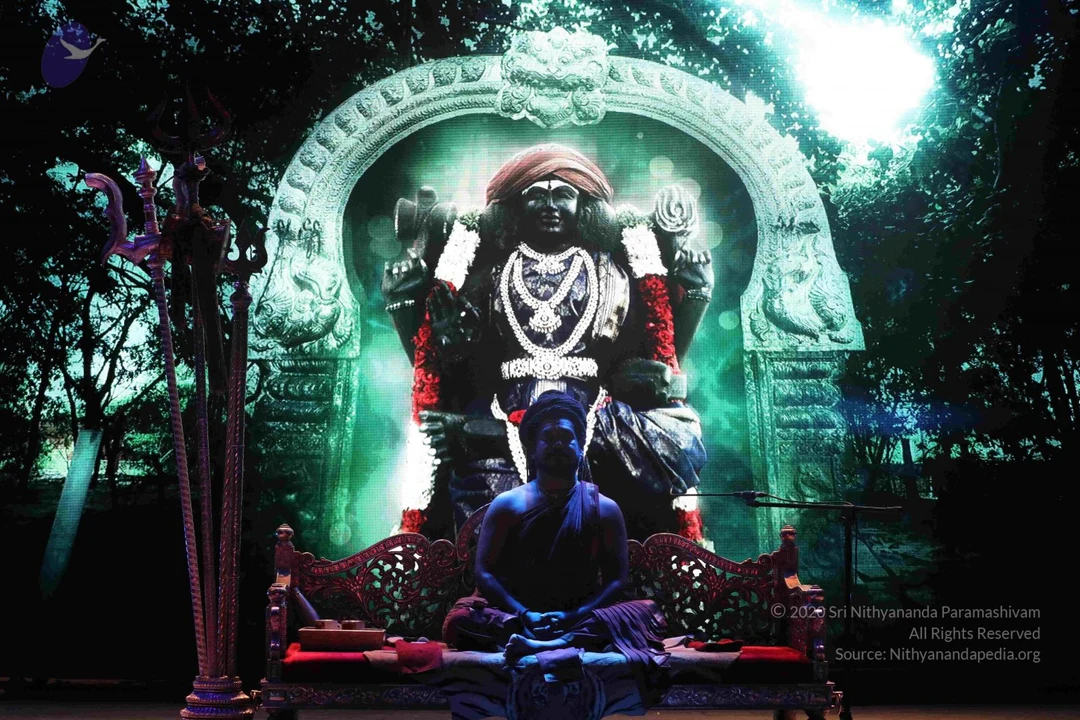
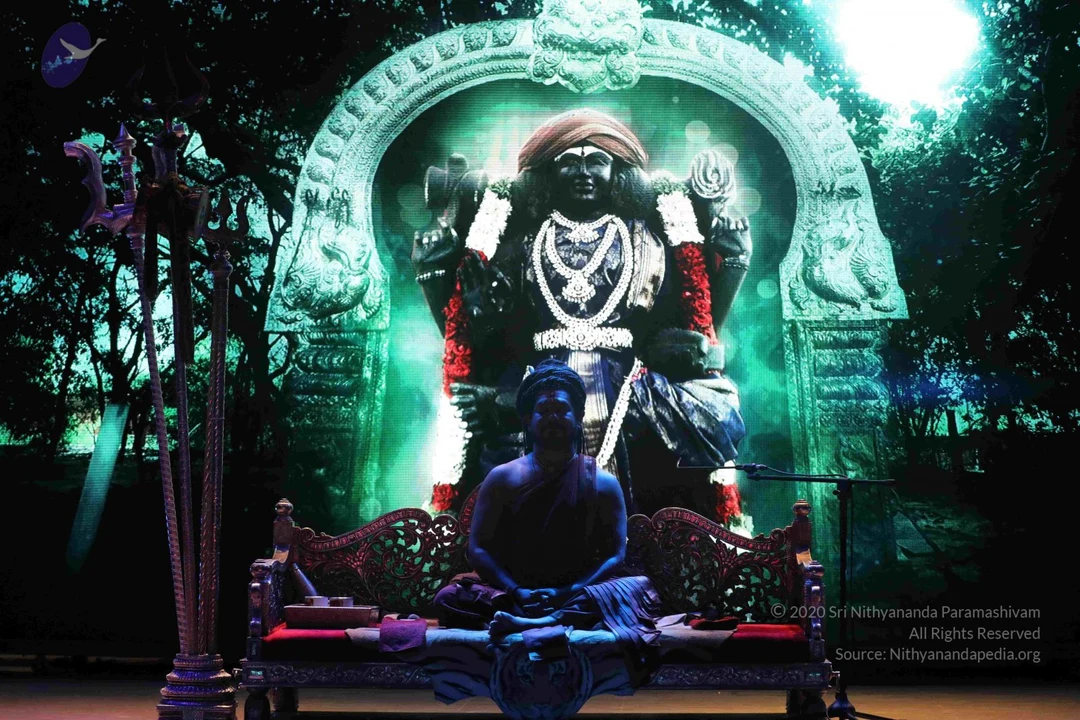
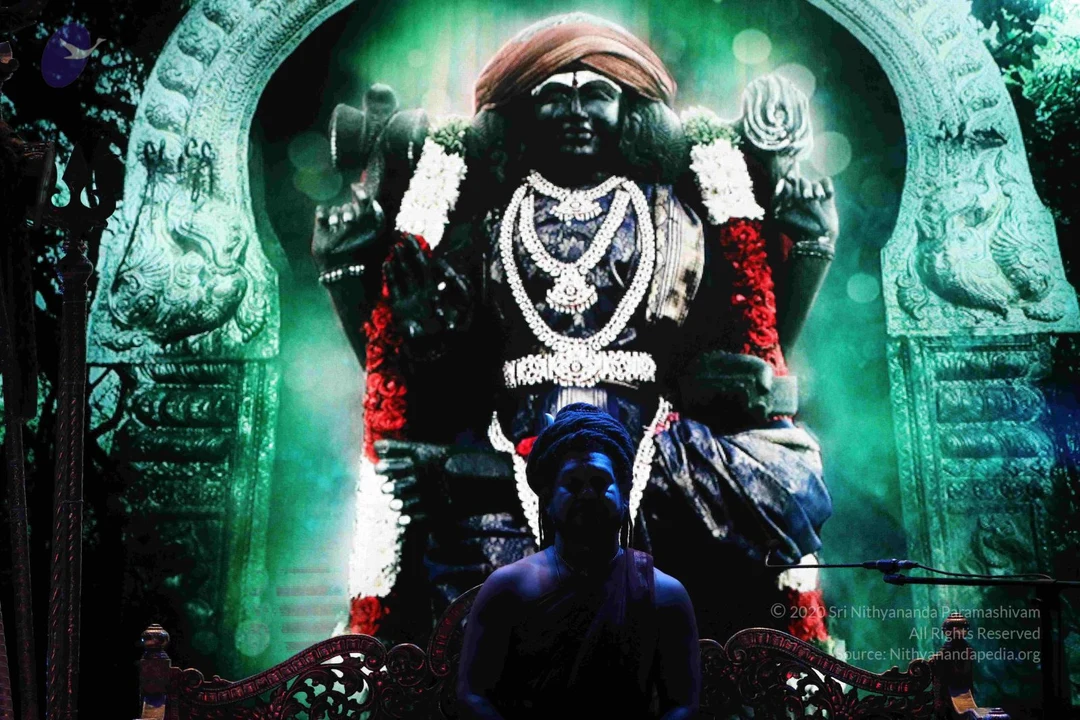
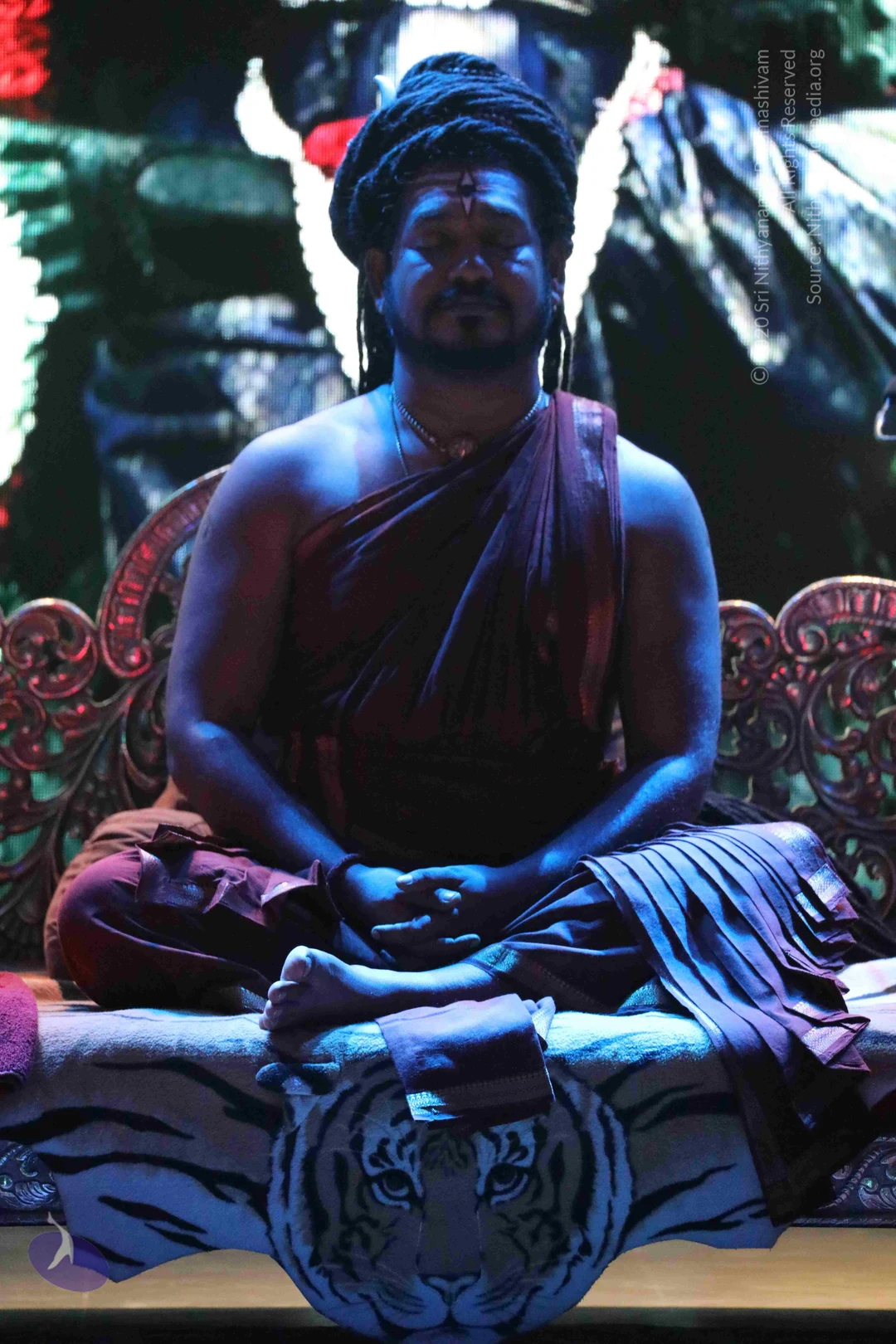
A seated man in plain saffron-brown and white cloth sits cross-legged on an ornate carved wooden peetha throne on a dark stage, with a small tray of offerings and a ceremonial trident leaning at left. Behind him a large projected image shows a deity murti with multiple arms, a red and white flower garland, a white pearl necklace and a red and gold turban, framed by a stone arch with carved lions and peacocks against a green forest backdrop. A microphone stand stands at right. One person is visible.A seated figure sits cross-legged on an ornate carved red wooden throne on a dark stage, wearing a blue-toned wrap and a draped cloth, hands resting in his lap. Behind him a large projected backdrop shows a glowing green forest arch framing a large deity murti with a red turban, multiple arms, white and red garlands and a heavy white jewelled necklace. A tall trident stands to the left of the throne, and a microphone stands at the right. A small tray with offerings sits on the throne's seat. The seated figure's face is not distinct enough to confirm identity, so no identity claim is made; the scene shows a stage performance with a deity image projected behind a seated speaker.A seated man with a dark turban, bare-chested and wearing a draped saffron-toned cloth, sits cross-legged on an ornately carved wooden throne on a stage. Behind him a large projected backdrop shows a deity murti or statue with multiple arms, a white garland, and a heavy white beaded necklace, framed by a carved stone arch against a green-lit forest. To the left stand a tall trident and a metal stand, and a microphone stand is at the right. The image is a photo of a live stage scene with no visible audience.A seated man in a carved wooden throne with red cushions, sitting cross-legged on a tiger-skin rug in front of a large green-lit backdrop showing a deity murti. He wears a dark maroon shawl over a bare chest, has long dreadlocked hair, a tilak on his forehead, and a rudraksha-style necklace, with his hands folded in his lap and eyes closed in meditation. A microphone stands at right and a small tray with cups sits at left.A seated man in plain saffron-toned robes sits cross-legged on an ornately carved wooden couch with red cushions on a dark stage. Behind him, a large green-tinted projected image shows a deity murti with a crown-like headdress, multiple arms, white and red floral garlands, and a heavy white necklace, set within a carved stone arch. A tall trident stands at the left edge, and a microphone stand is visible at right. The lone seated figure is the sole physical person in the frame; the deity image is a screen displayA seated figure in a dark blue-tinted stage photo sits on an ornate dark wooden throne in front of a large projected or painted image of a deity murti. The deity wears a red and white garland, a multi-strand white beaded necklace with a central ornament, a brown turban-style crown, and holds ritual objects in raised hands. The seated person wears a dark head wrap and a plain dark shawl, with a microphone stand at right and a green-toned arched stone frame behind the murti. A faint logo sits at the top left corner.

01-VIDYA-TATTVA

6 photosSource gallery
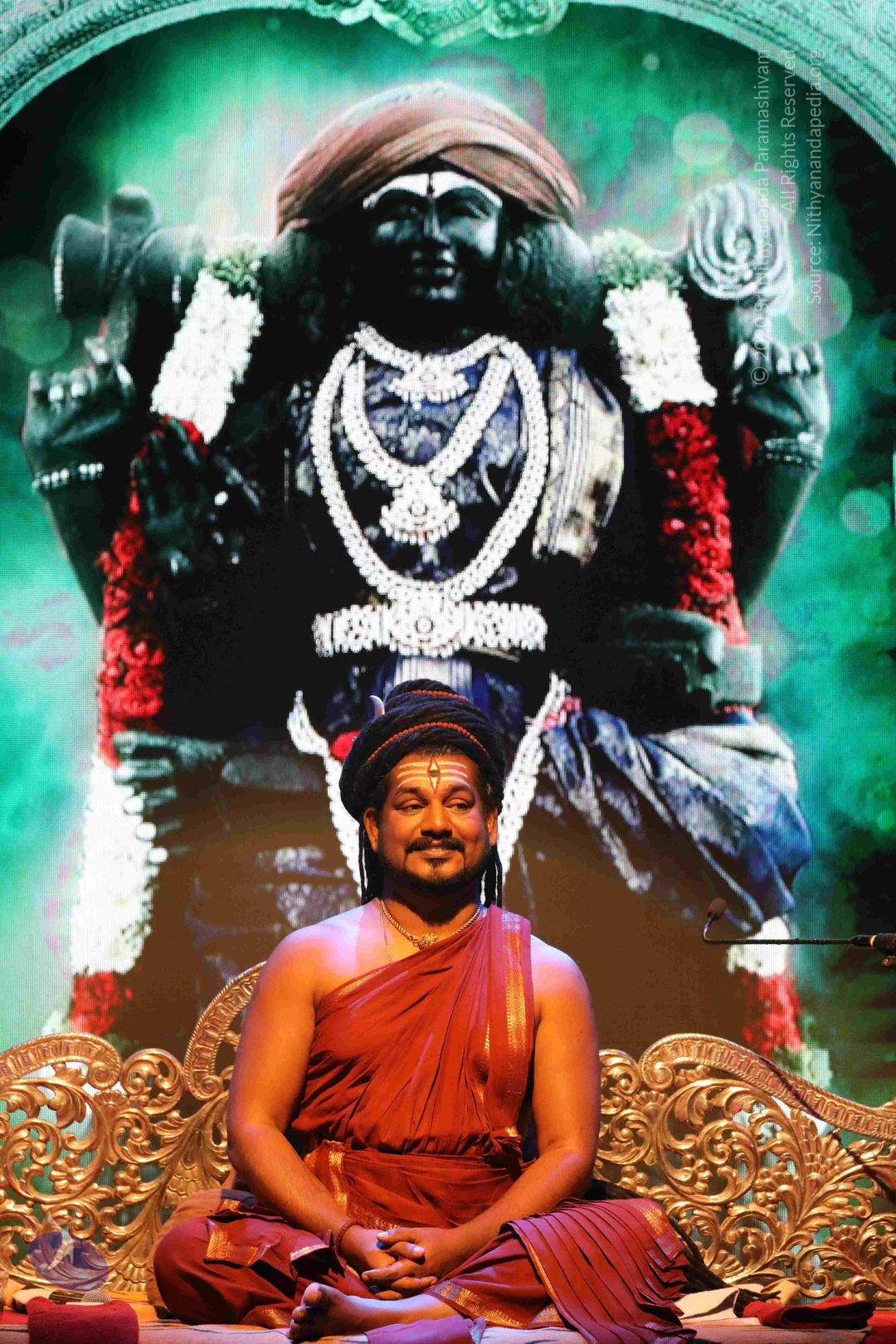
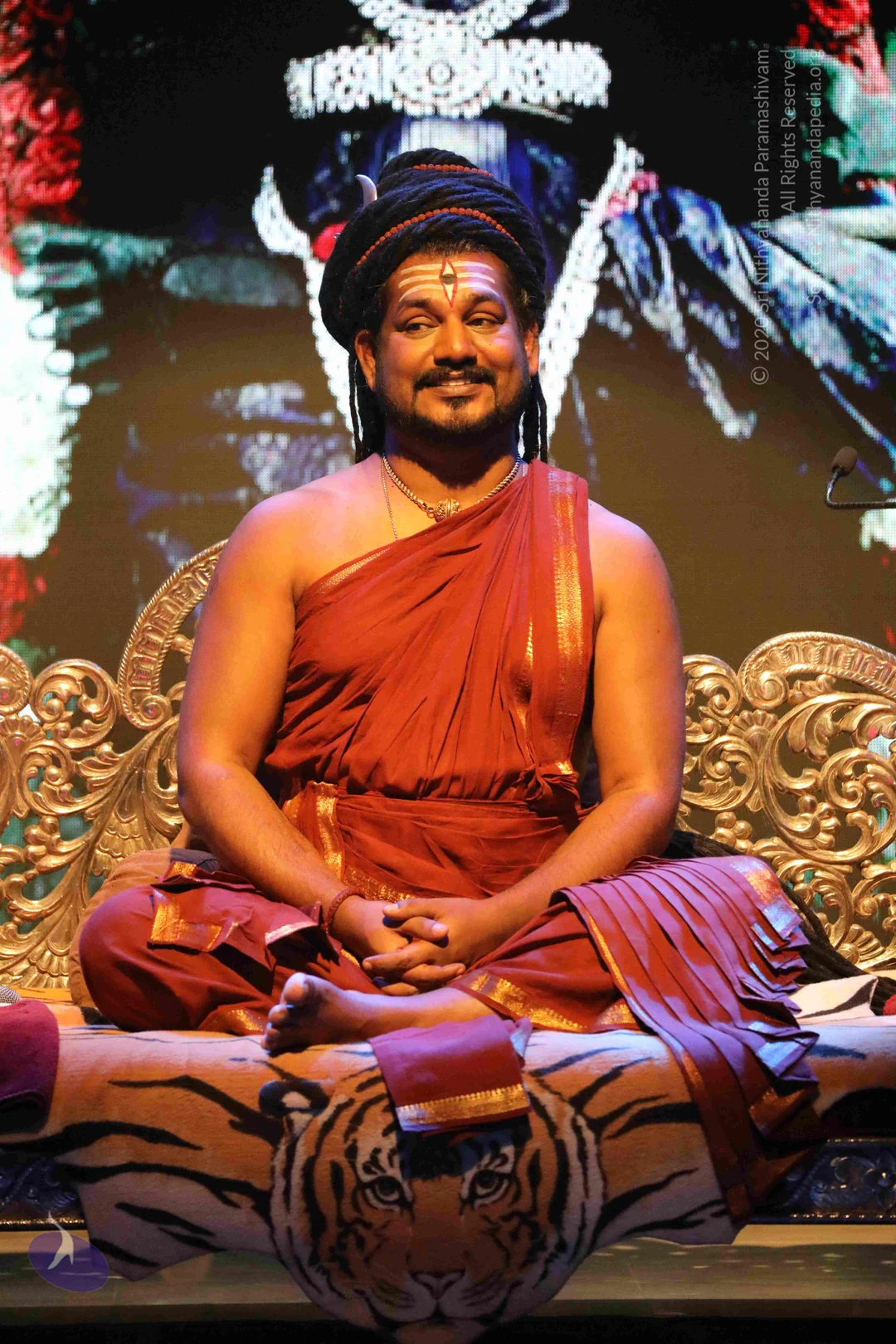
Photograph of a seated figure on an ornate carved wooden couch on a stage, facing forward with hands folded in lap and eyes closed, wearing a plain dark robe and having long hair tied up. Behind them a large screen shows an illuminated green-tinted image of a deity-like figure with multiple arms, a turban-like headdress, and garlands of white jasmine and red flowers, framed by a carved stone arch. A microphone stand is visible at right, and small brass cups sit on a low table at left. a person candidate present in appearance, but the figure's features are not distinct enough to confirm identity.A seated man with eyes closed sits in meditation on a throne-like carved wooden seat draped with a tiger-print cloth, a tiger face visible at the front. He wears long dark braided hair coiled high on his head, a vertical tilak on his forehead, a beaded necklace and a maroon-red shawl draped over his torso, with his hands folded in his lap. Behind him a large illuminated backdrop shows a red-and-blue lit image, and the scene is lit in blue and purple tones. The page describes a Day 10 Mahasadashivoham sound and anti-sound initiation with a Rudra Veena.A photograph of a seated man on a golden carved ornate sofa draped with a striped tiger-skin cloth, eyes closed in meditation. He wears a saffron-orange robe with gold border, a rudraksha-style dark hair knot with horn-like top, a white tilak on the forehead, and a gold necklace. A large illuminated screen behind him shows a deity murti with four arms, draped in white jasmine garlands and red flower garlands, multiple pearl necklaces, and a turban-like crown, framed by a carved green stone arch. A microphone stand is visible at right. a person (saffron robe, rudraksha hair knot, ornate gold necklace) seated in meditation; the screen image is a depiction, not a physical person.A seated man in a saffron-red robe with gold border sits cross-legged on an ornate gold throne on a stage, hands folded in his lap. He wears a dark braided headband with a red line, a white and red tilak on his forehead, a thin gold chain, and a small microphone stands to the right. Behind him a large screen shows a dark statue of a deity wearing a turban, white jasmine garlands, a layered pearl necklace and a red-trimmed garland, with arms raised and a green glowing backdrop.A smiling man seated cross-legged on an ornate gold-carved chair, wearing a rust-red saffron cloth draped over one shoulder with gold zari borders, a rudraksha band and a dark matted top-knot with a crescent-shaped ornament, bright white horizontal forehead tilak with a red vertical mark, a gold chain with a pendant, hands clasped in his lap and feet bare. Behind him a large illuminated screen shows a blurred deity image in white and blue tones. The appearance is a person, identified by the matted hair, rudraksha, saffron clothing and gold necklace, though the picture is taken on a stage with no visible event text. Only one physical person is present.A man with long dreadlocks and a white tilak on his forehead sits cross-legged on an ornate silver throne with floral filigree, draped over a tiger-skin rug. He wears an orange-saffron robe with gold border and a gold chain, and holds a long wooden Rudra Veena across his lap. Two large carved wooden pots flank the stage. Behind him a large screen shows a dark statue of a deity with crown, white floral garlands, layered white jewelled necklaces and a red and white floral garland, framed by a green stone arch. A microphone stand is visible at right. The man is a person, identified by his long dreadlocks, saffron robe, gold chain and seated throne presentation.