Skip to content
Wednesday

11 April 2018

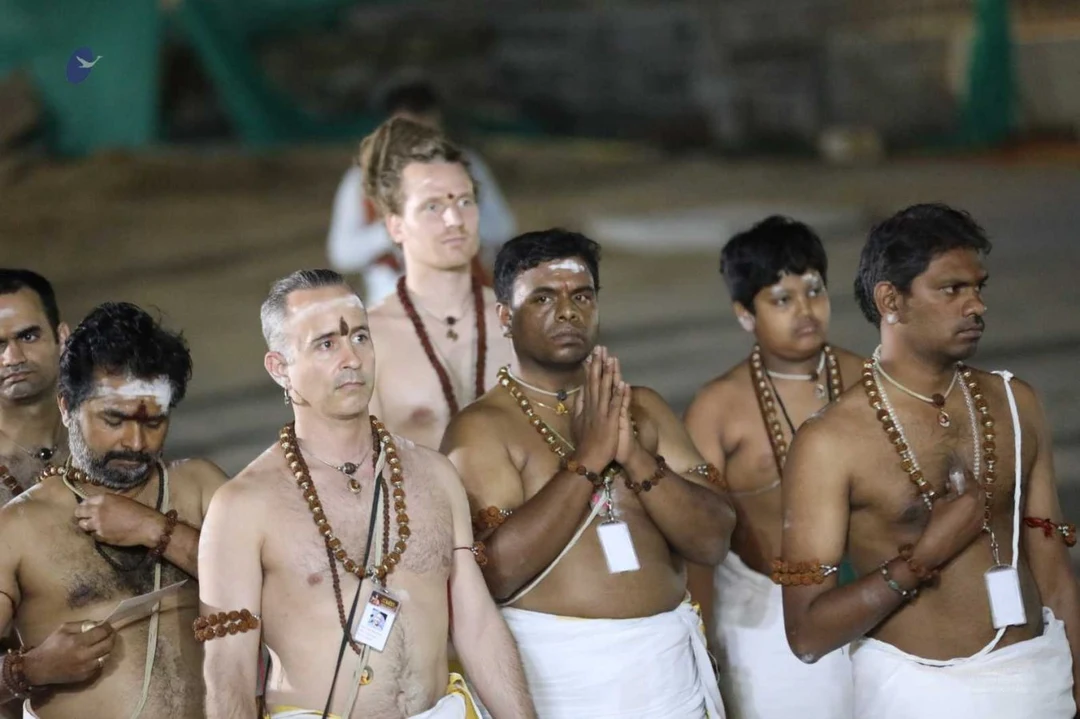
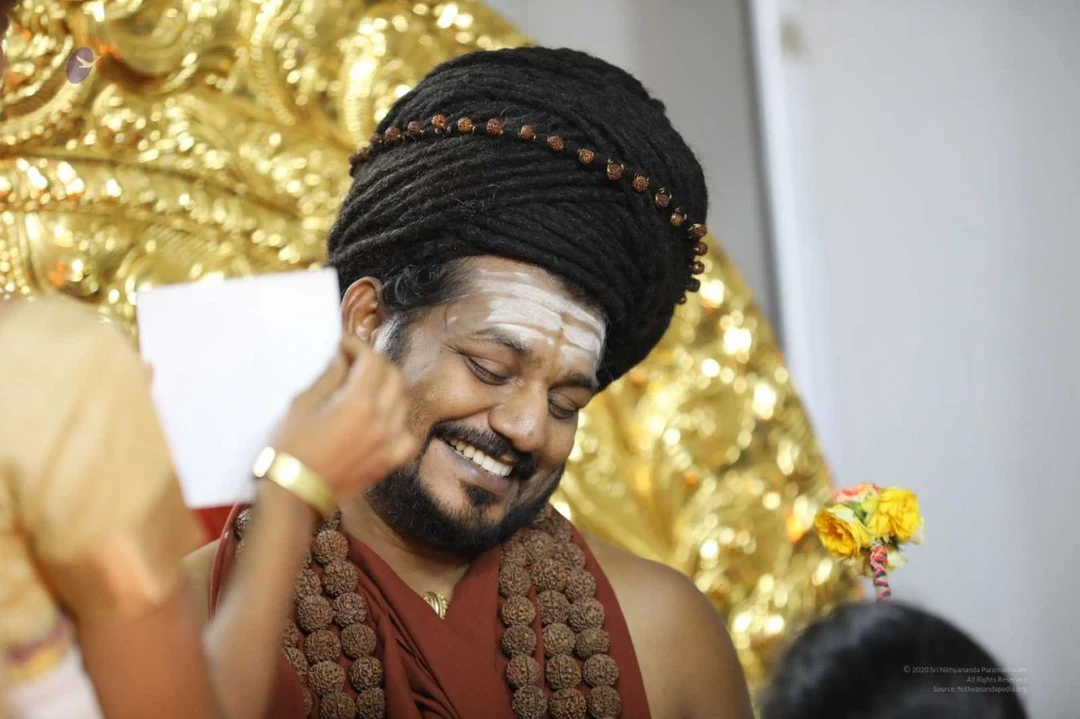
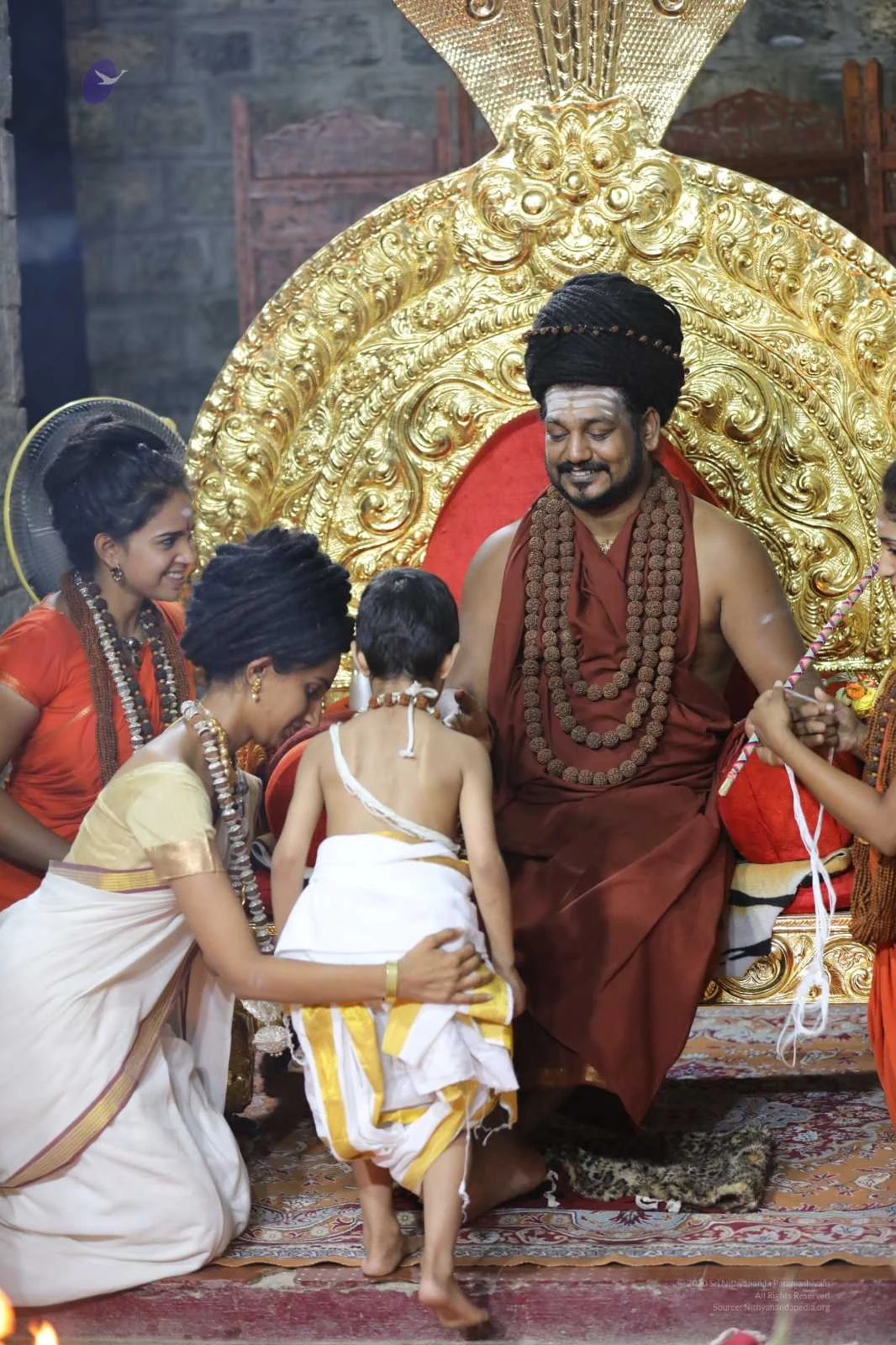
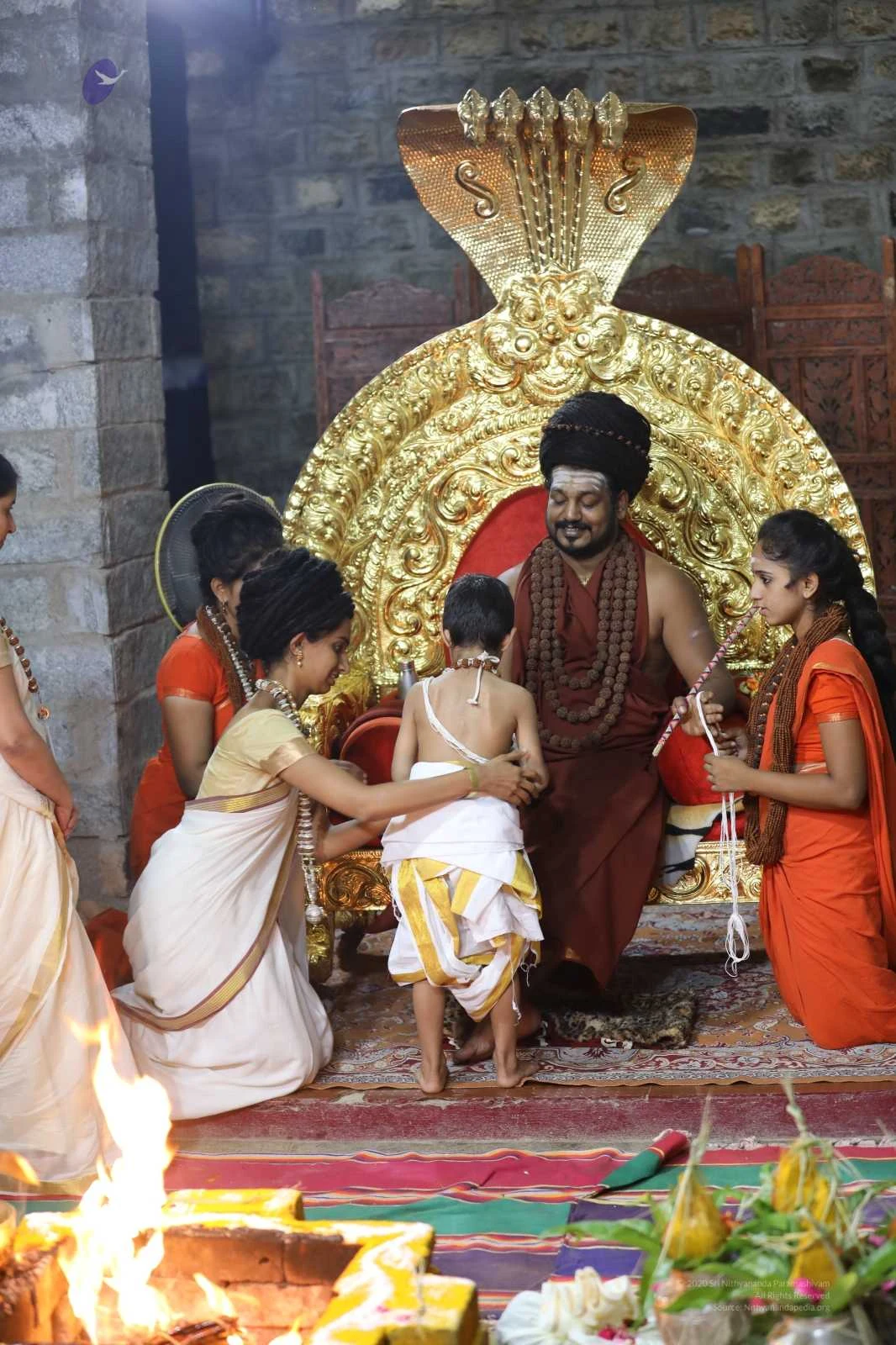
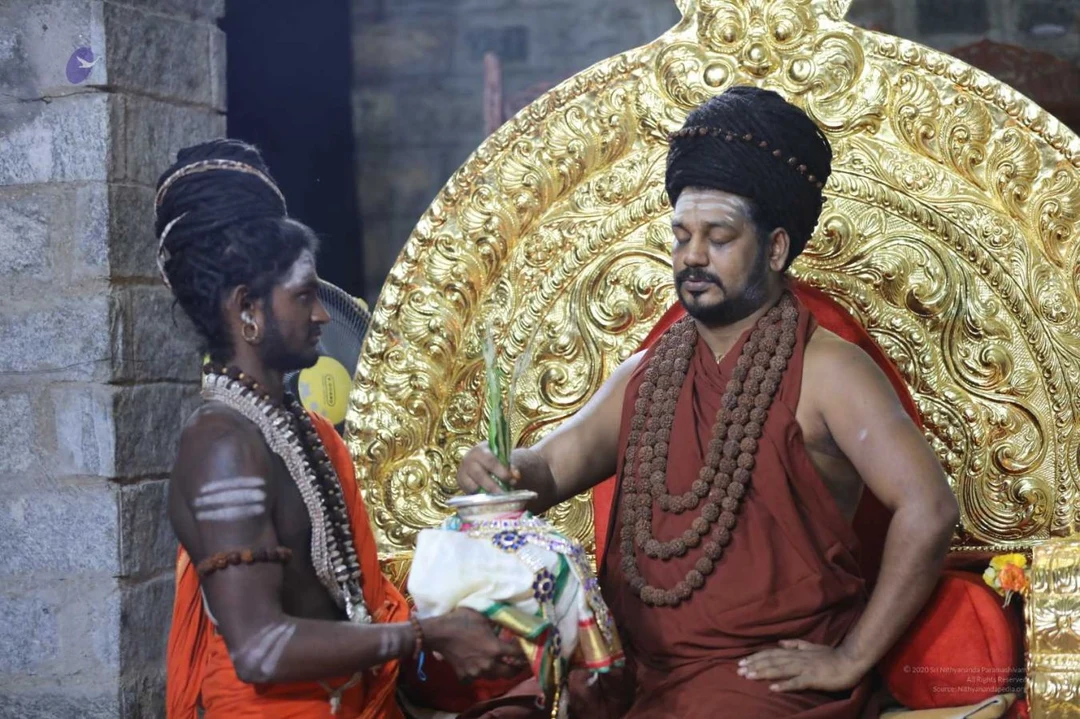
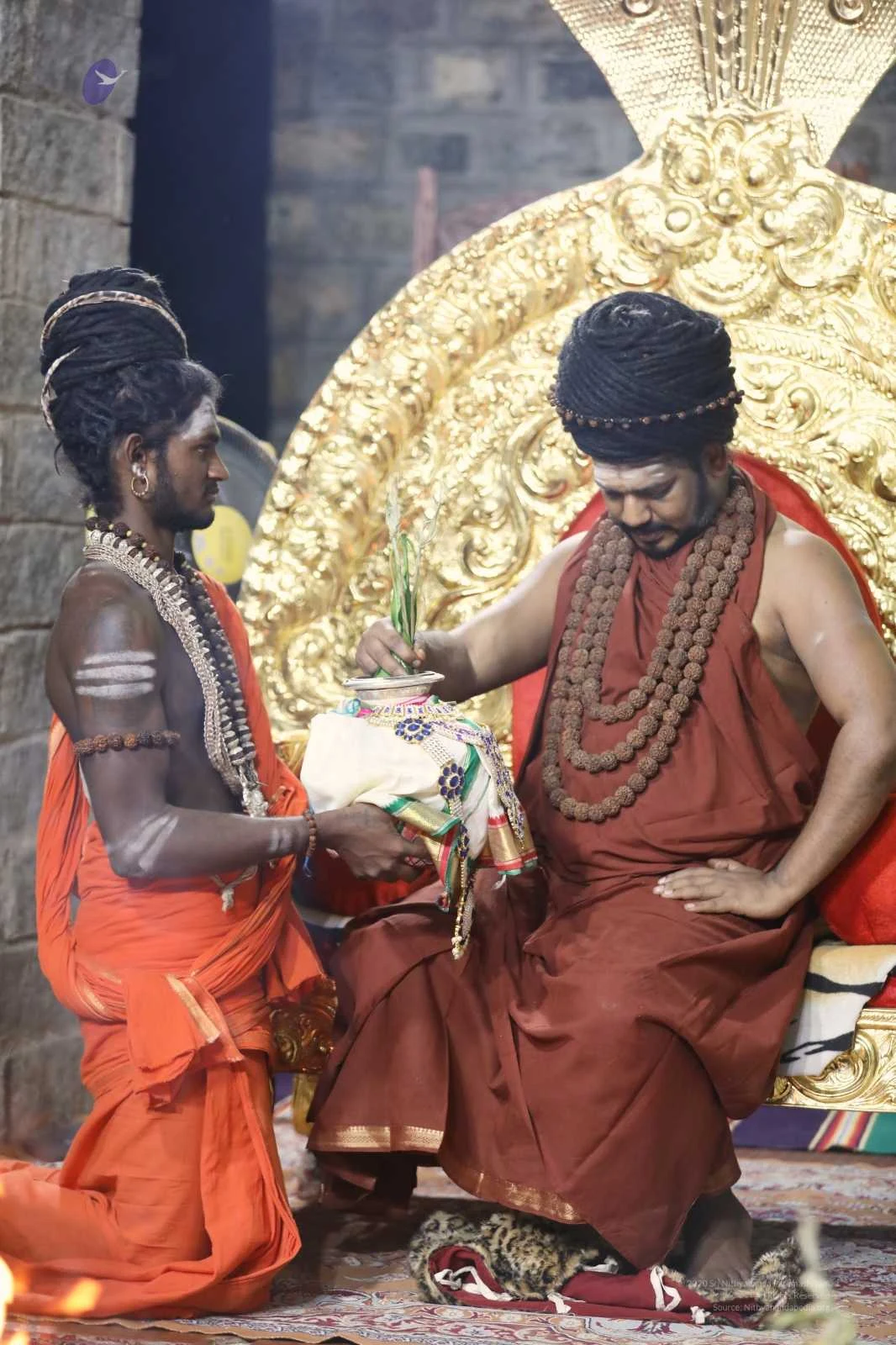
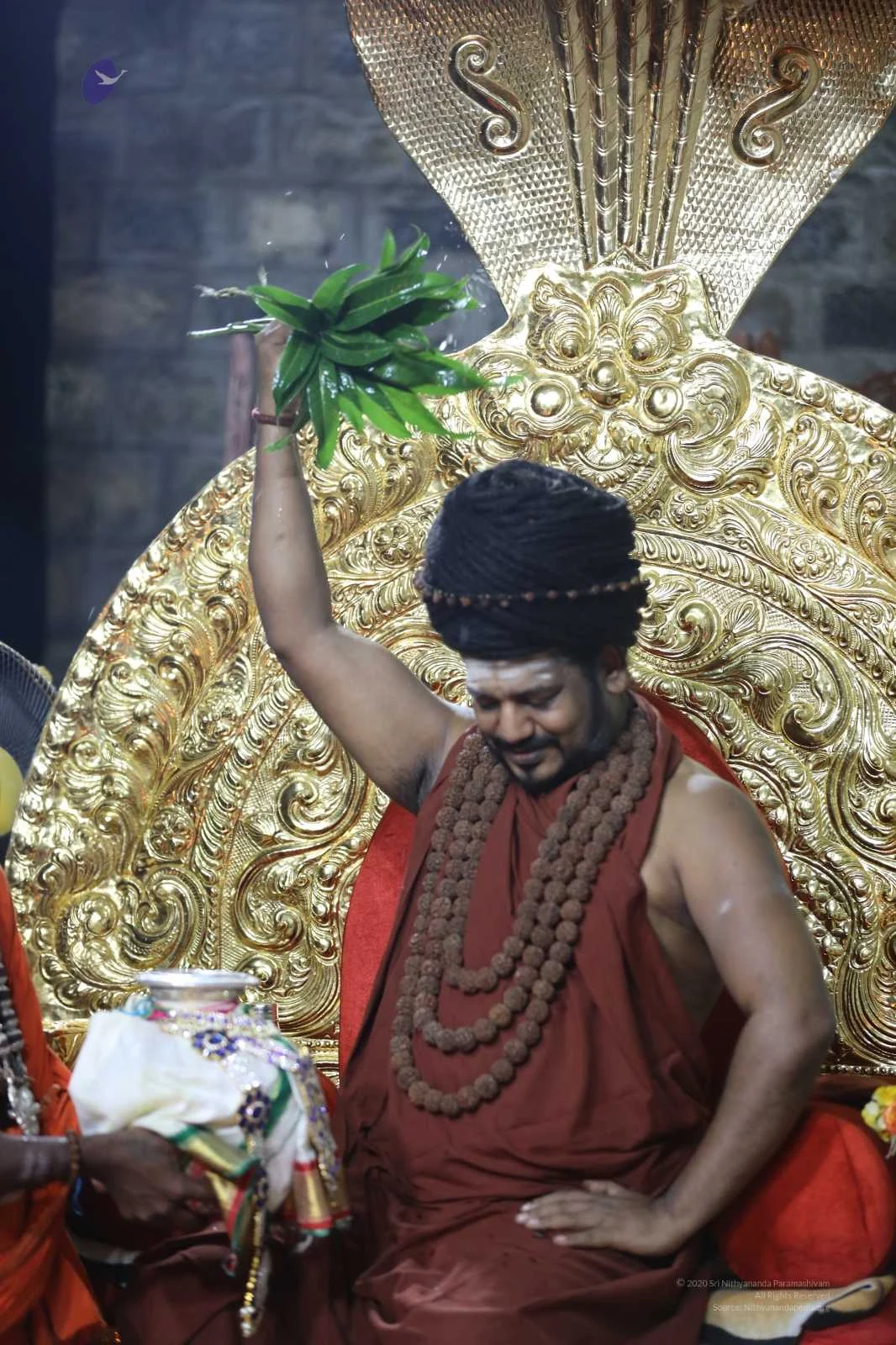
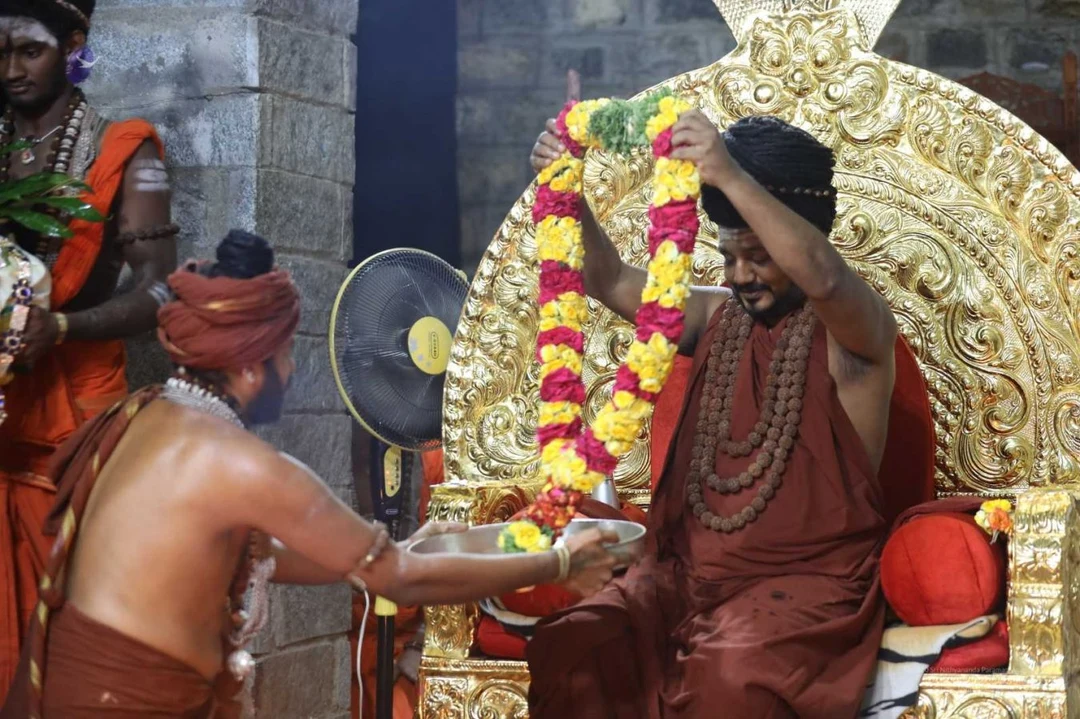
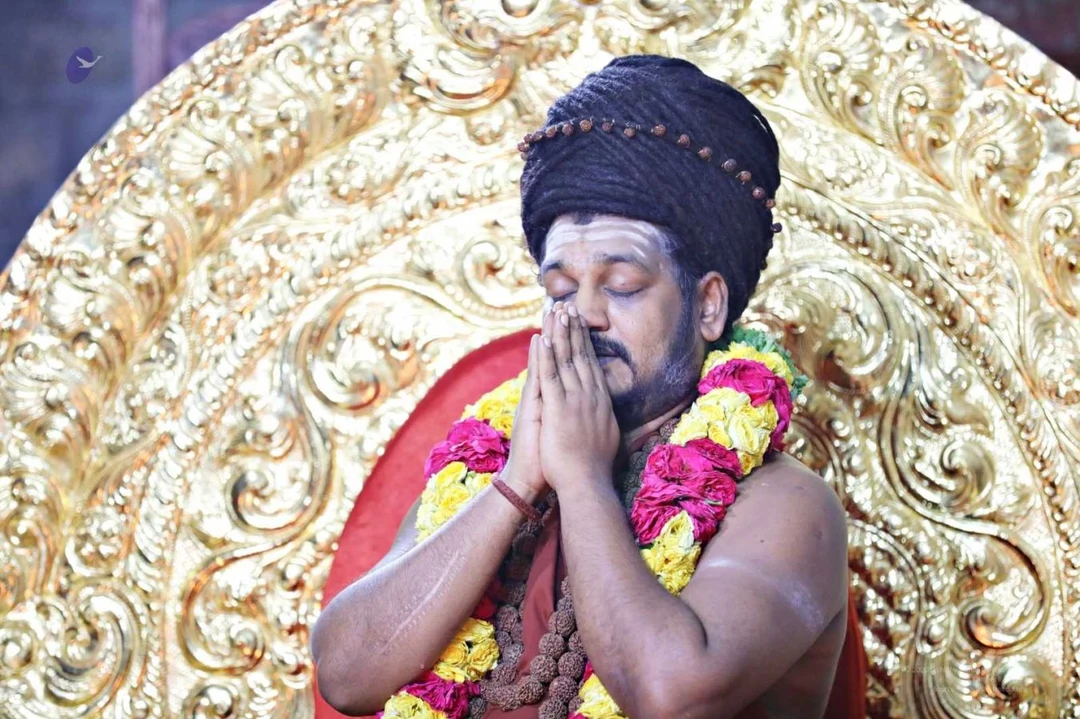
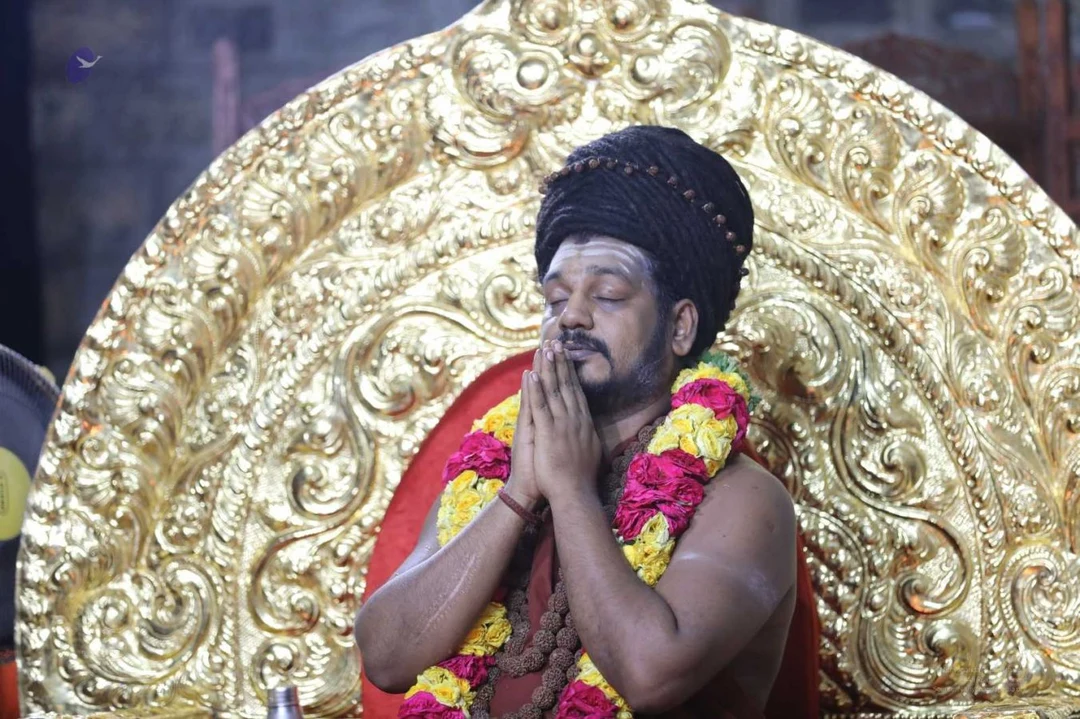
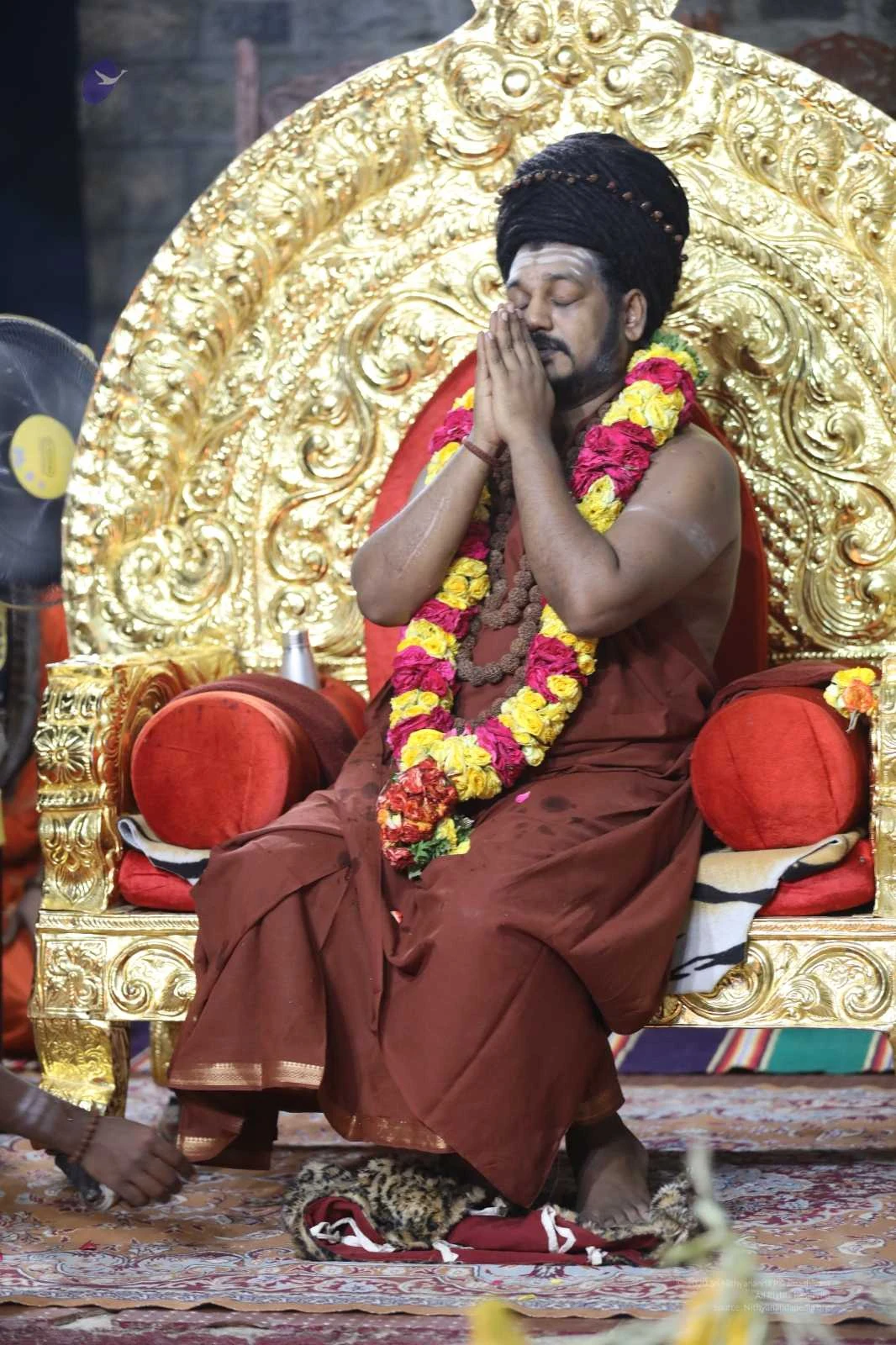
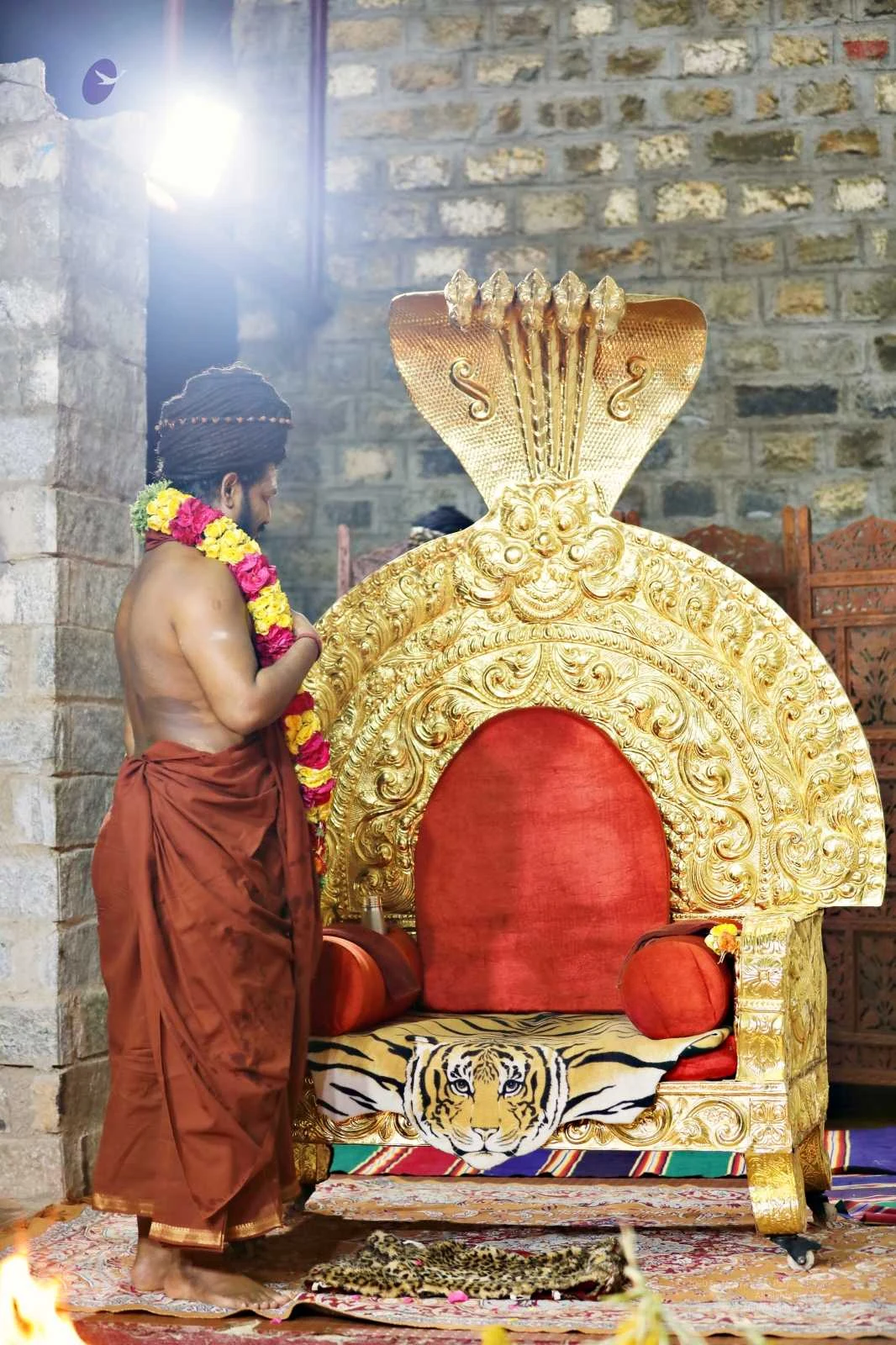
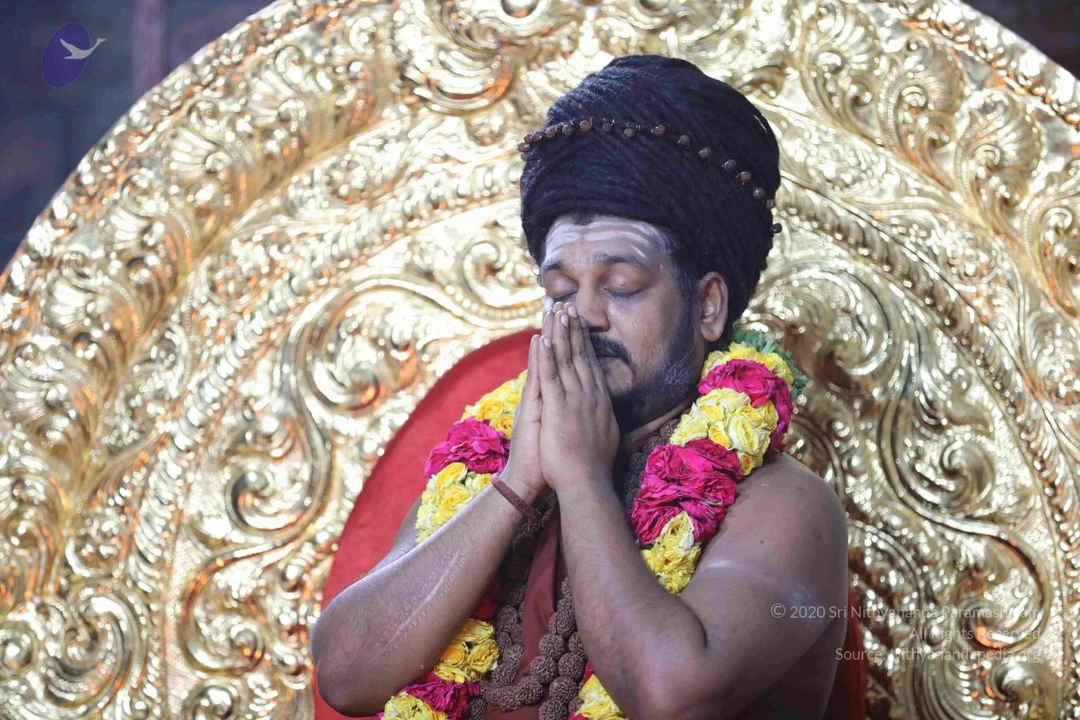
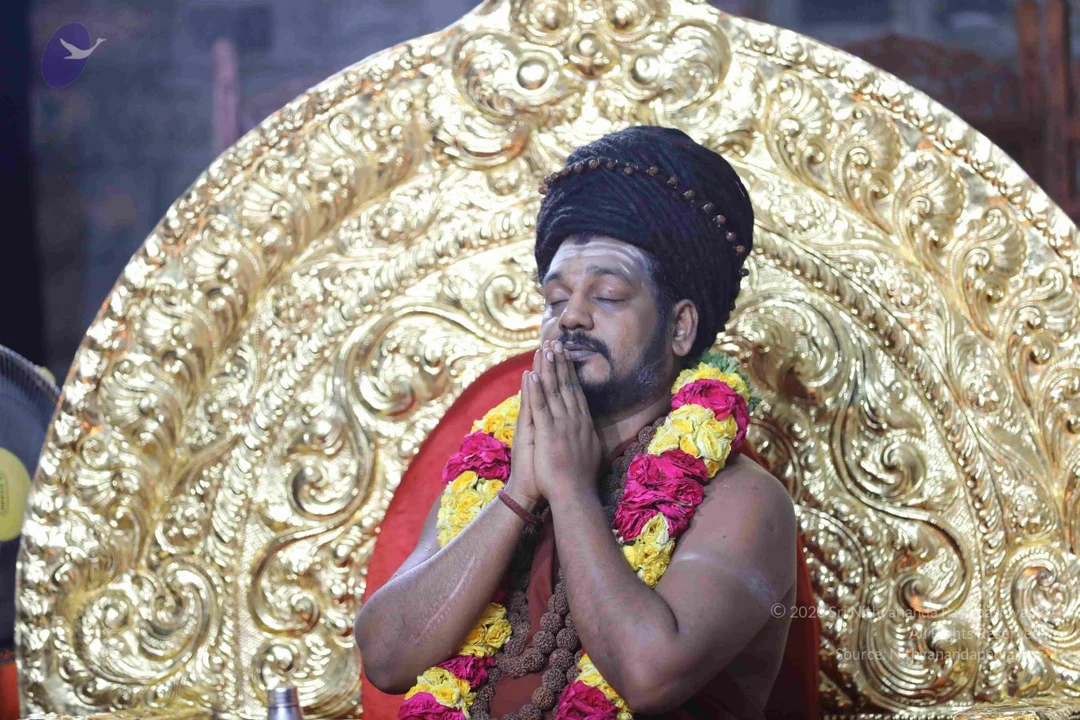
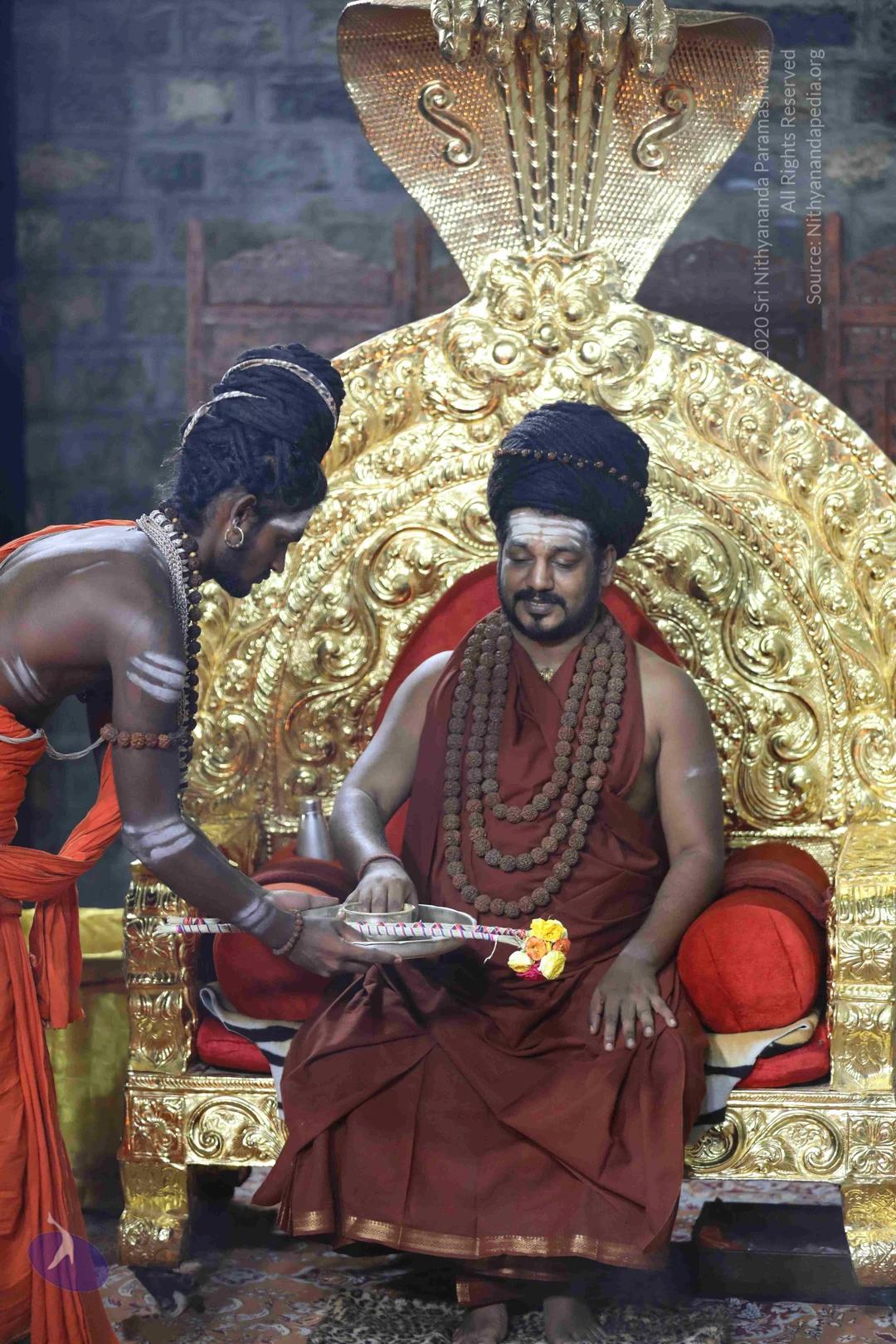
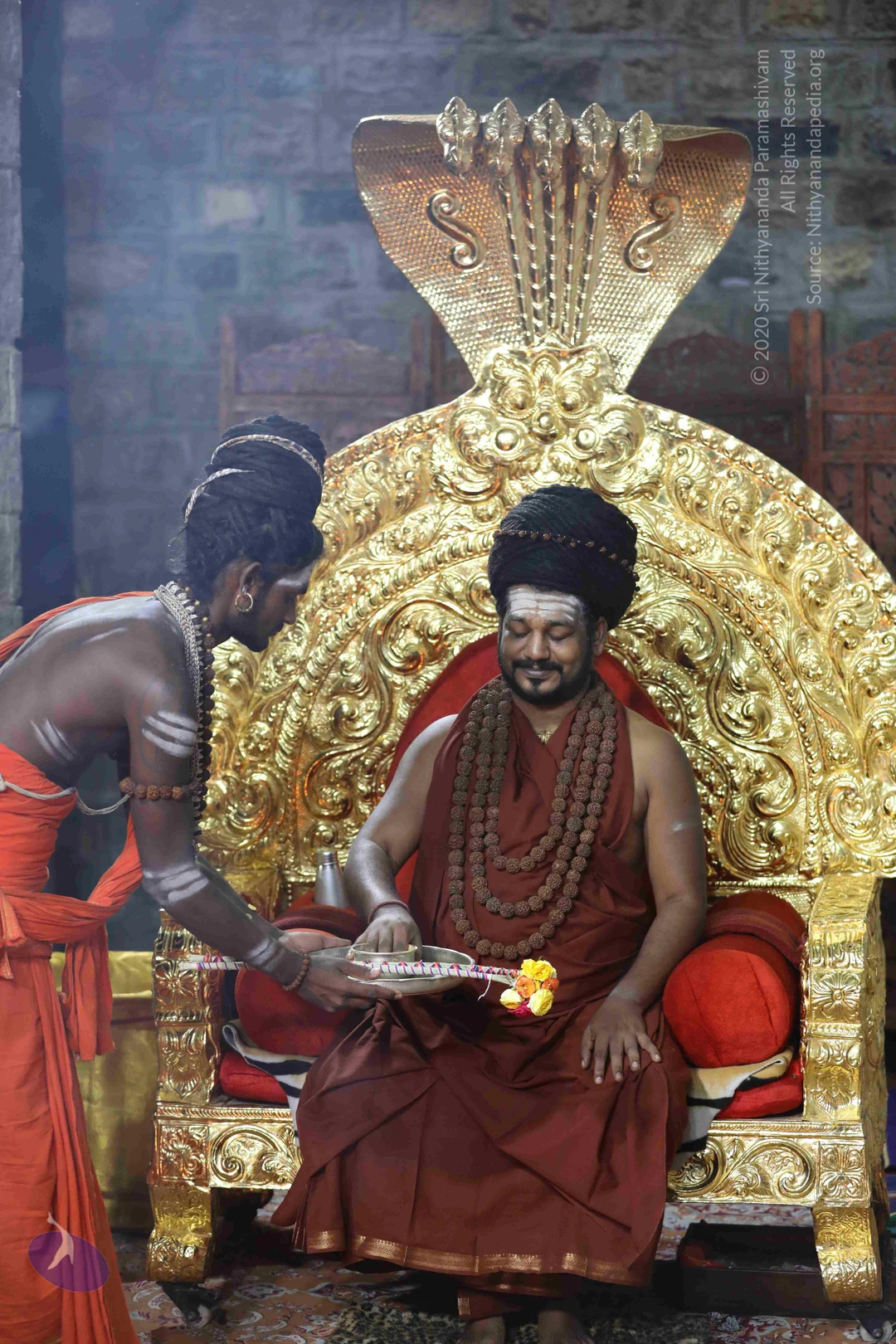
Vidhya Tatva, Vishesha Deeksha, Jnana Pada -Initiation || Day 11 of Mahasadashivoham || Go Mandir Inauguration Pujas at Trishulam Aadheenam ||

Dated photos
146
Source pages
1
Media
1
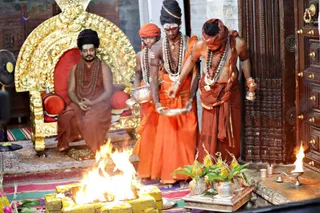
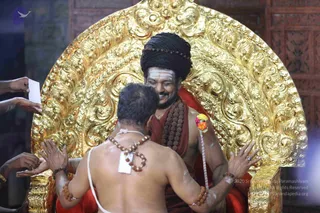
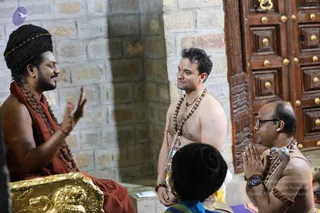
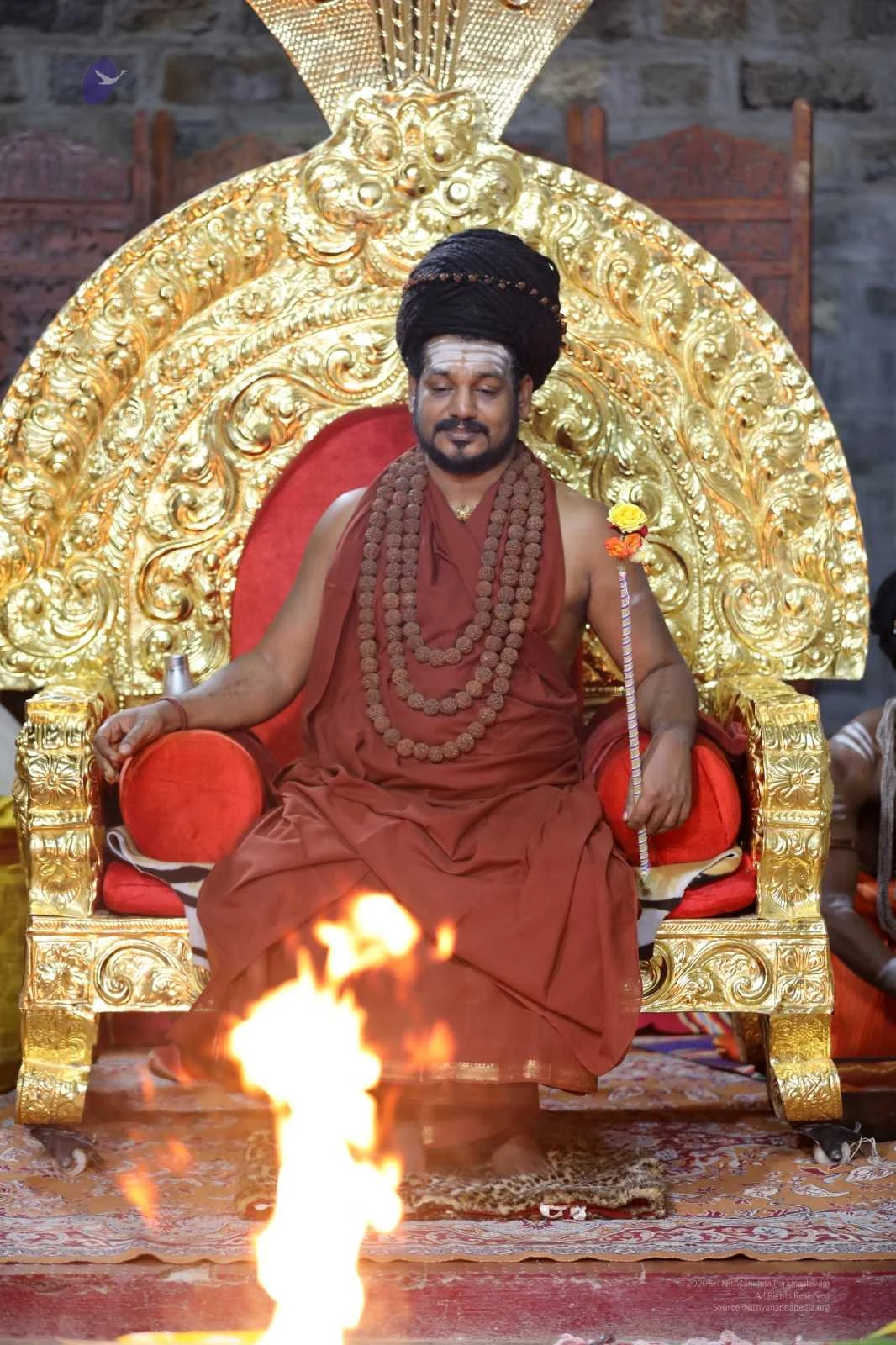
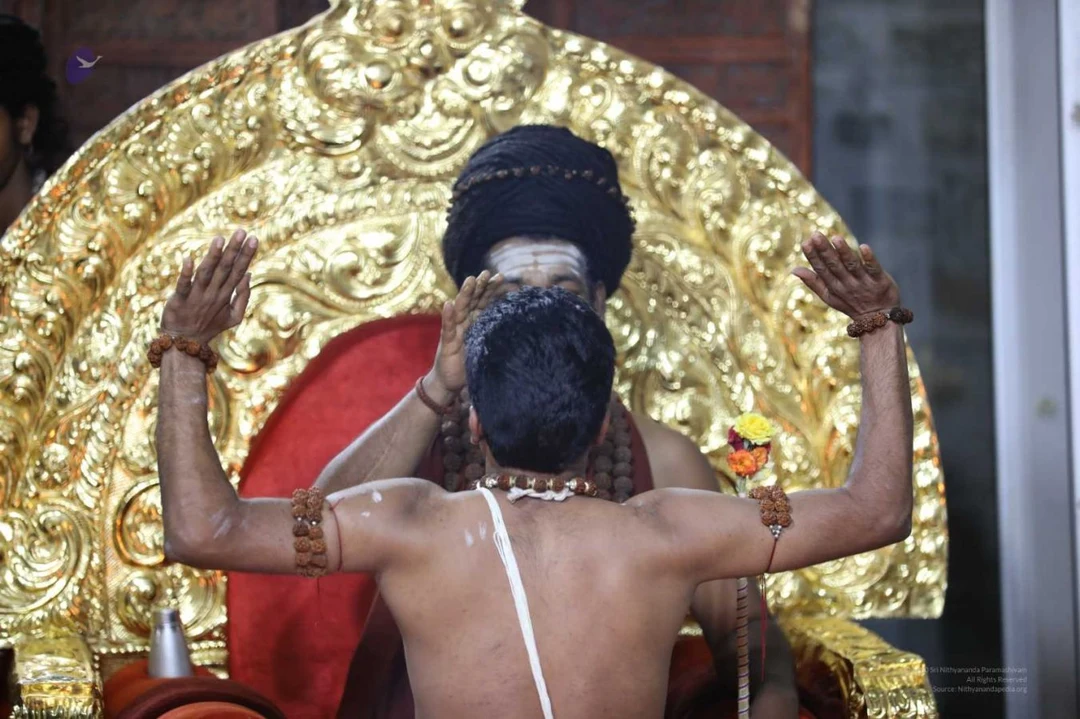
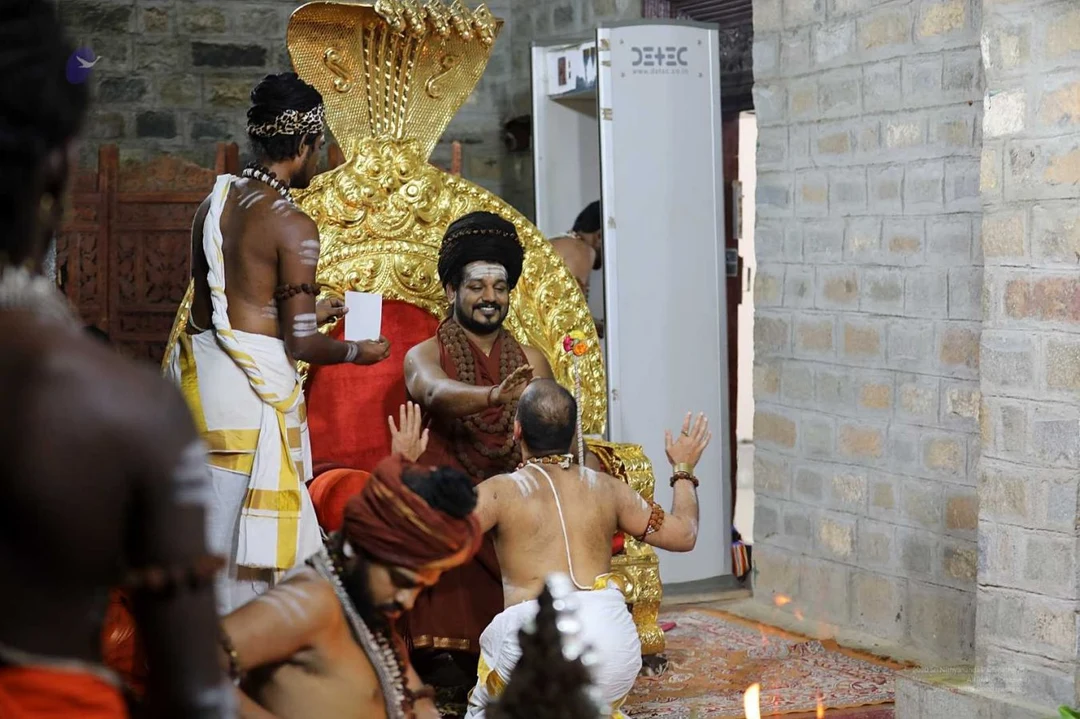
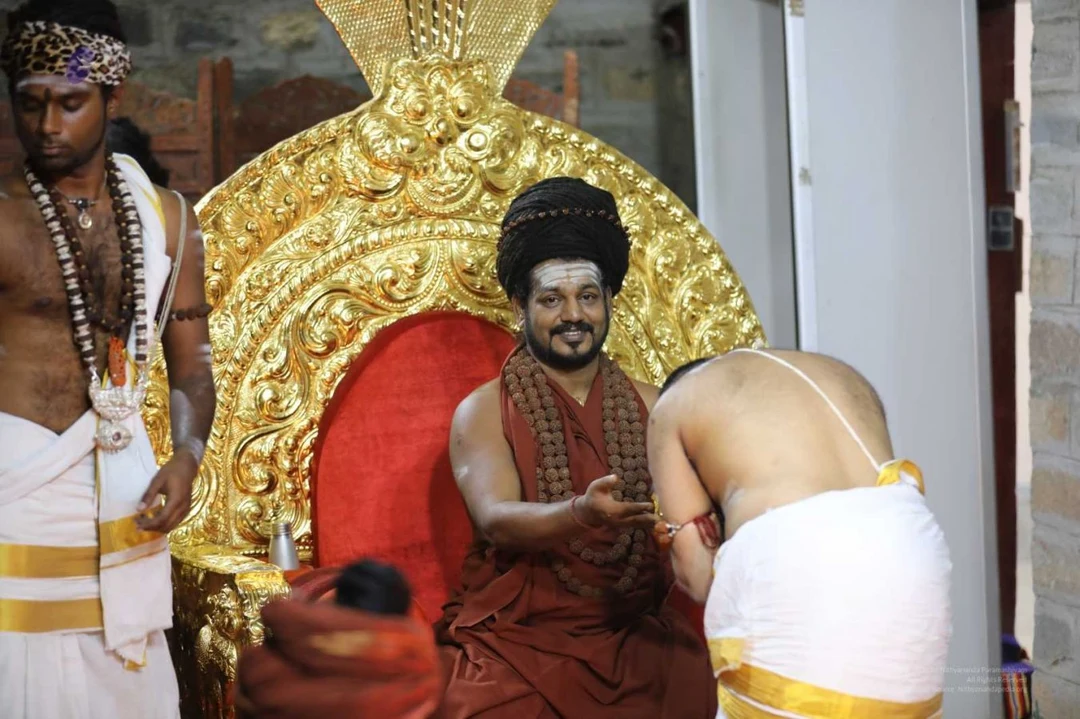
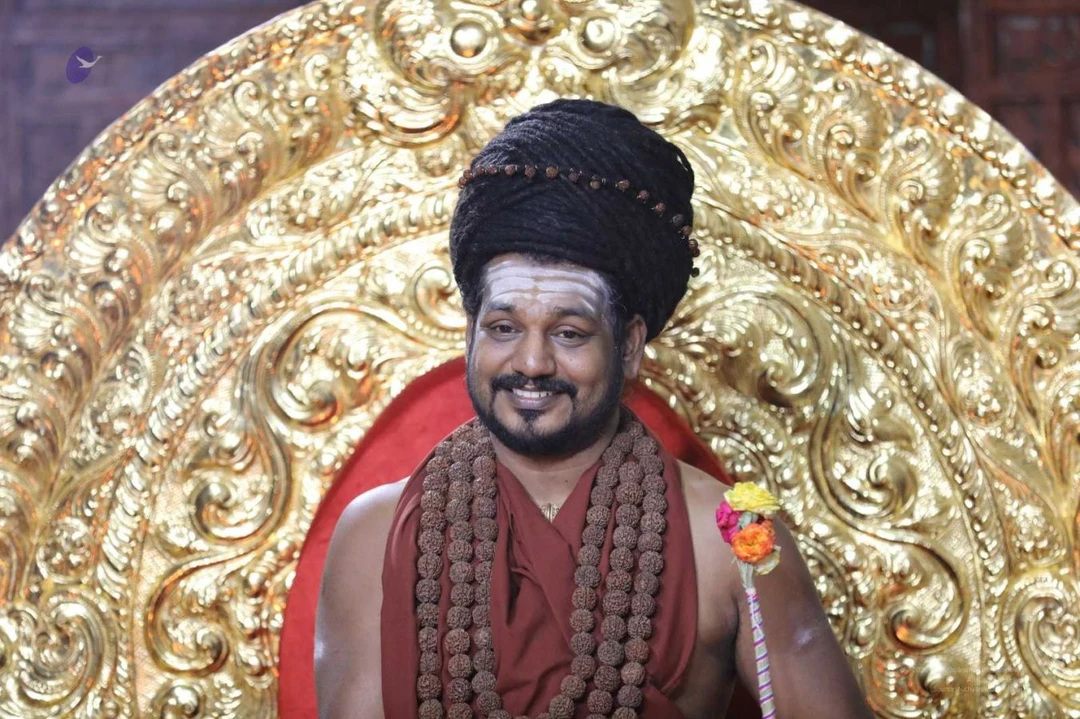
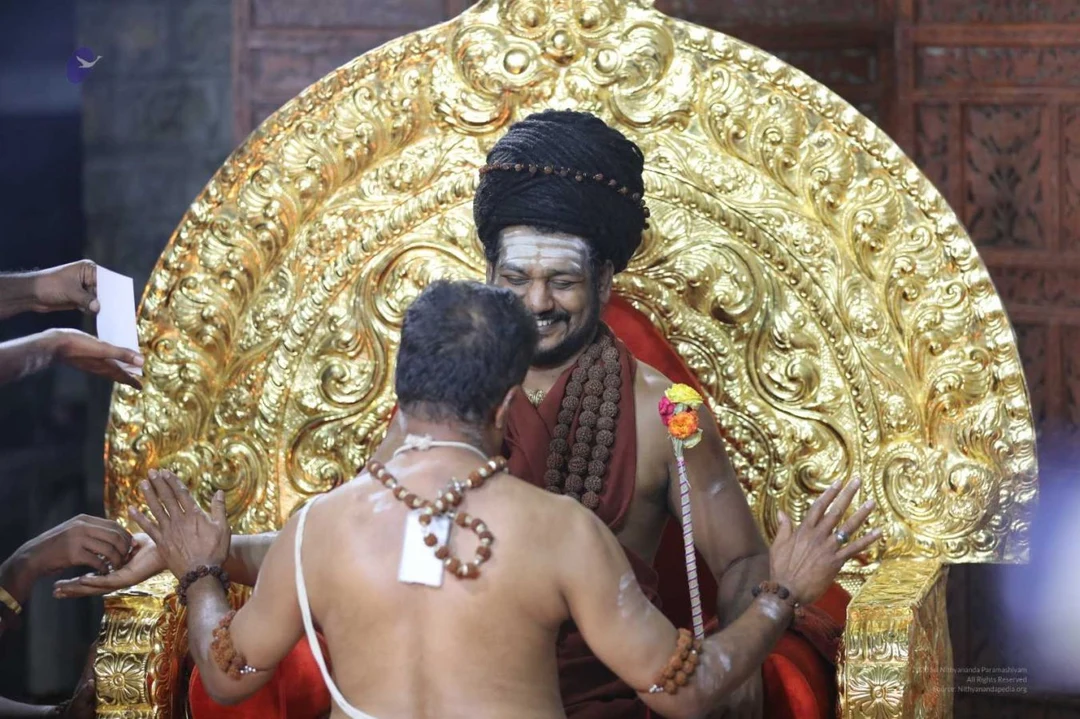
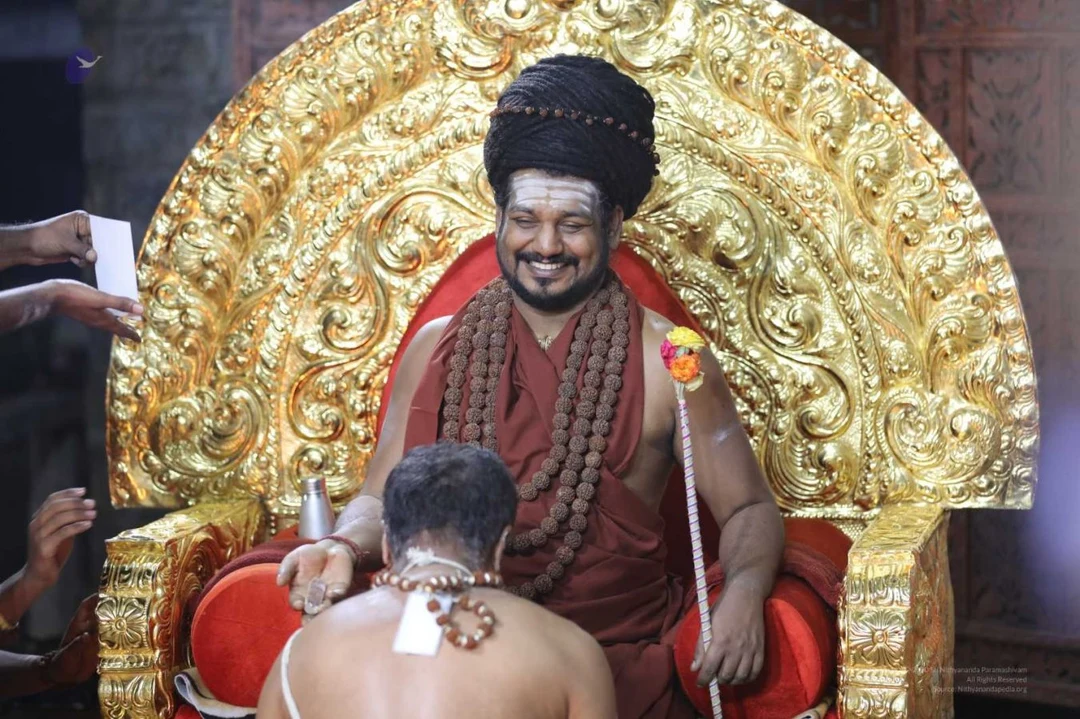
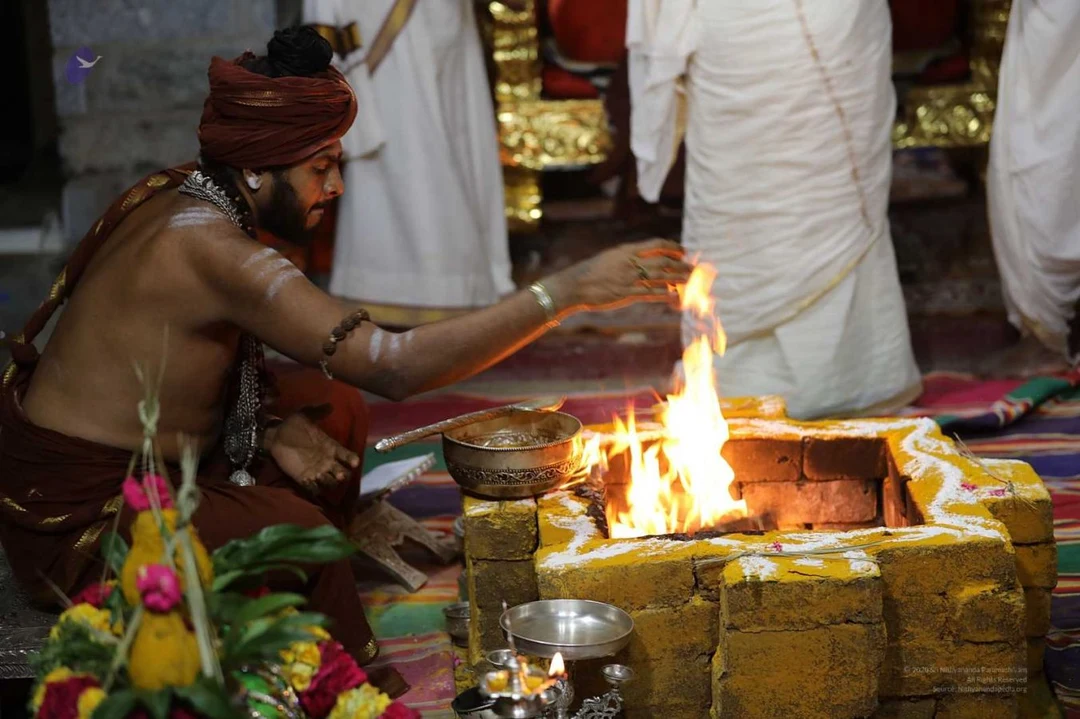
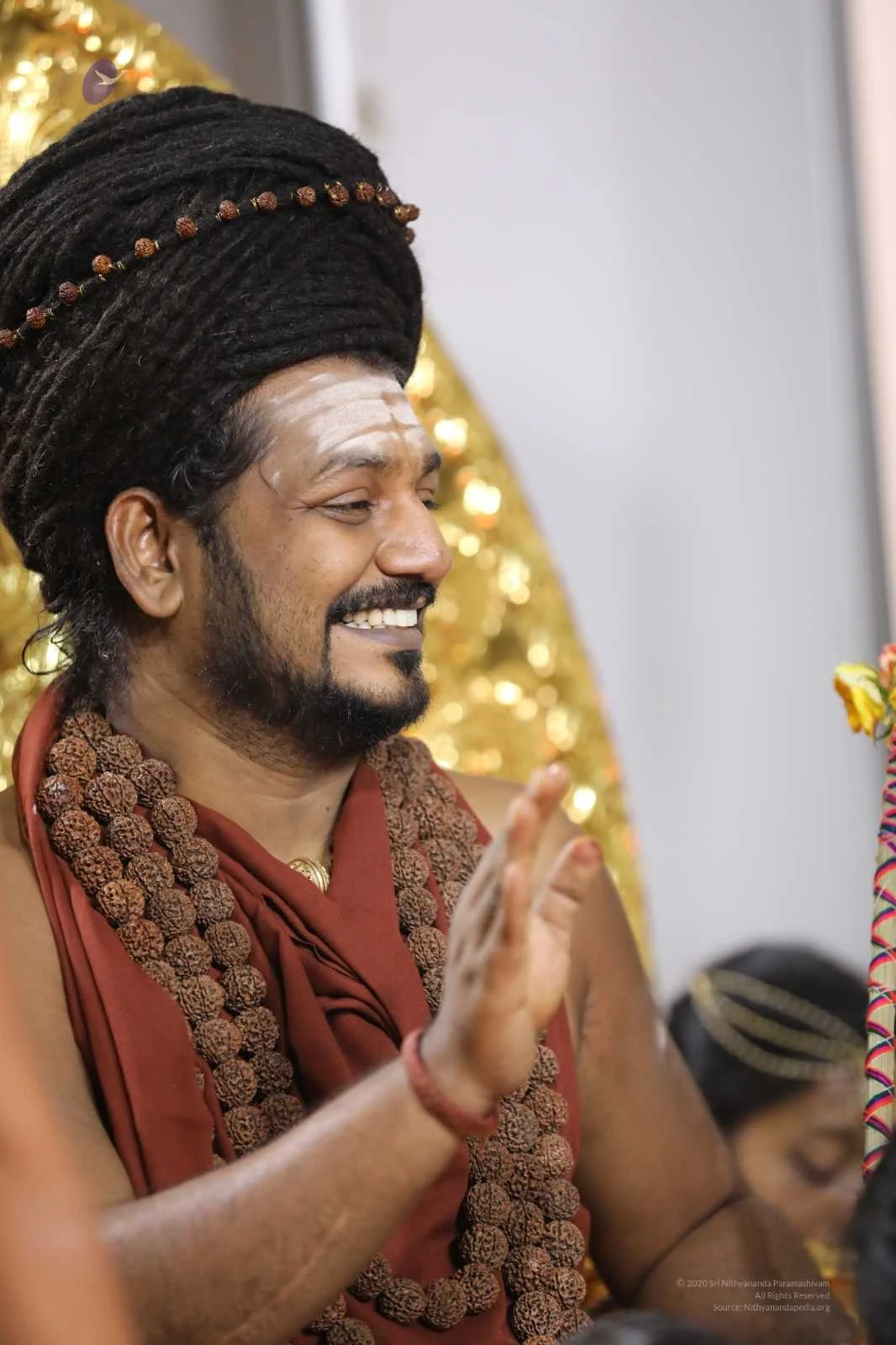
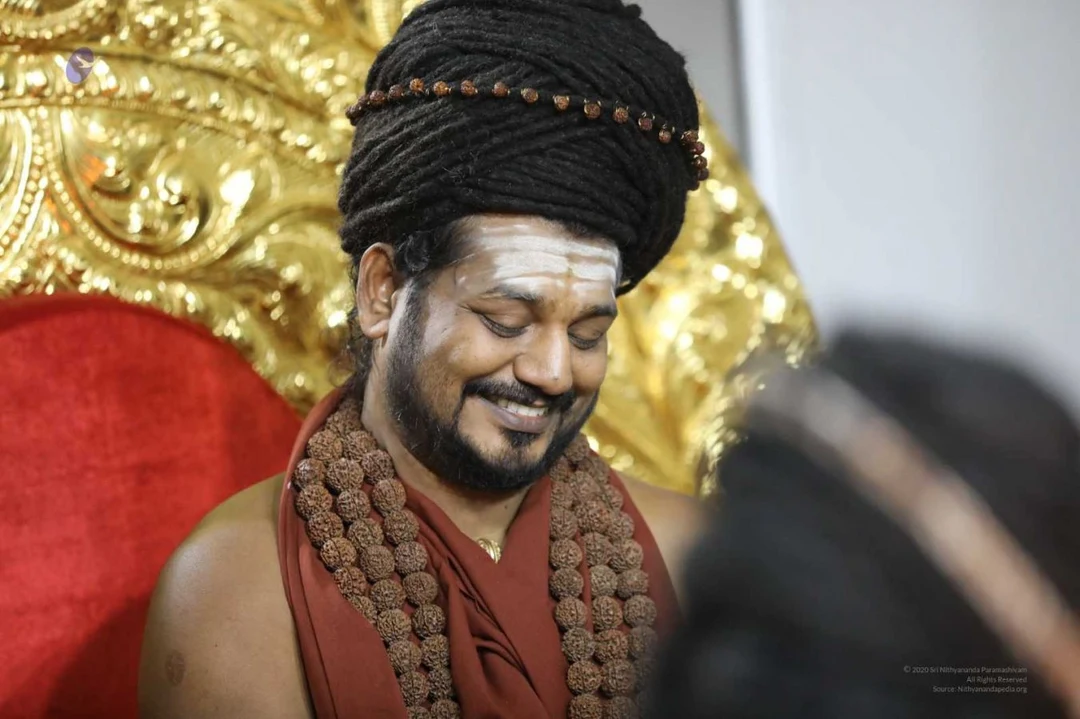
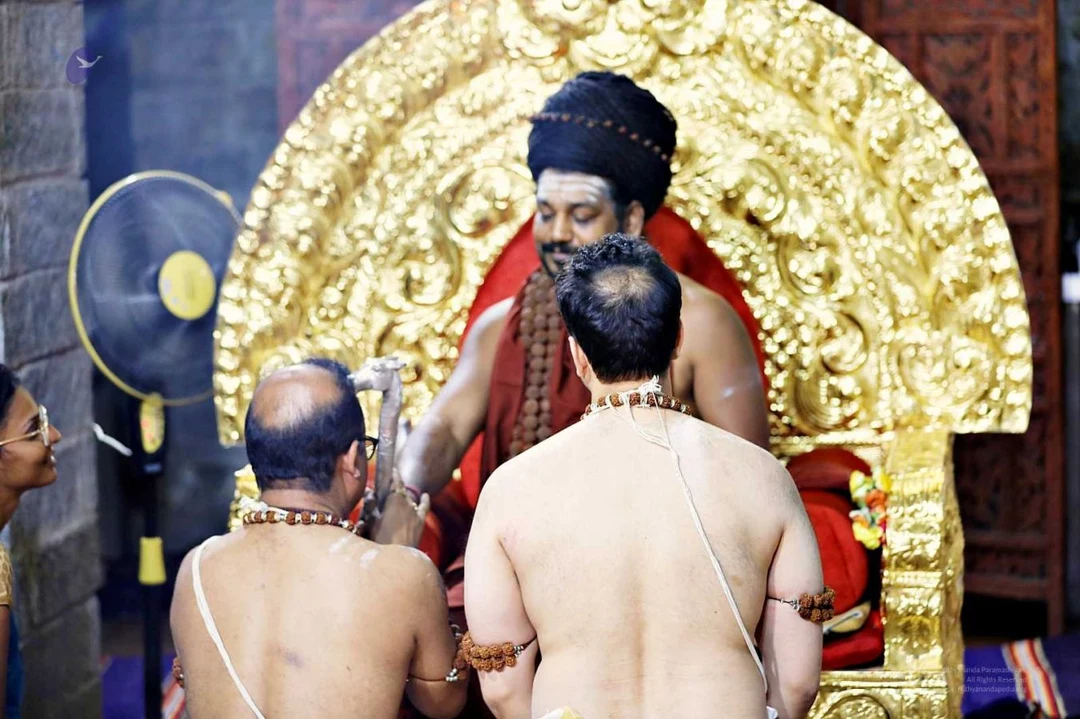
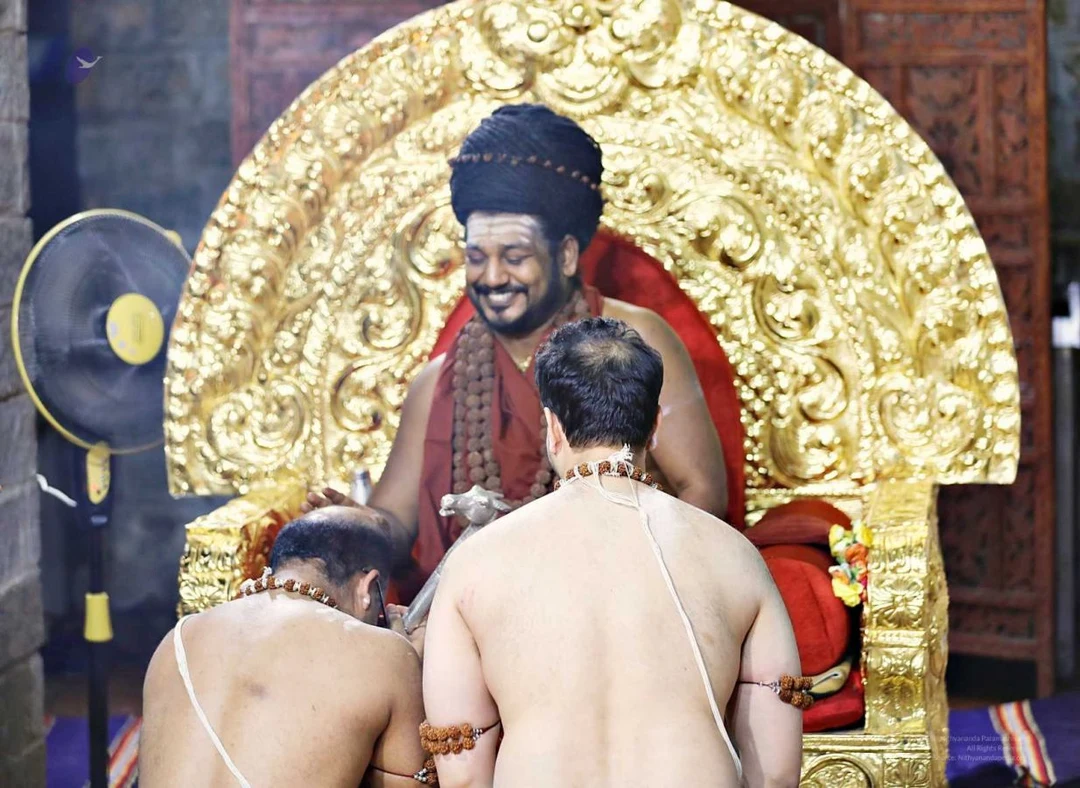
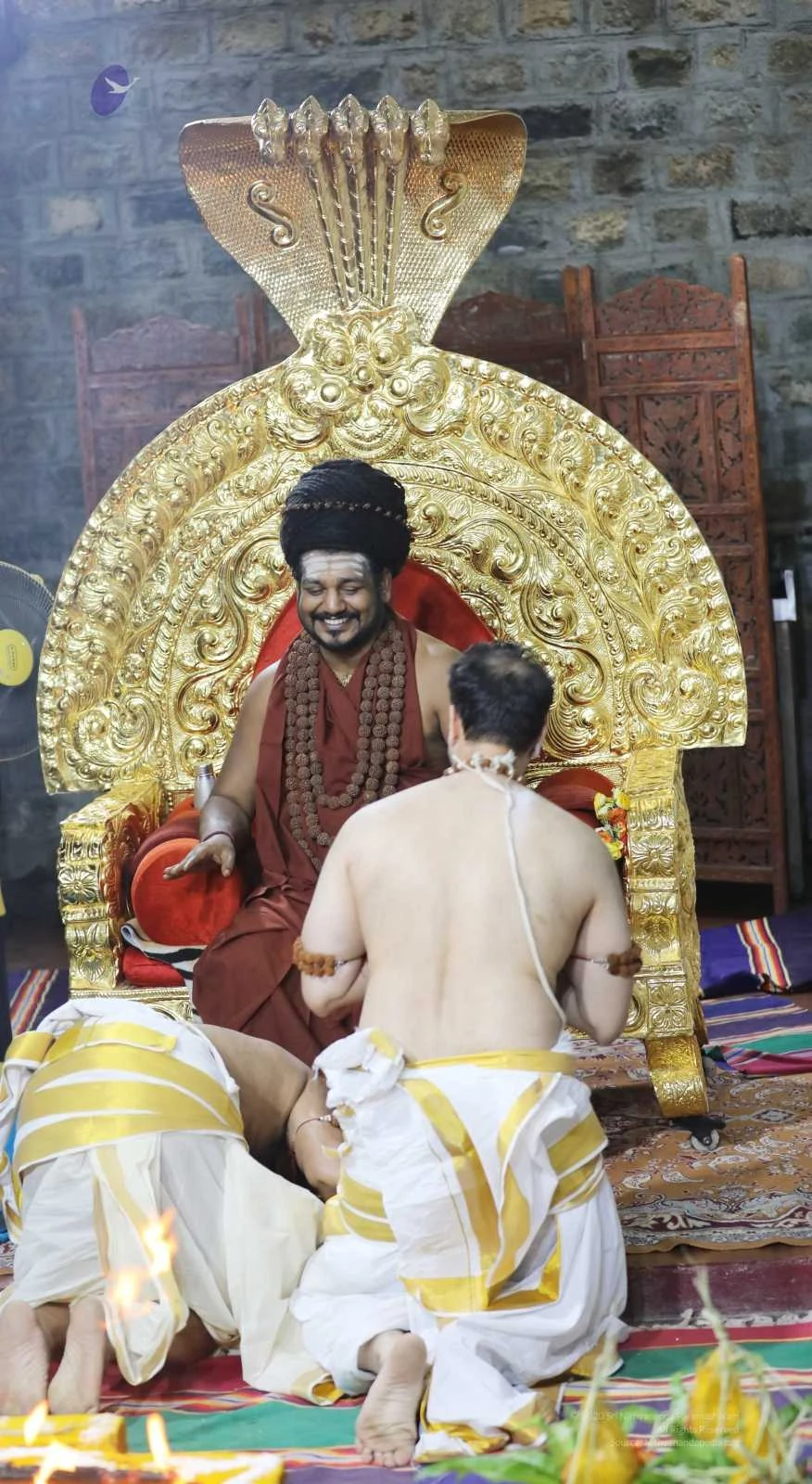
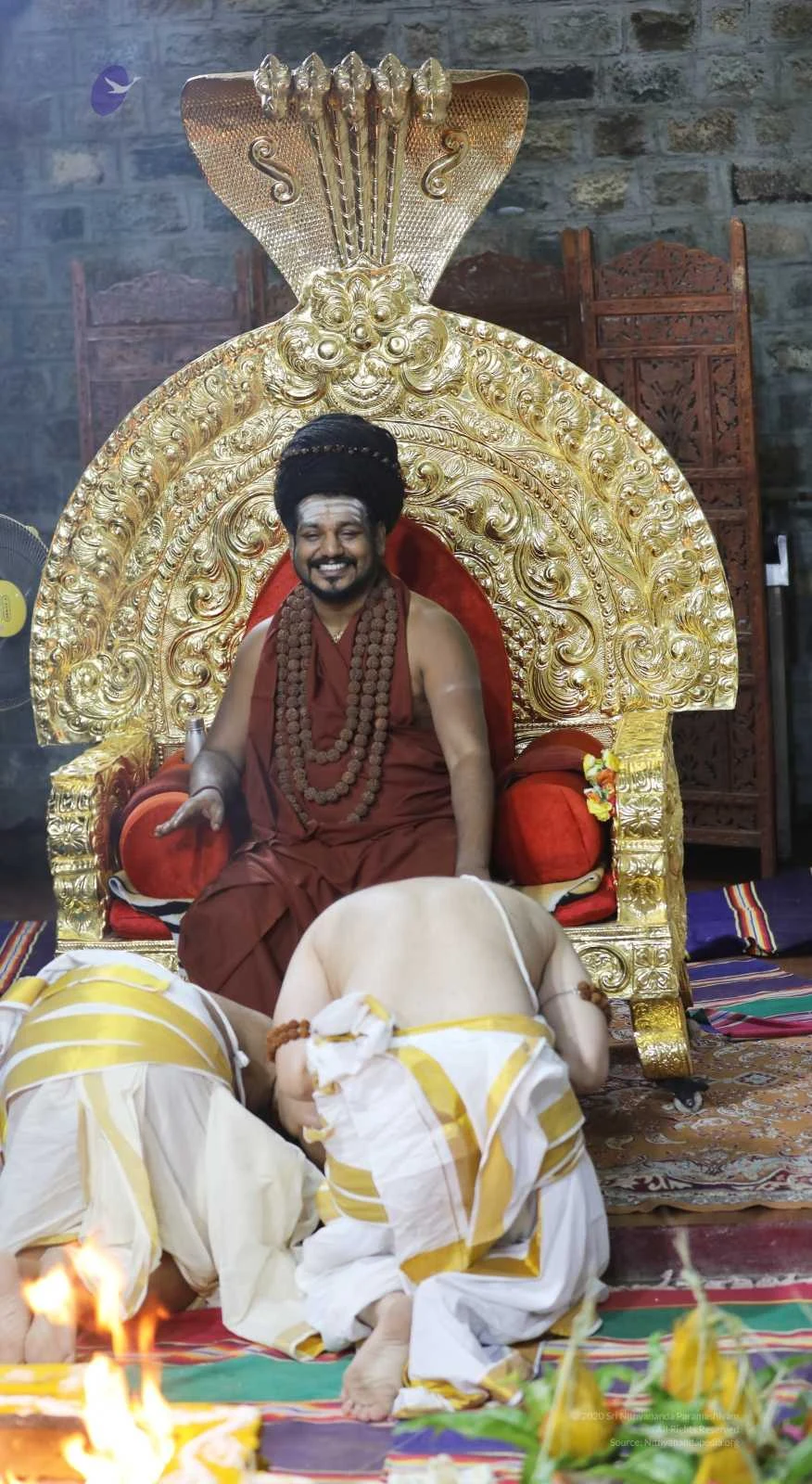
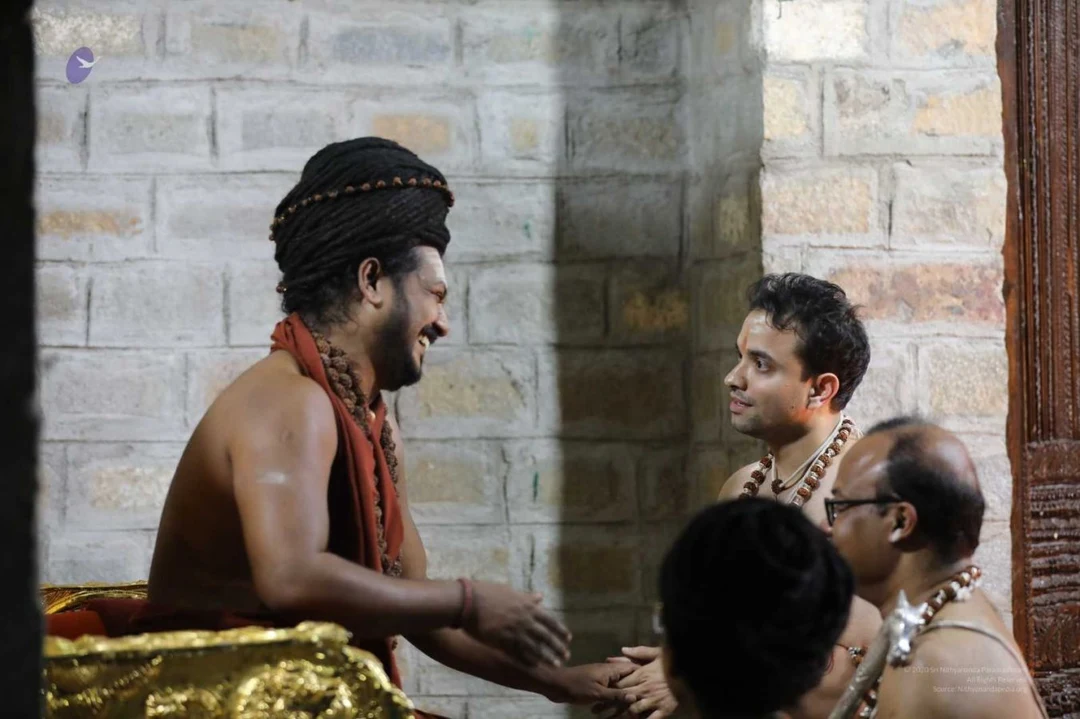
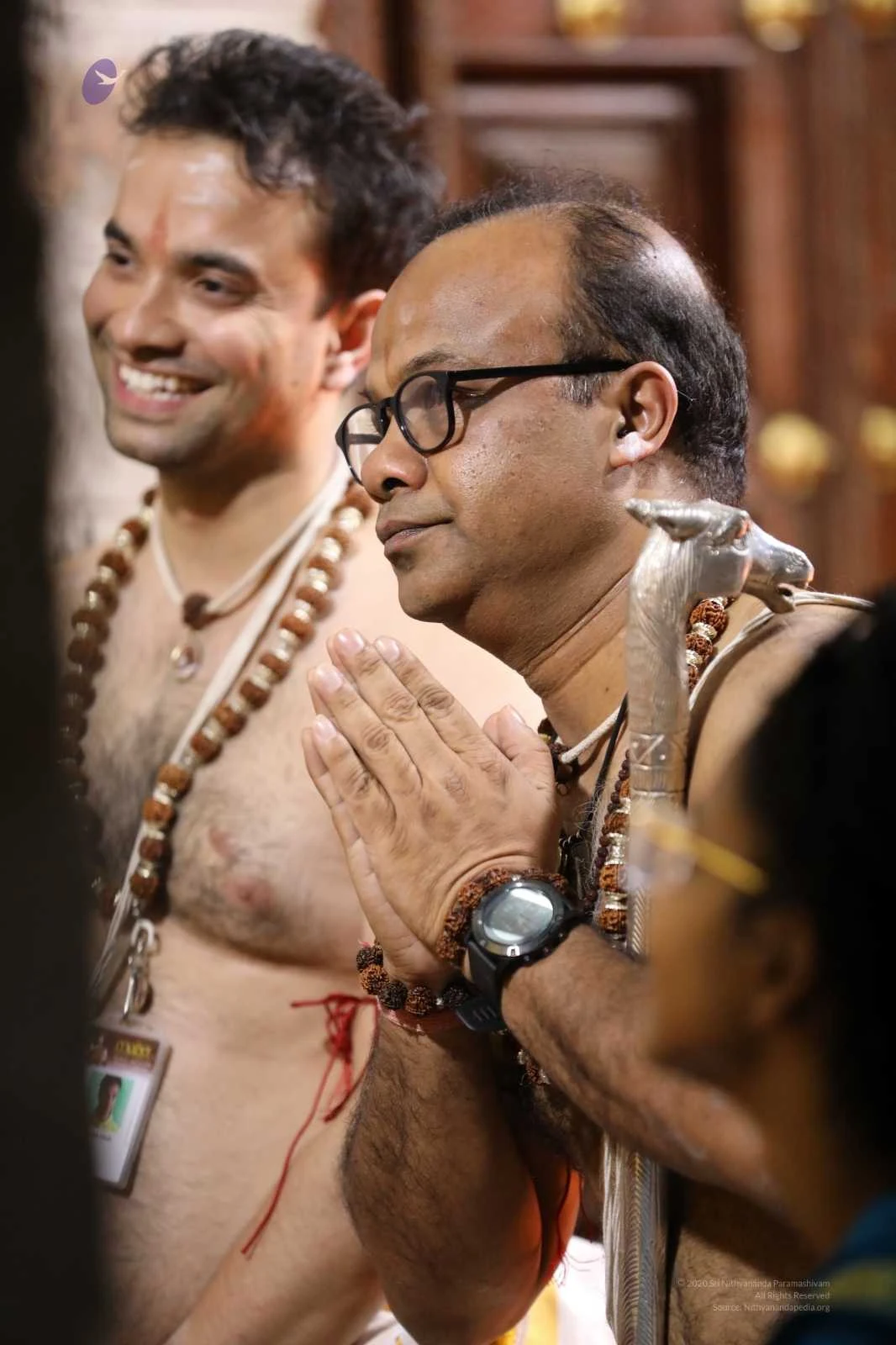
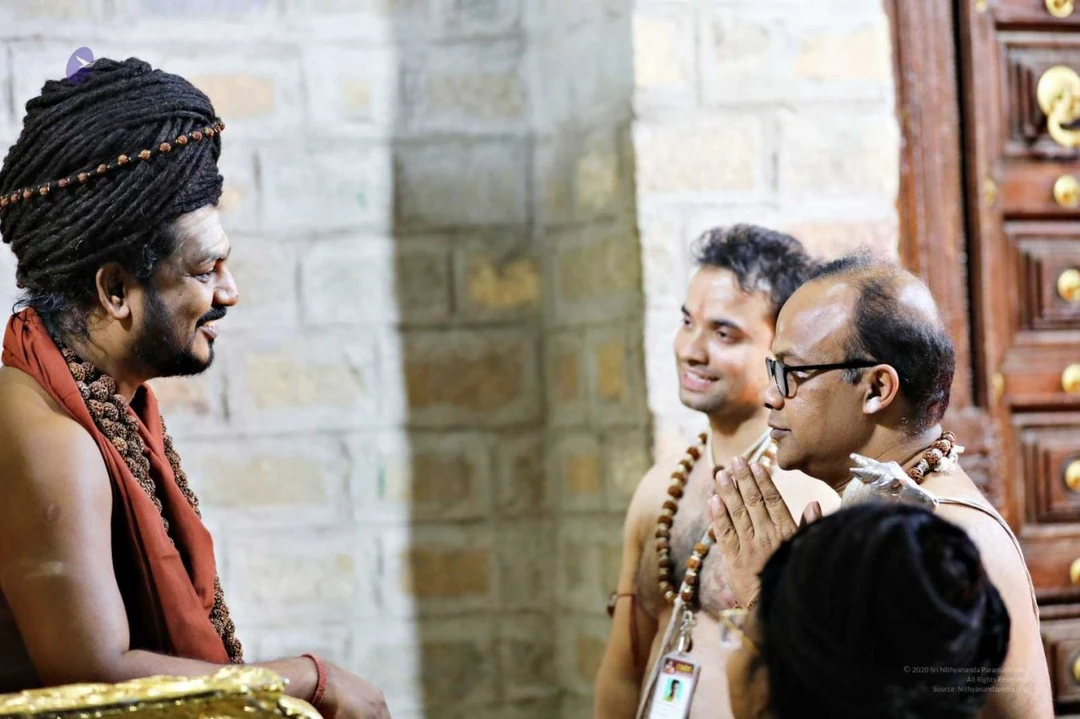
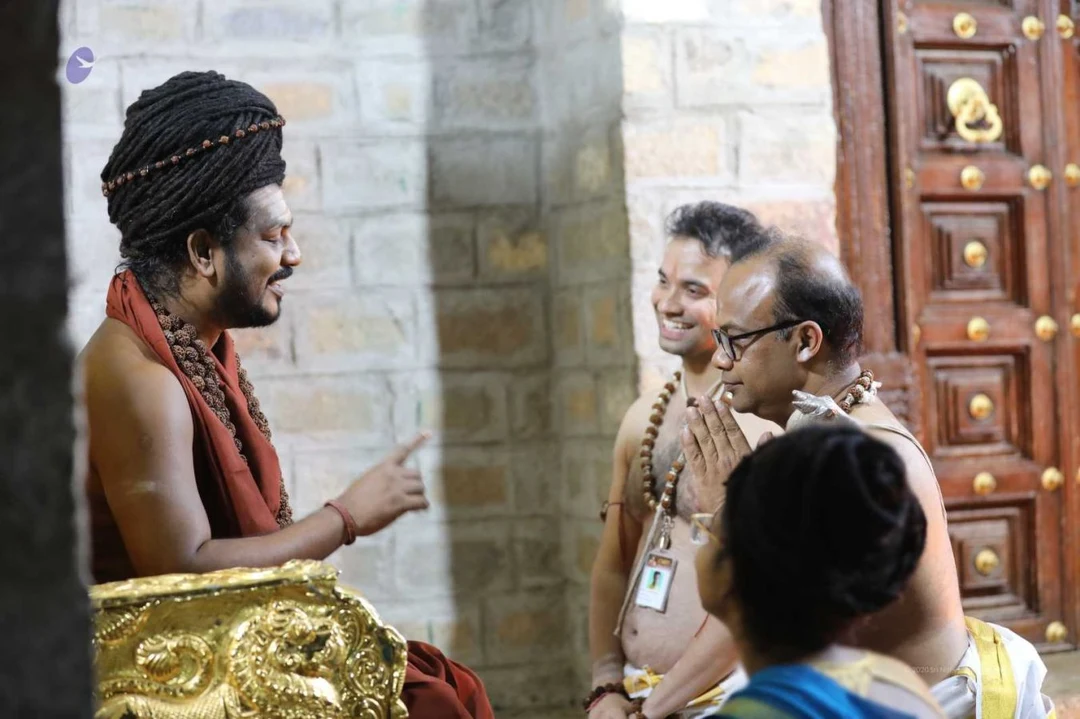
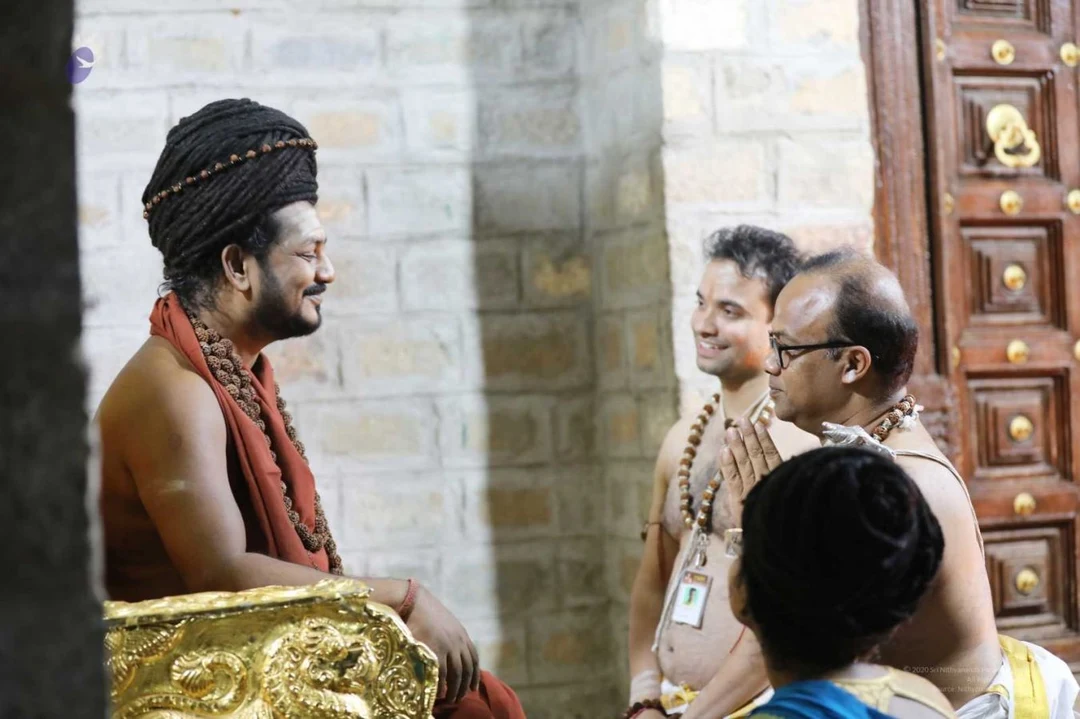
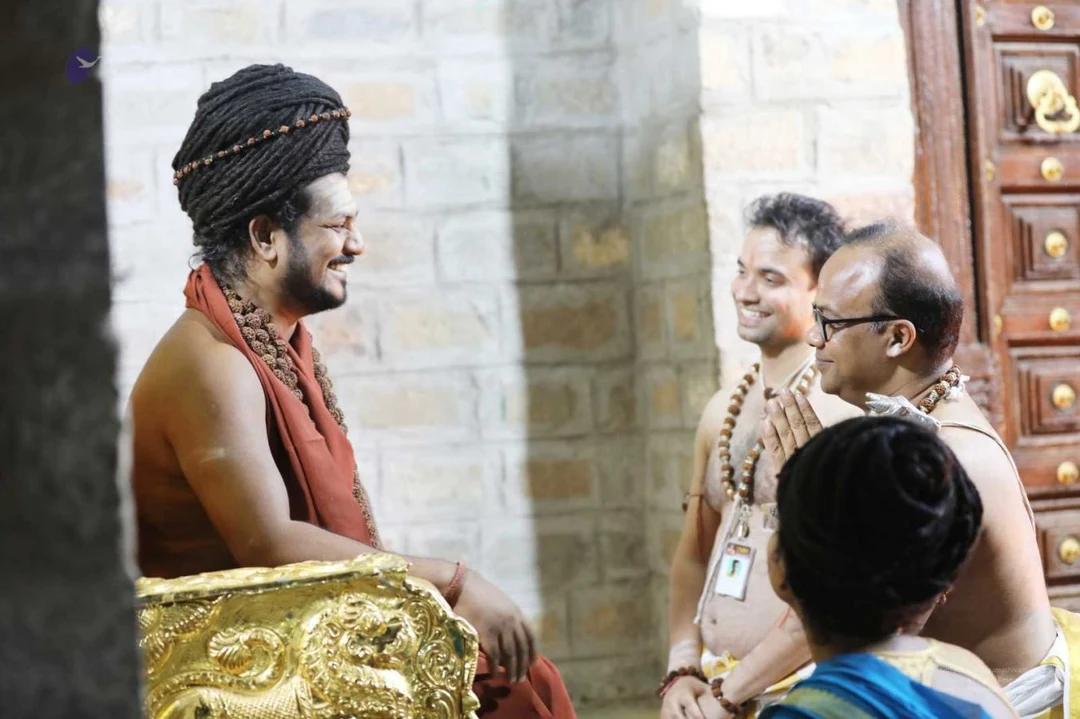
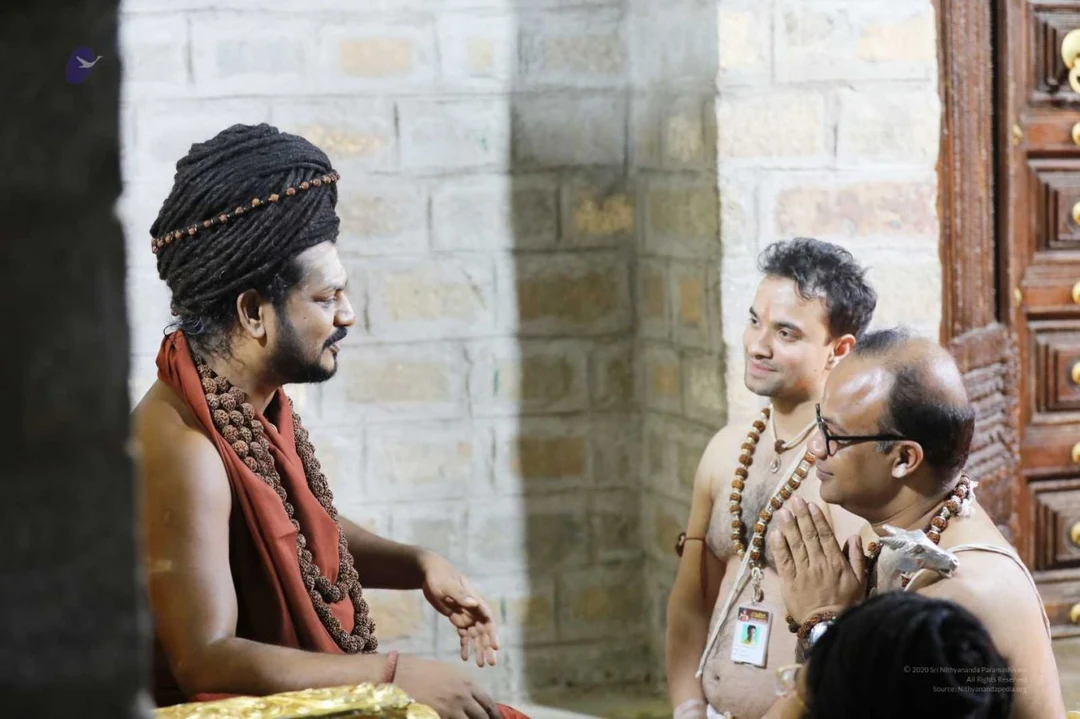
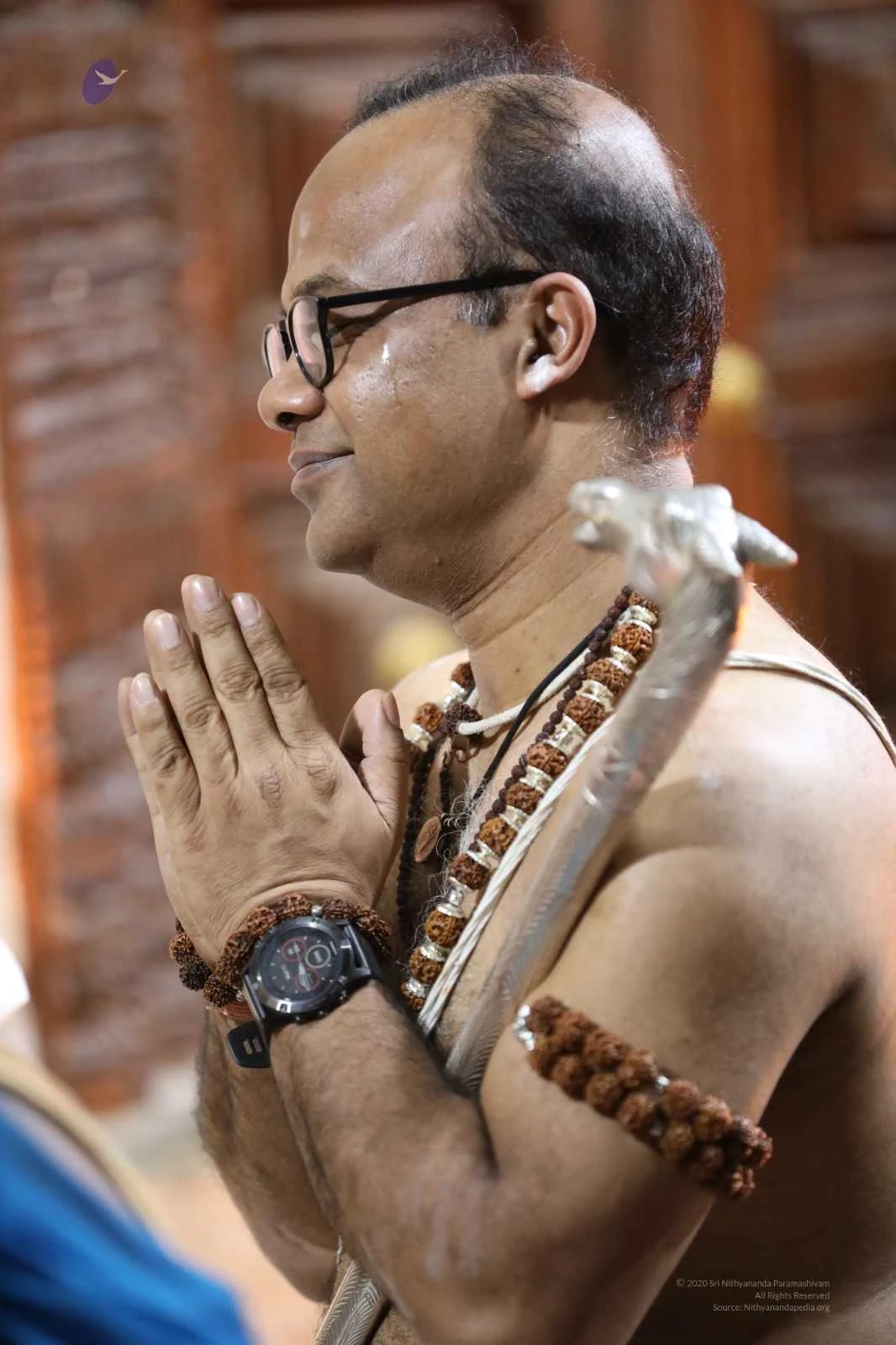
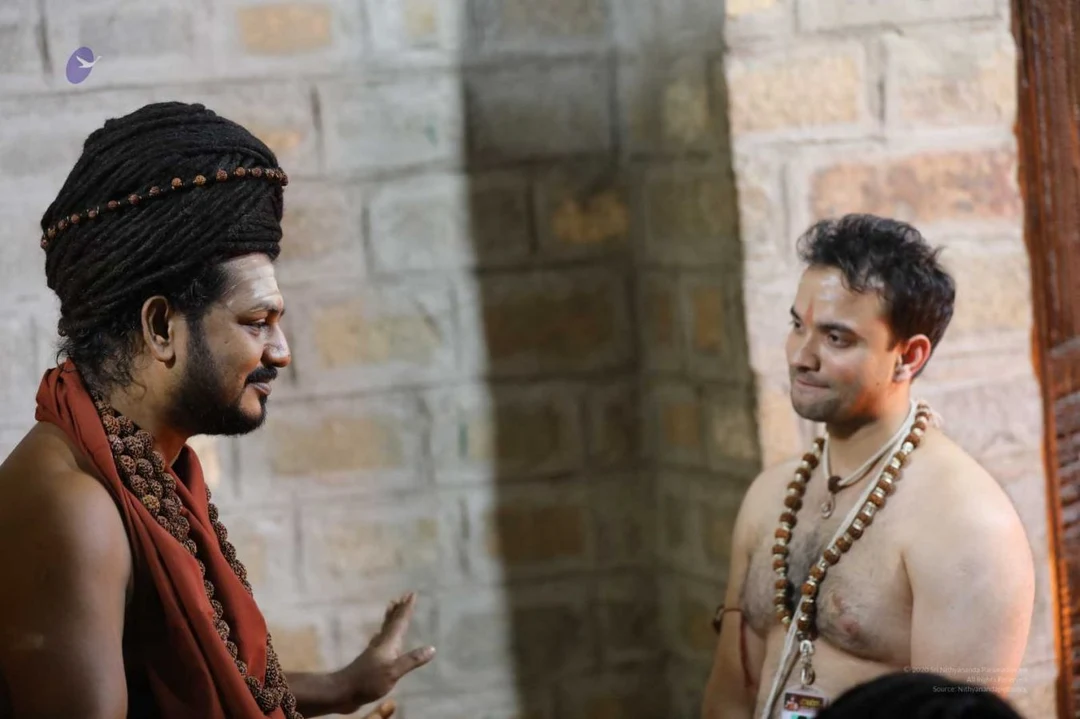
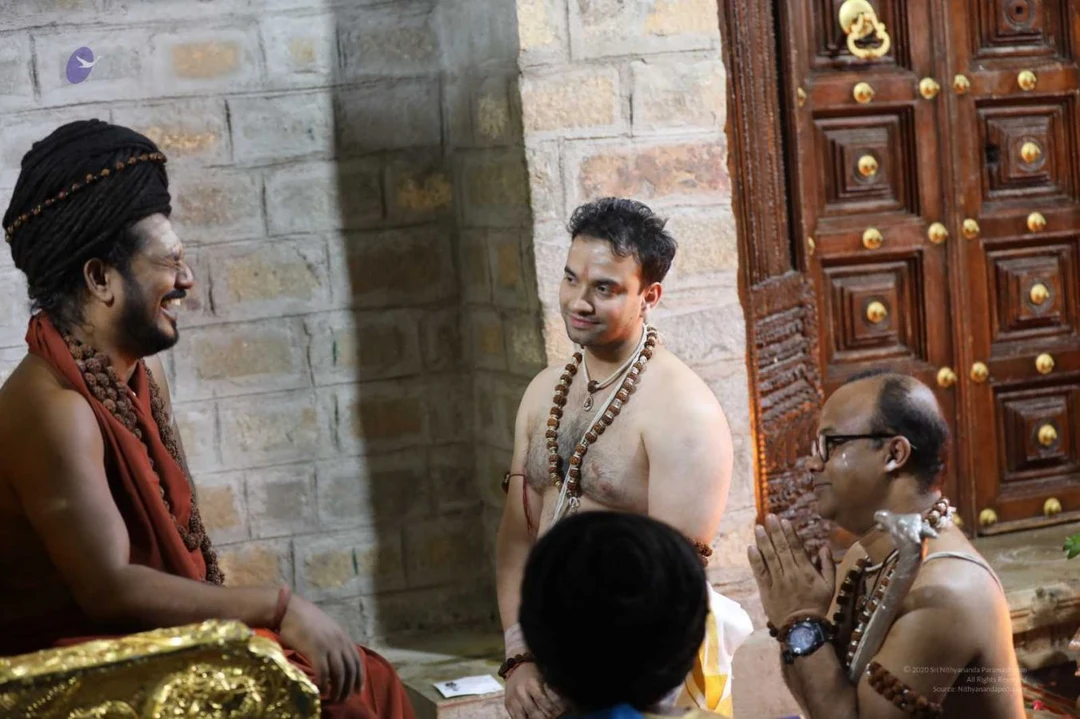
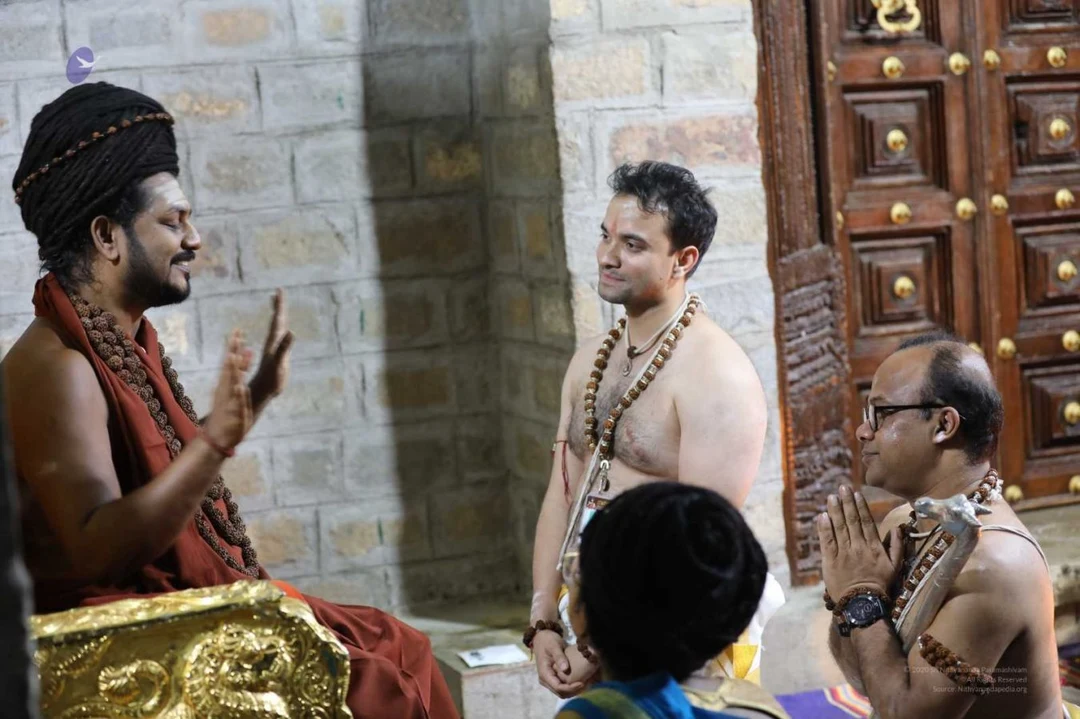
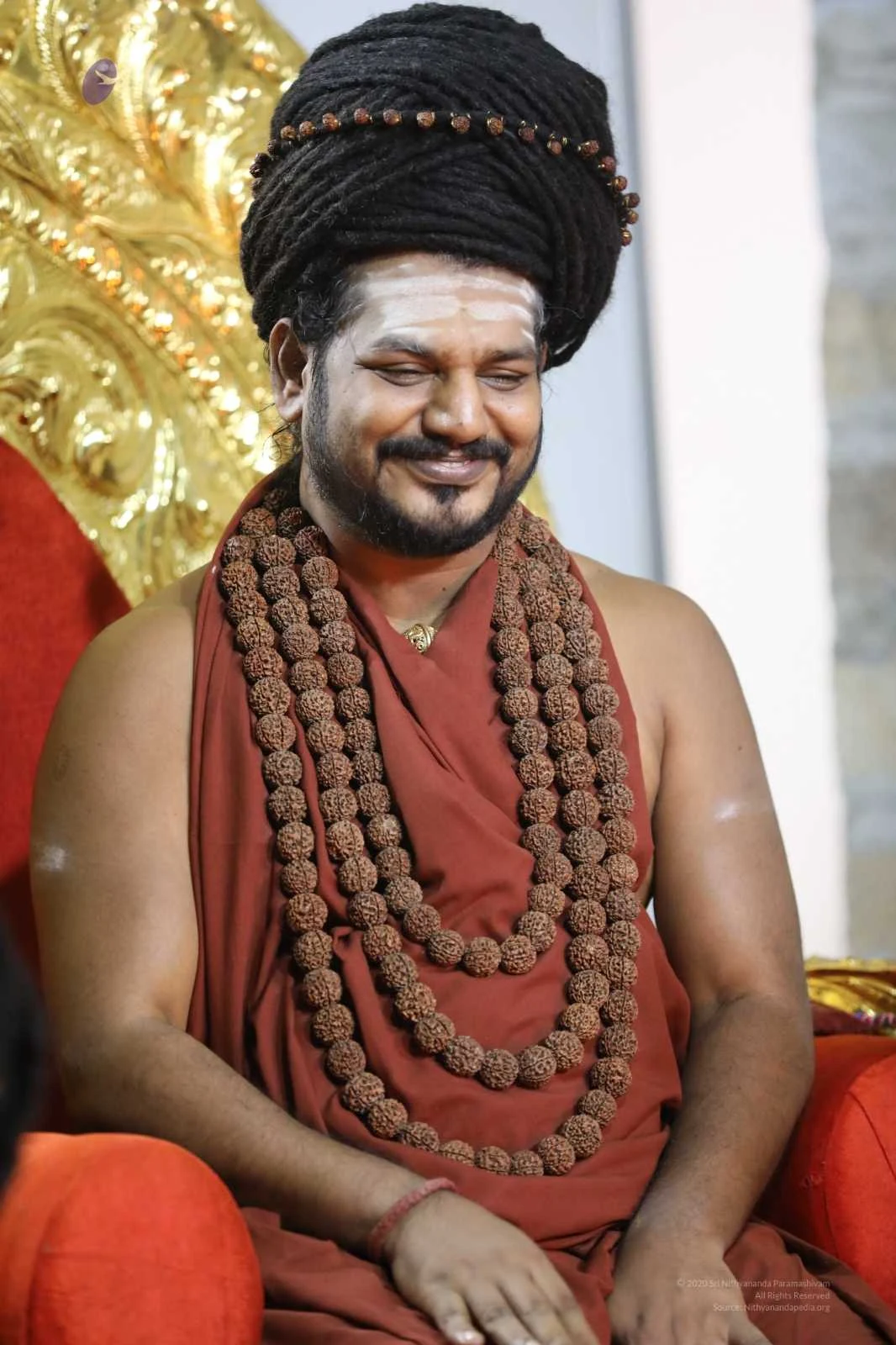
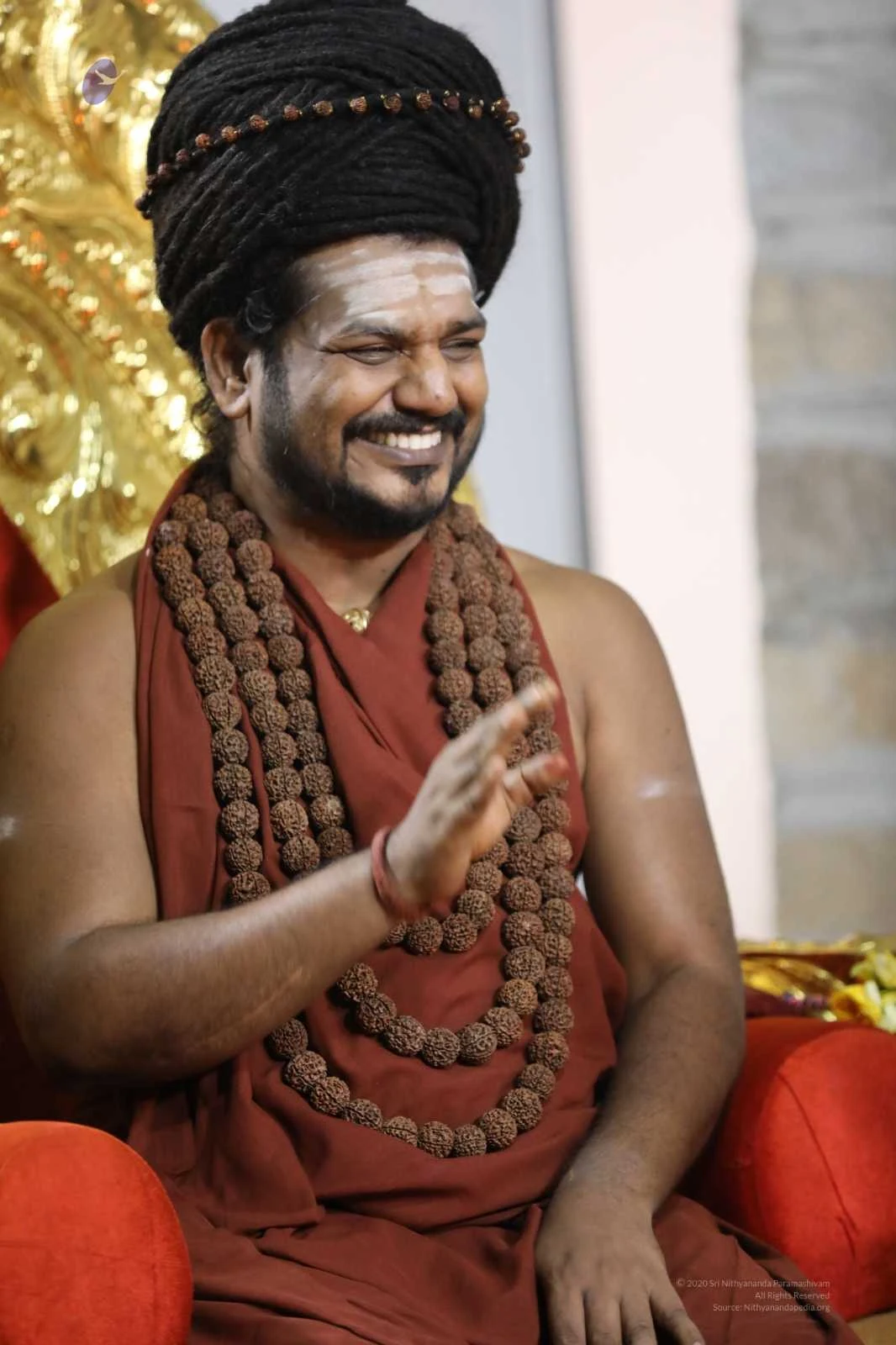
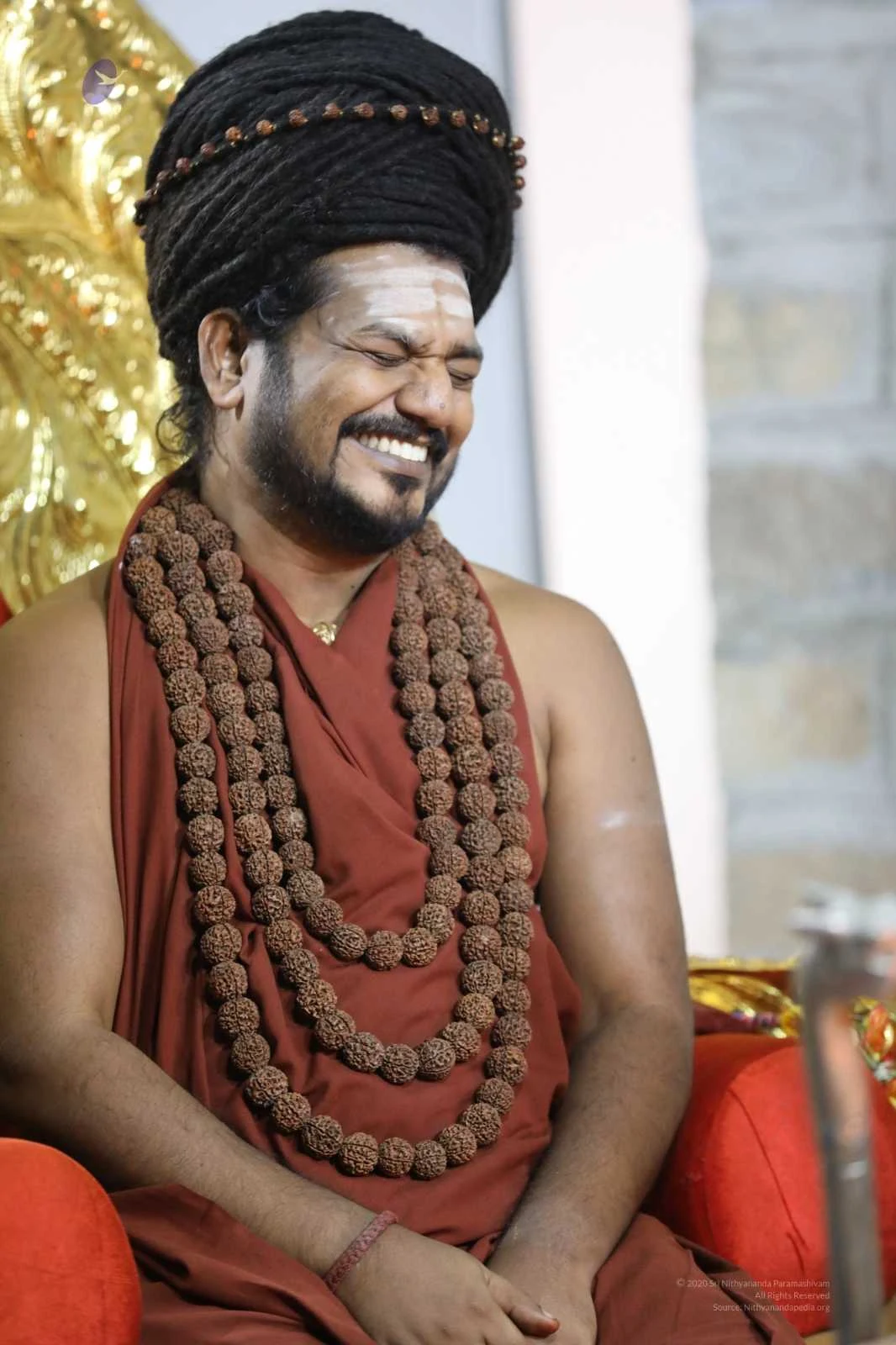
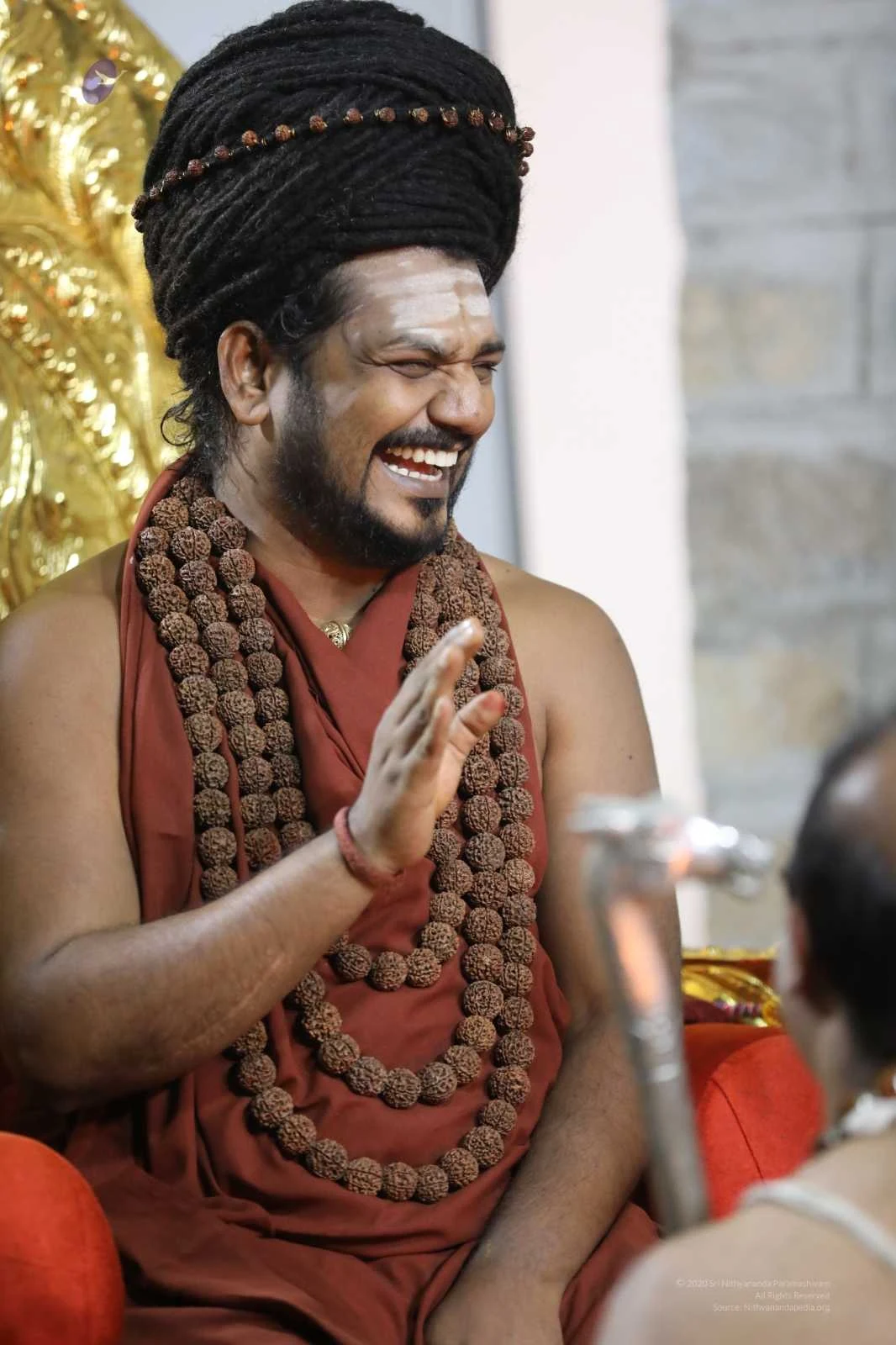
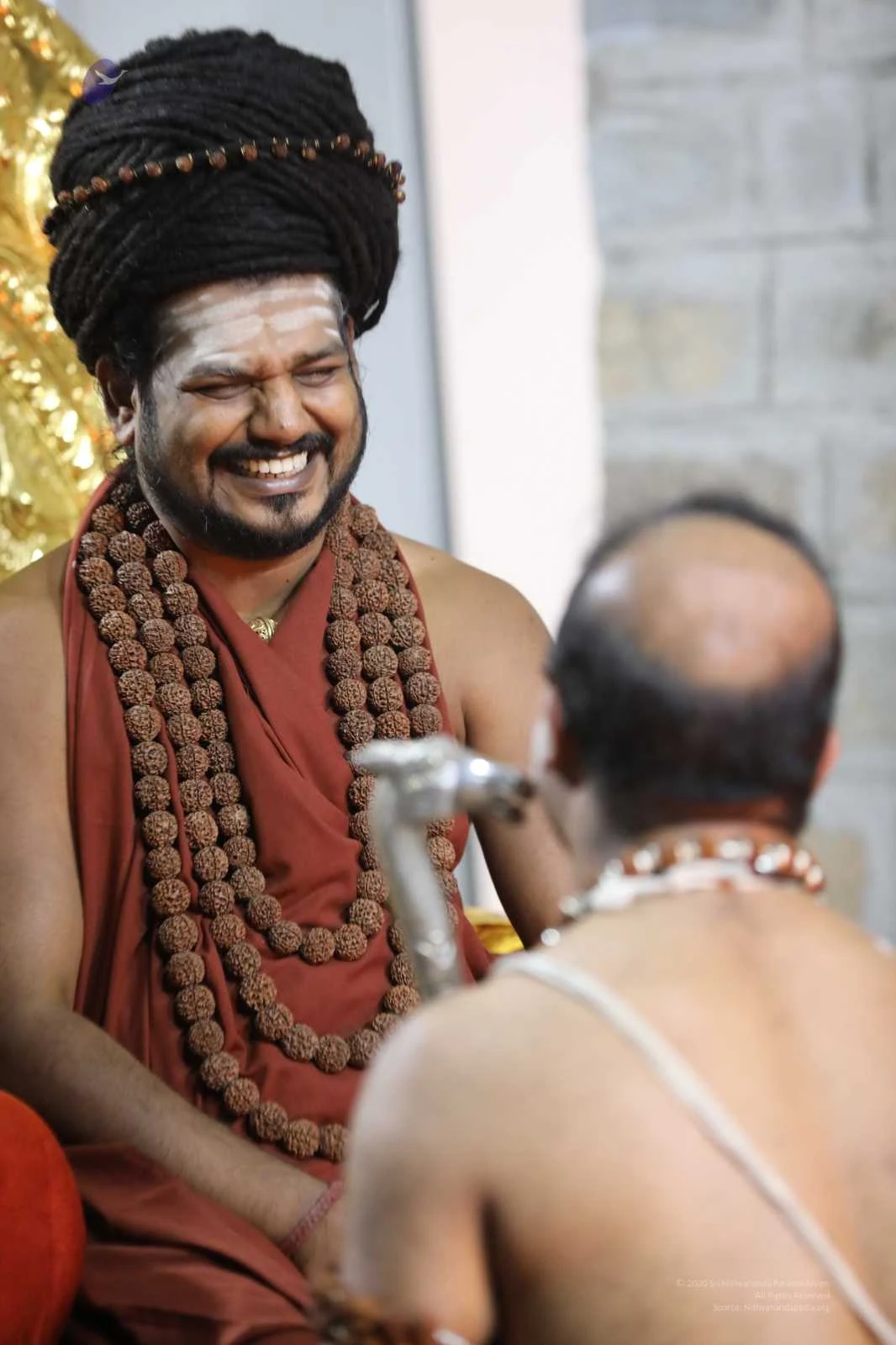
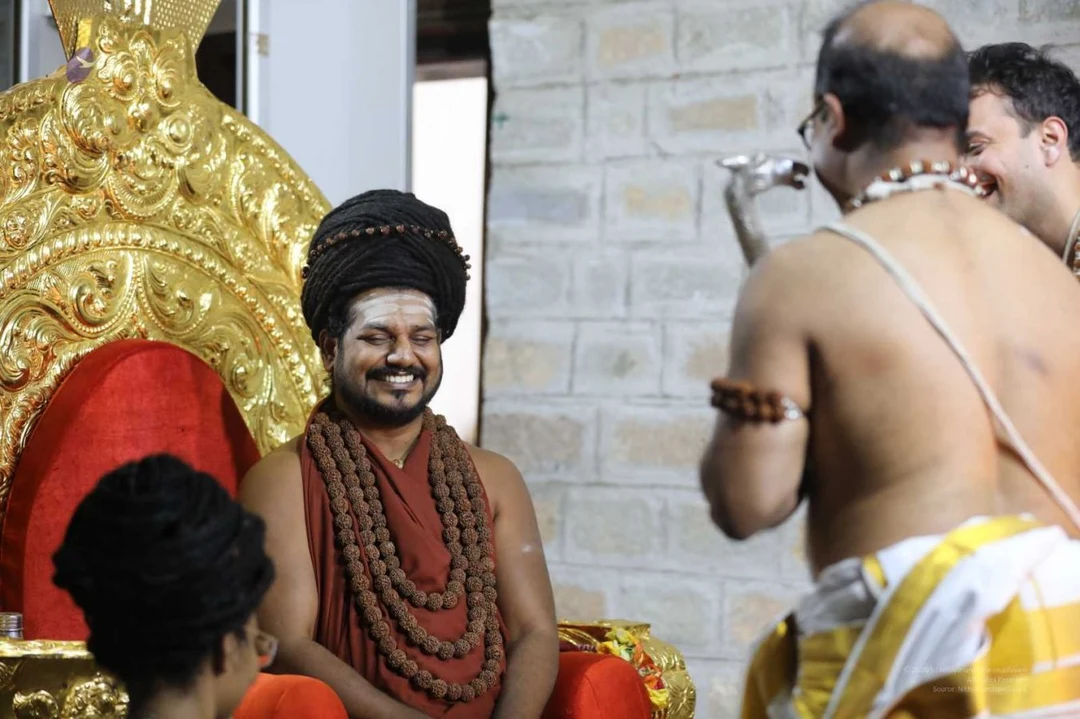
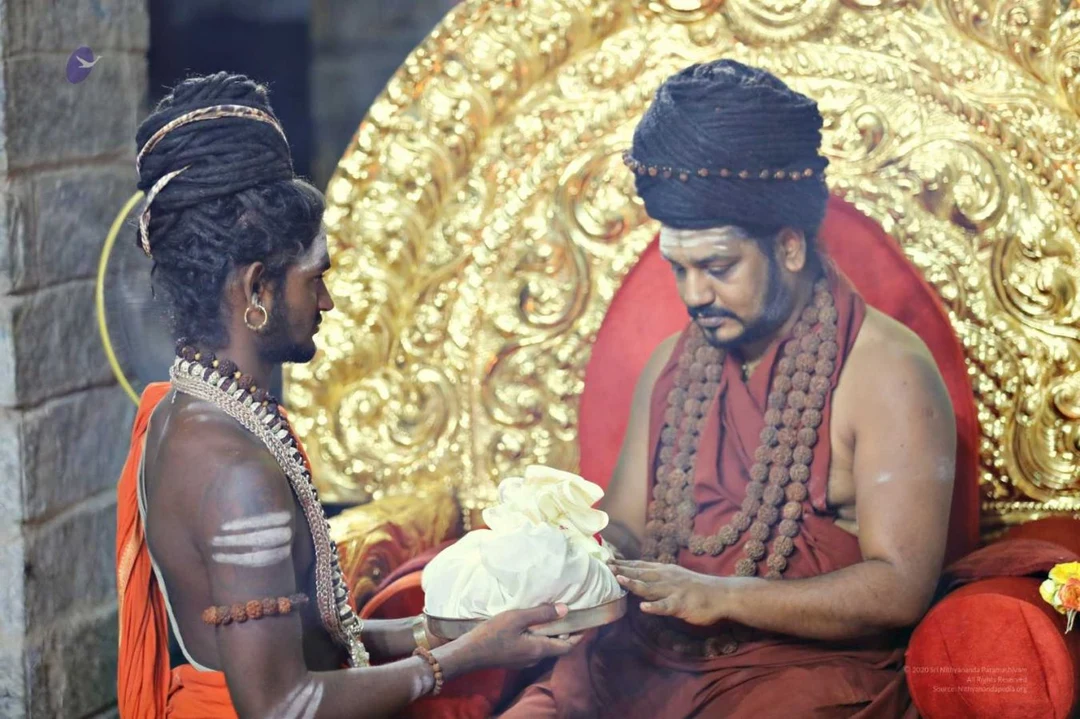
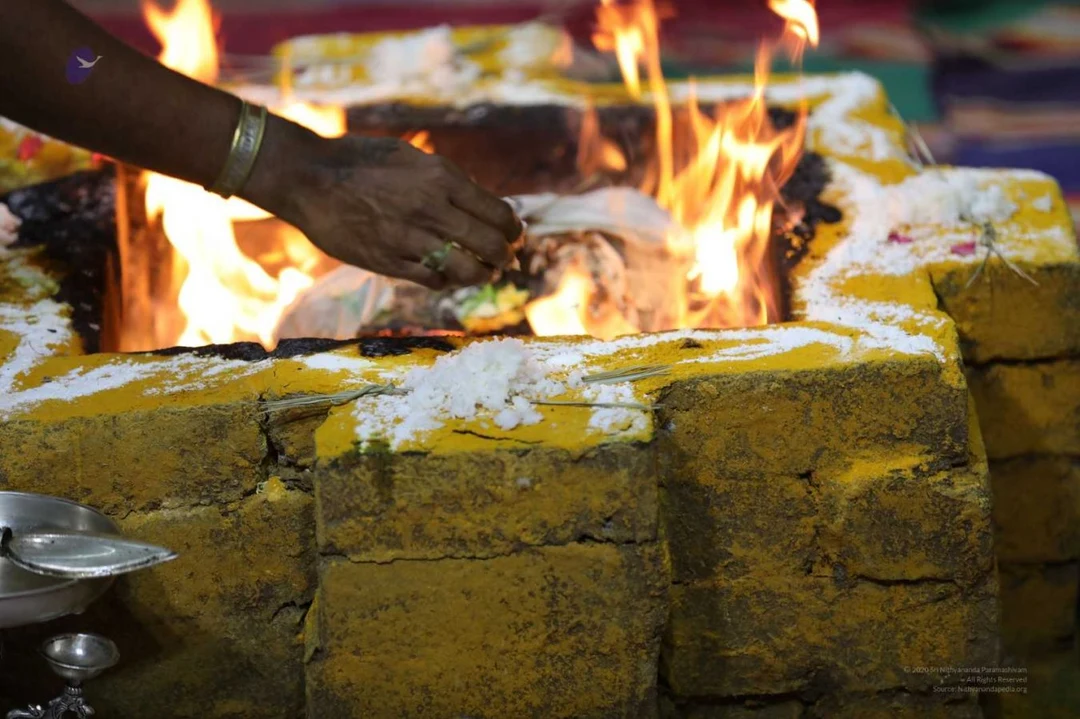
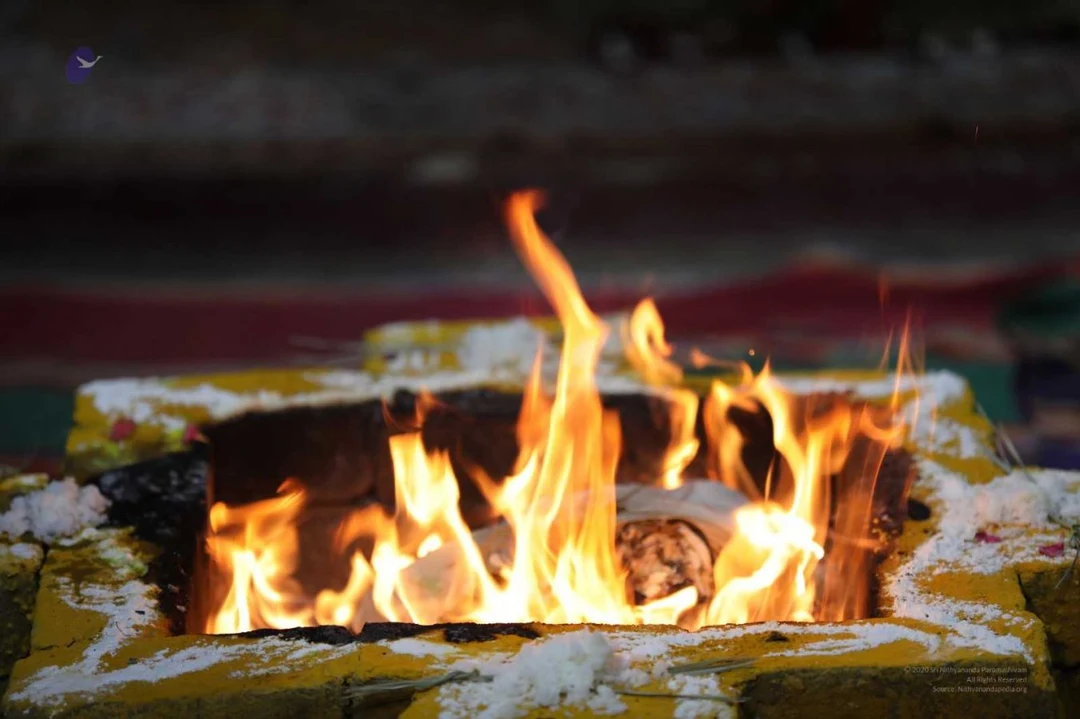
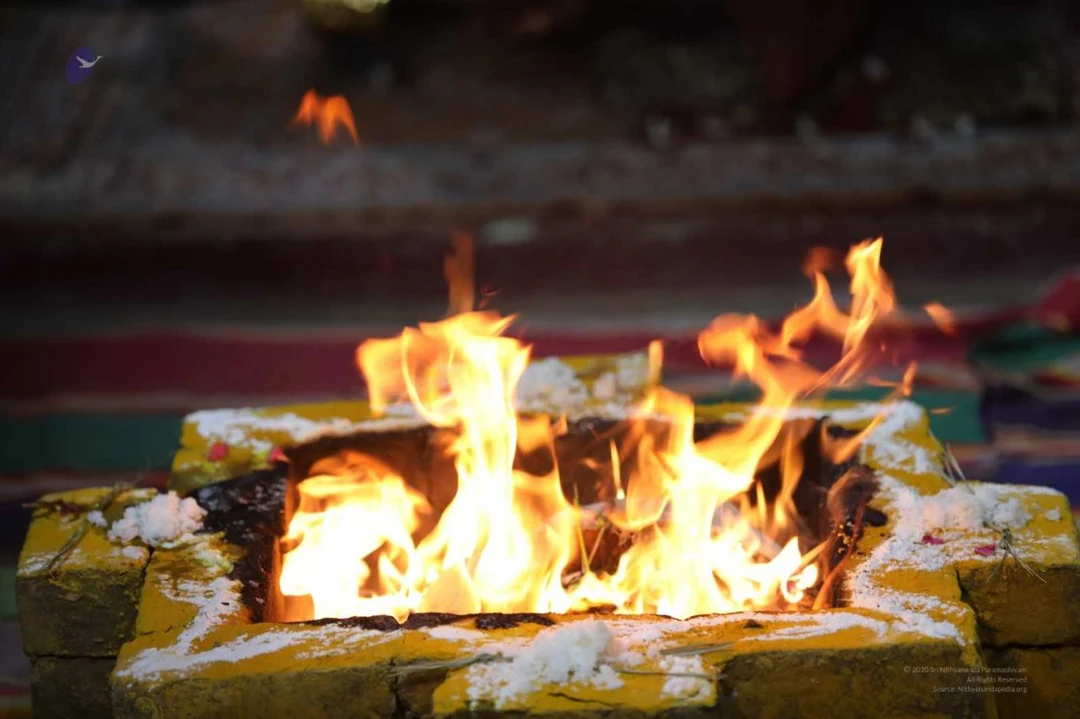
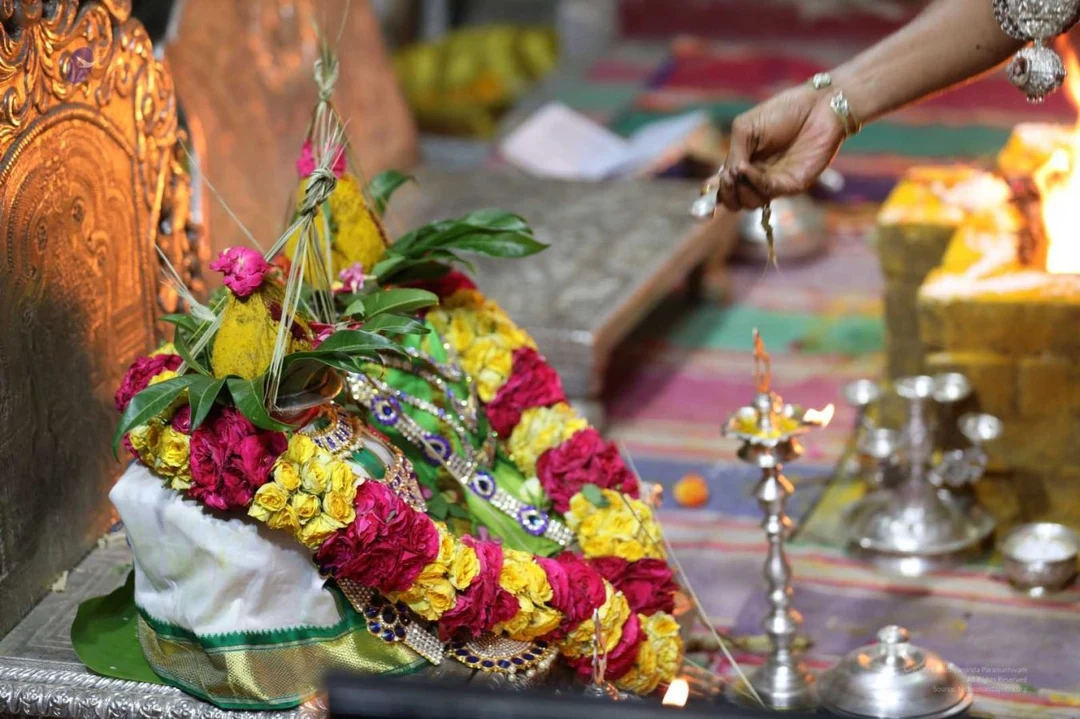
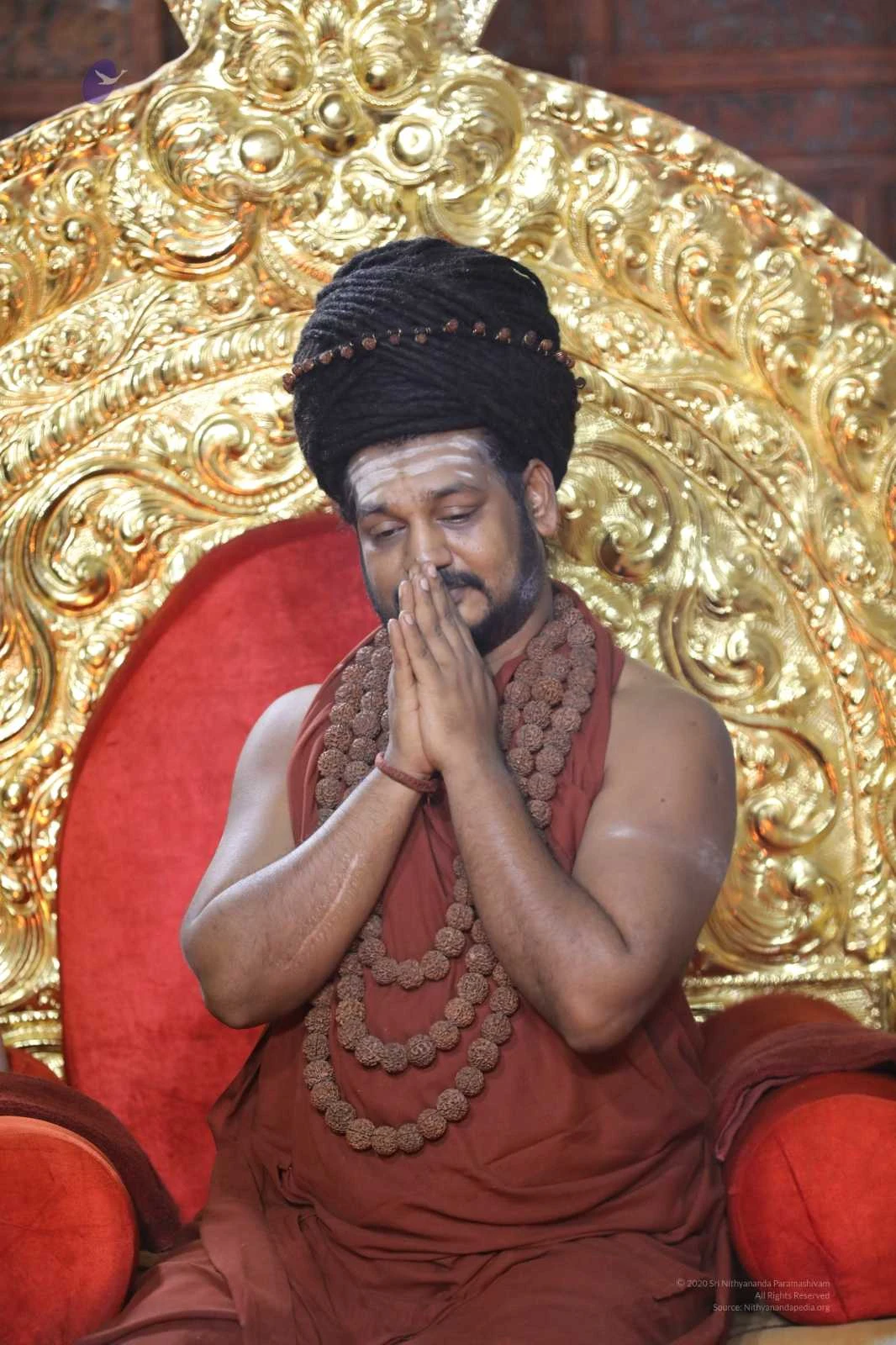
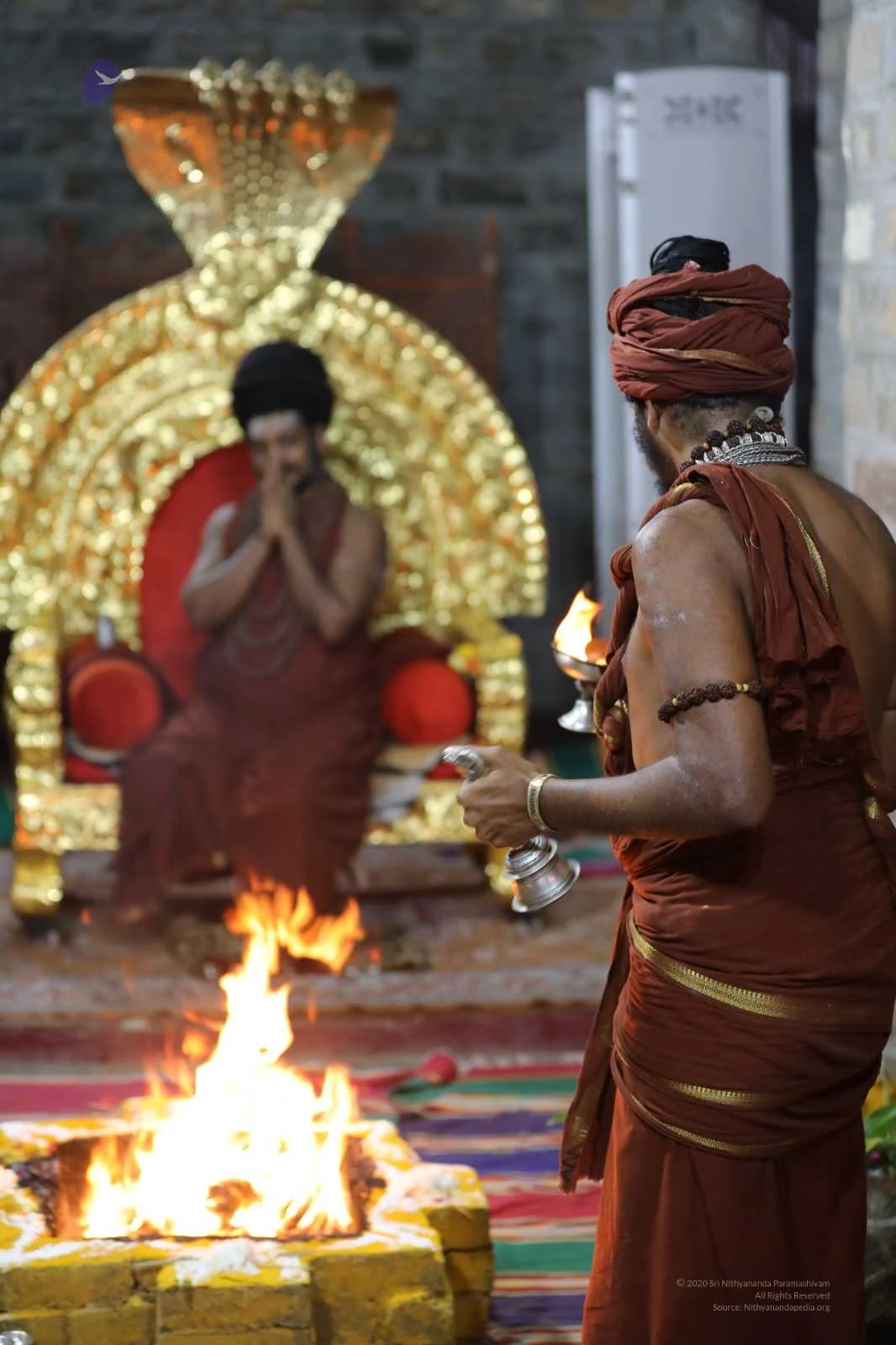
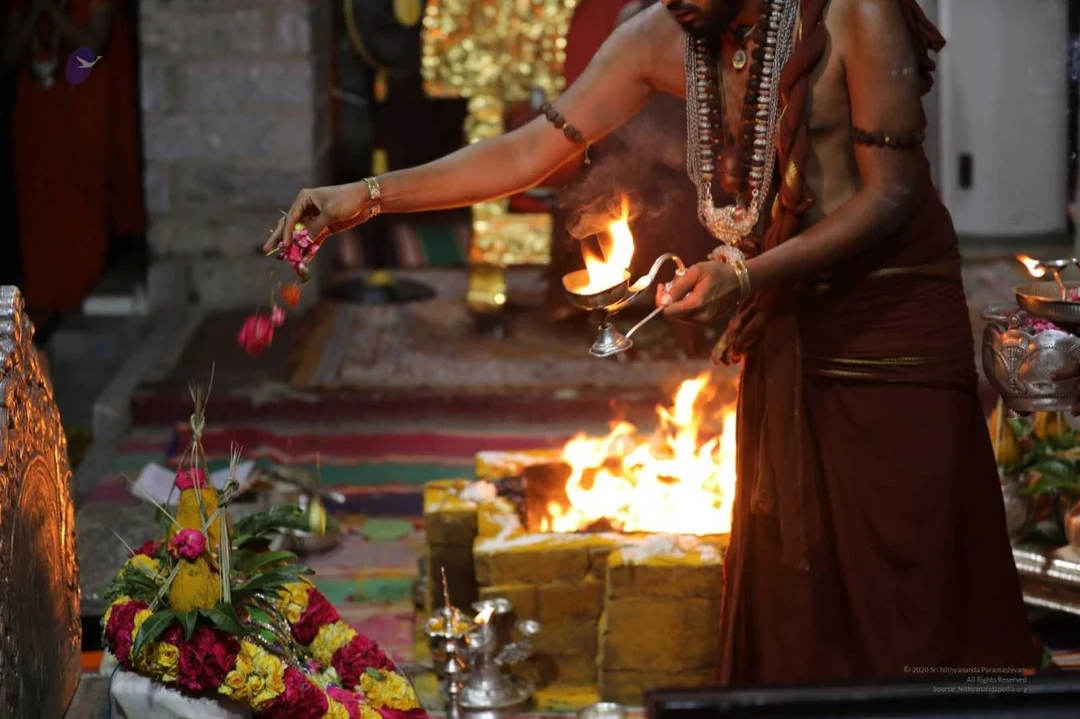
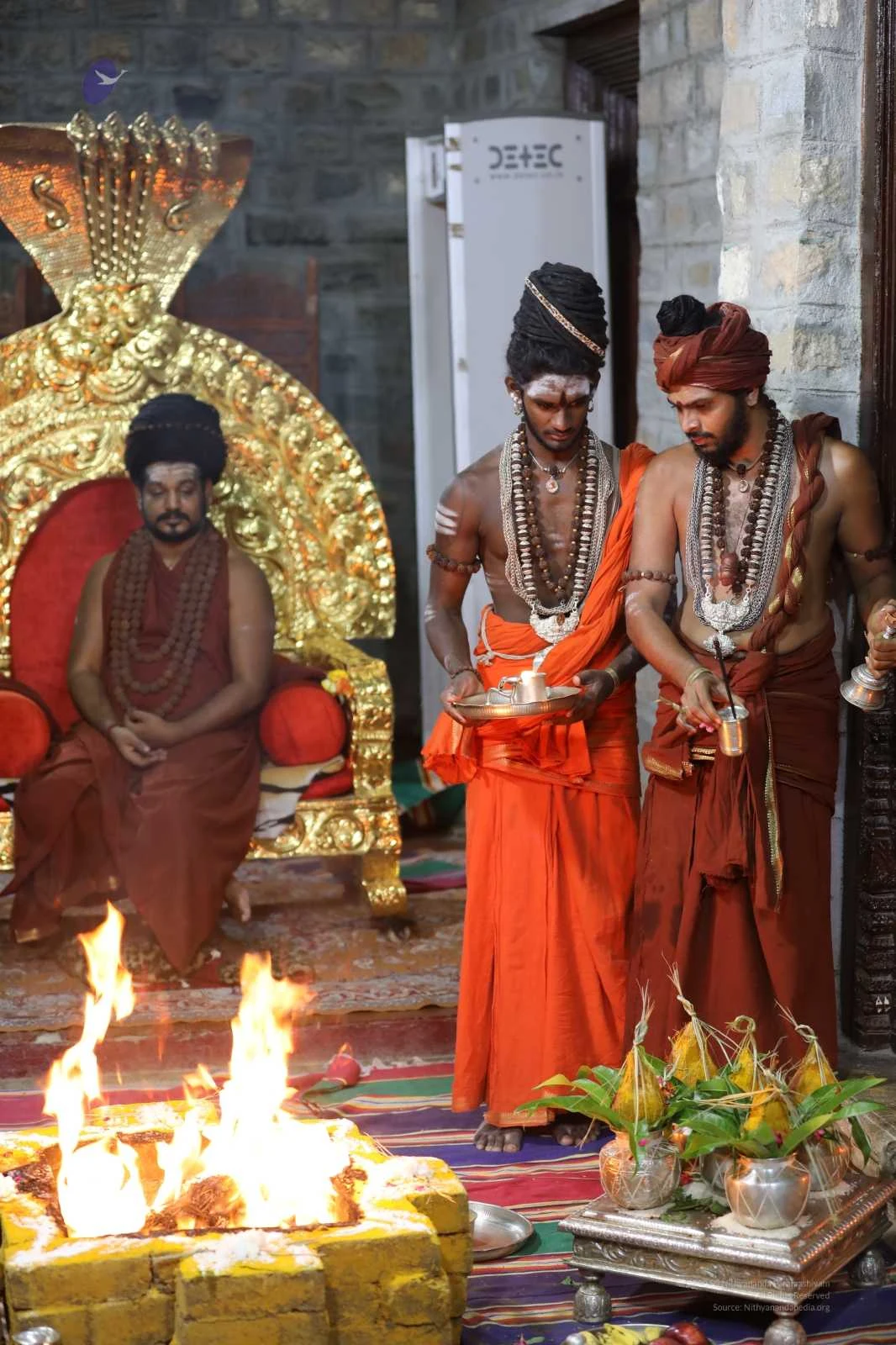
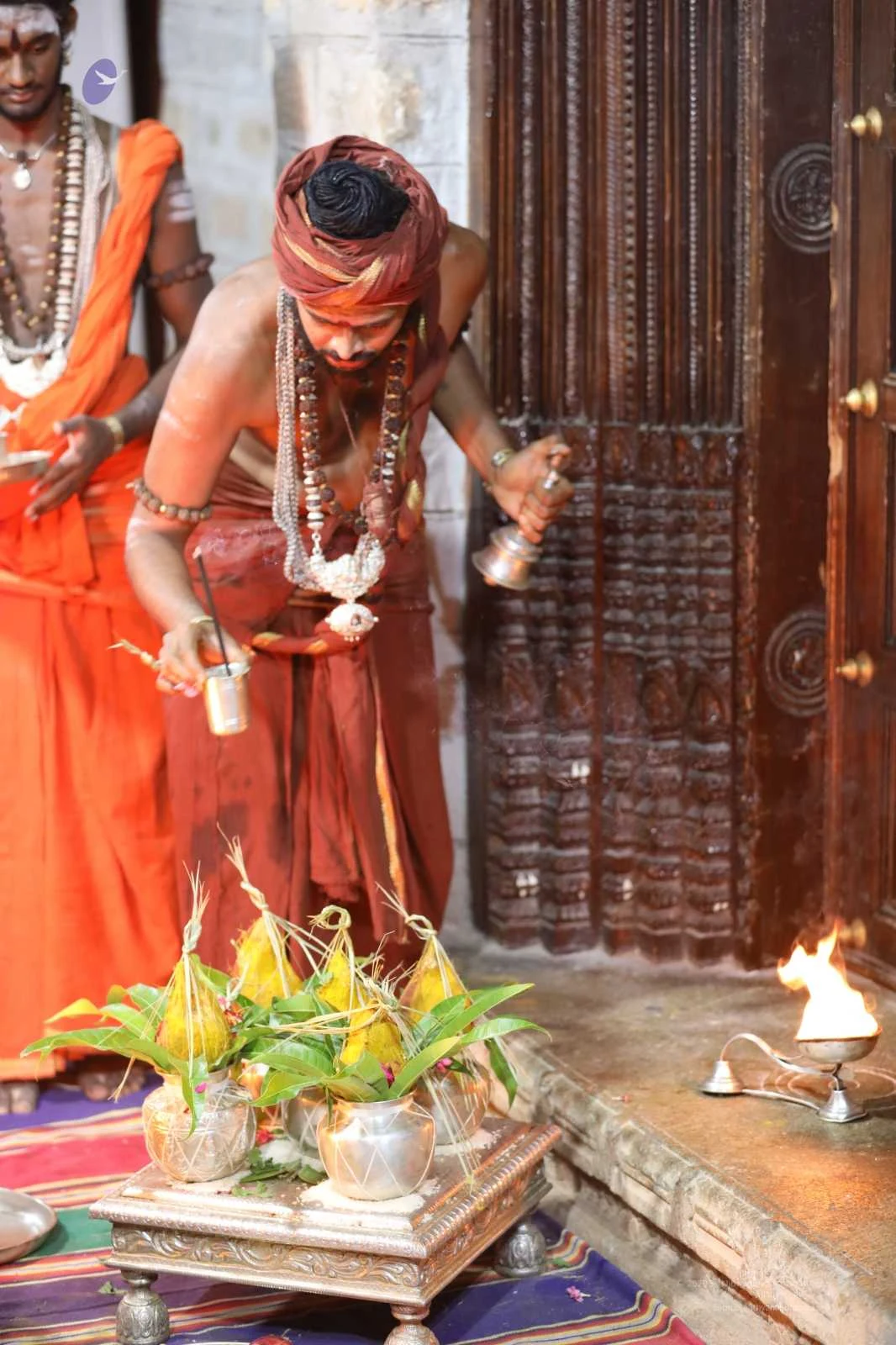
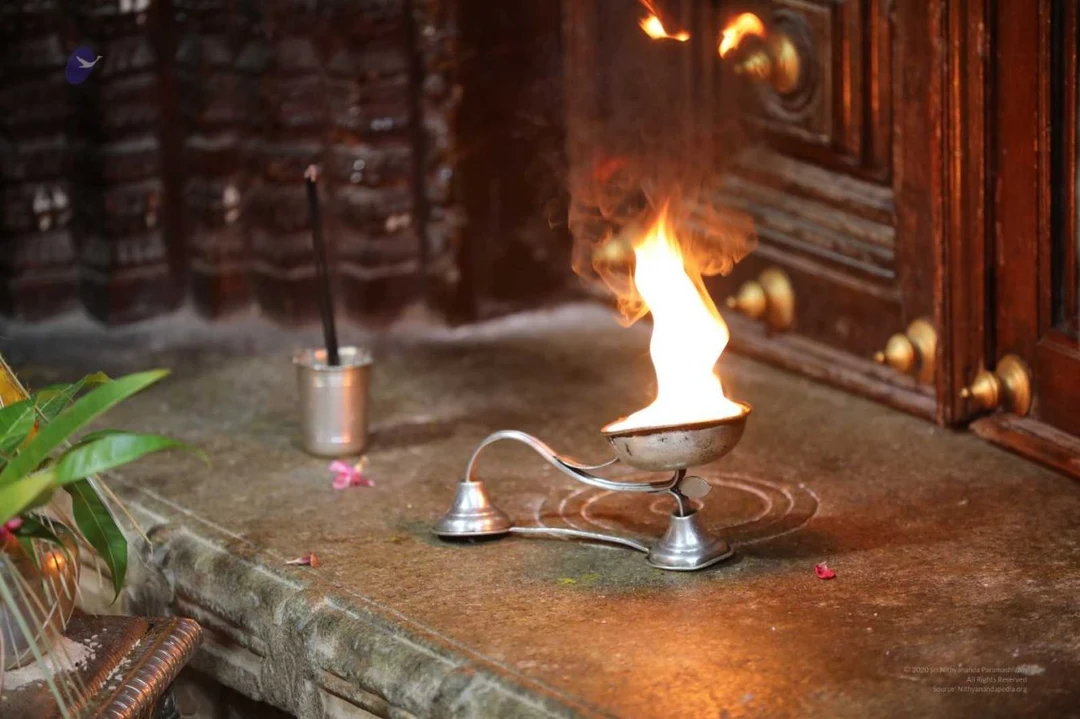
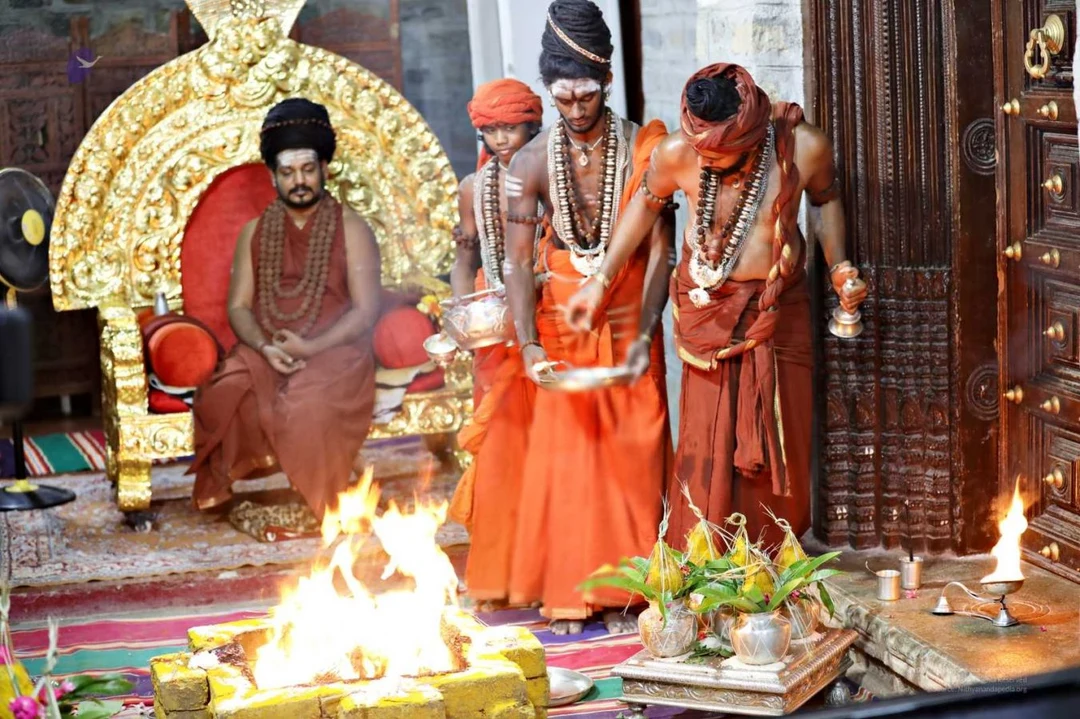
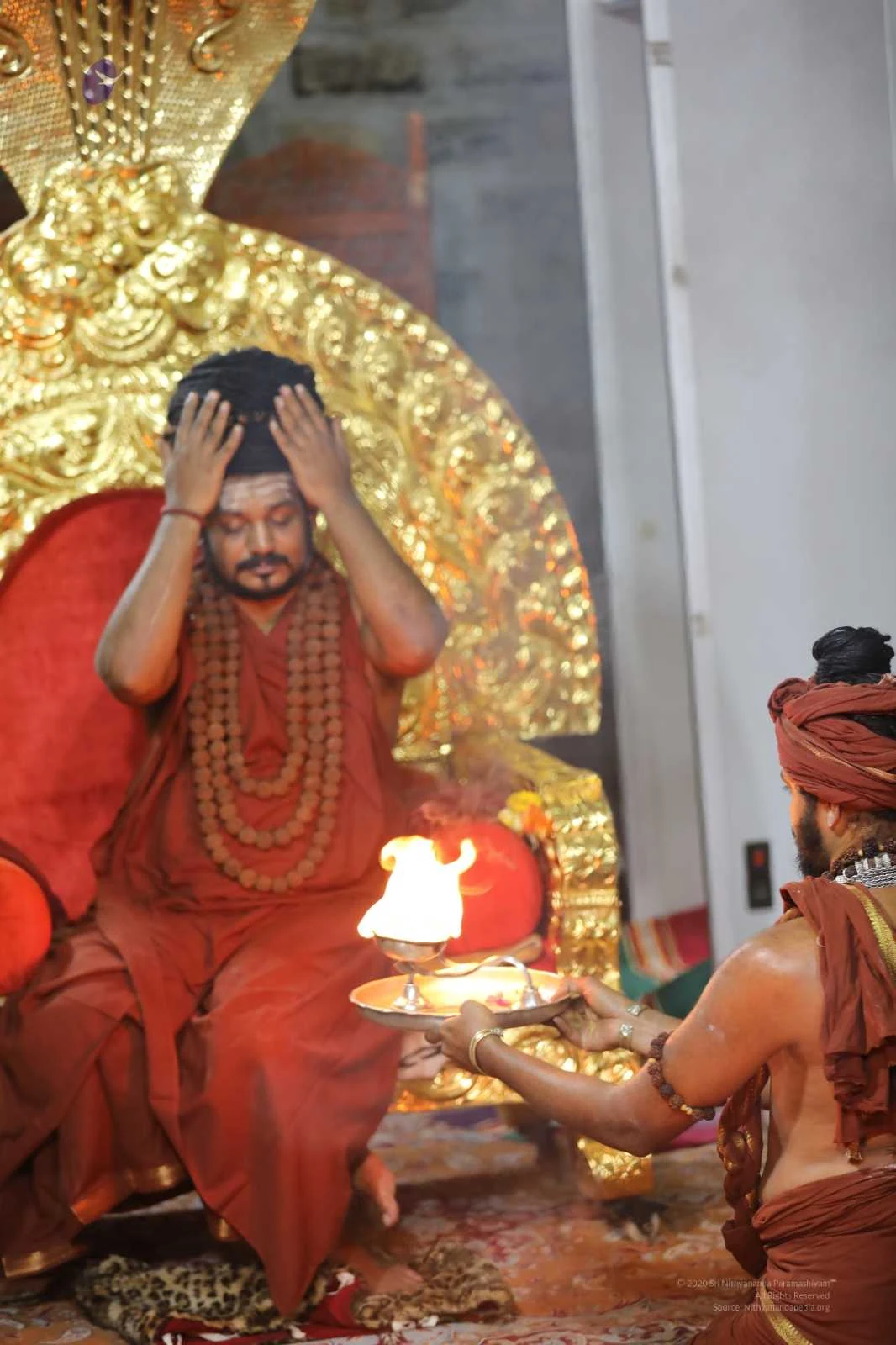
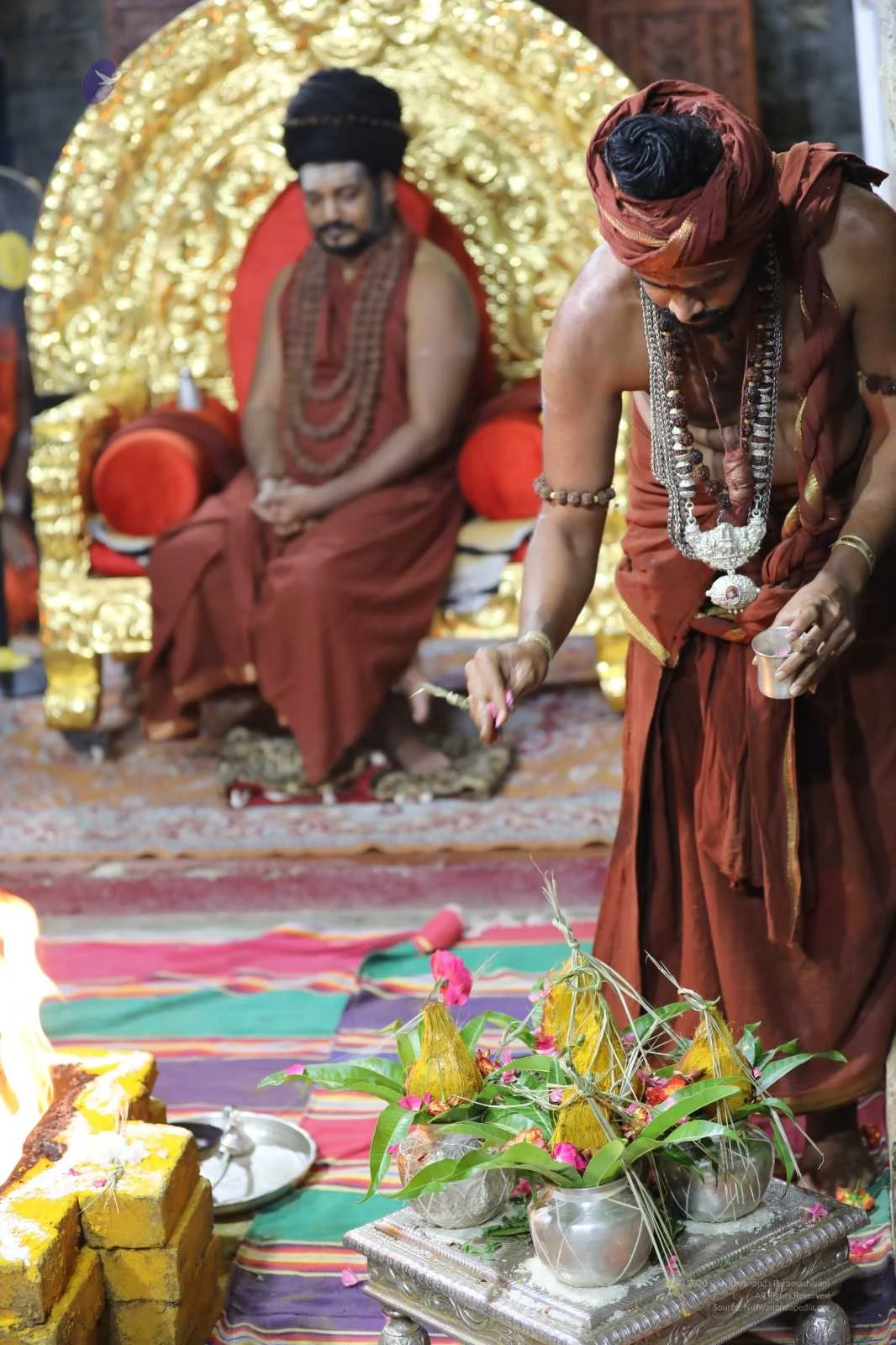
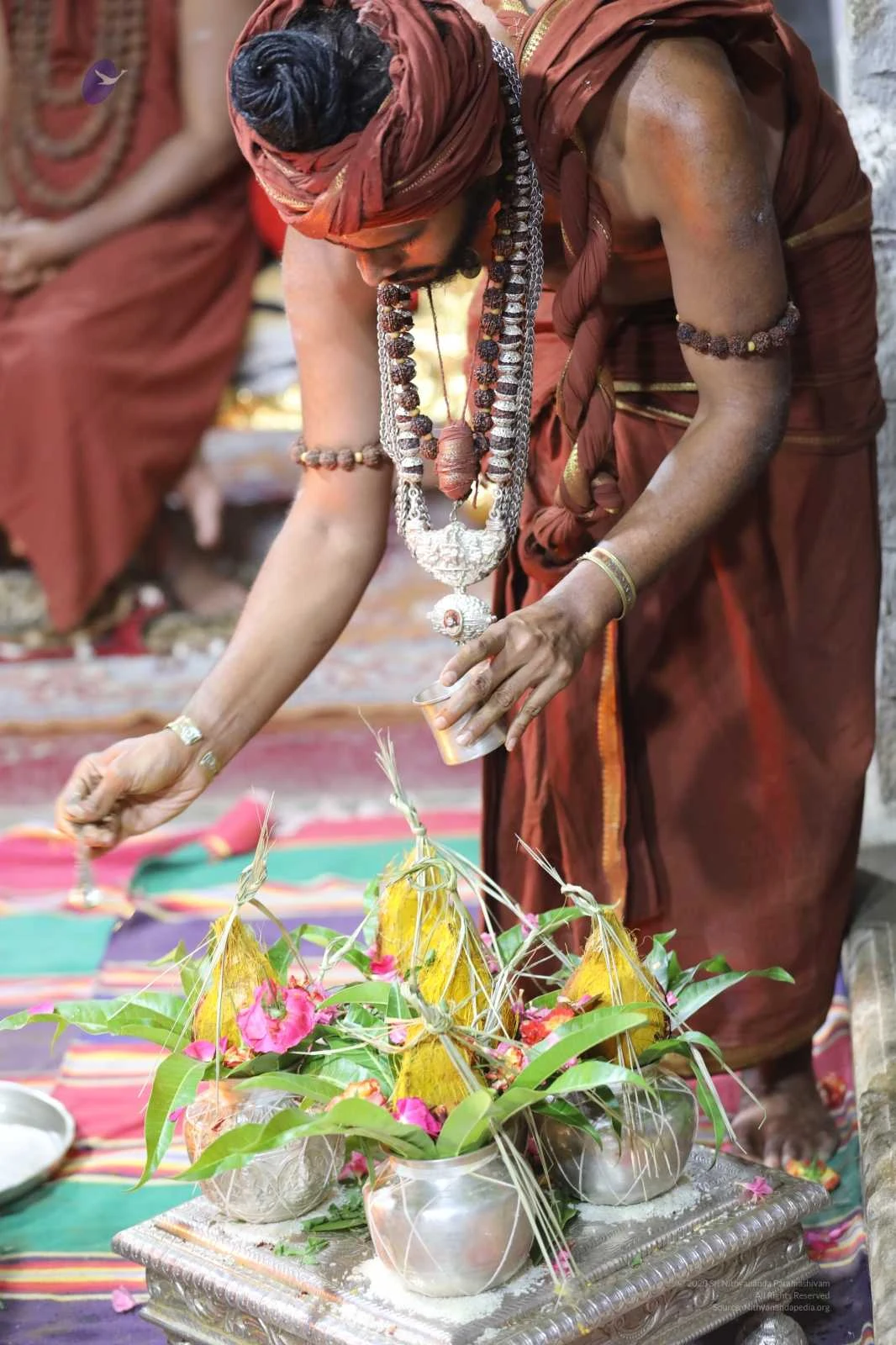
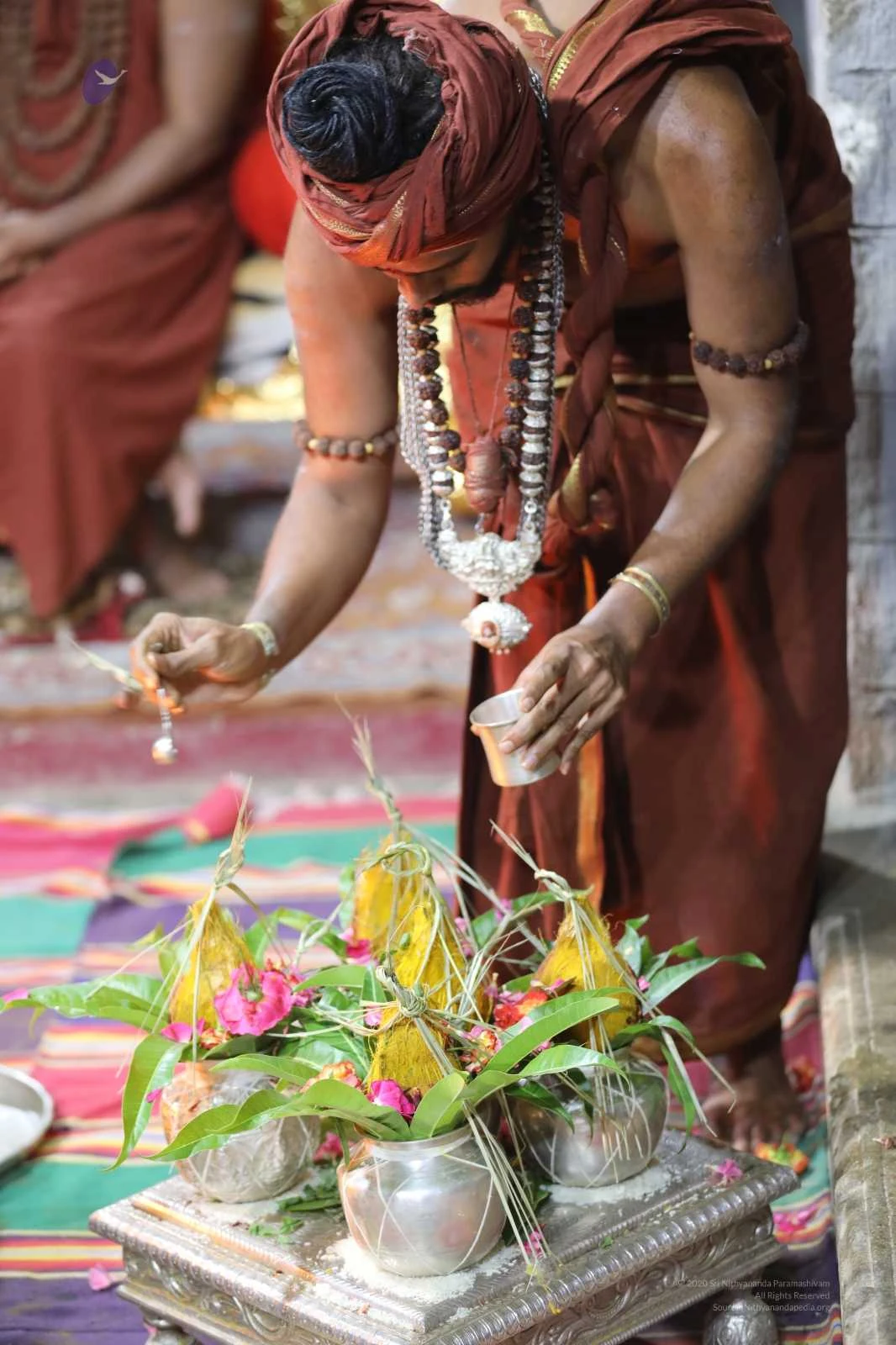
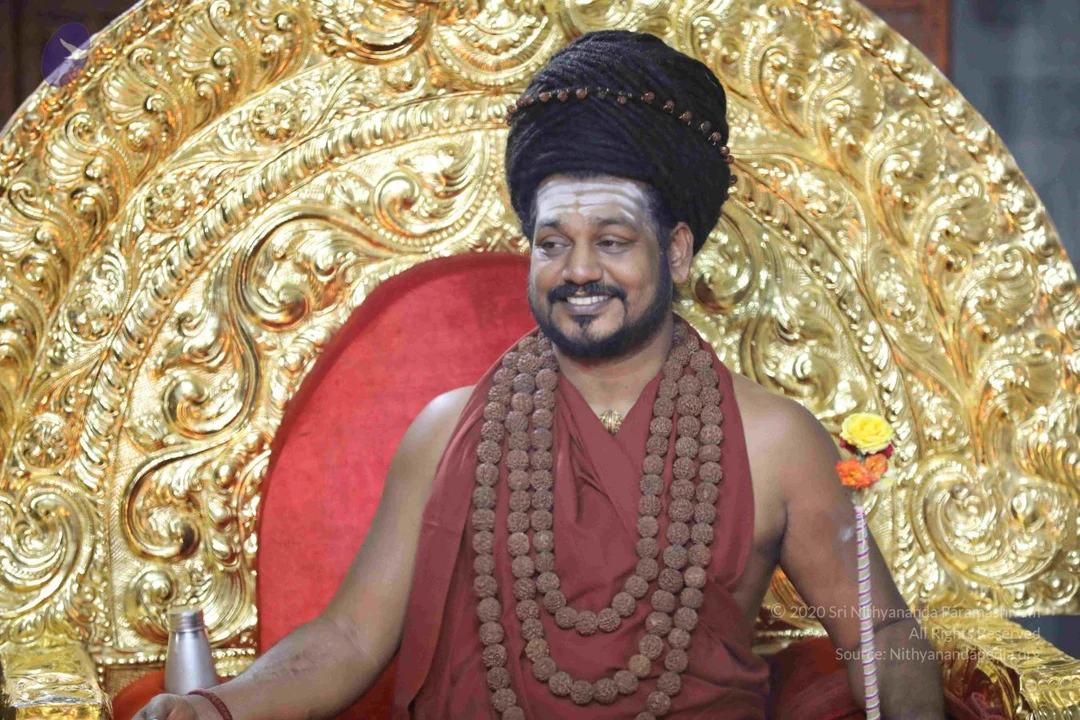
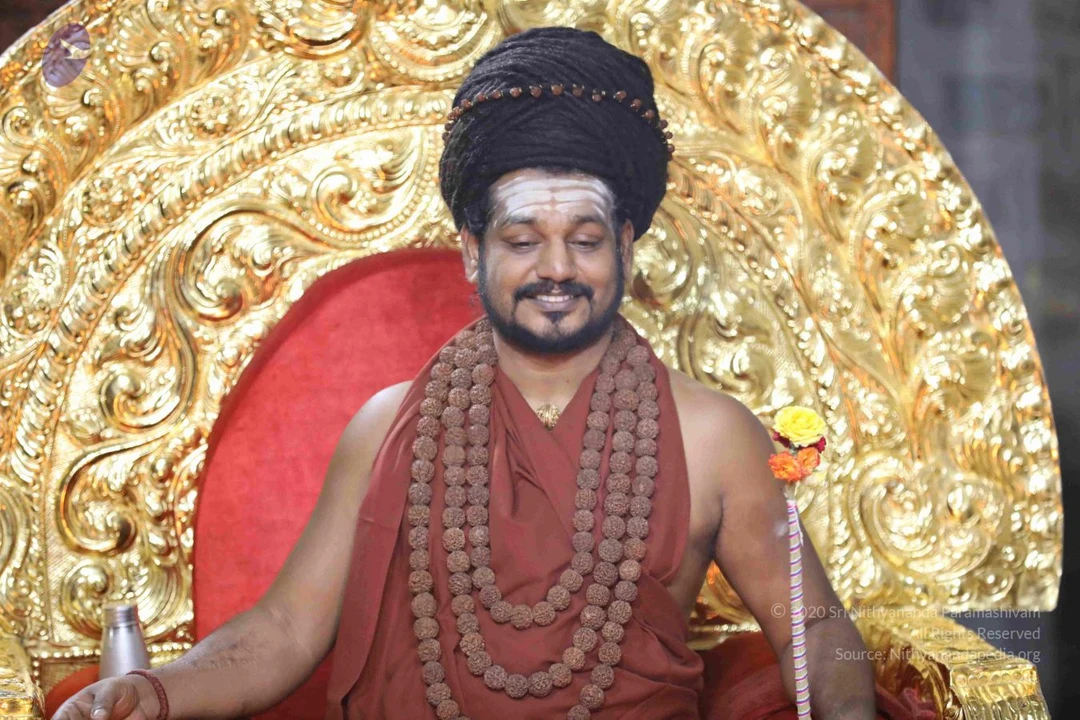
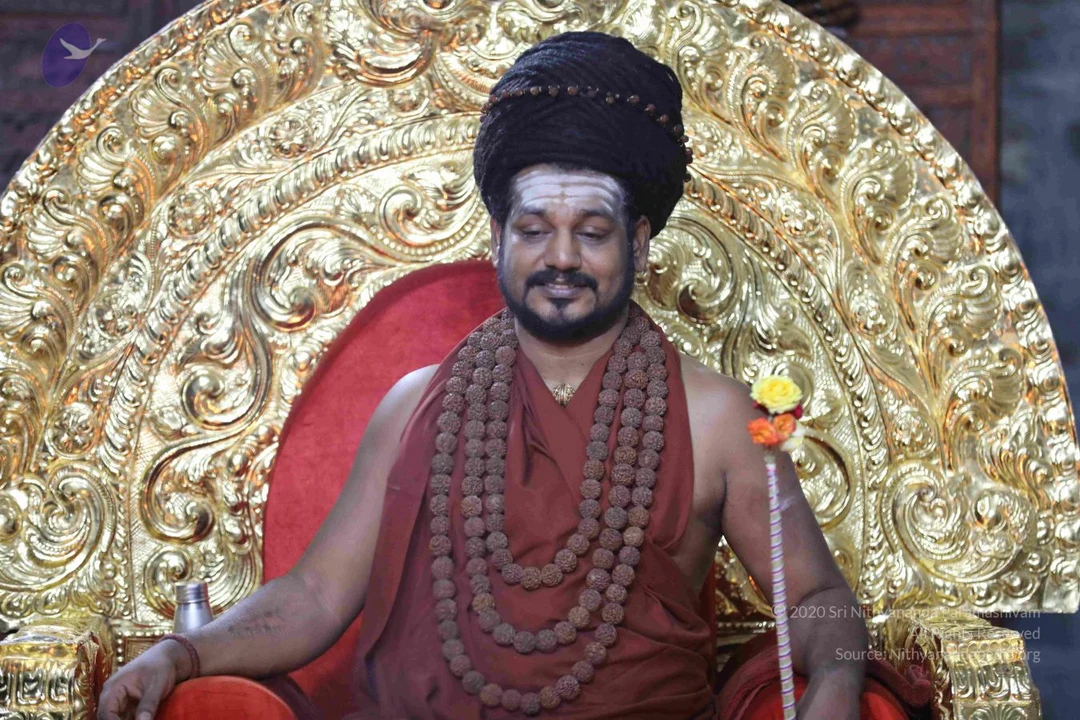
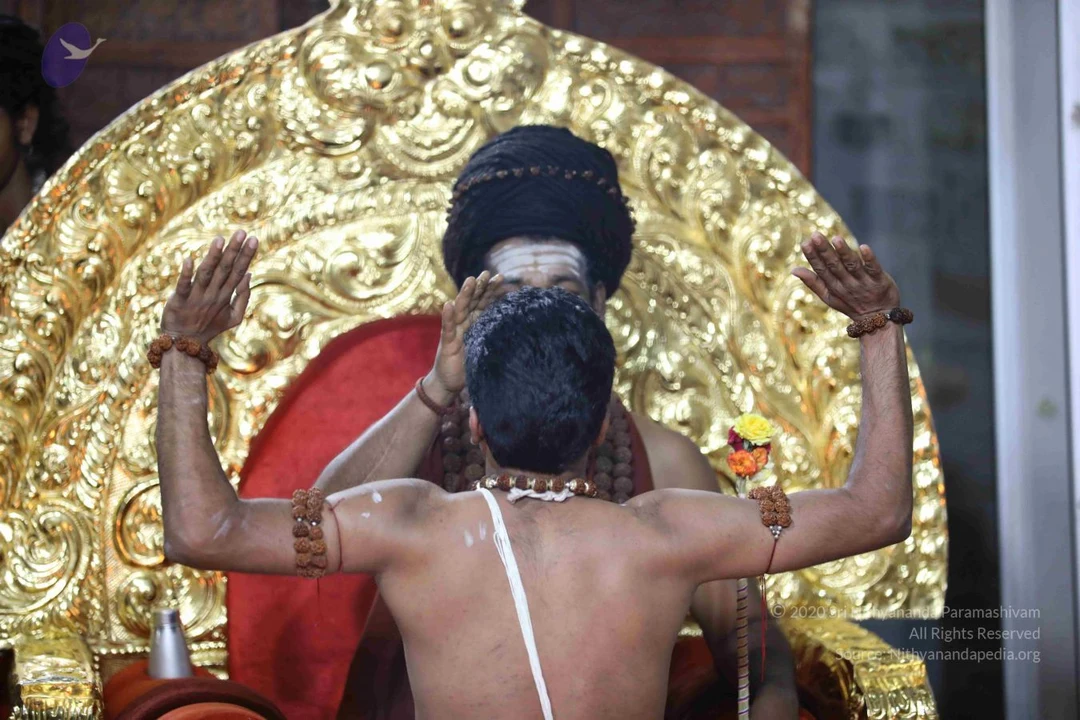
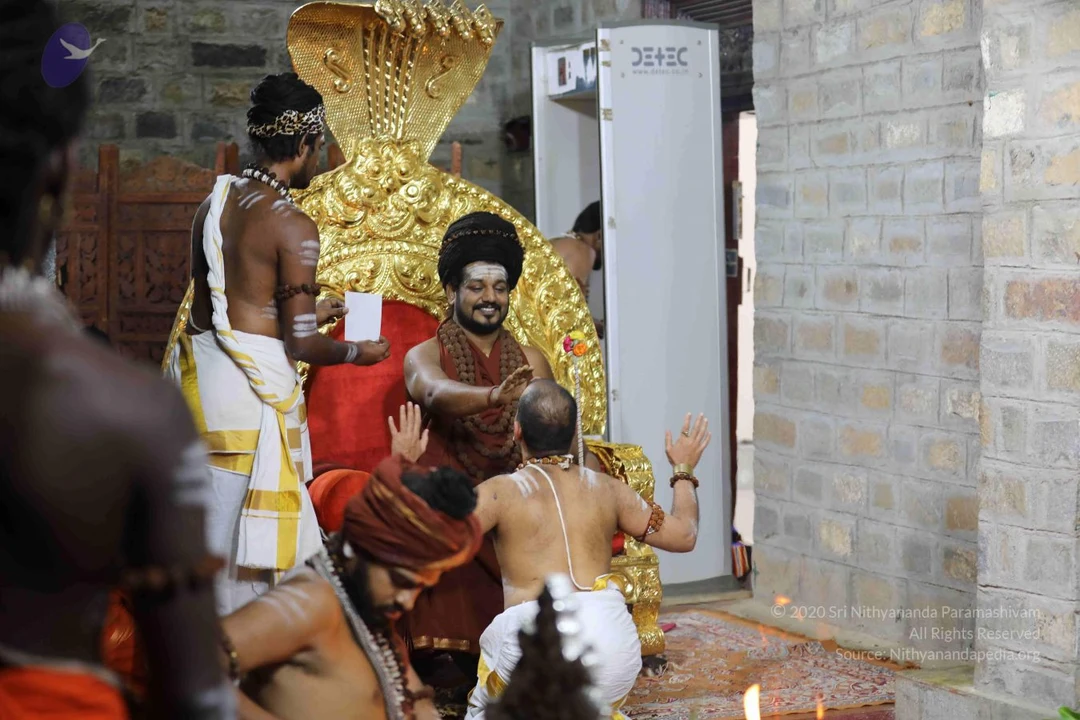
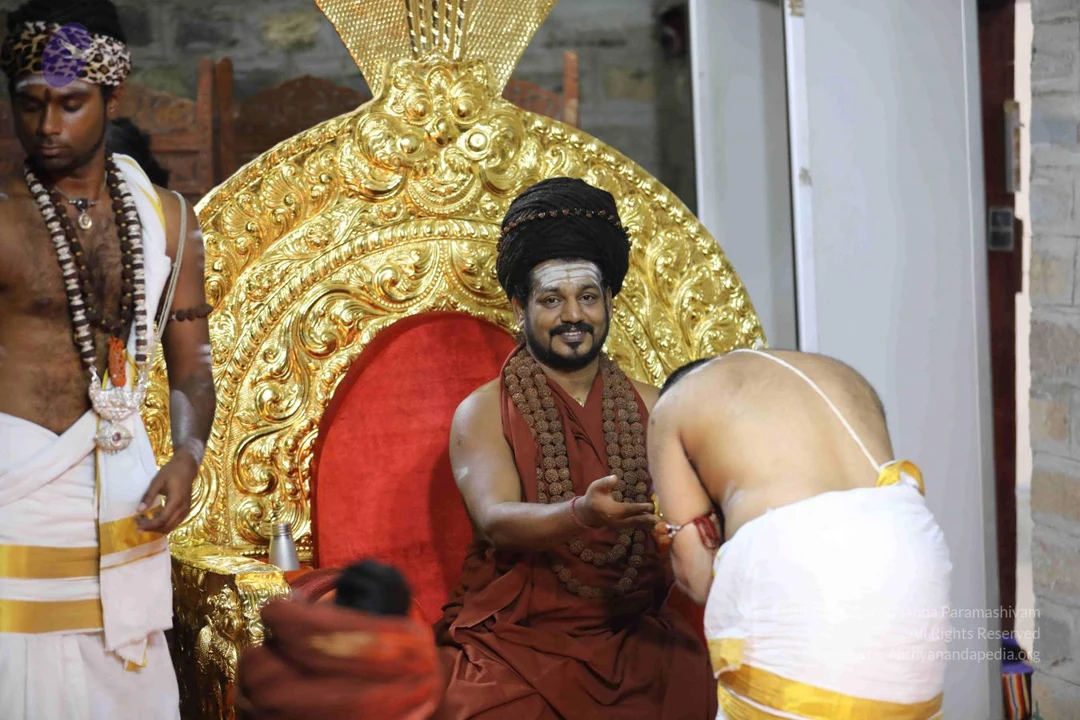
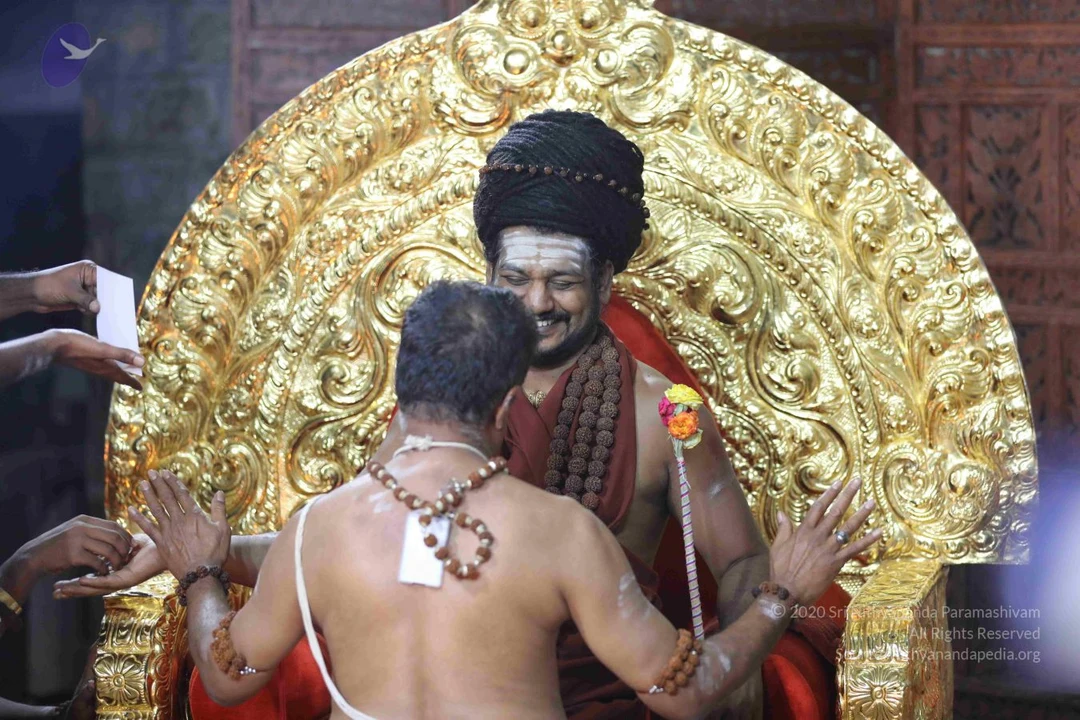
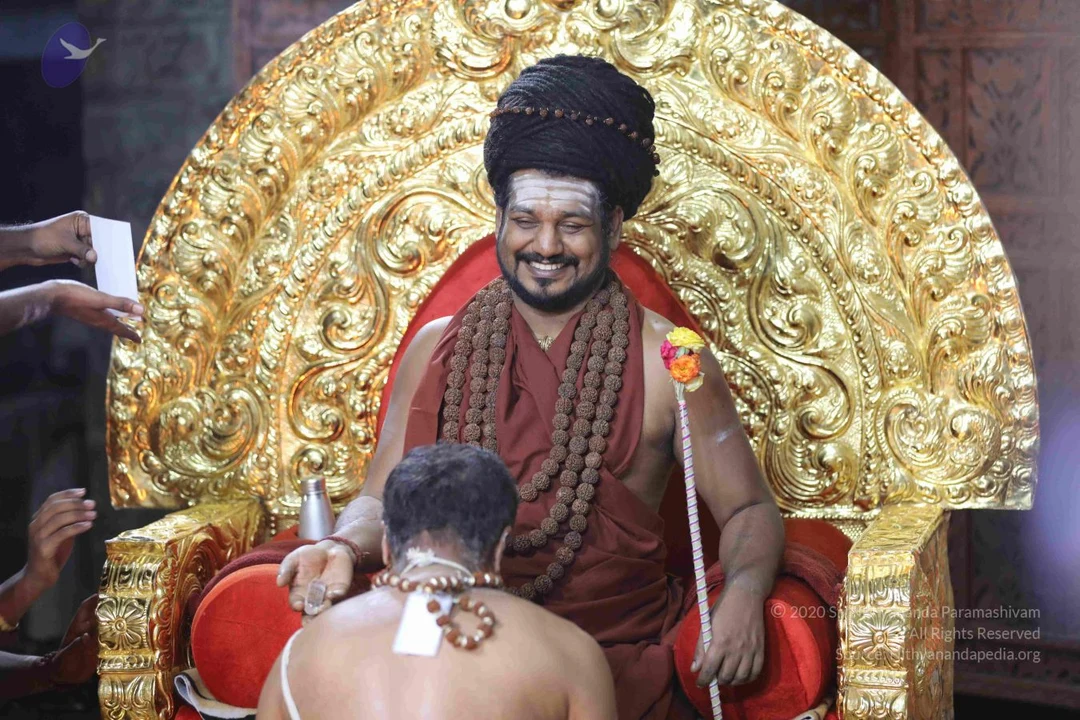
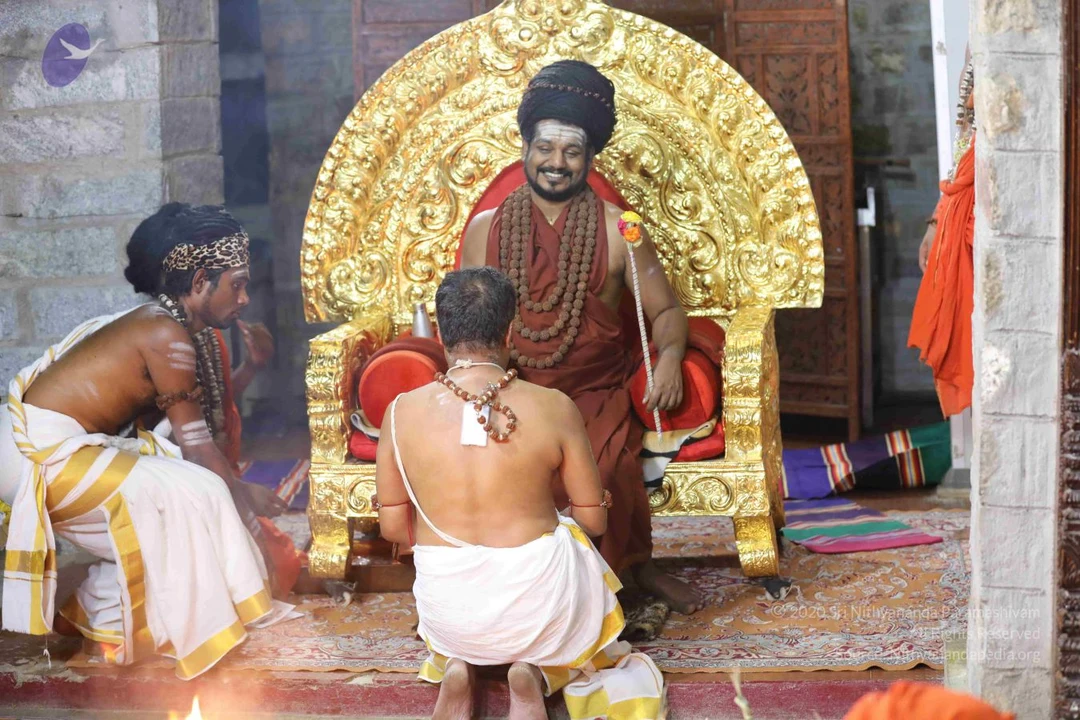
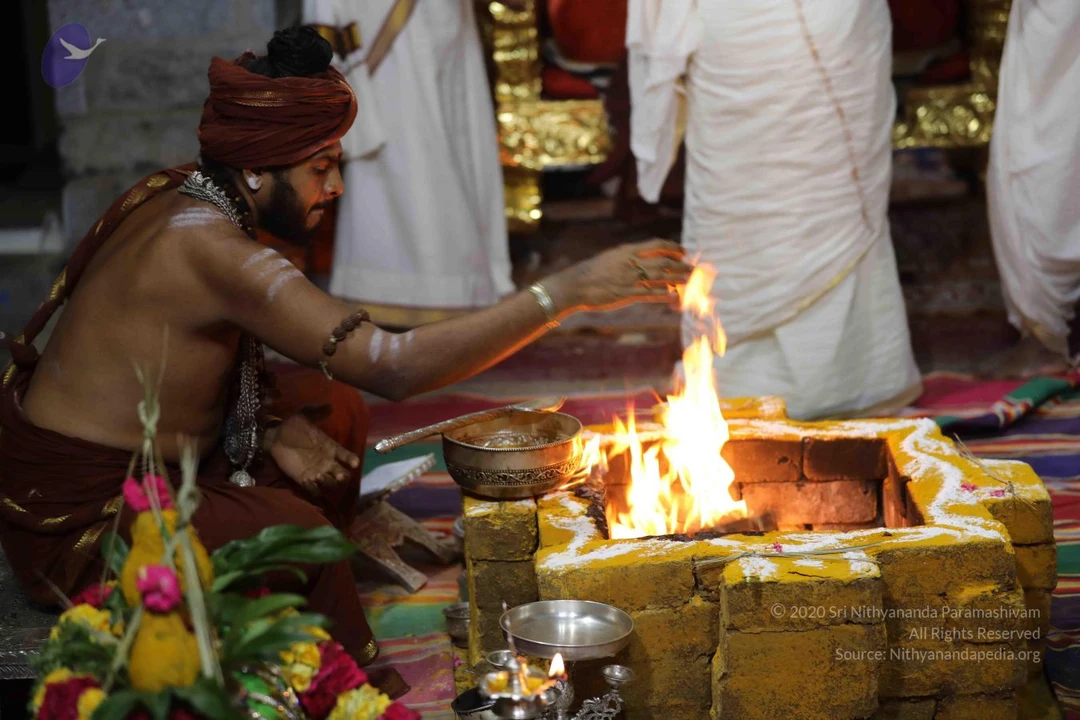
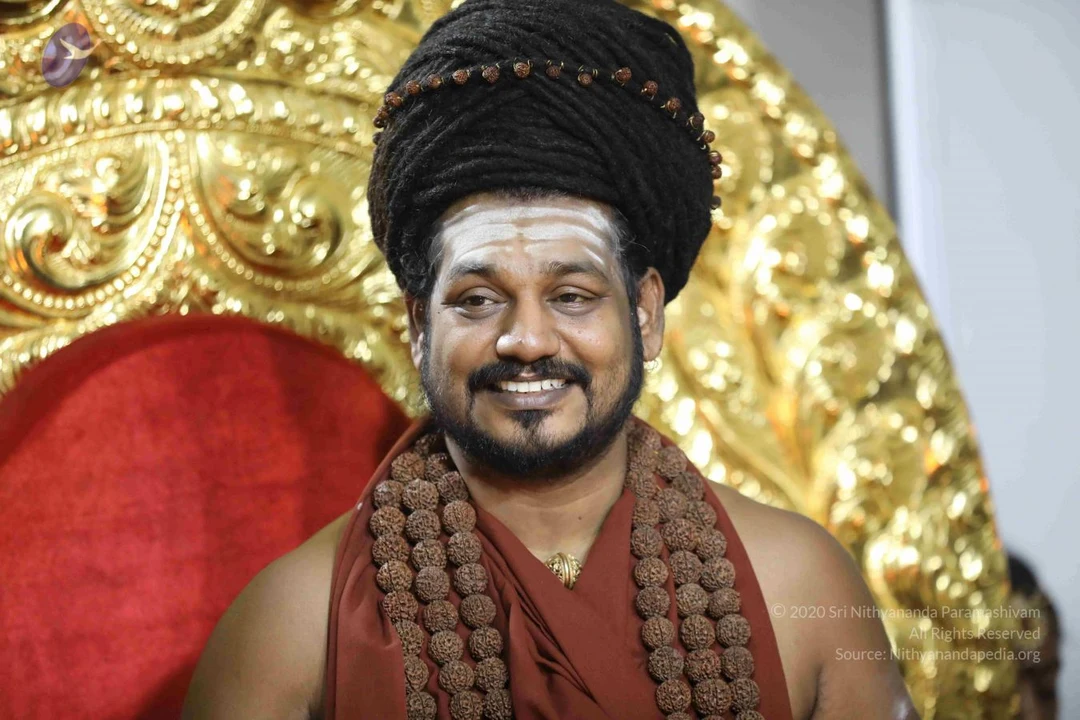
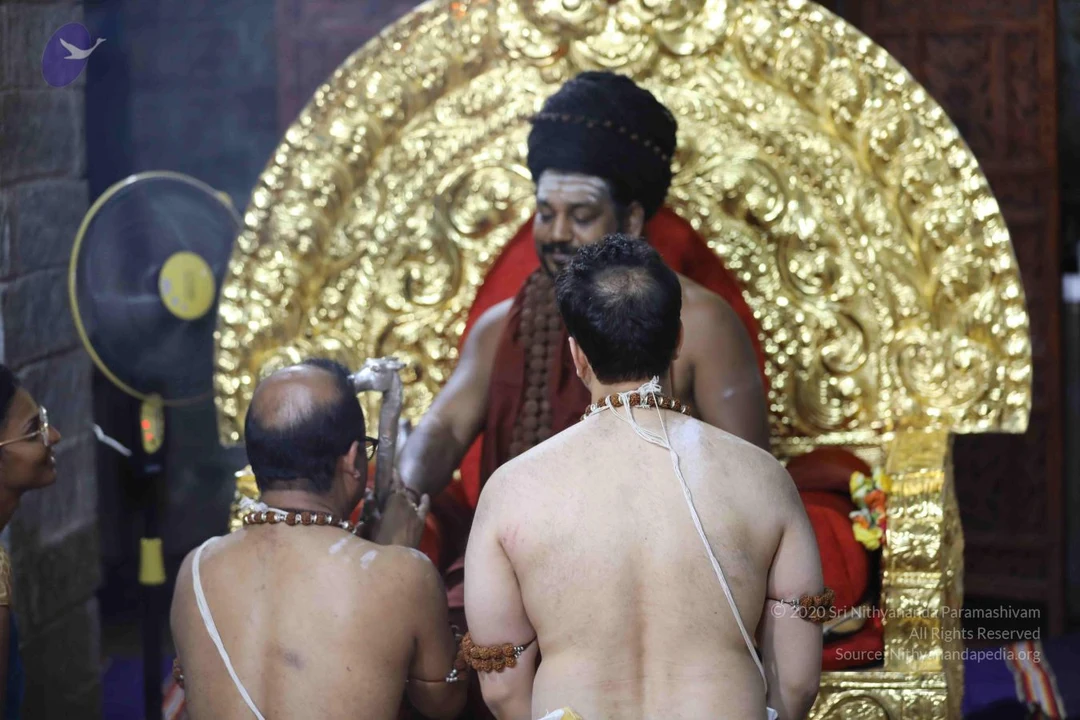
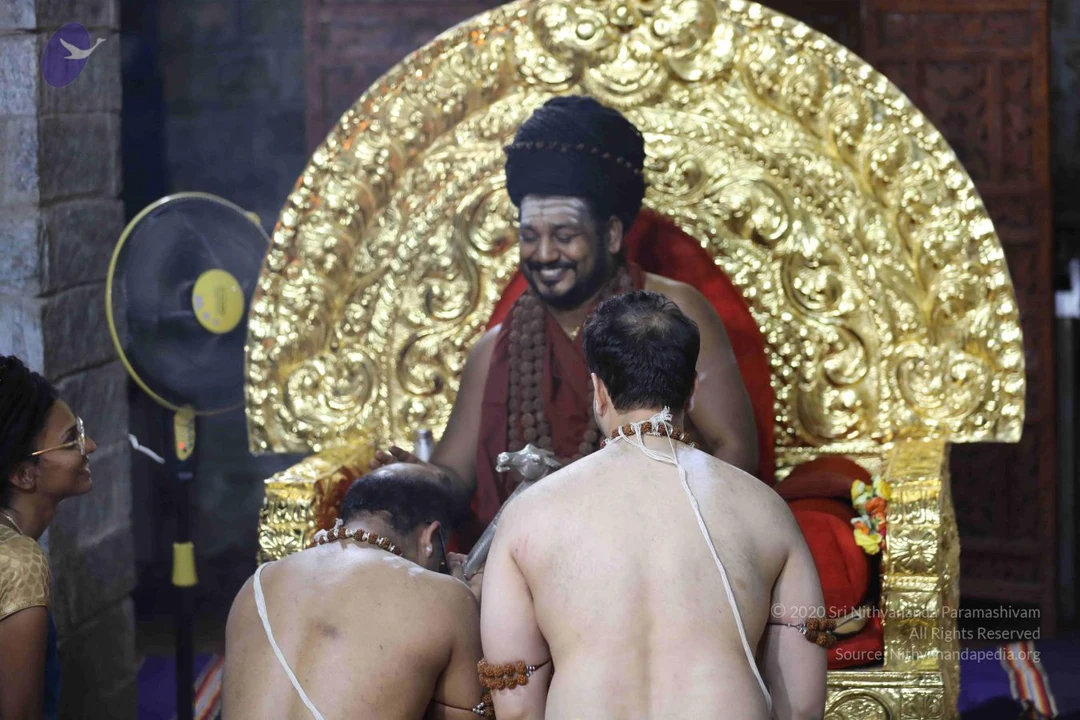
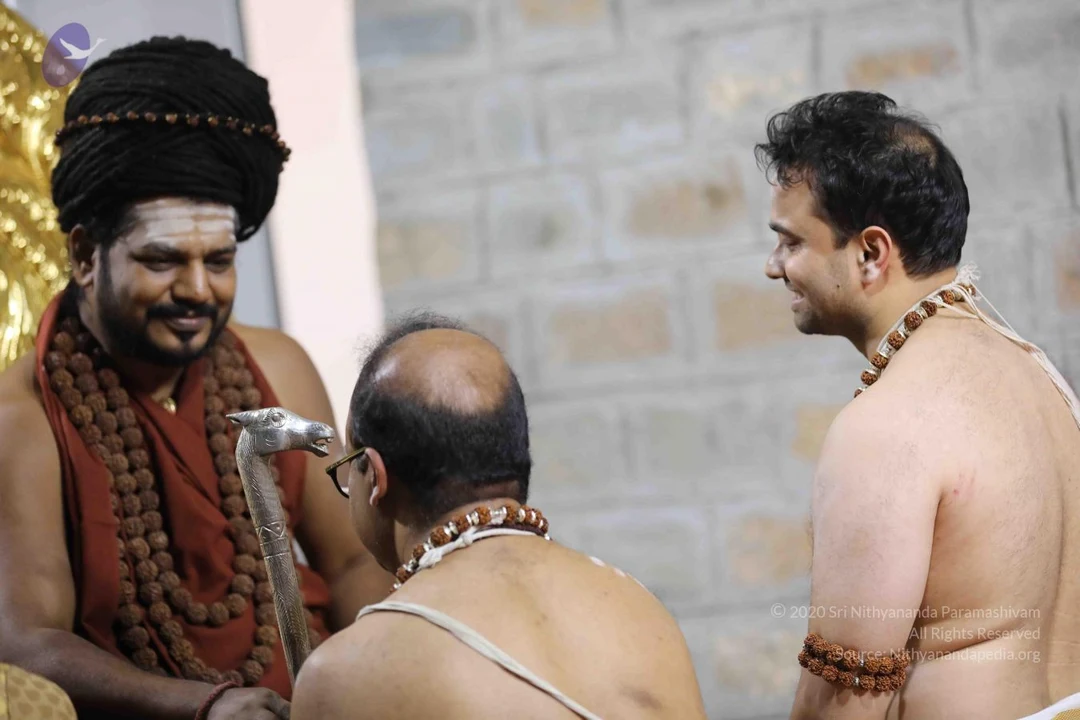
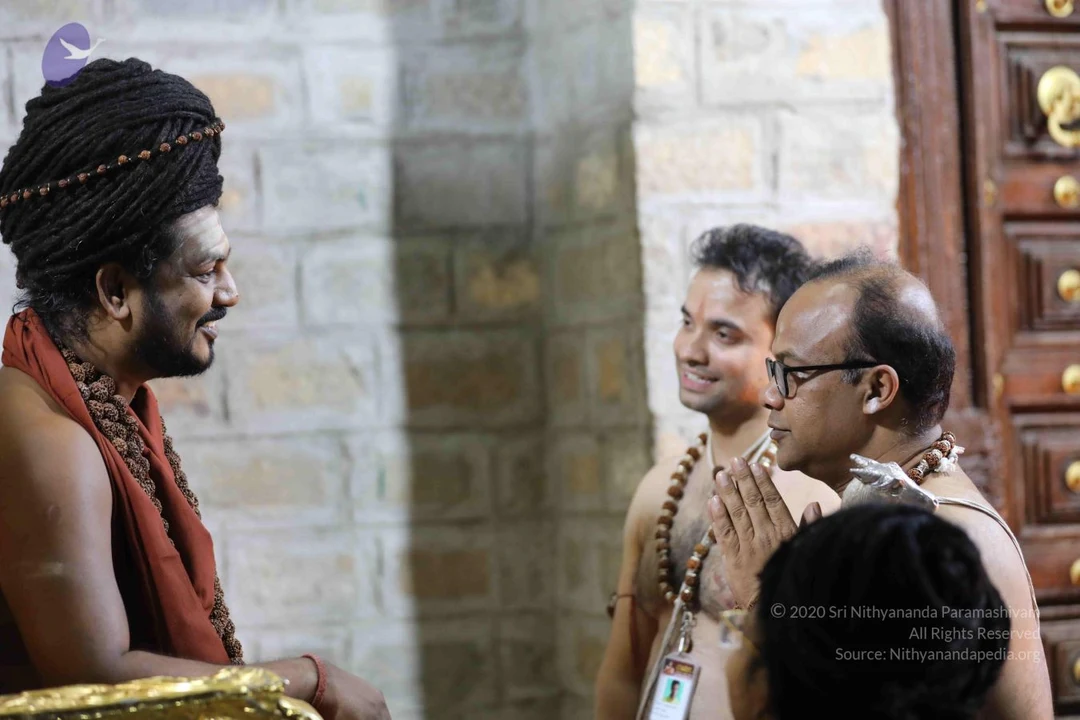
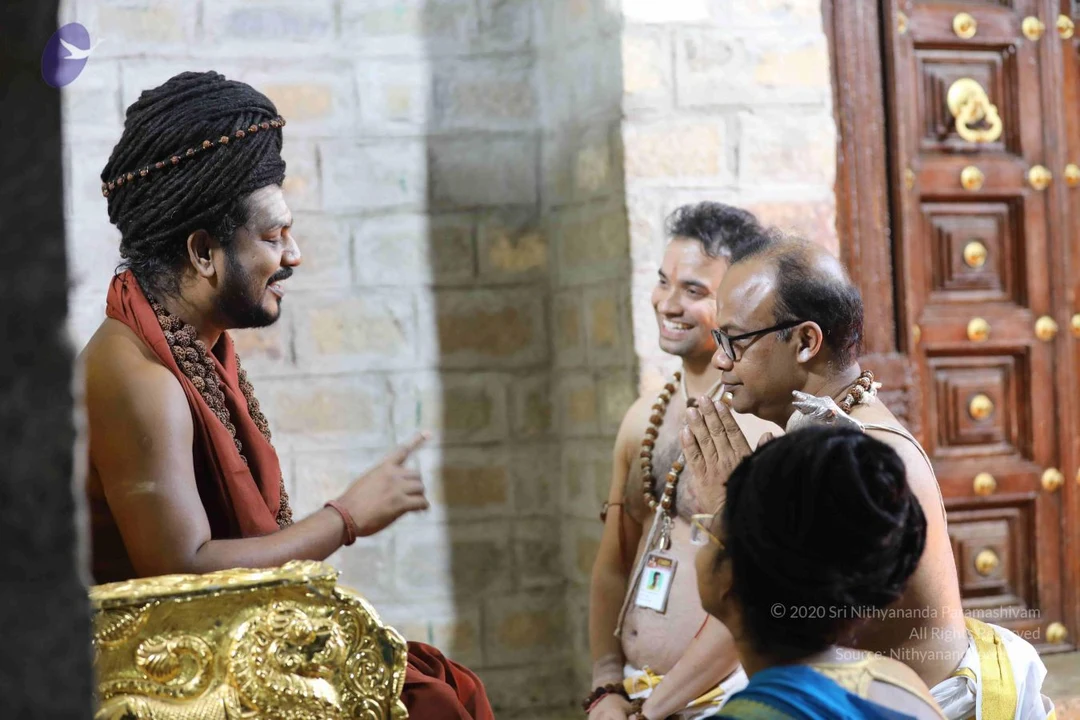
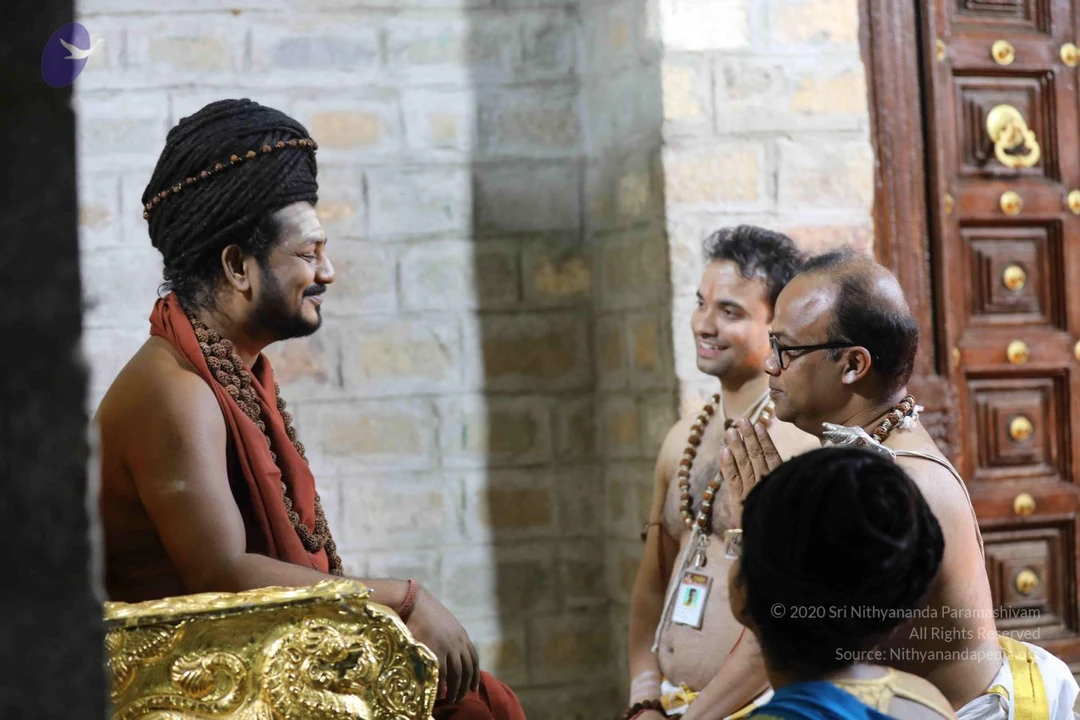
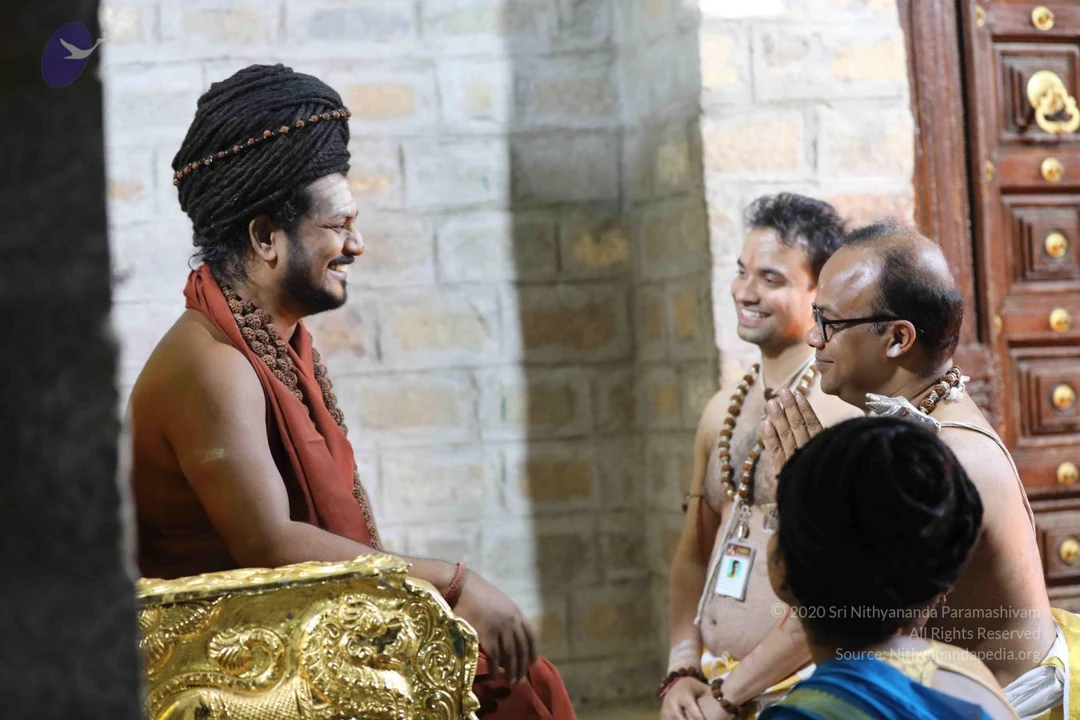
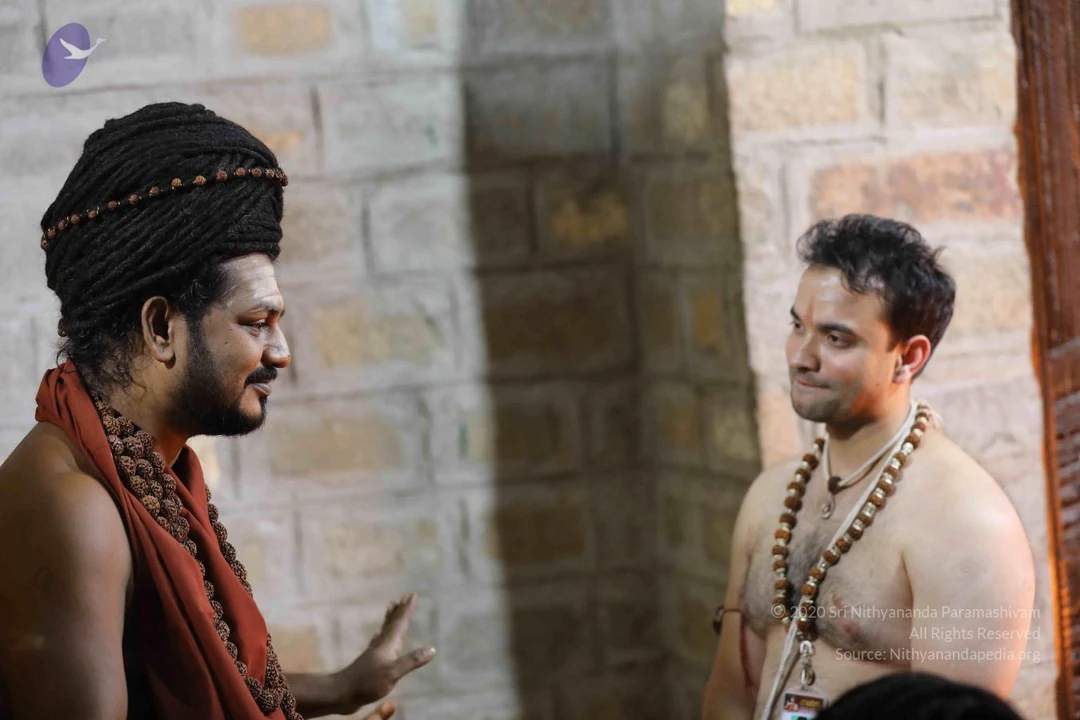
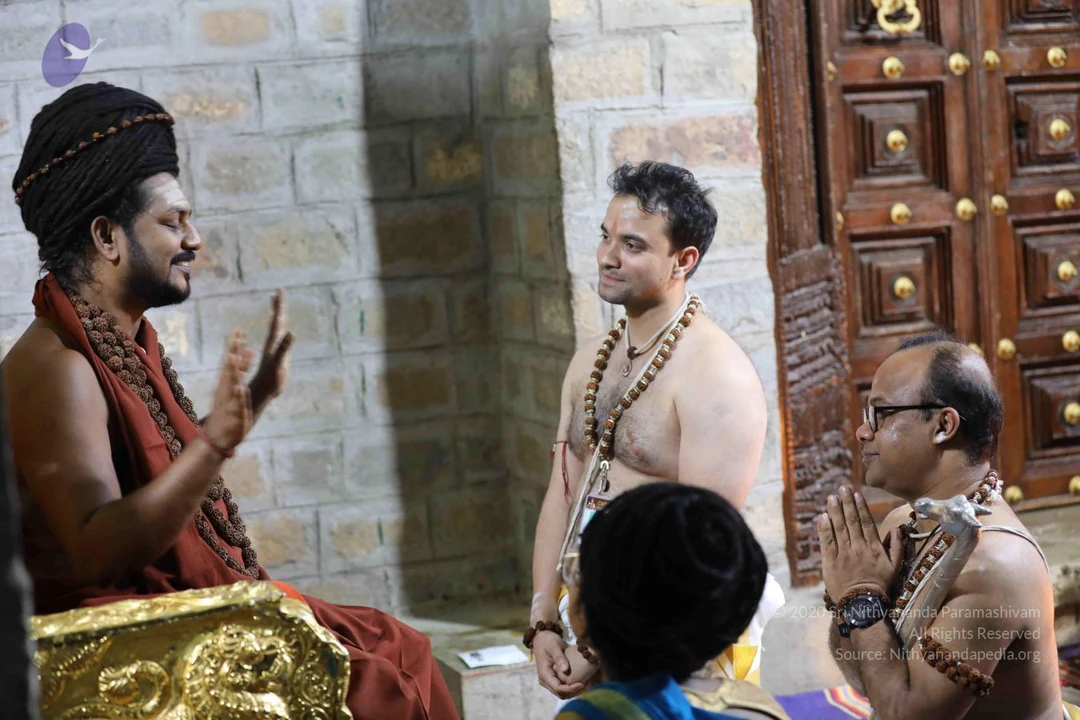
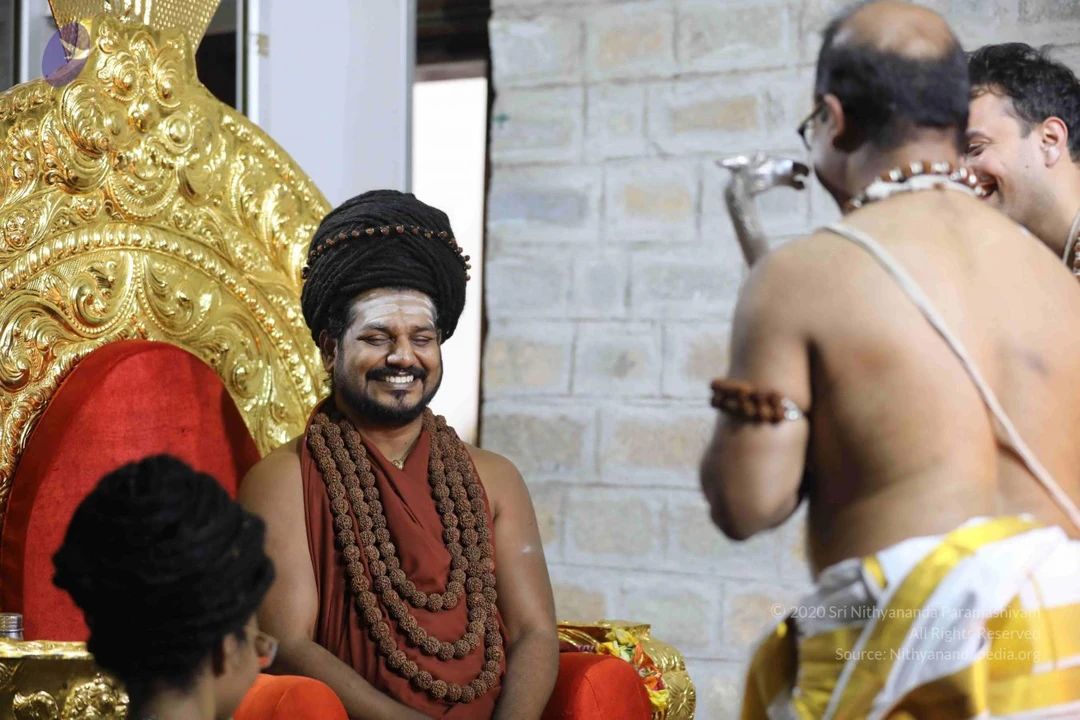
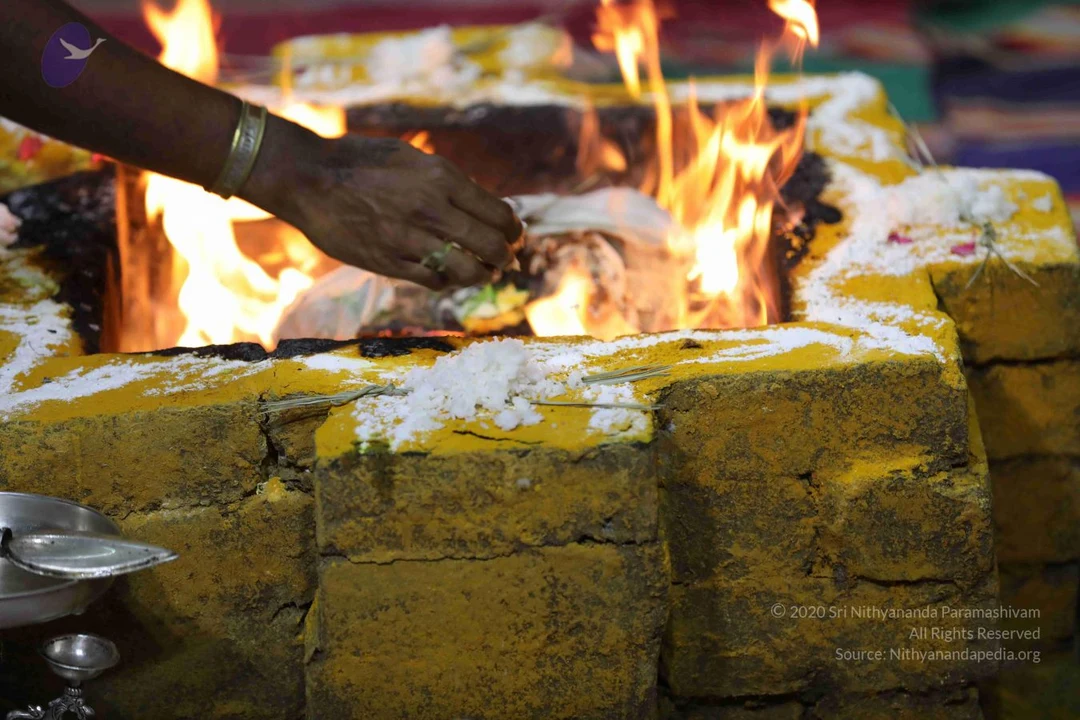
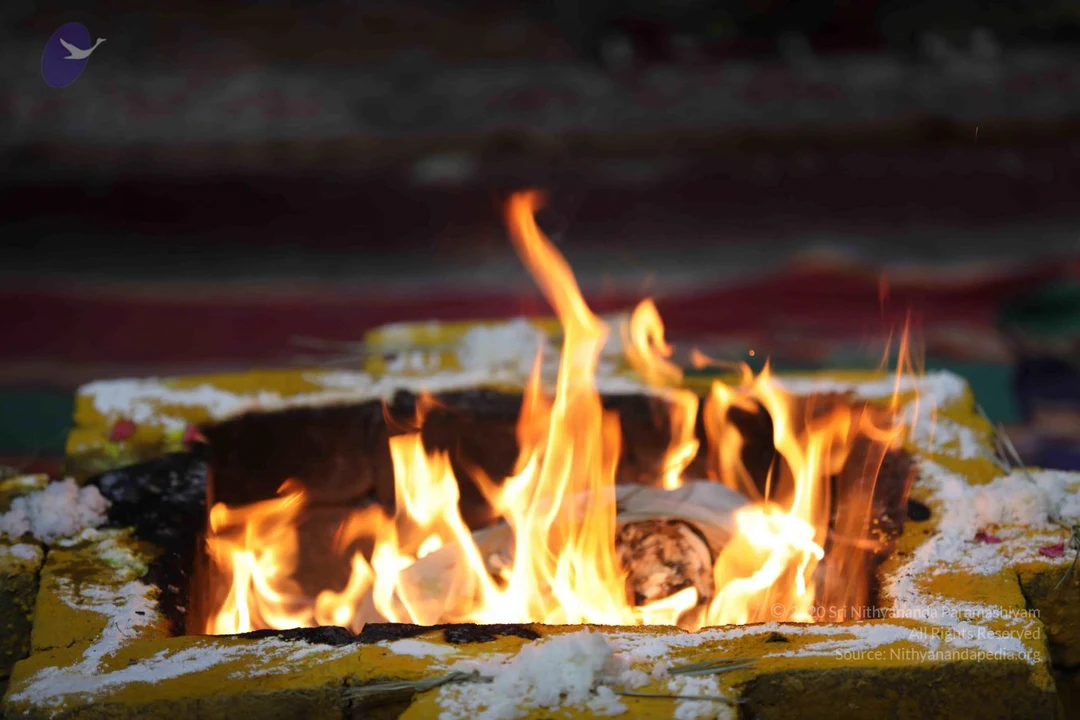
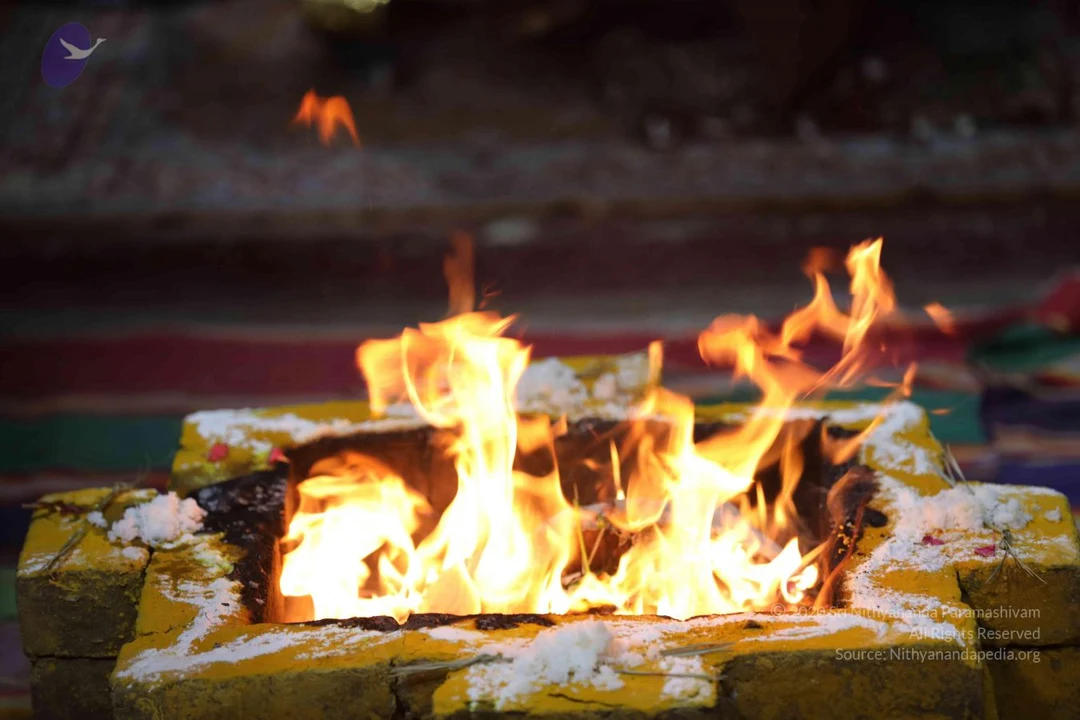
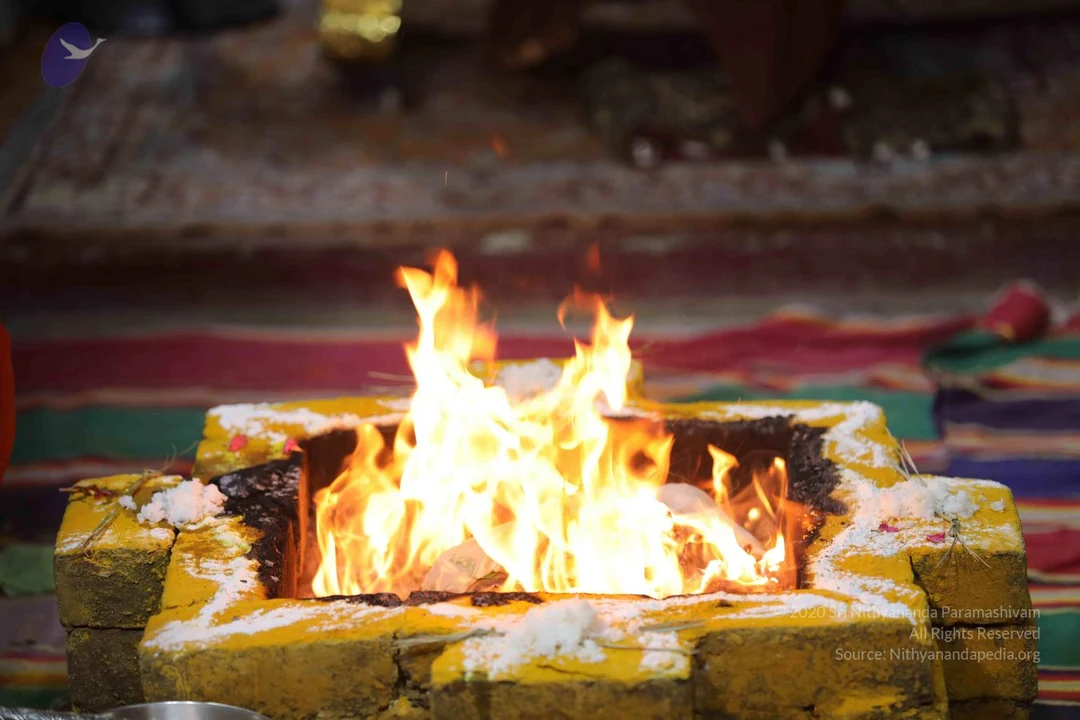
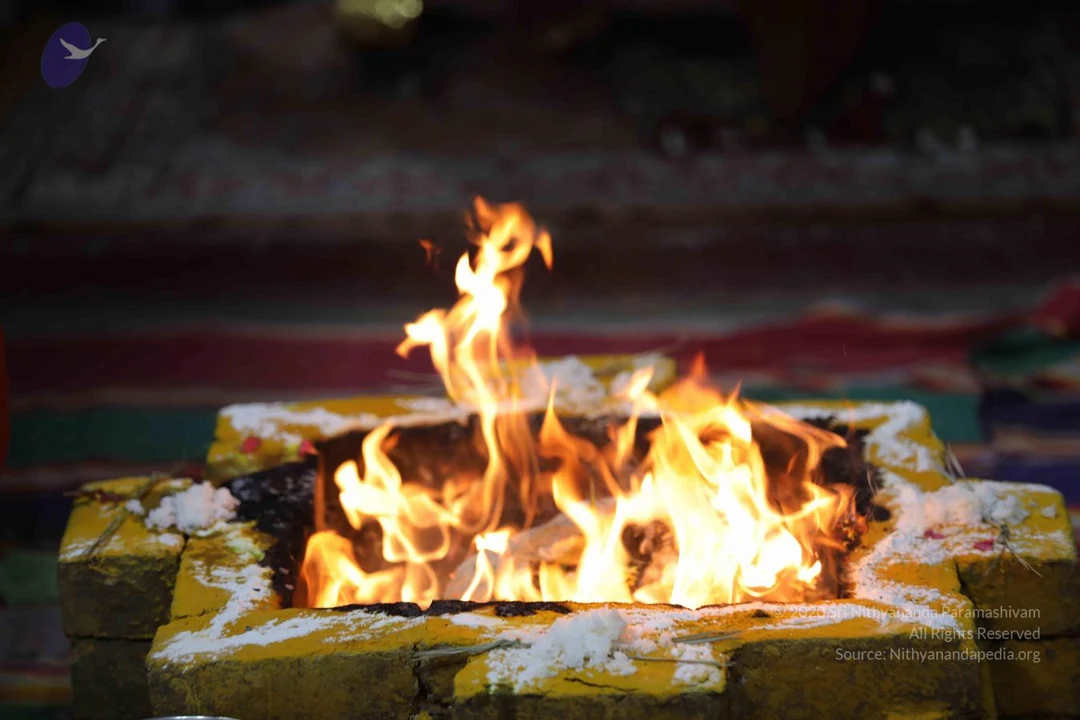
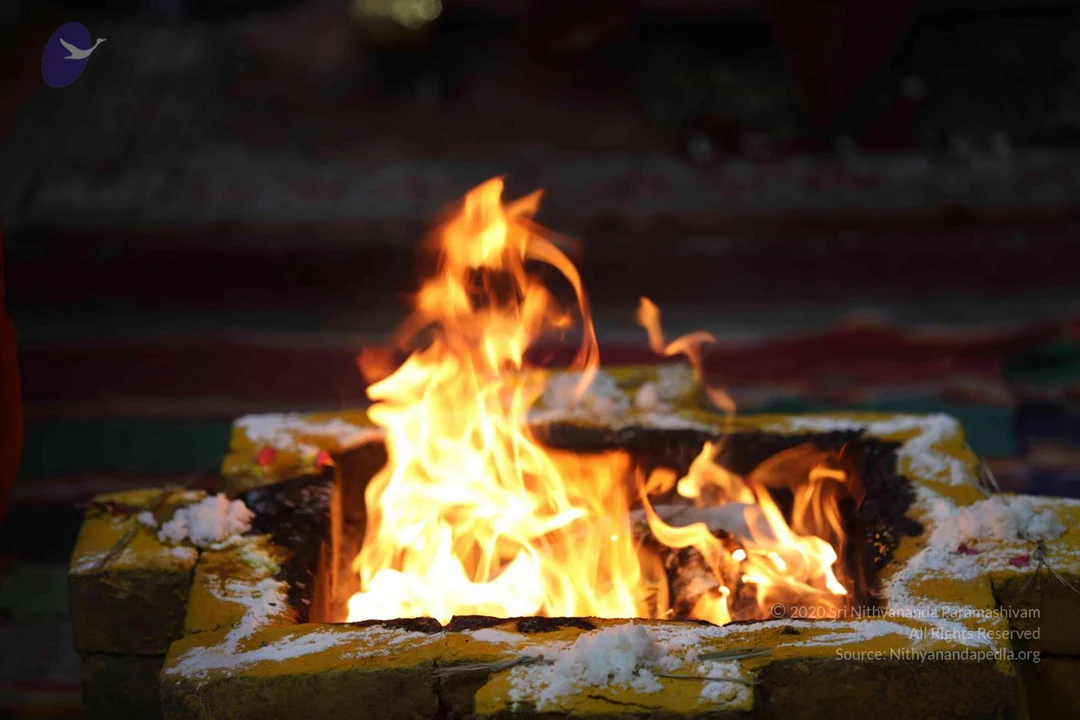
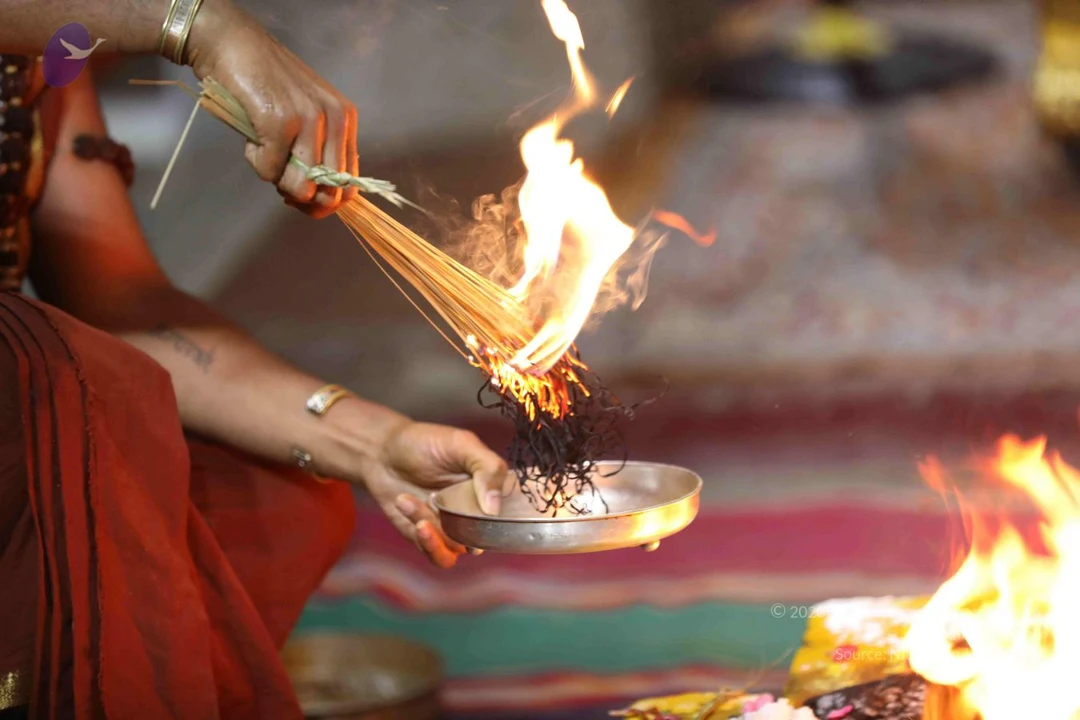
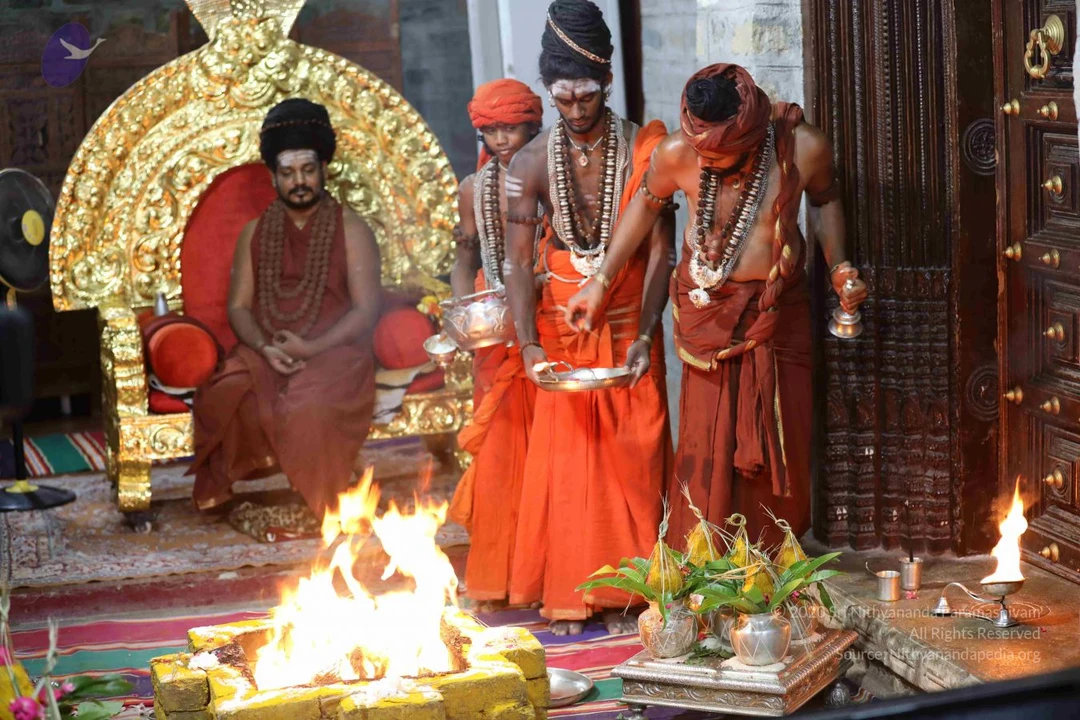
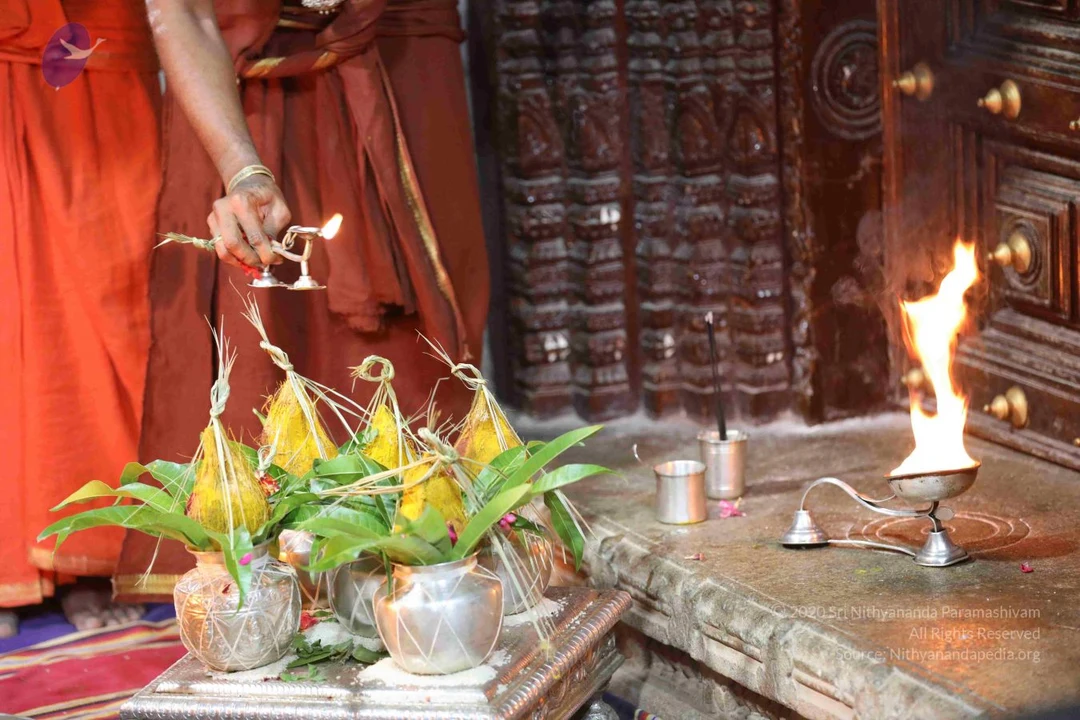
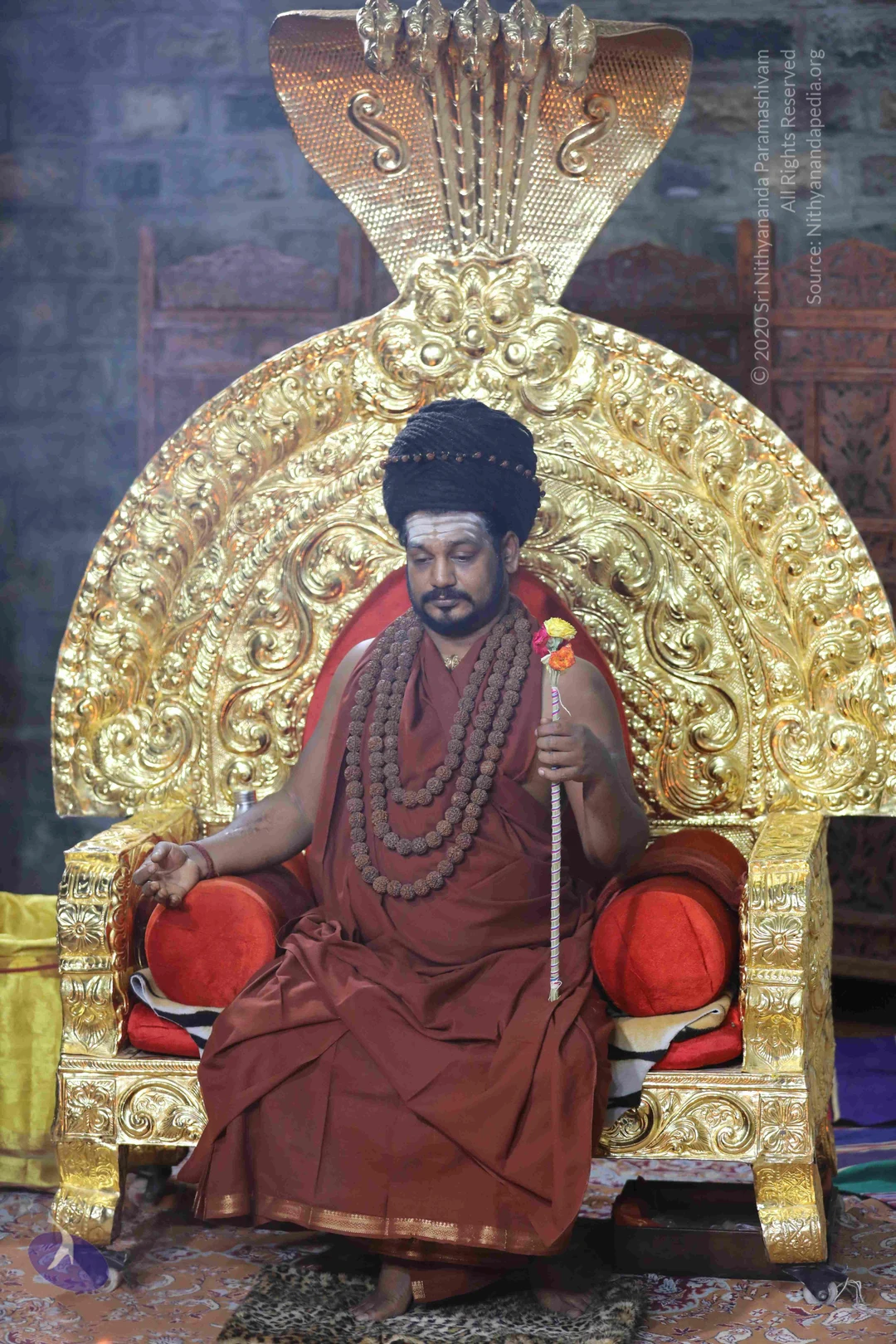
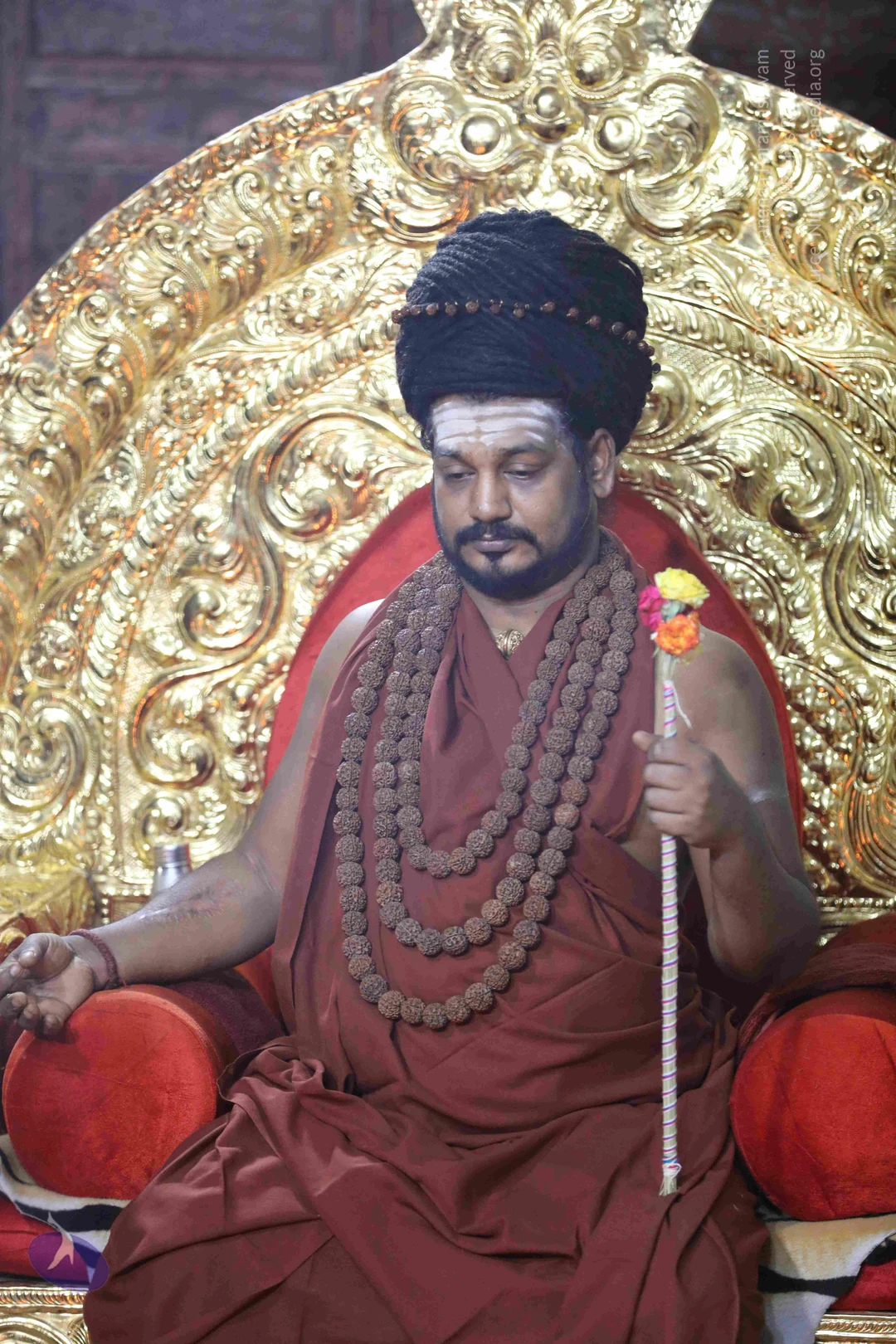
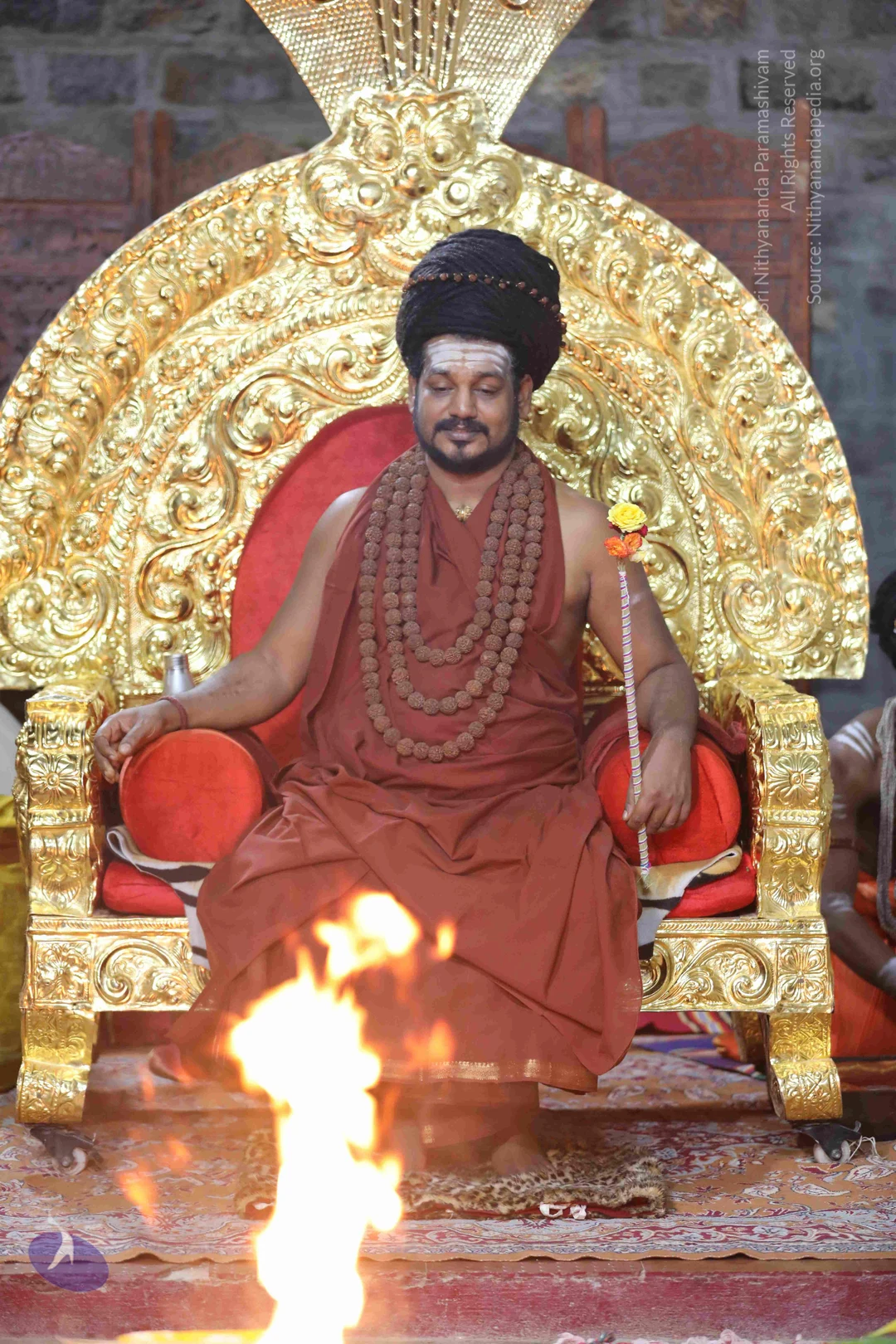
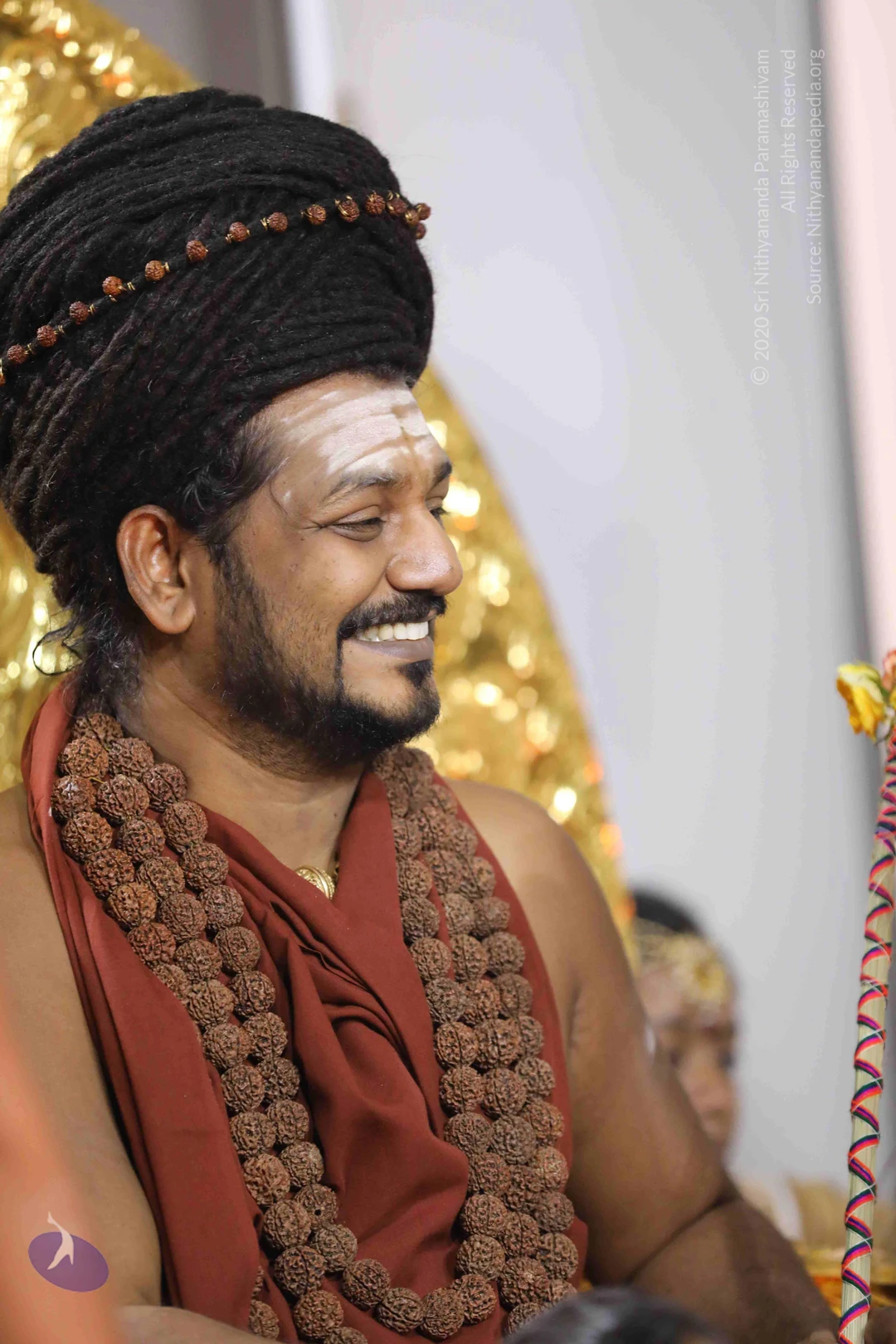
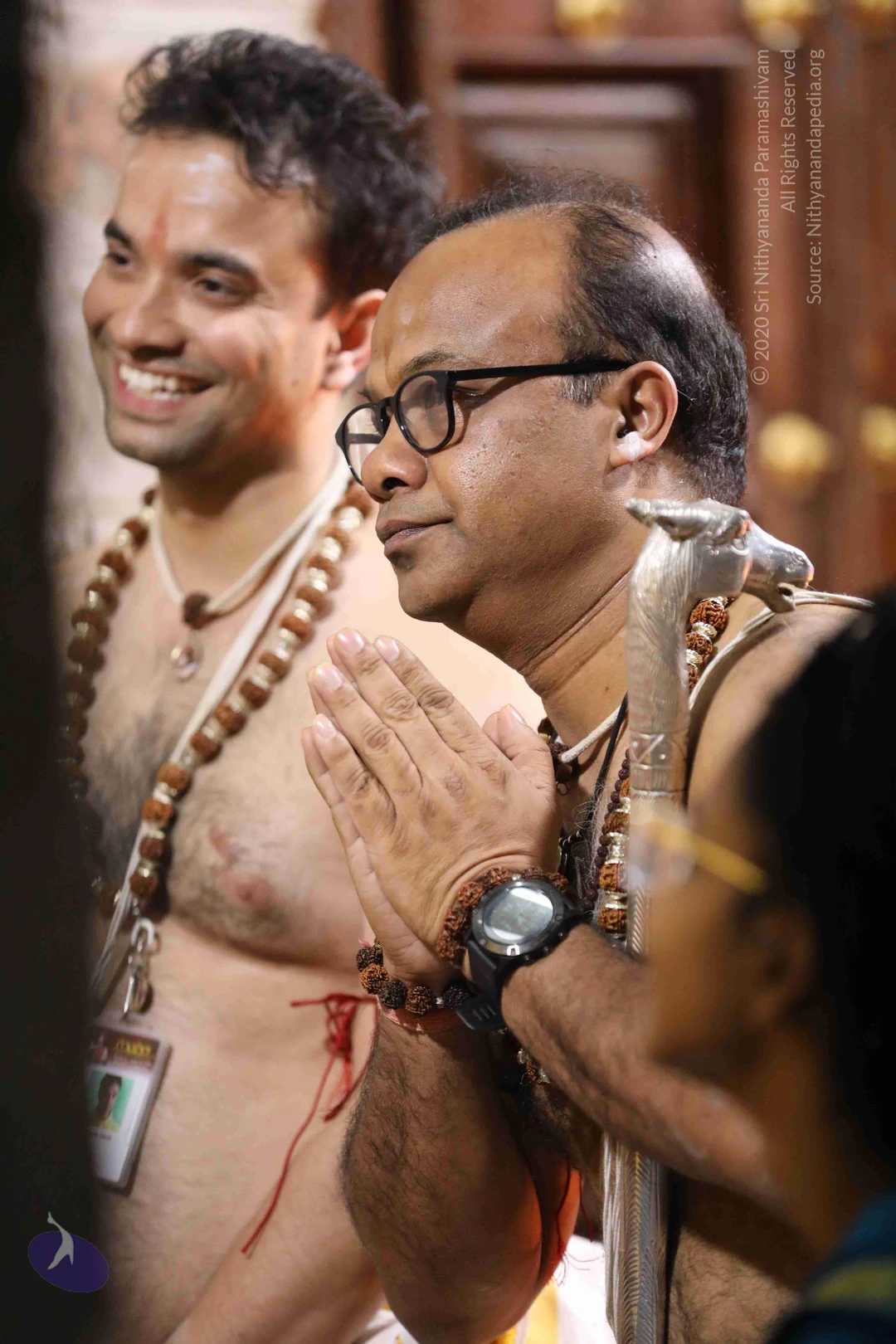
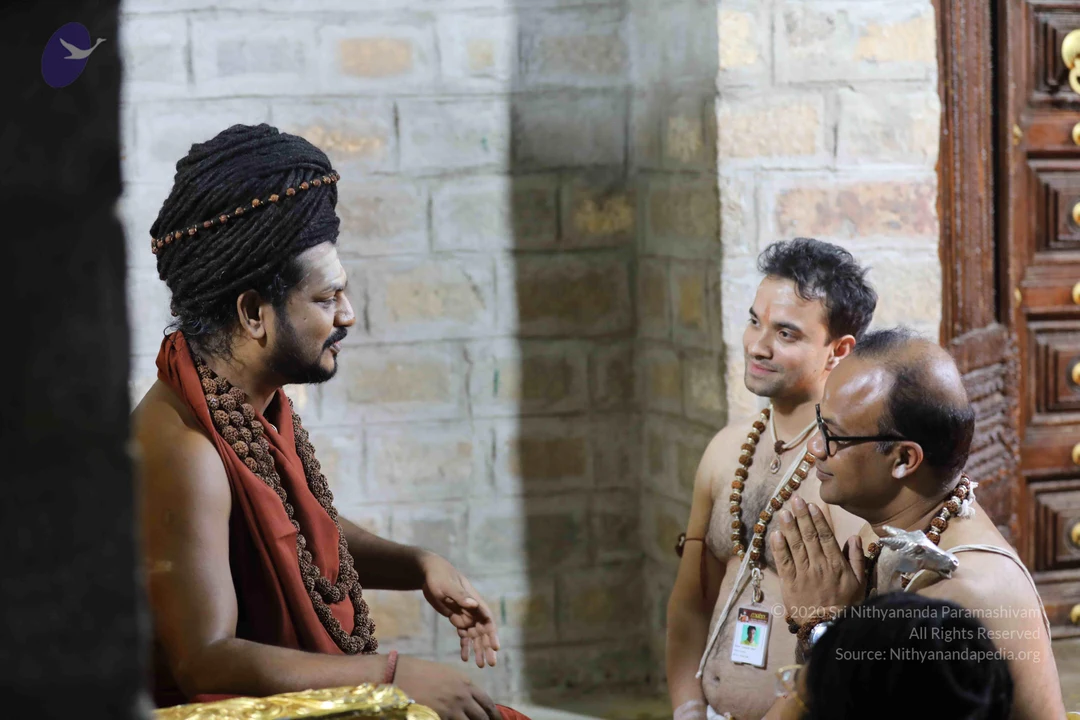
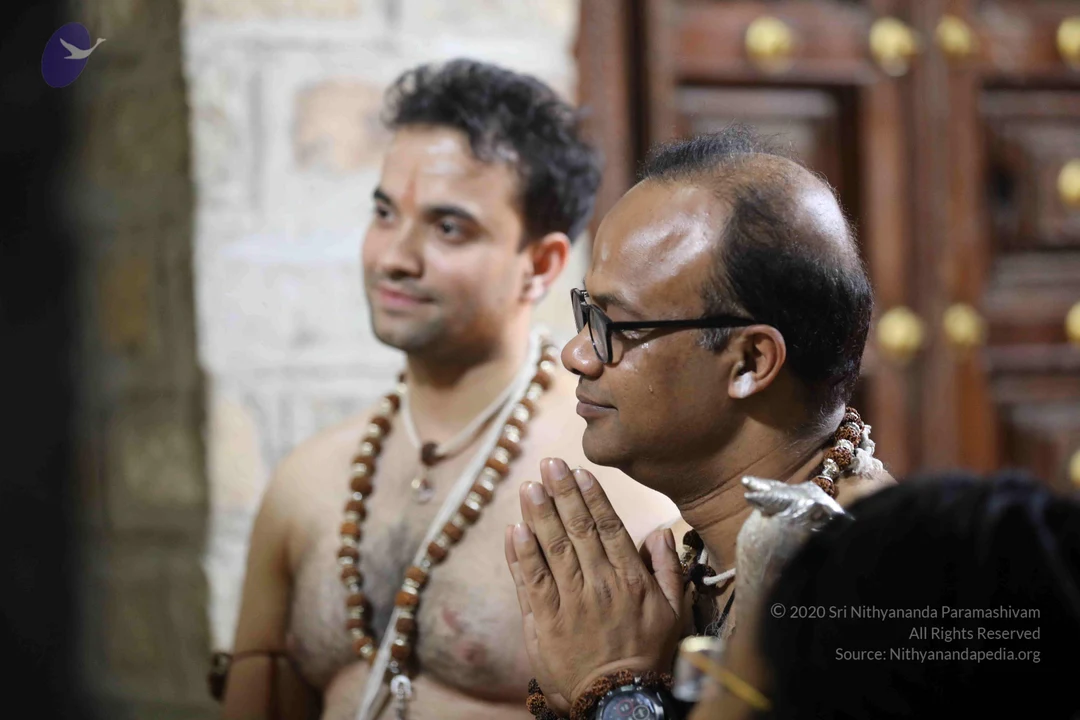
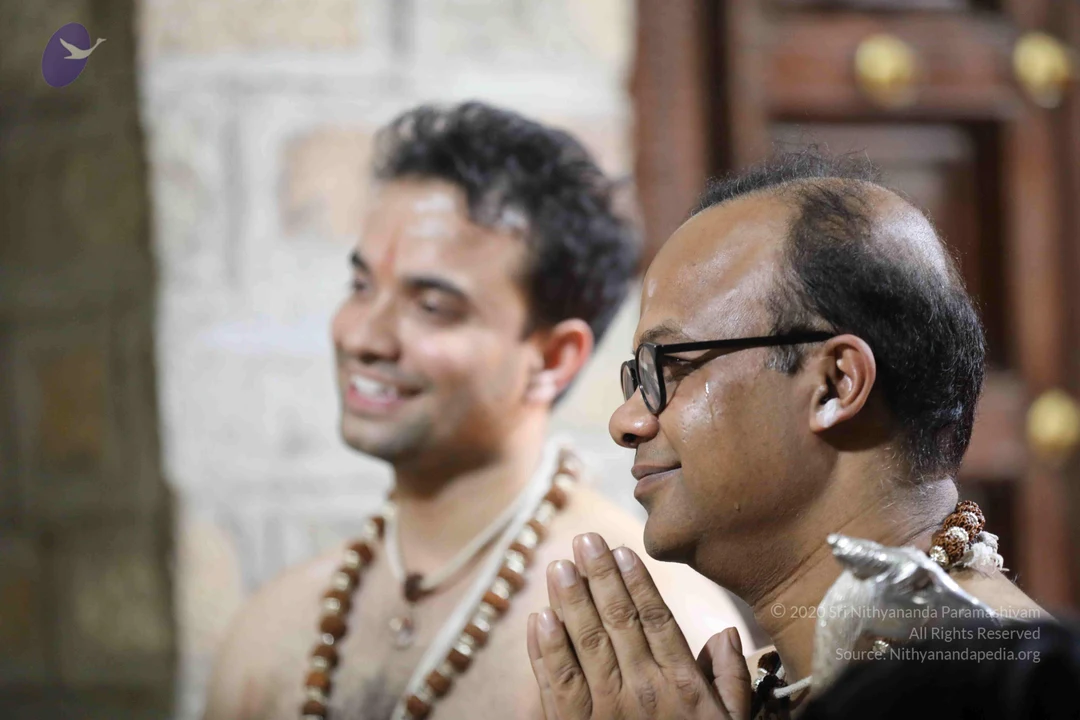
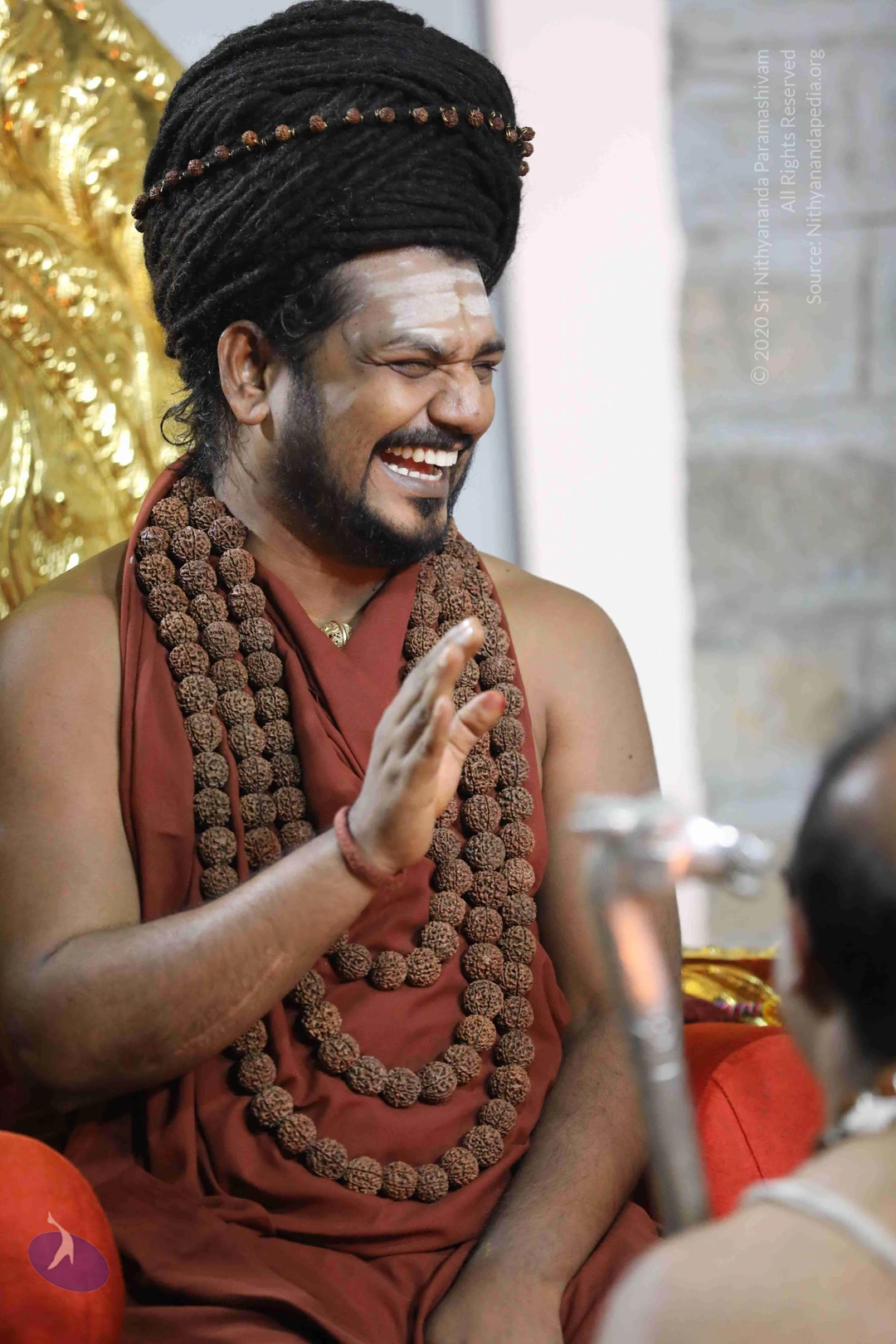
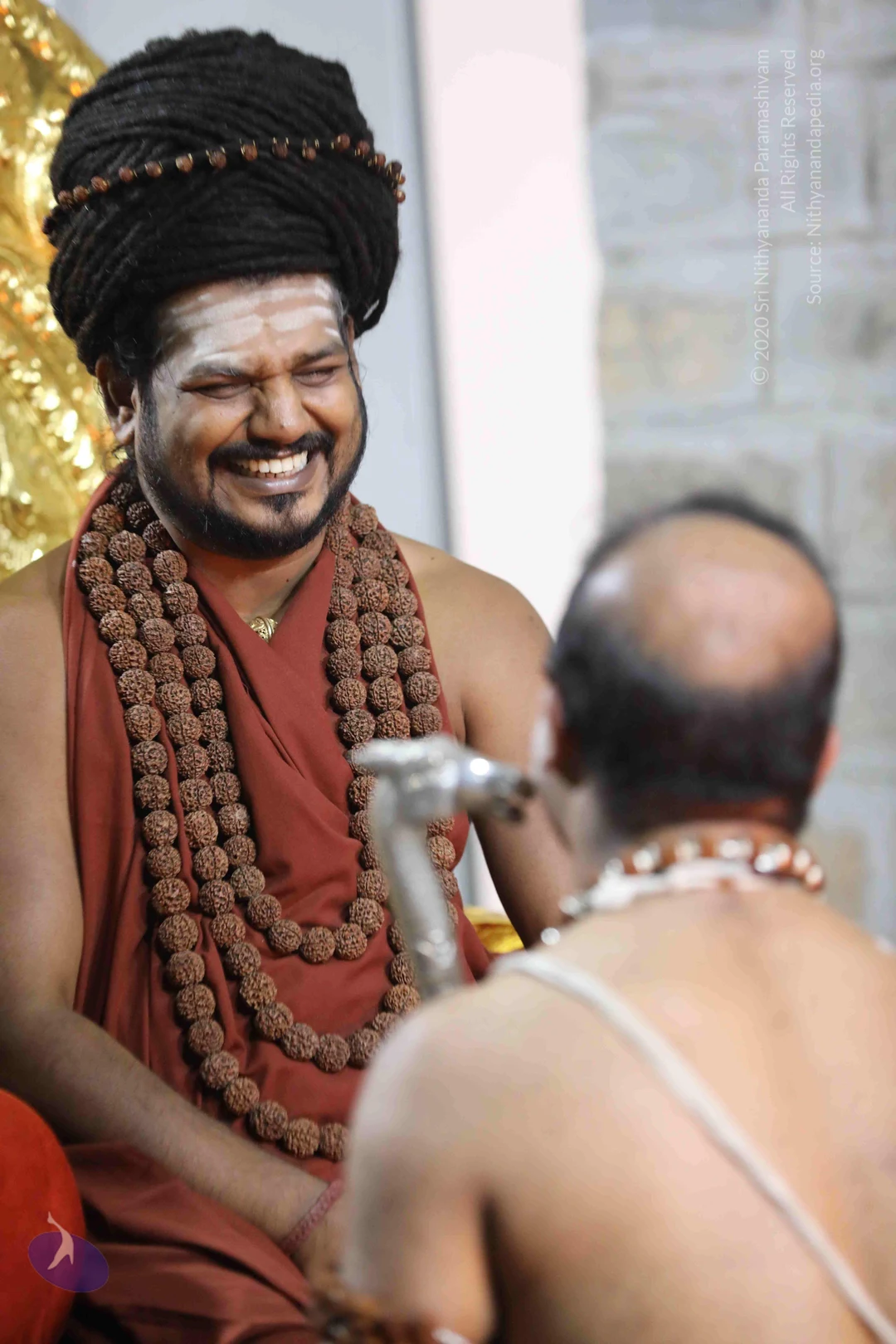
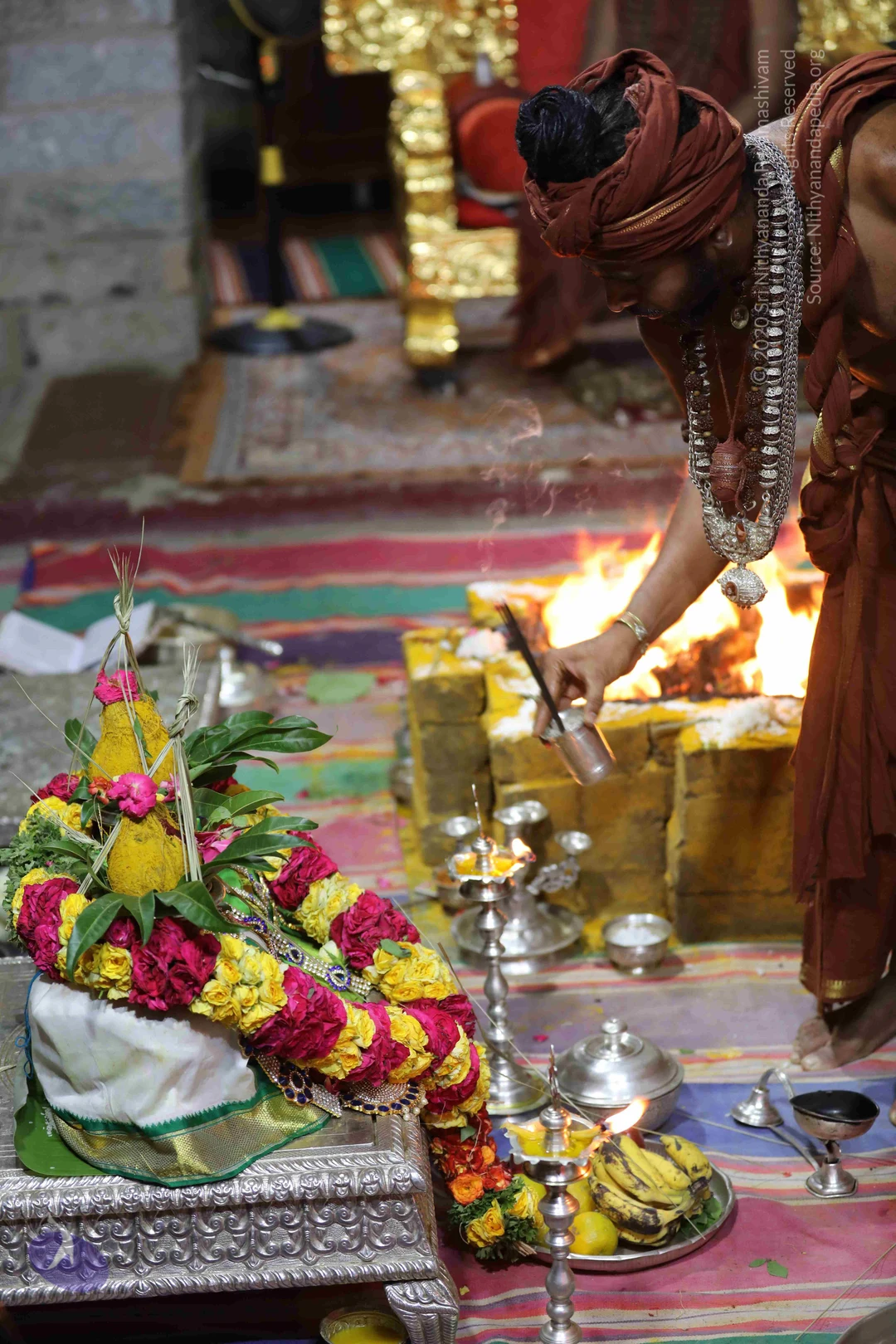
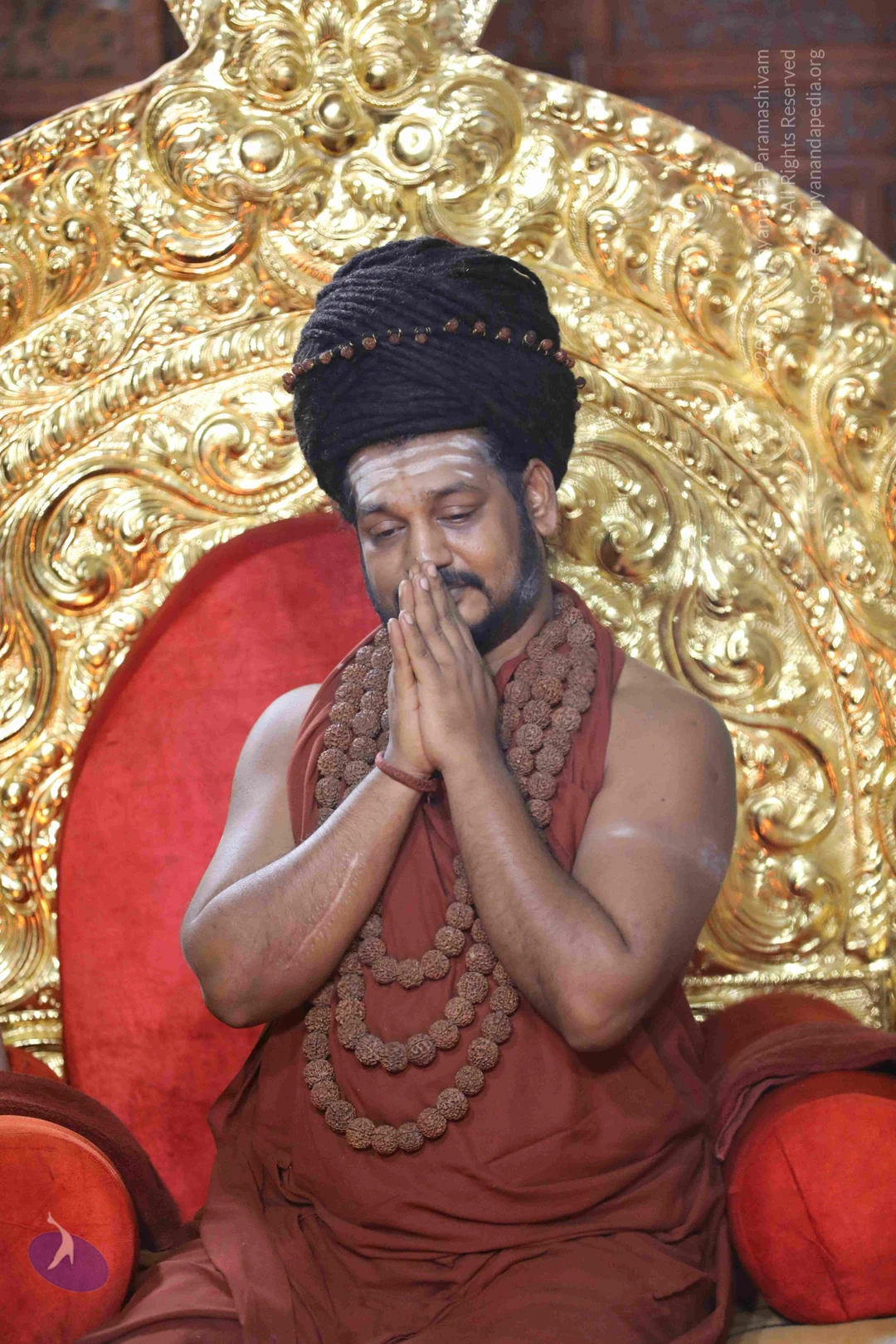
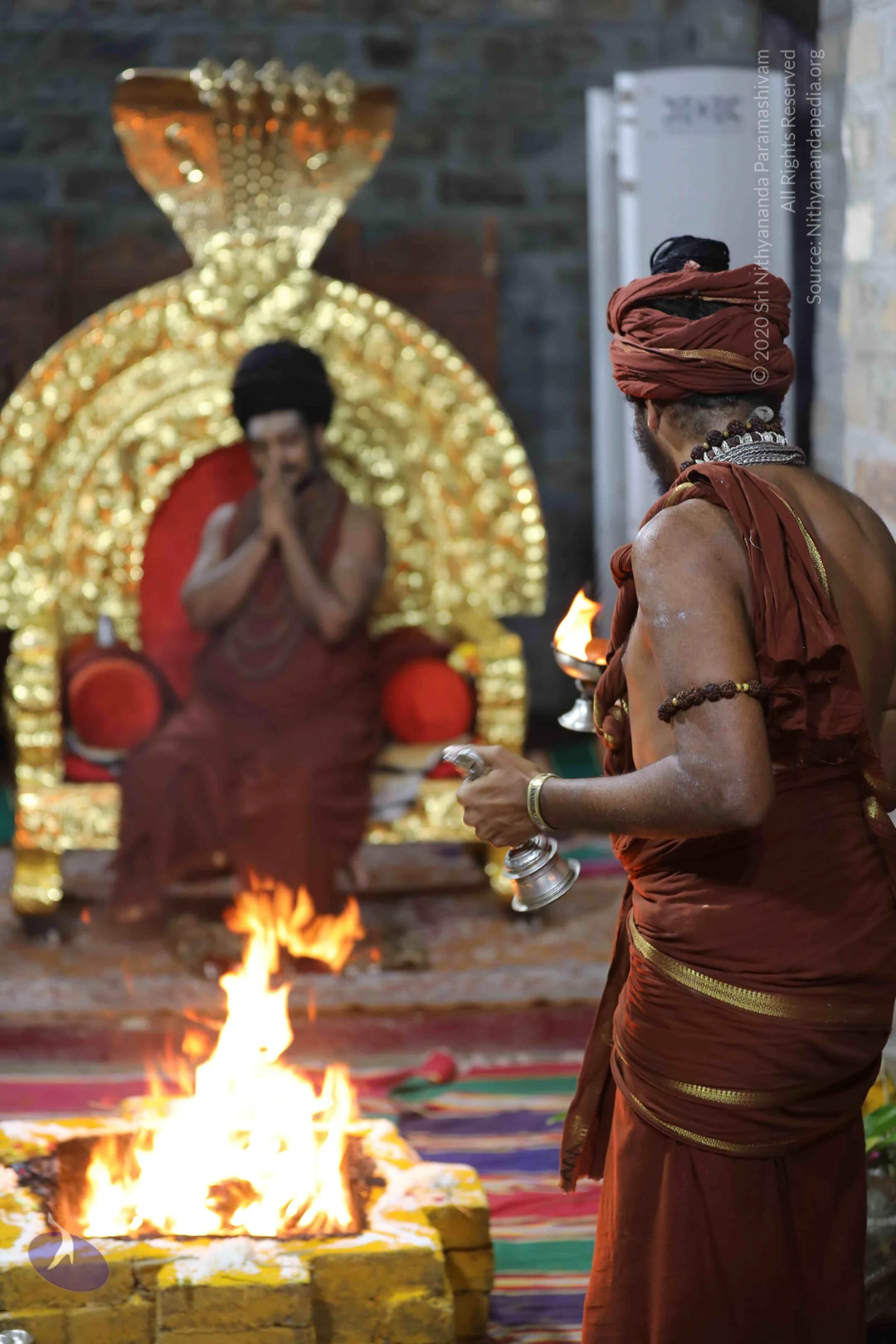
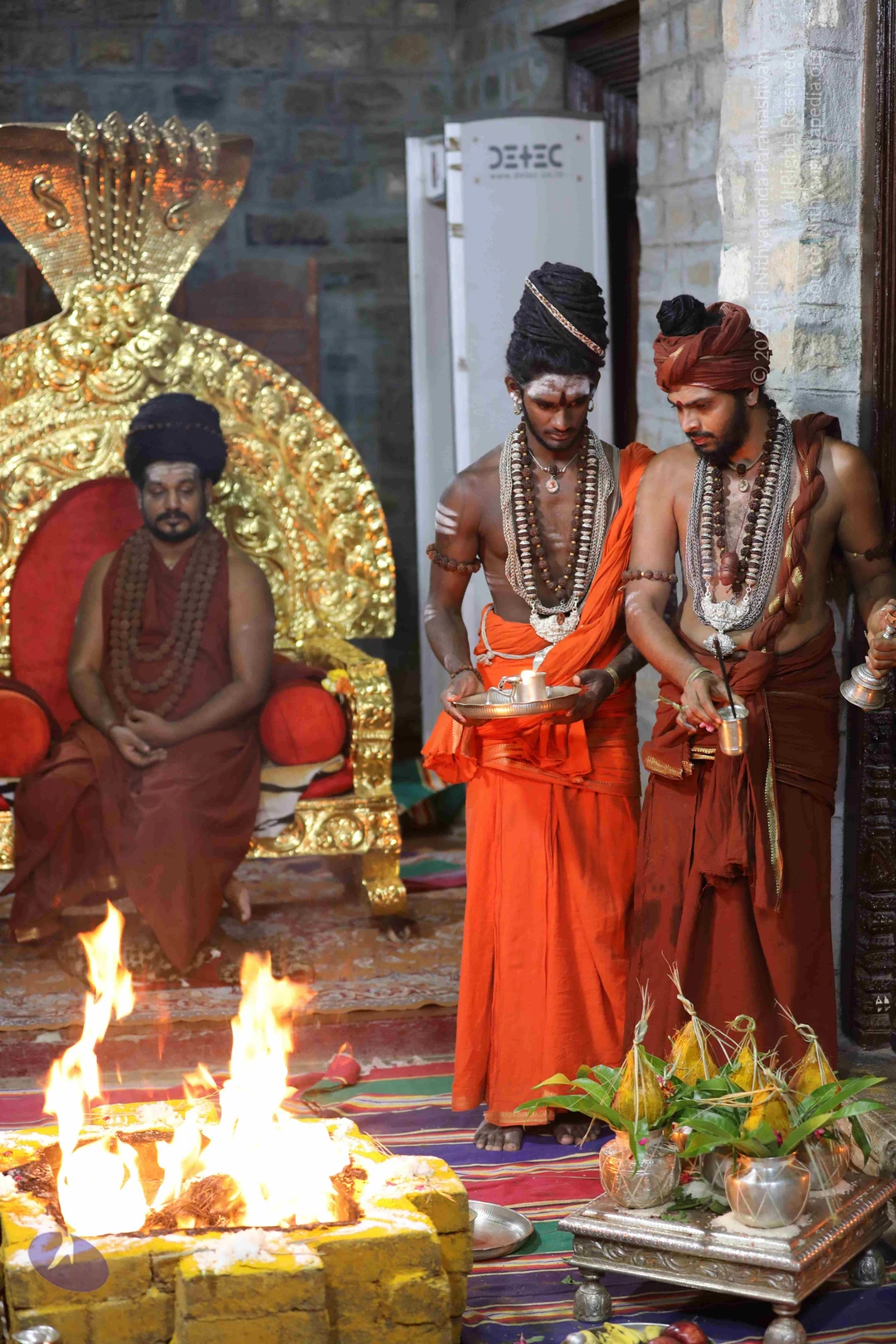
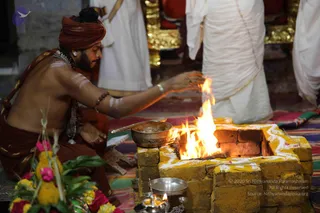
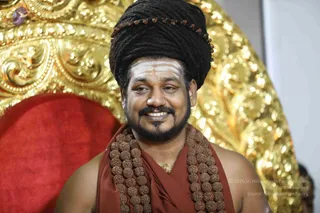
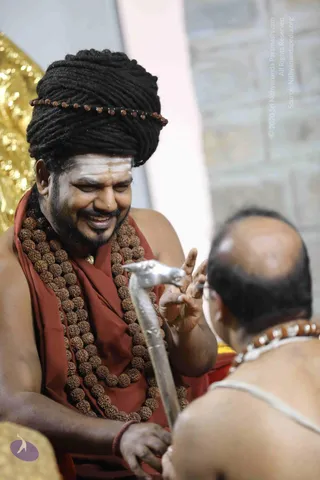
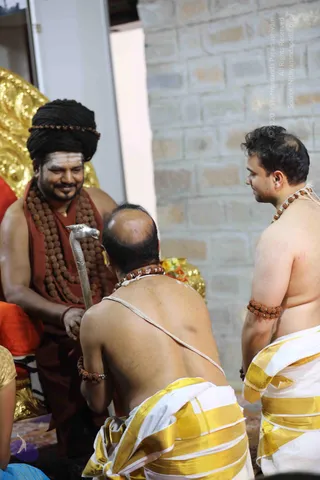
A homa ritual in a temple-like hall with an ornate golden throne at left. A man seated on the gilded red-cushioned throne wears a rudraksha mala and a rust-coloured wrap, his hands folded. Three attendants in saffron-orange and rust cloth stand at centre and right: one holds a brass vessel, another a metal plate with offerings, and a young boy in an orange turban stands behind. A fire burns in a yellow-brick fire pit in the foreground, with a small oil lamp and brass cups near the carved wooden door at right, and a decorated kalasha with mango leaves and coconuts on a tray. The man on the throne has long hair and a crown-like headpiece; the attendants are shirtless or in orange wraps with rudraksha malas.A seated man in a golden ornate throne with an arched carved backrest wears a tall dark turban-like headwrap, a rudraksha mala across his chest, a red-orange shawl over his body, and a small floral garland tied to his arm; he smiles broadly with white sacred markings on his forehead. In front of him a bare-chested man in a white dhoti with rudraksha beads on his arms and neck faces away from the camera, his hands raised in an offering gesture, while several hands from the side hold up white paper slips toward the seated figure. The scene suggests a initiation ritual in a temple-like hall with carved wooden panels behind.A photograph of a Vishesha Deeksha initiation at an ashram hall with a wooden door studded with brass knobs and a brick wall behind. A figure seated on a gold-carved throne at left wears a saffron-orange cloth, long matted dreadlocks bound with a band, and rudraksha malas; he holds his hands raised in a gesture while addressing those before him. Standing at centre, a bare-chested man with rudraksha malas and a pendant stands with hands joined. At right, a bespectacled bare-chested man in rudraksha malas sits with palms pressed together in namaskar, a silver ritual staff beside him. A person's head in dark hair is seen in the foreground, and a pale wrap is visible below. The seated figure at left has distinctive dreadlocks, saffron cloth and throne-like seating, which is a probable match to a person, but appearance is not fully certain.

April 11 2018

Original wiki page
Contents

Title

Vidhya Tatva, Vishesha Deeksha, Jnana Pada -Initiation || Day 11 of Mahasadashivoham || Go Mandir Inauguration Pujas at Trishulam Aadheenam ||

Narration

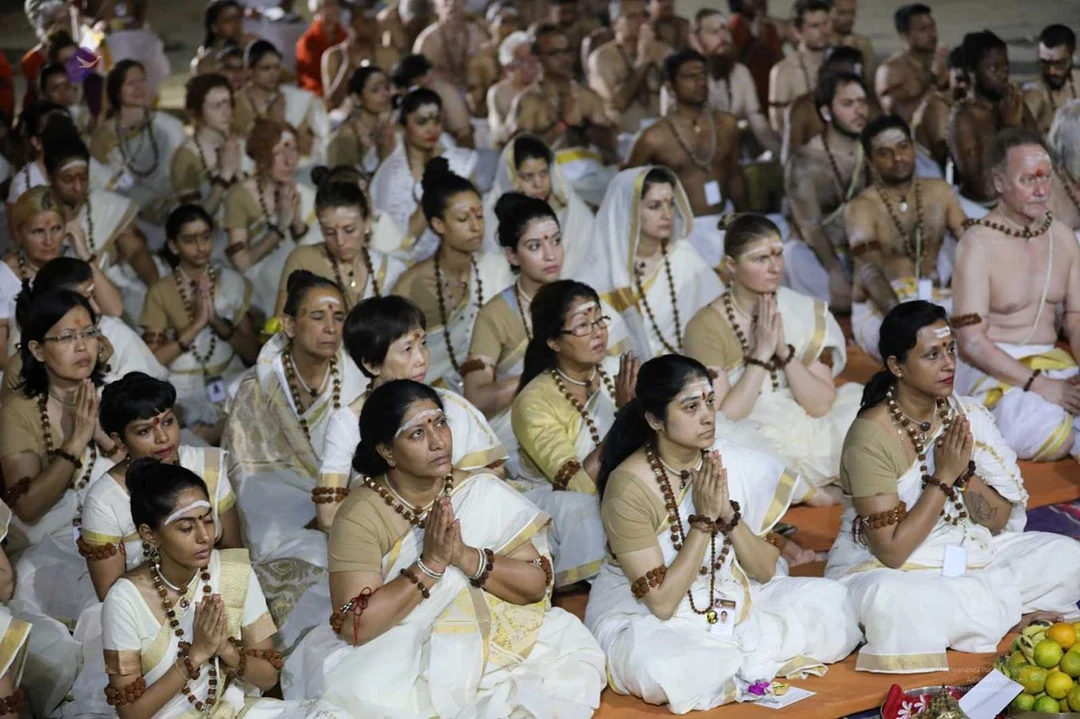
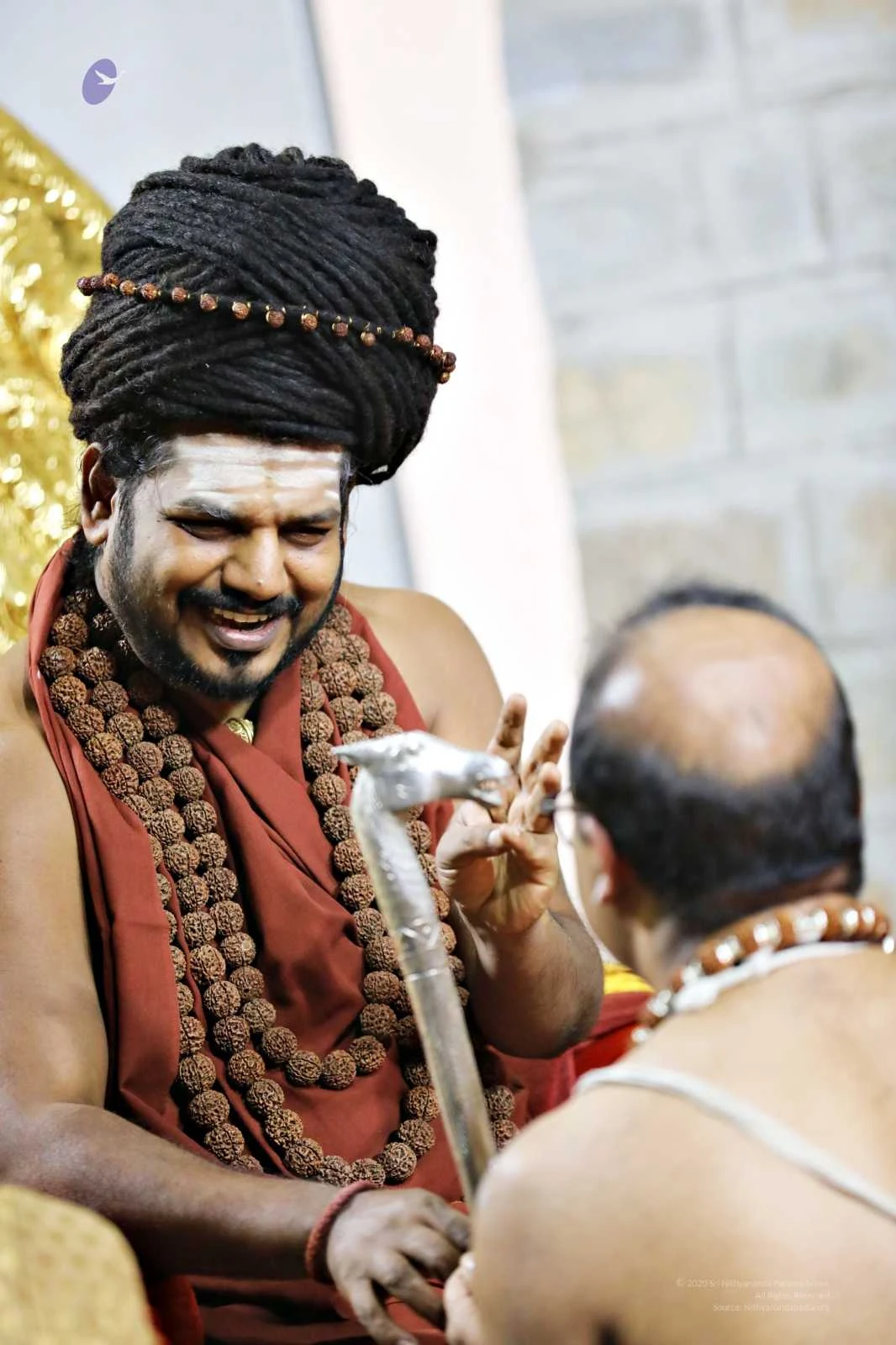
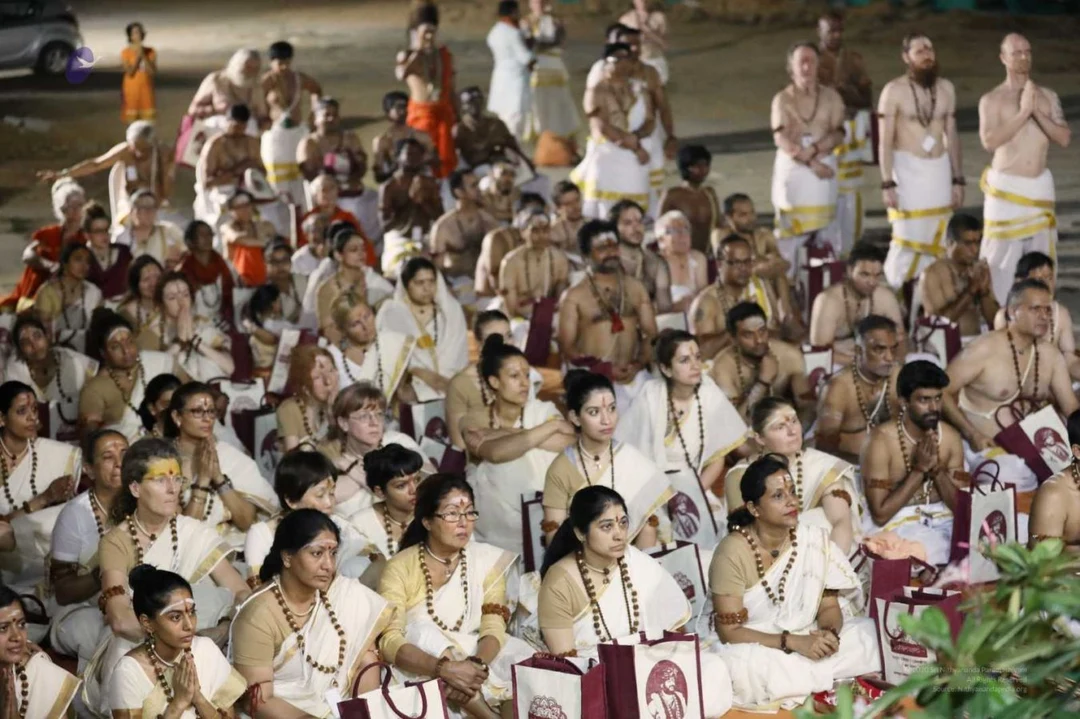
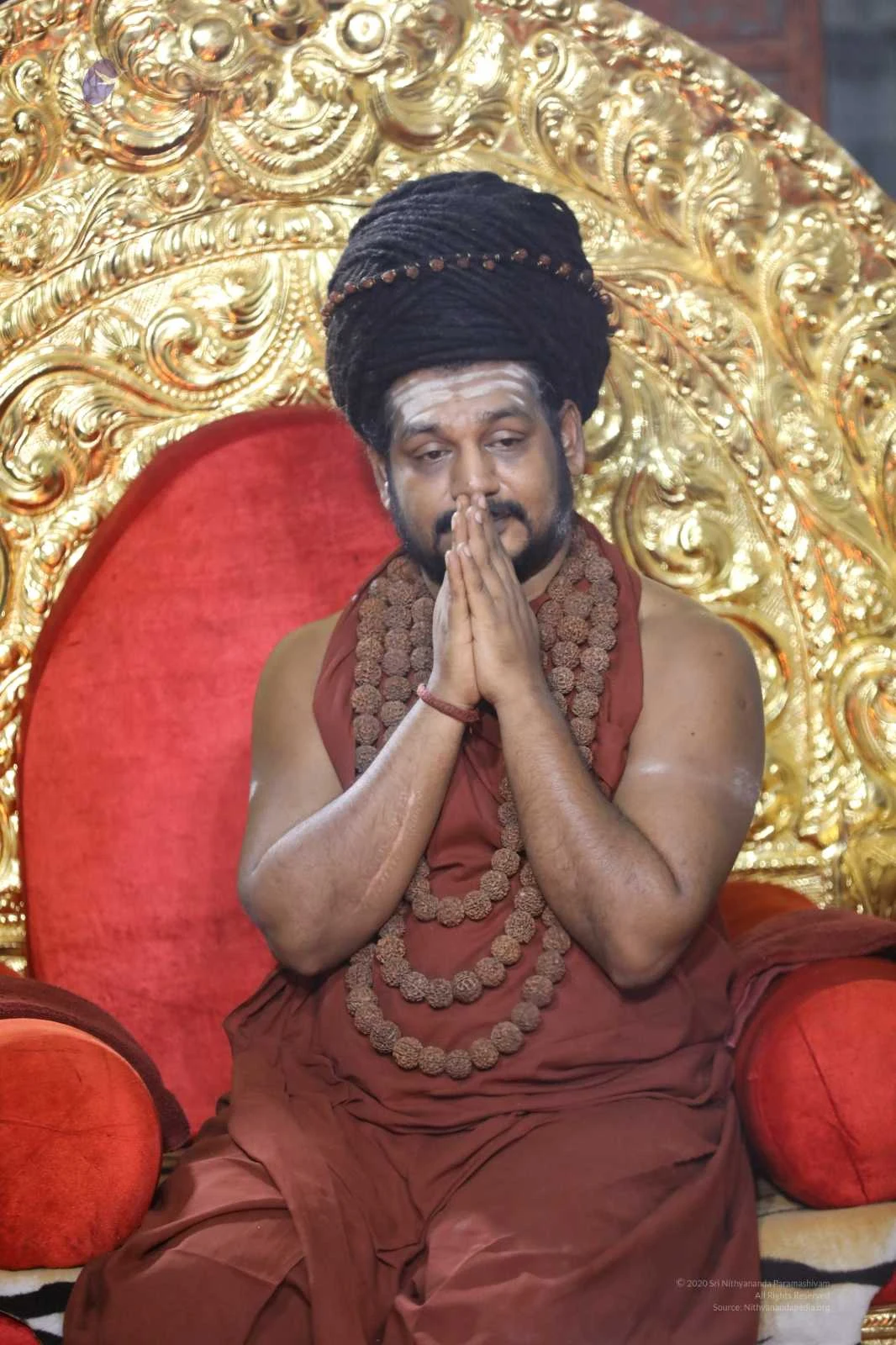
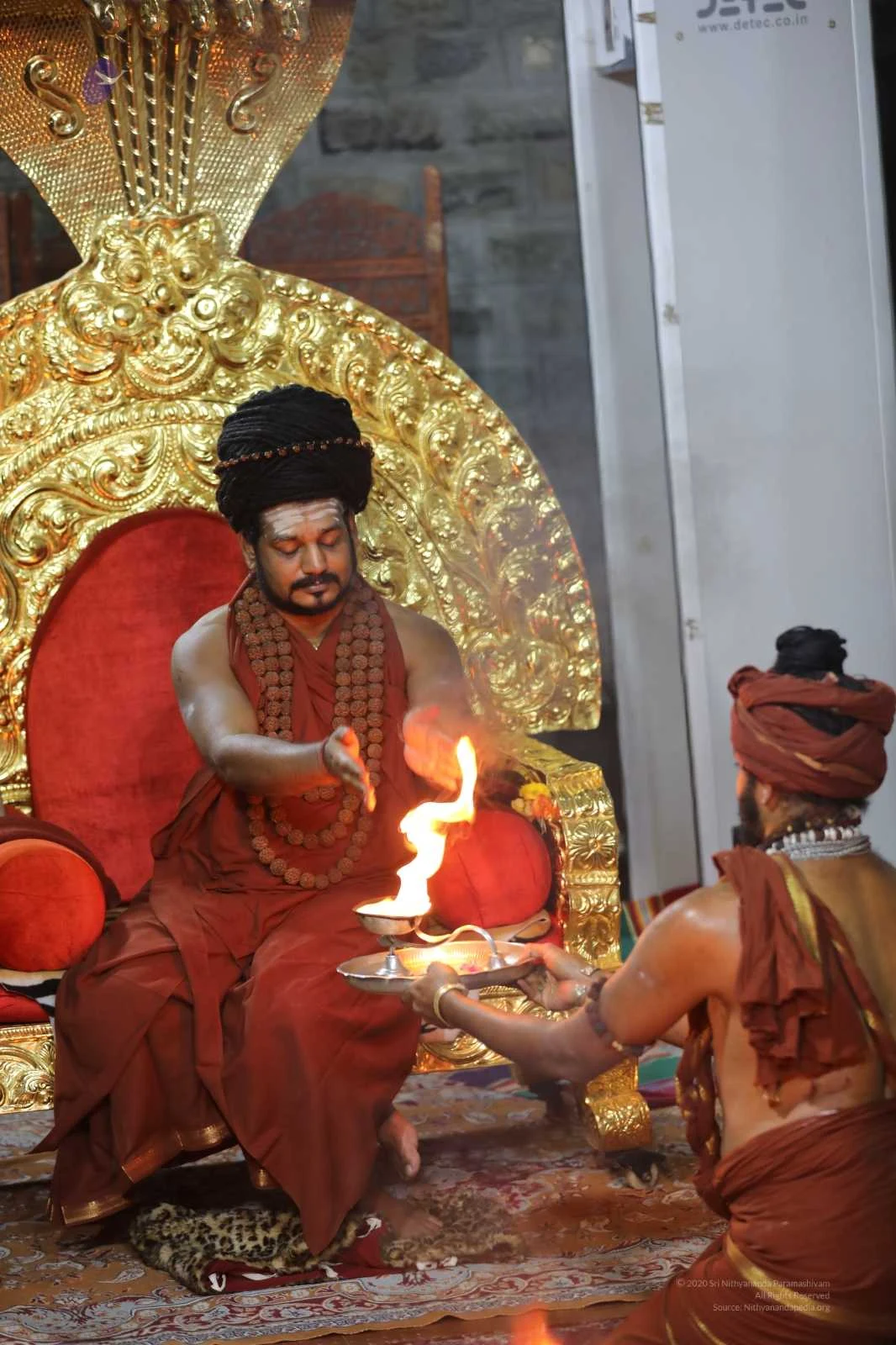
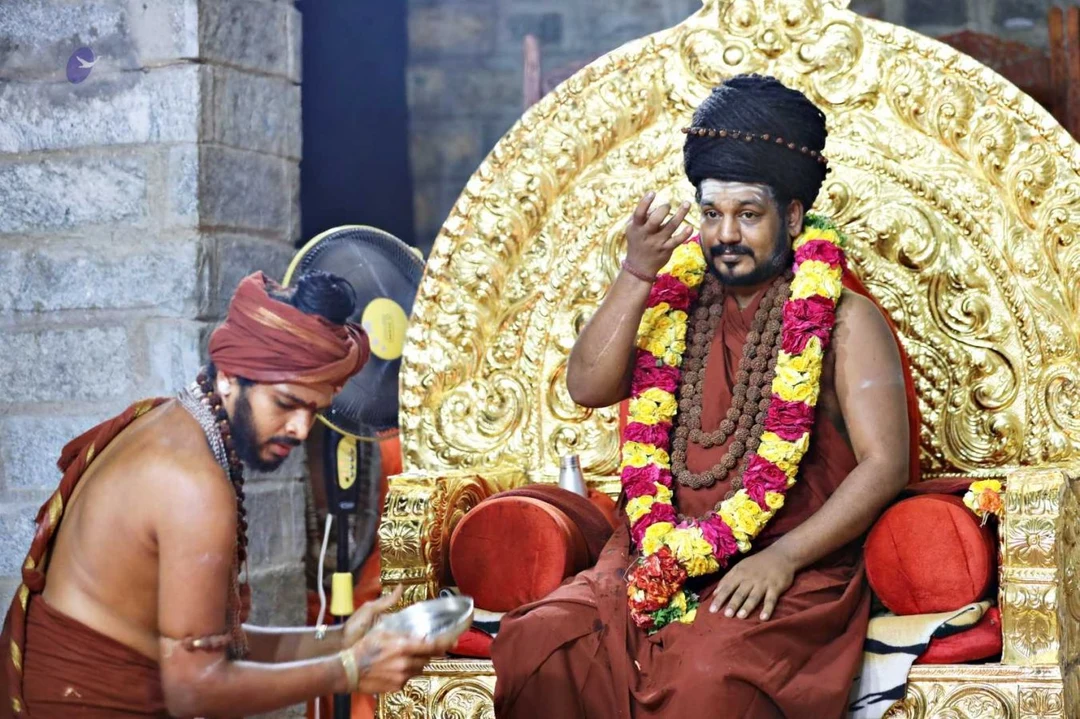
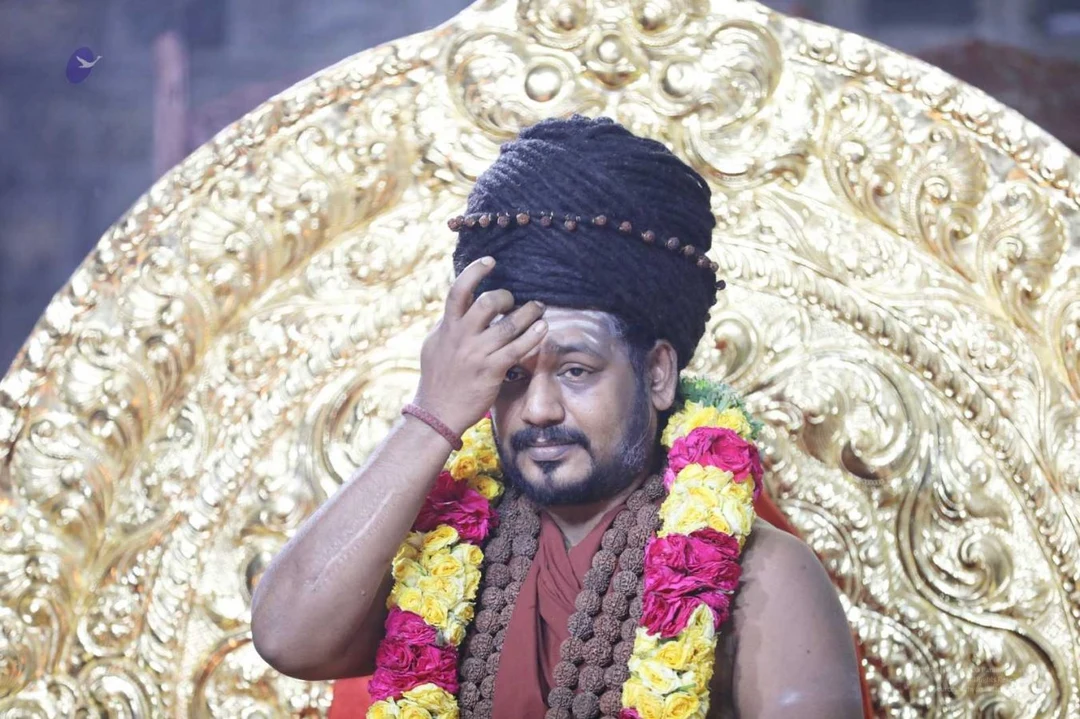
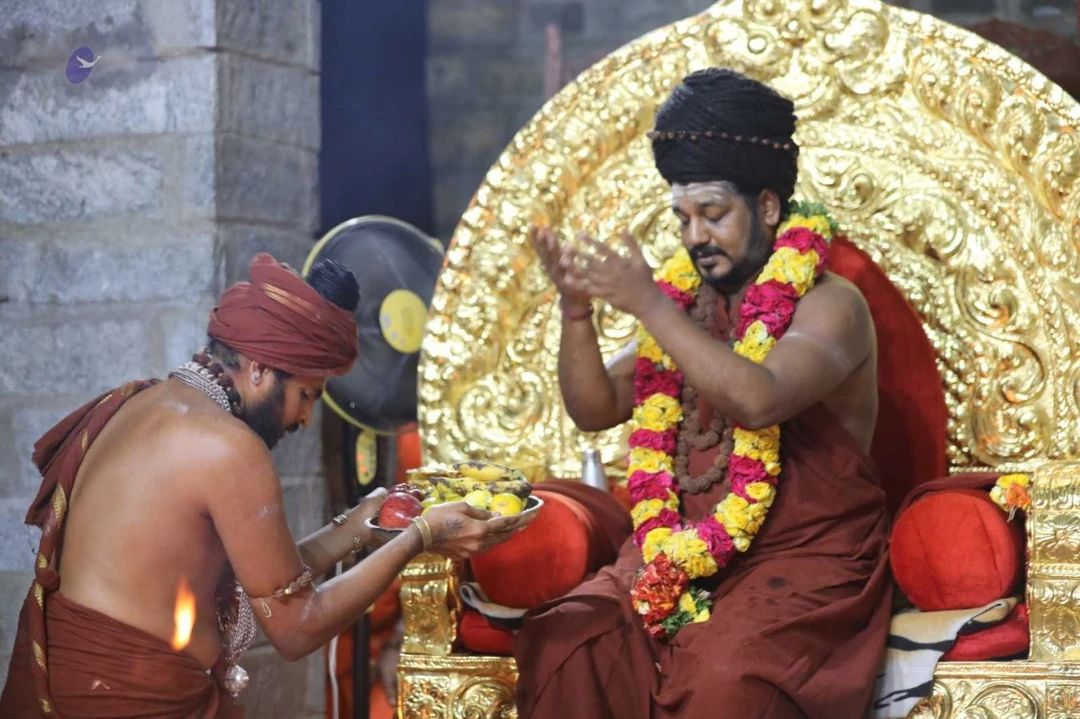
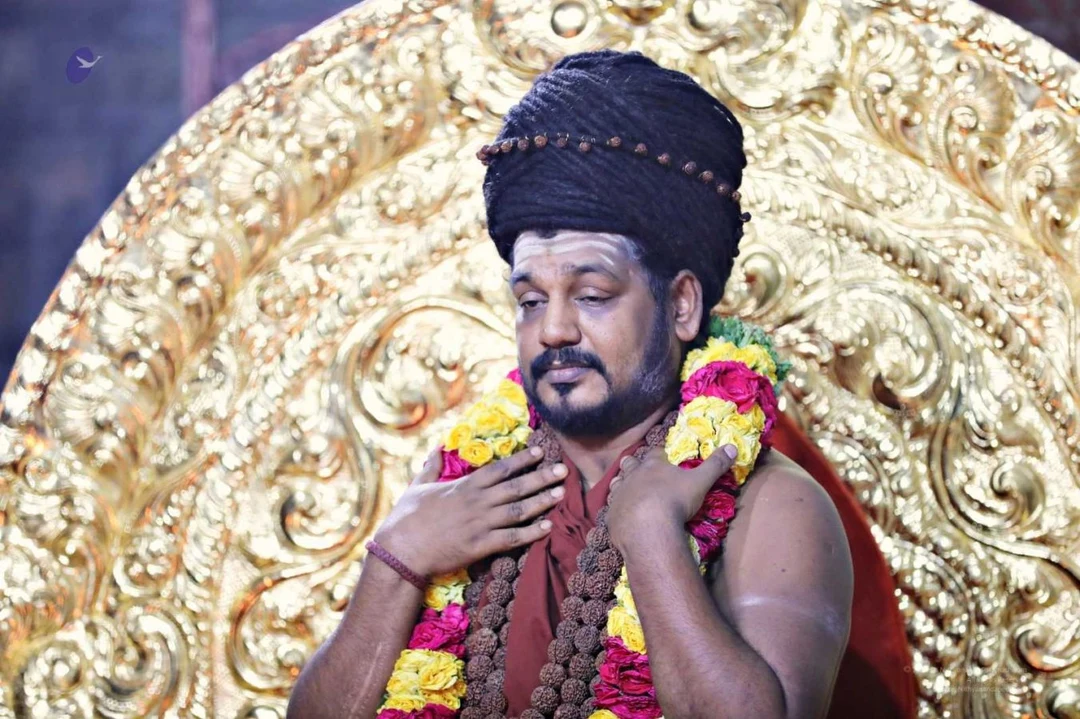
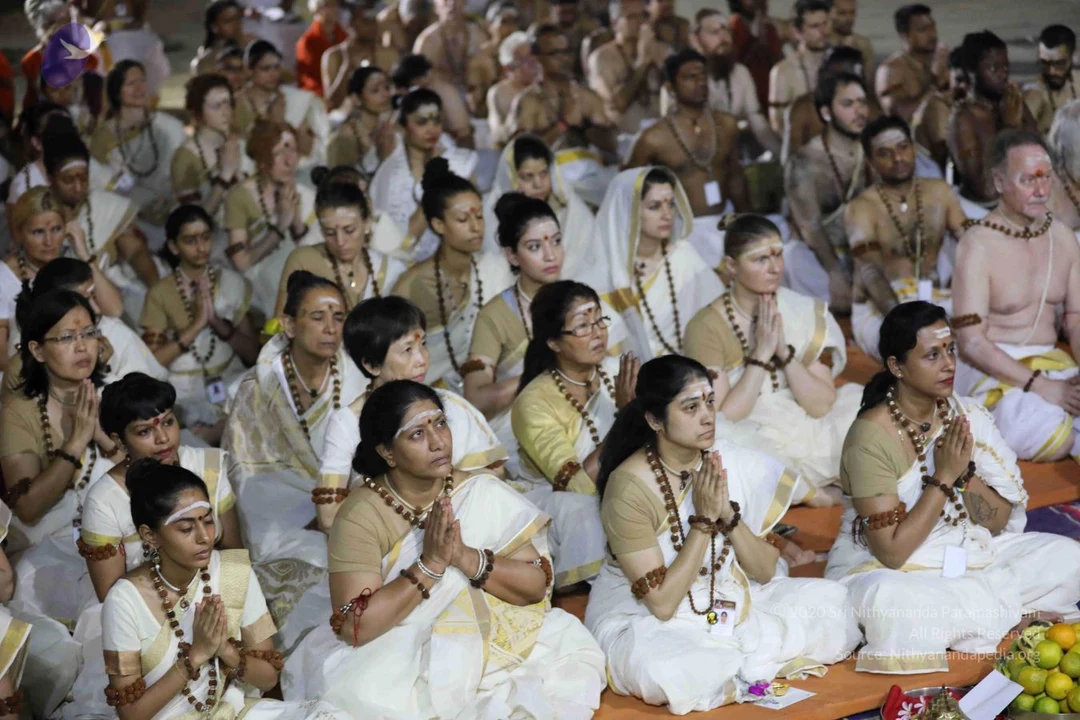
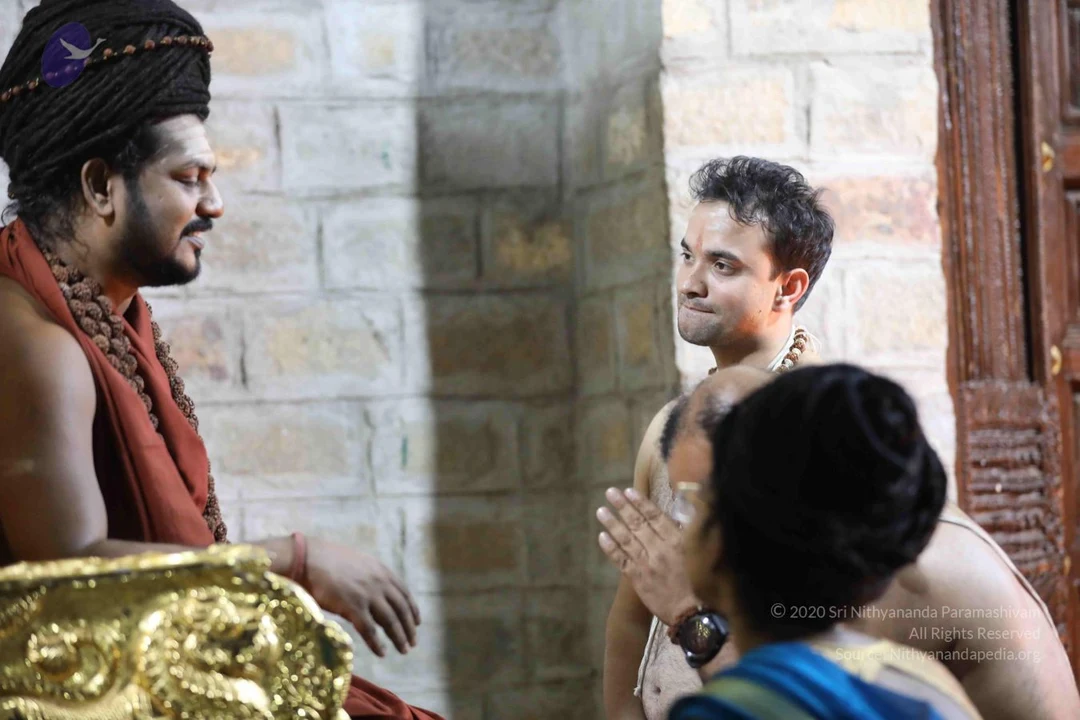
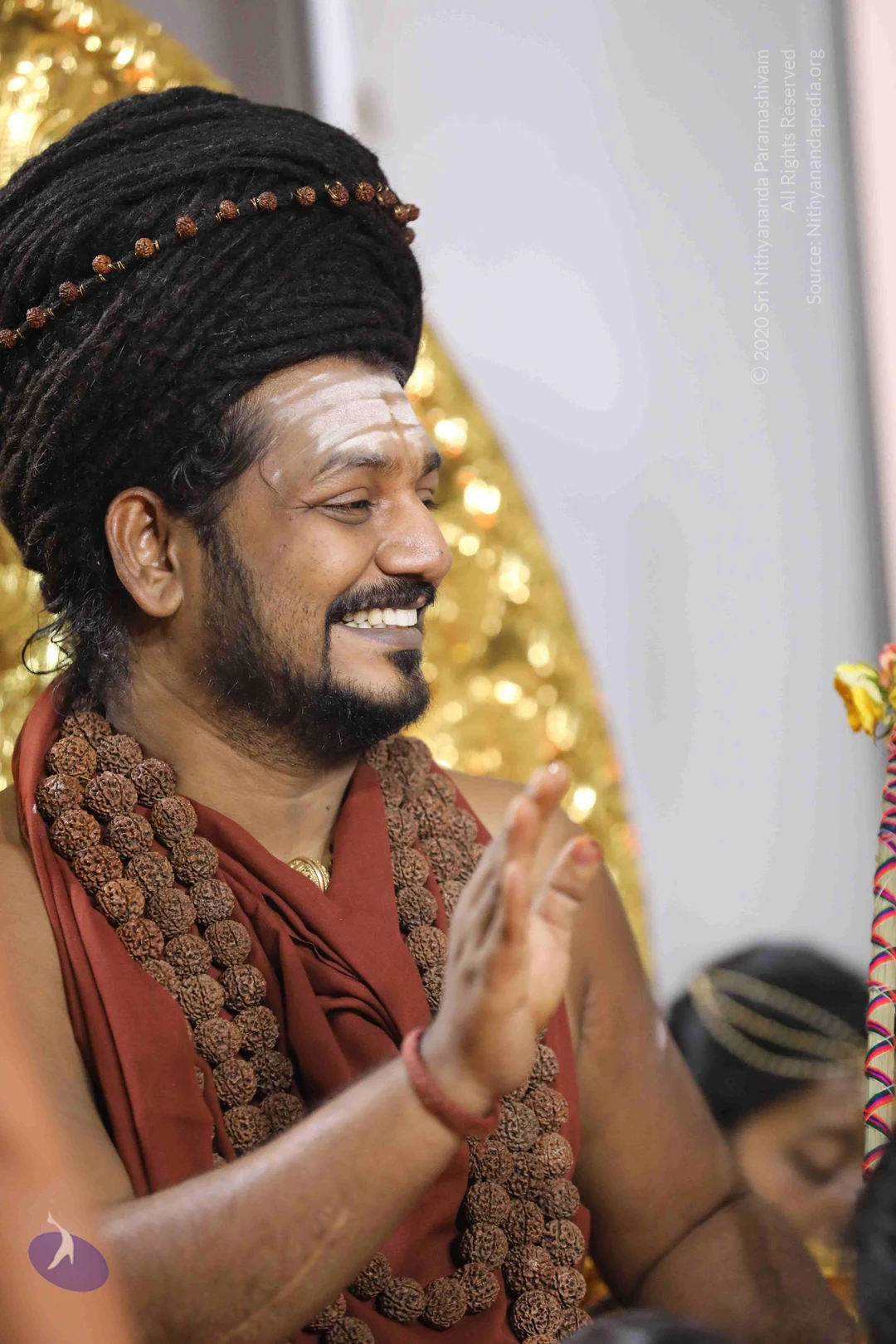
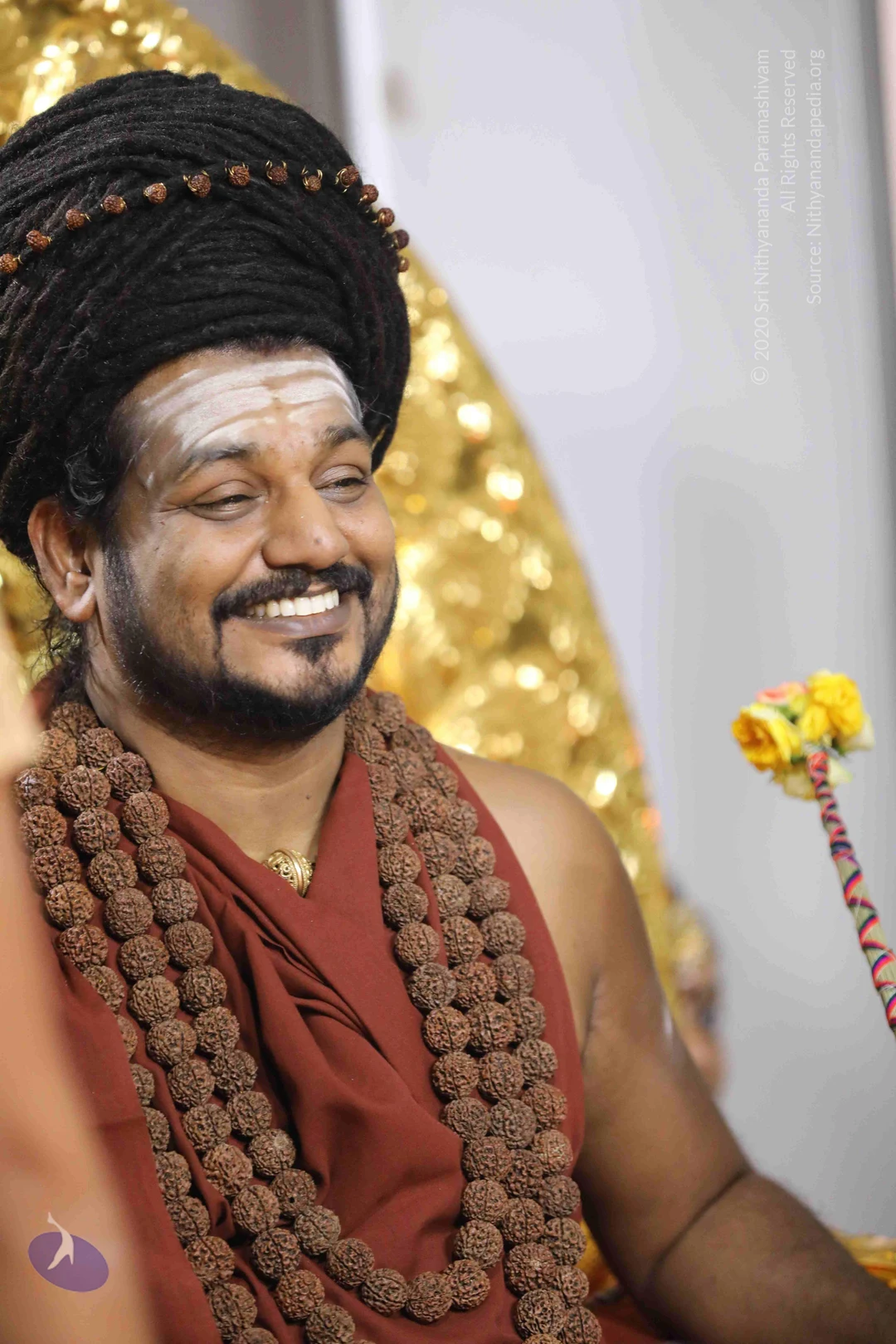
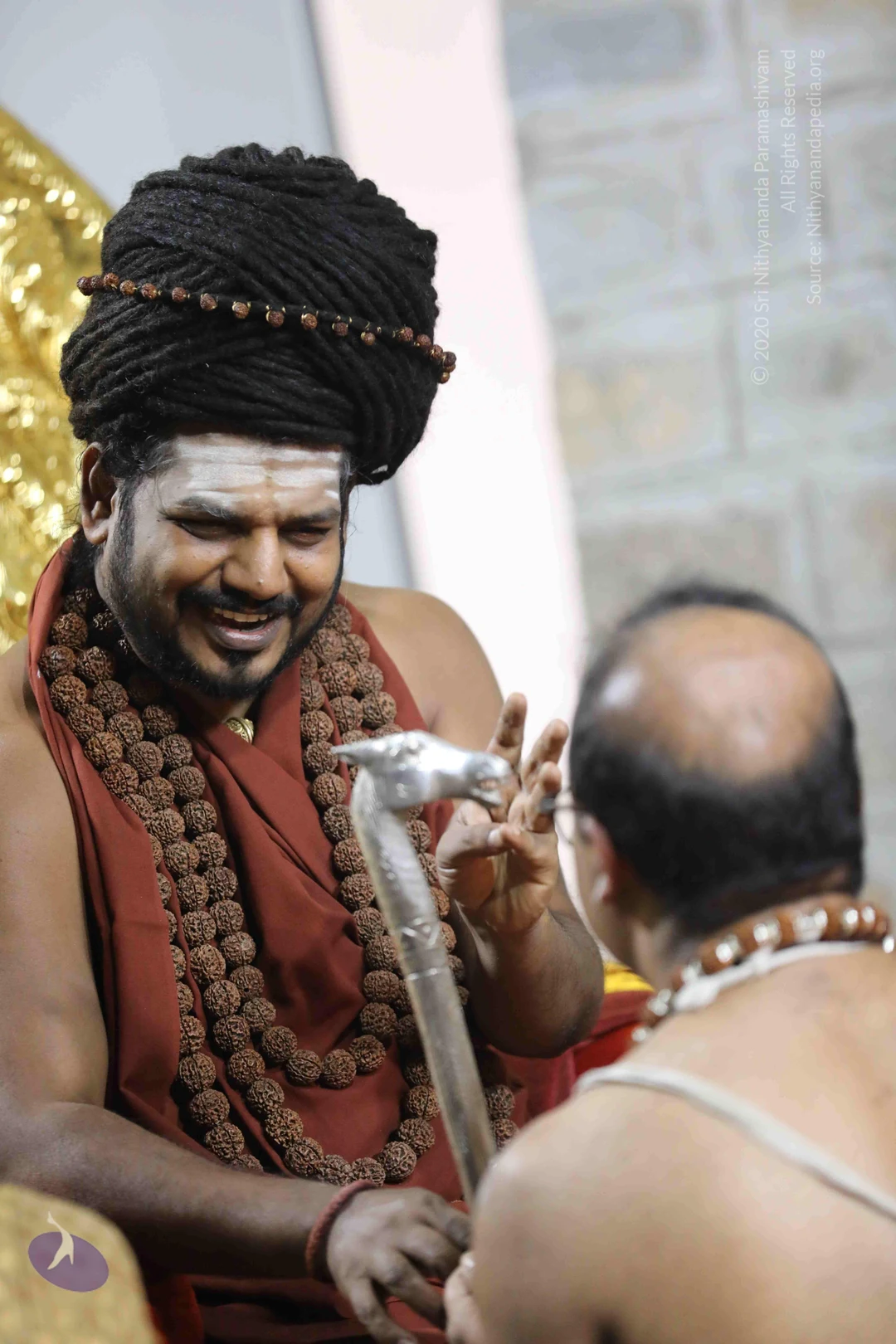
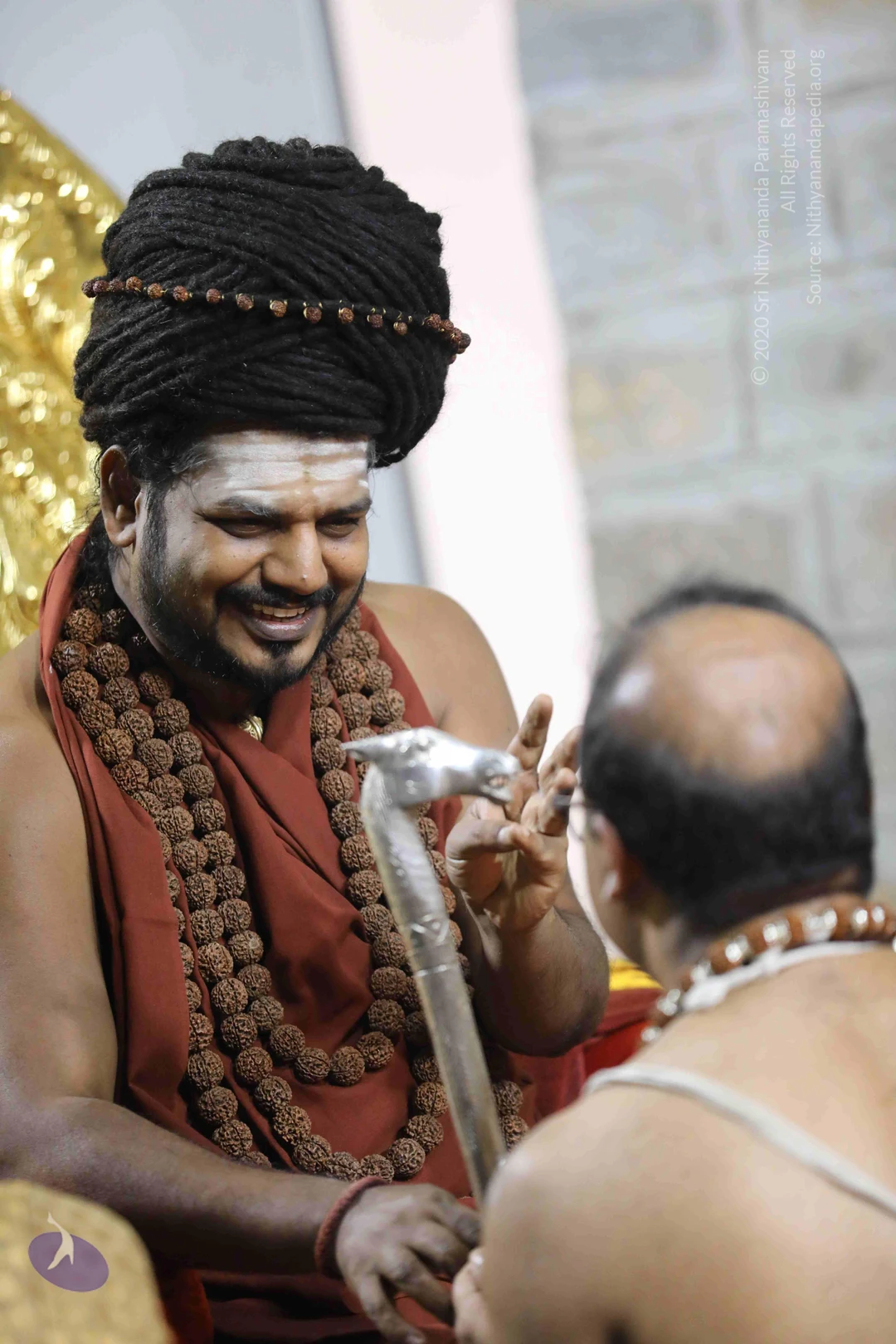
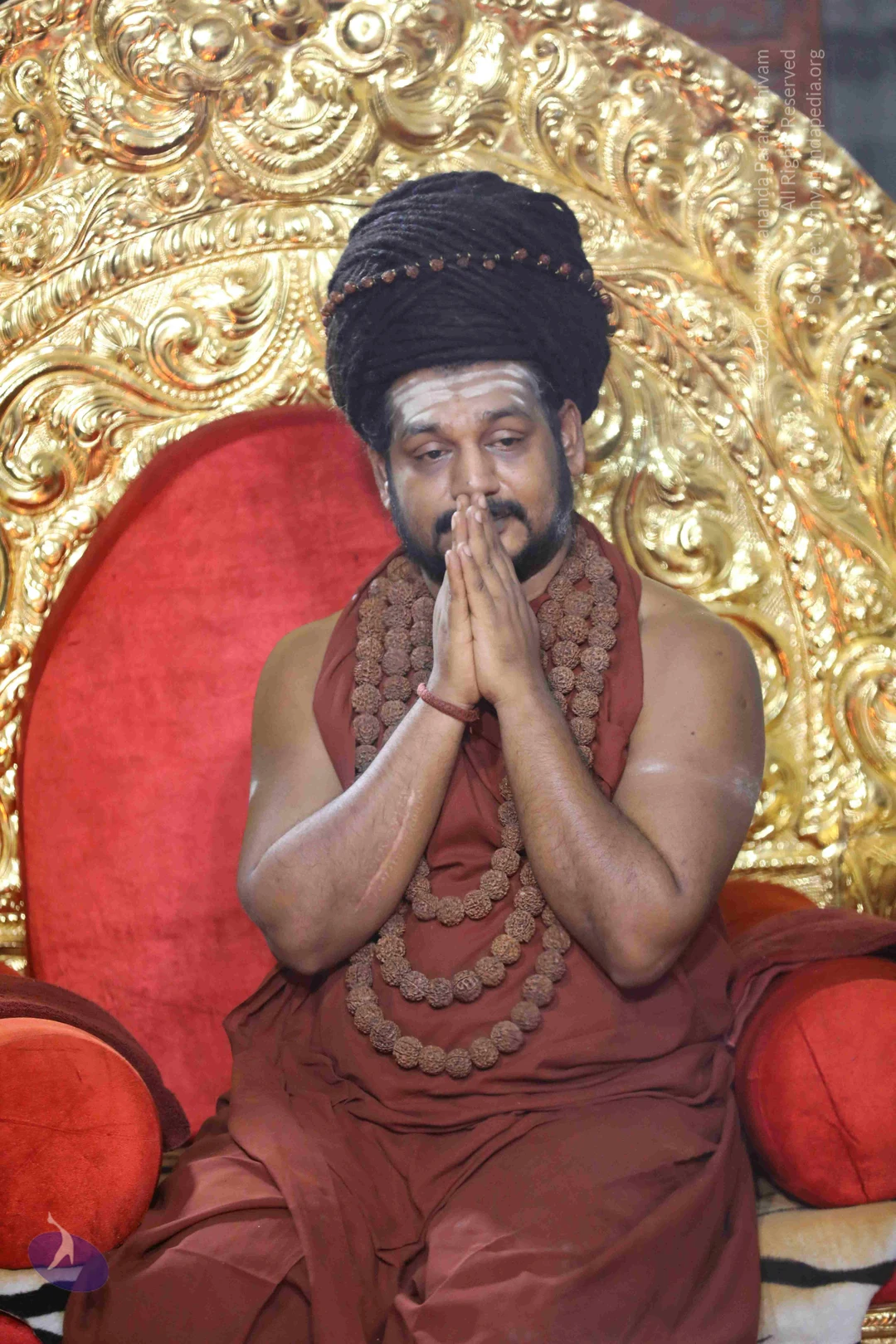
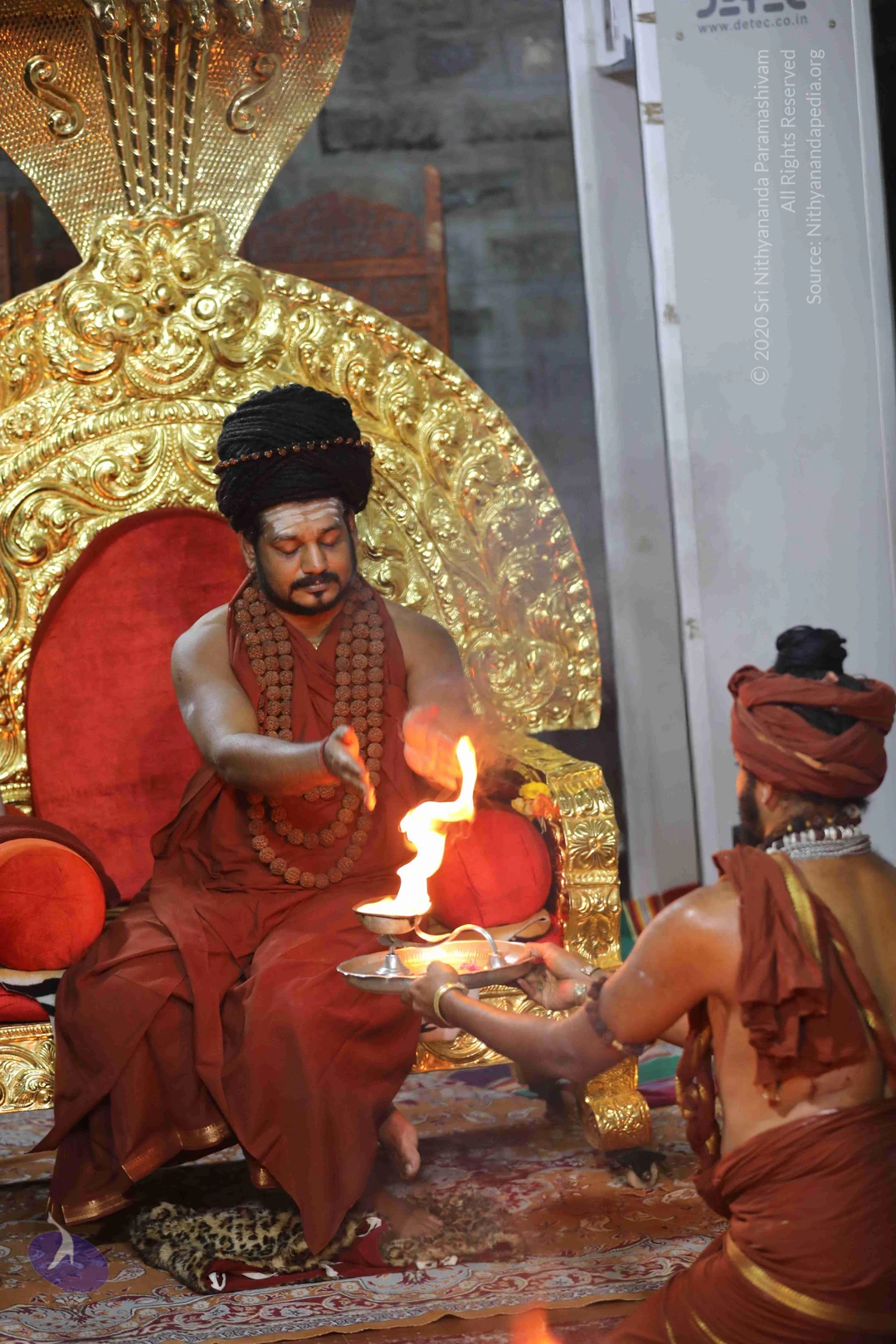
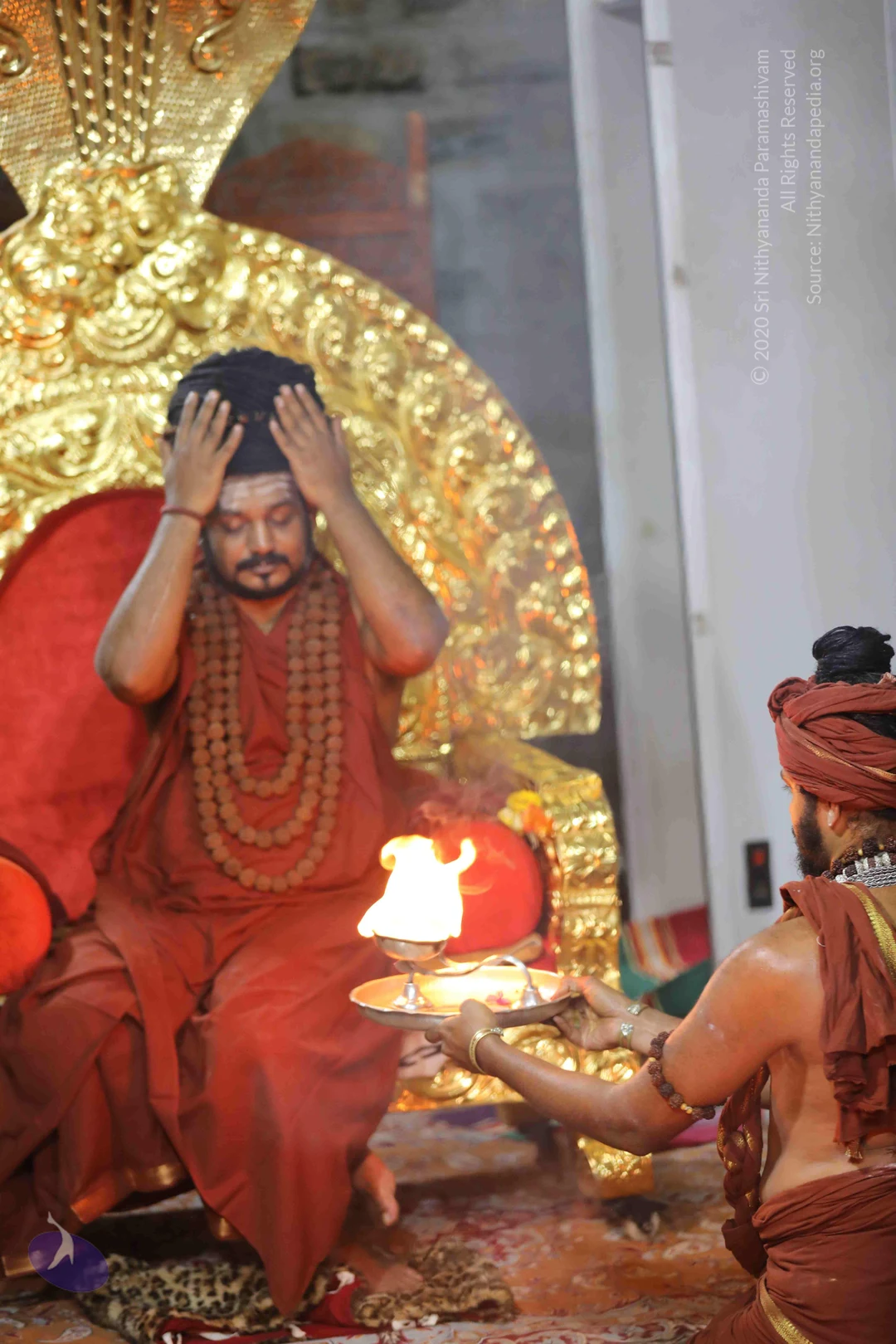
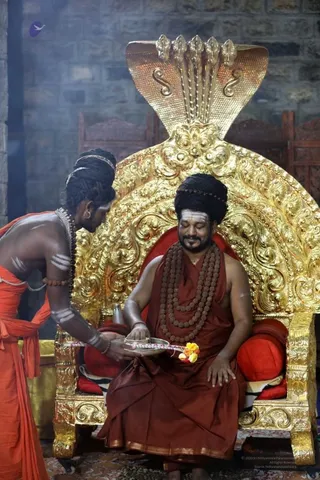
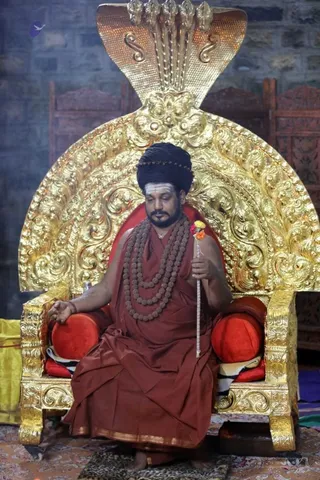
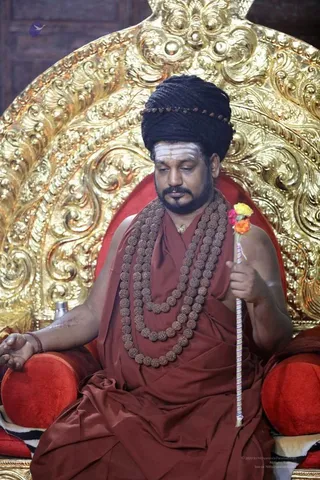
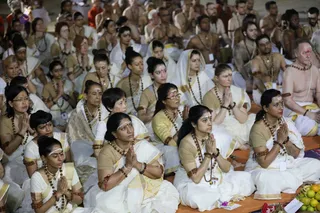
The Supreme Pontiff of Hinduism, Jagatguru Mahasannidhanam, His Divine Holiness, Bhagavan Nithyananda Paramashivam, is the visionary through whom this whole revival of KAILASA is made possible. Today, Day 11 of the most awaited Mahasadashivoham program at the Bengaluru Aadheenam, His Divine Holiness Bhagavan Nithyananda Paramashivam initiated delegates into Vidya Tattva, Vishesha deeksha and Jnana Pada.

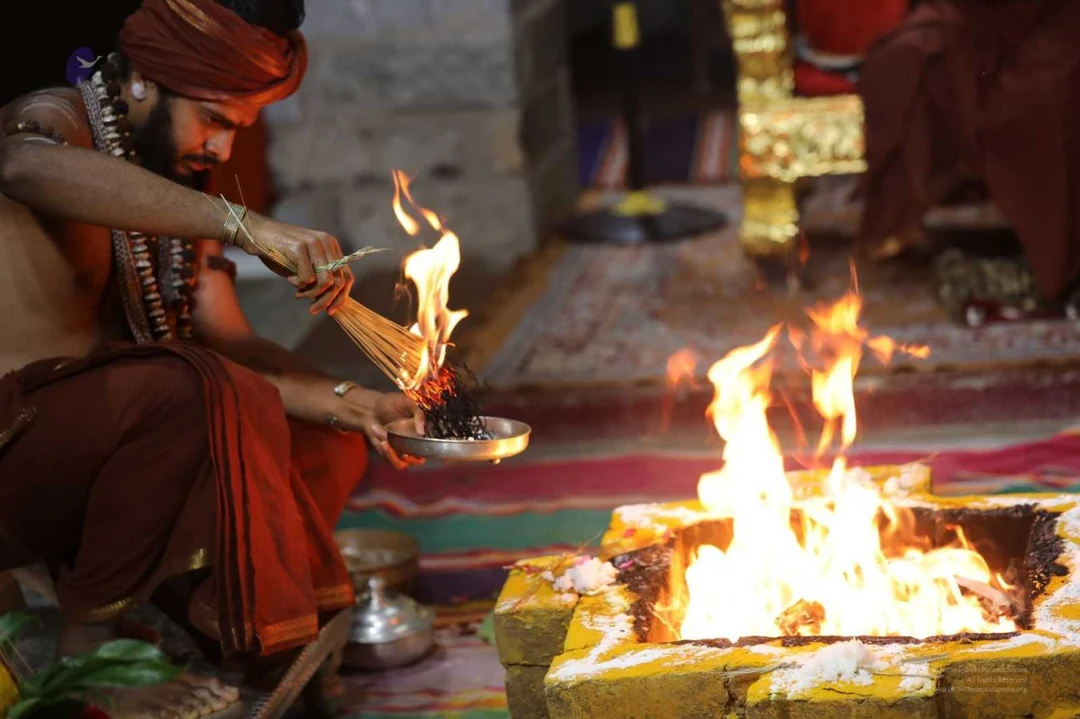
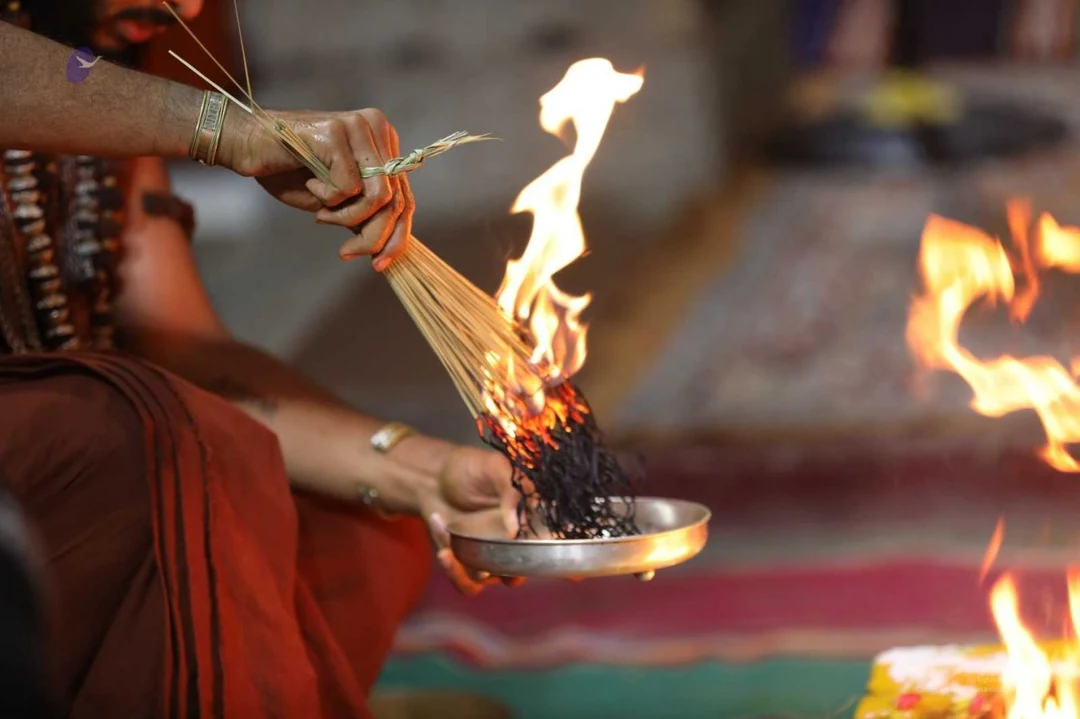
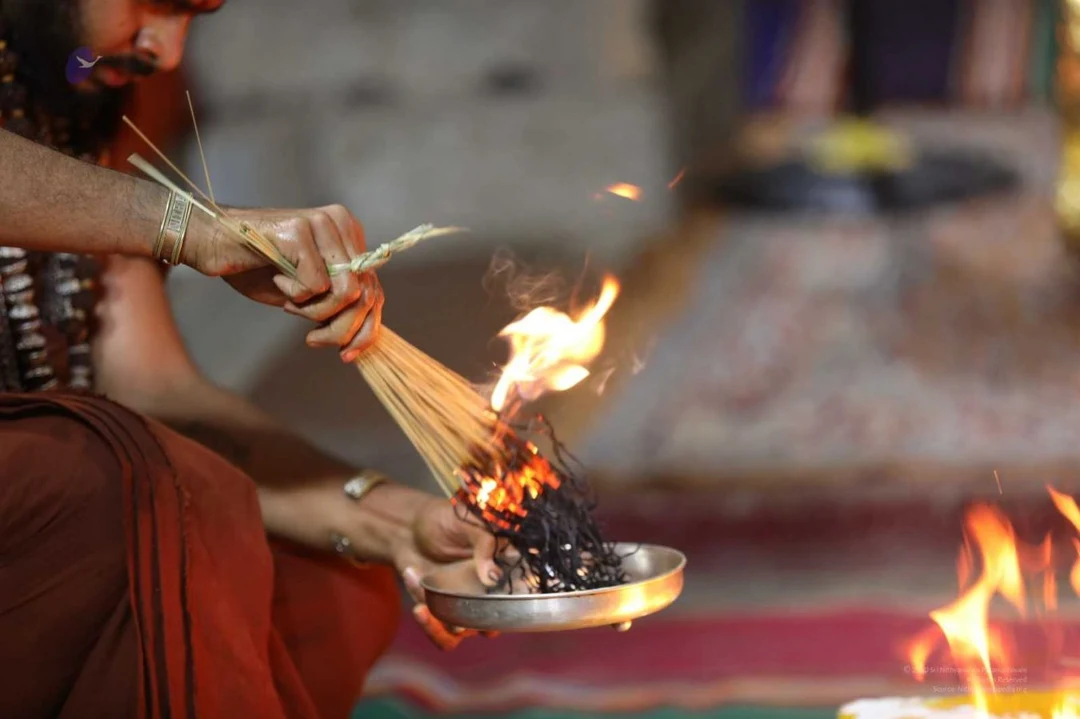
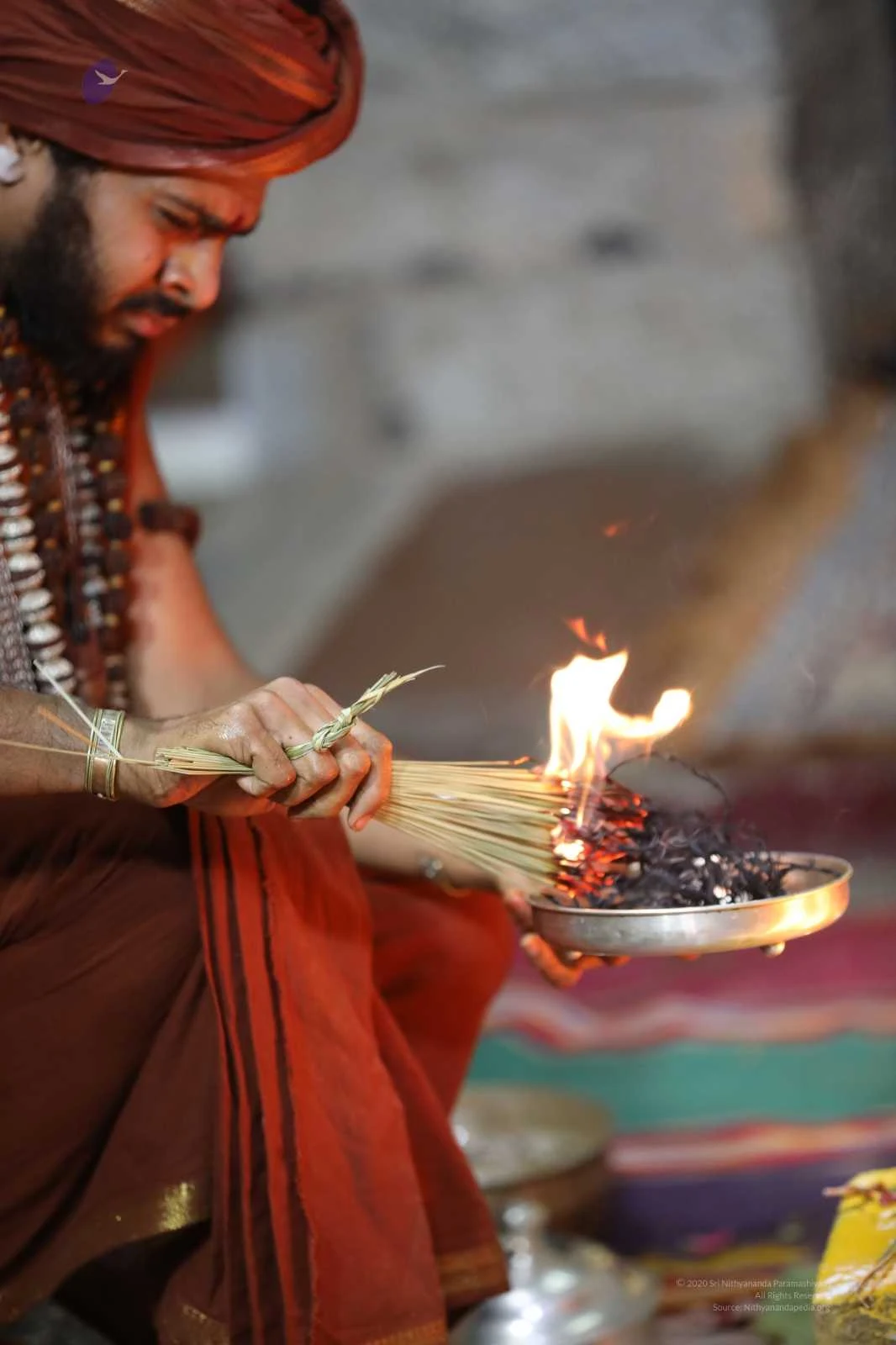
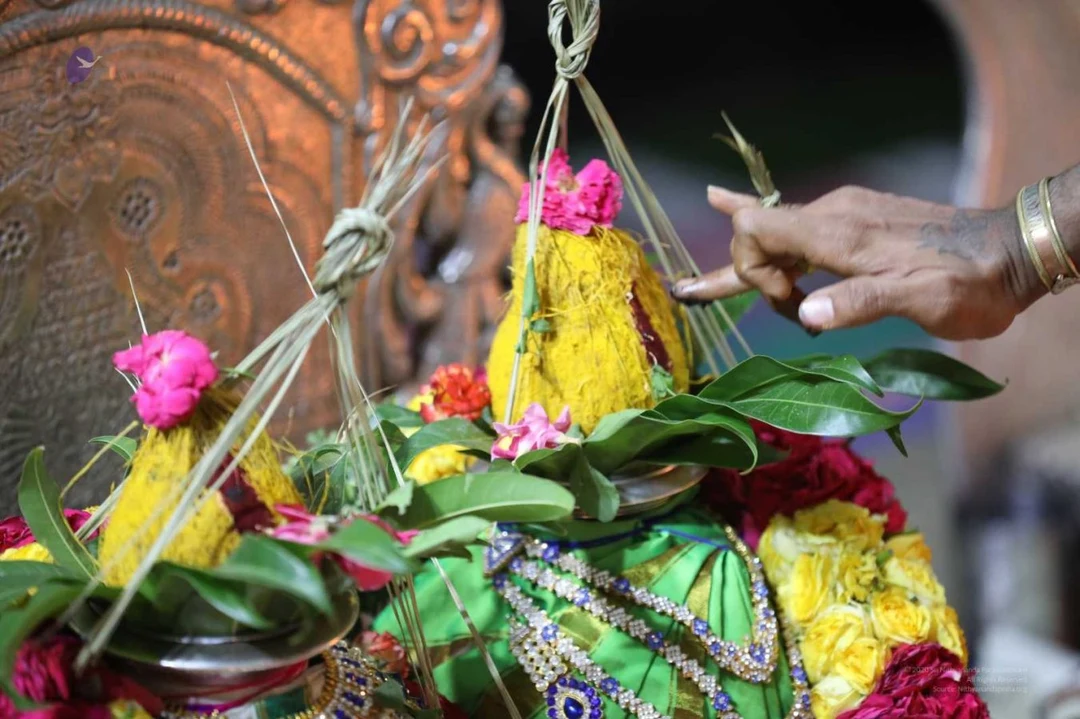
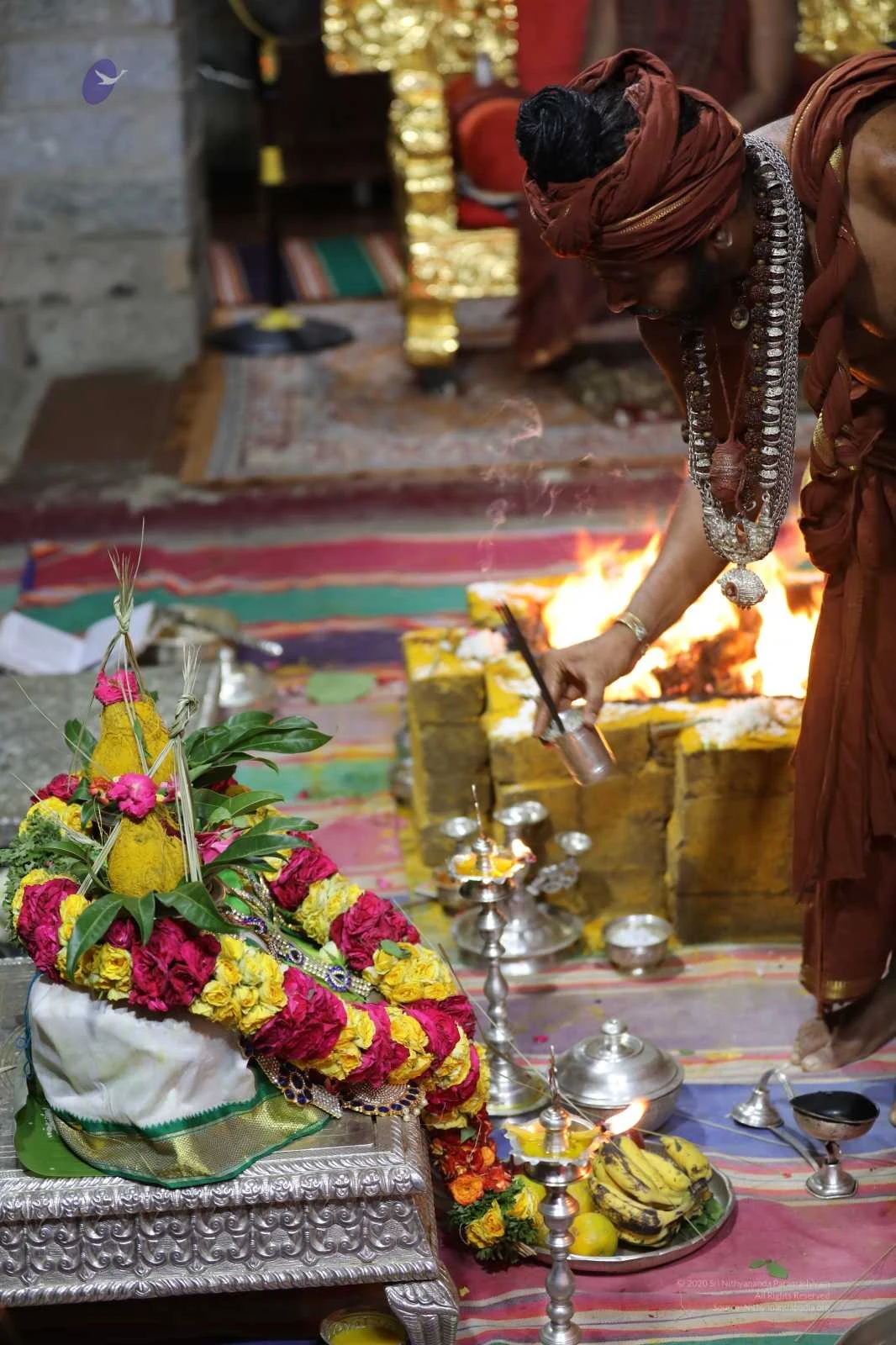
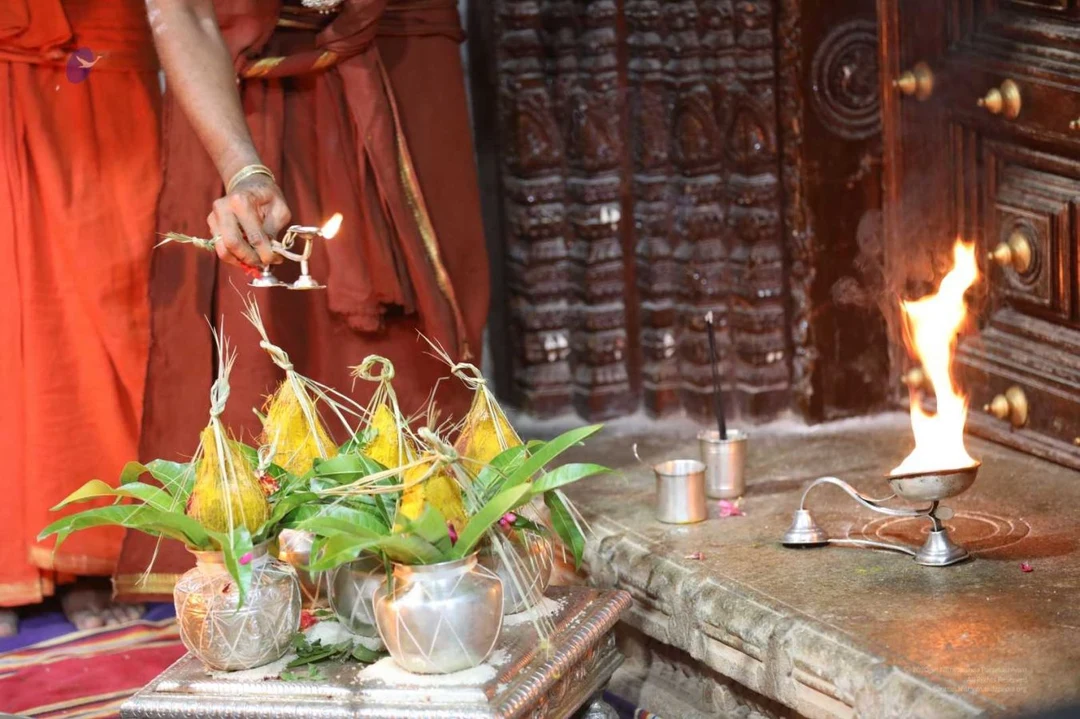
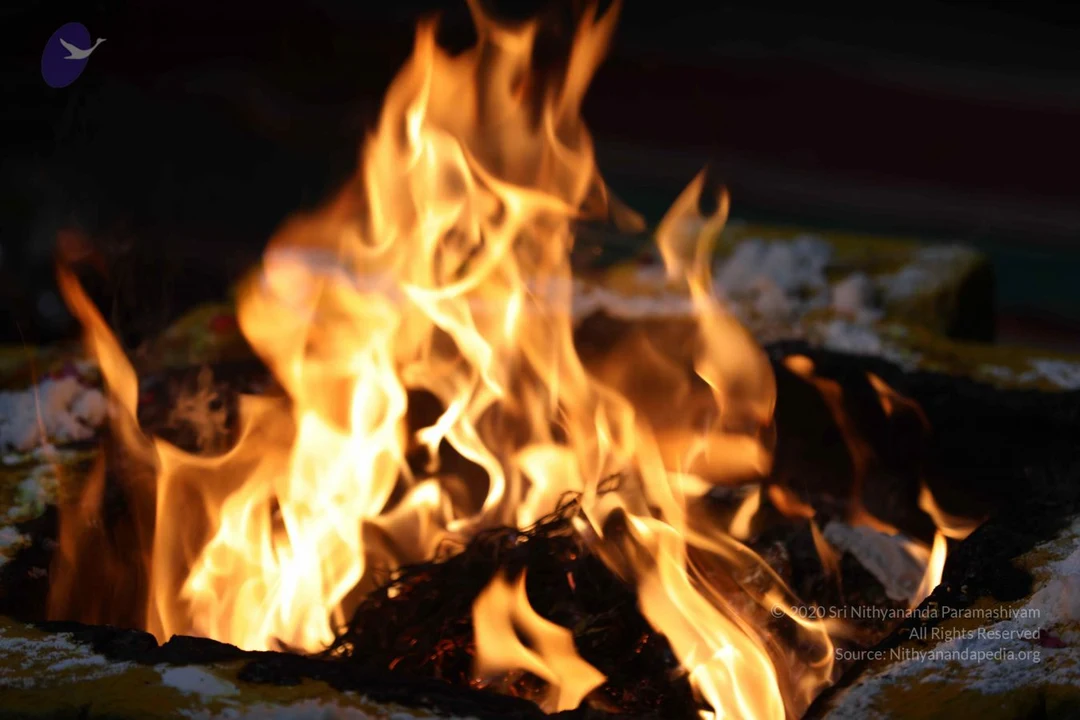
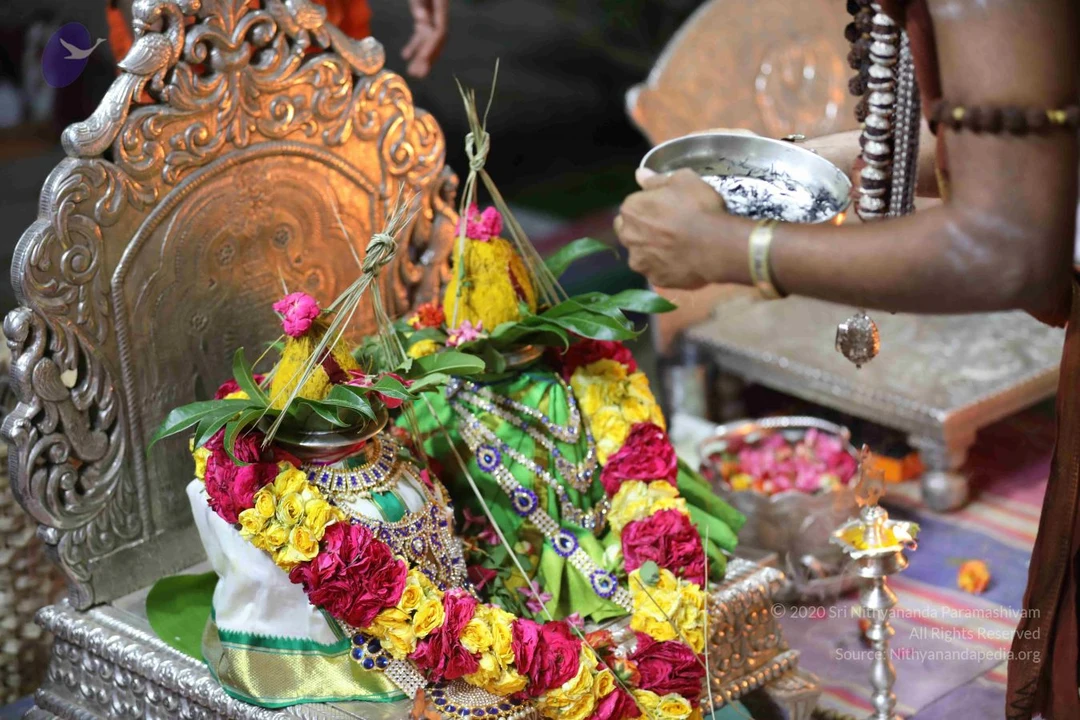
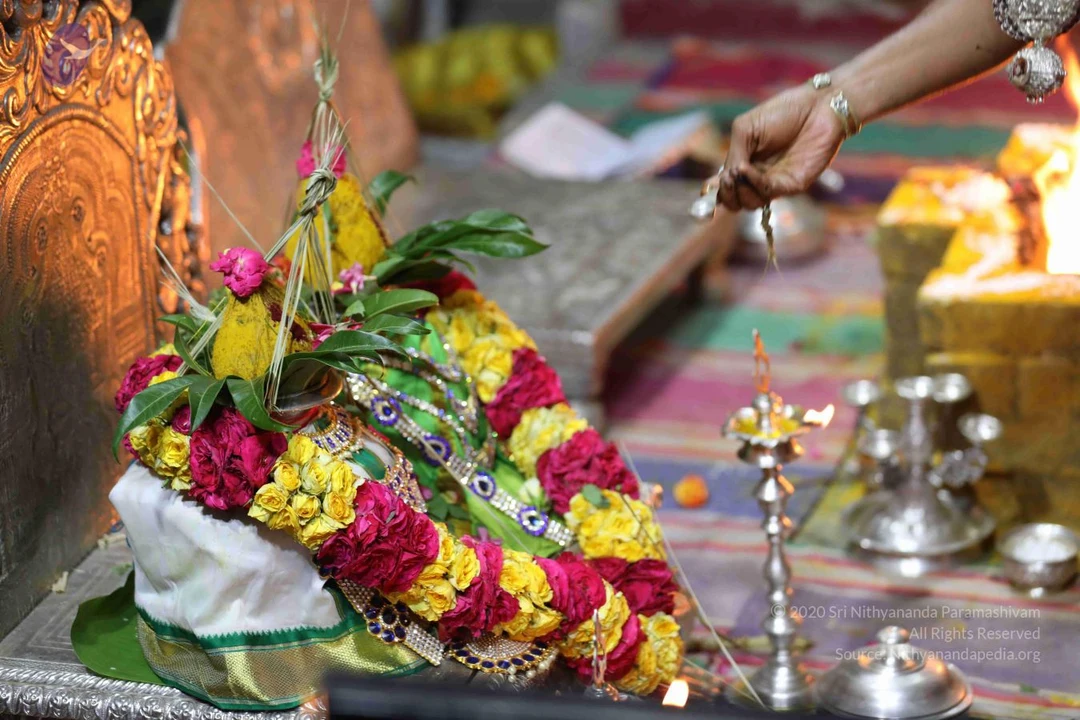
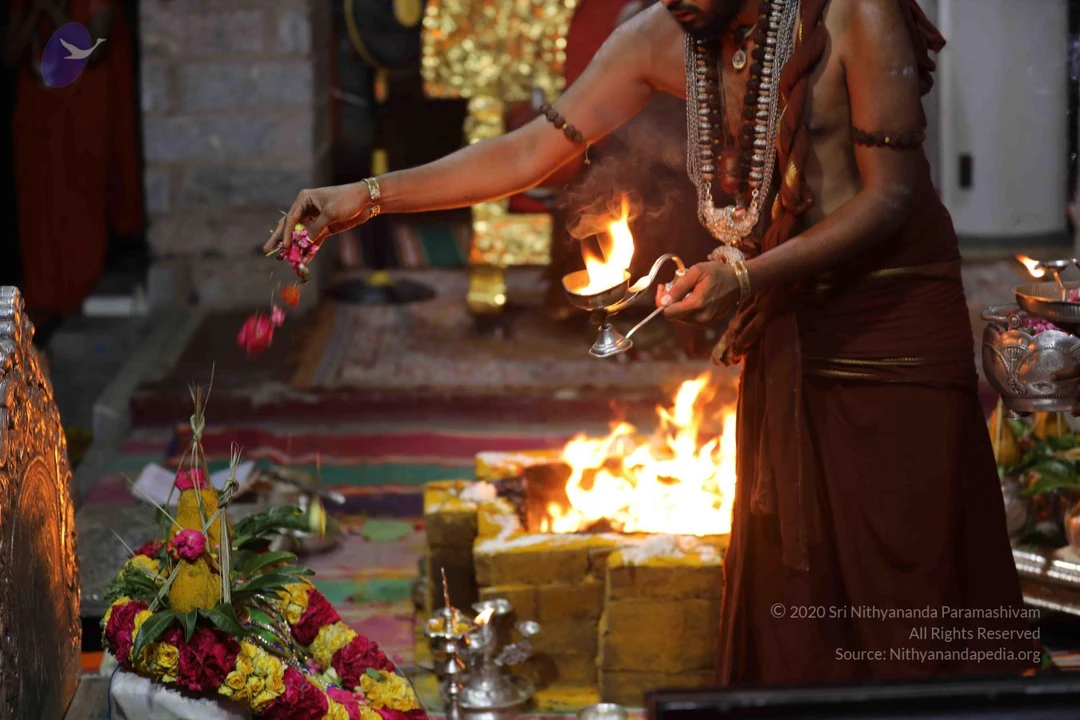
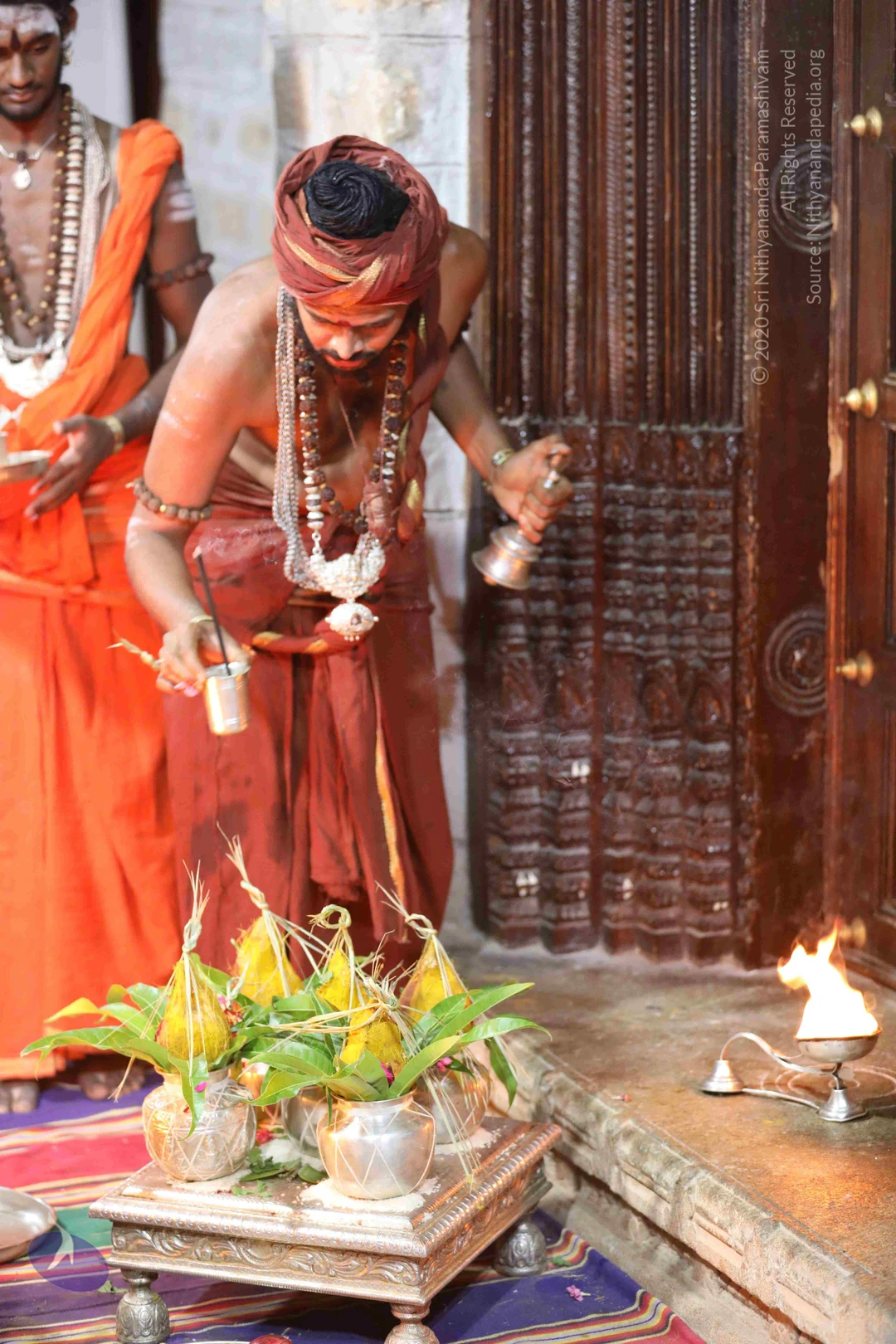
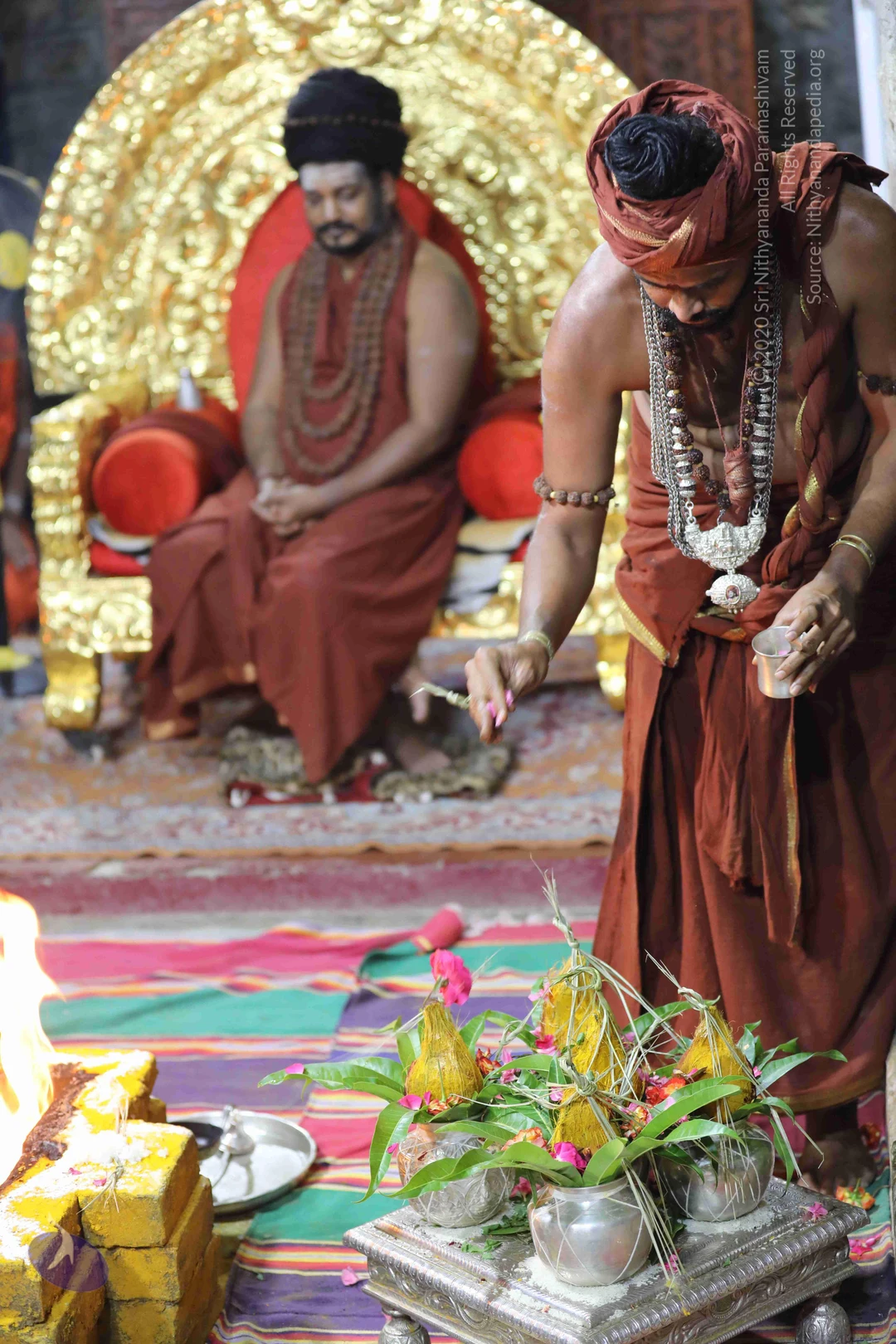
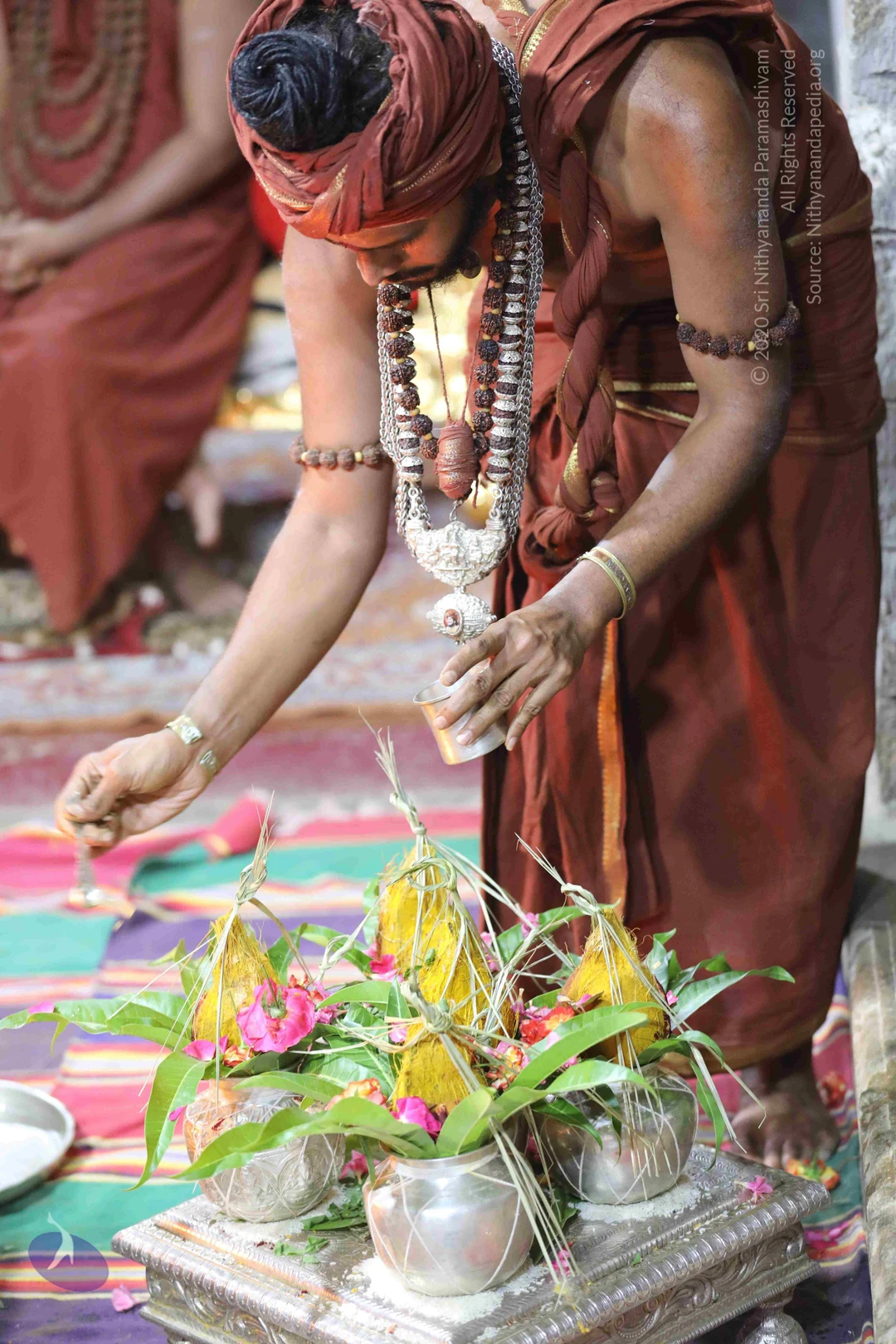
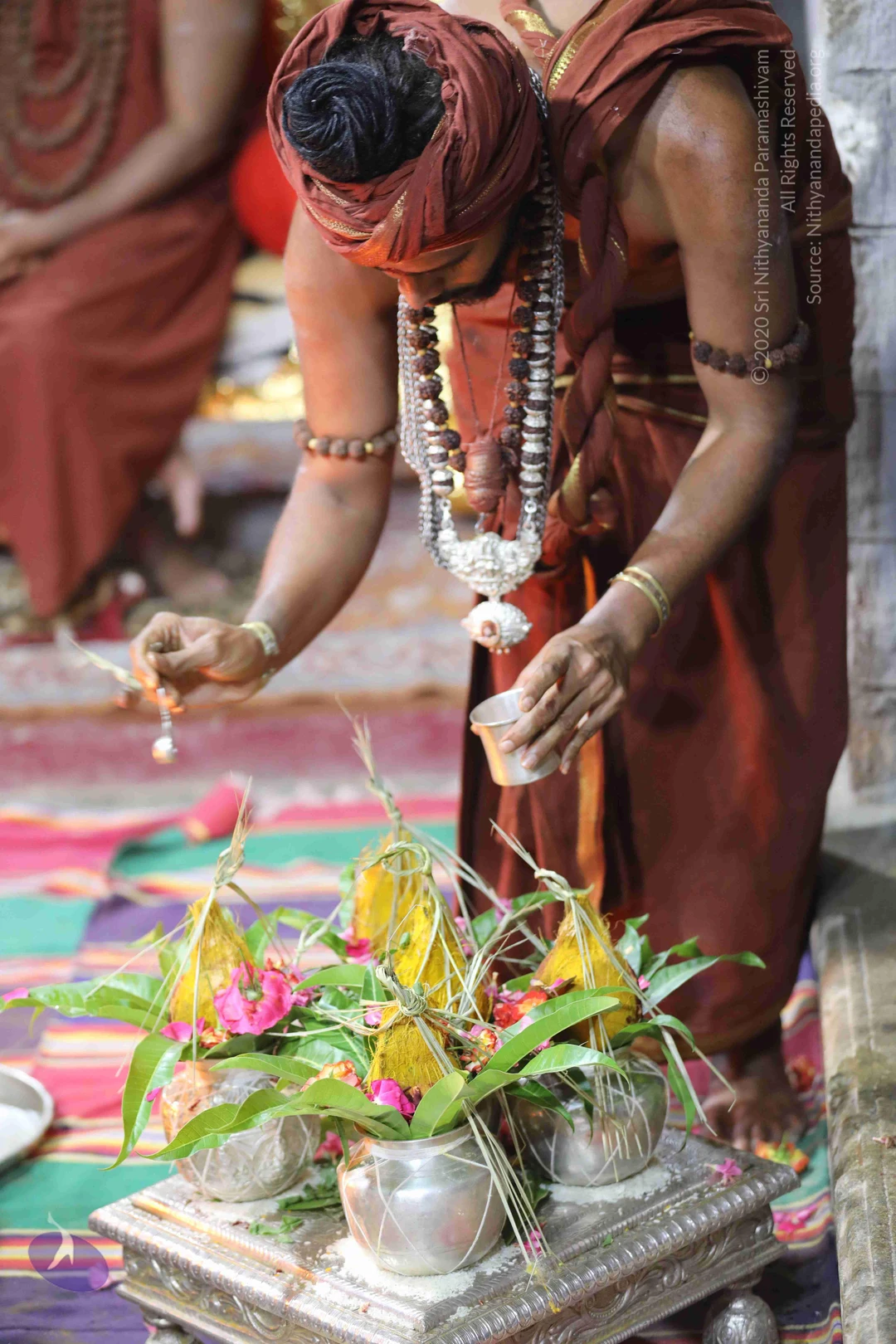
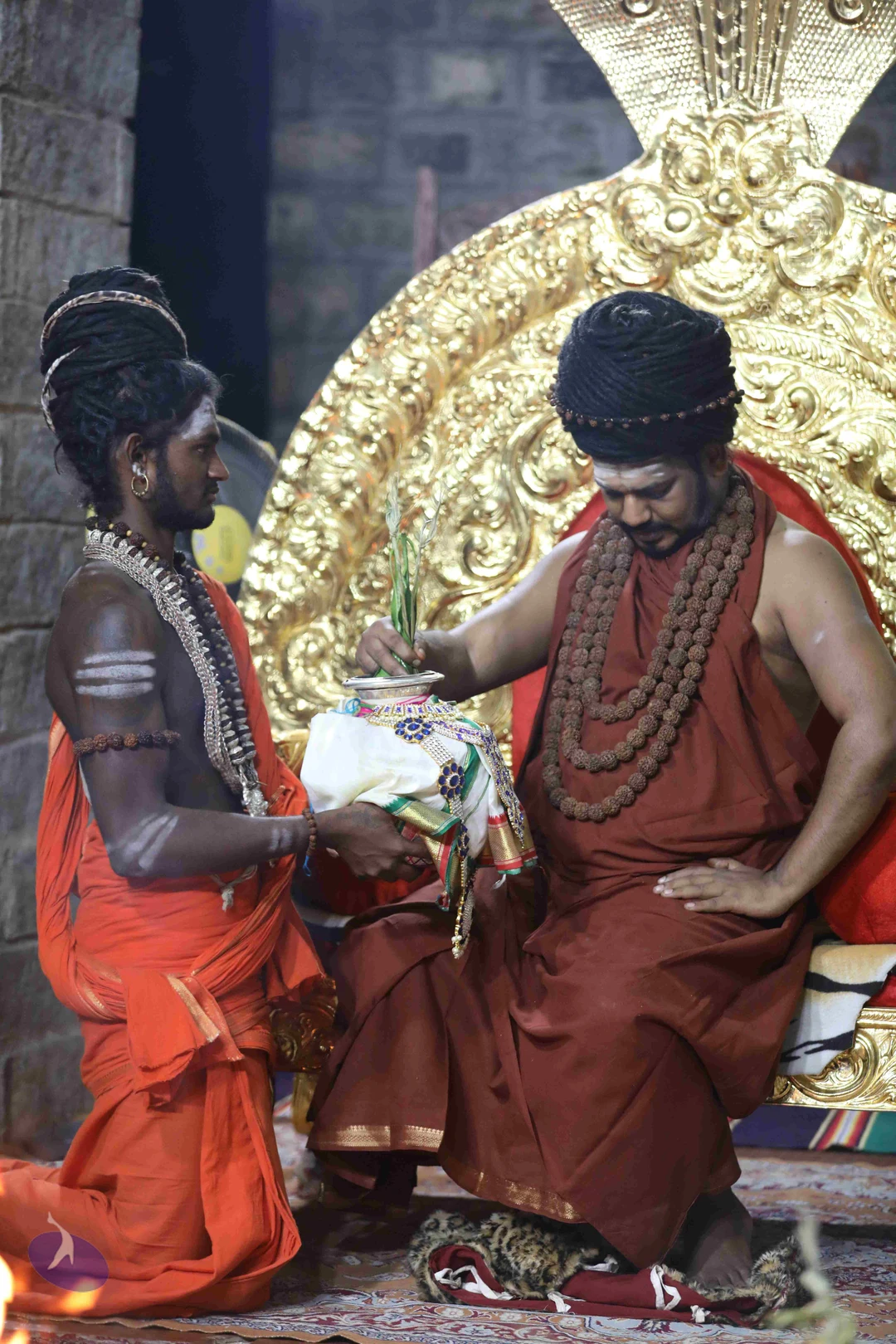
His Divine Holiness (HDH) has taken direct responsibility of authentically reviving the three main pillars of Sanatana Hindu Dharma, one being the Go Mandir. Today was the special Go Mandir Inauguration whereby sacred Pujas were done at Thrishulam Aadheenam.

Announcements were made of upcoming programs and shared with all globally via Nithyananda tv, and social media platforms; Inner Awakening, Nithyananda Yoga Training, Nithyananda Dhyana Yoga, Nithyananda Kriya Yoga, Kalpataru Yogam and Akashic readings.

Link to Video:

Photos

Vishesha Deeksha
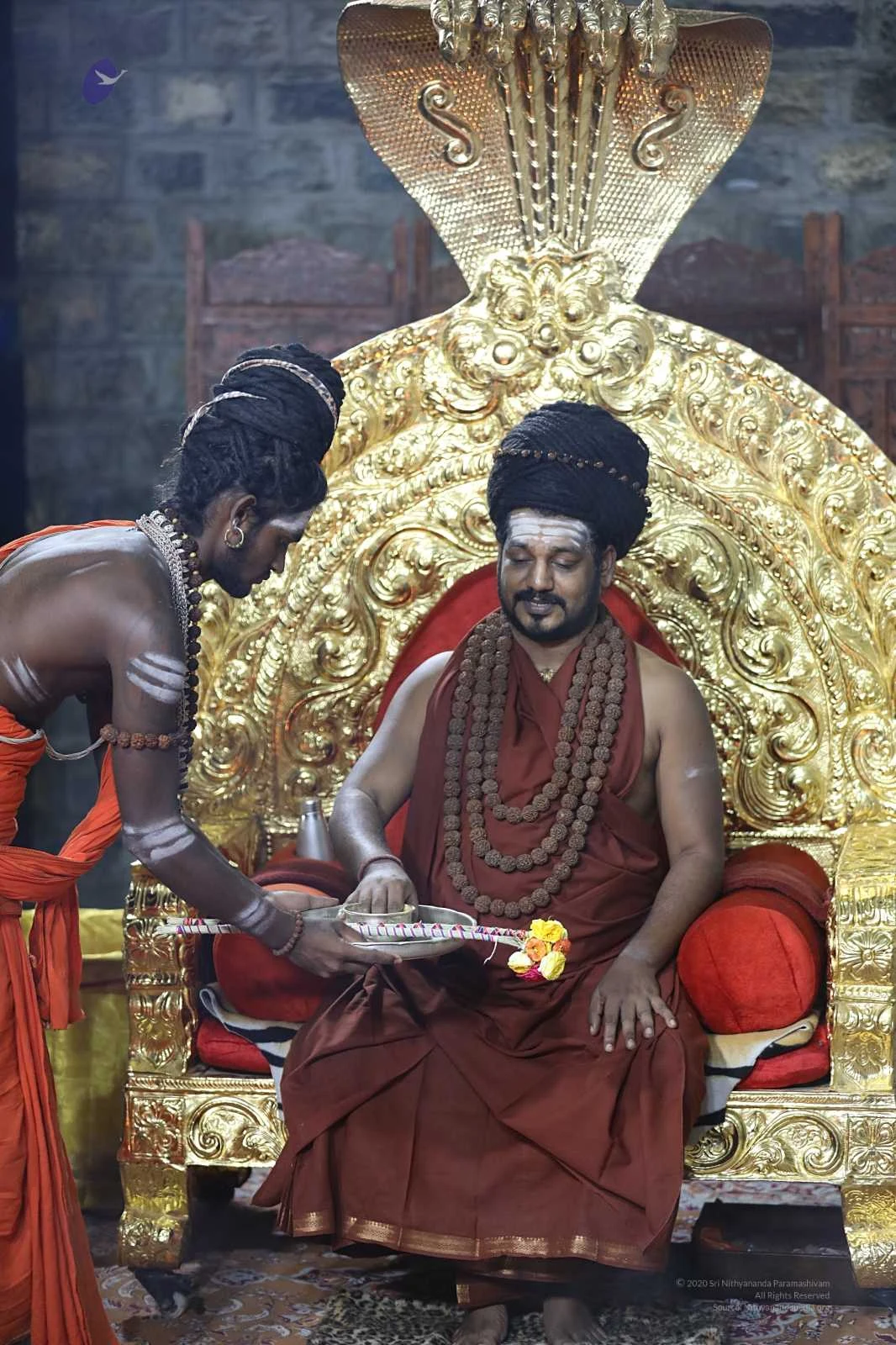
Photos Of The Day:

Vishesha-deeksha-Intiation

01-VISHESHA-DEEKSHA-INITIATION

Photos from this day

View all 146 photos

Vishesha Deeksha
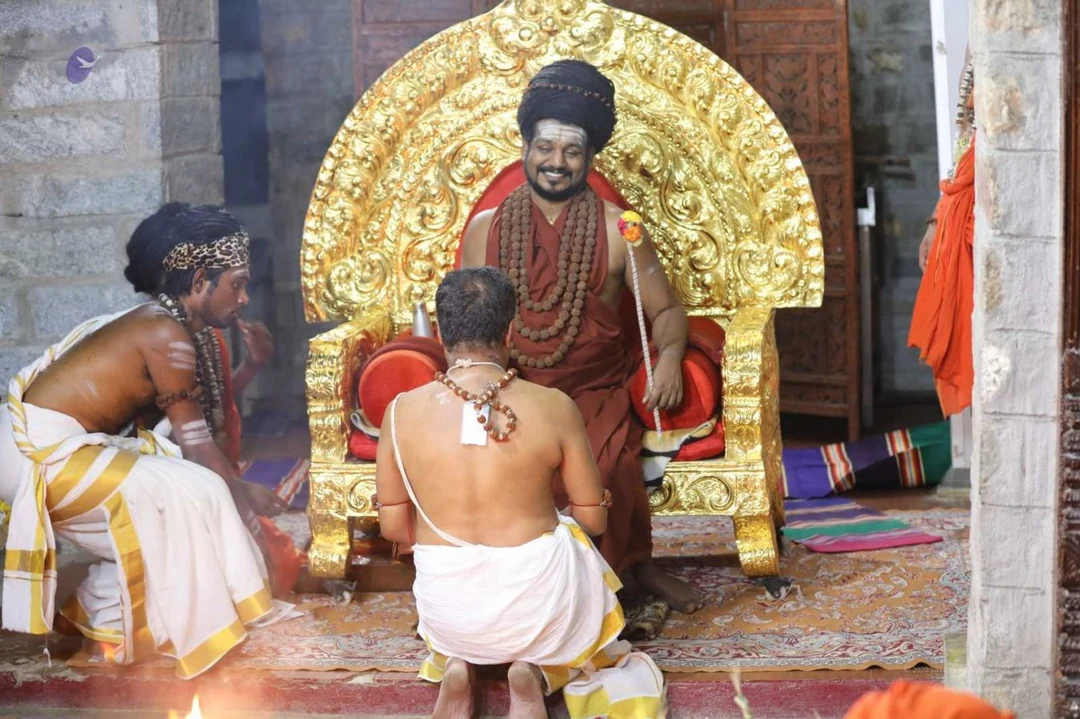
102 photosSource gallery

Vishesha-deeksha-Intiation

37 photosSource gallery
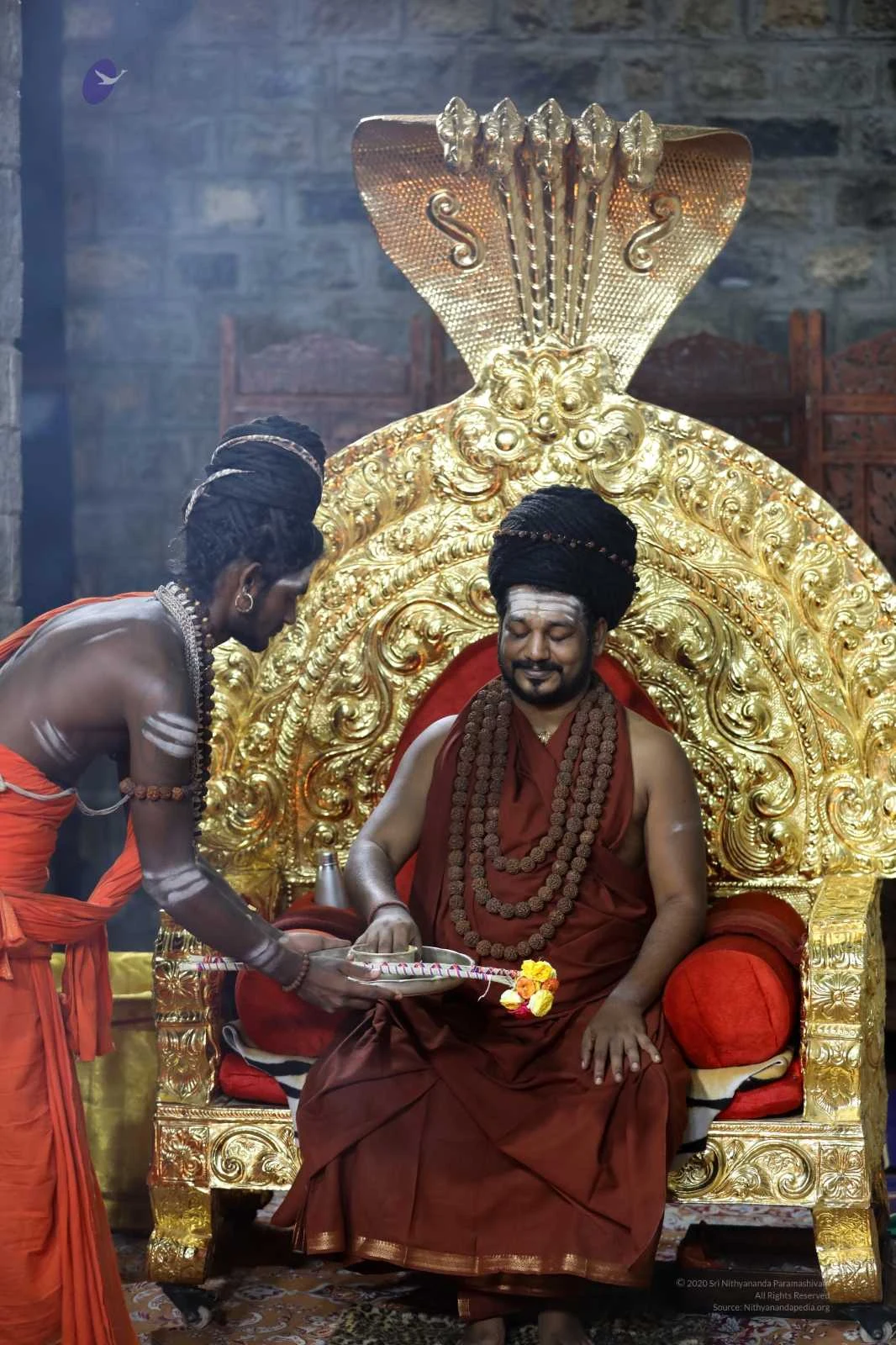
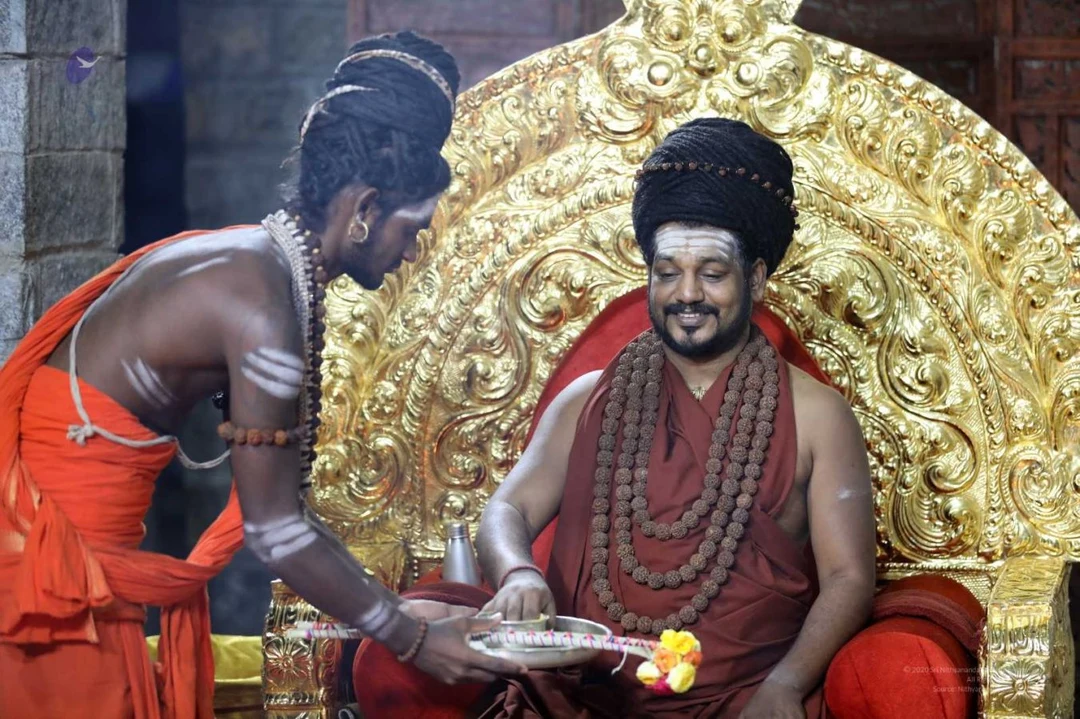
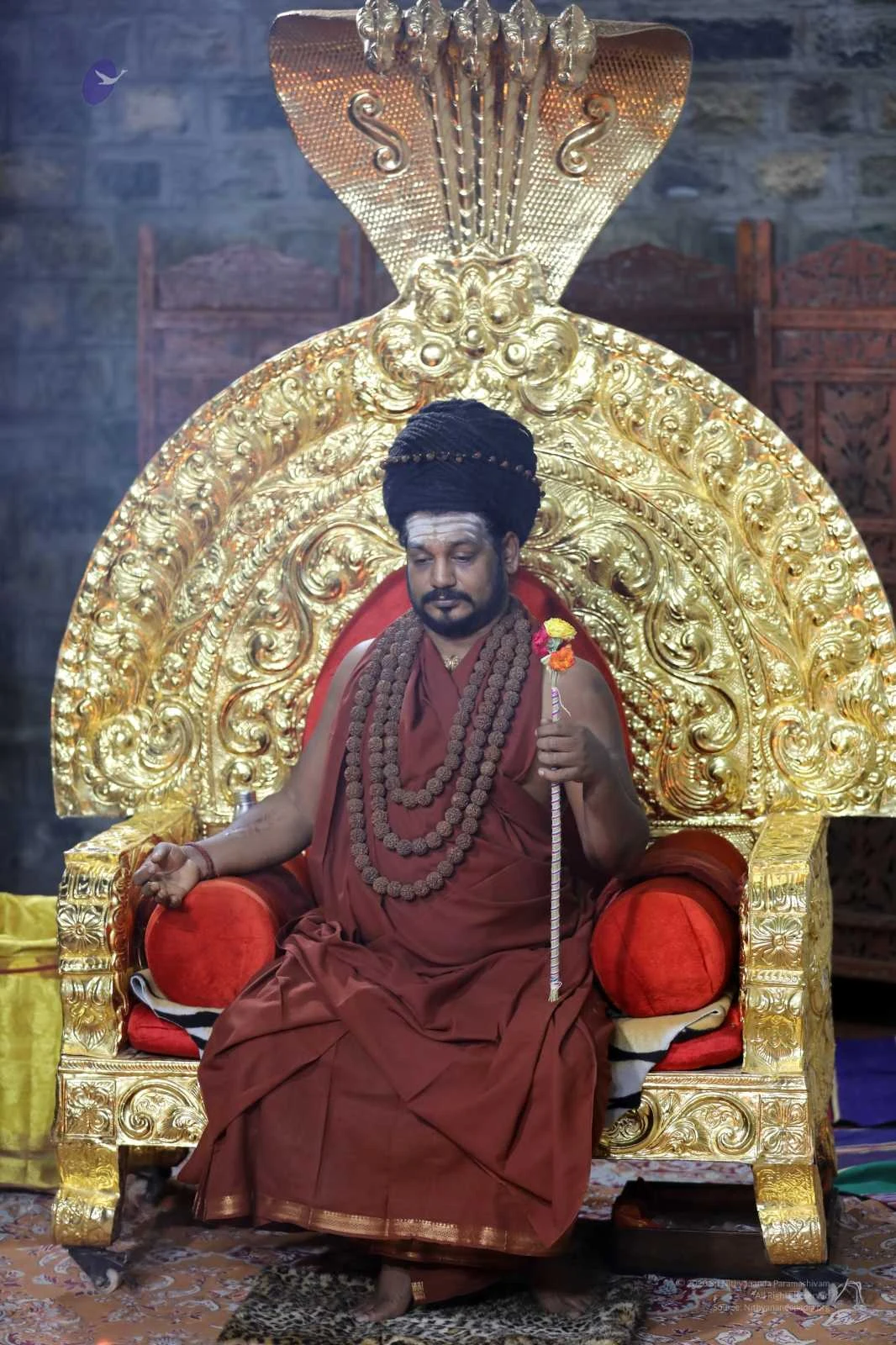
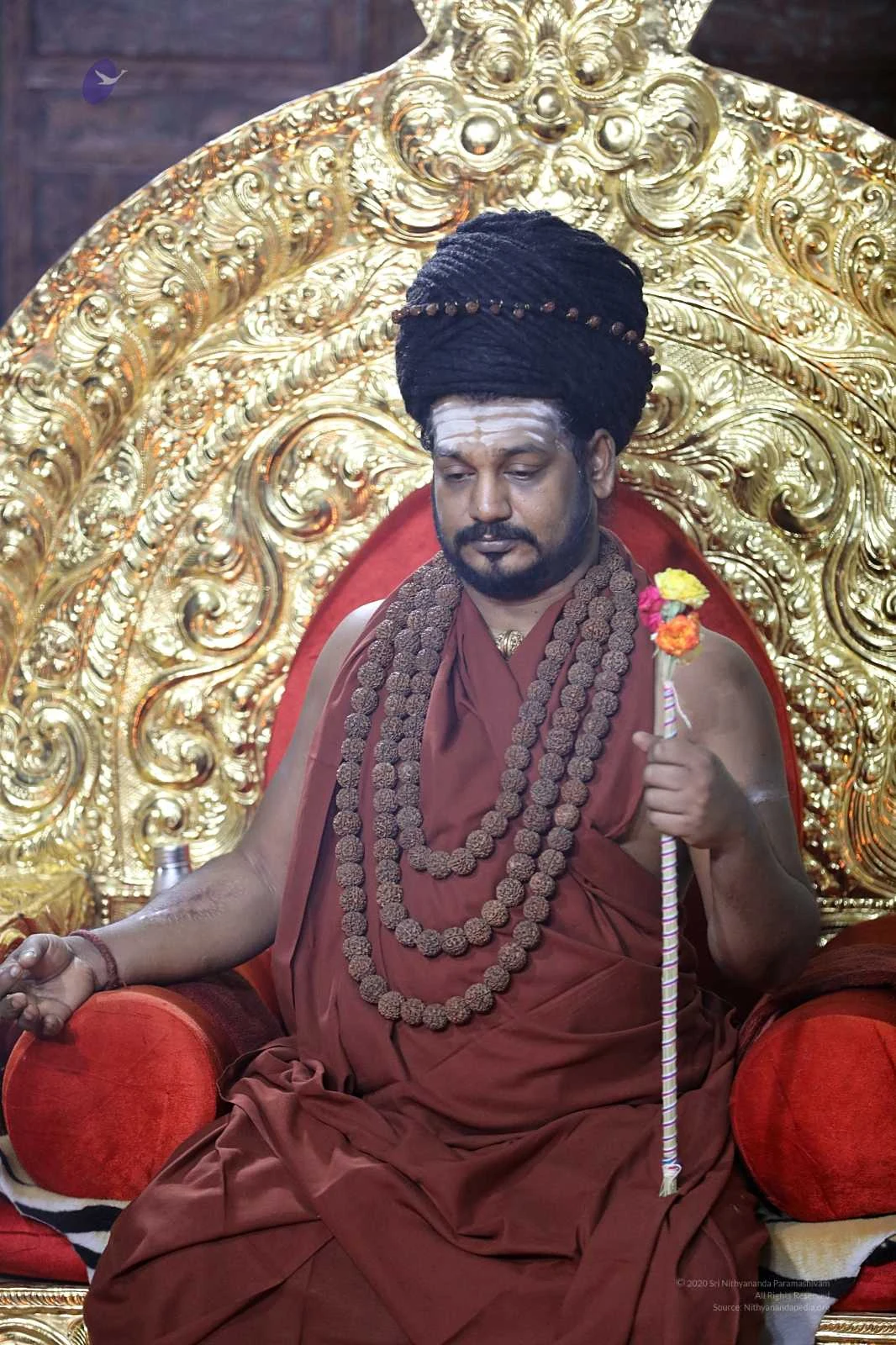
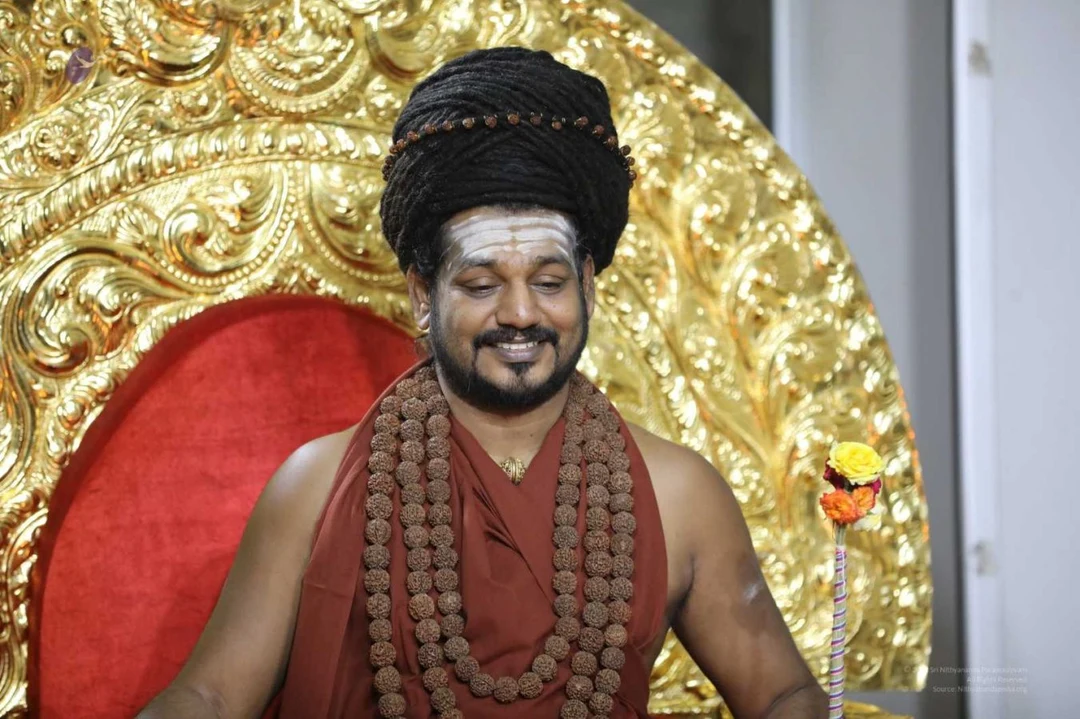
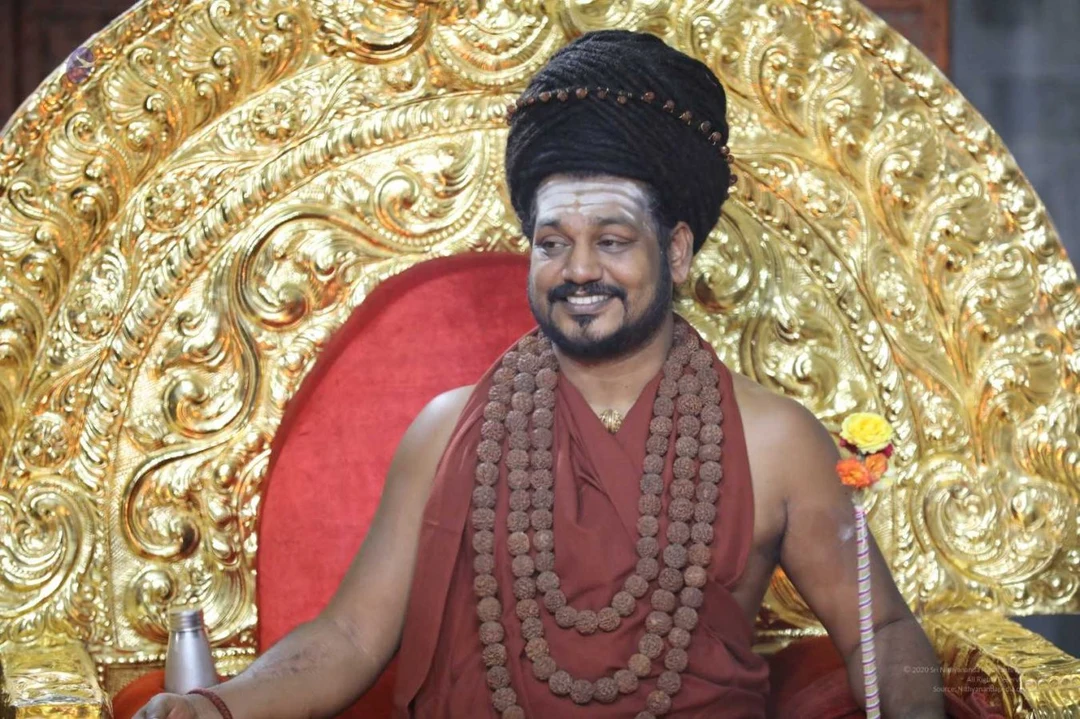
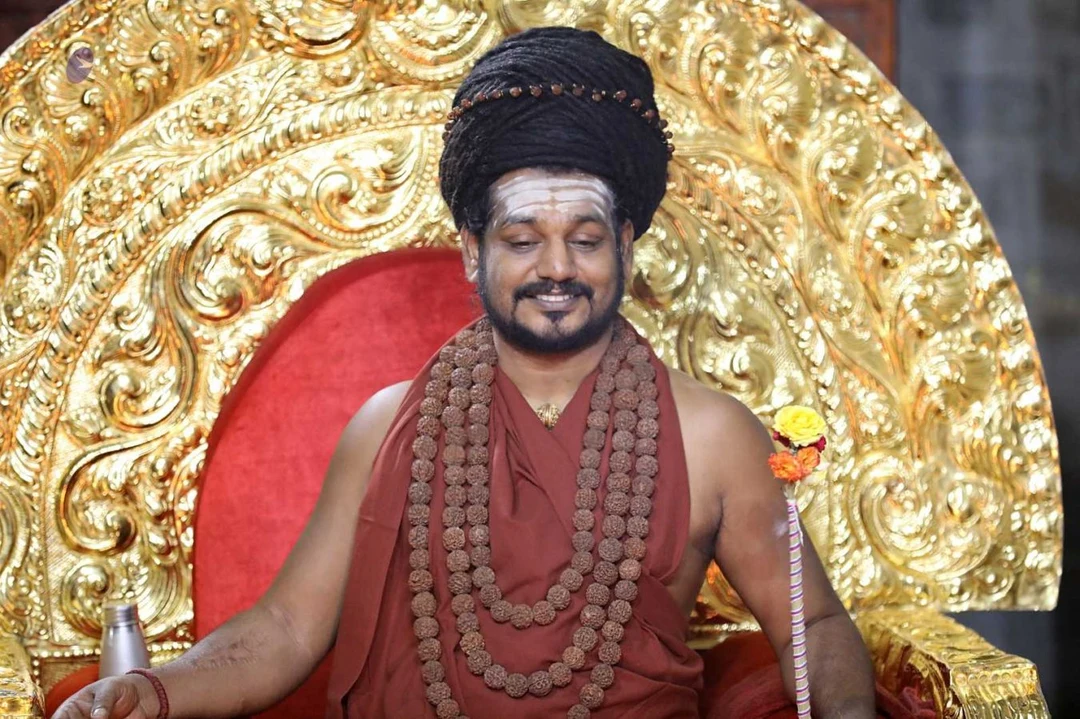
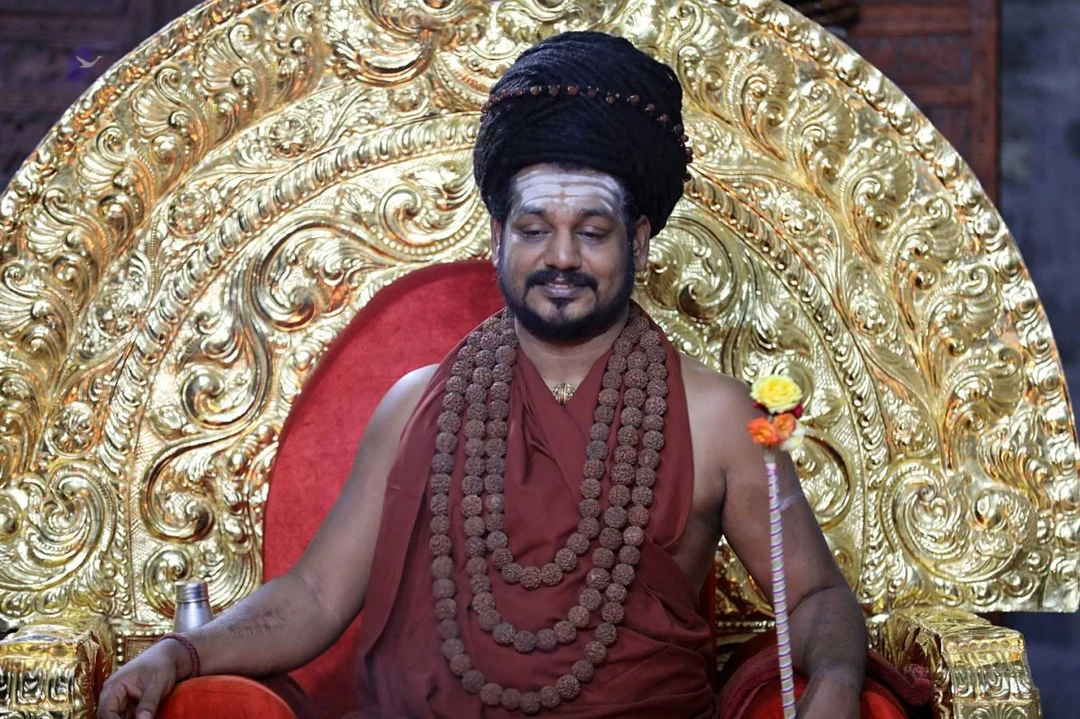
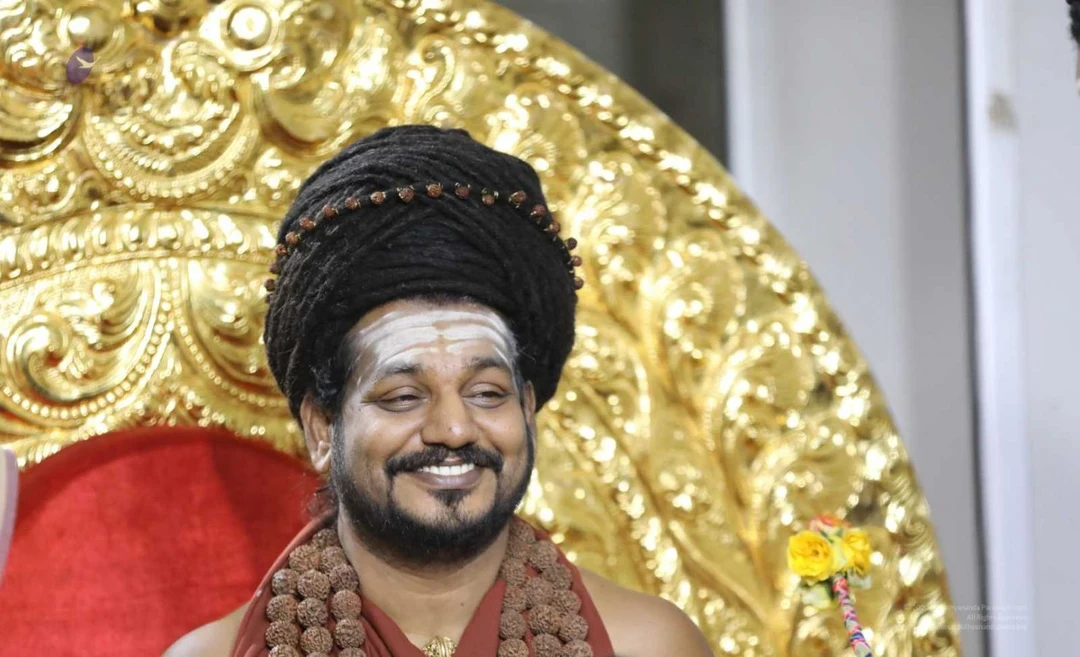
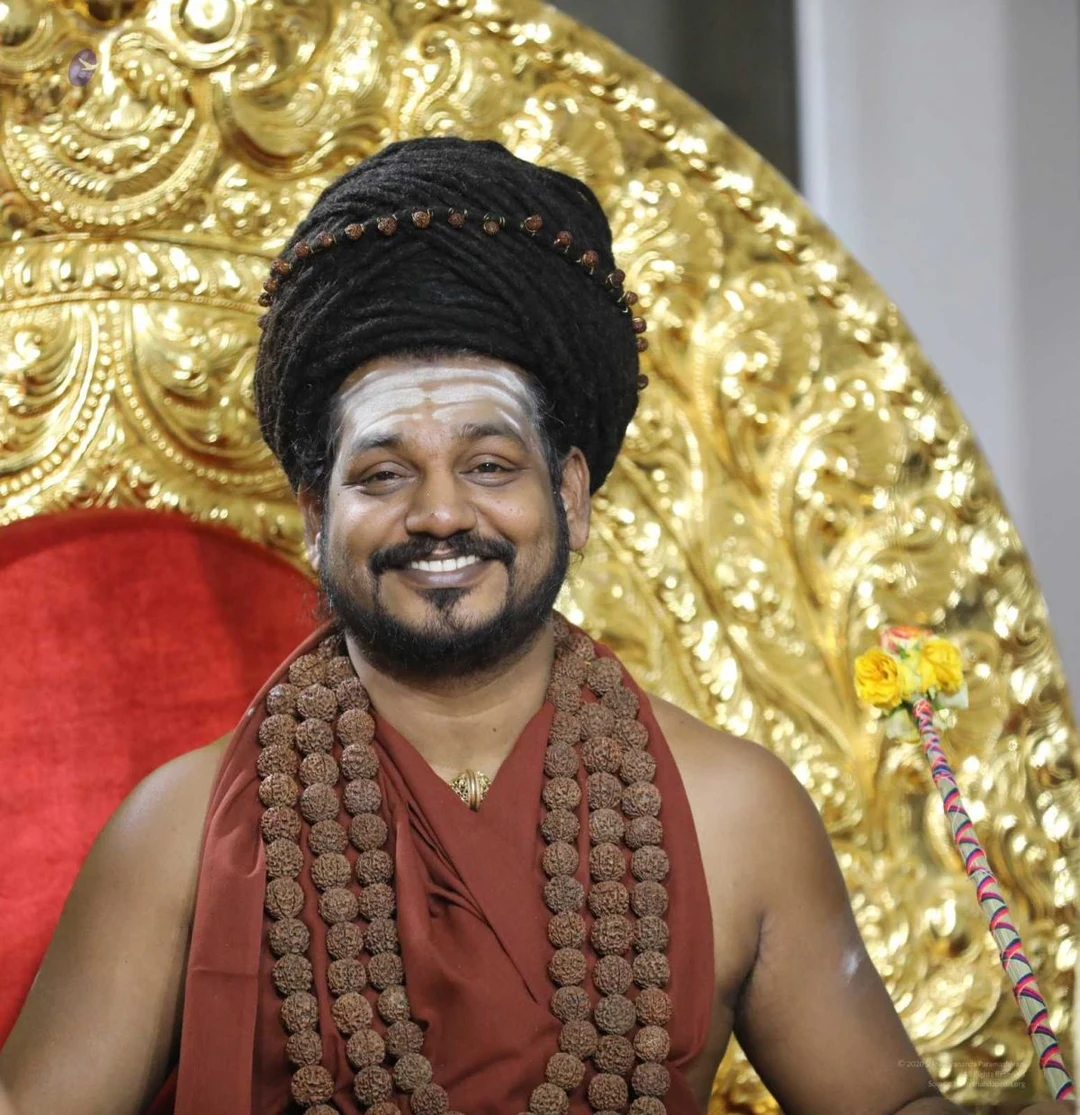
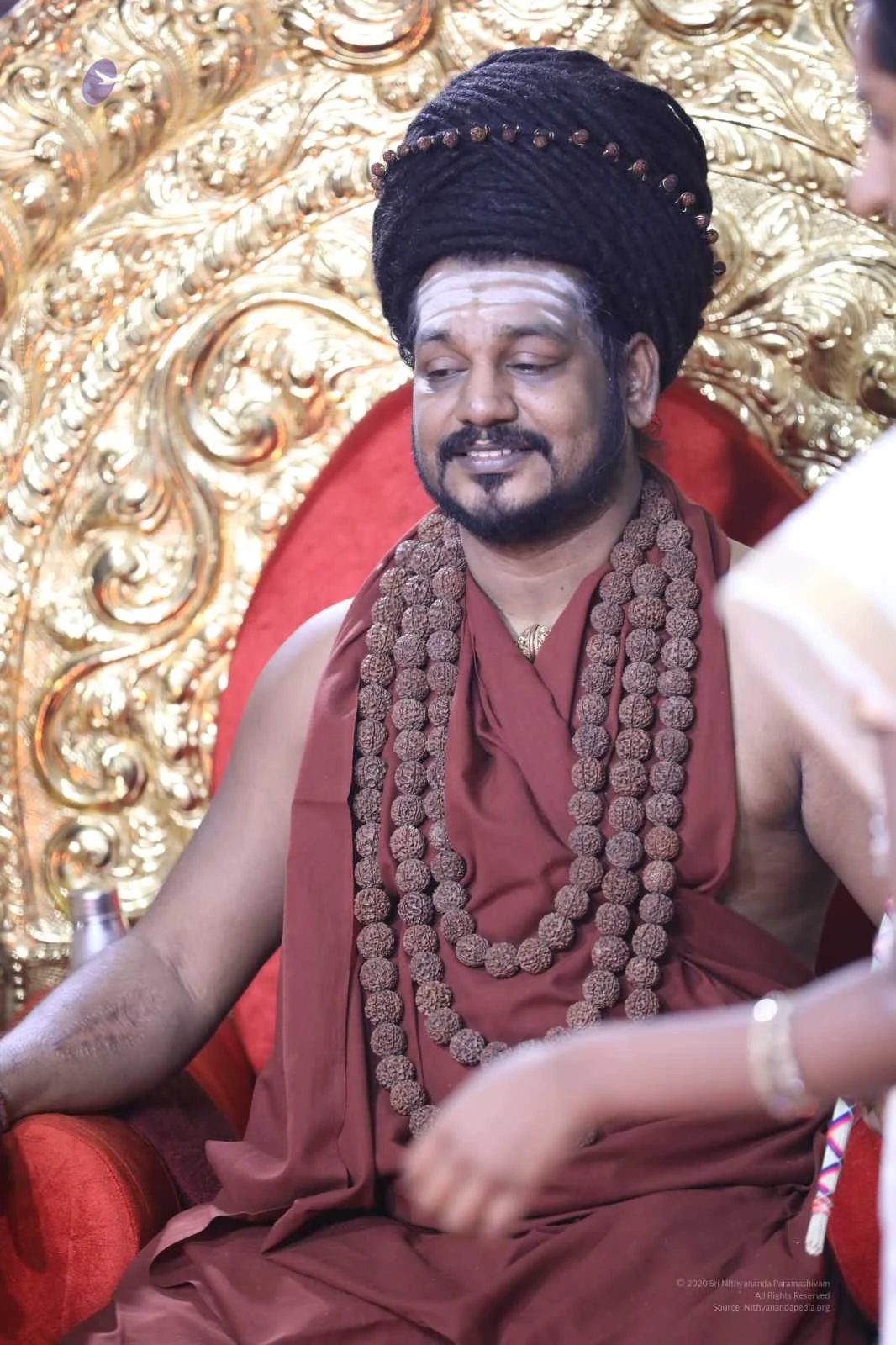
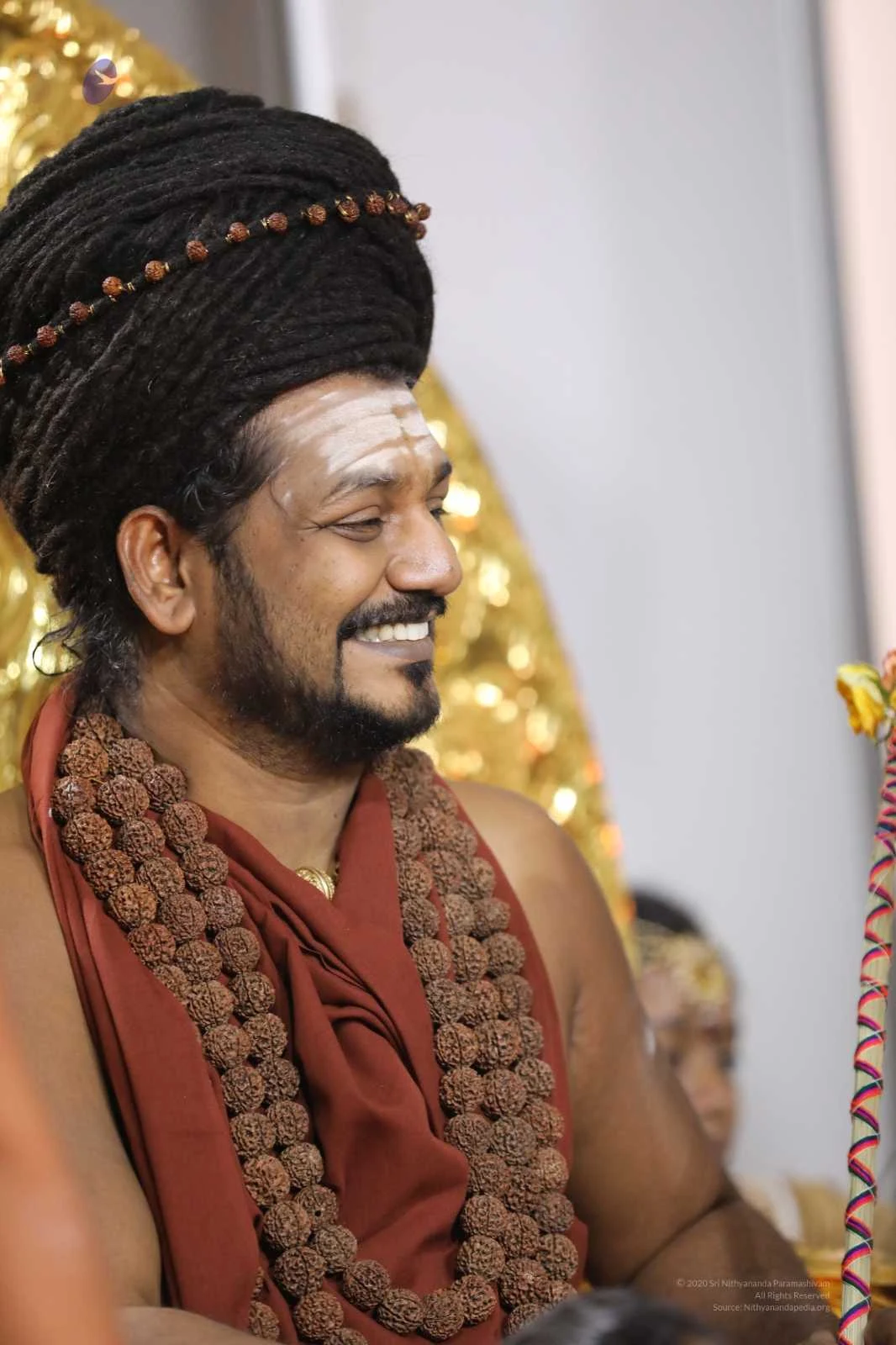
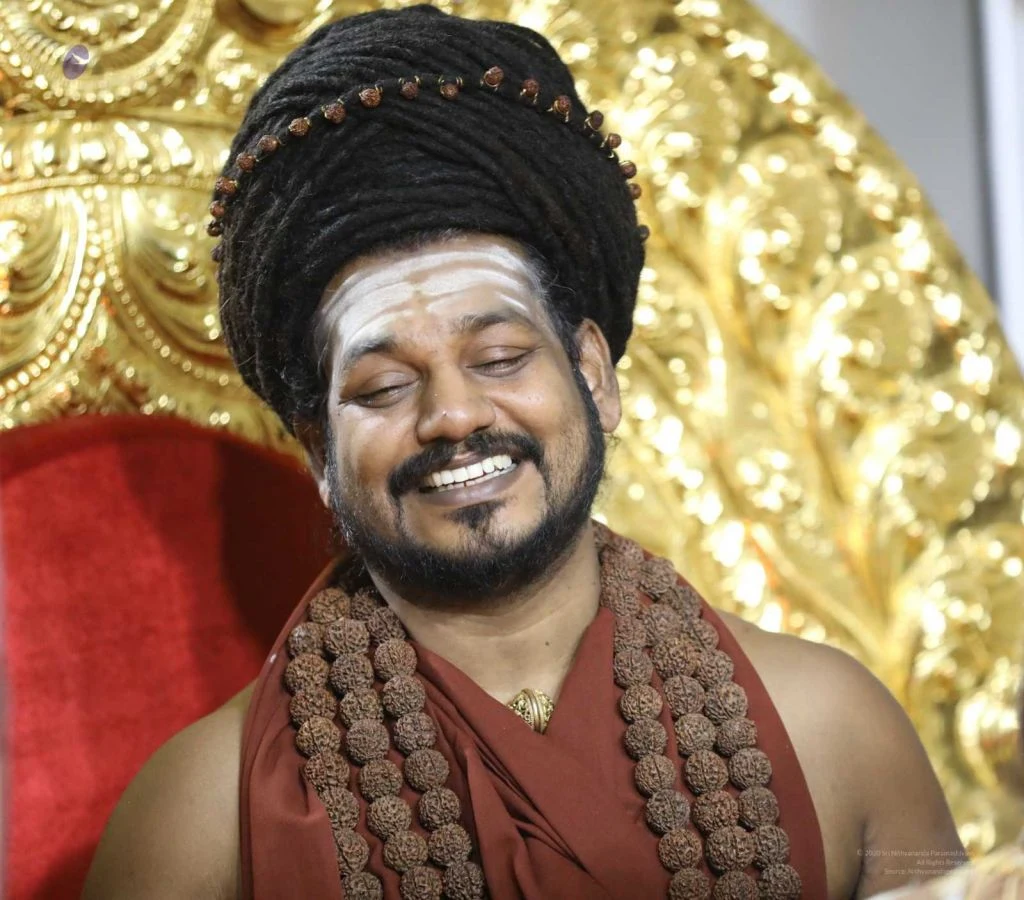
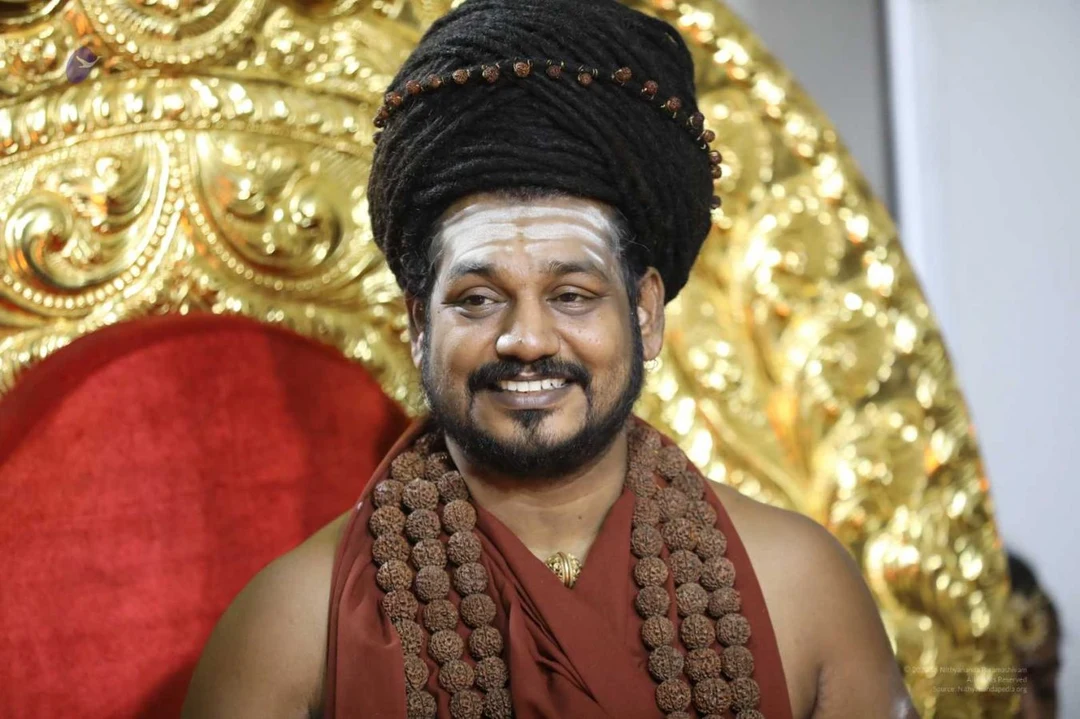
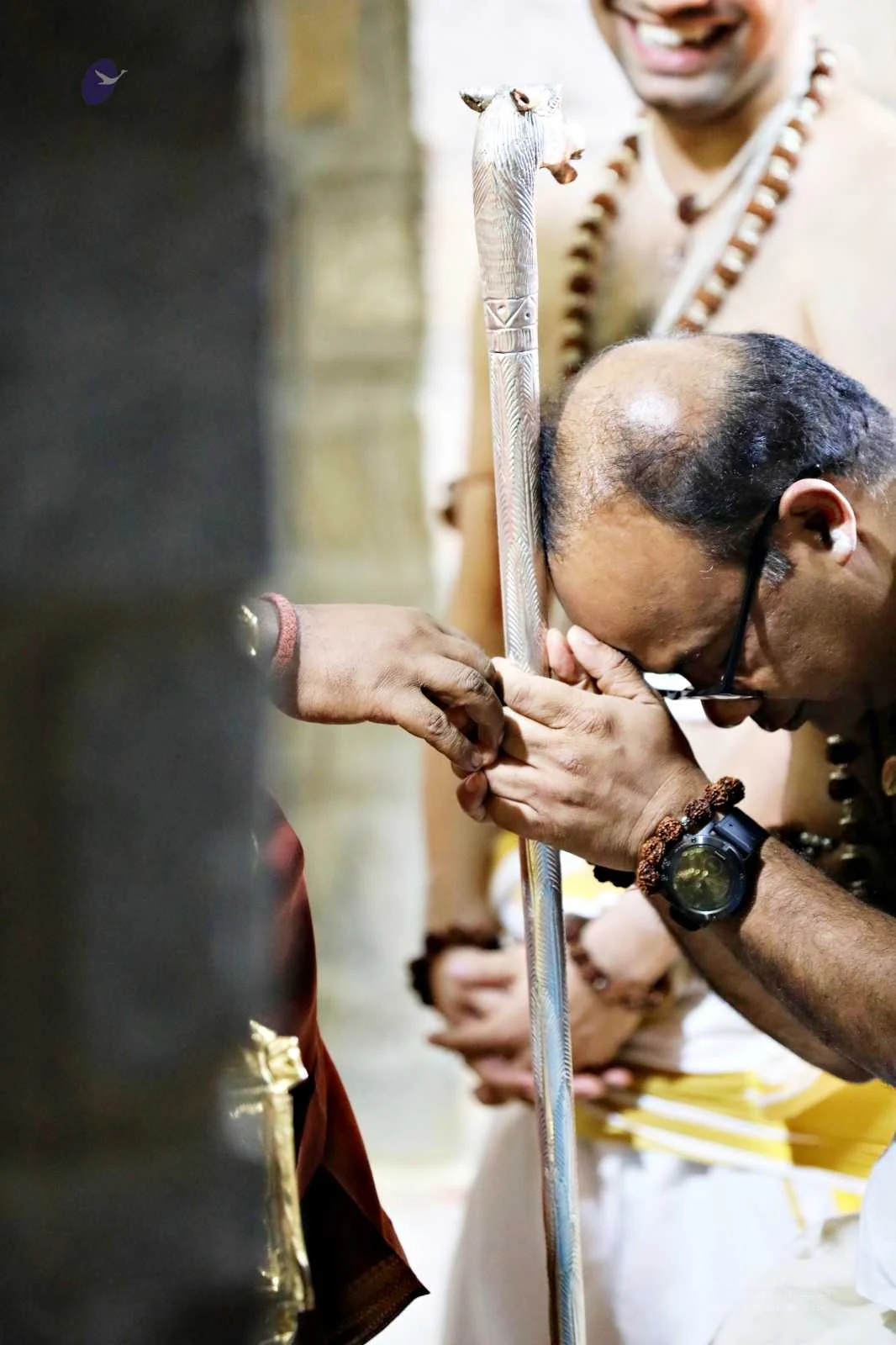
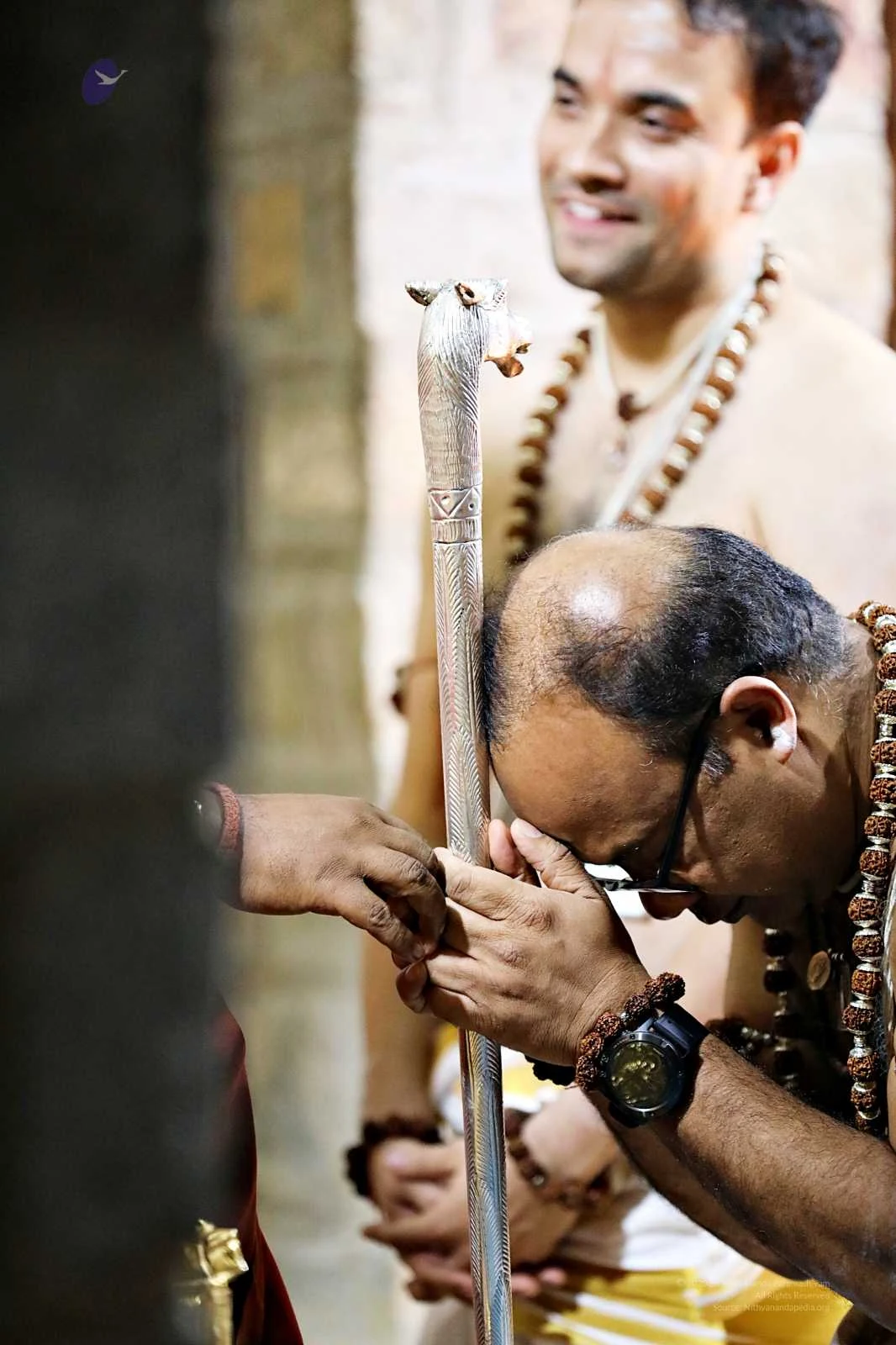
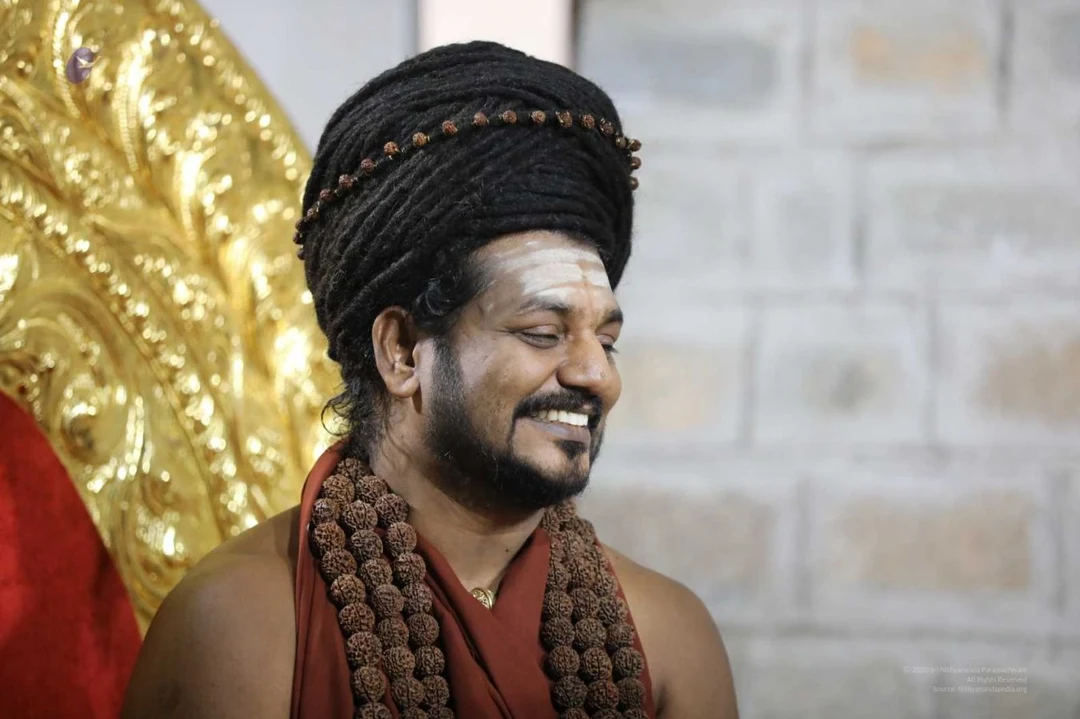
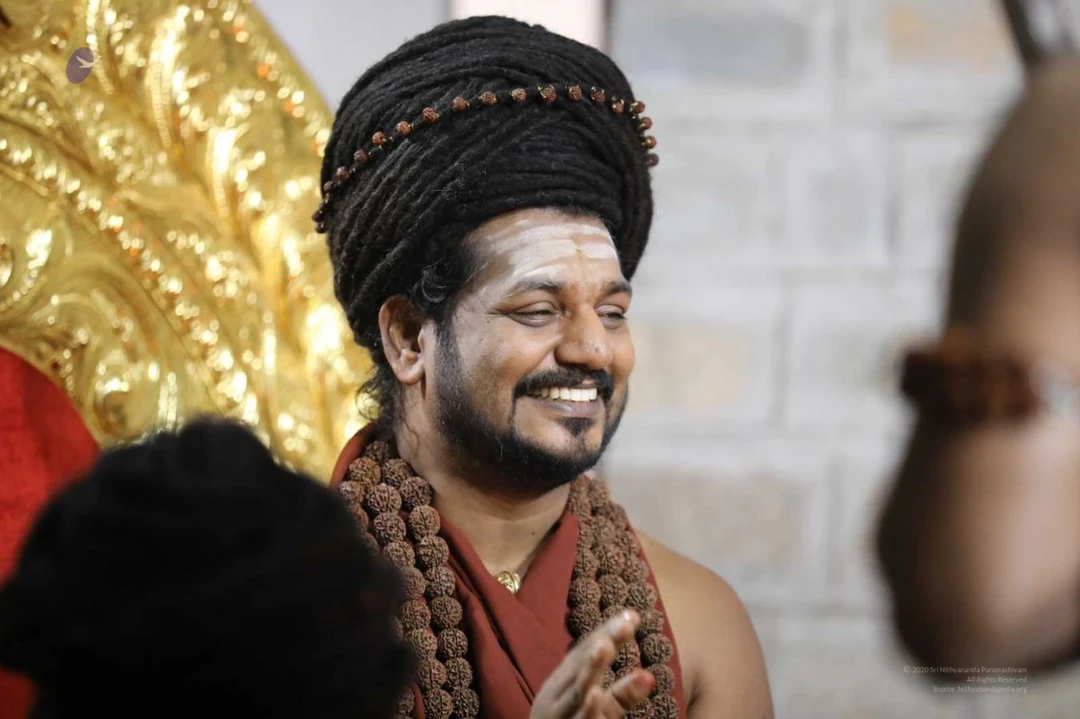
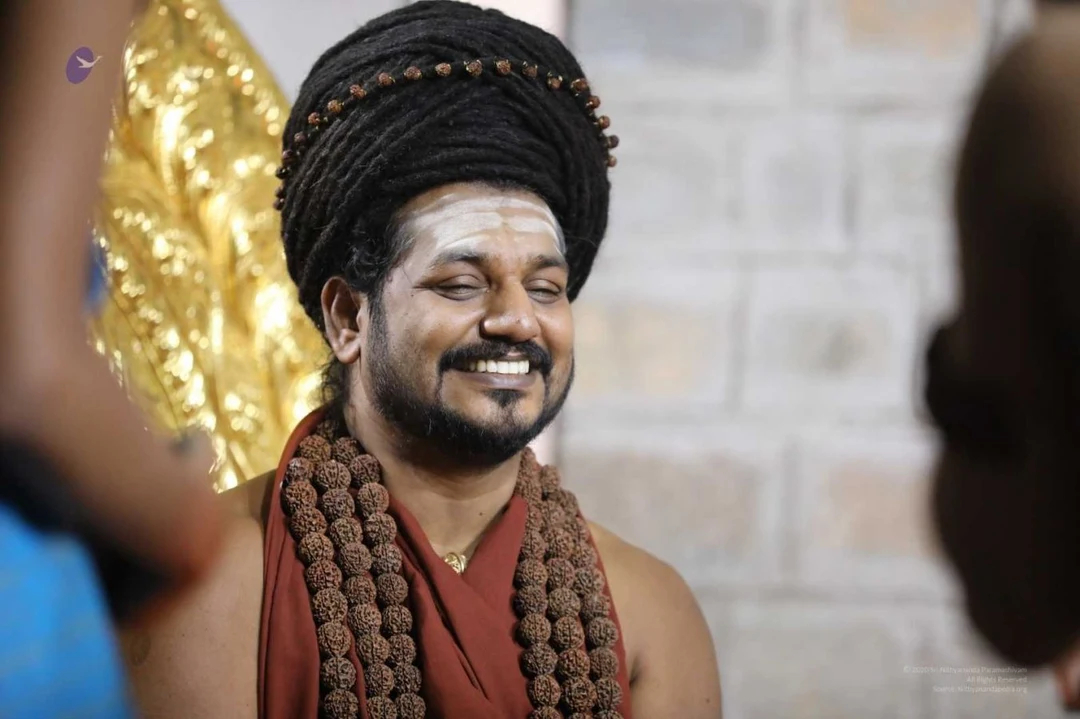
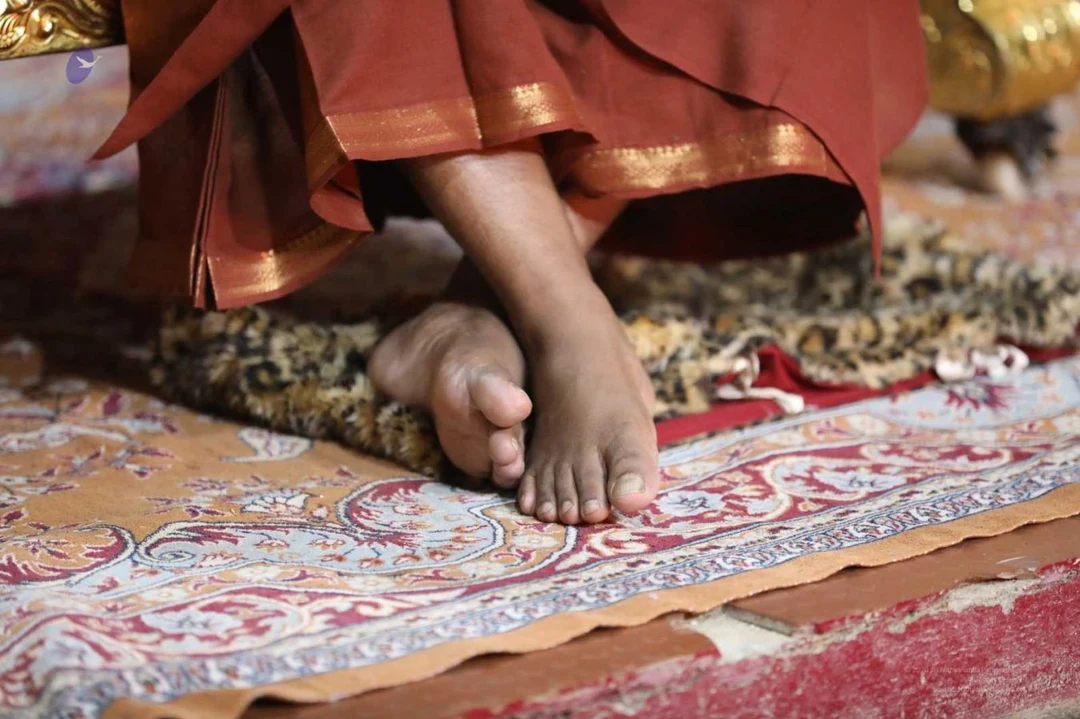
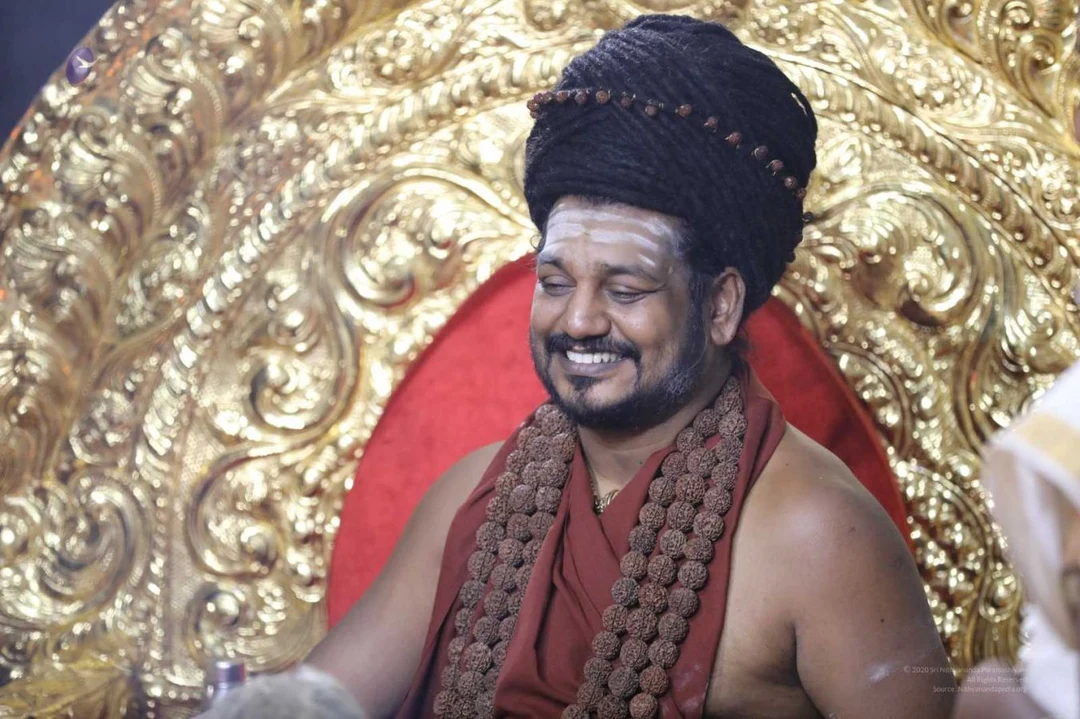
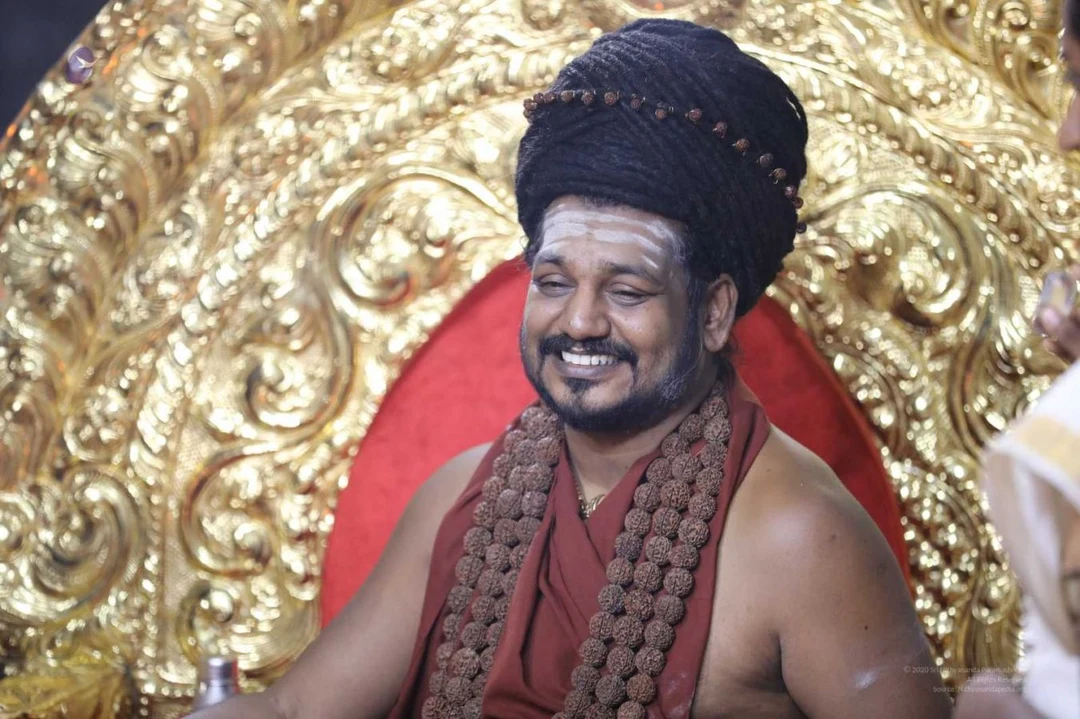
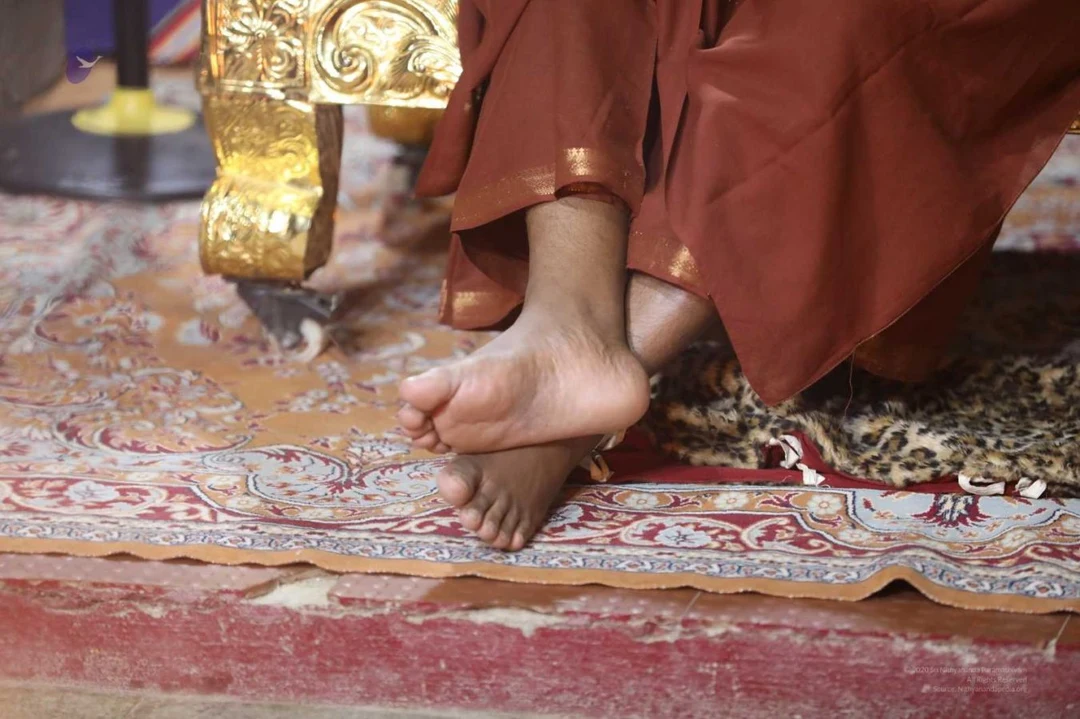
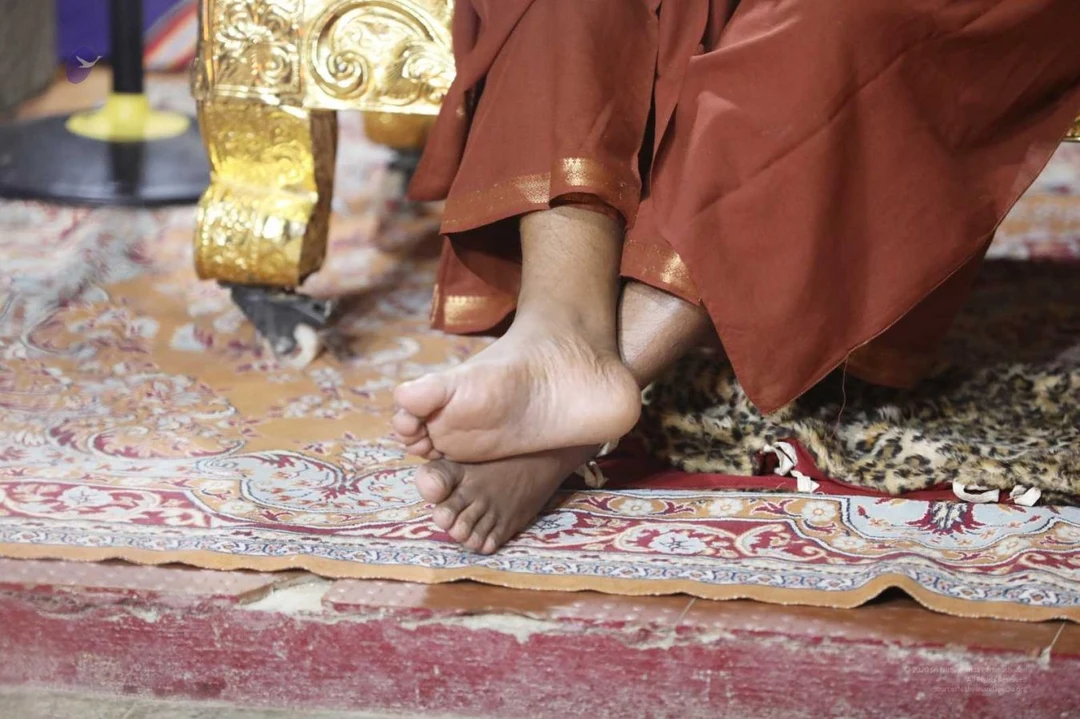
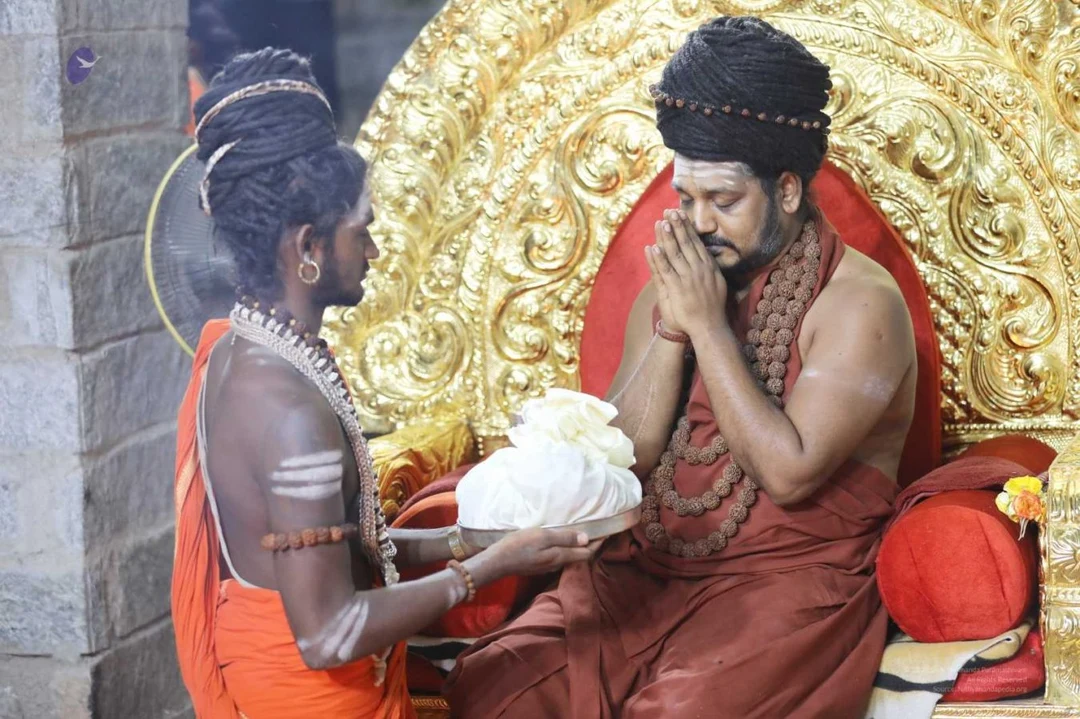
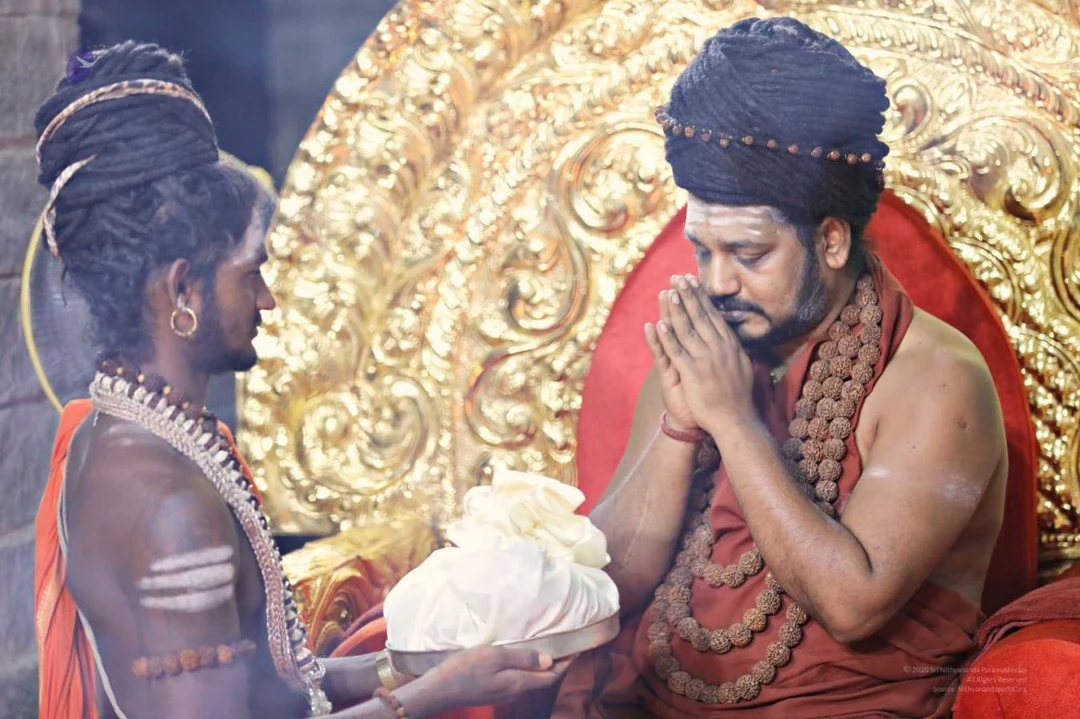
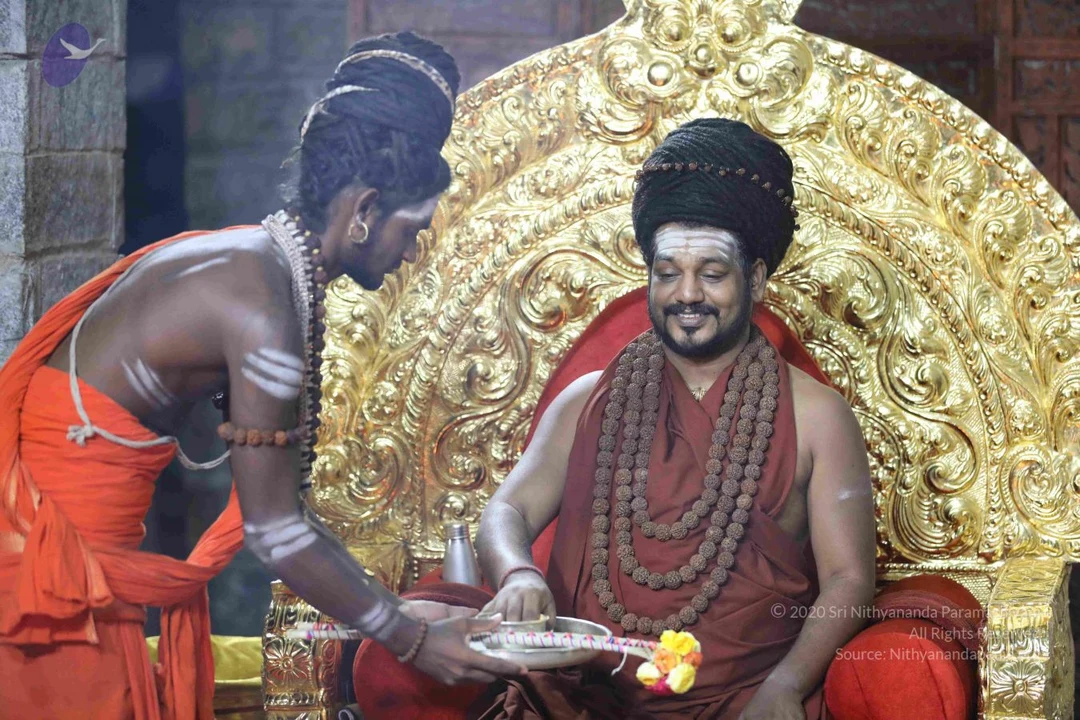
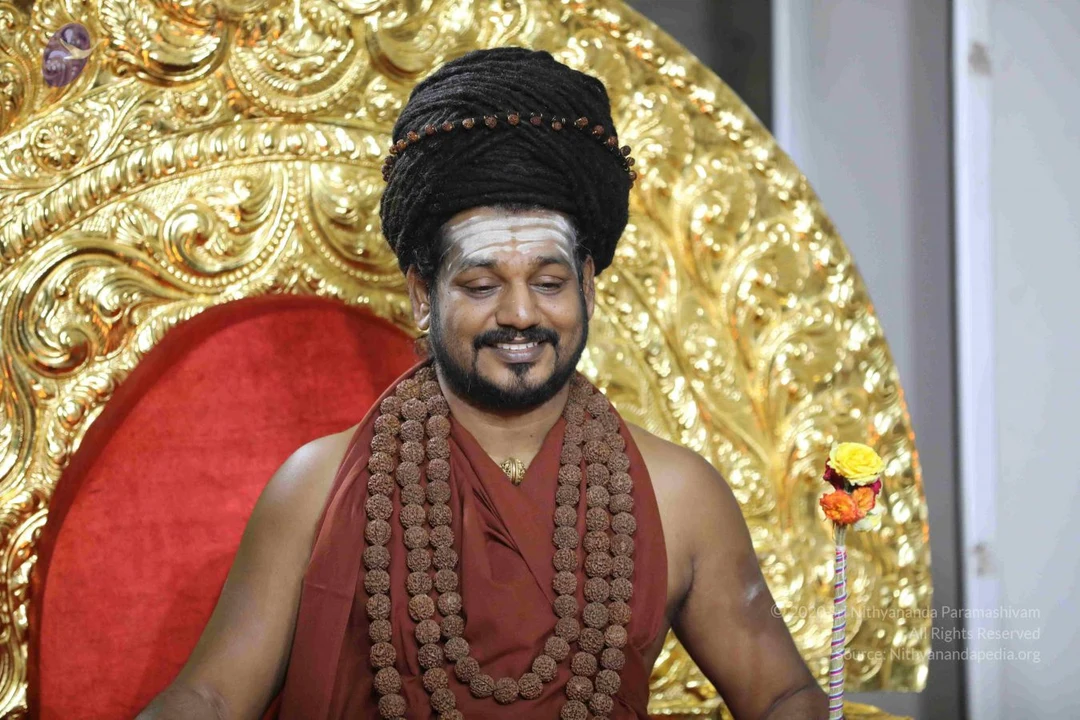
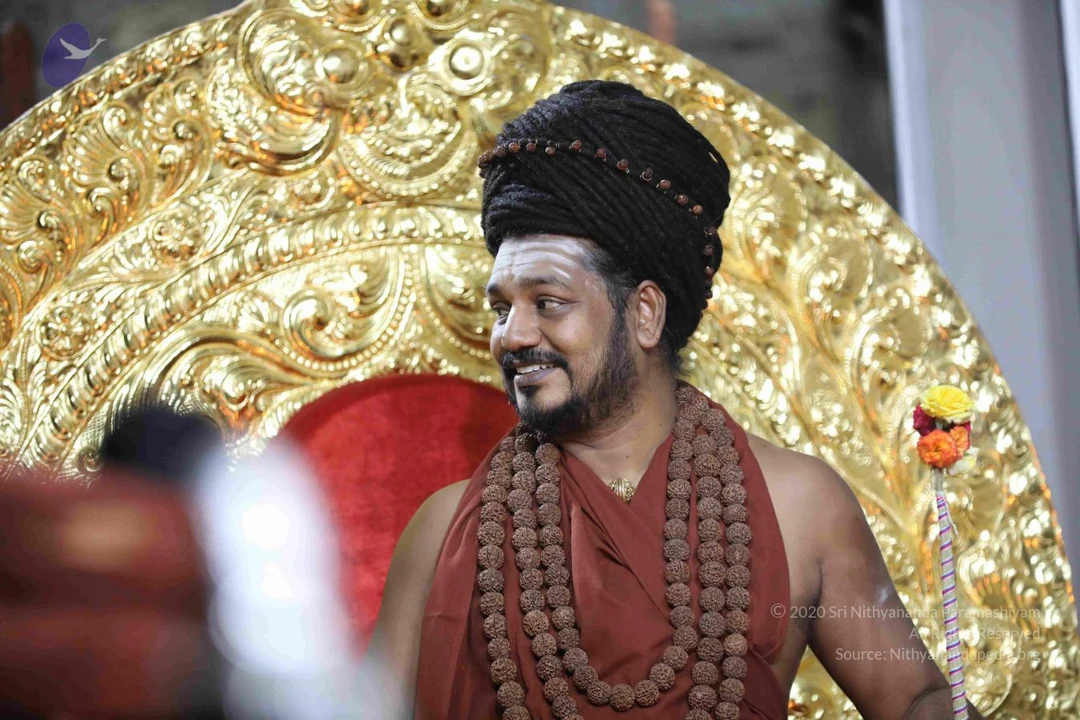
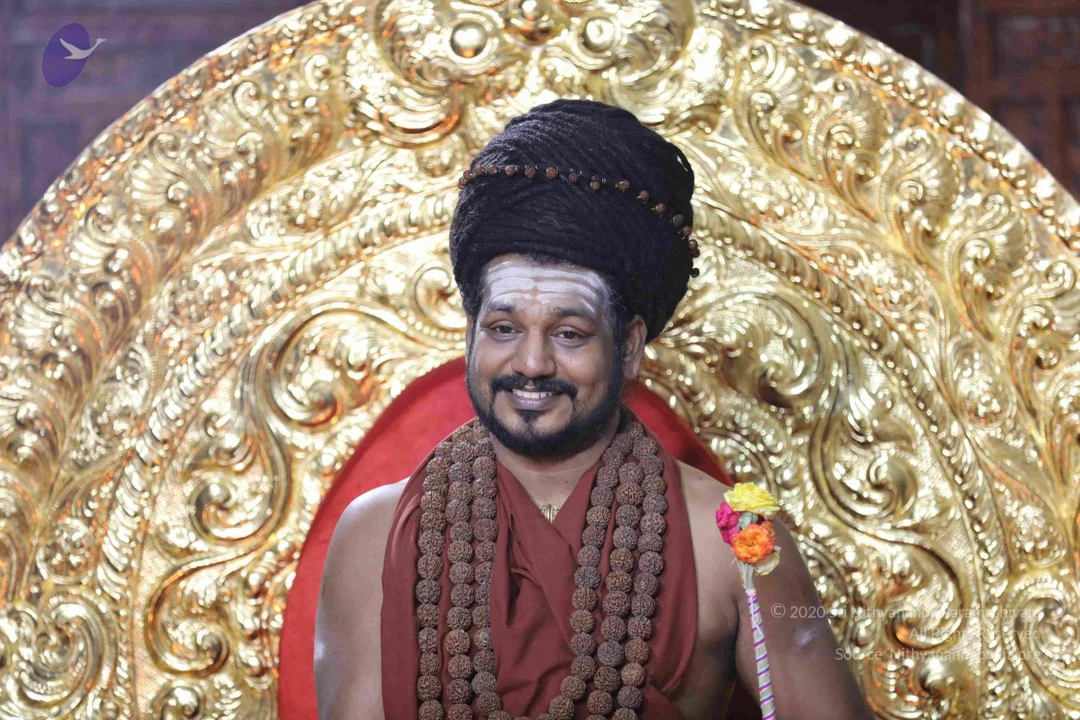
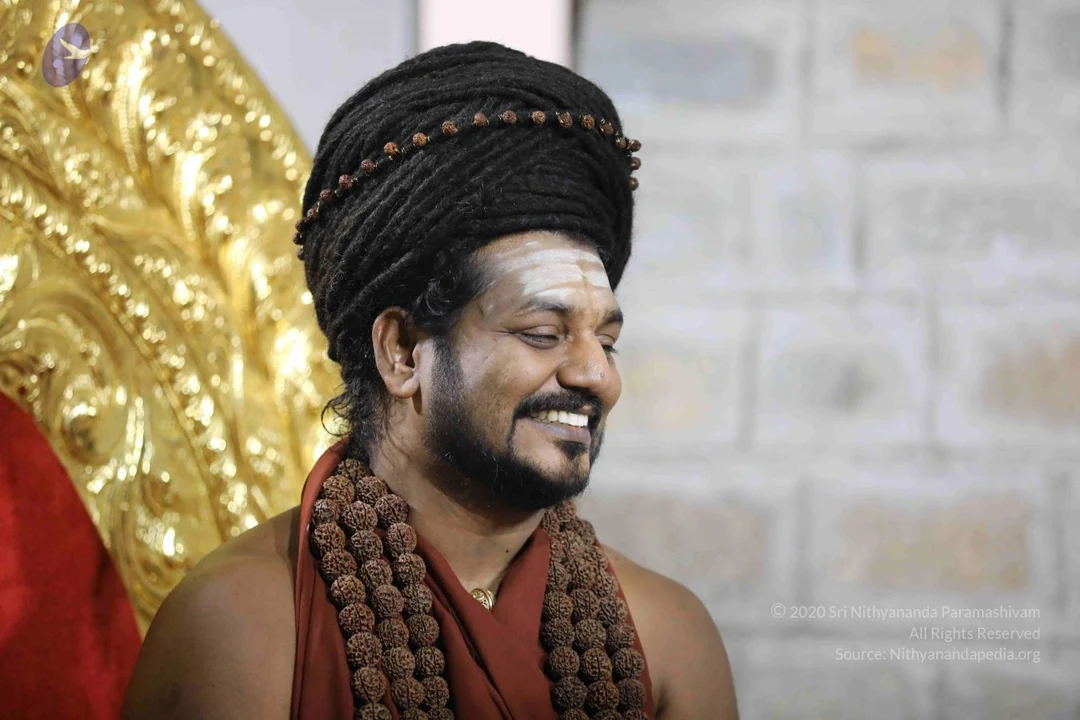
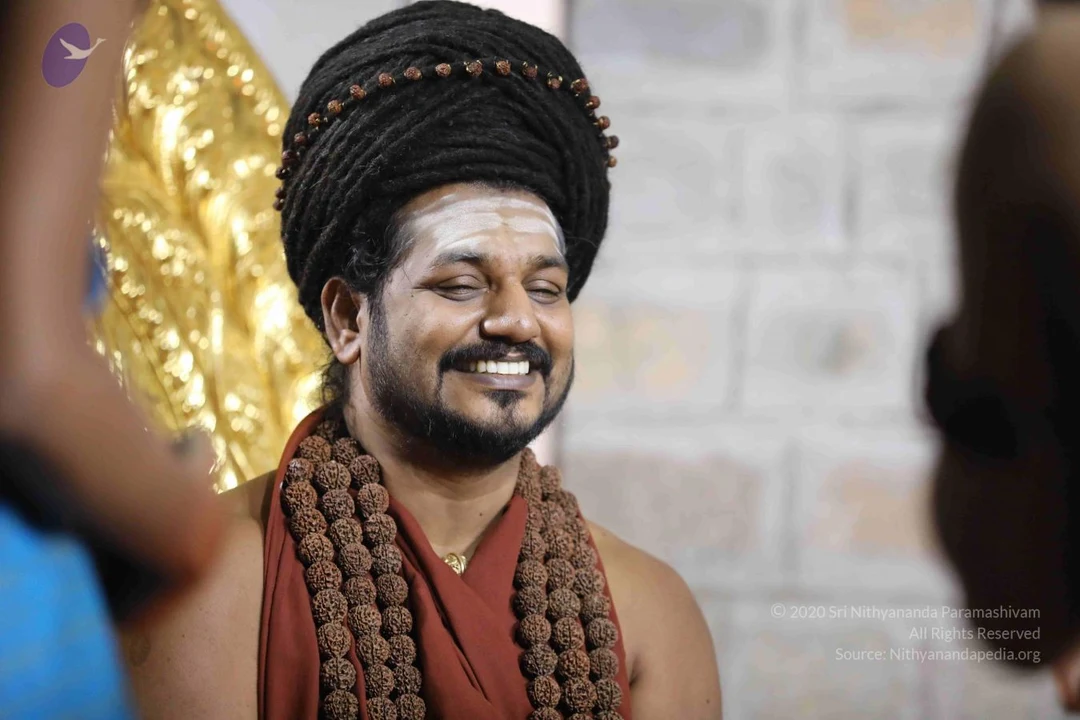
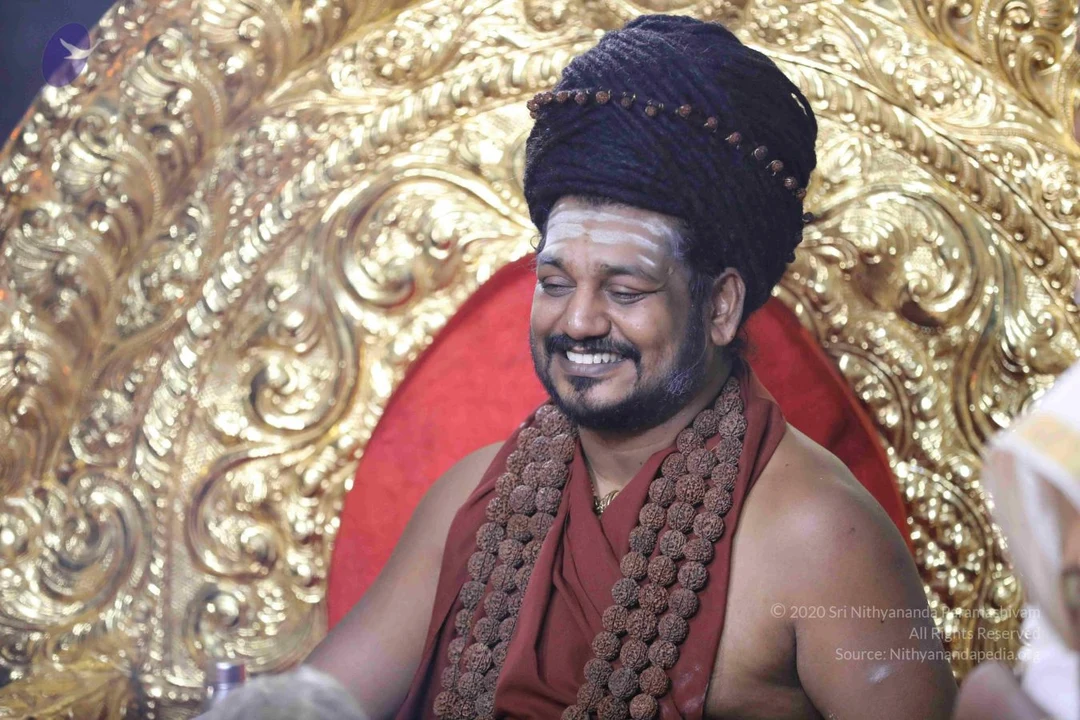
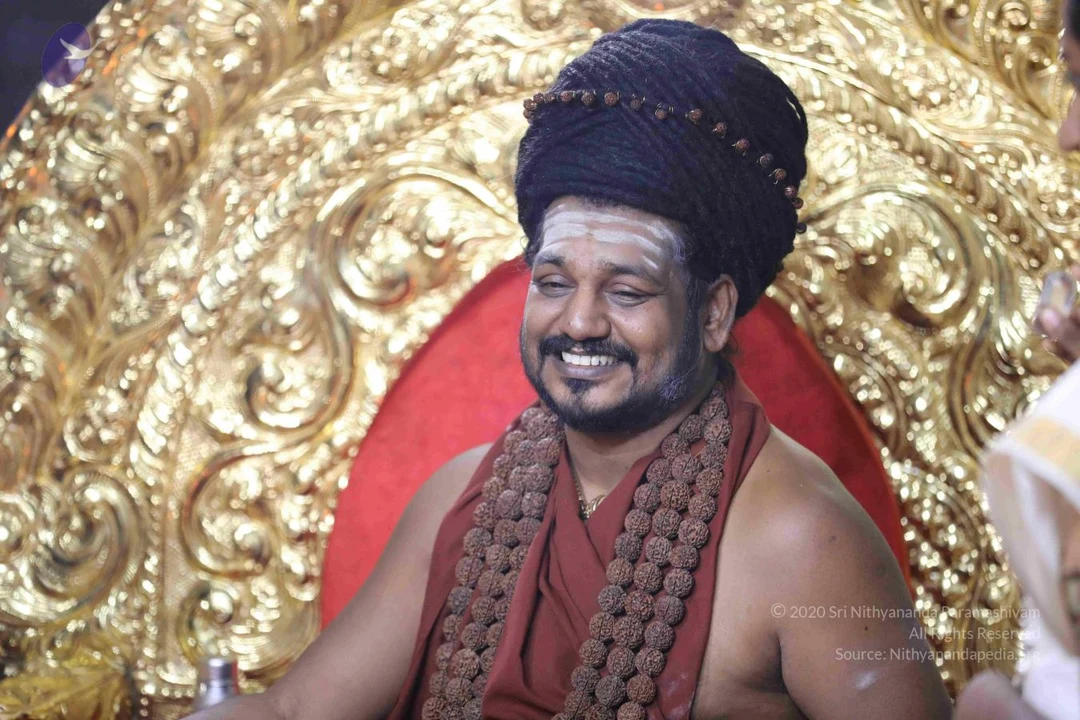
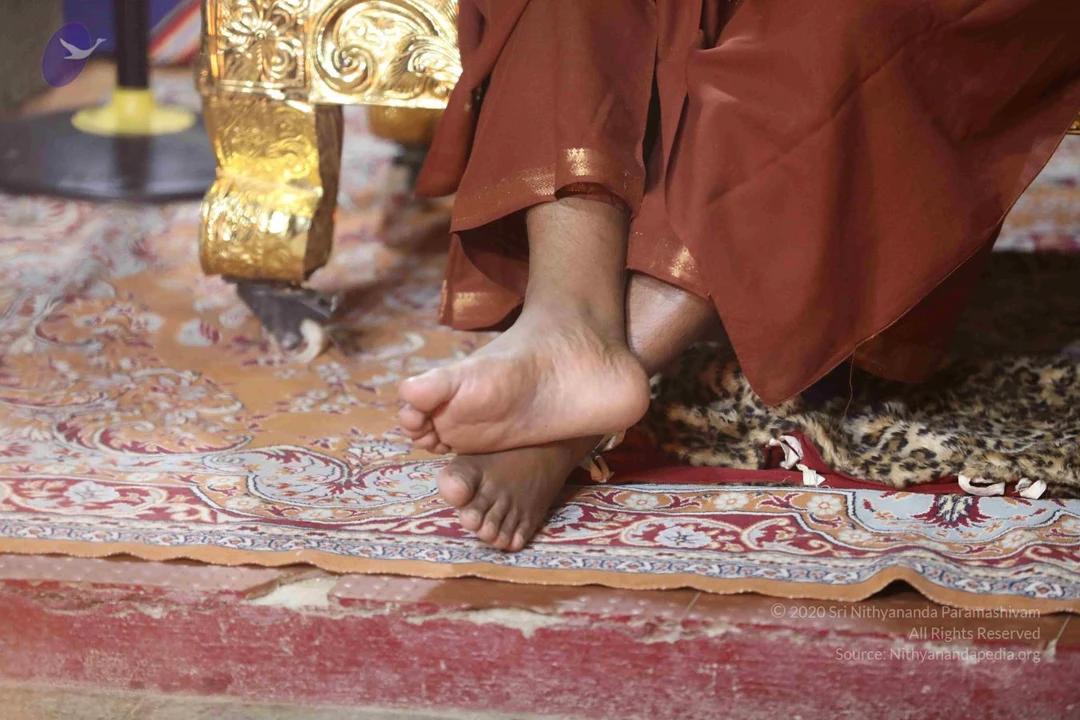
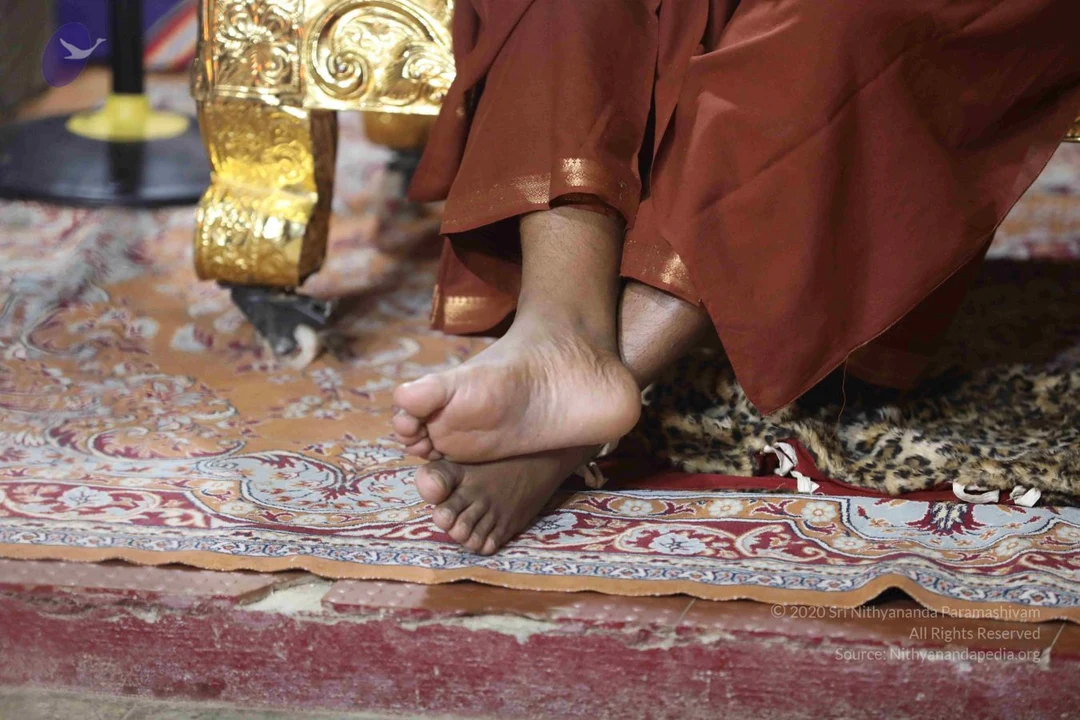
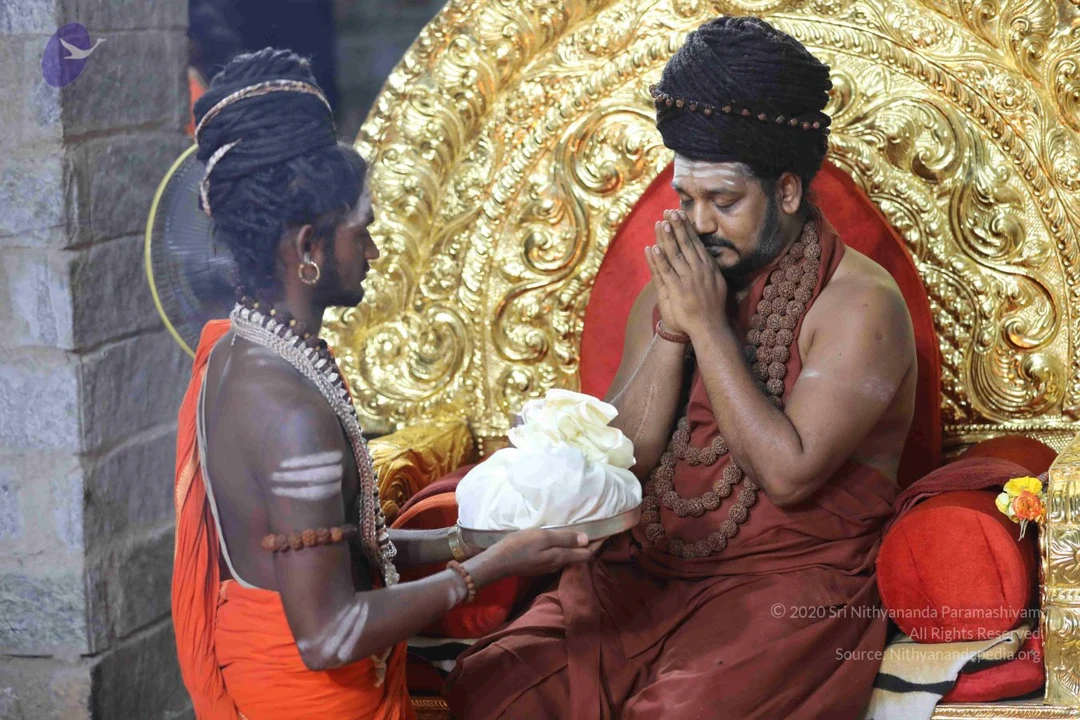
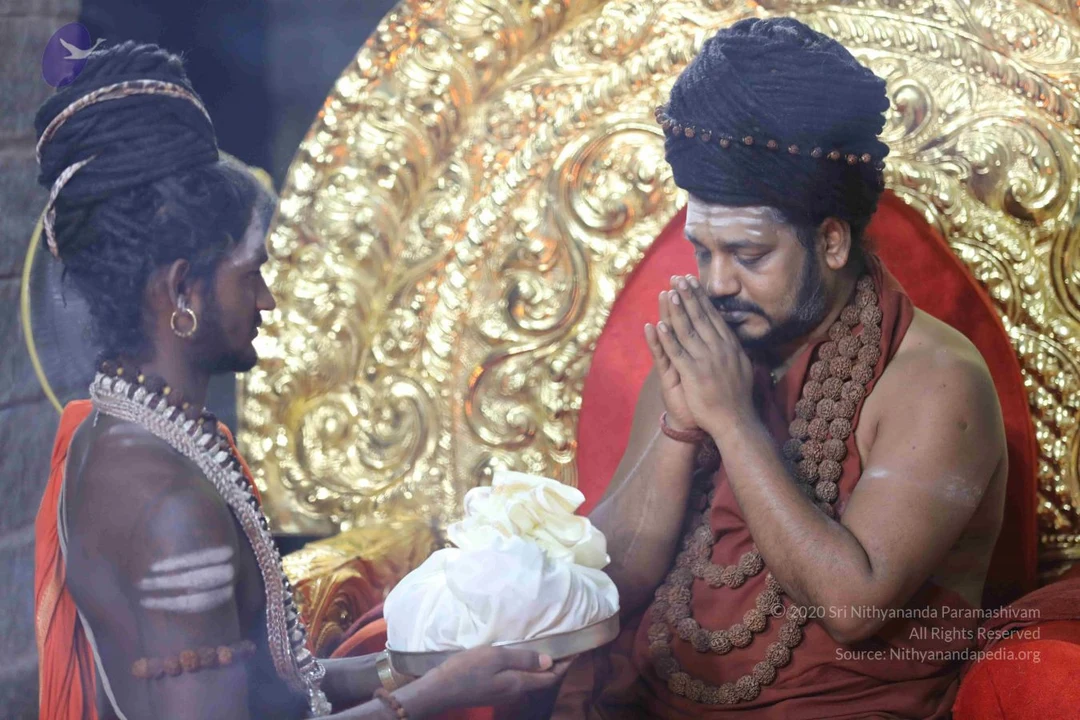
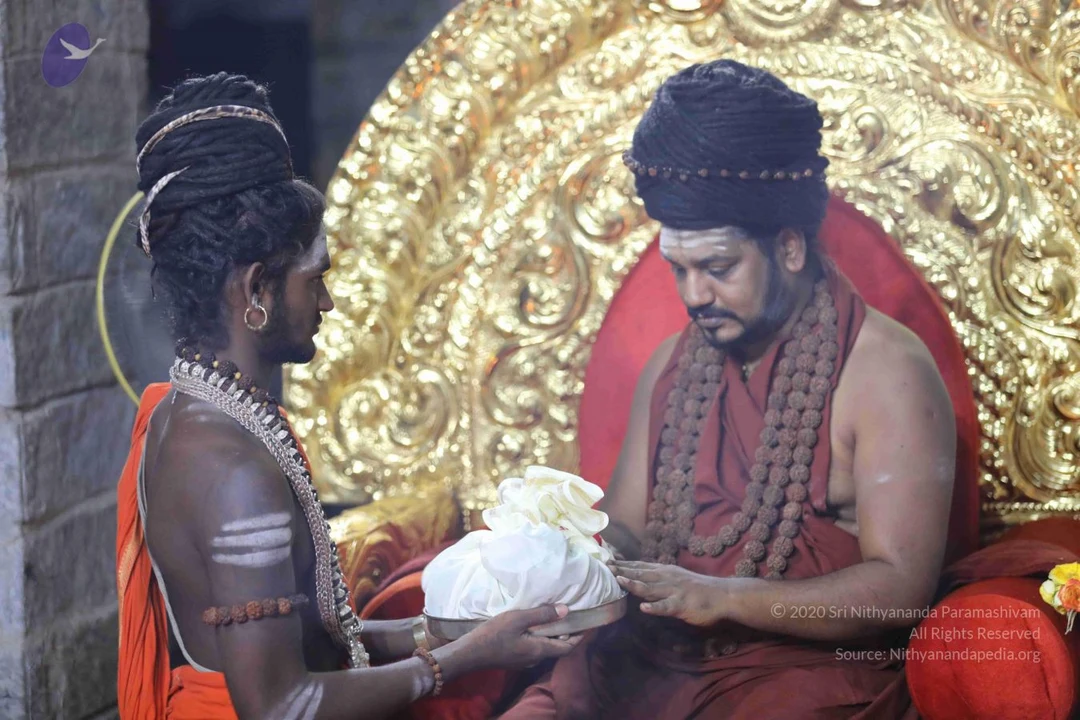
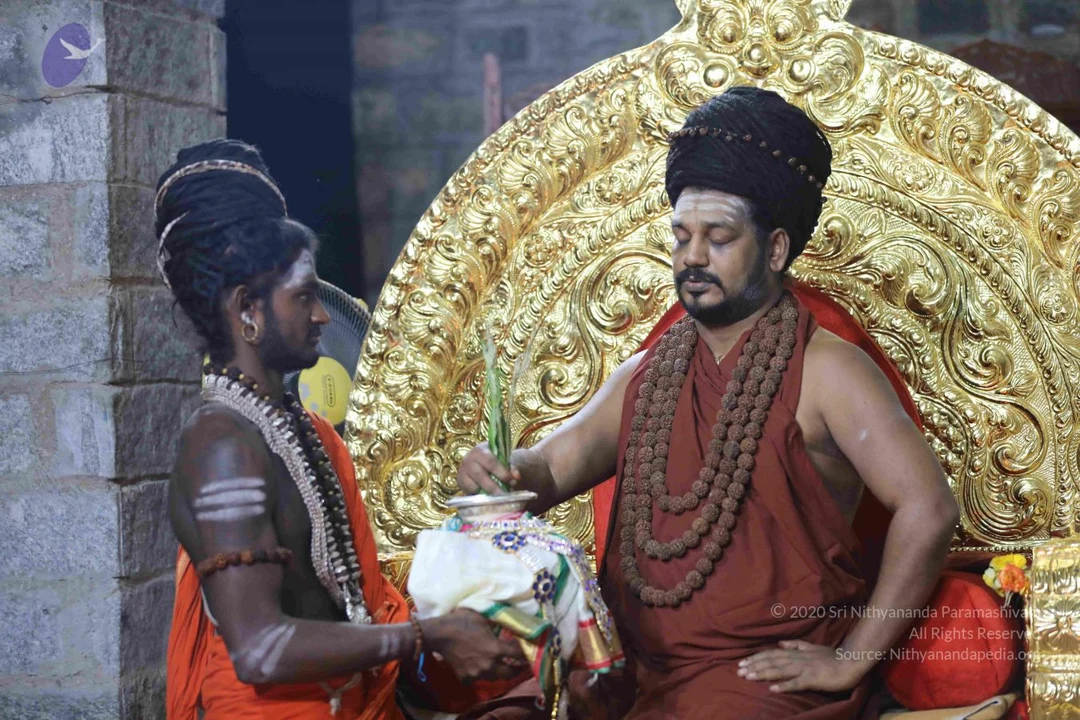
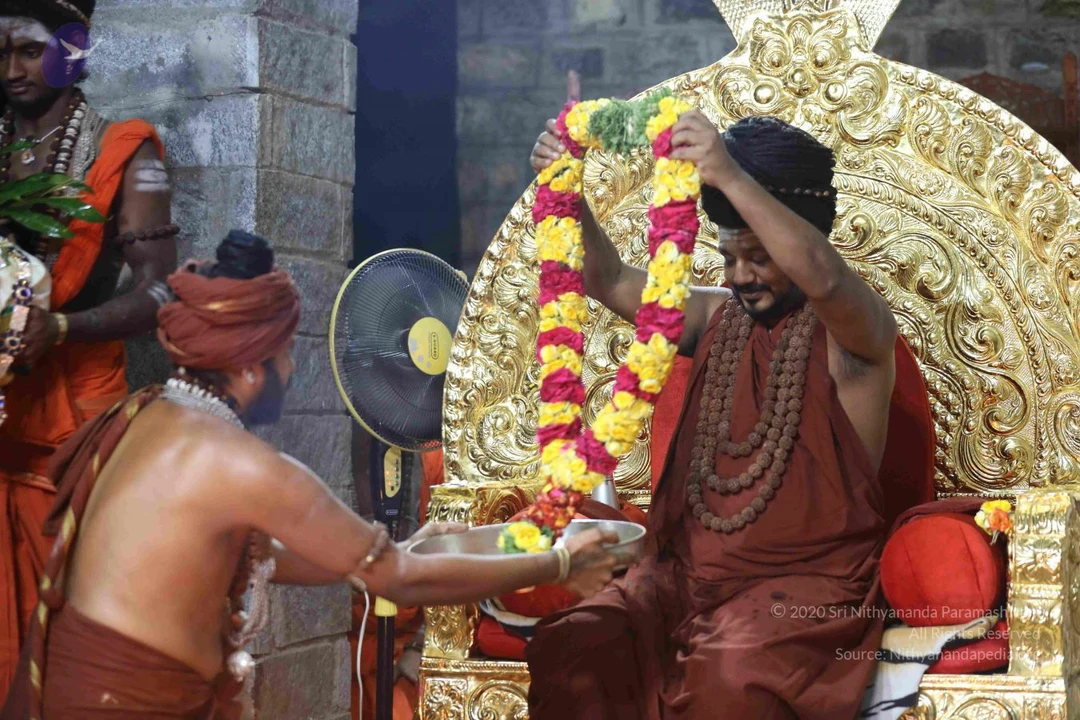
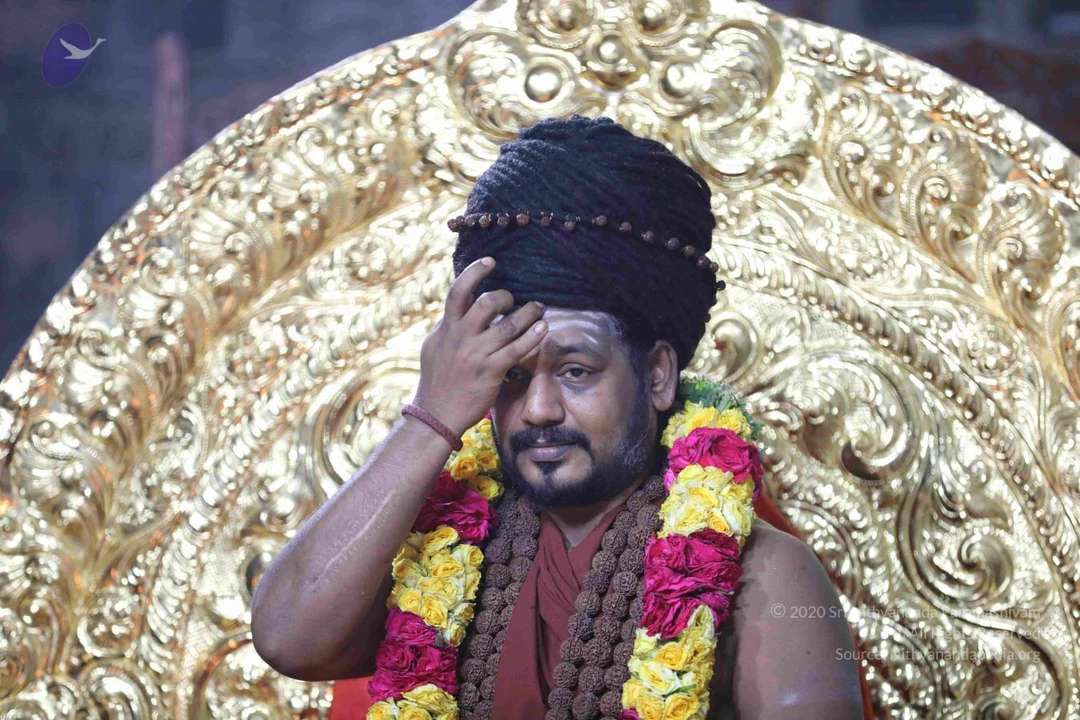
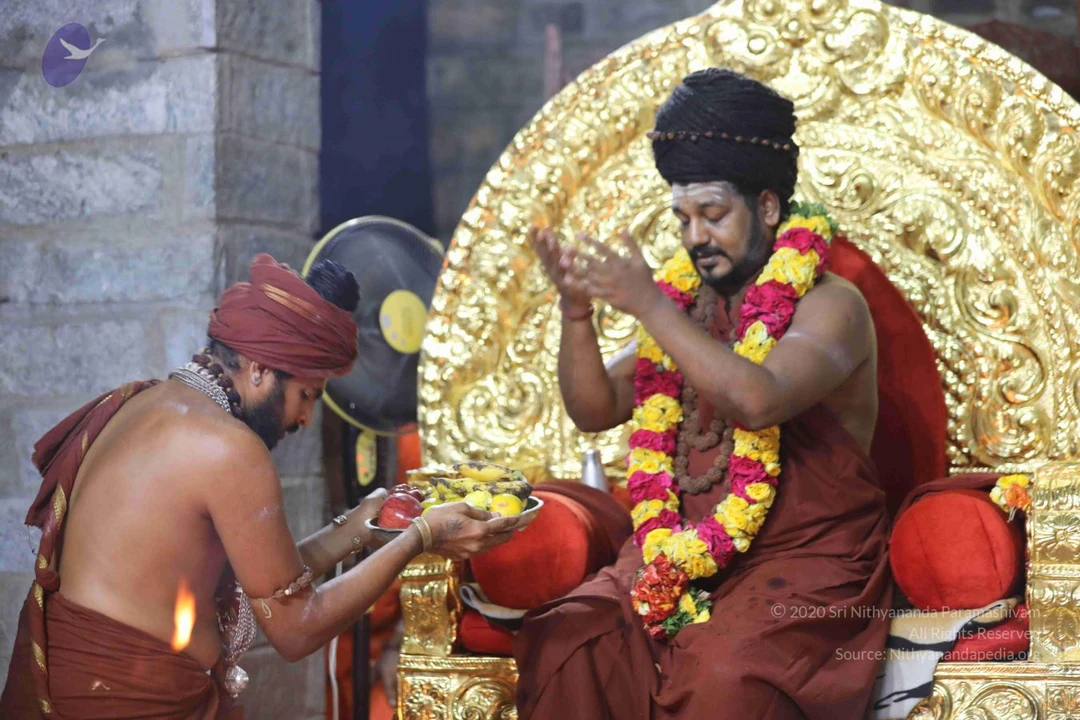
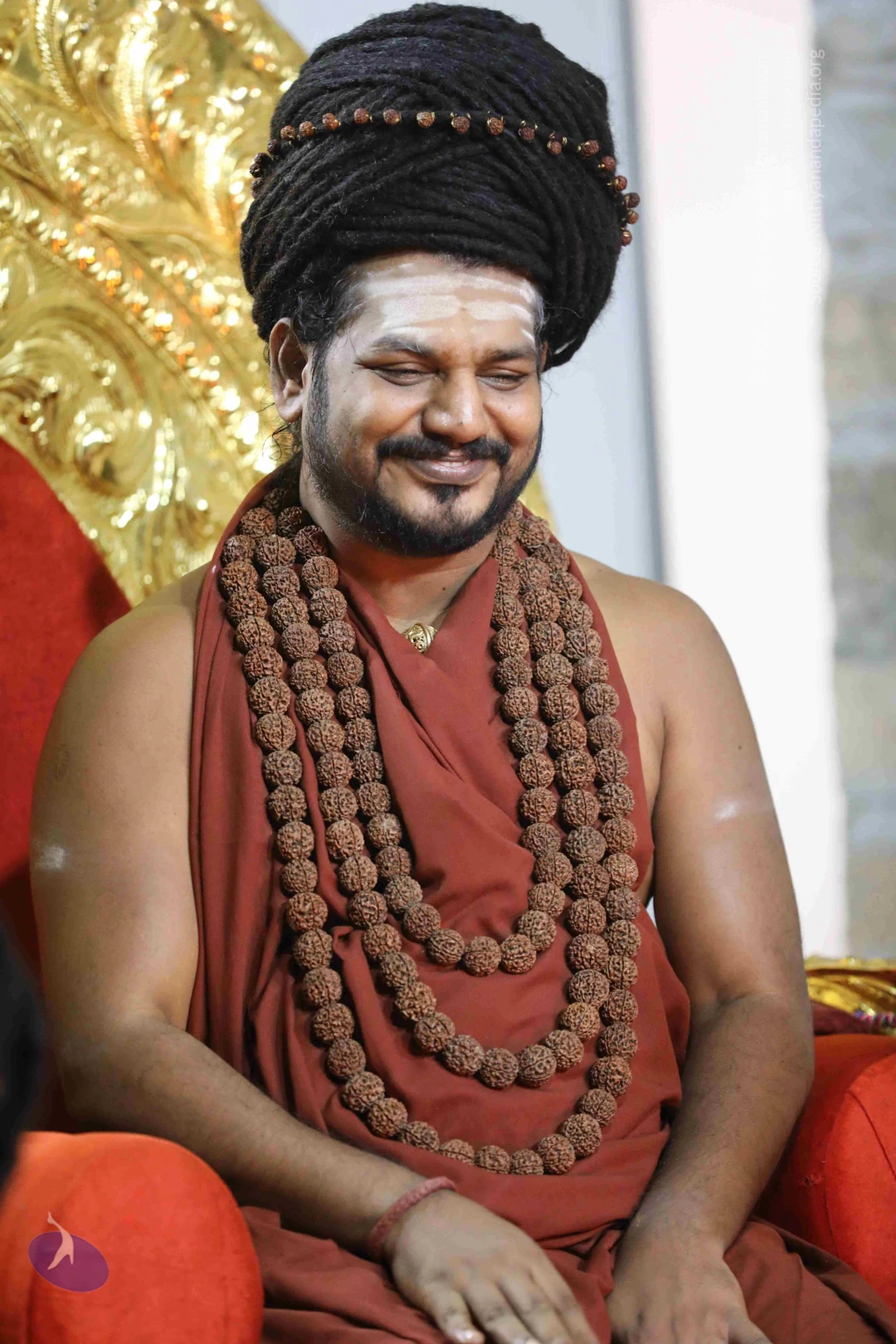
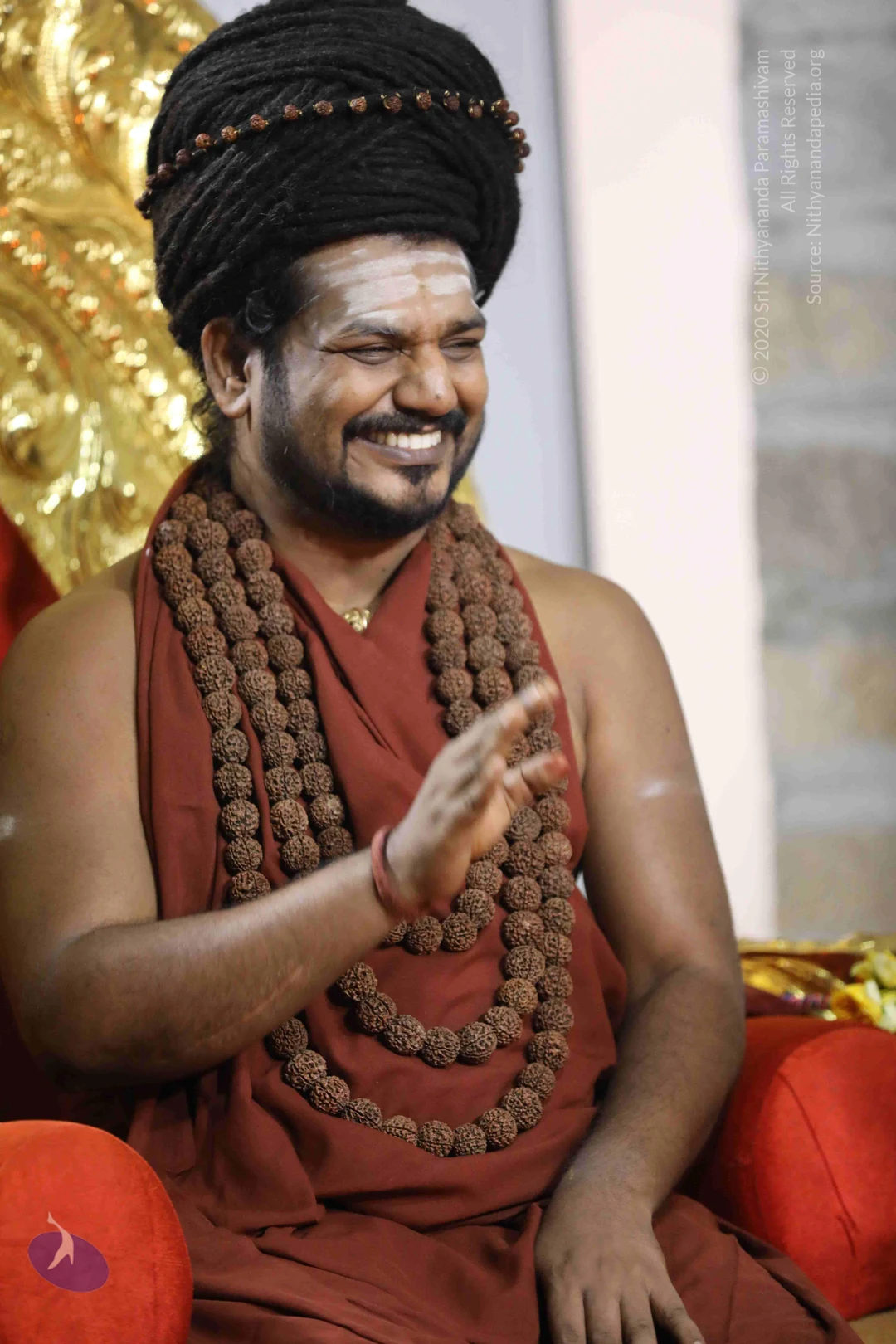
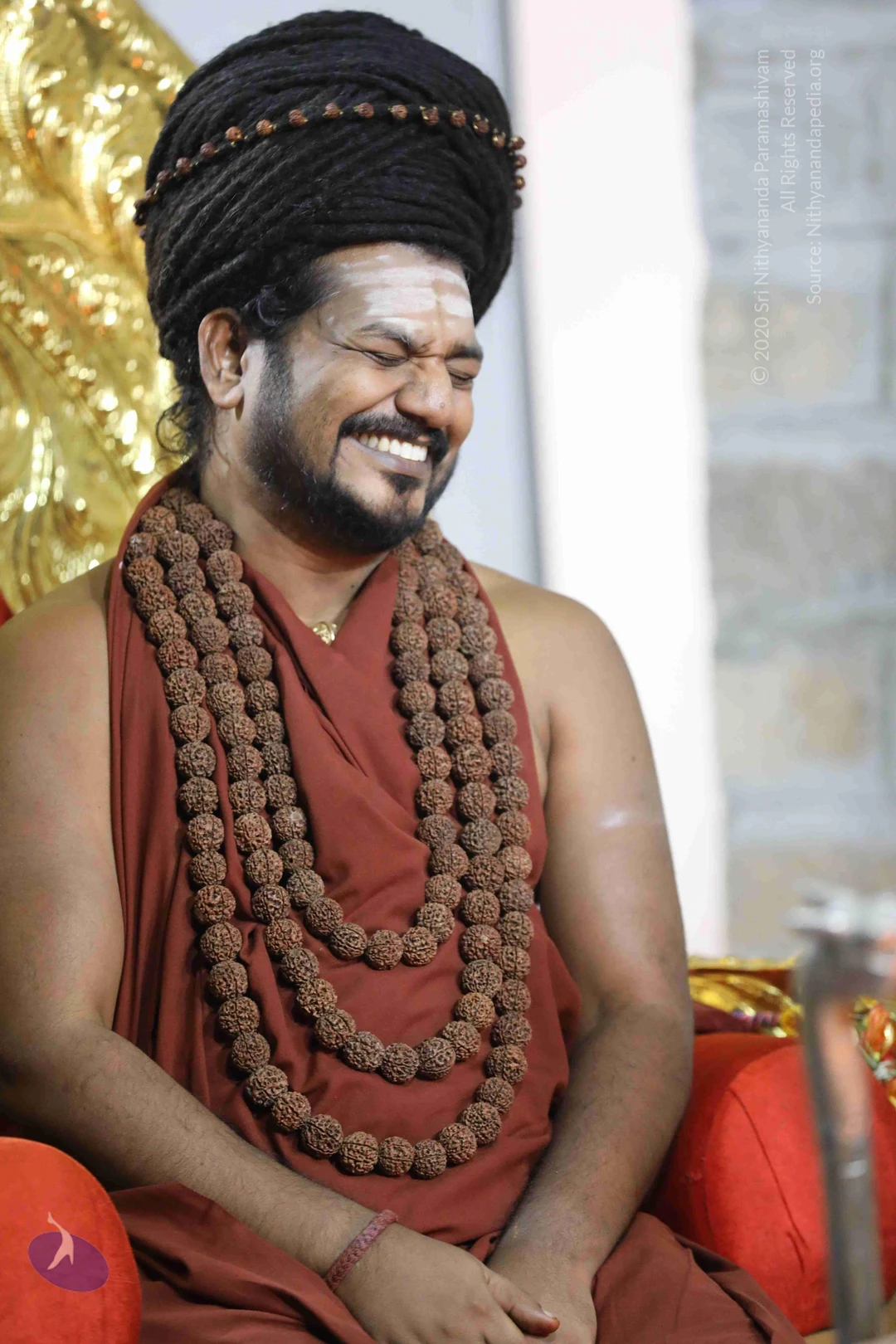
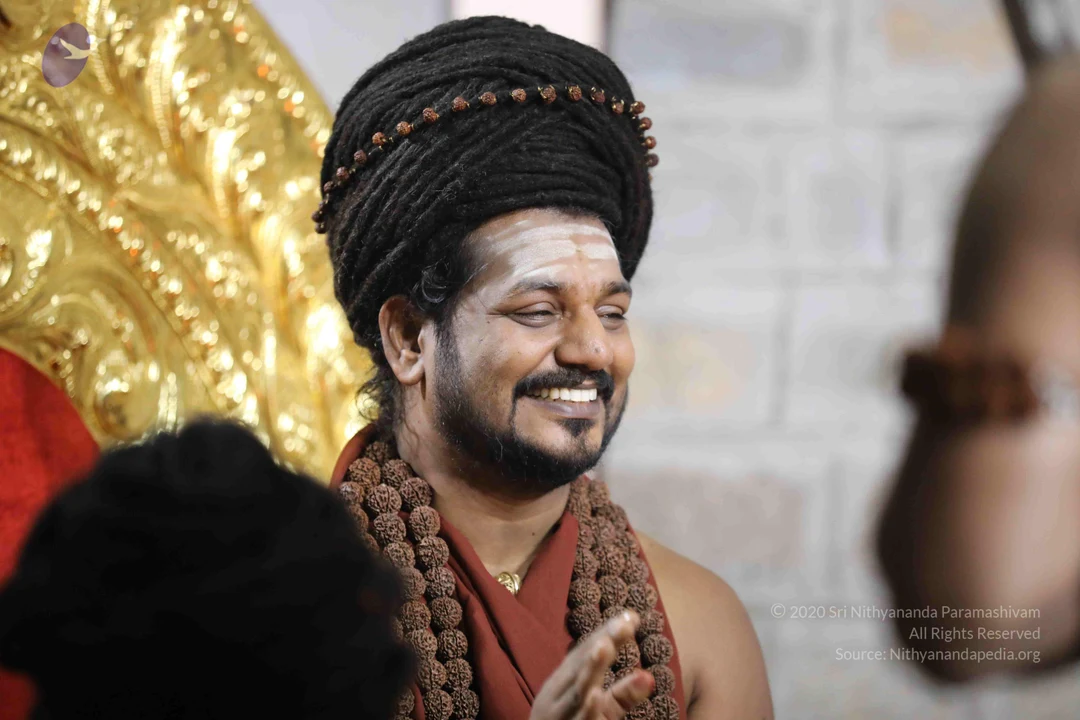
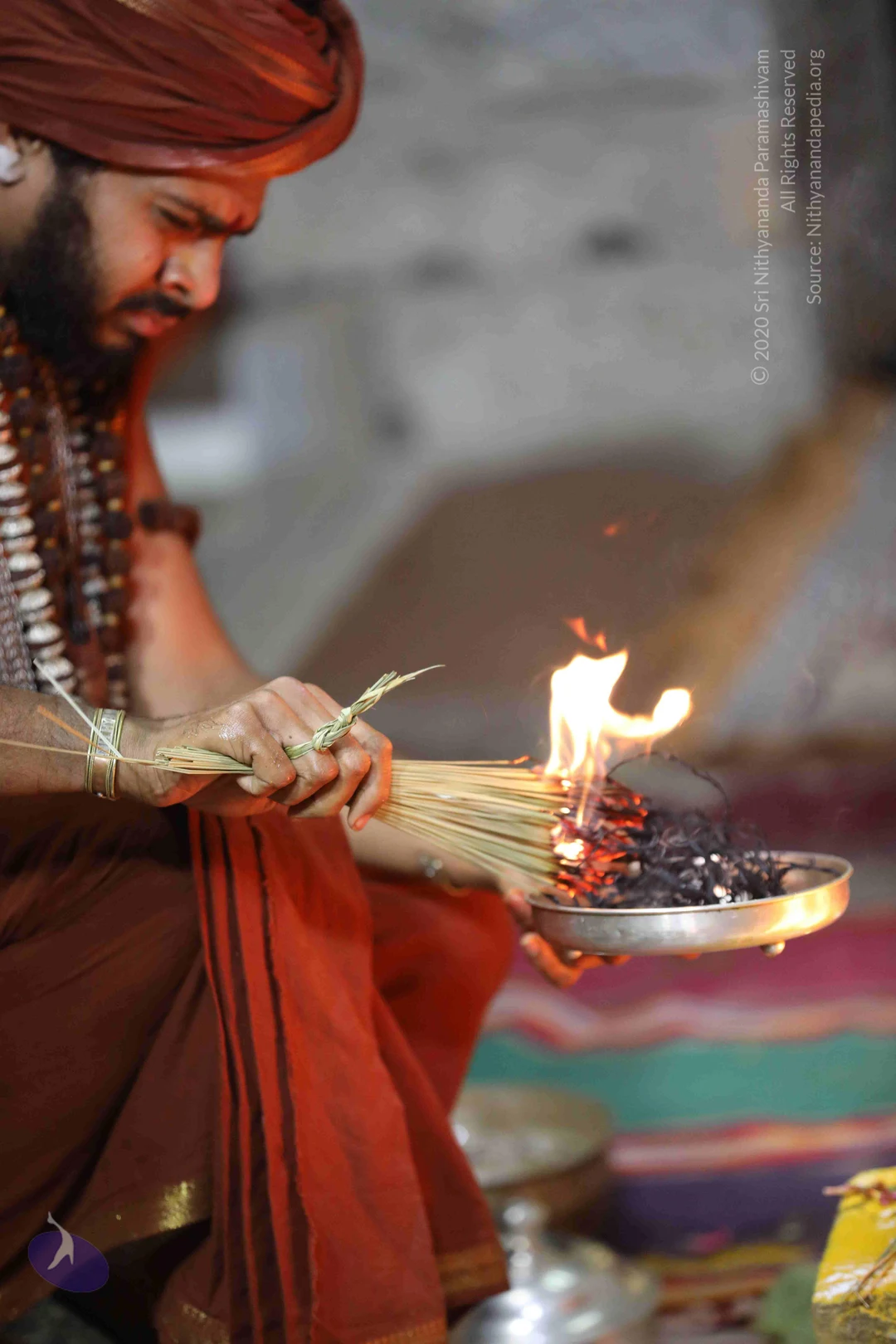
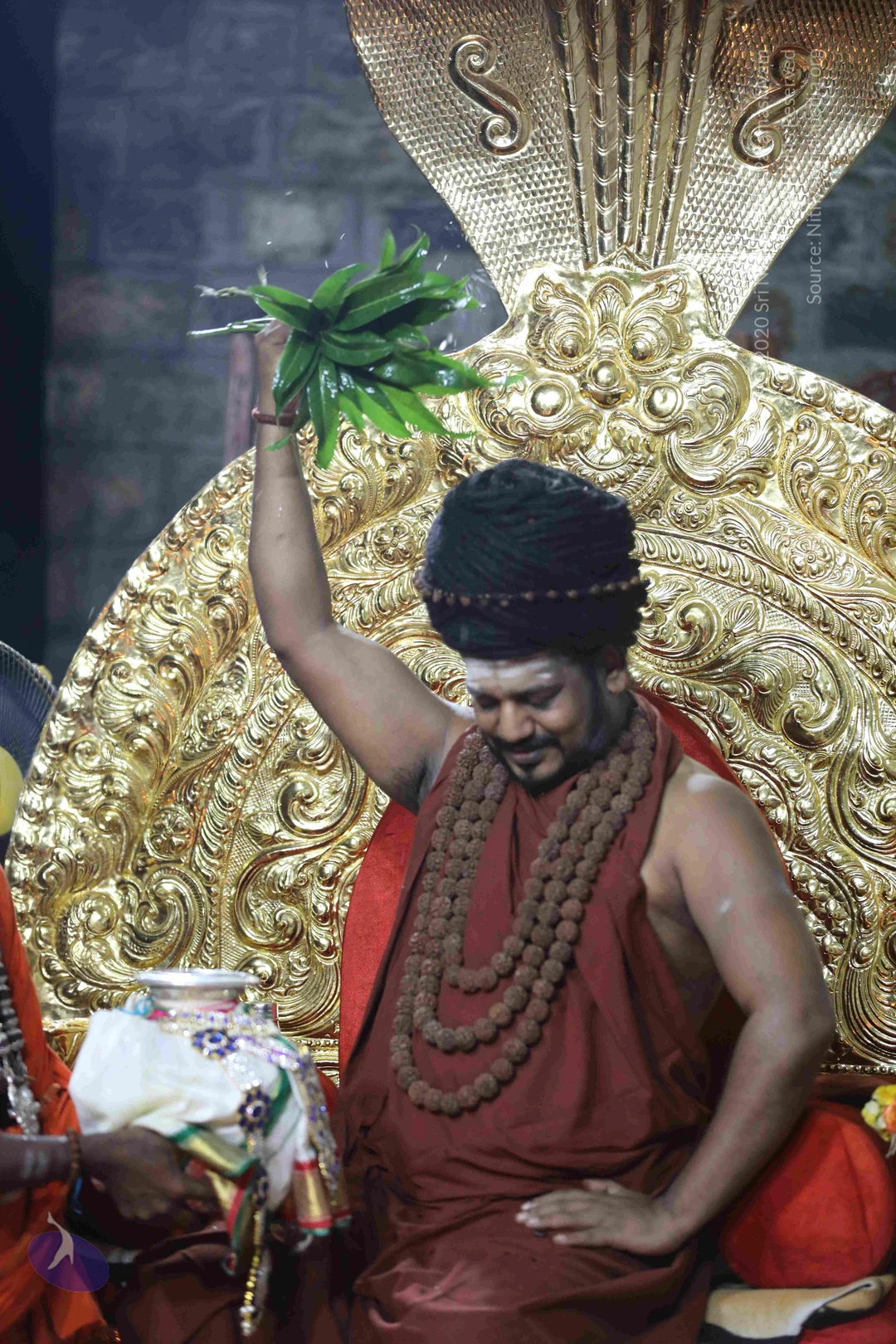
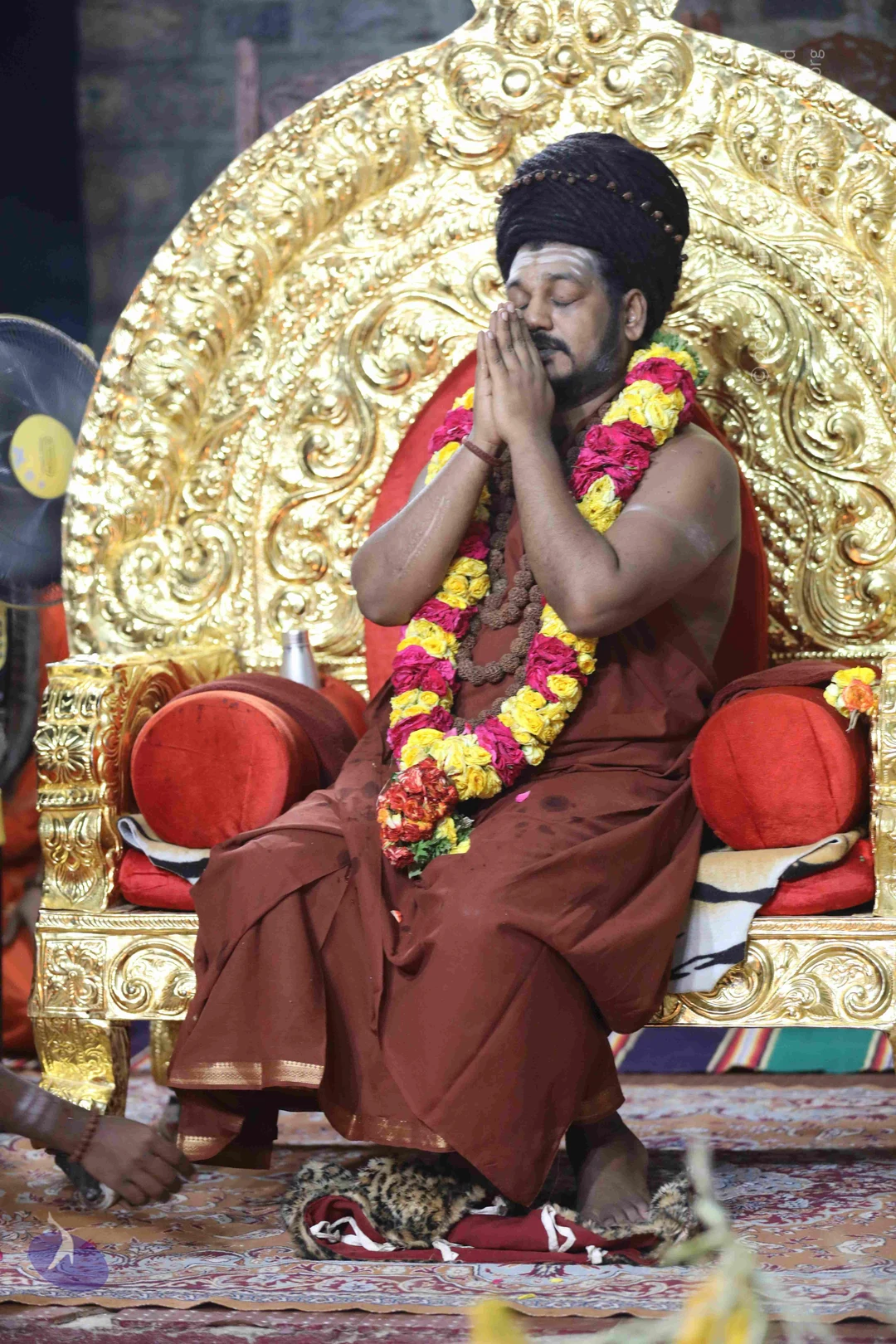
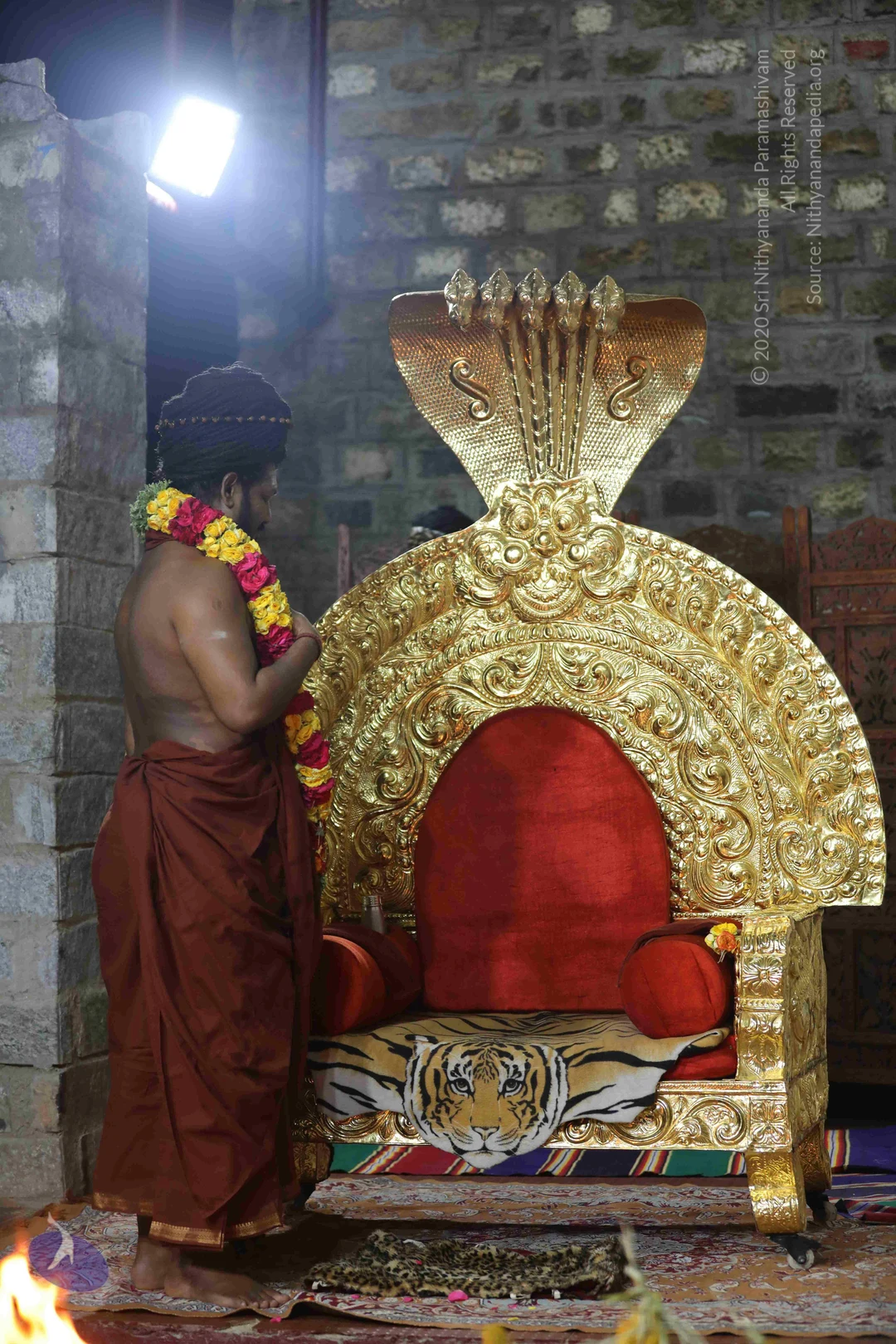
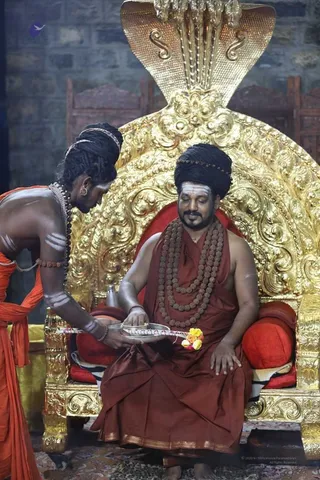
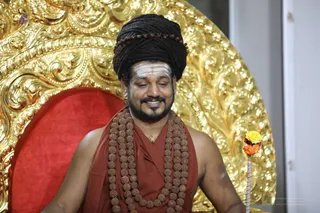
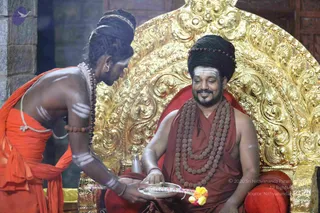
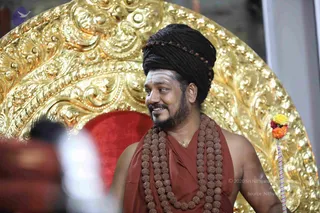
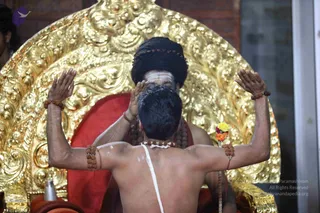
A photograph of a seated man in a golden throne with an ornate gilded backrest, wearing a dark turban, rust-red robe, and multiple tiers of brown rudraksha malas, with a tilak on his forehead. He smiles while a younger man in an orange cloth and white body markings stands beside him, holding a tray with flowers and a small bowl. A silver vessel sits on the red cushioned seat. The person on the throne shows distinctive visible cues of the Swamiji (probable) candidate: dark turban, rudraksha malas and ceremonial throne seating, with the attendant serving in a ritual role.A smiling man in a dark turban wrapped around long dark hair, with a row of rudraksha beads across the turban, stands before an ornate golden repoussé backrest on a red-cushioned seat. He wears a rust-orange sannyasi cloth draped over one shoulder, a long multi-strand rudraksha mala and a small gold pendant. He holds a staff decorated with orange and yellow flowers and a red bloom. Ceremonial setting with a blurred figure in the foreground. a person: long dark turban hair, rudraksha malas and an orange sannyasi cloth, seated before a golden throne.A photograph of a diksha initiation in progress. In the foreground, a bare-chested male devotee with a white sacred thread over his shoulder and rudraksha bracelets on his arms stands with both hands raised in front of him, palms open, facing a seated figure. The seated figure wears a dark turban-style headwrap, has a white tilak mark on the forehead, and sits on a red cushioned throne with an ornate gold-leaf back. A garland of rudraksha beads and a flower-decorated kalasha-like object appear beside the throne. The setting is a ceremonial hall with a glass door at right.A seated man in a golden ornate throne with an arched carved backrest wears a tall dark turban-like headwrap, a rudraksha mala across his chest, a red-orange shawl over his body, and a small floral garland tied to his arm; he smiles broadly with white sacred markings on his forehead. In front of him a bare-chested man in a white dhoti with rudraksha beads on his arms and neck faces away from the camera, his hands raised in an offering gesture, while several hands from the side hold up white paper slips toward the seated figure. The scene suggests a initiation ritual in a temple-like hall with carved wooden panels behind.A photograph of a homa fire ritual in progress. A bare-chested man with a rust-red turban, rudraksha mala and a silver chain sits at a yellow-plastered brick fire pit, reaching a hand toward the flames while a brass bowl and ladle rest beside it. Fresh marigold and pink flower garlands, white-clad priests stand behind, and small oil lamps sit on the floor. a person cues: a rust turban and rudraksha necklace, though the face is partly turned and the appearance is not certain enough to confirm identity.Close-up photograph of a smiling man seated in front of an ornate gold repoussé backdrop with a red cushioned seat. He wears a tall black turban-style crown of wrapped hair, a rudraksha mala crown band, a long rudraksha mala necklace over a rust-red robe, and a small gold pendant. White vertical tilak marks the forehead. Swamiji (probable) is the appearance-based candidate, with the turban, rudraksha malas and red robe as cues, seated on a golden throne-style setting during Vishesha Deeksha initiation at the Bengaluru Aadheenam.
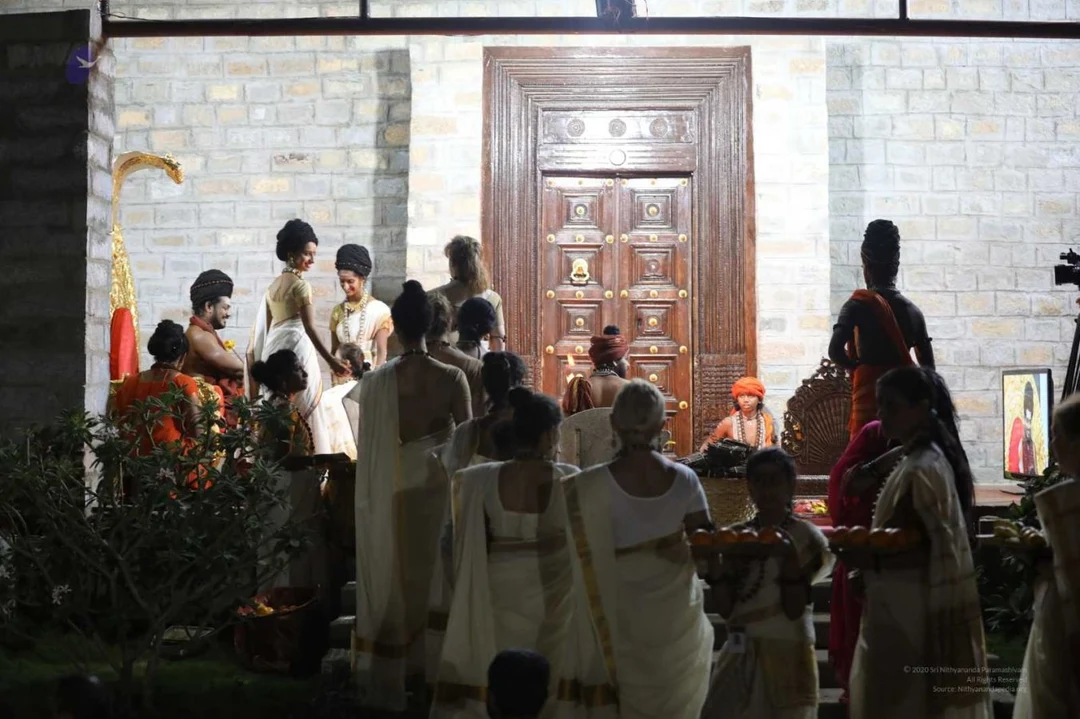
01-VISHESHA-DEEKSHA-INITIATION

7 photosSource gallery
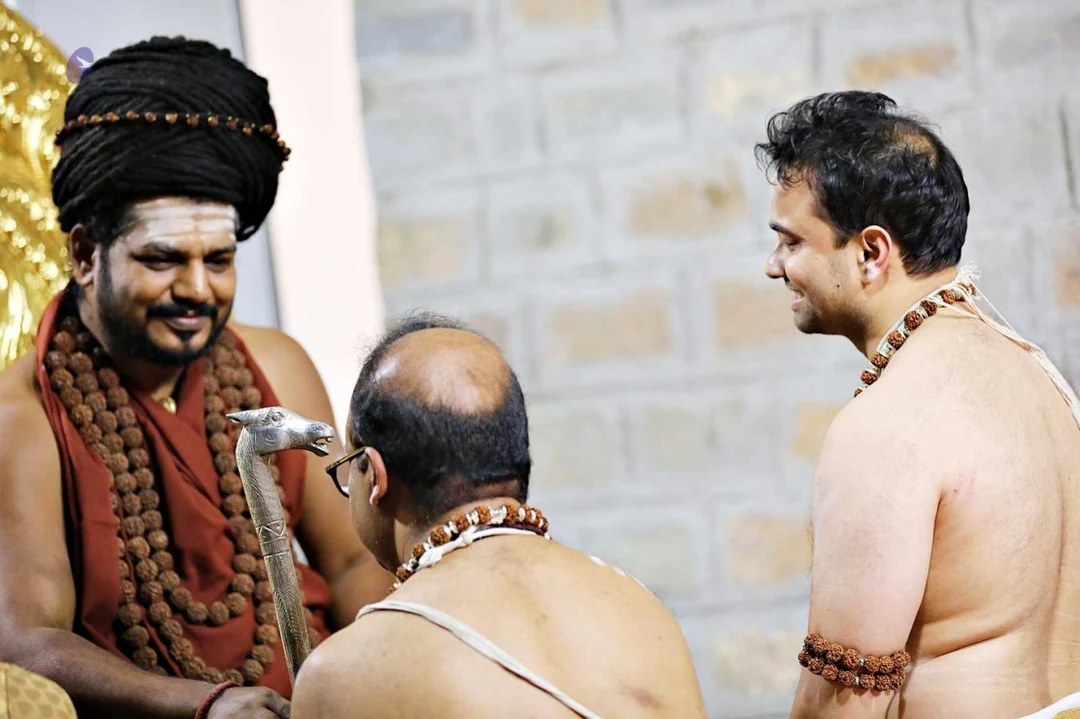
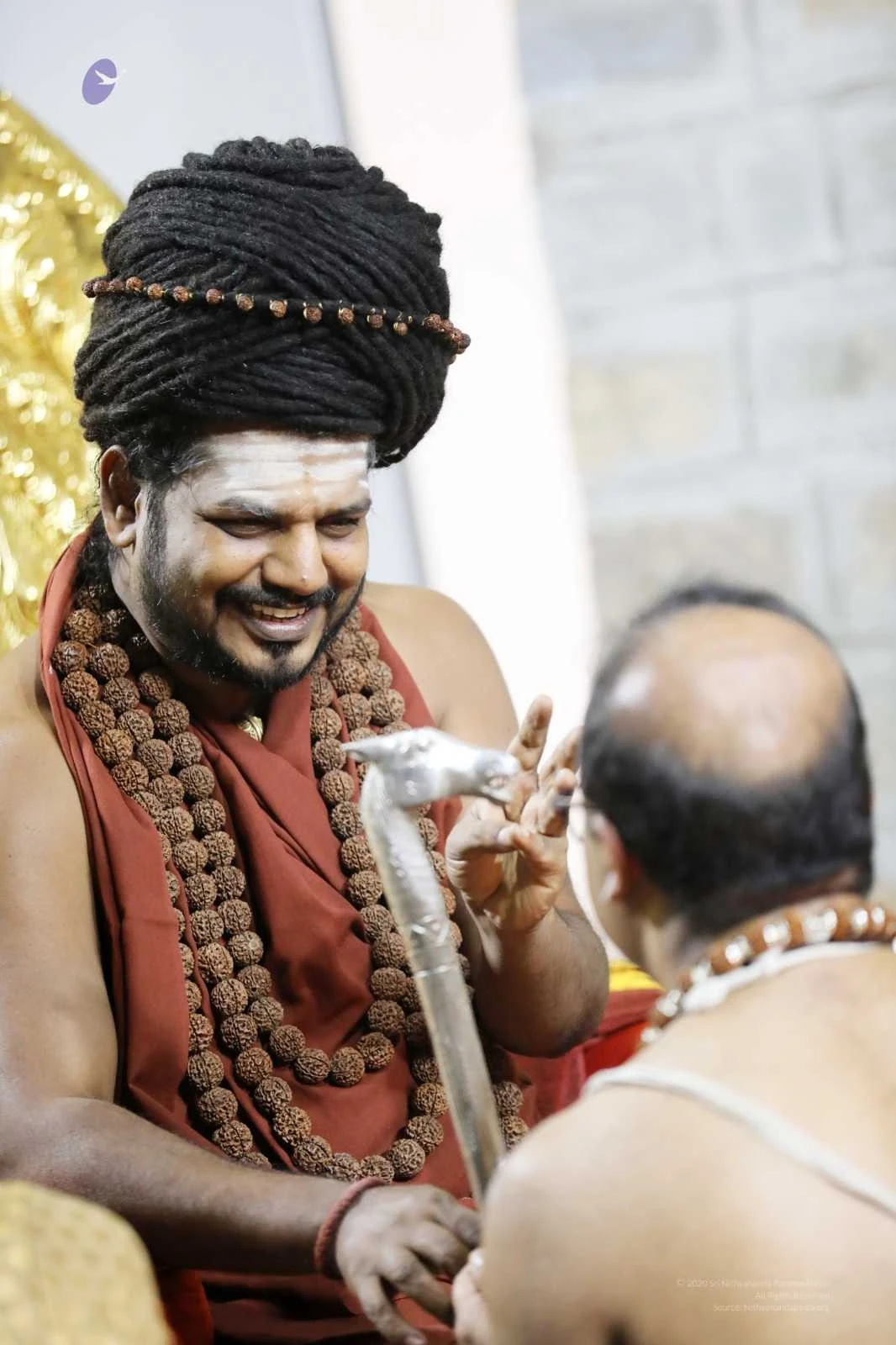
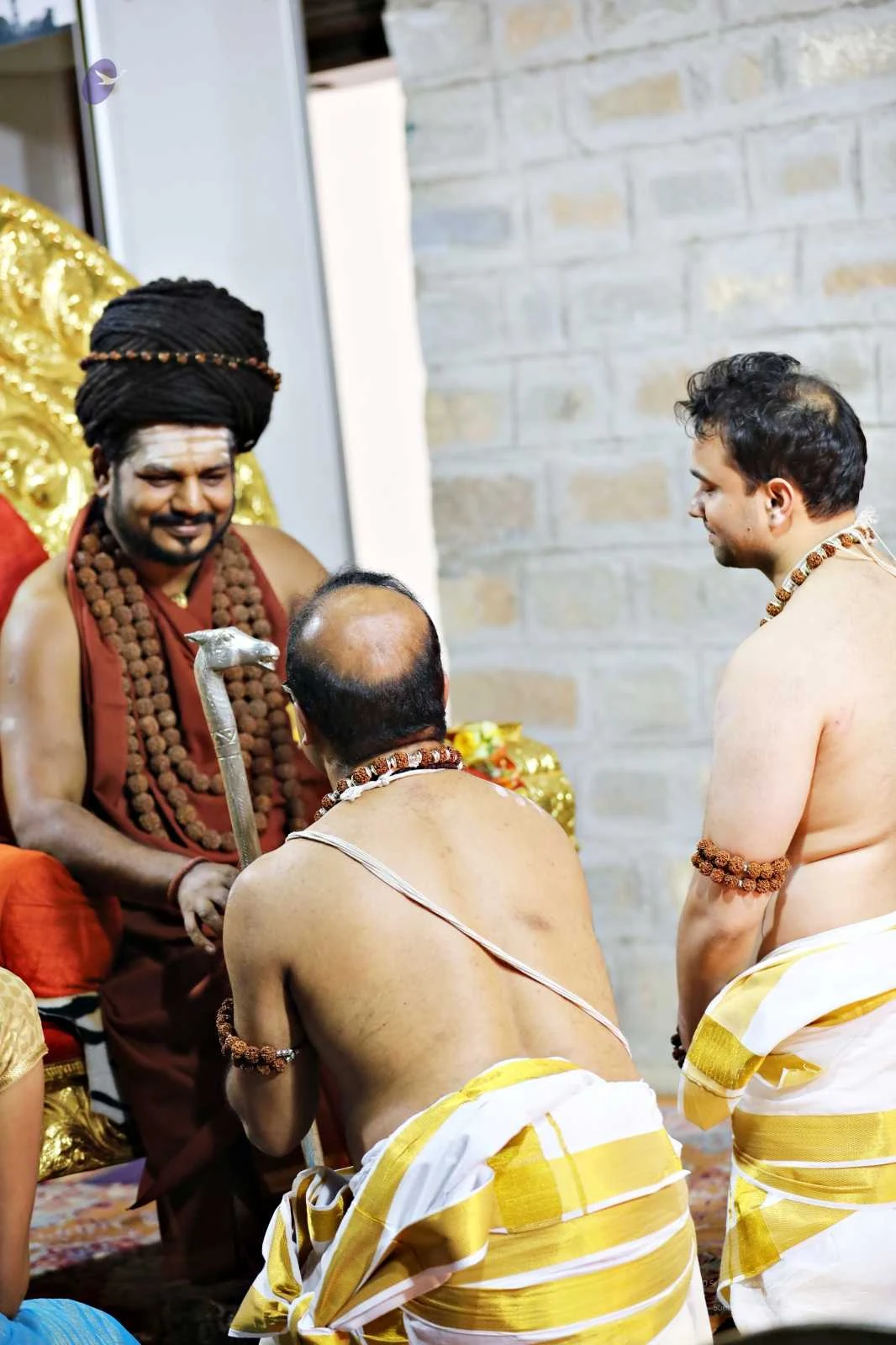
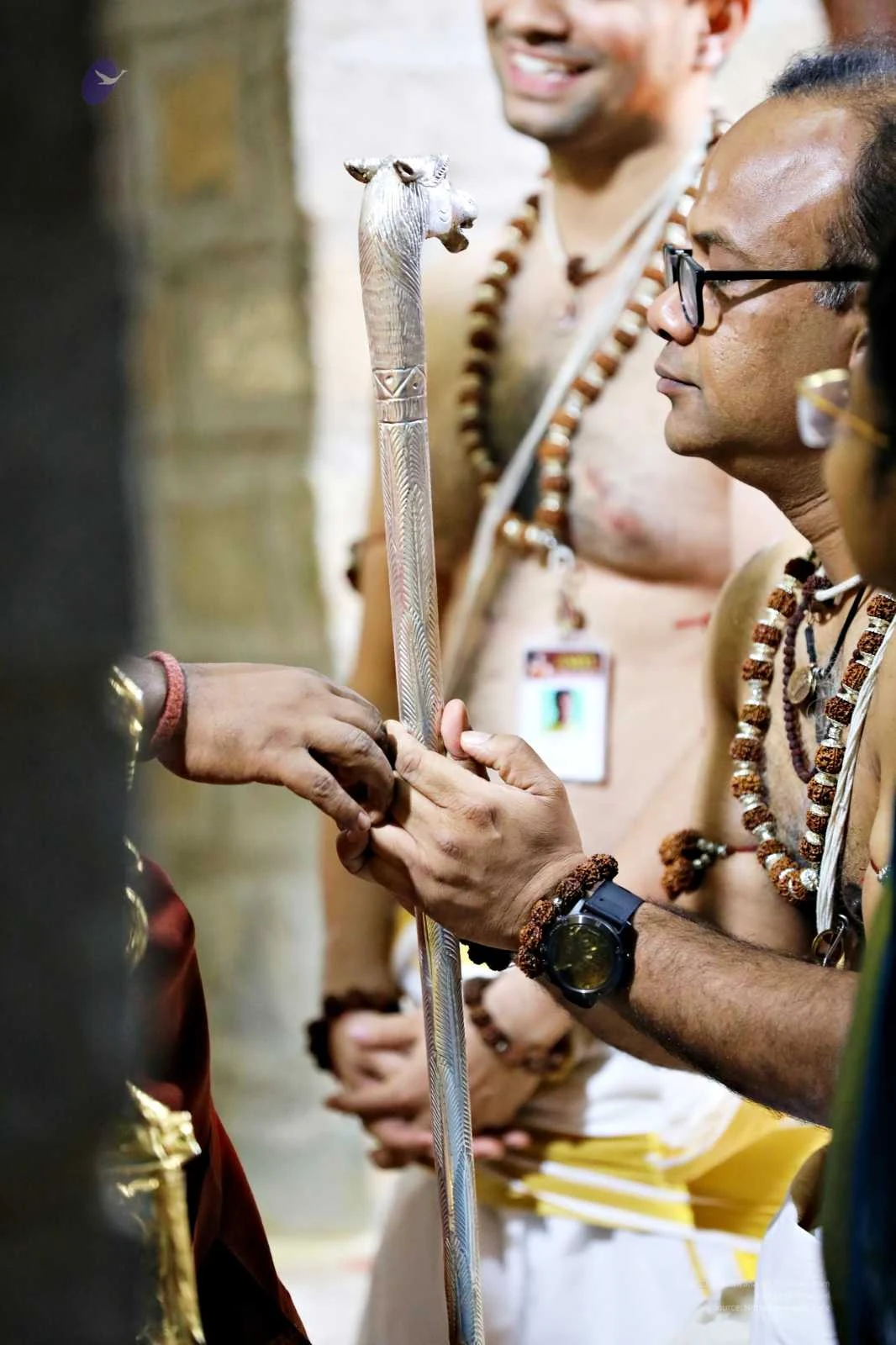
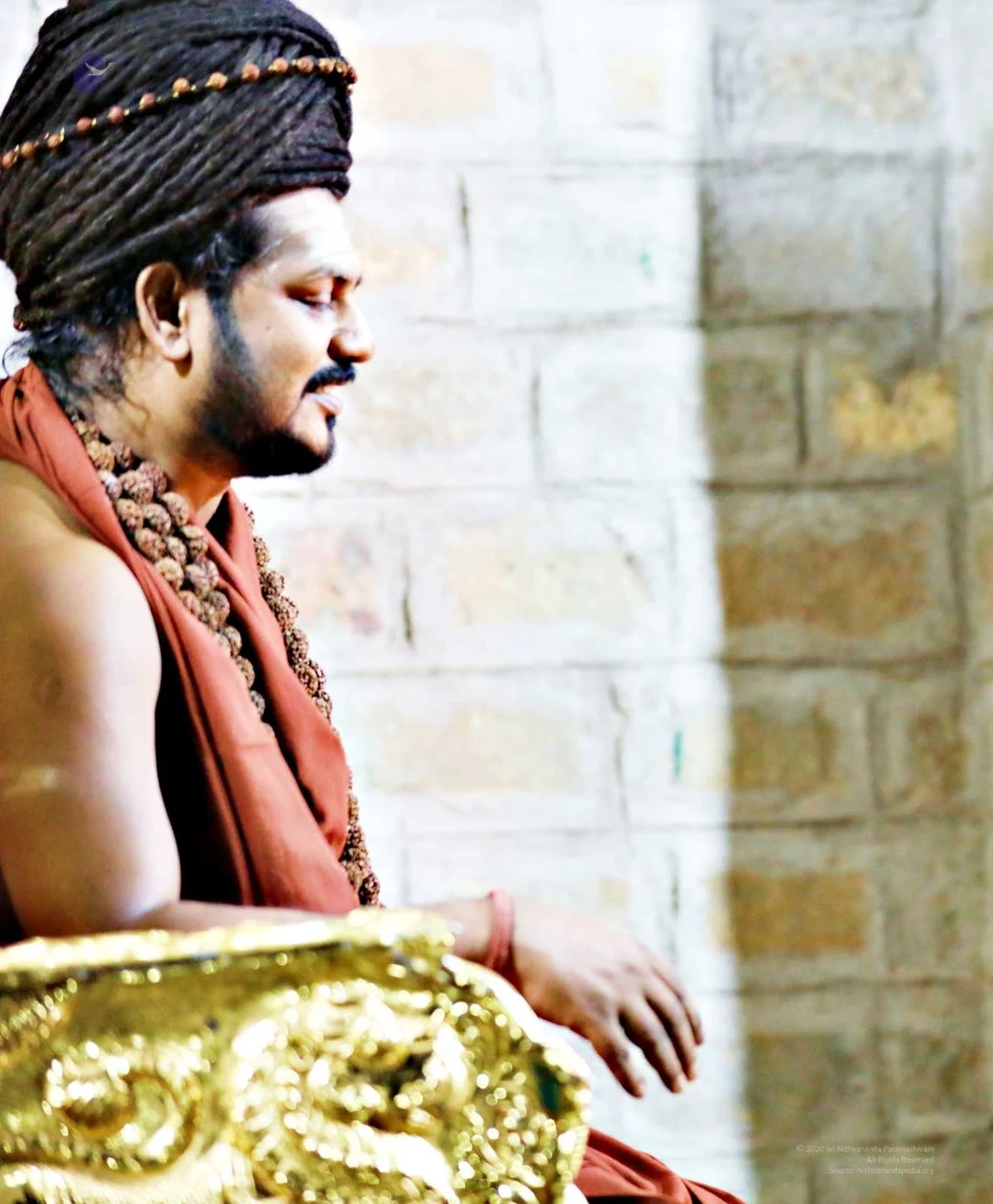
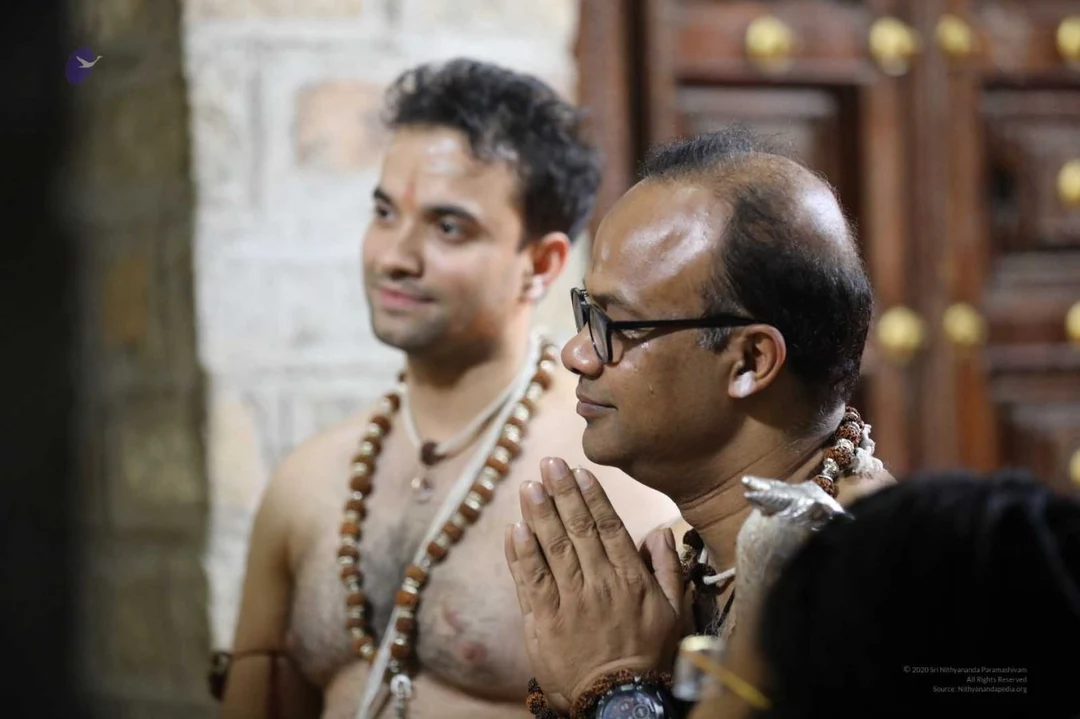
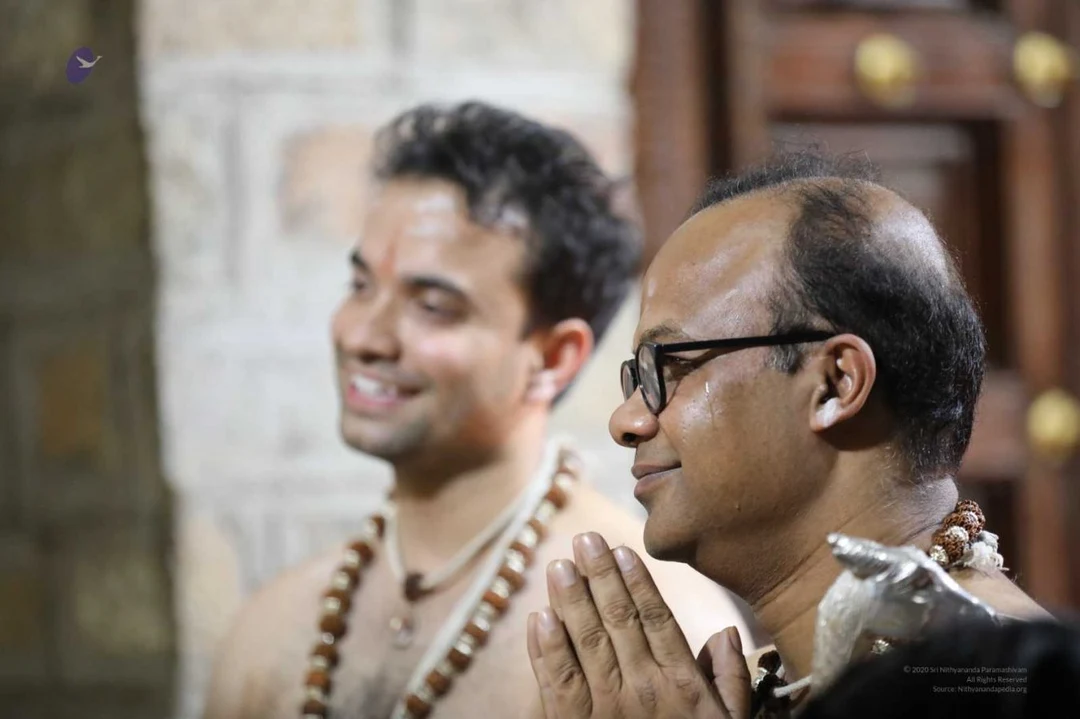
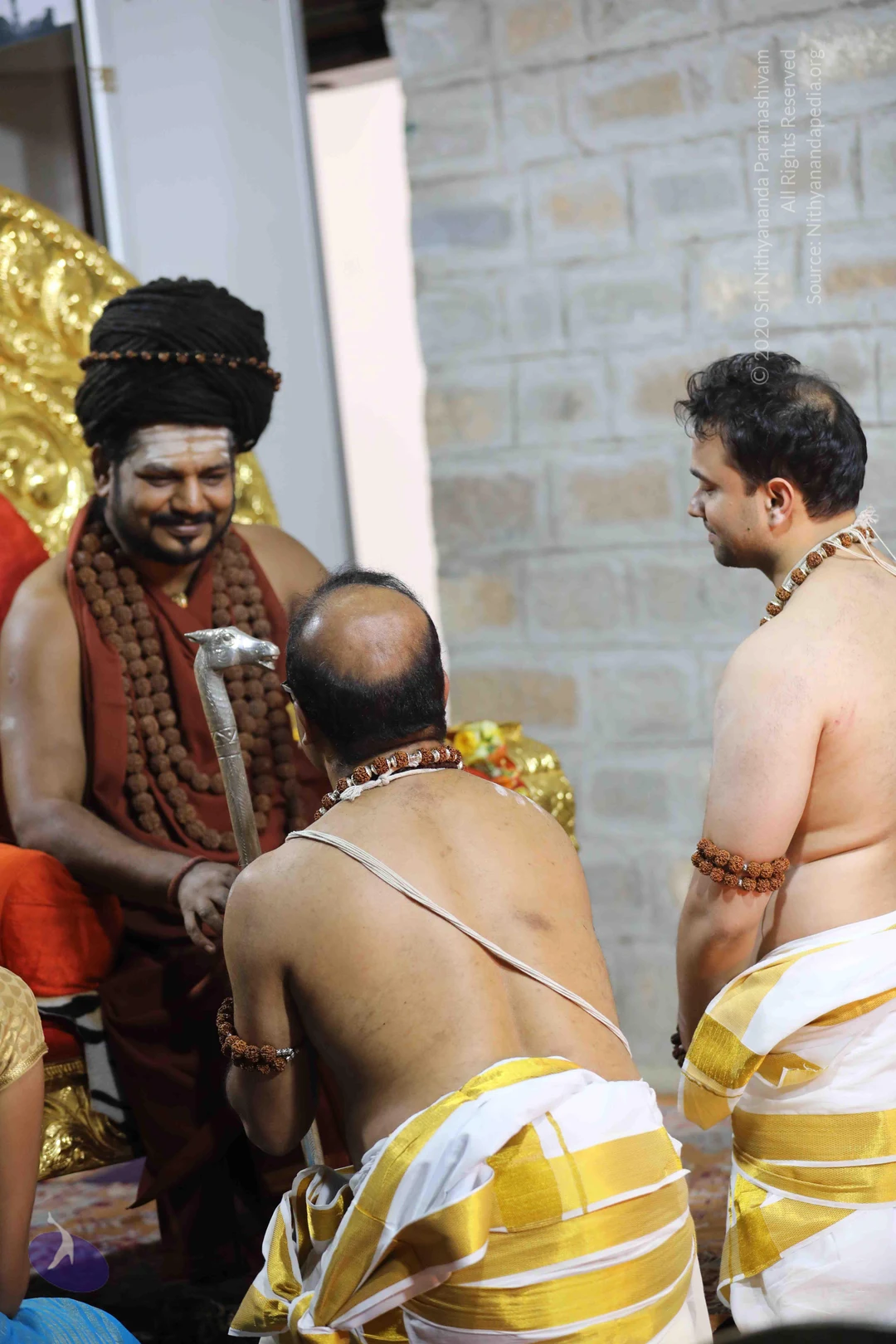
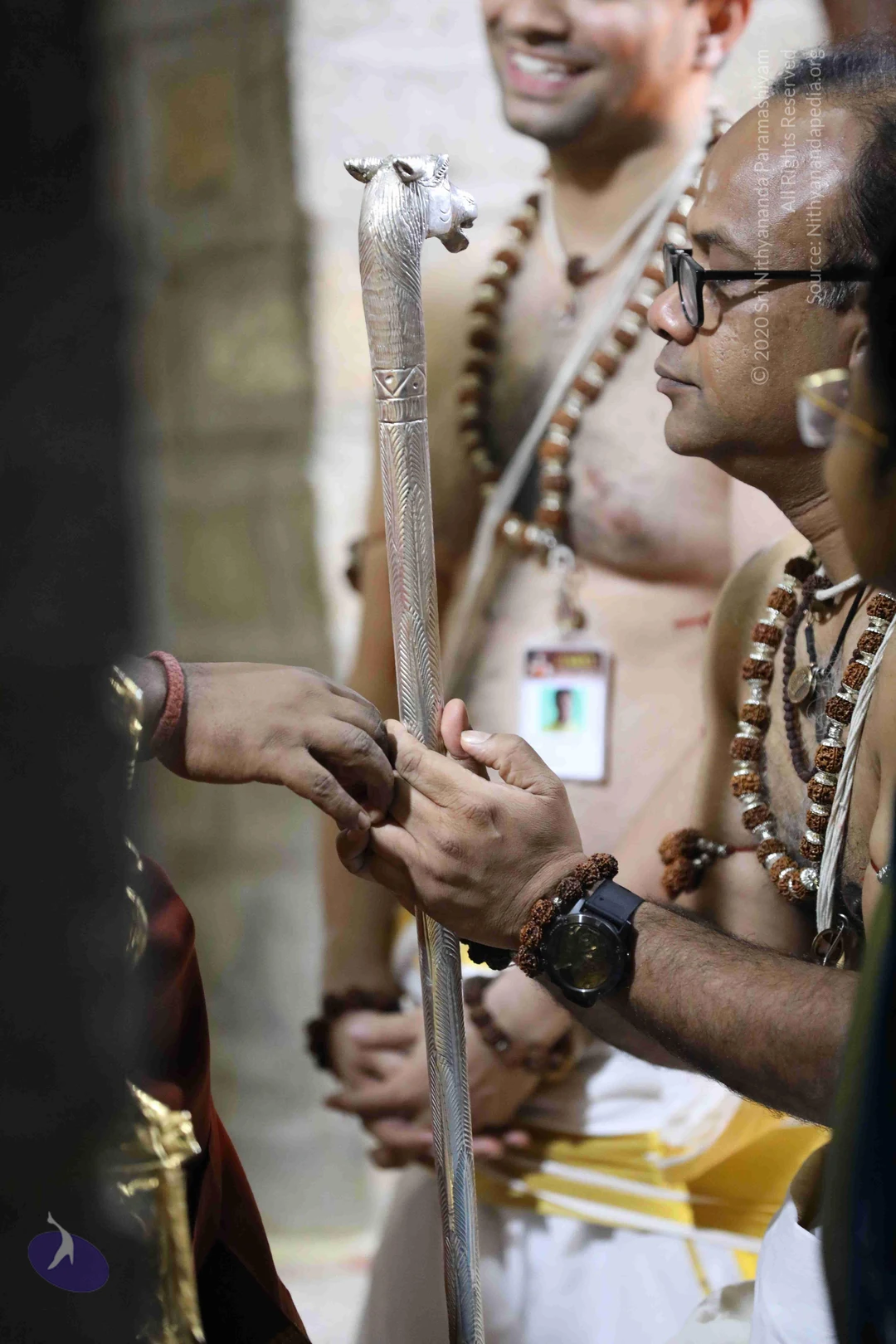
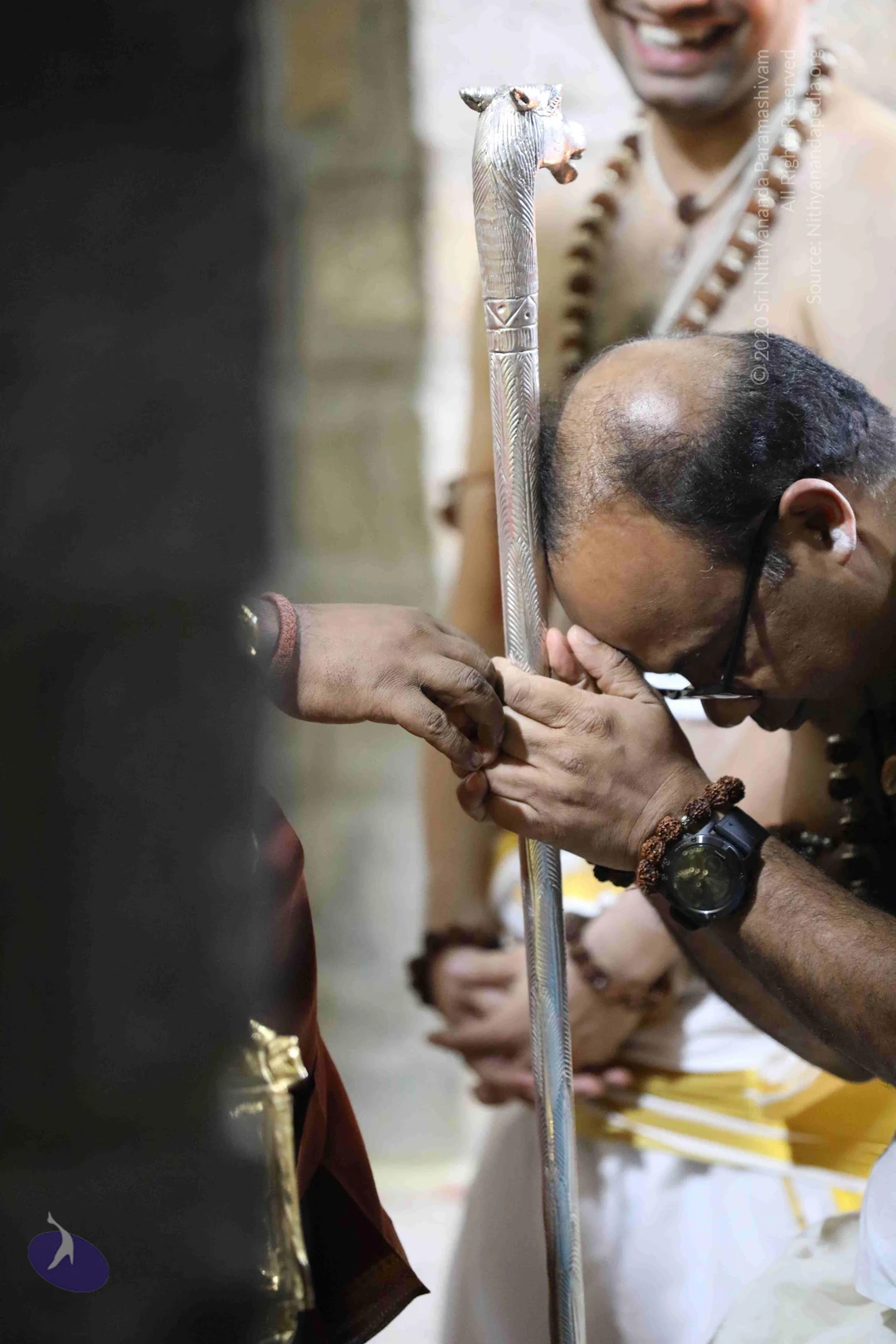
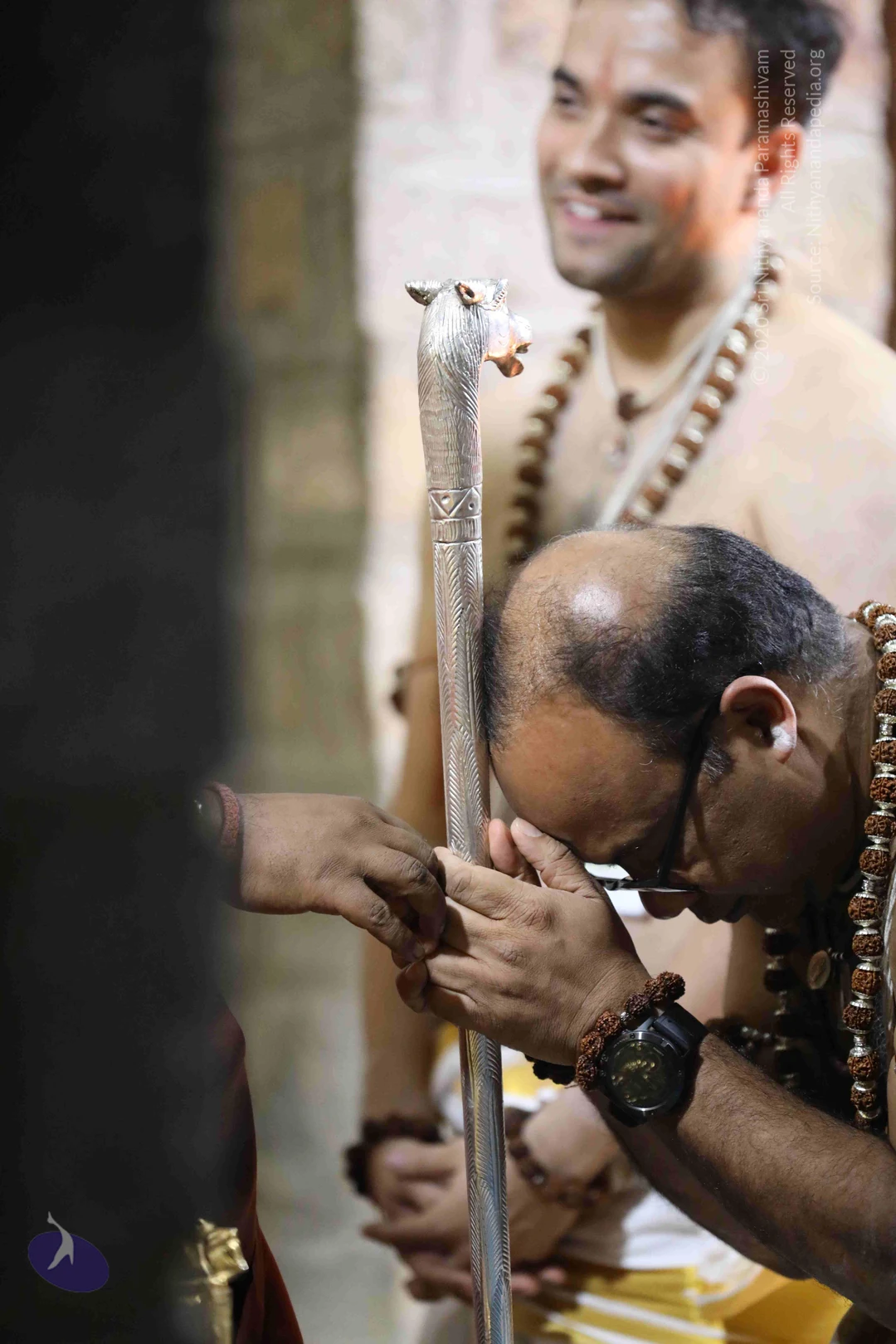
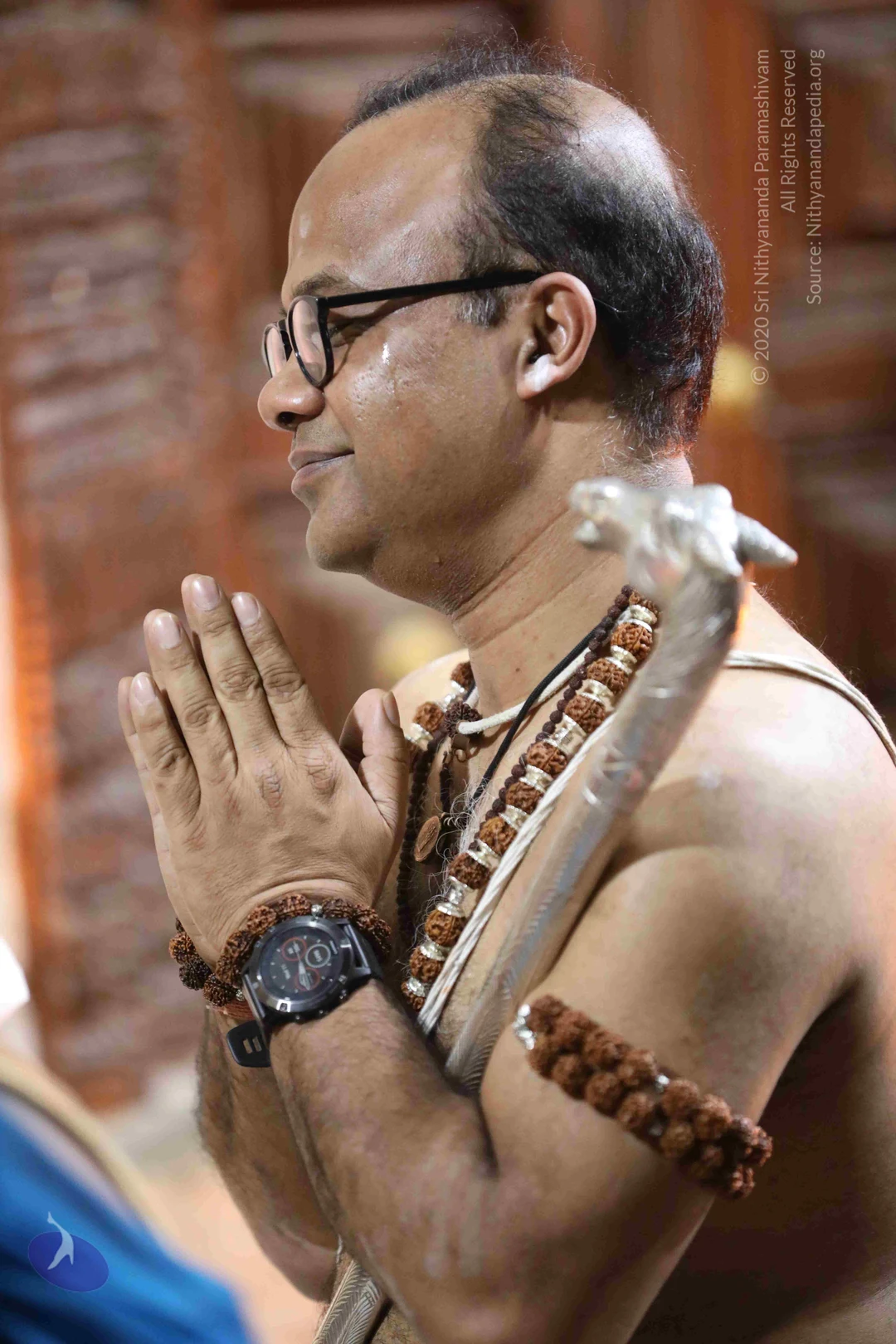
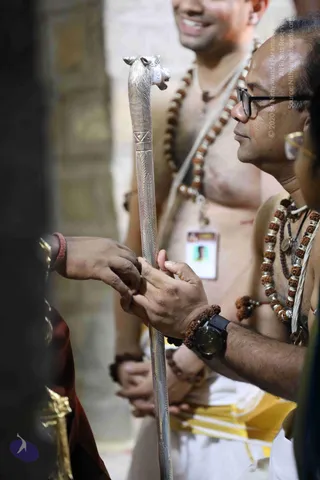
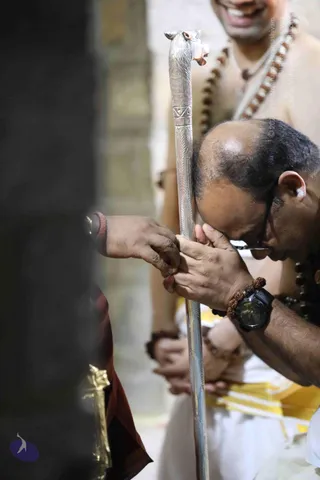
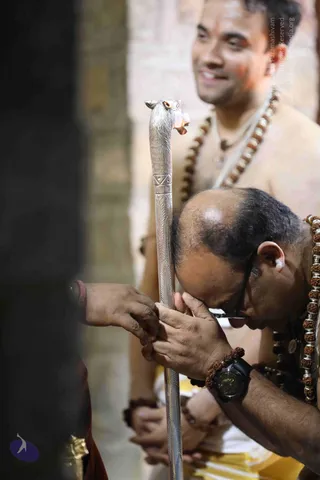
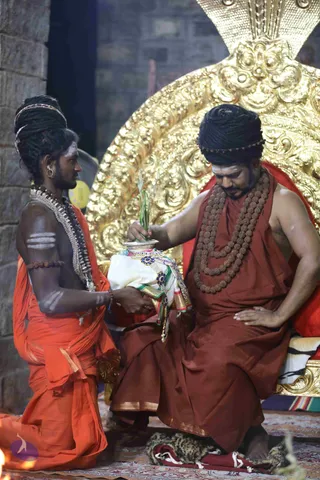
Photograph of a seated man with a tall black matted topknot wrapped with a rudraksha band, white vertical tilak on forehead, and a rust-red shawl over bare shoulders, wearing a dense multi-strand rudraksha mala and smiling while holding a silver staff with a bird-head finial. Facing him, a bald man with his back to the camera, bare-chested with a white sacred thread and rudraksha beads, receives the staff. Gold drapery sits at the left edge; a grey stone wall fills the background. Appearance-based cues (matted topknot, rudraksha malas, rust-red shawl) of a person in an initiation scene; a printed copyright line runs vertically along the right edge.Photo of a seated figure with long dark hair wrapped in a large turban-like bun, a rudraksha band on the head, and layered rudraksha malas over a rust-red sleeveless garment, smiling while a bald man in white dhoti with gold borders kneels with his back to the camera holding a silver staff topped with a serpent head. A bare-chested man in a white and gold dhoti stands at right, wearing rudraksha bands on the arm and neck. A gold-embroidered throne and a brick wall form the background. The seated figure has distinctive long swept-back hair, rudraksha malas and saffron-toned clothing, consistent with the page's a person reference, though the appearance is only partly visible. Three physical people are visible.Close photograph of a ceremonial silver staff with a carved animal-headed top being passed between hands. A man in the right foreground wears black-rimmed glasses, a watch, and multiple rudraksha bead necklaces and bracelets over a bare chest. Behind him a shirtless man with rudraksha malas and an ID badge on a lanyard smiles, and another man in white dhoti with a yellow border stands in the background. A dark-clothed arm is visible at the left edge. The setting appears to be a stone-walled ritual space. Three people are visible in the scene.A photograph of a devotee bowing with his forehead pressed to a tall silver staff topped with an ornate carved head, held by a hand from the left. The bowing man is bald on top, wears dark-rimmed glasses, a black wristwatch and rudraksha bracelets, and has rudraksha mala beads around his neck. Behind him a standing person in white ritual clothing with a yellow-bordered dhoti and rudraksha malas smiles. The left edge shows a dark-red garment with a gold trim. The setting looks like a temple or ashram hall with a plain stone wall.Photograph of a devotee bowing forward, pressing his forehead to a polished silver staff topped with a carved serpent-head finial, while another person's hands hold the staff steady. The bowing man wears a rudraksha mala and a wristwatch, with bare, shaved-looking scalp and dark-rimmed glasses. Behind him a smiling man in a light saffron-toned unstitched garment and layered rudraksha malas stands near a stone pillar, with a faint red-orange tilak mark on his forehead. A man's arm in a dark garment with a red thread on the wrist appears at the left edge, and yellow-bordered white cloth is visible at the bottom. Appears to be a ritual veneration moment during an initiation setting.A photograph of a seated figure in a deep maroon robe and a long rudraksha mala on the chest and a rudraksha headband, receiving a kalasha from a kneeling young man in saffron-orange cloth with a white-painted forearm mark and a silver necklace. The kalasha is a silver pot wrapped in white cloth with coloured borders and a green leaf sprig, held by the kneeling man and touched by the seated figure. Behind them is an ornate gold throne with carved floral scrollwork, against a stone wall; a leopard-skin mat lies on the floor. Two people are visible. The seated figure's identity is not established from appearance, and the page's a person flag is not used to identify him.