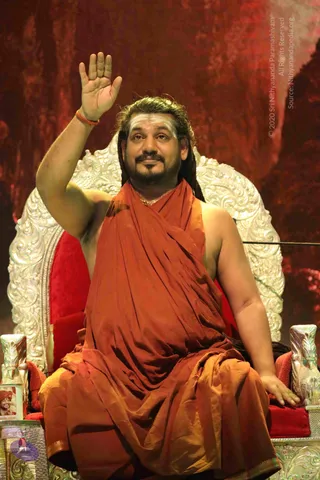
Skip to content
Thursday

12 April 2018

Maheshwara Puja -Blessings to Ancestors || Inauguration of Nithyanandeshwara Sadashiva Devasthanam and Sadashiva Mandapam || Rituals - Mahaganapati Homa, Navagraha Homa and Lakshmi Homa || Day 12 of Mahasadashivohum ||

Dated photos
48
Source pages
1
Media
1
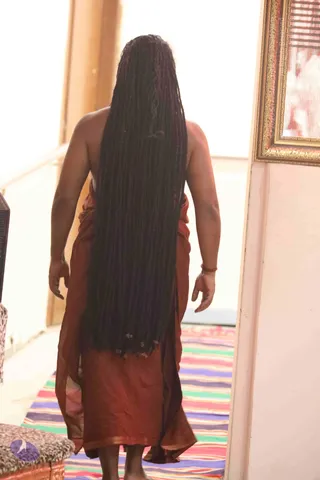
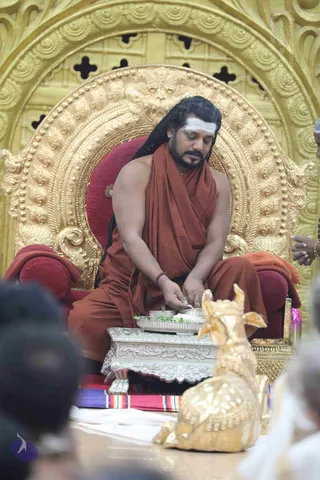
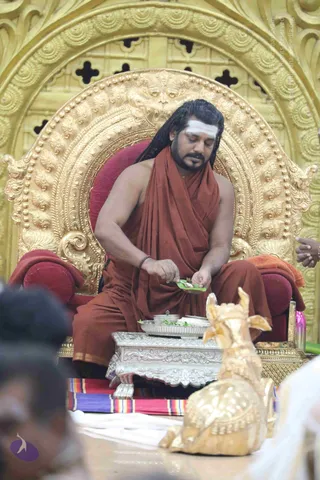
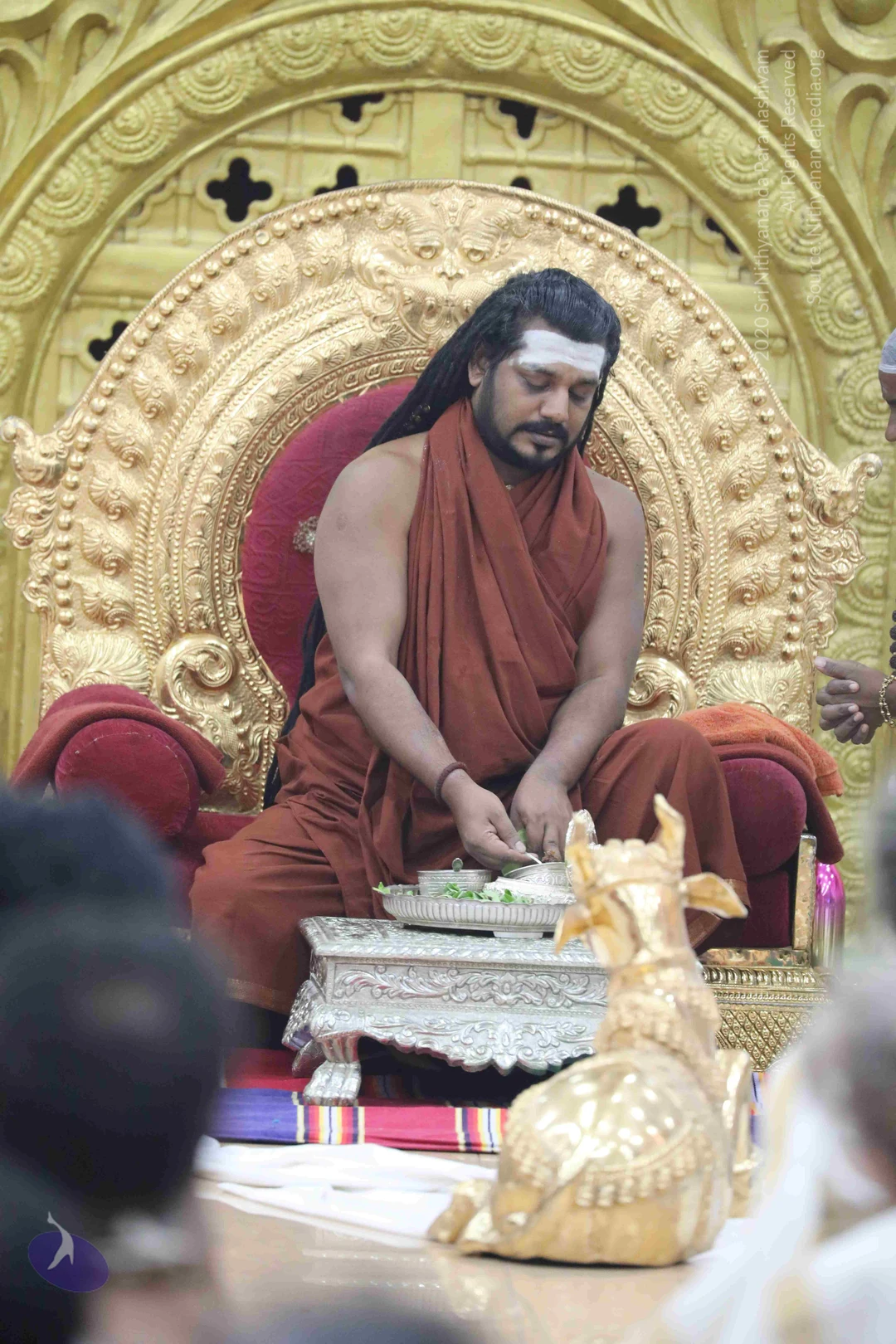
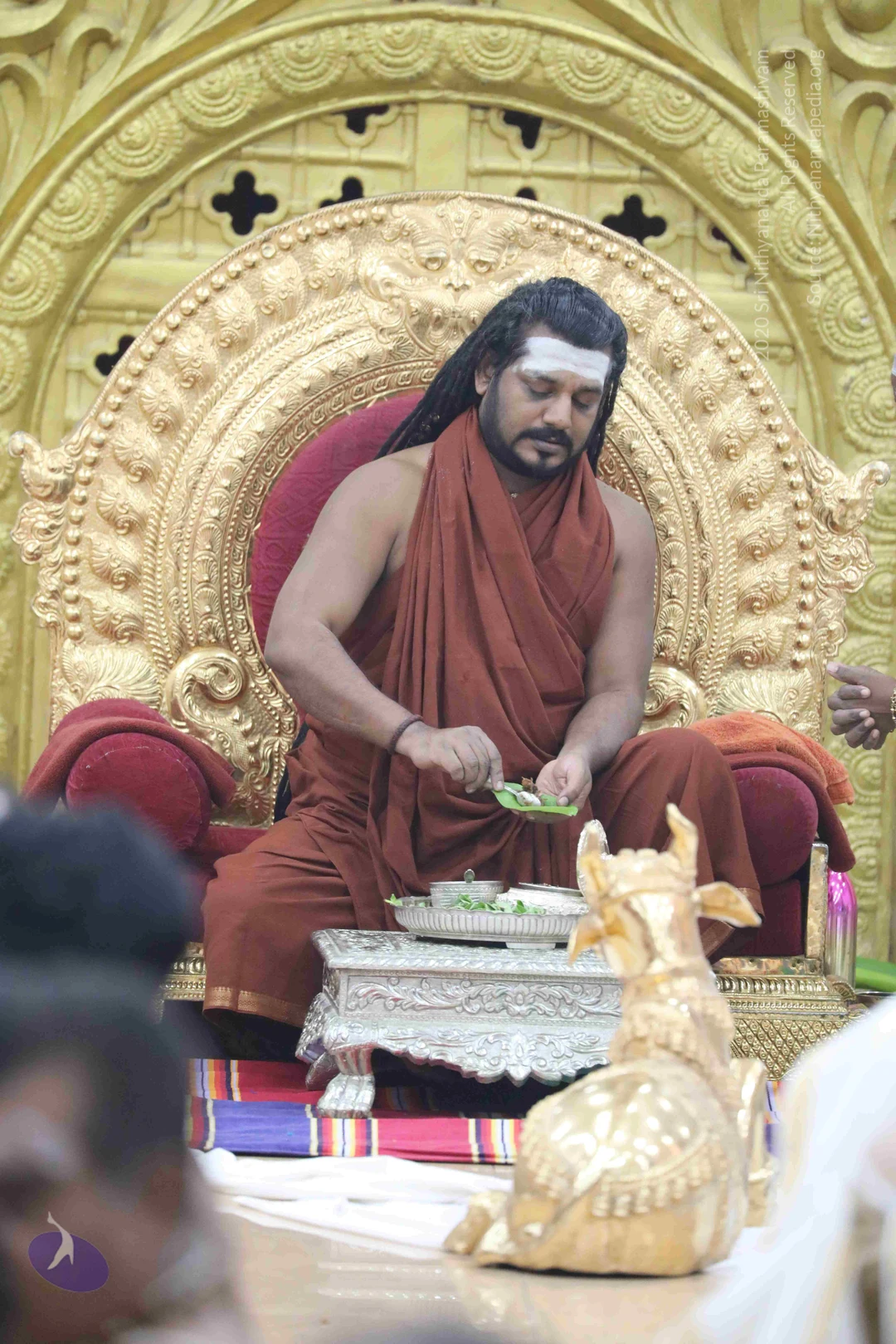
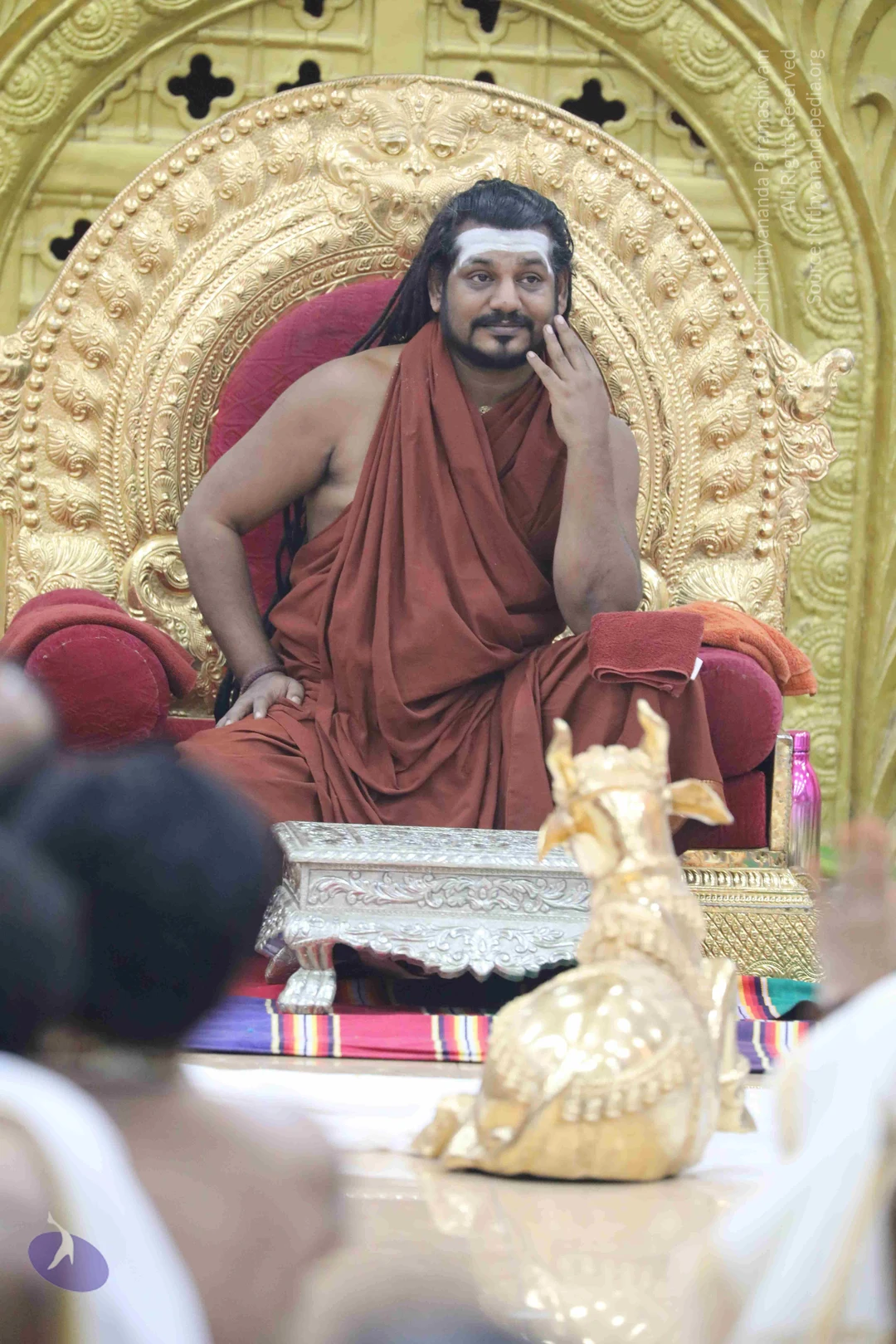
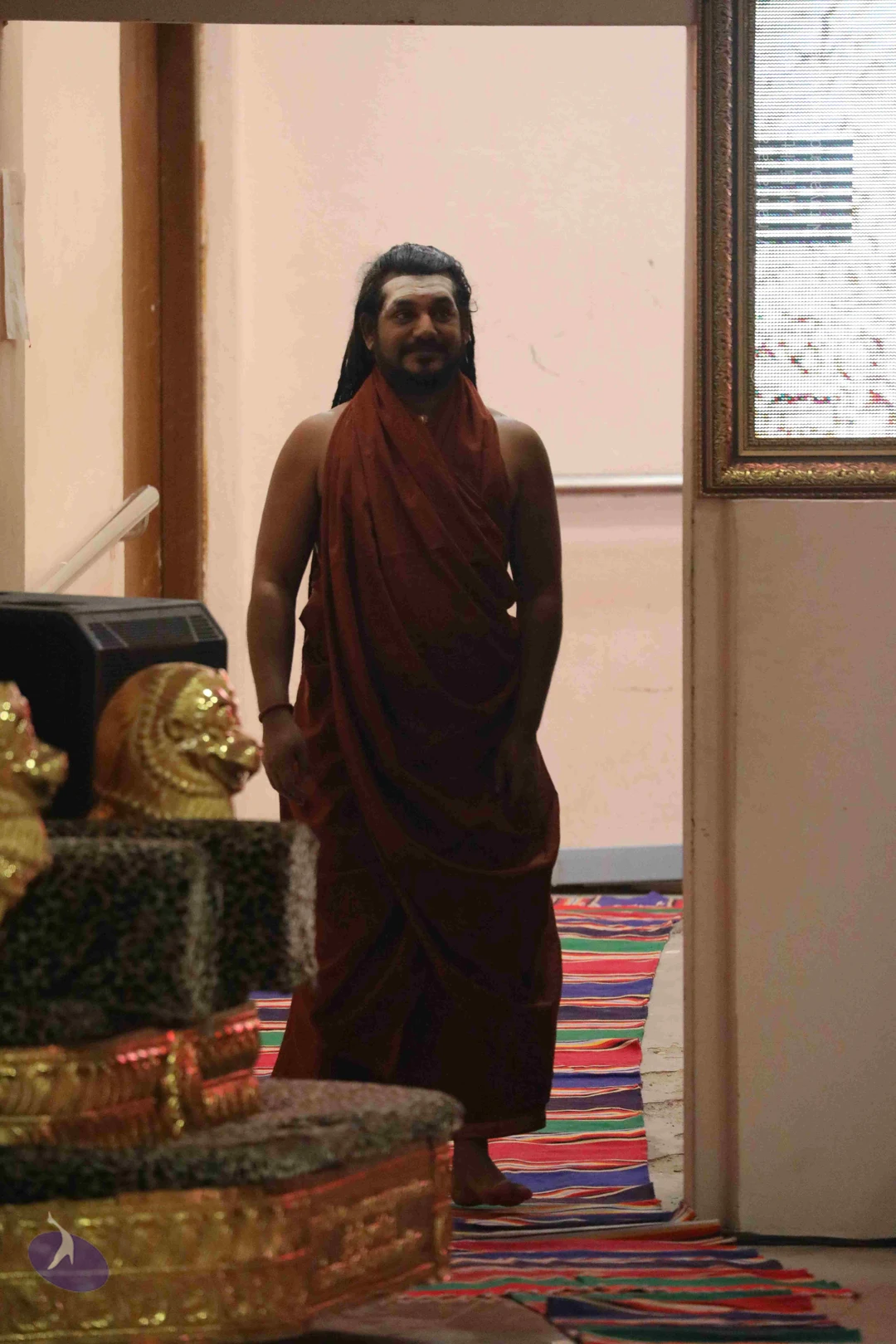
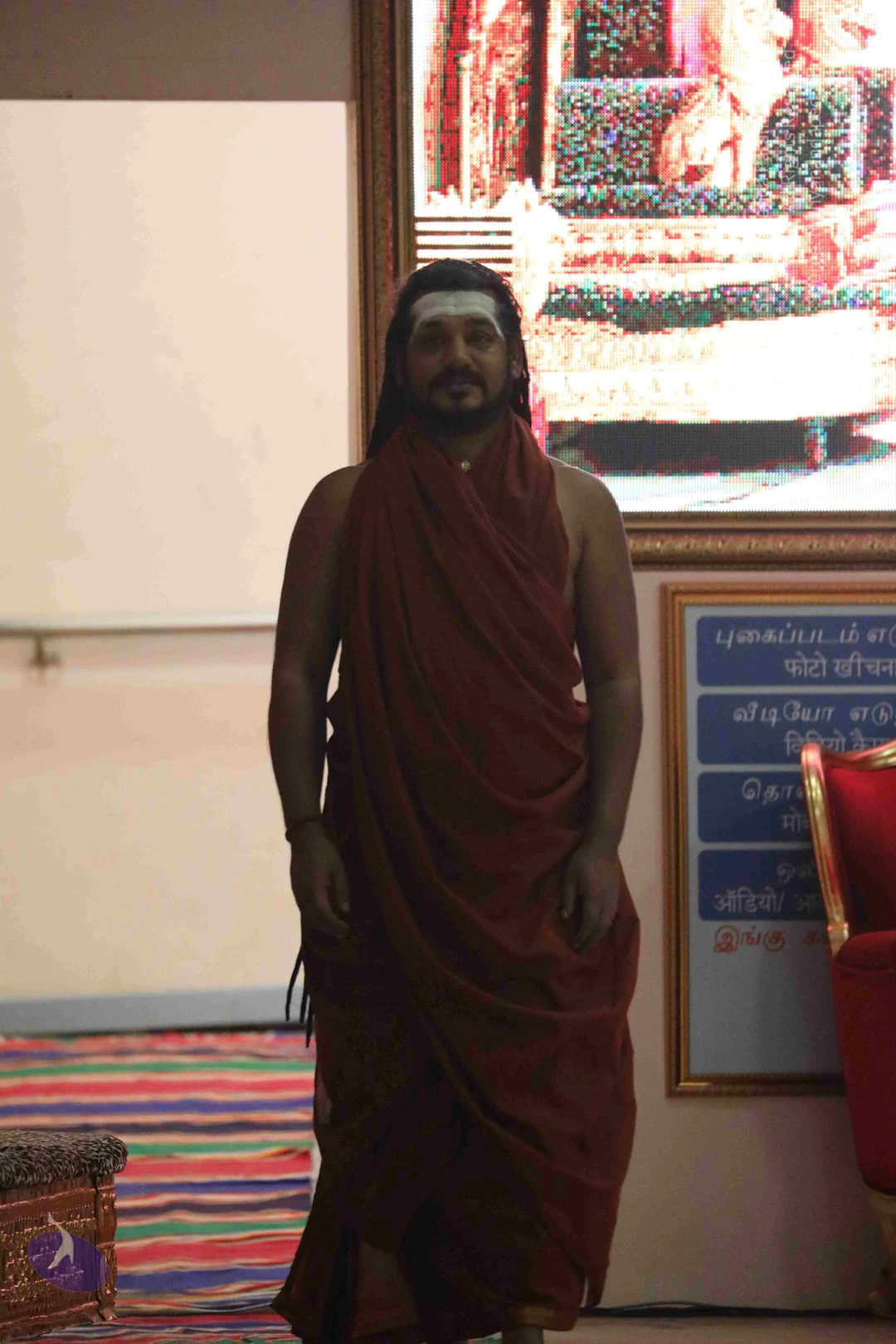
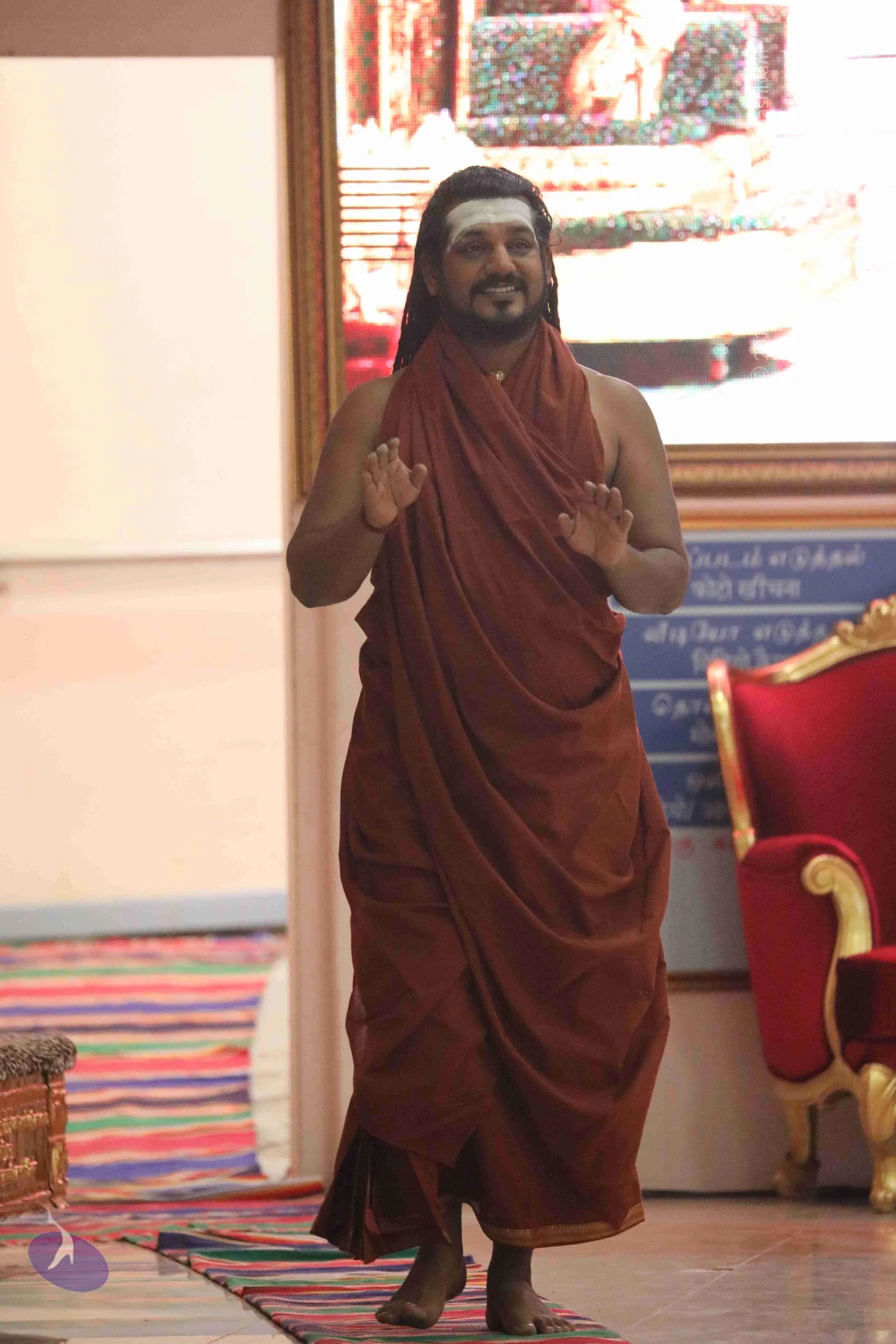
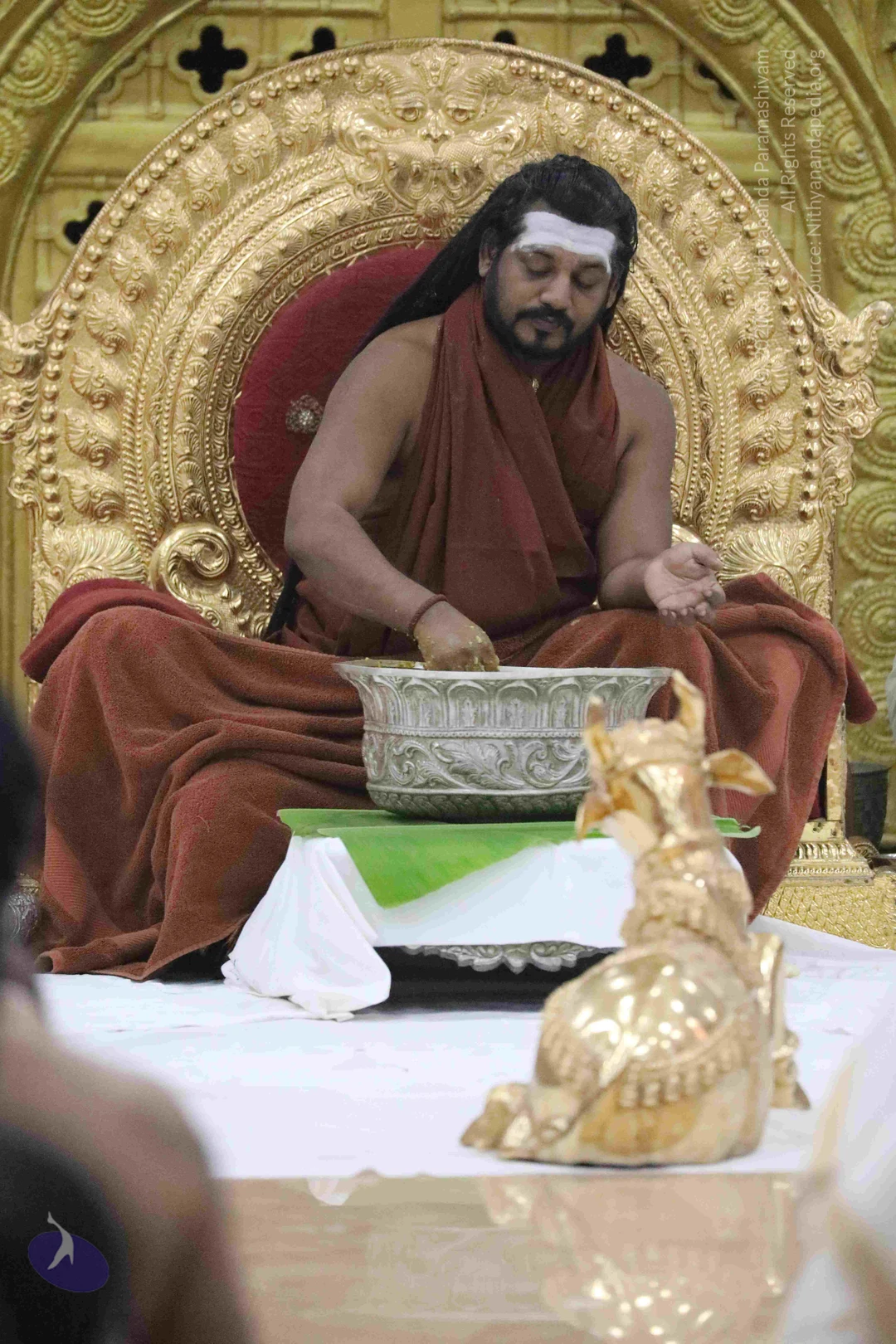
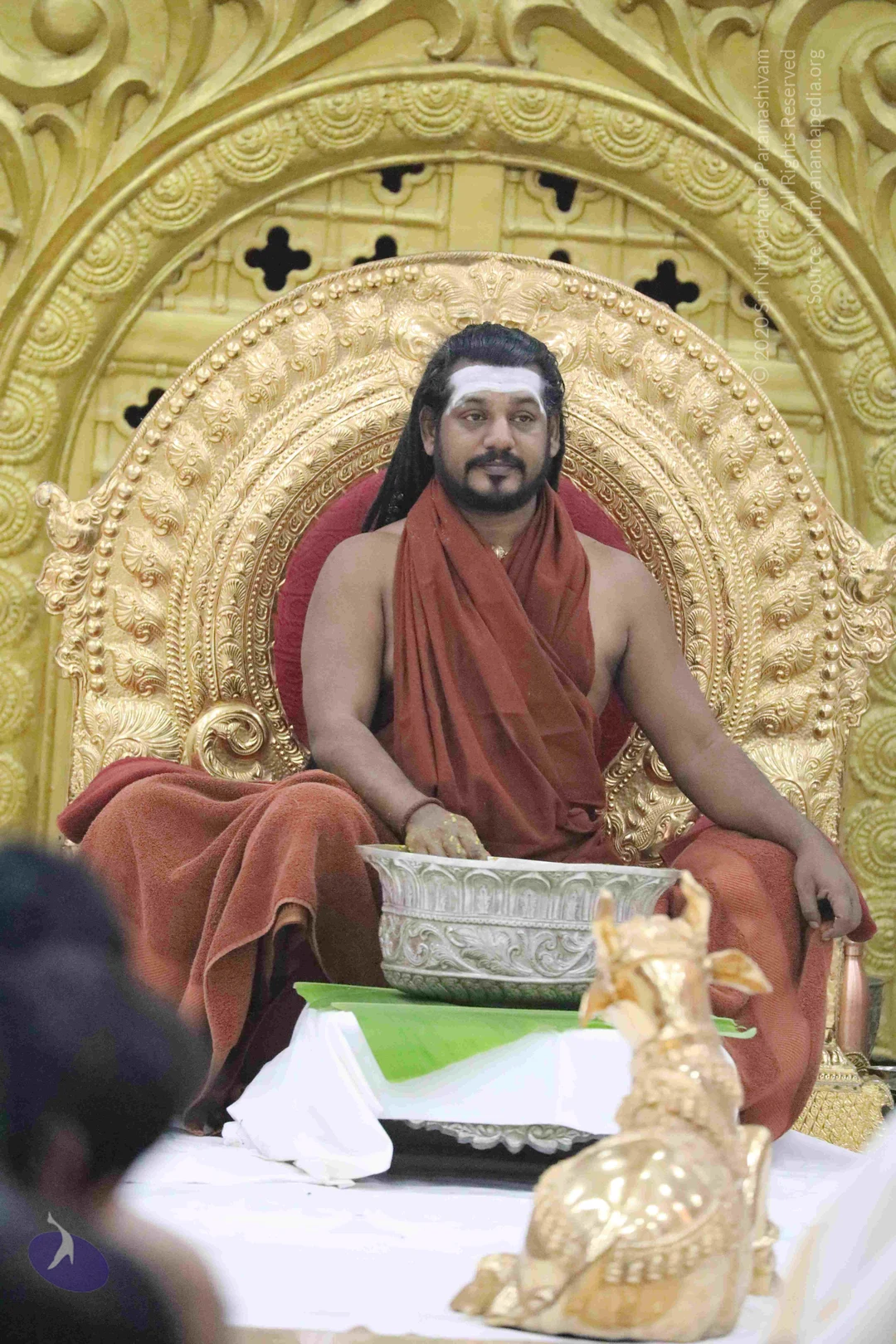
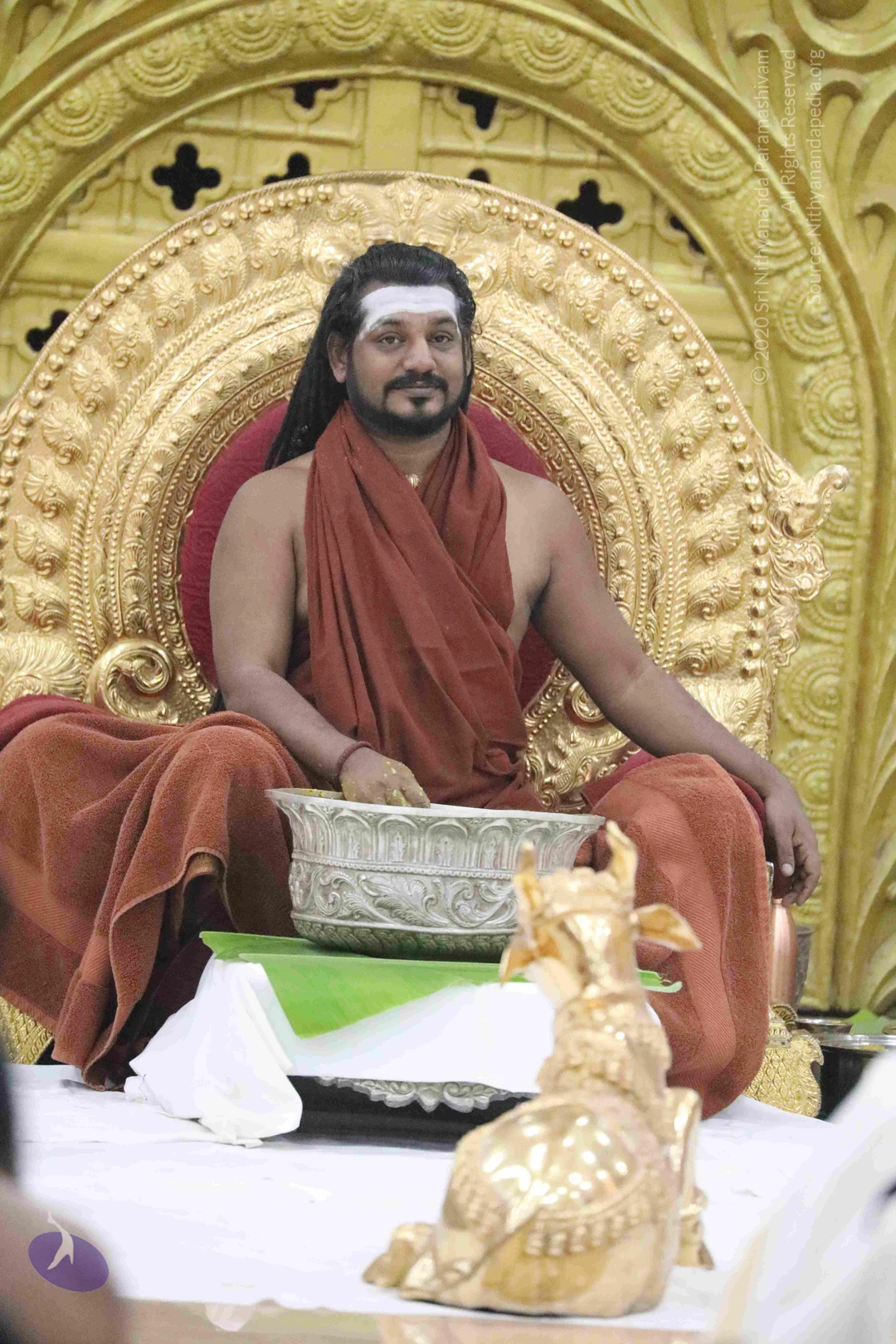
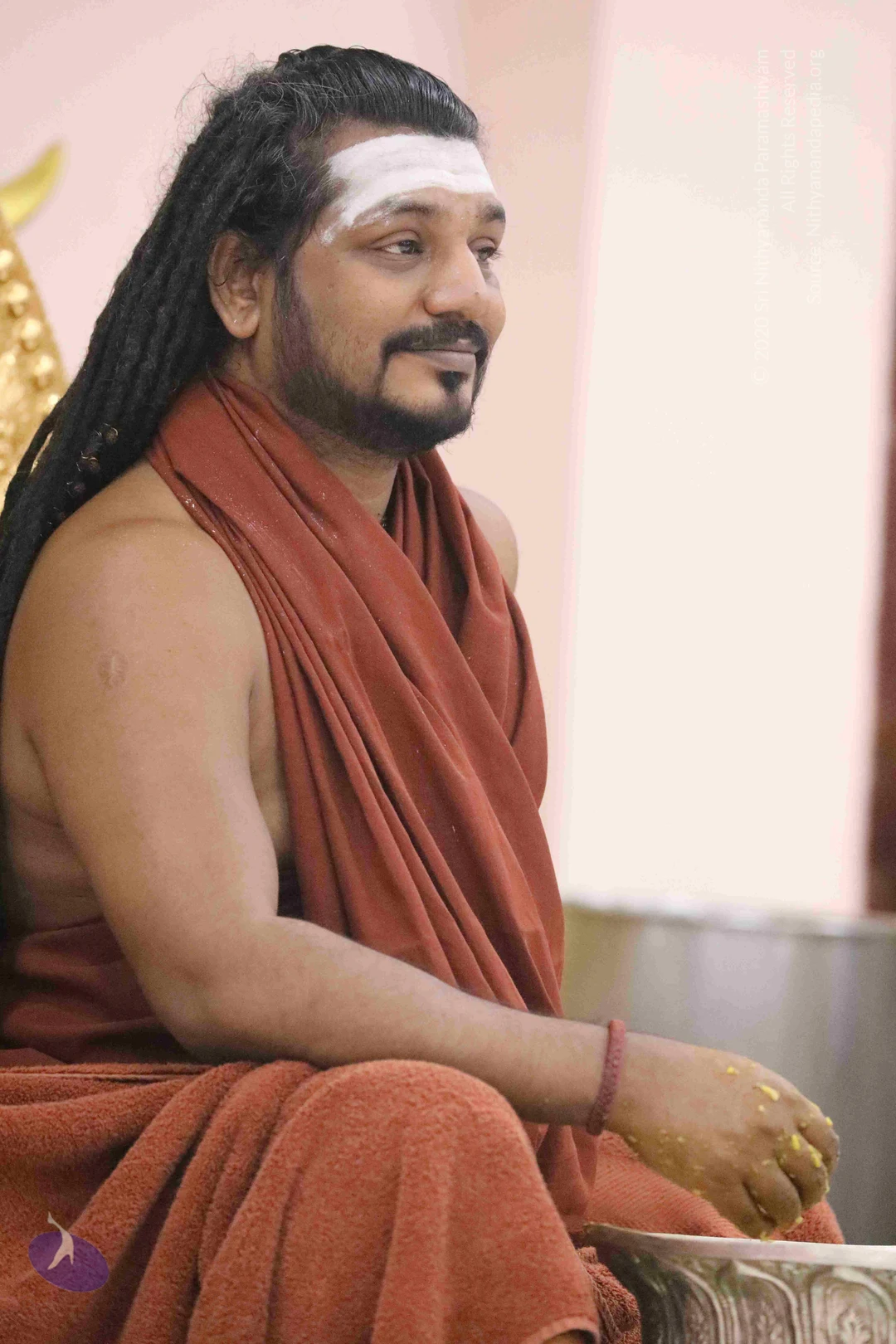
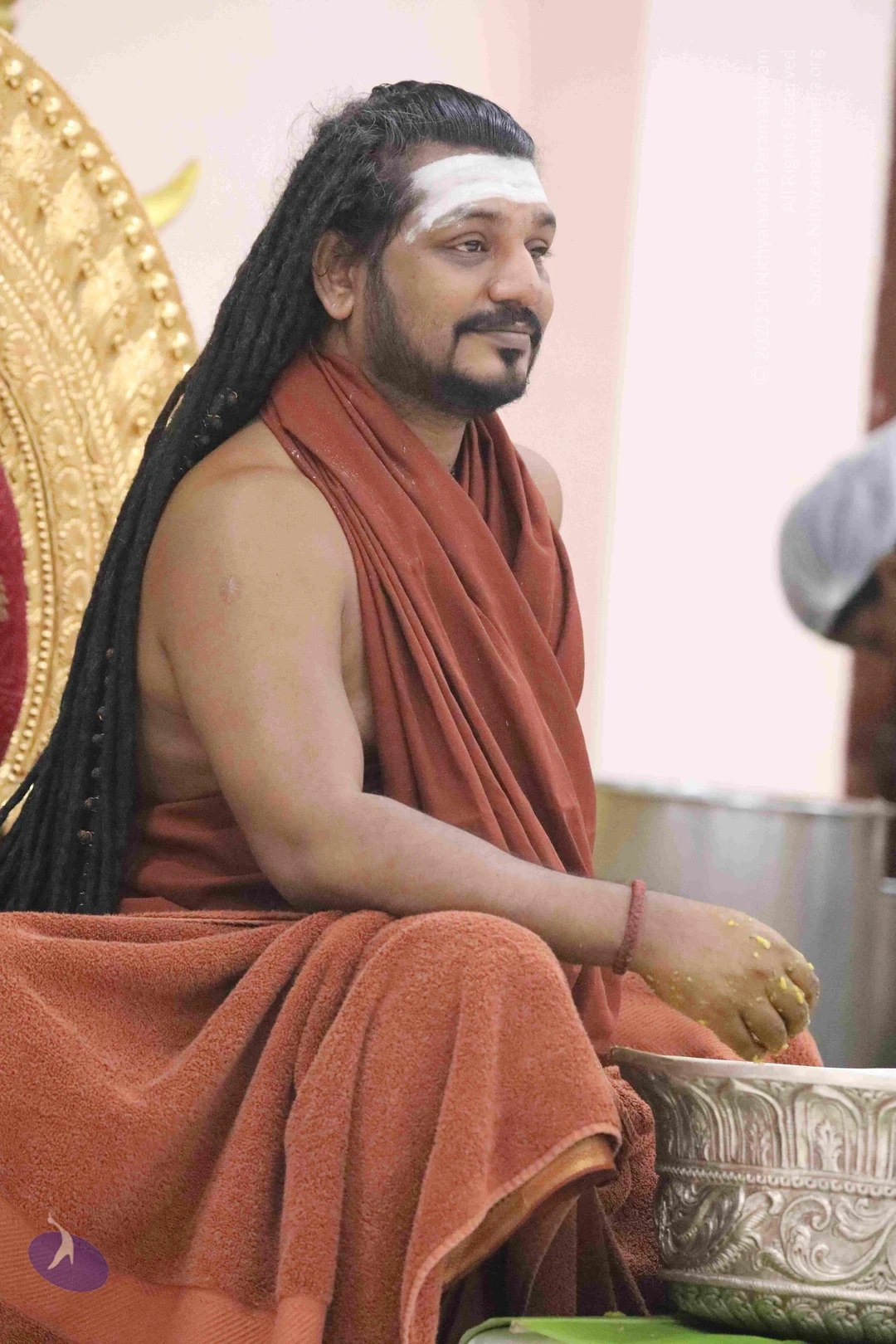
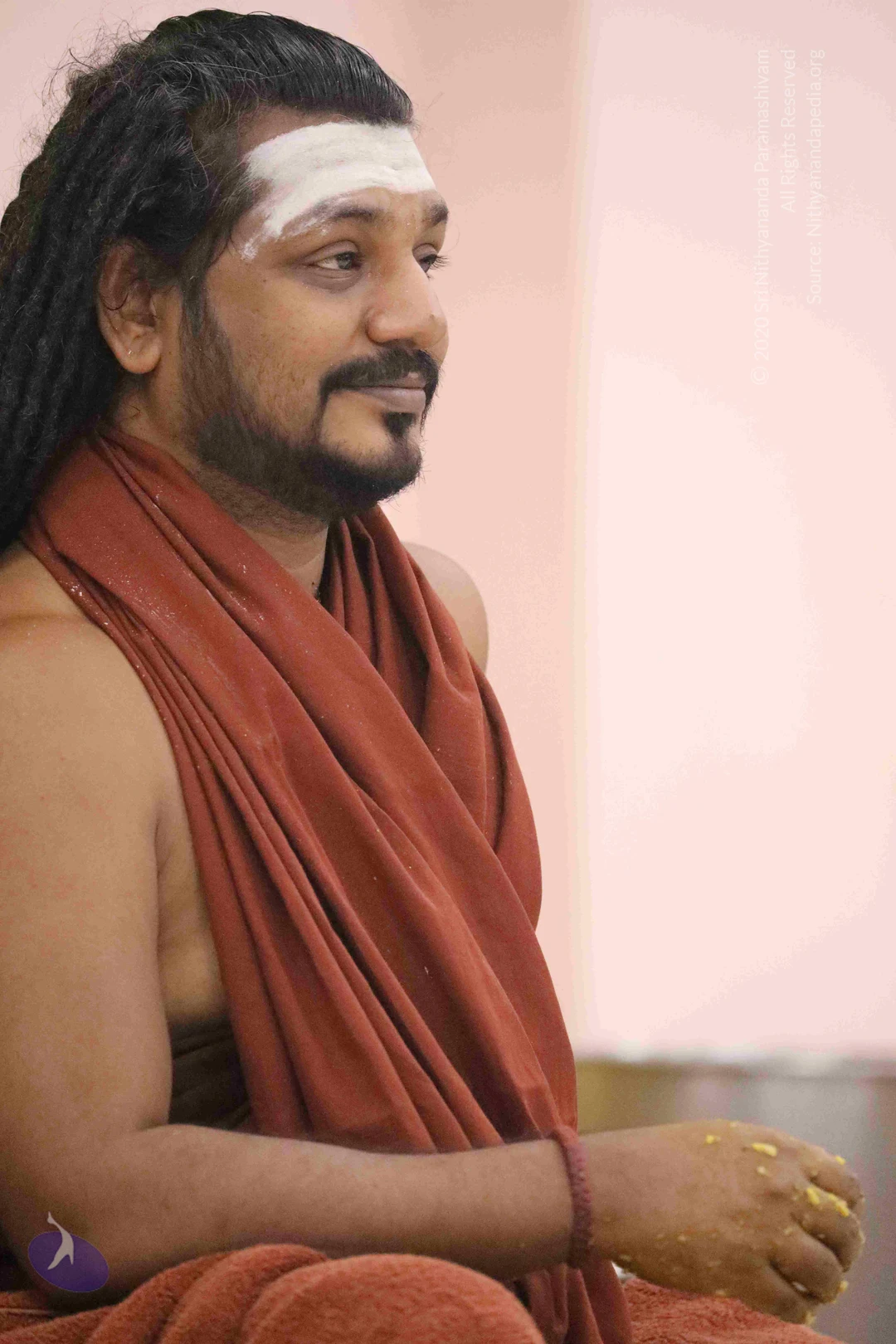
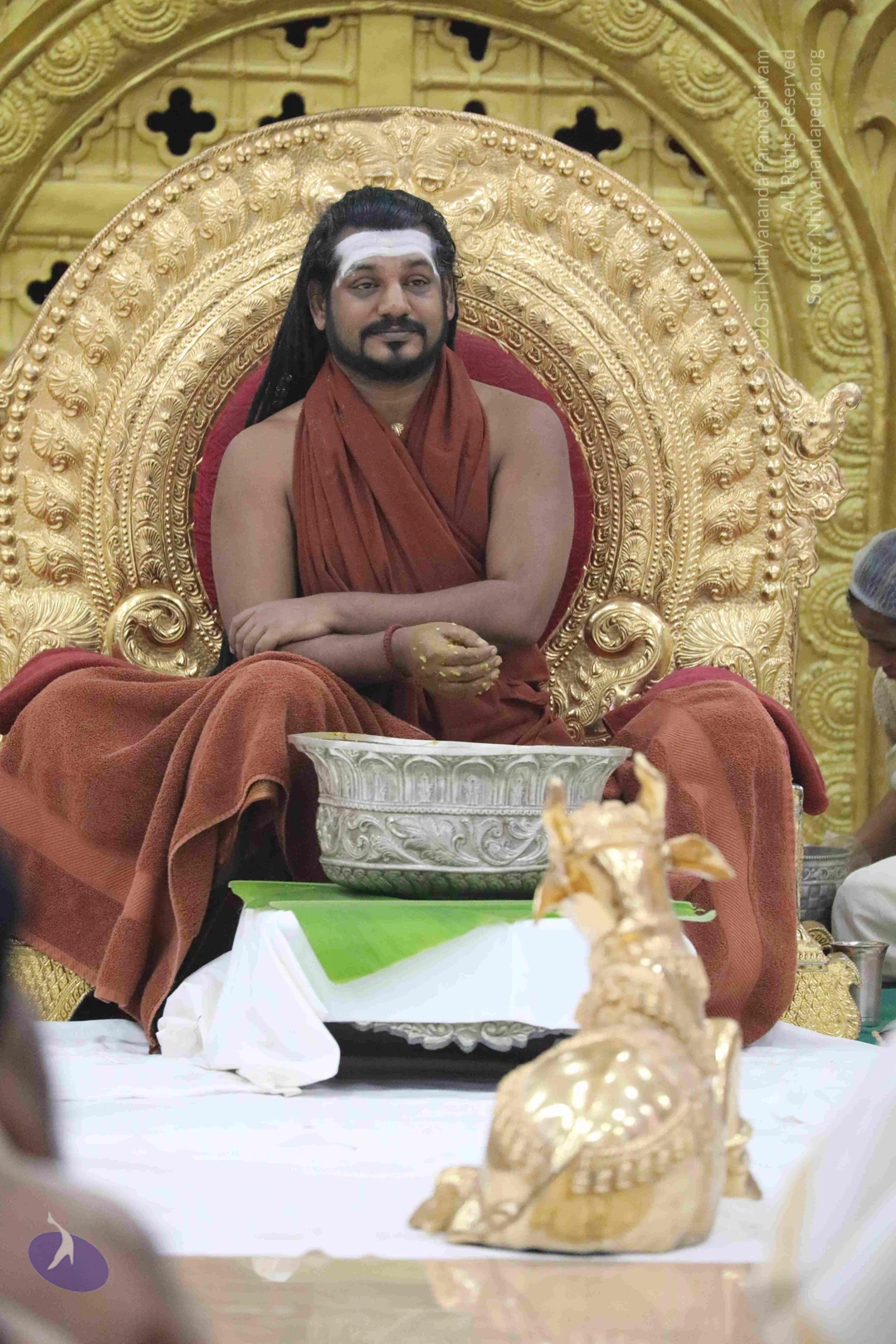
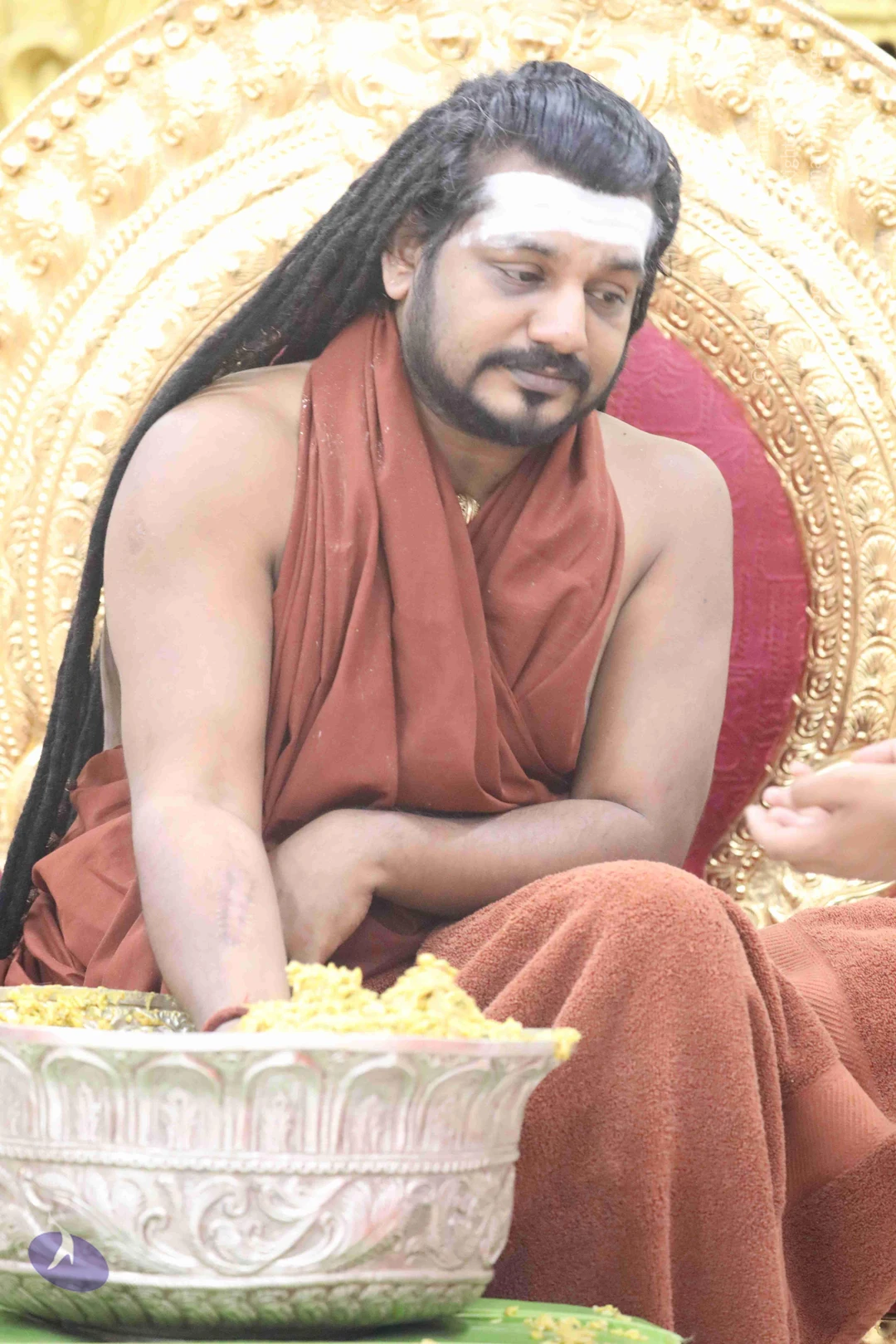
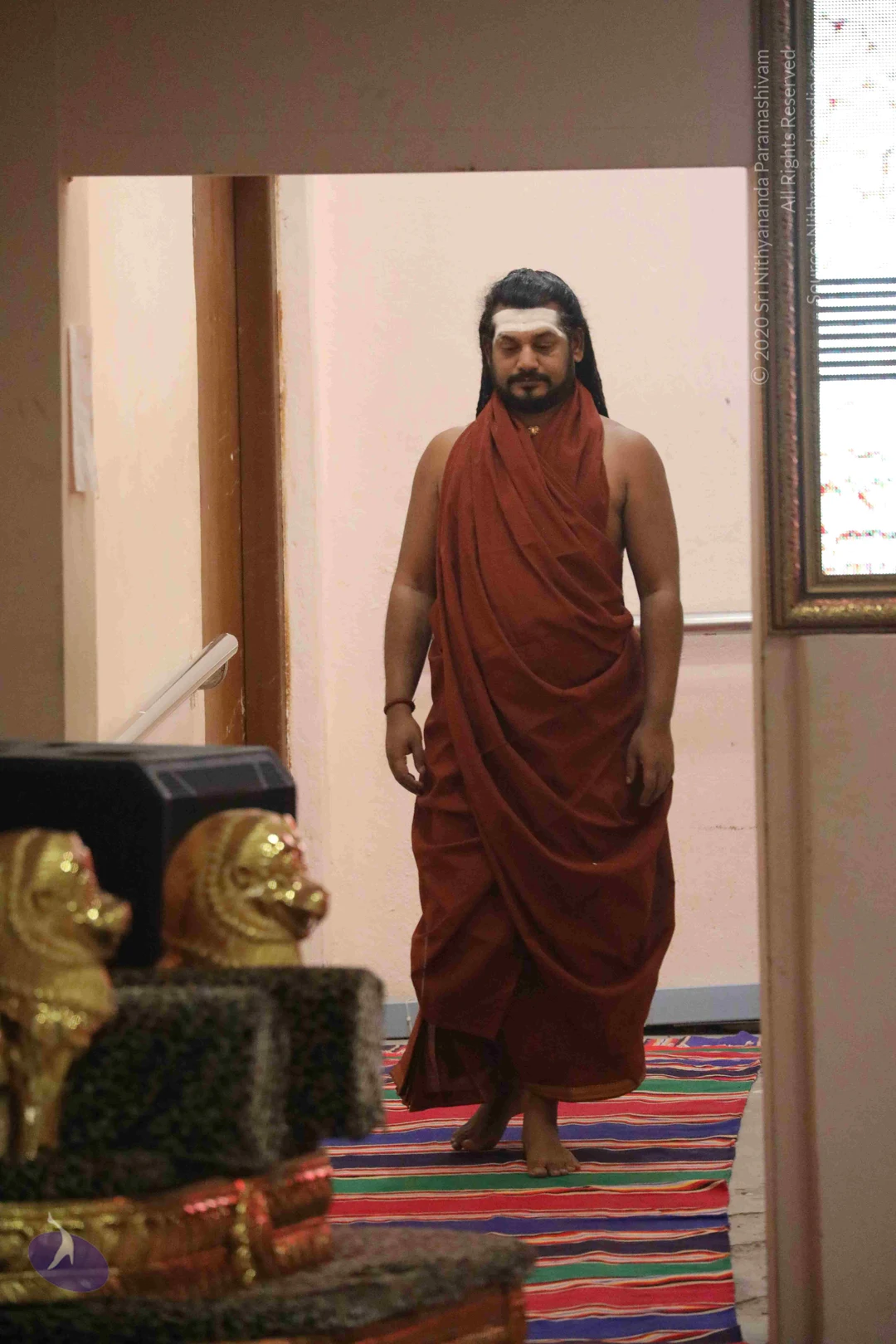
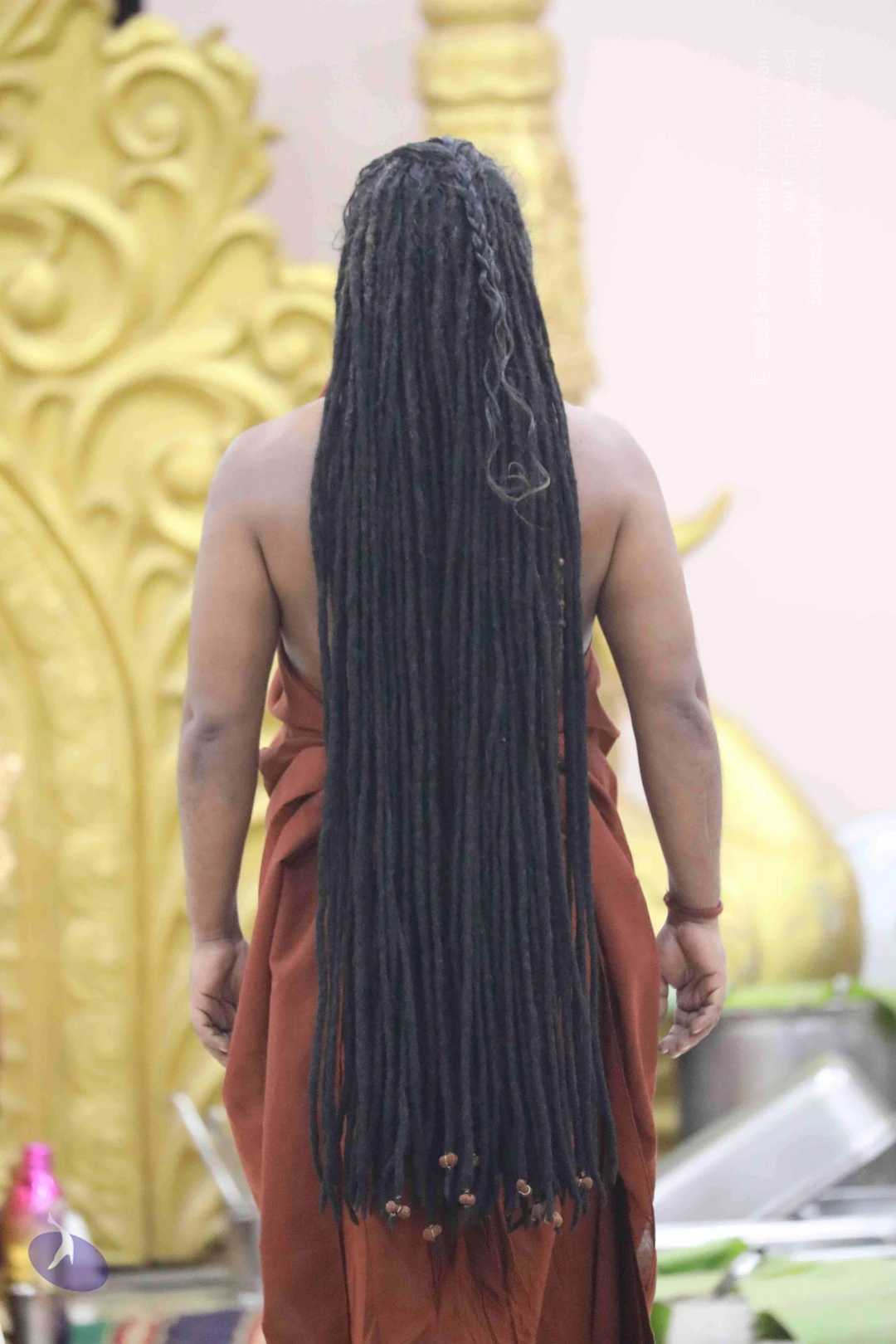
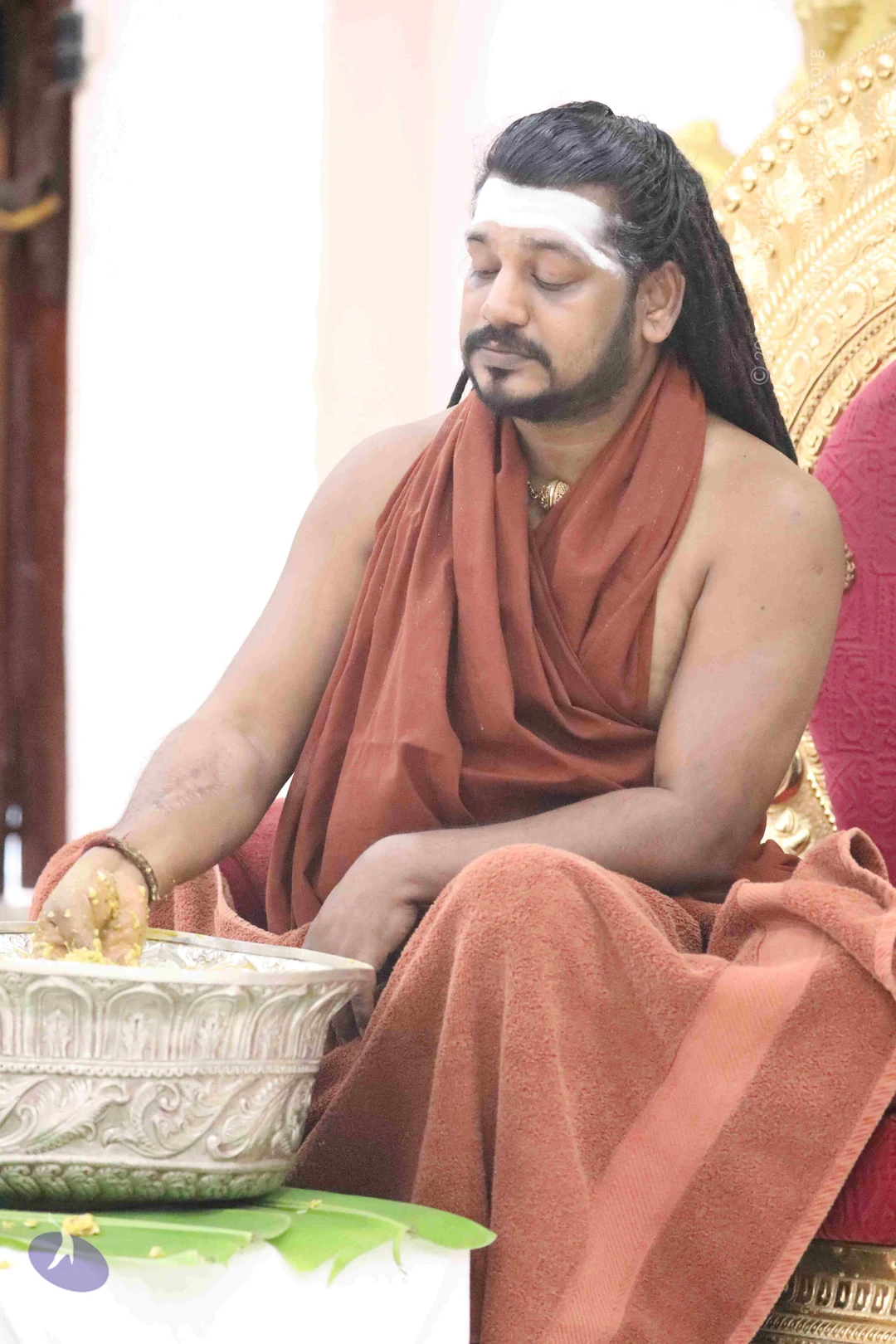
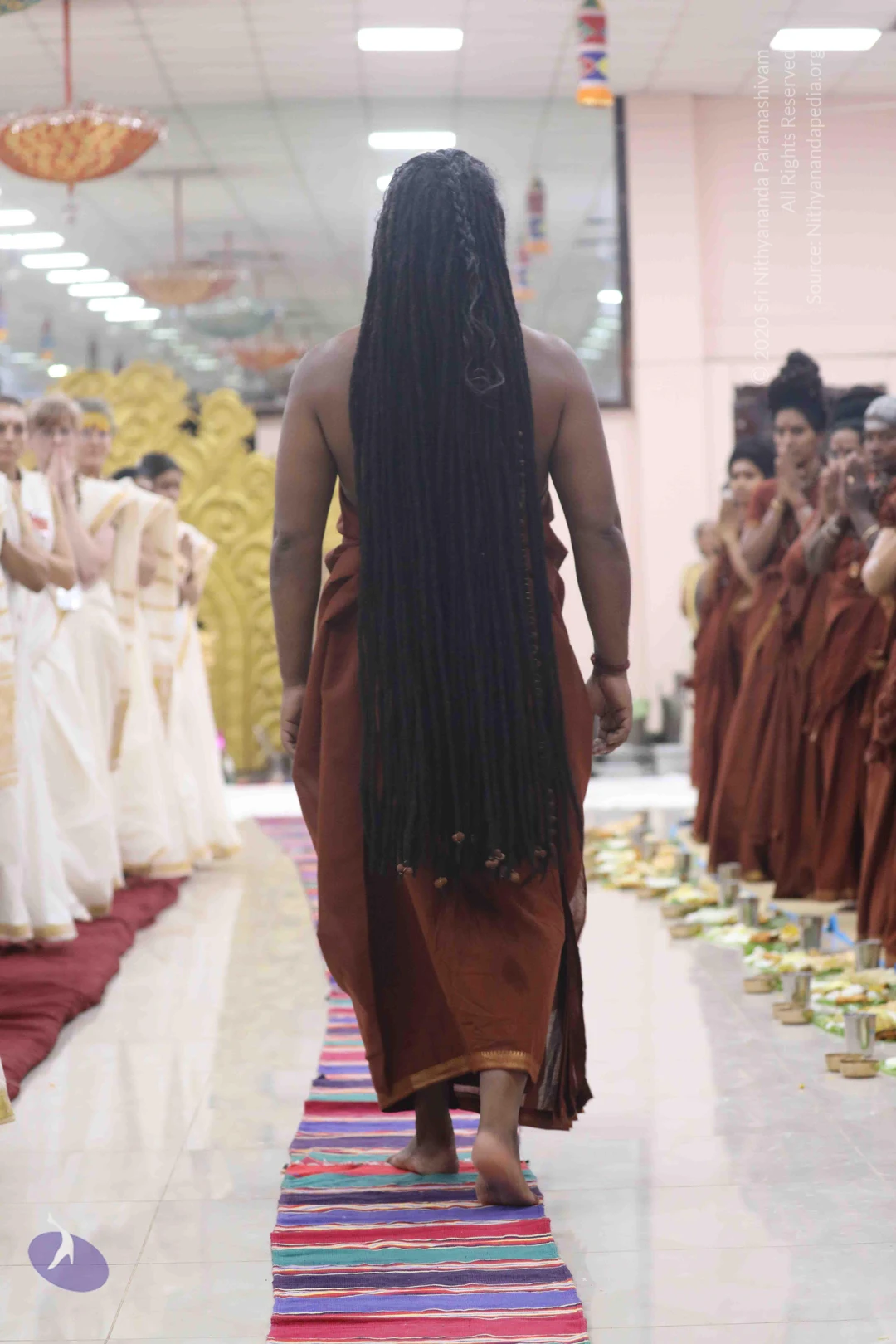
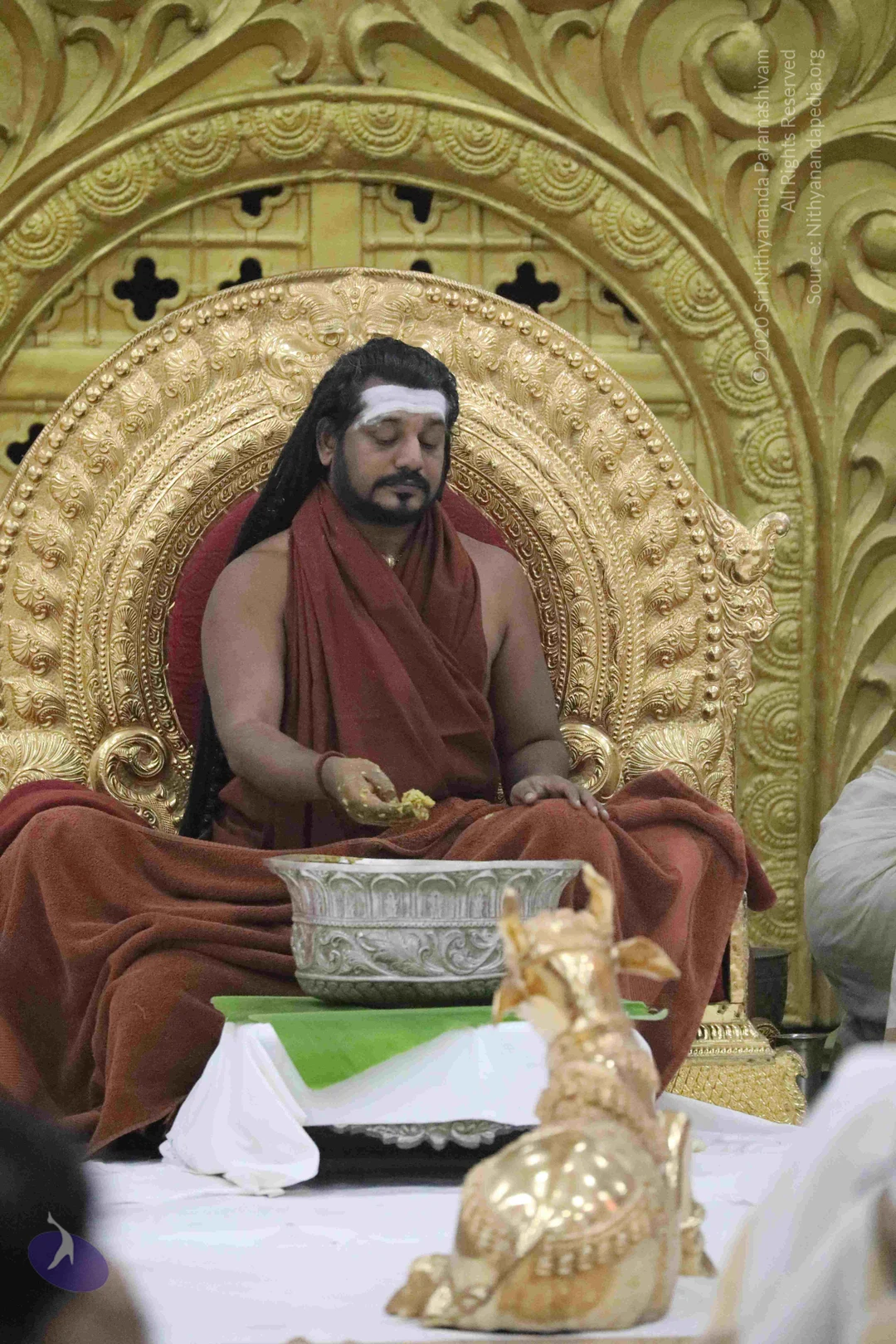
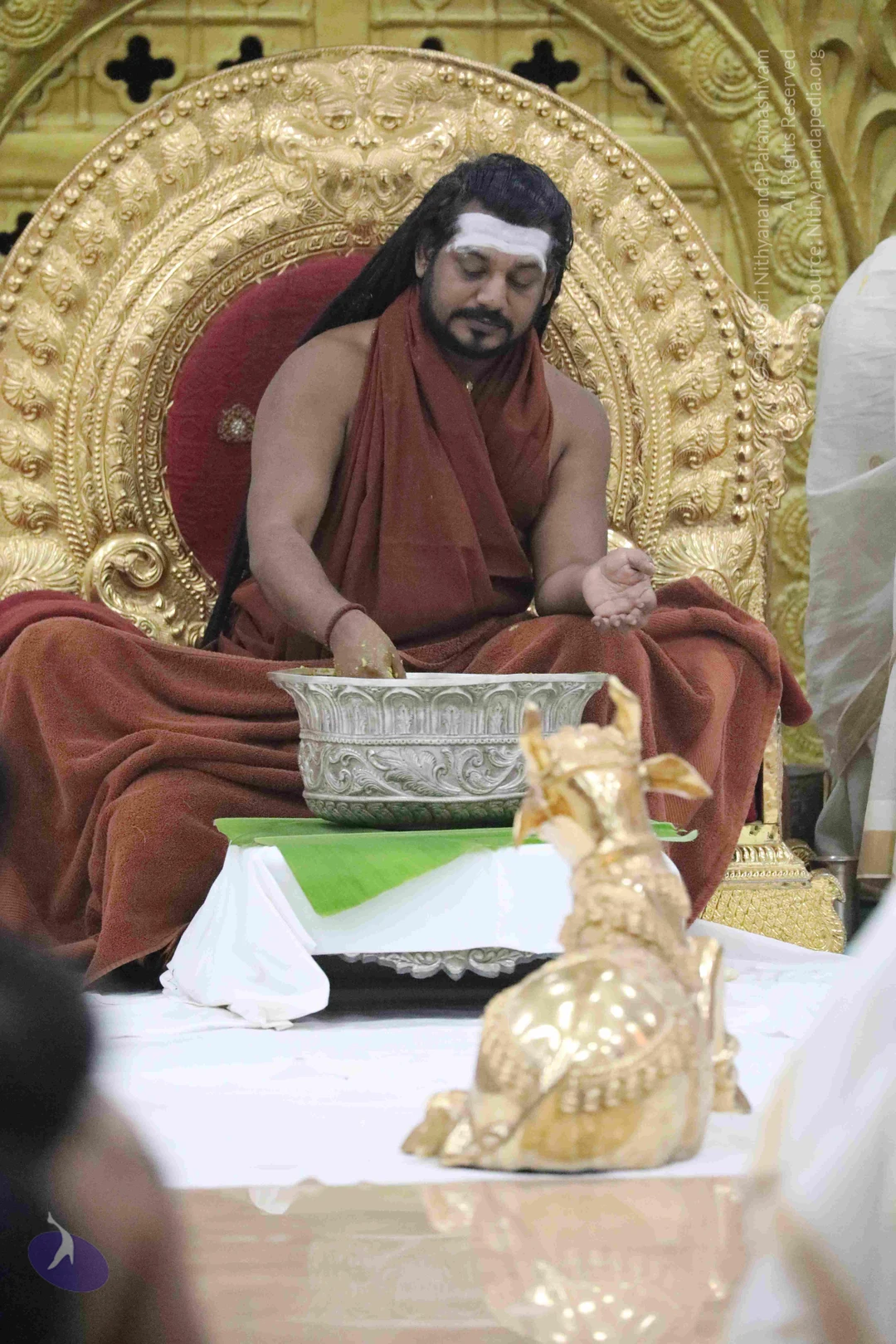
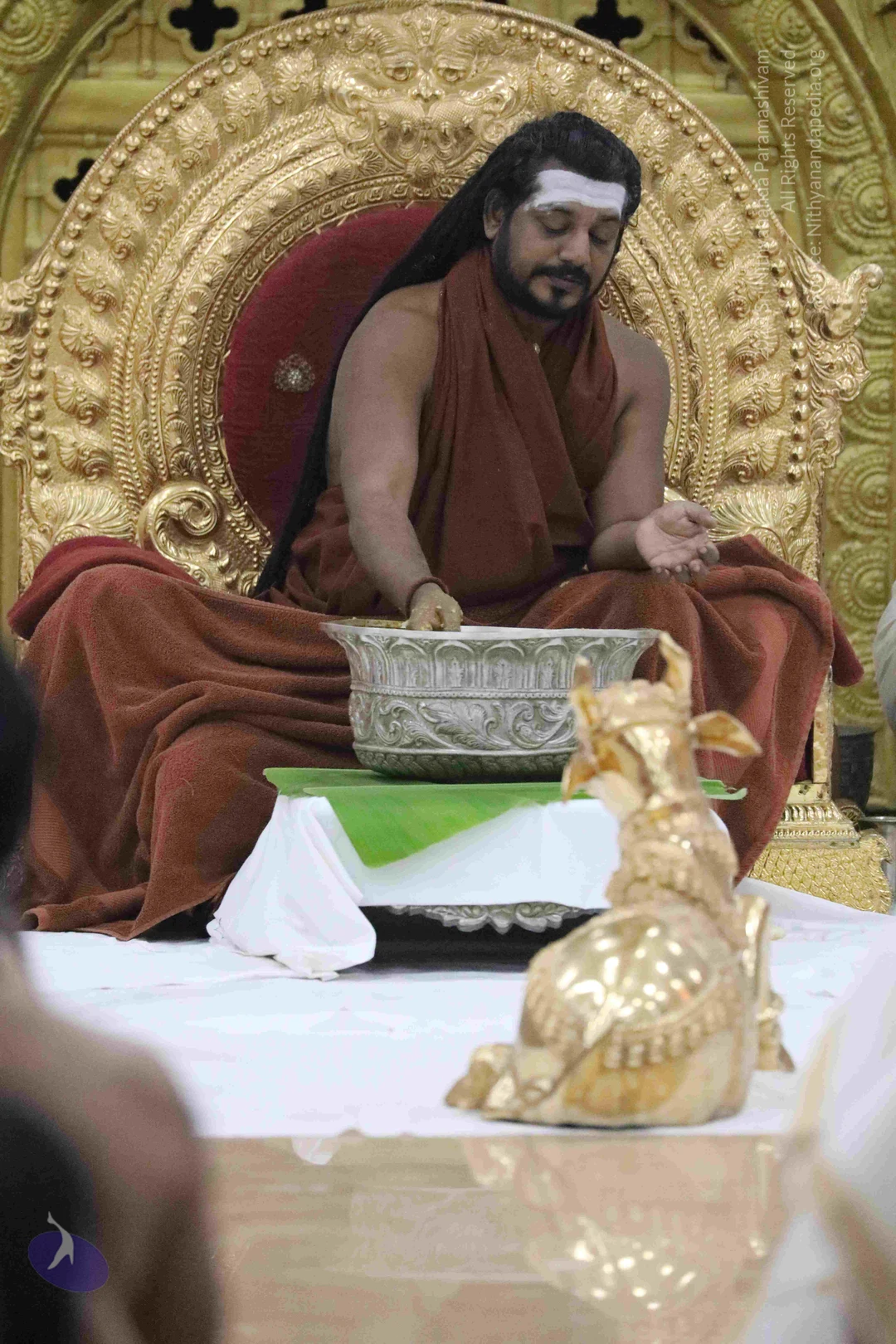
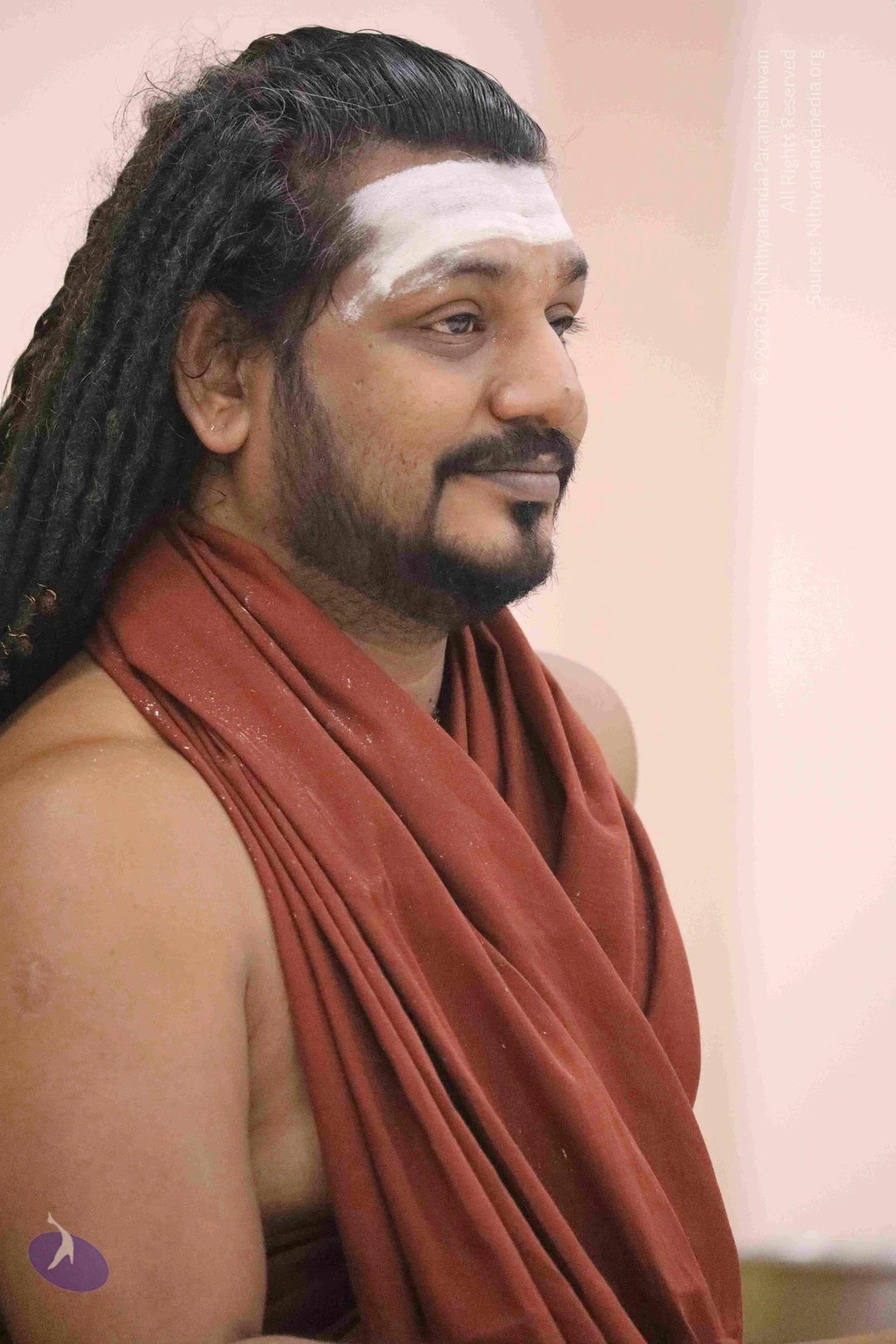
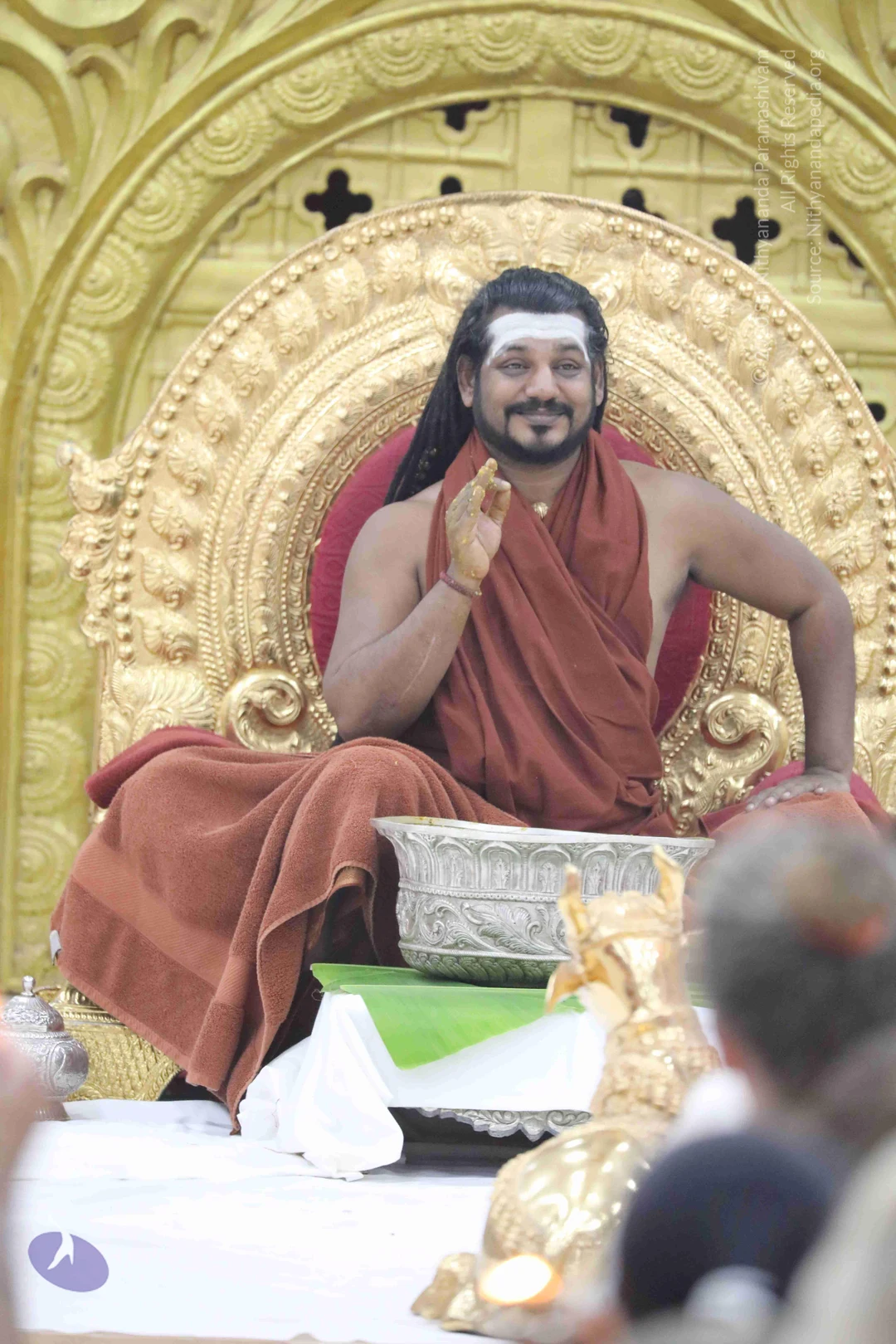
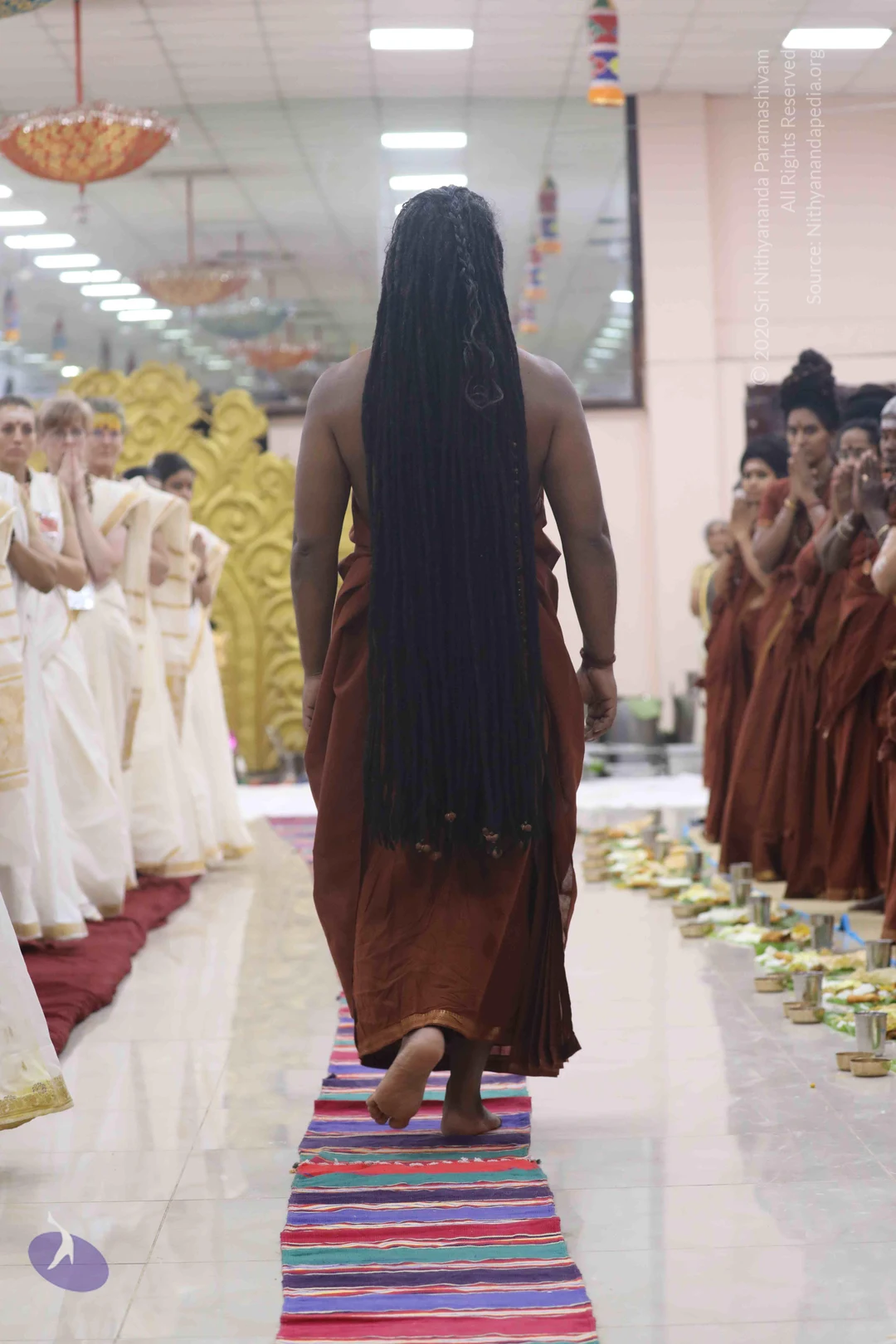
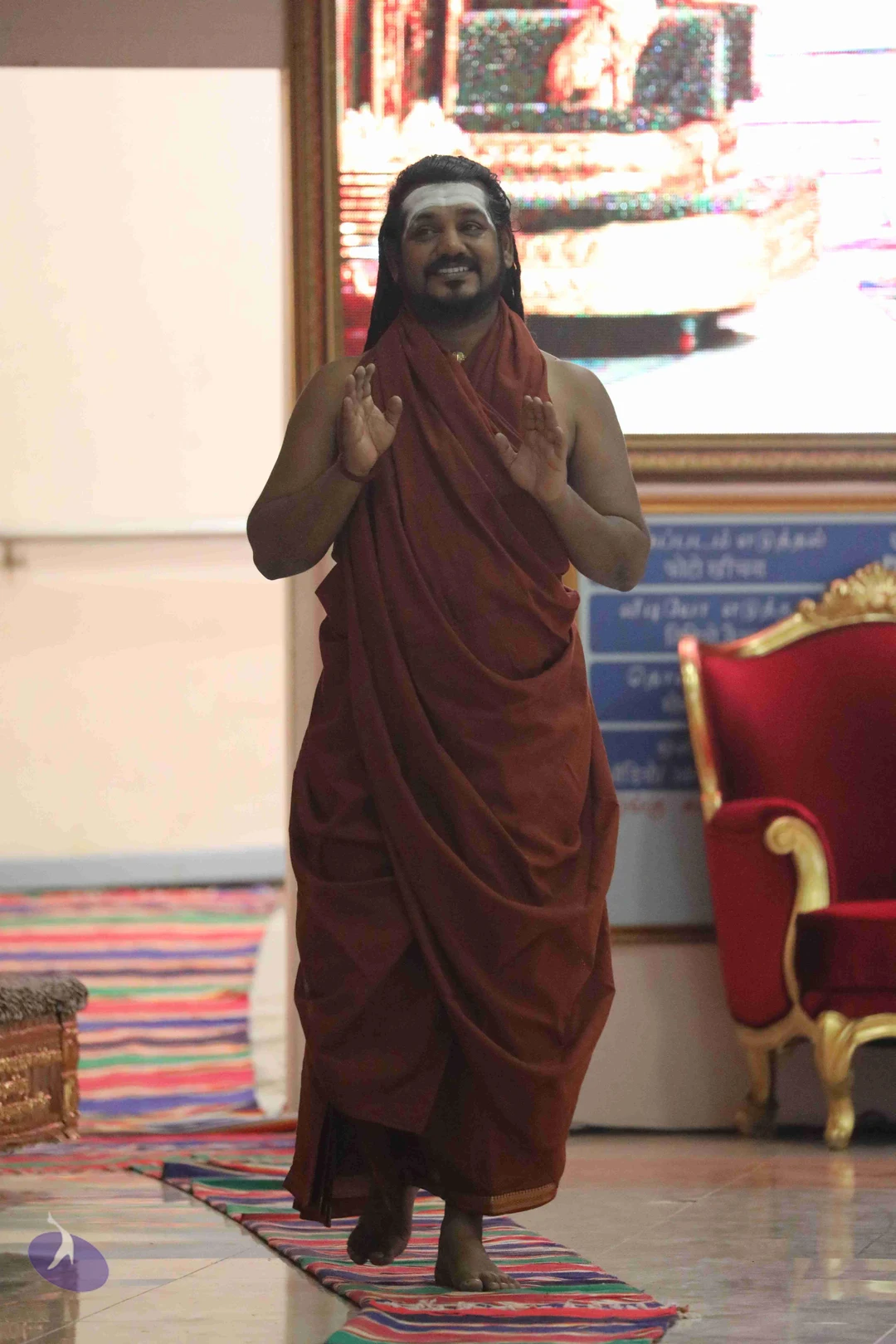
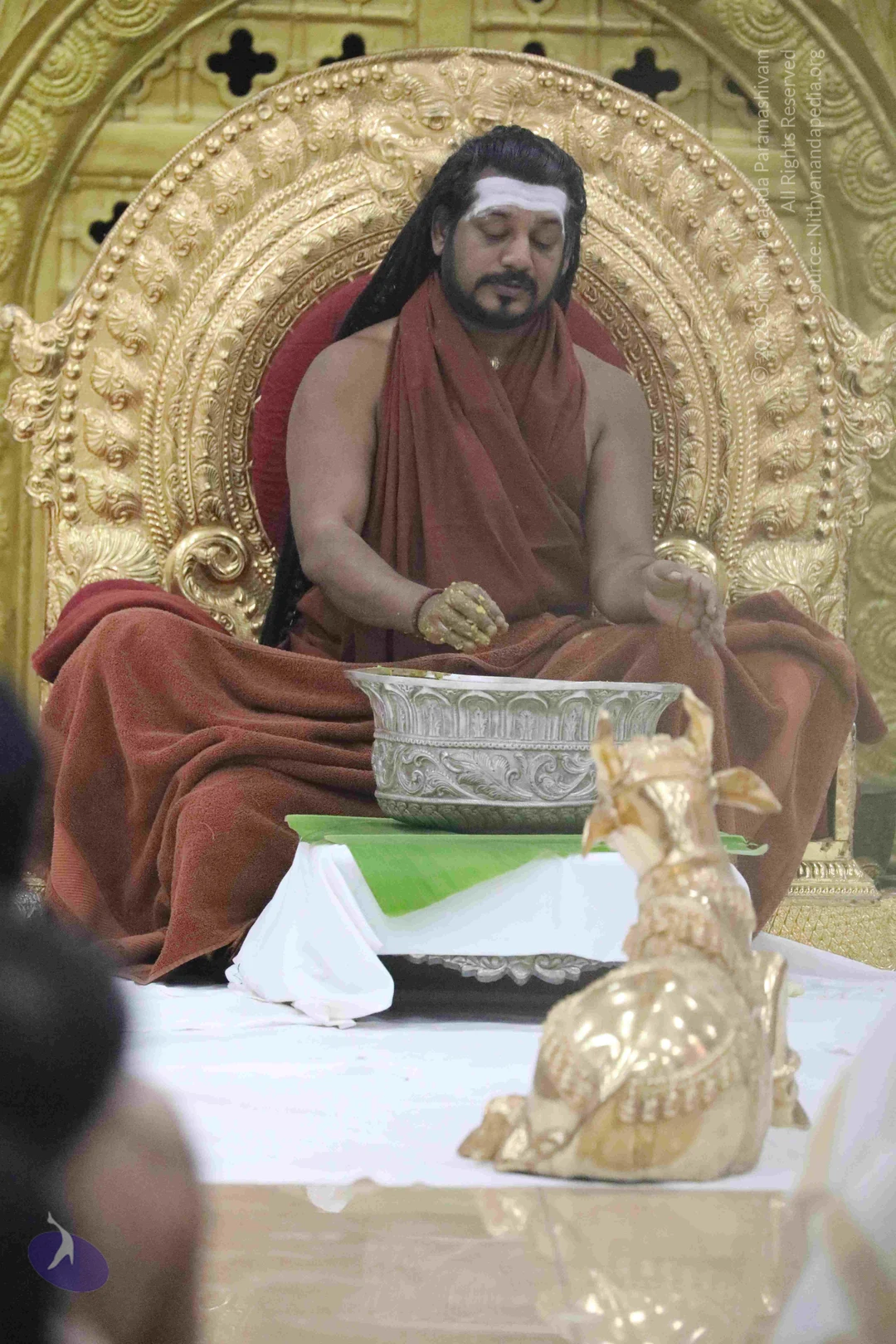
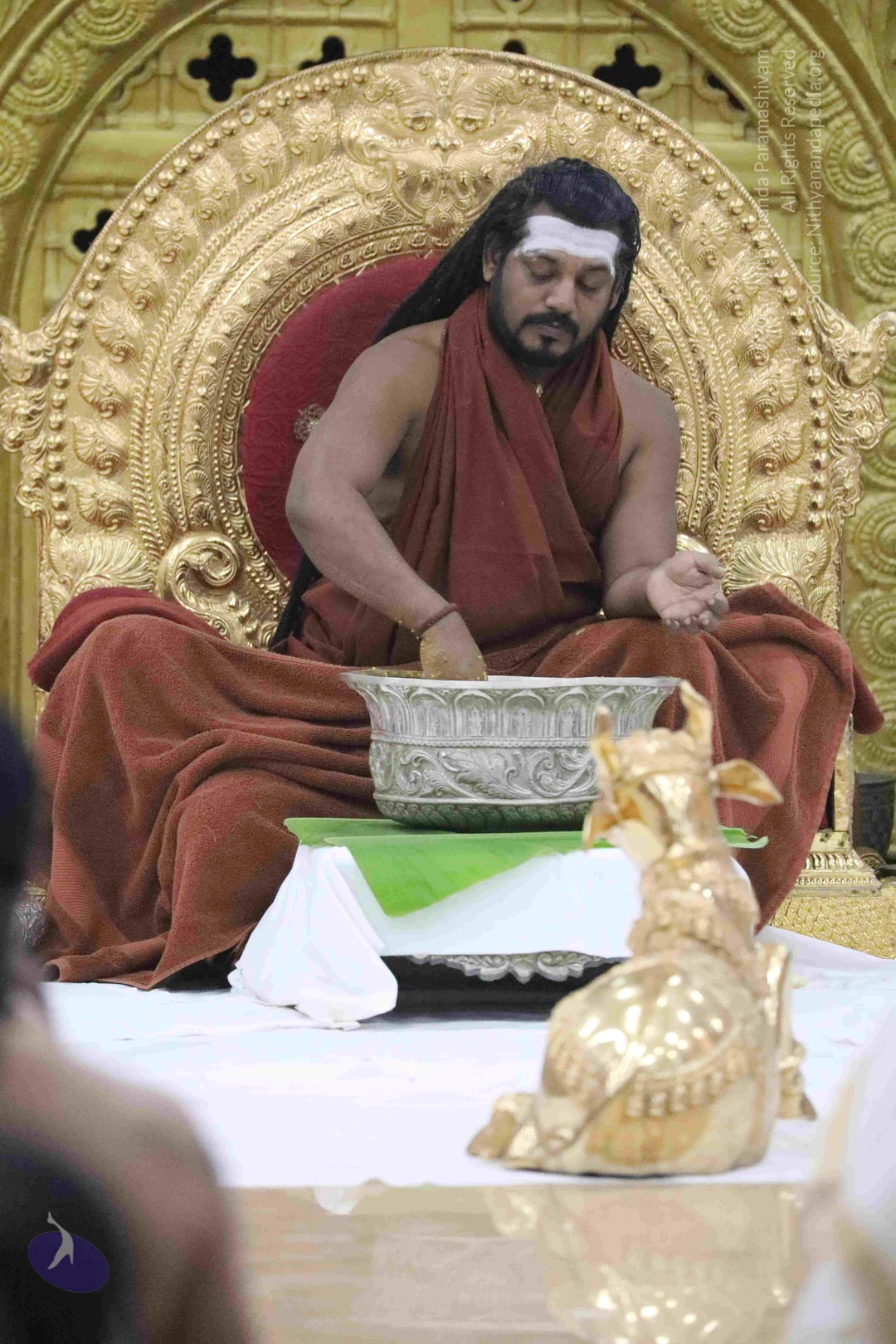
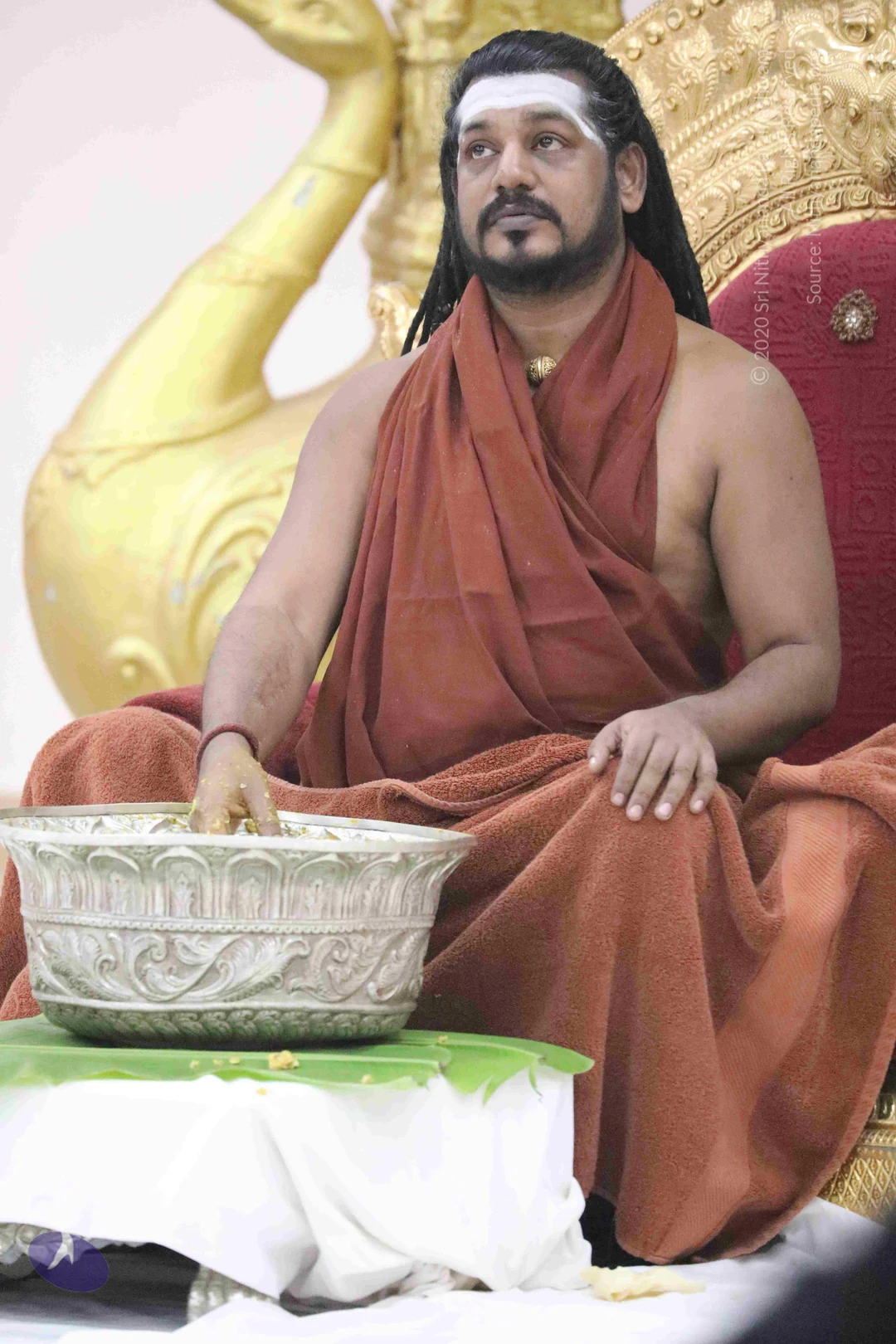
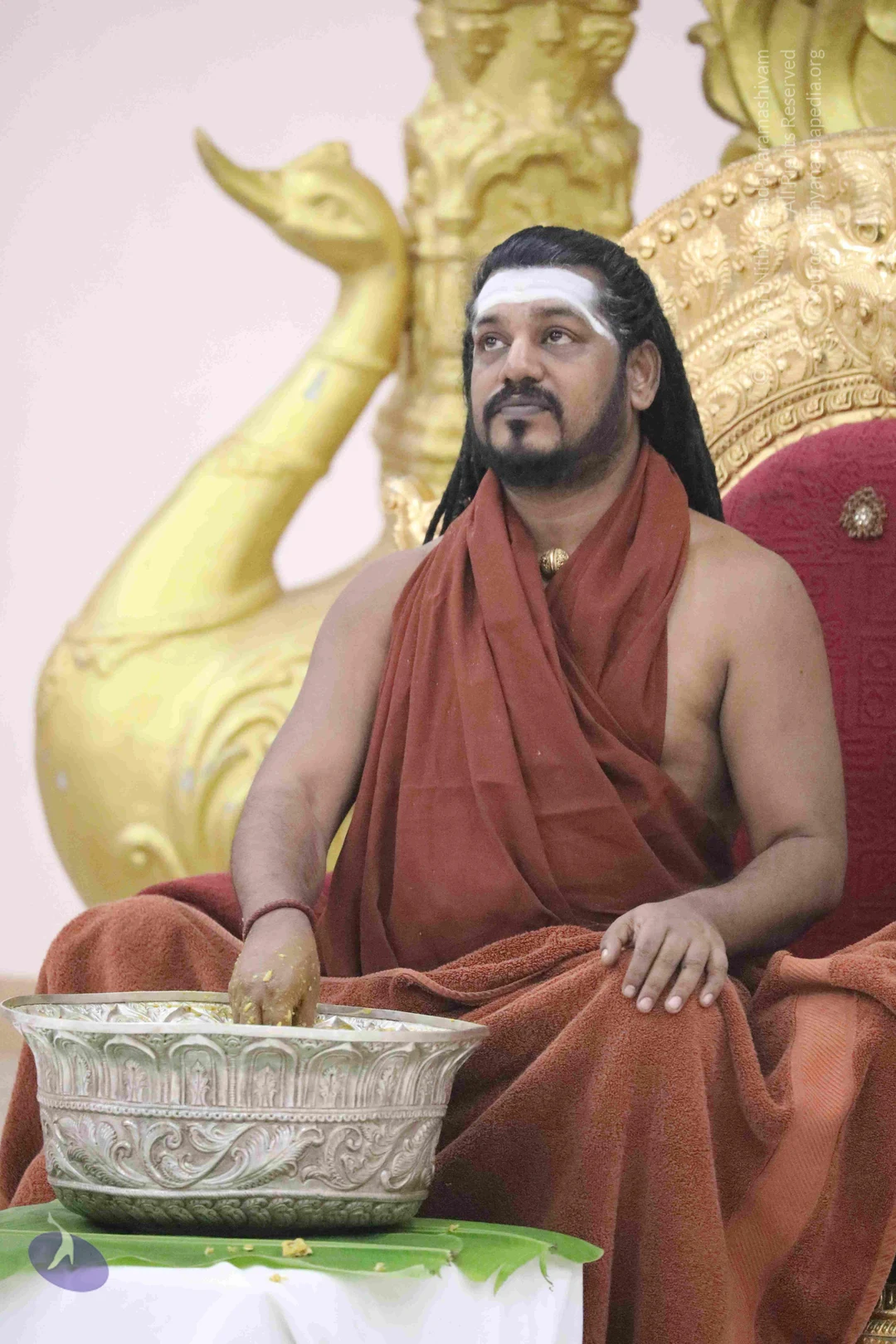
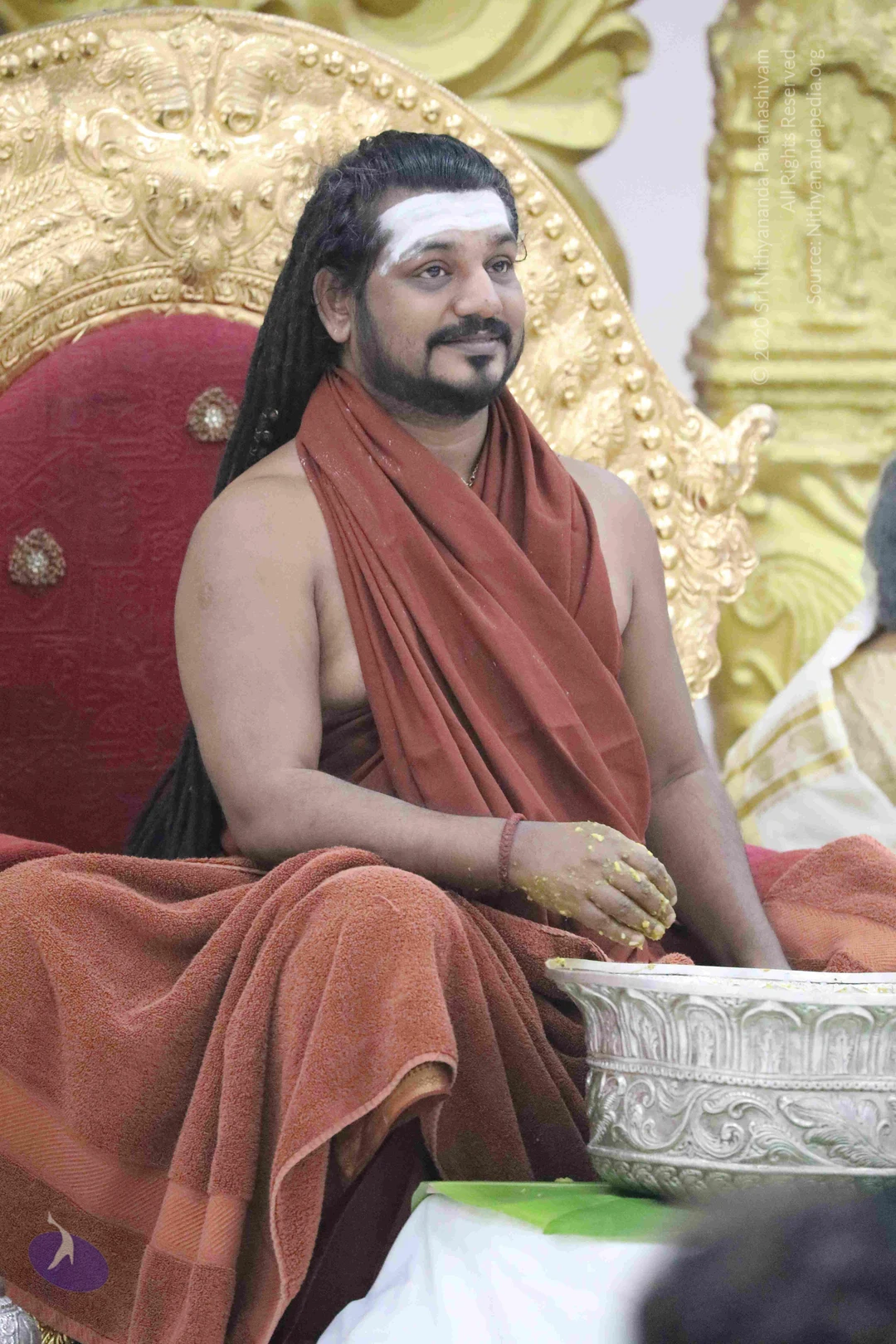
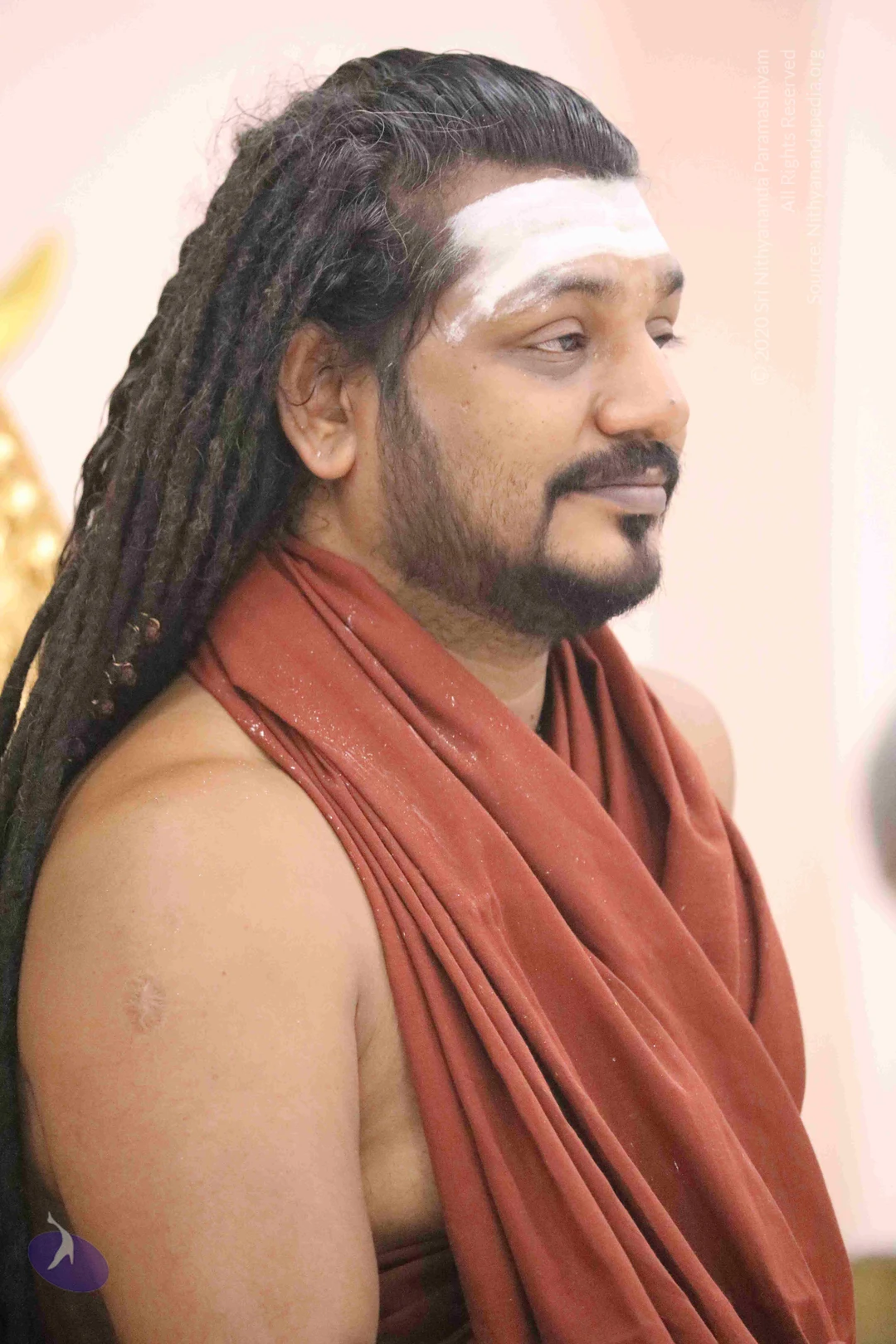
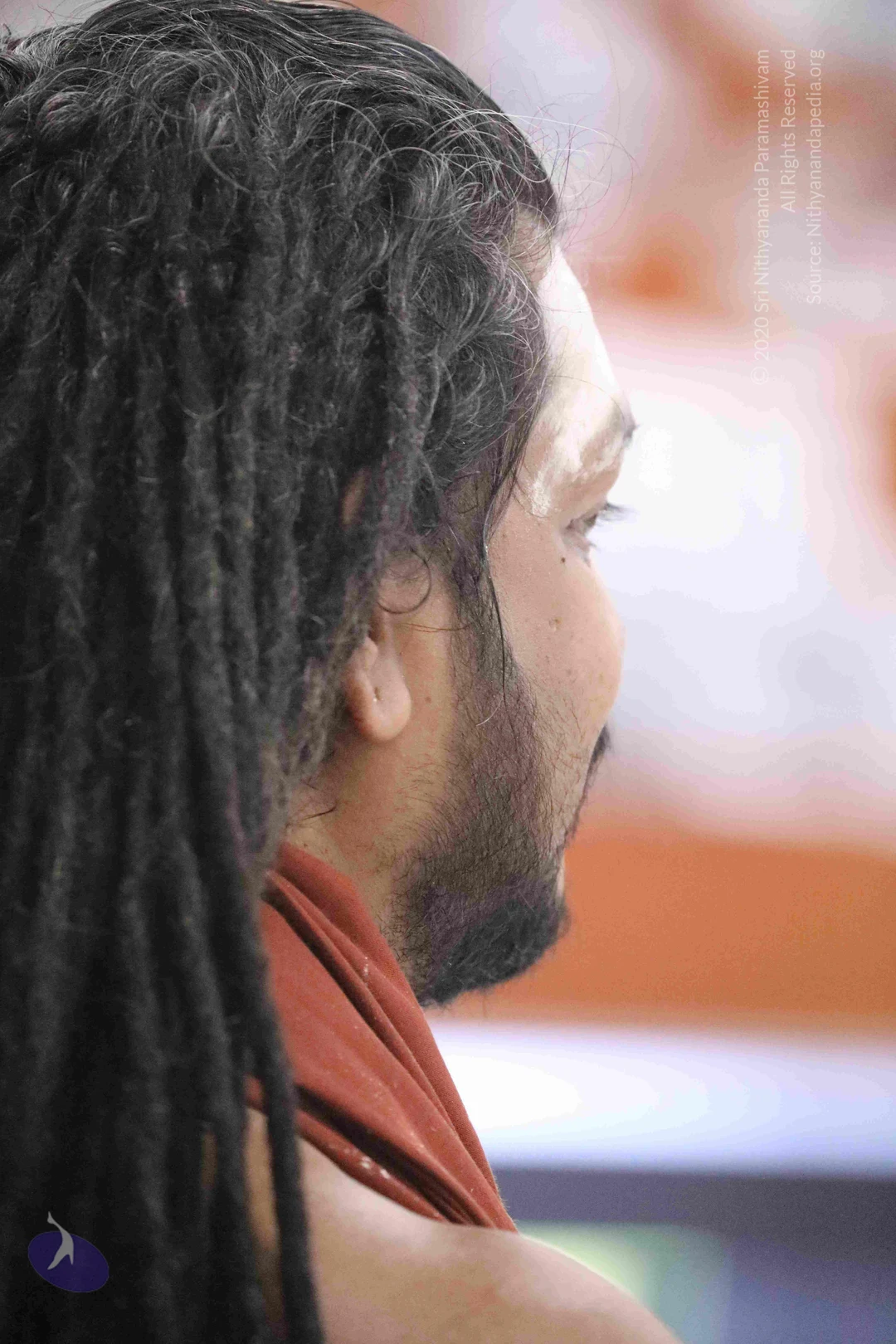
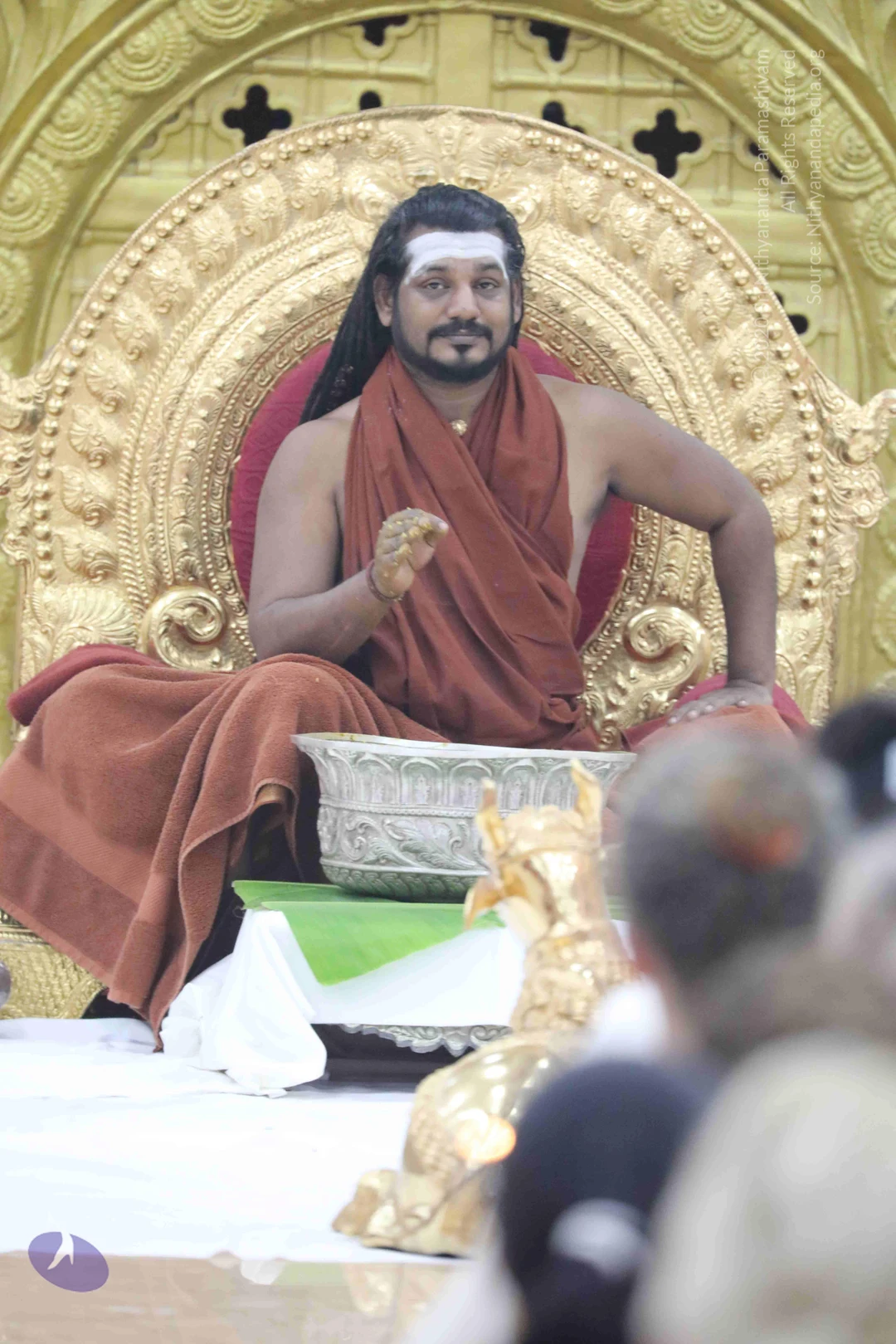
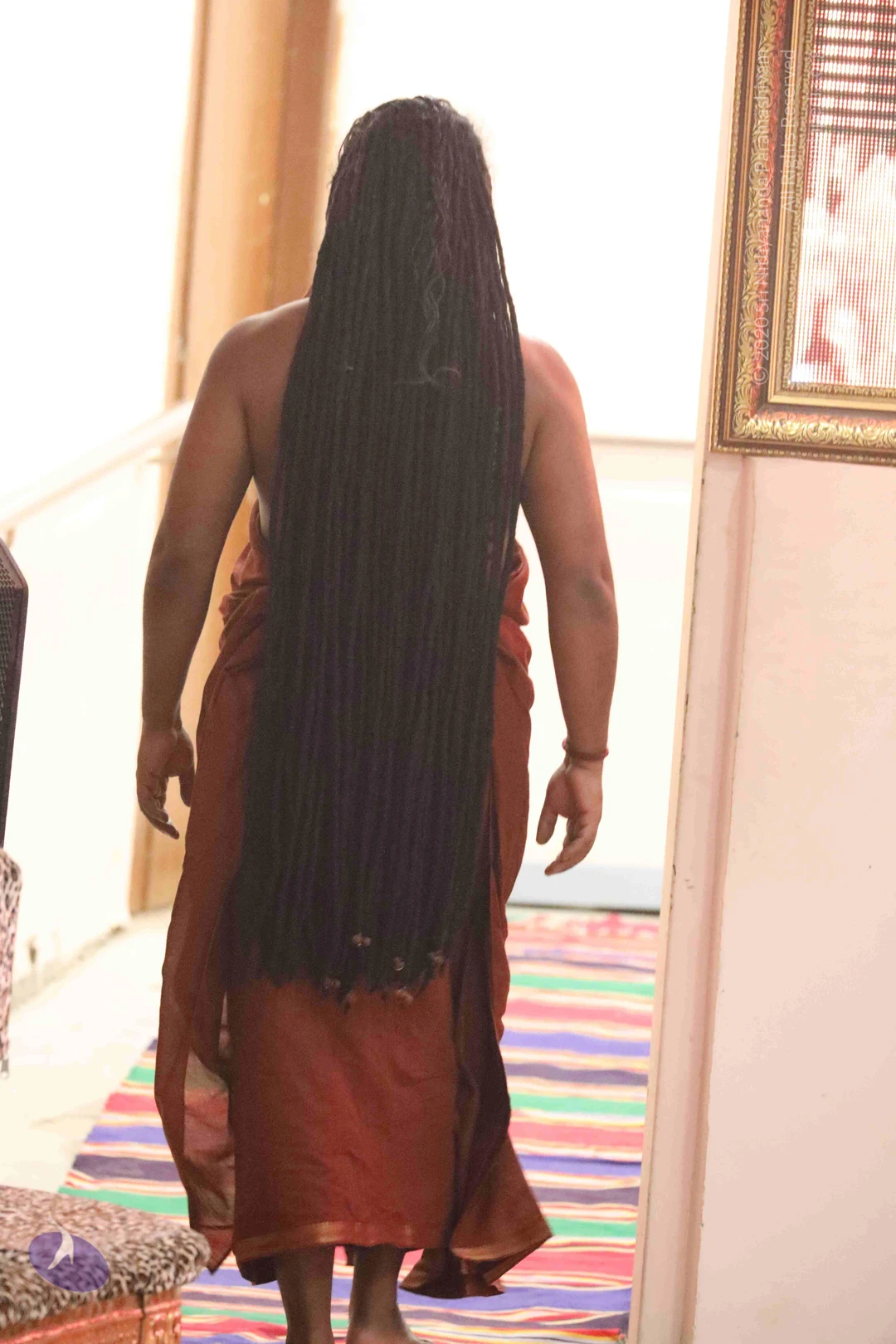
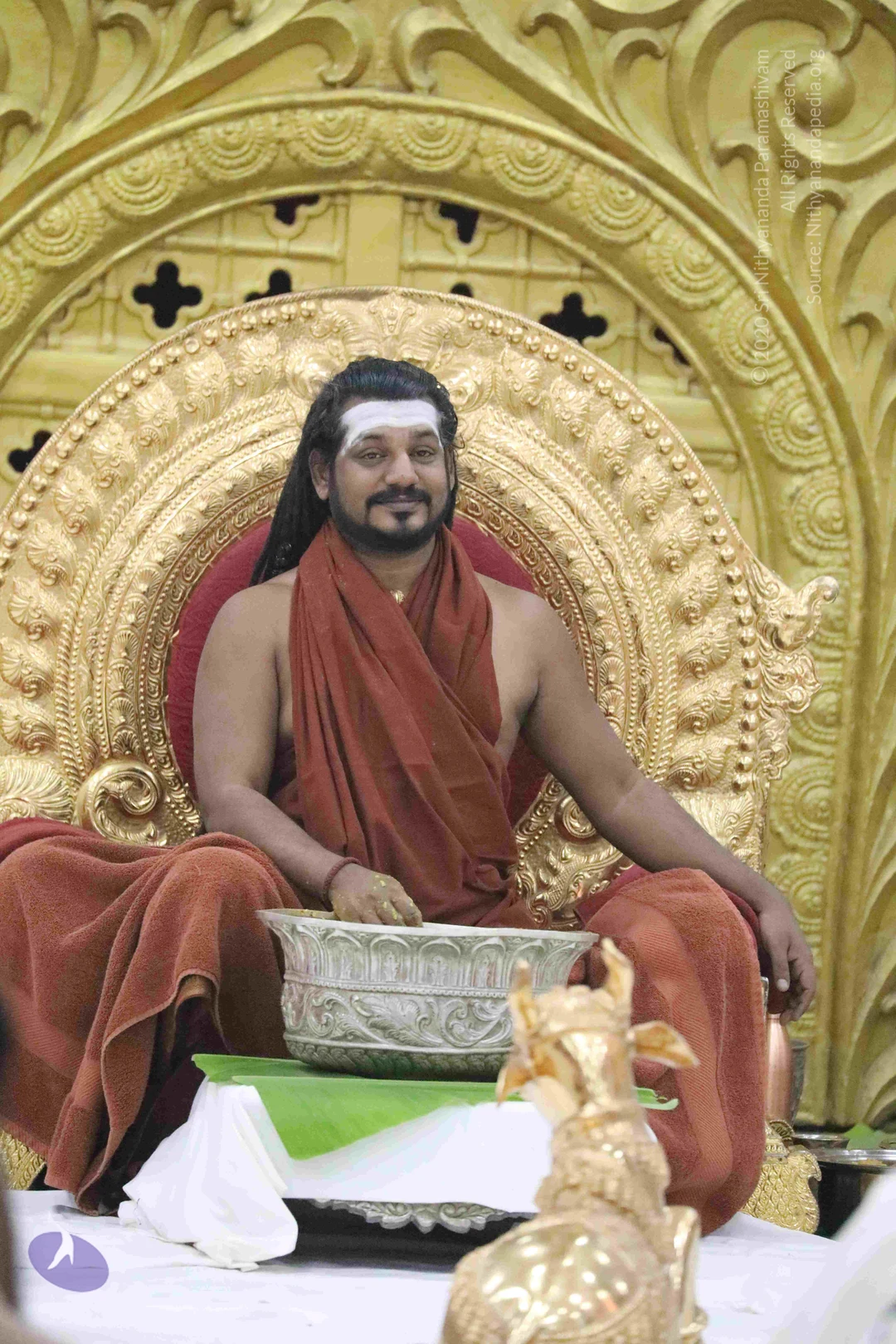
Photograph of a person seen from behind, walking away across a room with a striped multicolour rug. The person has very long dark hair hanging loose down the back to the waist, bare shoulders and arms, and wears a rust-brown or maroon wrap cloth draped around the body. A bracelet is visible on one wrist. To the left is a leopard-print upholstered stool, and on the right a gold-framed mirror or picture hangs on a pale wall beside a doorway. The person is alone in the scene and no face is visible. a person candidacy cannot be established from appearance alone.A seated man in a rust-orange monastic wrap and white vibhuti stripe on the forehead sits on an ornate gold throne with a red cushion, eyes lowered, long dark hair falling past his shoulders. He is handling food on a silver plate placed on a silver stool, with green leaves and small silver bowls in front of him. In the foreground, a partly visible ornate gold cow or bull figure and blurred heads of onlookers. A person at the right edge points toward him.A seated man in a rust-orange sannyasi wrap sits on an ornate gold throne with red cushions, eating from a green leaf plate in a silver-rimmed bowl set on a silver stand. He has a white forehead tilak, long dreadlocked hair and a beard. A gold ceremonial animal figure sits in the foreground, and a partly visible person stands at the right edge. a person appearance is noted: long swept-back hair, saffron-orange robes and a throne. The surrounding gilded carvings and the event's setting suggest a temple ritual hall.

April 12 2018

Original wiki page
Contents

Title

Maheshwara Puja -Blessings to Ancestors || Inauguration of Nithyanandeshwara Sadashiva Devasthanam and Sadashiva Mandapam || Rituals - Mahaganapati Homa, Navagraha Homa and Lakshmi Homa || Day 12 of Mahasadashivohum ||

Narration

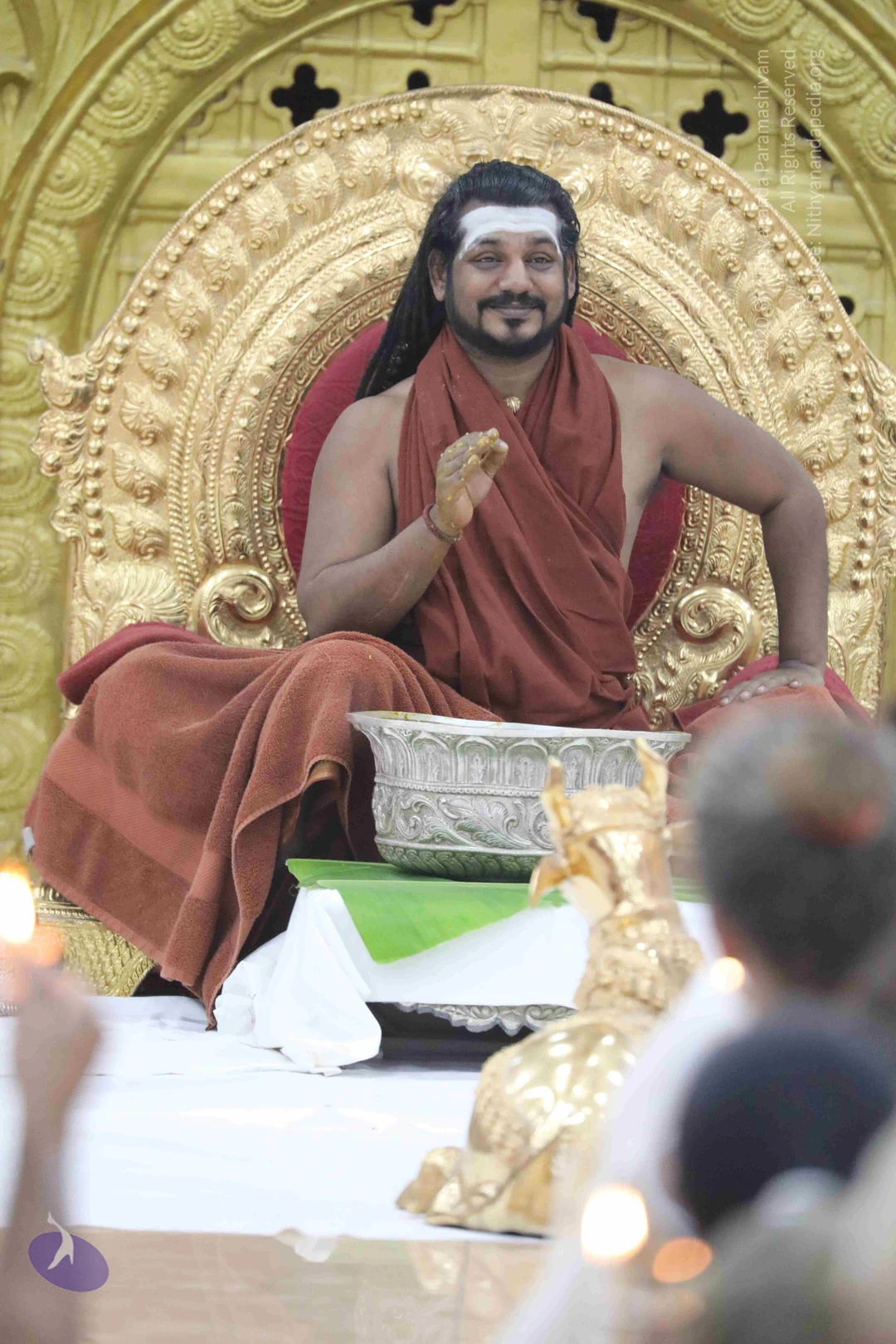
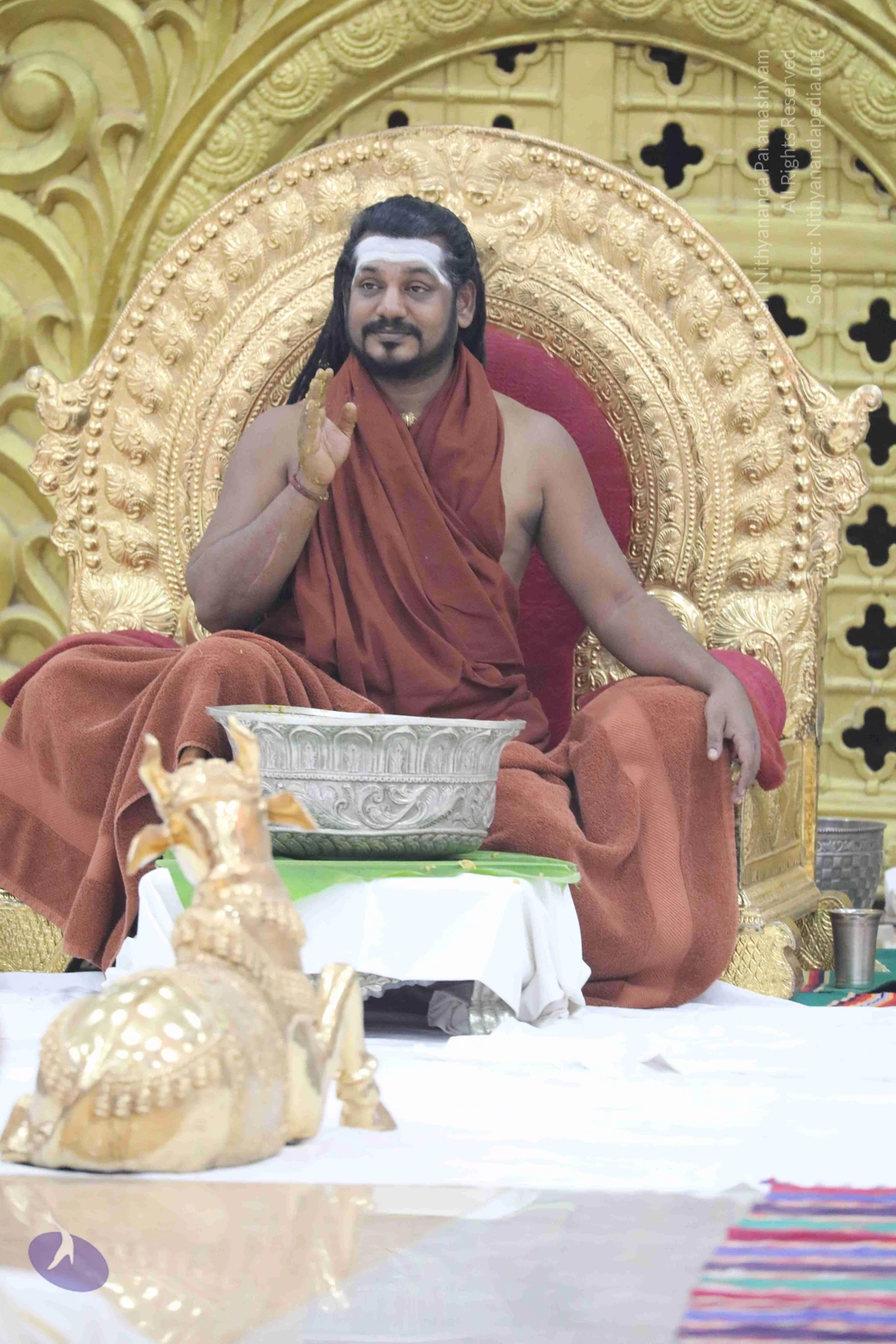
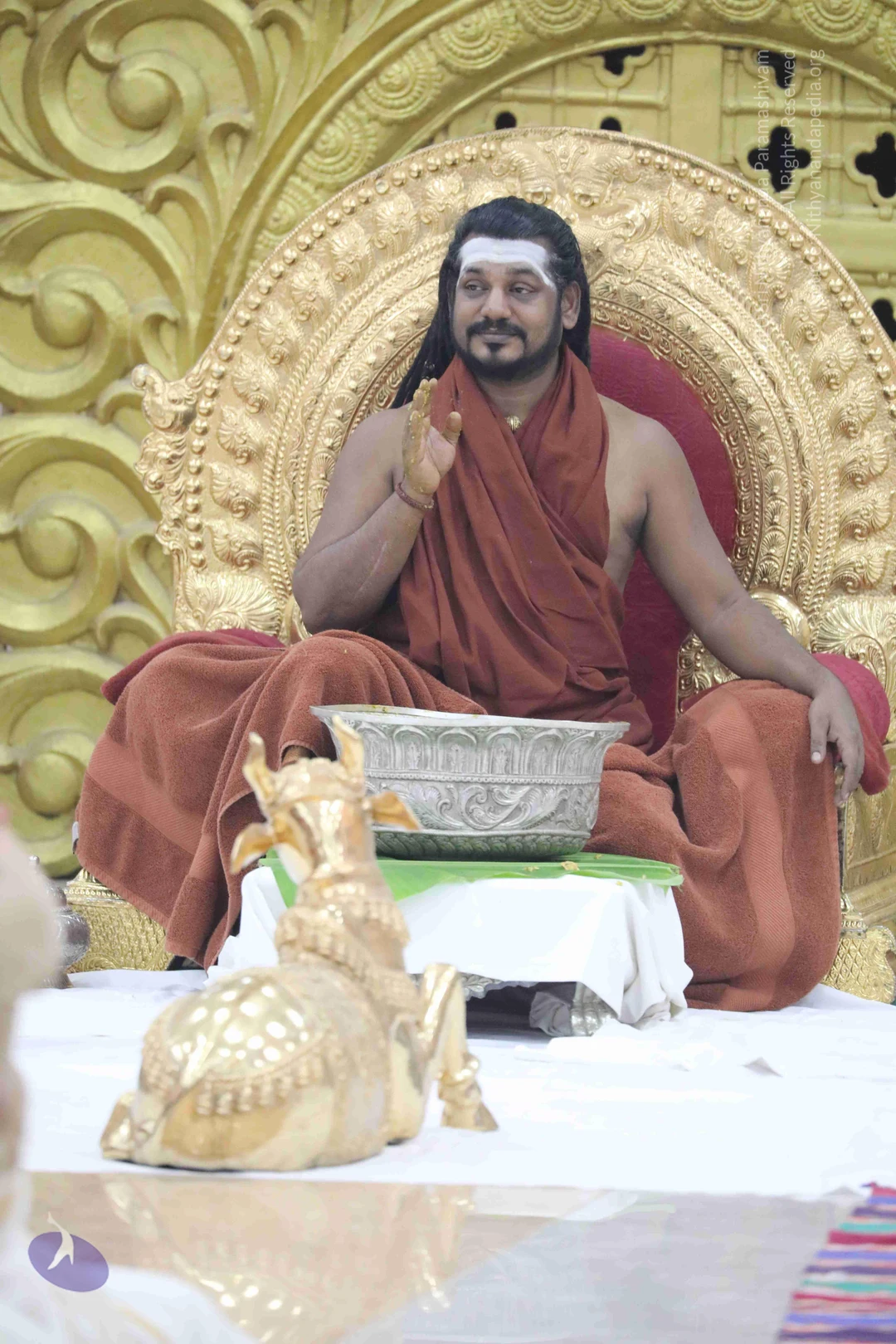
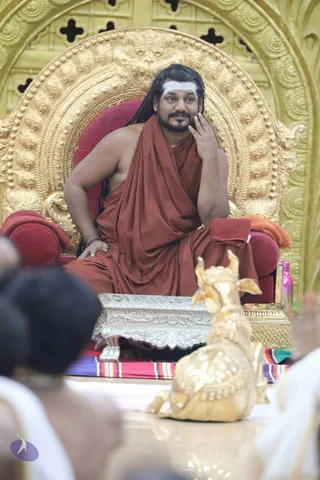
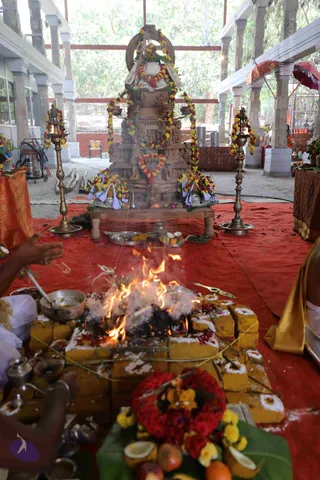
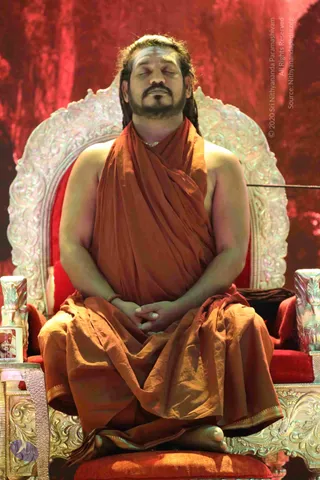
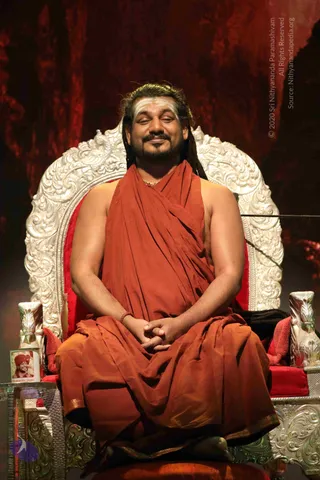
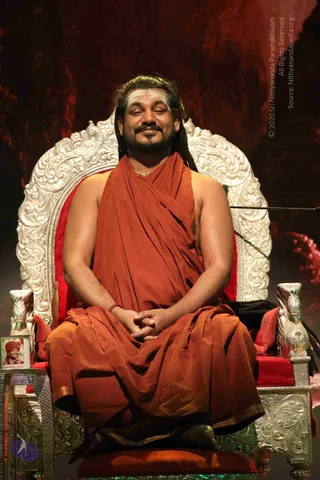
The Supreme Pontiff of Hinduism, Jagatguru Mahasannidhanam, His Divine Holiness, Bhagavan Nithyananda Paramashivam, is the visionary through Whom this whole revival of KAILASA is made possible. Today Day 12 of the ultimate spiritual Mahasadashivoham Program, which happened under the auspices of His Divine Holiness (HDH), Maheshwara Puja was performed. His Divine Holiness blessed the ancestors to attain Enlightenment and offered them pinda or food for the journey to their enlightenment. Another important part of the Maheshwara Puja is the offering of food to the Master along with His monastic disciples. Offering food to the Master is equal to feeding ten thousand hungry people.

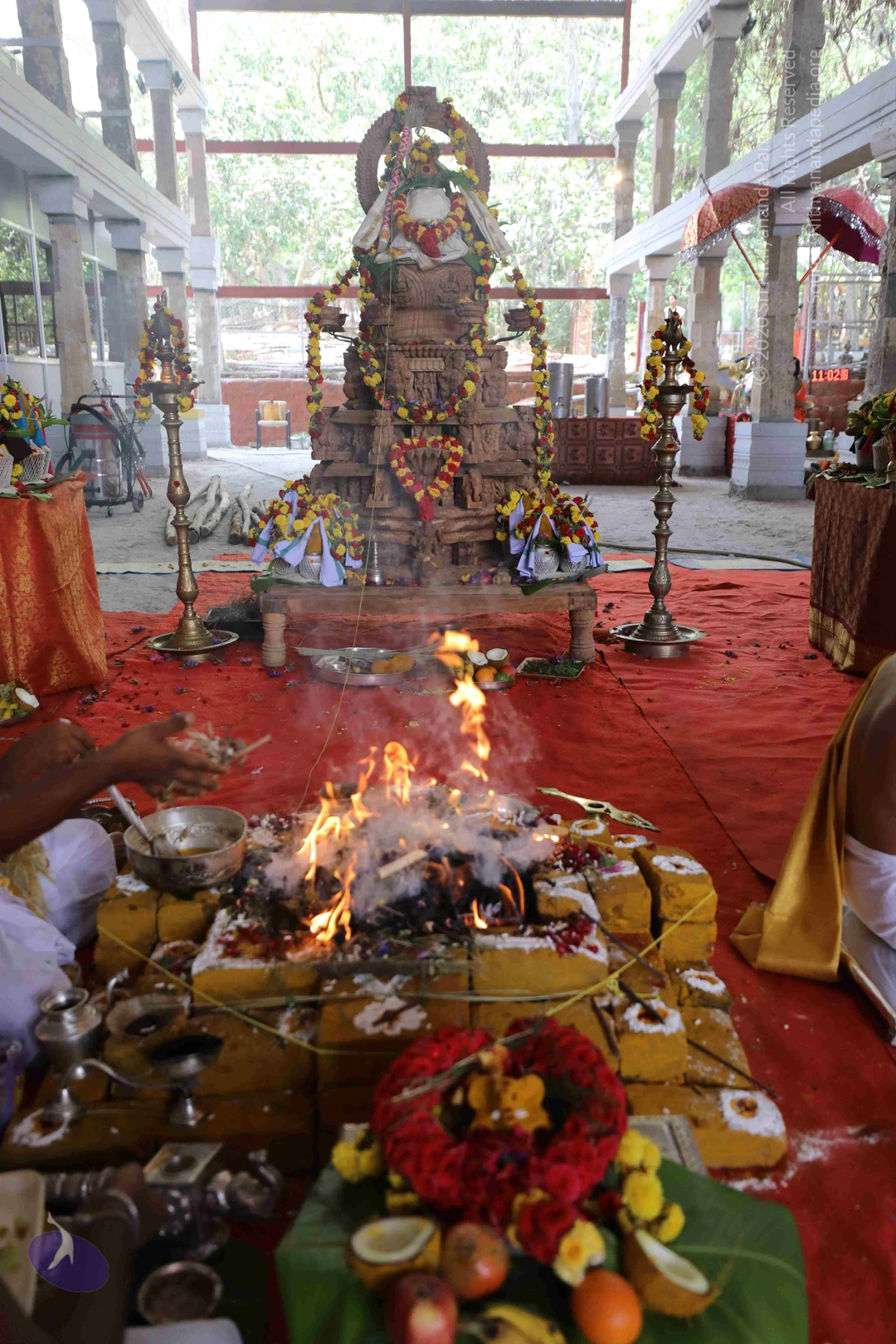
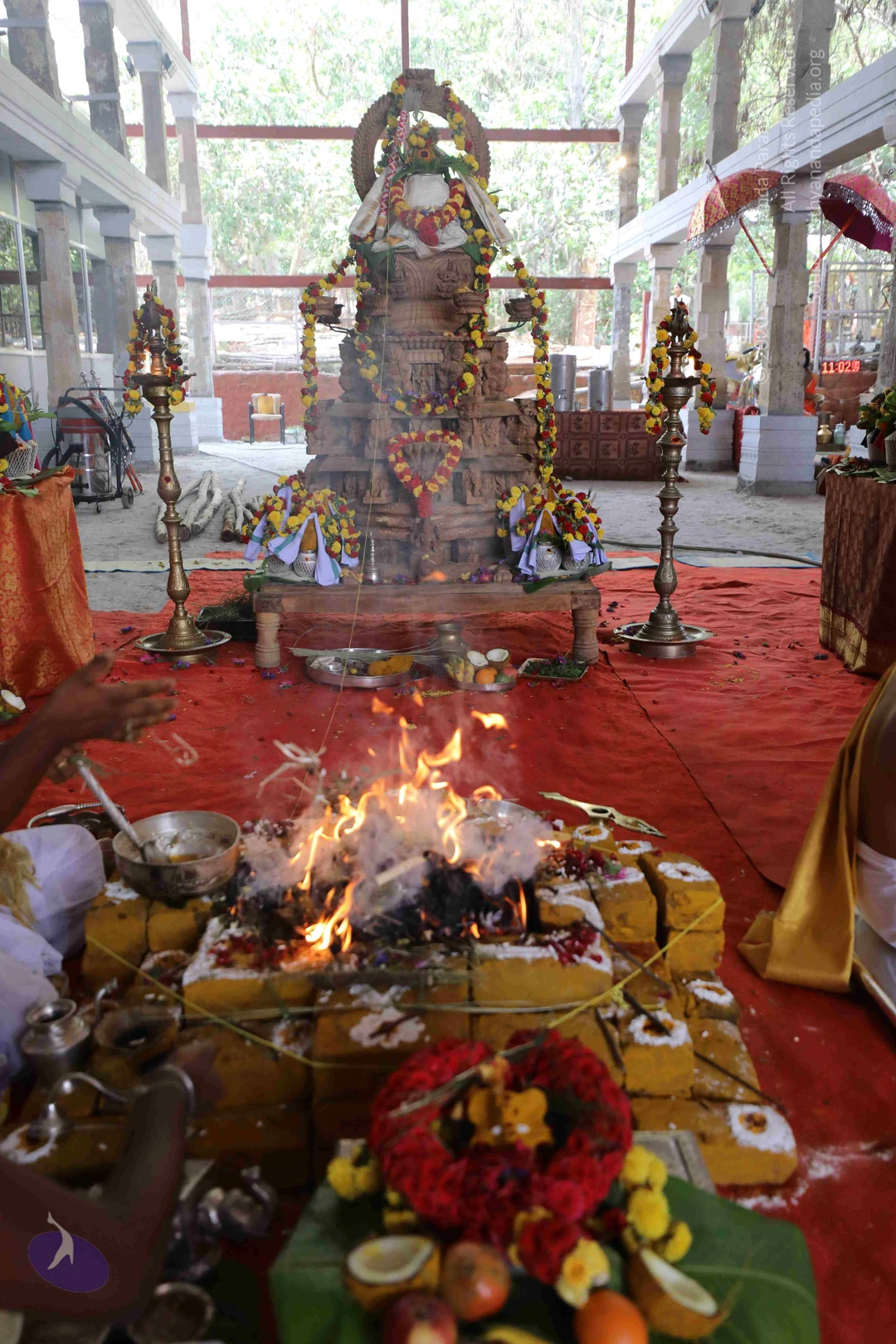
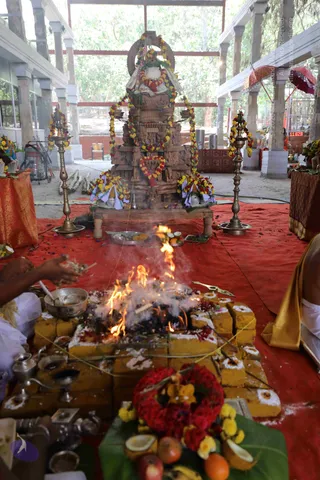
On this day Nithyanandeshwara Sadashiva Devasthanam was inaugurated and, further, there was the official opening and inauguration of the Sadashiva Mandapam at Bengaluru Aadheenam. The rituals initiated with the Mahaganapati Homa followed by the Navagraha Homa and Lakshmi Homa.

Video

Photos Of The Day:

01-Maheshwarapuja
03-Past-Life-Regression

Photos

Link to Facebook Page

https://www.facebook.com/ParamahamsaNithyananda/posts/1709179982503178

Photos from this day

View all 48 photos

01-Maheshwarapuja

42 photosSource gallery
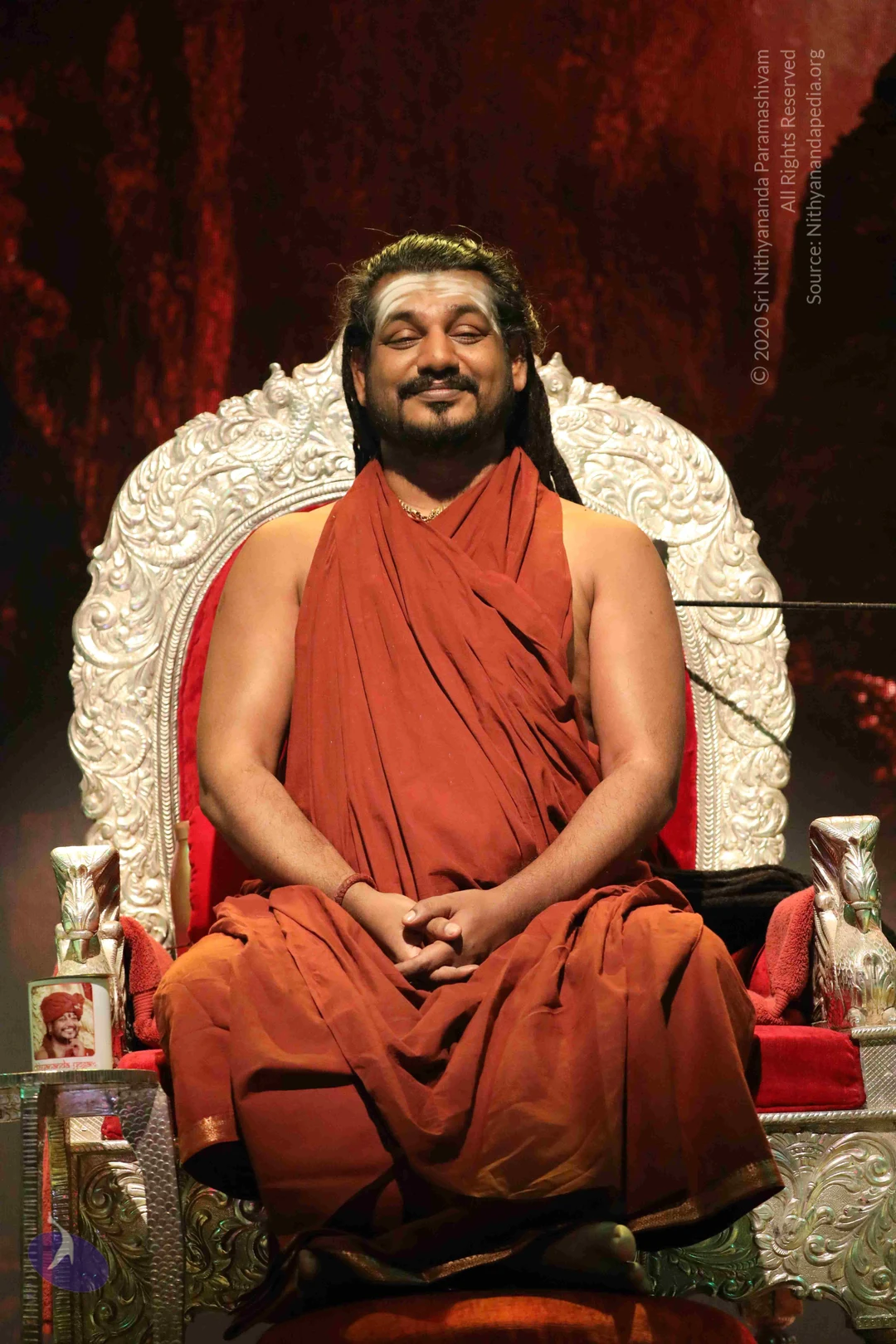
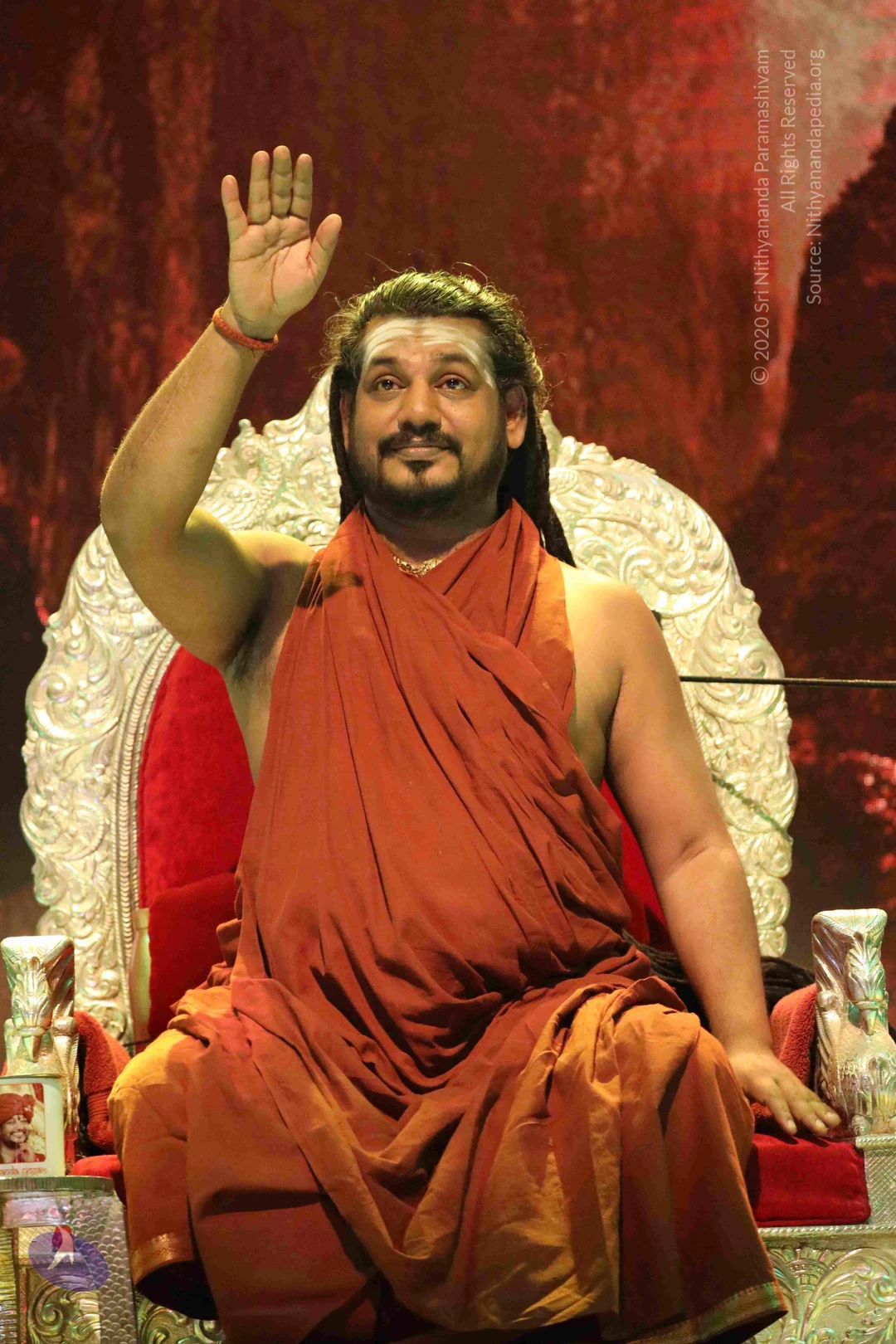
Photograph of a person seen from behind, walking away across a room with a striped multicolour rug. The person has very long dark hair hanging loose down the back to the waist, bare shoulders and arms, and wears a rust-brown or maroon wrap cloth draped around the body. A bracelet is visible on one wrist. To the left is a leopard-print upholstered stool, and on the right a gold-framed mirror or picture hangs on a pale wall beside a doorway. The person is alone in the scene and no face is visible. a person candidacy cannot be established from appearance alone.A seated man in a rust-orange monastic wrap and white vibhuti stripe on the forehead sits on an ornate gold throne with a red cushion, eyes lowered, long dark hair falling past his shoulders. He is handling food on a silver plate placed on a silver stool, with green leaves and small silver bowls in front of him. In the foreground, a partly visible ornate gold cow or bull figure and blurred heads of onlookers. A person at the right edge points toward him.A seated man in a rust-orange sannyasi wrap sits on an ornate gold throne with red cushions, eating from a green leaf plate in a silver-rimmed bowl set on a silver stand. He has a white forehead tilak, long dreadlocked hair and a beard. A gold ceremonial animal figure sits in the foreground, and a partly visible person stands at the right edge. a person appearance is noted: long swept-back hair, saffron-orange robes and a throne. The surrounding gilded carvings and the event's setting suggest a temple ritual hall.Photograph of a homa fire ritual inside an open-sided hall with white pillars and a red cloth floor. A flaming fire pit lined with yellow-painted bricks sends up smoke, with offerings of flowers, coconut halves and fruit in the foreground. Behind it stands a carved stone or wooden shrine structure garlanded with yellow and red flower chains and a heart-shaped floral garland, flanked by two tall brass lamps and red ceremonial umbrellas. A priest in white dhoti and a person in a gold shawl sit at the sides, one tossing offerings into the fire. No one is clearly a person; the central figures are priests and attendants.A seated man in a rust-orange monastic wrap draped over one shoulder sits on an ornate gold-and-red throne with a carved golden arch behind him. He has long dark hair, a short beard, and a white horizontal tilak on his forehead, and his right hand rests against his cheek. In the foreground a gilded seated bull figure faces the throne, with a silver footstool before it and blurred heads and white-clad devotees at the edges. Swamiji (probable): the seated figure has long swept-back hair, a white forehead mark and orange monastic clothing on a throne, which are compatible cues. A pink water bottle and orange towel rest beside him.A photograph of a homa fire burning on a red cloth inside a covered pavilion with white pillars. A fire pit of stacked yellow-coloured bricks holds flames and smoke, with a bowl and ladle nearby and a red and orange flower garland with coconut halves and fruit on a green leaf in the foreground. Behind it stands a carved stone deity murti decorated with marigold and red flower garlands, flanked by tall brass oil lamps and two red and gold umbrellas. A person's hands and a partially visible figure in white and gold cloth sit at the edges of the frame. Visible people are only those partly shown at the edges.
03-Past-Life-Regression
6 photosSource gallery
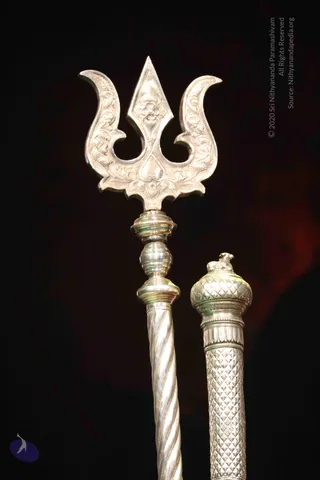
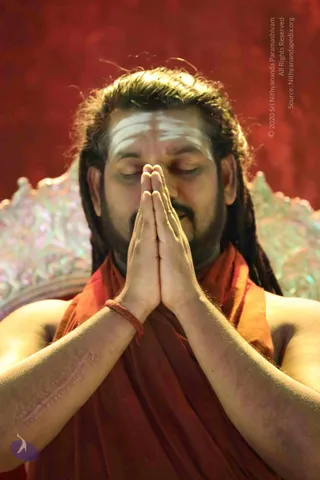
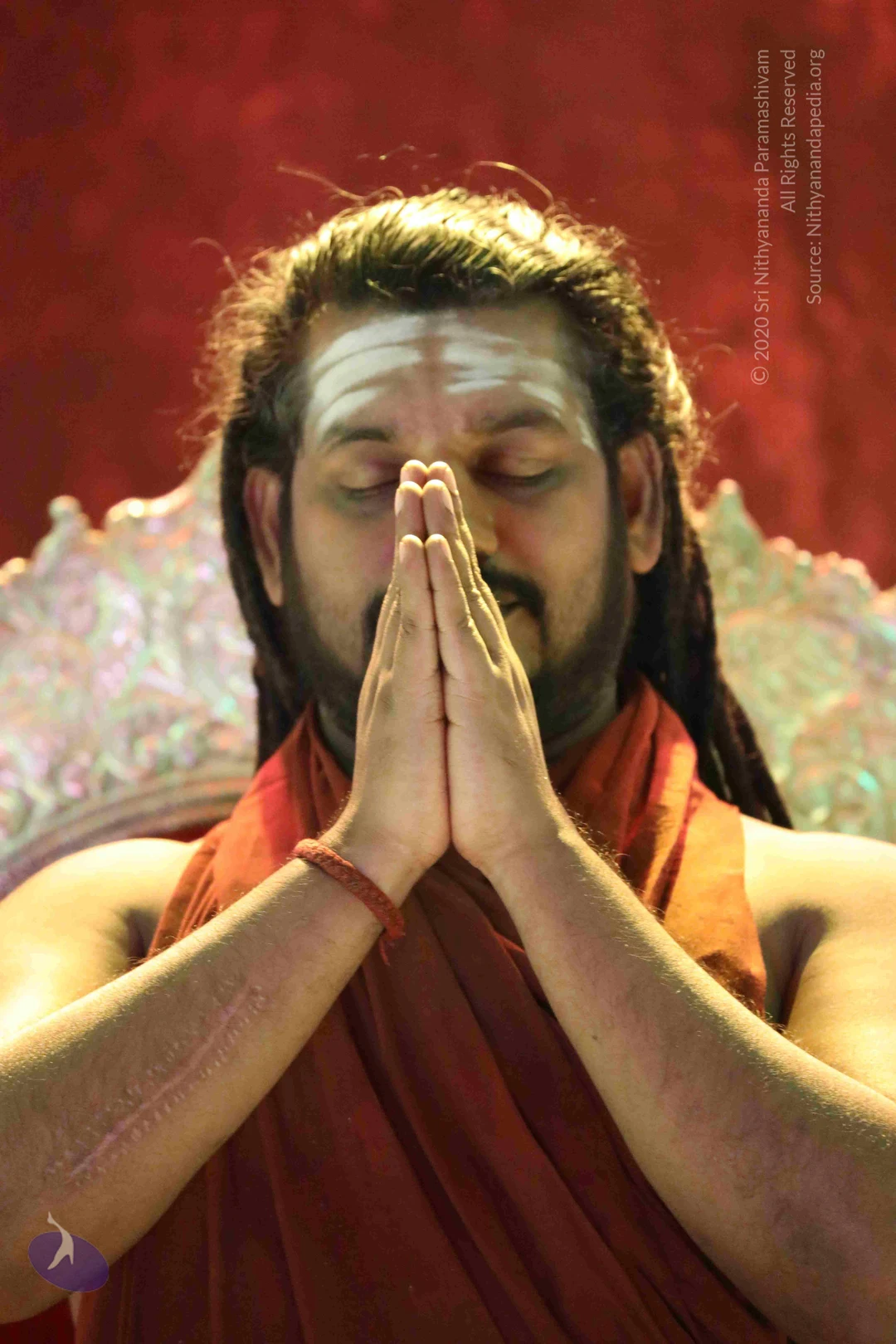
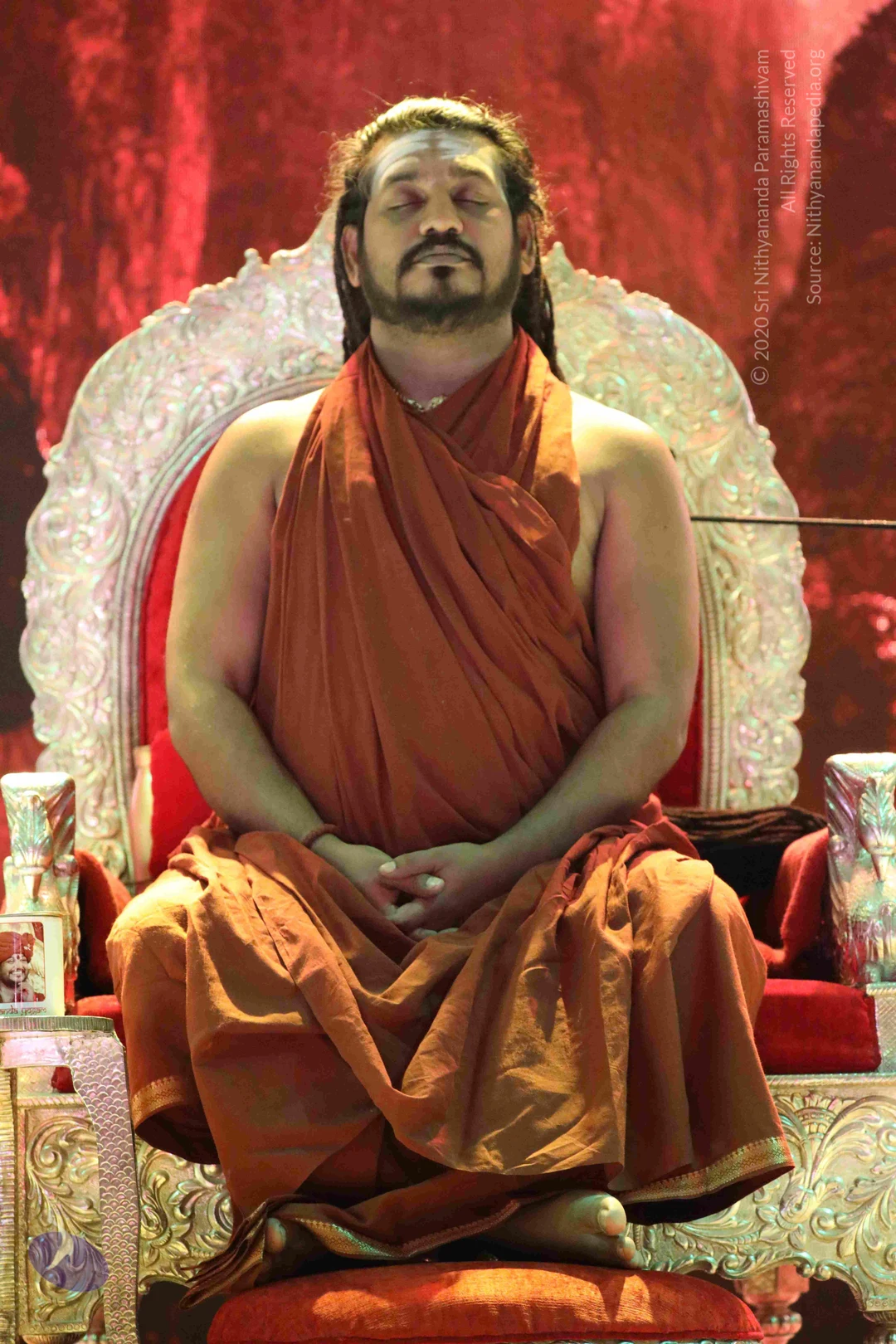
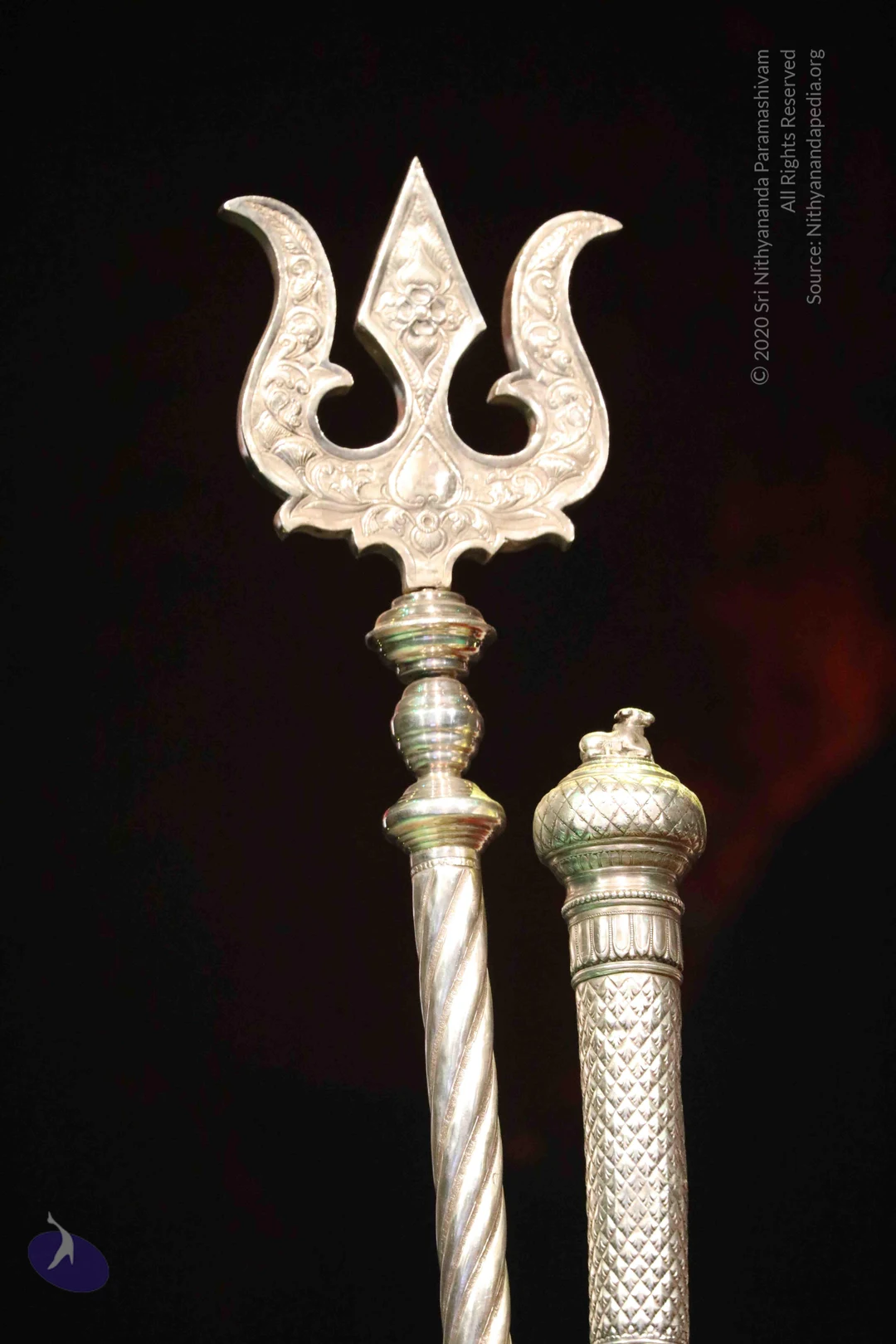
Close-up photograph of a silver trident (trishula) with an ornately engraved, leaf-scrolled head and twisted shaft, set against a dark background. Beside it stands a second silver ceremonial staff with a finial topped by a small seated figure, its surface finely textured with a diamond-pattern design. Warm reddish light glows faintly at the right edge. No people are visible in the frame.Close photo of a man with long dark hair and a beard, eyes closed, palms pressed together in namaste at chest height. He wears a rust-orange shawl over bare shoulders, has white horizontal tripundra lines on his forehead, and a red thread tied on his wrist. Behind him is a red backdrop and a pale ornate silver-toned throne-like seat. Swamiji (probable): long swept-back hair, orange clothing, and tripundra marks are the qualifying cues for this person, who is seated in a devotional pose.A man with long swept-back hair, a short beard and a horizontal white forehead mark sits cross-legged with eyes closed on an ornate silver throne against a red backdrop. He wears a draped rust-orange monastic cloth over his left shoulder and torso, bare arms, a thin necklace, and holds his hands together in his lap. Swamiji (probable) based on the swept-back hair, saffron-orange robes and throne, with the appearance cues matching a seated spiritual head in meditation. A small framed photograph sits on the silver side table to his left.A man with long swept-back dark hair, a white vertical forehead mark and a short beard sits eyes closed with a serene smile on an ornate silver-and-red throne against a red backdrop. He wears a rust-orange saffron drape over one shoulder and a thin gold necklace, hands resting clasped in his lap. A small framed portrait of a man in a red turban sits on a silver side table beside the throne. Swamiji (probable): long swept-back hair, saffron clothing and gold necklace on a ceremonial throne. The image shows one seated person.A man seated cross-legged on an ornate silver throne with carved armrests and a red cushion, against a dark red backdrop. He wears an orange-red draped cloth over his shoulders and torso, bare-chested with a thin gold chain, long dark hair swept back, a white tripundra mark on his forehead and a short beard. His hands rest clasped in his lap and he smiles with eyes half-closed. A small framed portrait sits on a side table near the armrest. Swamiji (probable) cues: long hair, ornate silver throne, orange-red draped cloth and gold chain, with the seated figure presented as the central teacher of the event.A man seated on an ornate silver-and-red throne raises his right hand in blessing against a red backdrop. He wears a saffron-orange robe draped over one shoulder and a thin gold necklace, with white vertical tilak marks on his forehead and long dark hair swept back. A small framed portrait sits on a silver side table at lower left. The white text on the image reads Sri Nithyananda Paramashivam