Skip to content
Saturday

20 May 2017

Life Beyond Limits - Awaken Spiritual Powers for Extraordinary Success

Dated photos
267
Source pages
1
Media
9
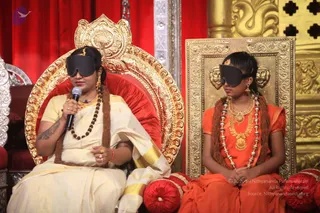
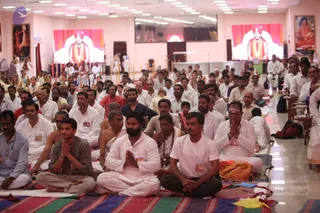
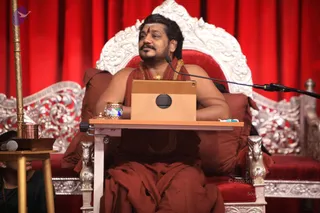
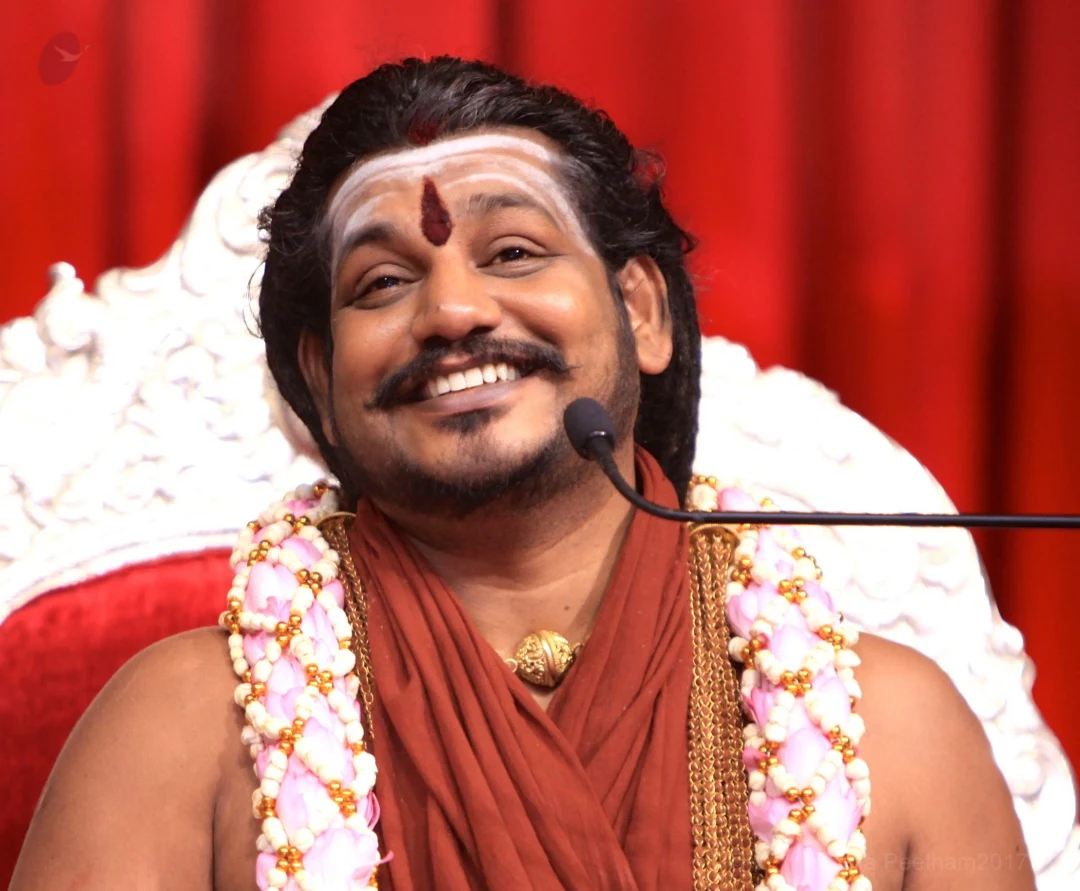
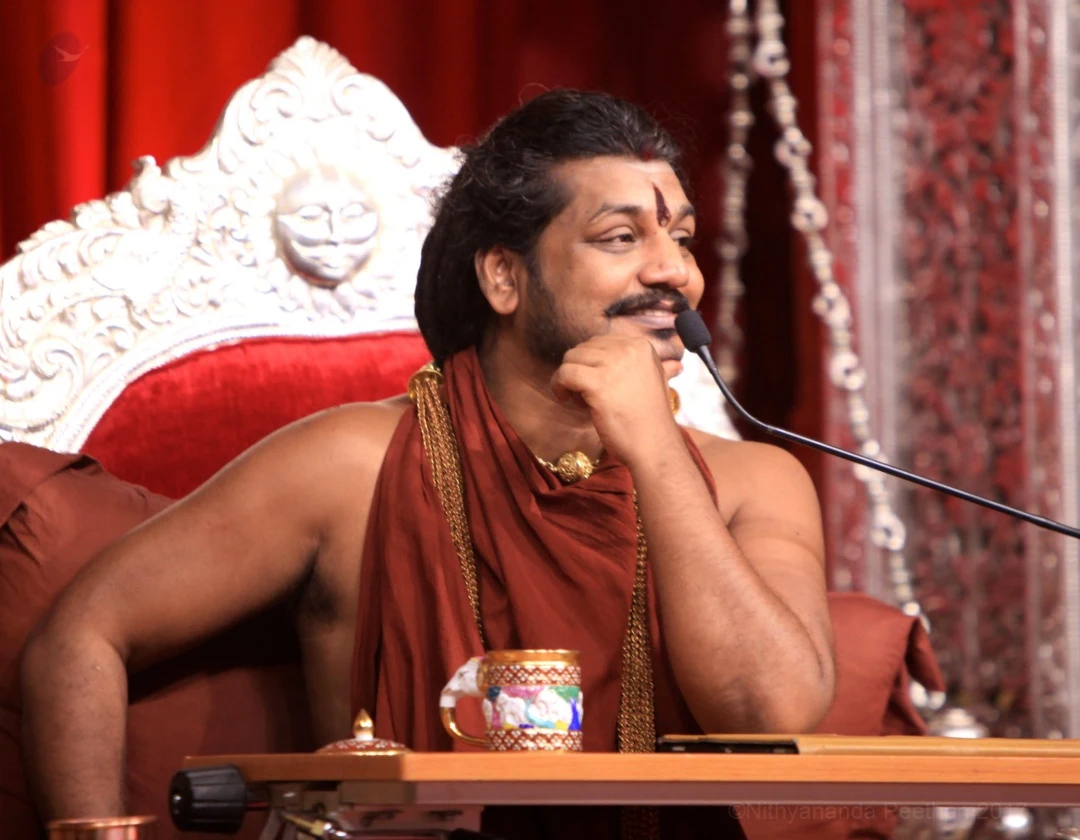
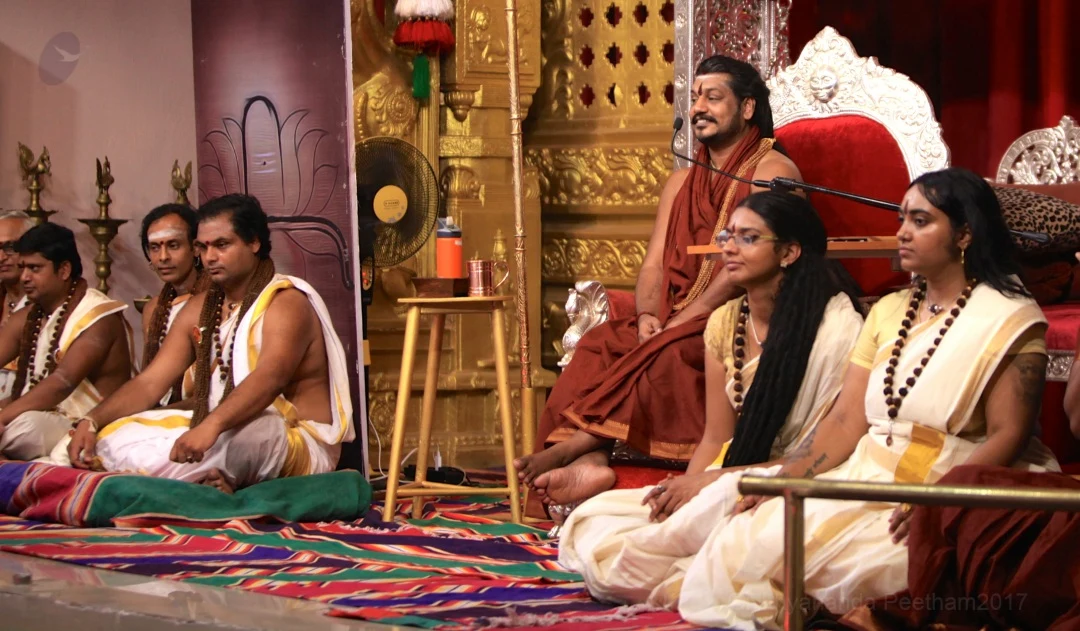
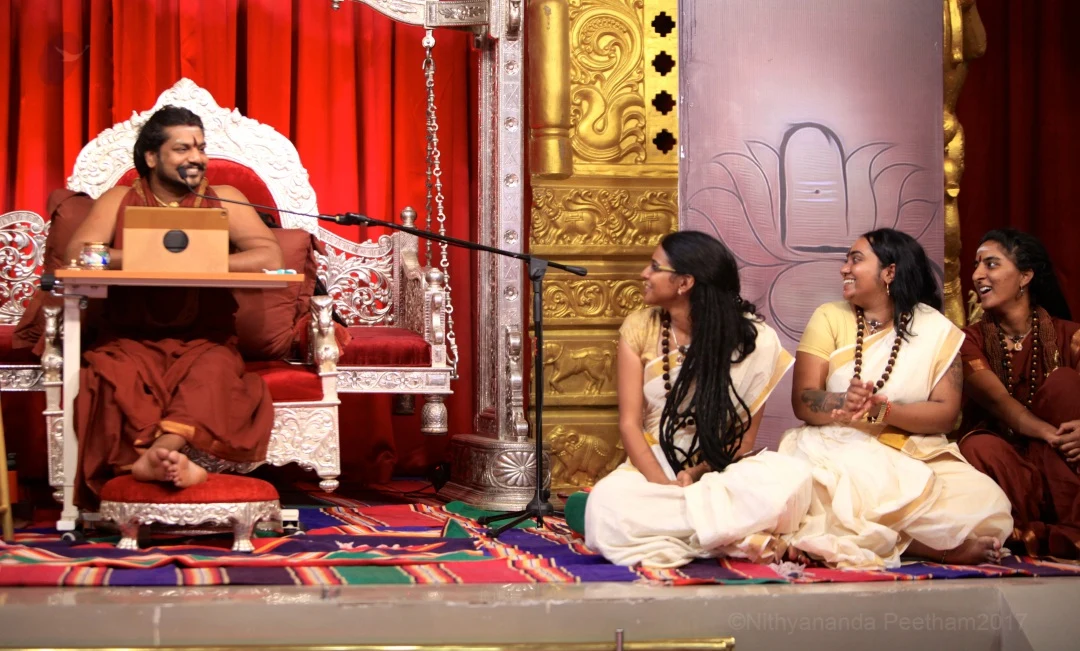
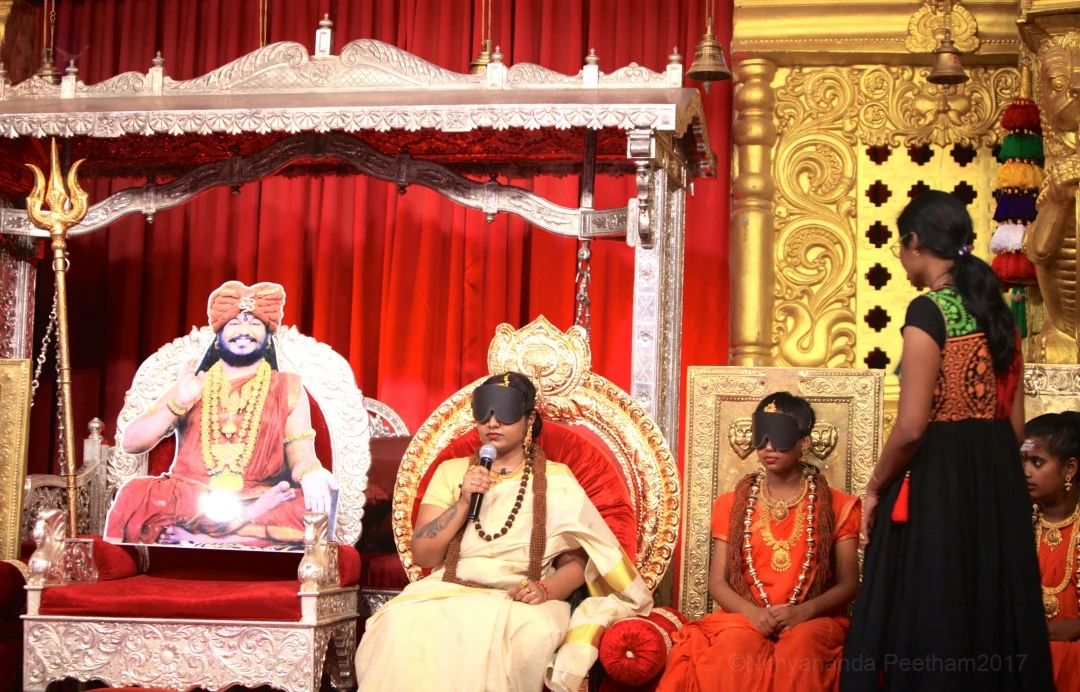
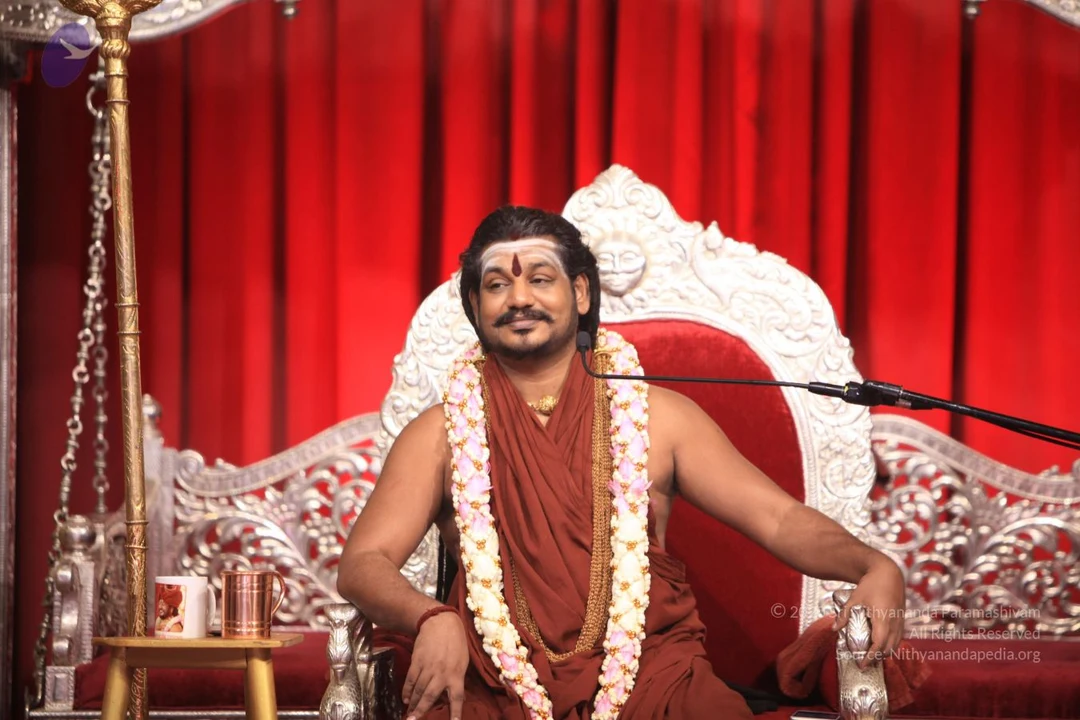
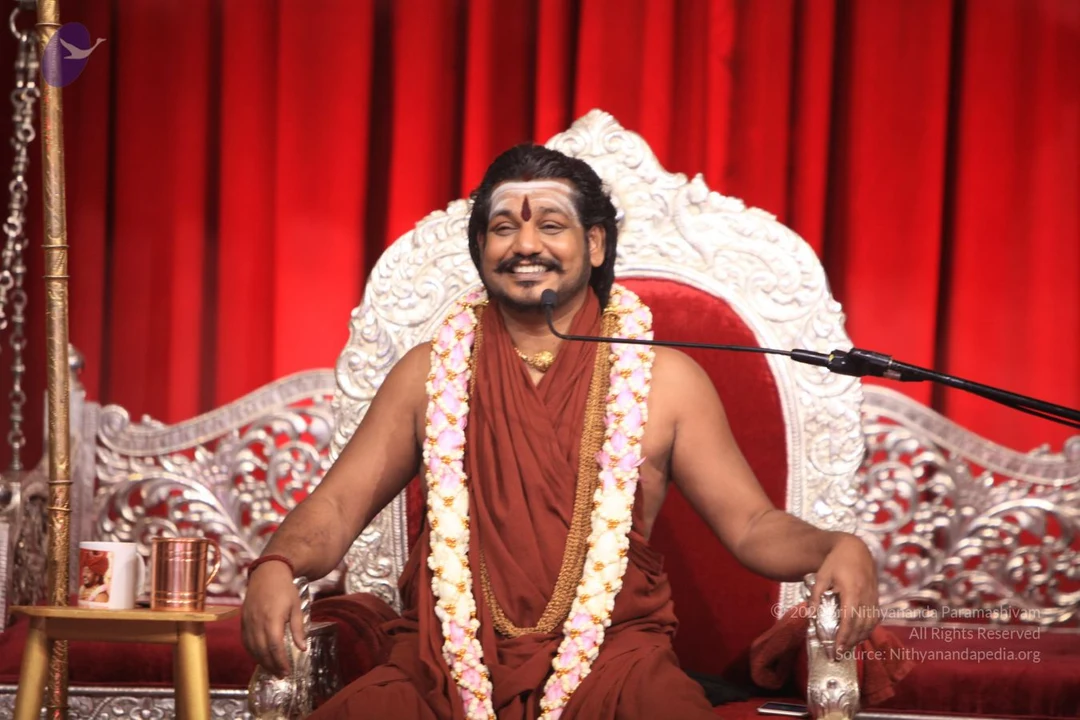
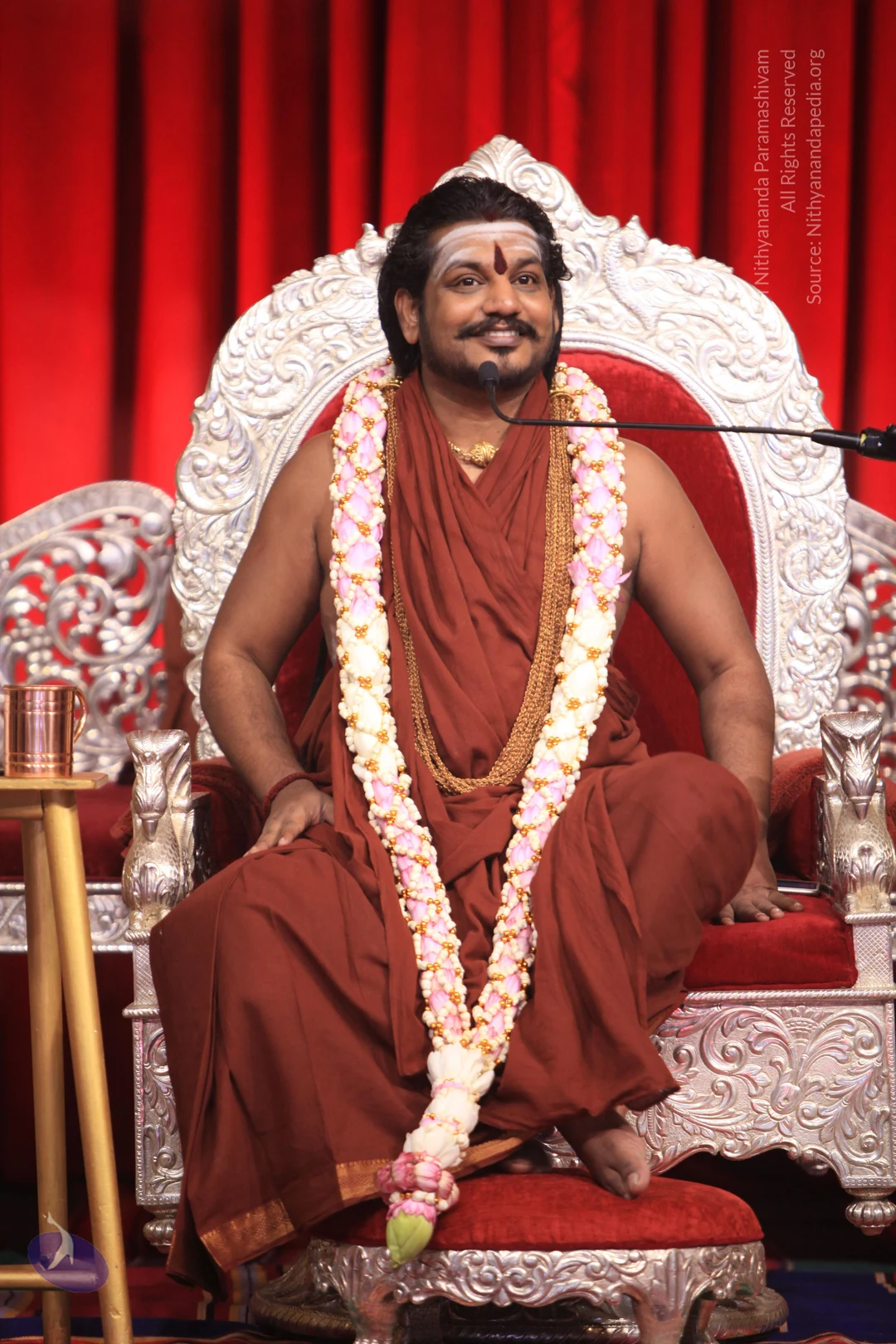
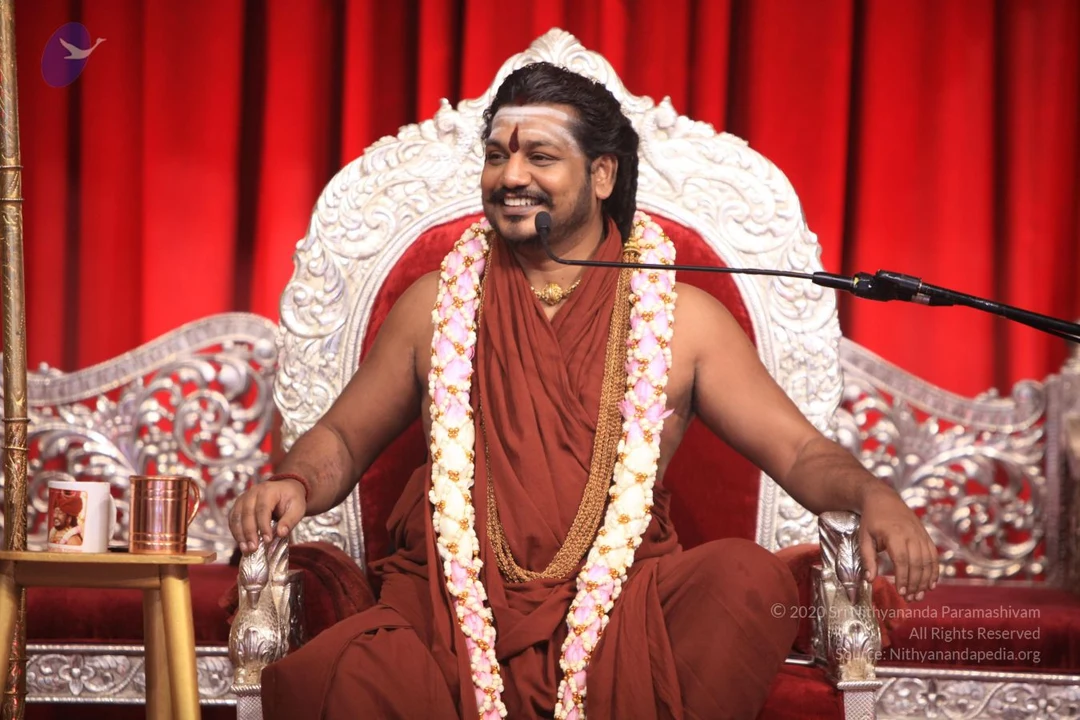
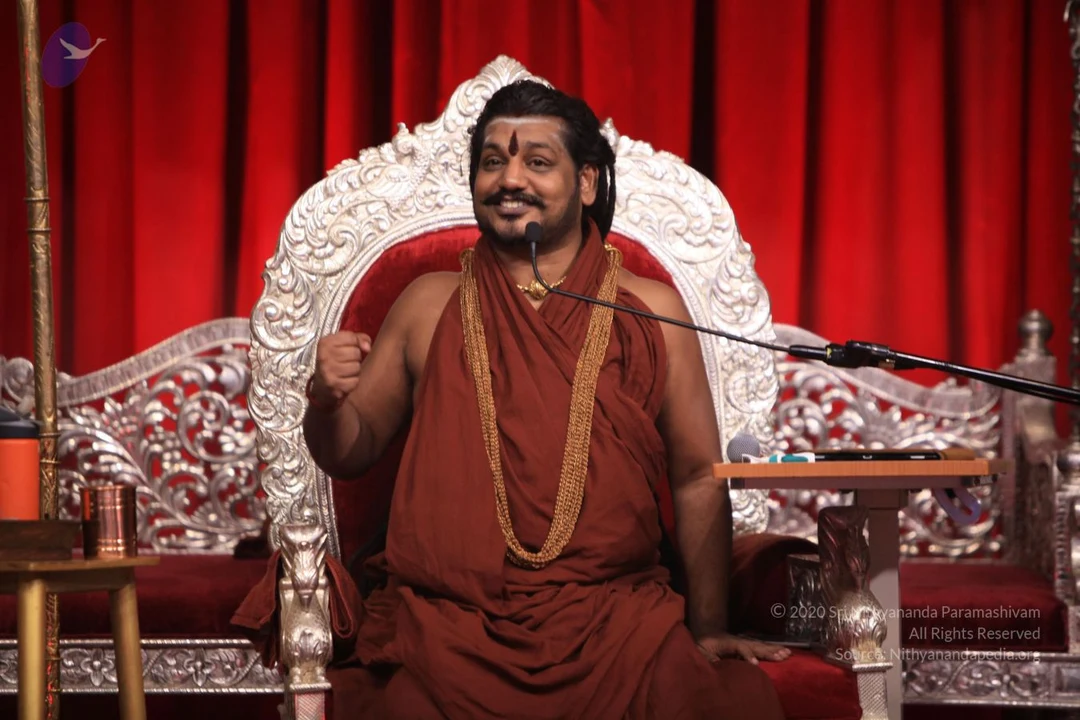
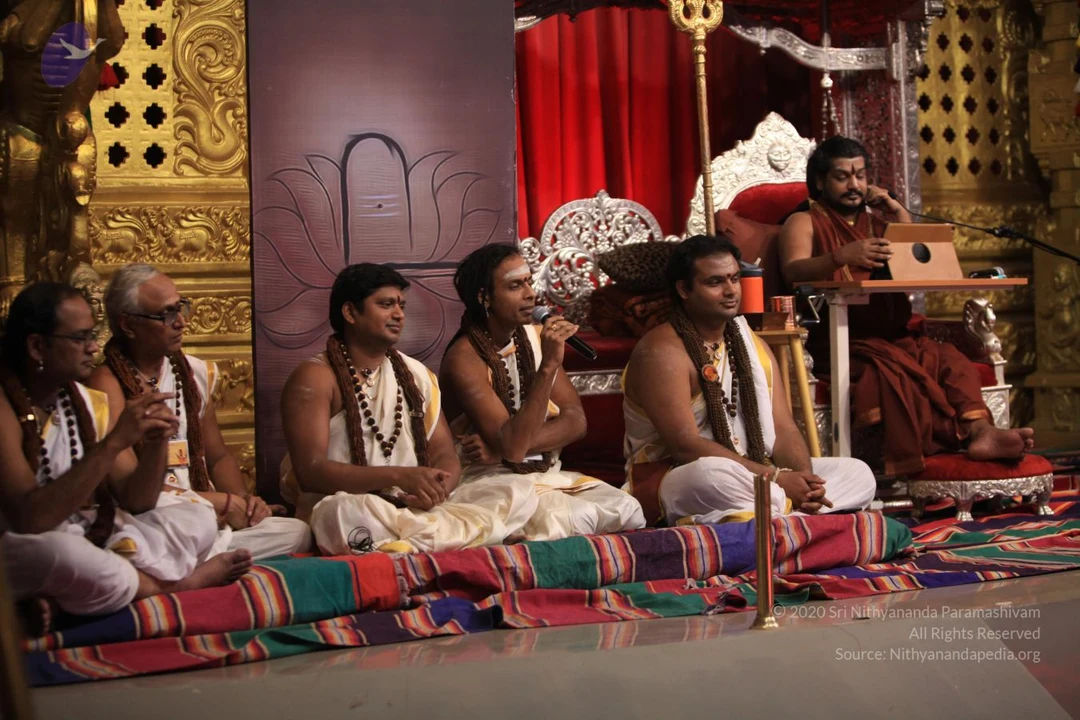
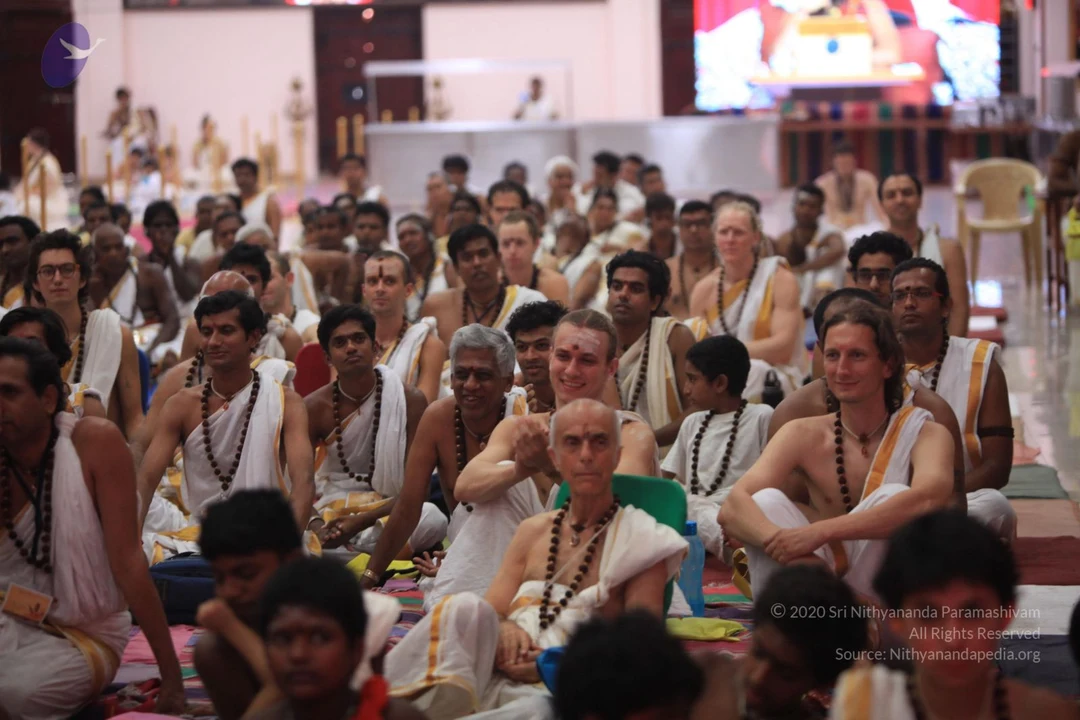
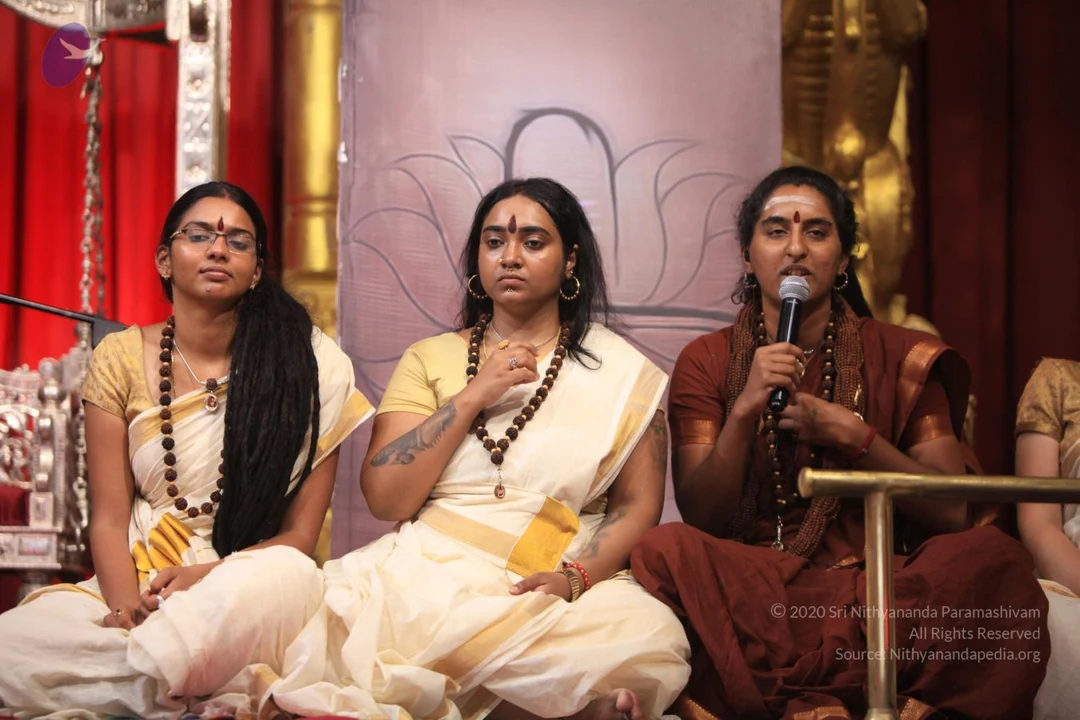
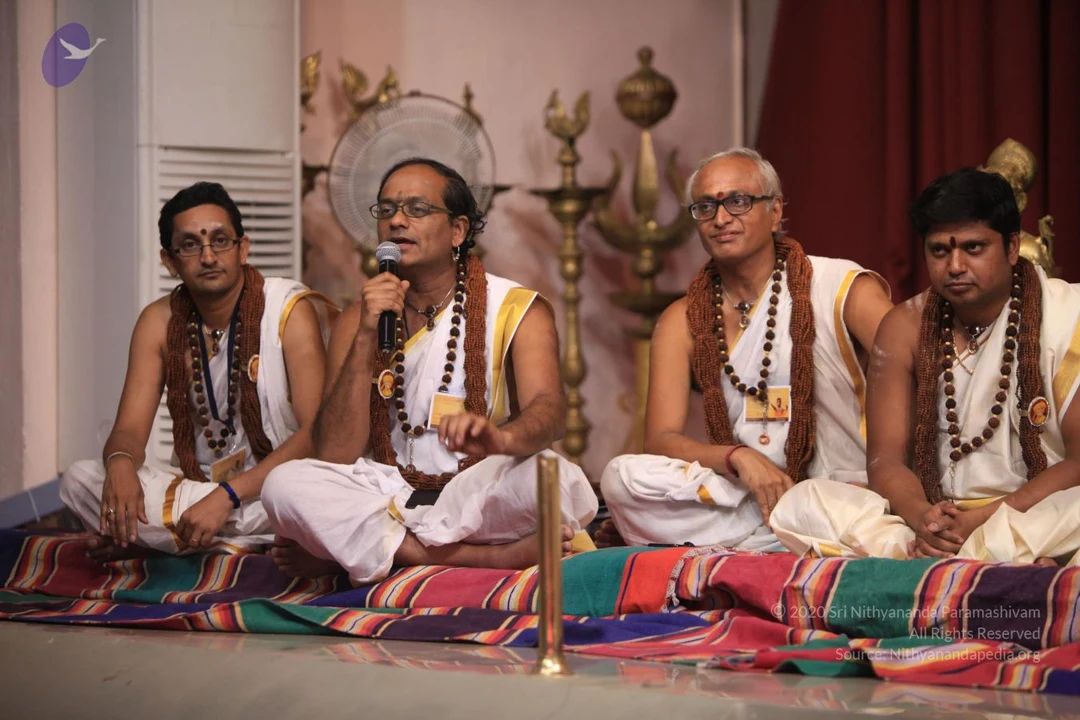
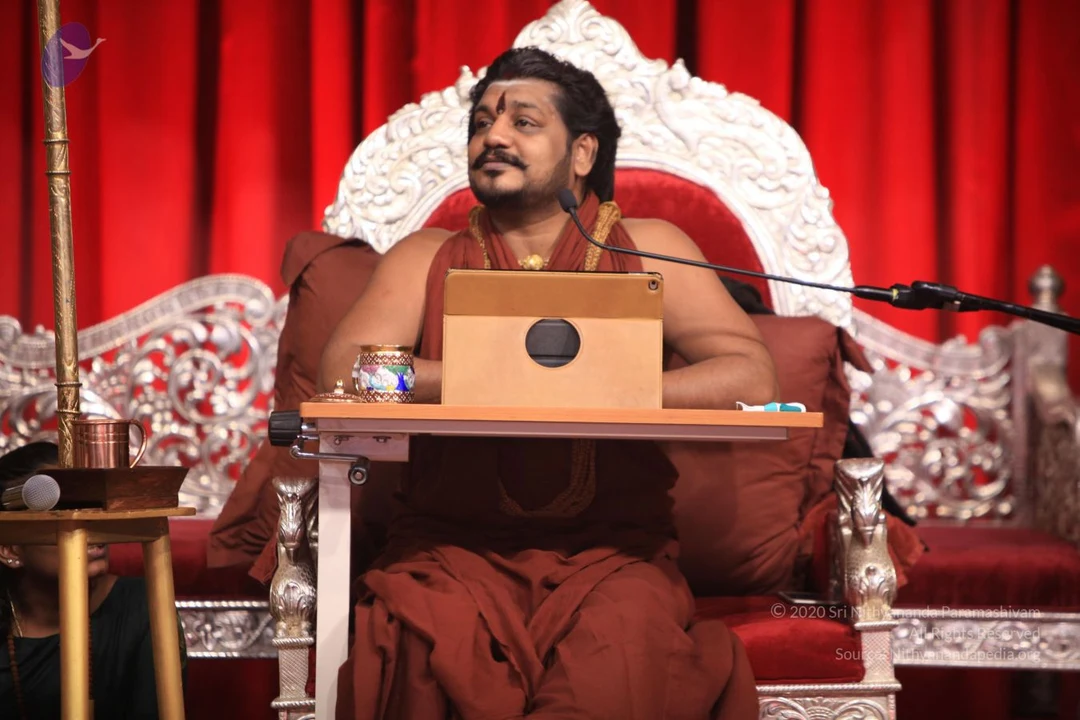
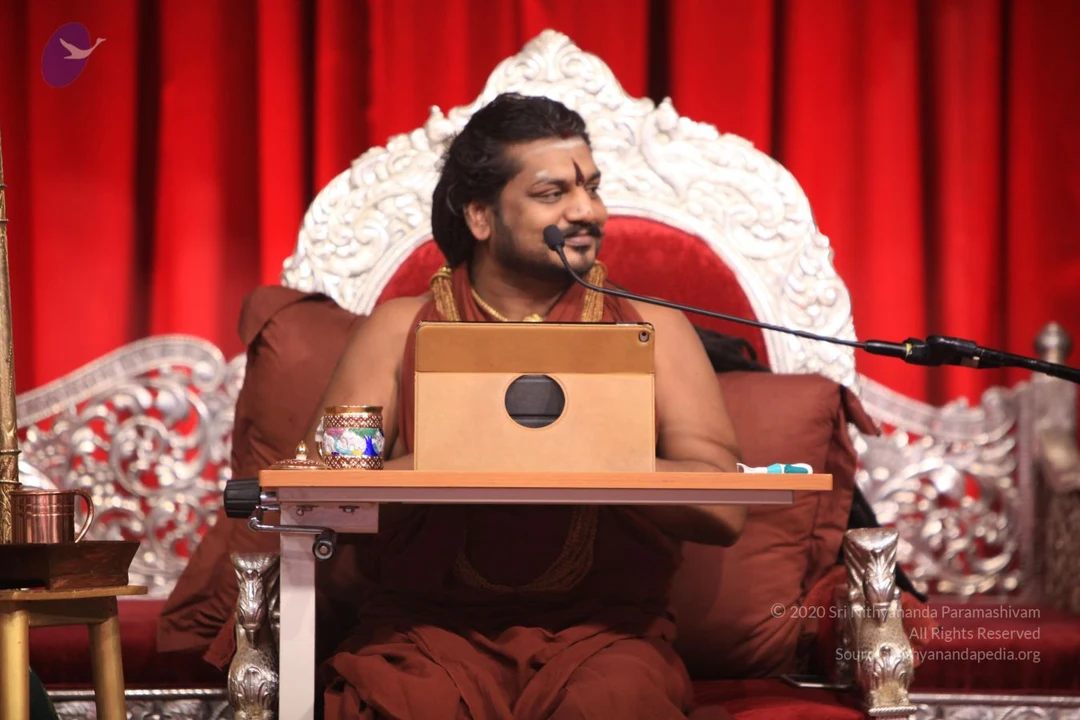
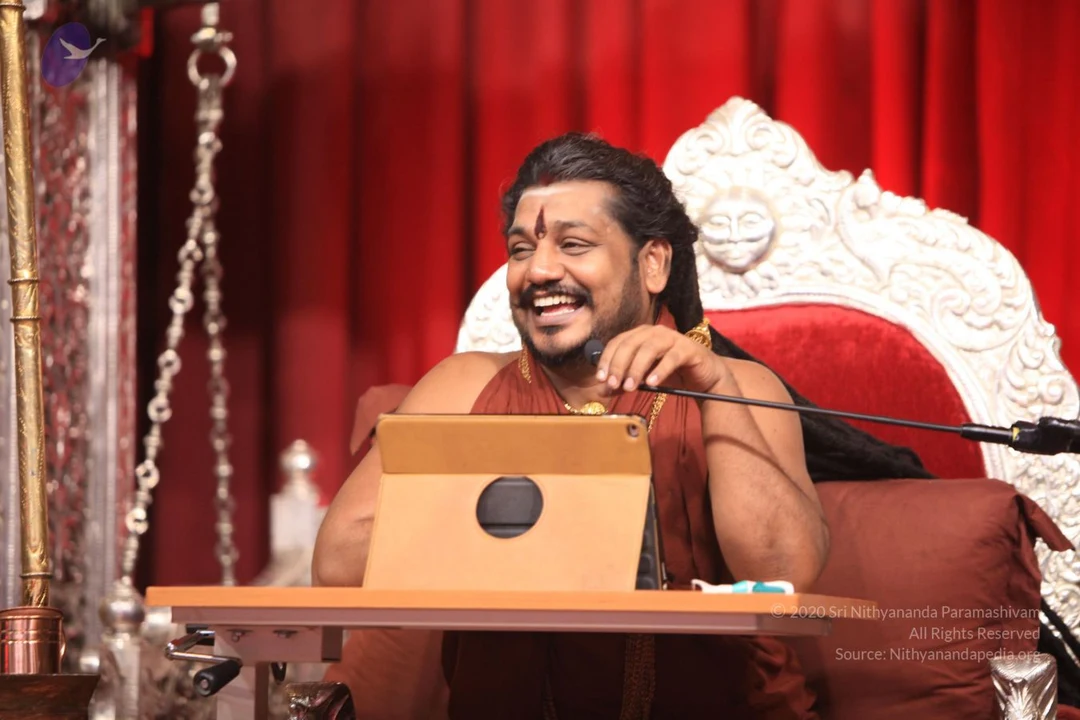
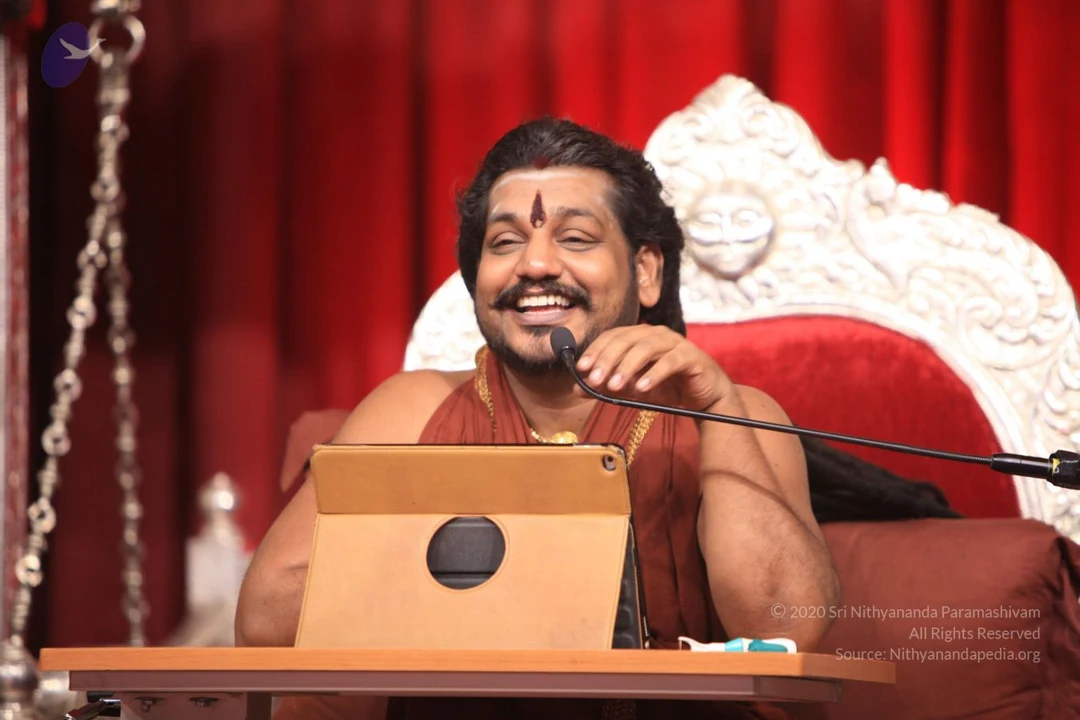
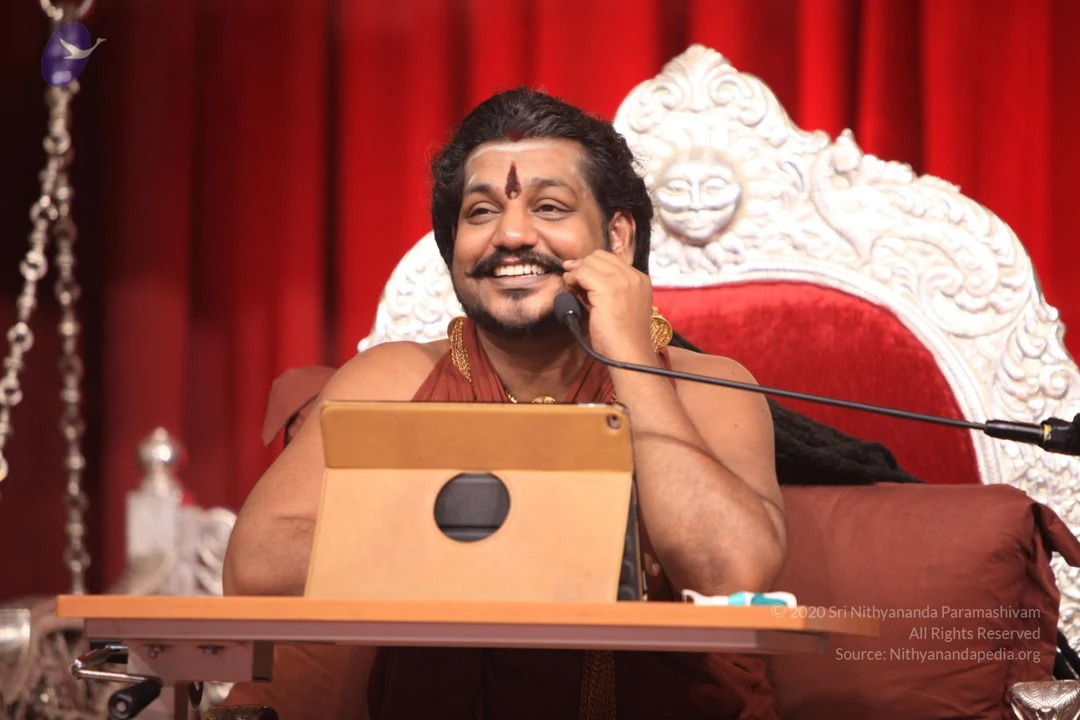
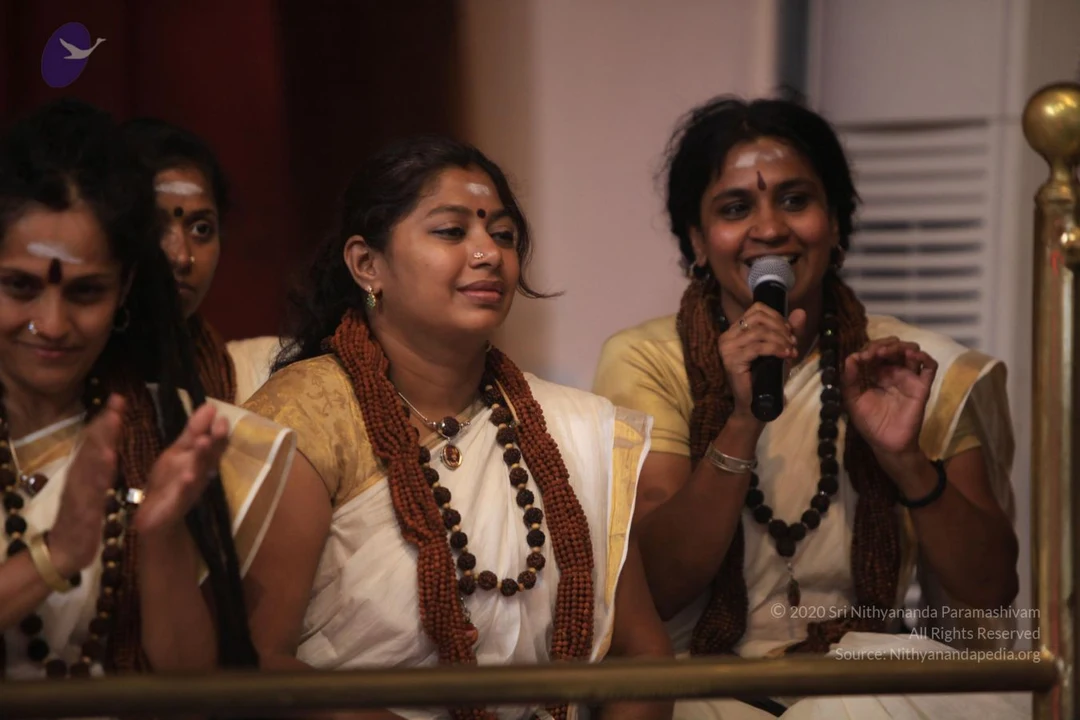
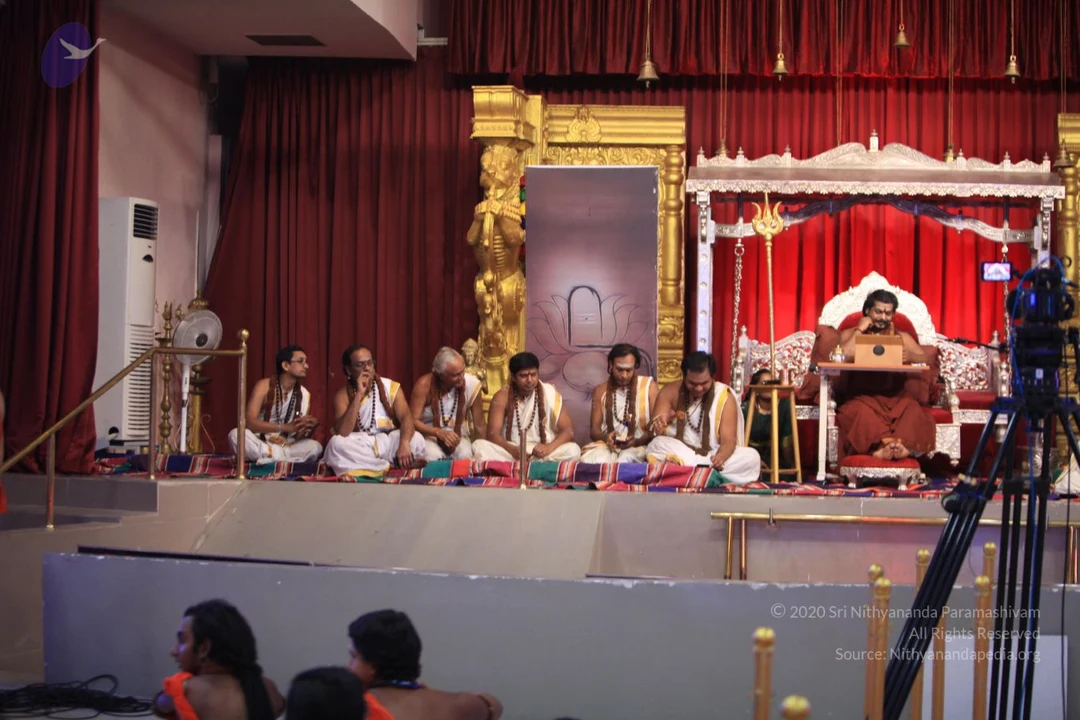
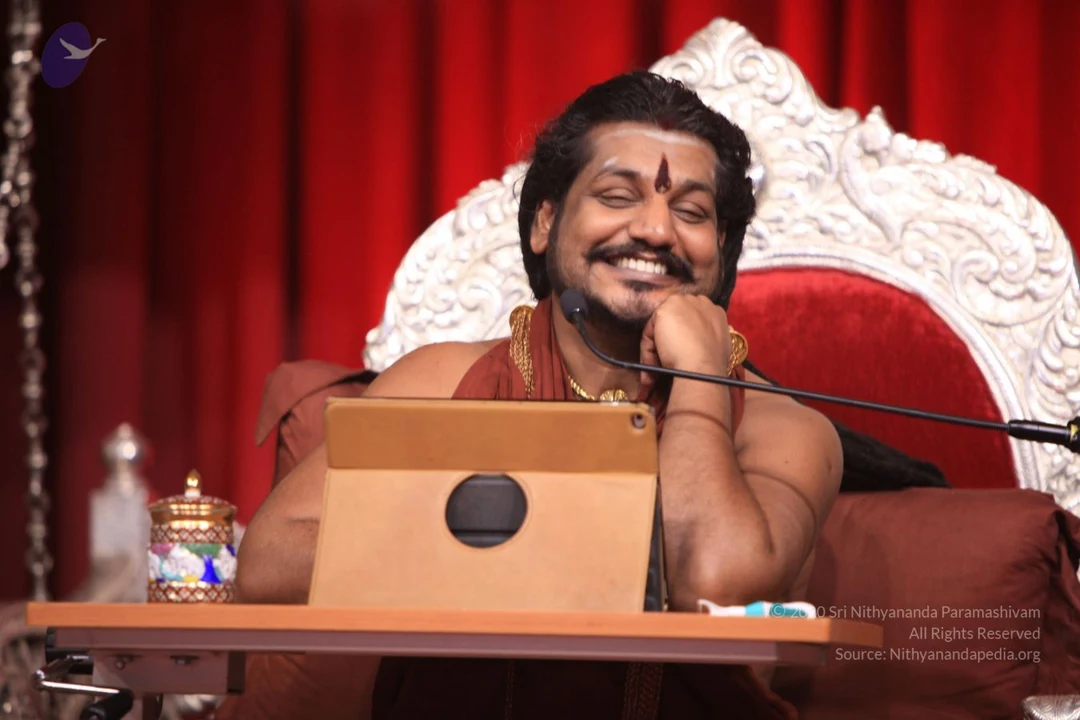
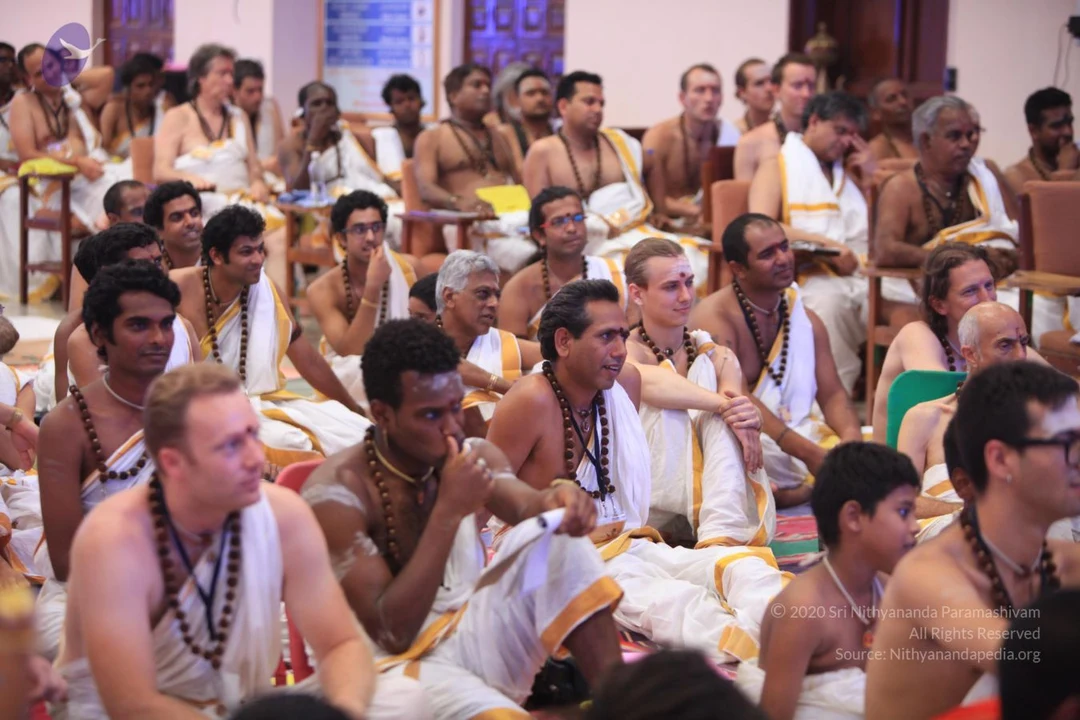
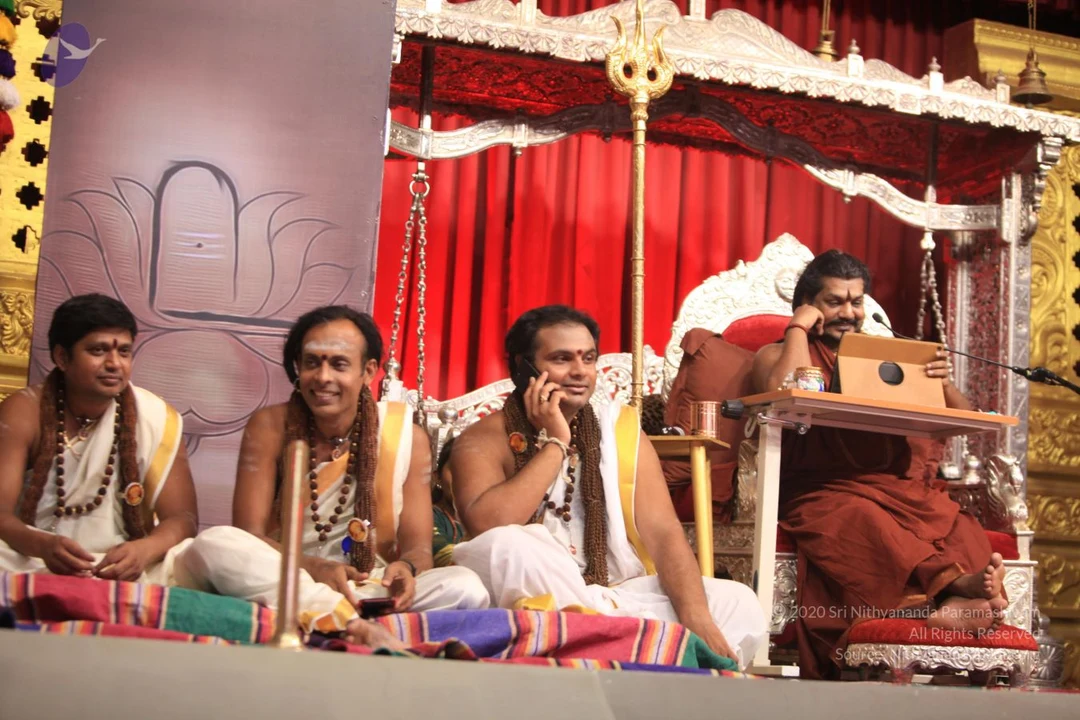
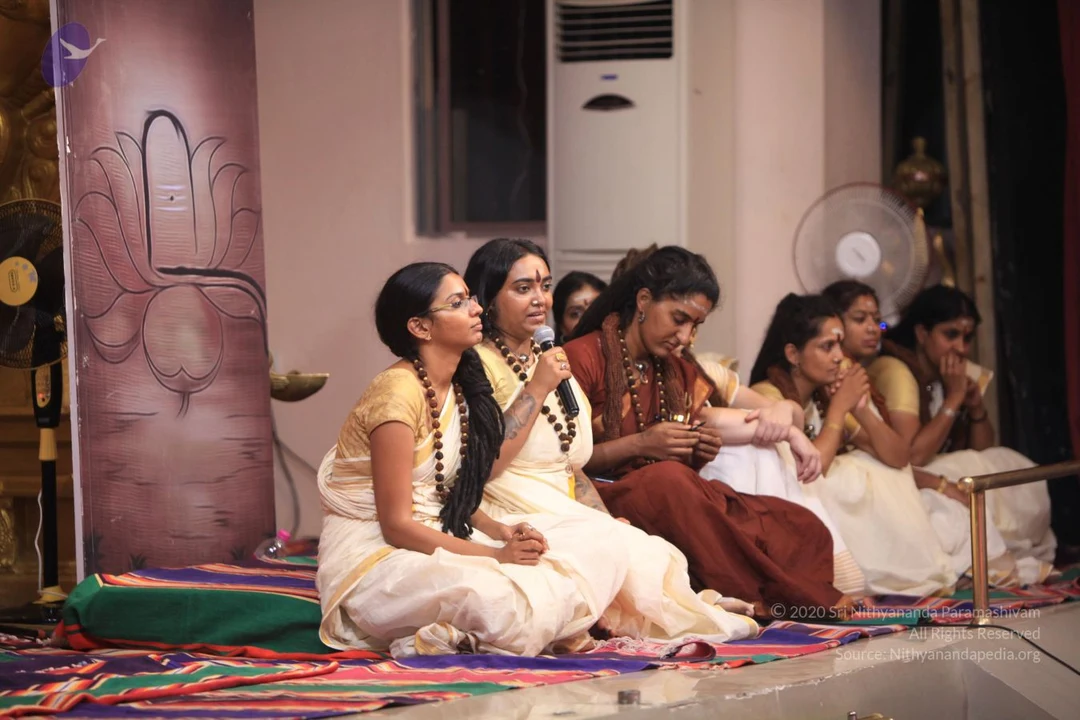
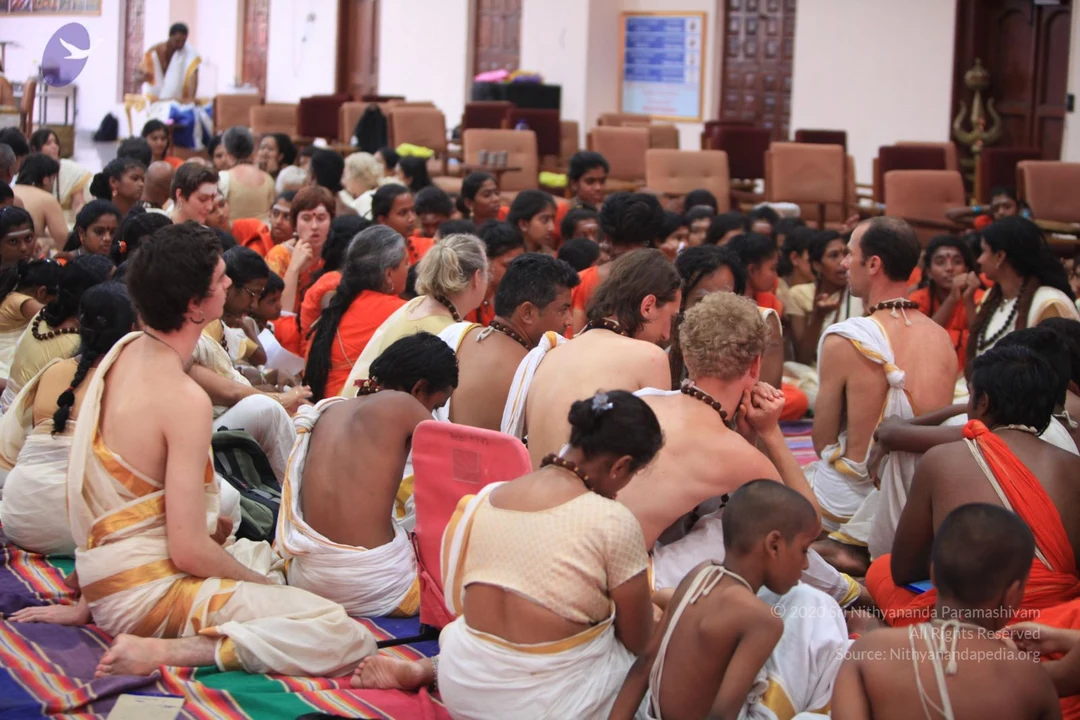
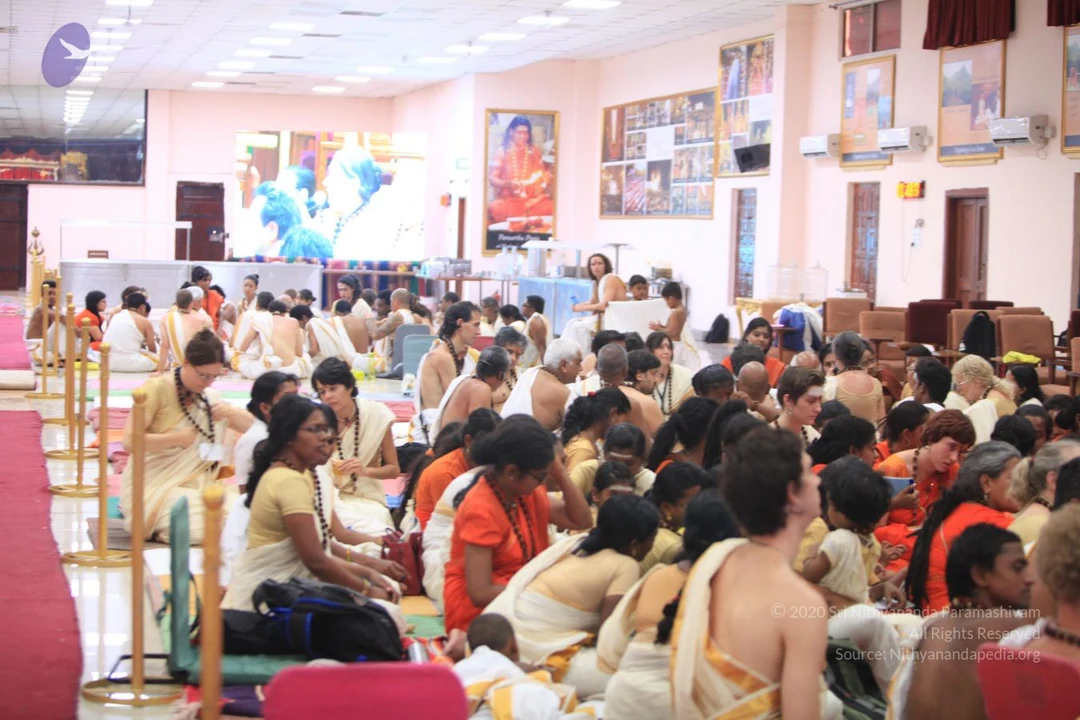
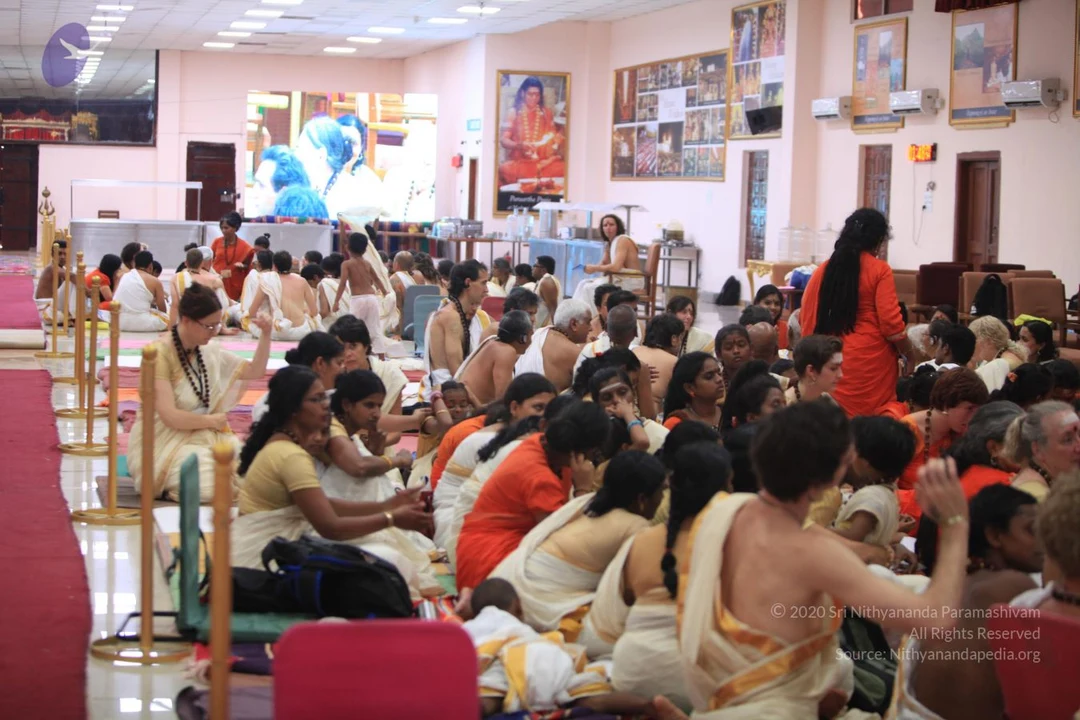
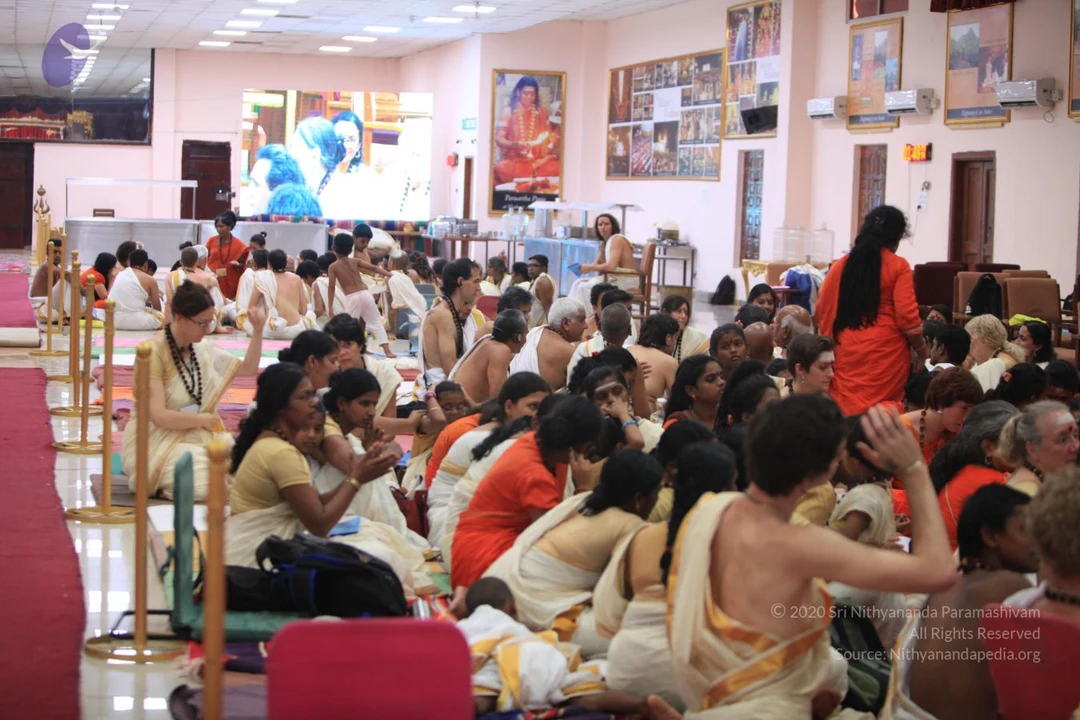
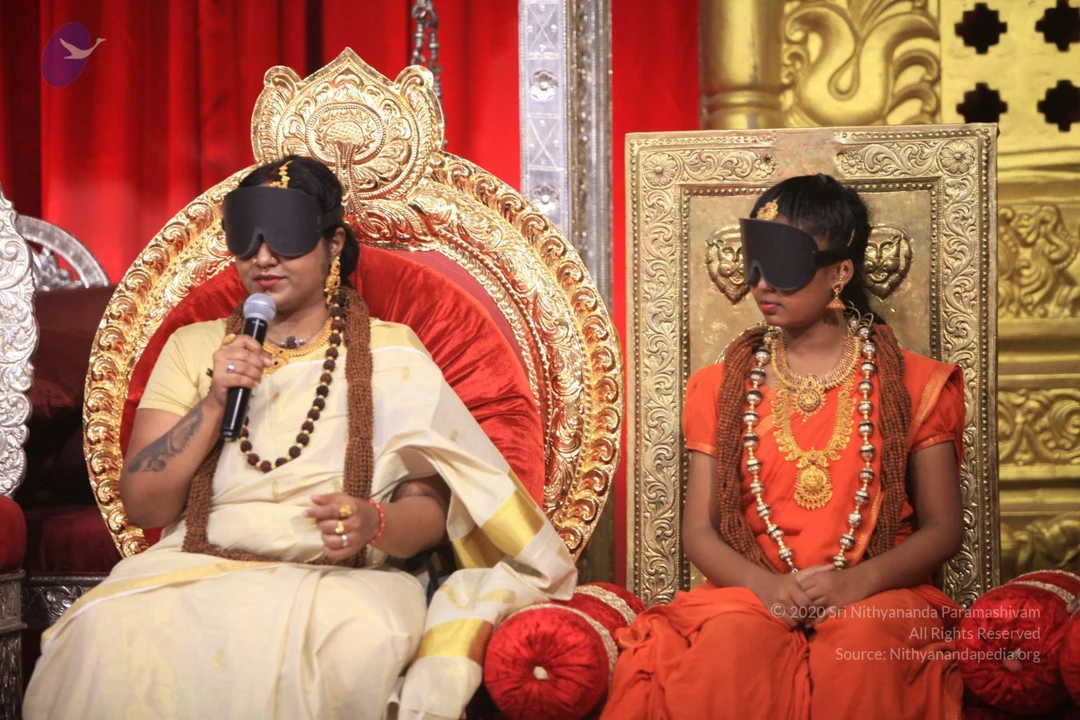
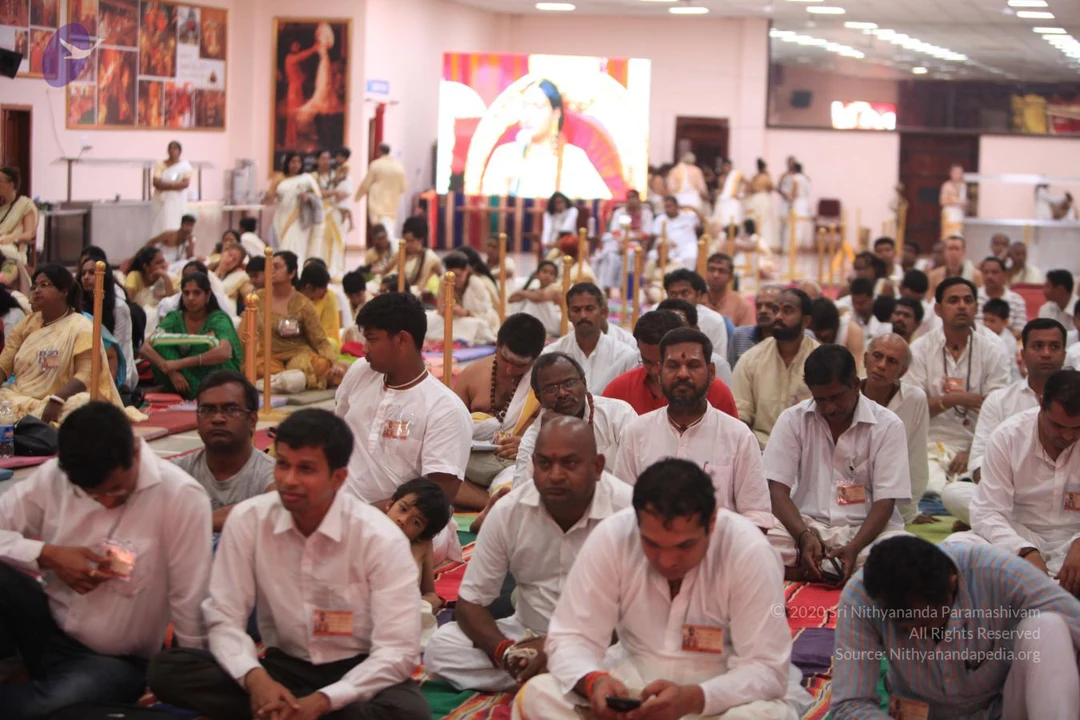
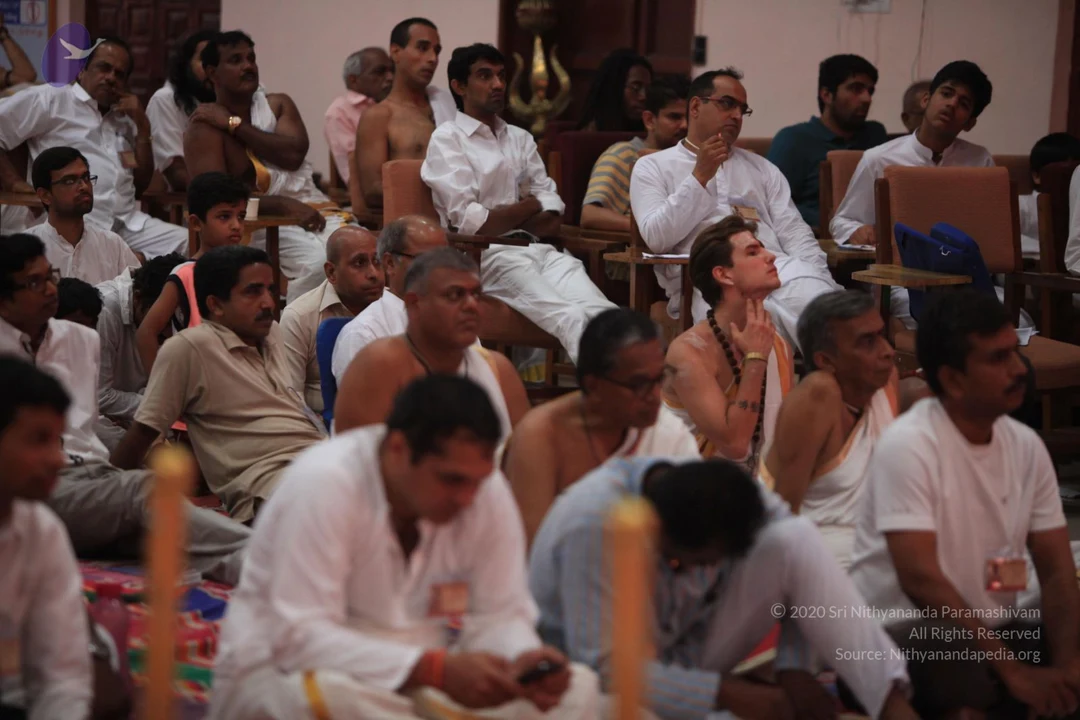
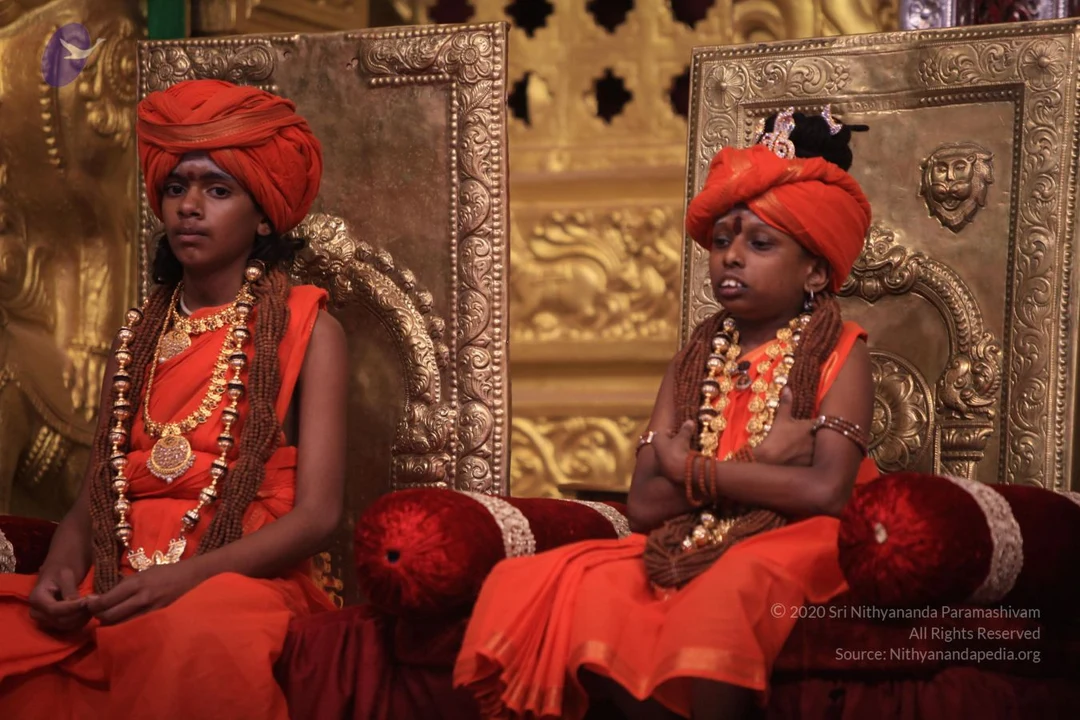
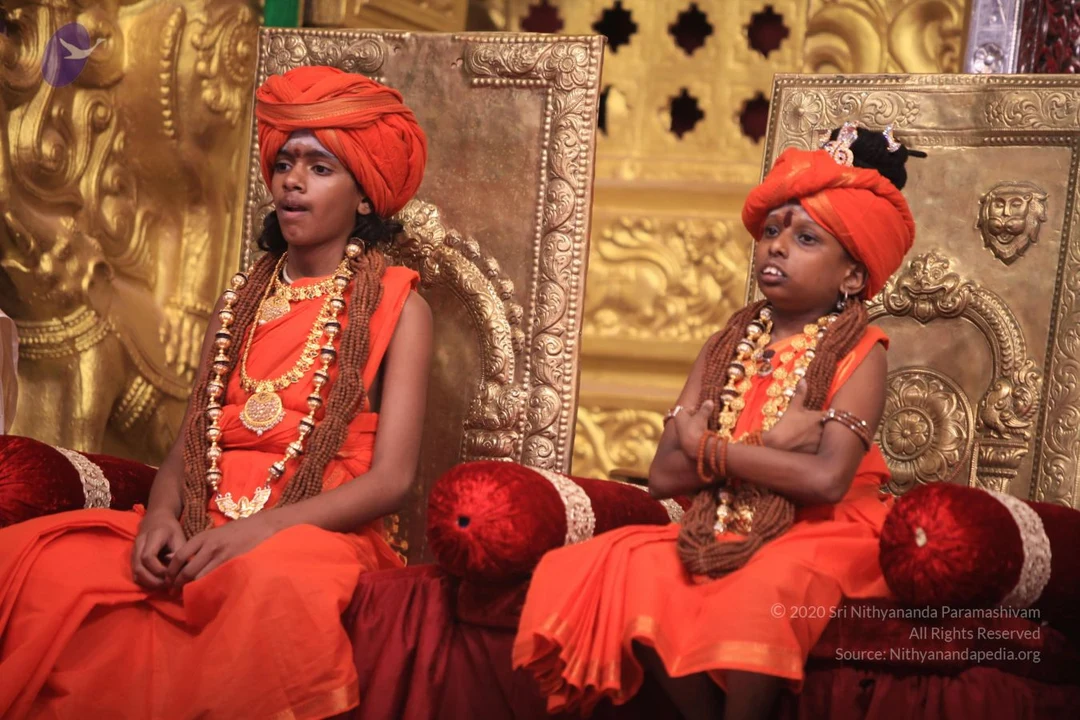
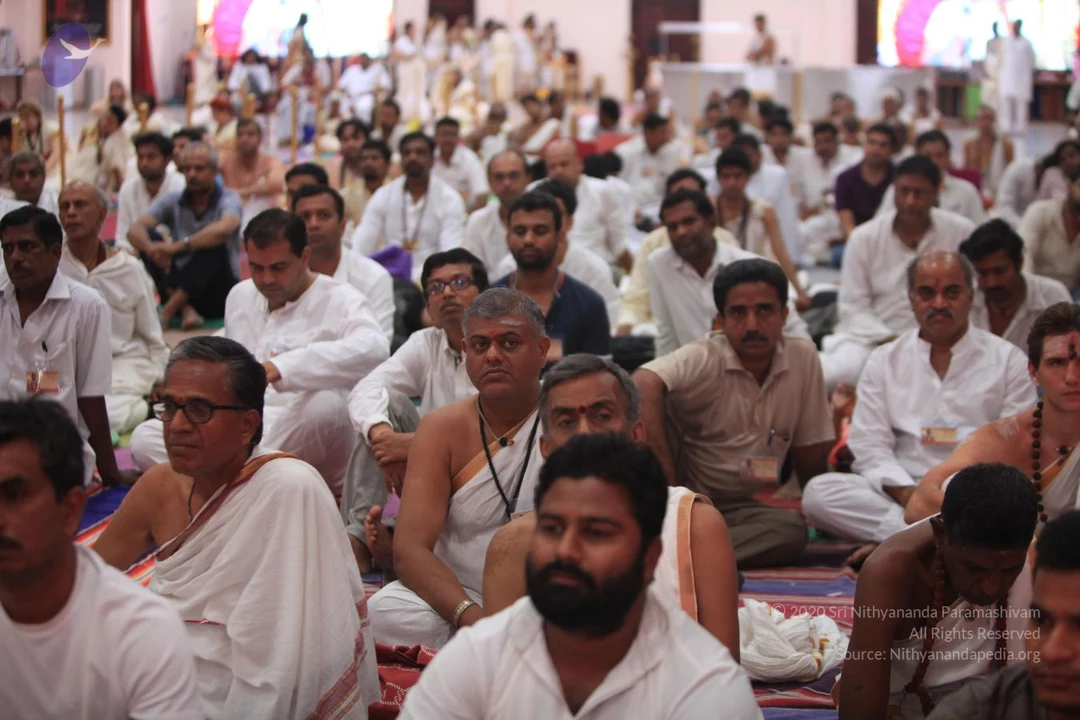
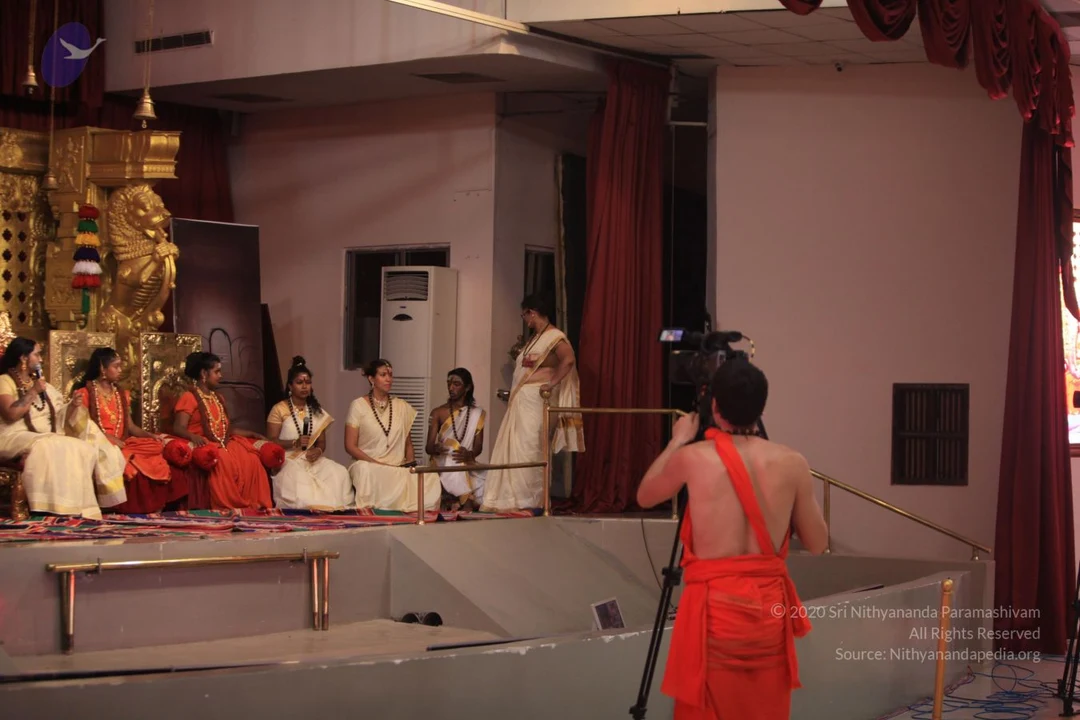
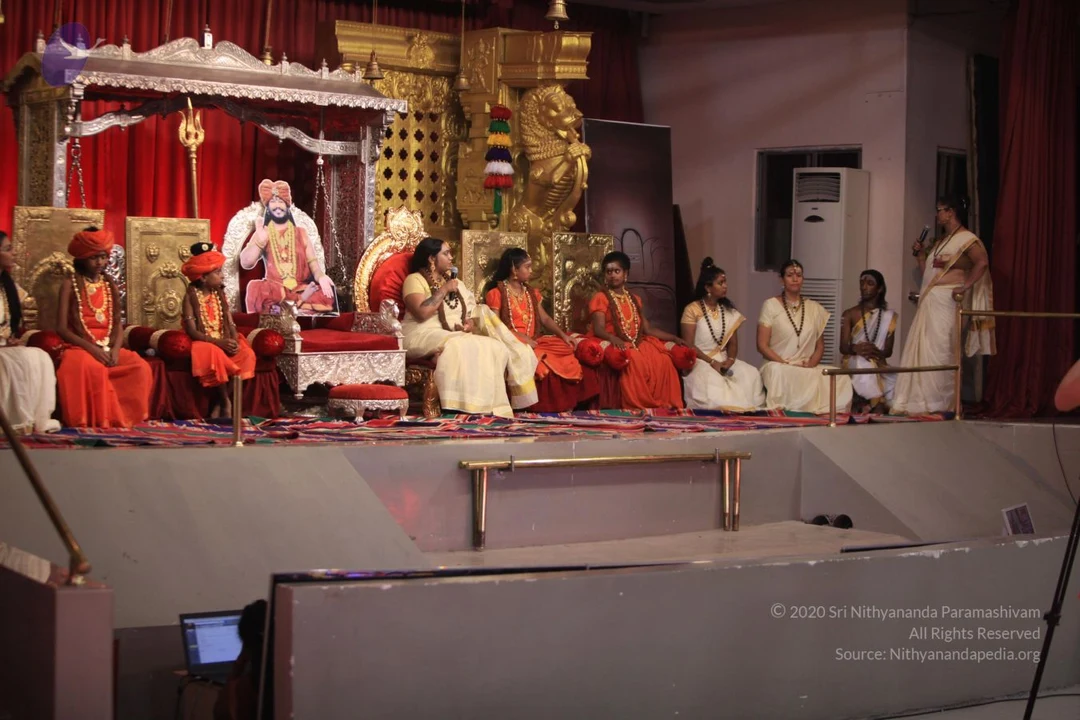
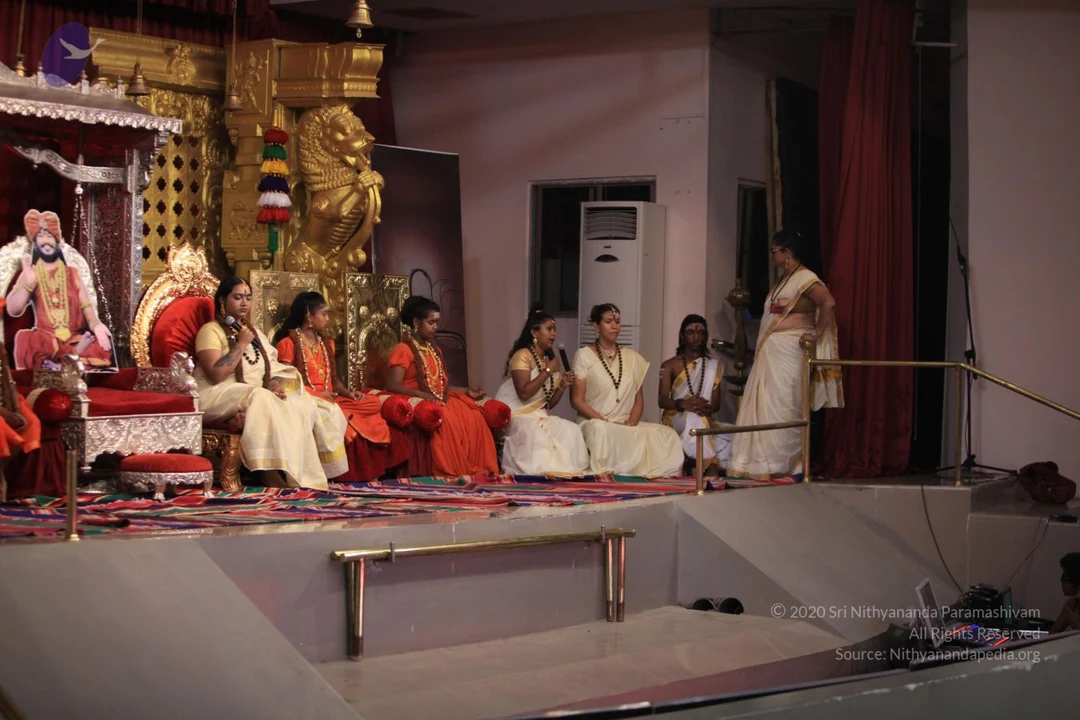
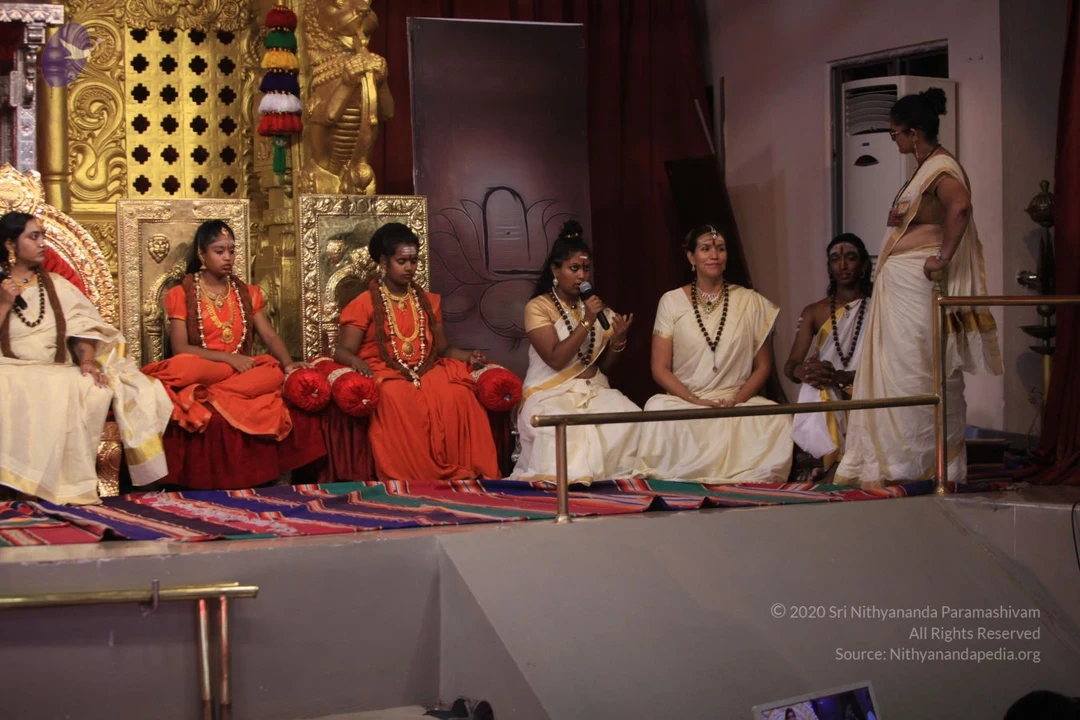
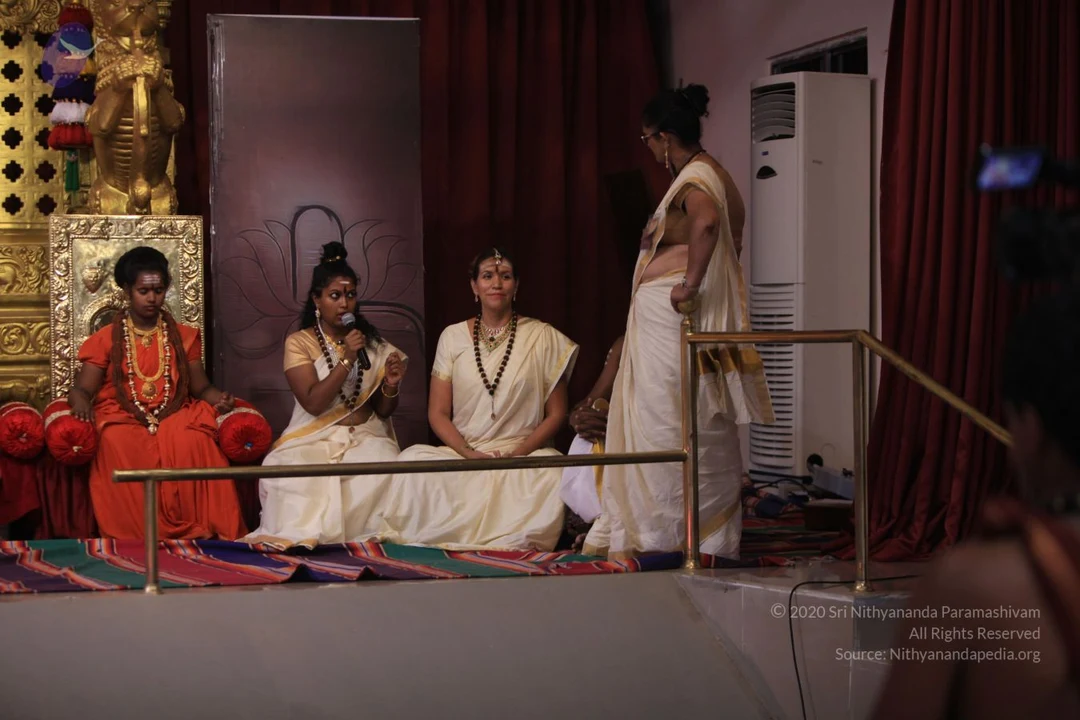
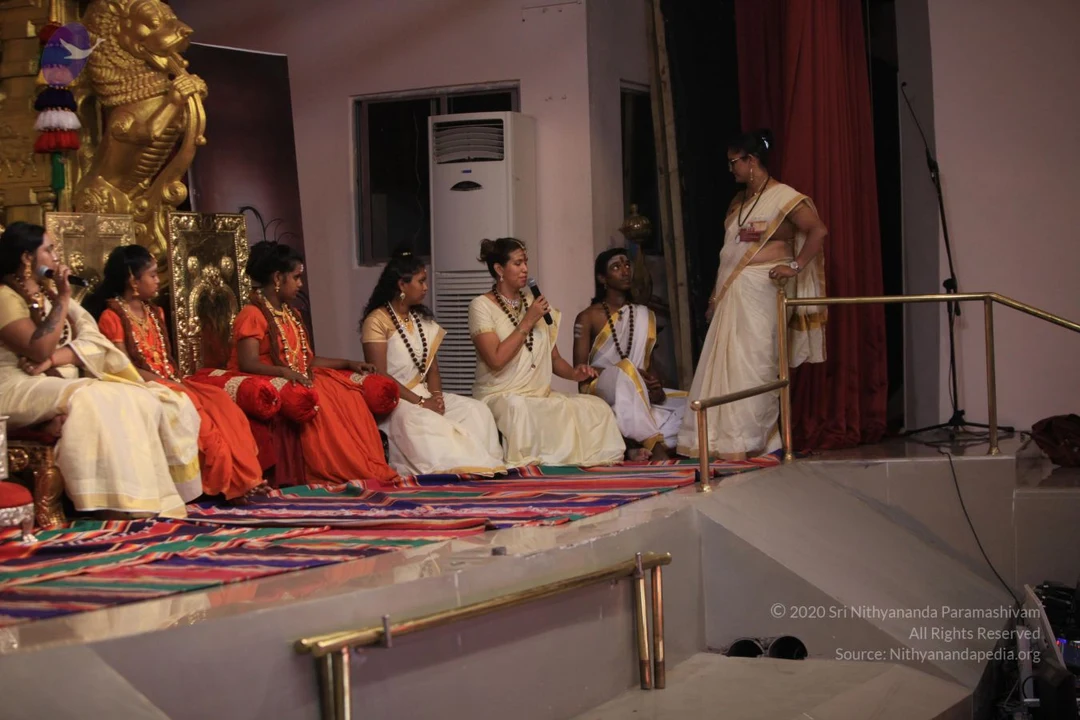
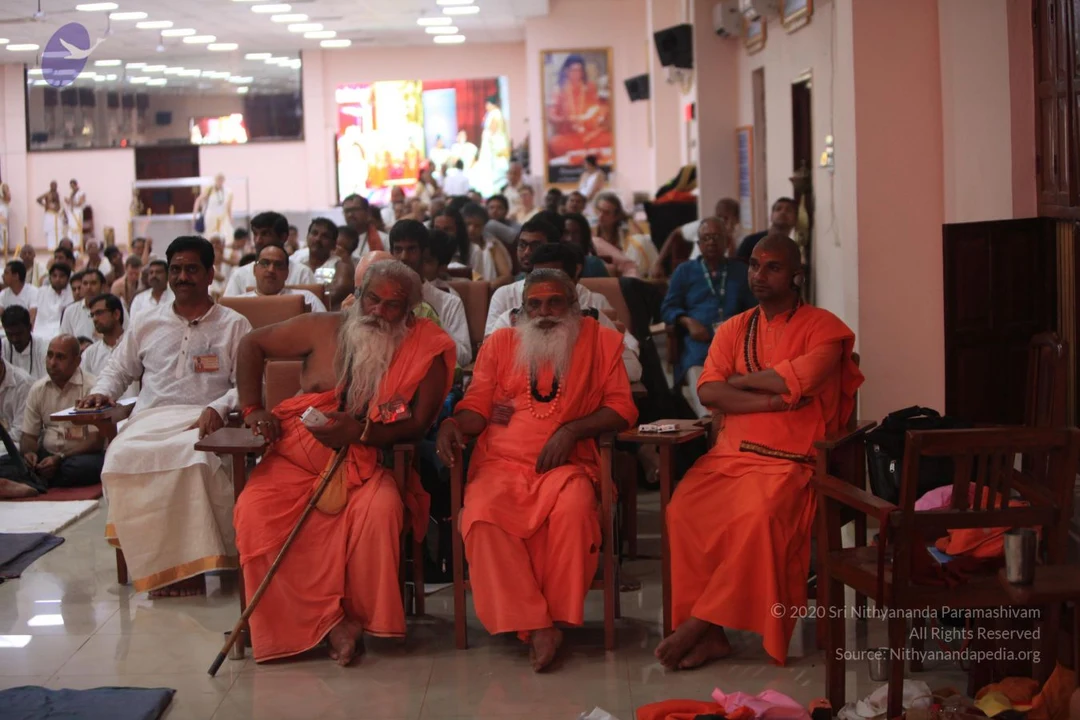
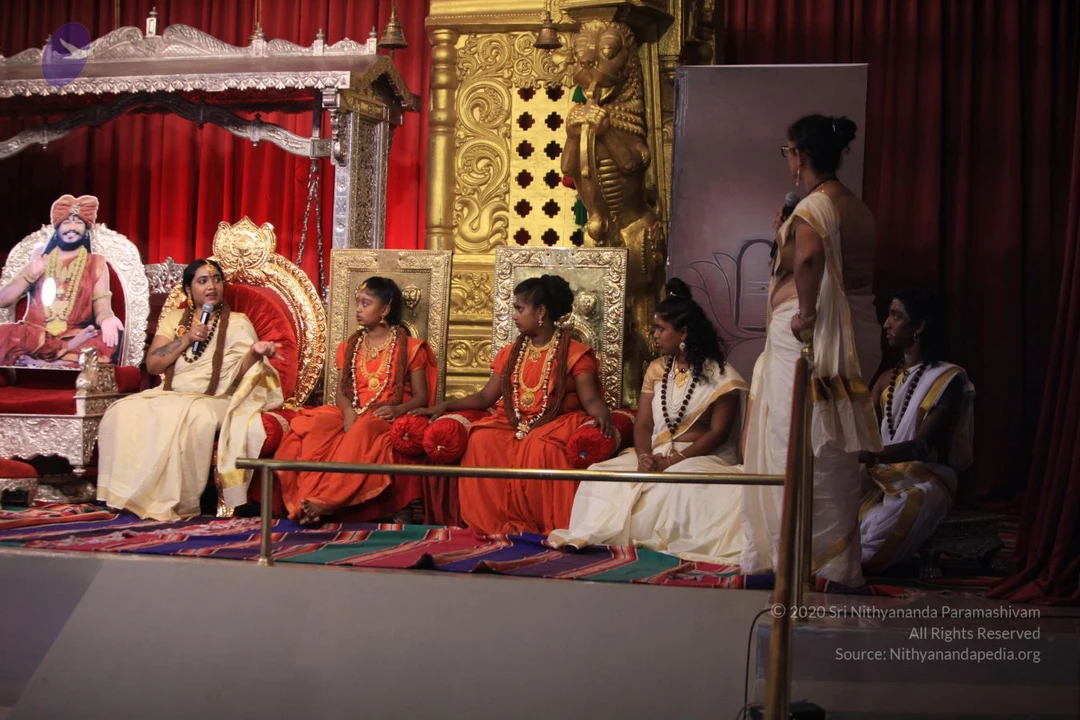
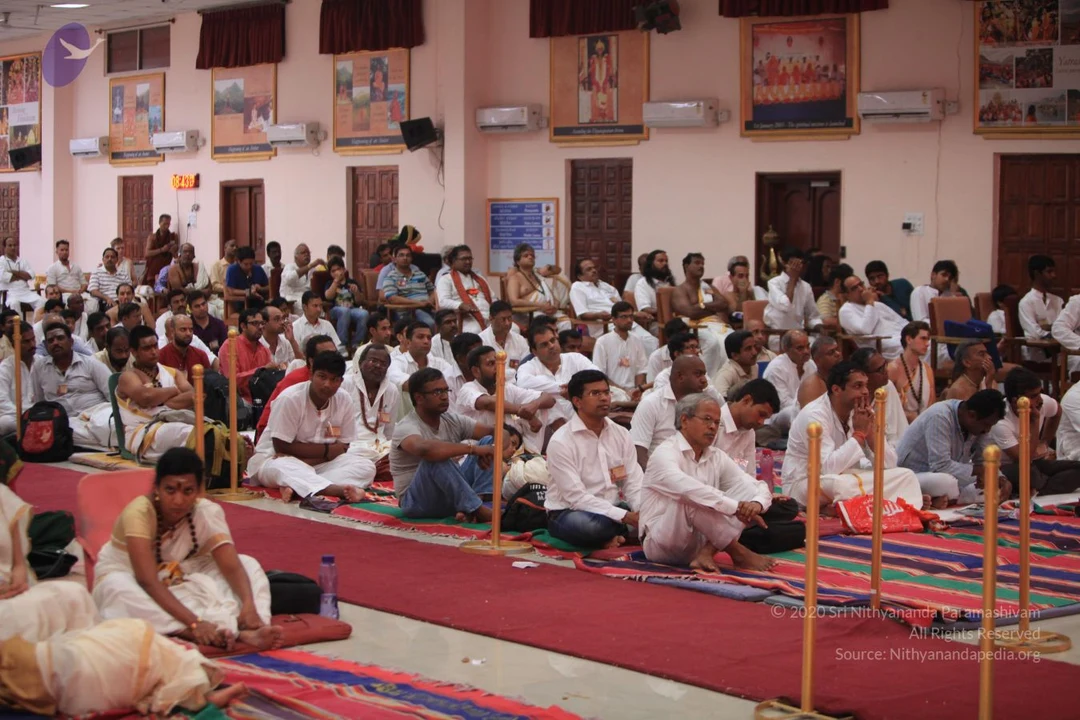
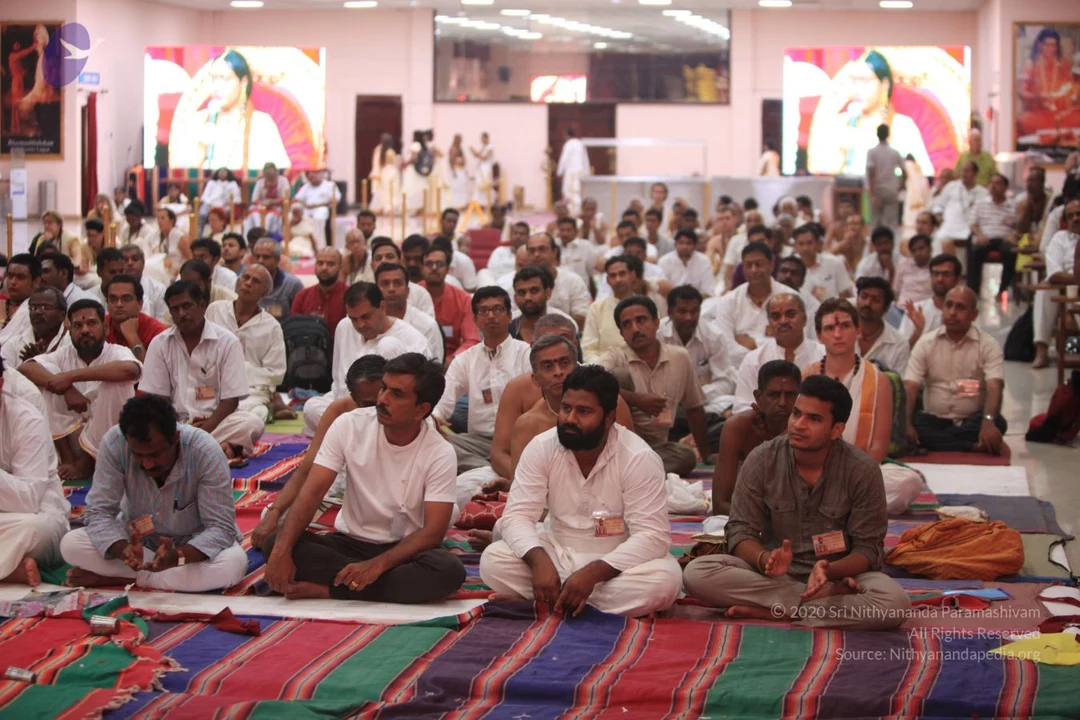
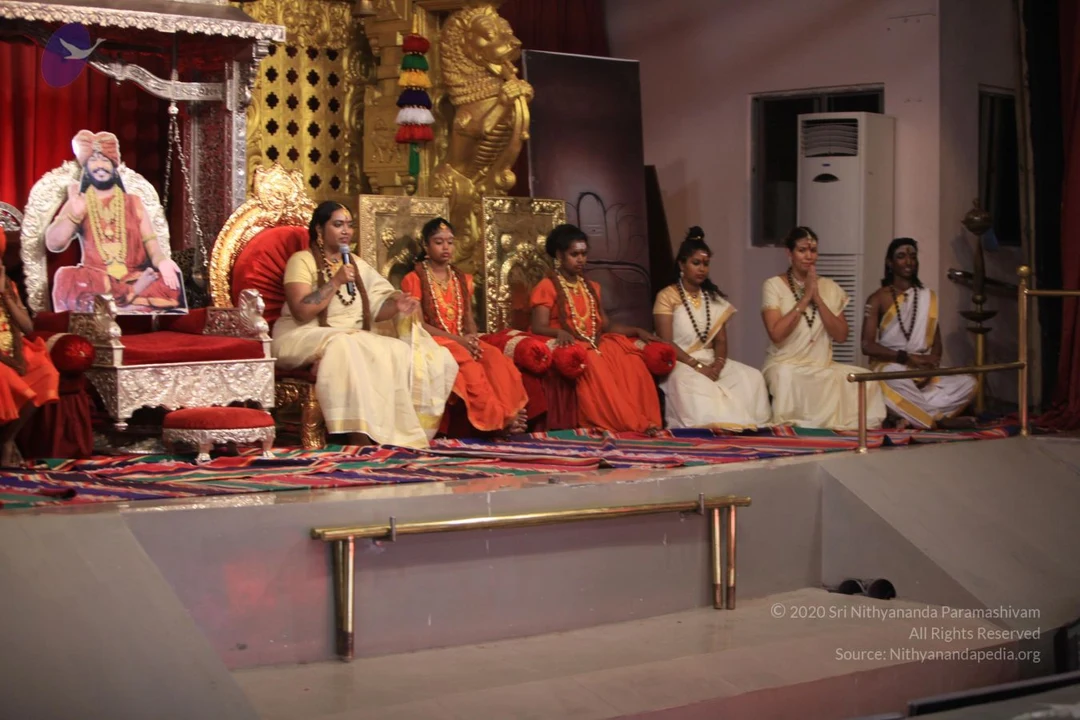
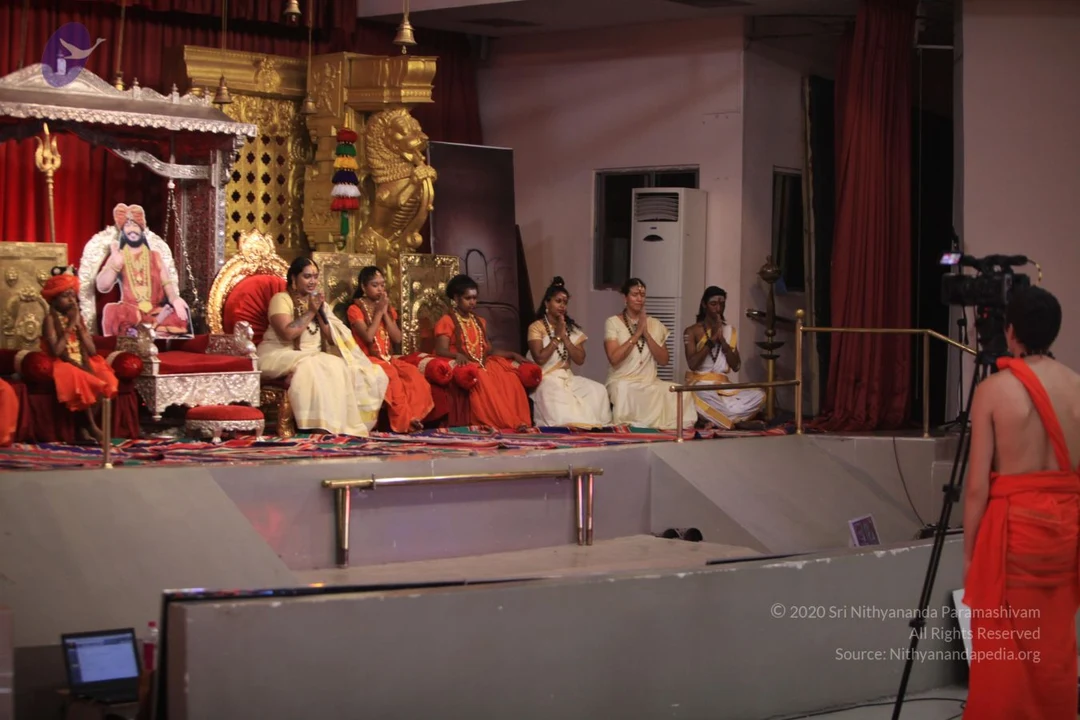
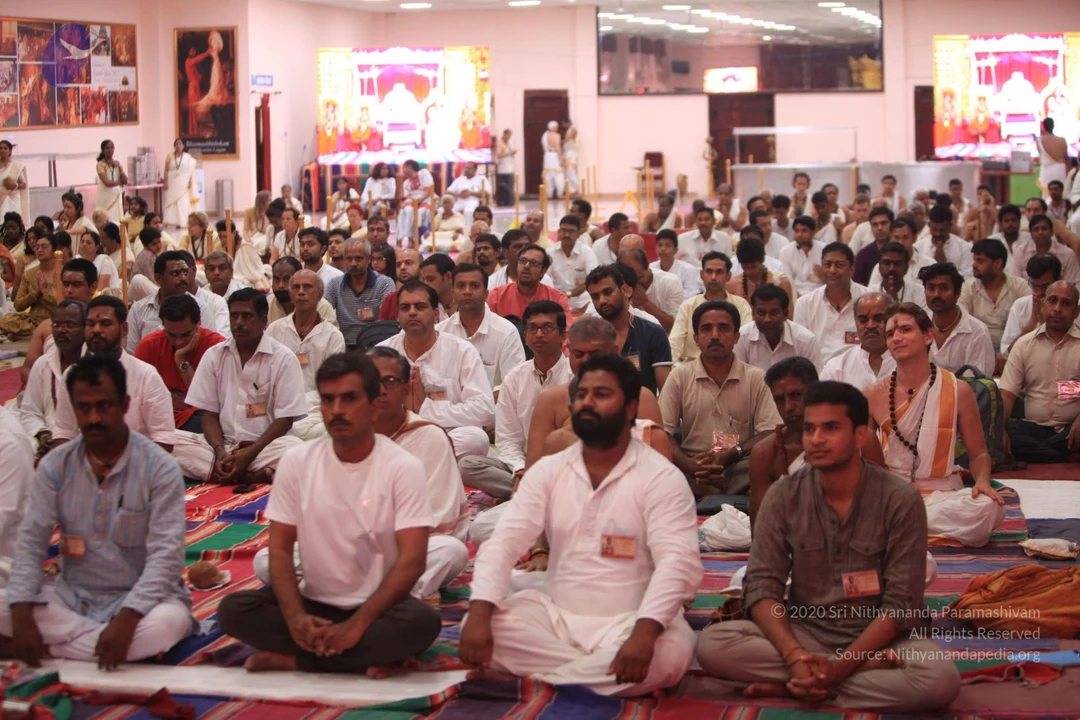
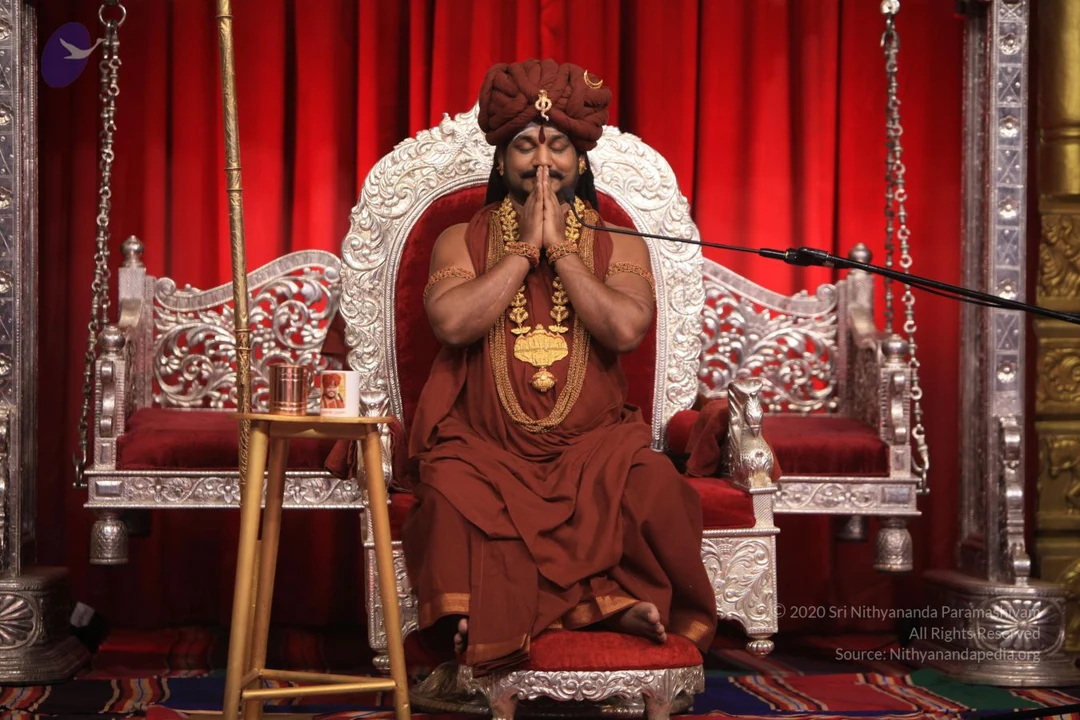
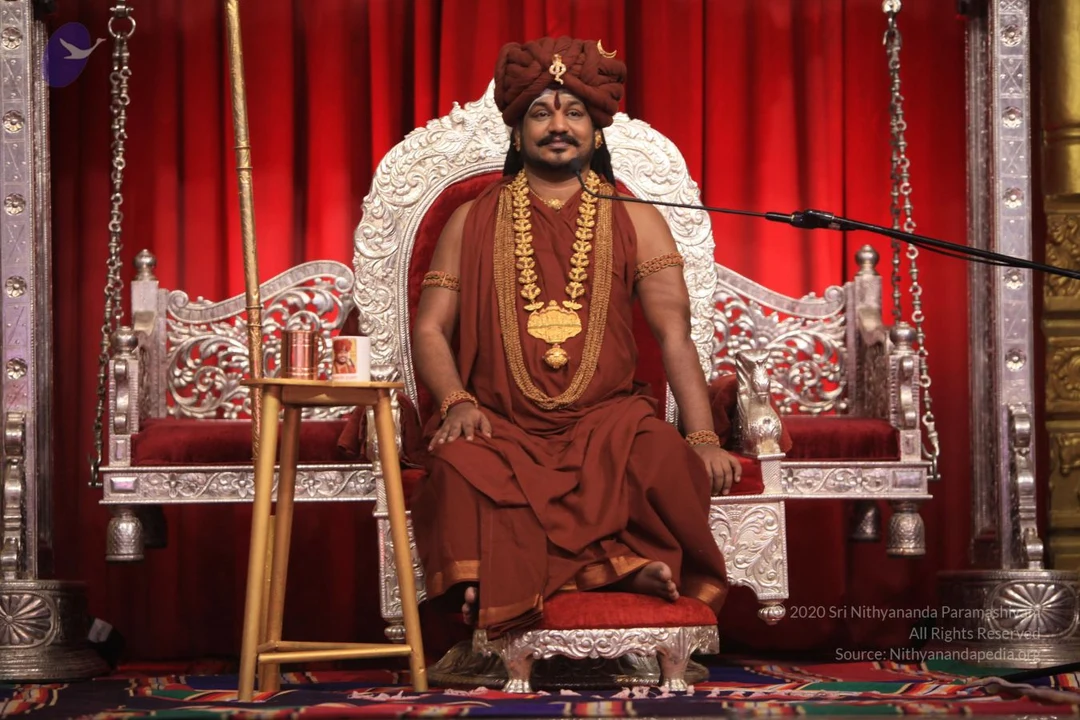
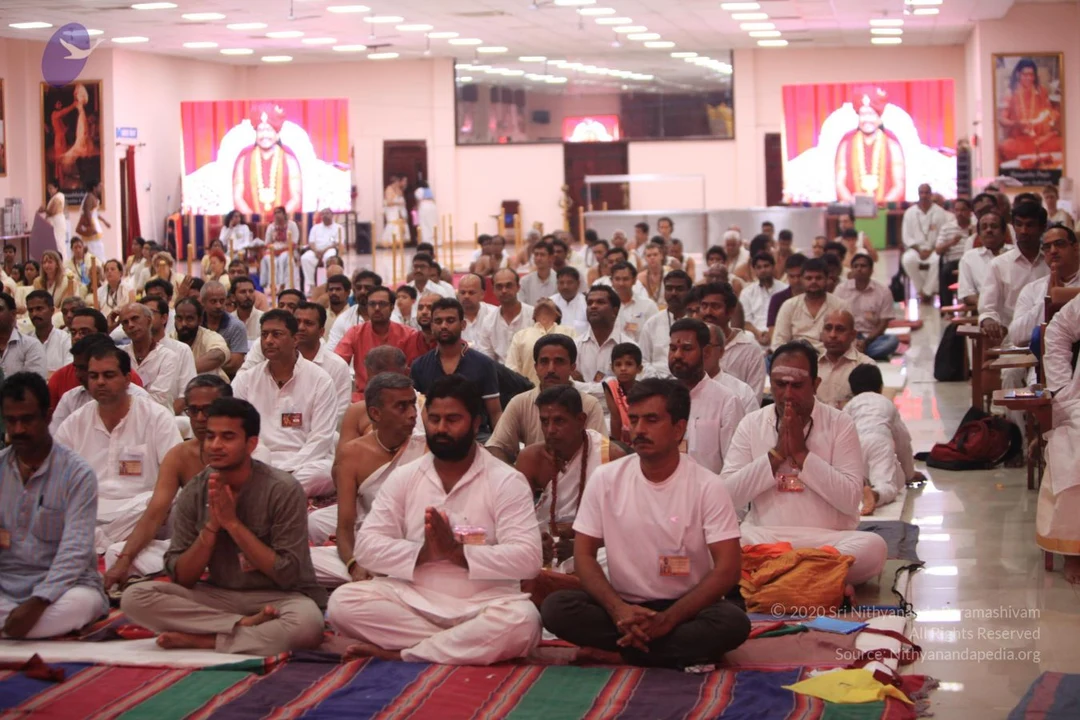
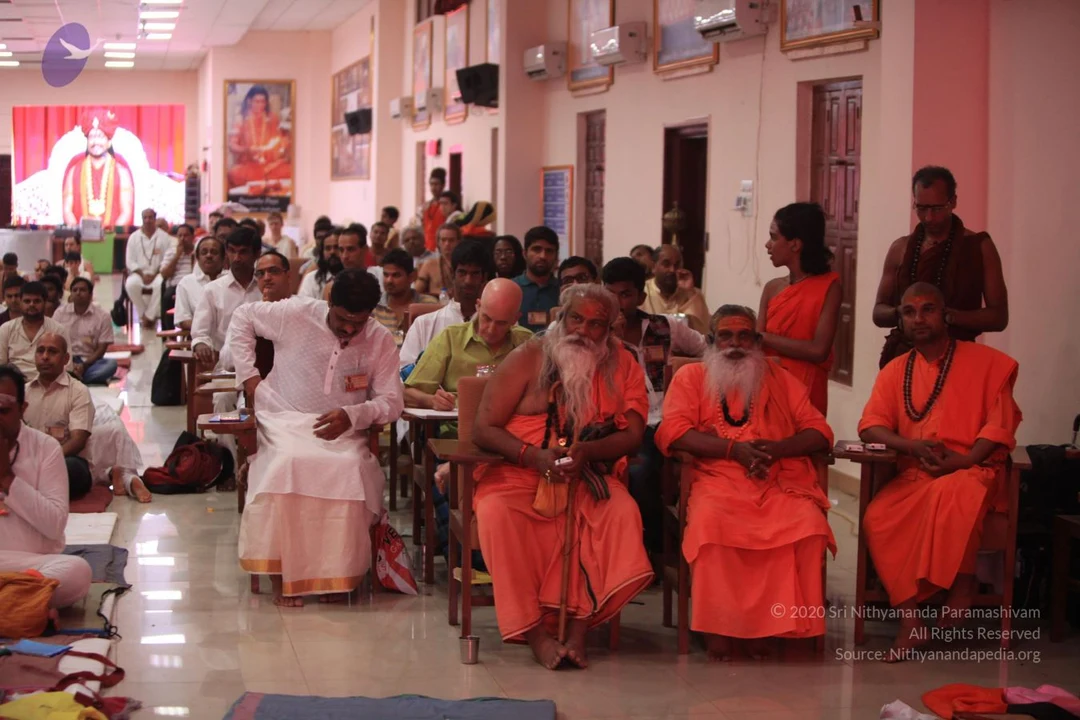
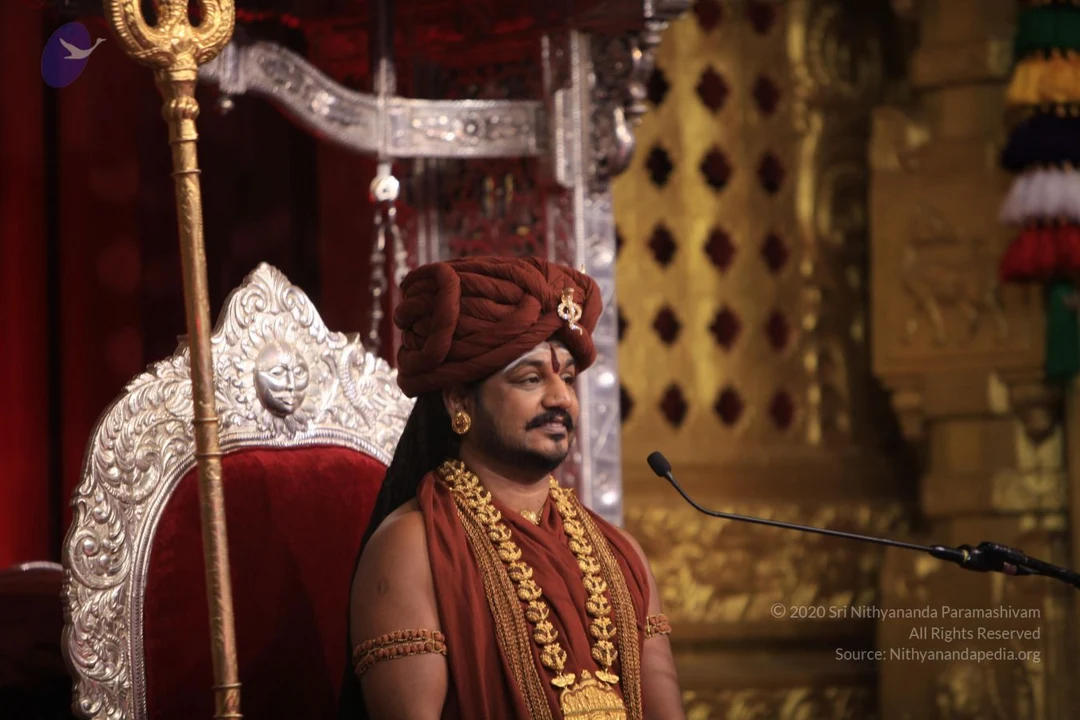
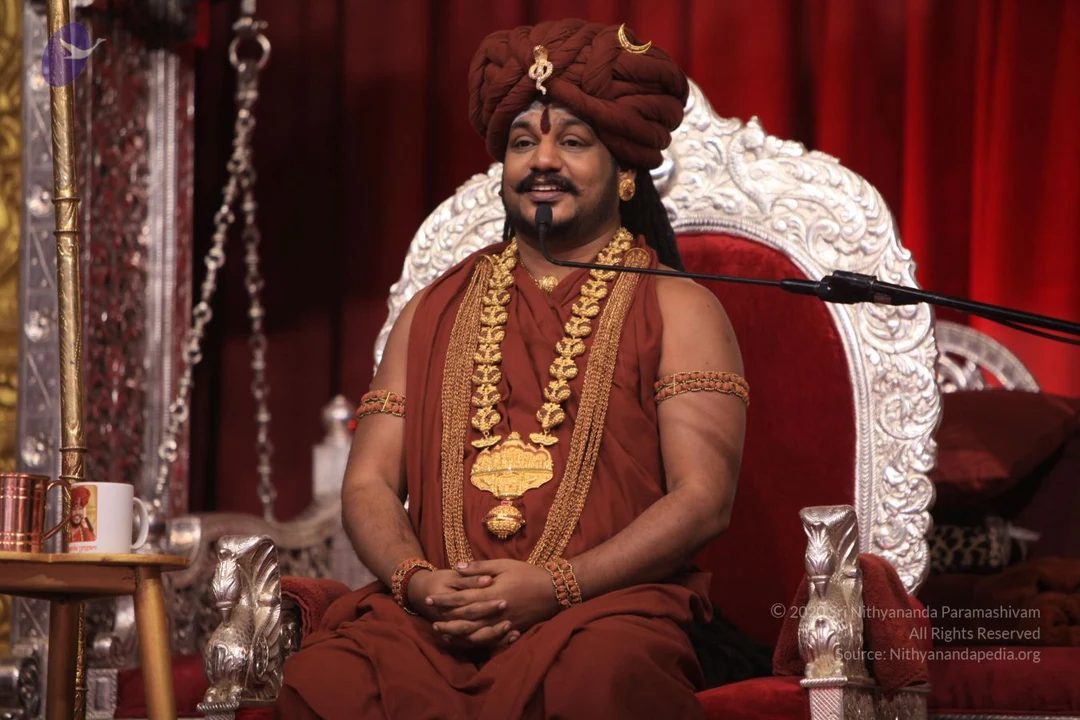
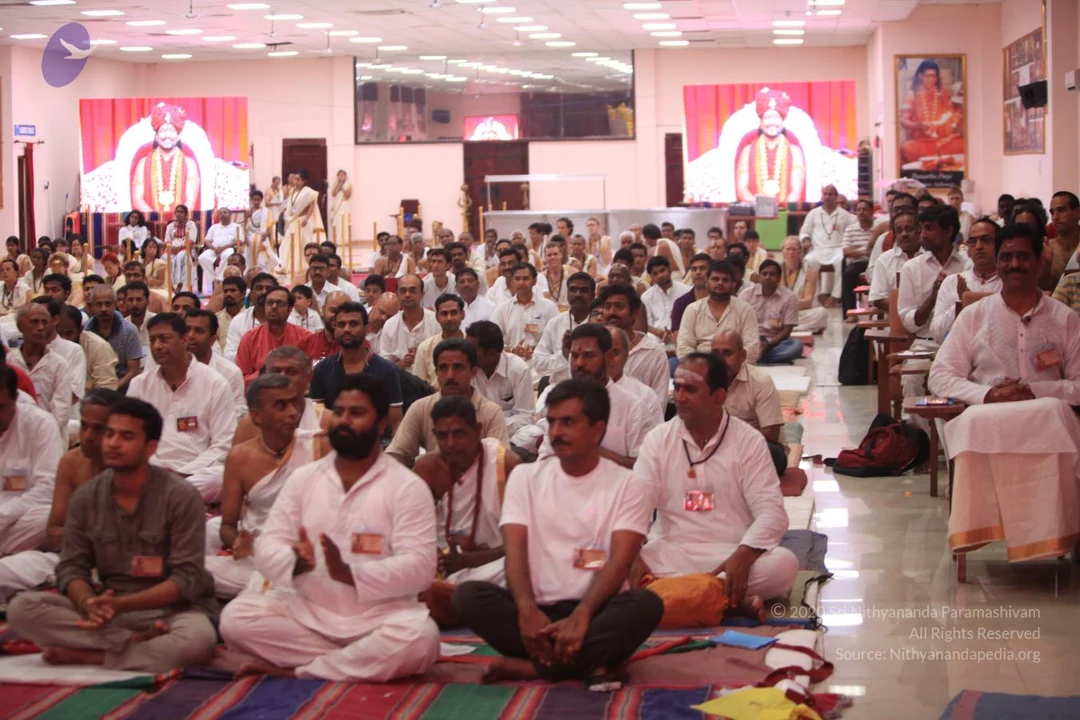
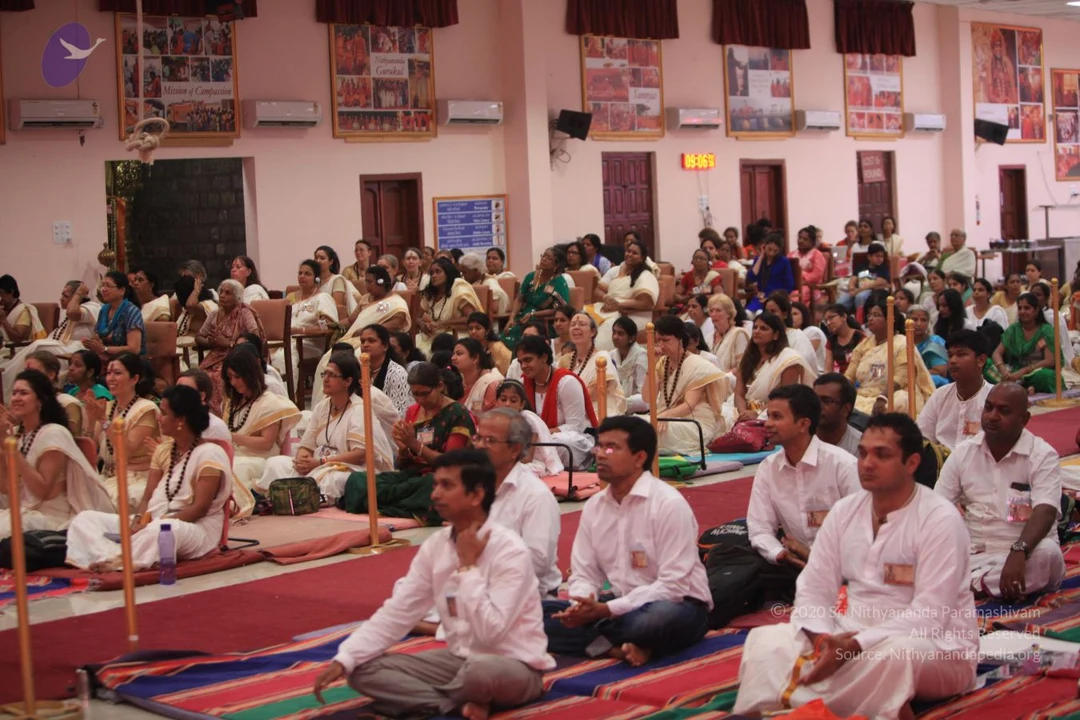
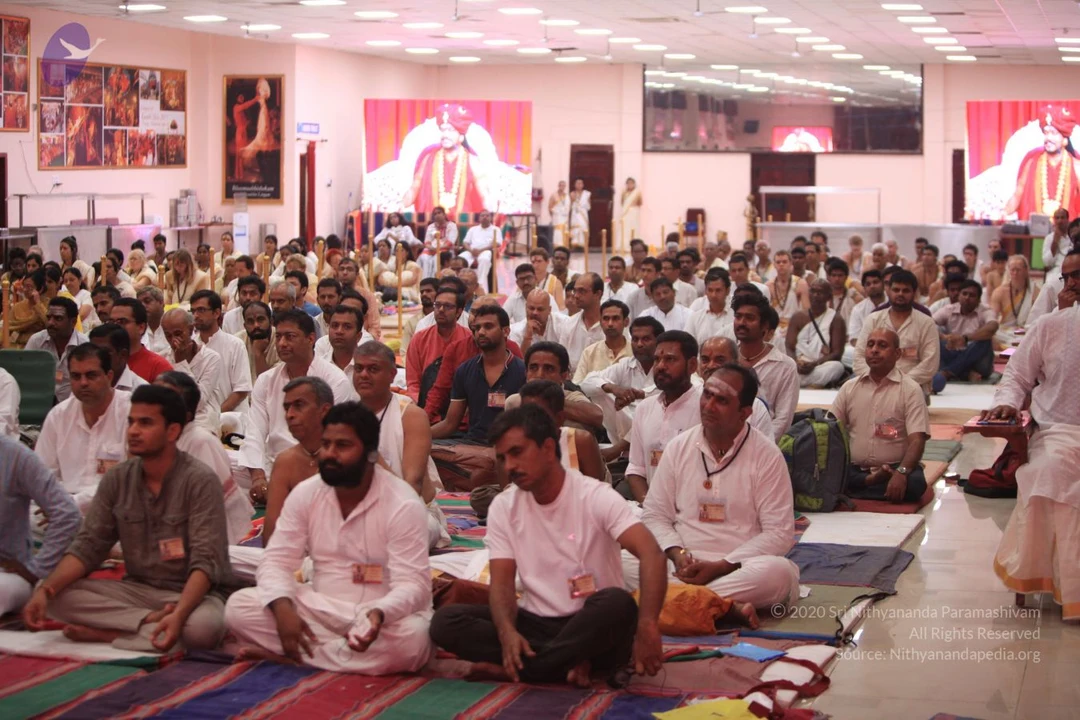
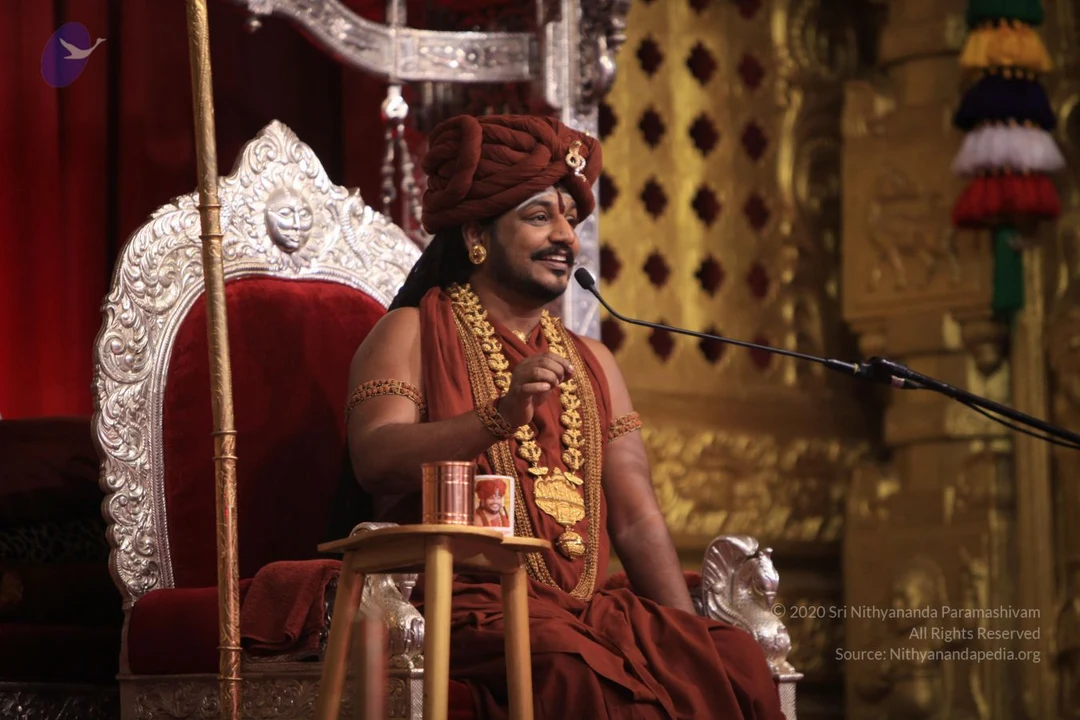
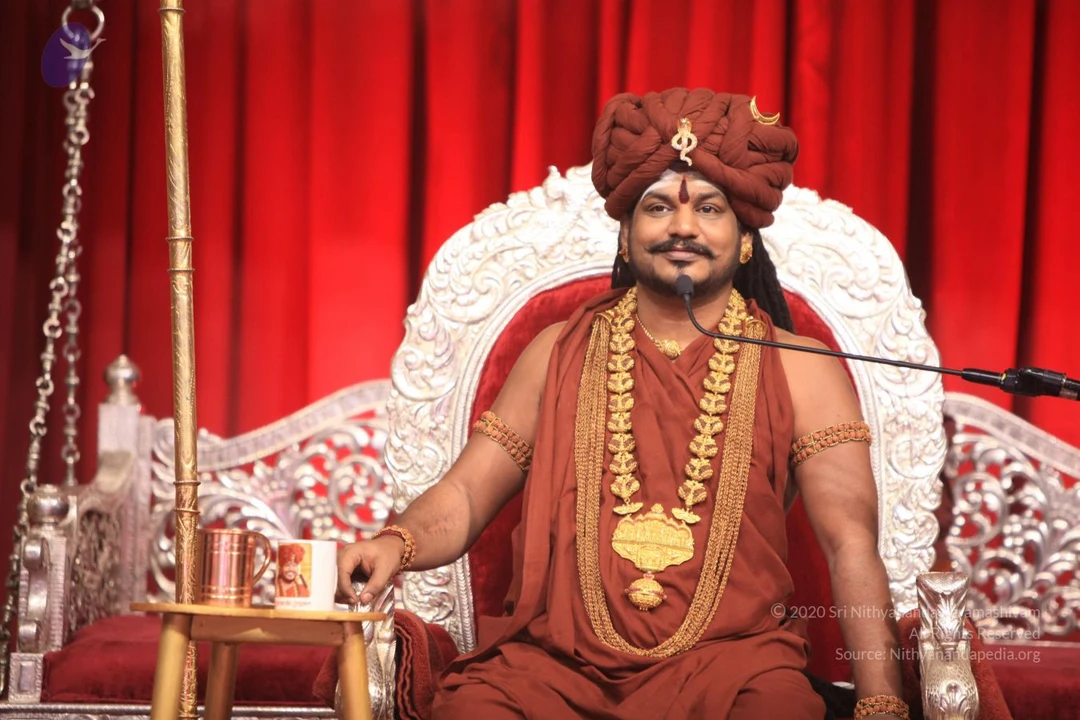
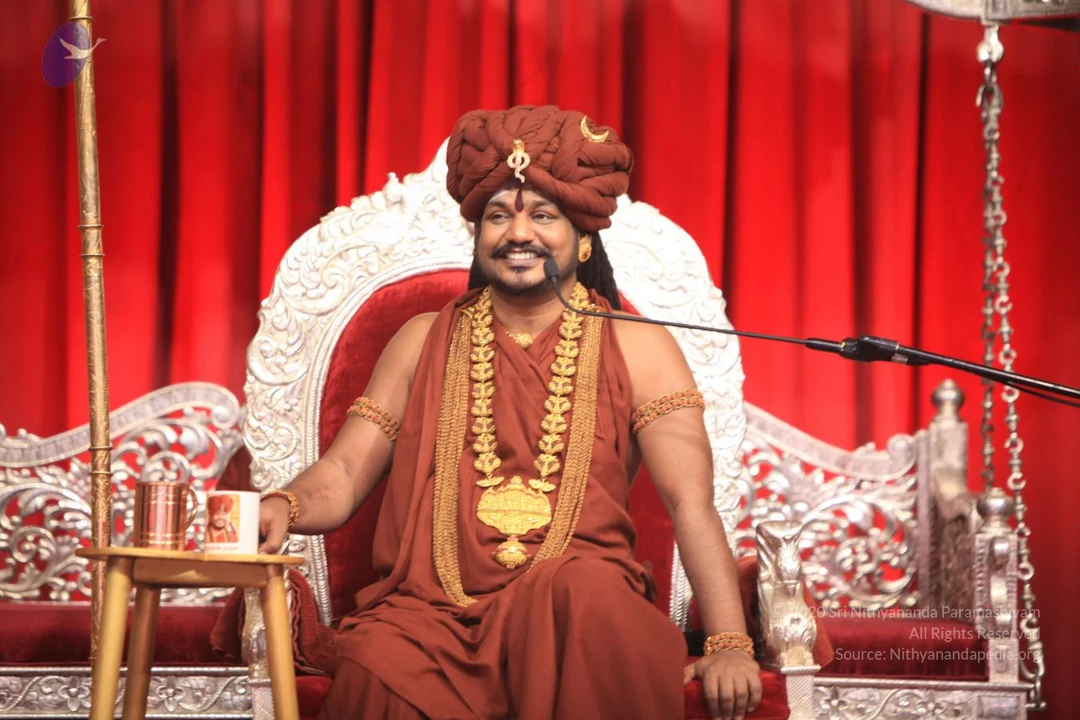
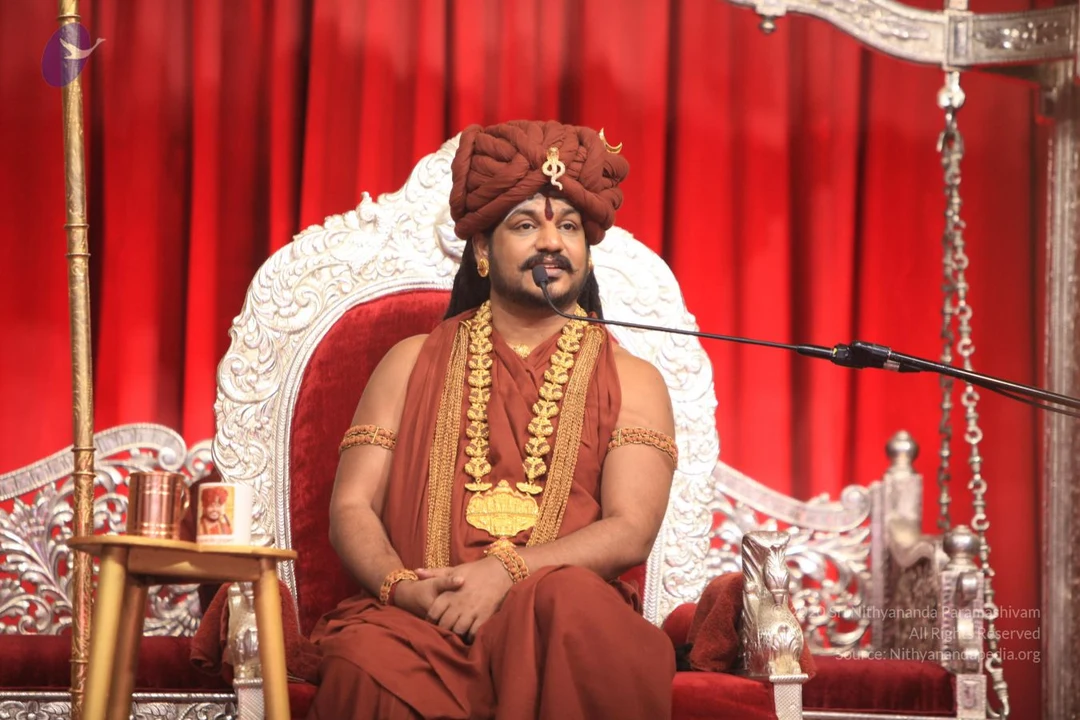
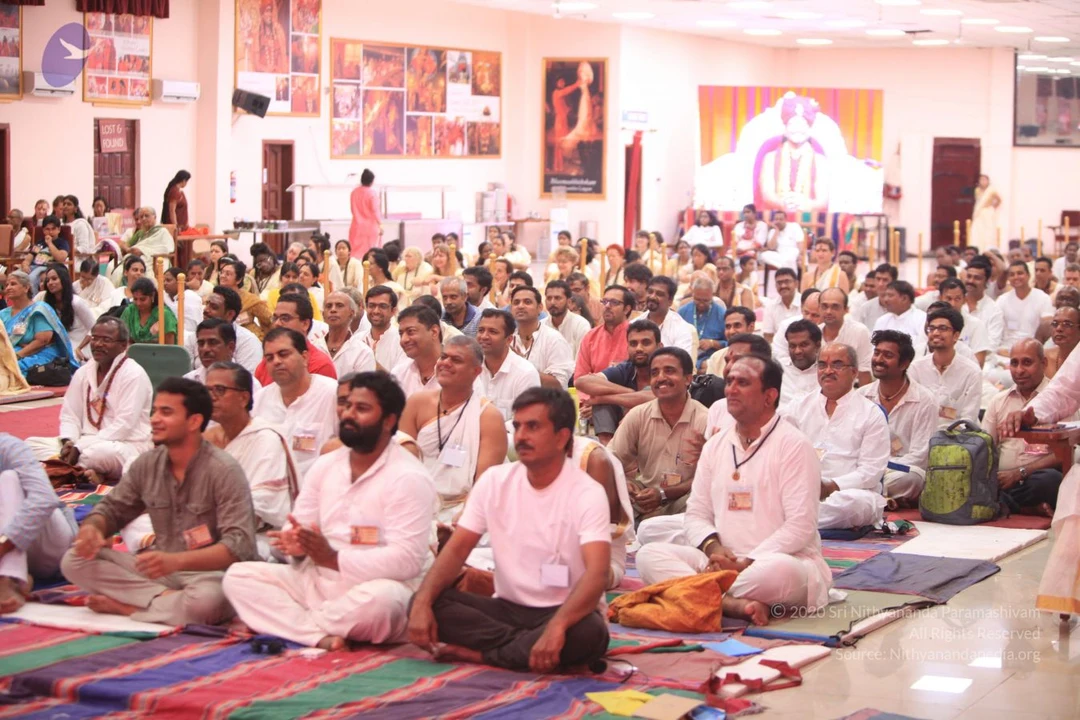
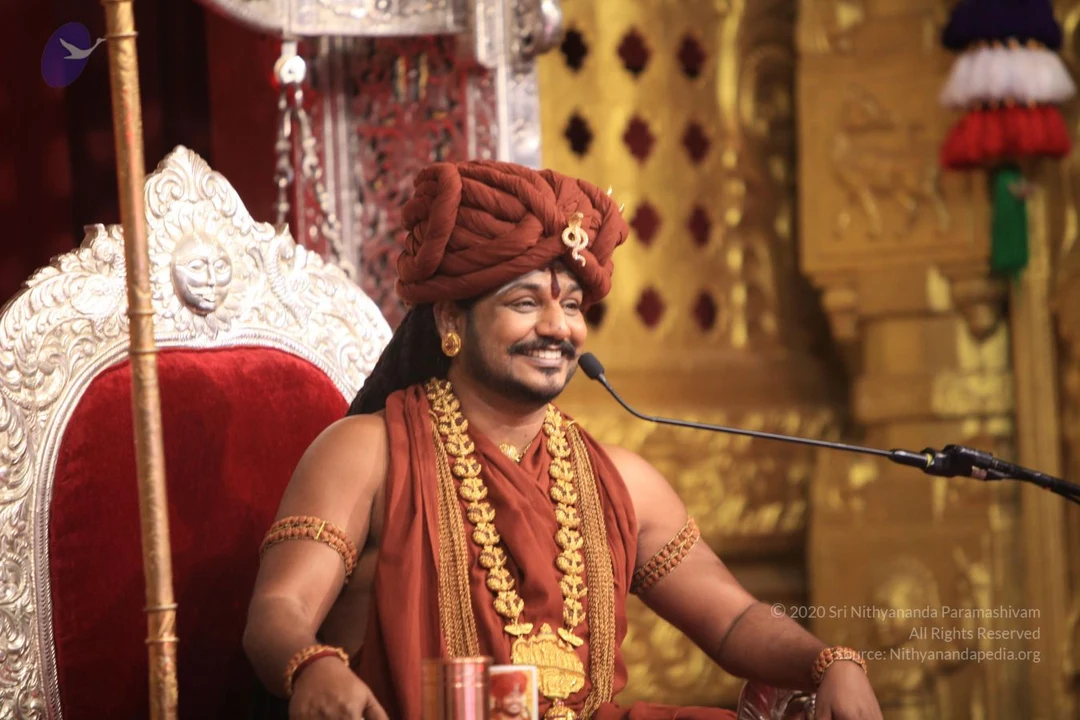
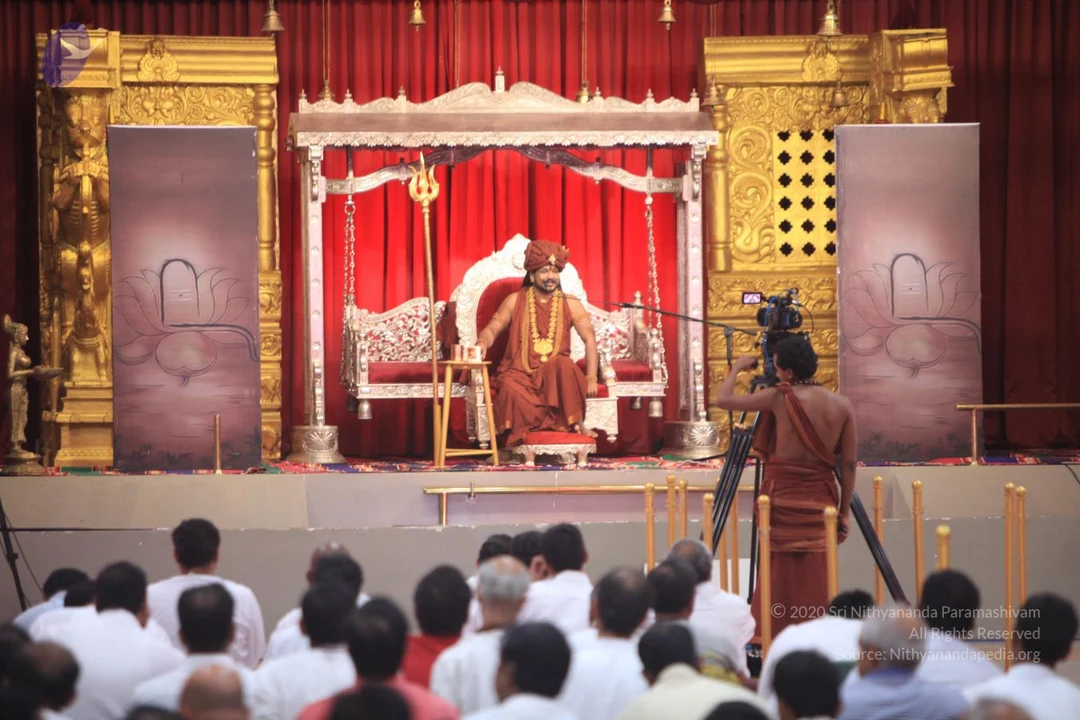
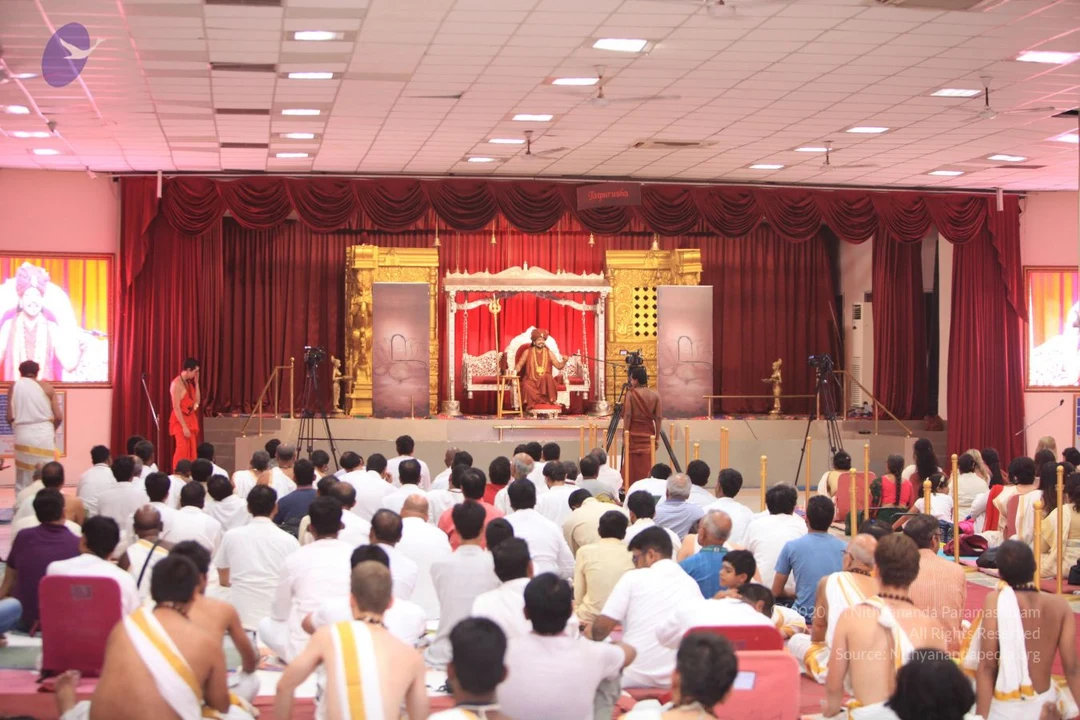
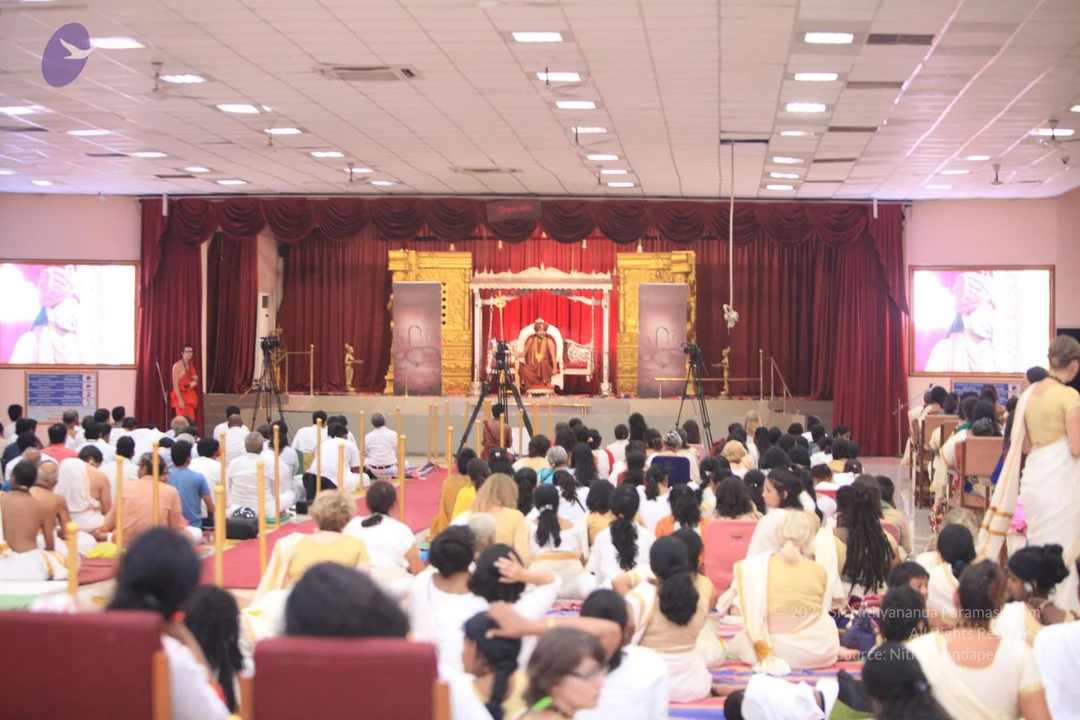
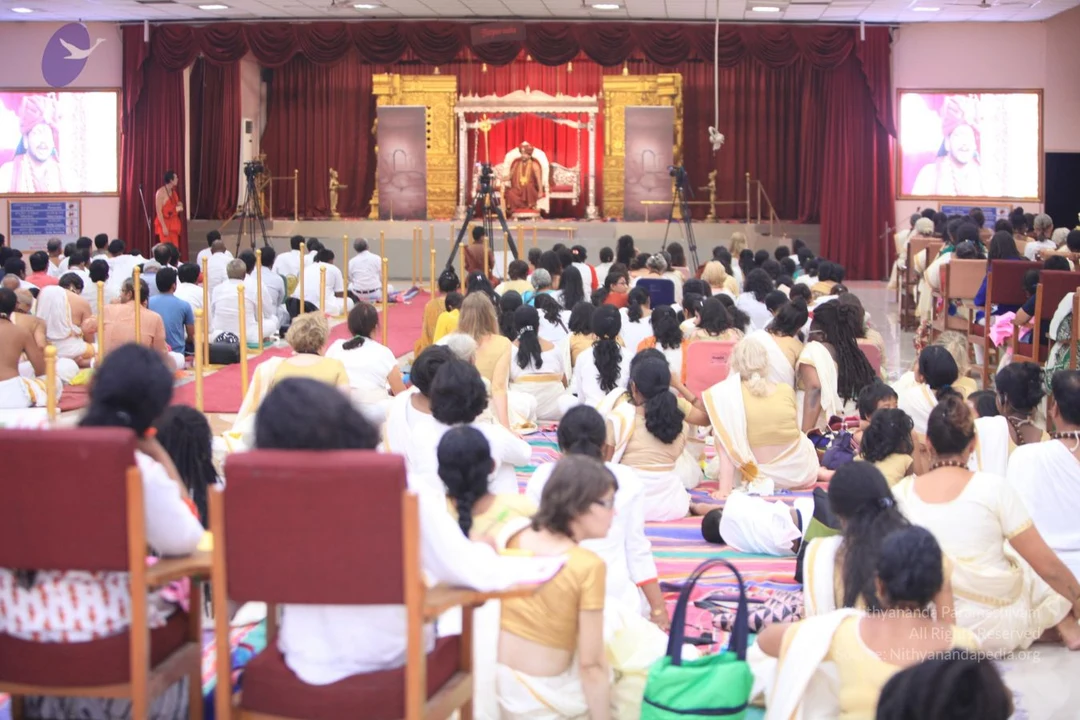
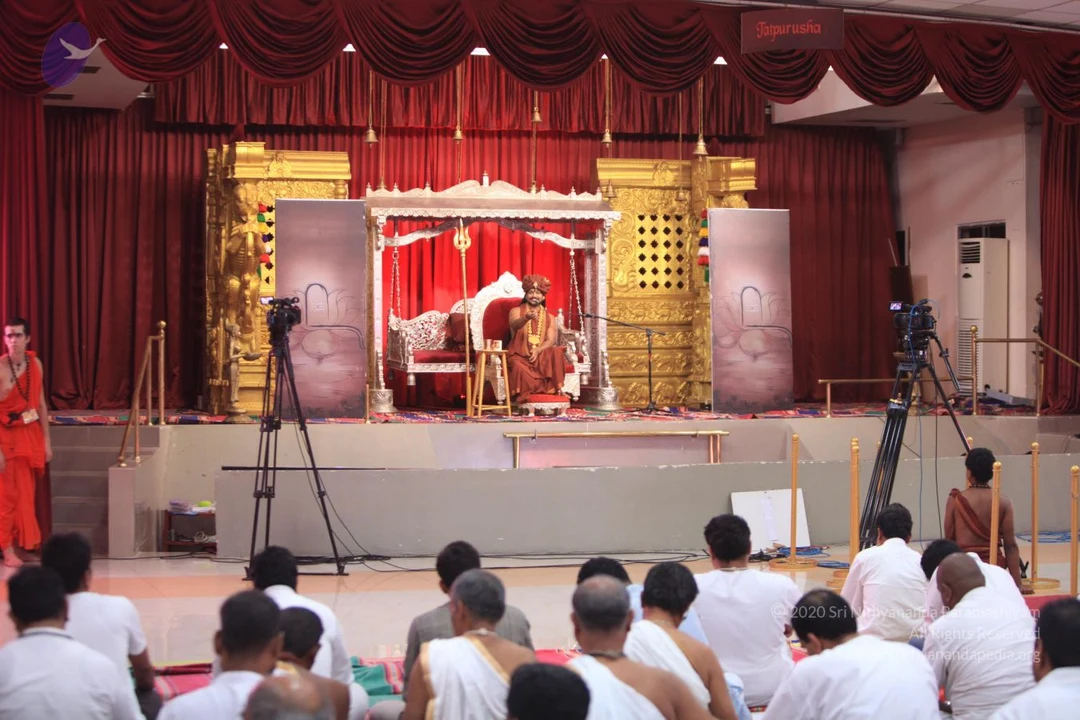
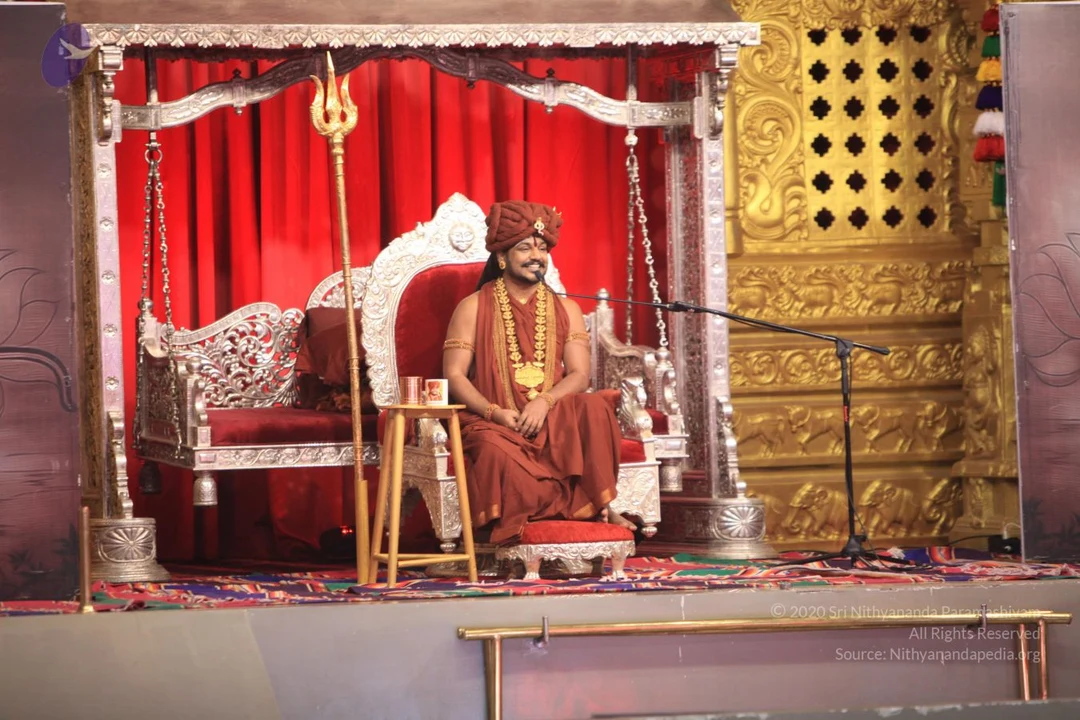
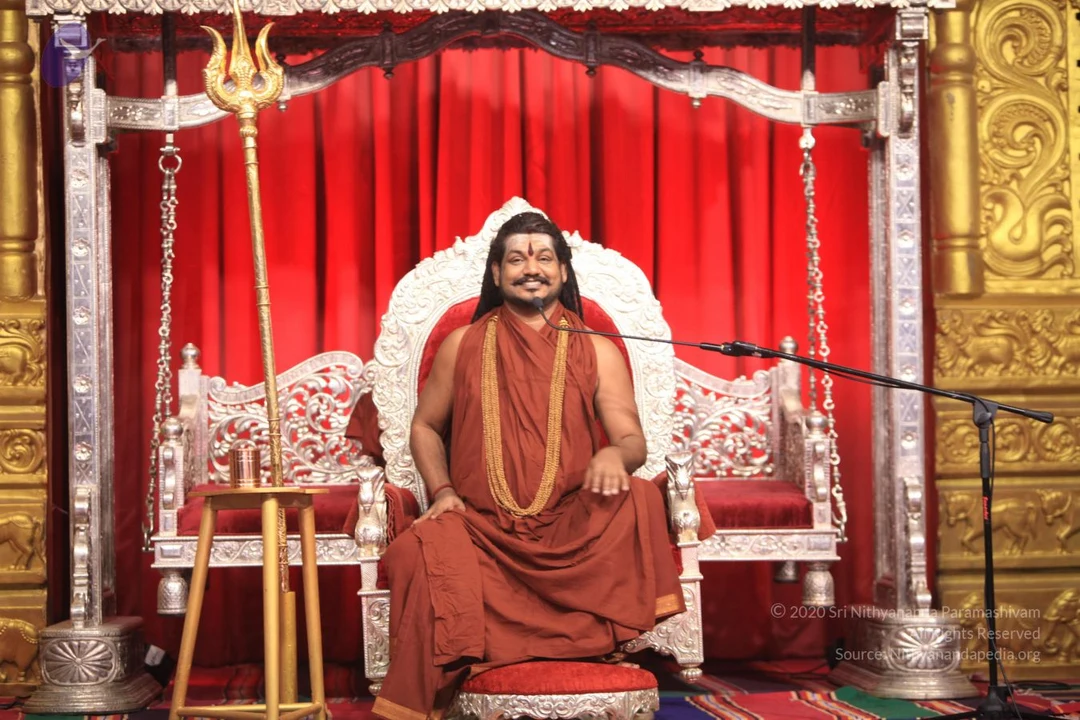
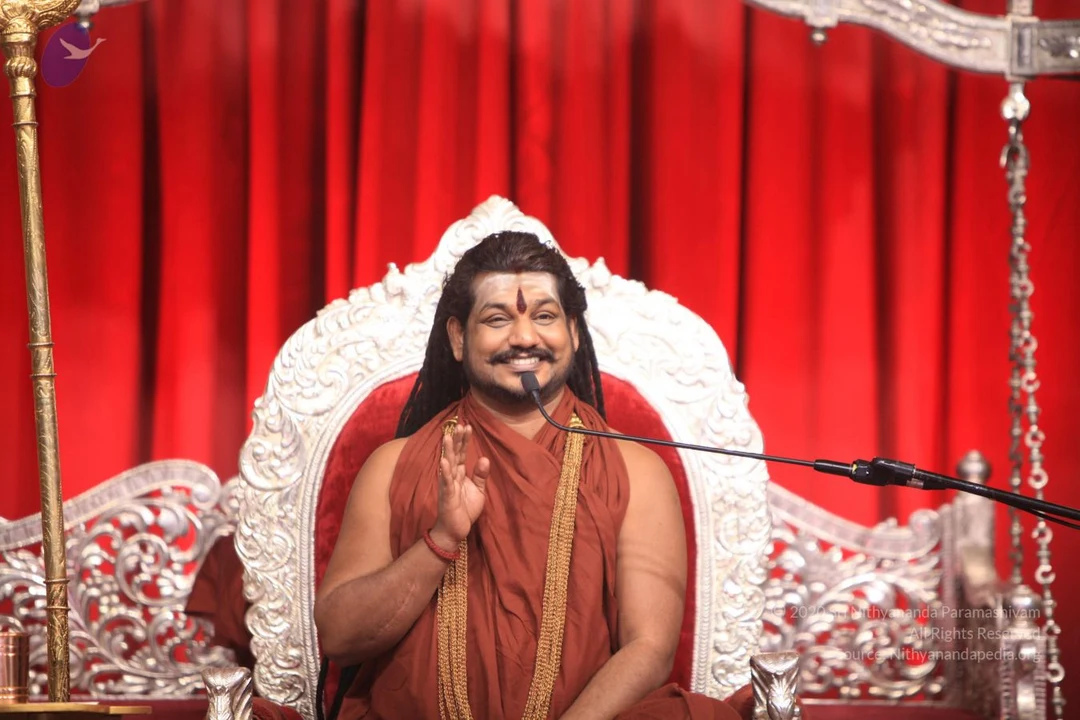
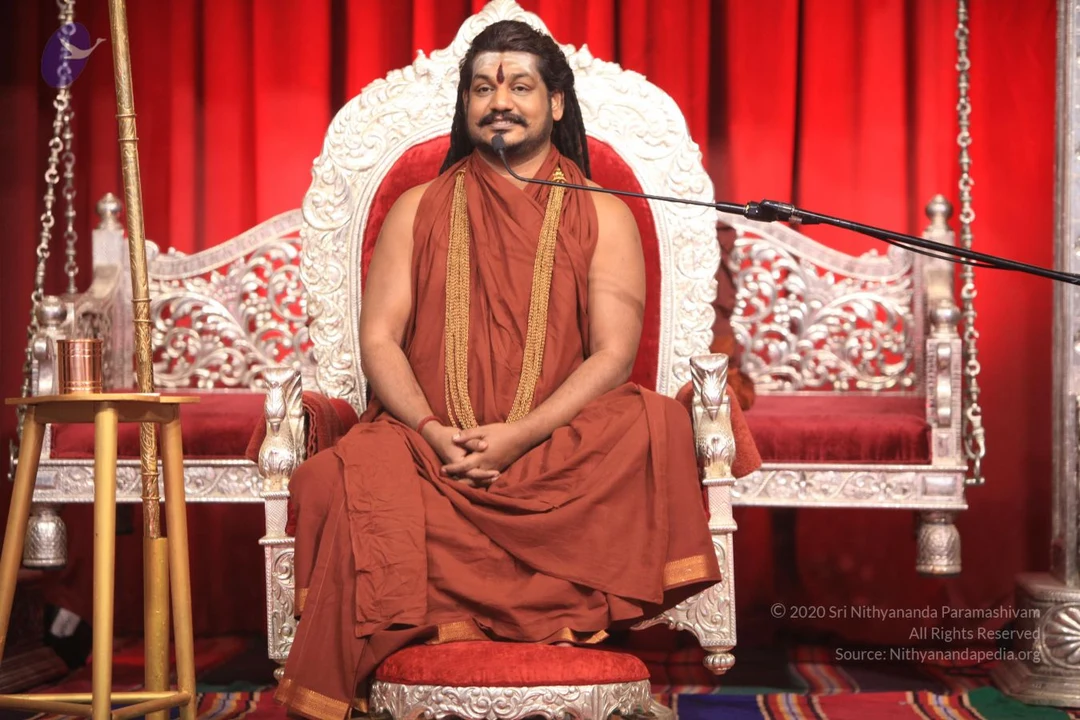
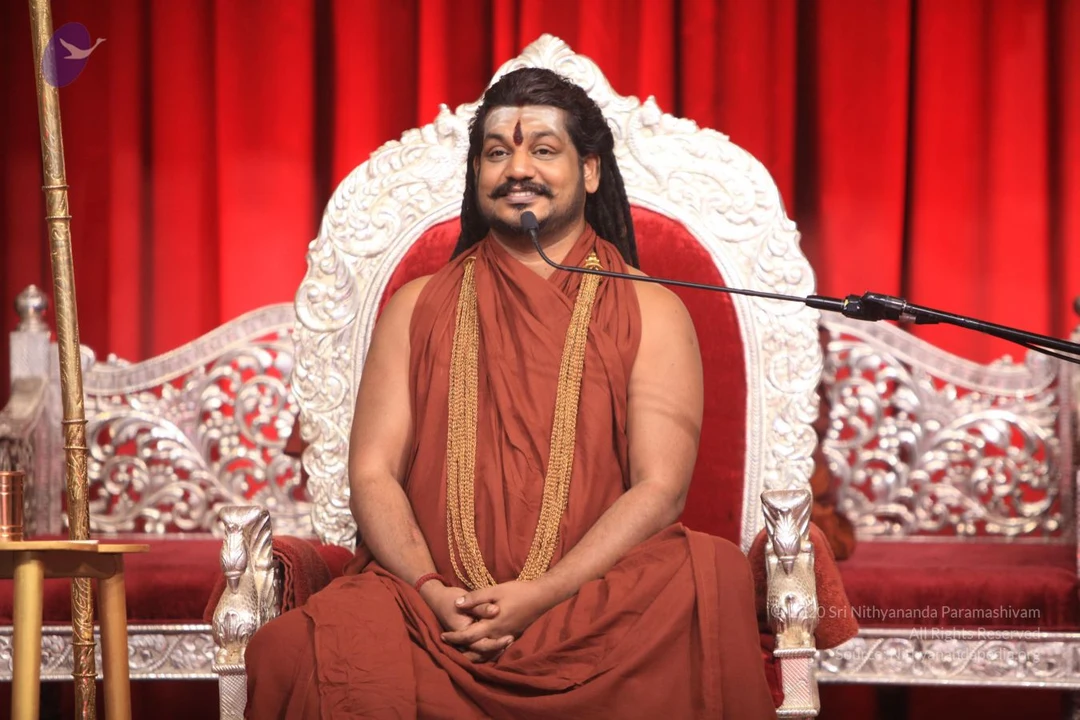
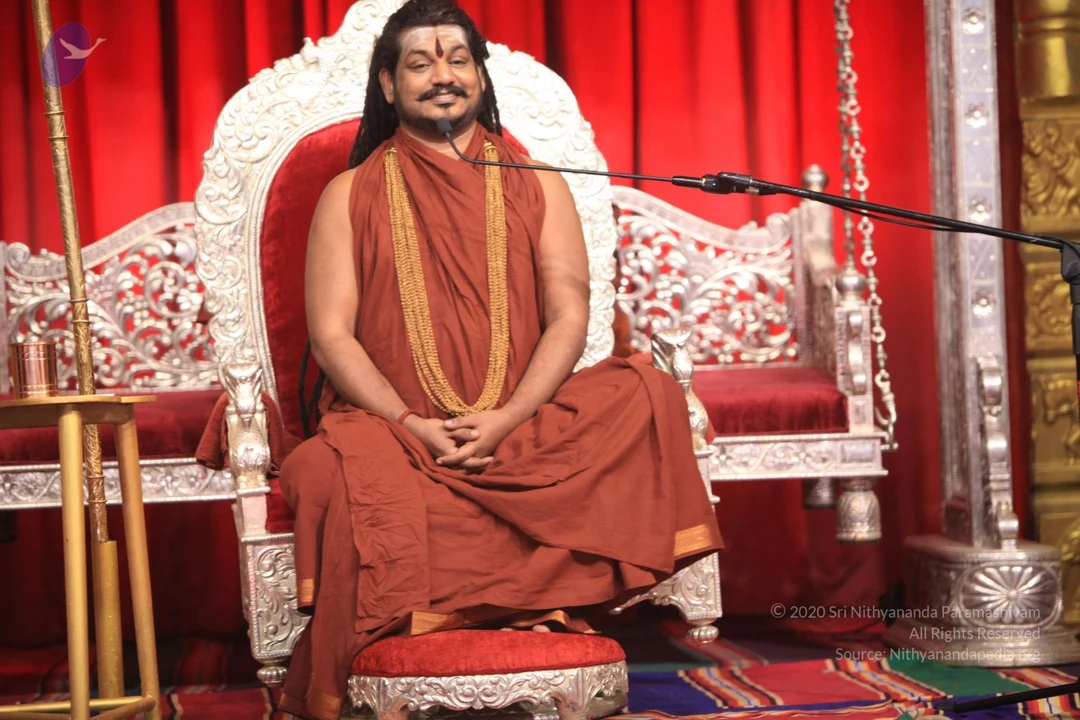
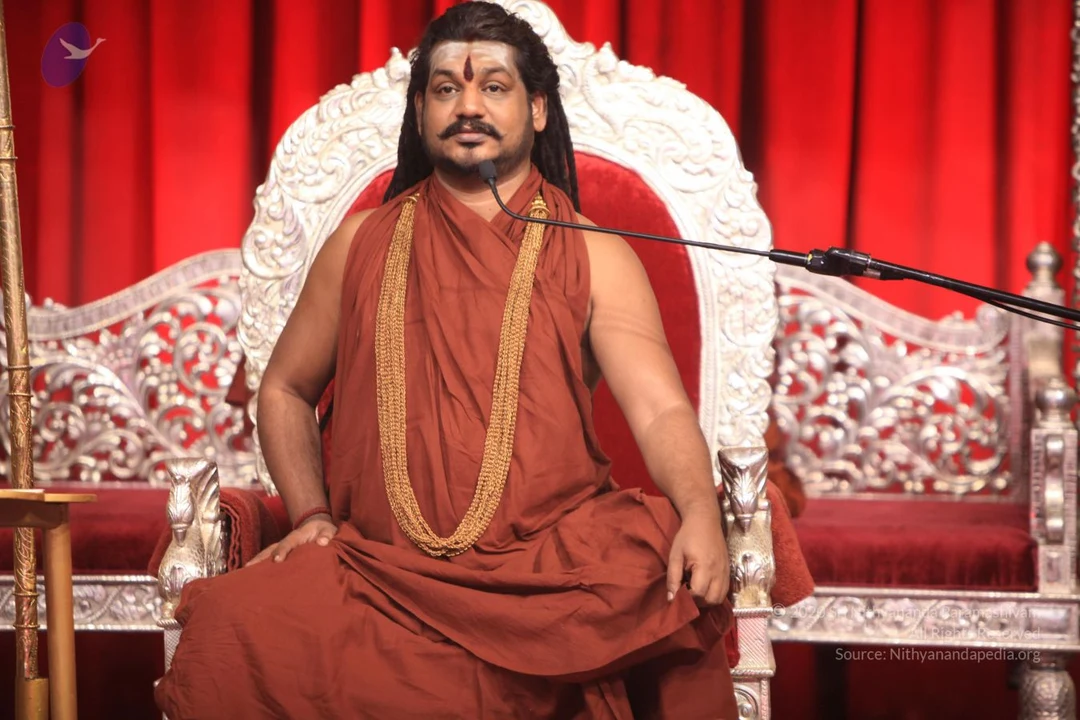
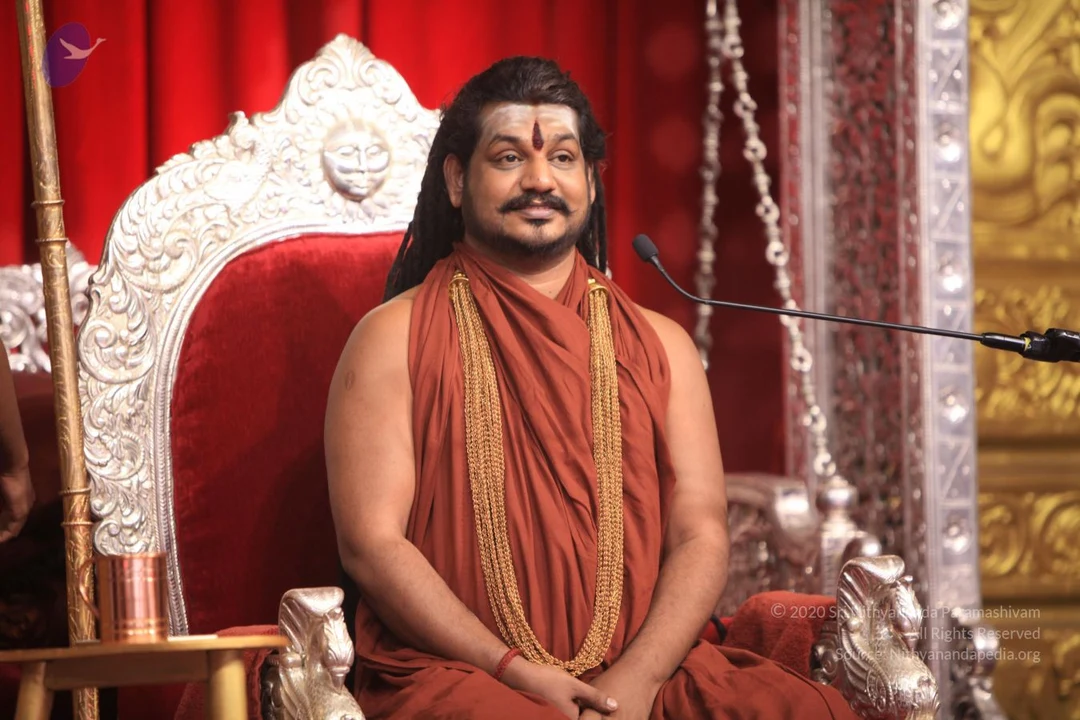
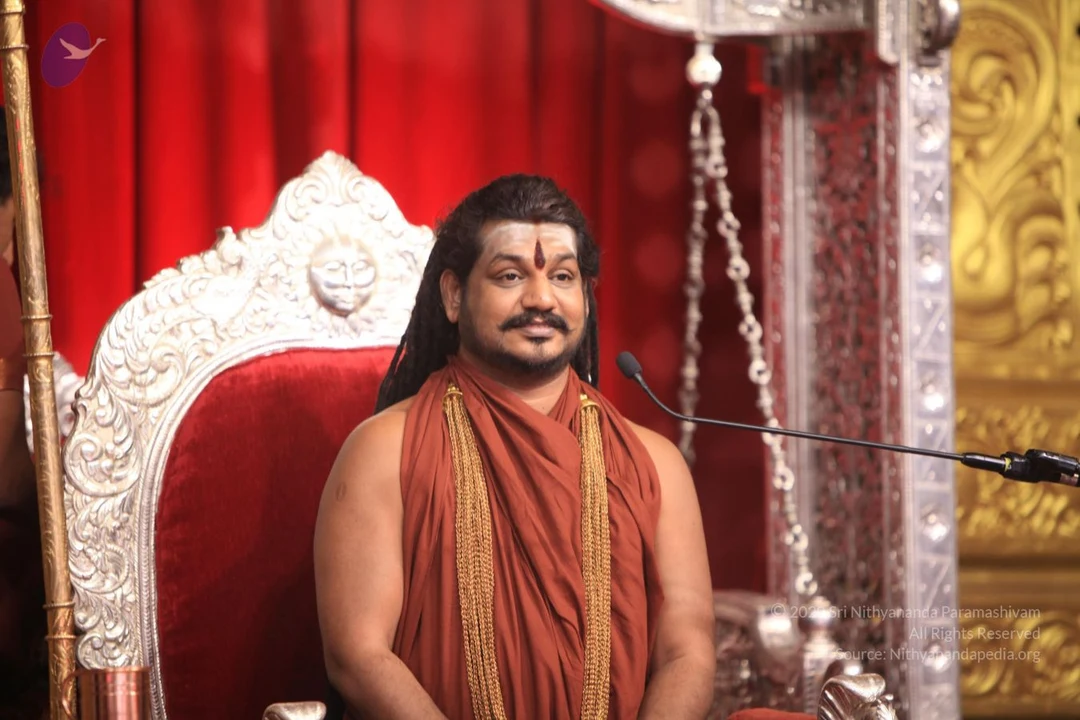
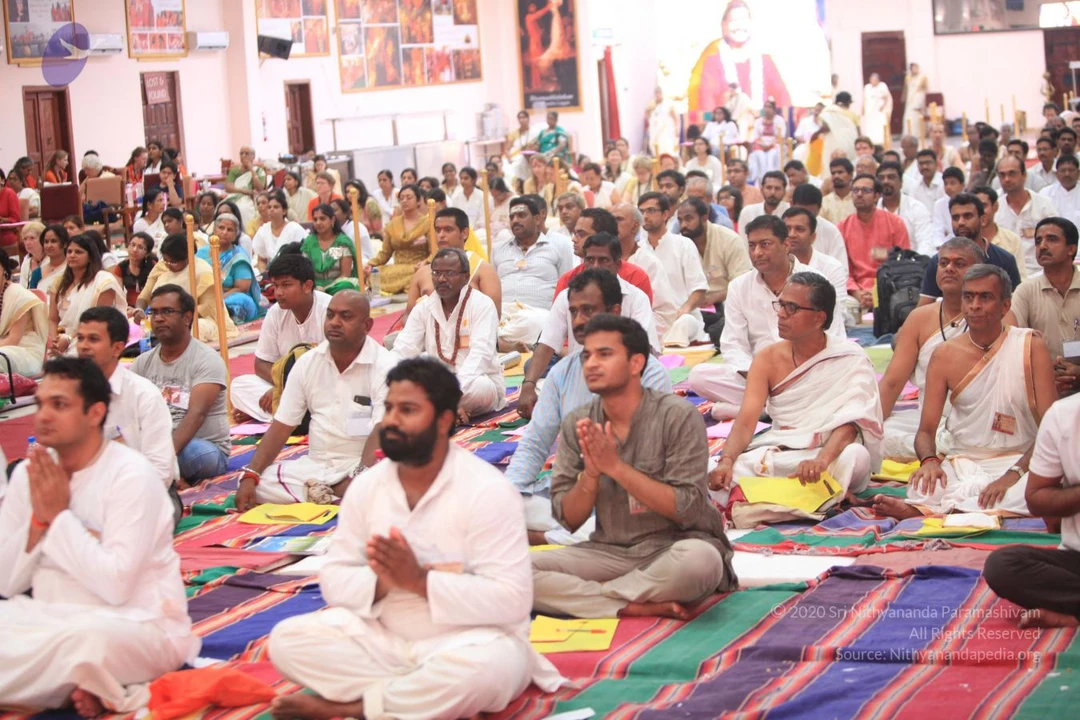
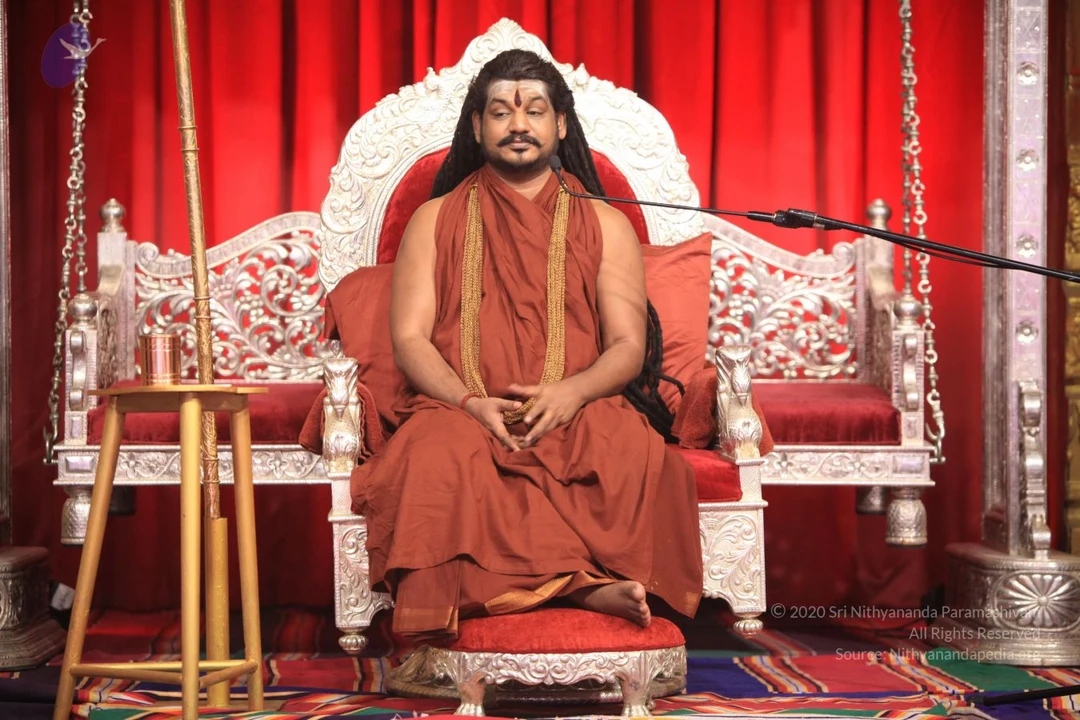
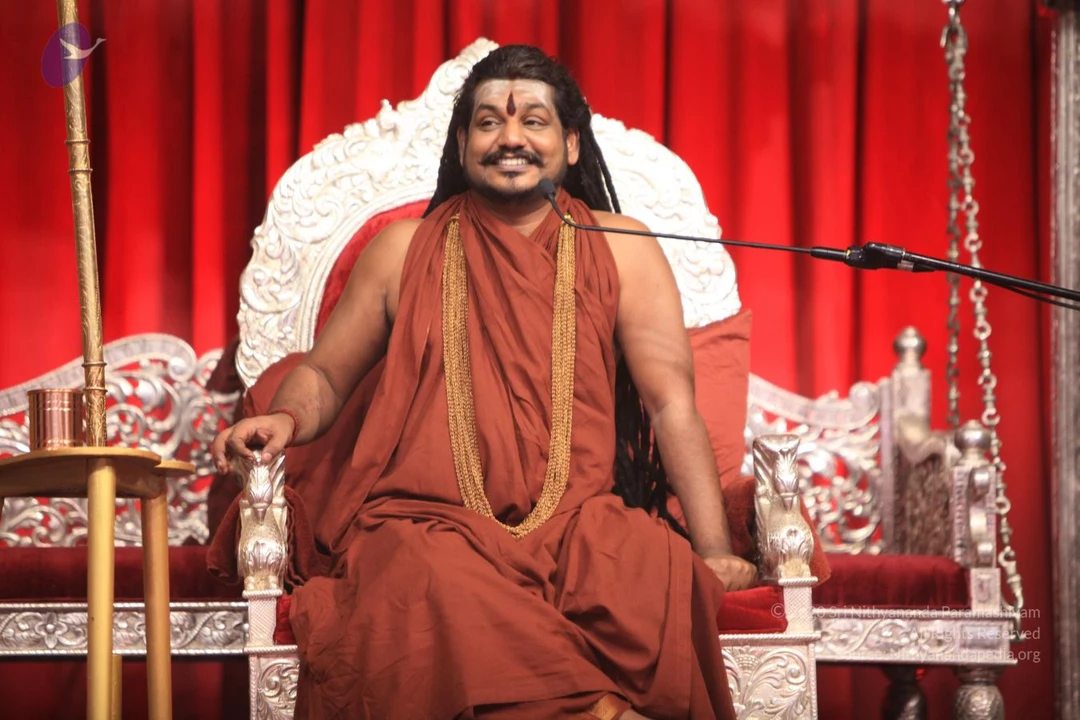
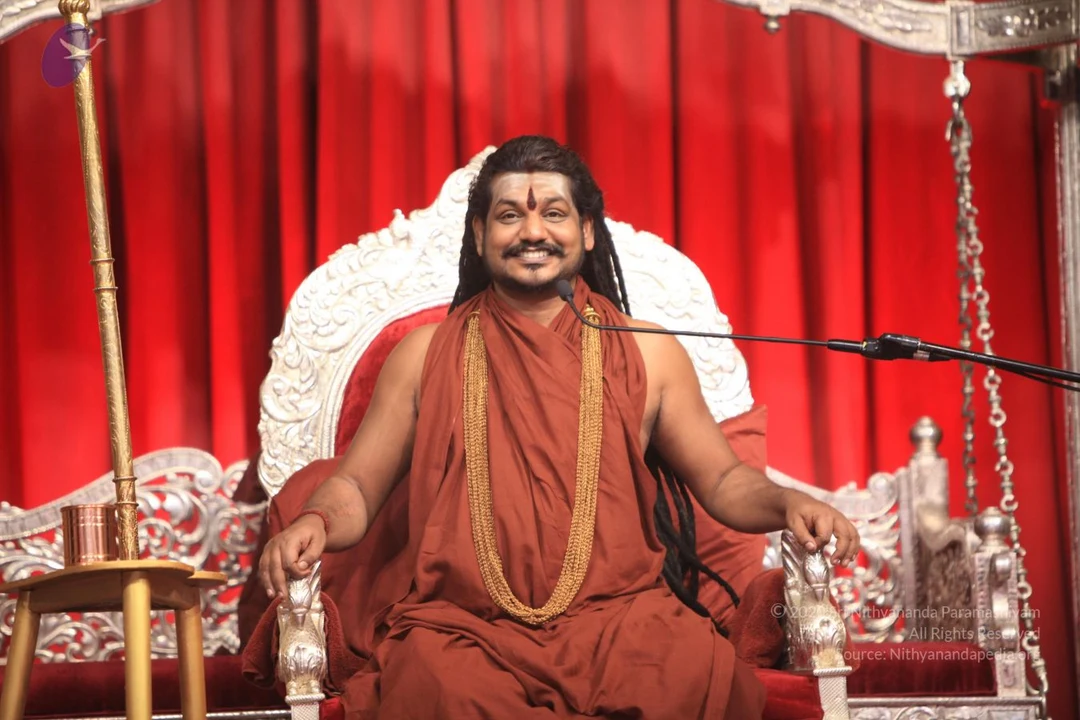
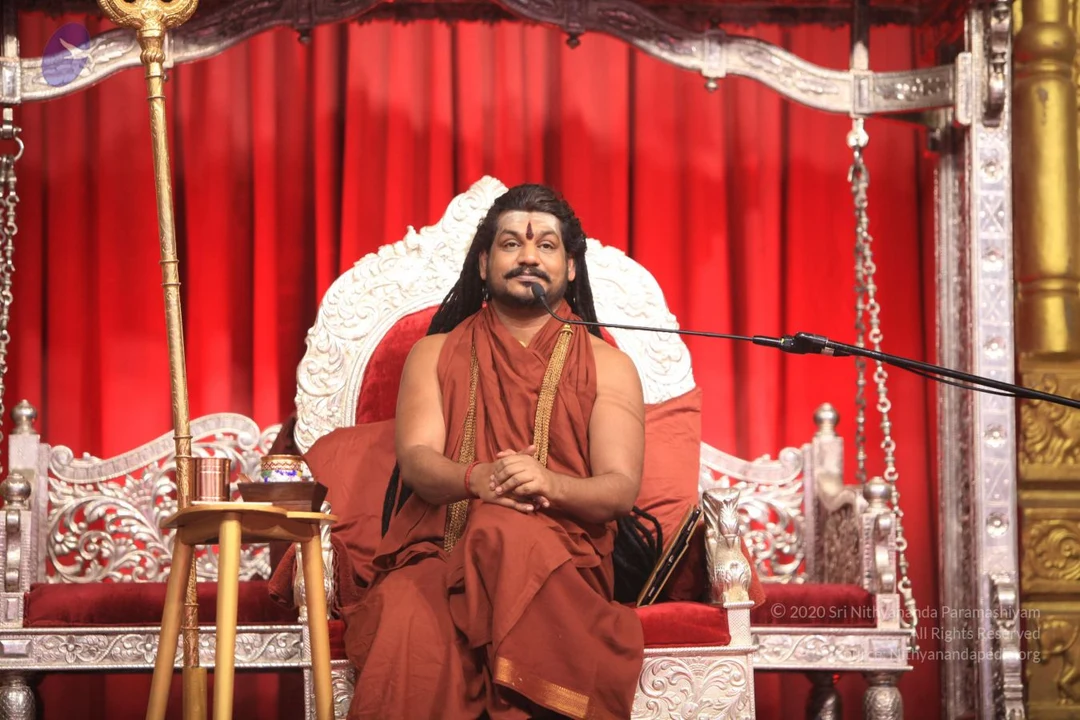
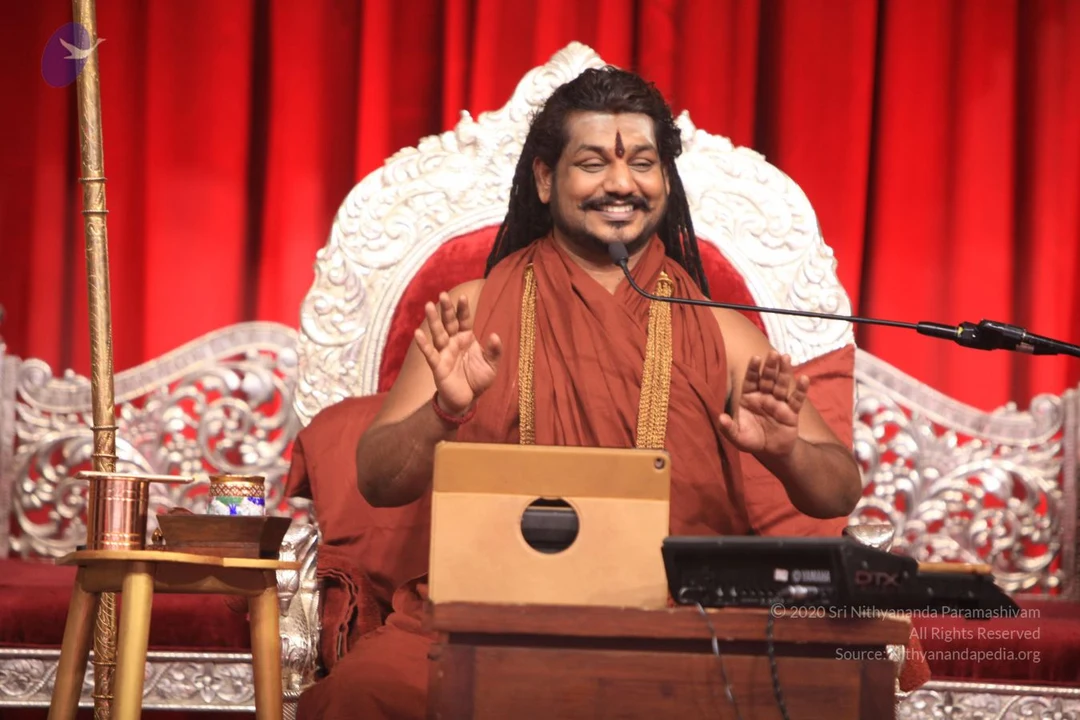
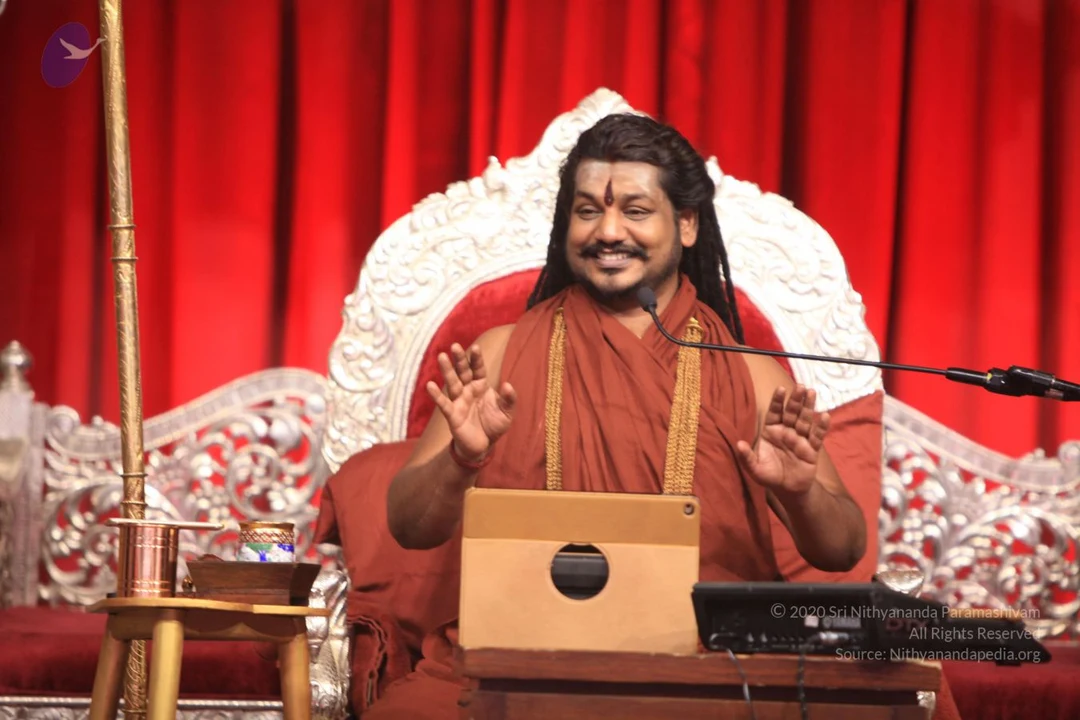
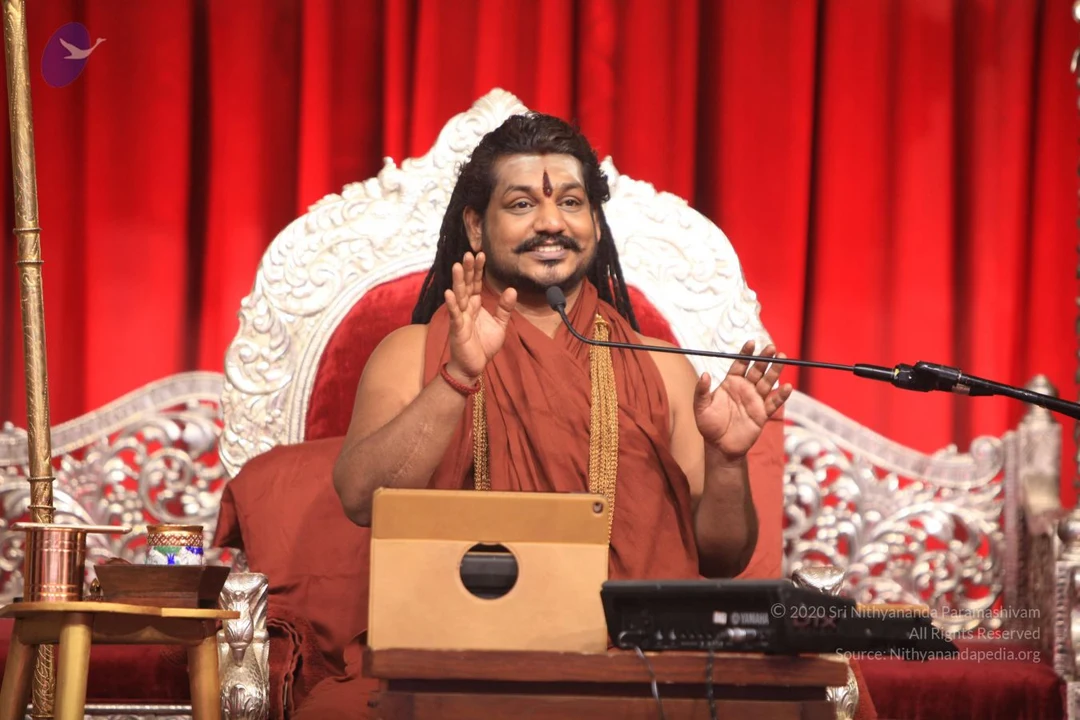
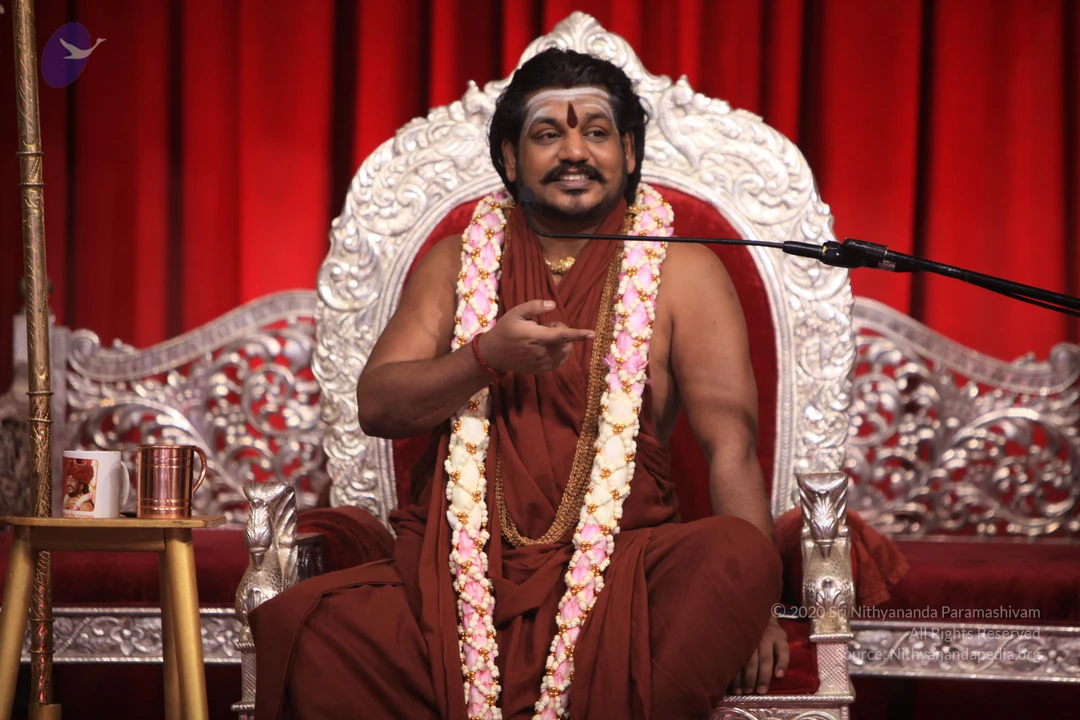
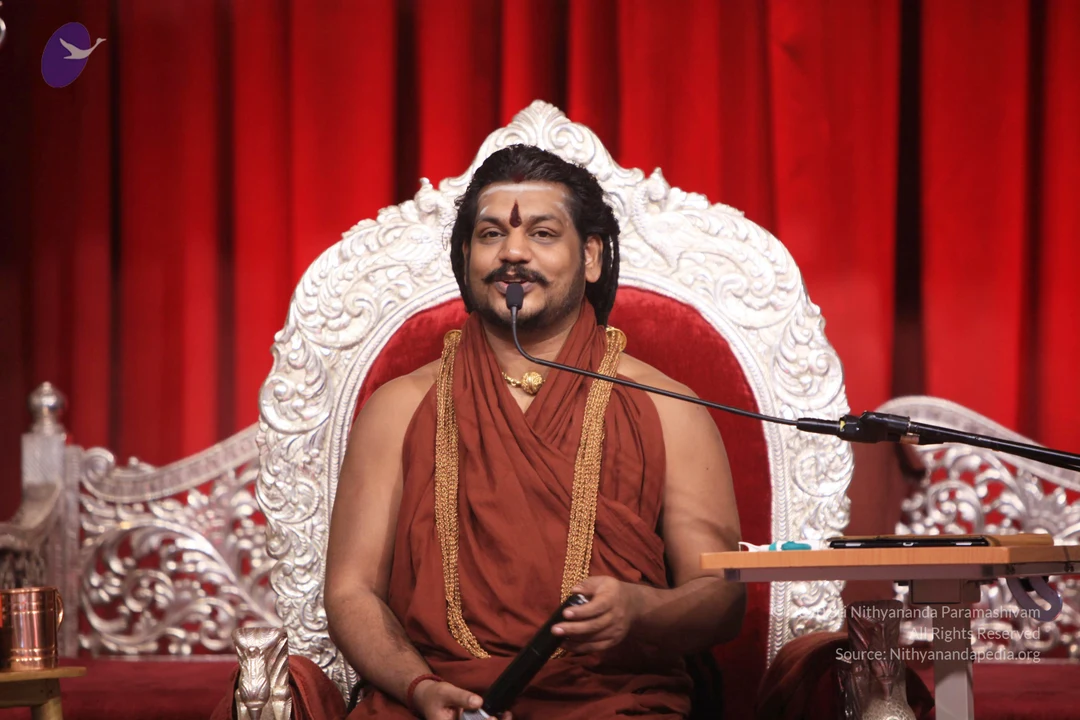
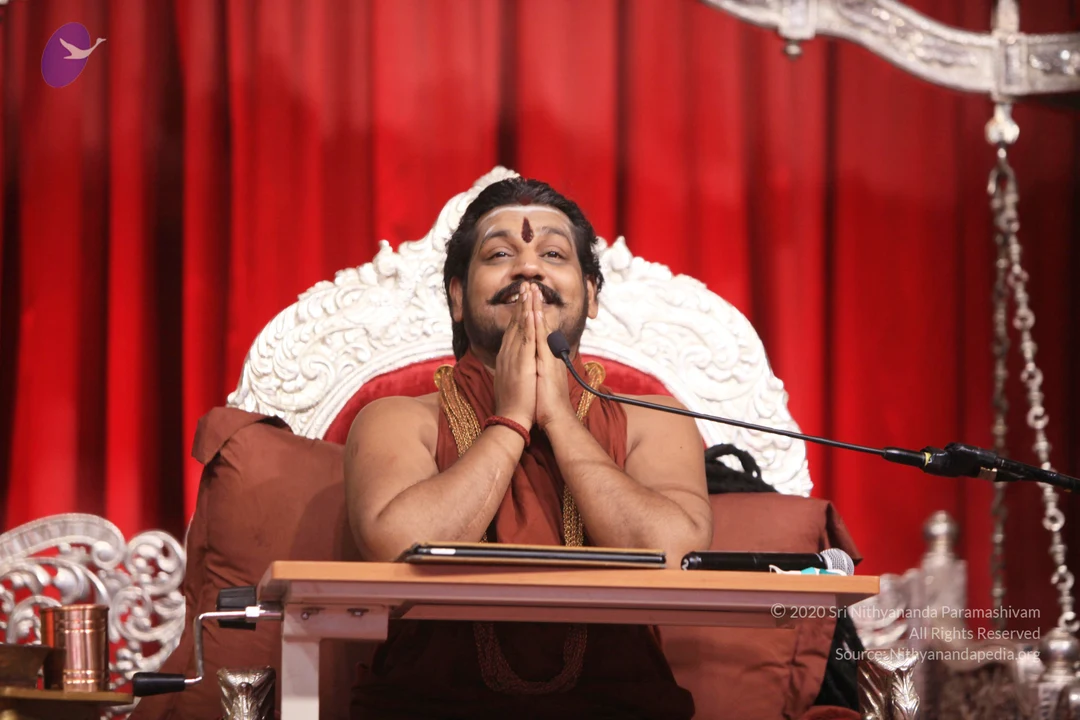
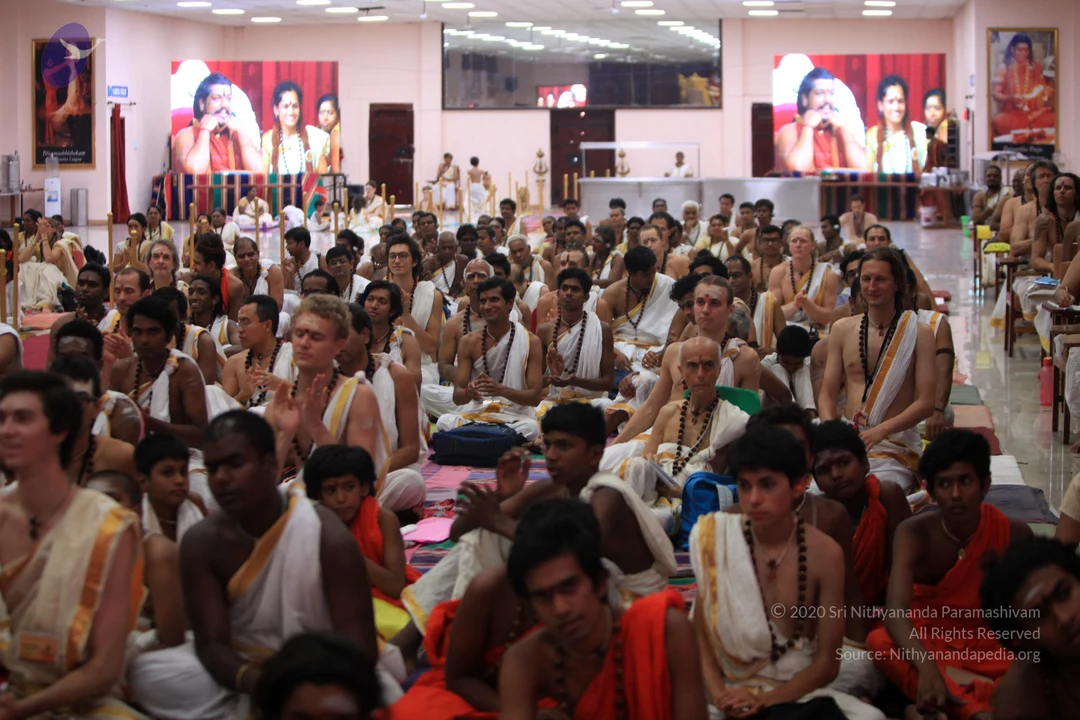
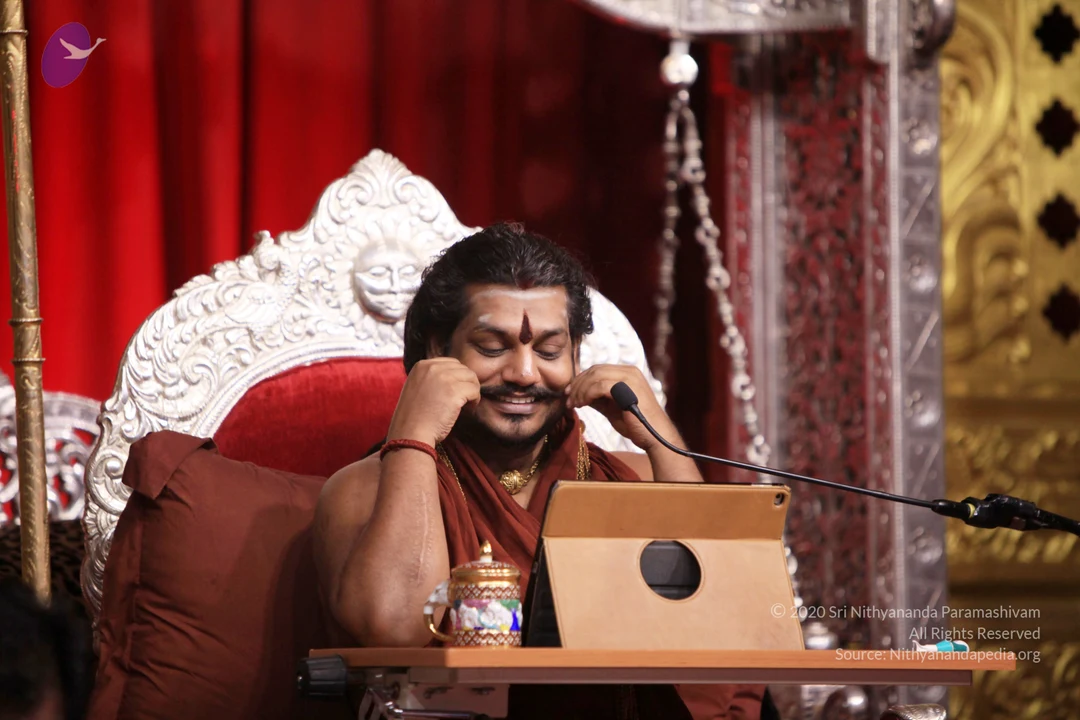
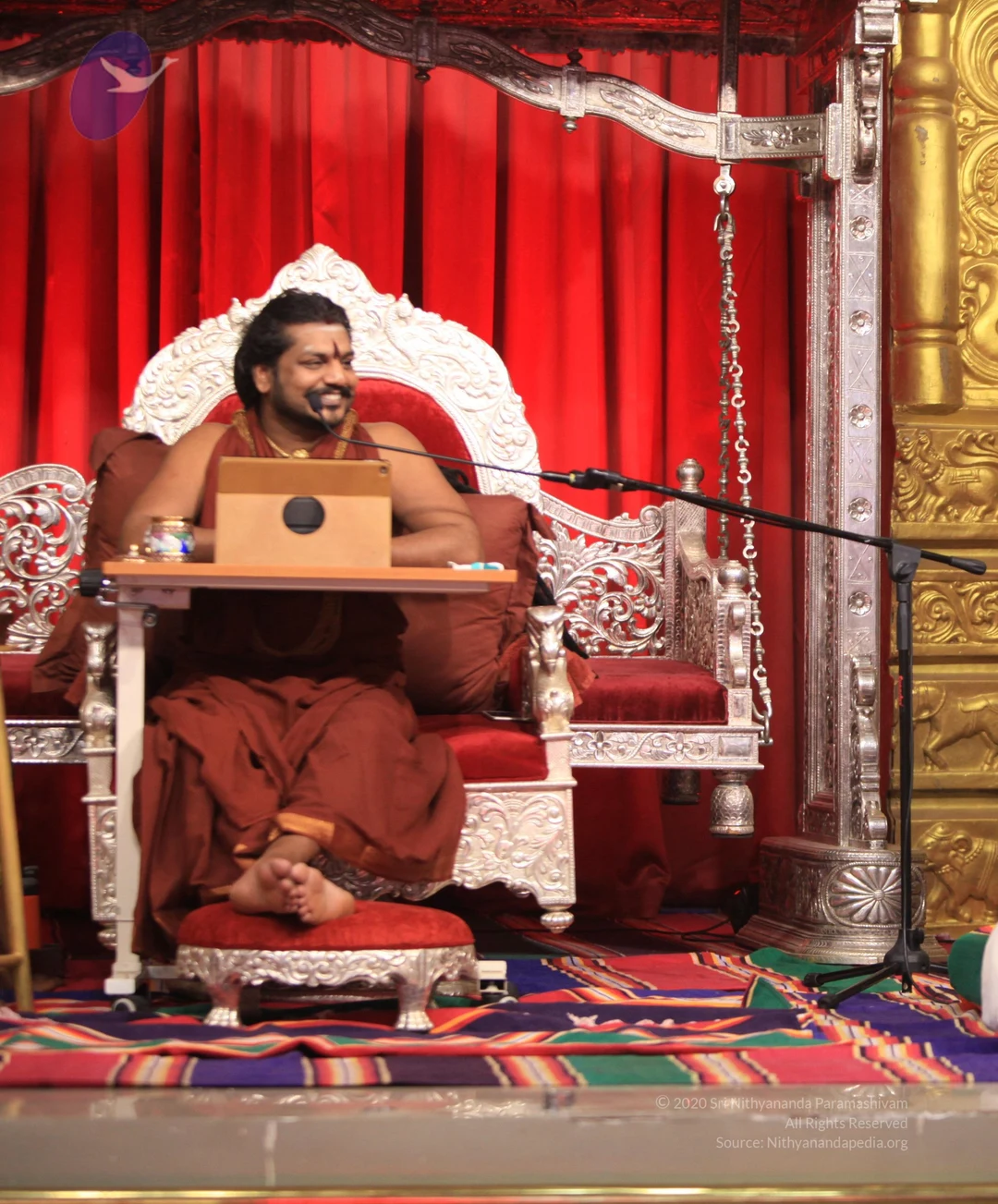
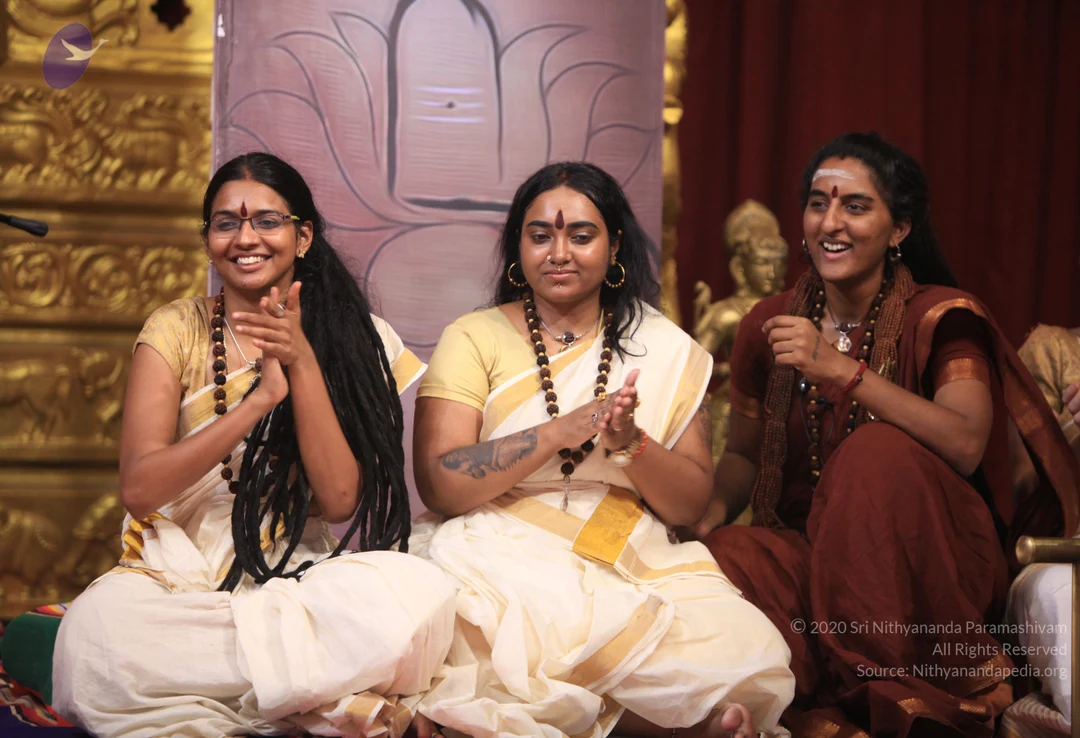
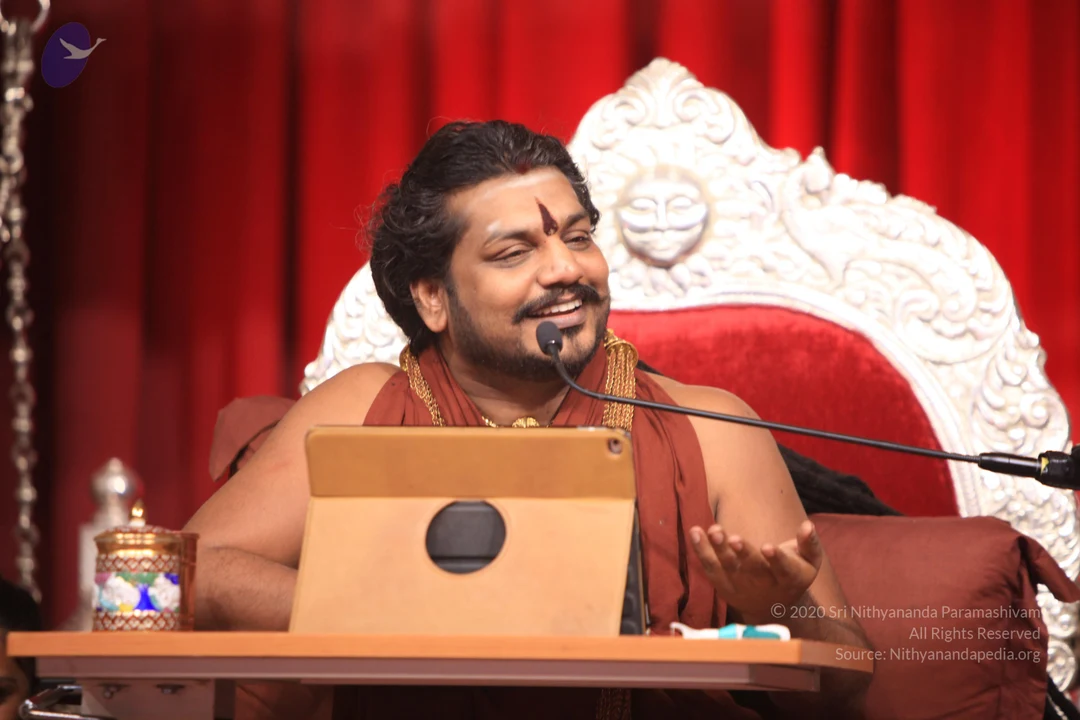
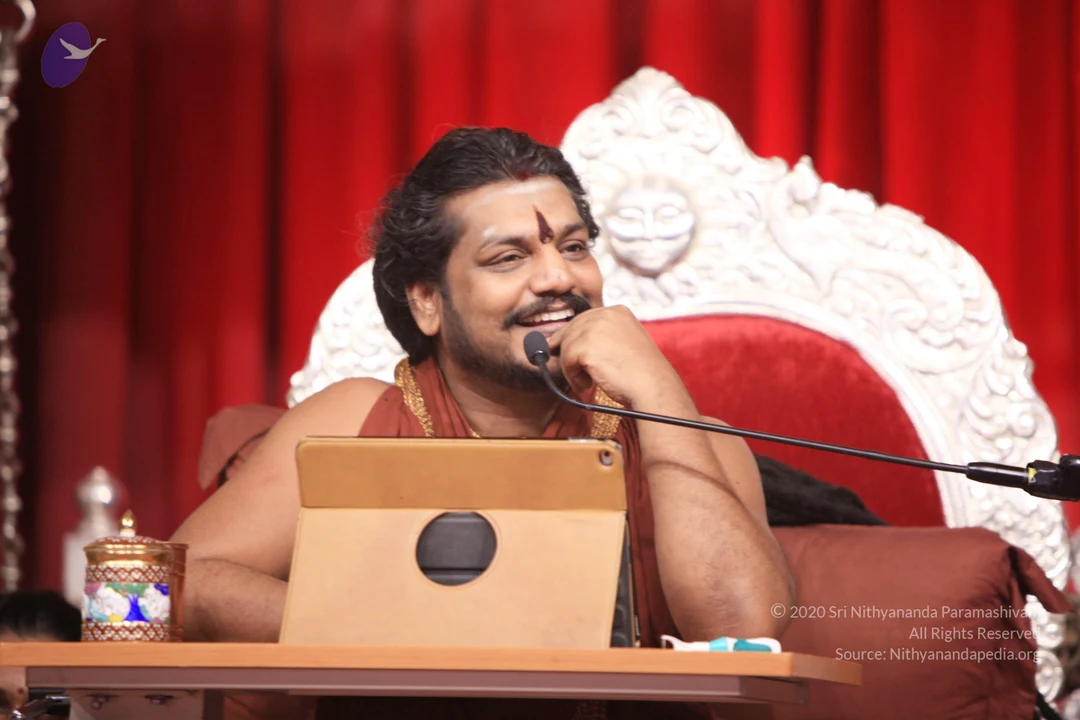
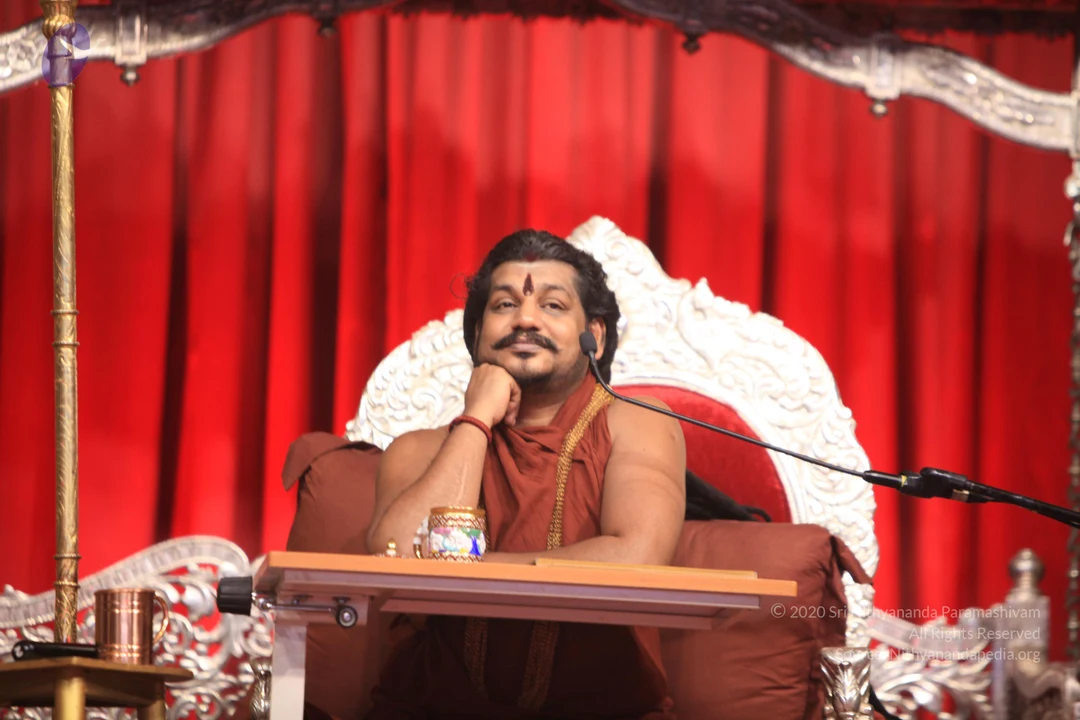
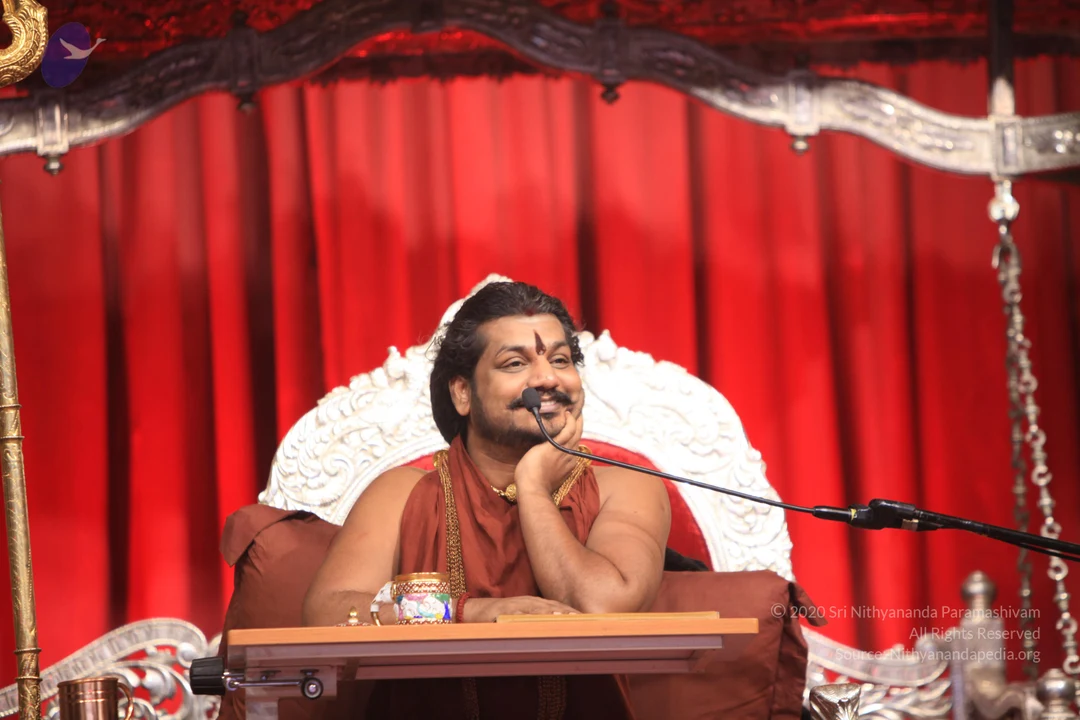
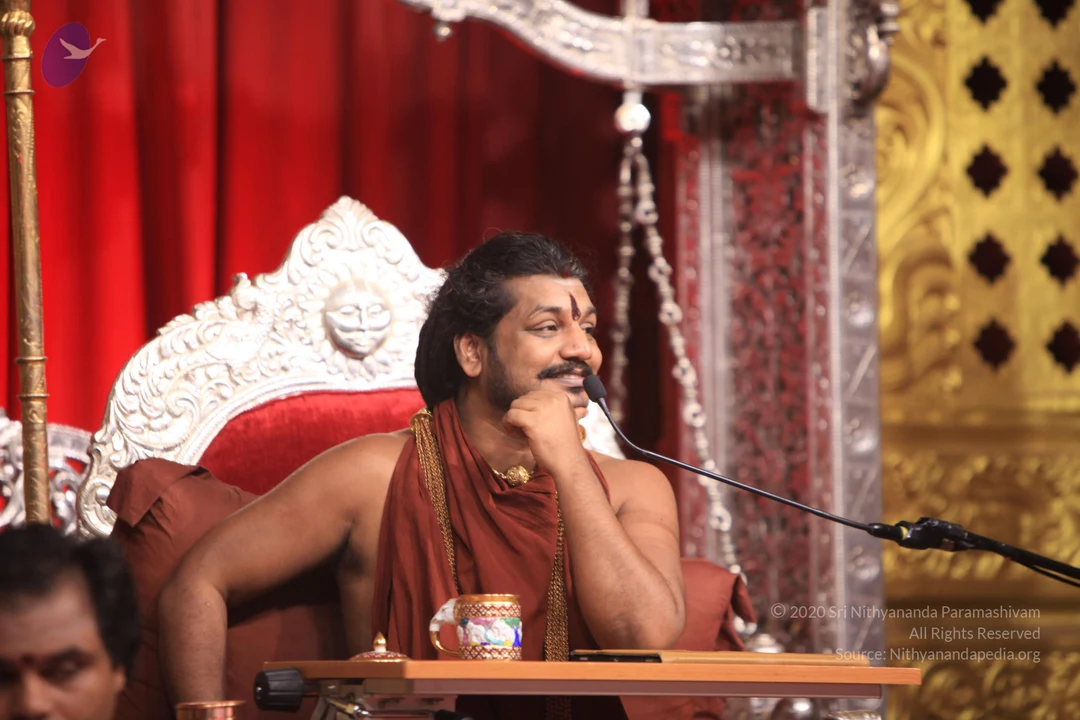
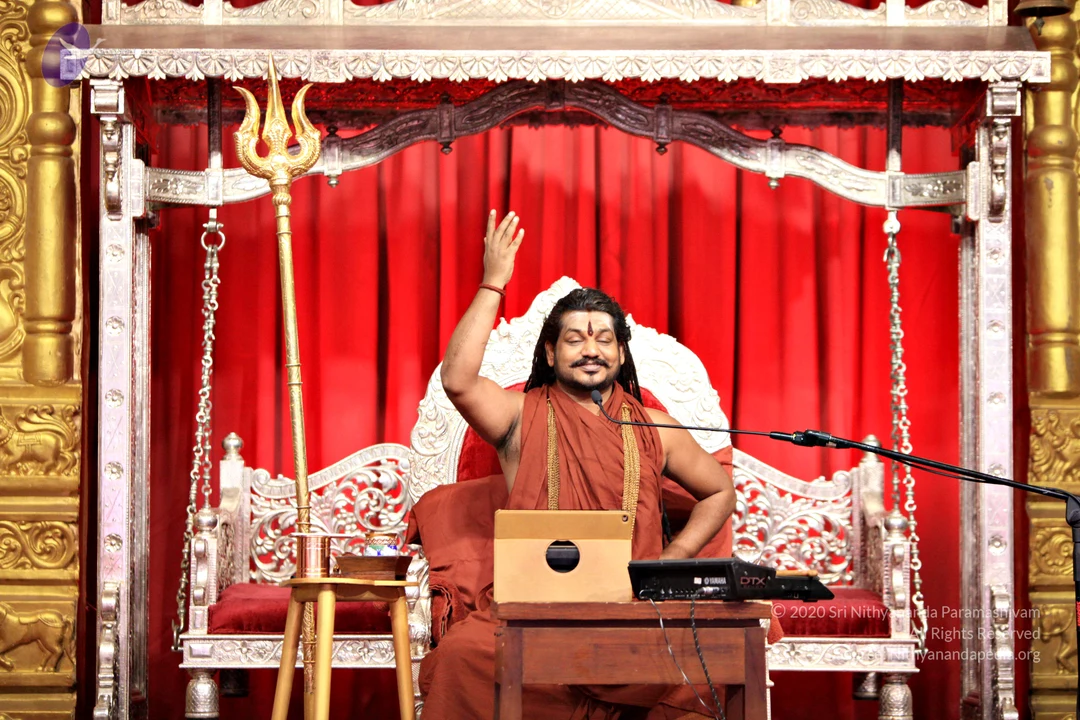
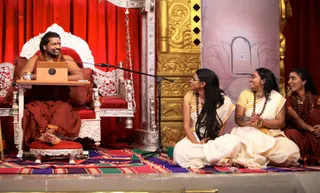
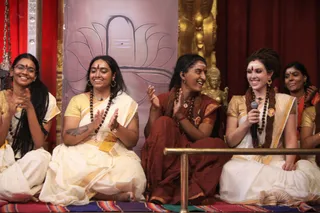
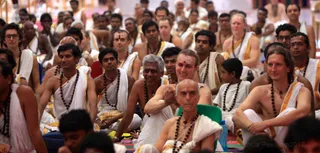
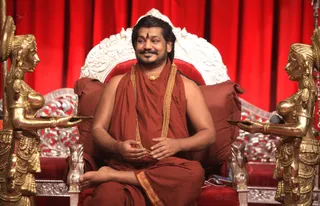
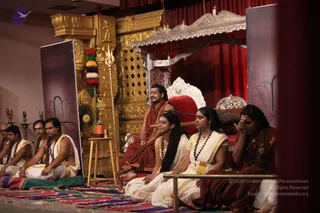
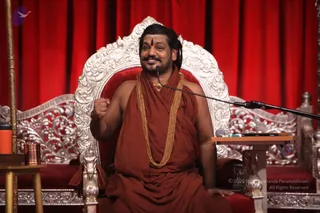
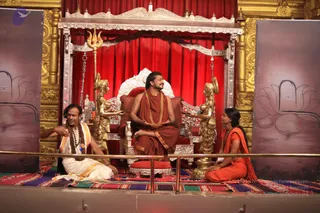
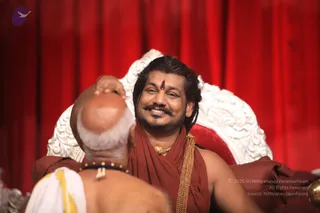
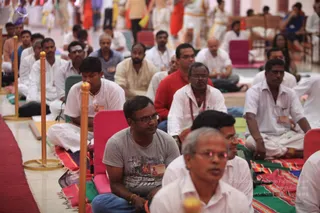
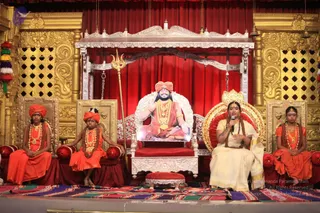
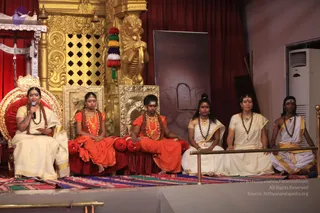
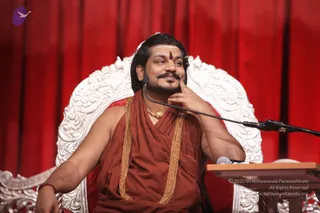
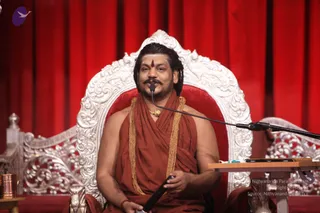
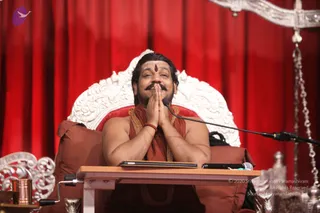
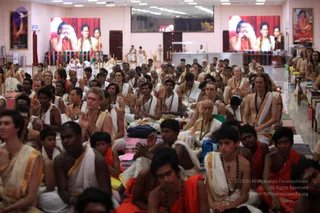
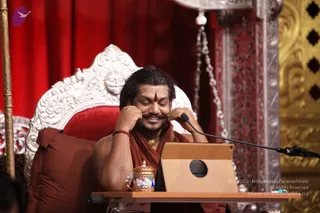
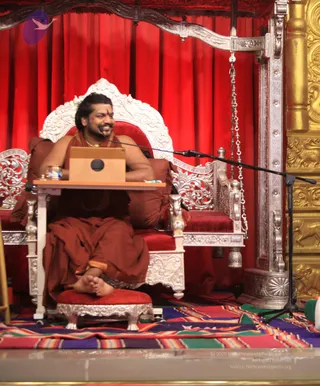
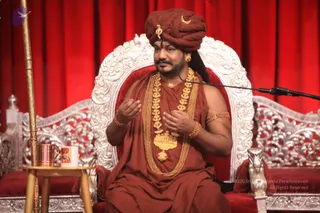
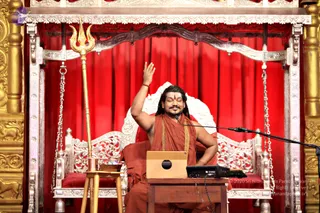
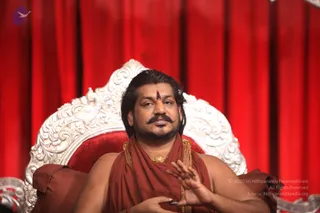
Two women sit on ornate gold thrones against a red draped backdrop at a stage event. The woman on the left wears a cream and gold-bordered sari, holds a microphone and rudraksha mala, and has a black blindfold over her eyes. The woman on the right wears an orange sari with gold jewellery and a long rudraksha and silver bead mala, also blindfolded, with her hands folded in her lap. Red cushions line the foreground. Both are seated; no candidate for a person is clearly identifiable by appearance, so the identity is unsure.A large seated congregation in a bright hall with pink-tinted walls and a tiled floor. Many men in white dhotis and white kurtas sit cross-legged on striped mats, several with palms pressed together in namaskar and some with eyes closed. Some wear lanyards with name badges. Two large screens behind them show a figure seated on a red and white throne, wearing a crown-like headdress, an orange garland and ornate robes. Framed portraits hang on the walls at either side. Audience members sit in rows and some are seated on chairs to the right. Photo of an organized satsang or workshop session.A man seated on an ornate silver-and-red throne in front of red drapes, speaking at a microphone on a stand. He wears a rust-orange robe over bare shoulders, a gold necklace and a rudraksha-style bead mala, with a red tilak on his forehead. A tablet computer sits on a wooden stand in front of him, and a brass vessel and small brass stand are at the left edge. The setting resembles a discourse or satsang stage.

May 20 2017

Original wiki page
Contents

Title

Life Beyond Limits - Awaken Spiritual Powers for Extraordinary Success

Description:

This video is from a 2-Day Workshop called Life Beyond Limits led by Paramahamsa Nithyananda, held on May 20-21, 2017. The body in which existence is pervceived, has evolved step by step from amoeba to fish , fish to monkey, monkey to man. Now, it is time for the next breakthrough man to Sadashiva.

Link to Video:

VideoAudio

Transcript:

(0:07)

aum nithyānandeśvara sadāshiva samārambhām nithyānandeśvari adīshakti madhyamām | asmat āchārya paryantām vande guru paramparām ||

(0:35)

I welcome you all with My love and respects. I welcome all the devotees, disciples, Samajis, Satsangis, Sarvajnapeeta Yajamans, and Swamis and Mahants from Niranjani and Nirvani Akhada. I welcome all of you with My love and respects. I welcome everyone who is sitting with us through Nithyananda TV and 2-way video conferencing in hundred and, sorry more than, hundreds of Spiritual Embassies, practically every country, in every time zone, in every continent; At least few thousands. I welcome all of you with My love and respects.

(1:36)

Life beyond limits…listen. The body in which you are residing… which is the center for your existence or your perception of existence, evolved step by step, like cell, amoeba growing to the level of fish. Amoeba to fish is a pure physical growth, nothing more. From fish to monkey, is physical and mental - both breakthroughs together. Understand, when fish started feeling just body alone is not enough to celebrate its existence, life is too much, body is too little, it developed a tool called mind. And next, next, next level bodies, the mind developed more and more apps and tools; if I have to talk in the software language… more and more tools and apps started developing. And at the level of monkey, beings have felt just body and mind is not enough, universe is too much to enjoy and celebrate; just body and mind is too little. Then beings have started developing a new component – ability to reflect Consciousness. Understand, when monkeys started standing with two legs, the speed of the blood flow, not the quantity… the speed of the blood flow to the brain become less. So the brain started developing very subtle grooves through which it can perceive without thinking.

(4:26)

Understand, the first perception without thinking, happened, is gratitude. That is why, whenever you feel gratitude, the whole brain becomes active. Gratitude is the first perception without thinking - thought current-less experience.

The first experience thought current-less is gratitude. Listen carefully.

From amoeba, cell to fish, is pure physical growth.

From fish to monkey, physical and mental growth. You will be surprised, the first mental action is pornography. The perception of sex without using the body is the source of mind. That is why mind is such a torture; beginning itself is inauspicious. The first step is inauspicious, so inauspicious. I’m not saying sex is inauspicious, I'm saying thought currents about it is inauspicious. From fish to monkey, body and mind breakthrough – means, beyond body, something was built.

Then from monkey to man, beyond body and mind – something started getting perceived. The perception which is beyond thought currents have started developing…. from monkey to man. That is what I call ability to reflect Consciousness in the system.

(7:00)

First time the human beings have reached a space saturation of all different permutation combination of Consciousness. Listen. Let me define what I mean by Consciousness. It is ability to reflect, perceive… beyond body and thought currents. Even if your thought currents are switched off, your body is put to rest, you have ability to perceive your Existence. That is what I call Consciousness. It can be in dream state, waking state, various states… deep sleep state. Even deep sleep state, you do continuously exist even though your body and mind is switched off. That is why when you come back you have a consistent ability to connect with what you left; you just don’t get into that delete mode. No, it's not that control-delete, no. It was only a break, it was not breakdown.

Your Consciousness – Jagrat, Swapna, Sushupti, Turiya, Turiyatita; in Agama, it is five into five, 25 states of Consciousness. In Vedic tradition, God is embodiment of five action - Srishti, Stithi, Vinasha, Tirobhava, Anugraha – creation, maintenance, rejuvenation, and lord of delusion and liberation.

Listen.

From amoeba to fish – physical growth, physical breakthrough.

From fish to monkey – physical and mental breakthrough; mind means ability to perceive more than body.

And from monkey to man – conscious breakthrough.

When I use the word ‘Conscious’ here, I am using in the meaning of - ability to perceive even in the absence of body and mind. That ability is only available in human body. In the human body only that ability is developed; ability to reflect Consciousness. Sometimes you're a flat mirror, sometime concave mirror, sometime all kinds of mirror. The village circus shows if you have gone you know, you’ll be seeing yourself 20 upside downs. I don't know whether it is popular in western countries, in Indian country all village shows it will be there. I think it is universal, because everyone wants to see themself in all crooked form. So in every village show you will find these mirror stalls.

You become mirror; your ability to mirror Consciousness happened in the physical body - human body. Listen. Only when the fish felt, "I think body alone is too little to enjoy life”, breakthrough into mind started happening. When monkey felt, "Mind alone, body-mind alone is too little to experience life”, the conscious breakthrough started happening. It is time… human beings have started feeling body-mind-consciousness alone is too little to enjoy universe.

(12:16)

Tremendous depression, boredom, tiredness, teenage suicide, drugs… Understand, in next five years the biggest problem of the humanity is not going to be HIV or terrorism, no. If you think terrorism, HIV, all that is going to be a big problem, no, you are wrong. It is boredom going to be the biggest problem. Human beings are going to seek every alternative solutions. Change language, change country, changing spouses. Changing husband or wife is an old fashion, changing your own gender is going to become new fashion!! Suddenly one fine morning you decide to change your gender is going to be new fashion. But all this also will be out of fashion within five years. Human beings will reach the peak of boredom in next five years. The biggest problem human beings are going to face is boredom, because we have reached a space where we all know body-mind-consciousness which we have is too little; we need a breakthrough. The collective seeking that we need a breakthrough, answer….. for that collective seeking, we need a breakthrough. Answer for that collective seeking, answer for that collective boredom, solution for that collective boredom, answer for that collective seeking is this Life Beyond Limits program.

Understand, it is time, let’s have Super Conscious breakthrough from man to Sadashiva. You have grown from amoeba to fish, fish to monkey, monkey to man - now it is time from man to Sadashiva. I am not going to use the word man to God, or man to Divine; all those words are too poor. I’m very clear, I do not want to dilute the goal. That is why I use the word man to Sadashiva. Sadashiva is not the God as western religions described. He's beyond that. God is only generator, operator, destroyer. Sadashiva does two things more. Generator, operator, destroyer, deluder and liberator – Srishti, Stithi, Vinasha, Tirobhava, Anugraha. So the very concept of God in the western religions is poor man's version of Sadashiva. Sorry I am not interested in hurting you but what I'm saying is Truth. I'm not interested in hurting you… what I am saying is Truth. I am not interested in hurting anybody, I am interested in giving a breakthrough to humanity. That’s my only interest. I am not interested in destroying any belief system, philosophy, theology, religion established. I am just going to raise the scale, whoever survives survive. I am taking the whole thing to the next level.

(16:54)

Sanatana Hindu Dharma is capable, I should say, most powerful religious tradition which is capable of giving Super-conscious breakthrough to humanity. So I have collected methods and science from the Vedas and Agamas, presenting it to all of you, to give you the experience of Life beyond Limits. Understand, I am going to initiate you experientially, to manifest extraordinary powers, to make you understand Super-conscious breakthrough is possible, software is successful. I am not magician and I am not interested to become one. I am neither logician nor magician. Logicians are more bogus than magicians. I am neither logician nor magician. I am neither logical nor magical.

Listen. I will give you a simple understanding how Super-conscious breakthrough can be sustained in your system once I initiate you. For initiation nothing is required. It is just you being available to me, or you saying, “Yes, please do it.” Nothing more is required. That yes also has a ethics. It’s not that if you don't give yes I can't do, but I don’t do… as ethics. It is just ethical. No entry boards of Indian roads; there is nobody to watch and stop you, it is just you follow ethics.

(19:34)

Listen carefully. Once I initiate you and give you a conscious breakthrough, sustaining it… for that you may need little understanding. See, the software with which you are operating, software with which you are operating contains certain limitations because the fellows who wrote the software itself could imagine only this much. They can’t perceive which they don't know. Your father and mother can never teach you, you can be without sleep. But I am already successful. Without creating any physical or mental disorder…. drastically reducing the quantity of sleep and increasing the quality of sleep in my Balasanths; under the controlled conditions. Your parents can never teach you this because they themself do not know it is possible. The softwares with which your body and mind is operating may not have faults but has lot of limitations. If you are in a listening space enough I will tell you there is even fault. The software with which your body and mind and Consciousness is functioning has lot of limitations. The cognitions you carry has lot of limitations.

(21:35)

The first step human being need to learn is – manifesting powerful cognitions in every step of your life, is Authenticity. Manifesting powerful cognitions in every step of your life - whether it is about your wealth, health, relationships, energy, intelligence, anything you have in your life, manifesting powerful cognitions about it. For example, oh, you can look at your life and say, "Wow, so many years I managed so many problems. Then I can be really through my whole life if I can manage this much, why not anything further?" This is powerful cognition. Or you can also manifest “Oh, I am already tired, feeling heavy, what am I going to do? If something more comes tomorrow, day after tomorrow?” You can manifest that cognition also. Going on manifesting powerful cognitions about everything is Authenticity. About wealth, life, intelligence, health, body, knowledge, good, bad, fears, hopes, desires, life, relationships, about everything!

(23:46)

Master is a message from Cosmos - software update available. You can say - do it now, or not now, remind me later, remind me in the night; you can press anything. I am just a popup…. saying software is updated, ready. Ability to go on manifesting powerful cognitions about your money, “Eh, I made so much, only the first rupee is difficult.” You see, first crore you have to make it with your blood. The first crore will make the second crore just using your sweat. And the second crore will make the third crore, you don't even have to give your blood or sweat, just spit. That is the way life is… if you decide to live. Or you can say, "Oh this one crore is always paining my back, what am I going to do?" You can manifest powerless cognitions, you have a freedom.

Understand, freedom is not choices in front of you, it is ability to develop your will persistence with the whole Universe. Listen, I’ll repeat. Freedom is not choices in front of you - this car, that car, that car, whether this cell phone, that cell phone, that cell phone, or this food, that clothes. It is ability to command the universe with your will persistence. Freedom is ability to dictate universe with your will persistence! Not choices. Choices is baby's freedom.

If you are given choice you are diverted. Understand, whenever media makes some big issues, whenever media makes big issues out of something, don't look at that. Look at what they're trying to divert you from. Look at what they're trying to divert you from. Same way, whenever society gives you the choice and freedom, look at what they are trying to divert you from. Look at what they're trying to divert you from. Your ability to dictate the universe is freedom. Not your ability to pick up the ten items they are showing in front of you. The worst conspiracy done against humanity is you have been taught ‘choices are freedom’. No. Will persistence is freedom. Will persistence is freedom. The whole humanity is going to collapse because they believed ‘choices are freedom’. Now choices are over.

In five years you're going to have softwares; by hooking yourself to it, you can download language, arts…. you can change gender, just like walk in and walk out. It'll not be months together or years together, walk in as male and walk out as female or walk in as female and walk out as male. It'll all be within few hours. You are going to have the choices to the level where you will be terrorized. Understand, you will be terrorized with choices. Then you will understand choice is not freedom. Will persistence is freedom. Will persistence is freedom. If you have been taught choice is freedom, the person who taught either is stupid or part of the conspiracy. If you believe either you are fool or deluded. Will persistence is freedom. Your ability to persist with your will is freedom, not the choices in front of you. The mentality…. the society built on choices or freedom is already collapsing.

(29:40)

I can see in front of my eyes, the country which consumes more than 60% of the resources of the planet earth is 63% depressed. 3% chronically, means can't even get out of their home. And 63% can go and manage their day to day activity but depressed, clinically depressed. 60% of the resources of the planet earth is consumed by a country which is 66% depressed. 3% chronic and 63% manageable, clinical depression. That is why I am saying, that thought current, lifestyle civilization built ‘choices are freedom’ is collapsing. It is Varanasi answer, not New York. It is Varanasi answer, not New York. I’m not against New York. I just want you to know the thought current ‘choices are freedom’ is childish, outdated, over.

Human beings are facing terrorizing choices. Understand, our biggest problem is not going to be lack of resources. It is going to be terrorizing choices. Where you are not just going to be bombarded with choices, you're going to be terrorized by choices. Will persistence, will persistence is freedom; not choices…. choices of food, pleasures, clothes, cars, the way you stay, whether off the grid constructions or 9 star 11 star hotels. Thank god! I was brought up in billion star hotels – under sky where I could enjoy billion stars. The way you stay, the way you travel, the way you style yourself up…. the way you love, the way you have sex, the way you romance…. the way you die and way you have your cremation, everything you are going to have terrorizing choices. I am not using the word “you will be given choices” or “you will be bombarded with choices”. You will be literally terrorized with choices. But that is not freedom. That is not freedom. Will persistence … ability to command the universe is persistence. The will persistence is freedom. Ability to command the universe is freedom.

(34:08)

Listen. The fundamental principle, first principle for life beyond limits is knowing the software with which you're operating has faults and limitations. I don’t know how many of you know about this ransom software which is going around and attacking the computers all over the world, and it can be decrypted only if you pay some ransom. How many of you know? Cancer is medical ransom software. It is business, not disease. Cancer is a business, not disease. Diabetes too is business, not disease. Diabetes too is penny ransom software, cancer is pounds ransom software, that’s all. They are not disease, they are businesses. Understand, it is time. You do realize that the software with which you're operating has some faults and limits.

(35:48)

Deciding to manifest powerful cognitions continuously about everything. Immediately you say, “I don't know how to manifest powerful cognition, I can’t practice. I am tired and bored Swamiji.” Even about this start practicing manifesting powerful cognitions. If you can find your problem, that itself is a proof you can solve it. Among the billions it is only few thousands are awakened to this Truth. If this Truth falls into my ears, Sadashiva is graceful and compassionate enough He will make that as a experience in my heart. If He can reach this to my ears, can’t He reach this to my heart? If he is reaching to my ears, He is going to reach it to my heart. If he is reaching it to my ears he is going to reach it to my heart. Otherwise why in the 7 billion only in these few thousand I am also part. You might have been here due to various reasons - maybe your girlfriend pushed you, or your mother pushed you, your friend pushed you, your family pushed you, or you saw the flyer somewhere, whatever may be the reason you are here. But now understand the purpose why you are here. Reasons are not purposes. Reason may be different… now you need to know the purpose.

Purpose is to start manifesting powerful cognitions about life; about everything in which you are stuck. Powerful cognitions are not positive thinking, no. Thinking itself is stupid. How can there be something positive about it? Thinking itself is negative, how can there will be something positive about it? Powerful cognition means Consciousness breaking the limits of body-mind. Positive thinking means you have to logically practice it. Practice is four-letter word in our Sangha. No. Practice means your logic trying to take over your depth. Cognitive shift means your depth dictating to your logic. Practice means you think of Integrity and say, “From tomorrow I'm going to practice Integrity, 4 o’clock yoga.” And 3:57 the alarm clock gets a big bang, DUNG! And then you curse everyone in the planet Earth. Who made the alarm, who brought it to your bed, who asked you to wake up, everyone gets their share of curse. And then you don't know what happened when you are again awake it's already 8:30. This is what is practice. Stupids practice, the stupids gurus teach practices. Mysore Road does not teach practice, it teaches cognitive shift. For practice choose another road. For cognitive shift choose Mysore Road. I am not interested in teaching you any practice, no. I am interested in teaching you cognitive shift, depth. Your depth. Your depth. Only that need to decide.

(41:27)

All practices are - so called teachers trying to cover their ignorance. Their inability to give you solution. They may be super capable in analyzing your problem. That does not mean they can give you solutions; like psychiatry, psychoanalysis. They have amazing technical terms. If you go to a psychoanalyst, or psychiatric, psychoanalyst and all that, in one year you will become a doctor, you know all technical terms of analyzing your problem – Conscious, subconscious, unconscious, supraconscious. You can take sessions and lessons and classes. But you don't know the solution. Because even your doctor doesn't know! Ability to analyze problem does not mean they have a solution. Diagnostic centers are different, hospitals are different. Surgery theaters are different, capacity to do surgery is different.

Understand, the first fundamental principle I wanted you to understand now – go on manifesting powerful cognitions about everything in which you are stuck in your life. Sit for few minutes and pen down all the powerless cognitions in which you are stuck – the memories which puts you in powerlessness – whether remembrance of money, remembrance of relationship, remembrance of your health, or remembrance of yourself. That is I think worst thing, nobody wants to remember themself that is why they try to go for vacation. They jump here, they jump there, they go there, they go here, unfortunately they carry themself with them, what to do? How much you will put the camera all the time outside, “Ohh, what a beautiful destination vacation place!” But inside it is saying, “No, no I am not interested.”

Whatever remembrance or thought currents puts you in powerlessness, pen down. Manifesting powerless cognitions is inauthenticity, manifesting powerful cognitions is Authenticity. Positive thinking is so called self-development, I'm not interested in it. Because that need to be practiced. Here manifesting powerful cognition is totally different level, it is not in the thinking level. It is in the Super-conscious level. Super Conscious intervening in your style of existing is what I call conscious shift, Cognitive shift. Your intelligence intervening in the style of your thinking is positive thinking, your Super-consciousness intervening in the style of your existence is cognitive shift. It’s different level. If I have to give you more precise difference, in positive thinking you need to practice, in cognitive shift you just need to declare. In positive thinking you don't need initiation, Shaktipata, in cognitive shift Shaktipata starts the whole thing. In positive thinking there is always negative thinking, in Super-conscious breakthrough there is no negative Super-conscious breakthrough. In positive thinking it is trial and error, in the Super-conscious breakthrough the cognitive shift it is trial and success.

(46:35)

The first step I want you to do, pen down all the powerless cognitions with which you are stuck. It can be discontentment about yourself, self-doubt, ideas of right, wrong, good, bad, health, money, job, career, wealth, beauty, relationships, anger, anxiety, inability to handle yourself, whatever, whatever, whatever it may be. Pen down, I'll teach you to have a breakthrough. Not just teach you, I’ll initiate you to have a Super-conscious breakthrough, to manifest powerful cognitions and manifest at least one extraordinary Shakti of Sadashiva. Shaktis are given as a gift to encourage you when you decide to manifest powerful cognitions. When you decide to become Divine, when you decide to become Sadashiva, Shaktis are beautiful roses shared. Shaktis are nothing but welcome rose to Kailasa. When you enter into Kailasa, decide to become Sadashiva, the welcome rose is Shaktis.

So take few minutes, to crack all the powerless cognitions of your inner space.

(48:37)

Ma Jnanatma:

Please take a few minutes to pen down all the powerless cognitions with which you are stuck - it can be discontentment about yourself, ideas about good, bad, powerless cognitions you have about health, wealth, job, career, relationships, anger, anxiety, inability to handle yourself, whatever it may be. There may be lot of other things which we have not listed it here. Please take a few minutes to pen down.

Display on the screen:

Pen down all the powerless cognitions with which you are stuck – discontentment about yourself, ideas about good, bad, health, wealth, job, career, relationships, anger, anxiety, inability to handle yourself, whatever it may be. Take a few minutes to pen down.

(49:18)

Swamiji:

Please settle down, now we'll enter into the solution. Listen very carefully. Manifesting powerful cognitions whether about your health, or relationships, or yourself…. because you are a juncture of ultimate and lowest, you can go back, go down. You have a freedom to get back to amoeba. You have a right to become Sadashiva. You have both. You can manifest more and more powerful cognitions. It is not practice, it is declaration. Listen. Again I’m reminding you it is not practice, it is declaration. Practice is not worth. Any practice is not worth practicing. All practice is only logic level. It is declarations, means your depth - whole depth understanding and moving towards it. That comes only from the space of Completion.

I’ll repeat the essence. Listen. I’ll repeat the essence. You have moved from amoeba to fish, fish to monkey, monkey to man, now it is time to move from man to Sadashiva. Just a sheer reason why you should move from the space of man to Sadashiva, because you feel that you lived enough with this present available body, mind and states of Consciousness. Understand, the loneliness, depression, boredom, tiredness you feel can never be cured by anything else other than having a Super-conscious breakthrough. It is time to have a breakthrough. It is not time to have a Band-Aid. Band-Aid and fairness creams are not going to solve your problem. You need bone marrow transplant. Band-Aids and fairness creams are not going to solve the issue. No. You need bone marrow transplantation. I may say even bone transplantation. I may say actually whole thing transplantation.

(52:56)

So decision to manifest powerful cognition, whatever you wrote now which puts you in powerlessness, the same situation if you decide to manifest powerful cognition, what kind of thought currents you will have, you will release, you will manifest about that situation. What is the powerful cognition you may want to have? Whether… don’t have the doubt - will I be able to have it? That is my job. Making you have it is my job. If I give you the opportunity what kind of a powerful cognition you will have it, pen down that. That’s all I am asking. For example about your health – “Oh it’s after all my body, I decide what goes on in me. So I can decide to be healthy. My decision has to become reality, tomorrow or day after tomorrow. Time doesn't matter. The moment I decide, it's only question of time.” And ultimately it does not matter, after you become healthy you will not even remember how long you have been sick. How many of you understand this? After you become healthy you don't even remember how many days you have been sick. So…. friend’s house is always near; because after you reach you will never remember how long you traveled. It is never far away. All the powerful cognitions you want to have about each subjects… You may have powerless cognition, may not have powerless cognition about it. But the powerful cognition you want to have about everything in life, please pen down for few minutes so I can program your inner software with your powerful cognitions. You order the specifics, I’ll write the software and feed it. It is just taking specifics from you now.

Display on screen

Pen down all the powerful cognition you want to manifest. Don’t worry about whether you will be able to have it or not. Given the opportunity, what kind of powerful cognitions you want to manifest – pen them down.

(55:42)

Blessings! Be blissful.

(55:44)

Title

Manifest Powerful Cognitions About Everything! || Part 1 || NS || 20 May 2017

Description

Title: Manifest Powerful Cognitions About Everything! Part 1
Name Of The Convention: Nithya Satsang
Session on: Authenticity is manifesting powerful cognitions
Date: 20 May 2017
Venue : Adi Kailasa, Bengaluru, Karnataka, India

In this video Supreme Pontiff of Hinduism HDH #Nithyananda Paramashivam defines authenticity as the ability to manifest powerful cognitions. He says the external situation does not matter, only the kind of cognitions we manifest matters. With everything, the first response should be manifesting powerful cognitions. Even in the face of fear, anger, anxiety and incompletions; we can manifest powerful cognitions. The decision to manifest powerful cognitions builds the relationship through which the secrets of scriptures are revealed.

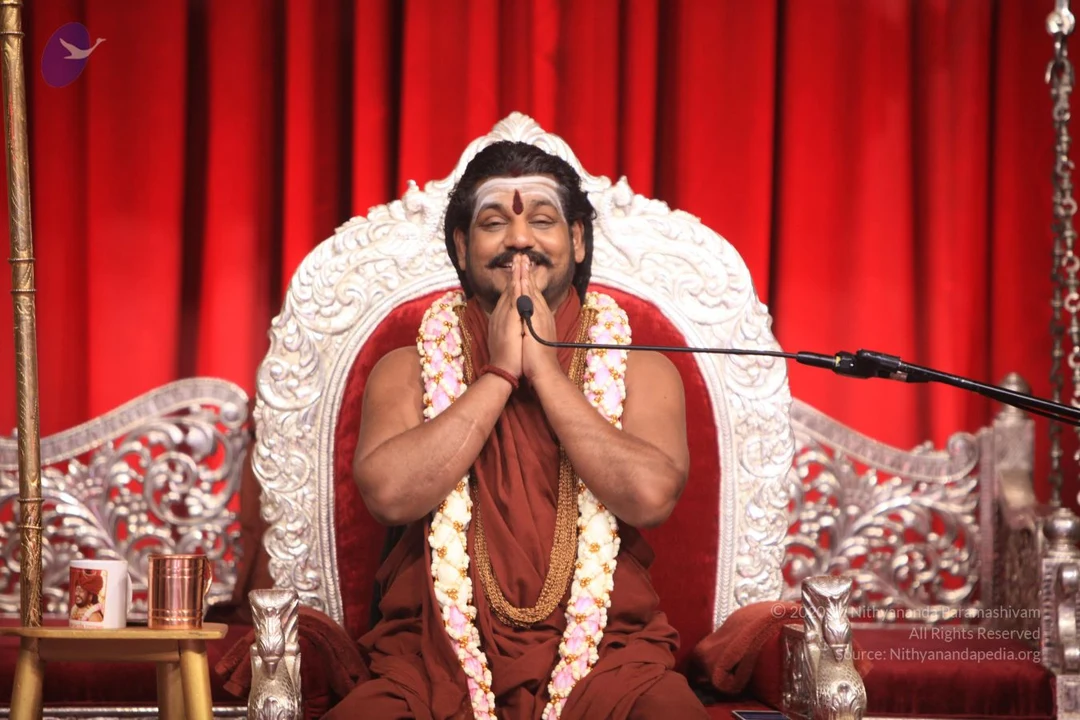
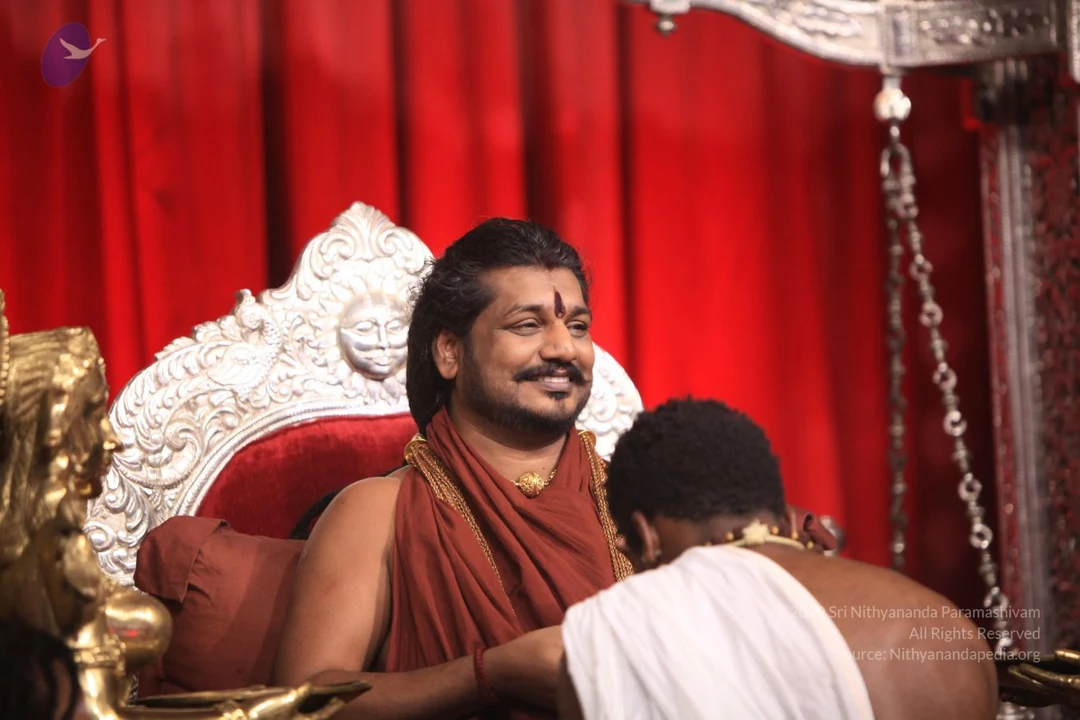
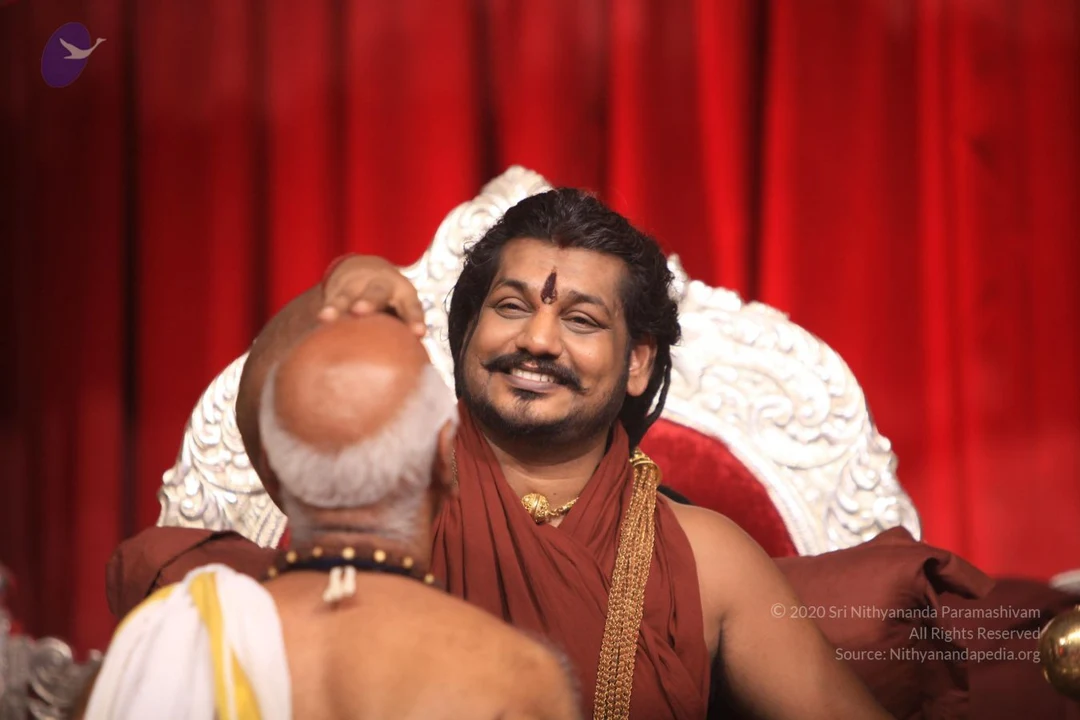
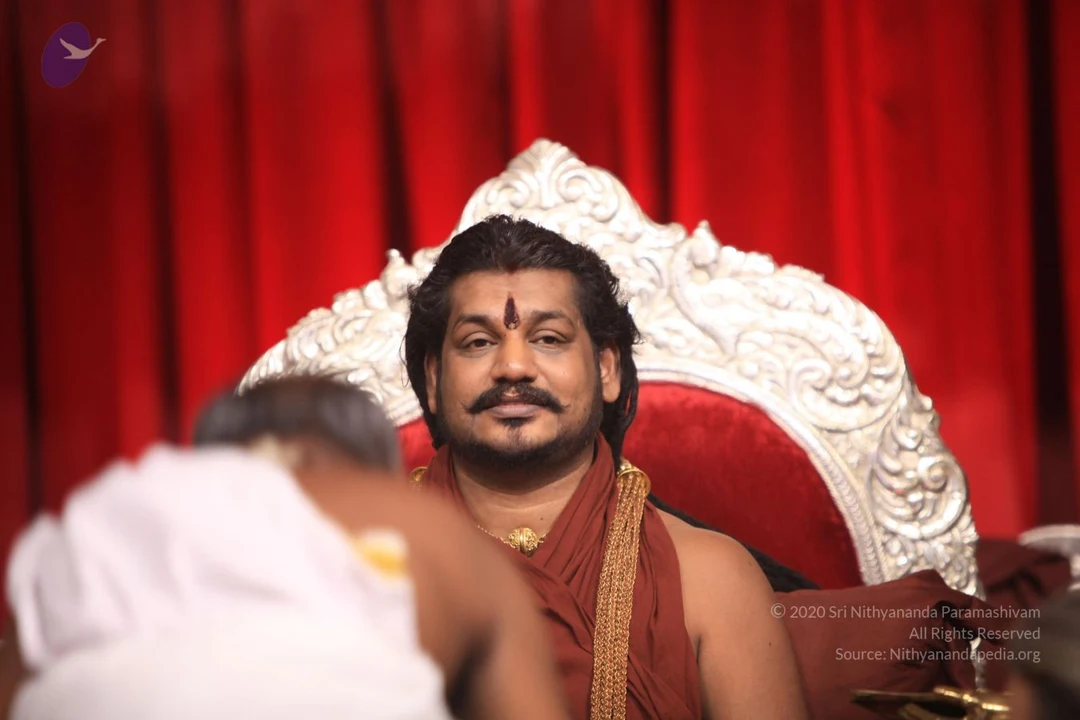
Part 1 of this 3-part video series starts with a beautiful Darshan of HDH. Darshan is traditionally used to describe the moment when we behold a Deity, a Saint or an Enlightened Being. The experience of Darshan is highly revered in Hindu tradition, as just seeing a Divine or Enlightened Being is believed to cleanse the karmas of lifetimes, and create deep and lasting transformation in us.

The Supreme Pontiff of Hinduism Jagatguru Mahasannidhanam His Divine Holiness Nithyananda Paramashivam (HDH) is the reviver of #KAILASA - the ancient enlightened civilization and the great cosmic borderless Hindu nation. Revered as the incarnation of Paramashiva - the primordial Hindu Divinity, HDH has a following of 2 billion Hindus worldwide with de facto spiritual embassies in over 150 countries. He has worked untiringly for over 26 years for the revival of Kailasa, for global peace and to give super conscious breakthrough to humanity. He has survived the worst persecution of multiple assassination attempts on person and on character by anti-Hindu elements. He is collecting, organising, preserving, time capsuling, decoding, spreading and reviving 20 Million source books of Hinduism and the 64 sacred arts & sciences like Ayurveda, music, dance, sculpting, astrology, vastu and much more. Close to 20,000 hours of HDH’s timeless talks have been recorded till date (Sep 2020), which are a treasure trove of powerful cognitions to solve individual and global problems of any kind.

Link to Video:

VideoAudio

Title

Manifest Powerful Cognitions About Everything! || Part 2 || NS || 20 May2017

Description

Title: Manifest Powerful Cognitions About Everything! Part 2
Name Of The Convention: Nithya Satsang
Session on: Authenticity is manifesting powerful cognitions
Date: 20 May 2017
Venue : Adi Kailasa, Bengaluru, Karnataka, India

In this video Supreme Pontiff of Hinduism HDH #Nithyananda Paramashivam defines authenticity as the ability to manifest powerful cognitions. He says the external situation does not matter, only the kind of cognitions we manifest matters. With everything, the first response should be manifesting powerful cognitions. Even in the face of fear, anger, anxiety and incompletions; we can manifest powerful cognitions. The decision to manifest powerful cognitions builds the relationship through which the secrets of scriptures are revealed.

The Supreme Pontiff of Hinduism Jagatguru Mahasannidhanam His Divine Holiness Nithyananda Paramashivam (HDH) is the reviver of #KAILASA - the ancient enlightened civilization and the great cosmic borderless Hindu nation. Revered as the incarnation of Paramashiva - the primordial Hindu Divinity, HDH has a following of 2 billion Hindus worldwide with de facto spiritual embassies in over 150 countries. He has worked untiringly for over 26 years for the revival of Kailasa, for global peace and to give super conscious breakthrough to humanity. He has survived the worst persecution of multiple assassination attempts on person and on character by anti-Hindu elements. He is collecting, organising, preserving, time capsuling, decoding, spreading and reviving 20 Million source books of Hinduism and the 64 sacred arts & sciences like Ayurveda, music, dance, sculpting, astrology, vastu and much more. Close to 20,000 hours of HDH’s timeless talks have been recorded till date (Sep 2020), which are a treasure trove of powerful cognitions to solve individual and global problems of any kind.

Link to Video:

VideoAudio

Title

Manifest Powerful Cognitions About Everything! || Part 3 || NS || 20 May 2017

Description

Title: Manifest Powerful Cognitions About Everything! Part 3
Name Of The Convention: Nithya Satsang
Session on: Authenticity is manifesting powerful cognitions
Date: 20 May 2017
Venue : Adi Kailasa, Bengaluru, Karnataka, India

In this video Supreme Pontiff of Hinduism HDH #Nithyananda Paramashivam defines authenticity as the ability to manifest powerful cognitions. He says the external situation does not matter, only the kind of cognitions we manifest matters. With everything, the first response should be manifesting powerful cognitions. Even in the face of fear, anger, anxiety and incompletions; we can manifest powerful cognitions. The decision to manifest powerful cognitions builds the relationship through which the secrets of scriptures are revealed.

The Supreme Pontiff of Hinduism Jagatguru Mahasannidhanam His Divine Holiness Nithyananda Paramashivam (HDH) is the reviver of #KAILASA - the ancient enlightened civilization and the great cosmic borderless Hindu nation. Revered as the incarnation of Paramashiva - the primordial Hindu Divinity, HDH has a following of 2 billion Hindus worldwide with de facto spiritual embassies in over 150 countries. He has worked untiringly for over 26 years for the revival of Kailasa, for global peace and to give super conscious breakthrough to humanity. He has survived the worst persecution of multiple assassination attempts on person and on character by anti-Hindu elements. He is collecting, organising, preserving, time capsuling, decoding, spreading and reviving 20 Million source books of Hinduism and the 64 sacred arts & sciences like Ayurveda, music, dance, sculpting, astrology, vastu and much more. Close to 20,000 hours of HDH’s timeless talks have been recorded till date (Sep 2020), which are a treasure trove of powerful cognitions to solve individual and global problems of any kind.

Link to Video:

VideoAudio

Number of Temples Participated

16 Temples all over the world

Photo of The Day

Satsang
Temple
Sadashivatva Session
Darshan

Manifesting Shaktis

Tags:

Sri Nithyananda Swami, Paramahamsa Nithyananda, Nithyananda, Swamiji, Sadashiva, Life beyond limits, manifesting powerful cognitions, freedom, Kailasa, Sanatana Hindu dharma, god, Gratitude, first perception, first mental action, states of consciousness - Jagrat, Swapna, Sushupti, Turiya, Turiyatita, Vedas, agama, vedic tradition, actions of god - Srishti, Stithi, Vinasha, Tirobhava, Anugraha, conscious breakthrough, mirroring Consciousness, biggest problem of humanity, boredom, super Conscious breakthrough, collective seeking, manifesting powerful cognitions, Master, cosmos, freedom, will persistence, terrorizing choices, conspiracy against humanity, depression, practice vs declaration, powerful cognitions, inner software, completion Consciousness defined, authenticity explained, freedom explained, Freedom vs choices, Reason vs purpose of existence, powerful cognitions vs positive thinking, cognitive shift vs practice, Authenticity explained, Shaktipata, positive thinking vs super conscious breakthrough, shaktis of Sadashiva,

Sakshi Pramana:

Sharing from SADASHIVATVA

Photos Of The Day:

Morning-Satsang

Jeevartha-sadas

Darshan-initiation-into-powerful-cognitions

Workshop-Life-Beyond-Limits

1-Morning-Satsang

2-Jeevartha-Sadas

3-Darshan-Initiation-Into-Powerful-Cognitions

IMG_4902_CMP_WM

4-Workshop-Life-Beyond-Limits

,

Photos from this day

View all 267 photos

Satsang

6 photosSource gallery
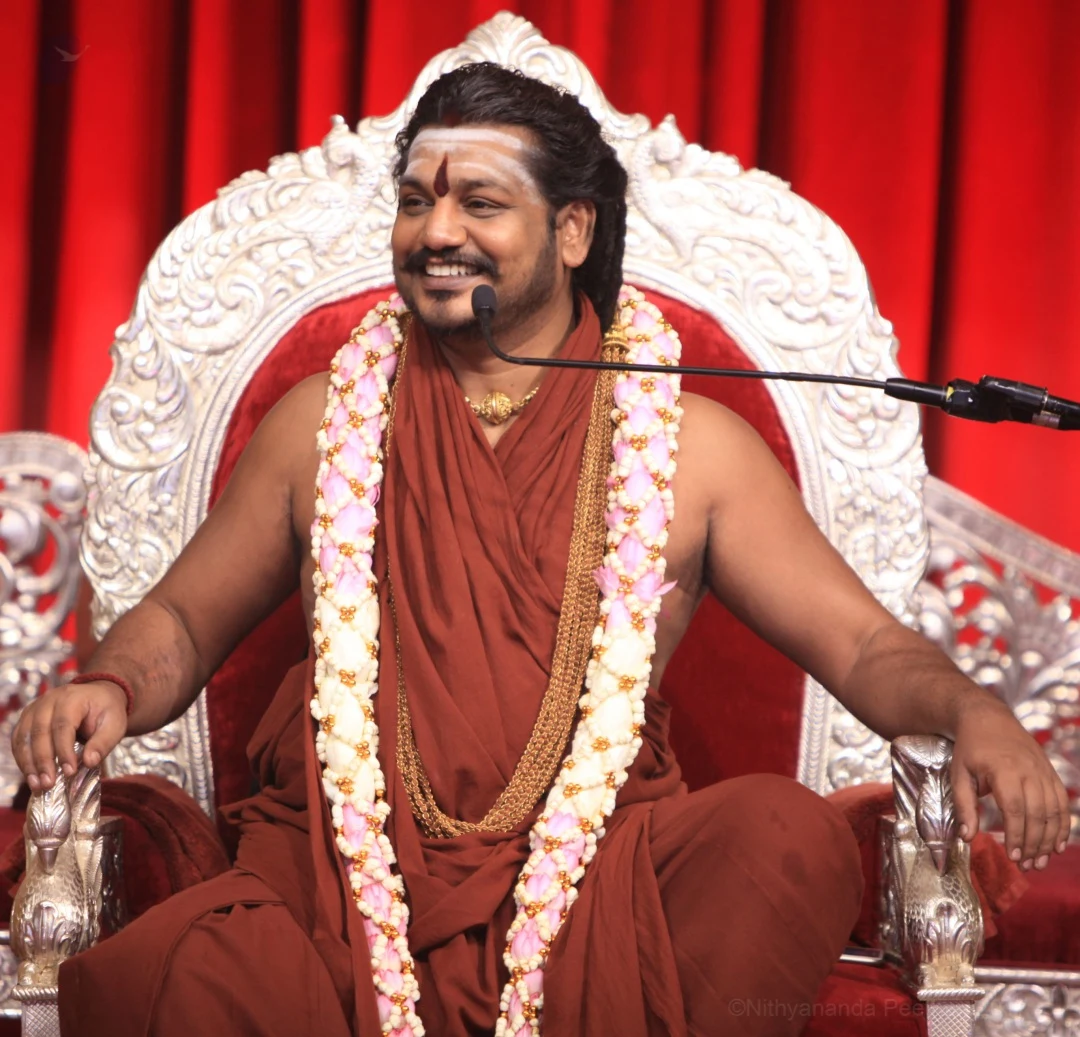
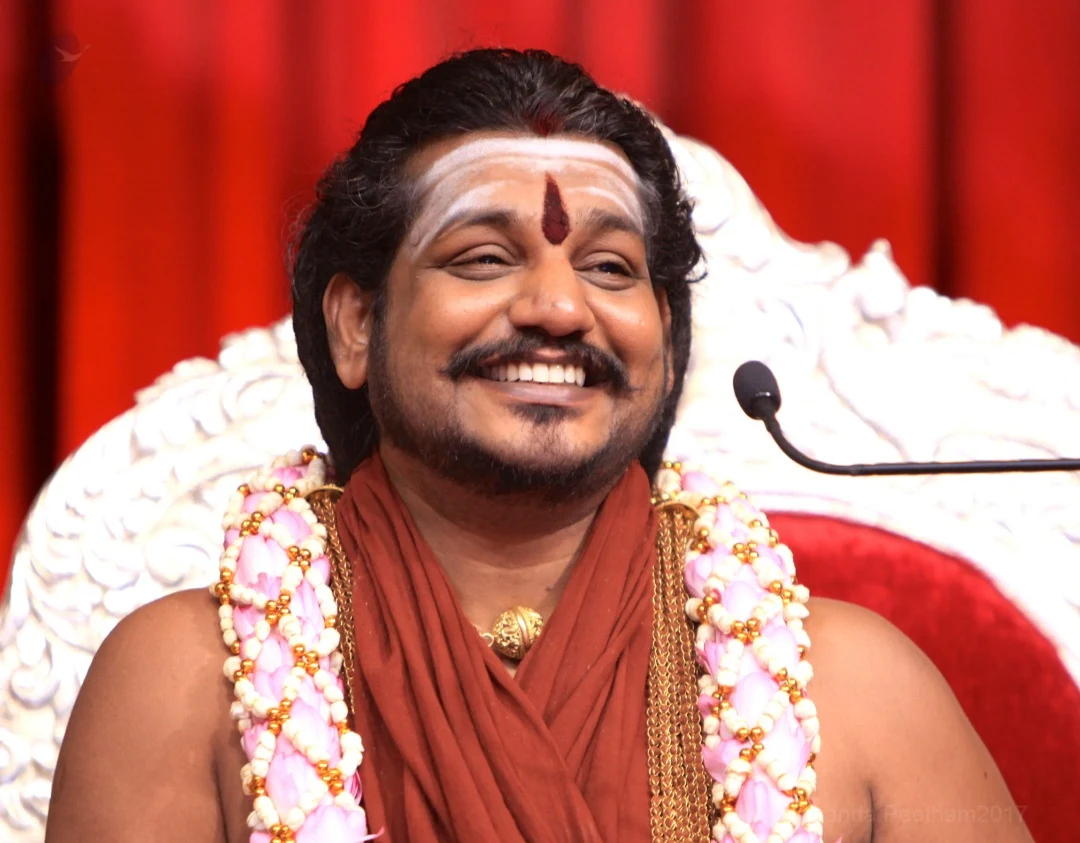
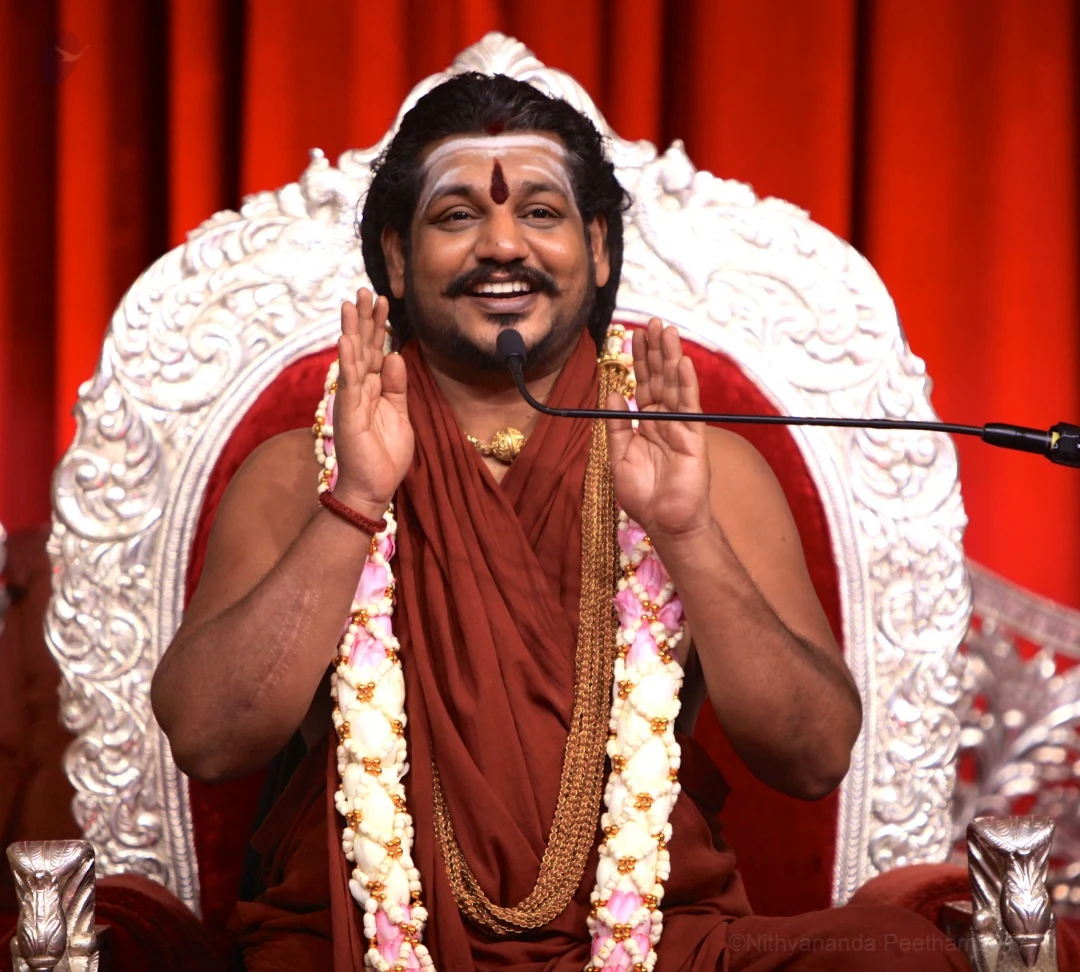
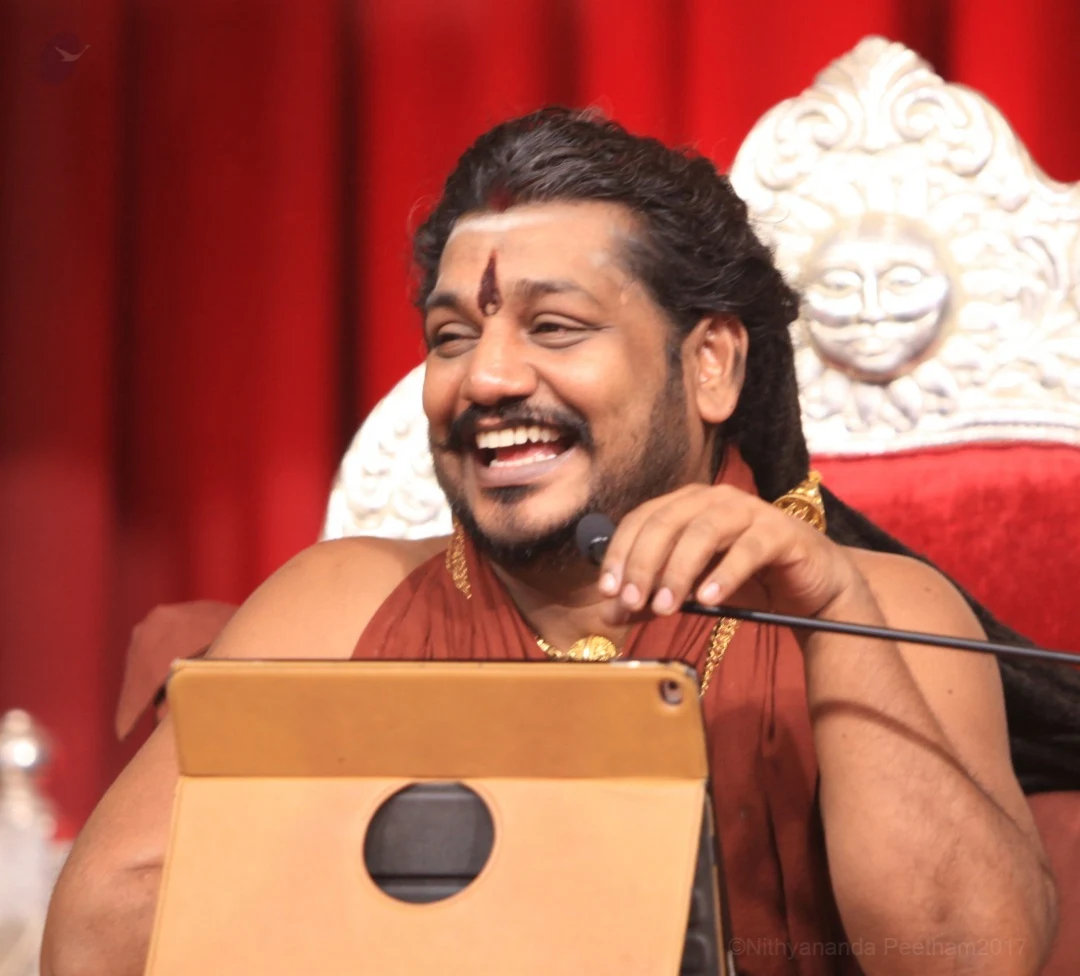
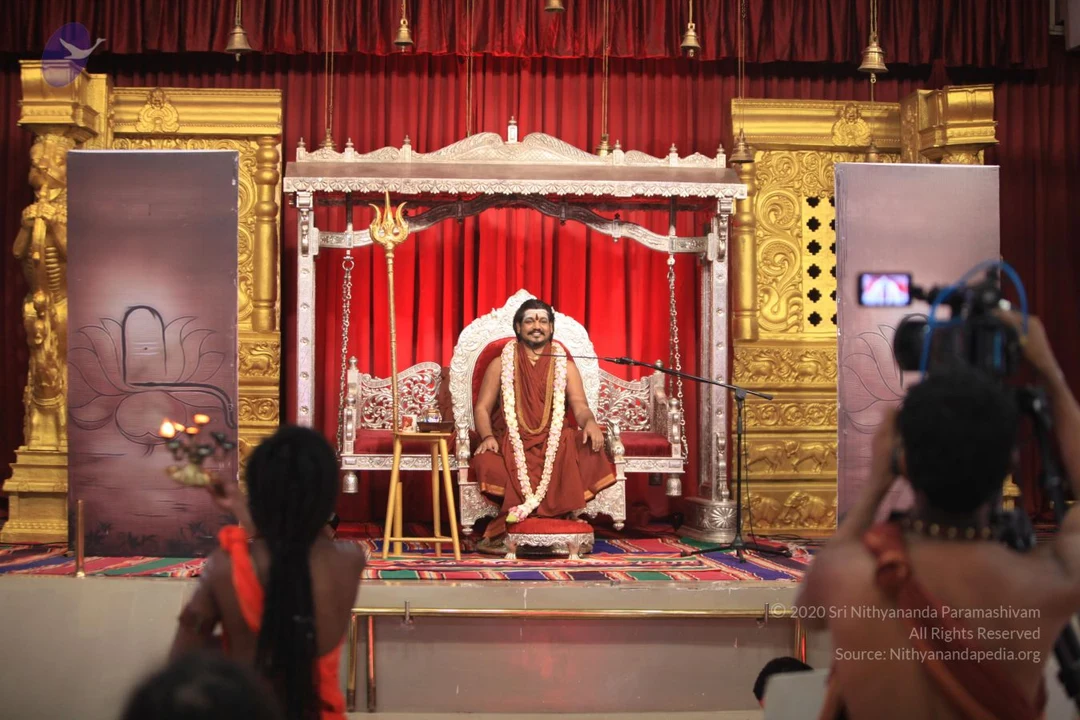
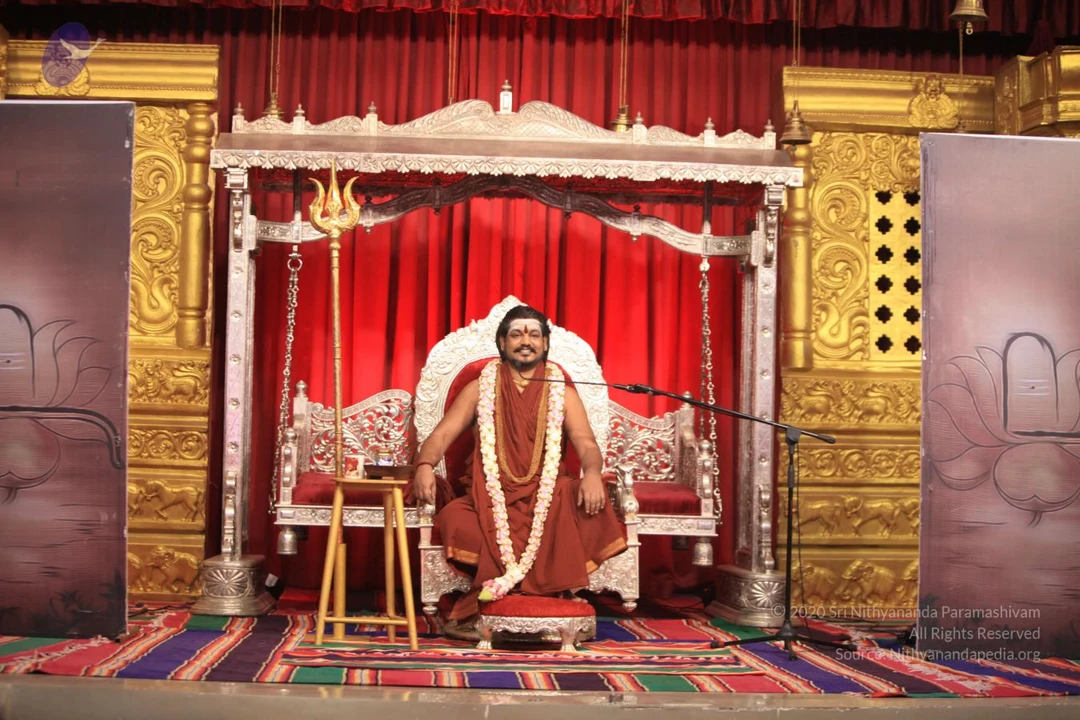
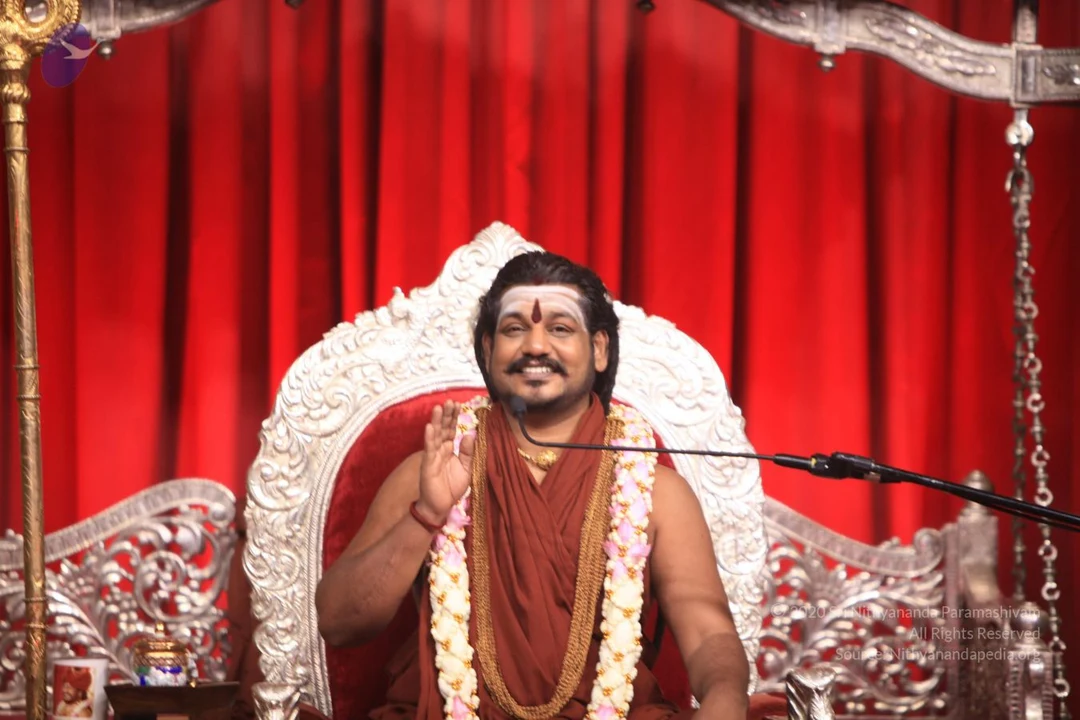
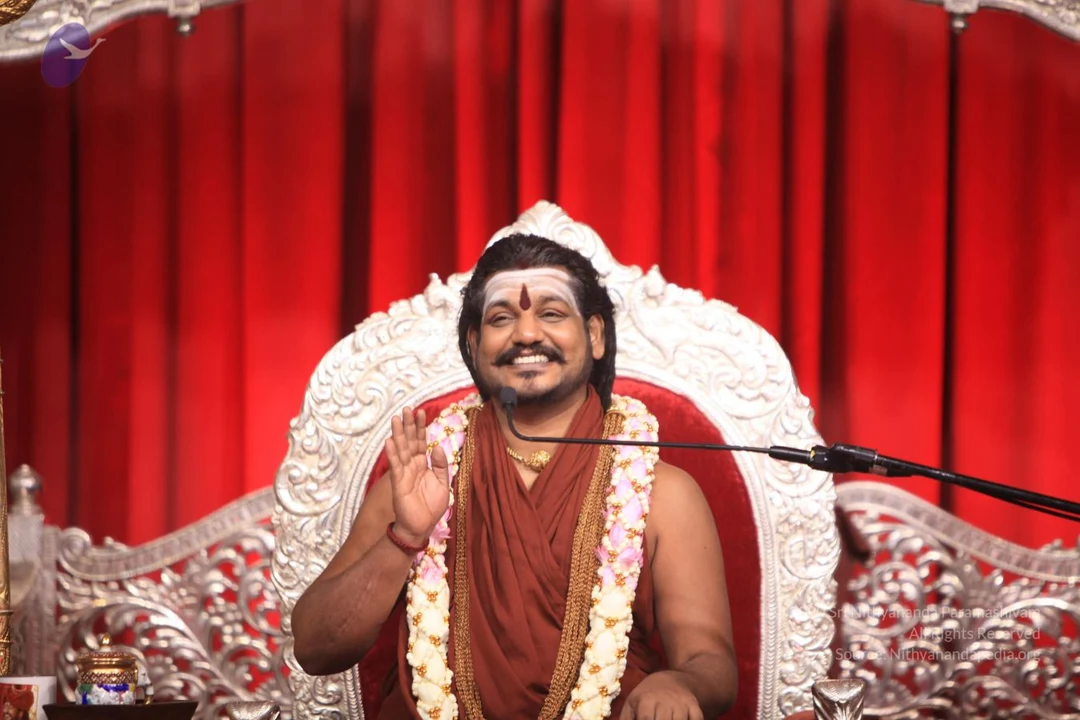
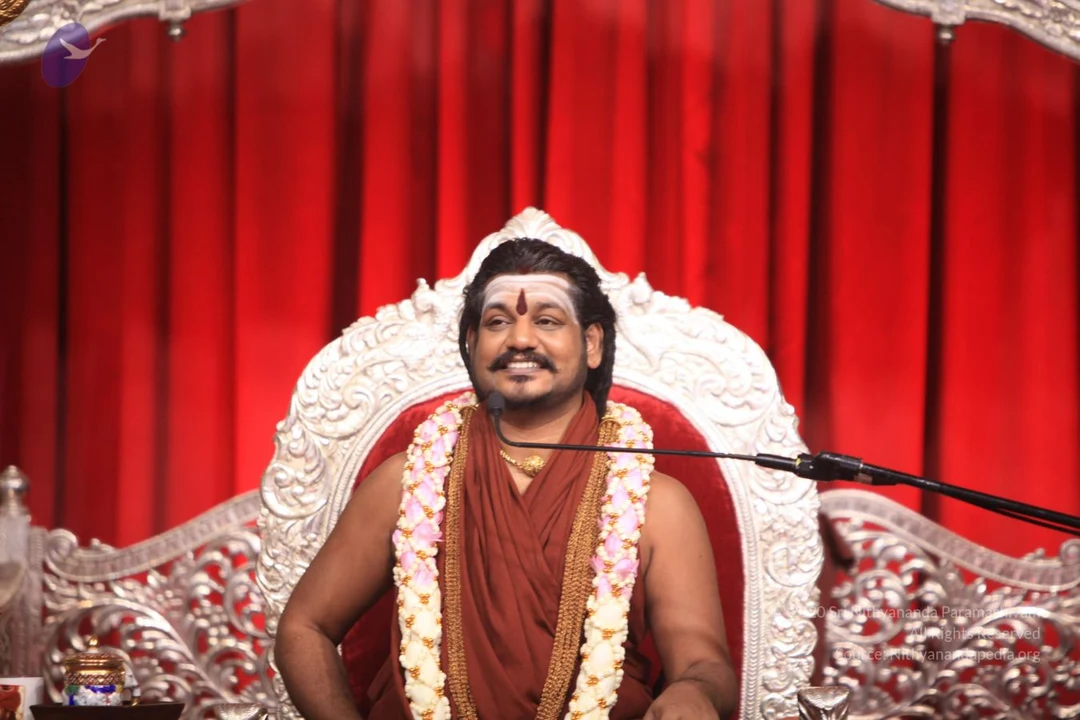
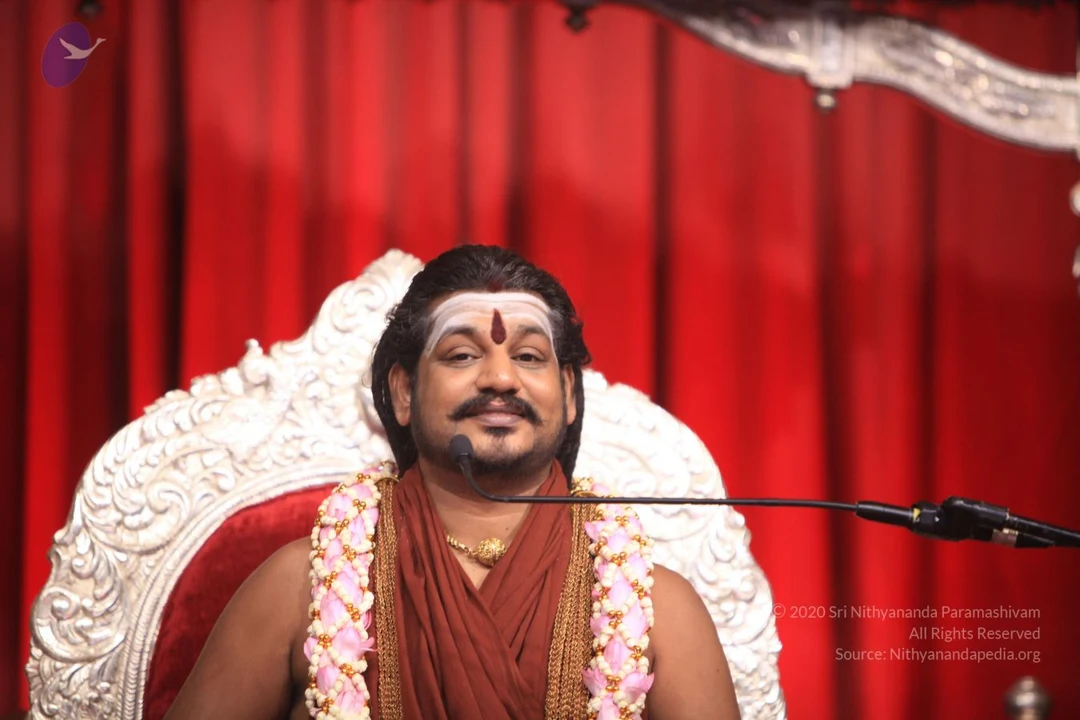
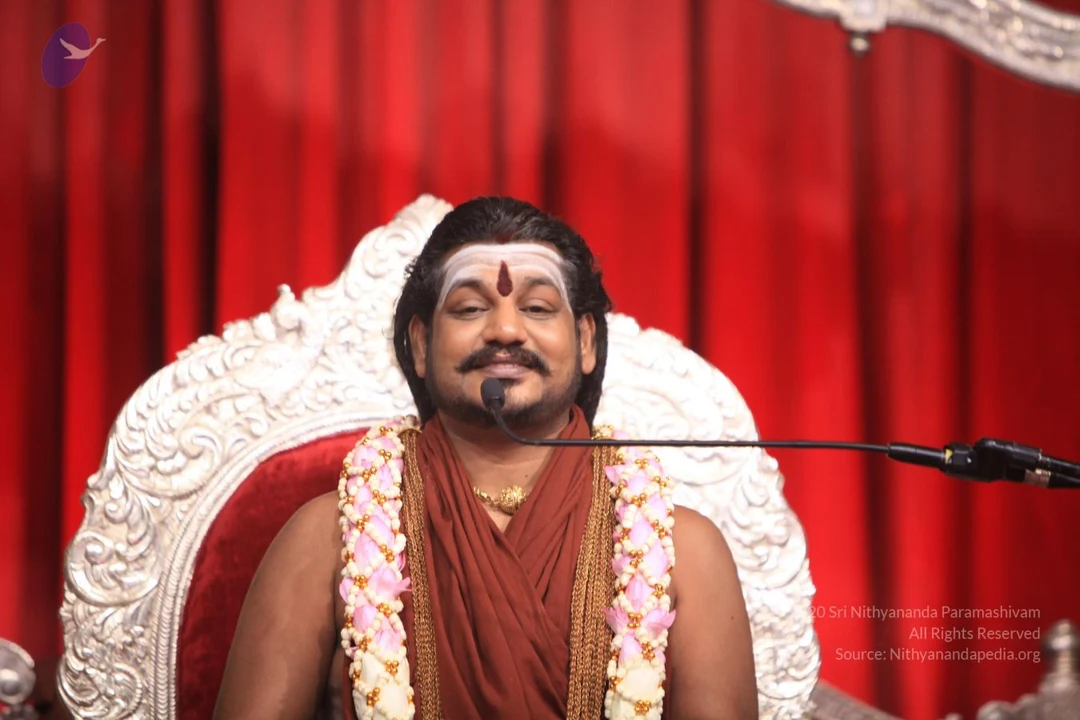
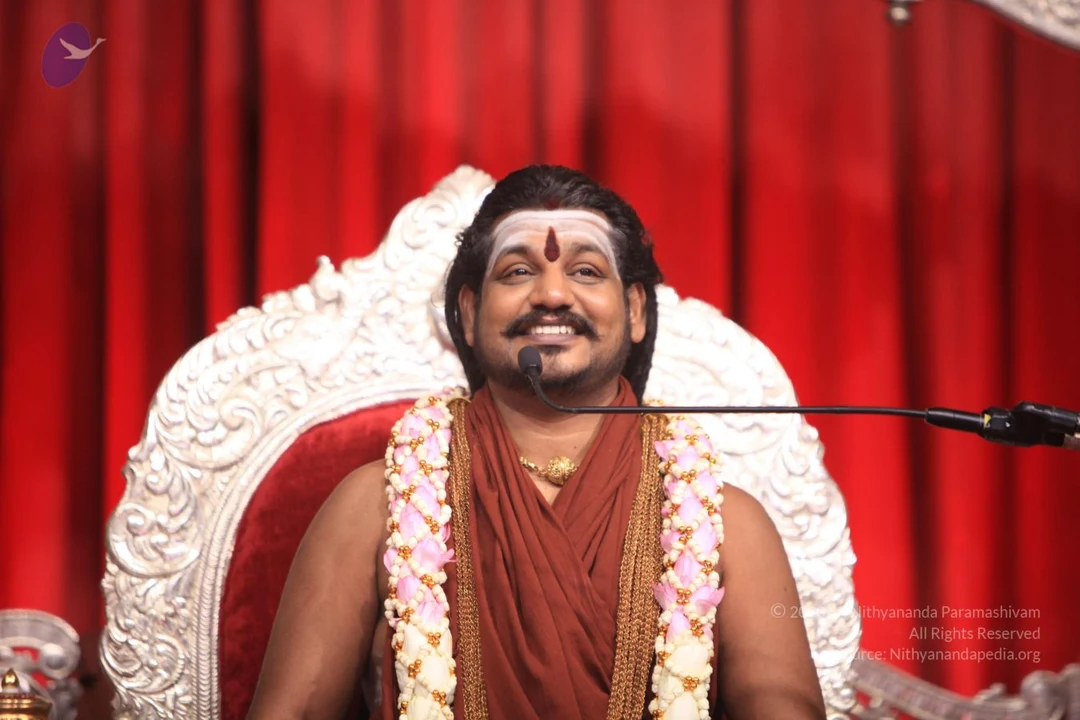
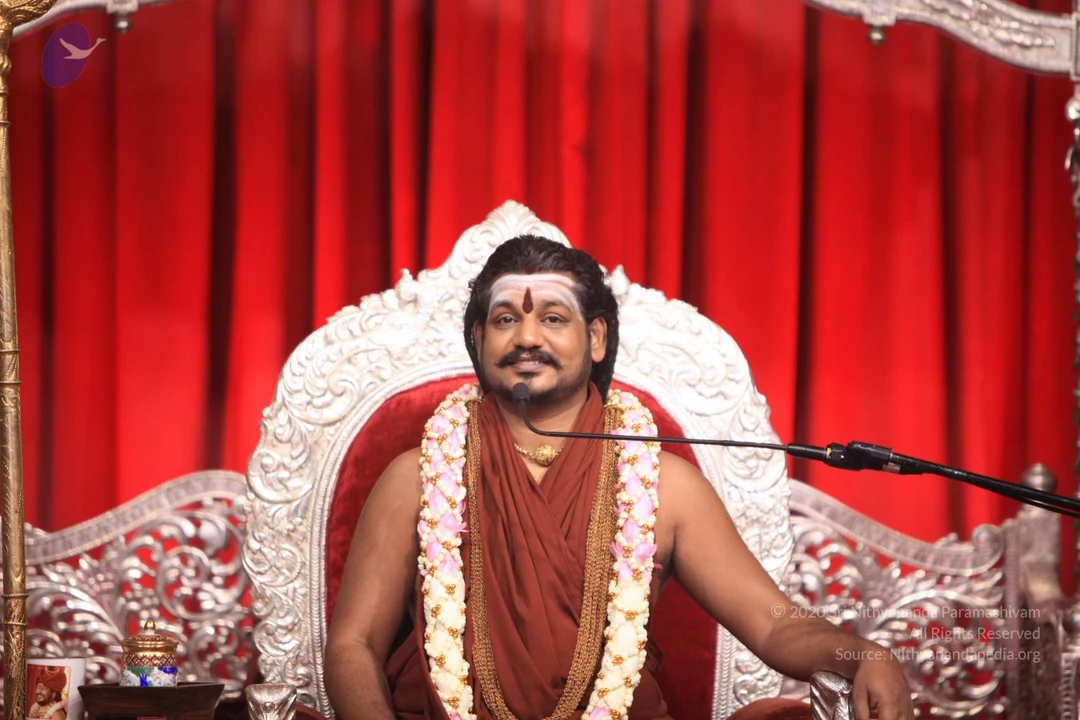
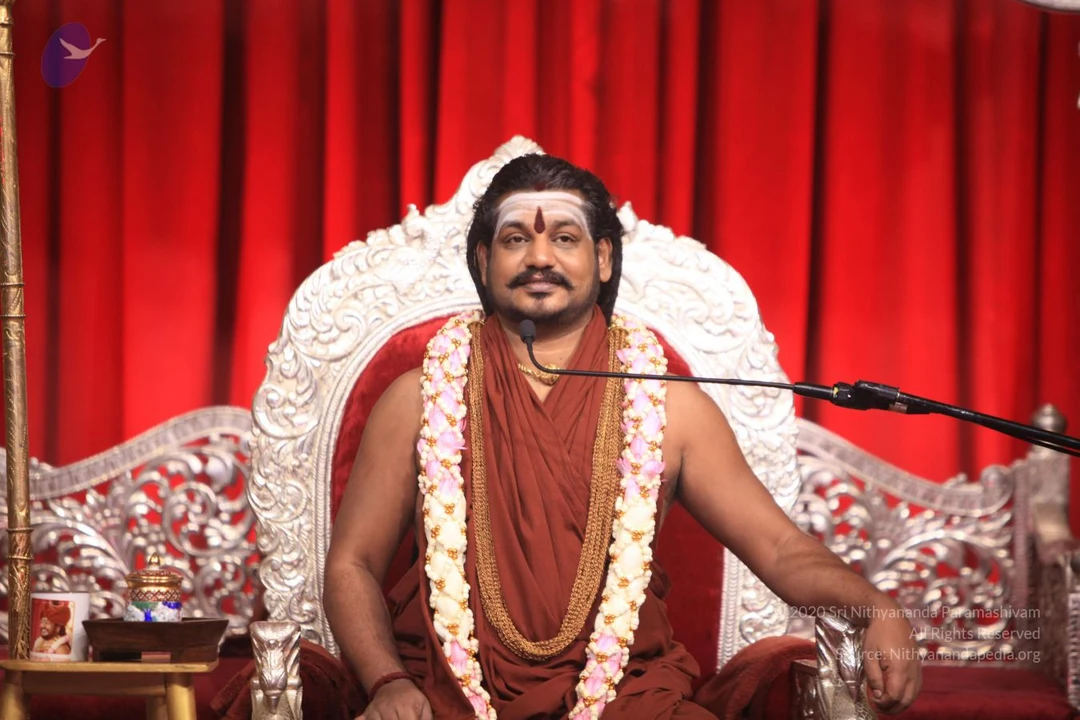
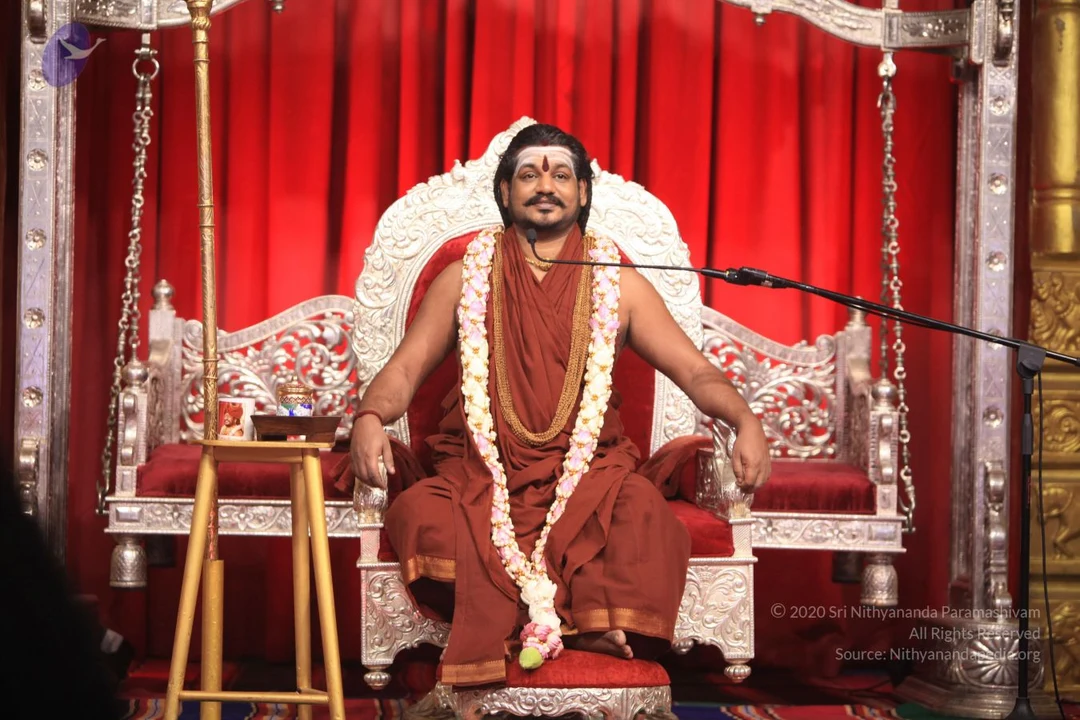
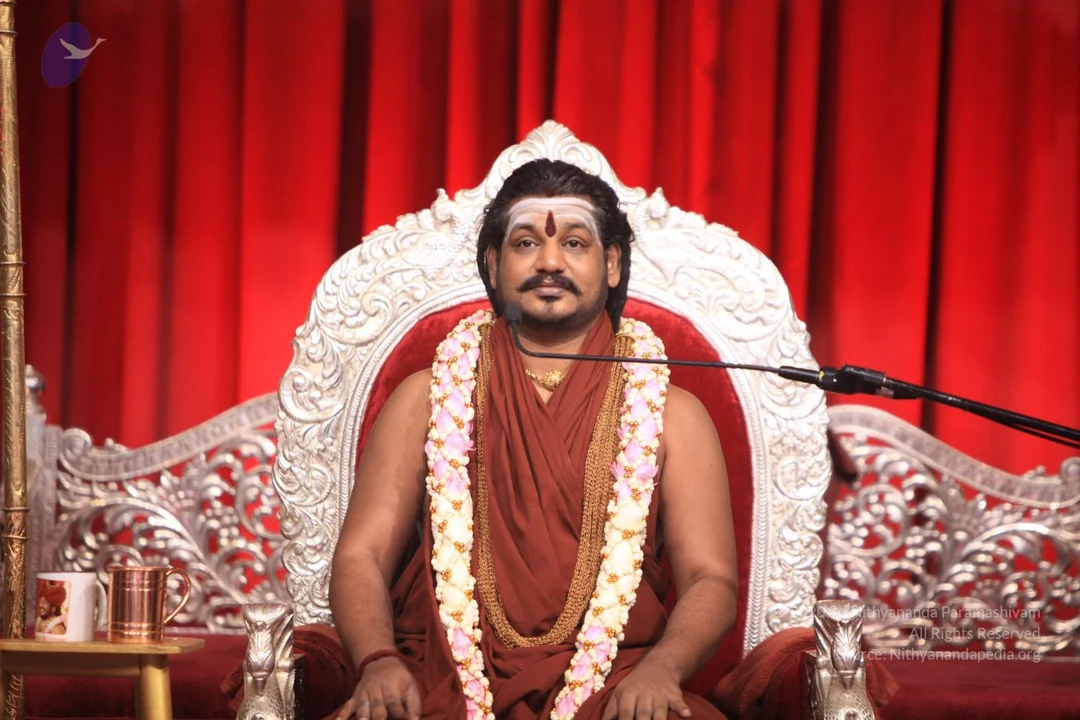
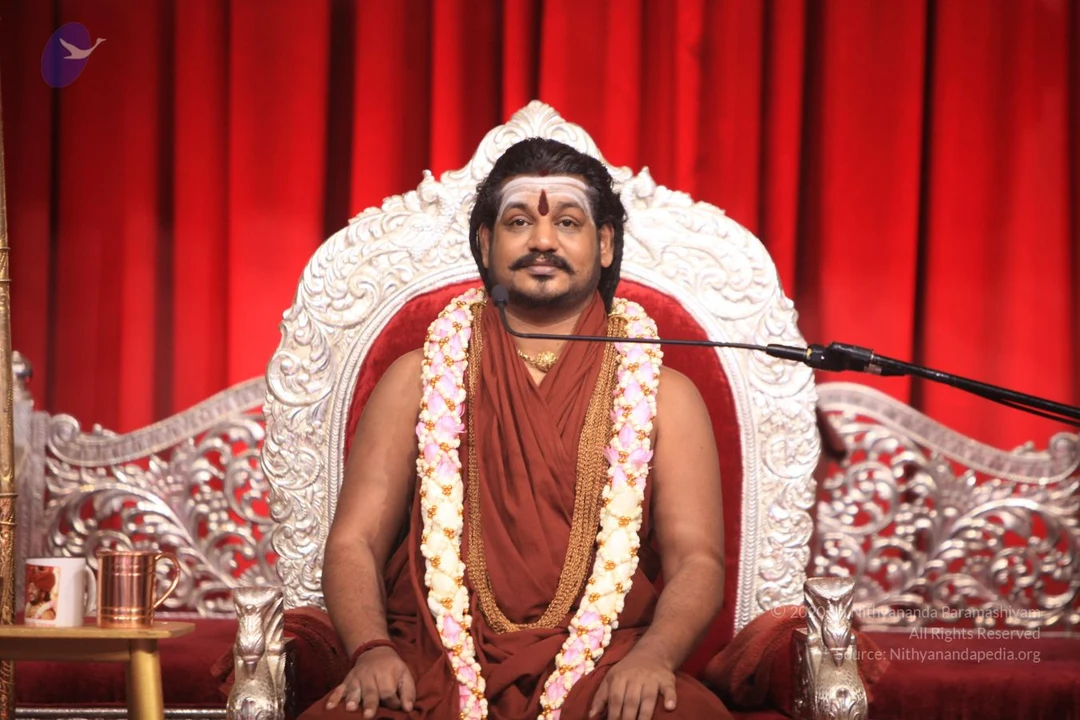
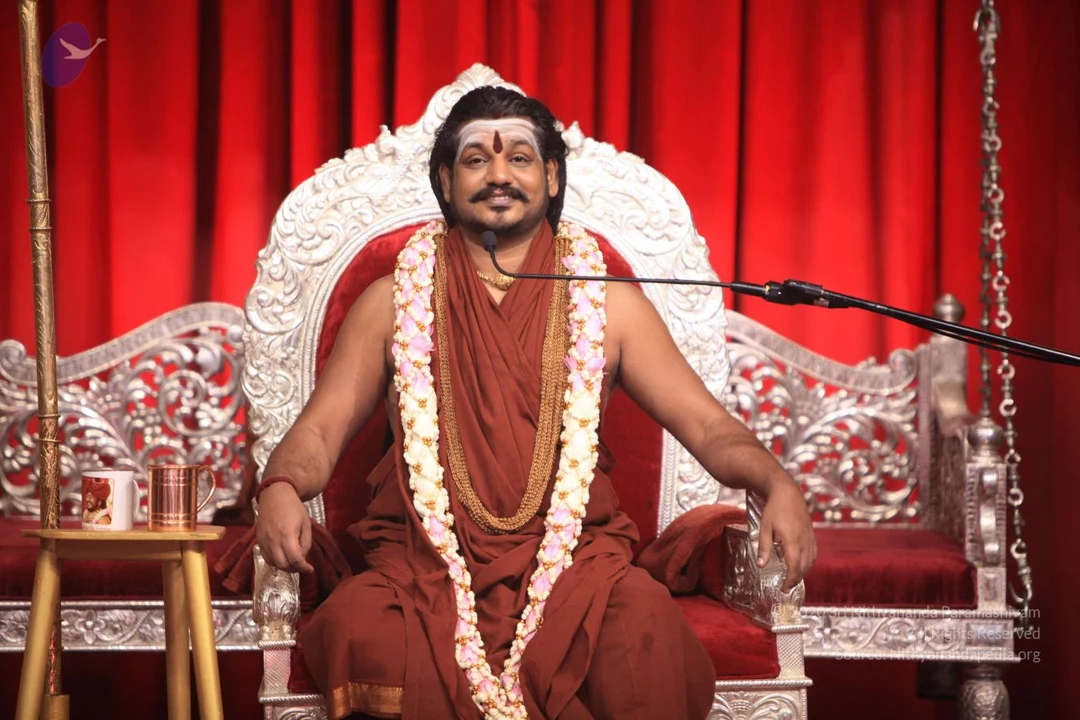
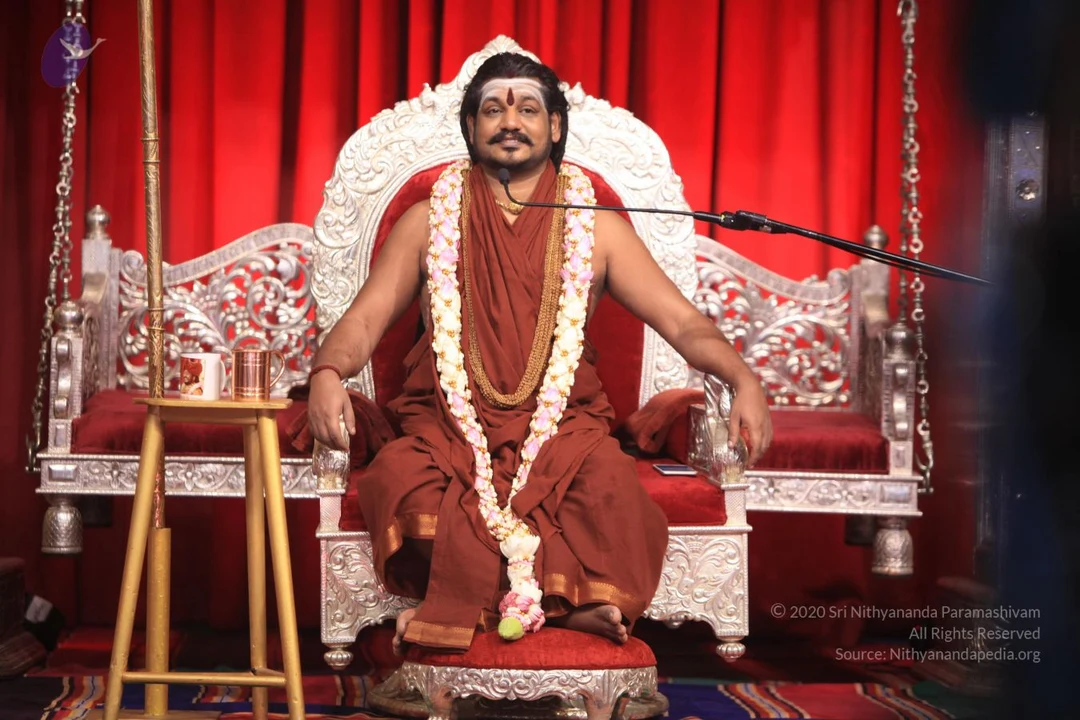
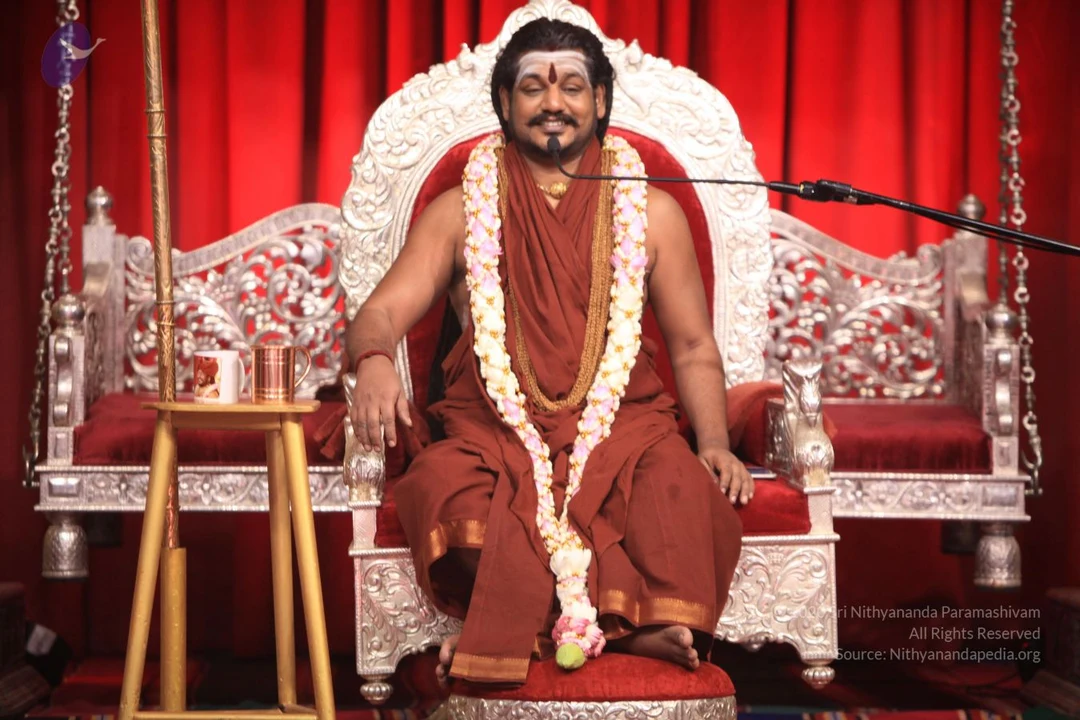
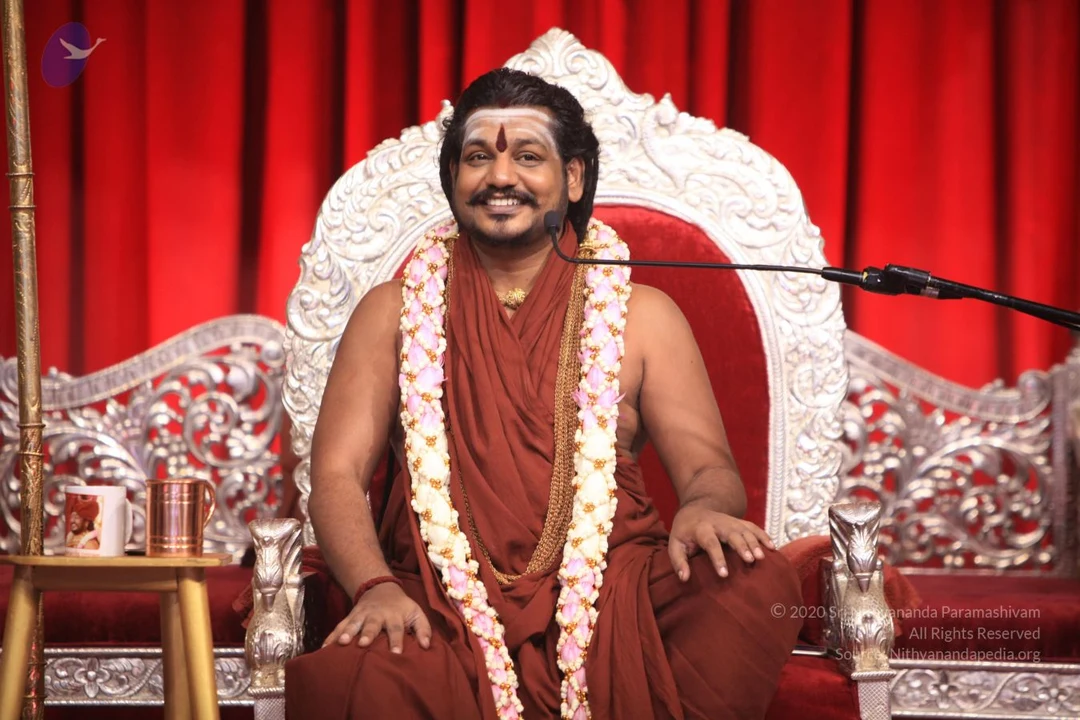
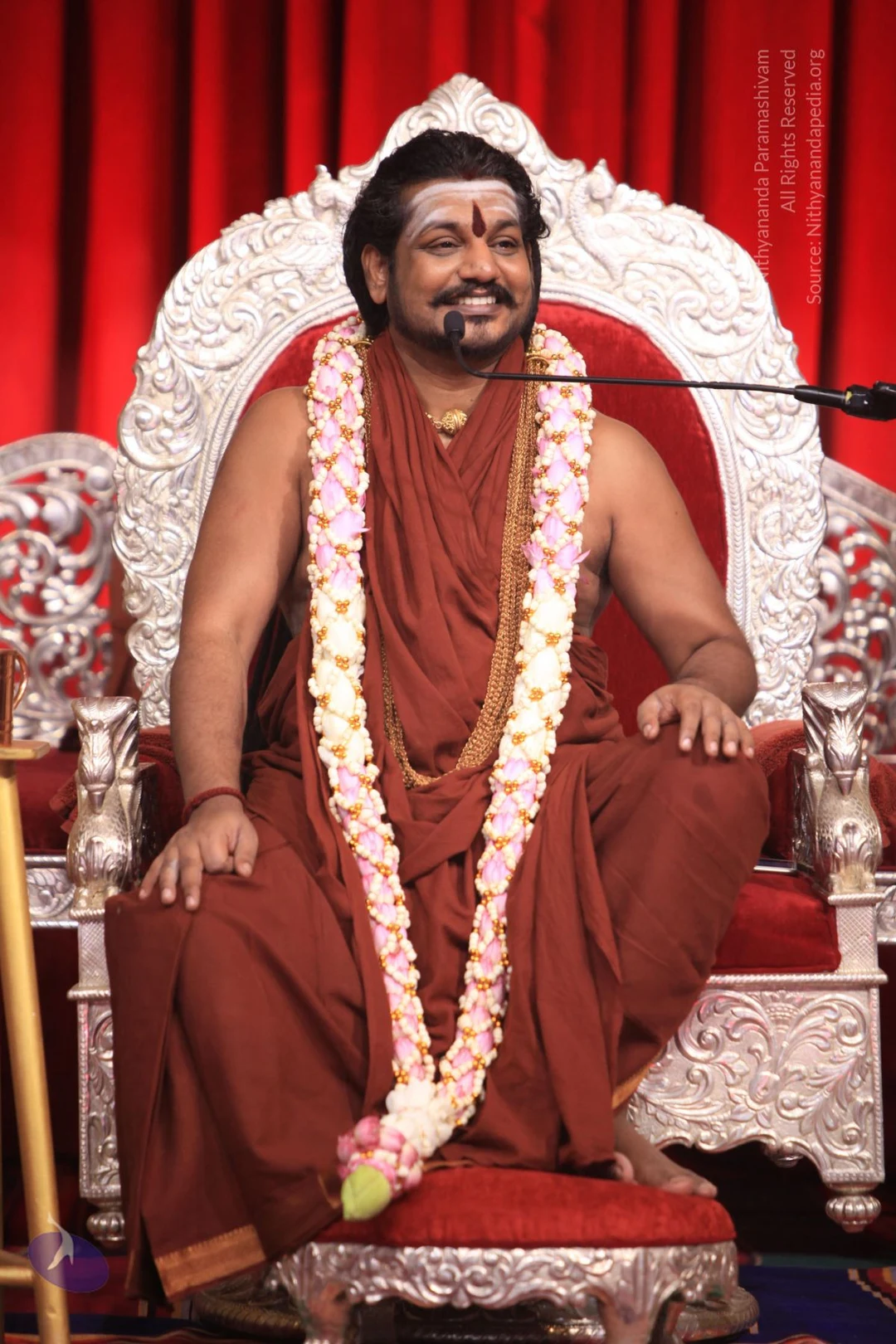
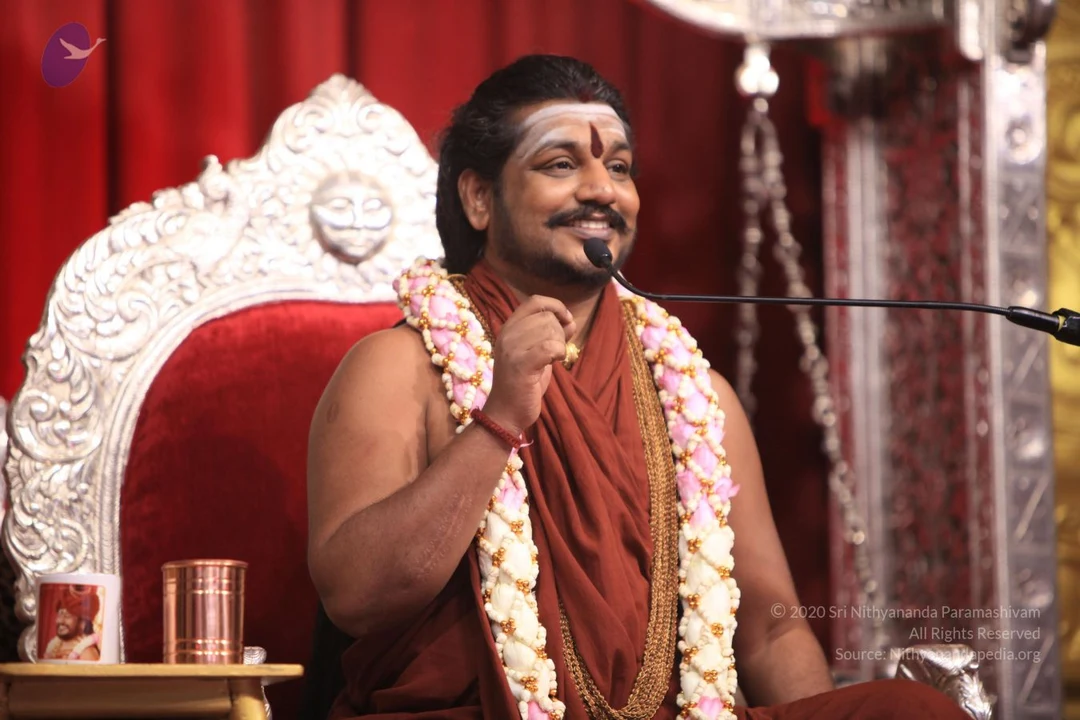
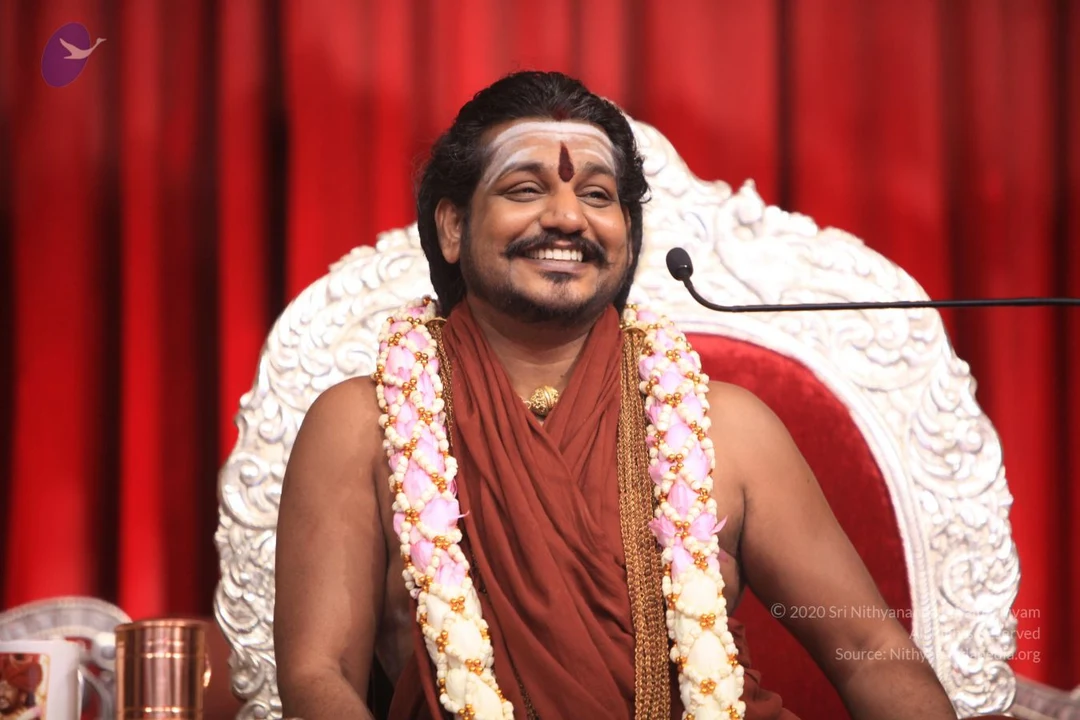
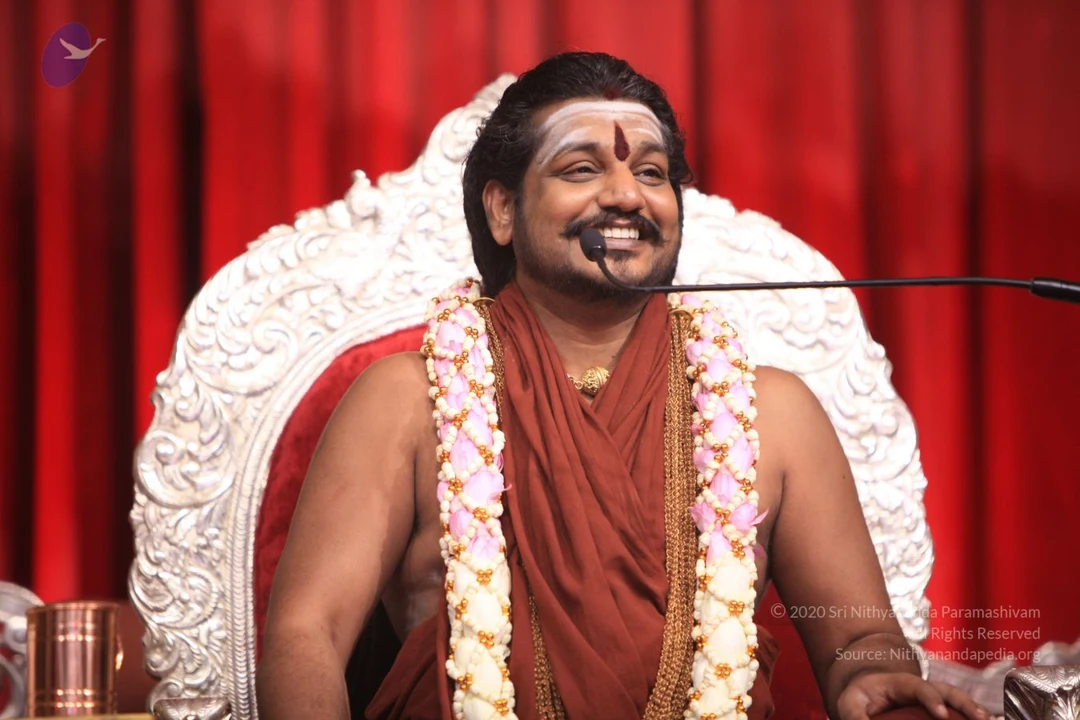
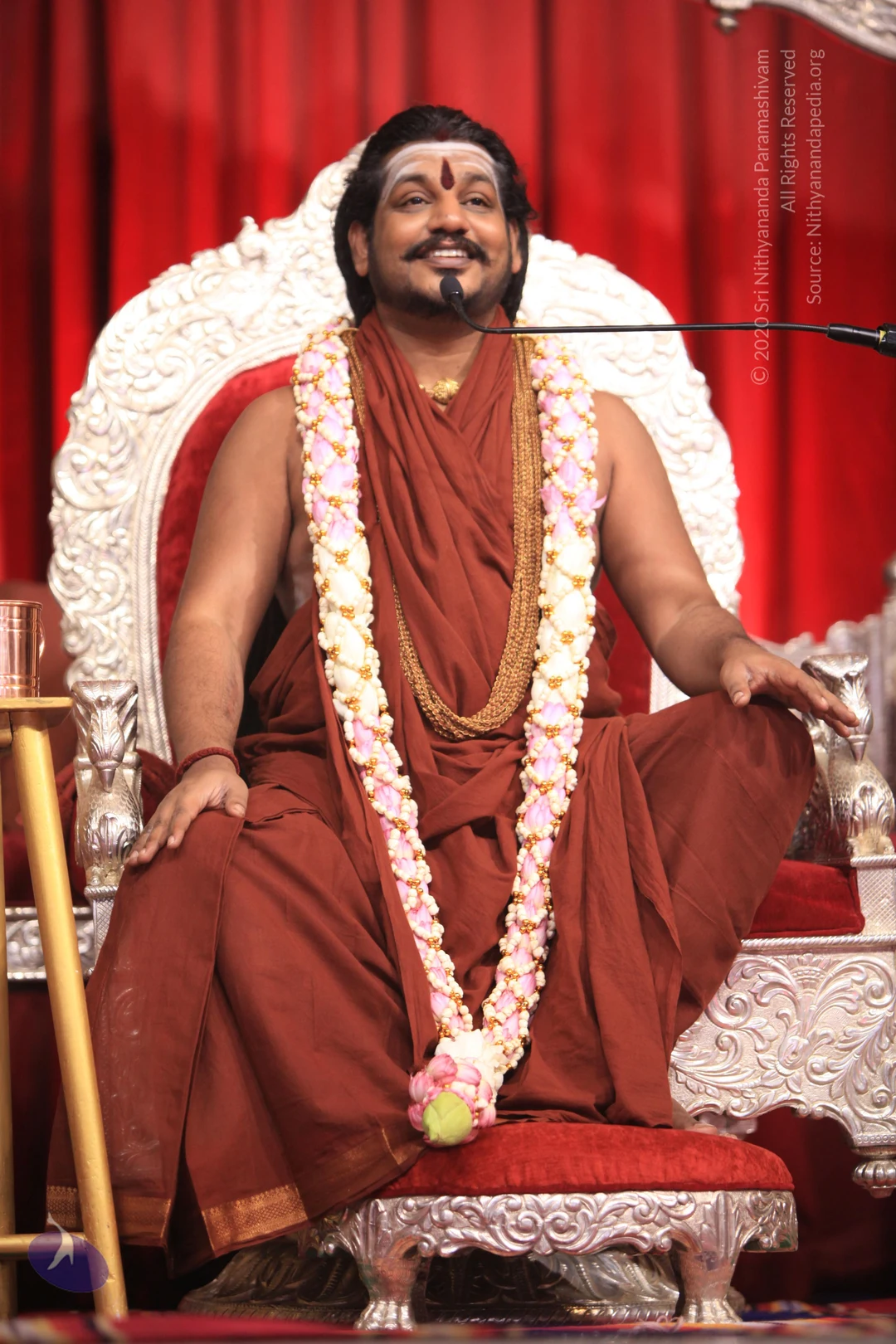
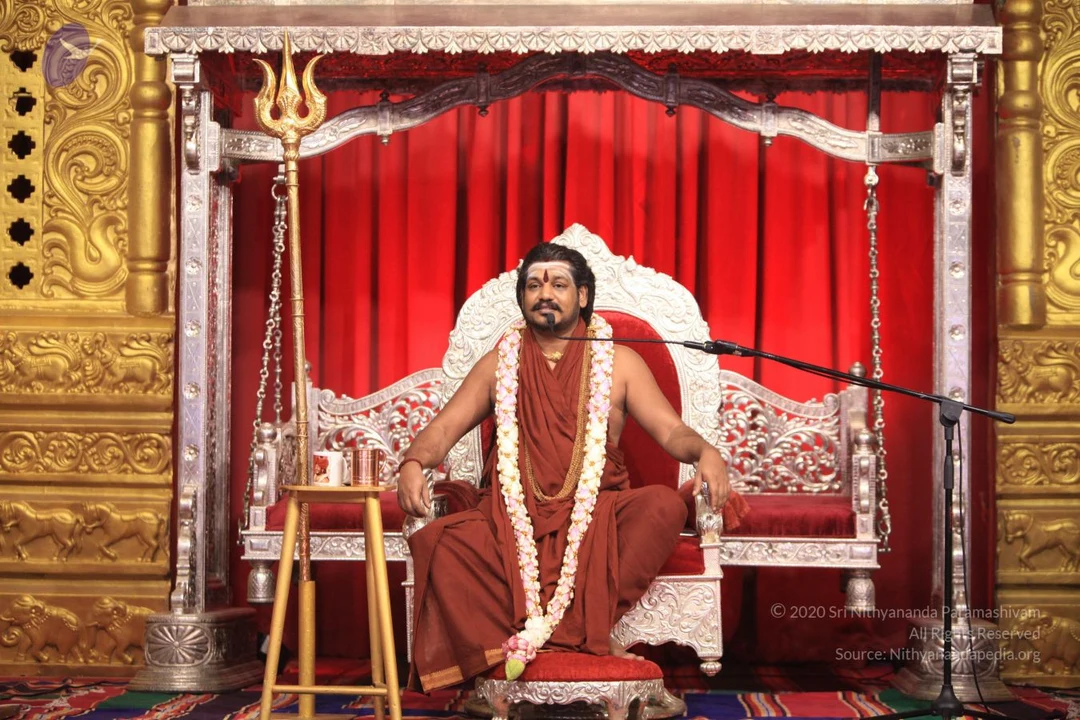
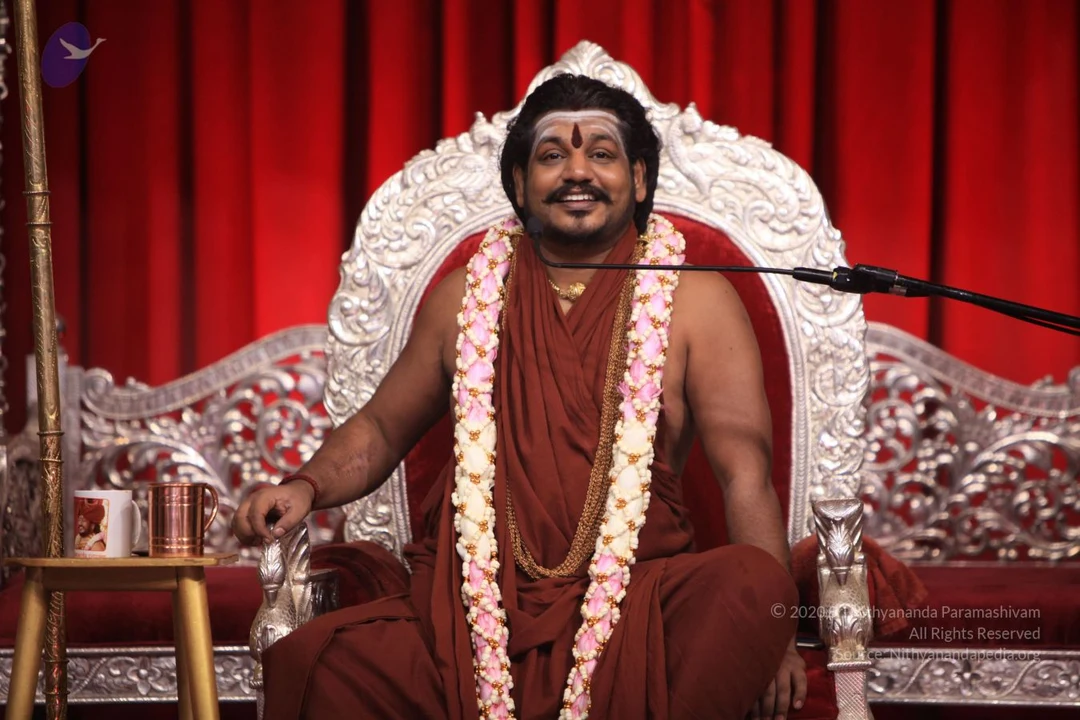
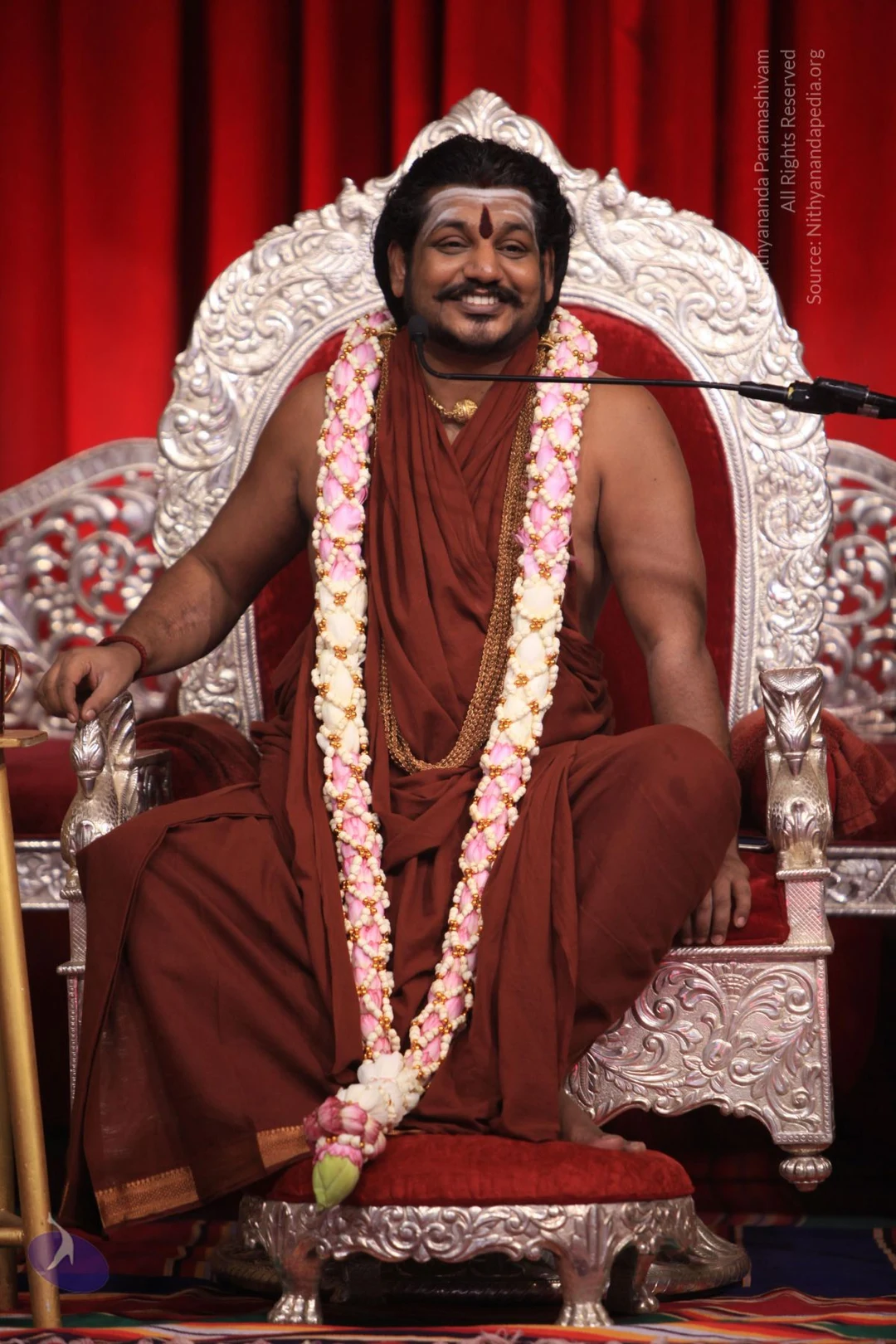
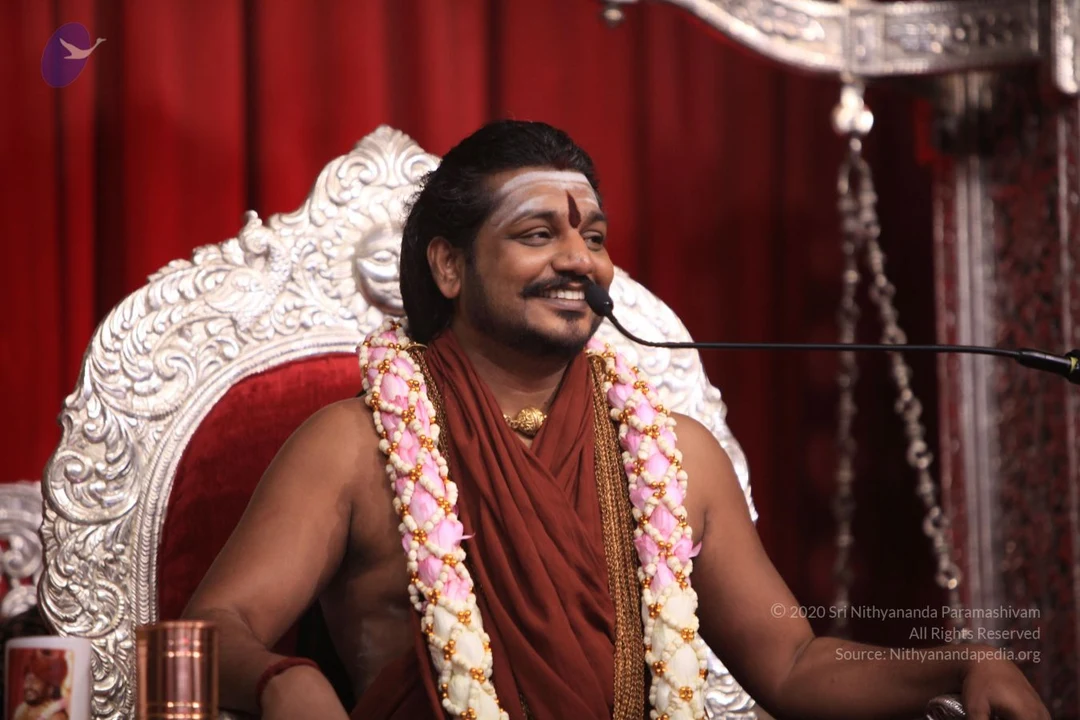
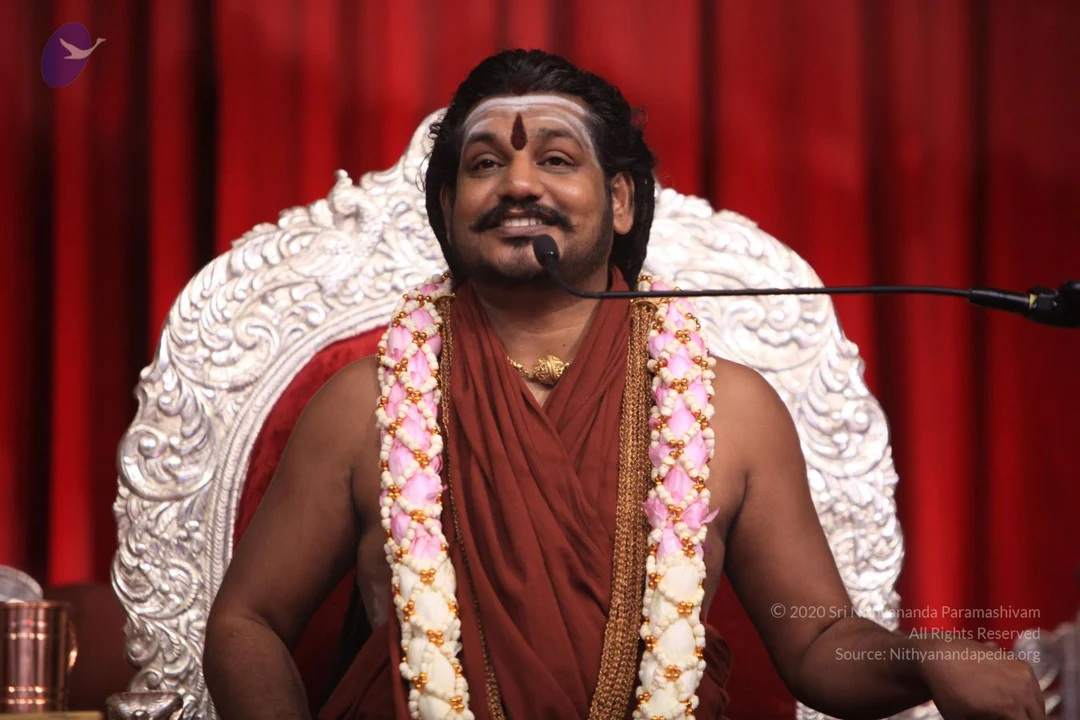
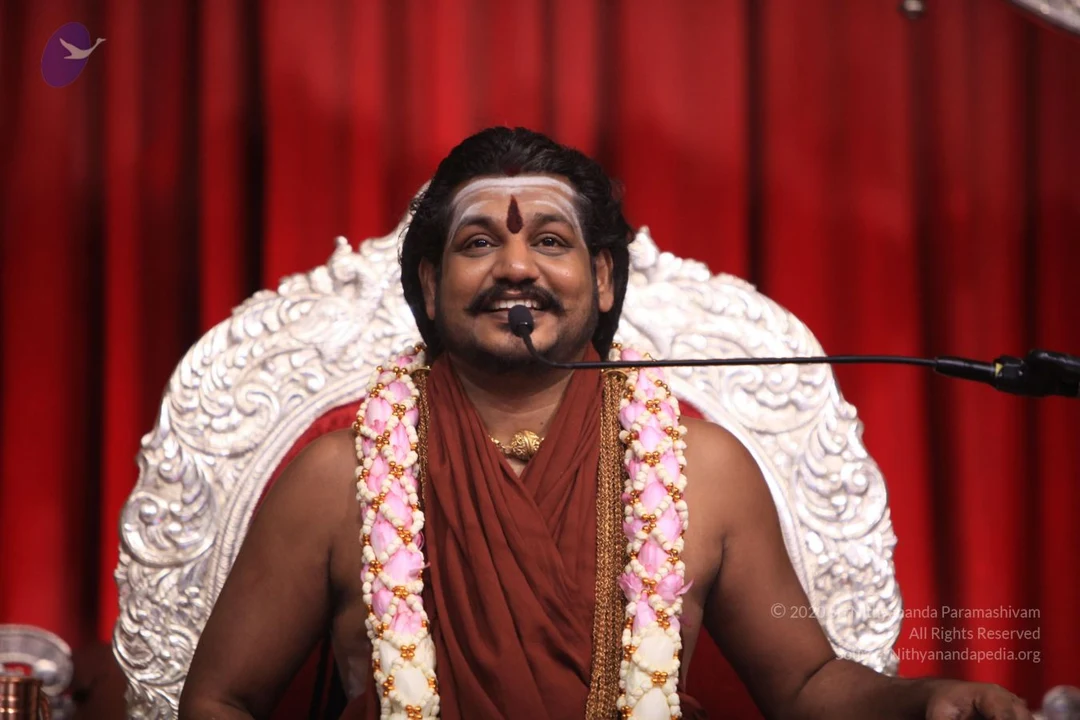
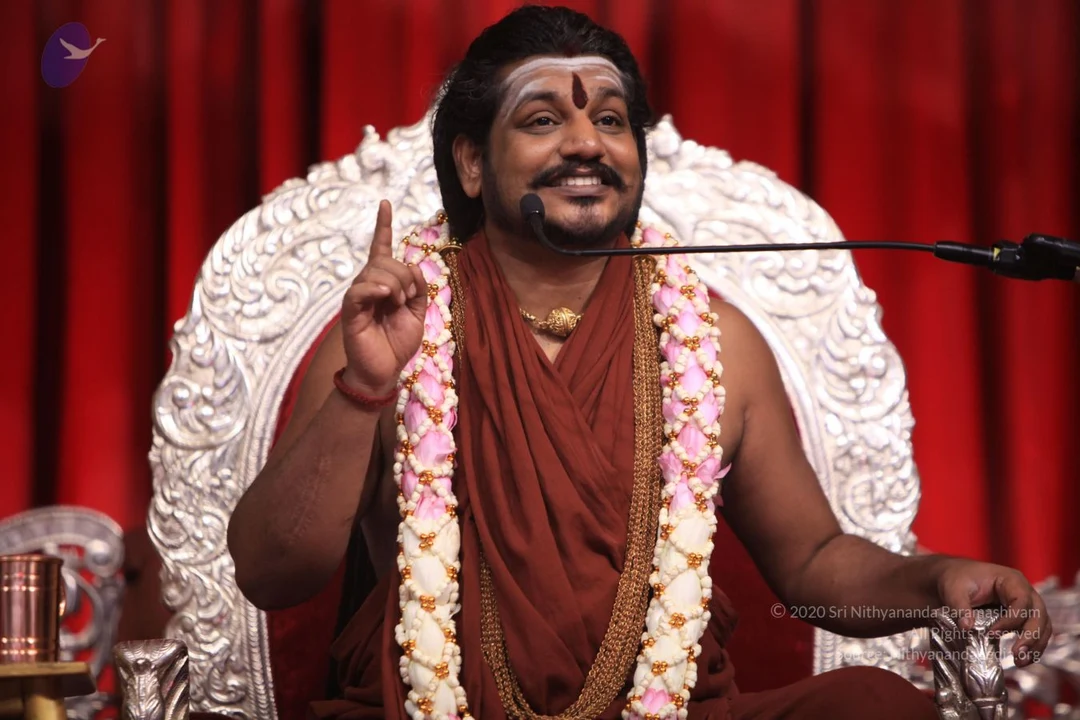
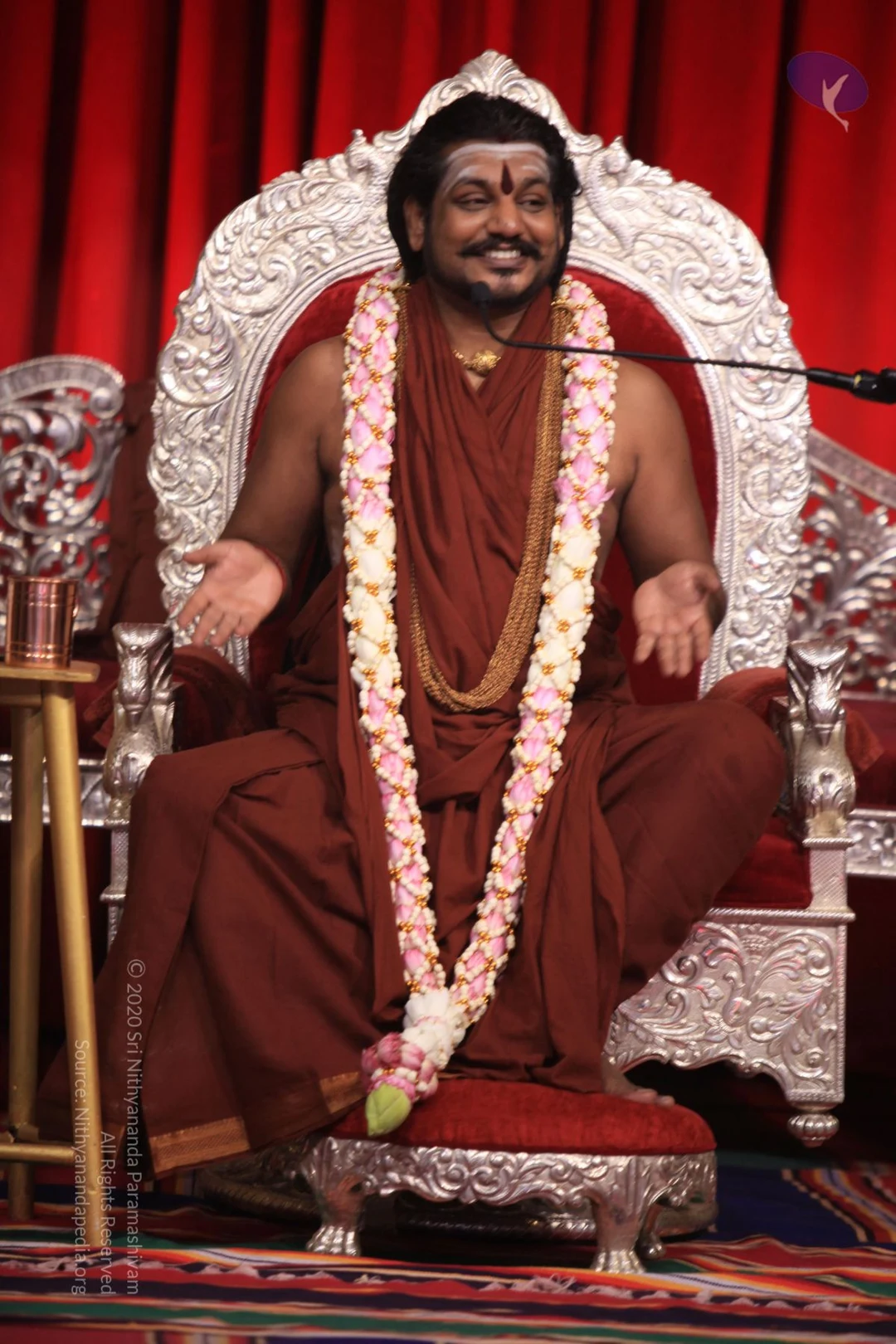
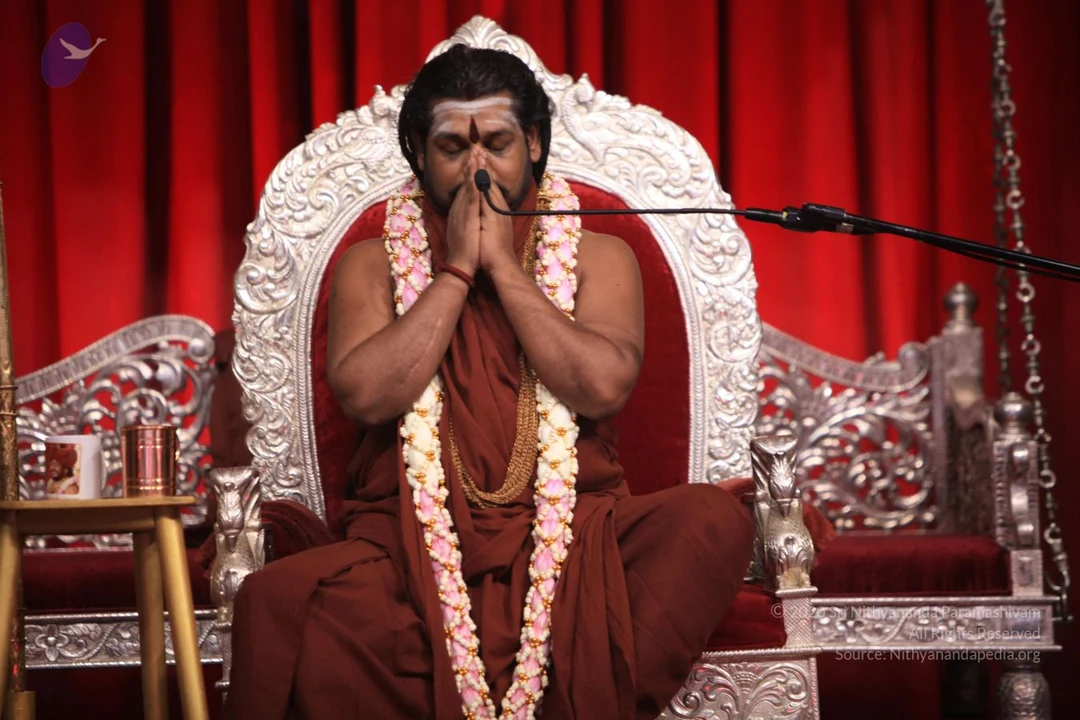
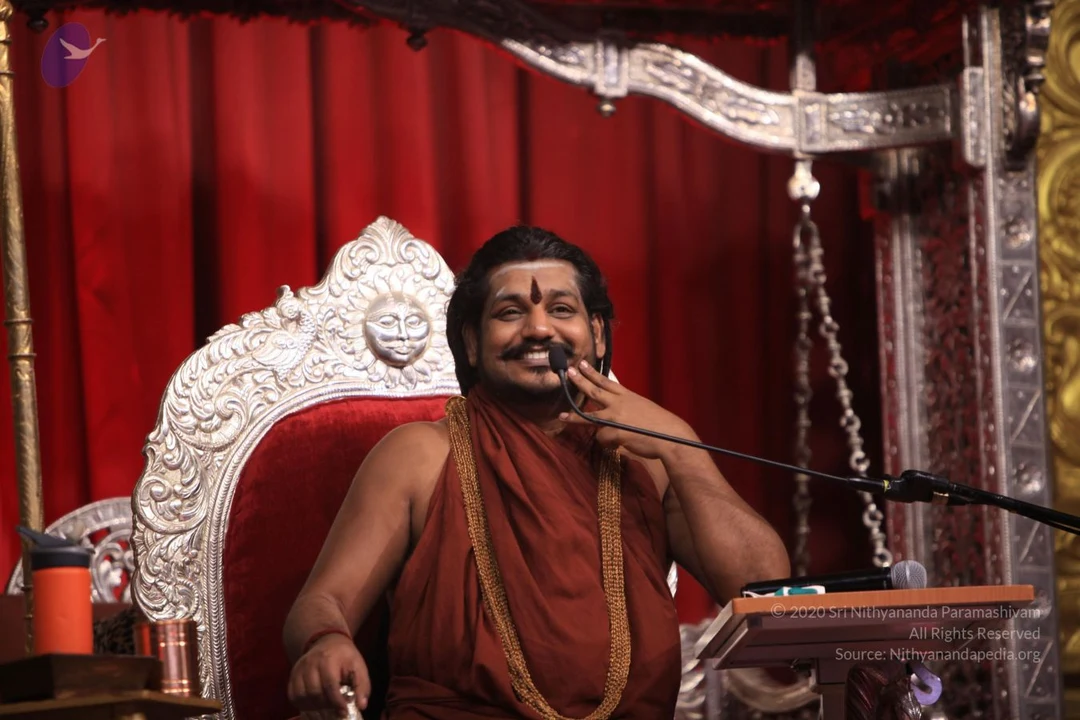
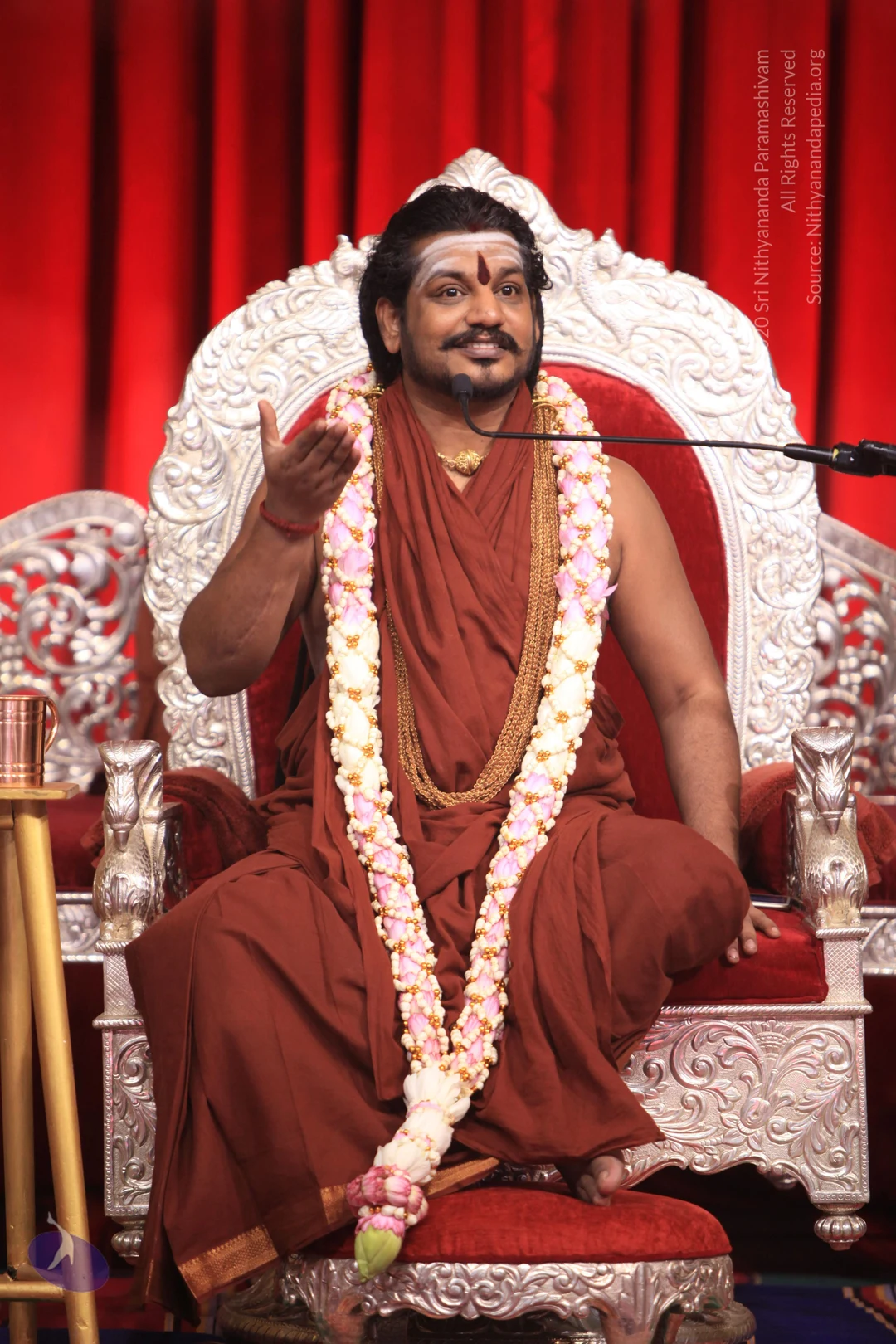
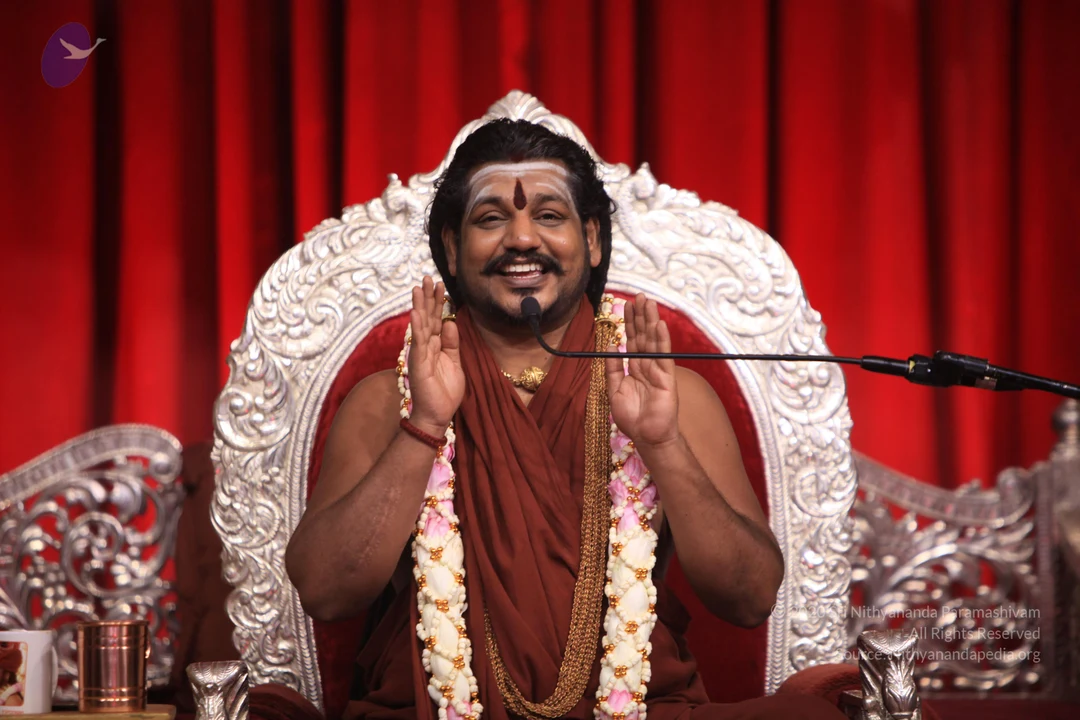
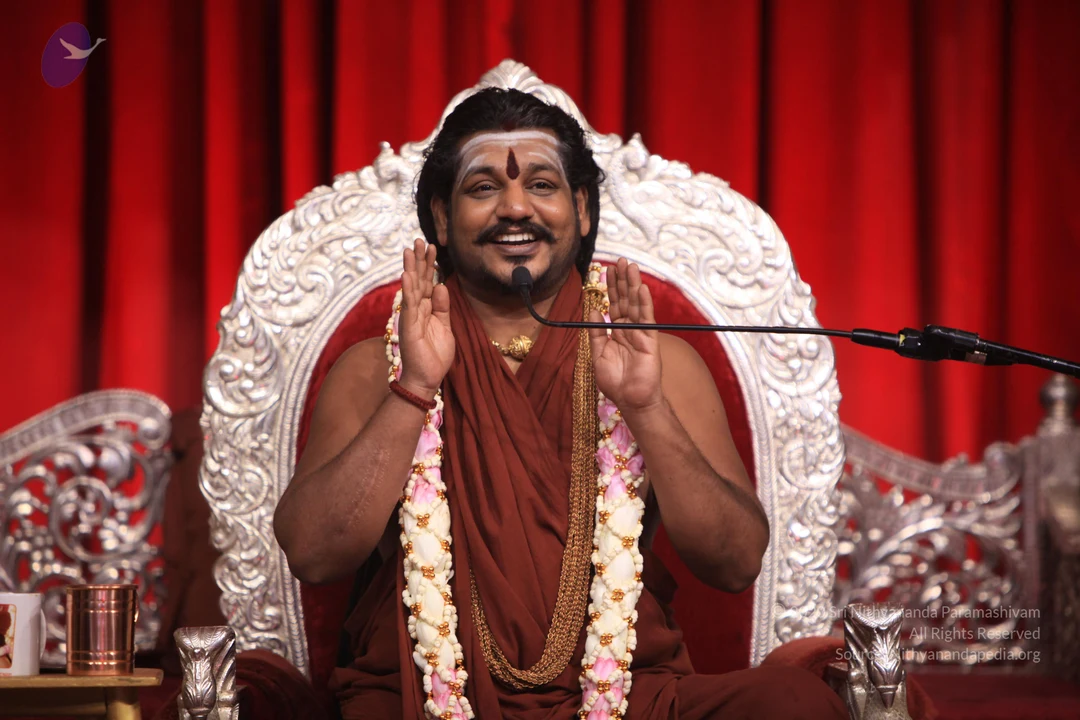
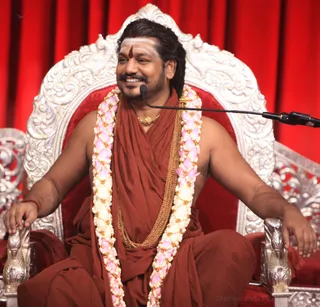
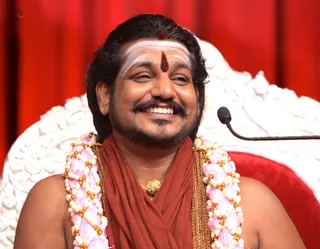
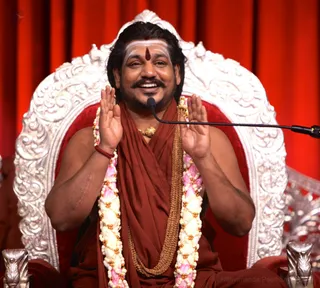
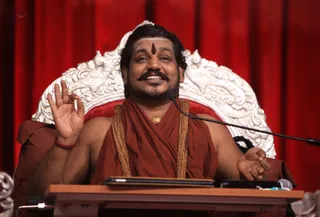
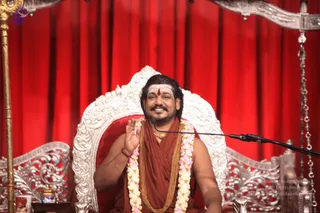
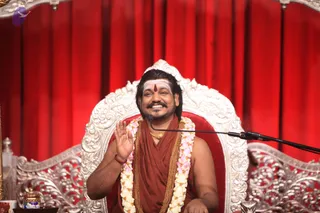
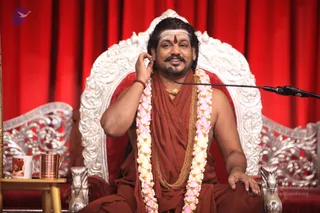
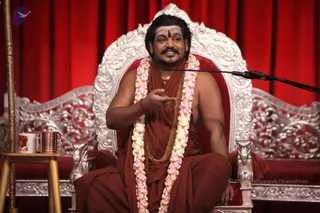
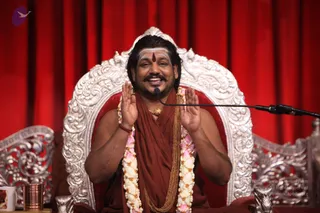
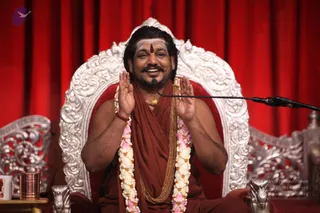
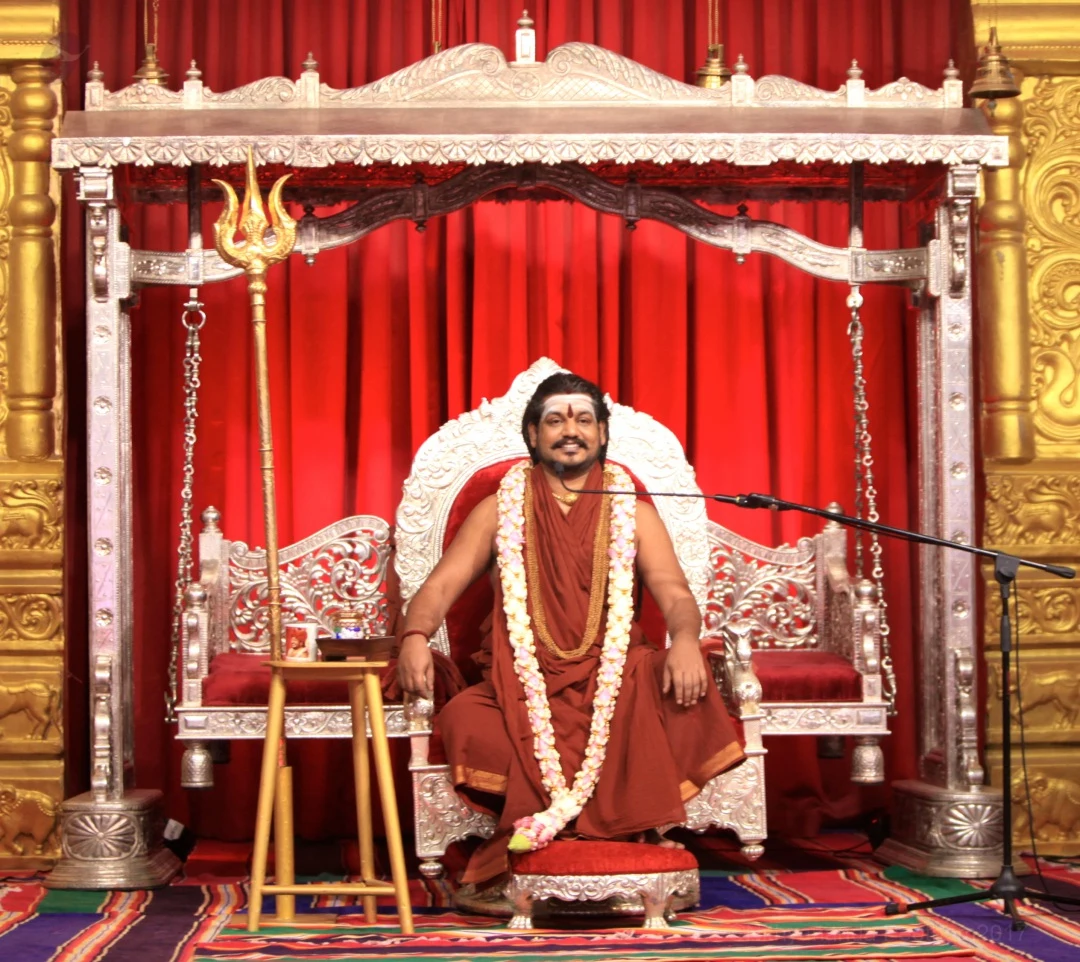
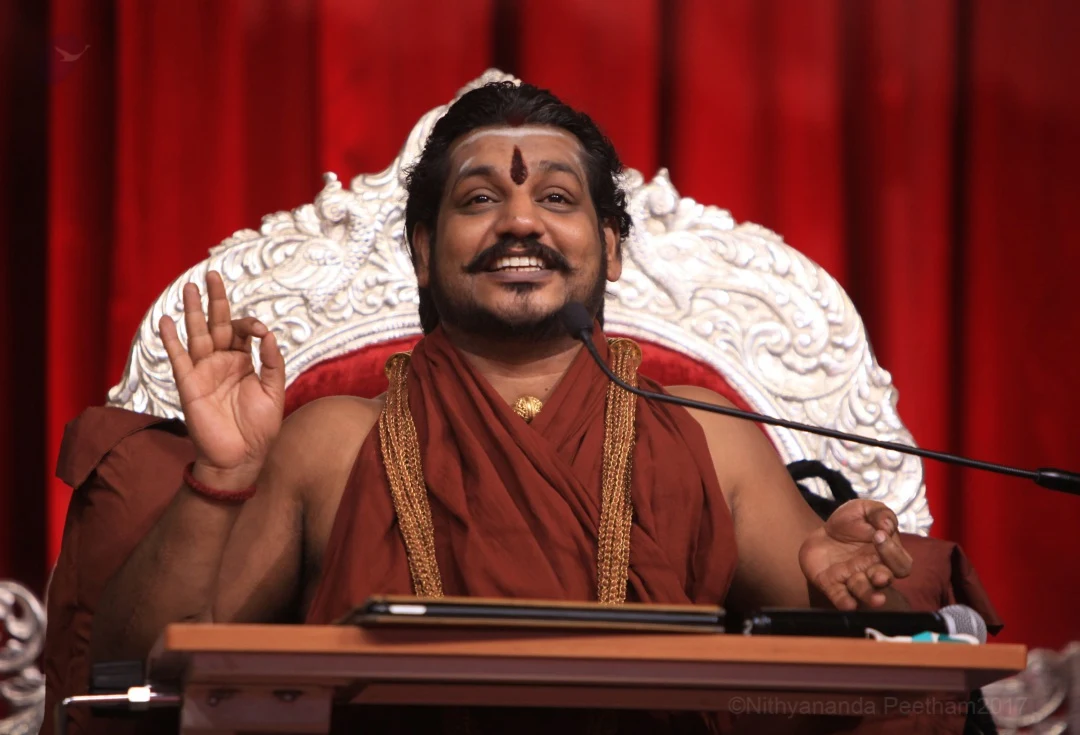
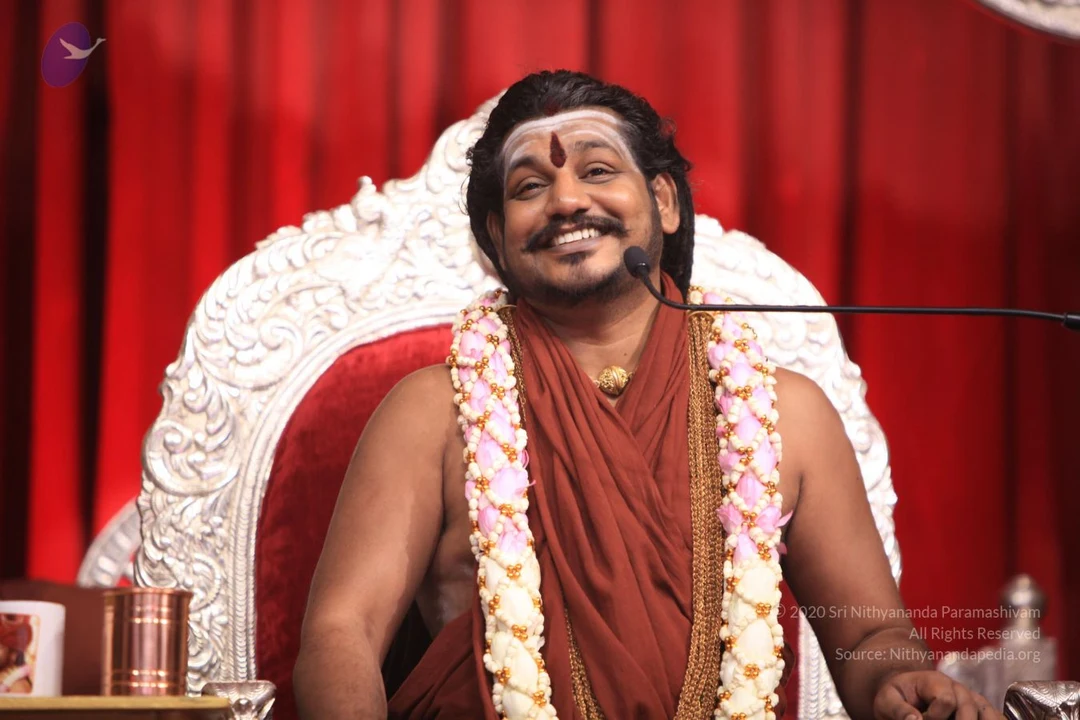
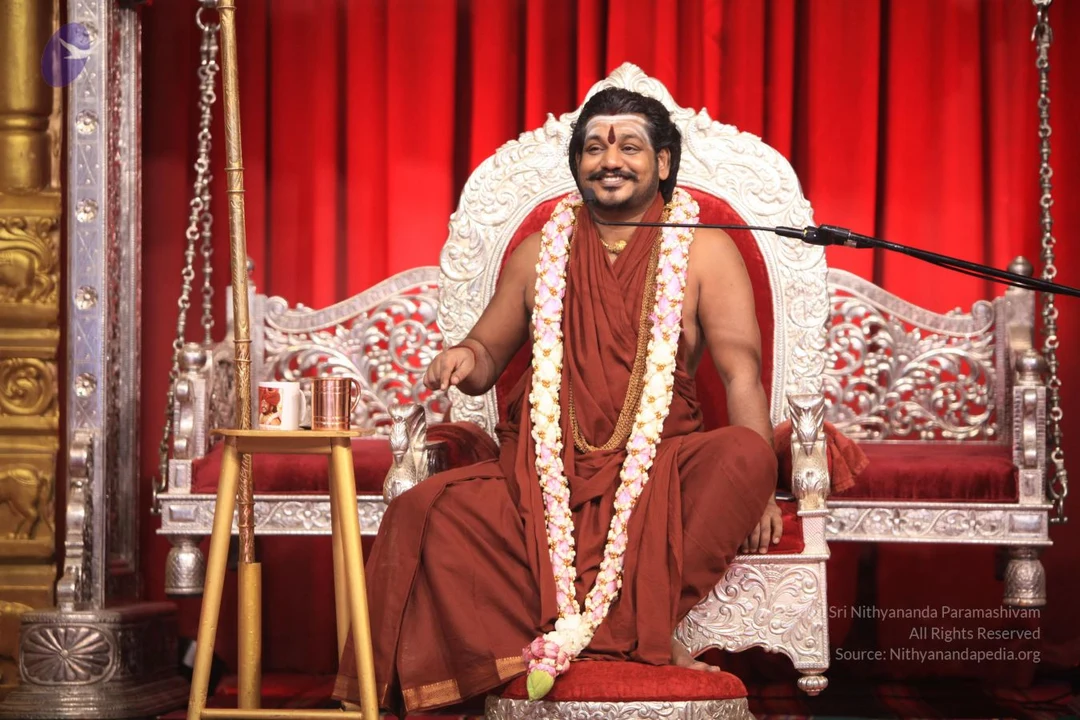
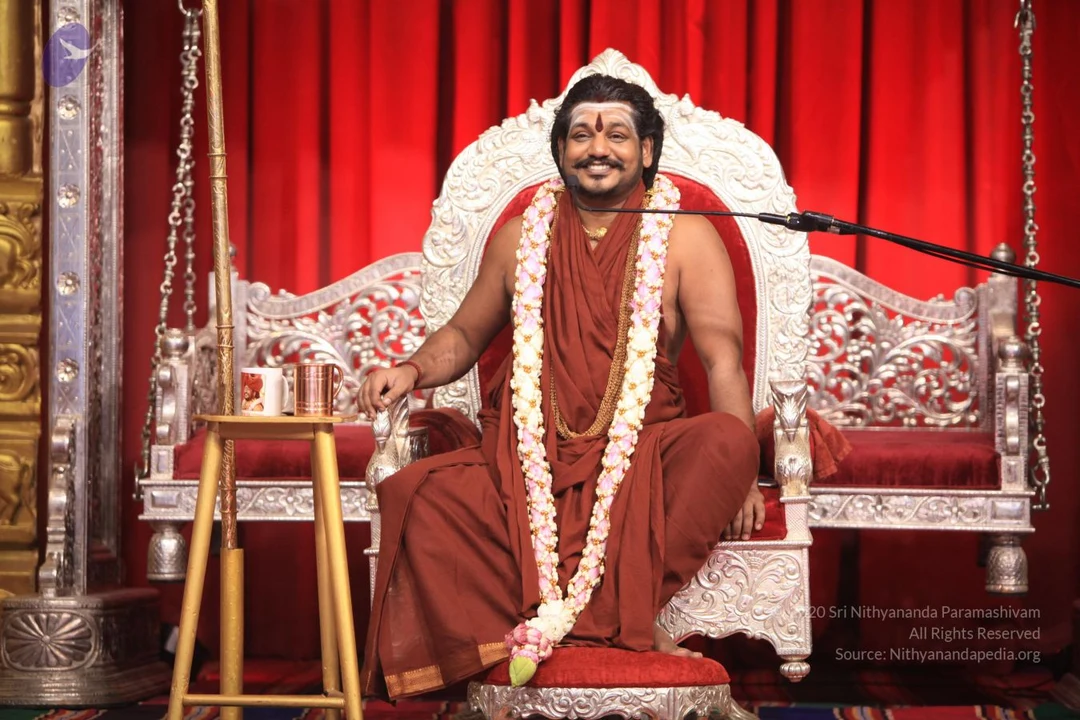
A seated man in rust-orange sannyasi robes sits on an ornate silver throne with a silver canopy against a red curtain and gold-carved walls. He wears a white floral garland, a gold necklace, a red thread on his wrist and a white forehead marking, and holds a red-brown cloth draped over his lap. A tall golden trident stands beside him on a small wooden stool with a lamp and offerings, and a microphone stands at his right. The woven multicoloured floor mat is visible in front. The figure's appearance matches the page's a person reference through his saffron-orange robes, garland and ornamental setting, so this is a probable identification of a person, seated in a throne-setting satsang.A smiling man sits on an ornate white-and-silver throne in front of a red curtain, with a microphone on a stand close to his face. He wears a rust-red shawl over bare shoulders, a gold necklace, and garlands of pink flowers with white beads and gold beads. A white tilak marks his forehead with a red bindi at the centre, and his hair is long and swept back. No readable text appears in the image.A man sits cross-legged on an ornate silver-and-white carved throne against a red velvet backdrop, smiling toward a microphone on a stand. He wears a rust-brown draped robe, a thick gold chain, and a long white-and-pink flower garland with gold beads. He has a white forehead band with a red bindi, and his feet rest on a red cushioned footstool. Swamiji (probable): long swept-back dark hair, saffron-brown robe, ornate gold necklace and garland on a throne, consistent with a seated spiritual teacher giving a satsang.A man seated on an ornate silver-and-red throne in front of a red velvet curtain, smiling with a microphone on a stand beside him. He wears a rust-orange unstitched robe draped over the shoulders, with a long pink-and-white flower garland and a gold chain around his neck. His forehead bears white and red tilak markings, and he rests his hands on the carved armrests. The description of the attendee is a single person in a stage setting, consistent with a satsang or discourse. Swamiji (probable) is the central figure, identified by long swept-back hair, rudraksha-style ornamentation absent but ceremonial gold necklace and saffron-orange robe, seated on a throne.Close-up photograph of a smiling man seated on an ornate white and red throne-style chair before red drapery, with a microphone stand at right. He wears a rust-orange shawl draped over bare shoulders, a long gold chain with a gold pendant, and a garland of pink and white flowers with gold beads. White sacred ash lines mark his forehead with a red mark at the centre. a person (long swept-back dark hair, ornate gold necklace, saffron-orange wrap and garland cues, seated as a discourse speaker). Single physical person; the photo shows a discourse setting.A smiling man with swept-back dark hair and a white-and-red forehead marking sits on an ornate white silver throne against a red curtain, raising both palms in a teaching gesture. He wears a rust-red saffron wrap, a thick gold chain and gold pendant, and a long garland of white and pink flowers. A microphone on a stand is in front of him.

Temple

13 photosSource gallery
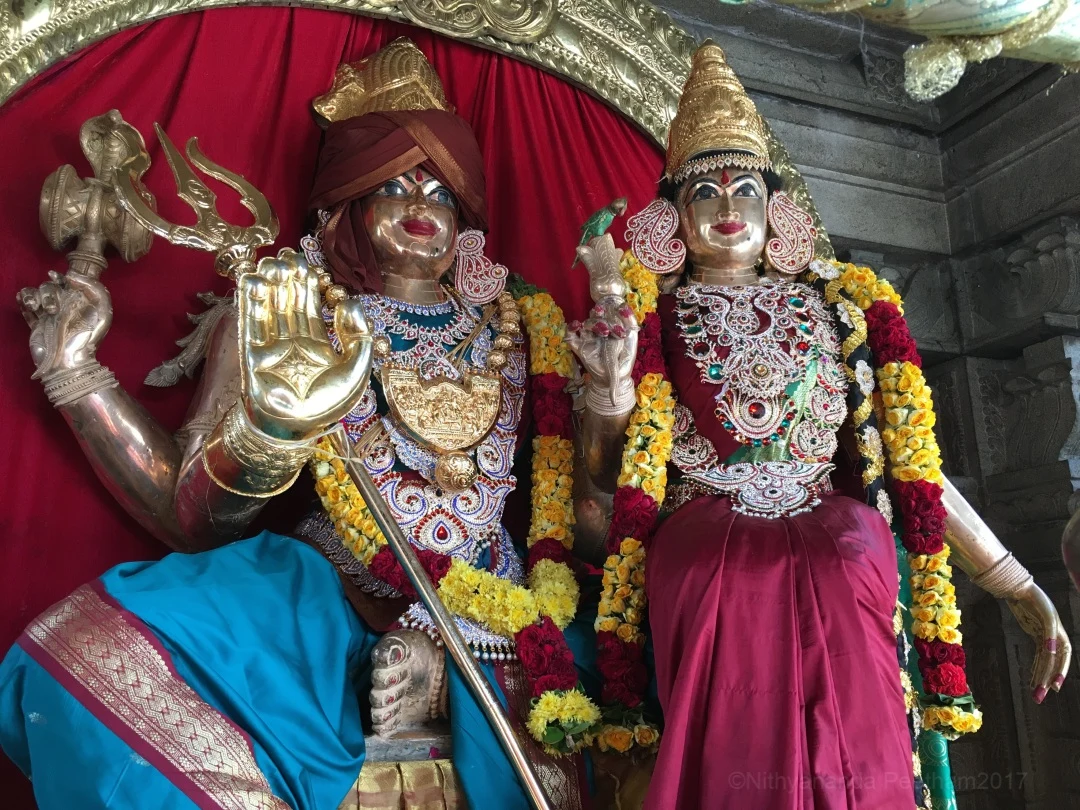
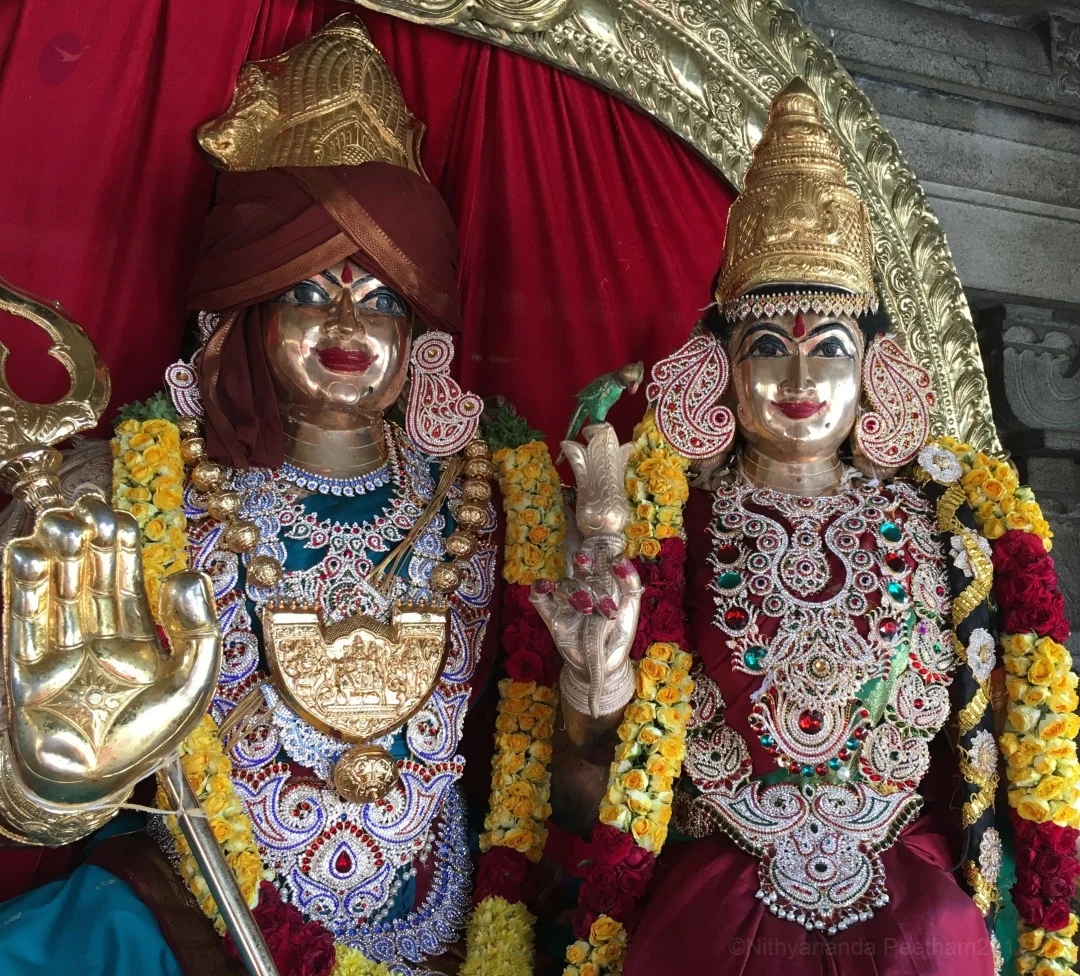
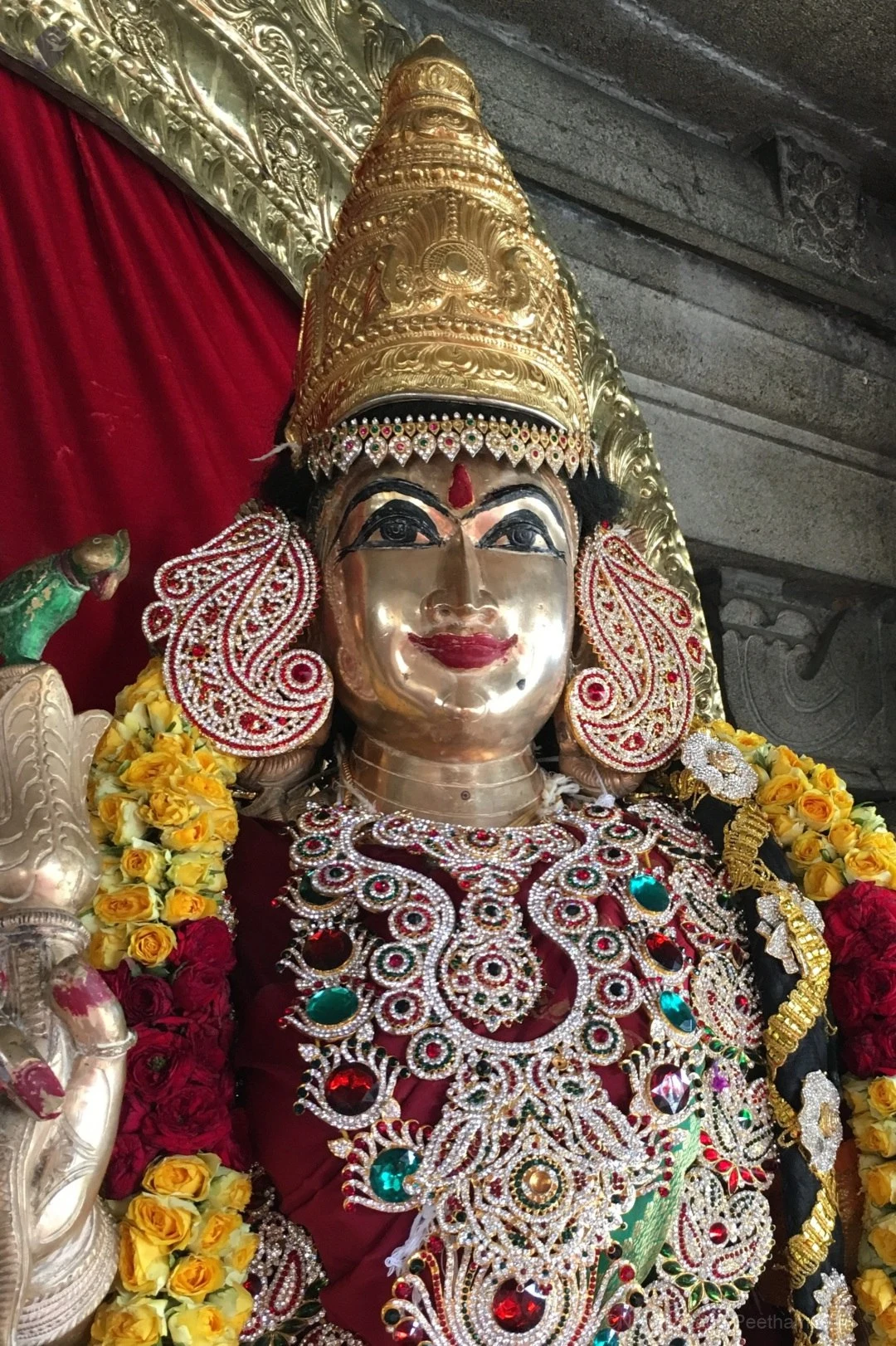
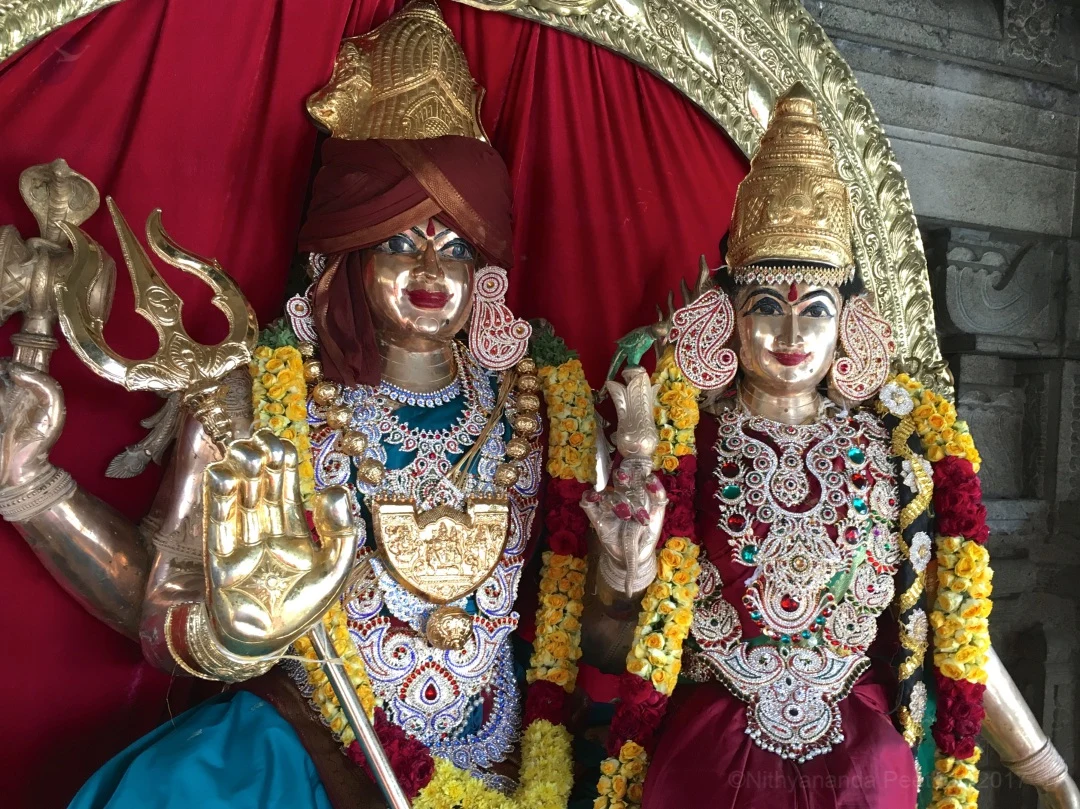
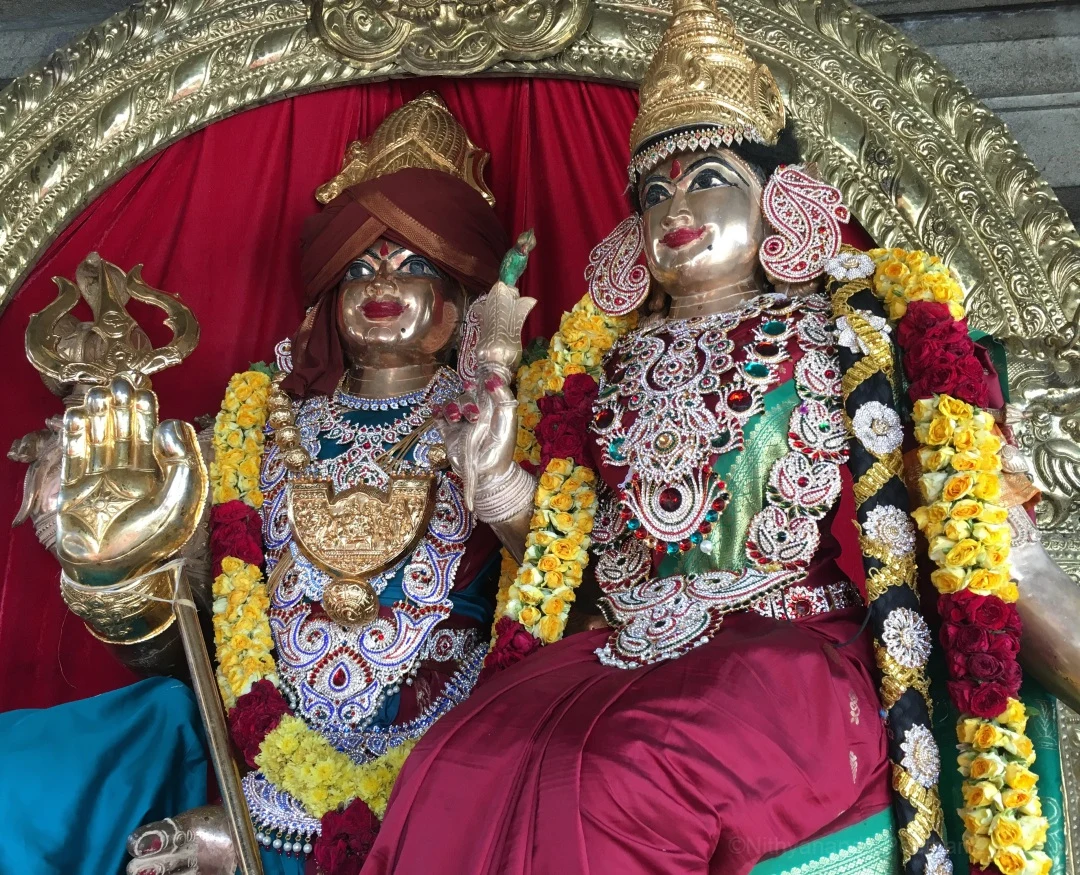
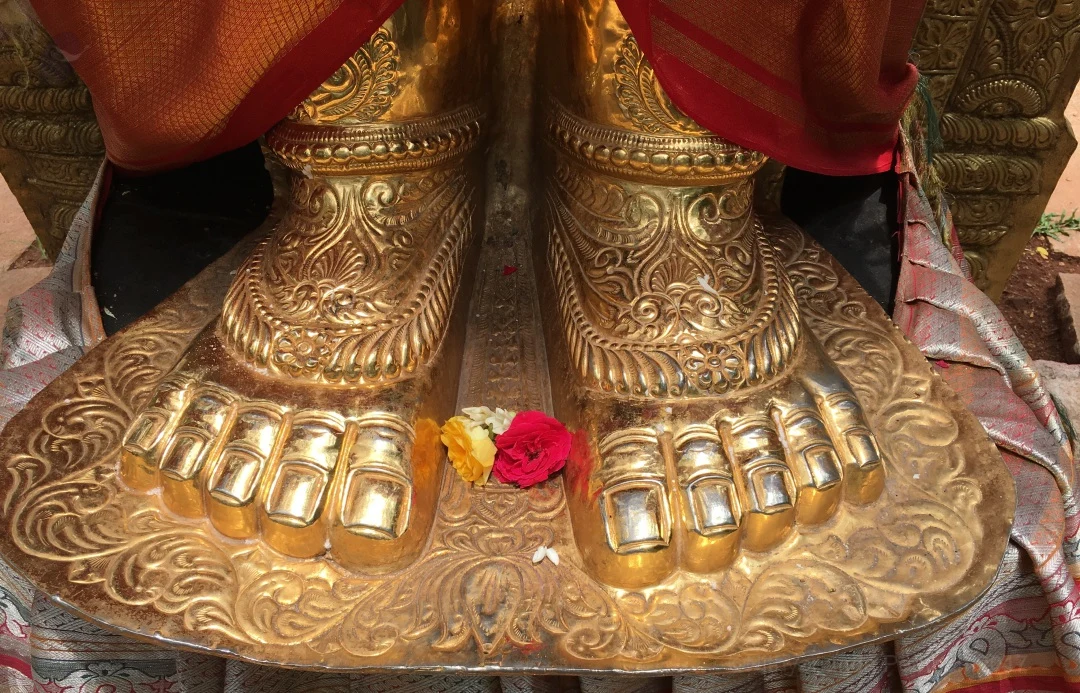
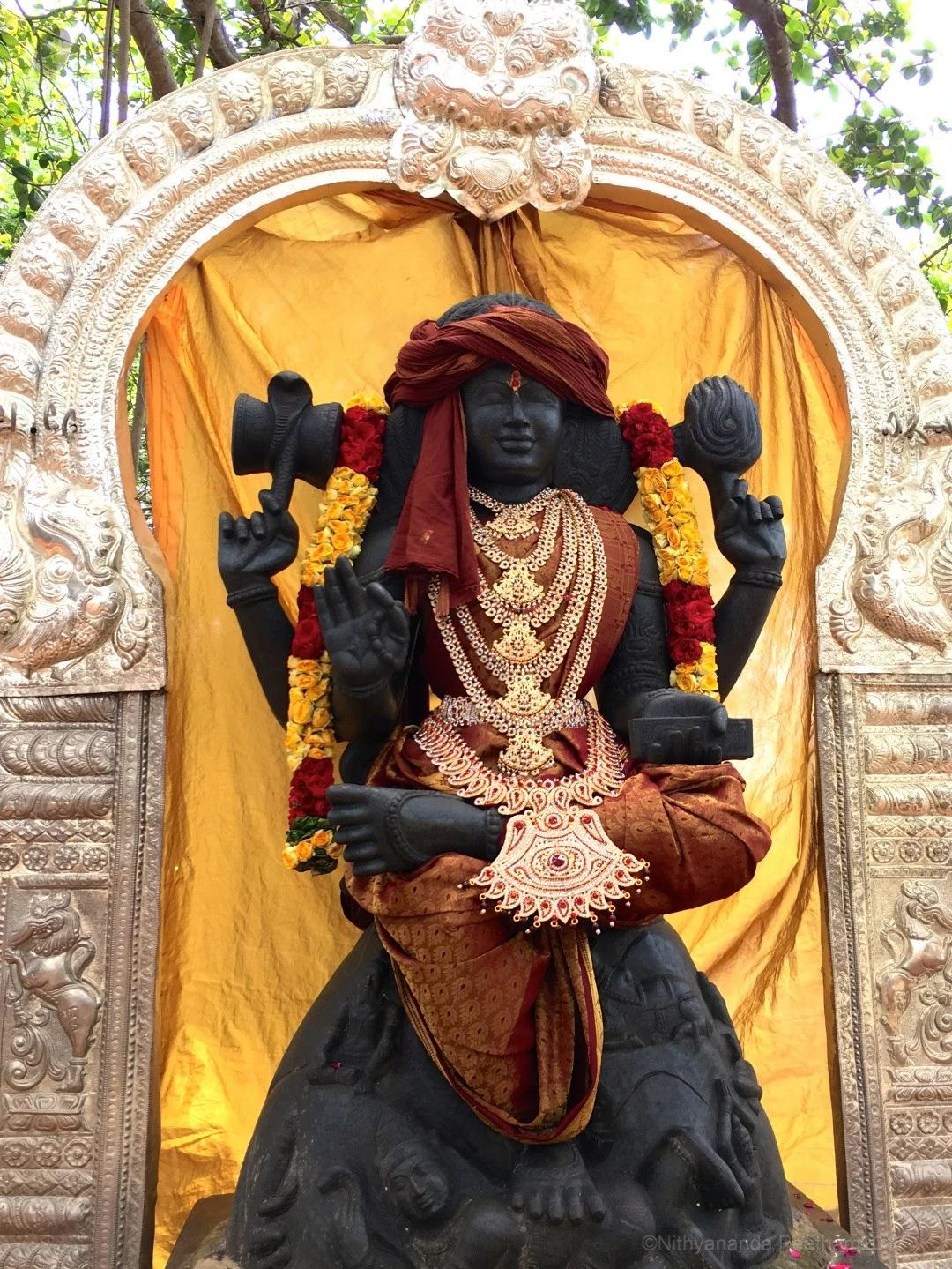
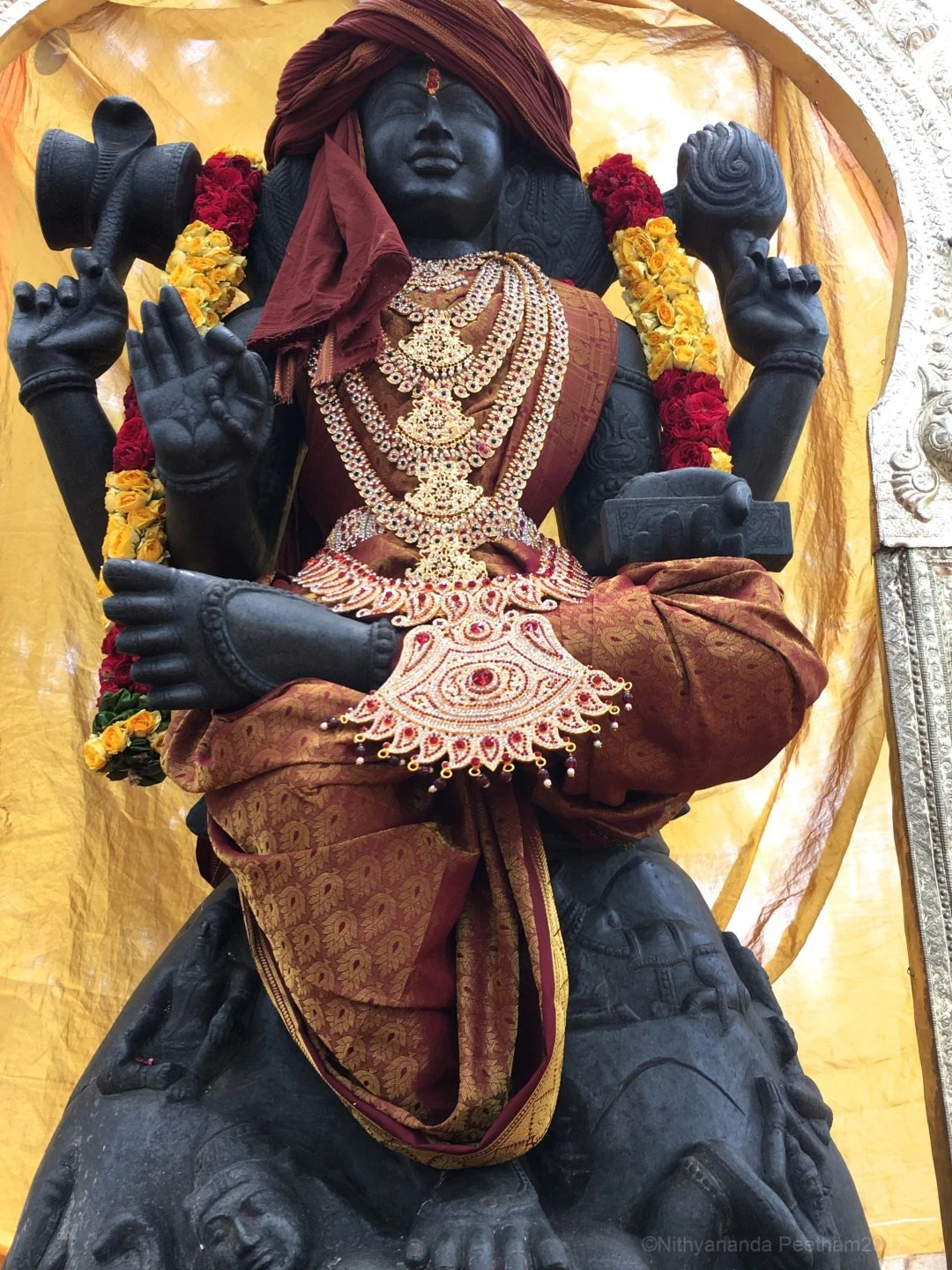
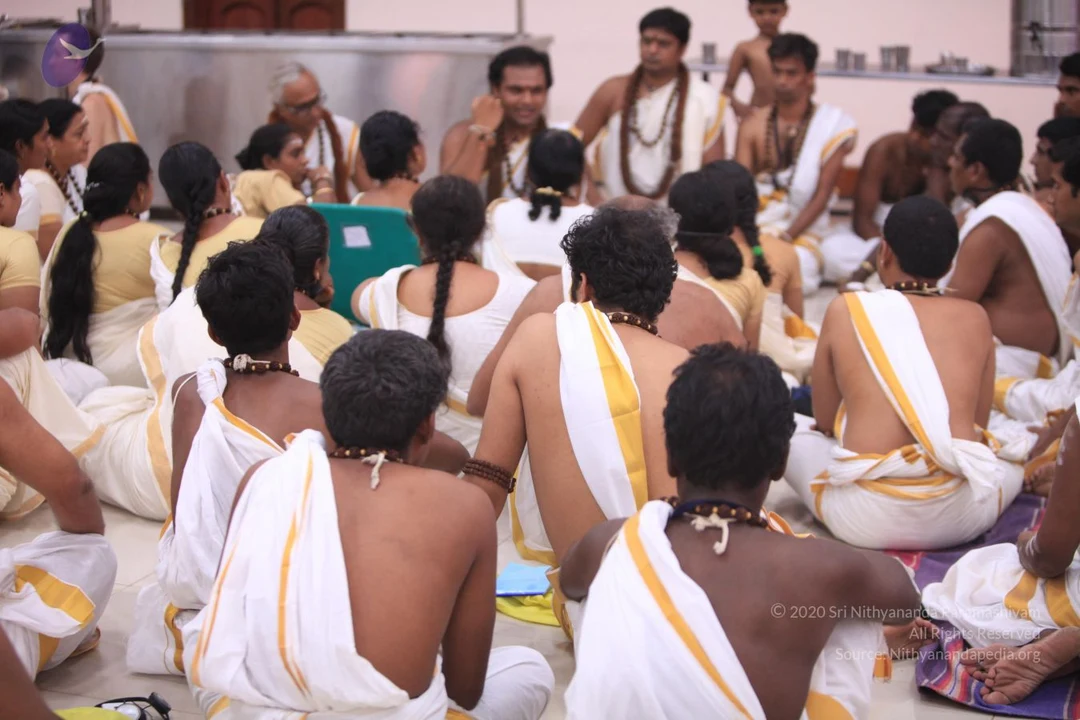
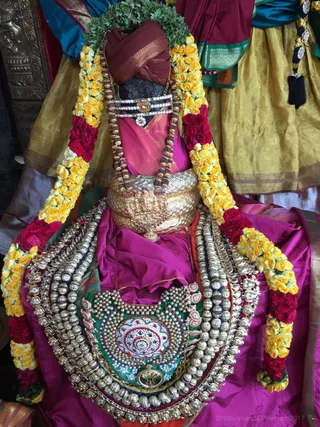
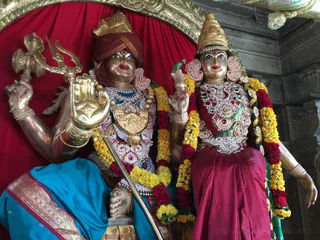
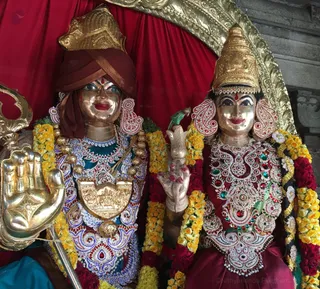
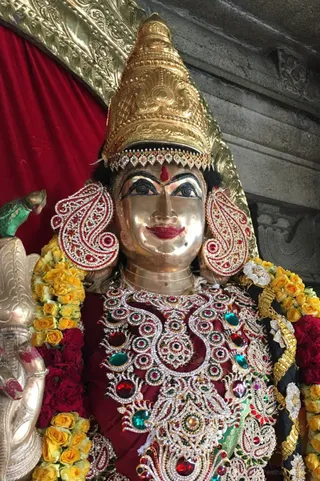
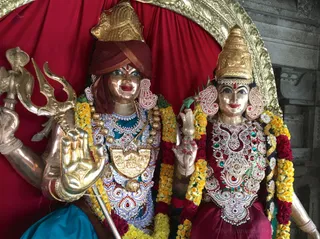
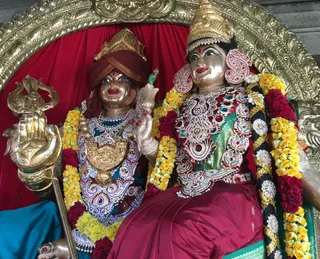
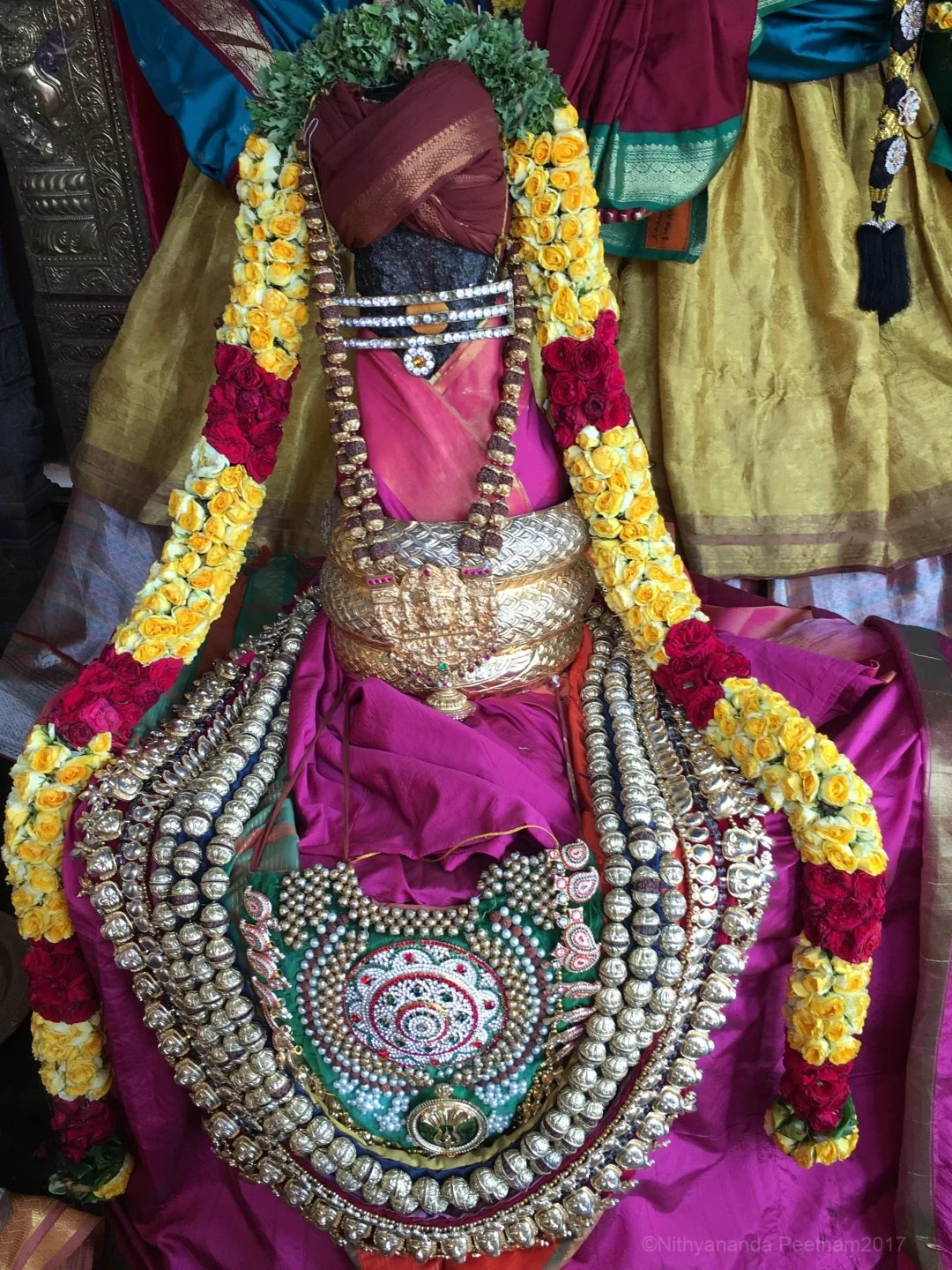
A richly dressed deity murti. It wears a maroon turban-like cloth and a band of white and gemmed ornaments across the forehead, with a rudraksha mala and a heavy silver-and-gold necklace of many layers. A magenta silk draping covers the body, a gold-coloured silver bowl or belt sits at the waist, and a green embroidered bib with pearls and red stones hangs on the chest. Garlands of yellow and red roses wrap around the figure, with green leaves crowning the top. Behind it, gold and teal silk cloth hangs as a backdrop, and a patterned metal panel is visible at the left edge. The figure is an inanimate murti, not a person.Two golden-metallic deity murtis stand side by side on a red draped backdrop inside a temple shrine. The figure on the left holds a trident in one raised hand and wears a maroon turban, a blue dhoti with gold border, and an ornate white-and-blue embroidered garment with a gold pendant. The figure on the right wears a gold crown, a magenta sari-like garment with silver embroidery, and holds a small object in one hand. Both are draped with garlands of yellow and red flowers. Ornate carved stone pillars frame the scene. No physical people are visible.Two metallic deity murtis, a male and female form, are seated side by side in front of a red draped backdrop framed by a gold arch. The left figure wears a gold crown, a maroon turban, a blue-green ornate garment with jeweled and beaded embellishment, rudraksha-style beads, and holds a gold abhaya-style raised hand and a trident. The right figure wears a gold crown, a deep maroon garment with silver-white embroidery and red and green stones, and holds a small parrot-topped lotus-like staff. Both are garlanded with yellow and red roses and marigolds, and have red kumkum bindis. Stone wall behind them, and a gold medallion with a pictorial scene hangs on the left figure's chest.A gilded metal deity murti of a goddess stands inside a shrine against a red cloth backdrop with a gold-embossed arch. She wears a tall ornate golden crown, red and white stone earrings, a red bindi, and a red blouse heavily encrusted with jewelled white, red and green embellishments and a large multi-stone necklace. She is garlanded with yellow and red roses. A green-and-silver parrot figure and a silver hand appear at the left edge. No people are present.Two gilded metal murti of a deity pair stand against a red draped backdrop in a temple shrine. The figure on the left holds a golden trident and wears a maroon turban, rudraksha-style beads and a teal and white embroidered garment. The figure on the right wears a golden crown, a crimson embroidered blouse and sari with red and green gemstone-like ornaments. Both are garlanded with yellow and red flower strings, and the frame behind them is ornate gold. No living people are visible.Close-up photograph of a pair of golden deity murti seated side by side on a red draped throne within an ornate gold arch. The figure on the left holds a golden trident and wears a brown-red turban, a blue garment and a jewelled gold chest piece. The figure on the right wears a gold crown, a deep magenta sari with a green border, elaborate jewelled necklaces and red-and-white earrings. Both are garlanded with yellow and red flowers and marked with red tilak.

Sadashivatva Session
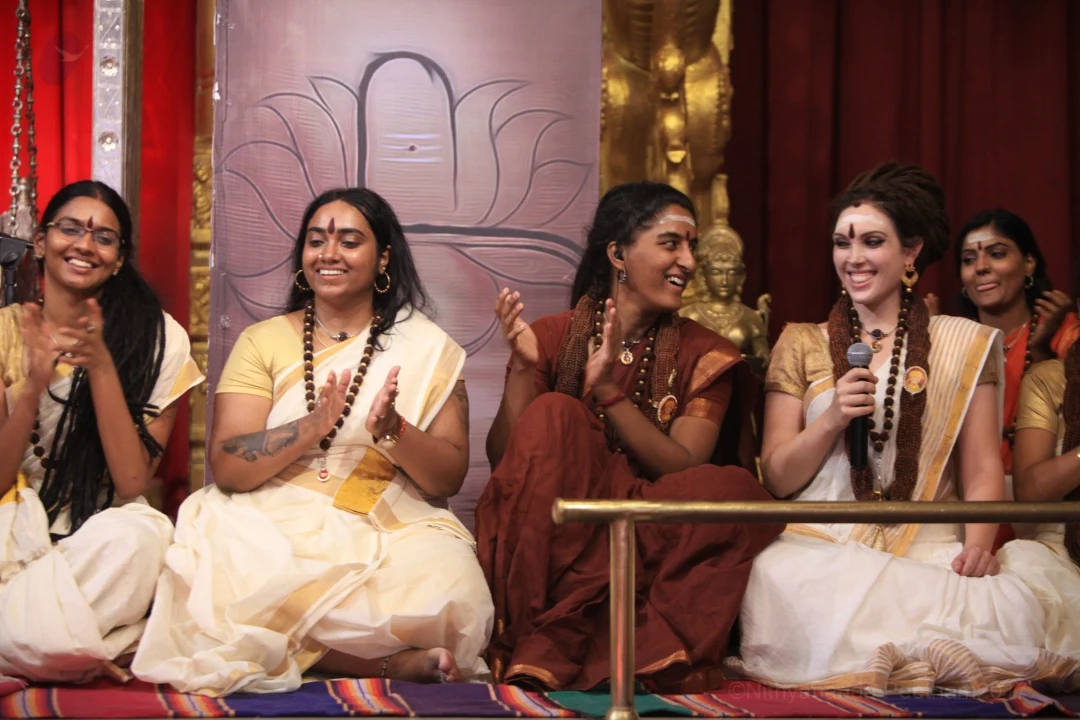
9 photosSource gallery
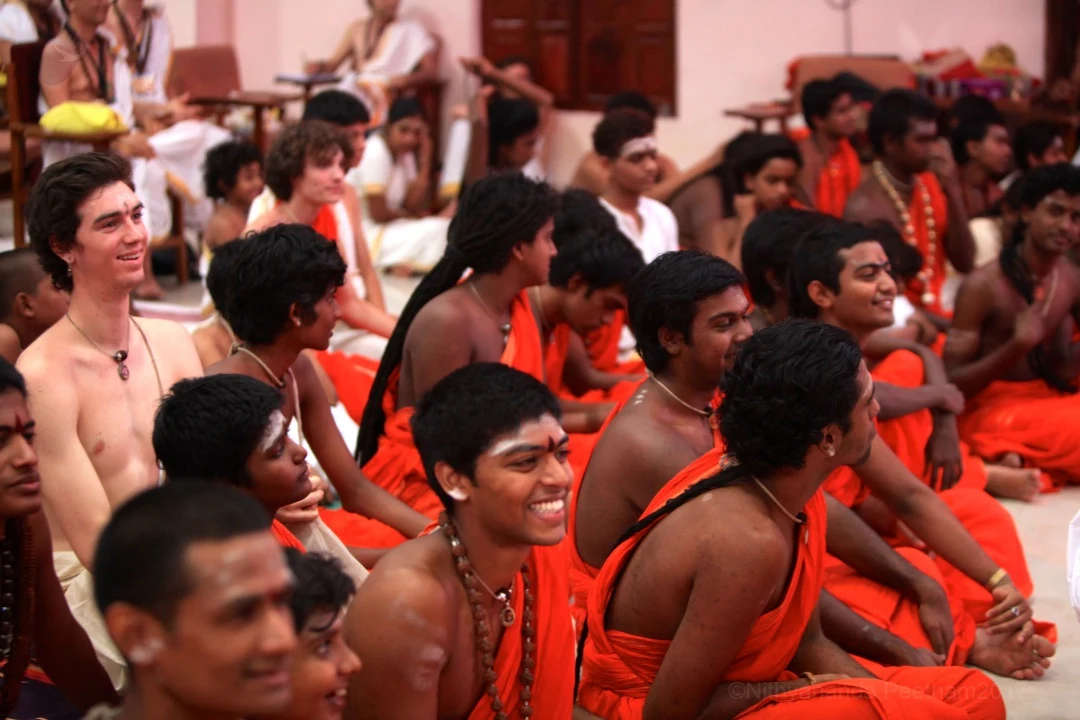
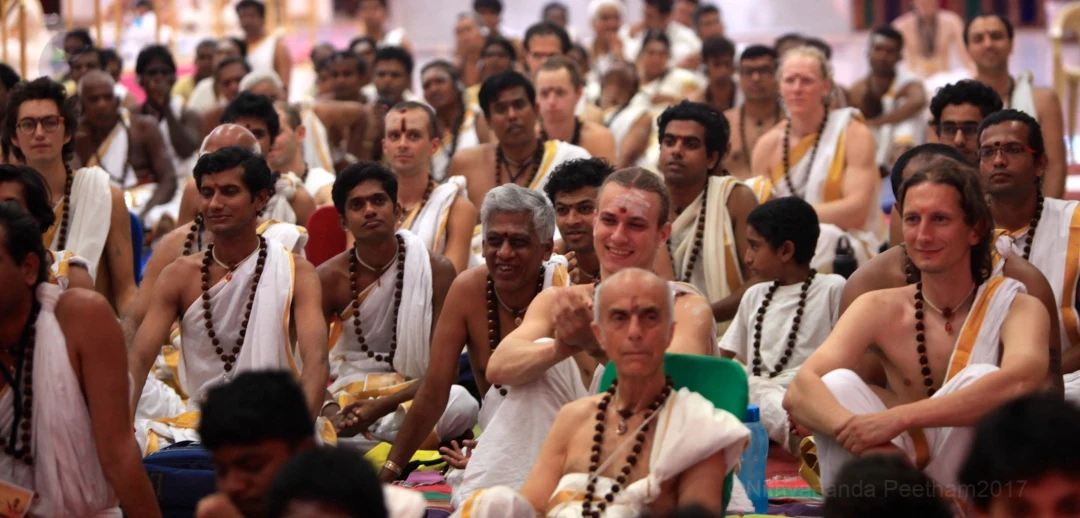
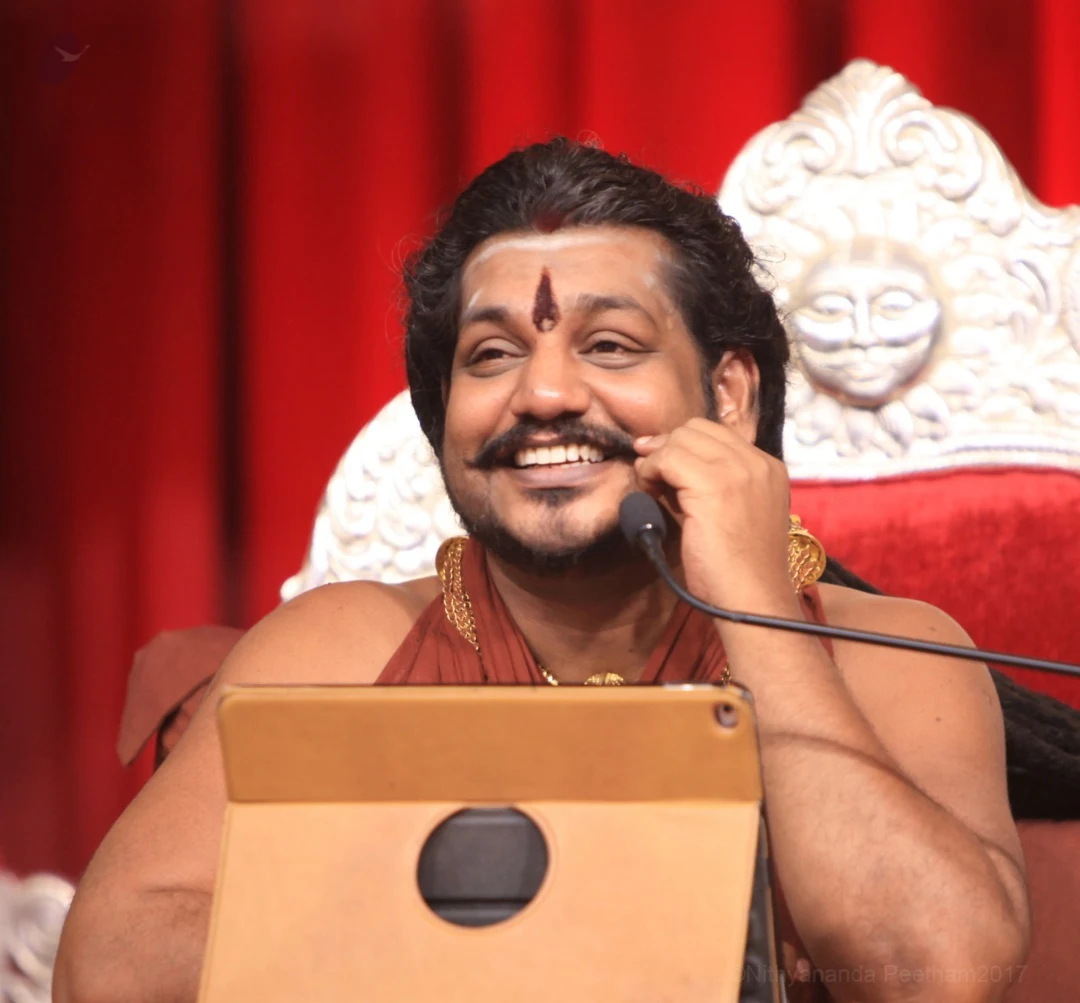
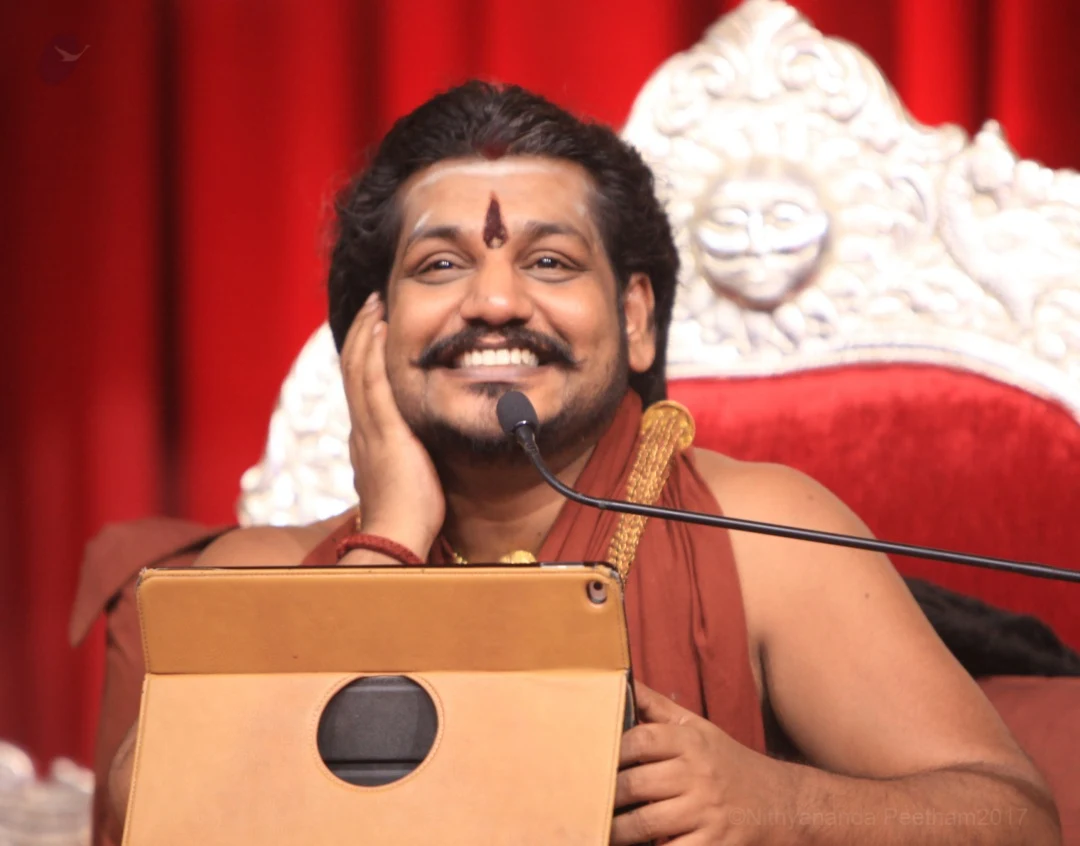
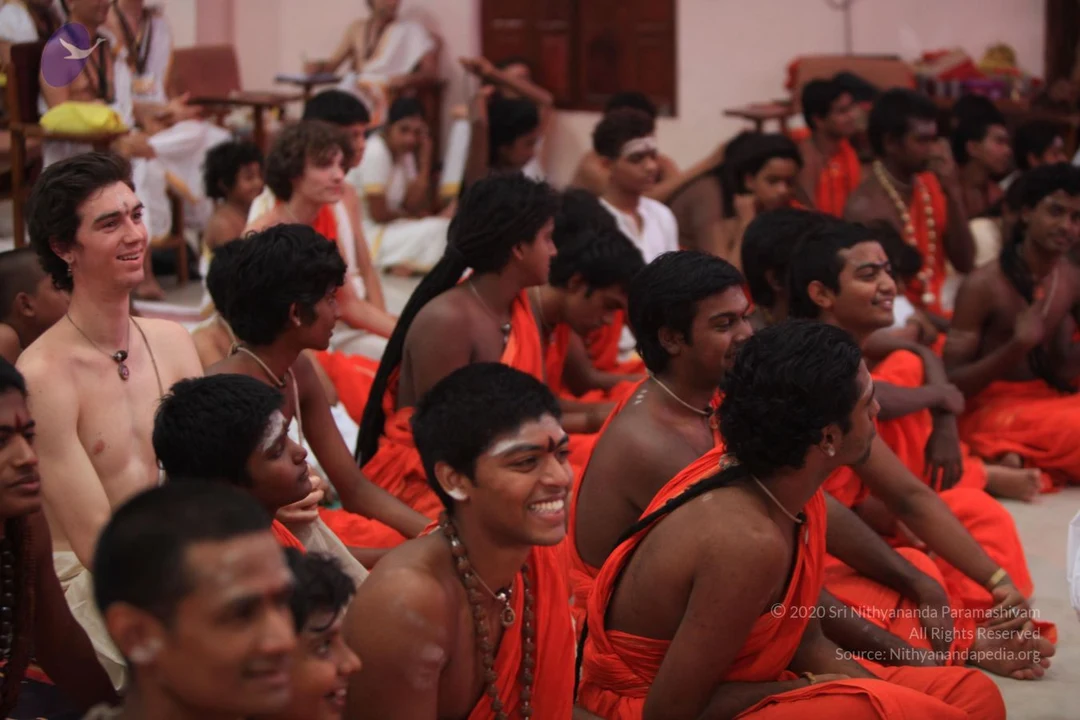
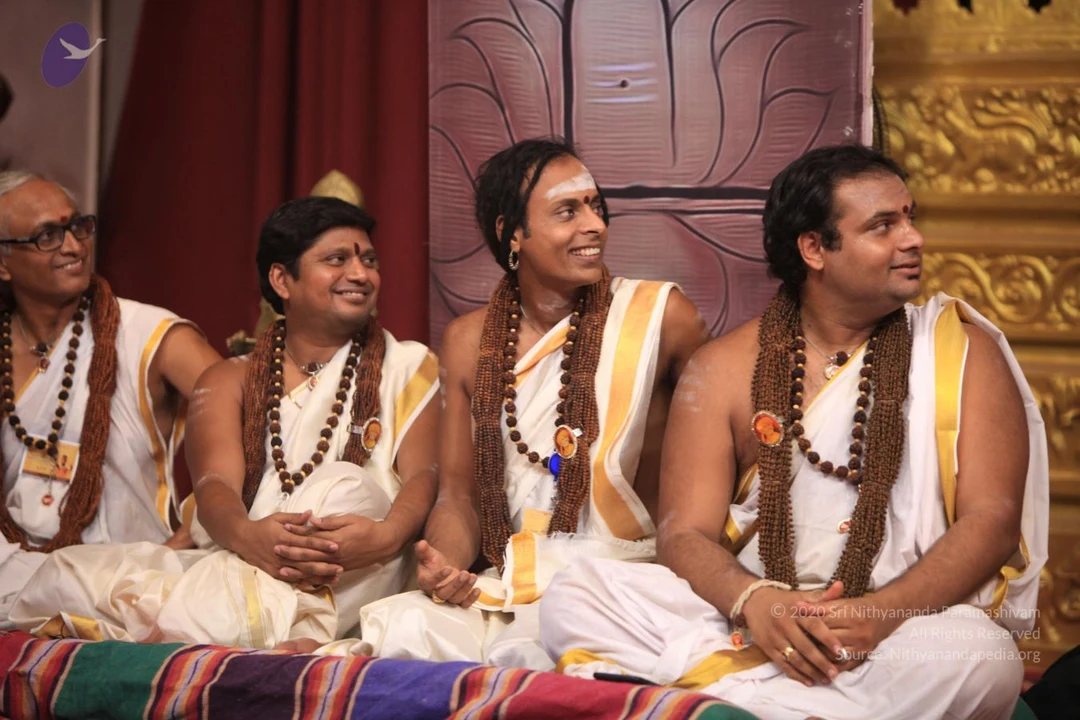
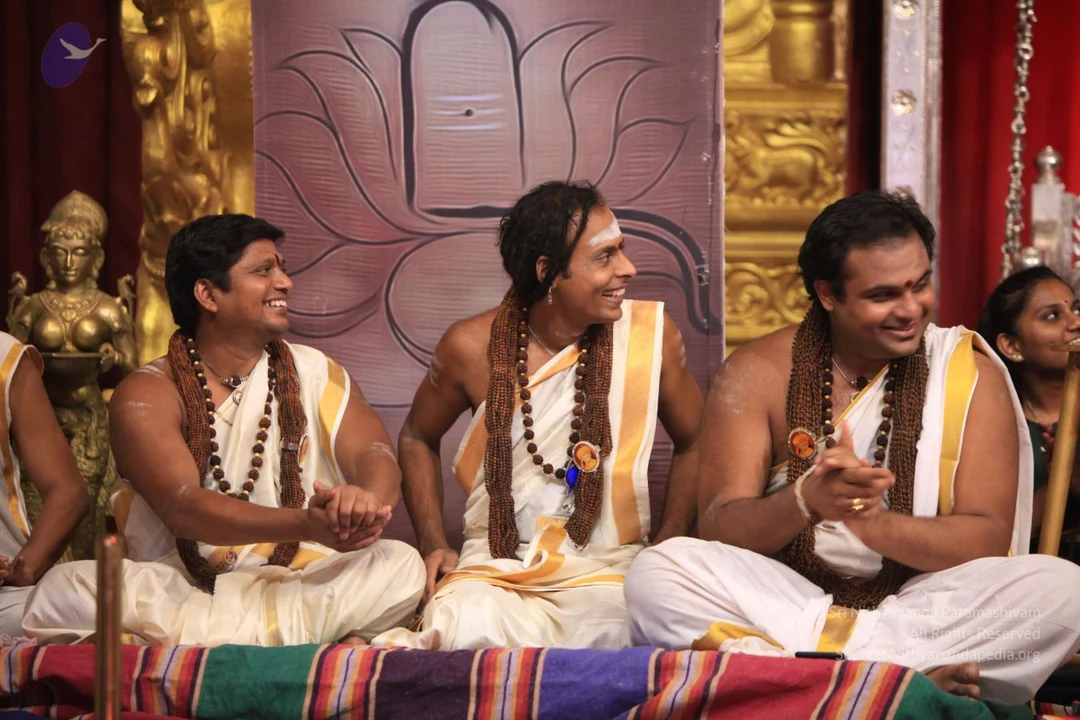
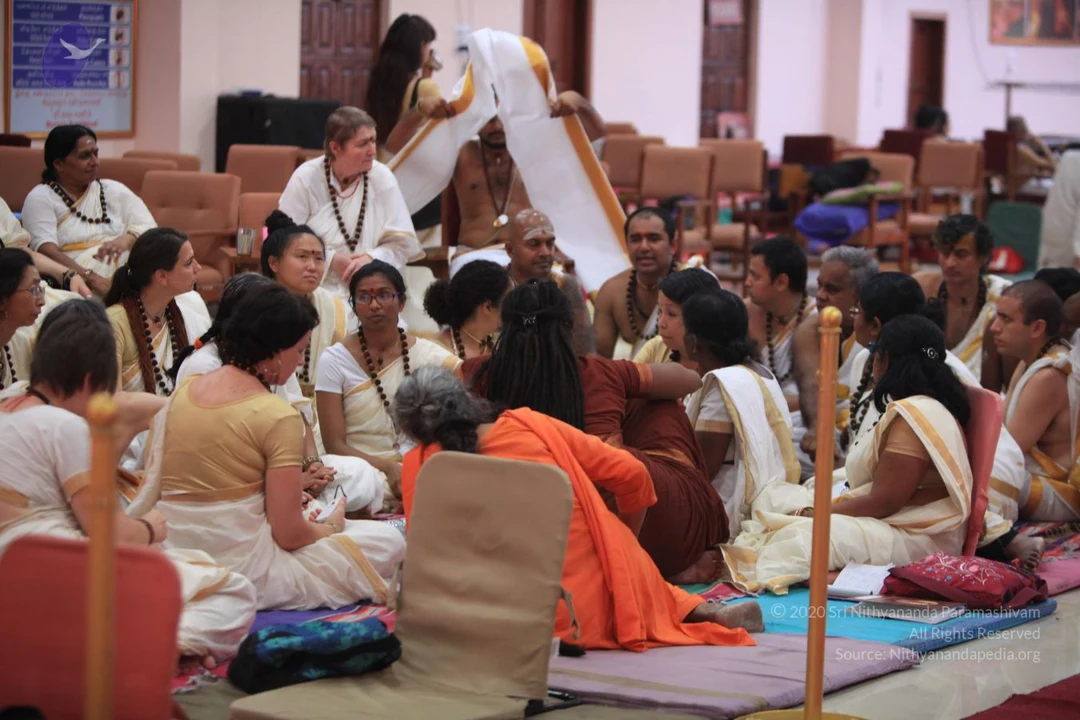
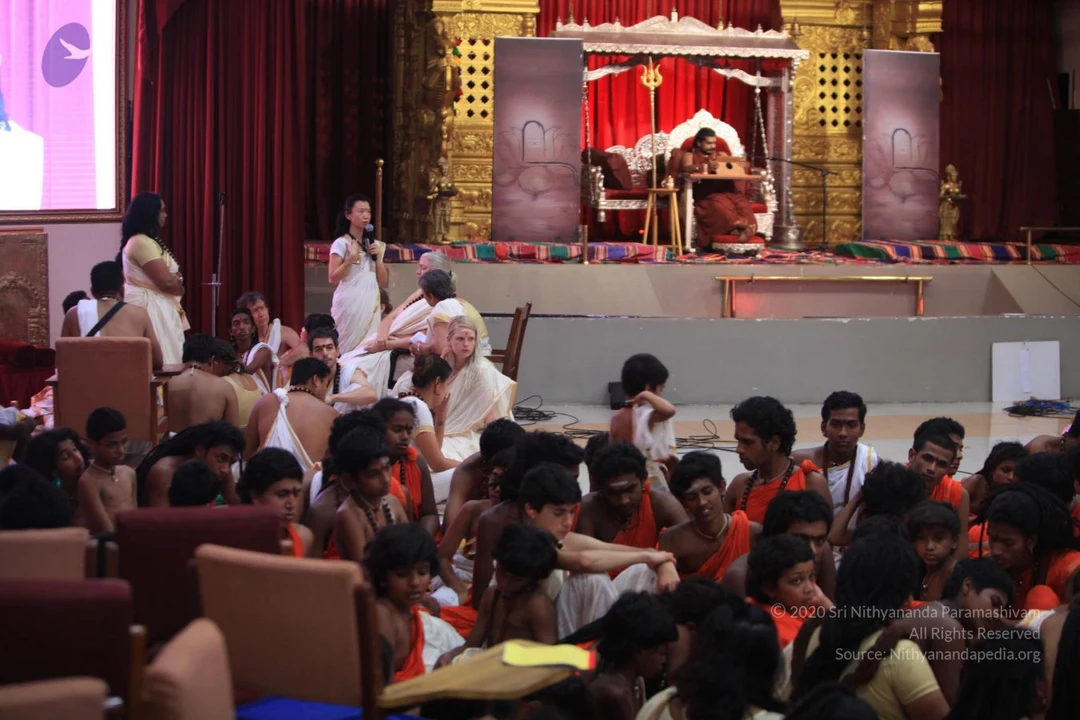
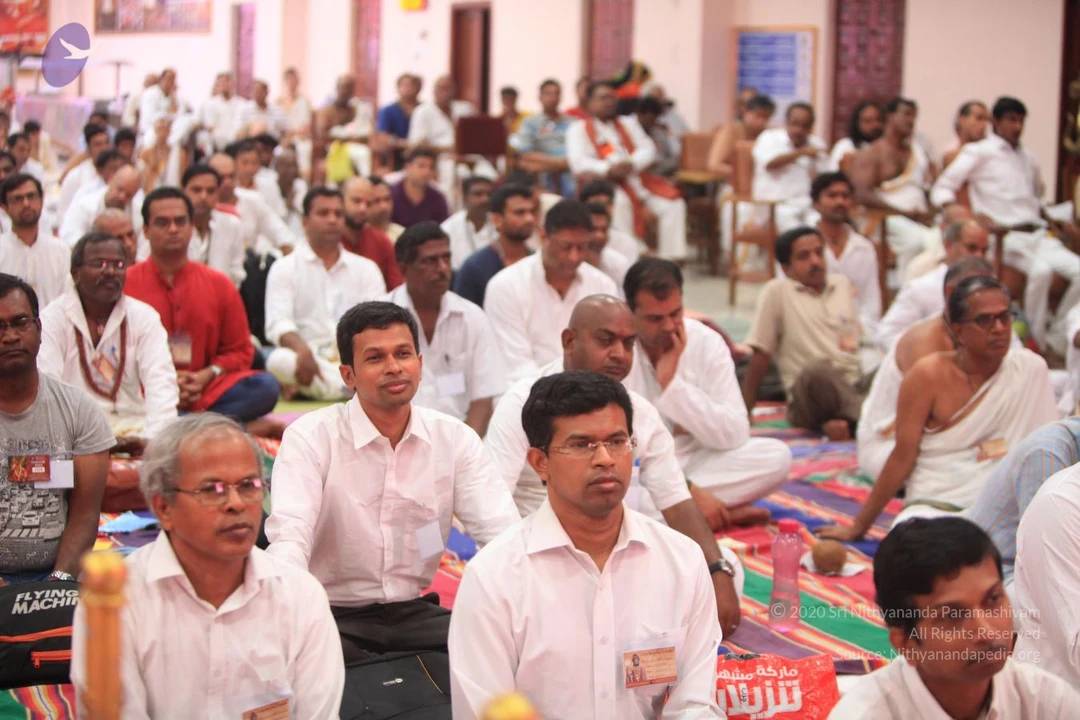
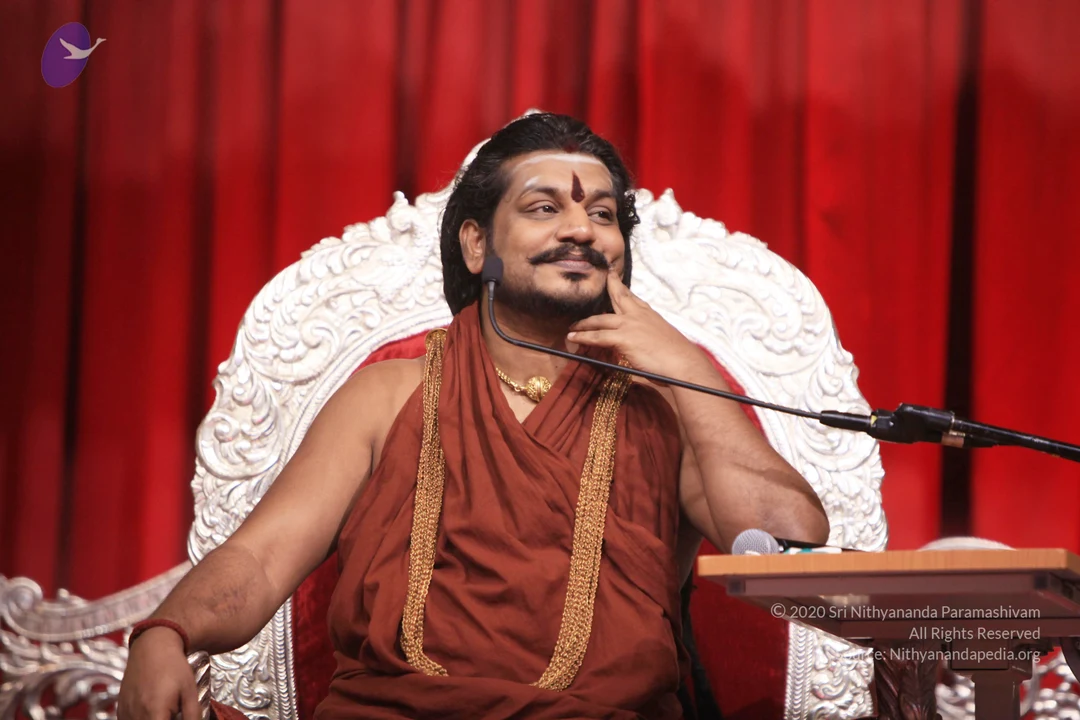
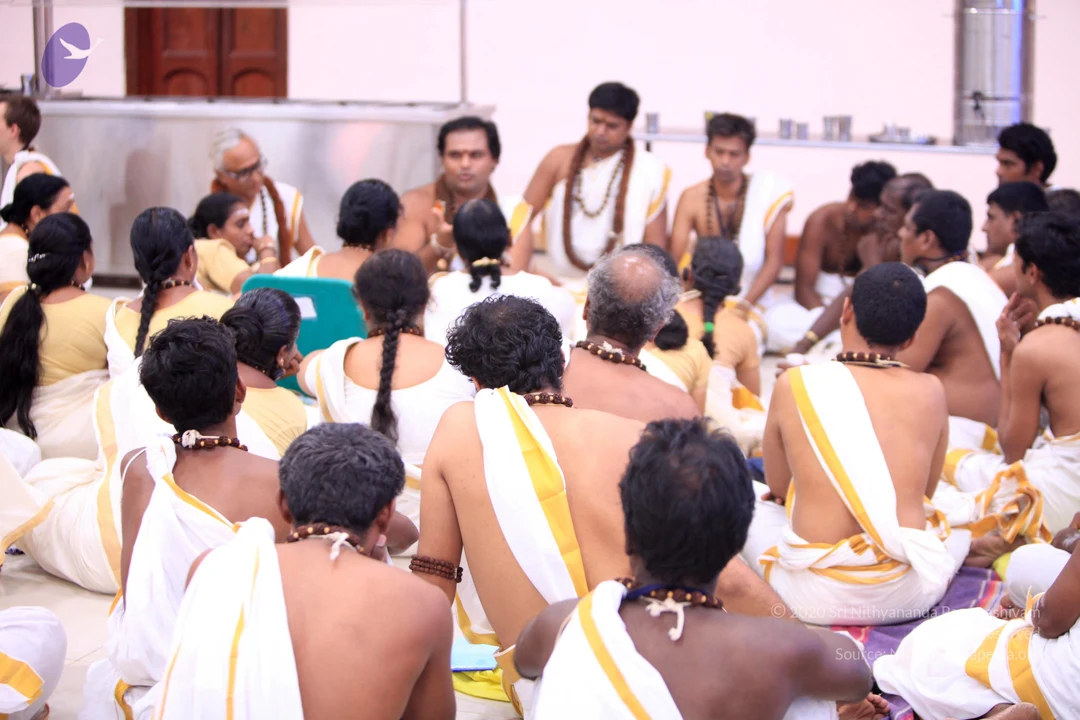
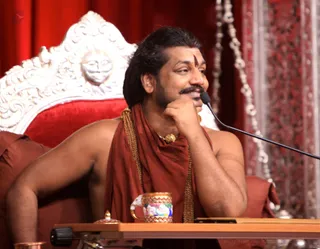
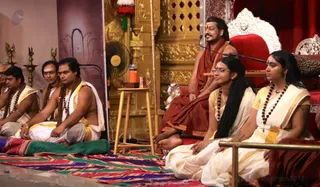
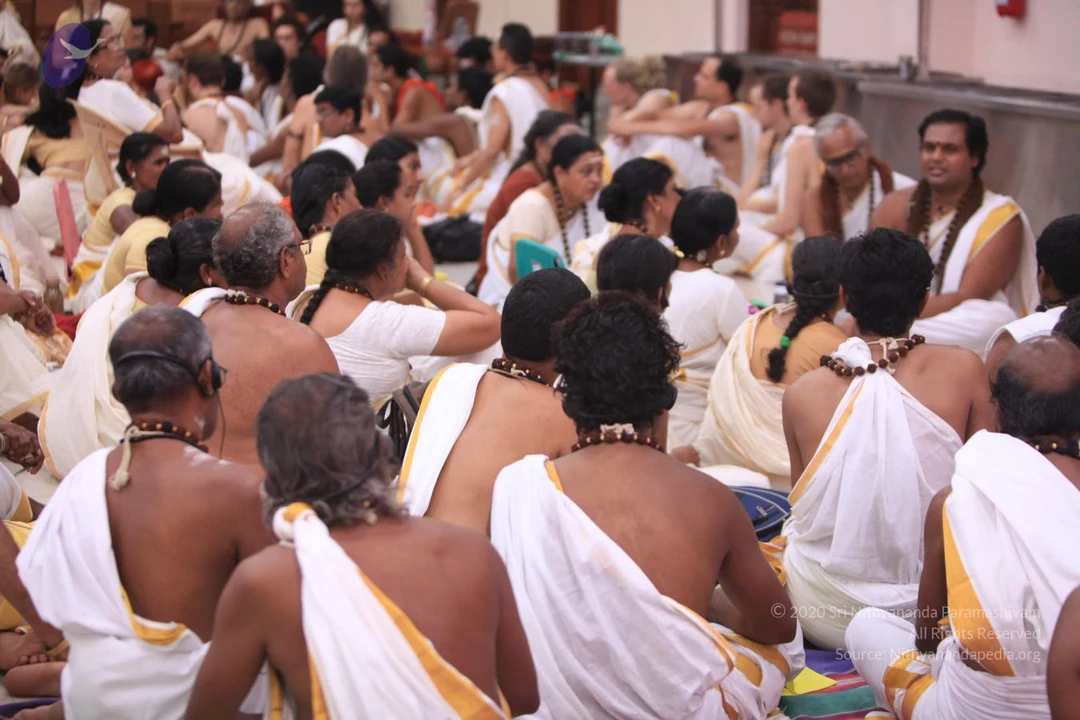
A smiling man with short dark hair, a moustache and beard sits in a white carved throne against a red curtain, wearing a rust-red robe with a long gold ceremonial necklace and a red thread on his wrist. He wears white and red tilak marks on his forehead and raises one hand in a gesture while speaking at a wooden podium with a microphone. A tablet sits on the podium.A man seated on an ornate white and red throne with a carved face motif, resting his chin on his hand as he listens or smiles beside a microphone on a wooden lectern. He wears a rust-red wrap draped over bare shoulders, a long gold chain and a gold pendant necklace, and a red tilak on his forehead. A decorated cup sits on the lectern, with red velvet drapes and beaded curtains behind. a person appears as the presenter, identified by the seated speaker role, red-saffron wrap, gold chain and tilak. Single person.A seated man in saffron-orange robes with a rudraksha mala and a long necklace sits on a red velvet throne with gold-carved panels behind him, speaking into a microphone on a stand. Two women in cream and gold-bordered saris with rudraksha malas sit cross-legged on a red cushion to his right, and several men in white dhotis and shawls with rudraksha malas sit on a striped woven mat to the left. Brass oil lamps, a steel tumbler and a bottle sit on a small wooden stool, and a fan stands in the background. The man on the throne has a distinctive long swept-back hairstyle and ornate robes, which are cues consistent with a person, presiding over a seated satsang or discourse. Six to eight people are visible.A seated teacher in rust-orange robes sits on an ornate silver-and-red throne with a laptop on a small side table, a microphone on a stand before him. Three women in cream and gold kanjivaram-style saris with rudraksha malas sit cross-legged on a colourful woven rug at the front of the stage, smiling and listening. A gilded backdrop shows a lotus with a Shivalinga motif beside carved golden panels. Three physical people are visible.Photograph of a stage event with several women seated on a striped cushion-covered dais, clapping and smiling. The woman at the far left wears a cream and gold sari with a rudraksha mala and glasses. The second from left wears a cream and gold sari with a rudraksha mala and a tattoo on her arm. The third wears a rust-red sari with rudraksha malas and a red bindi. The fourth, holding a black microphone, wears a cream and gold sari with a brown rudraksha mala and a white forehead mark. A fifth woman partly visible at the right wears an orange-gold sari. Behind them hang red curtains, a gilded deity murti and a large pink lotus backdrop with a Shiva lingam motif. No a person candidate is visible.A large seated assembly of men in white dhotis and white shawls with orange-gold borders, many wearing rudraksha malas, sits closely packed in a hall during a satsang-style gathering. In the foreground a bald man in white with rudraksha malas sits on a green chair, while a smiling man in white with a red tilak on his forehead sits near the centre. Several men in front wear glasses. The rows behind extend back into the hall, and a few young boys are visible among the adults. The image is a photograph of a seated congregation, with no single individual identified as a person.

Darshan

12 photosSource gallery
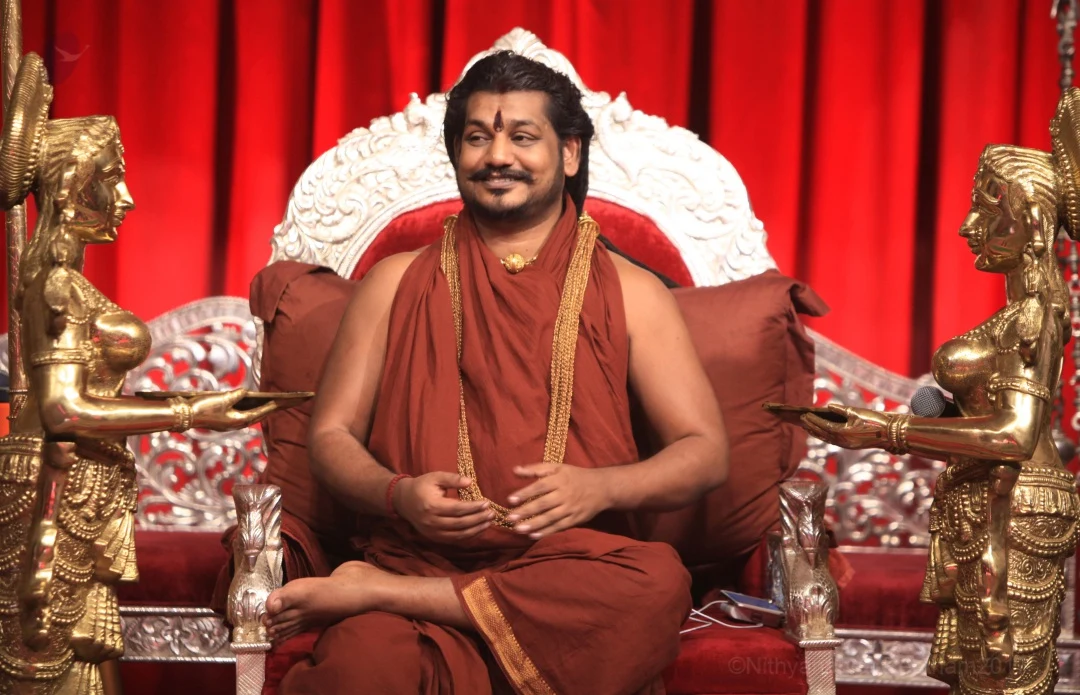
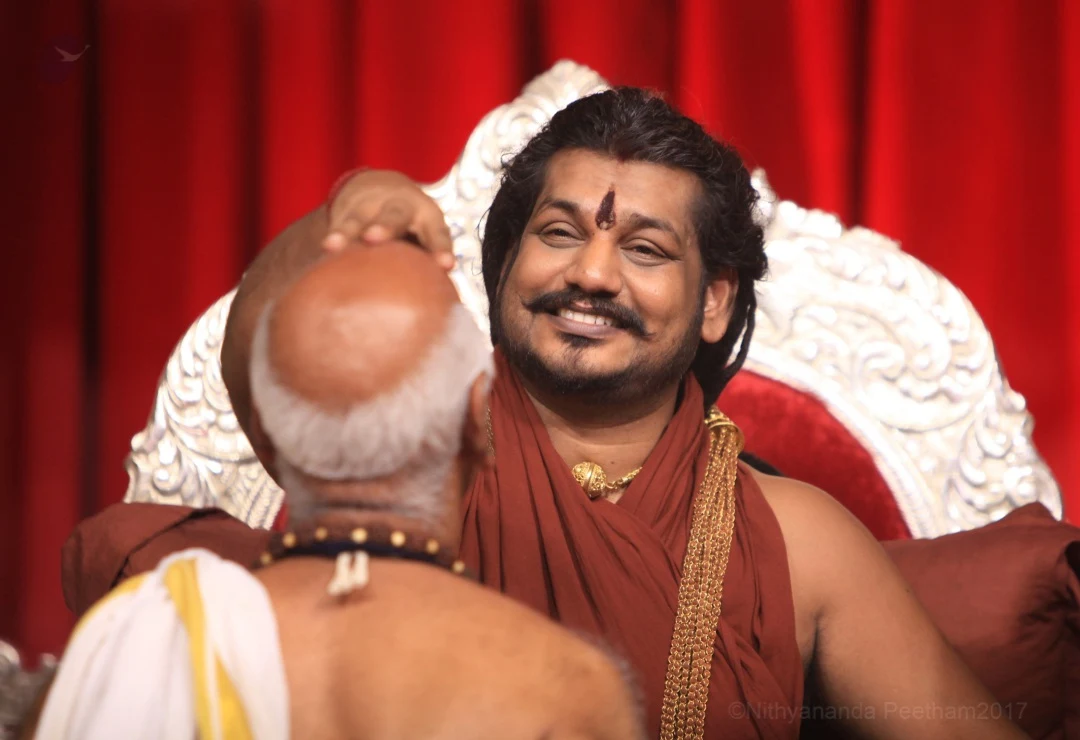
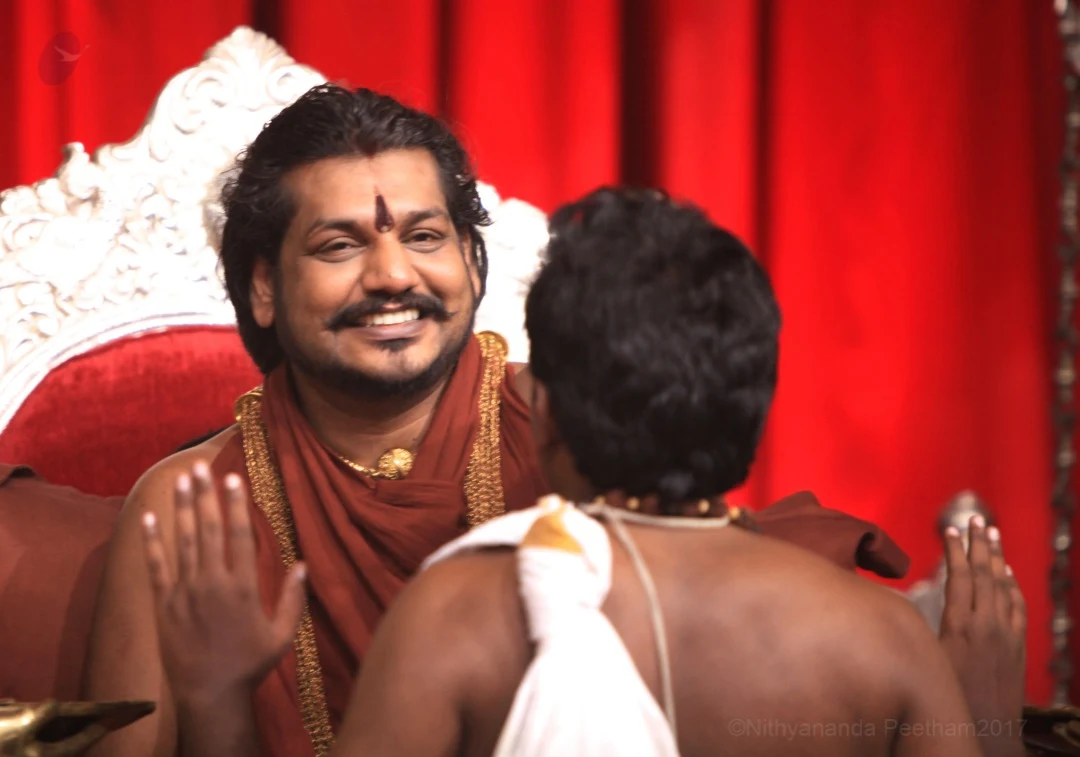
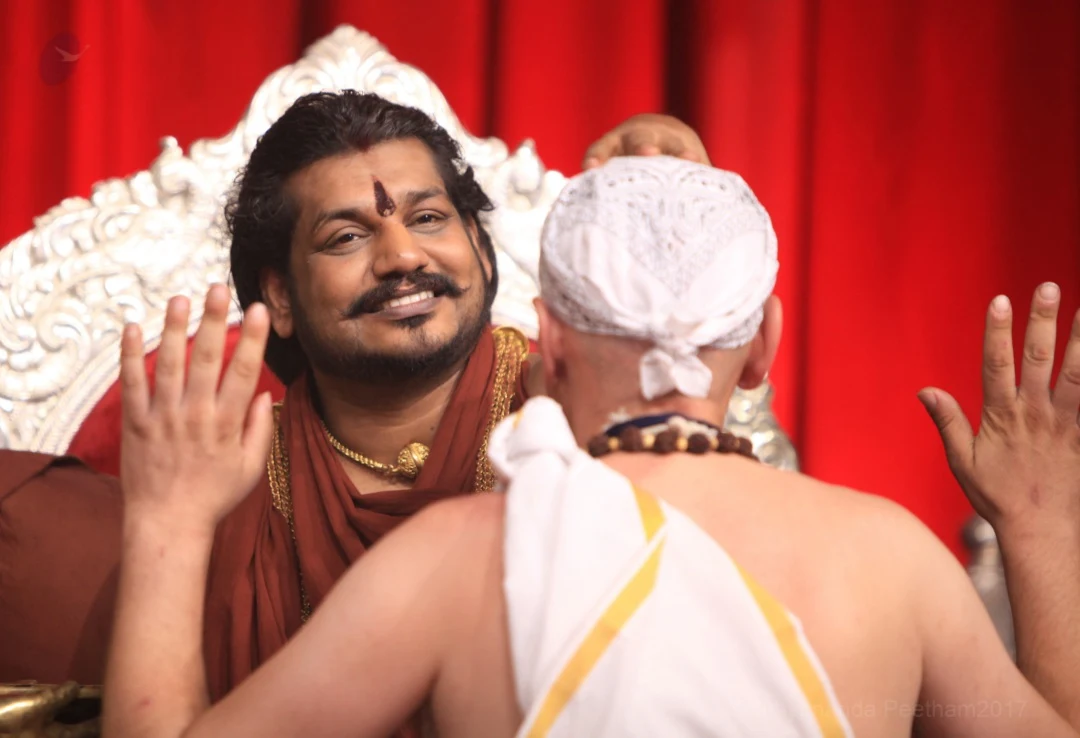
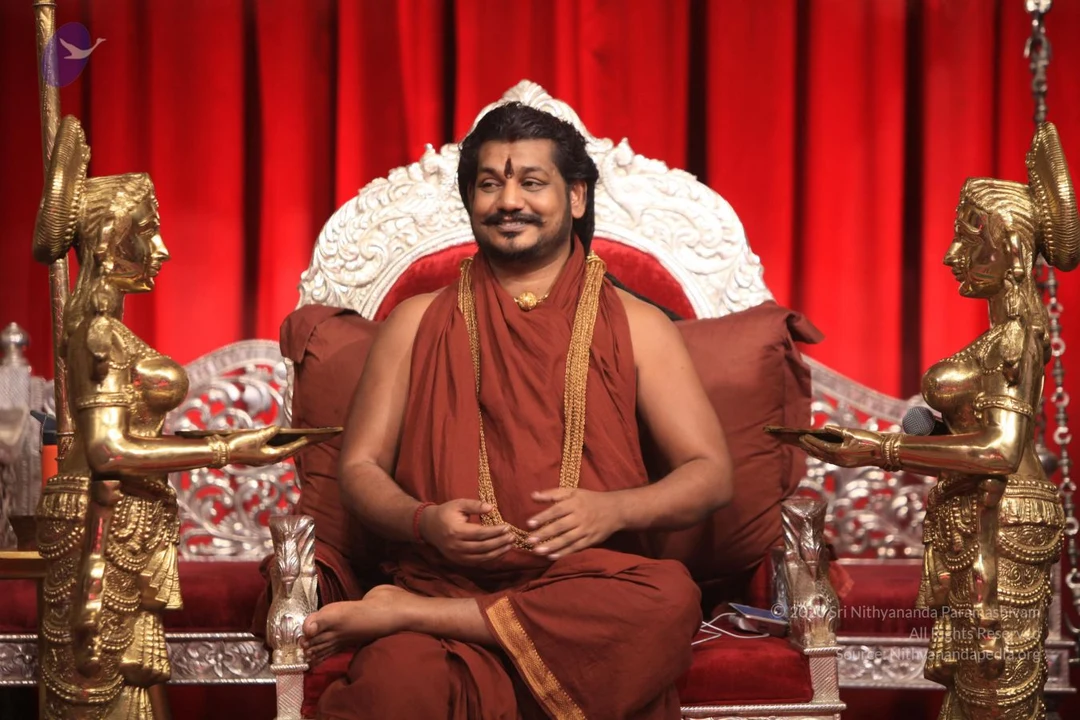
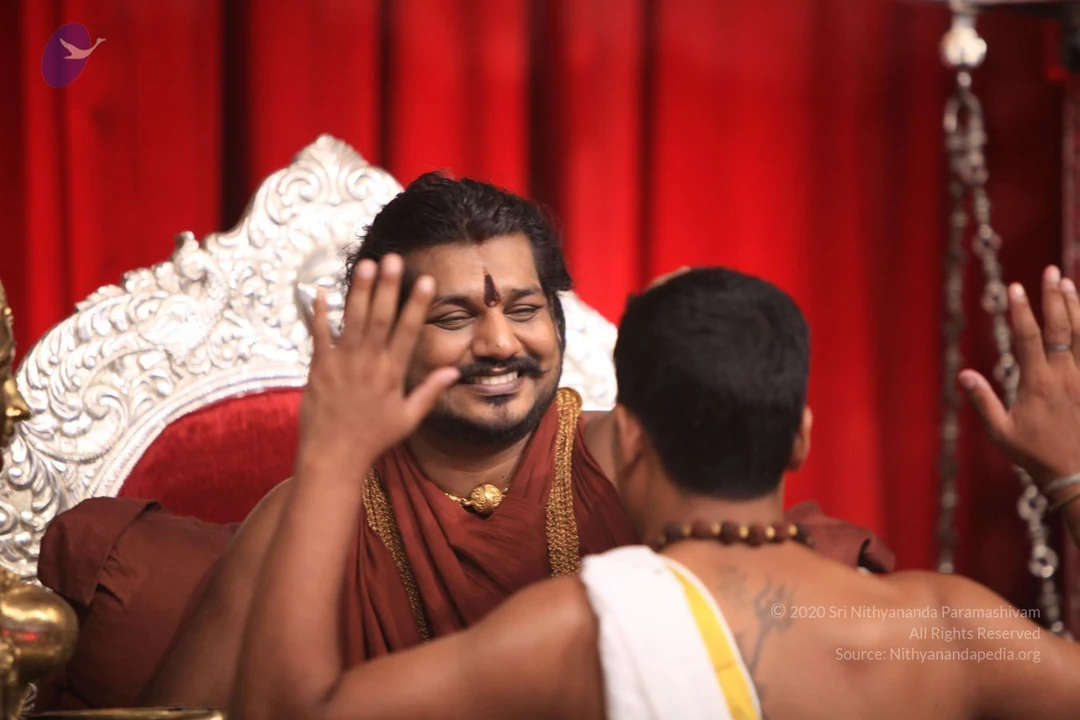
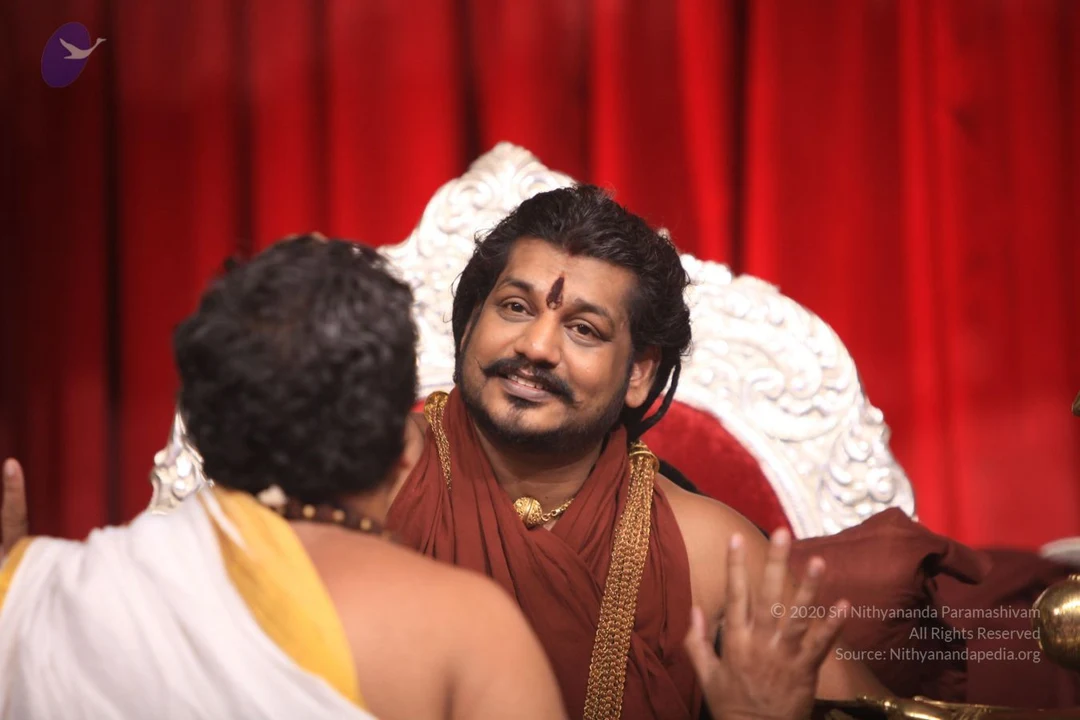
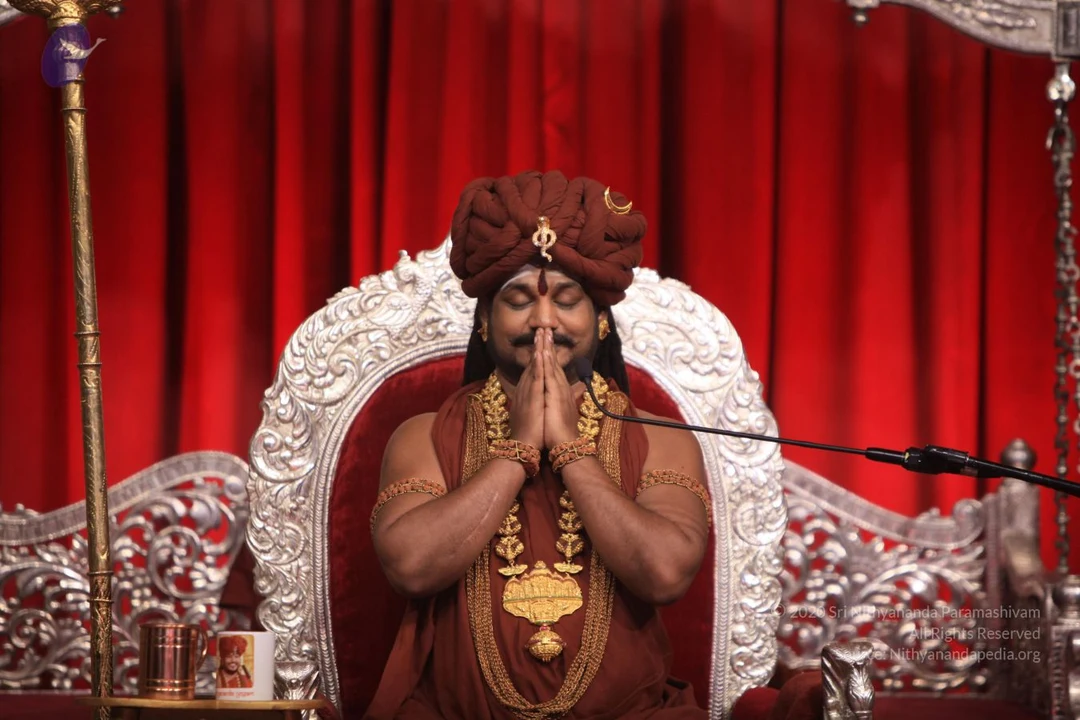
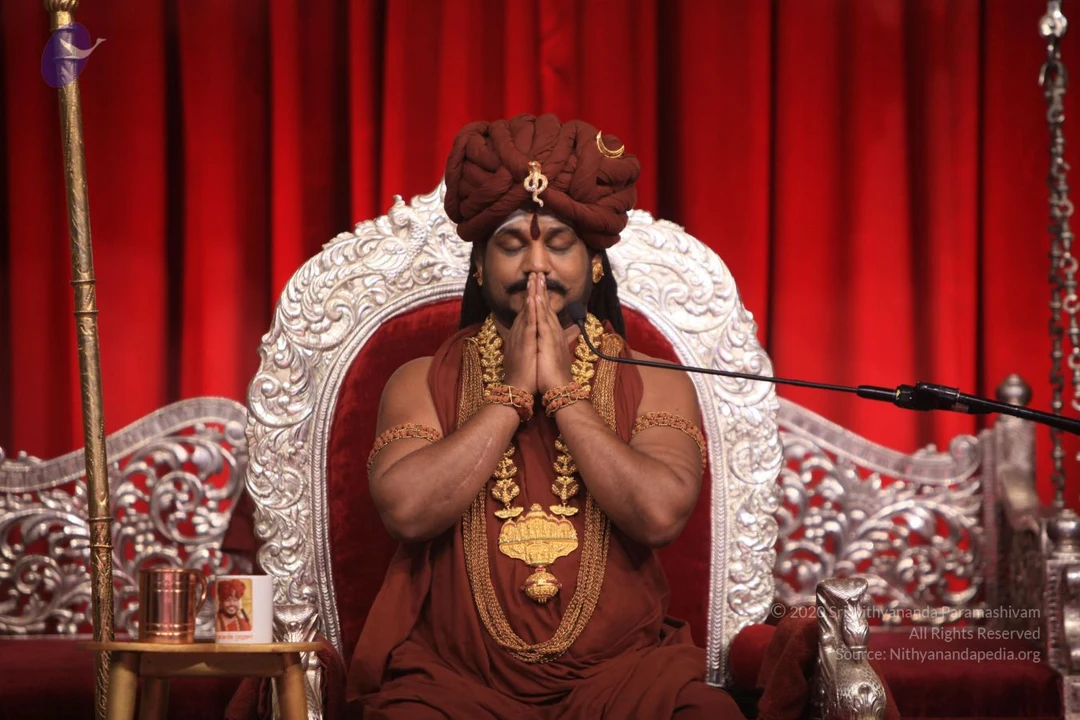
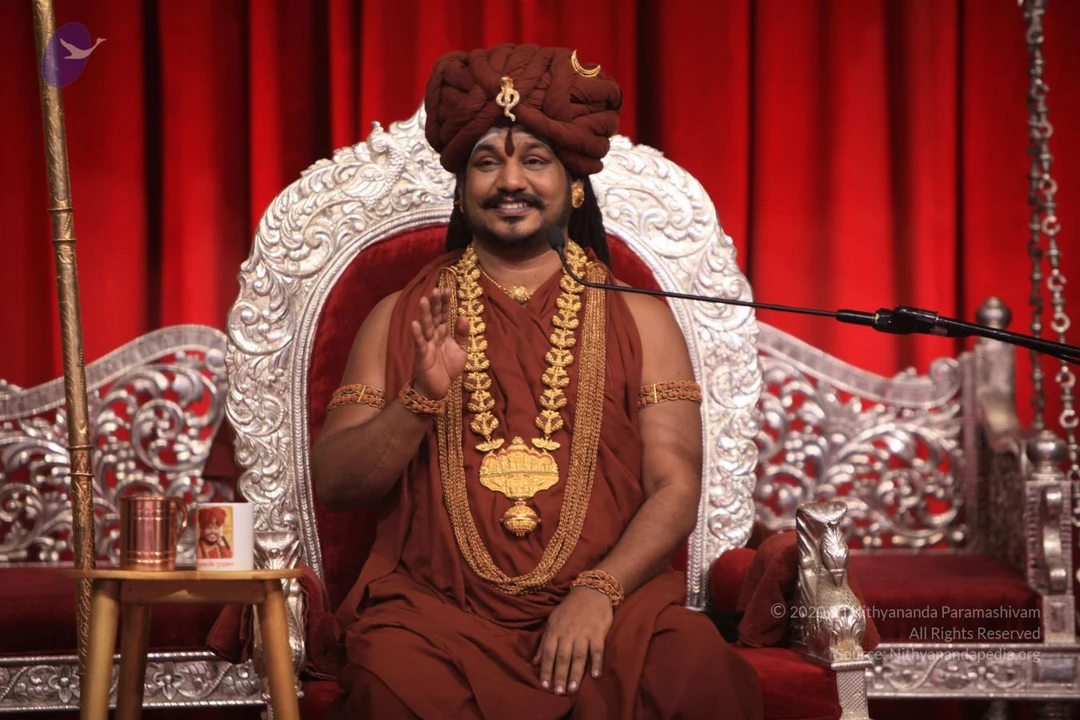
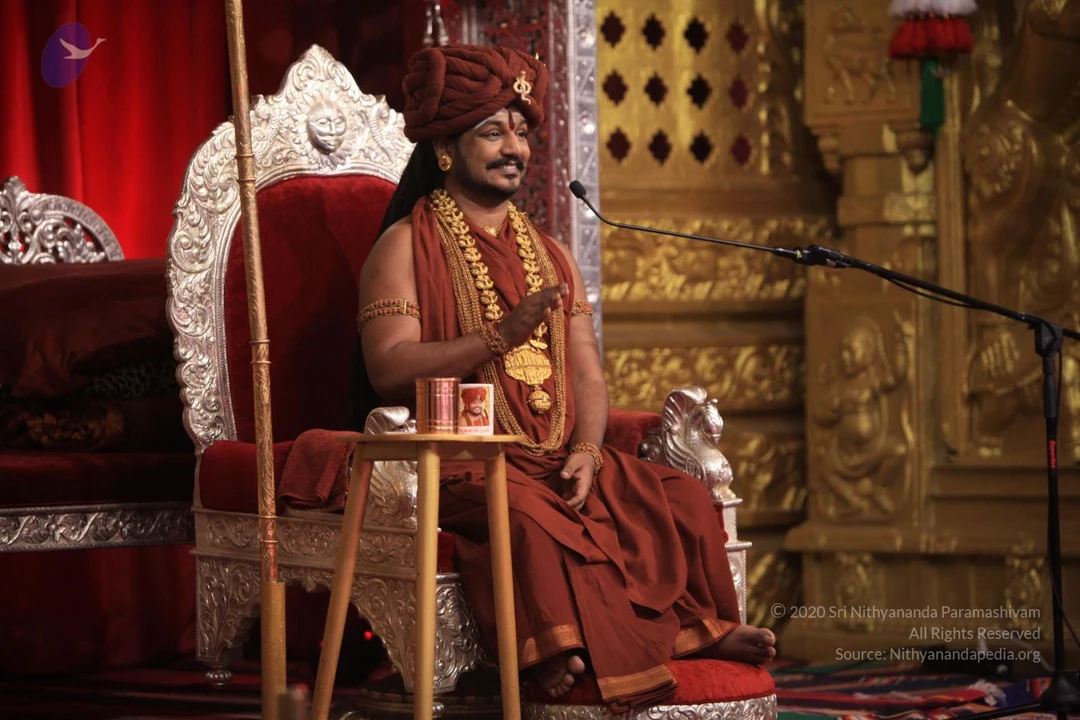
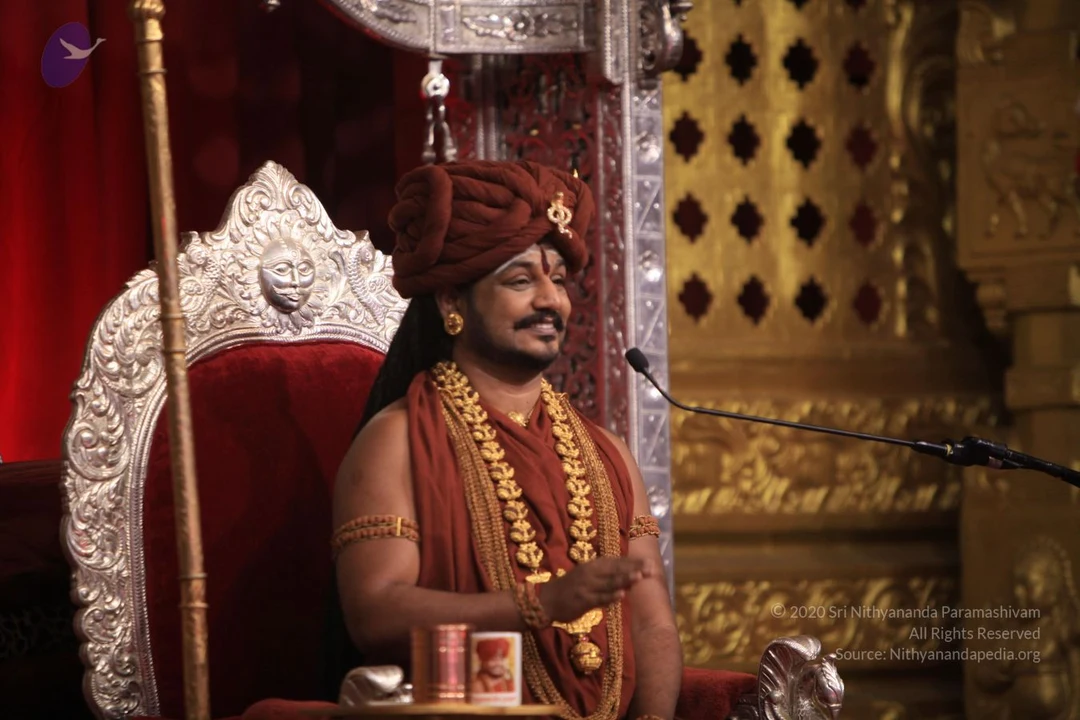
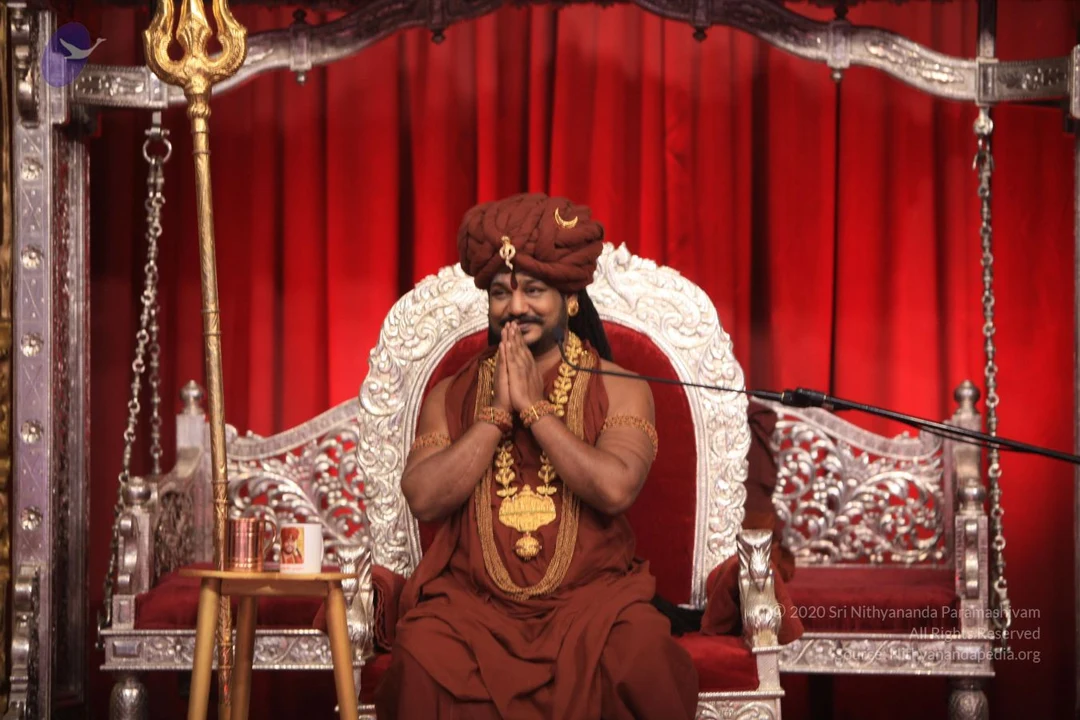
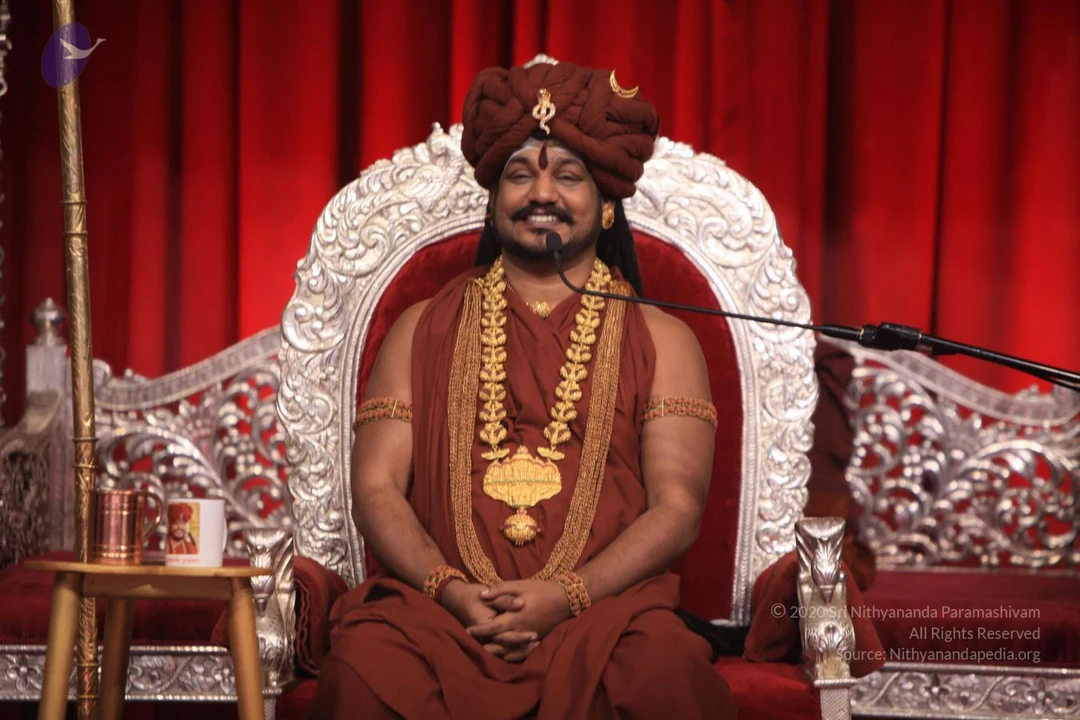
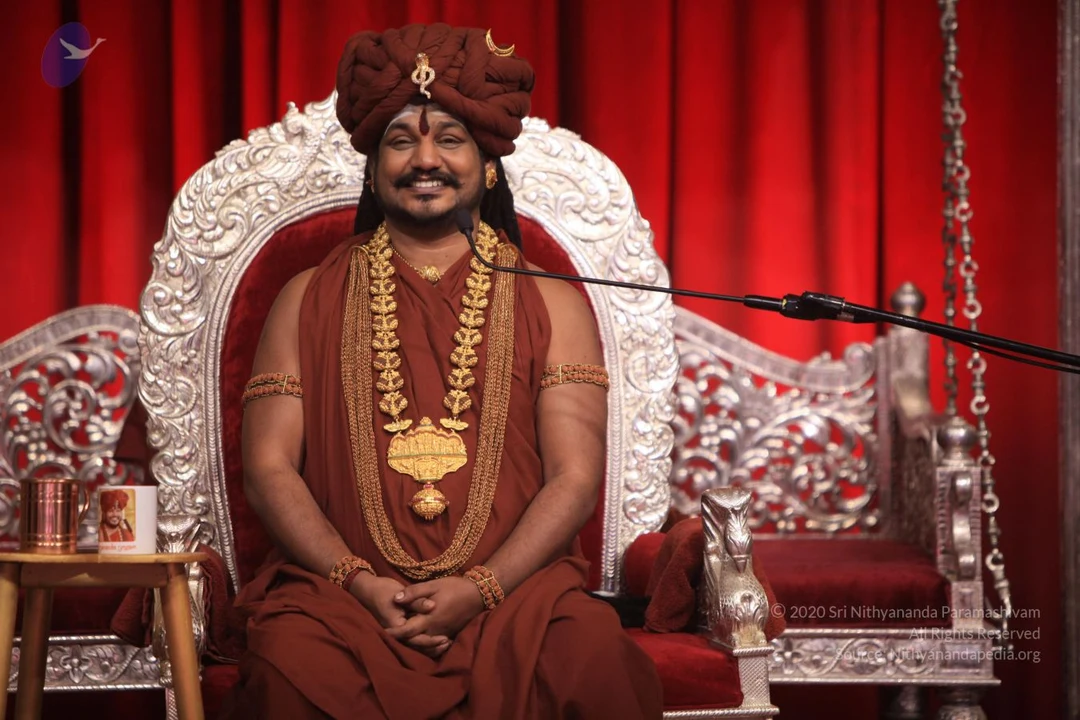
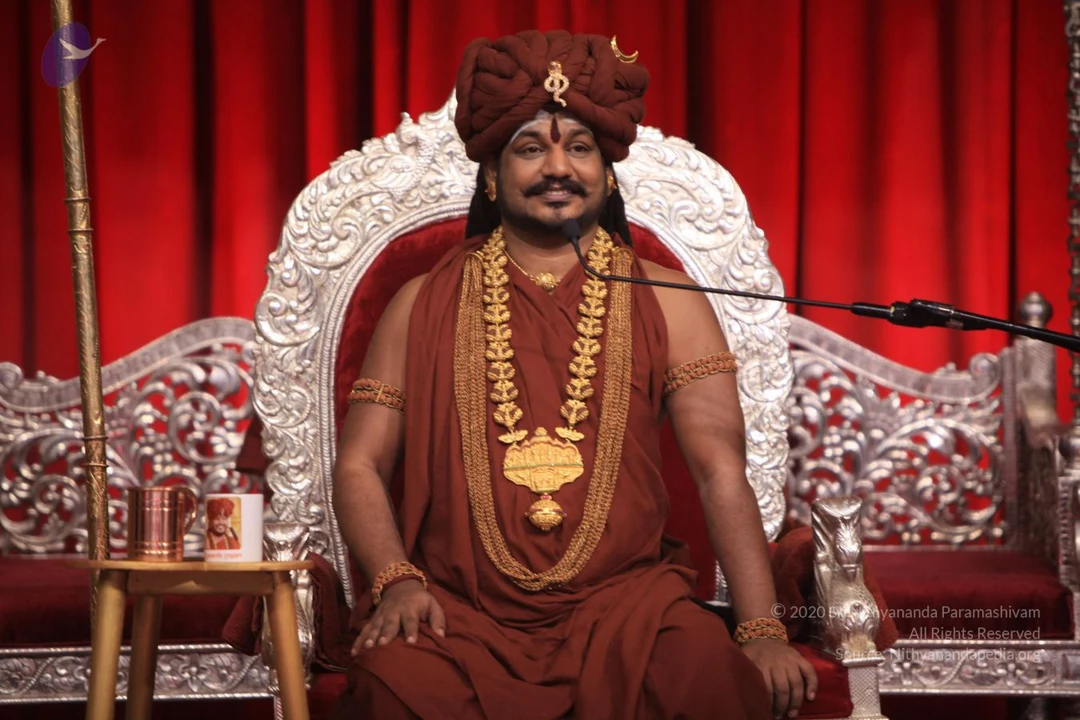
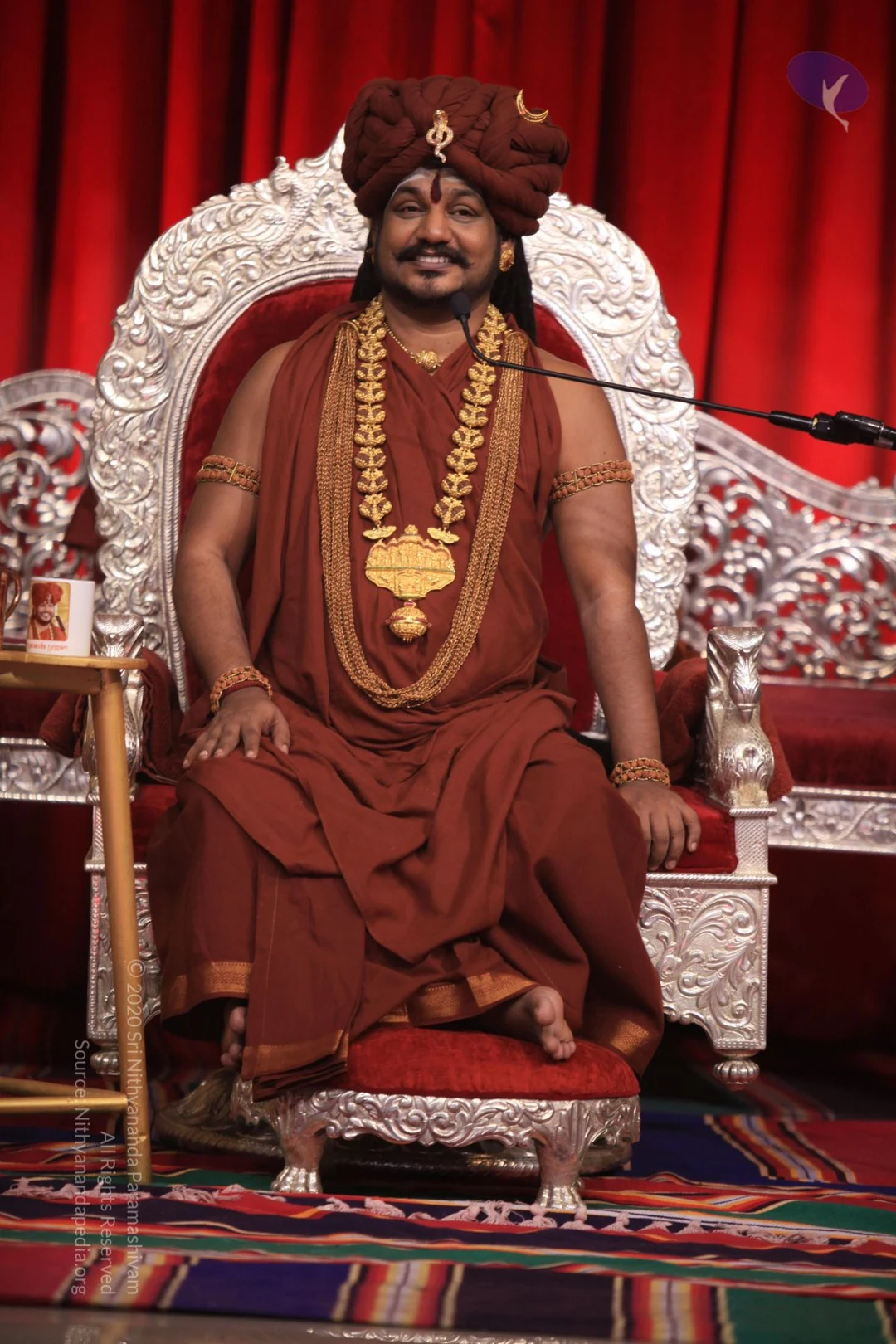
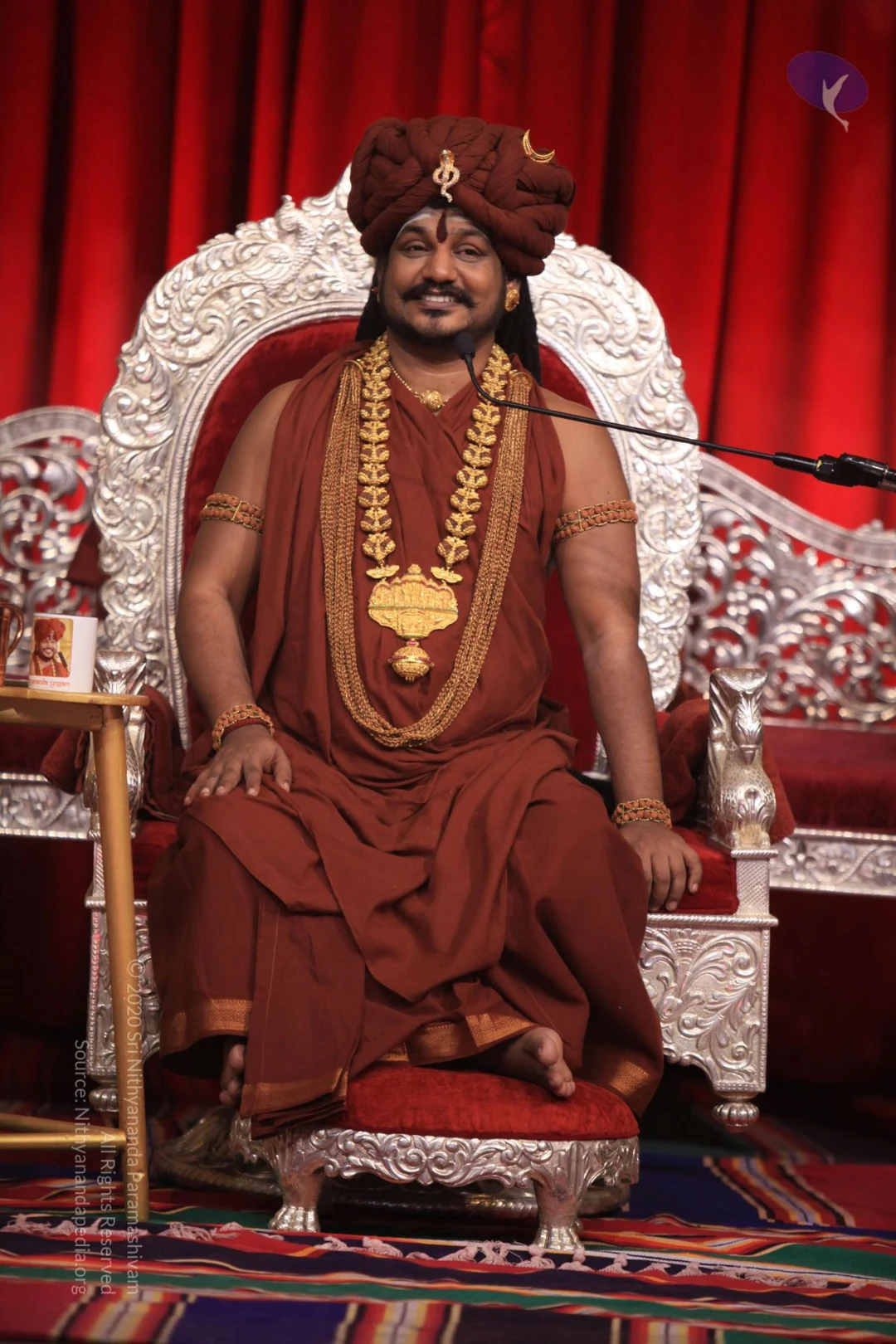
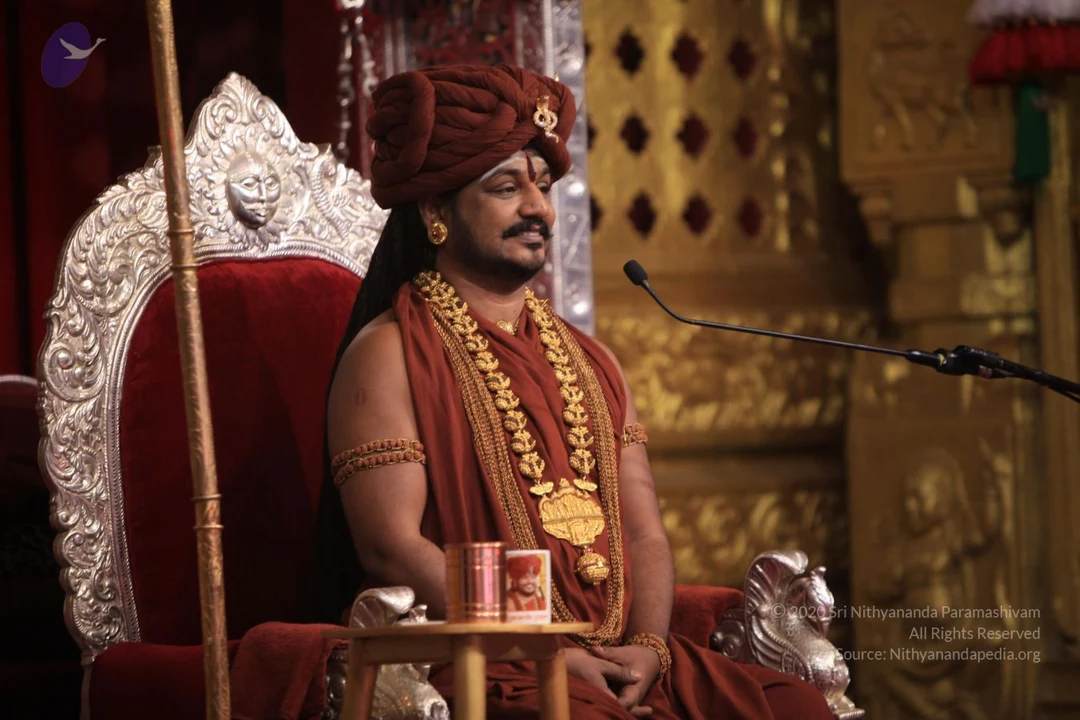
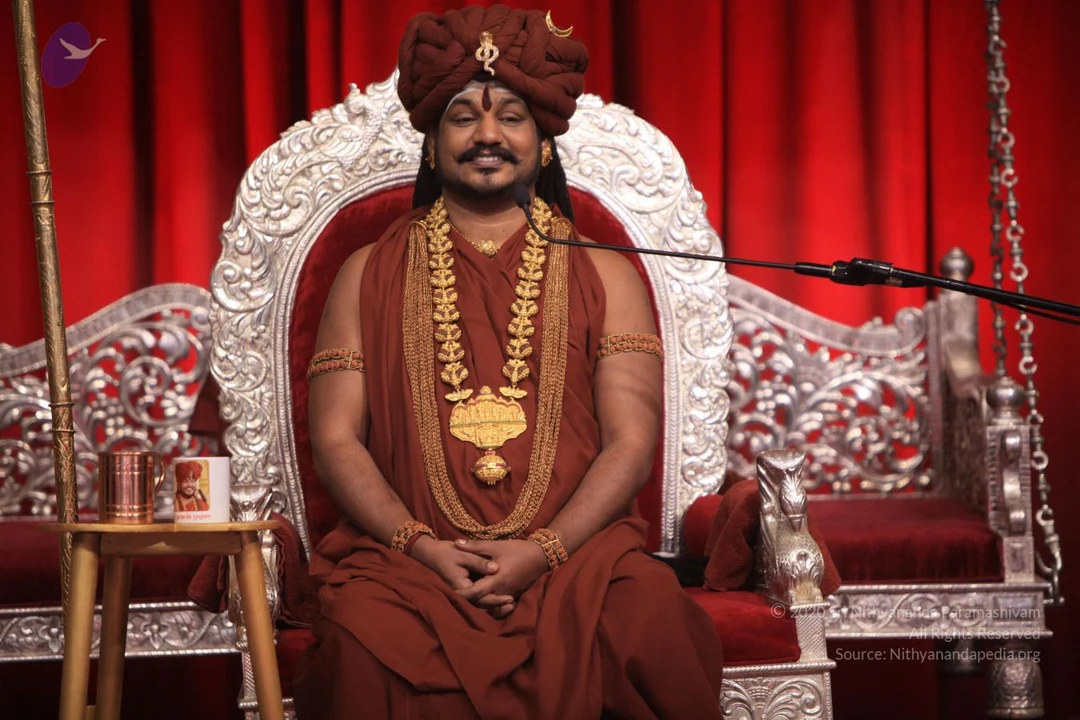
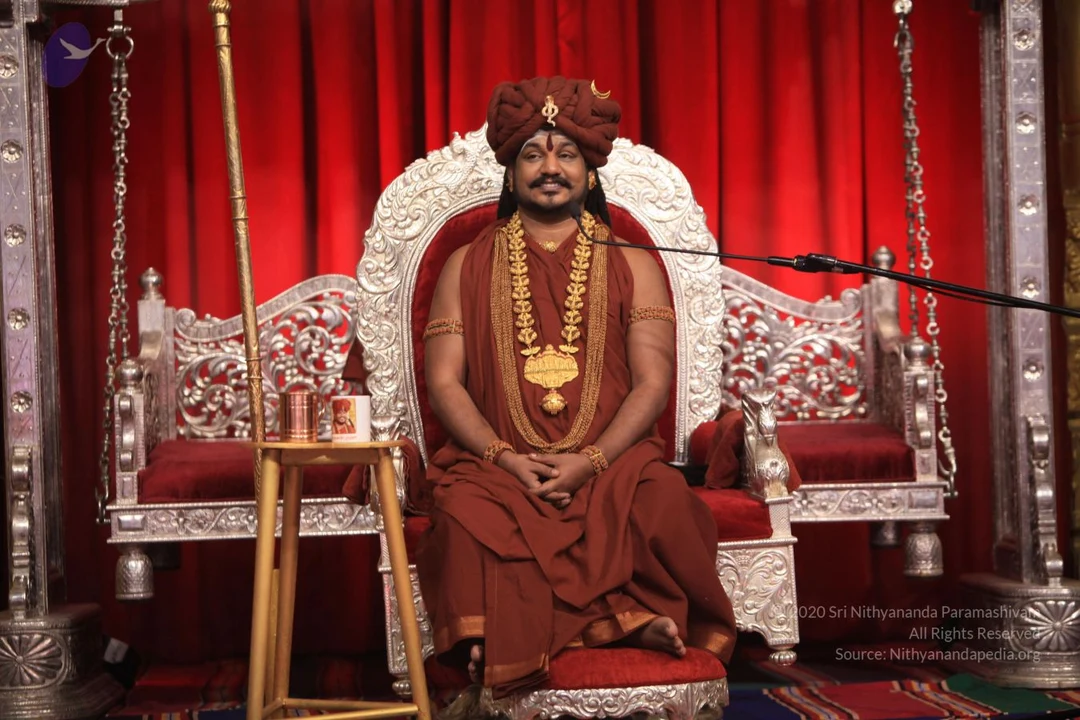
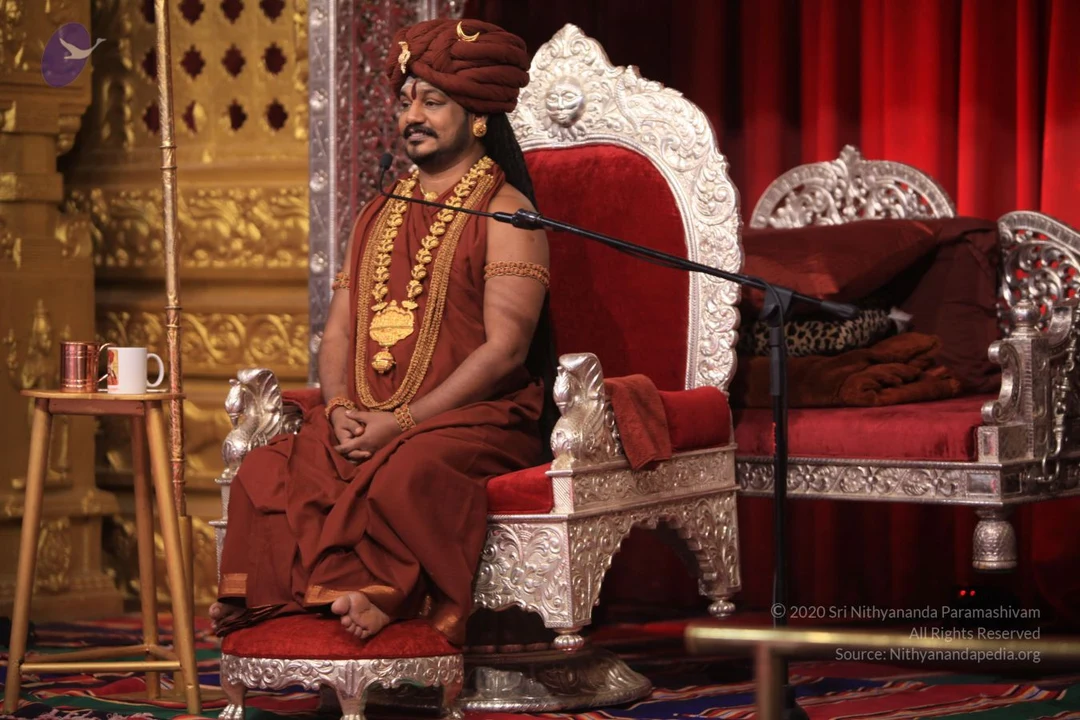
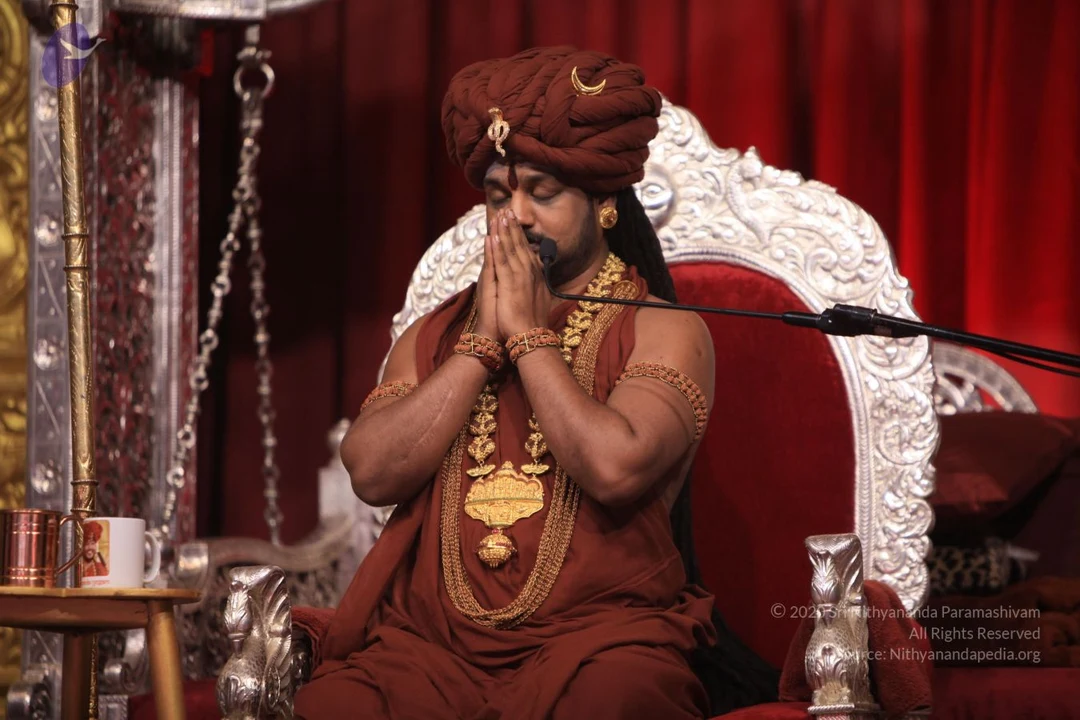
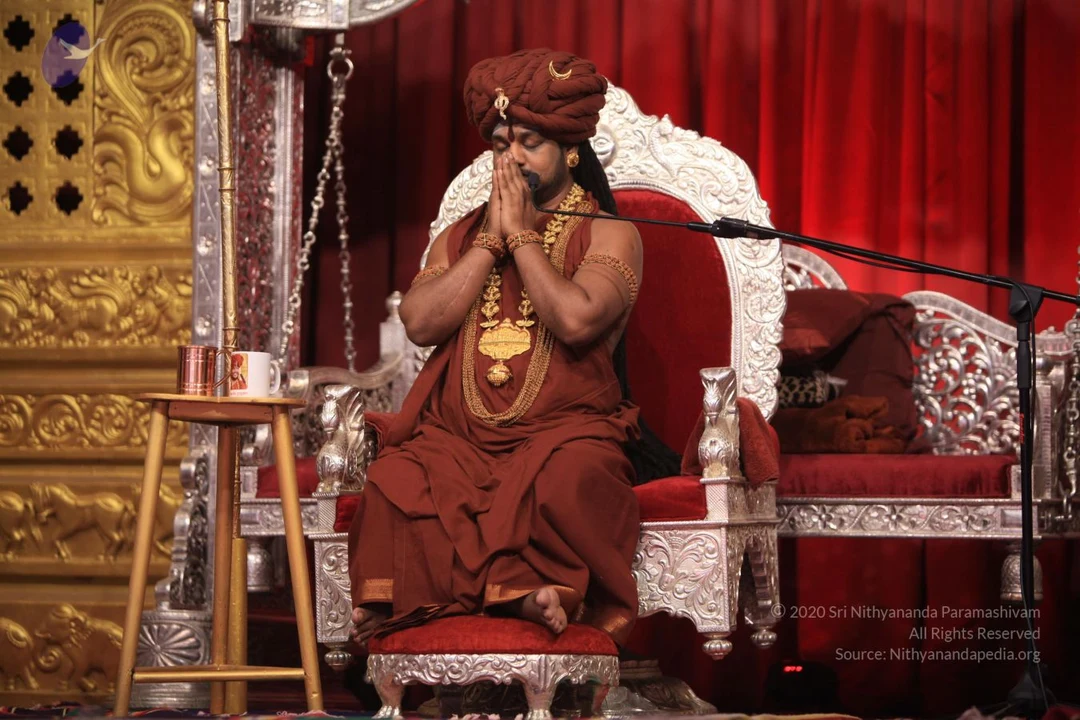
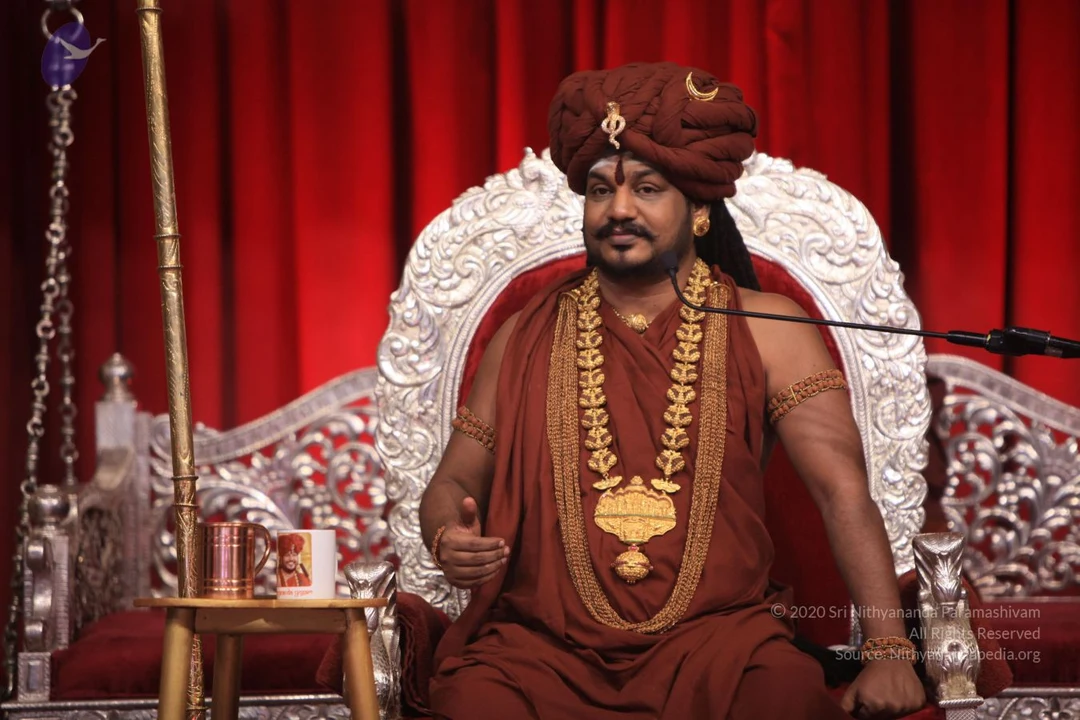
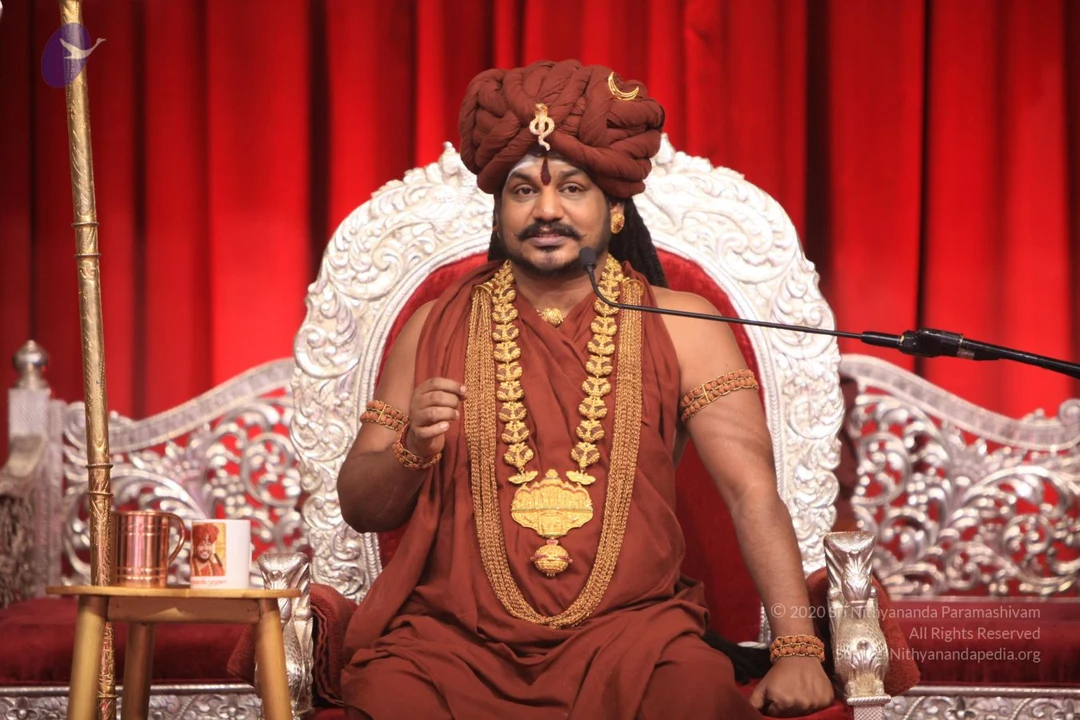
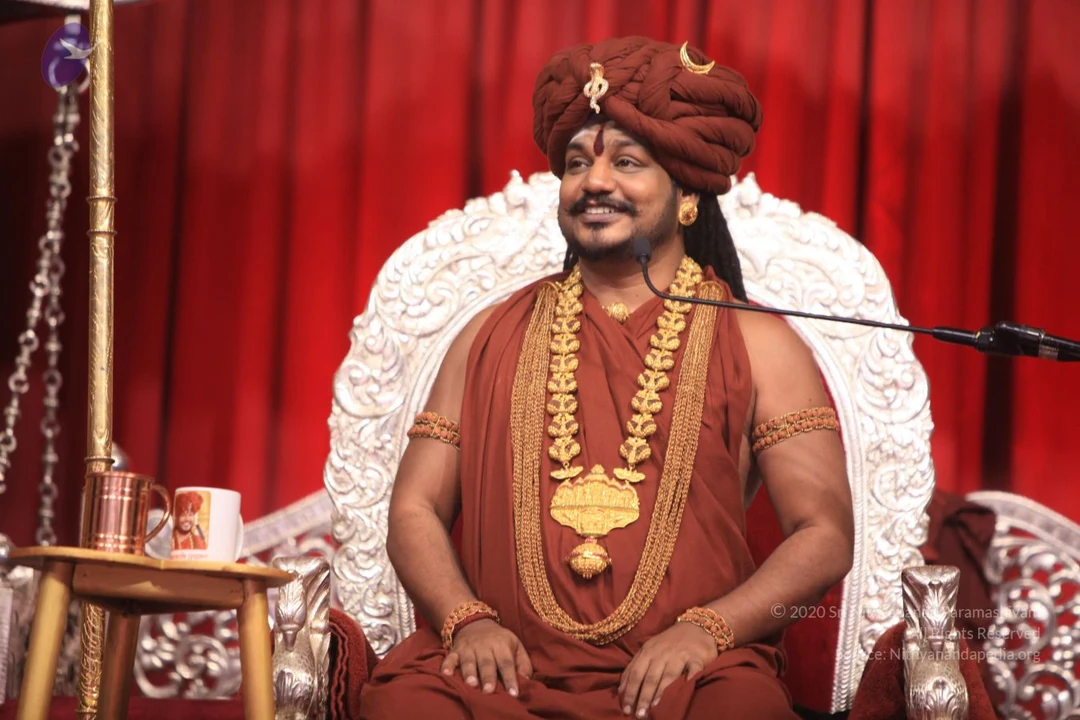
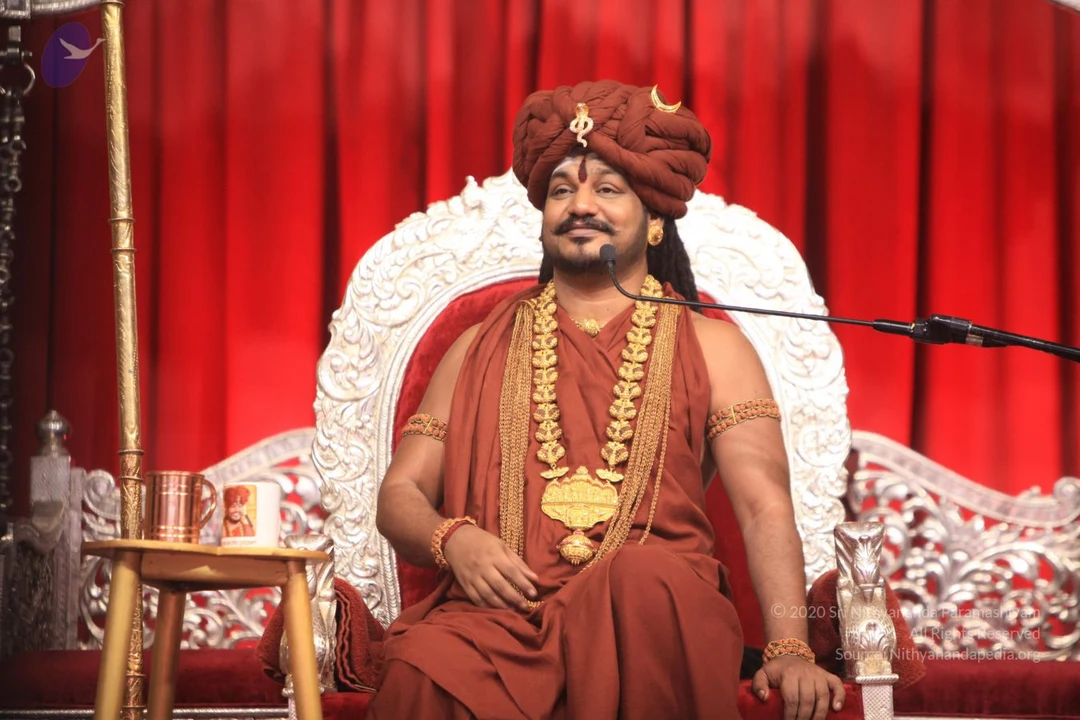
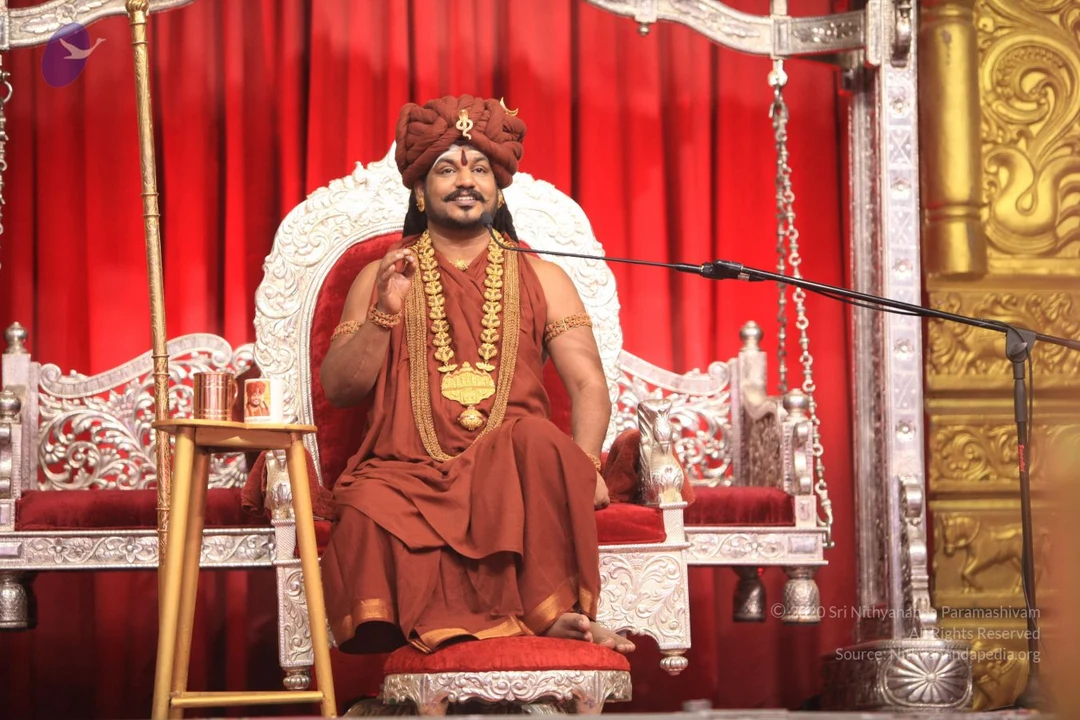
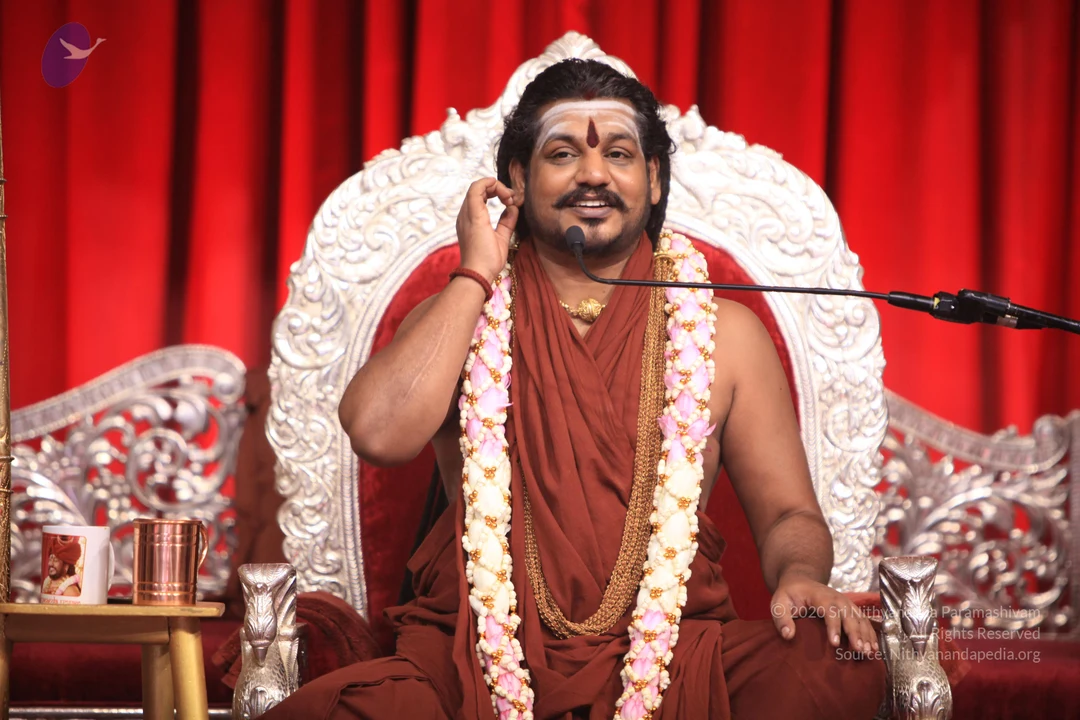
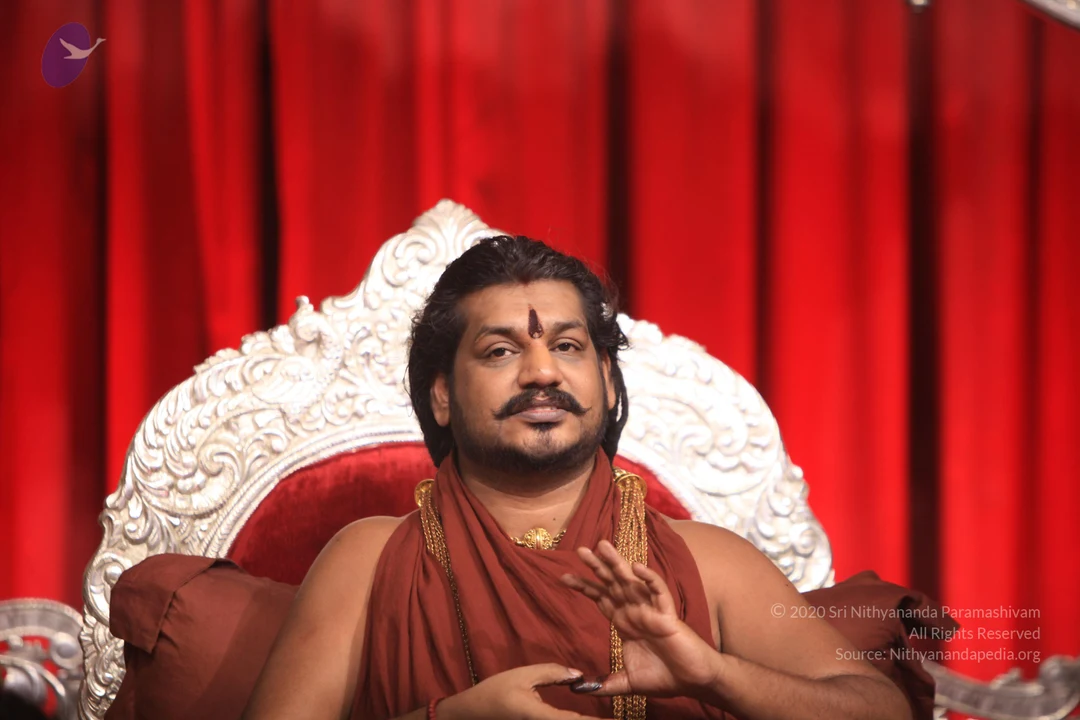
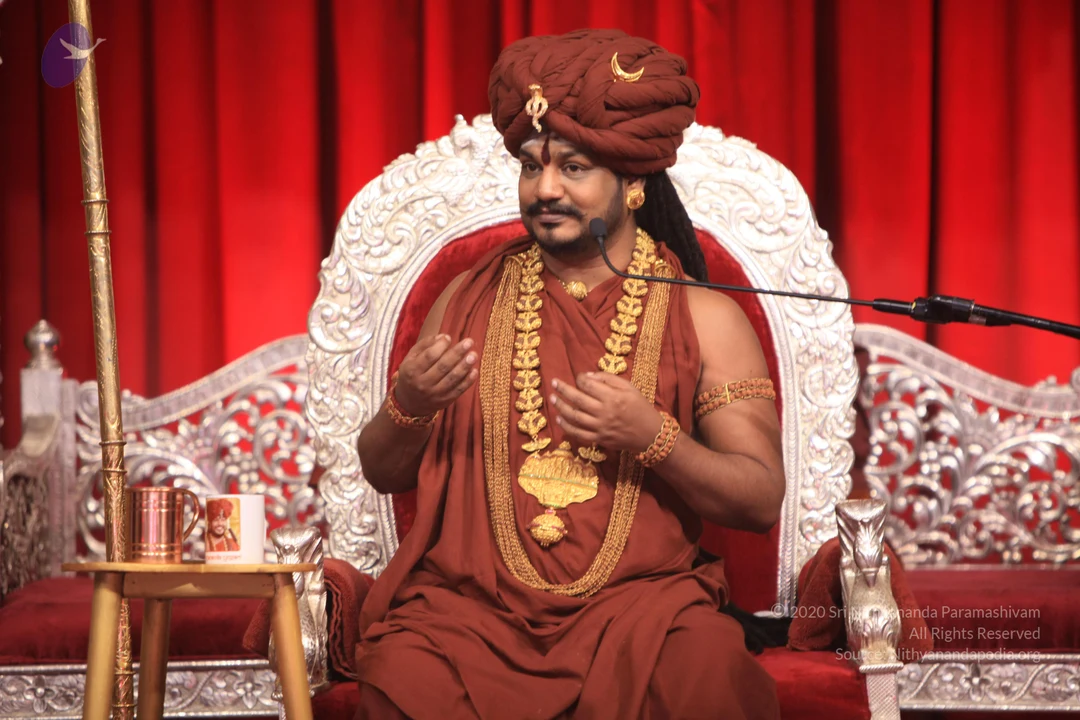
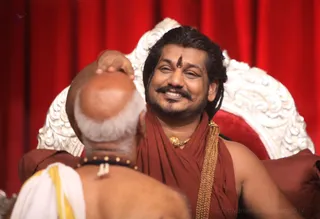
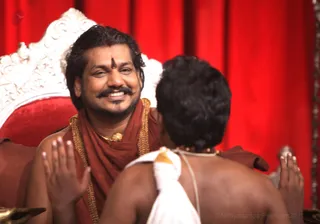
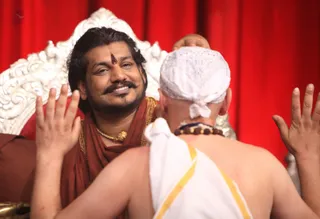
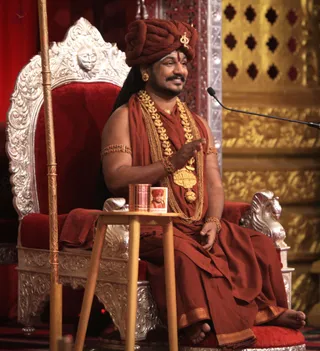
A man sits cross-legged on an ornate white and silver throne with red cushions in front of a red draped backdrop. He wears a rust-brown robe over one shoulder, a heavy gold chain necklace and a red-orange tilak on his forehead, and his hands rest in his lap. Flanking him are two large golden female attendant figures holding trays, and a microphone stands at the right.A smiling man with long dark hair, a red-brown tilak on his forehead, and a moustache sits on an ornate white-and-silver carved throne against a red velvet curtain. He wears a rust-brown shawl draped over bare shoulders and a heavy gold chain with a gold pendant. In the foreground, an elderly man with a shaved head and white beard, seen from behind, wears a white and yellow cloth and a dark beaded necklace, while the seated man's hand rests on his head in blessing. Swamiji (probable) is seated on the throne, shown with long hair, a shawl and gold ornaments, with the elderly devotee receiving his blessing. The photograph carries a Nithyananda Peetham 2017 credit line.A photograph of a smiling man with shoulder-length swept-back dark hair, a red-brown saffron-toned shawl over his shoulders, and a heavy gold necklace and gold chain, seated on an ornate white and red velvet throne in front of a red curtain. A red tilak mark is on his forehead. A second, bare-shouldered man with short dark hair and a white cloth tied at the waist sits with his back to the camera, palms raised toward the seated man. a person seated on the throne, with distinctive saffron clothing, shoulder-length hair and gold ornaments as the qualifying cues; the other man is a devotee or attendant. Gold ornamental details are visible on the throne and at the edge of the frame.A smiling man with a red tilak on his forehead, shoulder-length dark hair and a mustache sits on an ornate white-and-silver throne before a red drape. He wears a rust-red shawl and a gold chain. In the foreground, a bare-backed man in white dhoti with yellow borders and a white head covering, with a rudraksha mala at his neck, raises his hands toward him.A man seated on an ornate silver-and-red throne before a red velvet drape, gesturing with one raised palm toward an audience. He wears a maroon-brown turban with a crescent-and-trident emblem, a saffron-brown robe, long gold necklaces with a gold pendant, gold armbands and bangles, and a microphone stand is at his side. A small wooden side table holds a copper tumbler and a white mug printed with a portrait. Swamiji (probable): the man has long swept-back hair, a crown-style turban, ornate gold ceremonial necklaces and saffron-brown clothing, matching the page's identification of the event as a workshop led by Swamiji.A man seated on an ornate silver-and-red throne with carved lion-like armrests, speaking into a microphone on a stand at right. He wears a rust-red turban with a gold ornament, rust-red wrap and robe with gold borders, multiple gold necklaces with a large gold pendant, and red-thread armbands. Beside him on a small wooden table are a copper cup and a small printed photo card showing a bearded man in red. A tall gold staff leans on the left and a gold-and-red palanquin-style backdrop fills the background. Swamiji (probable): the appearance cues of a red turban, gold necklaces, and red ceremonial robes on a throne match the page's claim, so this is the seated speaker, though the identification is not certain from appearance alone.

Manifesting Shaktis
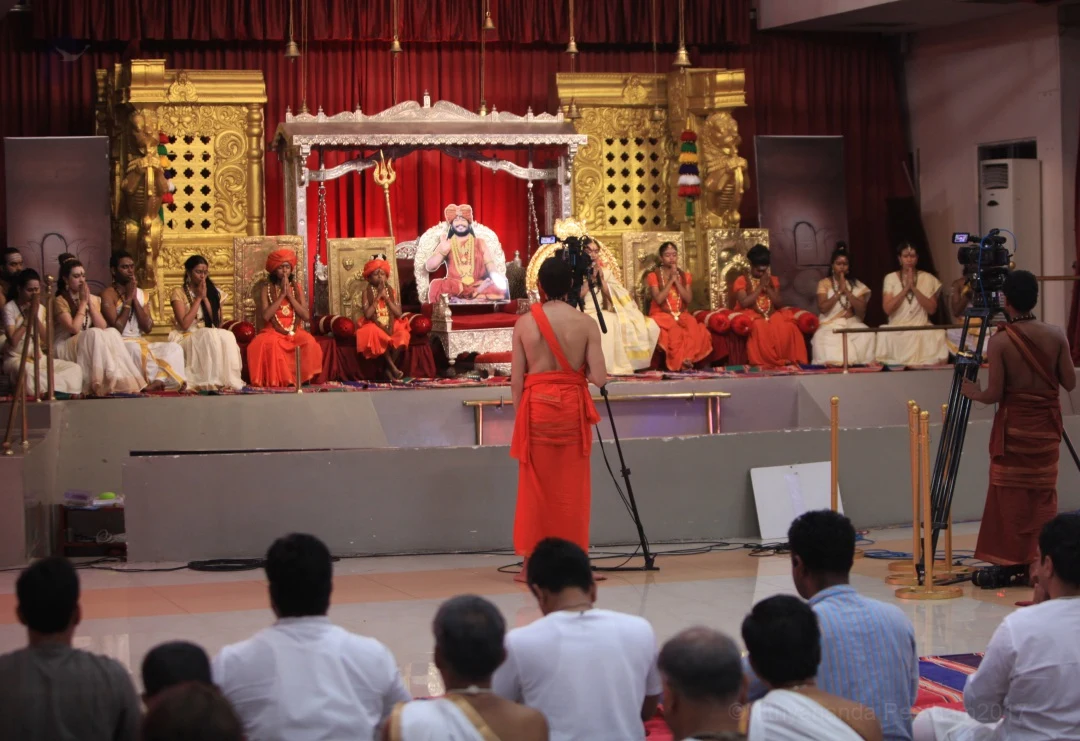
9 photosSource gallery
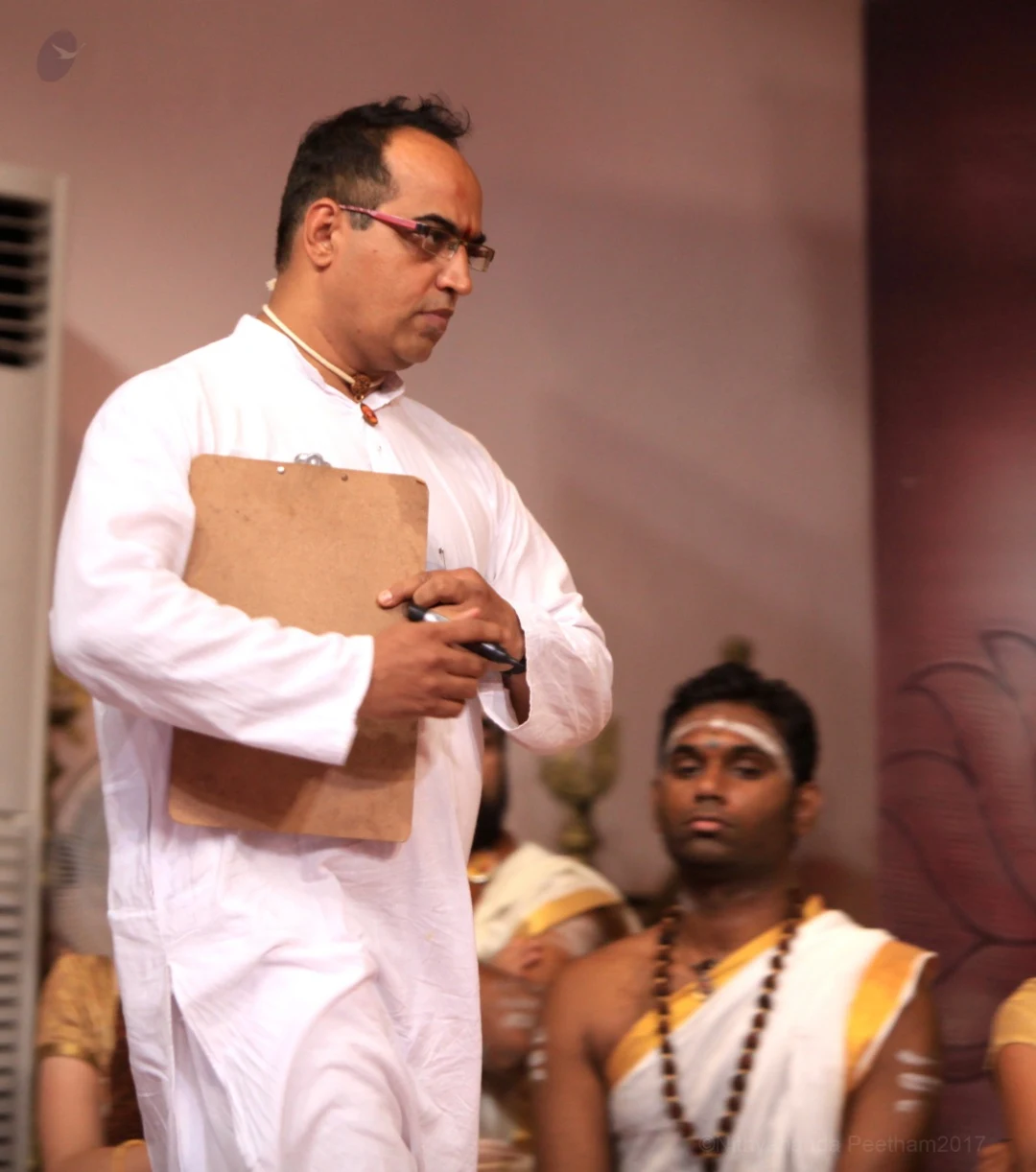
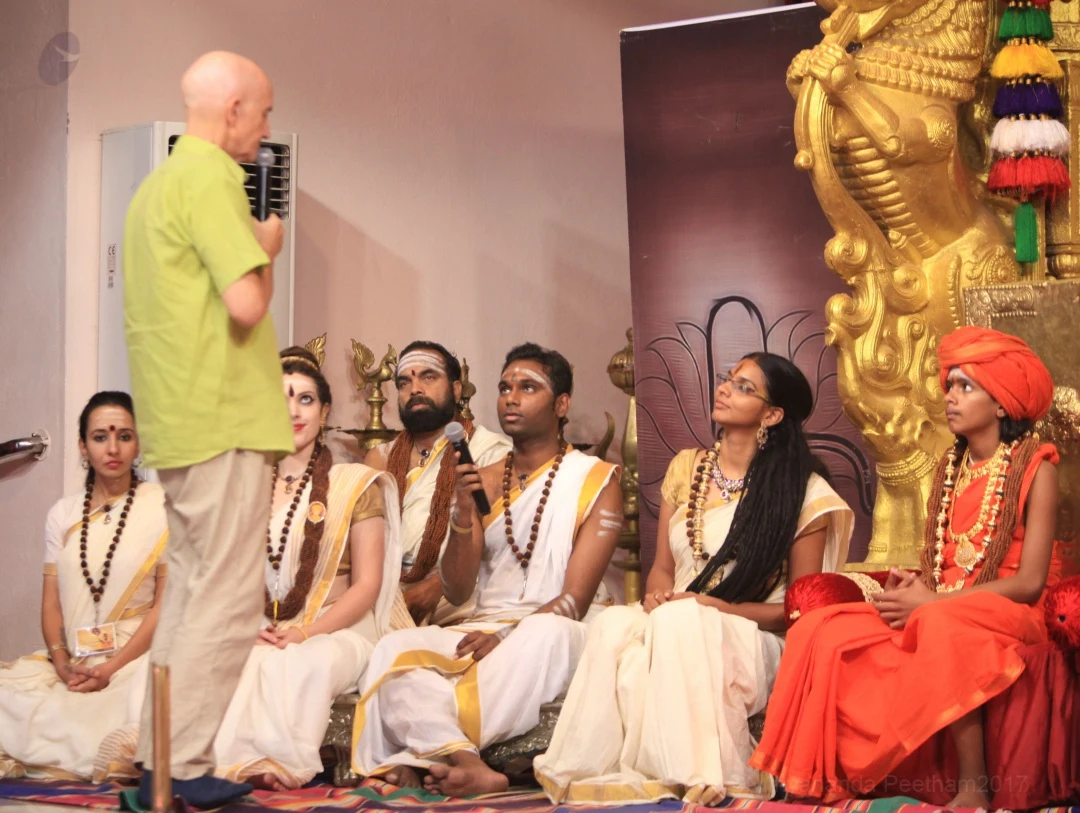
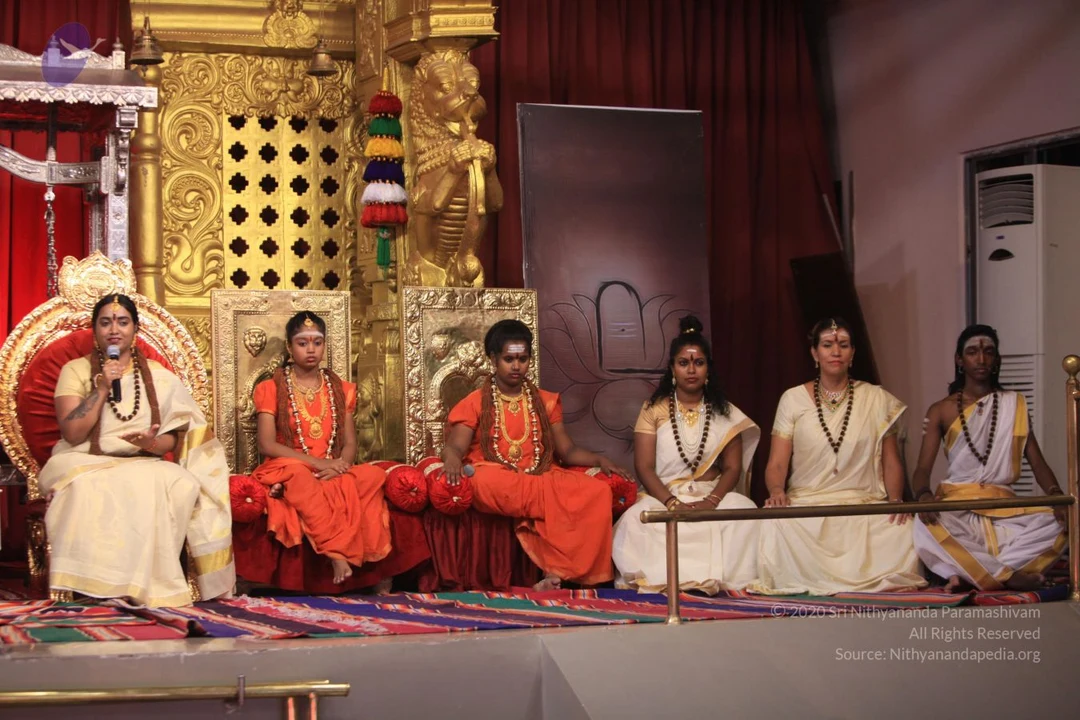
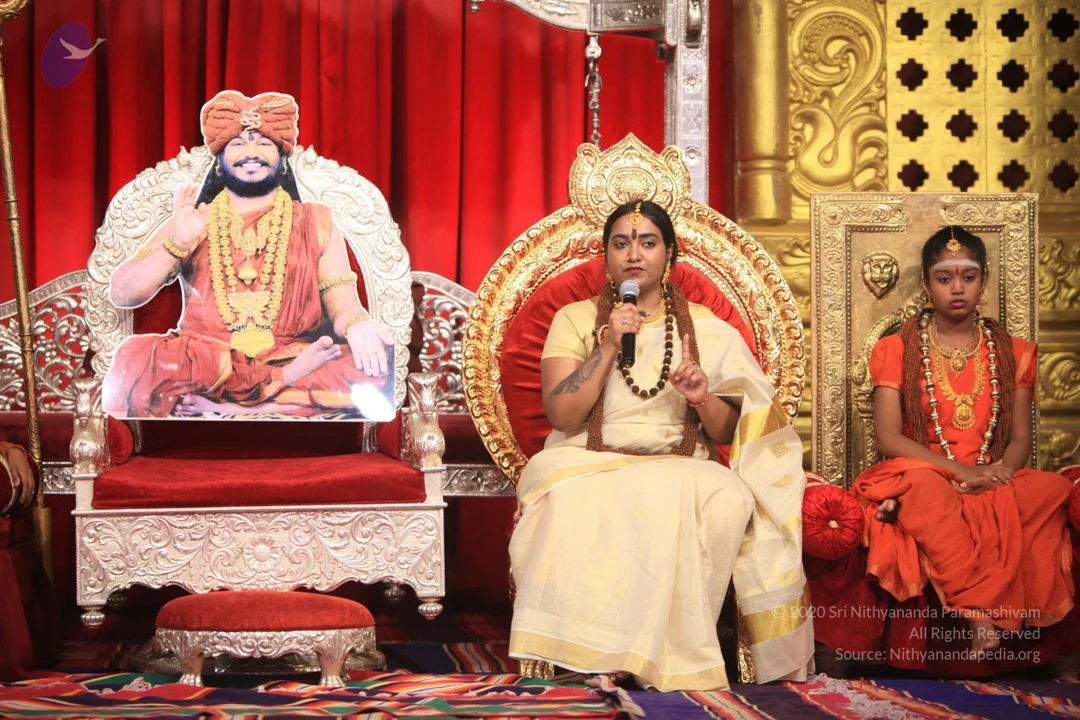
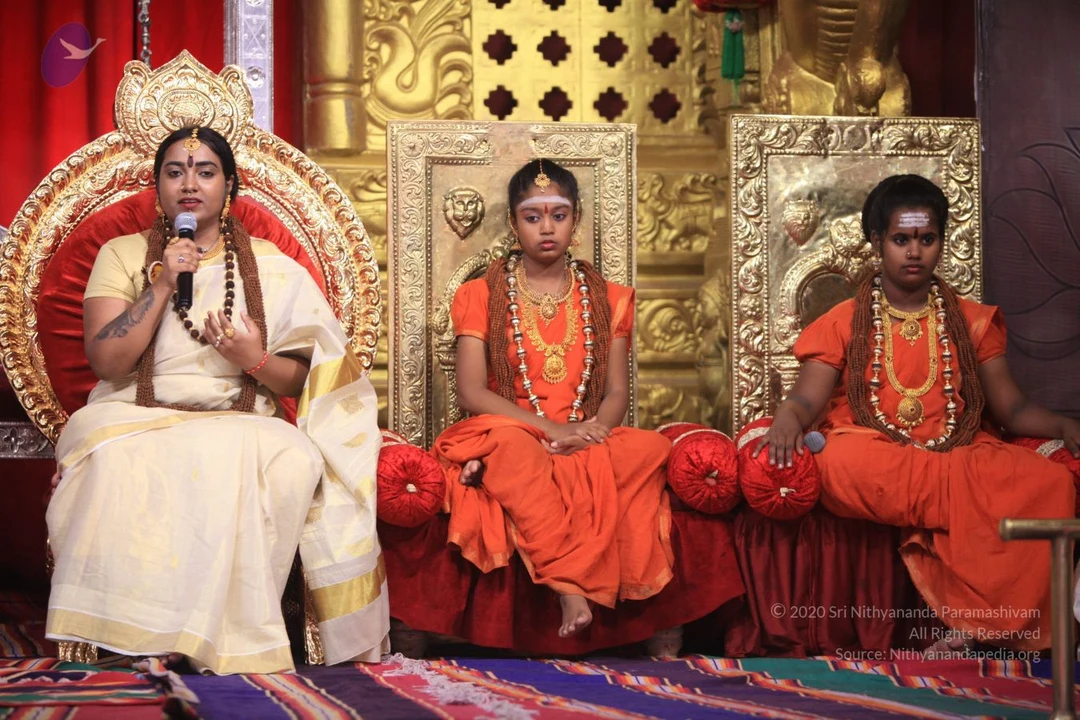
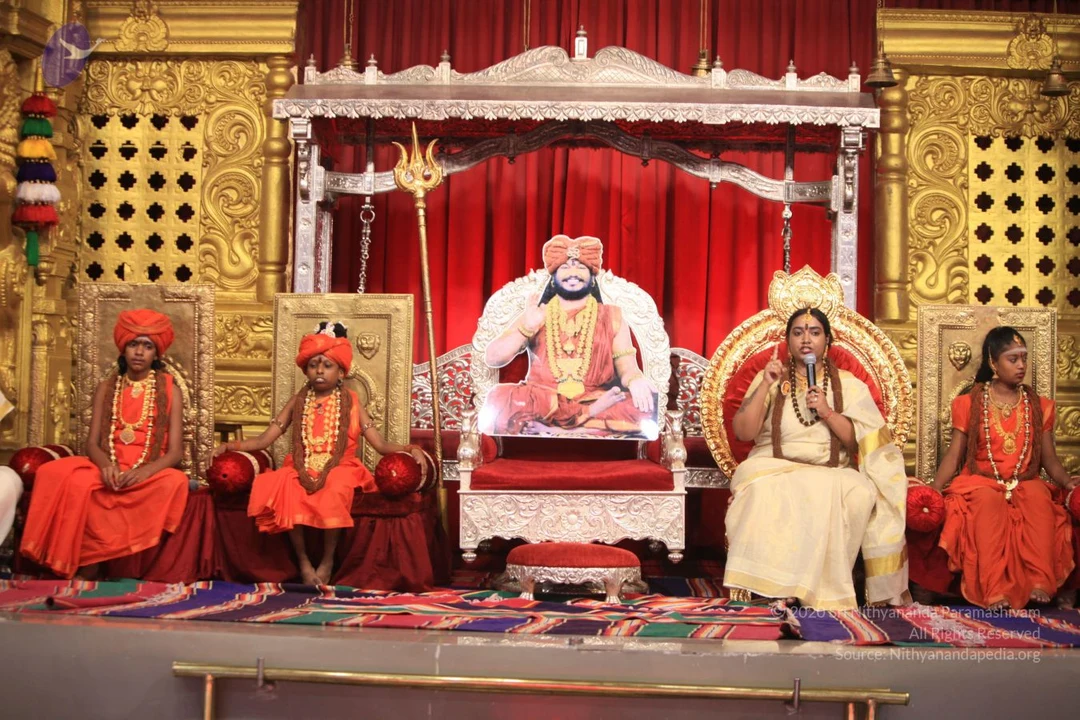
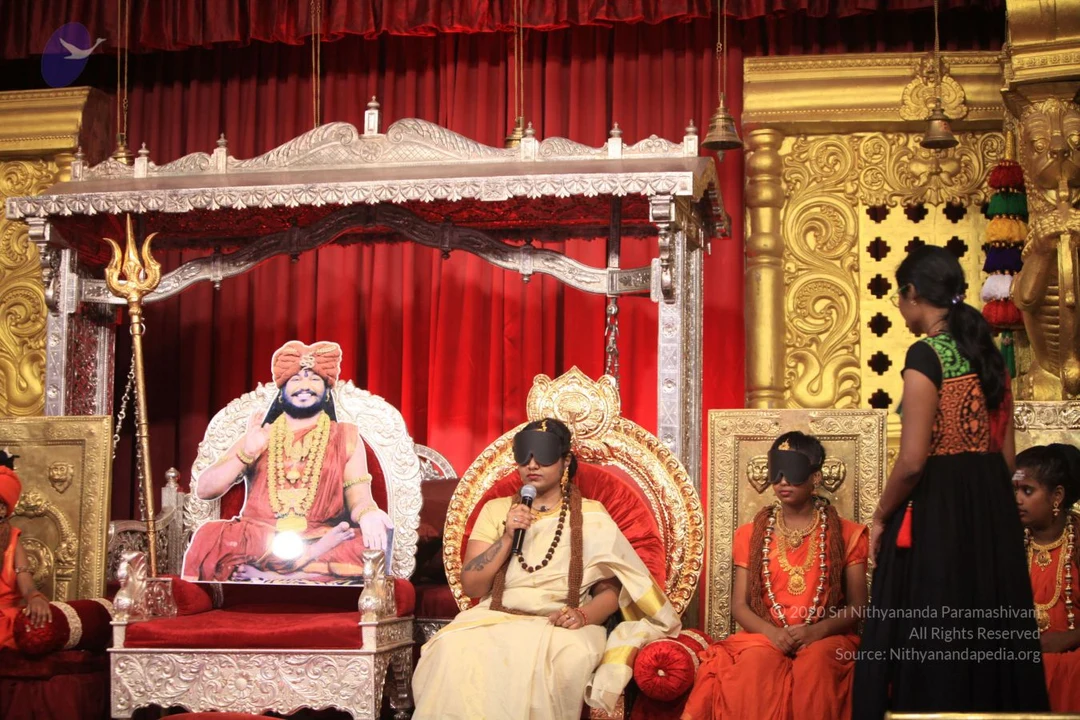
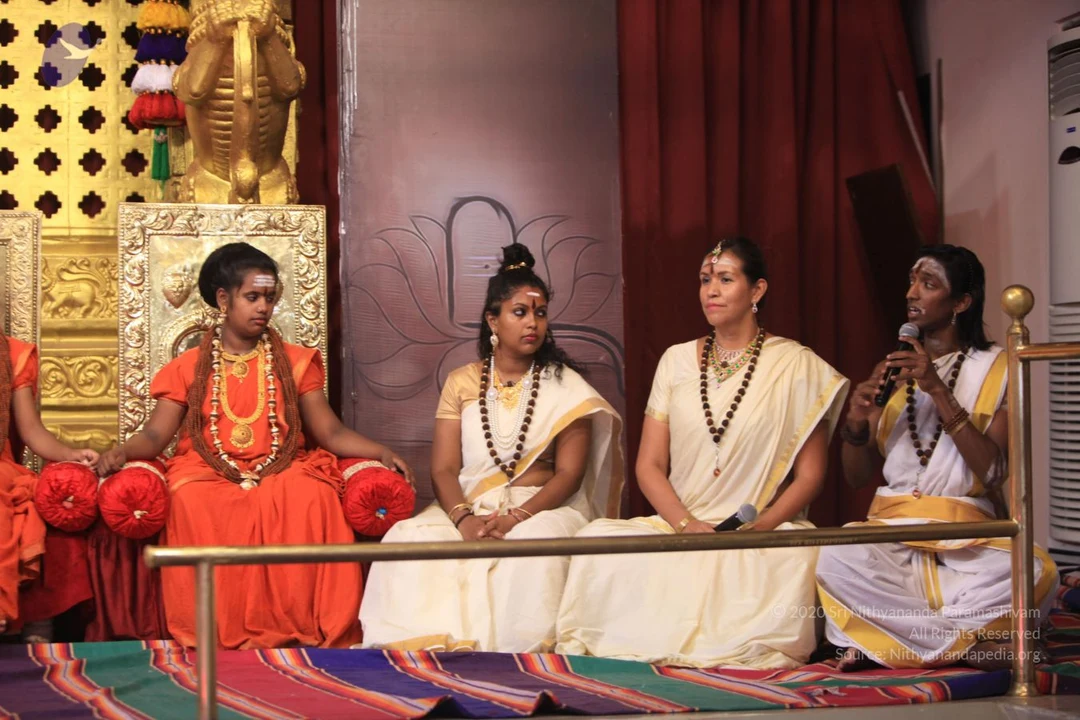
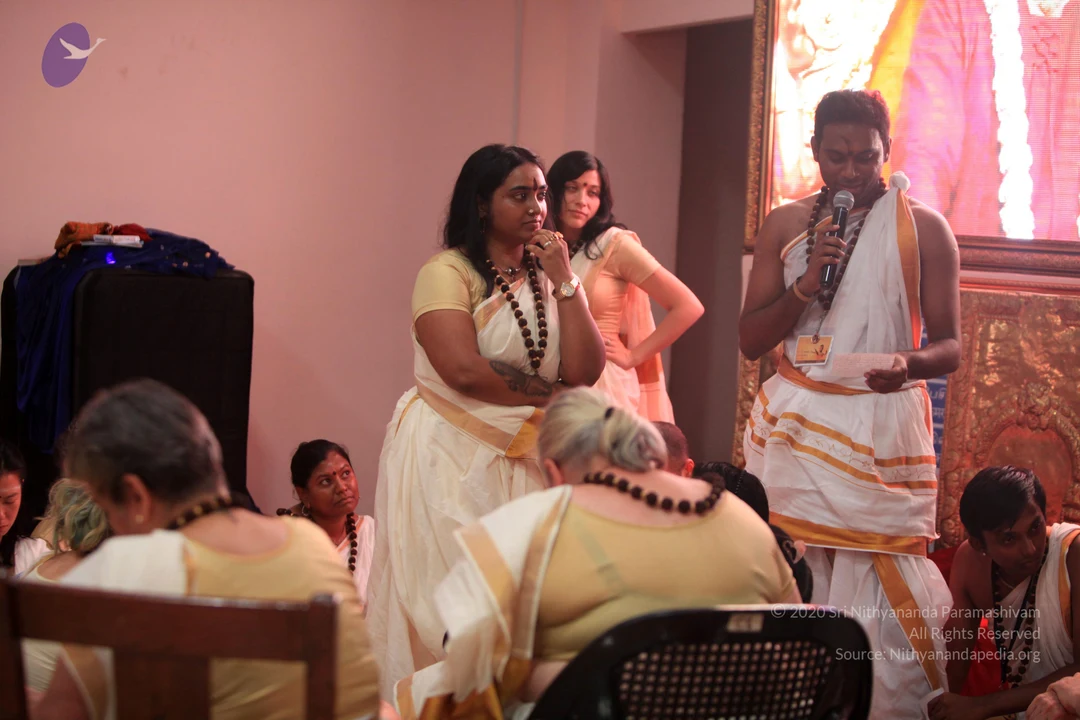
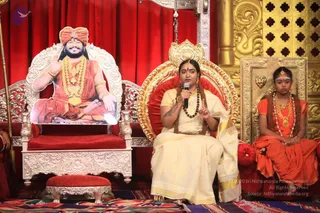
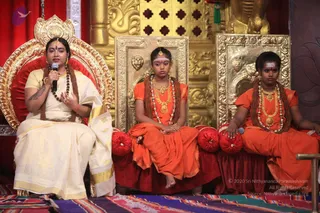
A seated woman in a cream and gold-bordered white sari holds a microphone while speaking at a stage set with a gold ornate backdrop and red drapes. Three young attendants in saffron-orange robes and orange turbans sit beside her, two with garlands of beads. Centre stage, a large silver-framed throne holds a photographic image of a bearded man in orange robes and an orange turban, shown seated in a meditation pose; this is a screen depiction, not a physical person. A golden trident stands to the left of the throne, and a small red footstool sits in front. The scene reads as a satsang discourse on the stage.Photo of a seated panel on a raised stage at a Nithyananda Dhyanapeetam-style hall with gold-trimmed ornate woodwork behind. A woman in white and gold-bordered cream sari with a microphone sits on a red-cushioned chair at left, speaking with hand gestures. Beside her, two young people in saffron-orange robes with rudraksha malas and gold necklaces sit on a gold-framed throne-style seat, one with a red-cushioned armrest. Further right, three people in white and cream traditional dress with gold borders, rudraksha malas and tilak marks sit on a colourful striped mat in front of a lotus-and-trident wall painting. No individual is clearly identifiable as a person from appearance cues, so no identity is asserted.A man in a plain white kurta with a rudraksha-style bead necklace stands holding a brown clipboard and a black pen, wearing pink-rimmed glasses and looking down at his notes. Behind him, a younger man sits with a white tilak on his forehead, wearing a white dhoti with gold border and a rudraksha mala, eyes closed. Other seated devotees in white and gold clothing are partly visible, and a pale pink wall with a lotus design forms the backdrop of a workshop hall.Two women seated on ornate gold-and-red thrones on a stage with red draped backdrop. Both wear black blindfolds over their eyes. The woman on the left wears a cream and gold-bordered sari with a black beaded mala and holds a handheld microphone in her right hand, speaking. The woman on the right wears an orange sari and orange blouse, with layered gold necklaces, a long rudraksha mala and a silver-bead mala, hands folded in her lap. Gold-carved lion-face panels flank the seat on the right. Two physical people are visible.A seated woman in a cream and gold-bordered sari wears a black blindfold and holds a microphone at a stage event. Beside her a seated girl in orange and gold clothing, wearing a rudraksha mala and a blindfold, sits on a gold chair. To the right a standing woman in a black and green dress with a long braid faces them. Behind them stands a golden ornate backdrop with bells and colourful tassels. On the left, a life-size cutout of a smiling bearded man in an orange turban, orange robe and ceremonial gold necklaces sits on a silver and red throne beside a trident. A red curtain hangs behind the stage.A bald man in a lime-green shirt and beige trousers stands at left holding a microphone and speaking. Seated on a red-and-gold patterned mat before a golden carved lion-throne are several devotees in white and gold-bordered dhotis or sarees with rudraksha malas and sacred ash markings. A man in the centre, with a long beard, tilak and rudraksha mala, holds a microphone. At far right a young person in an orange turban, orange robe, beaded necklaces and a gold ornament sits near a red cushion. A maroon backdrop with a lotus motif and a golden deity murti stand behind.

Morning-Satsang
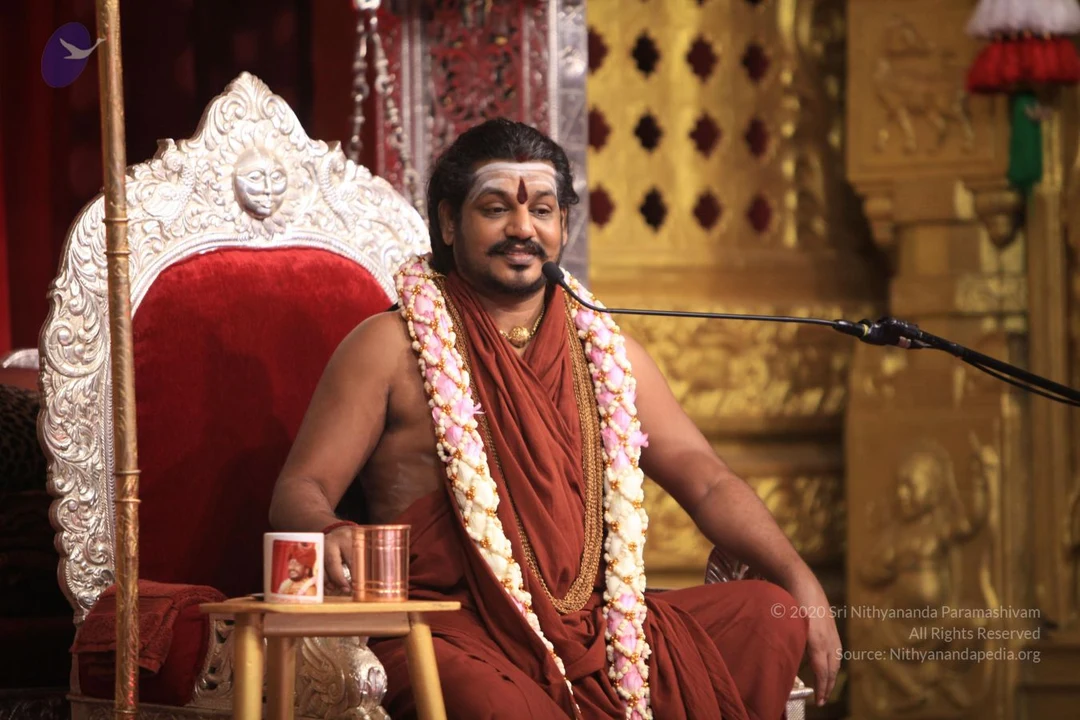
47 photosSource gallery
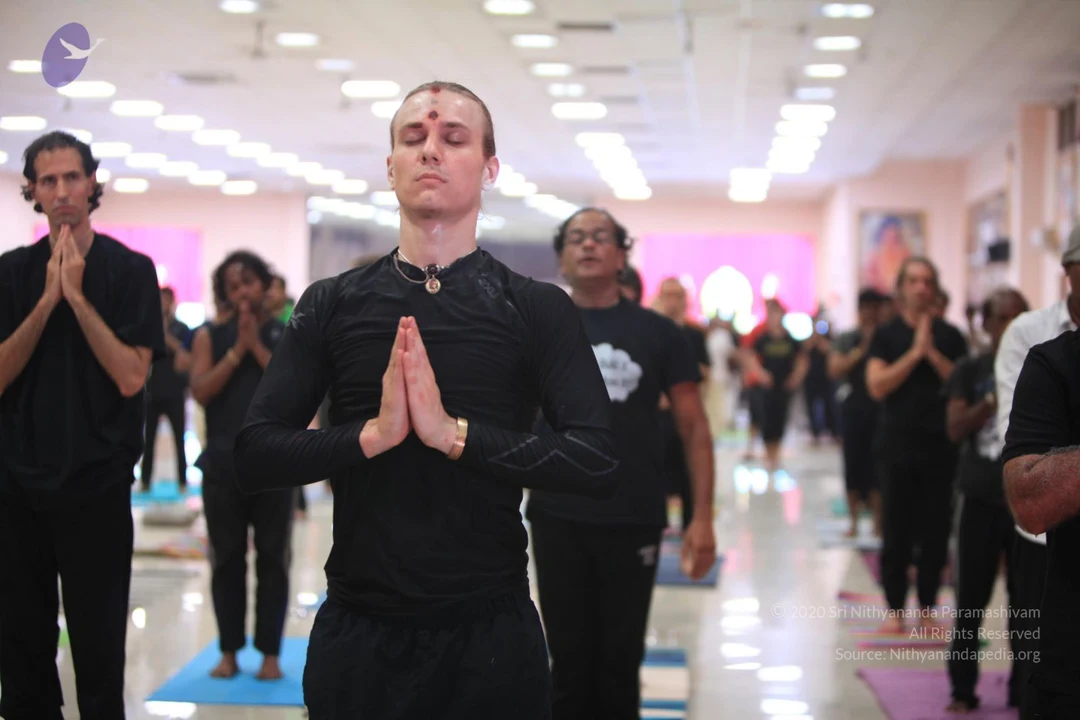
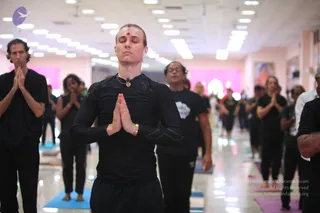
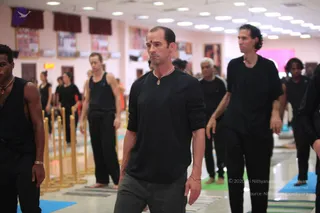
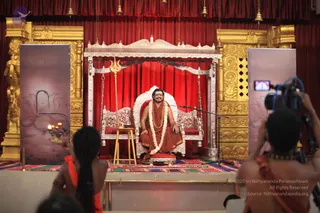
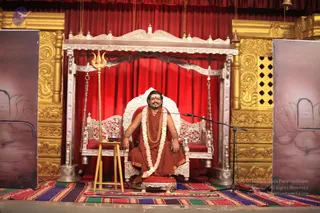
A group of people stand in a bright hall with pale pink walls and rows of ceiling lights, performing prayer with palms pressed together at the chest. The central man, in black long-sleeved top and black trousers, has closed eyes and a red tilak on his forehead, wears a dark pendant on a chain, and has a gold bracelet. Around him, others in black clothes stand on blue and pink mats, some with eyes closed and hands folded, and a man at right stands with arms crossed. Pink banners and a framed picture hang on the walls behind the group.A photograph of a group yoga or movement session in a bright hall with pink walls and framed pictures. In the foreground a man with short dark hair, a small red bindi and a pendant necklace wears a black long-sleeved top and grey trousers, standing with arms at his sides. Around him, participants in black tops and trousers stand on blue and green mats beside tall golden posts. A man with long dark hair and a black shirt stands to the right, and an older man with white hair stands in the background. Ceiling lights and a red-glowing exit sign are visible.A man in orange-saffron robes with a white flower garland sits on an ornate silver and white throne-swing on a raised stage. A gold trident stands beside him, and a small oil lamp sits on a stool at left. Red curtains and gold carved panels frame the stage. In the foreground, two people in orange garments face the stage: one at left holding a lamp, one at right operating a camera on a tripod. Another partially visible person sits at the bottom left edge. a person: the seated figure wears saffron robes and a garland, but the appearance cues are limited to clothing and setting, so identity is uncertain.A seated man in saffron-orange robes sits on an ornate silver throne with a red cushioned seat and a silver canopy framed by red drapes and gilded carved panels. A long white and orange flower garland hangs around his neck, and a small red mark is on his forehead. A gold trident stands beside the throne, a wooden stool sits in front, and a microphone stand is nearby. The stage floor has a colourful striped woven rug. The image is a photograph of a stage set for a discourse, and the person is an appearance-based probable Swamiji candidate with long swept-back hair, saffron robes, a rudraksha-style garland and a ceremonial throne, seated in a discourse setting.A man seated on an ornate silver throne with carved floral scrollwork in front of a red draped backdrop, raising his right hand in a blessing or talking gesture while smiling. He wears a rust-red sannyasi shawl over his shoulders, a white-and-red tilak on his forehead, a red-and-gold mala around his neck, and long white-and-pink flower garlands. A microphone on a stand is in front of him. A small brass vessel and a candle-like object sit on a table at the lower left, and a gold ceremonial staff with a chain stands at the left edge. a person is the man seated on the throne, a presiding speaker at a discourse, based on the saffron-red robe, garlands and throne cues.A man seated on an ornate silver-and-red throne in front of red drapes smiles and raises his right hand in a blessing gesture. He wears a rust-brown saffron-toned wrap, a white and pink flower garland, a gold chain, and a red bindi with white tilak marks on his forehead. A microphone on a stand is in front of him. A brass pot sits at the lower left. Swamiji (probable): long swept-back hair, an ornate garland and a saffron-toned wrap are visible on the speaker seated on the throne, consistent with a discourse setting.

Jeevartha-sadas

40 photosSource gallery
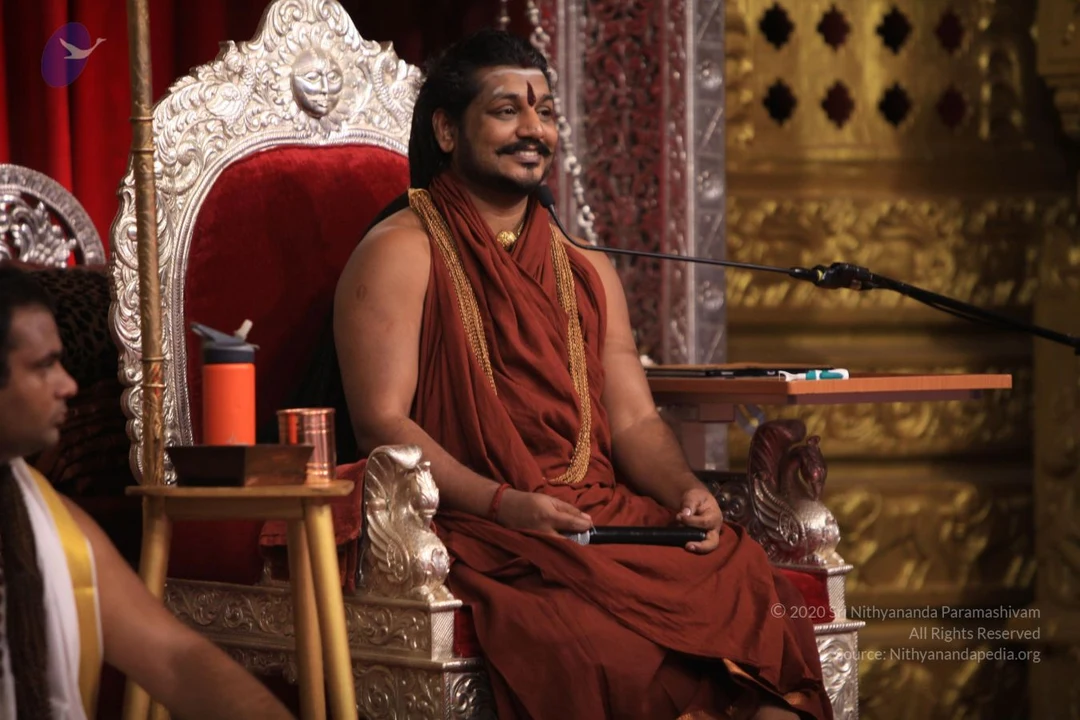
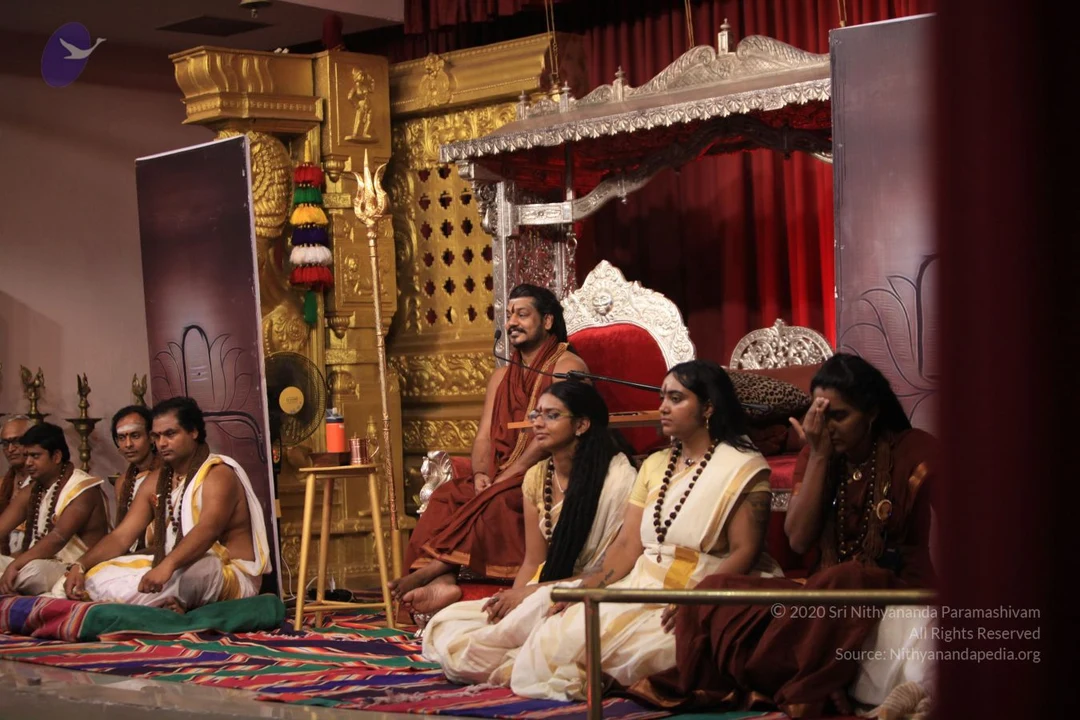
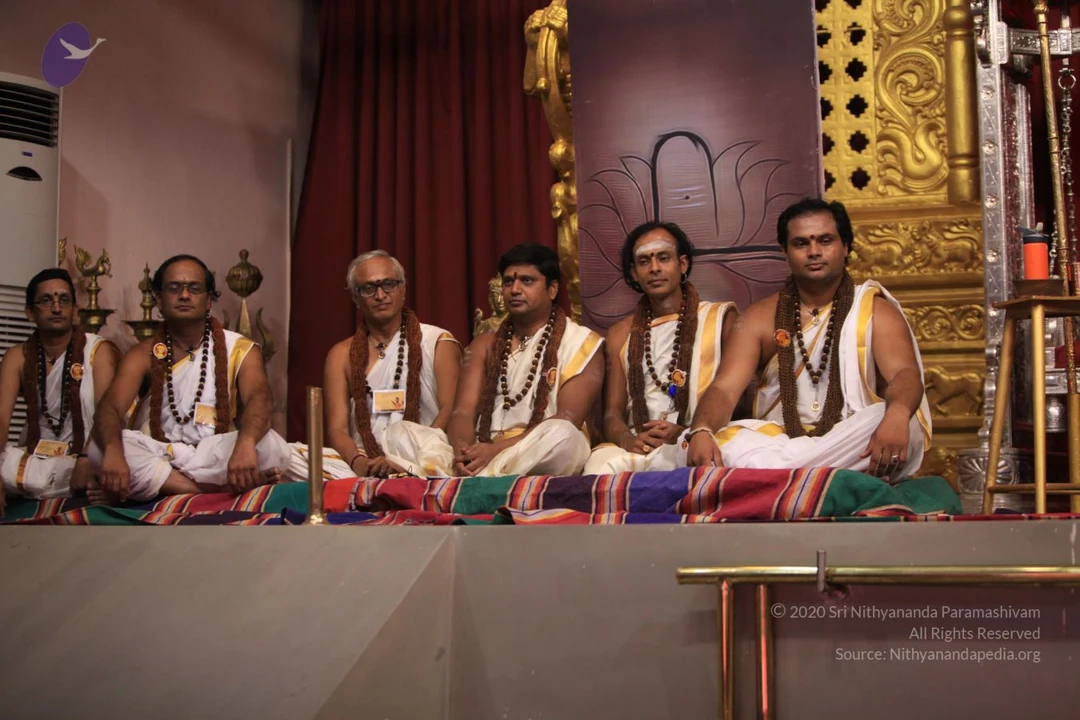
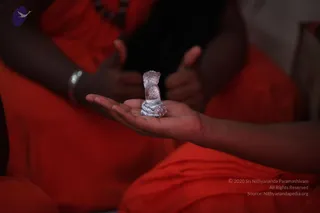
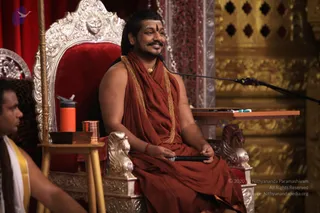
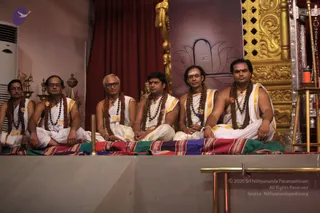
Close view of a sannyasi's outstretched right hand holding a small silver Shivalinga with a coiled silver cobra hood, set against a background of seated figures in orange-red robes. The nearest person wears a dark rudraksha mala with large beads across the chest; a second seated figure with long dark hair and orange clothing sits behind, and another orange-robed person is partly visible at left. The setting appears to be a ritual gathering, with the silver linga offered in the palm.Close photo of an open palm holding a small silver deity murti, a stylized seated figure with an intricately engraved surface. Behind it, blurred figures in orange-red robes sit with hands raised in gesture, one wearing a silver bangle on the wrist. The dark background and soft focus keep the focus on the murti in the hand.A man in rust-orange robes sits on an ornate silver-and-red throne with carved lion and swan arm rests, speaking into a microphone on a stand. He wears a gold-coloured chain and a pendant, a red tilak on his forehead, and holds a small black device in his hands. Beside the throne stands a silver-and-copper tumbler and an orange water bottle on a wooden side table. A gold-patterned wall with a red curtain forms the background. To the left edge, a partially visible man in a white garment with a gold border sits. a person is seated on the throne, with his flowing robes, gold chain and forehead markings serving as the appearance cues, and is shown as a speaker in a discourse setting.A photograph of a seated ceremonial gathering on a patterned rug in front of an ornate golden and red throne setting with a silver canopy and a golden trident (trishul) standing beside it. A man seated centrally wears a saffron-orange wrap and shawl with a rudraksha mala, sitting in front of a red-cushioned throne with a microphone before him. Two women in white and cream saris with gold borders and rudraksha malas sit to his right, one with long hair and glasses, the other with her hand raised near her forehead, and a woman in a maroon-brown garment sits at the far right. To the left, several men in white dhotis with colored borders and rudraksha malas sit on the floor, and a small wooden stool and brass lamps stand at the left edge.A man seated on an ornate silver throne with red cushions in front of red drapery, speaking into a microphone on a stand. He wears a rust-red ochre robe draped over one shoulder and a long gold-toned bead necklace, with a red tilak on his forehead and long dark hair. His raised right fist gestures during a discourse. A small wooden side table holds a microphone and a copper vessel sits on a stool at left.Six men in white dhotis with gold-bordered shawls sit cross-legged on a raised stage in front of a golden throne and a lotus-motif backdrop. Several wear rudraksha malas and wooden-bead necklaces, and a few have sandalwood or vibhuti markings on their foreheads. A decorative multicoloured woven rug covers the platform edge, with brass lamps and a ceremonial staff at the left. No figure with distinctive a person cues is clearly visible, so the identity is left unsure.

Darshan-initiation-into-powerful-cognitions

9 photosSource gallery
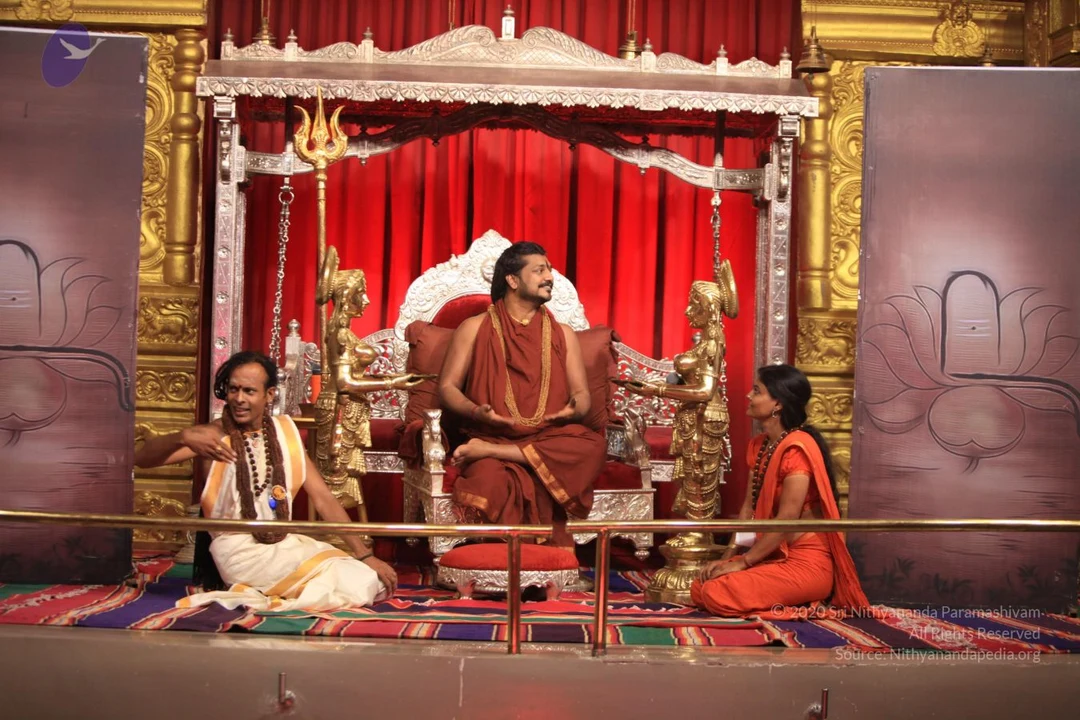
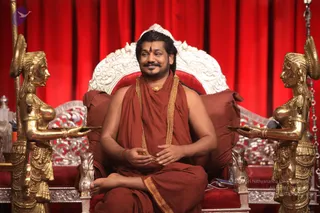
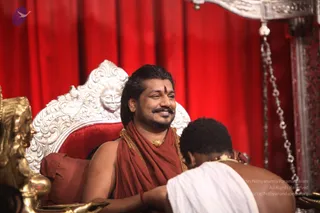
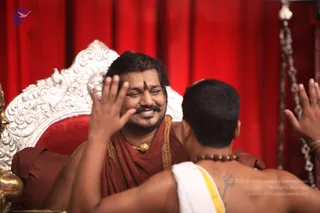
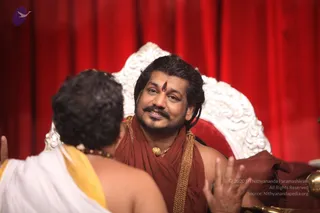
A man sits cross-legged on an ornate white and red throne in front of a red draped backdrop, framed by two golden female figures holding trays. He wears a rust-orange saffron-toned robe, a long gold chain necklace and a small gold pendant, with a red tilak on his forehead and a red thread on his wrist. Long dark hair and a moustache are visible. The scene suggests a seated discourse setting.A photograph of a seated figure on an ornate silver and red throne with gold-trimmed backrest and a golden trident mounted above, flanked by two gilded carved figures holding the armrests. The central figure wears saffron-orange robes, a tall brown-orange wrap, a gold necklace and a rudraksha-style neck mala, with long dark hair; the appearance is a person seated in a dais setting. To his left, a man in a white dhoti with a saffron-striped shawl and rudraksha beads sits on a colourful woven mat. To the right, a woman in an orange sari with a gold necklace sits on the mat. Red curtains and gold panels frame the stage, with painted lotus panels on the sides. Three people are visible.A seated man in a rust-red saffron-toned shawl and draped robe, with gold chain necklaces and a red tilak on his forehead, smiles on a white and red carved ornate throne against red drapes. A gold lion-like figure appears at the left edge. In the foreground, a shaved-headed man in a white dhoti bows forward, his head near the seated man's lap, while a gold chain hangs at the right. The seated man has long swept-back dark hair and a rudraksha-style gold necklace, consistent with the page's Swamiji appearance cues.A photograph of a man seated on an ornate silver-and-white throne against a red curtain, smiling broadly with eyes closed and a red tilak on his forehead. He wears a rust-brown saffron-toned shawl over his shoulders, a gold necklace and a gold pendant, and has a mustache and beard with long dark hair swept back. In front of him, a second man with his back to the camera, wearing a white dhoti with a yellow border and a brown rudraksha mala, raises his palms in greeting. A red curtain with a metal chain hangs on the right.A seated man in a maroon-brown shawl and a long gold ceremonial necklace sits on an ornate white carved throne against red drapes, with a red tilak on his forehead and a mustache and beard. In the foreground a figure with short dark hair, seen from behind, wears a white and yellow garment and gestures with an open hand toward the seated man. A brass vessel is visible at the lower right. Two people are visible in the scene.A photograph of a man with long dark hair, a red bindi on his forehead, a dark moustache and beard, wearing a rust-brown draped robe and a heavy gold necklace, seated on a white ornately carved throne in front of red drapes. He smiles while a bald elderly man with white hair and a white-and-yellow cloth, seen from behind, leans forward and reaches toward him, bending down with his hand near the seated man's head. A dark bead necklace is visible on the elderly man. a person is the seated man, shown in a brown robe, gold necklace and throne setting. Two physical people are visible.

Workshop-Life-Beyond-Limits

99 photosSource gallery
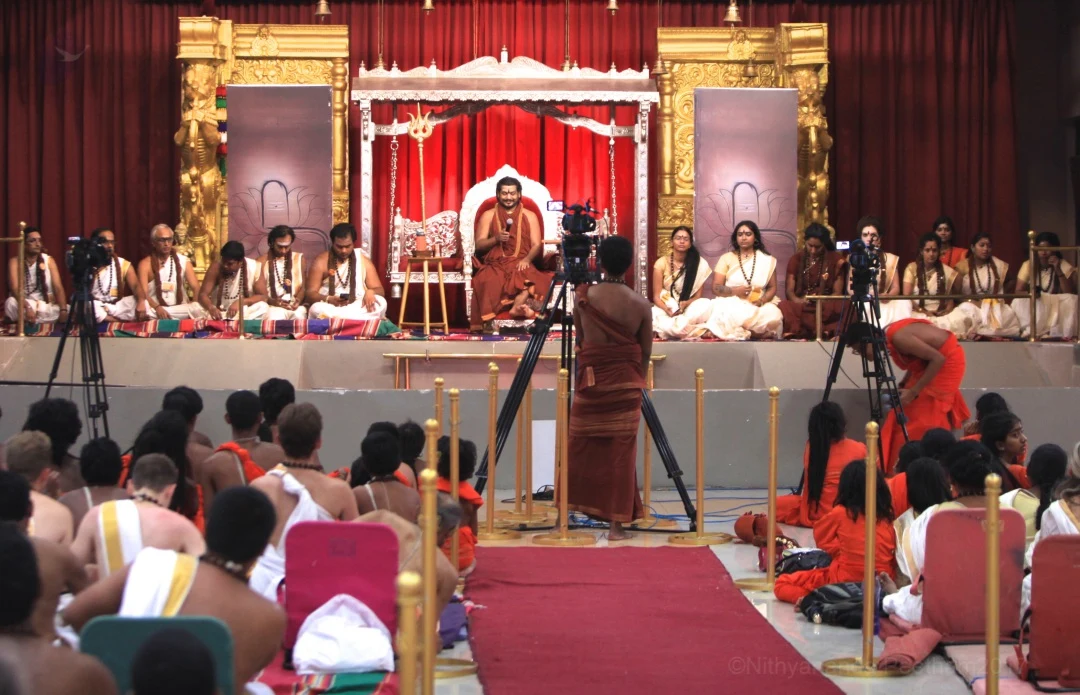
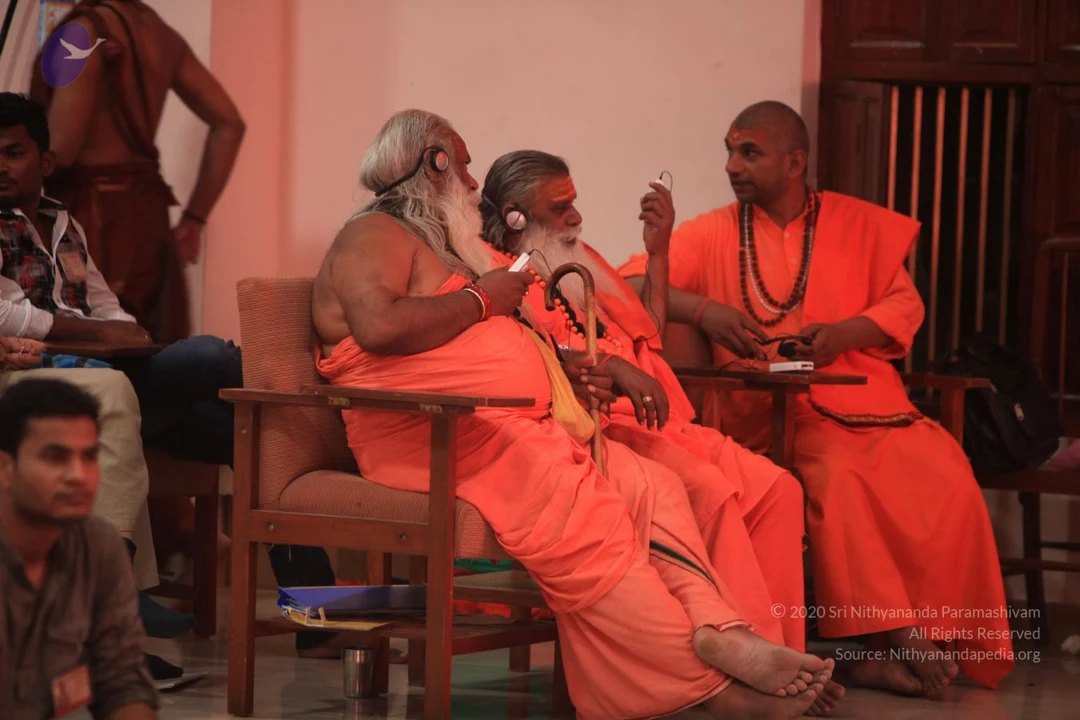
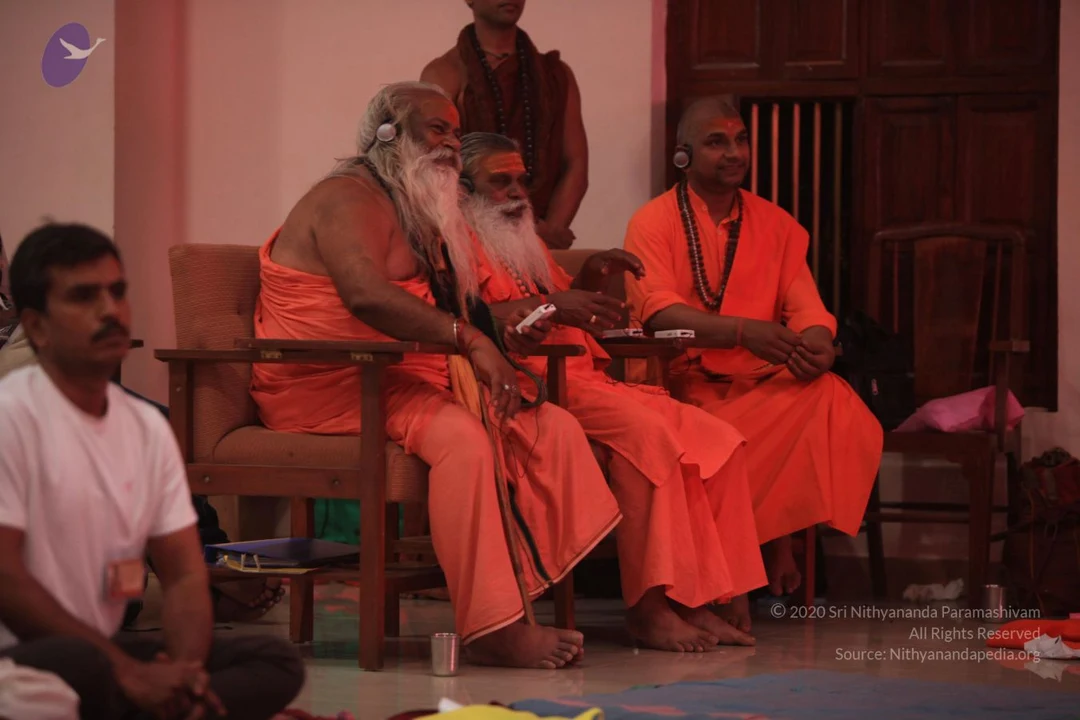
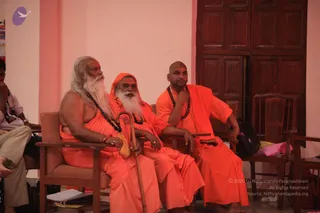
Three sadhus in orange clothing sit on wooden chairs in a room with pink walls and dark wooden cabinet doors. The man on the left has long white hair and beard, bare-chested with an orange cloth wrap, a wooden staff across his lap, and a red tilak on his forehead. The middle figure has a long white beard, an orange hood over his head, and a dark rudraksha mala. The man on the right is shaved-headed, wears an orange robe and a long rudraksha mala, and rests his hand on his chin. A seated person in light clothing is partly visible at the left edge.A photograph of a seated audience at a Nithyananda Dhyanapeetam style hall with a red carpet runway and gold-topped stanchions in the foreground. Rows of devotees sit on colourful woven mats and pink-red cushioned chairs. Many wear white kurta and dhoti clothing, one man in a red shirt sits centre-left, and a bald man in white sits at the back right. A man in a grey graphic t-shirt and glasses sits in the lower left foreground with a badge around his neck. Others in the background wear white and orange, and a bare-headed attendant in white moves in the rear. Several people are visible, most attentively seated for satsang or a workshop.Stage event in a gold-decorated hall with a large central throne canopy in silver and red drapes. A large printed portrait of a bearded man in orange robes with an orange turban, a rudraksha mala and gold necklace, seated with raised hand, is placed on the central red-cushioned throne. Beside it, a woman in a cream-and-gold saree with a microphone sits on a golden-backed throne. Three young boys in orange robes and orange turbans sit on decorated thrones flanking the stage, one holding a damaru-like drum in hand. A golden trident stands near the central throne, and a striped woven rug covers the platform. Strings of colourful tassels hang at the upper left. The central figure is a printed portrait, not a physical person.A stage event with six people seated before a gilded golden throne backdrop with carved lion-like figures and a red curtain. On the far left, a woman in a cream and gold-bordered sari holds a microphone and sits on an ornate red-cushioned chair. Beside her, two younger figures in saffron-orange robes wear red and orange beaded malas and gold necklaces. The seated figure in the middle, in orange robes with a gold necklace, holds a microphone. To the right, two women in cream and gold-bordered white saris sit with rudraksha malas, and a young man in a white dhoti with gold border and a mala sits at the far right. A lotus-motif backdrop and a red-and-multicolour woven mat cover the stage floor.A woman in a cream and gold-bordered sari sits on an ornate gold-and-red throne, holding a microphone and gesturing as she speaks at a satsang or discourse. Beside her on the left is a life-size cardboard cutout of a bearded man in saffron robes, orange turban, gold garlands and rudraksha mala seated on a silver-and-red throne, raising one hand in blessing. On the right, a young girl in orange robes, rudraksha beads and gold necklaces sits with folded hands on a gold-framed seat. Red drapes and a gold-patterned wall form the backdrop, with a colourful woven rug on the floor. The cutout is a printed image, not a physical person, and the visible photo credit reads Sri Nithyananda Paramashivam.Three women sit on ornate gold-and-red thrones in a temple-style hall with gold-framed panels behind them. The woman on the left wears a cream sari with gold border and holds a microphone, with rudraksha mala beads and a red-and-gold ceremonial thread at her neck. Two young girls in saffron-orange robes sit beside her, one with a white-and-red forehead marking and gold necklaces with rudraksha malas, the other with a white tilak and a gold pendant, holding a microphone. The setting suggests a discourse or satsang session.

1-Morning-Satsang
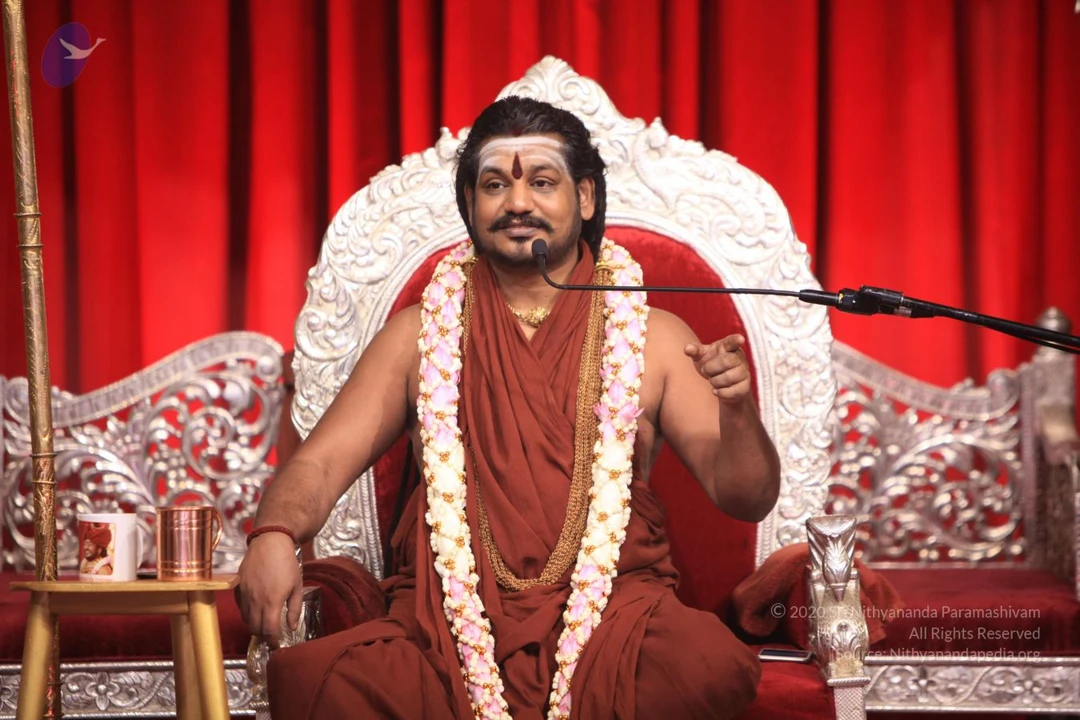
5 photosSource gallery
A man with swept-back dark hair, white forehead markings and a red bindi sits on an ornate silver throne with a red velvet seat in front of red drapes. He wears a rust-brown robe draped over his shoulders, a gold chain necklace and a long garland of white and pink flowers with gold beads. His right hand is raised in a gesture while he speaks into a microphone. A small copper vessel sits on a gold stand at the left edge. Swamiji (probable): long swept-back hair, ceremonial gold necklace and saffron-brown robe, seated on a throne in the role of speaker.A seated man in rust-red saffron robes sits on an ornate silver-and-white carved throne before a deep red curtain. He wears a long pink-and-white flower garland, a gold chain, a red thread bracelet, and white and red forehead markings. He lifts one hand to his ear while speaking into a microphone on a stand. A small wooden side table holds a copper tumbler and a mug. Swamiji (probable): the seated figure has long swept-back hair and ceremonial gold necklaces with saffron robes and a garland, so the appearance fits the page's claim. The image is a photograph of a satsang discourse.A man seated on an ornate silver-framed throne with red cushions in front of a red draped backdrop, speaking into a microphone on a stand. He wears a rust-red robe, a long pink and white flower garland, a gold chain necklace, a white and red forehead marking, and a red bracelet. His right hand gestures mid-explanation. A small side table holds a white mug and a copper tumbler. Swamiji (probable): long dark hair, saffron-toned robe and garland cues visible; this is a discourse setting.A smiling man with short dark hair and a moustache sits on an ornate silver throne with carved floral scrollwork against a red drape. He wears a rust-brown robe, a long gold chain, a red bindi and white forehead markings, and pink-and-white flower garlands over his shoulders. He raises both palms in greeting toward the audience, with a microphone on a stand in front. A copper cup and a small white cup sit on a table at the left edge. a person: the appearance cues of a saffron-brown robe, ornate gold chain, garlands and an ornate throne fit the page's a person claim, and he is seated in person.A man seated on an ornate silver-framed throne before a red velvet curtain, smiling with palms raised in greeting. He wears a rust-brown robe draped over the shoulders, multiple garlands of white and pink flowers, a long gold chain necklace, and white sacred ash with a red bindi on his forehead. A microphone stand is in front of him, with a copper tumbler and a small silver-tipped object on a side table. Pose and ceremonial clothing are consistent with a person, seated as a teacher giving a discourse.

2-Jeevartha-Sadas

15 photosSource gallery
A man seated in an ornate white carved throne against a red draped backdrop, with a microphone on a stand before him and a wooden lectern to the right. He wears a rust-orange saffron-toned robe with gold chain necklaces, has a red bindi and white forehead markings, and rests one hand near his face in a thoughtful pose. This appears to be a discourse or satsang session. Swamiji (probable): the seated speaker wears saffron/orange robes, long swept-back hair, ornate gold necklaces and a throne seat, appearance-based cues of a distinctive presentation.A seated man in rust-orange ochre robes and a gold chain necklace speaks into a microphone during a talk. He wears a red tilak mark on his forehead and holds a small black handheld microphone in one hand. He sits on an ornate silver-and-red throne with carved floral scrollwork before a deep red curtain, with a small wooden lectern and a copper vessel at the edge of the frame. Swamiji (probable): long dark hair swept back, rudraksha-style ochre robes and ornate gold necklaces match the presentation cues on the page, and he is seated on a throne as the speaker.A photograph of a man seated in a white ornate throne-style chair against a red draped backdrop, with his palms pressed together in namaste and a broad smile. He wears a rust-red robe with a red-brown shawl and gold beaded necklaces, has a red tilak on his forehead, and a red wrist thread. A microphone stands at his side and a wooden lectern with a tablet and small brass vessels sits in front of him. Silver ceremonial chandelier-like fixtures hang on the right. The man appears to be a person based on the saffron-red clothing, gold necklaces and the throne setting, and he is physically present in the scene.A large indoor hall filled with seated devotees in white dhotis and white shawls, many wearing rudraksha malas, some in saffron or orange robes. Rows of people sit cross-legged on mats in a sea of heads and shoulders. Two large screens at the top show a man in red holding a microphone beside a woman in red with a white shawl and beads, while a smaller screen above shows the same scene. Framed portraits hang on the side walls, and an altar area with brass lamps and a kalasha is visible at the back. Satsang or discourse seating with ceremonial attire.A man seated on an ornate white and silver throne with a carved lion-face motif, against a red velvet backdrop and gold-patterned panel. He wears a rust-red robe, a gold necklace, a red thread bracelet and a red forehead mark, and he smiles with both hands near his face, touching his moustache. In front of him is a wooden lectern with a tablet on it, a microphone on a stand, and a small decorated pot. The scene appears to be a seated discourse setting.A man seated on an ornate silver throne with carved floral and scrollwork armrests and a red velvet seat cushion, against a red drape and a gold-carved pillar. He wears a rust-orange robe, has a tilak on his forehead, a gold necklace, and a bangle on his wrist. He rests his bare feet on a silver footstool and sits behind a small wooden lectern holding a tablet, with a microphone stand beside him. The floor is covered with colourful striped woven rugs. The a person field is set to depiction only if the in-person candidate cues are sufficient; this is a seated speaker with rust-orange robe, tilak and gold necklace, so the appearance-based label is a person, seated on the throne as the discourse speaker.
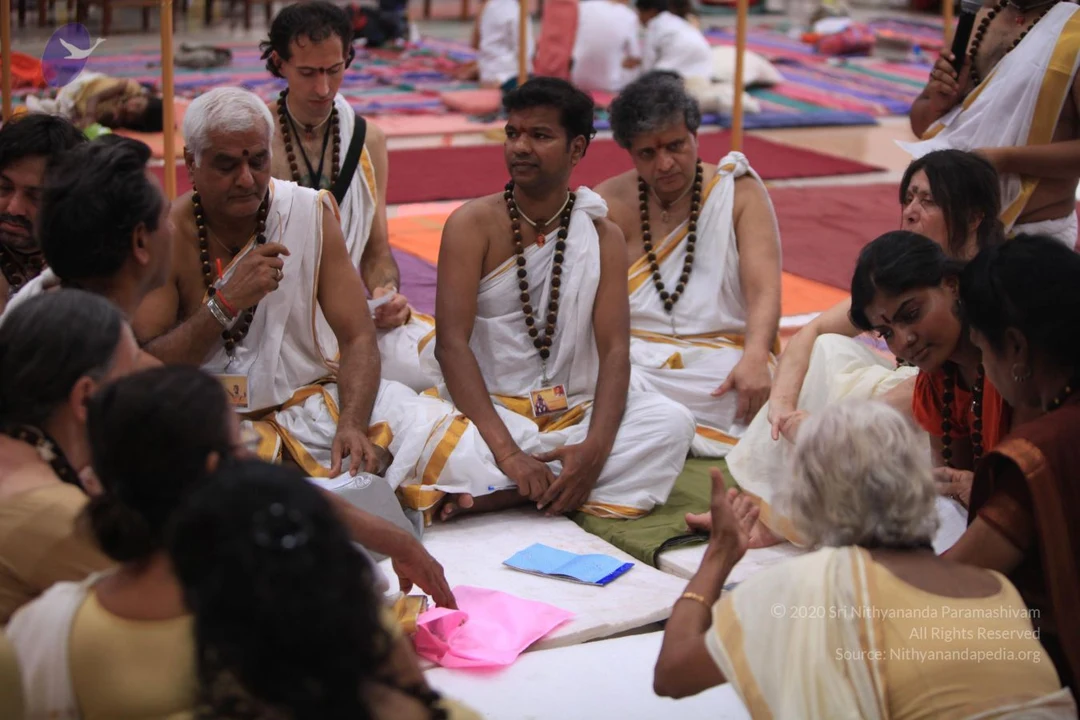
4-Workshop-Life-Beyond-Limits
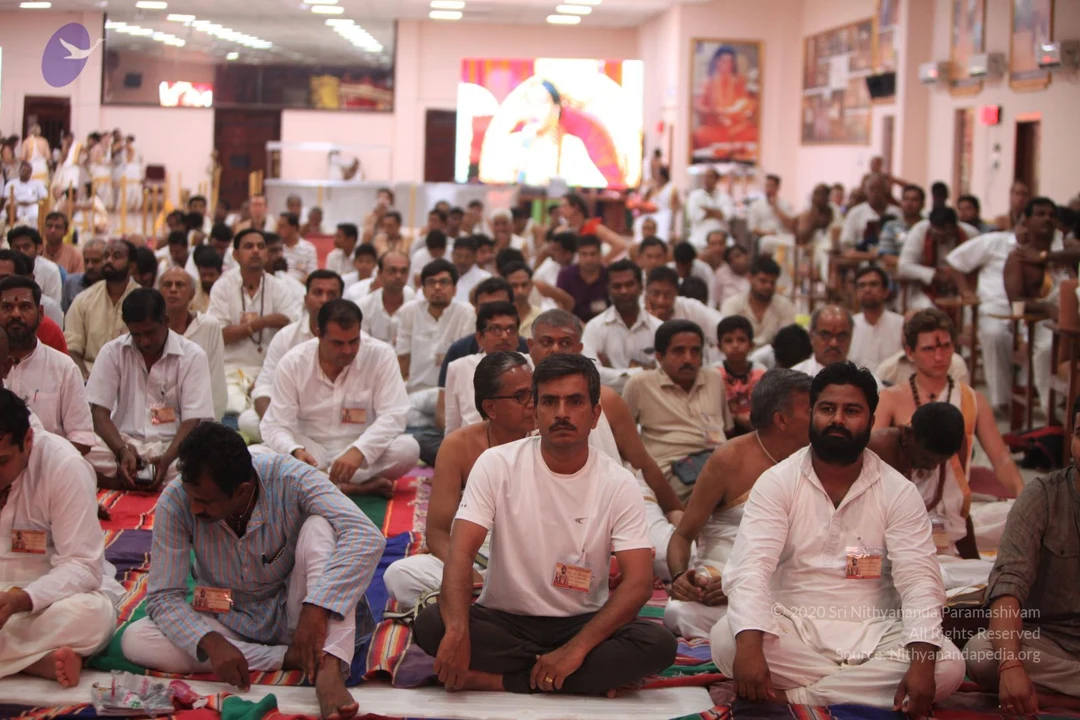
2 photosSource gallery
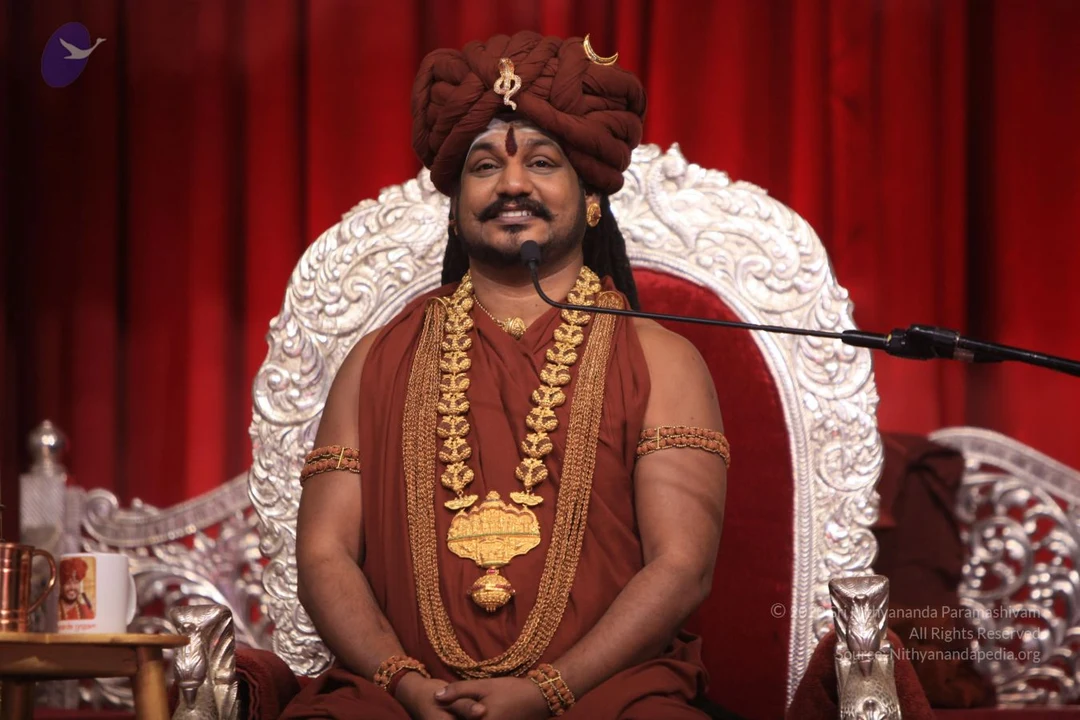
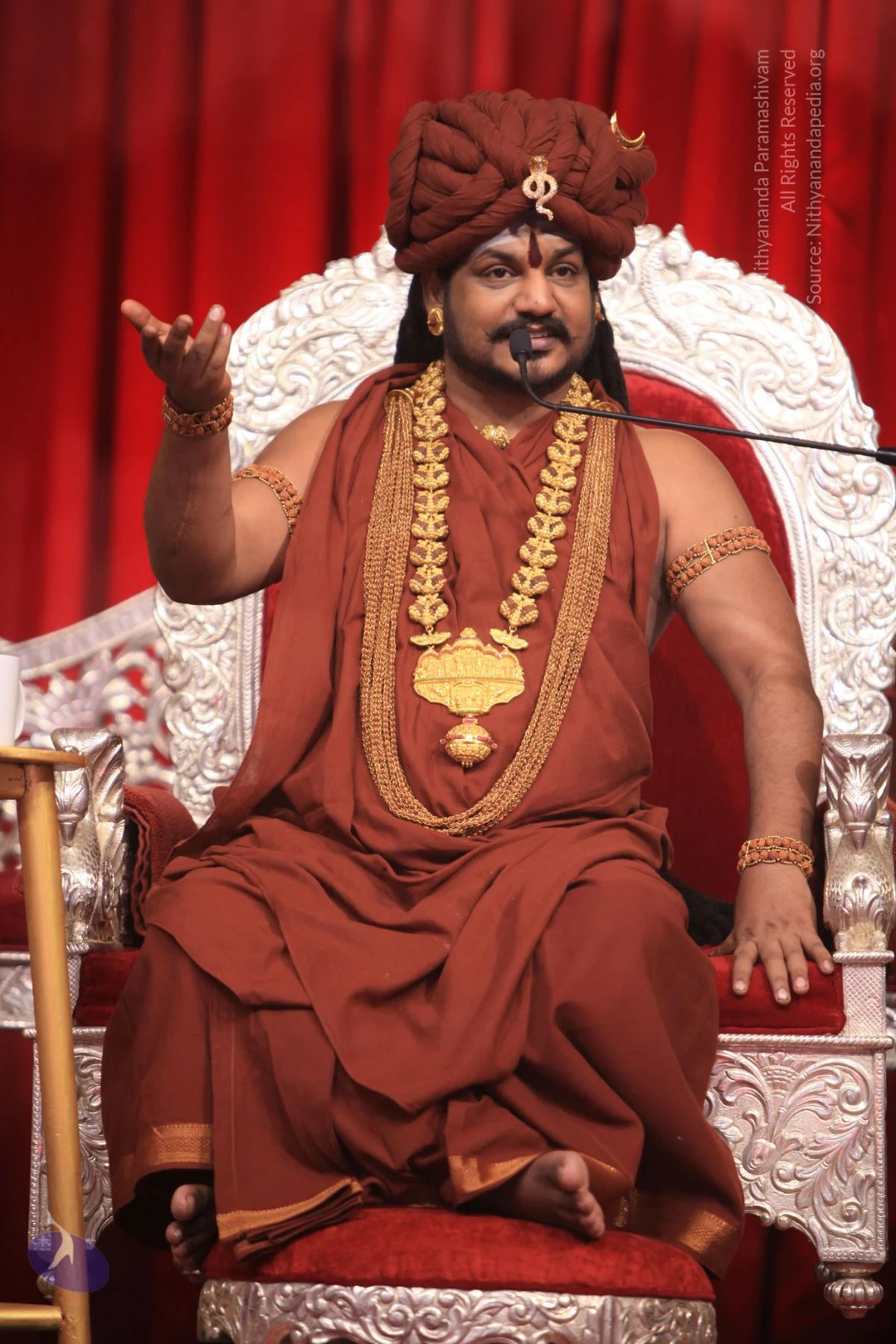
A photo of a man seated on an ornate silver throne with red velvet cushions against a red curtain backdrop. He wears a rust-red turban with a gold ornament, a rust-red robe, and long gold necklaces, with gold armlets and bangles. He gestures with both hands while speaking into a microphone on a stand. A small wooden side table holds a copper mug and a white mug with a printed portrait, and a tall gold staff stands to the left. Probable Swamiji is seated, with a crescent and gold turban ornament, rudraksha-style gold adornments and ceremonial gold necklaces. One person is visible.A man with long dark hair and a red bindi sits on an ornate silver-and-white throne in front of red drapery, raising his right hand. He wears a saffron-orange robe with a gold necklace. A golden trident stands to his left beside a small brass stand with a lamp. A small wooden lectern holds a Yamaha keyboard and a microphone is set nearby. Ornate gold pillars frame the stage.
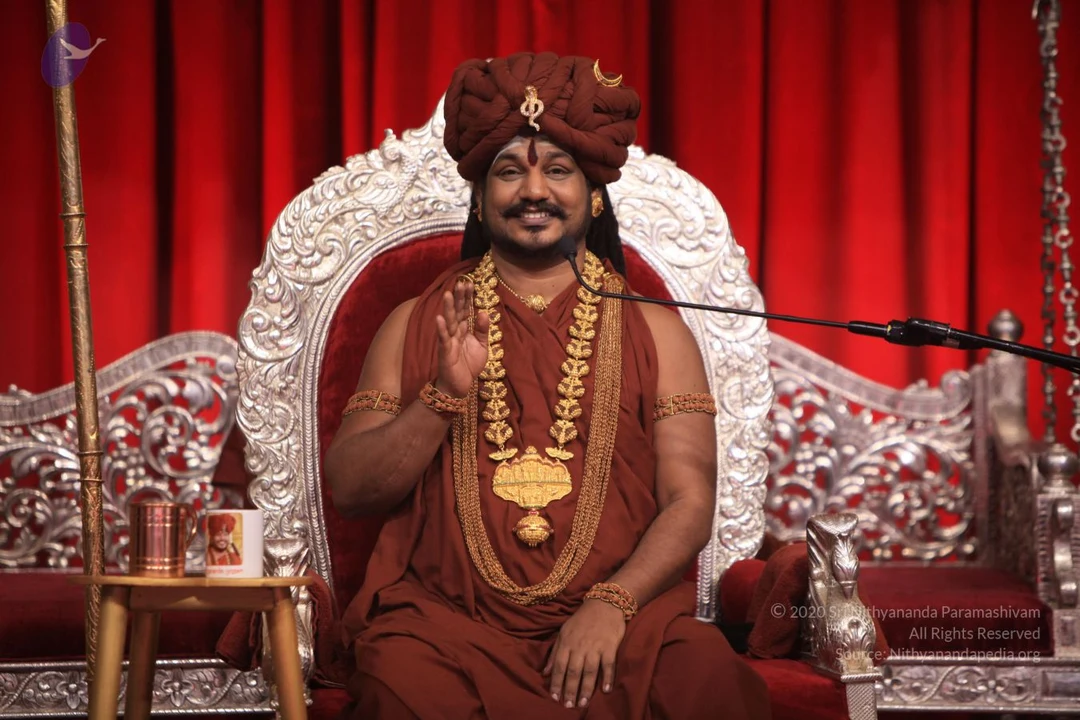
May 20 2017

1 photoView all
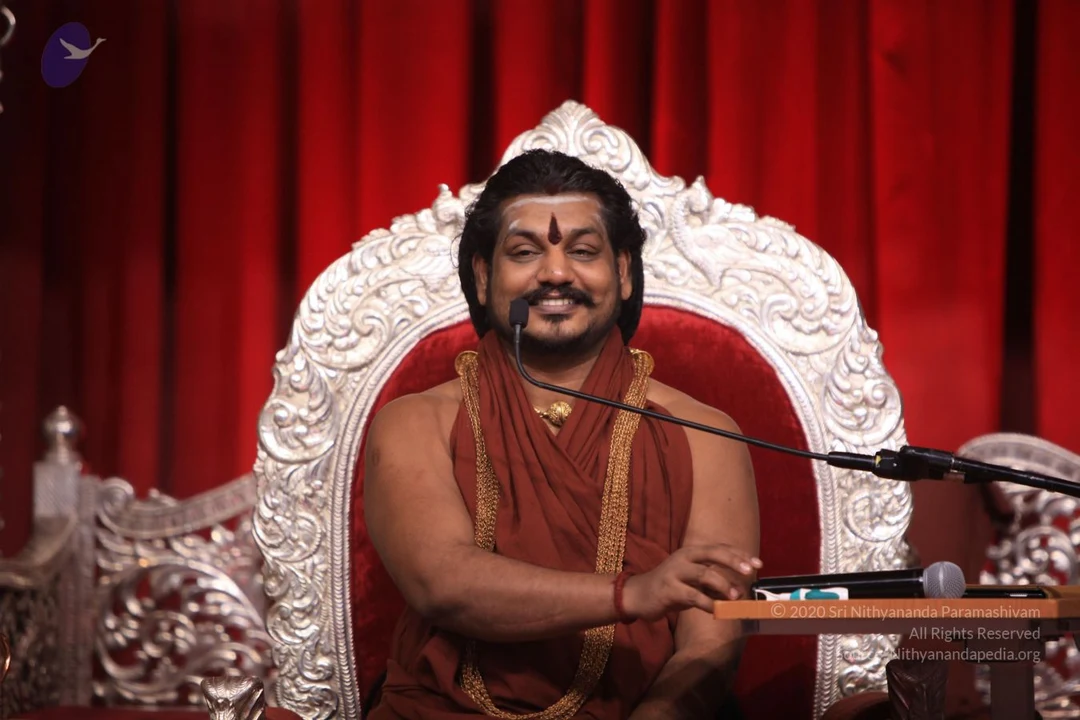
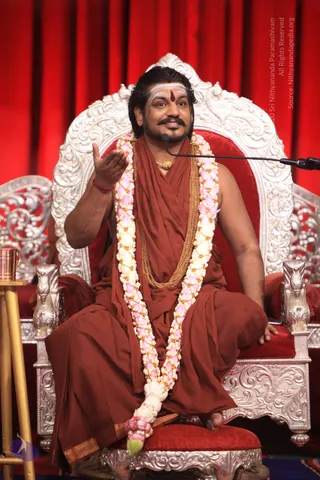
A man seated on an ornate silver-and-white throne with red velvet cushioning against a red draped curtain backdrop. He wears a rust-orange shawl draped over his shoulders and bare arms, a gold chain necklace with a gold pendant, and a long gold-beaded mala. He has a red vertical mark on his forehead and dark swept-back hair with a moustache and beard. His right hand is raised in a gesture as he speaks, and his left hand rests near his lap. The appearance matches the a person candidate, based on the throne, orange shawl, ceremonial gold necklaces and mala cues, shown seated and mid-discourse.