Skip to content
Sunday

20 May 2012

Establish Yourself in Self-Remembrance

Dated photos
669
Source pages
1
Media
3
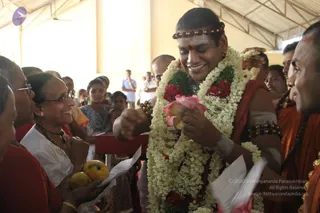
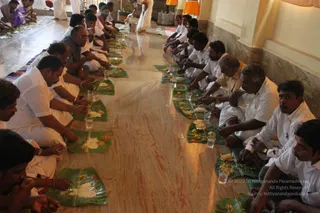
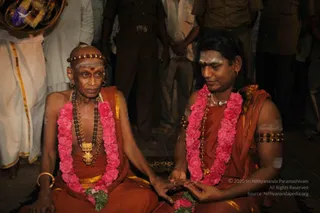
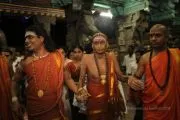
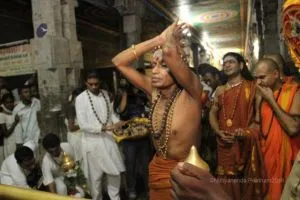
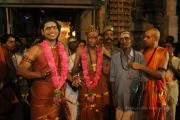
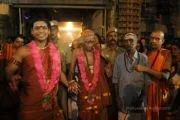
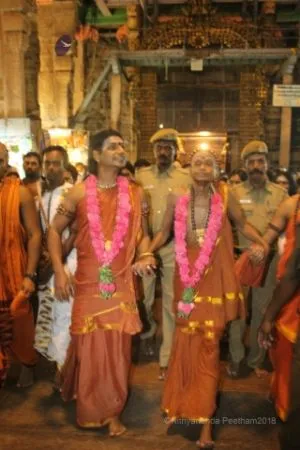
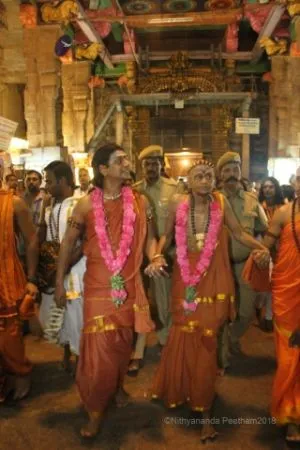
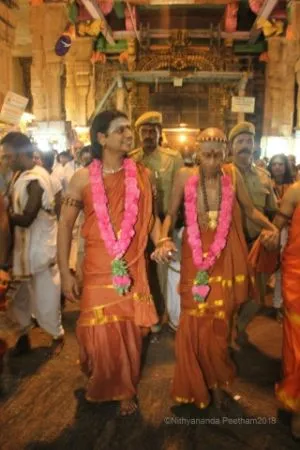
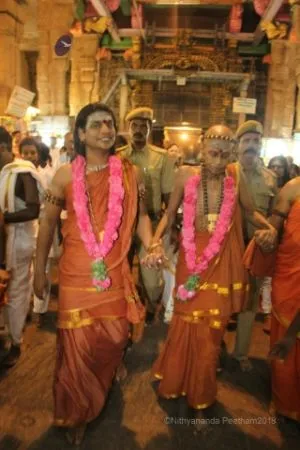
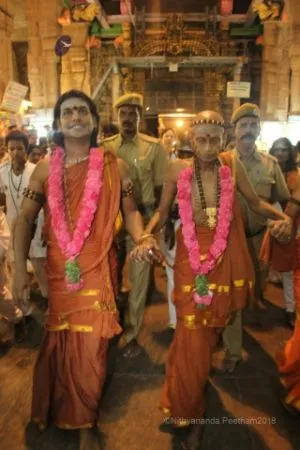
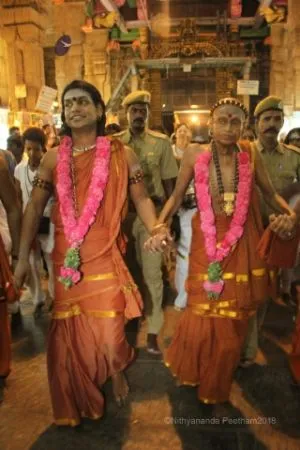
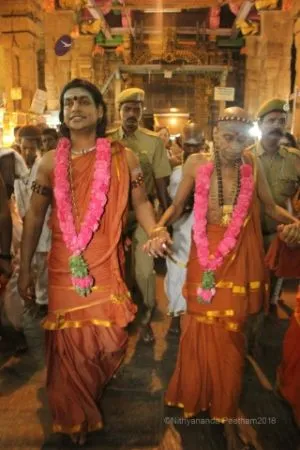
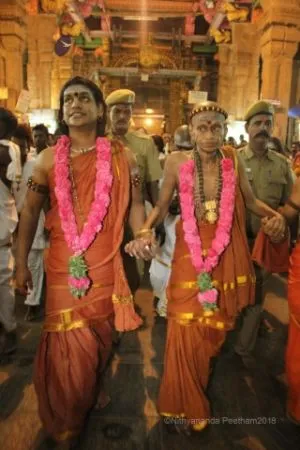
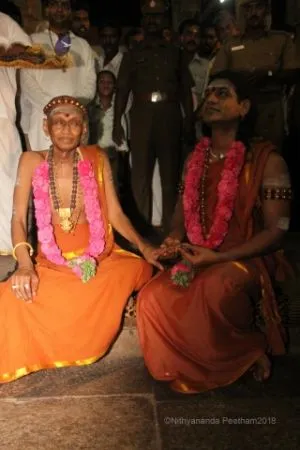
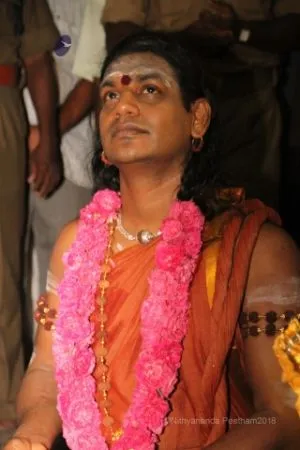
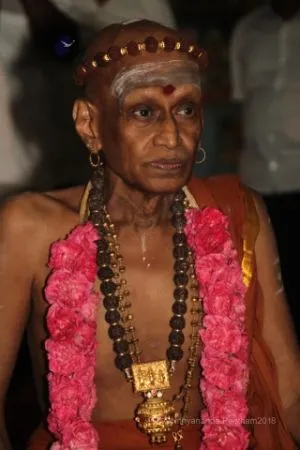
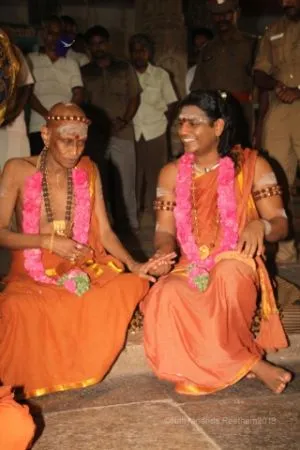
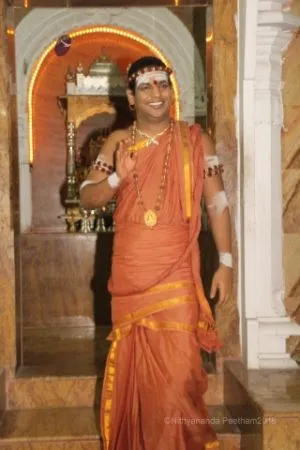
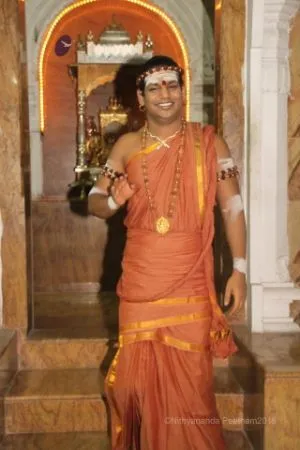
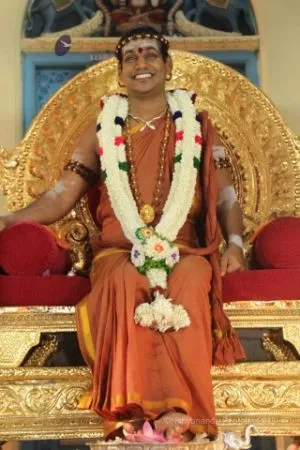
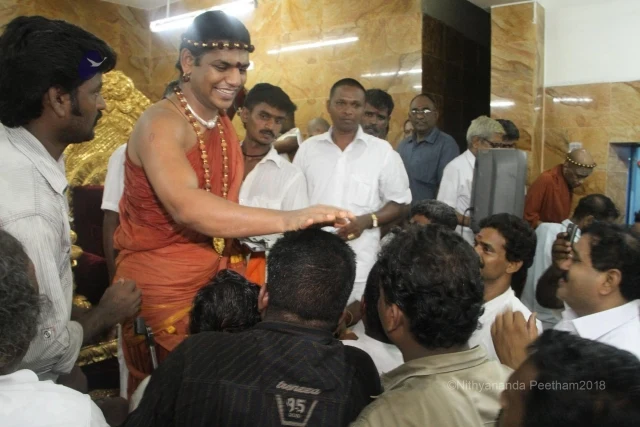
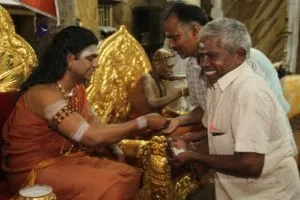
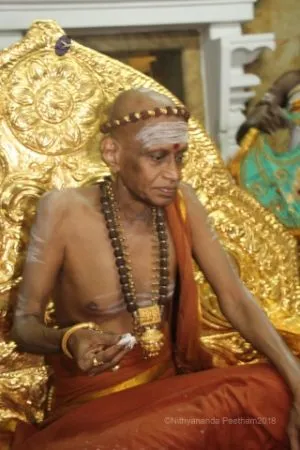
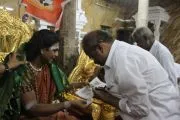
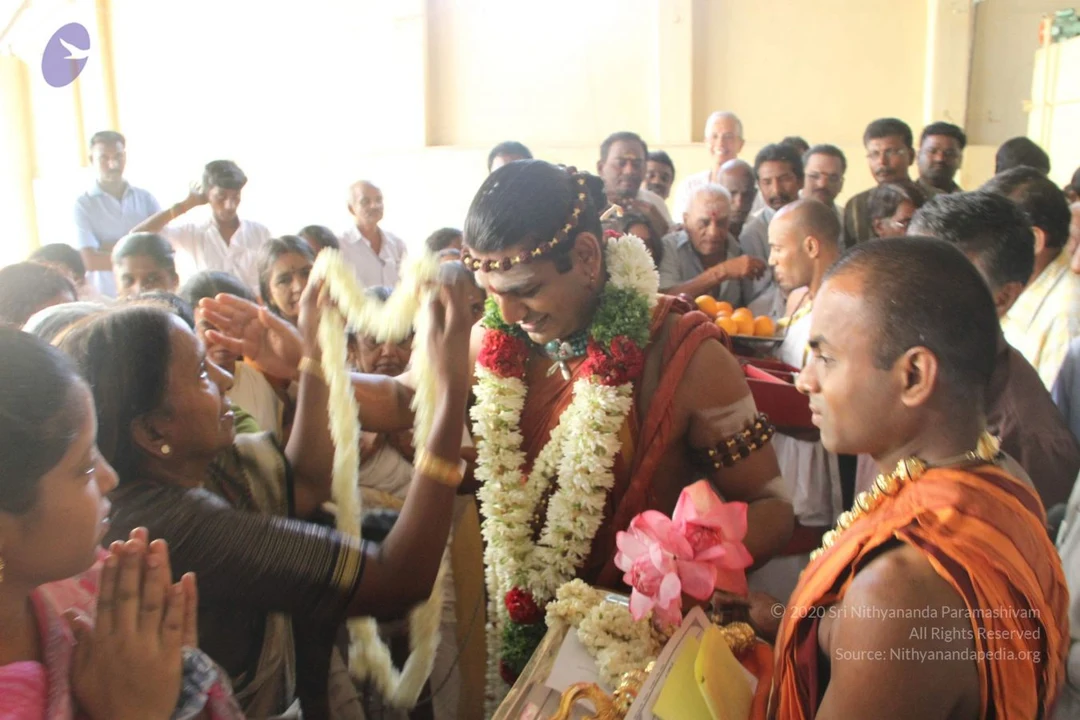
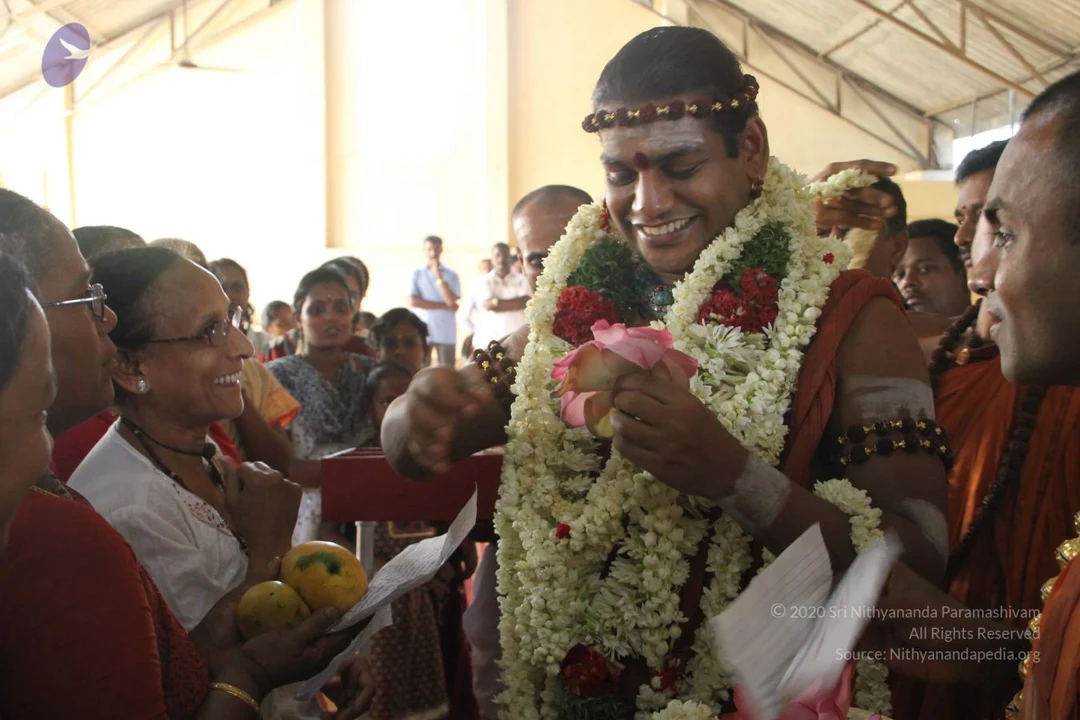
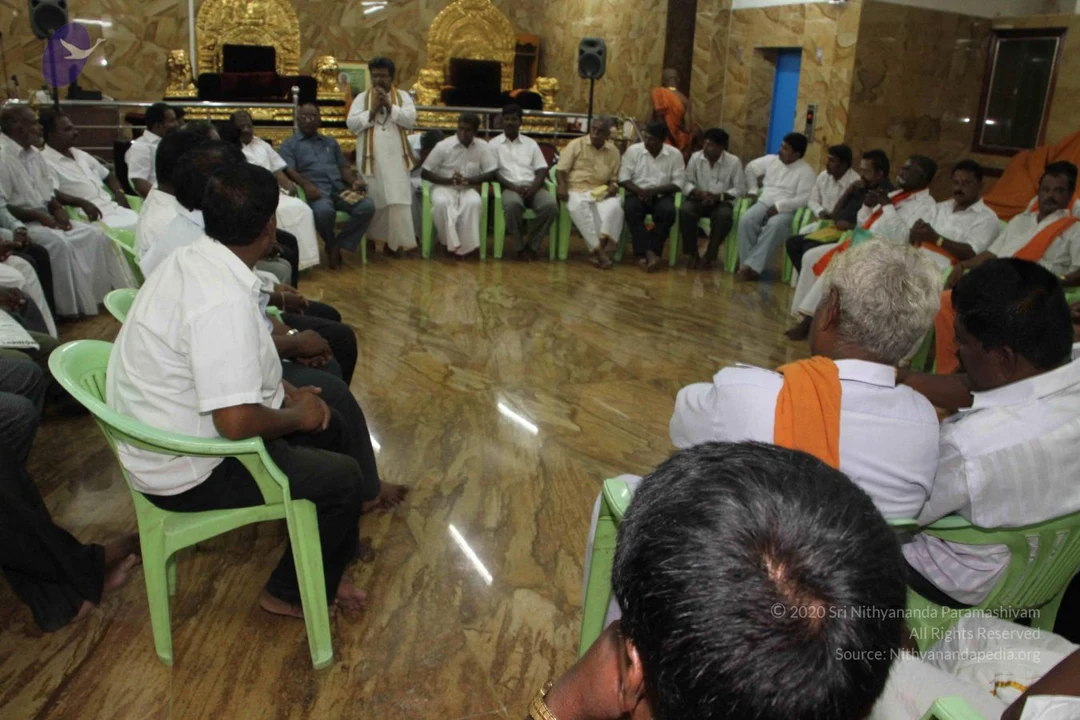
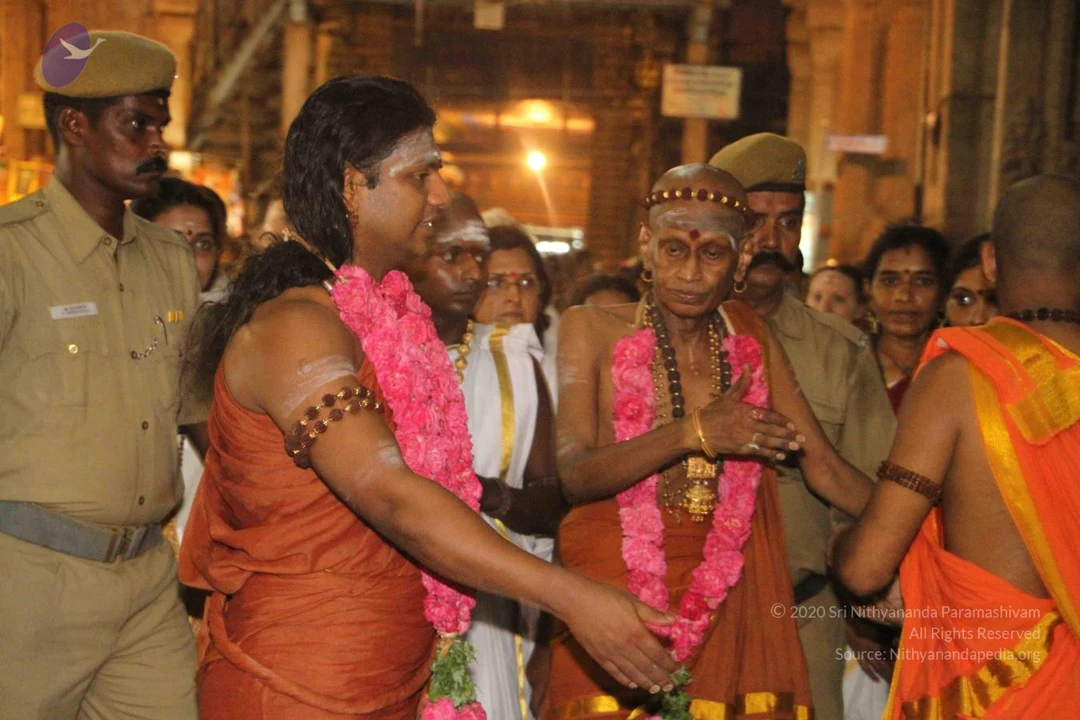
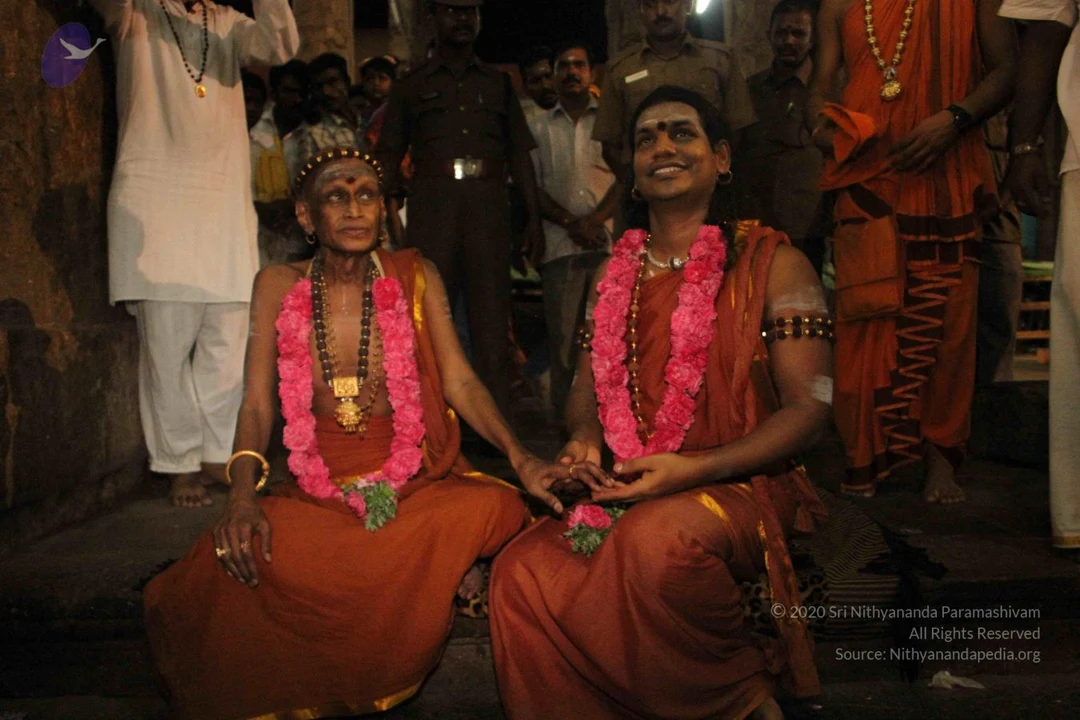
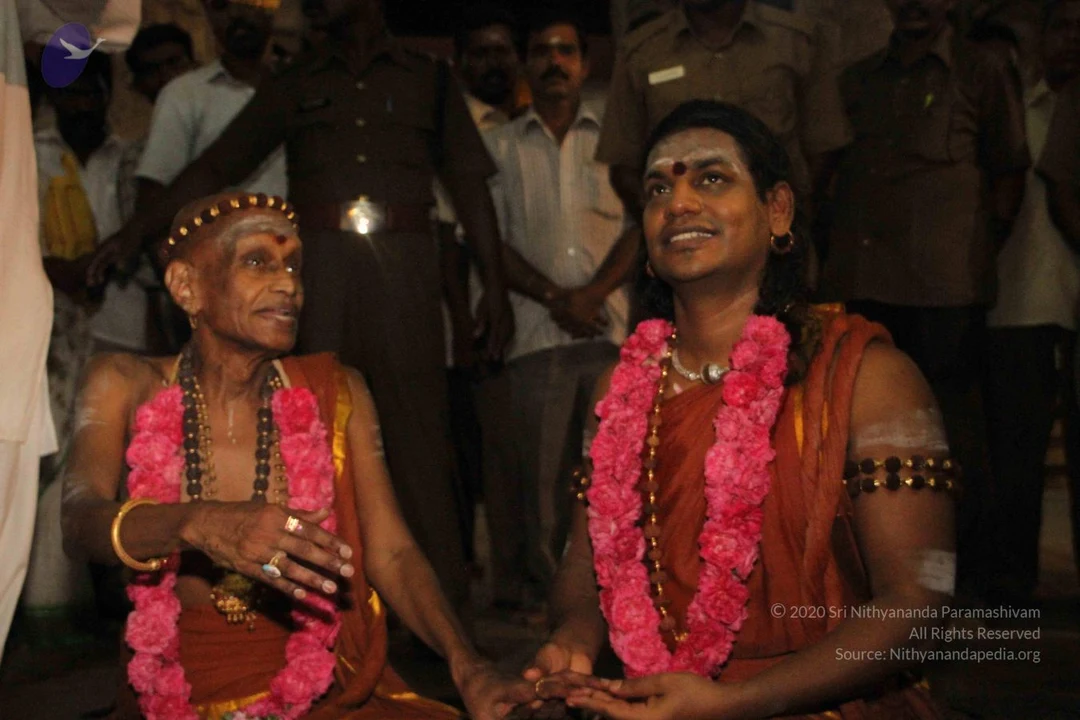
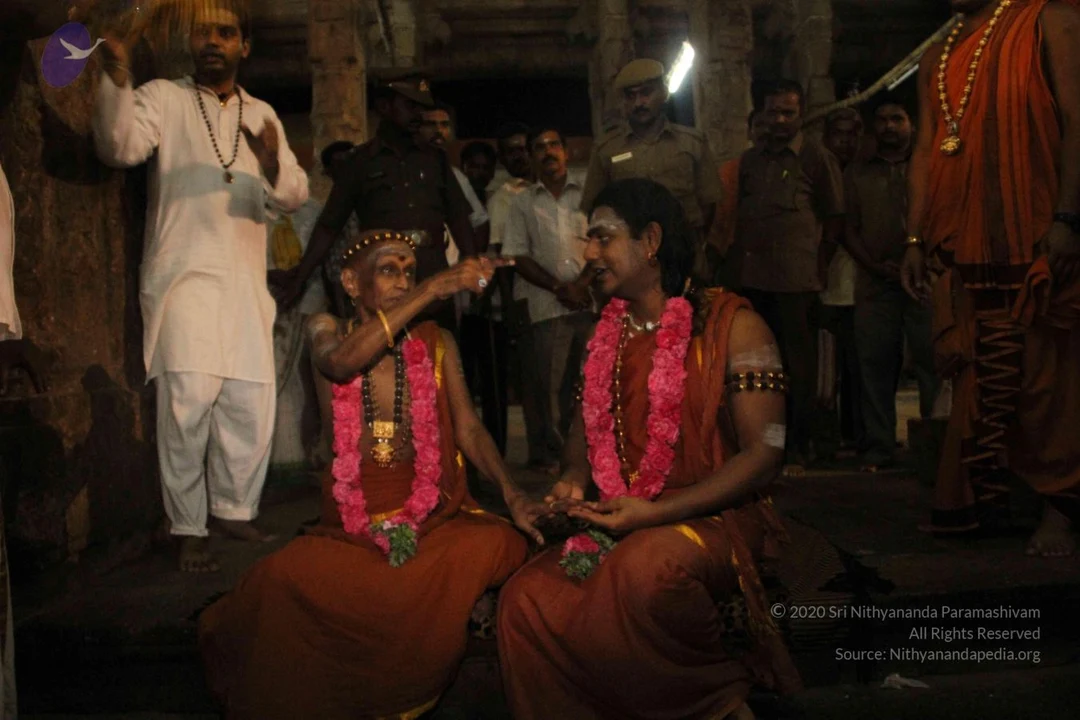
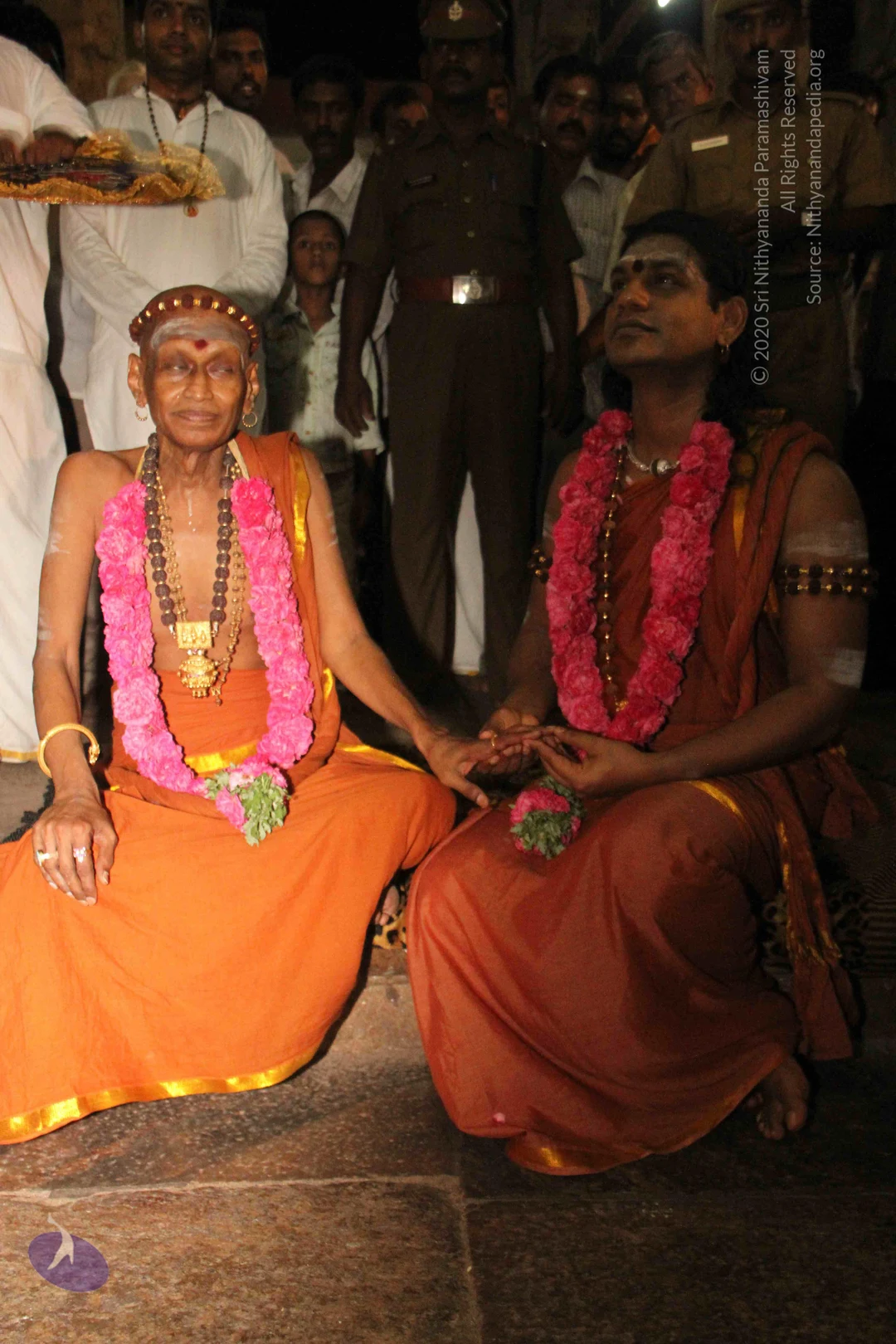
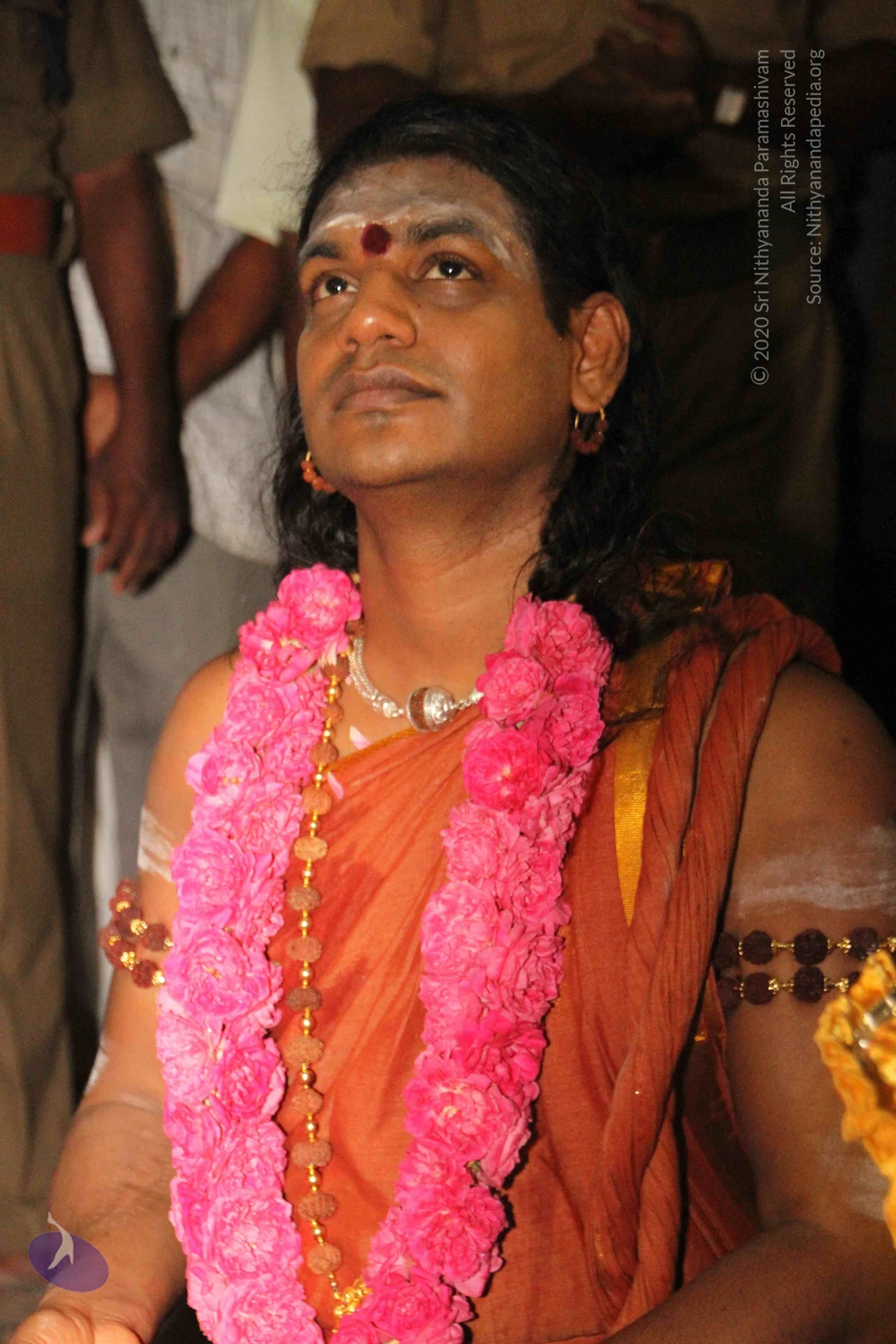
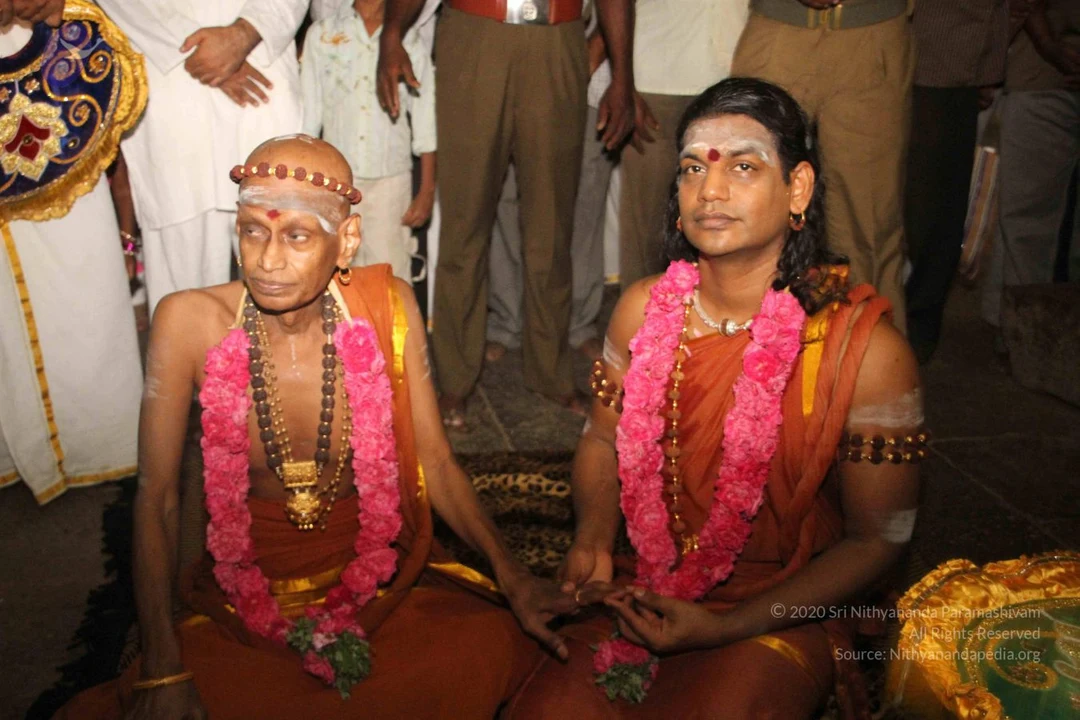
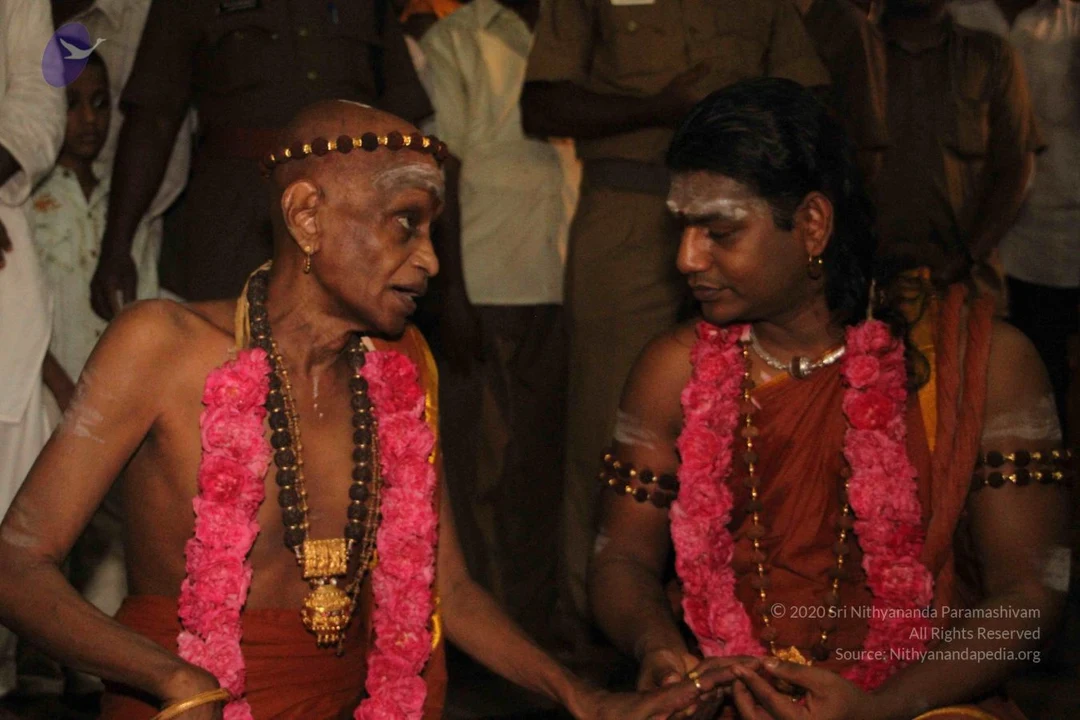
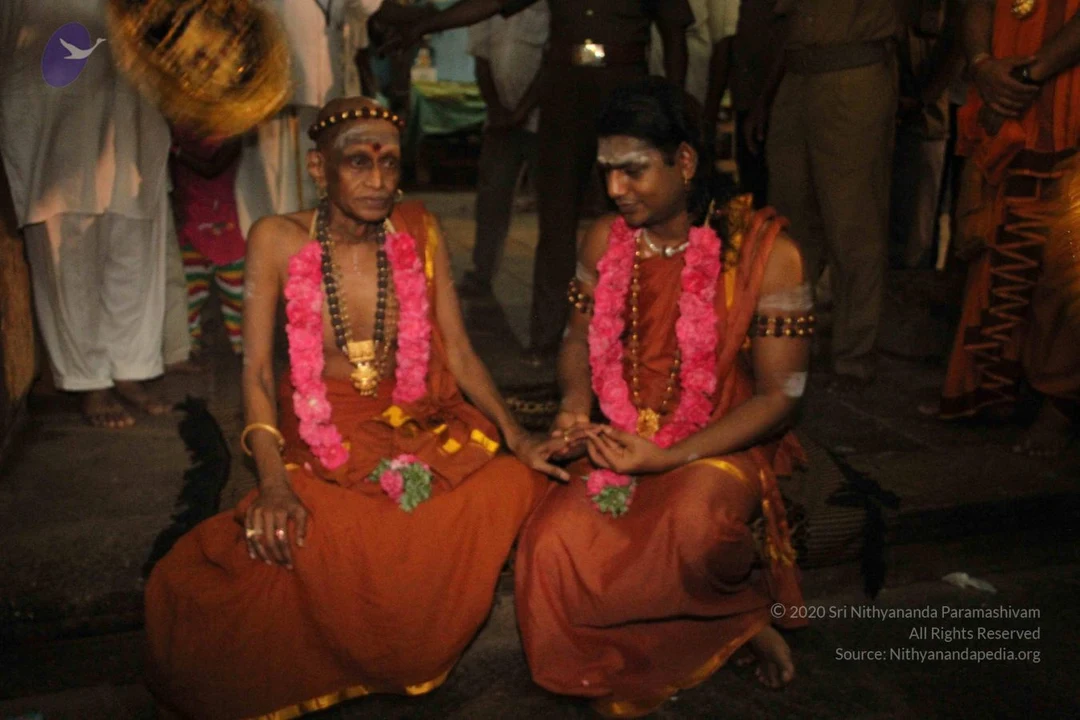
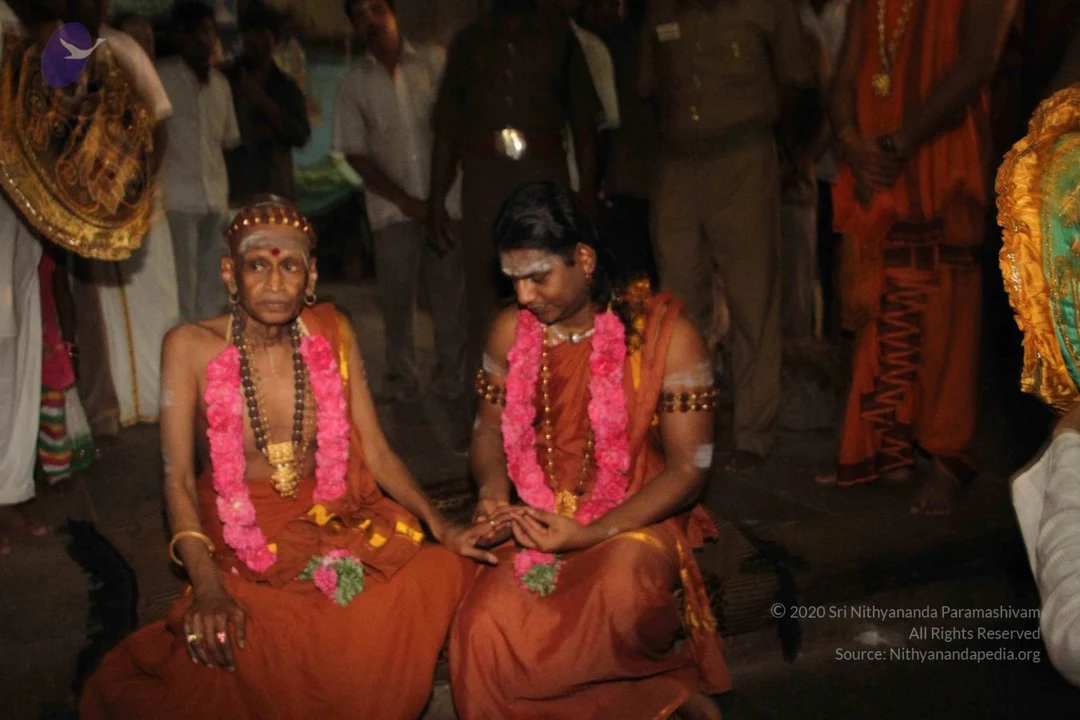
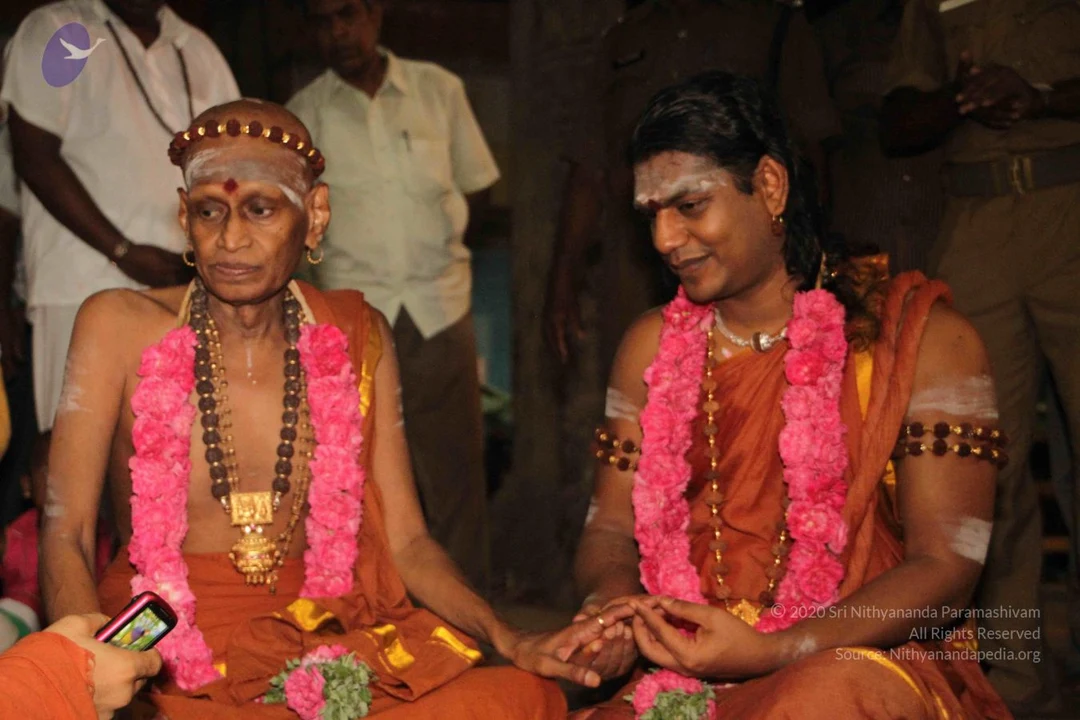
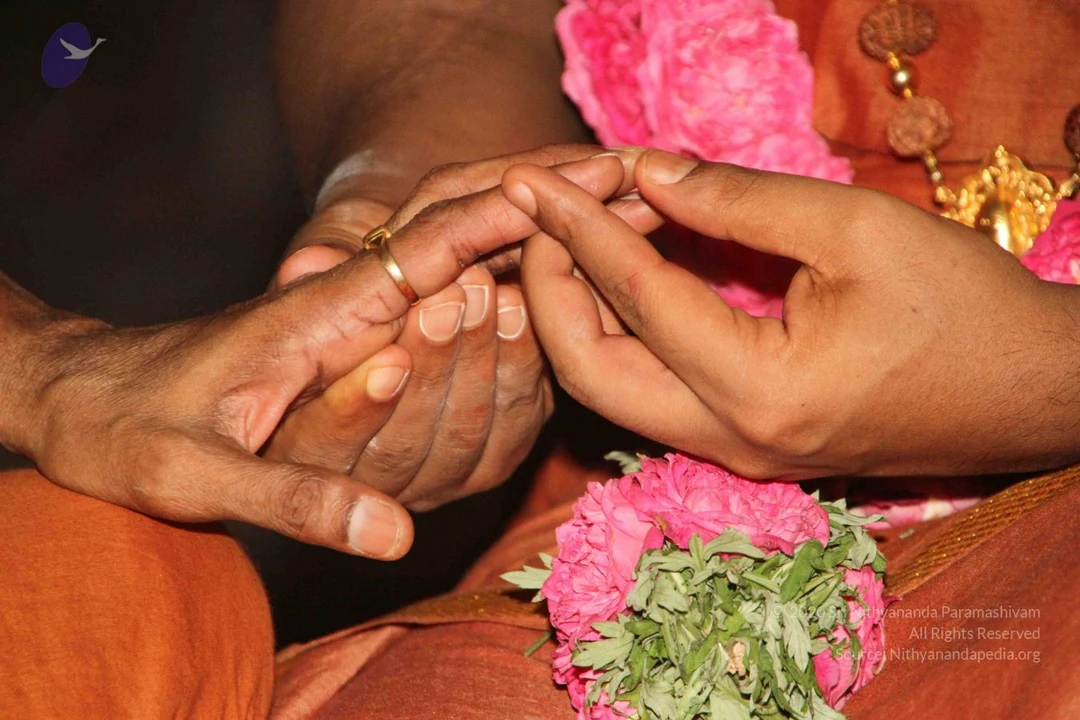
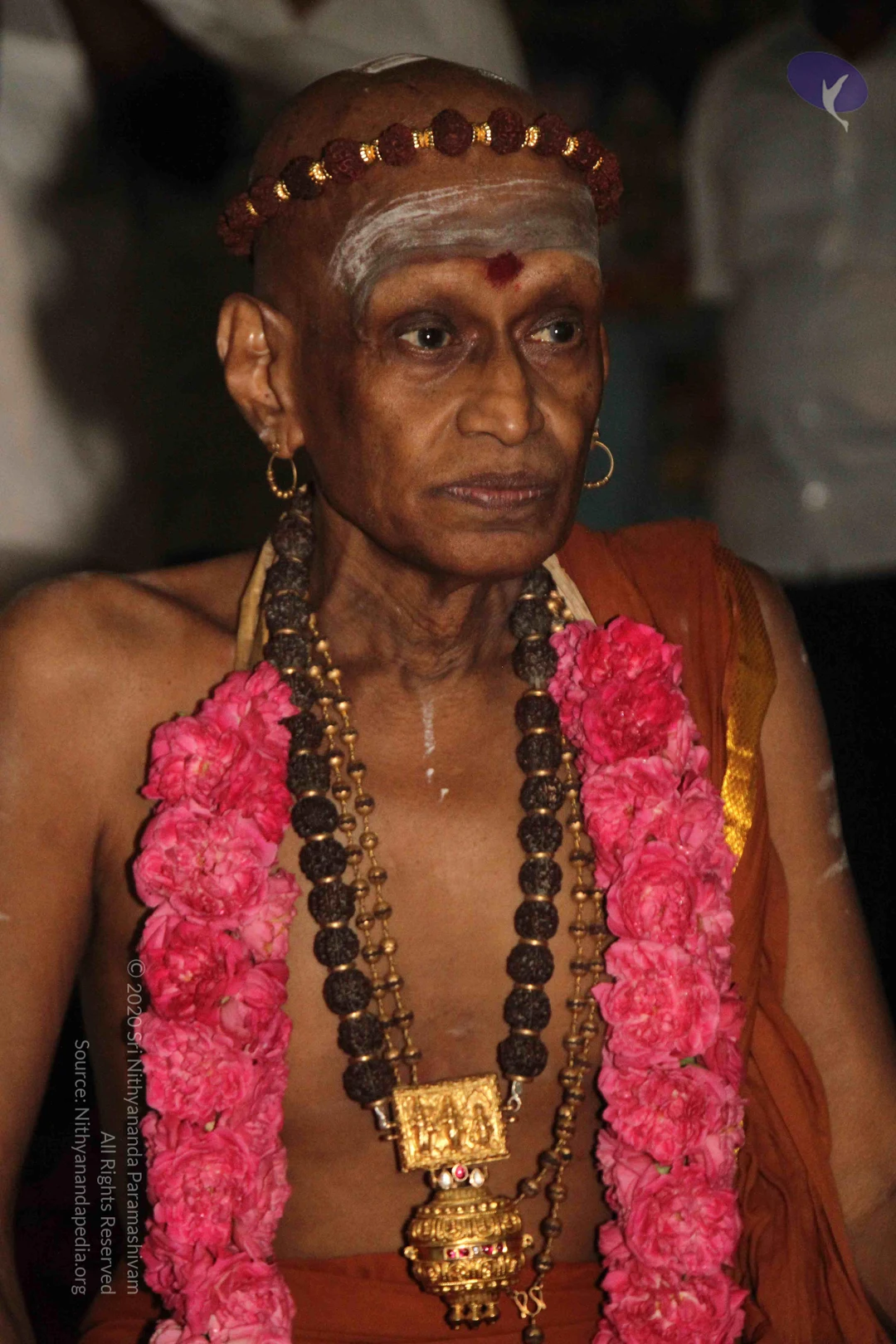
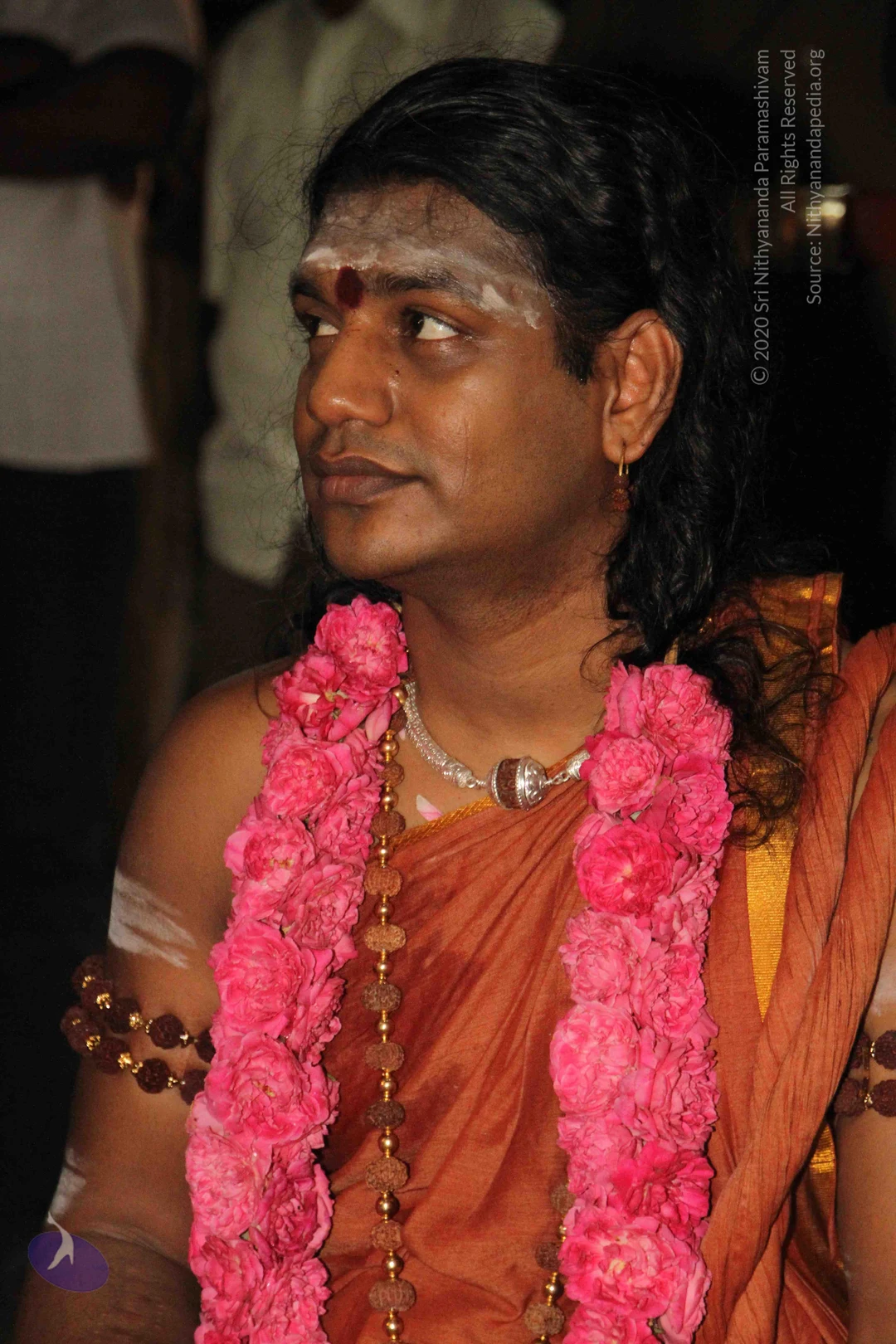
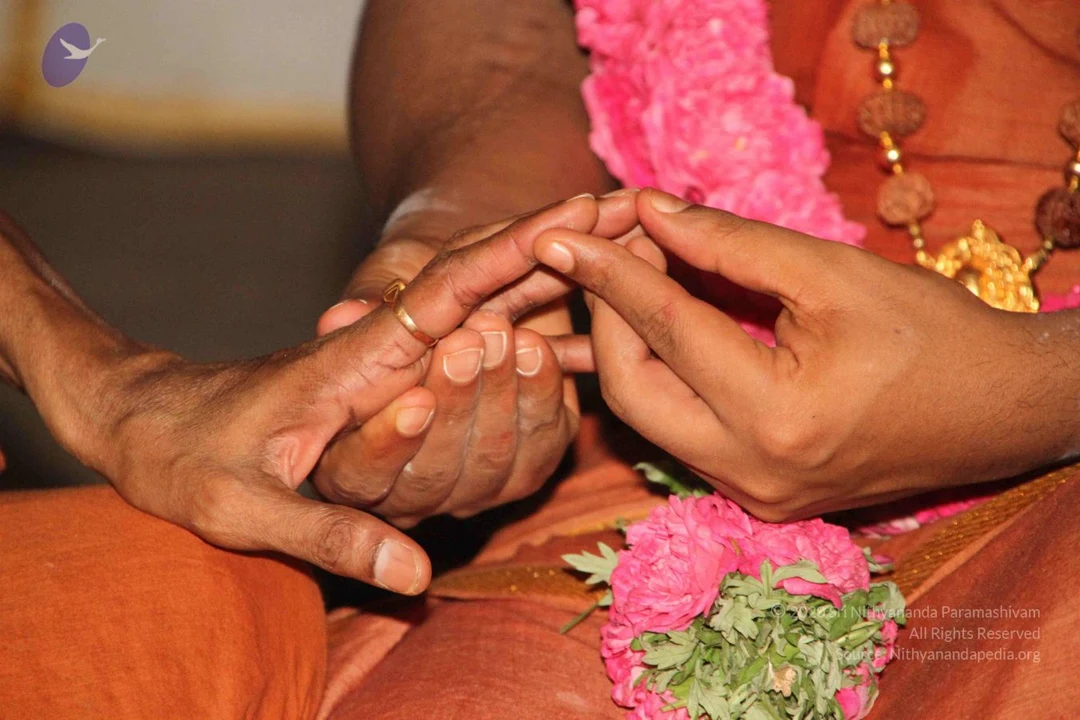
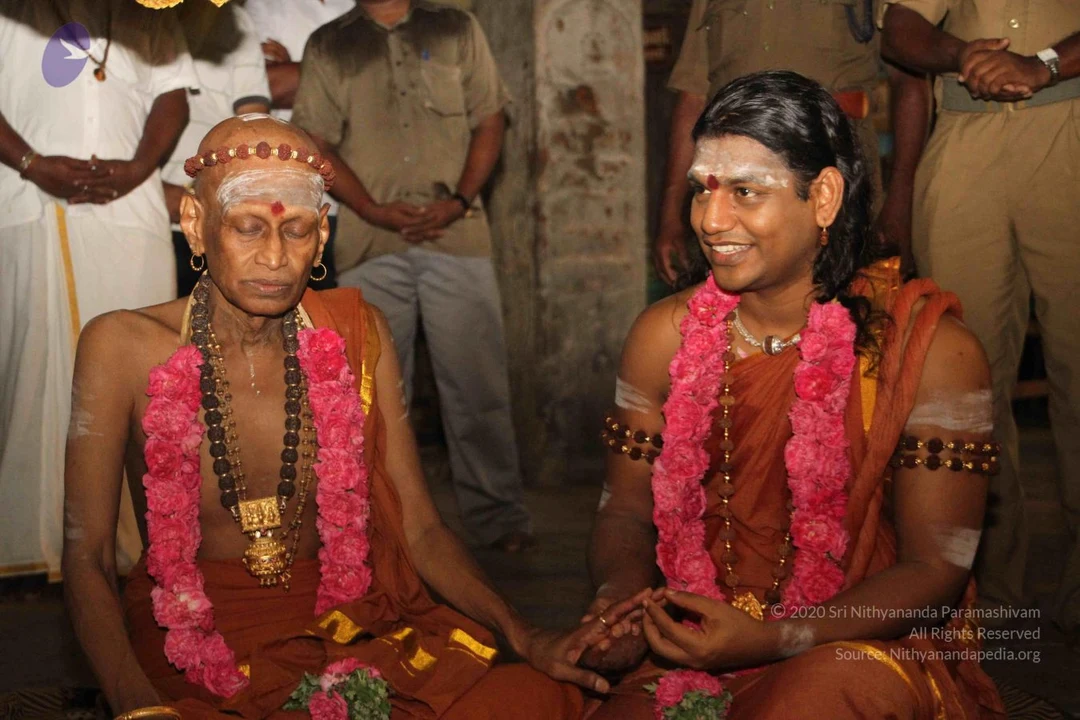
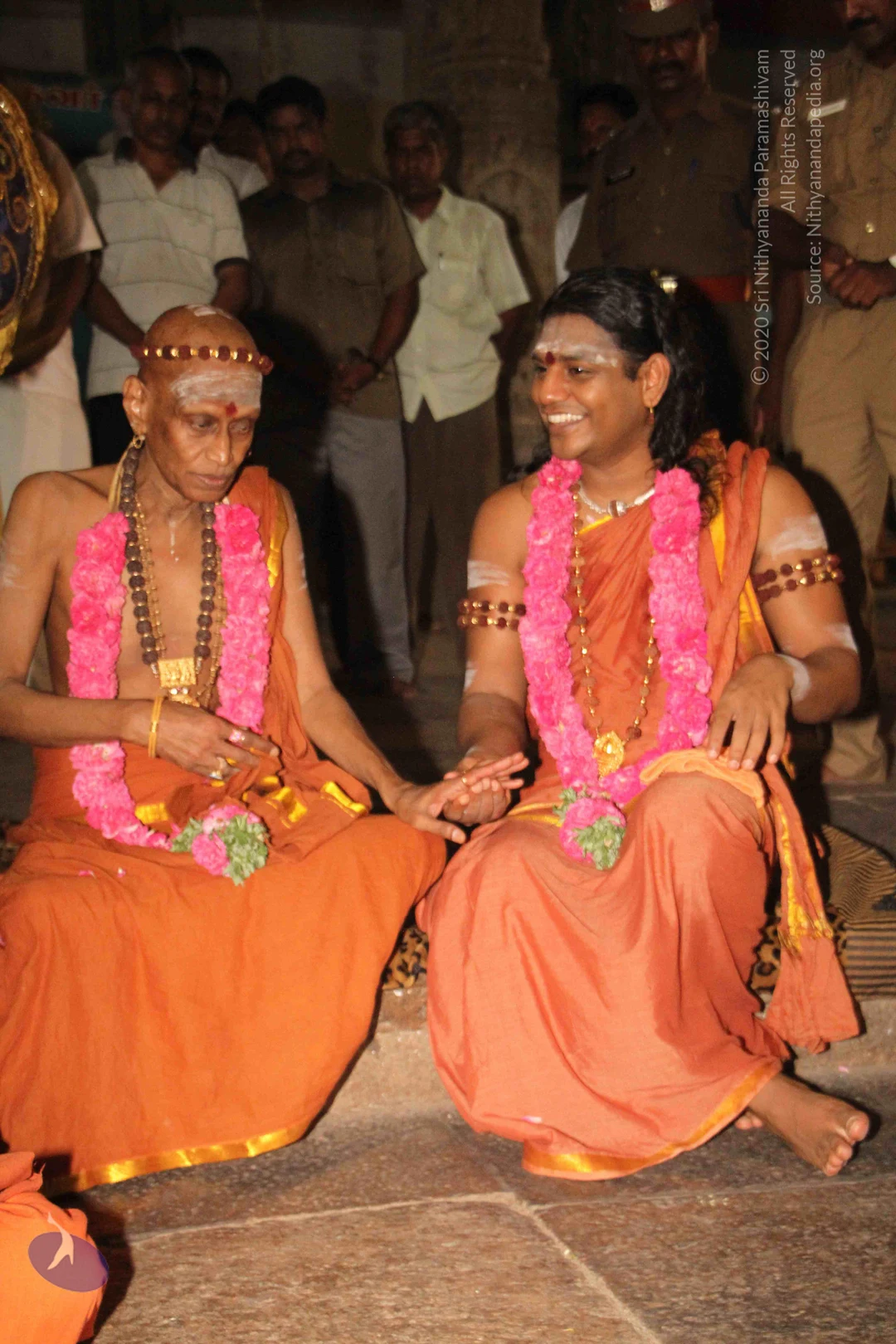
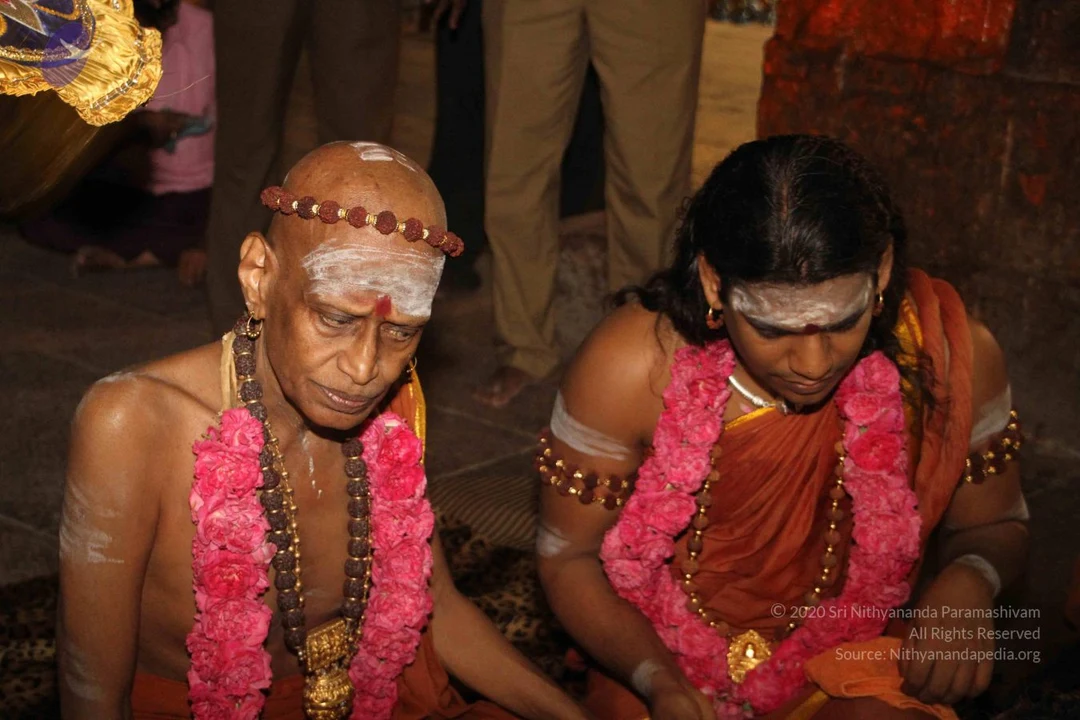
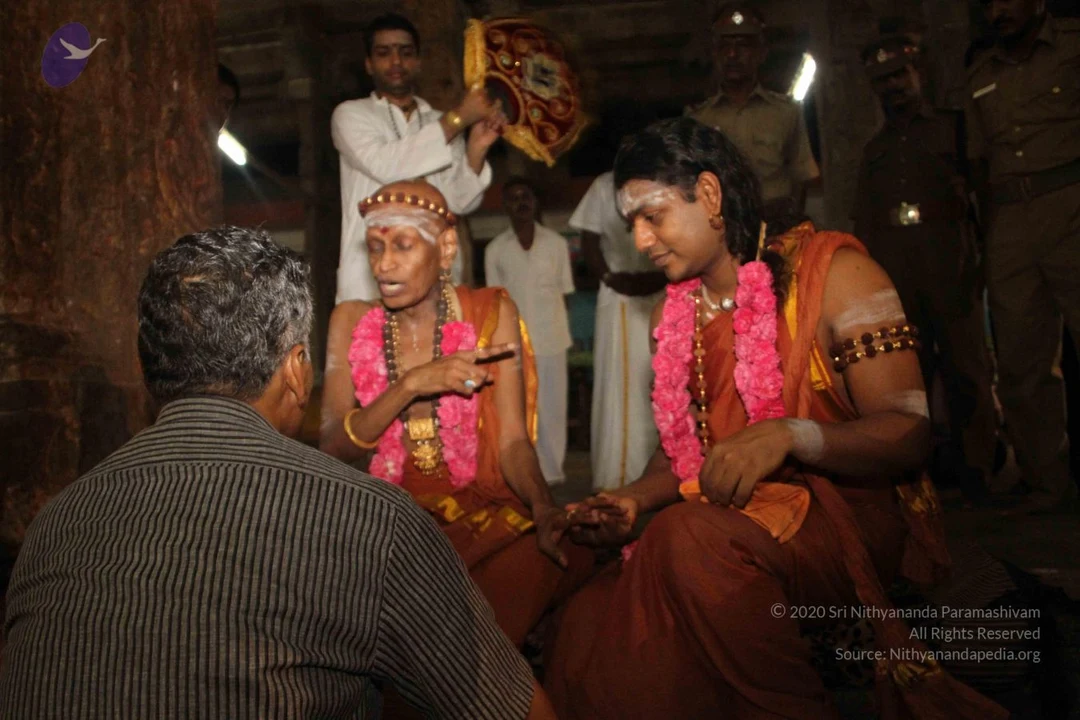
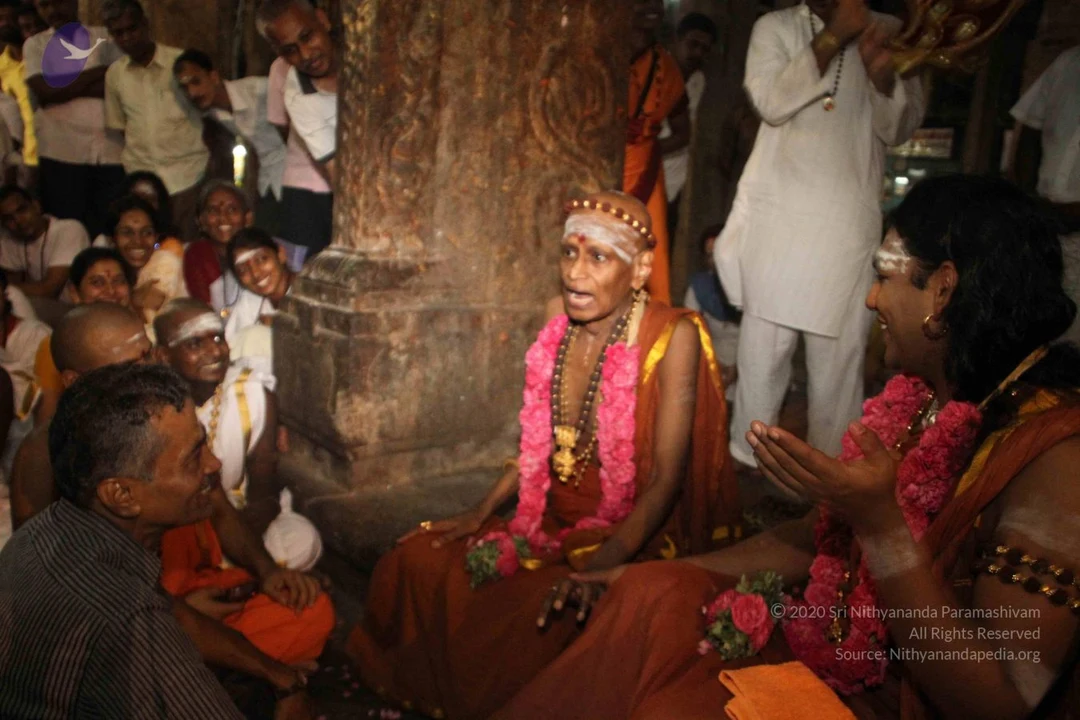
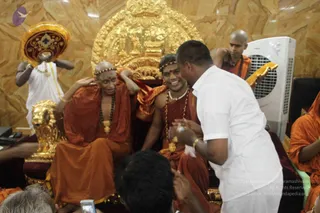
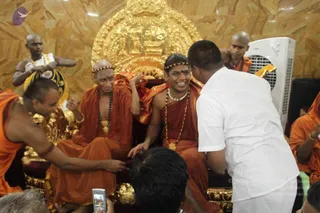
A photograph of a smiling man in a rust-orange wrap garment with a bare shoulder, draped in a thick white jasmine garland with red flowers and a pink rose, wearing a red floral head garland and rudraksha beads on his arm. Devotees, mostly women in cotton saris and glasses, stand close with fruit, mangoes and folded papers, while a man in an orange shawl stands beside him. The setting is a bright open hall with a corrugated roof and a red table. a person: the central figure wears a rust-orange wrap, rudraksha beads and a floral garland, and the page links him to a talk on the Bhagavad Gita.A photograph of a long row of men seated cross-legged on a polished marble floor, eating a meal served on fresh green banana leaves. Most wear white dhotis and white shirts, and some have sacred ash or red marks on their foreheads. Each leaf holds rice, yellow curries and small side dishes, with steel glasses of water beside them. A man in a white dhoti stands at the far end serving food, and a yellow-draped structure is visible at the top right. The scene looks like a communal meal in an ashram dining hall.Two seated men in saffron-orange robes sit close together on a dark stone floor at night, with several standing onlookers behind them. The older man on the left has a shaved head with a beaded headband, white vibhuti marks, a dark rudraksha mala, a large gold pendant, gold bangles and pink flower garlands. The younger man on the right has long dark hair swept back, white forehead markings, gold earrings, a silver necklace, pink garlands and gold armbands. He leans forward with his hands extended toward the older man's hands. Standing figures in white dhoti and khaki uniforms with belts watch from behind, and a golden ornamental object is visible at the top left.

May 20 2012

Original wiki page
Contents

TItle:

Establish Yourself in Self-Remembrance

Description:

Bhagavad Gita (Song of God) is a timeless treatise on the essence of living enlightenment. The Gita was imparted by the enlightened Hindu incarnation Sri Krishna to the warrior-prince Arjuna over 5000 years ago. Amazingly, the spiritual wisdom and life solutions offered in the Gita are so universal and current that it is even today used as a personal transformation guide In today’s talk on Bhagavad Gita, Chapter 4 Verse 30, Paramahamsa Nithyananda (Swamiji) emphasizes the clarity of Sri Krishna’s teaching. Krishna does not leave any space for misinterpretation in his description of prana samyama, the practice of self-remembrance. If we do not achieve recollection of the self by offering all of our actions to the prana, we cannot even reap the rewards of ordinary life, never mind advancing spiritually! This practice is so fundamental to living a fruitful existence that without it we cannot even call ourselves alive. Once we establish ourselves in self-remembrance, everything awakens within us and life becomes juicy and vibrant.

Link to Video:

Establish Yourself in Self-Remembrance

VideoAudio

Transcript:

20th May 2012: Establish yourself in self-remembrance

Yesterday officially we inaugurated our center in Sri Lanka Matta Kallapa, Nithyananda Dhyanapeetam is formed officially in Sri Lanka in Matta kallappa. I have donated from Dhyanapeetam one crore rupee and in Ceylon money 2.5 Crore. It will soon be transferred legally to Sri Lankan Institution. I have already allotted, now it will be transferred. All our social service activities in Sri Lanka, mainly for the people who were affected by the war will start in full fledged way.

See, Tibetans are also persecuted but they lost their land. Tibetans lost their land but they survived by keeping their culture, spiritual tradition alive! Now, Sri Lankan Tamils also should do the same thing. You might have lost in the political war but don’t lose in the cultural war. Keep your culture alive, keep your tradition alive, keep your spiritual strength alive. Through that you can come back always! You can always come back.

See now Dalai Lama is having a big coming back. I hope and expect and bless Let Tibetans get their land back. Same way I assure O people of Sri Lankan Tamil, I assure - Keep your culture, spiritual tradition alive. You will get your land back.

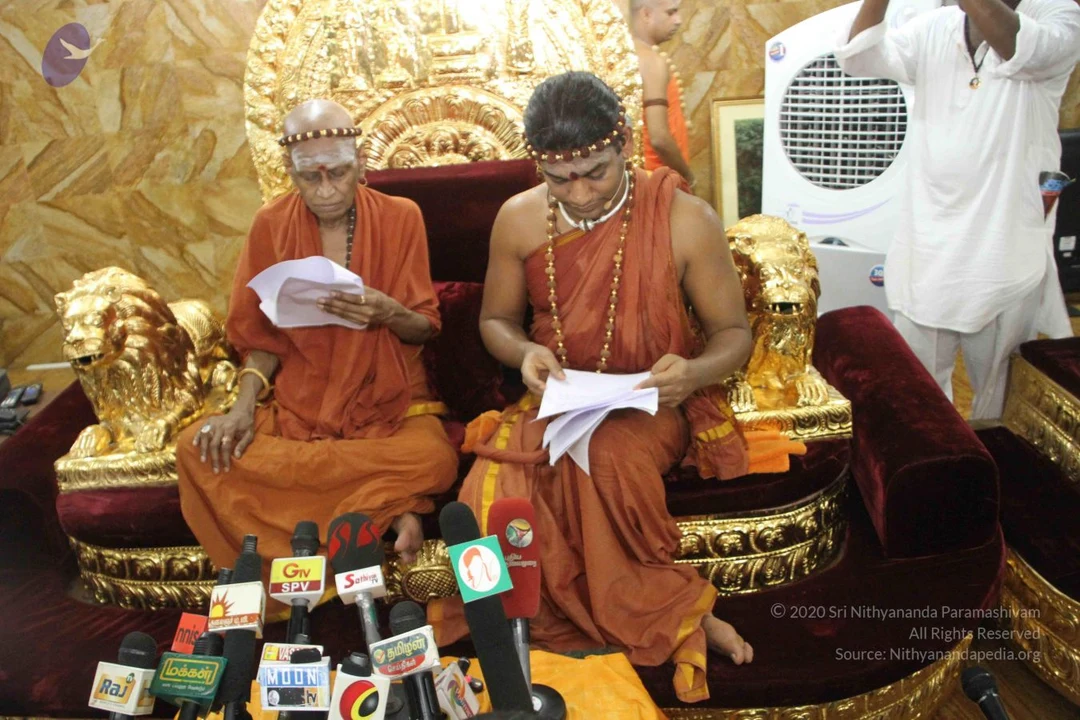
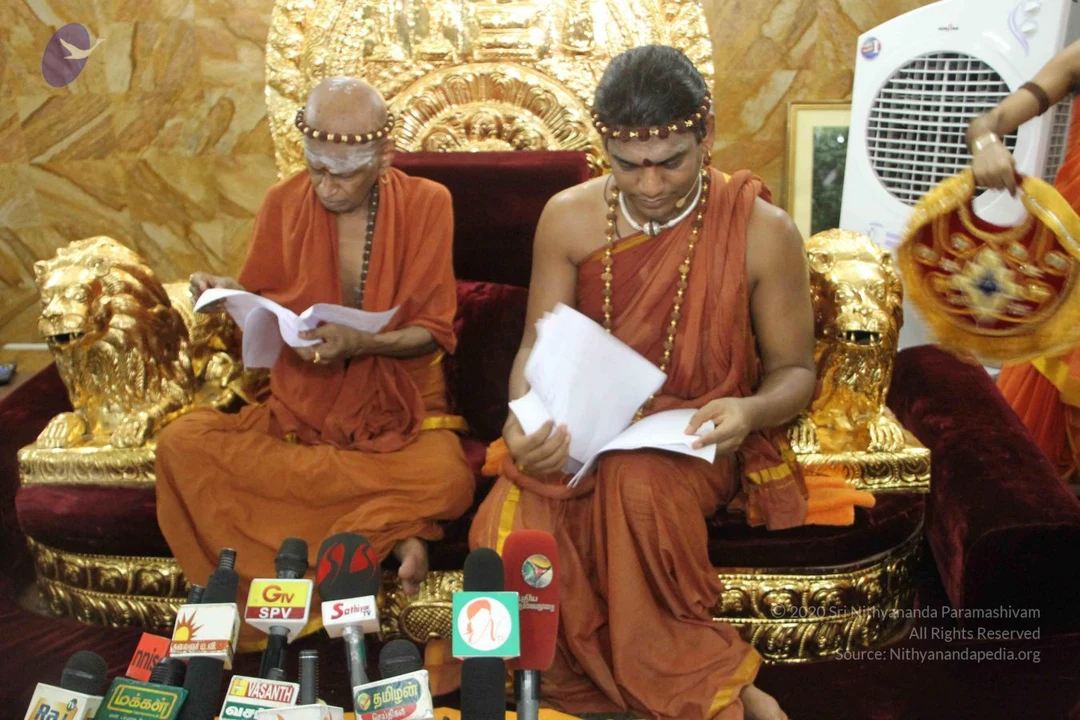
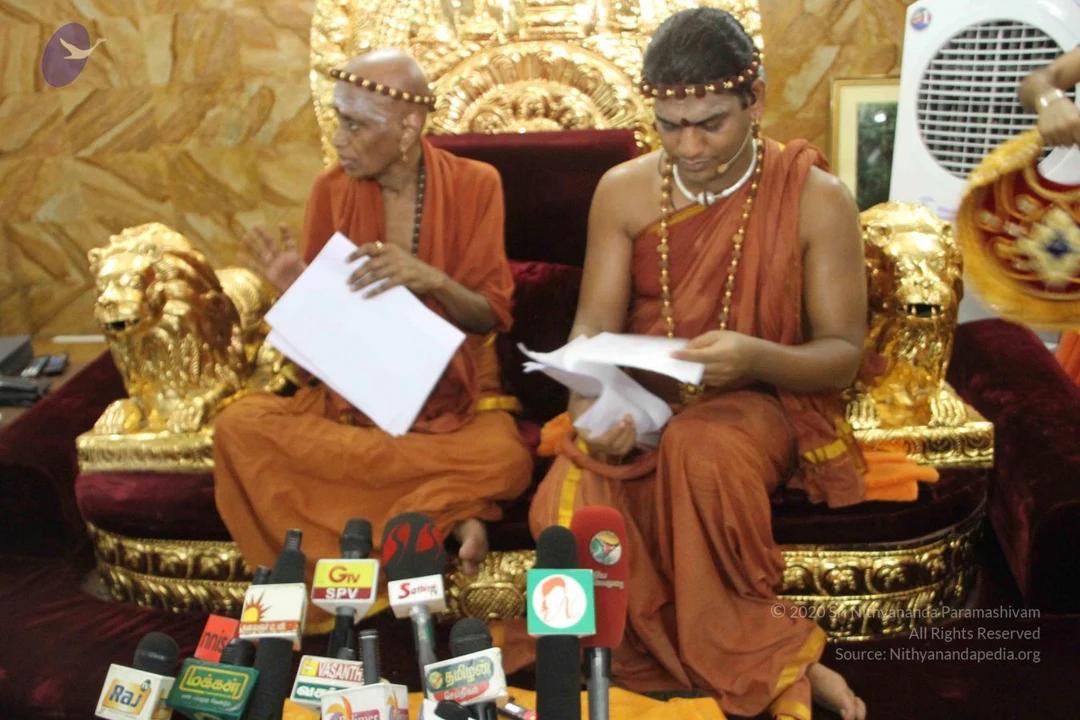
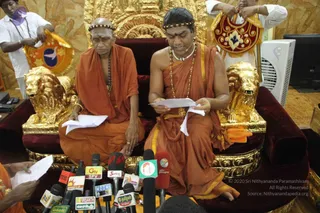
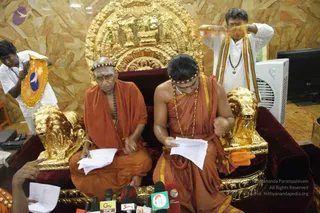
And today, I have one more wonderful news for all you guys – 57 big organizations, not small, Big organizations are gathering today together in Madurai to have Madurai Adheenam Protection Committee. Please understand, 52 big organizations. Actually in that – one organization has 4300 organizations under them. So, totally around 4350 organizations are supporting us. Today they are all gathering to give a press meet.

And I’ve also one more good news for you guys – 400 people have taken up yesterday - the praana samyama. The praana samyama is now being practiced from day before yesterday by 400 people across the world and once you all complete the 21 days, I’ll initiate you all in hunger-free and thirst-free samyama and now I have been very successful in making your system function without losing energy or any basic things and without having food. I’m very successful in initiating people. We’ll be able to do it.

Let’s enter into today’s satsang, In Bagavad Geeta 4th chapter Jnana Karma Sanyasa Yoga 31st verse.

“Yagya-Shishtaa-Mruta-Bhujo Yaanthi Brahma Sanaatanam

Naayam Lokostya-yagnyasaya kutonyak-kurusattama”

Yagya-Shishtaa-Mruta-Bhujaha Yaanthi Brahma Sanaatanam, Naayam Lokosti yagnyasaya kutah anyaha kurusattama

The new translation “The one who experiences the state of imperishableness that remains after sacrifice moves to the state of external expansion but for the one that does not sacrifice even this ordinary life is not there. What to say about other worlds, other states of being, O best among Kurus.”

If you understand this one verse, you will iunderstand the impact of praana samyama on your life. Bhagwan is continuously addressssing about praana samyama in this verse also. He says “having tasted the nectar of the results of such sacrifices” – Please understand, here the word “sacrifice” means offering all your actions into praana – means being established into praana, the self-remembrance, even while you are functioning in all actions, even while you are doing all actions.

Bhagwan is continuing actually last 3 verses are on the same subject Praana samyama. He is telling you about the benefits and now he is telling - If you are not established in praana, self-remembrance, even this world you won’t get., what about the other worlds – forget about it. He is very clear. He is making it very clear categorically. Please understand – Sri Krishna have a very logical and systematic, strategic brain! He is not Bhole Baba, like Shiva. If you read whole Shiva Sutras, not a single instruction is categorical! He says, if you want meditate on the heart center. If not meditate on the agnya centre. If not – sit observing your breath. If you read the whole Shiva Sutras, it is all about options. Bhole babas always give you options. If not, do this. If not, do that. If you don’t even want to do that, all right do whatever you want. I will support you. But Krishna is not Bhole baba. He is clear! In the first sutra, he defines the process. In the next verse he says about the benefits. In the third verse “If you are not going to do this, what are you going to become”. Means categorical. He says about the plus, minus and the process. He is very clear. Bhagavad Geeta is very apt for common mass because he is very clear. Categorical.

Please understand, Bhagwan is very clear in this verse. He says if you are not going to establish yourself in self-remembrance, praana, you won’t achieve even this world. Then forget about other worlds, Higher worlds! Even this ordinary human world is not for you. He emphasizes on self-remembrance. Ordinary human beings want categorical instructions. In this Bagawan is very categorical. He says One who experiences this state of imperishableness by sacrificing all the actions into Praana, moves to the state of eternal explosion – Enlightenment. But for the one who does not establish himself in Praana, even this ordinary life, ordinary world is not there, what to say about the other worlds – impossible! So Bhagawan is very clear, categorically in this verse saying – Establish yourself. Establish yourself in a powerful Praana Samyama – Self Remembrance. You don’t even need to comment on this verse. It is very clearly. It says if you Establish yourself in Praana you explode into eternal explosion of enlightenment. If not even this world you won’t get it – forget about other worlds. That’s all! Nothing else. Over.

So even today I initiate all of you in to Praana Samyama, Please take up Praana Samyama. Now all of you just sit for few minutes. Let you all feel the presence of Meenakshi Sundareshwara.

Spot Notes: Sunday, May 20th 2012

804-27-213-30

Nithyananda Nagara Bidadi, LA Aruna, Seatt, New York Varan, London, Wash, New zeal, at, Houston, charllotte, dallas, Vancover Puri, toront, penang, tiru, sing, san jose, Hyderabad Bhagyanagaram, New York Varanasi, Ohio centre, phoenix Kanchipuram, Mattakallappu Illangai, Dacota dunes, studio city California, Dacota dunes, Austin. I welcome all of you with my love and blessings!

Yesterday officially we inaugurated our centre in Srilanka mattakallappu! Nithyananda Dhyanapeetam is formed officially in Srilanka Mattakallppu. I have donated from Dhyanapeetam one crore rupees and in Cylone money value 2.5 crores and it will soon be transferred legally to Srilankan institution. I have already allotted. Soon it will be transferred. All our social activities in Srilanka mainly for people affected by war will start in full-fledged way. See Tibetans were also persecuted. But they lost the land but they survived by keeping the culture, spiritual tradition alive. Now Srilankan Tamils also should do the same thing. You might have lost in the war don’t lose your cultural war. Keep your culture alive. Keep your tradition alive. Keep your spiritual strength alive. Through that you can come back alive. You can come back in a big way. See now Dalai Lama is coming back in a big way. I hope and expect & bless let Tibetans get their land back. Same way I assure, oh people of Srilanka I assure keep your culture, spiritual tradition alive, you will get your land back!

Gayathri Rao from German town, USA, Anand Singh New York. My blessings. I accepted both of your paada pujas. I will talk to you during Dial the Avatar. Anand Singh birthday blessings. You will have a happy, blissful, long life. You will be wit me, I will be with you. Blessings! Hyderabad Bhagyanagara blessings for your medical camp. Great!

And today I have one more wonderful news for all you guys - 57 big organizations big, not small, 57 big organizations are gathering today together in Madhurai to have Madhurai Aadeenam protection committee! Atlanta Ujjayini I accepted your glass tower as a gift for me. Blessings J

Please understand 52 big organizations. Actually in that one organization has 4,300 organizations under them! So totally around 4350 organizations are supporting us. Today they are all gathering here to have a press meet.

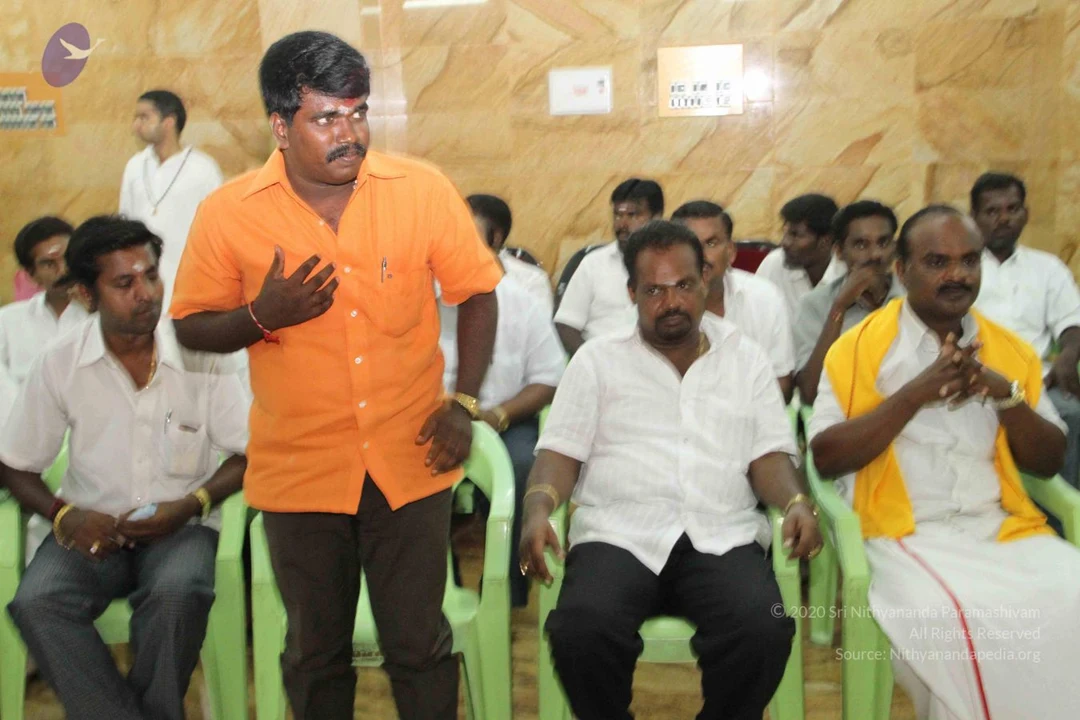
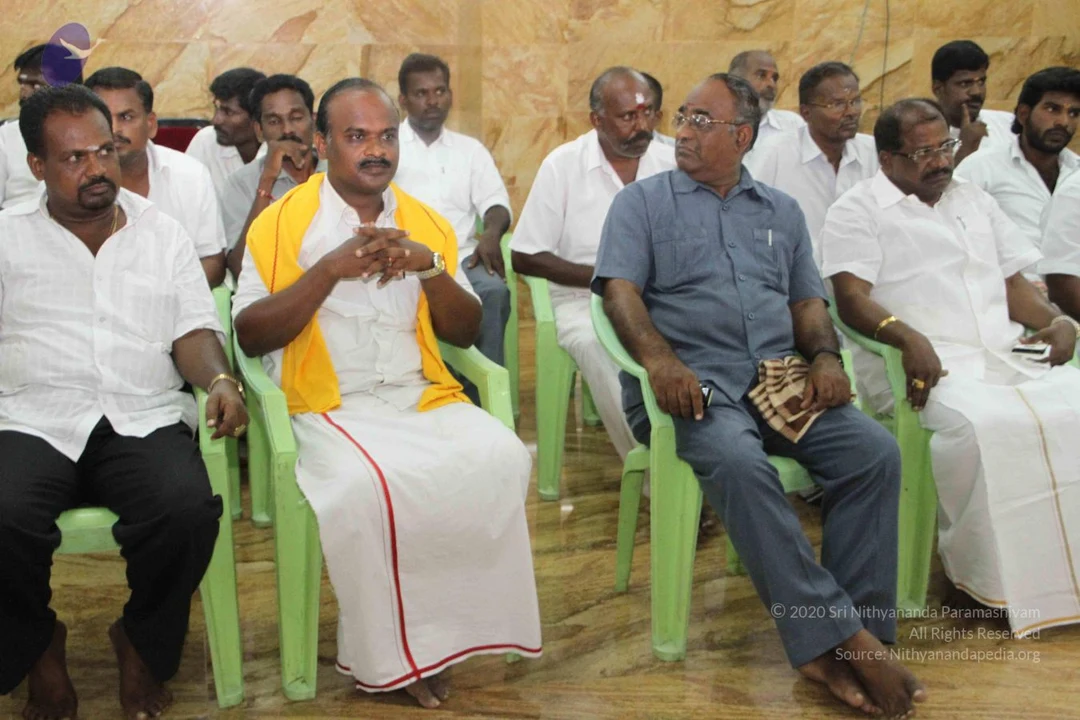
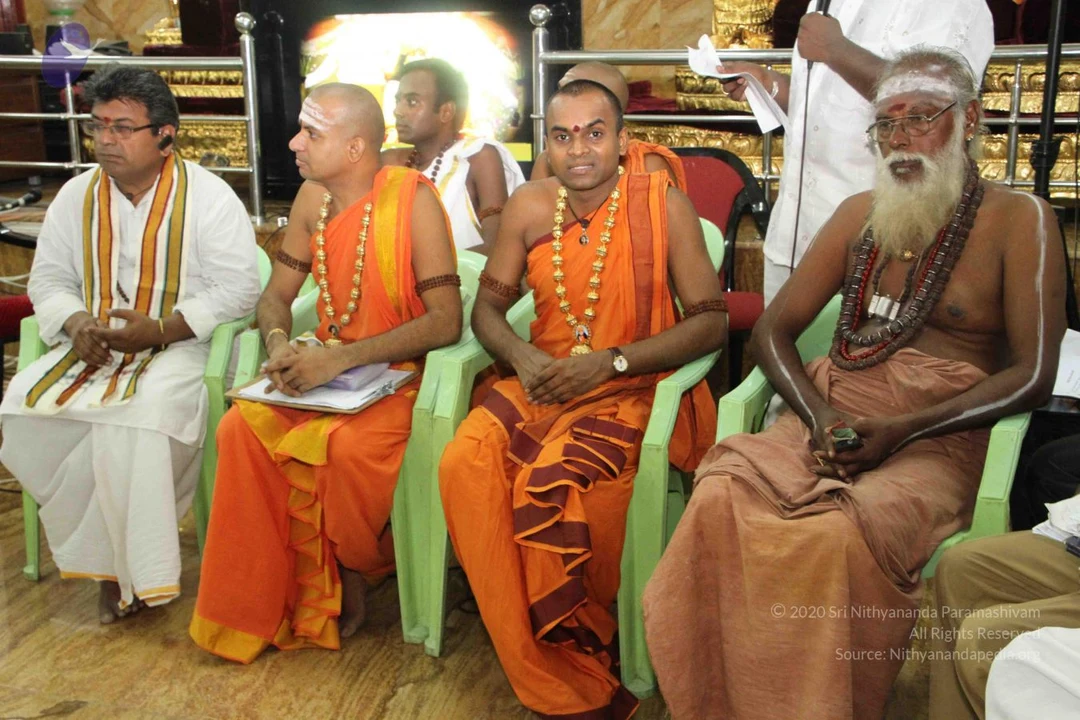
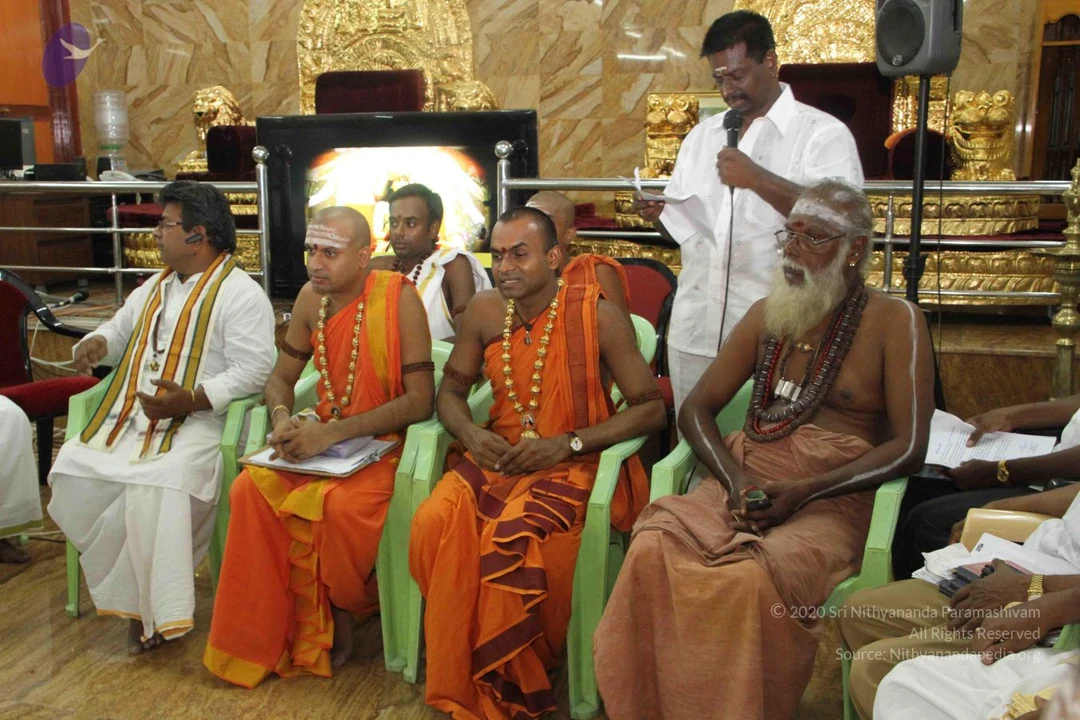
And yesterday I had a shocking information. See in Tamilnadu, oldest Aadeenam is Madhurai Aadeenam. Next to Madhurai Aadeenam there is one more Aadeenam that Tondaimandala Aadeenam. The present Aadeenakartar is my relative. My pre-monastic relative. This 13 Aadeenams in that 13 many are letter pad Aadeenams. Not even Aadeenams. When they passed a resolution against me, they added Tondaimandala Aadeenam name also. Yesterday I spoke to Swamiji – Tondaimandala Aadeenam’s Guru Maha Sannidhanam. He is 232nd. He said no, I did not sign in the resolution! And it is so unfortunate these aadeenams have entered into the illegal act of forging. Can you imagine? Because they released a memorandum with his name included. Yesterday Swamiji confirms and he is coming here for the Kanakabhishekam. He says I will give the press statement directly. Even now you tell the press. He has authorized me yesterday through the phone – you please tell the press tomorrow Tondaimandala Aadeenam did not sign. They have forced him to sign and he has refused to sign. He said – no, I will not sign. You guys are doing without getting into the truth. So yesterday he told me – you please tell the media publicly. Tondaimandala Aadeenam has not signed. In Tondaimandala Aadeenam’s name they forged the signature and released the statement. We have one more case to file. That’s it. That’s it! How dare they do it. They forged the signature of the oldest Aadeenam! Please understand this Aadeenam was revived by Tiru Jnaana Sambandar, that Aadeenam was initiated by Tirunaavakarasa Swamigal – Appar, another one great saint from Tamilnadu. The Tondaimandalam aadeenam is the next oldest aadeenam in Tamilnadu. Madhurai has 293rd I am 293rd. Tondaimandalam has 232. The present Swamiji is 232 Guru Maha Sannidhanam. That is also one of the oldest mutts. And I have invited Swamiji. Swamiji has agreed to come. He will be here for the Kanakabhishekam on June 5th. He was very happy to talk to me. He is conveying his full support! And he condemns the illegal act of signing in his name and releasing a statement in his name when he very clearly said he will not sign. It seems they forced him to sign. He said no. I don’t accept the ideas you guys said. I will not sign. He made it very clear. But in the statement you can see in the press Tondaimandalam’s name is added.

I have also on e more good news for you guys. 400 people have taken up yesterday the Praana samyama. The praana samyama is being practiced from day before yesterday by 400 people across the world. And once you all complete the 21 days I will initiate you all in hunger free and thirst free samyama. And now I am very successful in making your system function without losing energy or any basic things and without having food. I am very successful in initiating people. We will be able to do it.

Let us enter into today’s Satsang. In Bhagavad Gita, 4th chapter Jnaana Karma Sanyaasa Yoga, 31st verse -

“yajna-sistamrita-bhujo yanti brahma sanatanam |

nayam loko ’sty ayajnasya kuto ’nyah kuru-sattama ||”

The new translation – “One who experiences the state of imperishableness that remains after sacrifice moved to the state of eternal expansion. But for the one who does not sacrifice, even this ordinary life is not there what to say about other worlds, states of beings, oh best among Kurus!”

If you understand this one verse, you will understand the impact of praana samyama in your life. Bhagavan is continuously addressing about praana samyama in this verse also. He says having tasted the nectar of the results of such sacrifices. Please understand here the word sacrifice means offering all your actions into praana means being established in praana – the self remembrance even while you are functioning in all actions. Even while you are doing all actions. Bhagavan is continuing. Actually last three verses are on this same subject praana samyama. He is telling you about the benefits. And now he is telling if you are not established in praana – self remembrance, even this world you won’t get. What about the other worlds. Forget about it! He is very clear,

“yajna-sistamrita-bhujo yanti brahma sanatanam |

nayam loko ’sty ayajnasya kuto ’nyah kuru-sattama ||”

He is making it very clear categorically. Please understand Sri Krishna has a very logical and systematic strategic brain. He is not Bhole baba like Shiva. If you read whole Shiva Sutras not a single instruction is categorical. He says if you want meditate on the heart centre, if not meditate on the Ajna centre. If not, sit observing your breath. If you read the whole Shiva sutras, it all about options. Bhole babas always give you options – if not do this, if not do that. If you don’t even want to do what I am saying, alright do what you want. I will support you. But Krishna is not bhole baba. He is clear. In the first sutra he defines the process. In the next verse he says about the benefits. In the third verse he is telling if you are not going to do this, what are you going to become? Means categorical. He says about the plus, minus and the process. He is very clear. That is why for common mass, Bhagavad Gita is very apt for common mass because he is very clear categorically.

So Bhagavan is very clear in this verse he says if you are not going to establish yourself in self-remembrance – praana, you won’t achieve even this world. Then forget about other worlds. Higher worlds. Even this ordinary human world is not for you. He emphasizes on self-remembrance. Ordinary human beings want categorical instructions. In this Bhagavan is very categorical. He says one who experiences this state of imperishableness by sacrificing all the actions into praana, moves to the state of eternal explosion – enlightenment. But for the one who does not establish himself in praana, even this ordinary life, ordinary world is not there. What to say about the other worlds? Impossible. So Bhagavan is very clear categorically in this verse saying establish yourself. Establish yourself in a powerful praana samyama – self remembrance. This verse is so clear you don’t even need to comment on this verse. It very clearly says if you establish yourself into praana you will explode into eternal enlightenment. If not, even this world you won’t get it, forget about other worlds. That’s all! Nothing else over J

So I will stop with this move to the next part of the morning Satsang Dial The Avatar. I do want to request all the devotees start the praana samyama, even today if you want to start please begin the praana samyama. If you want to know about the praana samyama, go to our Youtube discourse day before yesterday I explained in a very detailed way about praana samyama, how to establish yourself in self-remembrance the praana for achieving enlightenment.

Even today I initiate you into praana samyama. Please take up praana samyama.

Now sit for few mintues. Let you all feel presence of Meenakshi and Sundareshwara. Let this powerful praana samyama awaken your Kundalini Shakti. Let you all experience the highest consciousness all the extraordinary experiences and energies.

Let you all experience Meenakshi Sundareshwara’s presence, let you are experience the praana samyama – established in the higher self, self-remembrance.

Today’s minutes to be entered in minutes4peace.org website is 70 minutes.

I bless you all who are sitting with us at this moment around the world in 1030 places through Nithyananda TV, in 27 places through 2 way Video conferencing having Nayana Deeksha, in 261 cities, 31 countries around the world! Let you all achieve, experience, live, express, radiate and share and explode the eternal bliss, Nithyananda. Thank you!

Photos
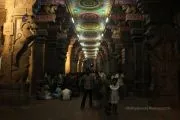
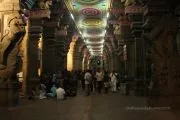
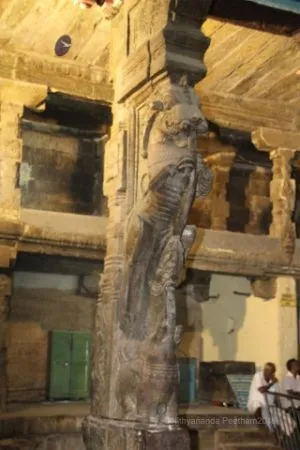
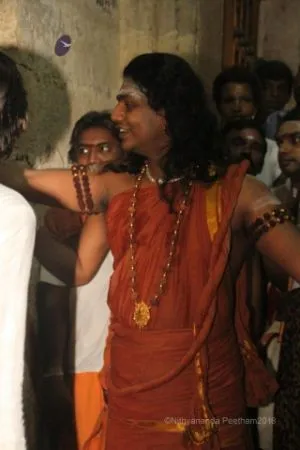
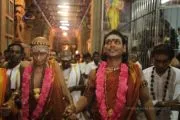
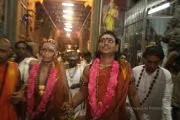
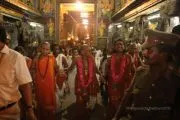
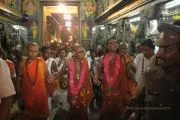
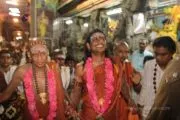
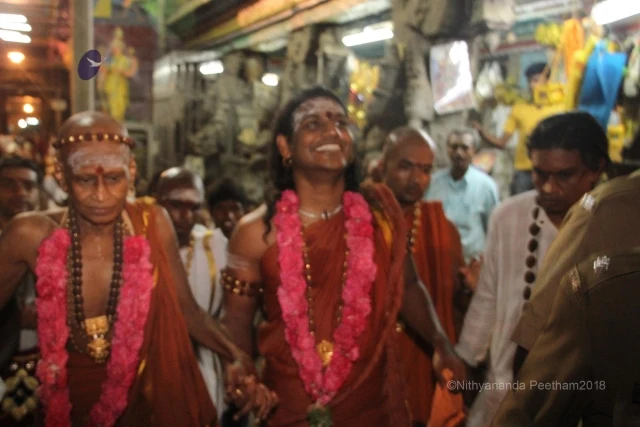
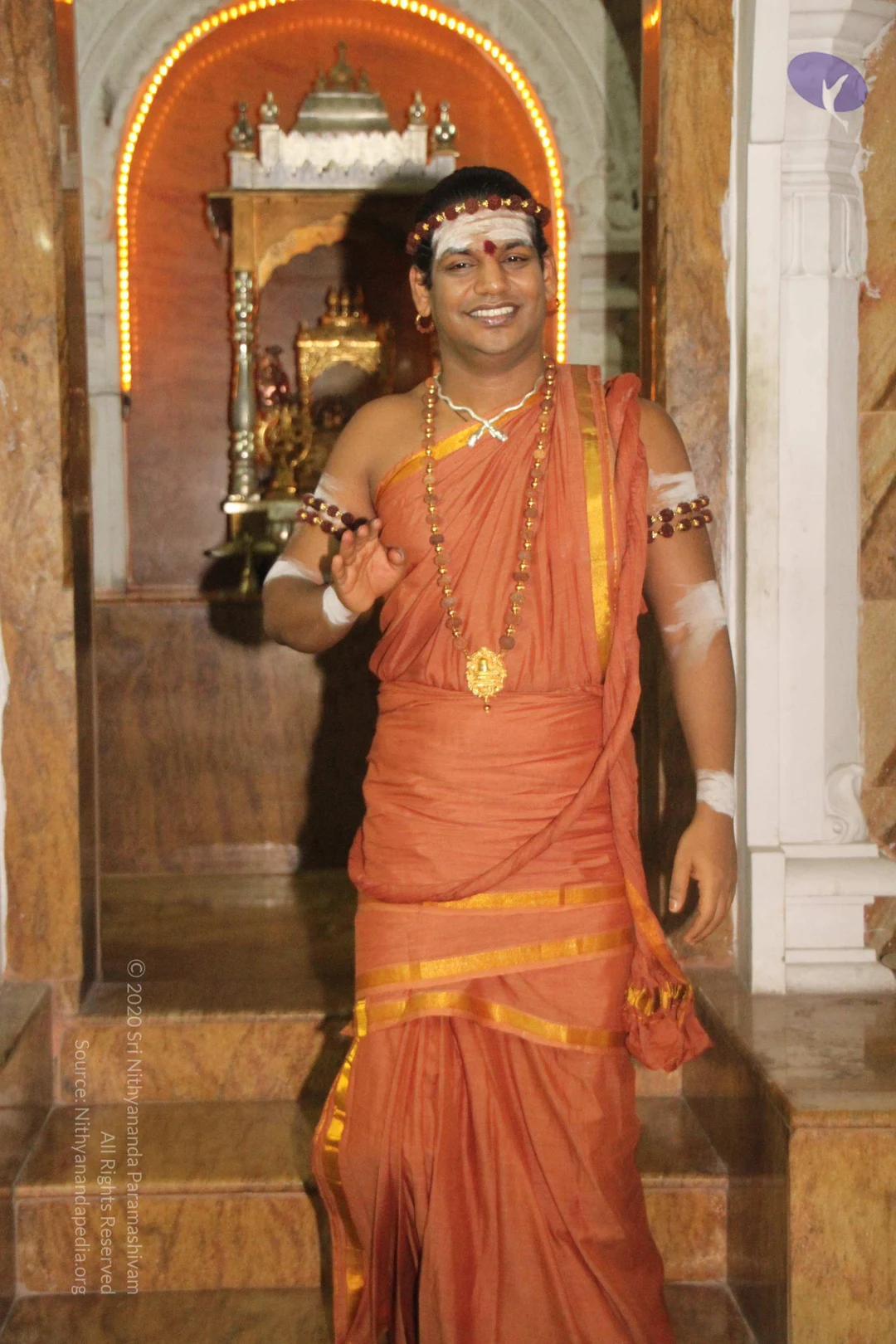
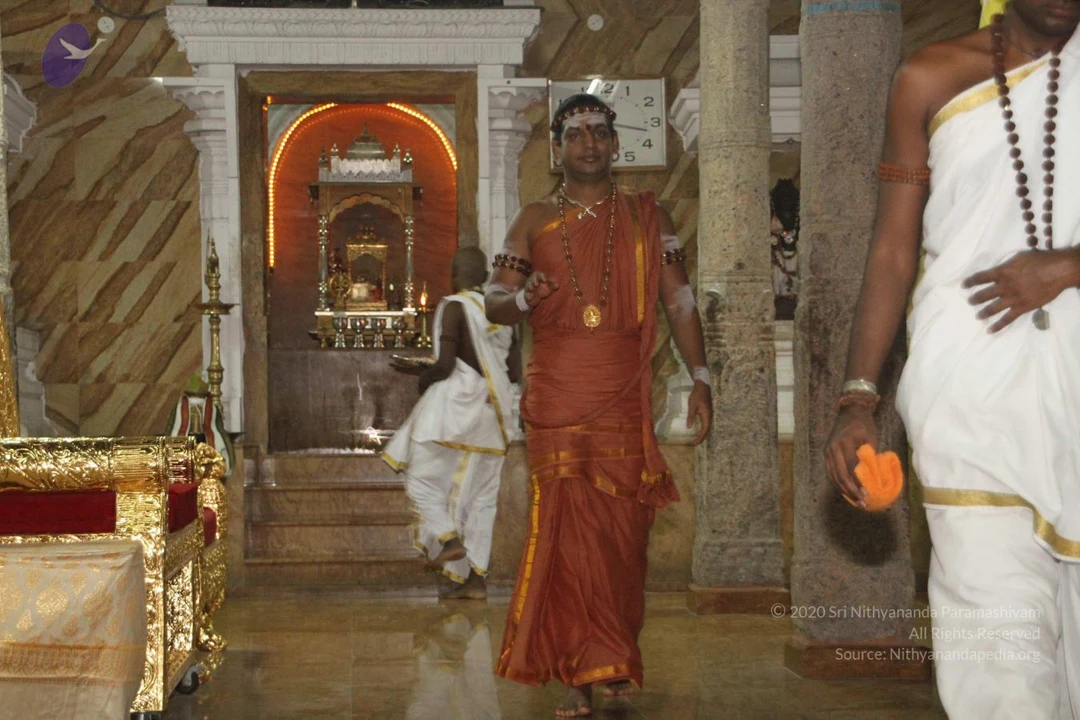
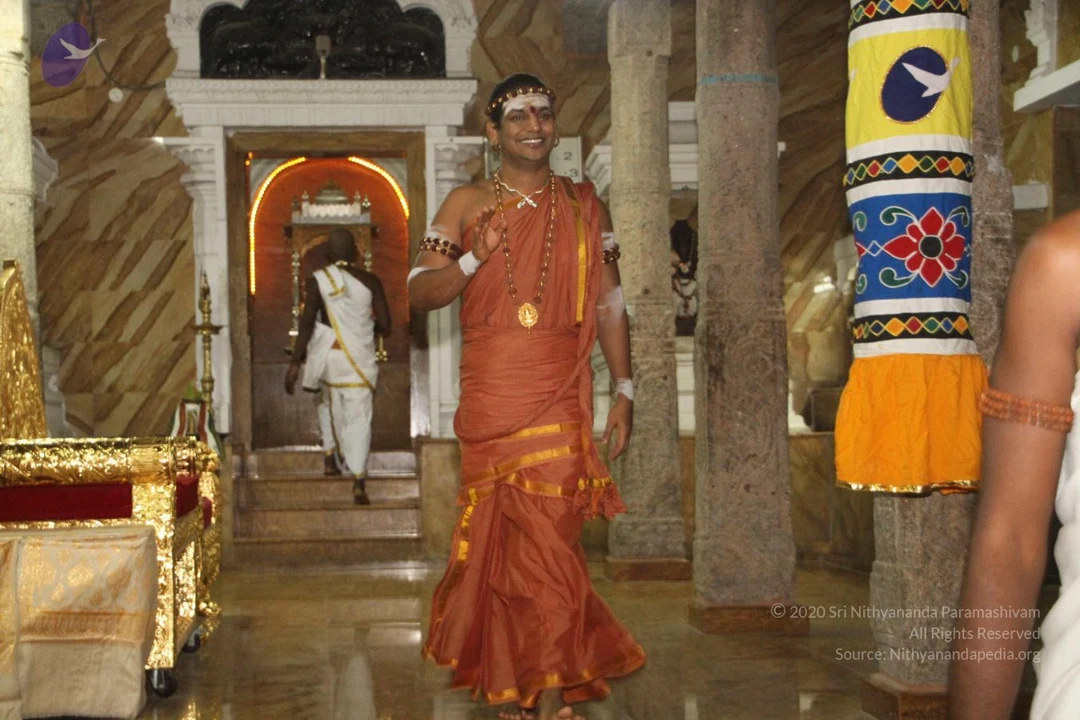
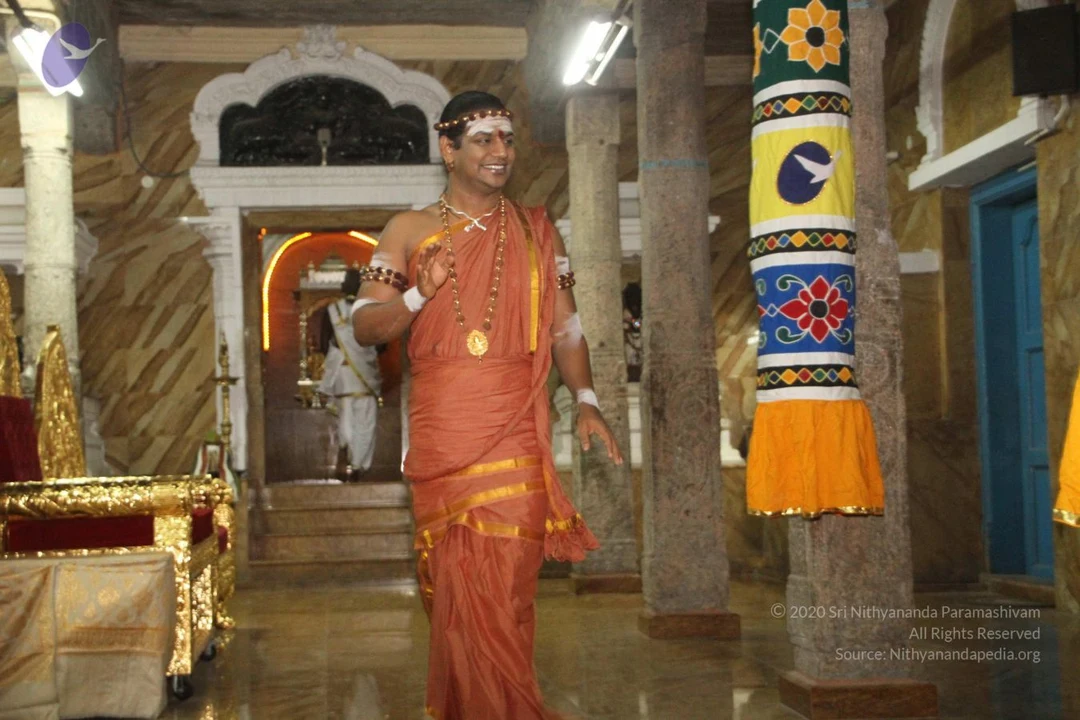
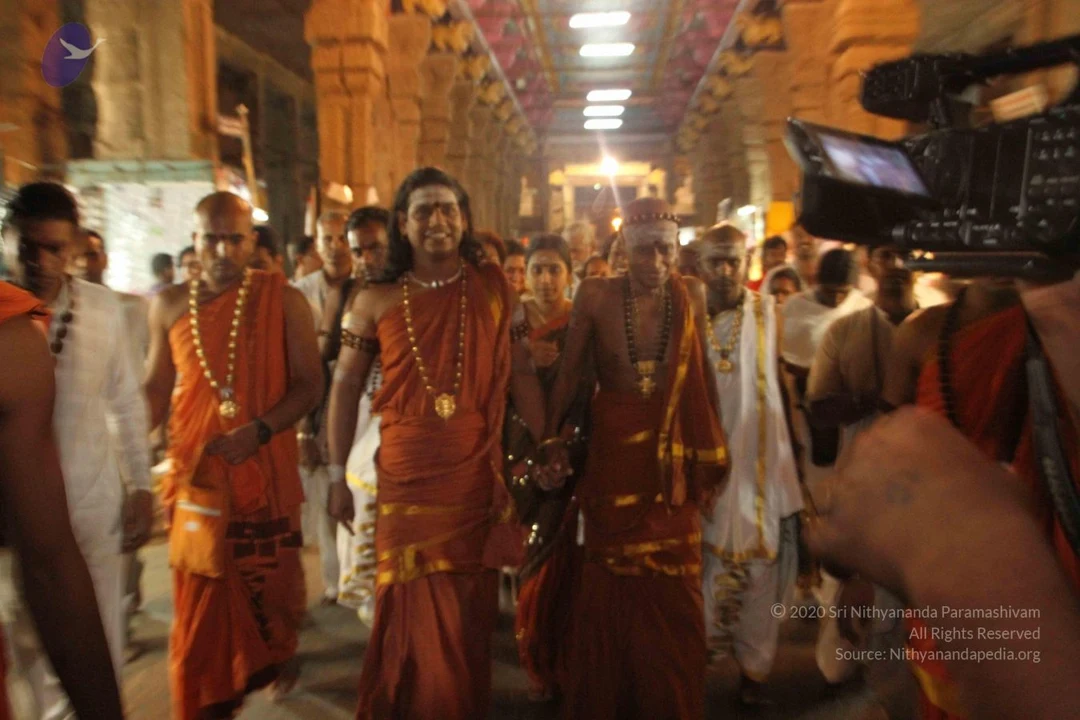
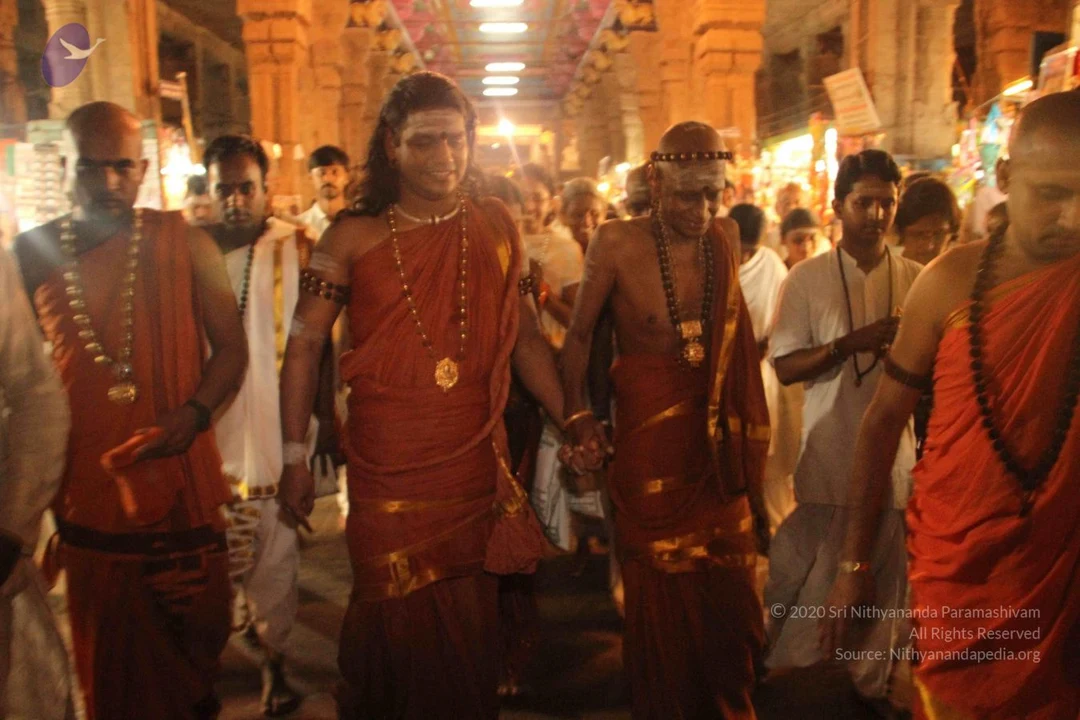
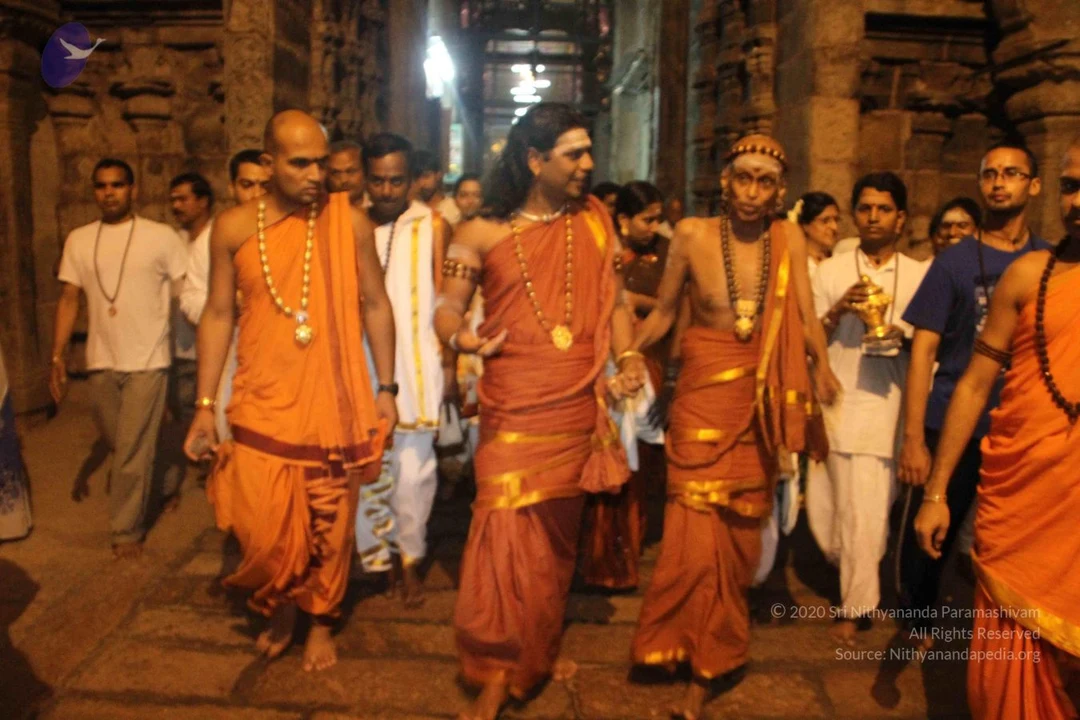
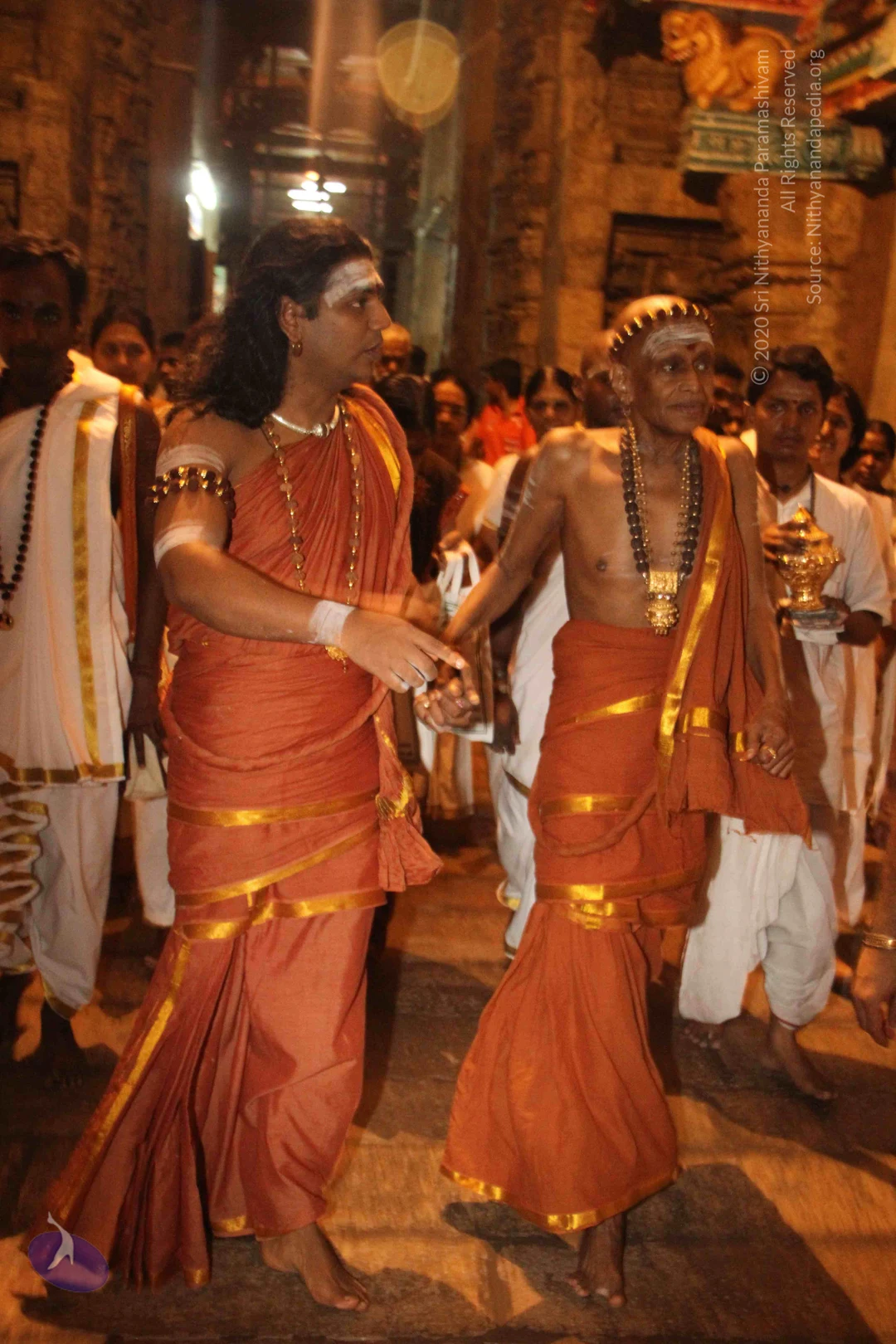
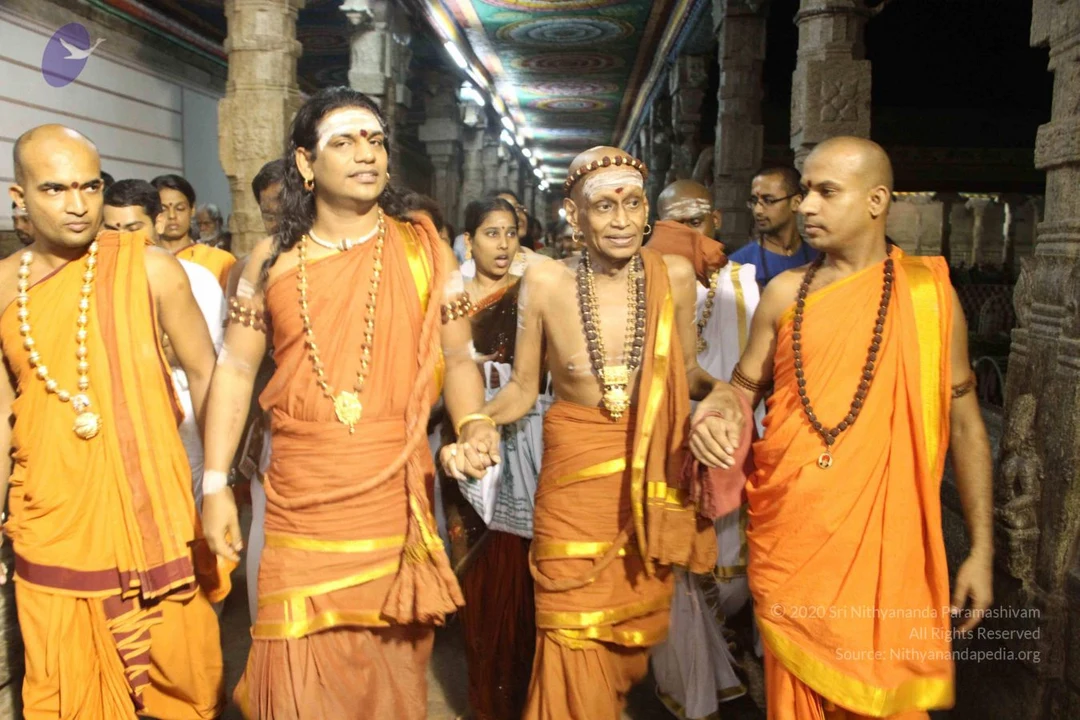
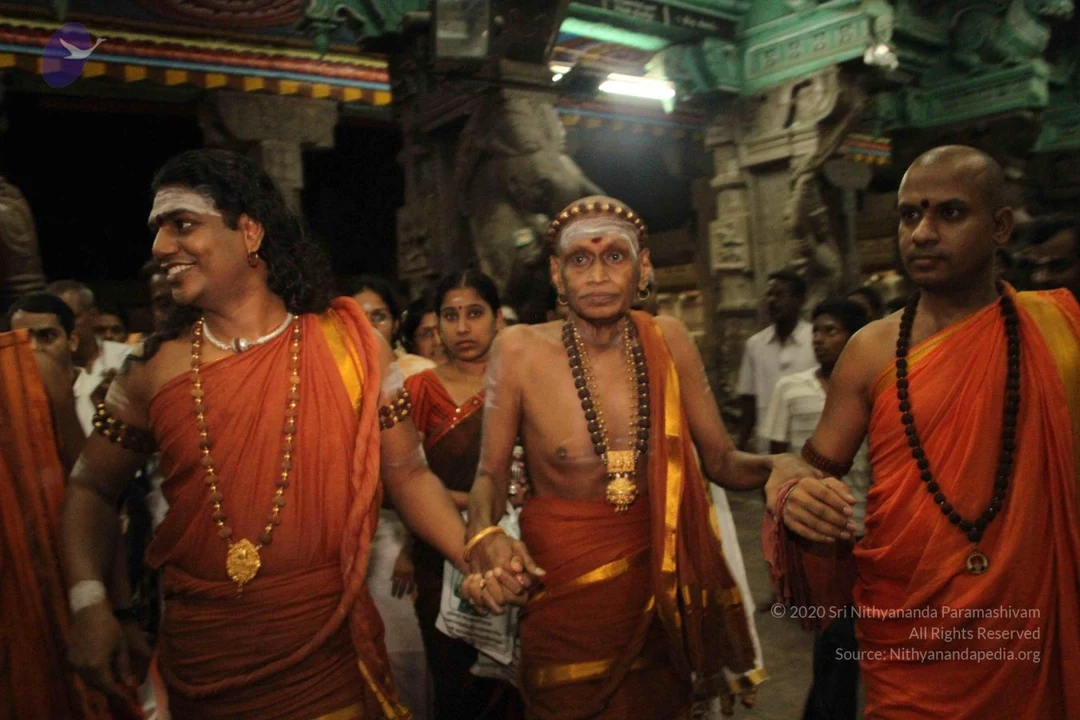
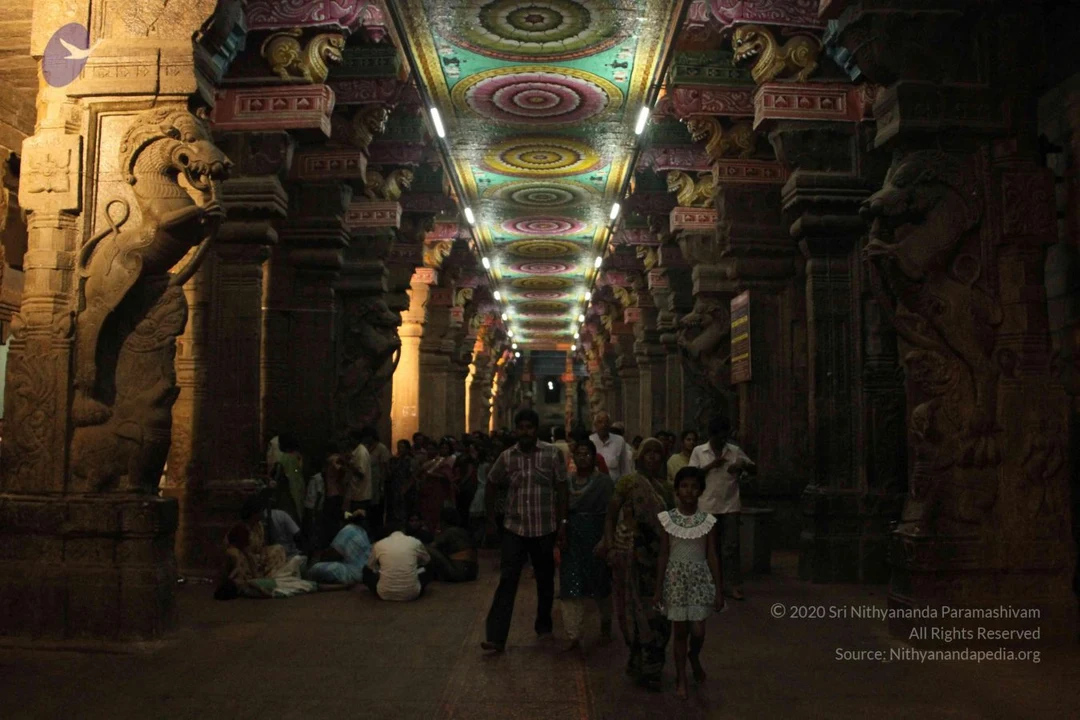
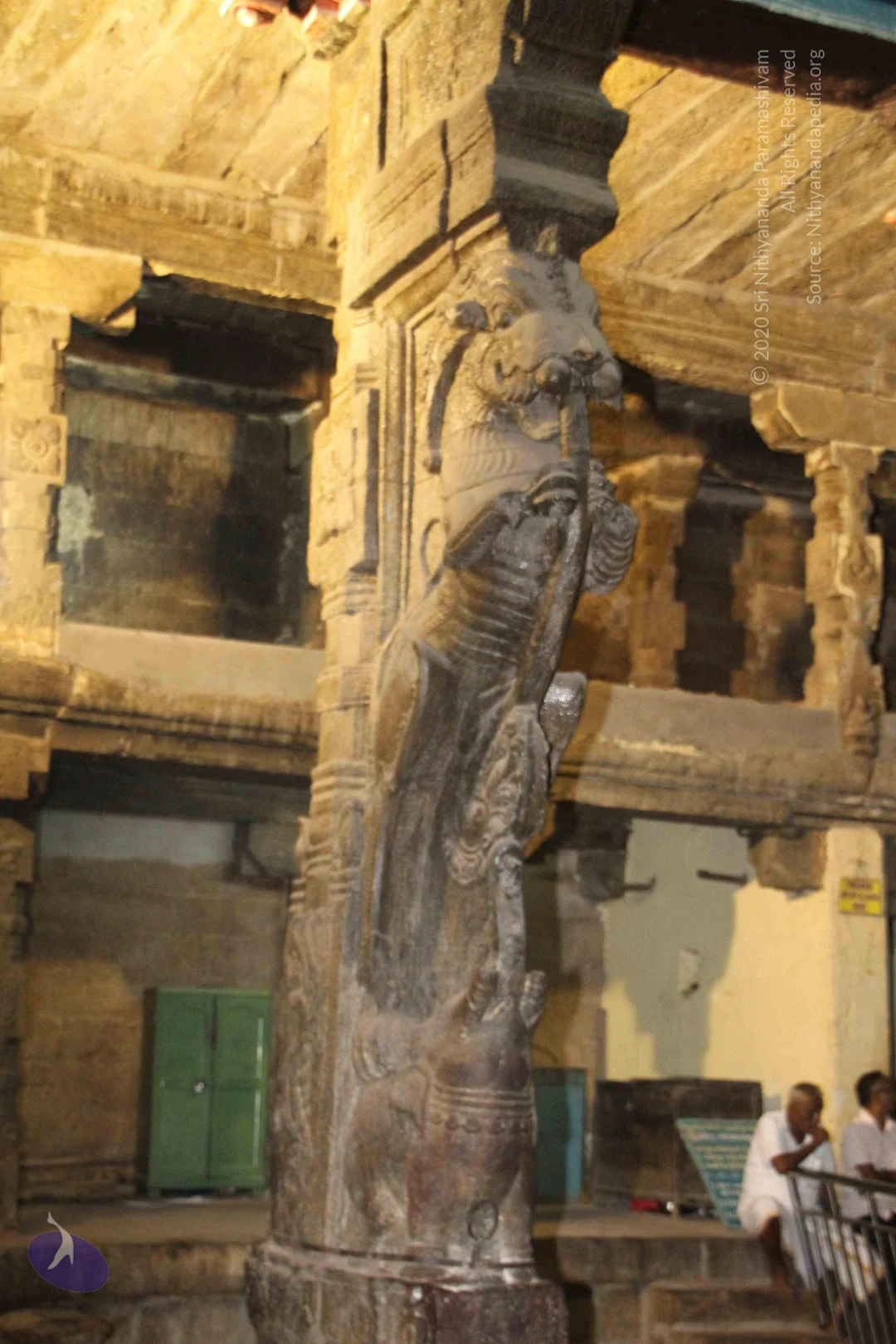
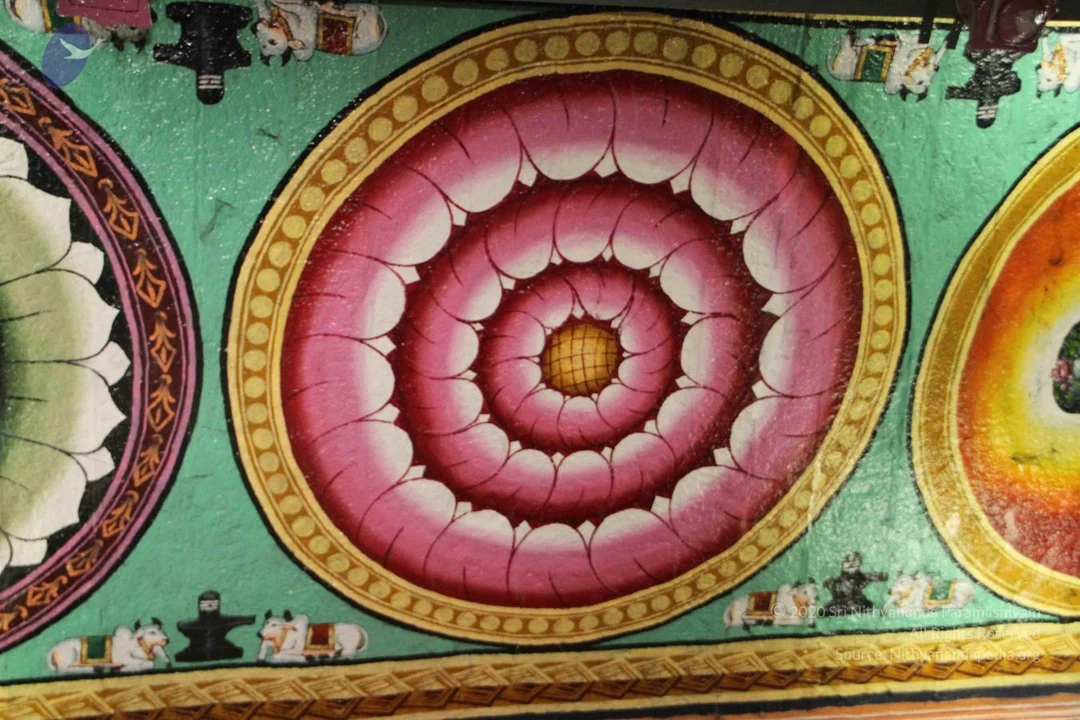
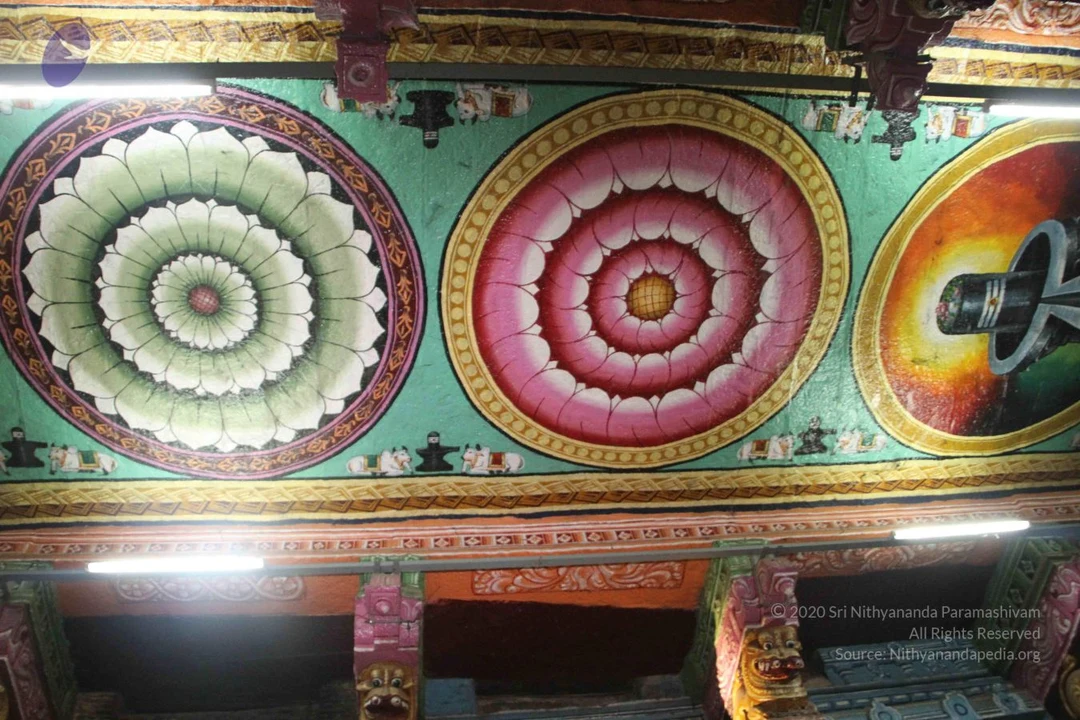
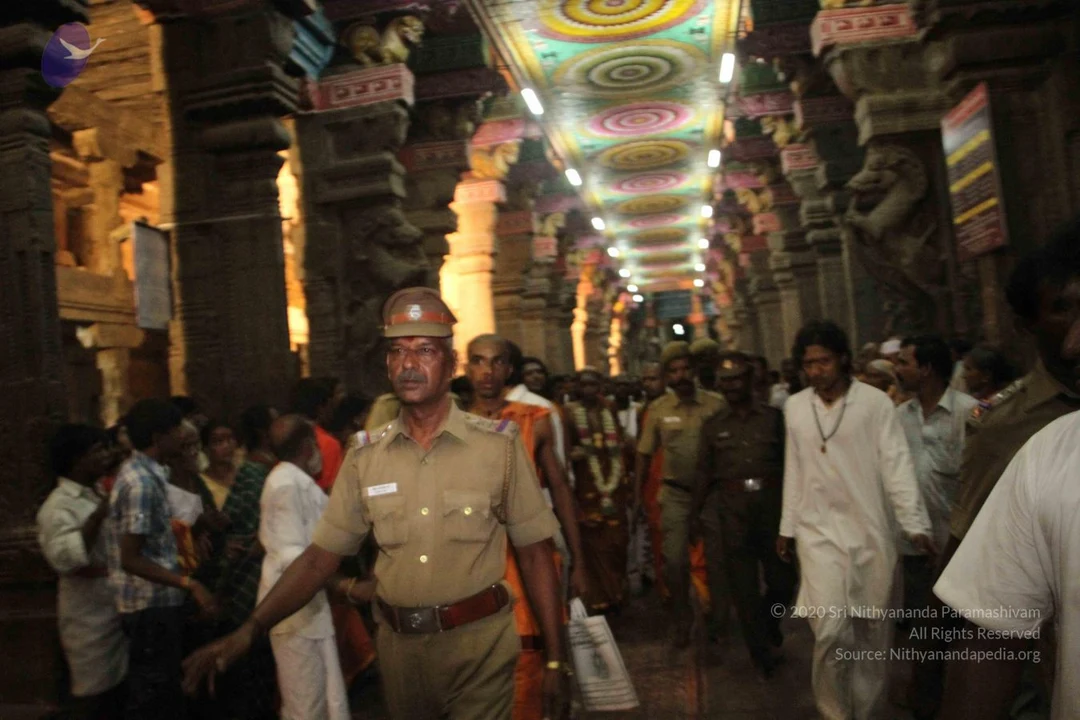
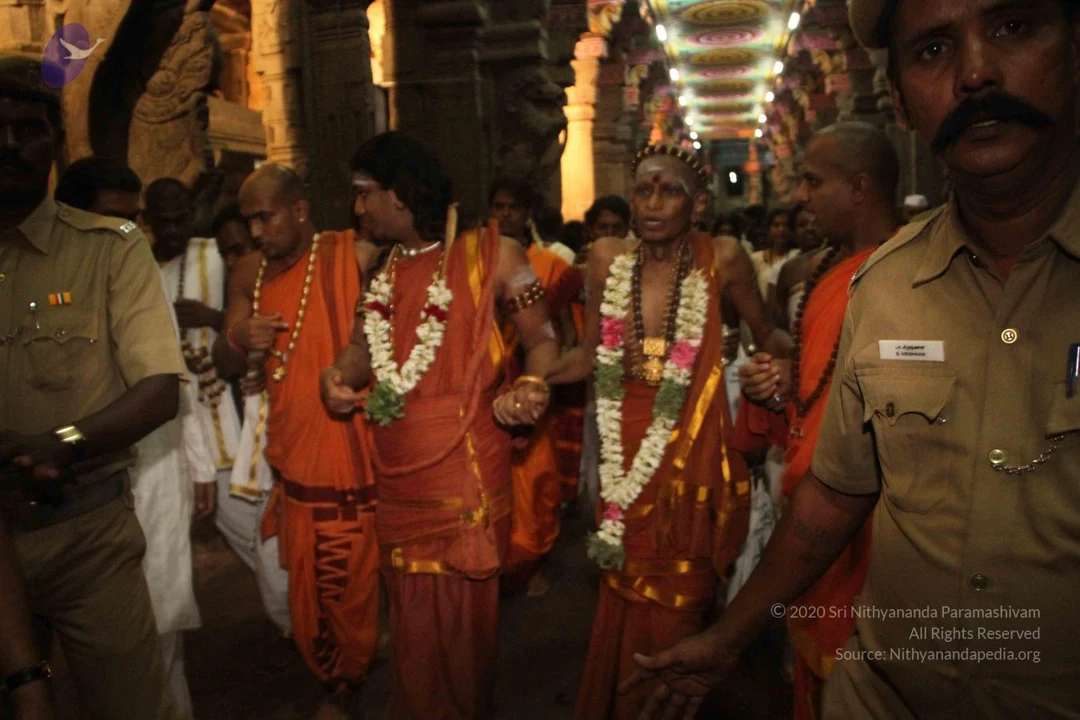
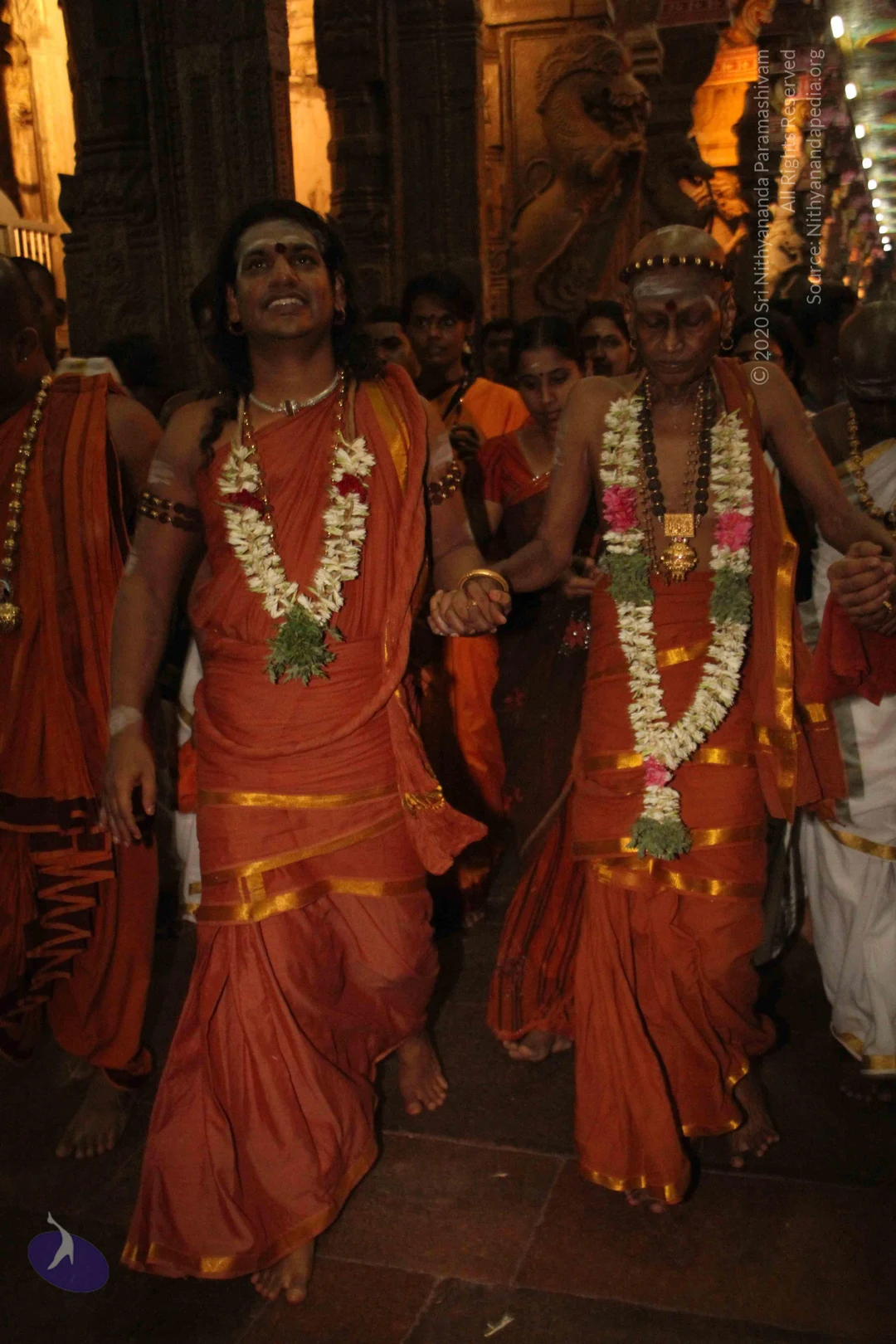
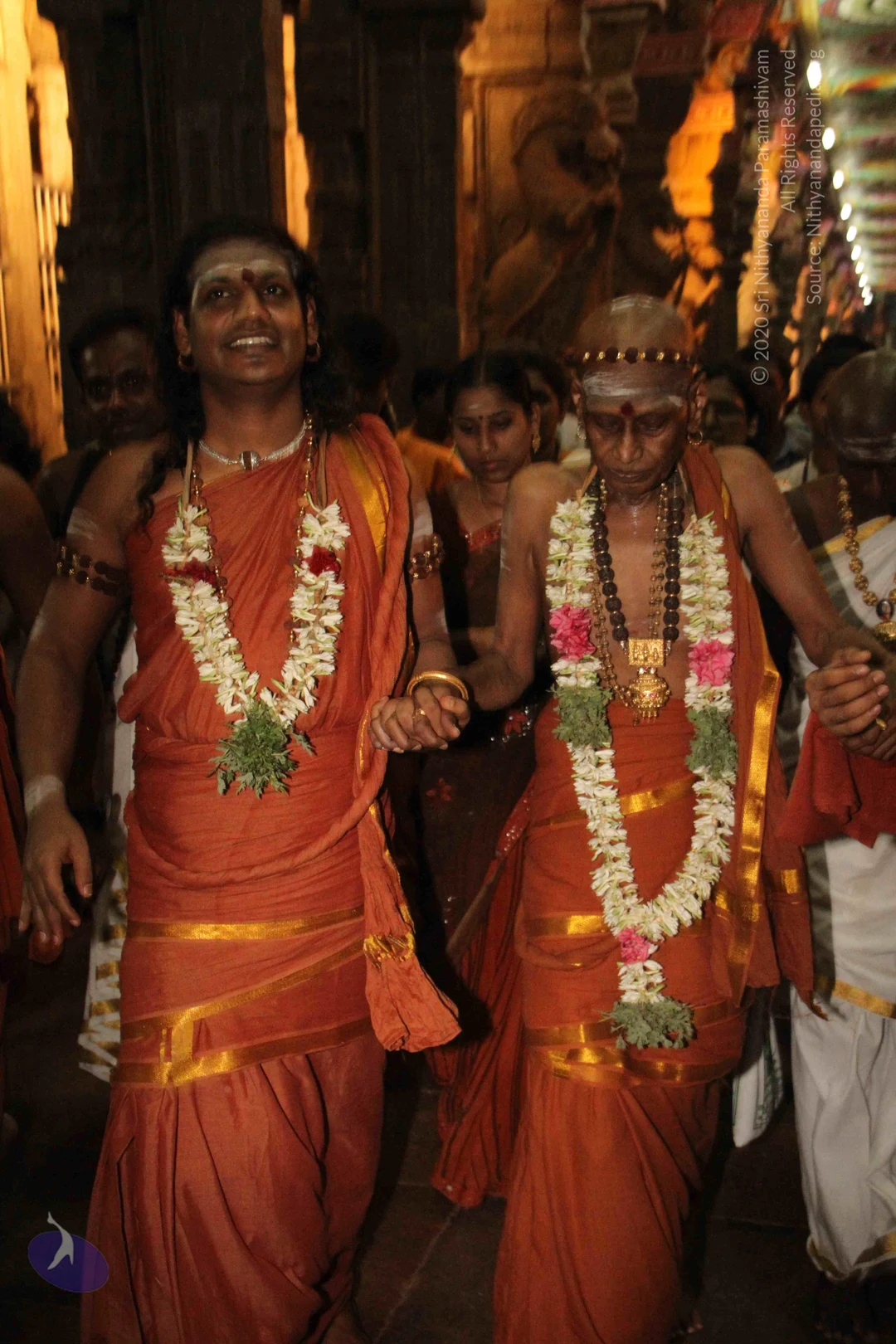
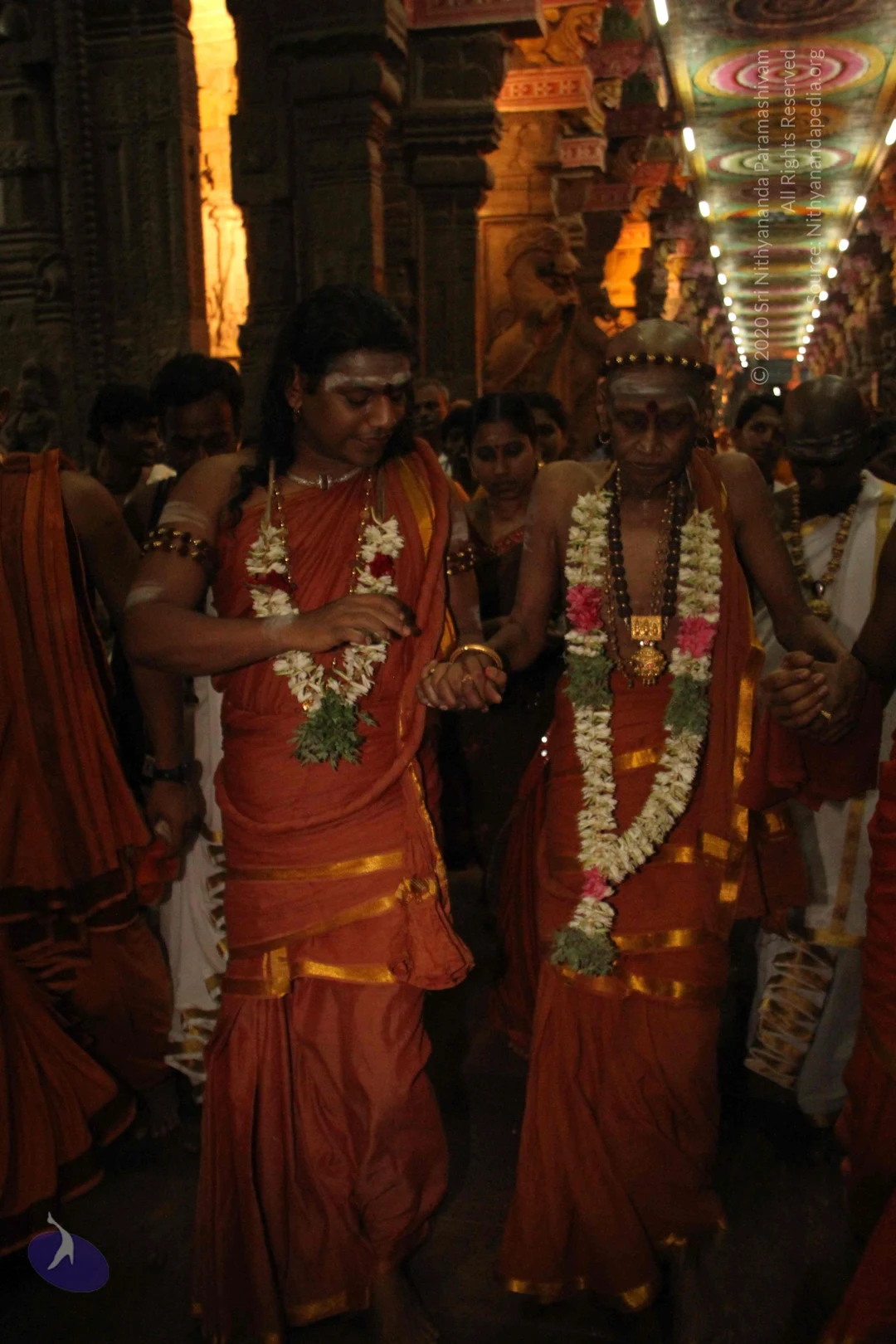
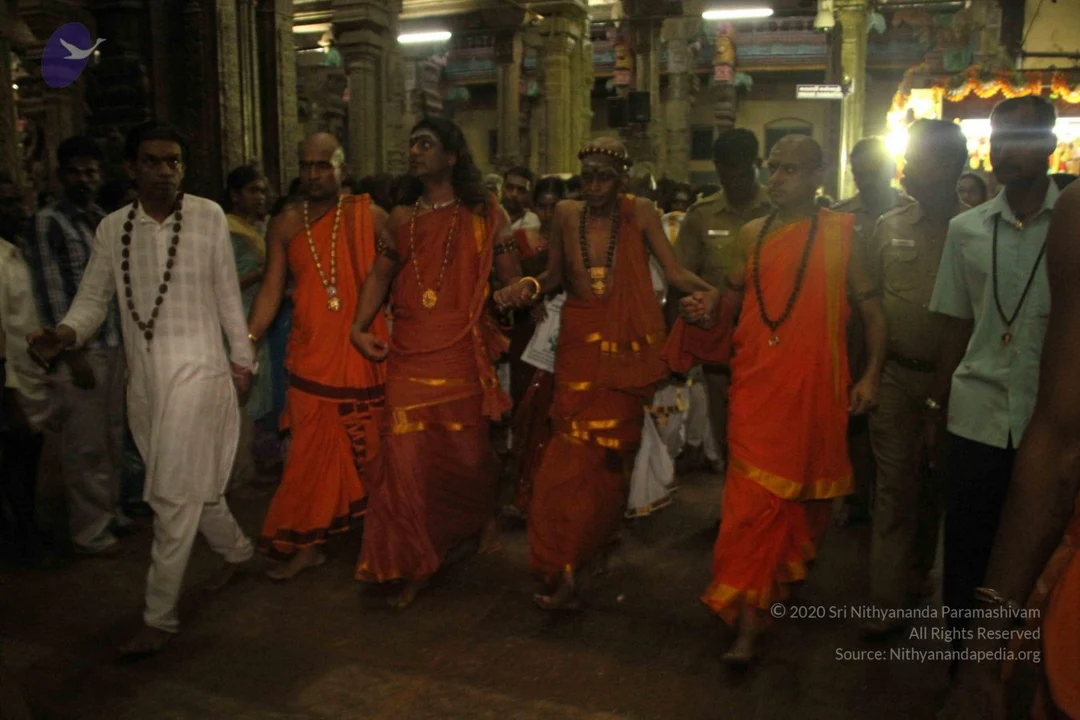
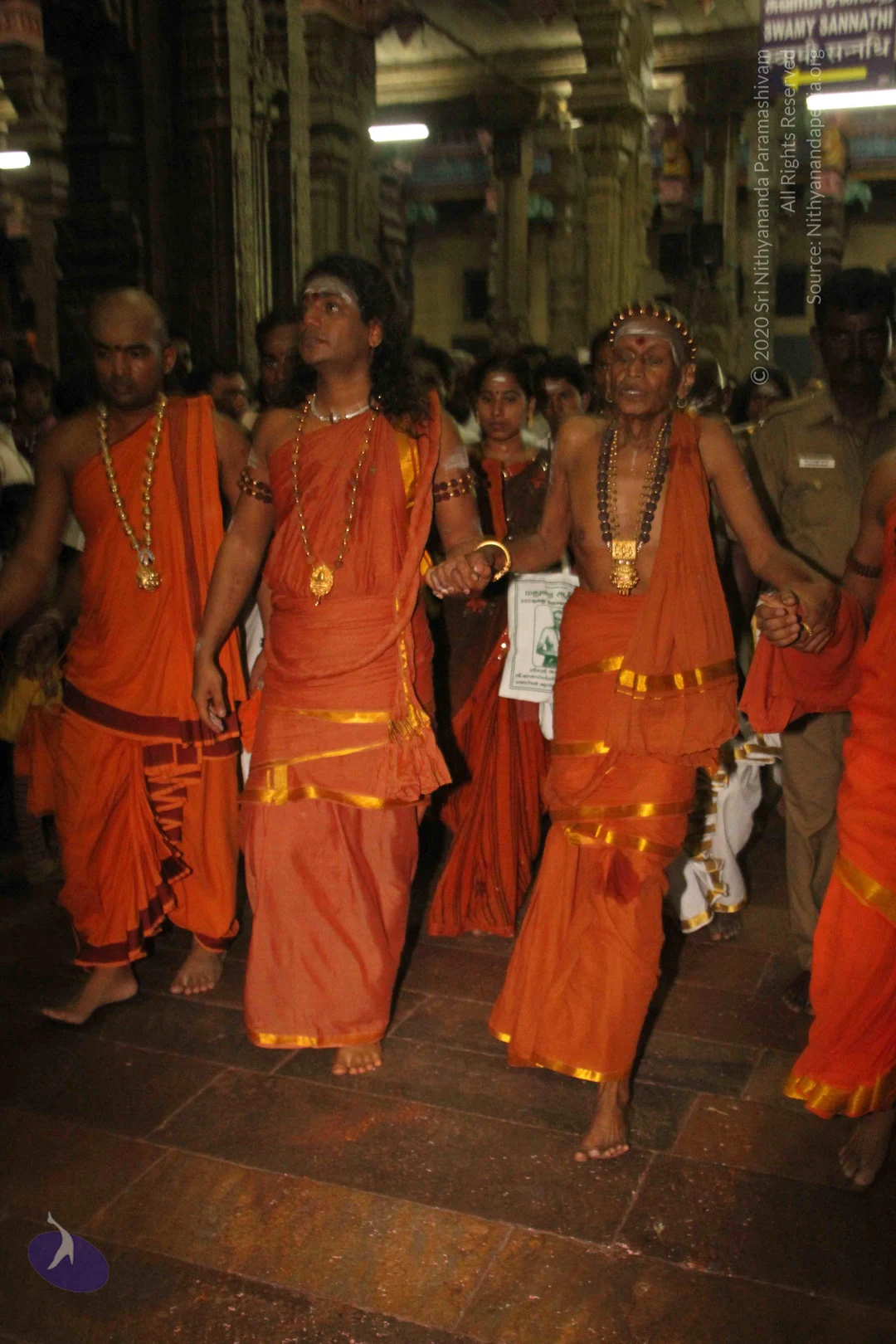
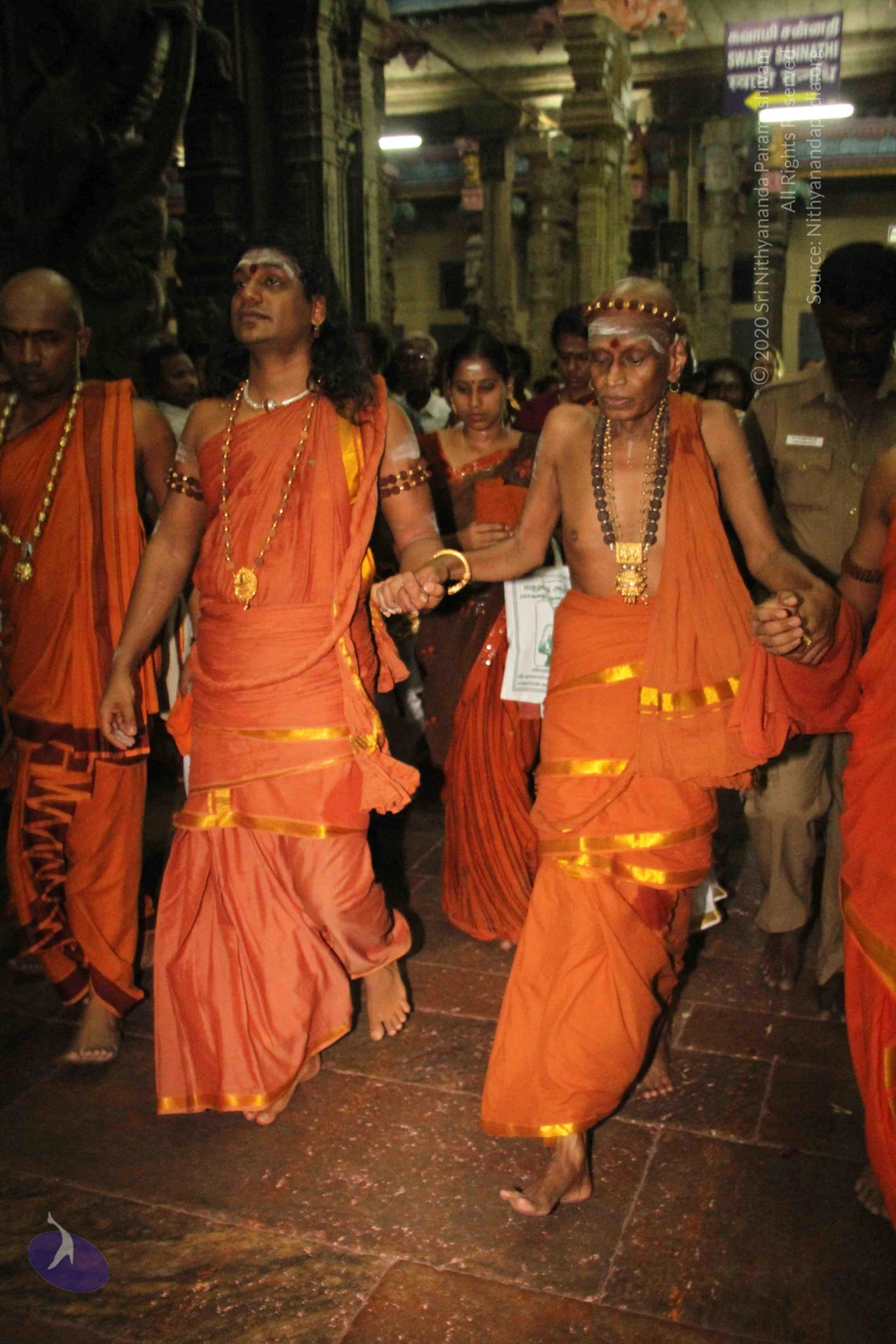
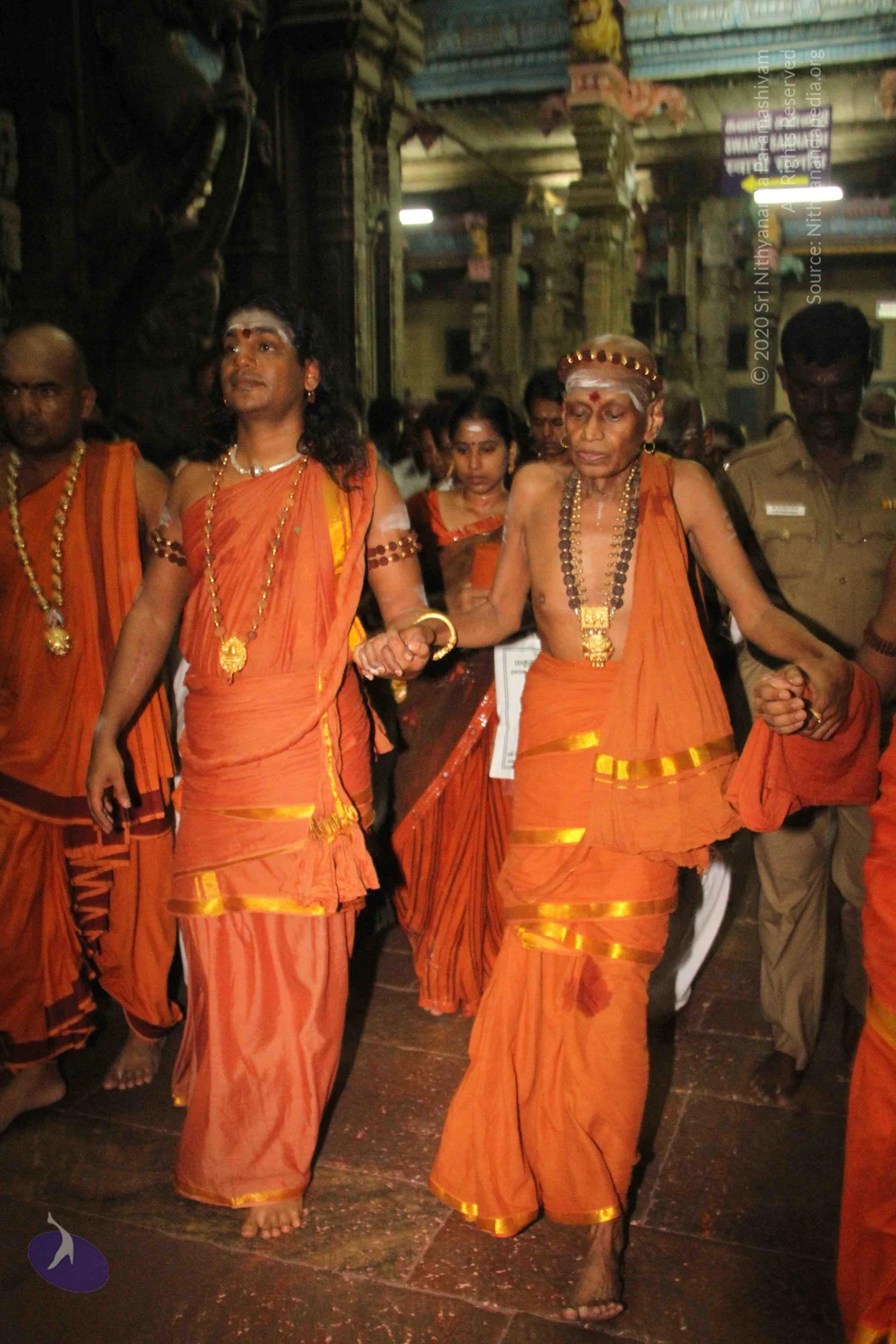
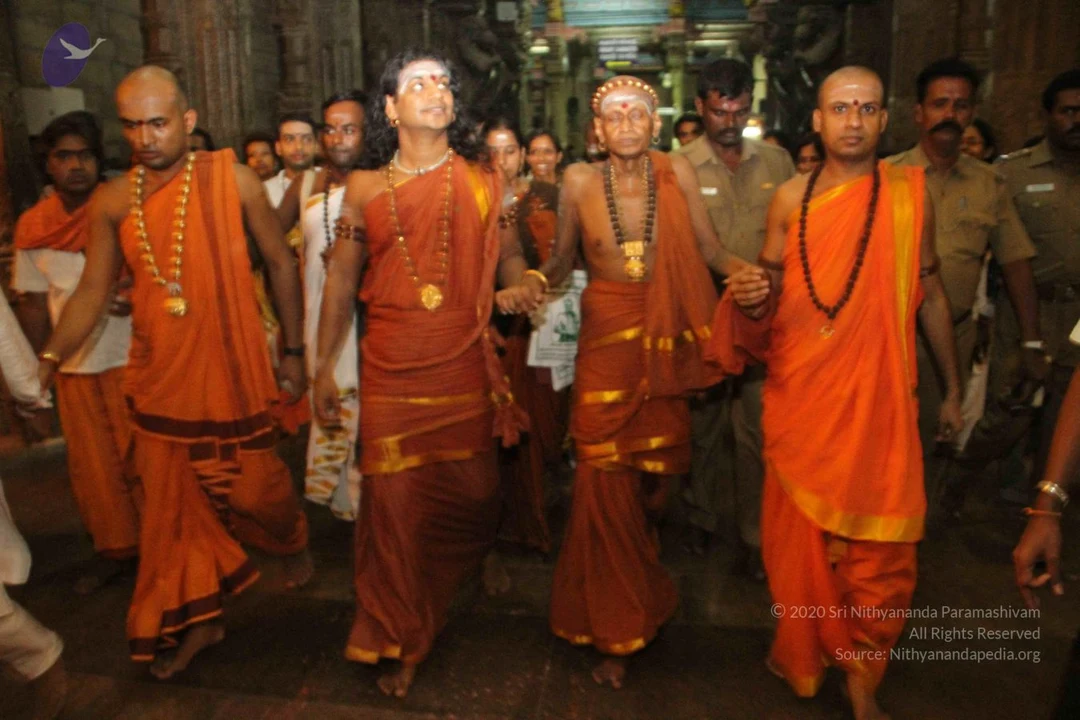
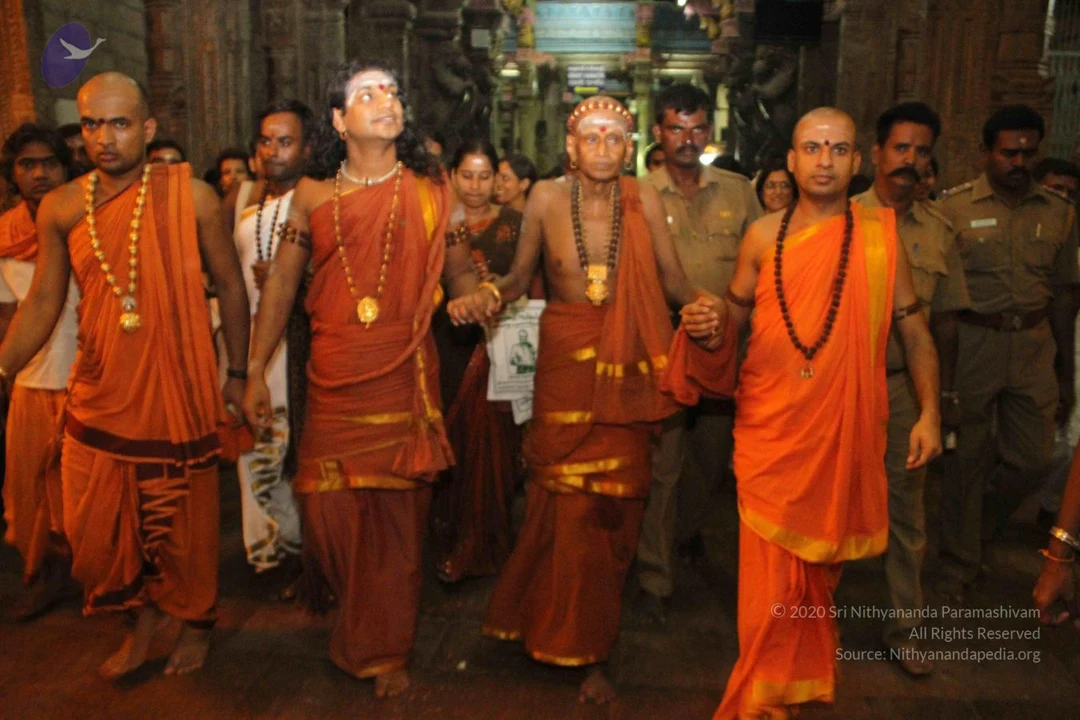
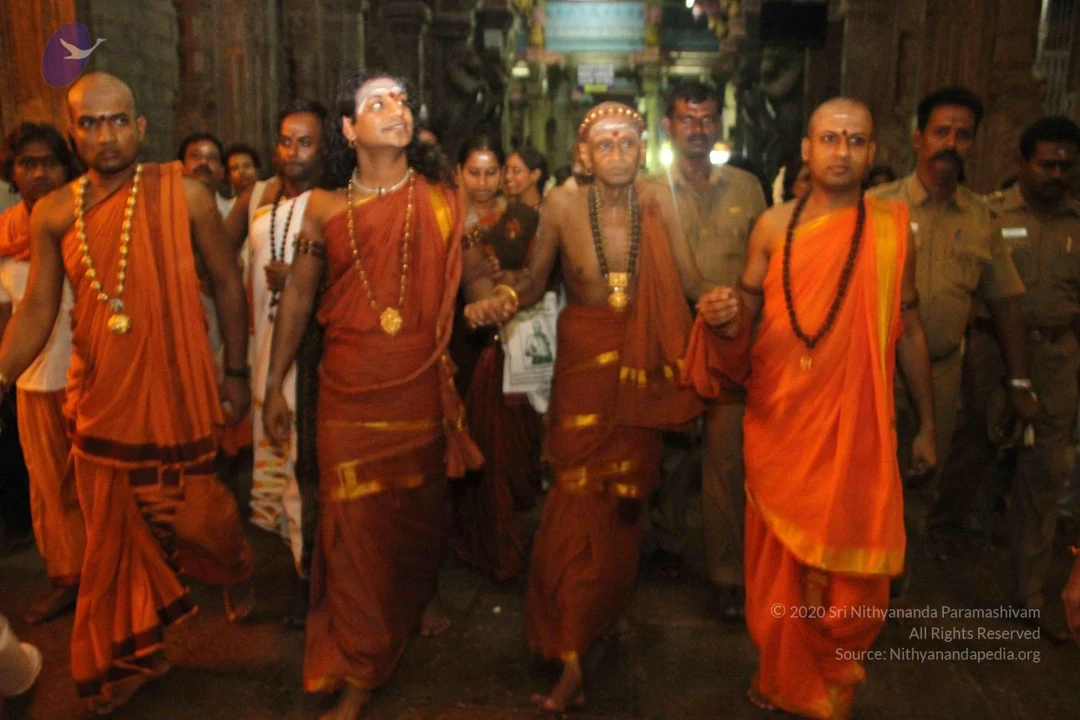
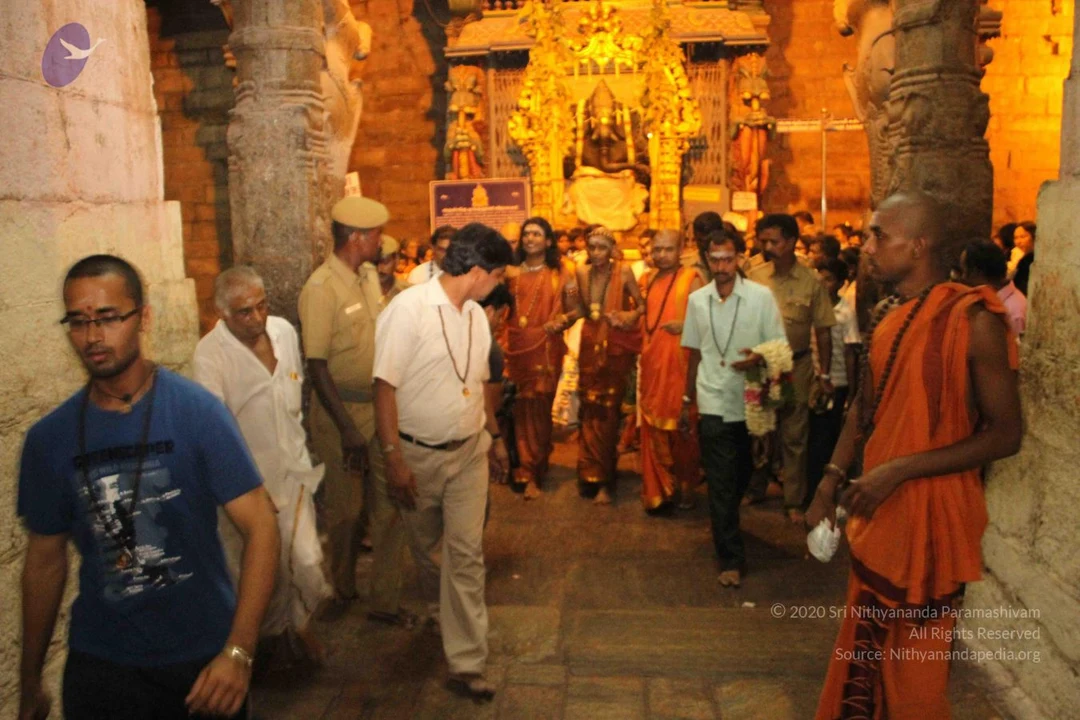
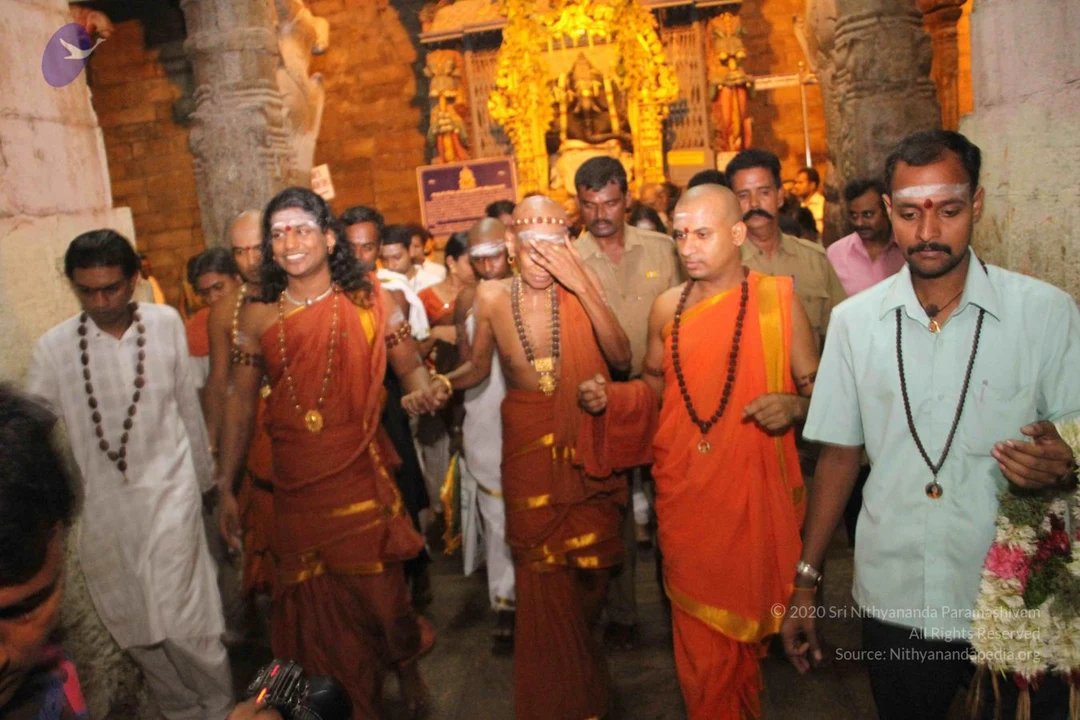
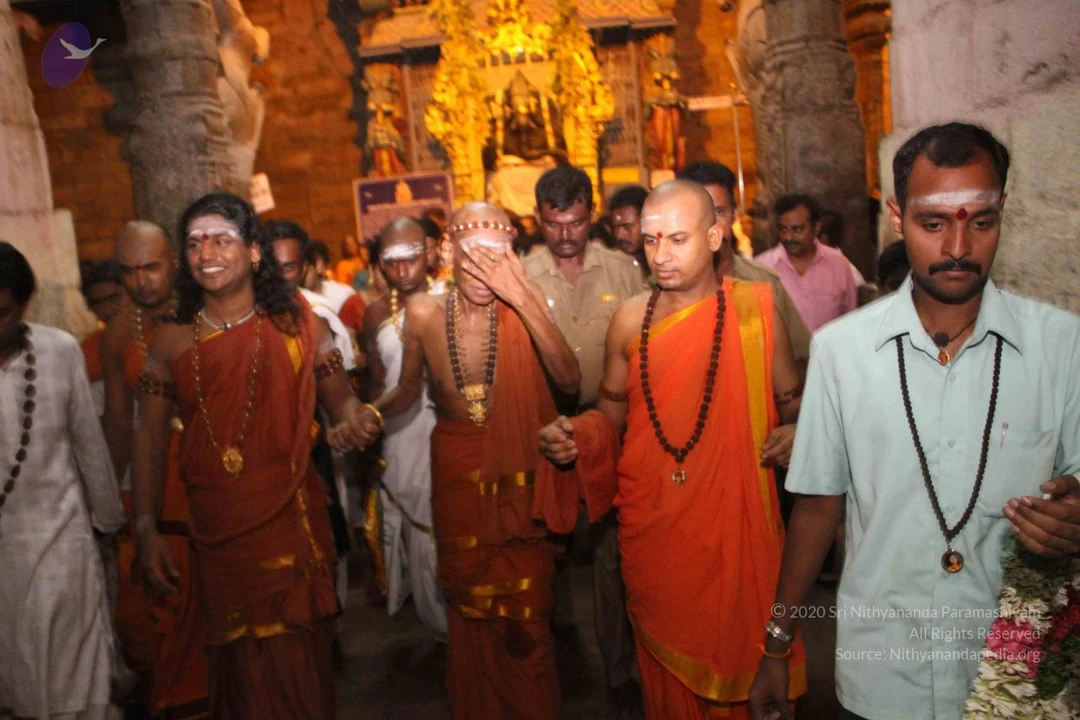
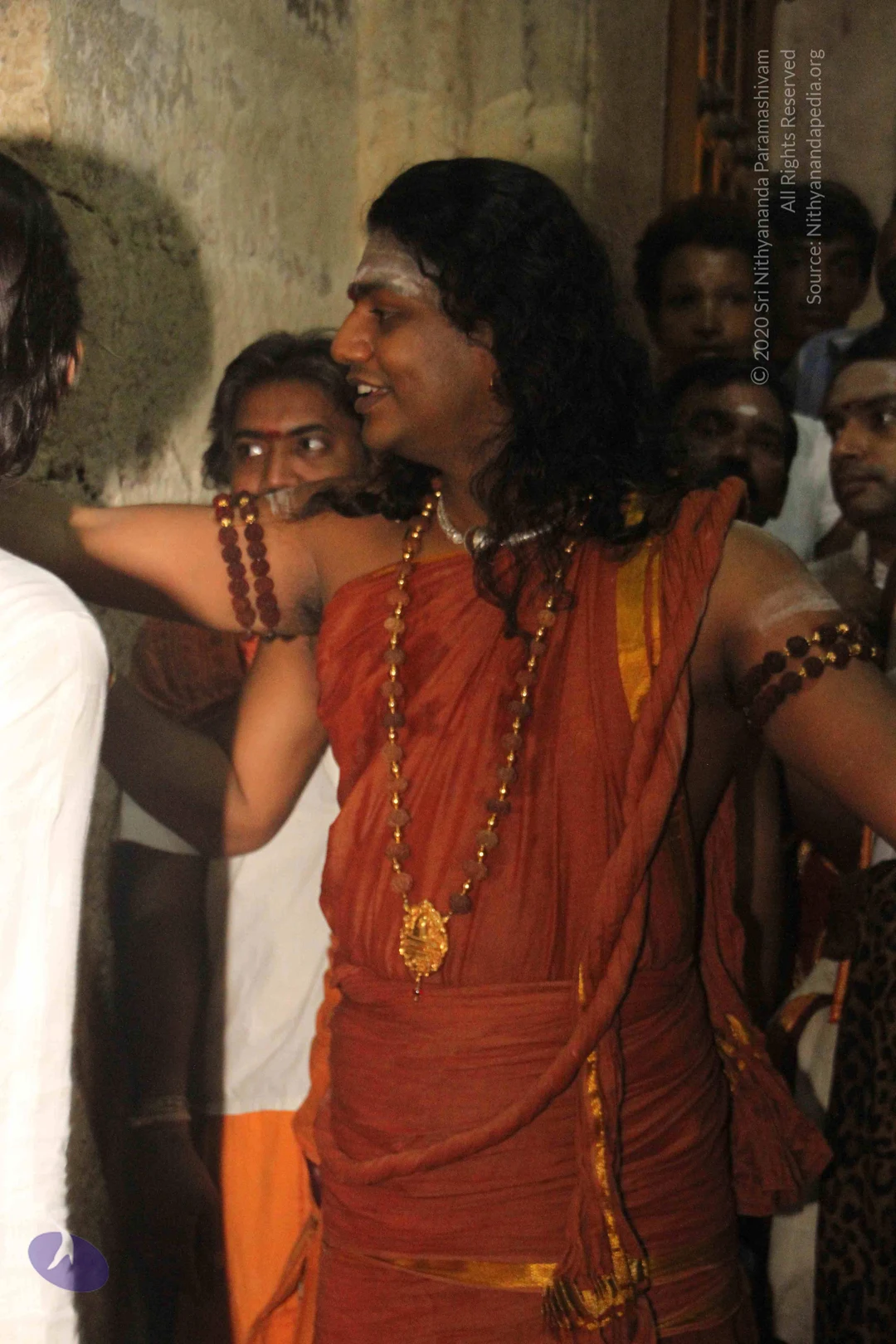
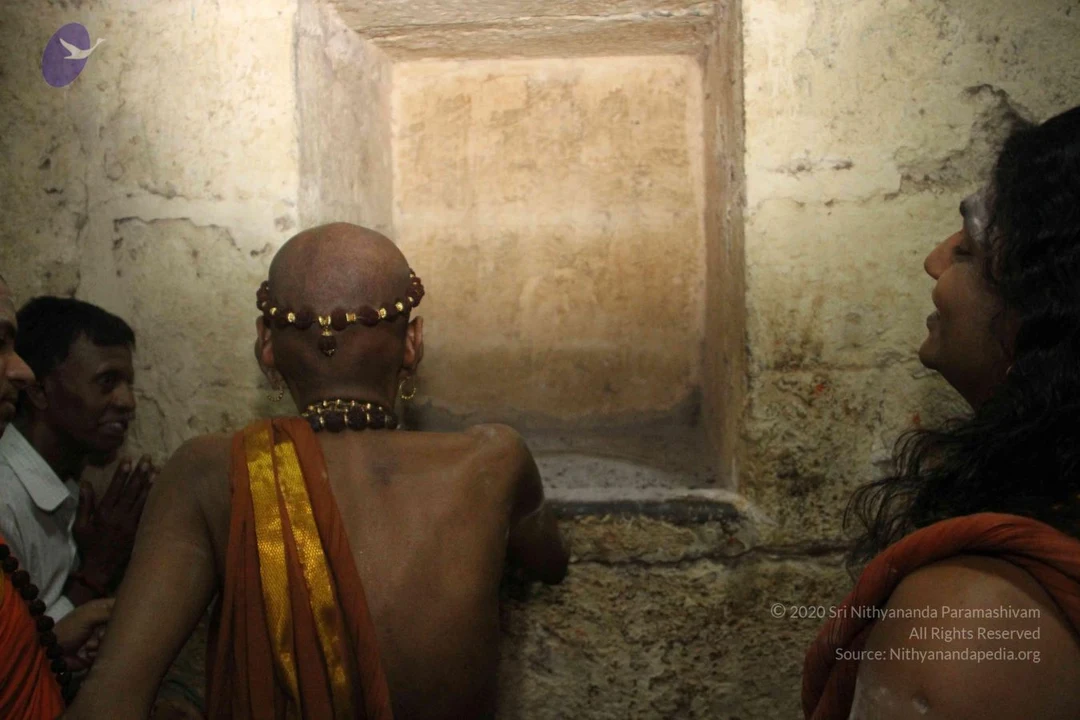
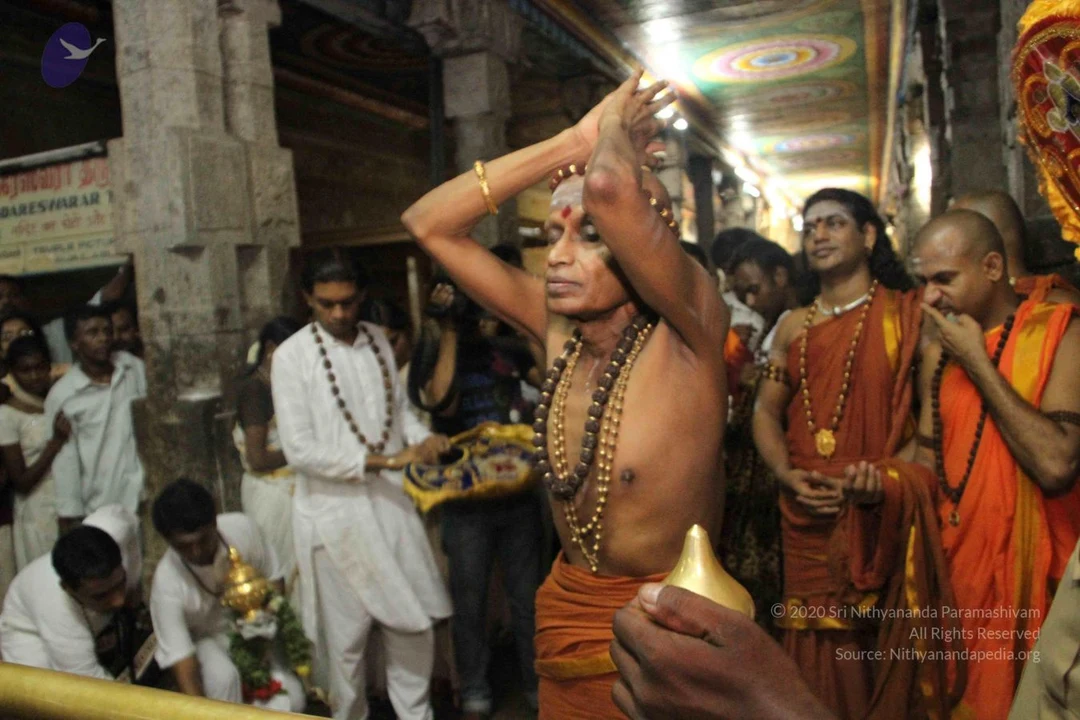
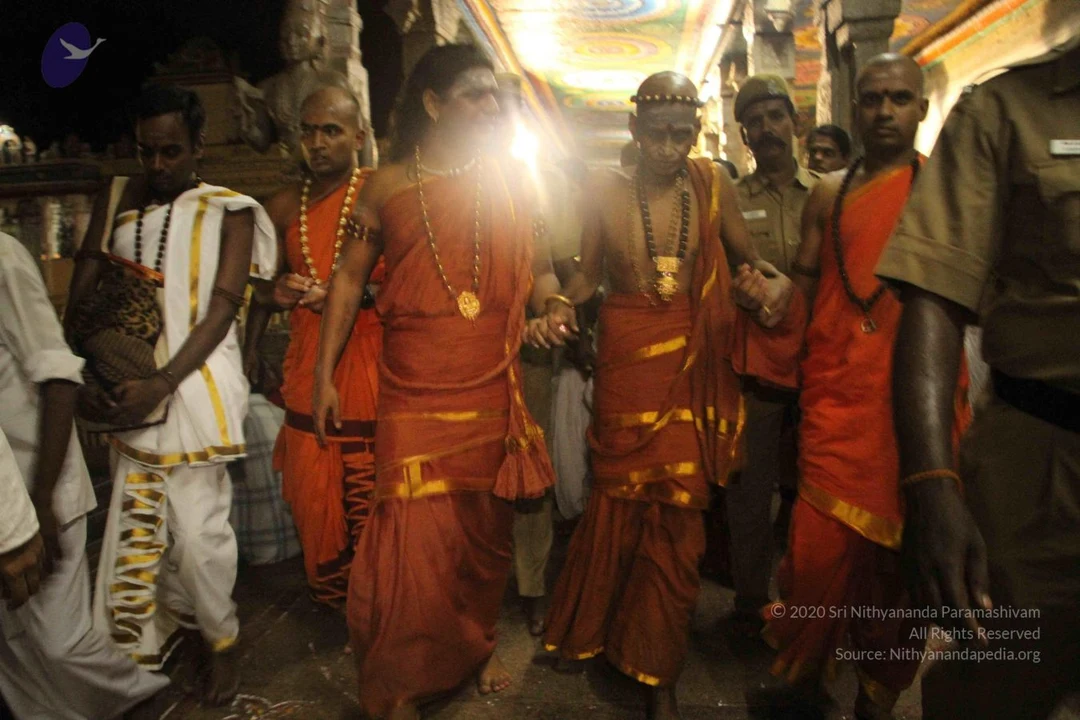
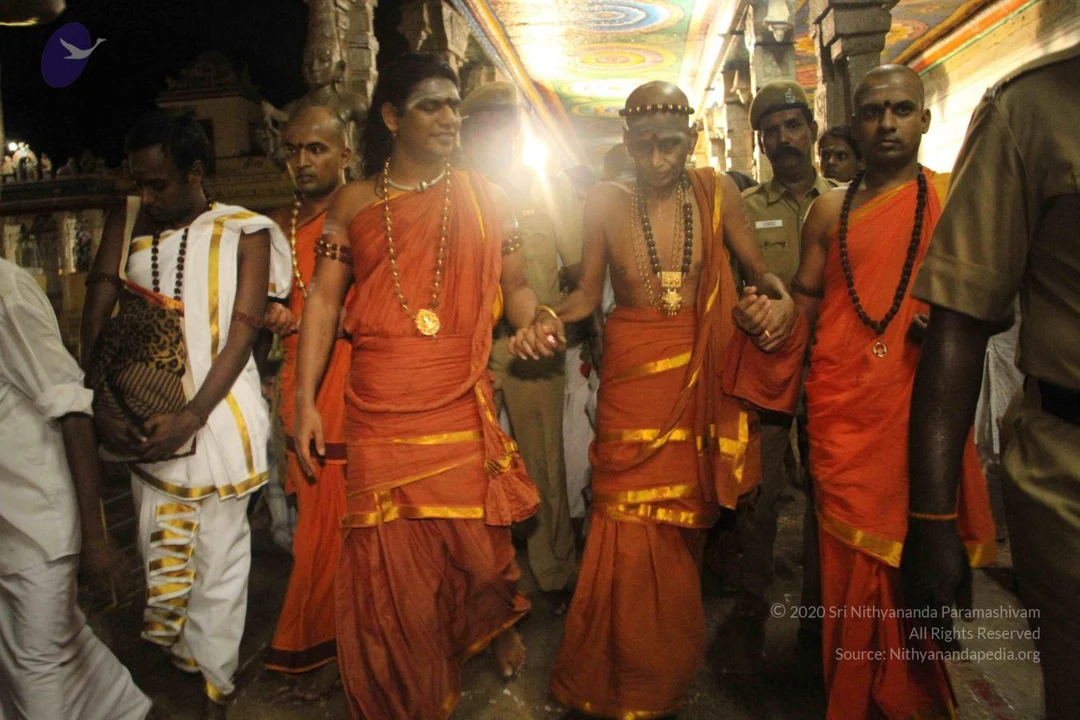
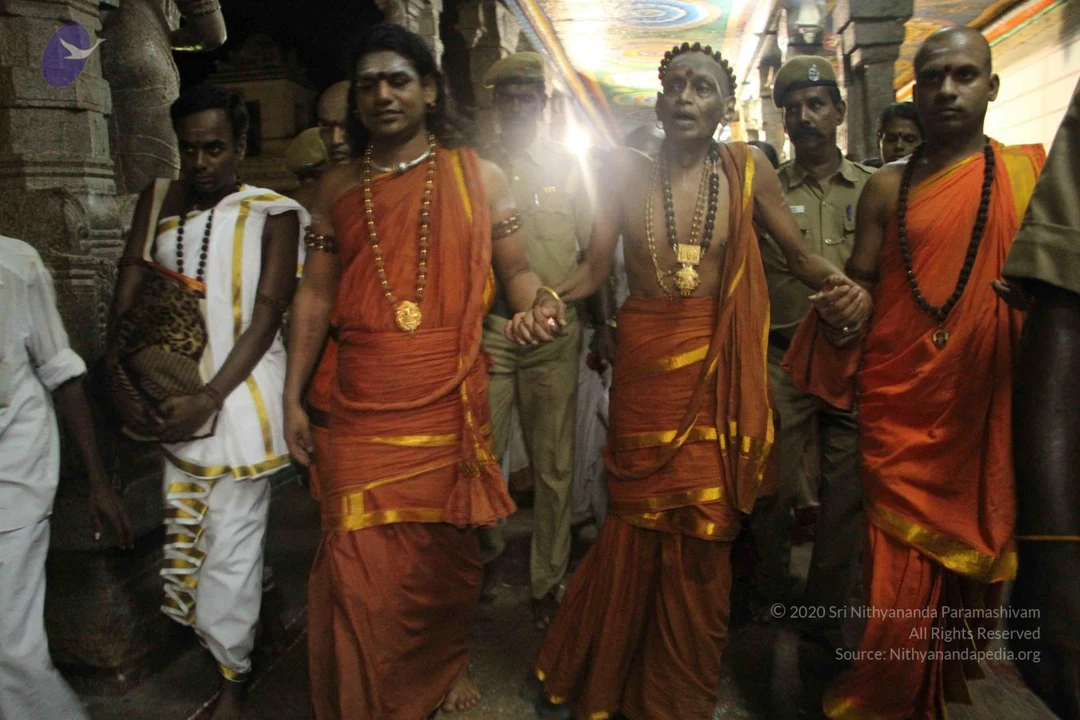
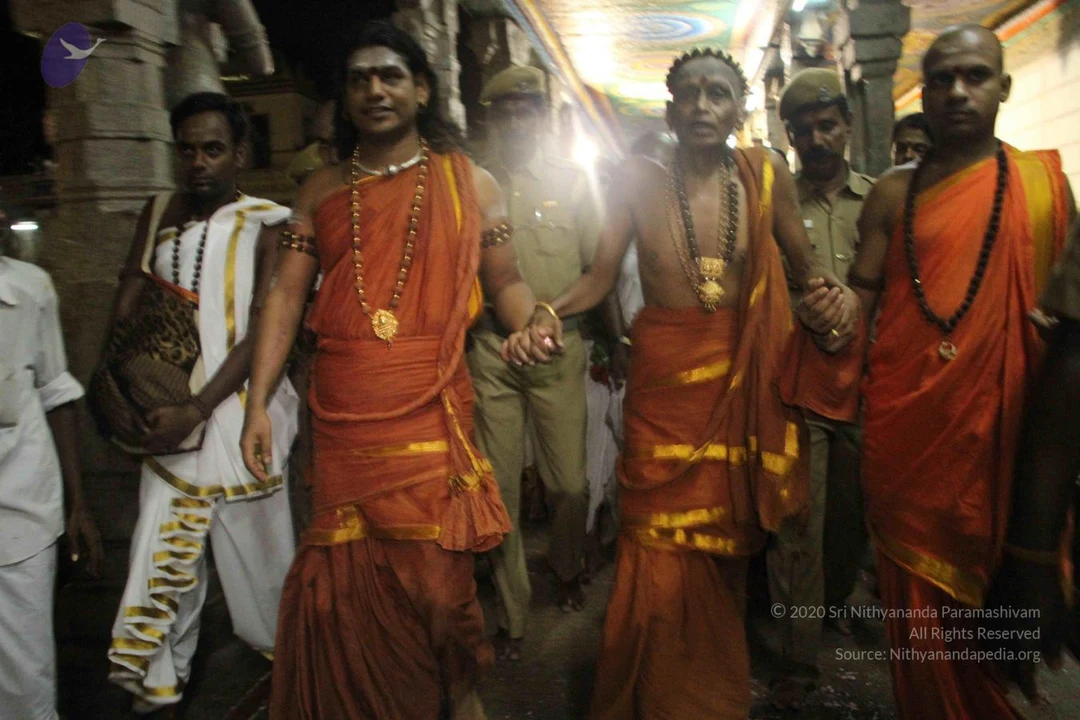
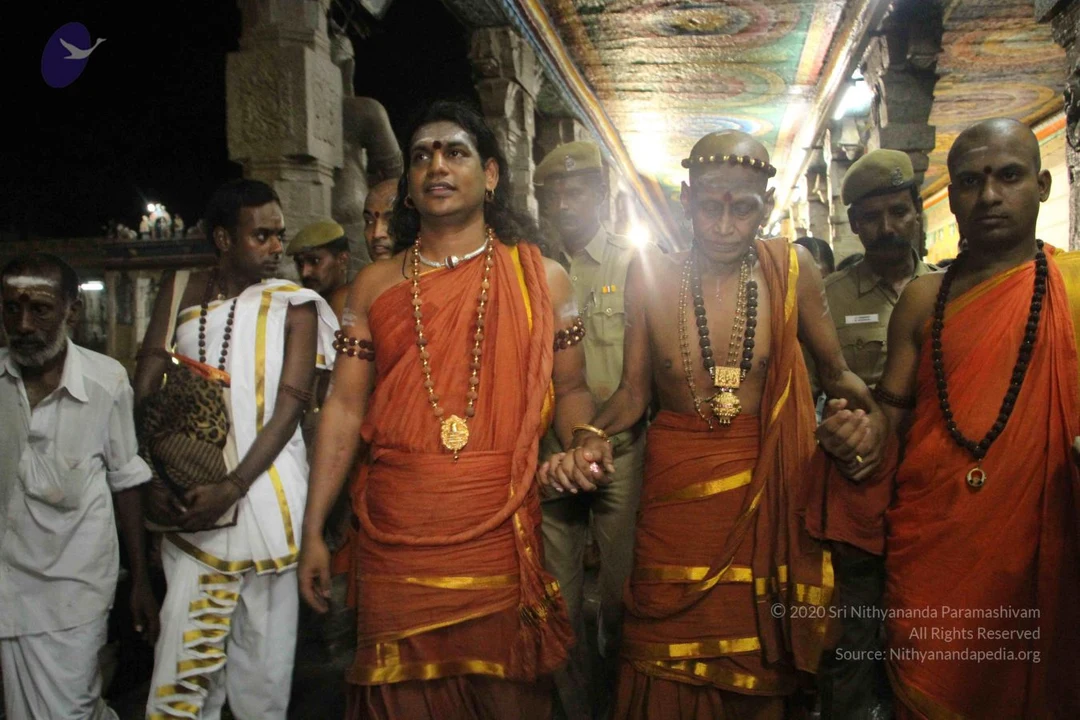
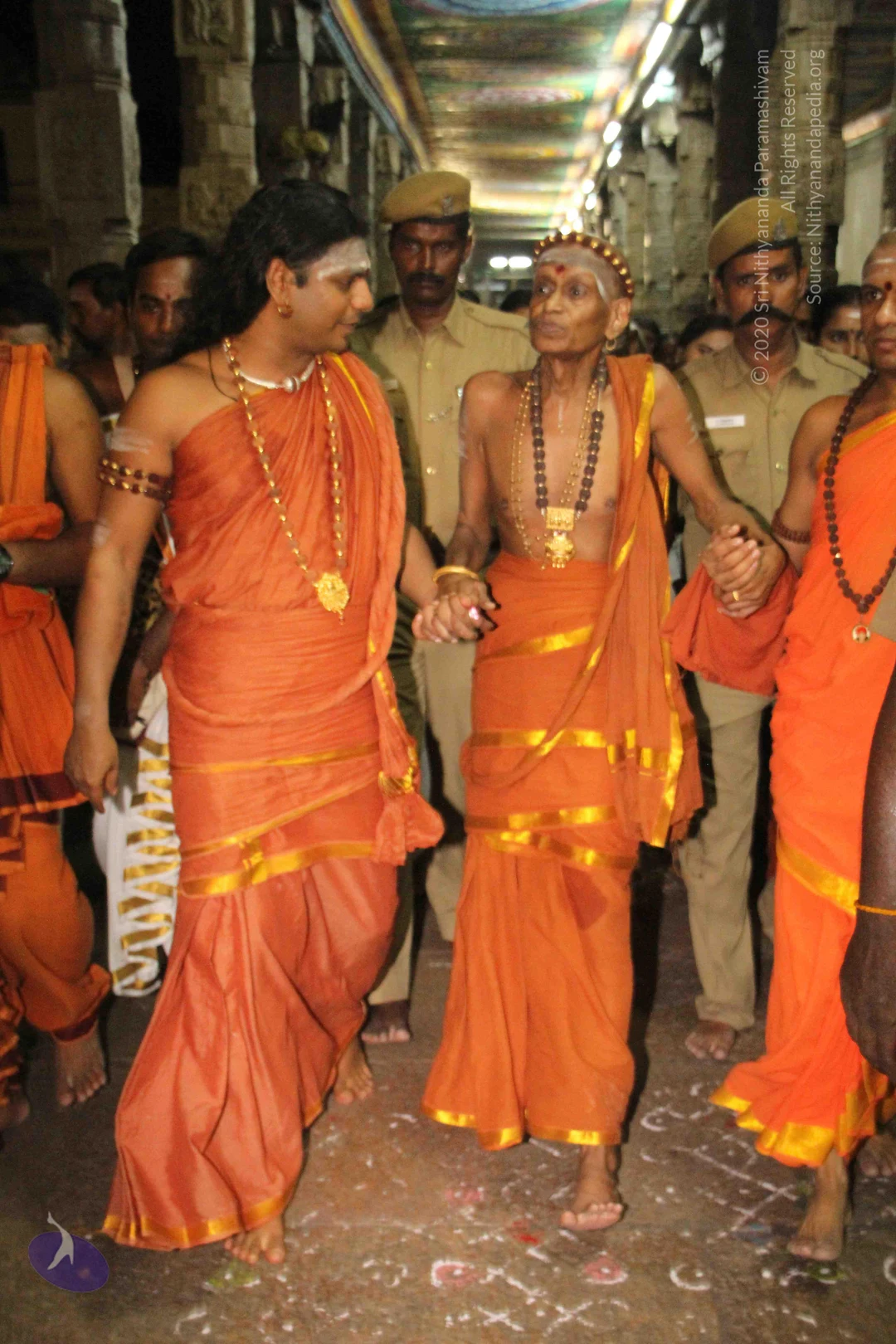
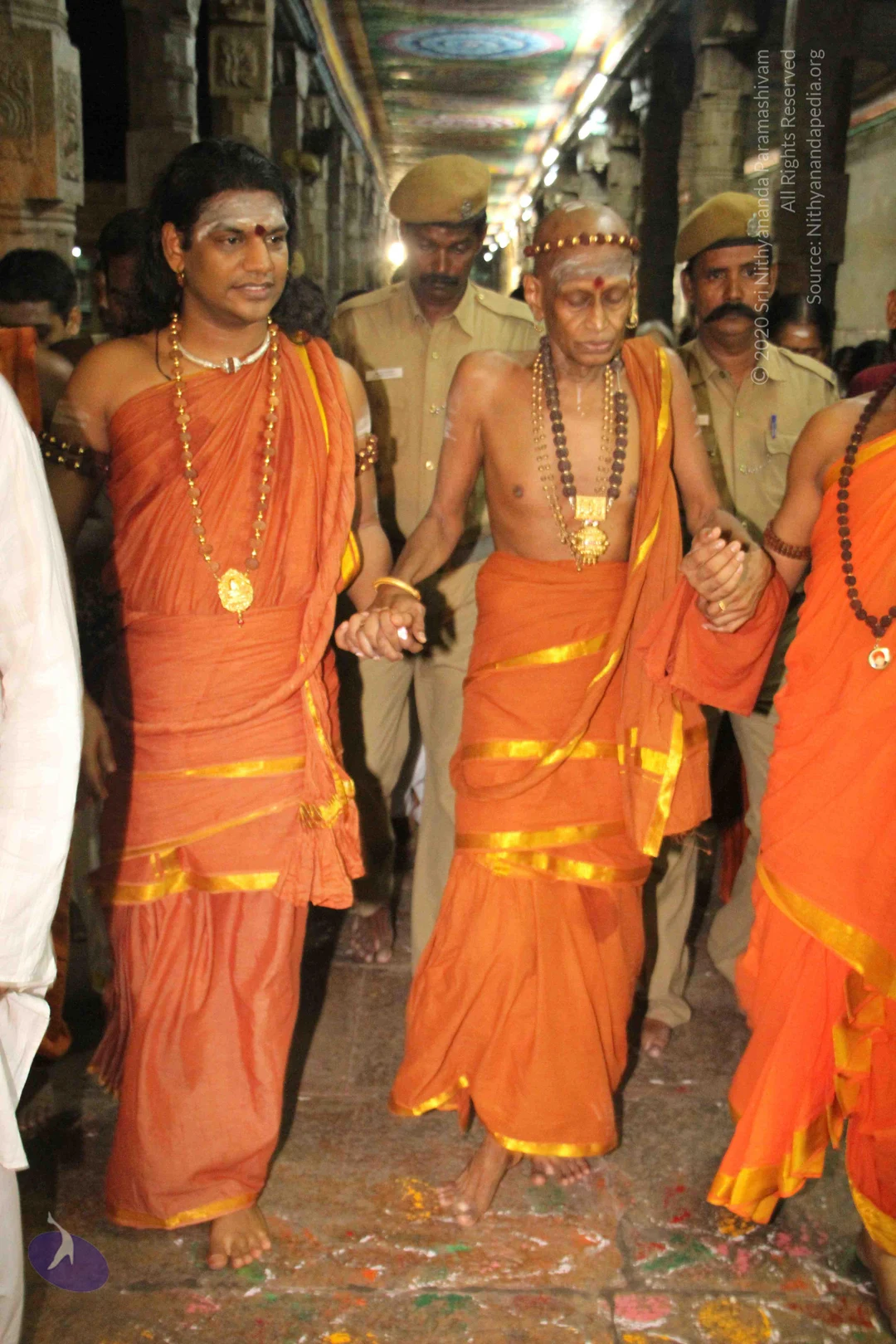
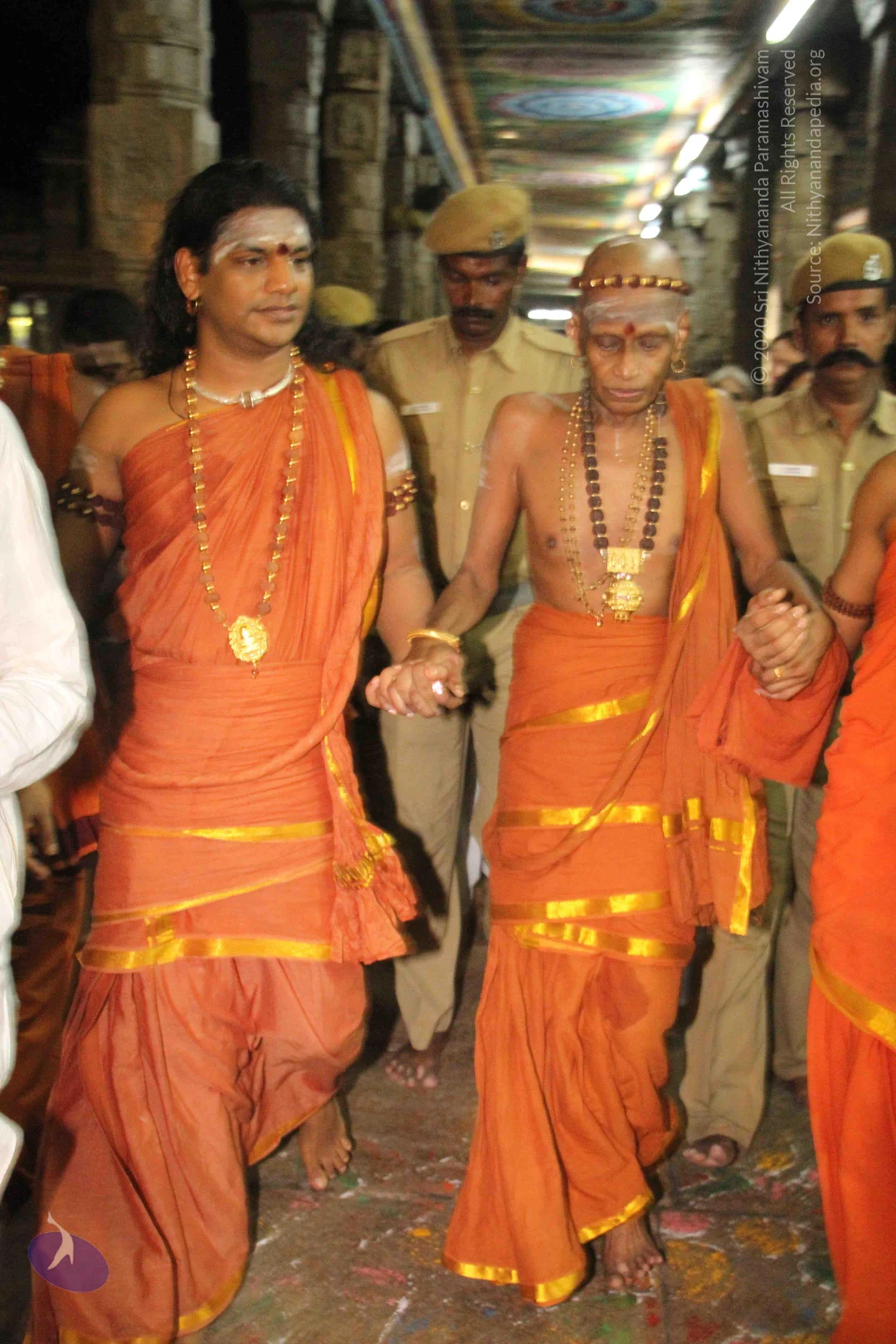
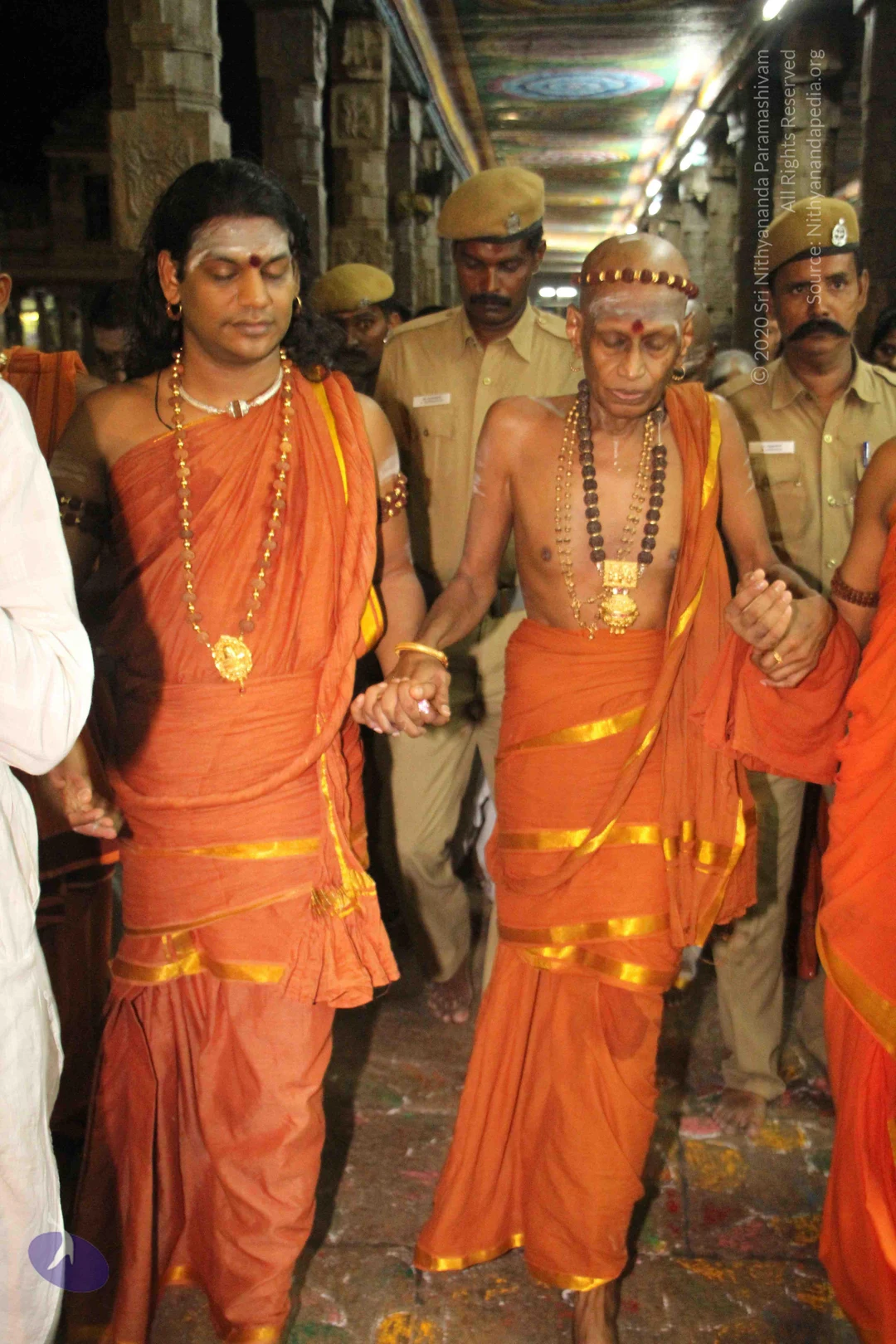
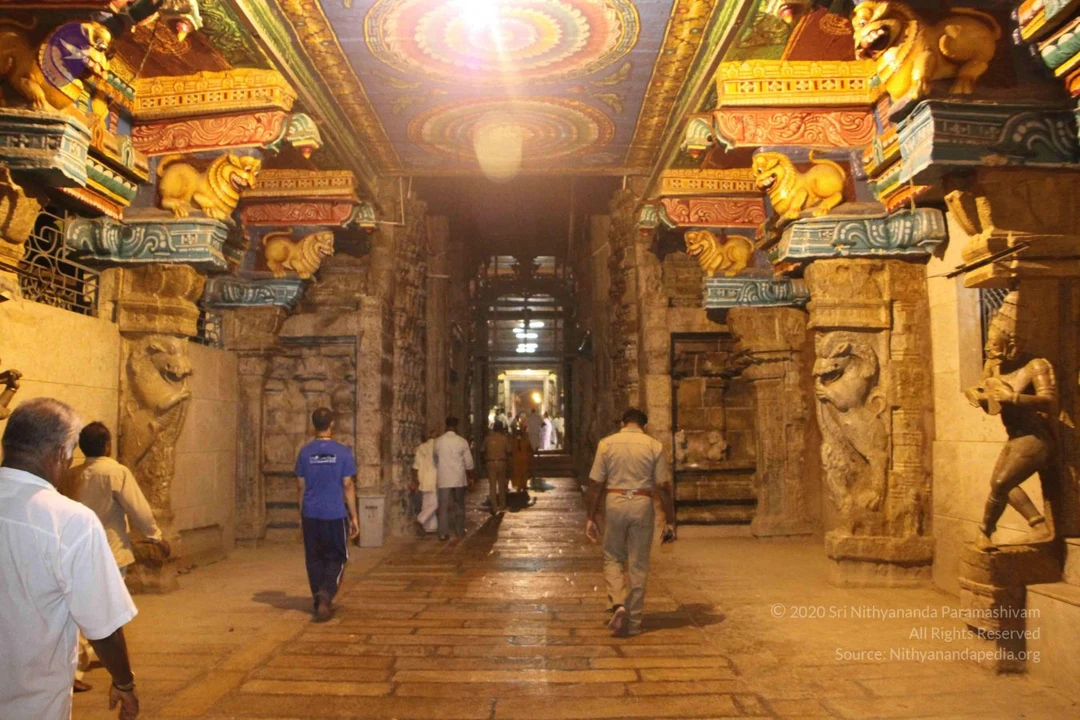
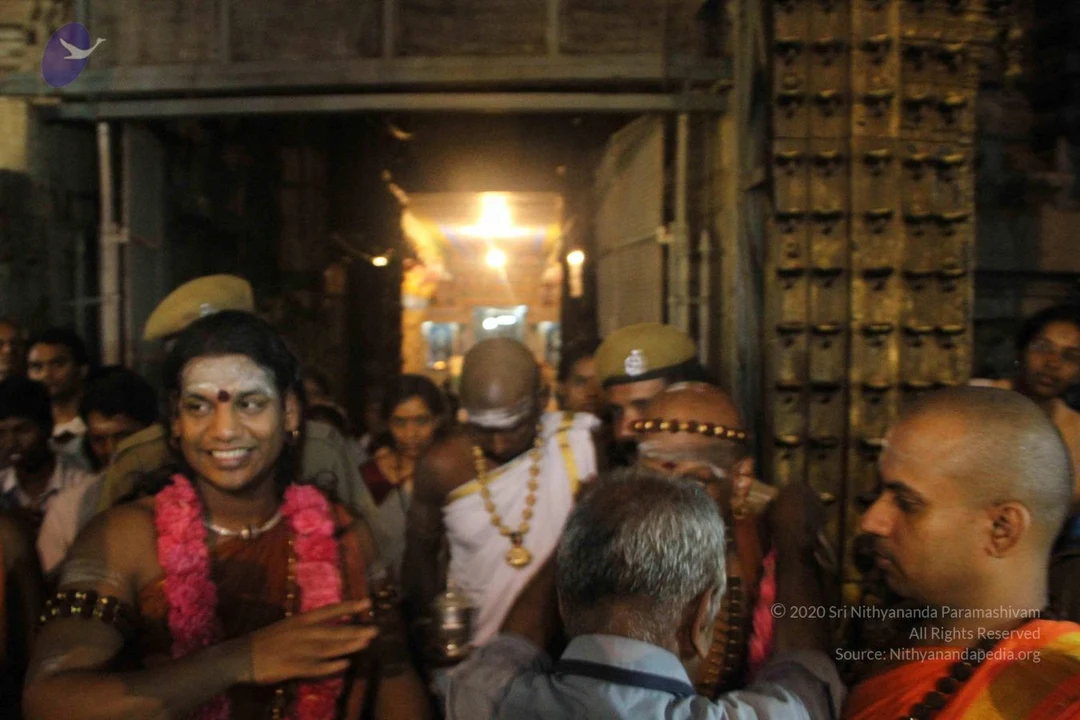
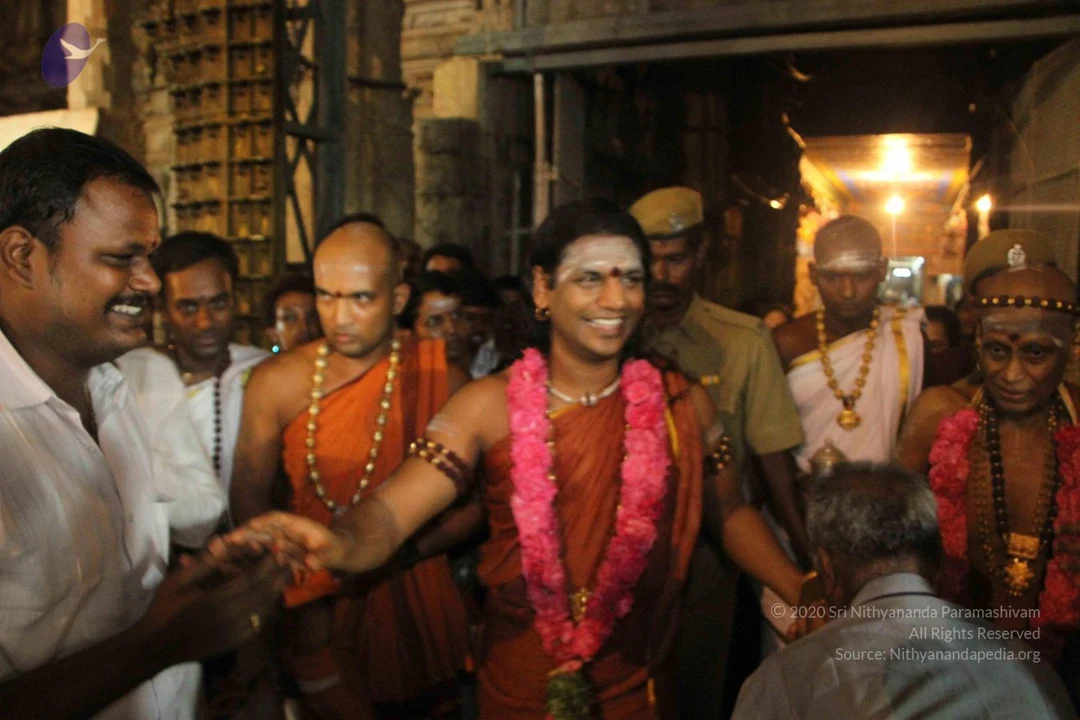
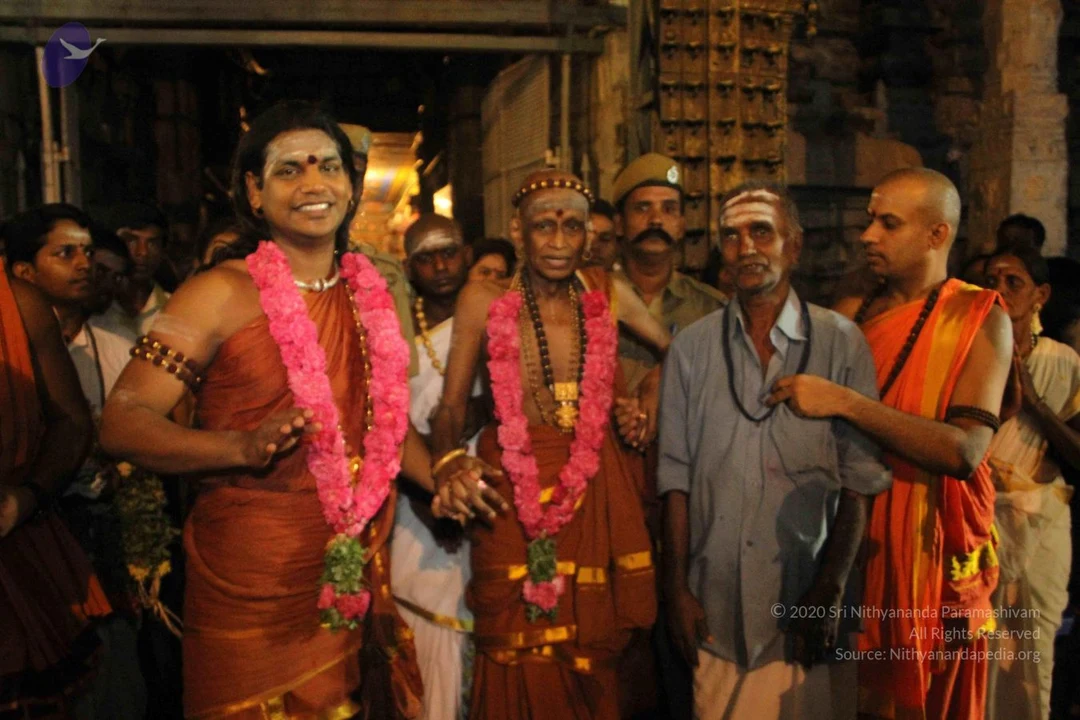
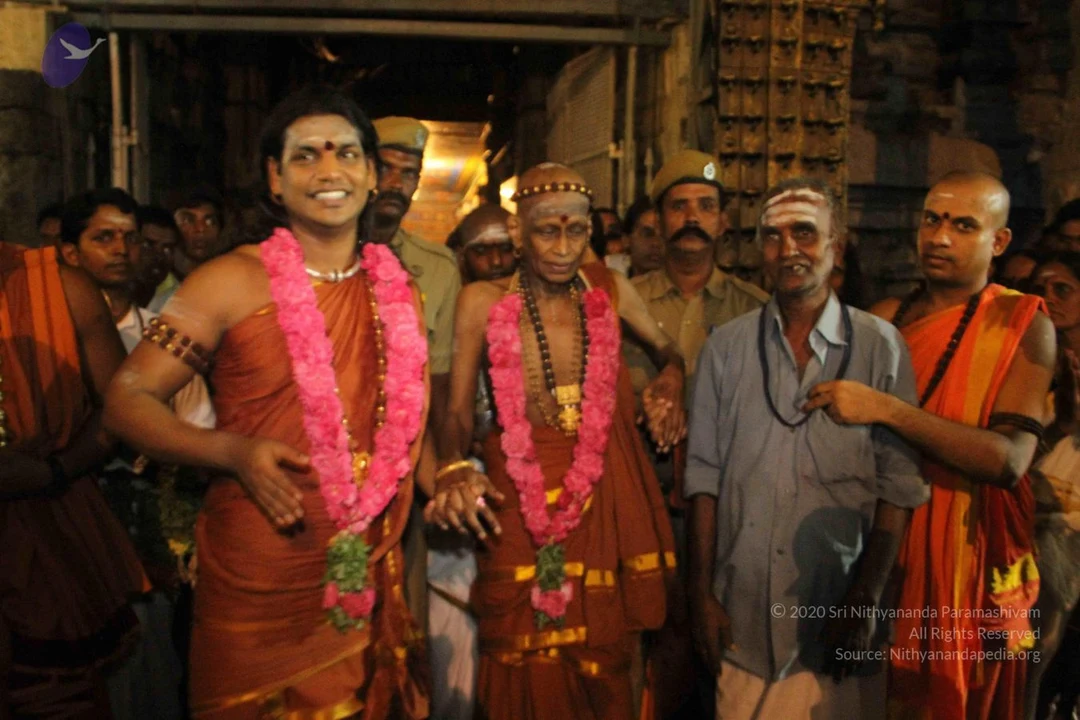
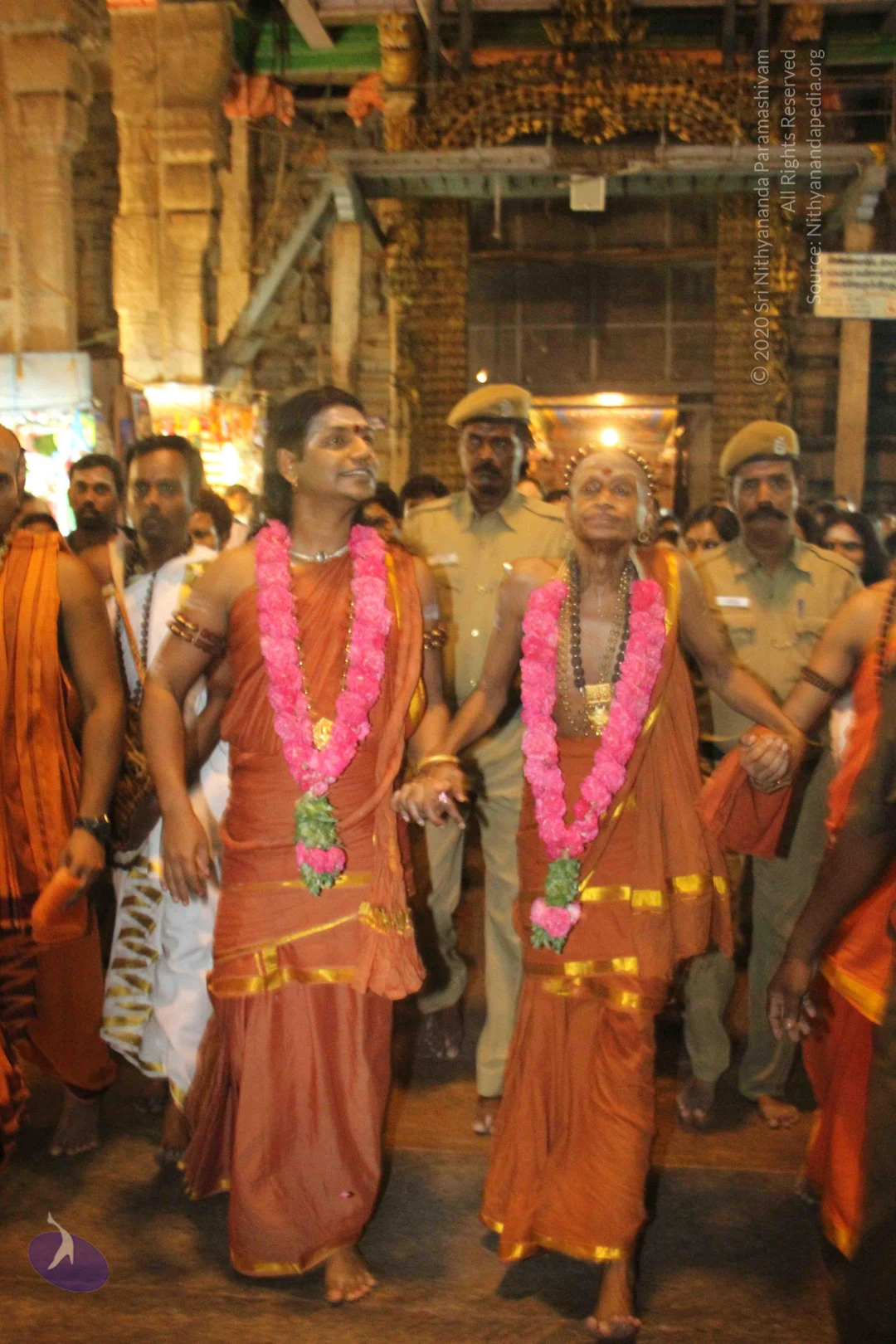
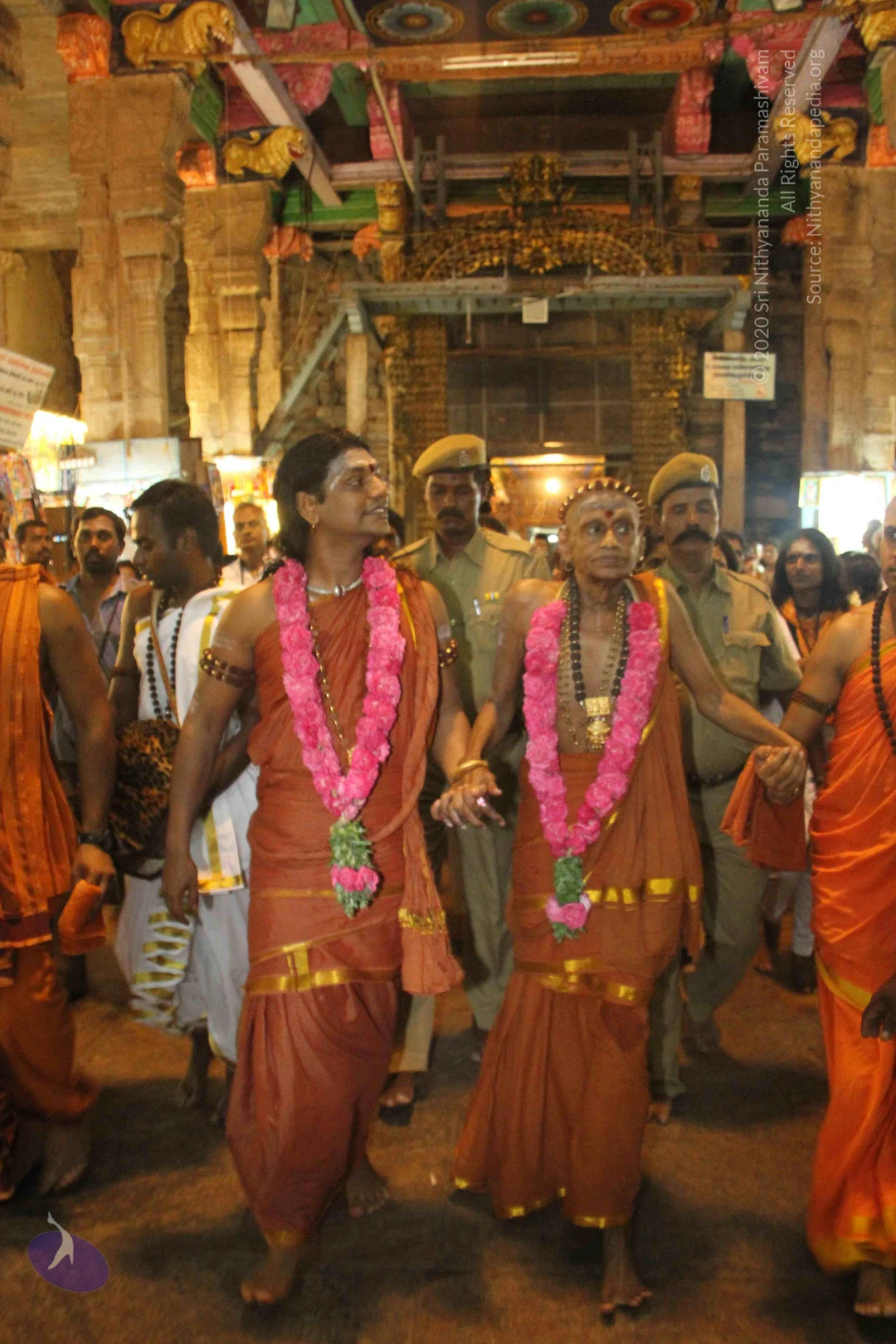
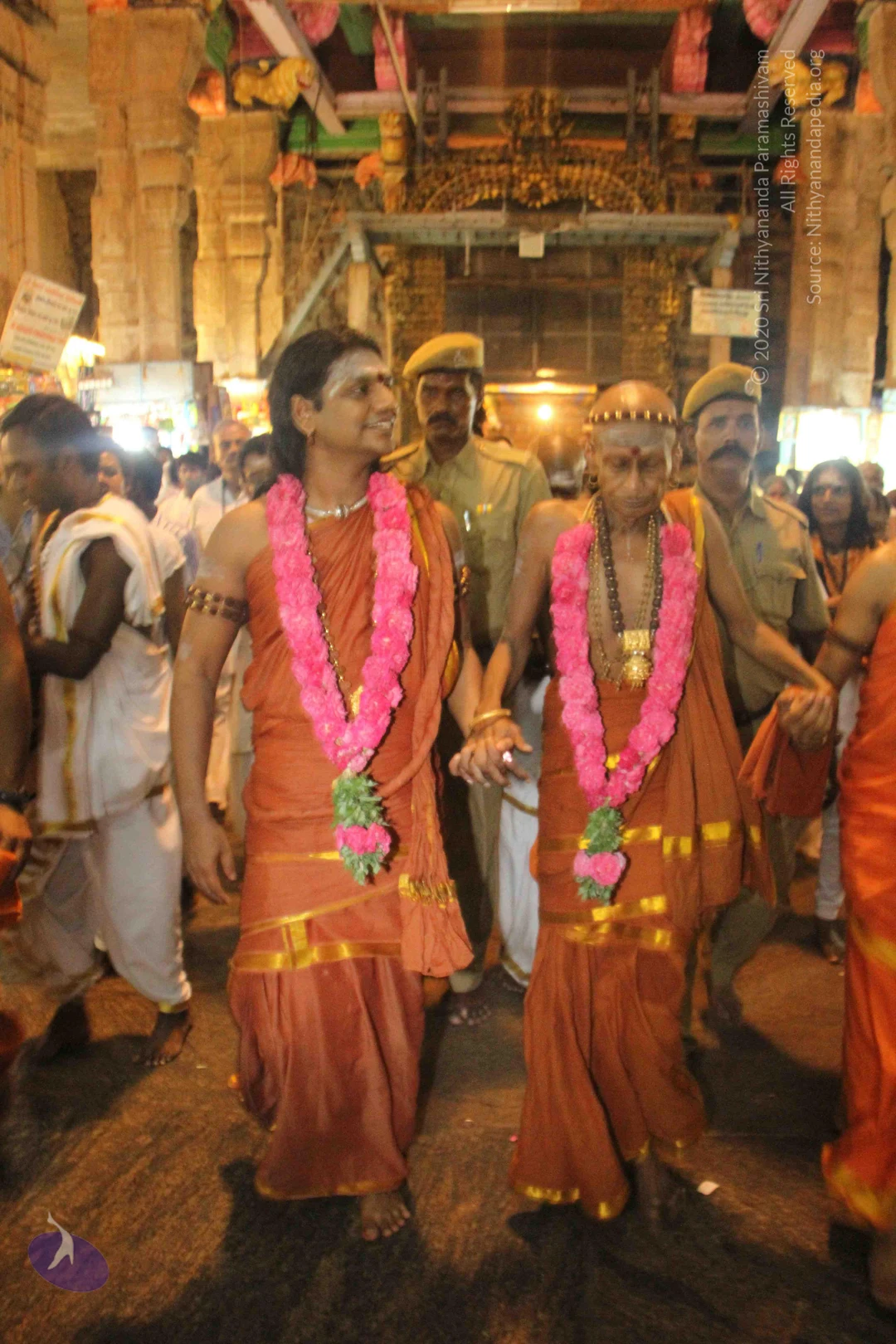
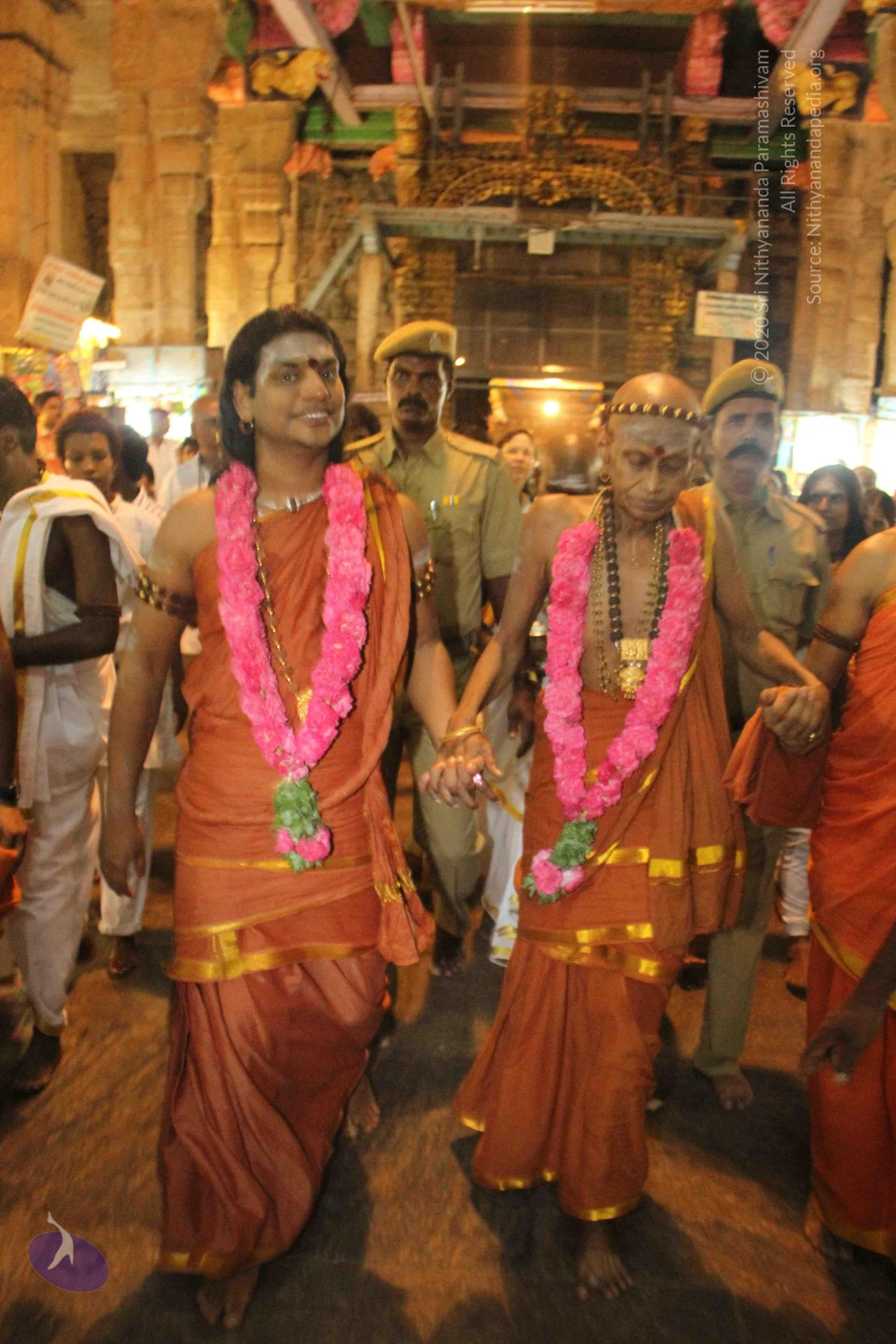
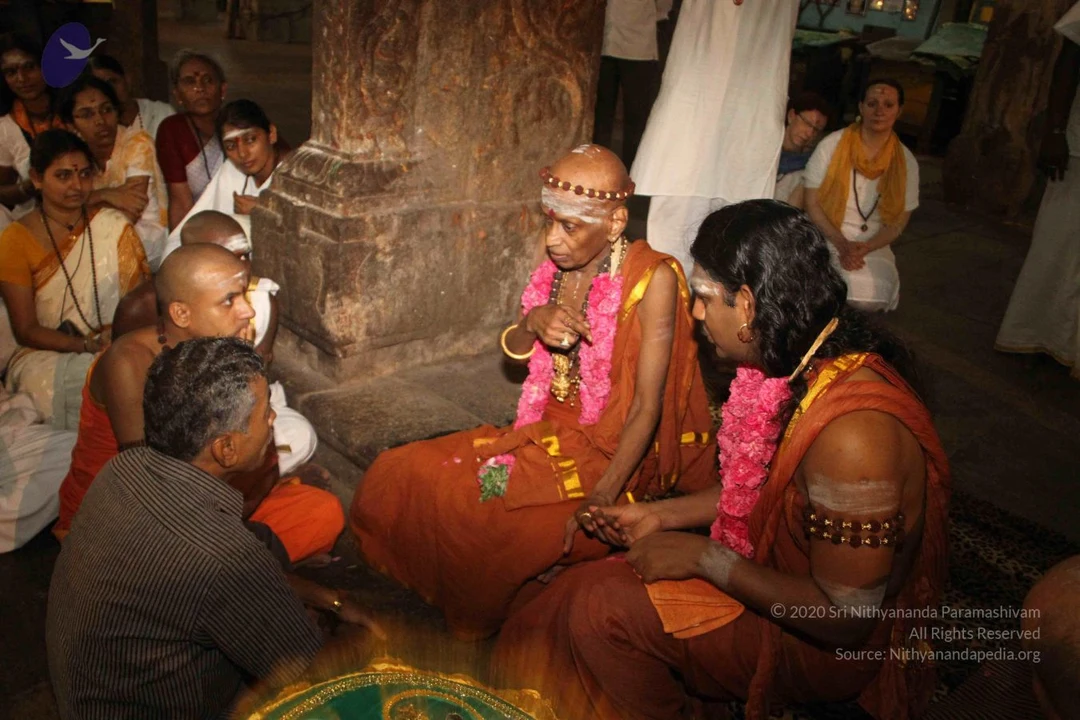
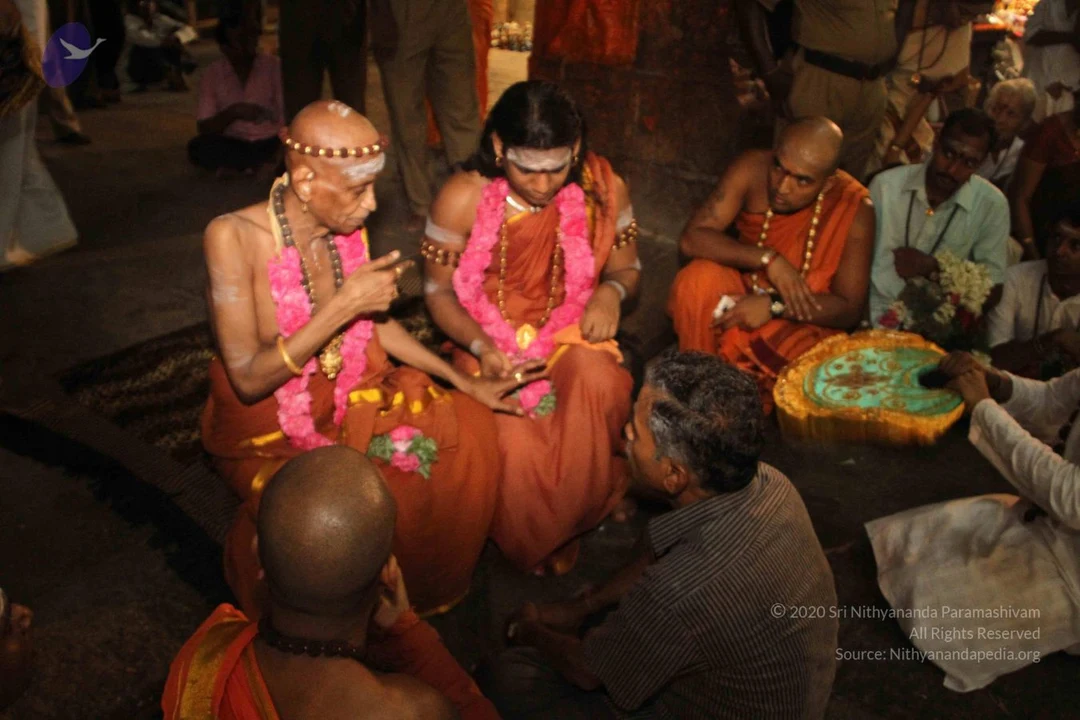
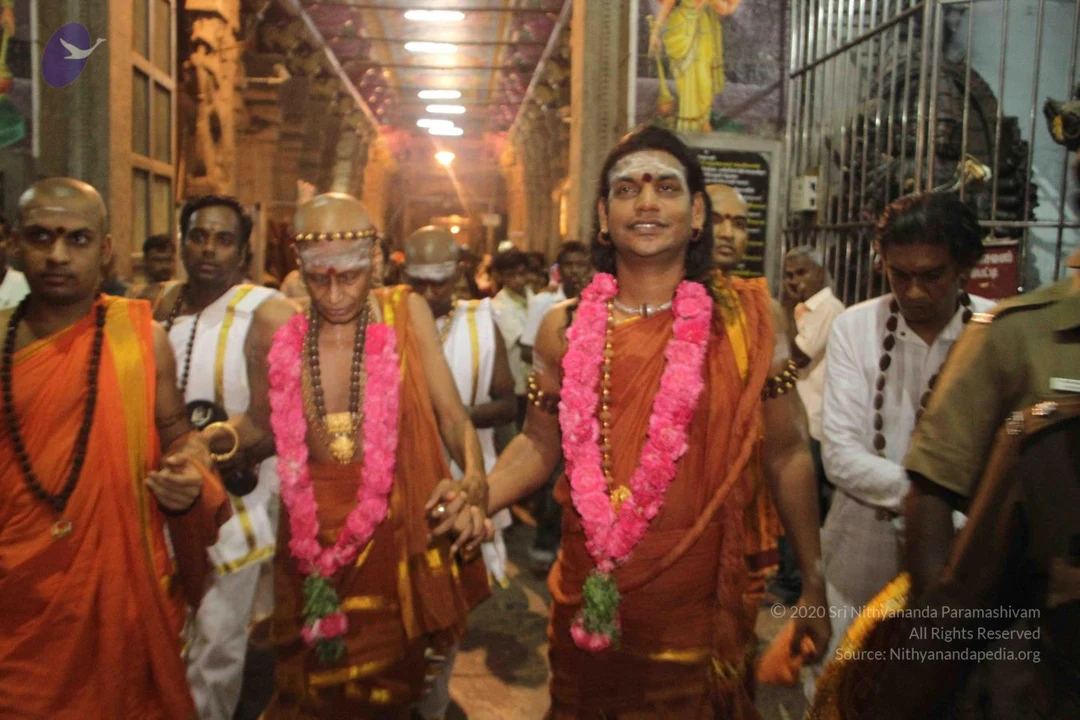
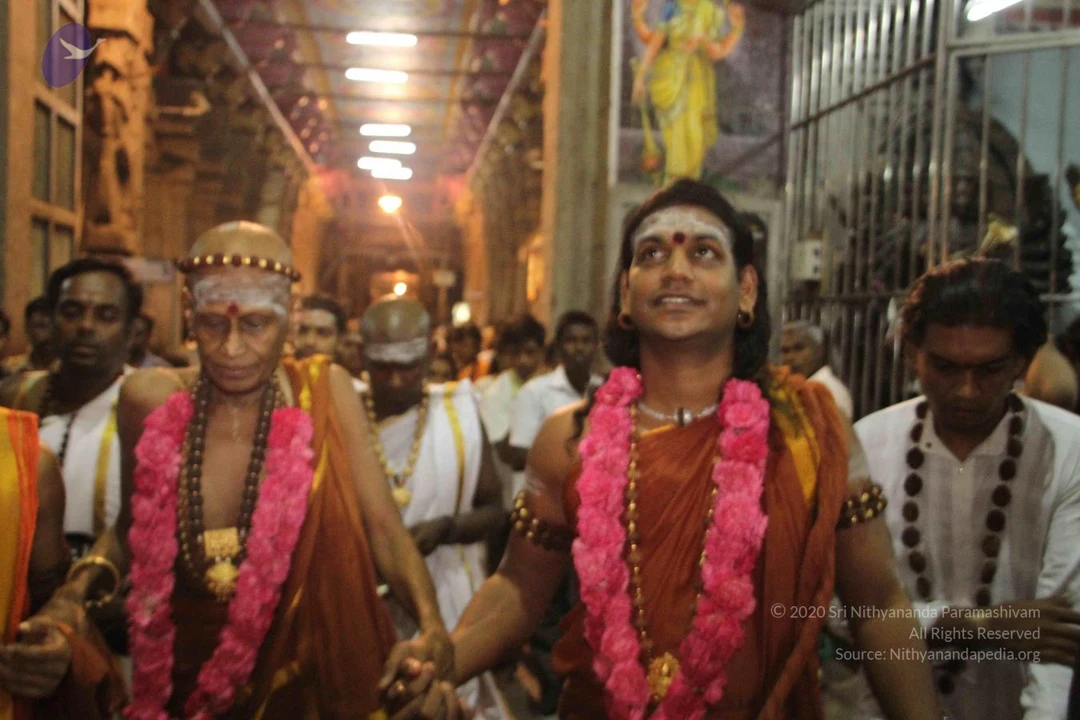
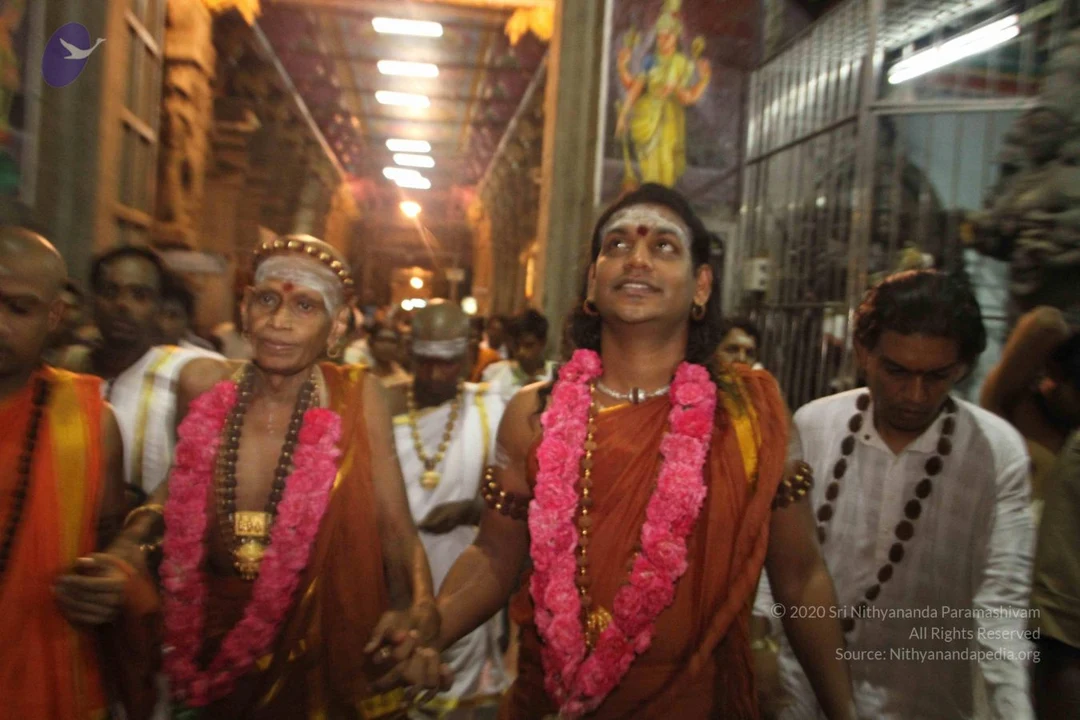
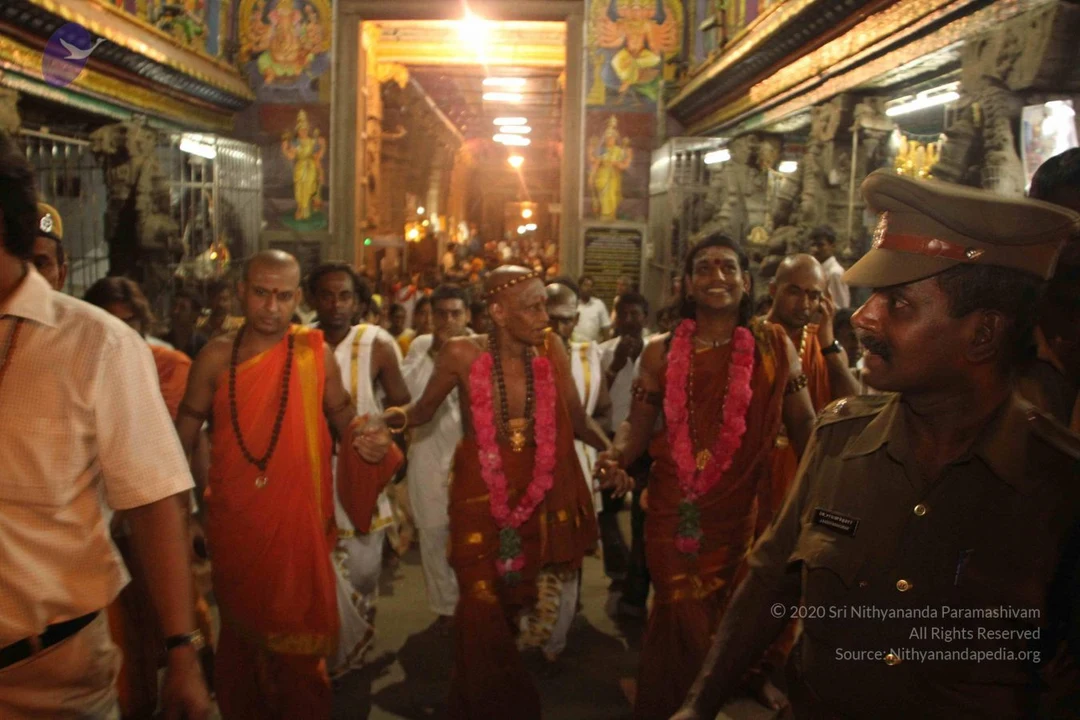
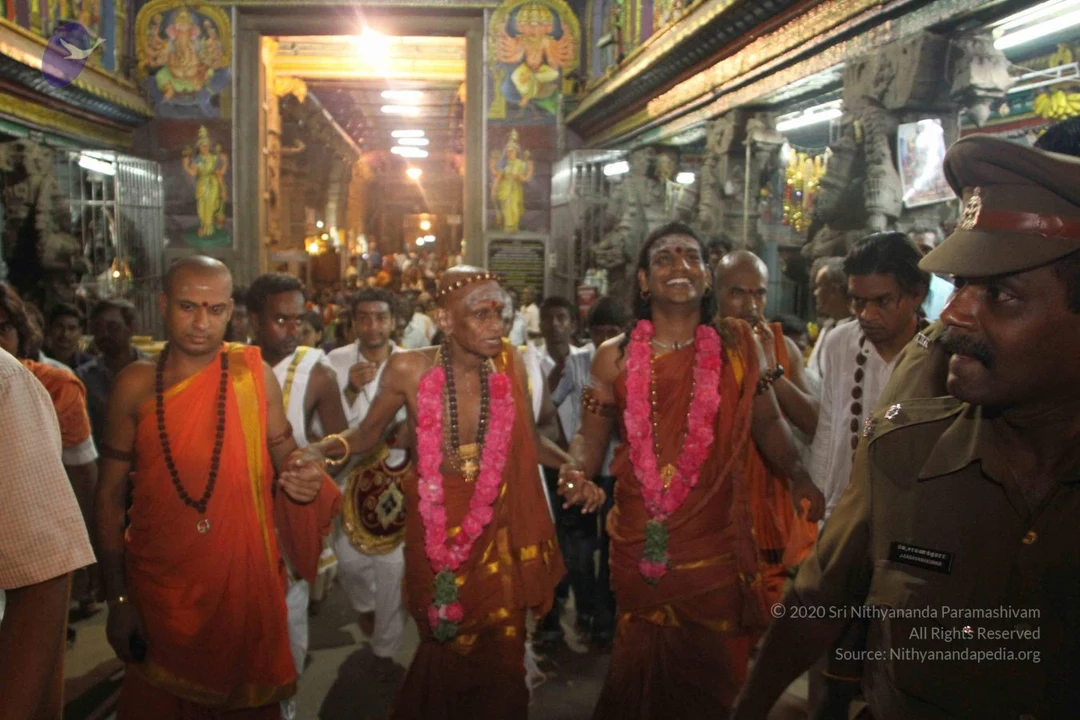
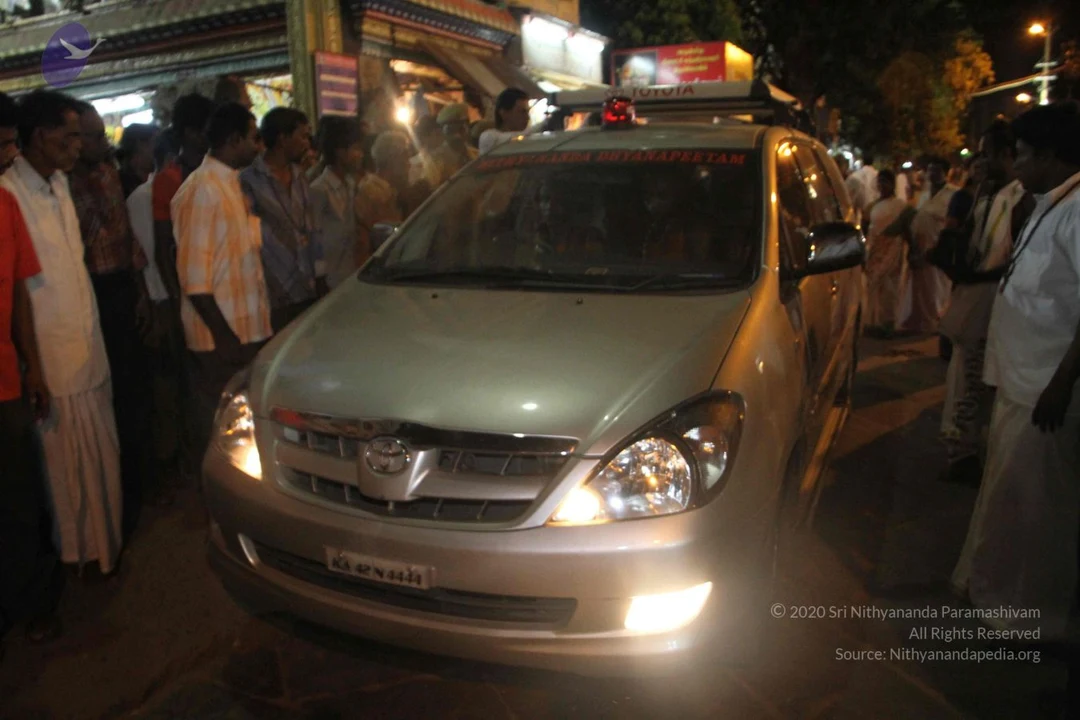
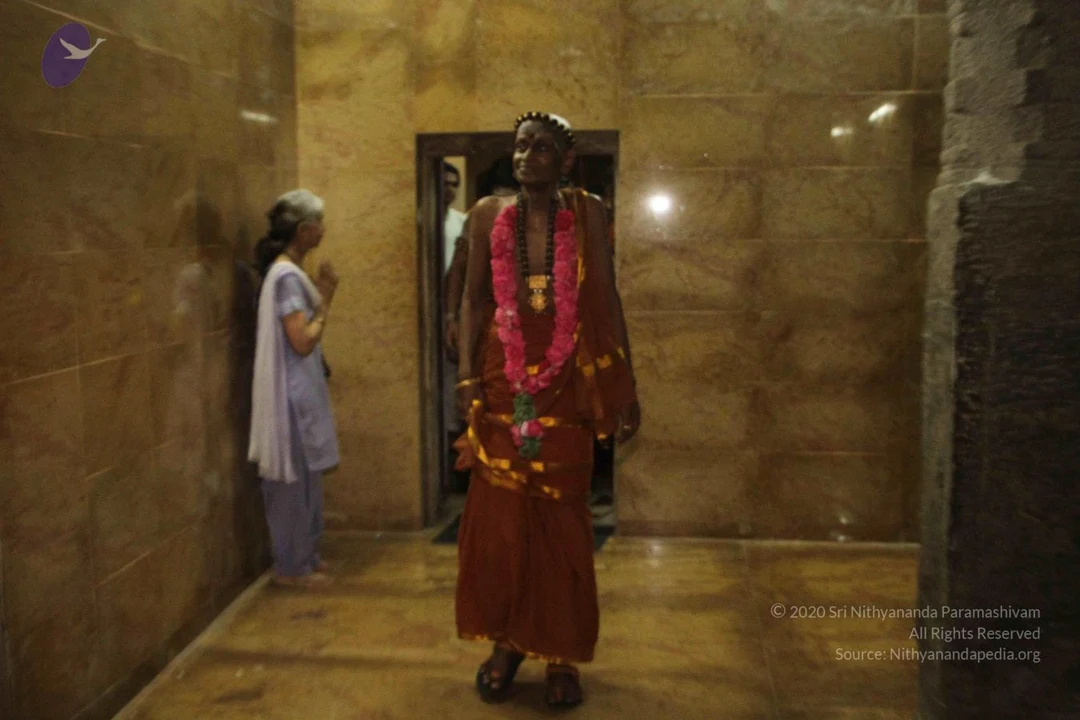
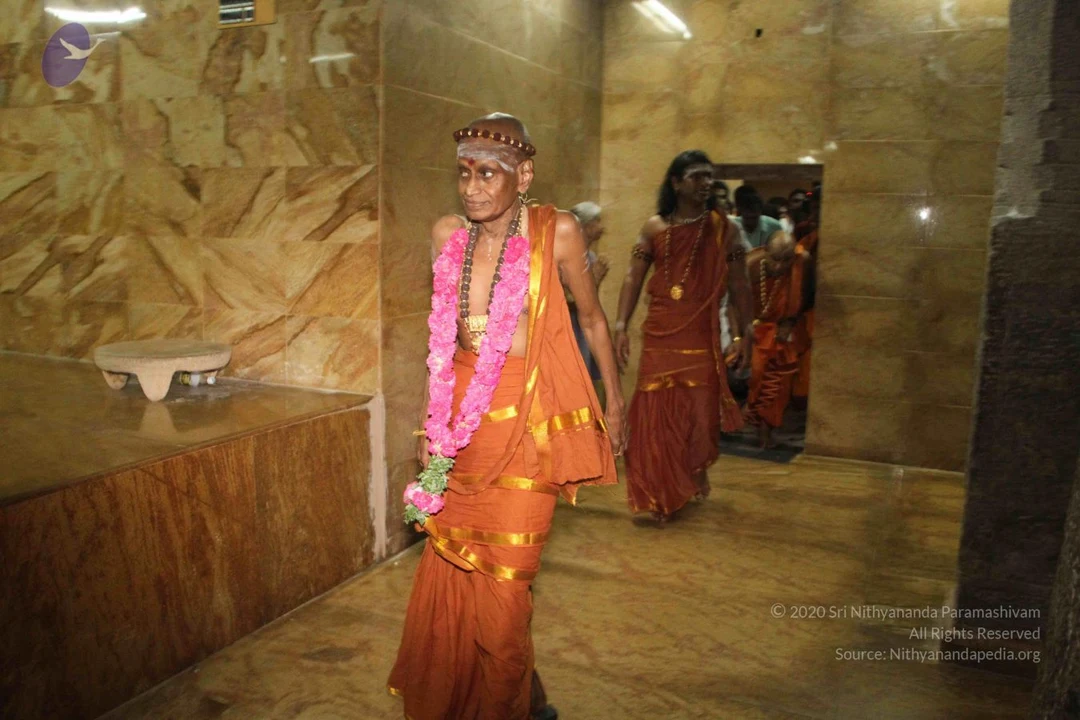
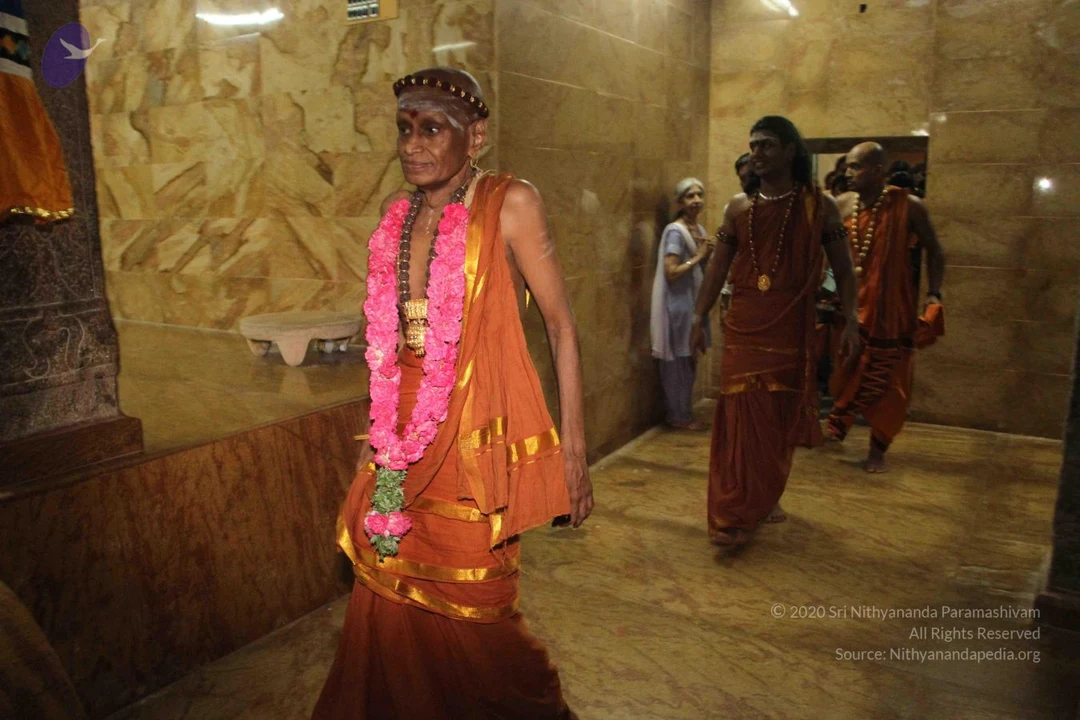
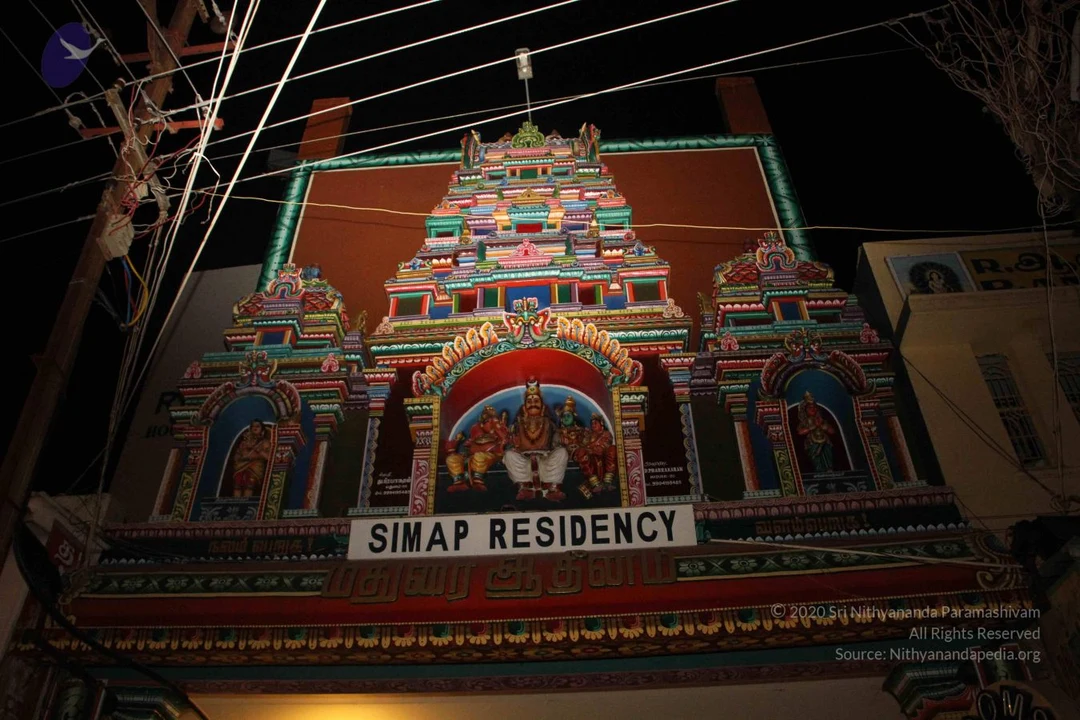
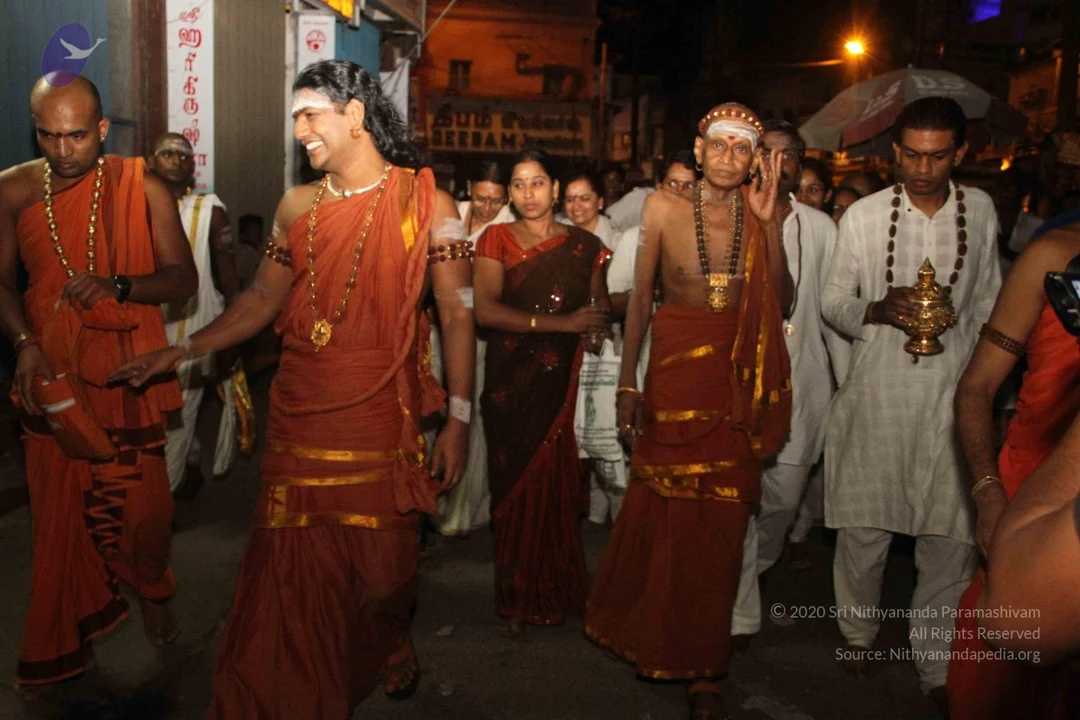
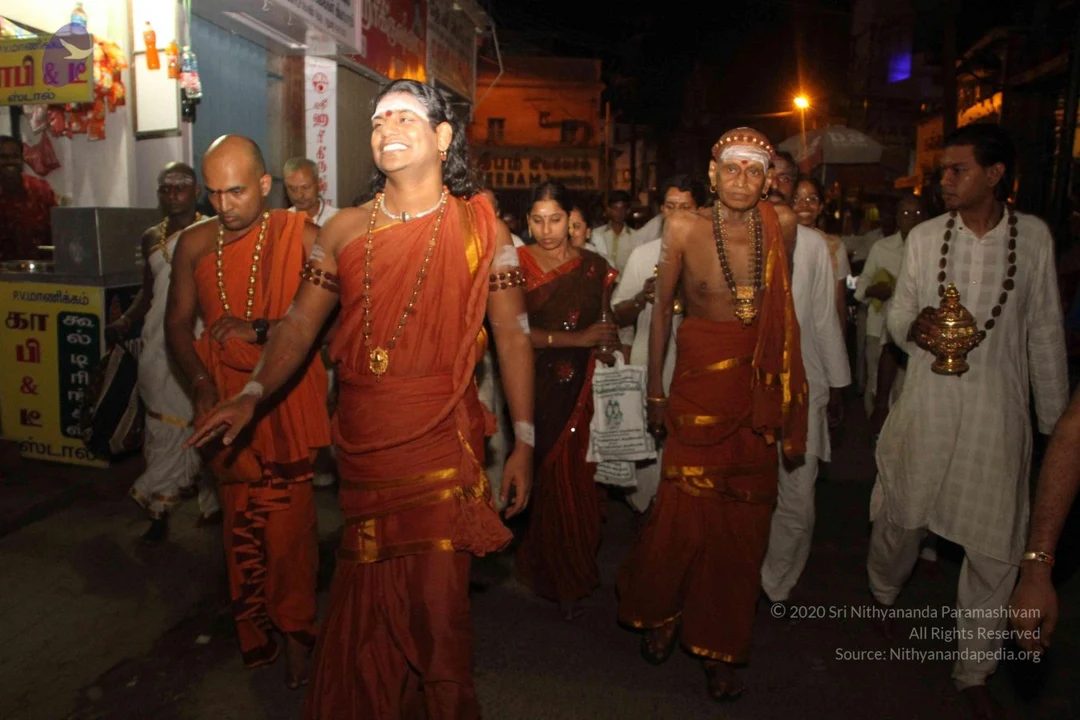
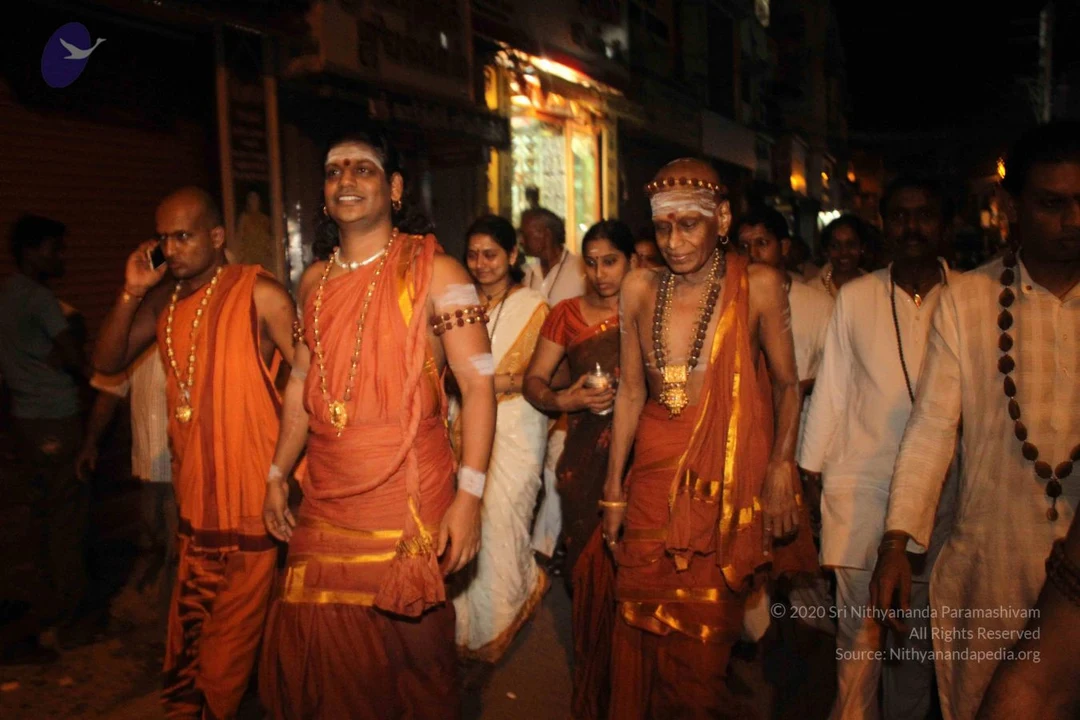
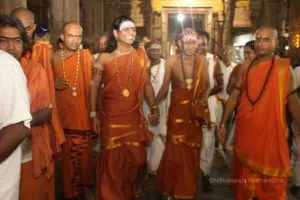
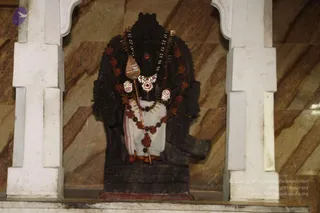
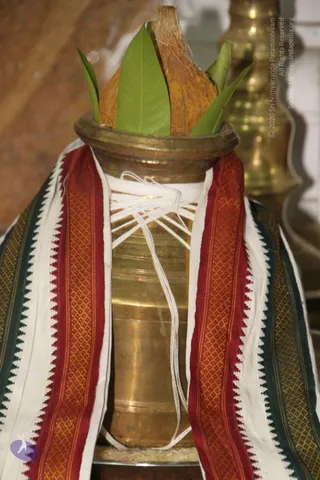
Paramashivoham Oneness Capsule 133 (Meenakshi Amman Temple Visit 20th May 2012)

Tags:

Paramahamsa Nithyananda, emphasize, clarity, Krishna, teaching, practice, self, achieve, offer, action, reward, life, mind, spiritual, existence, establish, awaken, juicy, vibrant.

Photos Of The Day:
HDH-IN-MADURAI-ADHEENAM-TEMPLE

PADA-POOJA

NITHYA-SATSANG

DIAL-THE-AVATAR

SARVA-DARSHAN

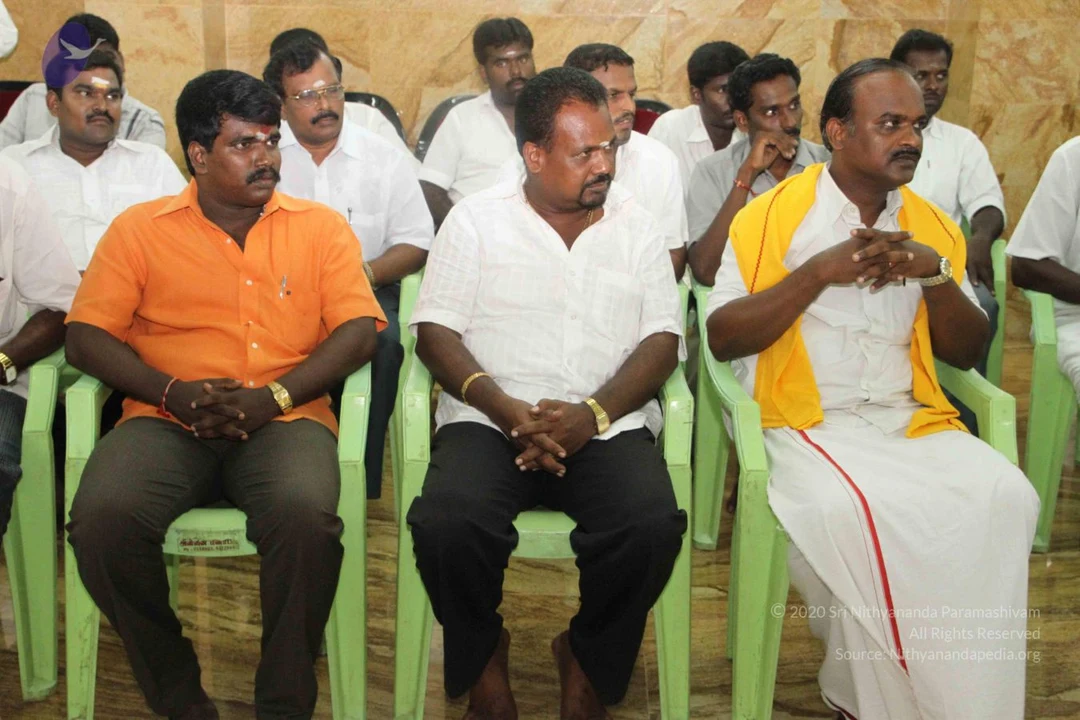
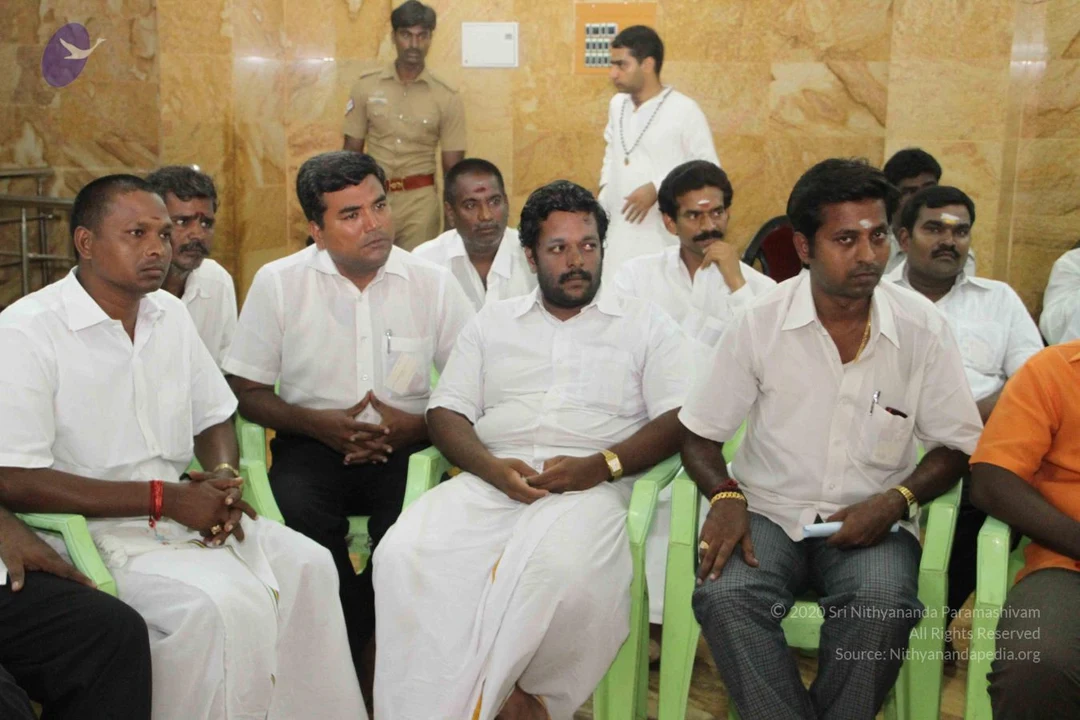
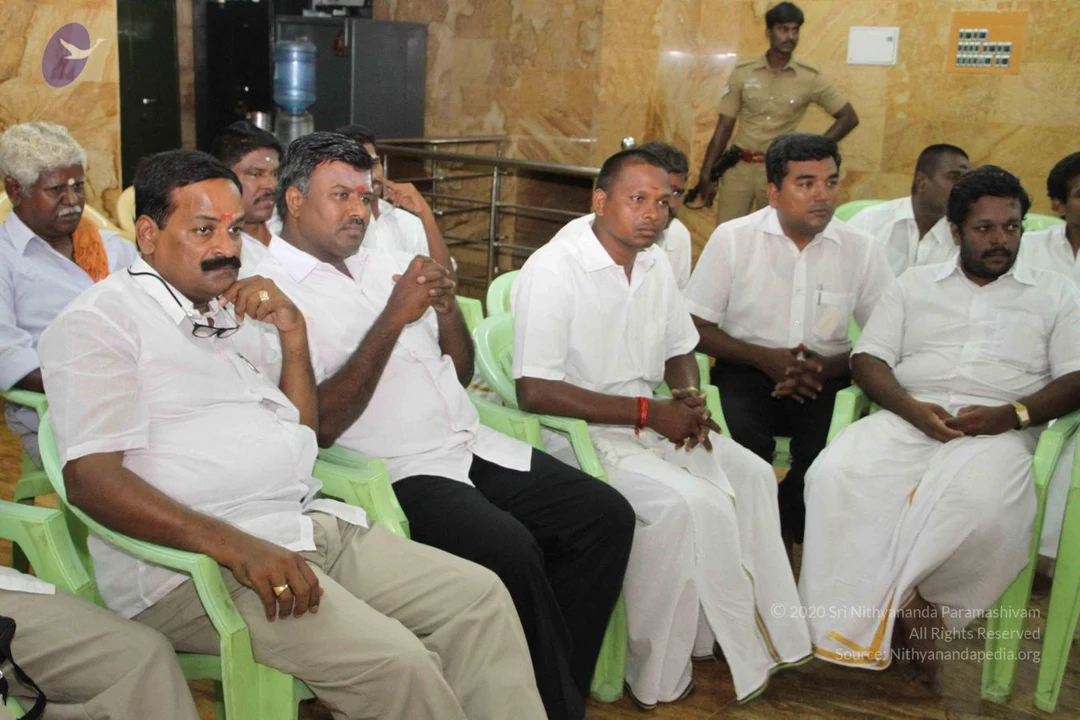
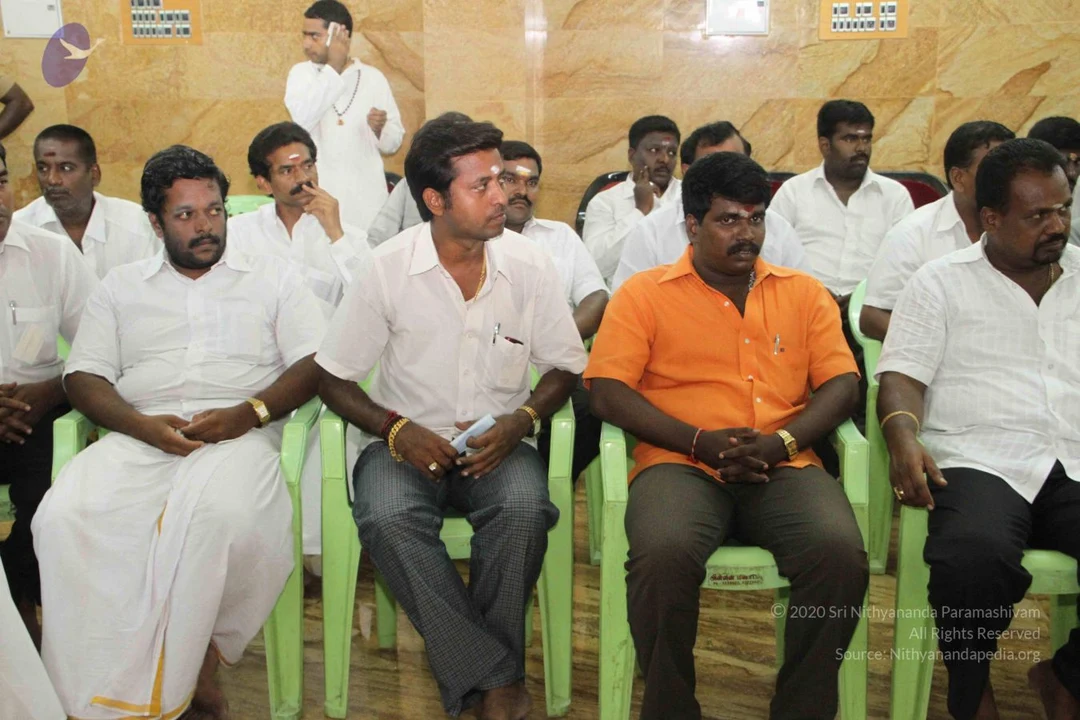
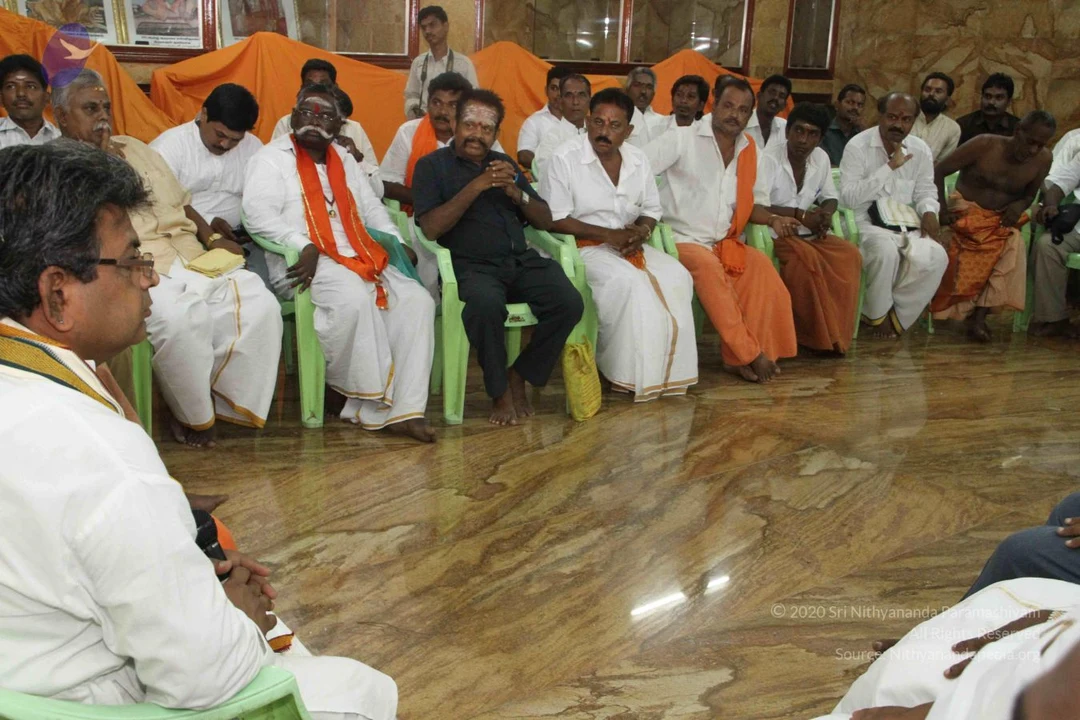
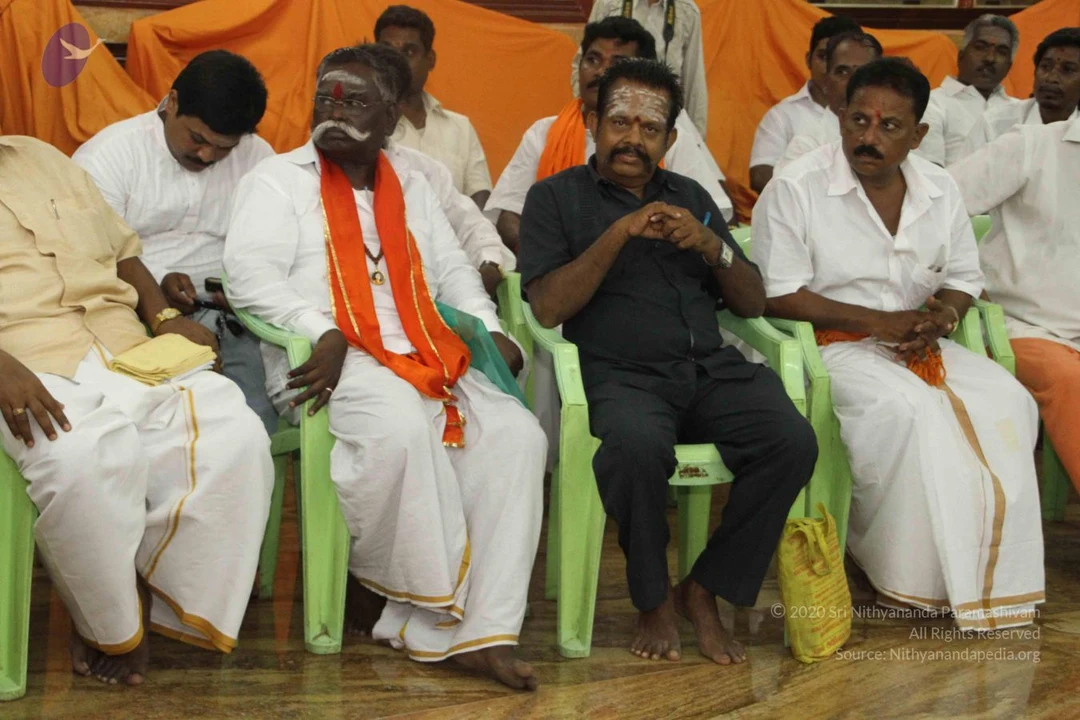
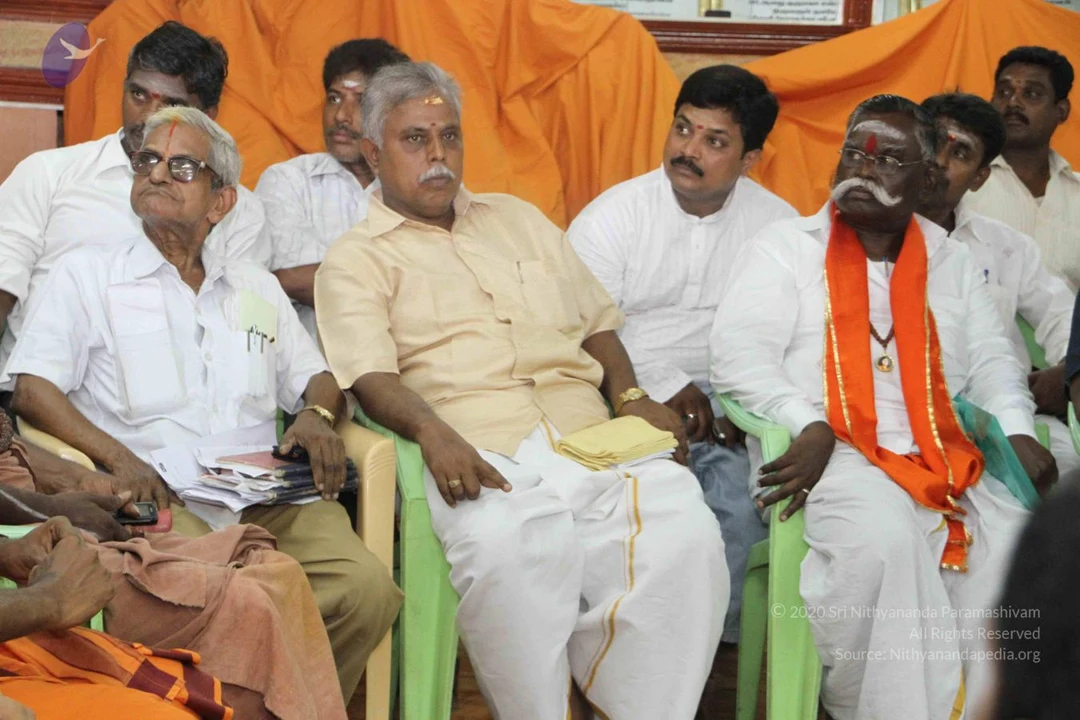
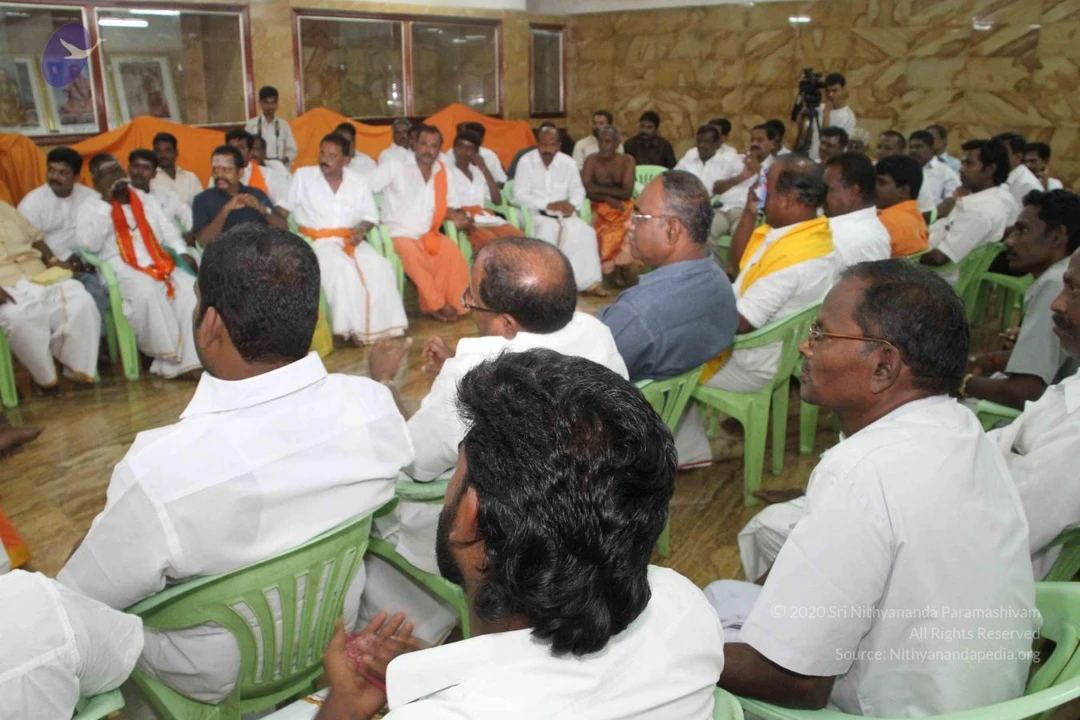
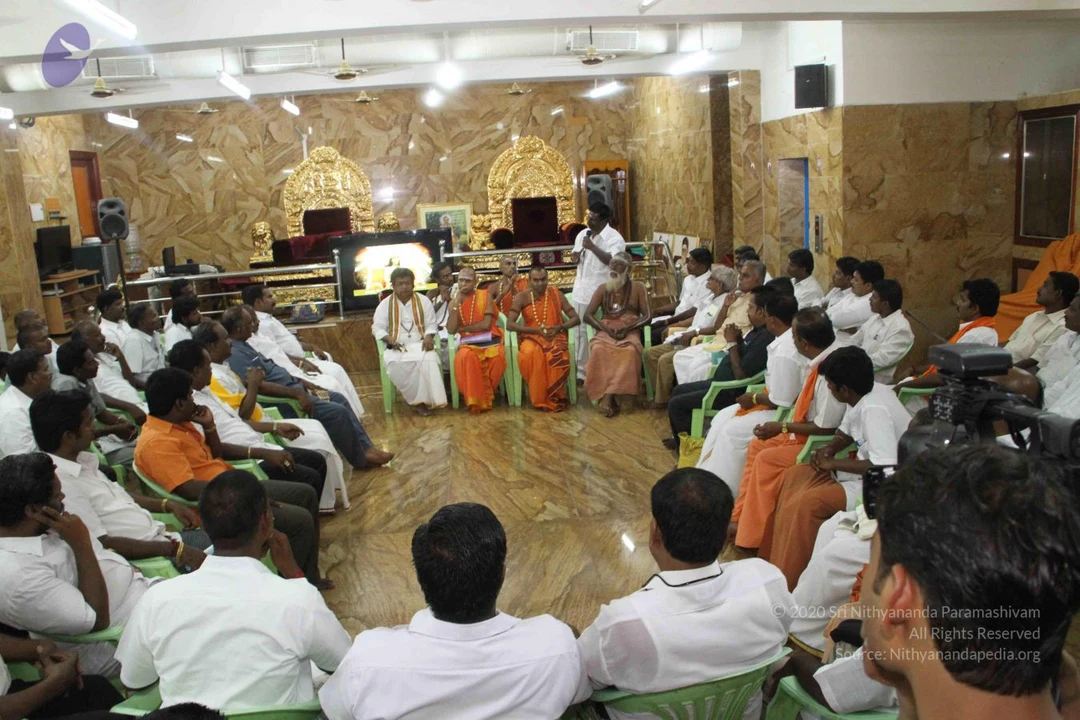
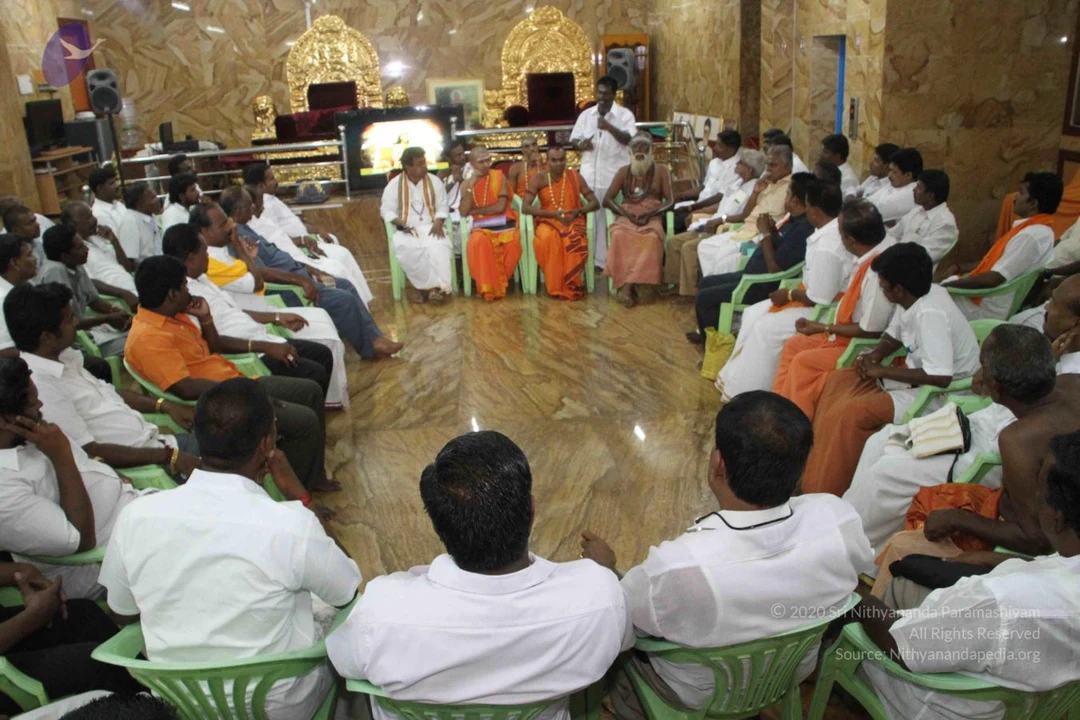
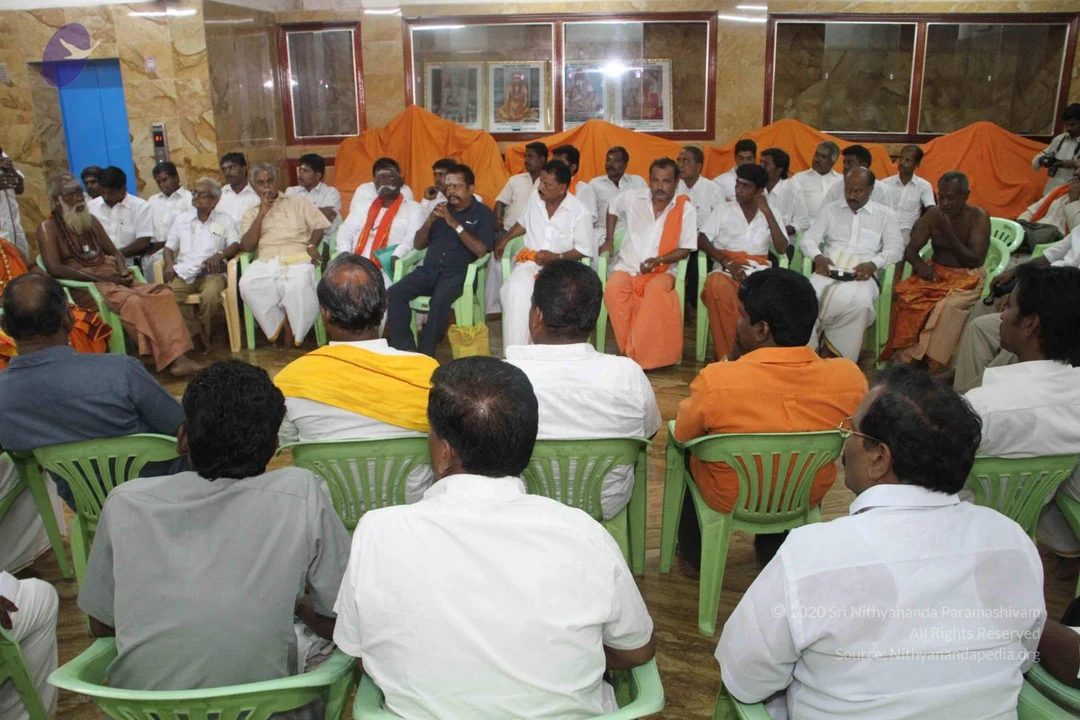
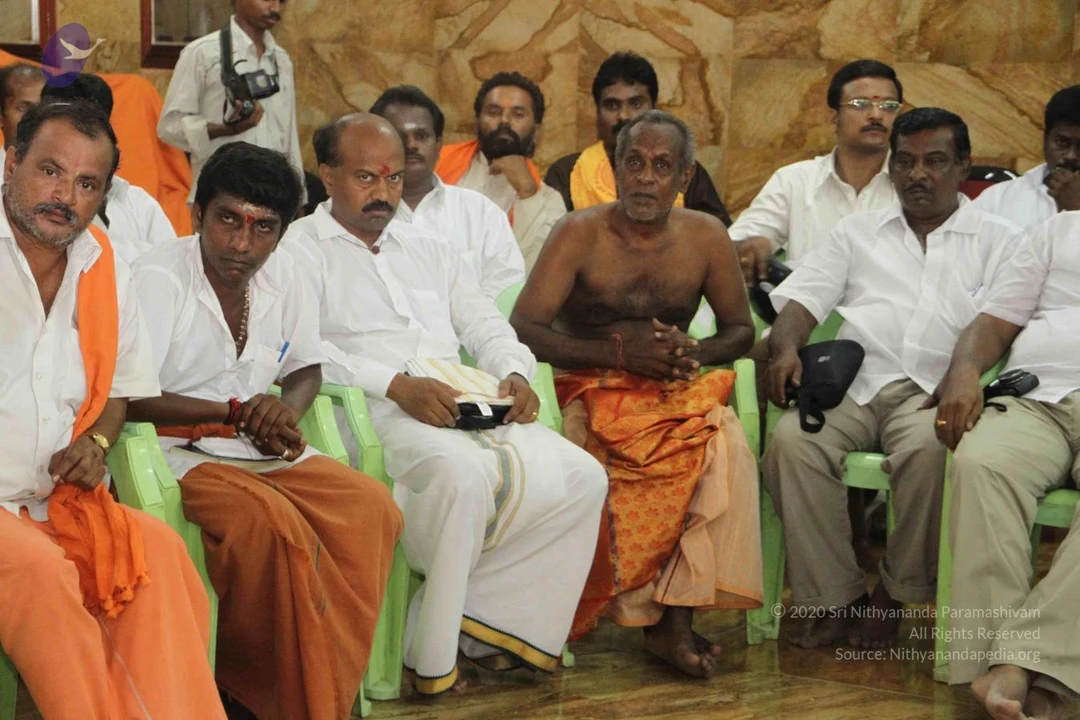
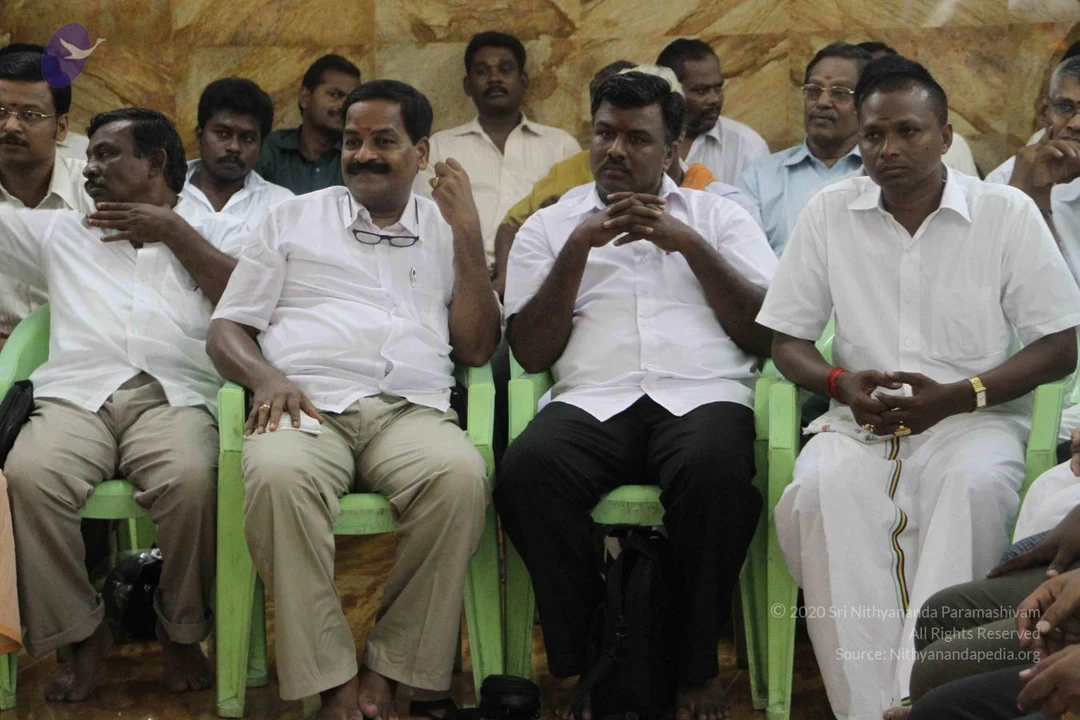
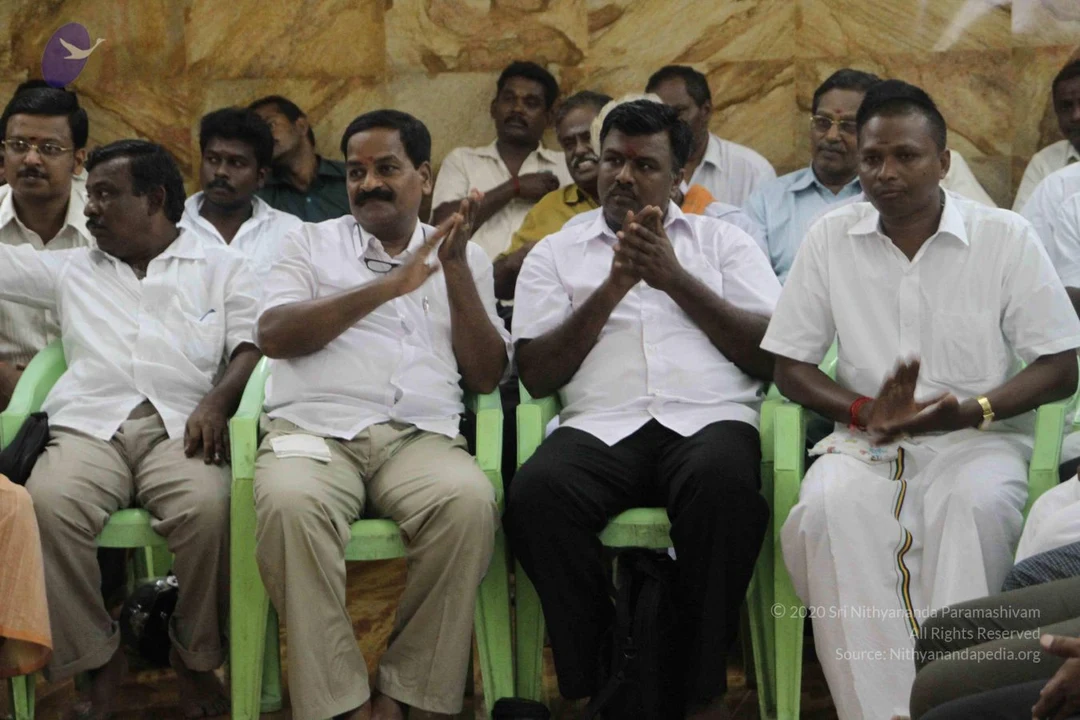
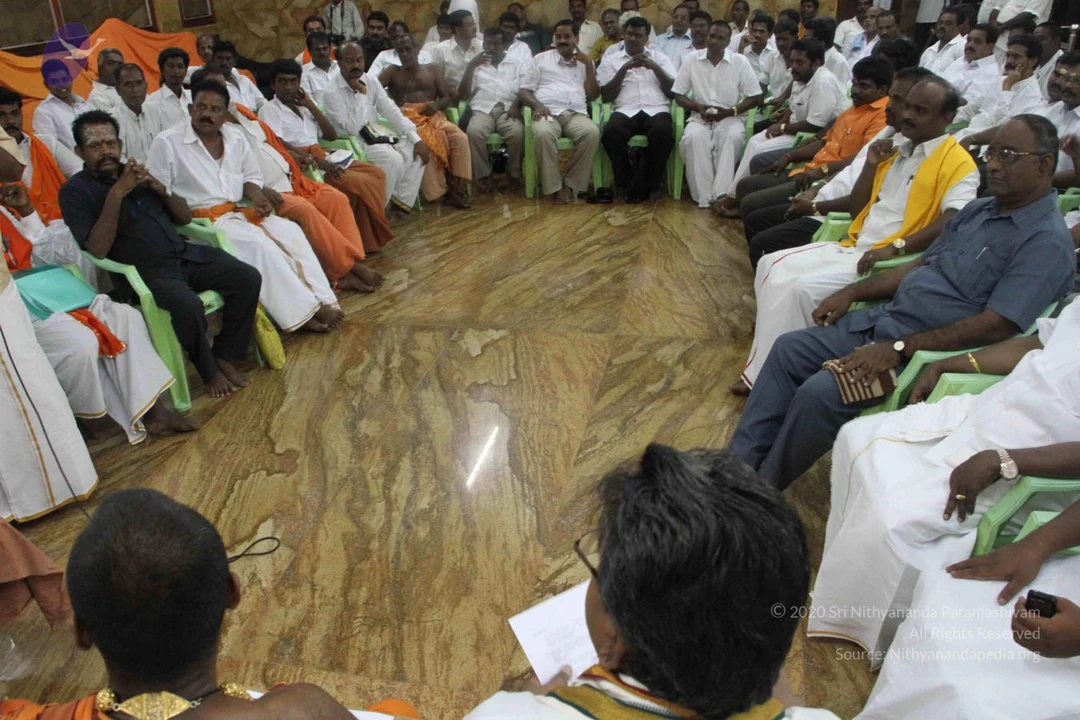
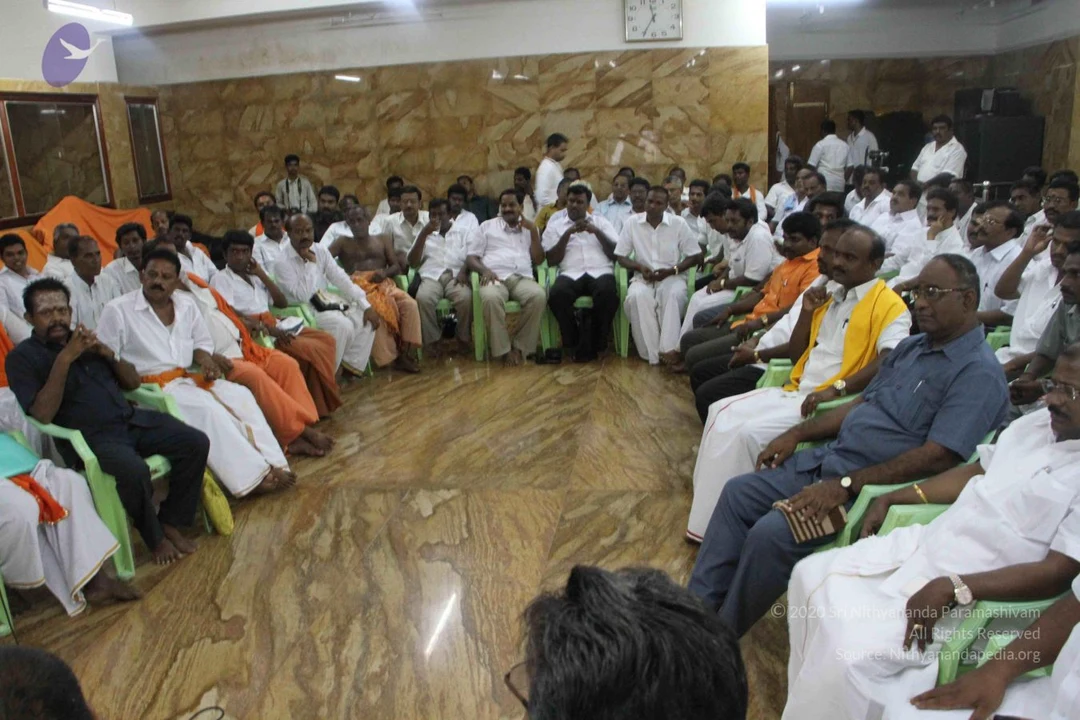
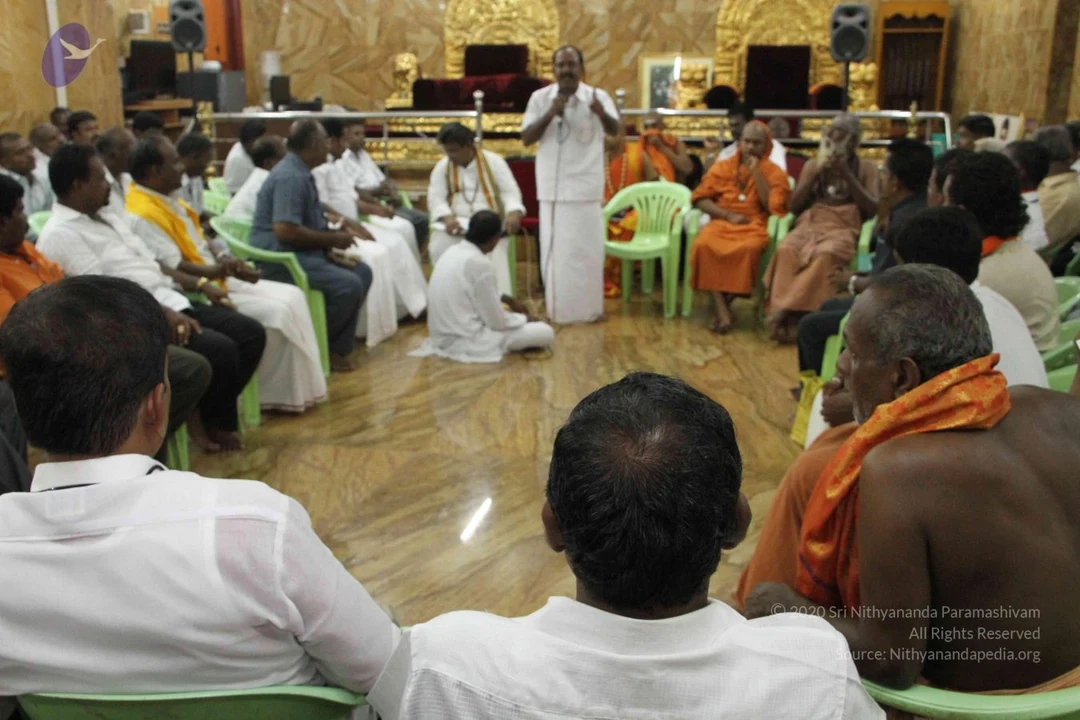
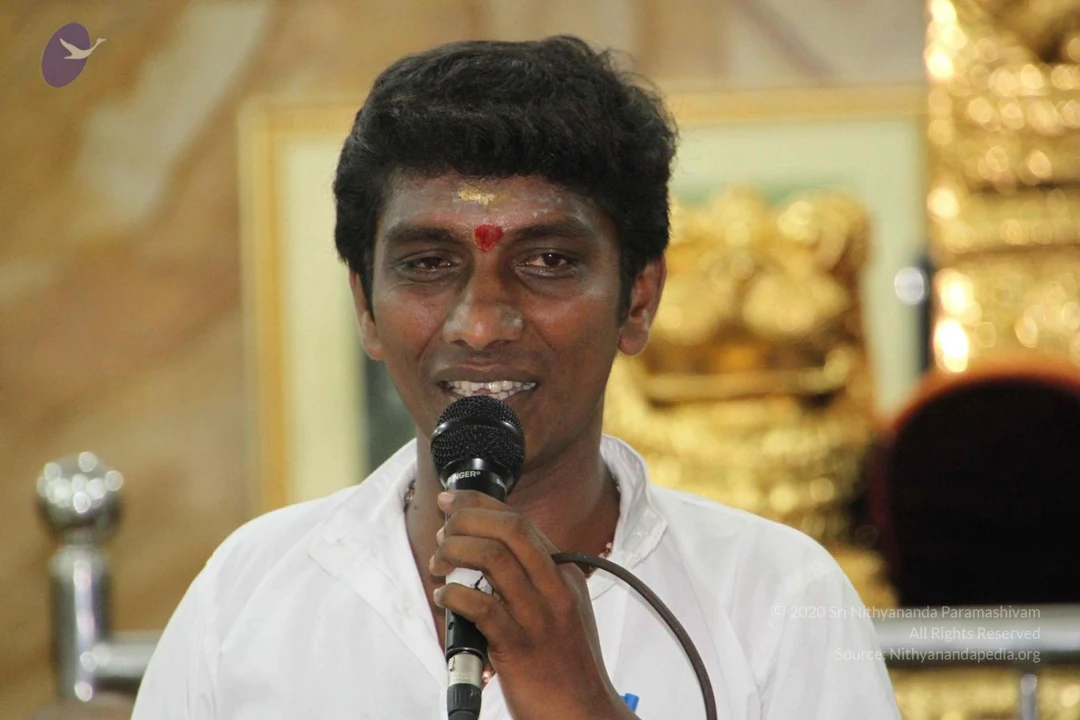
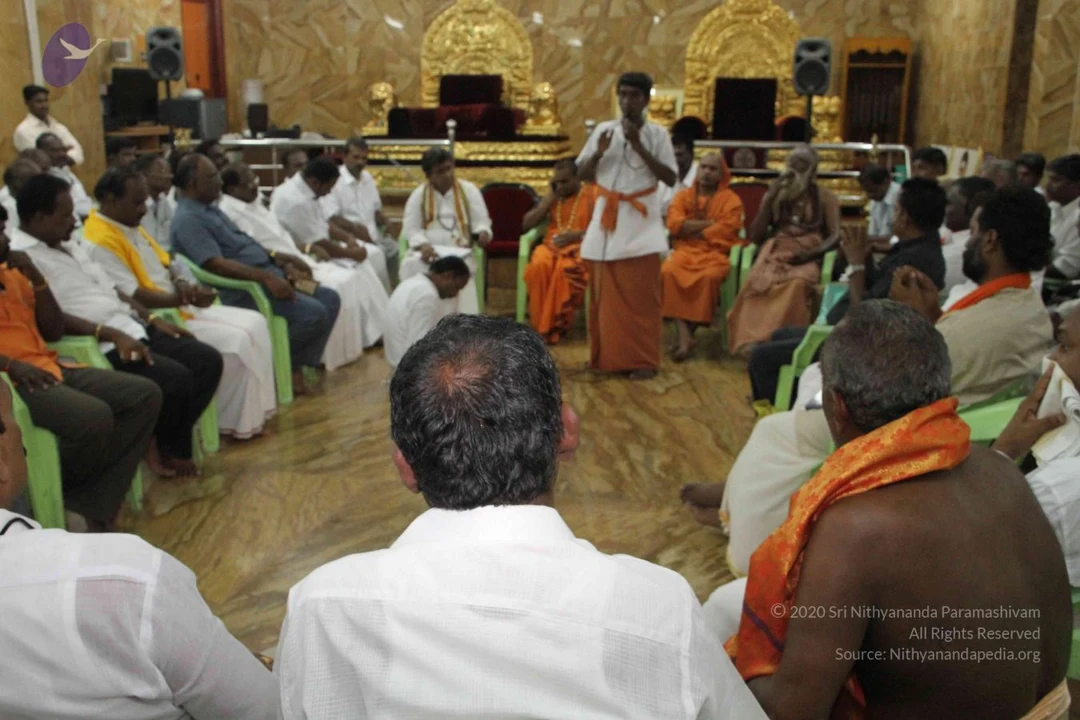
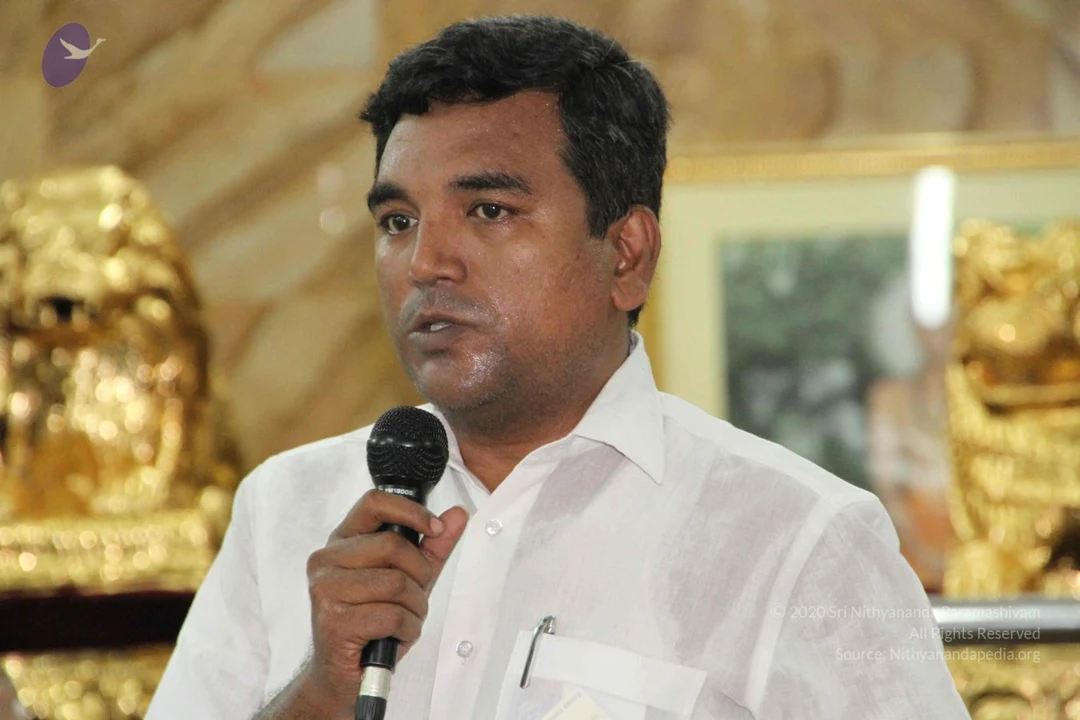
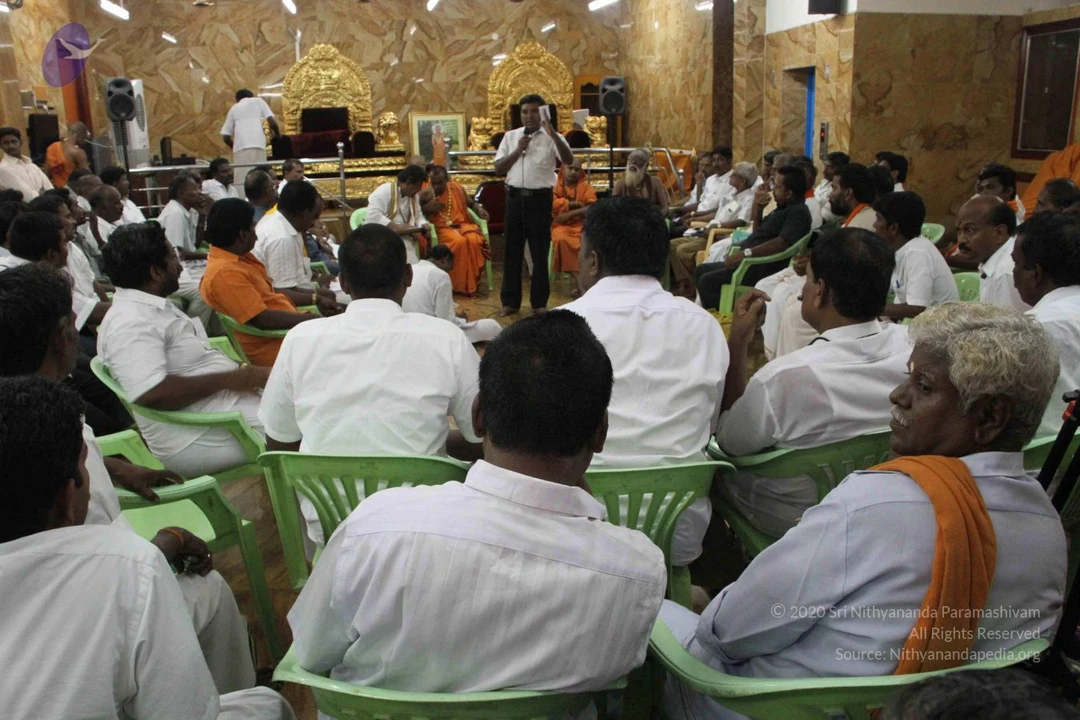
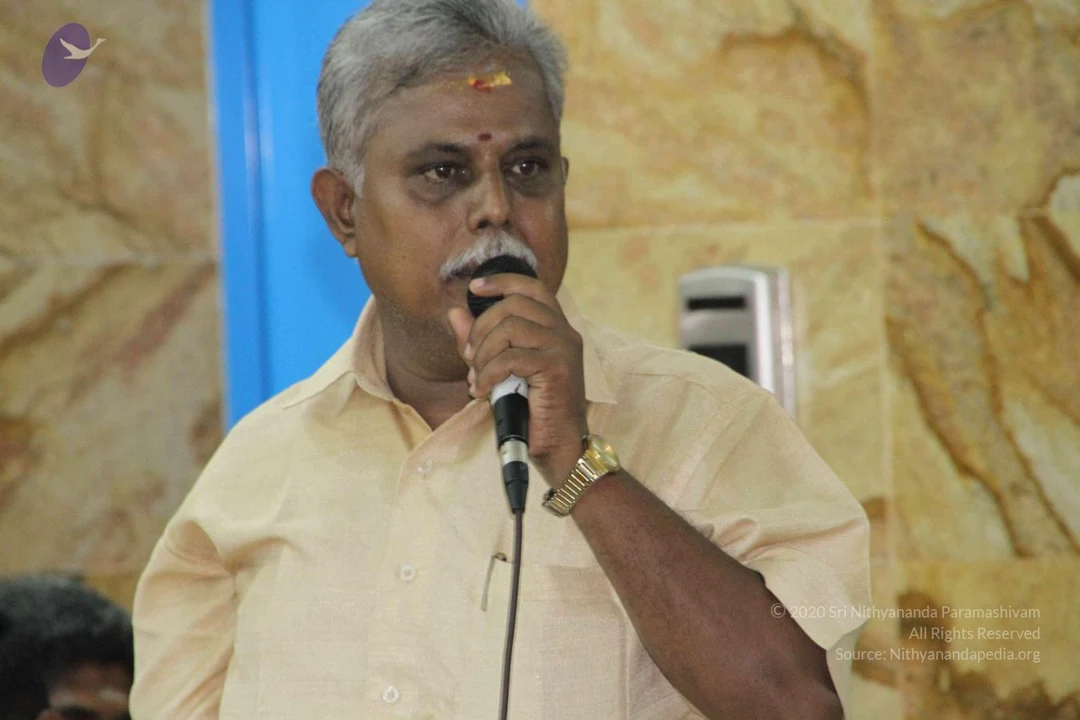
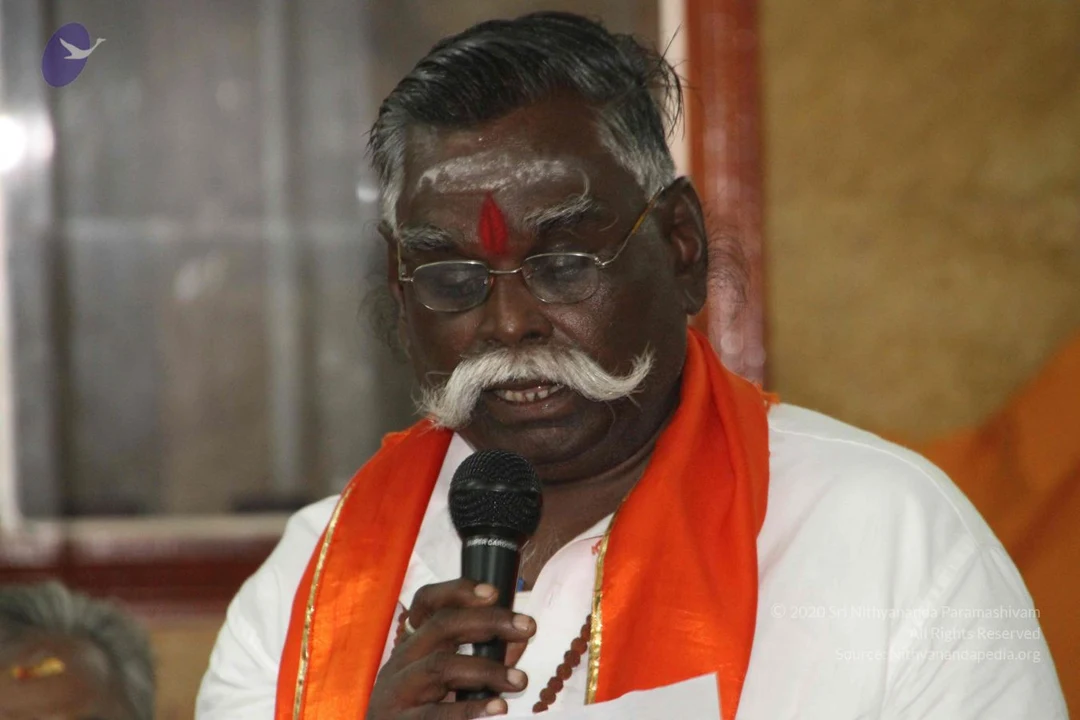
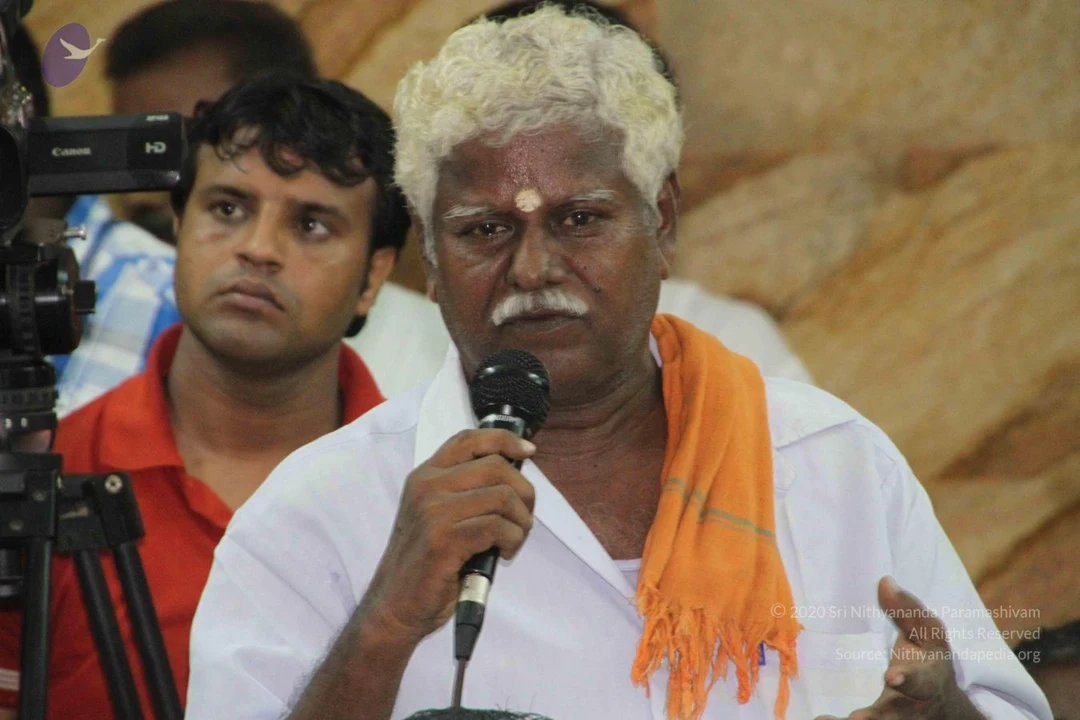
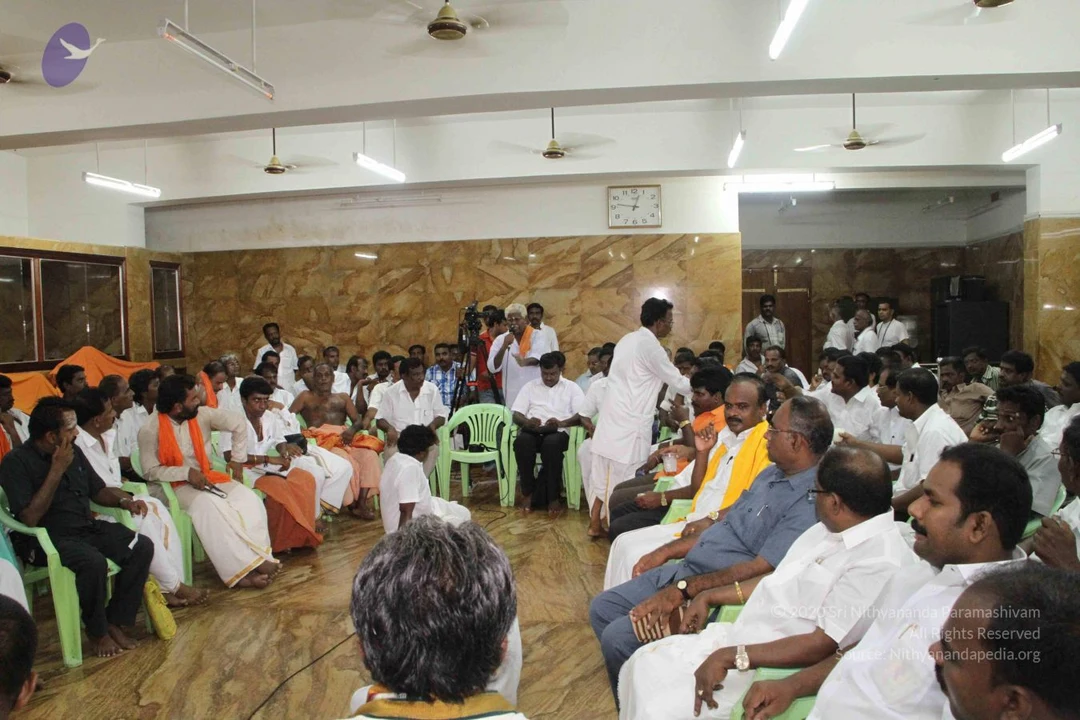
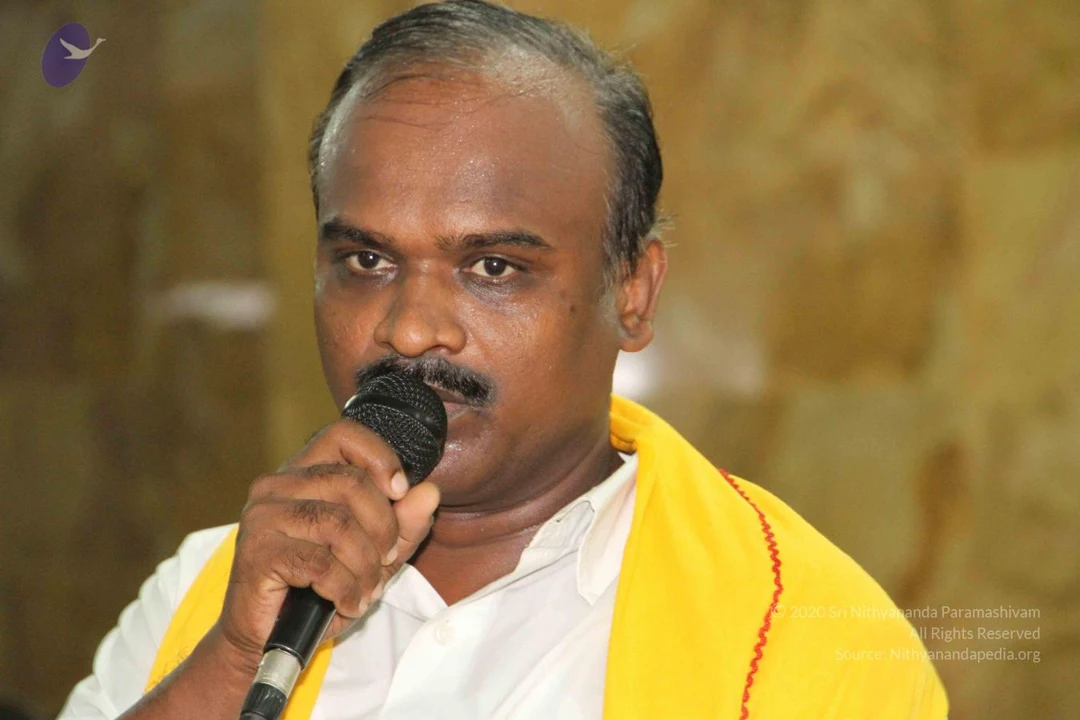
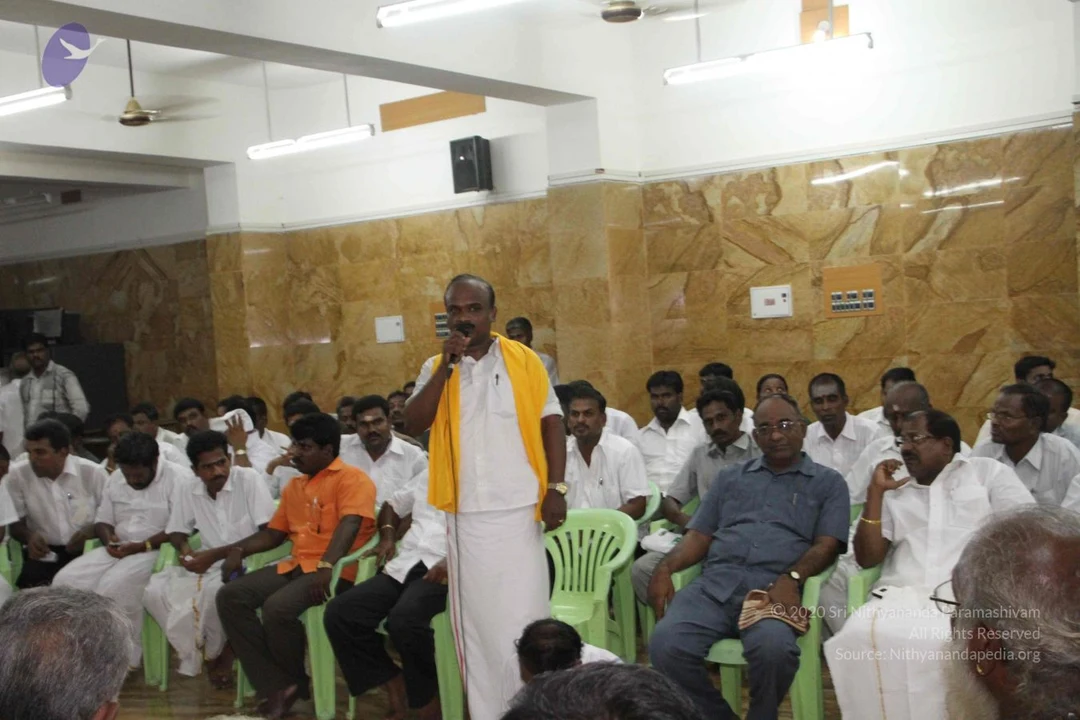
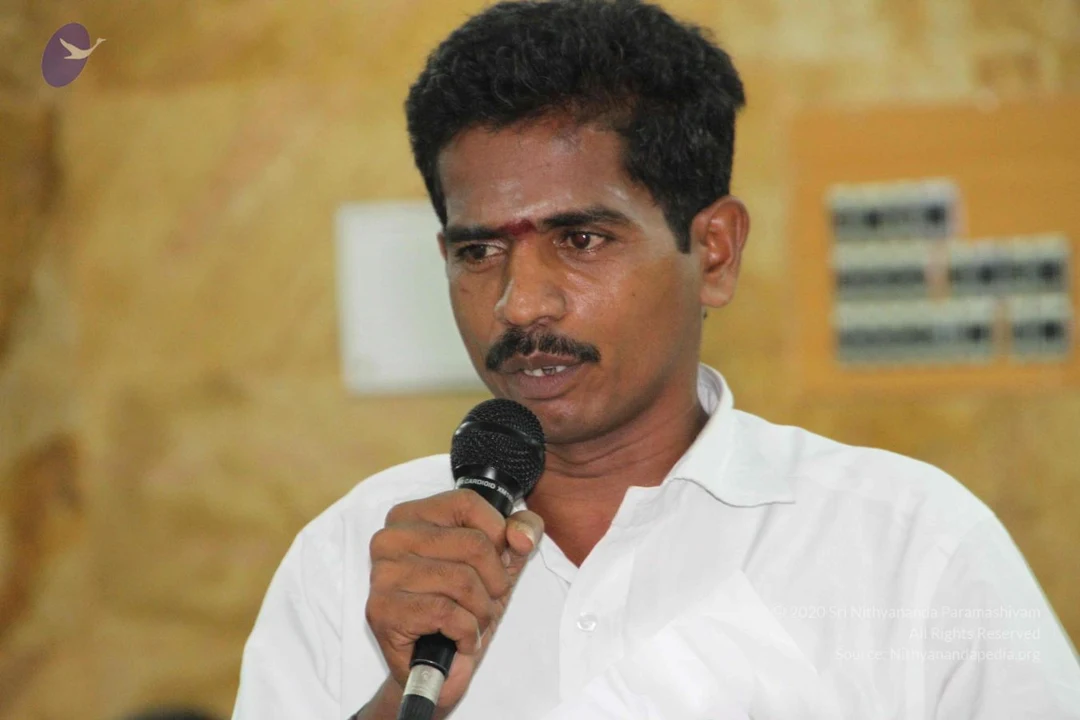
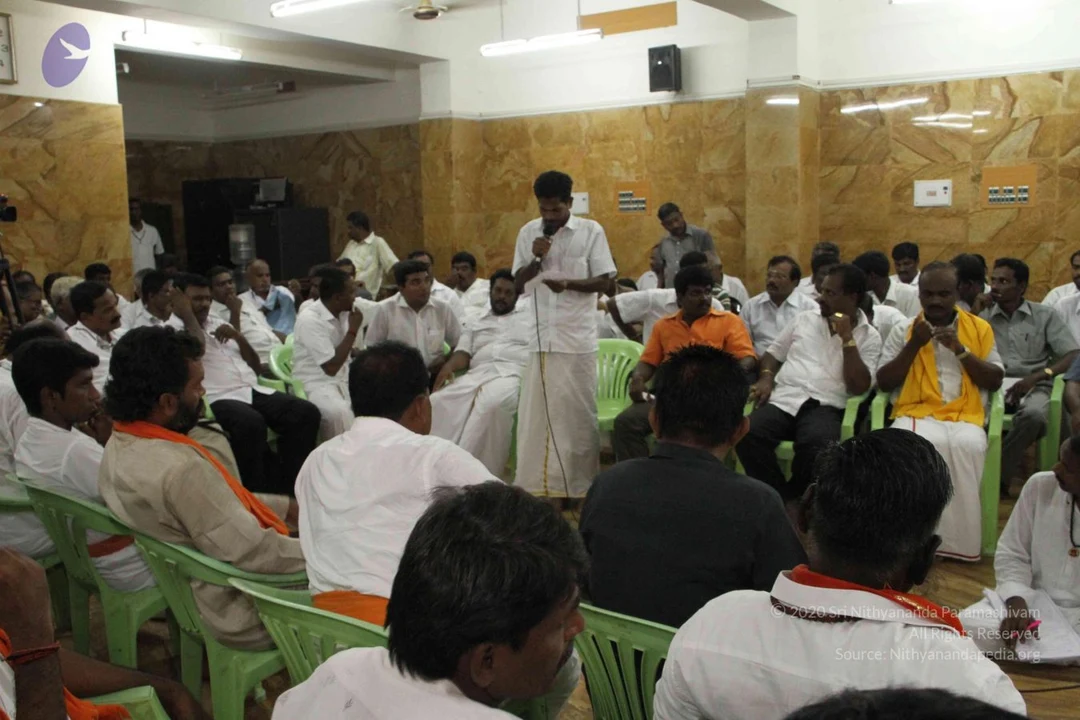
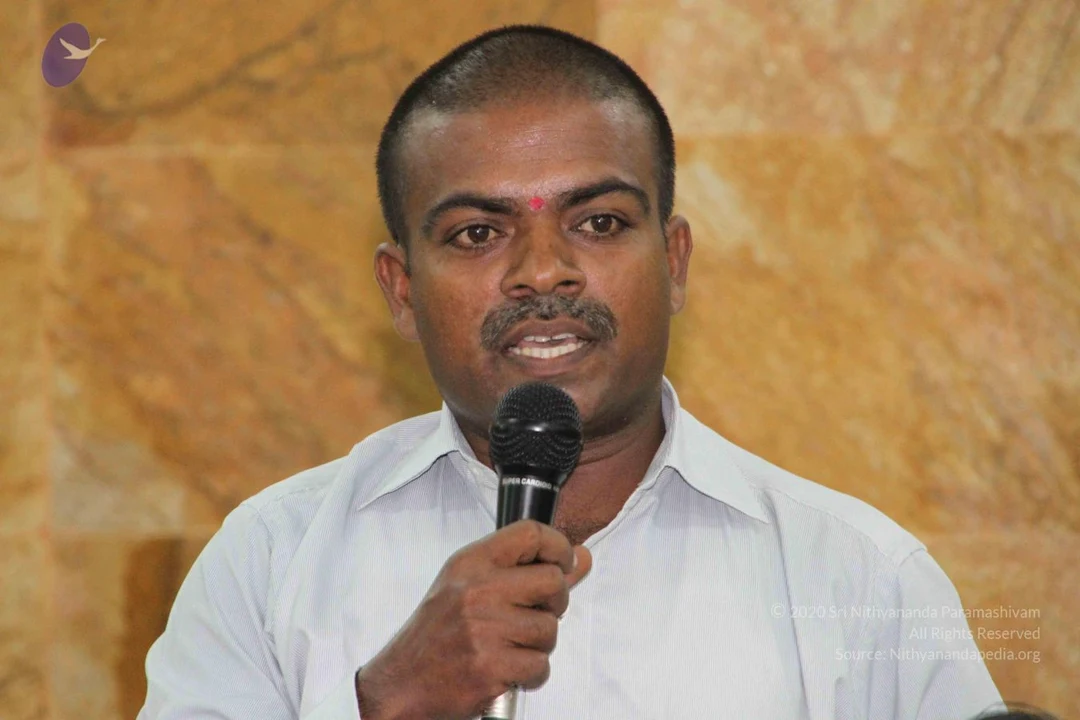
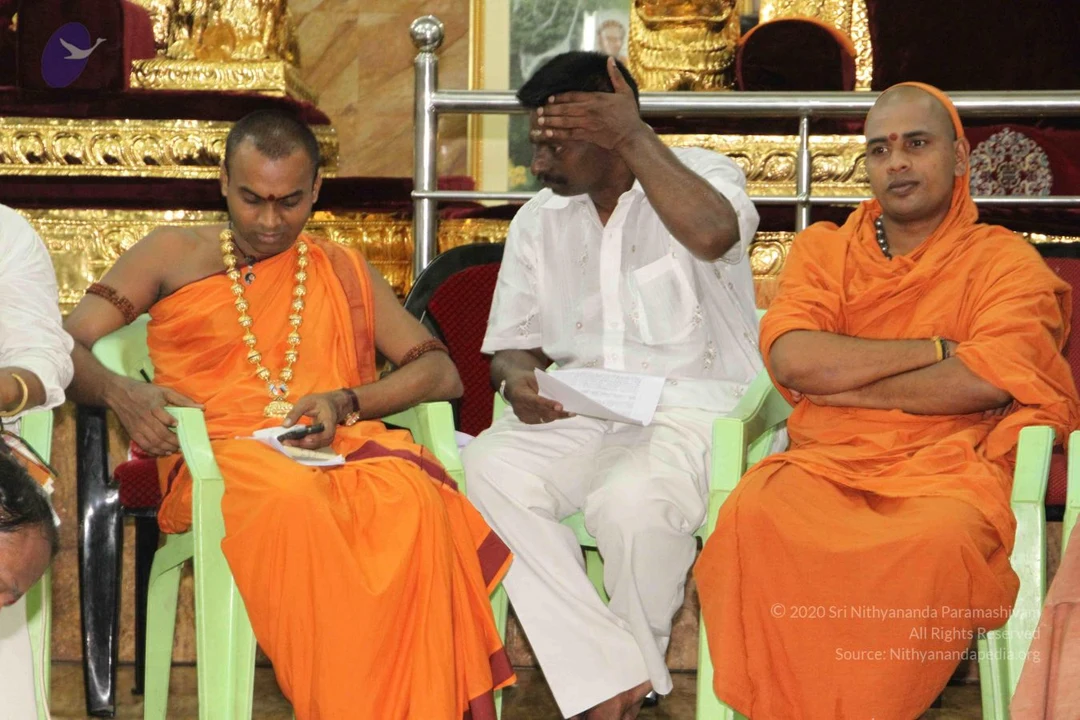
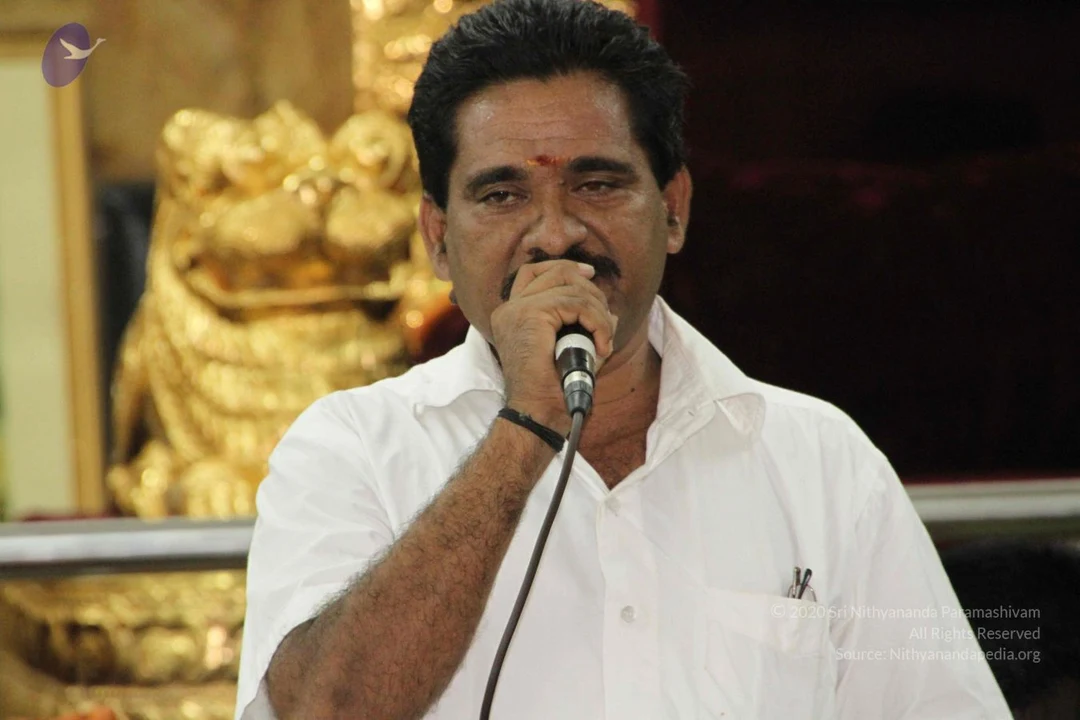
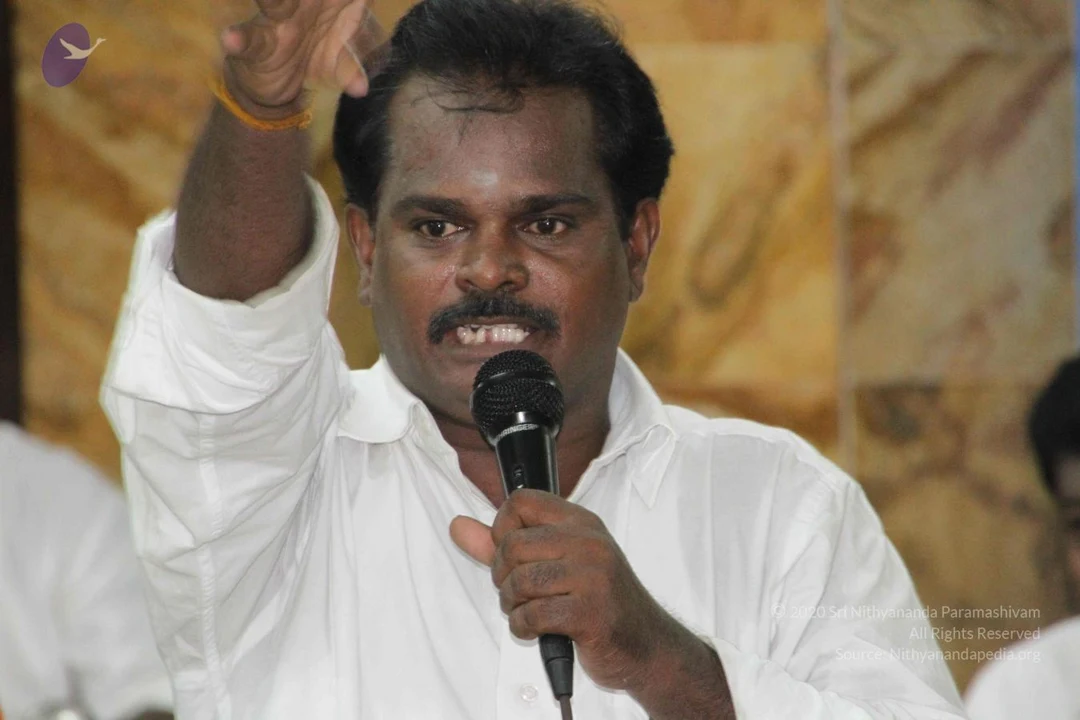
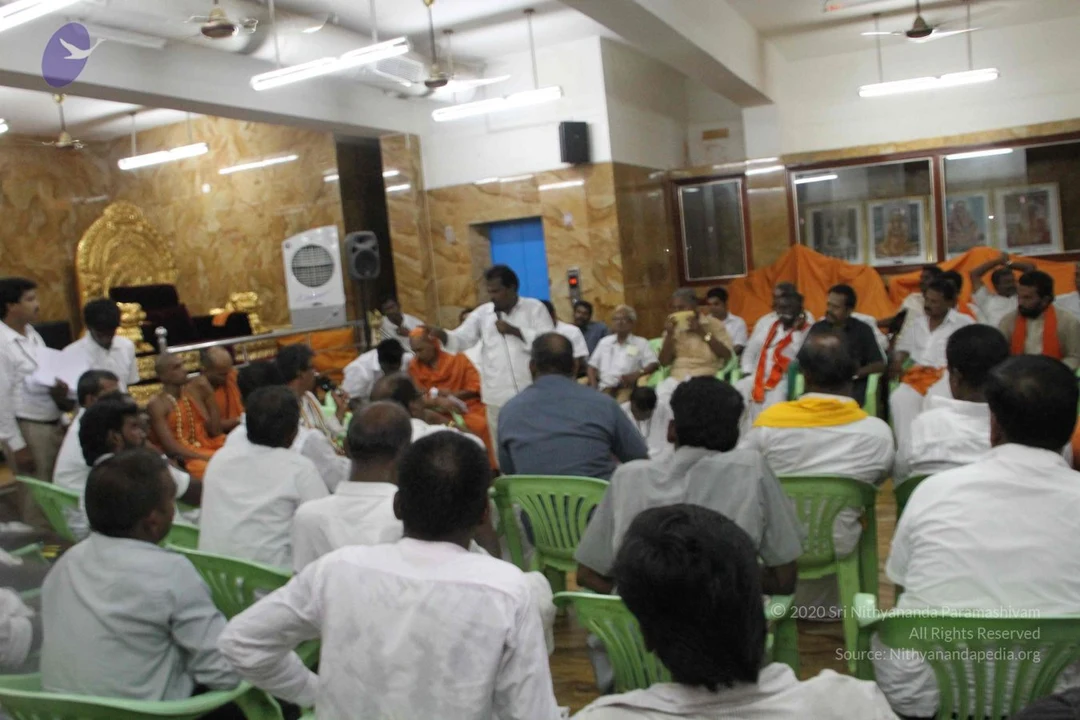
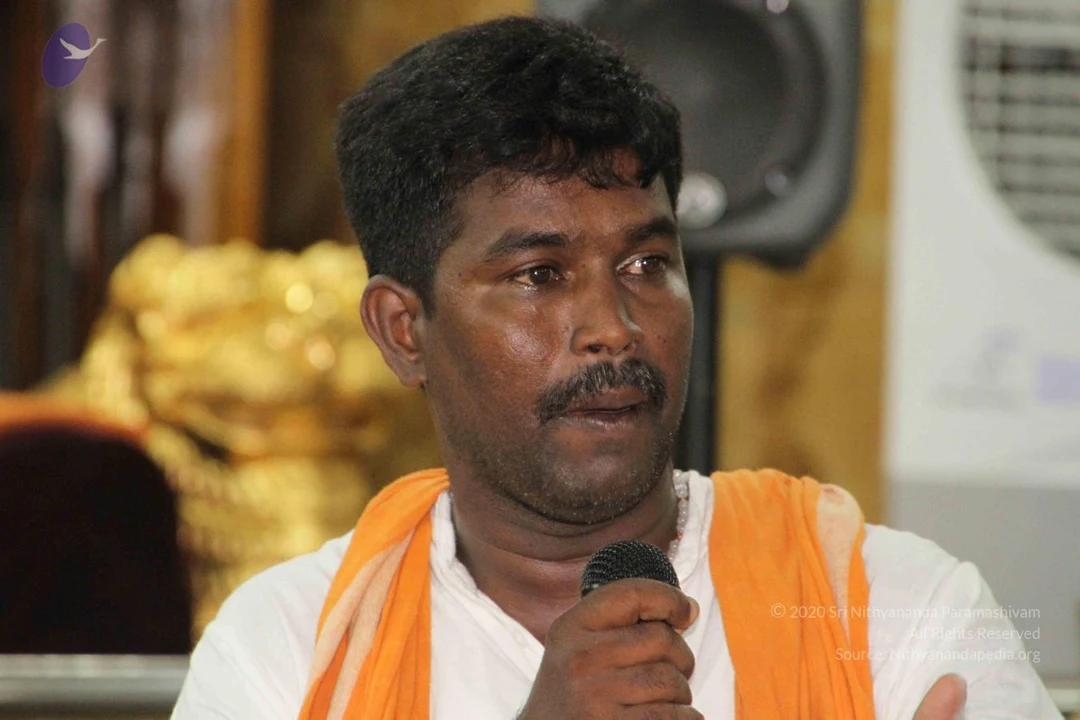
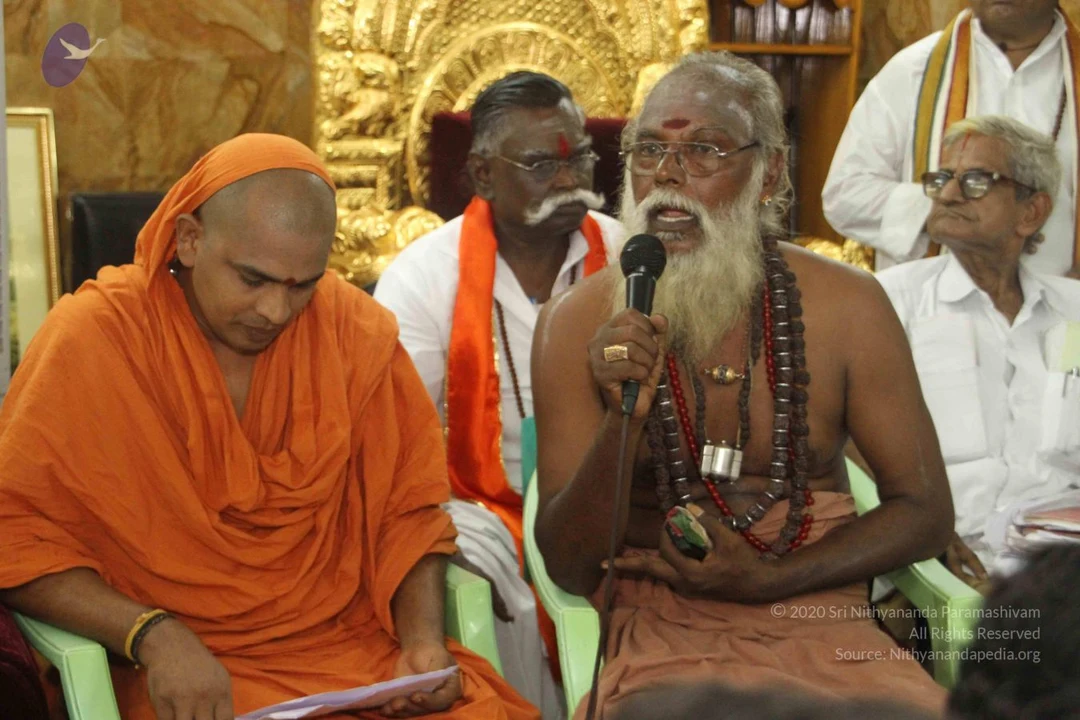
MEETING-WITH-VARIOUS-COMMUNITIES-TO-PROTECT-MADURAI-ADHEENAM

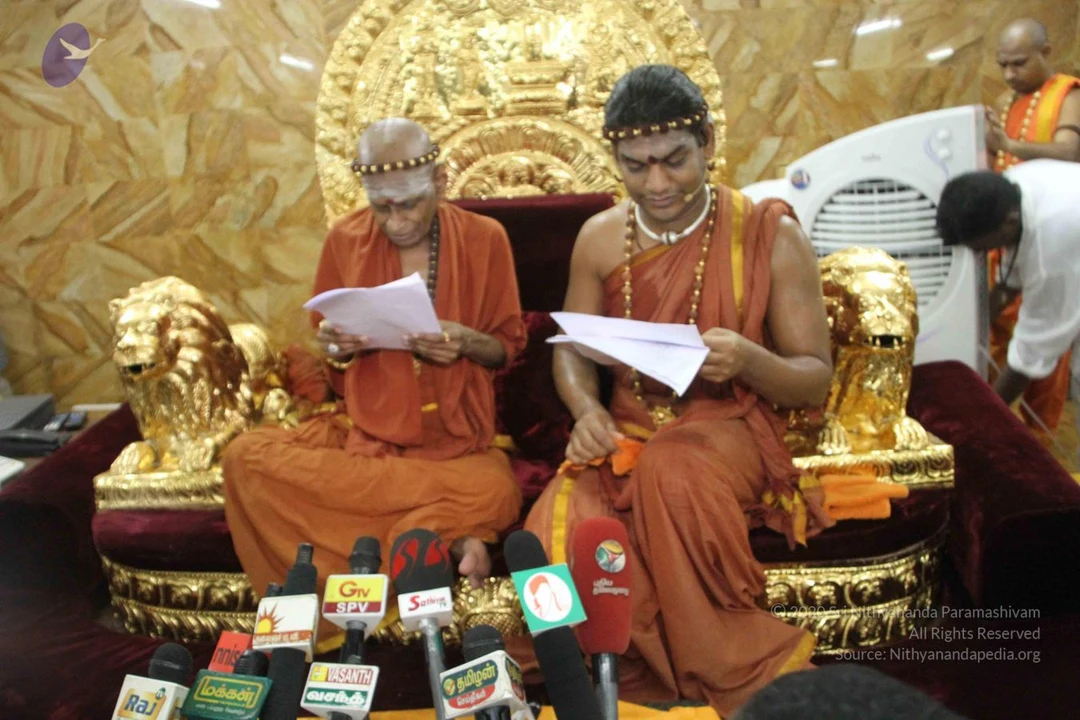
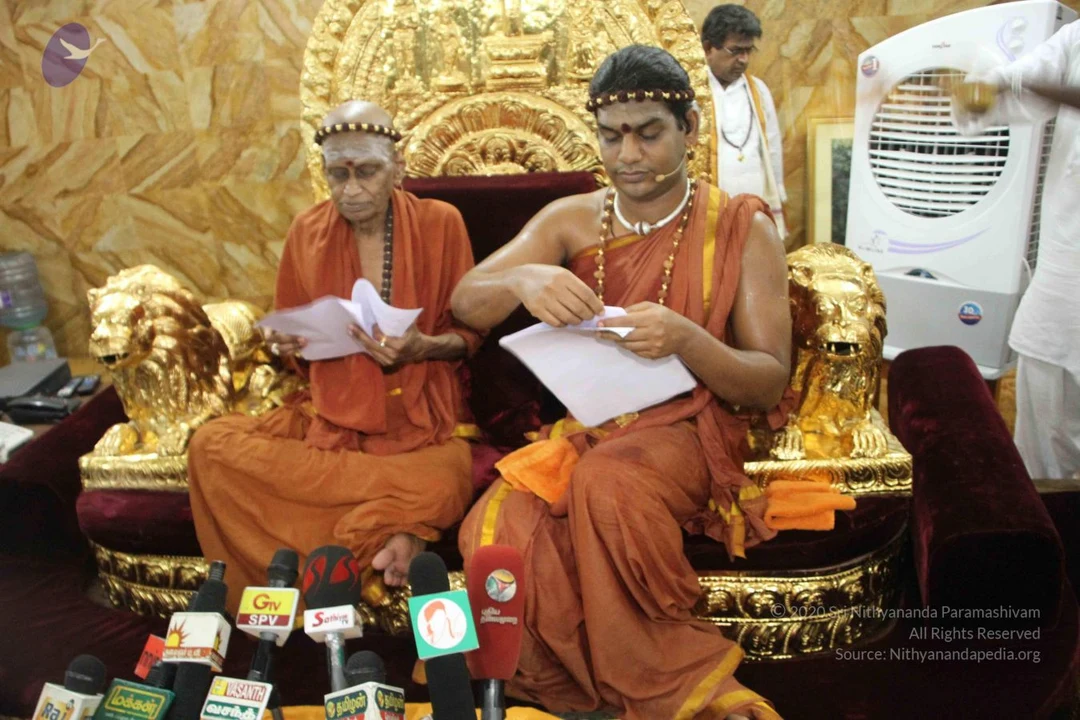
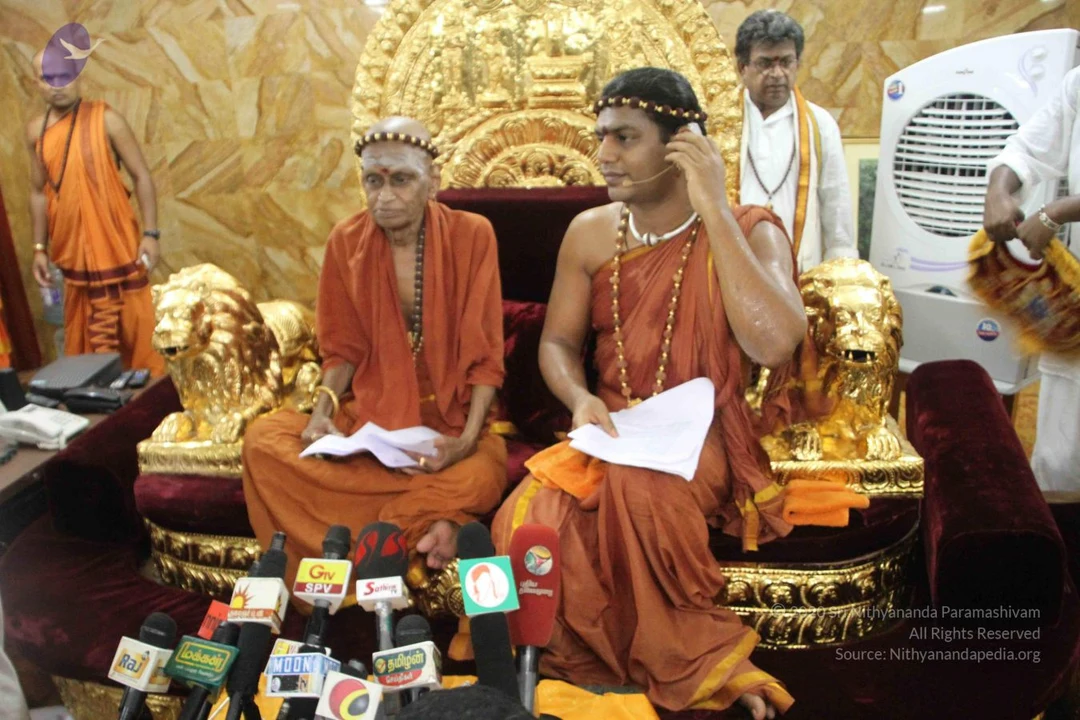
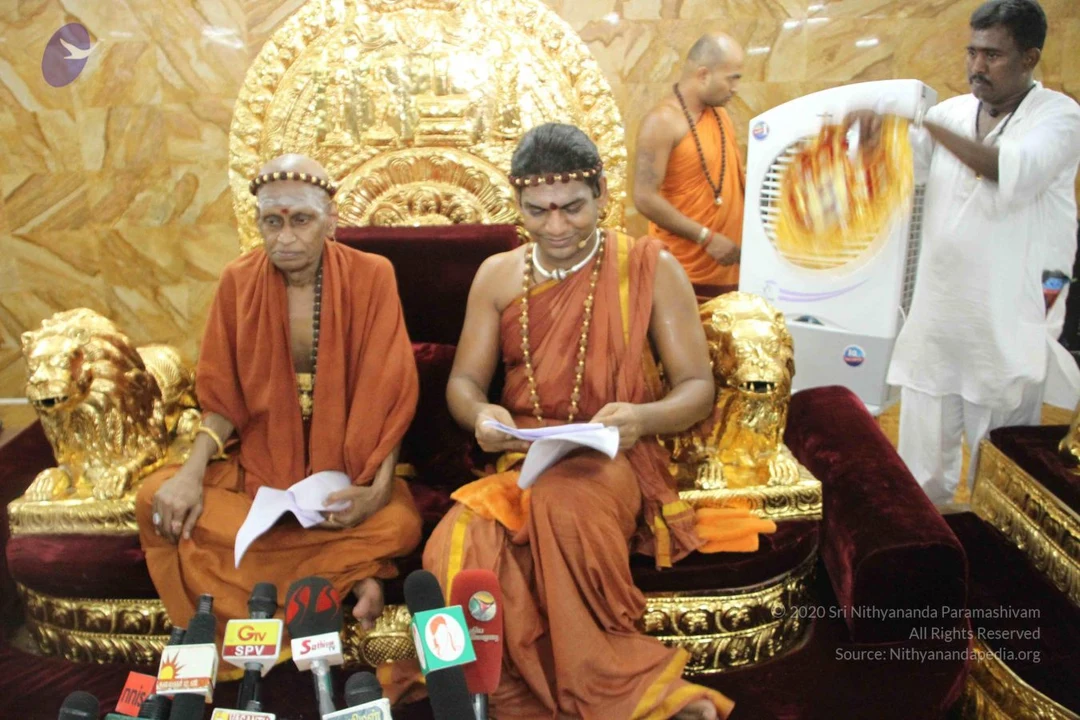
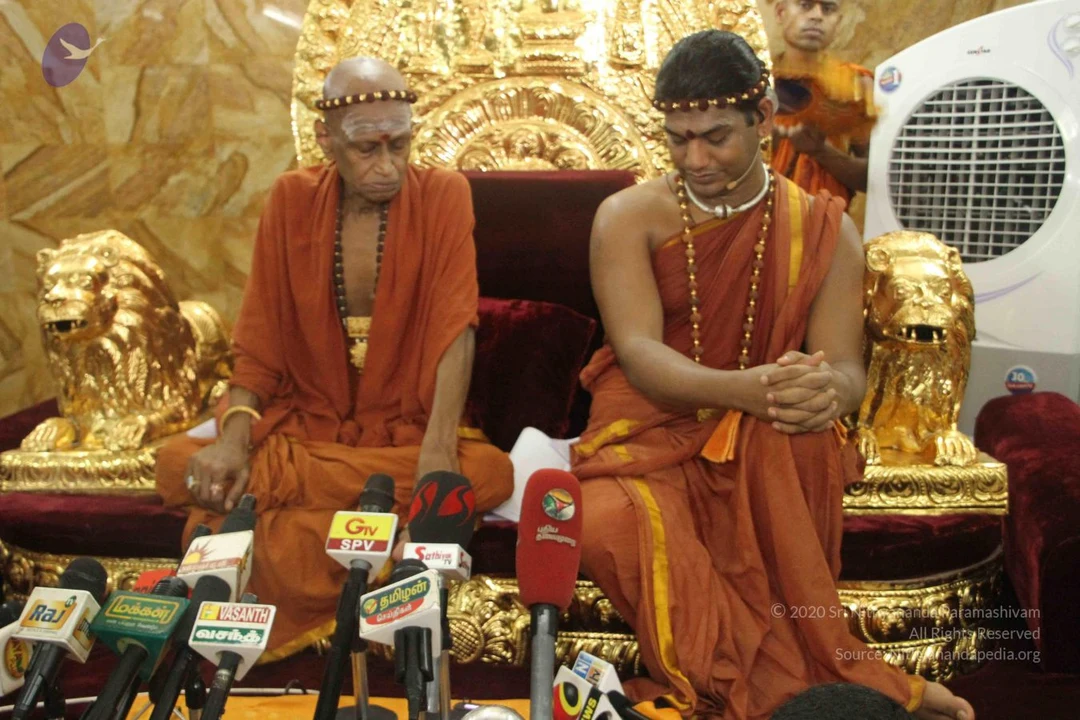
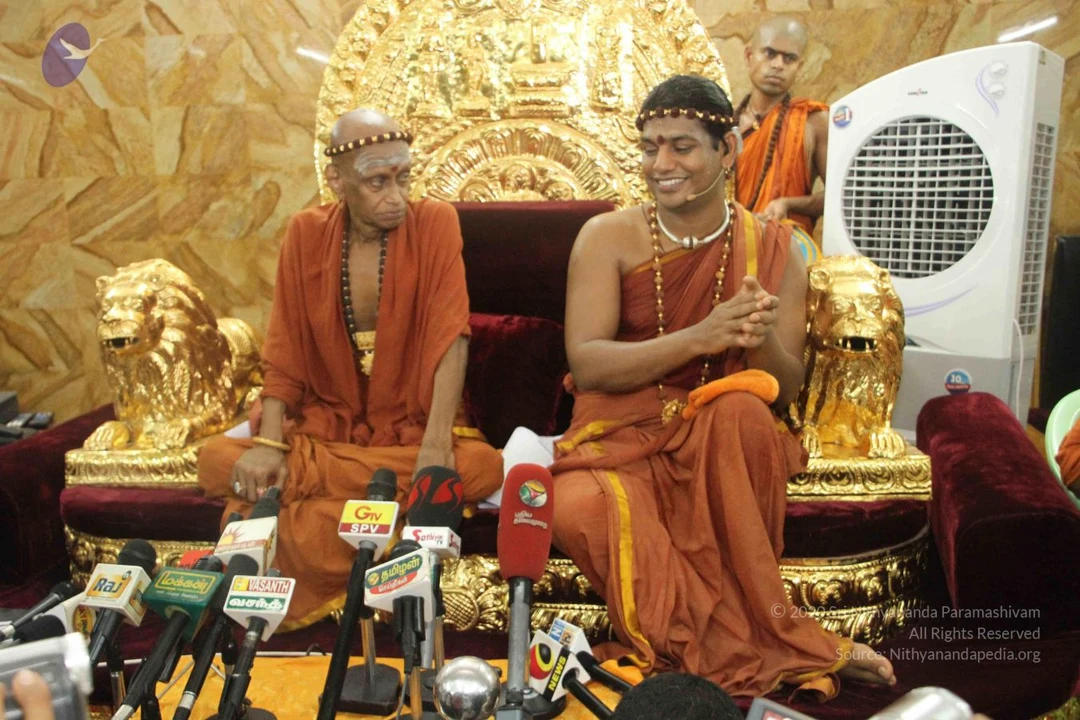
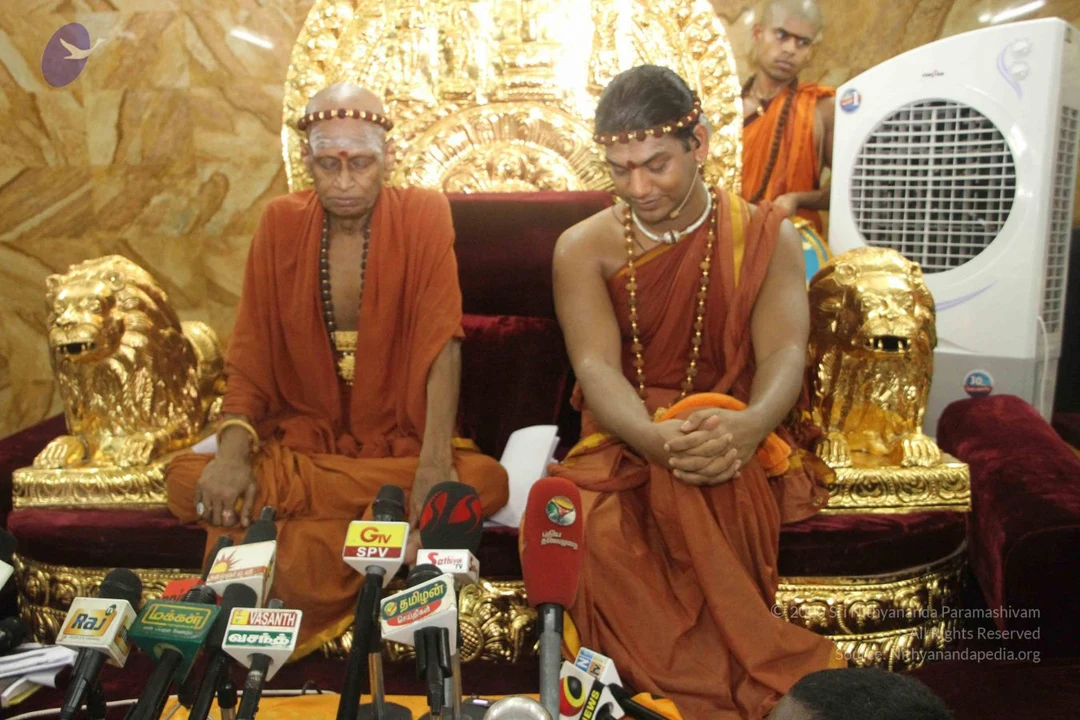
PRESS-MEET-AT-MADURAI-ADHEENAM

VIPs-VISIT-HDH

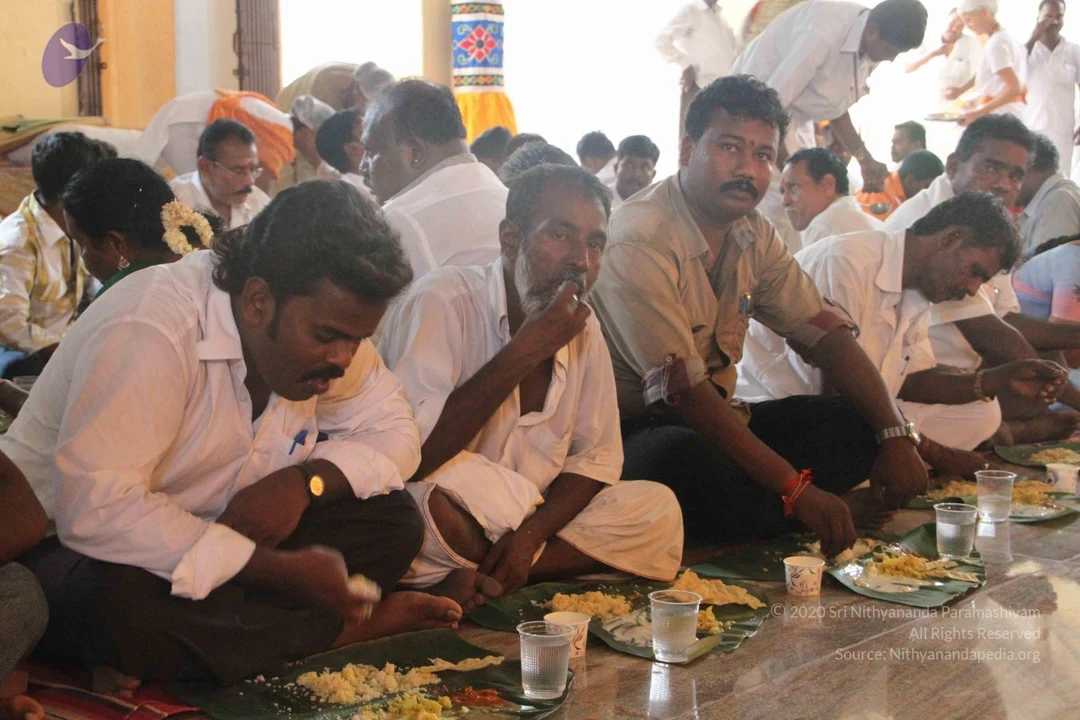
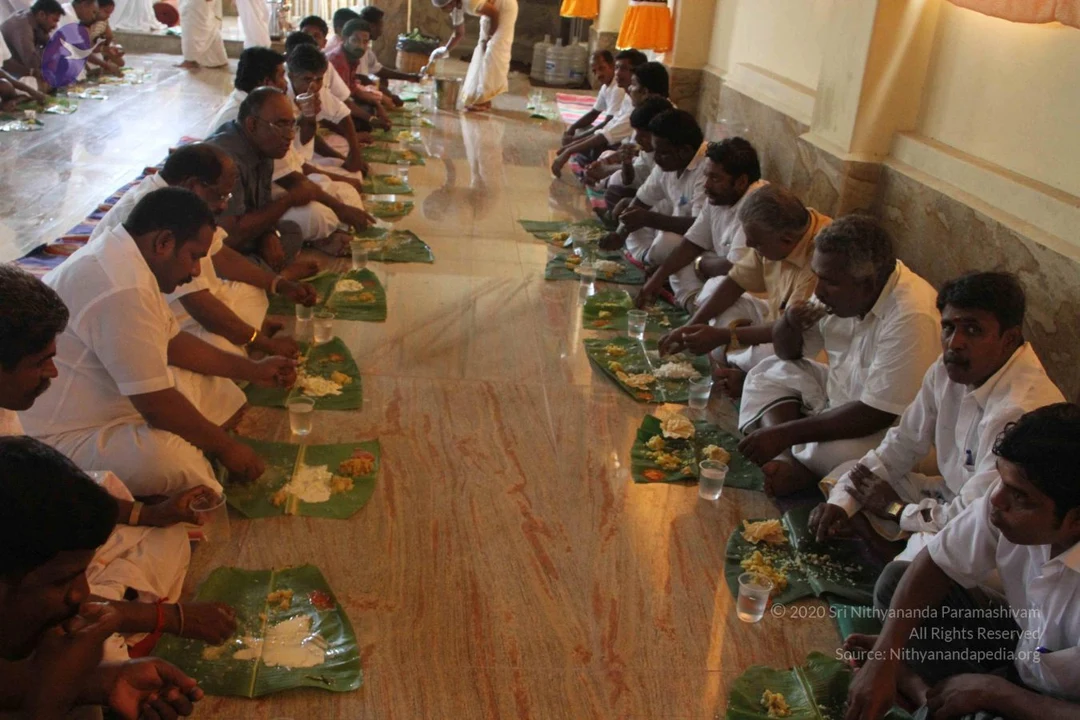
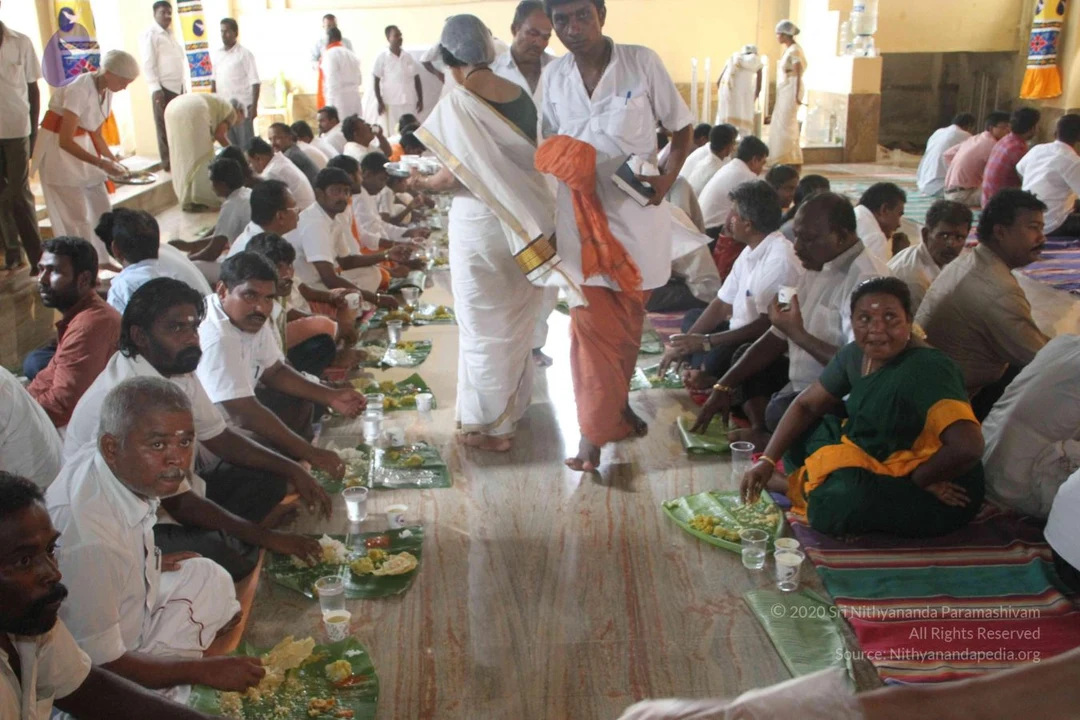
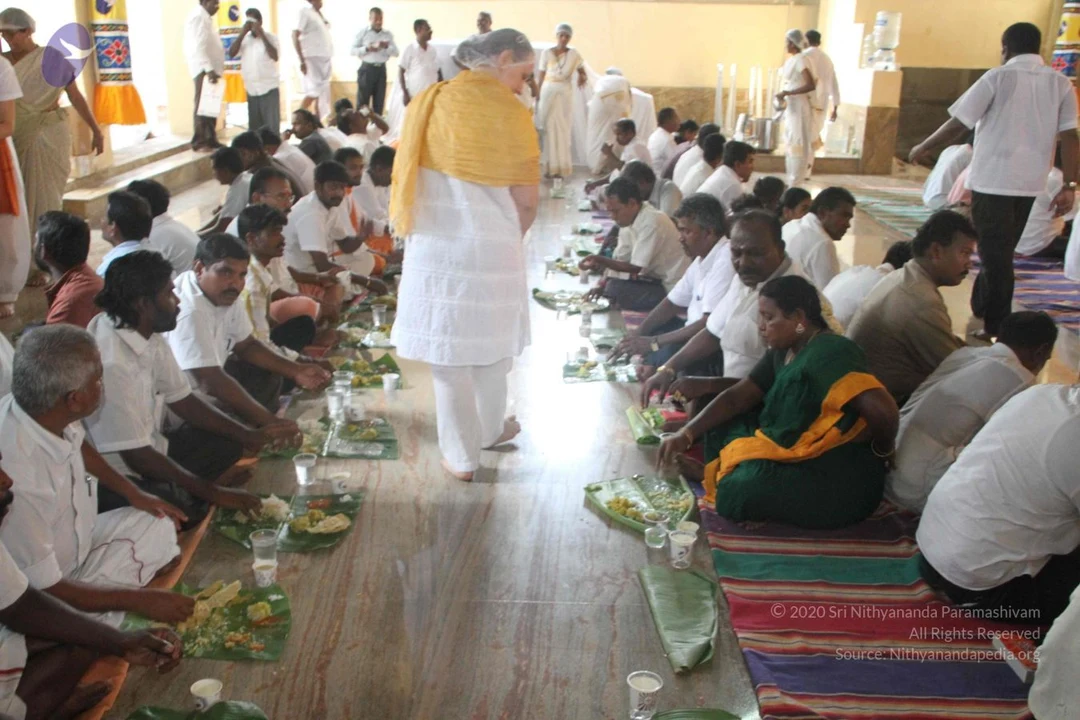
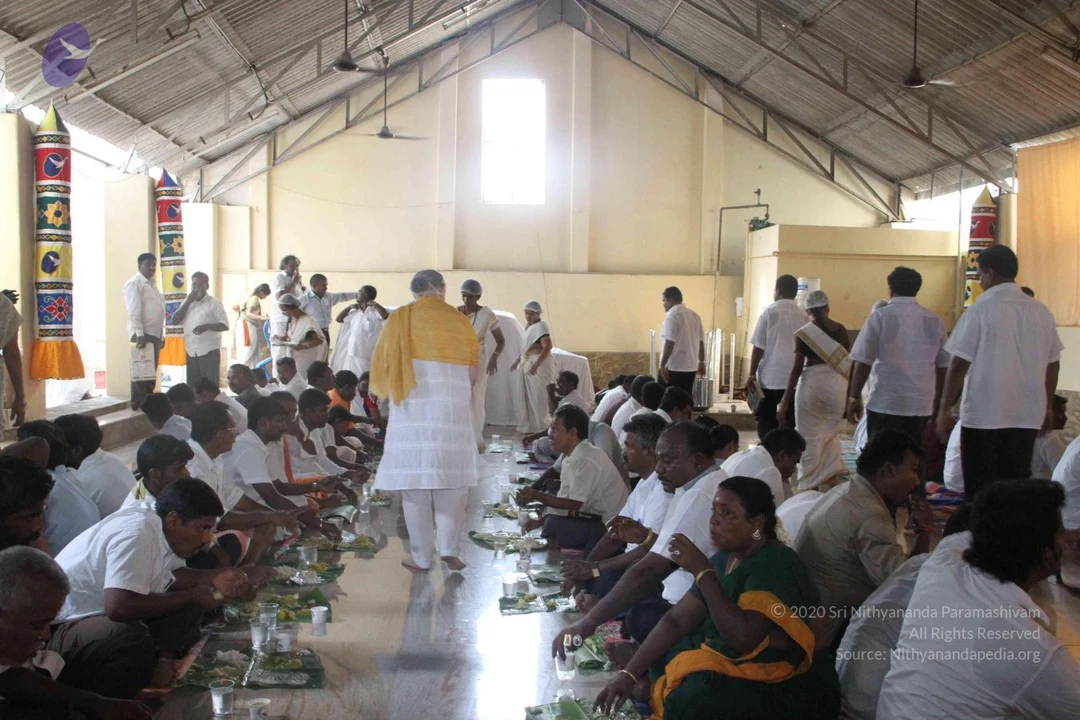
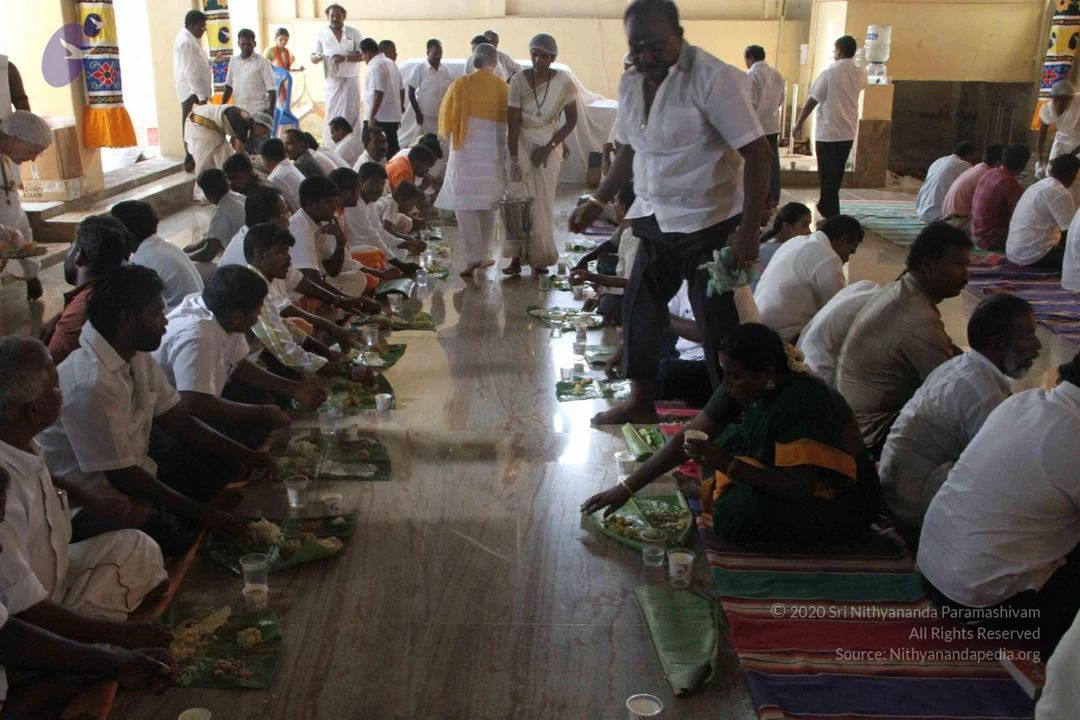
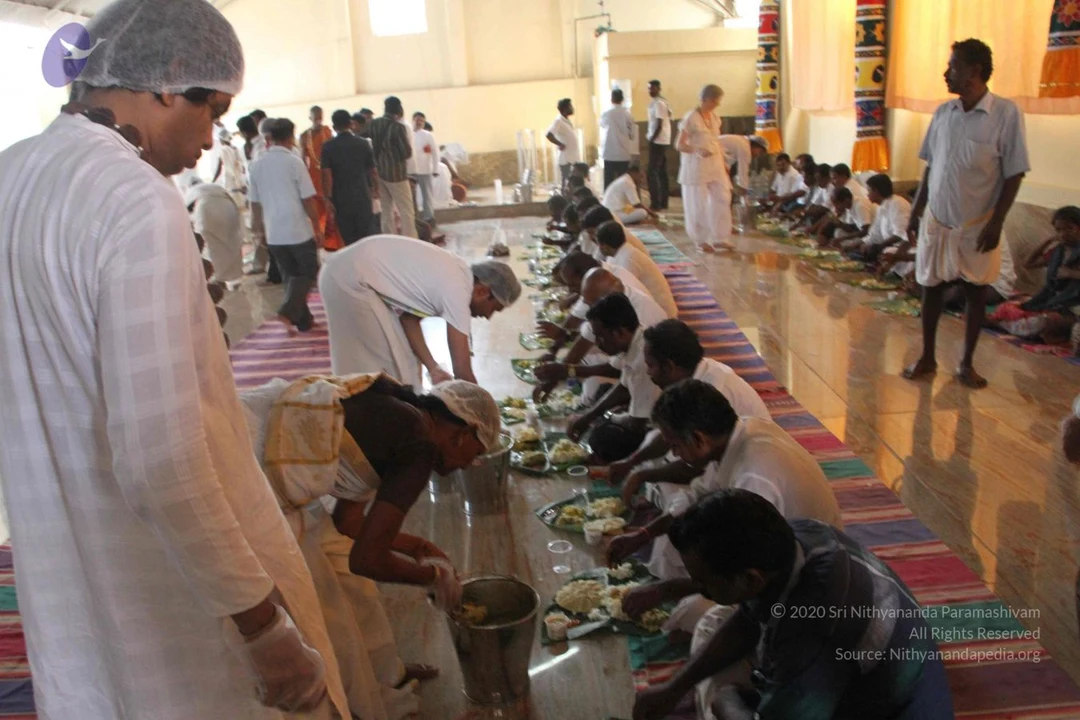
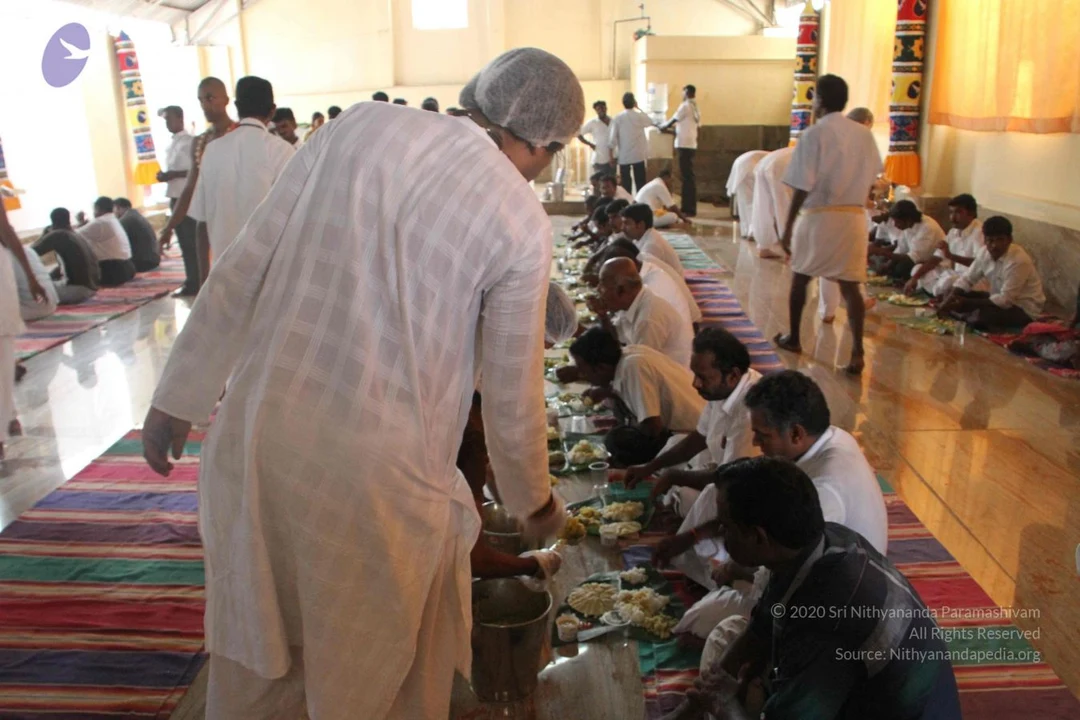
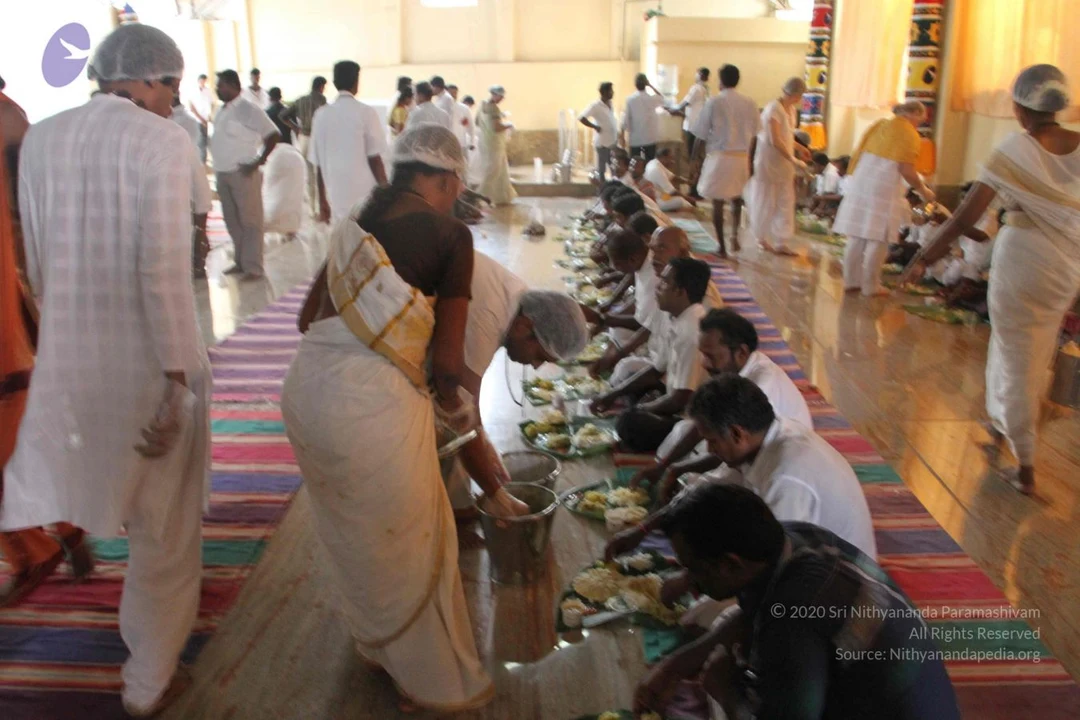
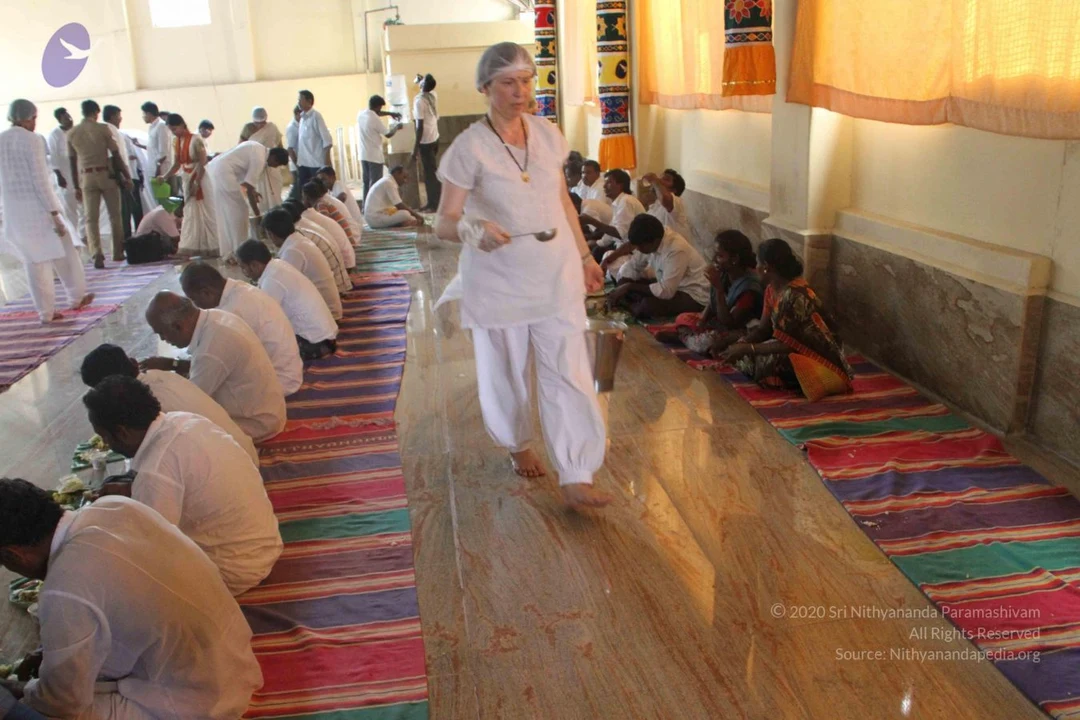
LUNCH-FOR-ALL-THE PARTICIPANTS-WHO-ATTENDED-THE-MEETING

HDH-VISITS-MEENAKSHI-AMMAN-TMPLE-WITH-SANNIDHANAM

PUBLIC-DARSHAN-BY-HDH-AND-SANNIDHANAM

Photos from this day

View all 669 photos
Photos
138 photosSource gallery

HDH-IN-MADURAI-ADHEENAM-TEMPLE

3 photosSource gallery
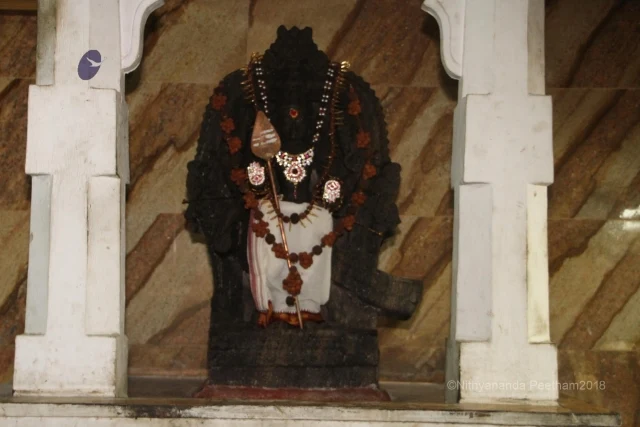
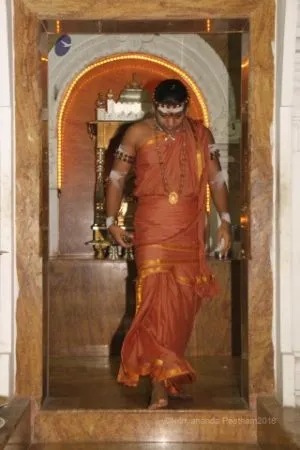
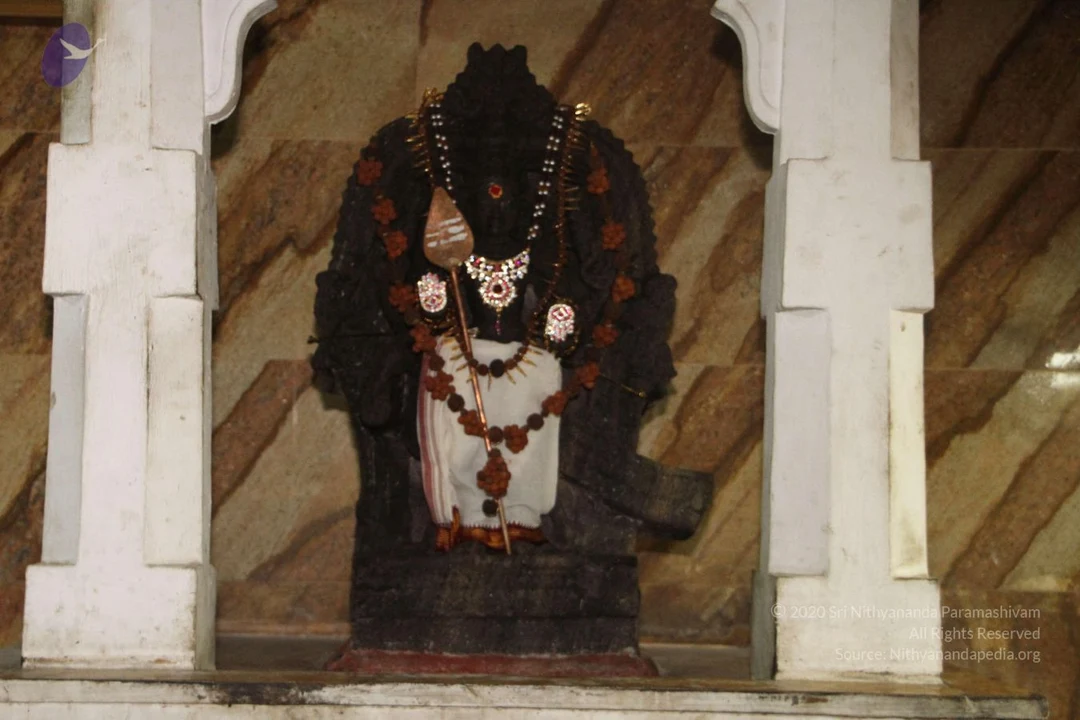
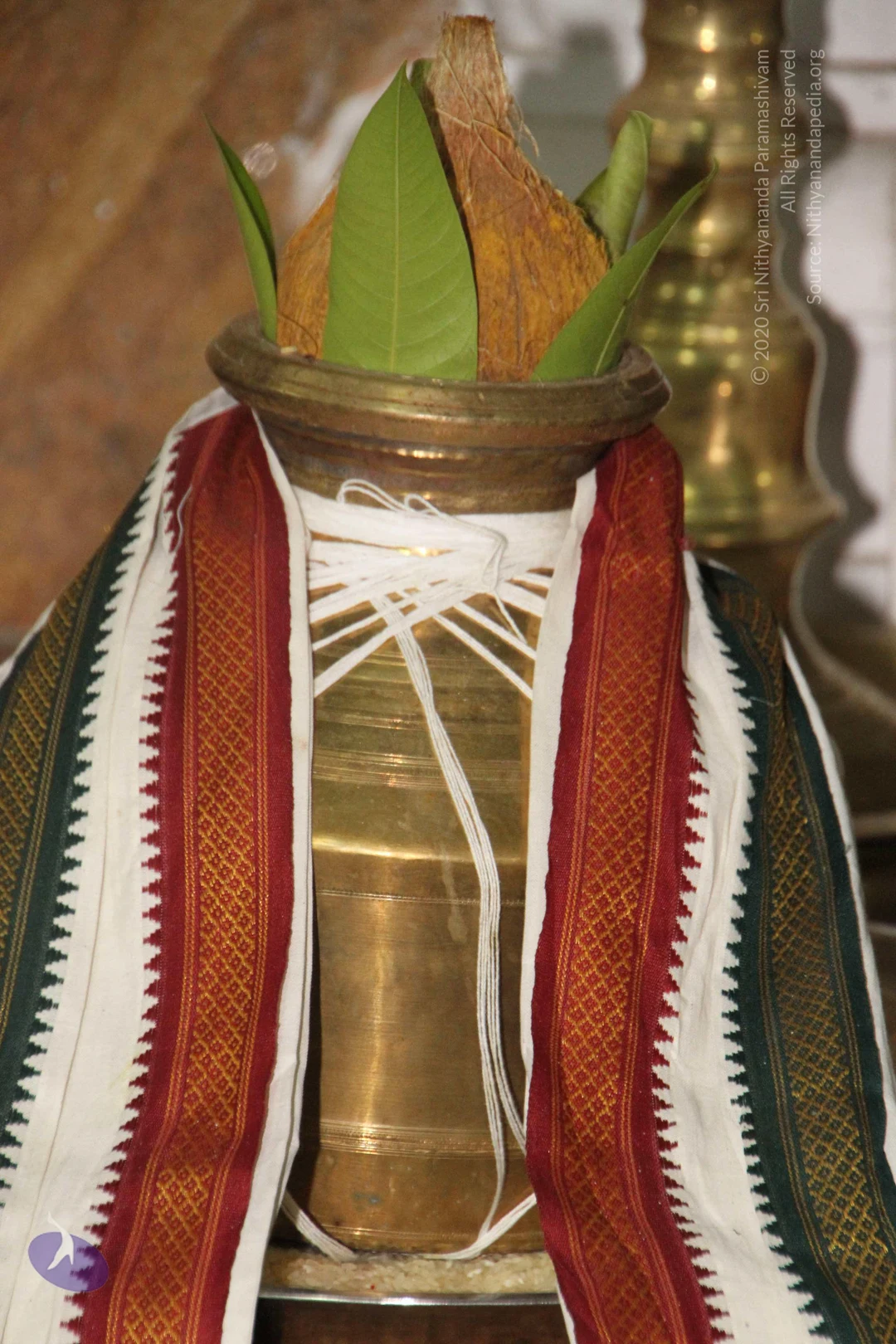
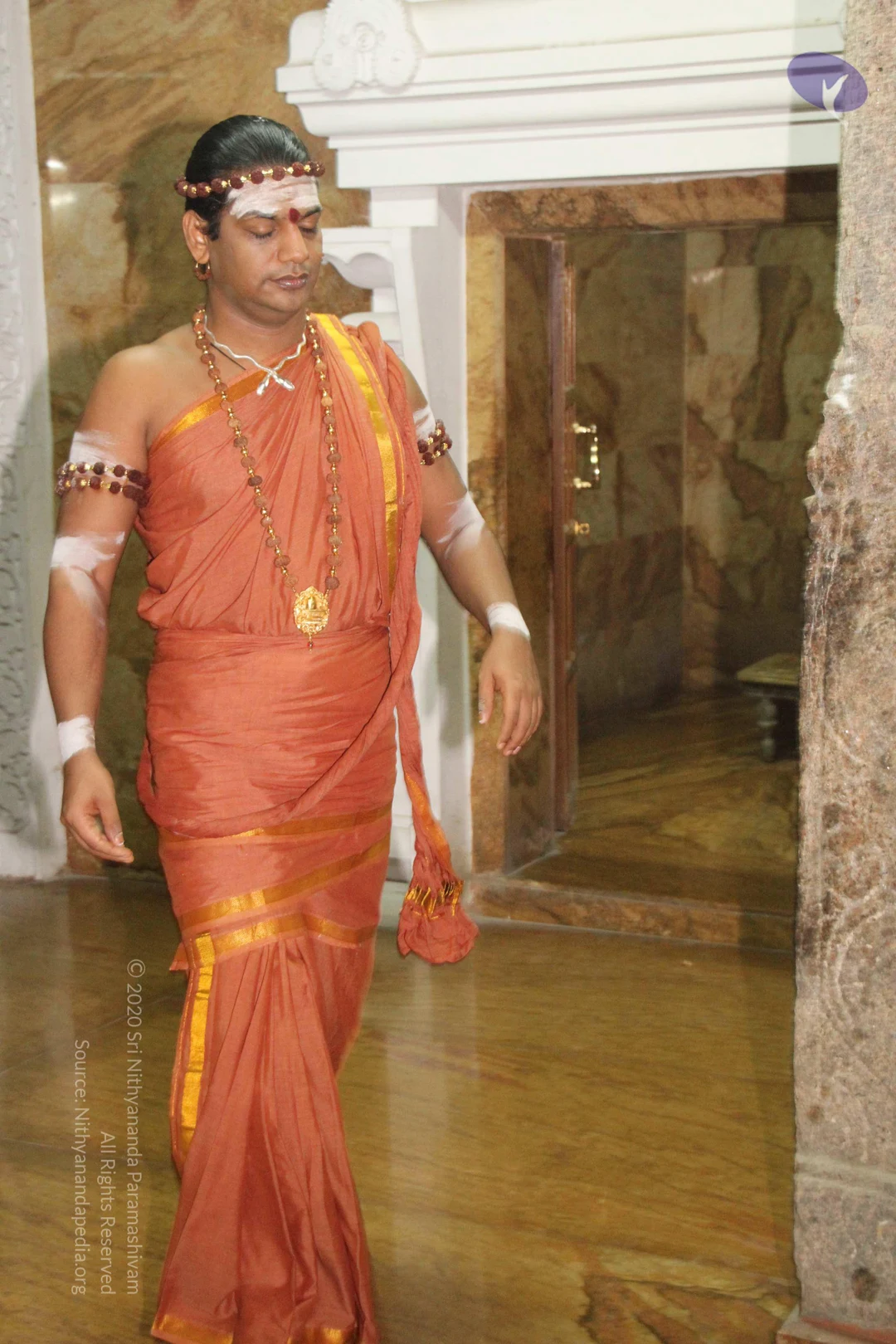
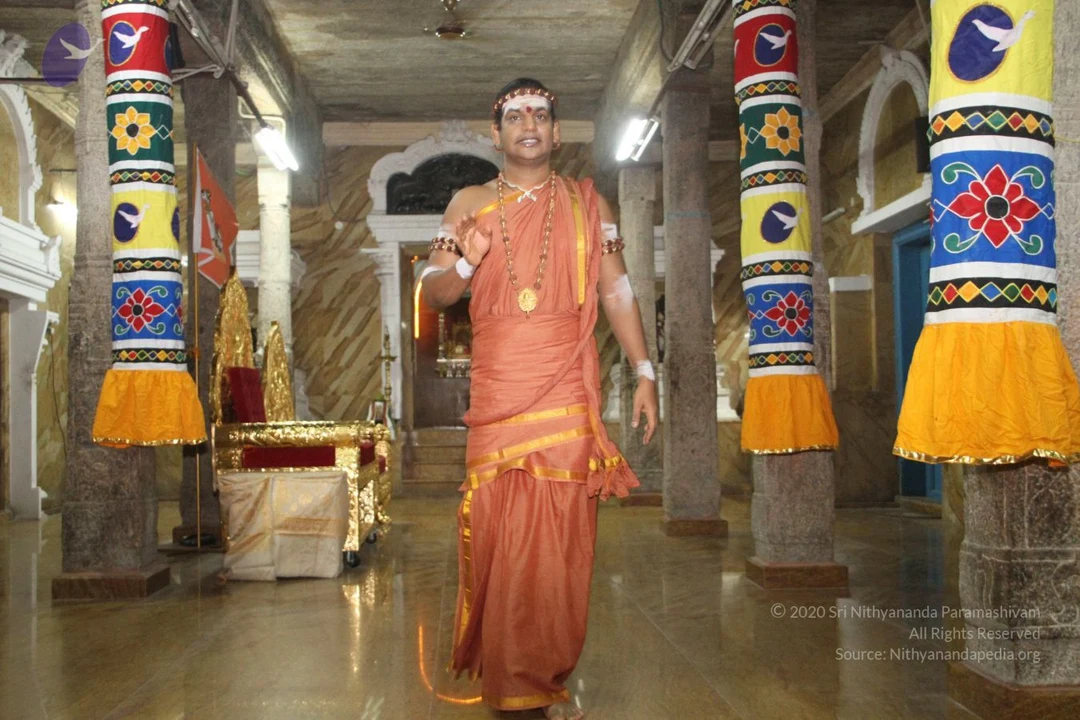
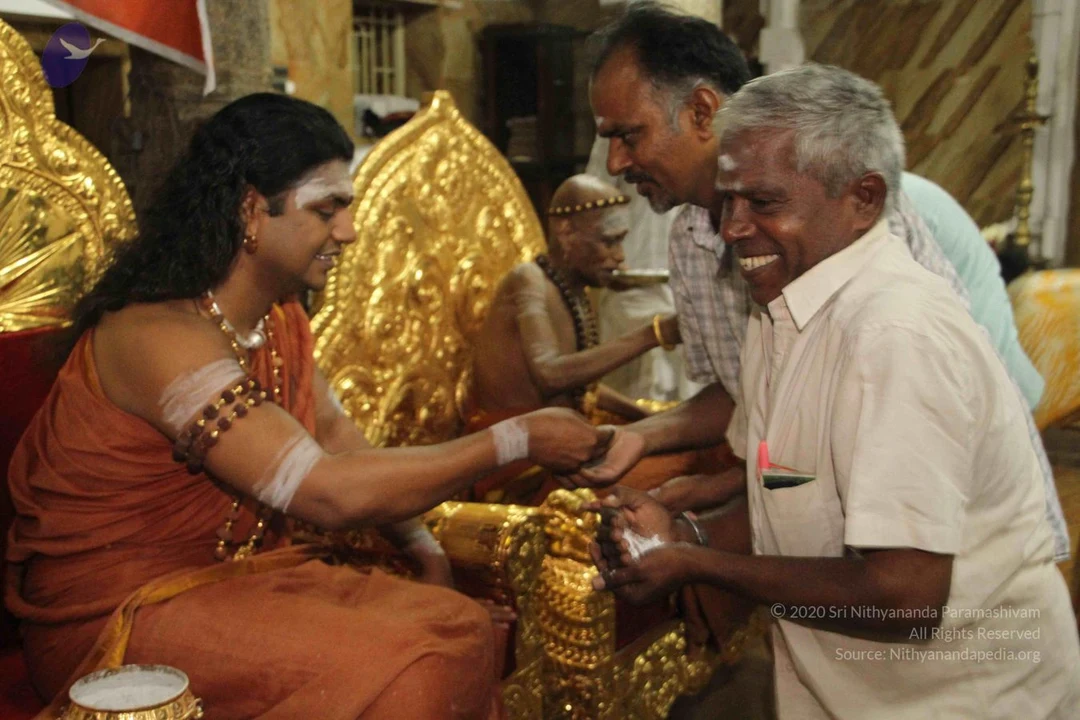
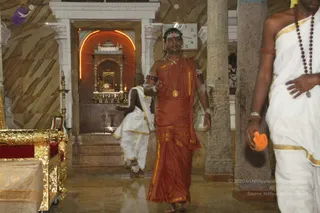
A dark stone deity murti stands in a niche flanked by white painted pillars against a marbled brown-and-cream wall. The murti wears a white dhoti with red edging, multiple rudraksha mala garlands, a pearl necklace, a large ornate jewelled pendant with a red central stone, and jewelled earrings. A copper-coloured trident rests against its side with a tilak-marked head, and the figure is adorned with red flower garlands. No physical people are visible.Close photograph of a brass kalasha pot wrapped with white cotton thread and draped with white cloth bordered in red and green woven stripes. Mango leaves and a dried coconut husk crown the pot's opening. Brass lamp stand in the blurred background. No people are visible; the sacred pot is the main subject of the ritual setting.A temple interior with polished marble-patterned walls and a stone pillar. In the centre a man in an orange-red dhoti and shawl with gold borders walks forward, wearing a rudraksha mala and a gold pendant, with a red headband and white markings on his forehead and arms and orange-beaded bracelets. He is the appearance-based a person candidate, identified by his rudraksha mala, gold pendant and distinctive saffron attire. To the right a man in white ceremonial clothes with gold borders and a rudraksha mala holds an orange cloth. Behind, a man in white carries something toward a lit shrine niche with a deity murti and brass lamps. A gilded palanquin or throne stands at the left edge.

PADA-POOJA

28 photosSource gallery
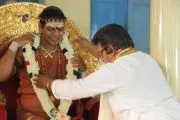
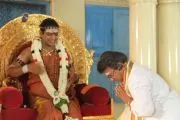
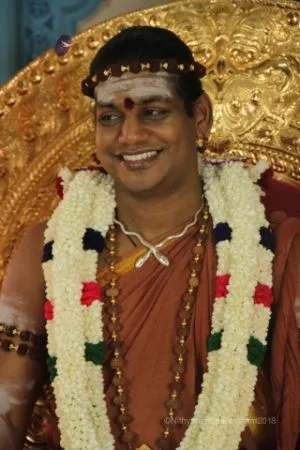
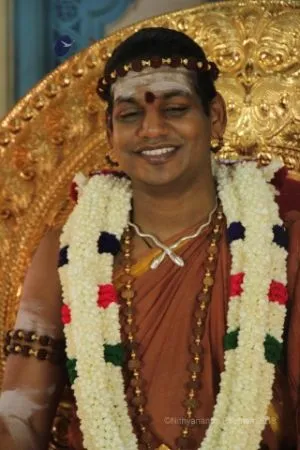
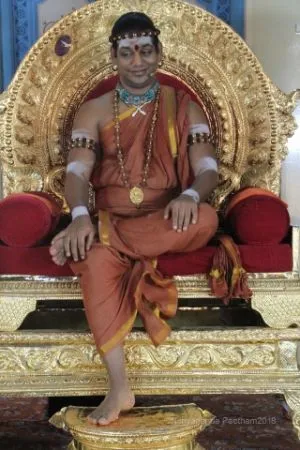
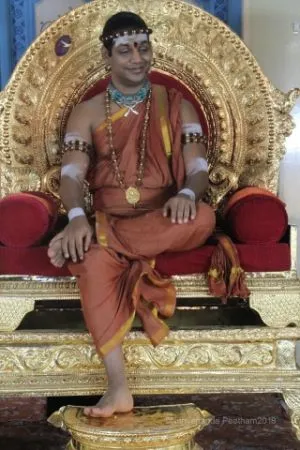
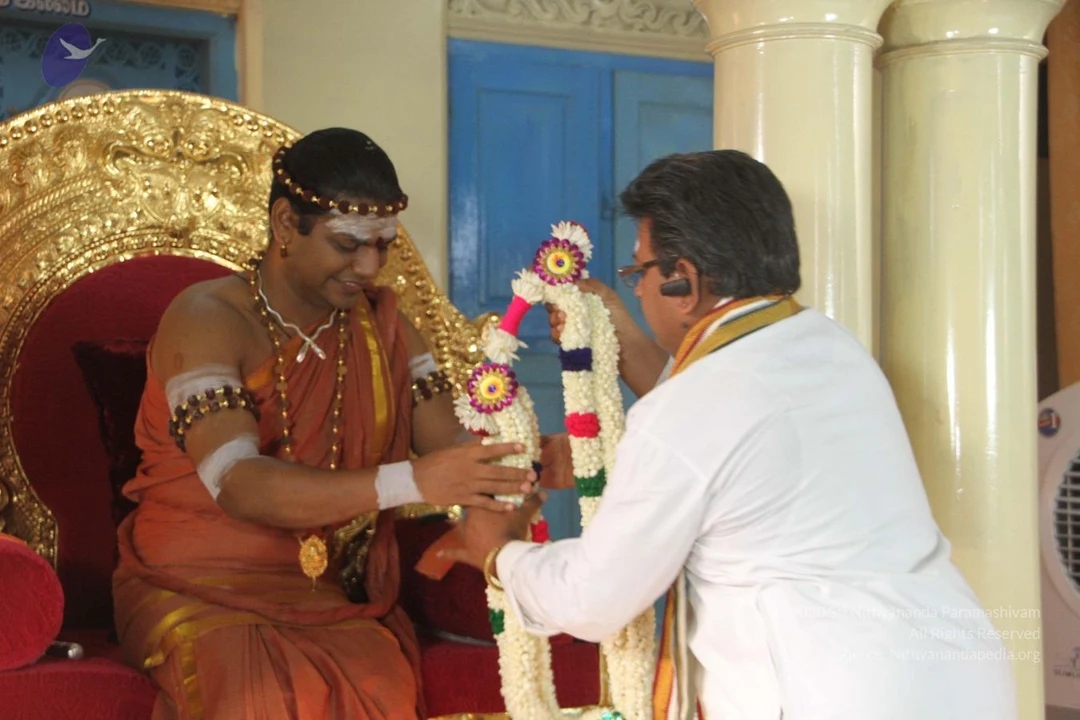
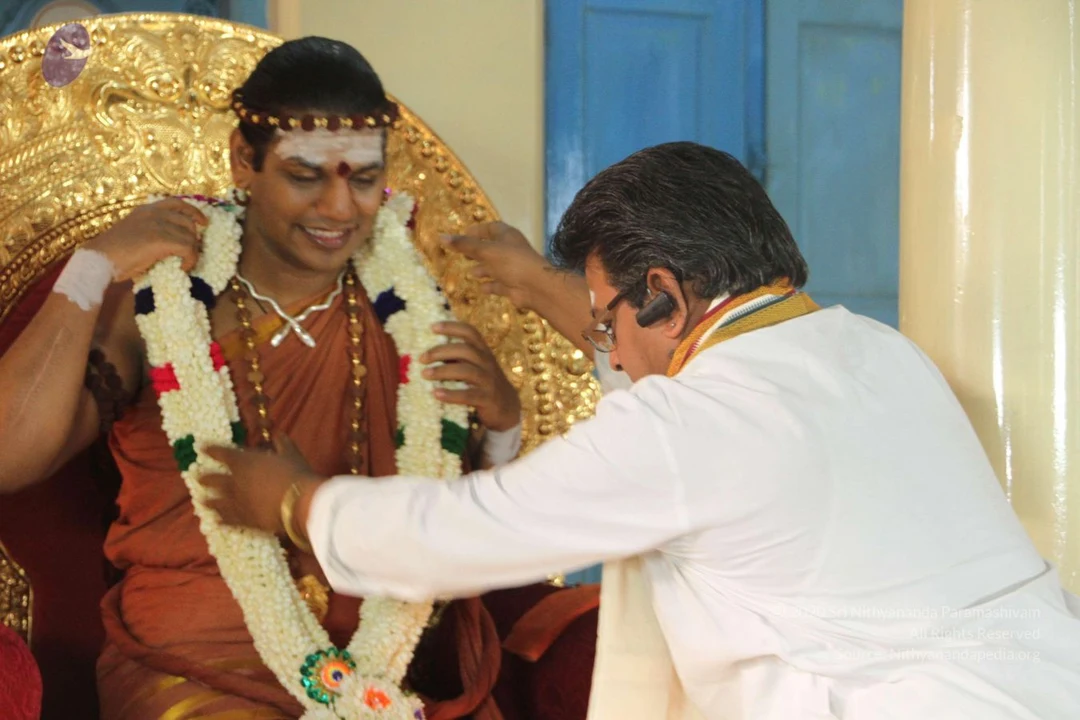
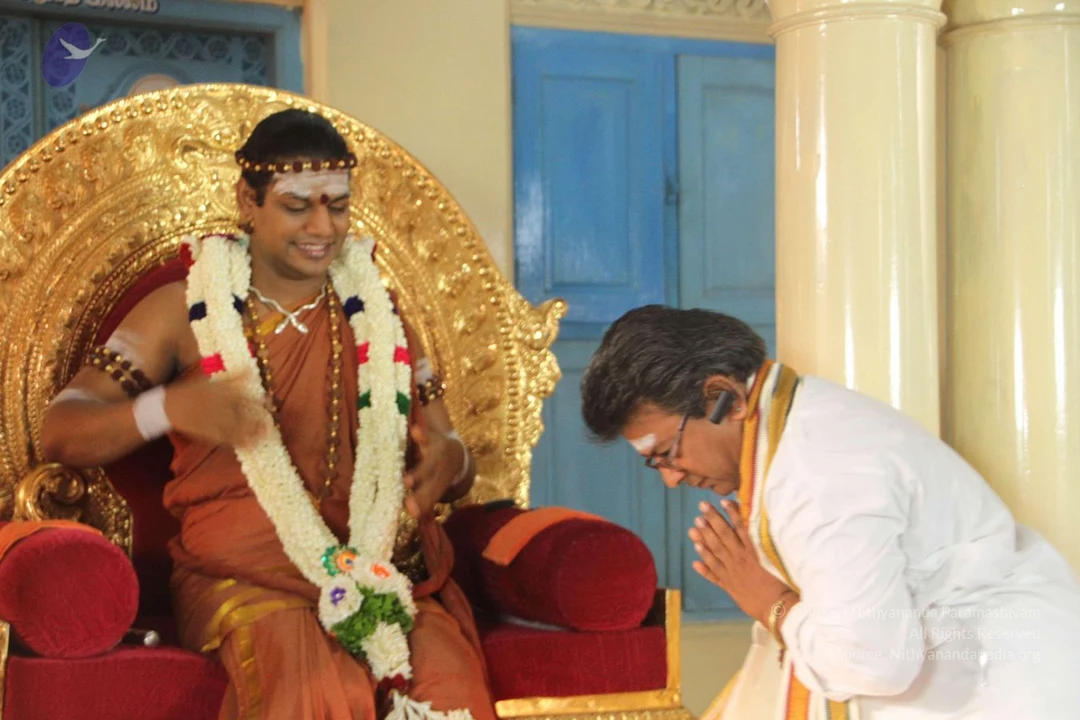
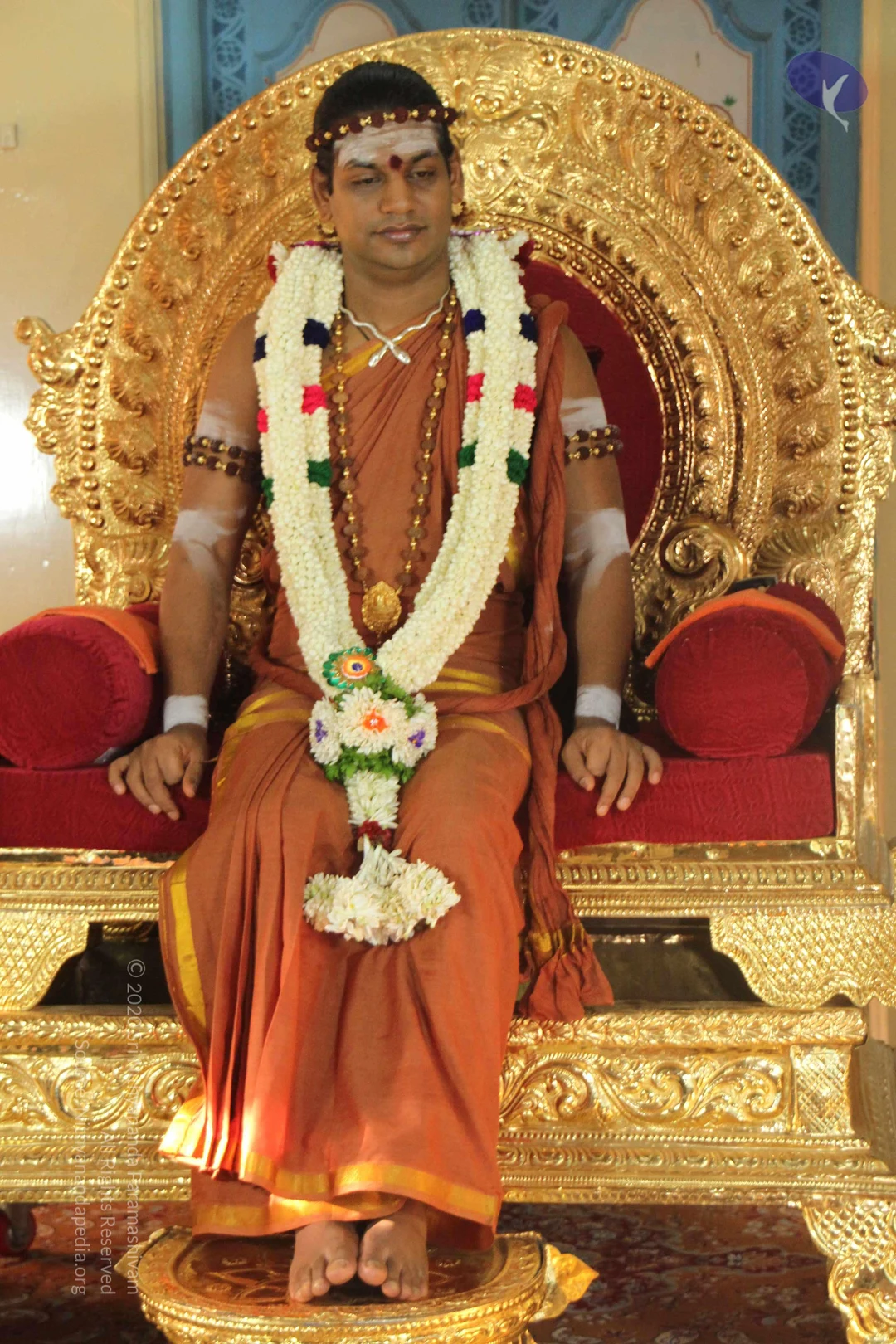
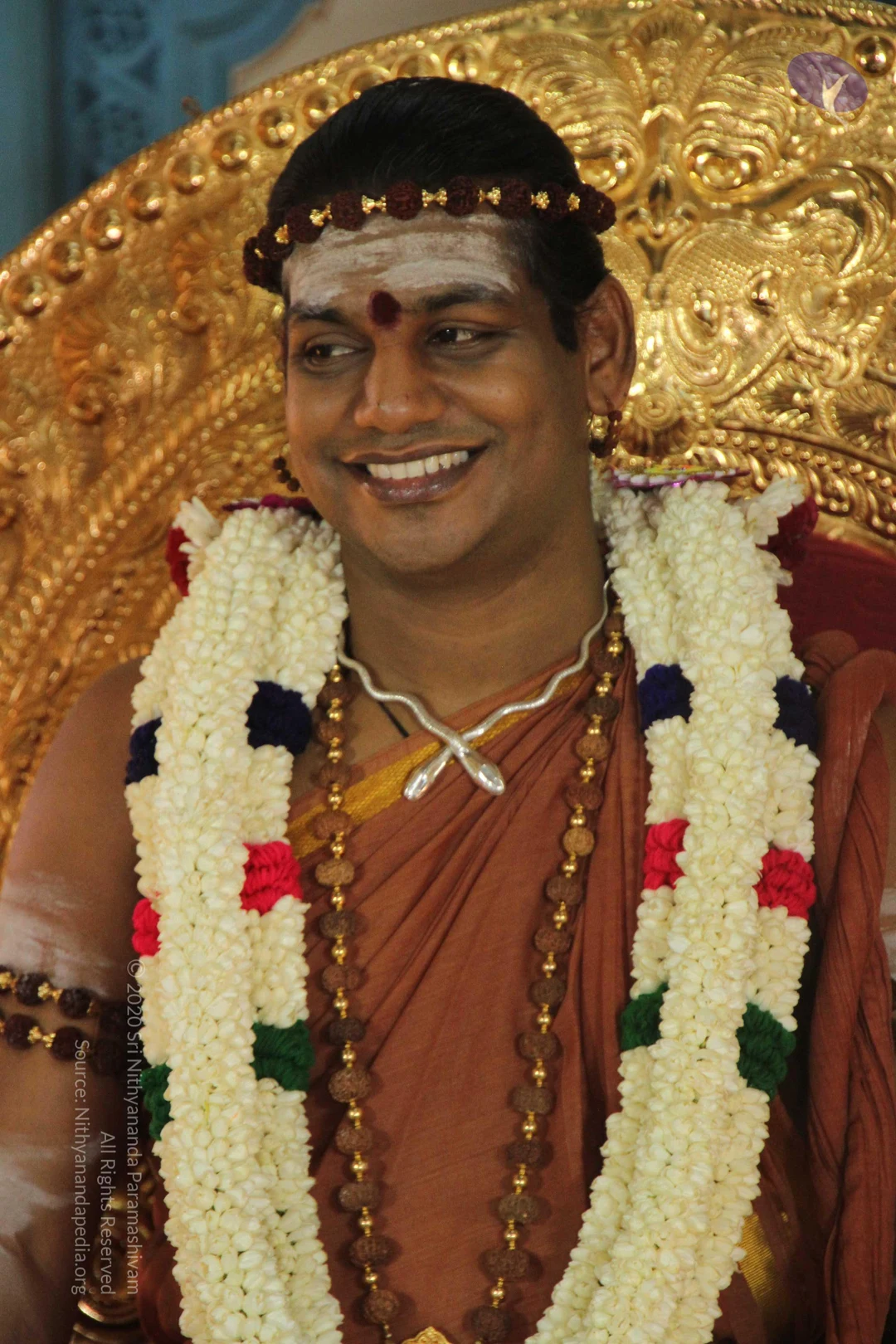
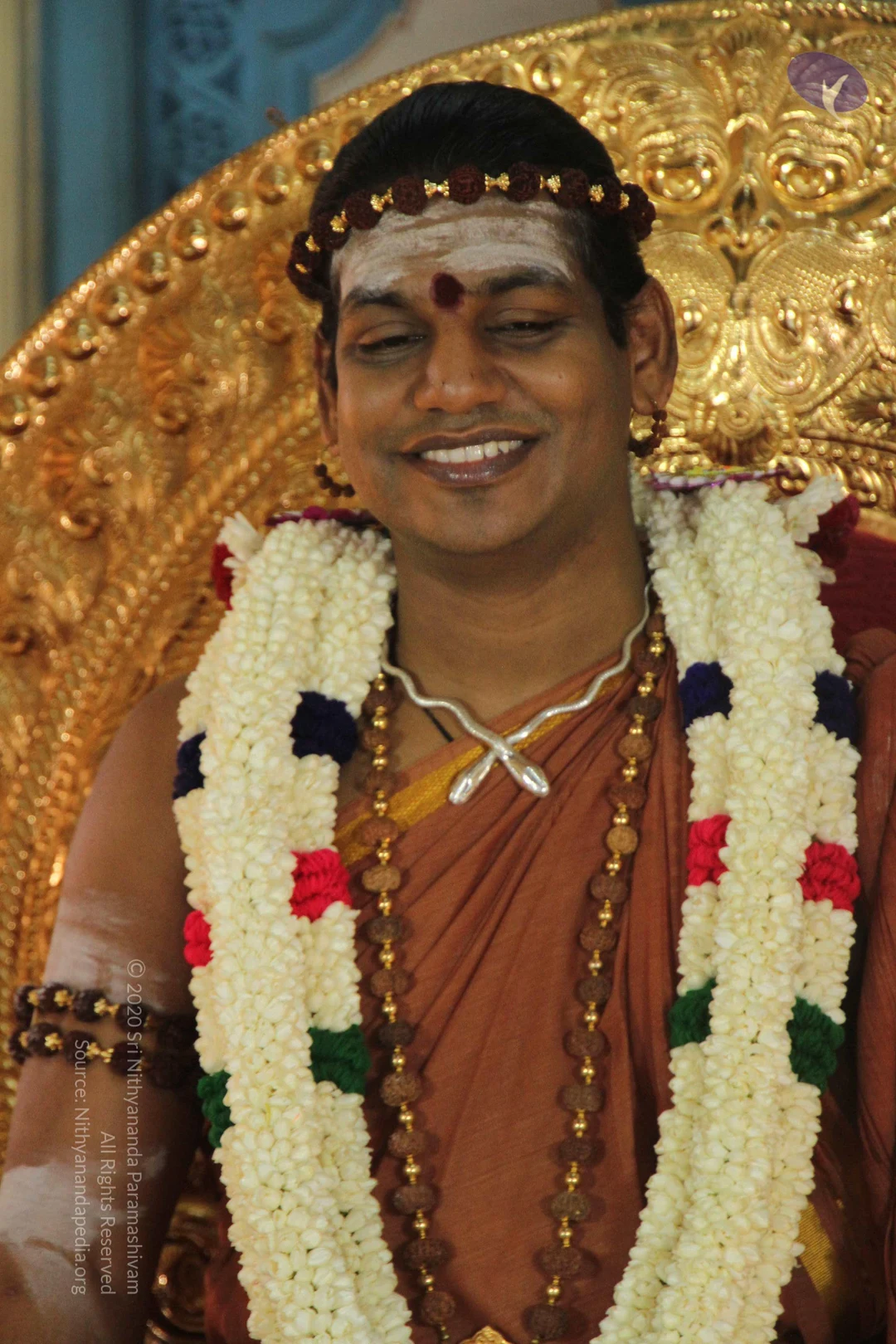
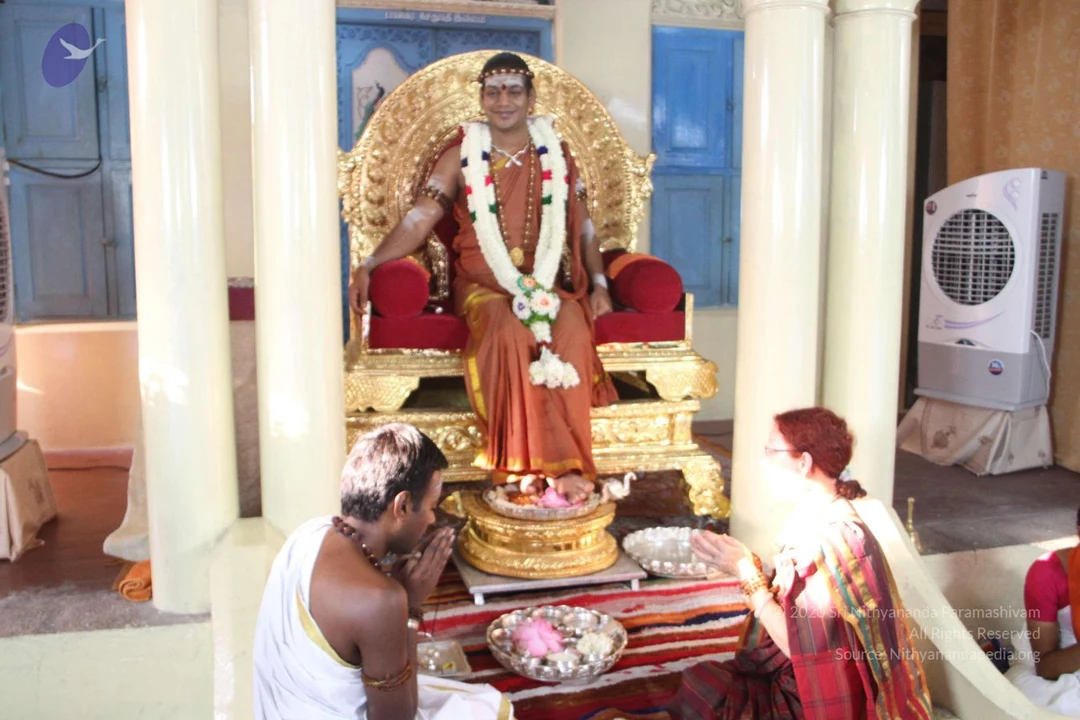
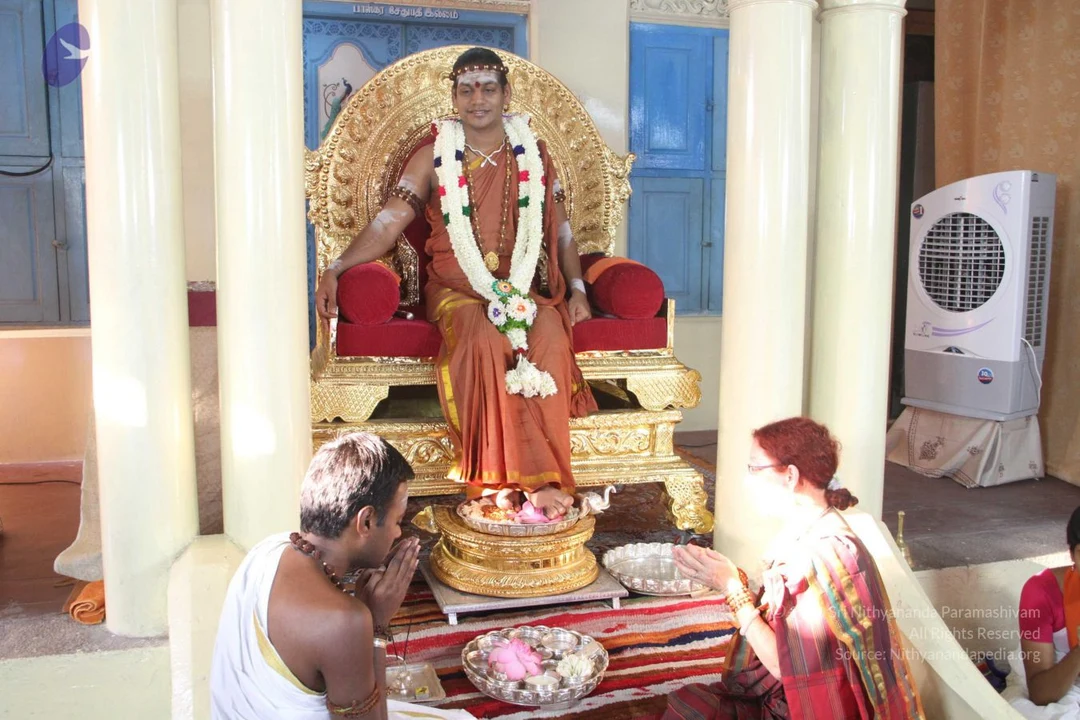
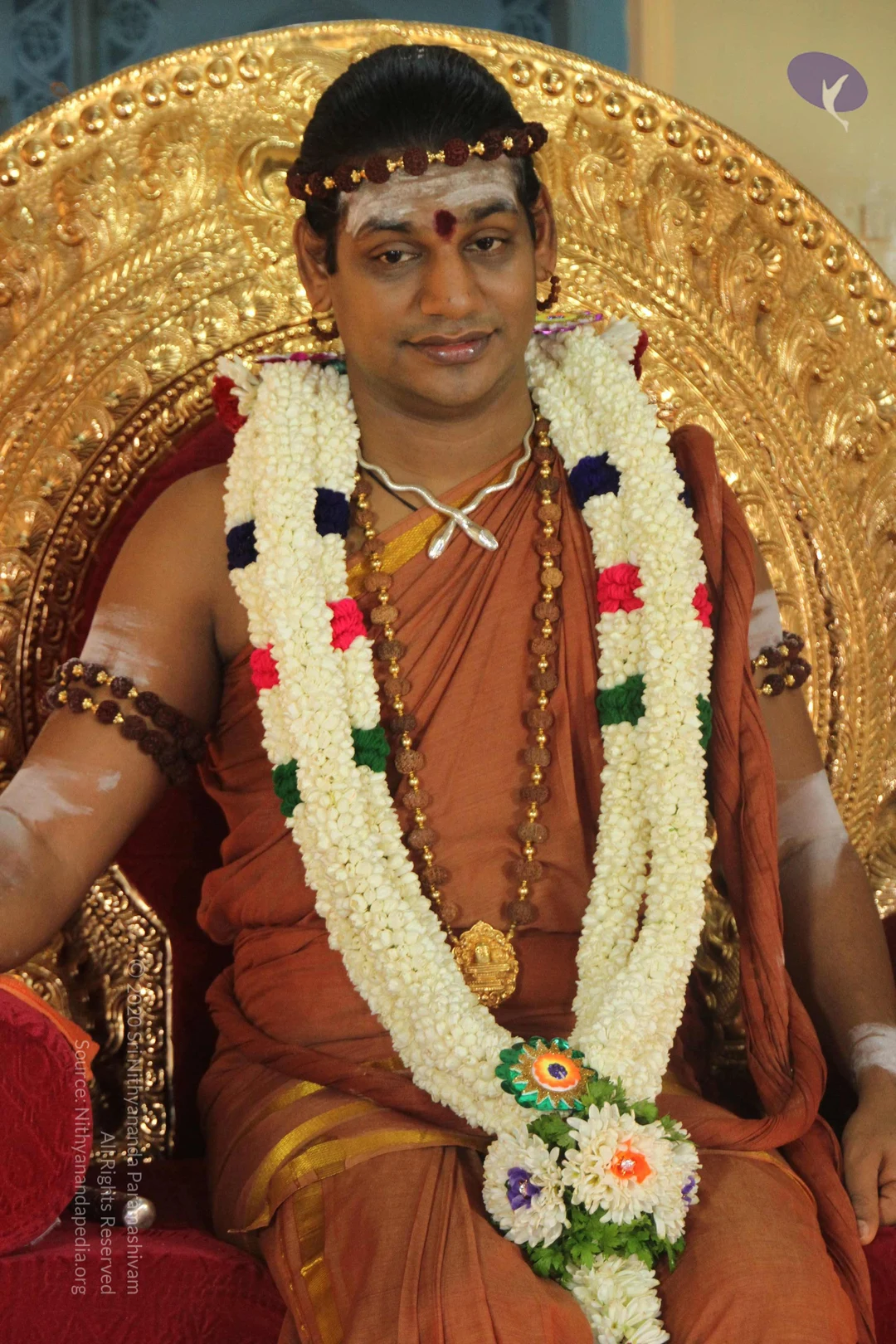
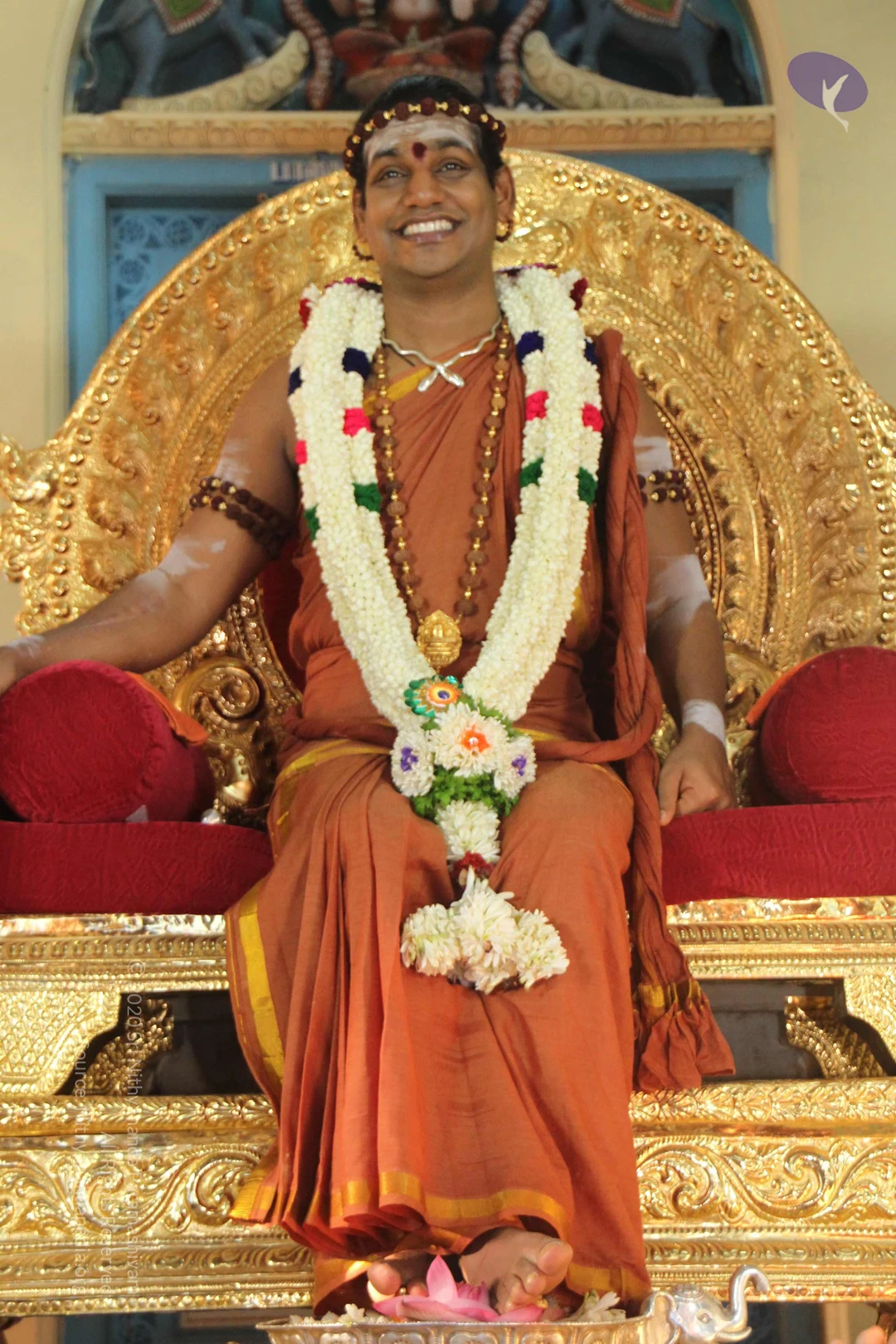
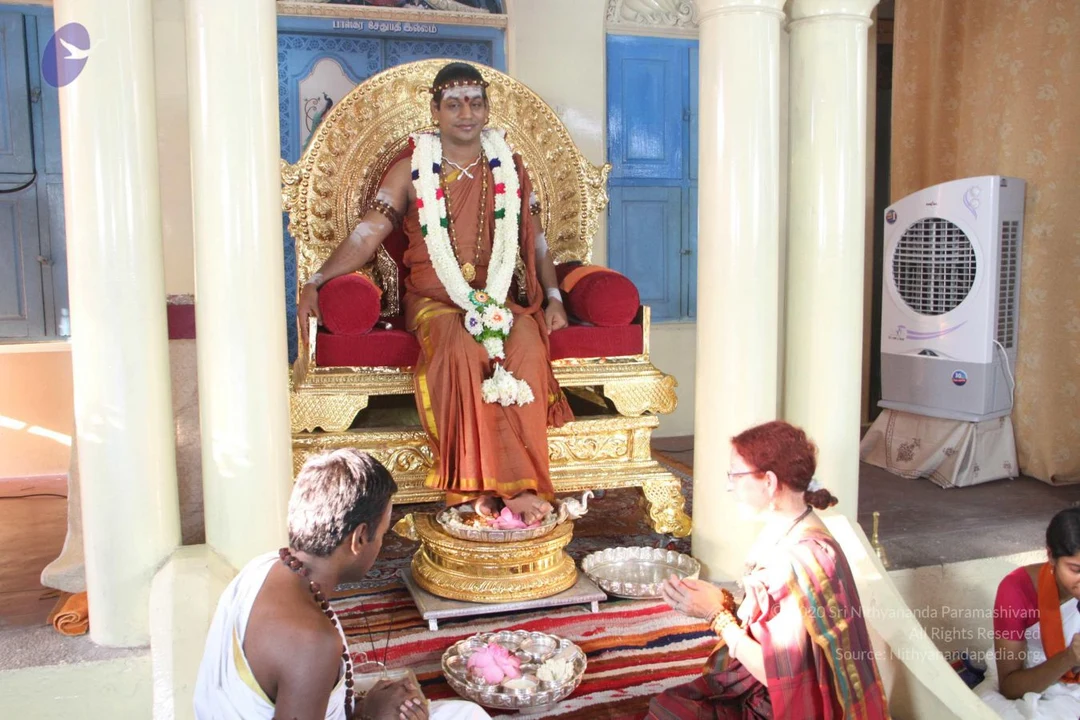
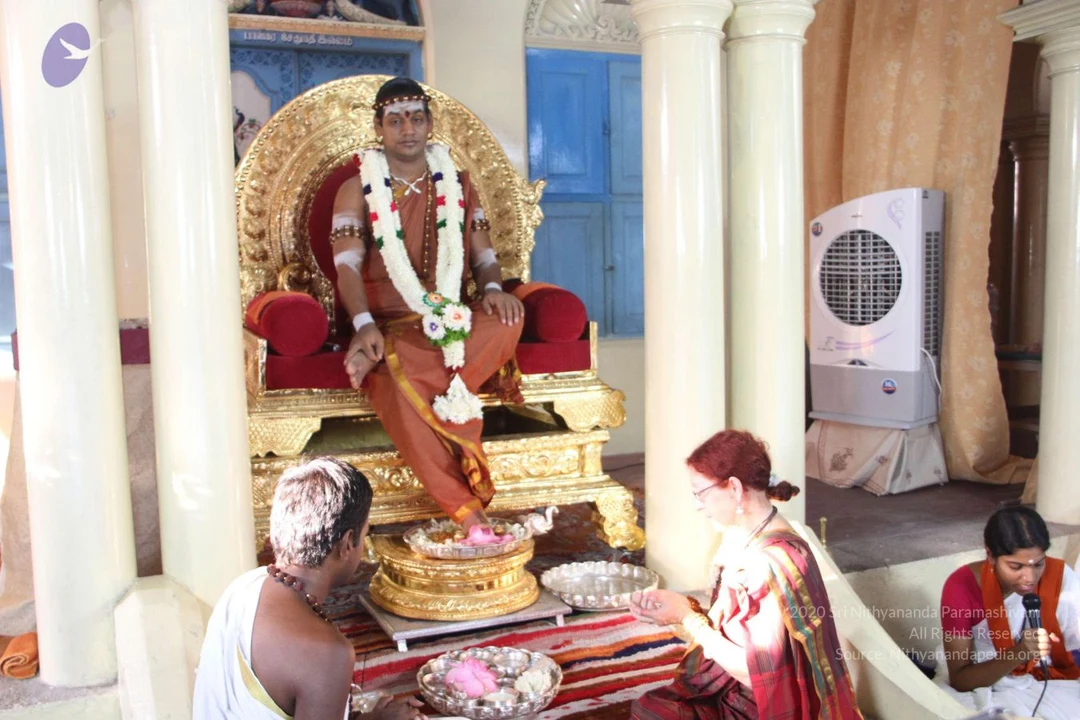
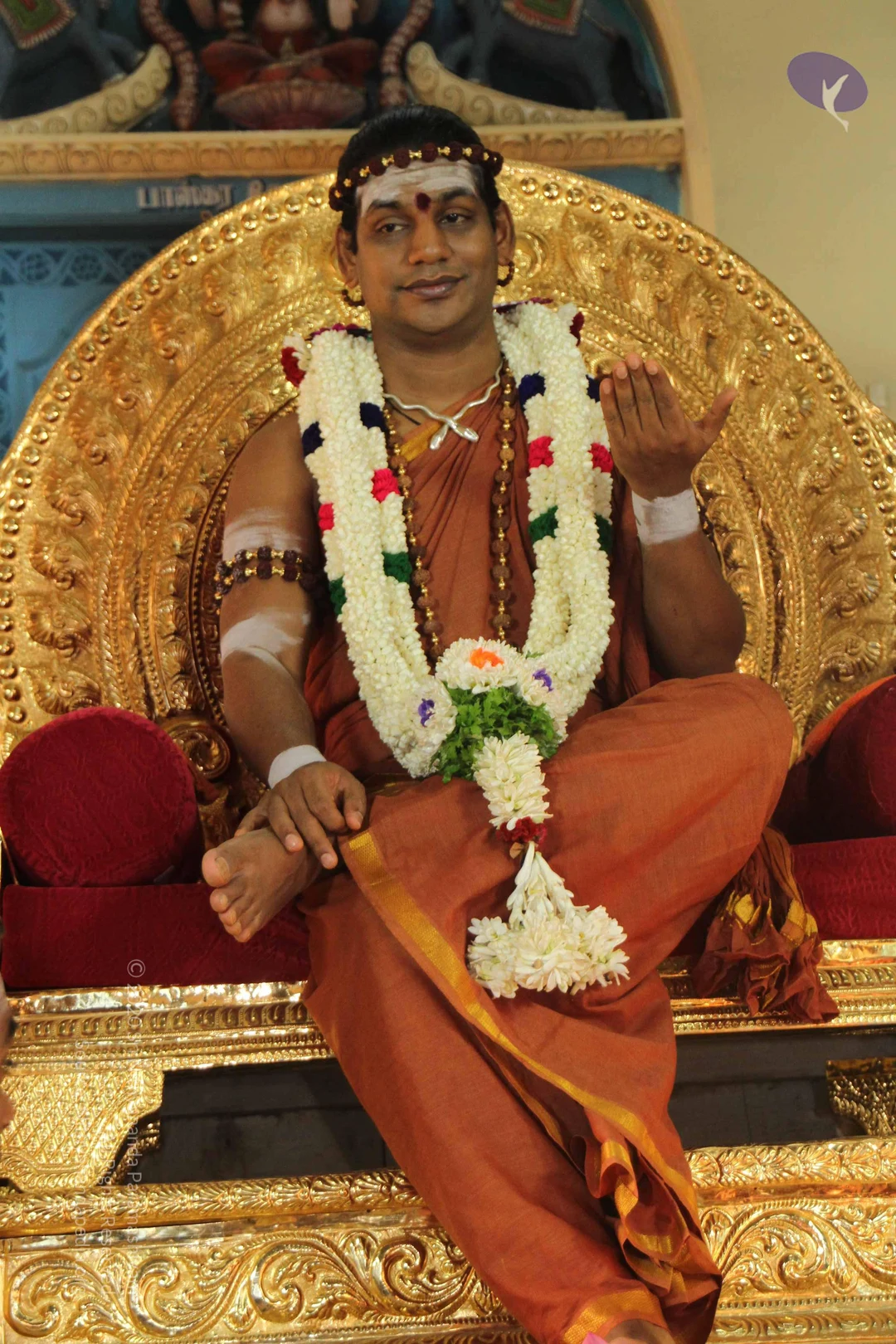
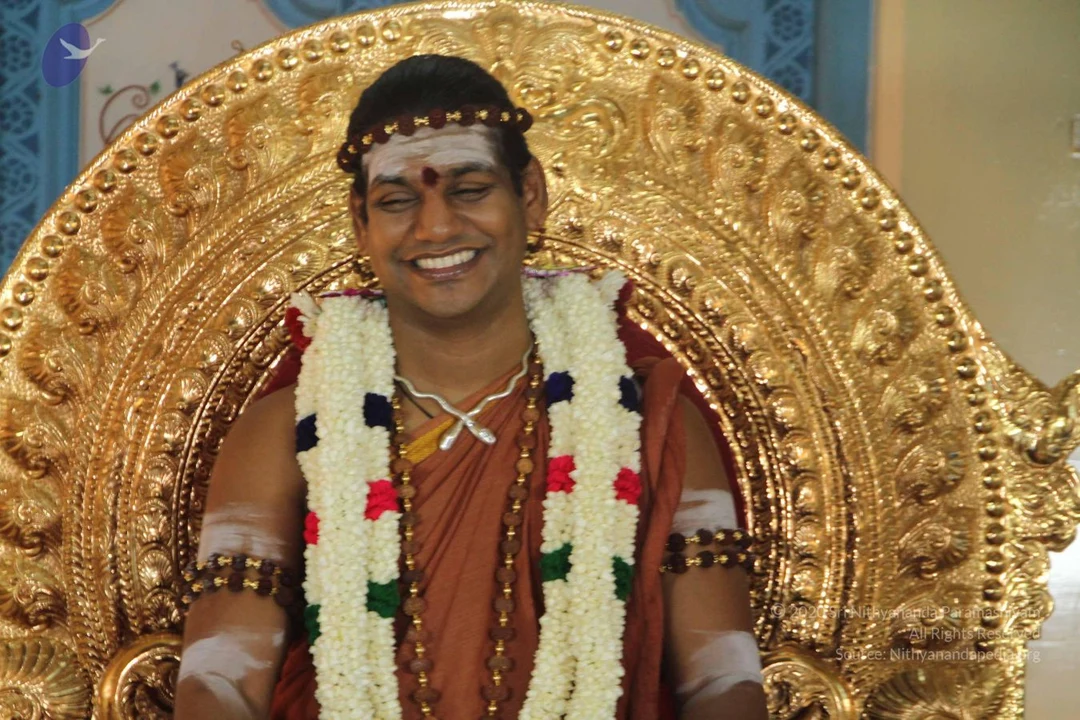
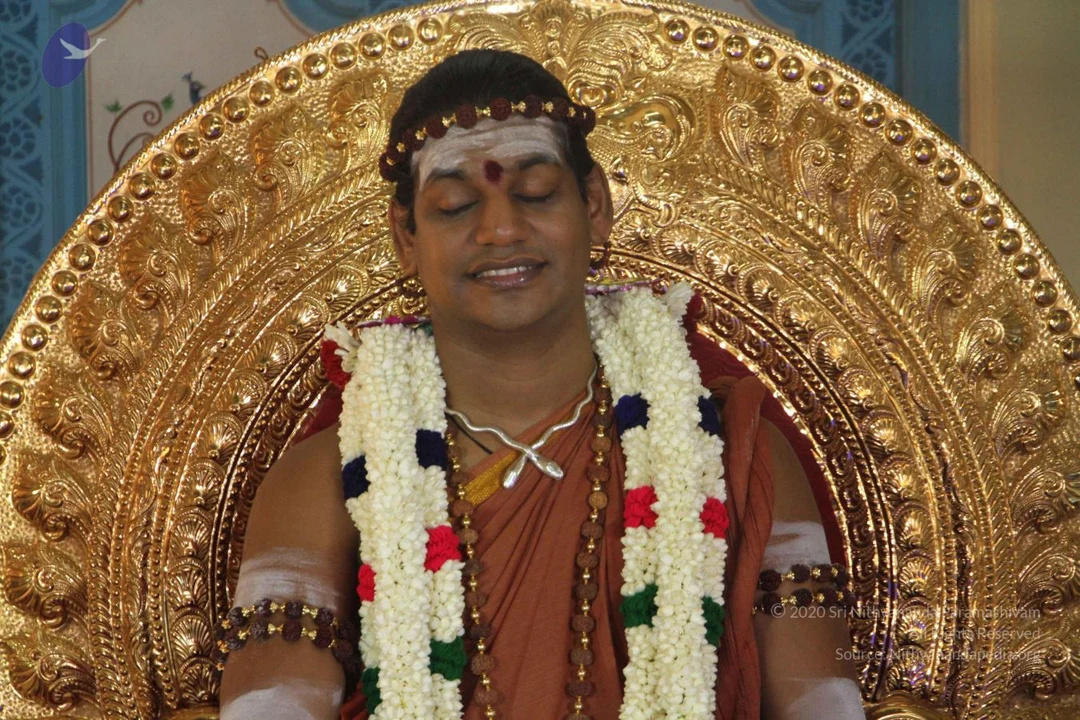
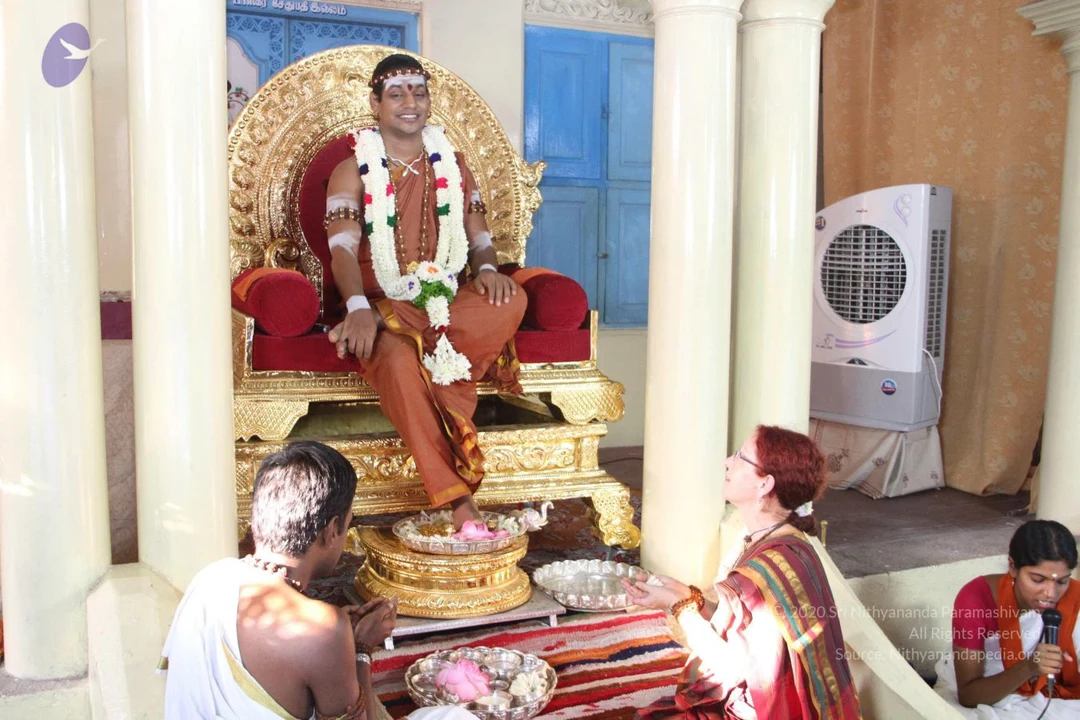
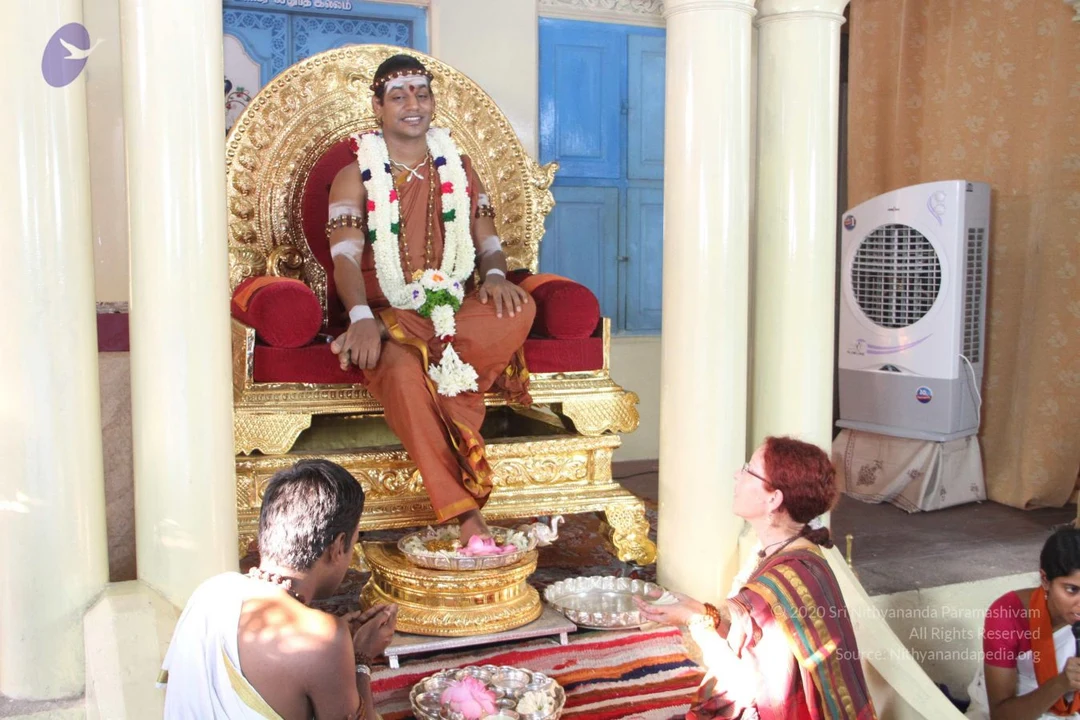
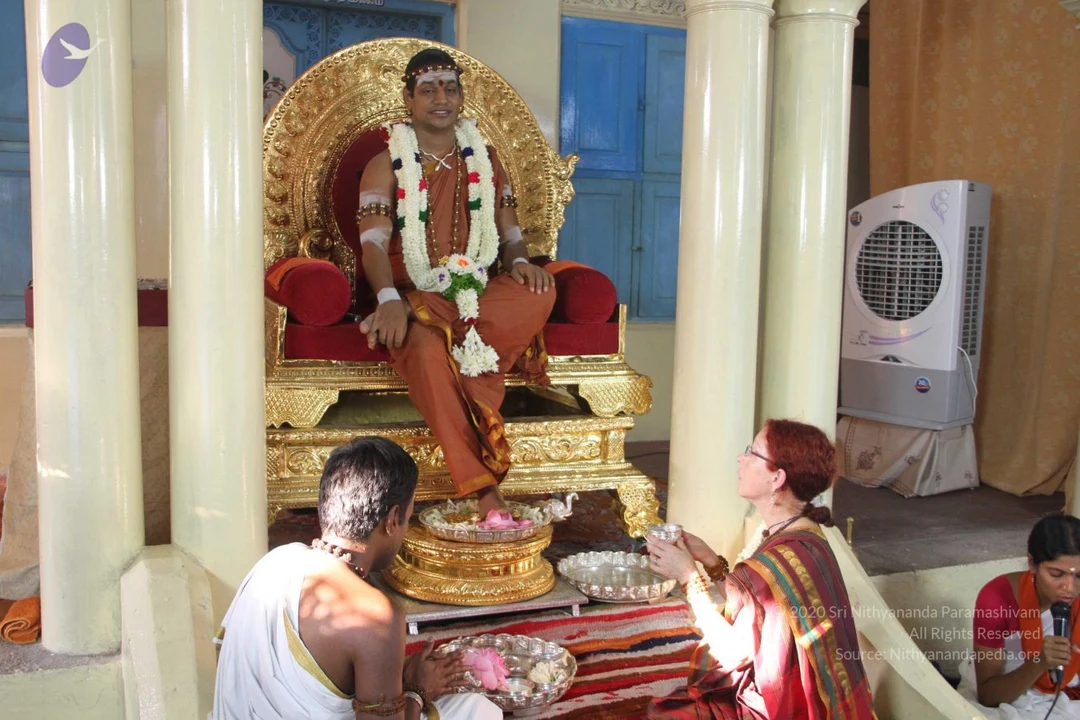
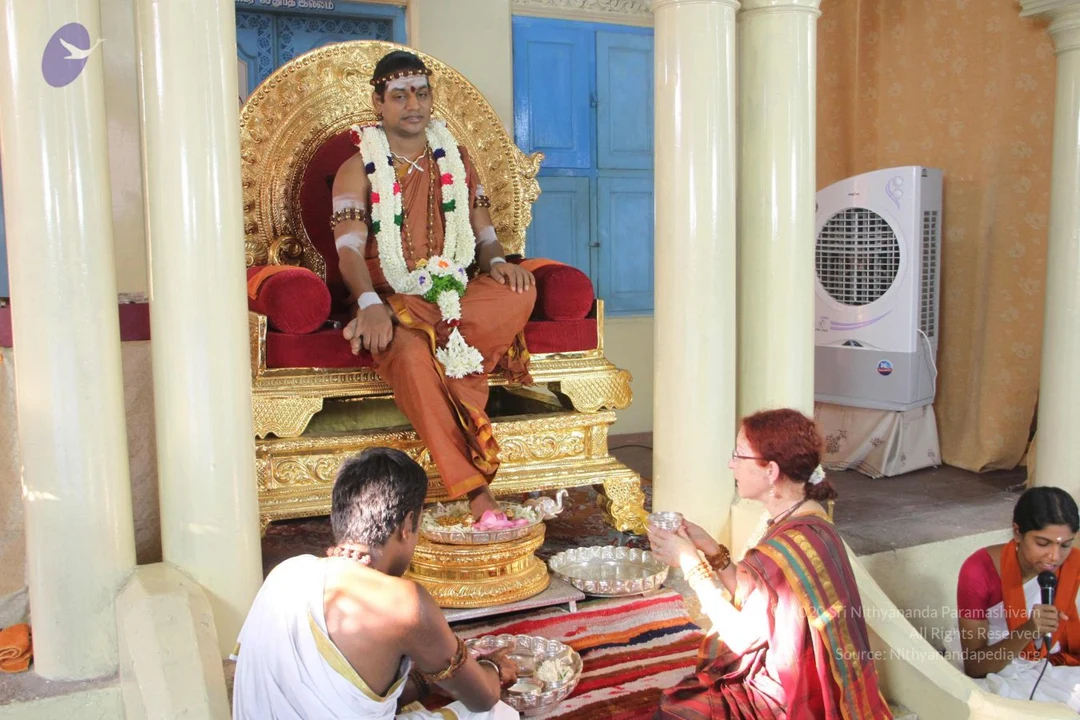
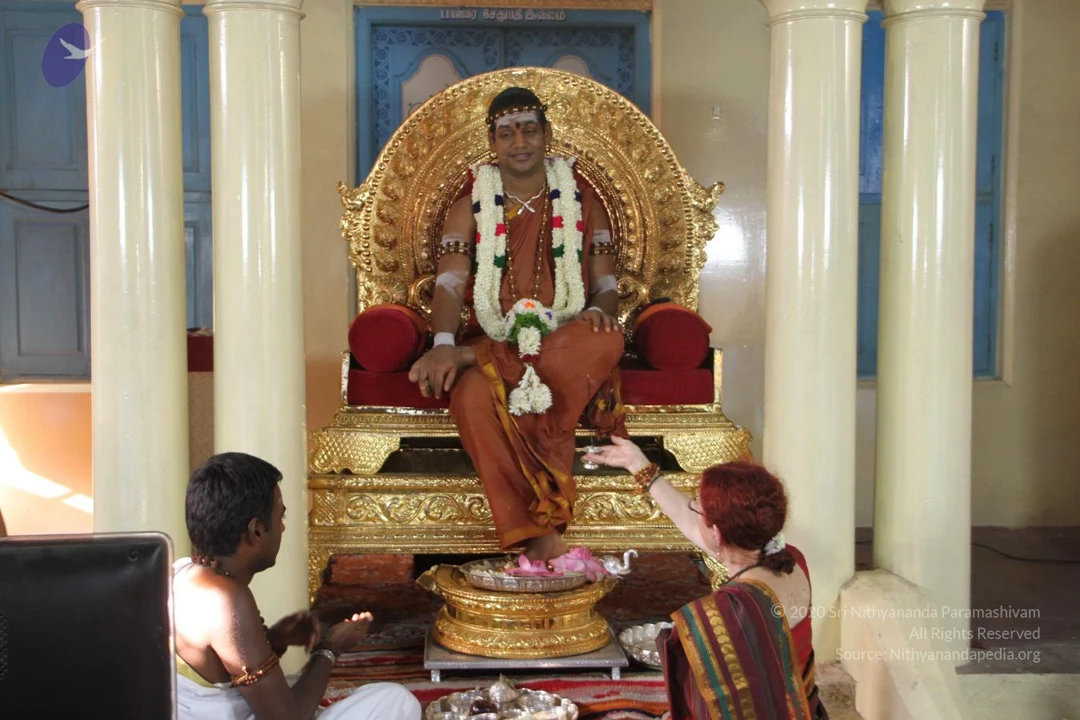
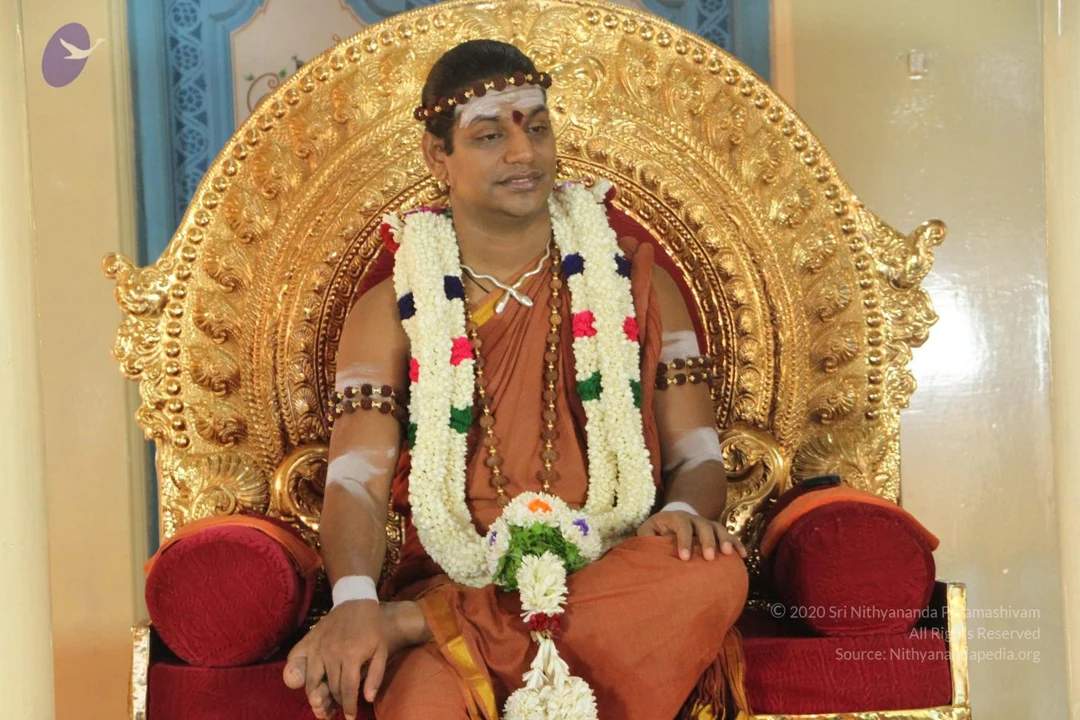
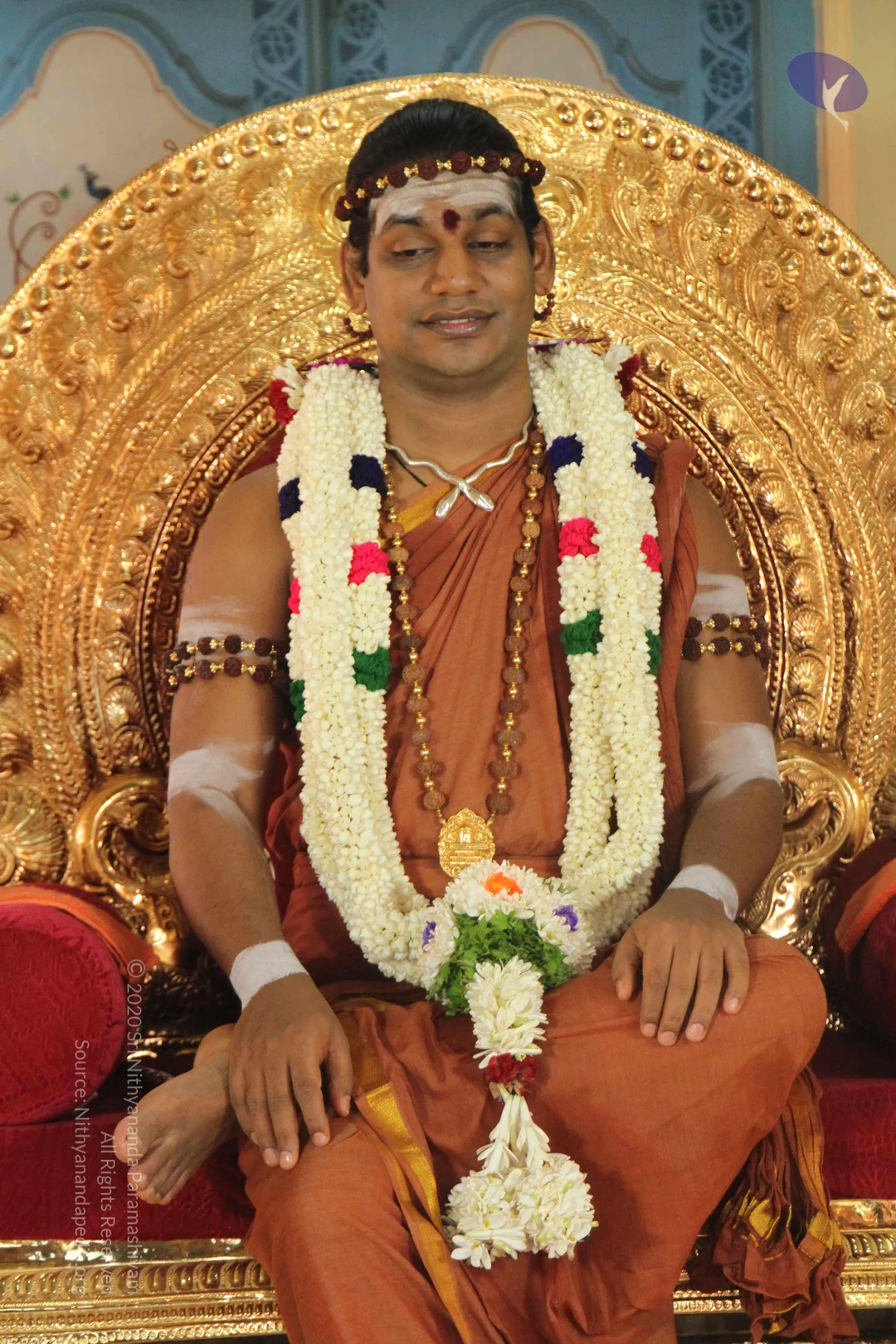
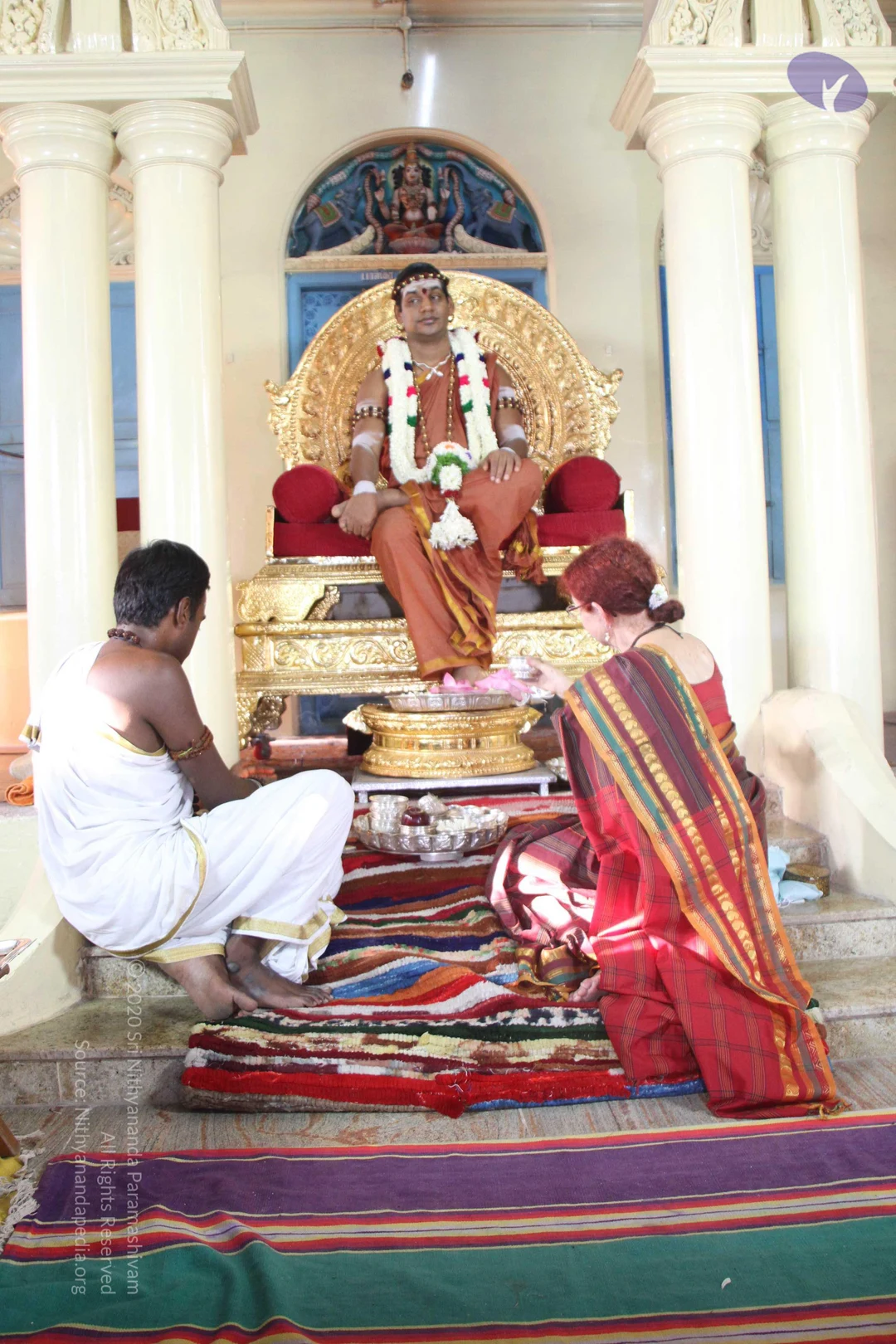
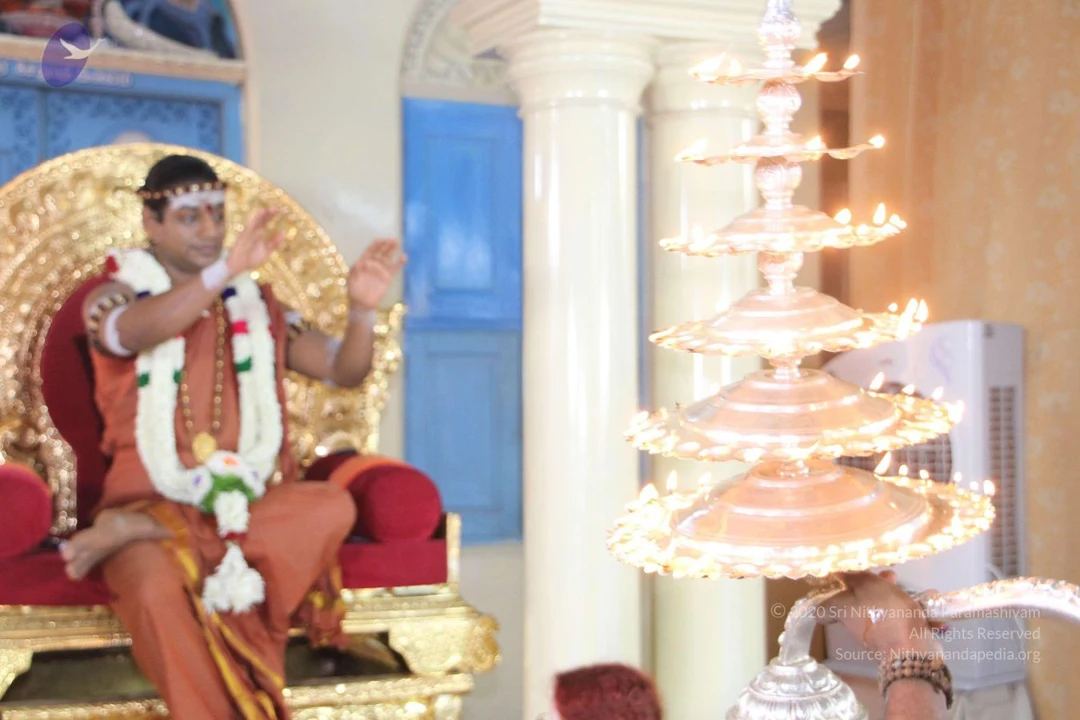
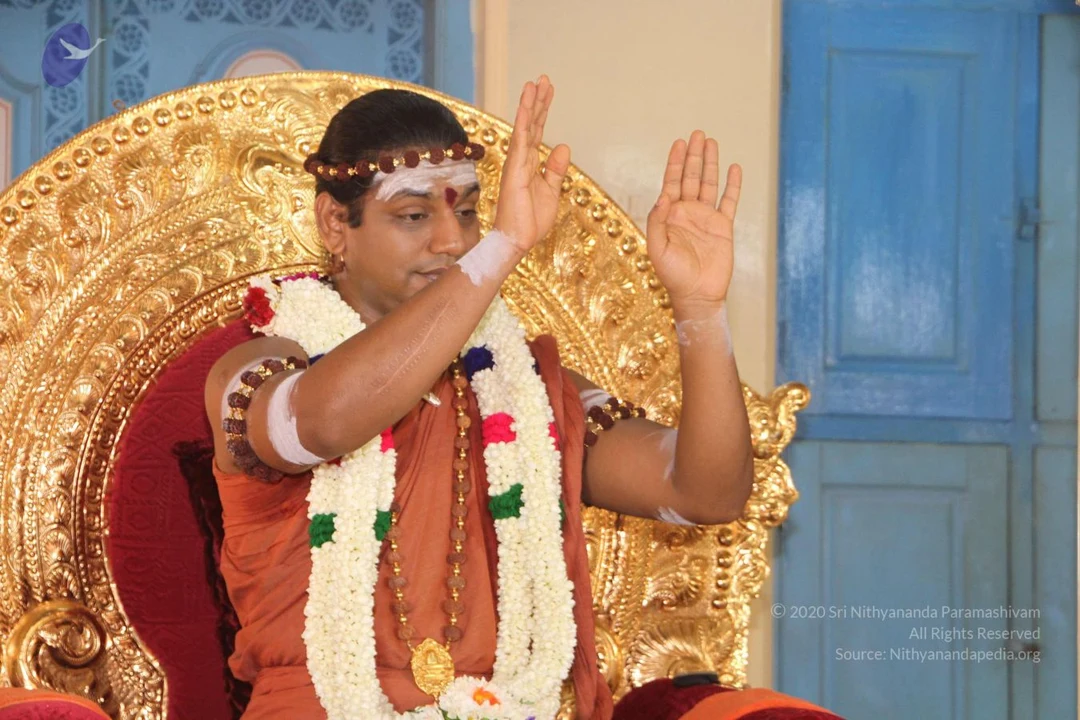
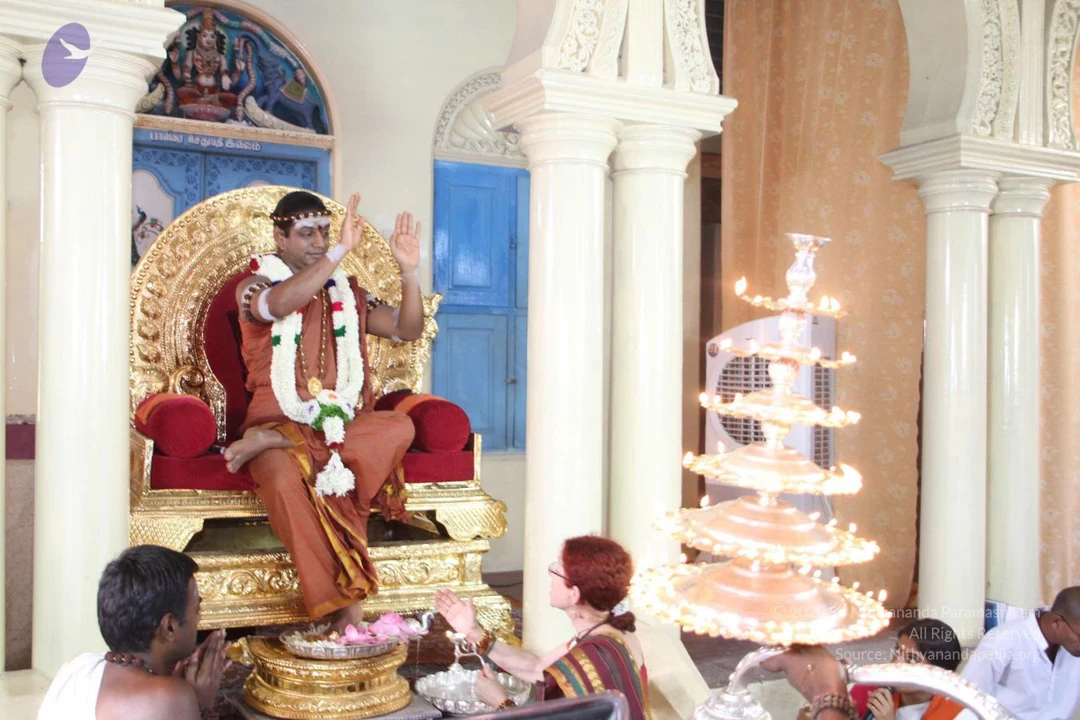
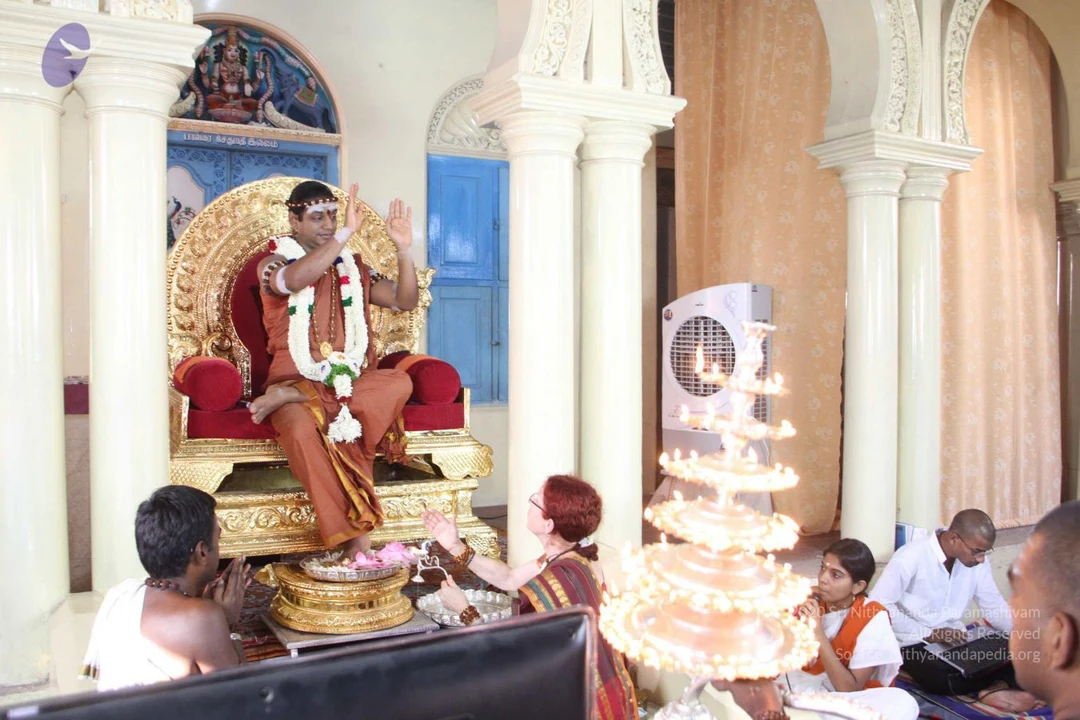
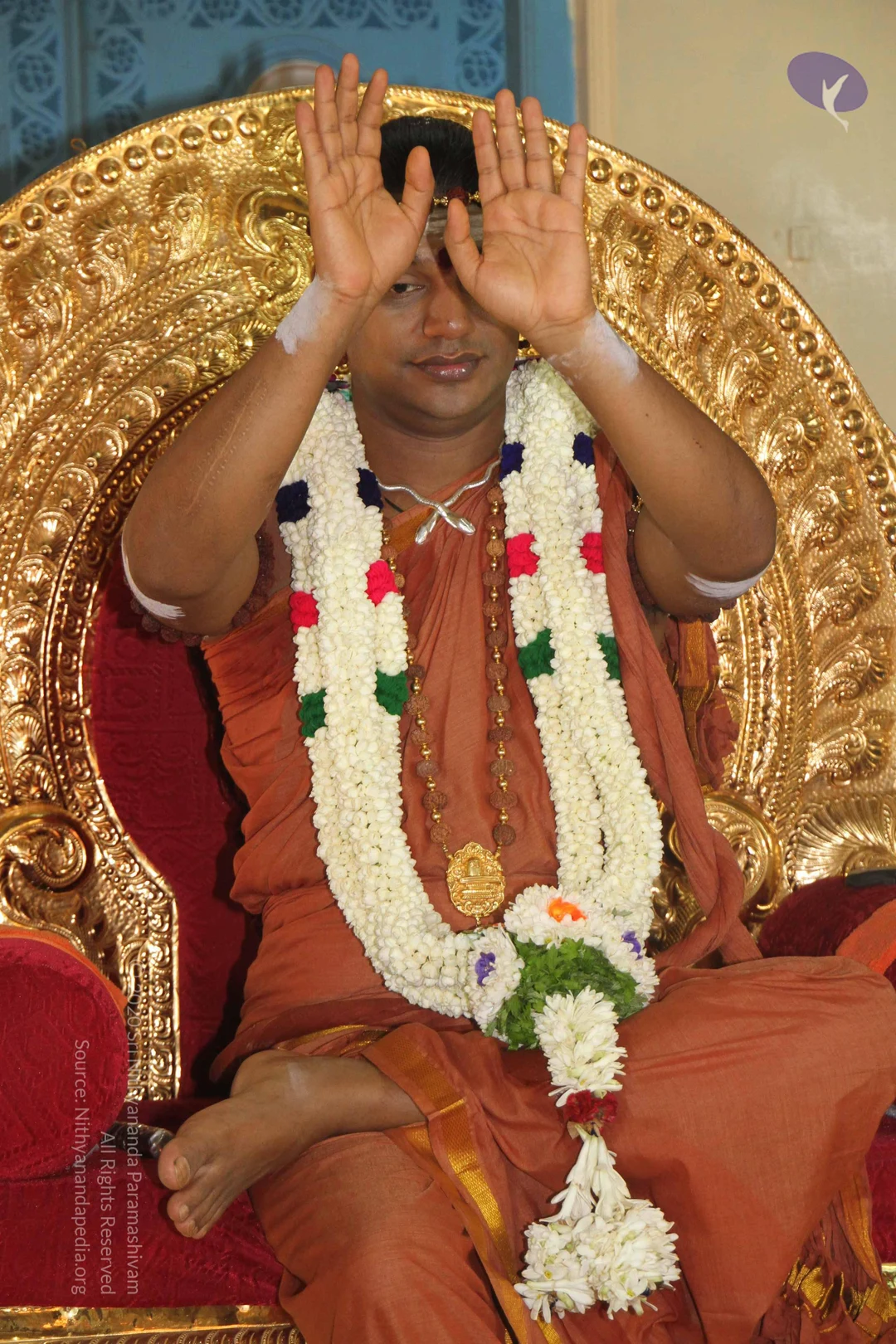
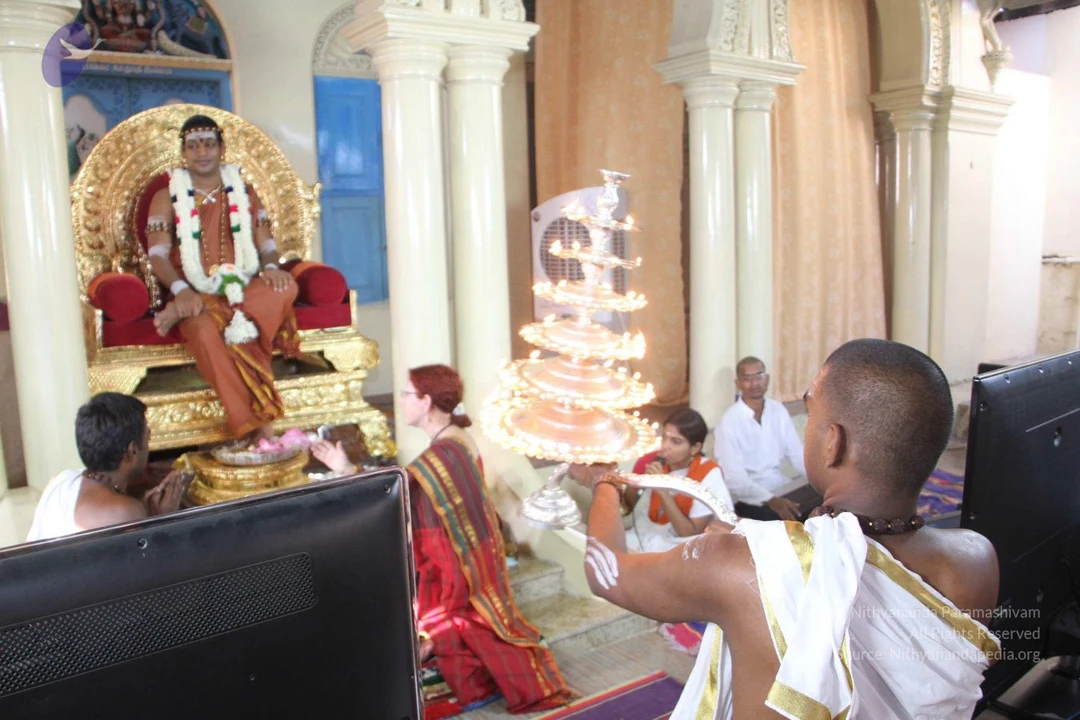
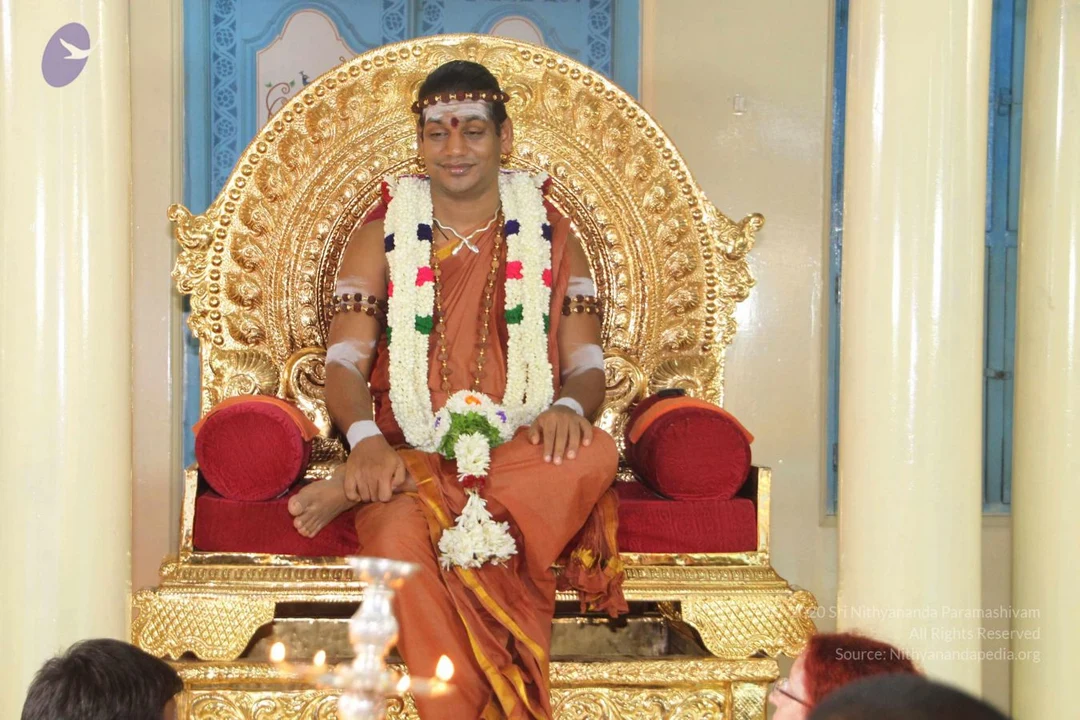
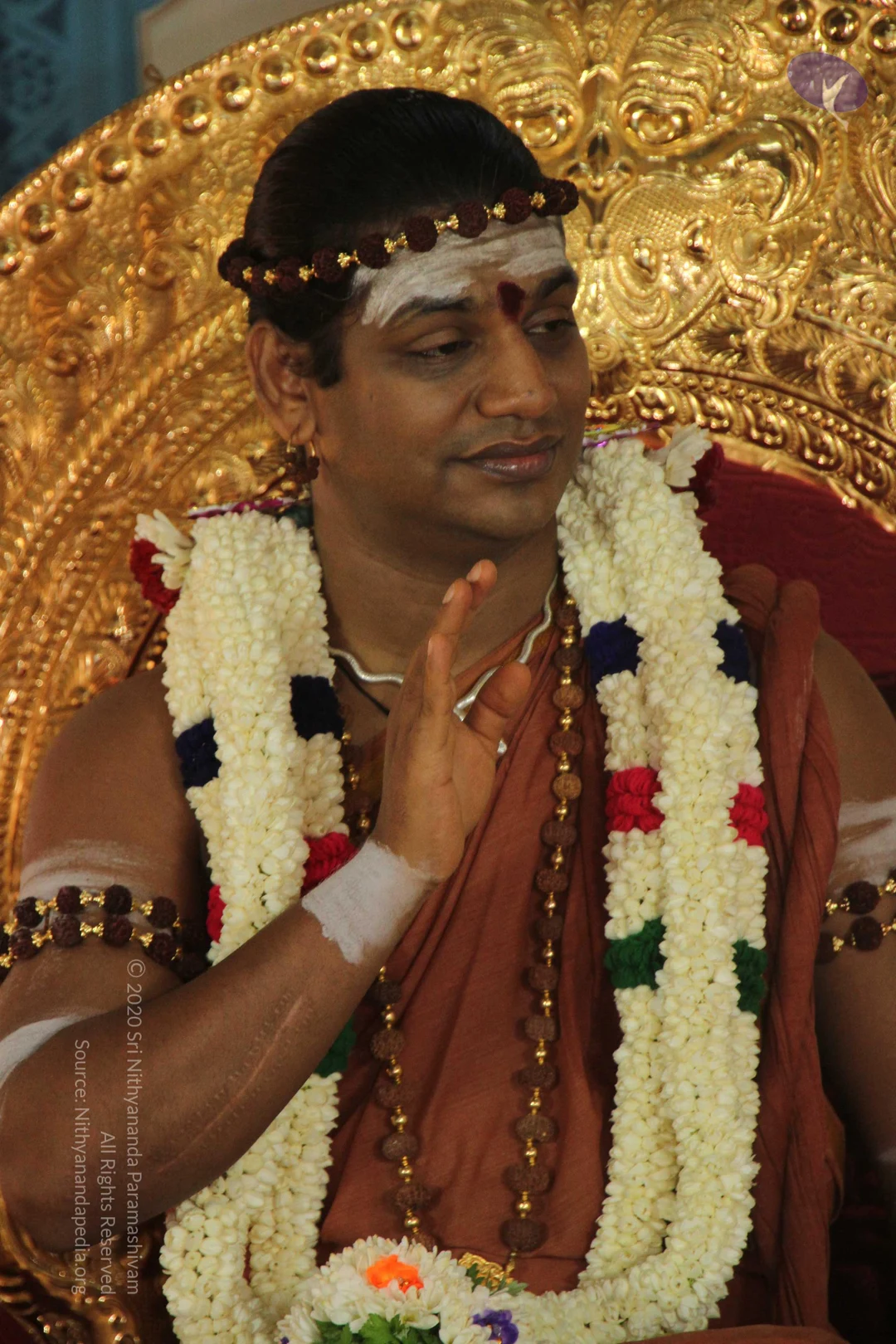
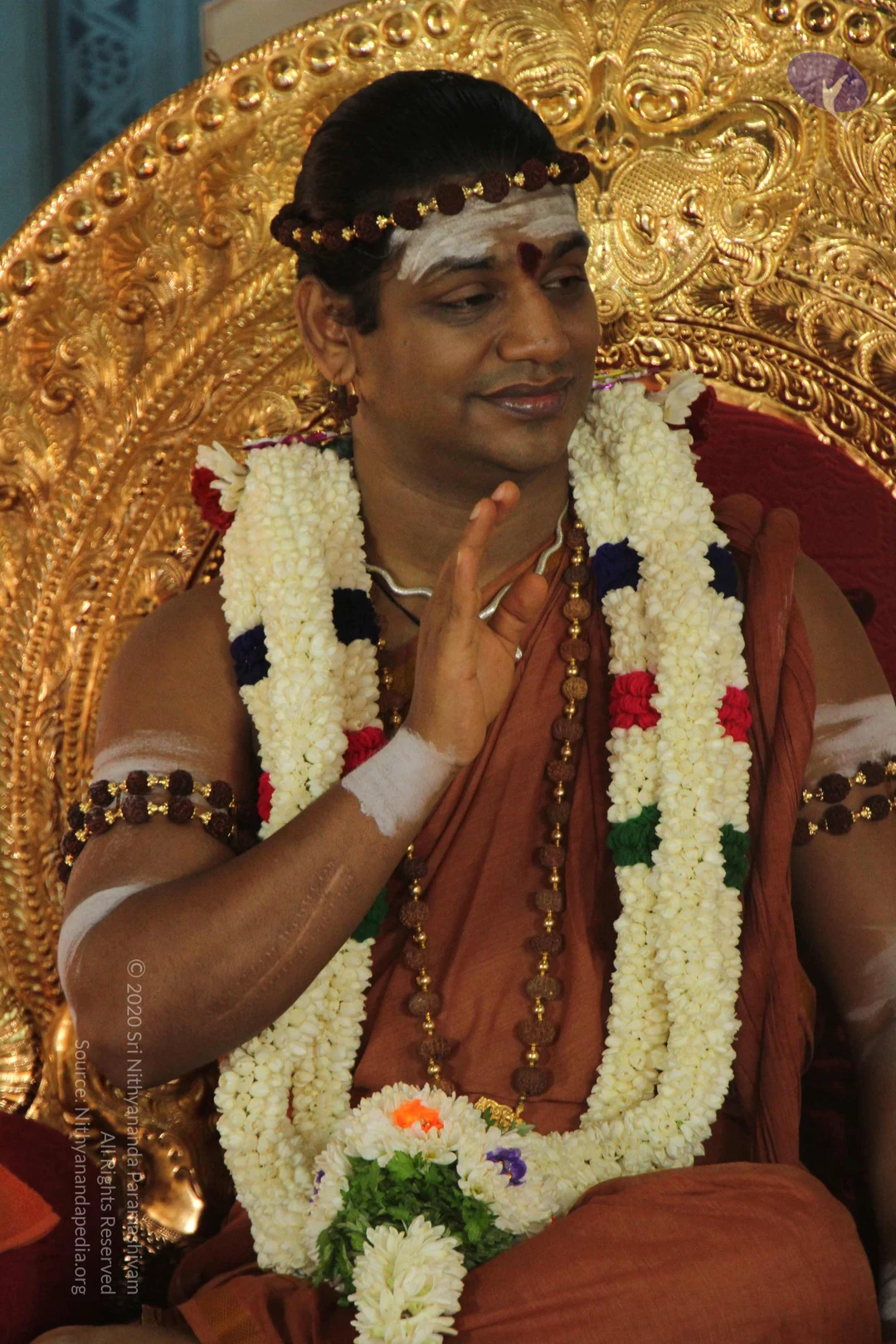
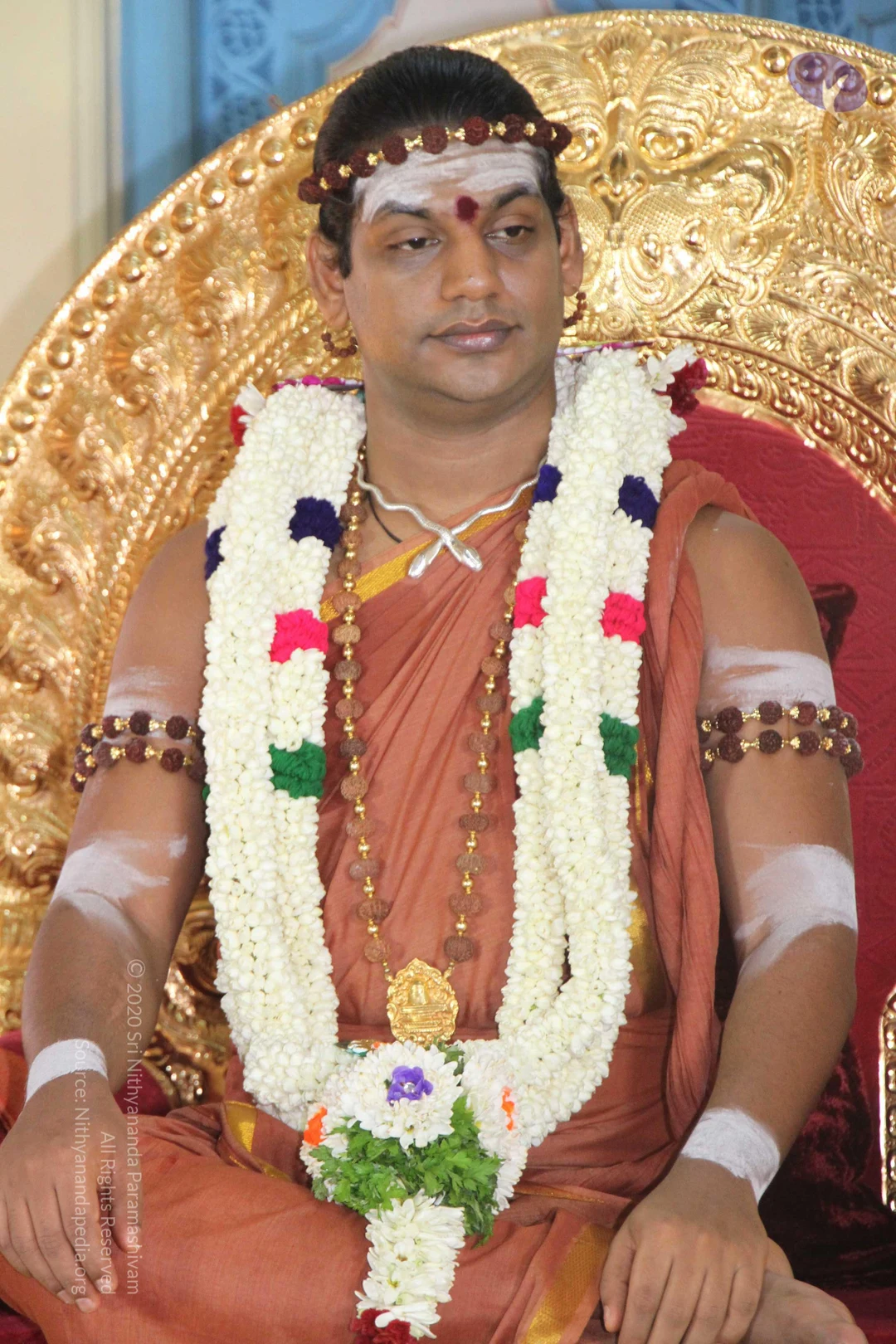
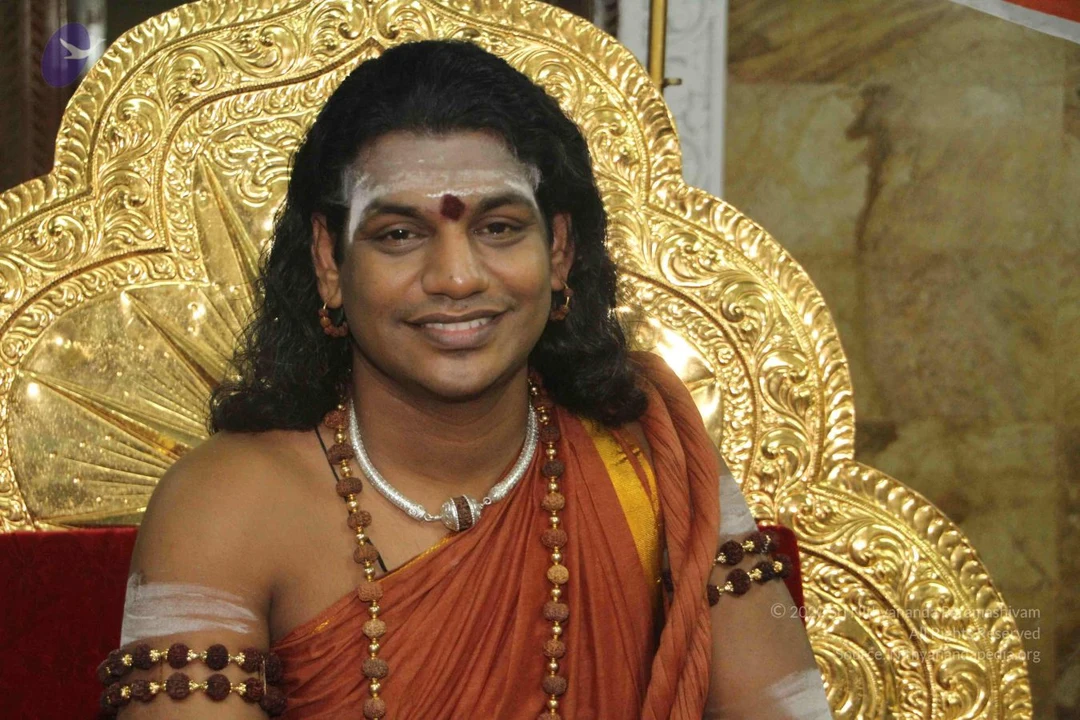
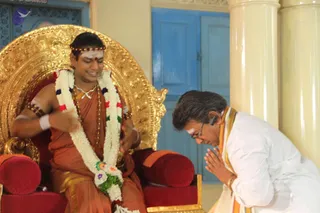
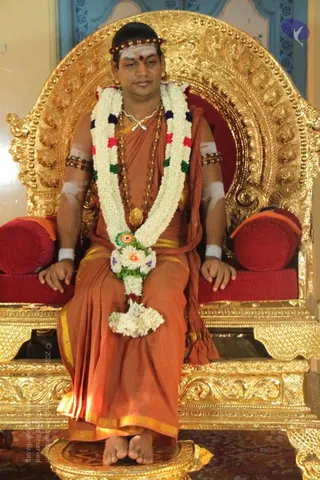
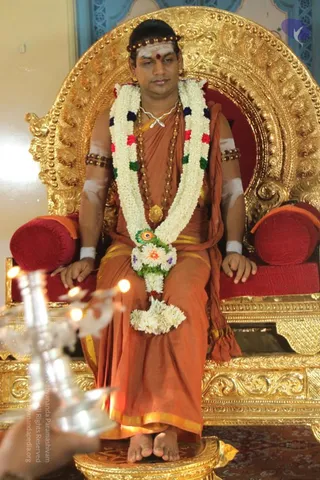
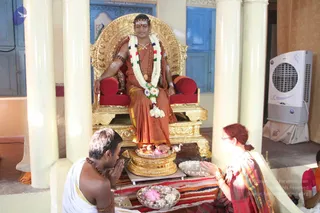
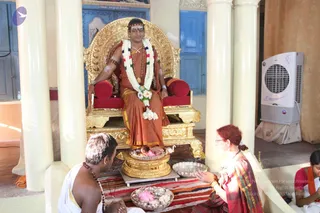
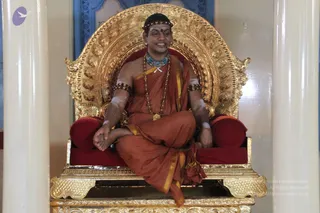
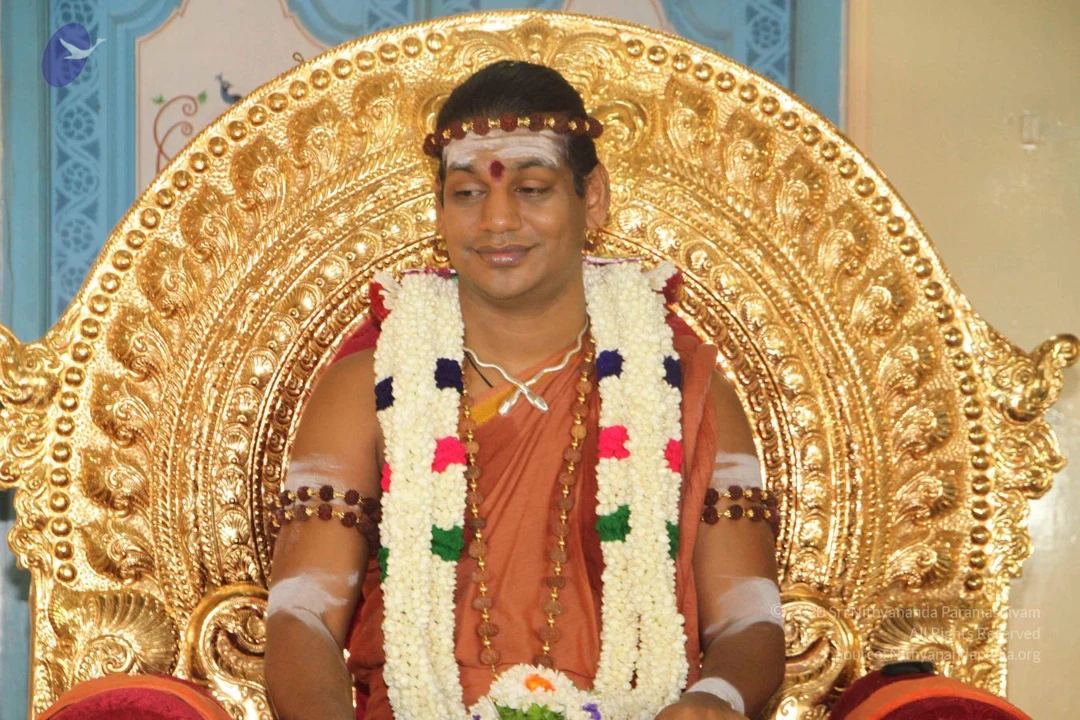
A photograph in a temple-style hall with blue doors and cream pillars. A seated man on an ornate gold-and-red throne wears saffron-orange robes, a headband, white vibhuti marks on the forehead and arms, rudraksha beads, and a long white and multicolour flower garland, which he touches with his hand. Before him a man in white dhoti and shirt with a gold-bordered shawl bows with palms pressed together in namaste. Two people are visible.A seated man on an ornate gold throne with red cushions, wearing an orange-saffron dhoti and shawl with gold borders, a long white jasmine garland with multicoloured flower accents draped to his lap, a rudraksha-style bead mala across his chest and a gold pendant, a red bead headband, white vibhuti or sandalwood marks on his forehead, arms and wrists, and bare feet resting on a brass footstool. A dark-haired figure with a composed expression, seated in a ceremonial setting with blue-patterned wall panels behind.A seated man in orange-saffron robes sits on an ornate gold throne with red cushions, wearing a long white jasmine garland with multicoloured flower accents, a rudraksha mala and a gold pendant. He wears a headband, white vibhuti on the forehead and arms, and a red kumkum dot, with bare feet resting on a gold footstool. In the lower left foreground, a silver oil lamp with several lit flames is held by an unseen hand. The background shows blue and gold decorative panels. Appearance-based label: a person, seated on the throne in saffron robes and rudraksha malas with a ceremonial garland.Close photo of a smiling man seated before an ornate gold repousse throne back. He wears a rudraksha headband with gold beads, white vibhuti on the forehead with a red kumkum dot, gold earrings, and a rust-orange cloth draped over his shoulders. Layered white jasmine garlands with red, green and navy accents hang around his neck, over a silver serpent-shaped pendant and long rudraksha malas with gold spacers. The setting suggests a ceremonial seat. a person by appearance cues: rudraksha malas, saffron-orange clothing and ornate gold regalia, though identity is uncertain from appearance alone.A seated man in saffron-orange robes sits on an ornate gold throne with red cushions, wearing a white flower garland with multicoloured blossoms and a rudraksha-style necklace, with white sacred ash marks on his forehead and arms. Before the throne, a devotee in a white dhoti with a sacred thread and a woman in a red and striped sari sit with palms pressed together in namaskar. Silver plates holding flowers, fruit and offerings sit on a red and white rug at the throne's base, and bare feet rest on a small offering tray. Cream pillars, a blue-panelled wall and a white cooler frame the scene.A seated man in an orange-brown dhoti and shawl sits on an ornate gold throne with red cushioned armrests, wearing a long multicolour flower garland, a rudraksha-style mala and a gold pendant, with vibhuti marks on his forehead. His bare feet rest on a silver tray of pink flowers and offerings. Two devotees kneel before him: a shaved-headed man in white with a mala, and a woman in a red and maroon sari holding her hands together in reverence. Silver offering plates with flowers and petals sit on the floor, a cream pillar frames the scene, and a white air cooler stands at right.

NITHYA-SATSANG

18 photosSource gallery
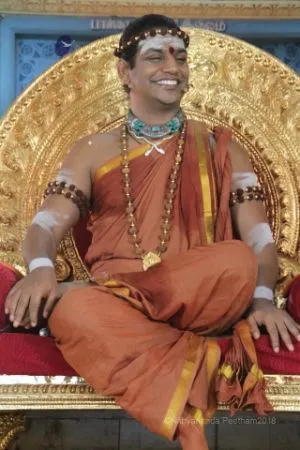
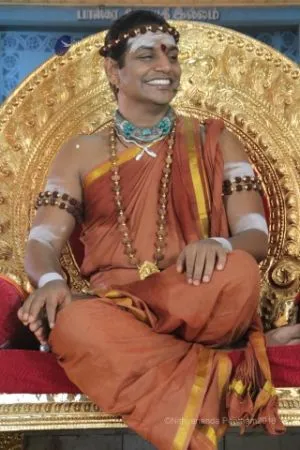
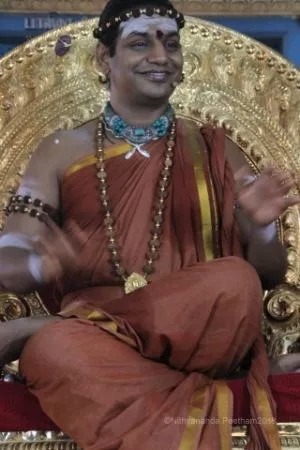
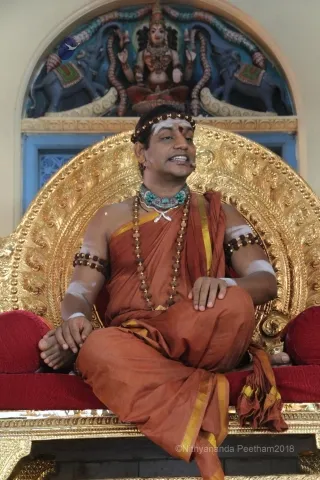
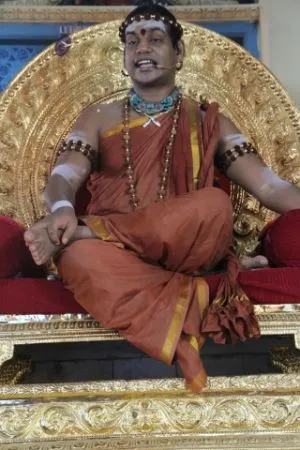
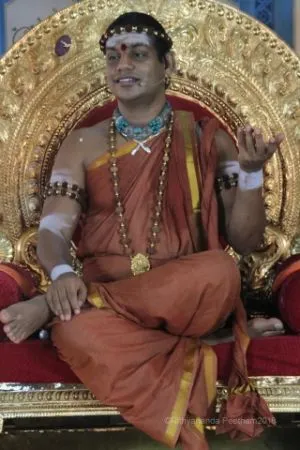
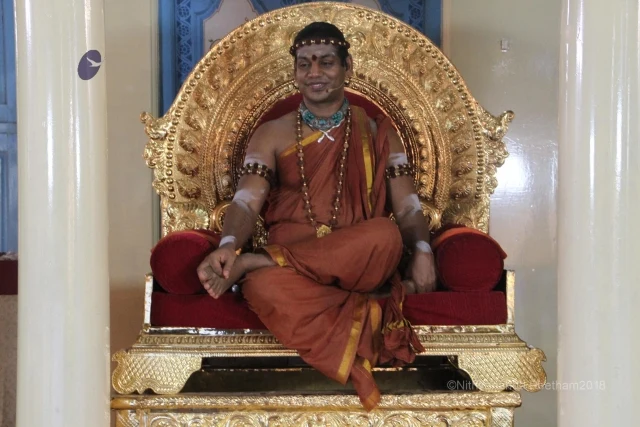
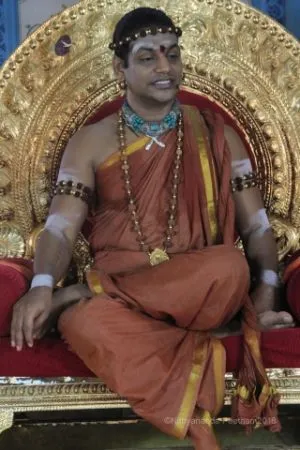
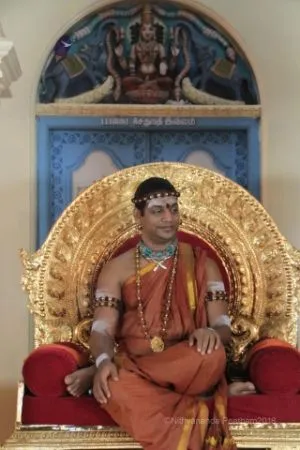
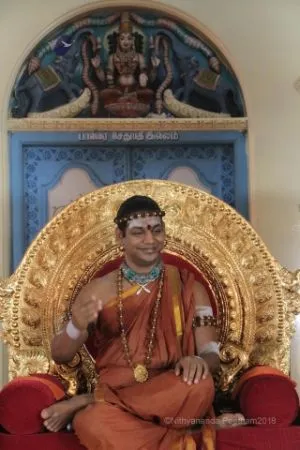
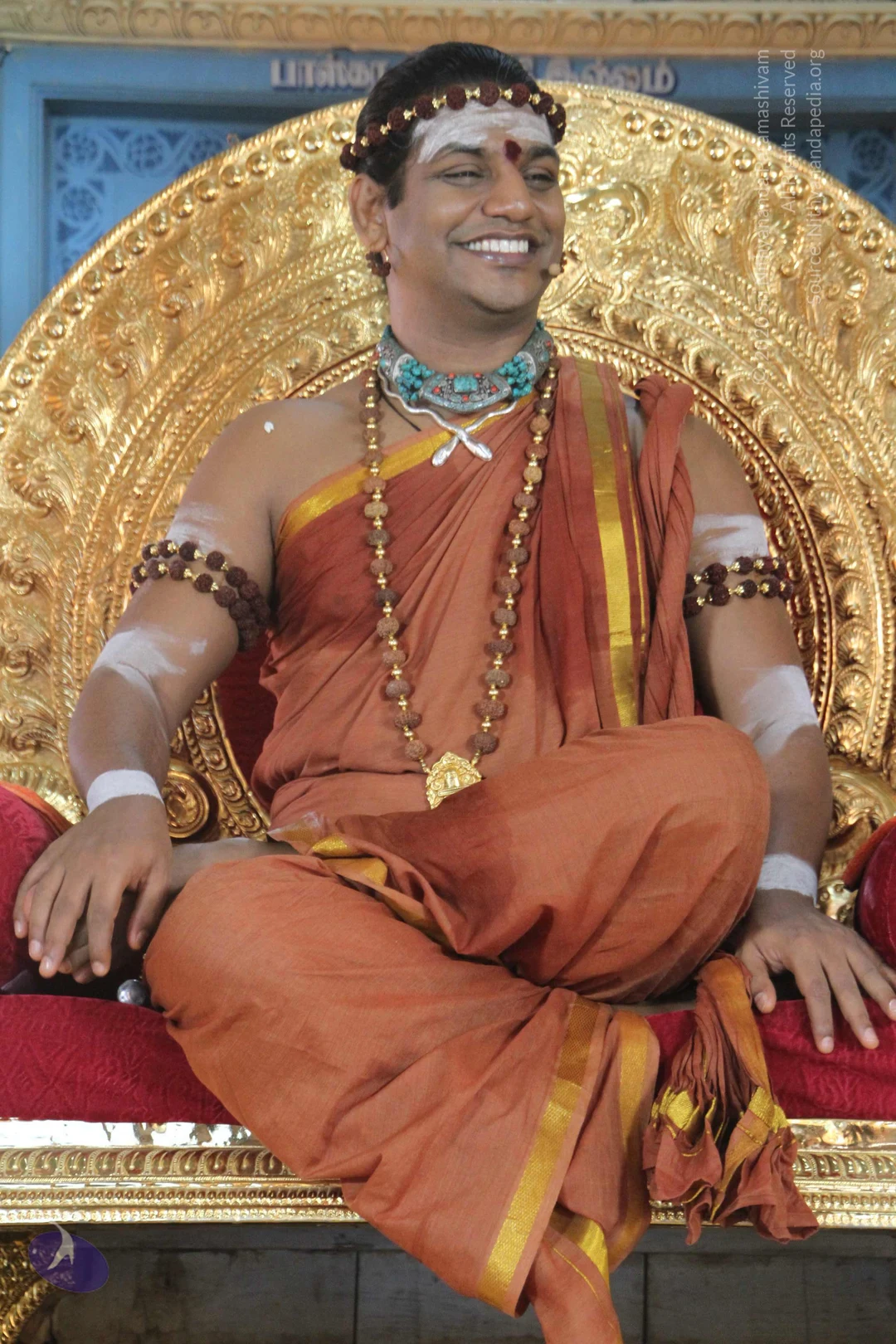
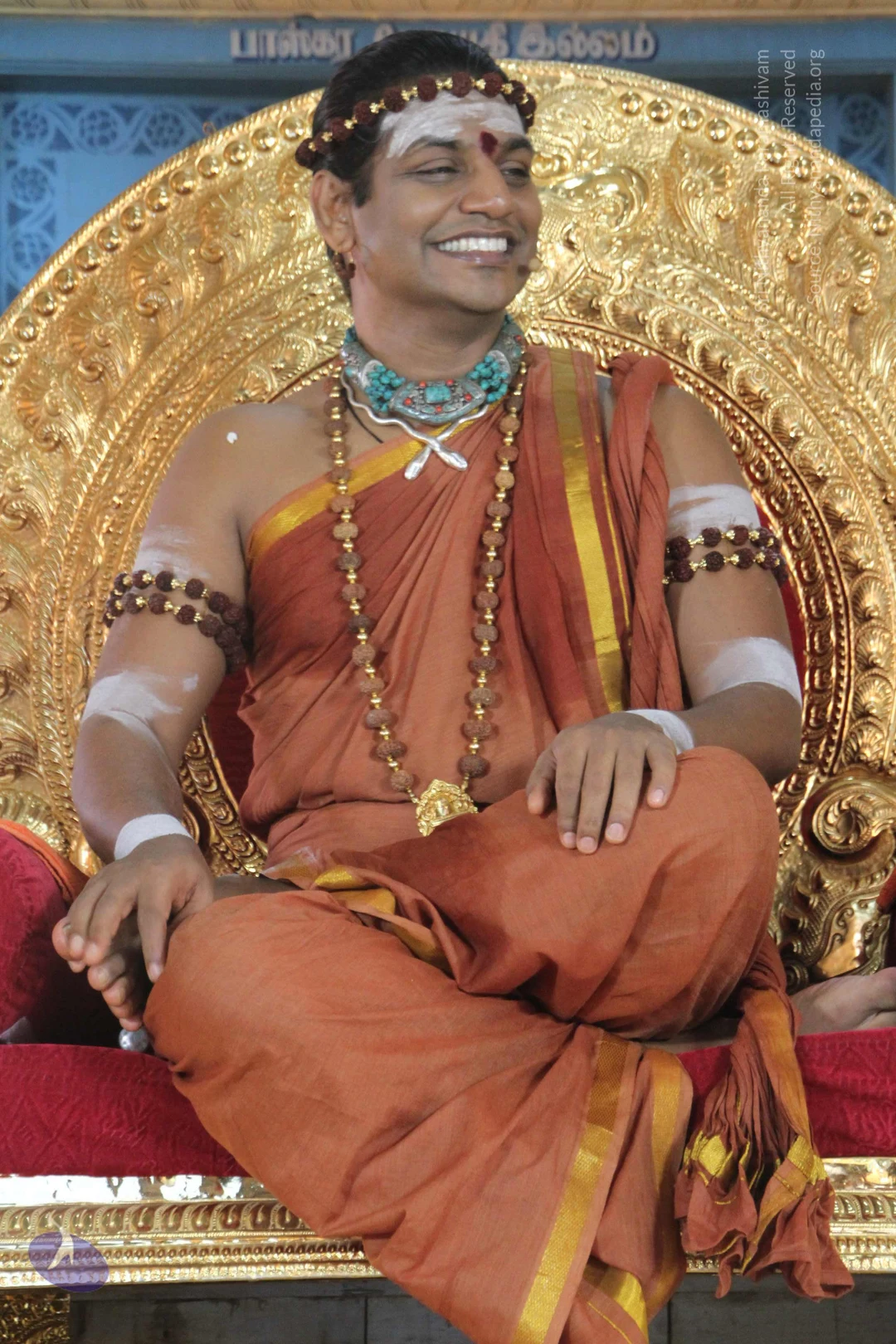
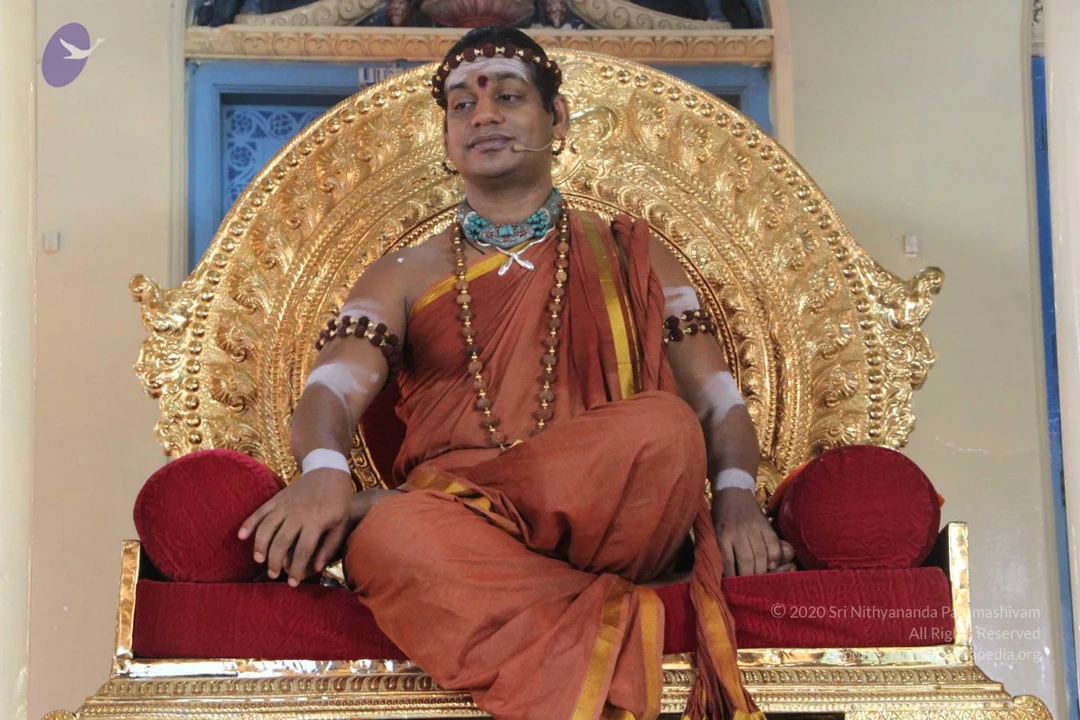
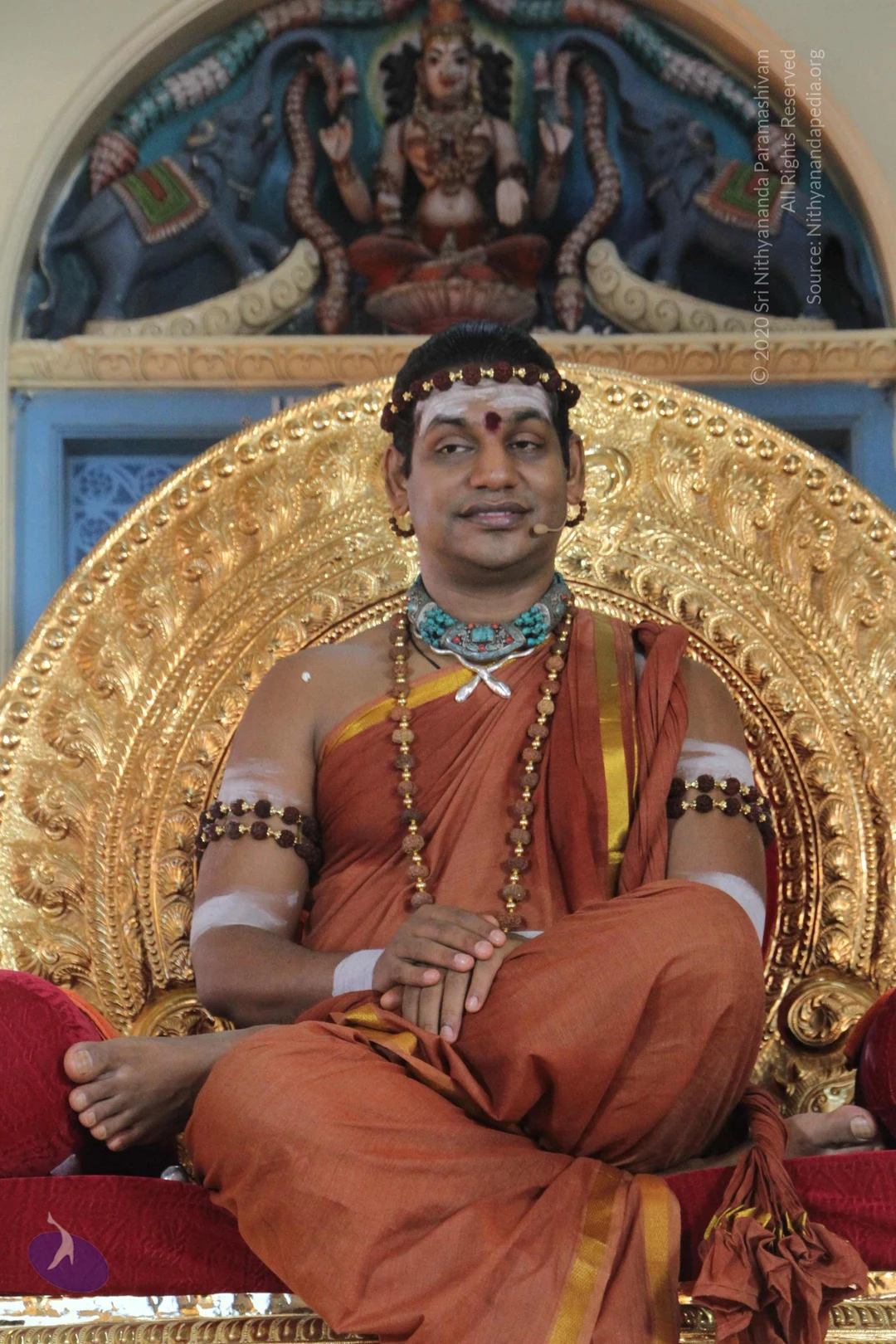
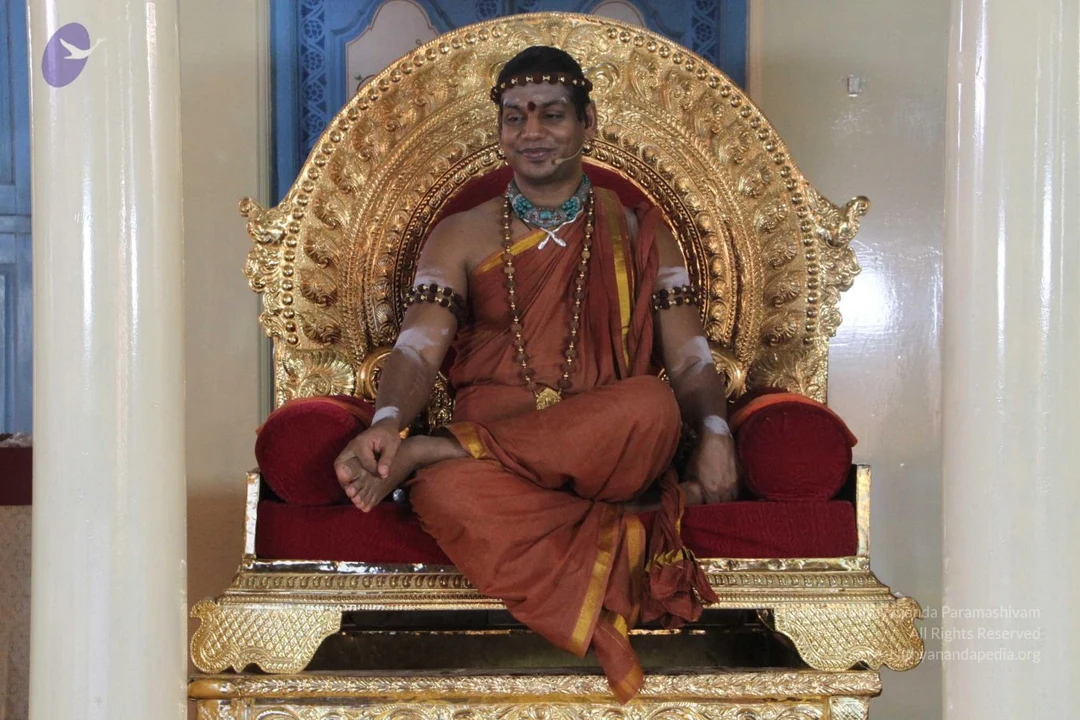
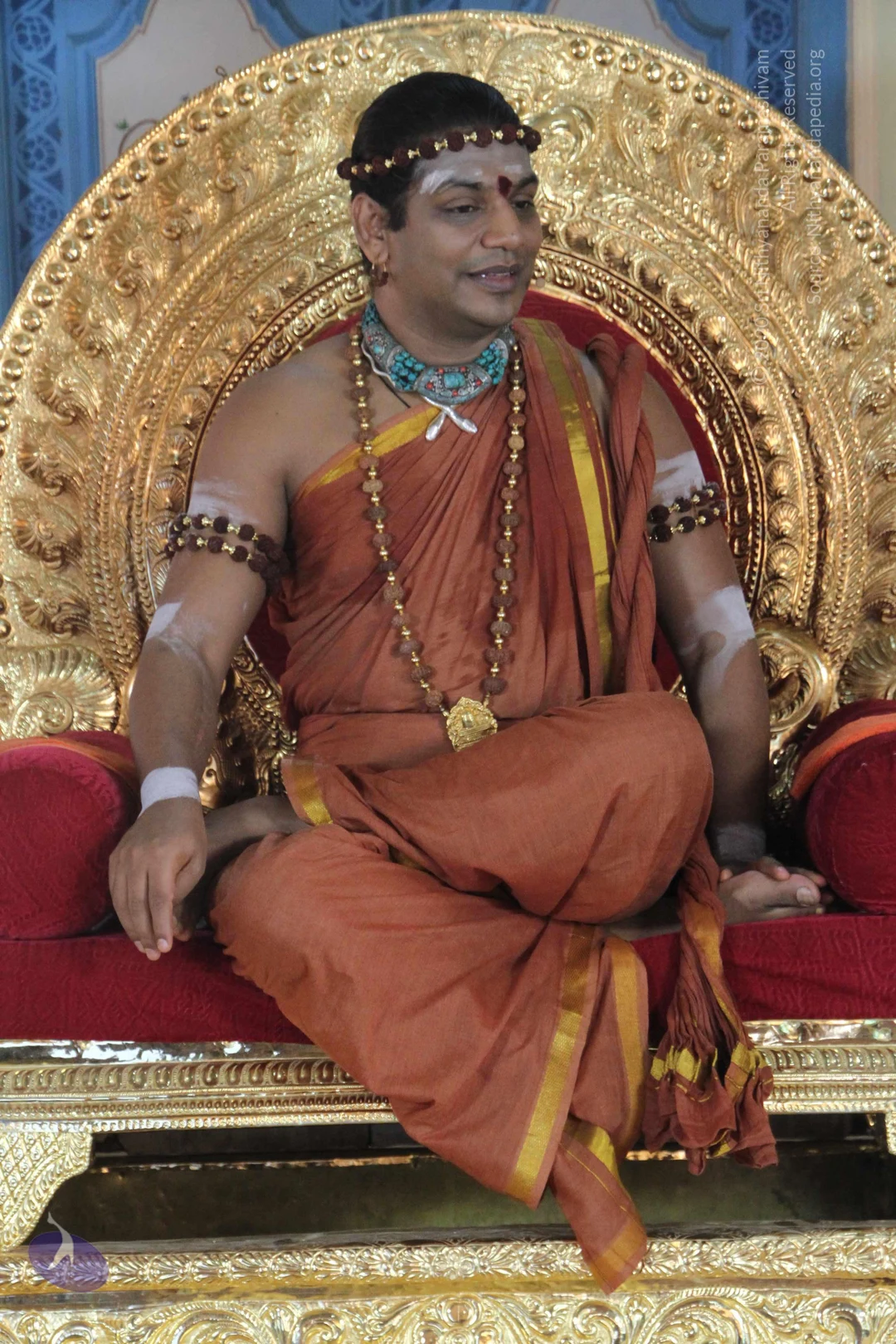
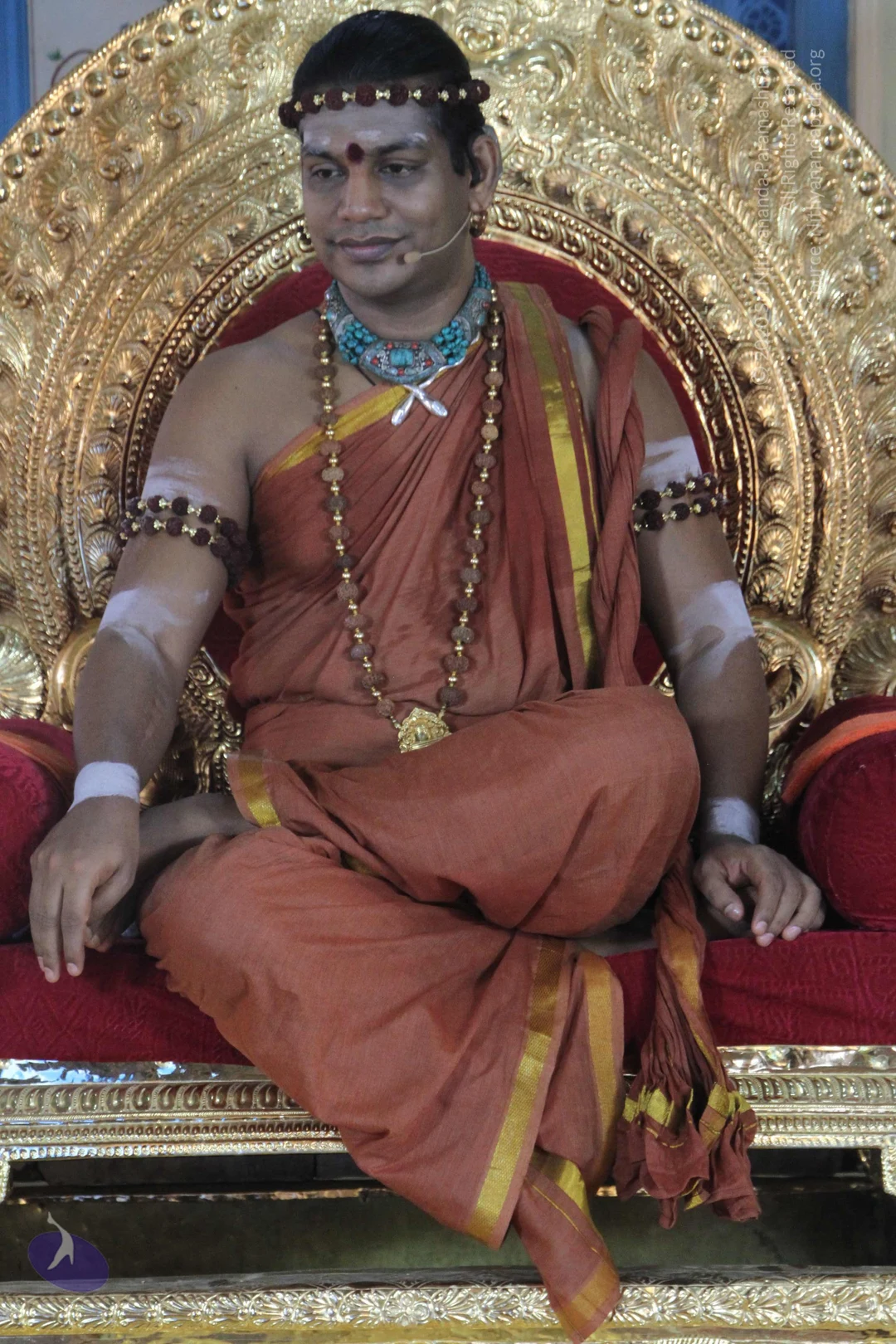
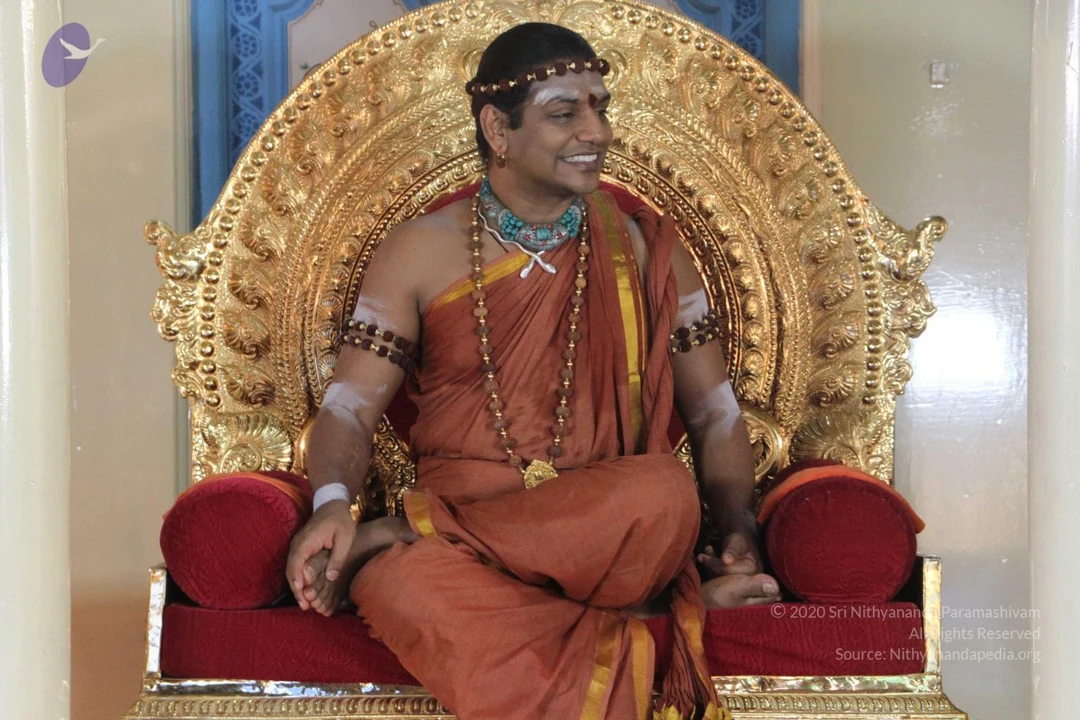
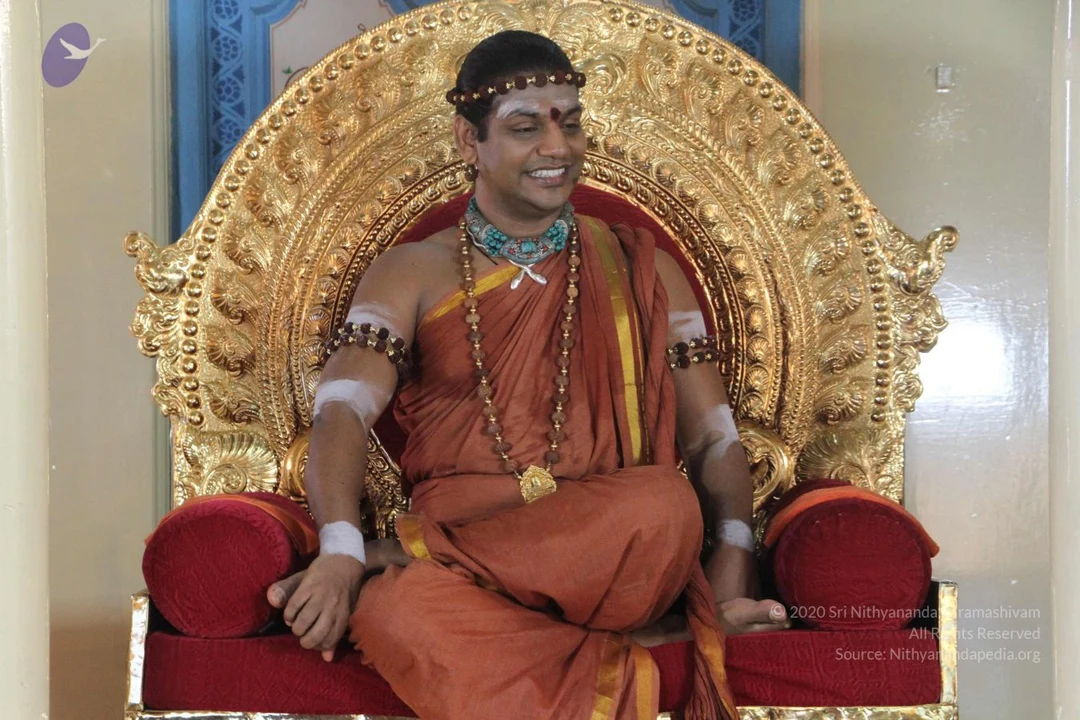
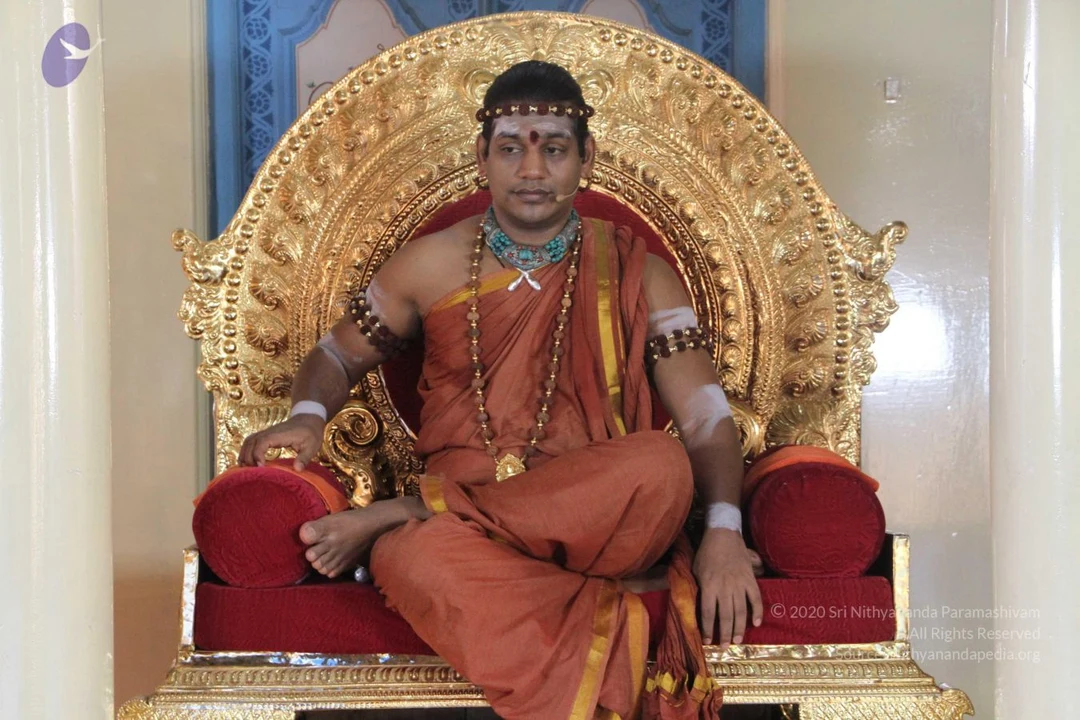
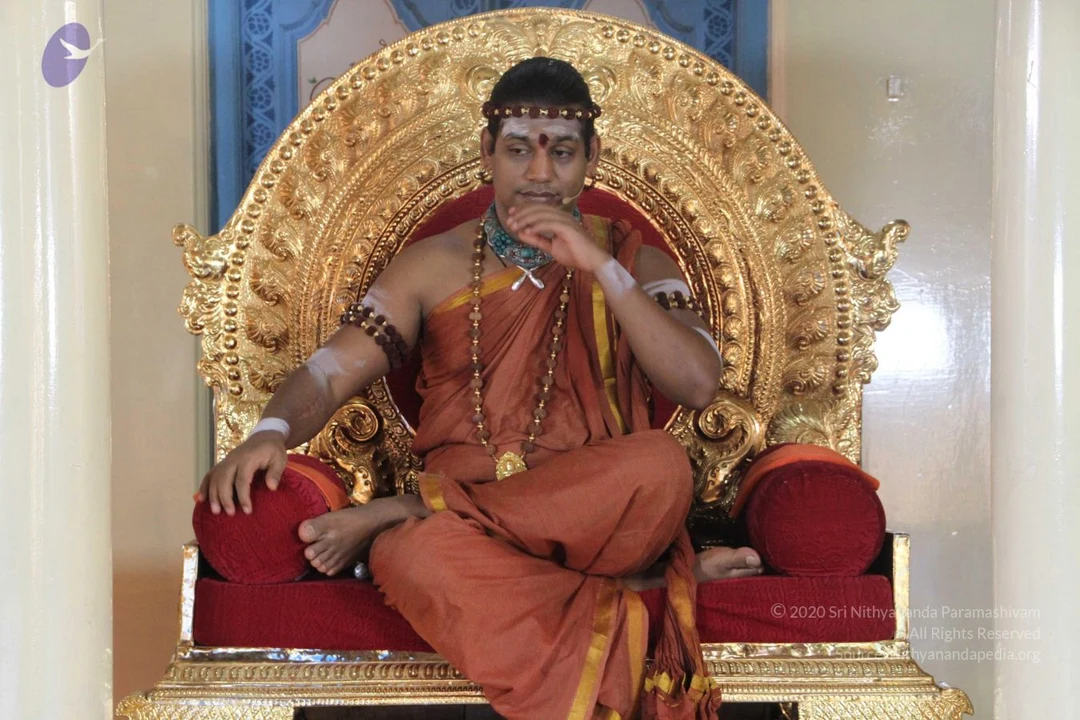
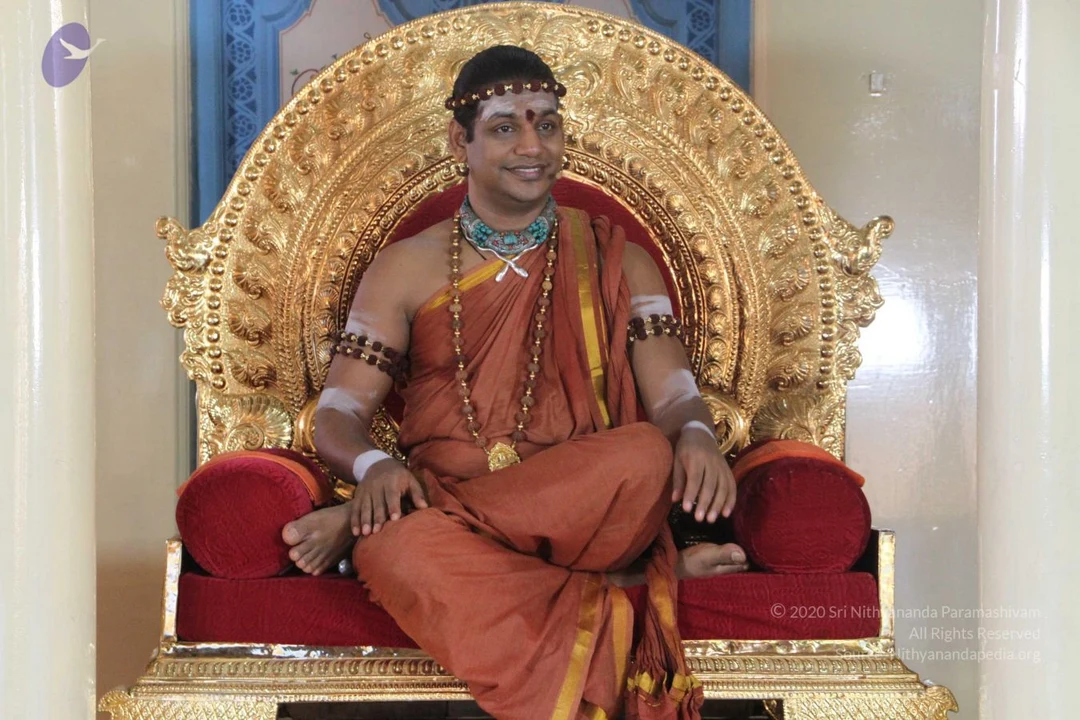
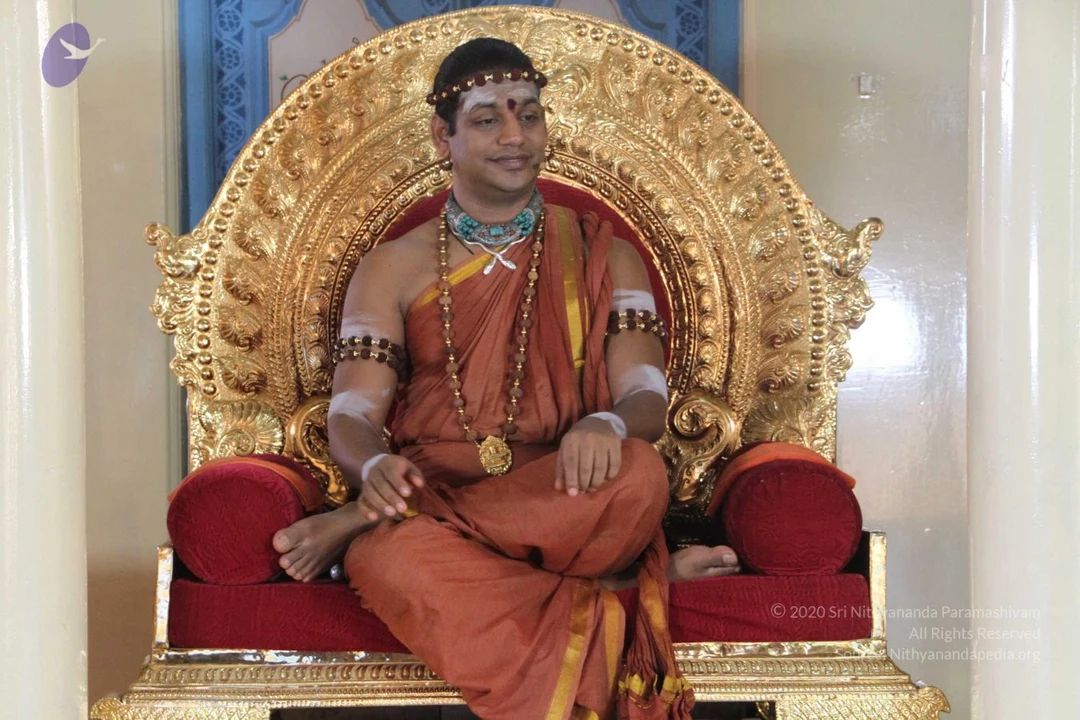
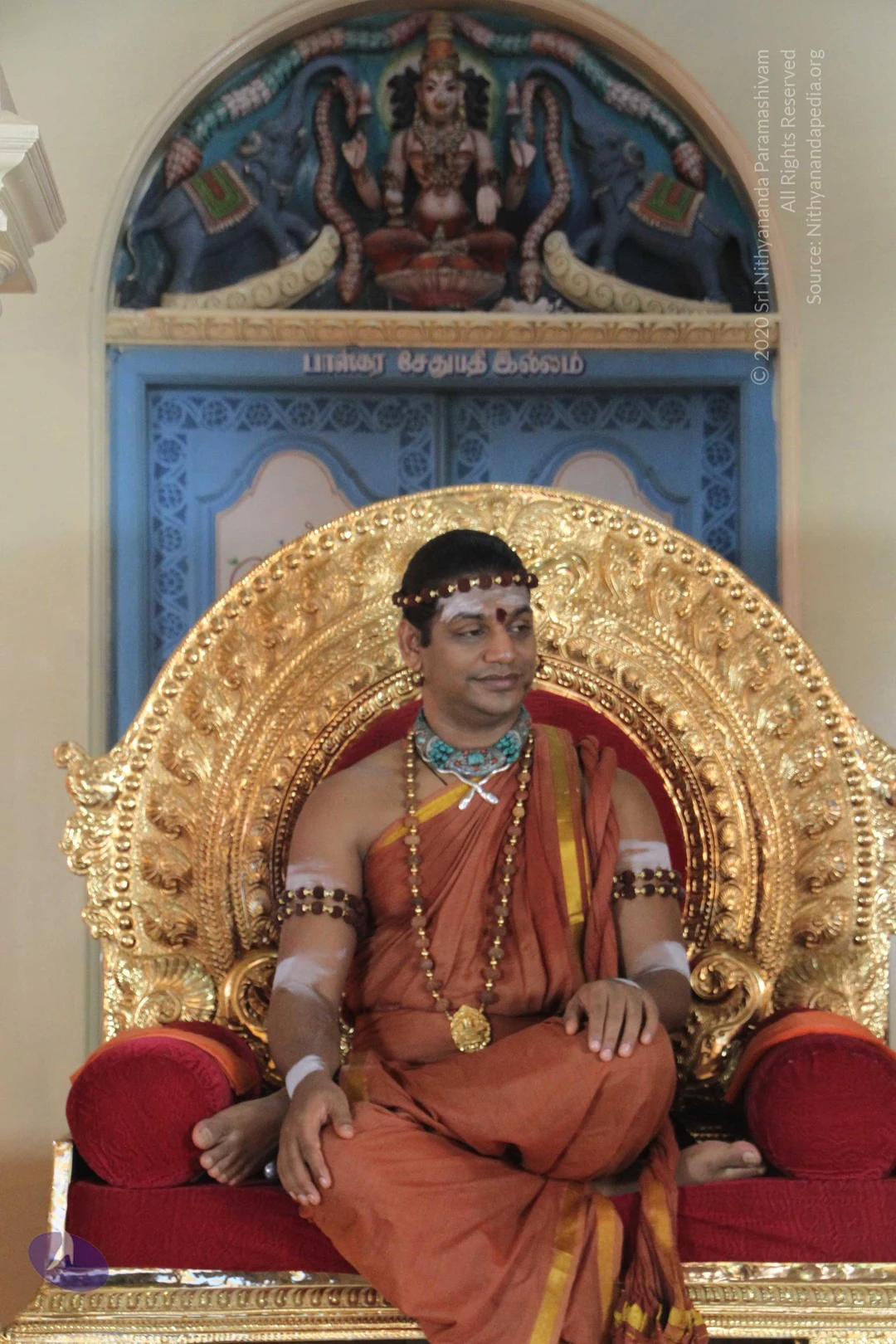
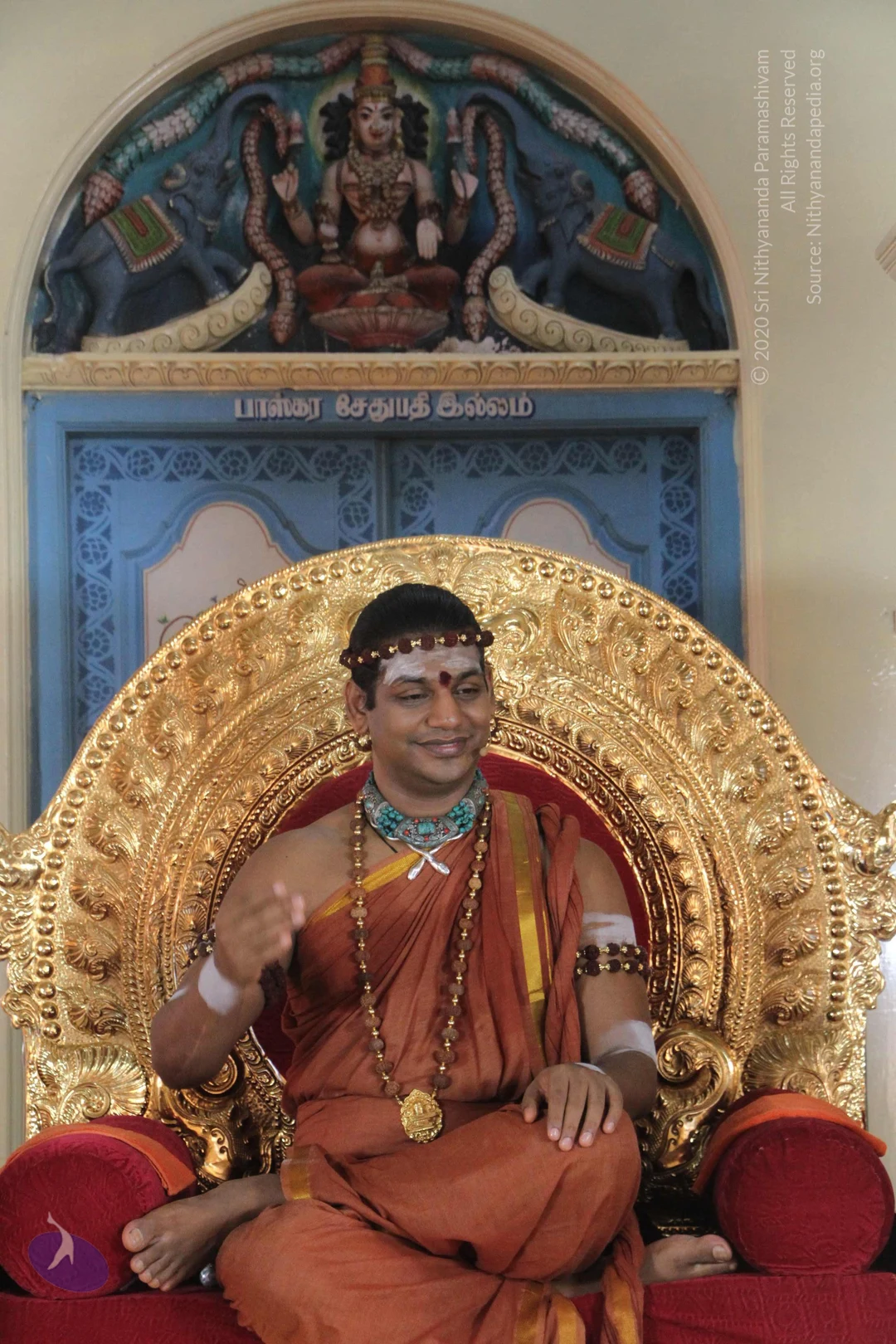
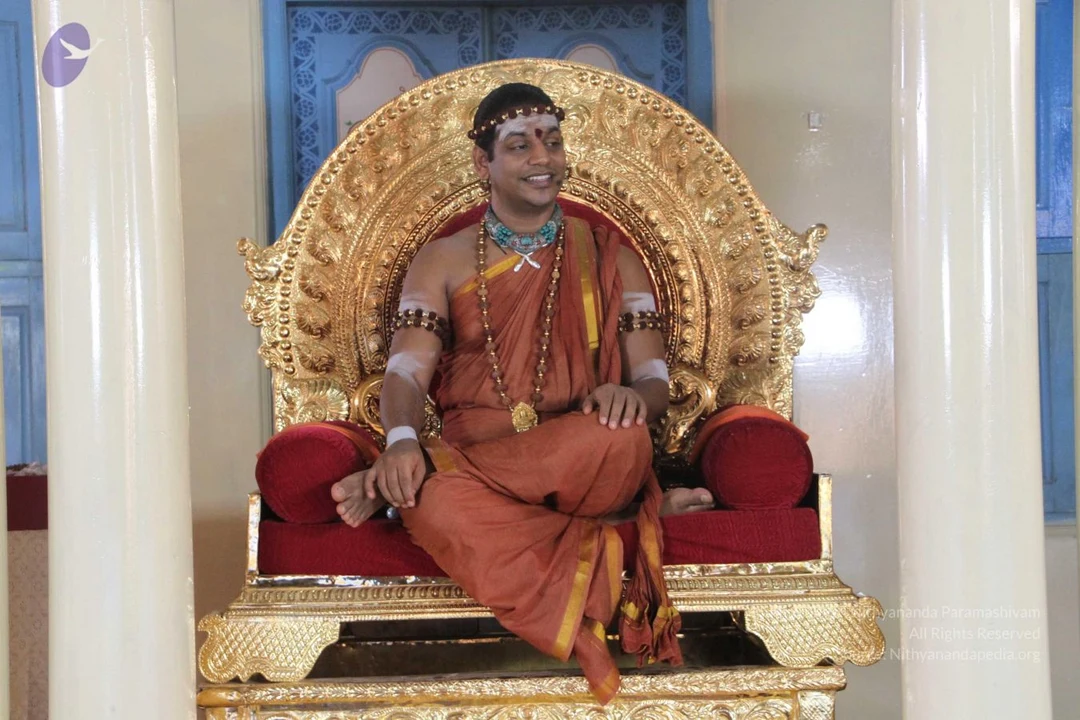
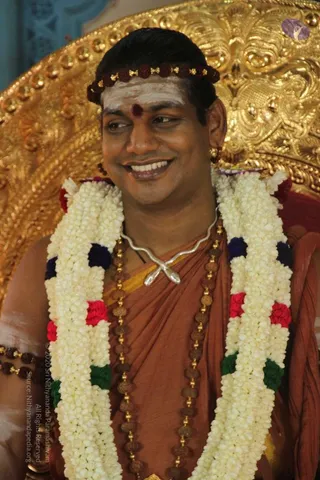
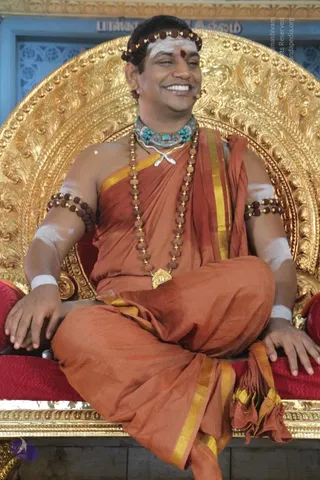
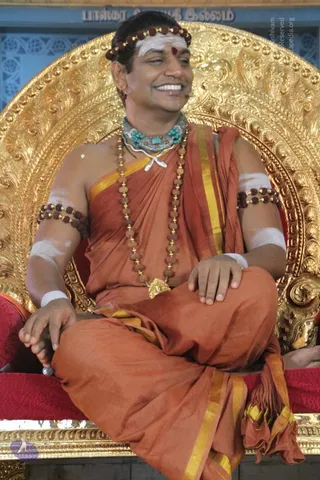
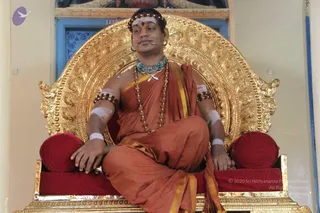
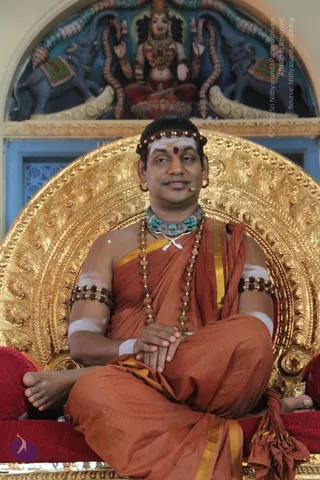
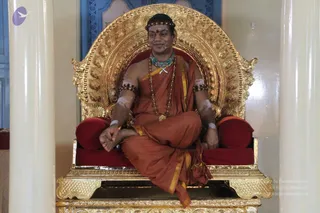
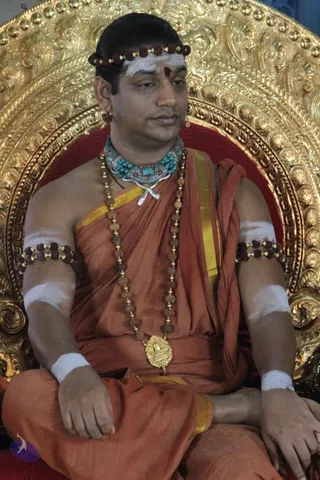
A smiling man in a saffron-orange and gold-bordered dhoti and shawl sits cross-legged on an ornate gold throne with red cushions. He wears a rudraksha headband, a turquoise and silver collar necklace, long rudraksha malas with a gold pendant, and rudraksha armbands. White ash marks cover his forehead and arms, with a red dot between the brows. A microphone is clipped near his face as he laughs. Behind him, a blue wall shows Tamil lettering.A smiling man sits cross-legged on an ornate gold throne with a red cushion. He wears a saffron-orange cloth with gold borders draped over one shoulder, a turquoise and silver necklace, long rudraksha mala beads, a rudraksha crown around his head, and rudraksha bands on his upper arms. White vibhuti marks his forehead and arms, with a red kumkum dot between his brows. A red-and-blue sign with Tamil script is visible behind him. The chair is an elaborate gilded peetha, and the figure has distinctive long rudraksha adornments consistent with a person seated in a teaching setting.A man sits on an ornate gold throne with a deep gold-carved back and red cushioned armrests and seat. He wears a saffron-orange robe with gold borders, a rudraksha mala draped across the chest, a turquoise and gold ceremonial necklace, and a crown-like headband with a red bindi and white vibhuti on the forehead. Rudraksha bands are on his upper arms and his forearms bear white markings. A small headset microphone is visible near his ear. Behind him is a blue-framed doorway beneath a painted deity panel. a person seated on the throne, with saffron robes, rudraksha malas and a crowned headband, giving a discourse.A man seated cross-legged on an ornate gold throne with a red cushion, wearing an orange-saffron dhoti and shawl with gold borders, a rudraksha mala and multiple rudraksha bands on the arms, a turquoise and silver collar necklace, a rudraksha headband and a red bindi with white tilak. He wears a small microphone and speaks while his hands rest in his lap. Above him, a painted arched panel shows a multi-armed goddess seated on a lotus between two elephants and rudraksha-entwined serpents. One physical person is visible.A photograph of a seated man in an ornate gilded throne with red cushions, cross-legged, wearing a rust-orange draped garment with gold border, a rudraksha mala and a teal beaded necklace, a beaded headband and a red bindi. White ash marks appear on his arms and chest. Gold-carved arch and white pillars frame the throne, and a blue patterned wall is behind him. A small purple logo appears at upper left.A seated man sits cross-legged on an ornate gilded throne with a large golden arched back carved with floral and scrolled relief, cushioned in red velvet. He wears an orange-saffron dhoti and shawl with gold borders, a red-and-gold fringed garment, a multi-strand rudraksha mala, a large ceremonial gold pendant and turquoise-and-white beaded collar, a dark headband, and a red bindi. White ash markings appear on his arms and forehead. He sits in a pillared hall with a blue patterned panel behind him. Swamiji (probable): long dark hair, saffron ochre garments, rudraksha malas and ceremonial gold necklace, seated on a throne, consistent with a Nithyananda Paramashivam discourse setting.

DIAL-THE-AVATAR

4 photosSource gallery
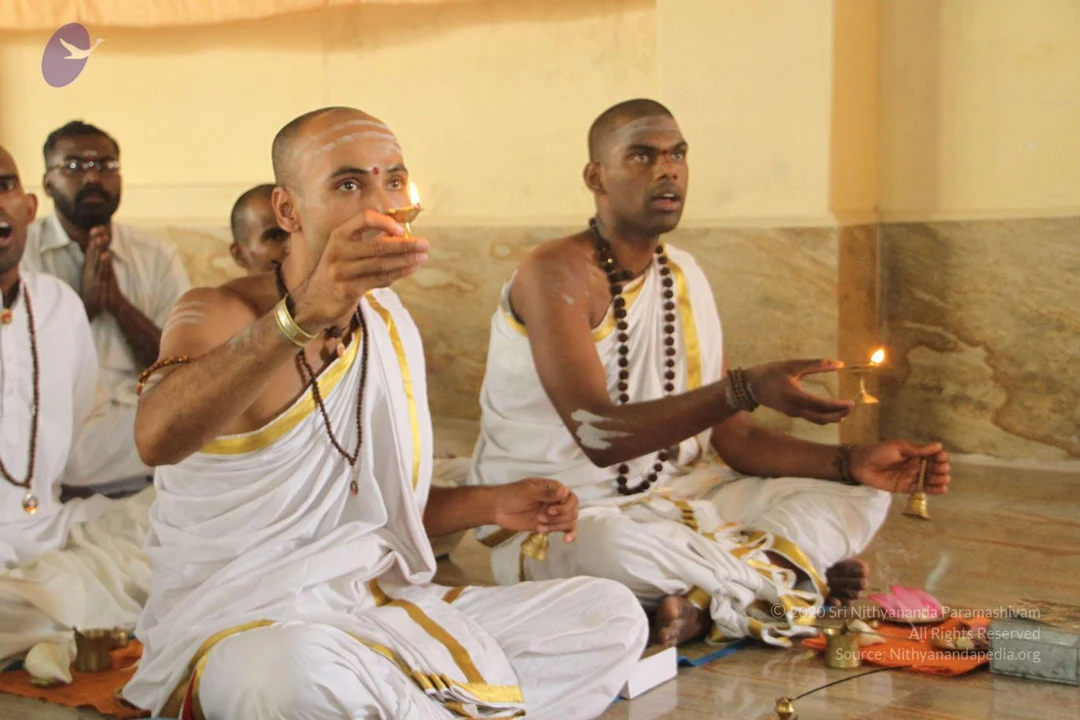
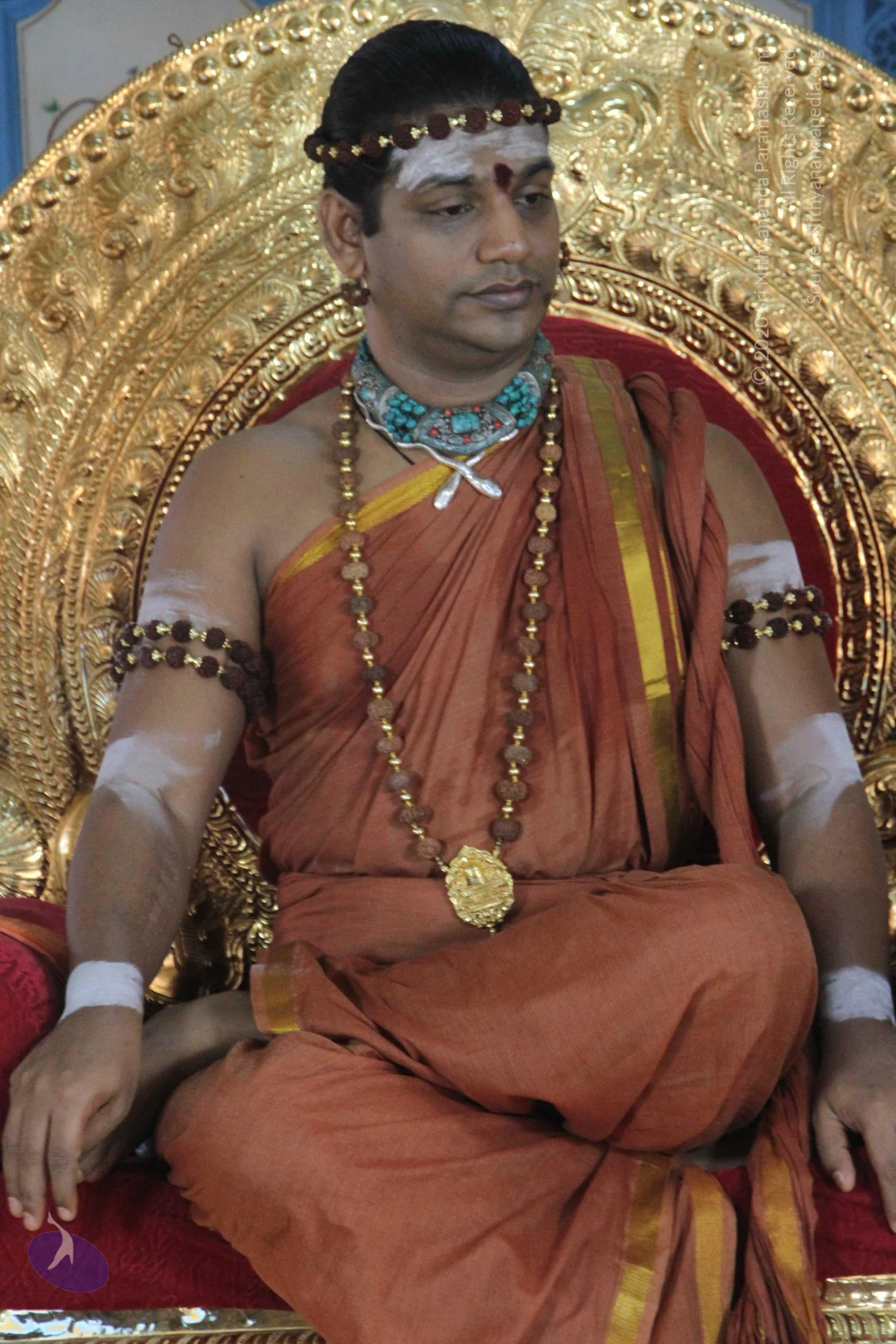
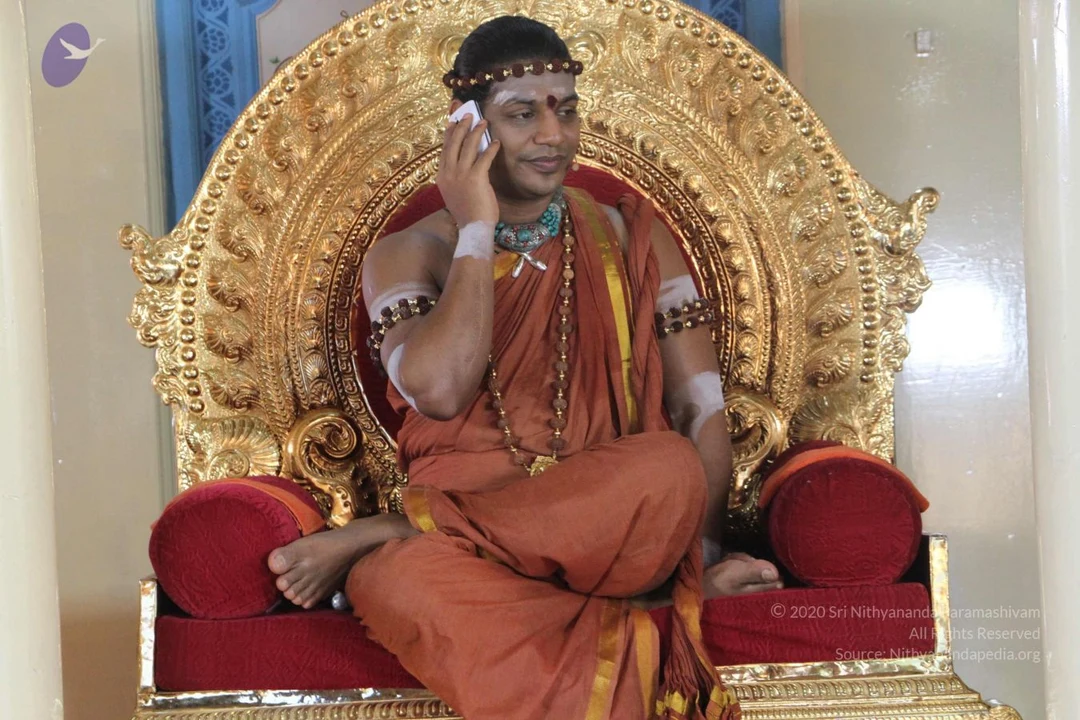
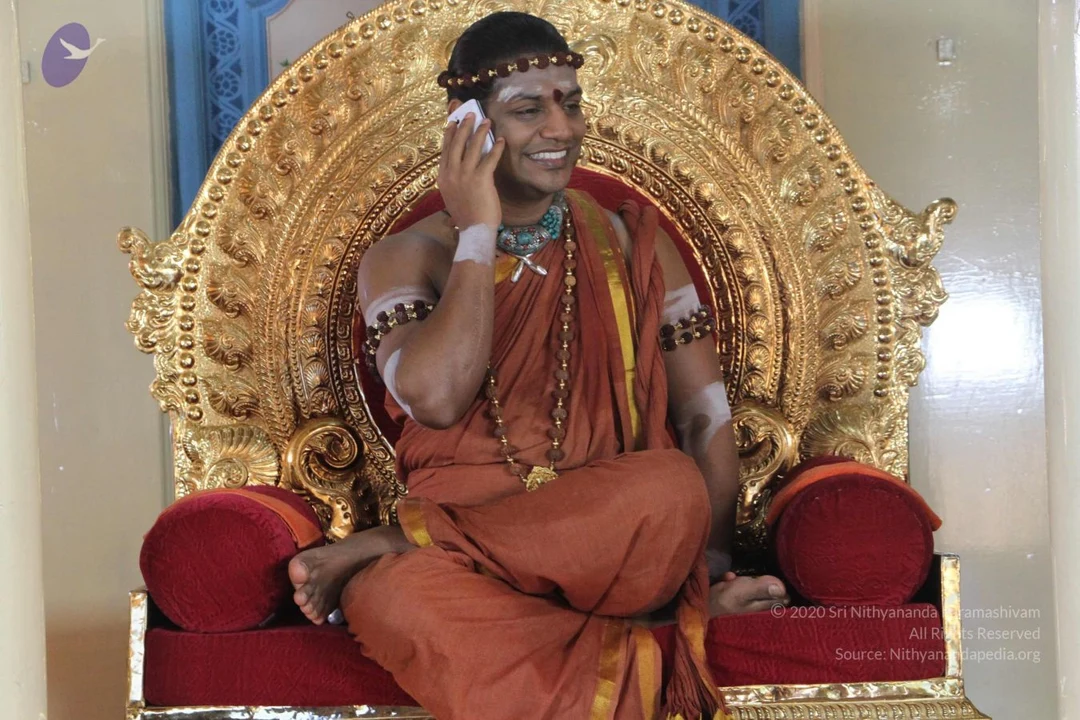
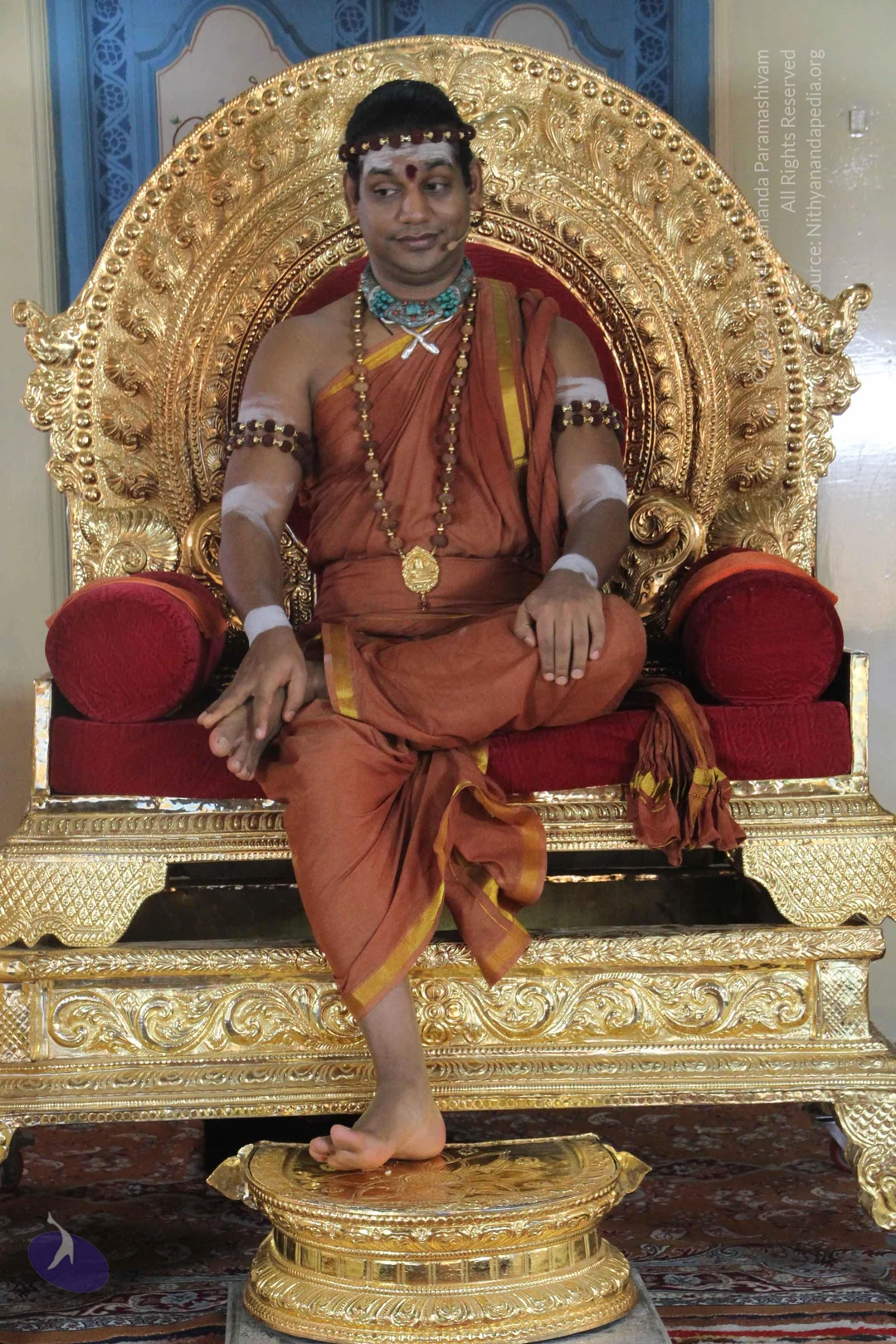
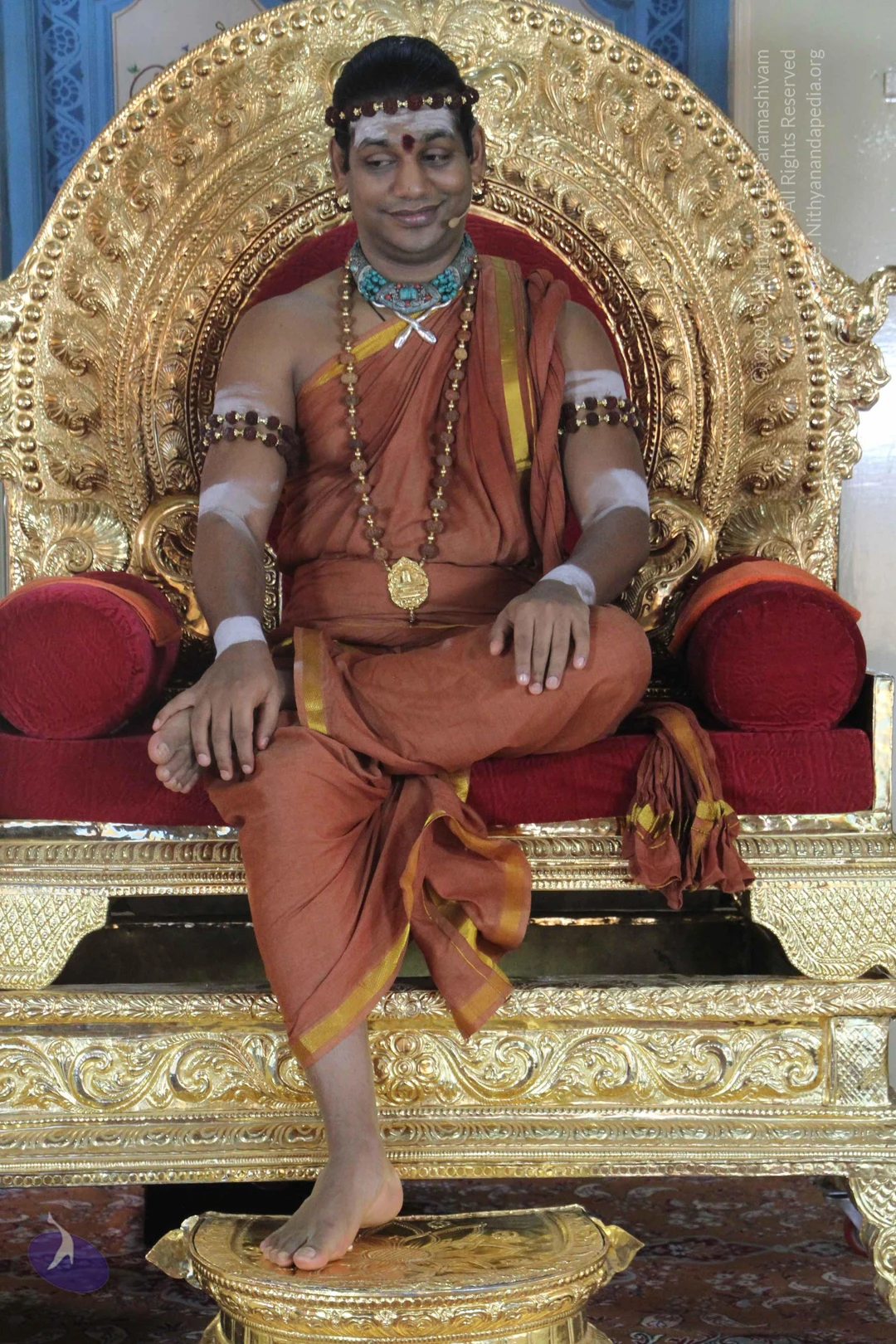
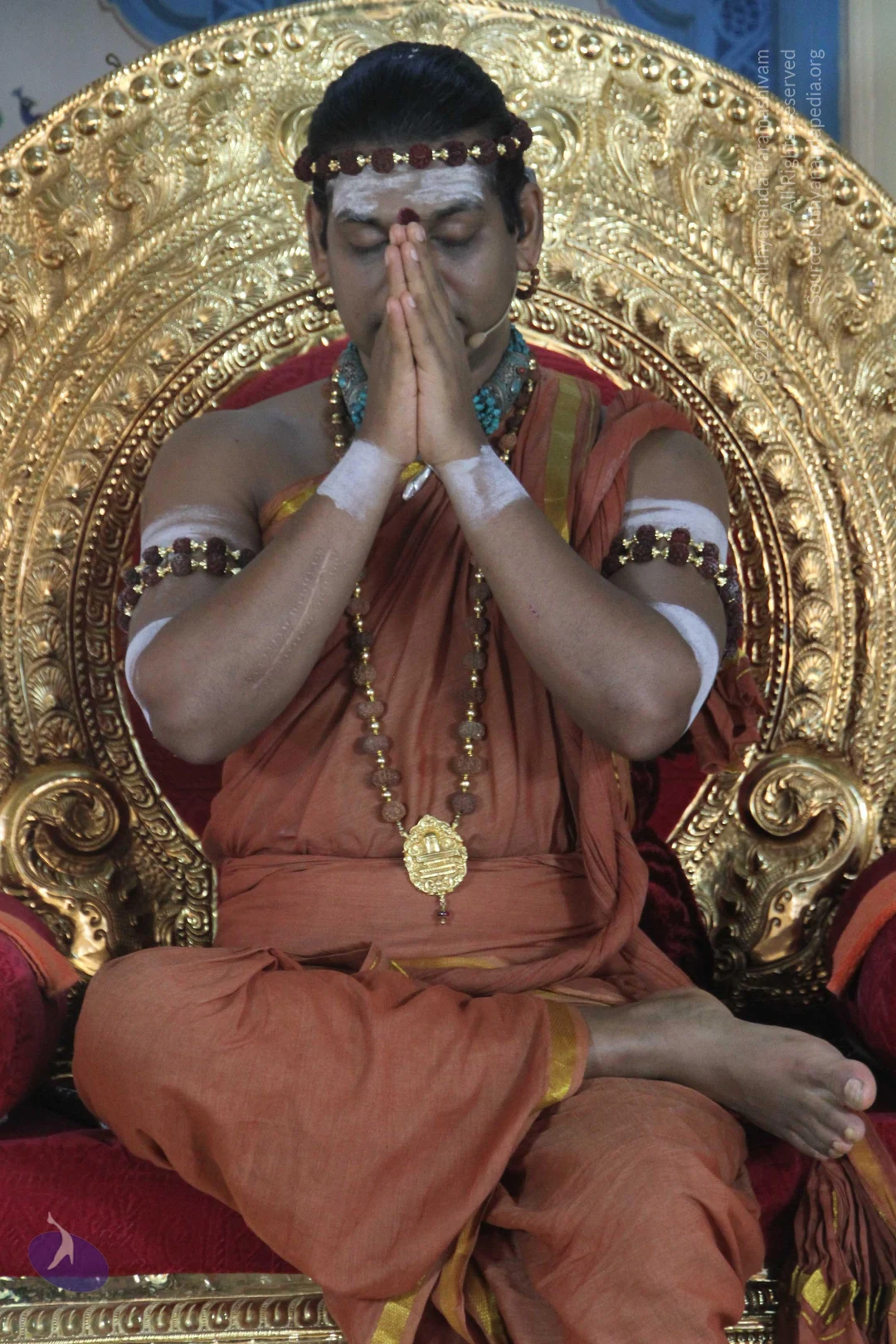
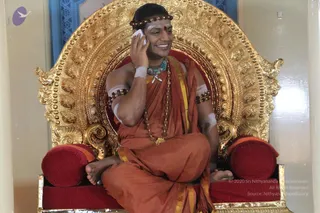
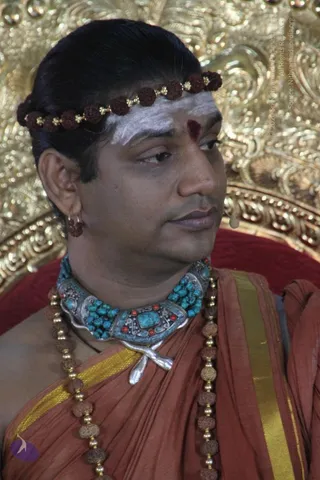
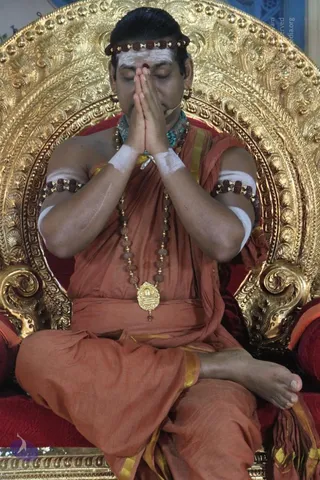
A smiling man sits cross-legged on an ornate gold throne with red cushions, holding a white mobile phone to his right ear. He wears an orange-saffron dhoti and shawl with gold borders, a teal beaded necklace, a long rudraksha mala, a red beaded headband and a red bindi, with white paint on his arms and forehead. The setting is an ashram hall with cream walls and a blue patterned panel behind him.Close-up photo of a man seated before an ornate gold-embossed throne with red upholstery. He wears a rudraksha headband with gold spacers, white horizontal forehead markings with a red bindi, and rudraksha earrings. A multi-strand turquoise and coral necklace with a silver clasp is layered over rudraksha malas with gold beads. He wears an orange-brown shawl with gold borders and looks to one side. A small microphone clip is visible near his cheek. Appearance cues match the page's a person reference (rudraksha malas, ornate jewellery, ceremonial seat), so this is a person in person.A seated man in orange-saffron draped cloth with a gold border sits cross-legged on an ornate gold throne with a red cushion. He wears a rudraksha head band, rudraksha armlets and a long rudraksha mala with a gold pendant, plus a turquoise and silver necklace. White ash marks the forehead and arms, with a red dot between the brows. The image is an appearance-based candidate for a person seated in a teaching posture, and no printed name is visible in the scene.A seated man in saffron-orange robes sits on an ornate gold throne with red cushions, eyes closed and palms pressed together in anjali mudra at his chest. He wears a rudraksha headband, layered rudraksha malas, a gold pendant, a turquoise and silver collar, and white vertical tilak marks on his forehead and upper arms, with rudraksha bands on the arms. A small headset microphone is visible near his ear. The setting appears to be a formal satsang or discourse hall. Based on the page's context and his appearance (long swept-back hair, saffron clothing, rudraksha malas and ceremonial gold necklace), this is a probable Swamiji (Nithyananda Paramashivam) presenting a talk.

SARVA-DARSHAN

9 photosSource gallery
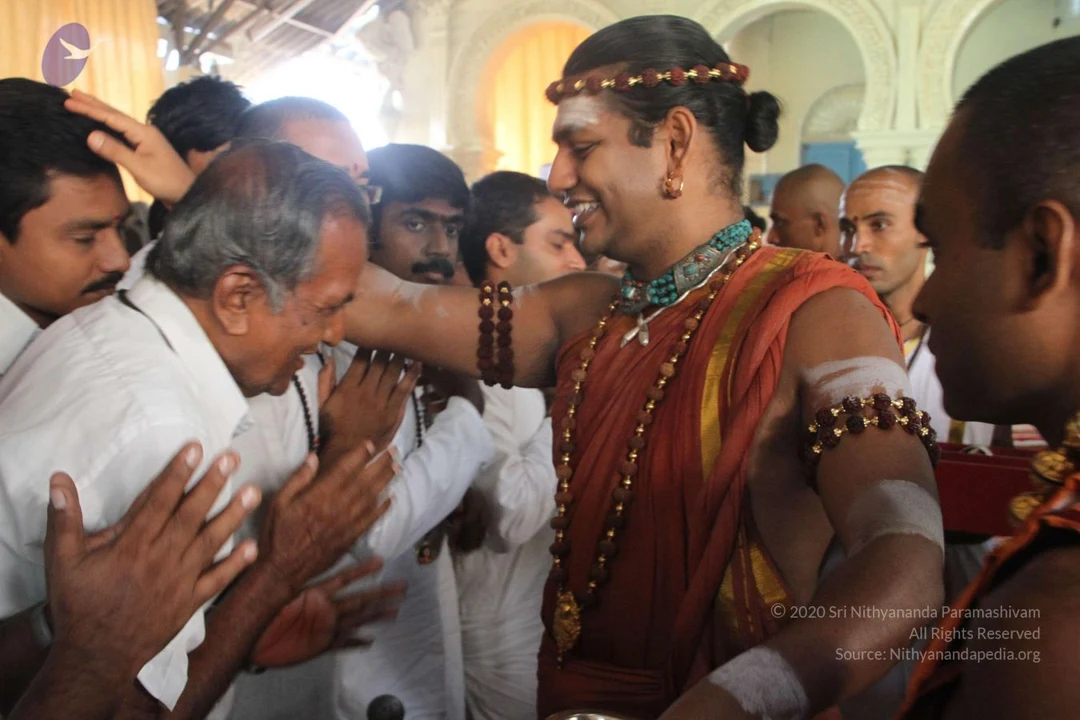
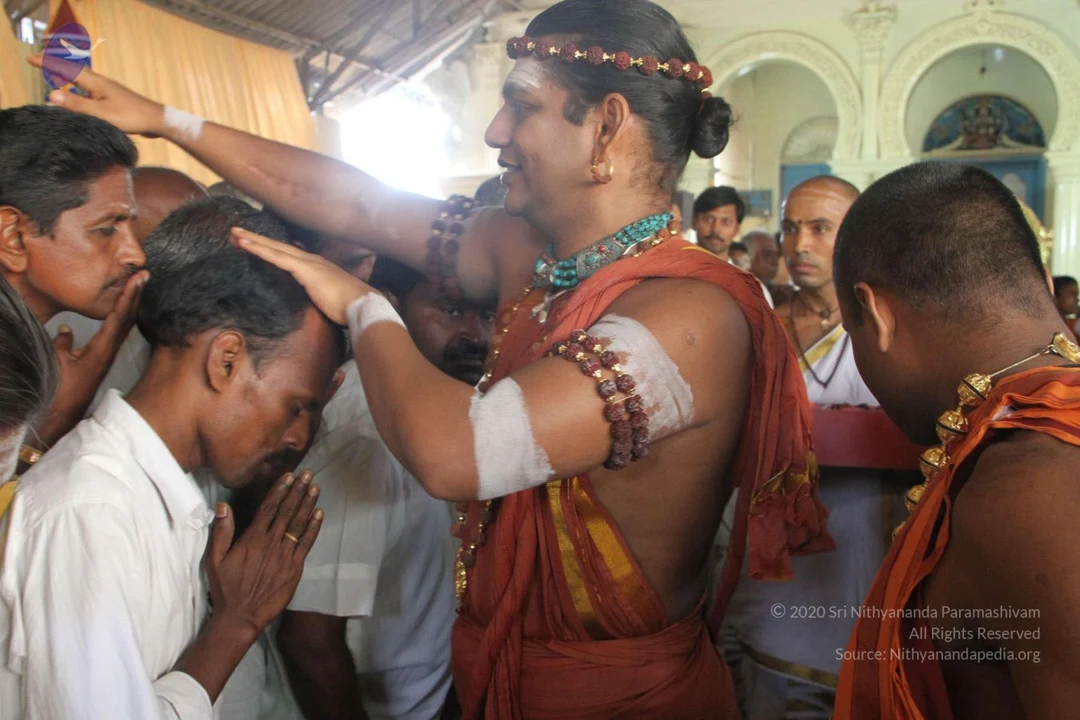
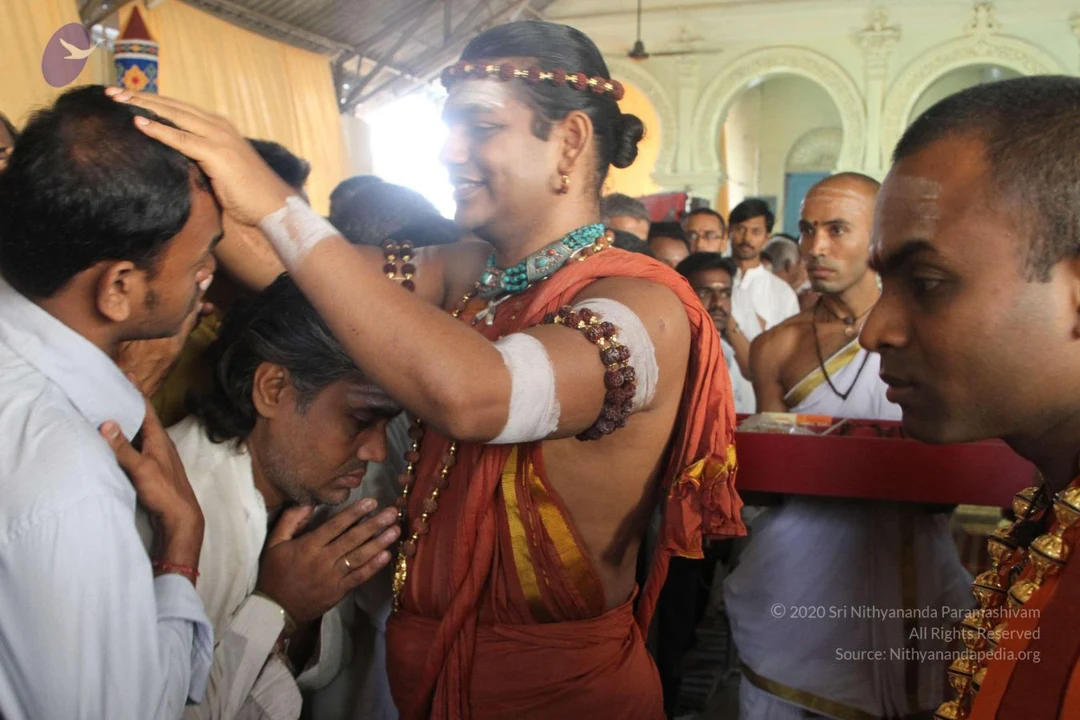
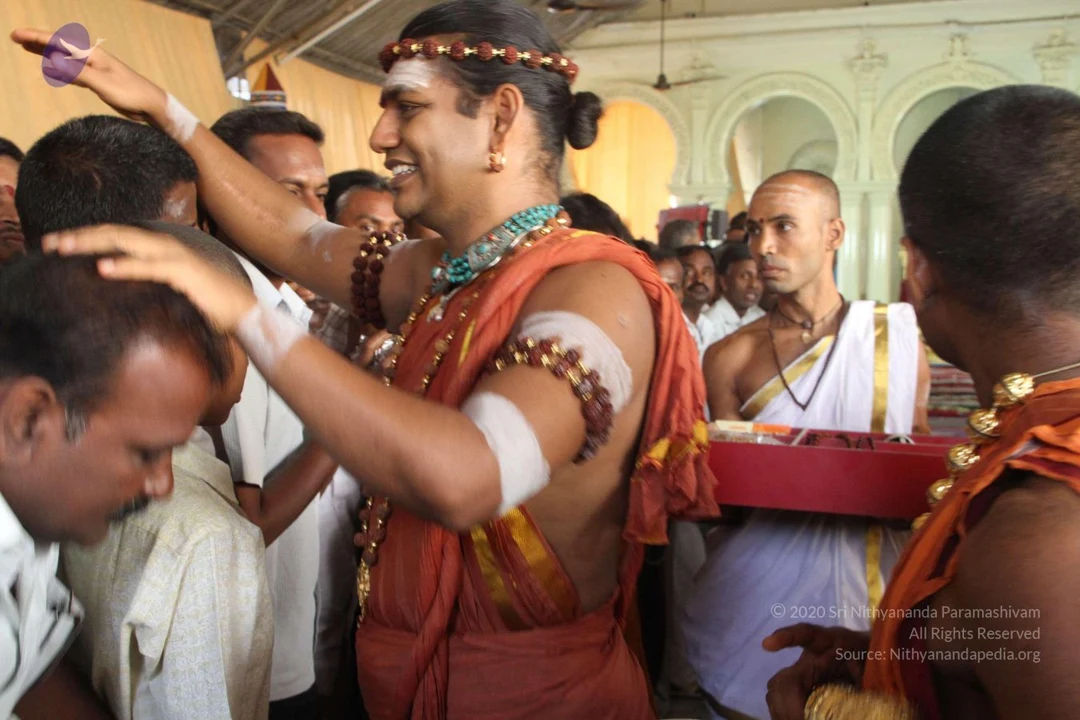
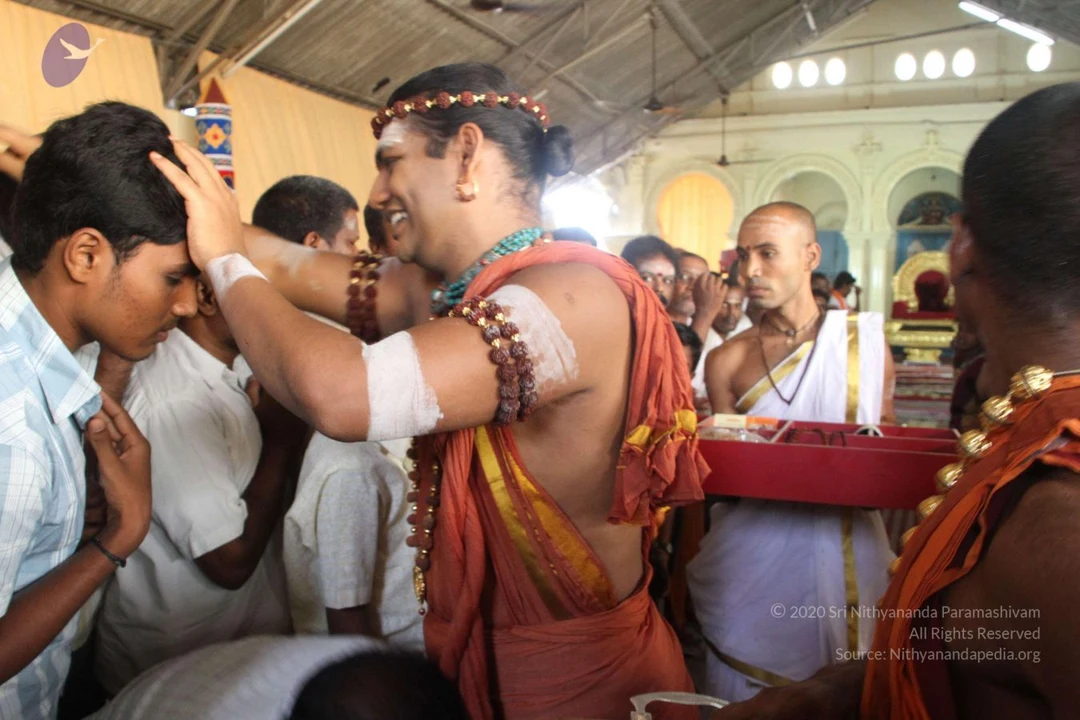
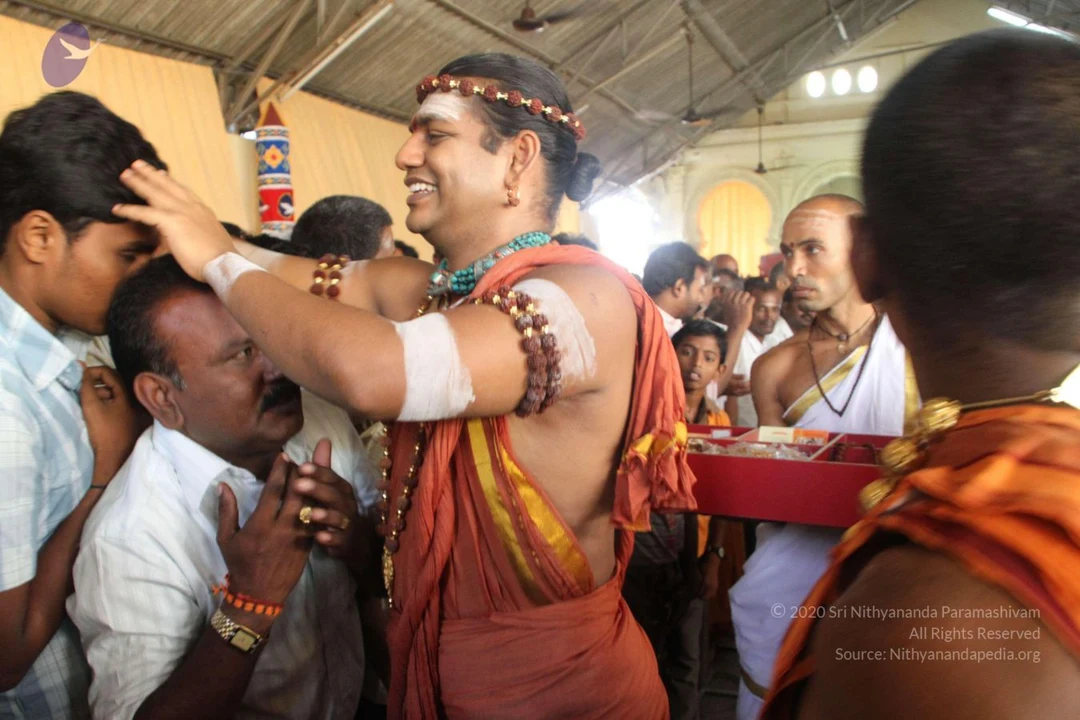
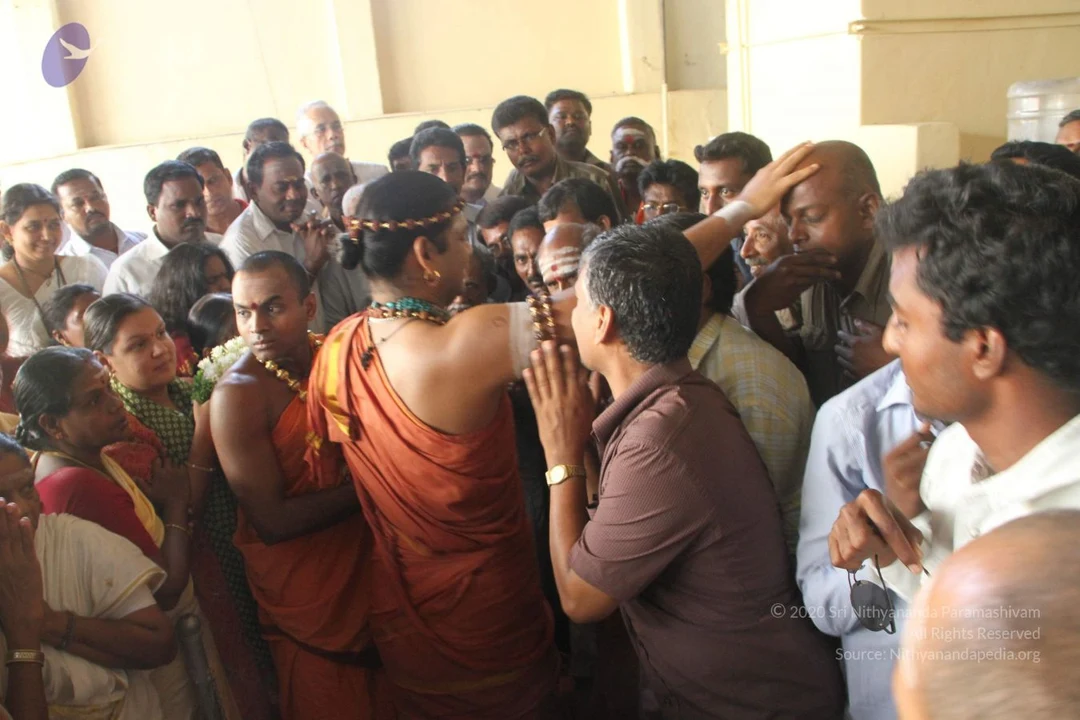
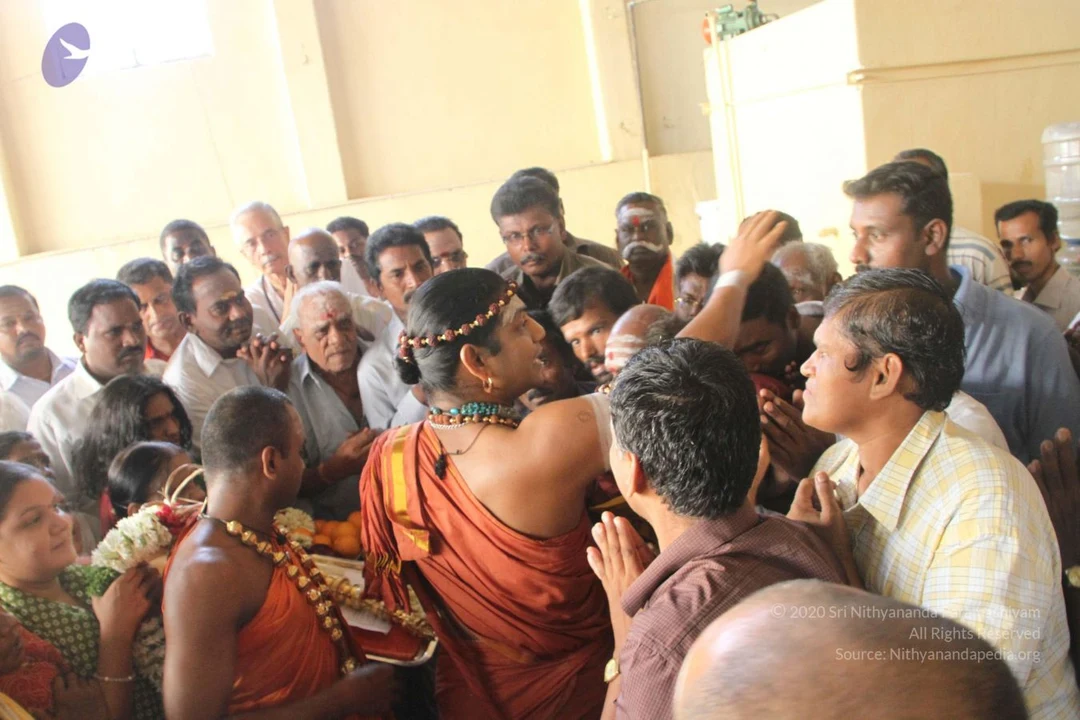
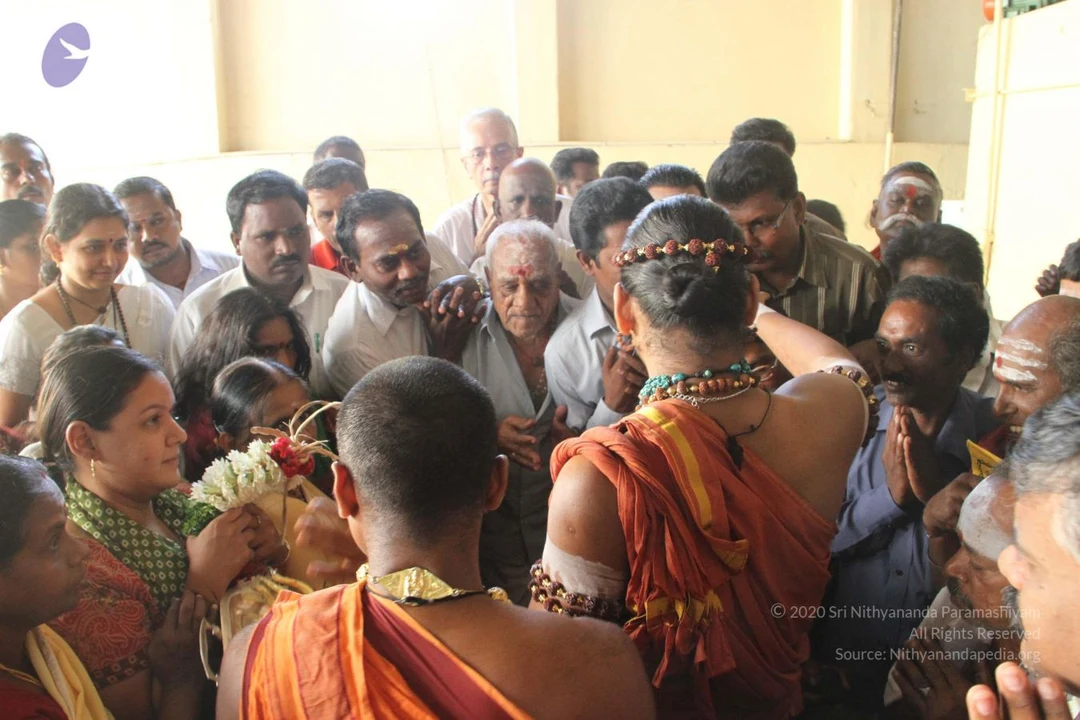
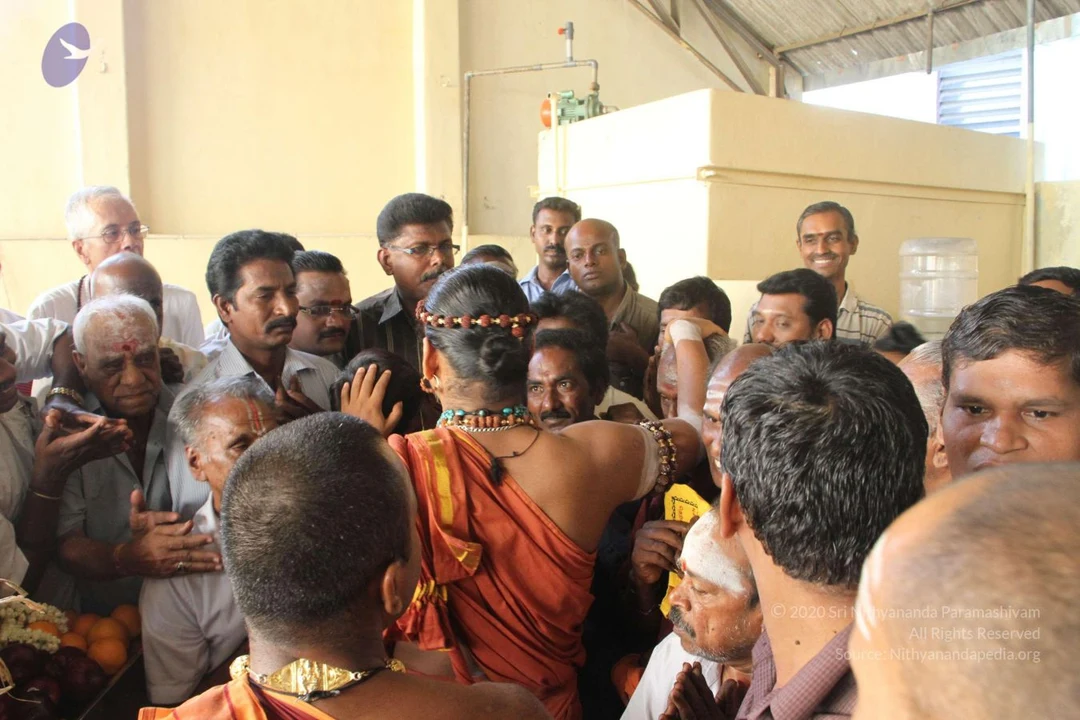
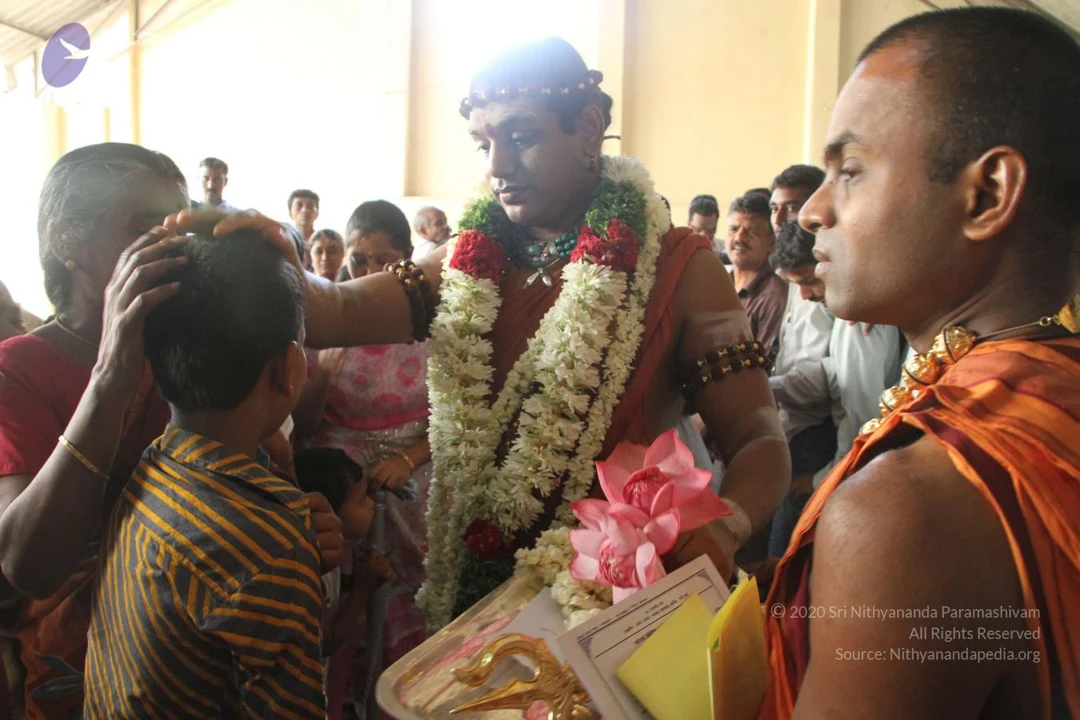
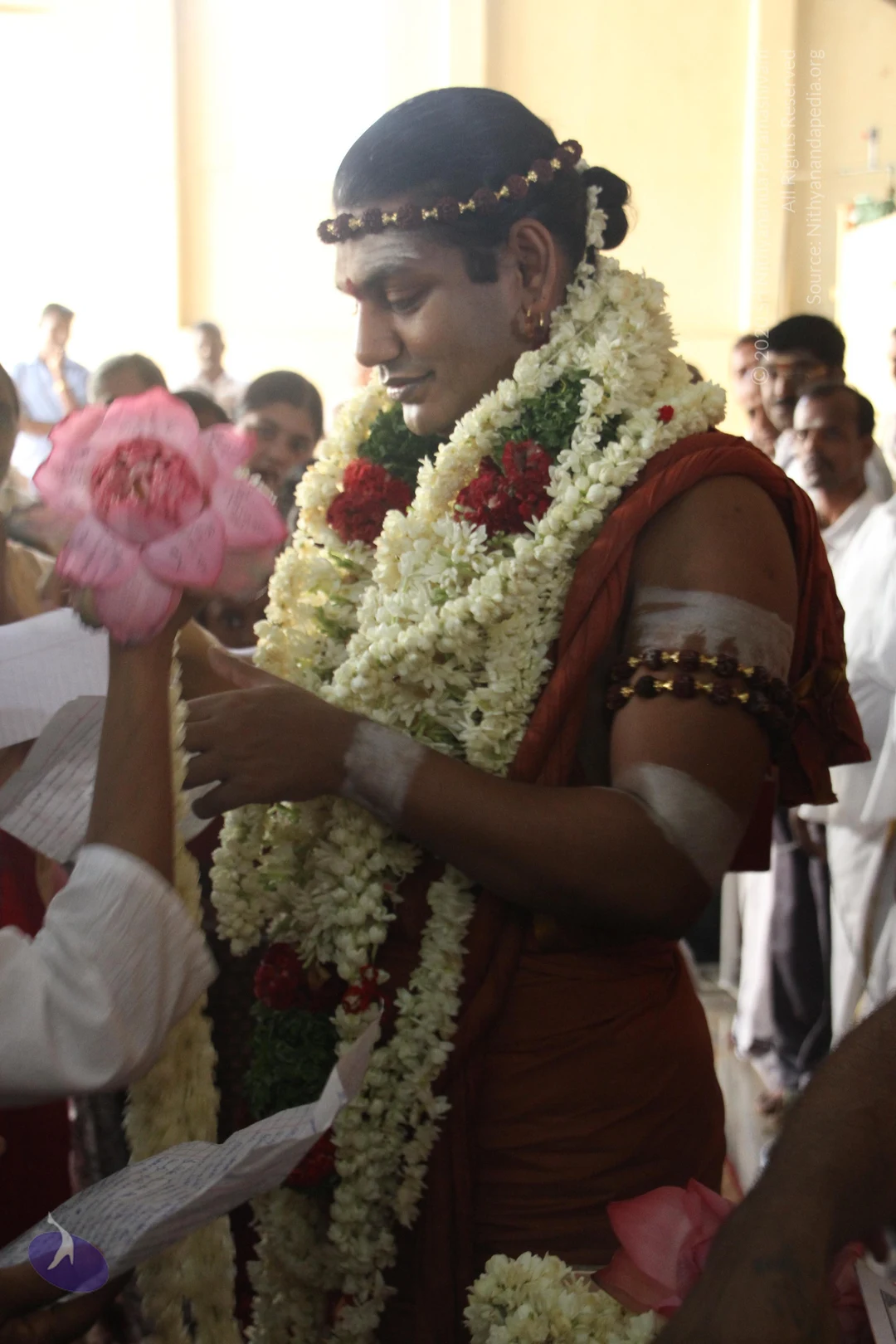
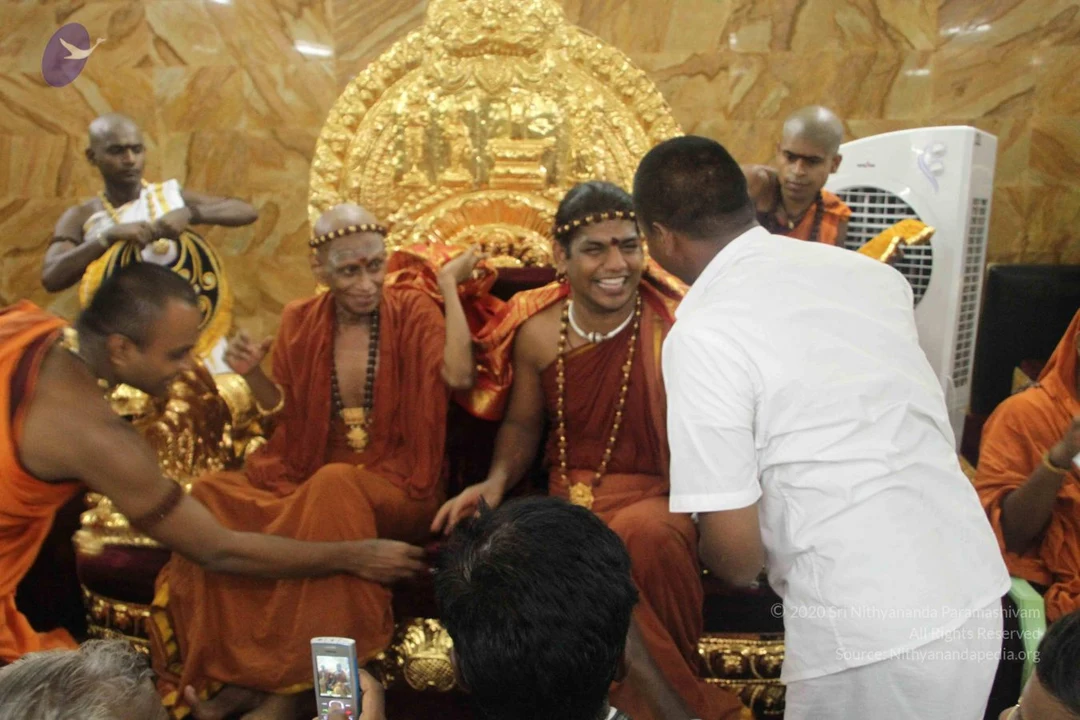
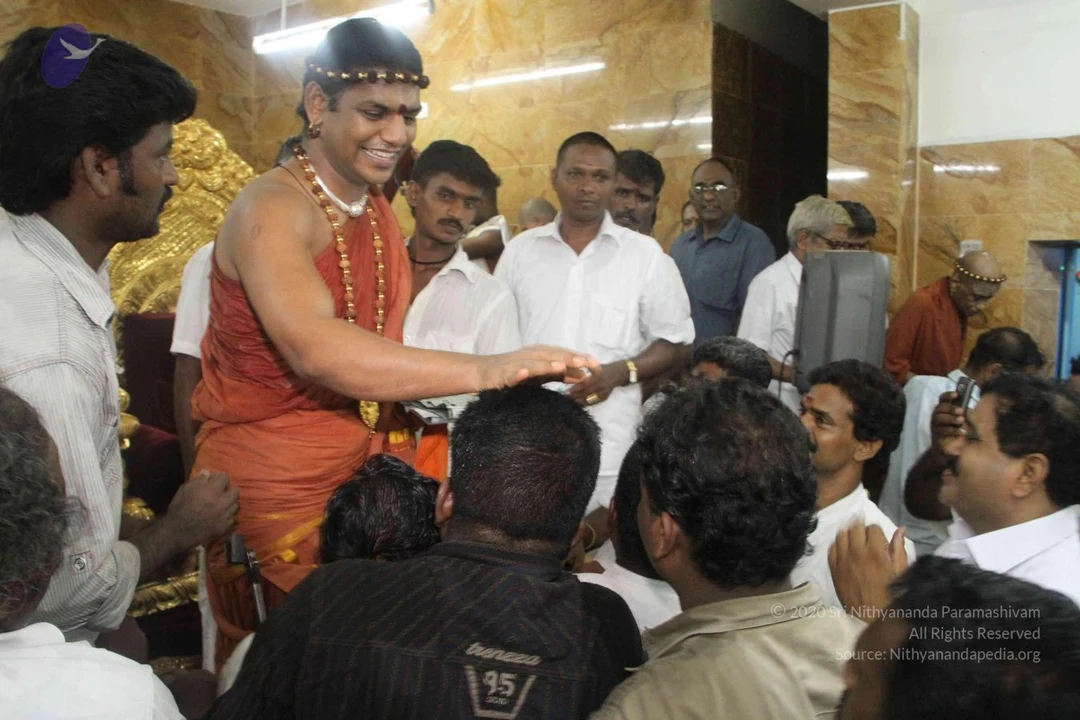
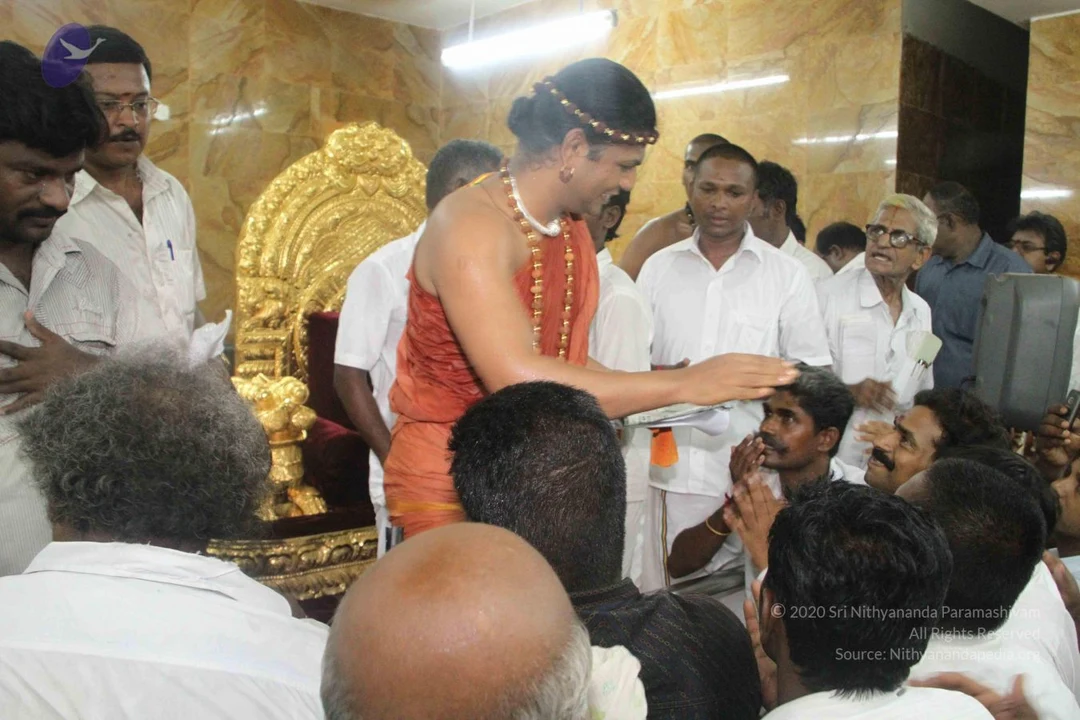
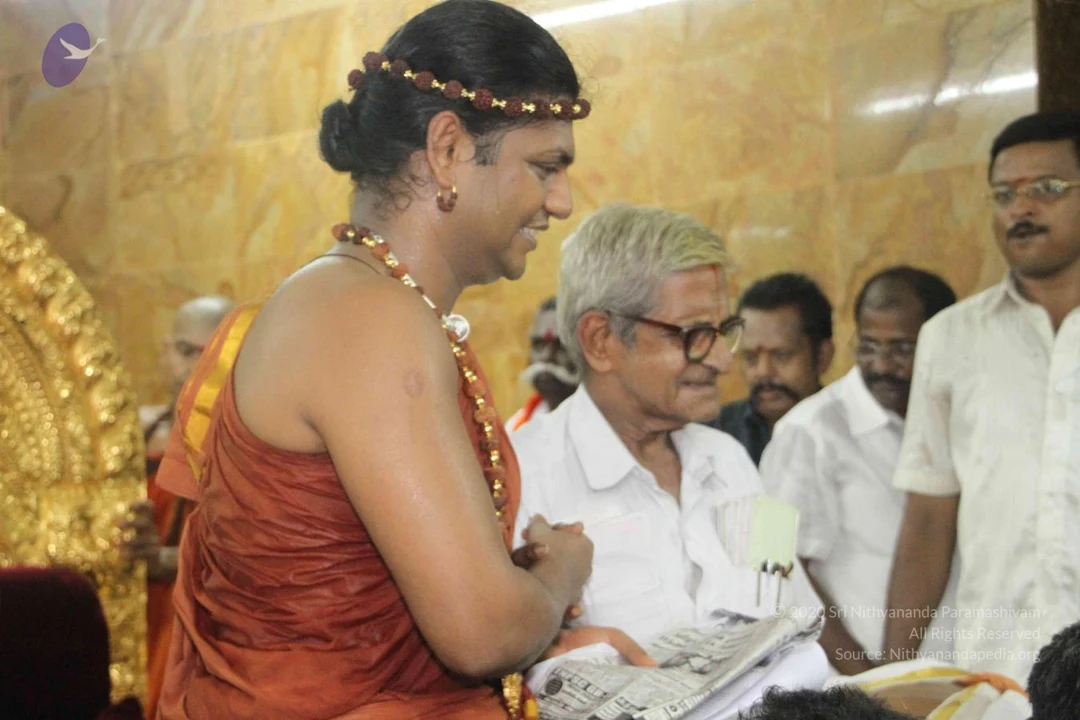
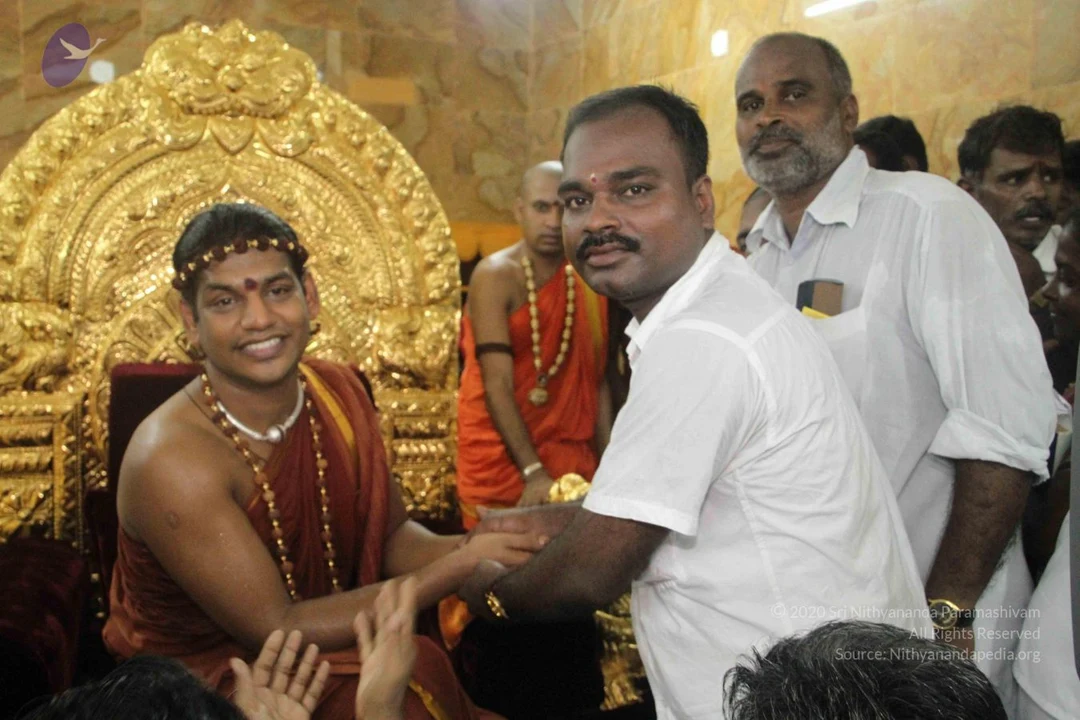
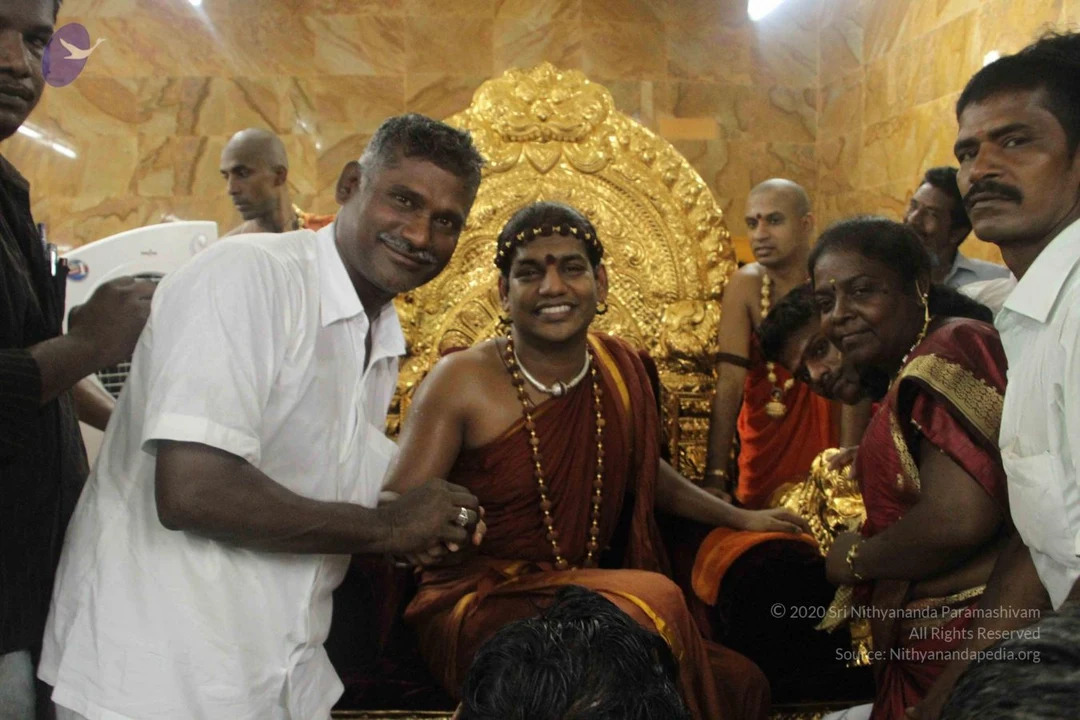
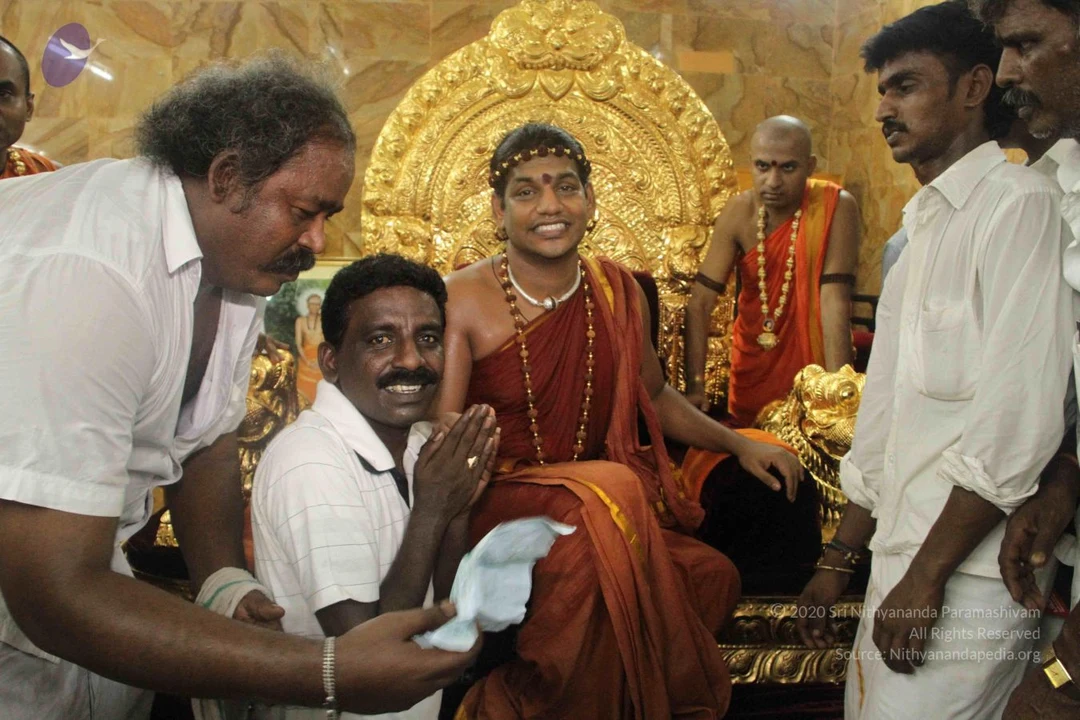
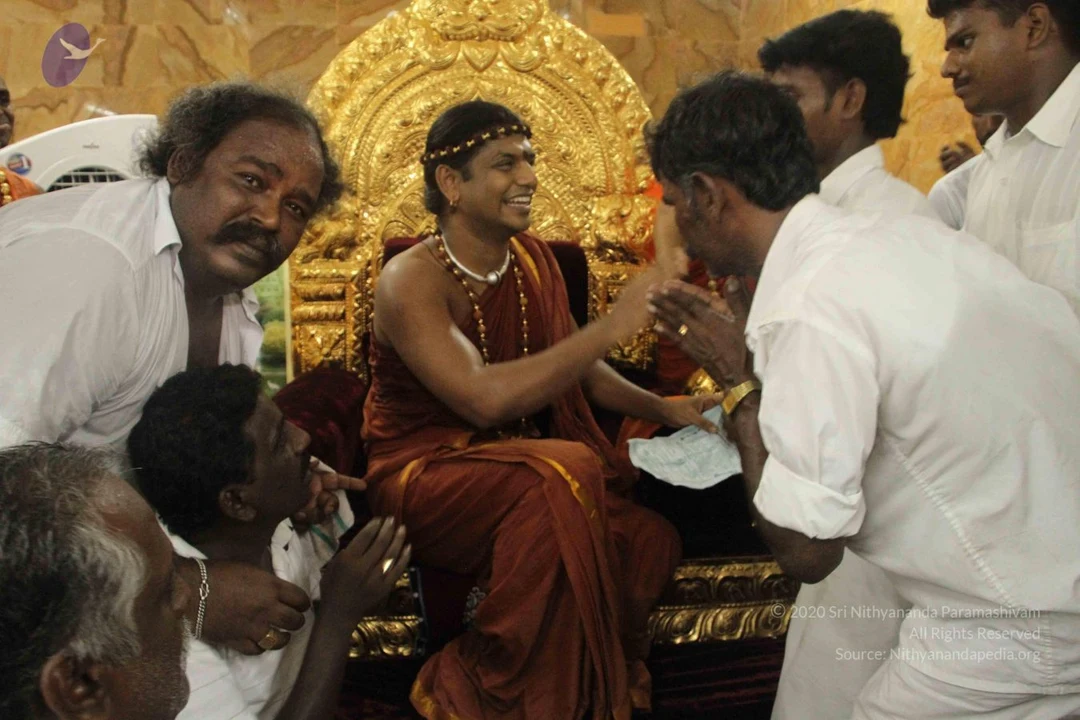
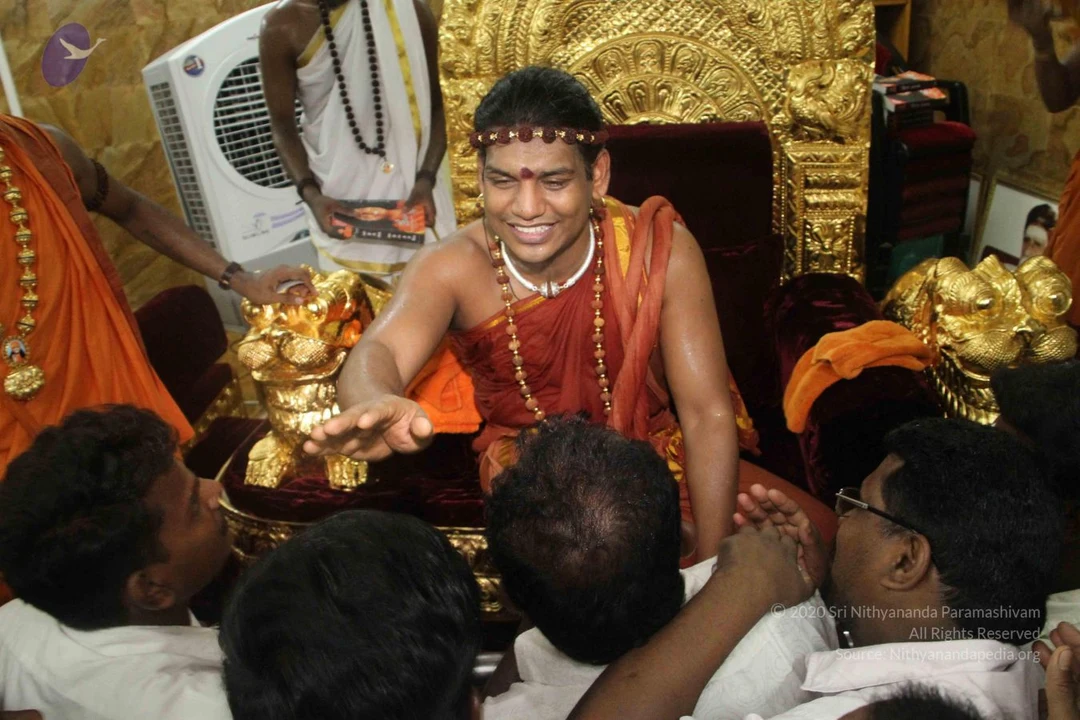
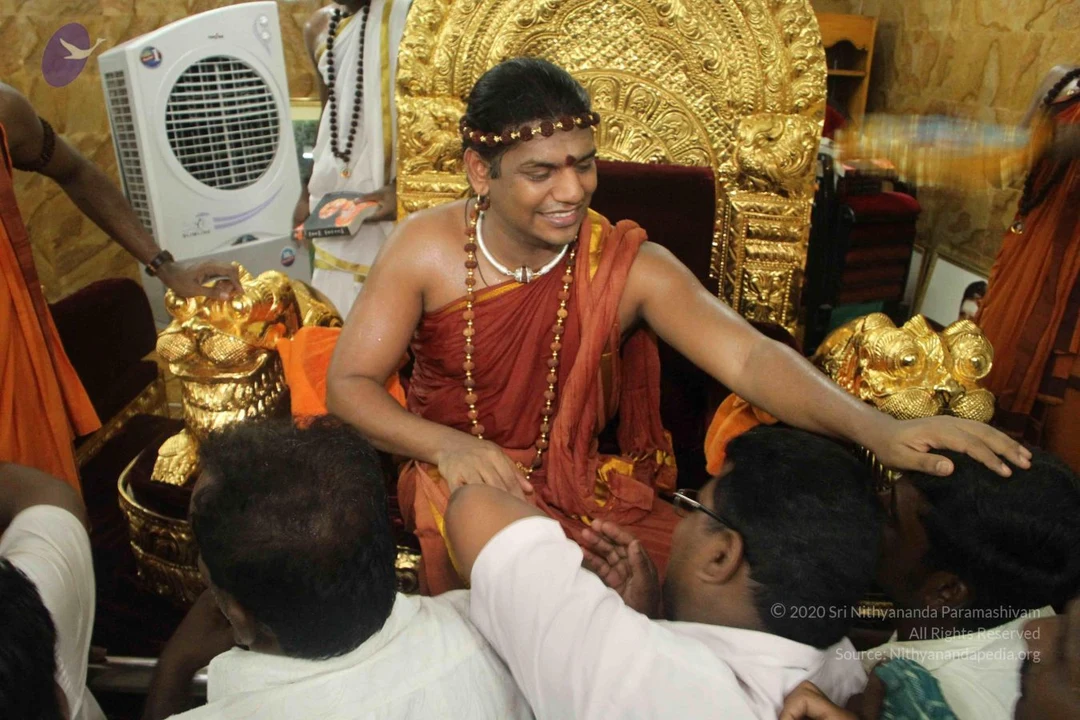
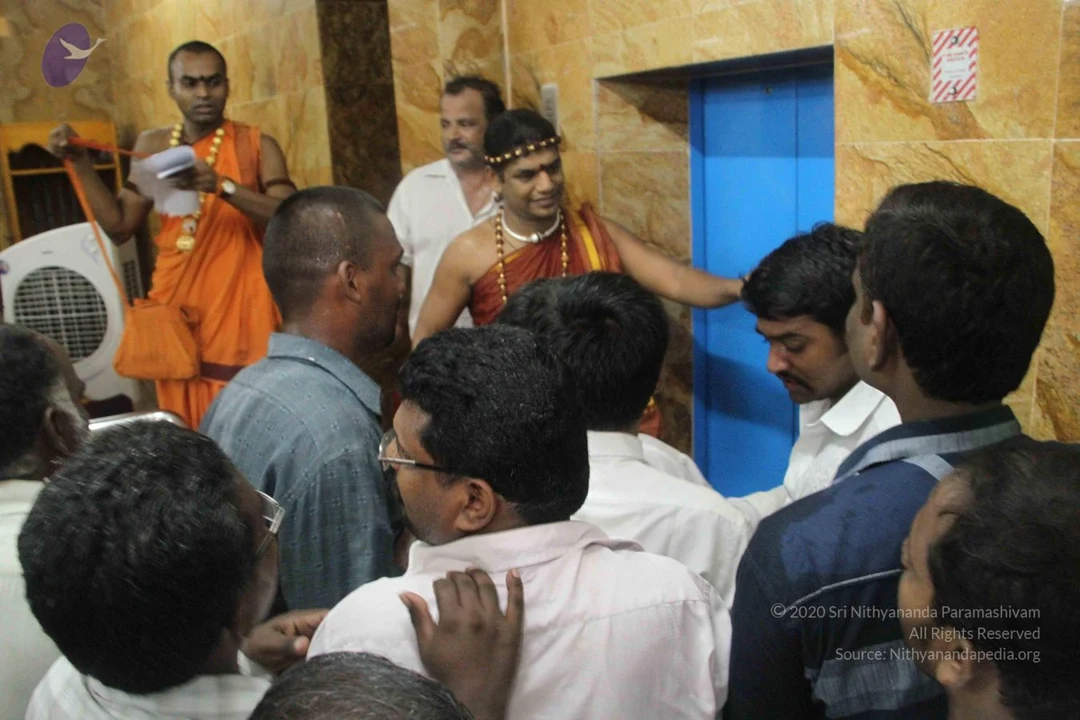
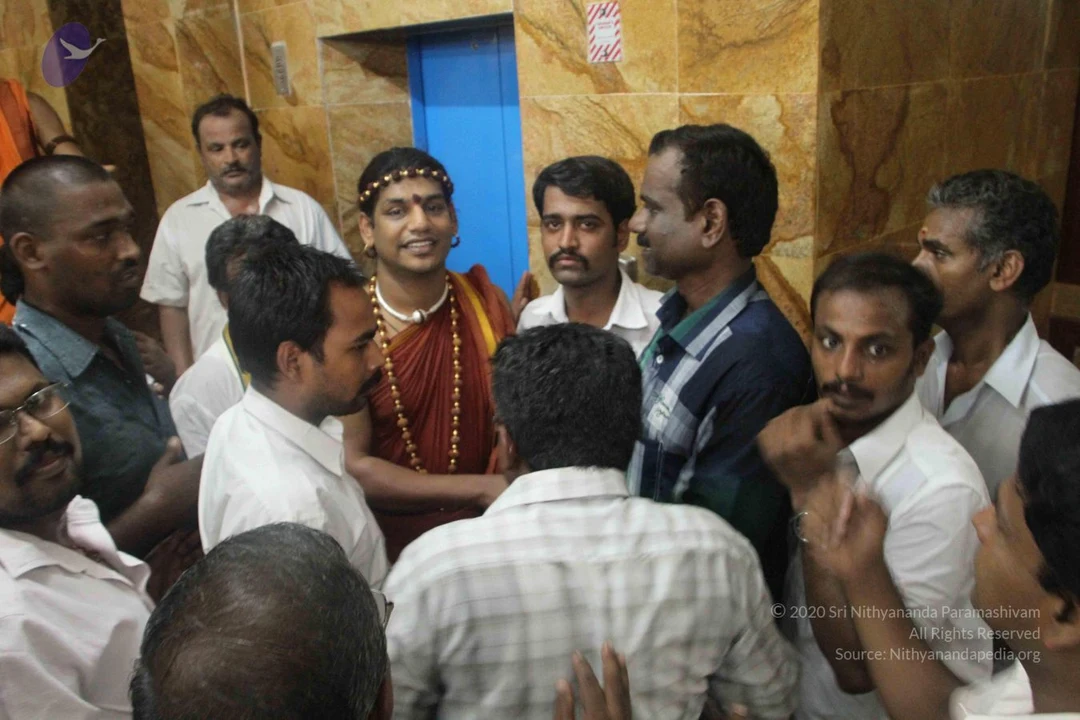
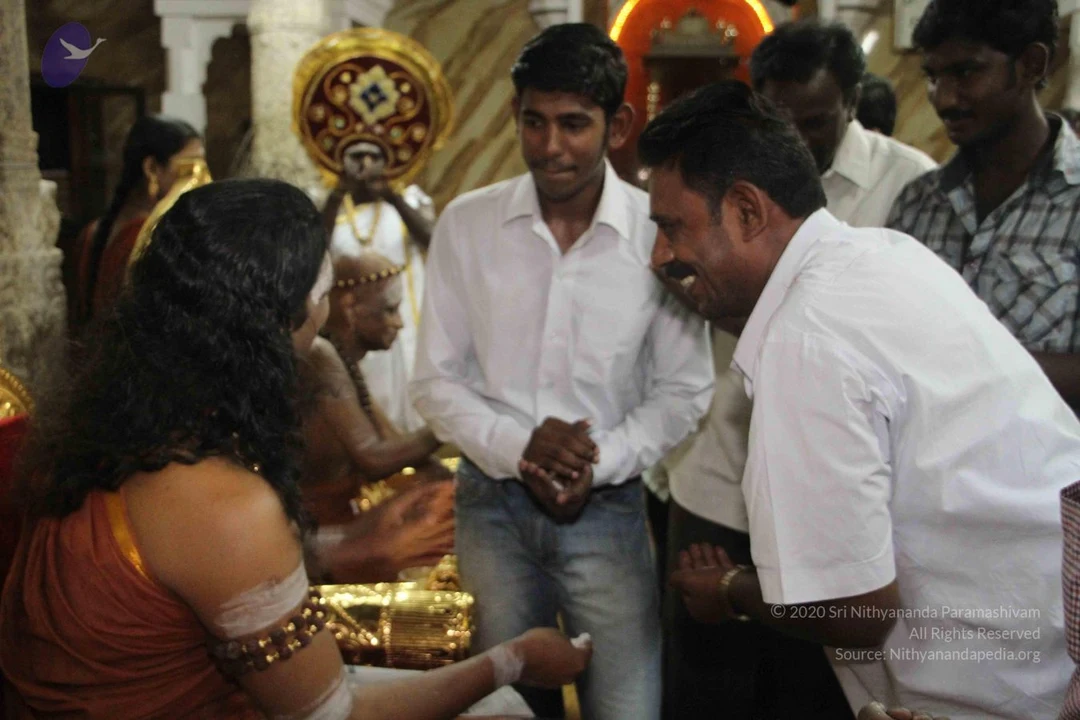
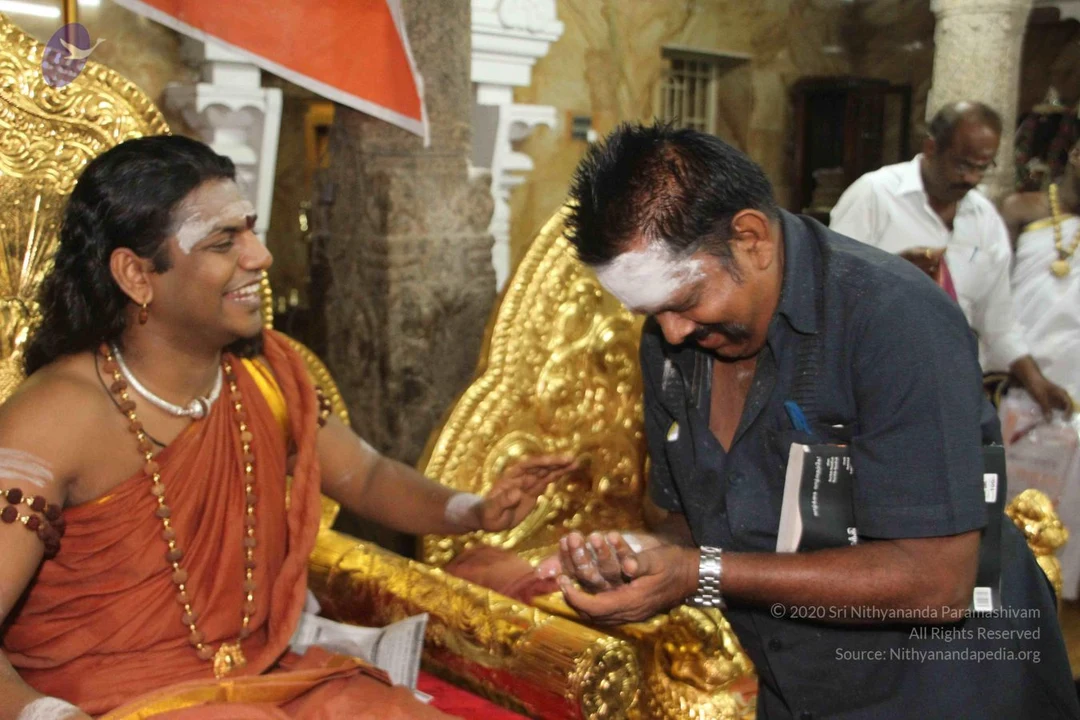
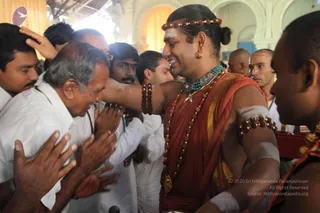
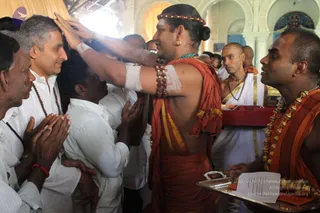
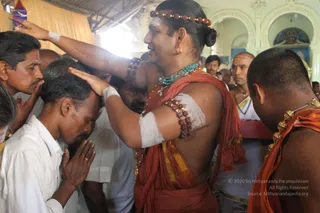
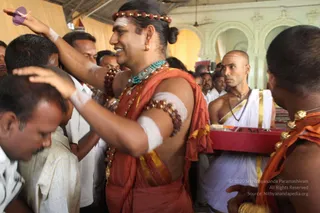
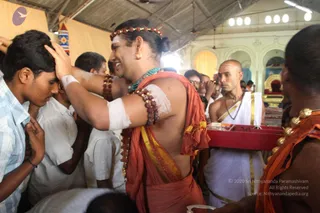
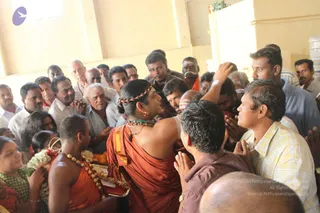
A photograph of a crowd of devotees reaching out with open hands toward a central figure. The central man wears a saffron-orange draped garment with a gold border, a rudraksha mala across his chest and arms, a layered turquoise and gold necklace, a red-brown beaded headband, and a gold earring. He has white markings on his forehead and arms and is smiling broadly as he touches an older man in a white shirt who bows his head toward him. Several white-clad devotees and a bald man in white stand behind, in an ornate hall with arched columns and yellow drapery. Appearance-based a person, with saffron robes, rudraksha malas and ornate adornments visible.A photograph of a crowded temple-hall scene. In the centre, a bare-chested figure in saffron-orange dhoti and shawl, with long hair in a bun and a red-and-white flower garland, presses his palms against the head of a man in white shirt and rudraksha mala. Both of his arms are dressed with white paste markings. Around them, devotees in white shirts and dhotis stand with hands joined in anjali. On the right, a man in orange robes and layered gold bead necklaces holds a silver tray. Behind them, a priest in white with gold-bordered cloth carries a red tray, and white arched columns and a blue-and-white mosaic panel frame the hall. The orange-robed centre figure has distinctive long swept hair and ornate adornments, so this is a person in person; the role is a figure blessing devotees.Photograph inside a temple hall with arched white walls and a painted deity panel in the background. A central figure in an orange-red saffron dhoti and shawl, wearing a rudraksha headband, rudraksha armbands and a turquoise-and-gold ceremonial necklace, bares his right shoulder and places his hand on the head of a kneeling devotee in a white shirt with palms pressed together. The figure's other arm is raised with fingers touching another devotee's head. Several men in white and a saffron-robed attendant with a gold-bead necklace stand nearby. Appearance-based label: a person, giving blessings to devotees in person.Photograph of a crowded indoor temple-hall scene. A central figure with long dark hair tied up and a red floral headband, wearing a saffron-orange dhoti-wrap, a teal and silver beaded necklace, rudraksha malas and gold bangles, is smiling and reaching his arm out to touch the head of a devotee in white; white sacred ash is smeared on his arms and shoulder. Around him stand several men in white shirts and a shaved-headed priest in white dhoti with a gold-bordered cloth holding a red tray. A man in saffron wrap at right faces away. Ornate white arches and yellow drapes frame the hall. Probable Swamiji by appearance cues: long swept-back hair, ornate necklace and saffron clothing, shown as the central figure blessing a devotee.A photograph inside a temple hall showing a man in an orange-saffron dhoti and shawl with rudraksha malas on his arms and chest, a rudraksha band across his forehead and a bun of hair, touching the head of a young man in a white shirt. Other devotees in white dhotis and a bald priest holding a red tray crowd around. Gold-accented pillars and an altar with a deity murti are visible in the background.A crowded indoor hall with pale yellow walls and a white appliance at right. At center, a woman with long dark hair, a flower headband and a turquoise necklace wears a saffron-orange wrap over her bare shoulder and reaches out toward the crowd. Beside her, a young man in orange cloth wears a marigold garland and holds a tray of fruit and flowers. Around them, many men in white shirts, pale kurtas and checked shirts press forward with folded hands, some reaching up, while others look on. A man with a red forehead mark and moustache stands among them. The atmosphere suggests darshan with devotees crowding close. No a person candidate is clearly identifiable from appearance, so the figures are described by role only.

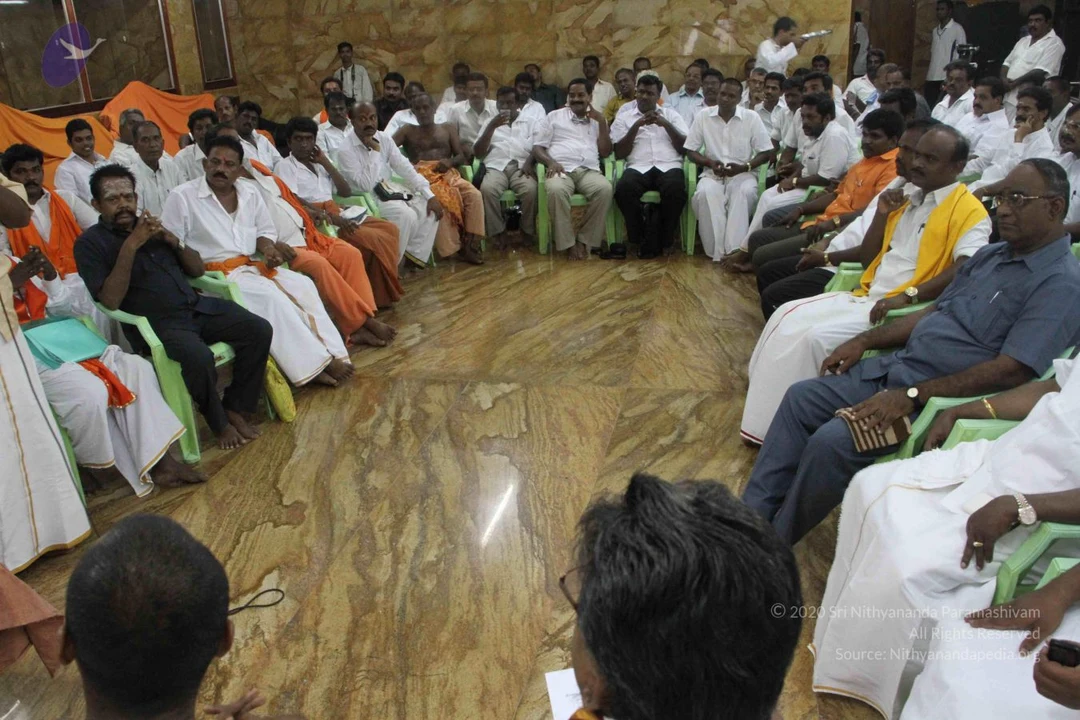
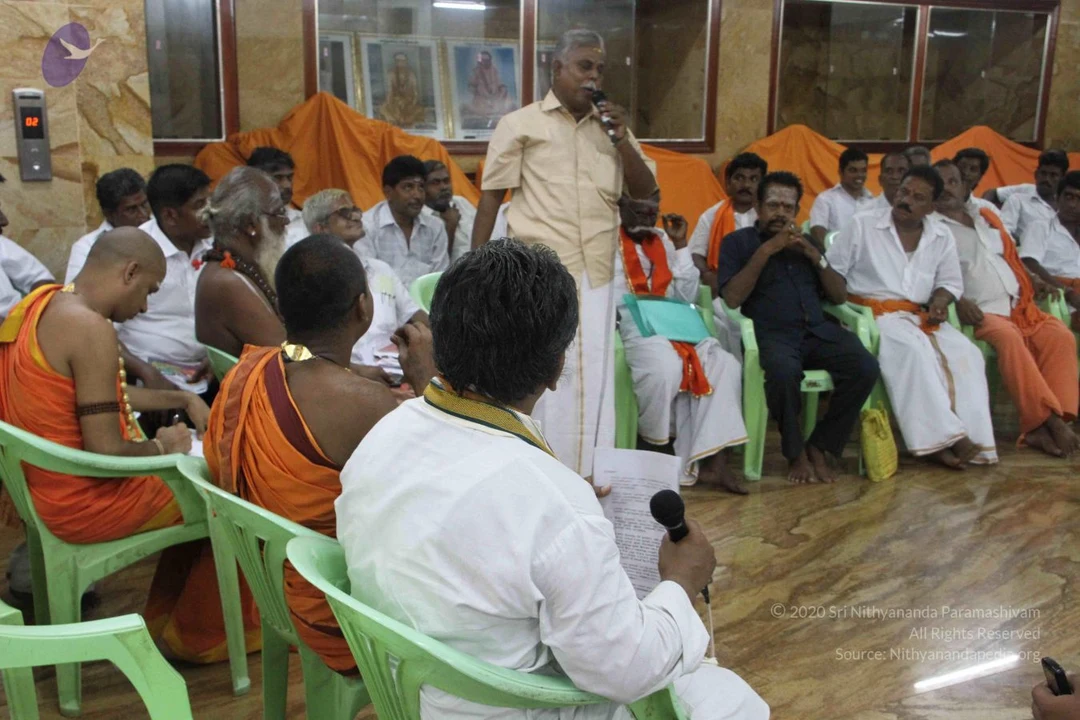
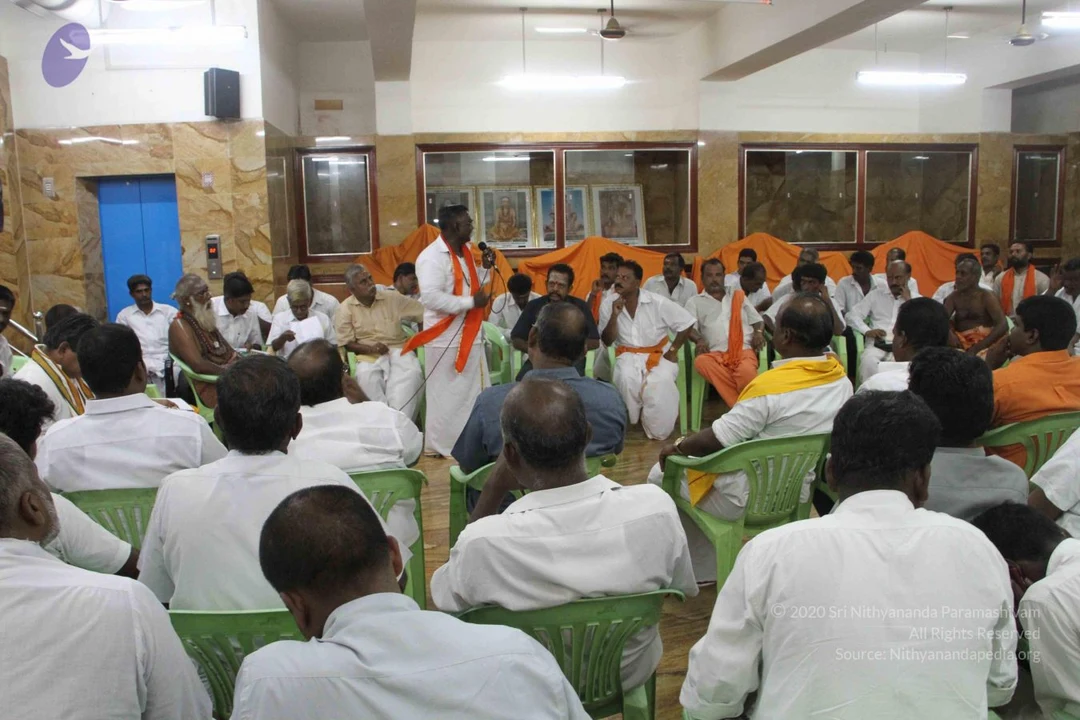
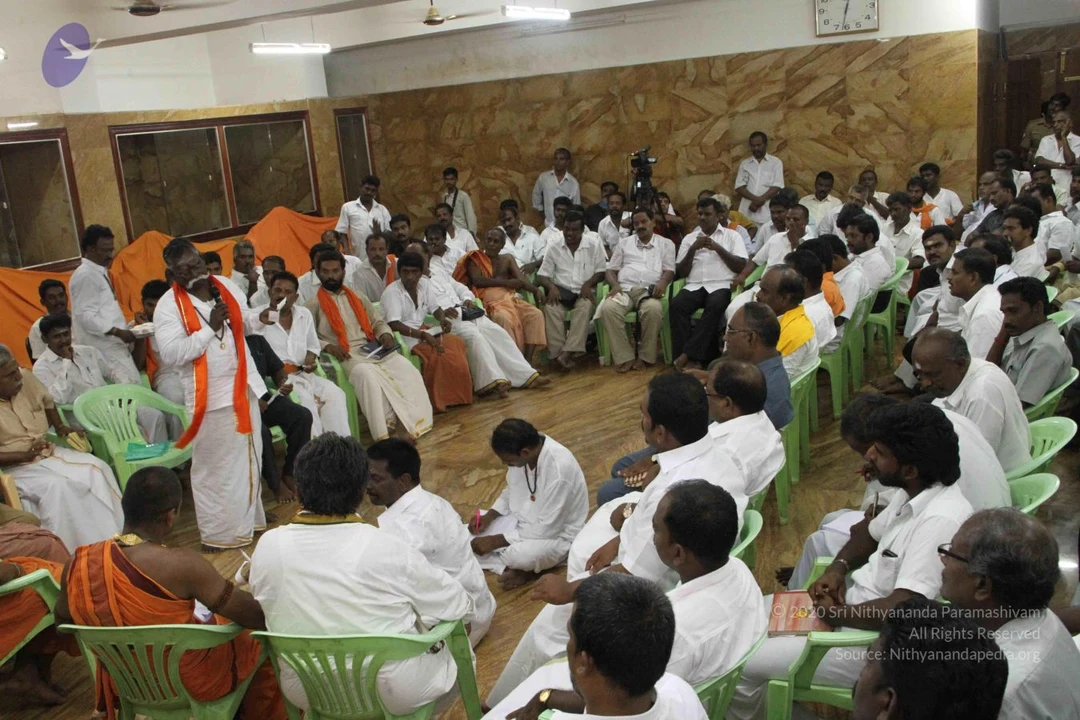
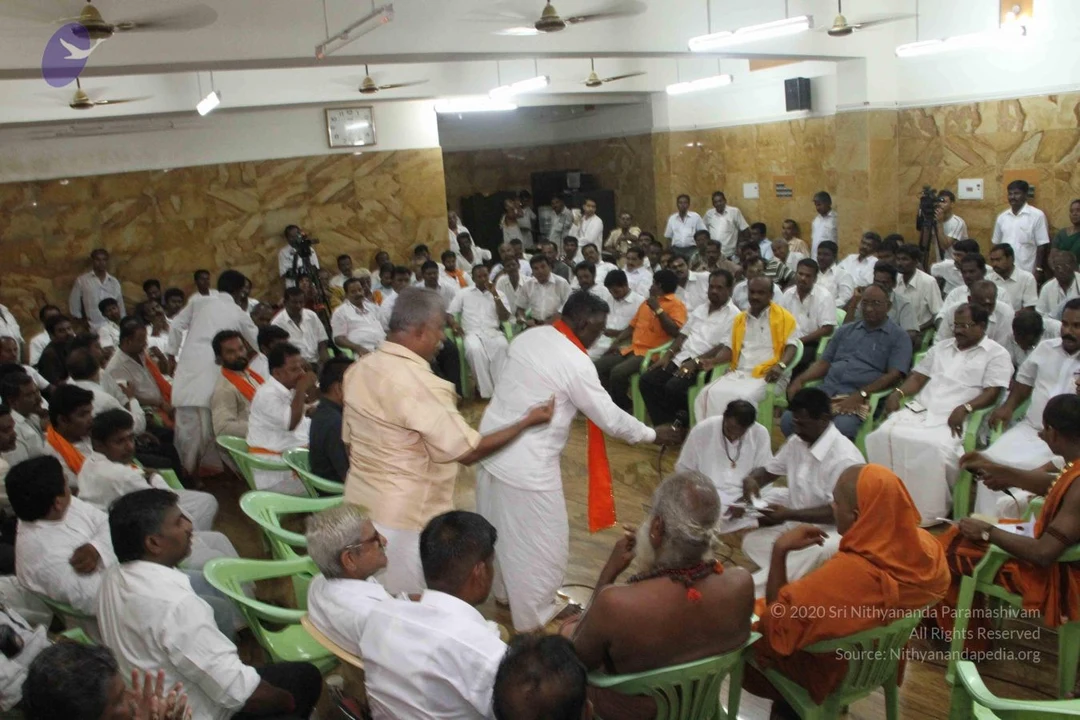
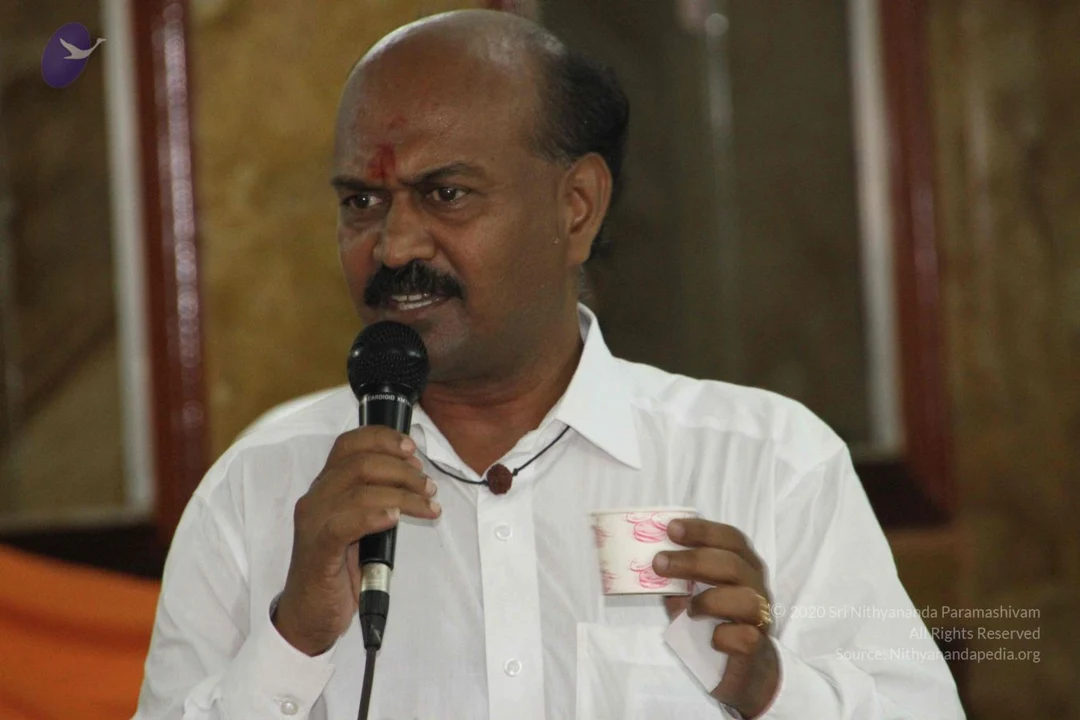
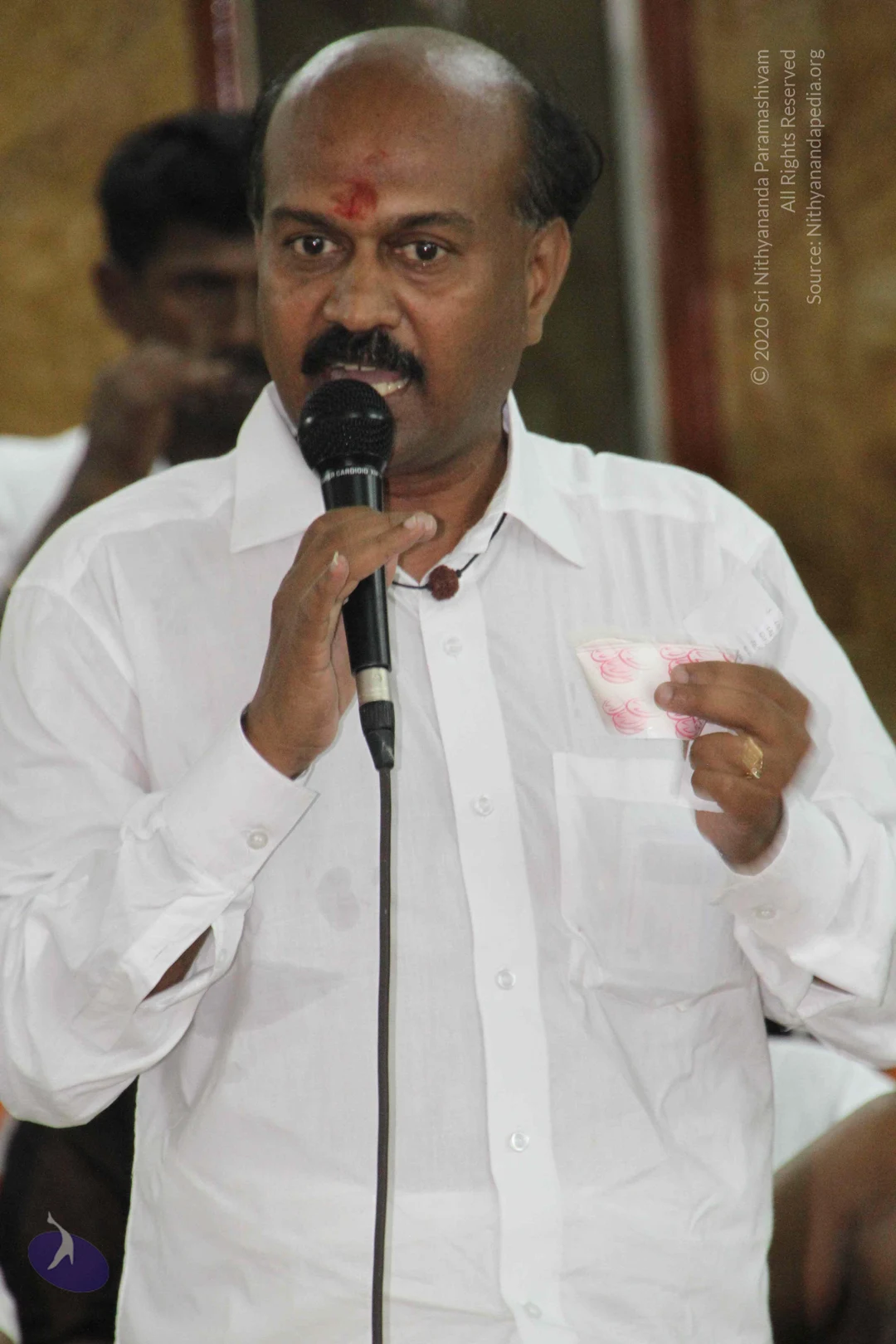
MEETING-WITH-VARIOUS-COMMUNITIES-TO-PROTECT-MADURAI-ADHEENAM

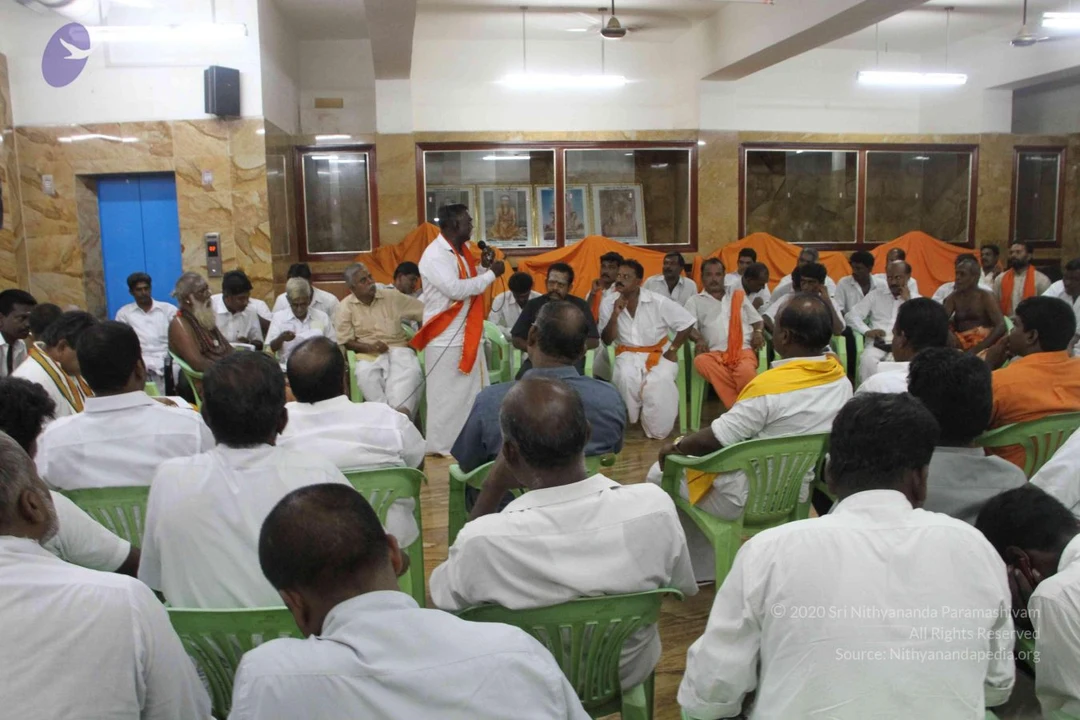
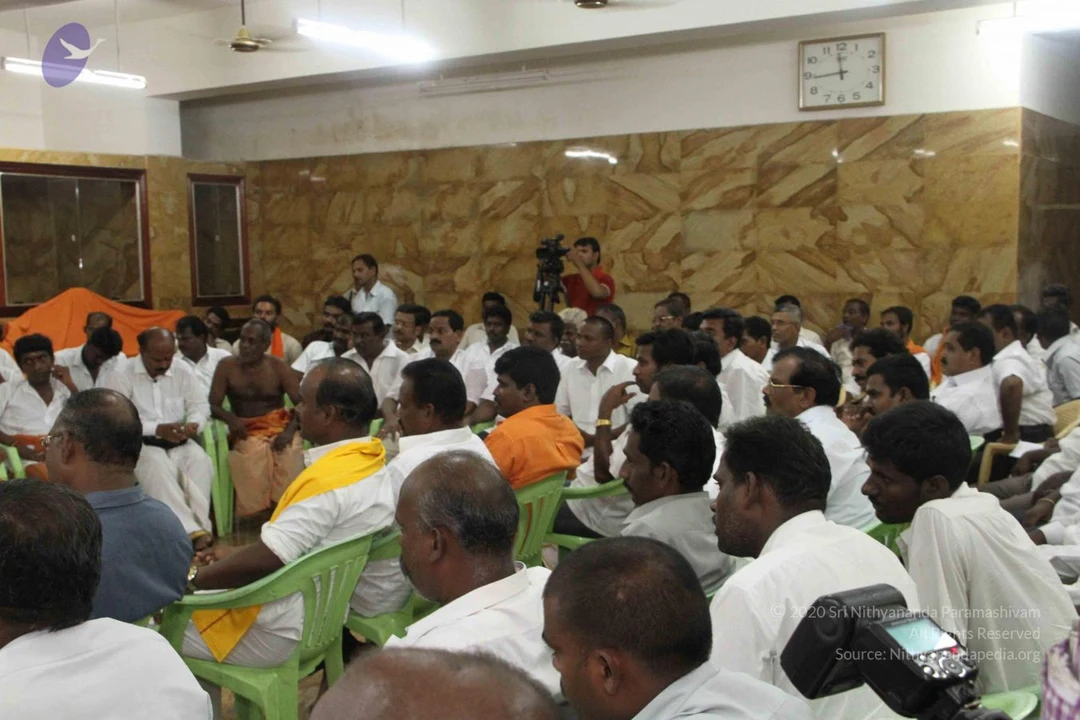
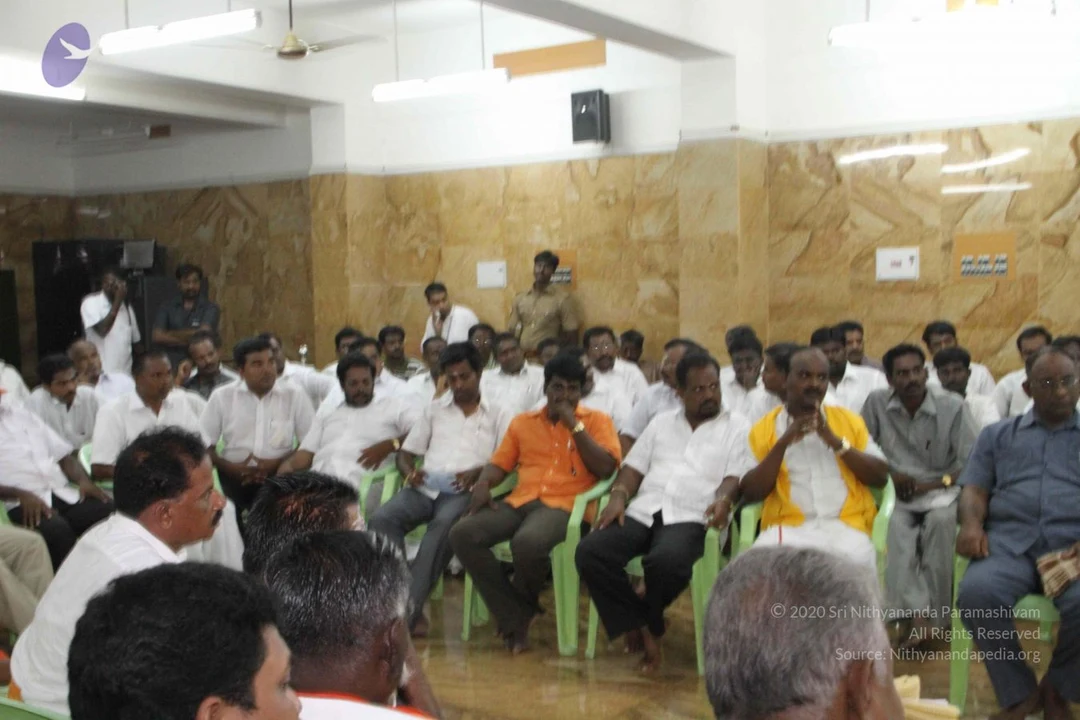
138 photosSource gallery
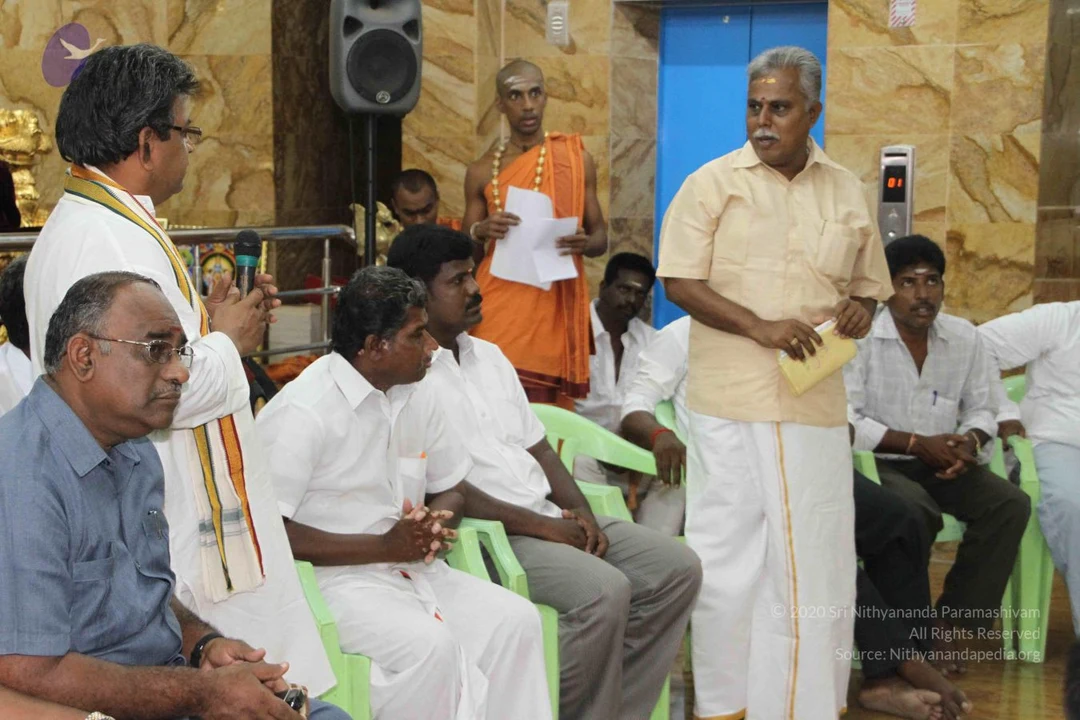
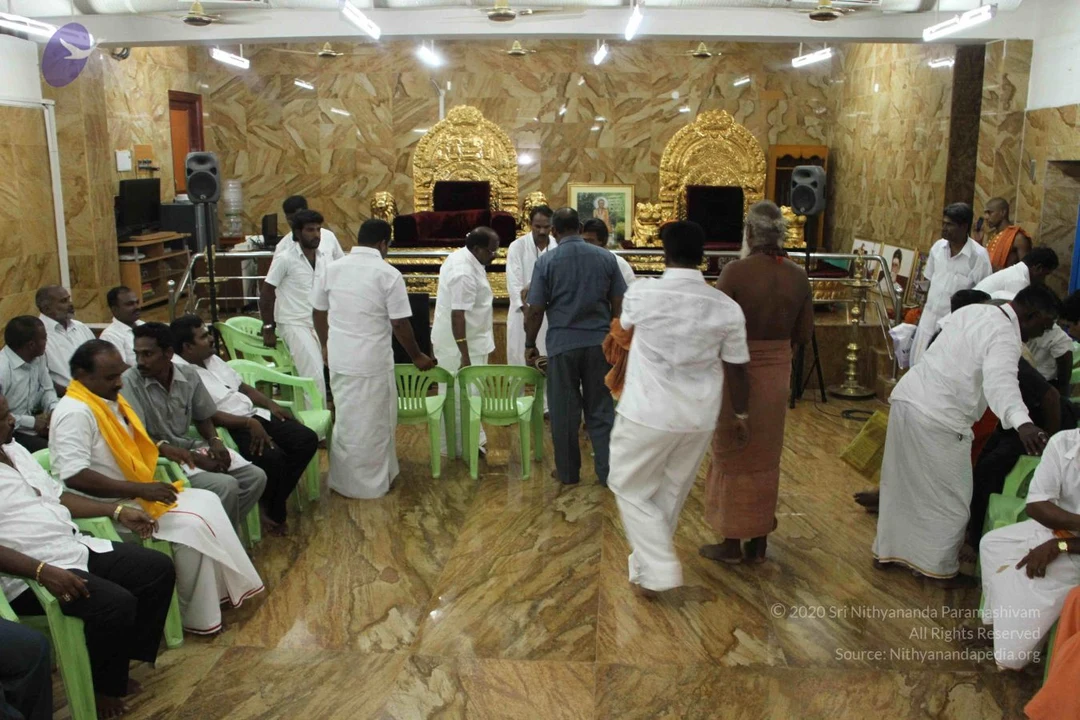
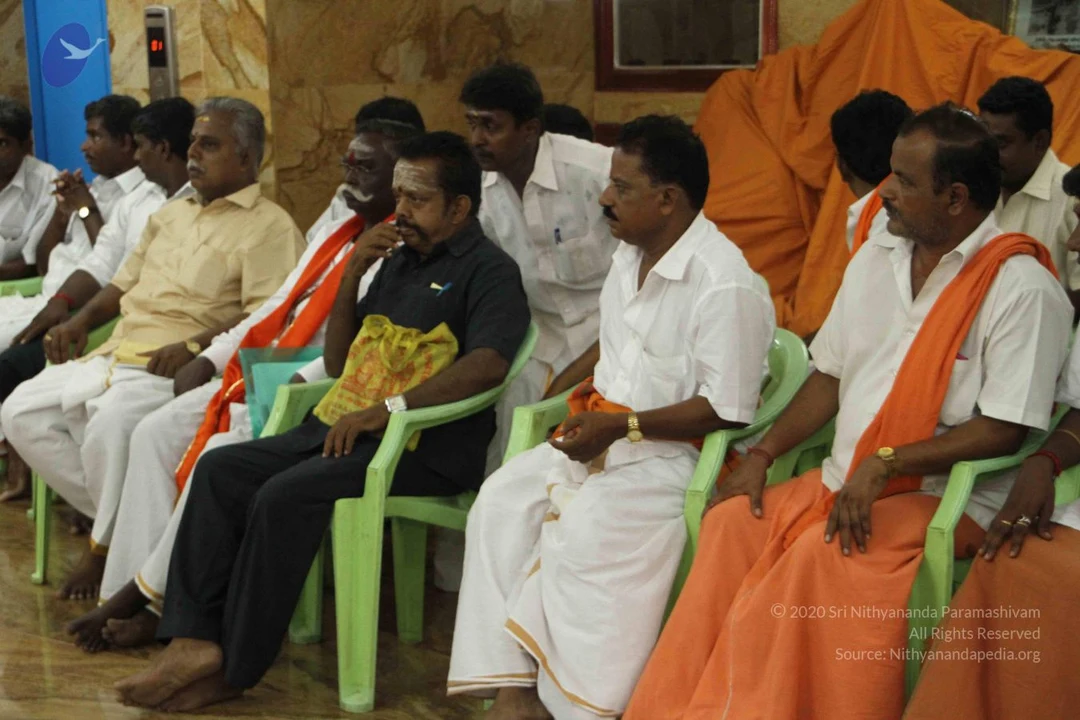
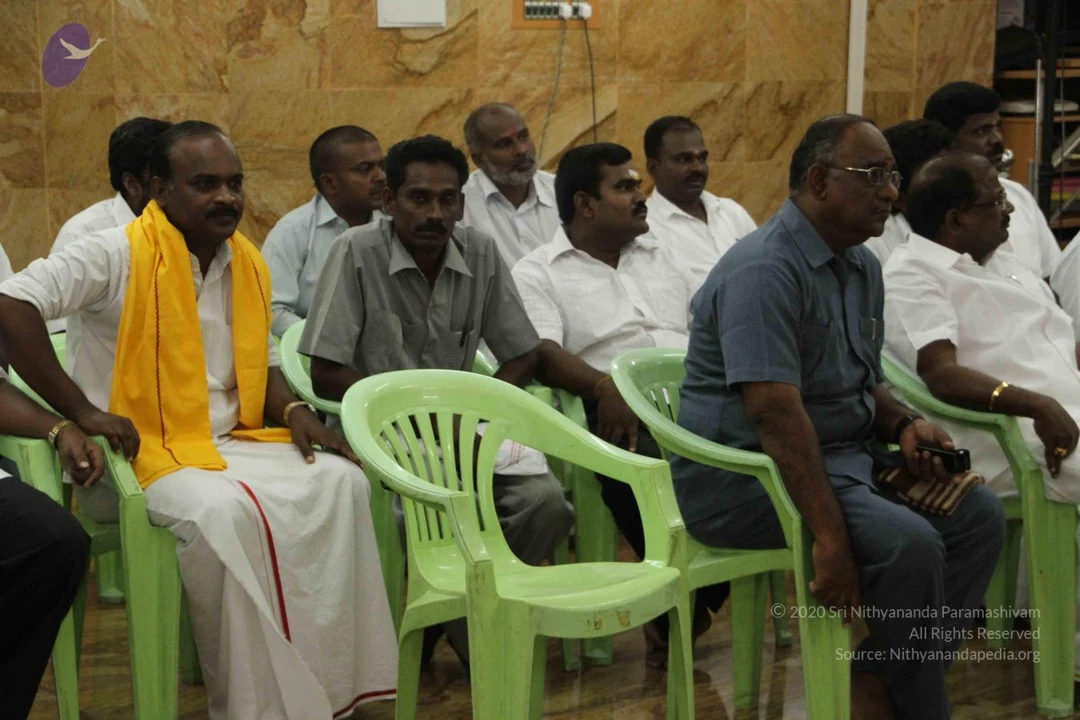
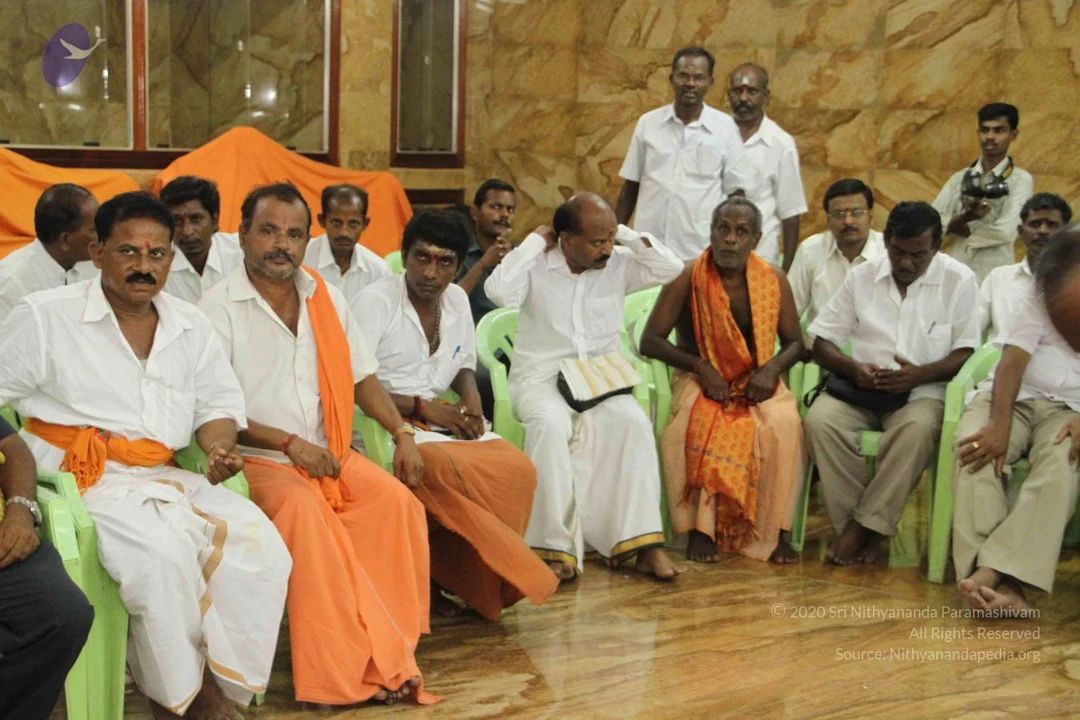
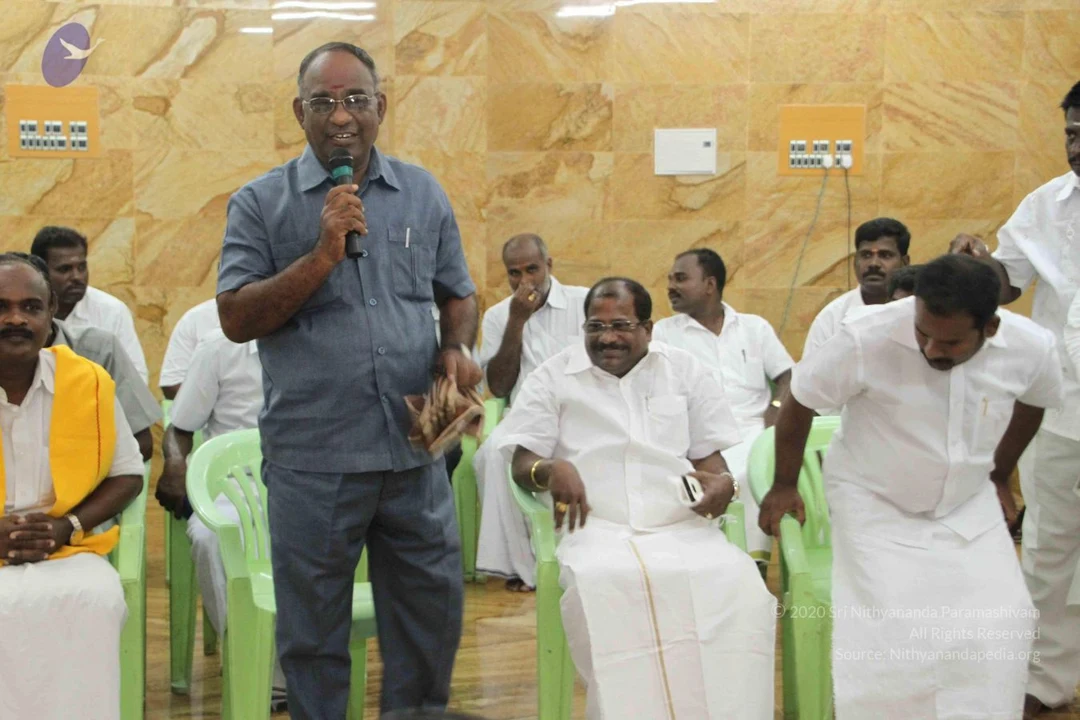
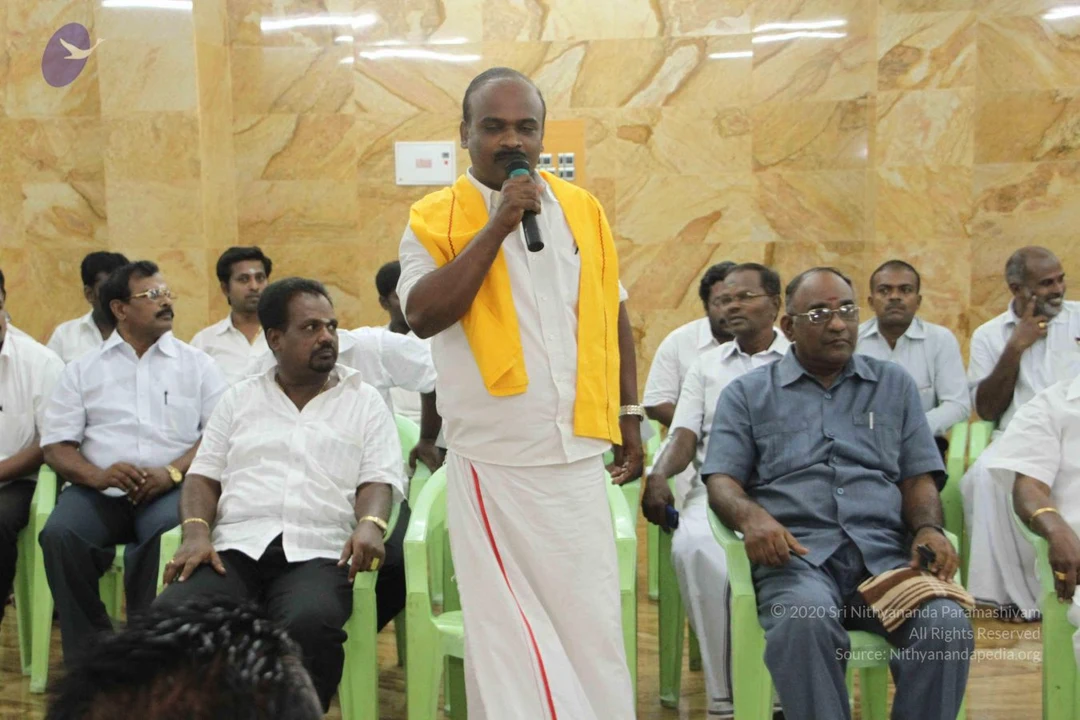
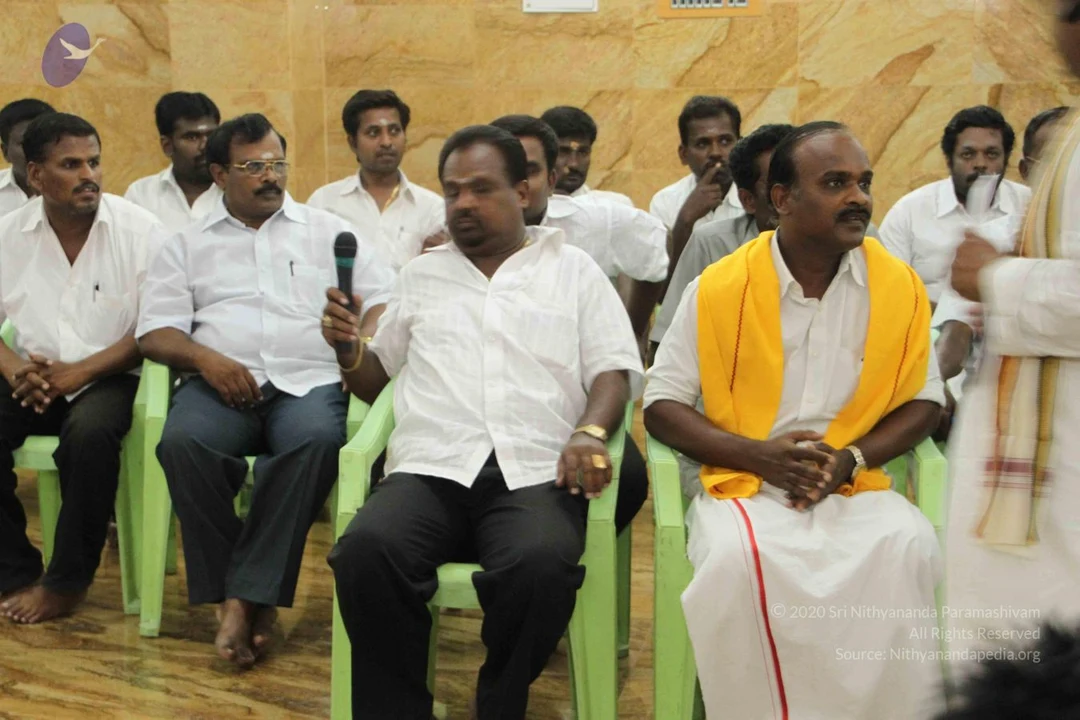
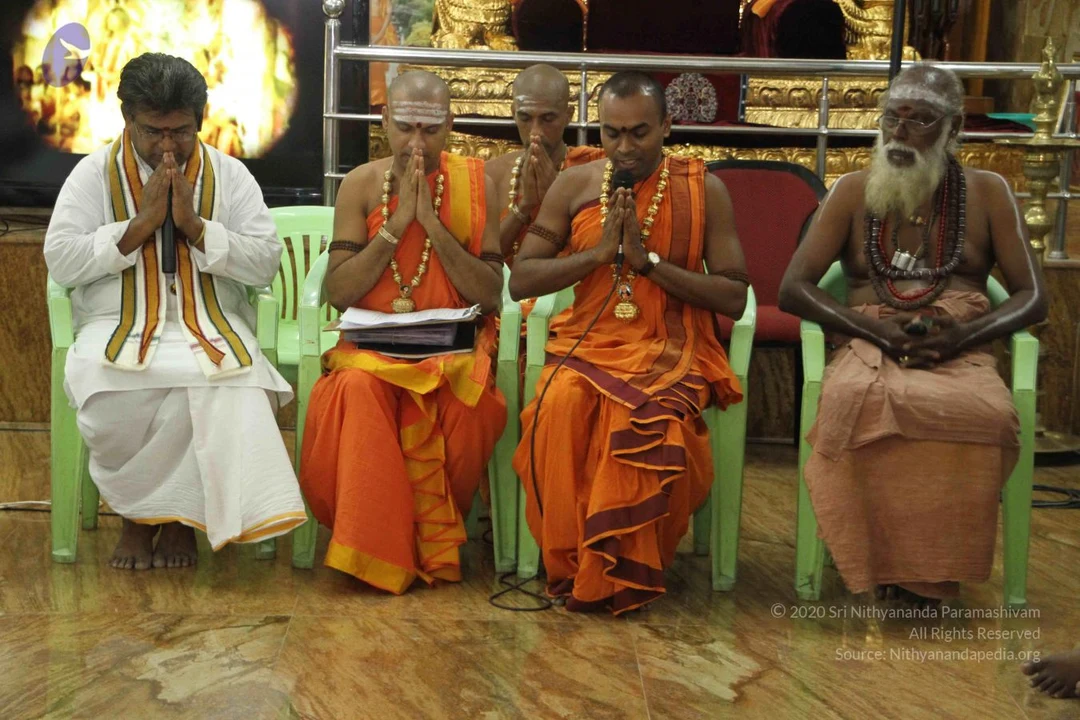
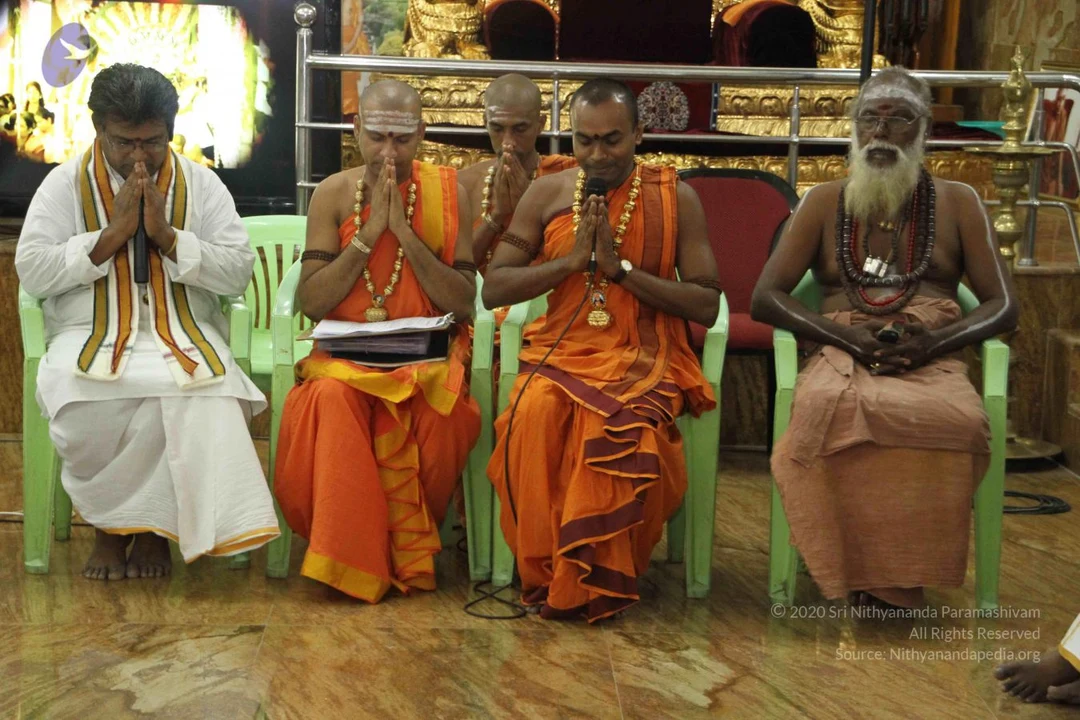
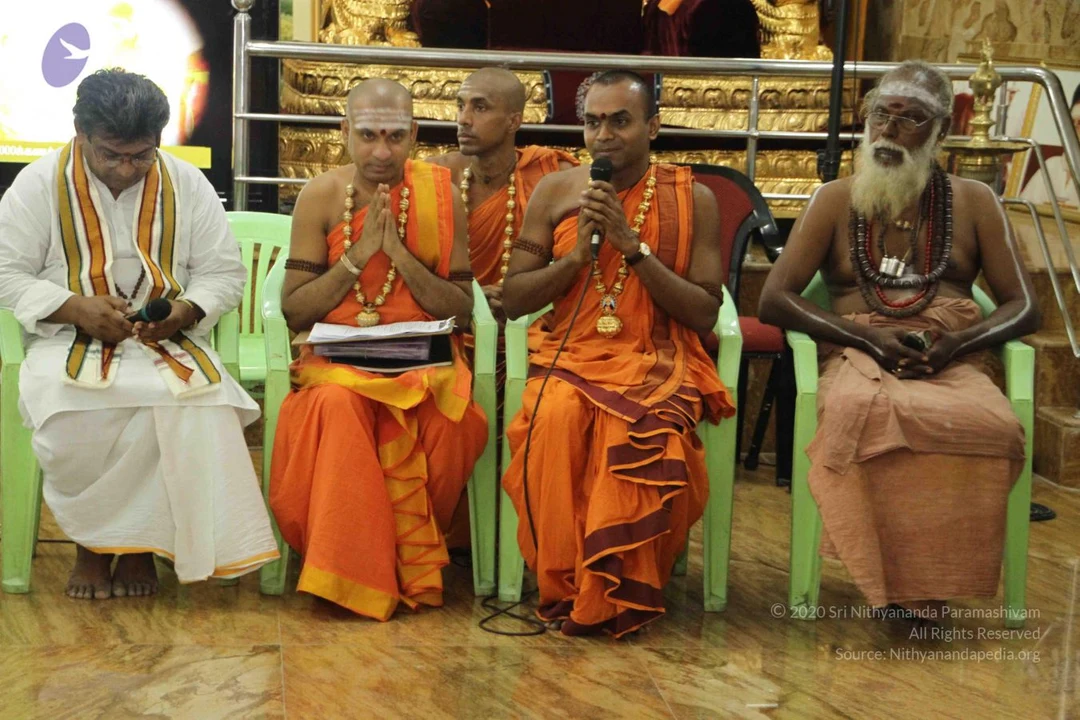
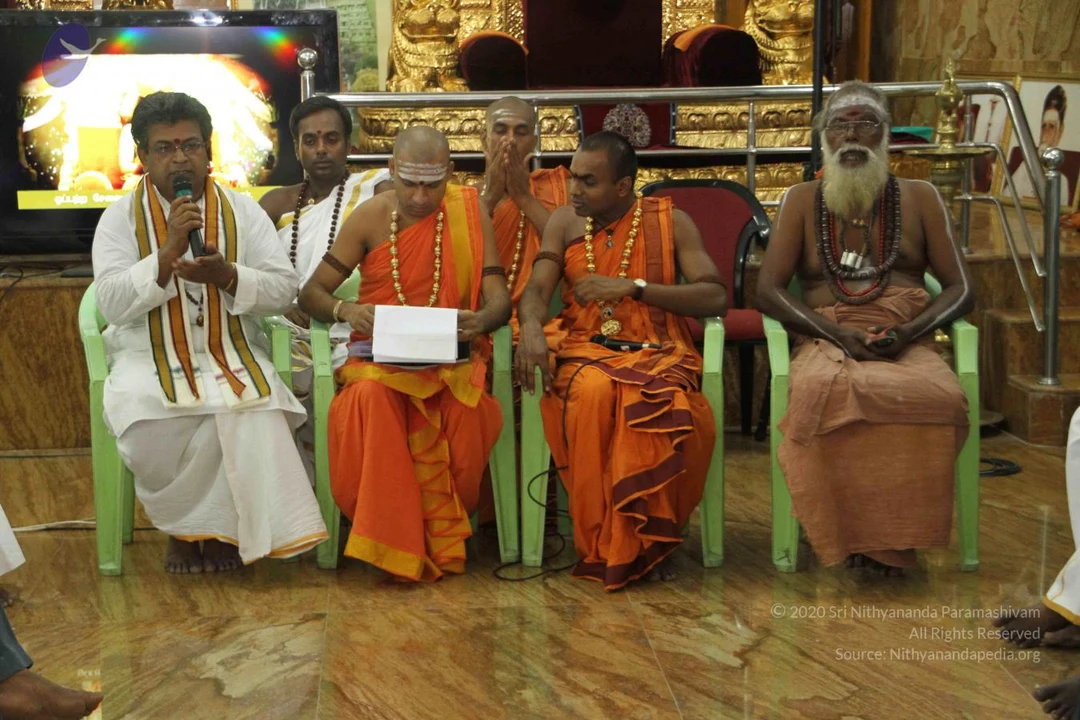
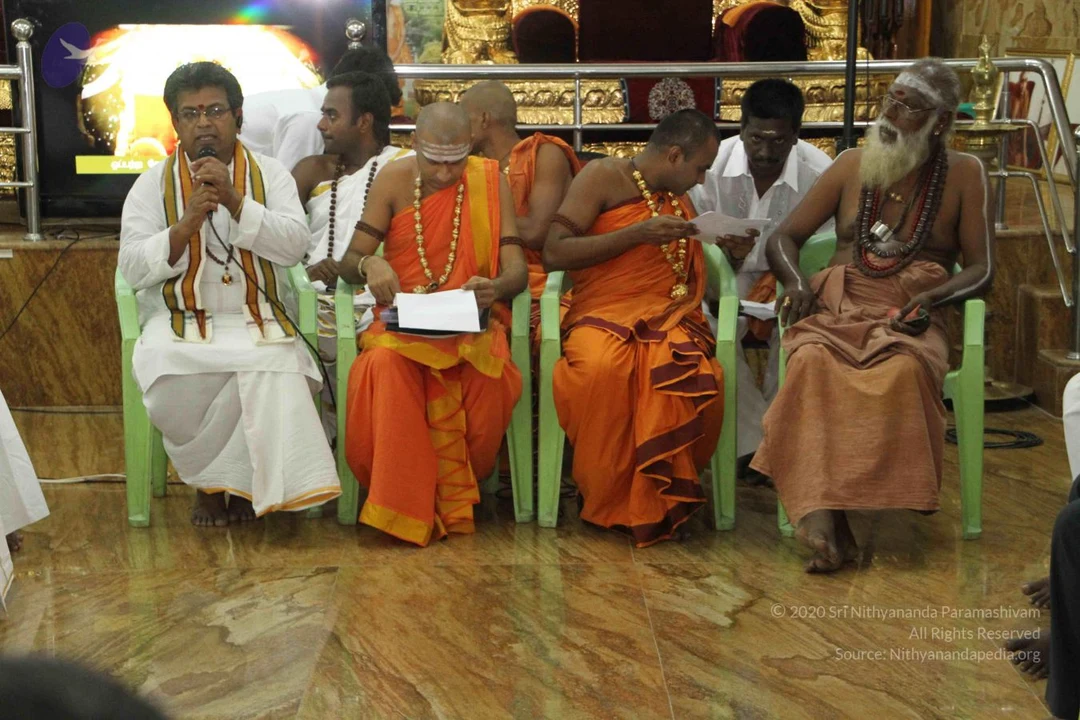
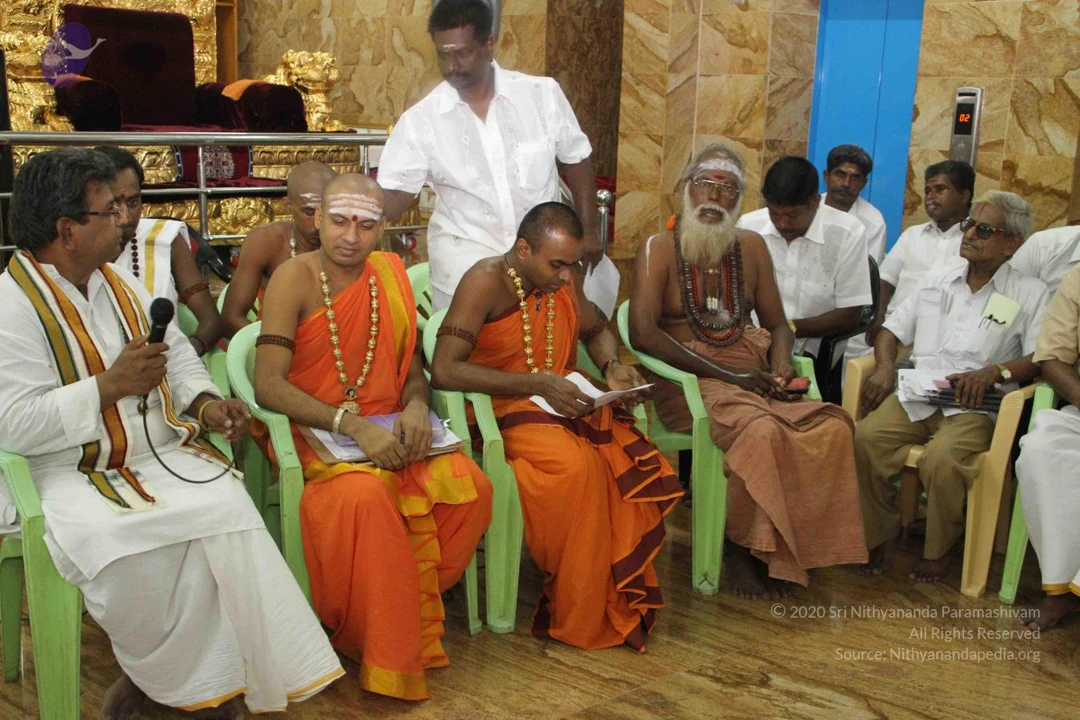
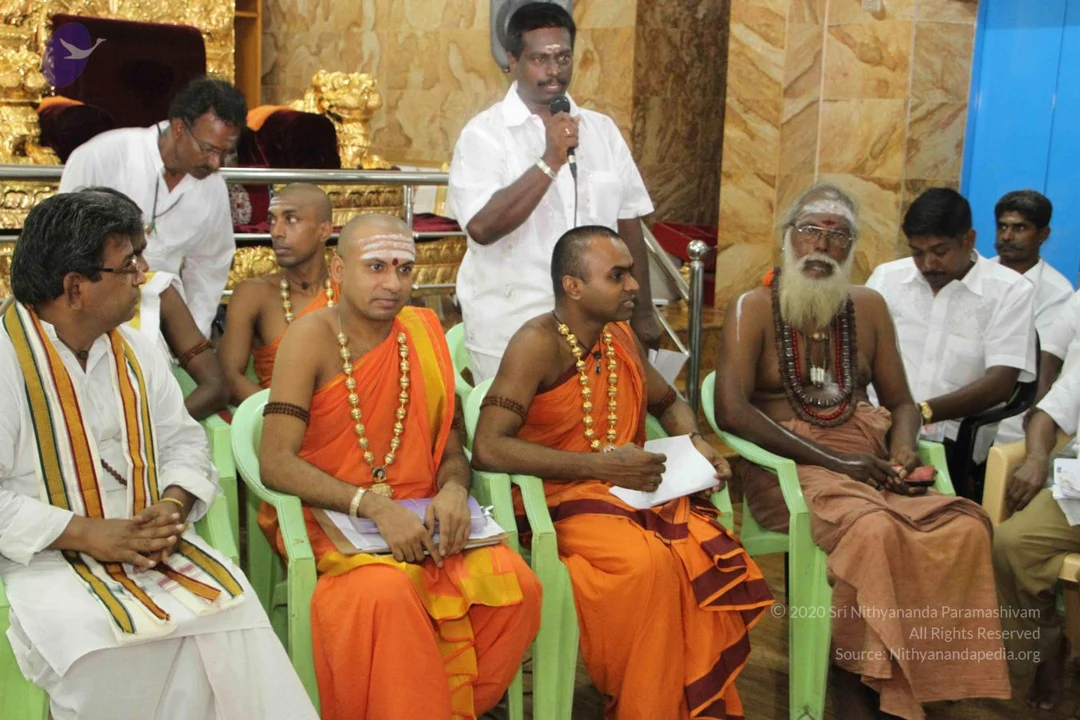
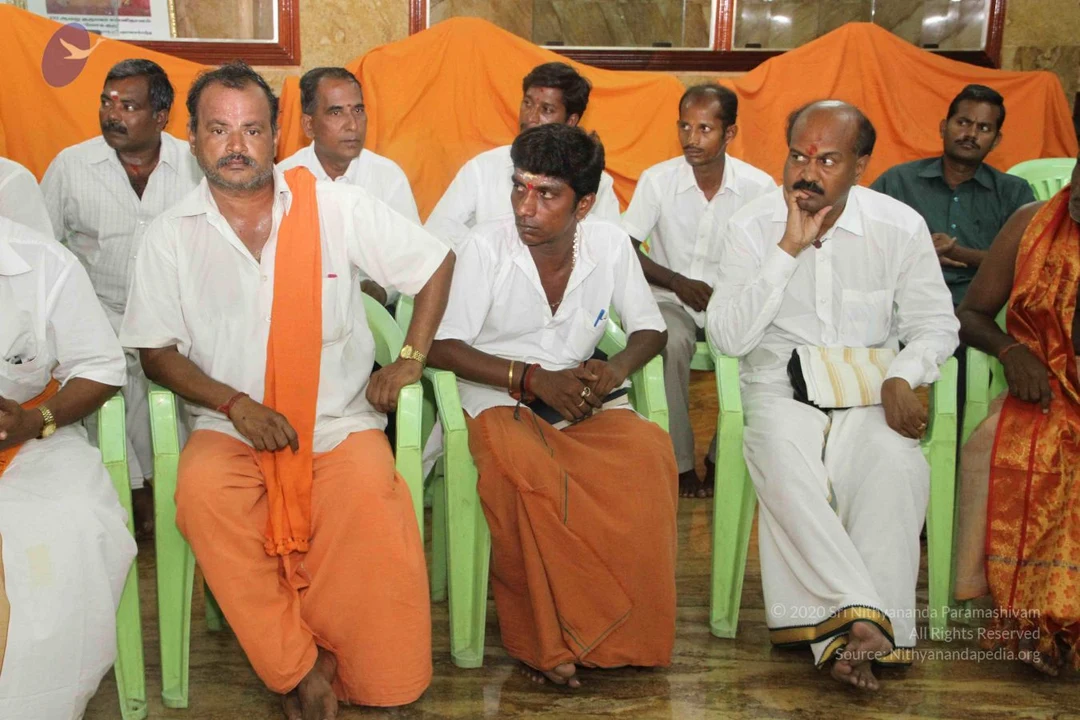
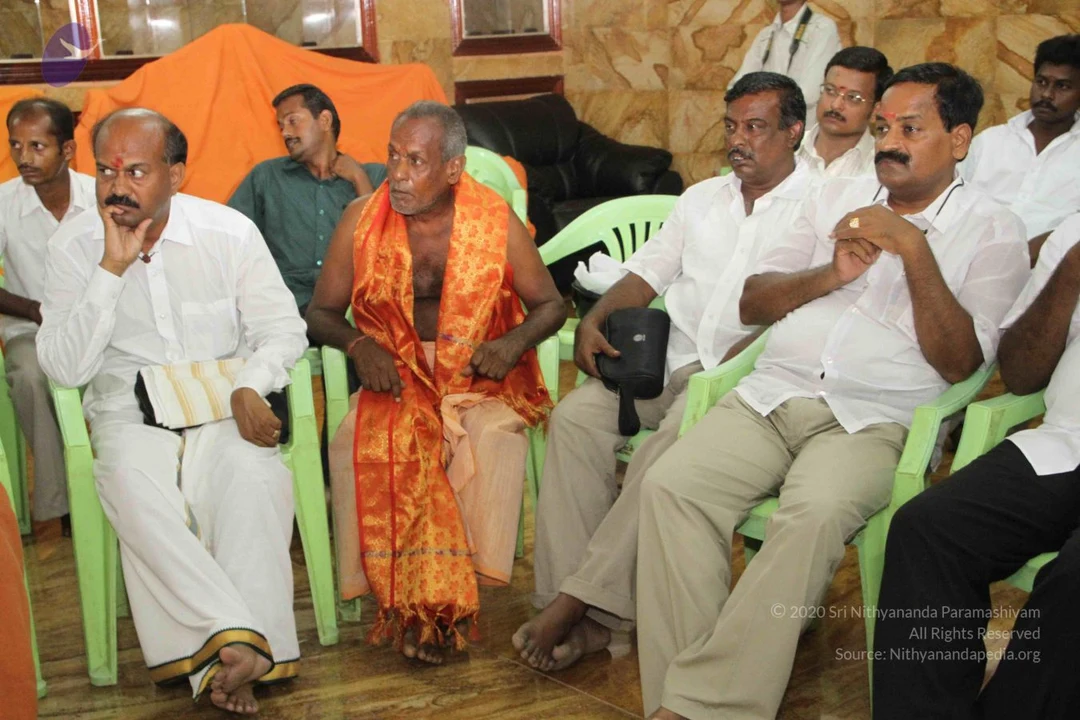
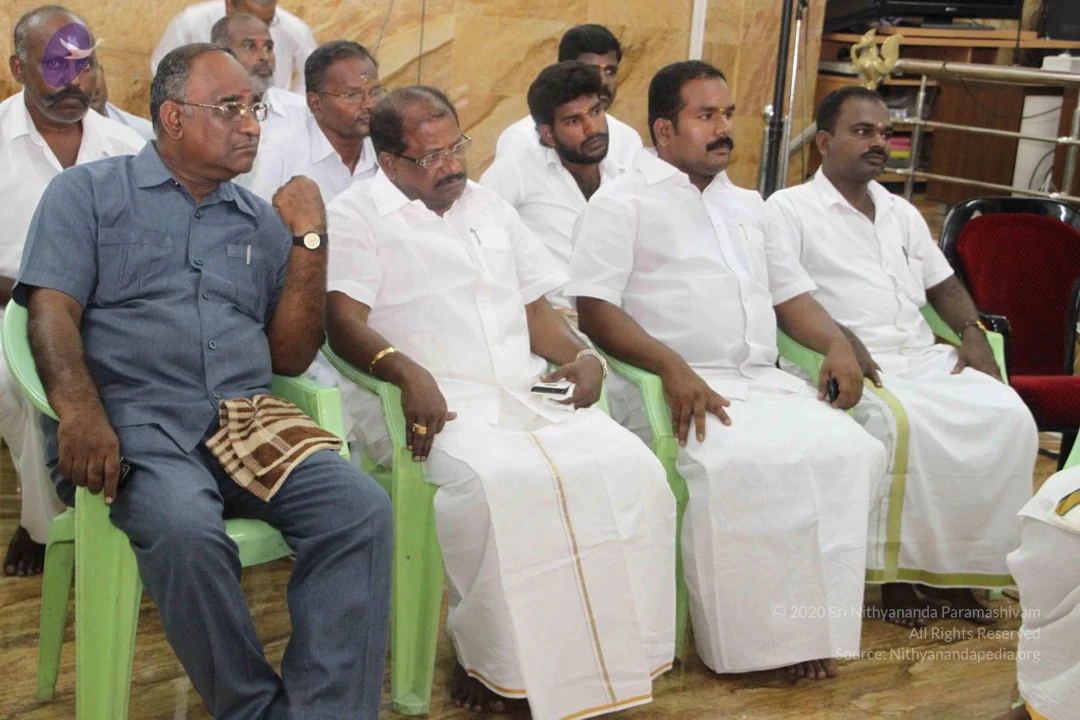
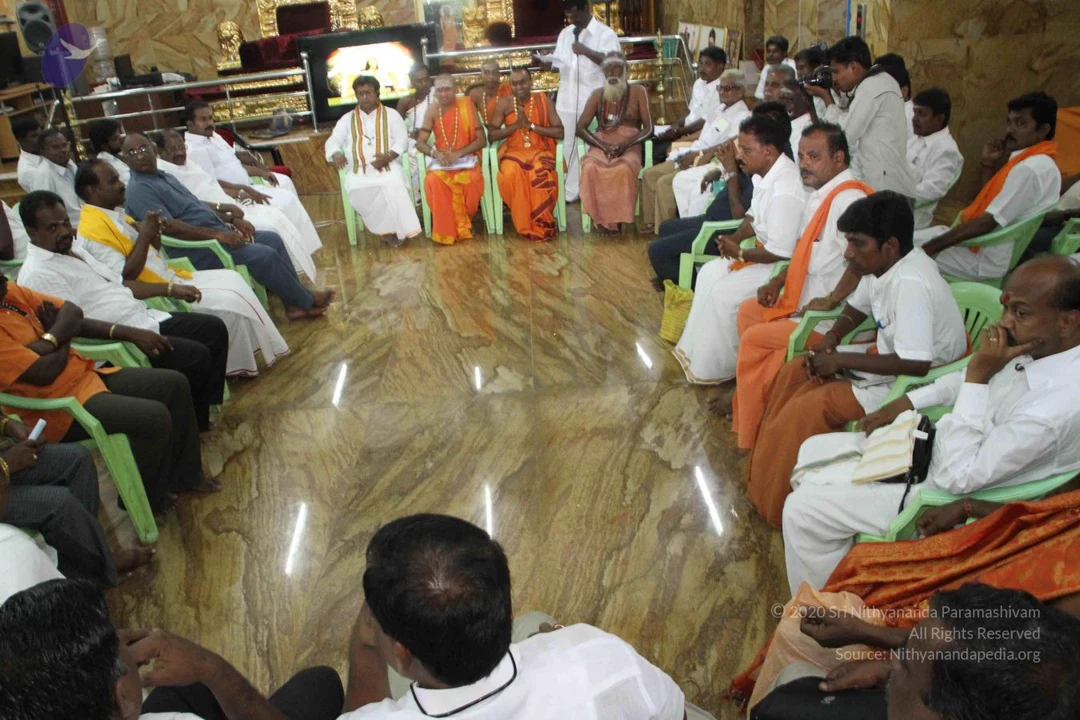
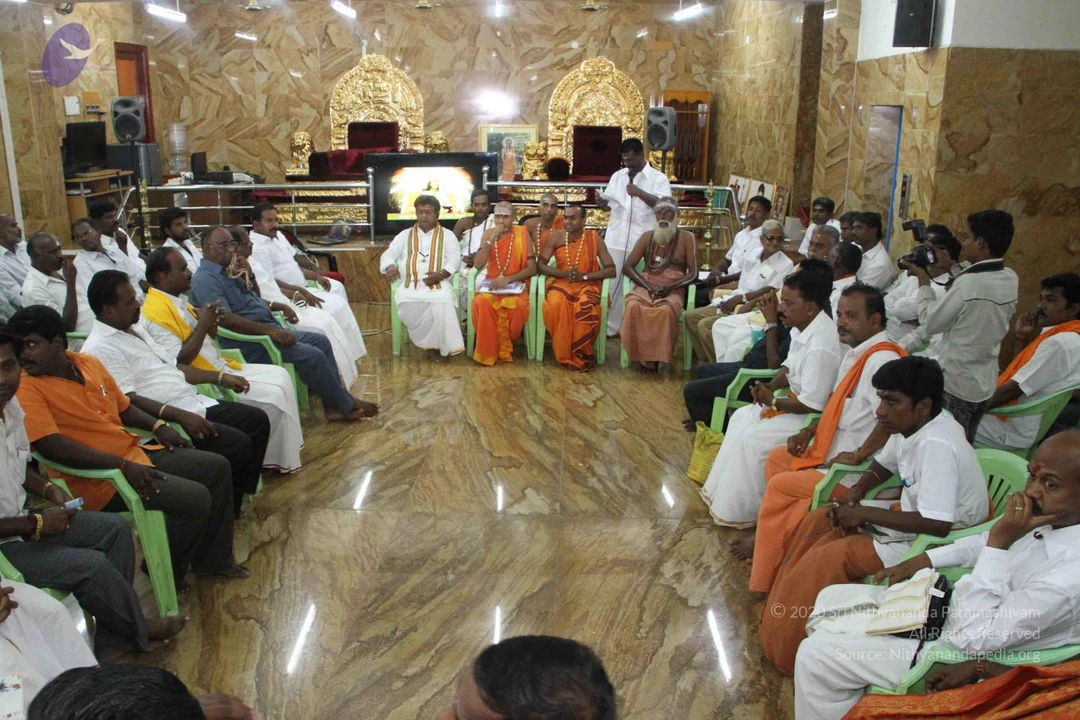
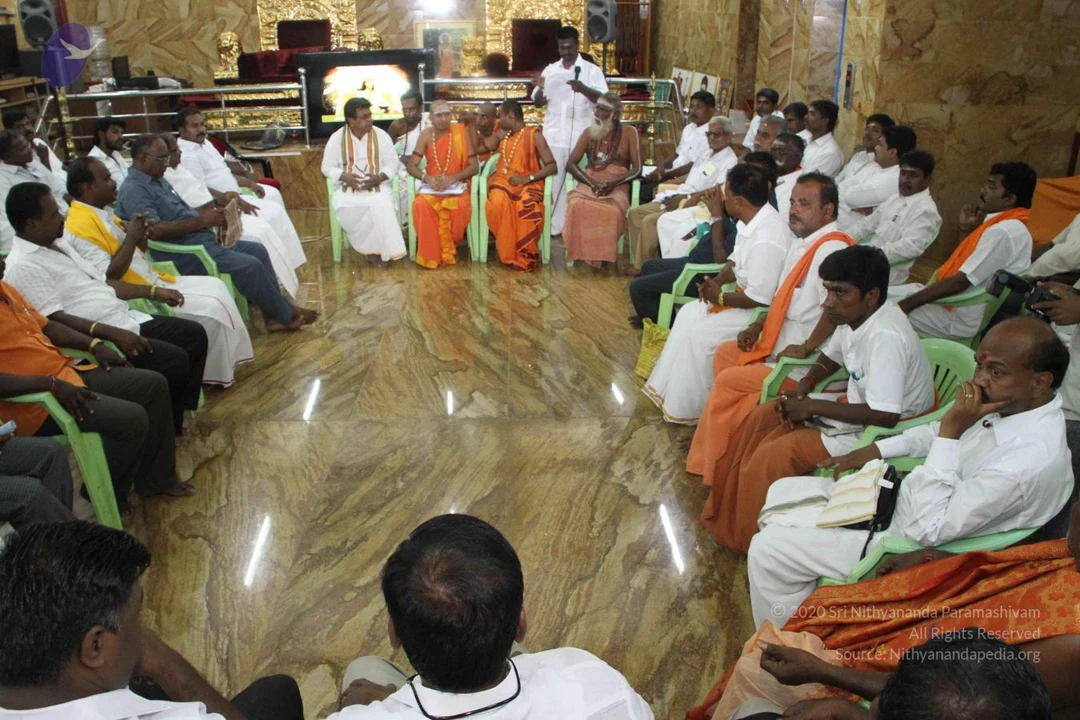
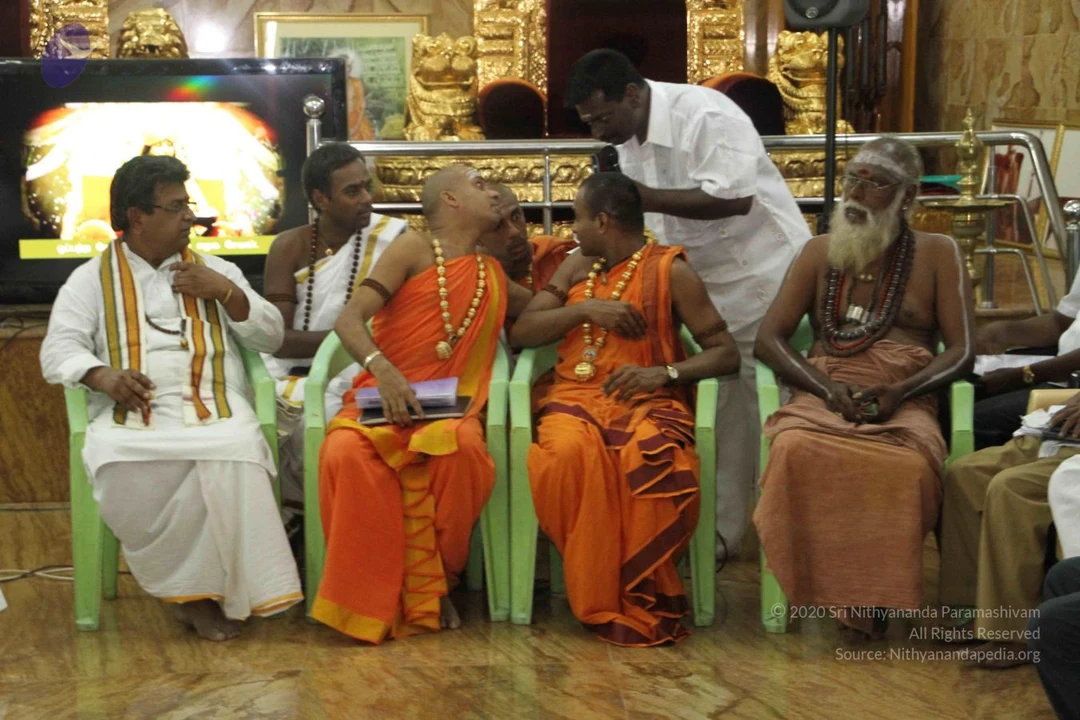
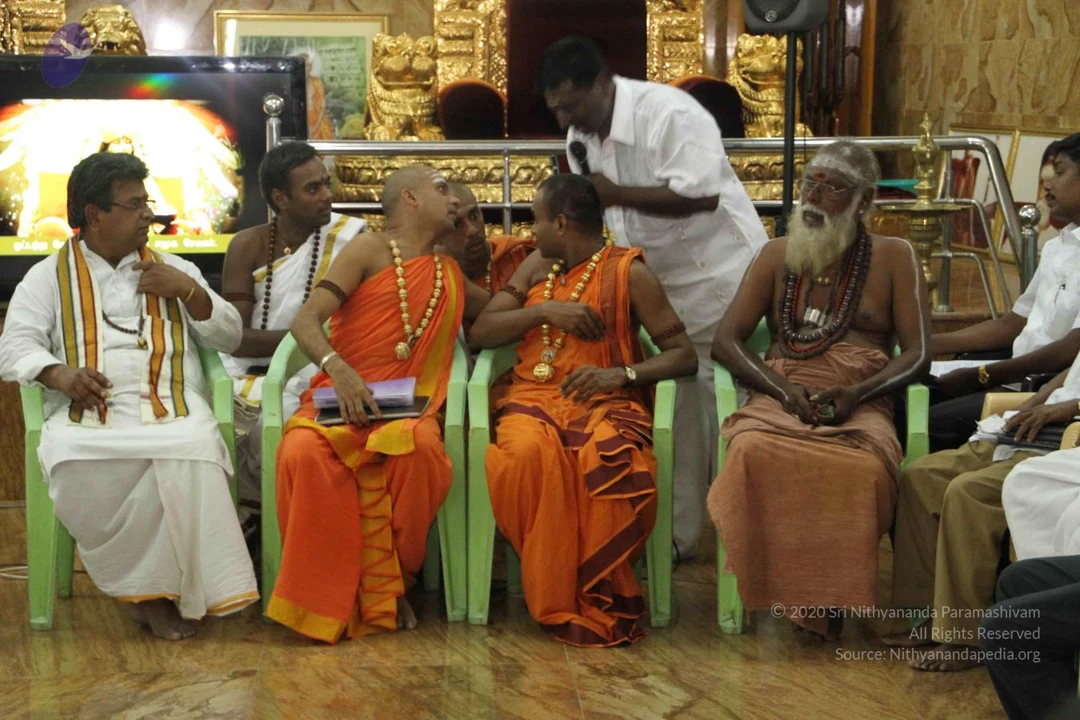
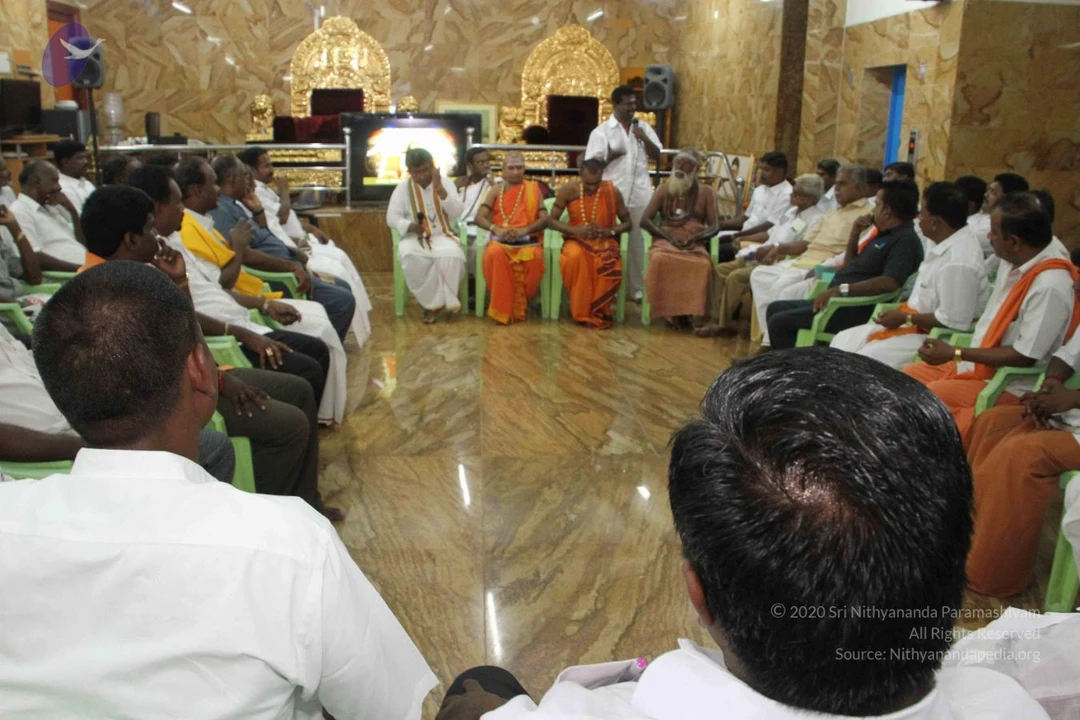
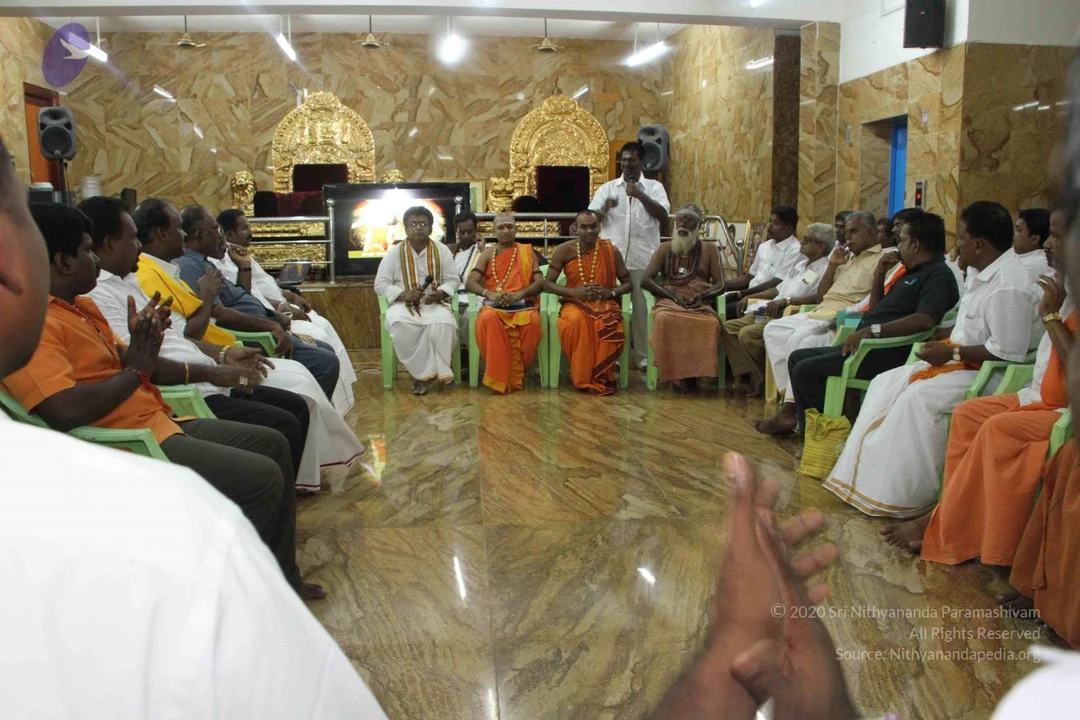
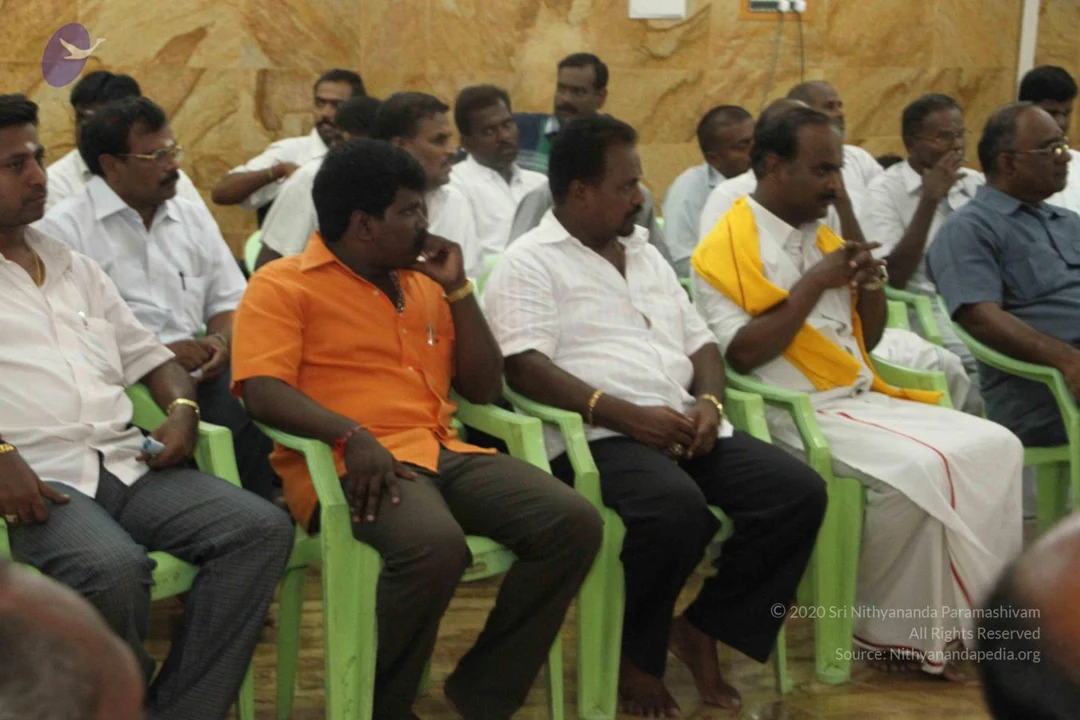
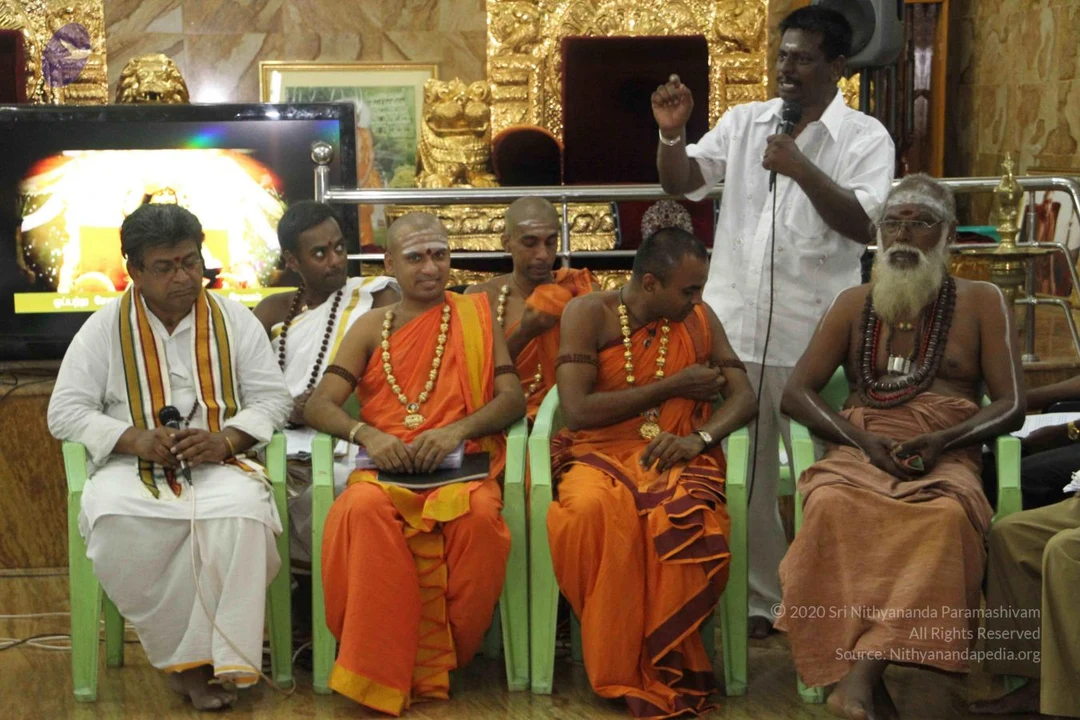
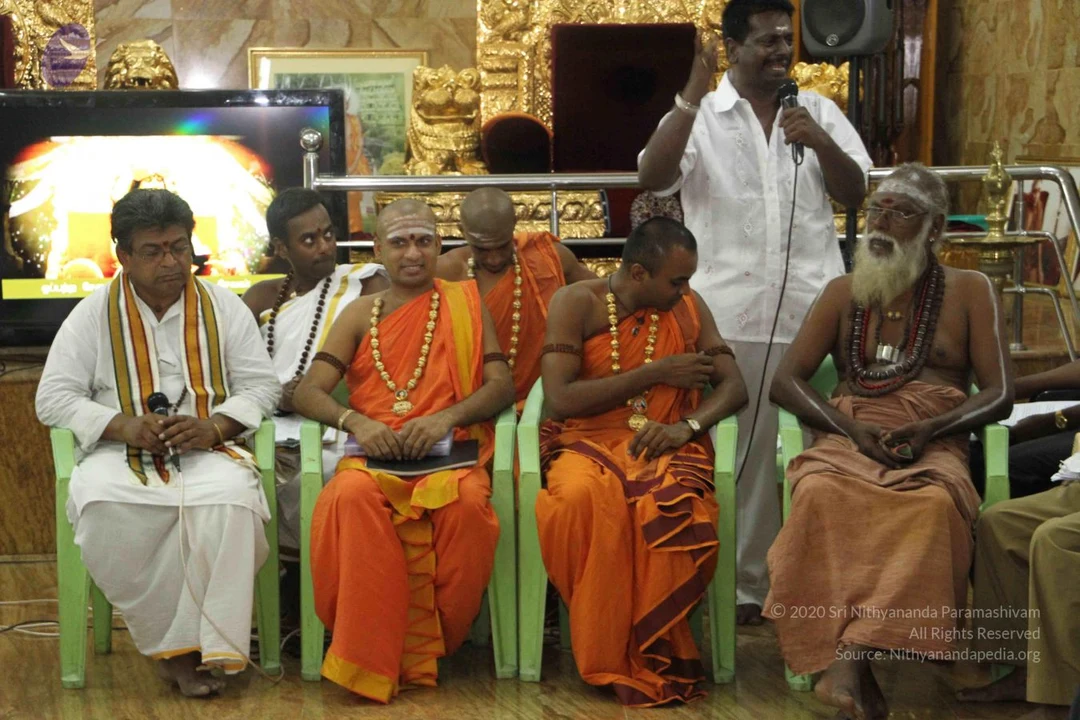
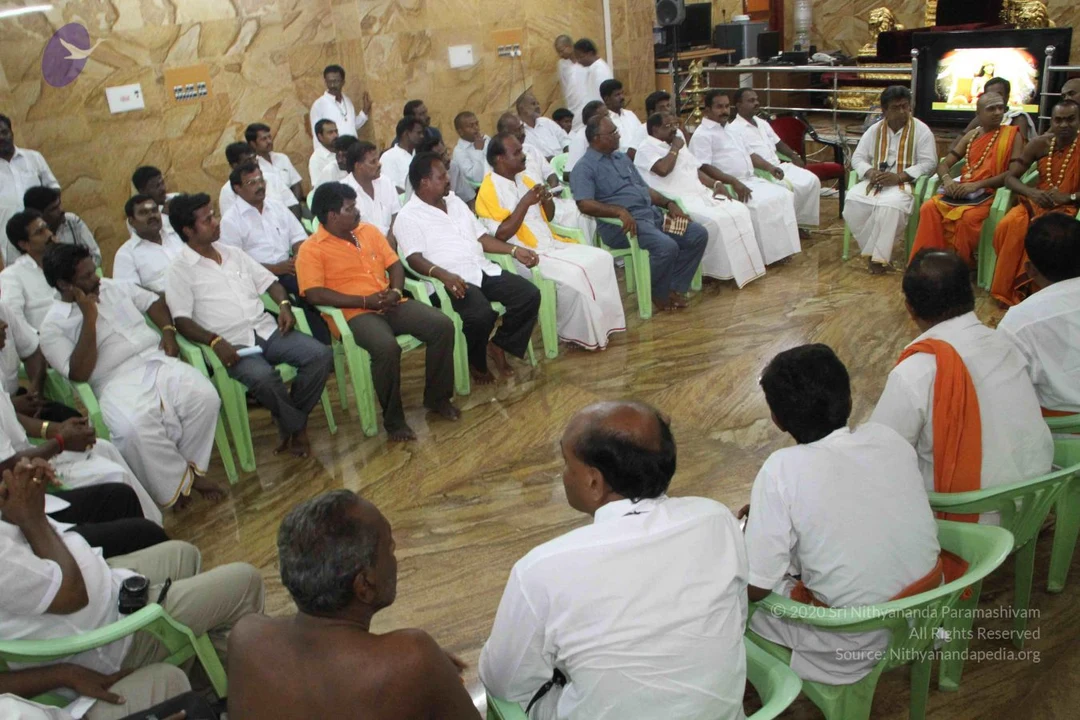
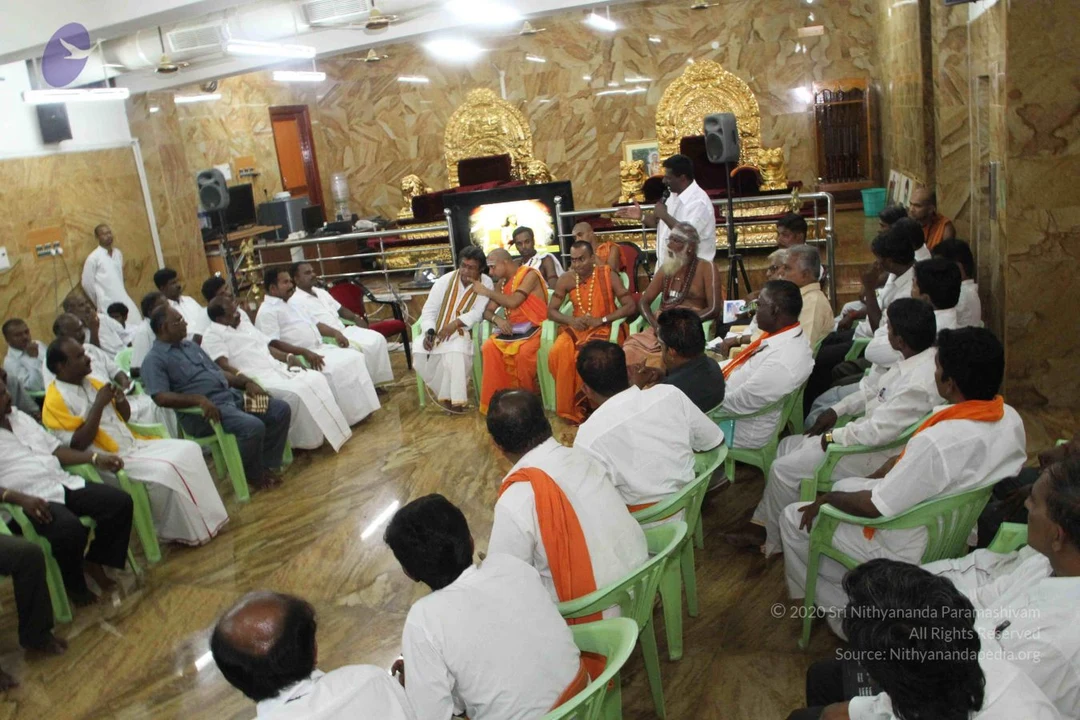
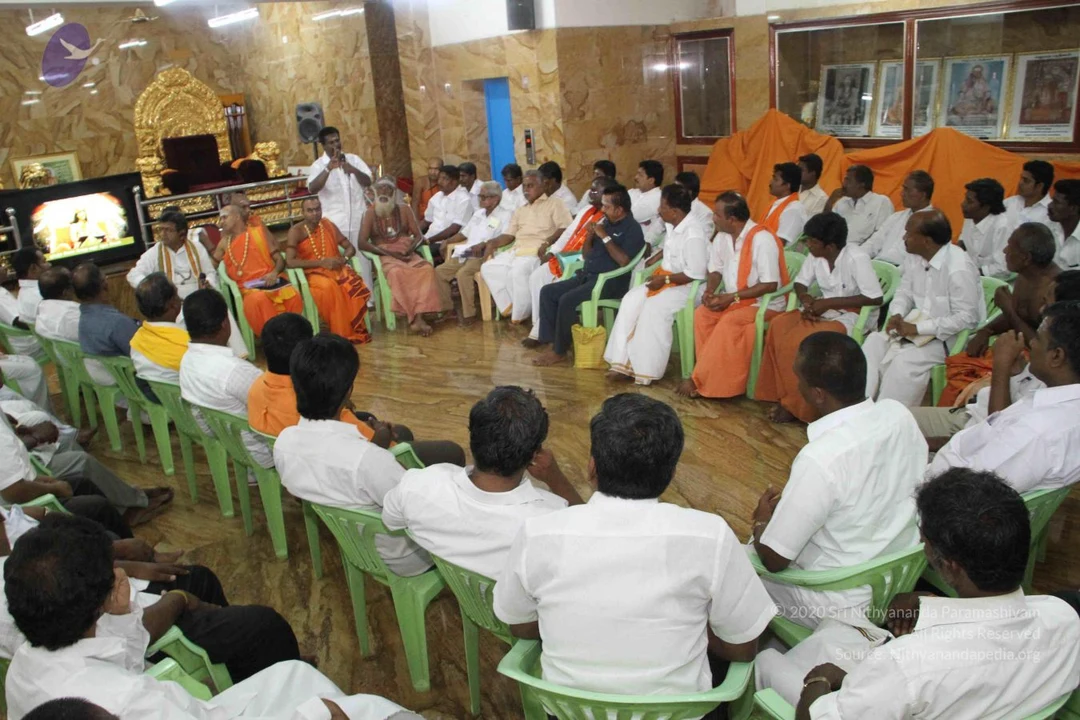
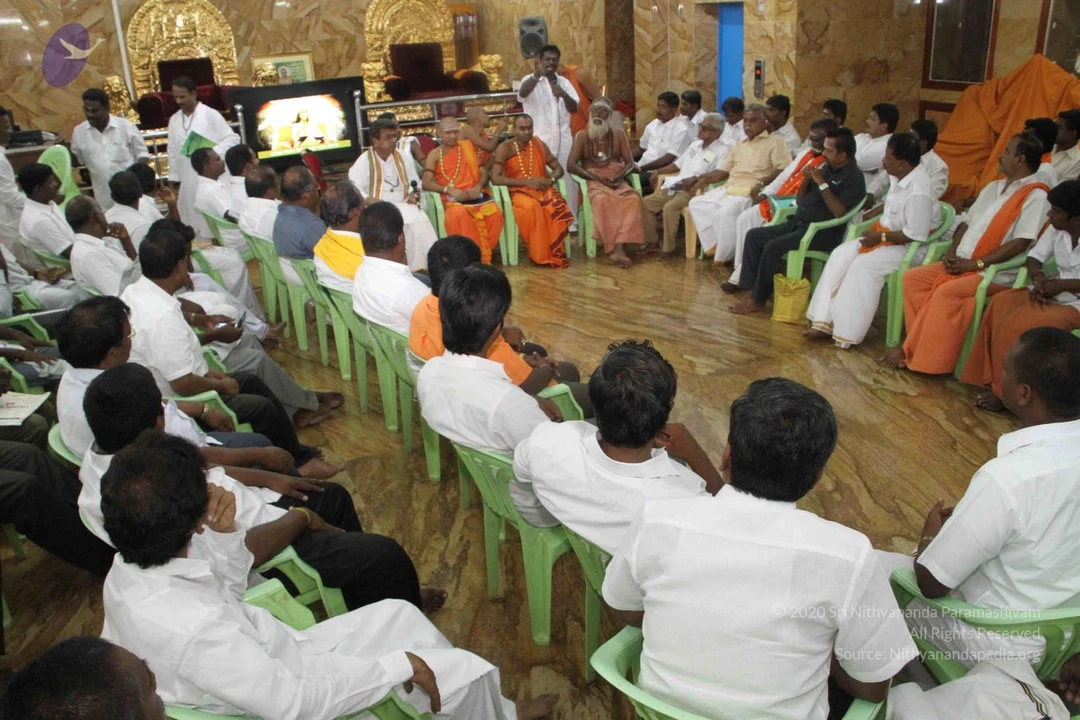
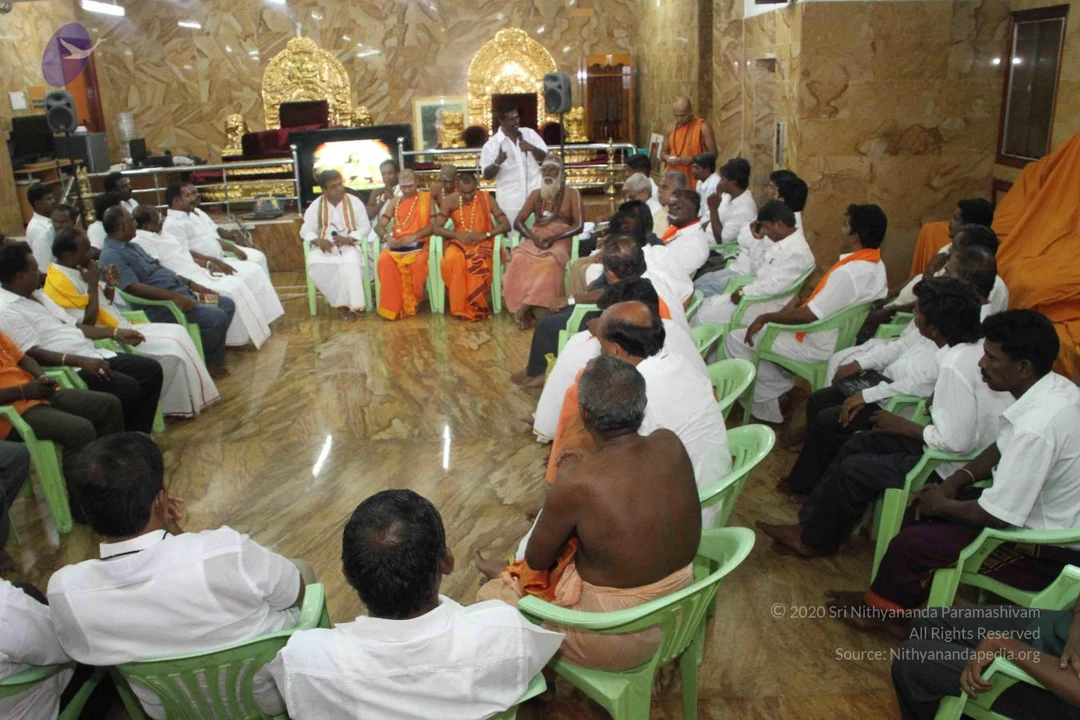
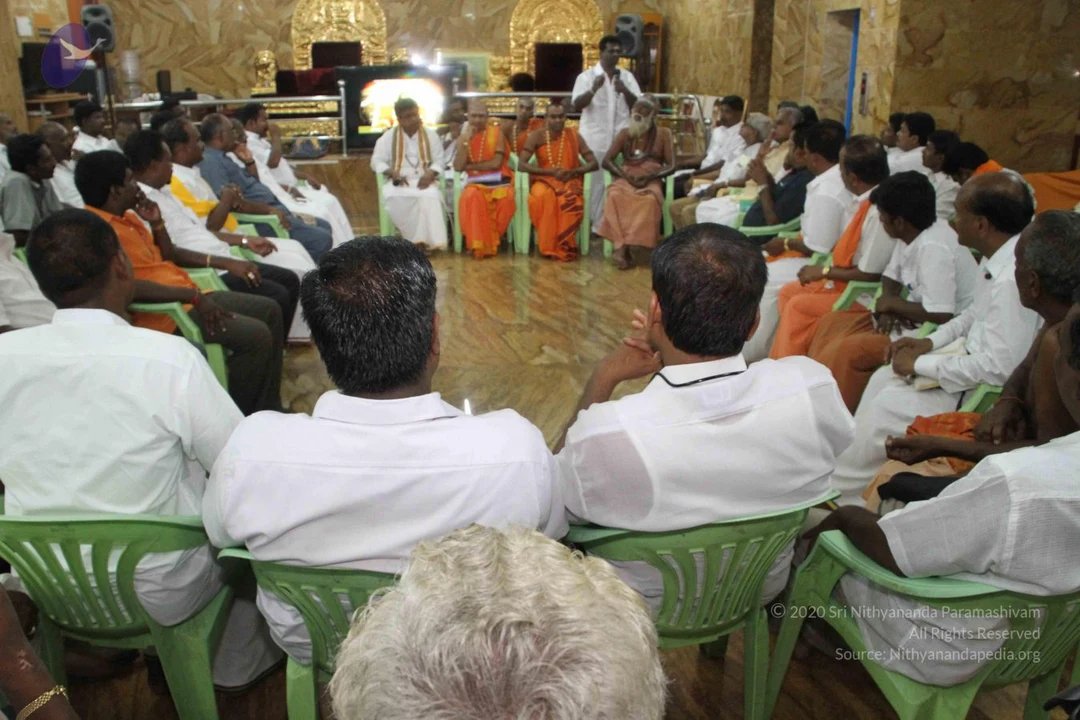
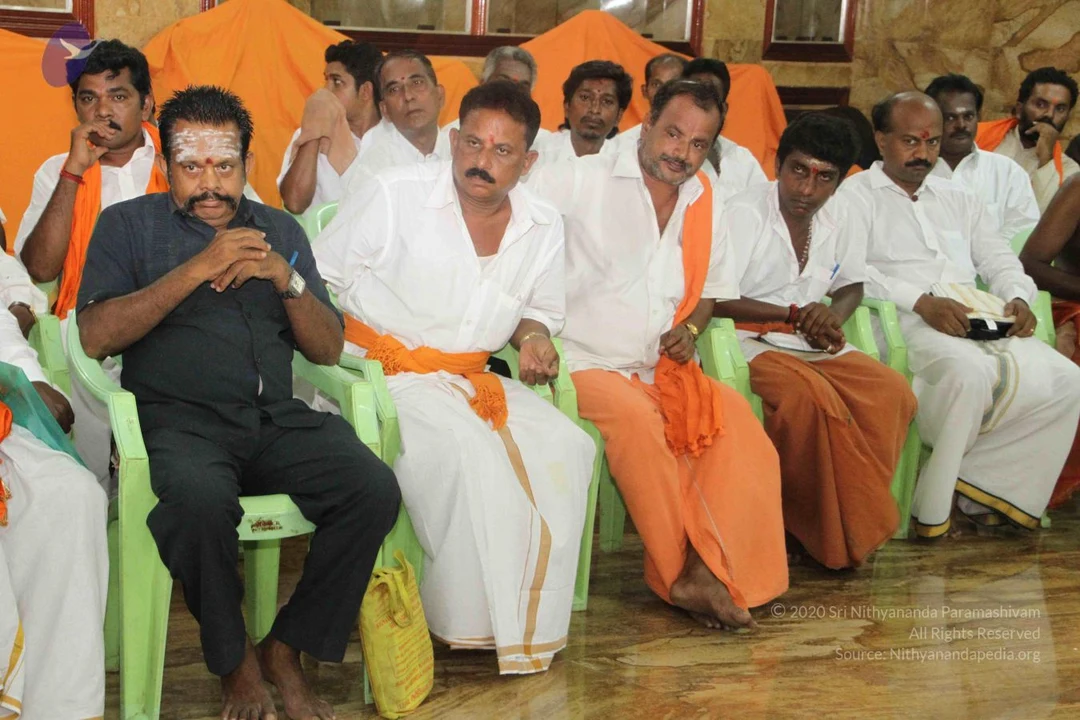
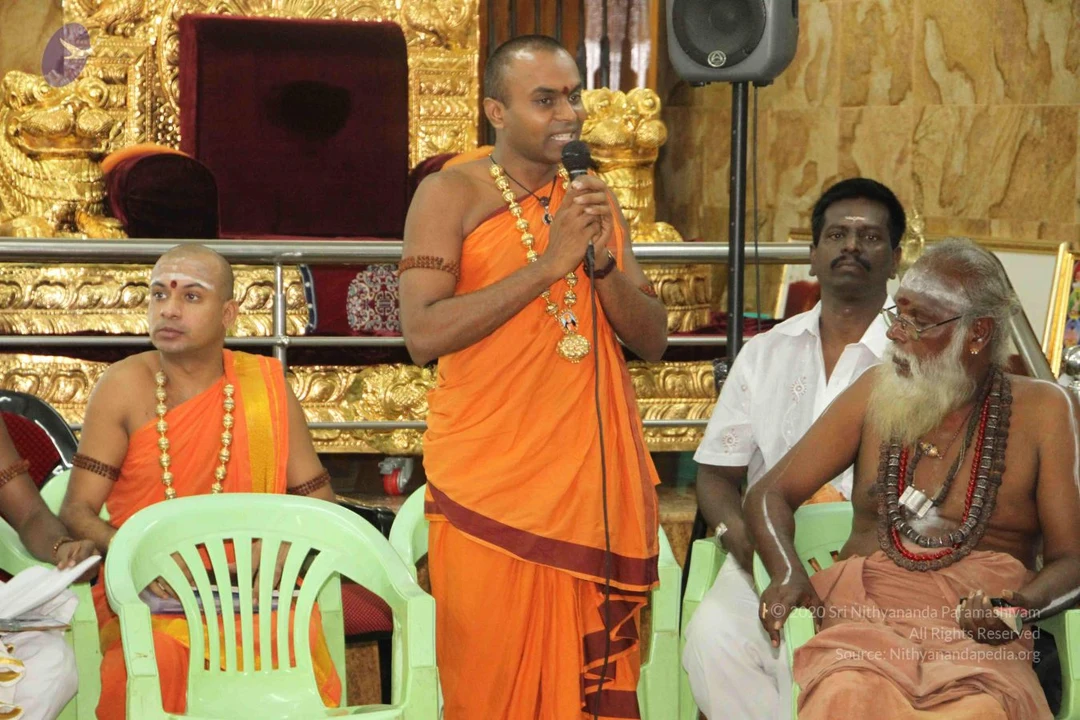
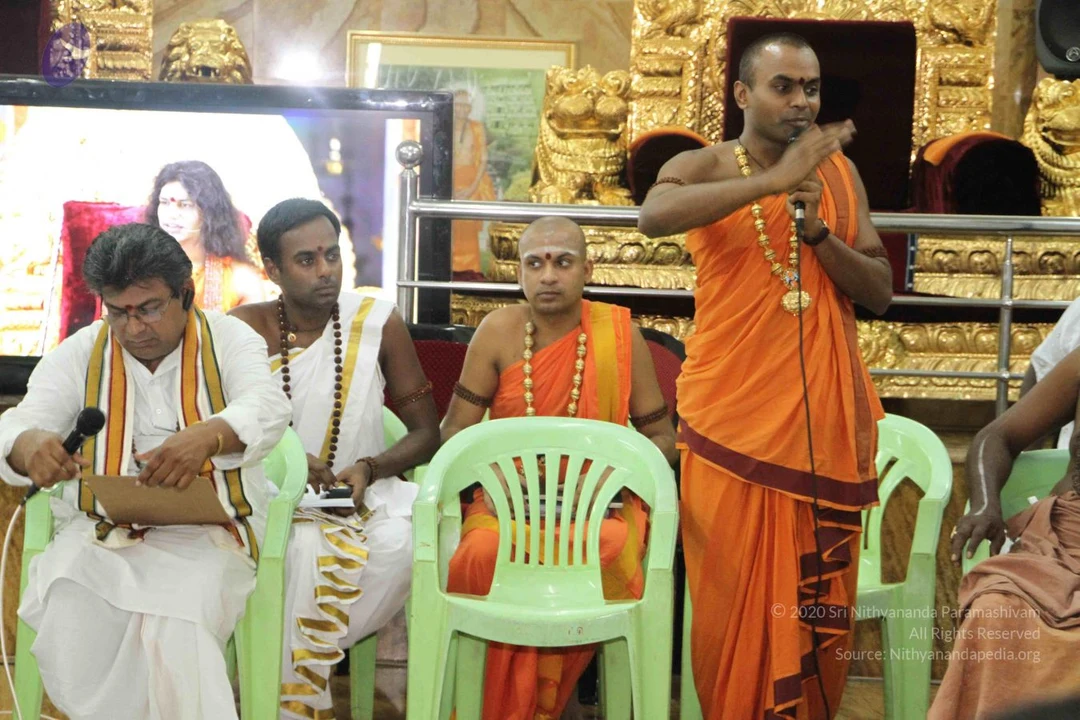
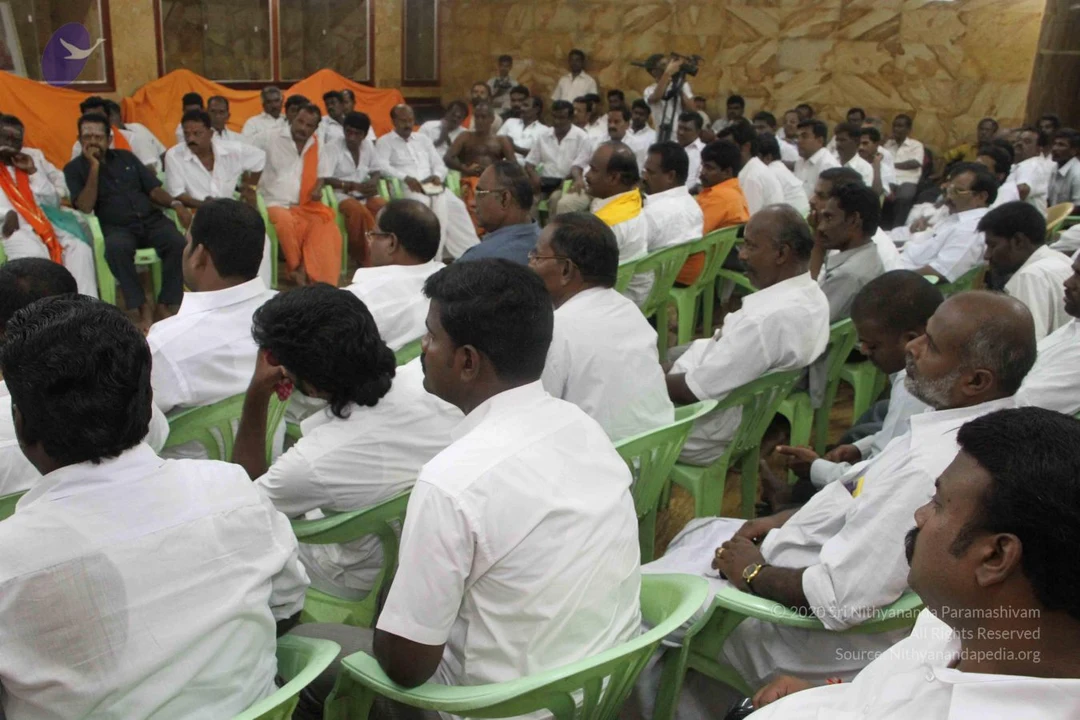
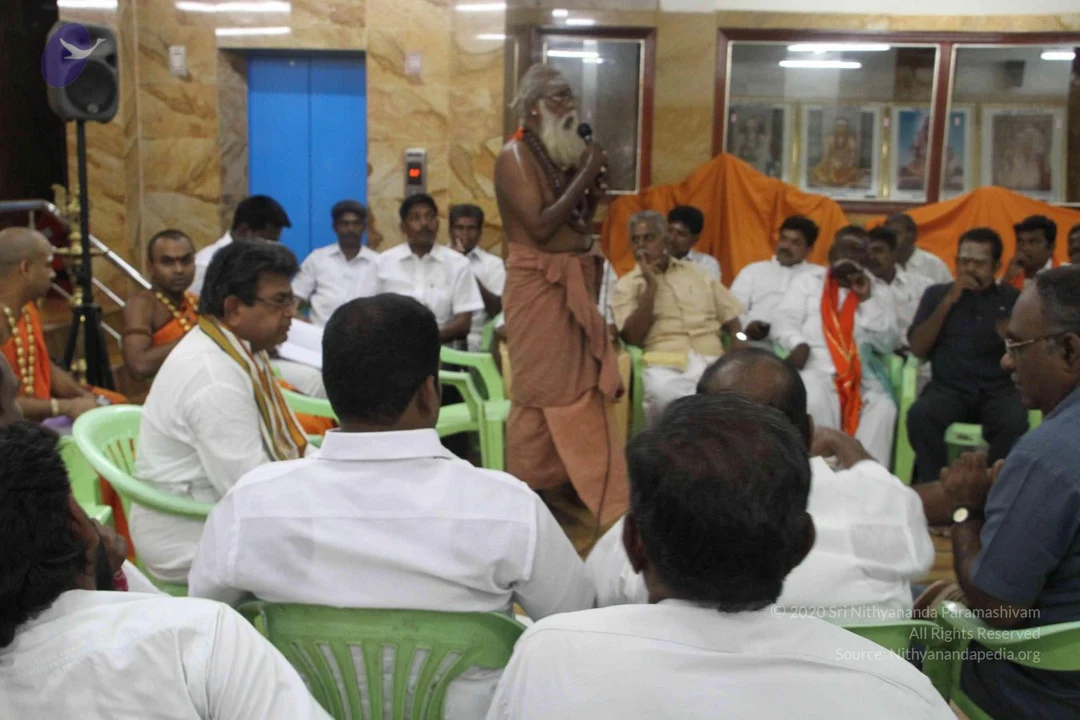
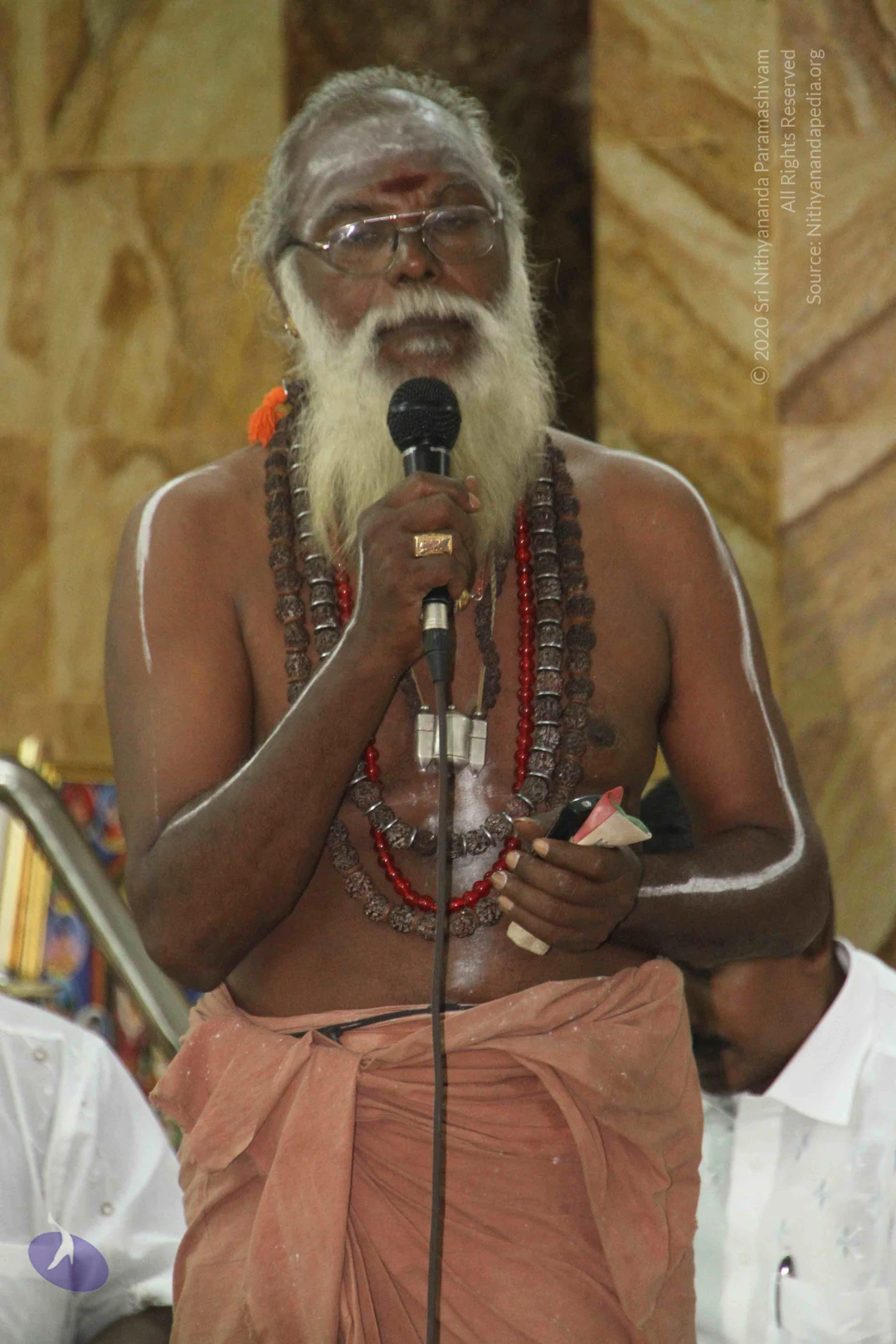
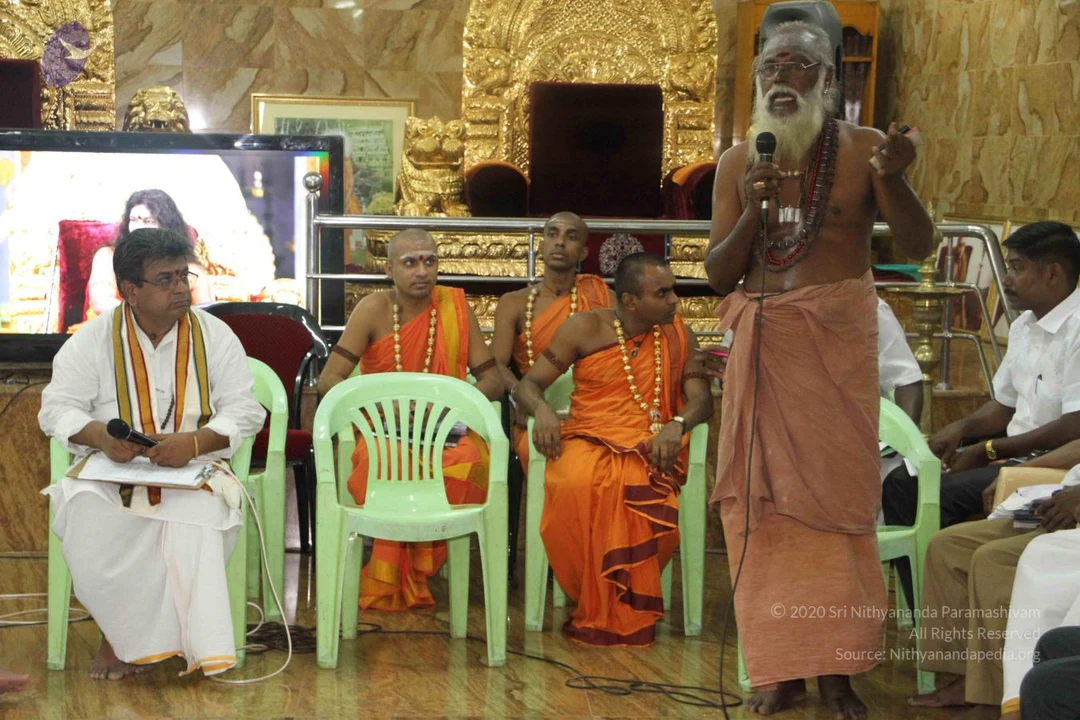
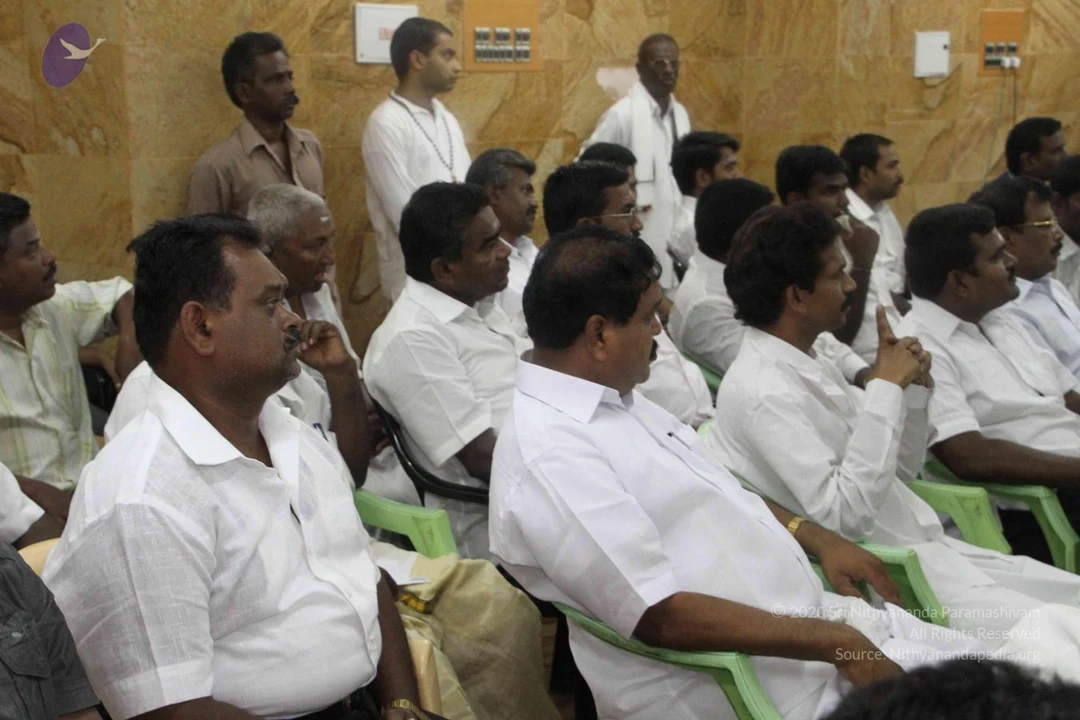
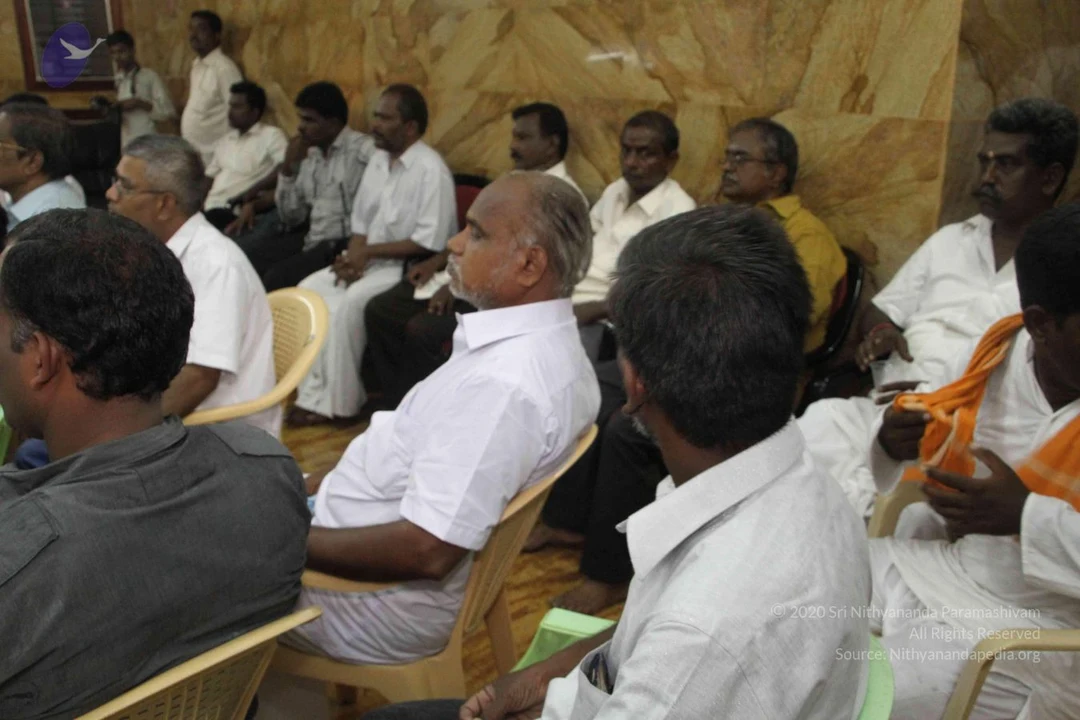
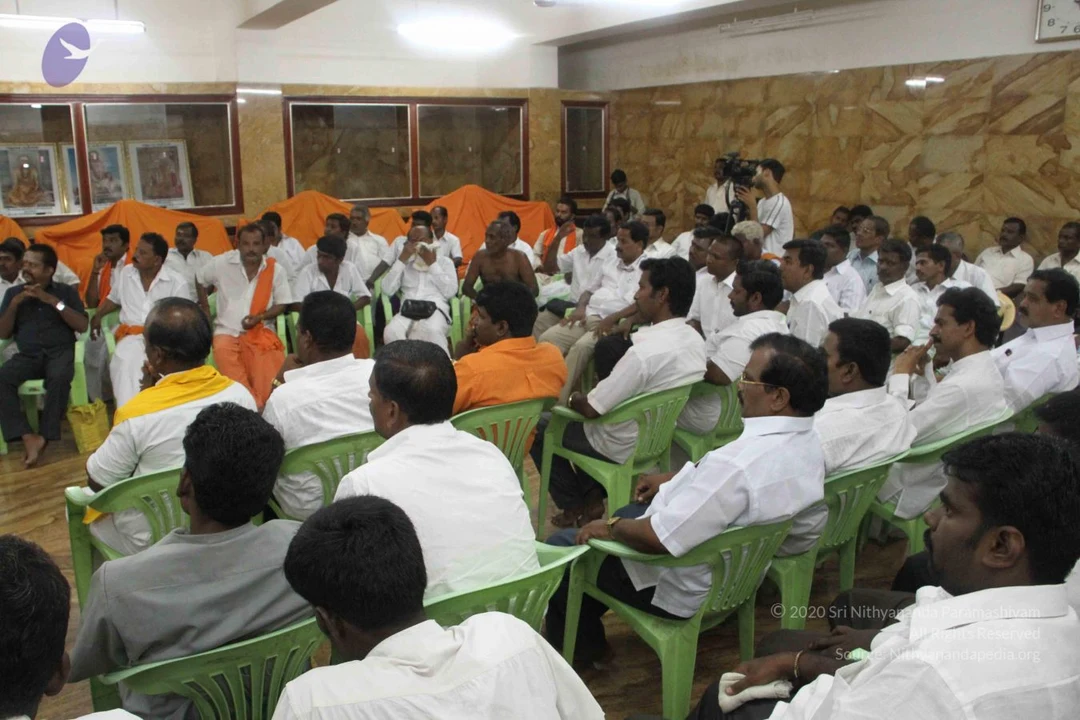
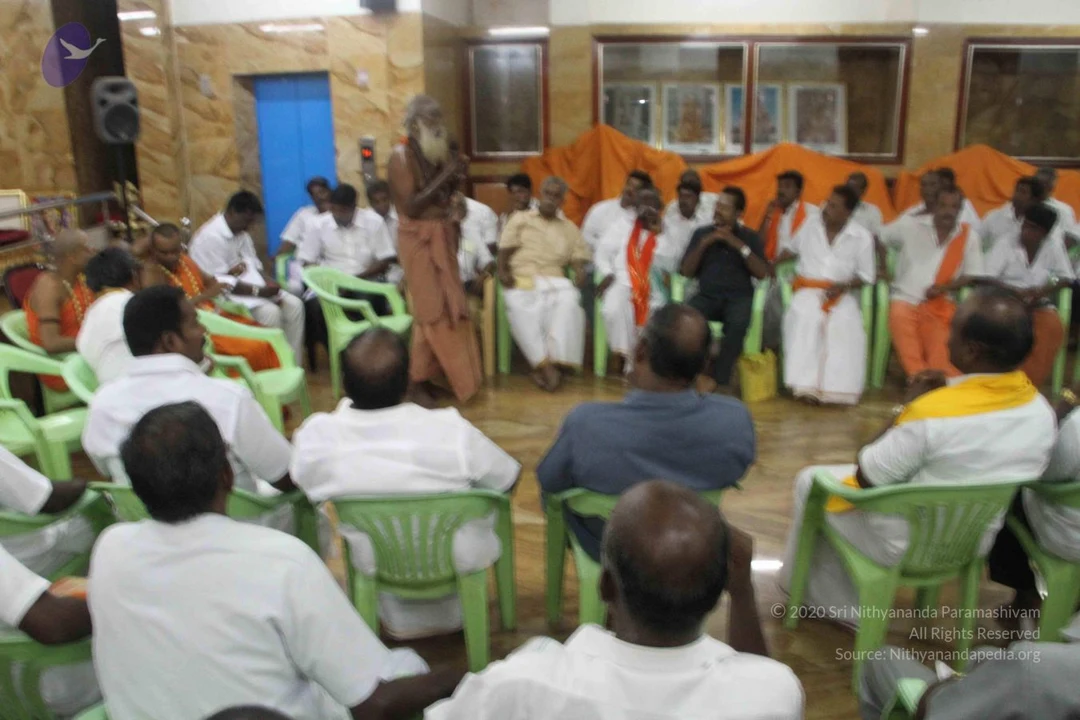
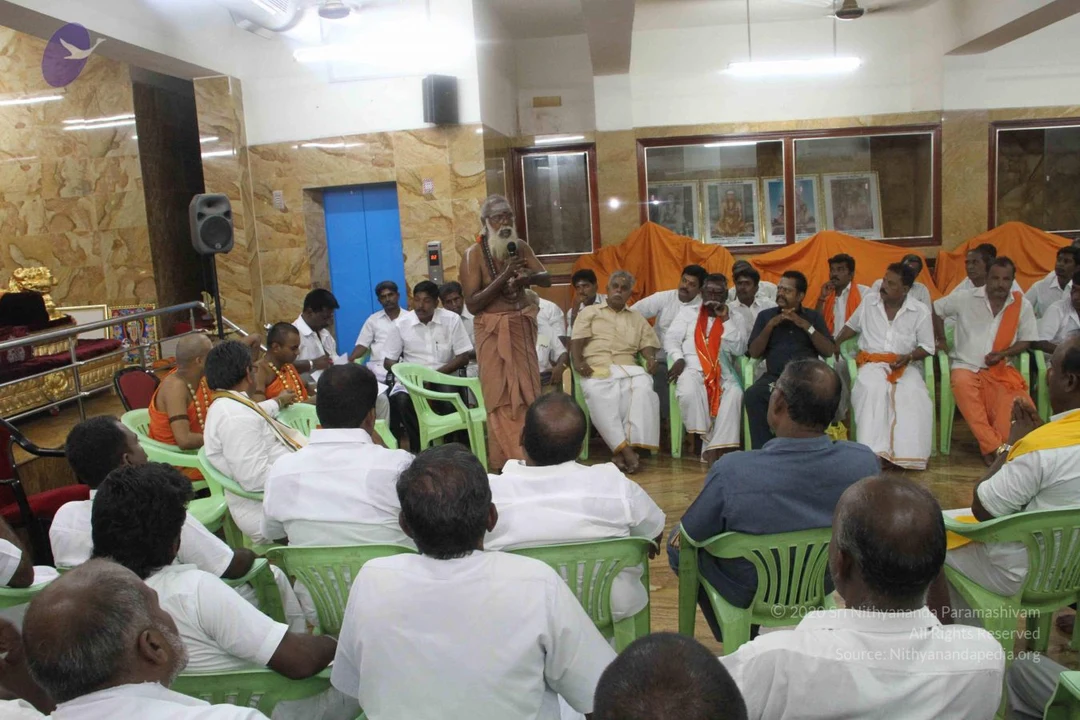
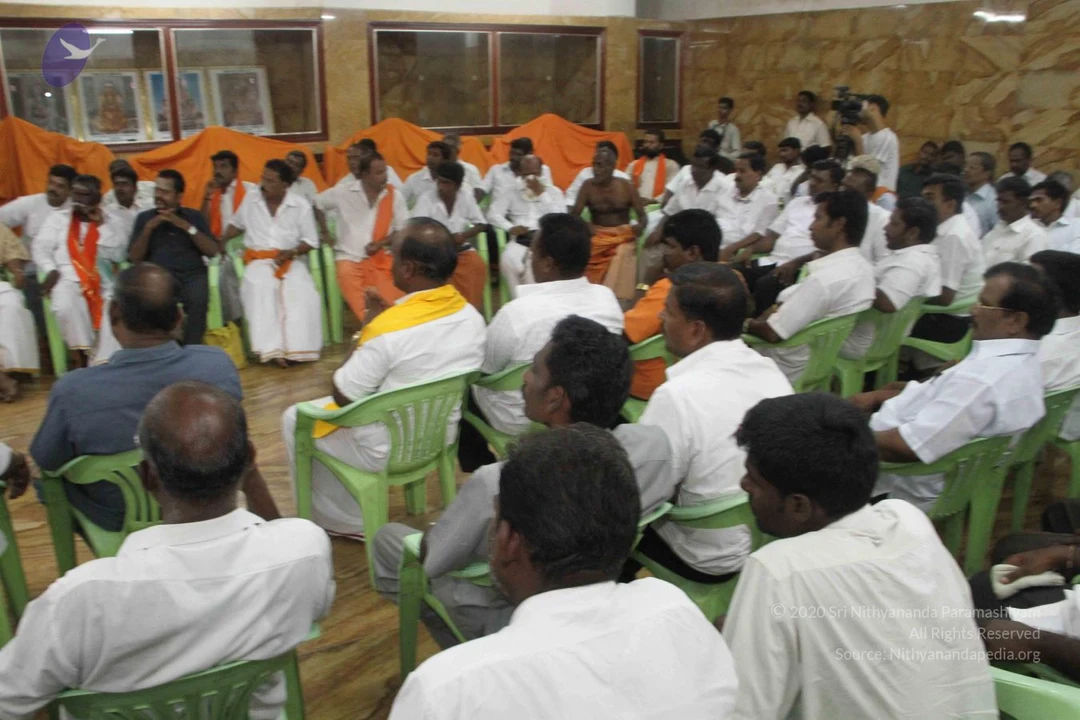
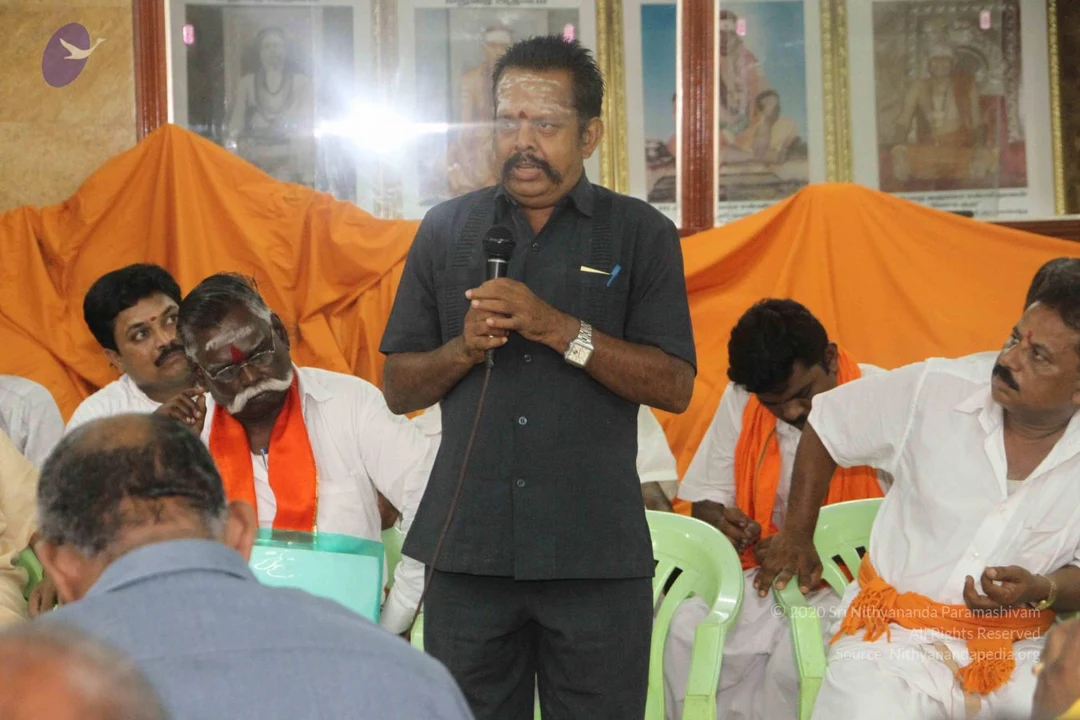
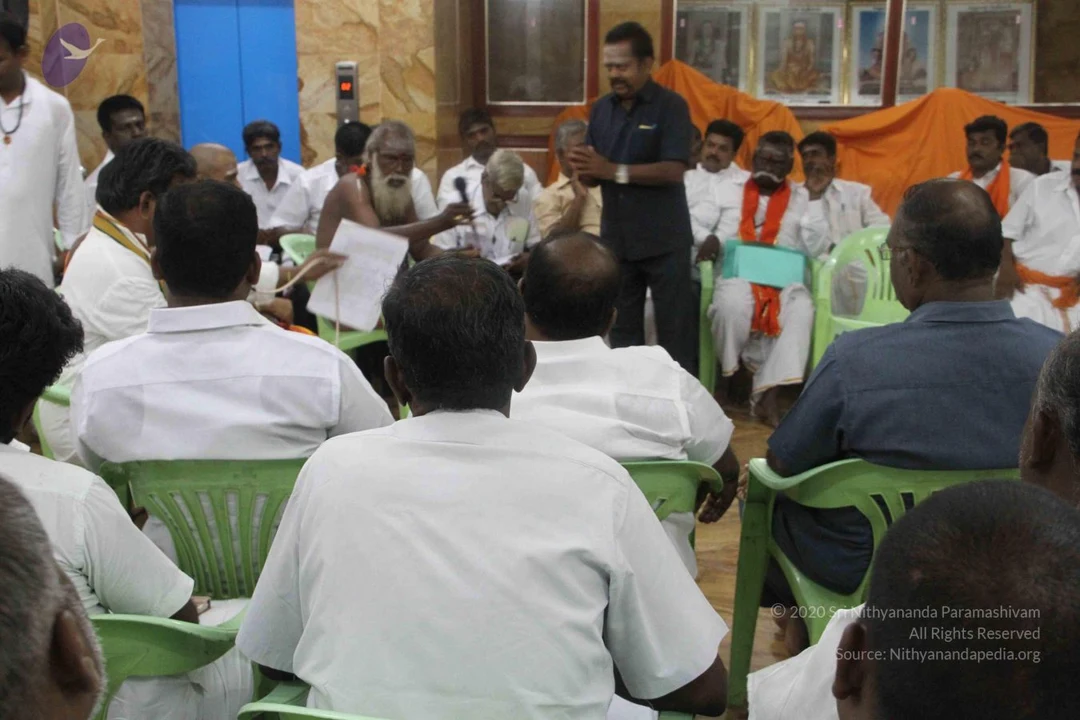
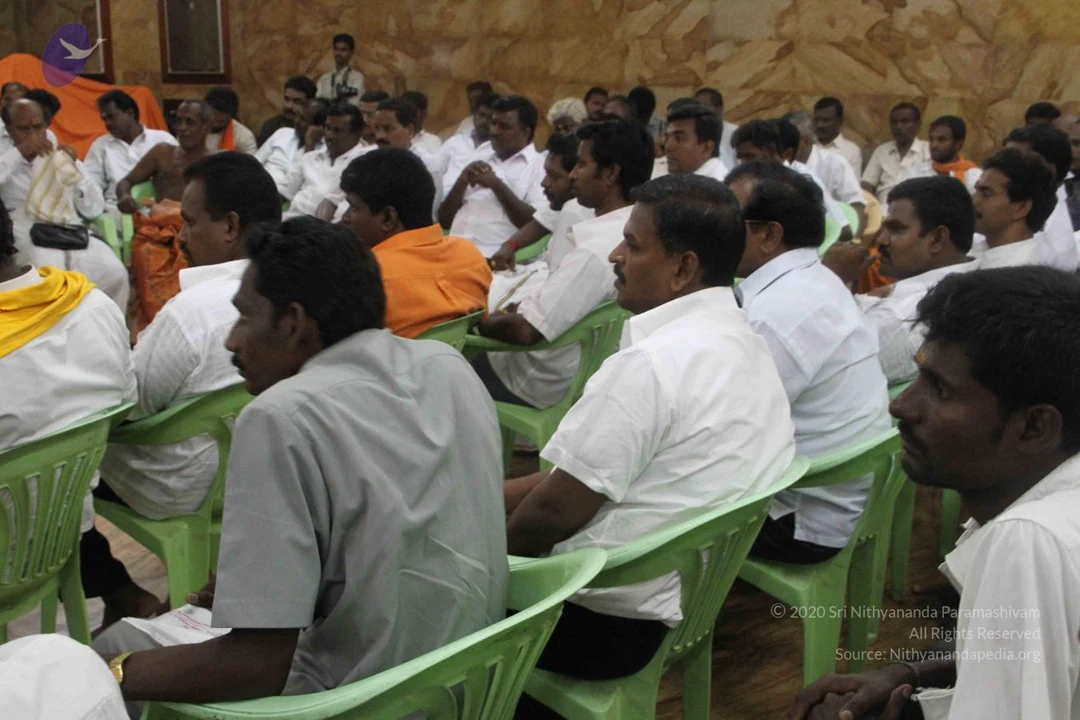
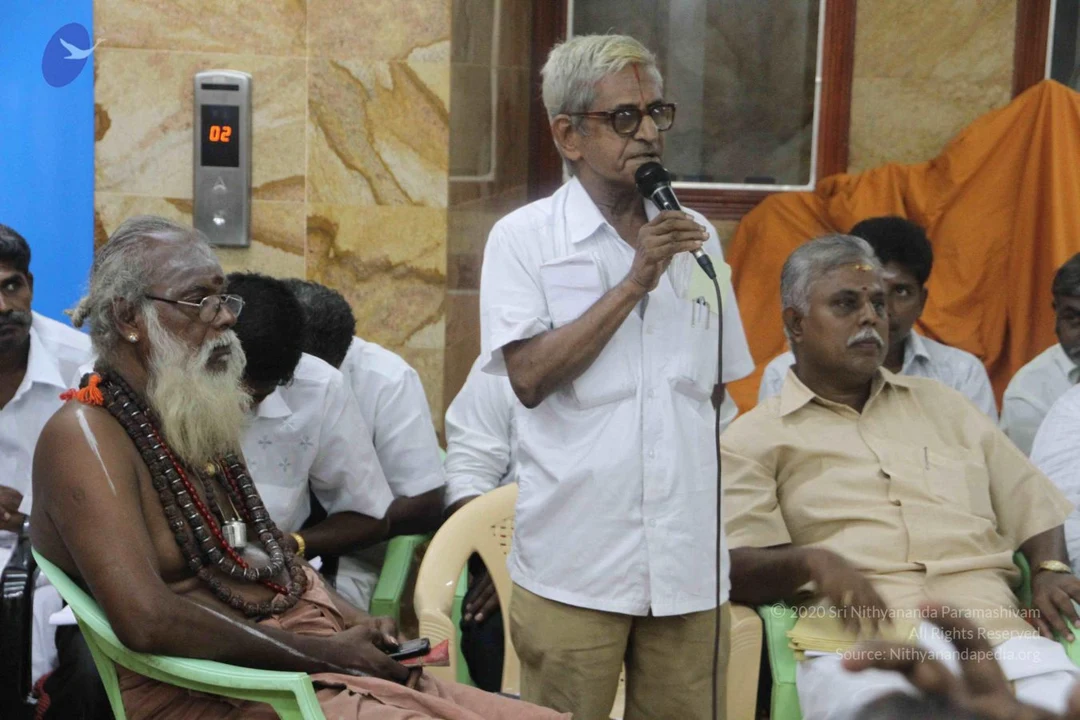
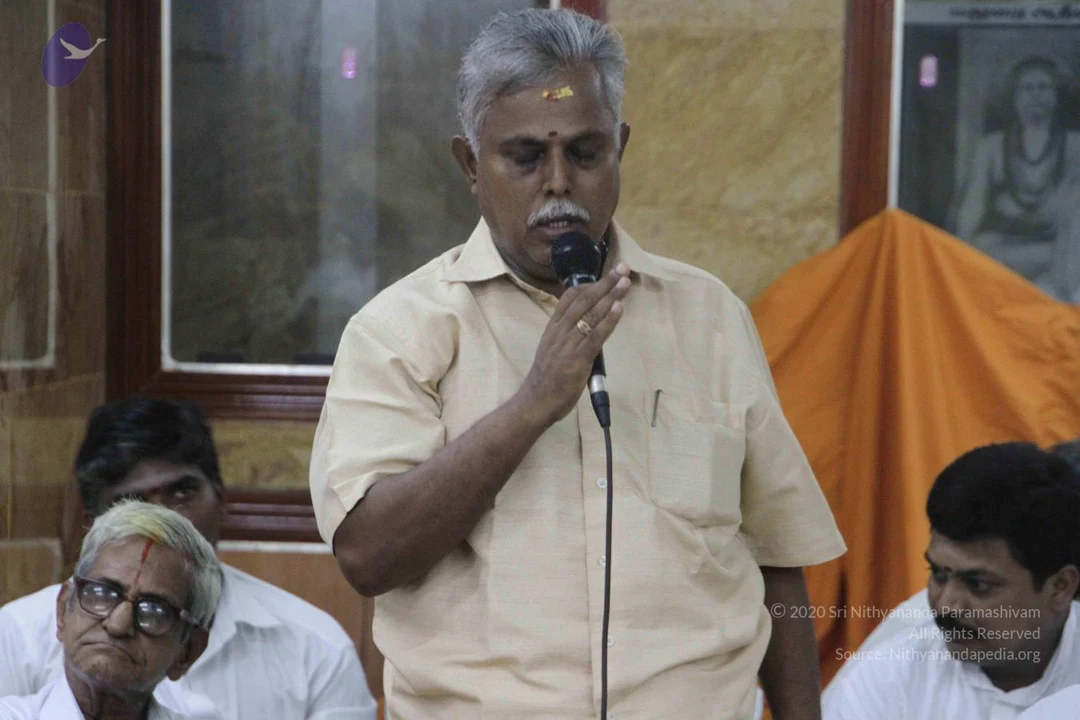
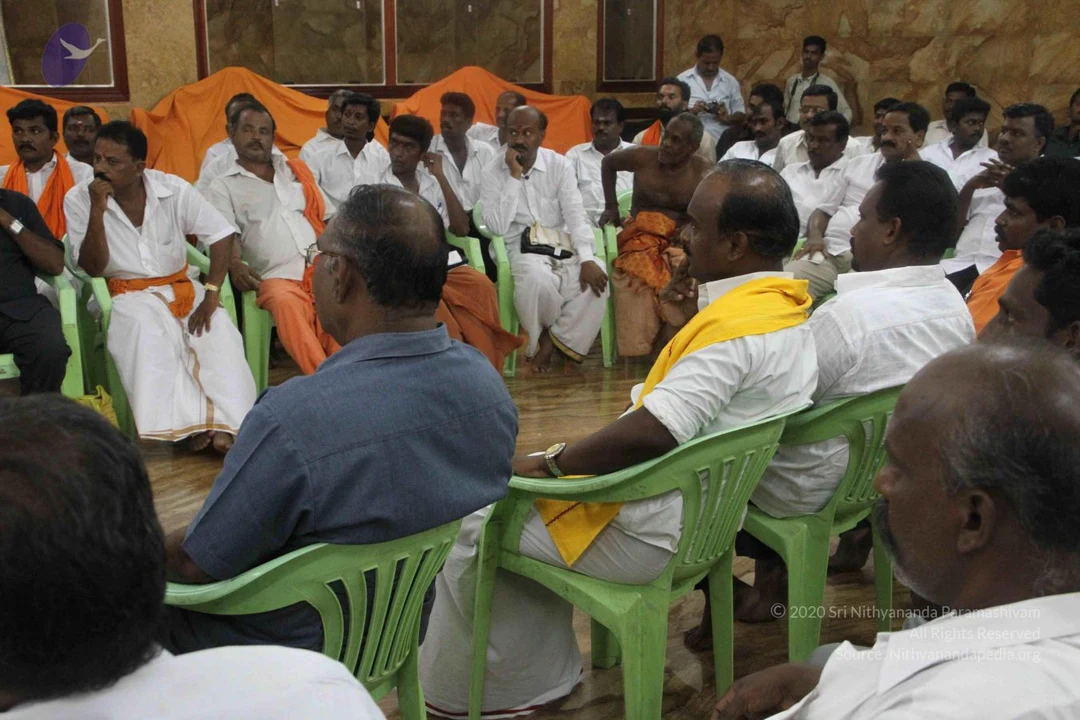
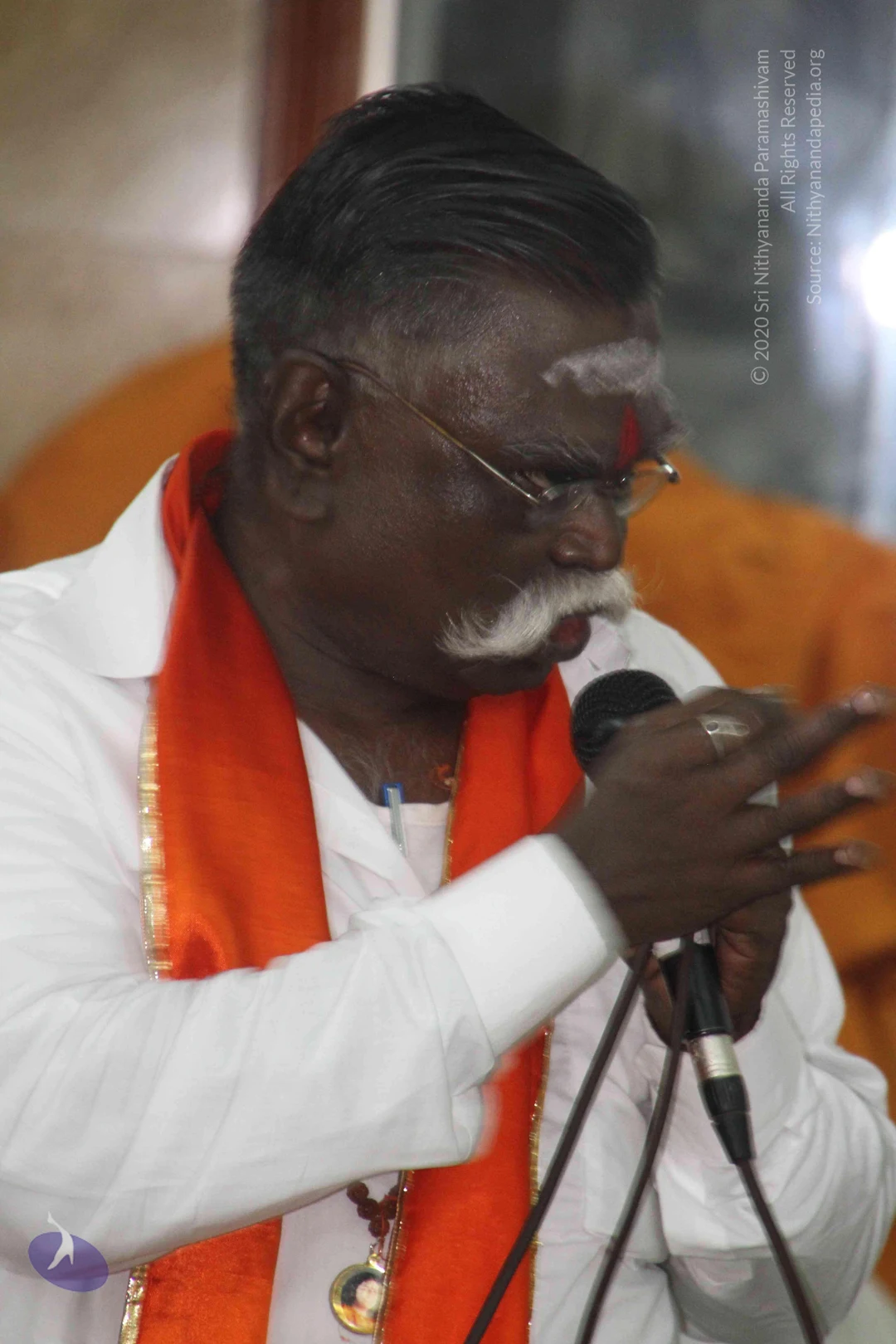
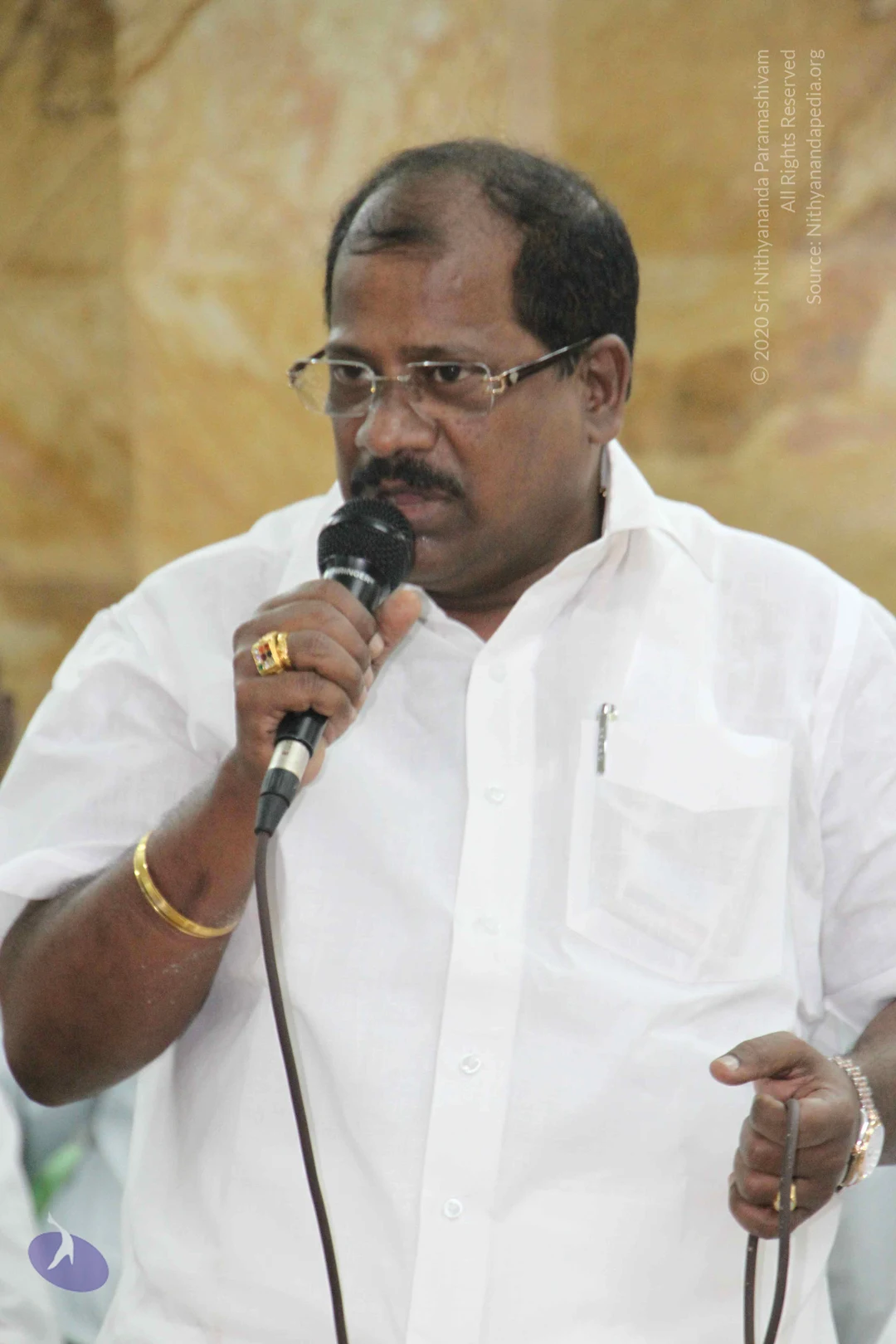
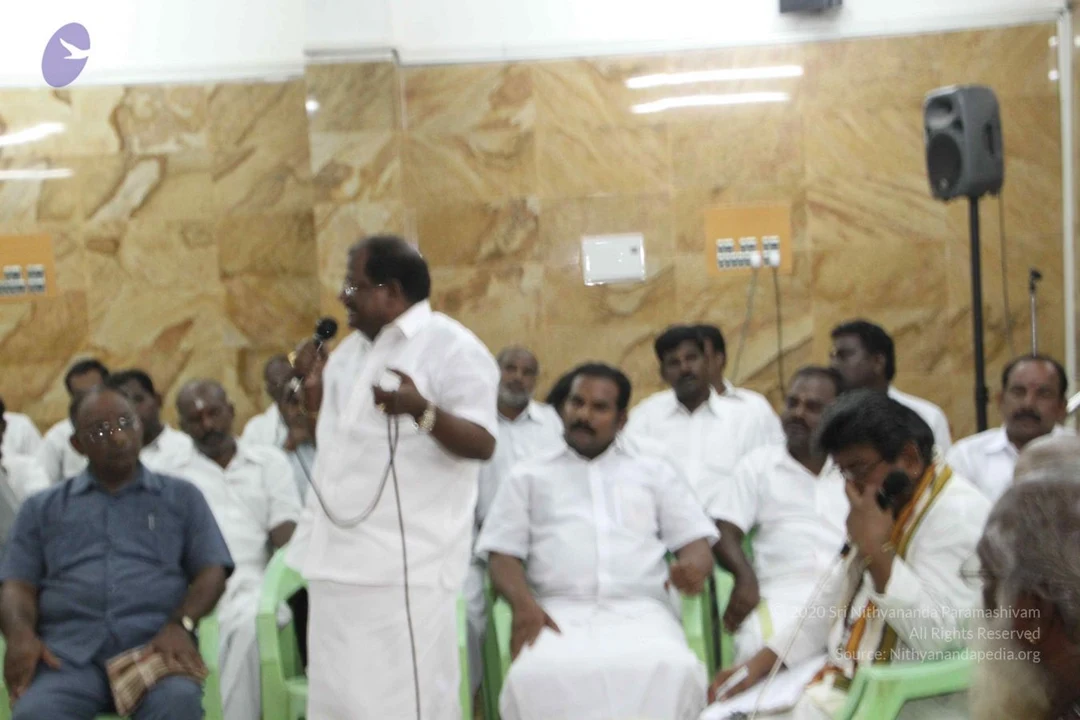
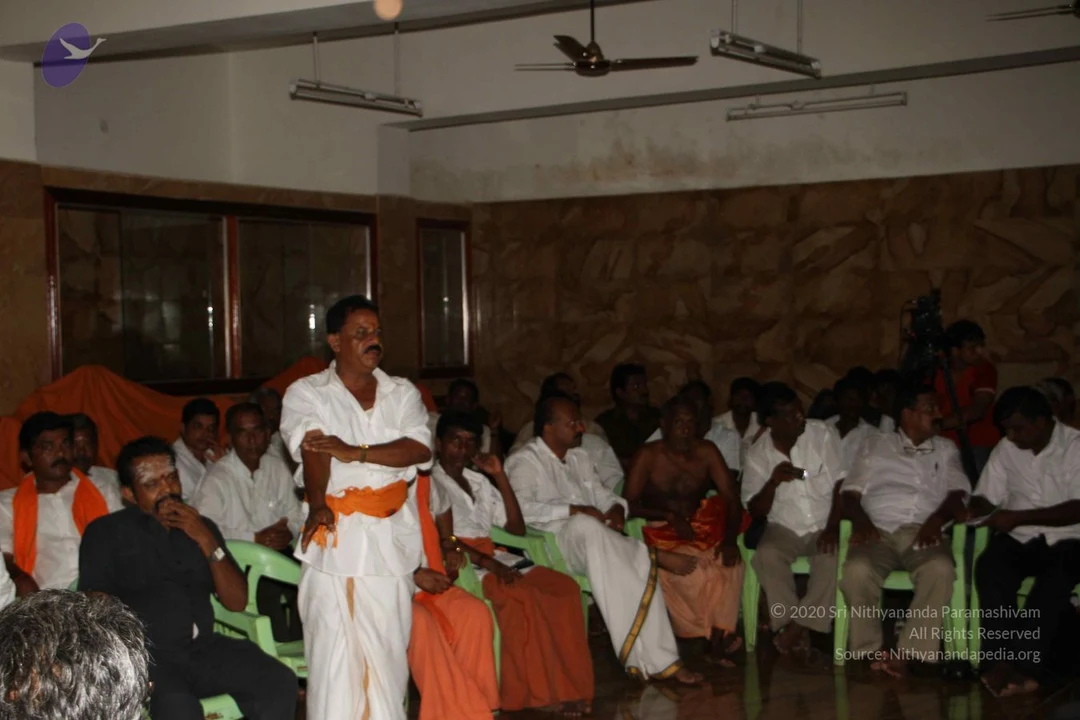
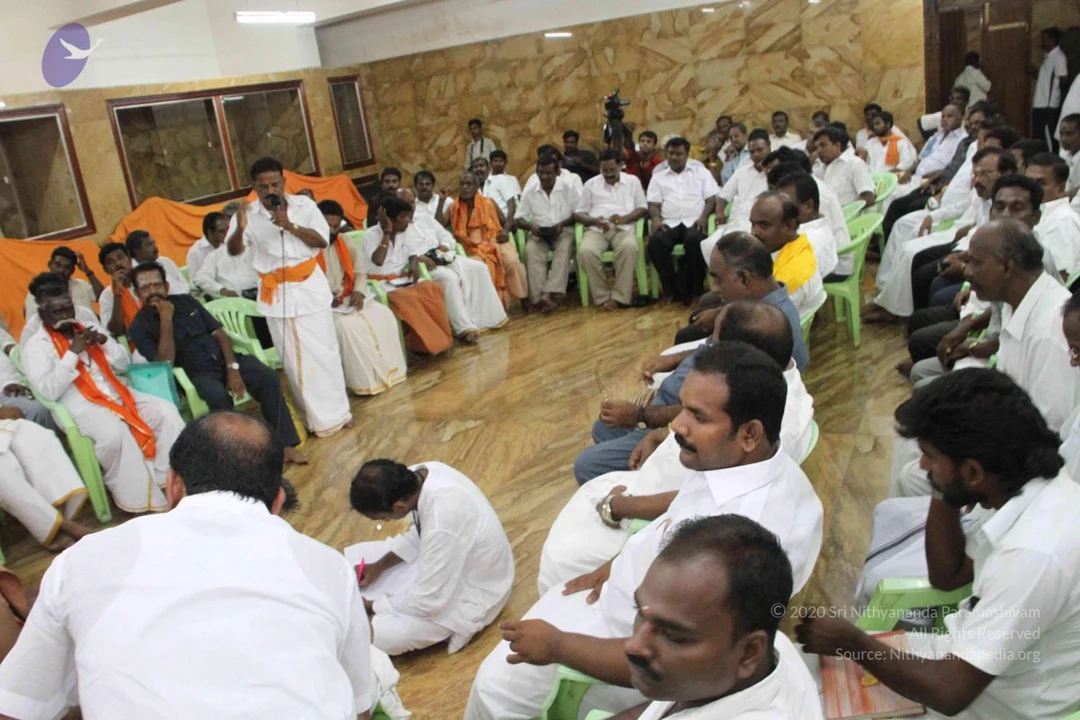
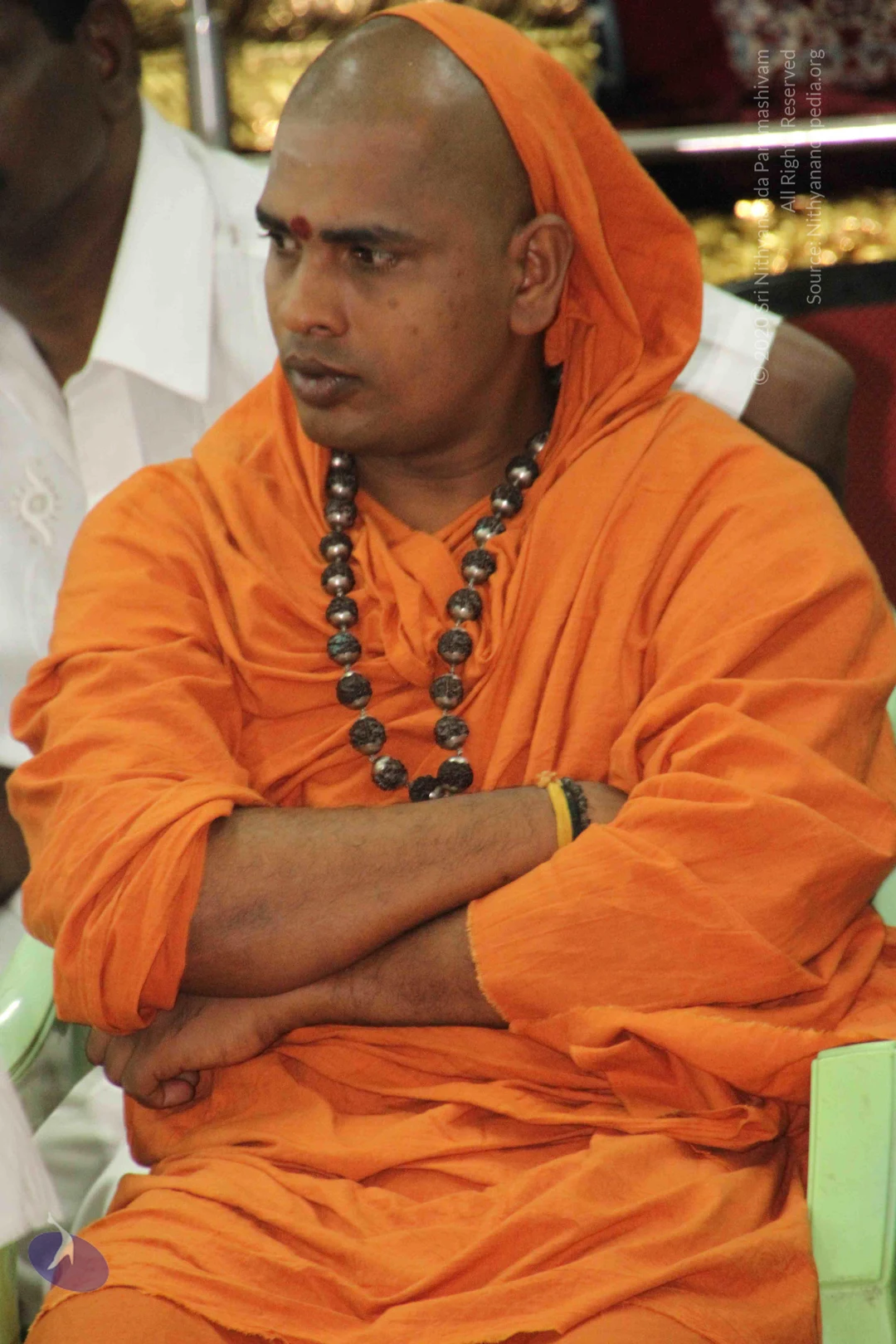
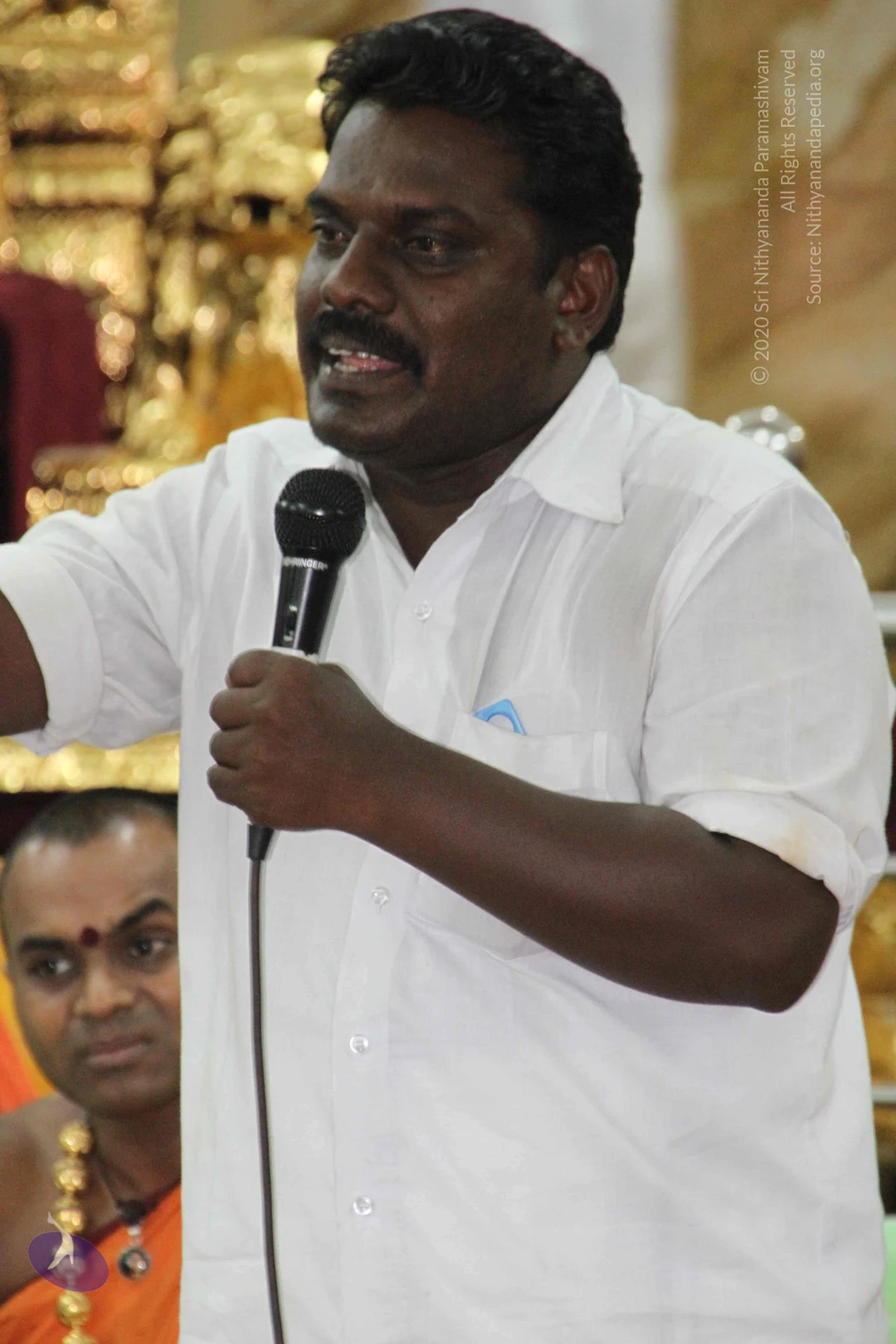
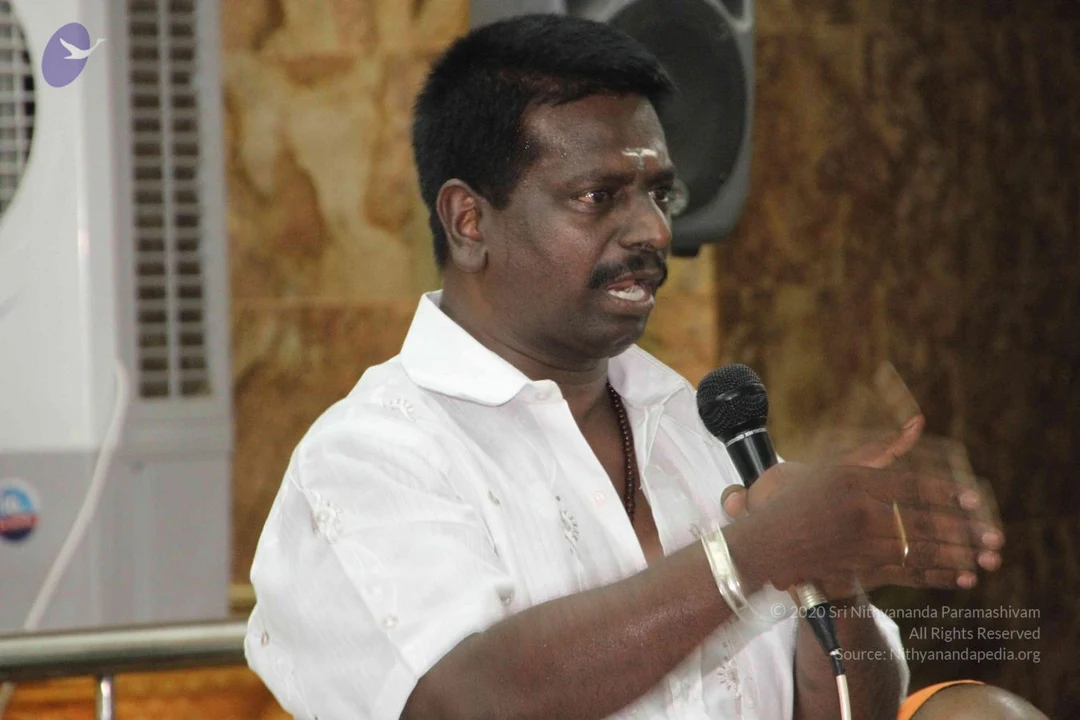
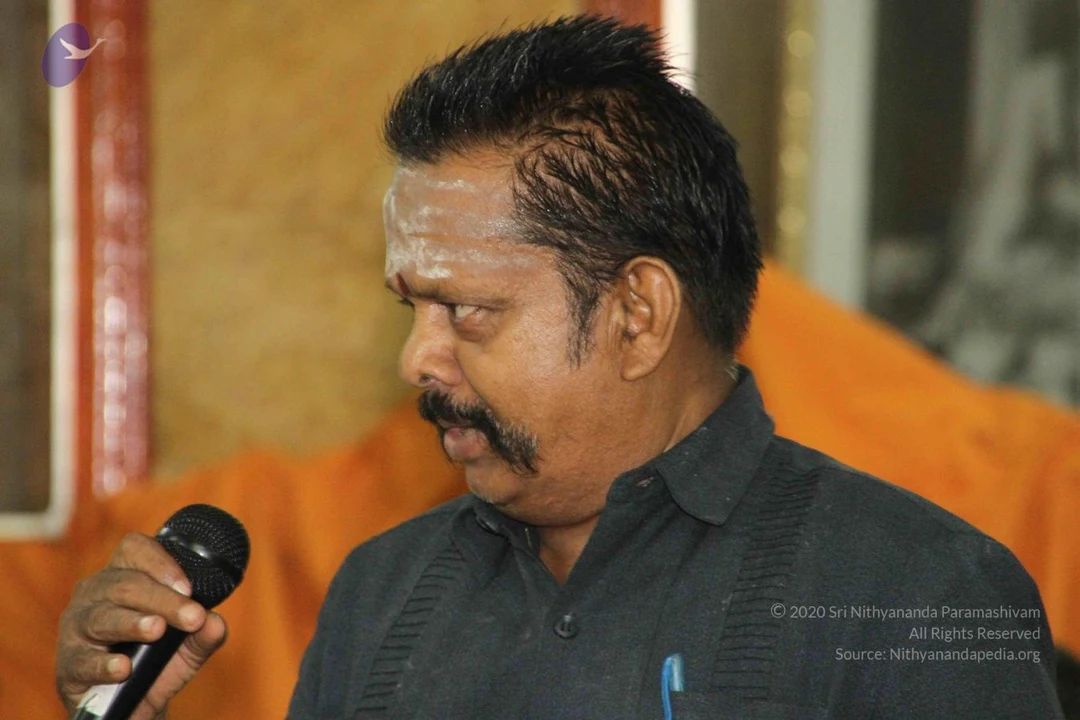
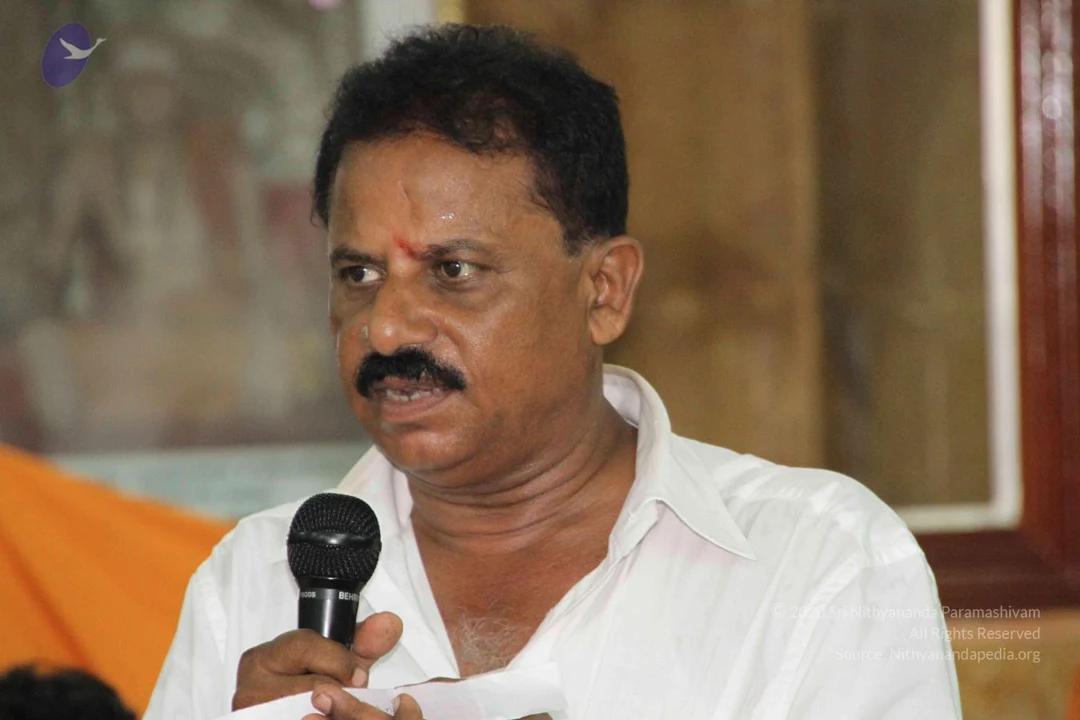
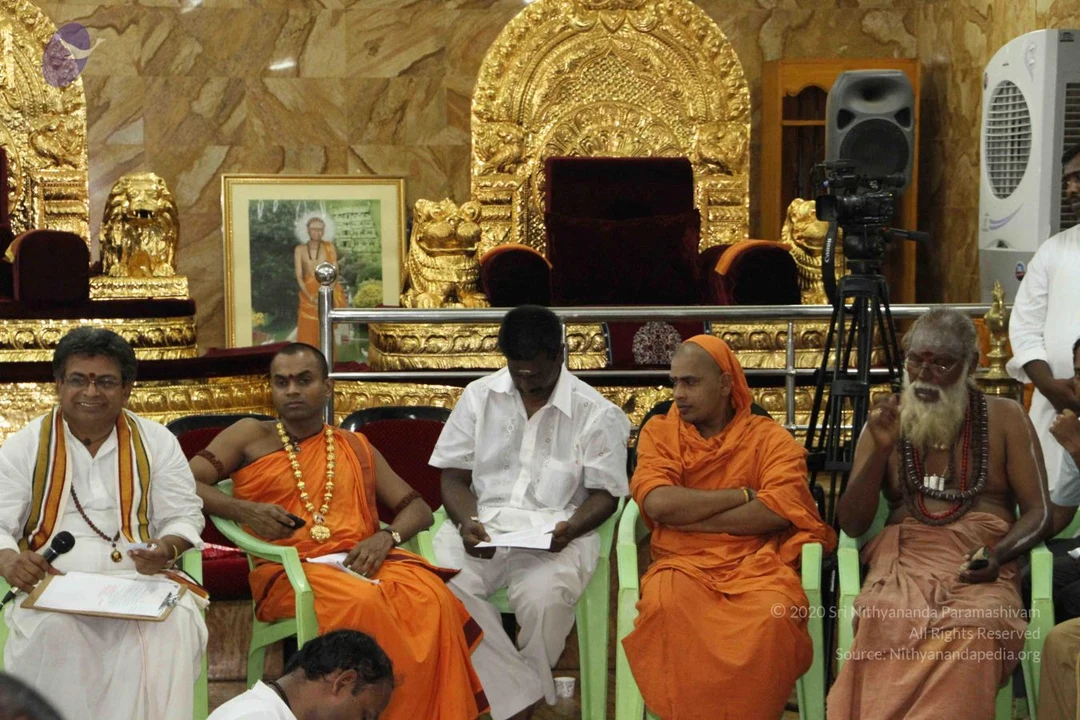
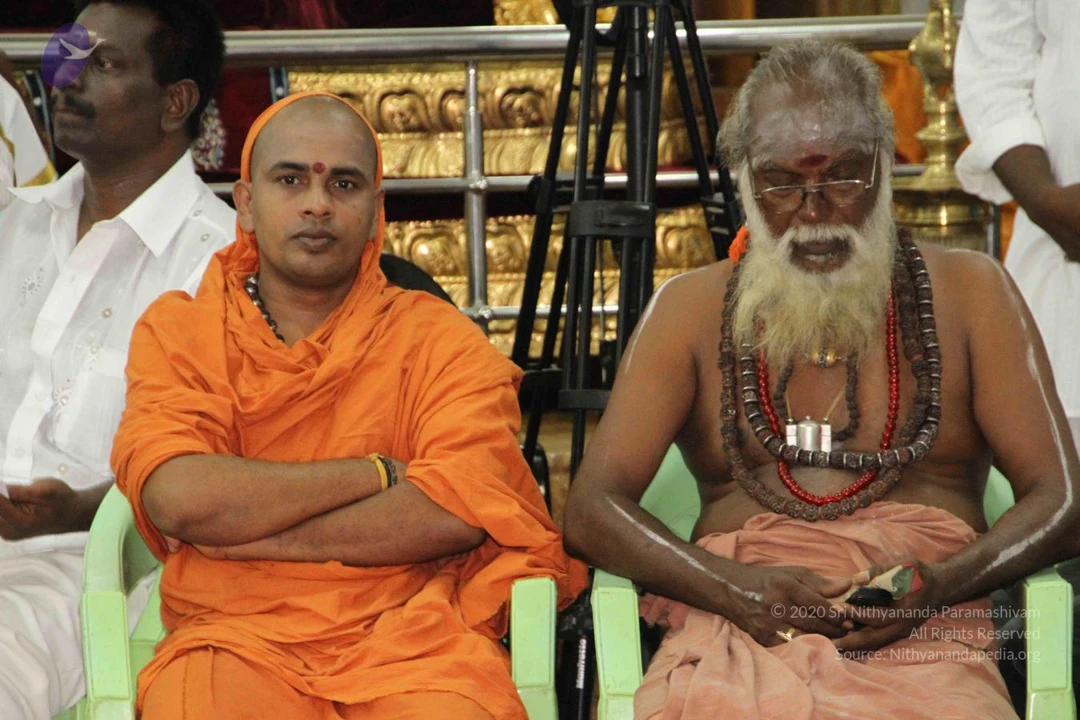
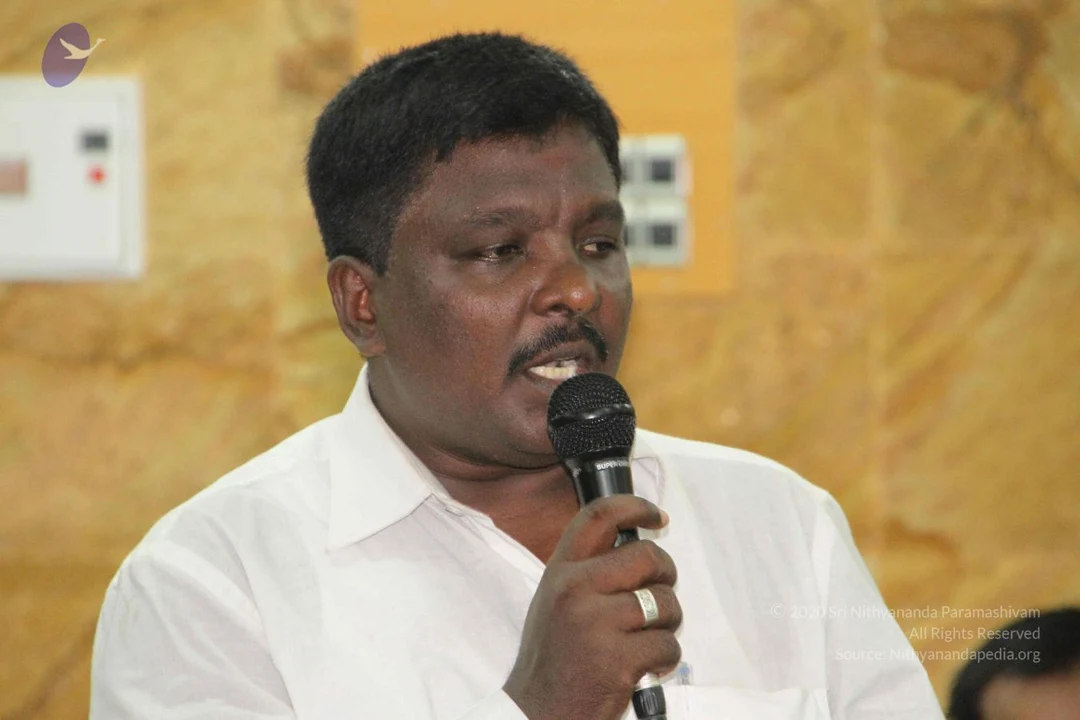
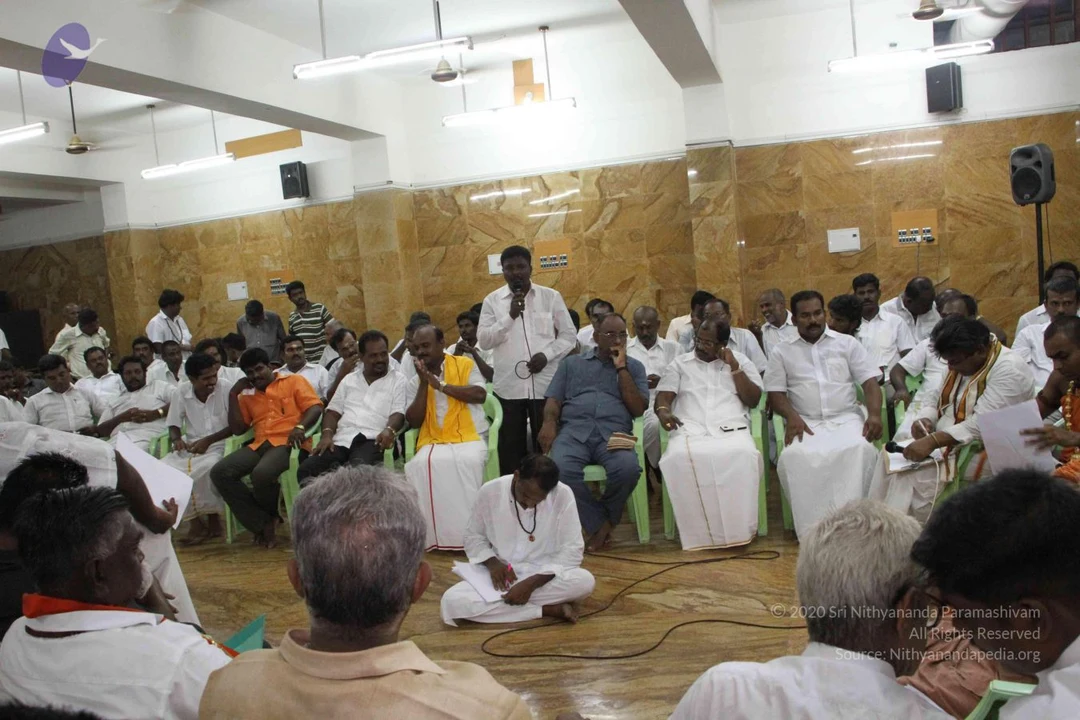
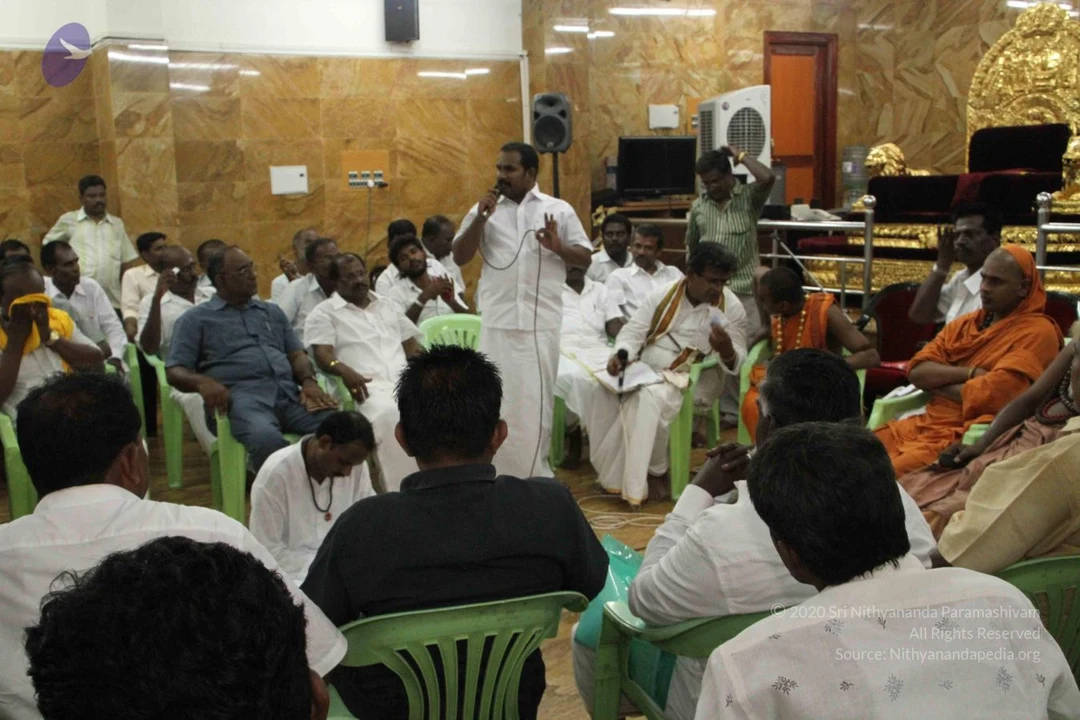
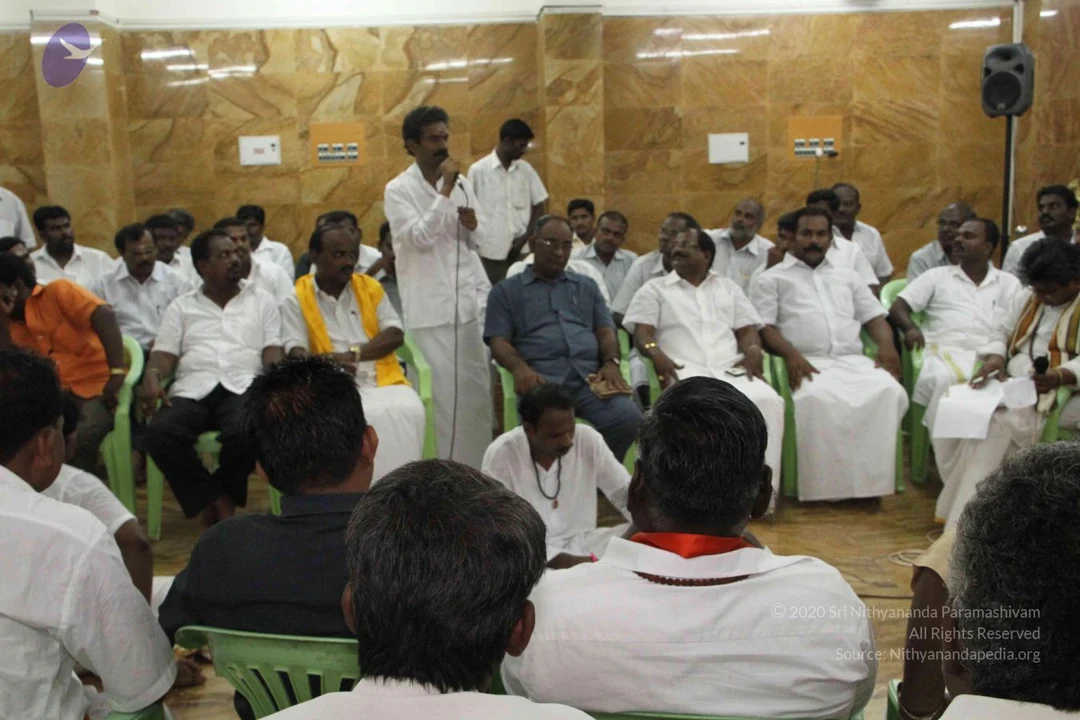
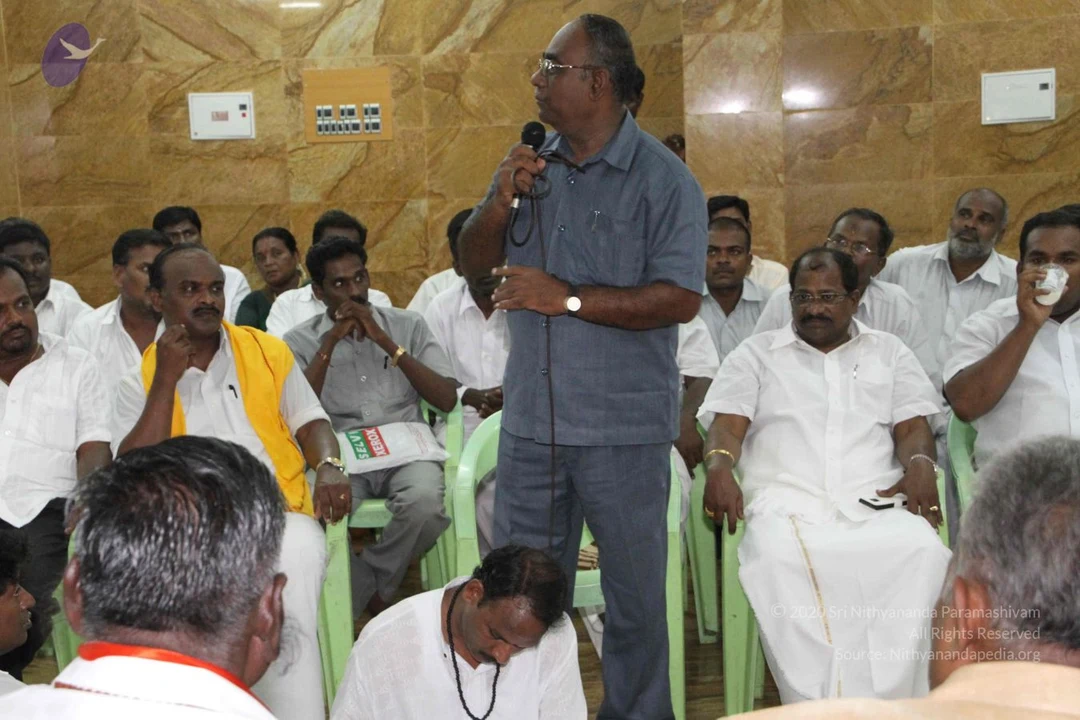
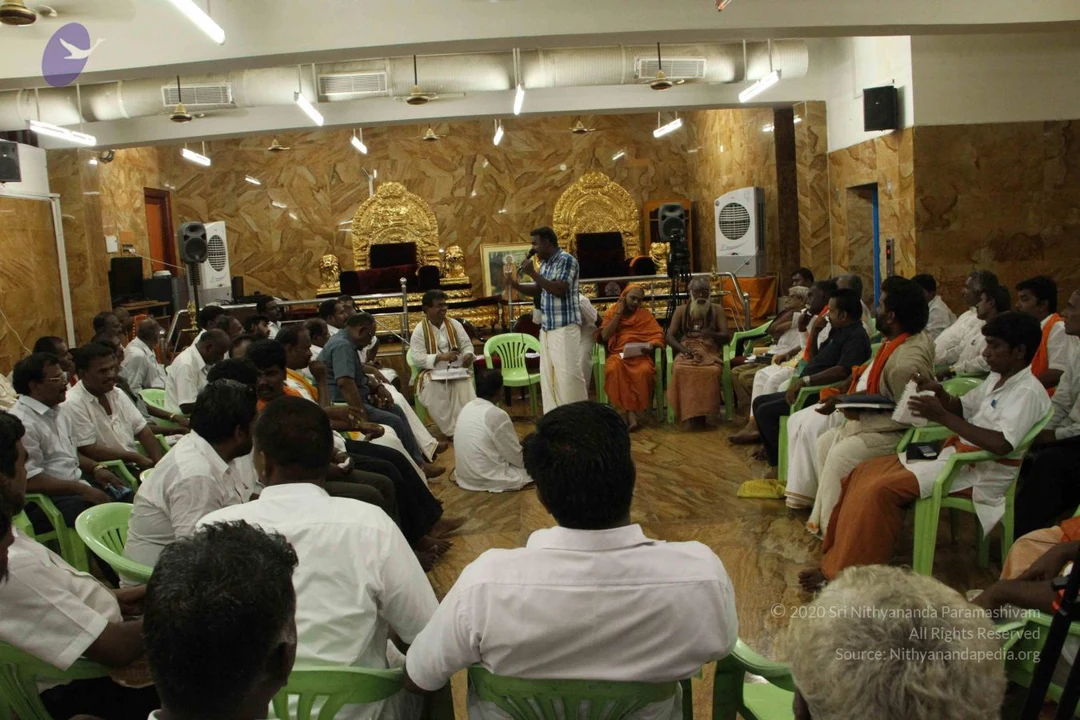
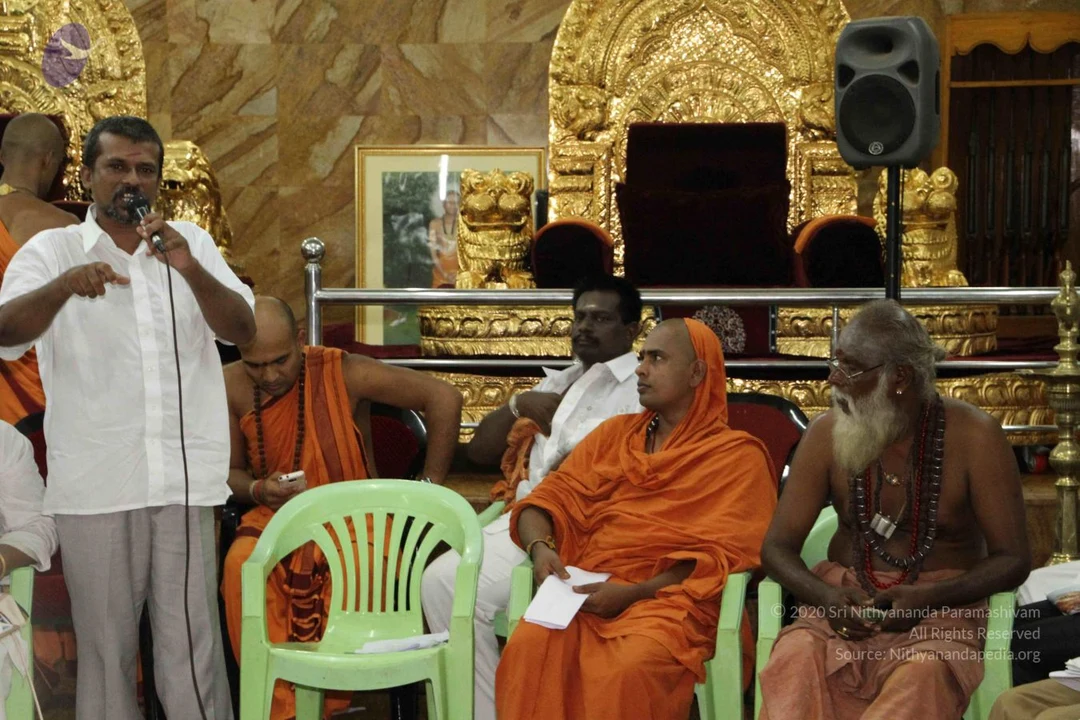
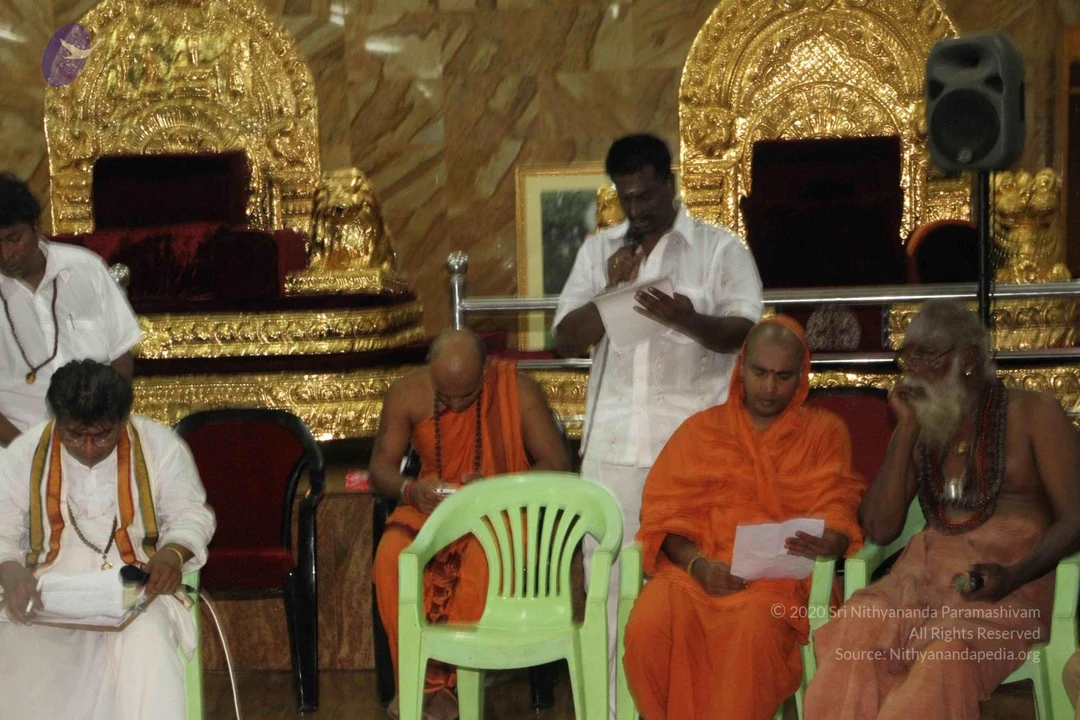
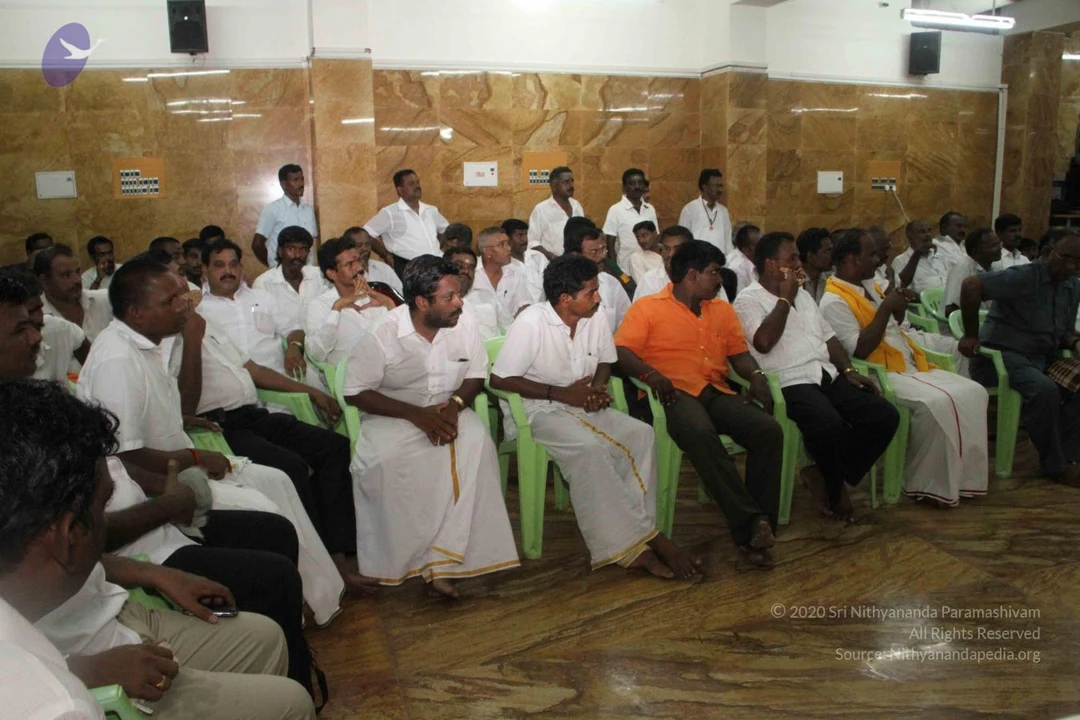
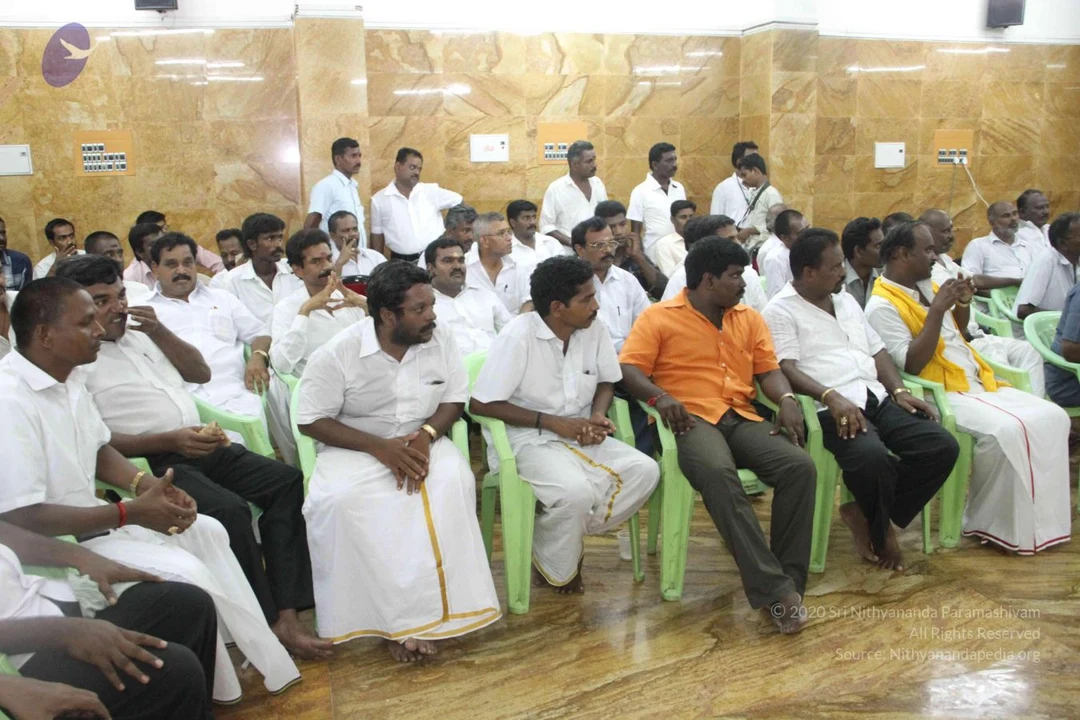
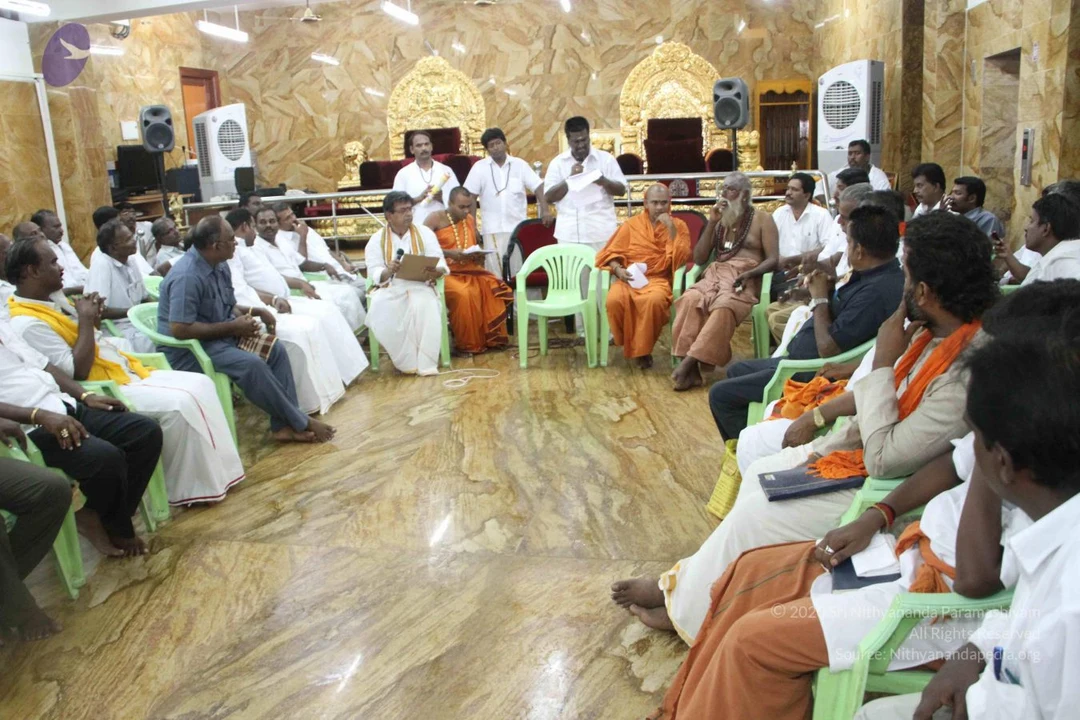
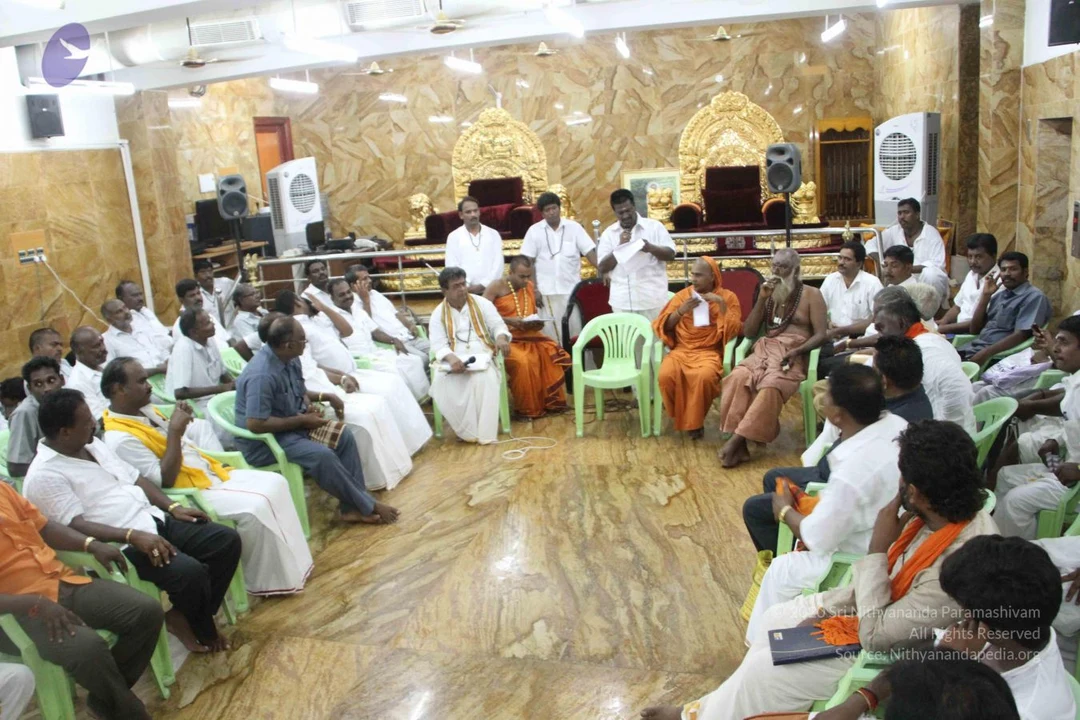
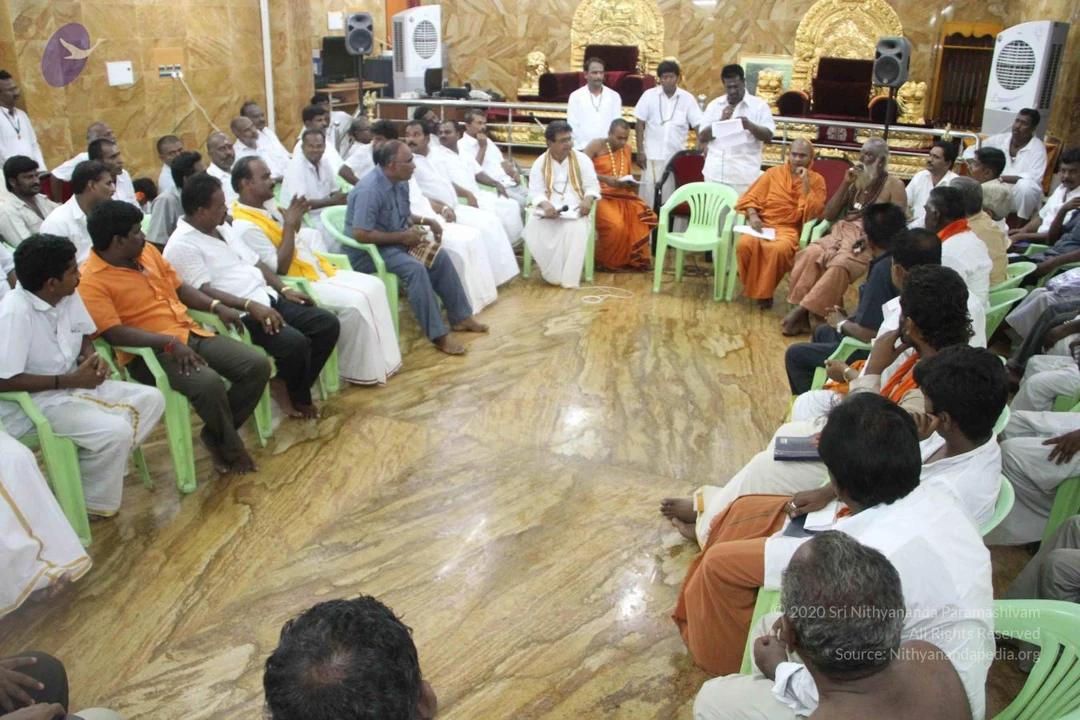
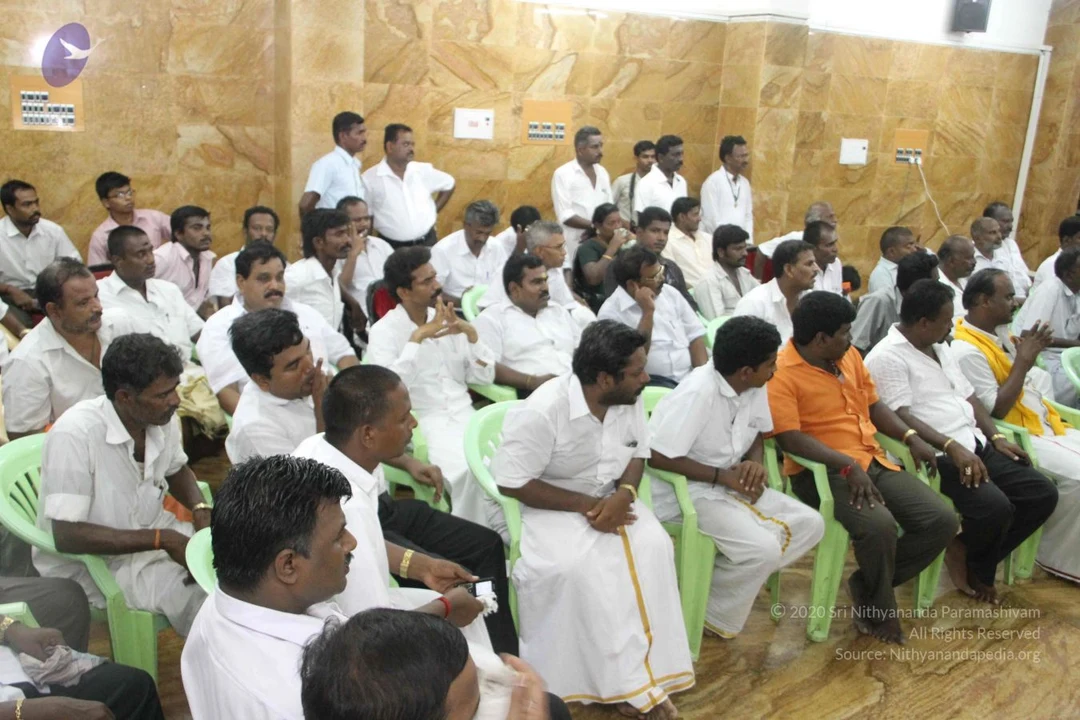
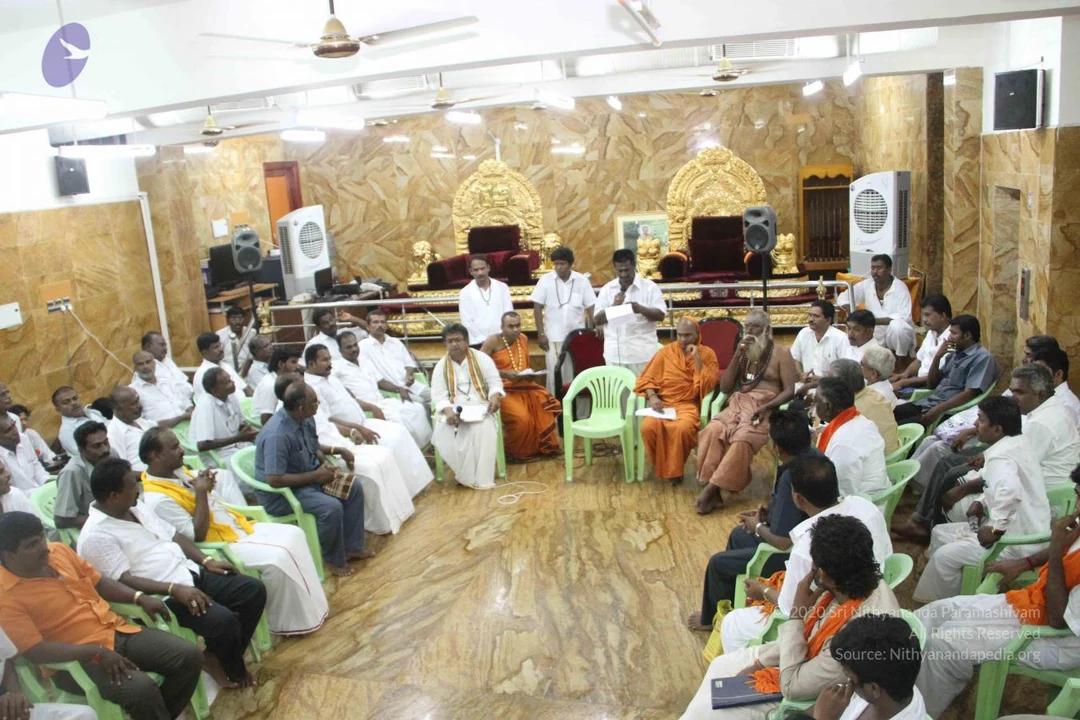
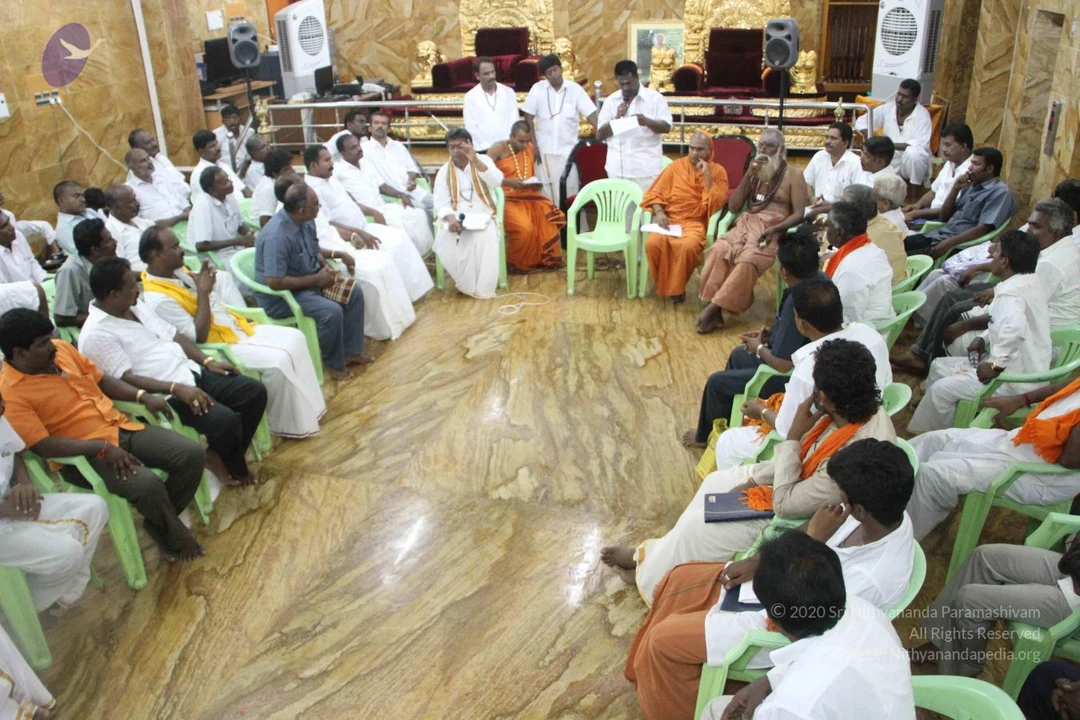
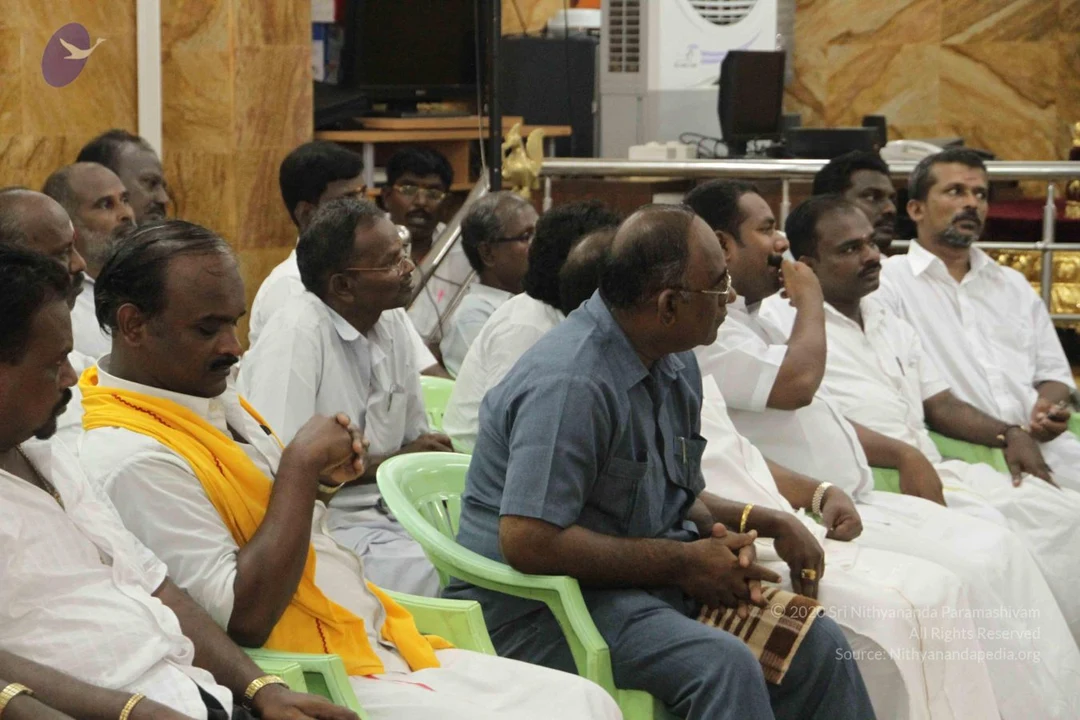
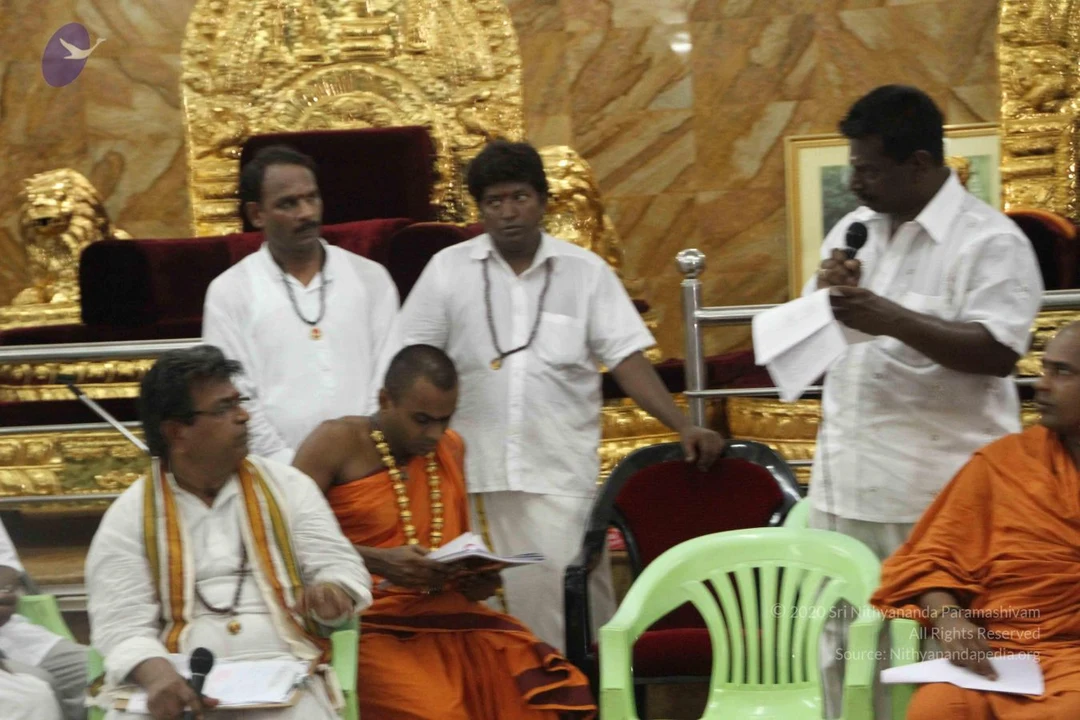
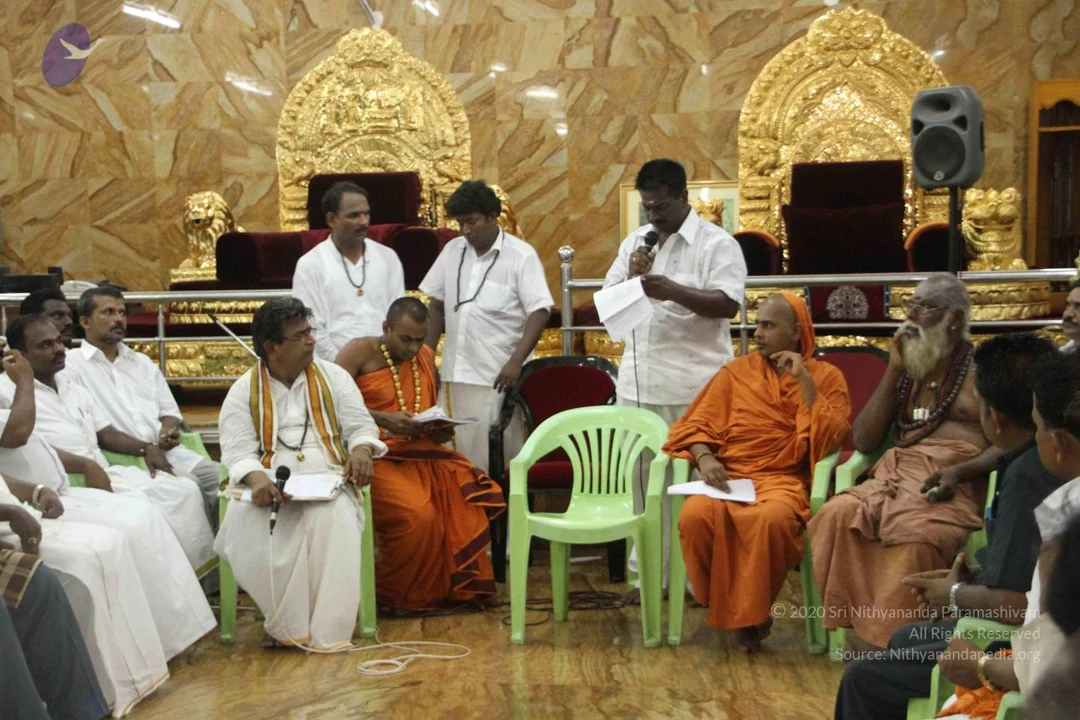
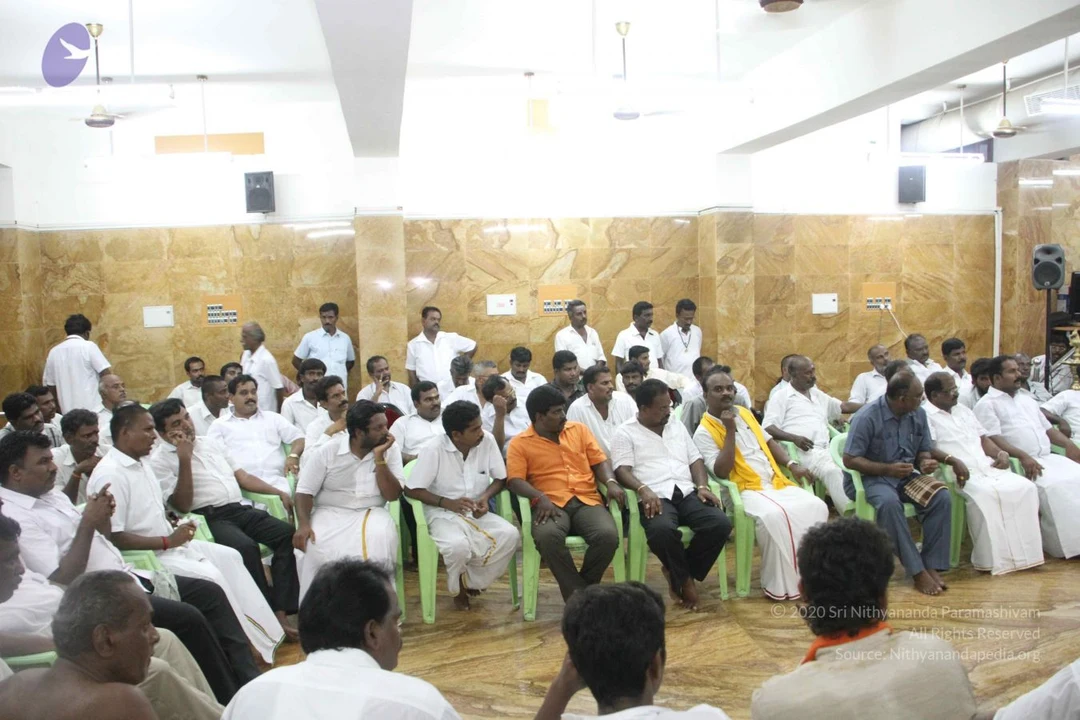
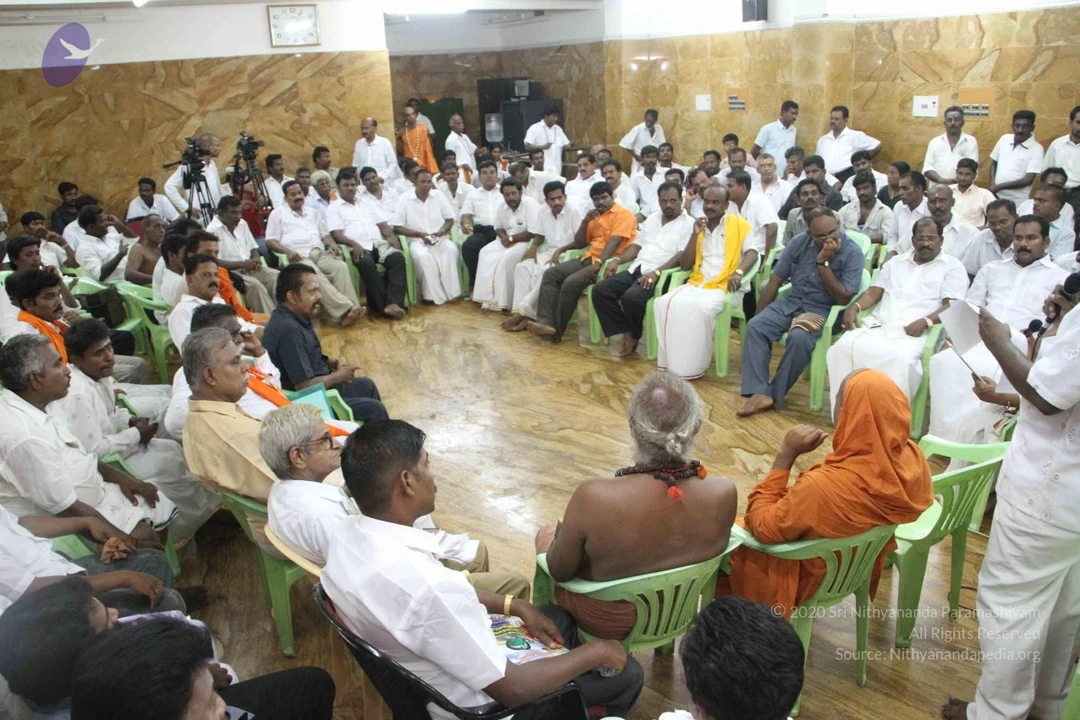
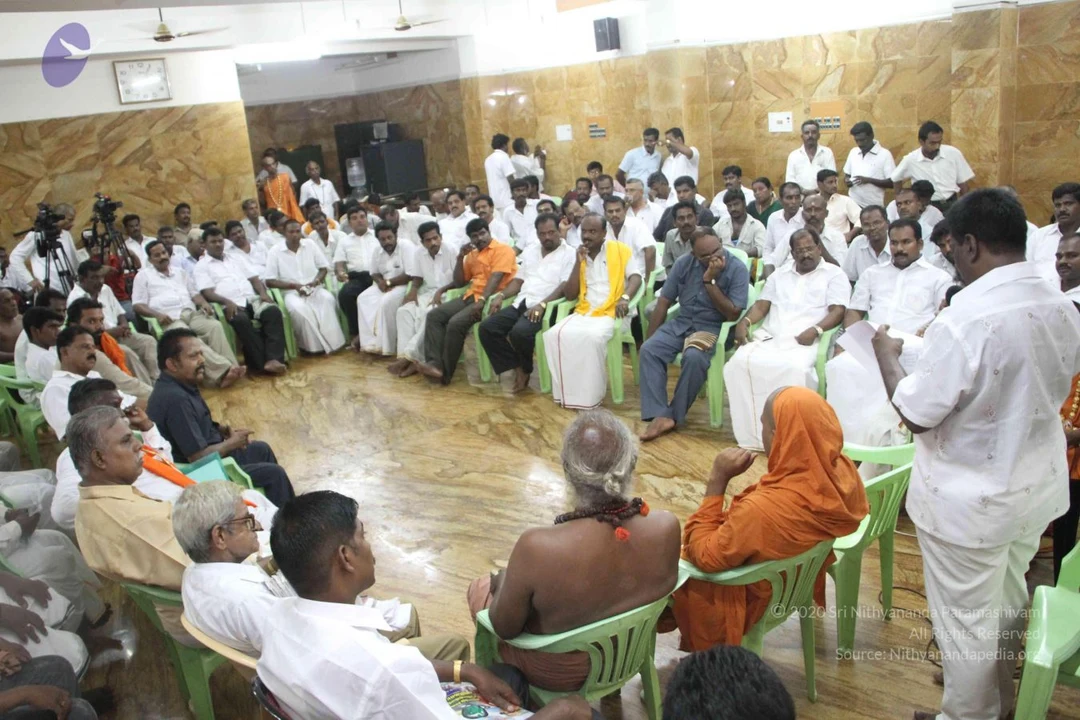
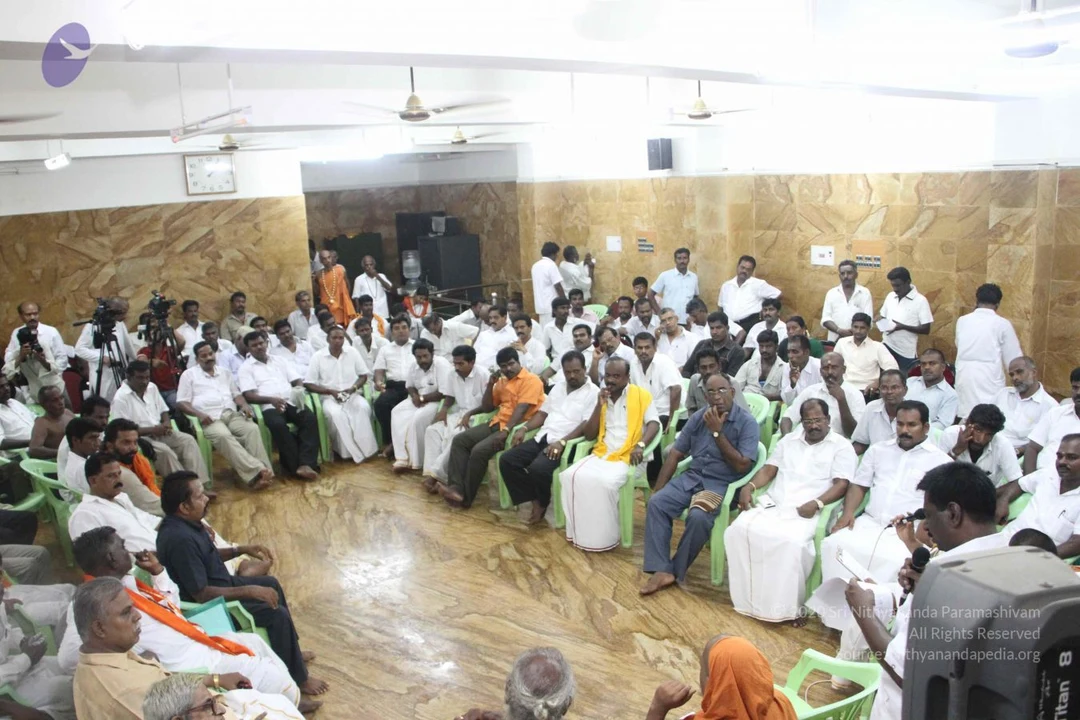
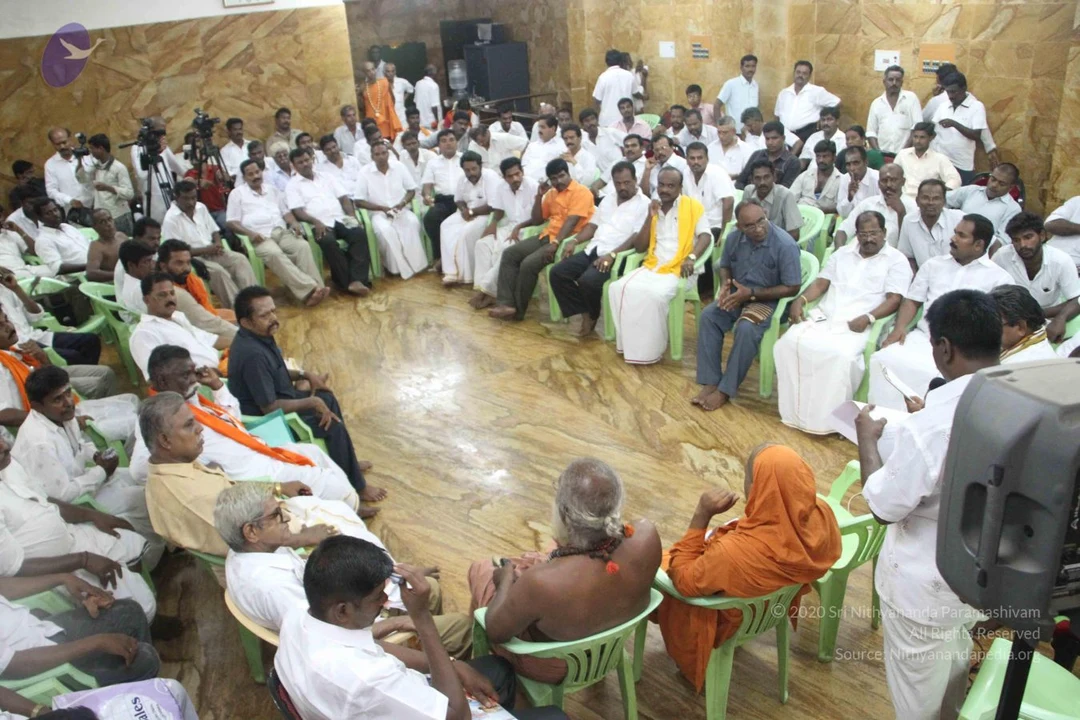
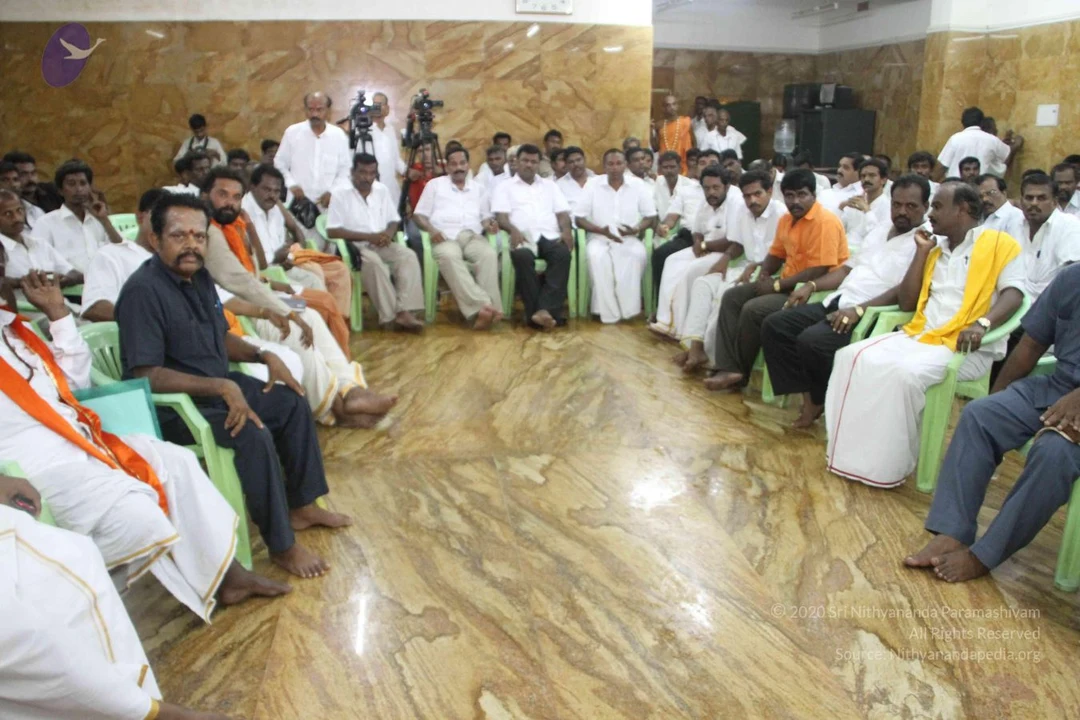
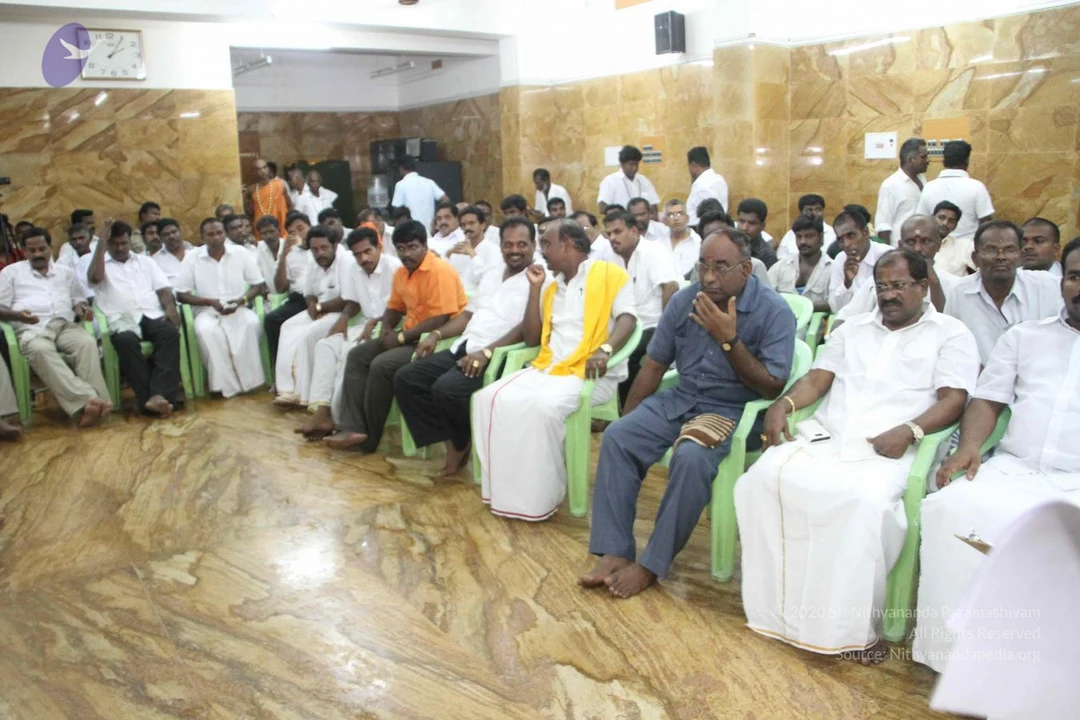
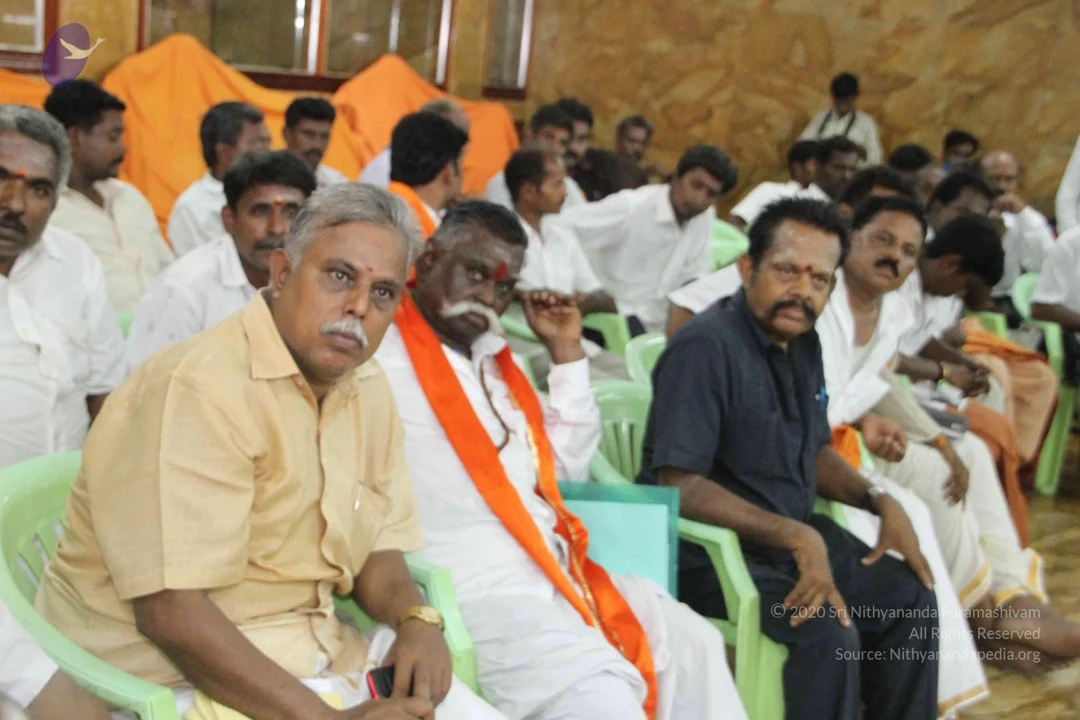
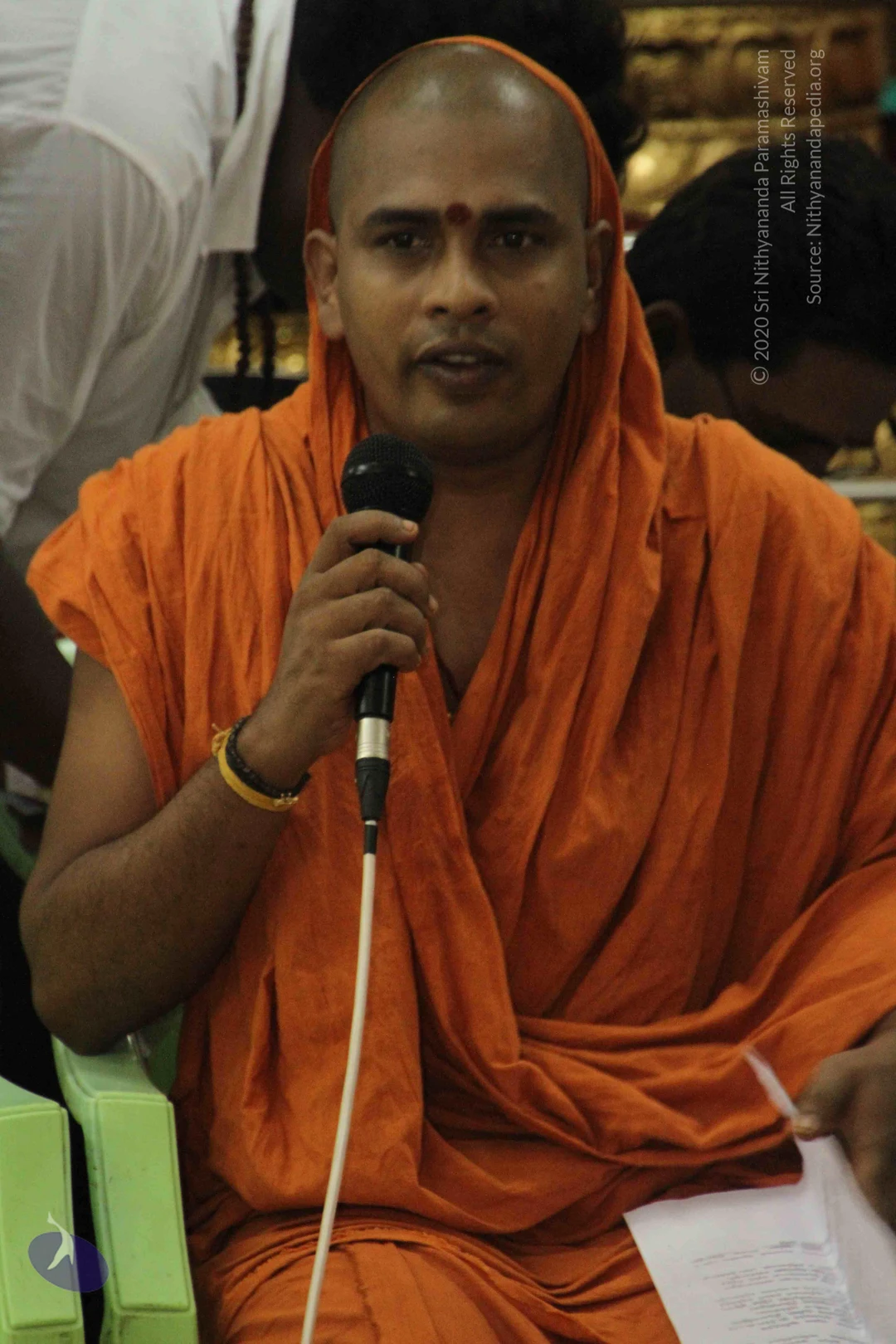
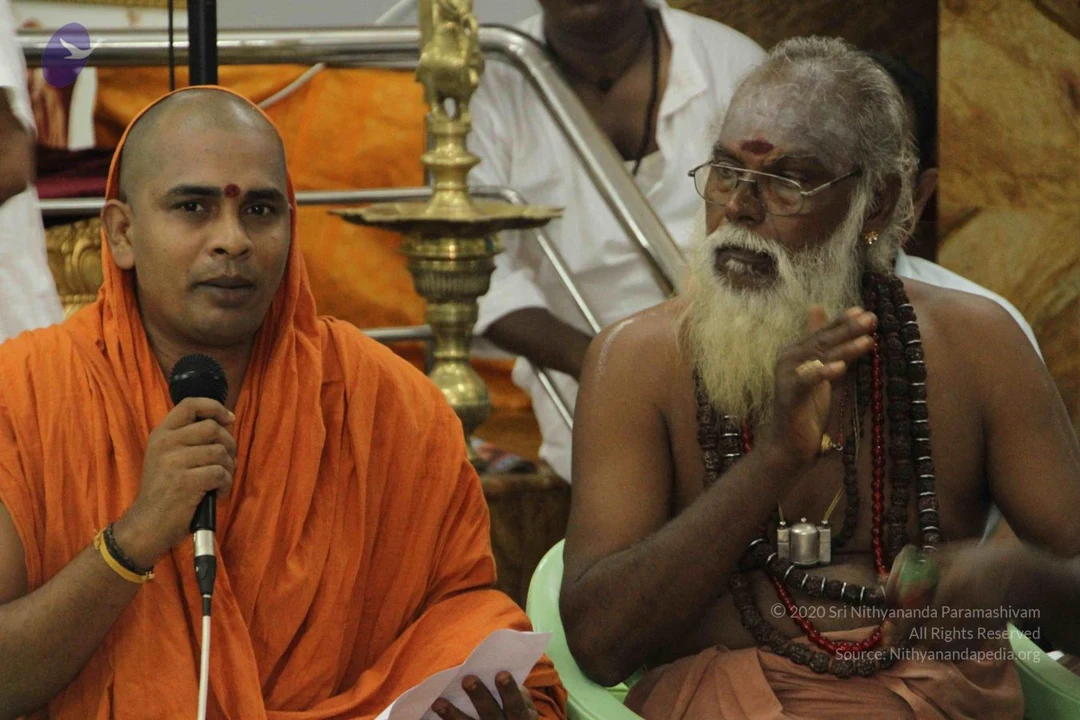
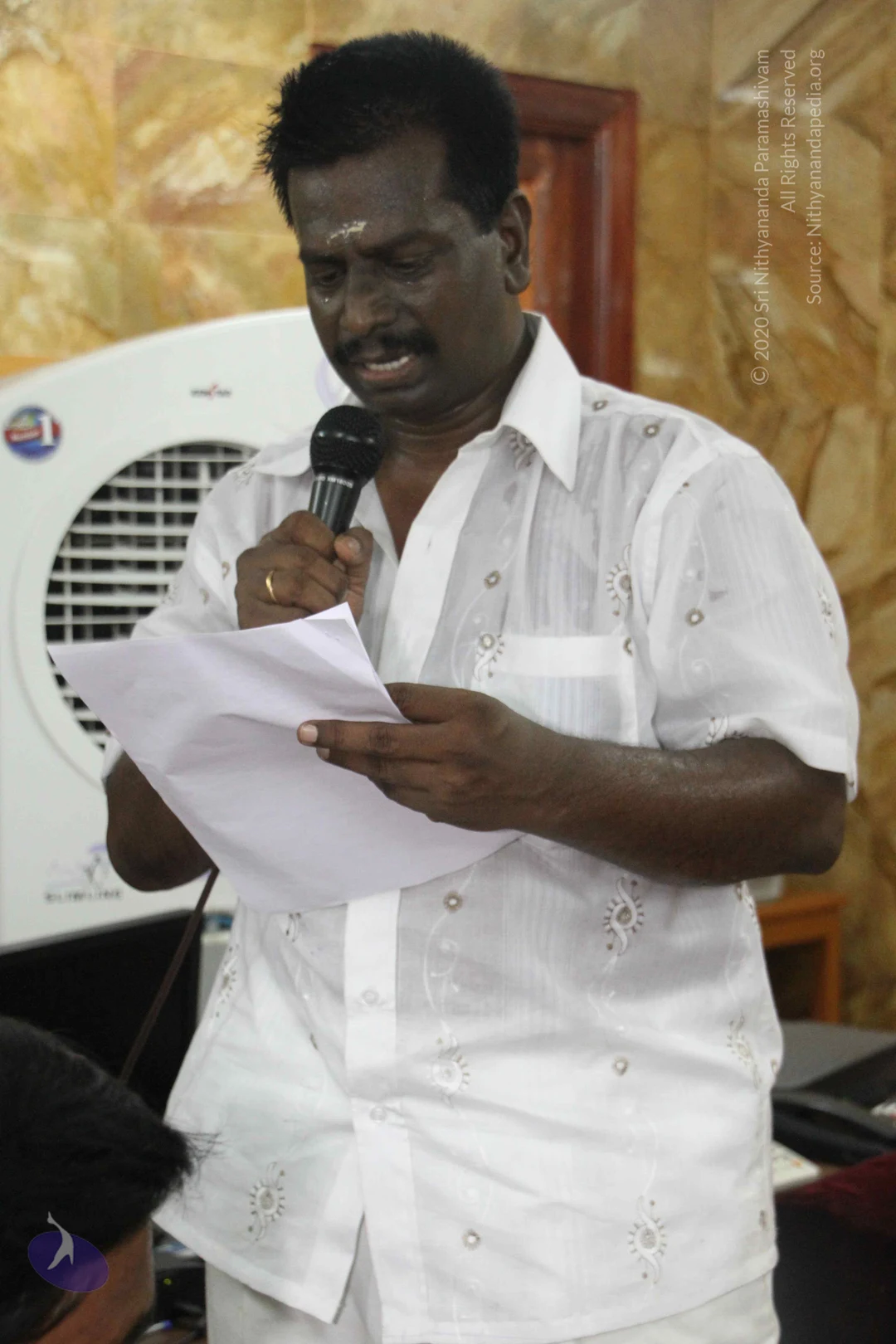
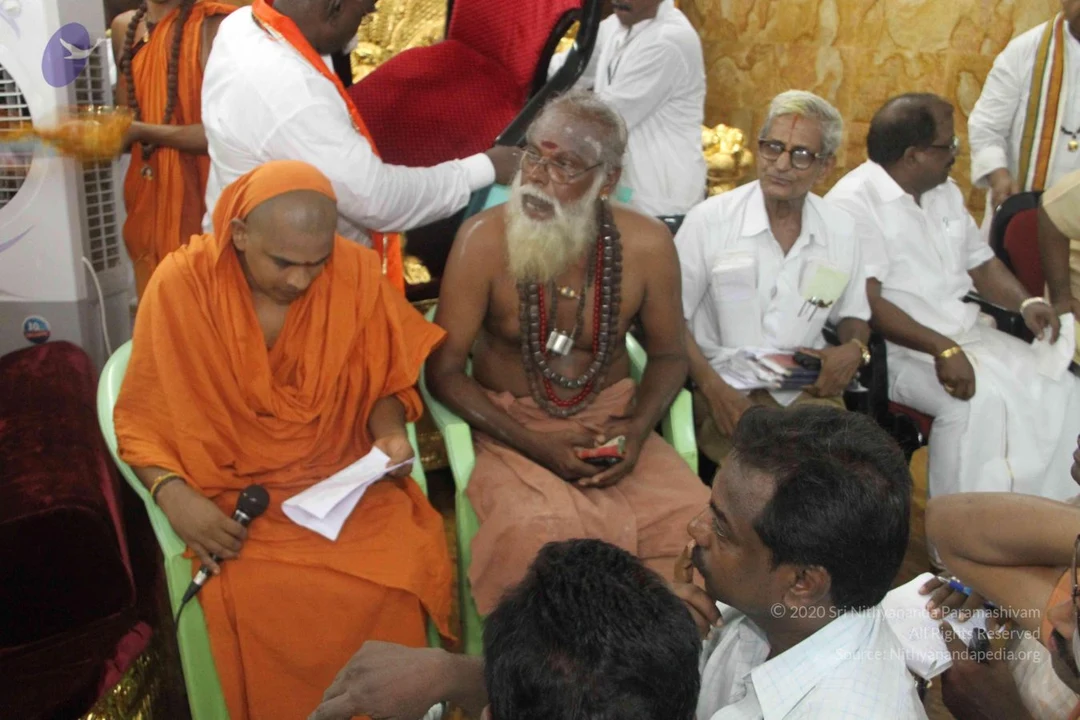
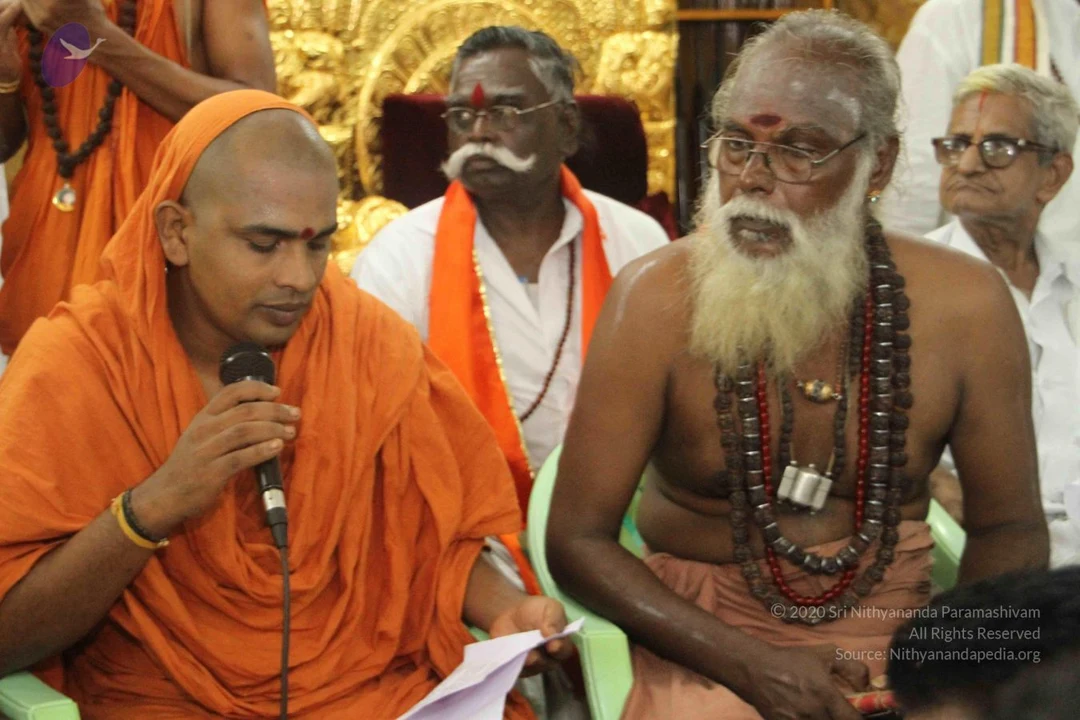
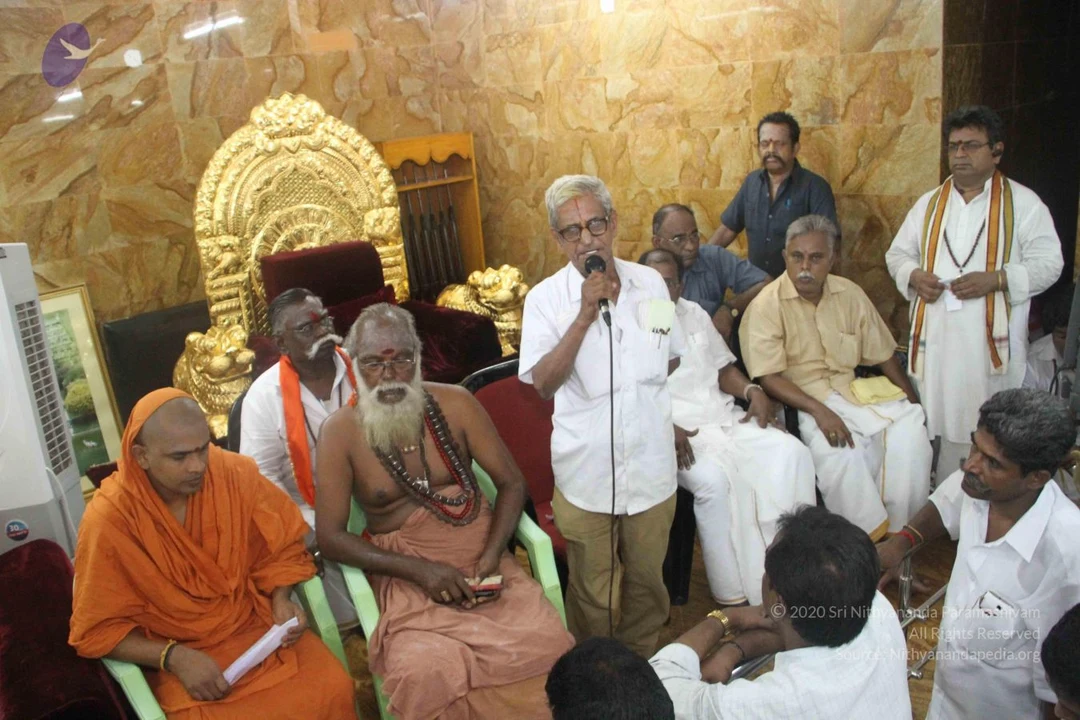
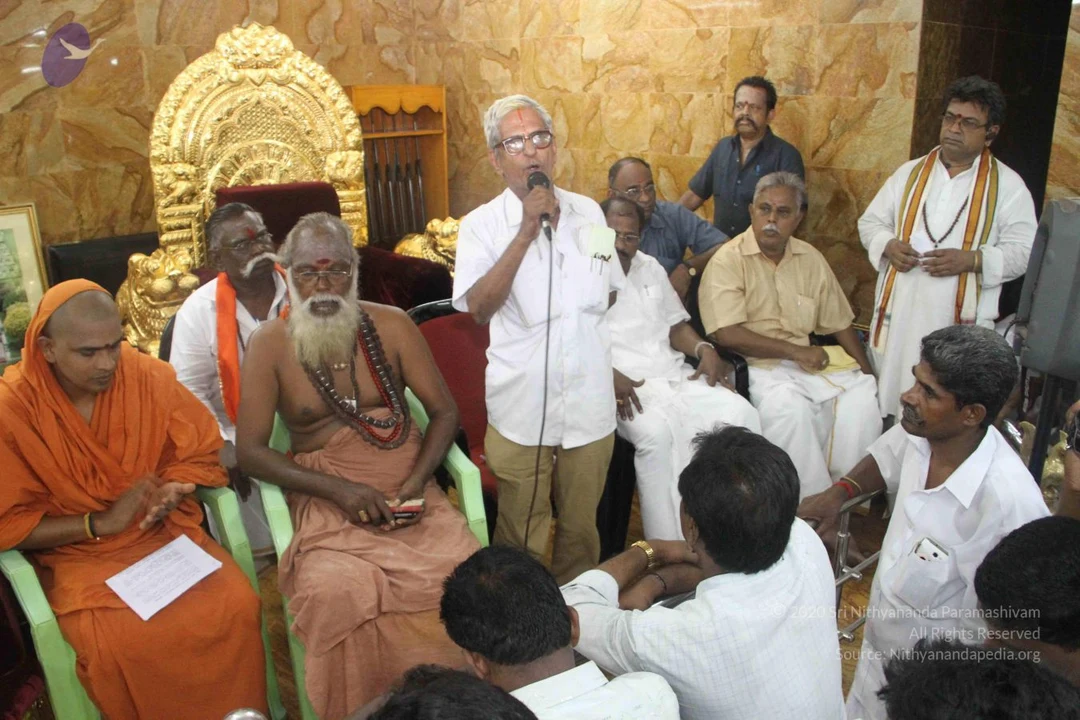
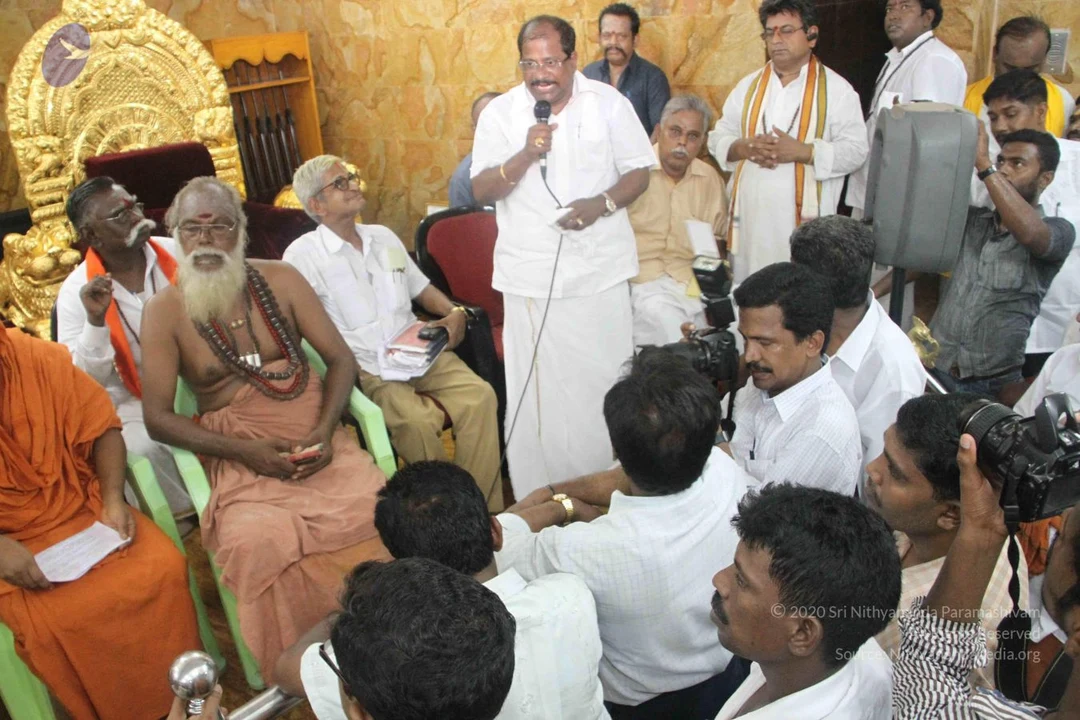
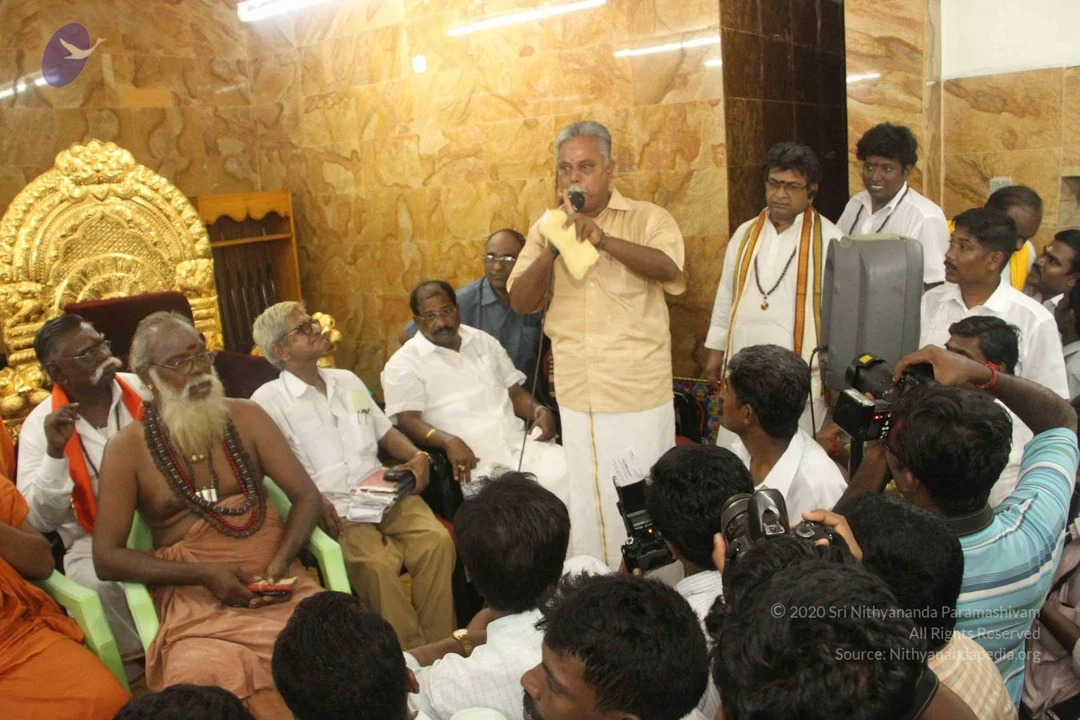
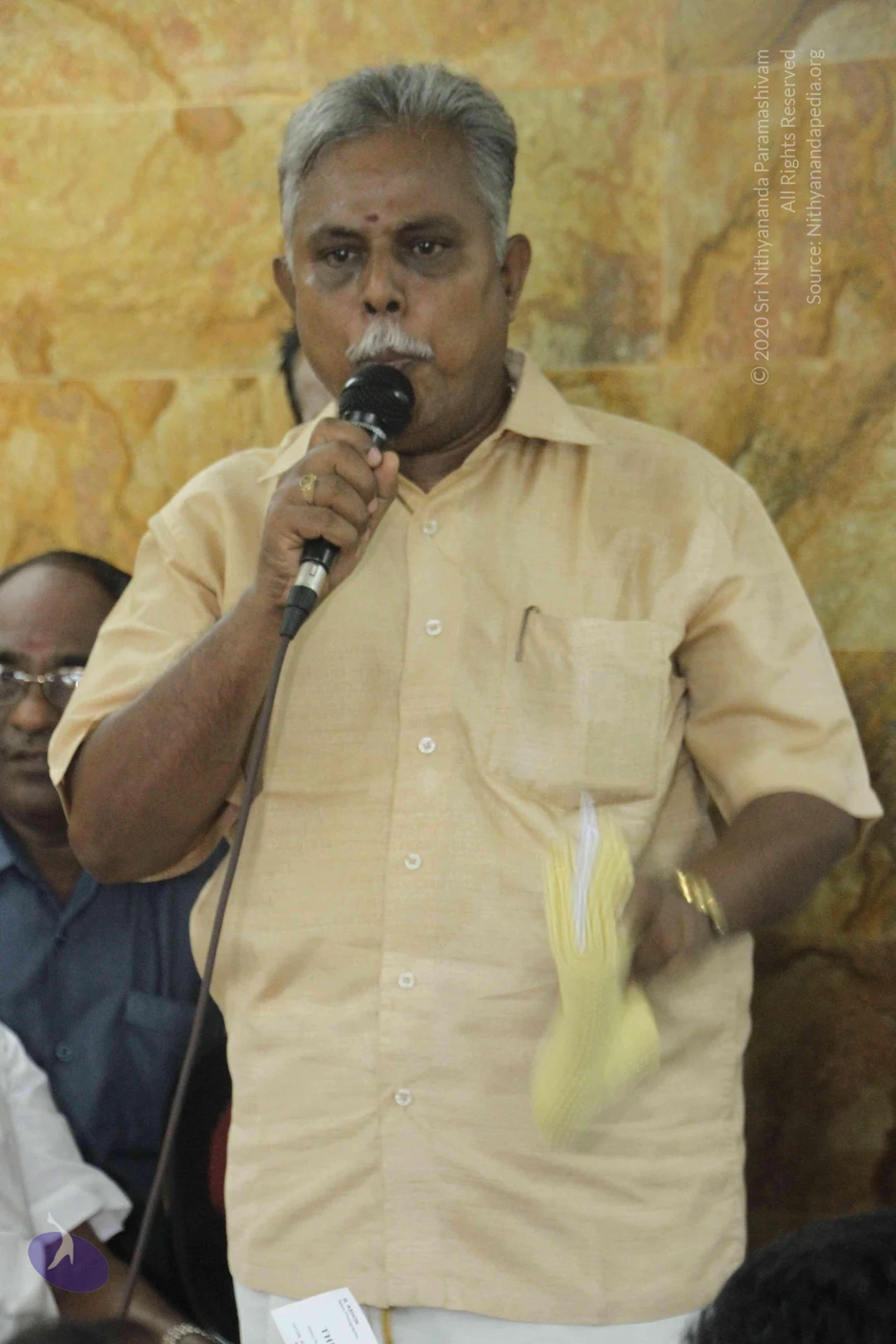
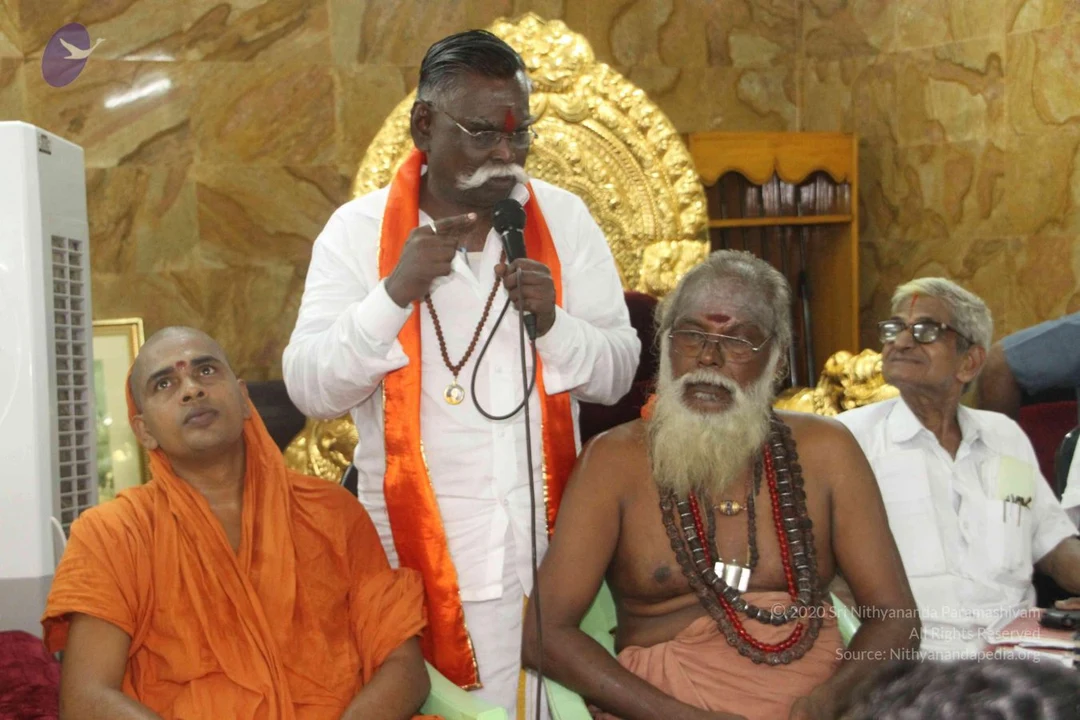
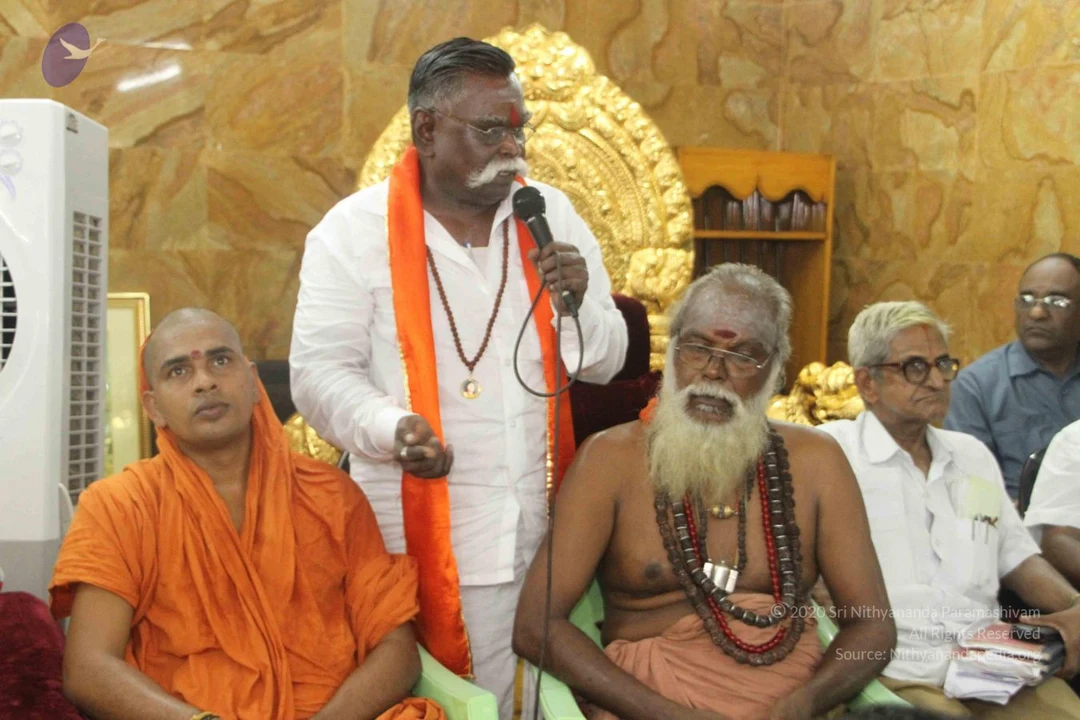
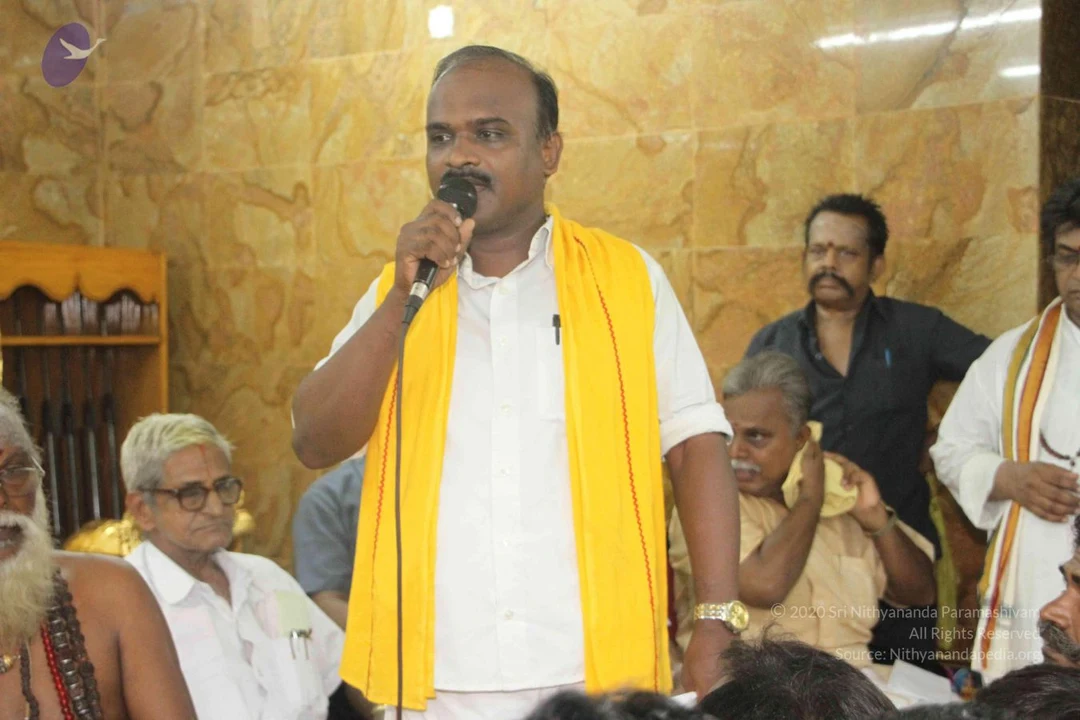
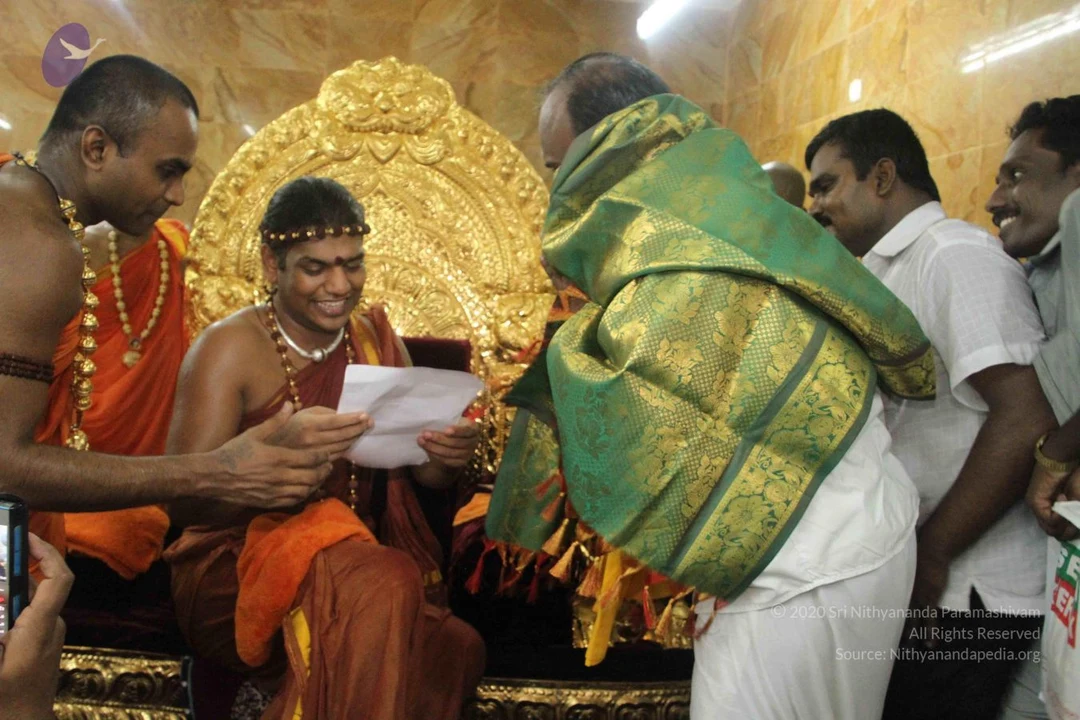
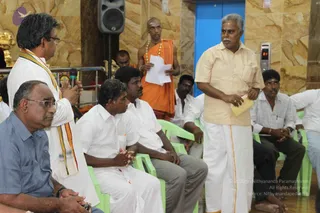
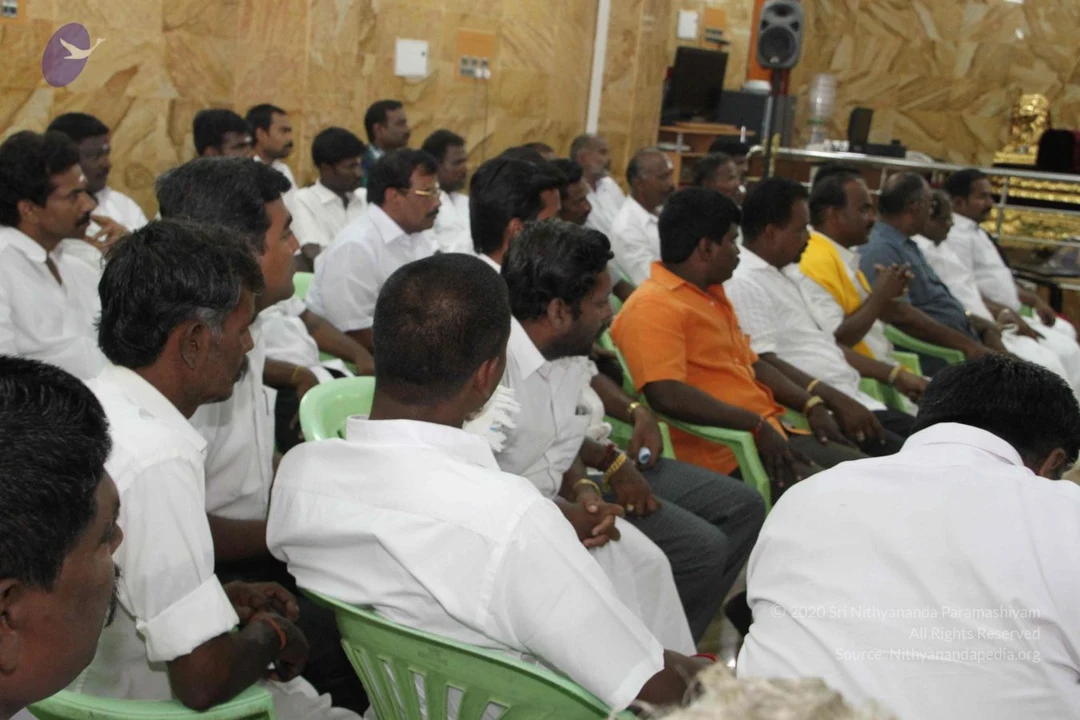
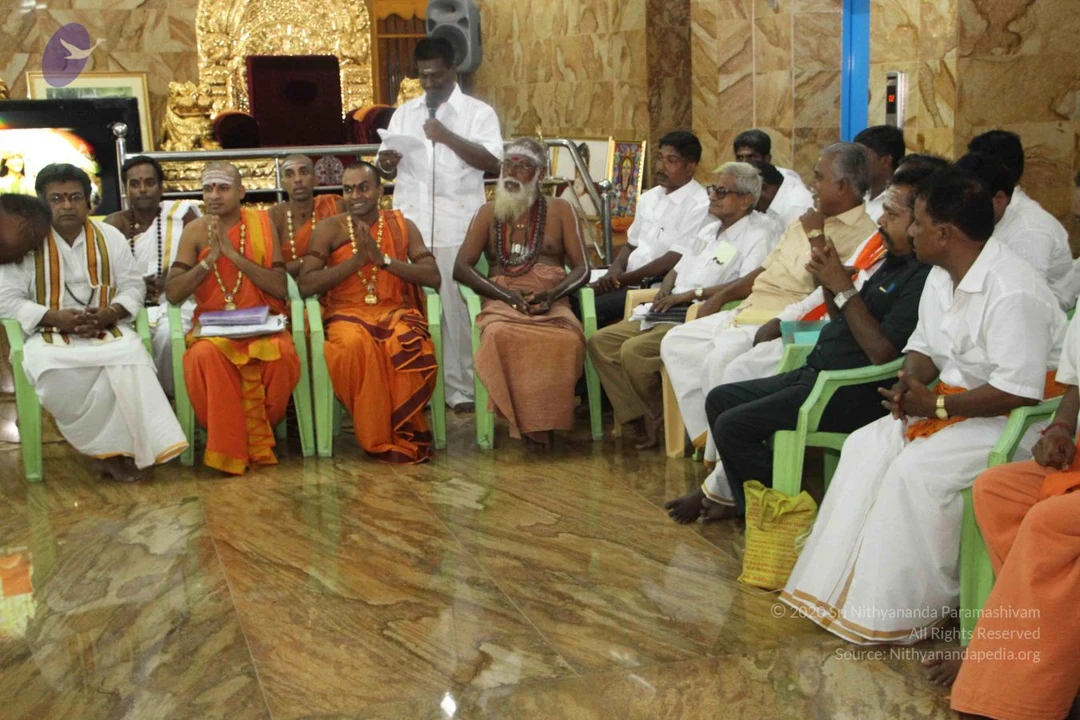
A photograph of a indoor hall with marble-clad walls and a blue elevator door, where several men sit on green plastic chairs. A man in a white shirt and white dhoti standing at left holds a microphone and wears a striped saffron-and-white shawl. In the centre, an older man with grey hair and a white moustache, wearing a cream shirt, white dhoti and a vibhuti mark, stands holding a small paper. Behind them a shaven-headed man in an orange-saffron robe and a beaded mala holds sheets of paper; his appearance does not clearly match the identity cues needed to label him as a person, so this is a sannyasi role and uncertain. Seated men wear white shirts, dhotis and checked shirts, and a speaker stands on a stand at the top left.A photograph of a seated audience at an indoor satsang hall with green plastic chairs on a polished floor, orange cloth draped on the wall behind. Five men sit in front while others stand or sit behind. On the far right, an elderly bearded sadhu with long white beard and white forehead markings wears a rudraksha mala and a long bead necklace, bare-chested with a saffron-brown dhoti, hands folded in his lap. Beside him a man in an orange shawl and orange dhoti sits barefoot. Next, a man in white shirt and white dhoti with an orange sash and gold wristwatch clasps his hands. On the left, an older man in white with orange shawl gestures with fingers together and sports tilak markings. Background shows framed certificates and a man in a white shirt.A photograph of a seated group of men in an ashram hall with polished marble walls and floor, green plastic chairs, and orange cloth draped over a piece of furniture behind them. A man in the centre-right wears white dhoti and shirt and rests a hand on his head, while beside him an older man with grey hair wears an orange shawl over a peach-coloured garment. Several men in white shirts and dhotis, some with orange sashes, sit in rows, and two men stand in white shirts at the back, one holding a camera. A man in the foreground left wears a white shirt, white dhoti with gold border and an orange sash. No clearly identifiable a person appearance cues are visible, so the figure is treated as unsure.A photo of a gathering in a hall with pale yellow-veined marble walls and green plastic chairs on a wooden floor. A man in a grey short-sleeved shirt and grey trousers, wearing glasses, stands at centre holding a microphone in his right hand and a bundle of papers in his left, speaking. Seated behind and beside him are men in white shirts and white dhotis; one seated man in front wears gold-rimmed glasses and a gold ring. On the left, a seated man wears a yellow-orange shawl over a white shirt. On the right, a man bends forward in a white shirt and white dhoti. Electrical switch panels are mounted on the wall. No one in the image is identified as a person.Five men sit in a row on green plastic chairs on a polished wooden floor in front of a gold-ornate altar with a red cushioned seat. The man at far left wears white dhoti and shawl with a green-and-gold border and palms pressed together in prayer. Two saffron-clad sannyasis sit beside him, hands folded in anjali; the nearer one holds a folder, and the one at centre speaks into a microphone while wearing orange robes, gold-coloured beads and tilak. Behind them a monk in orange stands with hands folded. The man at far right, with a long white beard, wears a rudraksha mala and sits with hands clasped in his lap. A screen behind shows a lit flame and figures. This is a satsang-style gathering with prayer.Four men sit in a row on lime-green plastic chairs on a polished marble floor, hands pressed in anjali namaskar in front of a microphone. The man second from left wears an orange robe and rudraksha-style beads and holds a sheaf of papers. The man third from right in an orange robe with gold chain and wristwatch is speaking into the microphone. On the far left a man in white dhoti and white shirt with a striped shawl sits barefoot. On the far right an elderly bearded sadhu with white beard and white forehead marks wears red and brown rudraksha malas and a rust-coloured wrap, with hands folded. Behind them a golden throne and ornate gold carvings stand near a brass lamp, with a screen showing colourful imagery at upper left.

PRESS-MEET-AT-MADURAI-ADHEENAM

47 photosSource gallery
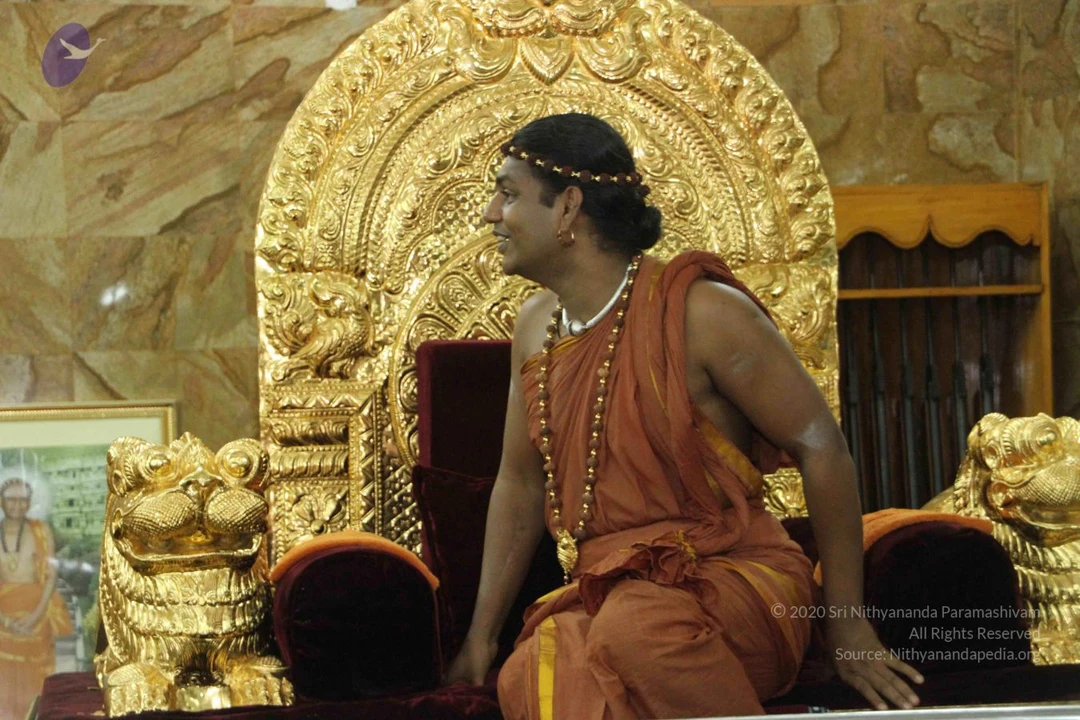
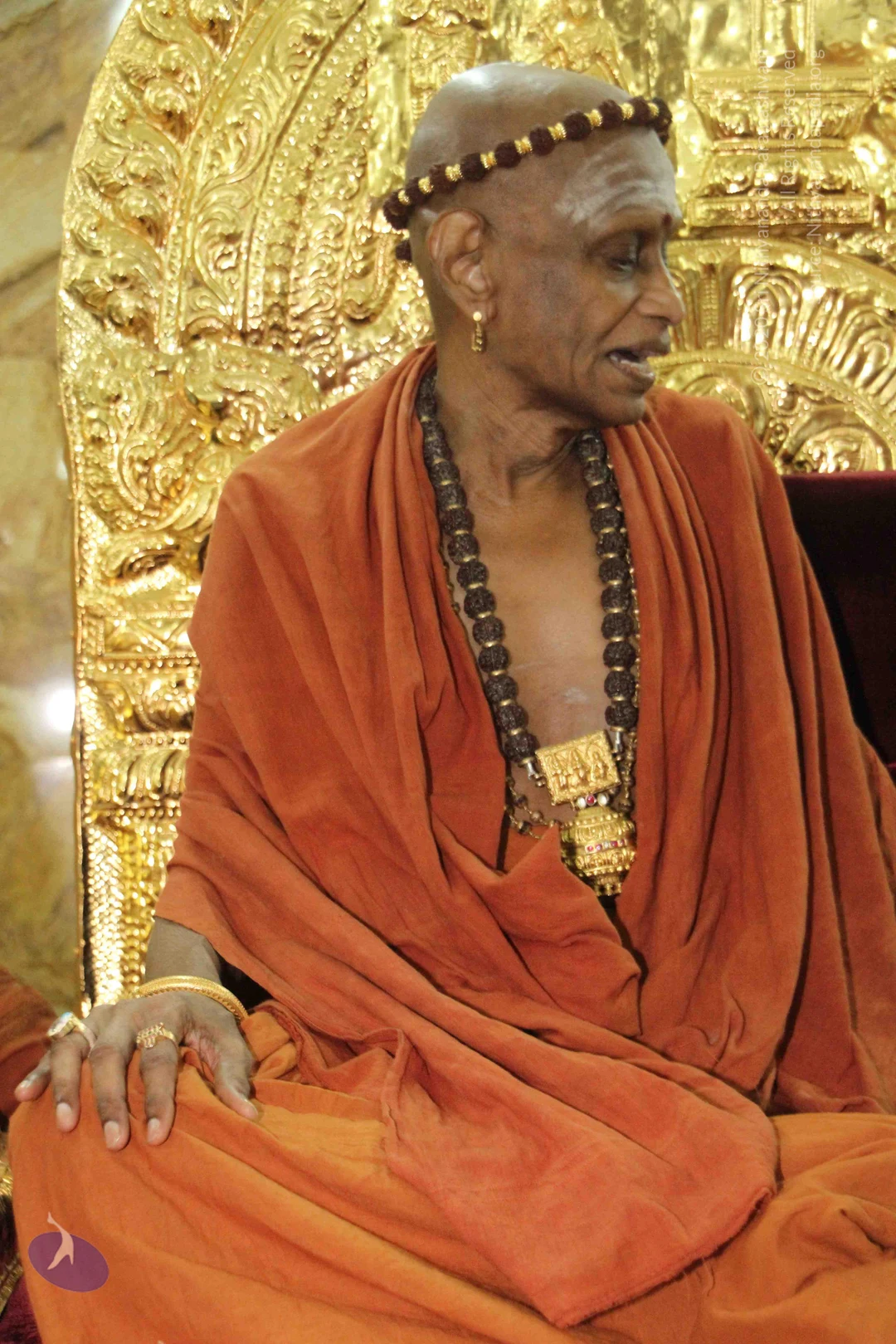
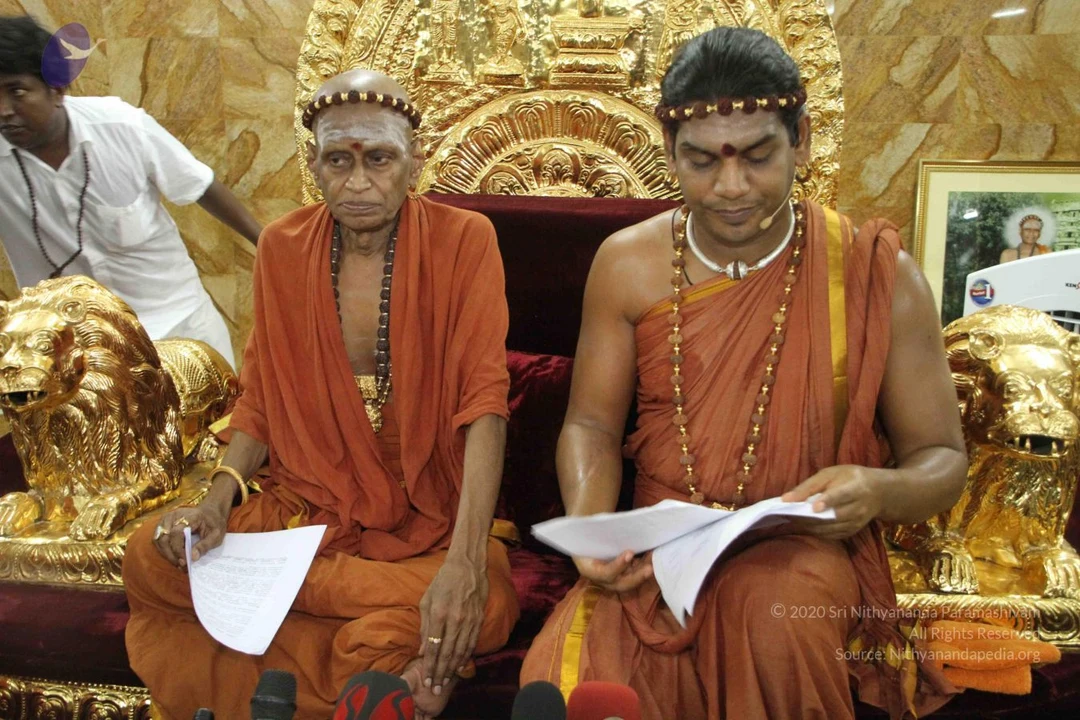
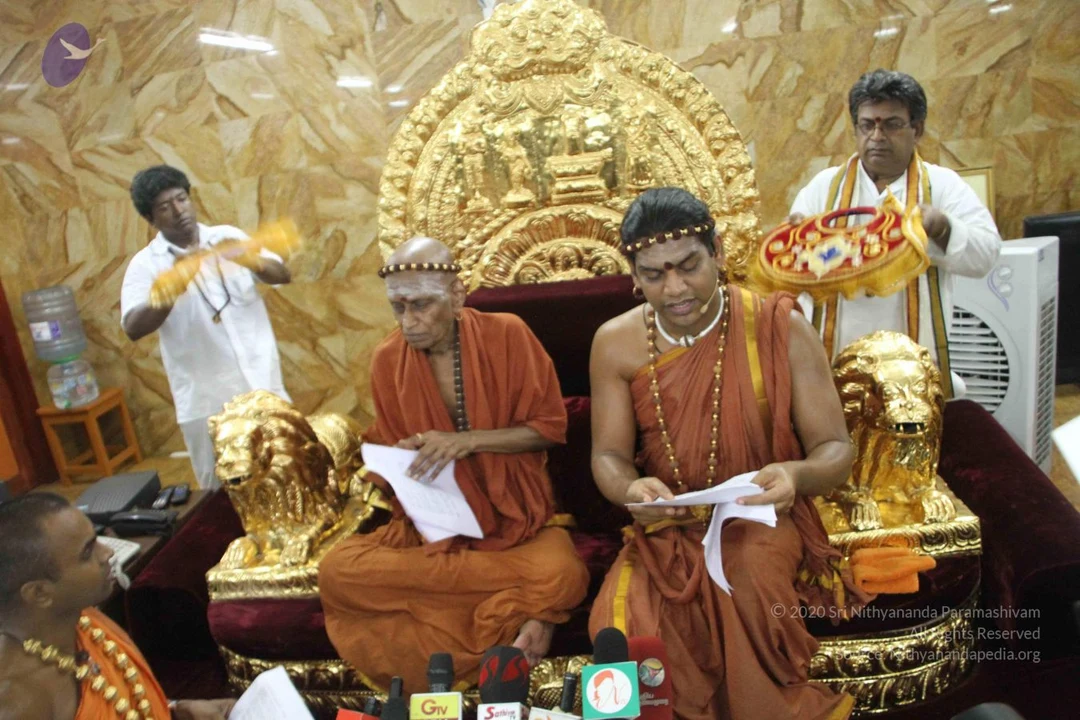
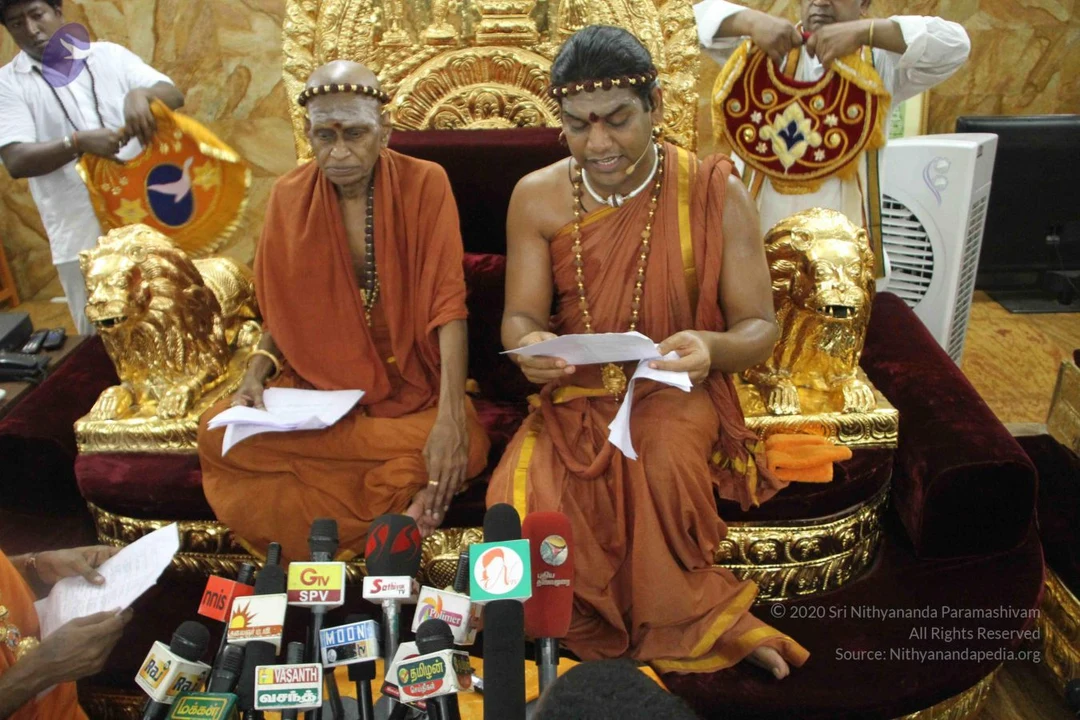
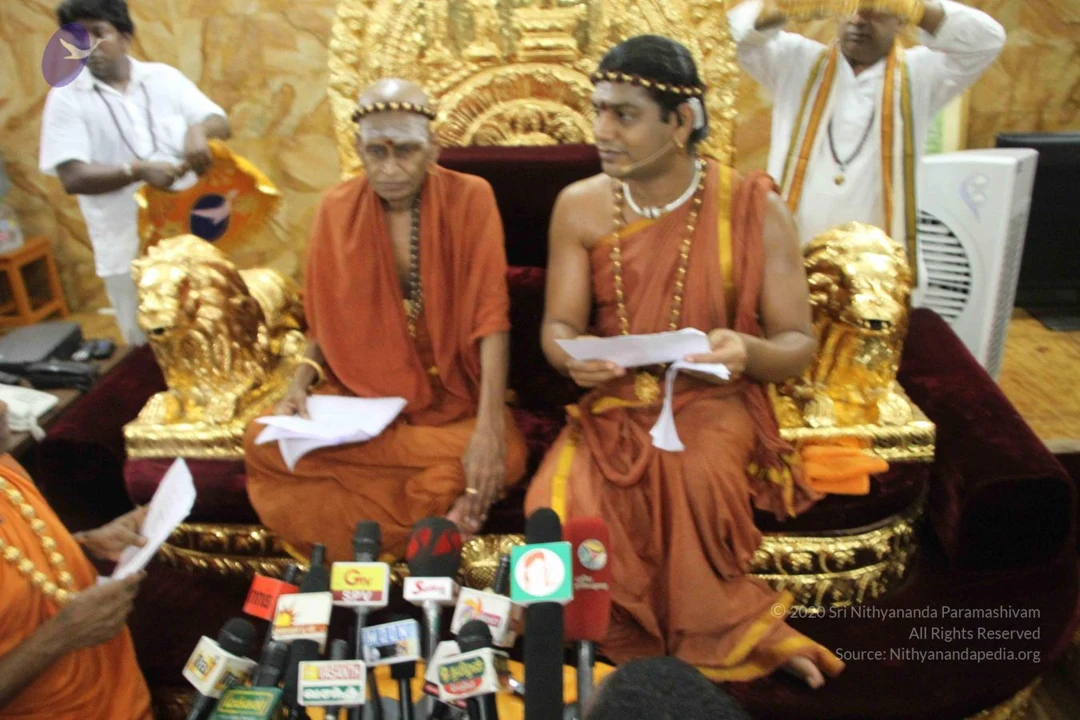
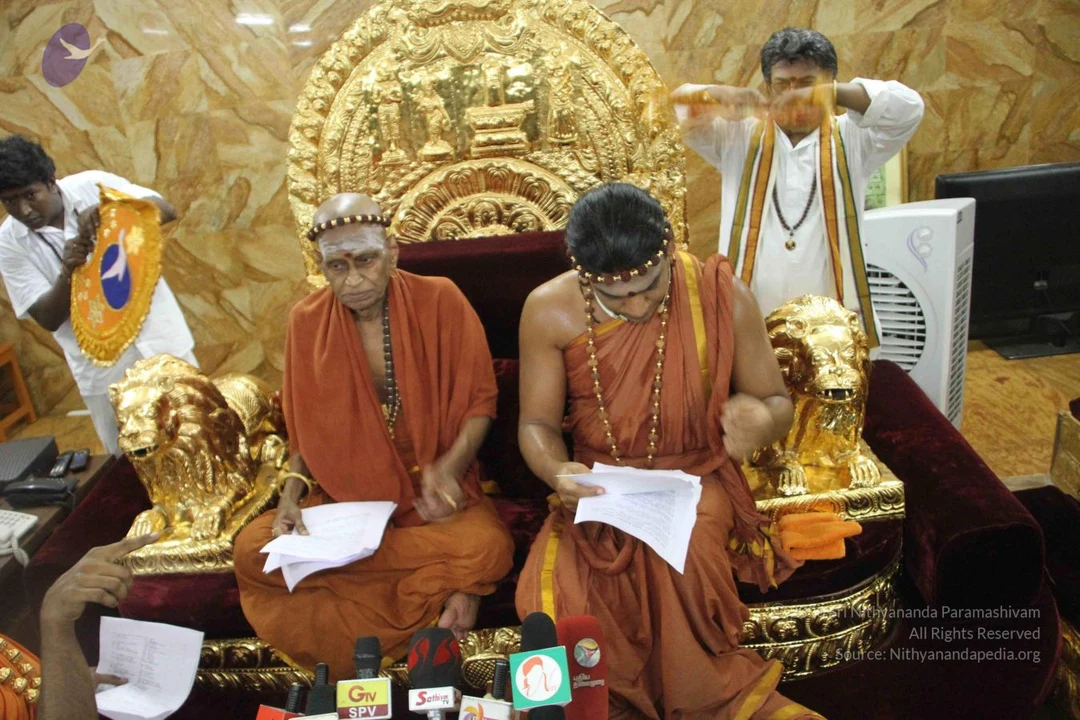
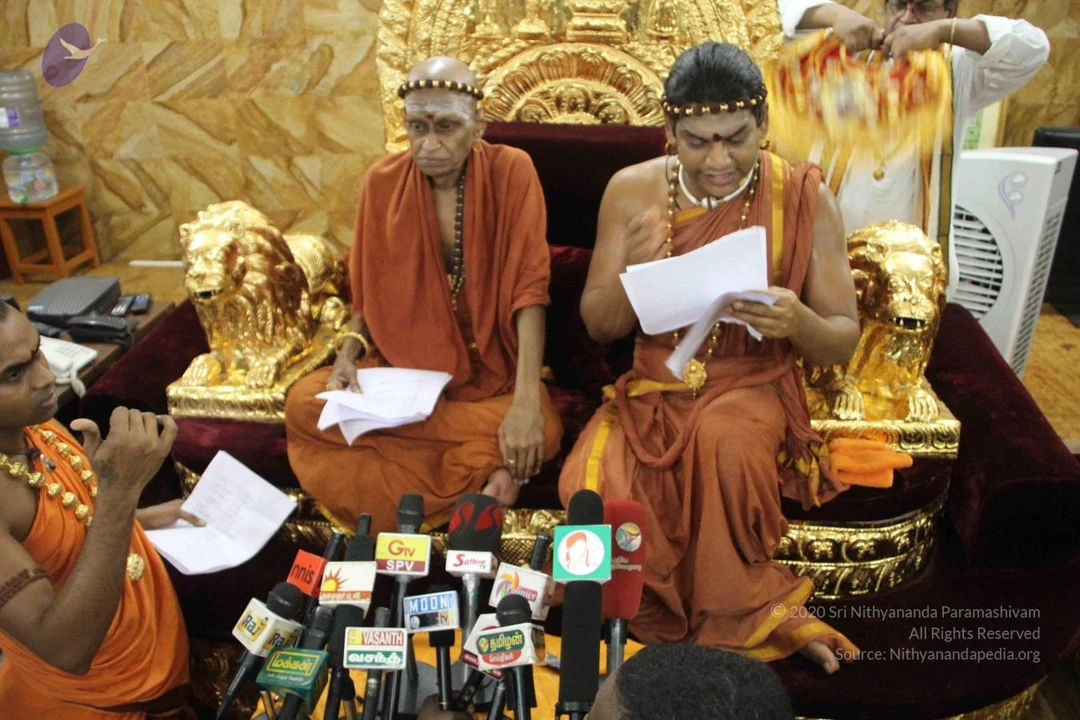
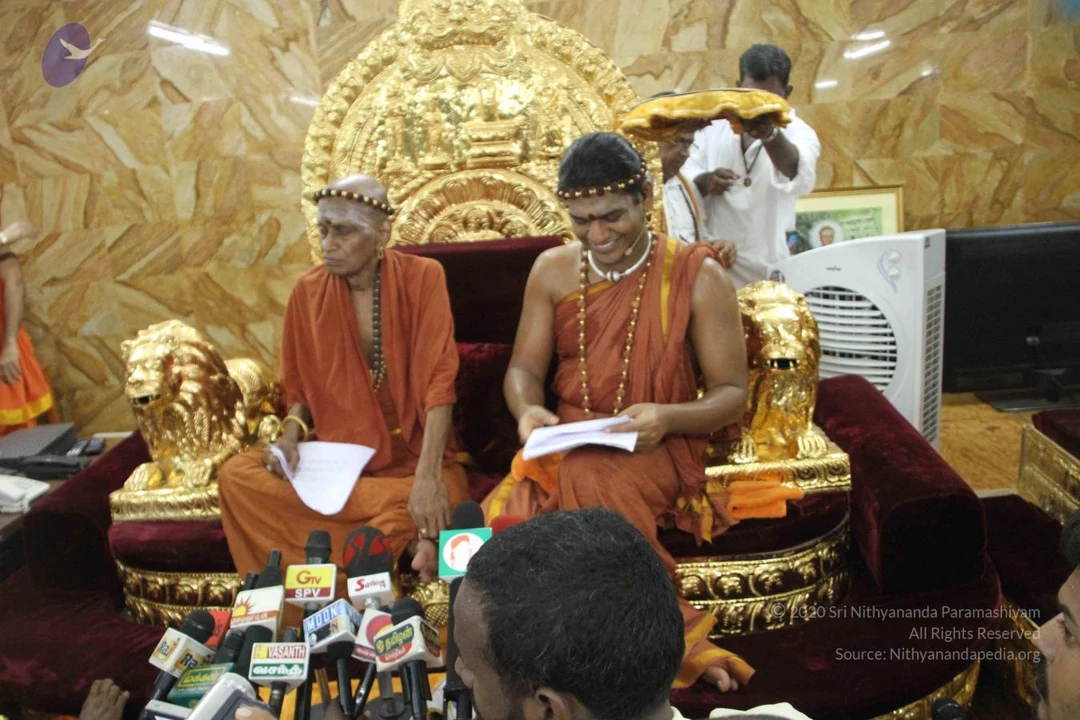
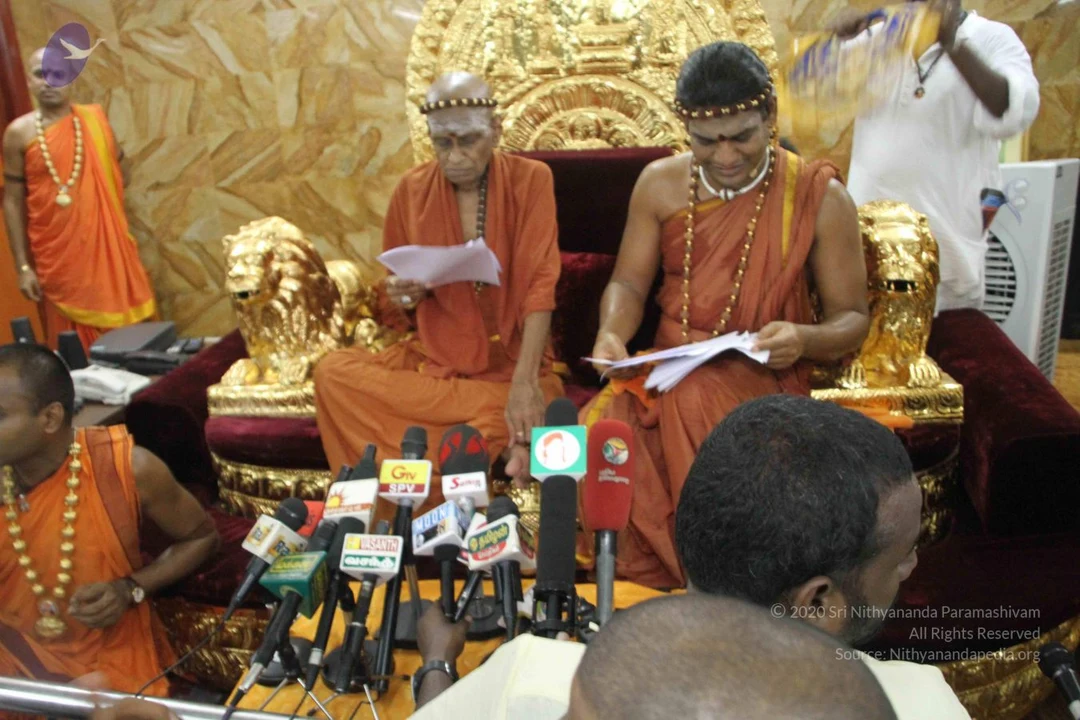
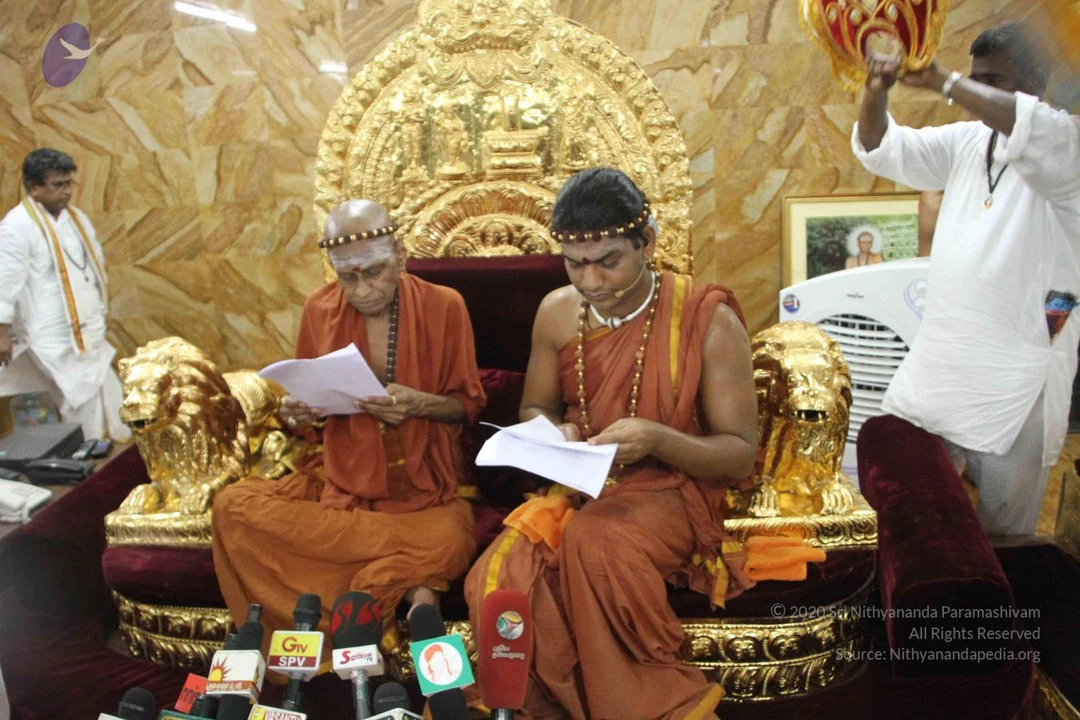
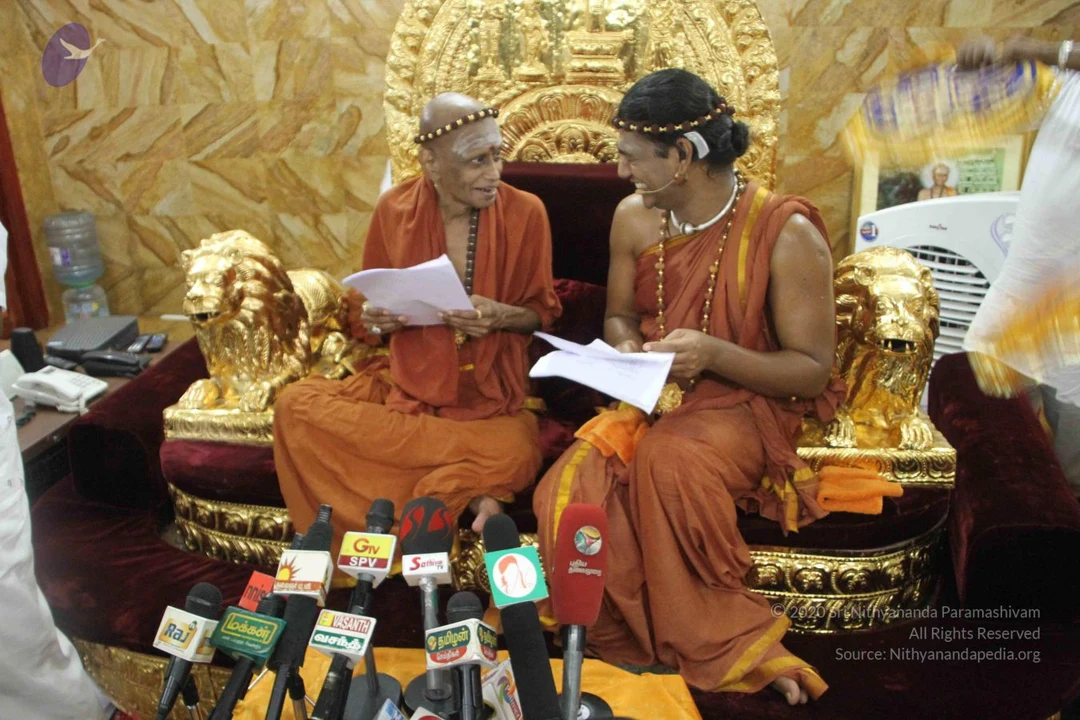
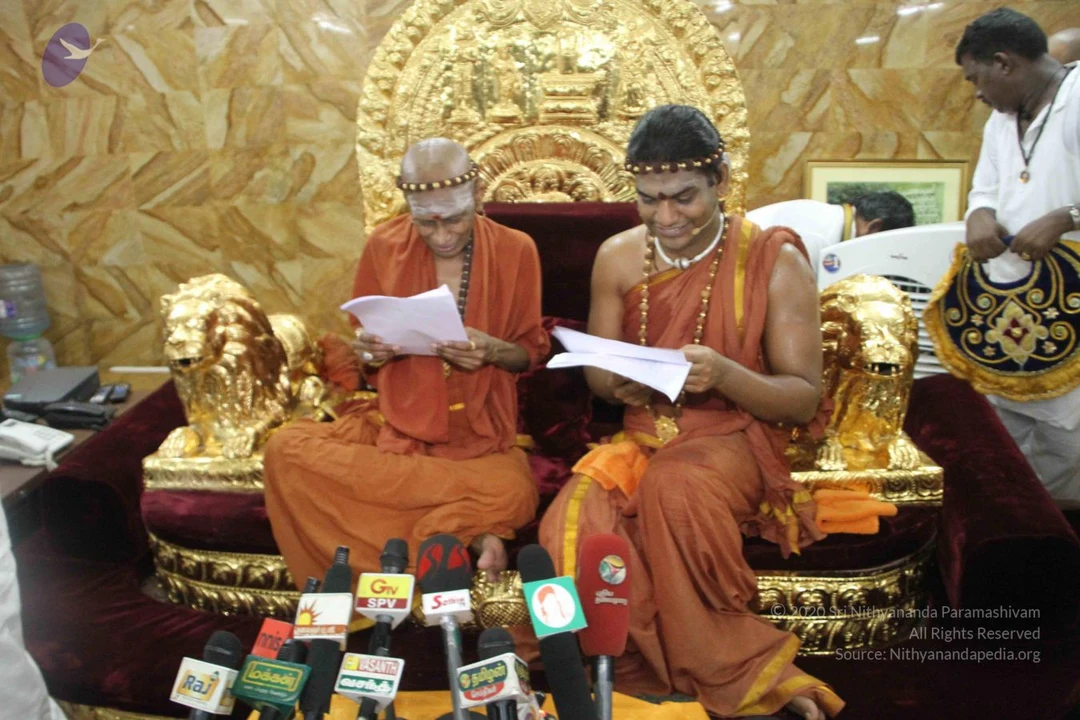
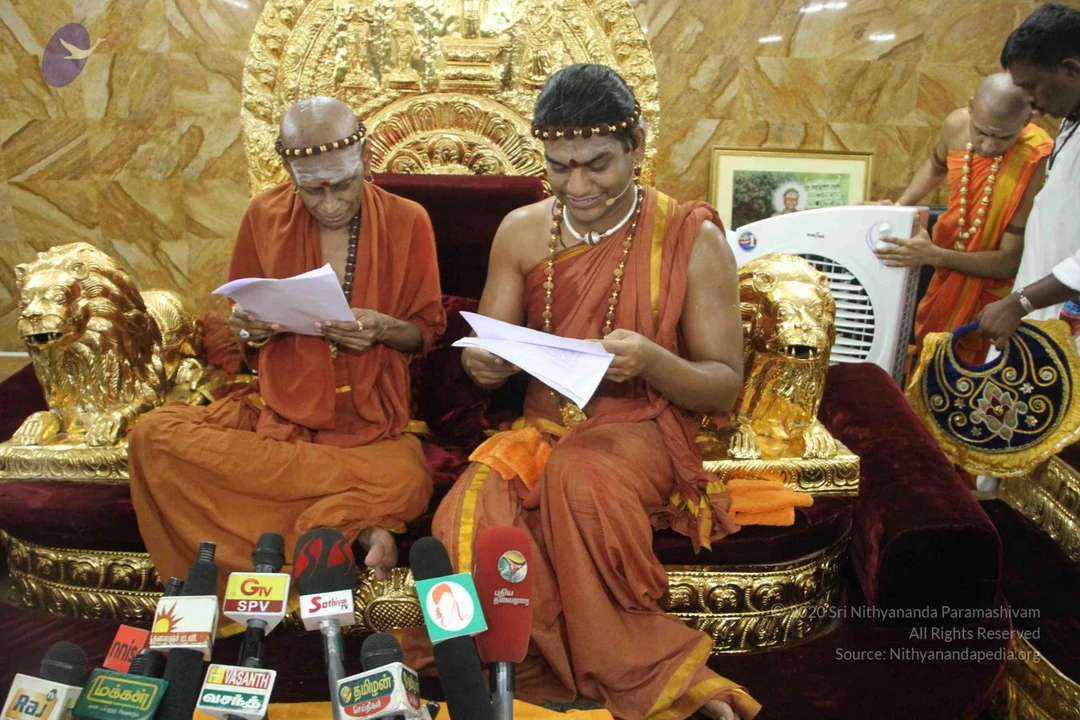
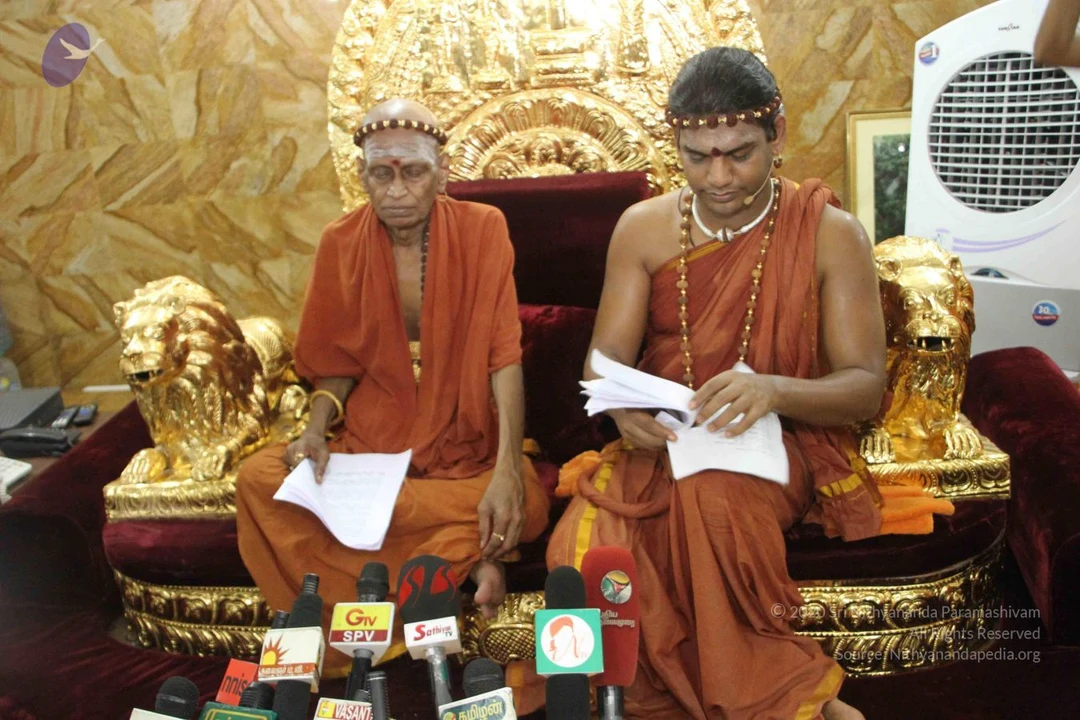
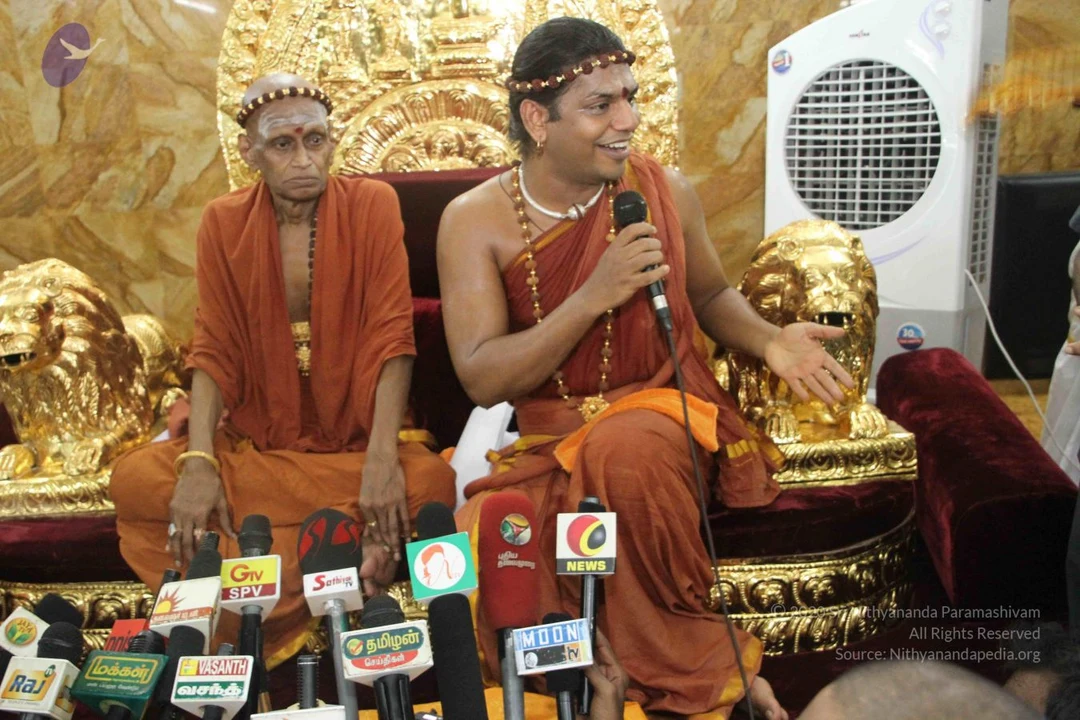
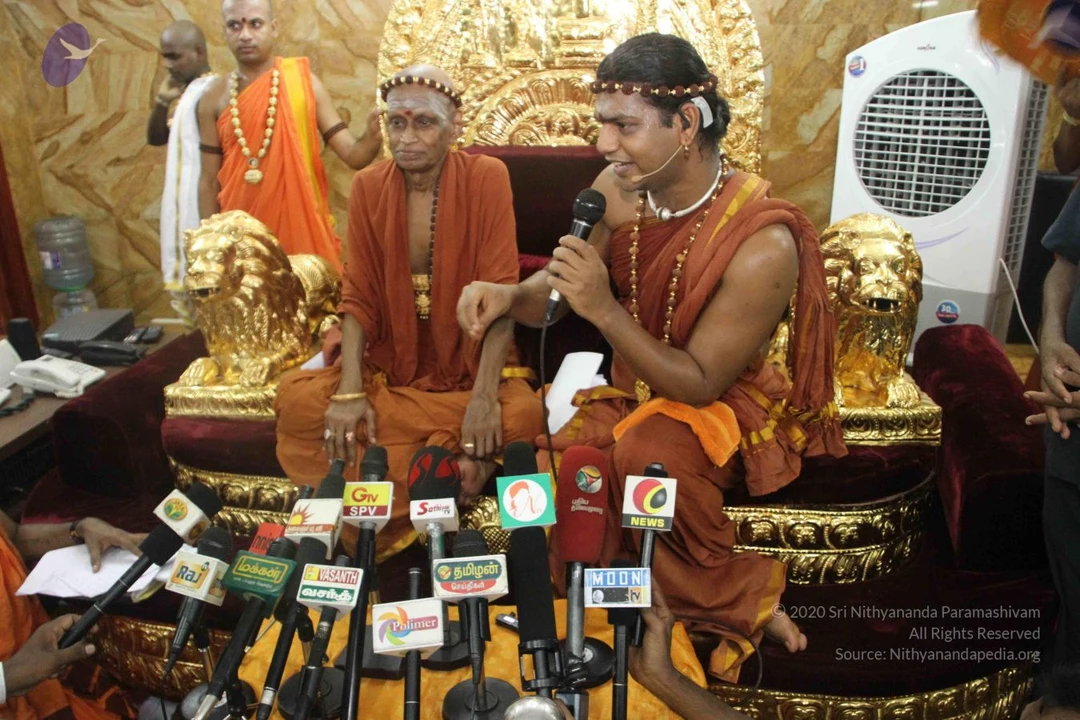
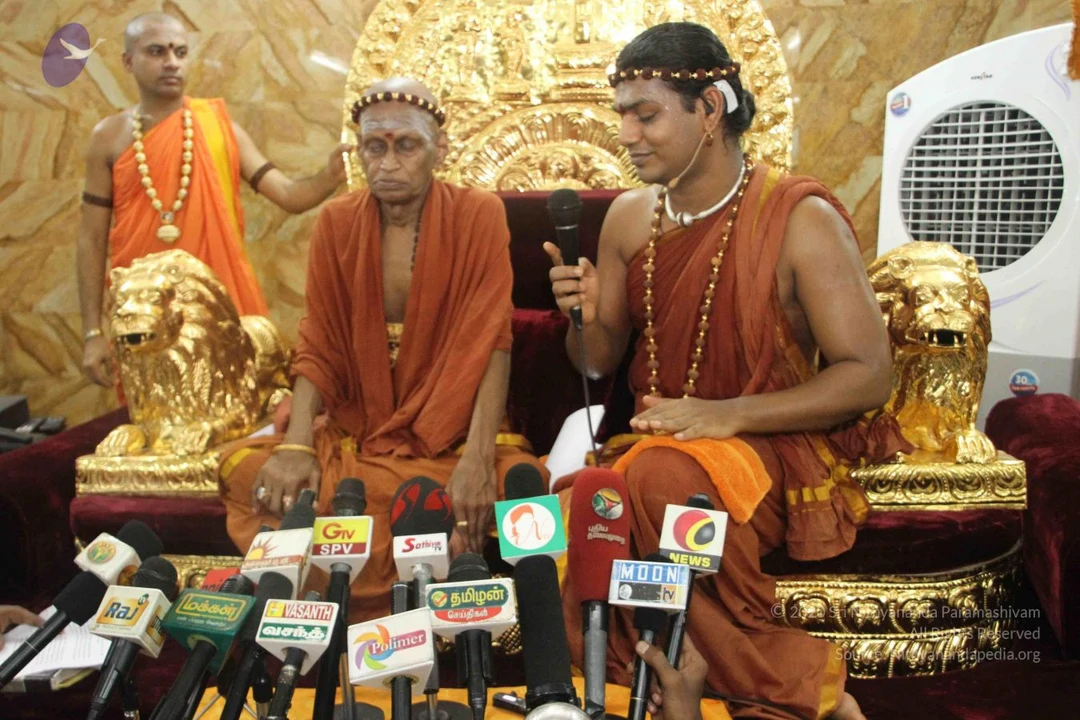
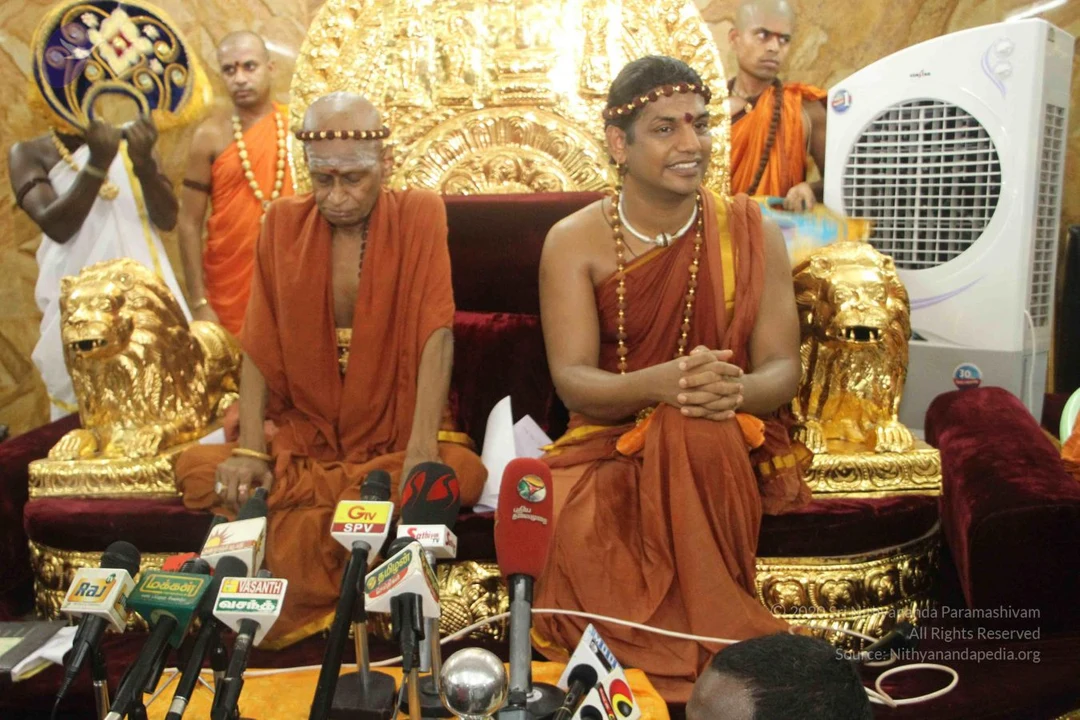
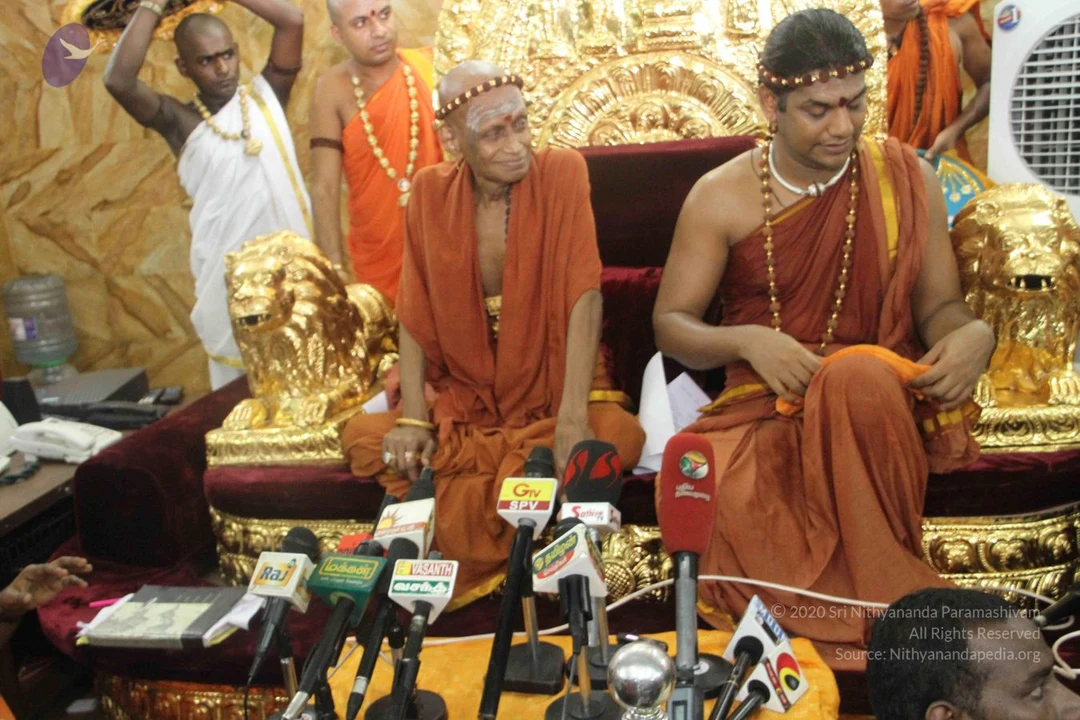
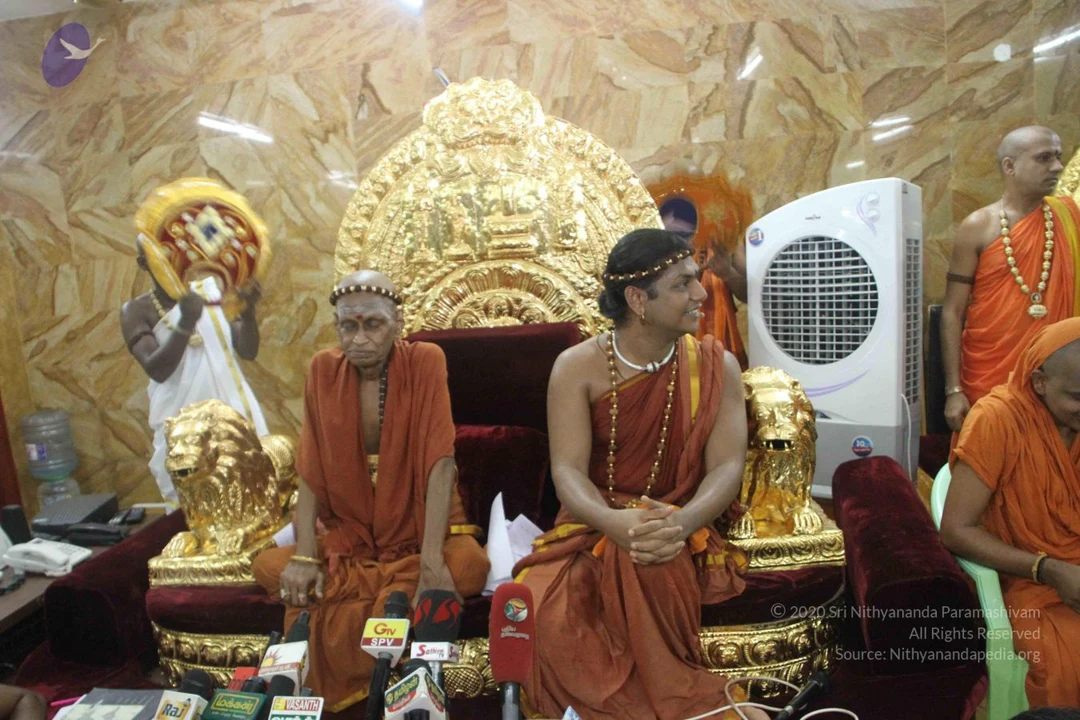
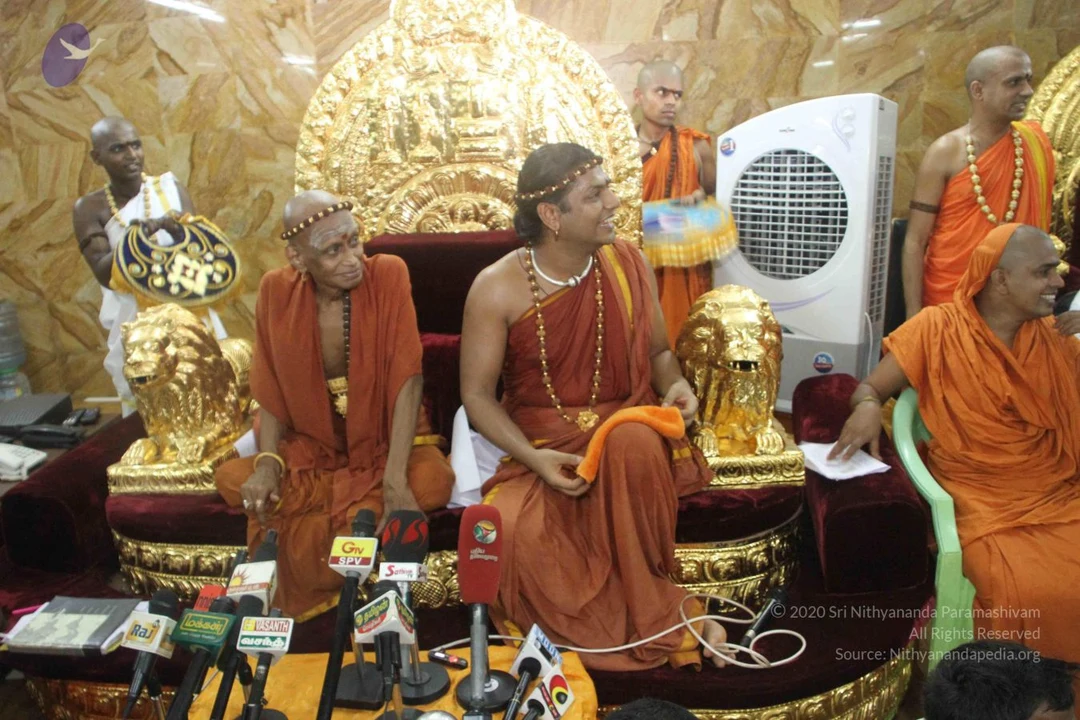
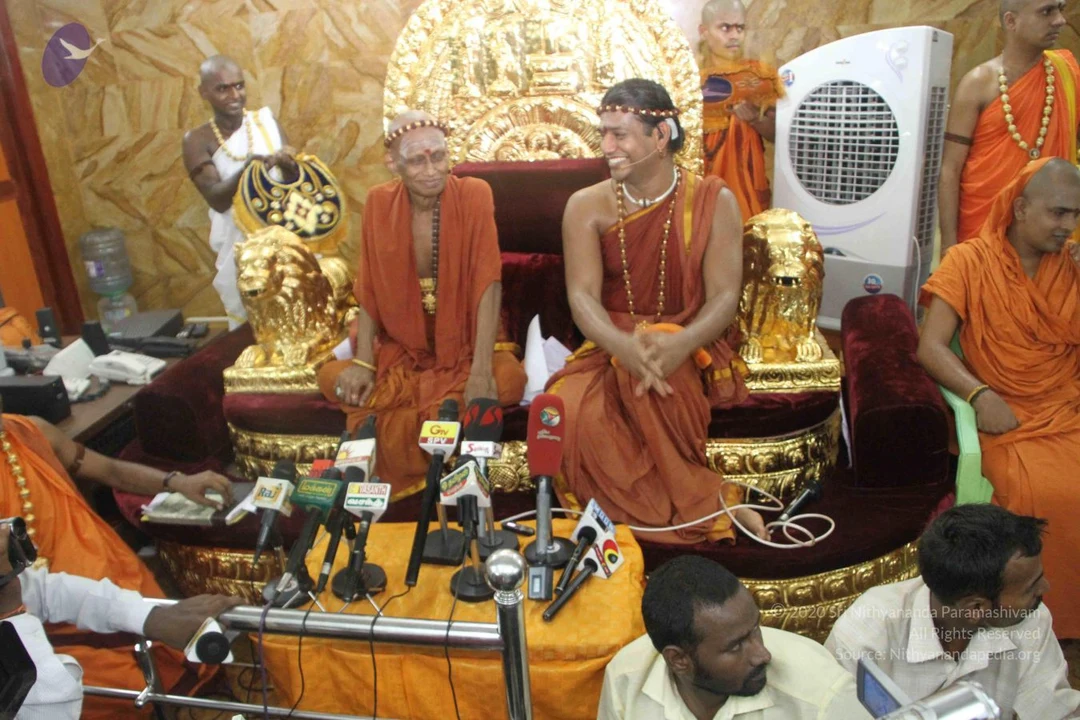
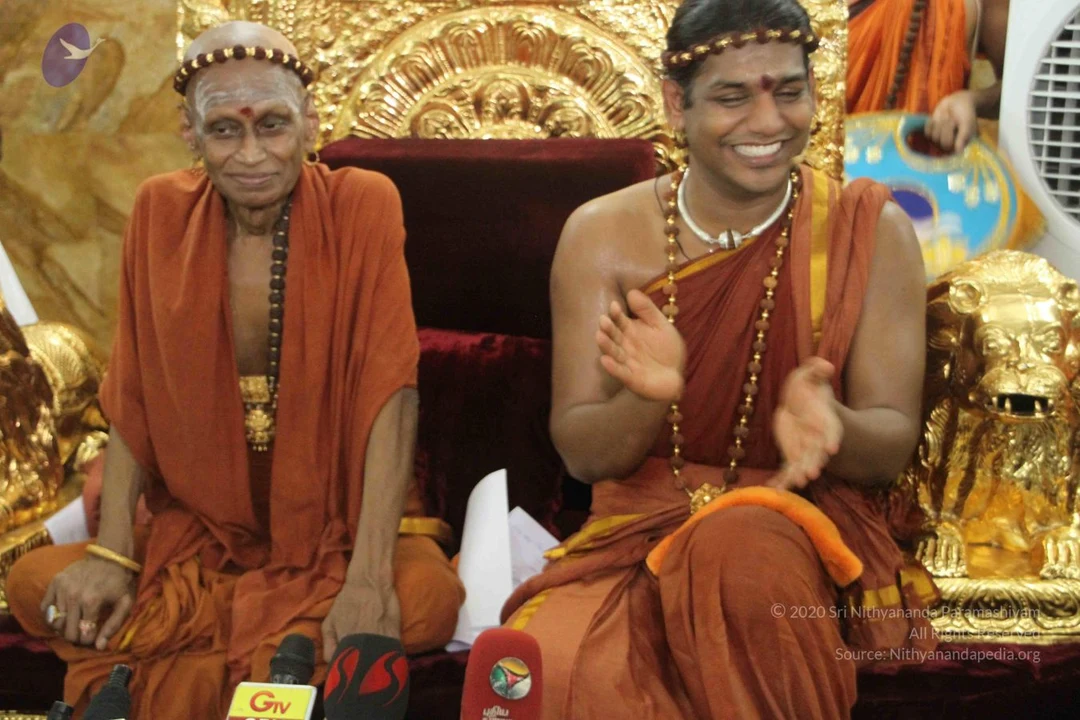
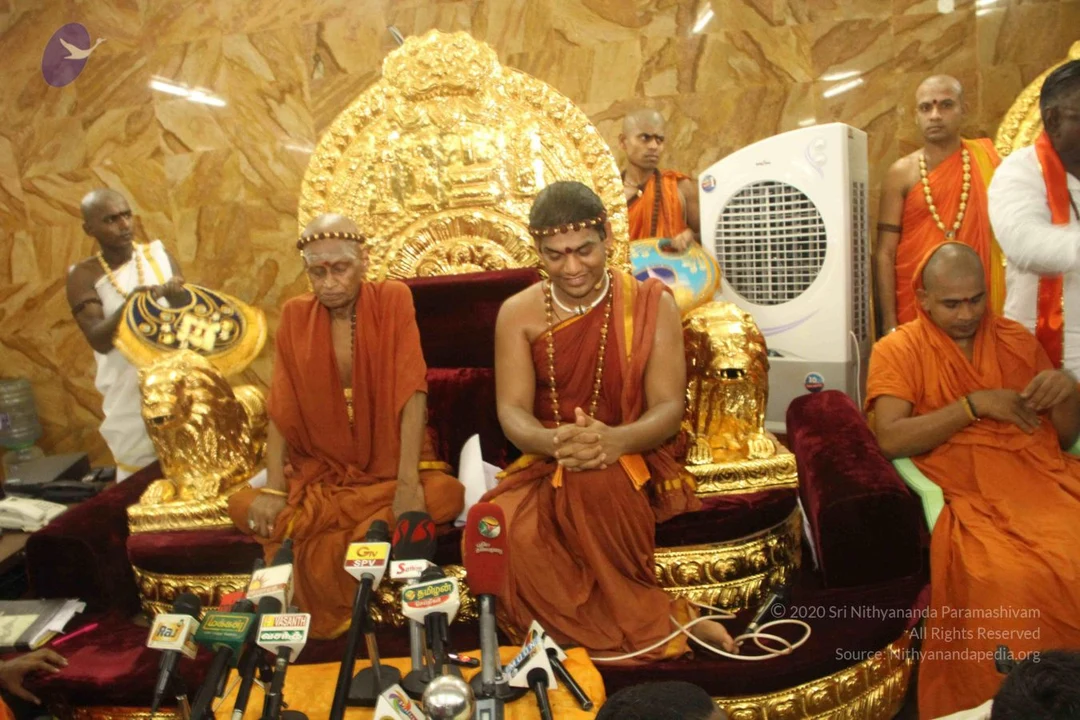
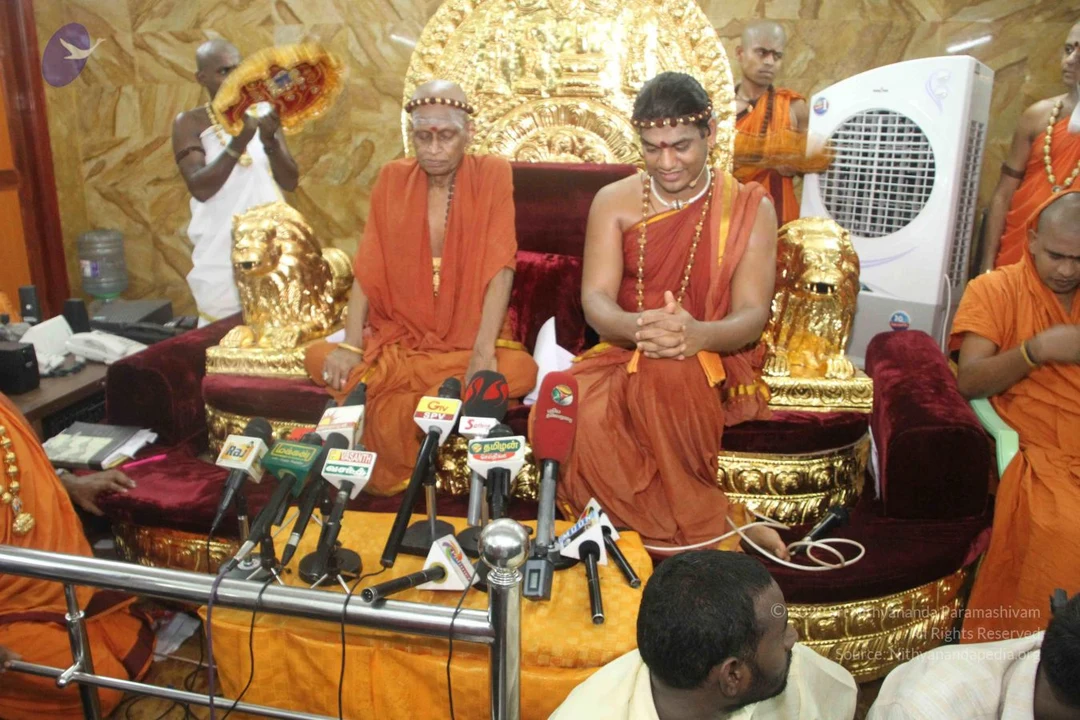
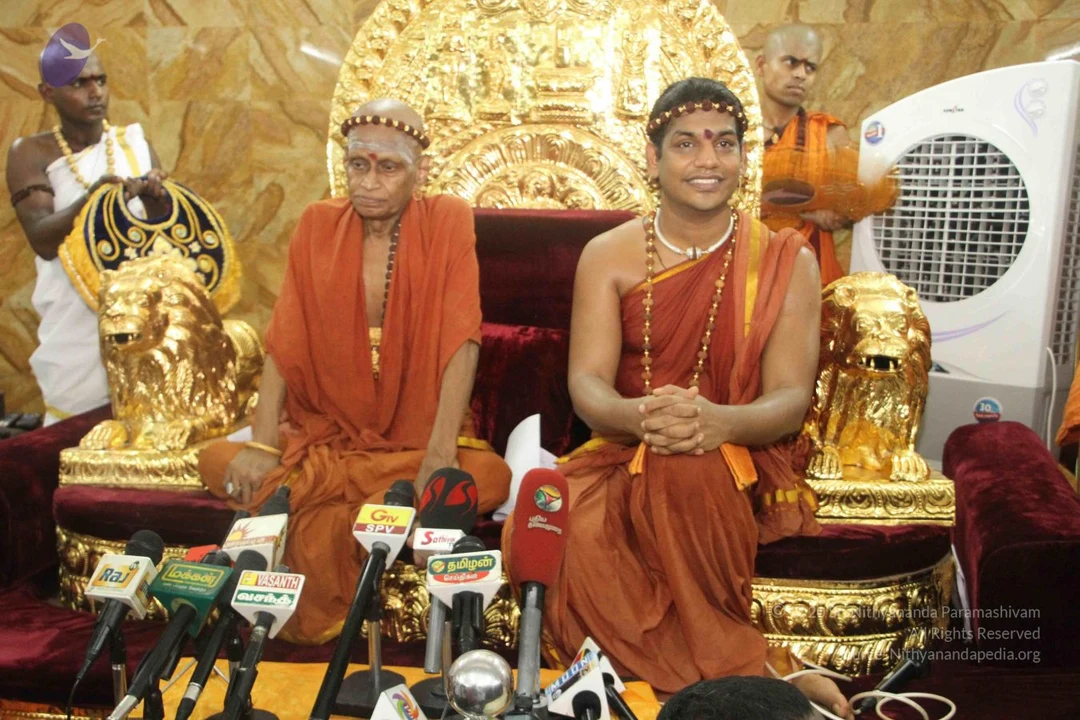
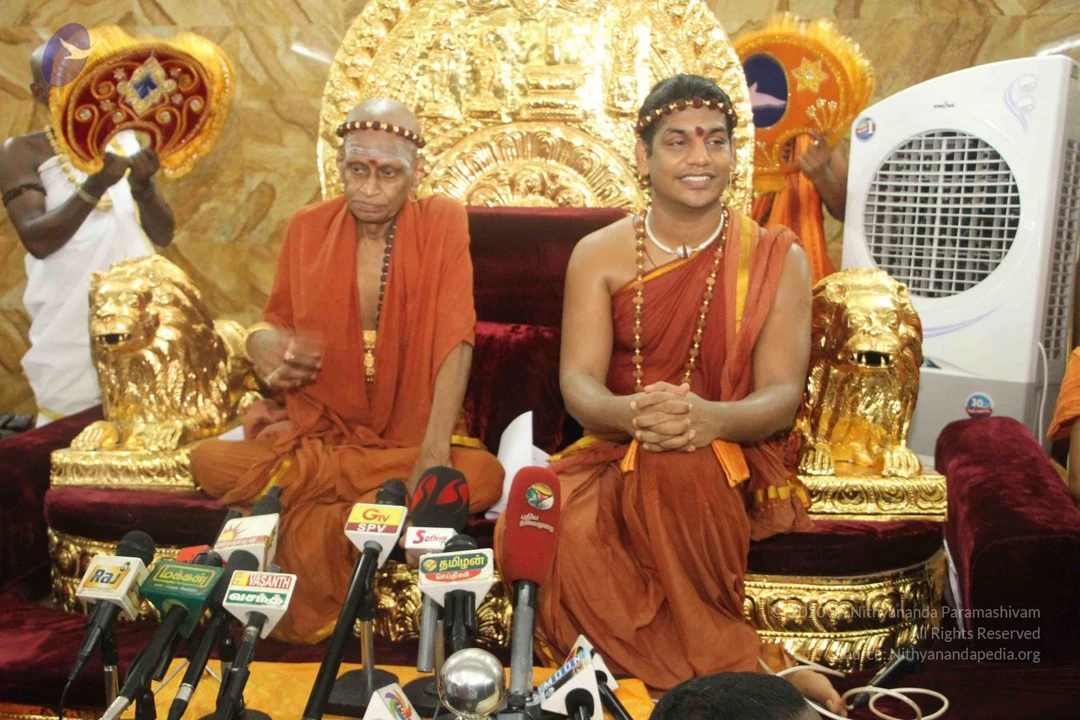
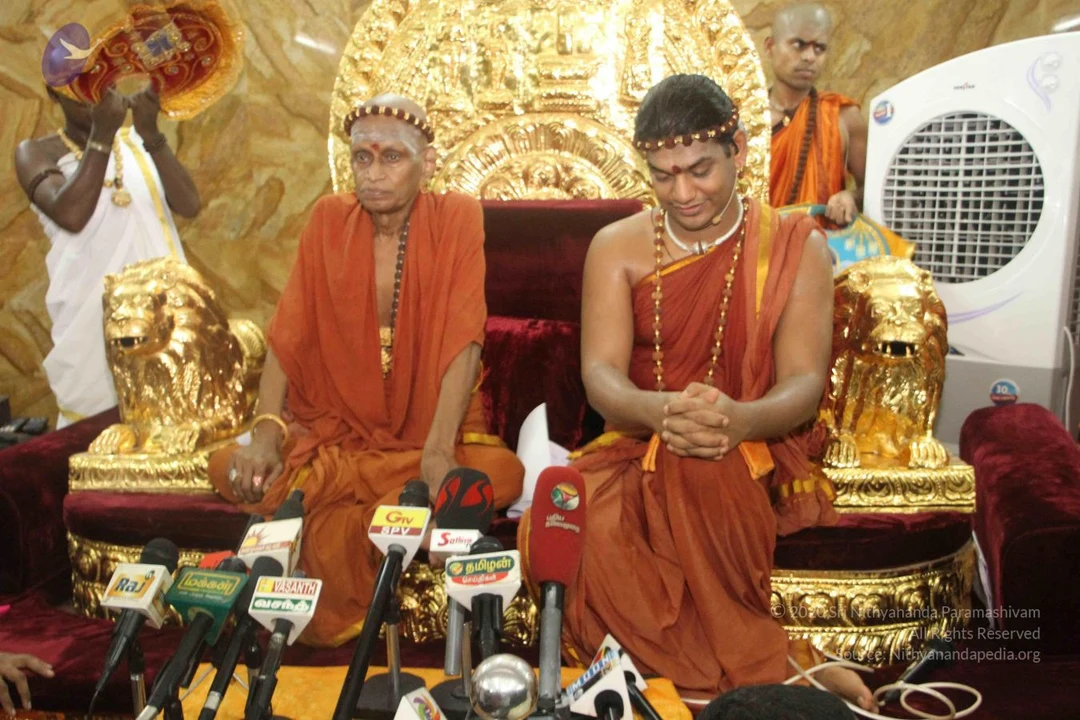
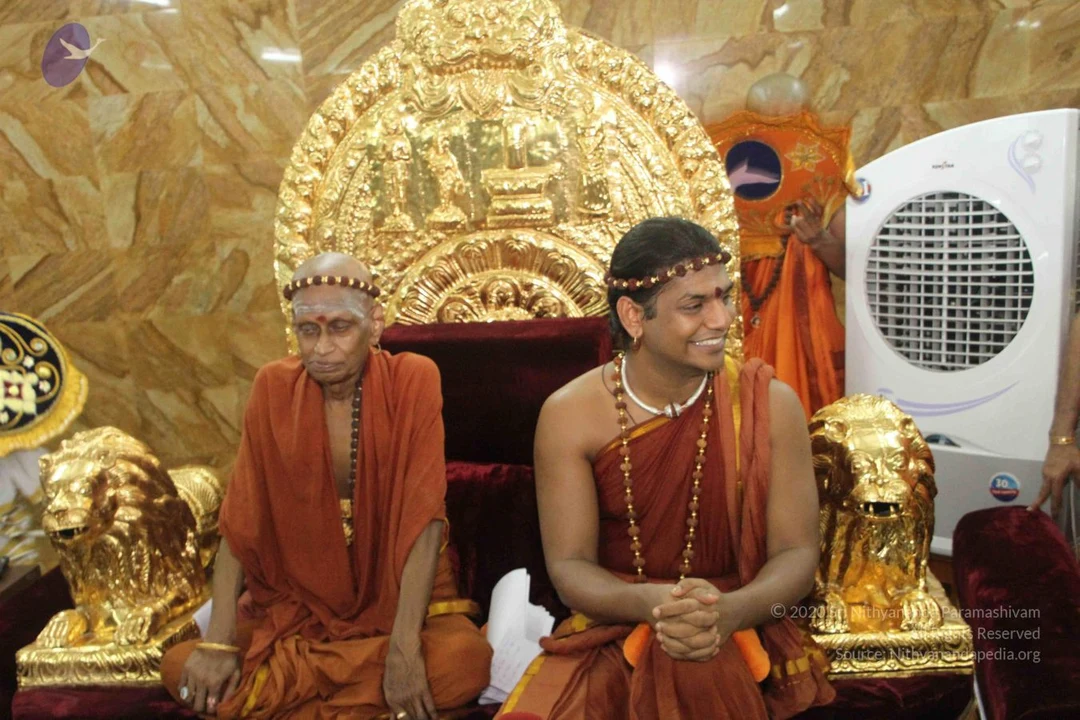
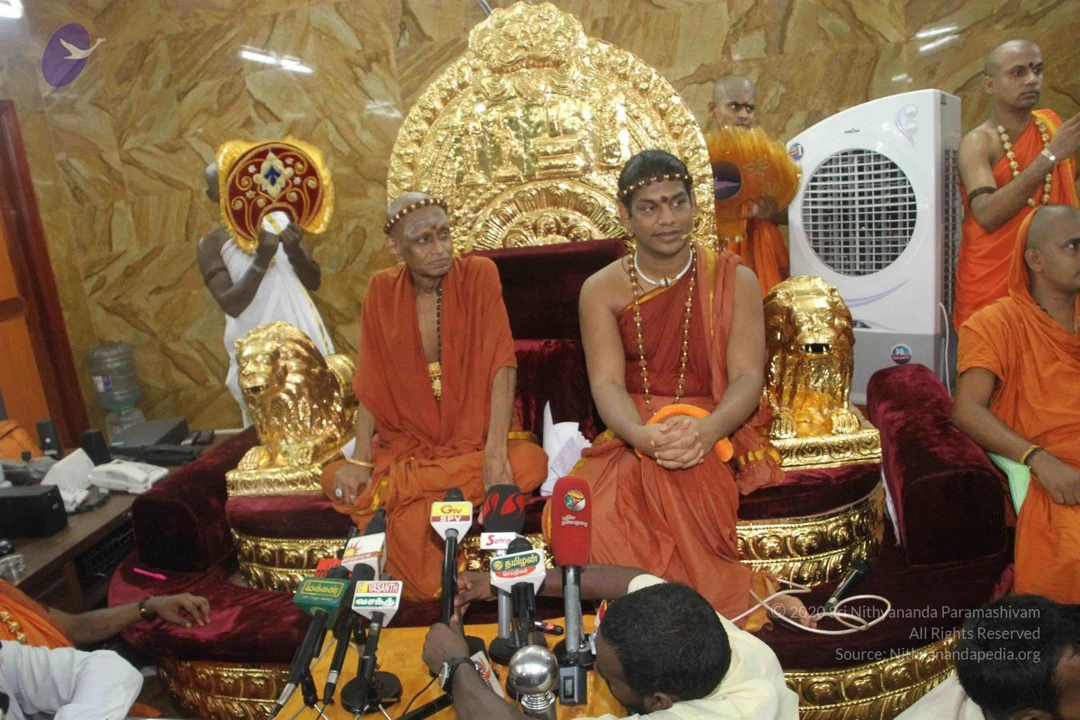
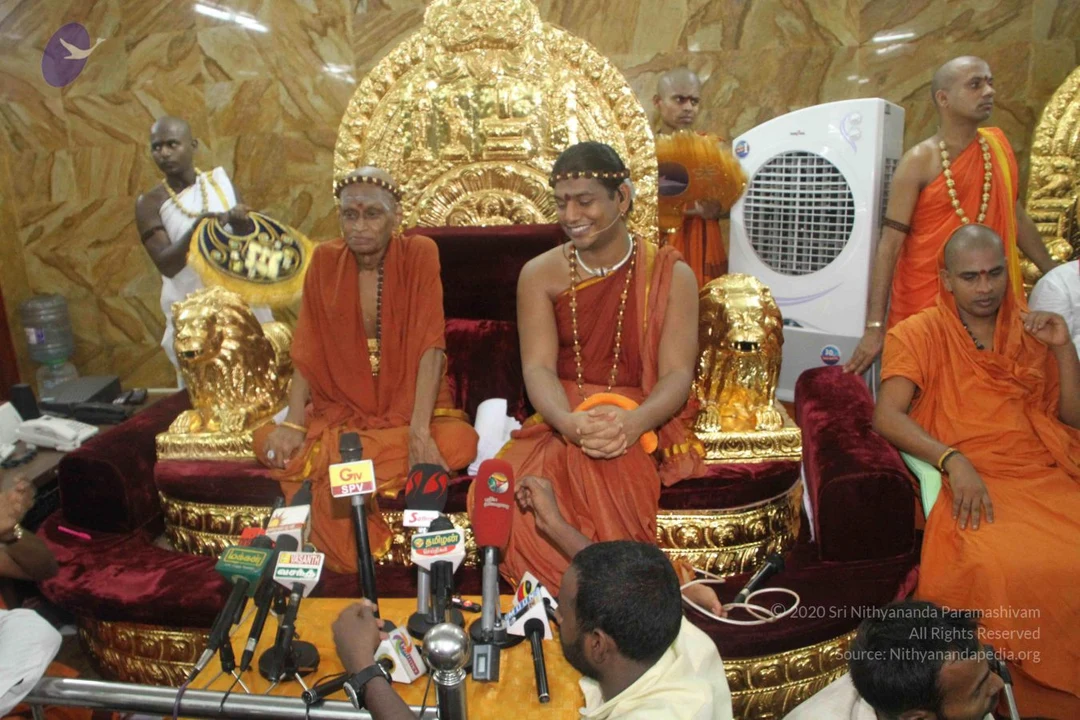
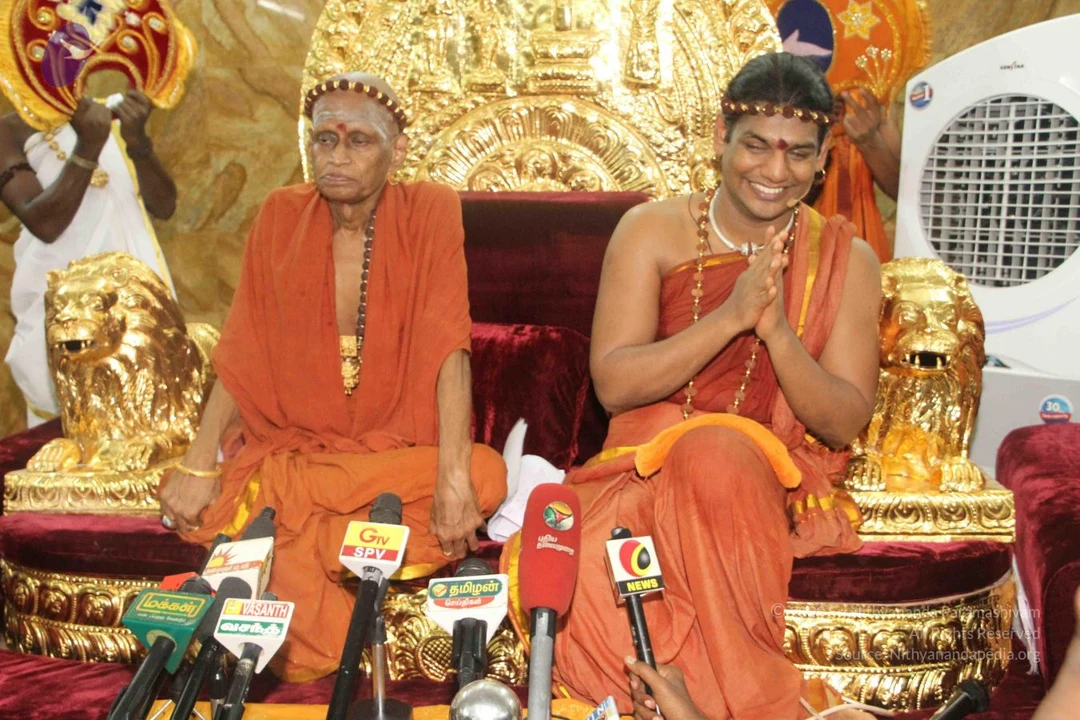
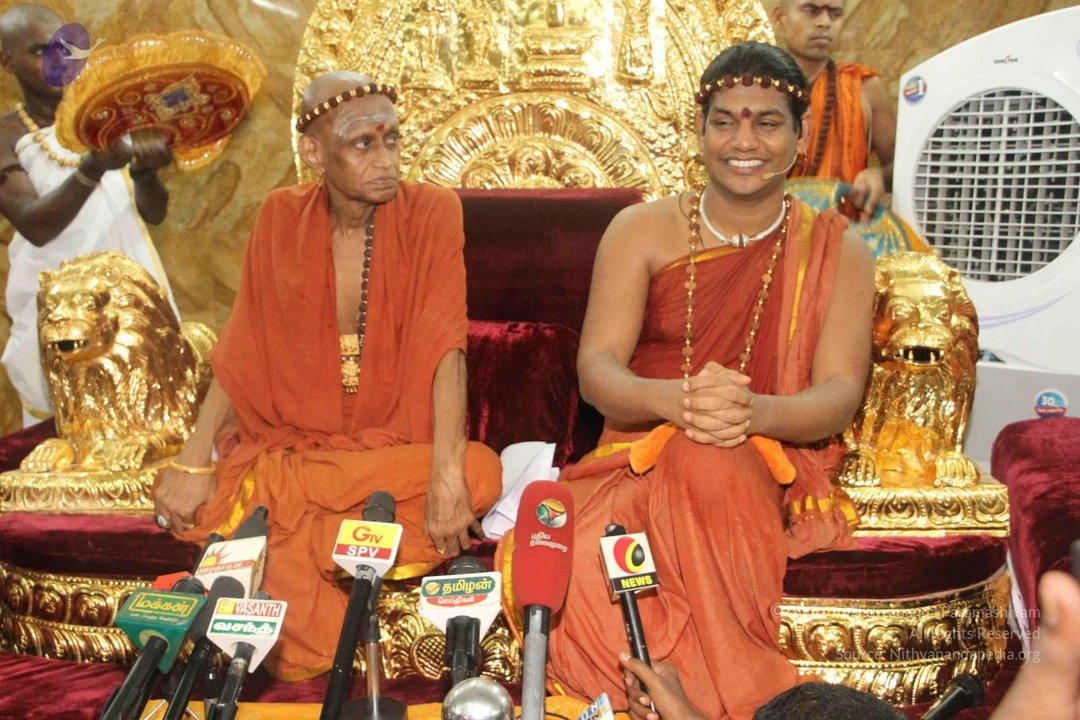
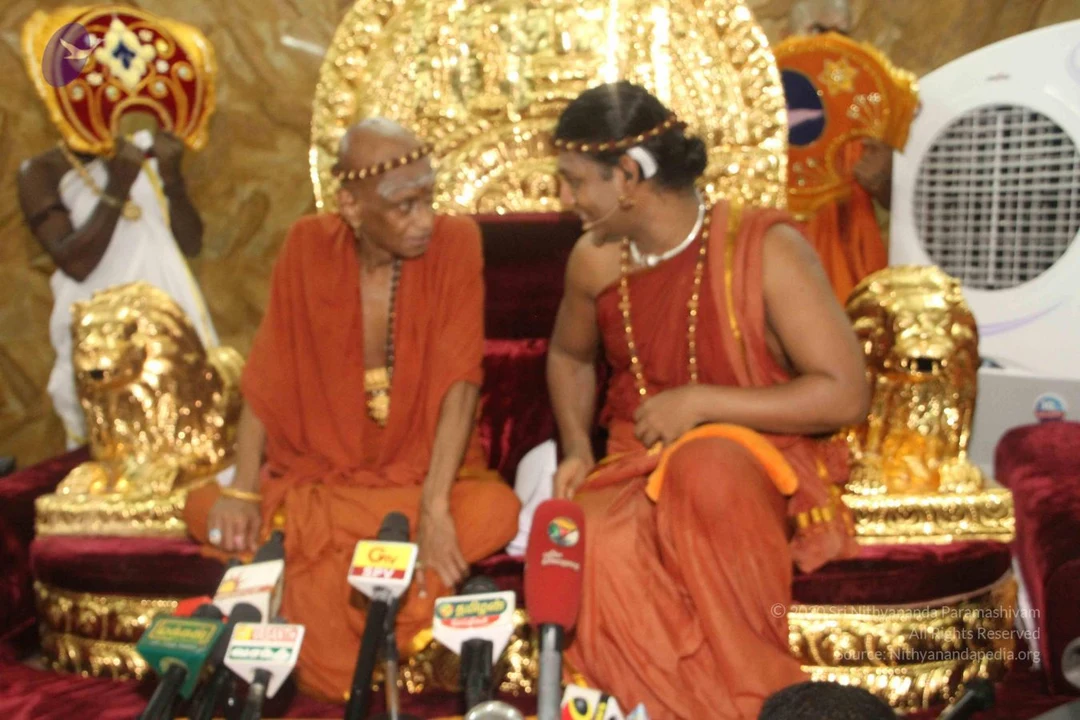
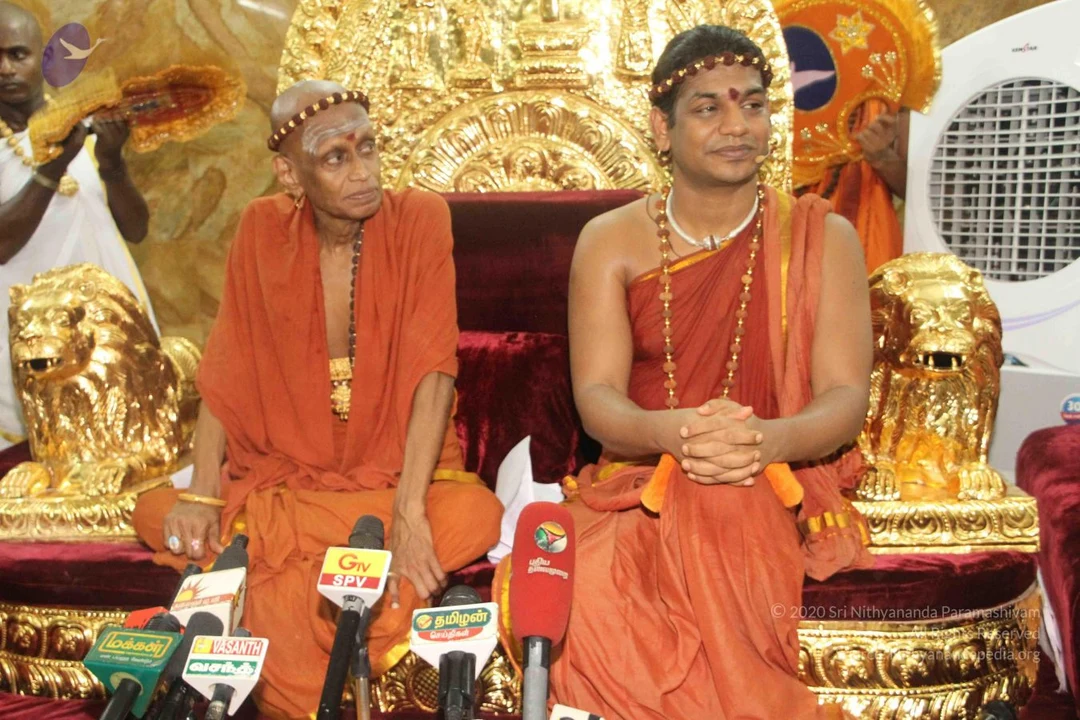
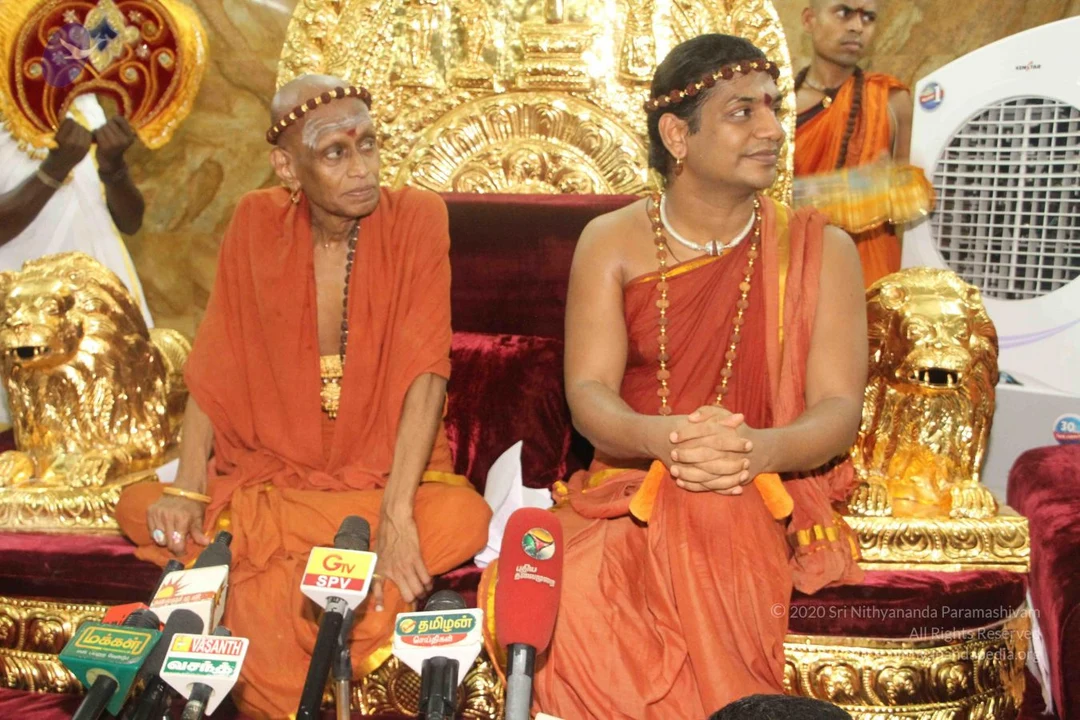
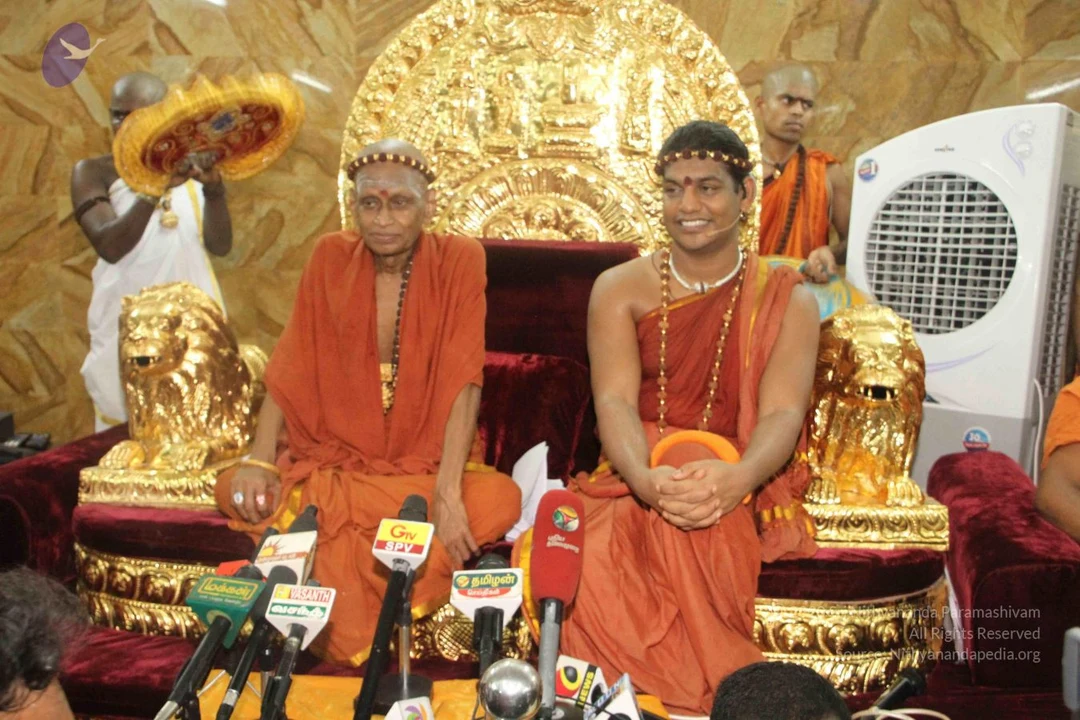
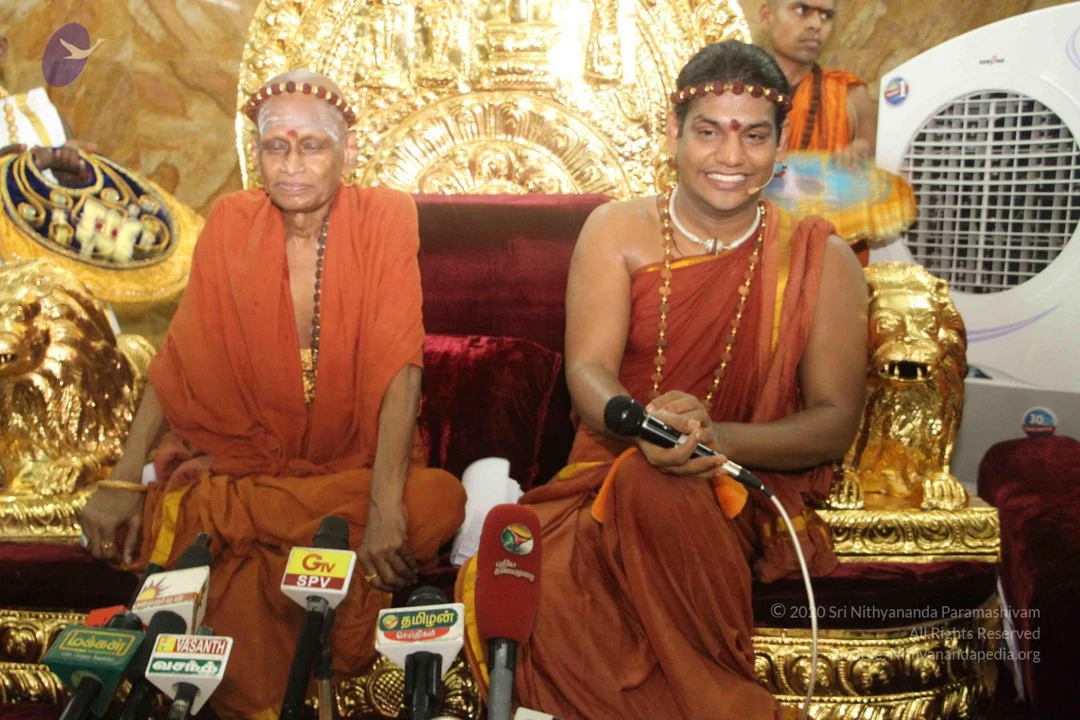
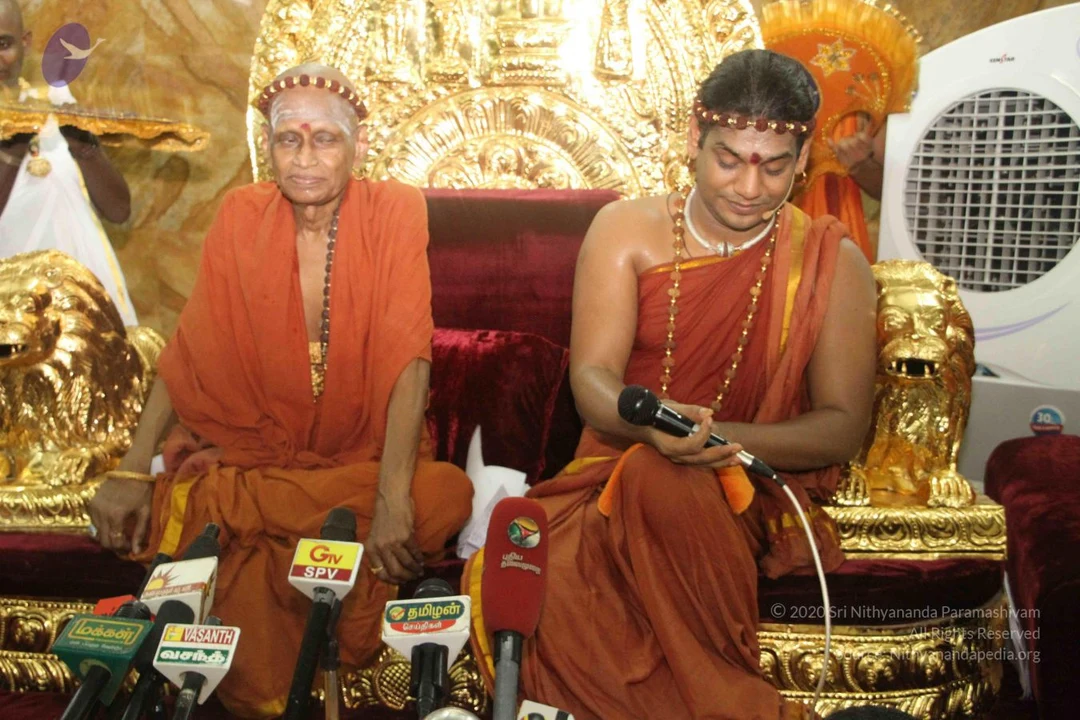
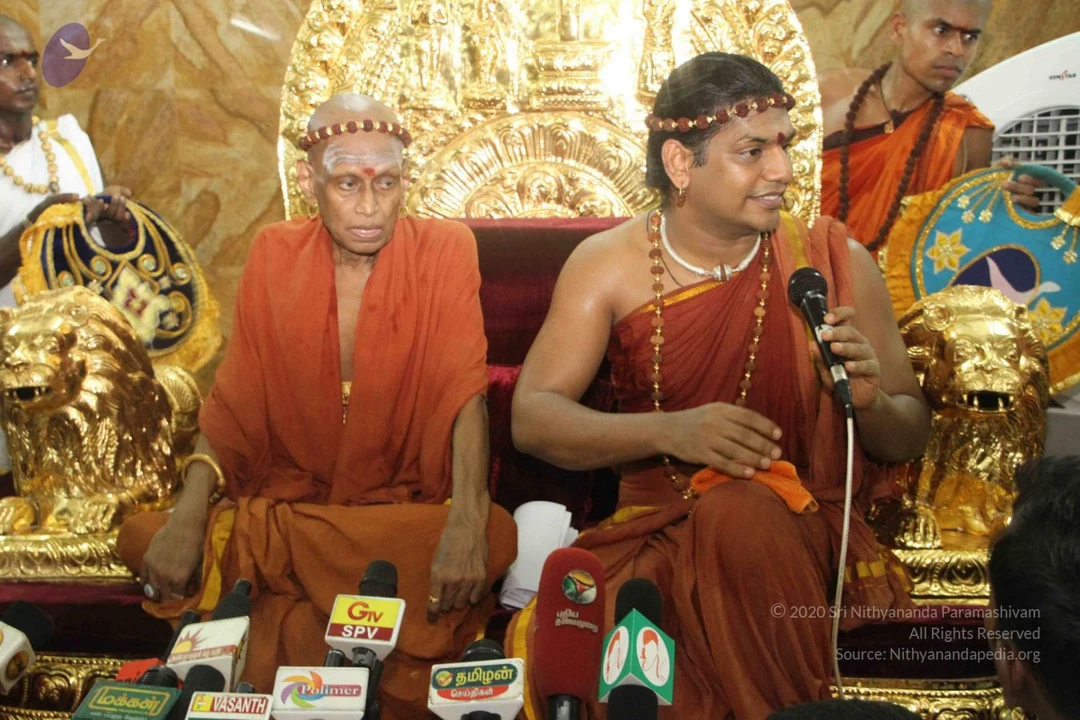
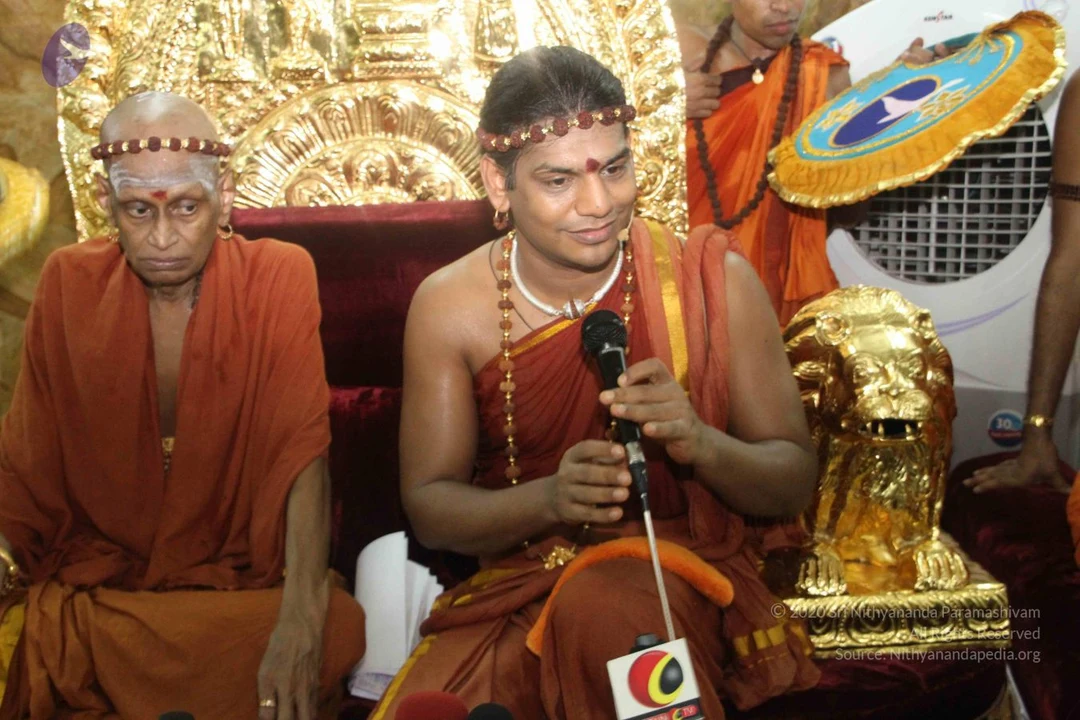
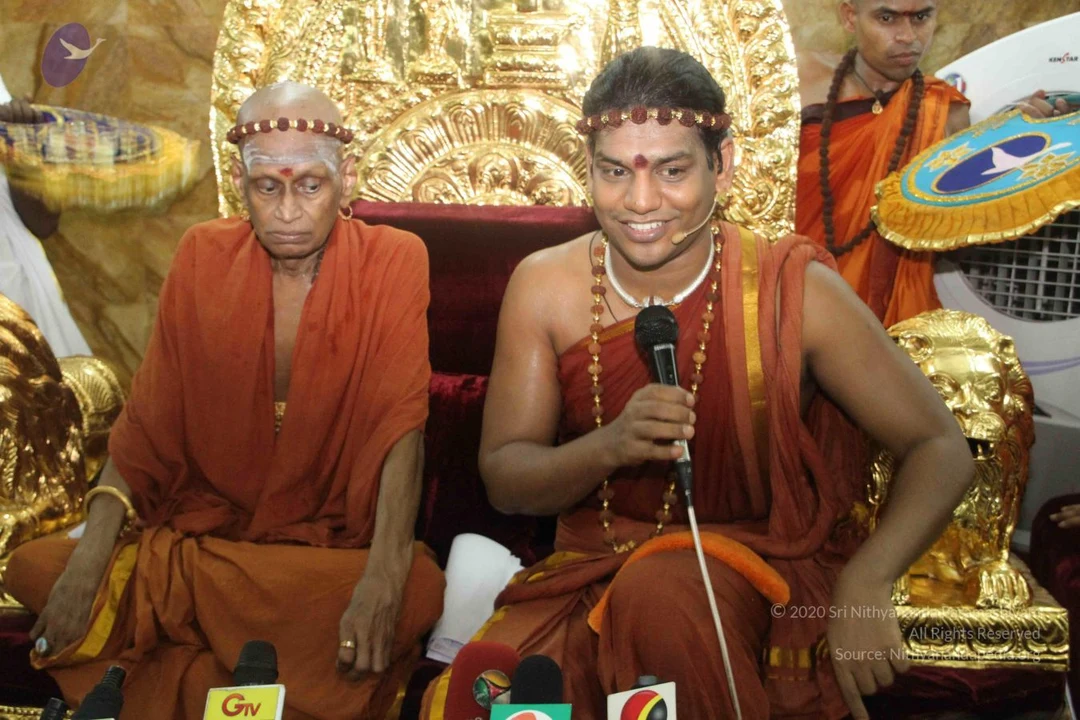
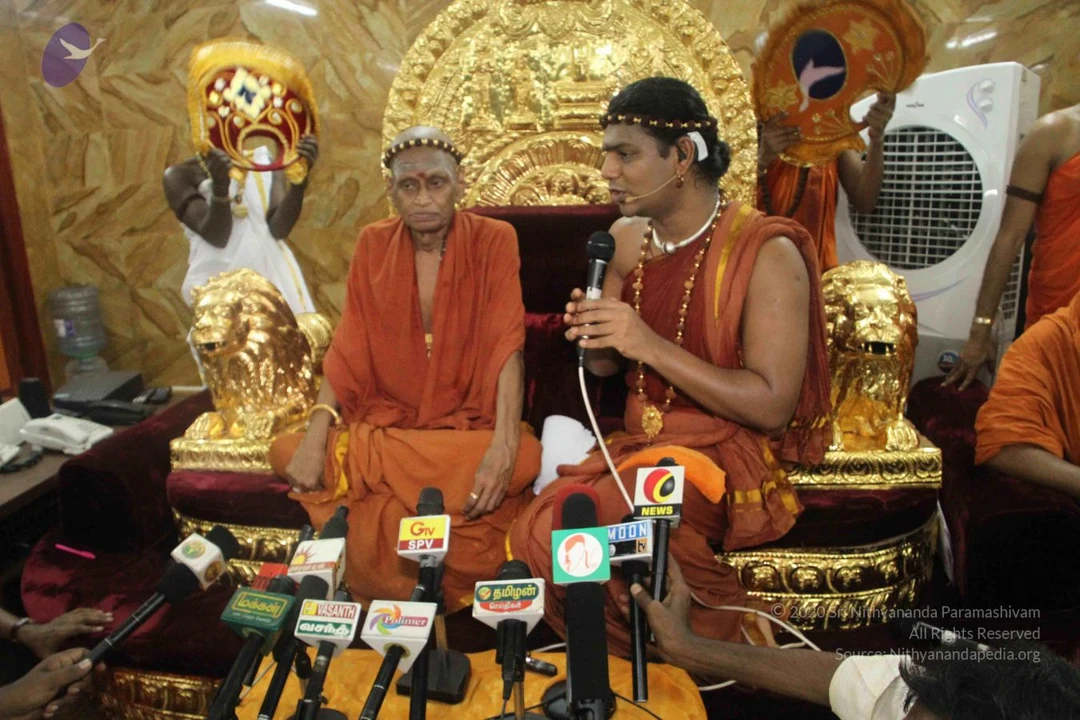
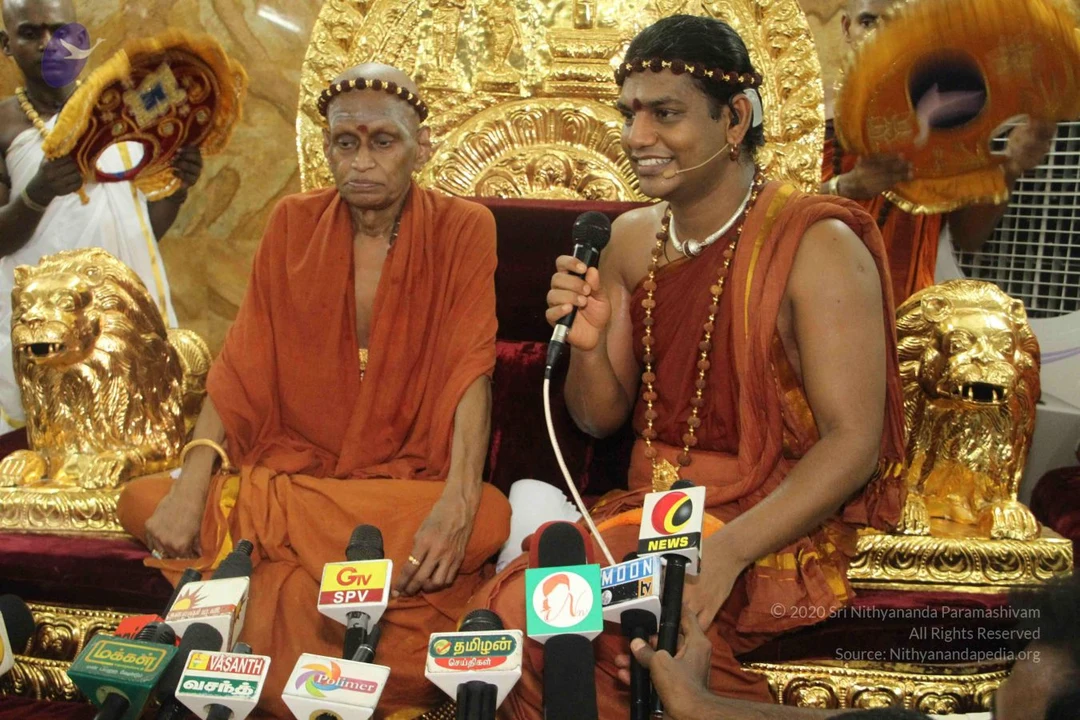
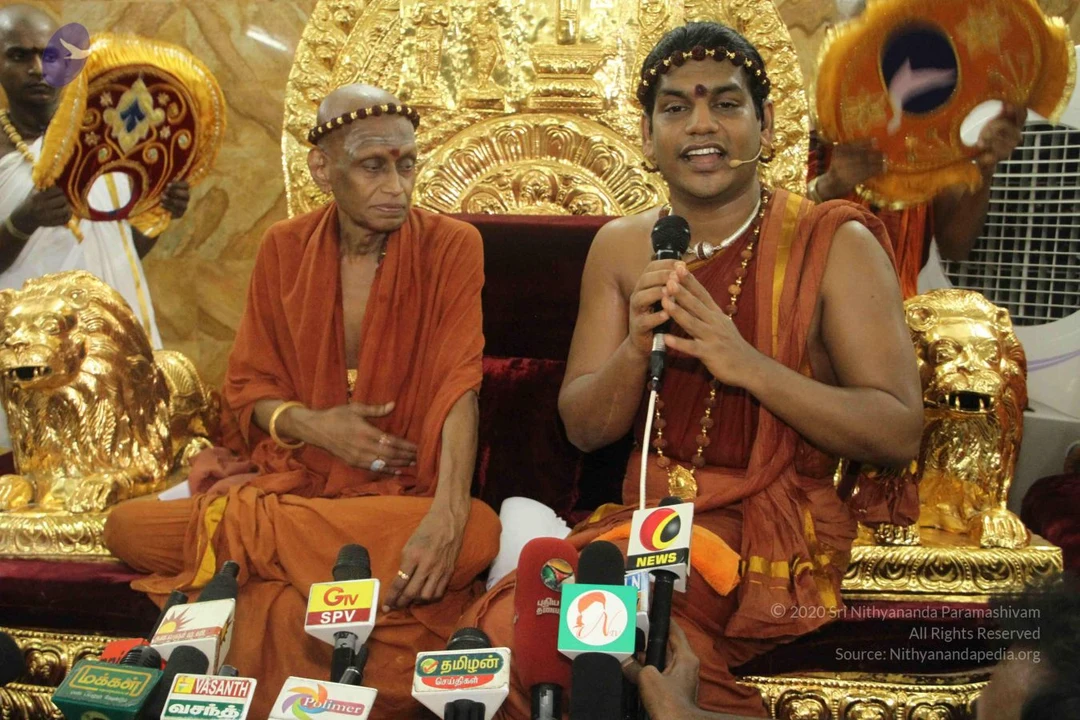
A photograph of a man seated on an ornate gold throne with a red velvet seat and armrests topped by gold lion-head carvings. He wears an orange-saffron dhoti-style garment draped over one shoulder, a rudraksha mala necklace, a white pendant, a gold headband and hoop earrings, with long dark hair swept back. Behind him is a large gold-carved arched backdrop set against a beige marble wall. At the left edge a framed picture shows a figure in orange.A seated man in orange-saffron draped robes speaks in front of an ornate gold throne with intricate repoussé carving. He has a shaved head with a dark rudraksha bead headband and a long rudraksha mala with gold spacer beads, plus a large gold ceremonial pendant on his chest. He wears gold bangles, rings and a small gold earring, and his right hand rests on his knee.Two saffron-robed men sit on a red-cushioned golden throne flanked by golden lion statues, in front of a gold-carved backdrop and marble wall. The man on the left, with a shaved head, white forehead markings, rudraksha mala and gold bangles, holds a sheet of paper and looks ahead. The man on the right wears a red-beaded headband, a white crystal-like necklace, long rudraksha and gold malas, a gold-bordered orange cloth, and a head microphone; he reads from papers. Microphones are pointed at them from below. A framed portrait hangs on the right and a man in white stands partly visible at upper left.A photograph of a seated ceremonial gathering in front of a large gilded throne with a golden arched back carved with figures, flanked by two golden lion statues on a maroon cushioned seat. In the centre, a younger man in saffron robes, a rudraksha mala, a white ceremonial necklace and a headband reads from printed sheets. Beside him, an elderly bald man in saffron robes and a mala also holds pages. Behind them, a man in white with a saffron shawl holds a yellow and red cloth, and another man in white holds a yellow garland-like object. Microphones and media logos sit in the foreground, and a person in saffron with a gold necklace is partly visible at lower left. Appearance-based label: the younger seated man in saffron with rudraksha, a gold-coloured ceremonial necklace and headband matches a person by his distinctive ceremonial adornments, while identity remains uncertain from appearance alone.A photograph of two seated men in orange saffron robes on a gold-and-red throne flanked by golden lion statues, with a red-velvet cushioned seat. The man on the right has a headband, rudraksha mala and ceremonial gold necklace, and reads from printed sheets held in both hands, with a headset microphone. The older man on the left, bald and wearing an orange shawl and mala, sits beside him holding papers. In the foreground, a cluster of microphones with station logos (including Sun, Thanthi-style and Jaya-style channel flags) faces them. Two attendants in white stand behind, holding ornate red and orange fan-shaped banners on poles. A white fan and gold ornaments decorate the background. a person (the man on the right) is wearing saffron clothing, a headband and a rudraksha mala with a gold necklace.Photograph of two seated figures on an ornate gold throne with golden lion armrests and a burgundy cushion, in a gold-and-marble room. The figure on the left is an older man with a shaved head, wearing orange-saffron robes, a rudraksha mala and a bangle, holding papers. Beside him, a younger man with long swept-back hair, a headband with beads, a gold-and-orange saffron robe, multiple rudraksha malas and a gold necklace reads from printed pages. A man in white shirt and orange-and-white shawl stands behind, gesturing with his hands; another in white shirt holds an orange-and-blue banner. Microphones with news channel logos are in the foreground, and a press-style gathering is suggested by the microphones. The younger seated figure has distinctive appearance cues consistent with the a person candidate, presented in the role of speaker. Three people are visible.
VIPs-VISIT-HDH

16 photosSource gallery
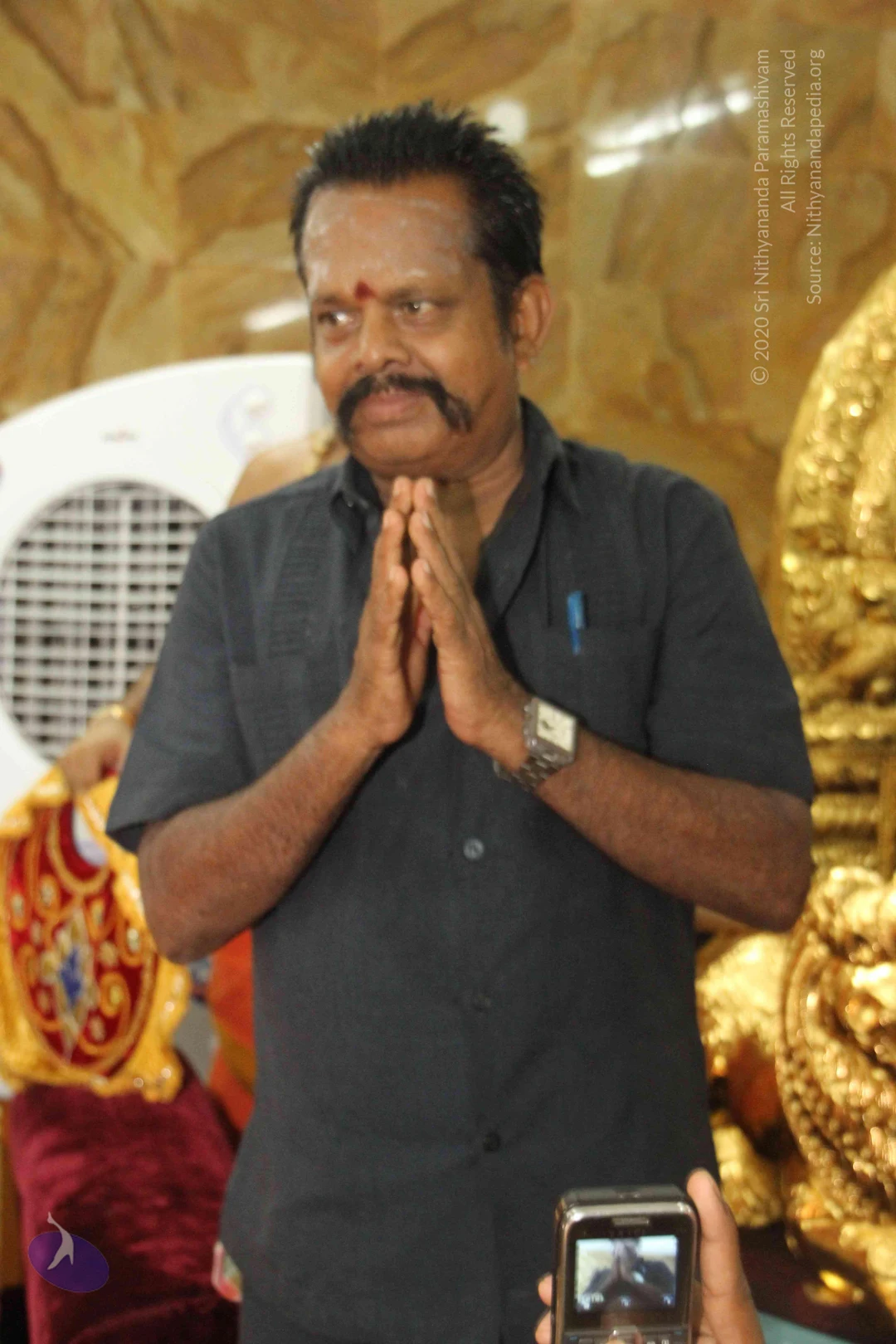
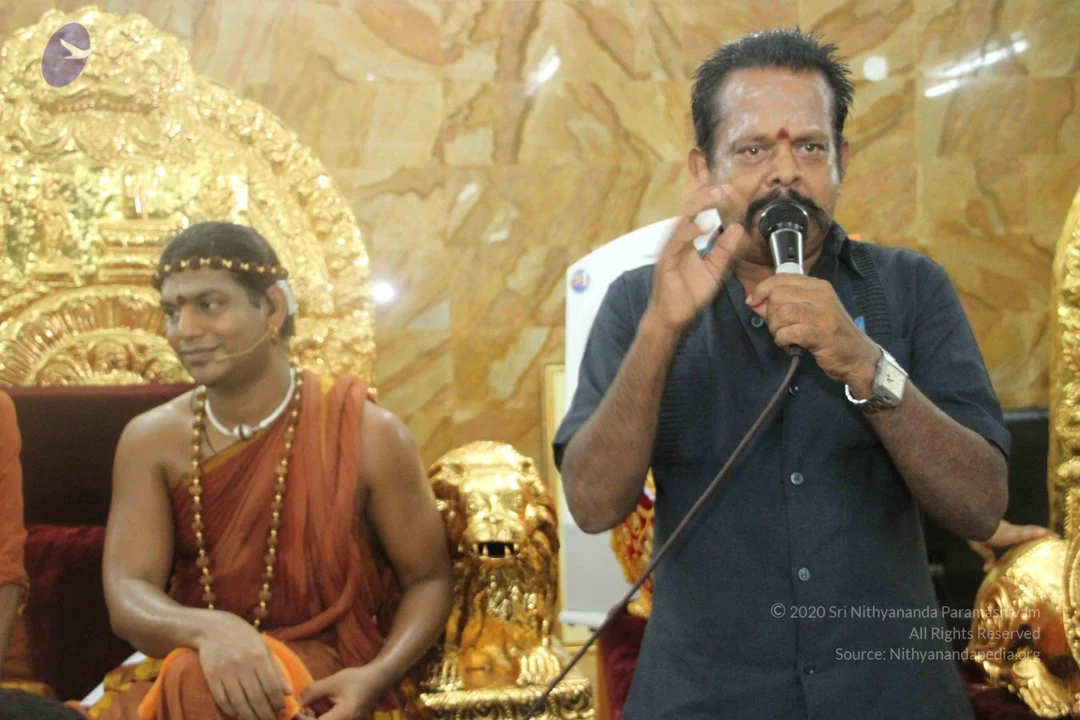
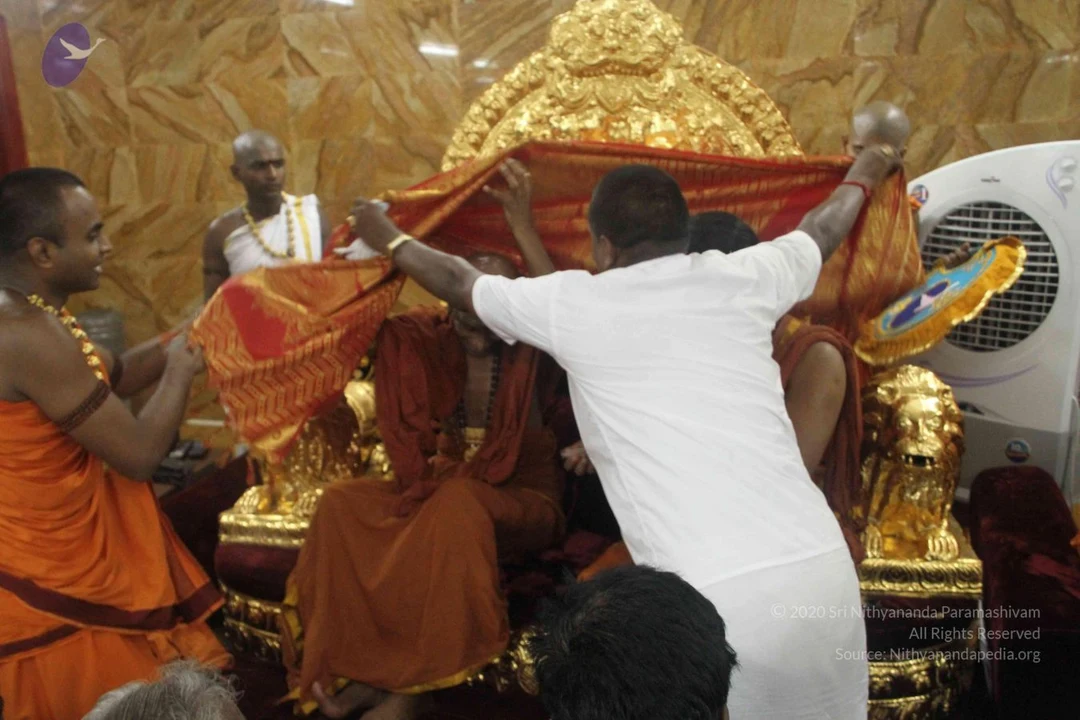
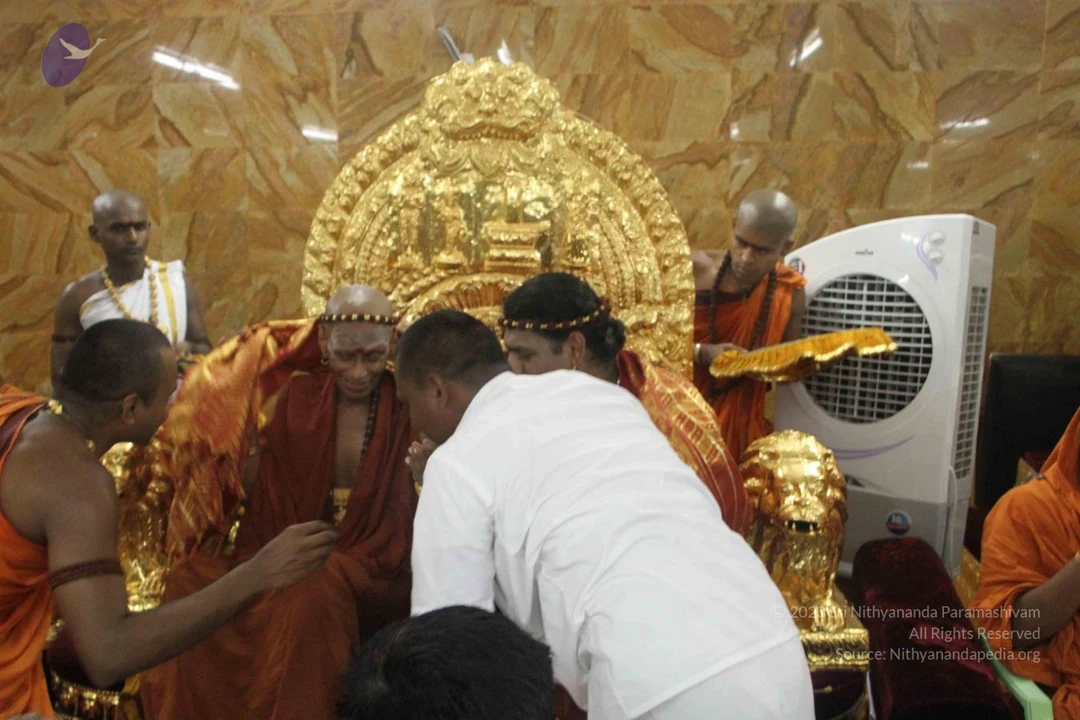
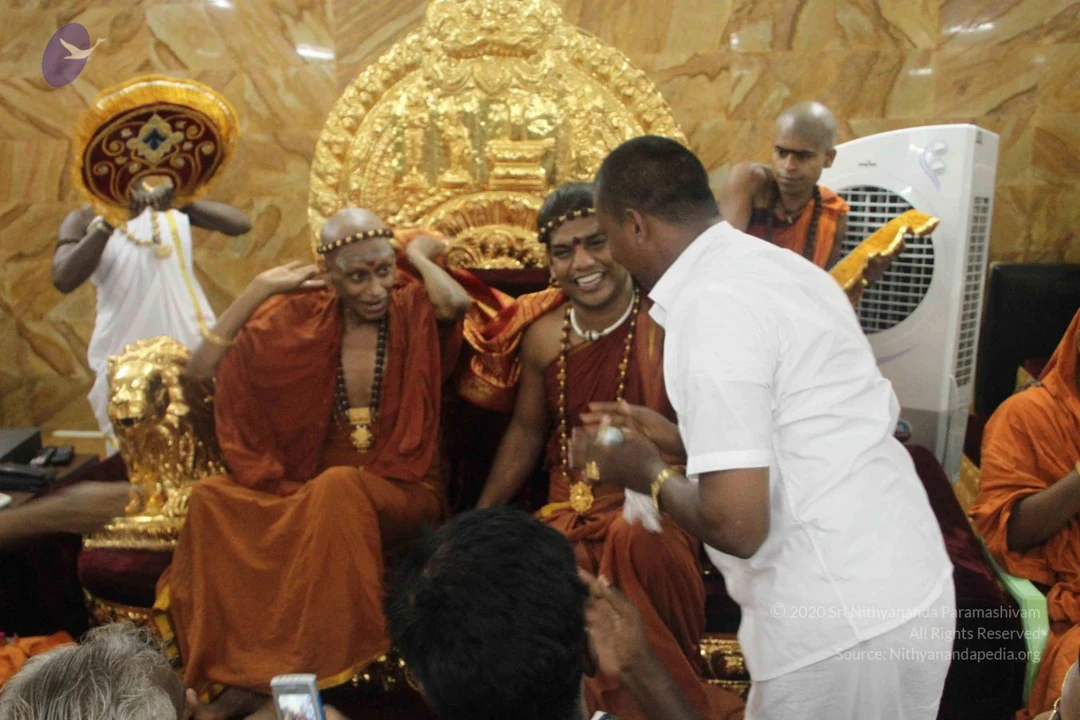
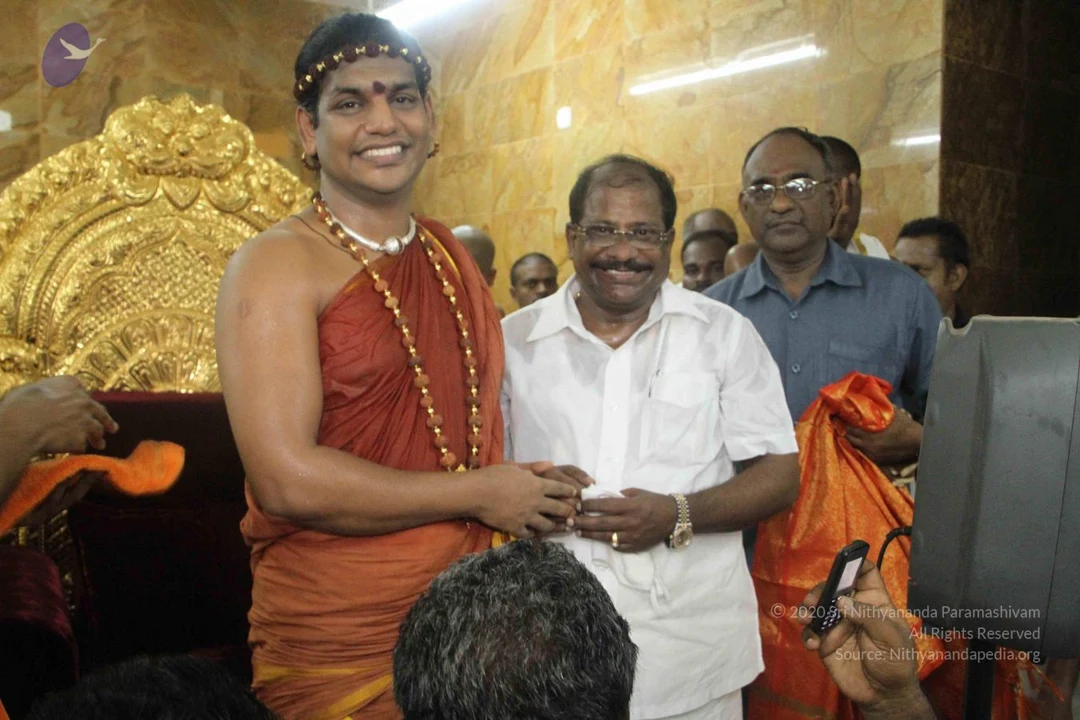
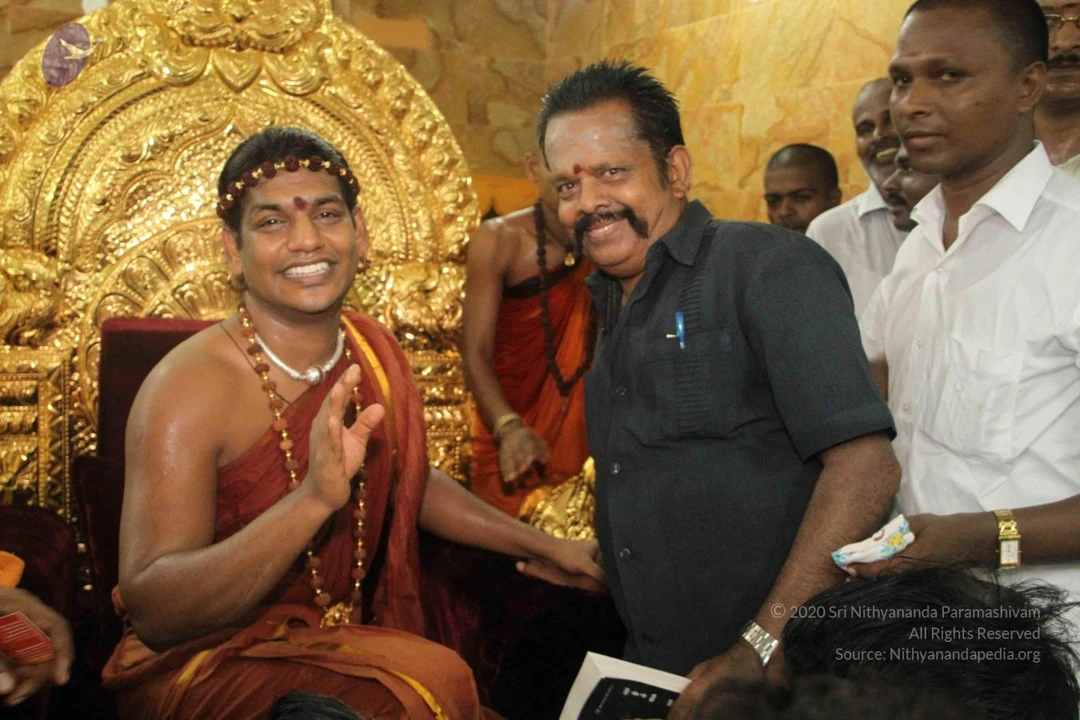
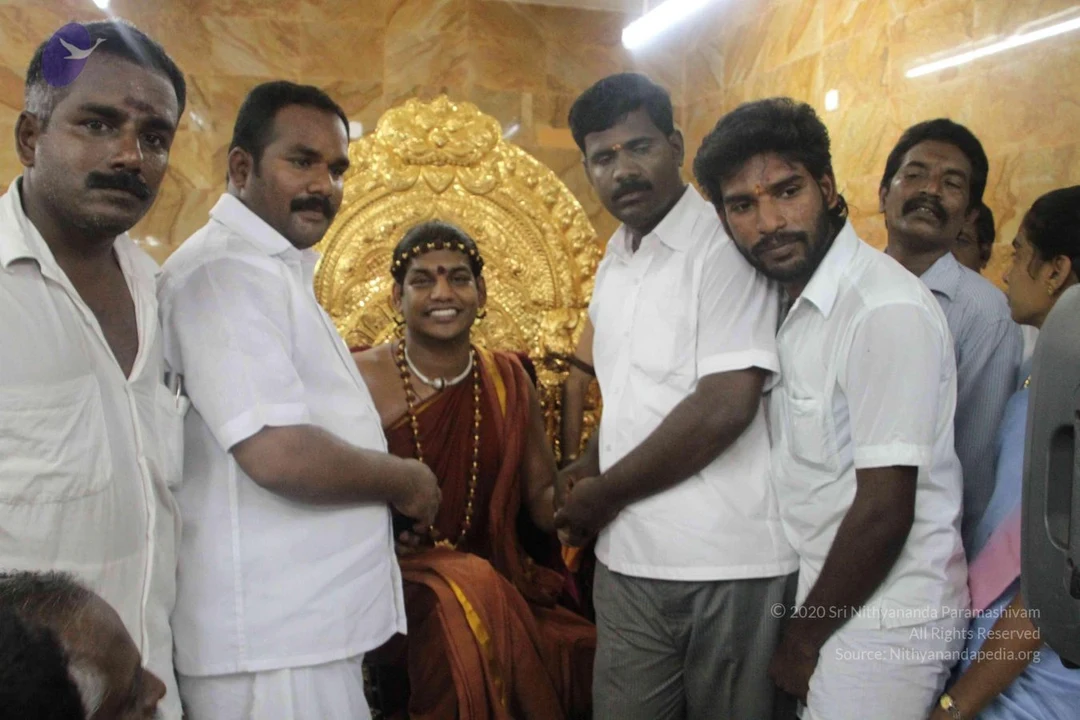
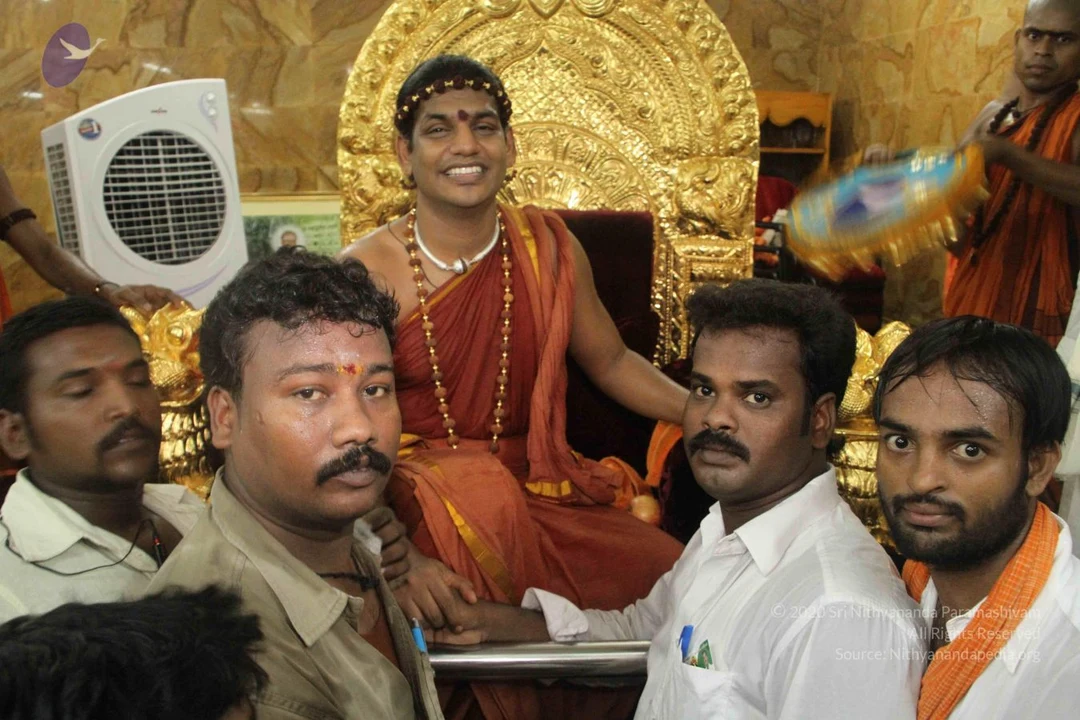
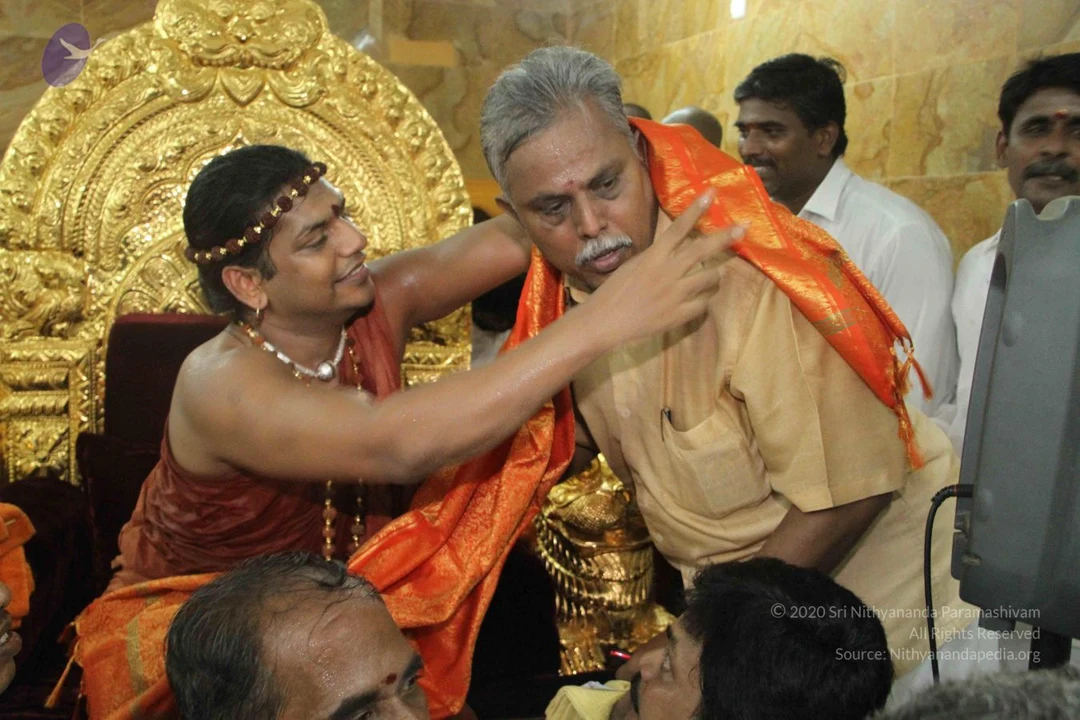
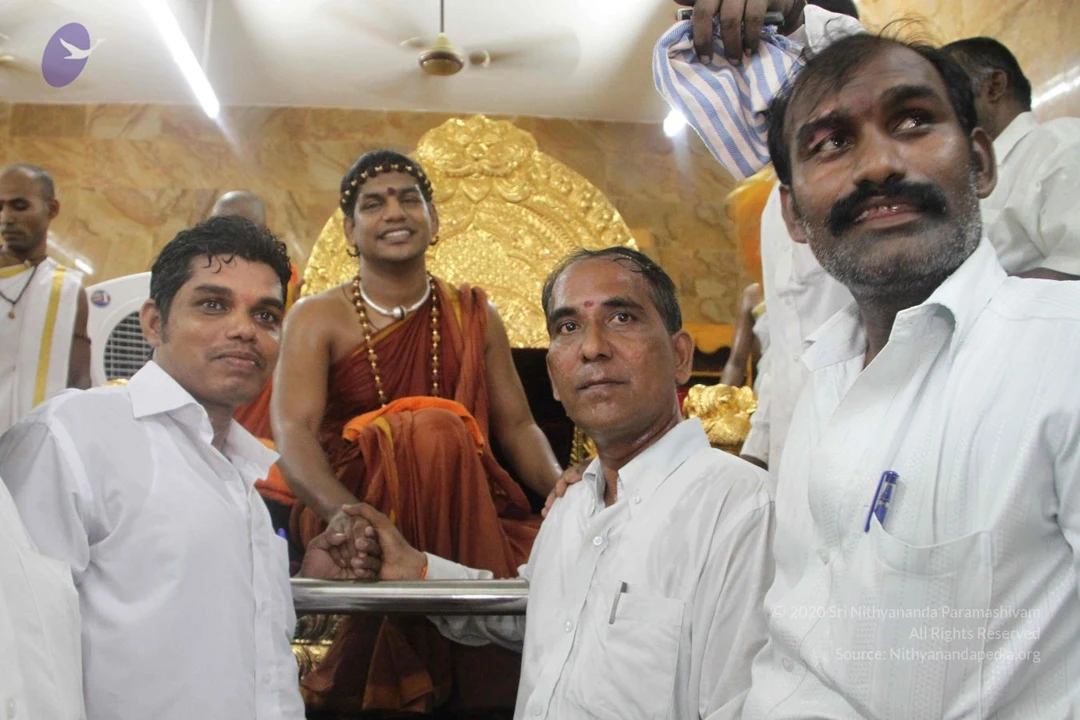
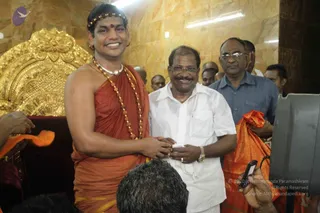
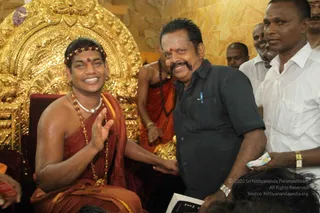
Photo inside a temple-like hall with gold-veined stone walls and a large gilded throne canopy. A seated figure in orange-saffron robes and a rudraksha mala sits on a golden throne flanked by gold lion sculptures. A man in a white shirt and white dhoti stands leaning in, holding up a red and gold silk cloth above the seated figure. To the left, a young man in orange robes with a gold-and-white garland holds a corner of the same cloth. Behind, a bald man in white with a garland looks on. A white cooling unit stands at right. Two other men in orange robes assist at the back. Audience heads are visible at the bottom edge.A photograph inside a gold-toned hall with marble-patterned walls. A large ornate gold throne-back with carved figures dominates the background, flanked by gold lion sculptures on the armrests. A seated man with a shaved head wears a deep orange-red robe and a gold necklace and is being adorned with a red-and-gold shawl draped over his shoulders. A man in a white shirt bows low before him, and a shaved-headed attendant in orange robes and rudraksha beads holds a gold tray or plate at right. A man in white with a gold necklace stands at left, and an orange-robed attendant sits at right edge. A white room cooler stands beside the throne.Photograph inside a temple hall with a large gold ornate backdrop and gold lion-shaped armrest. A bald man in orange saffron robes with dark rudraksha mala and a gold pendant sits on a red-cushioned golden throne, smiling, hands raised to his head. Beside him a younger man in orange robes with a headband and white necklace smiles while being attended. A man in a white shirt leans in from the right holding a small white object. Behind them a man in orange robes stands near a white air cooler, and a figure in white holds a red-and-gold ceremonial umbrella at left. Several seated devotees in the foreground watch and one photographs with a phone. a person appearance is uncertain.A photograph inside a gold-accented hall with a golden ornate backdrop behind a throne. A smiling young man in saffron robes and a gold headband sits on the central golden throne with a rudraksha mala and a gold pendant, a white bead necklace at his throat. Beside him, an older bald man in orange robes, a gold headband and a gold pendant sits on the throne. Attendants in orange and saffron stand or lean around the throne, one at left with a gold-trimmed black garment. A man in a white shirt and white trousers bends forward toward the seated figures, and a devotee at lower left holds up a phone to film. A white air cooler stands at right.A smiling man in an orange-saffron dhoti and shawl, with a red and gold headband, rudraksha beaded mala and white ceremonial necklace, stands beside a seated-height gilded ornate golden backrest. Beside him an older man in a white shirt and glasses holds his hands, and several men stand behind them, including one in a blue shirt with glasses. A bright orange cloth is draped over a chair edge at right, and a hand holds a mobile phone in the lower right foreground. The appearance of the man in saffron matches the Swamiji (probable) description, with long hair, saffron clothing and rudraksha mala cues, while the setting resembles a temple or ashram hall with marble walls.A photograph of a seated figure on an ornate gold-leaf throne with a gilded arched backrest. The seated man wears a red-orange ochre robe, a white pearl necklace, a long rudraksha mala with a golden ceremonial necklace, and a flower-bud headband, with a red tilak on his forehead; he smiles and raises one hand in greeting. A man in a dark grey shirt with a thick moustache and red forehead mark stands beside him and shakes hands, smiling. Behind them a shaved-headed attendant in orange robes and a rudraksha mala stands near the throne, and several men in white shirts crowd the background. A small a person logo appears in the upper left corner.

LUNCH-FOR-ALL-THE PARTICIPANTS-WHO-ATTENDED-THE-MEETING

14 photosSource gallery
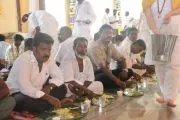
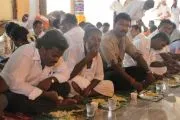
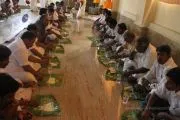
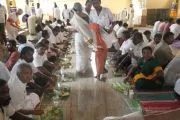
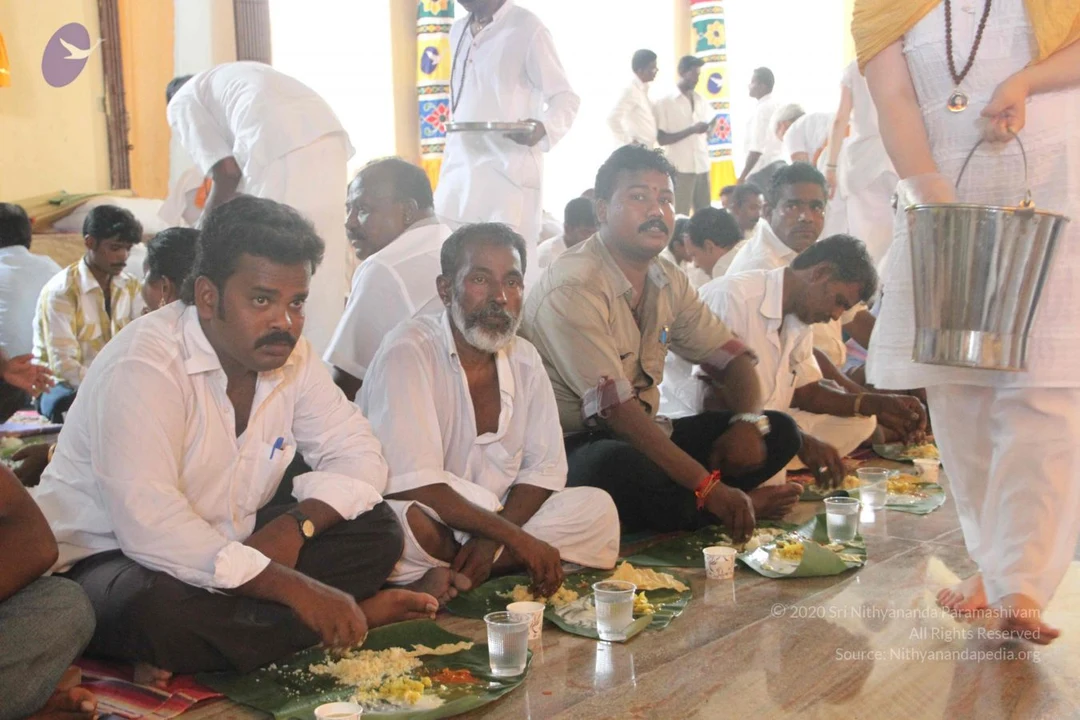
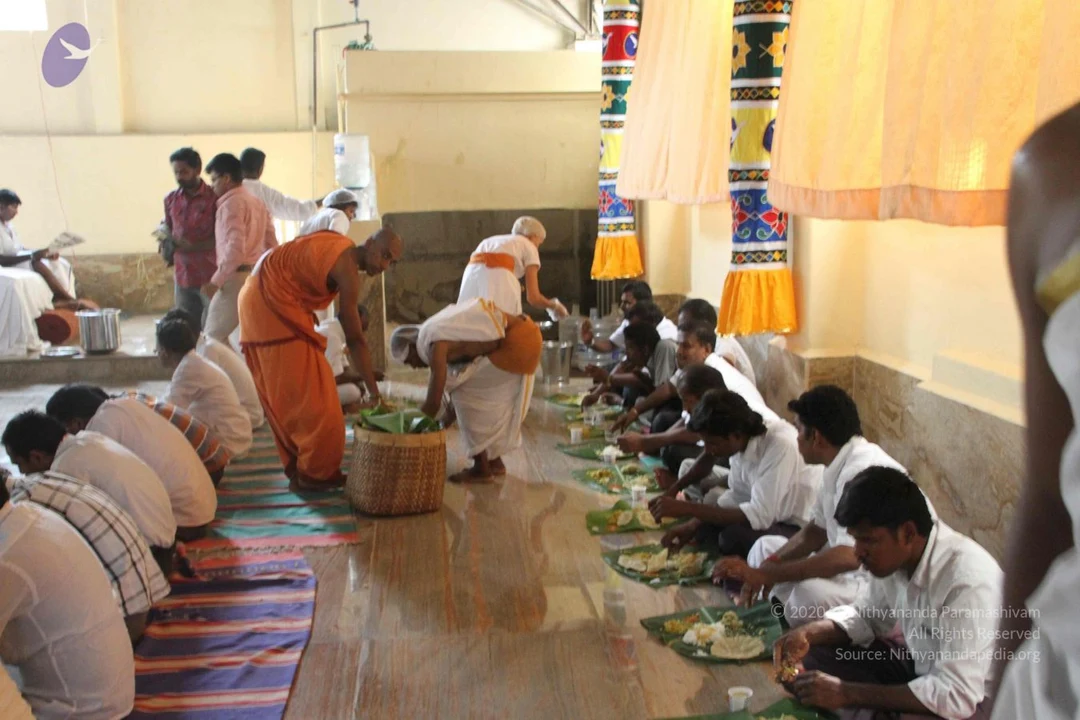
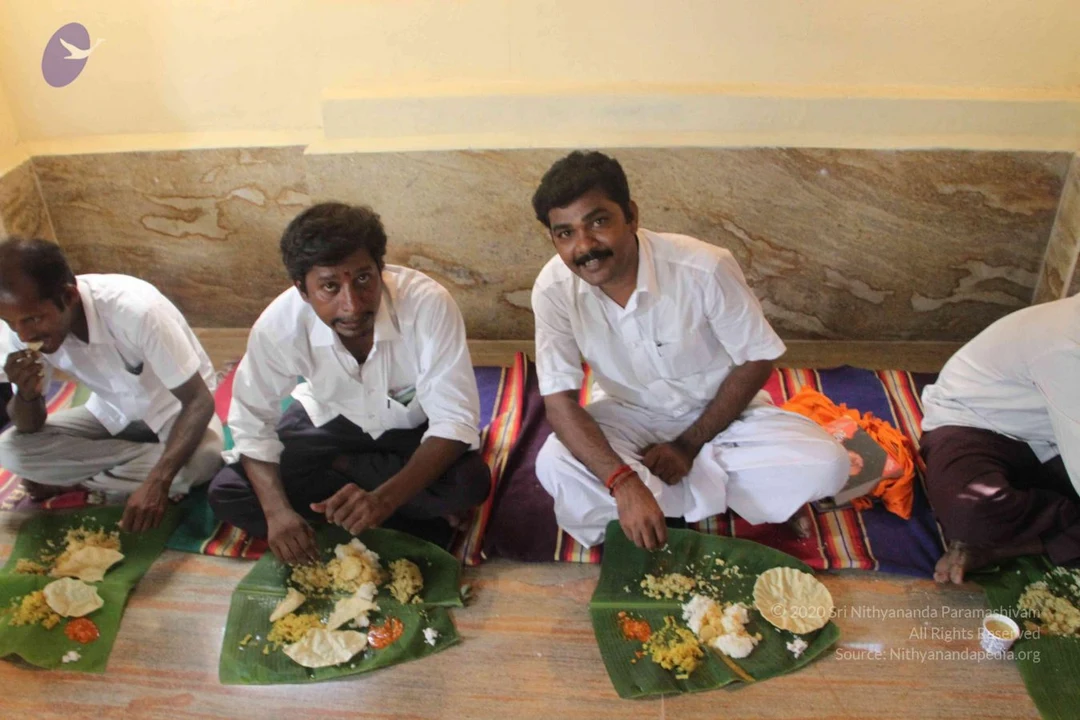
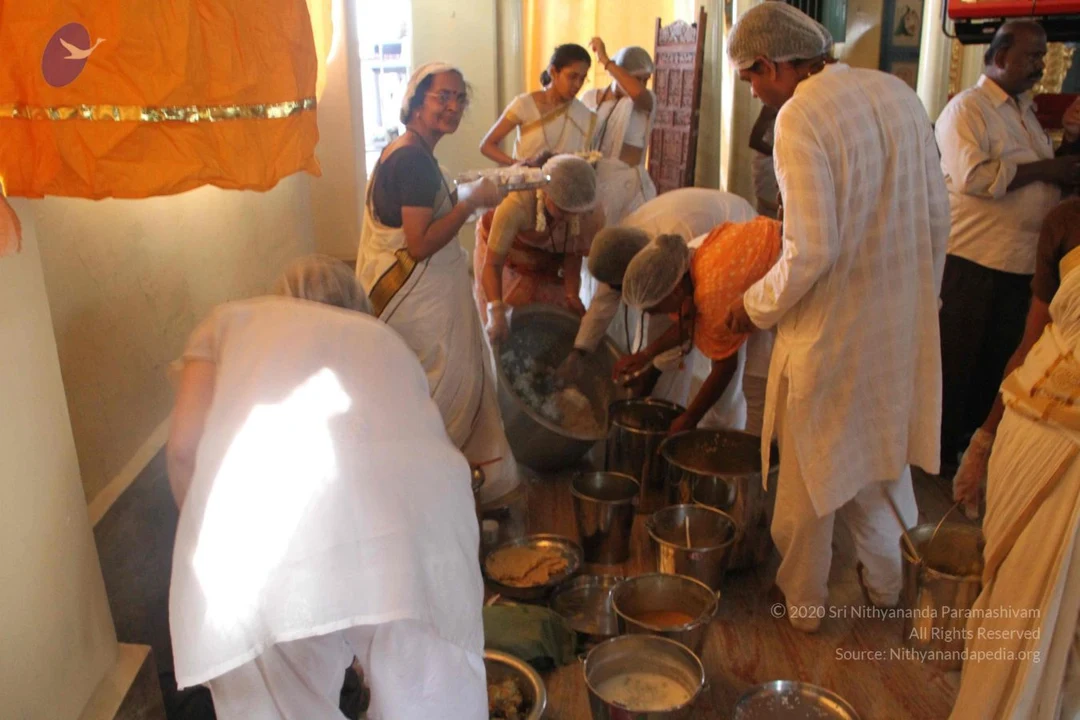
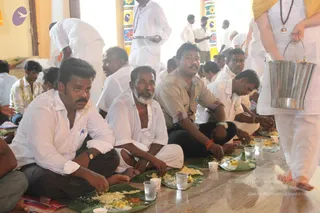
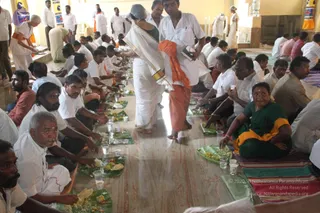
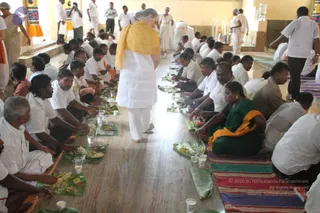
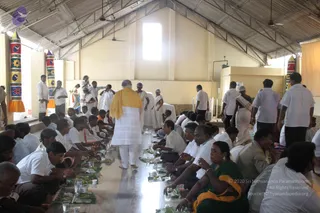
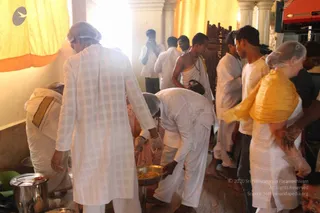
Men sit cross-legged on a polished stone floor eating a meal served on fresh green banana leaves. Most wear plain white shirts and dhotis, while one seated man wears a khaki shirt and dark trousers with a red wrist thread. Steel tumblers and small paper cups of water sit beside the leaves, which hold rice and yellow food. A standing figure at right in white clothing with a rudraksha mala holds a stainless steel bucket, apparently serving food. Other white-clad people move about in the background near painted pillars.A photograph of a long row of men seated cross-legged on a polished marble floor, eating a meal served on fresh green banana leaves. Most wear white dhotis and white shirts, and some have sacred ash or red marks on their foreheads. Each leaf holds rice, yellow curries and small side dishes, with steel glasses of water beside them. A man in a white dhoti stands at the far end serving food, and a yellow-draped structure is visible at the top right. The scene looks like a communal meal in an ashram dining hall.A large hall where many men in white shirts and white dhotis sit cross-legged in rows on the floor eating a communal meal from green banana-leaf plates, with small steel cups of water placed along the leaves. Volunteers in white clothing walk between the rows serving food, and one server wears a white sari with a gold border and carries a plate. A man in a white shirt with an orange cloth draped over his shoulder and carrying a notebook stands at the centre. Other people, including a woman in a green sari with an orange border seated at right, are seated on striped mats. Pillars with orange and yellow banners frame the hall, and a few people stand near the back in the background. This appears to be an annadan style communal meal.A photograph of a large seated meal in a hall with a polished floor. Rows of people sit on the floor on mats and wooden planks, eating from green banana-leaf plates with steel tumblers of water beside them. Most men wear white shirts and white dhotis; a woman in a green sari with a yellow shawl sits at right. A person in white with a yellow shawl and white head covering walks down the aisle between the rows, and another figure in white stands at the back near the wall. Coloured woven mats and a wall with a red and yellow painted panel frame the scene.A long hall with a corrugated roof and cream walls hosts a communal meal. Rows of people sit on the floor along the length of the room, eating from banana leaves with glasses of water beside them. A man in white dhoti and a yellow shawl walks down the central aisle between the rows, with a bare-footed stride. Several servers in white shirts and white head coverings move about, and women in green and yellow saris sit among the diners. Decorated pillars with colourful patterns stand at the sides. This appears to be an annadan style meal. a person is the man in the yellow shawl walking the aisle, identified by the yellow shawl and white ceremonial clothing; the appearance cues are limited, so this is uncertain.A busy kitchen or food-serving room with a bright sunlit doorway and yellow curtains on the left. Several men in white dhotis and white kurtas, some with white head coverings, bend over steel vessels and a large bowl of yellow food, serving or preparing it. A woman at right wears a yellow shawl and a white head cover and gloves. Steel pots and a ladle sit on the floor in the foreground, and other people stand behind, one with hands together. No identifiable a person is visible.

HDH-VISITS-MEENAKSHI-AMMAN-TMPLE-WITH-SANNIDHANAM
80 photosSource gallery
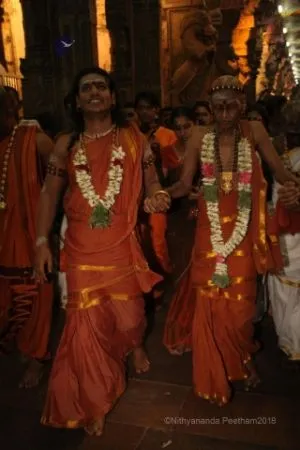
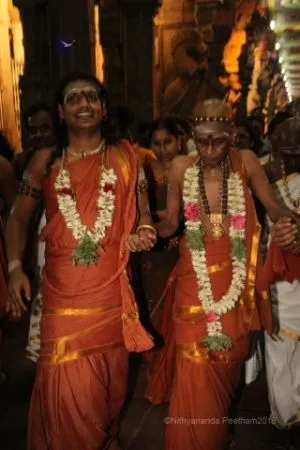
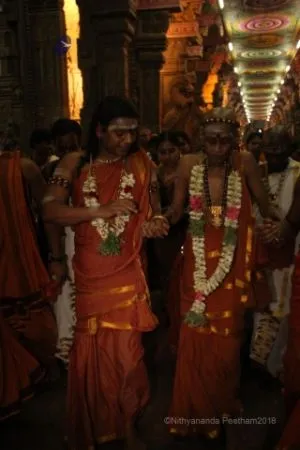
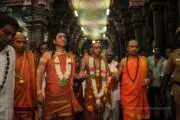
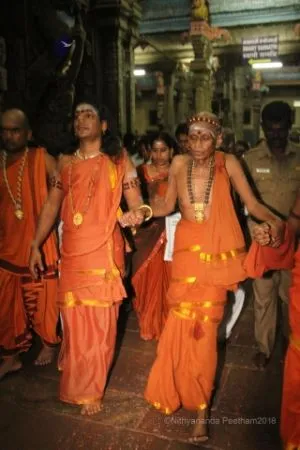
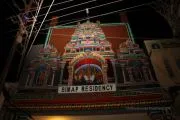
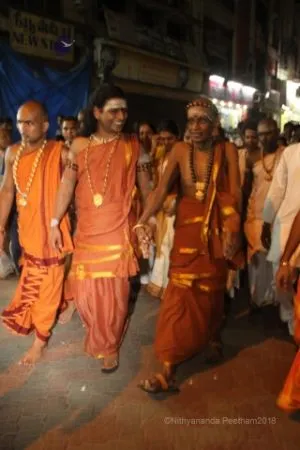
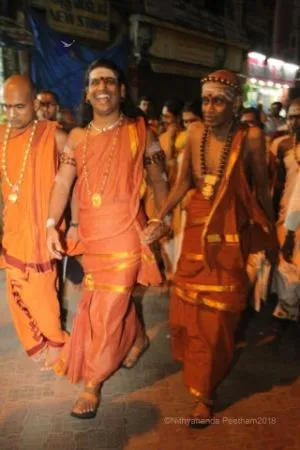
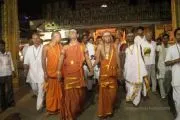
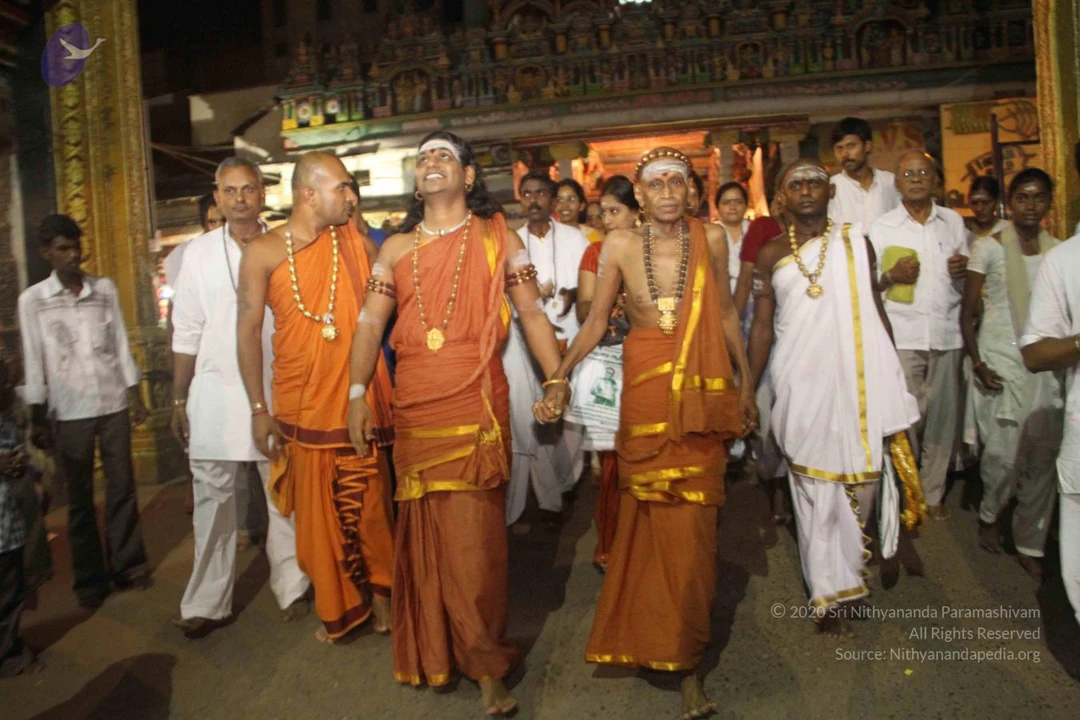
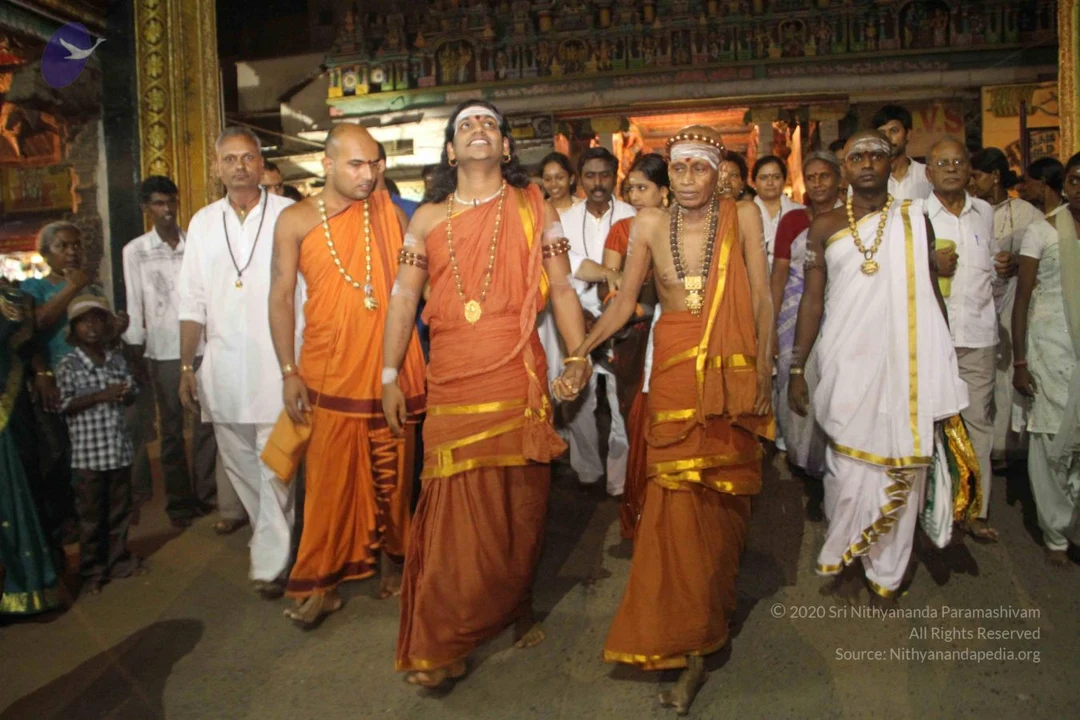
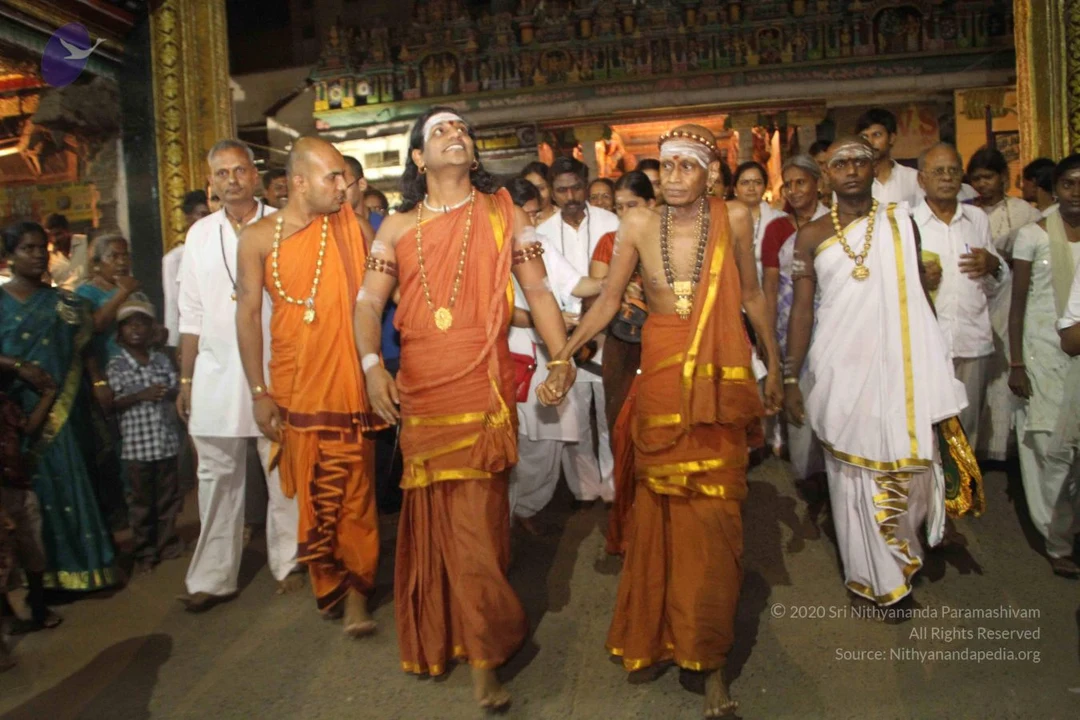
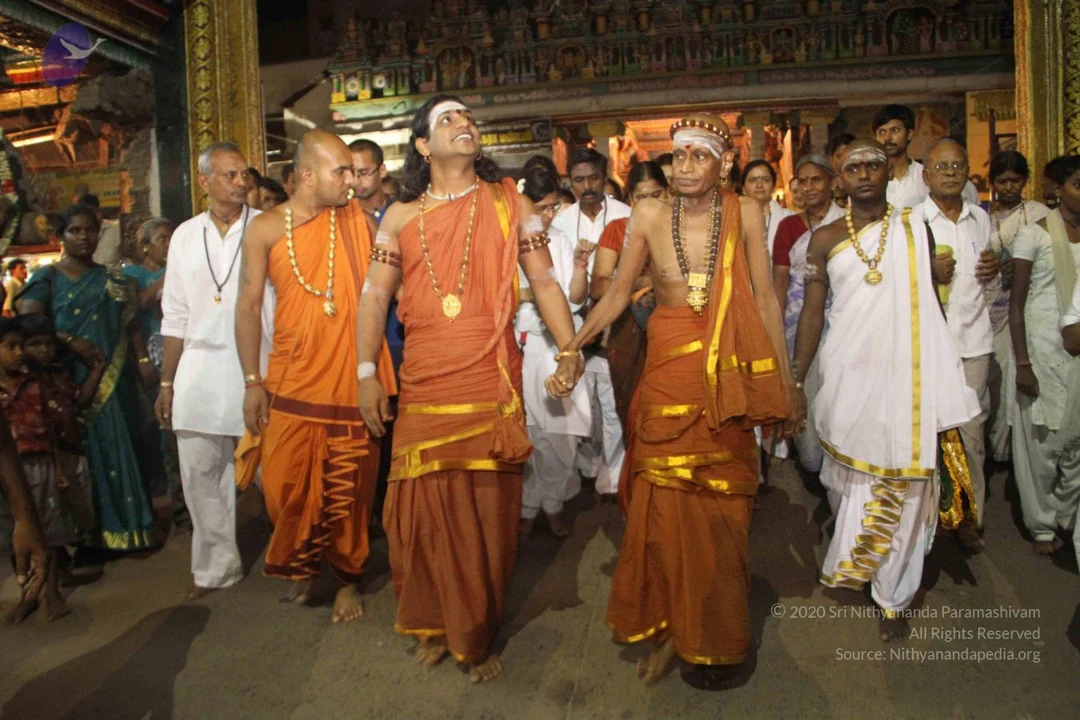
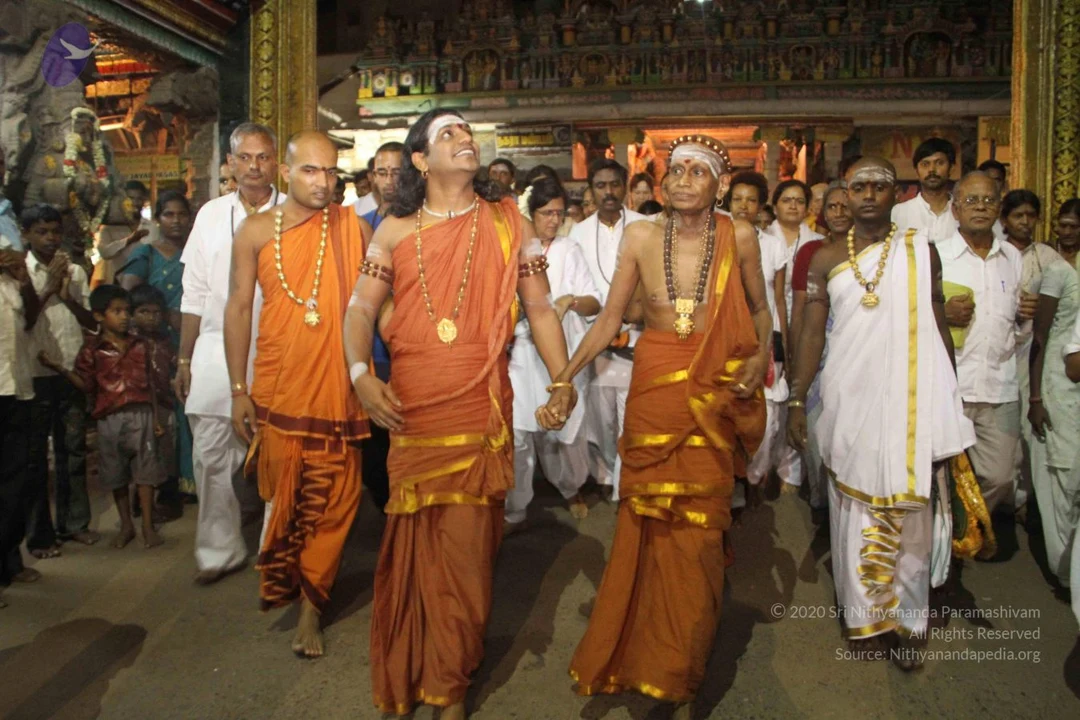
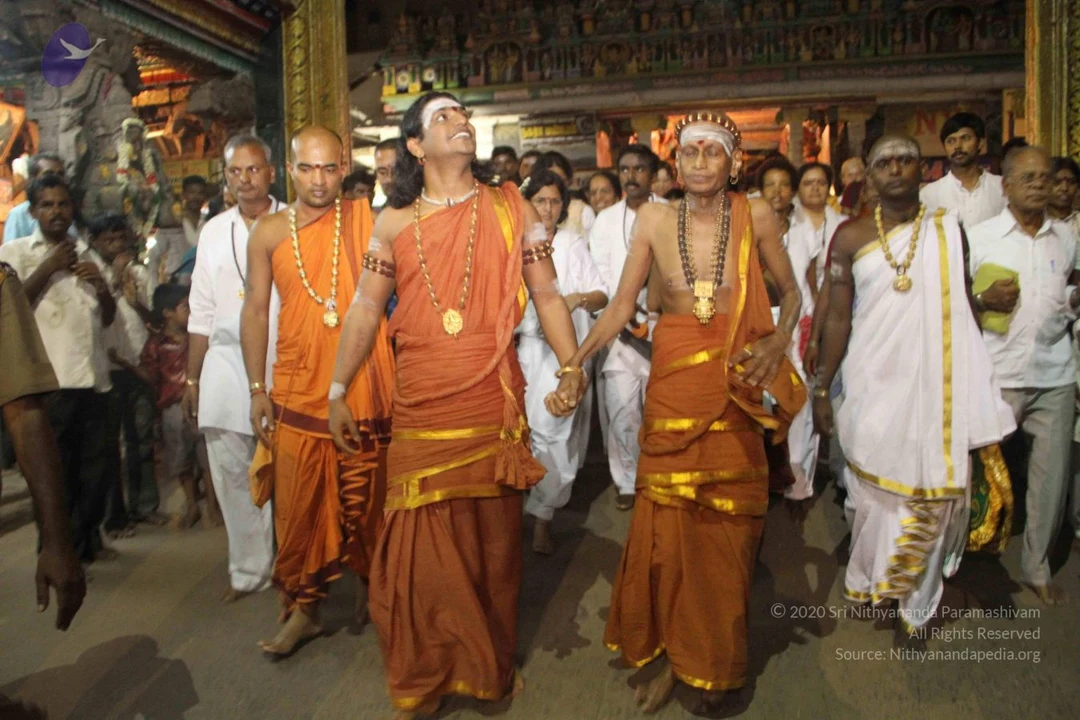
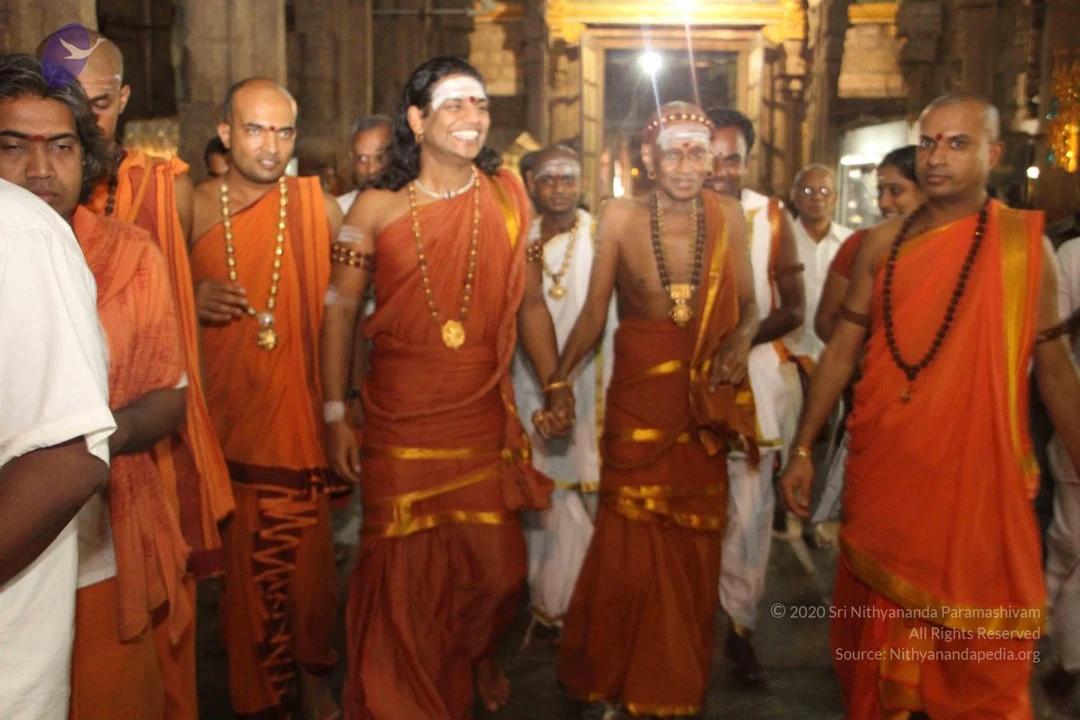
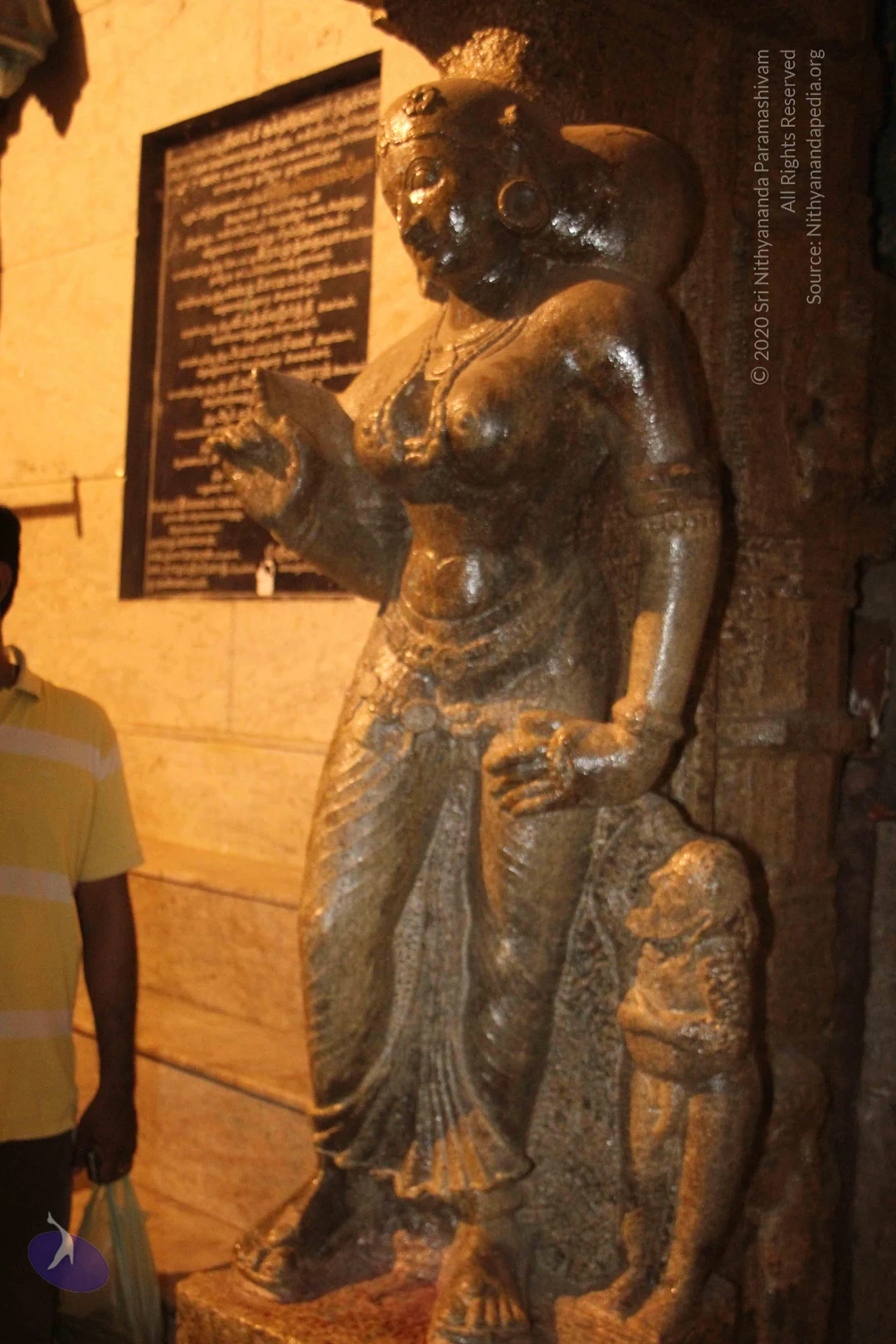
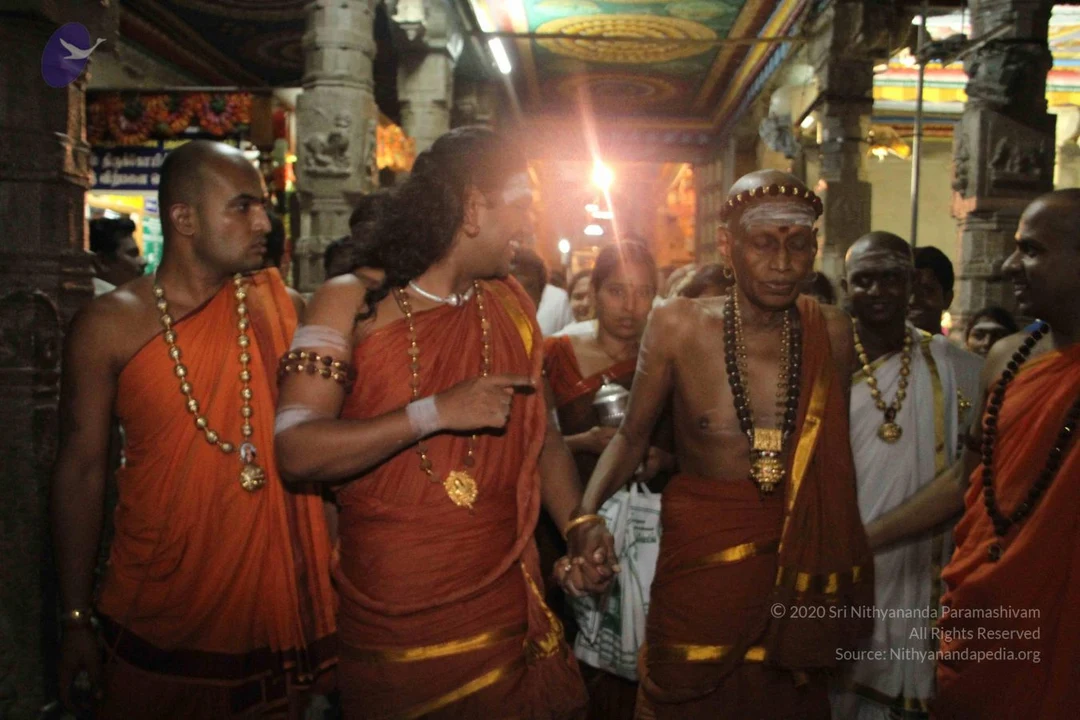
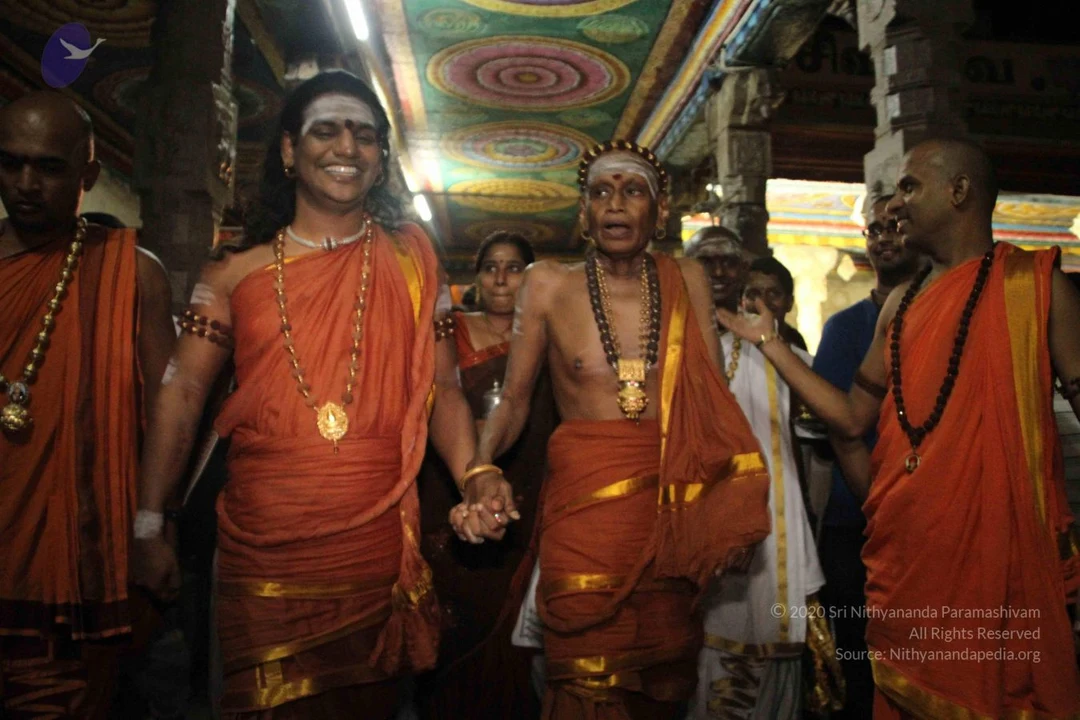
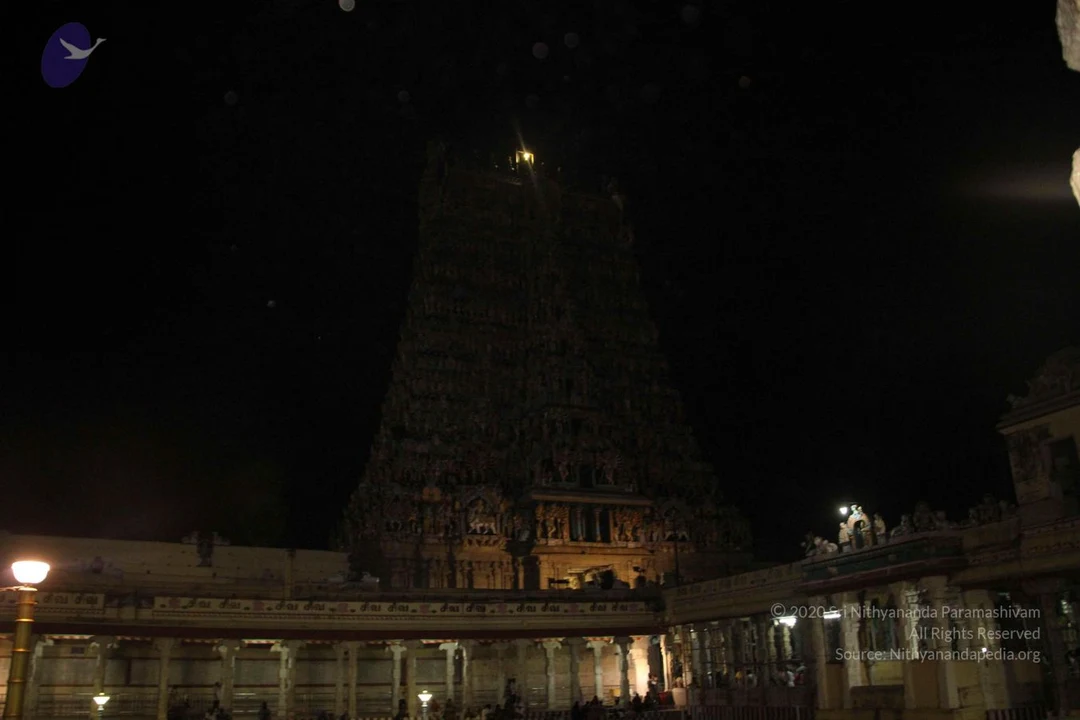
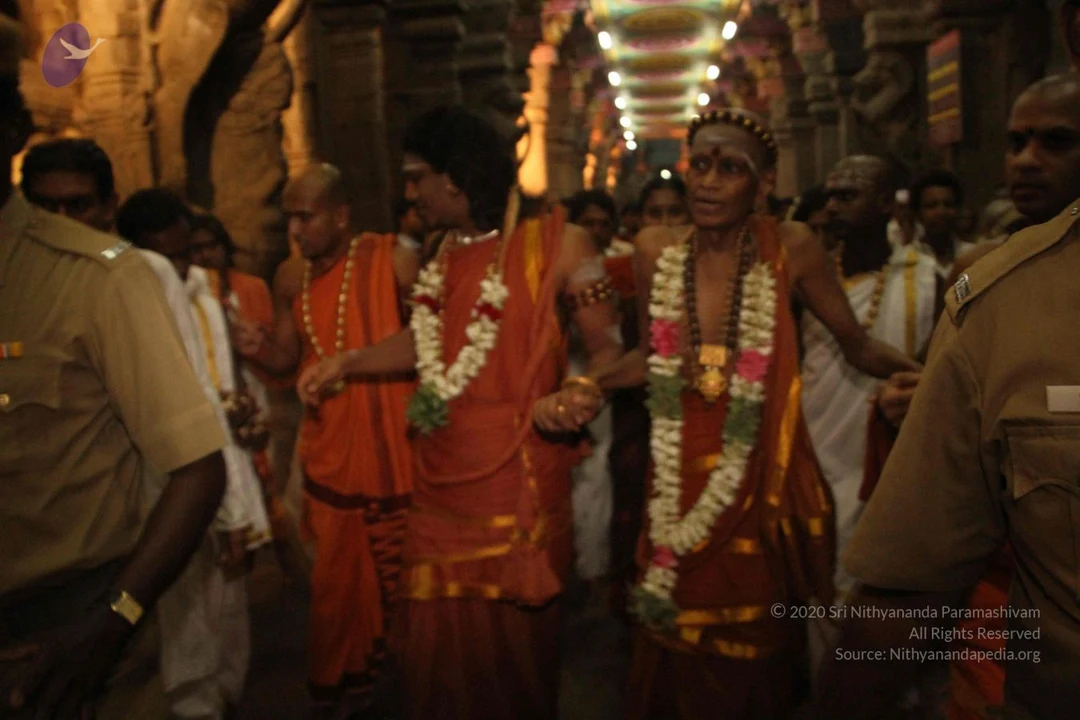
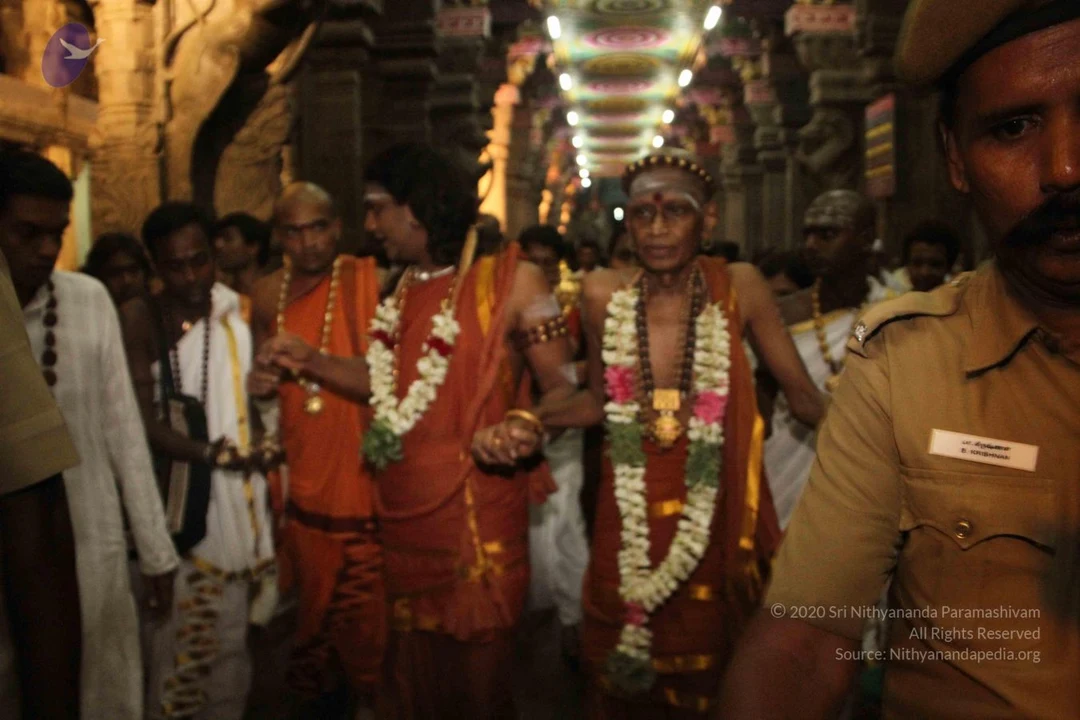
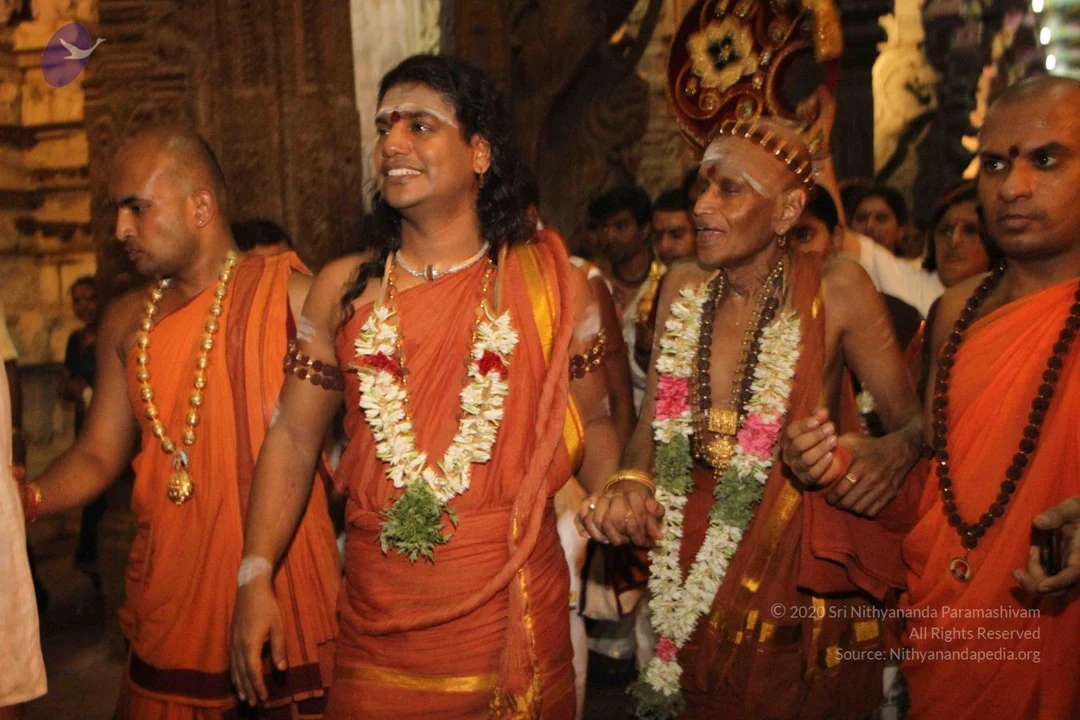
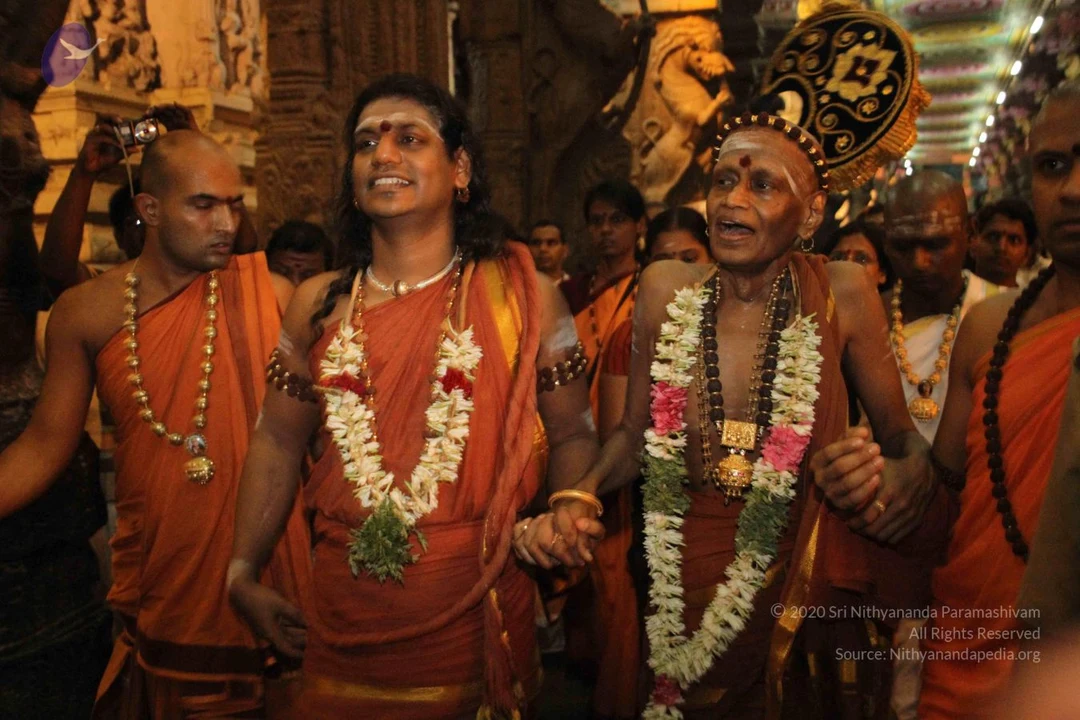
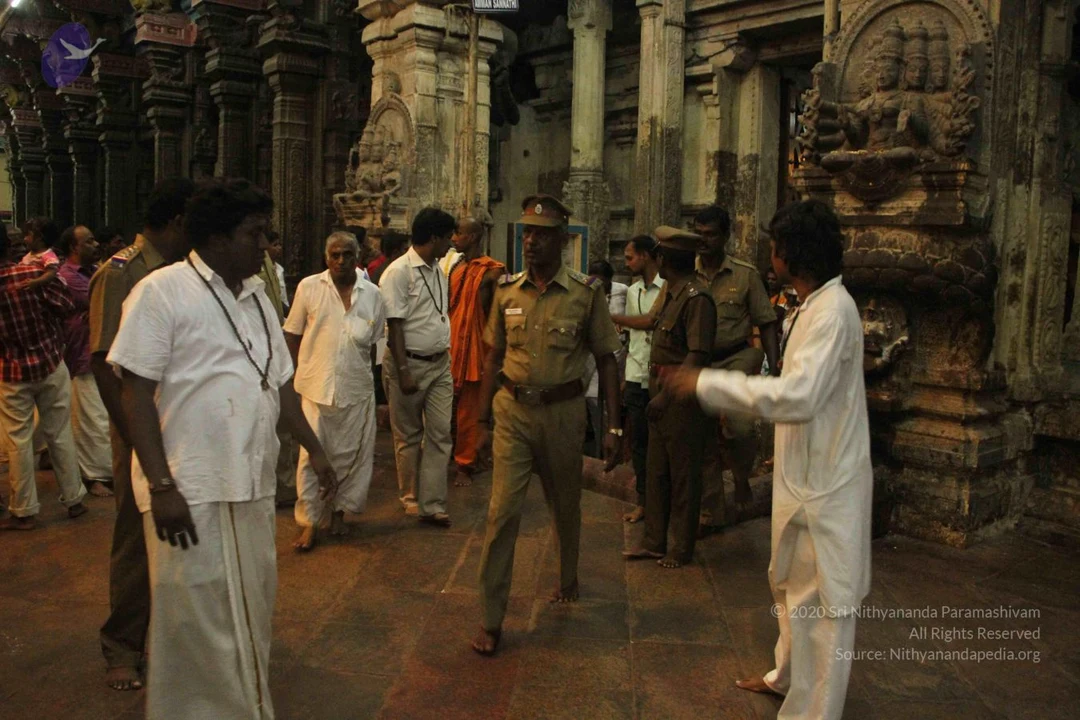
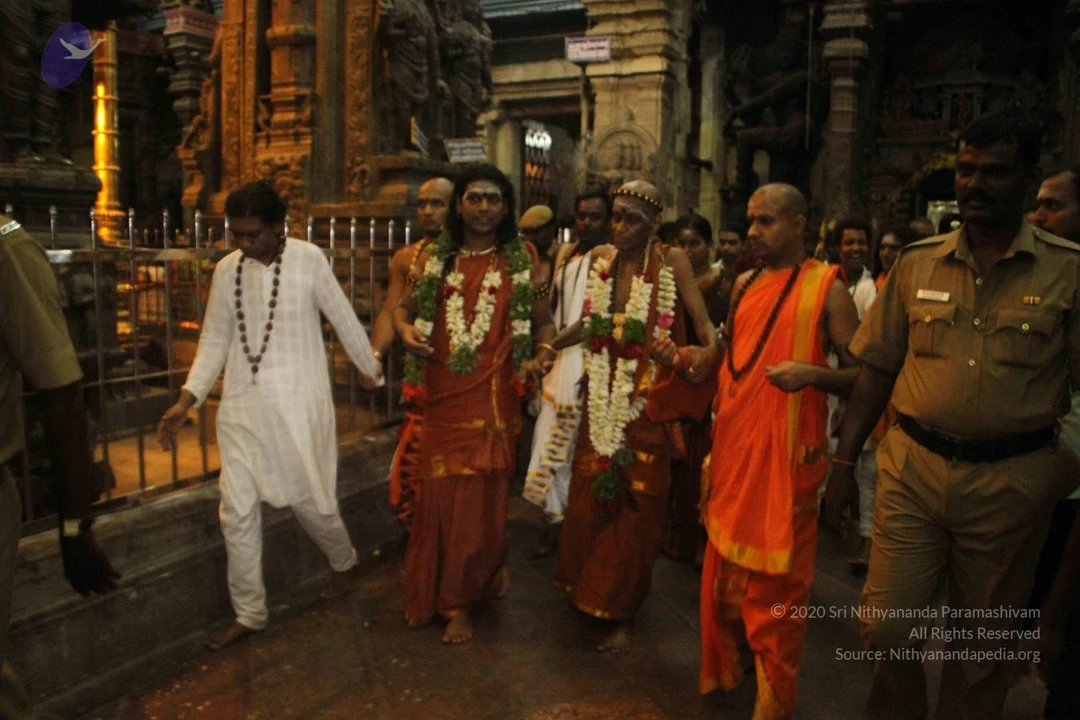
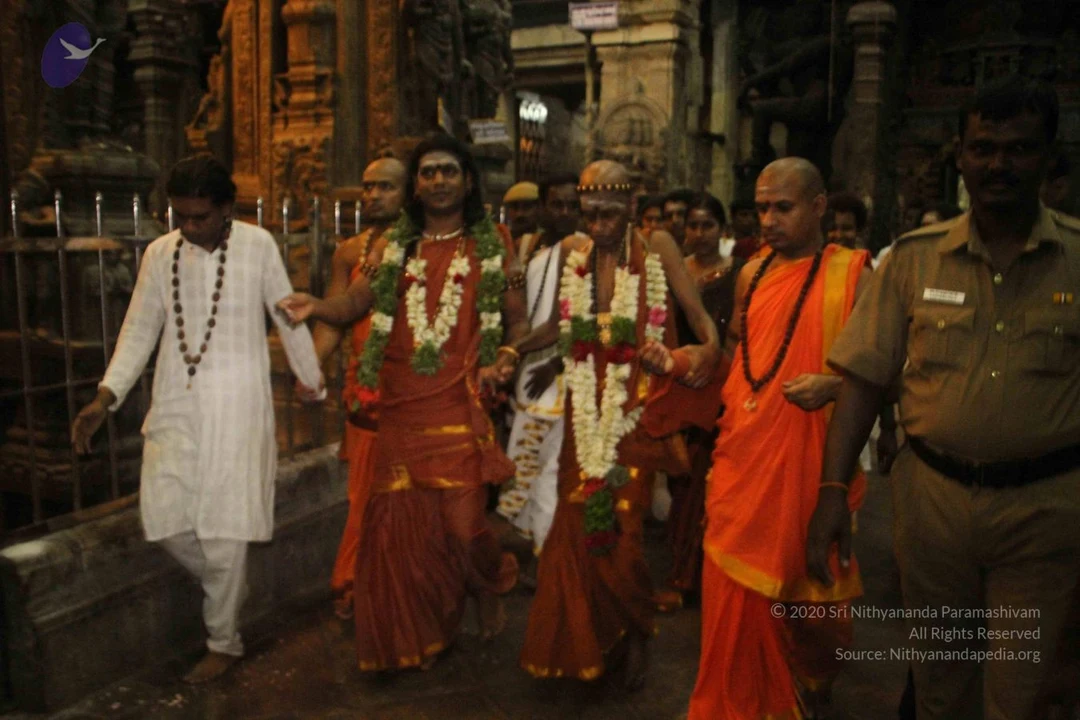
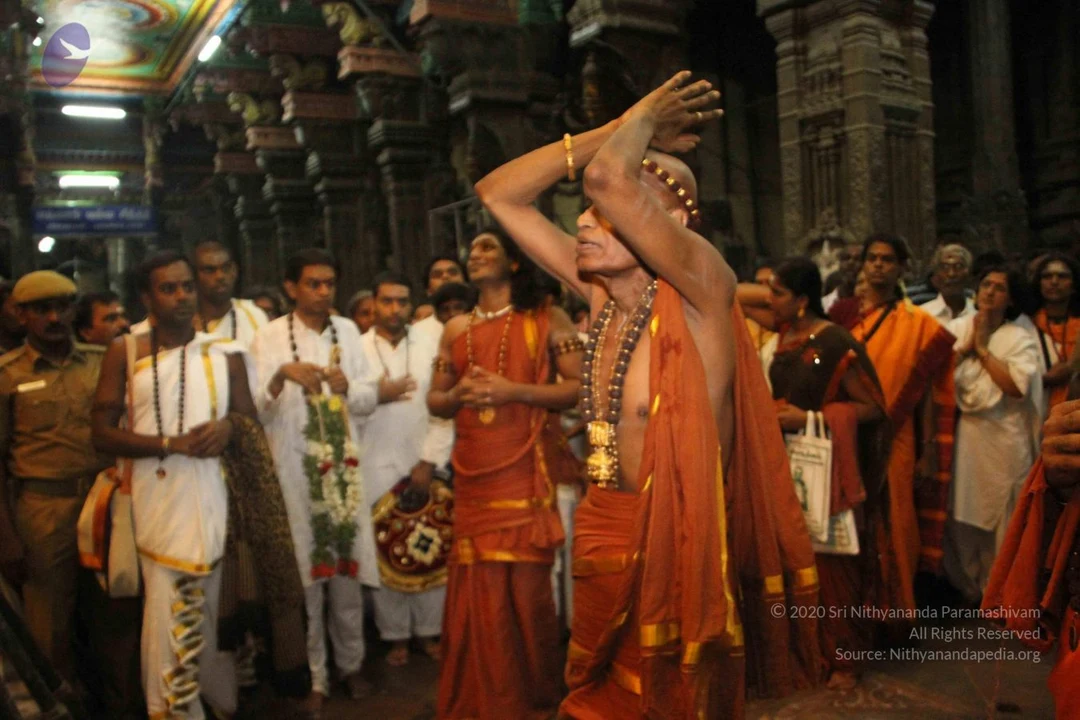
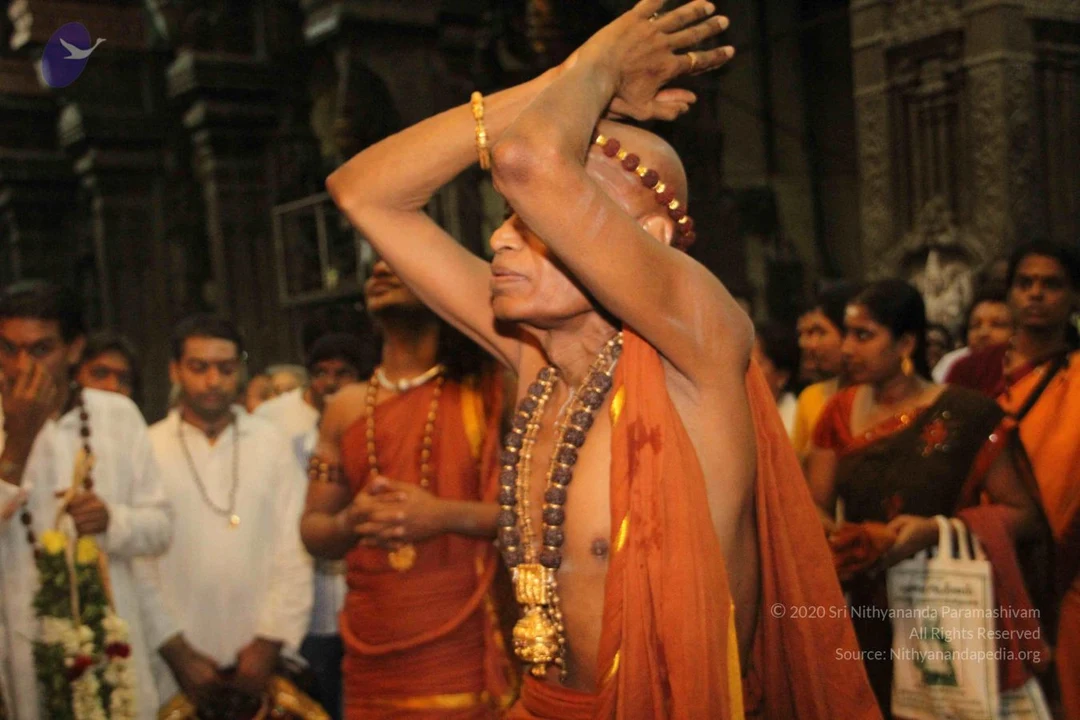
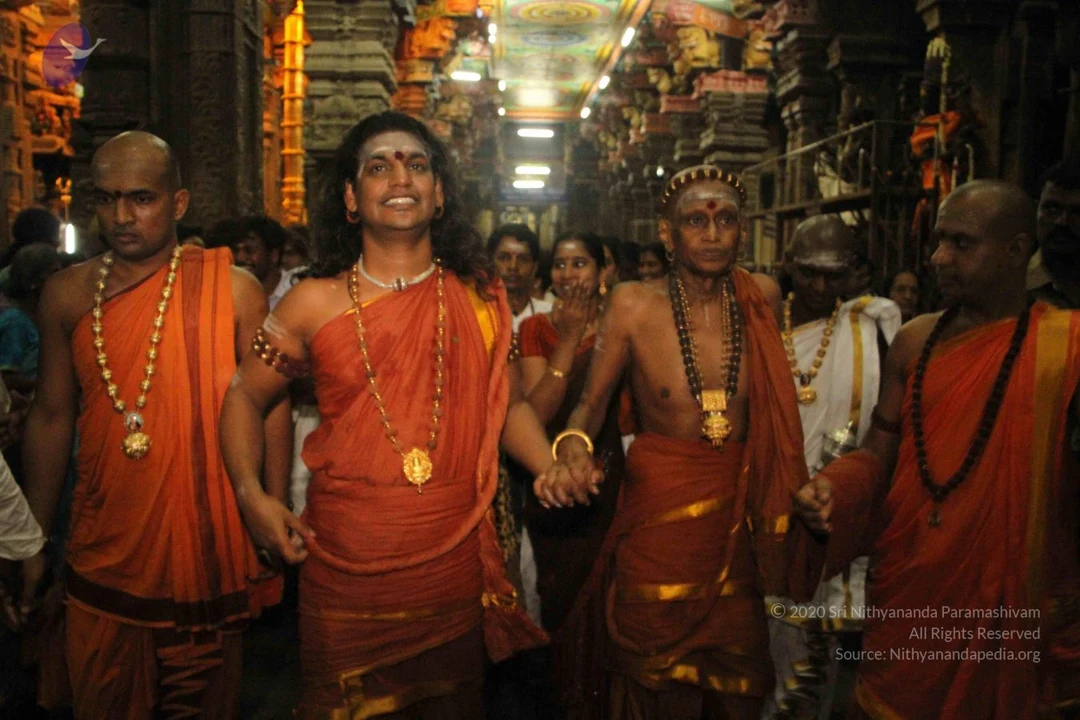
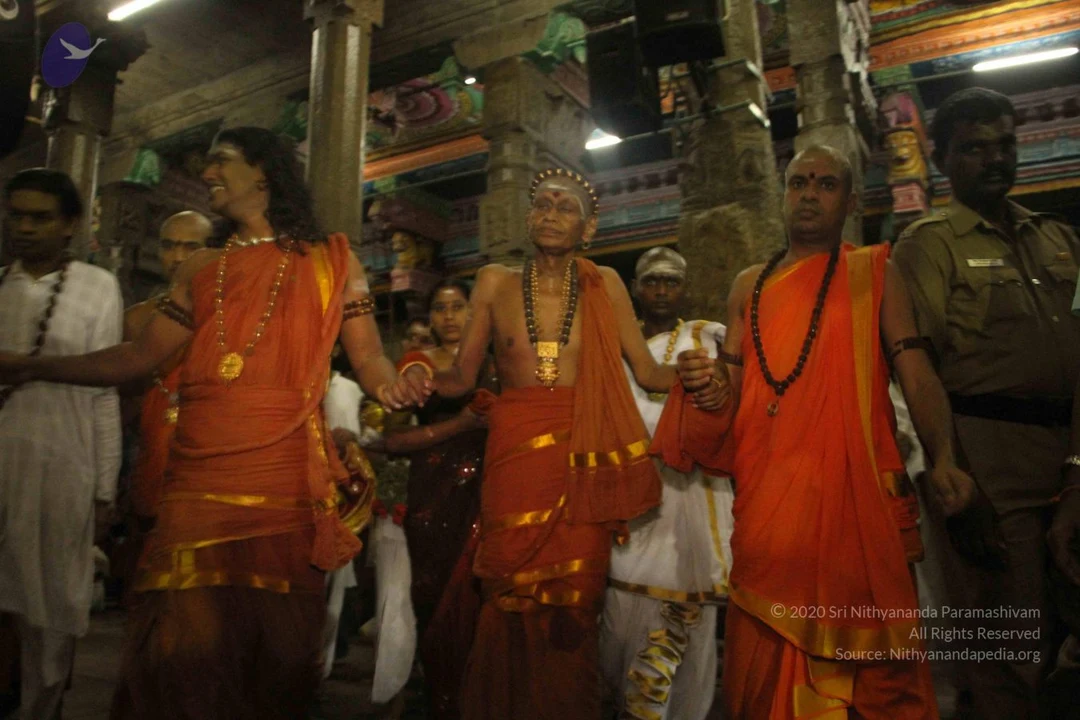
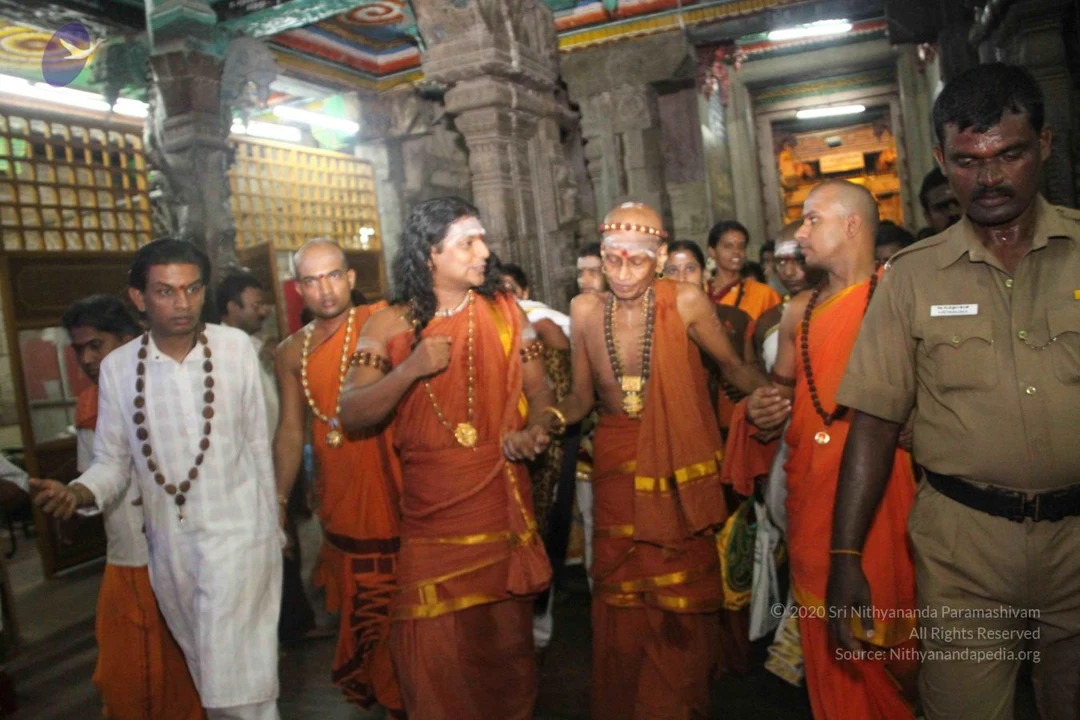
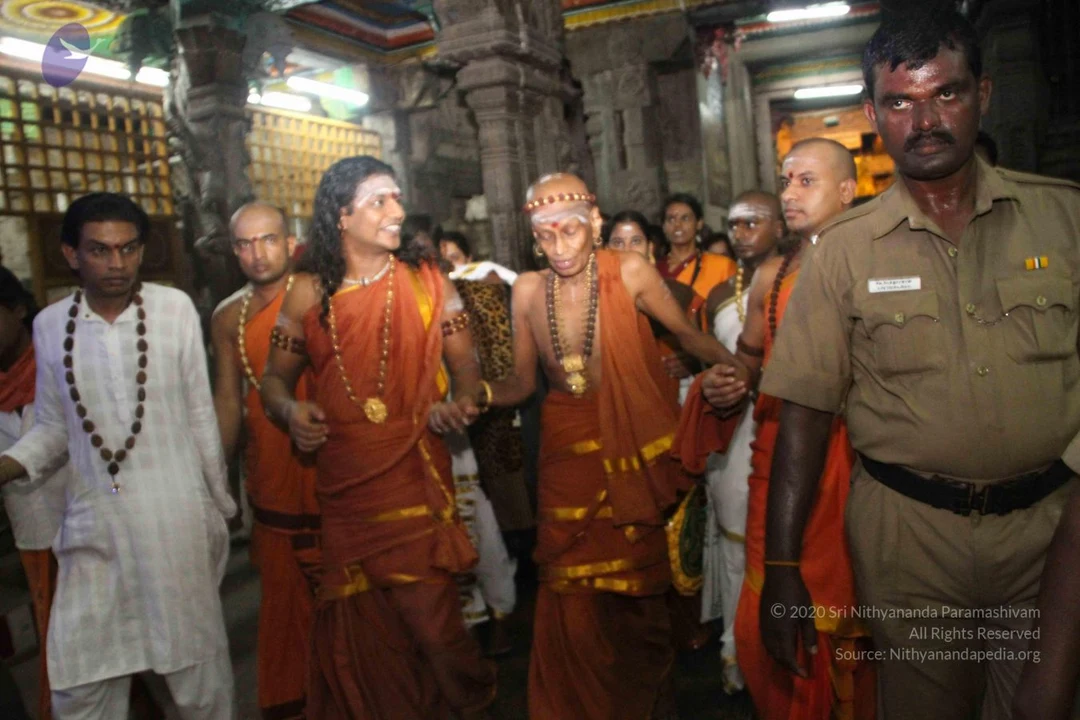
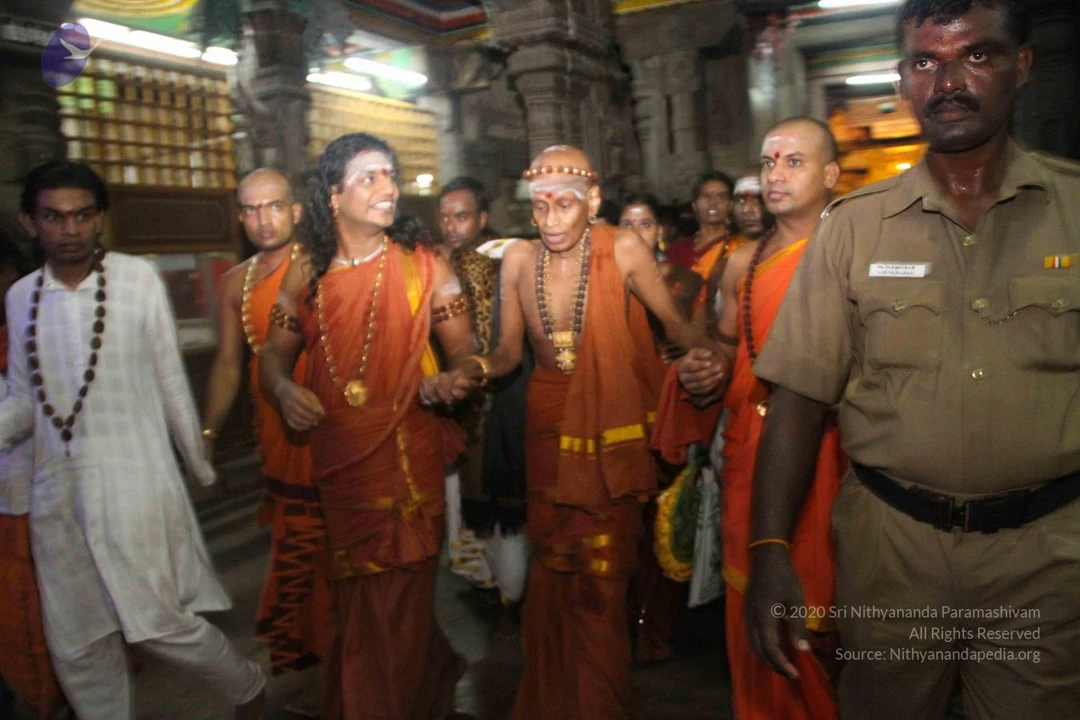
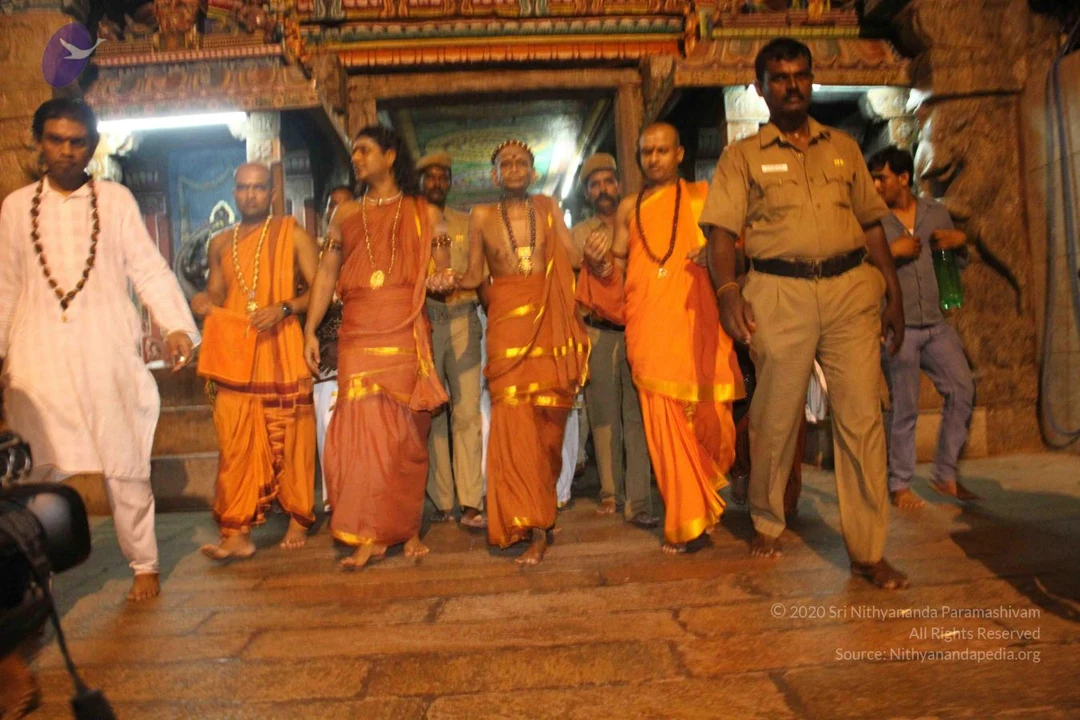
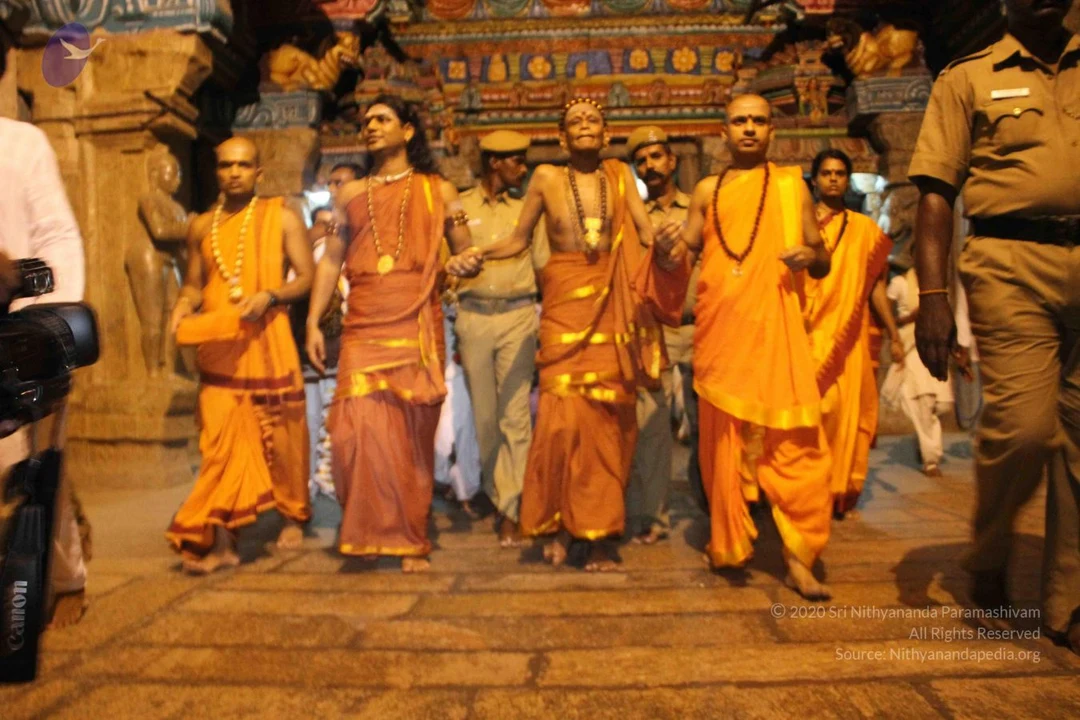
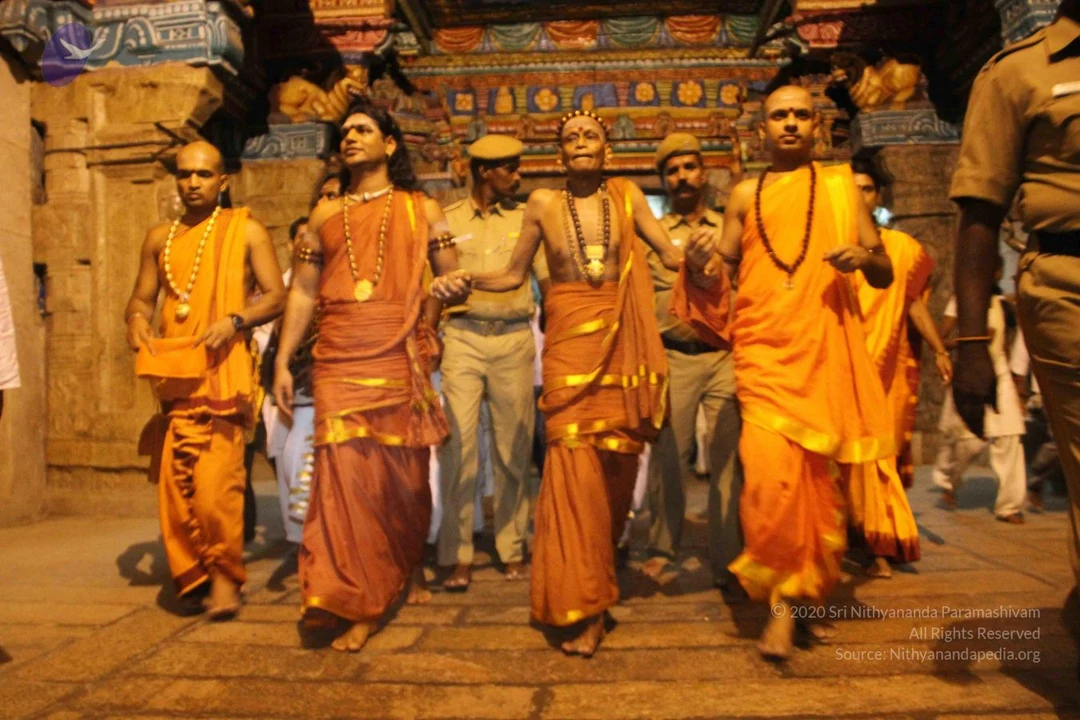
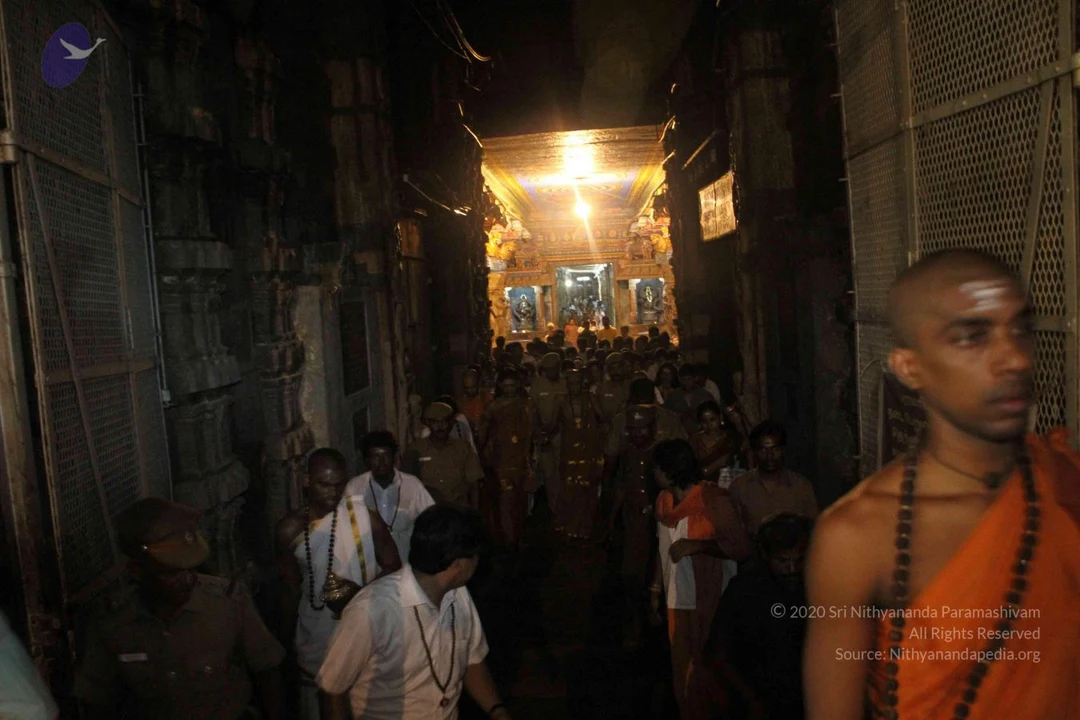
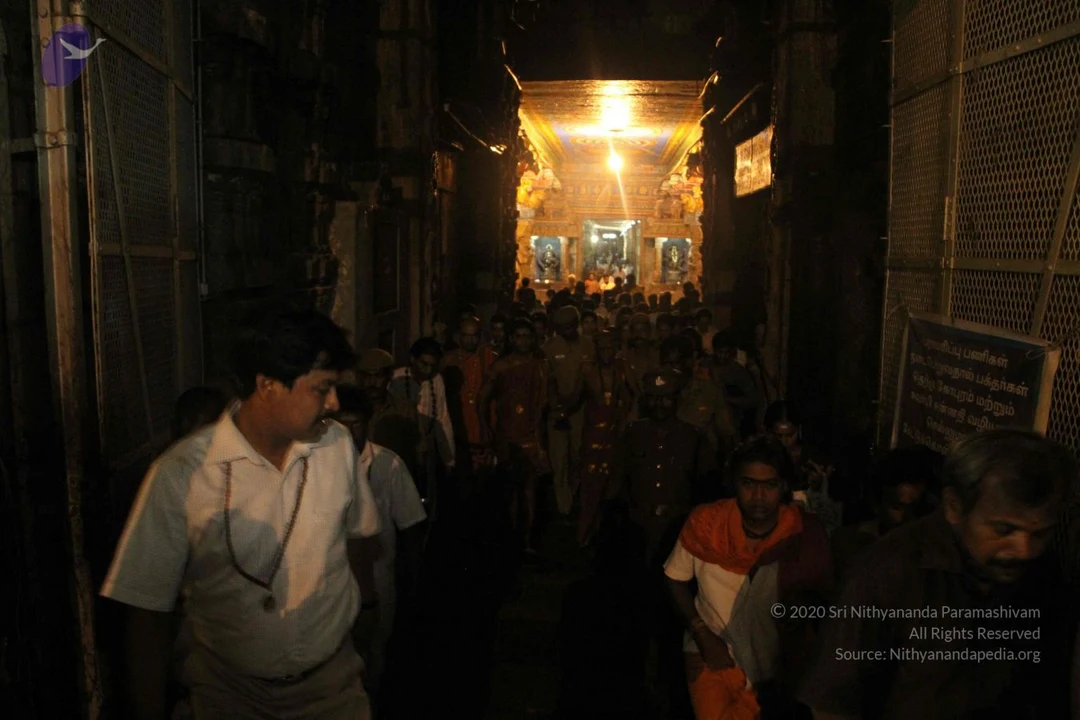
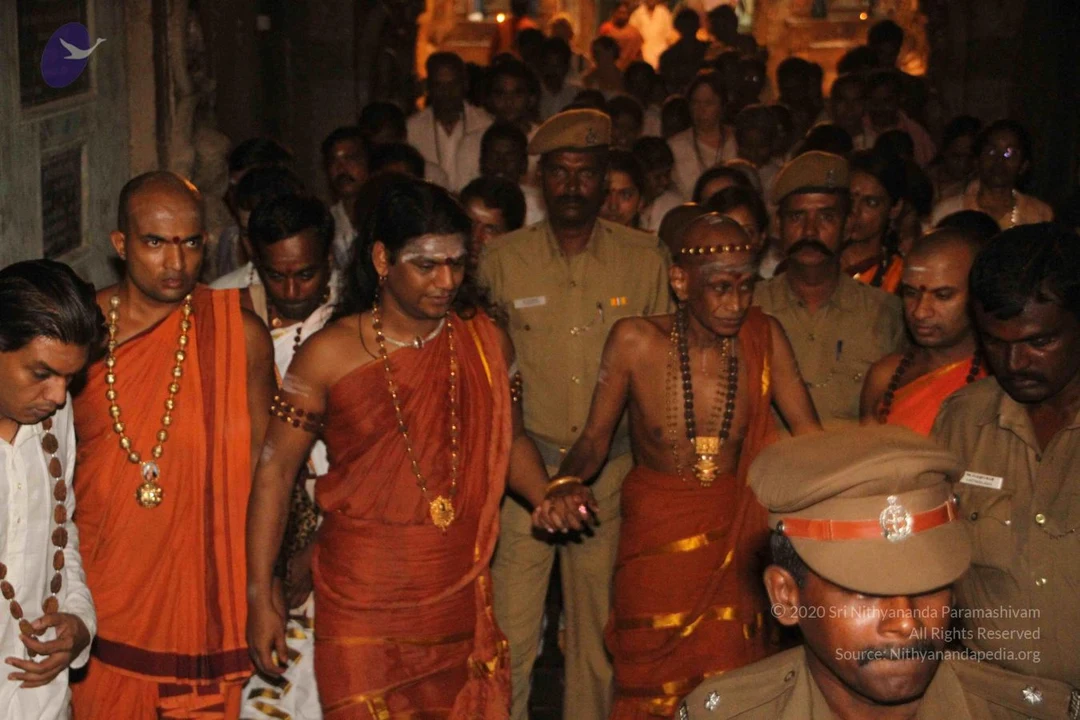
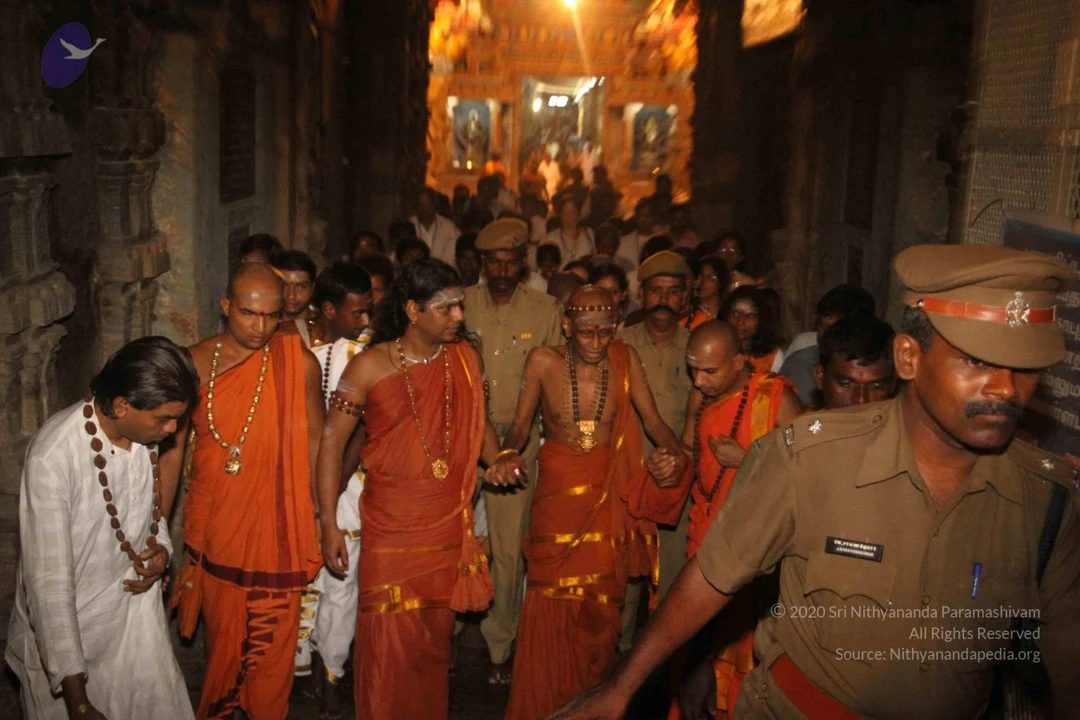
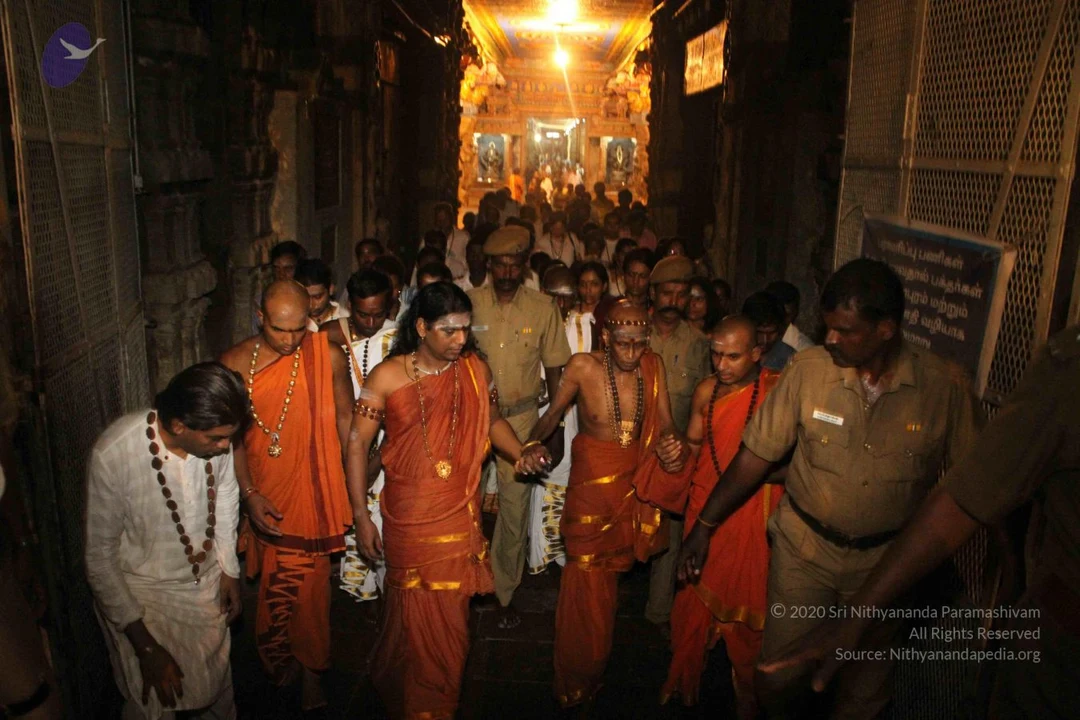
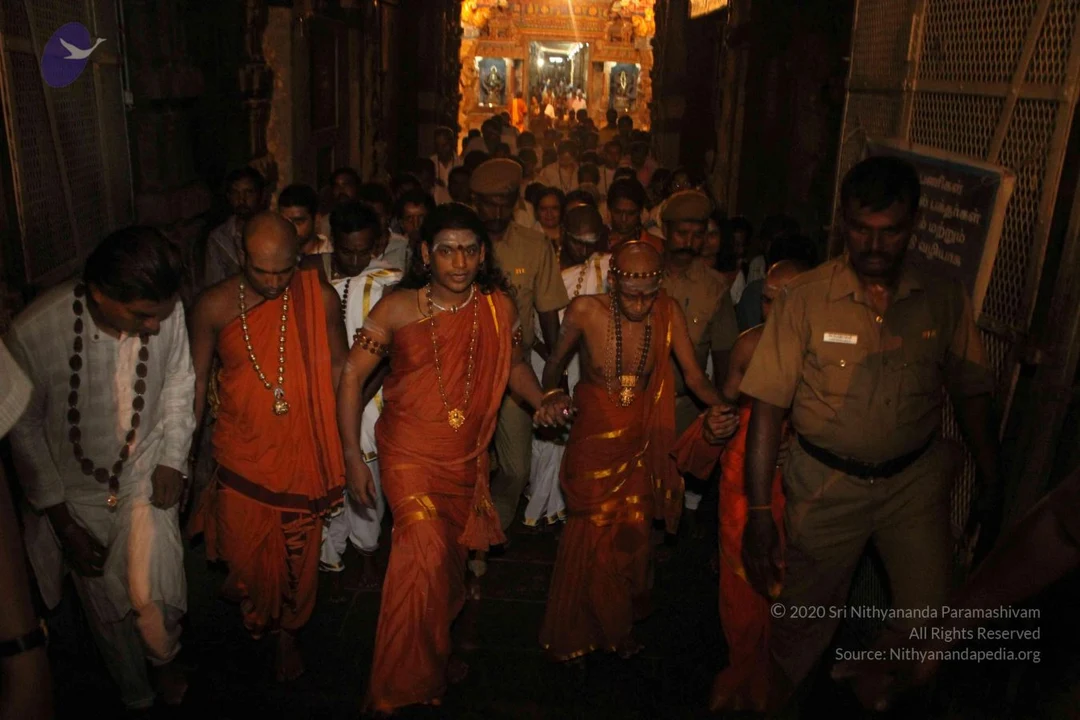
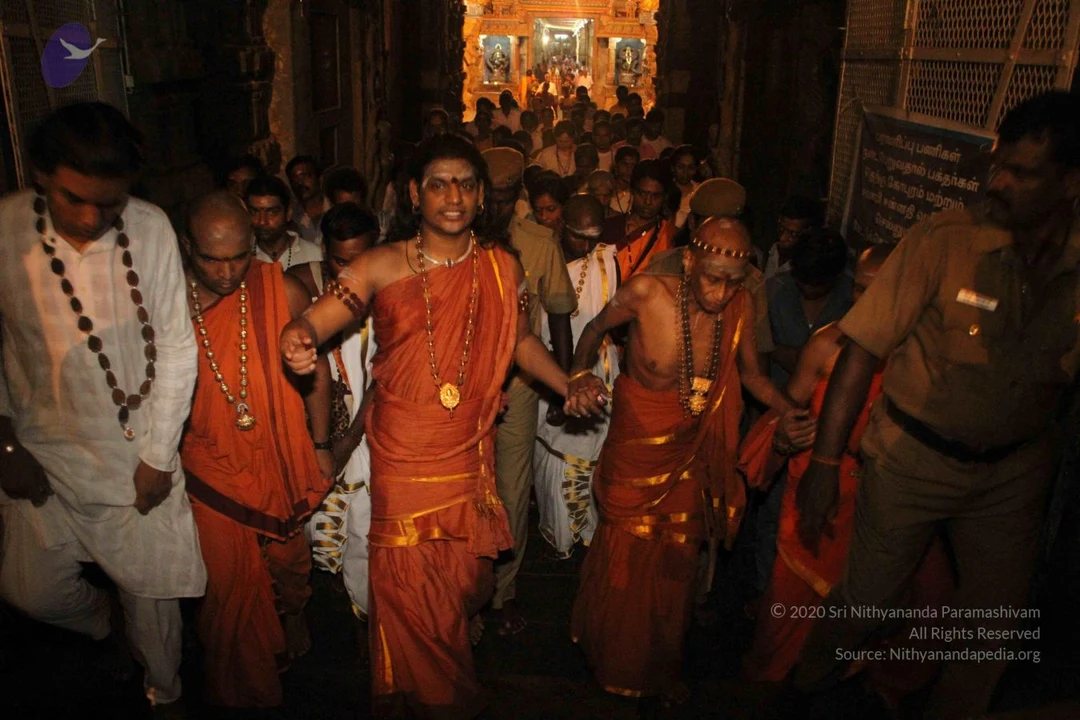
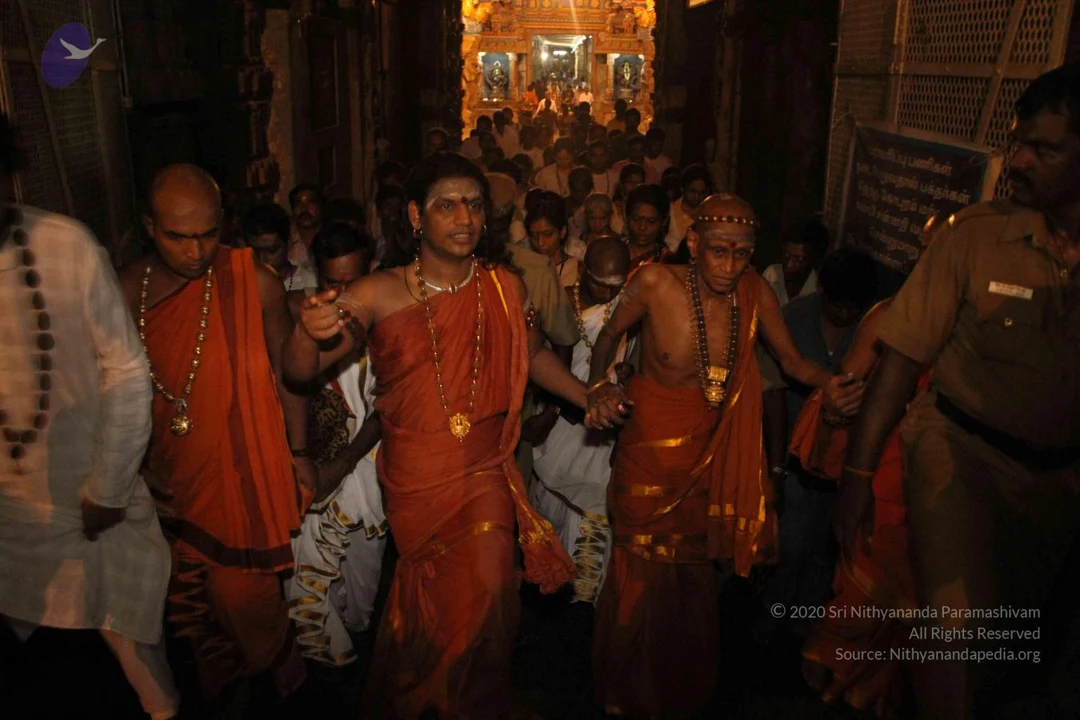
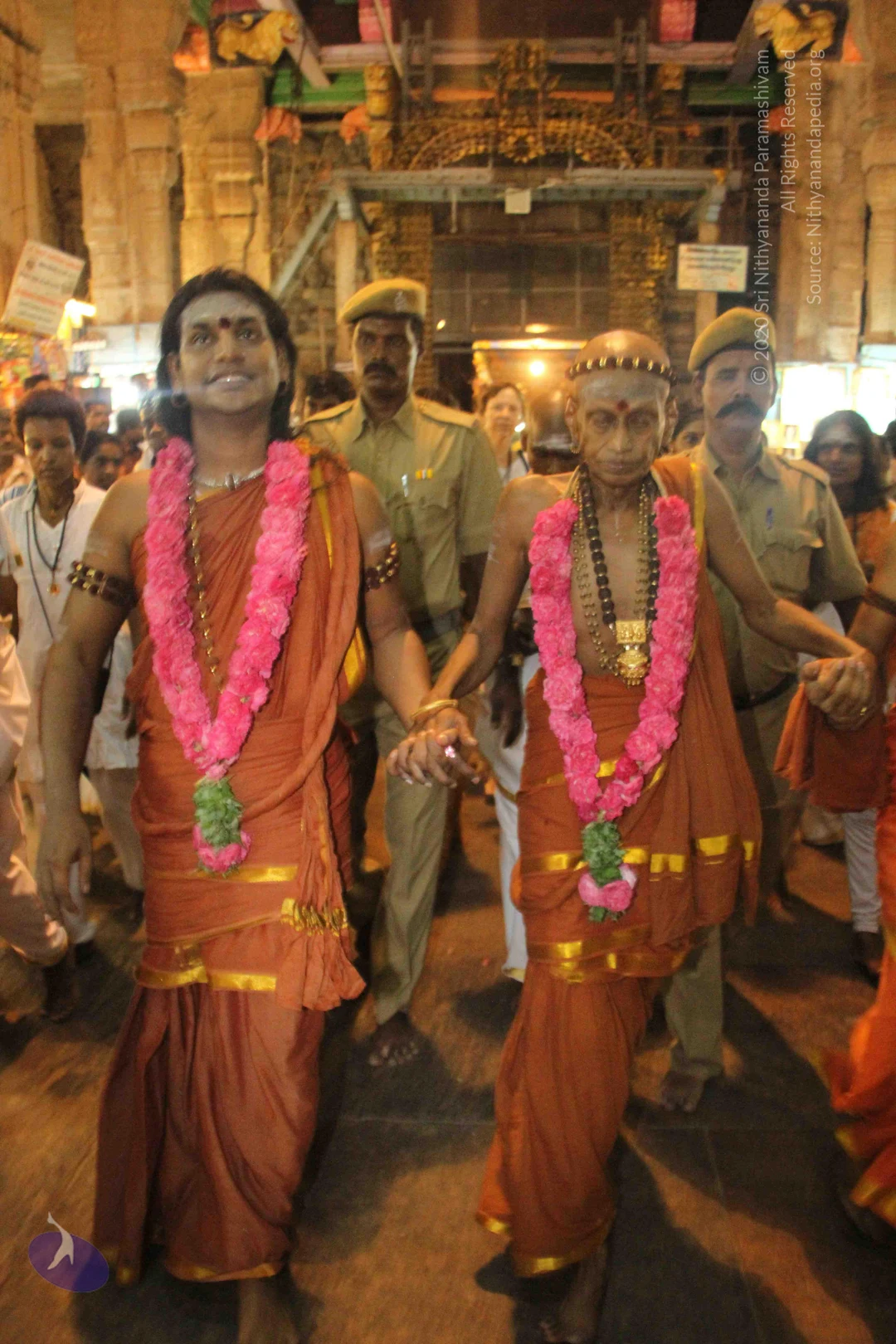
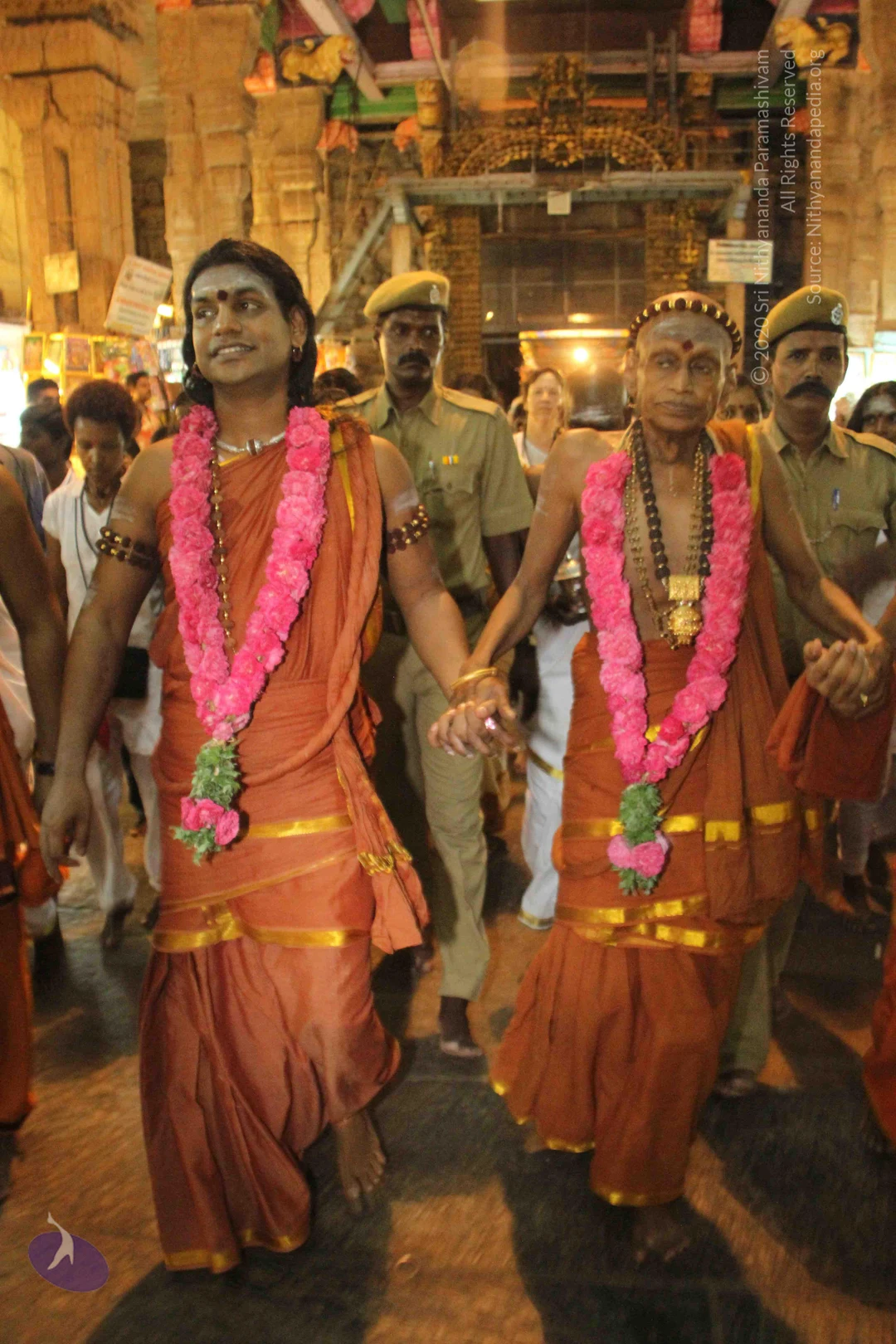
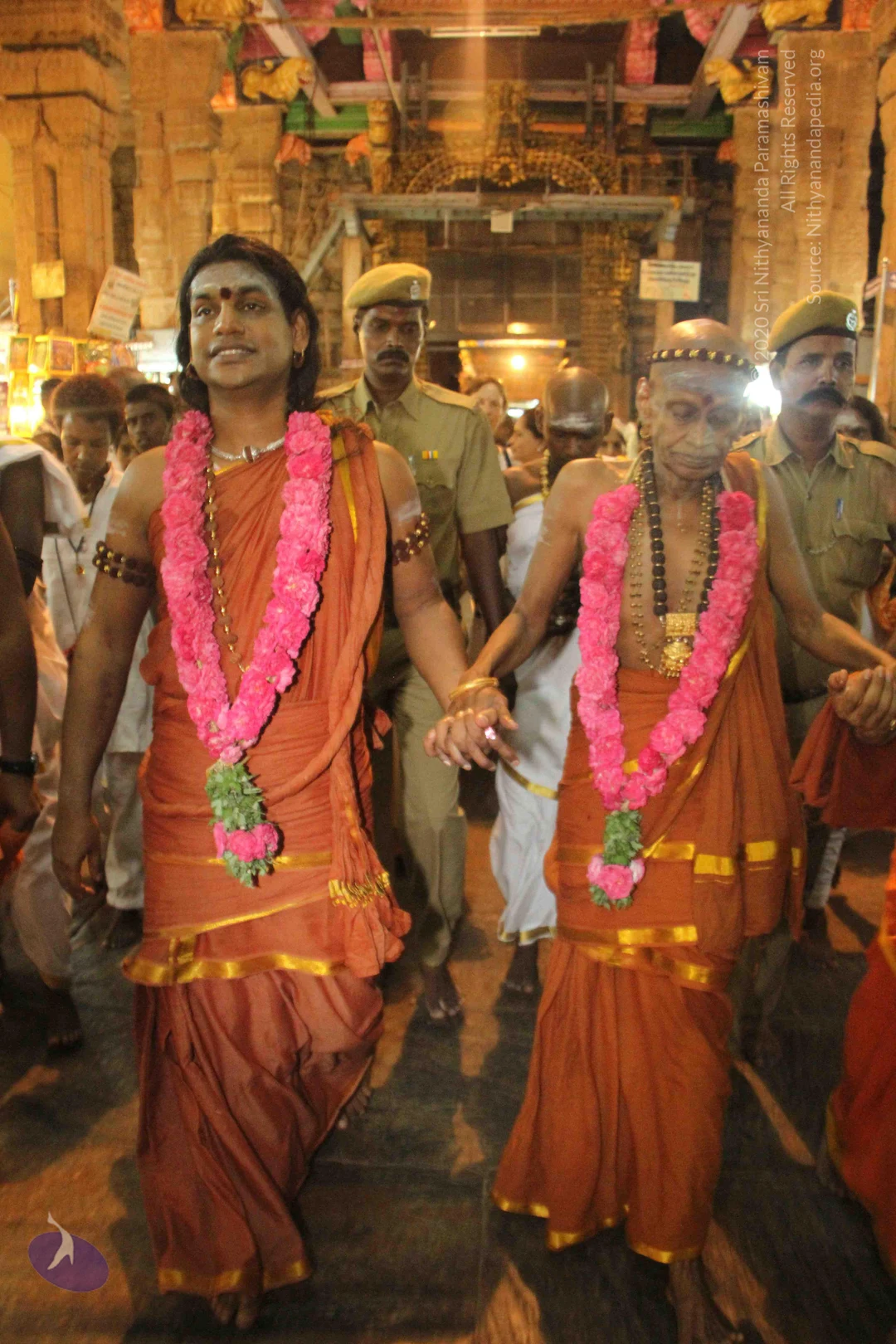
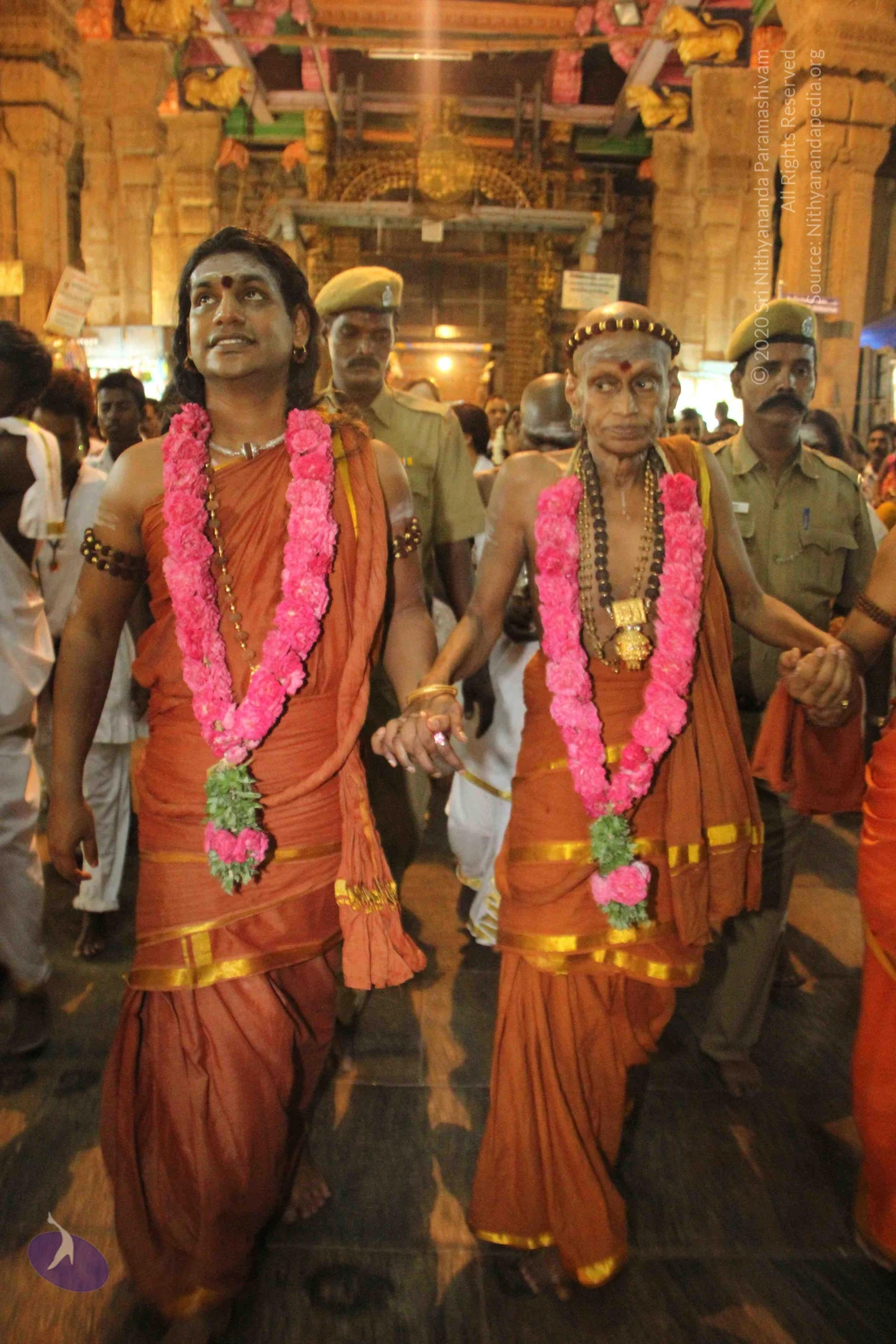
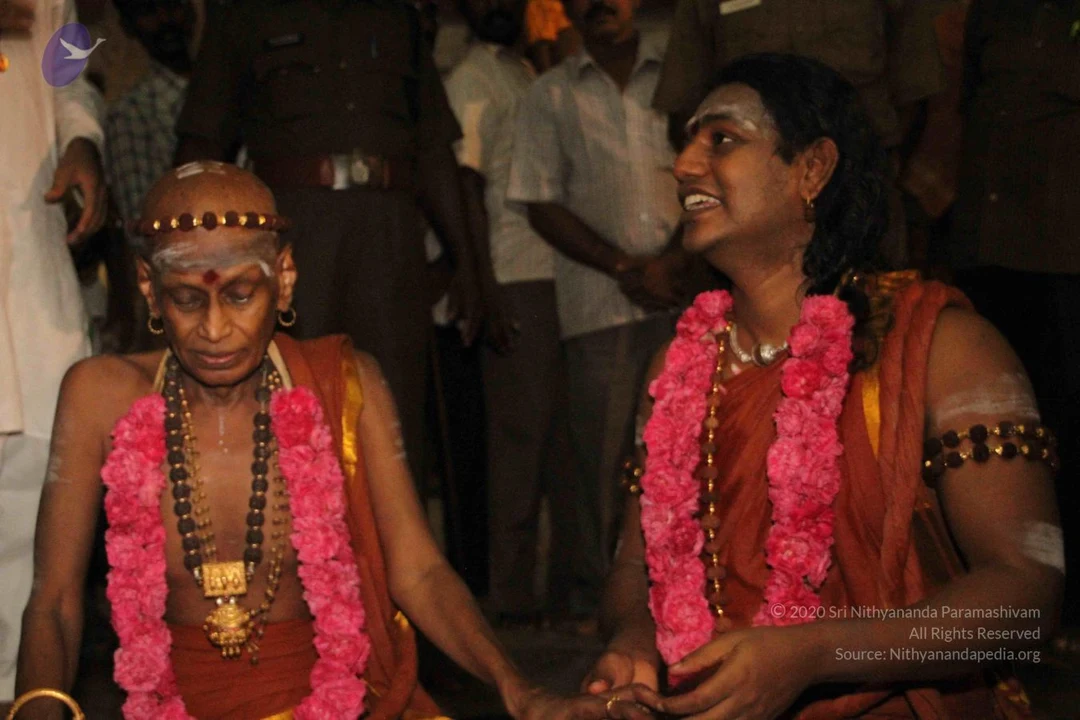
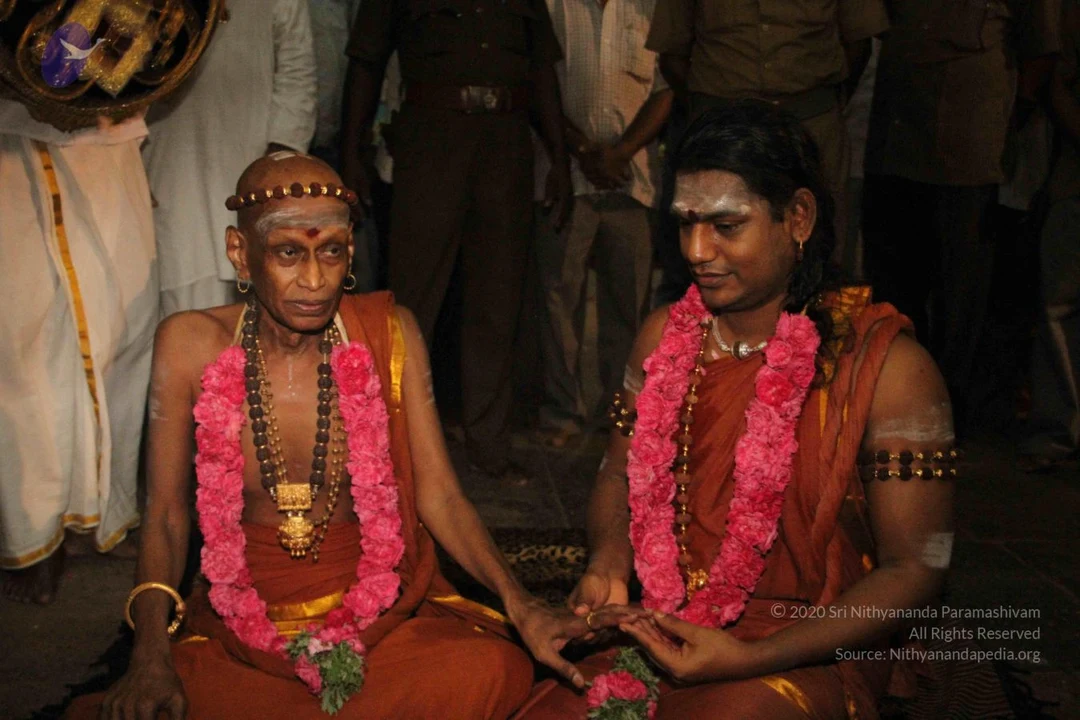
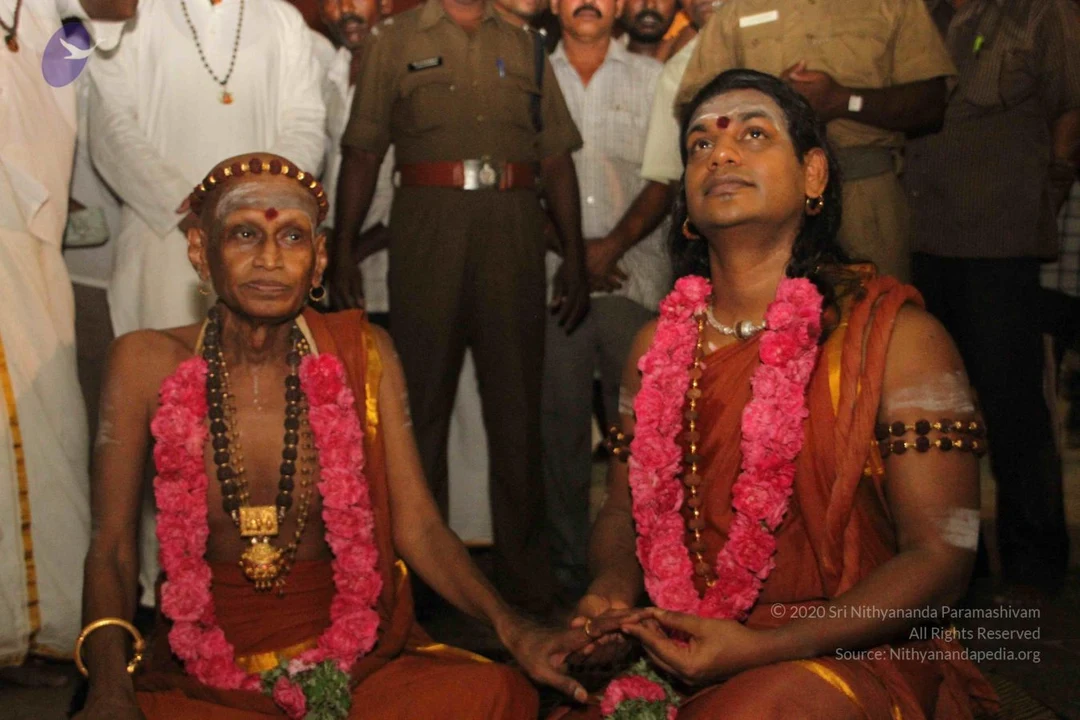
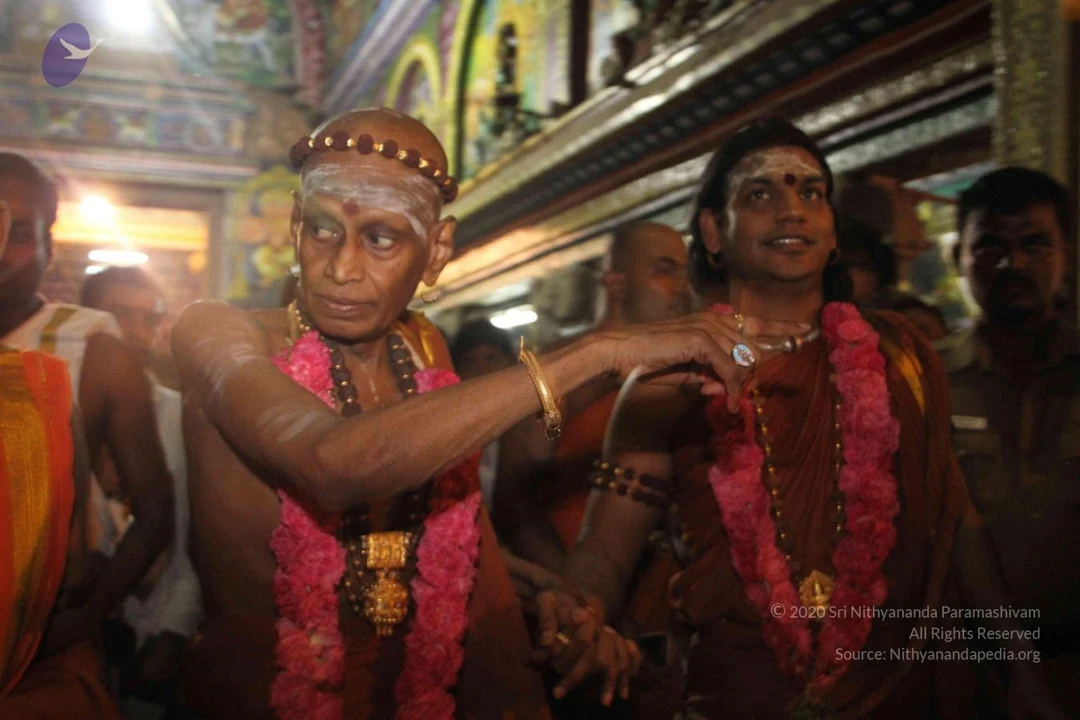
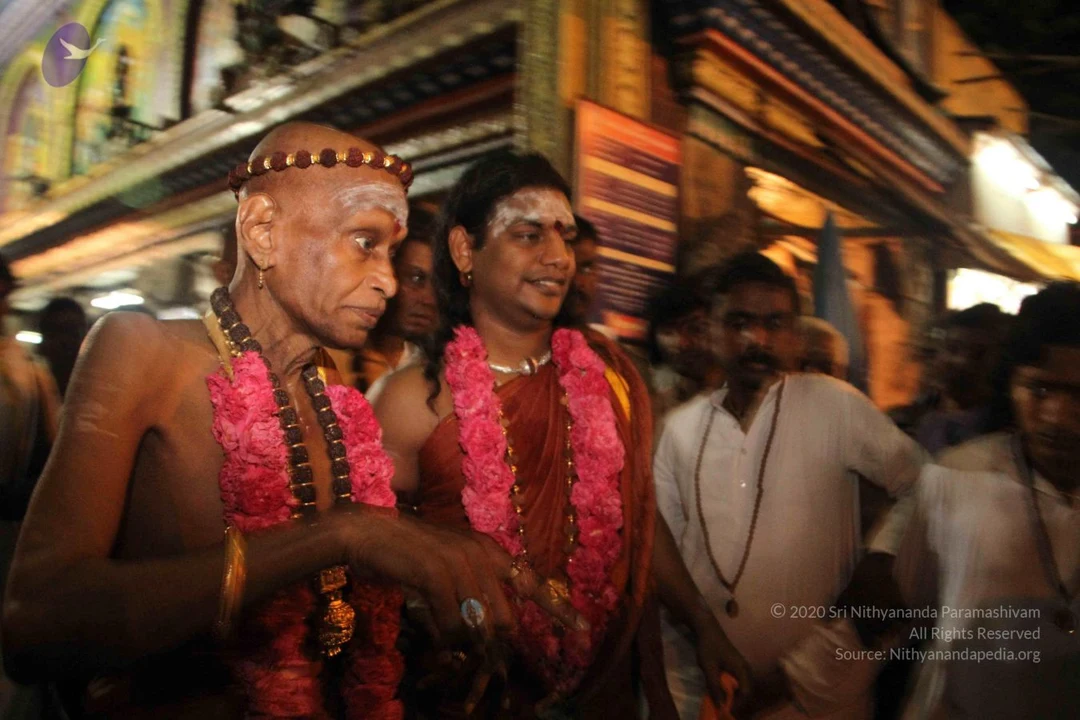
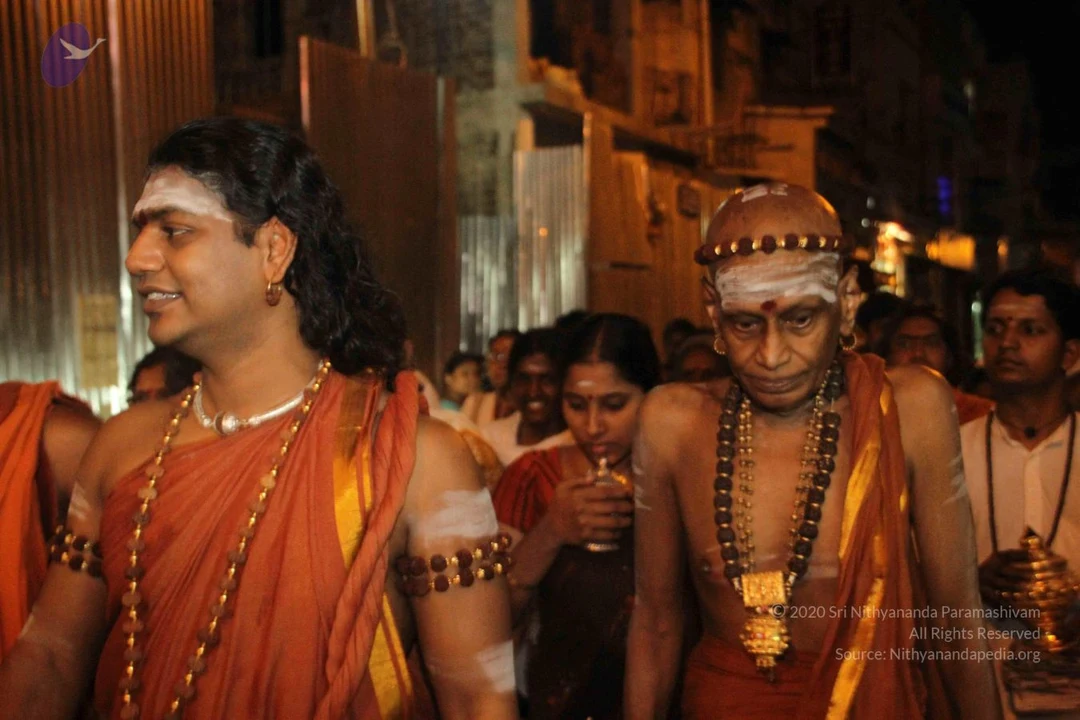
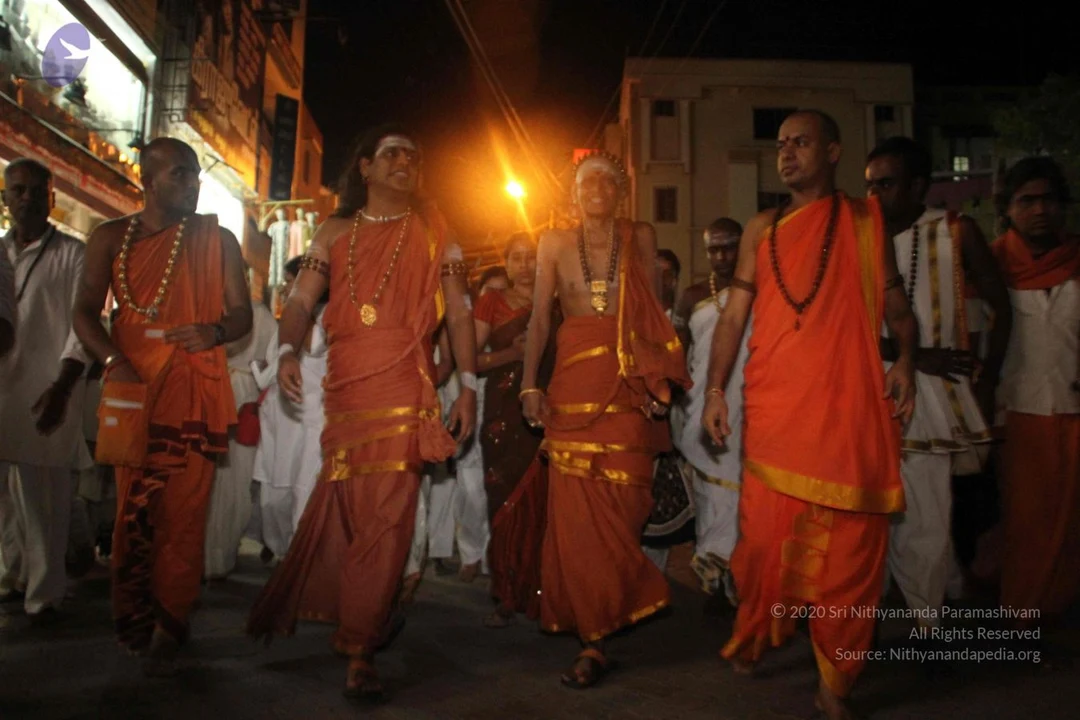
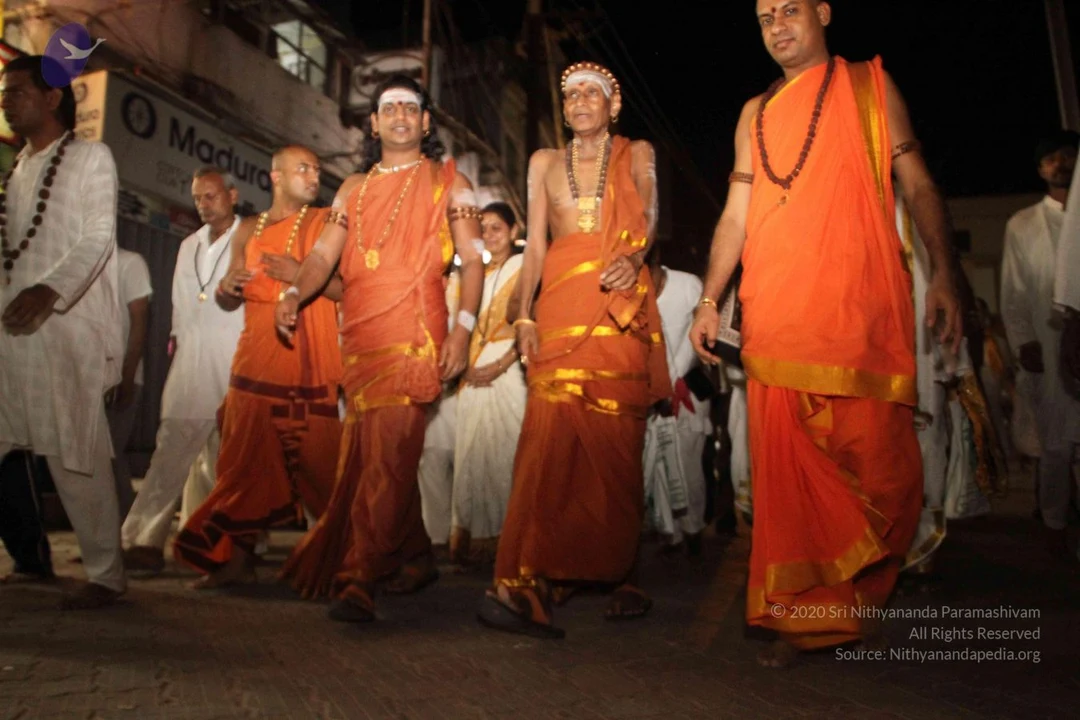
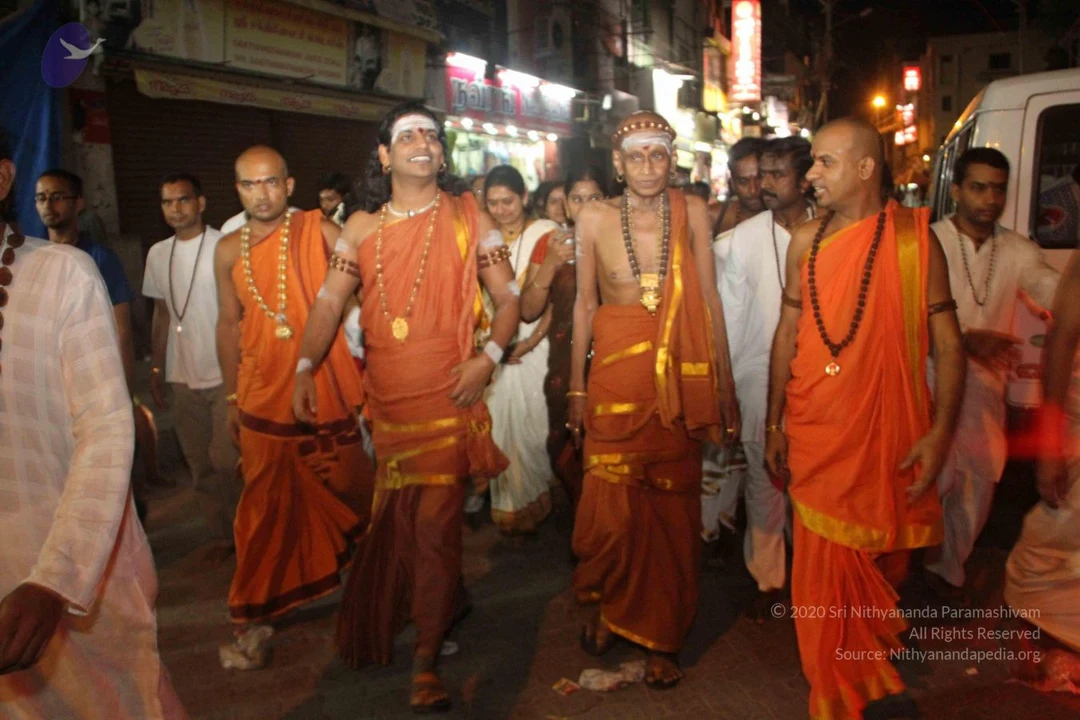
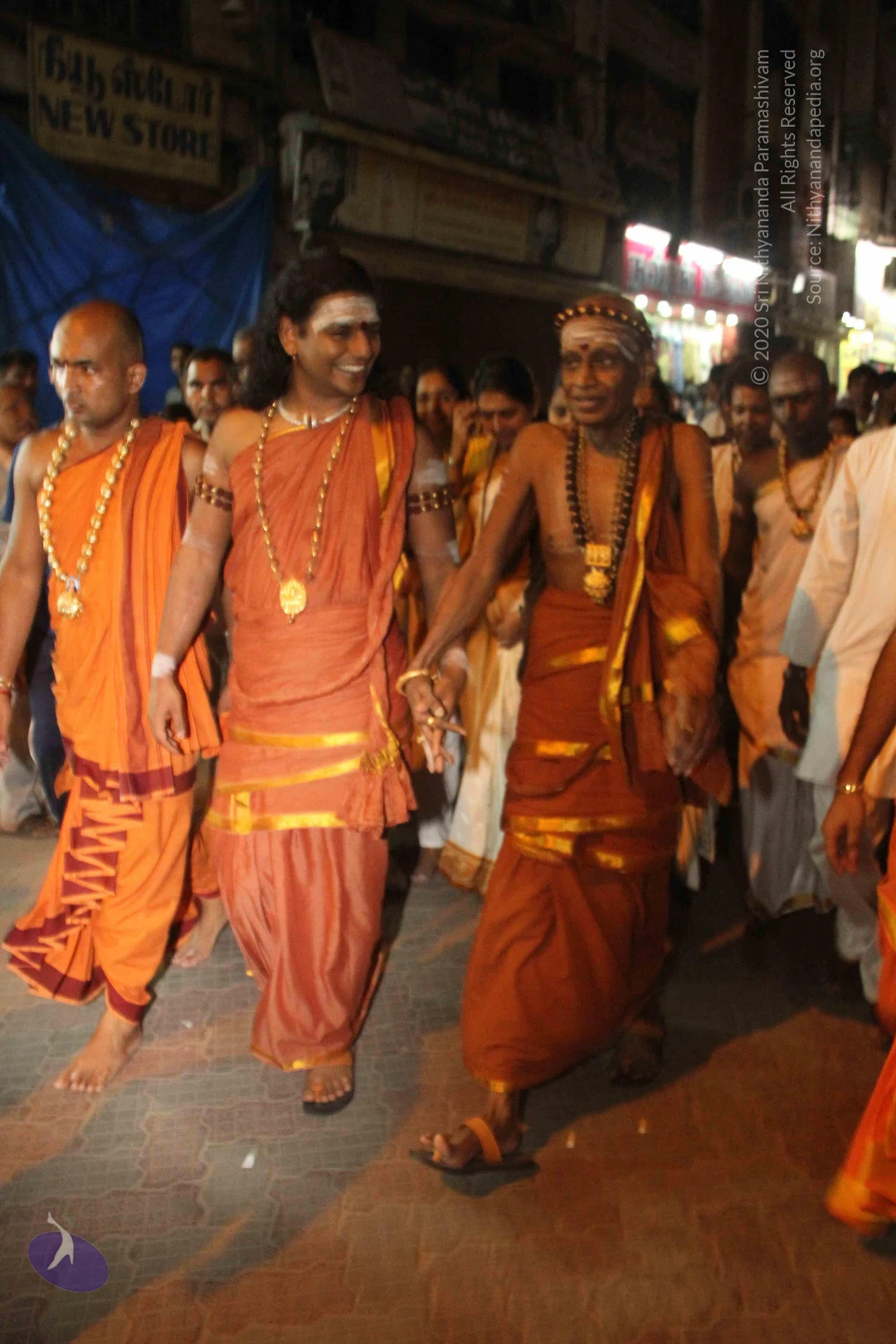
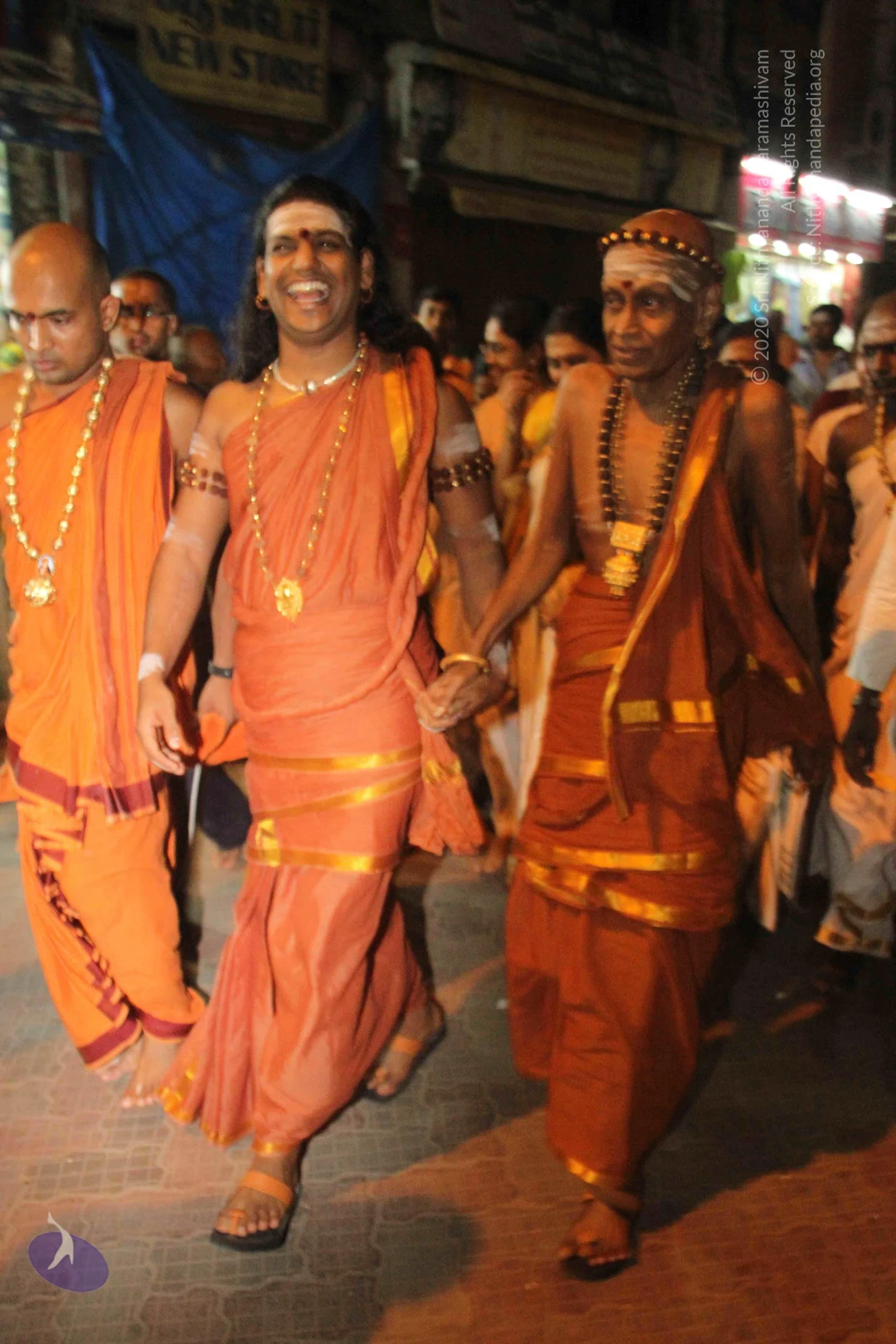
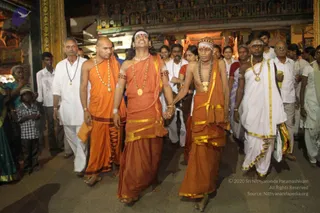
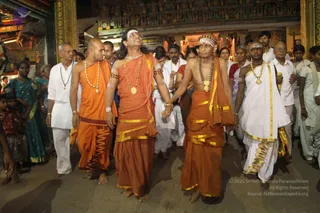
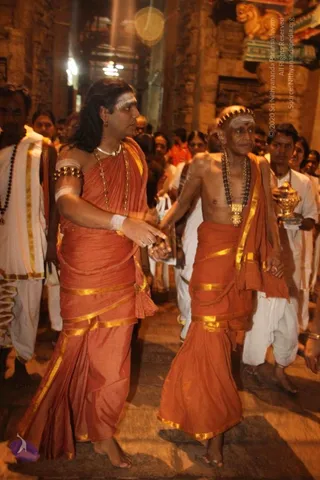
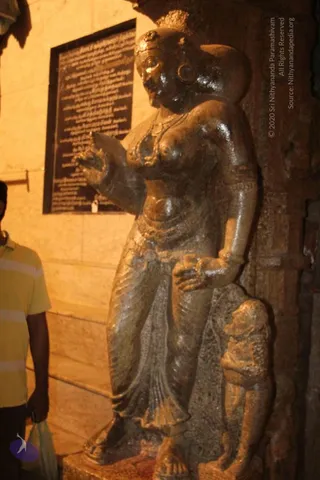
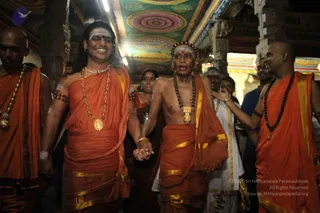
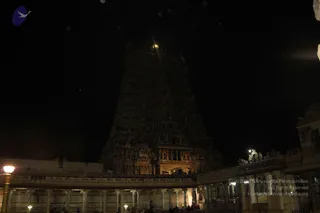
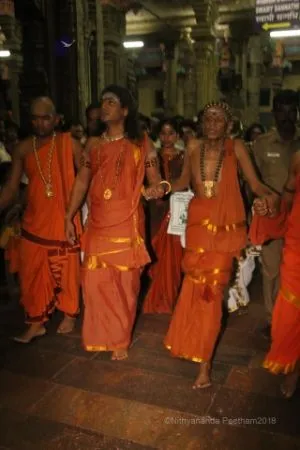
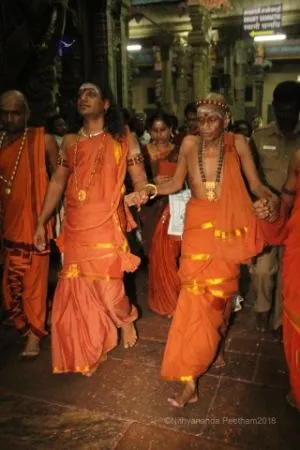
Photograph of a temple procession at night in a stone-paved temple corridor. Three men in saffron-orange robes with gold borders walk in the centre, holding hands. The central figure has long hair swept back, a white headband with a red-orange mark, a white beaded necklace, and a gold pendant, and looks upward. Beside him a bald man in saffron robes wears a gold chain and rudraksha-style beads. To the right, an older man with a shaved head wears a white dhoti with gold borders and gold necklaces. Behind them, men in white shirts and dhotis and women in saris watch and follow, with a child in checked shirt at the left. Painted temple gopuram carvings and gold-framed panels line the walls.A photograph of a temple procession in a dim, ornate temple corridor with colourful painted gopuram-style carvings above. Three saffron-clad sannyasis walk barefoot in the centre, holding hands. The figure on the right wears a gold pendant and rudraksha beads with orange robes and a head band, and the figure on the left wears orange robes and a gold necklace. Around them devotees in white dhotis and shirts and women in saris look on, with a child at the lower left.A photograph inside a warmly lit temple corridor, with carved stone pillars and a carved lion figure at top right. Two sannyasi-attired men in saffron-orange dhotis and shawls with gold borders walk side by side, holding hands. The man on the left has long dark swept-back hair, a white tilak, a silver necklace, gold arm bands and a gold chain; he appears to be the probable Swamiji. The man on the right is older and bare-chested, wearing a dark rudraksha mala, a gold pendant and a gold head band. Behind them, people in white dhotis and white garments carry a golden vessel and move in a procession through the corridor.A dark stone sculpture of a standing female deity figure, polished and lit warmly, stands against a stone pillar in a temple corridor. She wears a jewelled headdress, large round earring, necklaces, a jewelled waist belt and a flowing draped lower garment, and holds one hand raised near her shoulder while the other rests at her hip. A small figure is carved at her side. Behind her, a dark plaque with lines of inscribed text hangs on a pale wall. A man in a yellow-and-white striped shirt stands at the left edge holding a plastic bag. No a person candidate is visible; the statue is a deity murti, not a person.Photograph inside a temple corridor with a painted ceiling of concentric coloured circles. A tall man with long swept-back dark hair, a white tripundra forehead mark, a gold pendant and beaded necklaces, and saffron-orange robes with gold borders smiles while holding hands with an older bare-chested man wearing a gold-hued crown-like headpiece, white tripundra, multiple beaded malas and a gold pendant. Four to five men in saffron robes and malas walk alongside and a woman in a red sari stands behind them. Swamiji (probable): the taller man with long dark hair and saffron robes with rudraksha malas and a gold pendant appears to be the candidate, but this is an appearance-based label only.Night photograph of a towering South Indian temple gopuram, its tiered tower densely covered with painted sculptures of deities and figures, lit by warm light against a black sky. A small golden finial glints at the top. In the foreground, a colonnaded hall with white pillars and an ornamented parapet runs along the bottom, with a street lamp at left and small lamps along the base. A few tiny figures are visible near the colonnade, but no individual person can be clearly identified. No identifiable a person depiction is visible.

PUBLIC-DARSHAN-BY-HDH-AND-SANNIDHANAM
5 photosSource gallery
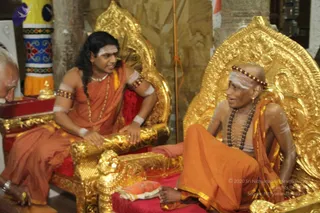
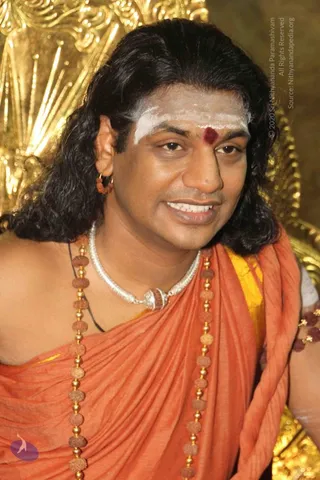
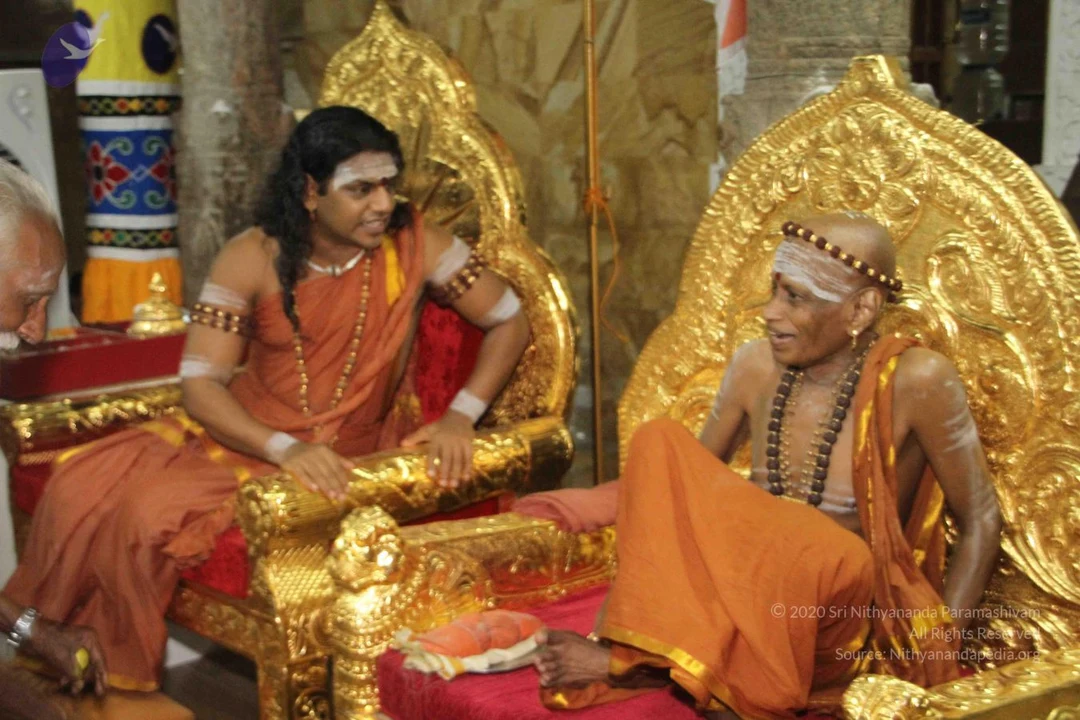
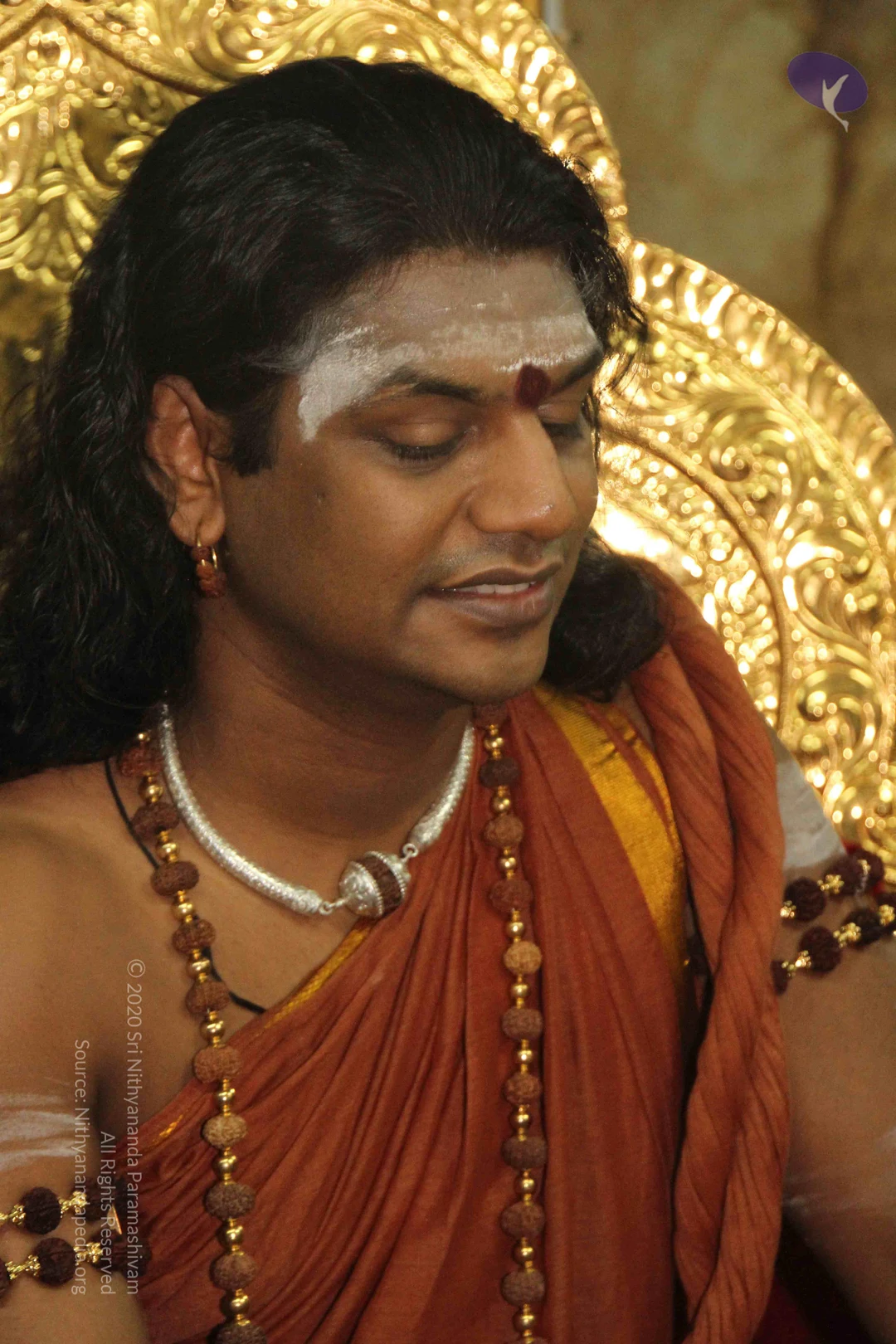
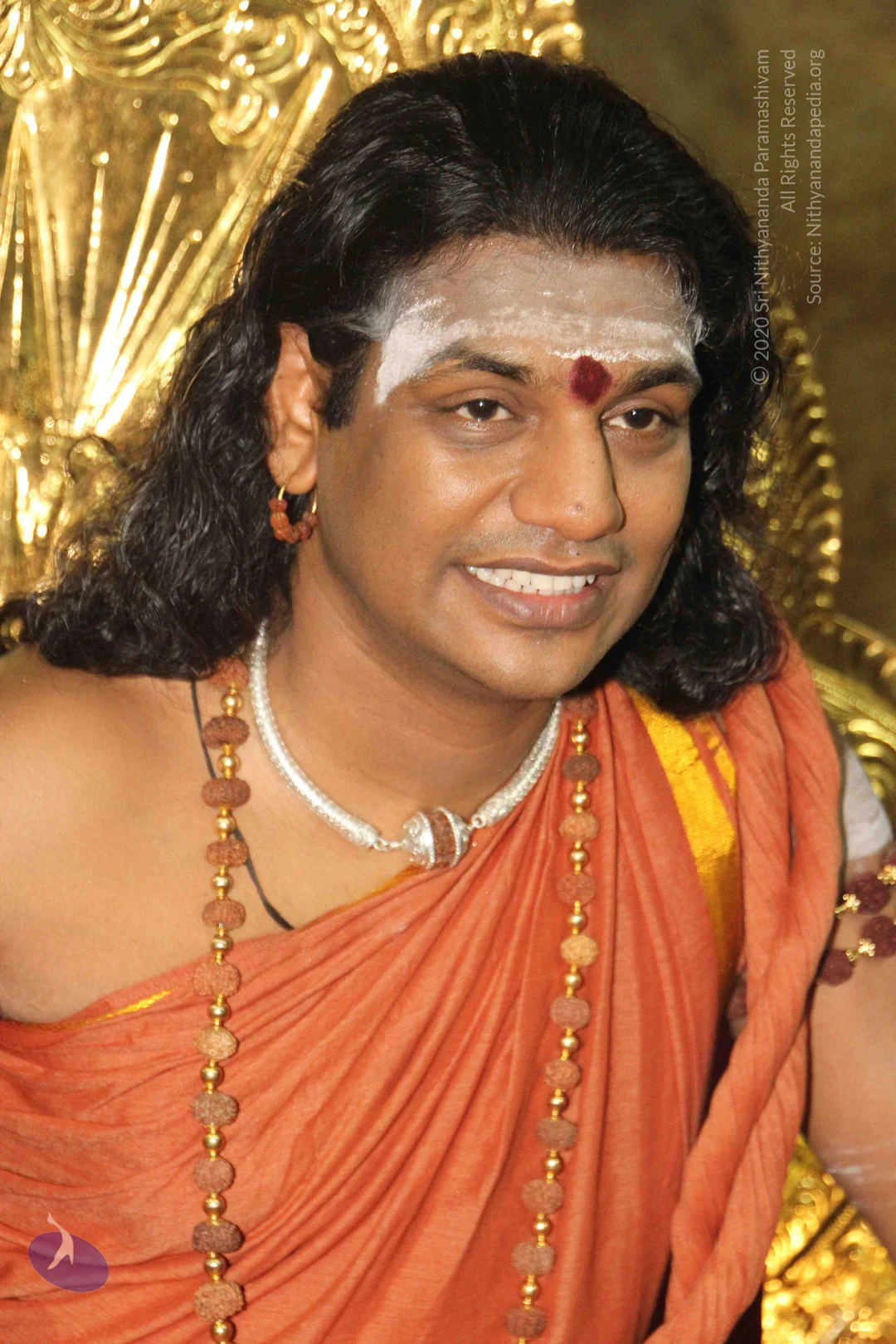
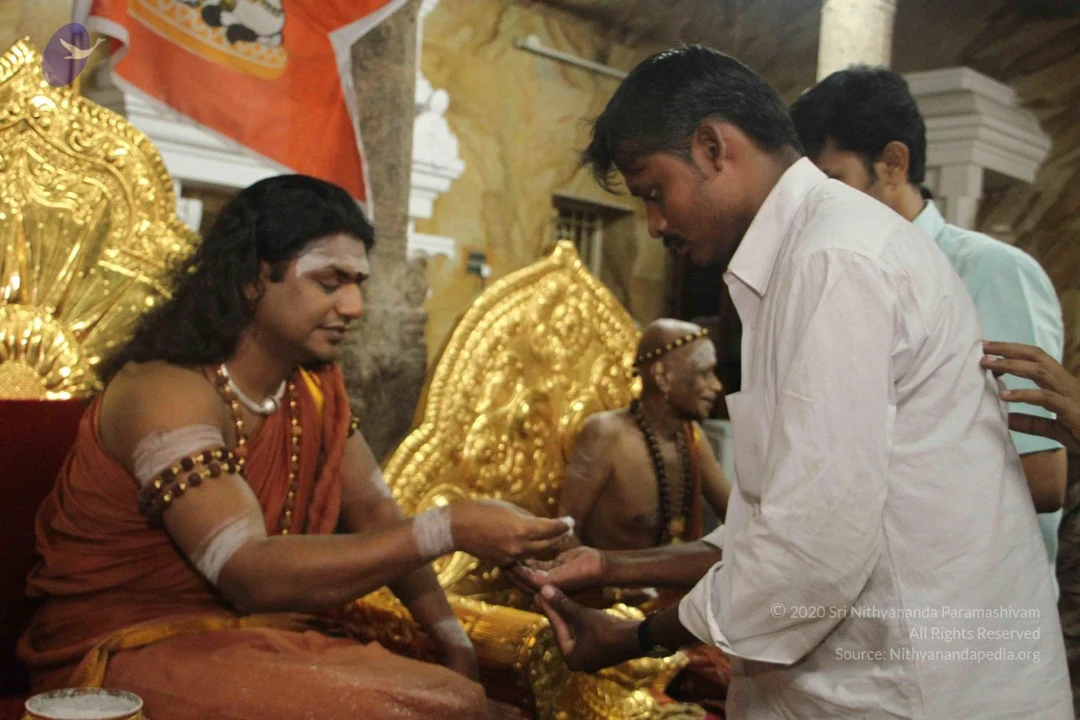
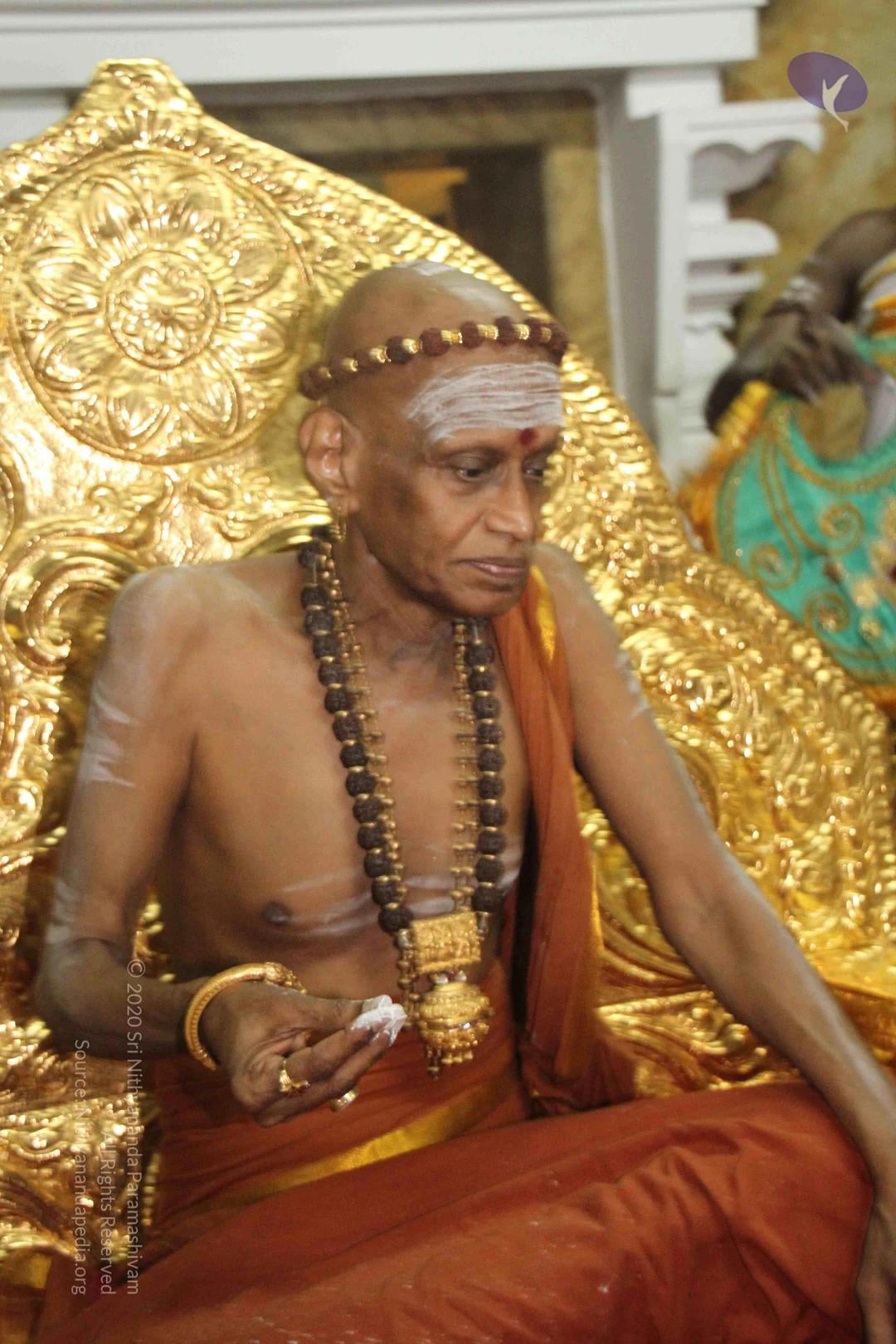
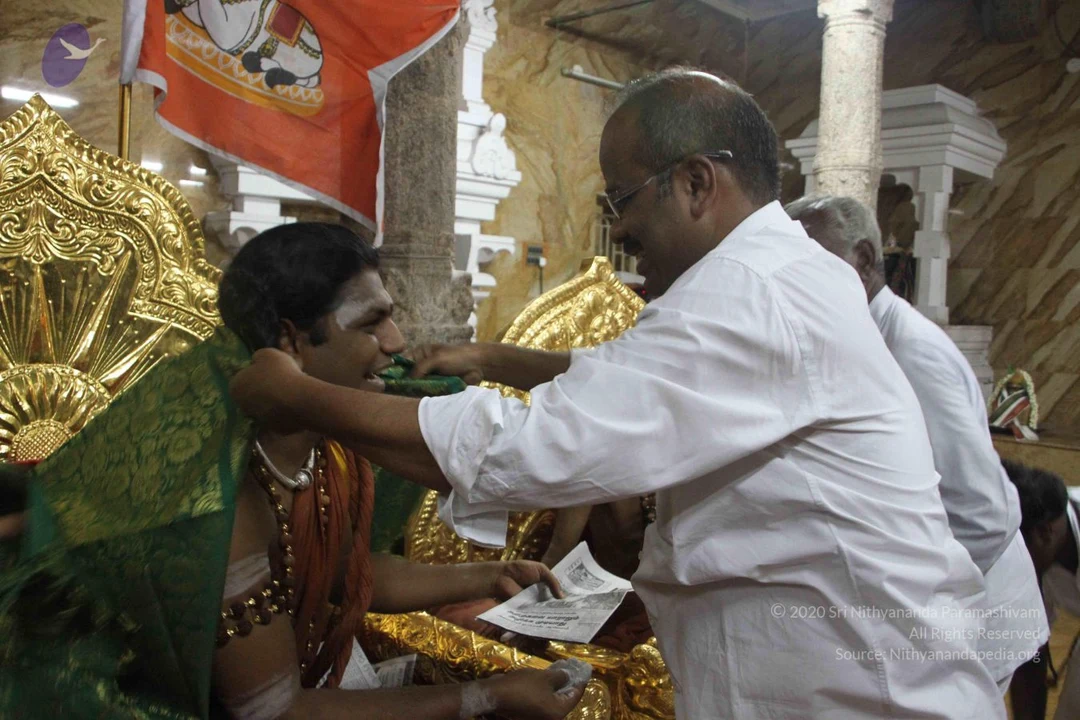
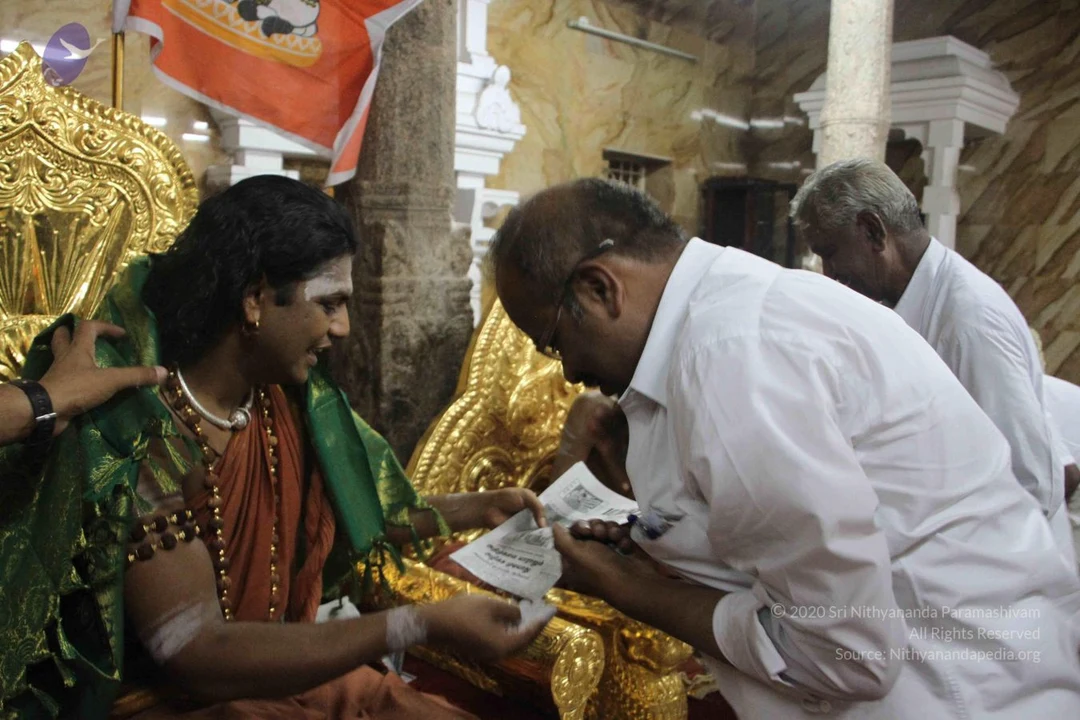
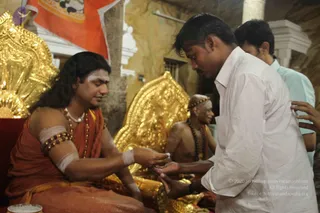
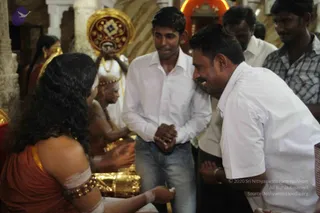
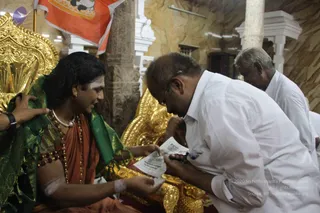
Two saffron-clad men sit on ornate gold thrones with red cushions inside what appears to be a temple or ashram hall. The man on the left has long, swept-back dark hair, a white tilak on his forehead, rudraksha bracelets and a gold chain, and wears an orange cloth wrap; he is turned toward the man on the right and rests a hand on the gold armrest. The man on the right is bald, wears a rudraksha headband and a long rudraksha mala, has white markings on his head and arms, and wears an orange dhoti with gold border, seated relaxed with one leg extended. A partially visible man with white markings sits at the far left edge, and a red-and-gold object rests on a cushion in front. Behind them stand a painted pillar with geometric patterns and a golden carved backdrop.Close-up photo of a smiling man with long, swept-back dark hair and a white vertical forehead mark with a red dot at the centre. He wears an orange-saffron shawl over bare shoulders, a long rudraksha mala with gold beads, a silver necklace with a rudraksha pendant, and a rudraksha earring. Behind him is ornate gold metalwork.A photograph inside a temple-like hall with a gold-leaf throne behind a seated man with long swept-back dark hair, wearing an orange-saffron robe, rudraksha beads on his arm and chest, a white bead necklace, and white sacred ash marks on his forehead and arms. He is seated and handing a small offering to a man in a white shirt who leans forward with folded hands. A second seated figure in orange and rudraksha sits on another gold throne behind him, and an orange flag hangs at the top, with a standing man in a light blue shirt at the right edge.A photograph inside a temple hall showing devotees receiving blessings. In the foreground at left, a woman in an orange-red garment with gold armbands and bare shoulders sits and extends her hands toward a golden box or vessel. Beside her, a man in a white shirt and jeans stands with hands clasped in front. At right, a smiling man in a white shirt leans forward with his hands folded. Behind them, a person in white ritual clothing with gold necklaces stands near a gilded ornate shrine or deity murti with a golden halo-like arch, and another figure in orange sits beside the golden box. Gold pillars and ornate stonework frame the scene.A photograph inside a gold-accented hall with white and marble pillars and an orange flag hanging above. A man with long dark hair, white forehead markings, a green silk shawl, orange robe, rudraksha beads and a white ceremonial necklace sits on a gold throne, smiling and holding a small printed paper. Opposite him, a bald man in white shirt and glasses leans forward to receive or hand over the paper. A second older man in white stands behind them. The seated man has long swept-back hair, a green shawl and rudraksha malas, consistent with the Swamiji (probable) presentation cues on this page.