Skip to content
Tuesday

20 May 2014

Death Experiences || IA Sharing || IA || 20 May 2014

Dated photos
484
Source pages
1
Media
4
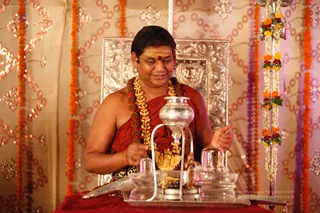
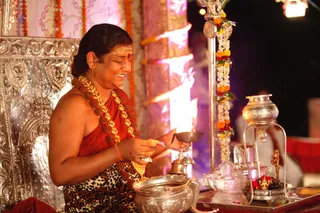
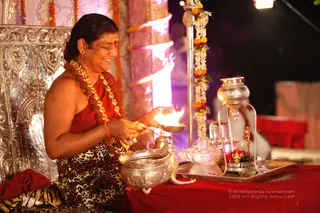
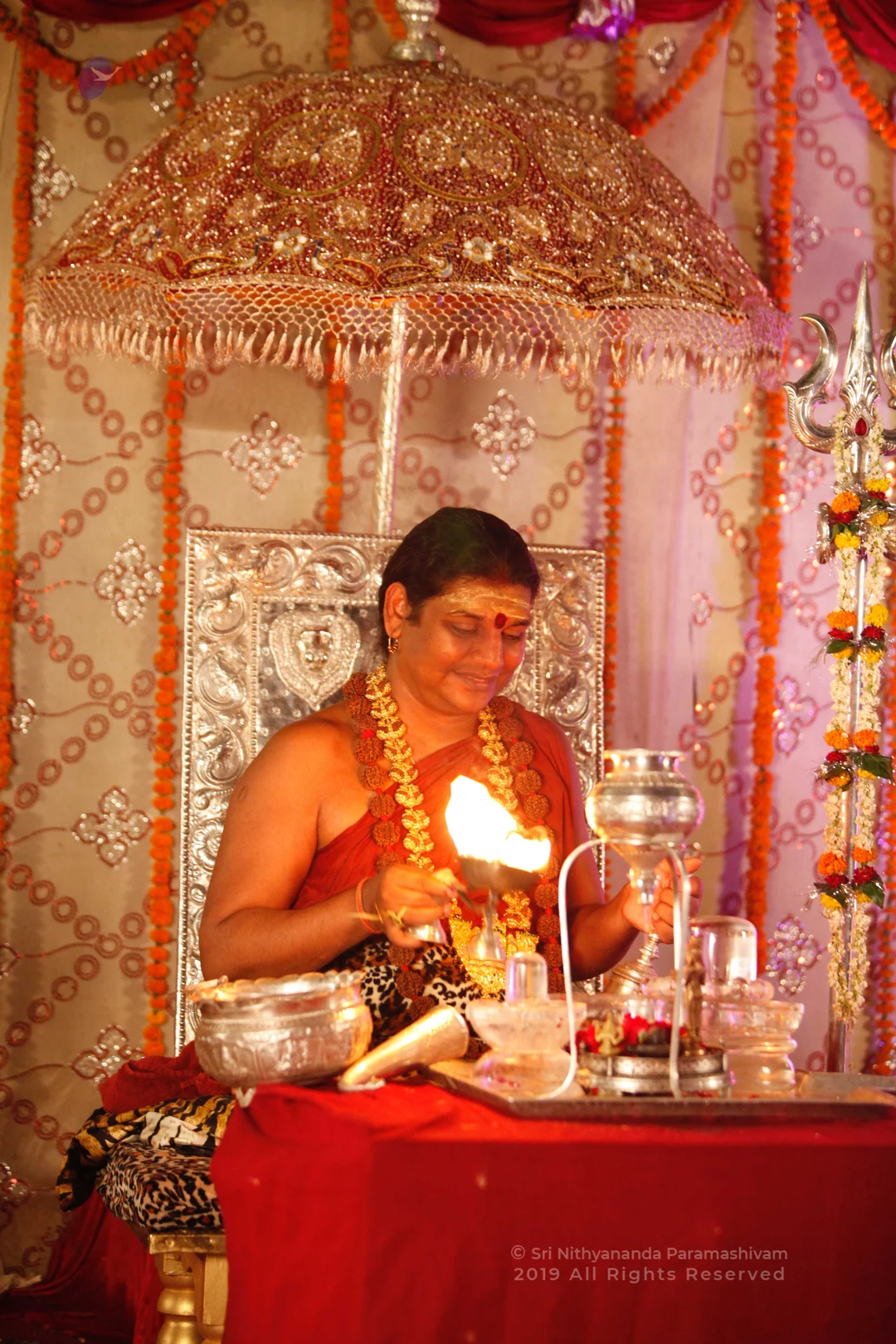
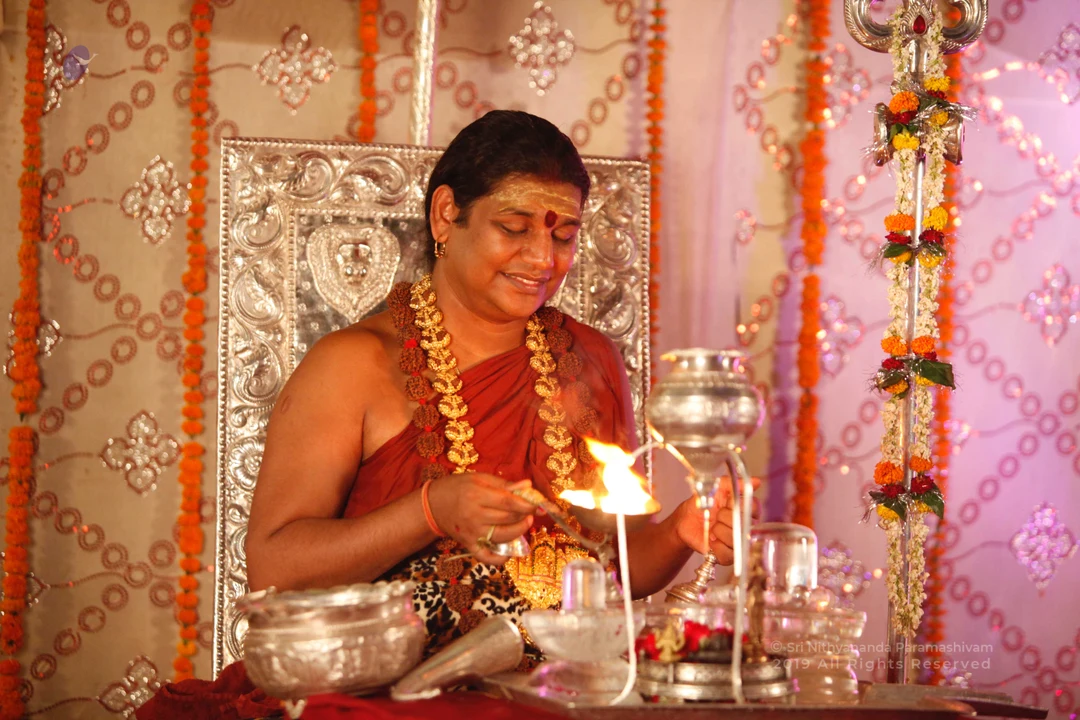
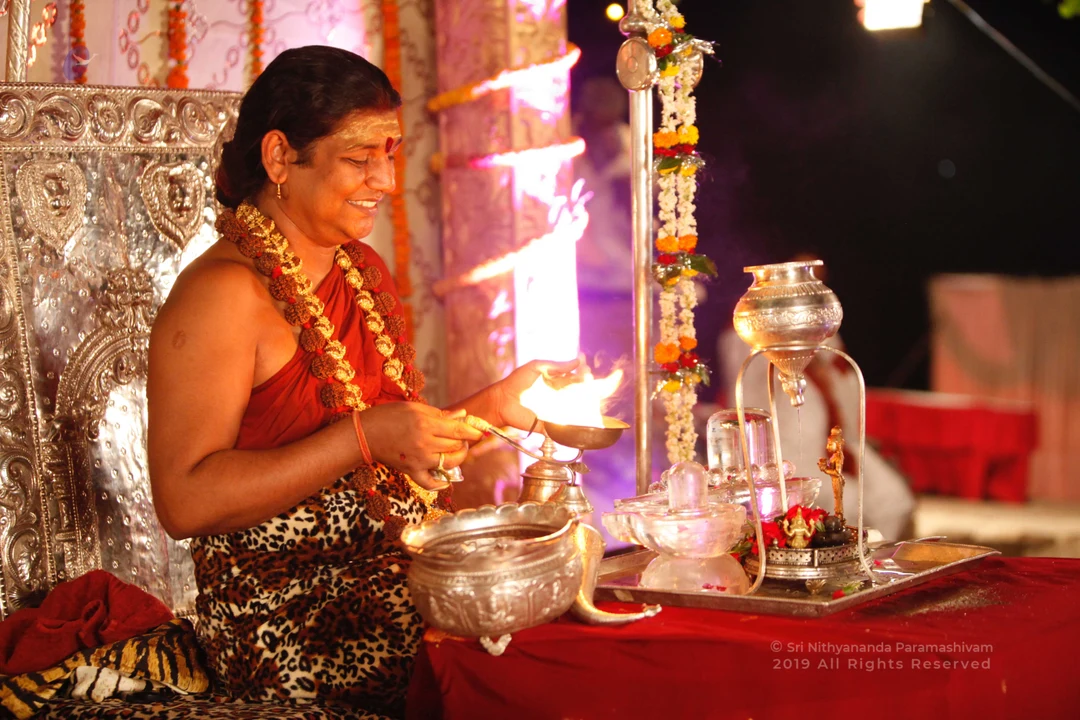
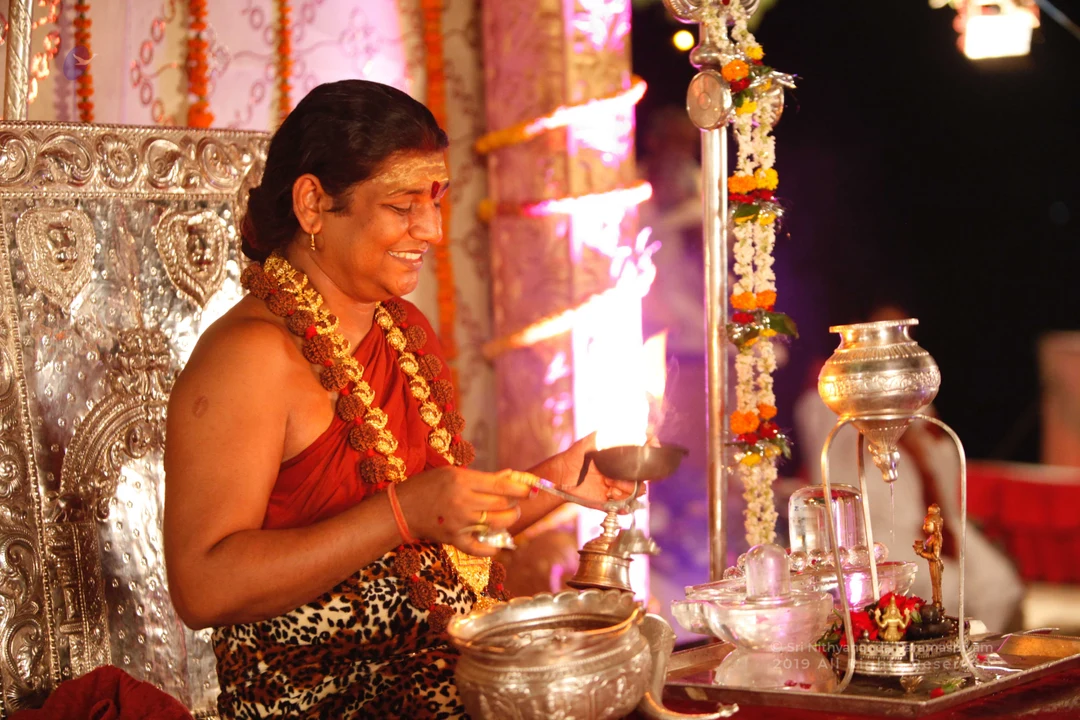
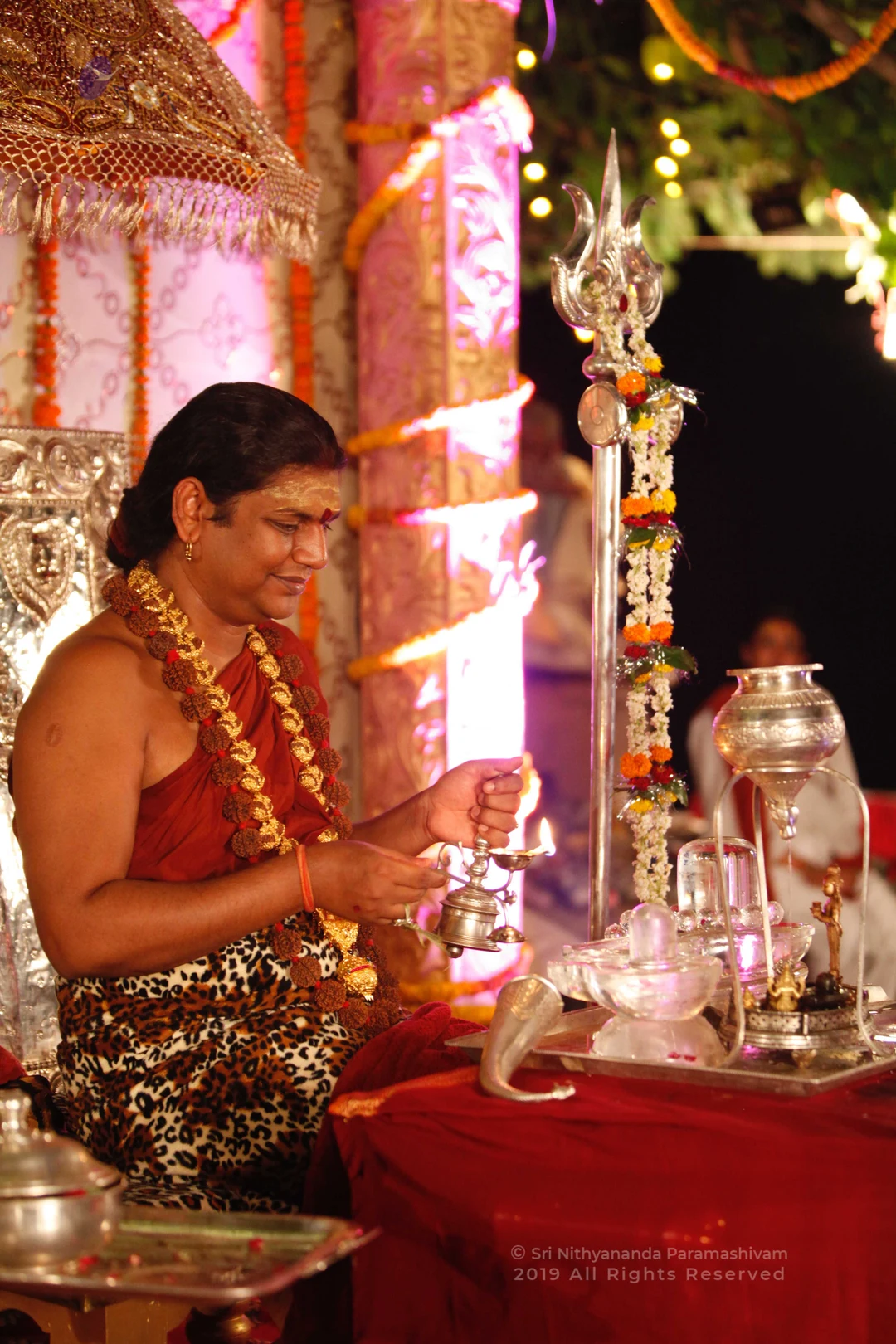
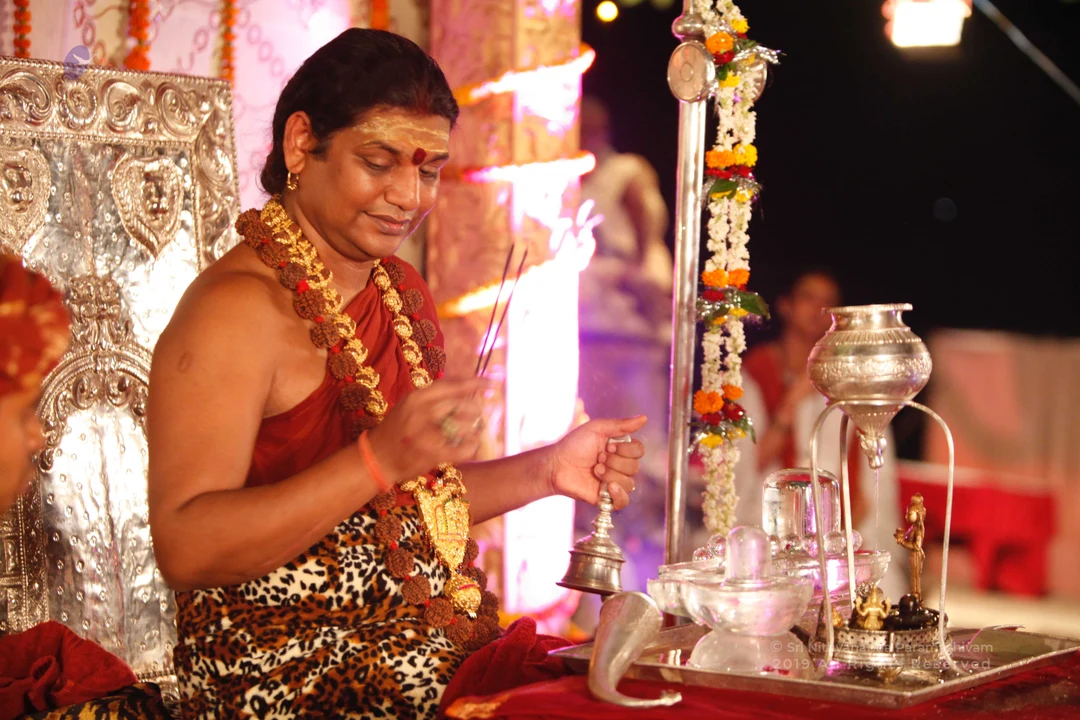
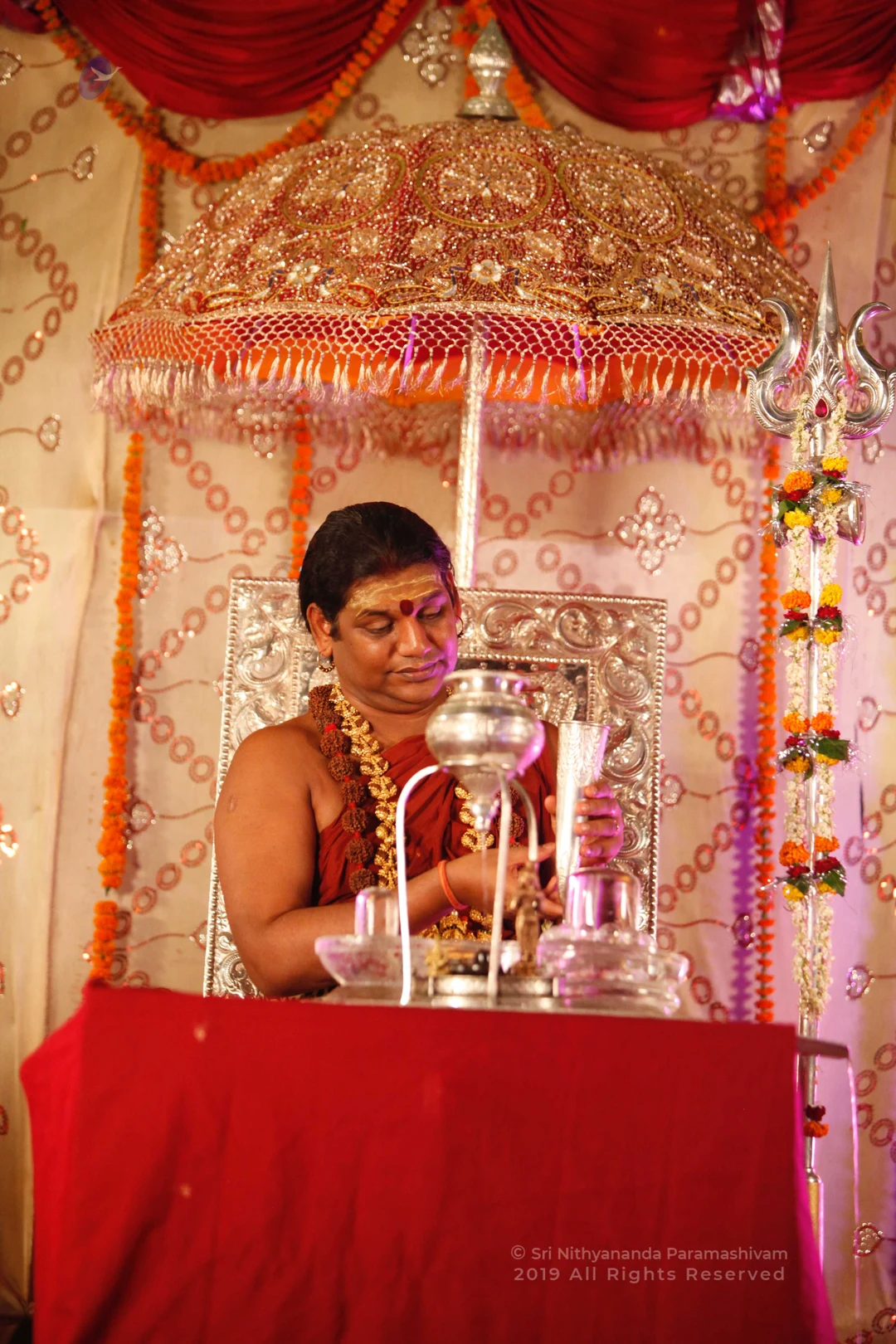
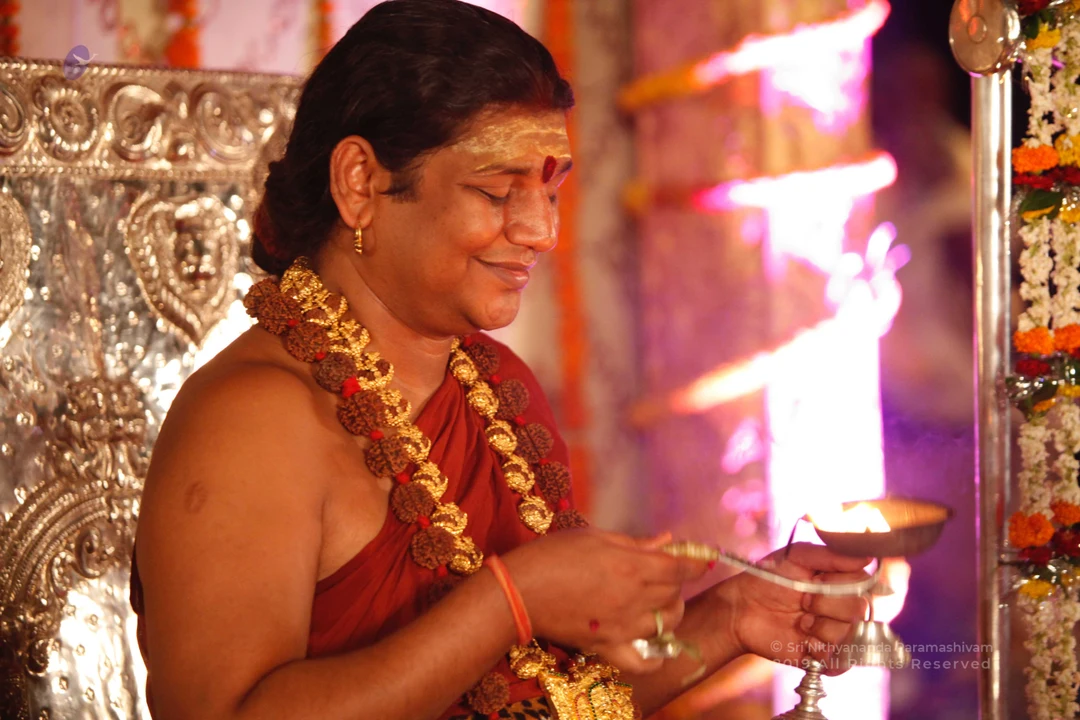
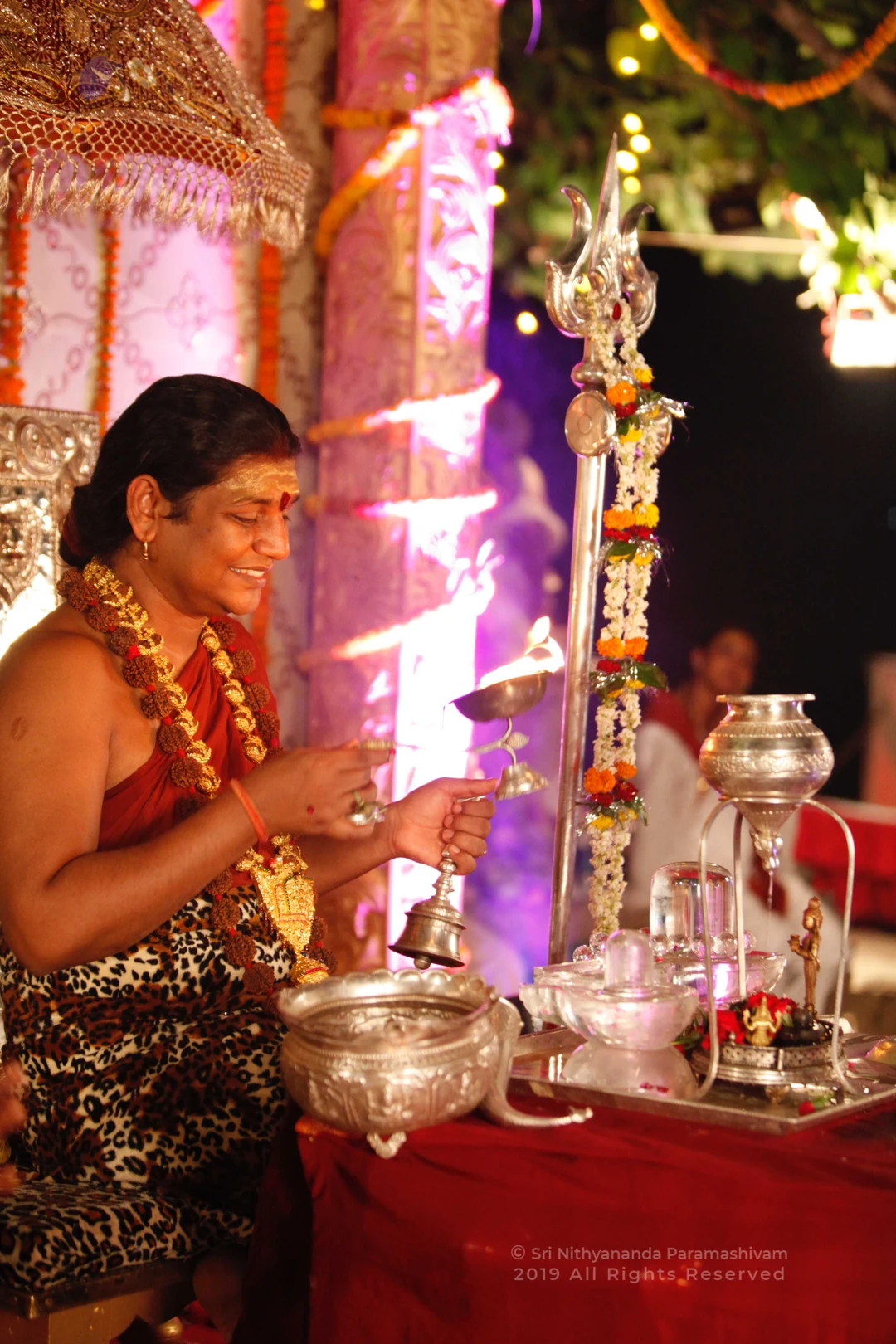
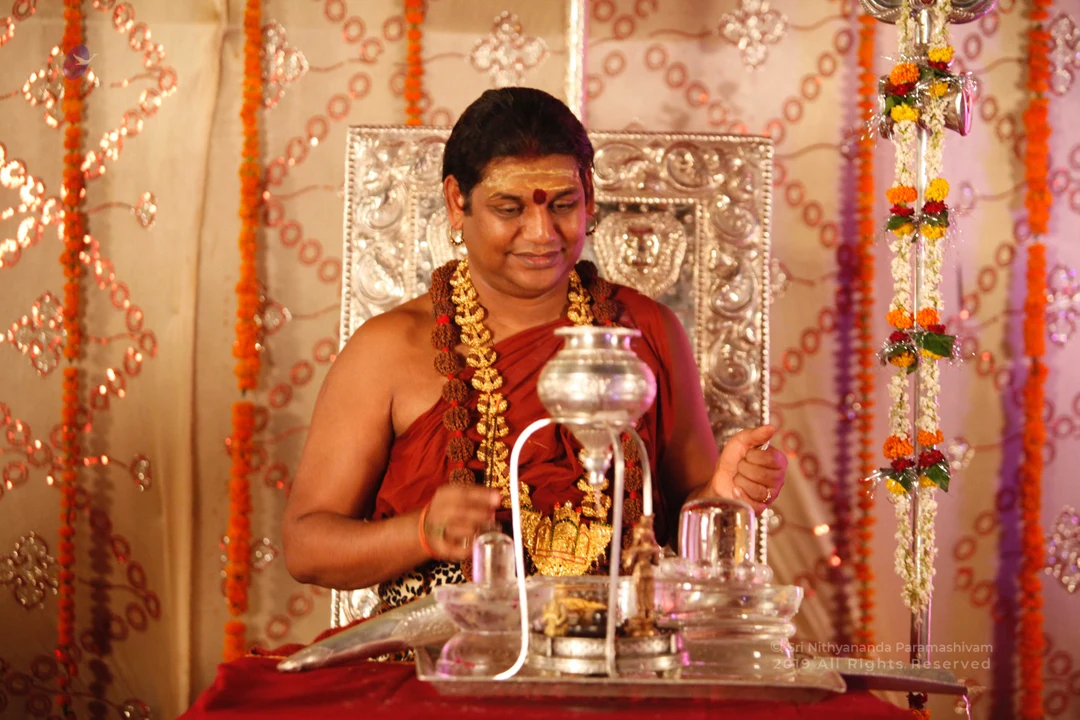
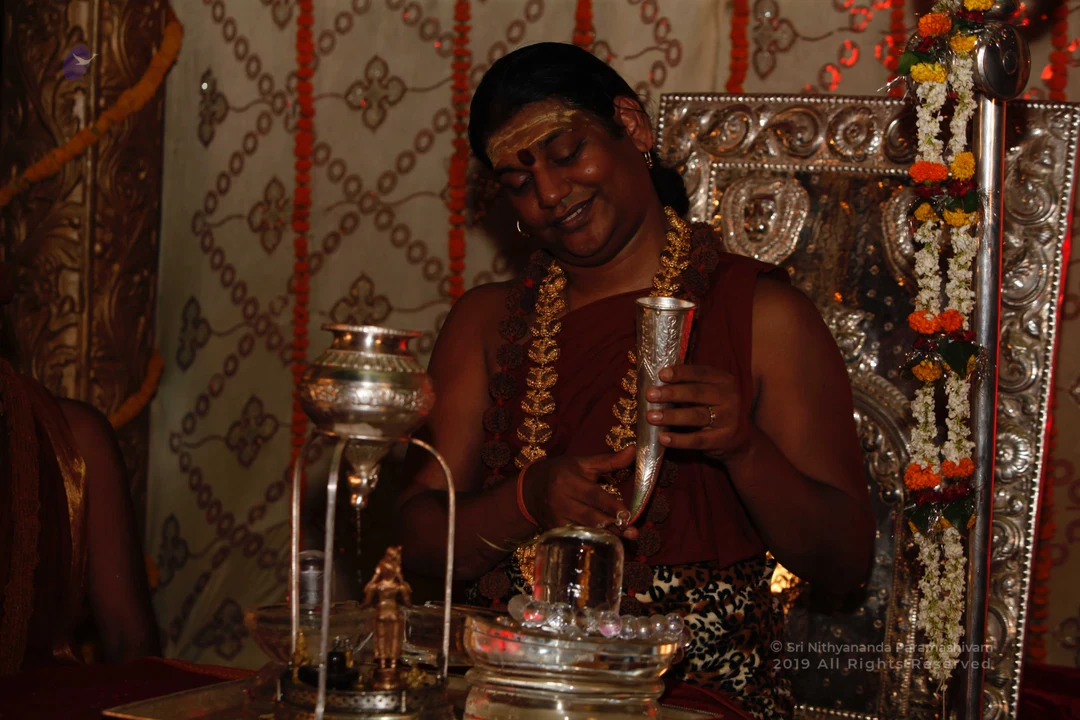
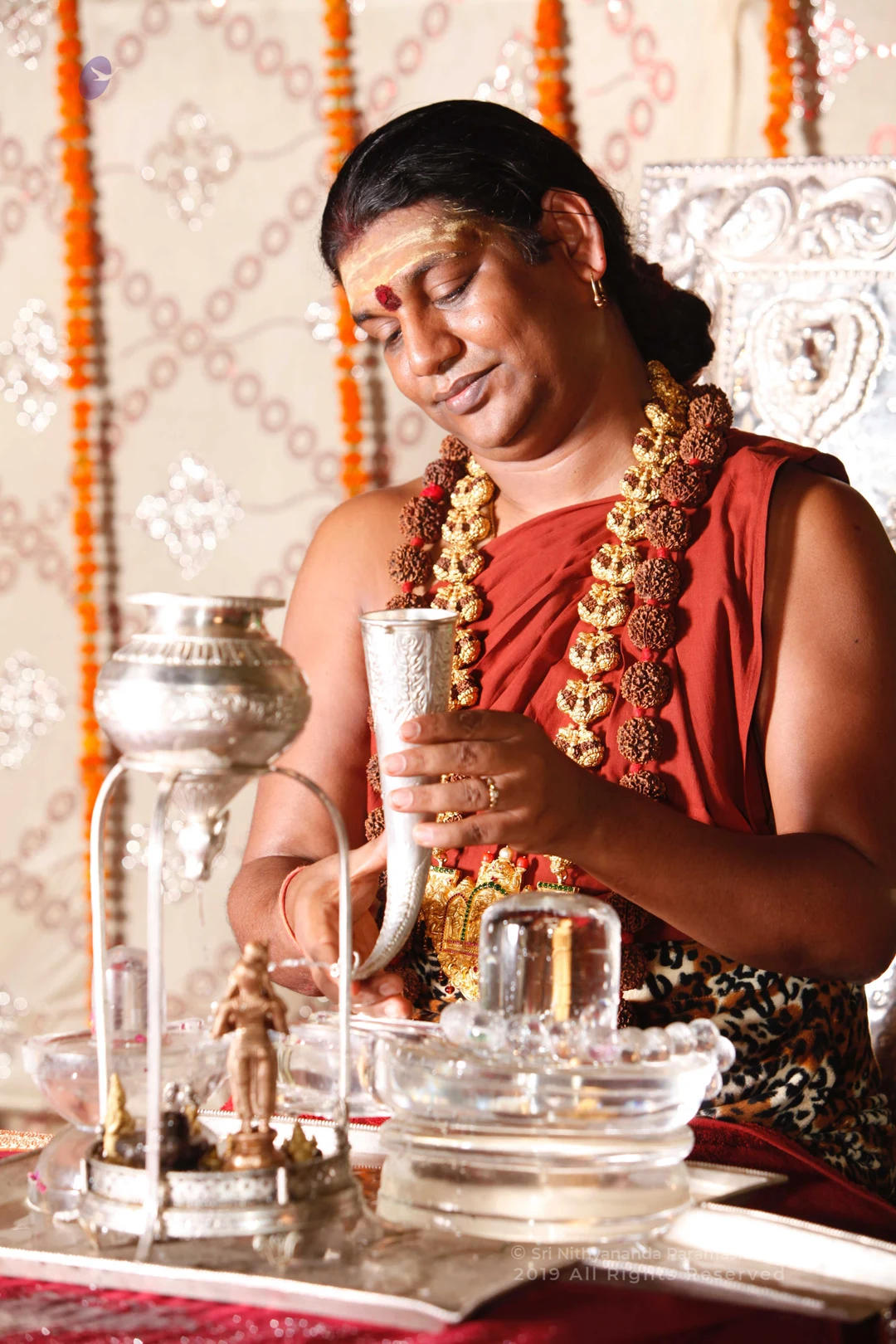
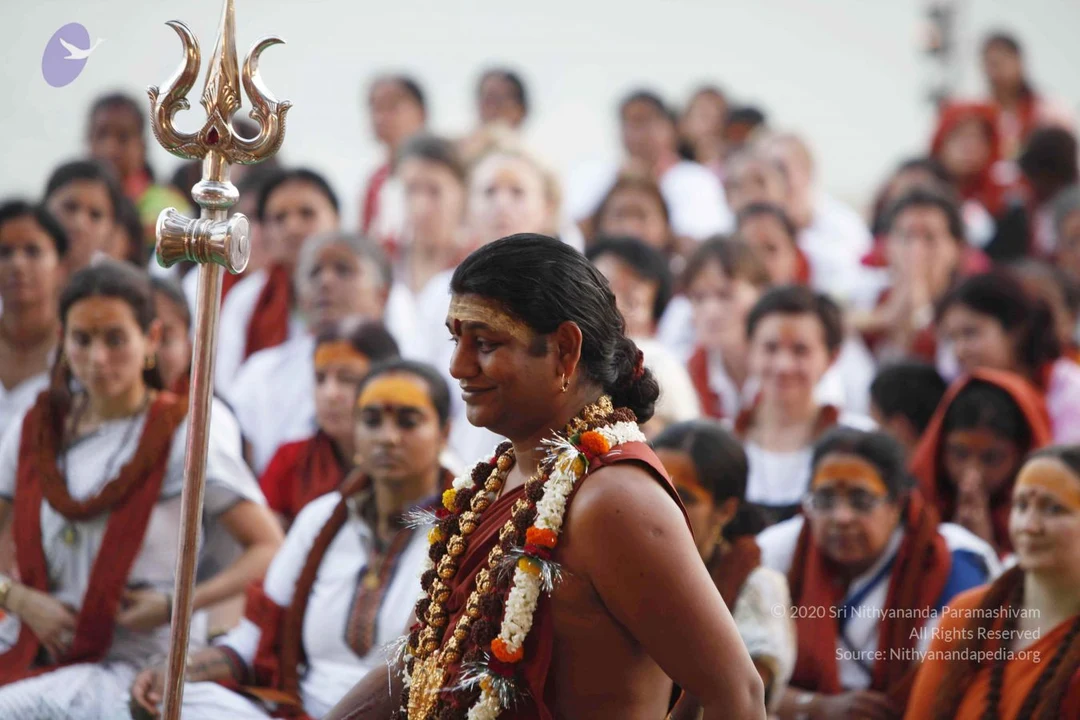
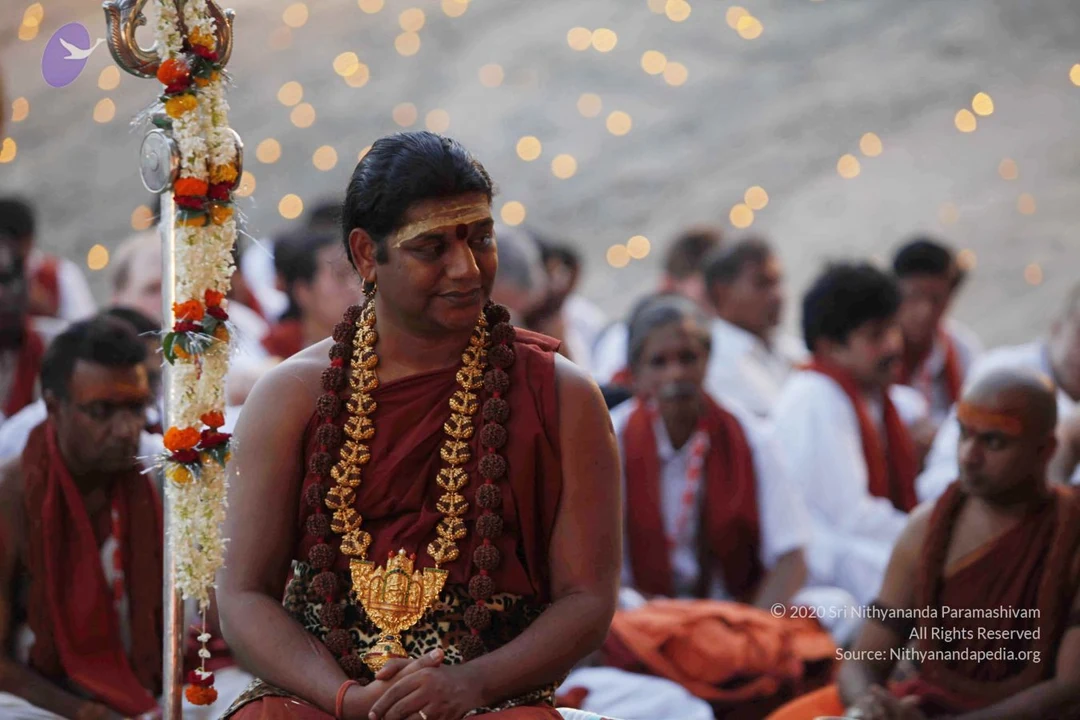
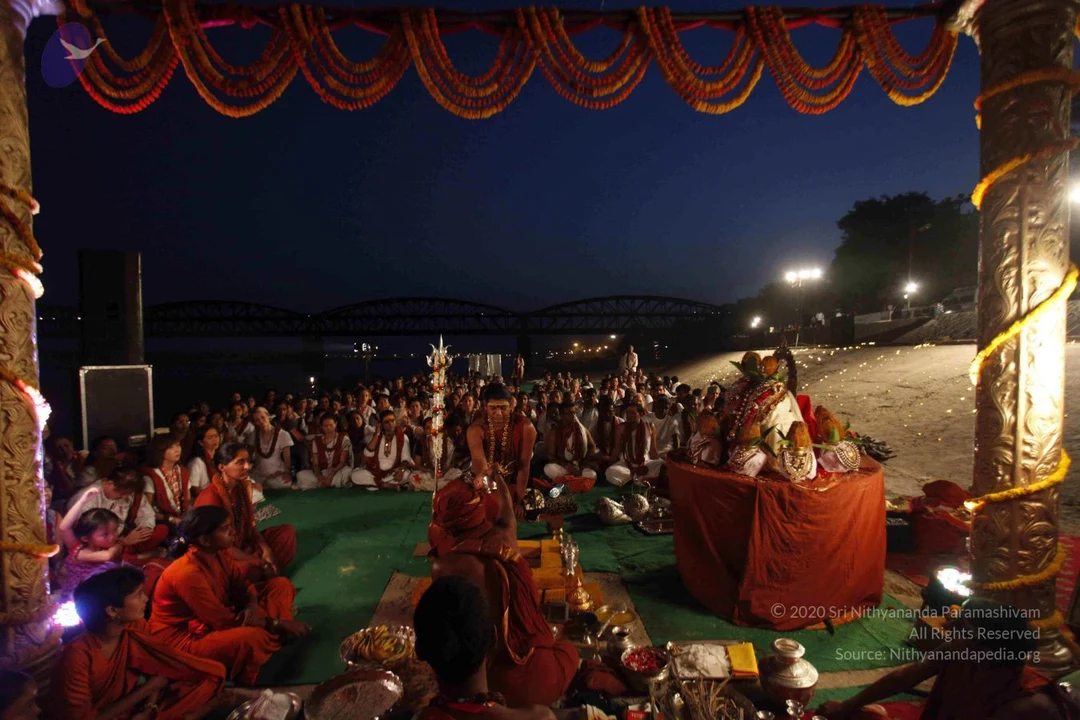
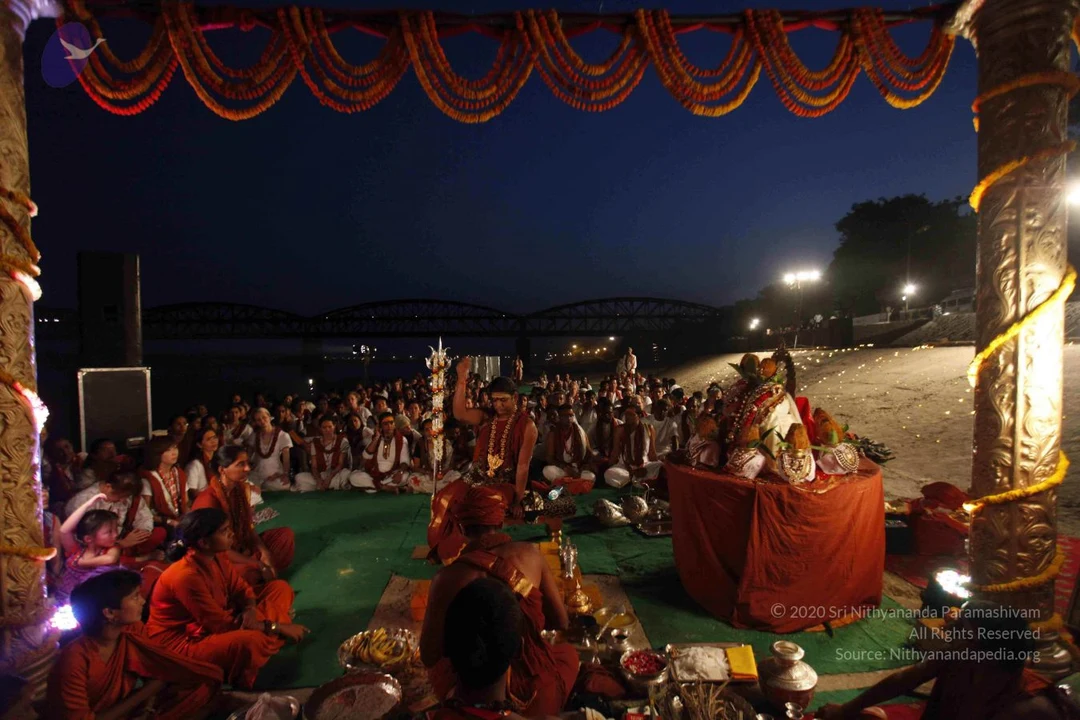
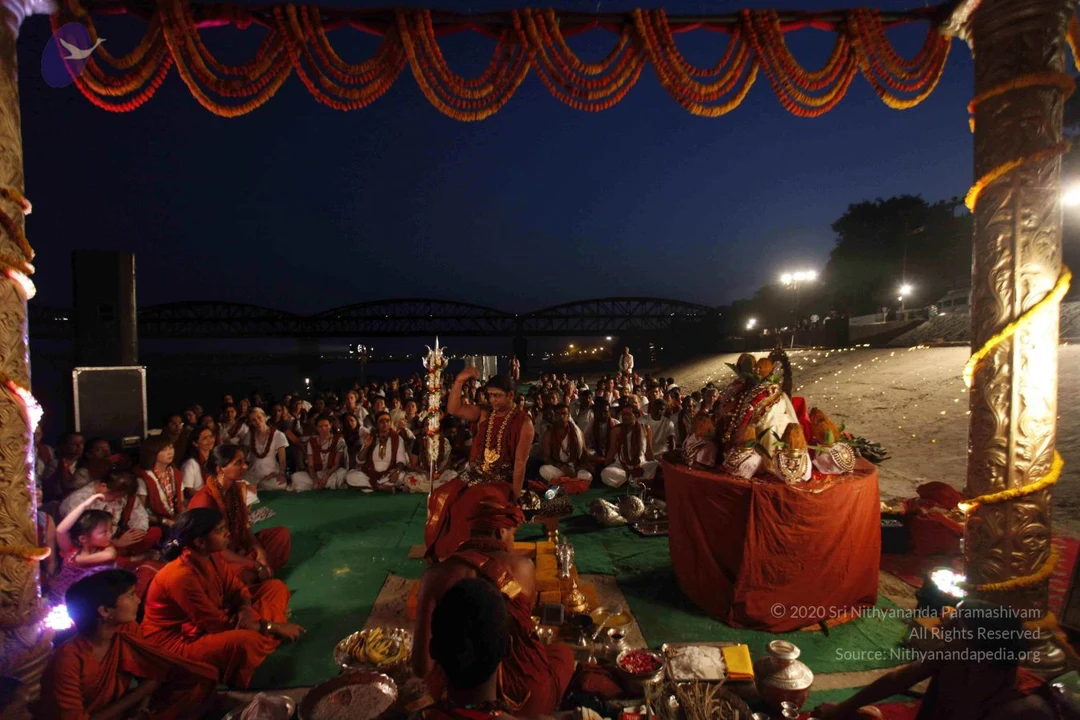
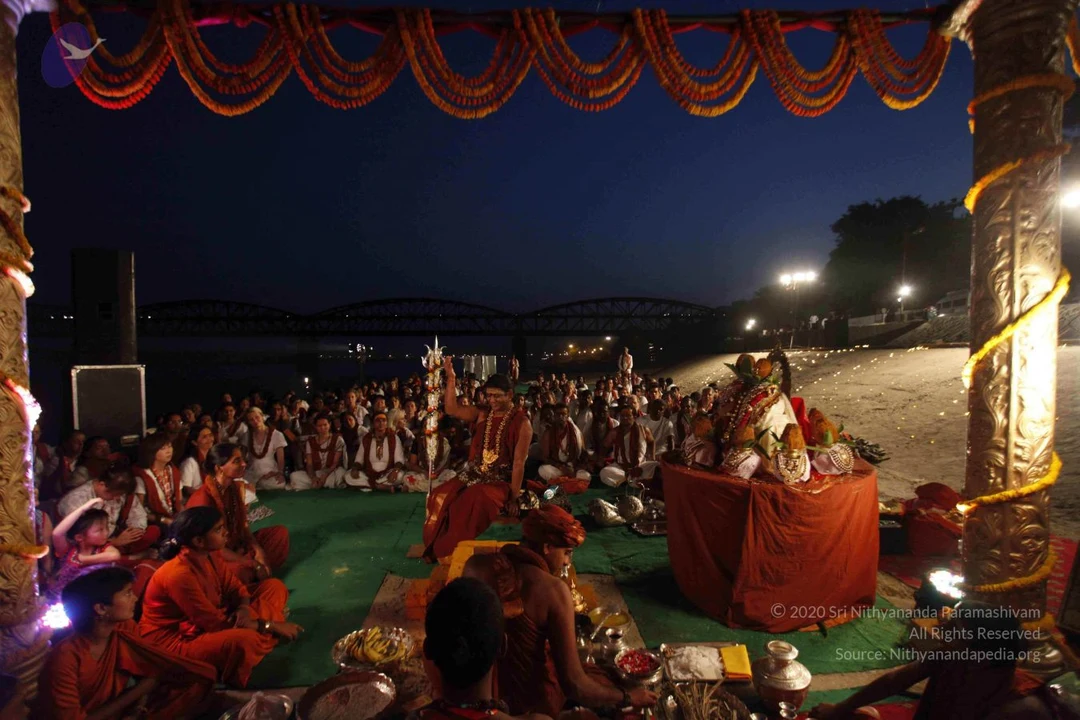
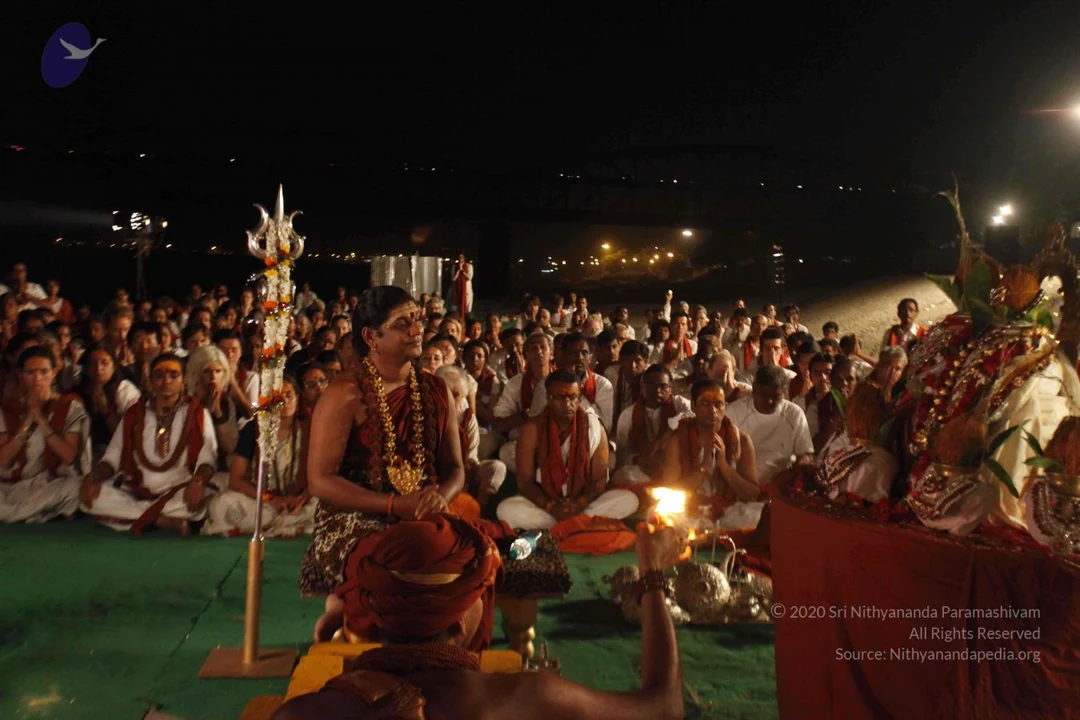
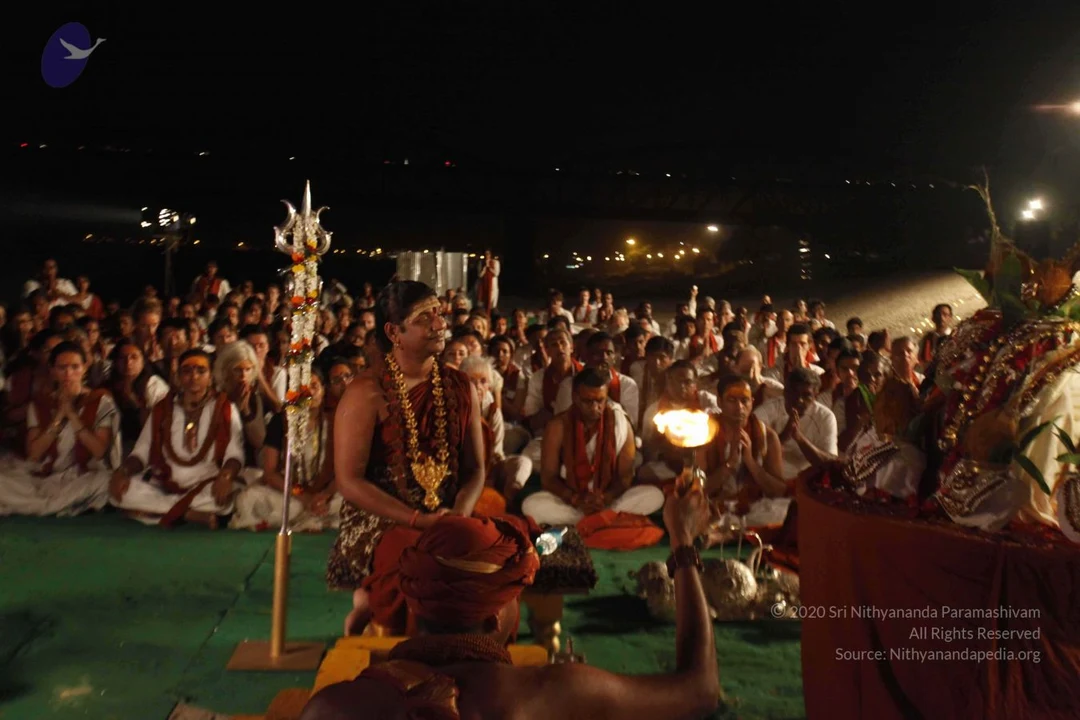
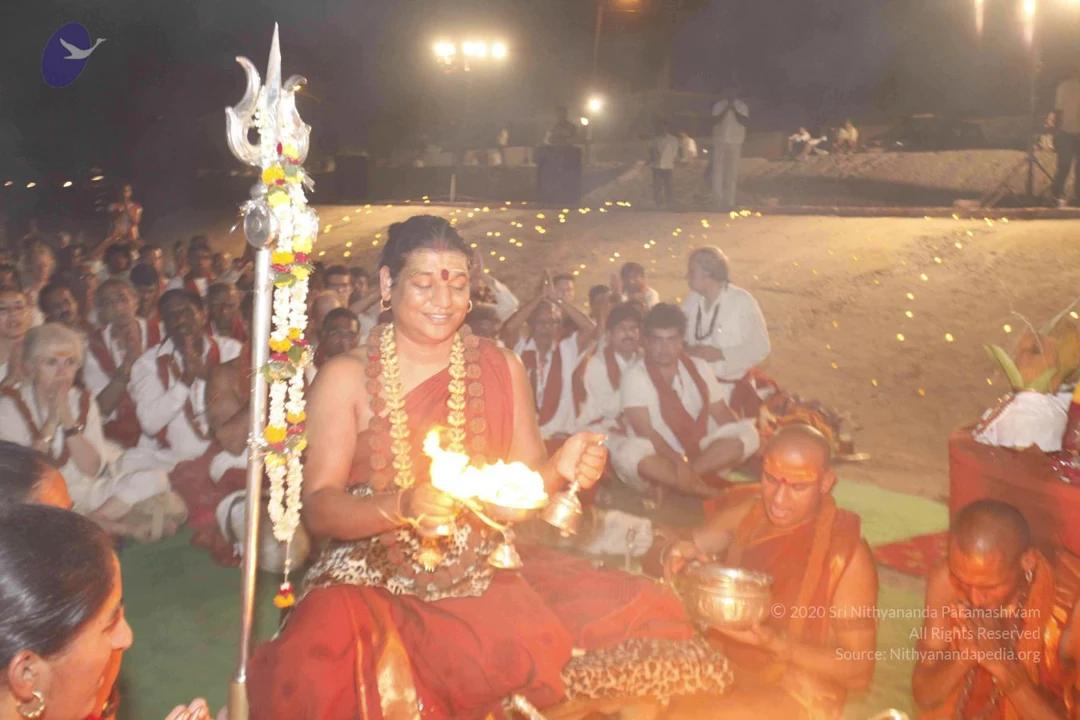
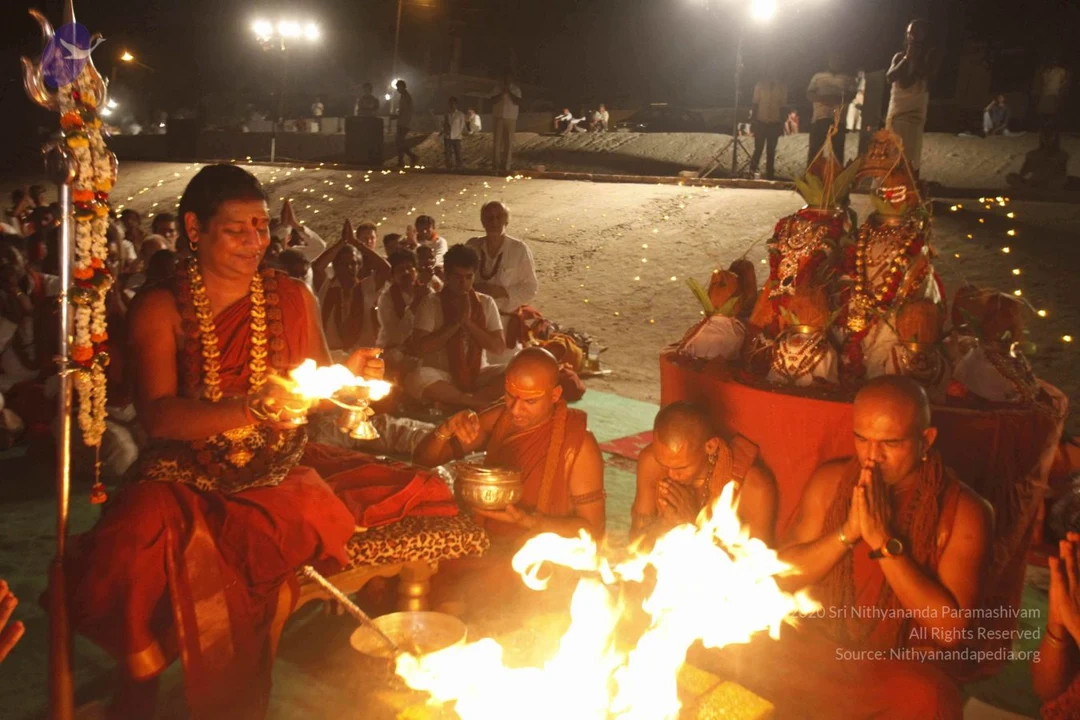
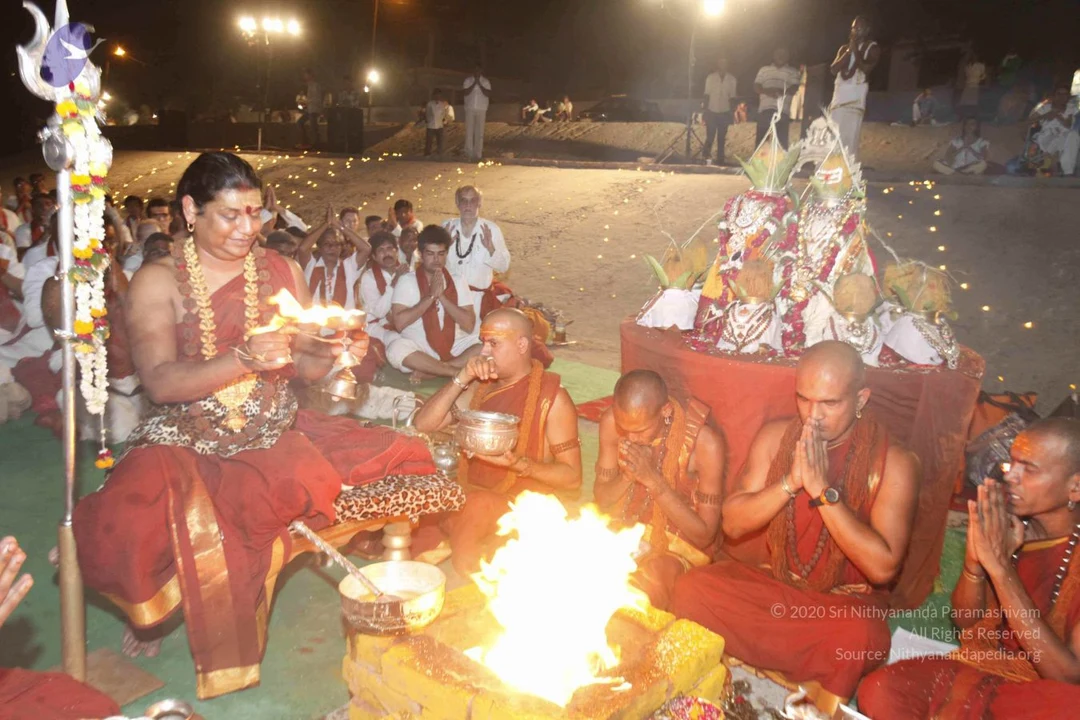
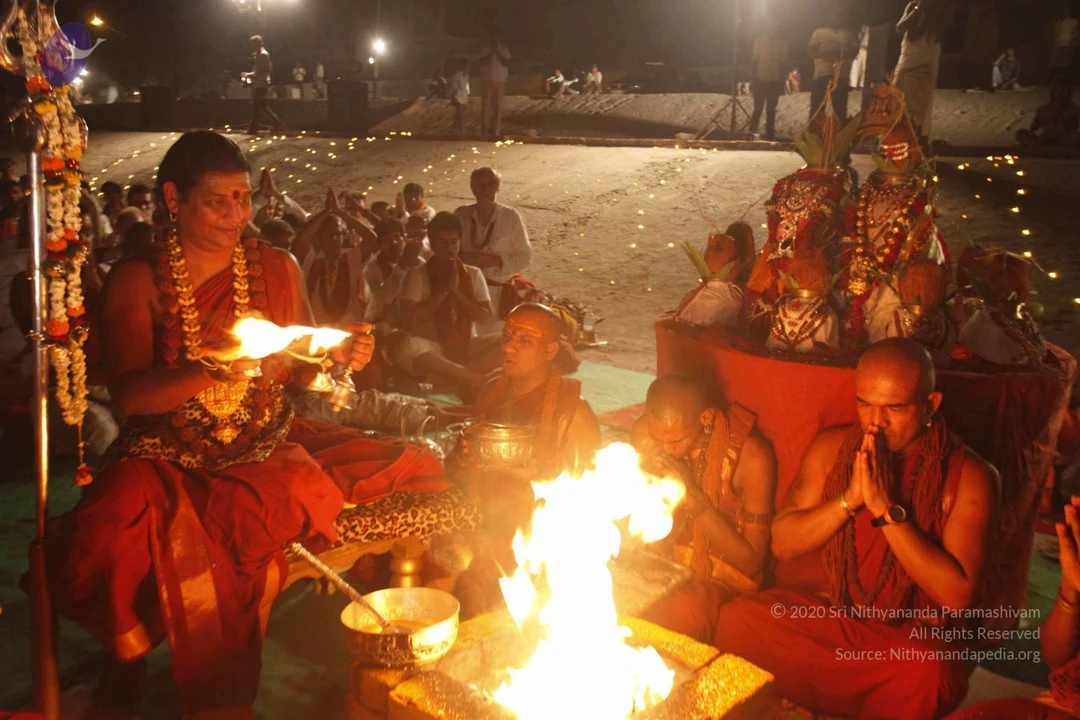
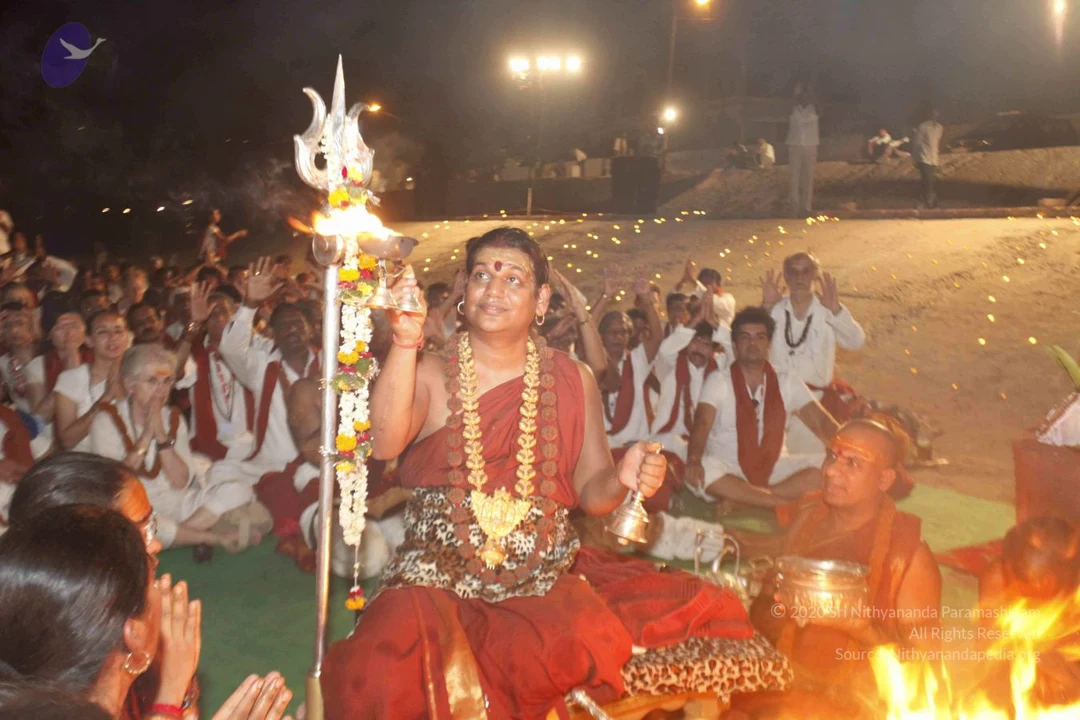
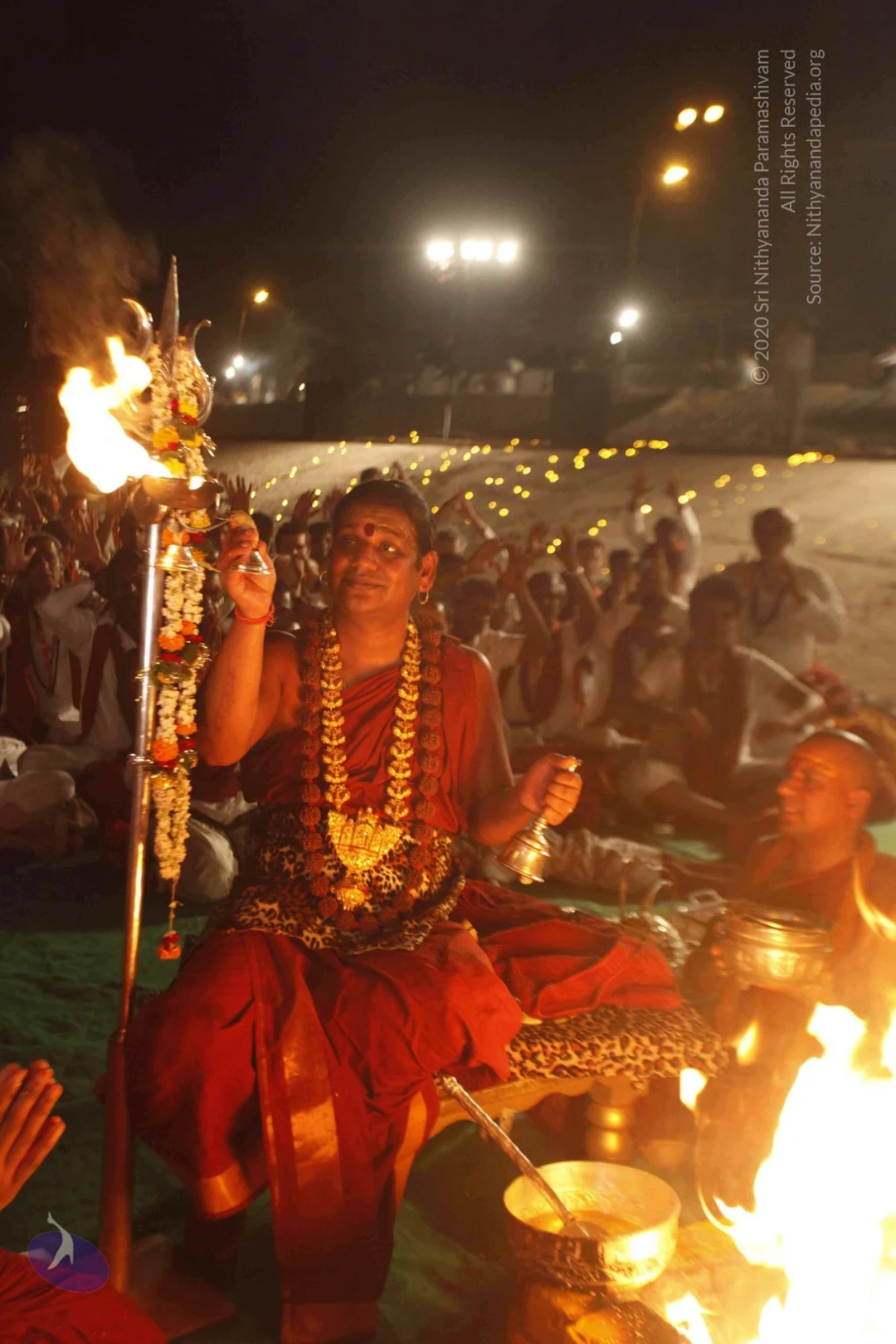
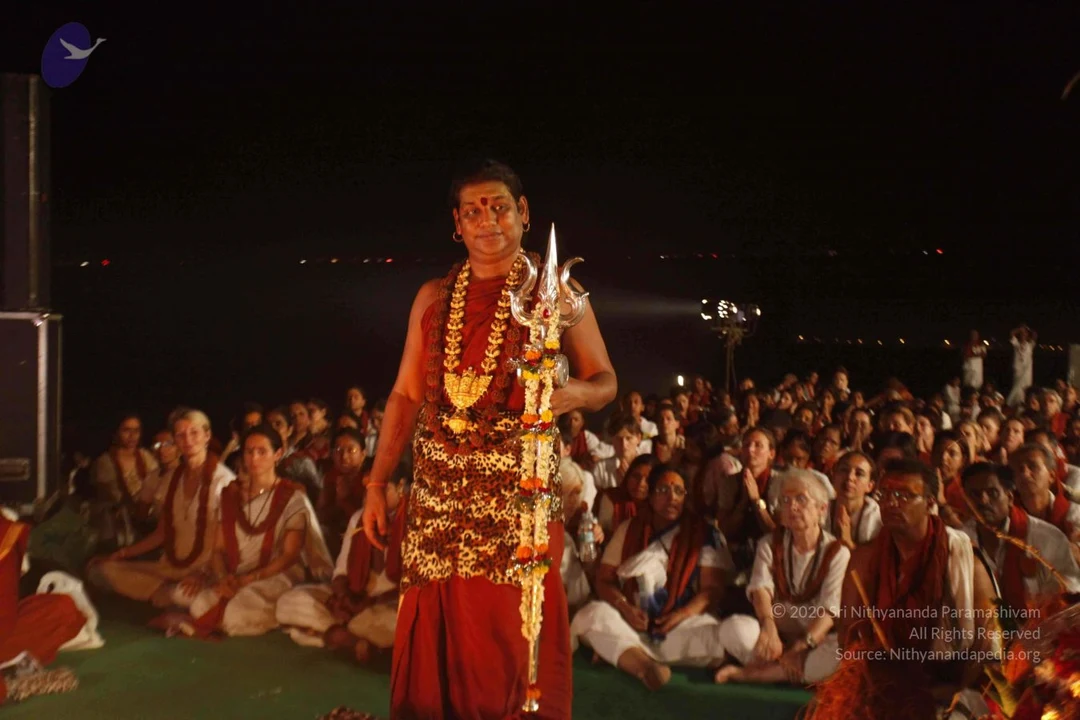
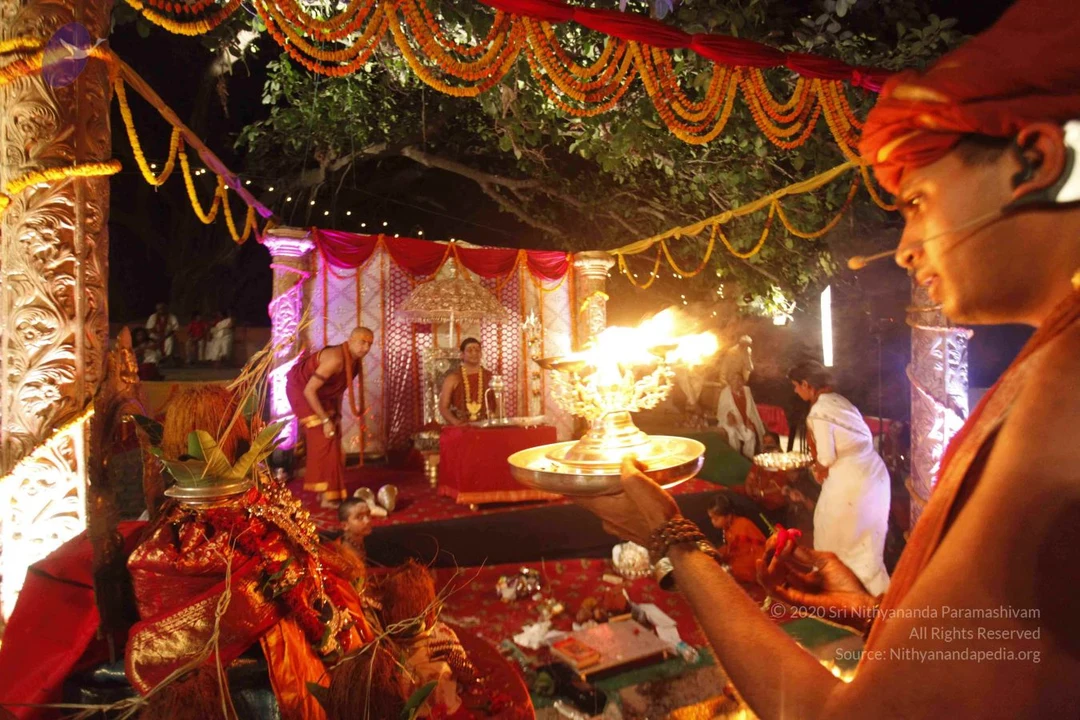
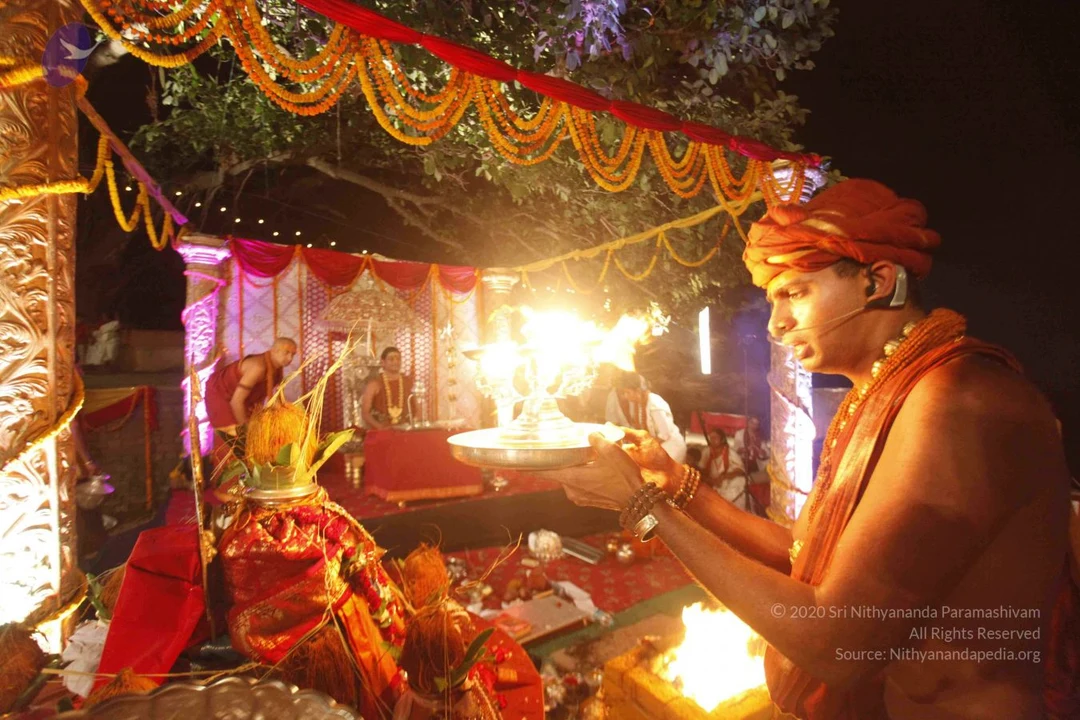
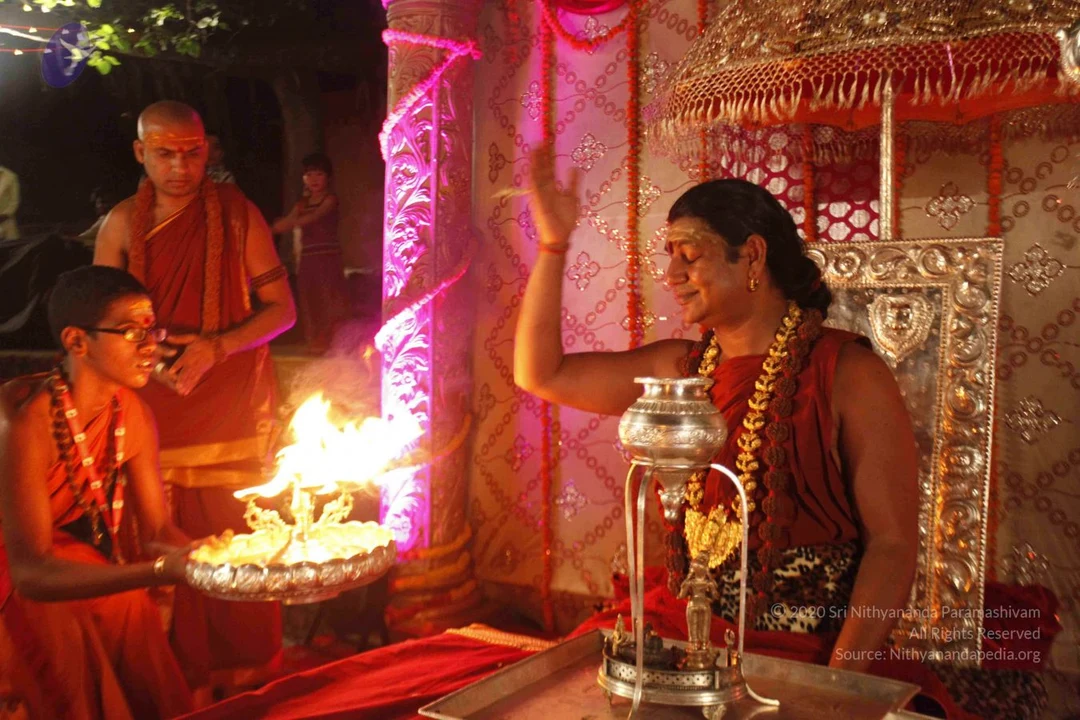
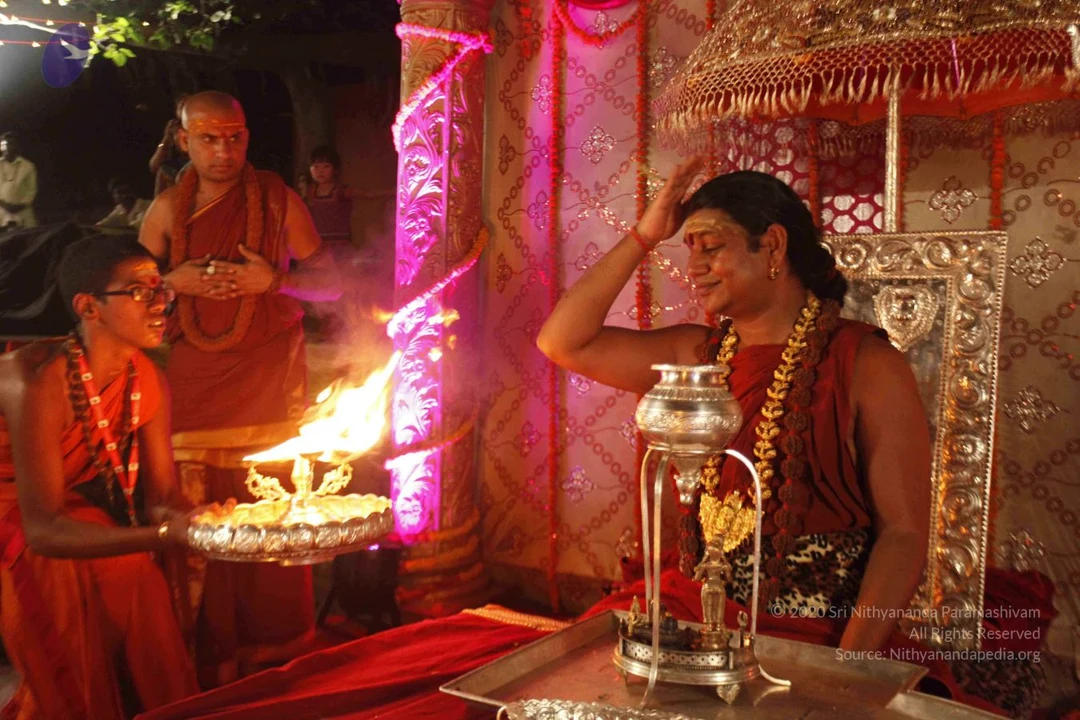
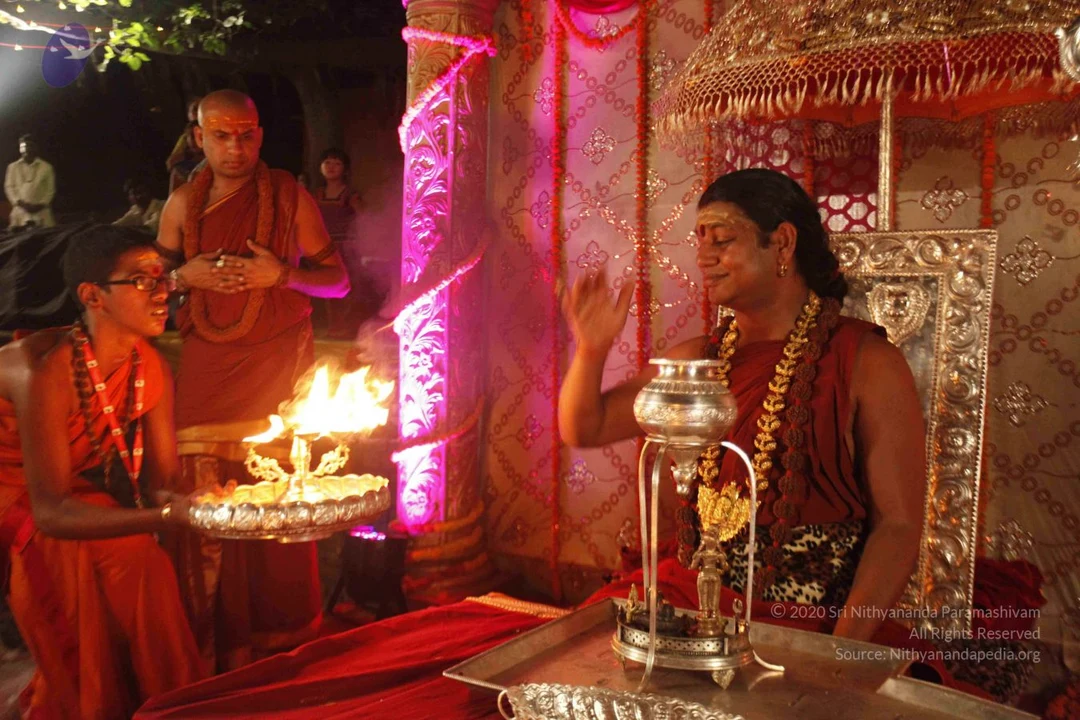
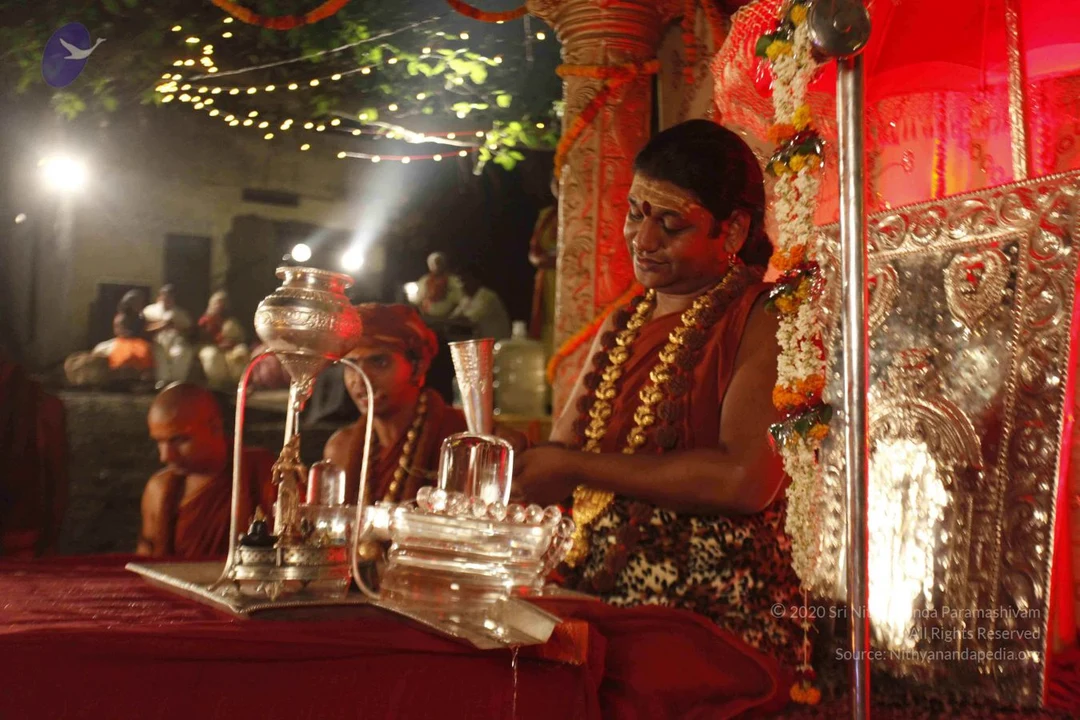
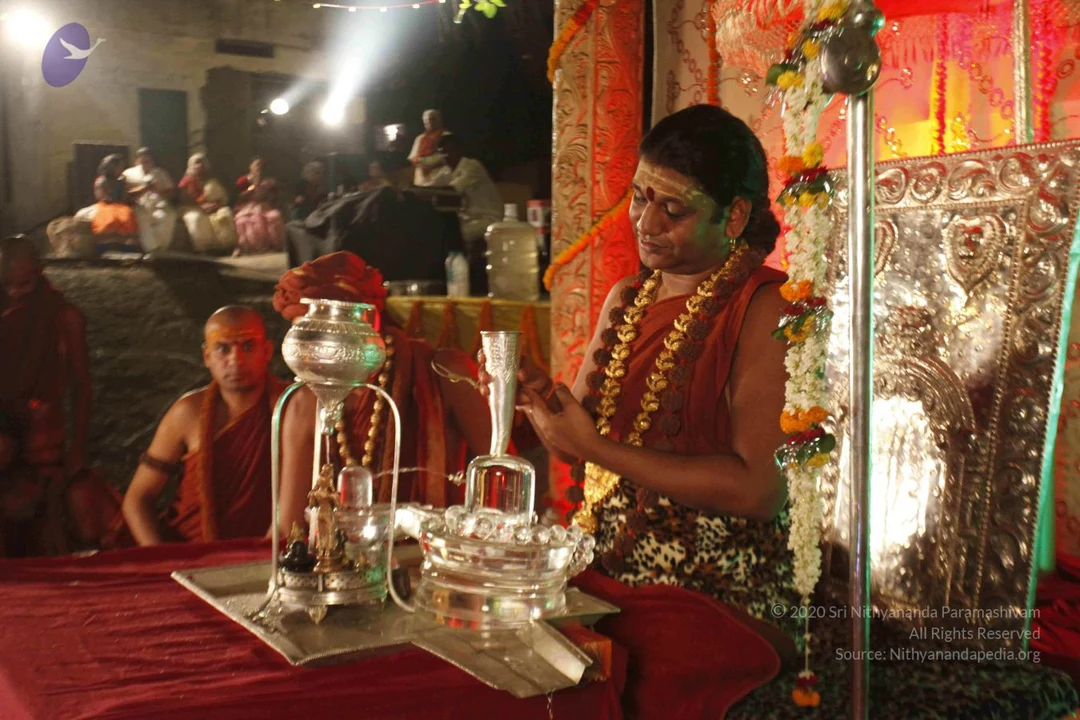
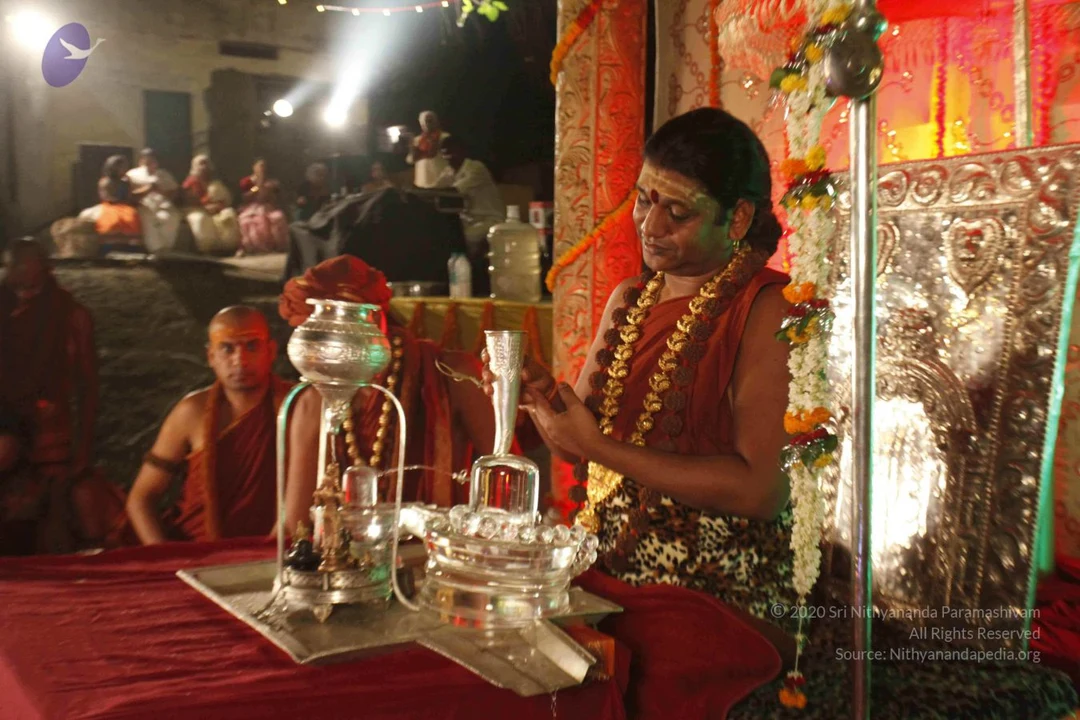
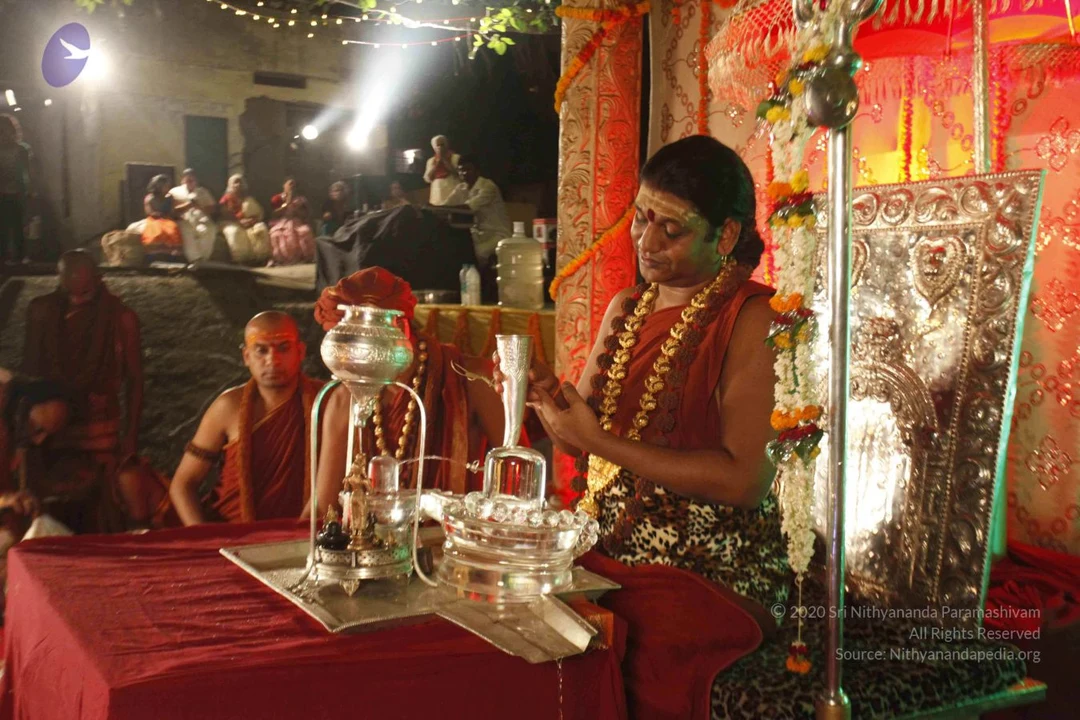
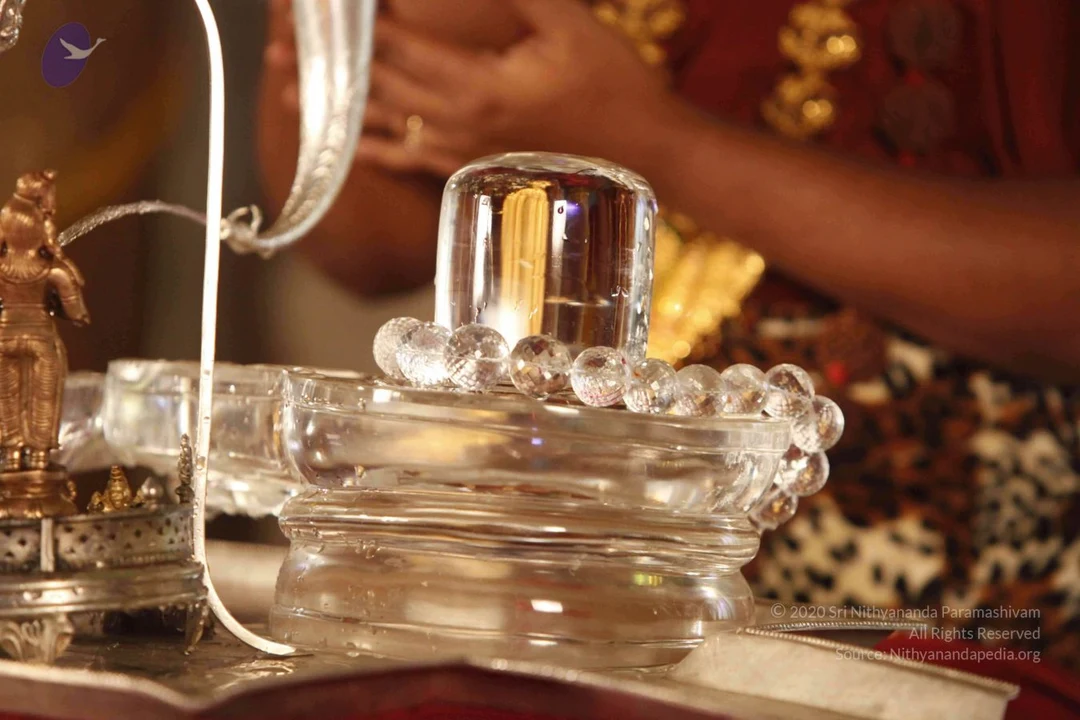
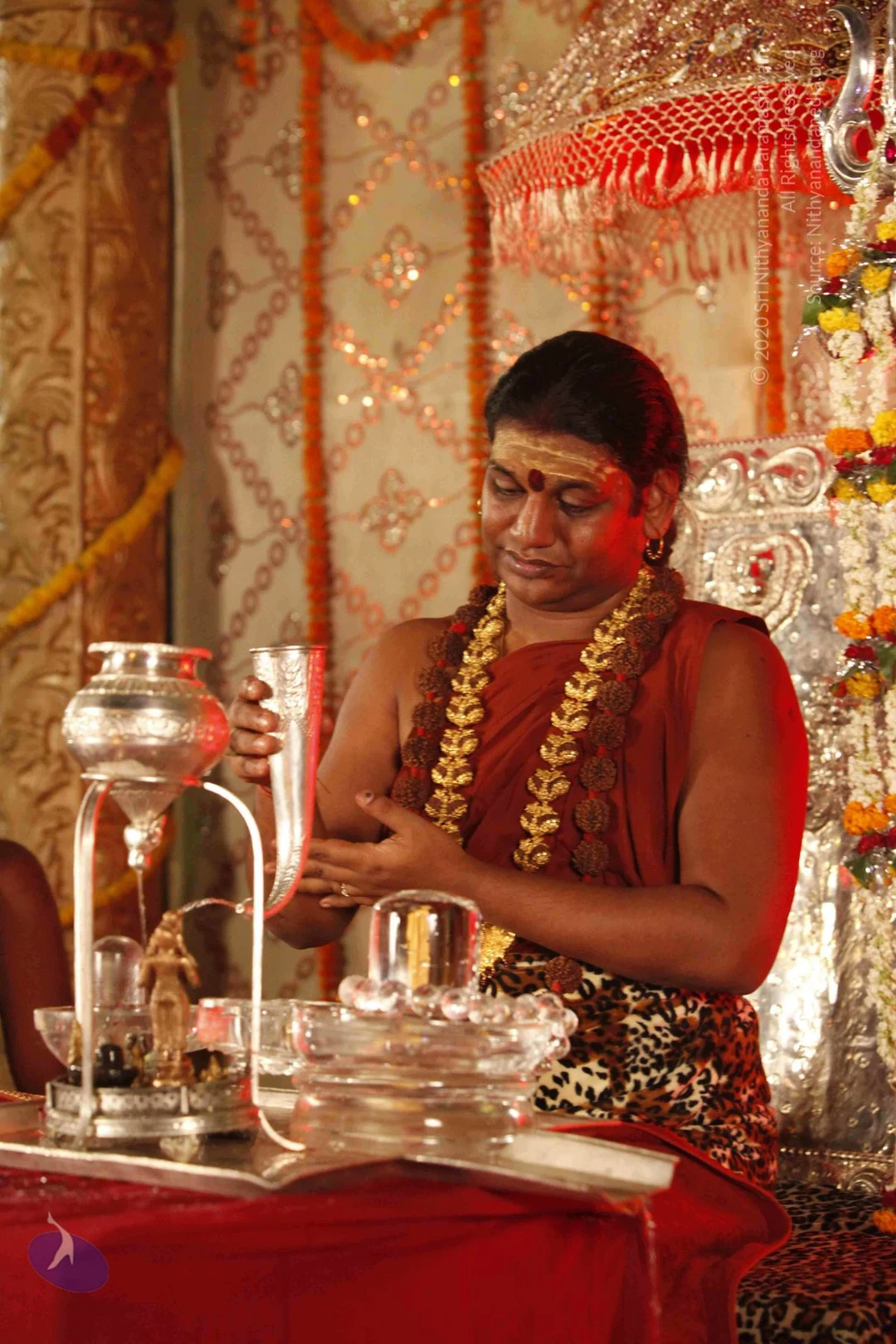
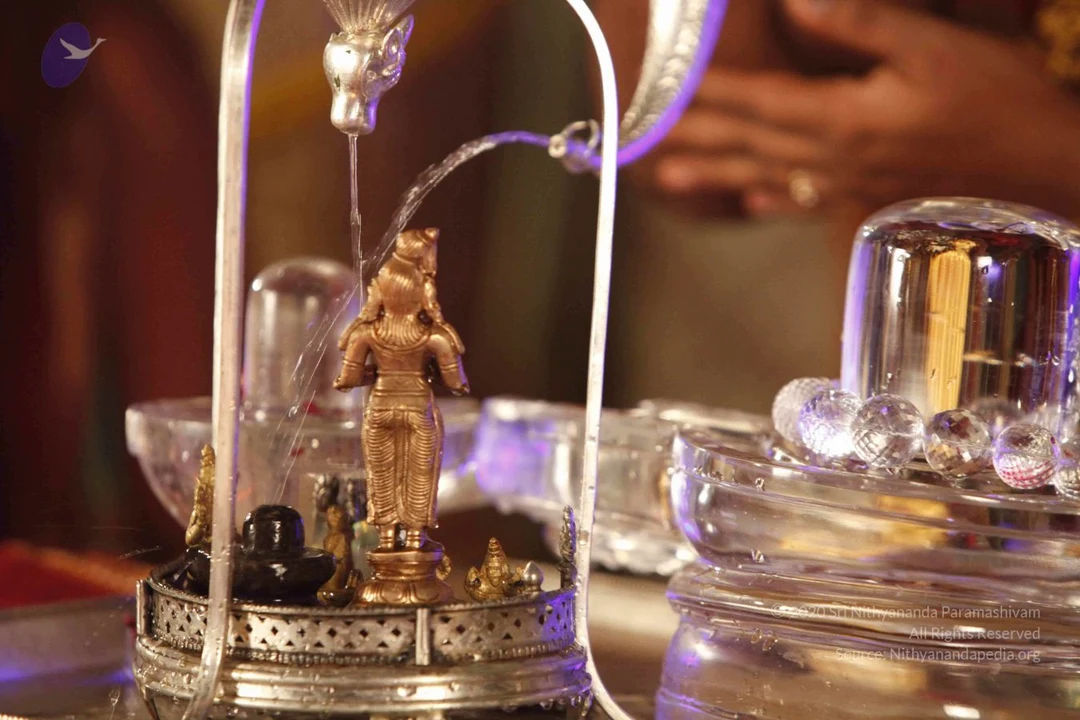
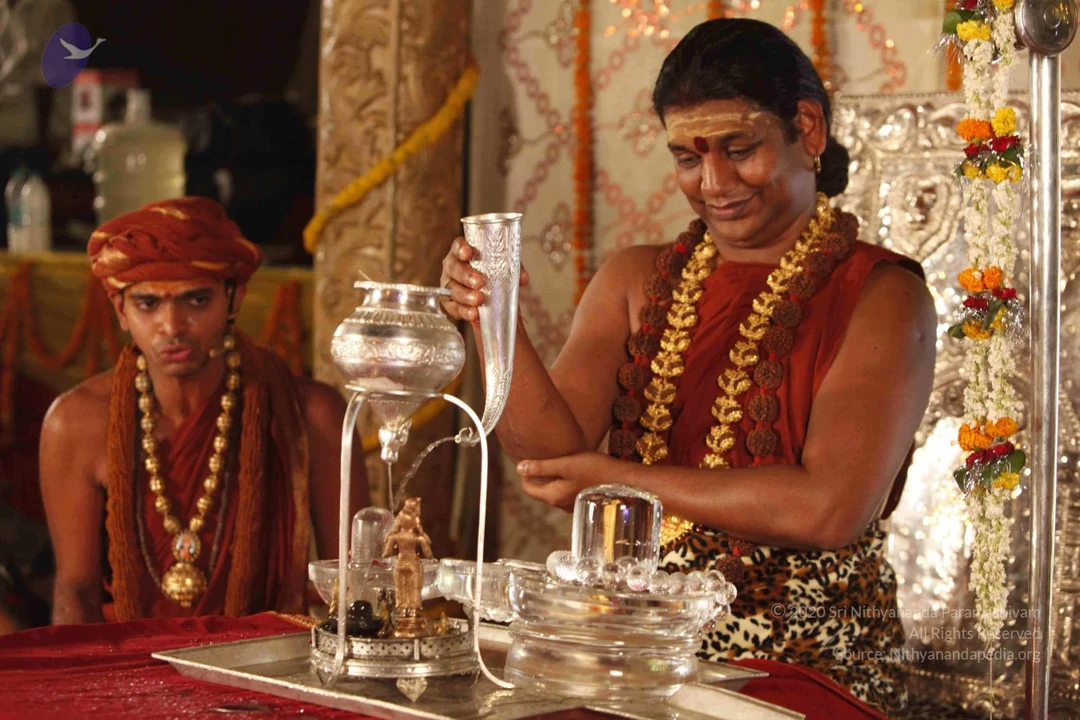
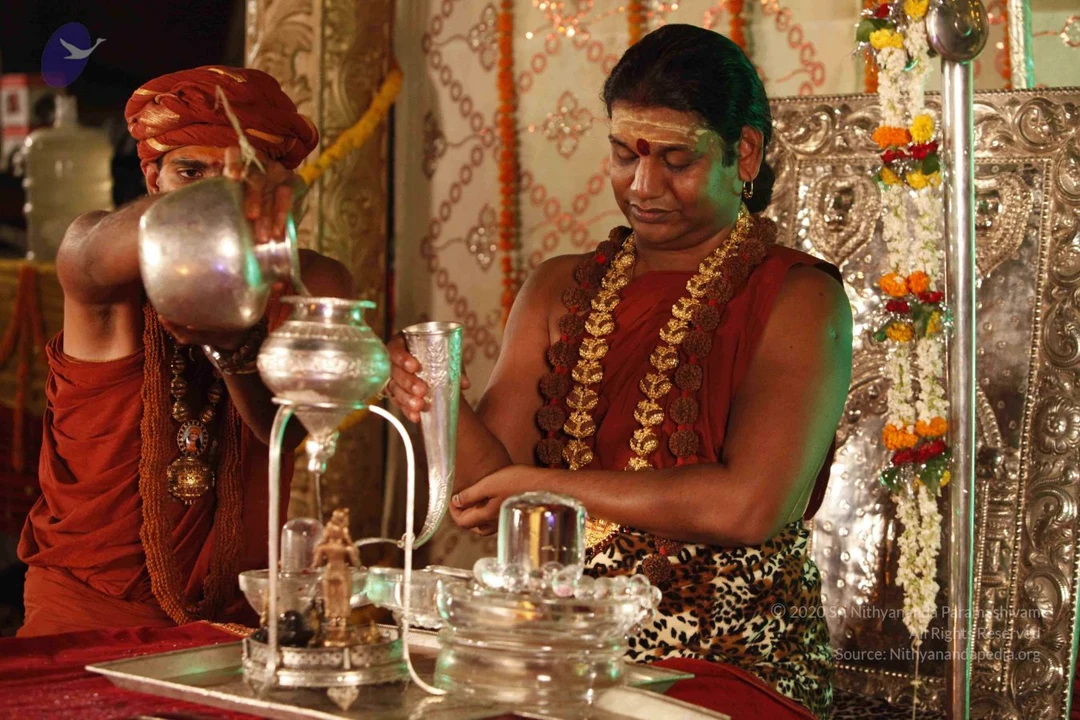
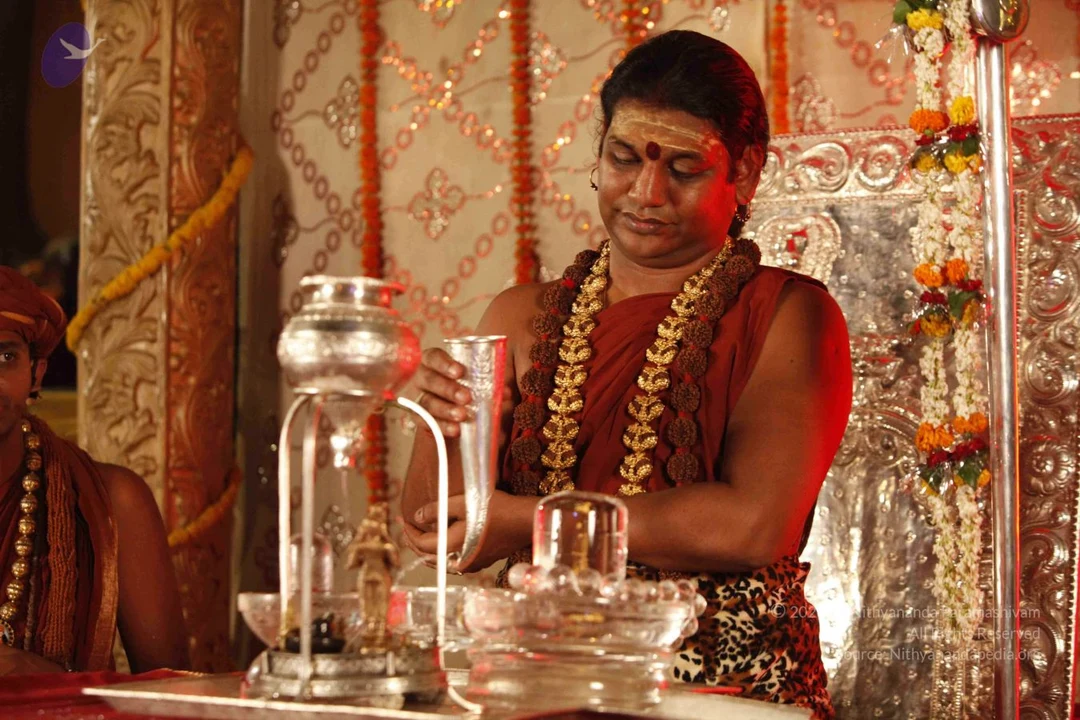
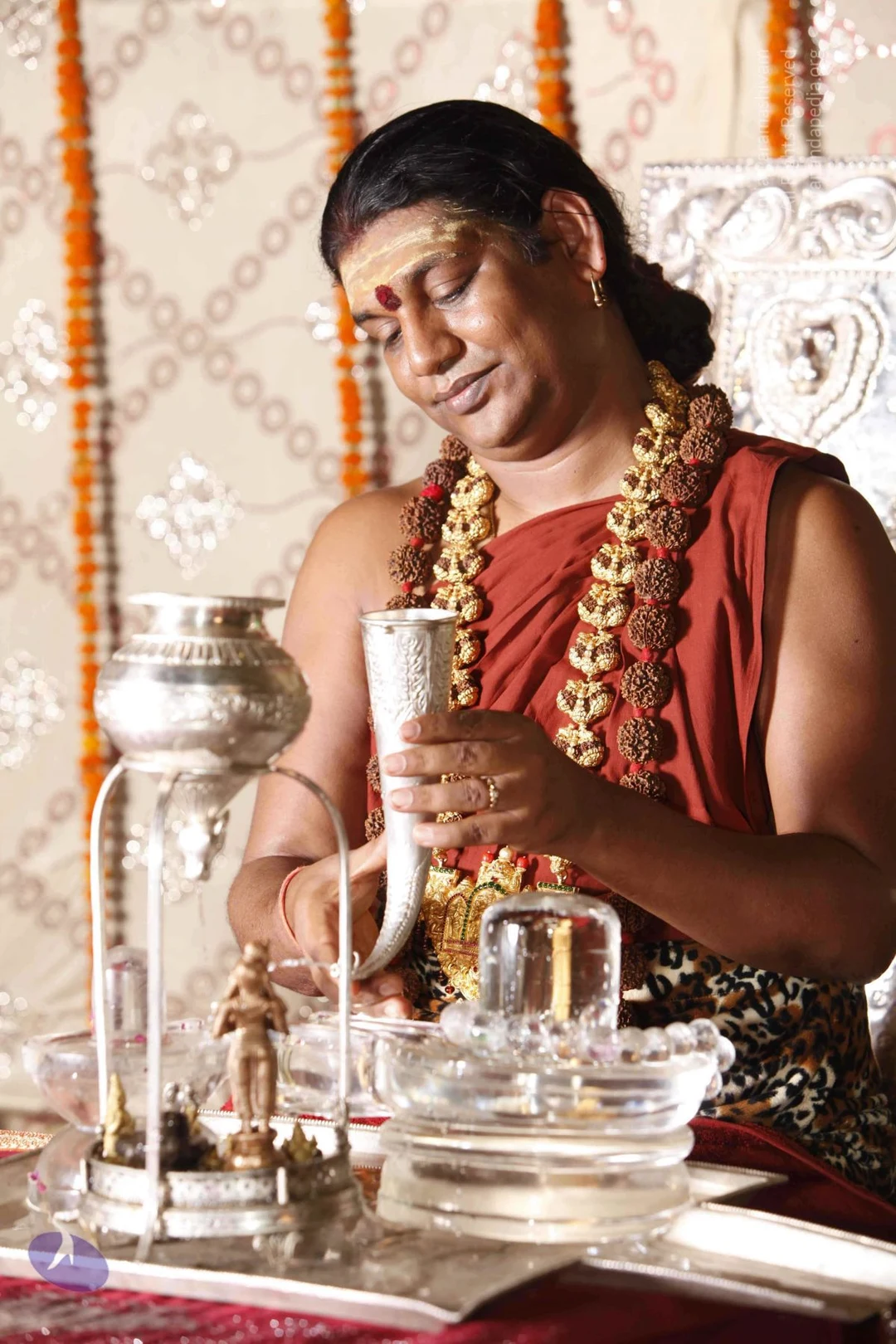
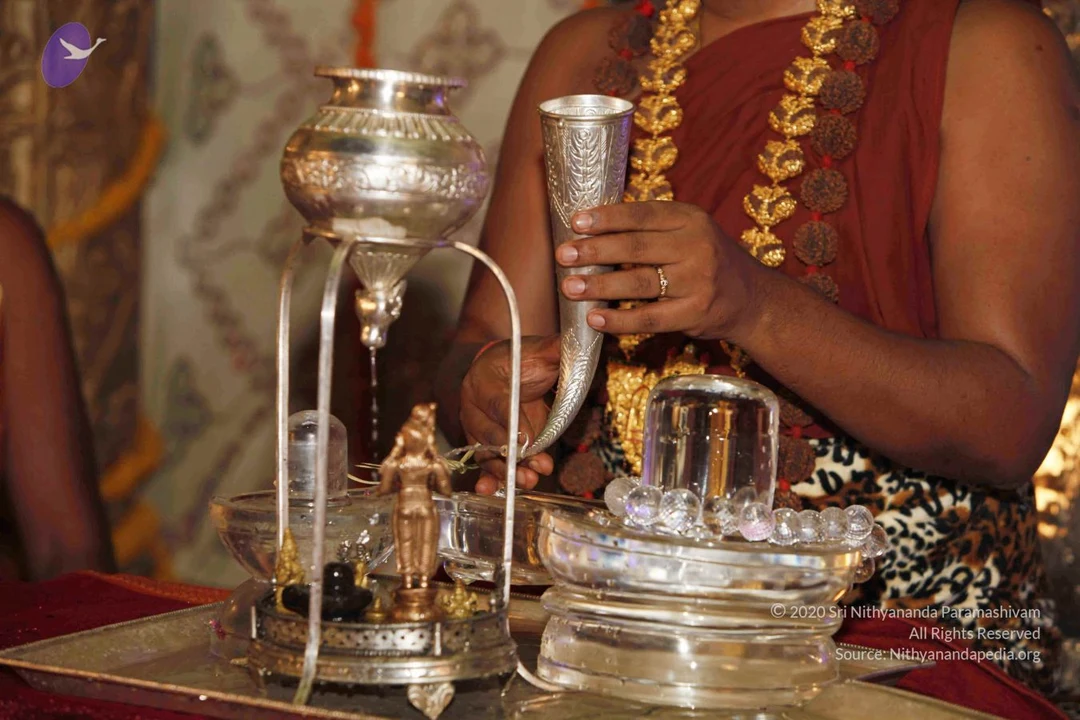
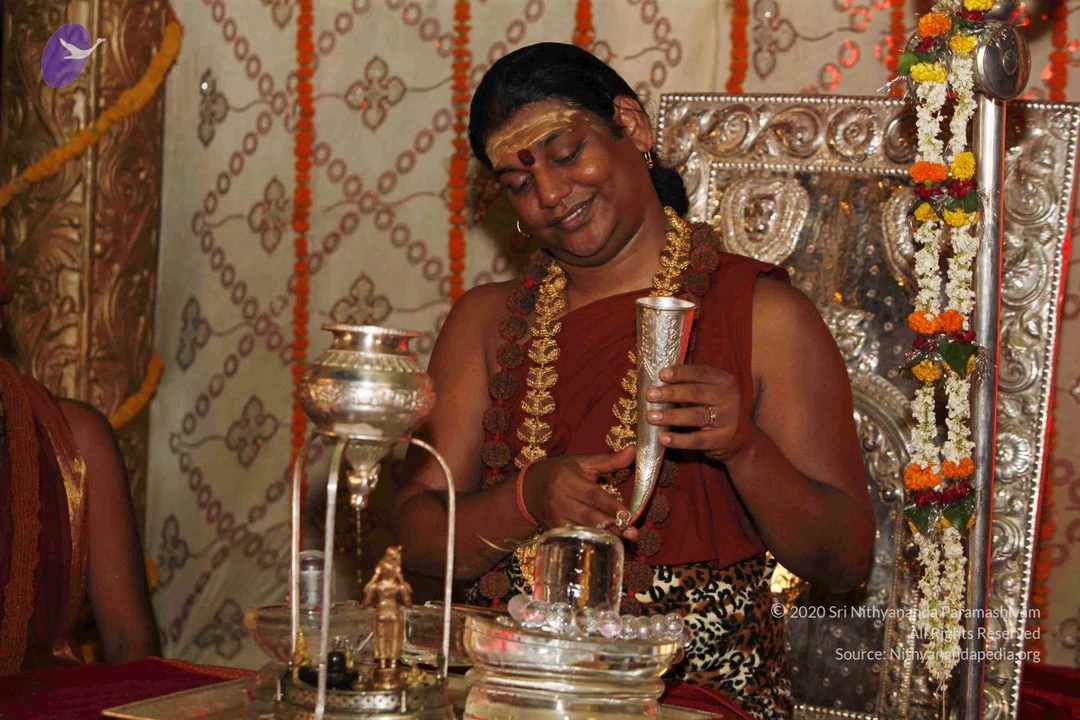
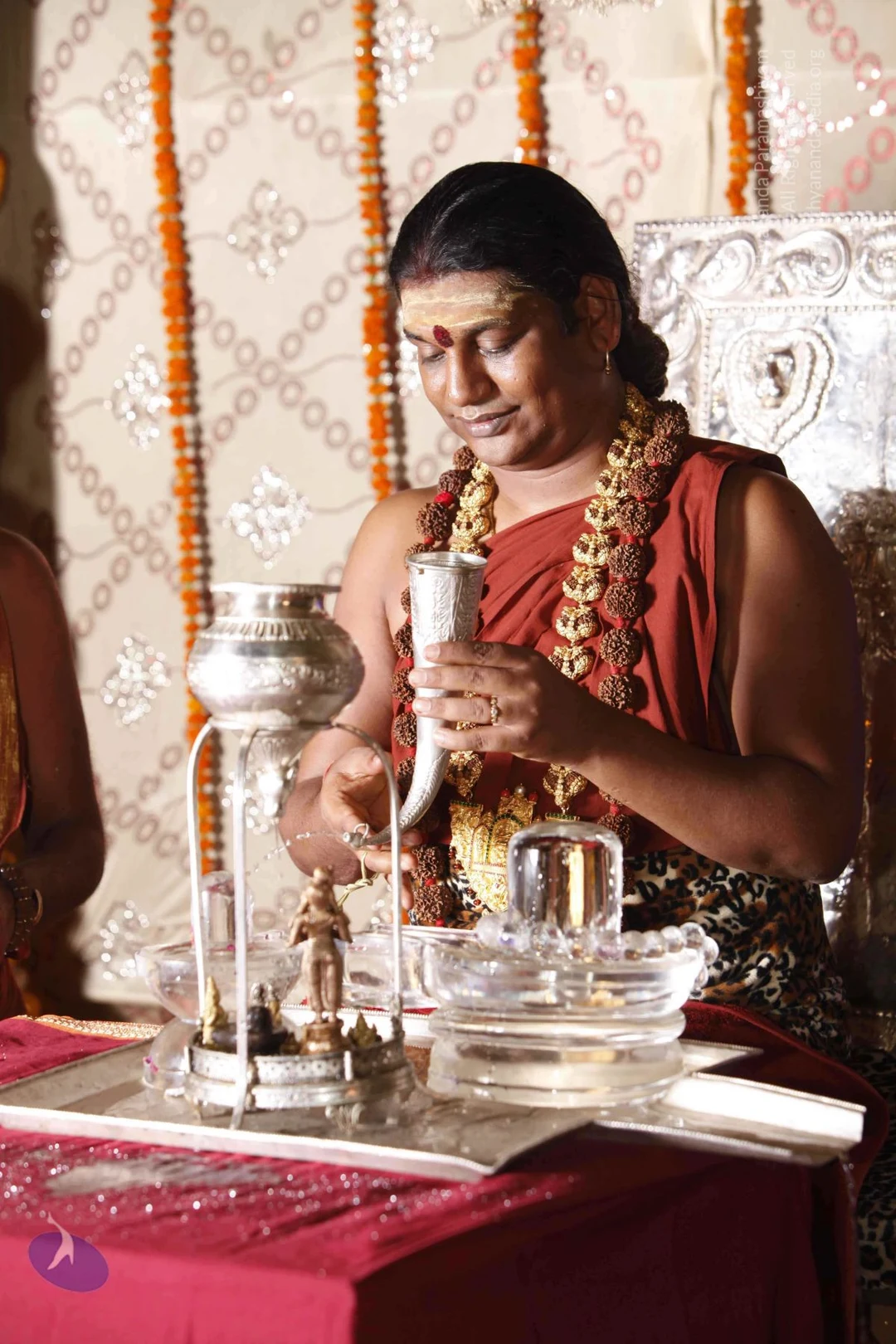
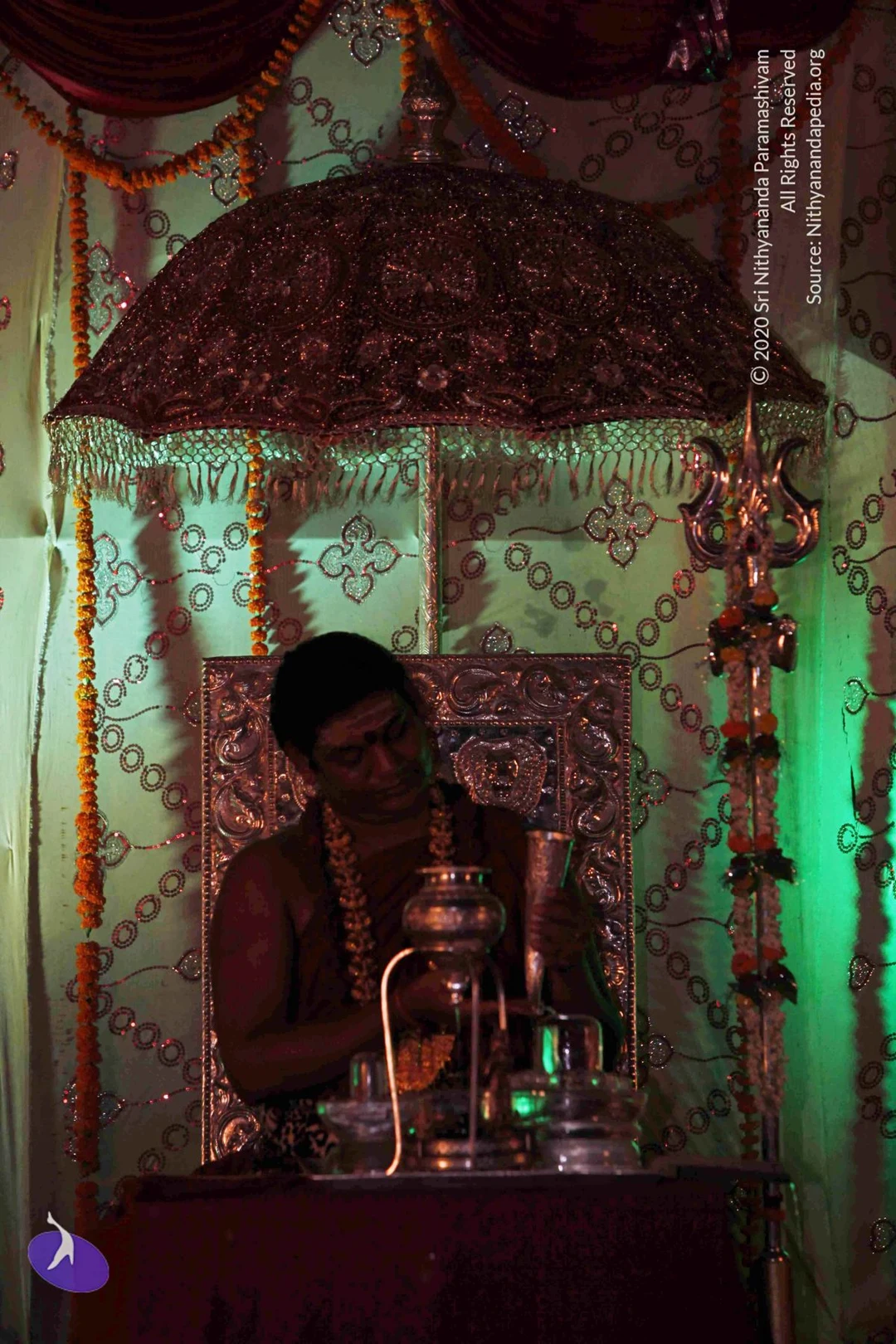
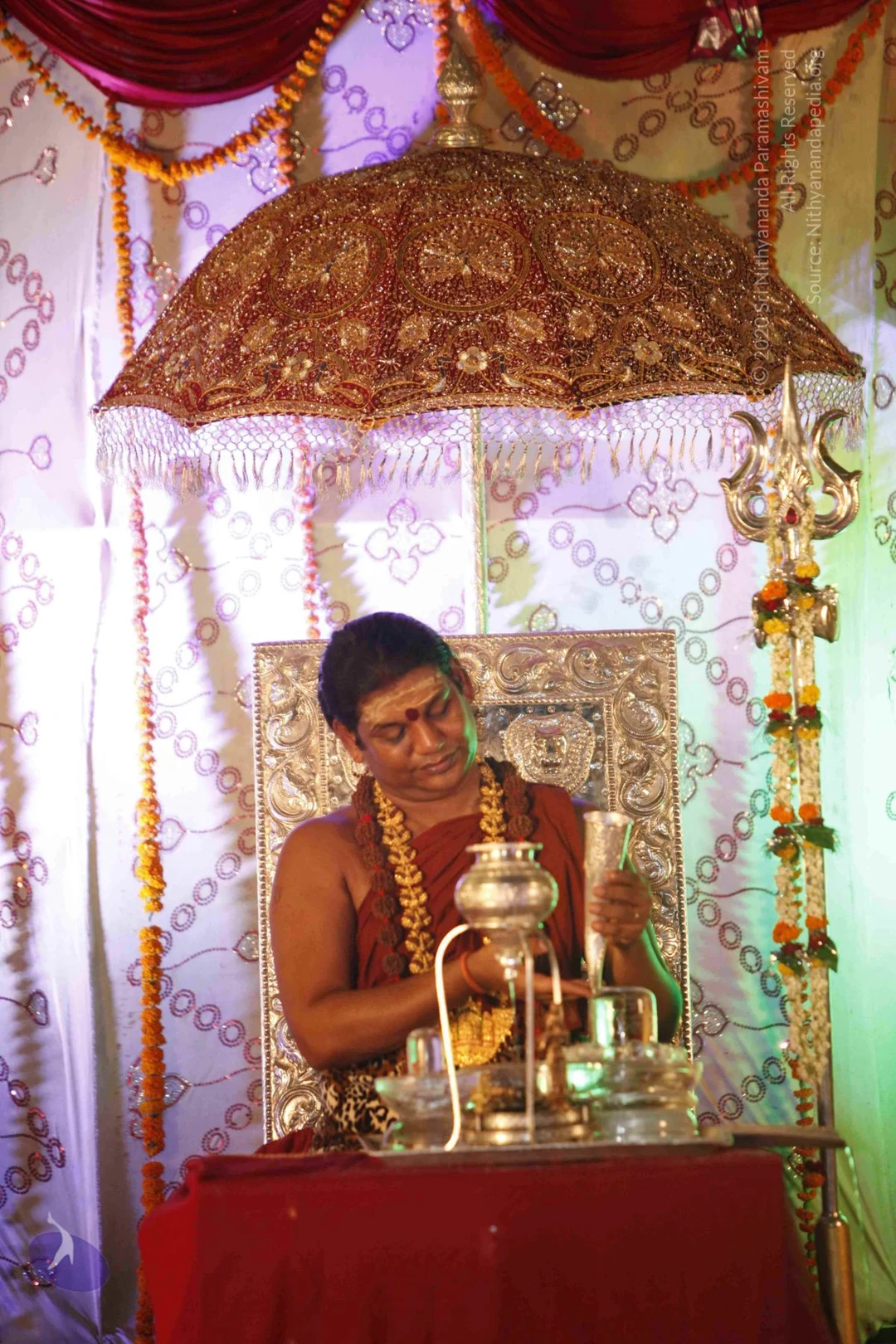
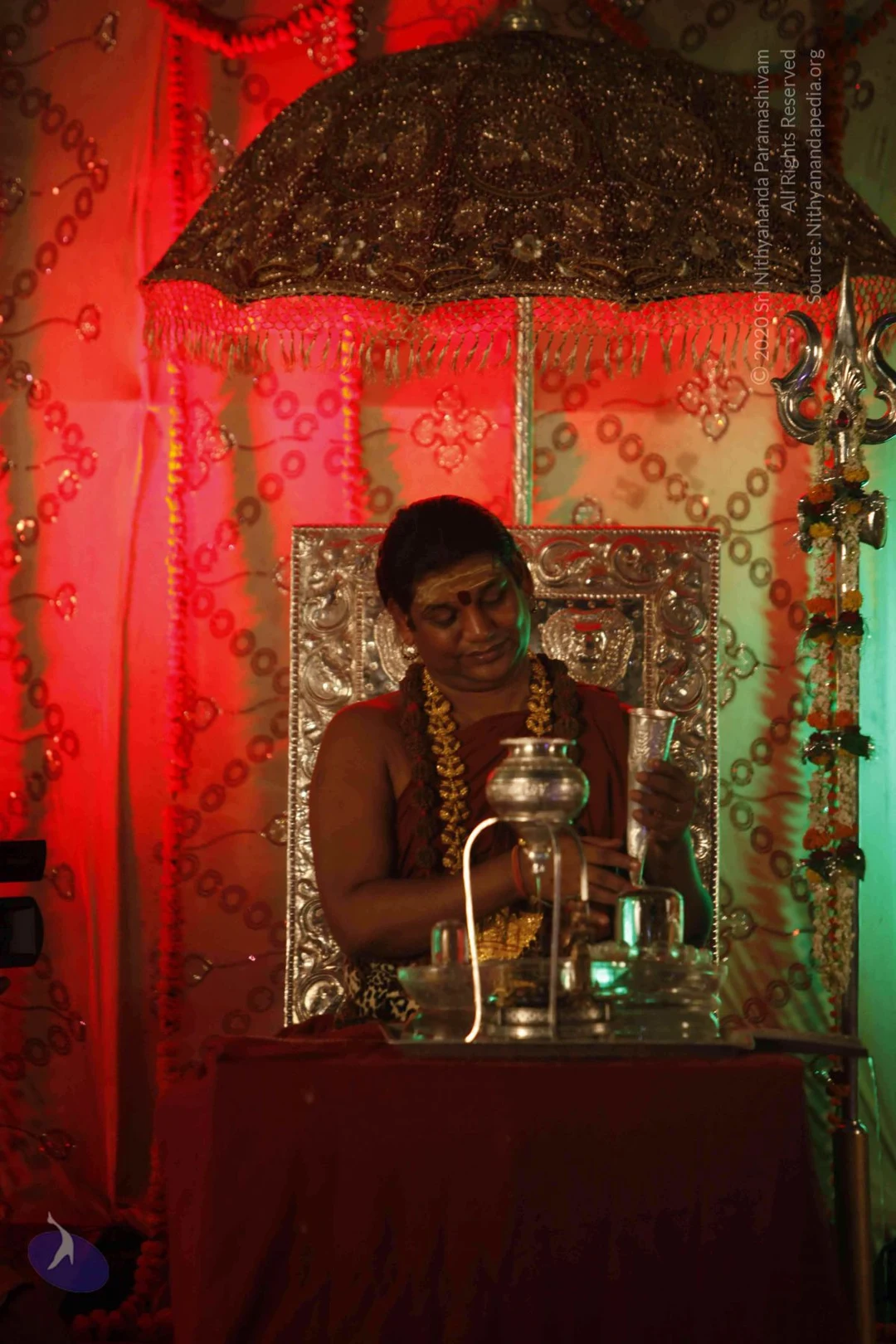
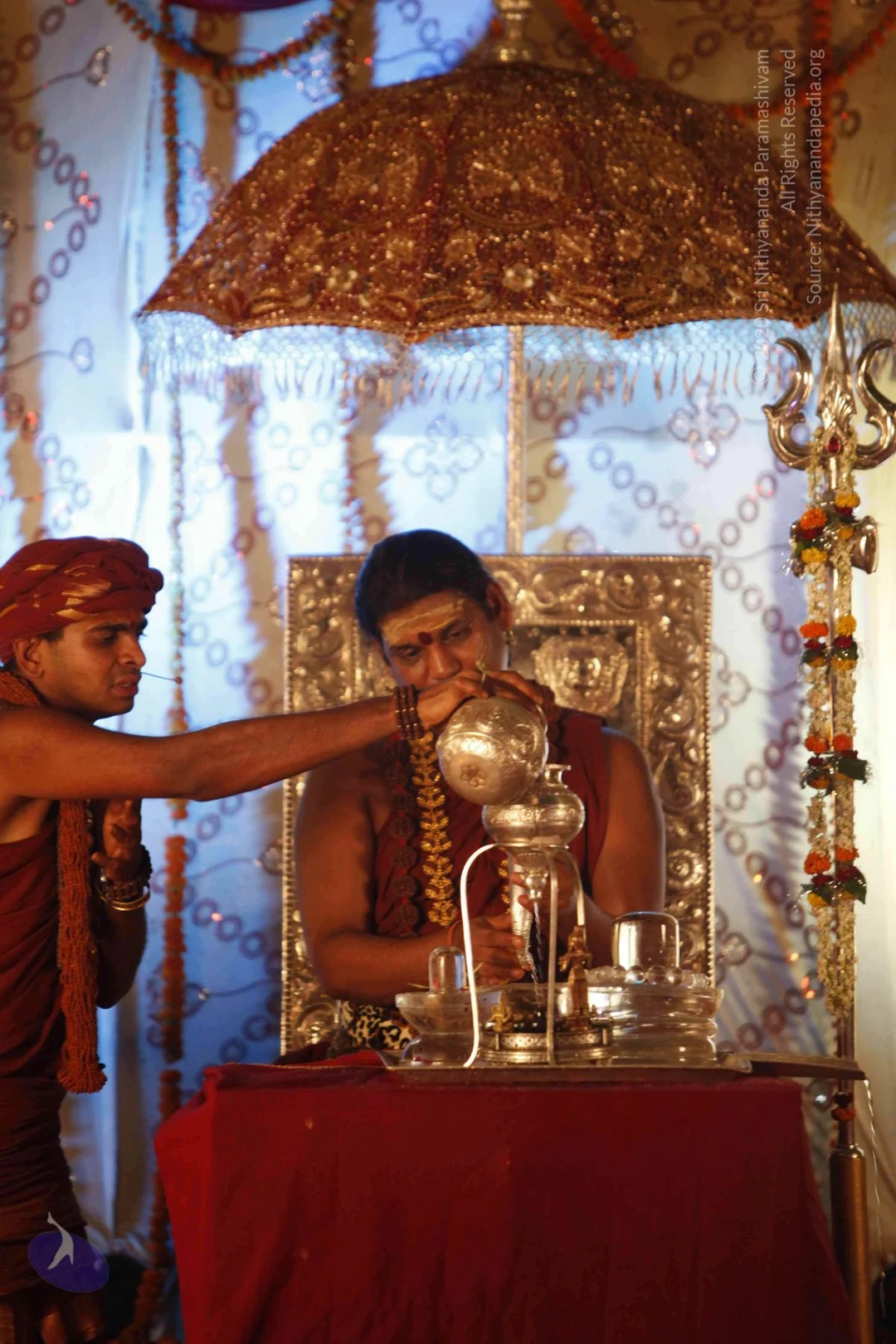
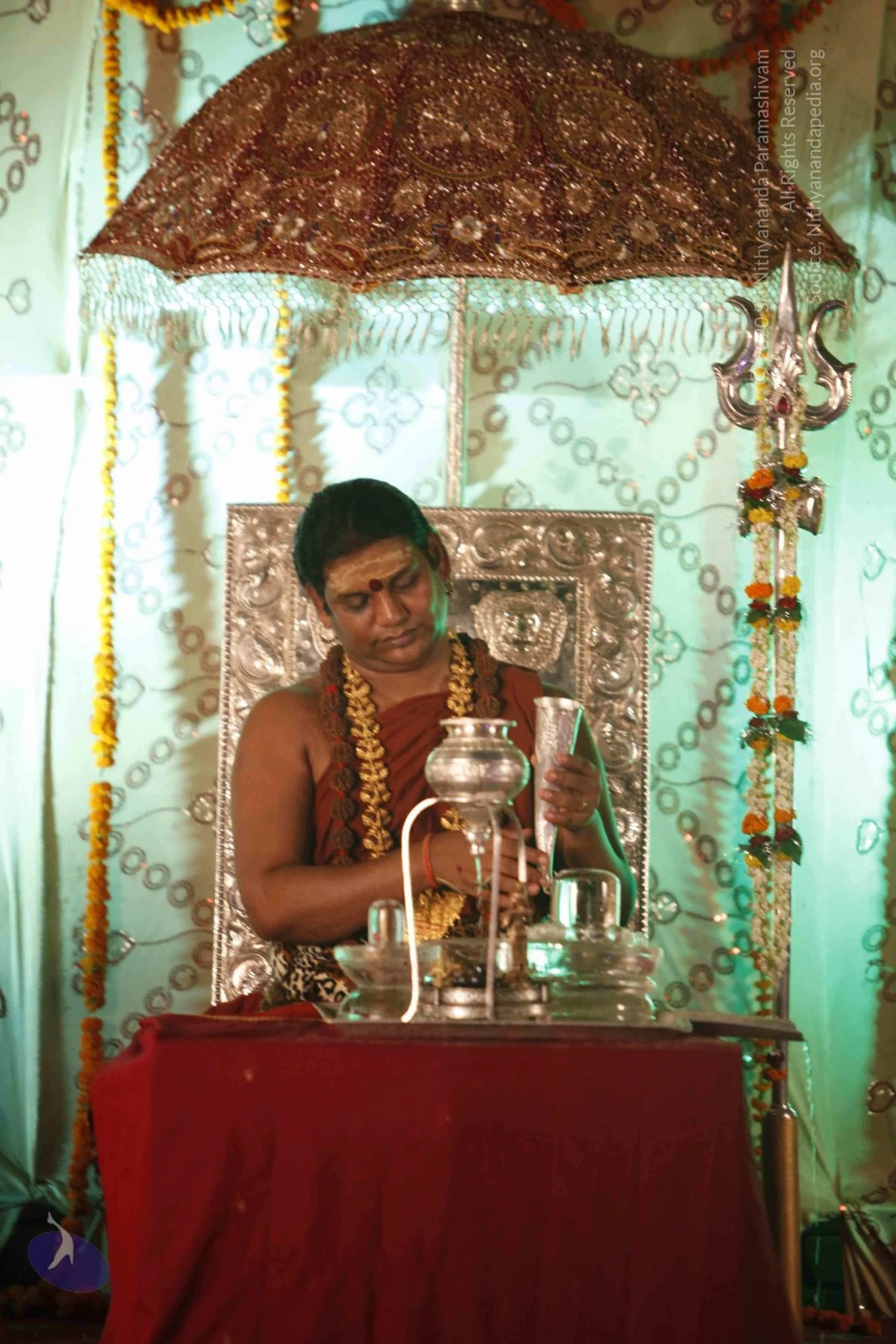
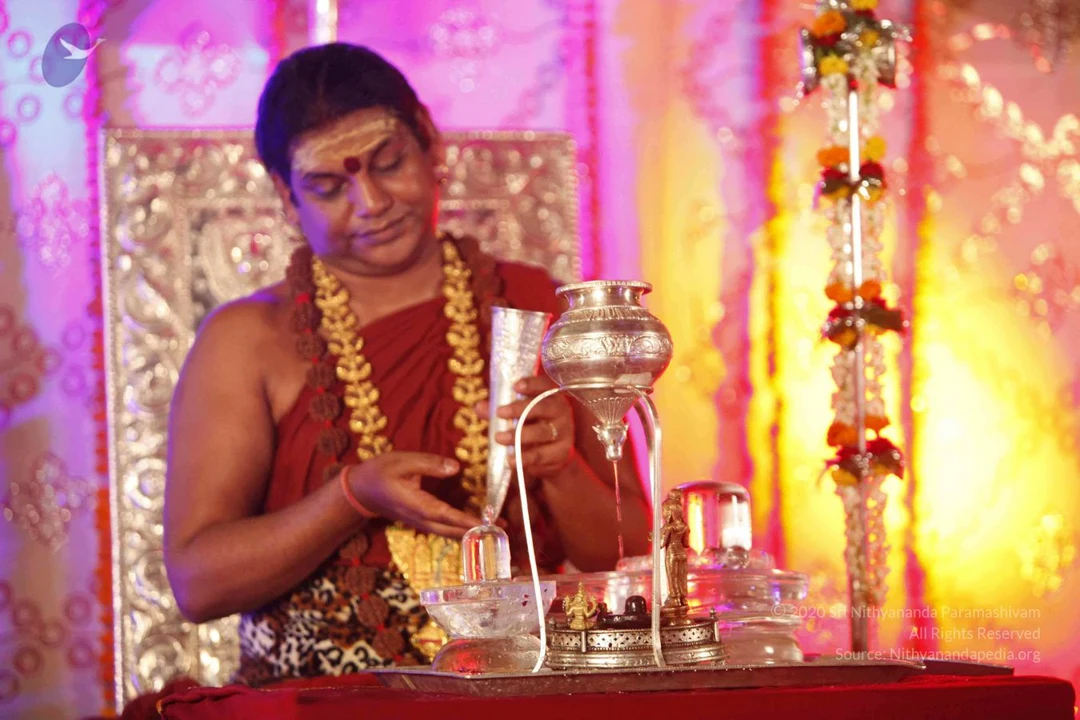
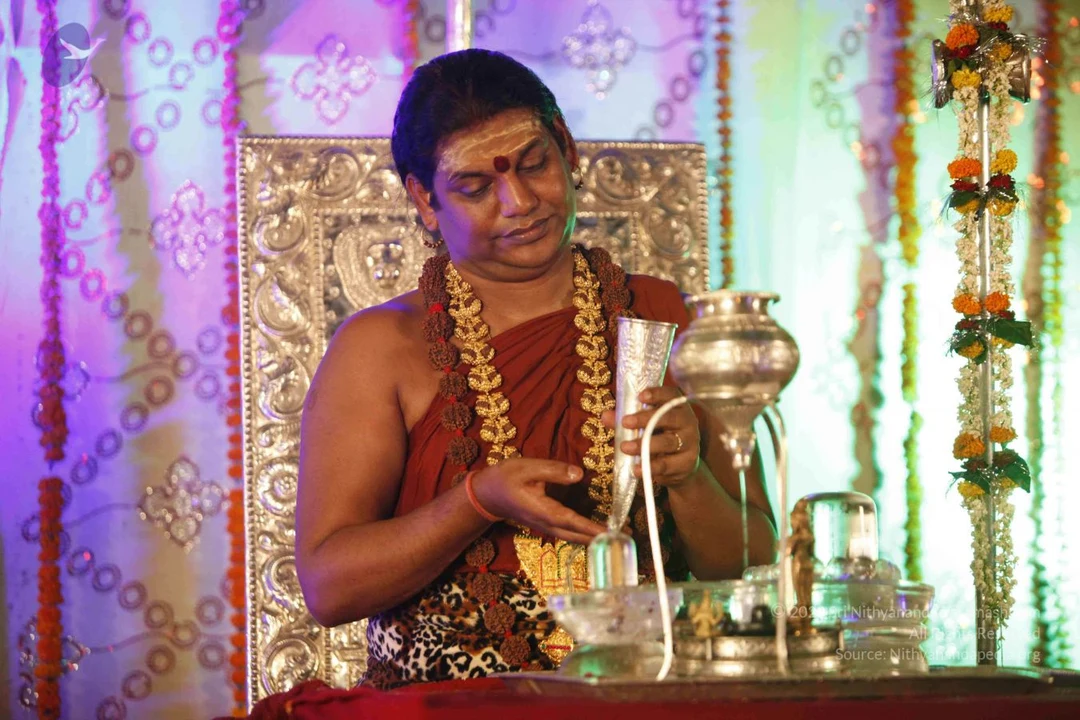
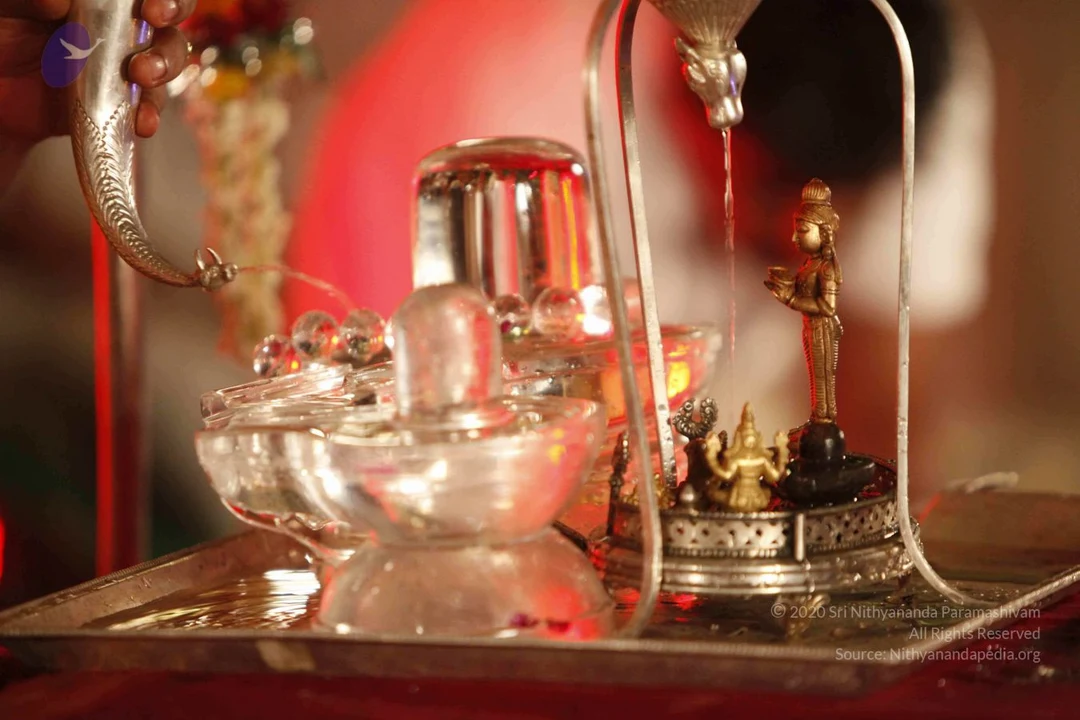
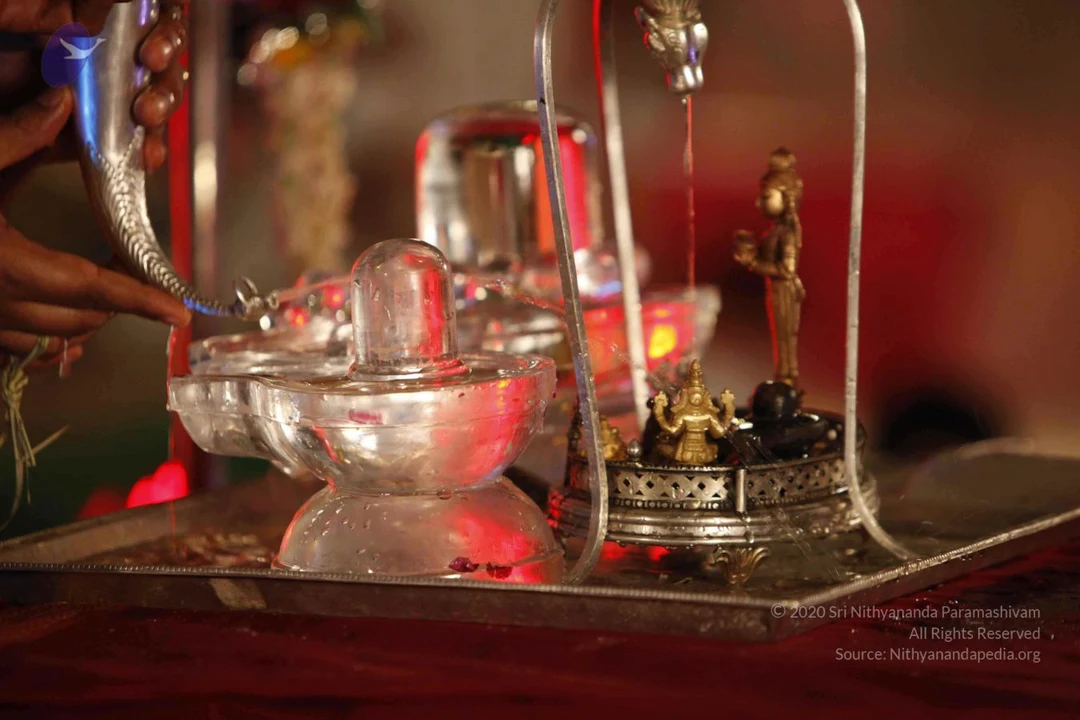
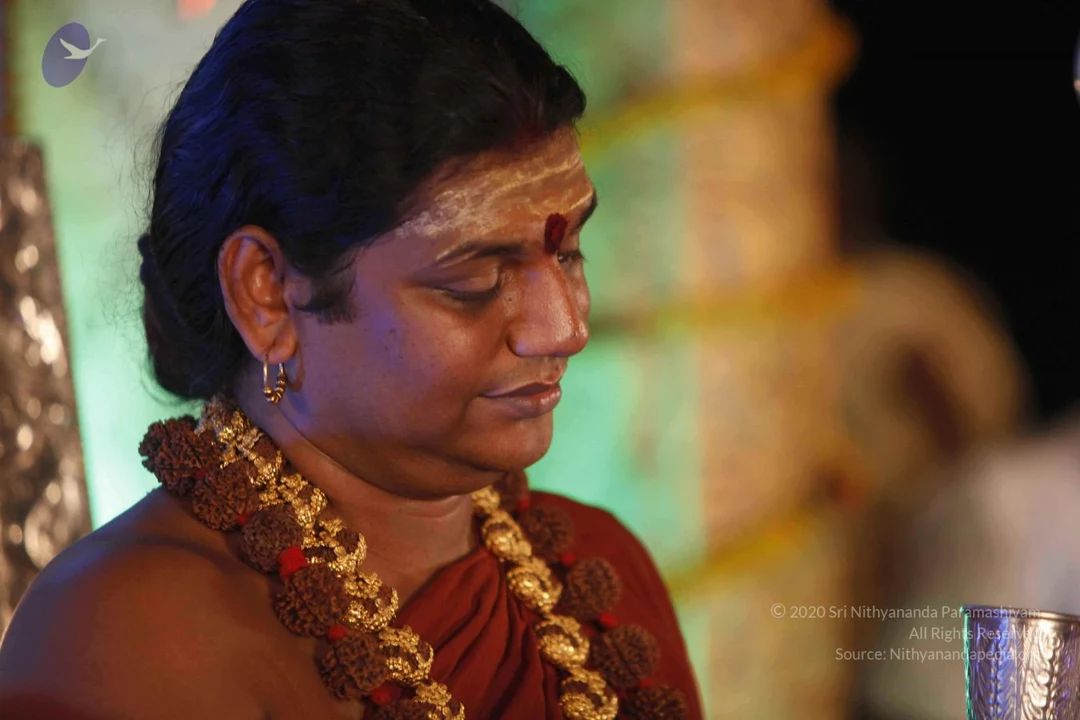
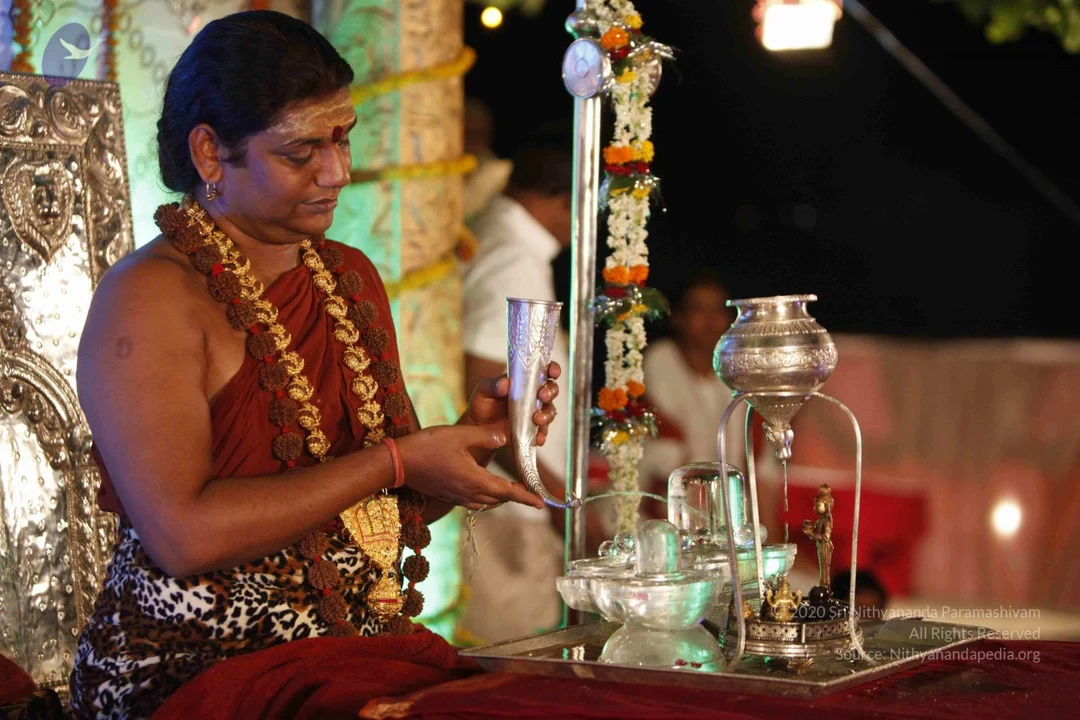
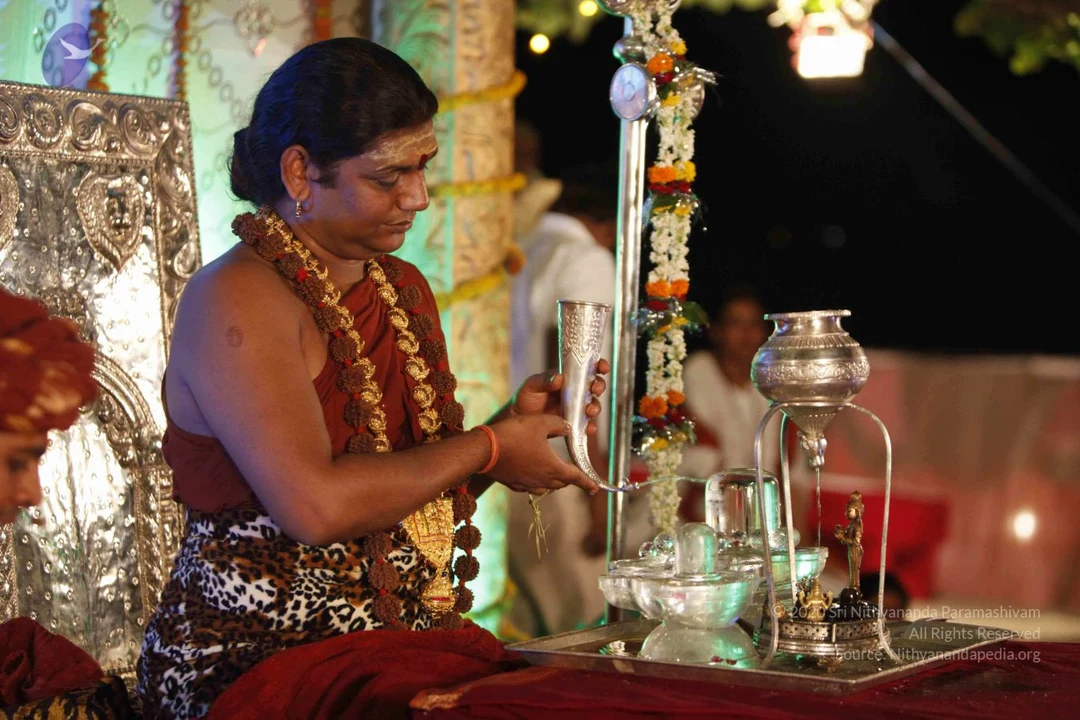
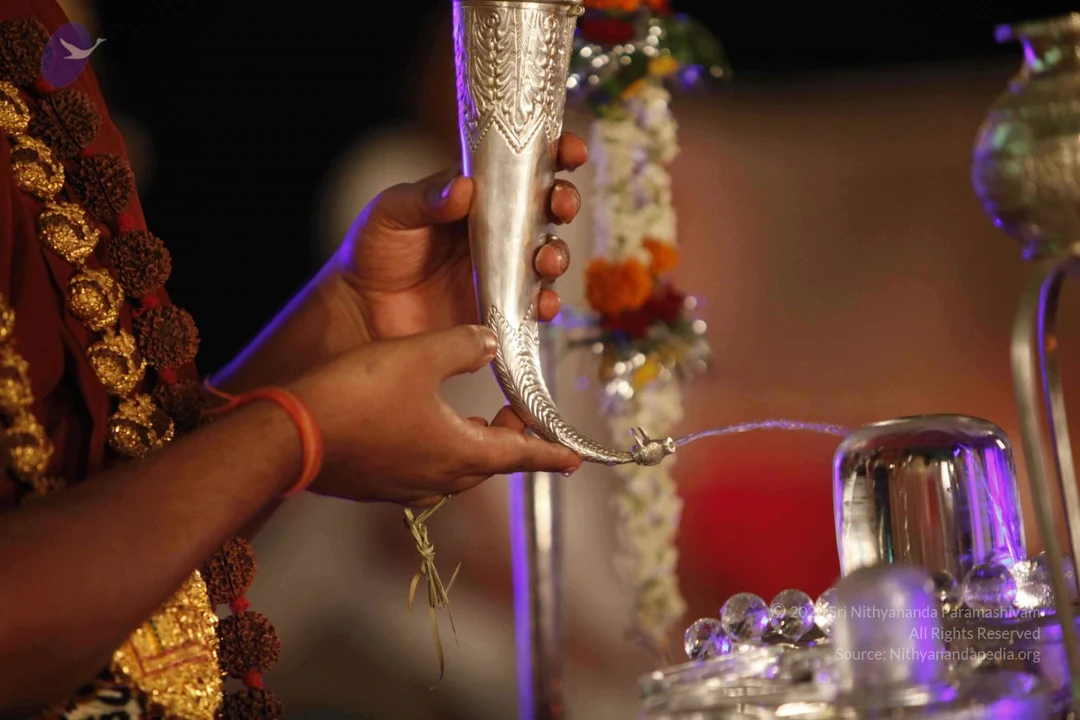
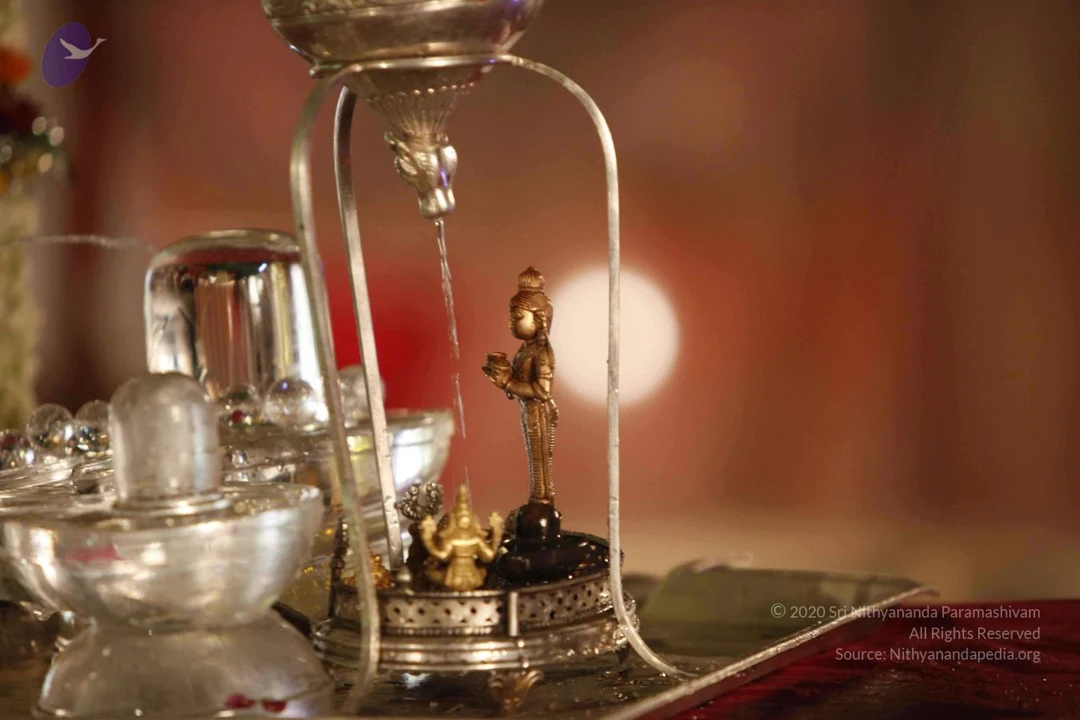
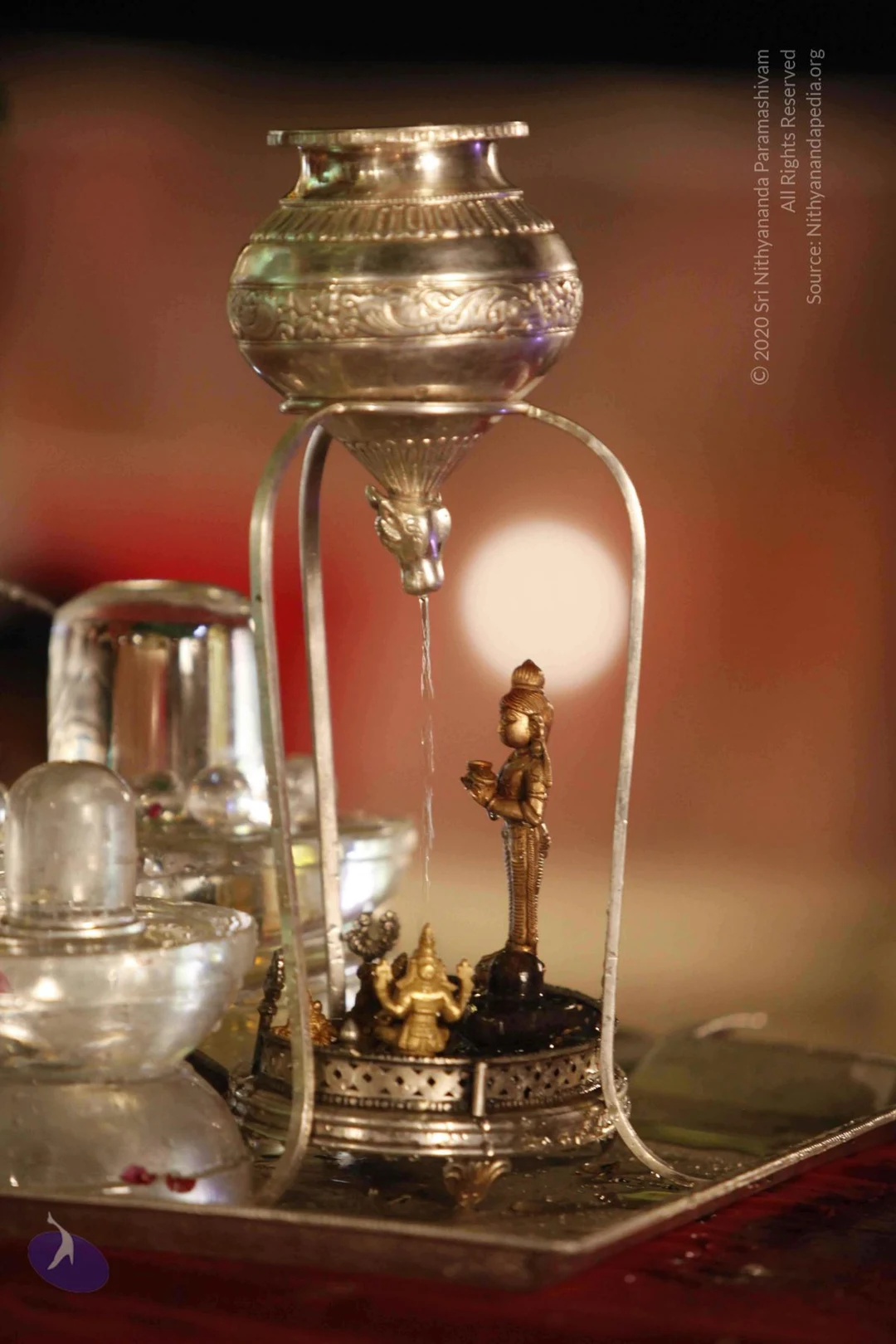
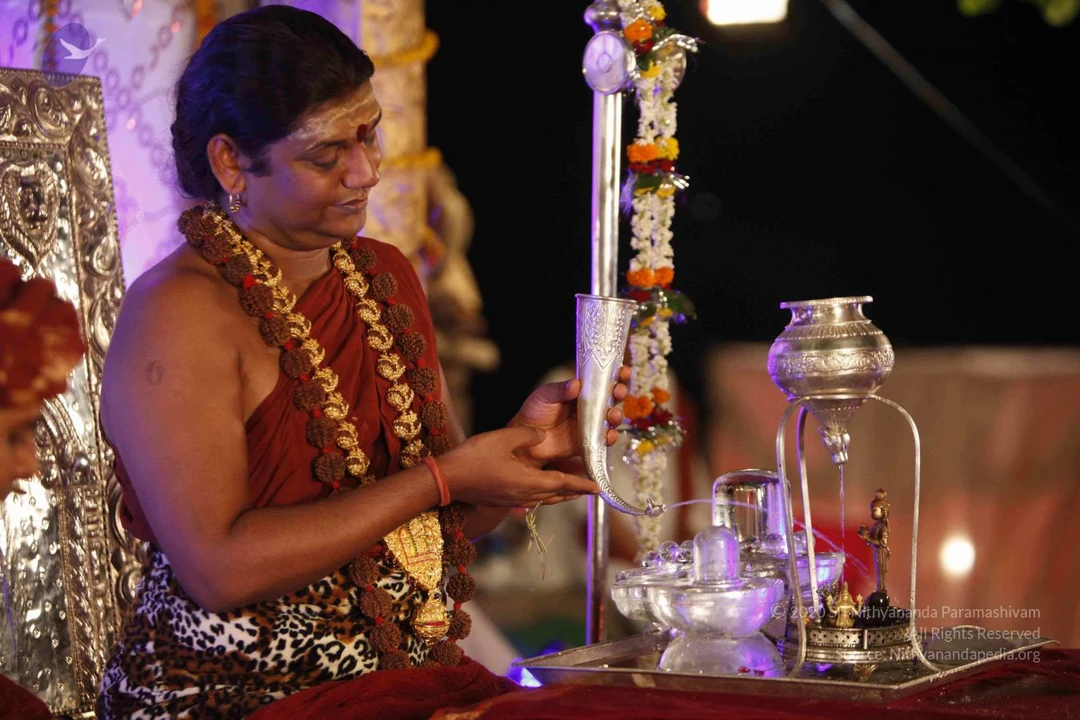
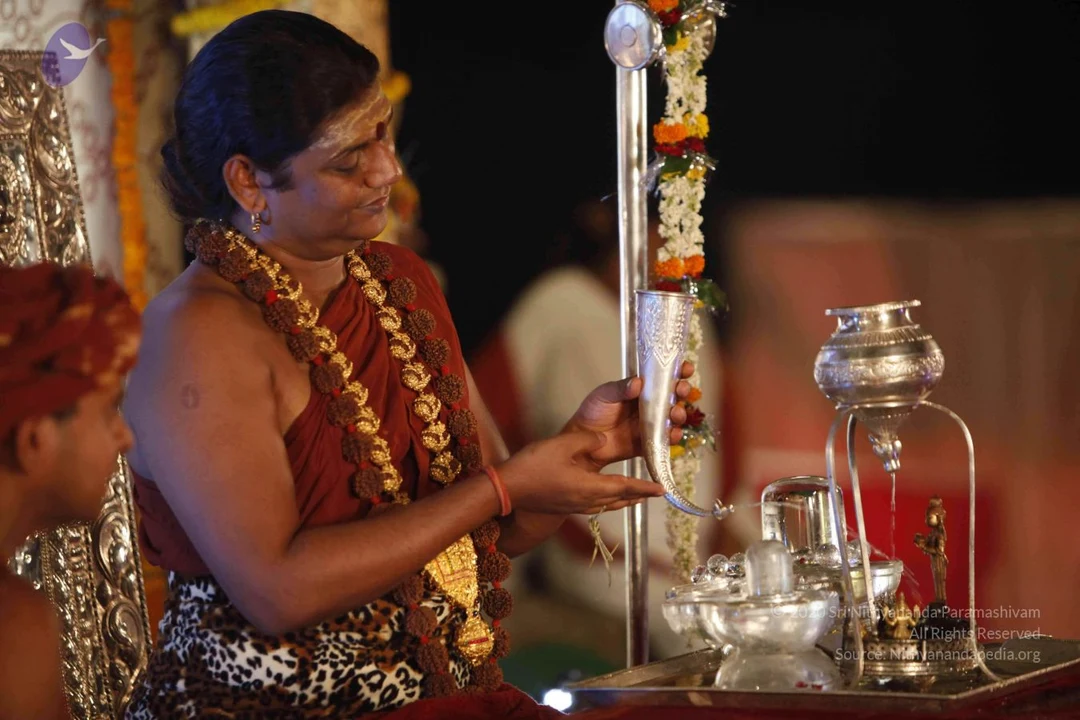
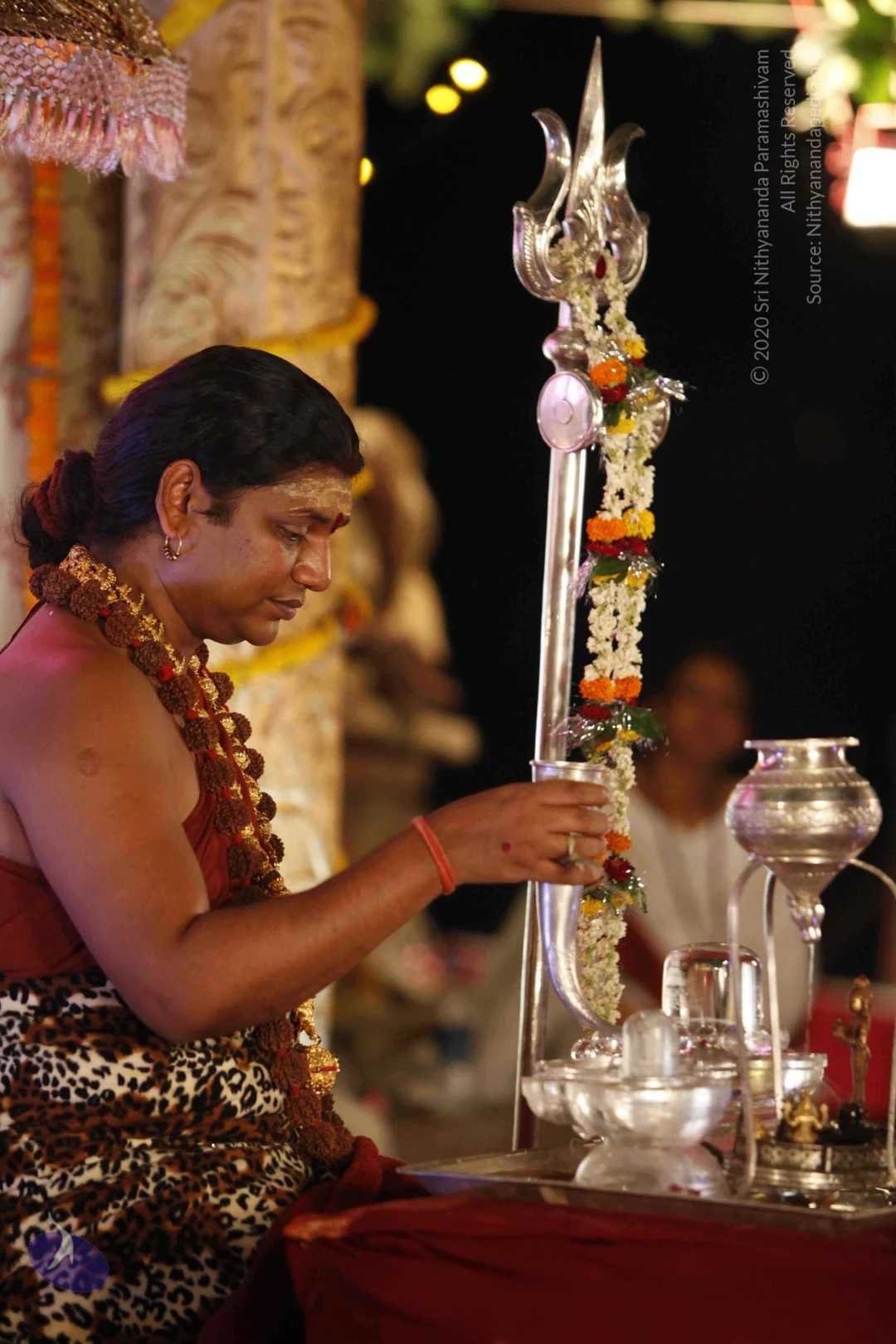
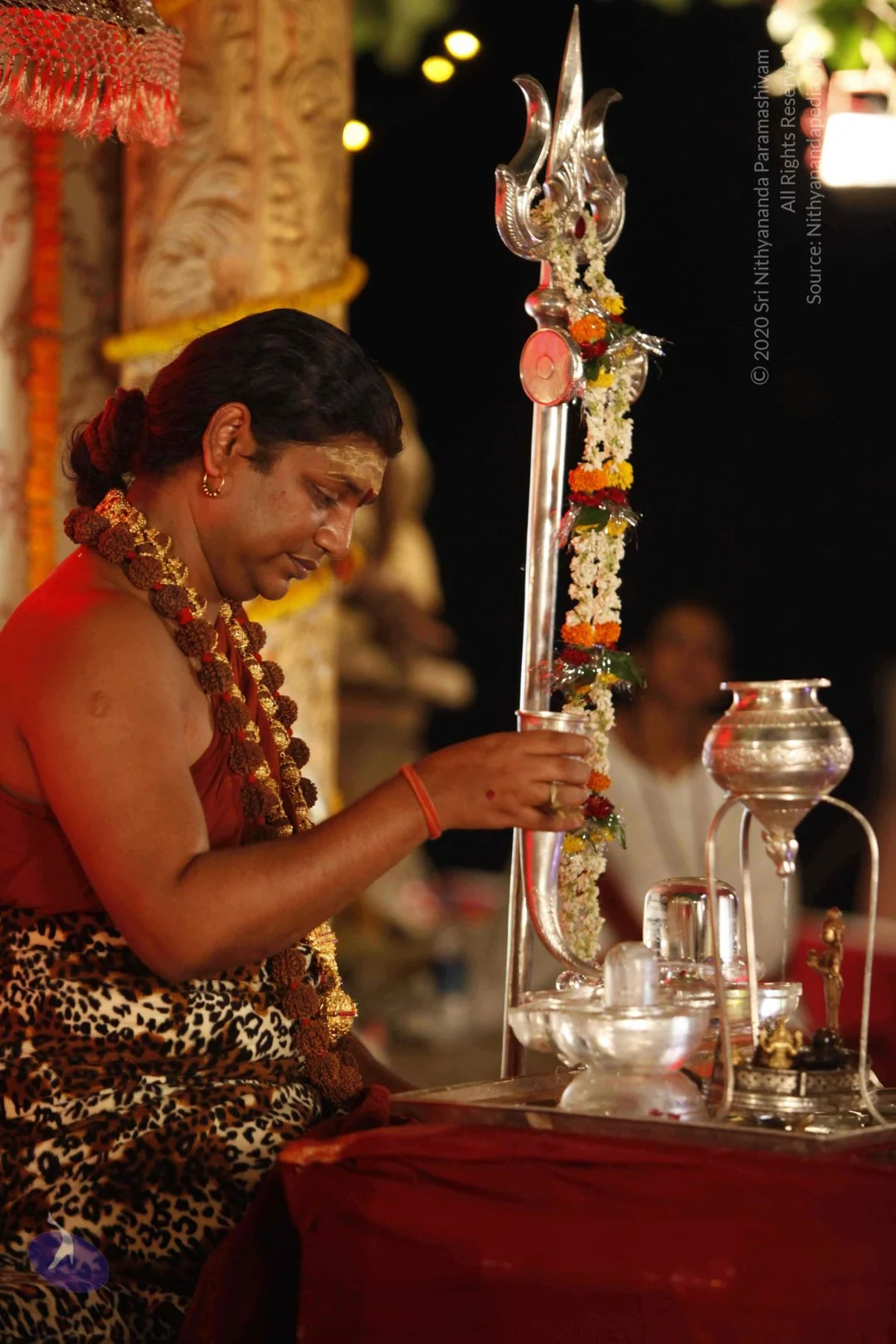
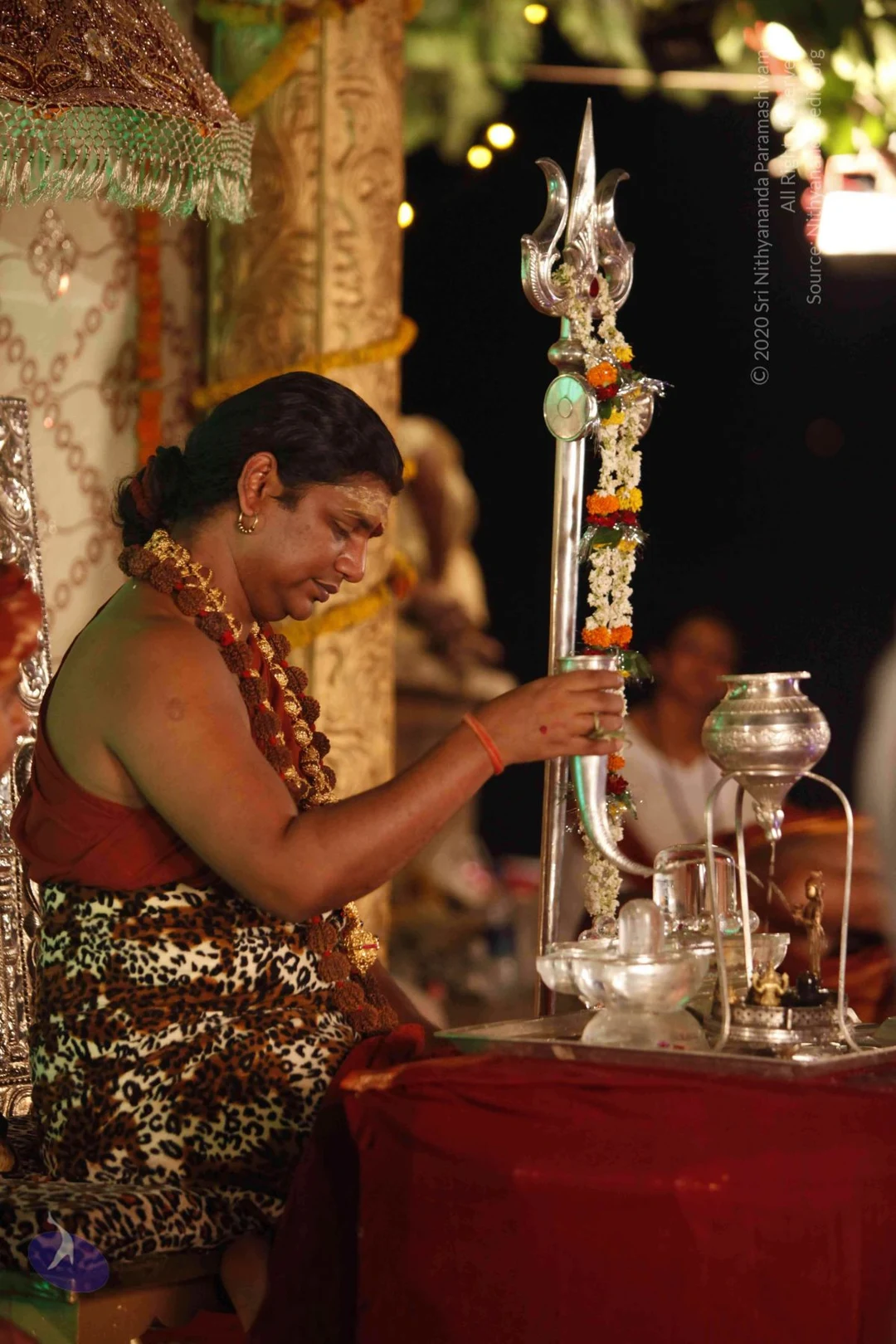
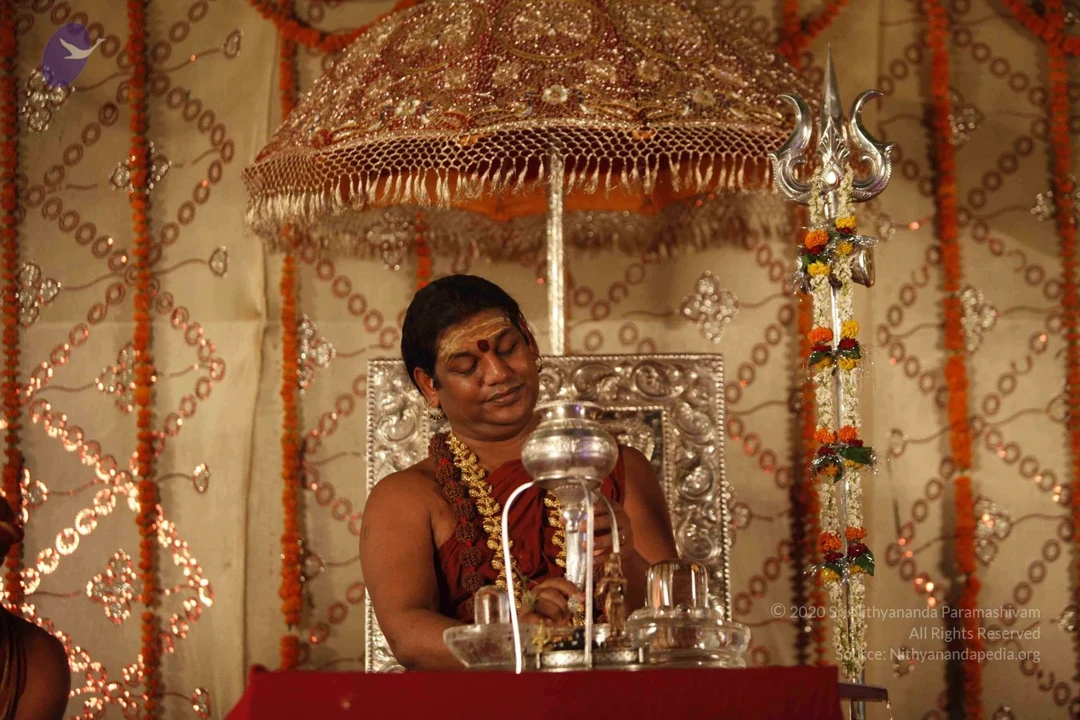
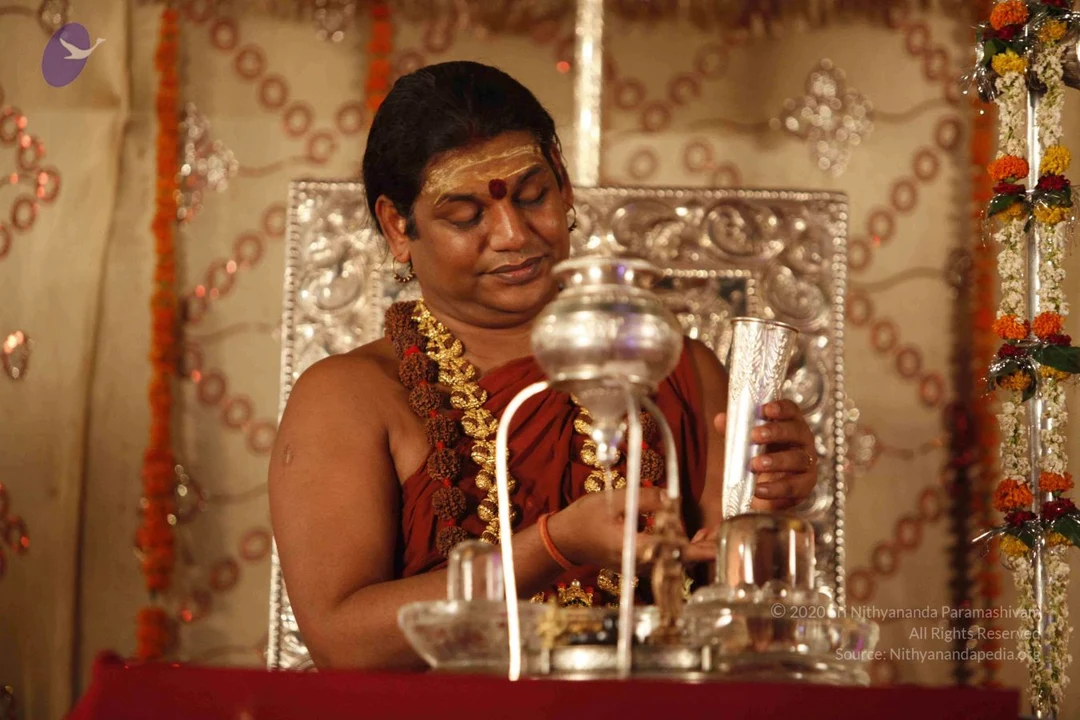
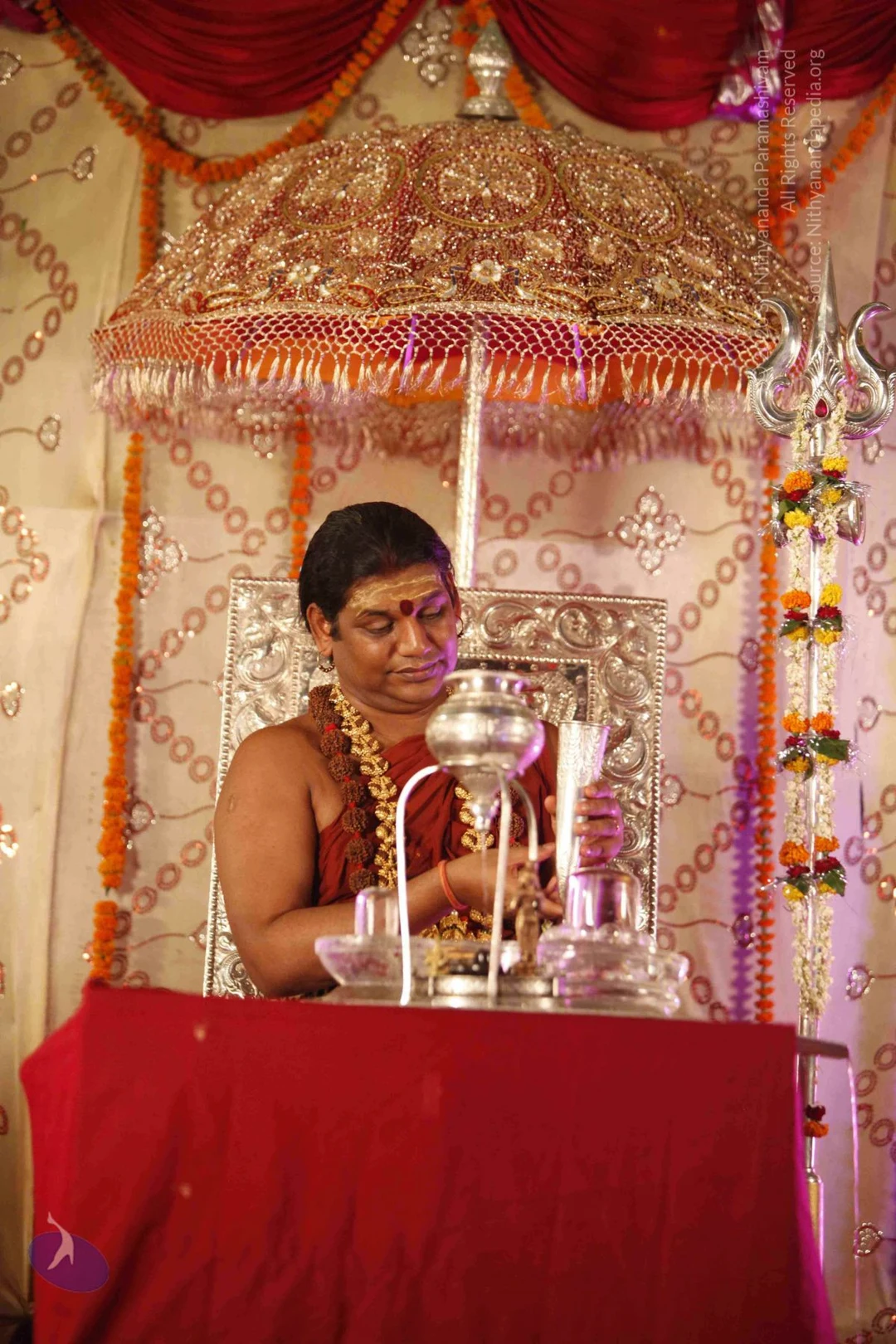
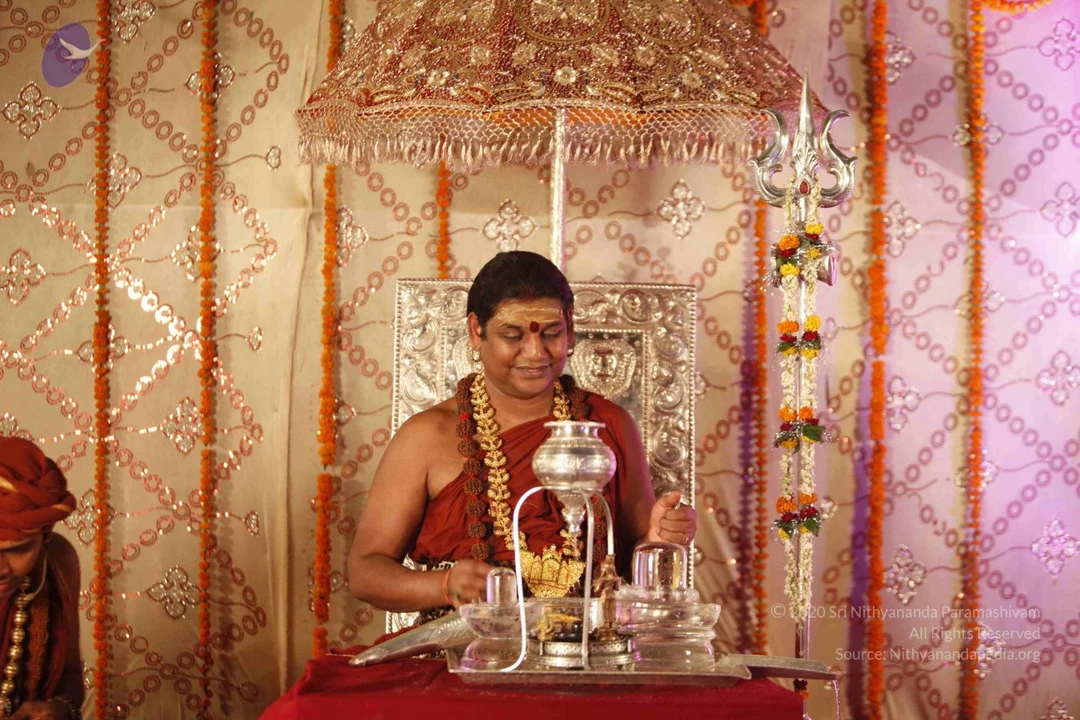
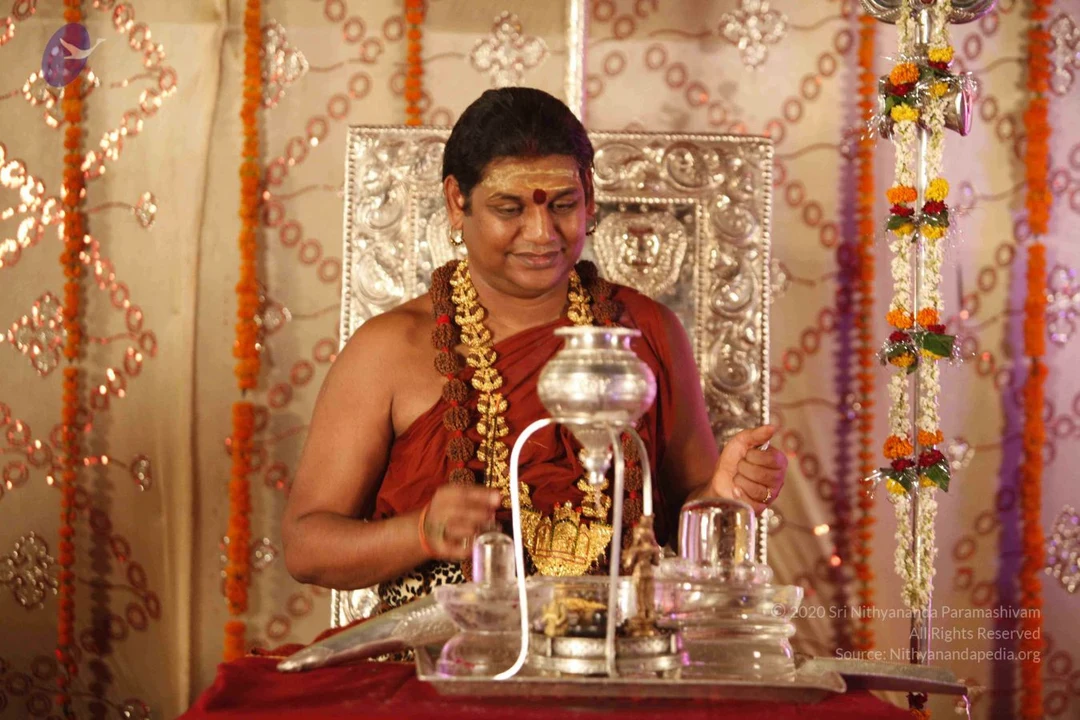
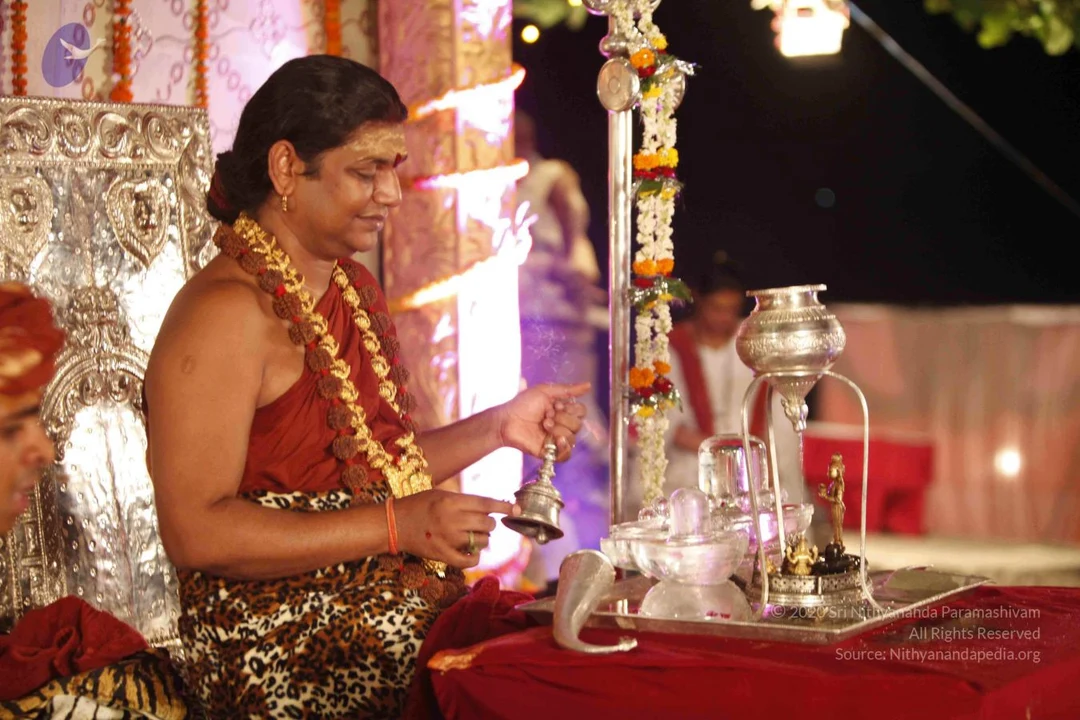
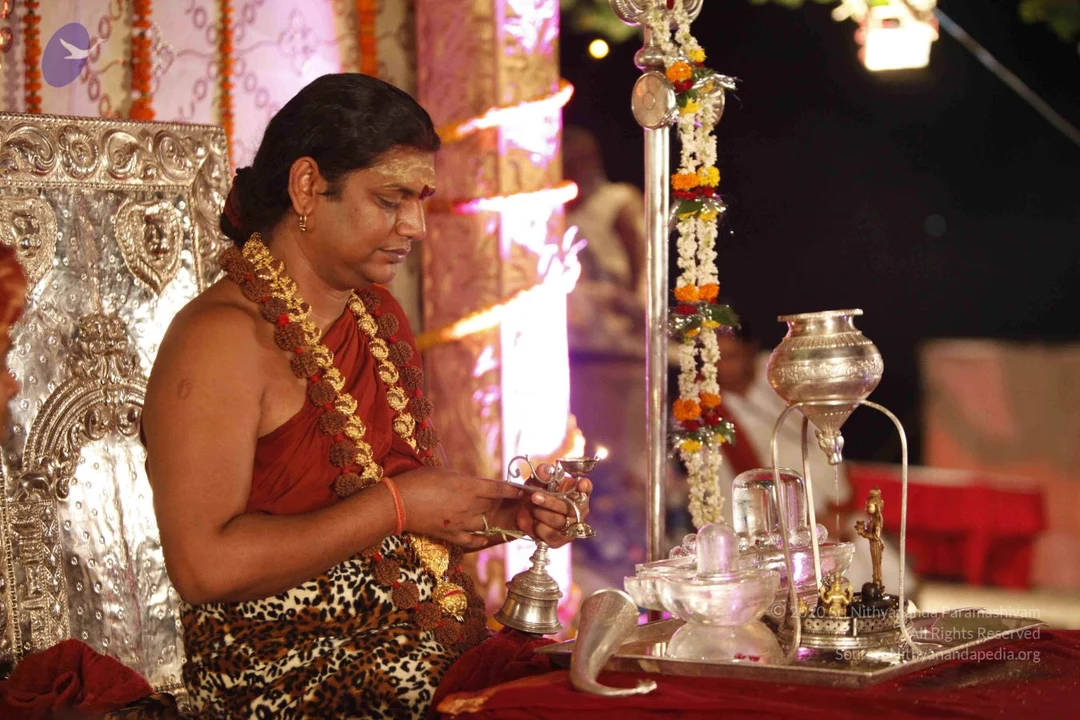
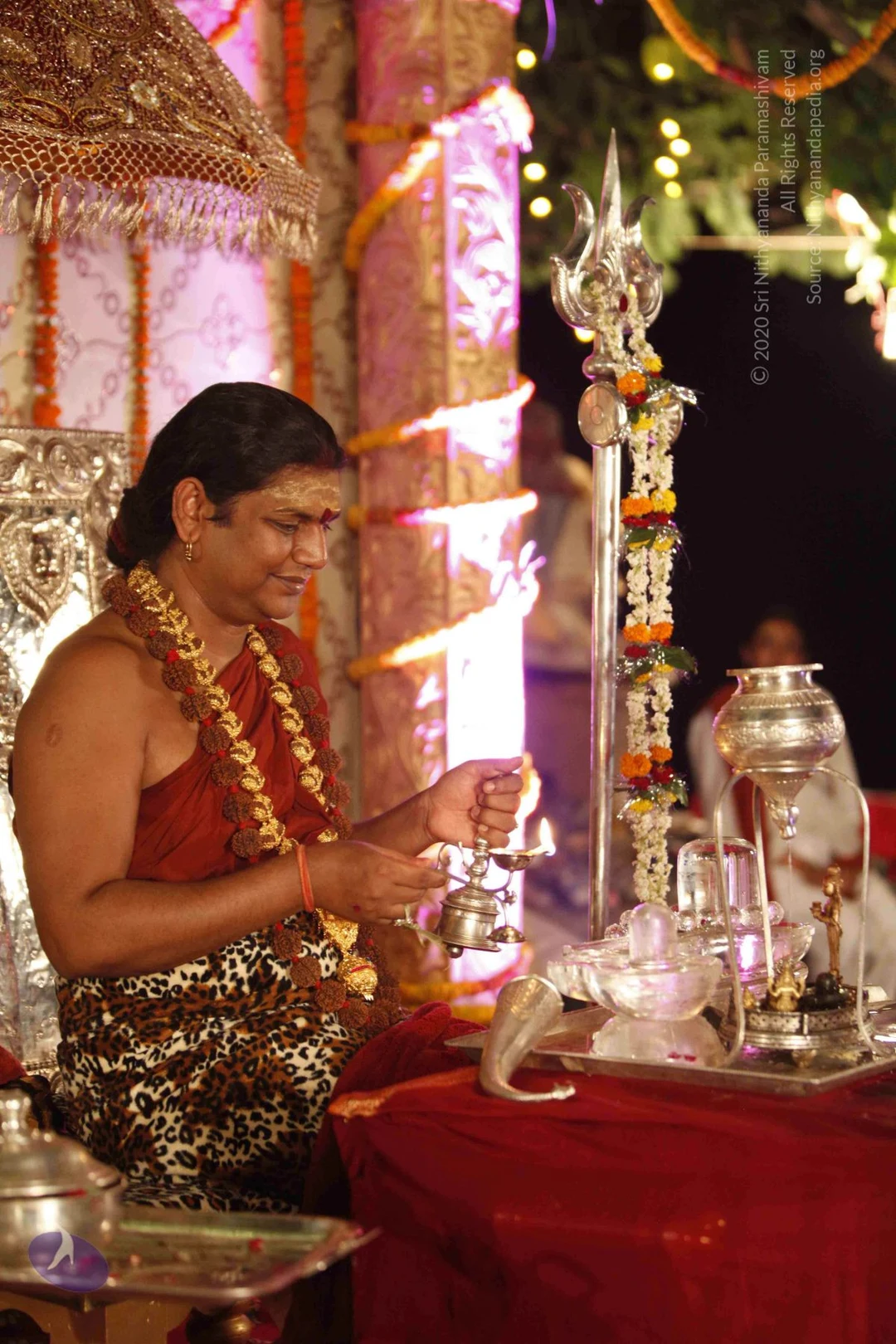
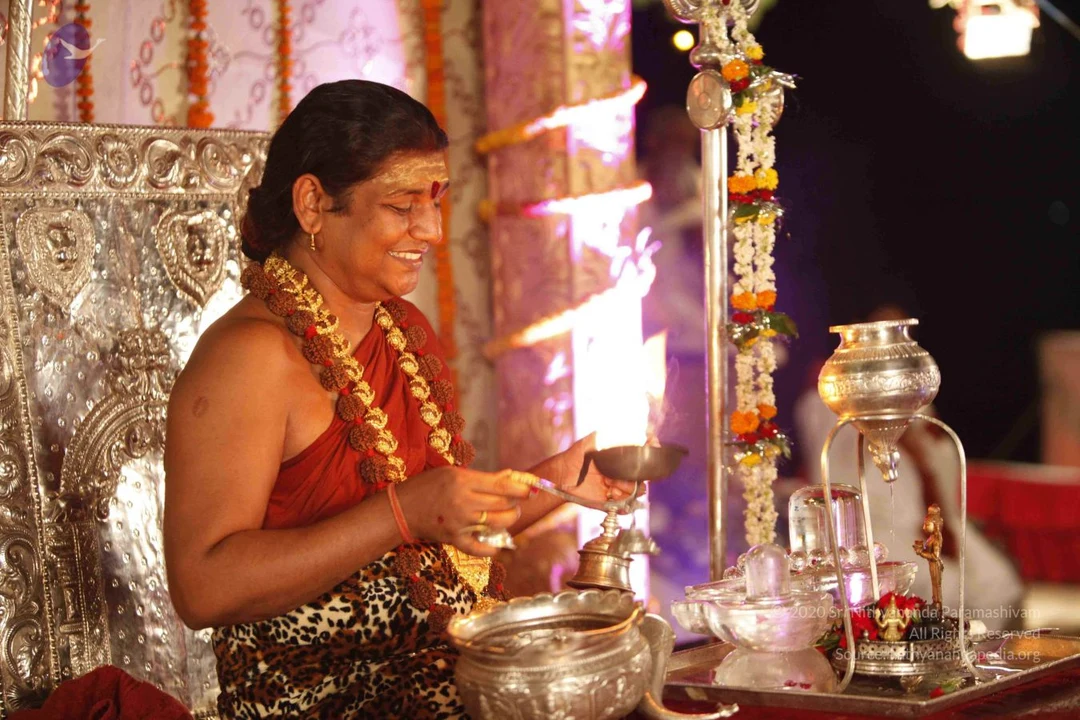
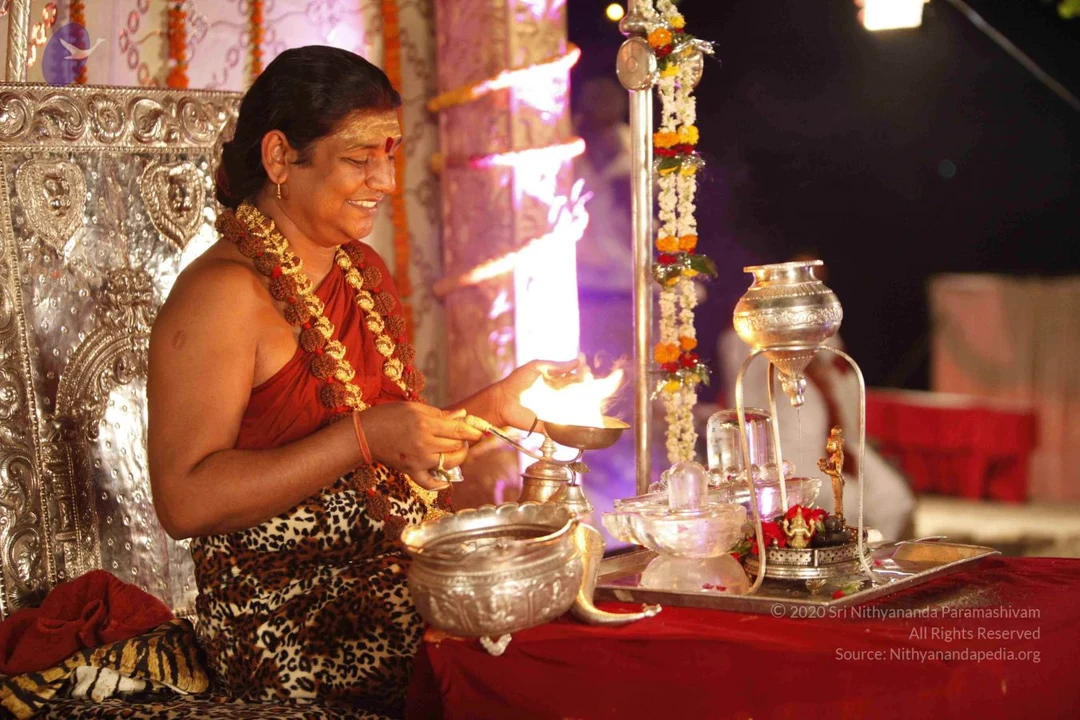
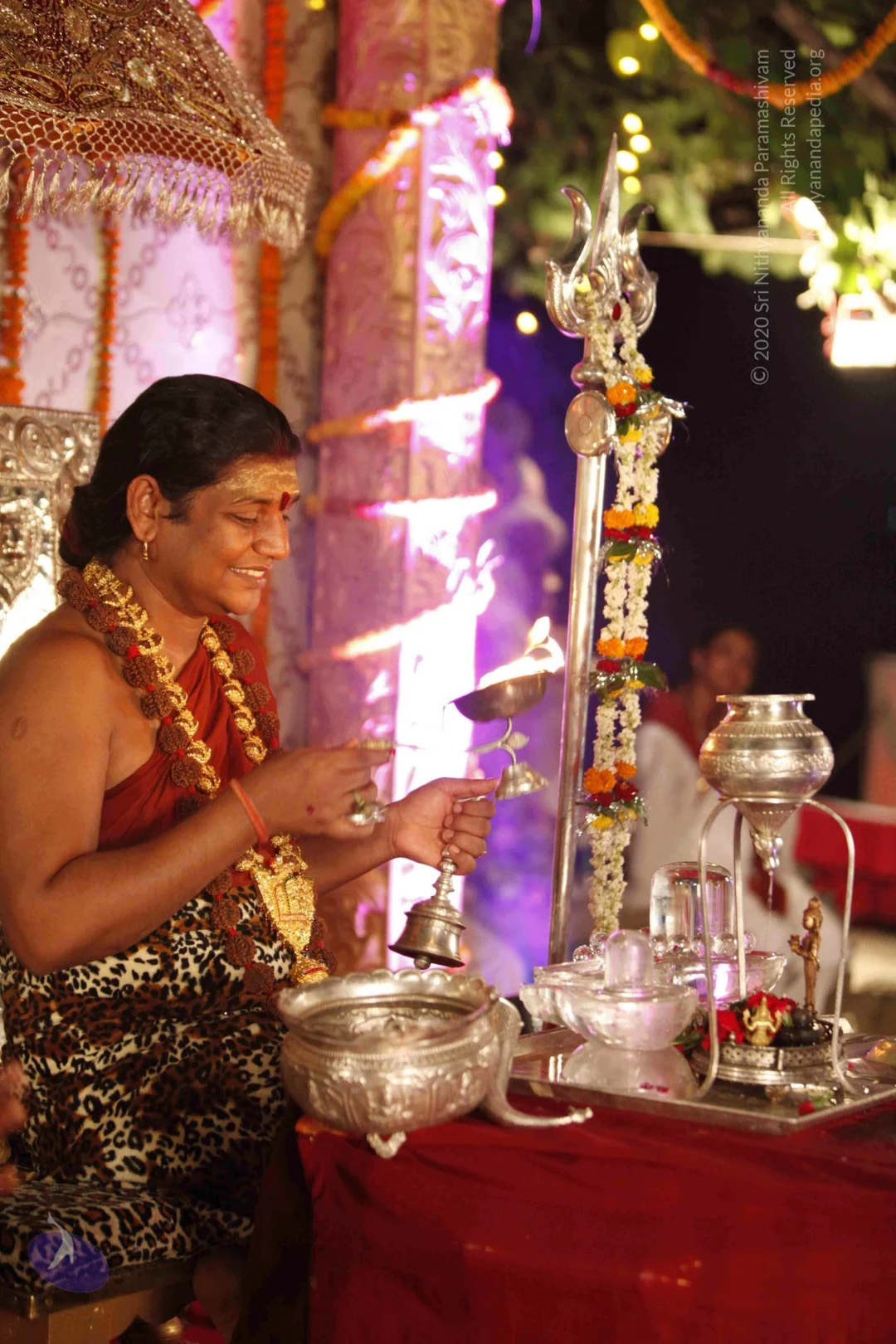
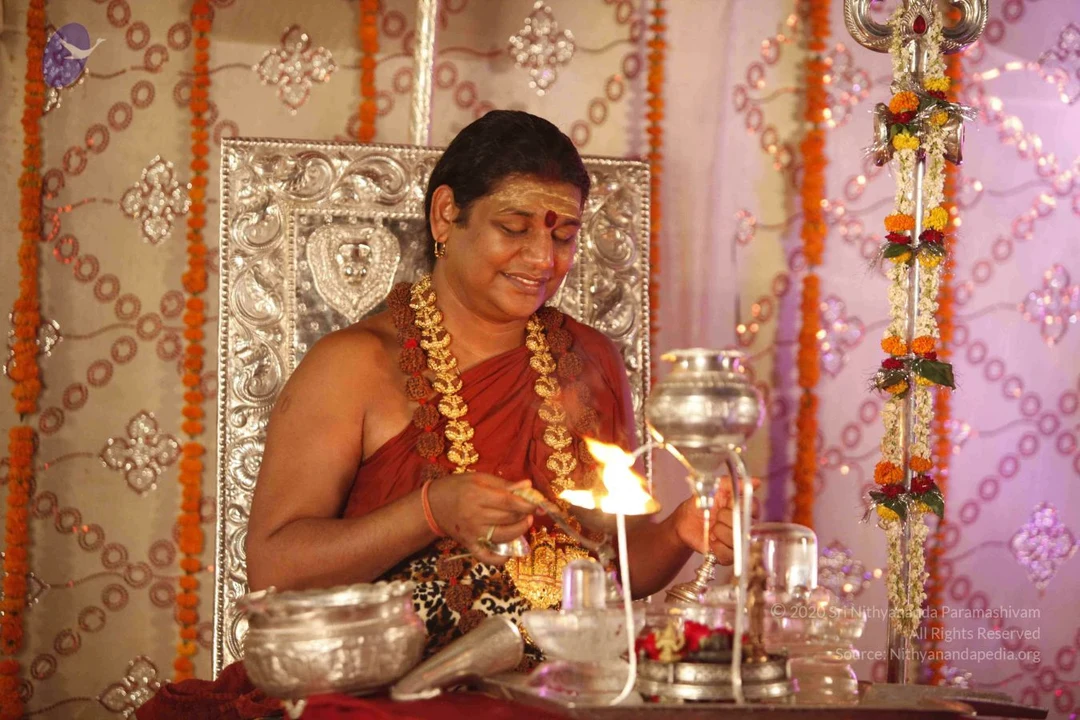
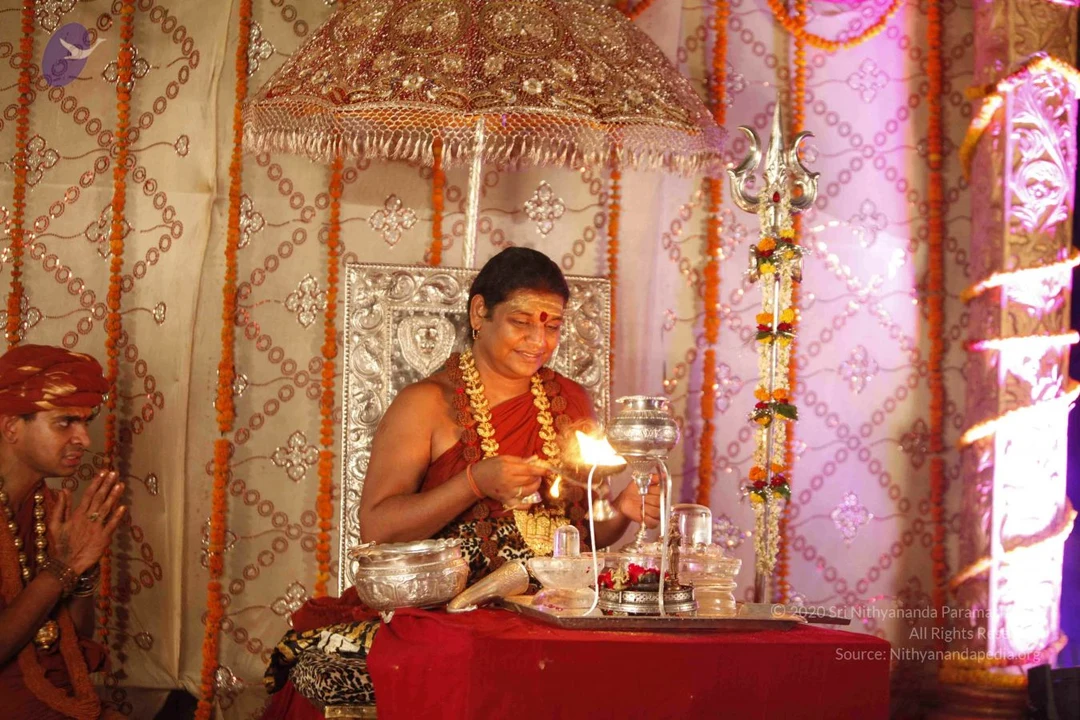
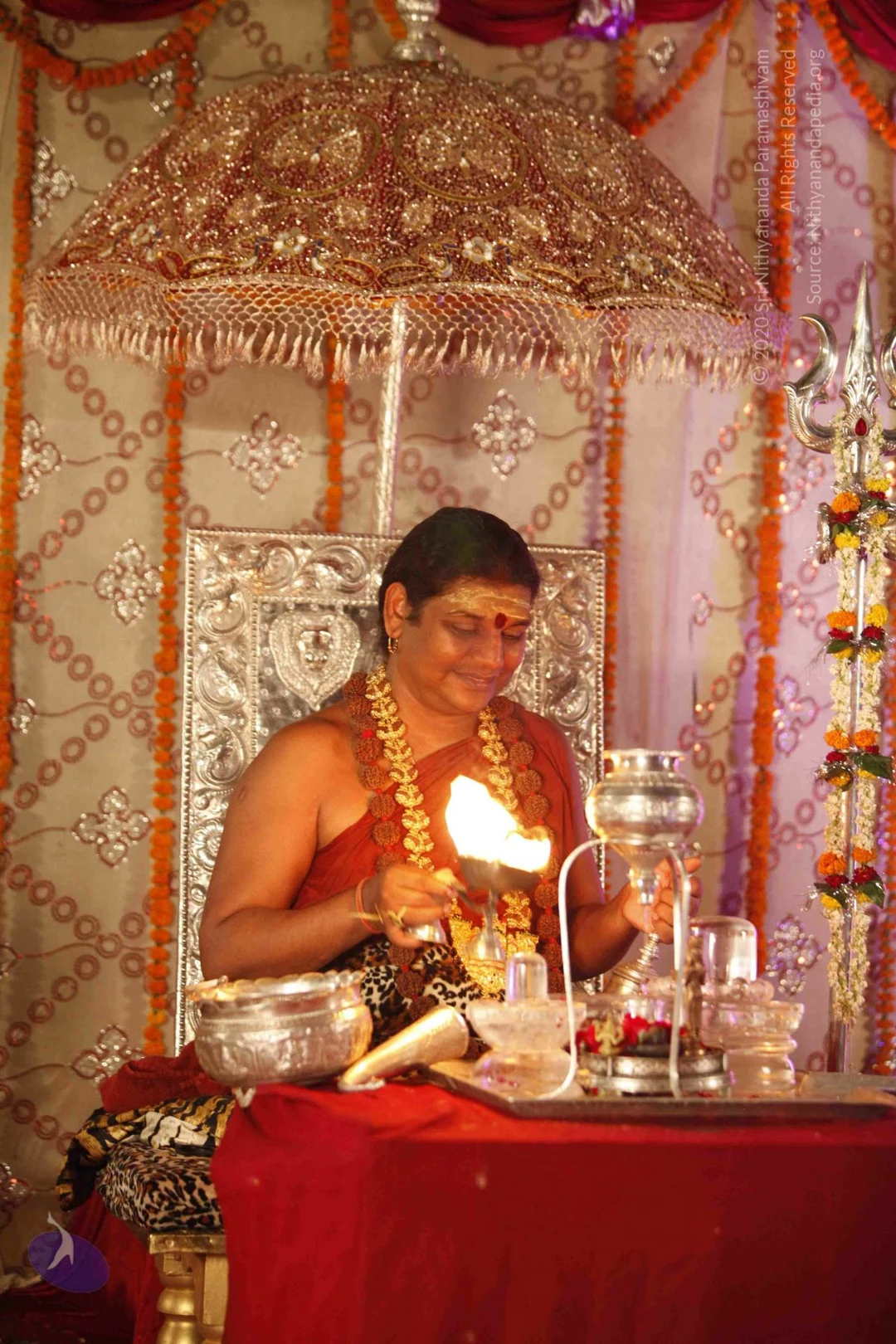
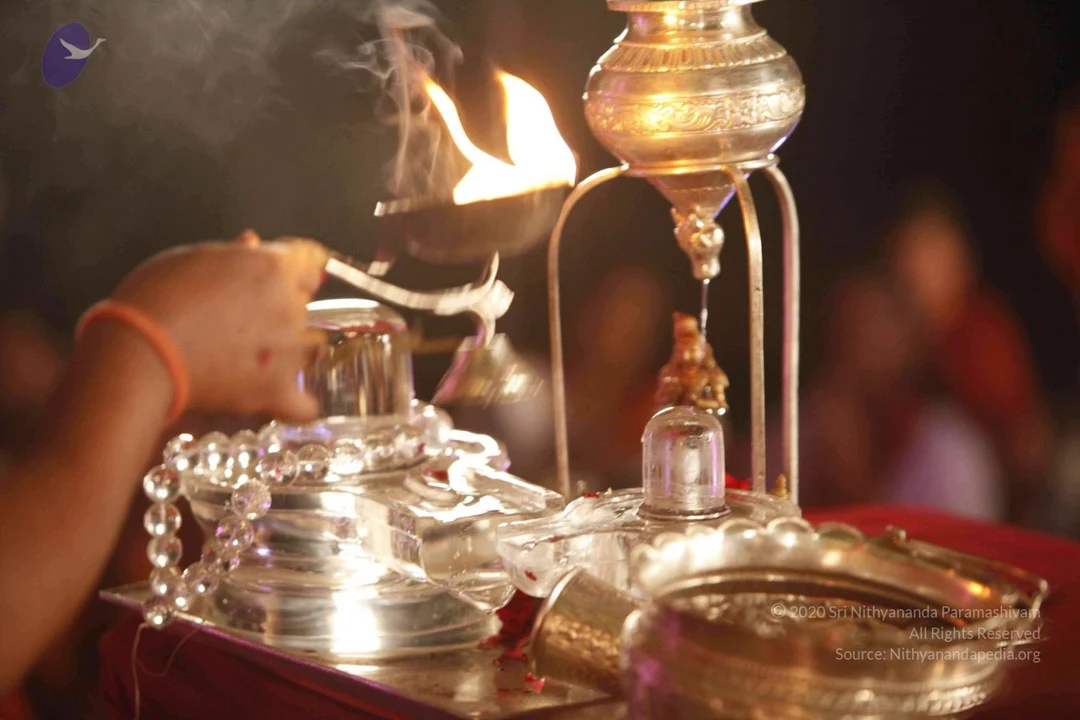
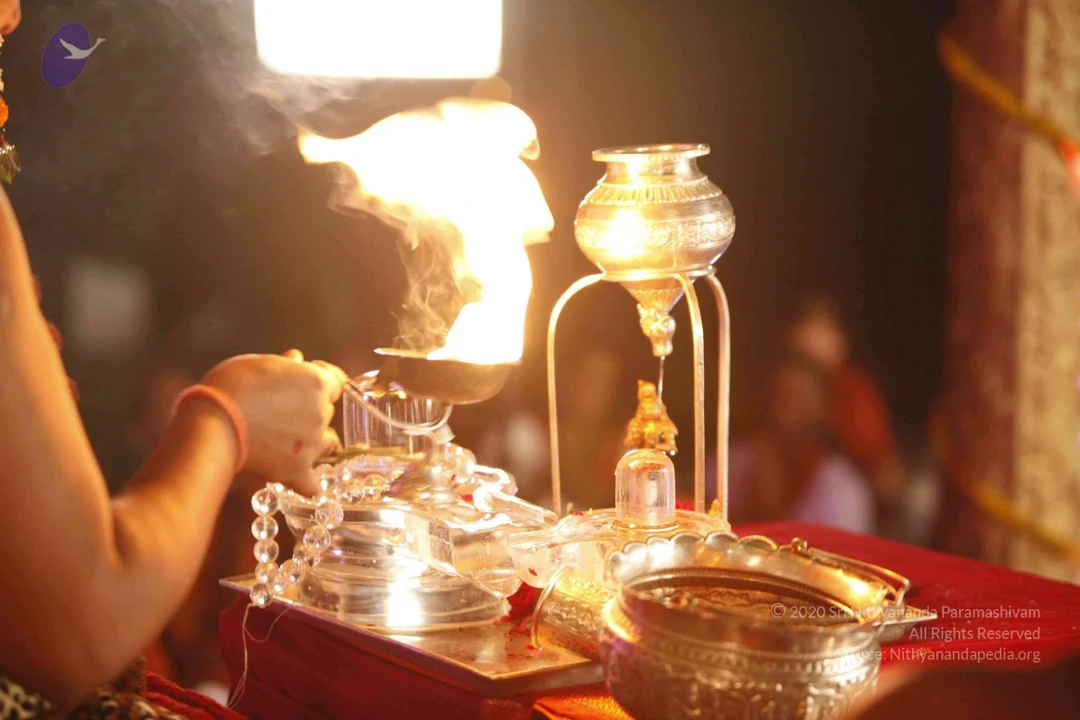
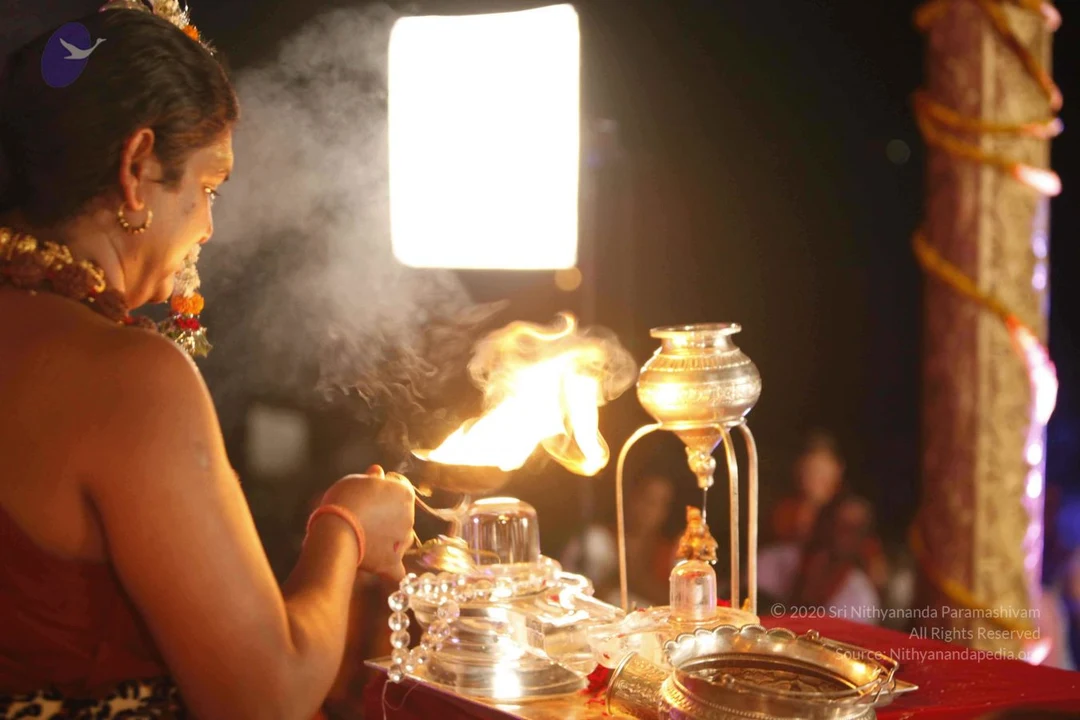
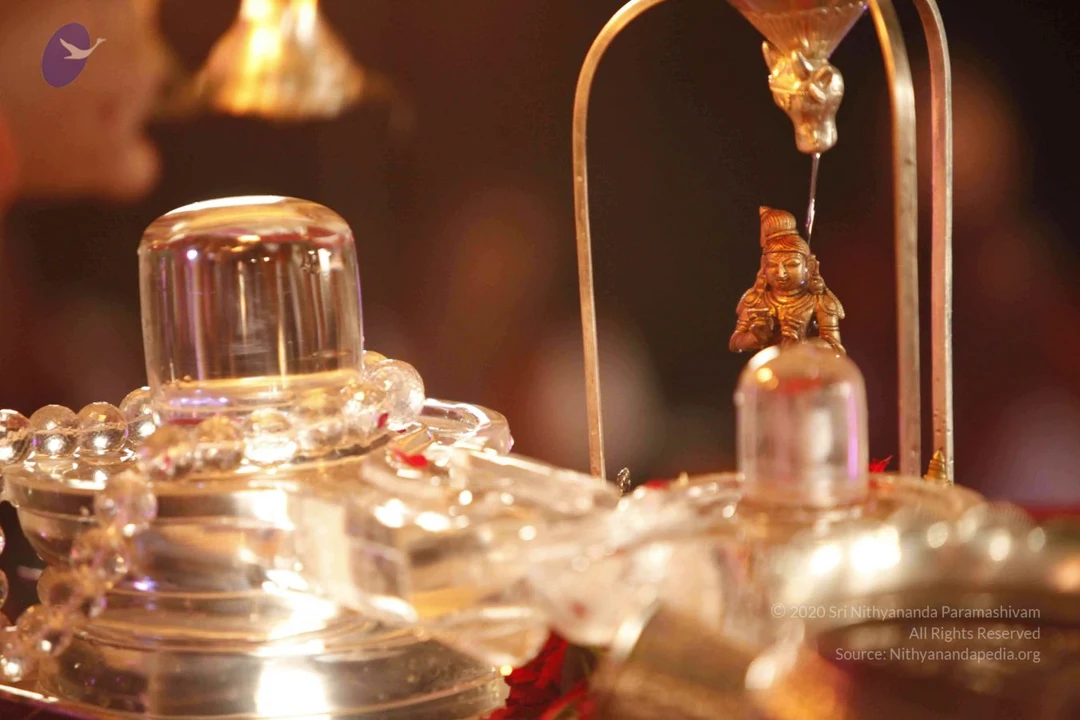
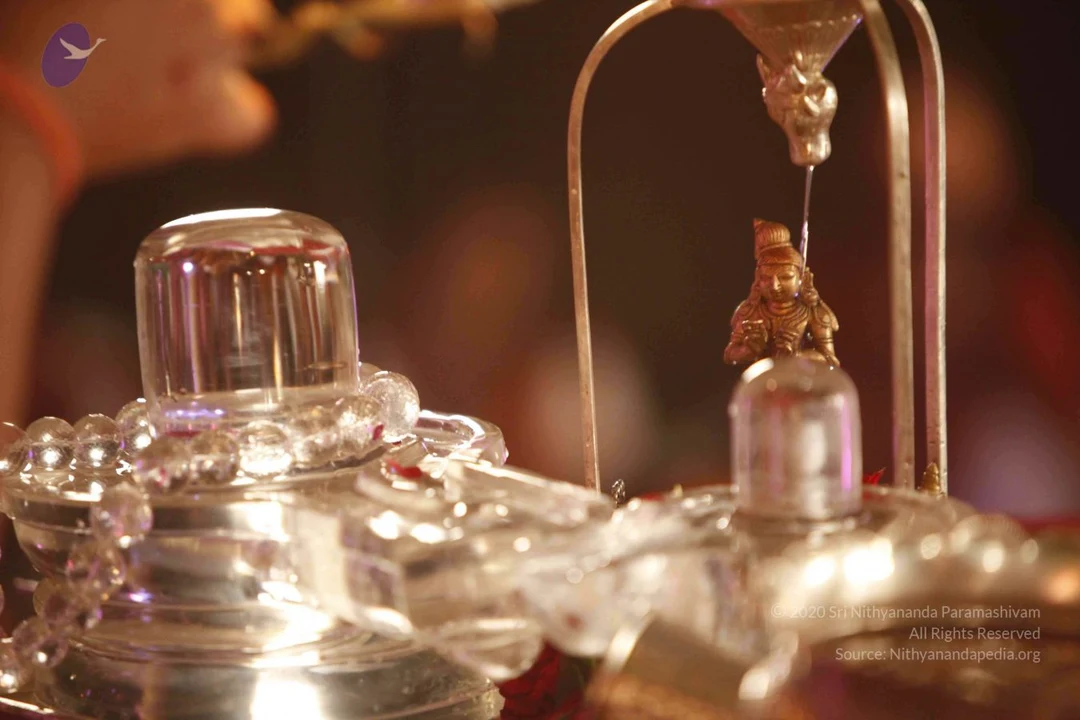
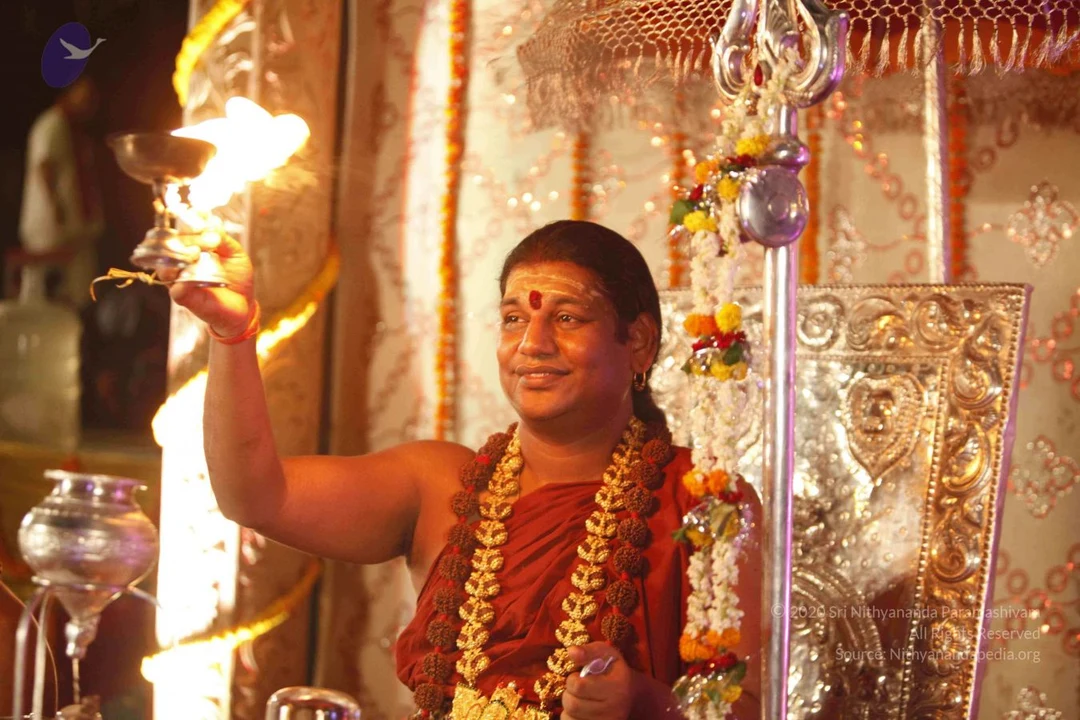
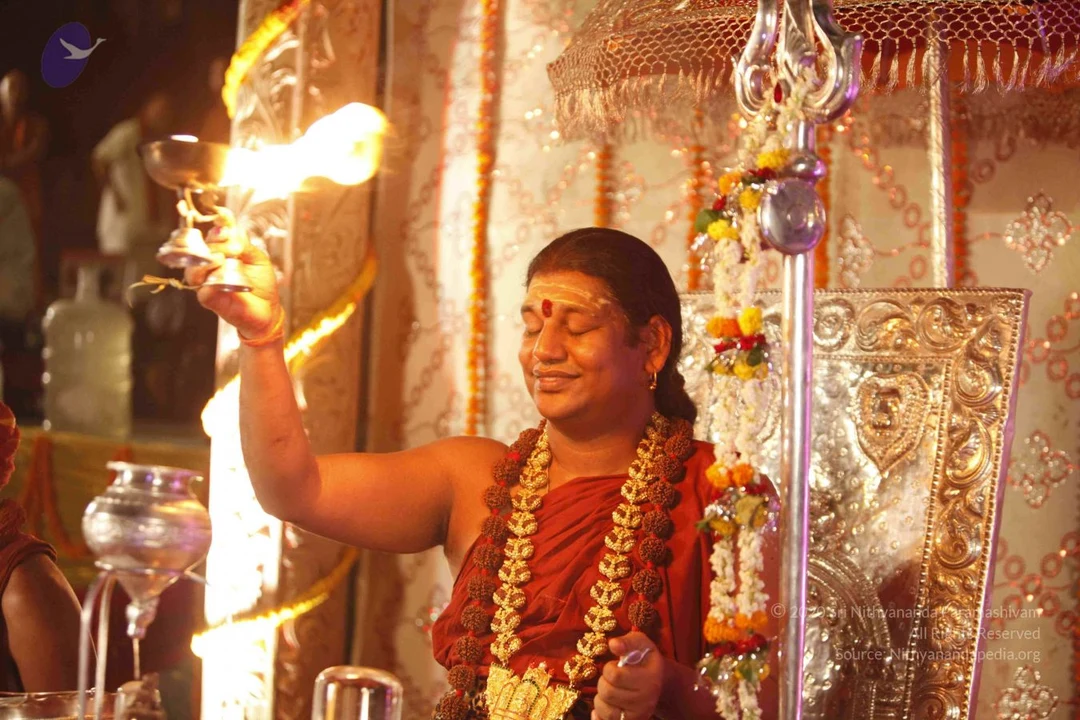
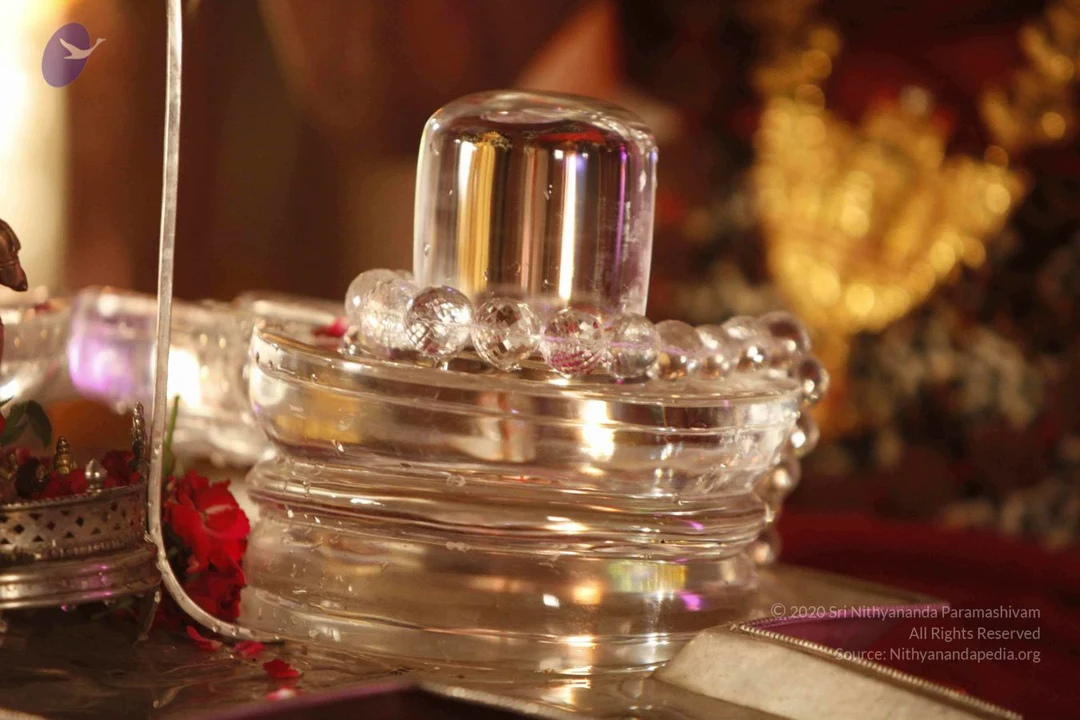
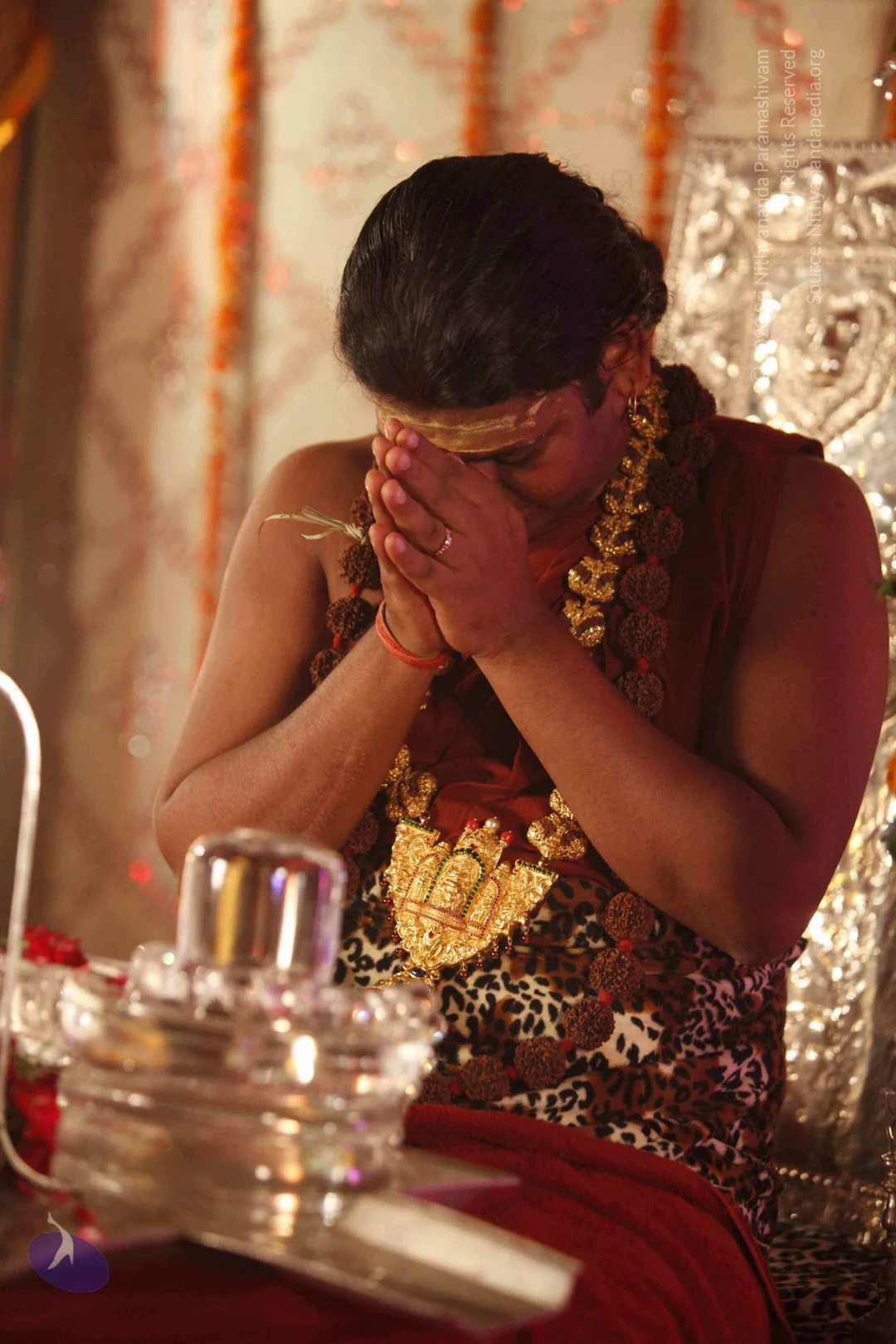
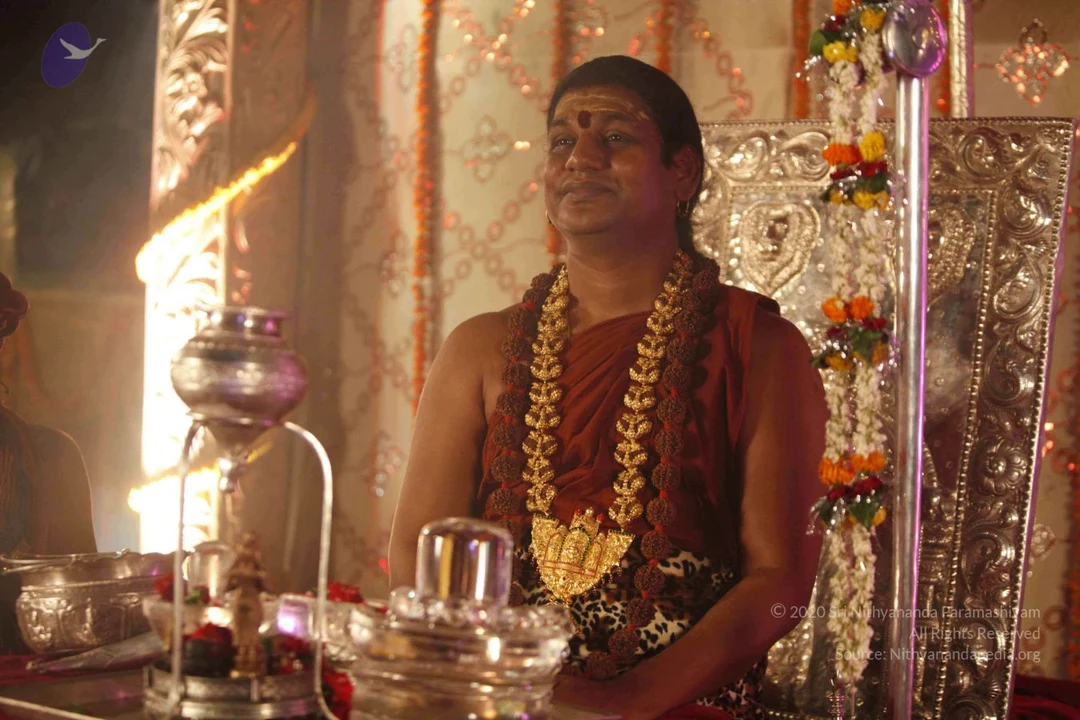
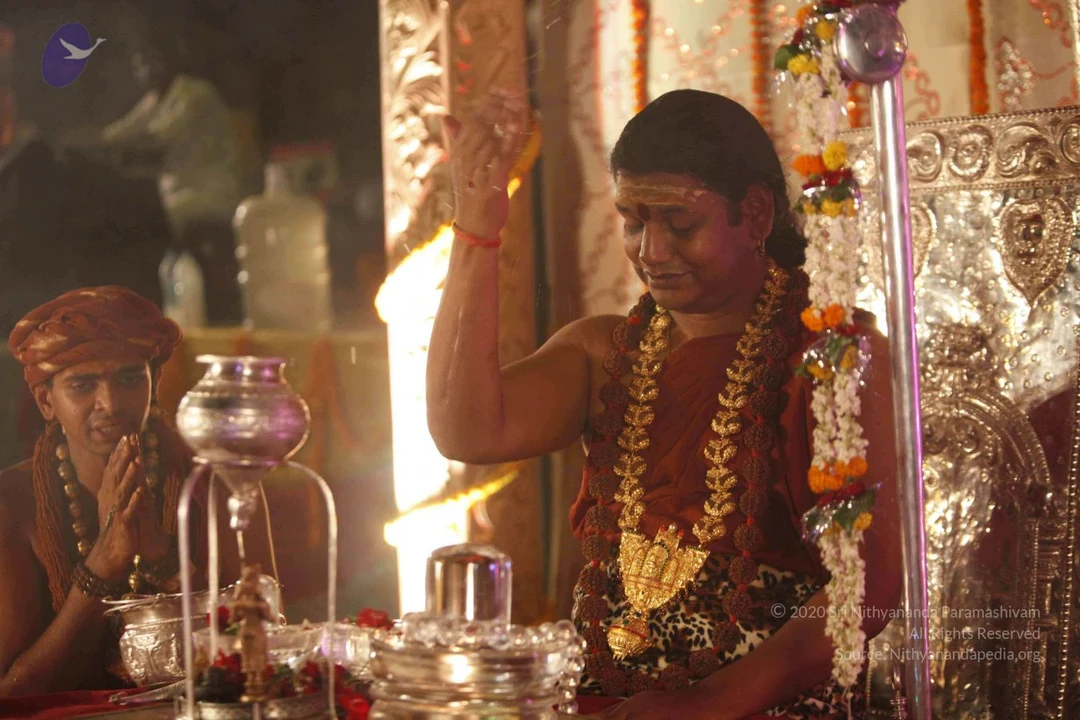
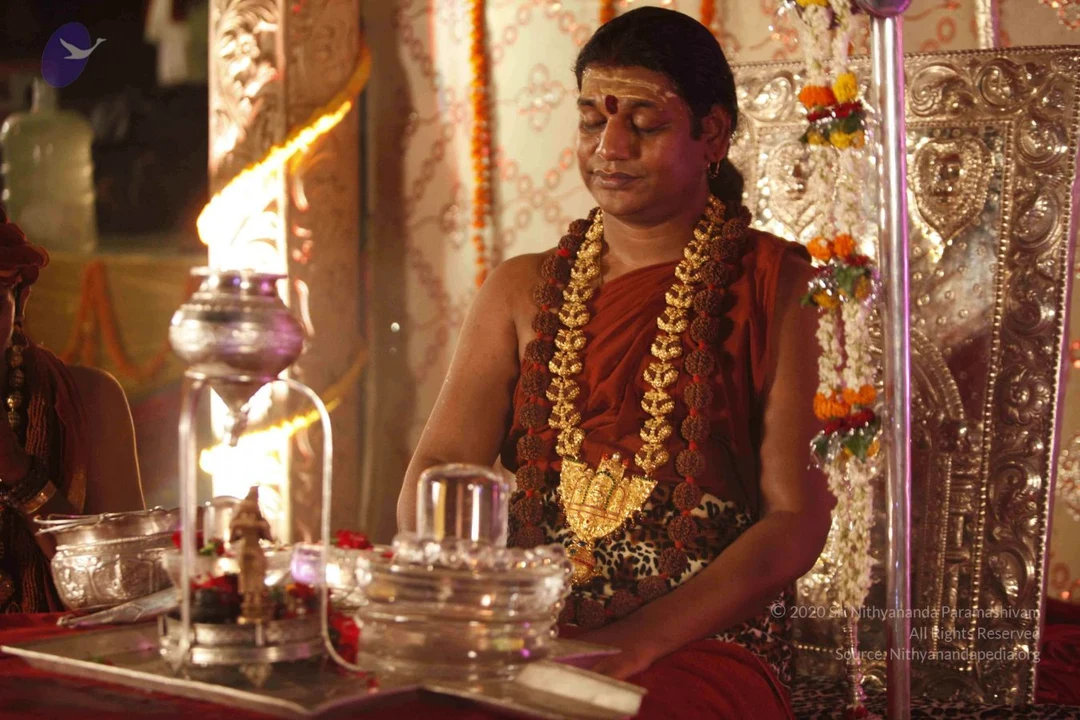
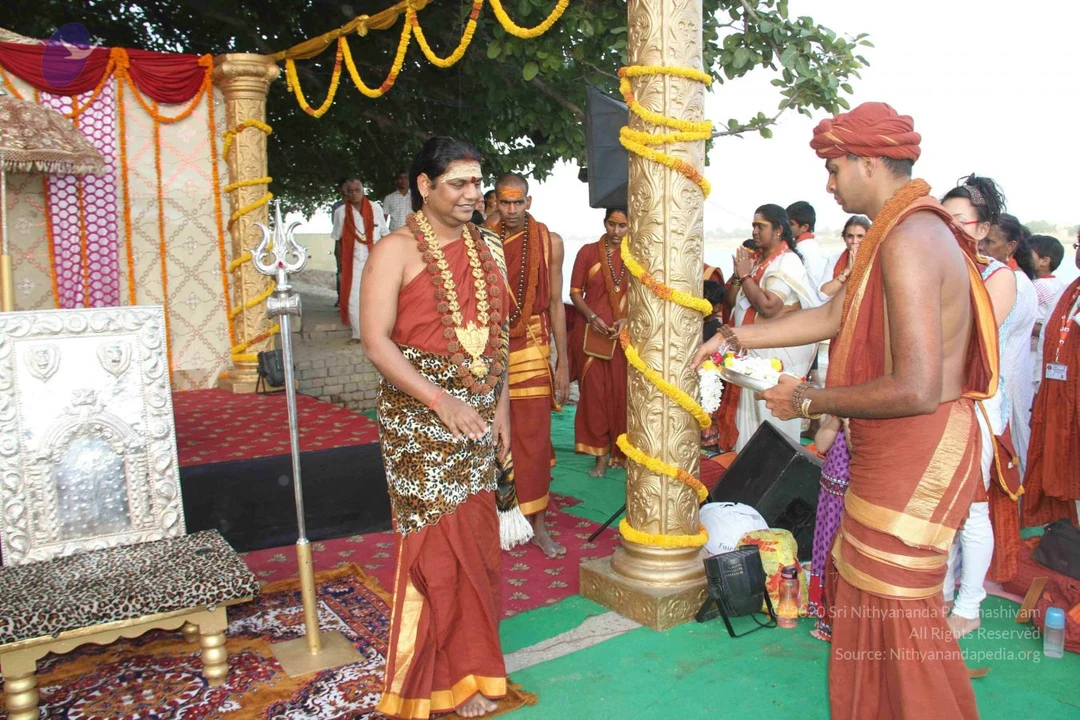
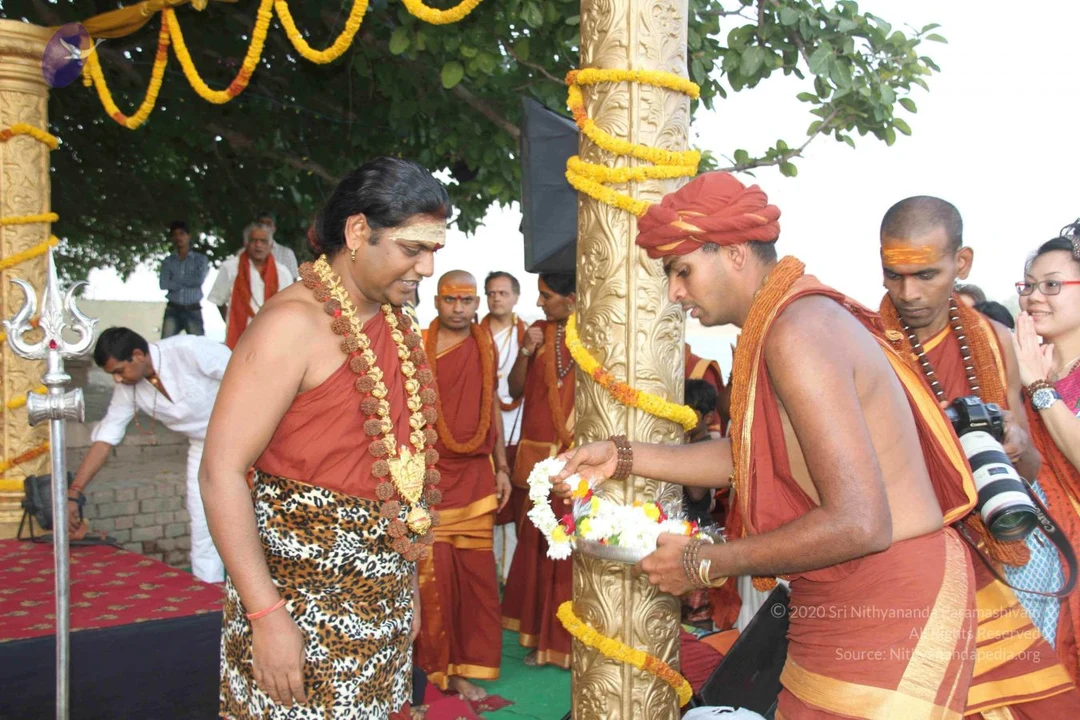
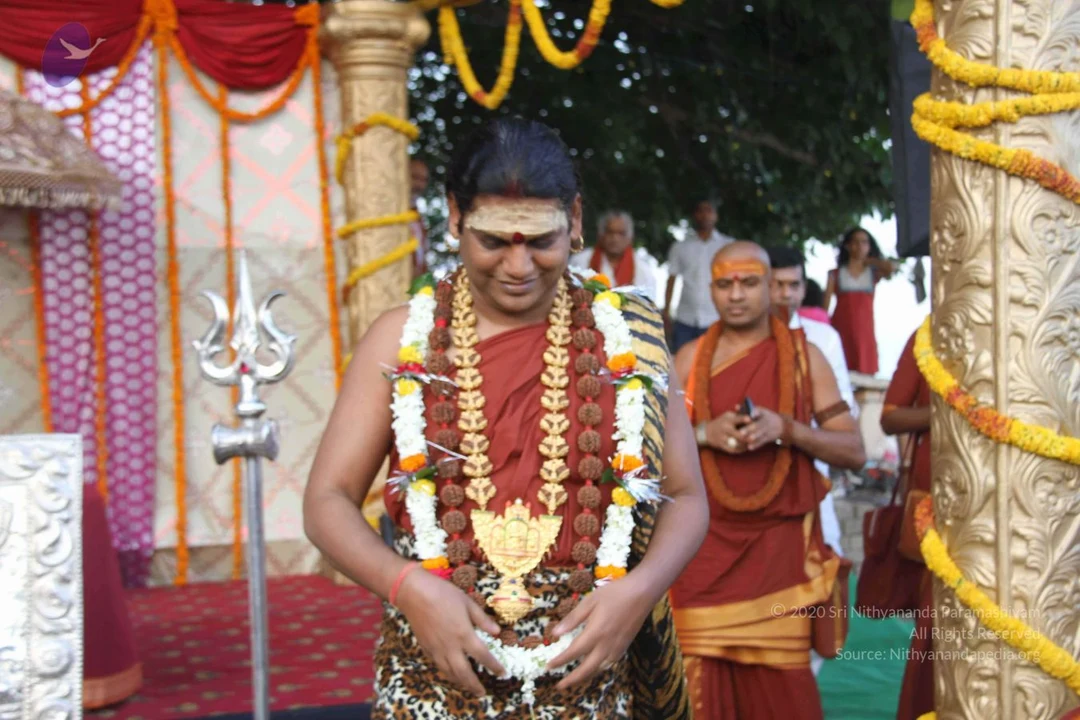
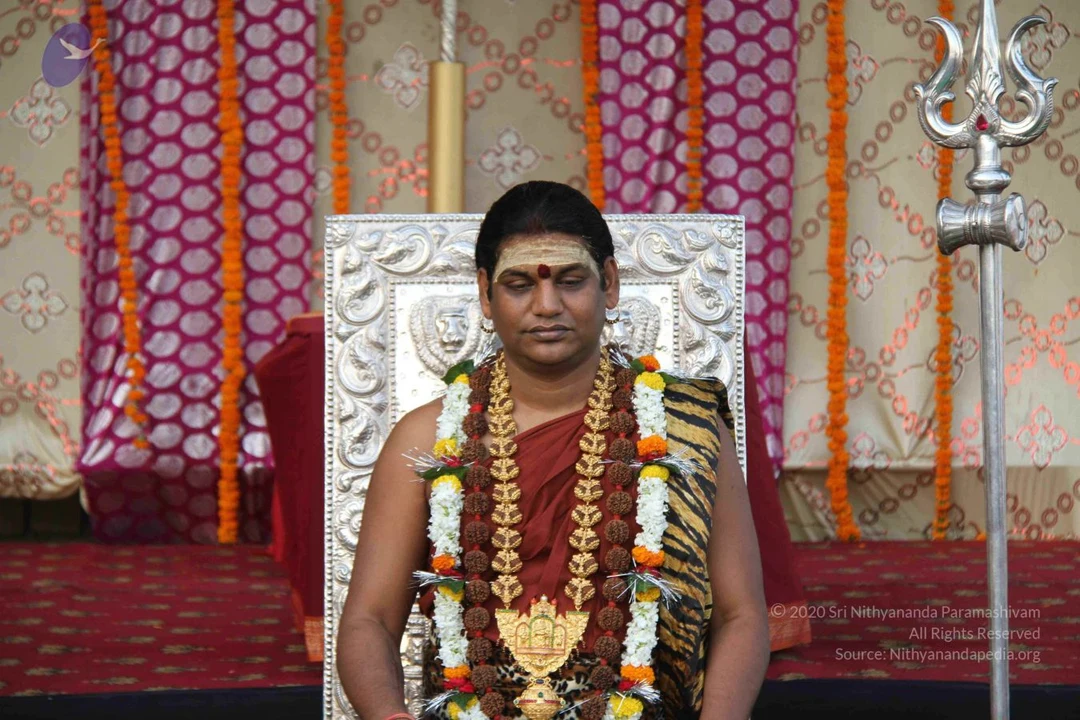
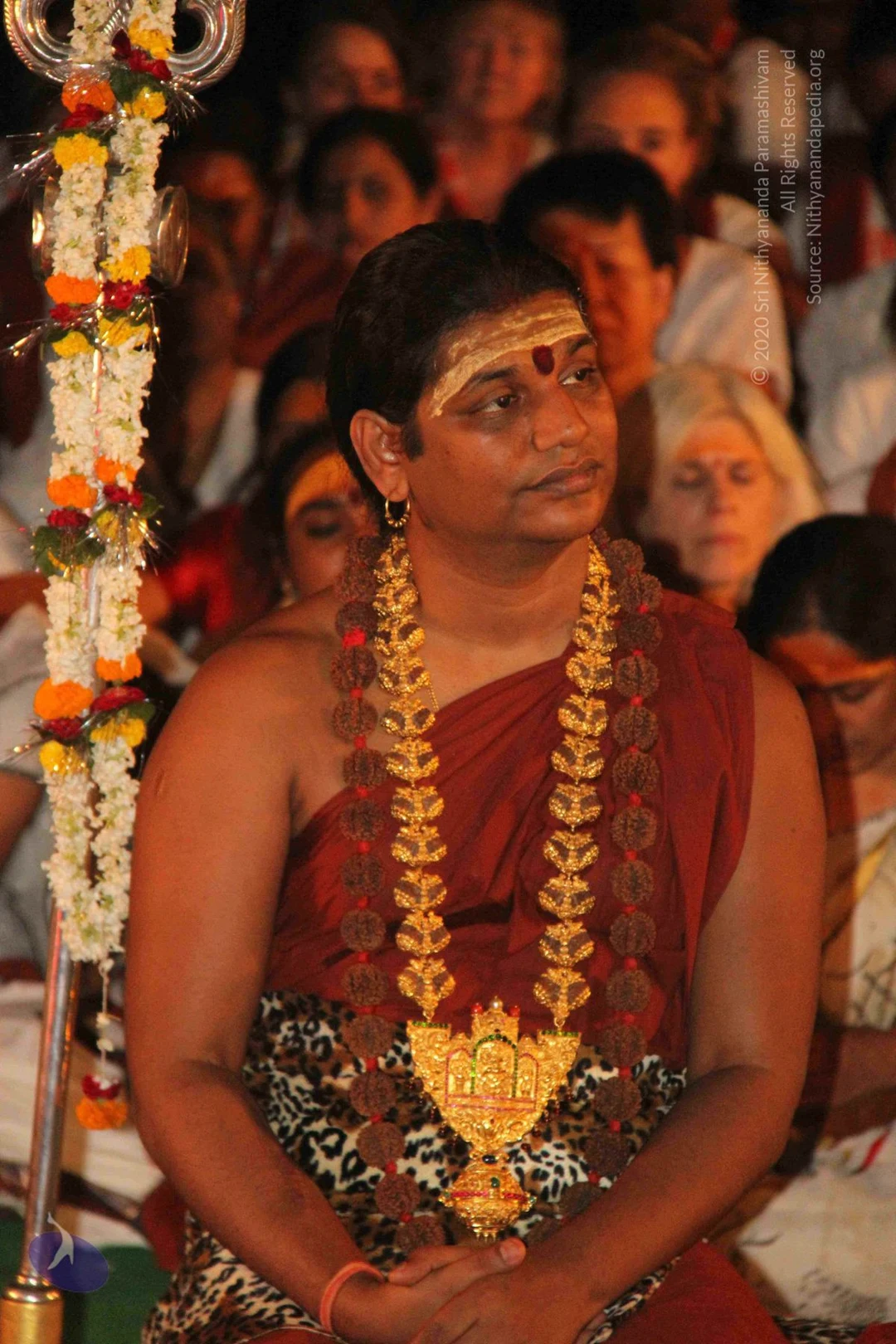
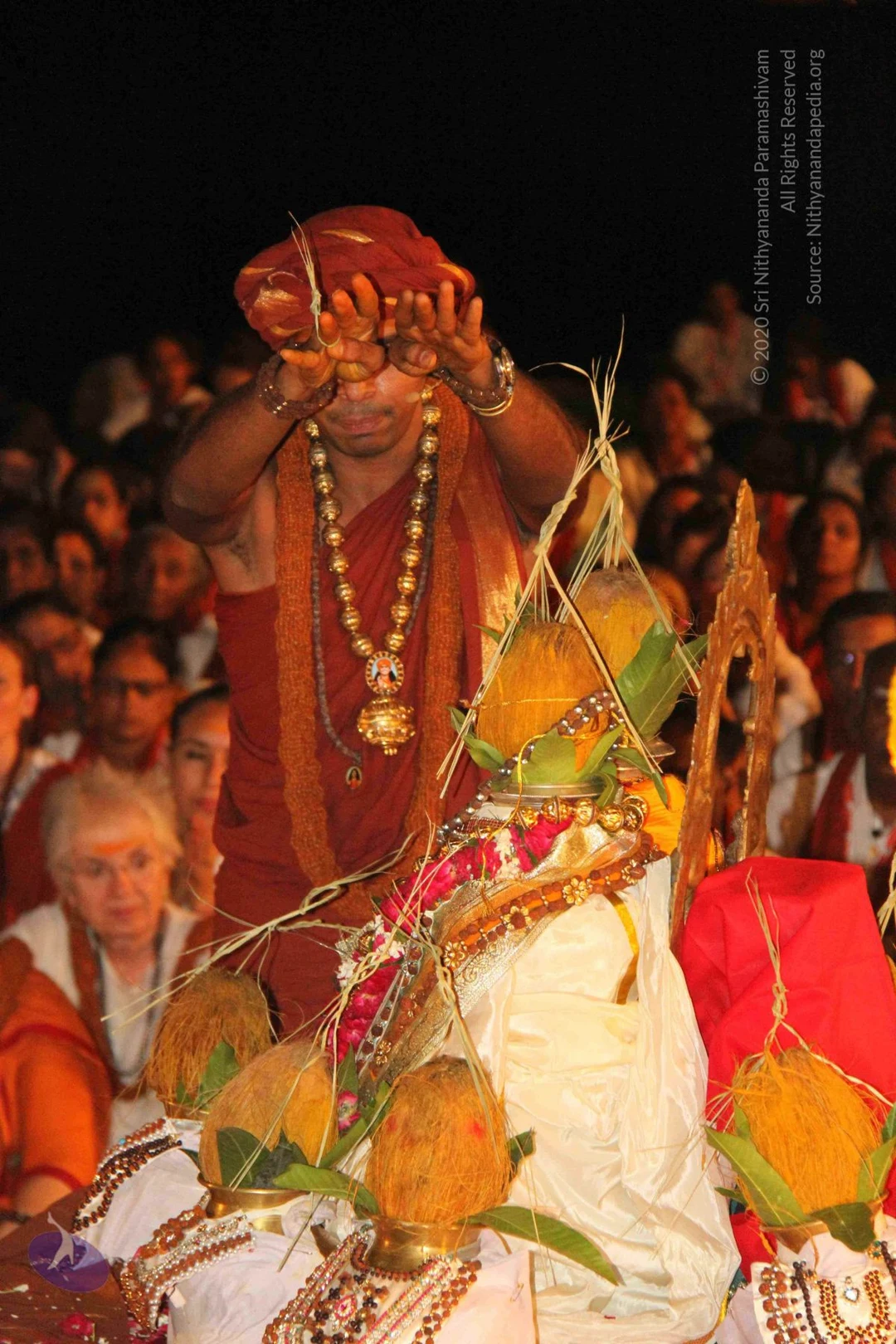
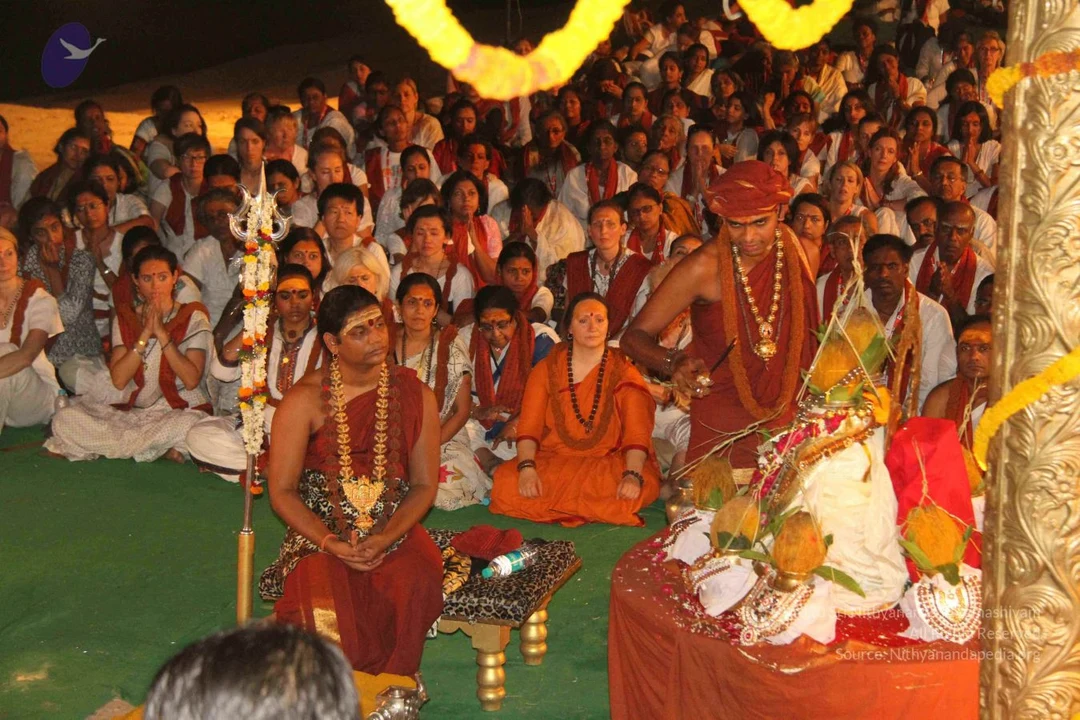
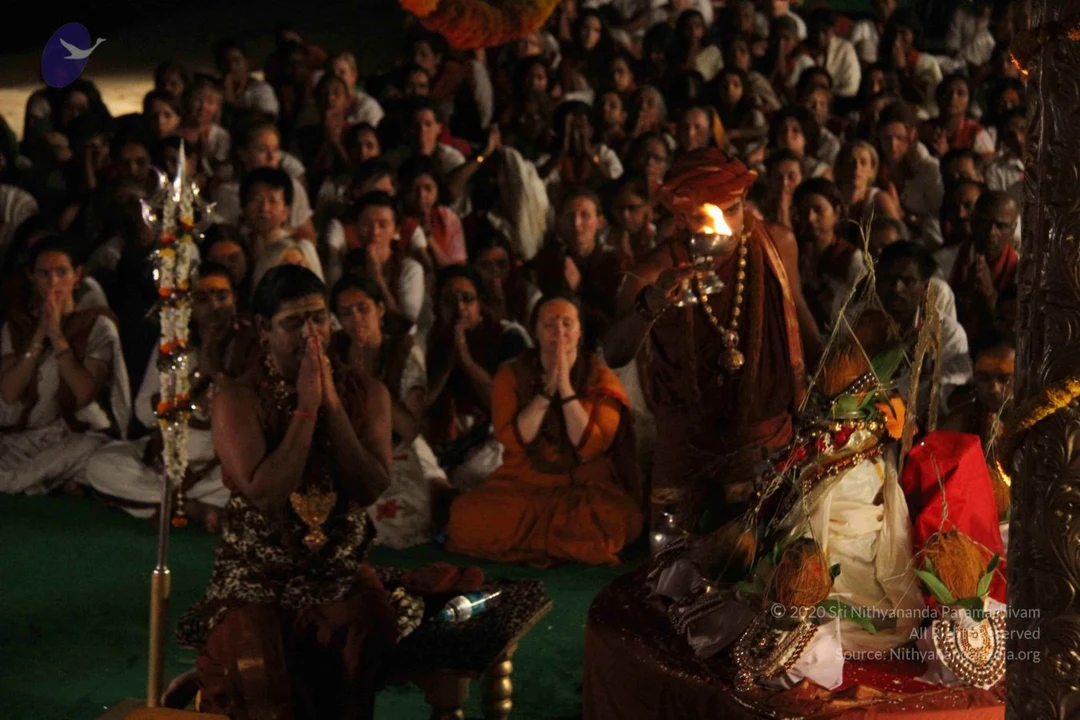
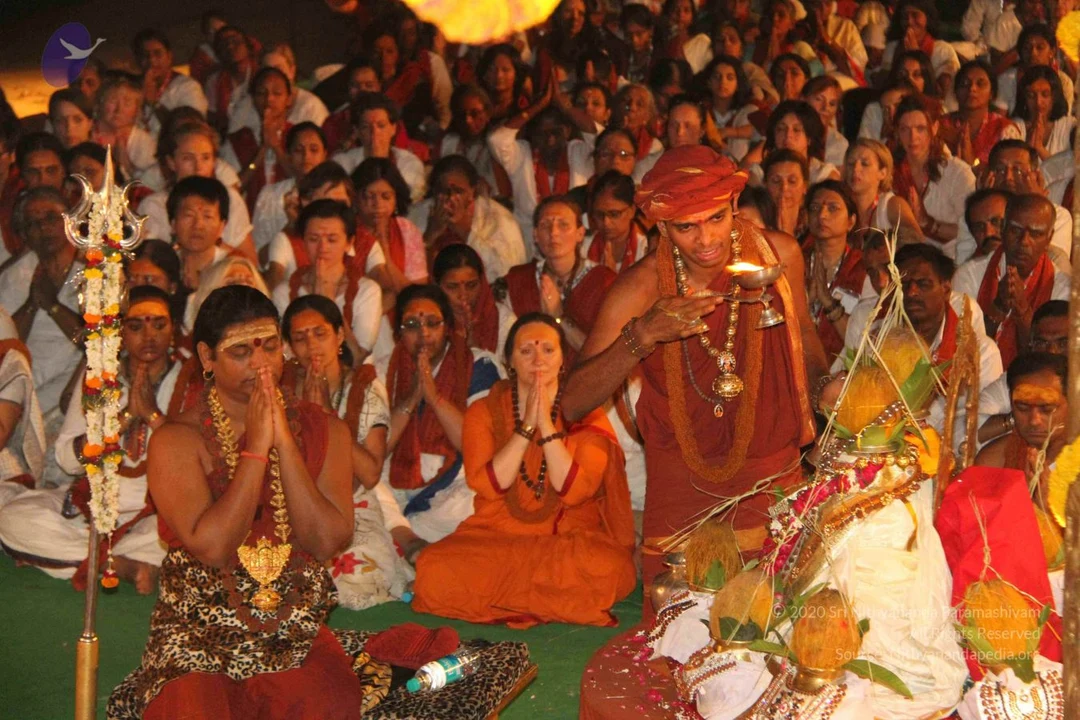
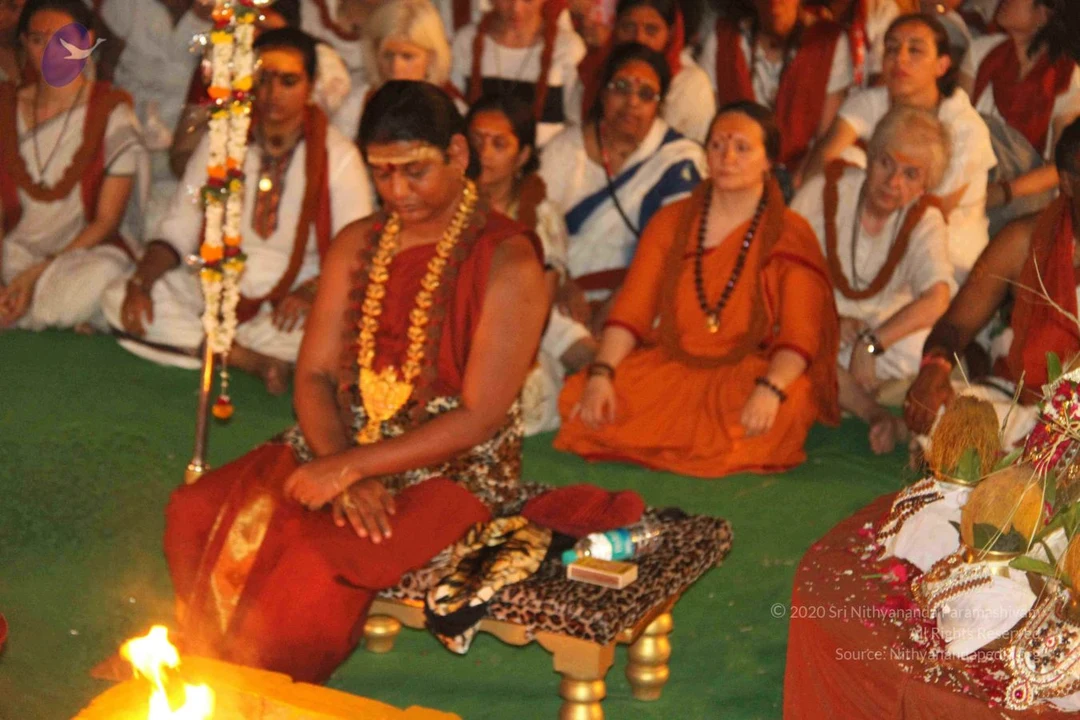
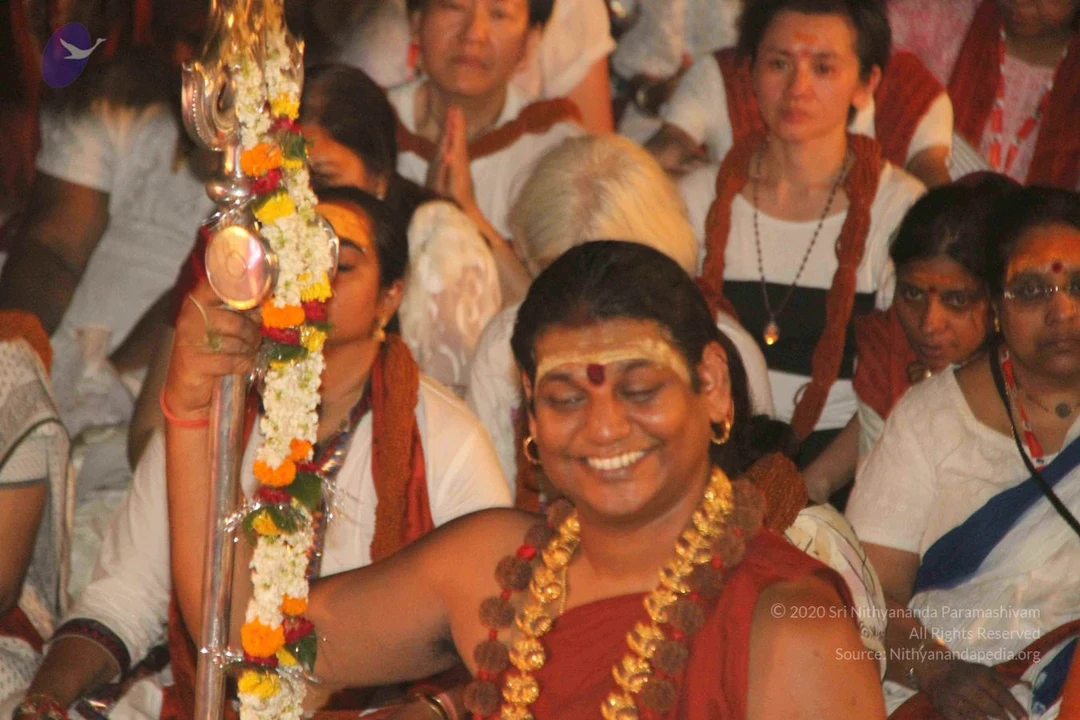
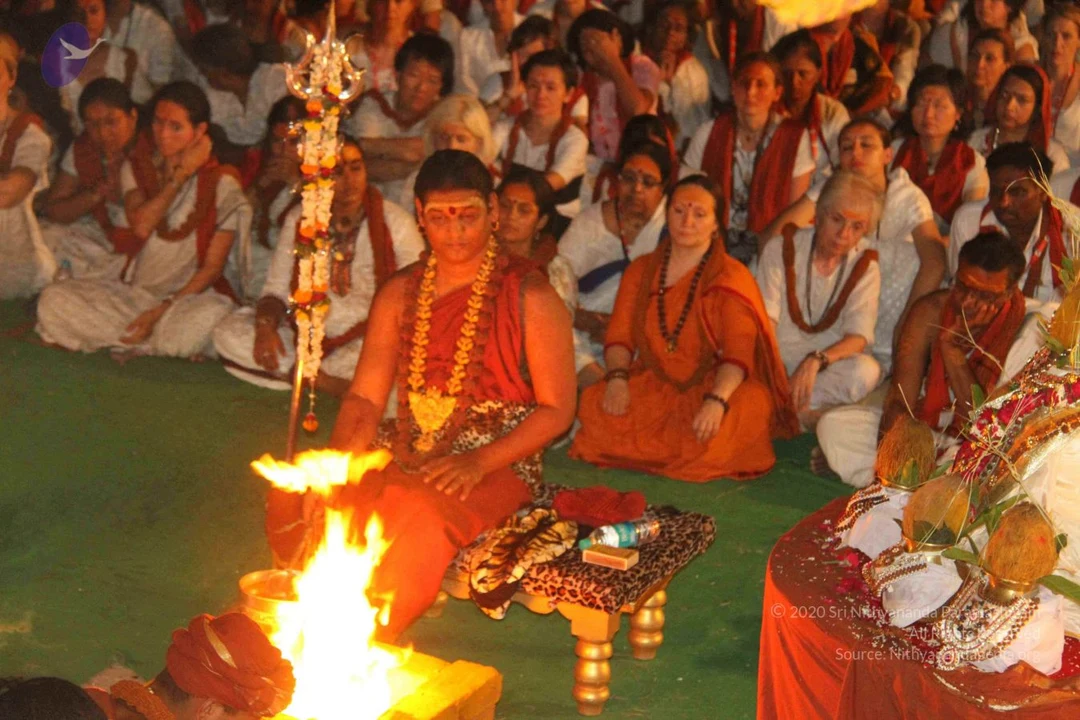
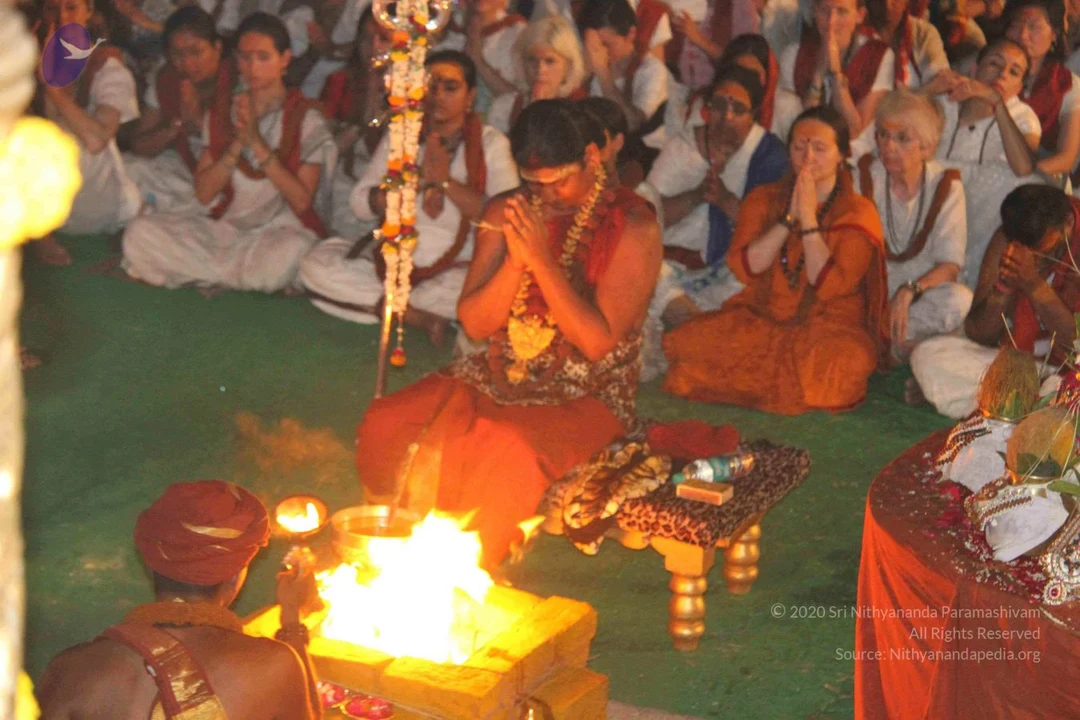
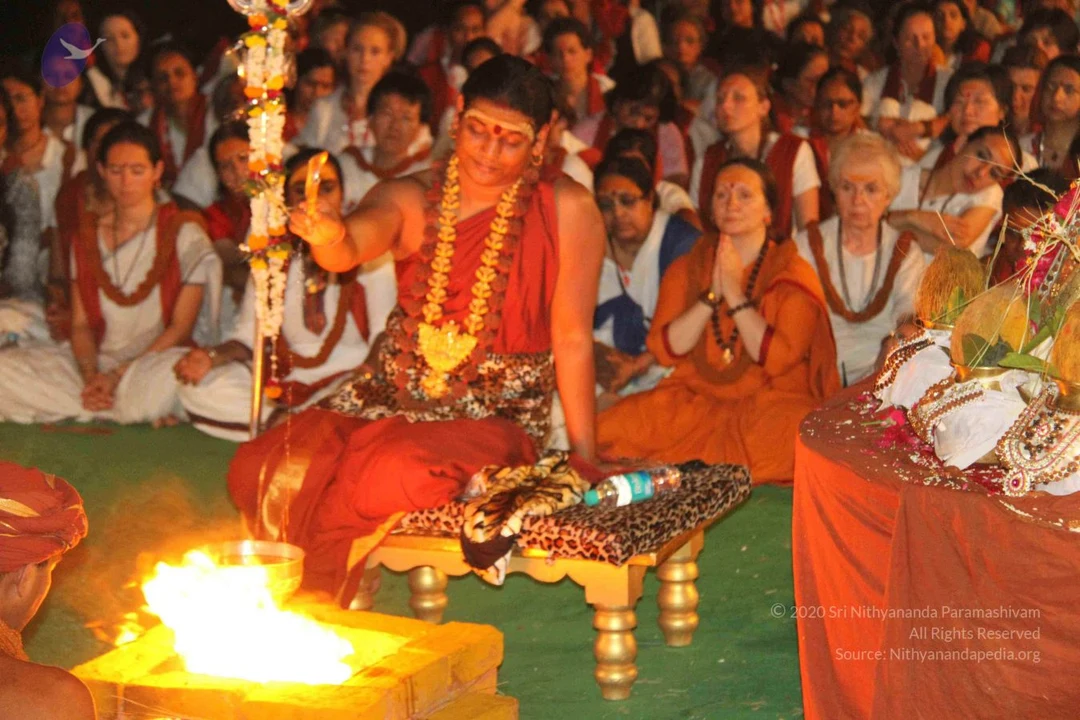
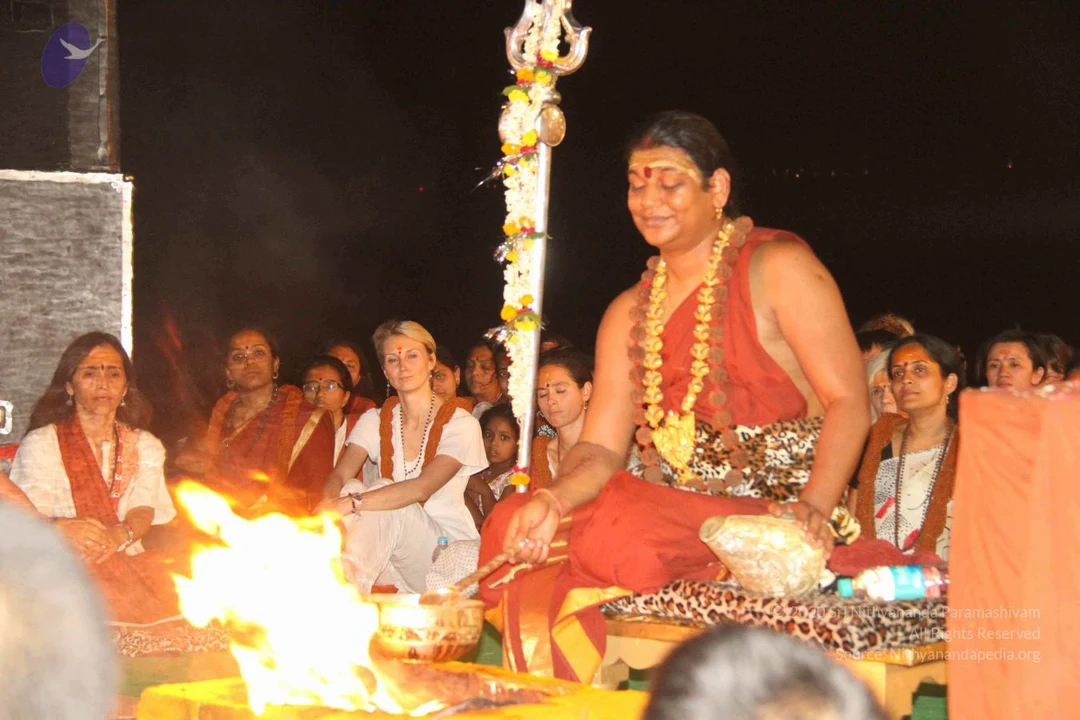
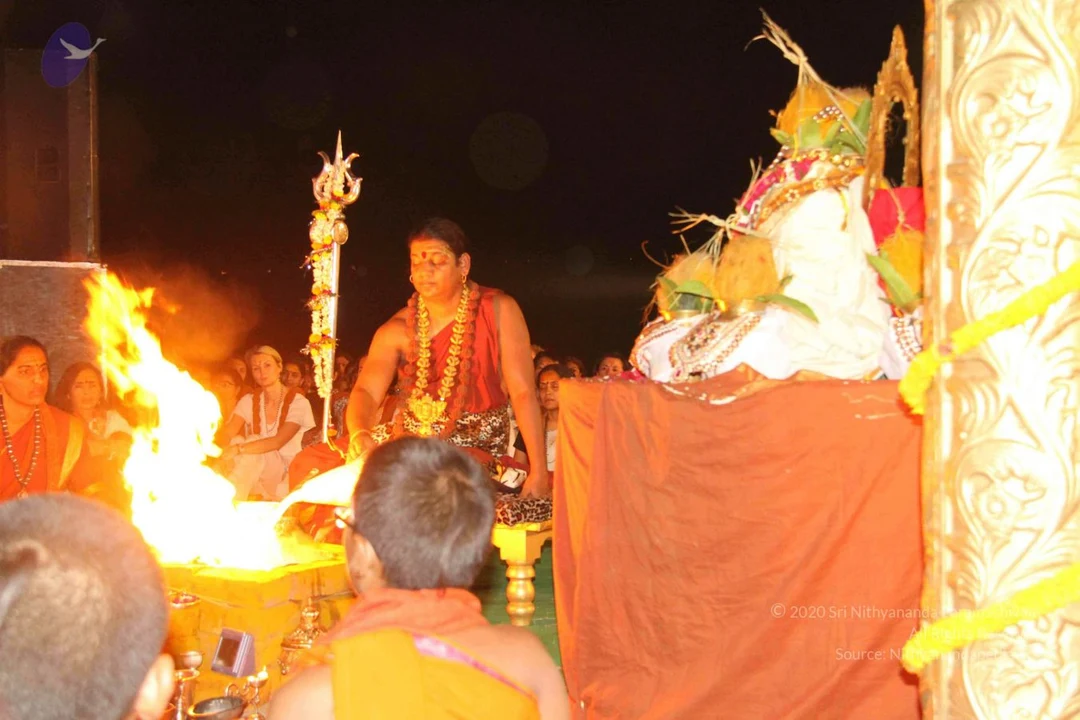
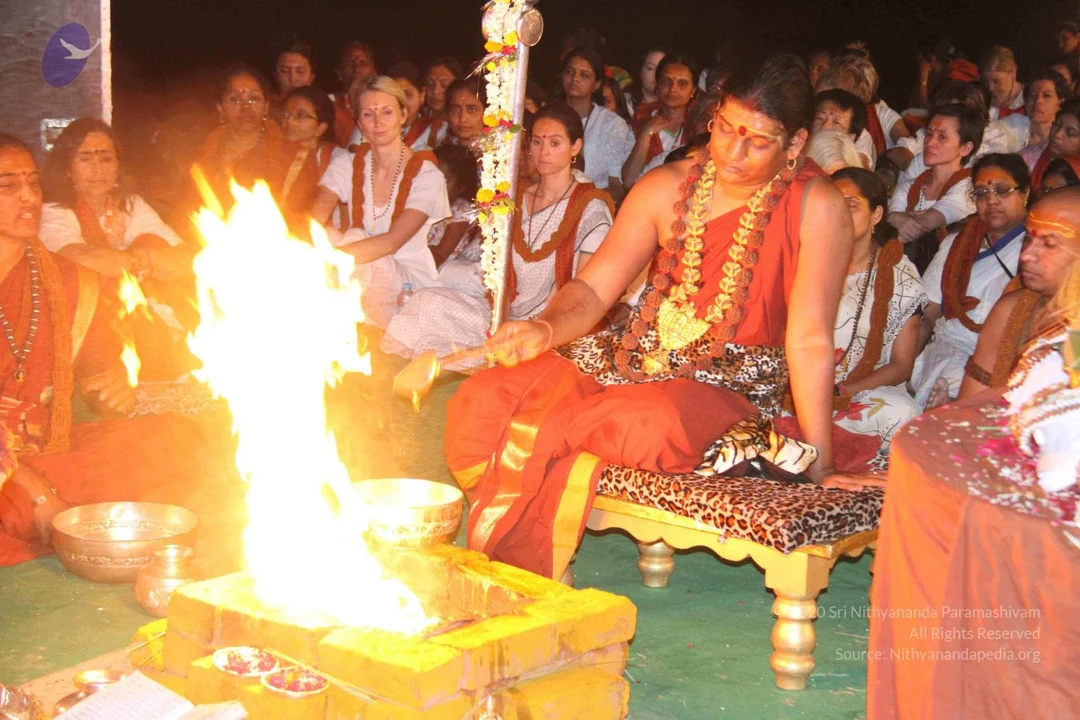
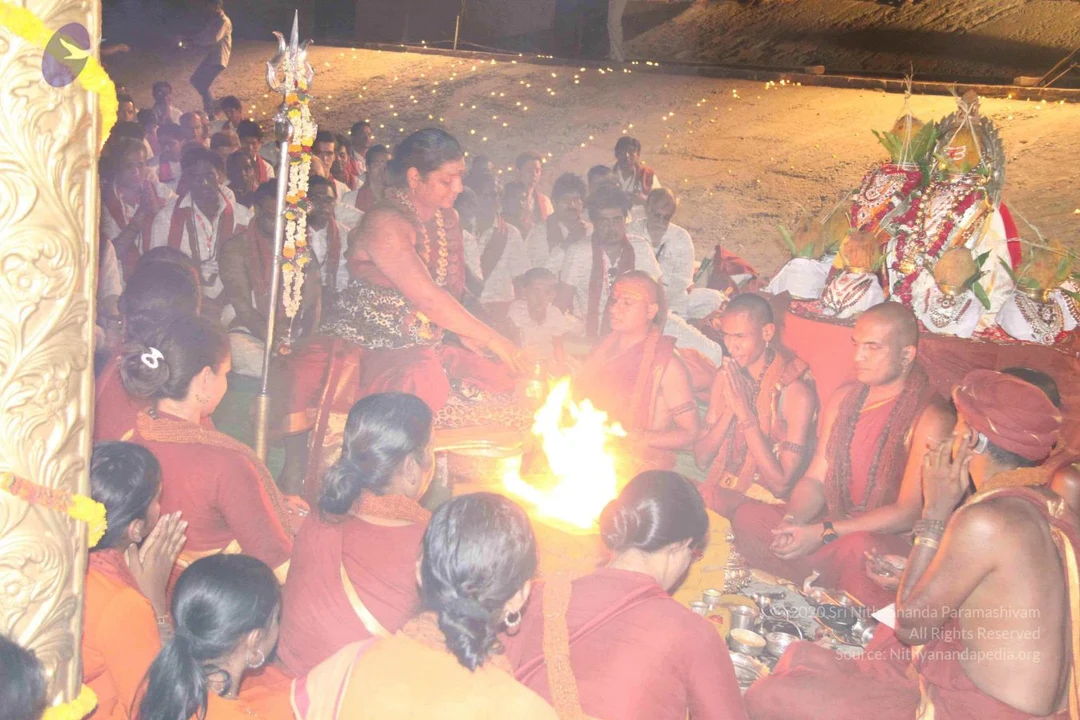
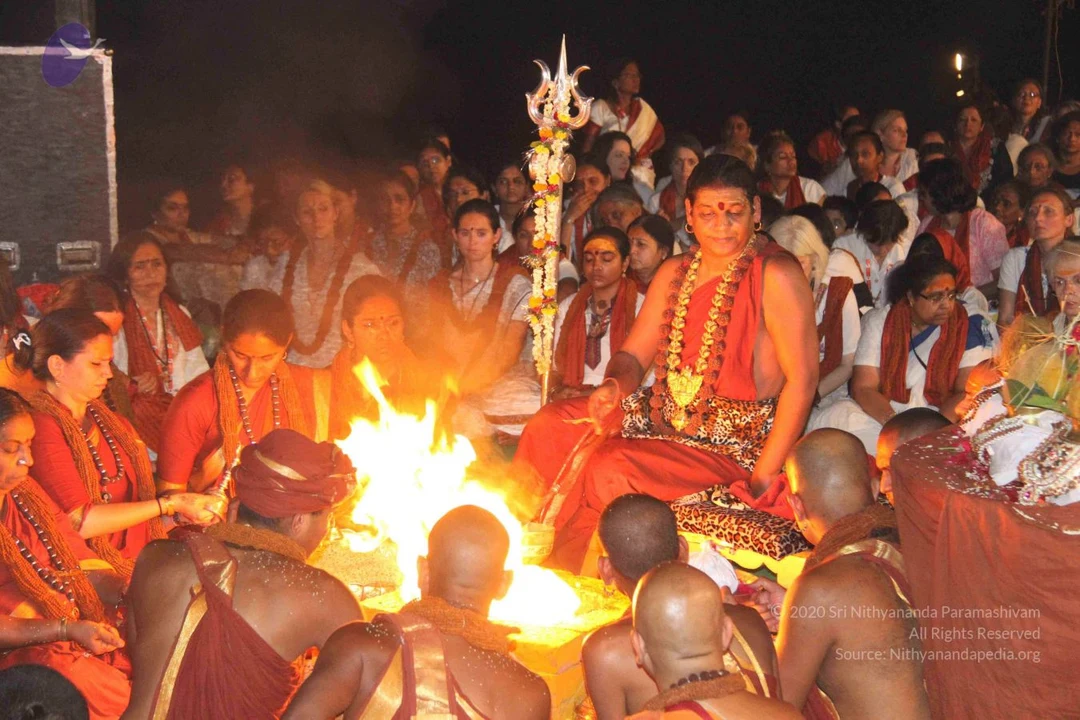
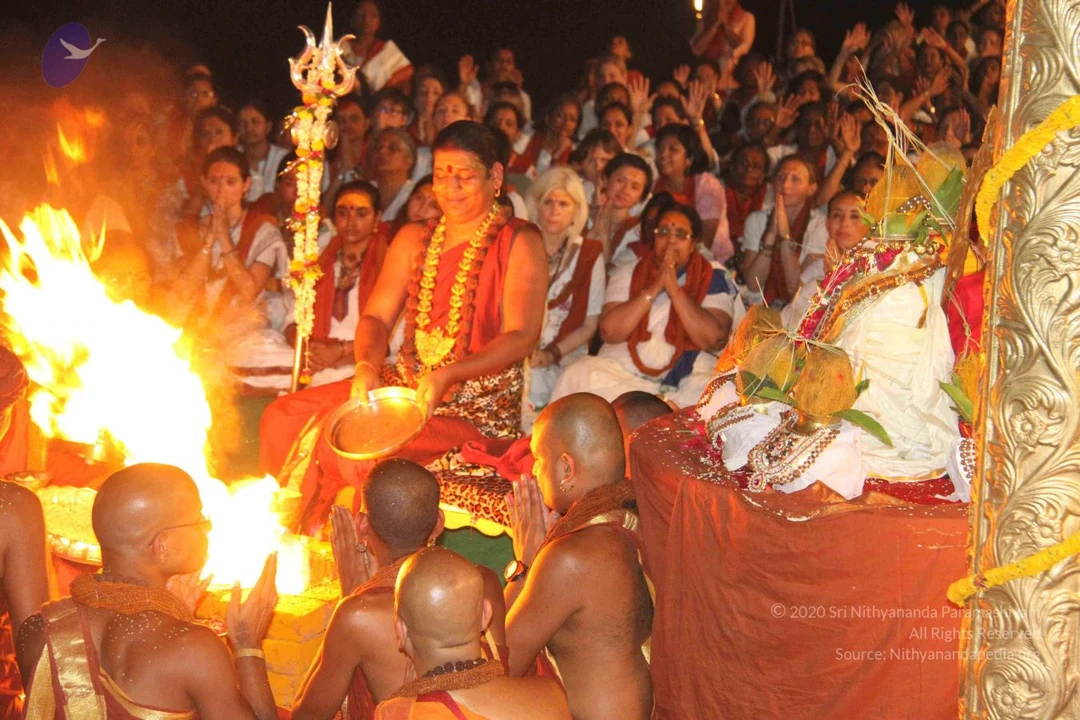
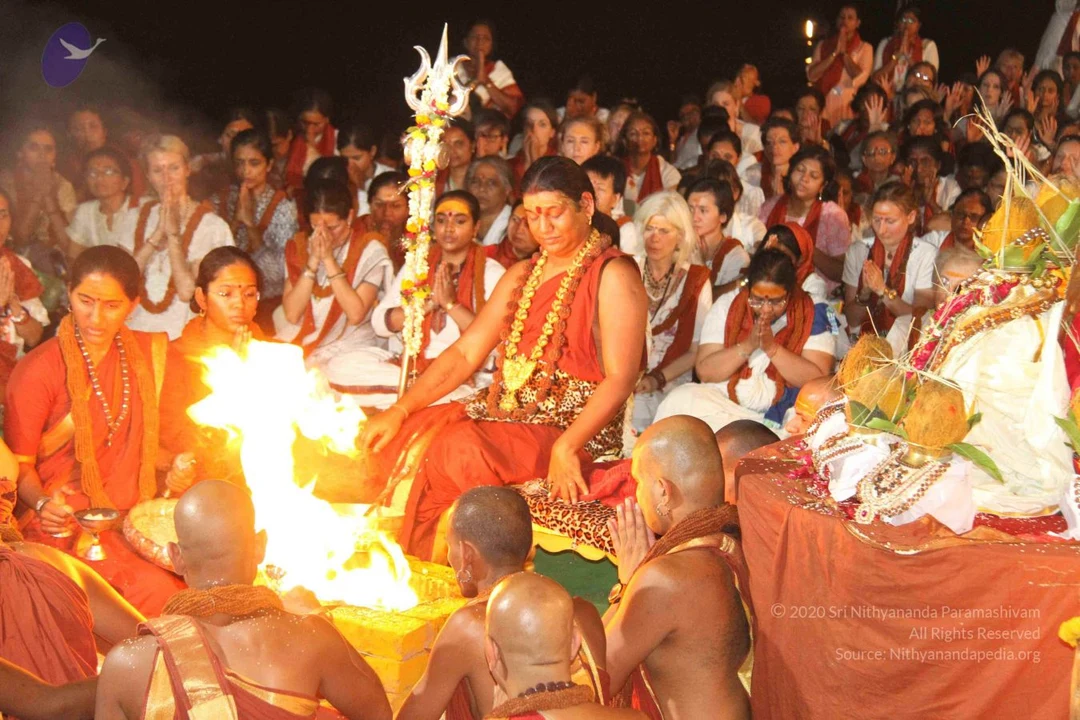
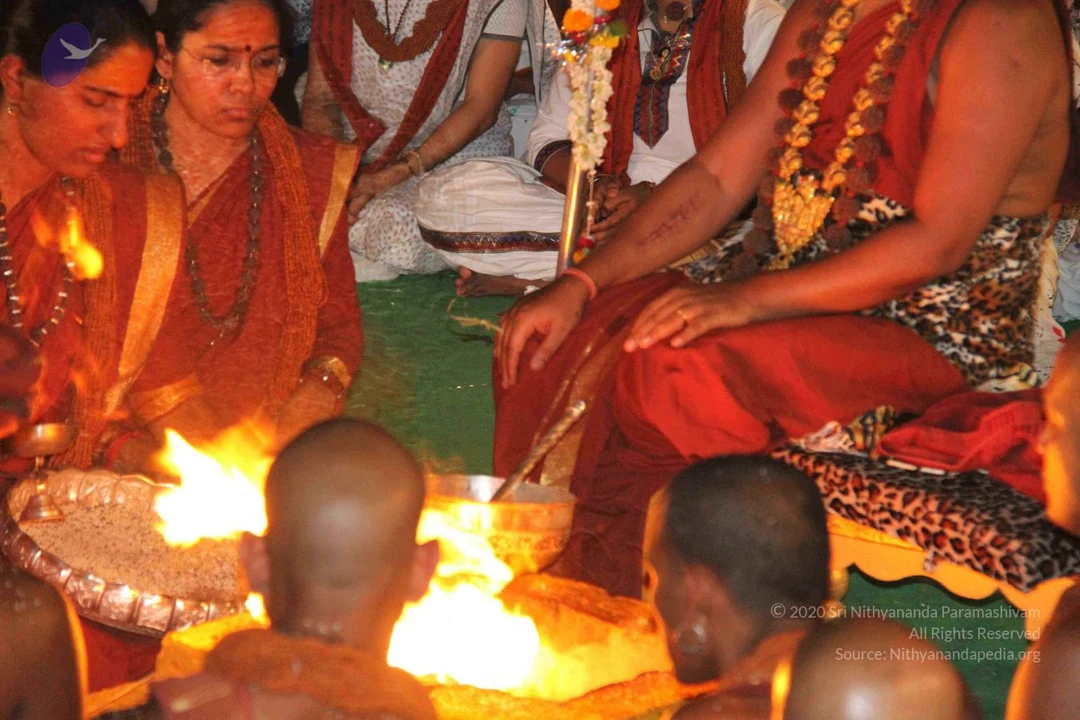
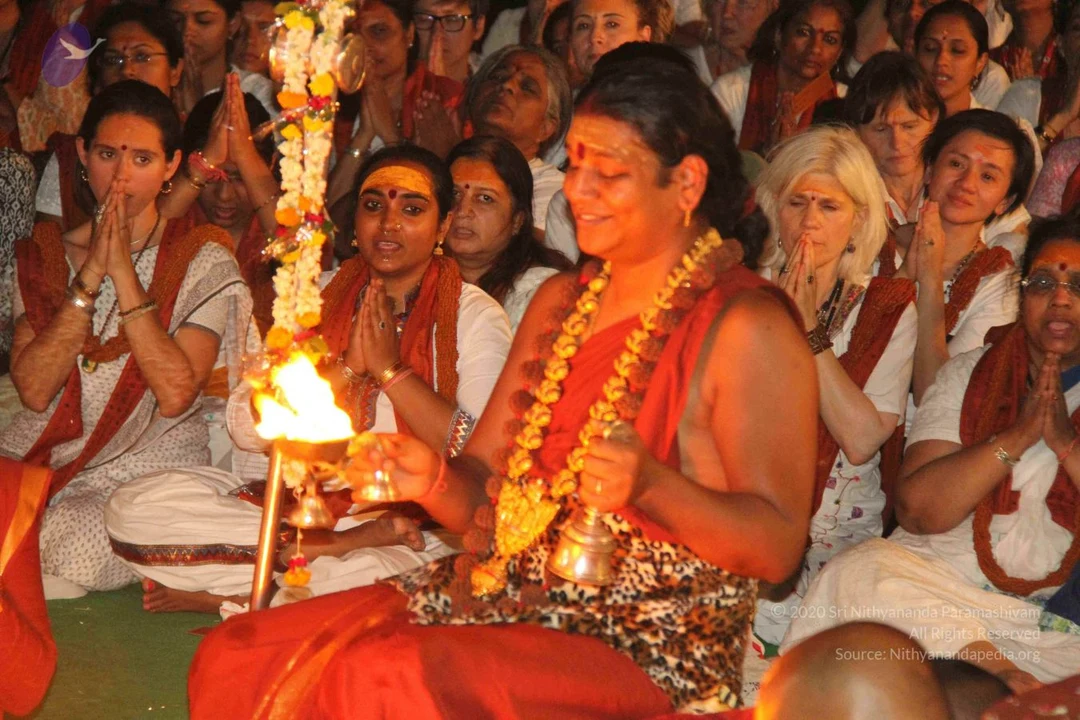
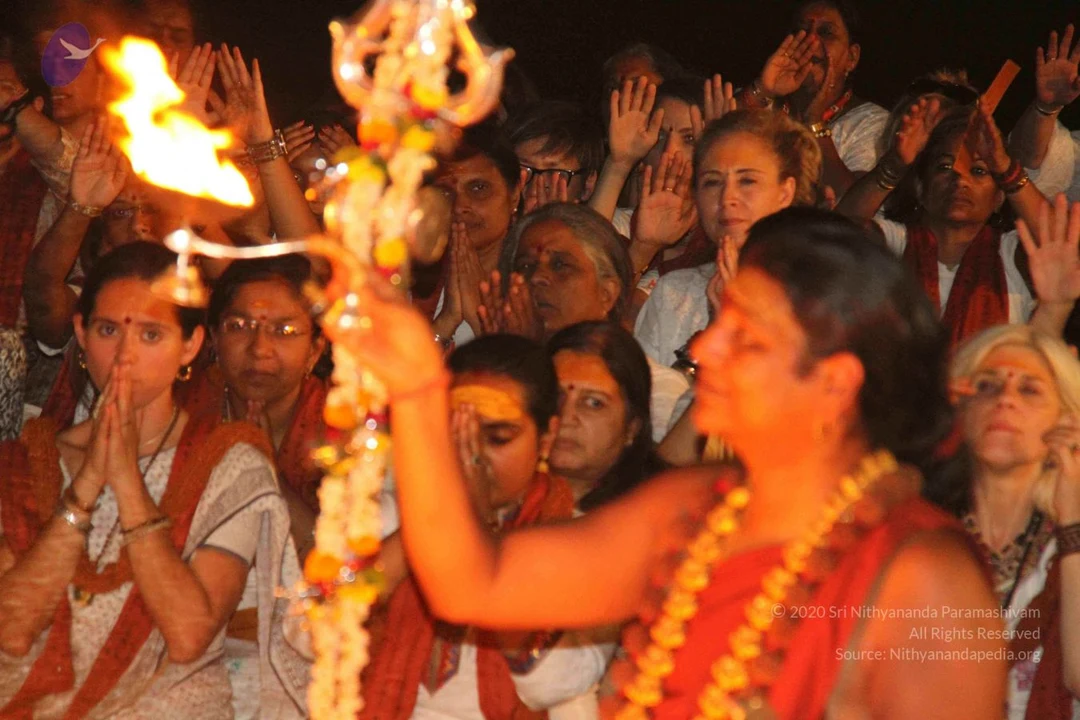
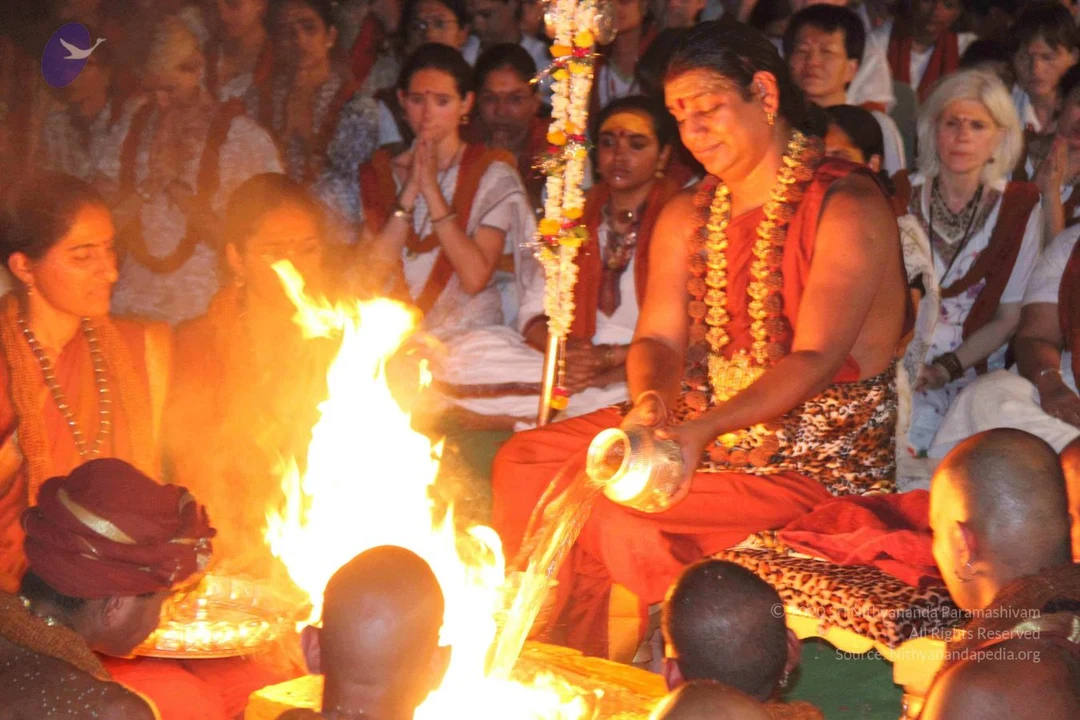
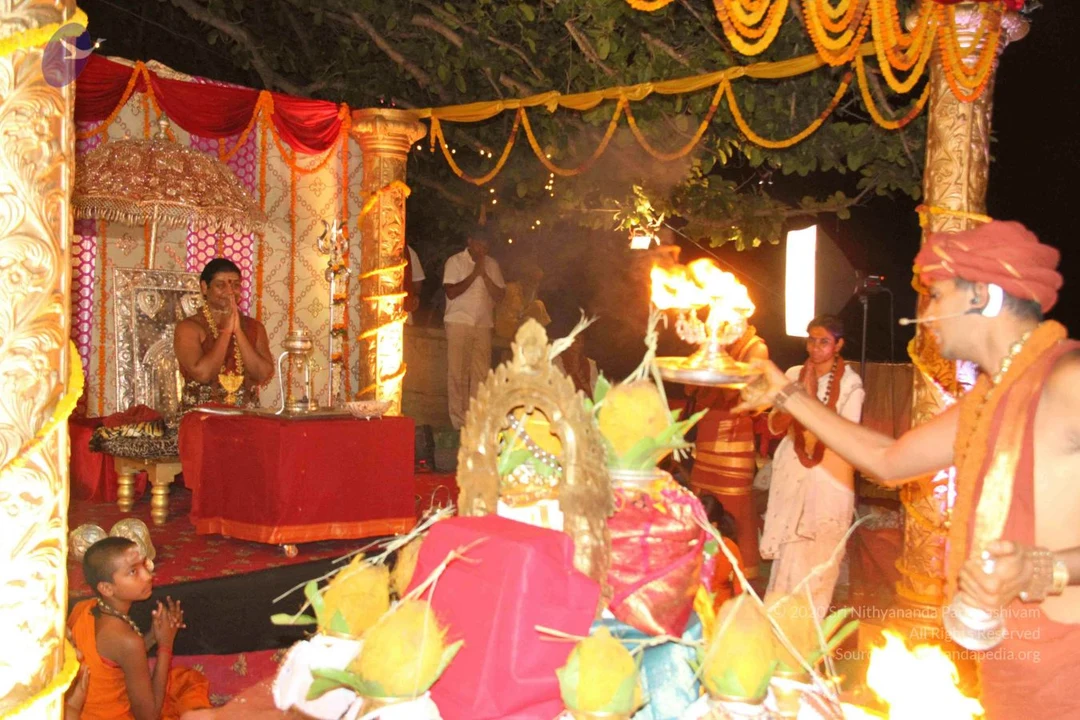
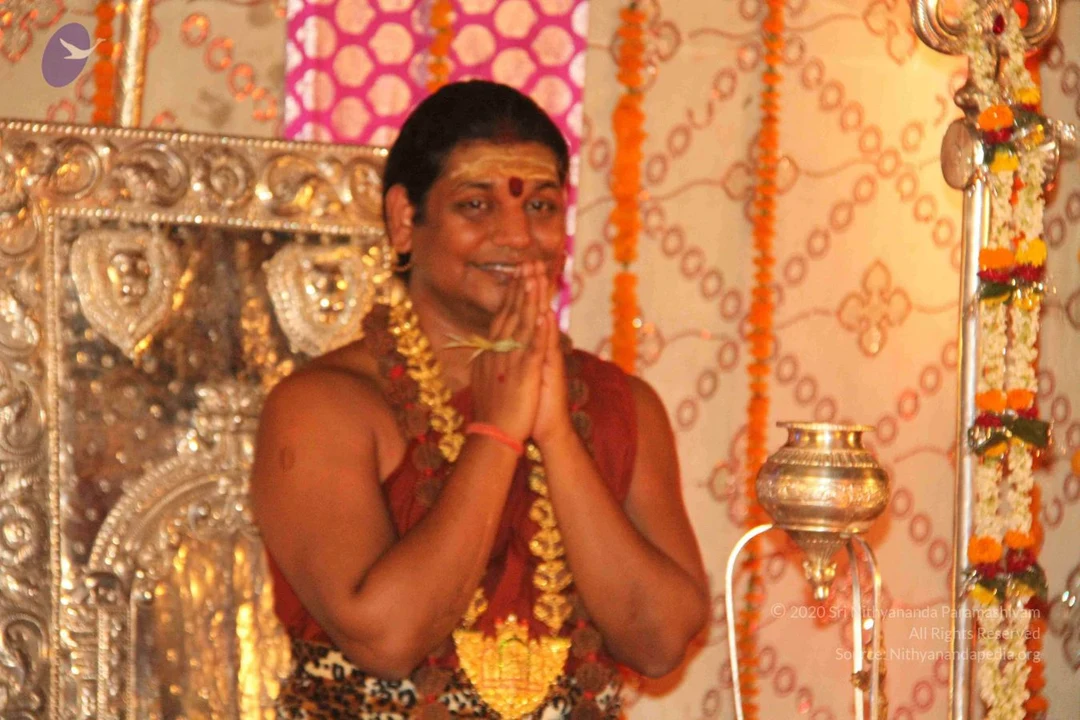
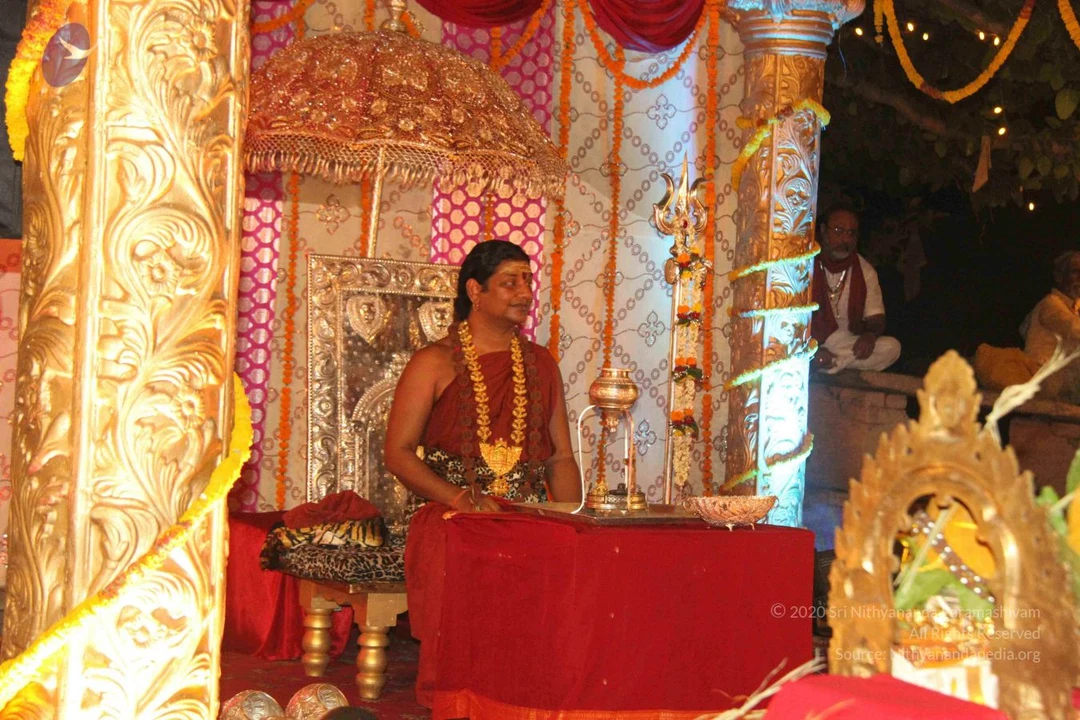
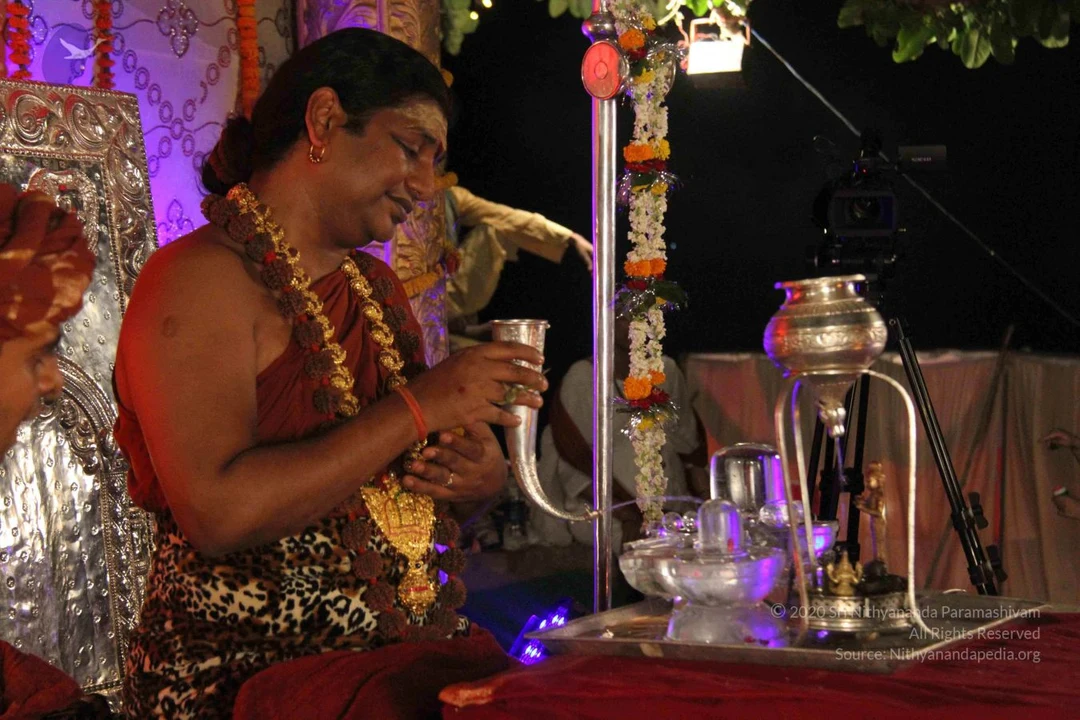
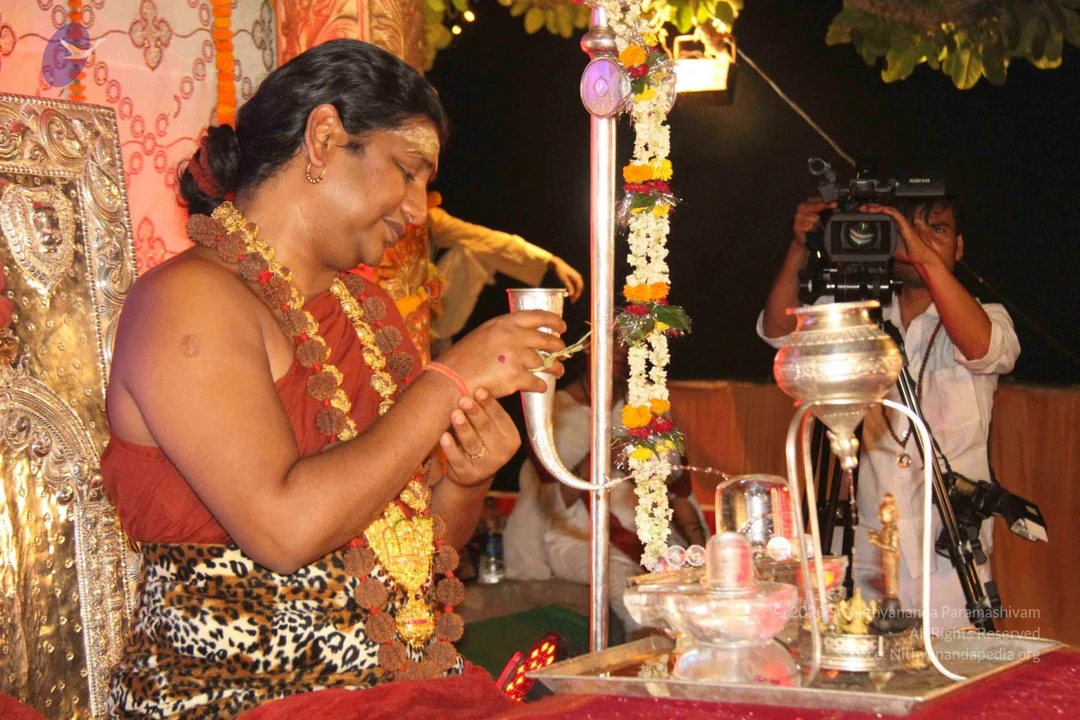
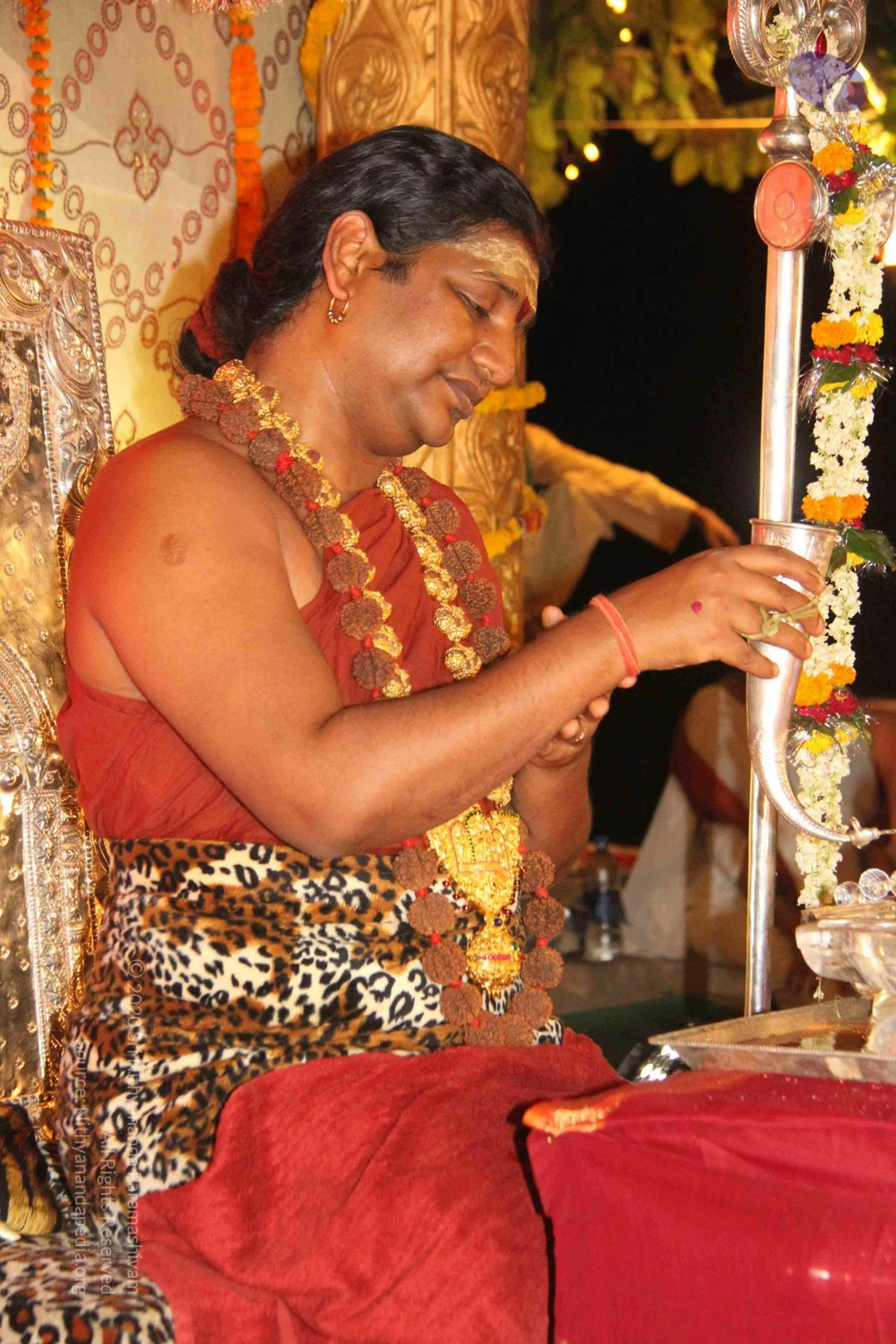
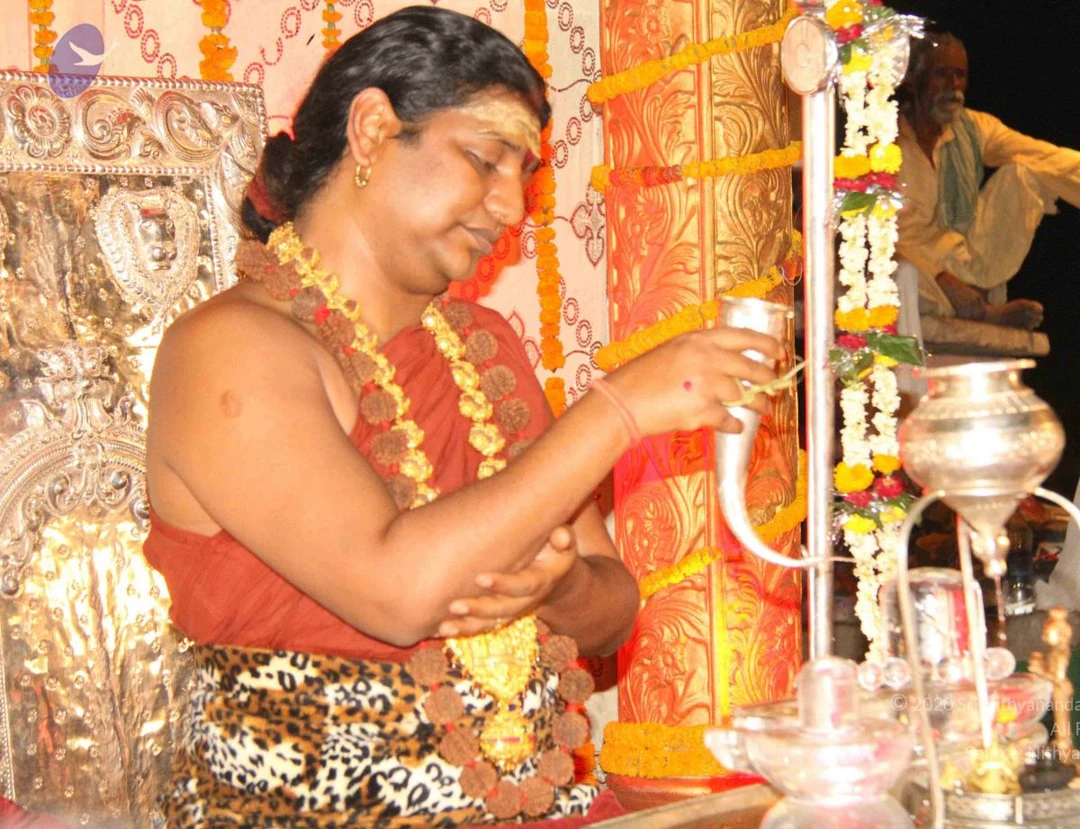
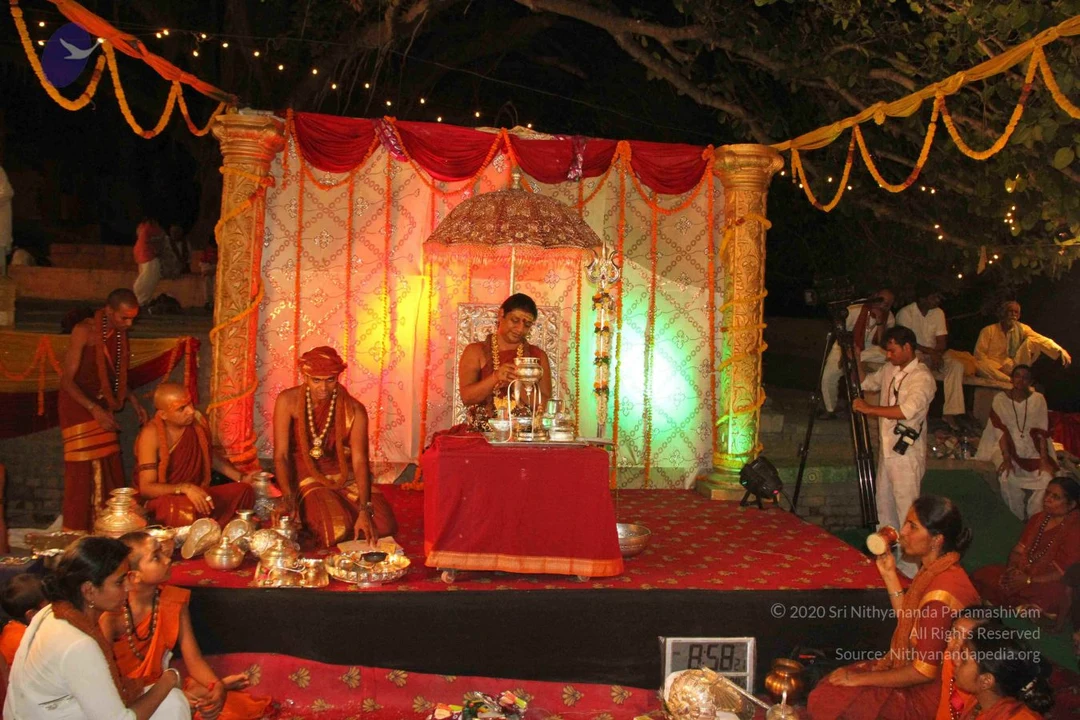
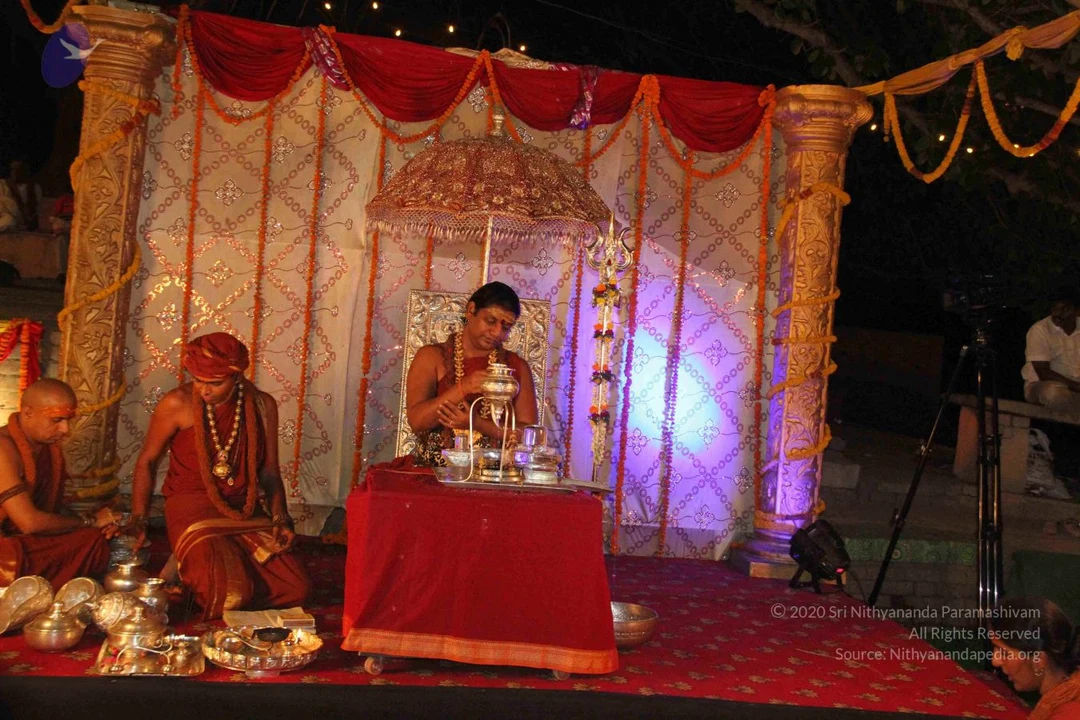
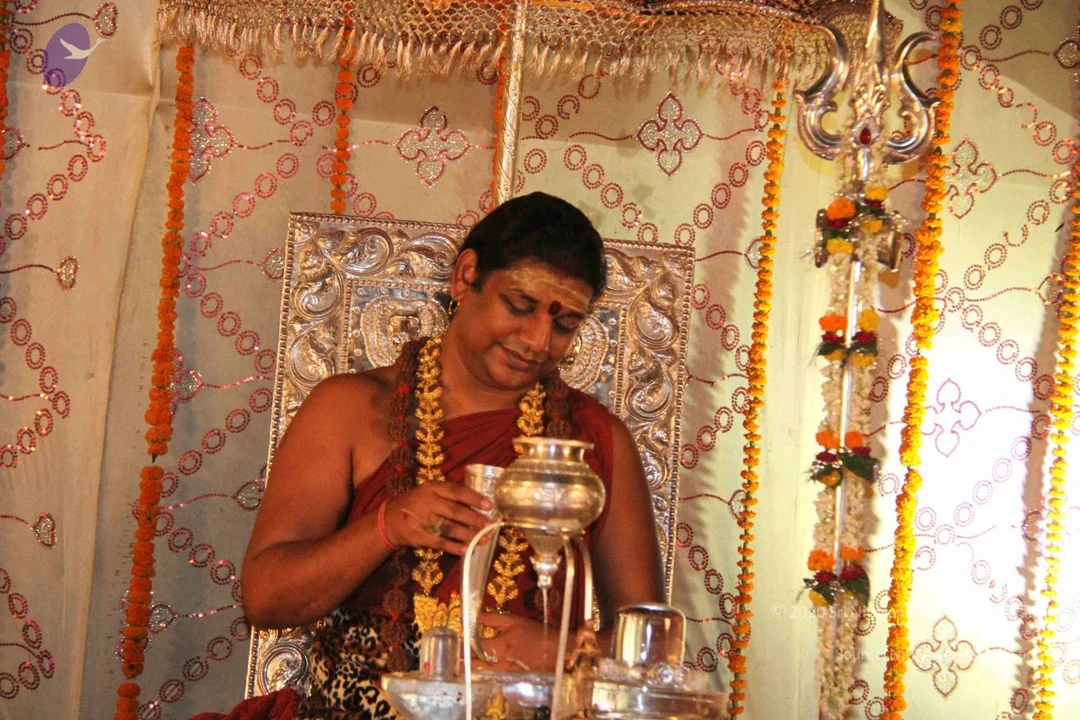
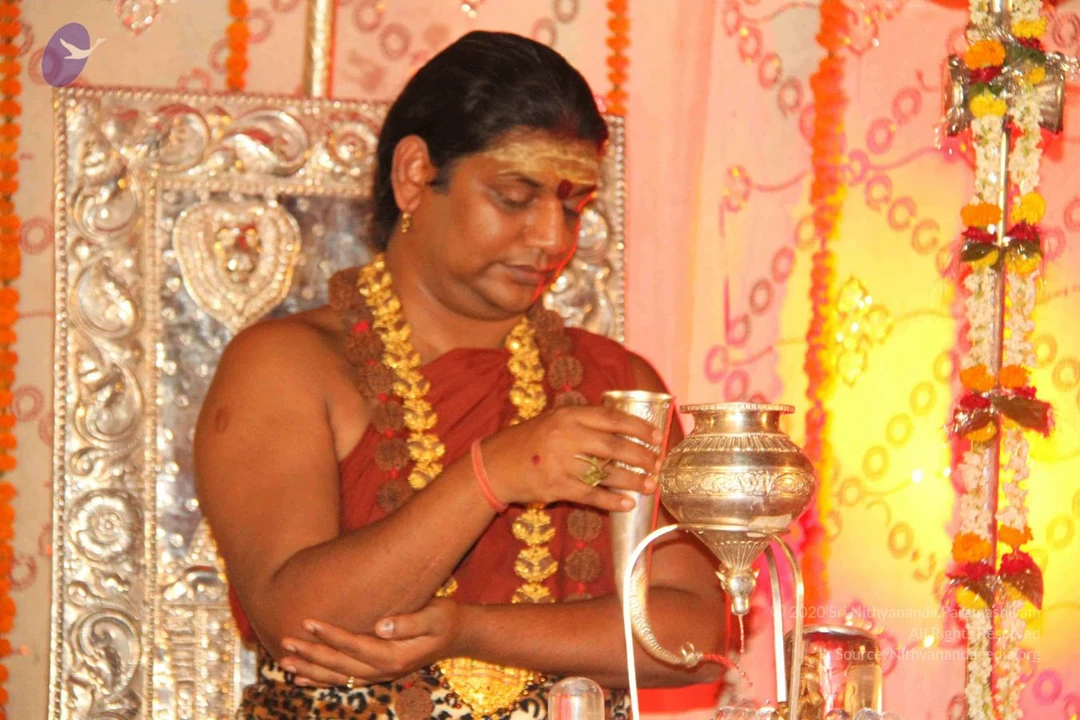
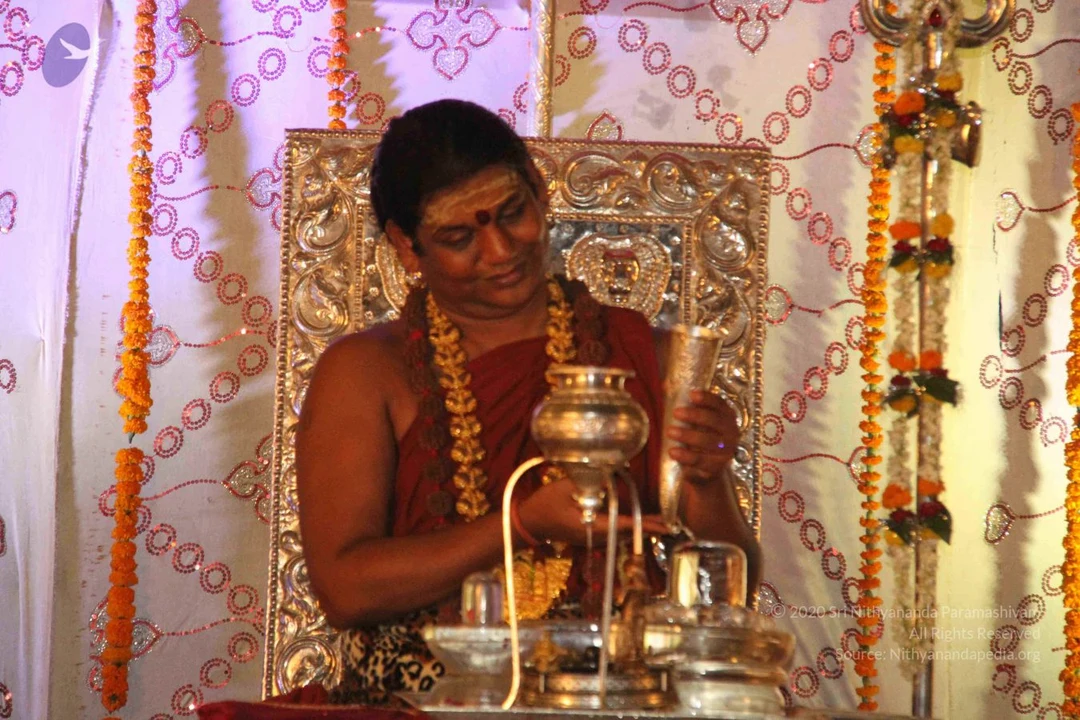
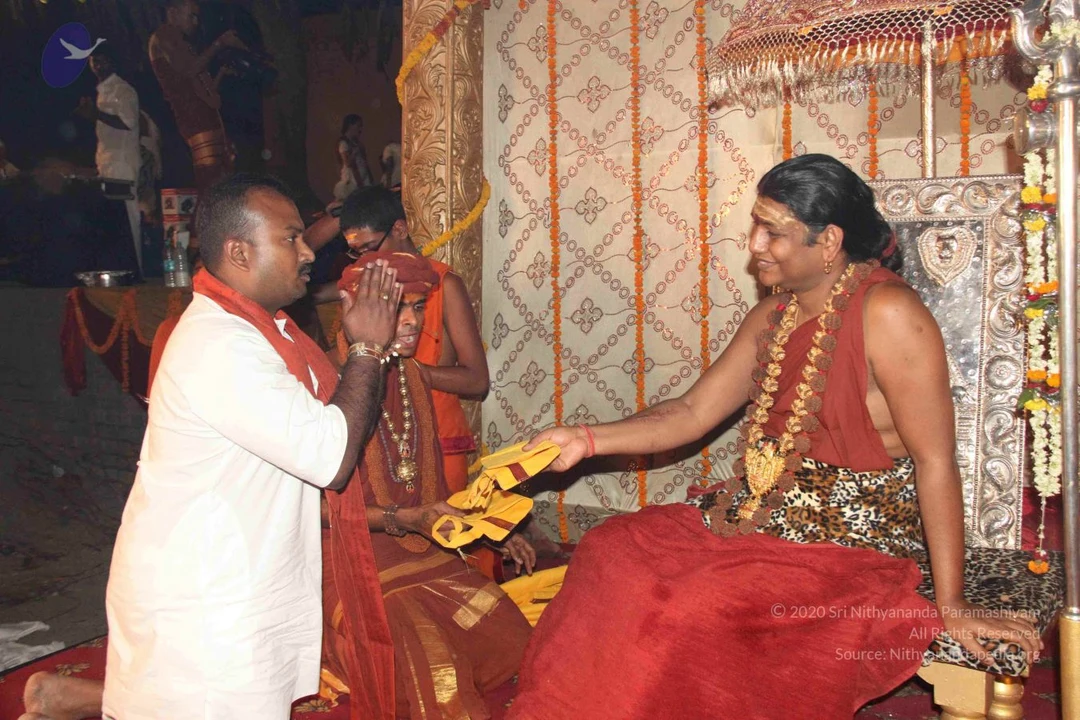
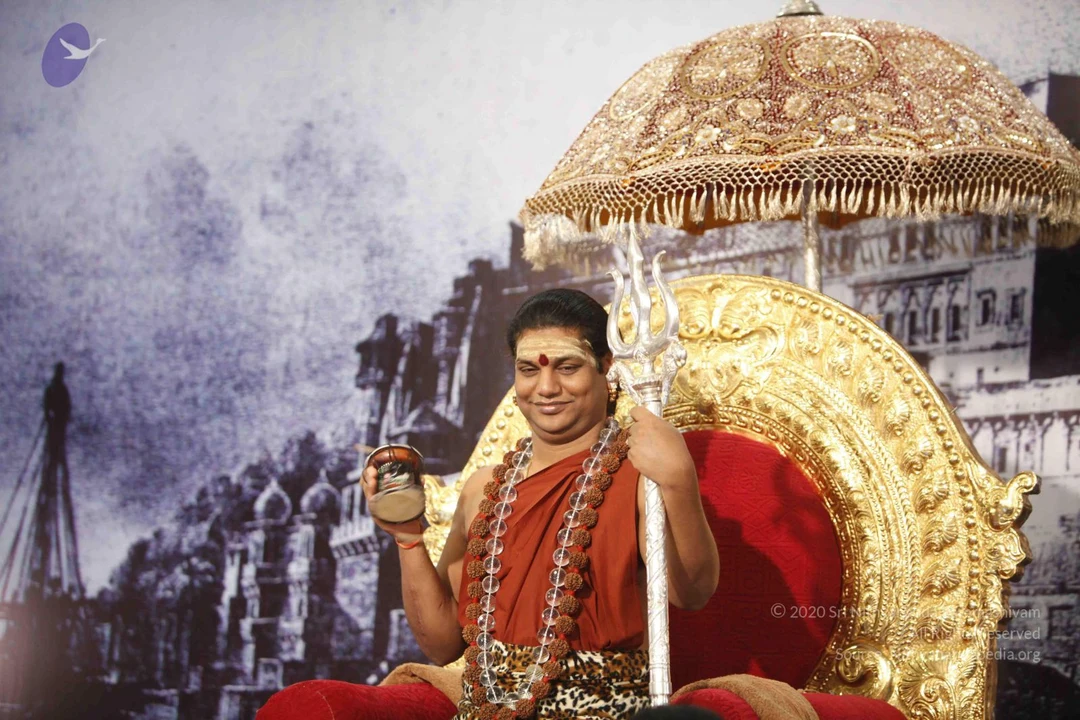
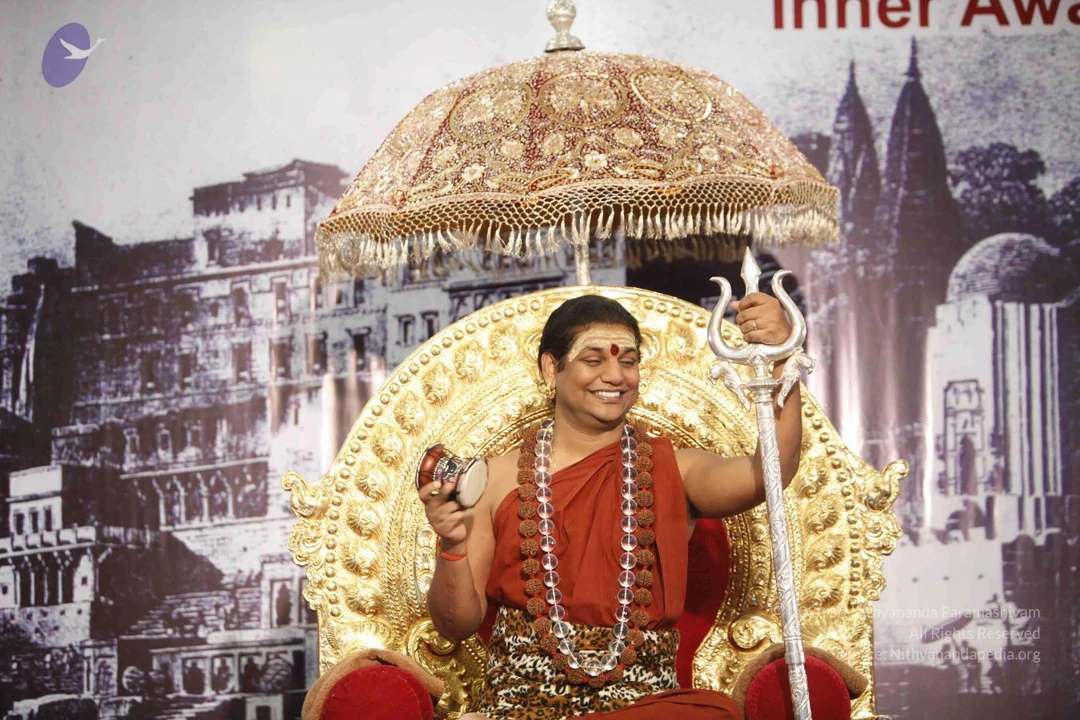
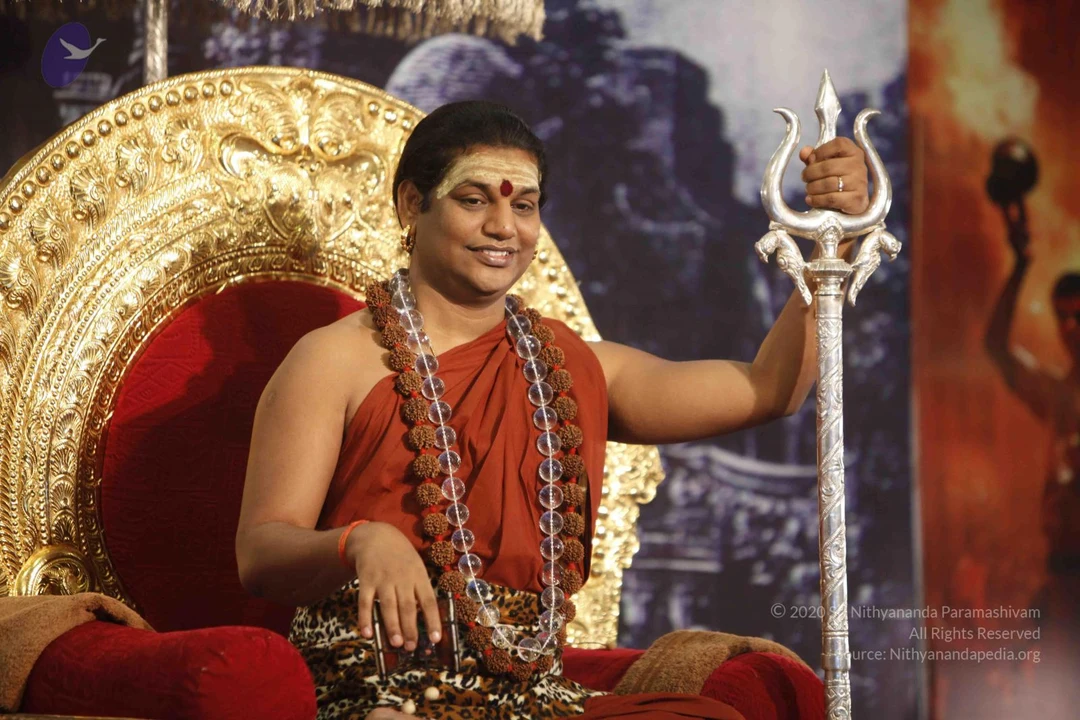
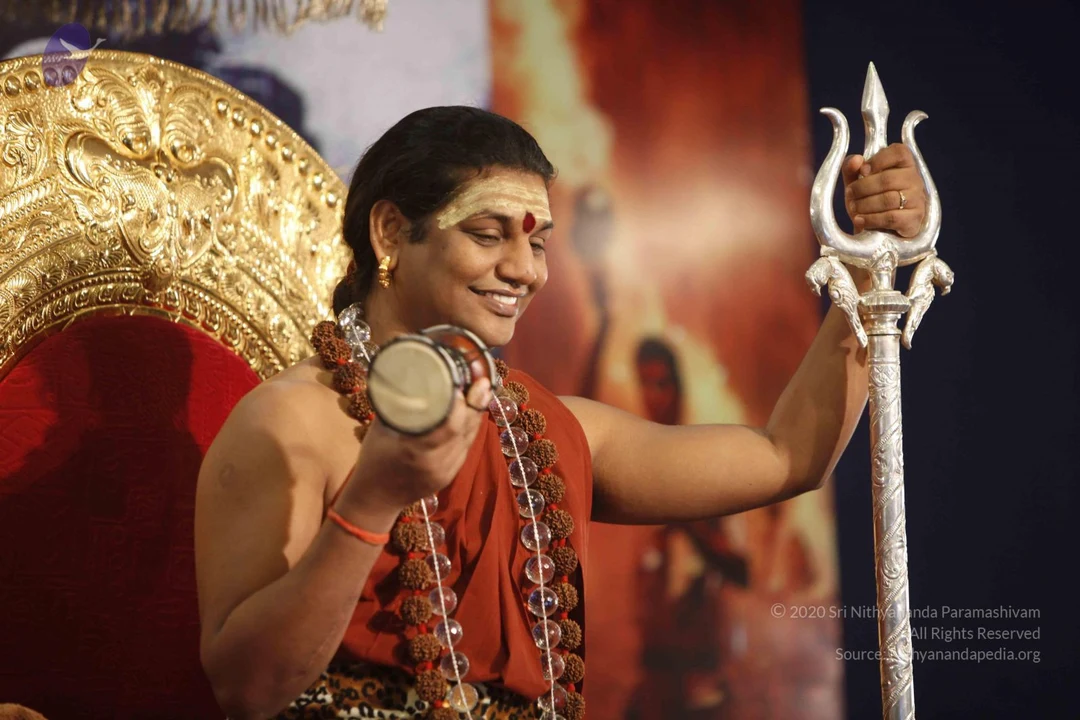
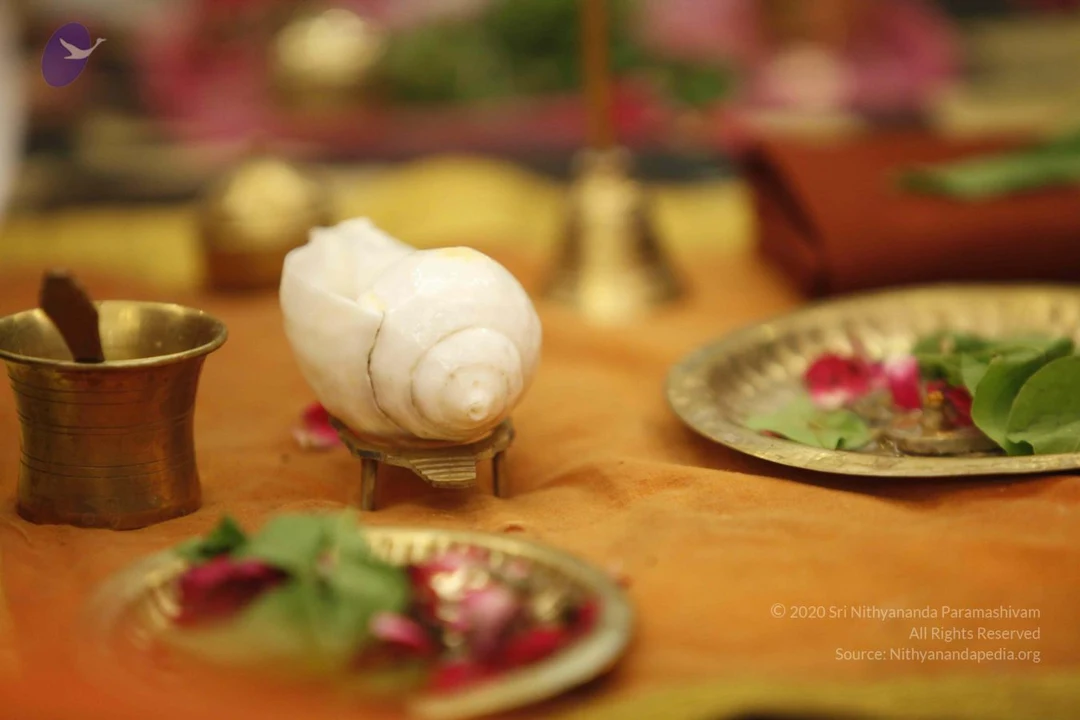
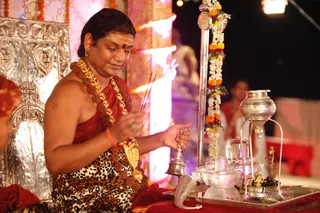
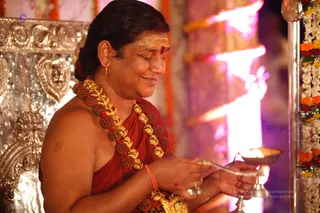
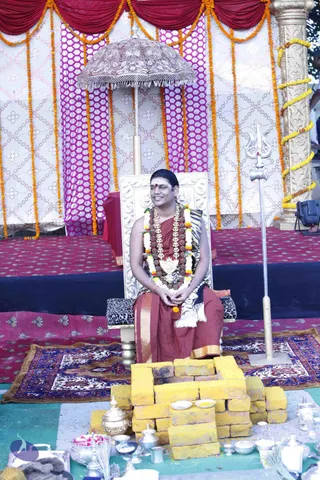
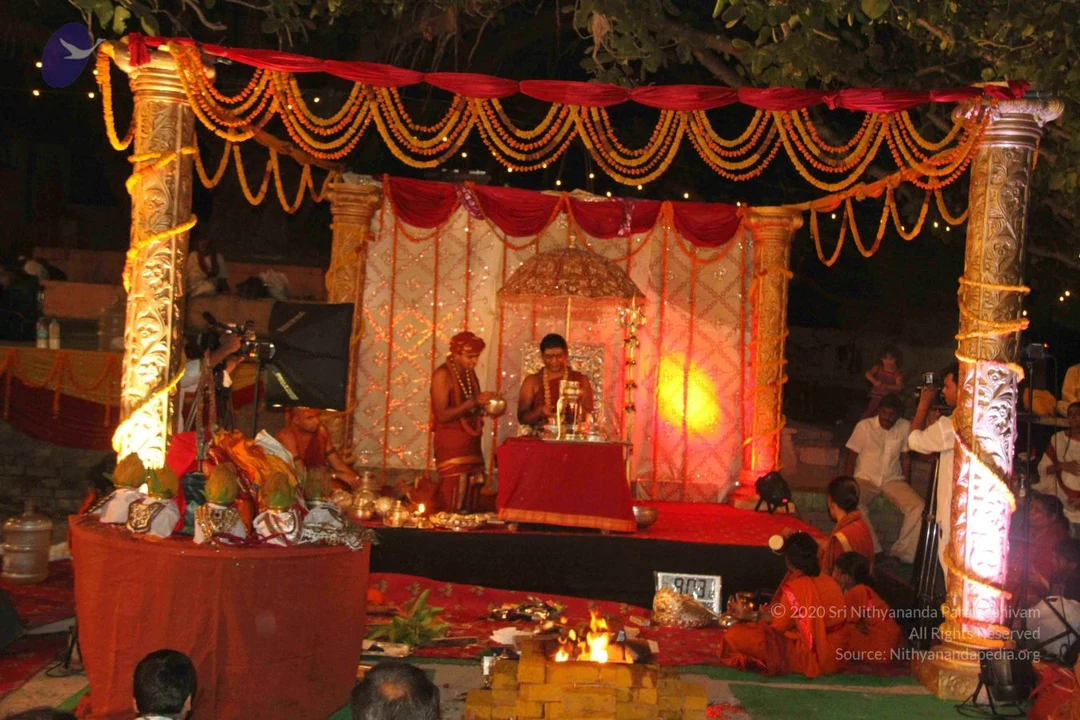
A photograph of a man seated before a silver-framed altar in a decorated ritual setting with orange and white flower garlands hanging on pillars and pale sparkling drapery behind. He wears a deep red-orange shawl over a bare upper body, a gold ornate necklace and a rudraksha mala, with a tilak on his forehead, and he gently works at a silver abhishekam vessel with a stream spout set on a silver tray. Silver and glass ritual objects, a small shivalinga-style form and a red cloth sit on the table in front. a person cues: ceremonial gold necklace, rudraksha mala and ornate red-orange shawl, seated in a ceremonial role.A seated person in a red-orange wrap and leopard-print garment performs a ritual at a silver-ornamented throne-like seat. Wearing a long multi-strand garland of rudraksha beads and gold-toned ornaments, with sacred marks on the forehead, the person holds a small oil lamp and smiles while tending it. Nearby on a silver tray are a silver kalasha with a dripping spout, glass vessels, a small brass figure, red flowers and a silver bowl. Orange and white flower garlands hang on a pillar behind, with pink lights and draped fabric in the background.A photograph of a seated woman in a red wrap and leopard-print garment, with a marigold and rudraksha garland, a red bindi and a yellow-painted forehead, lighting an oil lamp with a small flame. Before her on a red-draped table sit a silver bowl, a silver kalasha with a spout, a clear crystal lingam on a stand, and a tray of flowers. A silver ornate throne and marigold garlands on a pole frame the scene, with pink-lit draping behind. Evening setting. The appearance-based cues are a rudraksha mala and a red-and-leopard-print wrap, but the image is not clear enough to confirm which person she is, so this is a devotee performing a lamp ritual at a shrine table.

May 20 2014

Original wiki page
Contents

Title

Death Experiences || IA Sharing || IA || 20 May 2014

Description

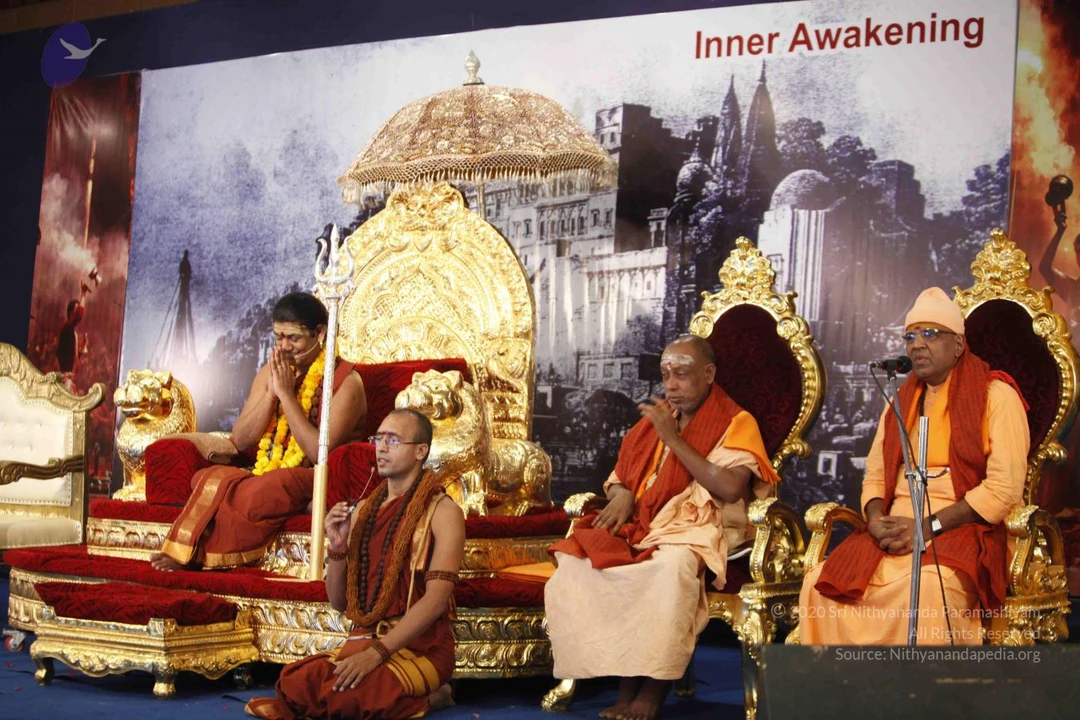
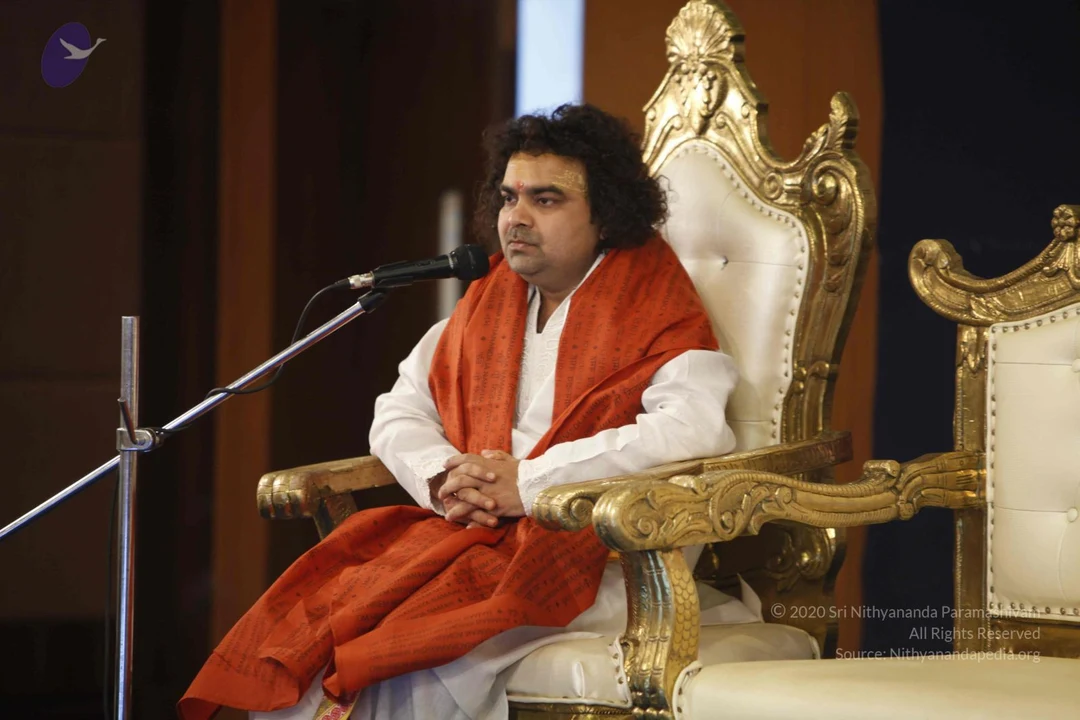
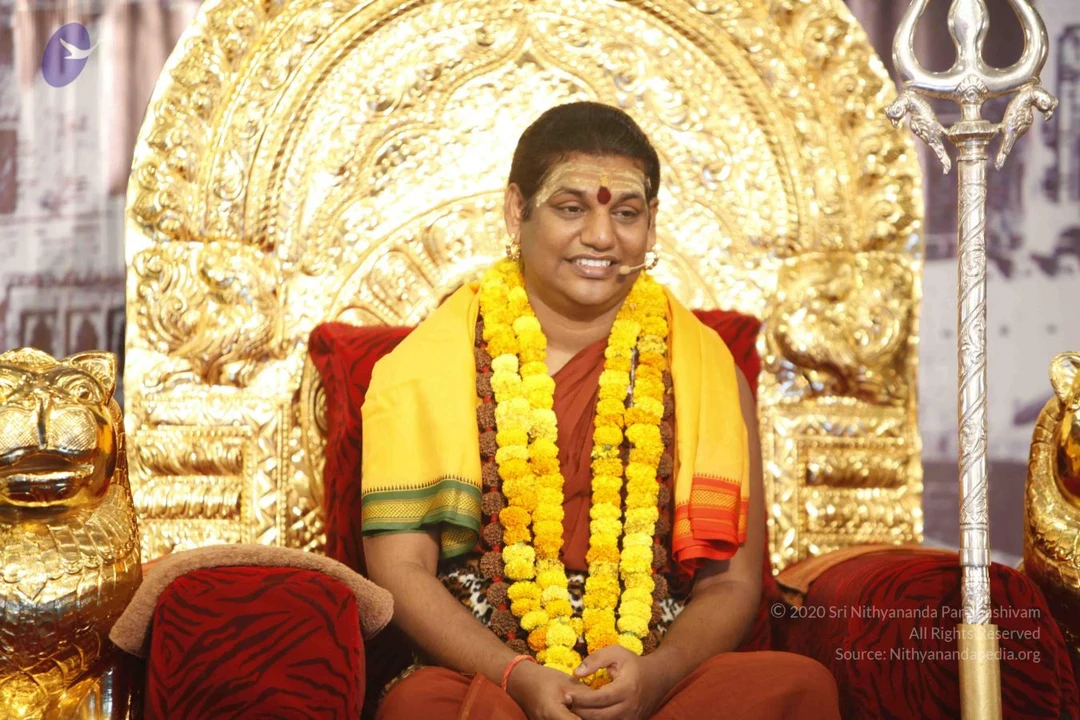
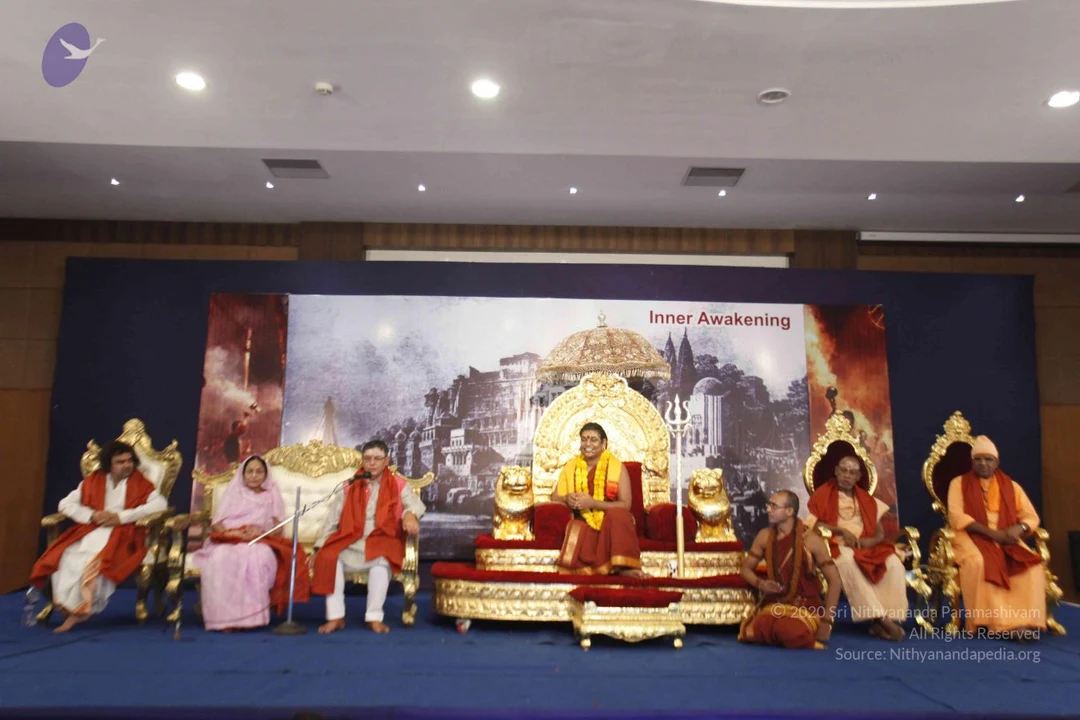
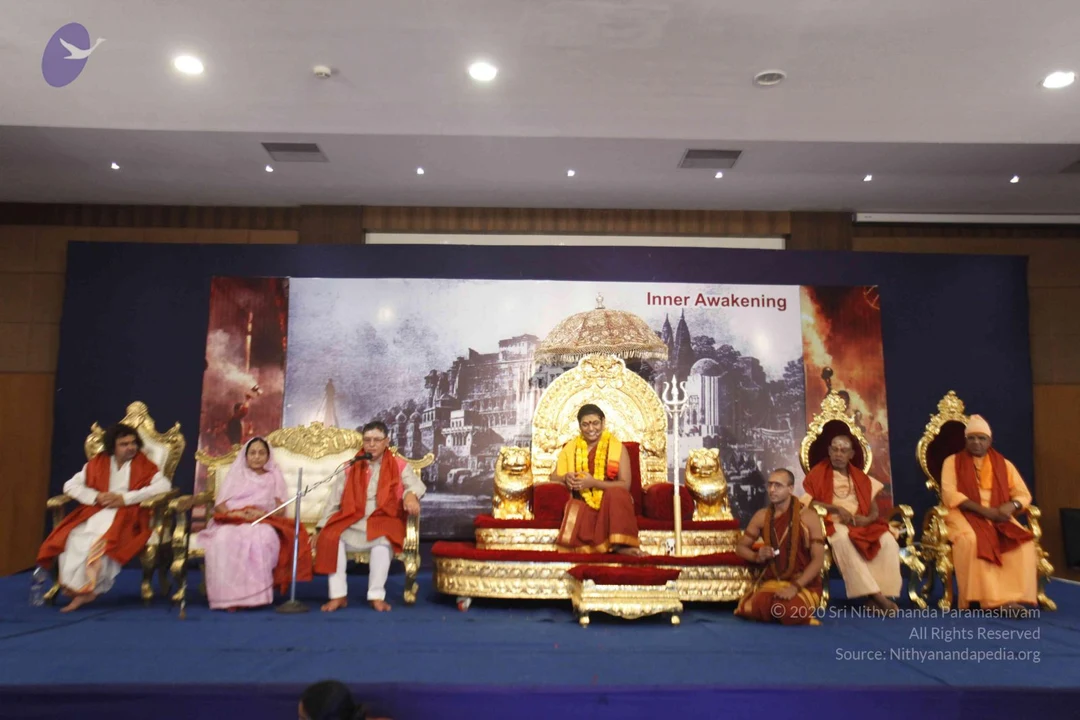
Name of Convention: Inner Awakening Session on: Death Experiences Date: 20 May 2014 Venue: Varanasi, Uttar Pradesh, India

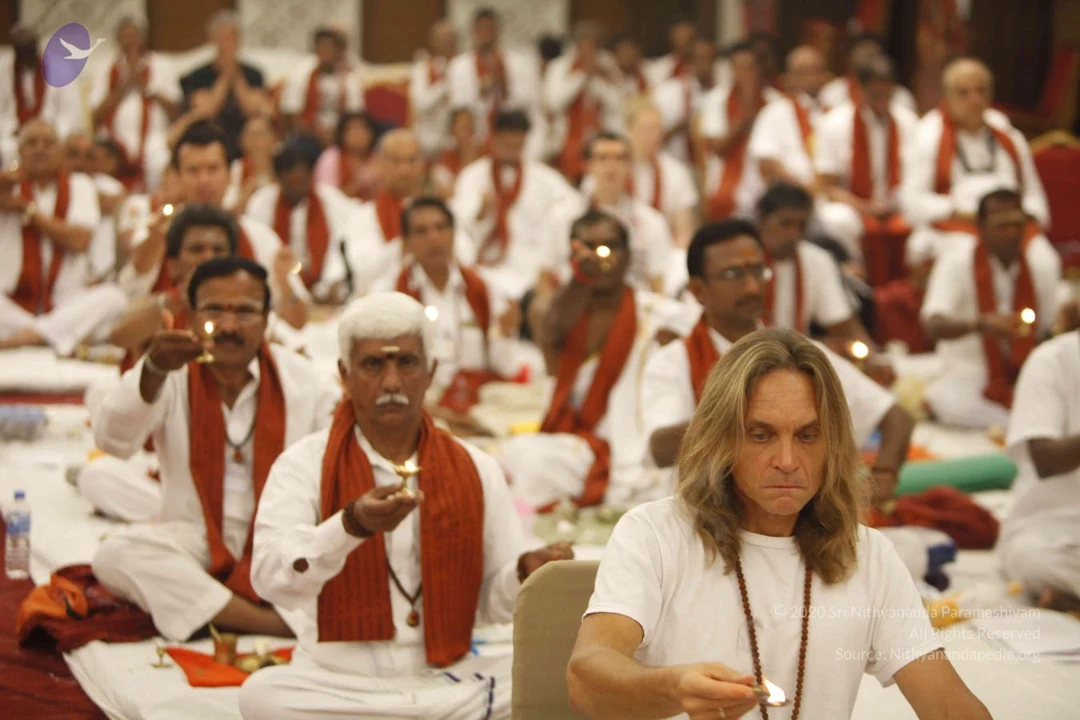
This is an excerpt from Inner Awakening Convention where #delegates share their experiences about Death and the take aways from the convention.

The Supreme Pontiff of Hinduism Jagatguru Mahasannidhanam His Divine Holiness #Nithyananda Paramashivam (HDH) is the reviver of #KAILASA - the ancient enlightened civilization and the great cosmic borderless Hindu nation. Revered as the incarnation of Paramashiva - the primordial Hindu Divinity, HDH has a following of 2 billion Hindus worldwide with de facto spiritual embassies in over 150 countries. He has worked untiringly for over 26 years for the revival of Kailasa, for global peace and to give super conscious breakthrough to humanity. He has survived the worst persecution of multiple assassination attempts on person and on character by anti-Hindu elements. He is collecting, organising, preserving, time capsuling, decoding, spreading and reviving 20 Million source books of Hinduism and the 64 sacred arts & sciences like Ayurveda, music, dance, sculpting, astrology, vastu and much more. Close to 20,000 hours of HDH’s timeless talks have been recorded till date (Sep 2020), which are a treasure trove of powerful cognitions to solve individual and global problems of any kind.

Link to Video:

VideoAudio

Title

Spiritual Experiences || IA Sharing || IA || 20 May 2014

Description

Name of Convention: Inner Awakening Session on: Sharing of Spiritual Experiences Date: 20 May 2014 Venue: Varanasi, Uttar Pradesh, India

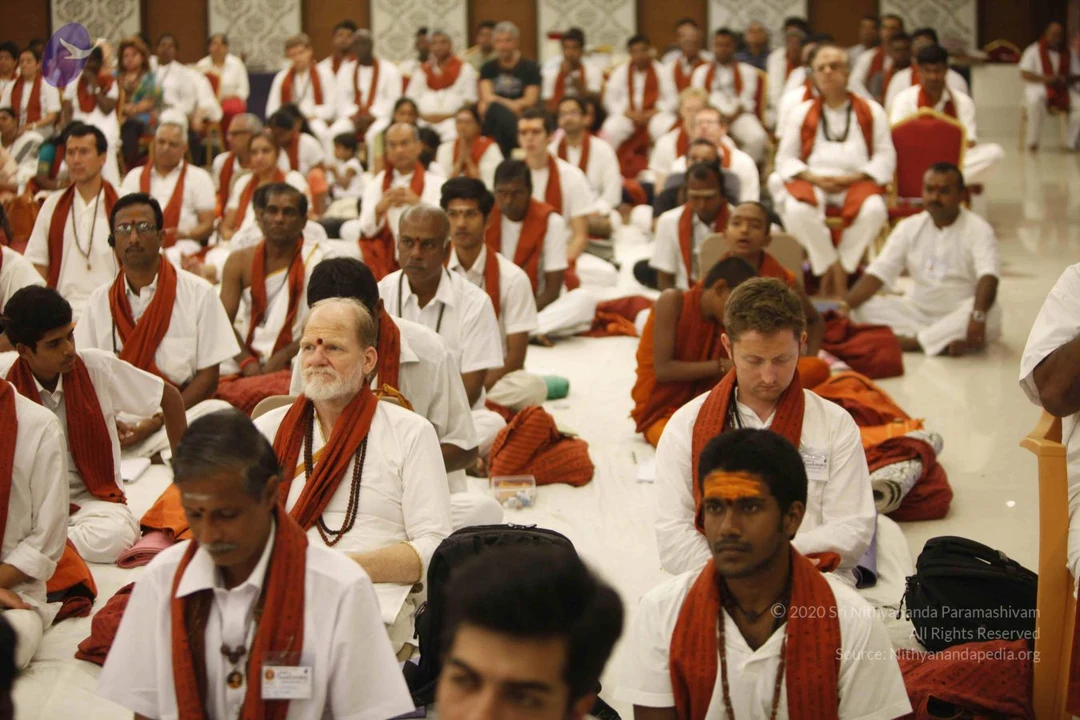
This is an excerpt from Inner Awakening Convention where delegates share their #spiritual experiences and take aways from the convention.

The Supreme Pontiff of Hinduism Jagatguru Mahasannidhanam His Divine Holiness #Nithyananda Paramashivam (HDH) is the reviver of #KAILASA - the ancient enlightened civilization and the great cosmic borderless Hindu nation. Revered as the incarnation of Paramashiva - the primordial Hindu Divinity, HDH has a following of 2 billion Hindus worldwide with de facto spiritual embassies in over 150 countries. He has worked untiringly for over 26 years for the revival of Kailasa, for global peace and to give super conscious breakthrough to humanity. He has survived the worst persecution of multiple assassination attempts on person and on character by anti-Hindu elements. He is collecting, organising, preserving, time capsuling, decoding, spreading and reviving 20 Million source books of Hinduism and the 64 sacred arts & sciences like Ayurveda, music, dance, sculpting, astrology, vastu and much more. Close to 20,000 hours of HDH’s timeless talks have been recorded till date (Sep 2020), which are a treasure trove of powerful cognitions to solve individual and global problems of any kind.

Link to Video:

VideoAudio

Description:

Varanasi Inner Awakening Day - 20

Tags:

These are the tags

Transcript:

Here is the transcript

Photos
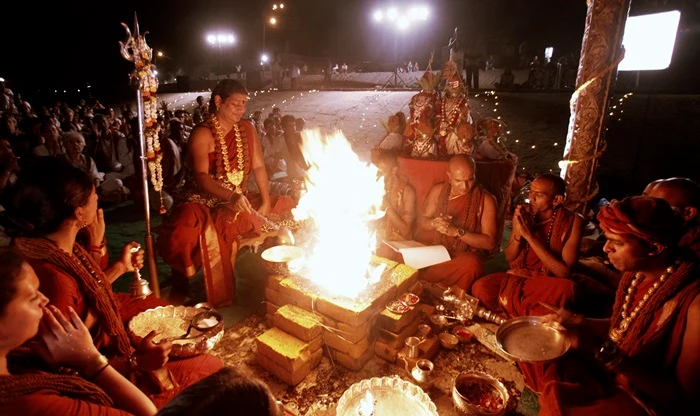
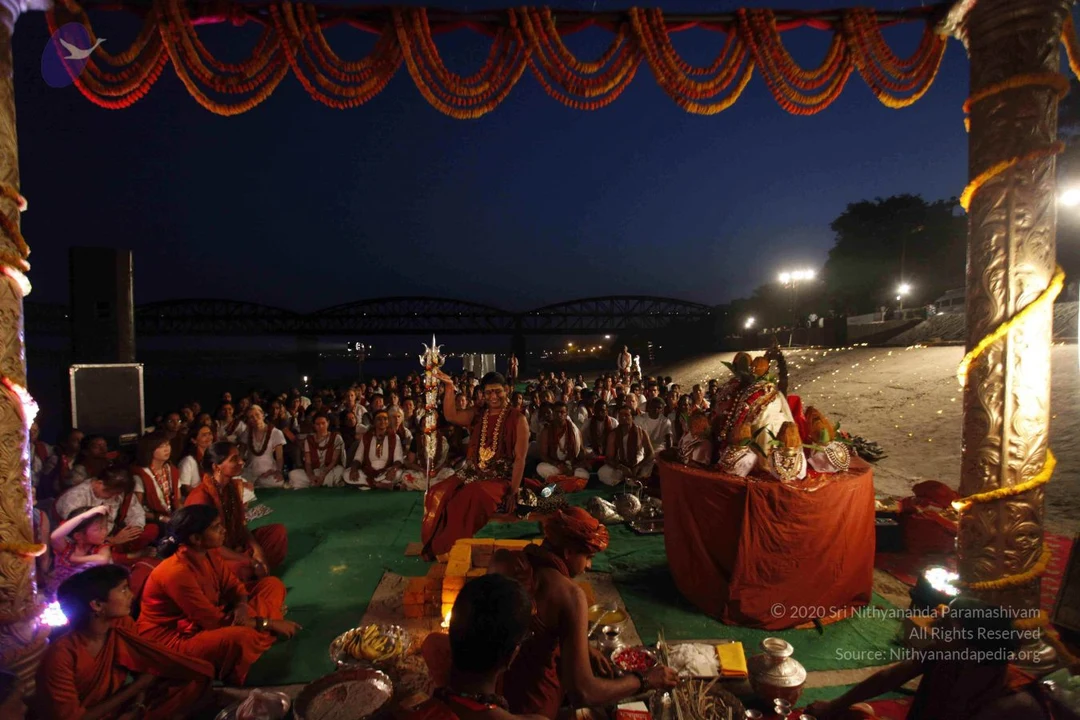
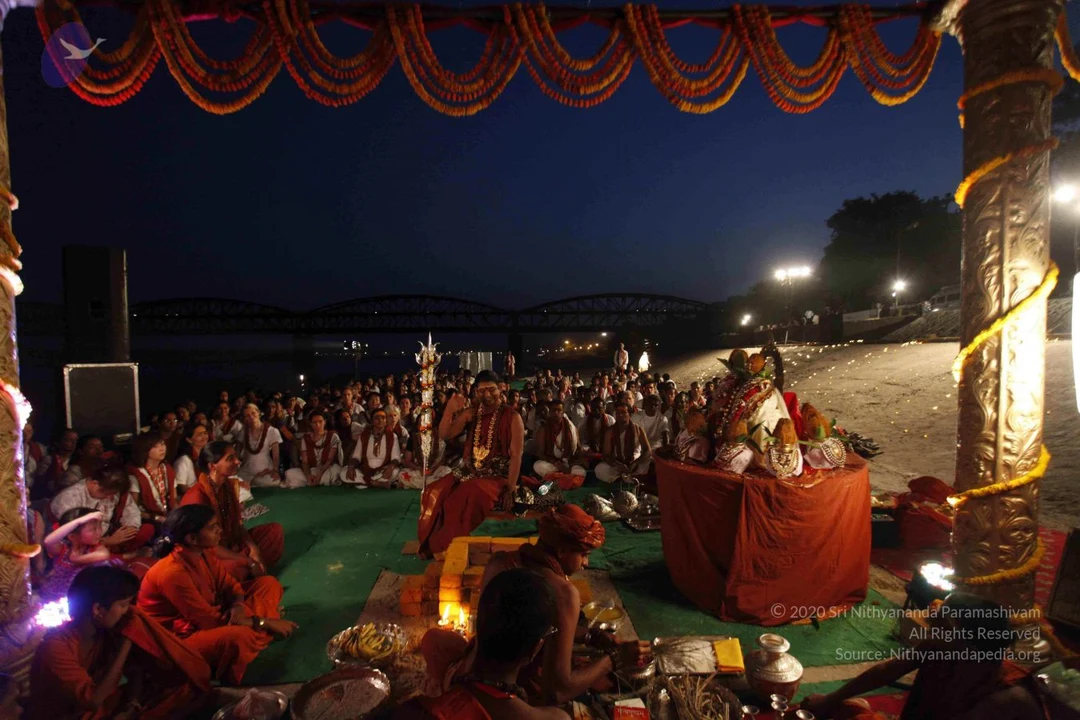
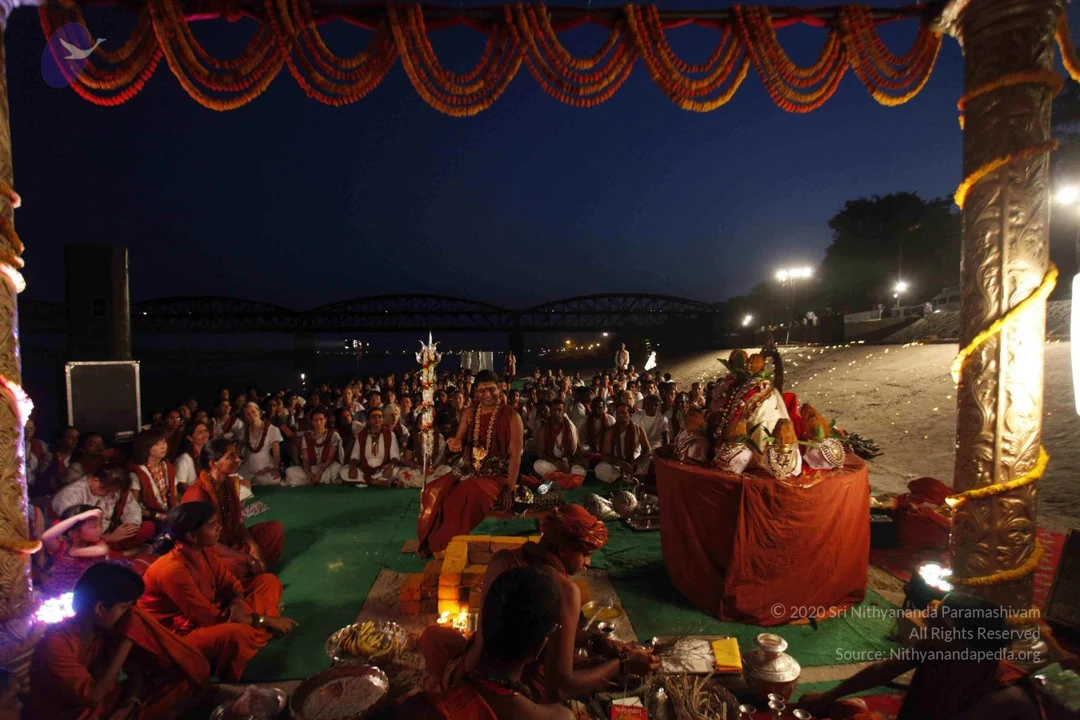
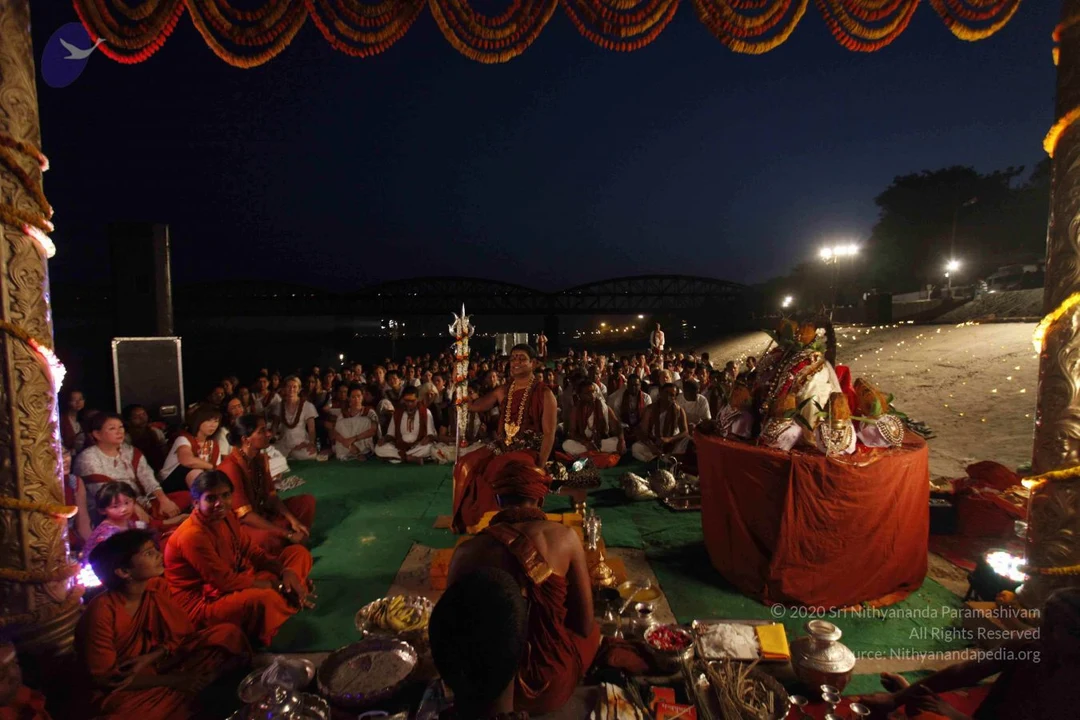
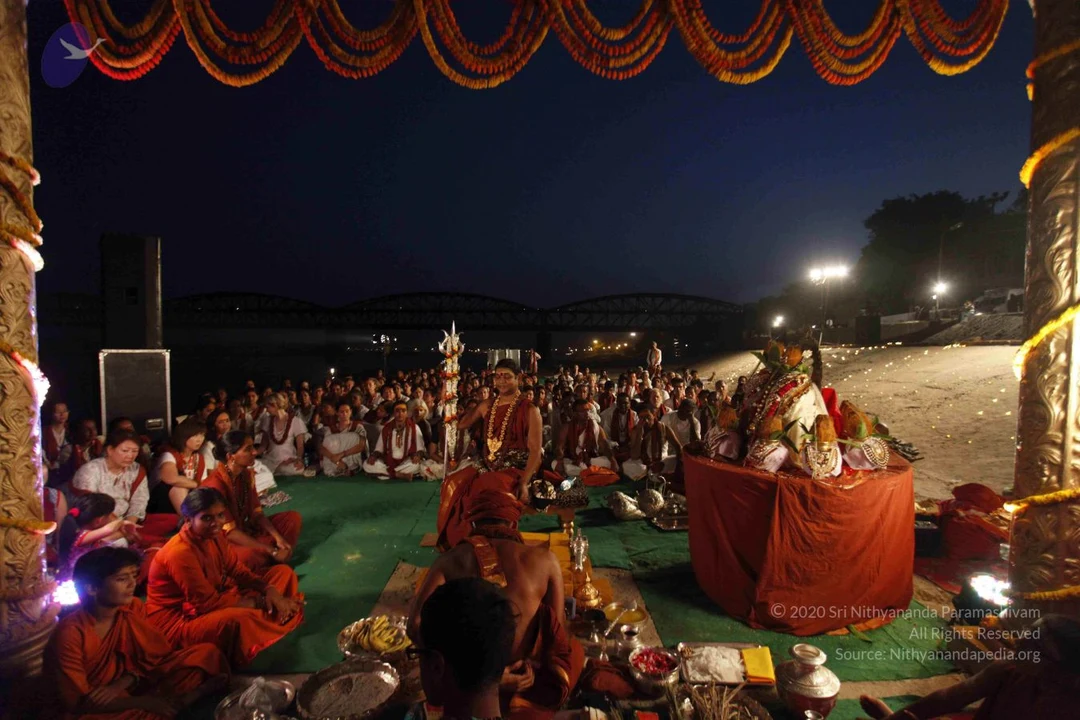
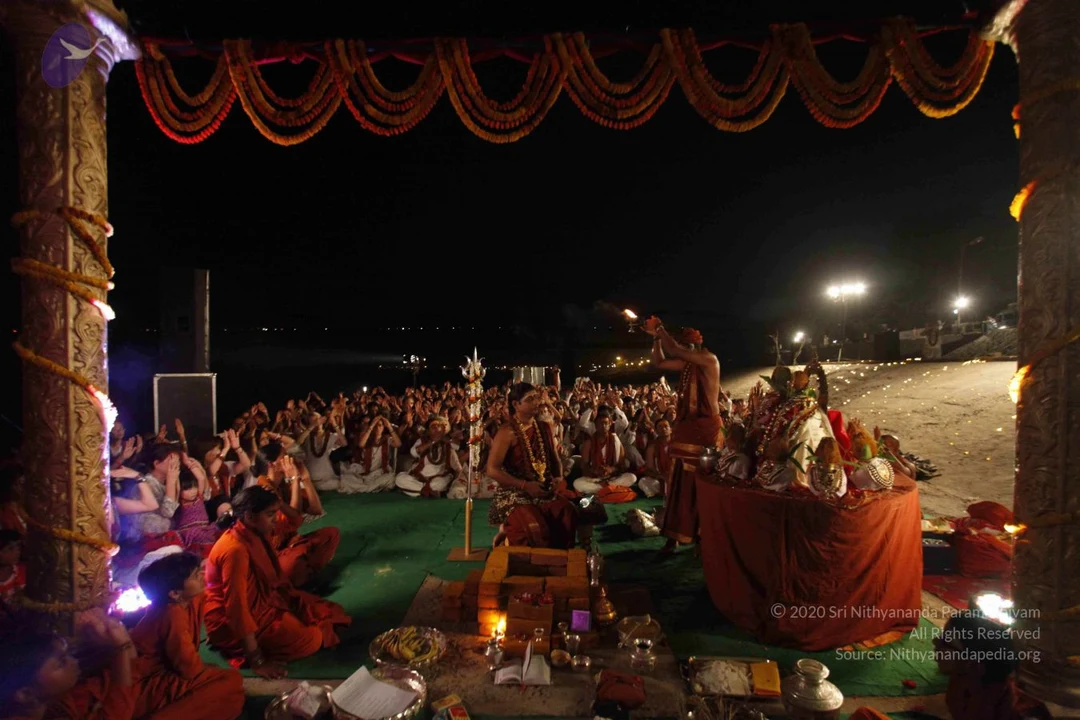
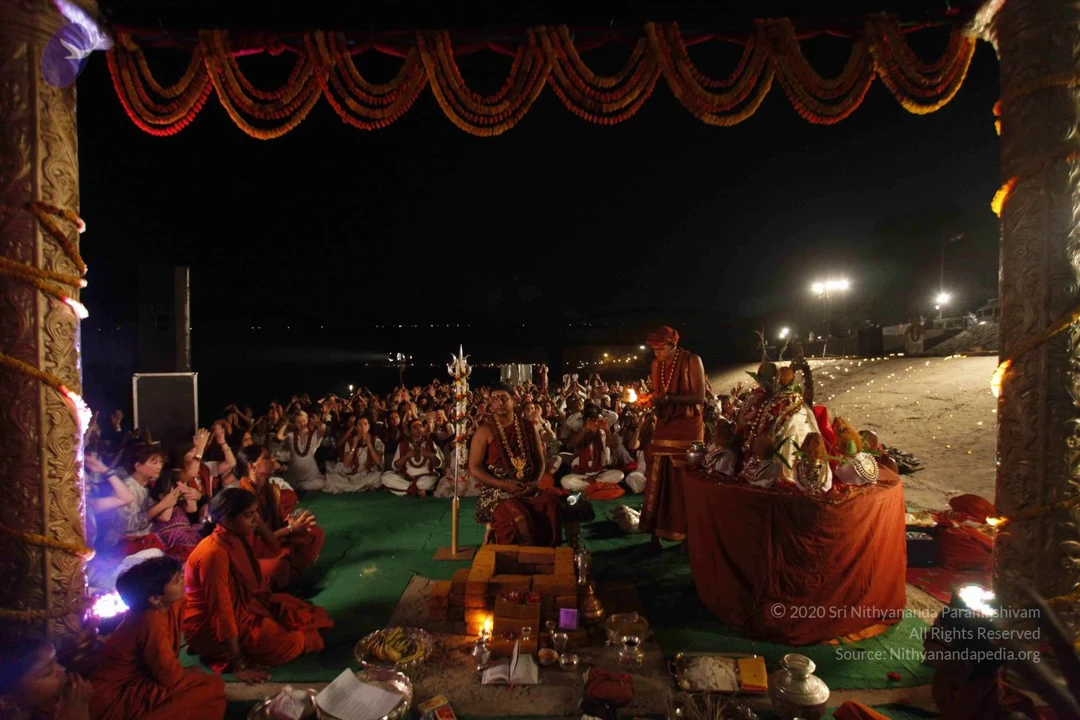
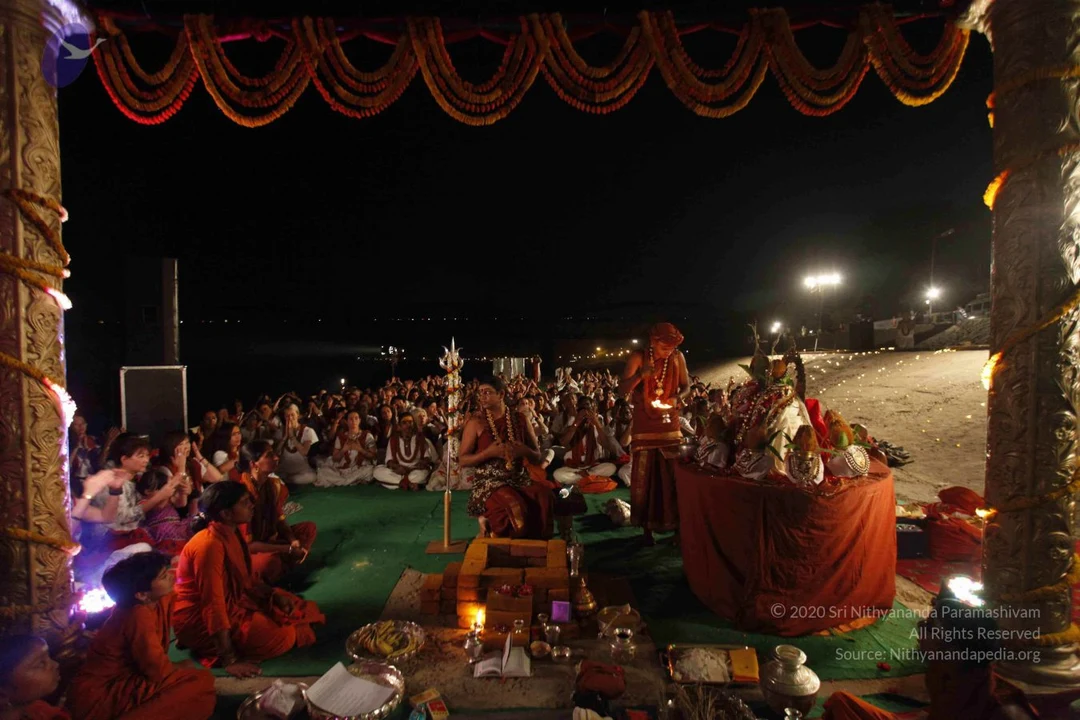
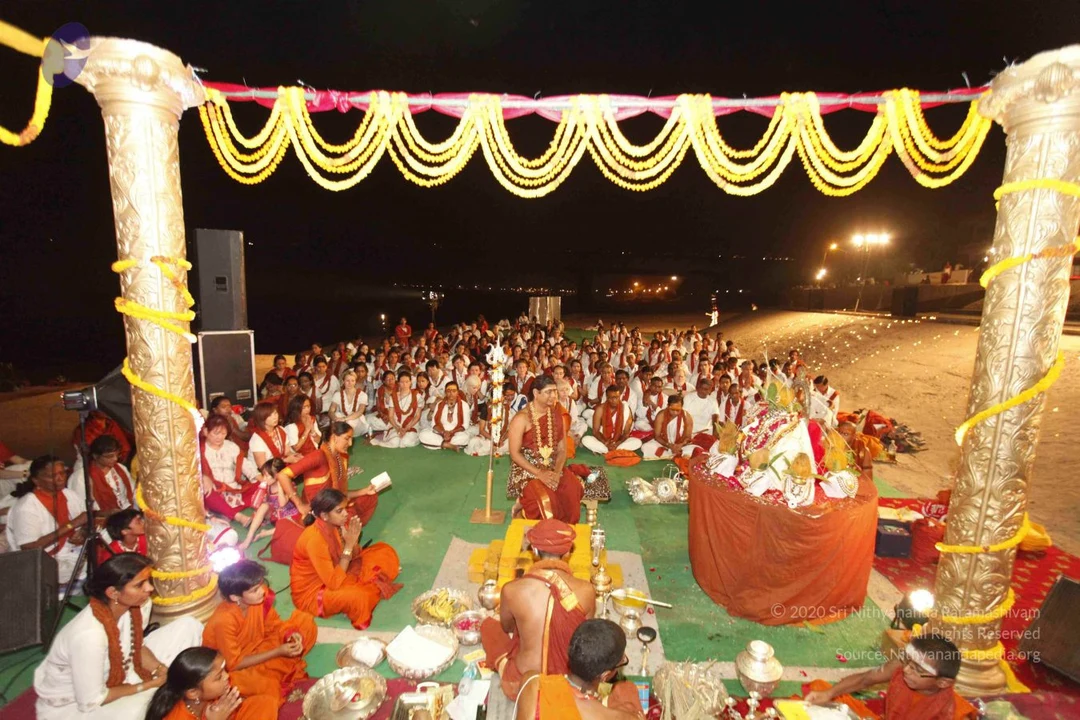
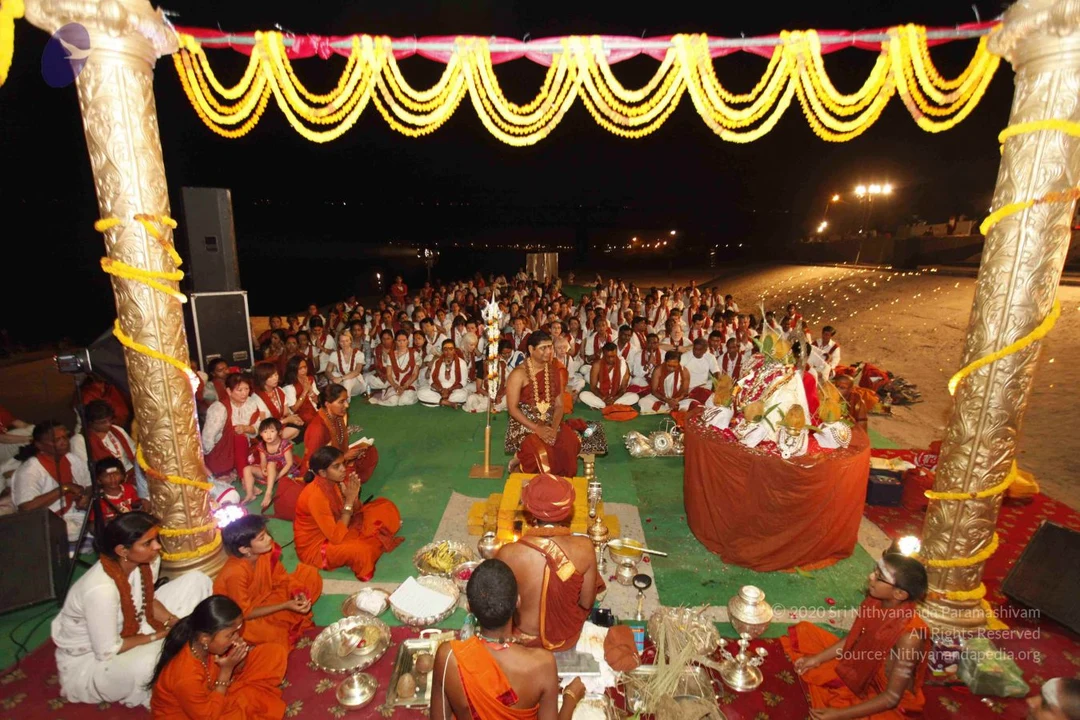
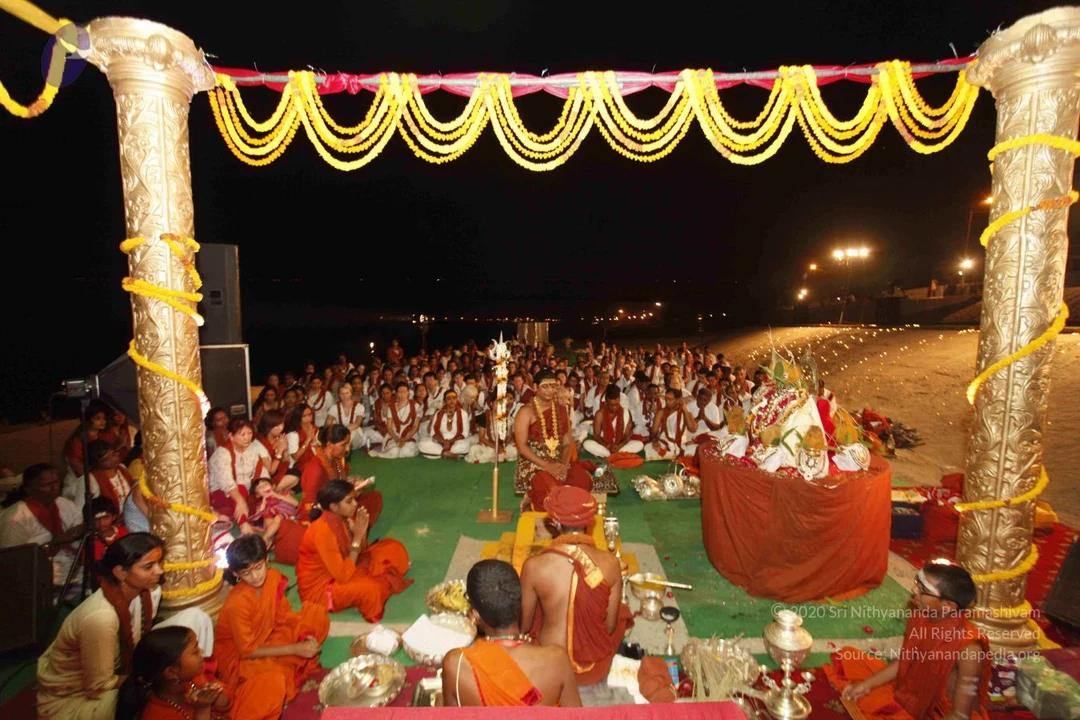
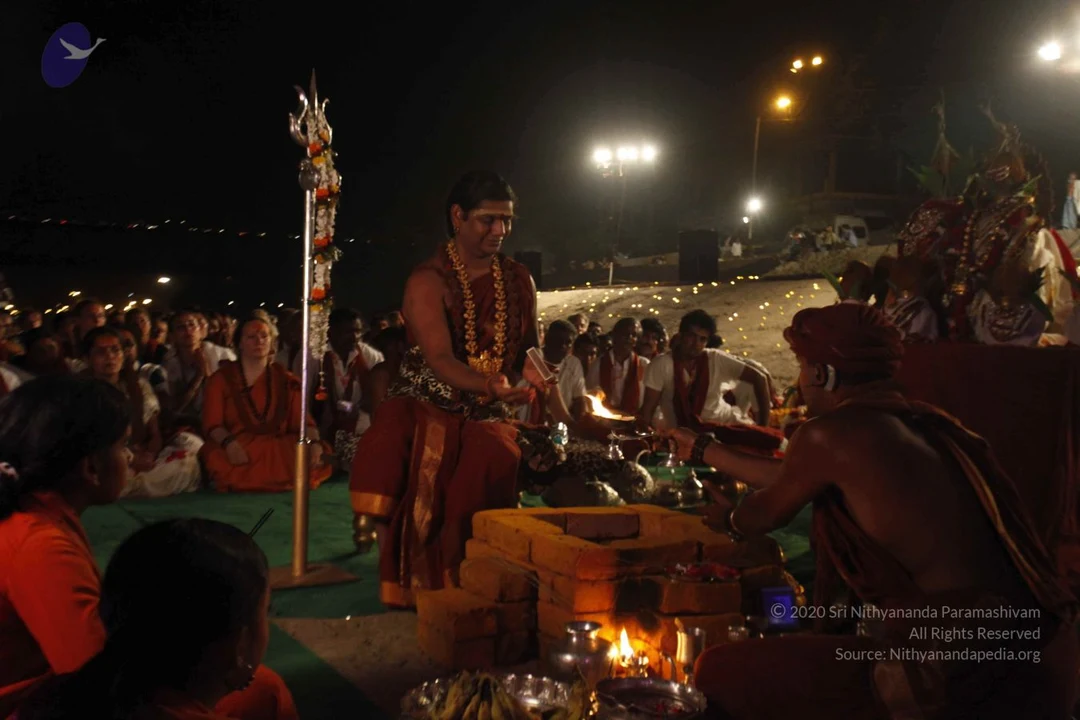
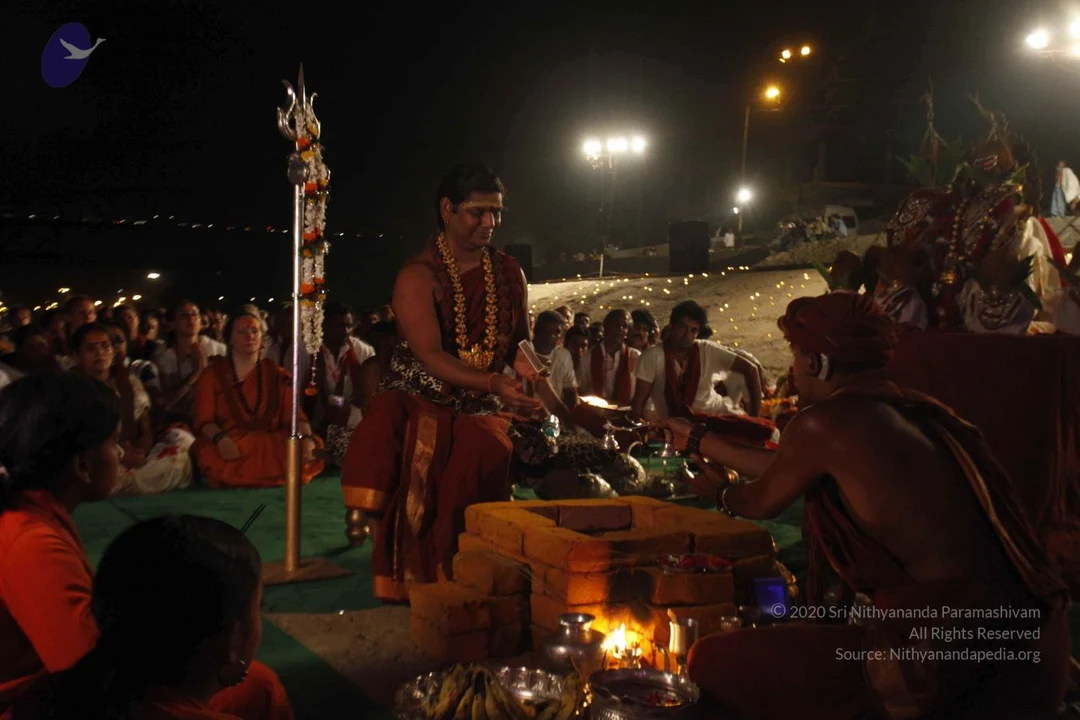
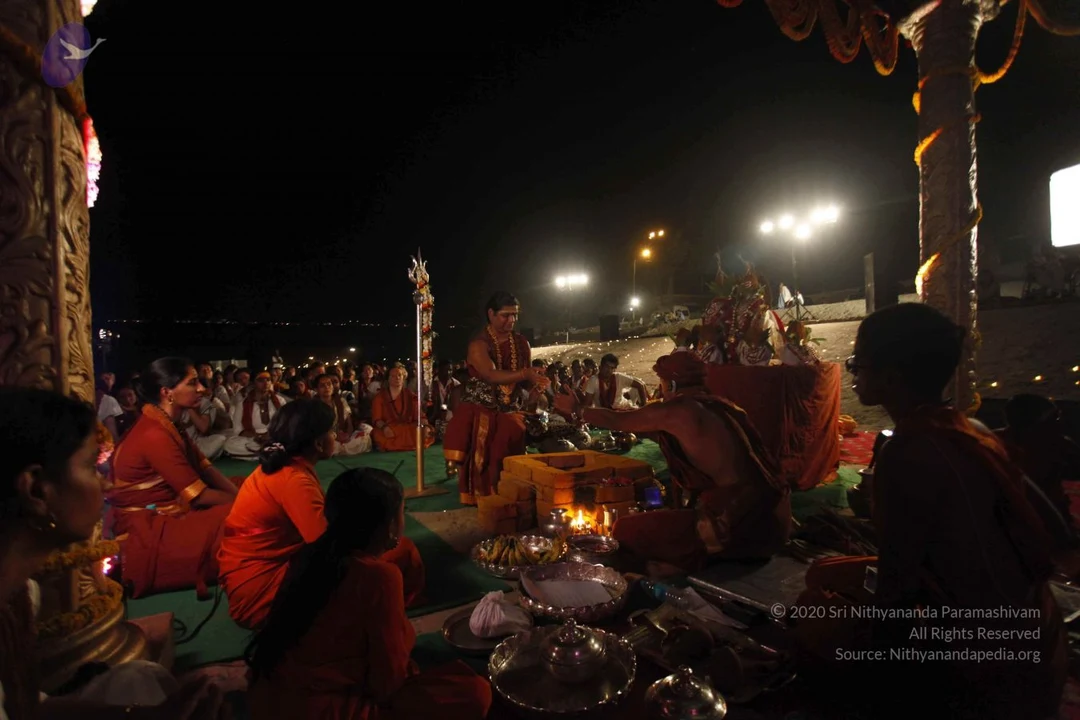
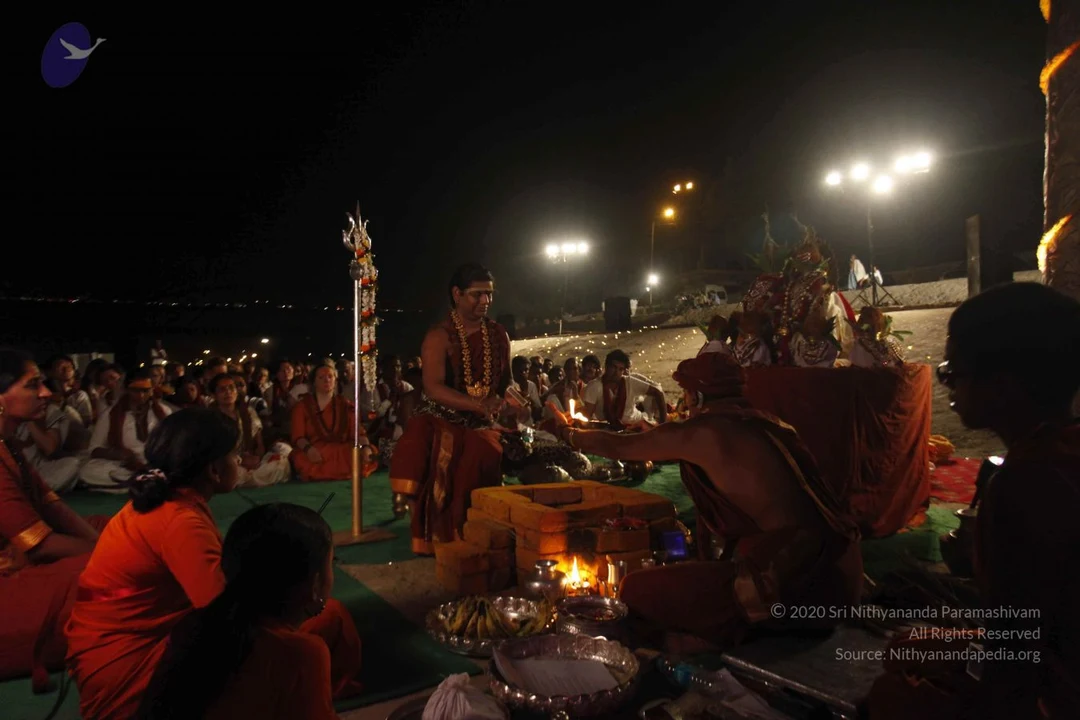
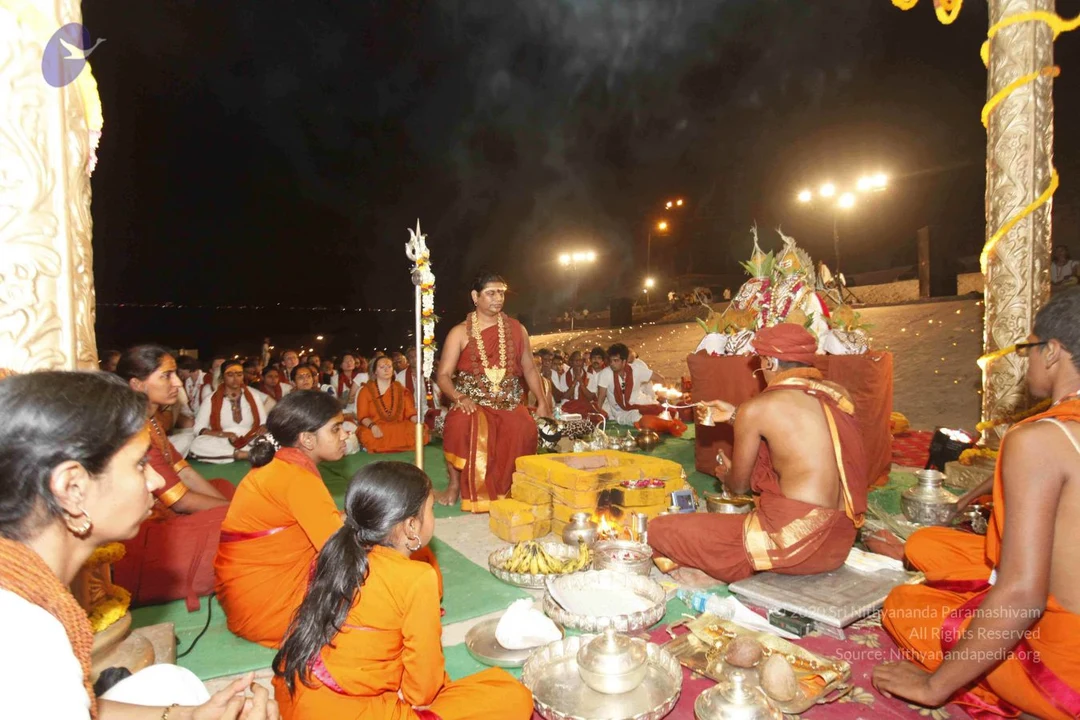
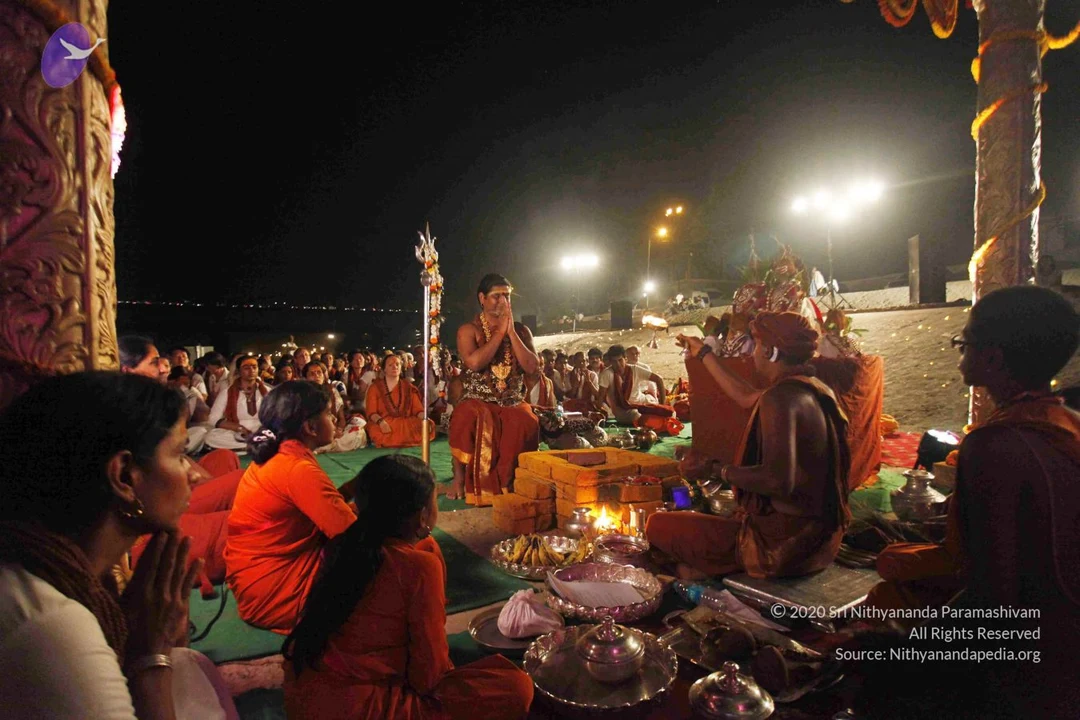
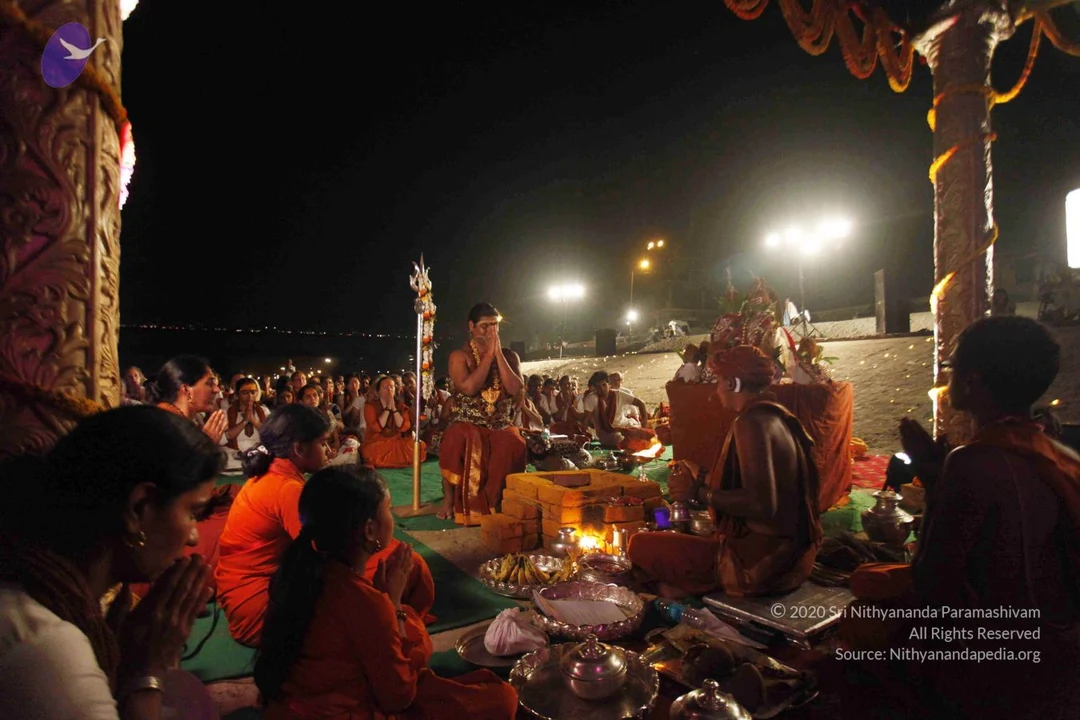
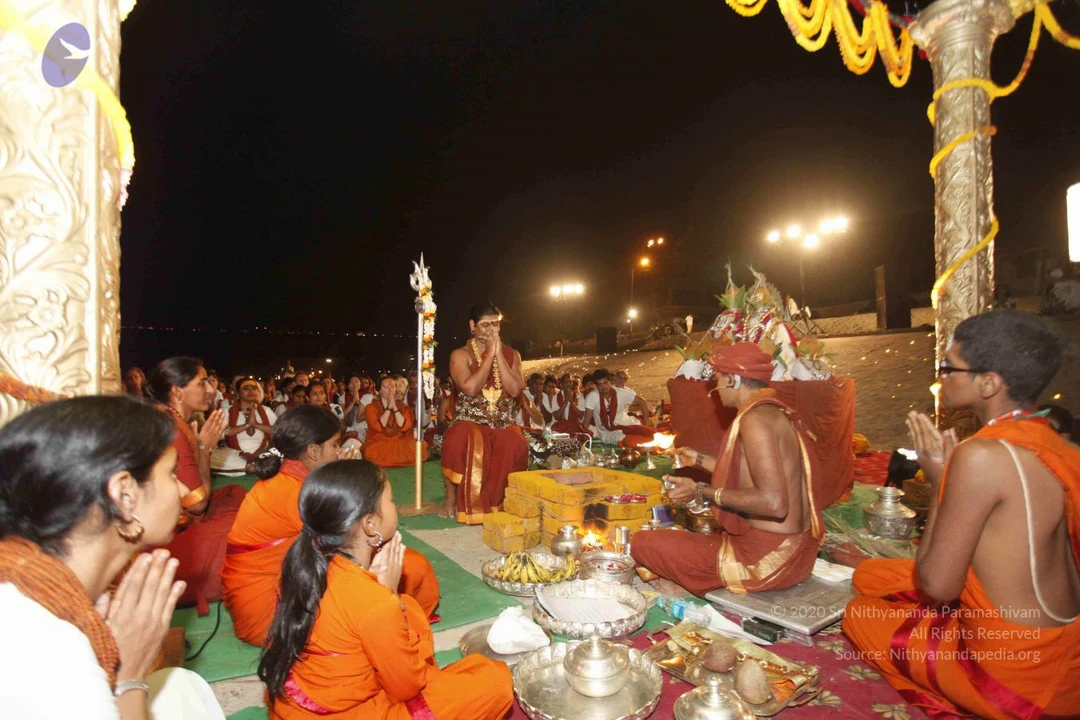
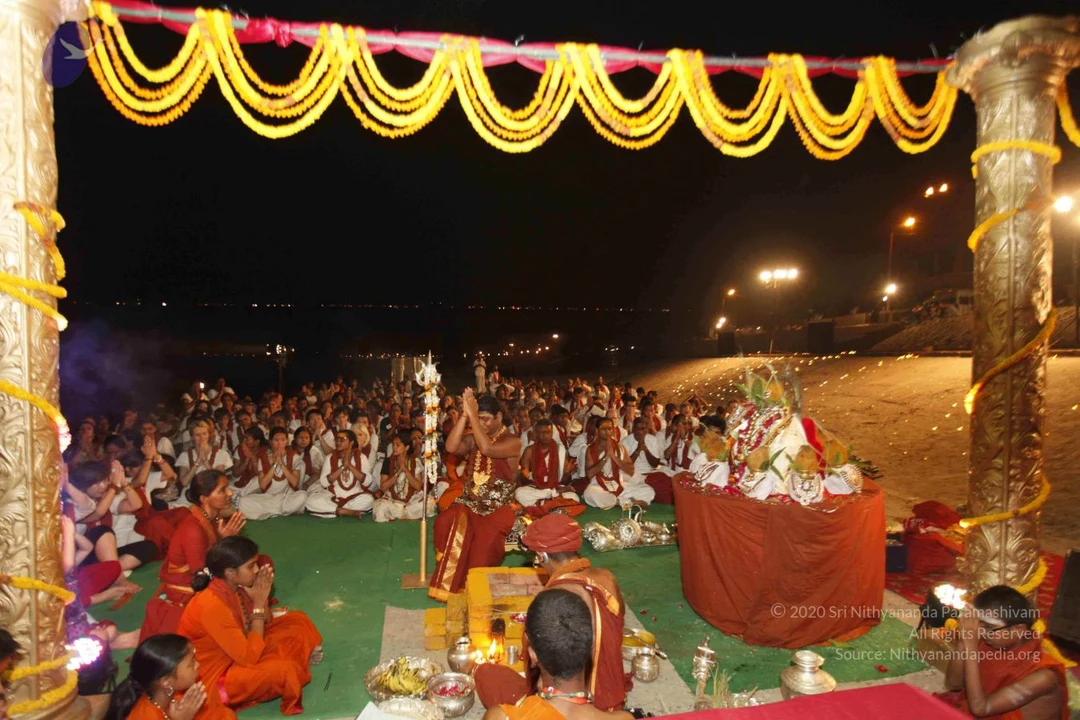
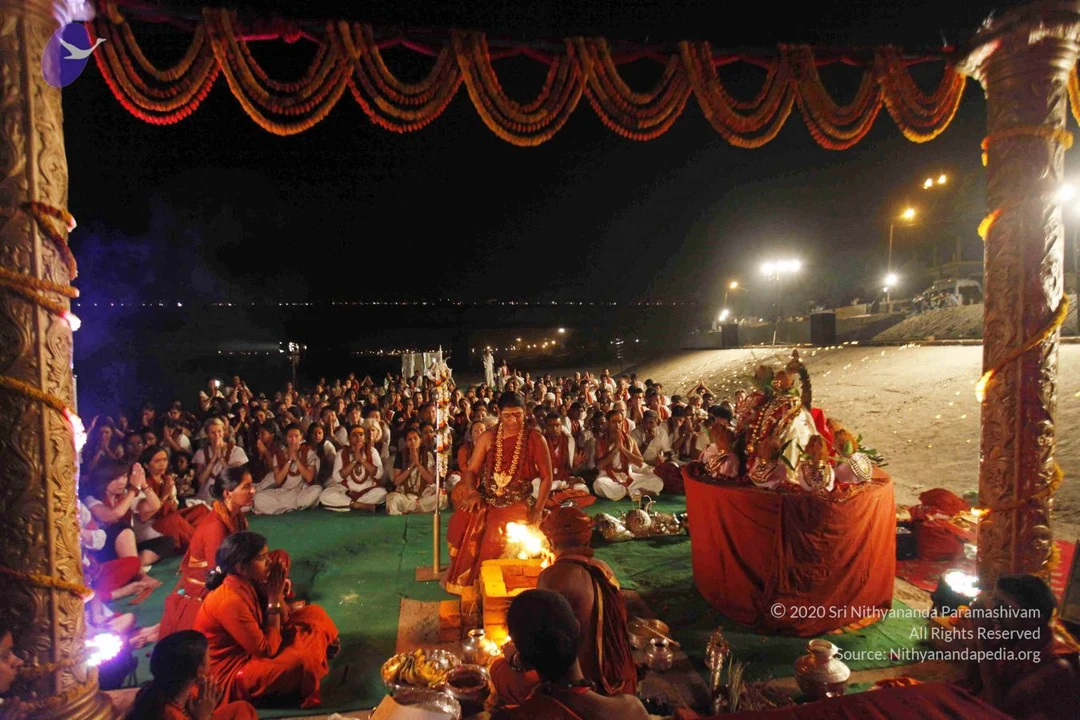
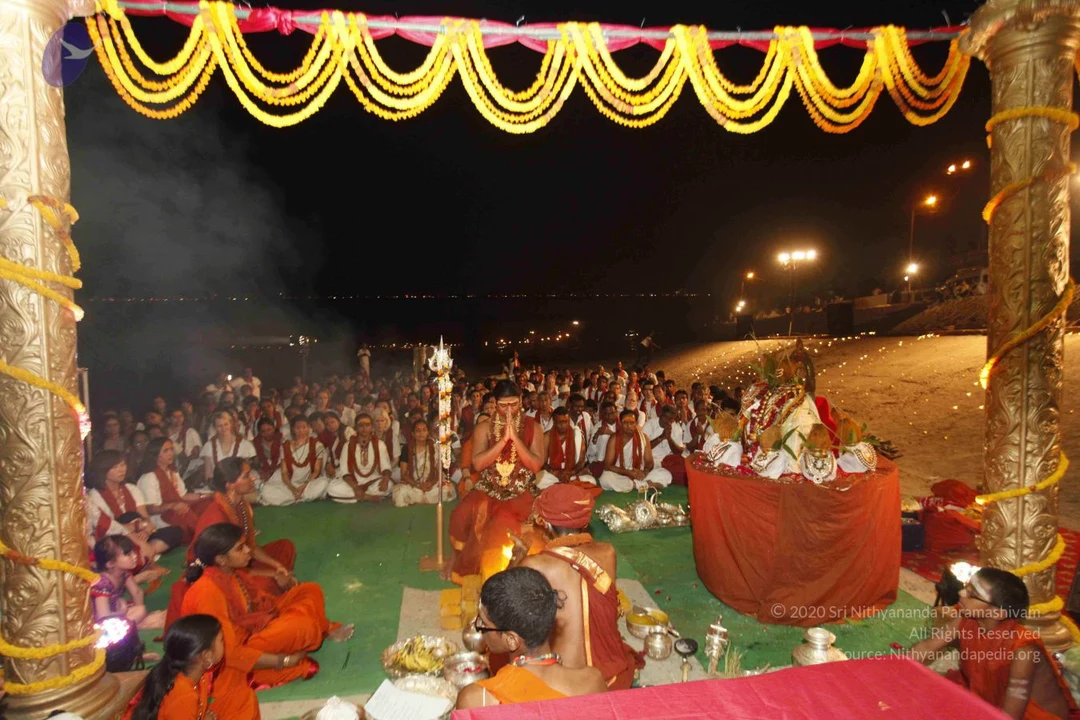
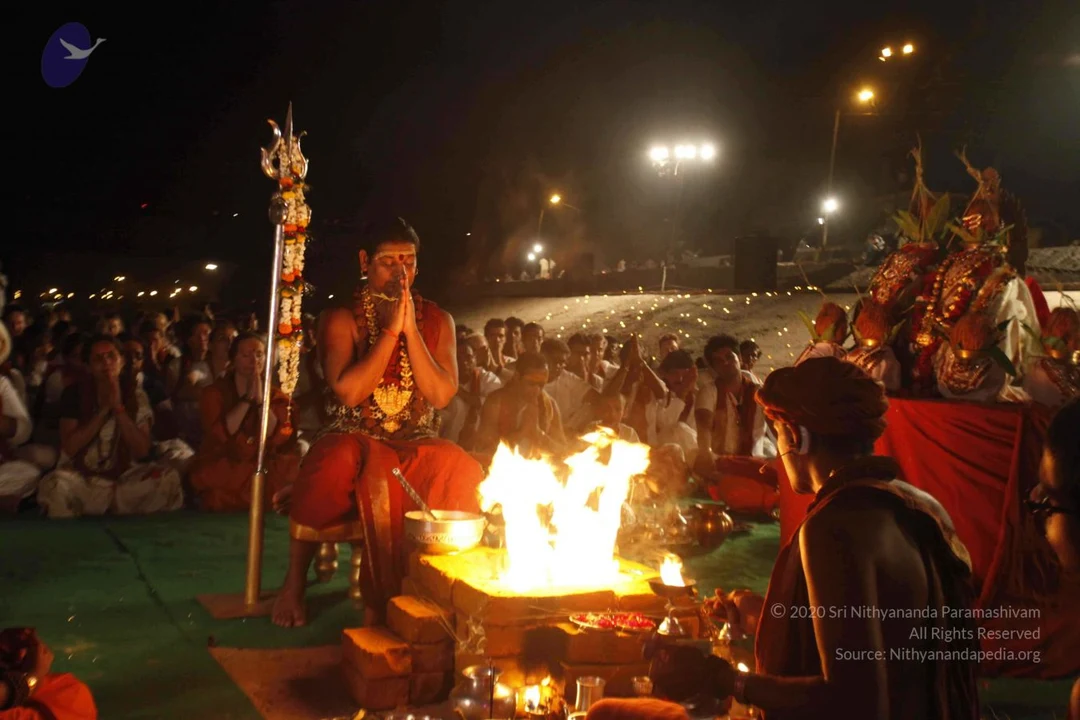
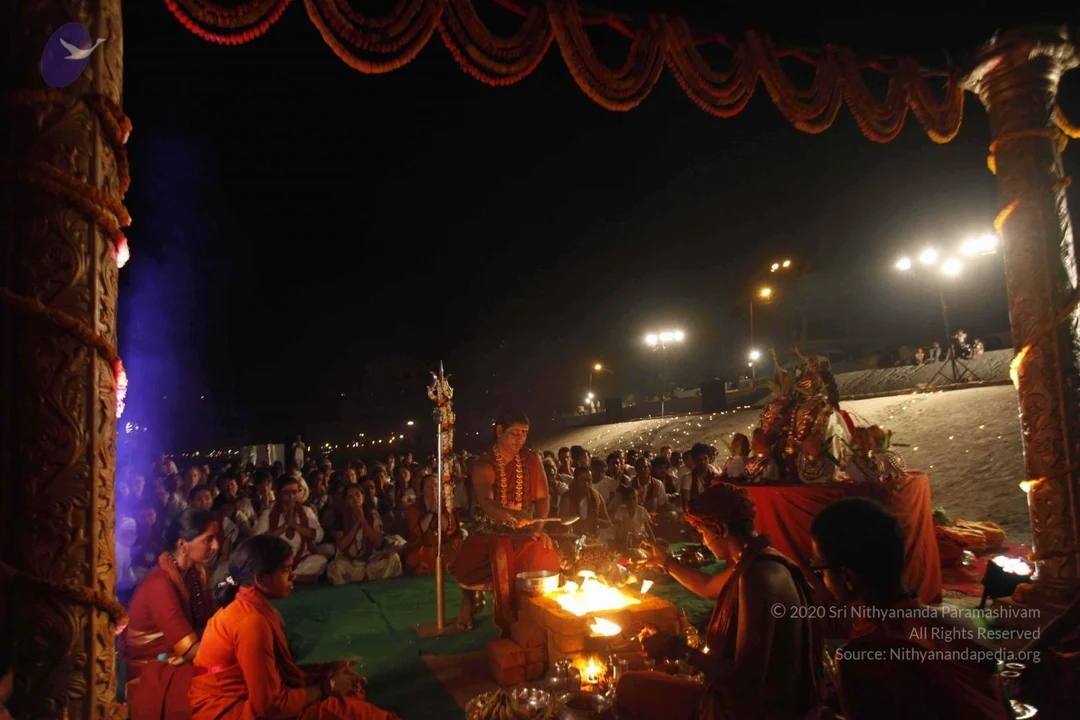
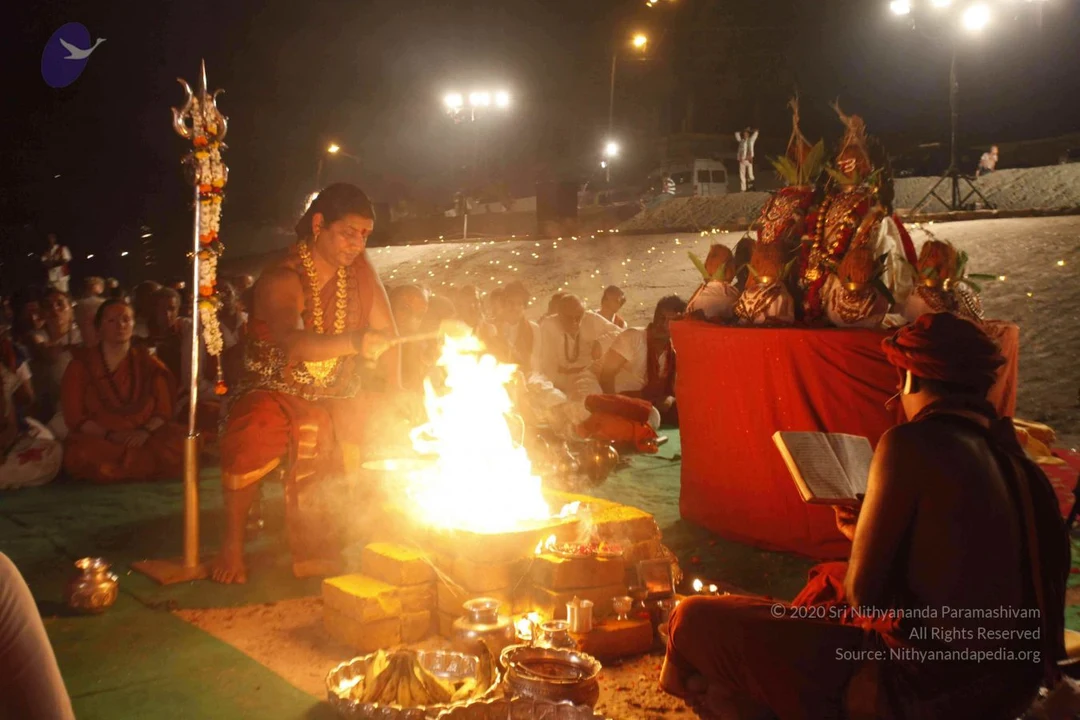
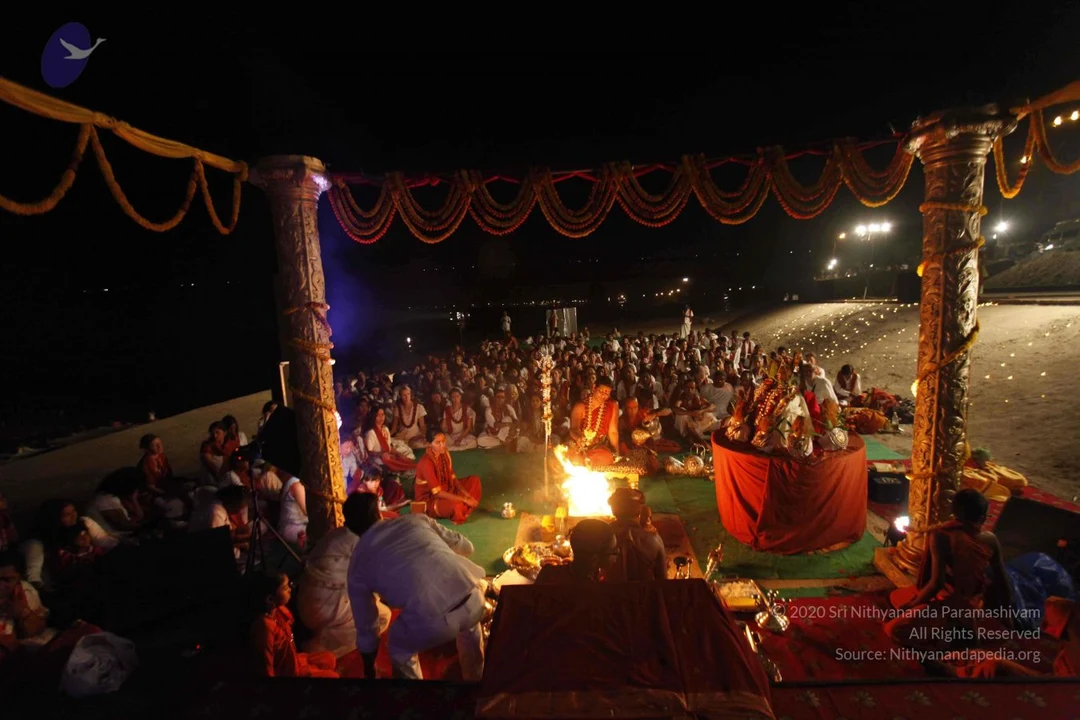
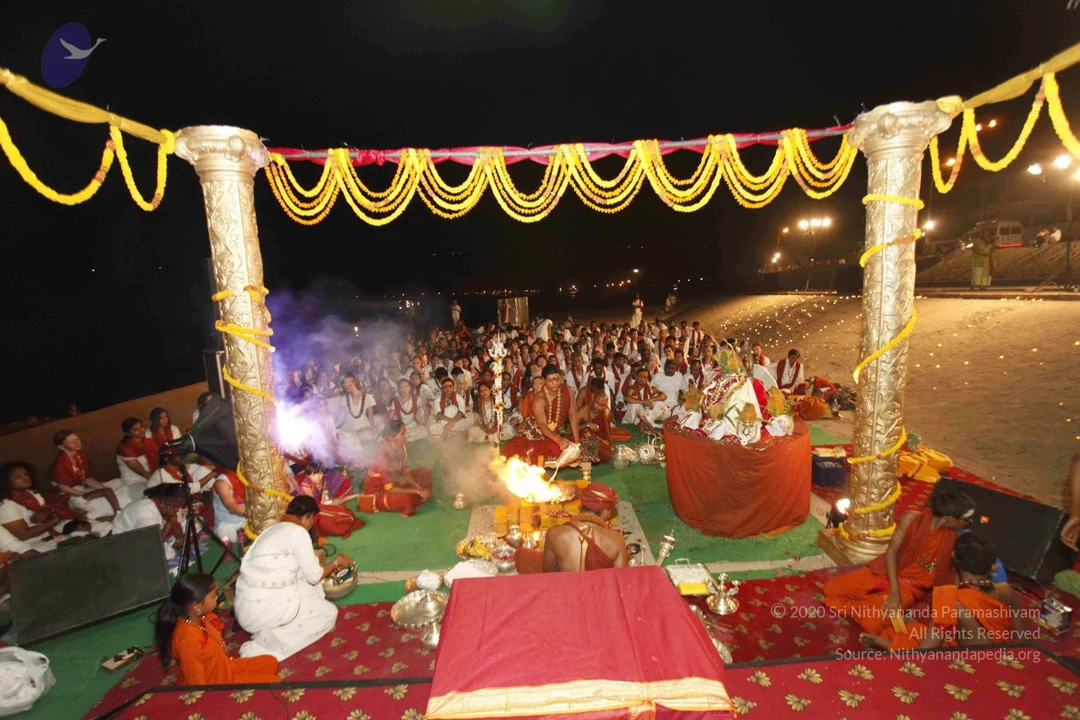
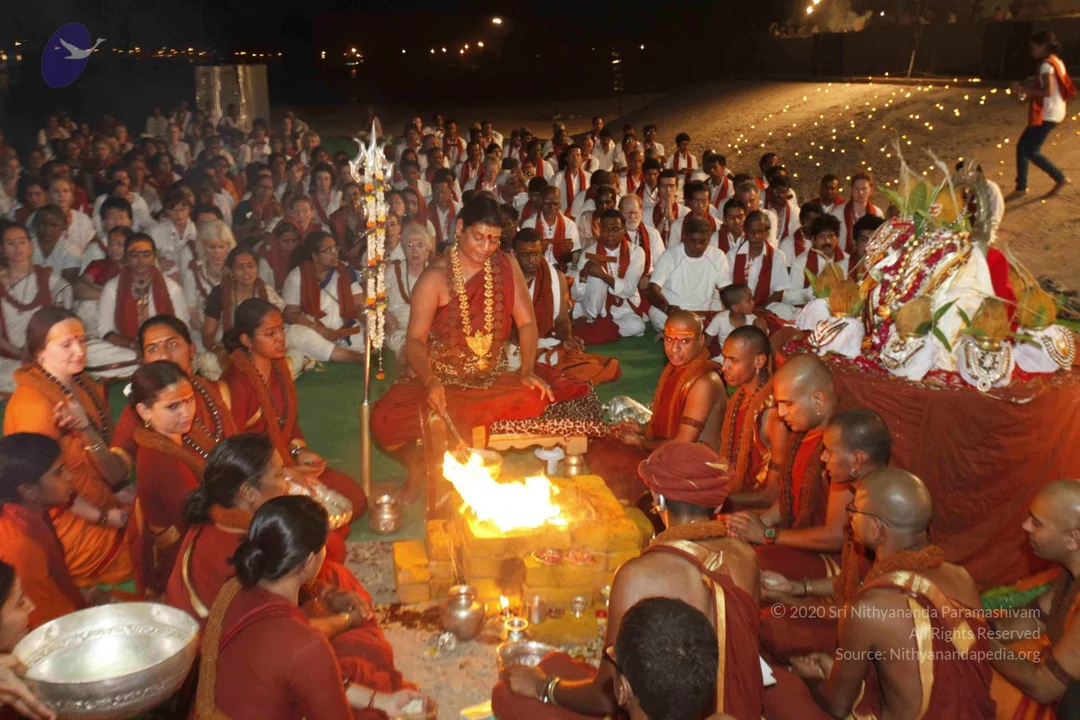
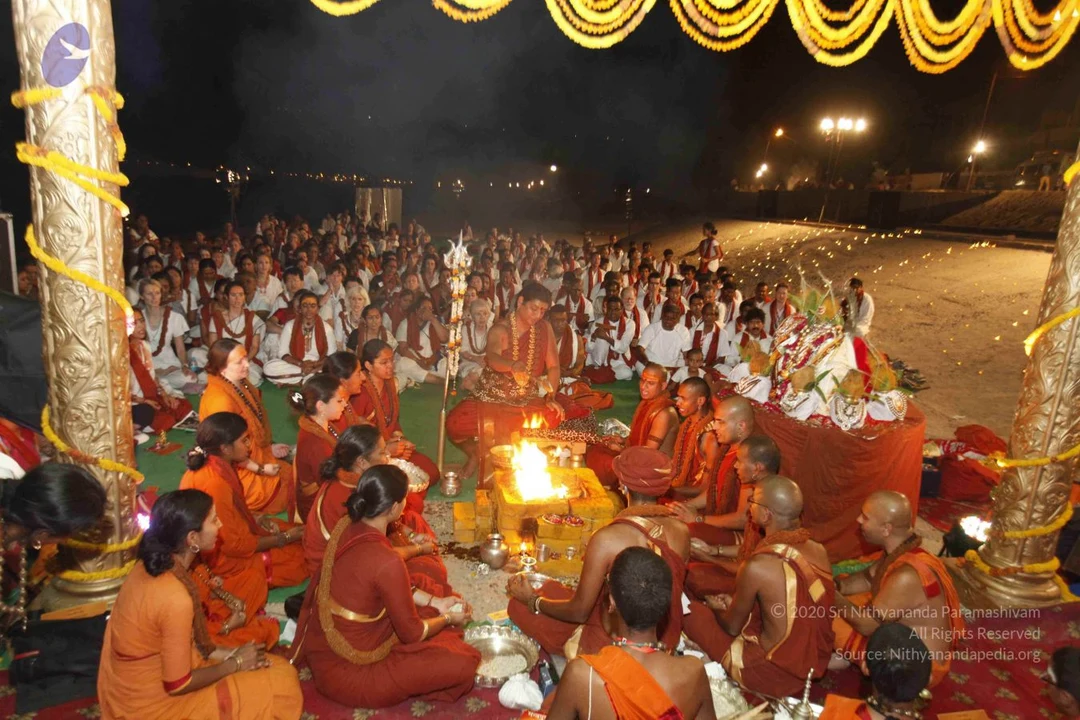
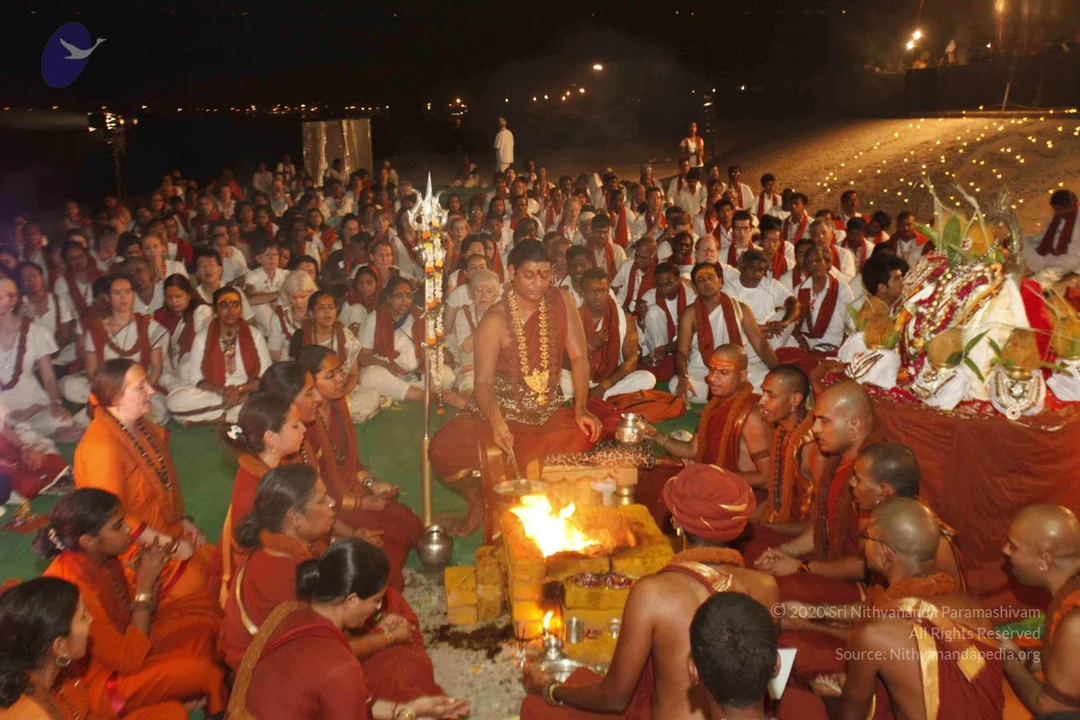
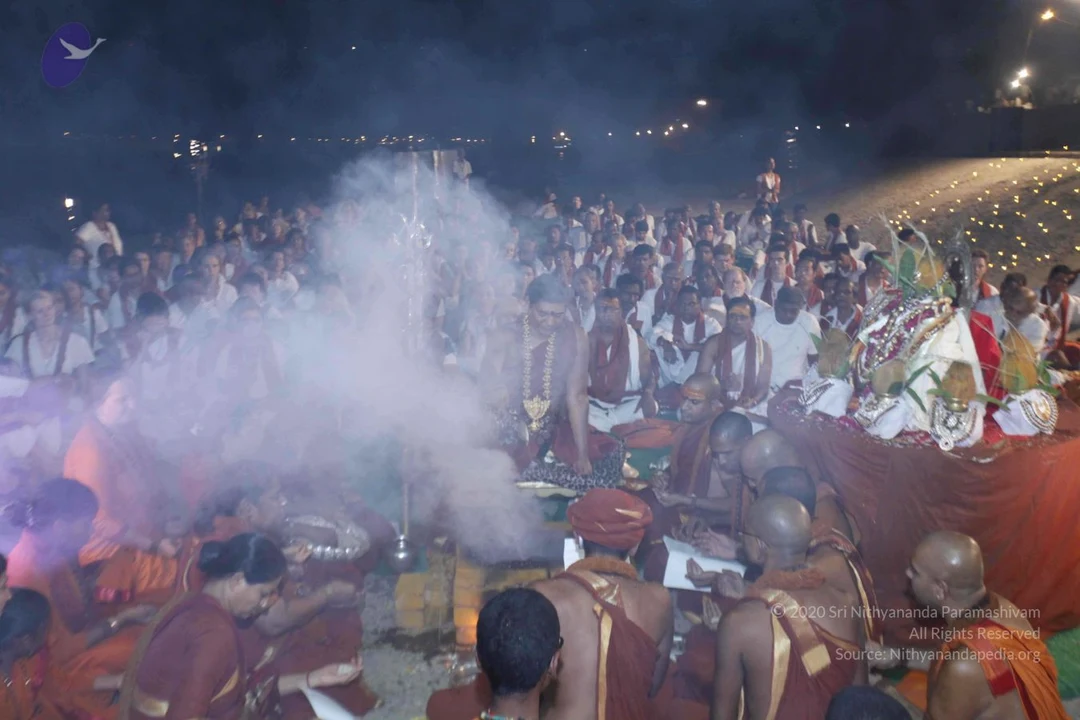
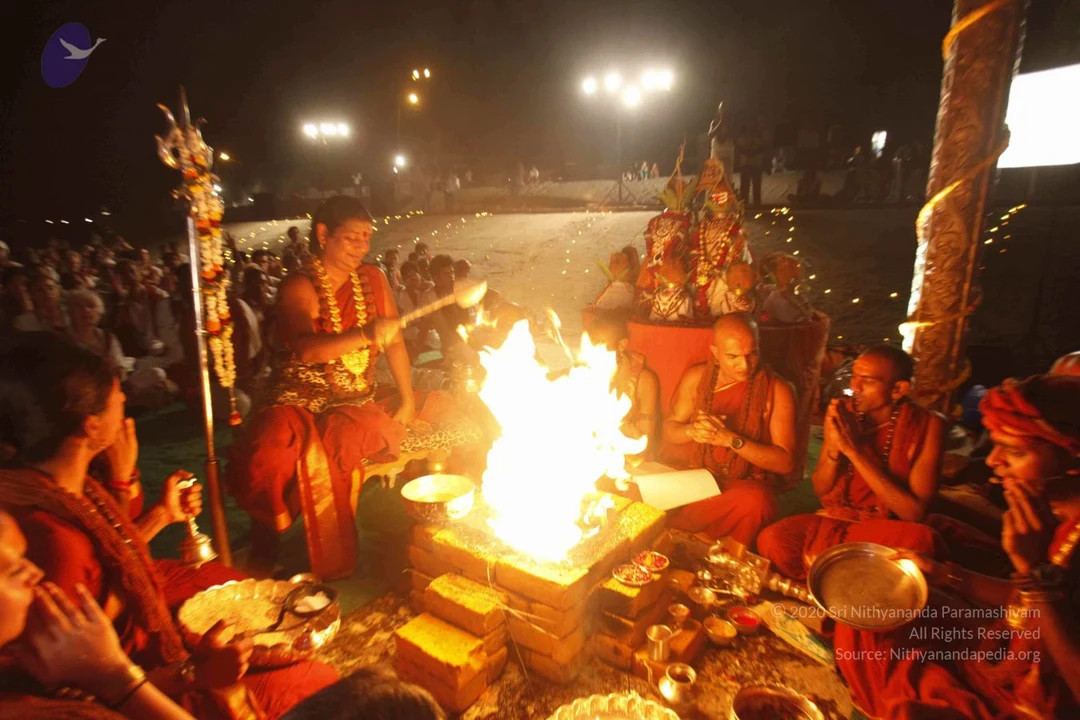
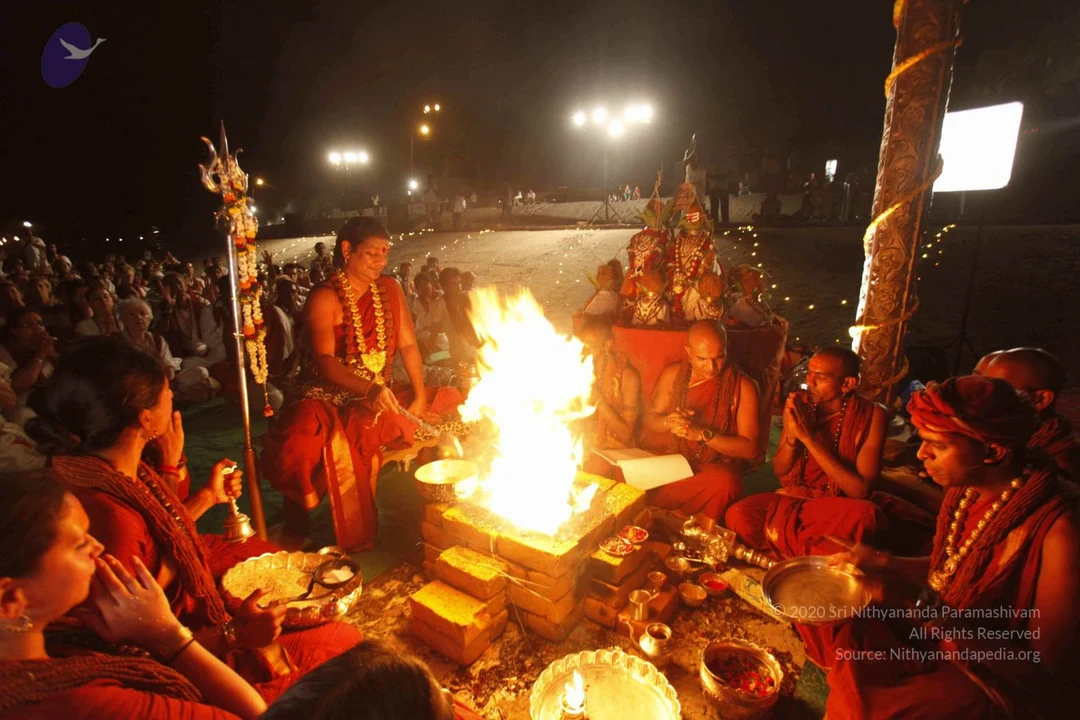
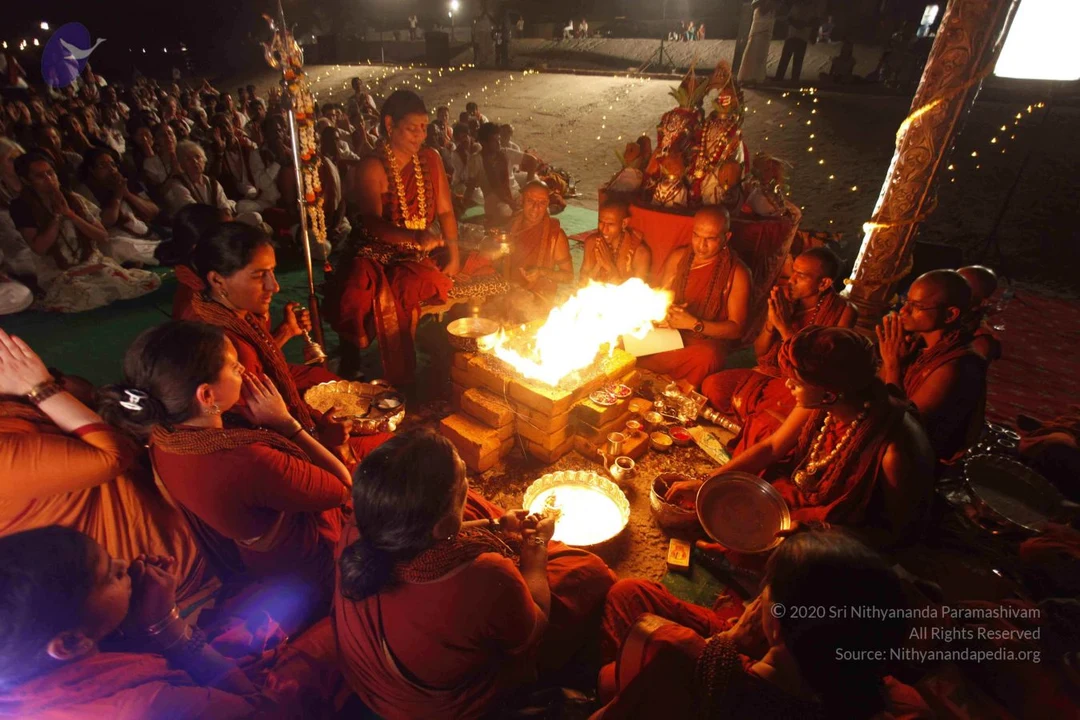
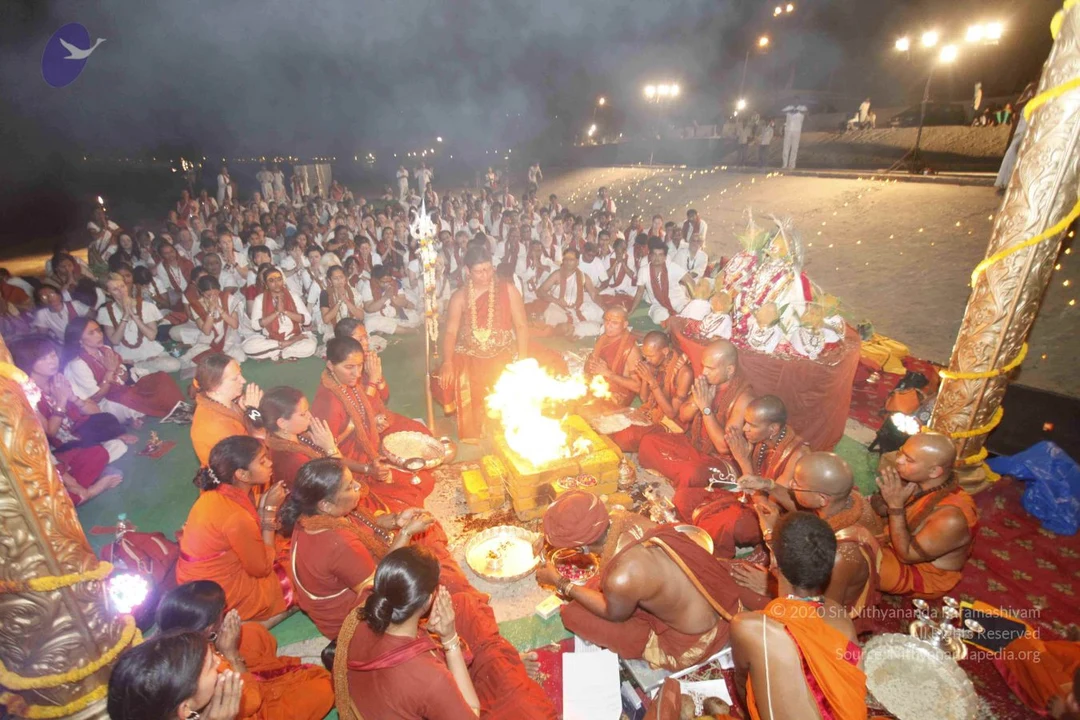
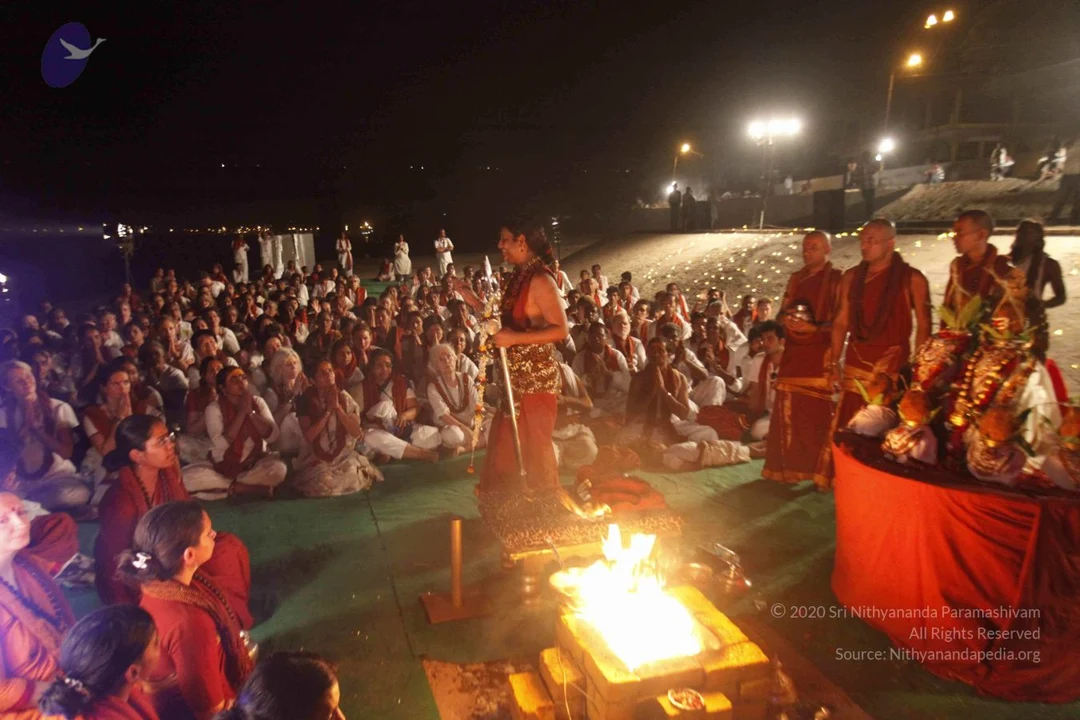
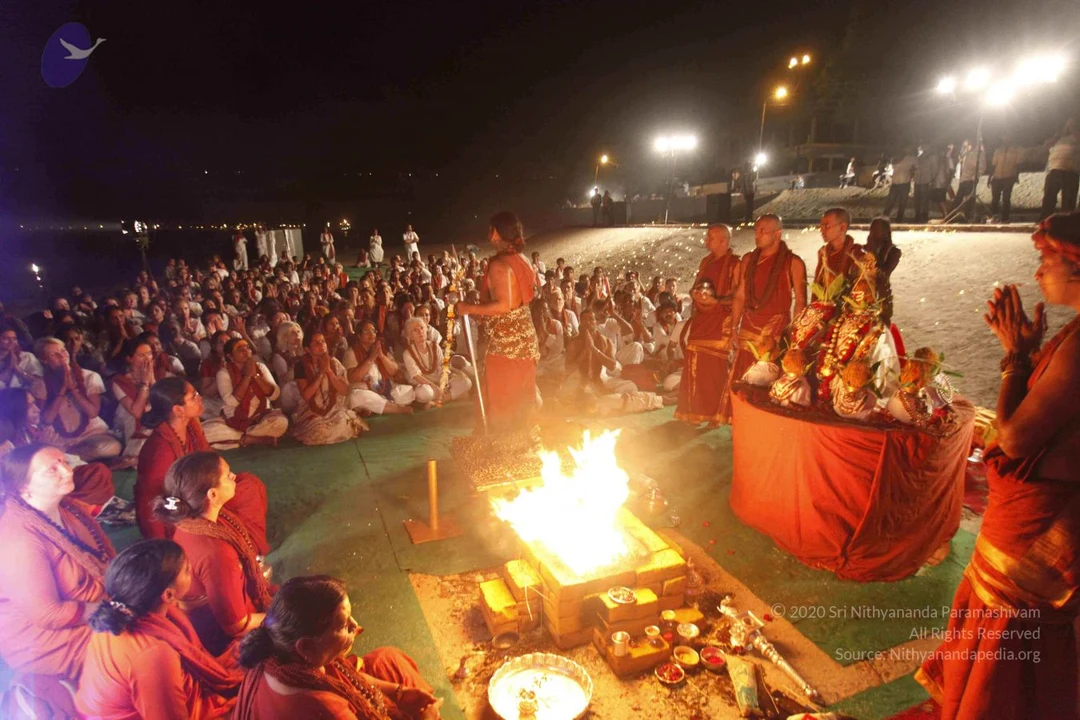
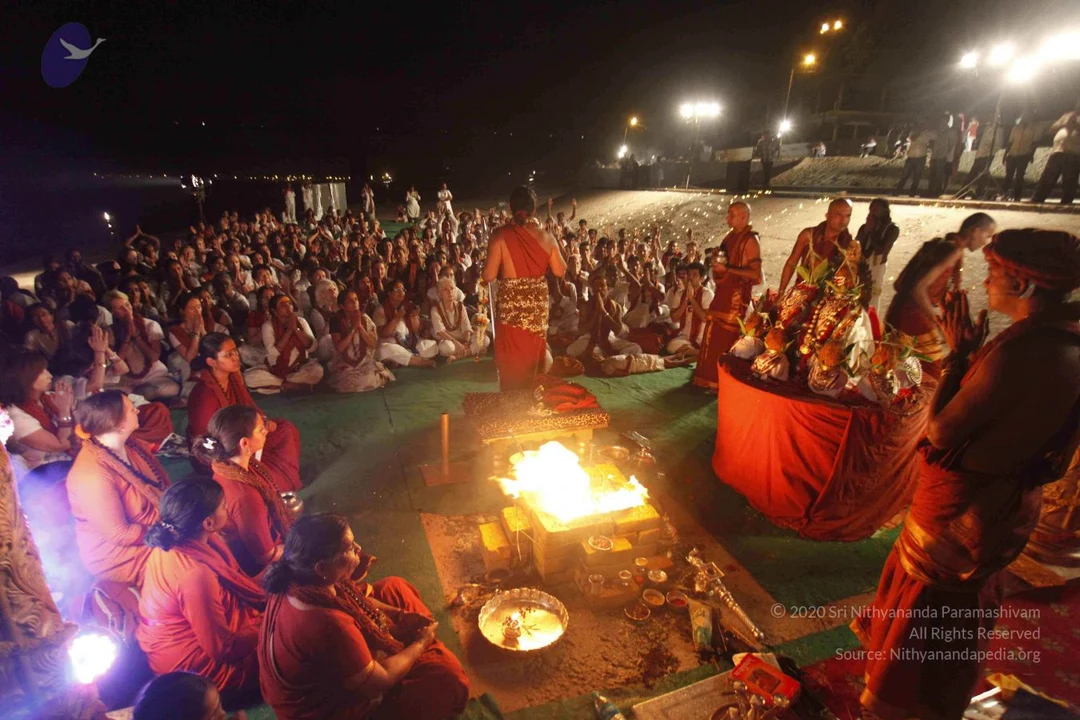
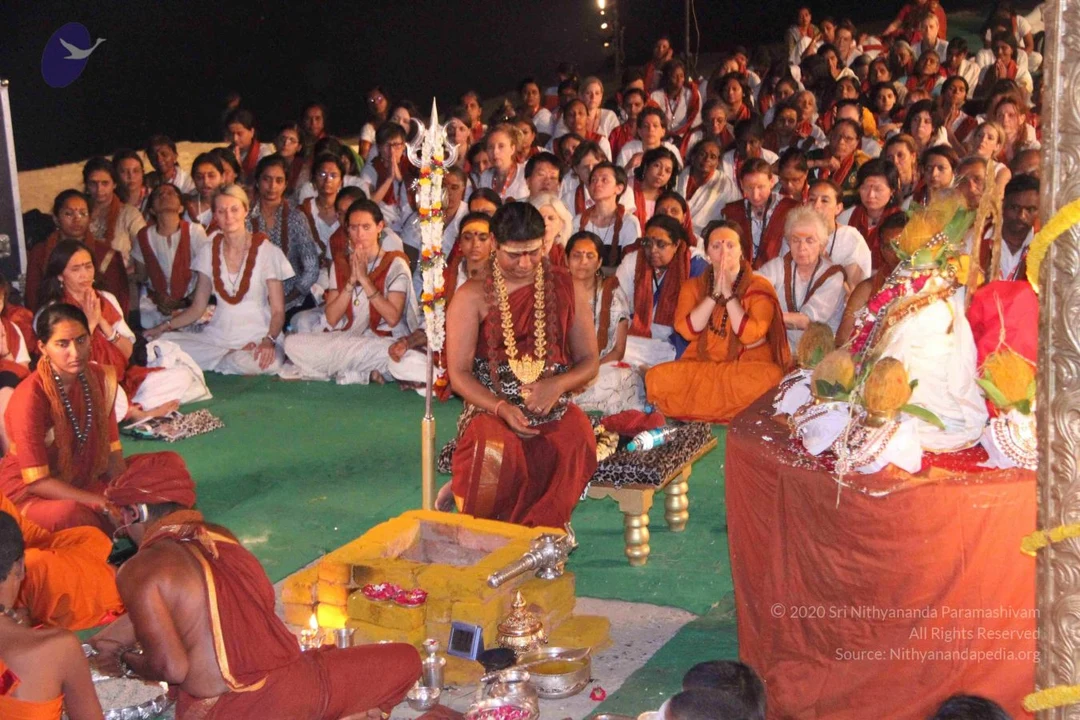
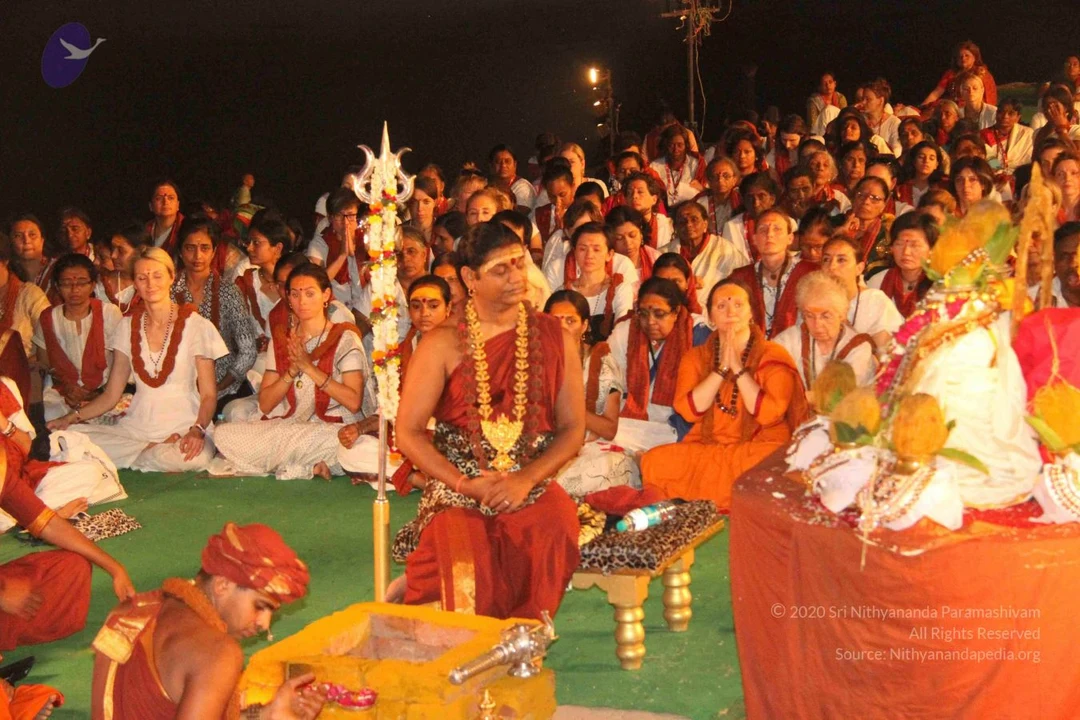
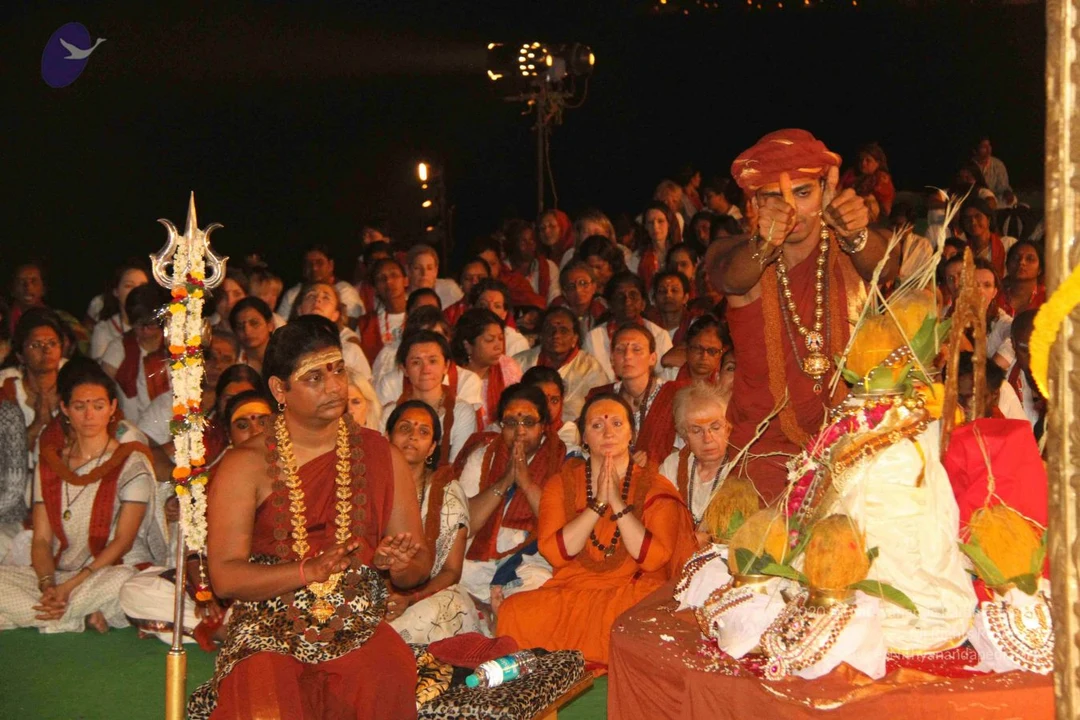
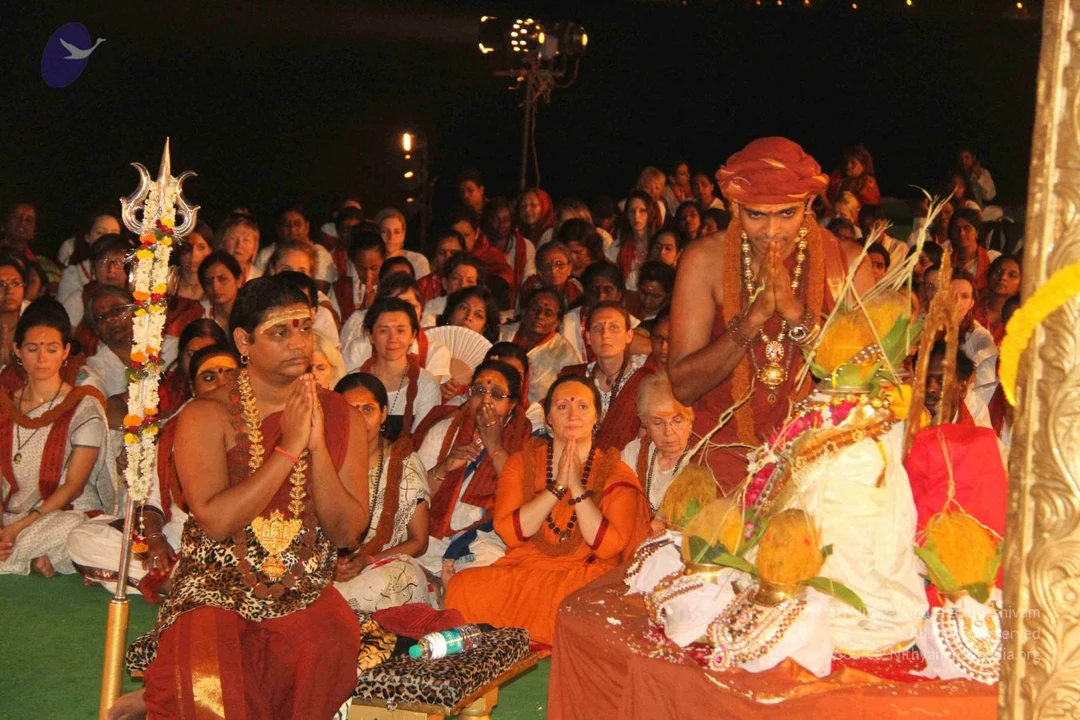
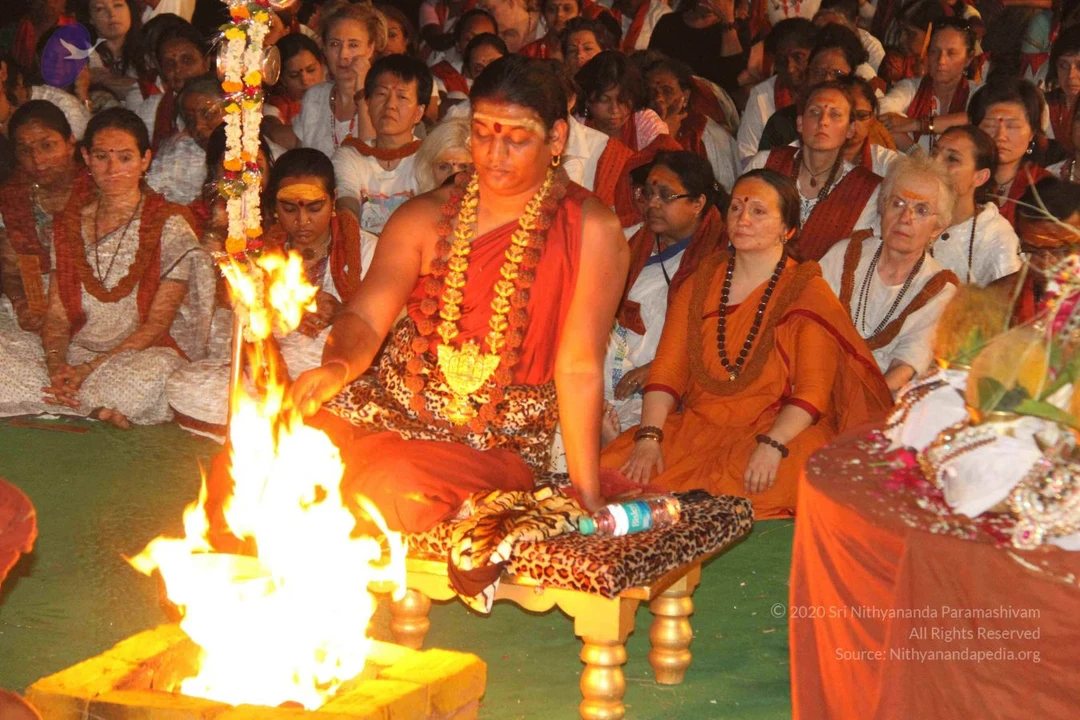
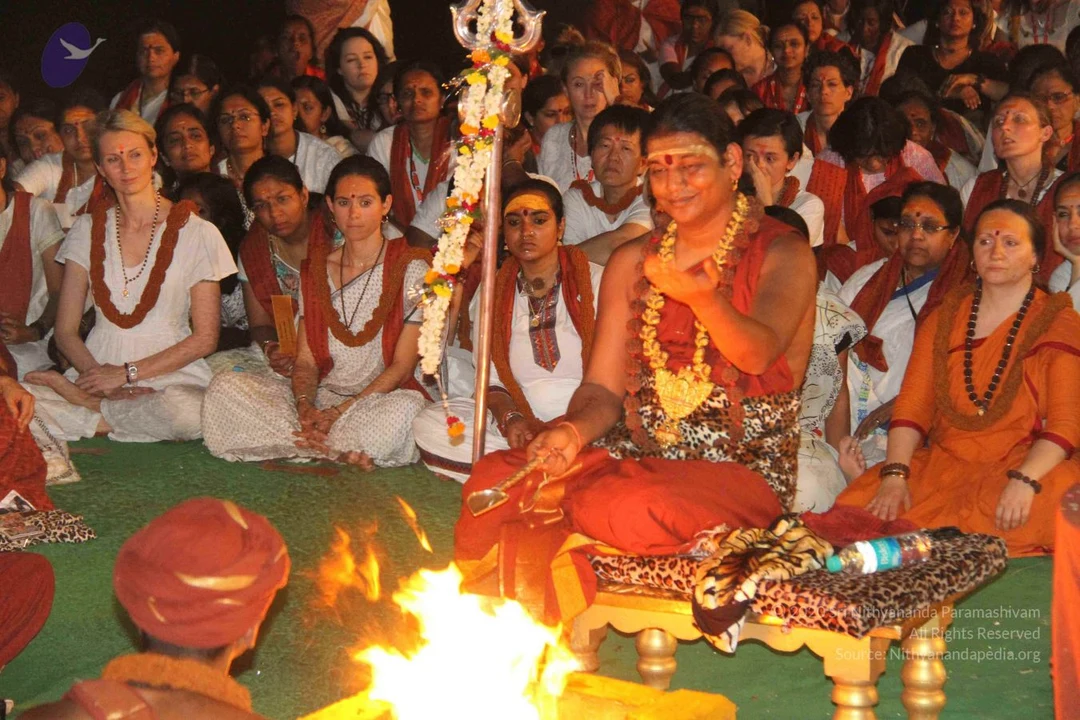
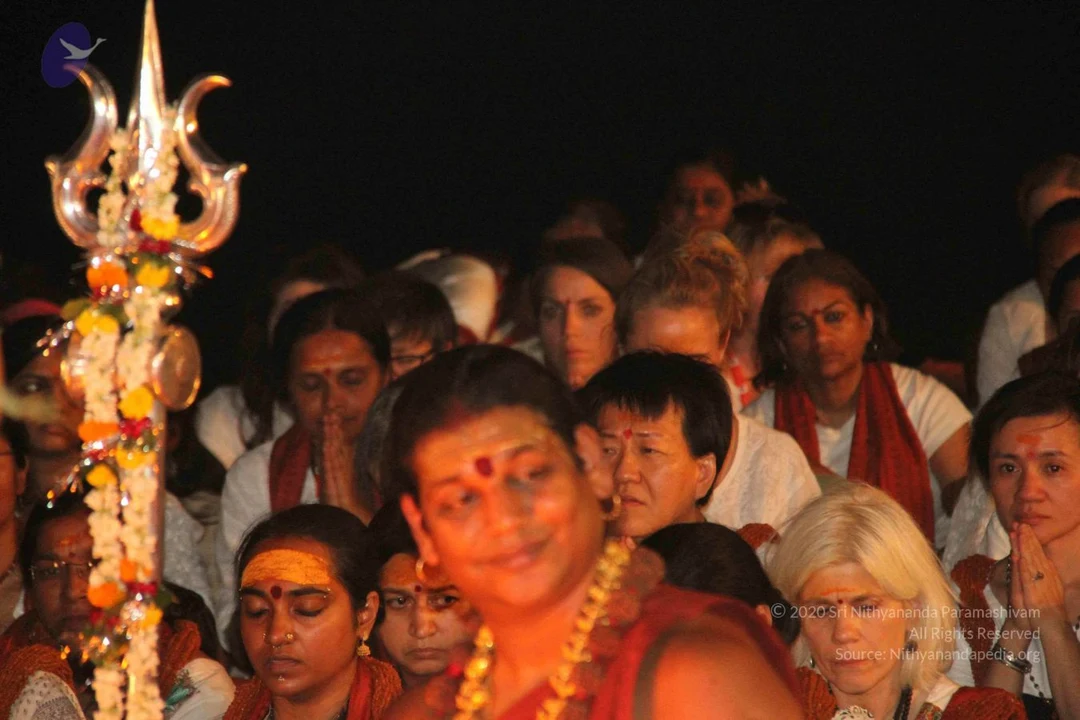
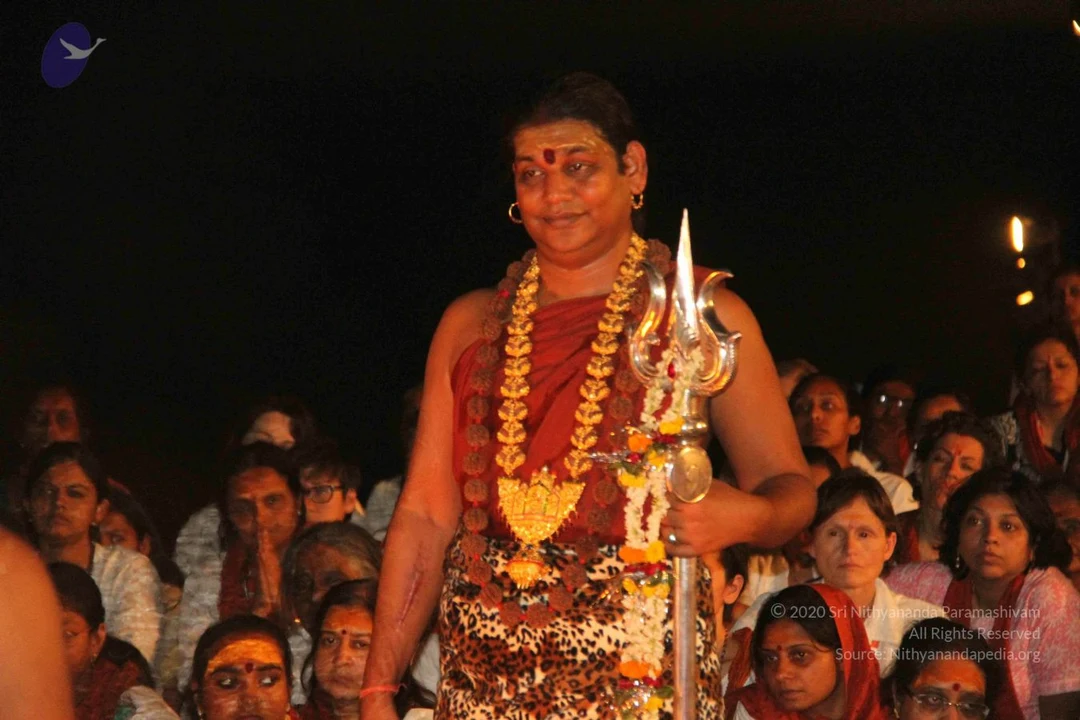
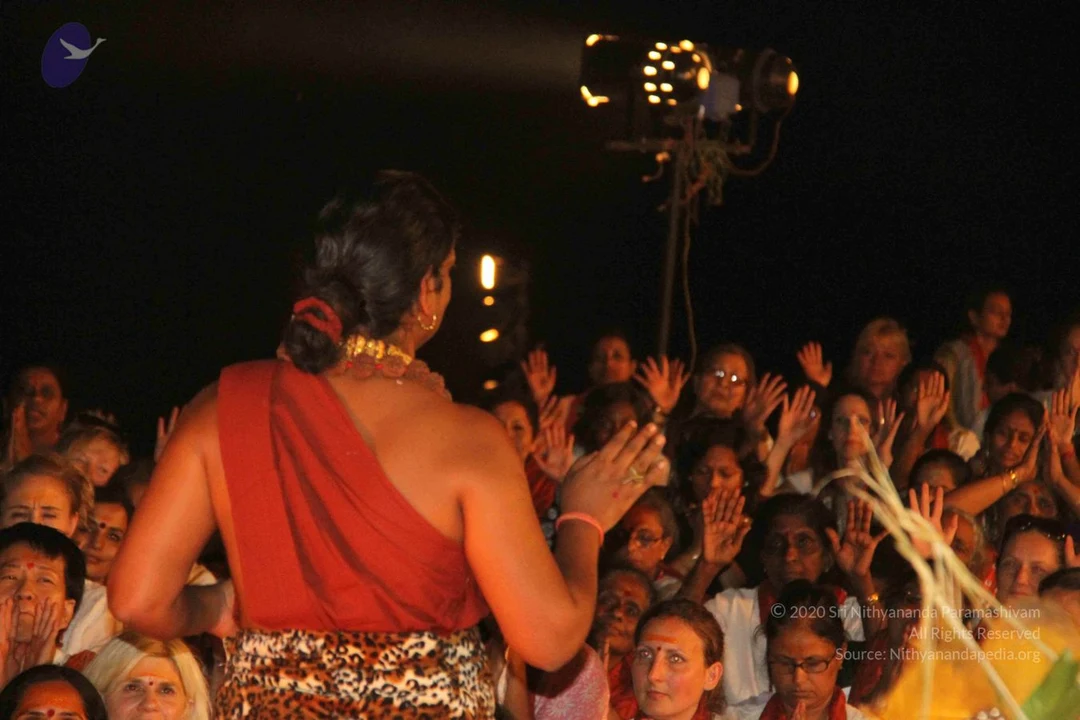
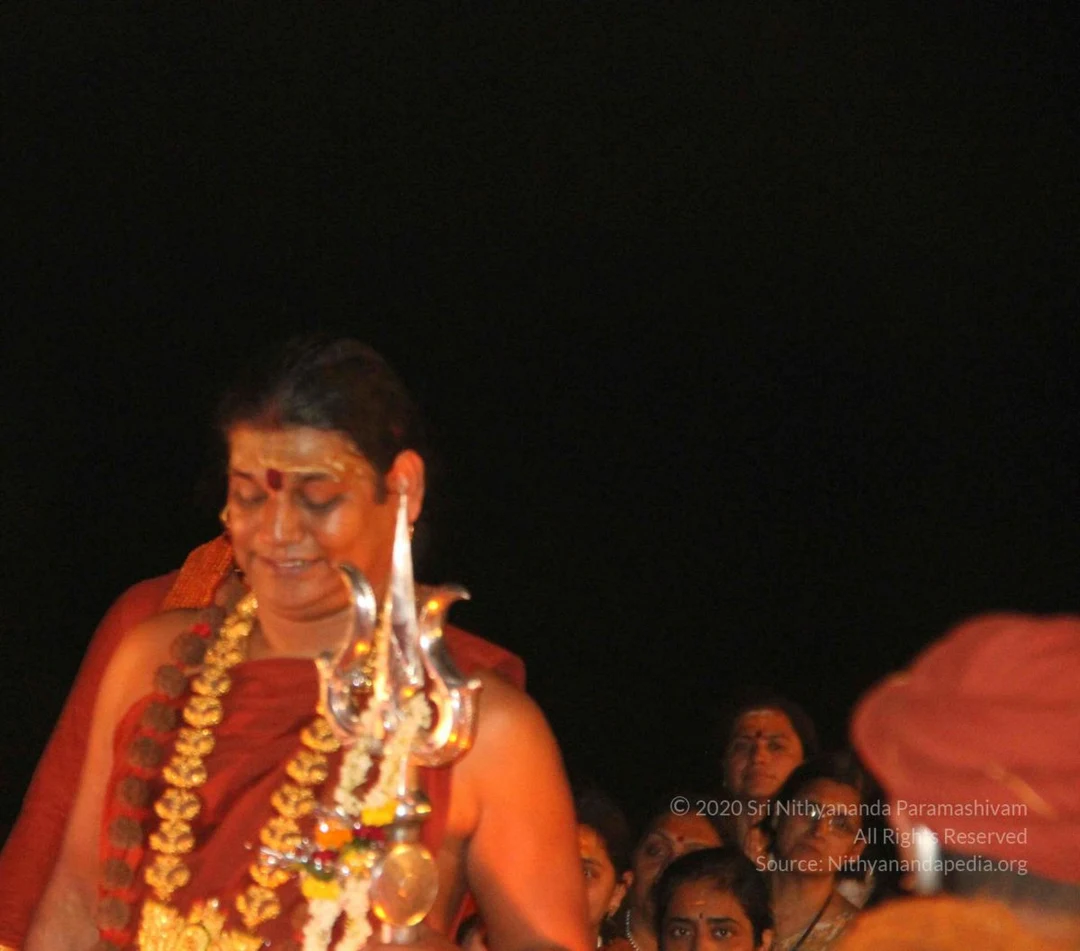
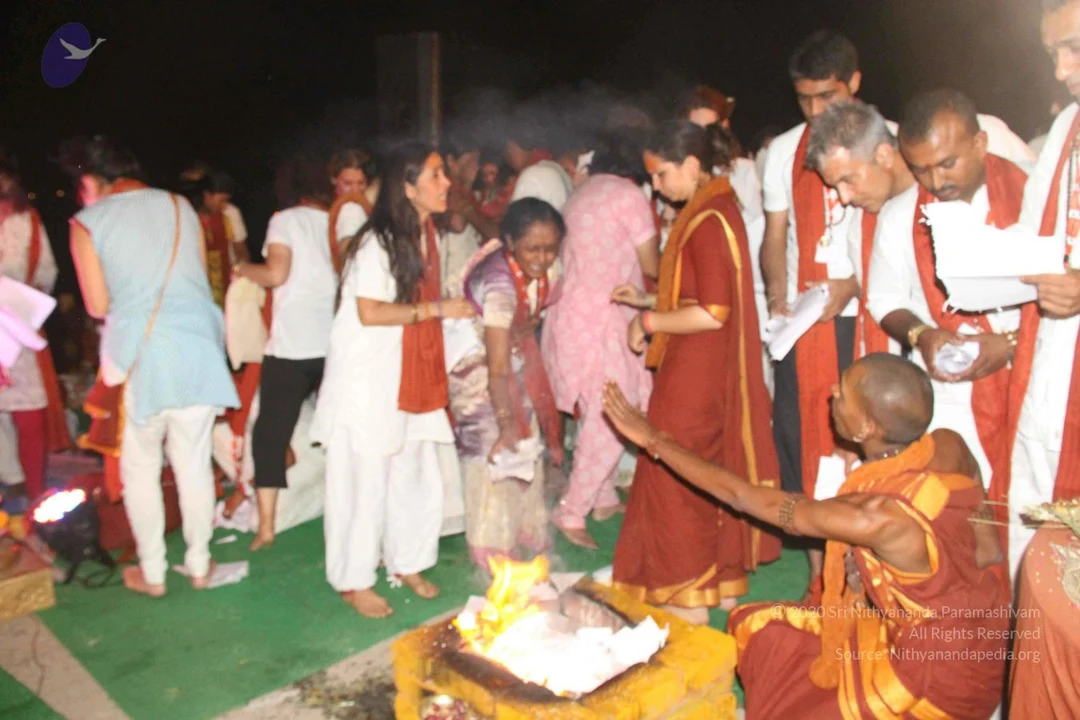
Rudrabishekam
More Photographs

Researches

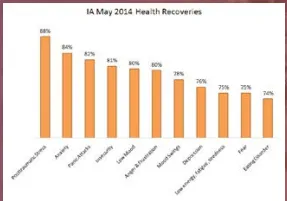
Stunning Health Recoveries

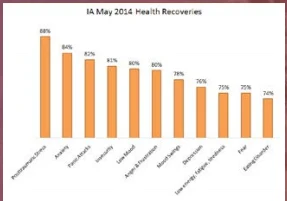
Participants from different Inner Awakening programs participated in a Health survey before and after the program. The participants were from various backgrounds from across the globe with varied health conditions. Results seen were stunning and consistent for all the Inner Awakening programs. The Chart below shows the % of participants that had 100% health recovery from each Inner Awakening programs.

Photos Of The Day:

Padapuja

Nithya-Satsang

Inner-Awakening

Photos from this day

View all 484 photos

Photos

8 photosSource gallery
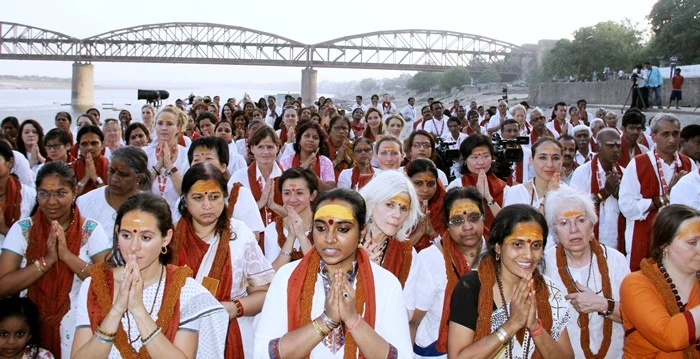
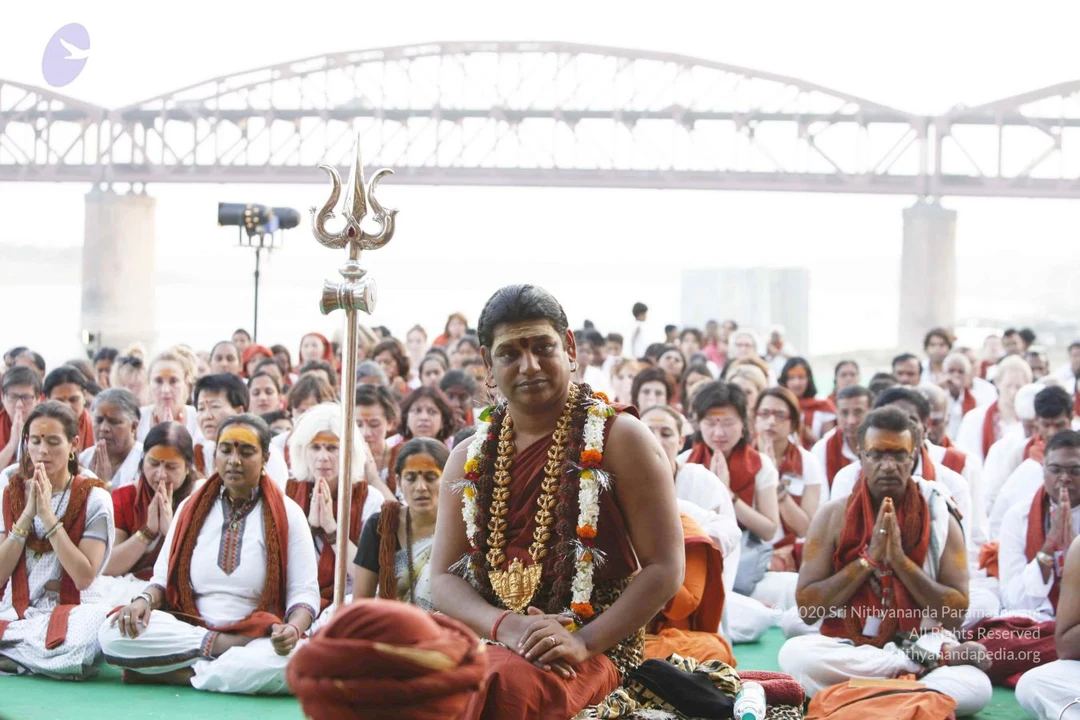
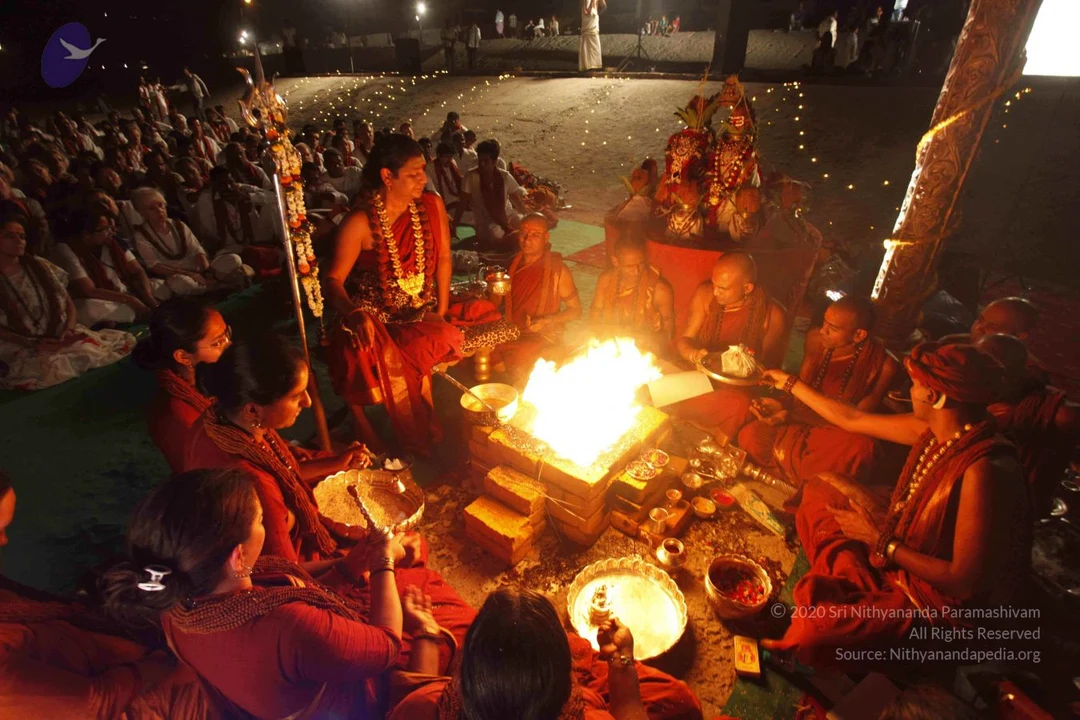
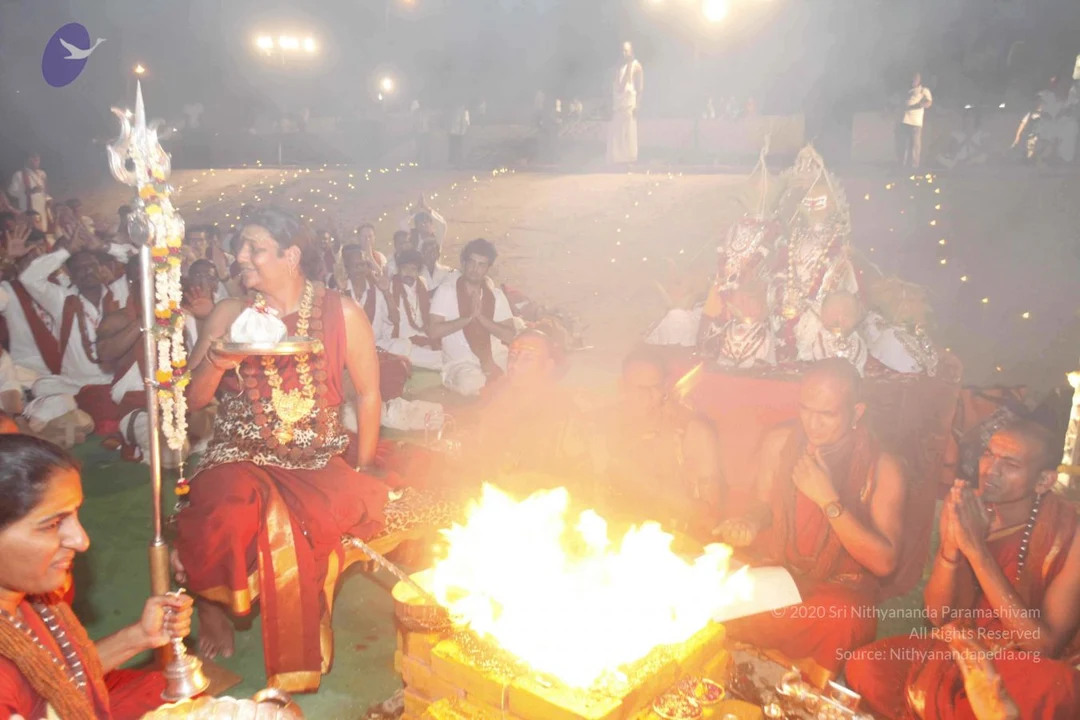
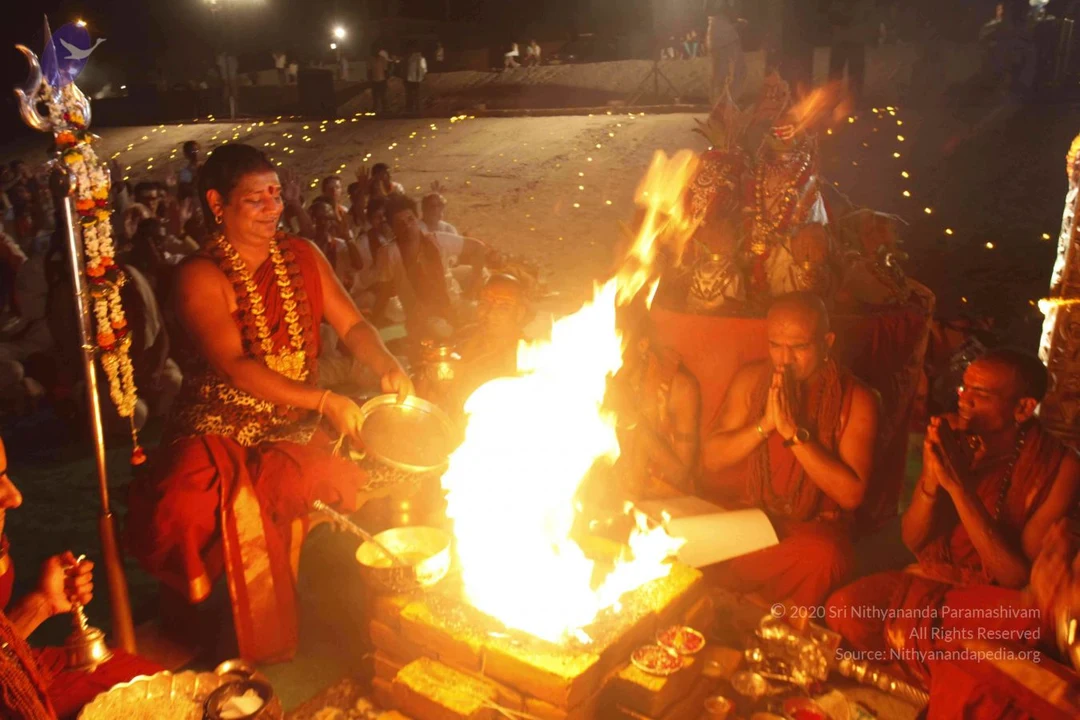
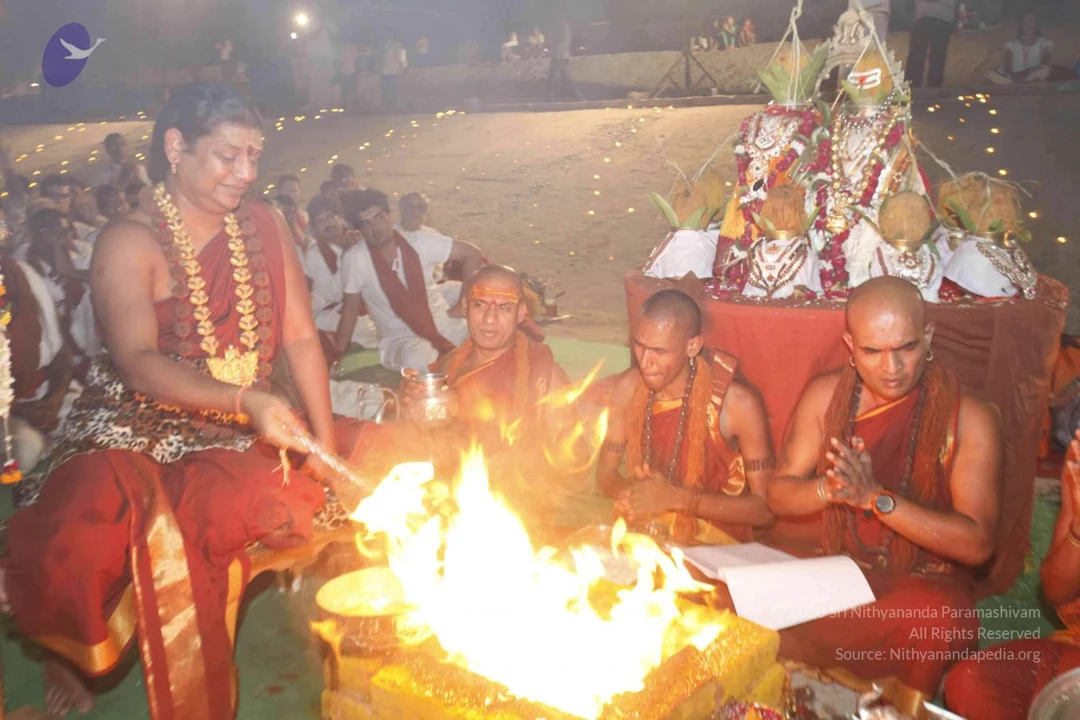
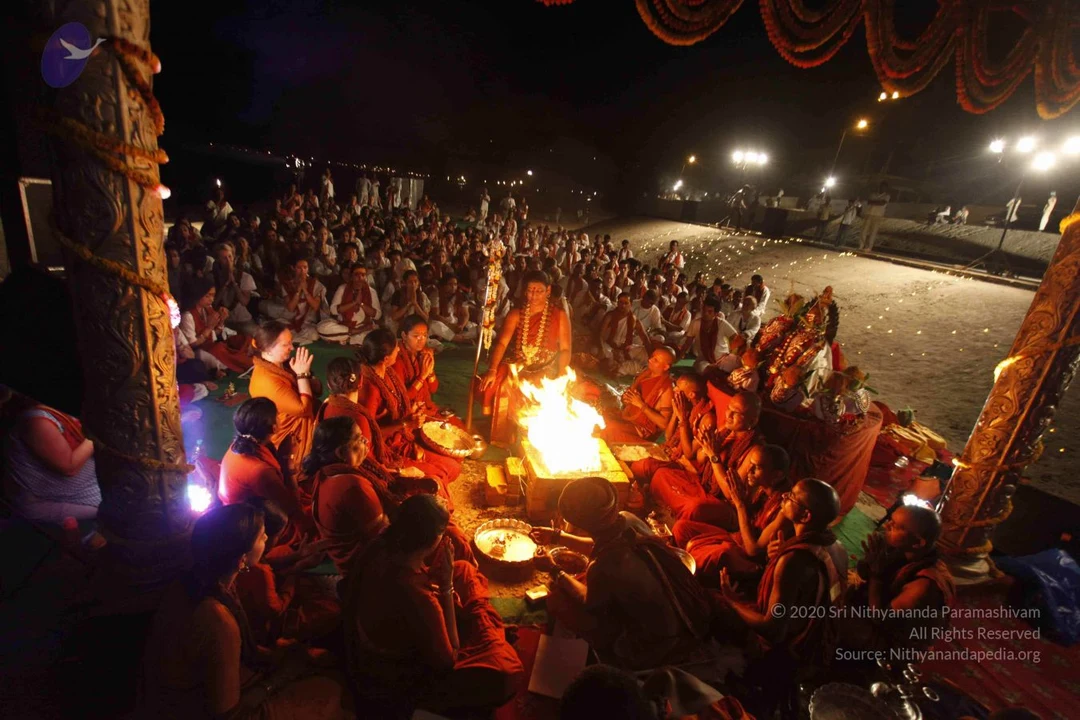
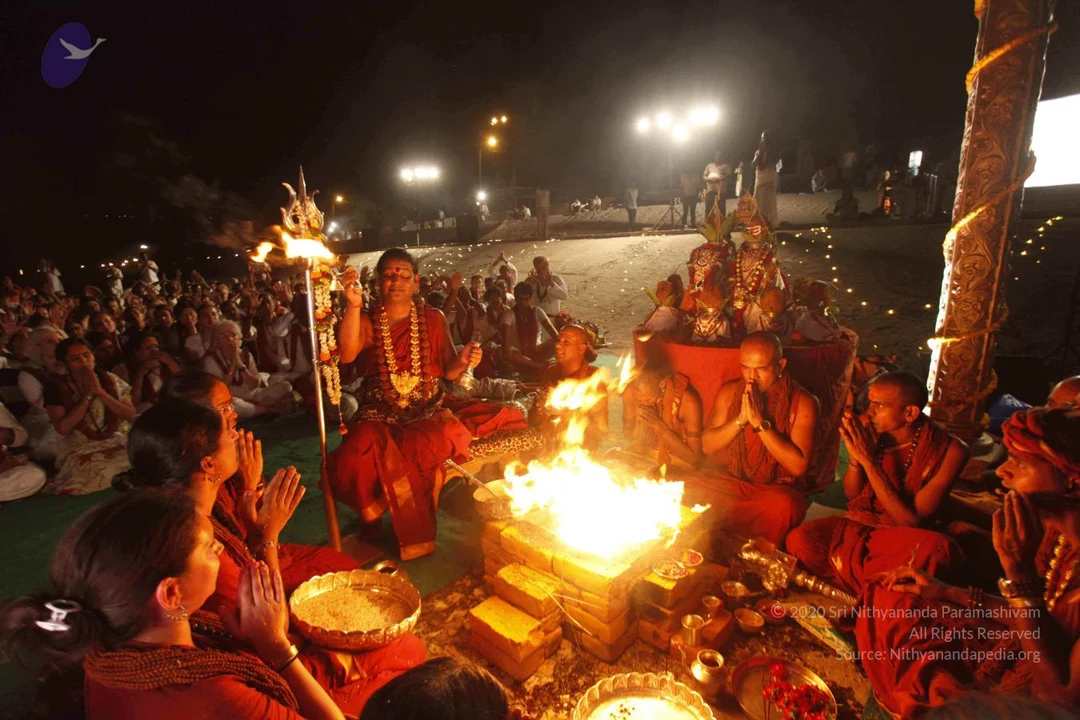
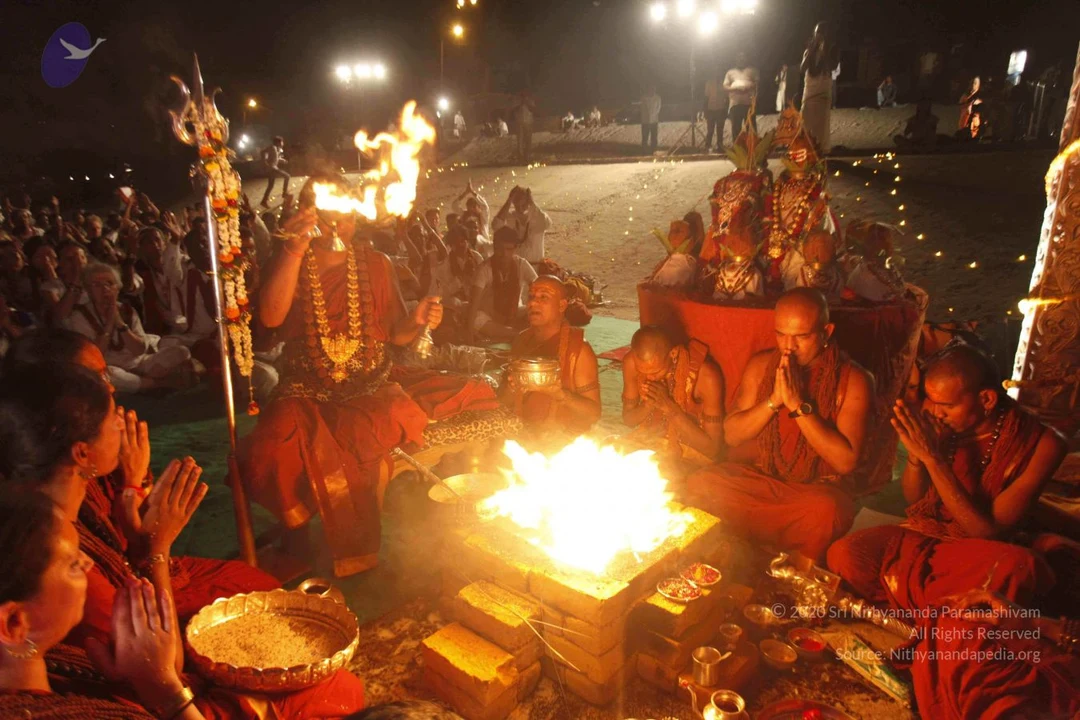
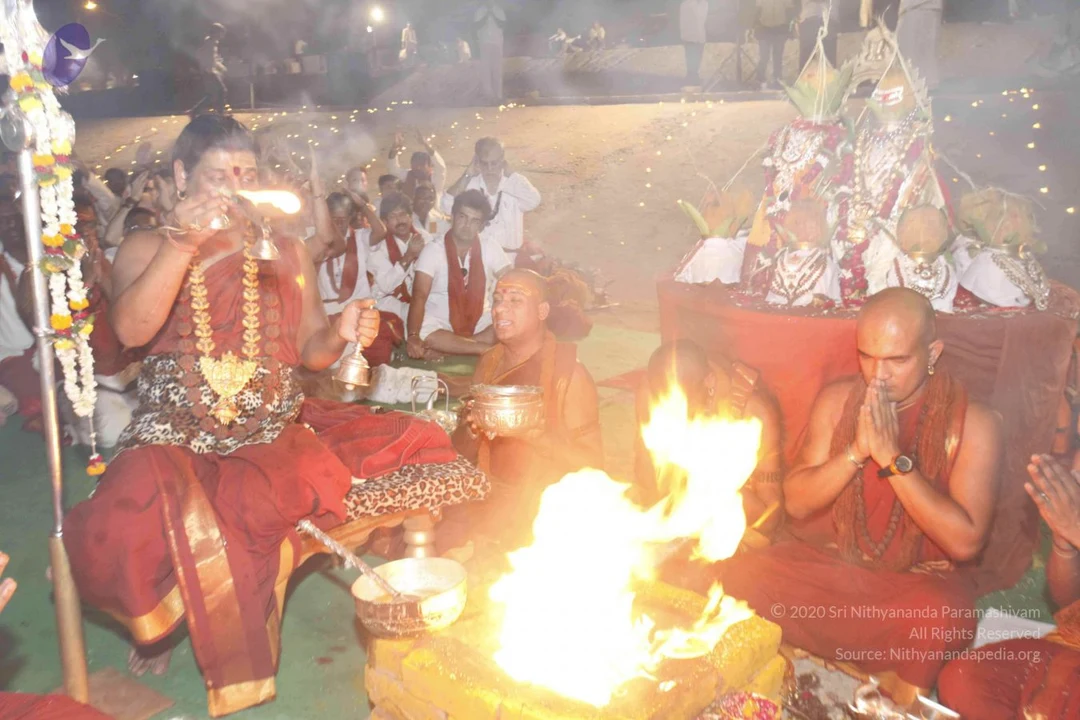
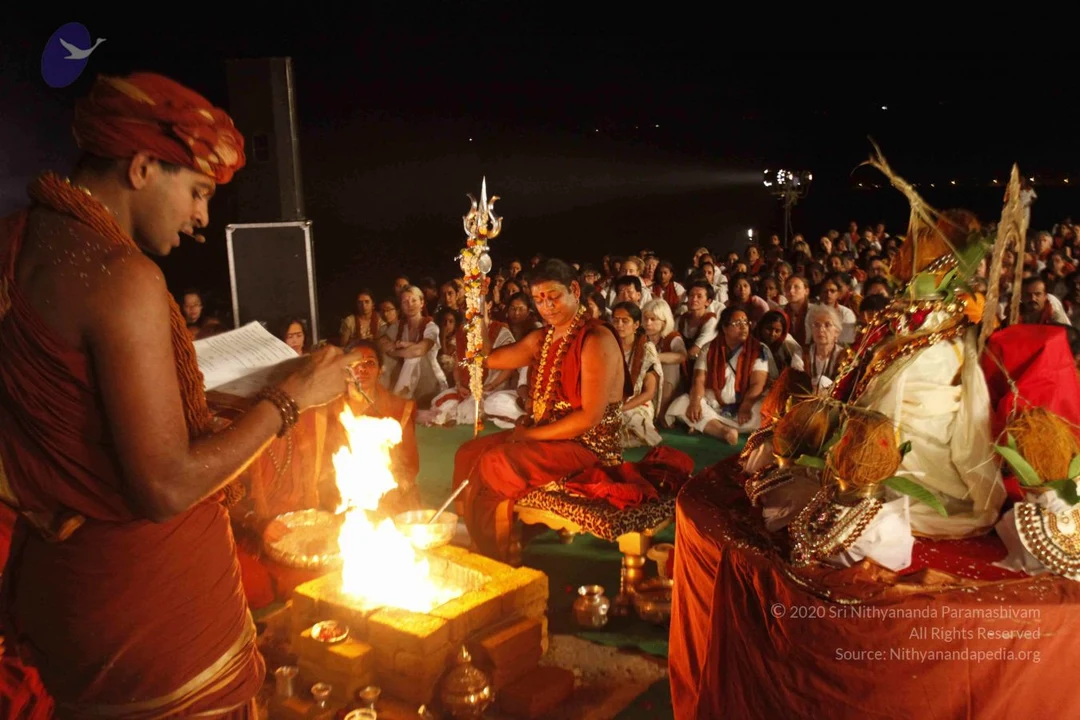
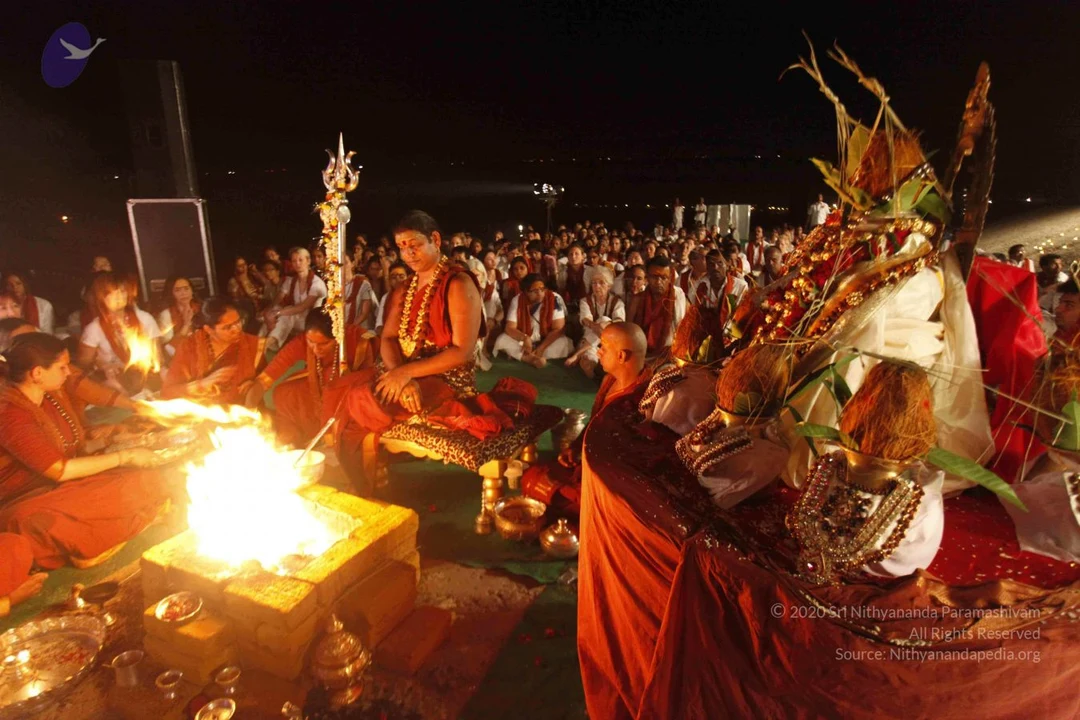
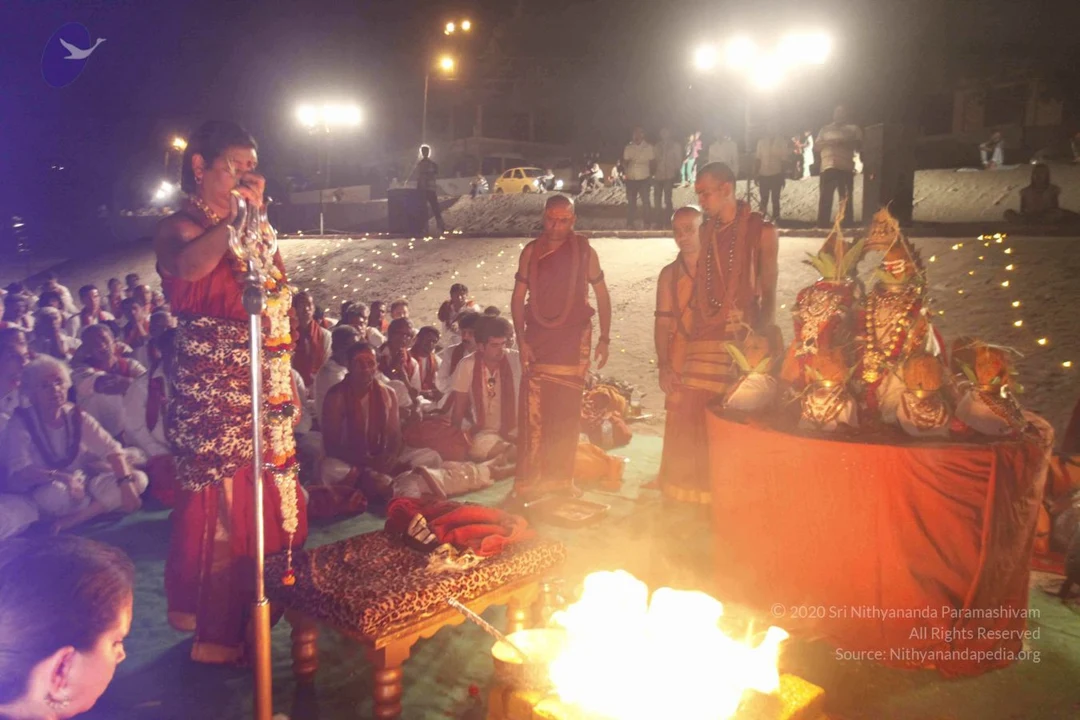
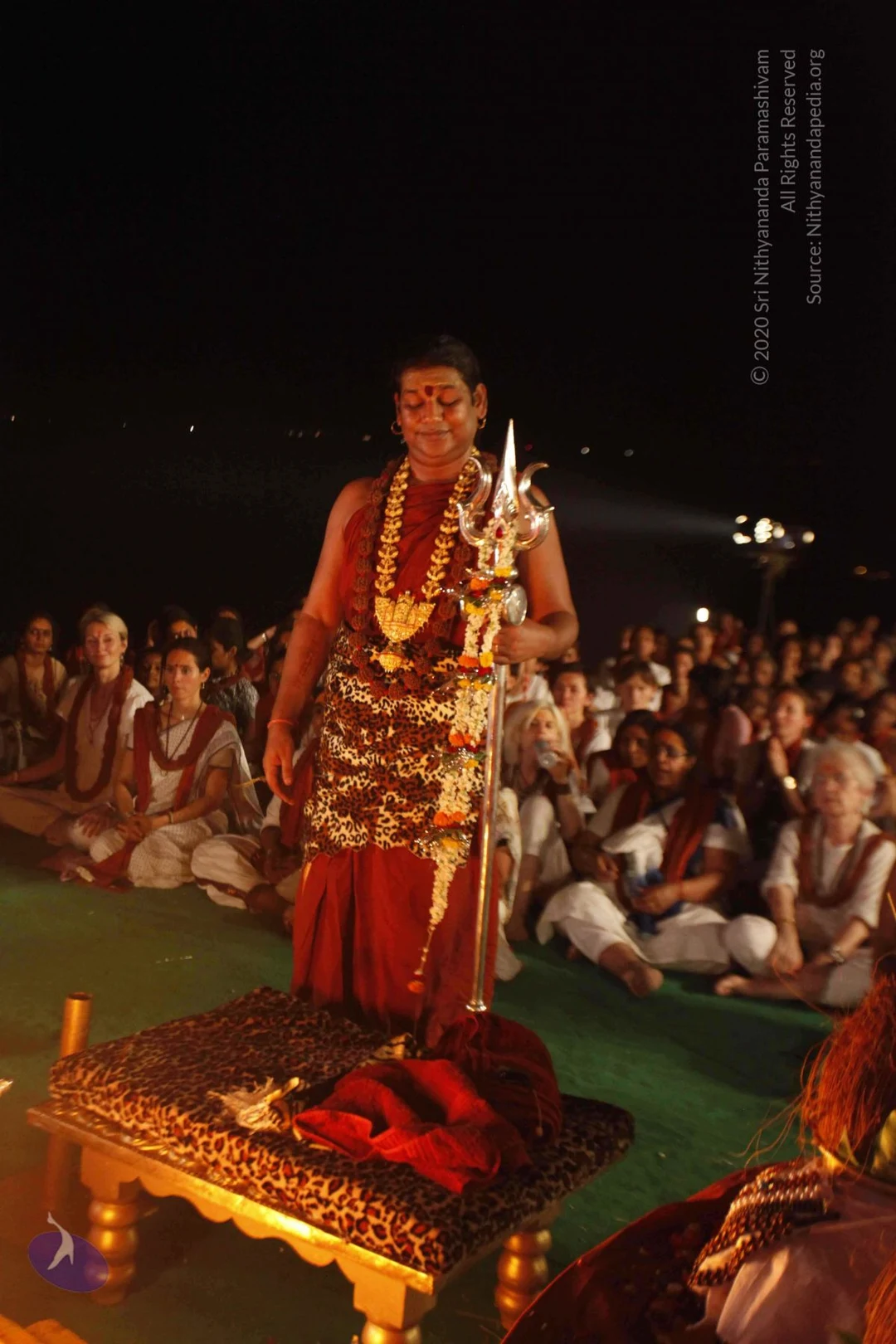
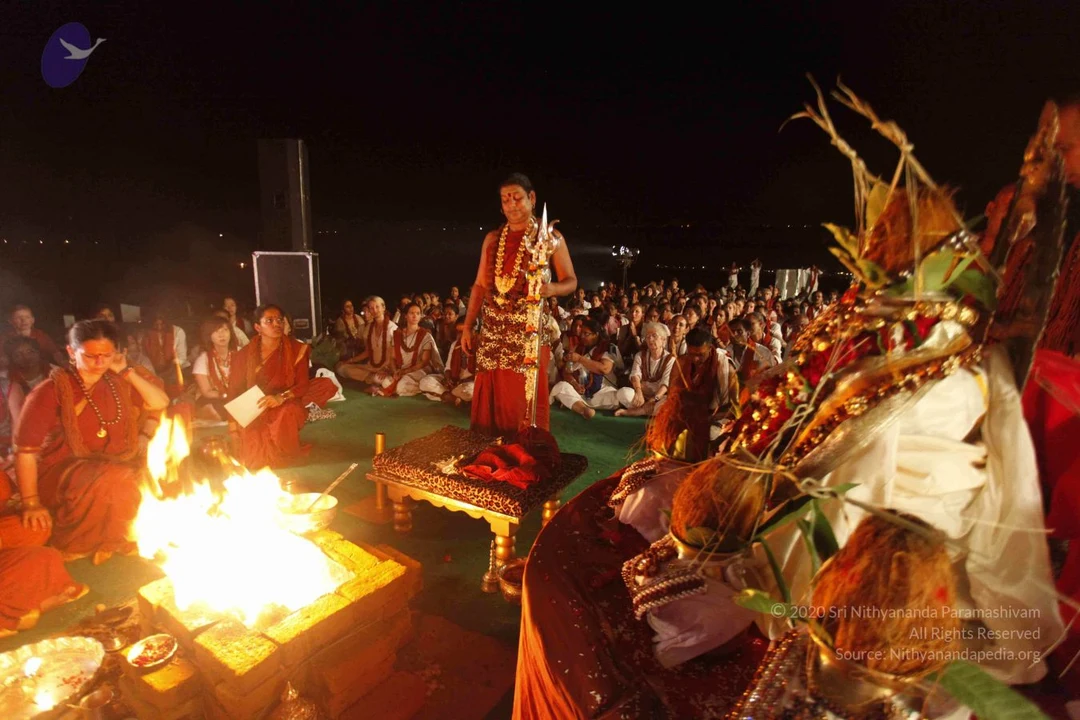
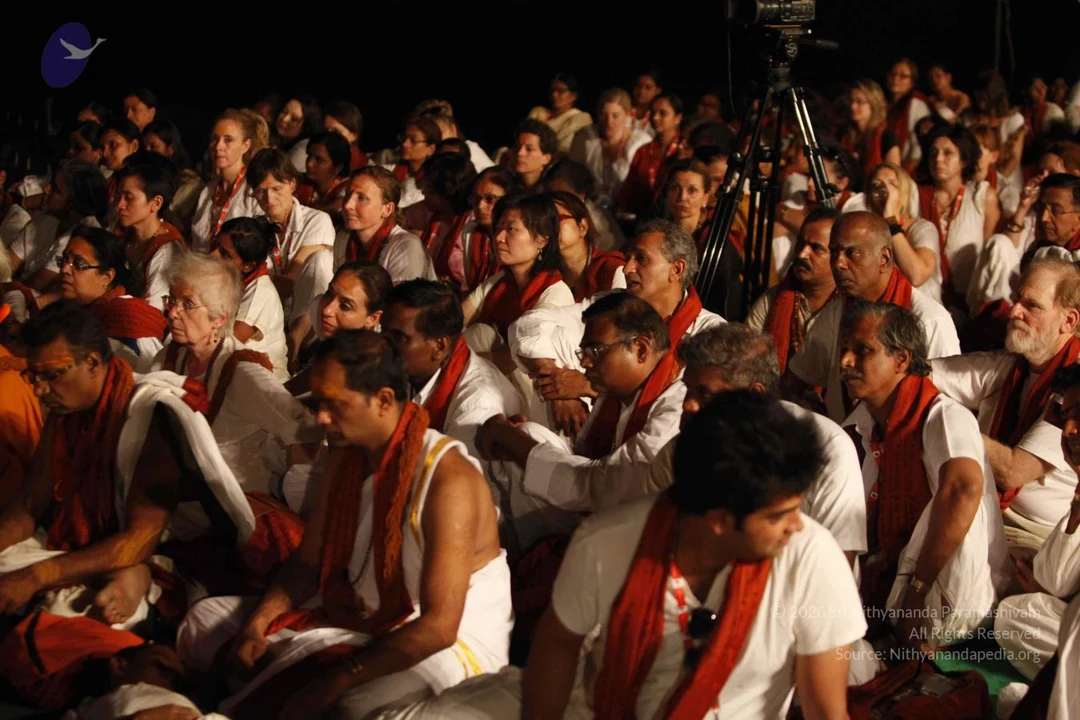
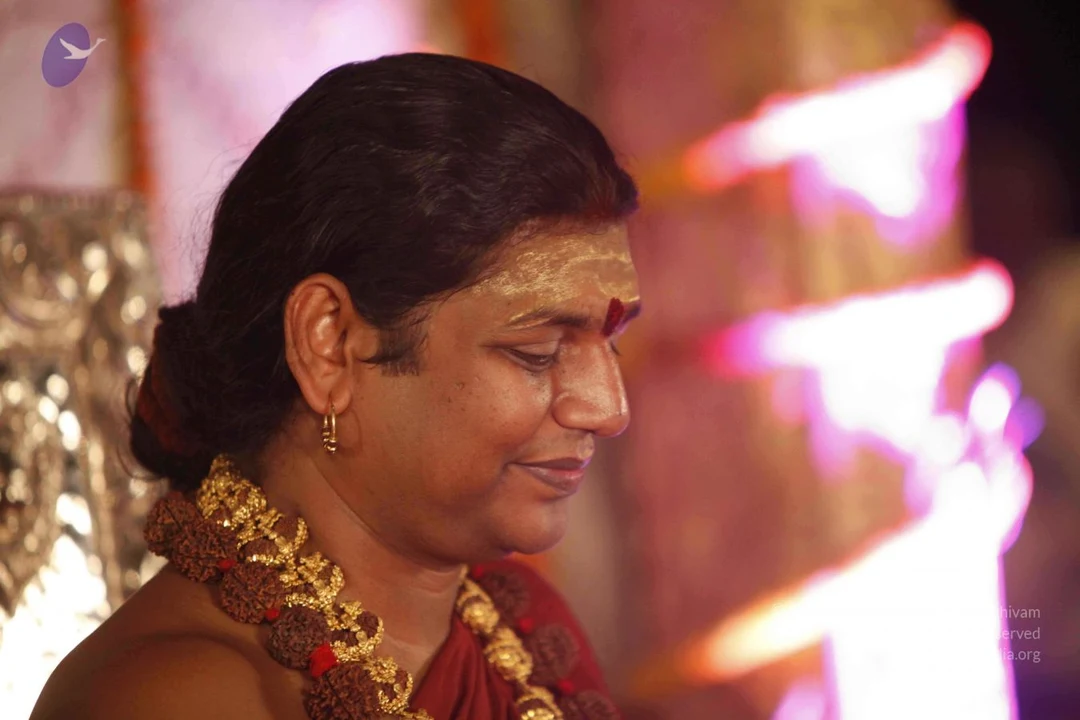
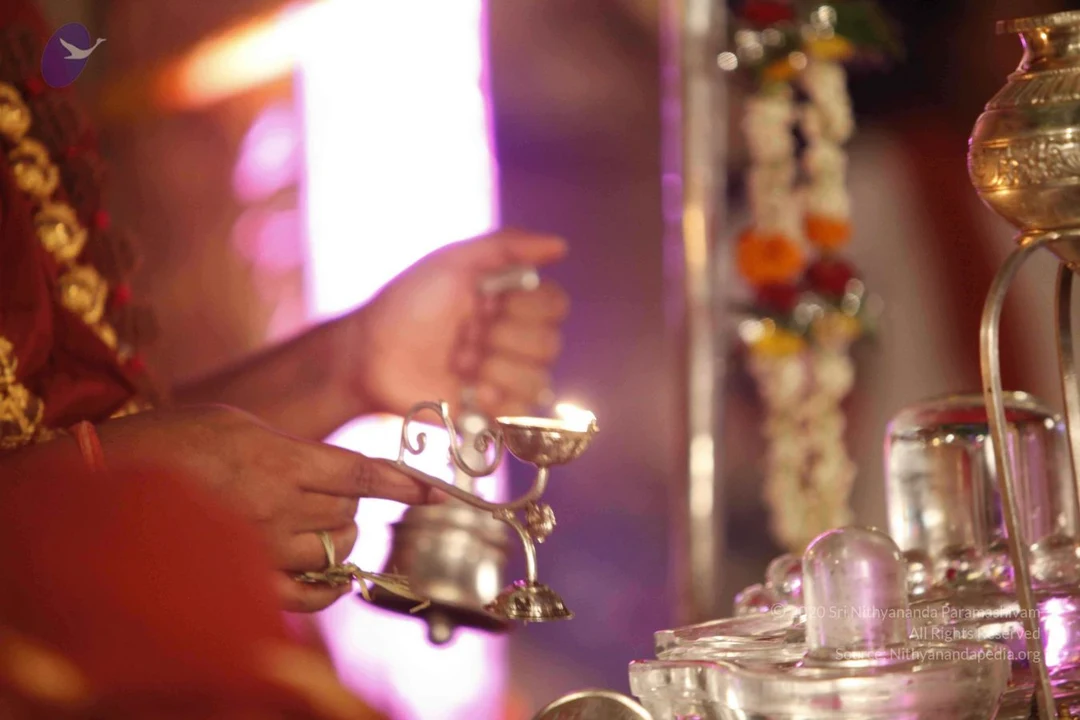
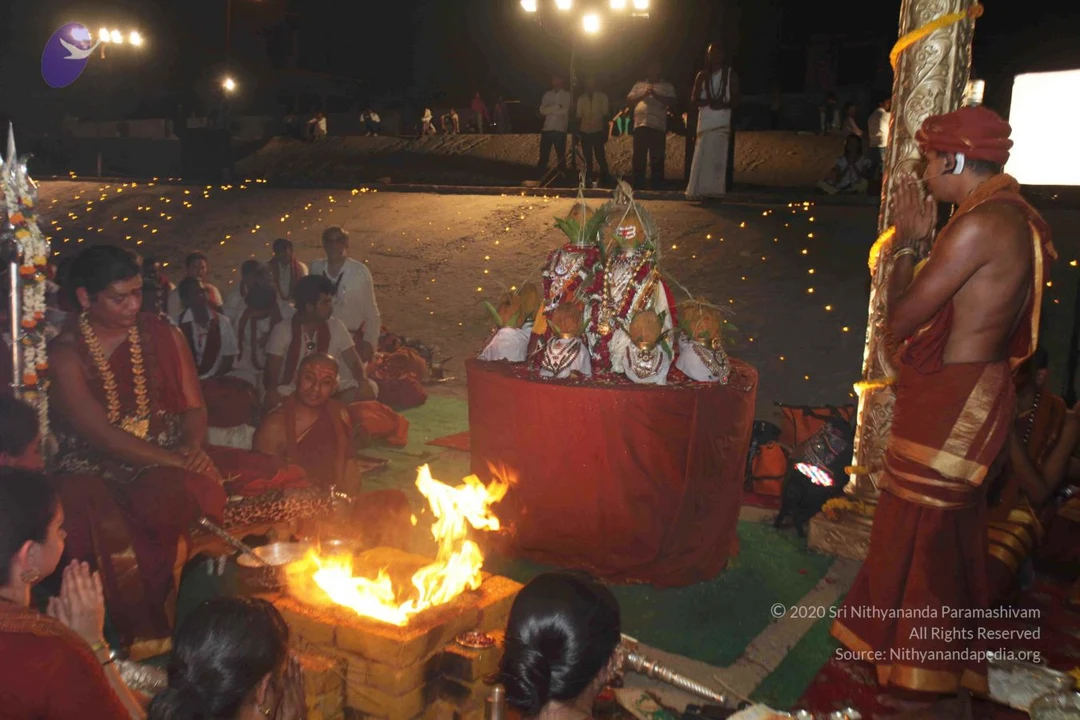
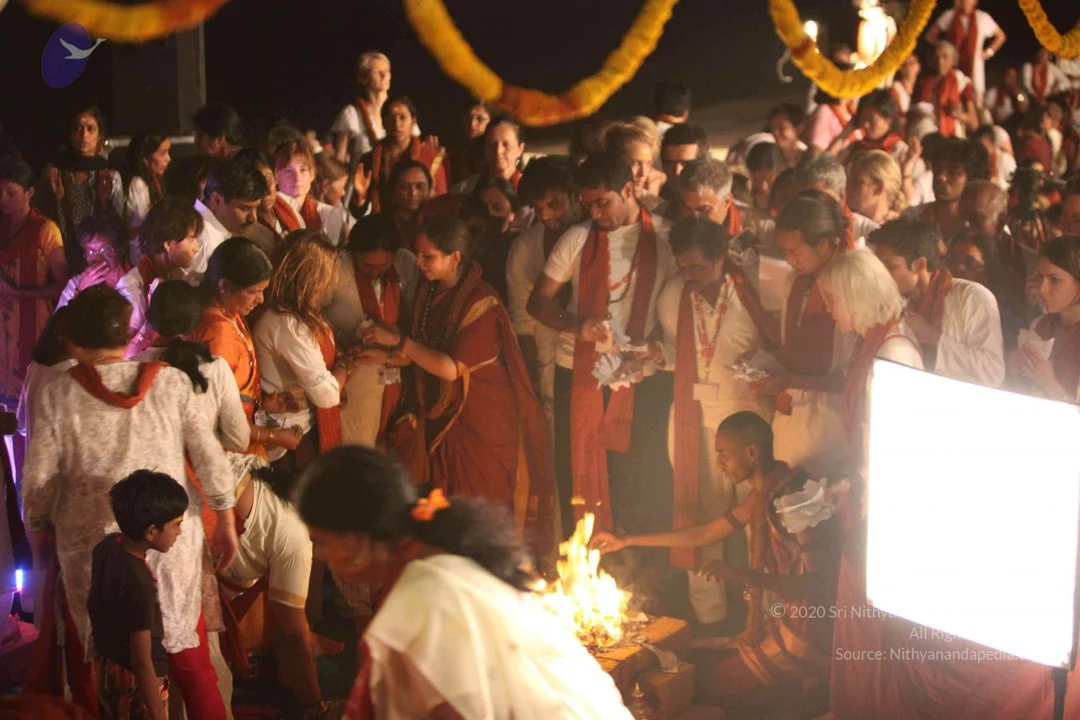
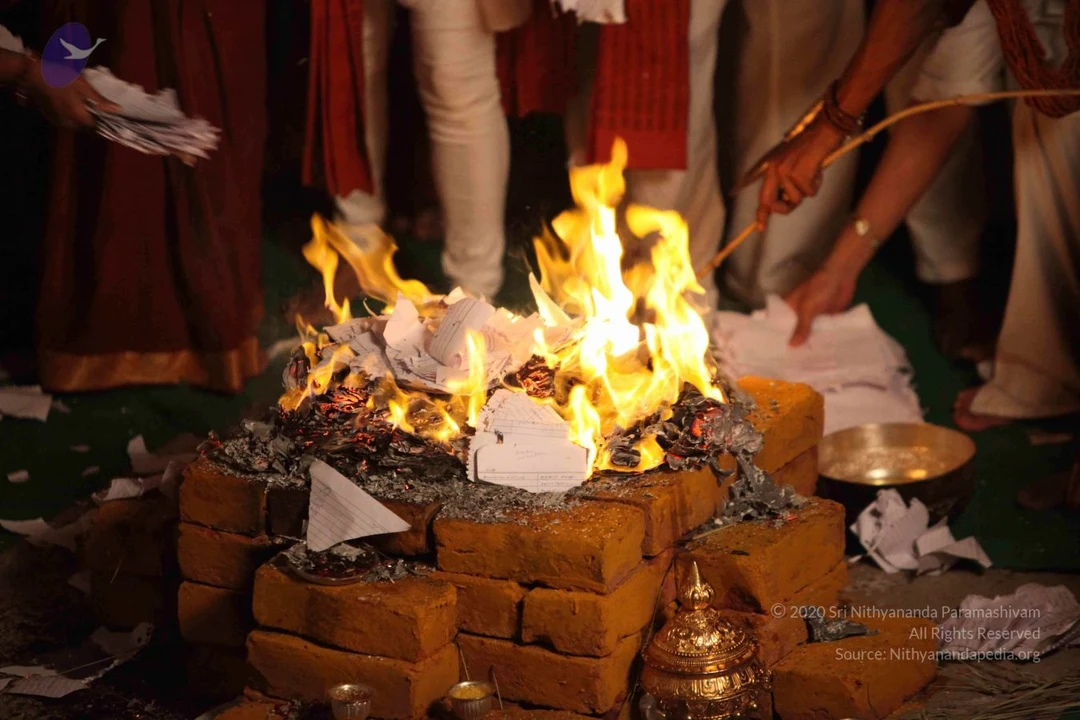
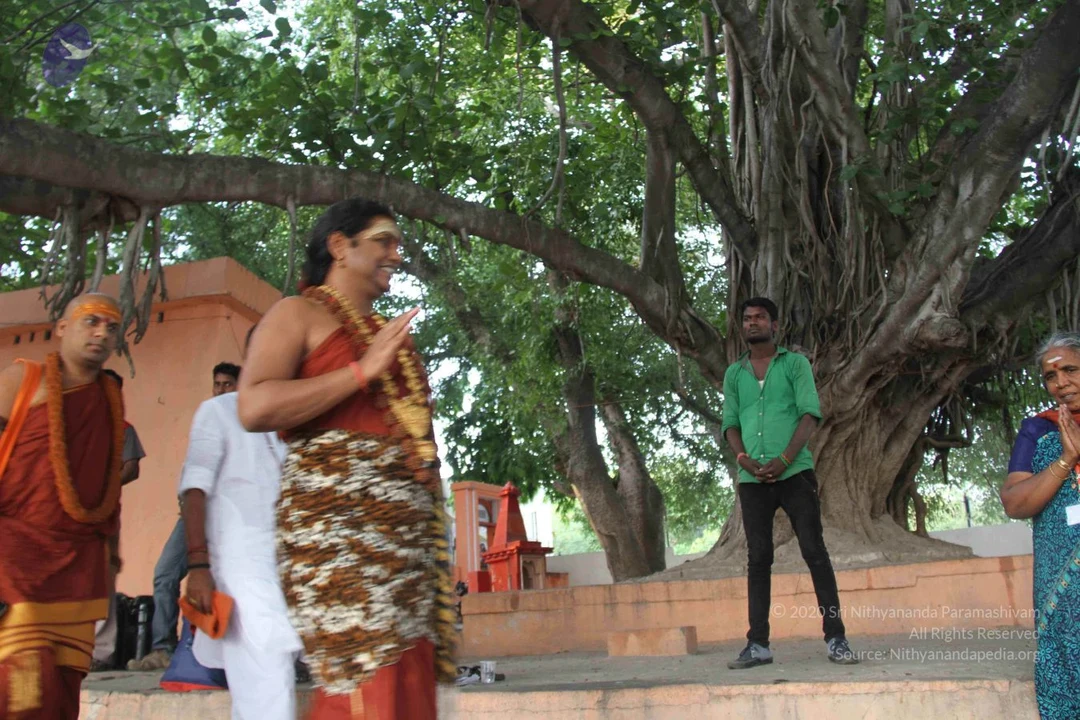
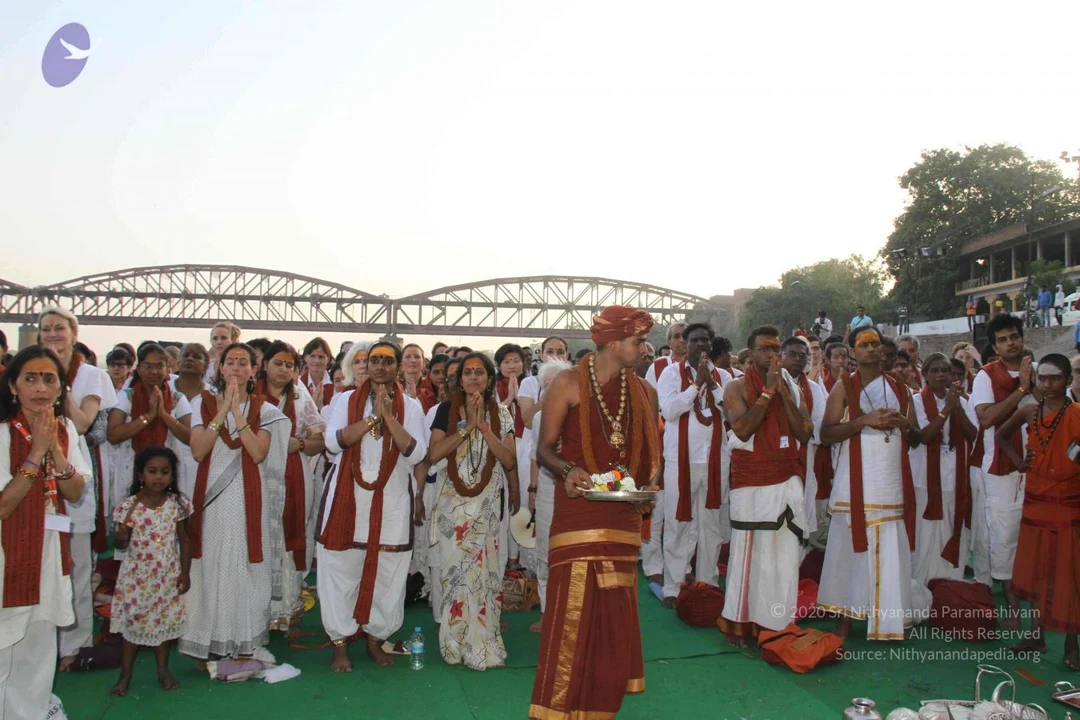
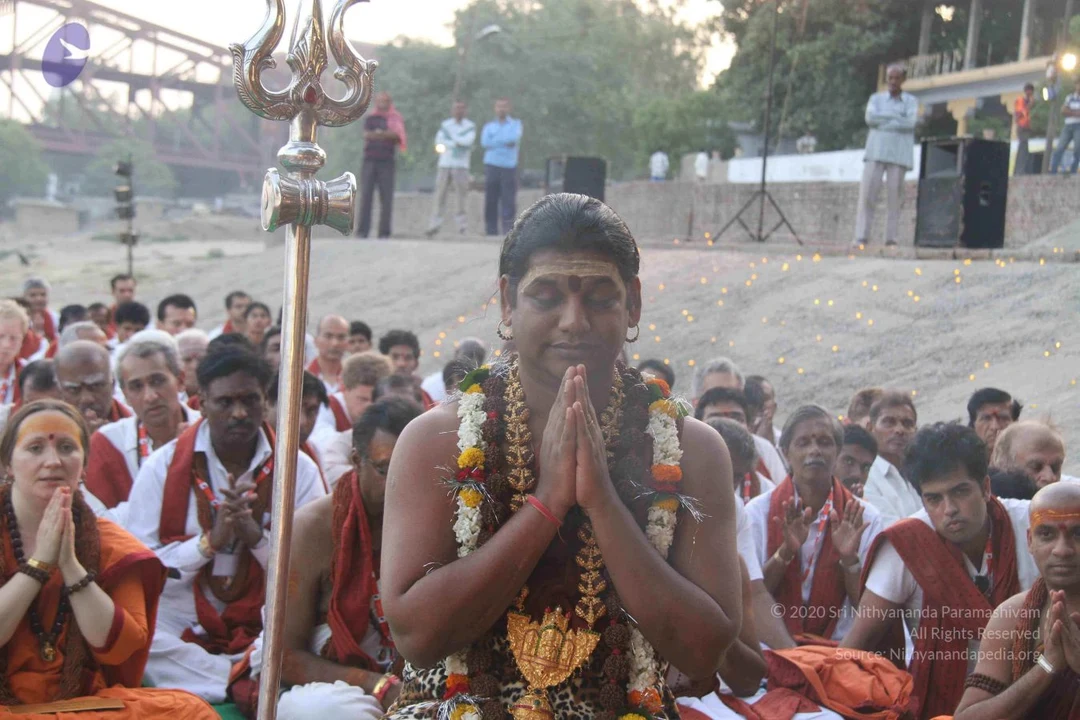
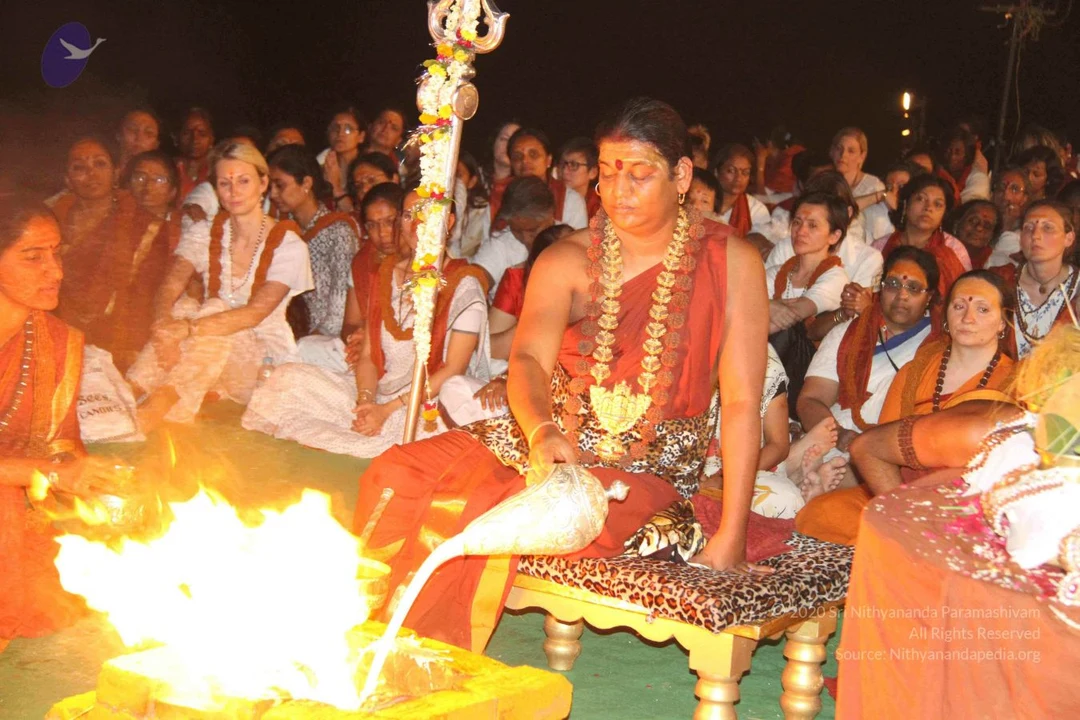
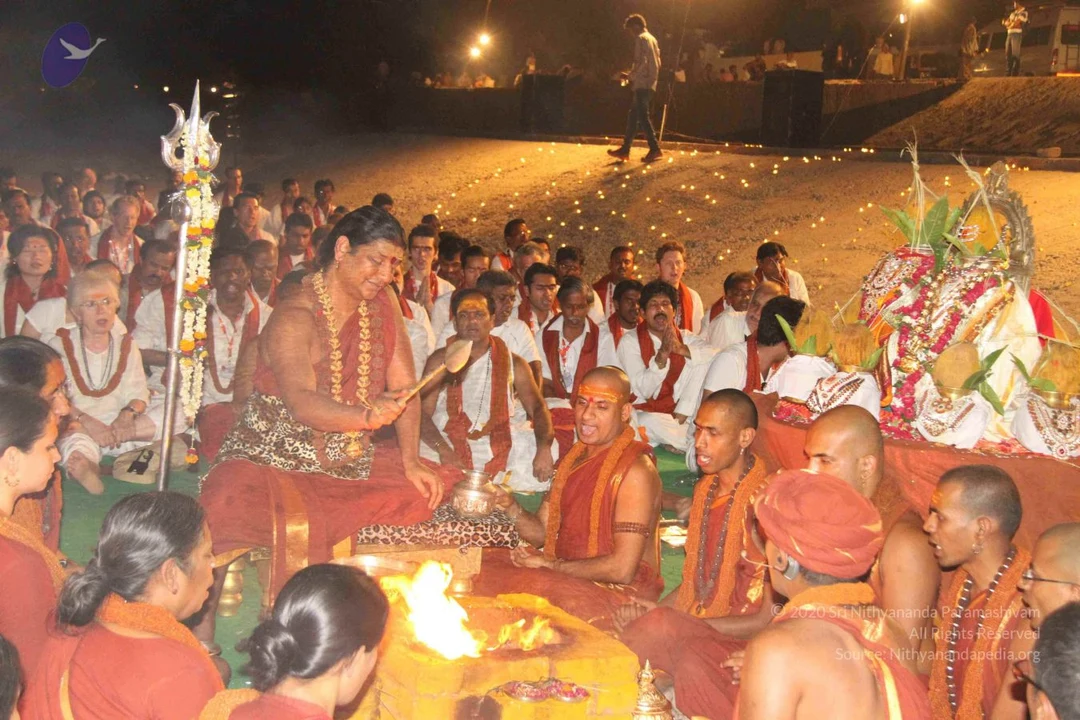
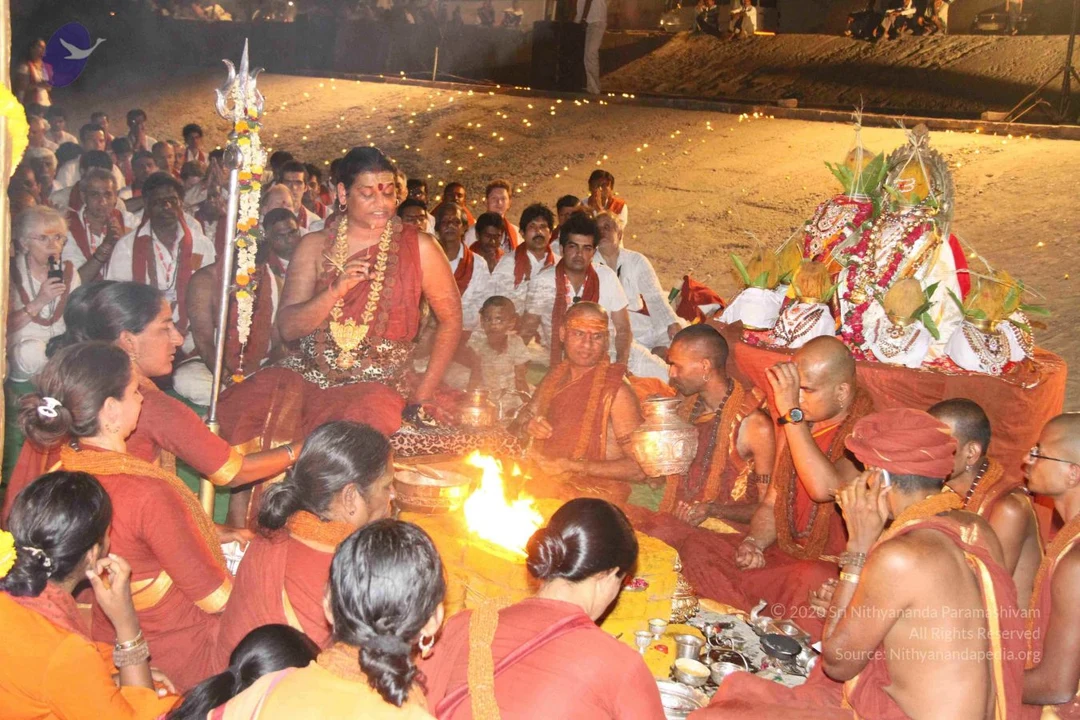
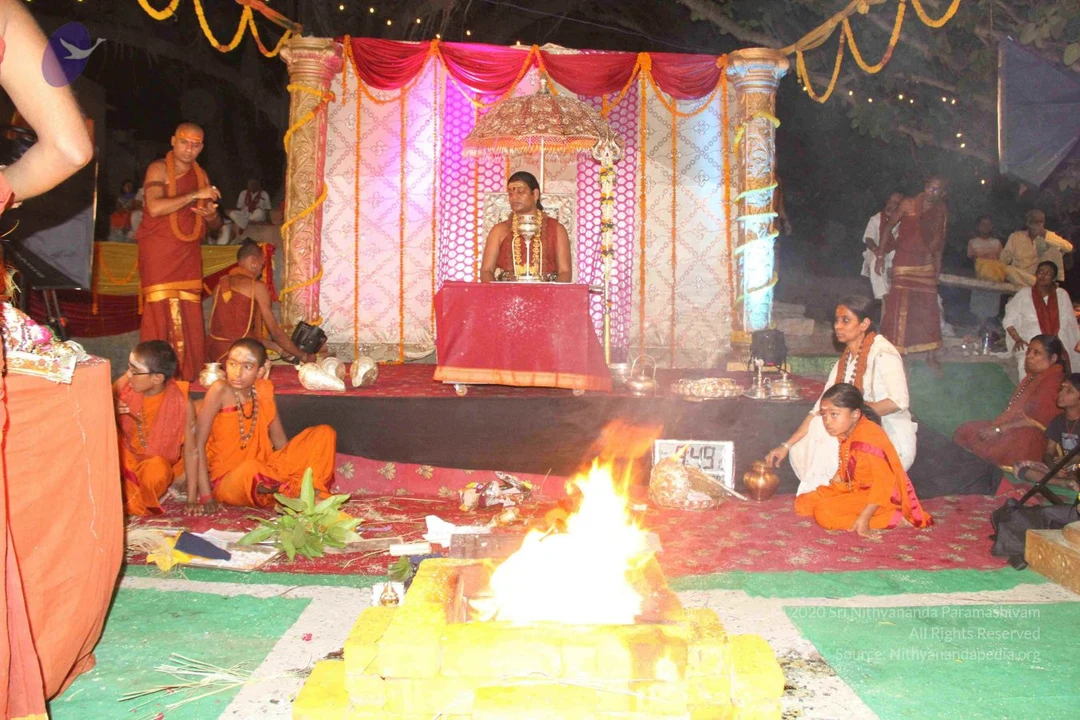
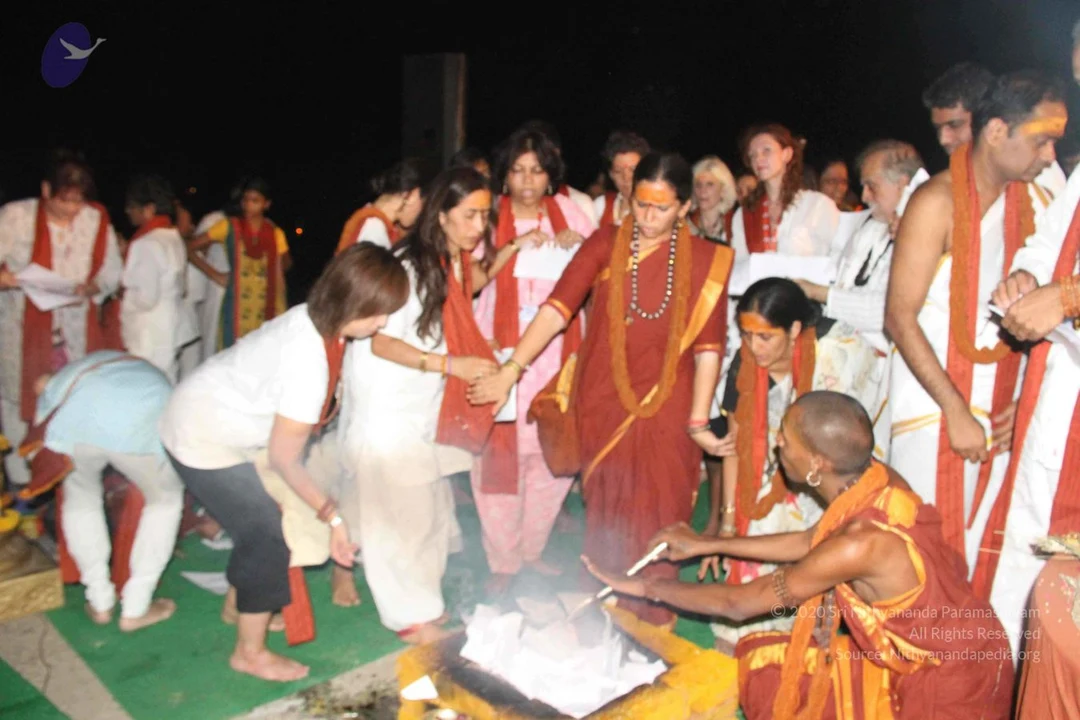
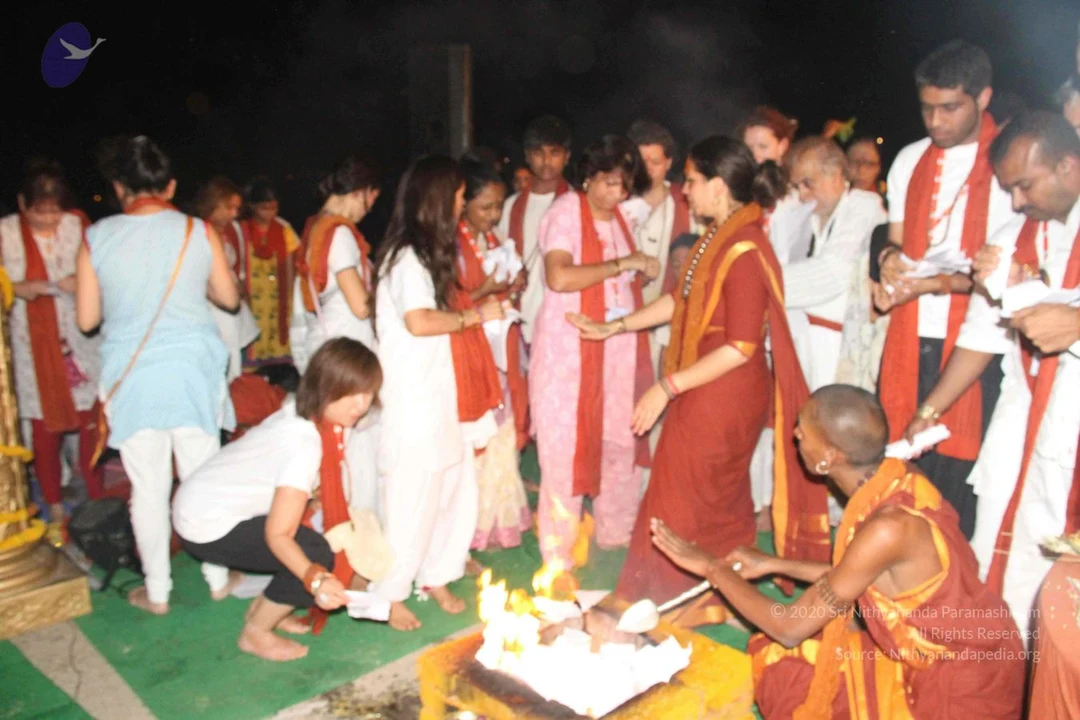
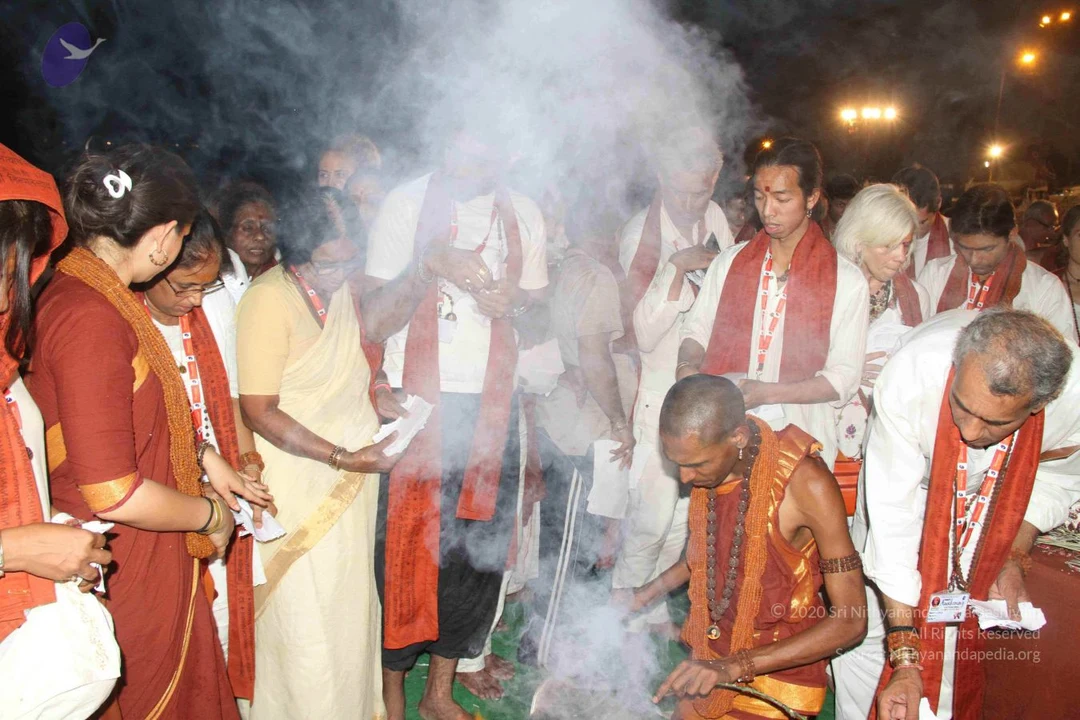
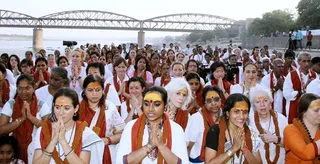
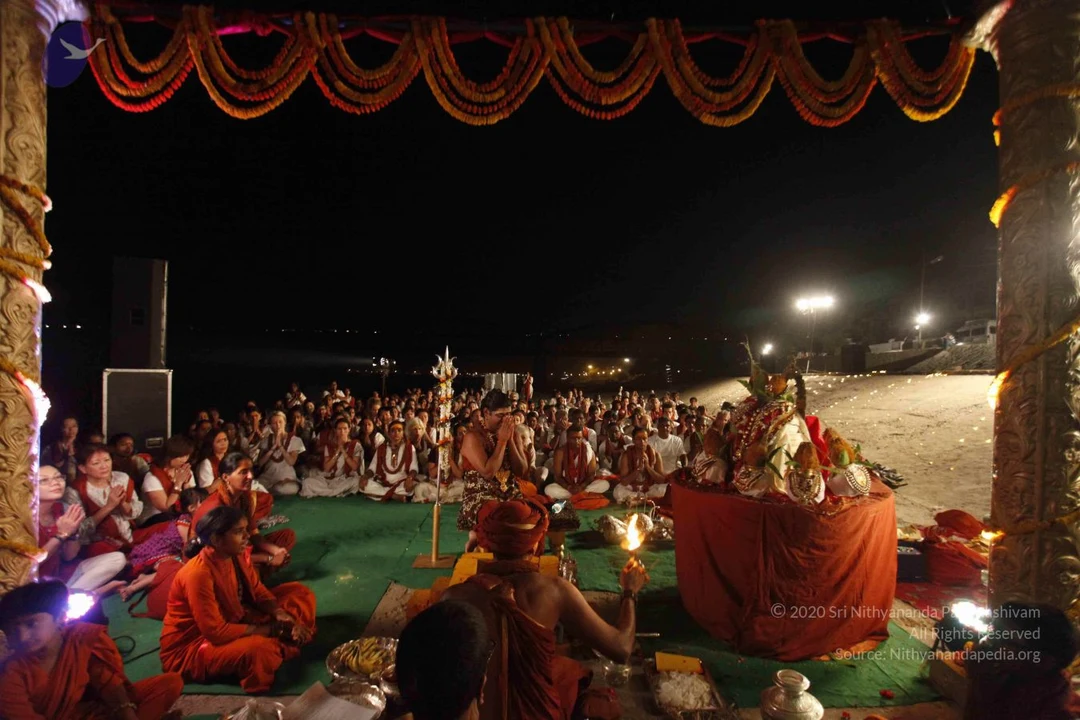
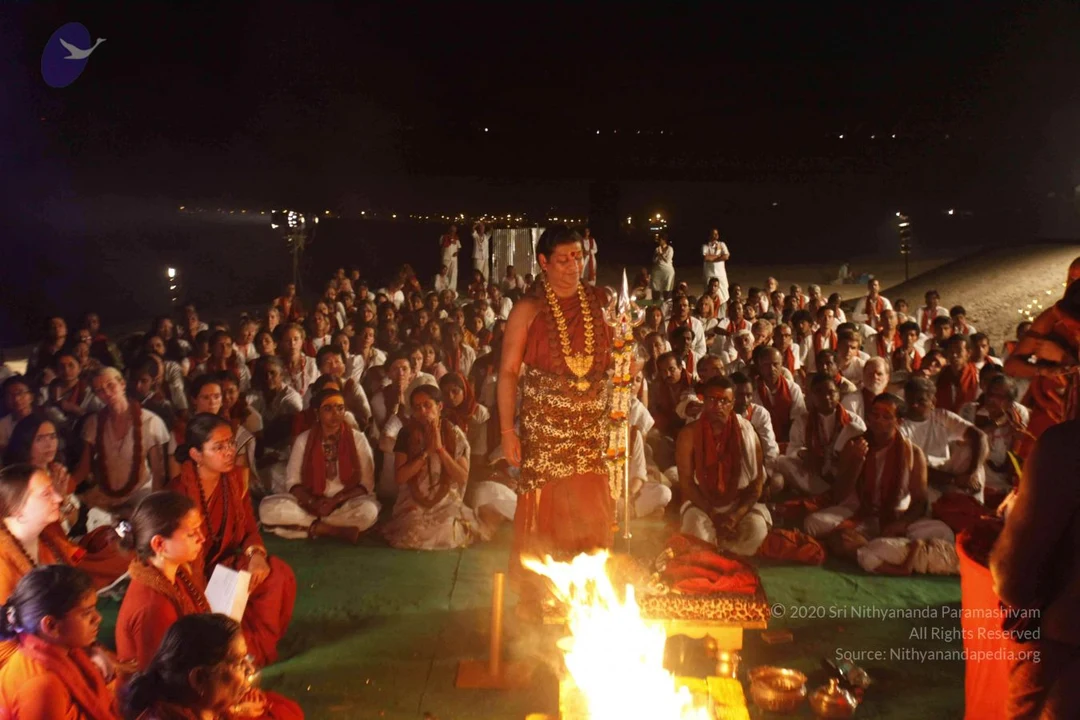
Night-time homa at an outdoor ceremony. A large fire blazes in a brick-lined fire pit at centre, with ghee and offerings set on trays in front. Around it sit several saffron-robed priests and sannyasis wearing rudraksha malas and marigold garlands; a bald priest at centre holds a palm leaf or papers while performing the rite, and a woman in an orange sari with a shawl sits at left with hands in anjali. A brass kalasha and bowls of offerings sit on the ground, and a decorated seat with a tall ornamental trident-like staff stands behind. Bright floodlights and a crowd sitting on the grass in the background frame the scene.Outdoor photo on a riverbank with a long steel arch bridge spanning water in the background. A large crowd of devotees stands with palms pressed together in namaste. Many women wear white garments with red-orange shawls or stoles and yellow-orange tilak marks on their foreheads; several wear beaded malas. Some men in white kurtas with red-orange stoles stand among them. A few people wear orange clothing, and one woman in front has long dark hair. Some devotees have white or grey hair. A person in the lower left corner stands close to the camera. Several cameras and a camera operator are visible near the riverbank at the right. Trees and a wall line the bank beyond the crowd.A photograph of a seated woman in a red wrap and leopard-print garment, with a marigold and rudraksha garland, a red bindi and a yellow-painted forehead, lighting an oil lamp with a small flame. Before her on a red-draped table sit a silver bowl, a silver kalasha with a spout, a clear crystal lingam on a stand, and a tray of flowers. A silver ornate throne and marigold garlands on a pole frame the scene, with pink-lit draping behind. Evening setting. The appearance-based cues are a rudraksha mala and a red-and-leopard-print wrap, but the image is not clear enough to confirm which person she is, so this is a devotee performing a lamp ritual at a shrine table.A seated person in a red-orange wrap and leopard-print garment performs a ritual at a silver-ornamented throne-like seat. Wearing a long multi-strand garland of rudraksha beads and gold-toned ornaments, with sacred marks on the forehead, the person holds a small oil lamp and smiles while tending it. Nearby on a silver tray are a silver kalasha with a dripping spout, glass vessels, a small brass figure, red flowers and a silver bowl. Orange and white flower garlands hang on a pillar behind, with pink lights and draped fabric in the background.A photograph of a seated man in a red and leopard-print garment, wearing layered rudraksha malas and a large gold pendant, holding a small bell and incense sticks at a ritual table. He has yellow sacred marks on his forehead with a red dot and his hair is swept back. Beside him is a silver kalasha and a small brass deity murti, with a silver throne behind him and a garland of orange and white flowers hanging on a pillar. Warm stage lighting fills the scene.Photograph of a man seated before a silver-embossed backdrop, performing a lamp ritual. He wears a deep red-orange cloth draped over his left shoulder and bare right shoulder, a thick gold necklace with rudraksha beads and red tassels, a small gold earring, and gold-tone vibhuti with a red kumkum dot on his forehead. He holds a small silver arati tray or lamp stand with a burning oil lamp, eyes lowered and smiling. Behind him are marigold garlands in orange and white and blurred warm pink and orange lights. a person in ritual attire, shown with rudraksha malas, ceremonial gold necklace and ornate clothing, performing aarti.

Rudrabishekam
180 photosSource gallery
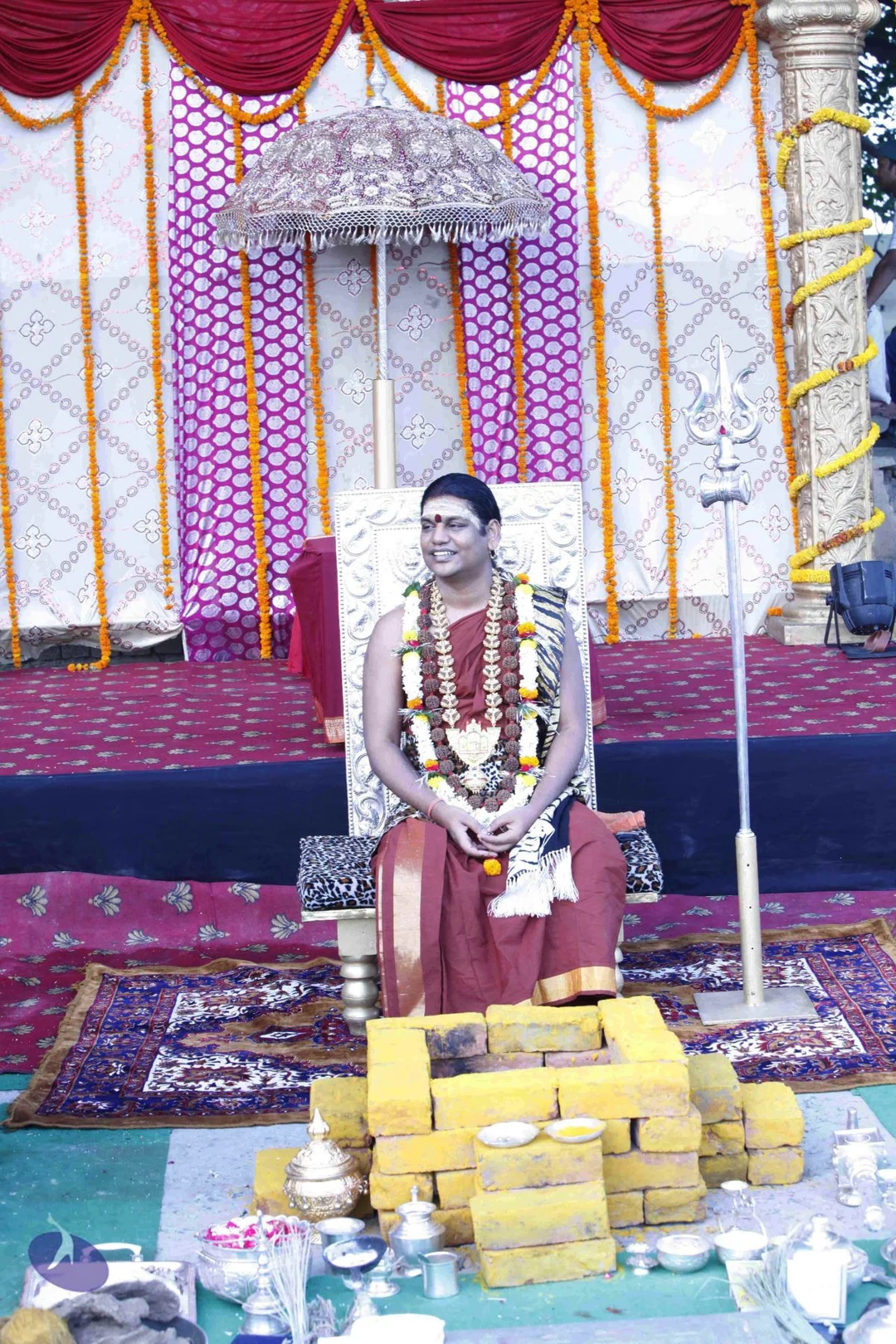
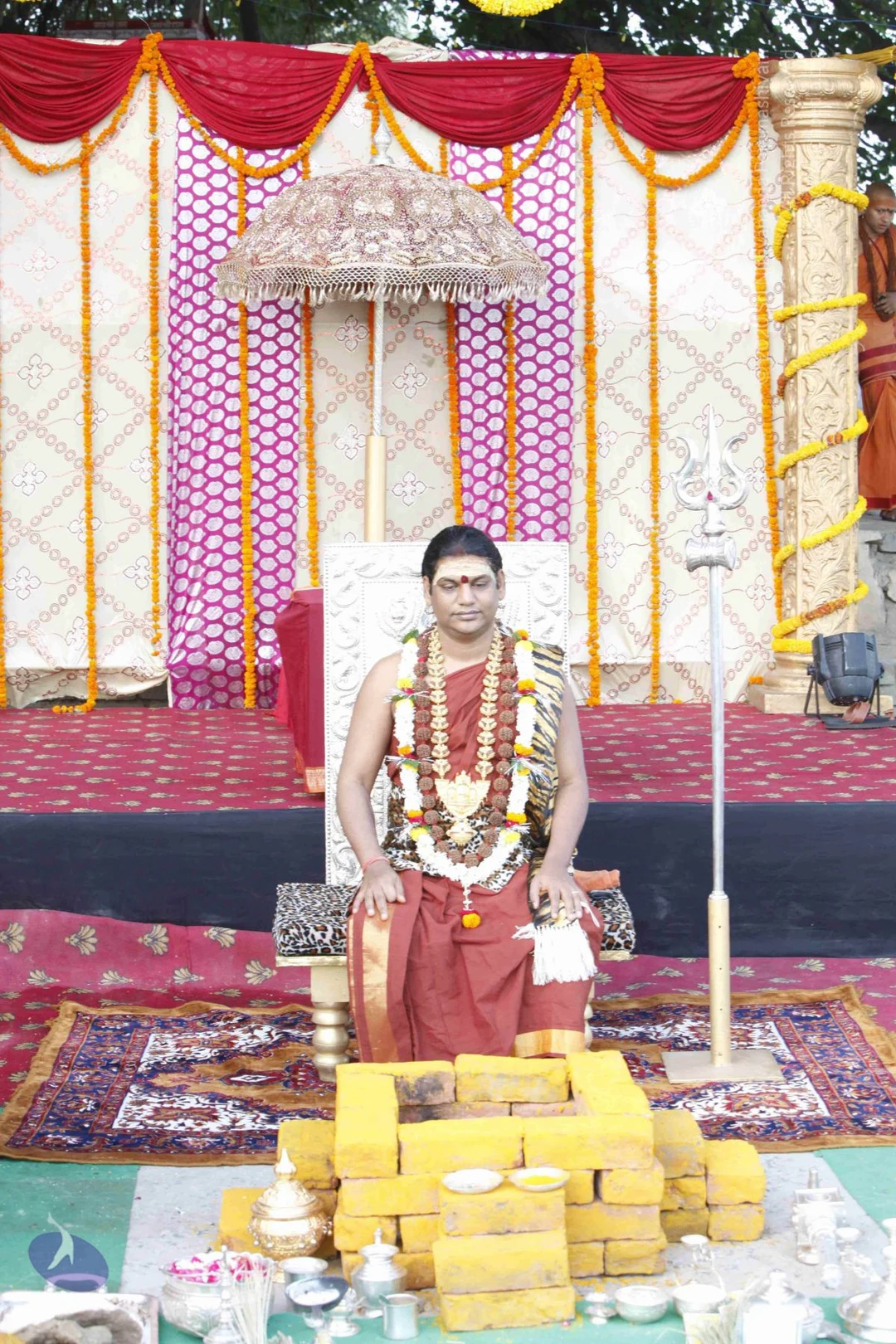
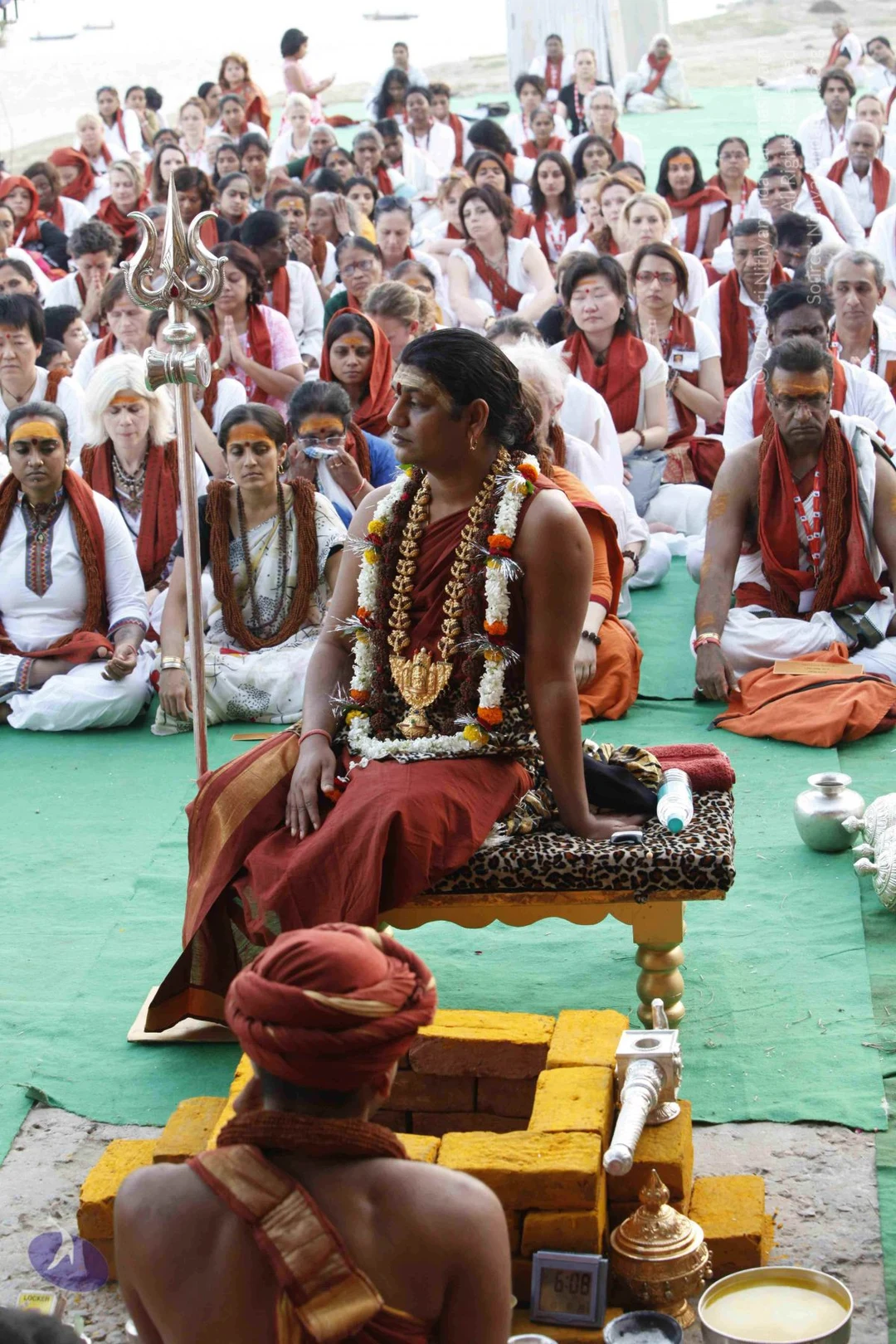
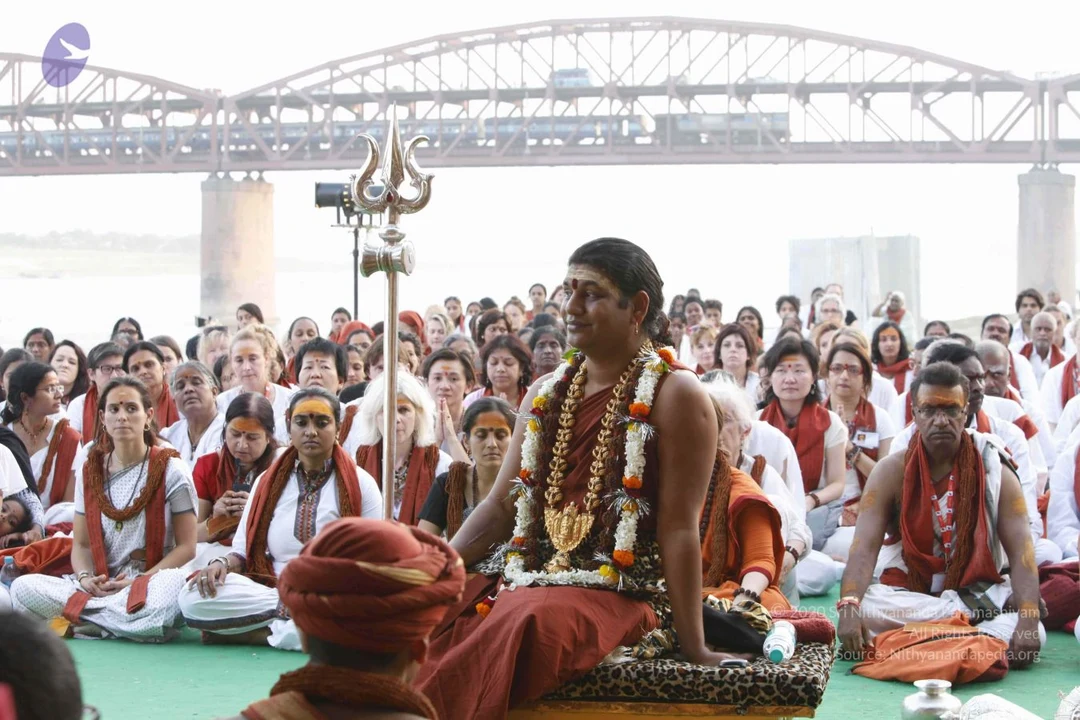
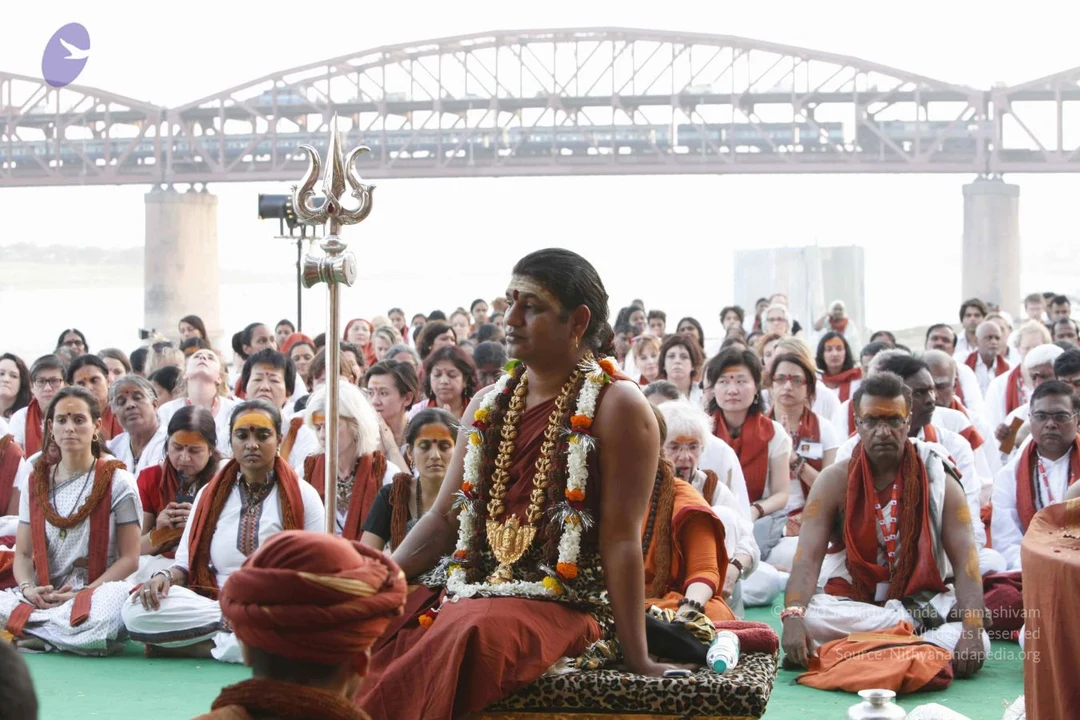
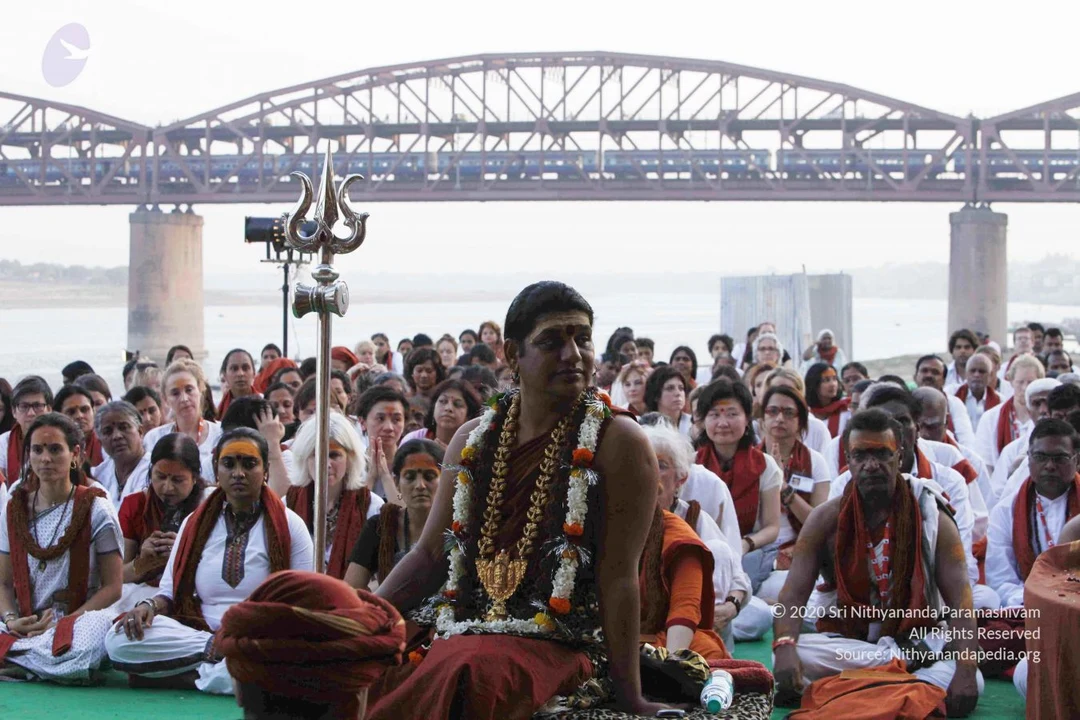
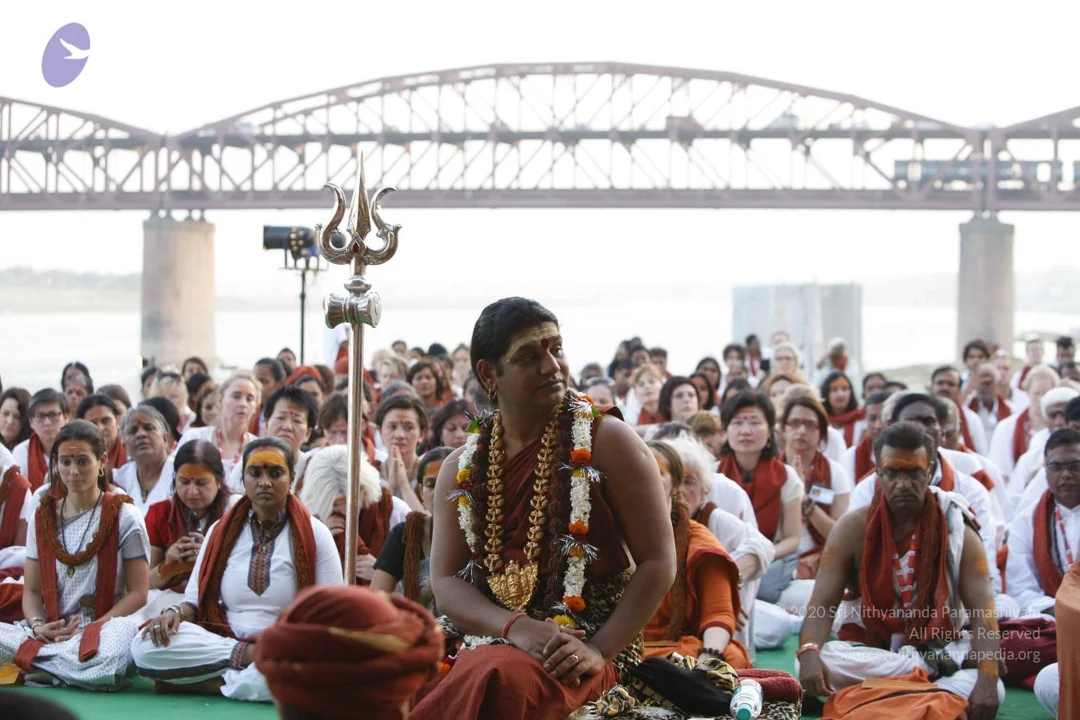
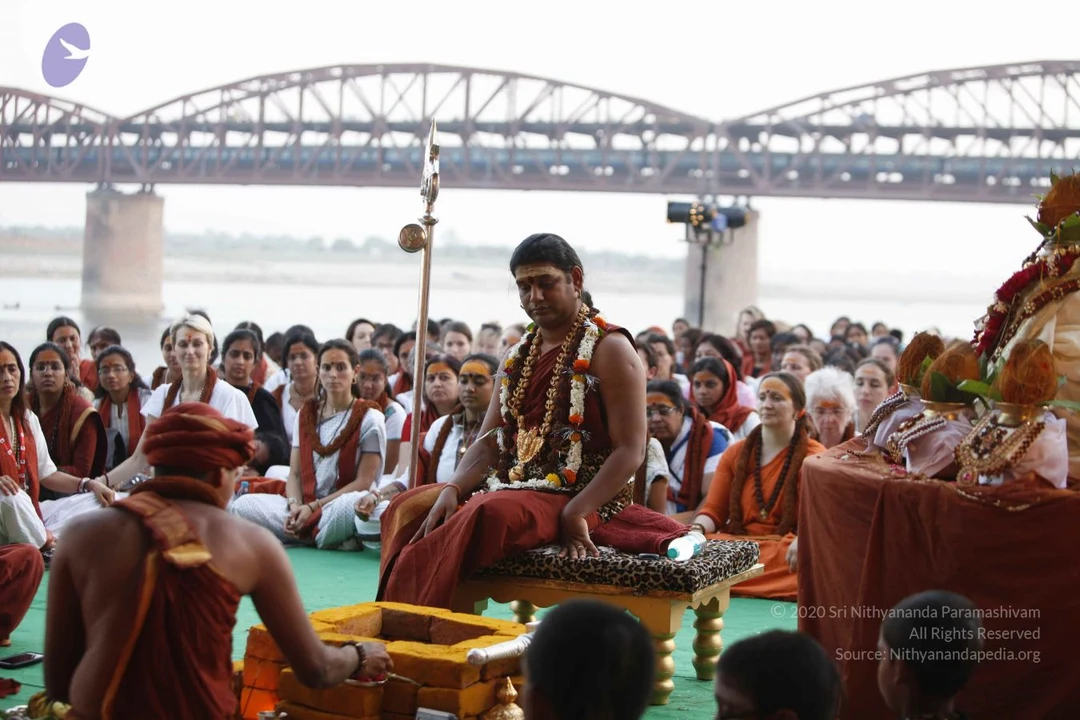
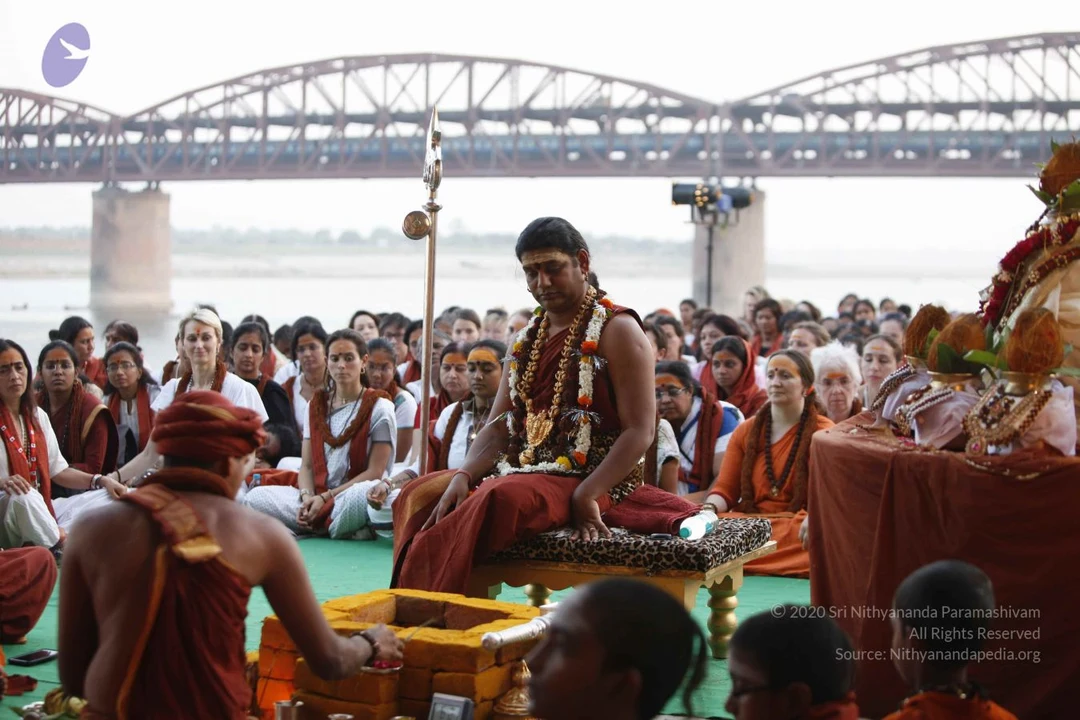
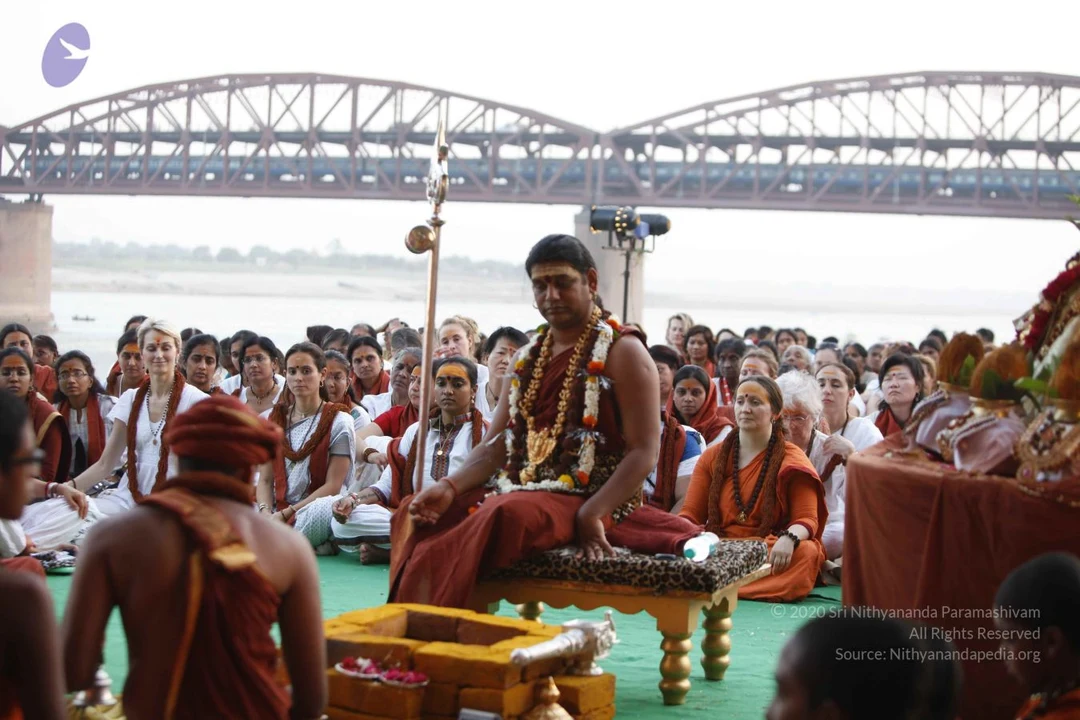
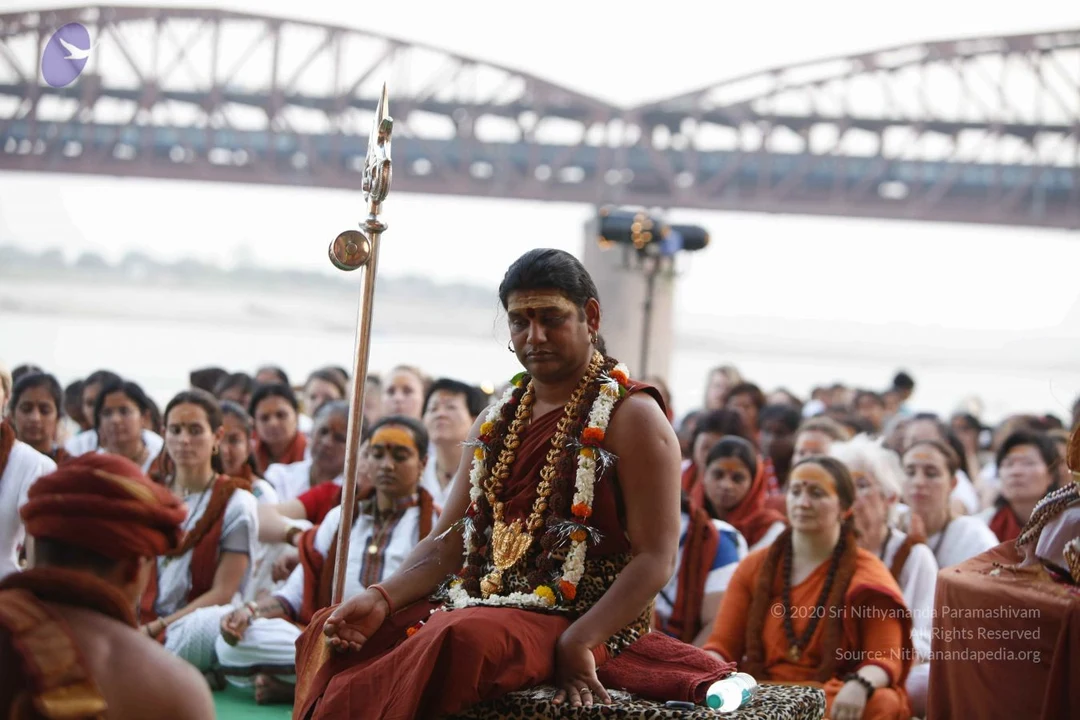
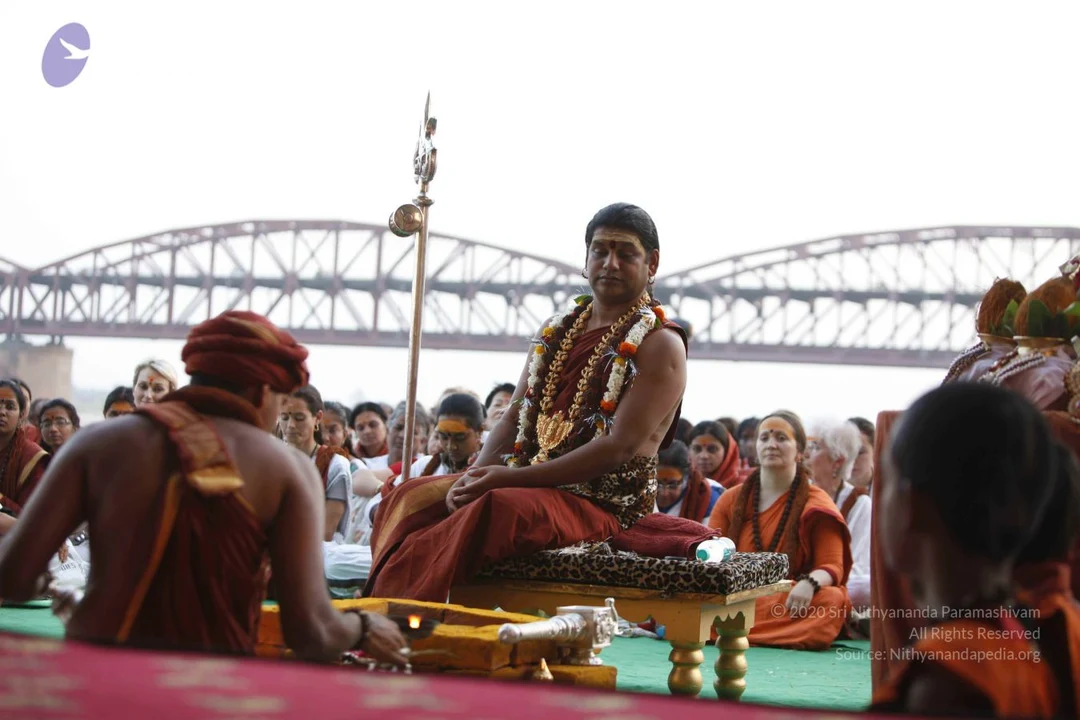
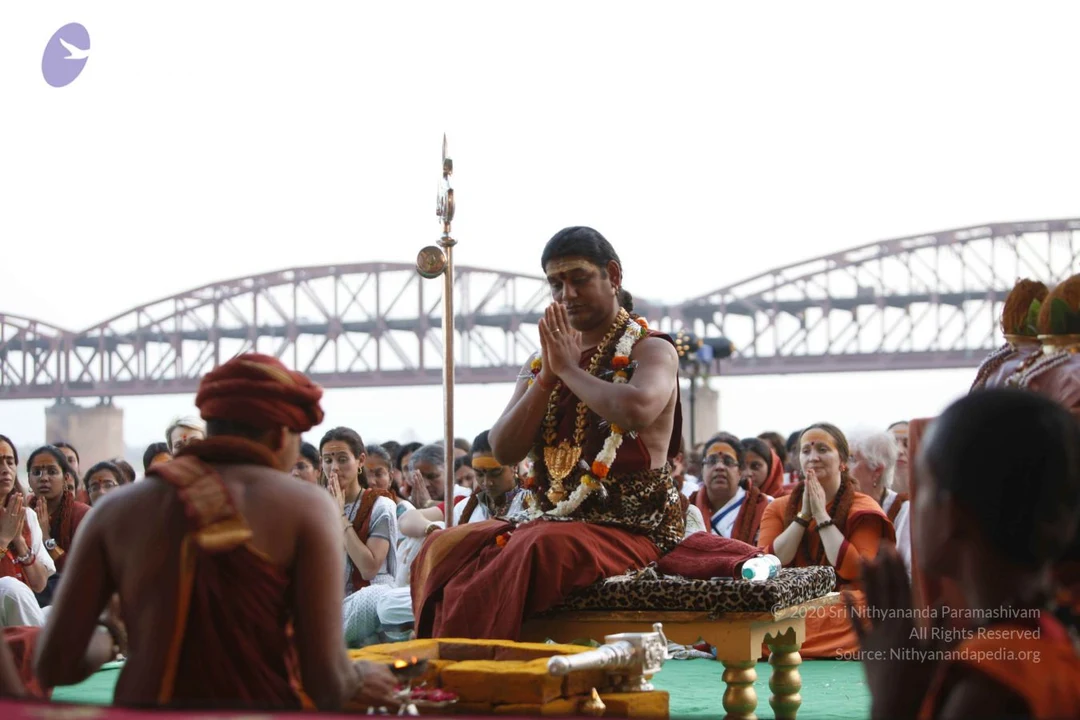
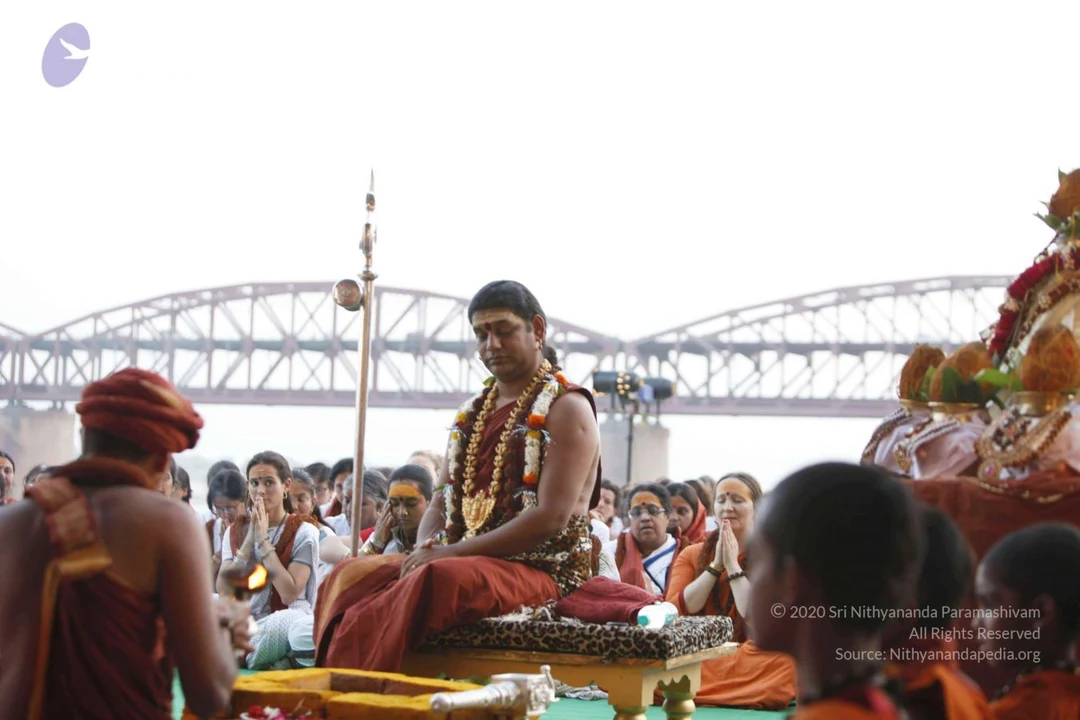
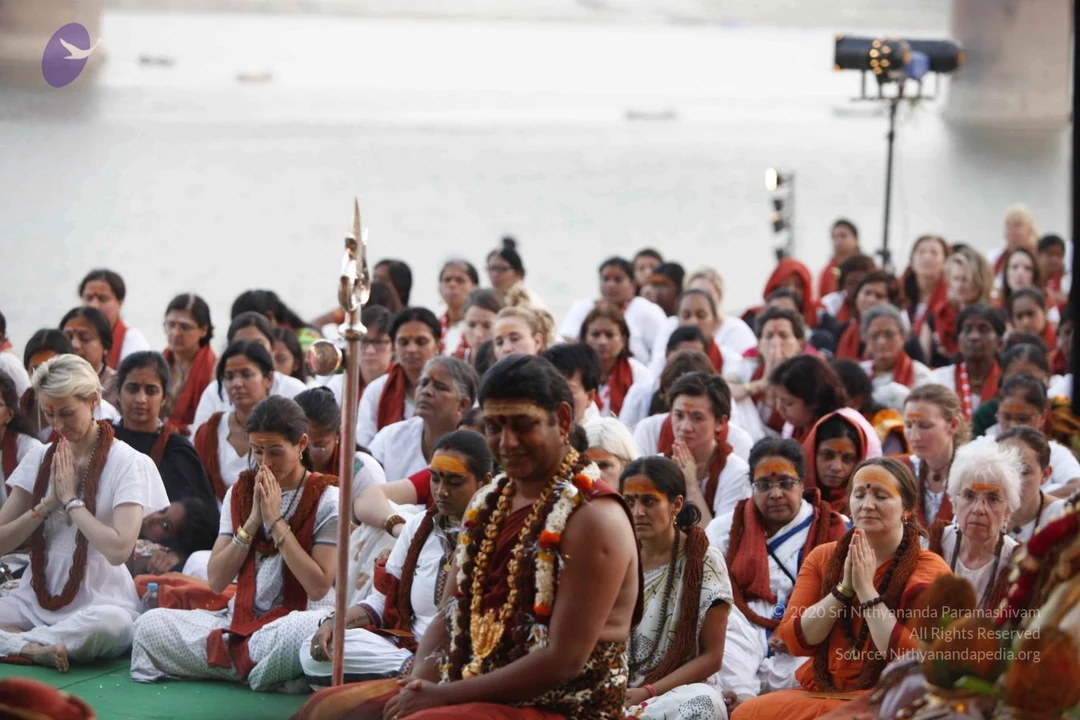
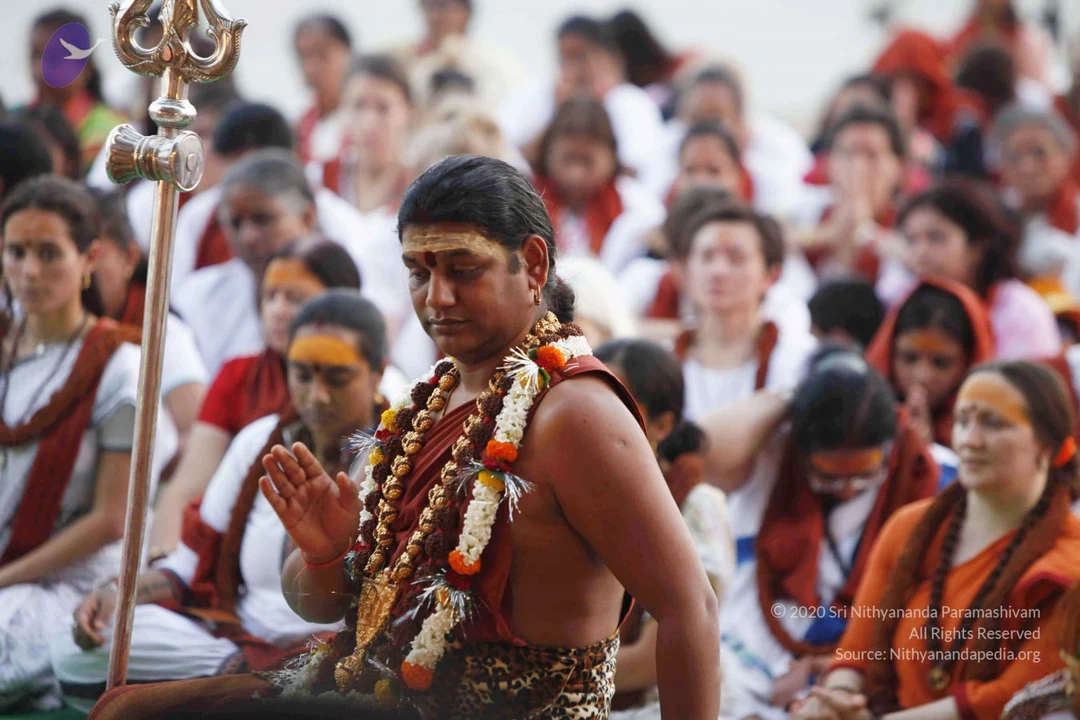
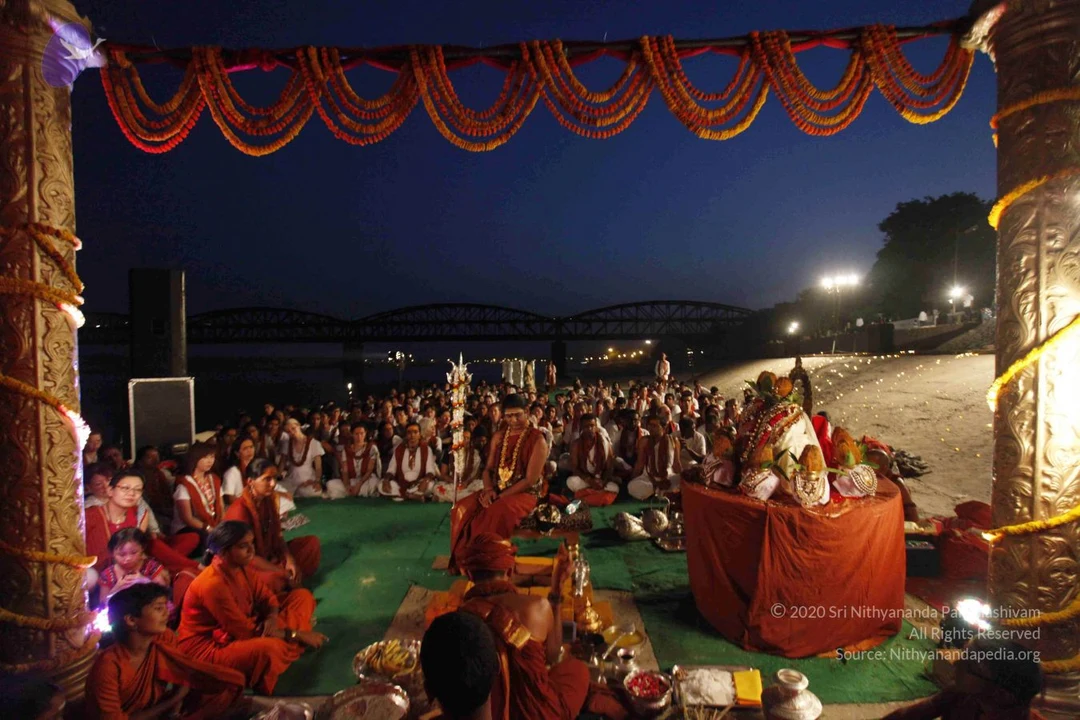
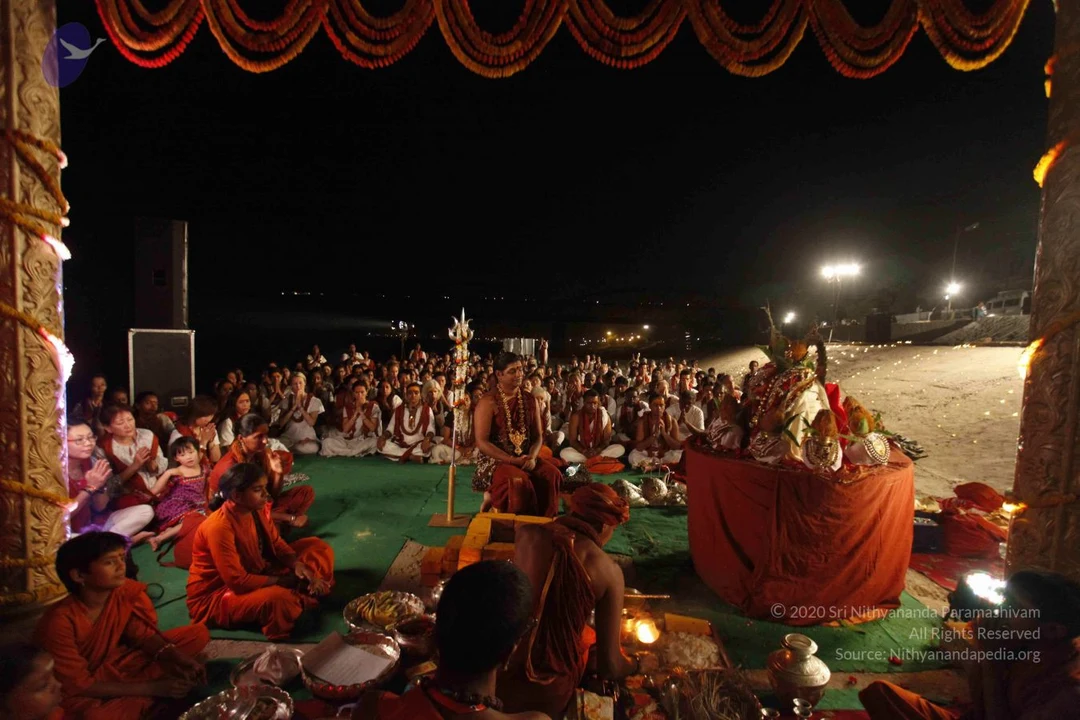
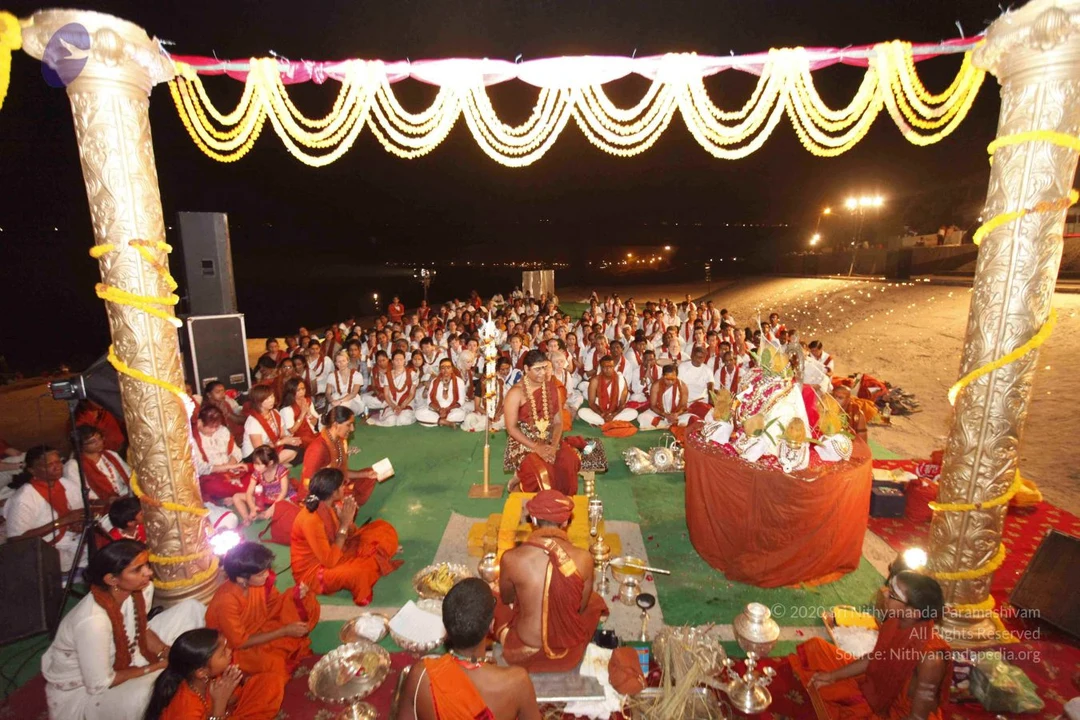
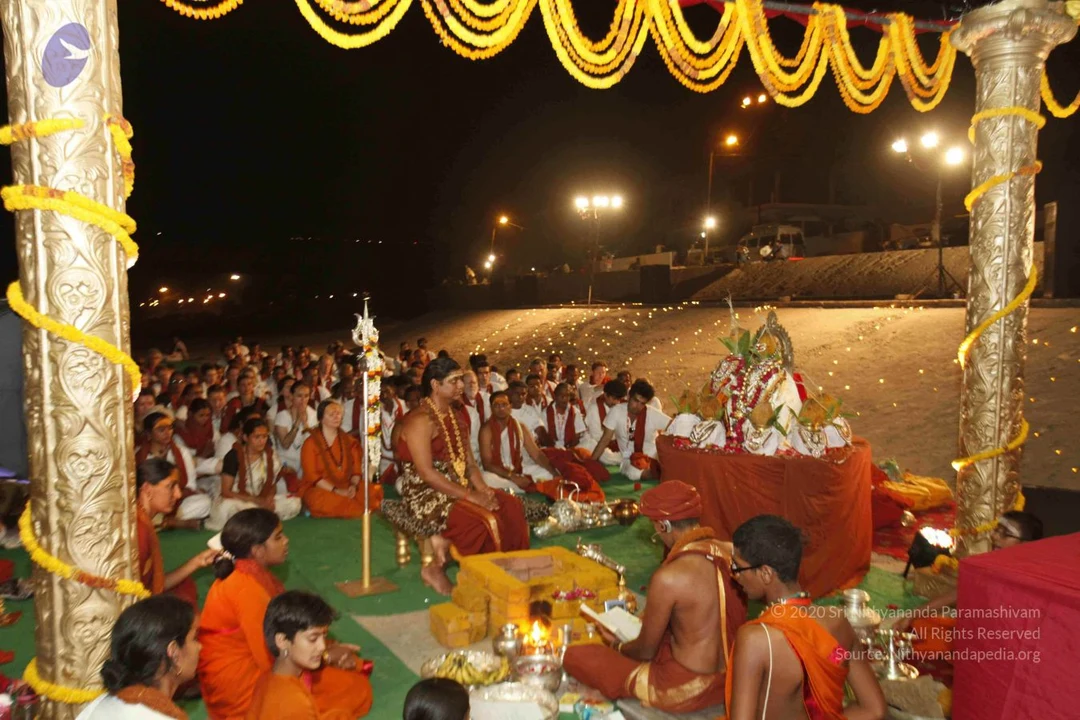
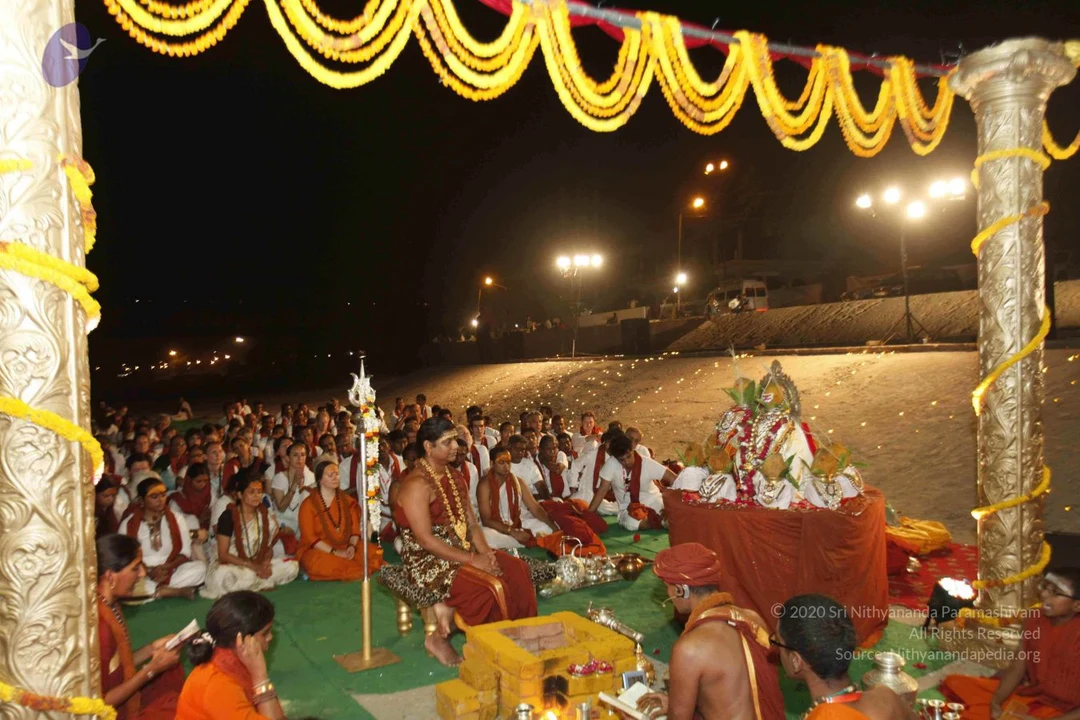
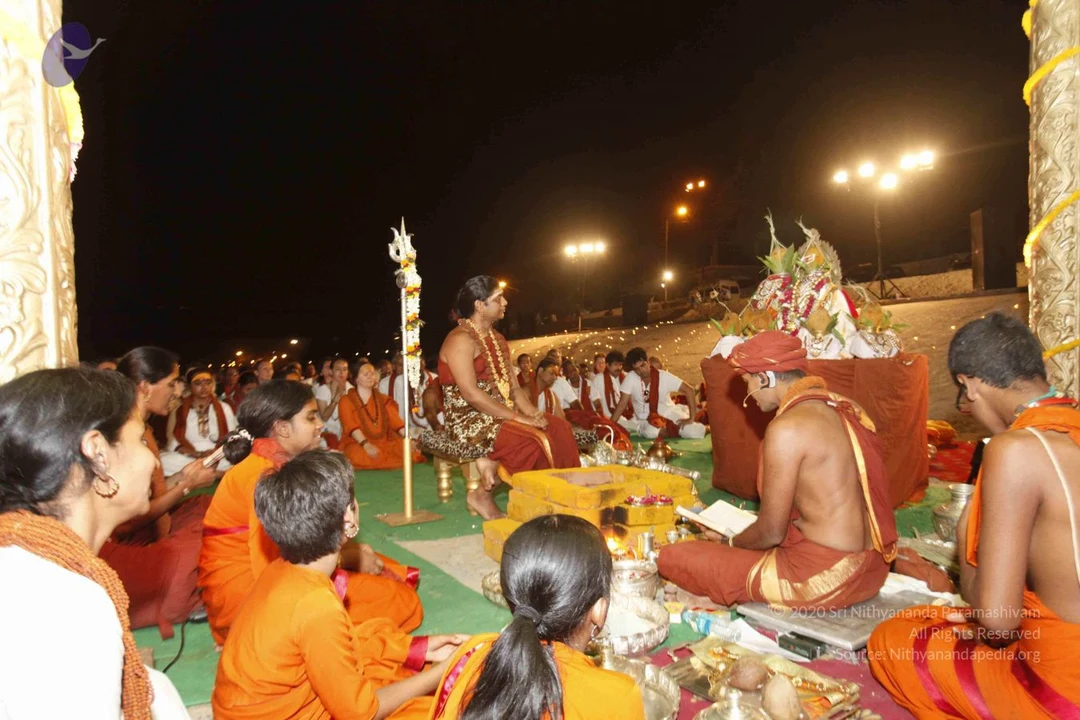
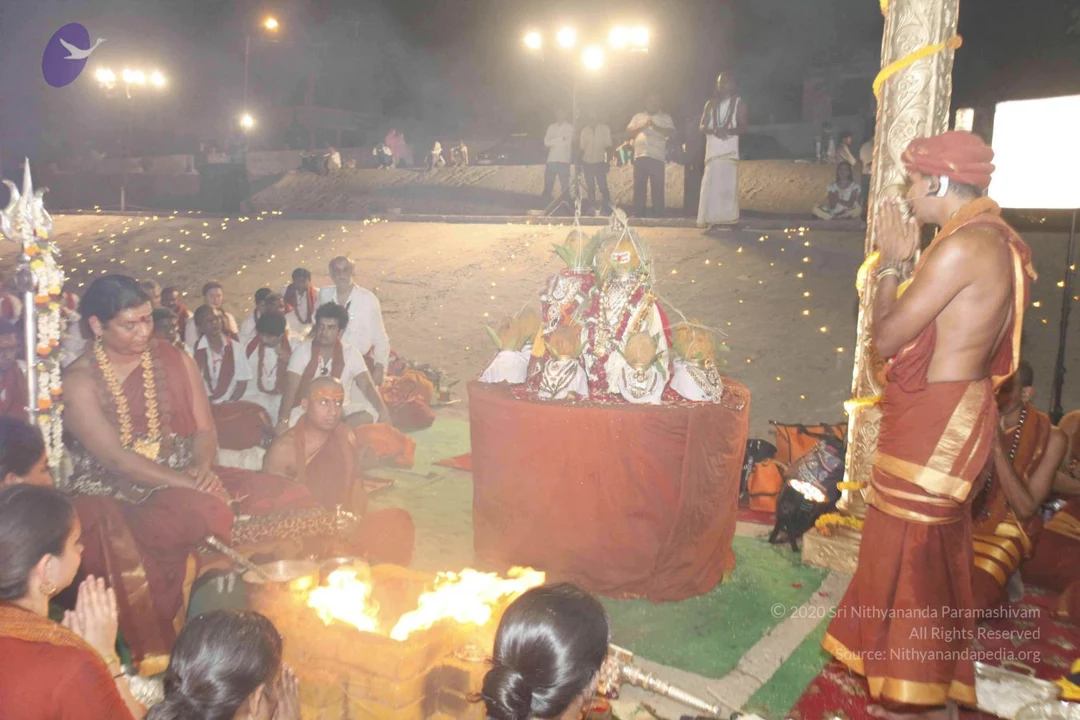
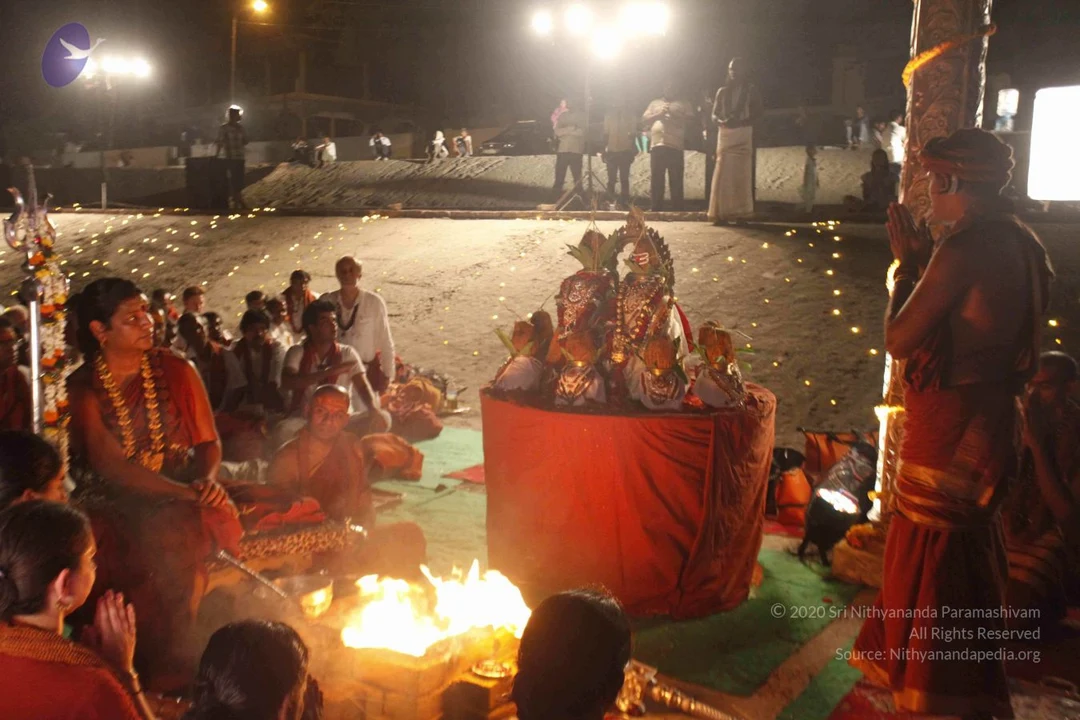
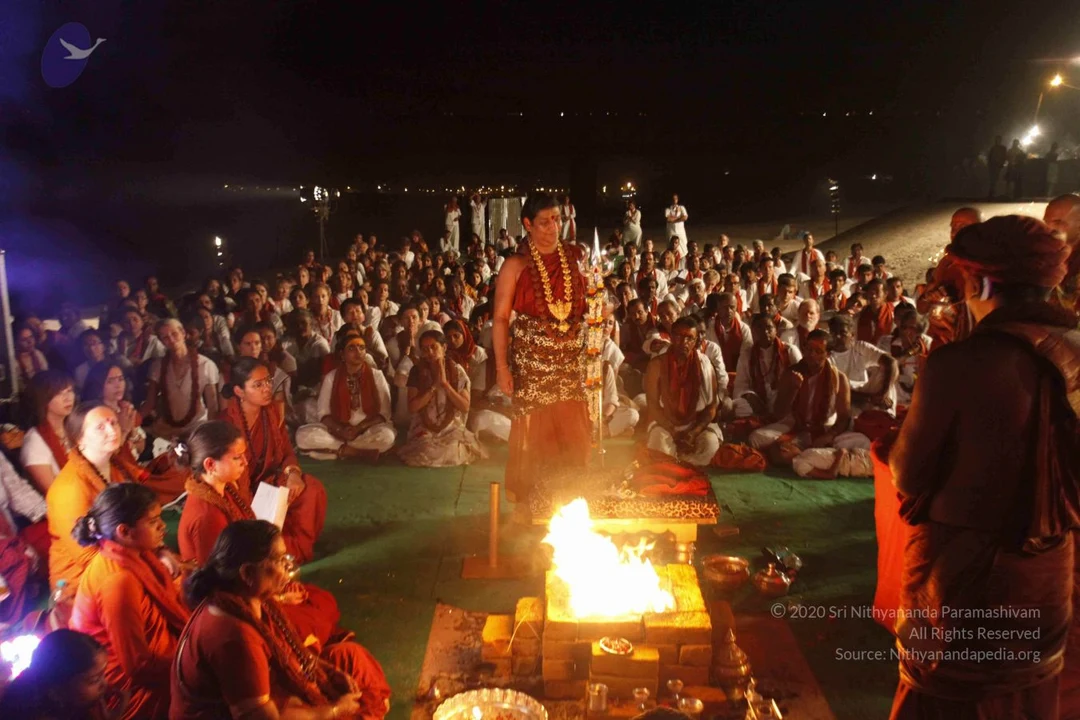
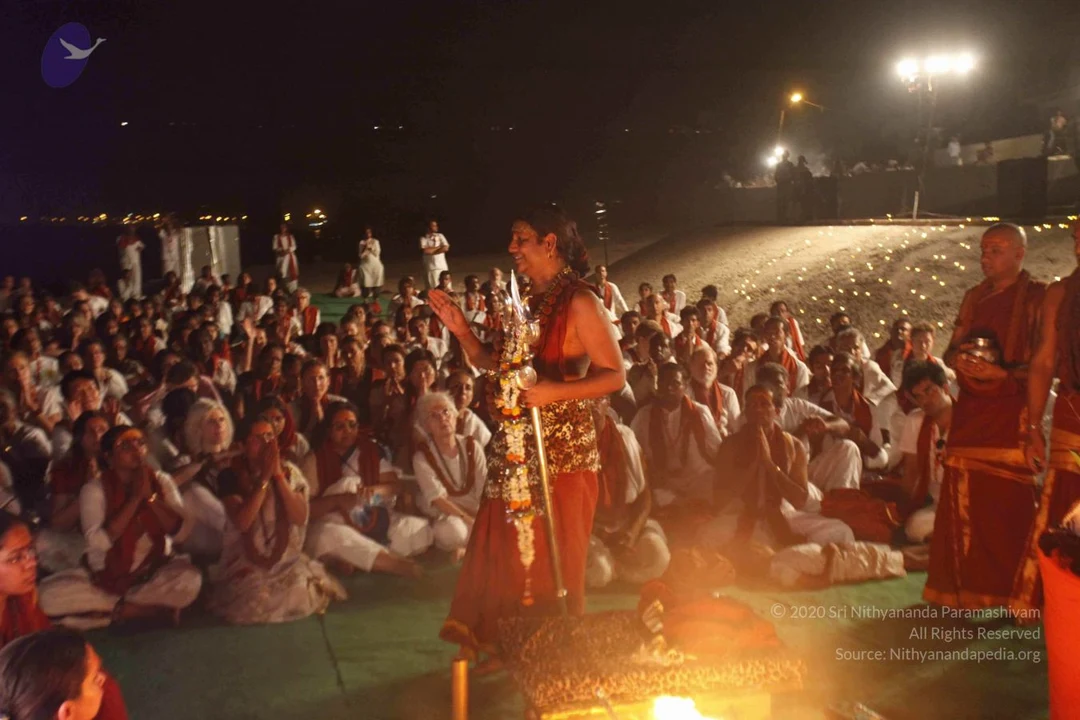
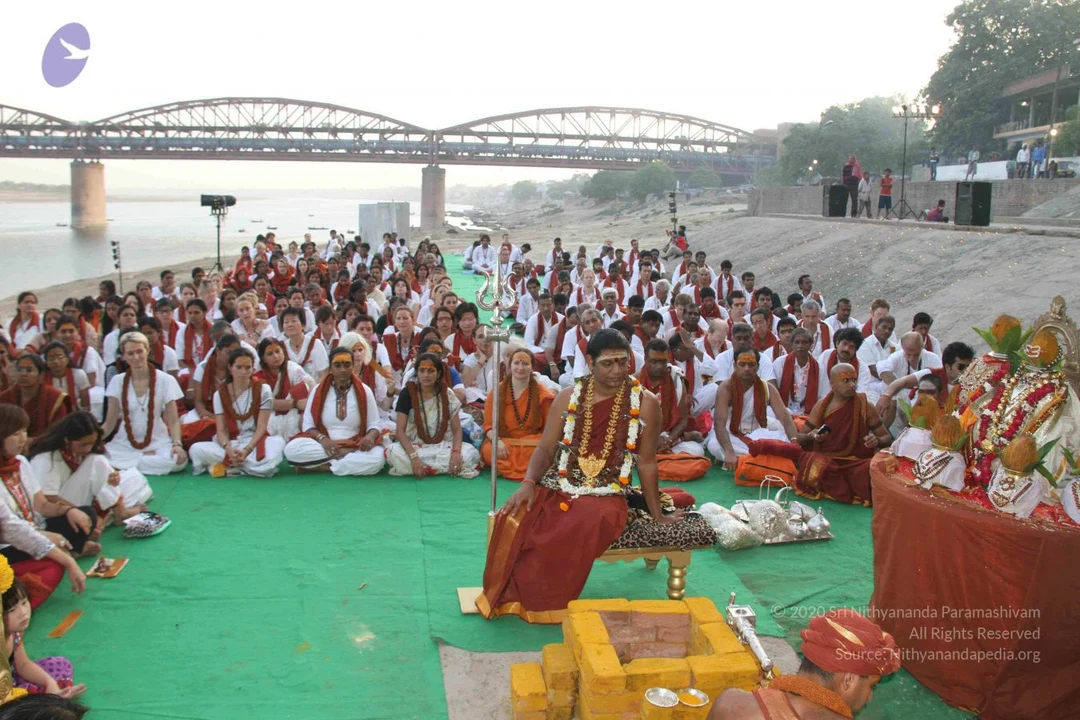
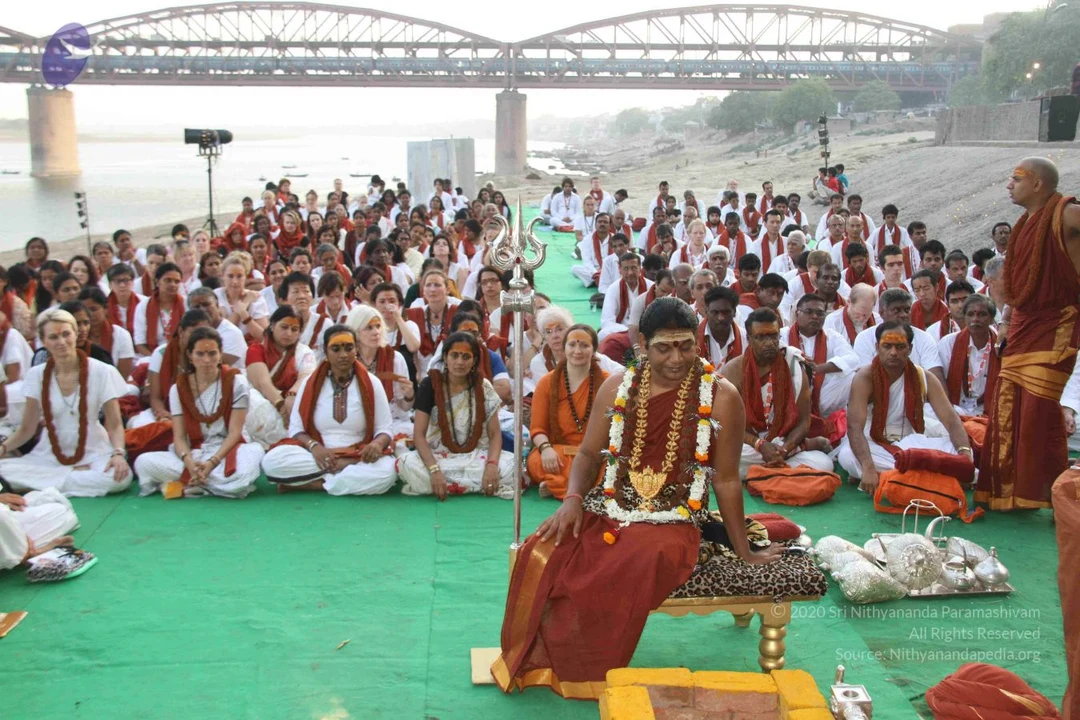
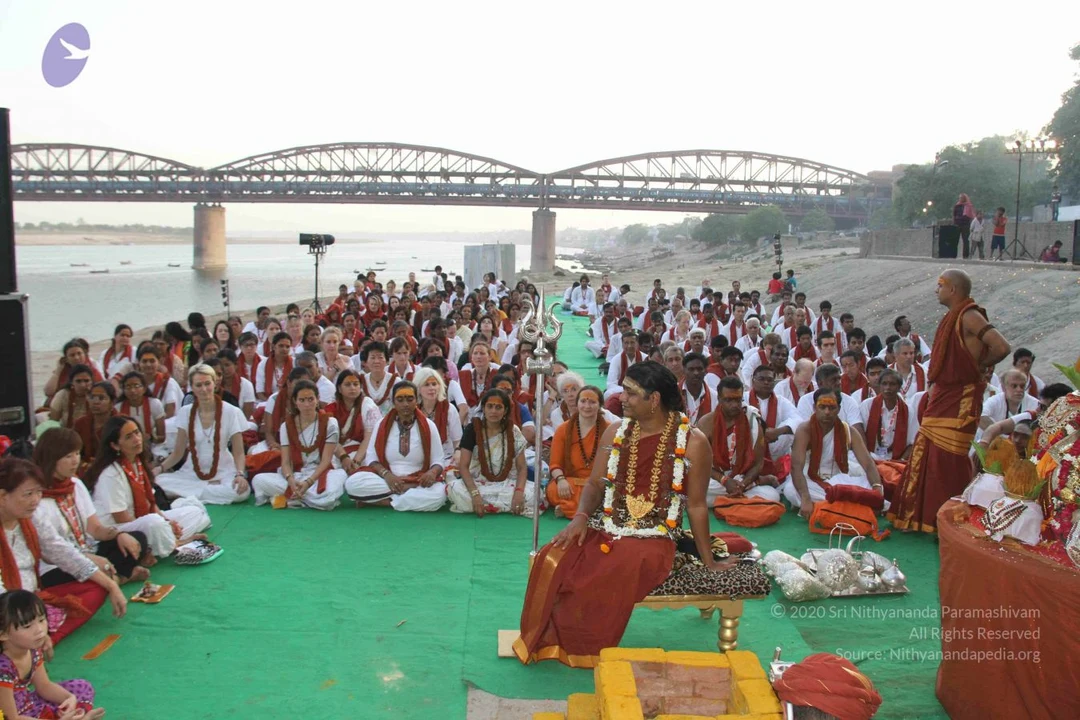
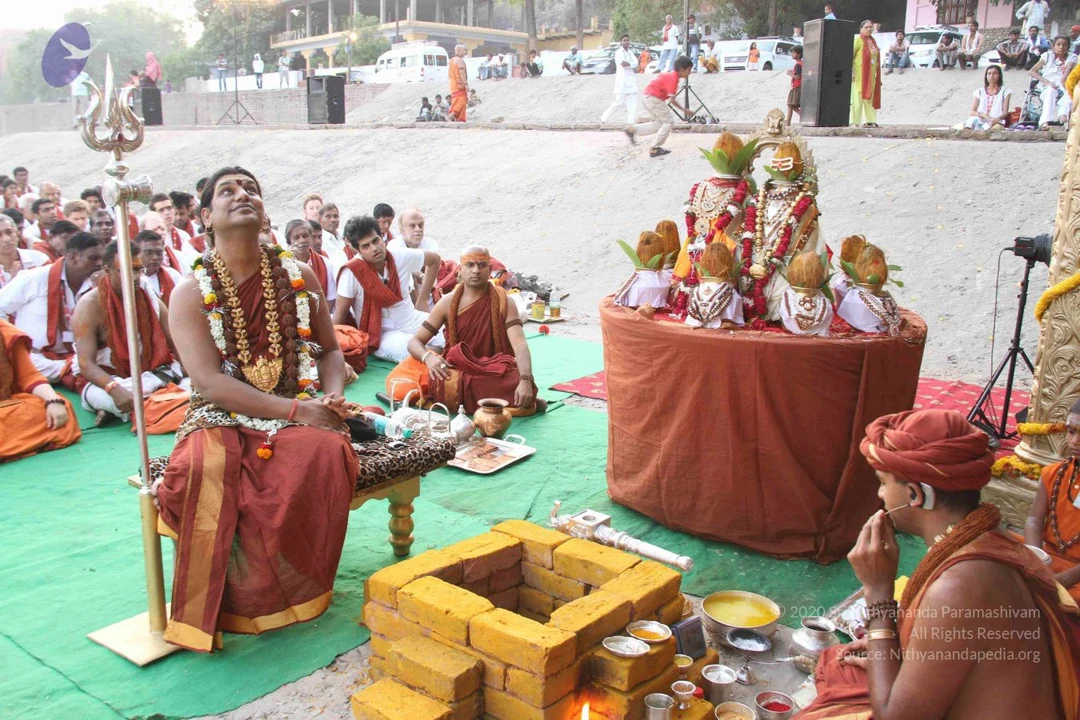
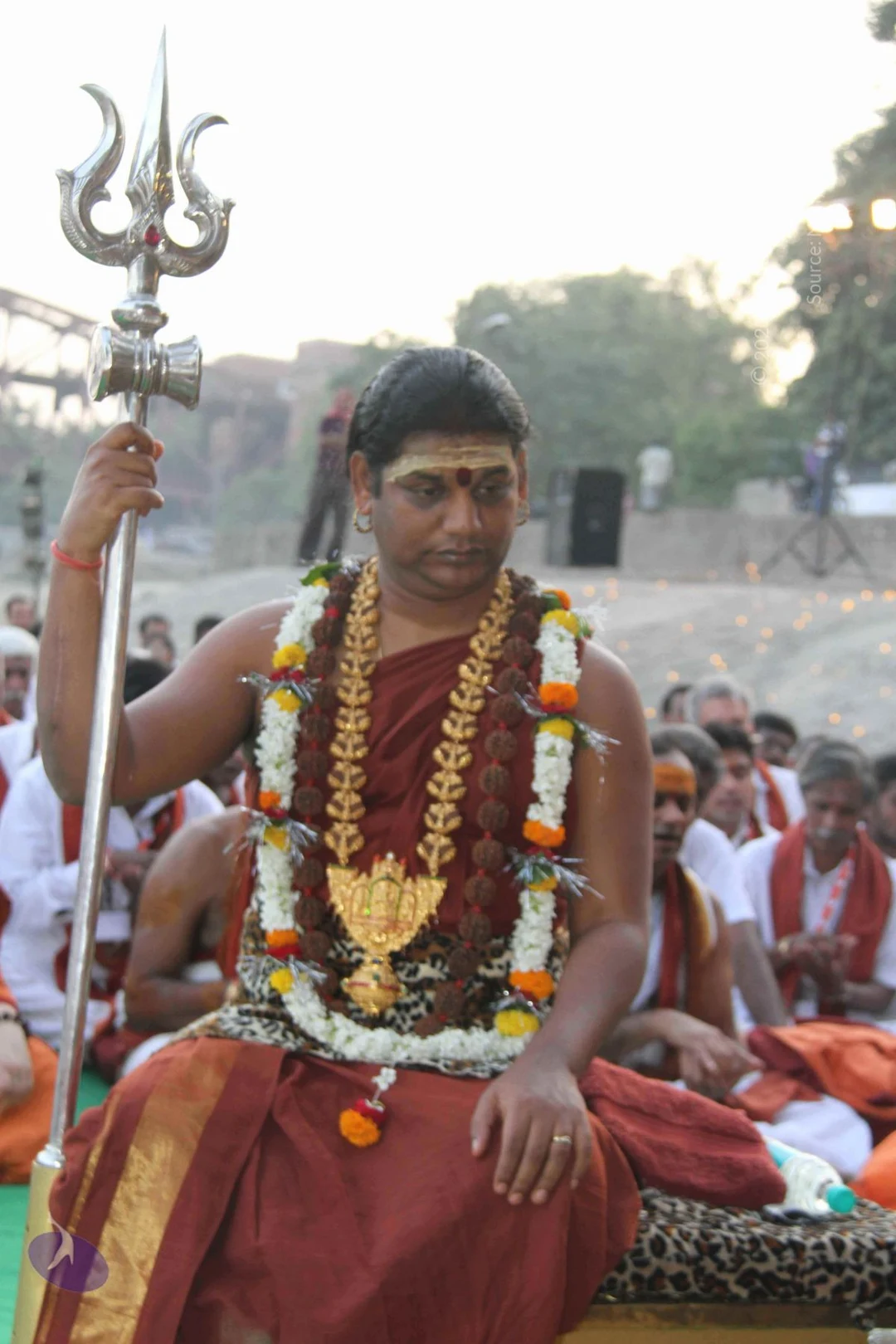
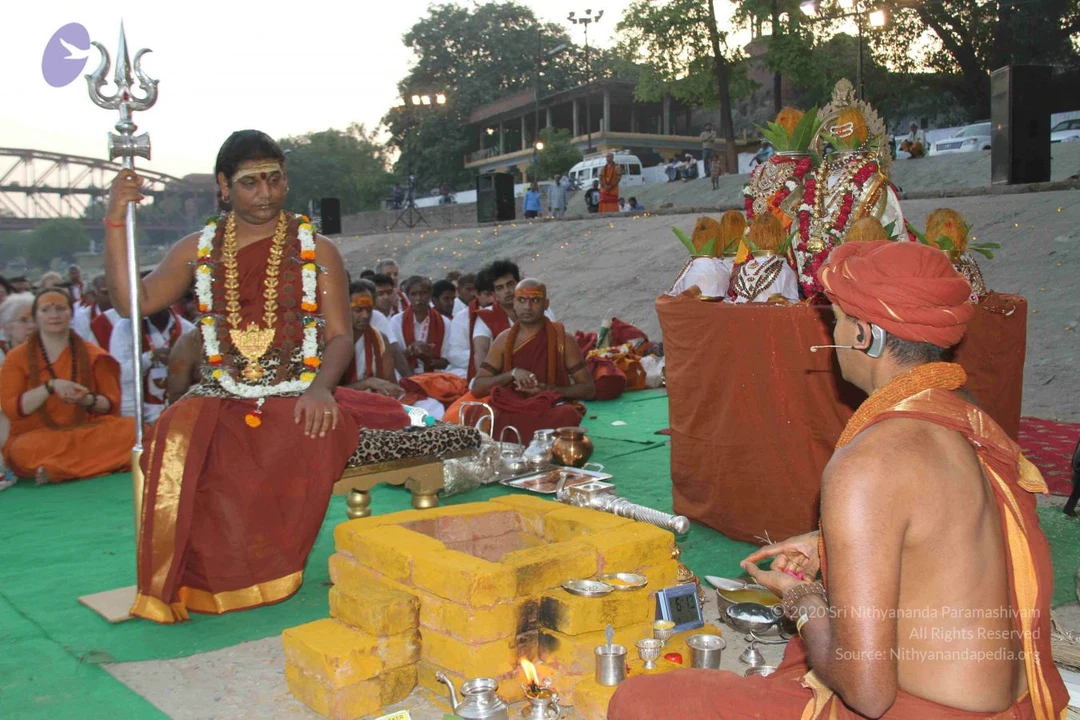
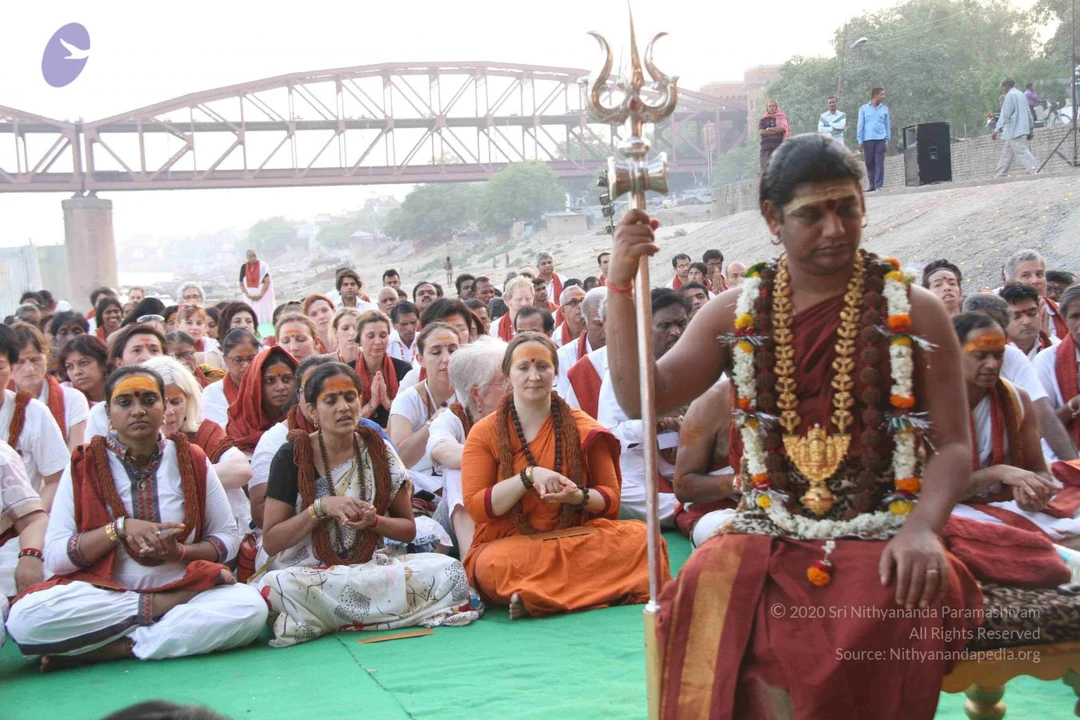
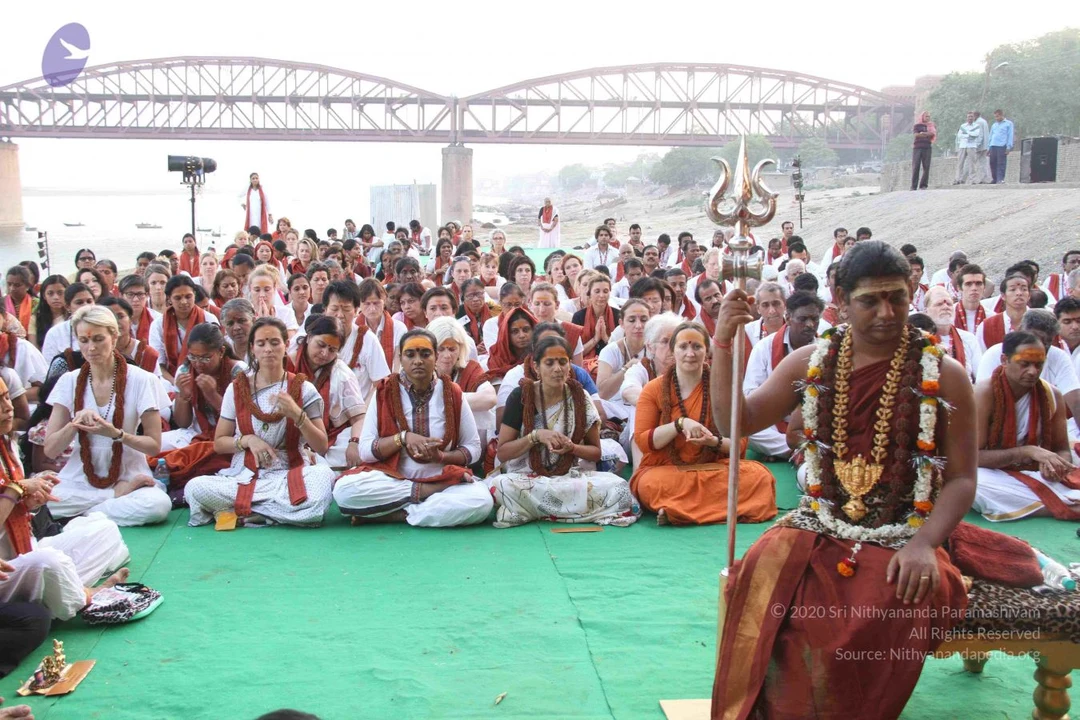
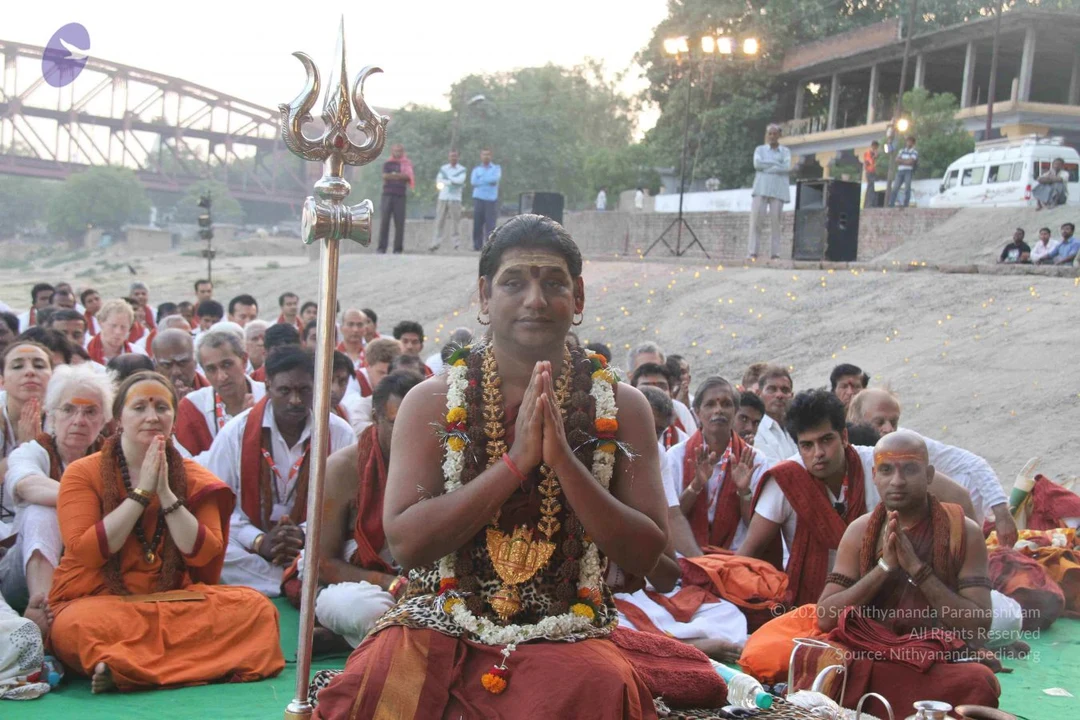
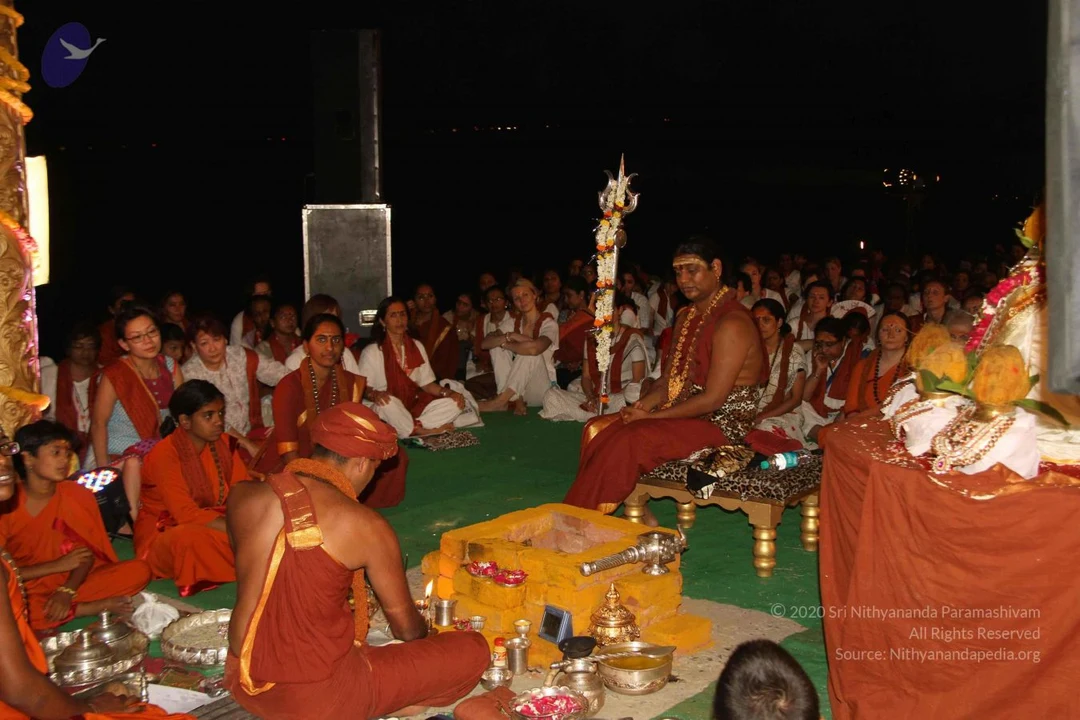
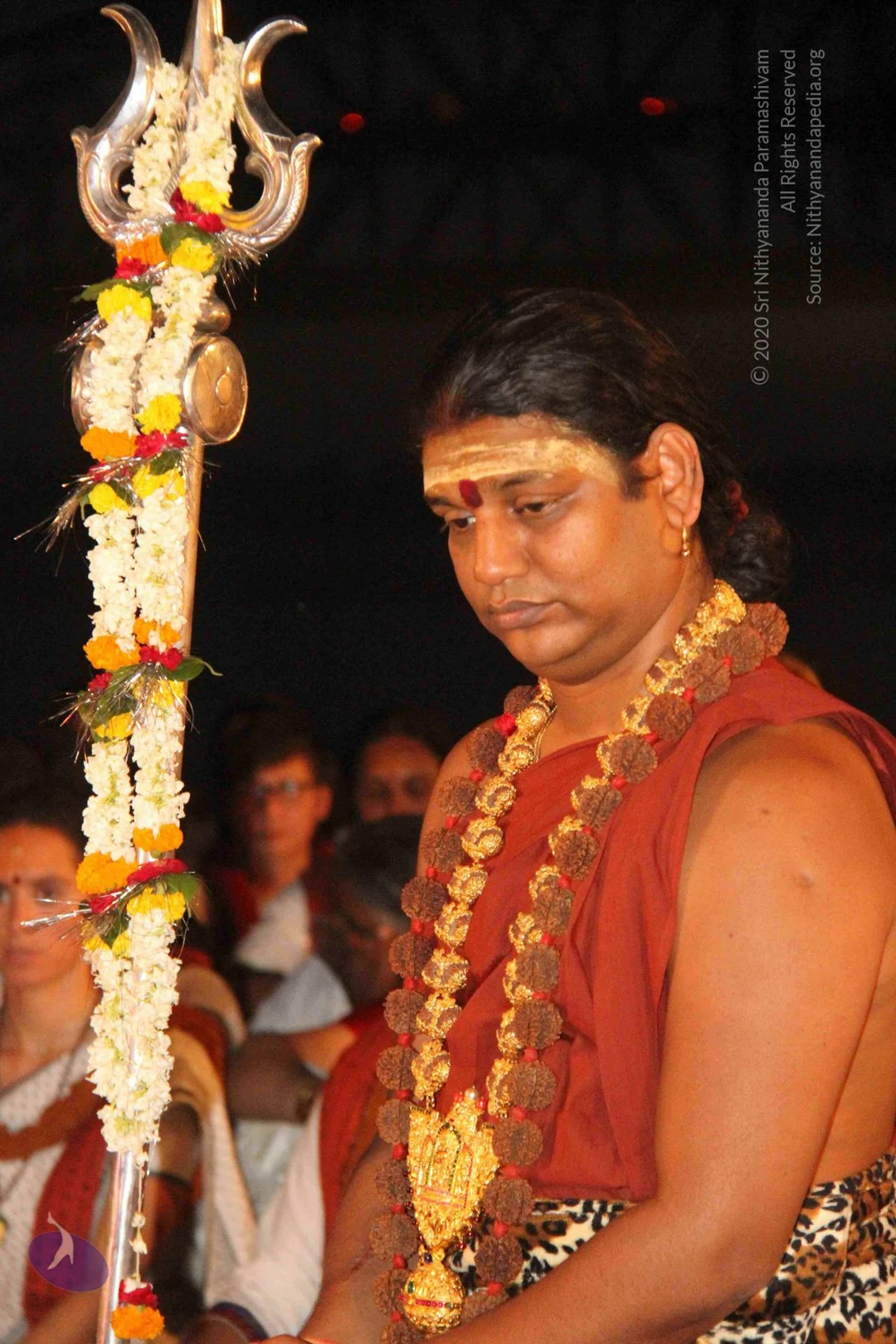
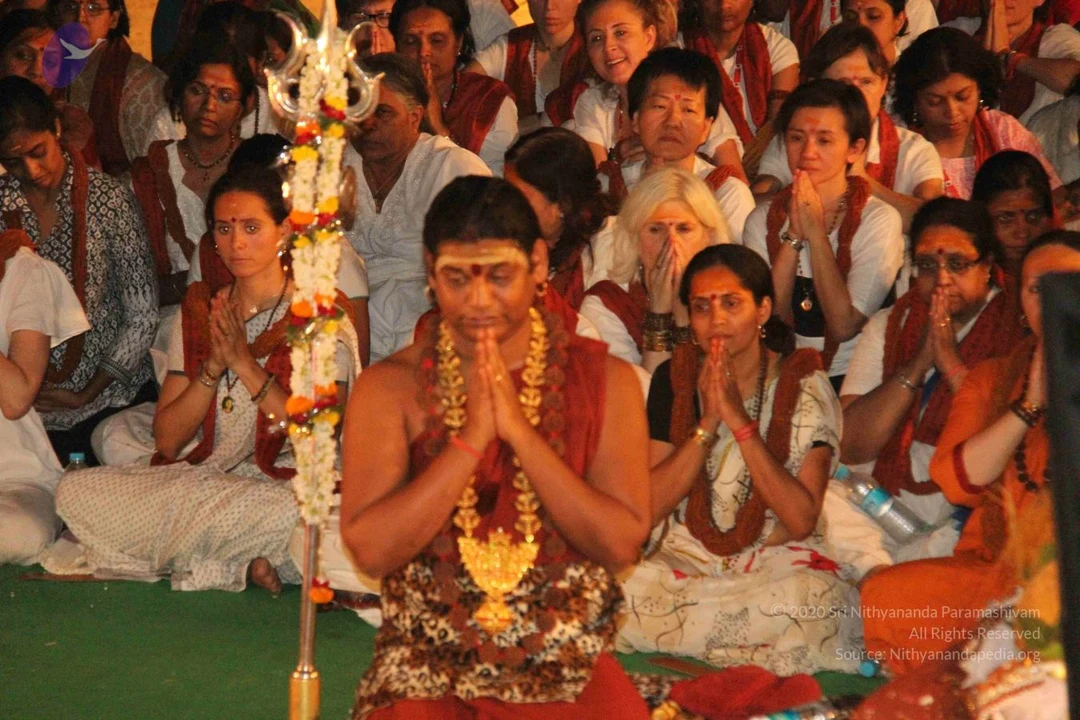
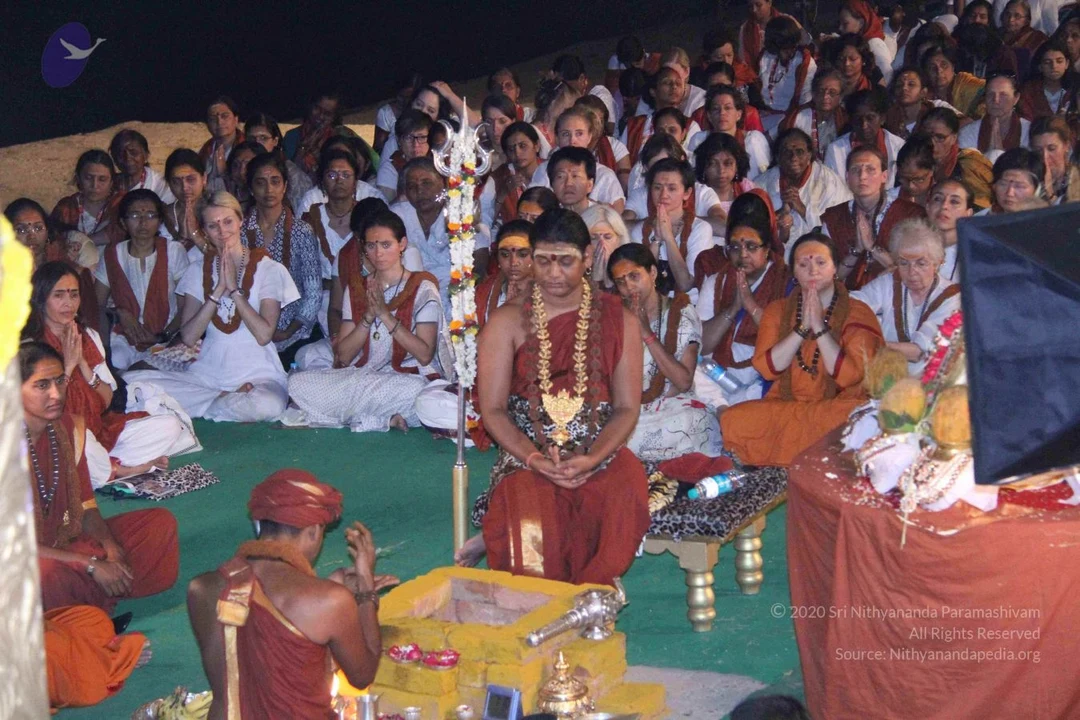
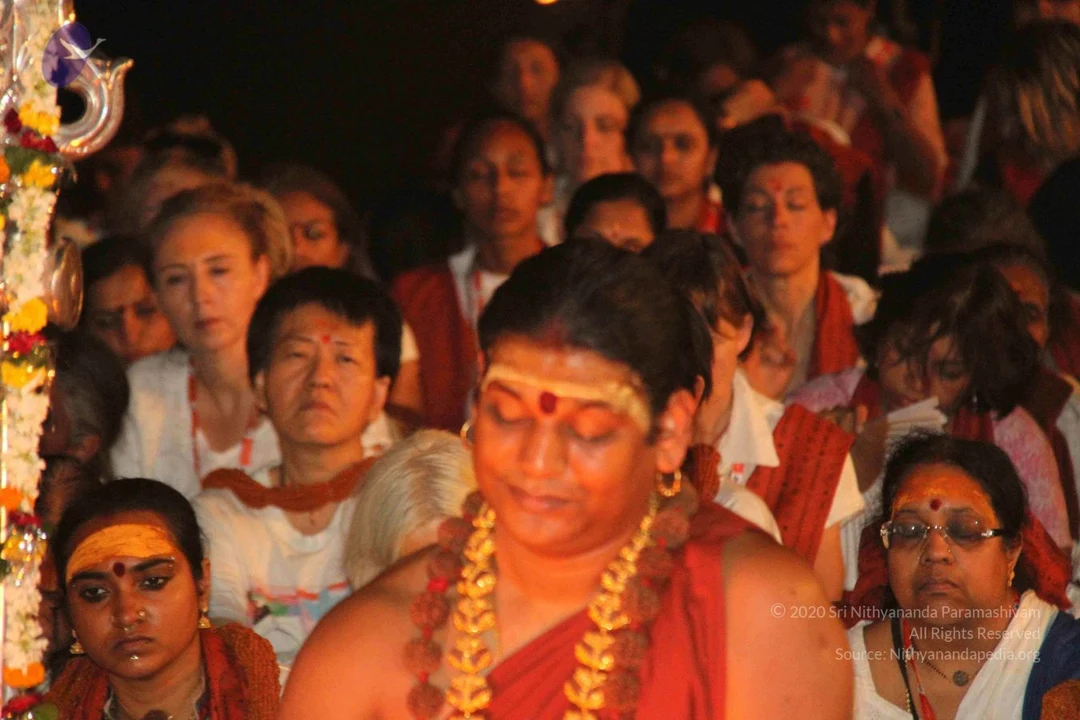
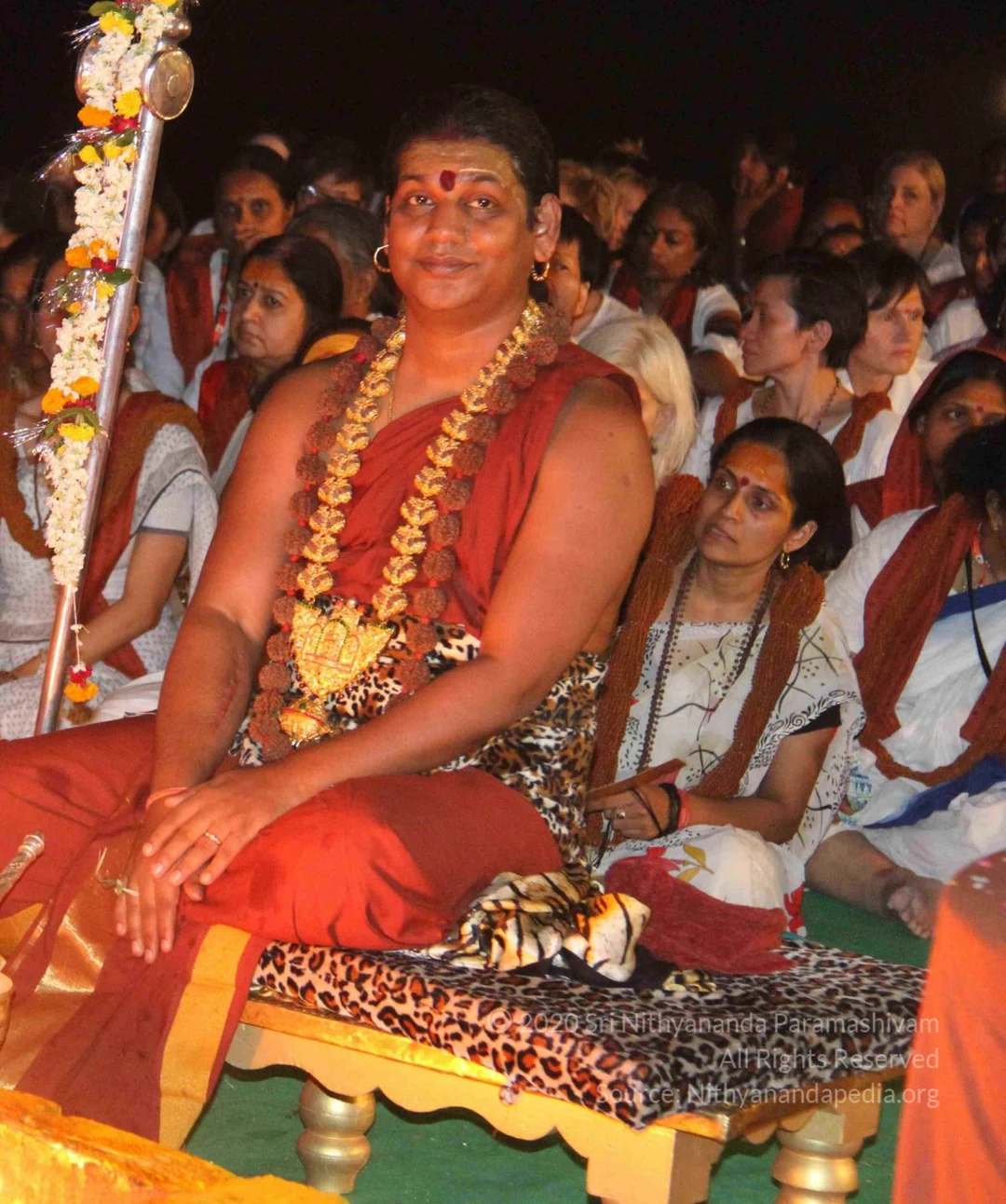
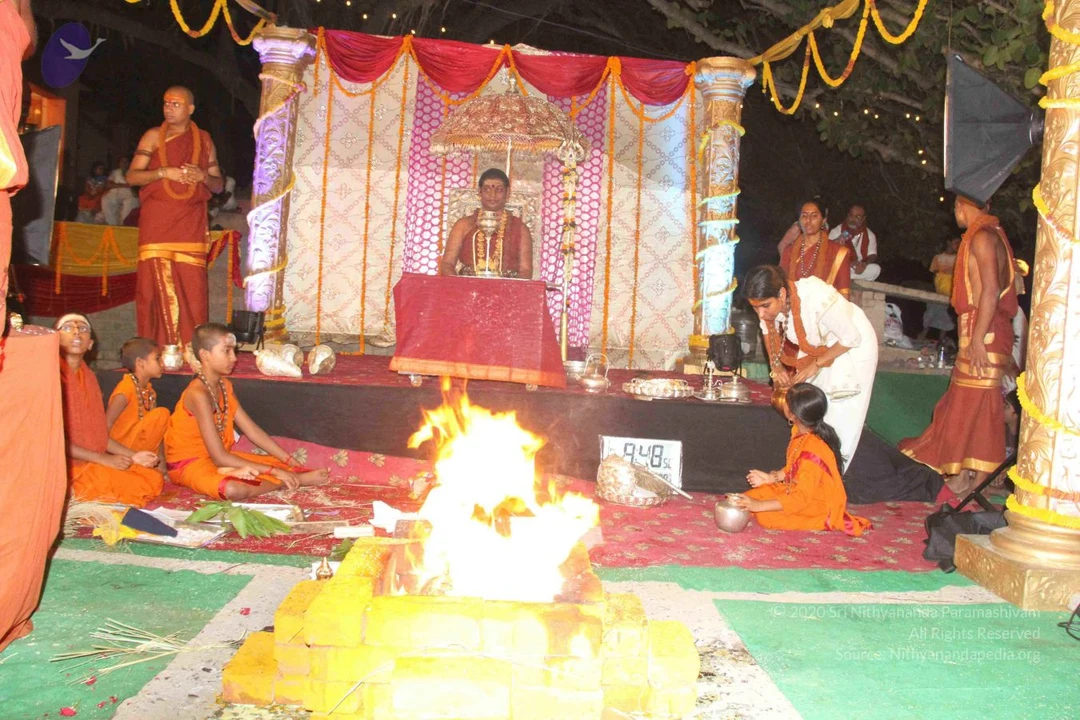
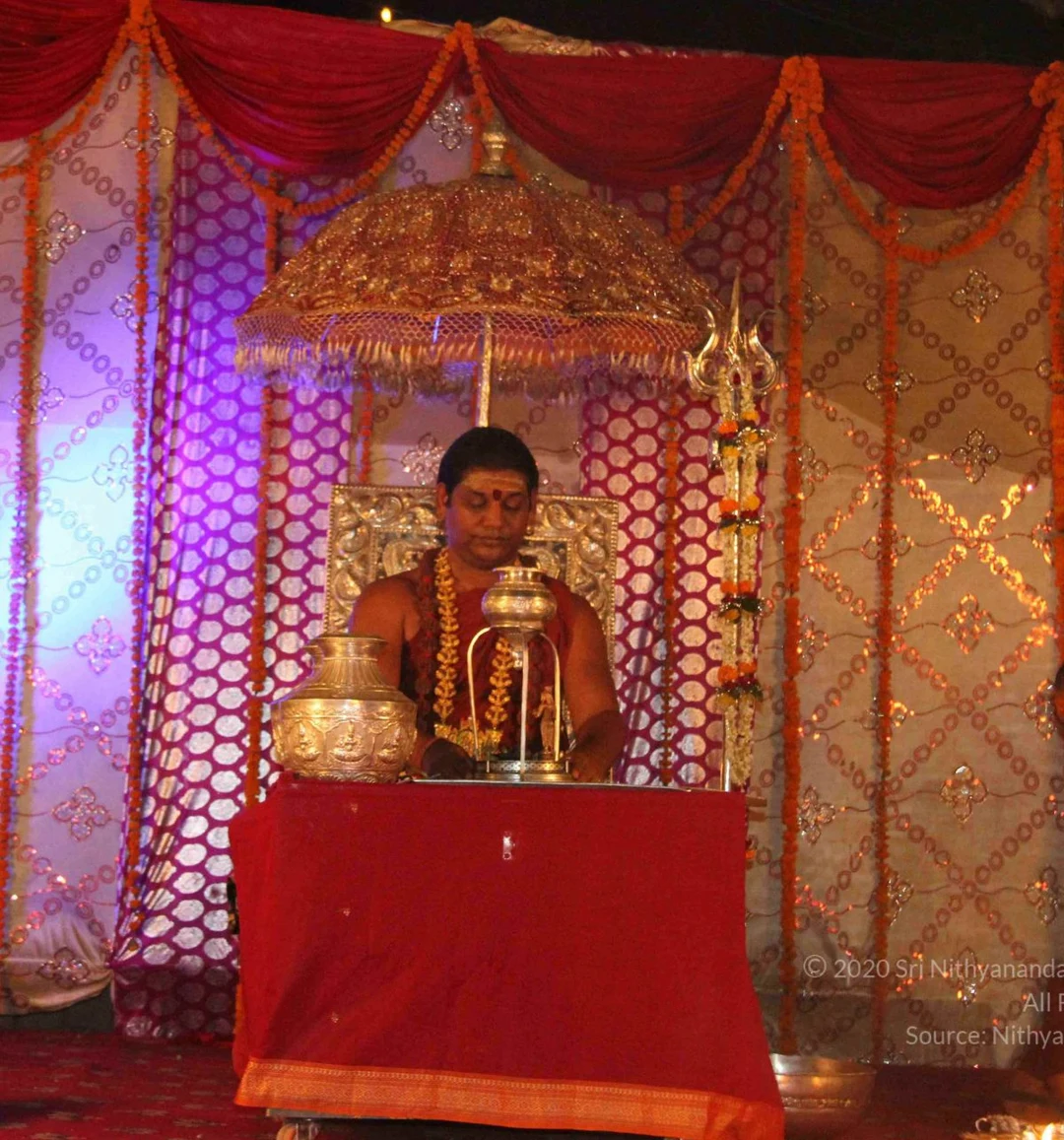
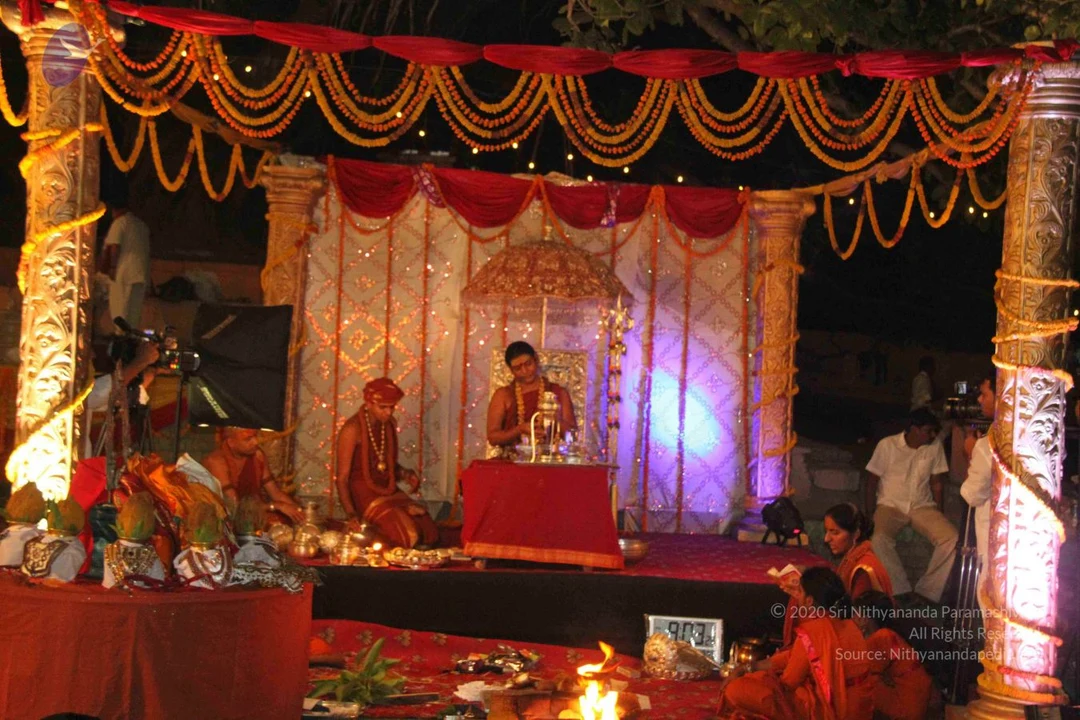
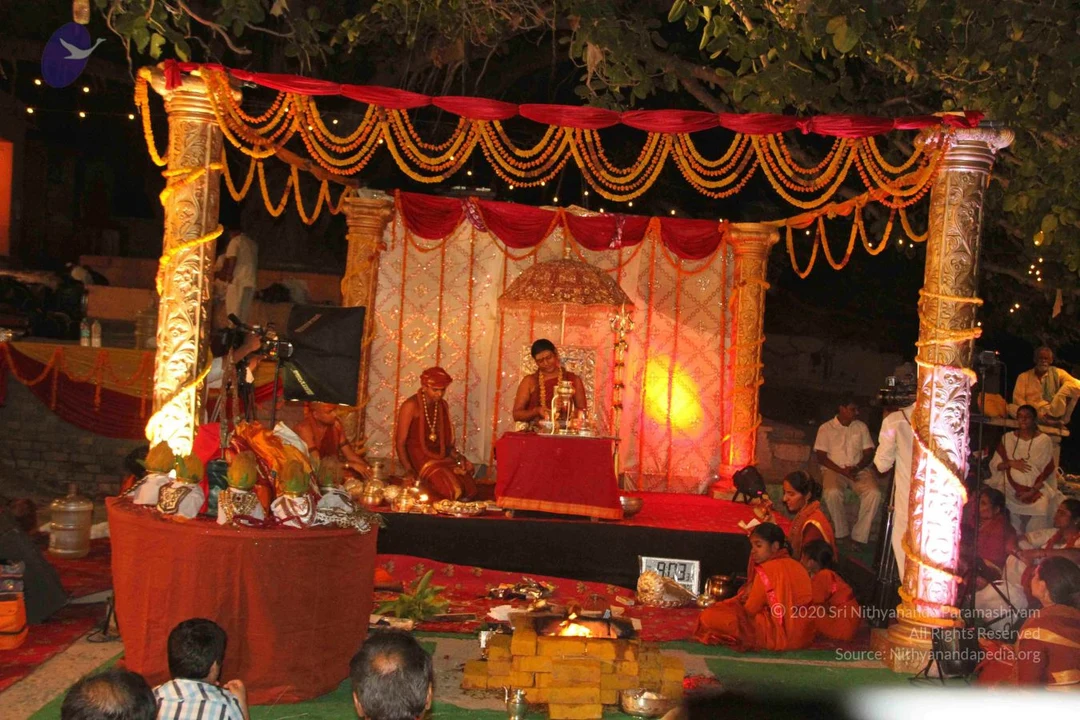
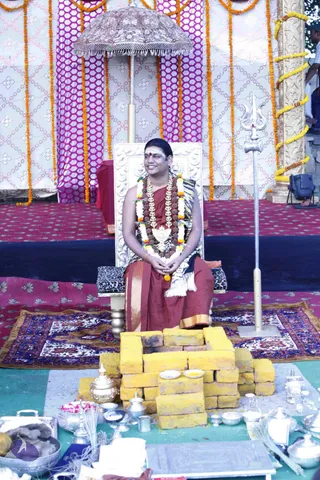
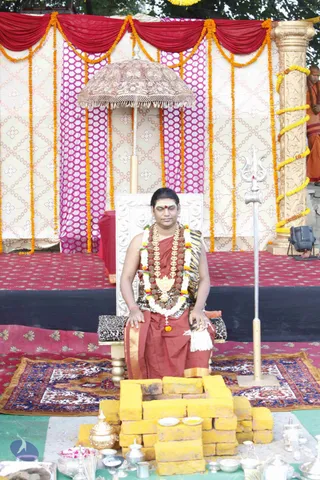
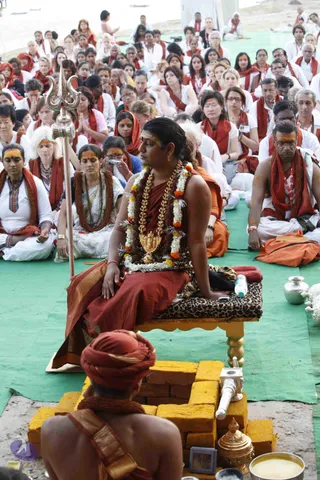
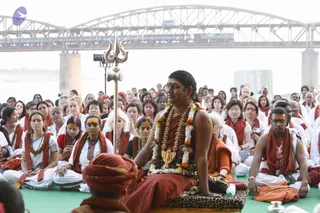
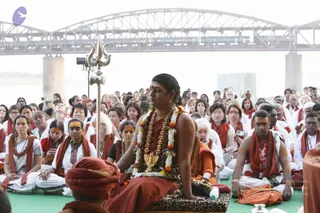
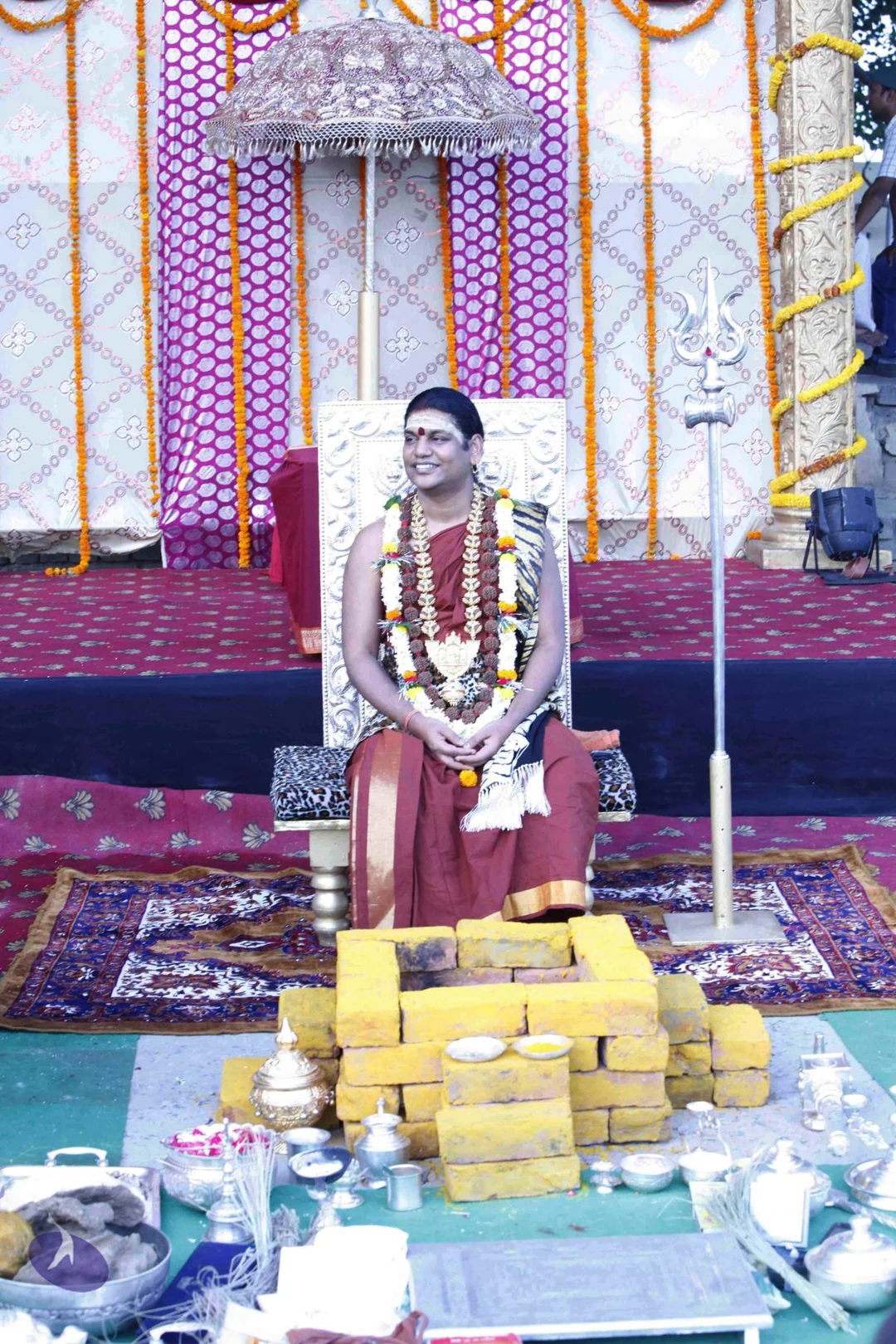
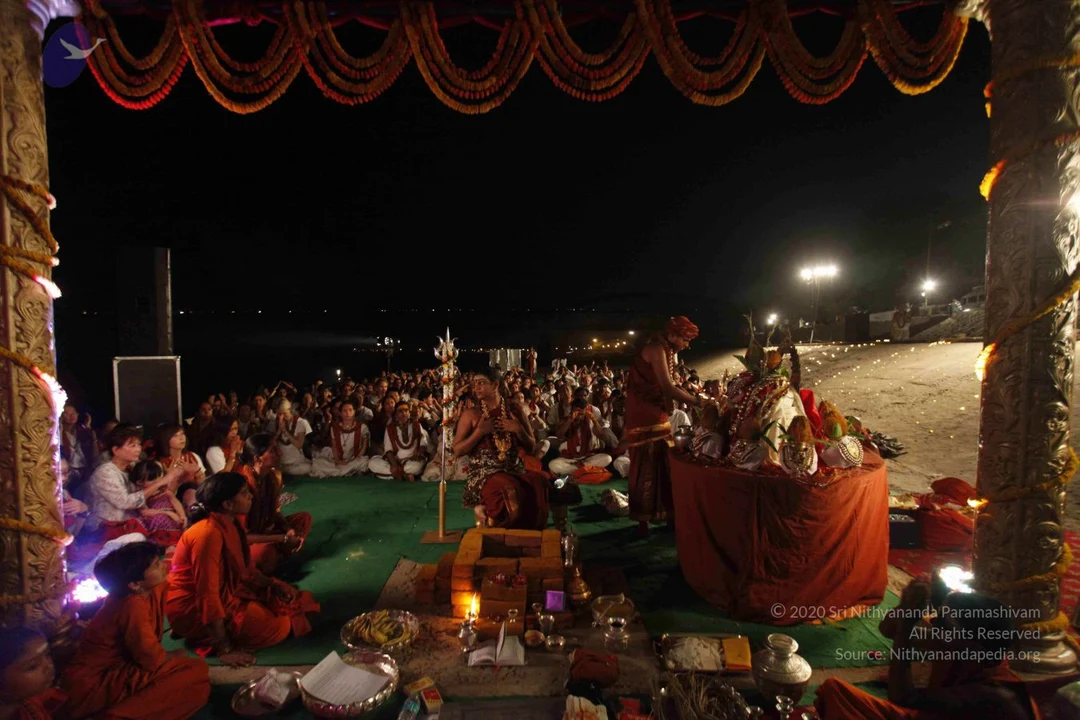
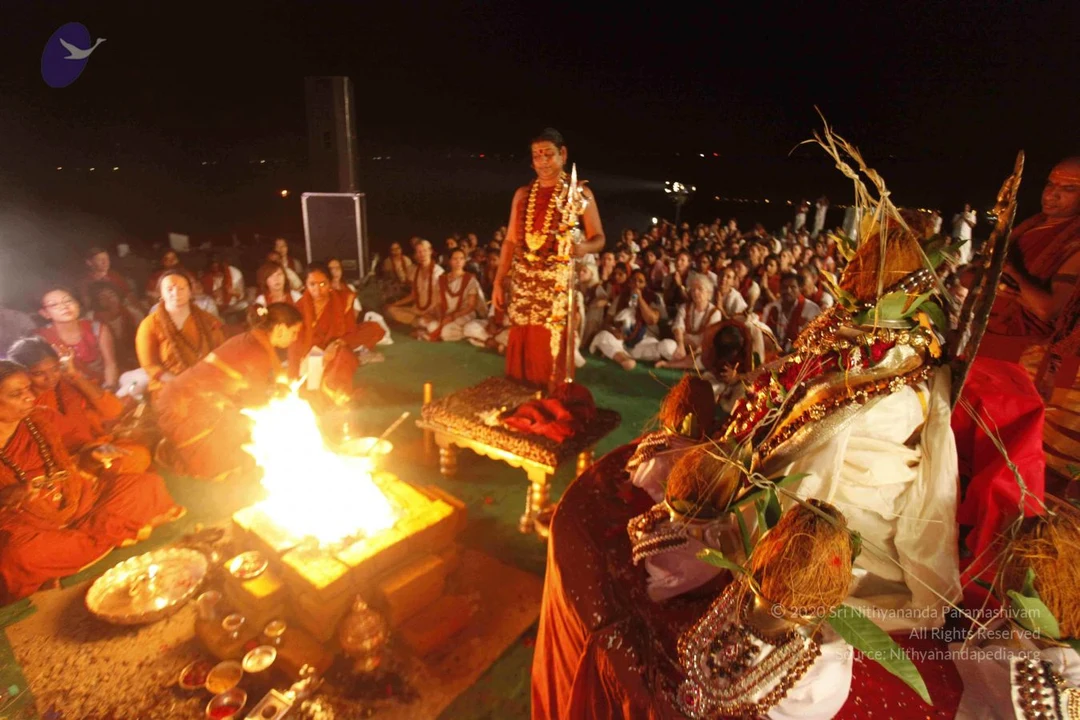
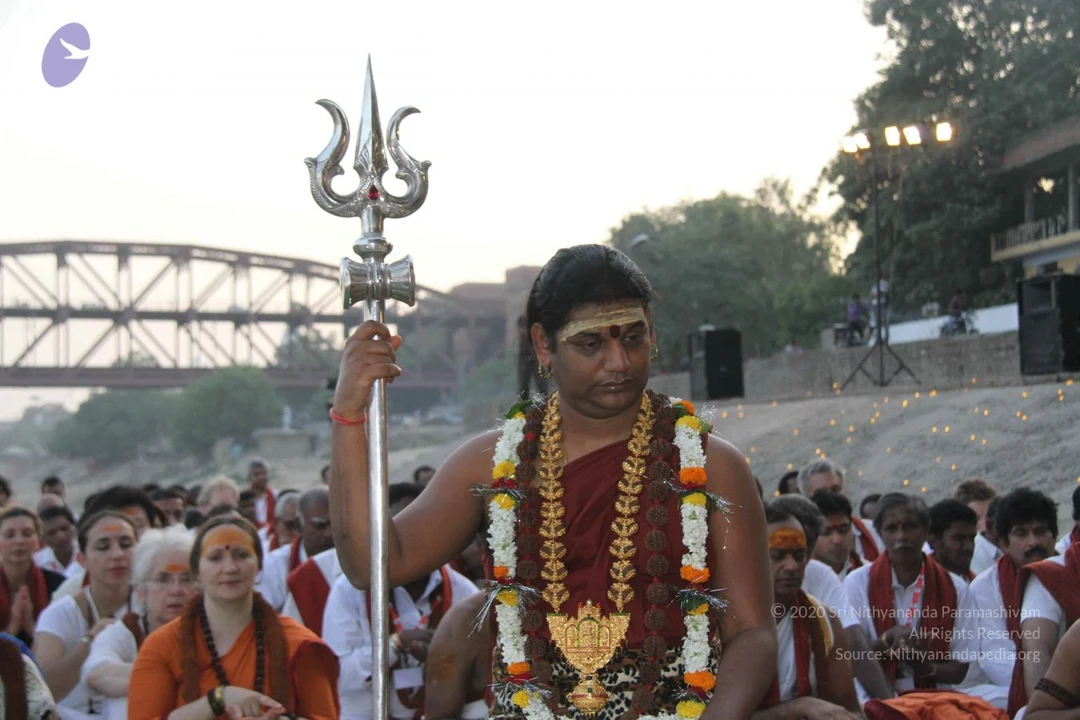
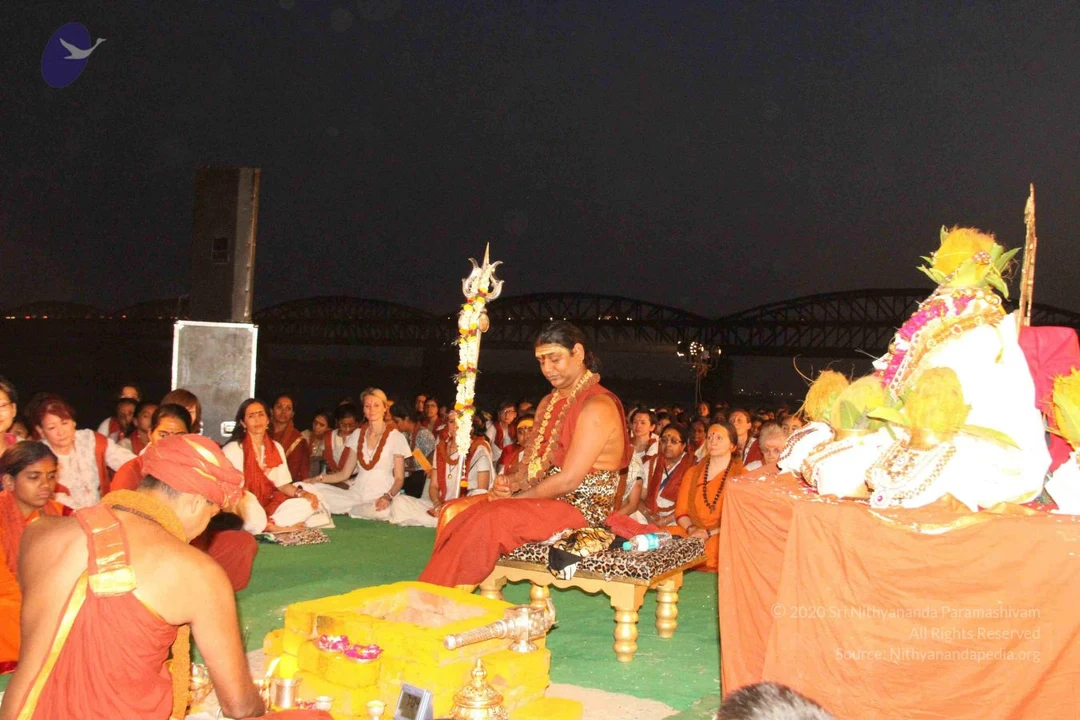
A seated man in a maroon and gold-bordered dhoti and a maroon shawl with a dark striped border sits on an ornate silver throne under a decorative silver canopy with a trident on the right. He wears multiple rudraksha malas, white and orange marigold garlands, a gold pendant and a red tilak on his forehead, with his hands folded in his lap. Before him stands a stack of yellow-painted bricks arranged as a fire altar, surrounded by brass and silver vessels, bowls of flowers, a kalasha-style pot and puja items. Behind the throne are pink and white patterned drapes decorated with marigold strings and a yellow-garlanded pillar. A candidate matching several visible cues is seated here: he has a white ritual shawl-like wrap, rudraksha malas, garlands and a throne, so this is a person appearance, seen in person at the ceremony.A seated figure in a maroon and red sannyasi-style robe with a gold border sits on a silver-and-white ornate throne with a leopard-print cushion beneath a silver umbrella. He wears layered rudraksha and flower garlands, a gold pendant, a striped shawl draped over one shoulder, and a red tilak on his forehead. Hands are folded in his lap. In front, a square fire pit is built from yellow bricks, with brass pots, bowls, flower petals and a kalasha-like vessel arranged around it, indicating a homa setup. A silver trident stands to the right beside a magenta and gold draped backdrop decorated with marigold garlands and a carved pillar.A seated man in a red-maroon dhoti and draped shawl with a leopard-print pattern sits on an ornate silver throne under a decorative silver parasol. He wears layered garlands of white and orange marigolds, a gold-and-rudraksha necklace, and a red bindi with horizontal sandalwood marks. A silver trident stands to his right. In front, a stacked yellow-brick fire pit holds brass vessels, a kalasha, and bowls of flowers and kumkum. The stage is draped in red and white fabric with marigold strings, and a second person in orange robes stands at the upper right edge. The man appears to be a person, seated in a ceremonial role at the homa, with rudraksha, gold necklace and ornate ceremonial dress as the distinguishing cues.A large outdoor gathering on a green mat by a riverbank, with a seated man in a rust-red dhoti and shawl at the centre wearing a heavy gold ceremonial necklace, layered flower garlands and rudraksha beads, seated on a leopard-print cushion over a wooden bench. Behind him a silver trident stands upright. In the foreground a priest in a red turban sits before a brick fire pit with a silver ritual vessel and a gold kalasha-style pot nearby. Behind them rows of seated devotees in white and red shawls, many with orange vibhuti marks on their foreheads, sit with hands folded in prayer or meditation. Several people in the crowd wear rudraksha mala necklaces. The man at the centre has long dark hair swept back and fits the a person cues of ornate gold necklace, garlands and rudraksha; his role is seated presiding figure.Outdoor satsang on a riverbank beneath a steel truss bridge with a passing train. A large seated crowd in white and red-orange clothing fills the green mat. In the foreground, a man with long swept-back hair wears a saffron-orange shawl, a ceremonial gold necklace and layered garlands of marigold and white flowers, seated on a leopard-print cushion before a tall silver trident. Behind him, a devotee in a red-orange turban sits in profile, and a bald man in orange and red shawl sits at right. a person seated as the central teacher, with a trident beside him and white-clothed delegates around him.Outdoor riverside gathering beneath a steel railway bridge with a train on its upper deck and stone piers below. A central seated figure with long dark hair tied back wears a red-orange dhoti-style cloth, a white and orange flower garland, a tall ceremonial gold necklace, and a bare chest, sitting on a leopard-print cushion before a silver trident standing on a stand. Dense rows of seated devotees fill the green mat in front, many wearing orange and red shawls, white clothing and orange tilak marks; a man in a red turban sits in the lower left foreground and a man with yellow-smeared arms sits at right. Light haze and white sky over the river beyond.

More Photographs

119 photosSource gallery
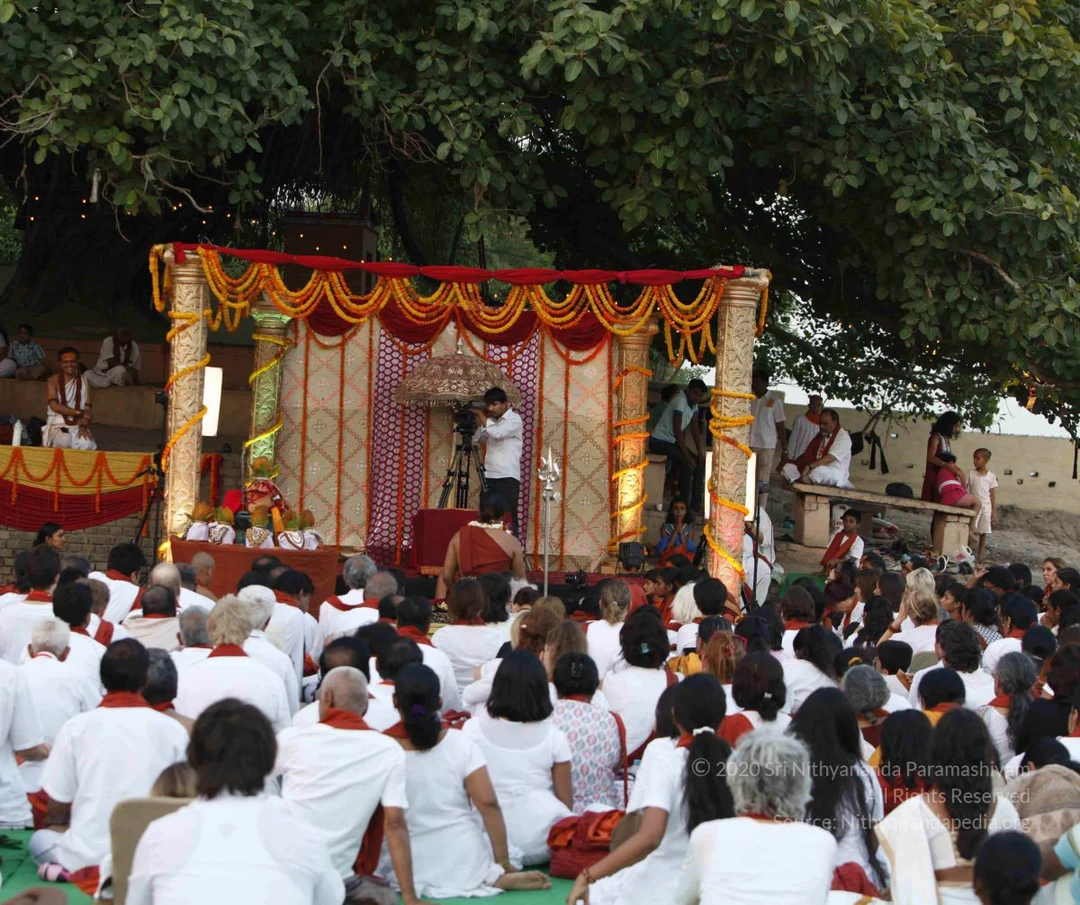
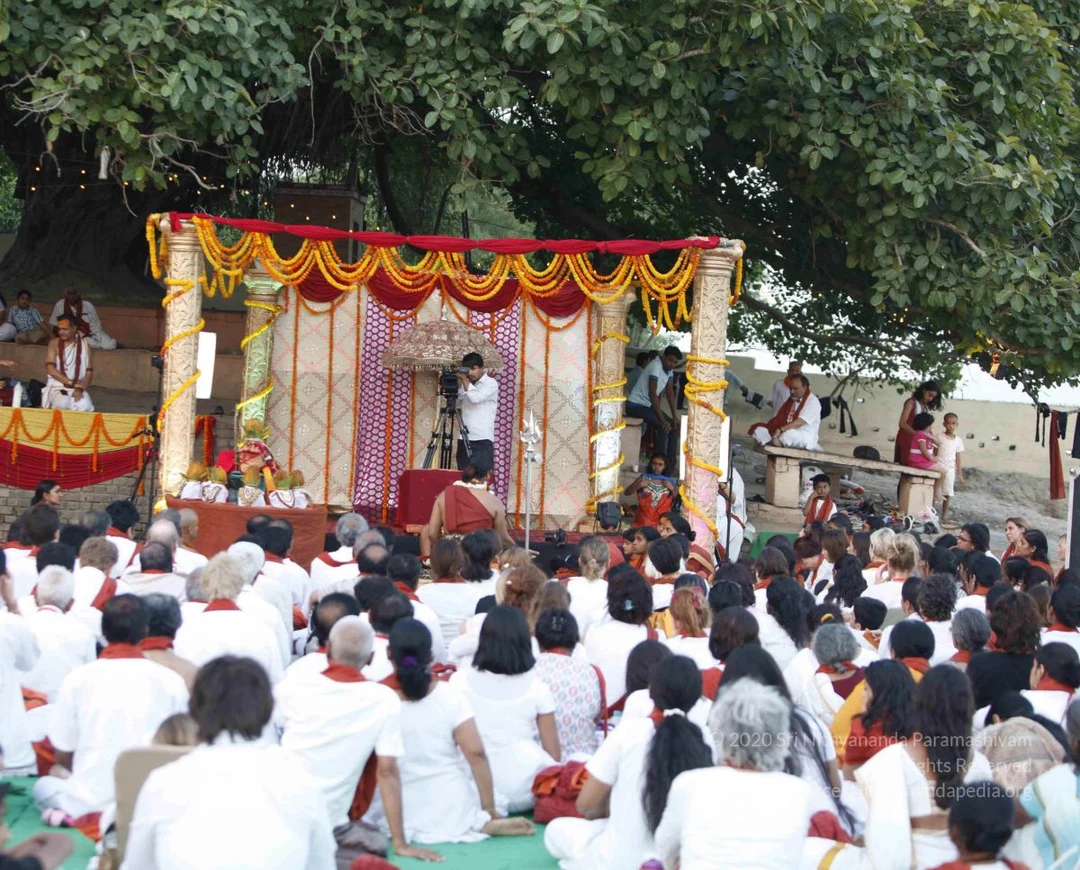
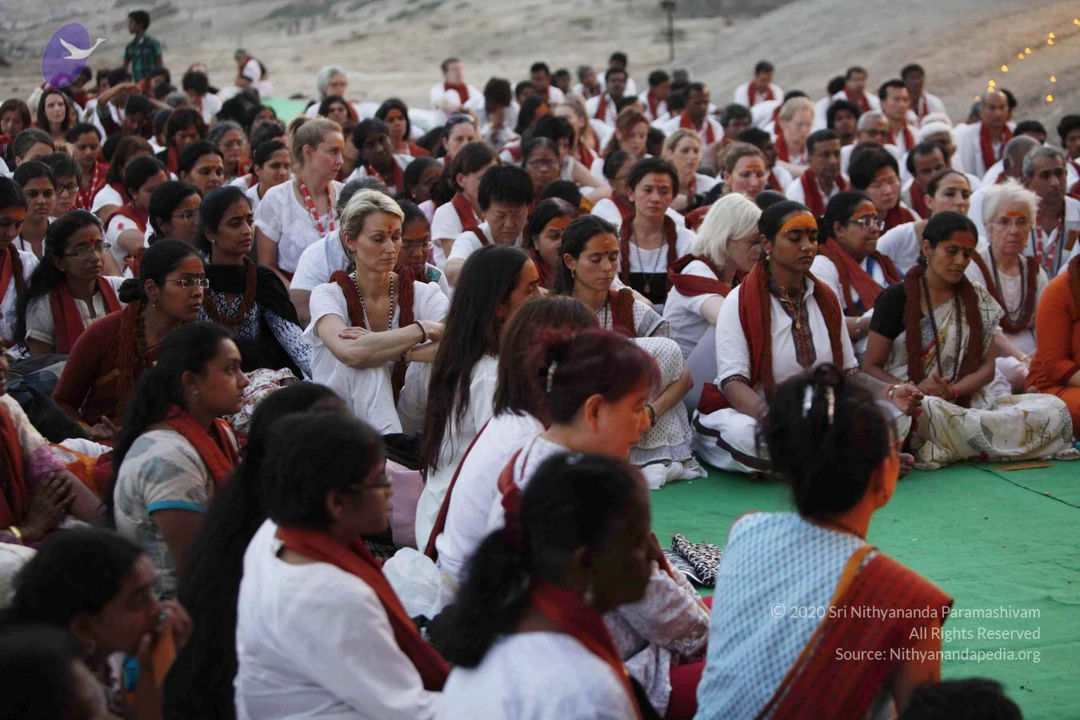
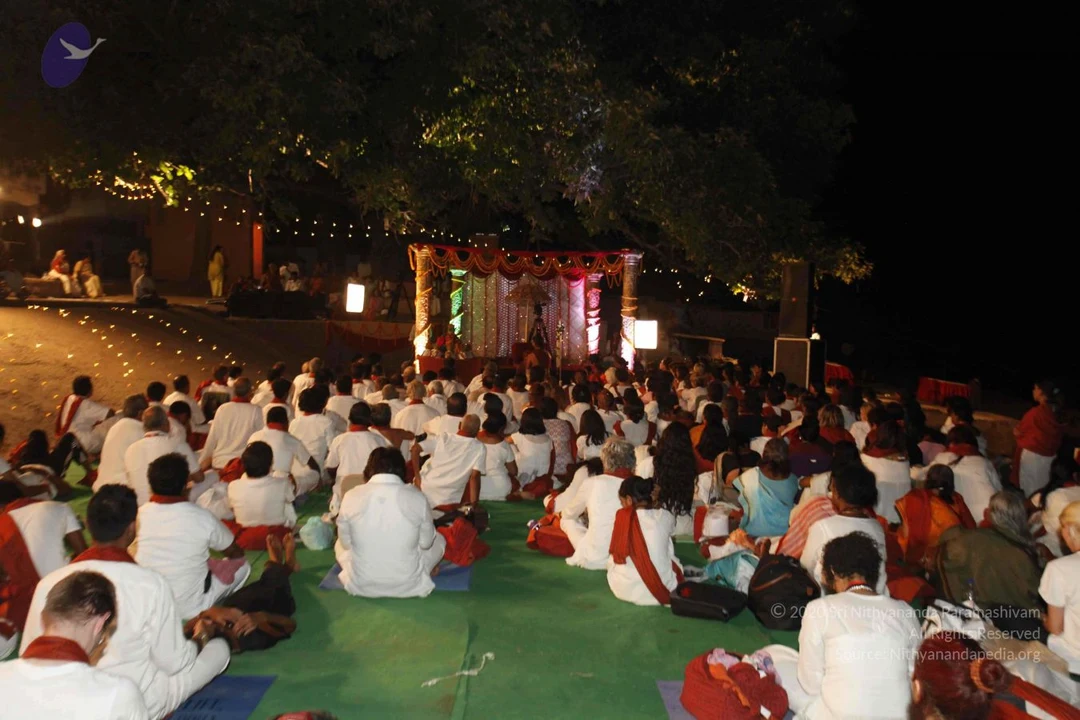
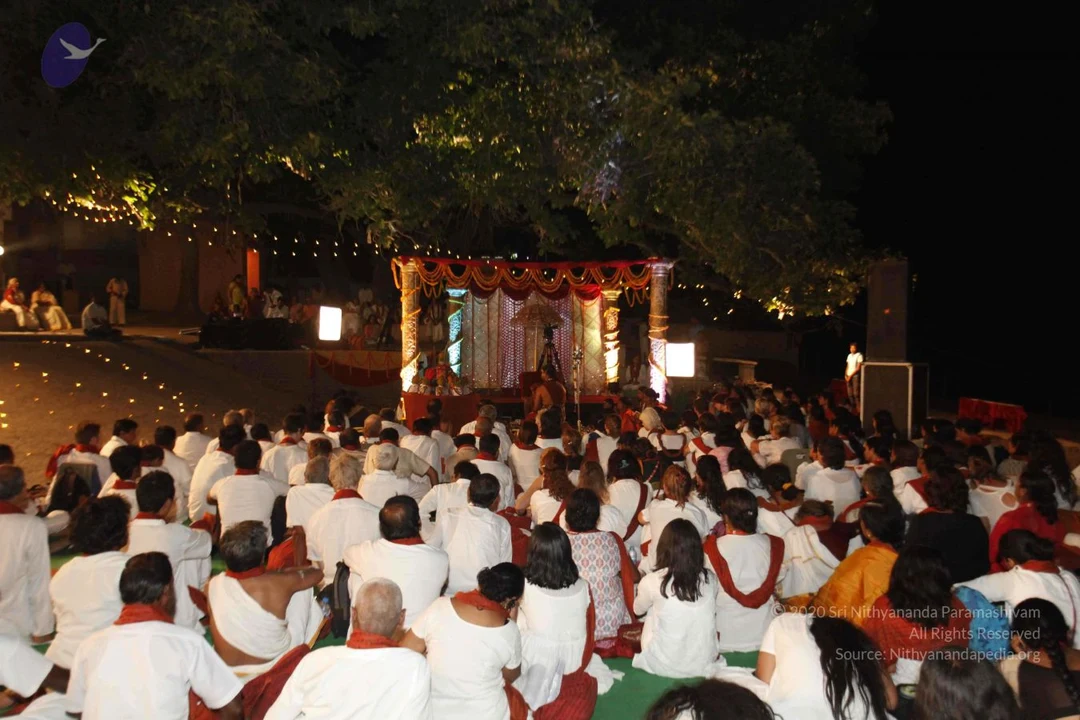
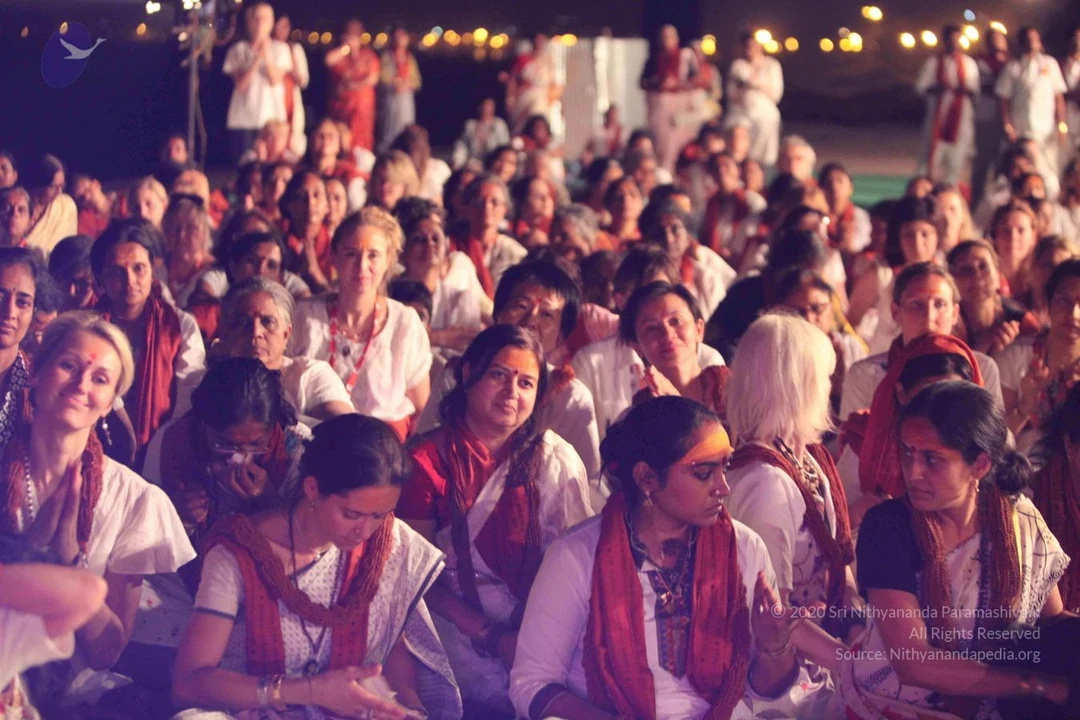
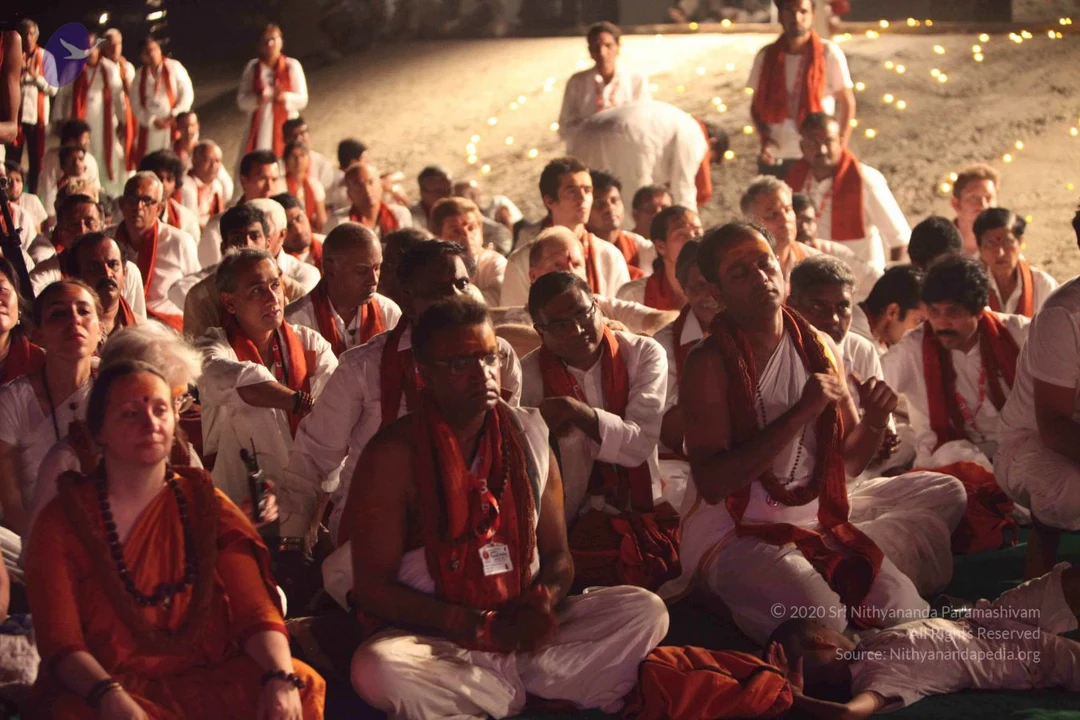
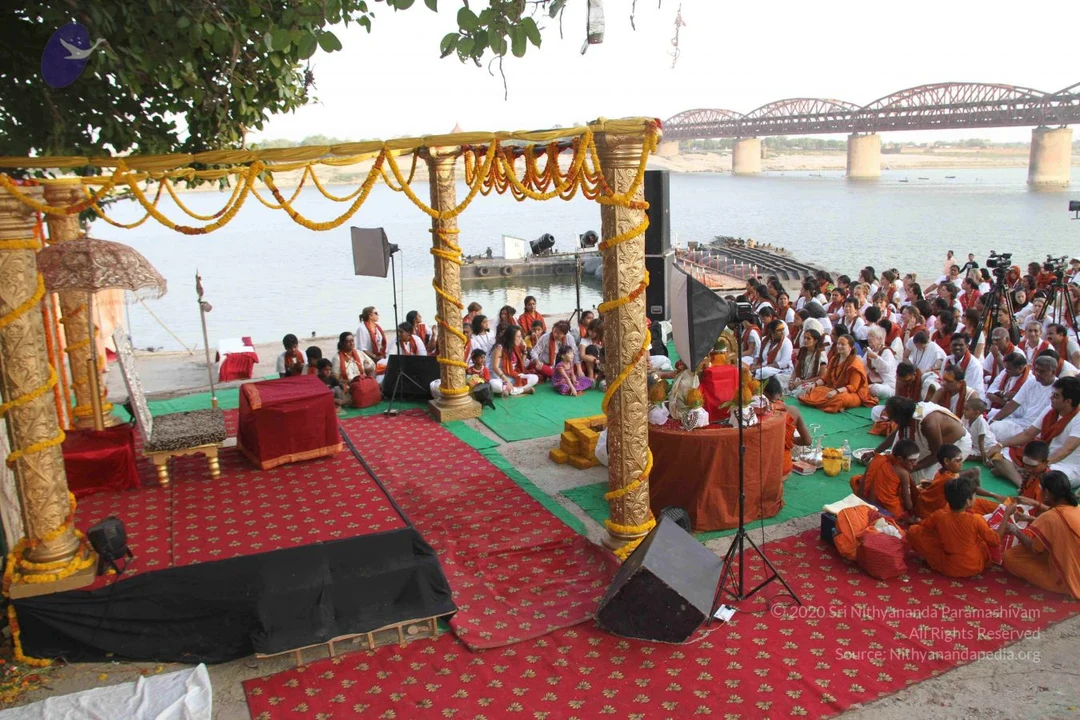
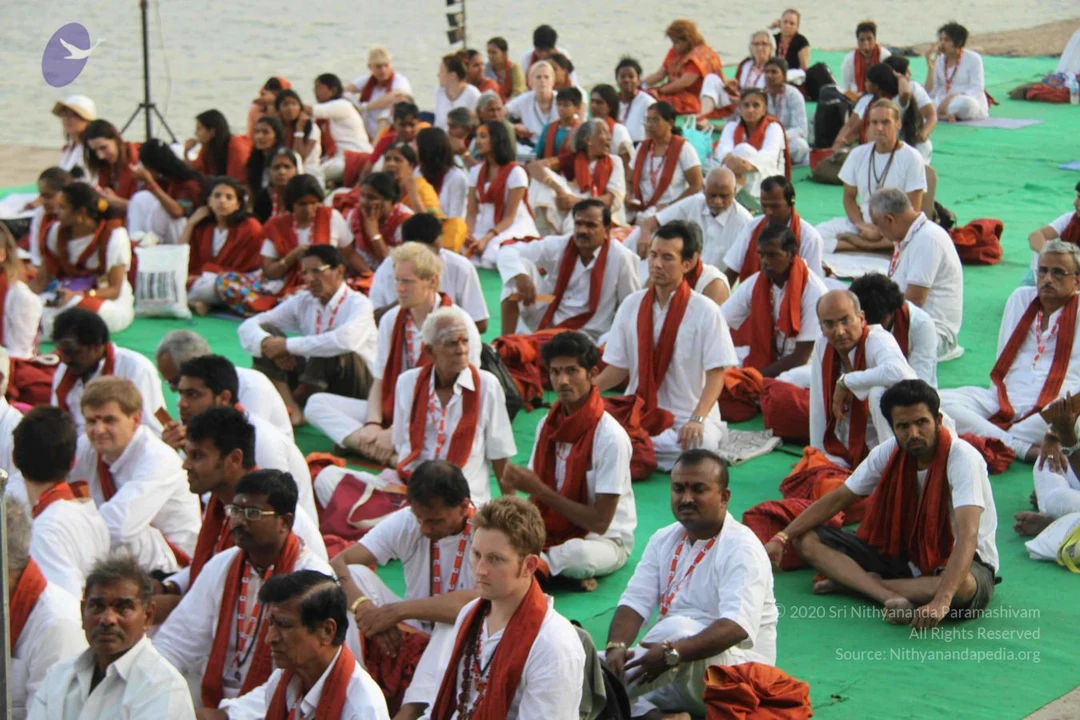
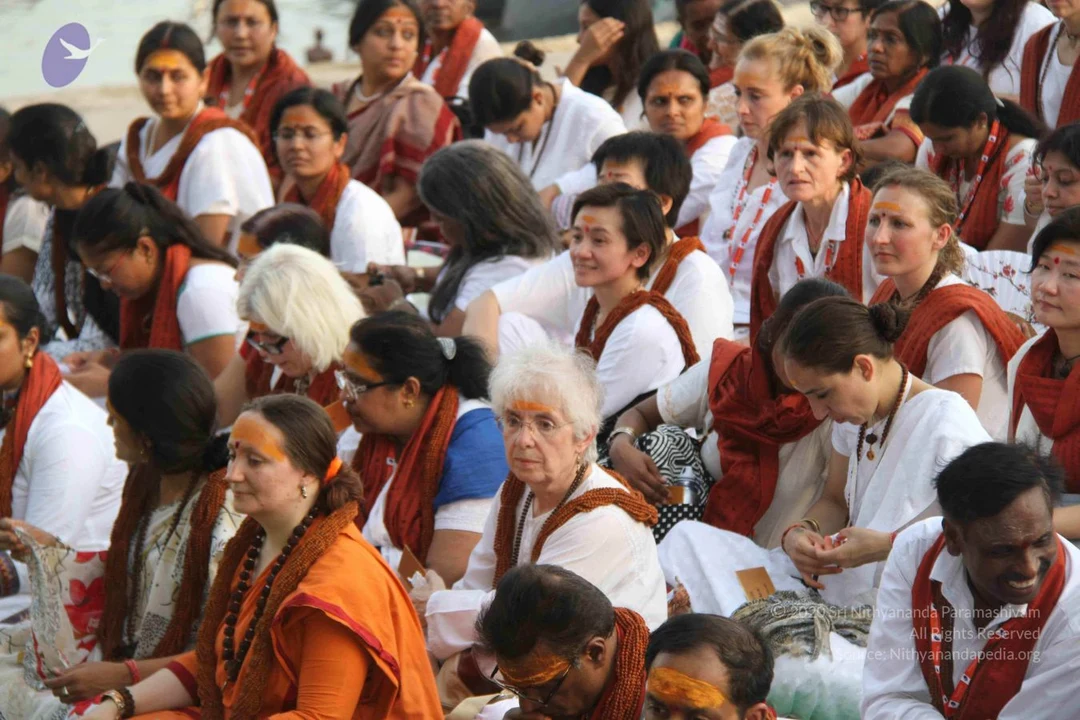
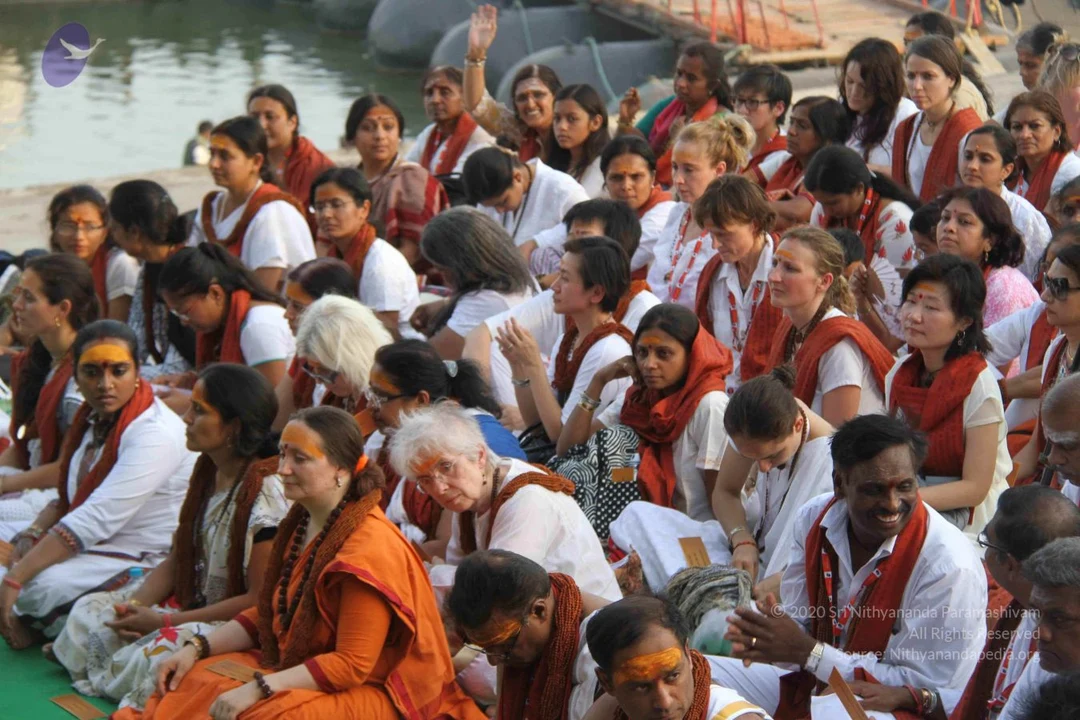
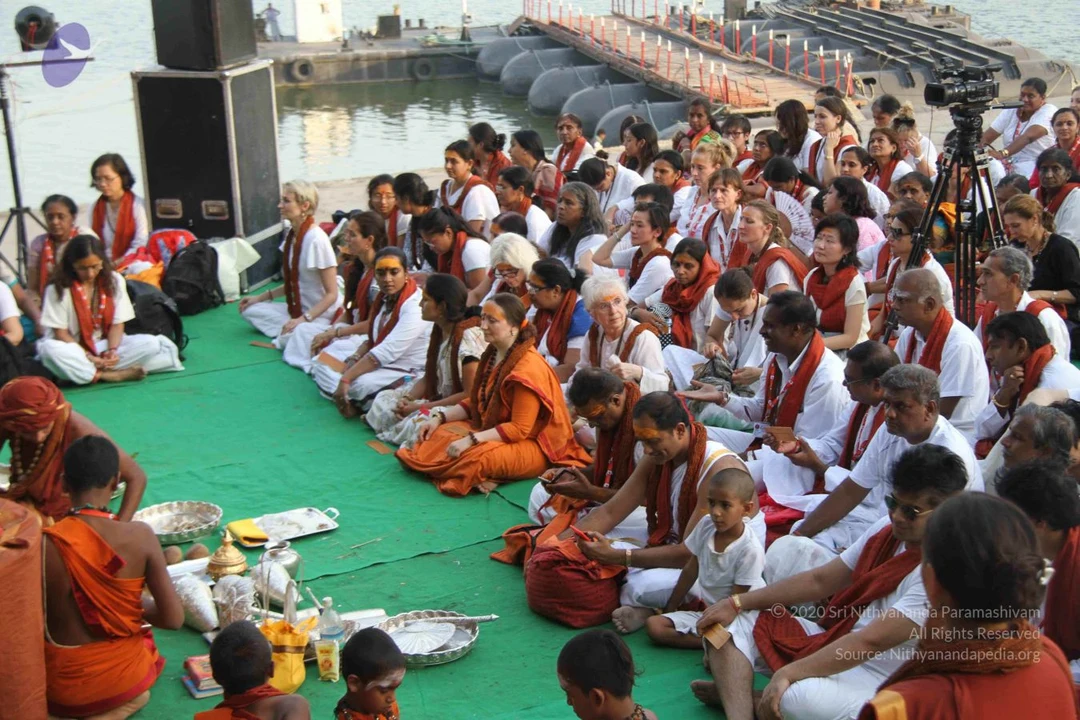
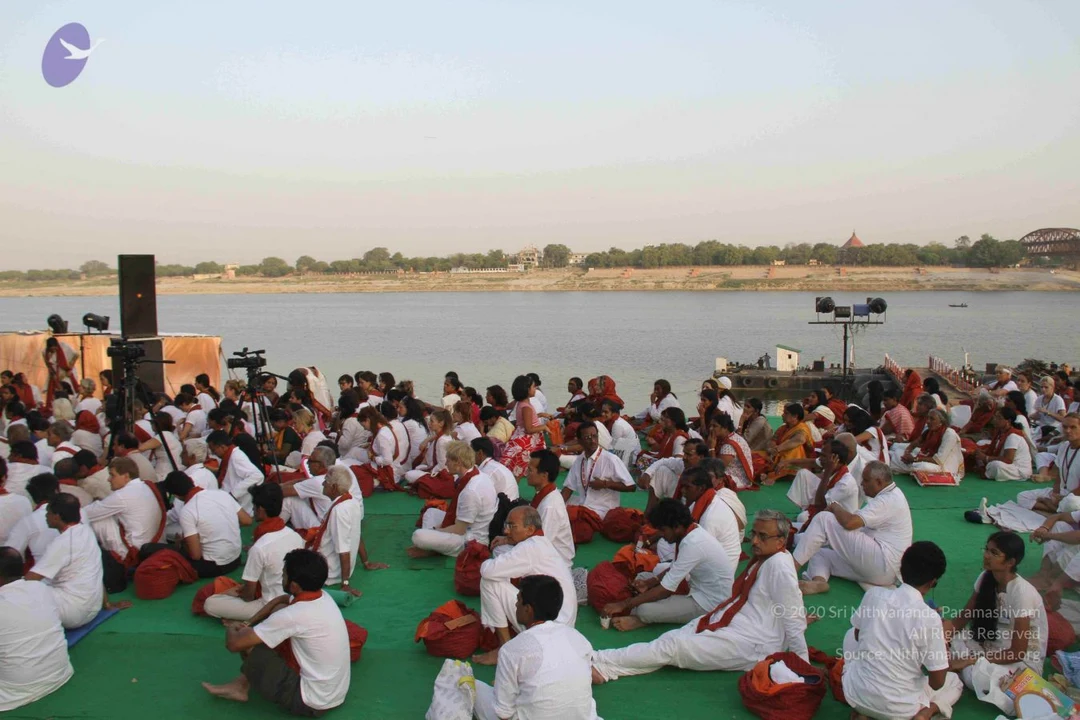
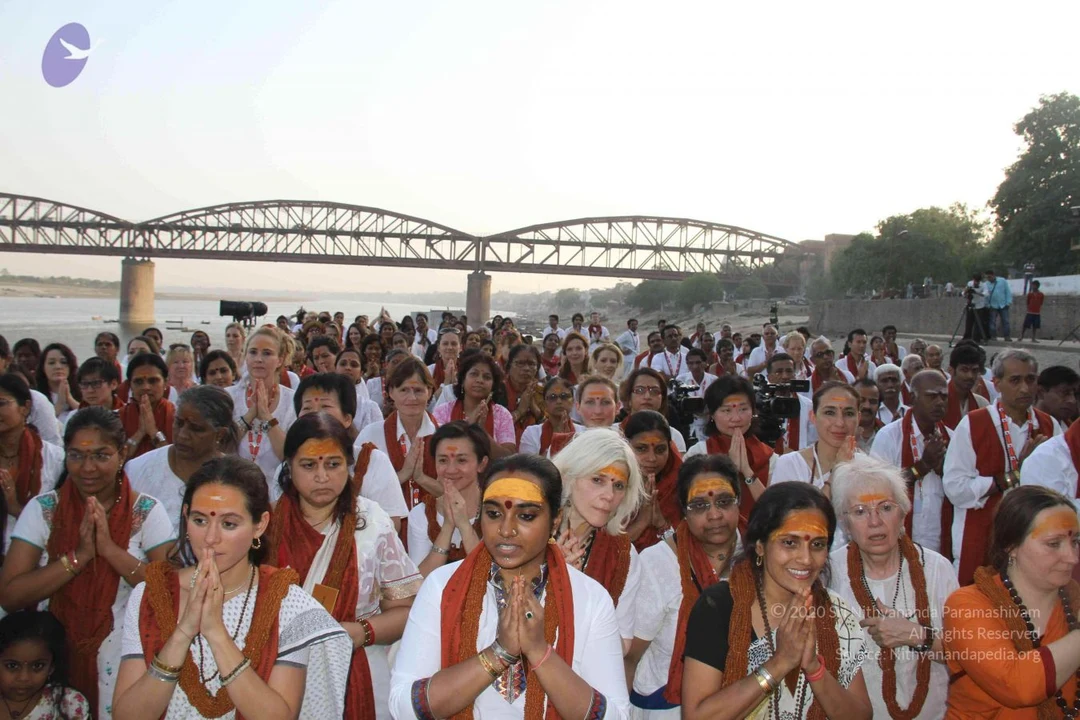
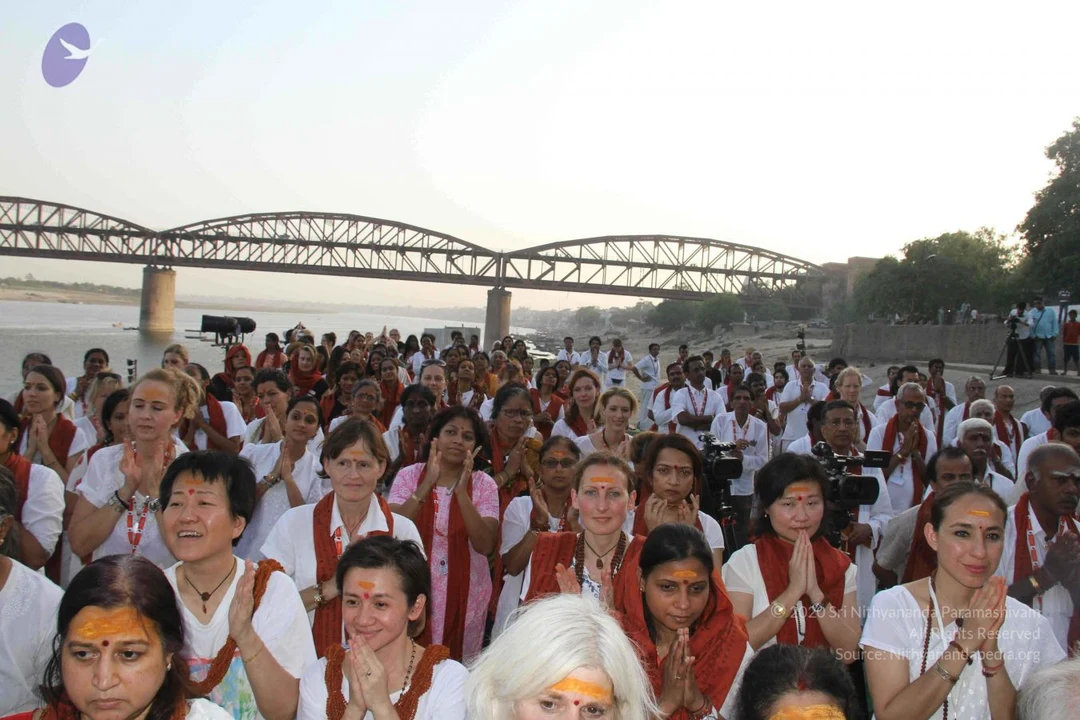
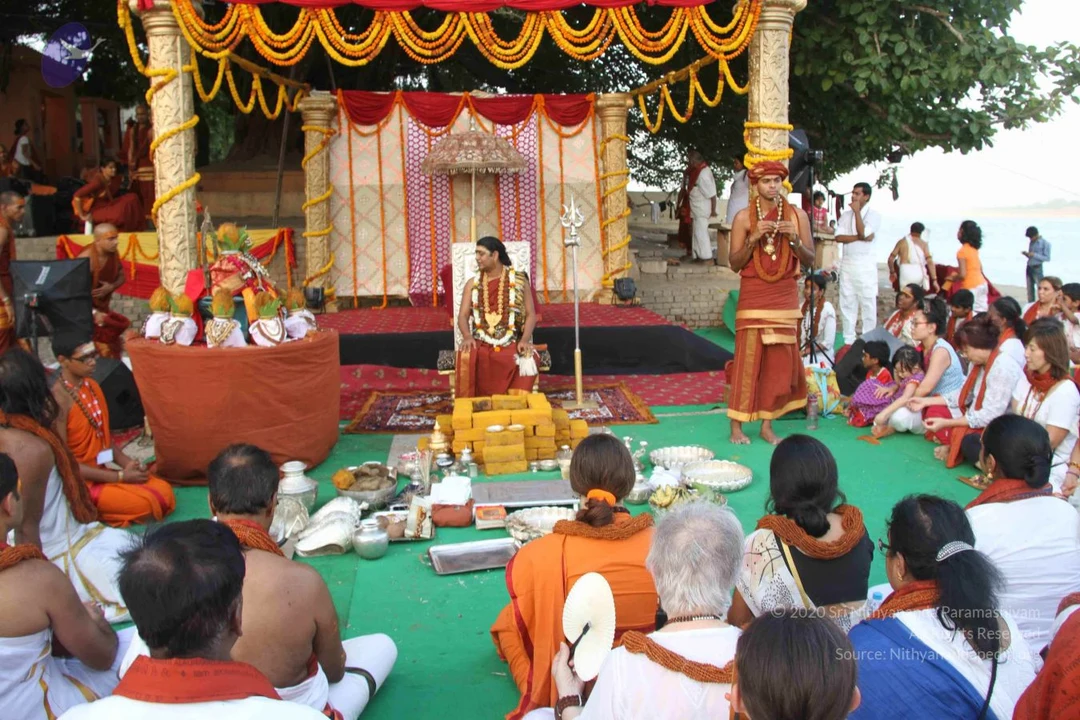
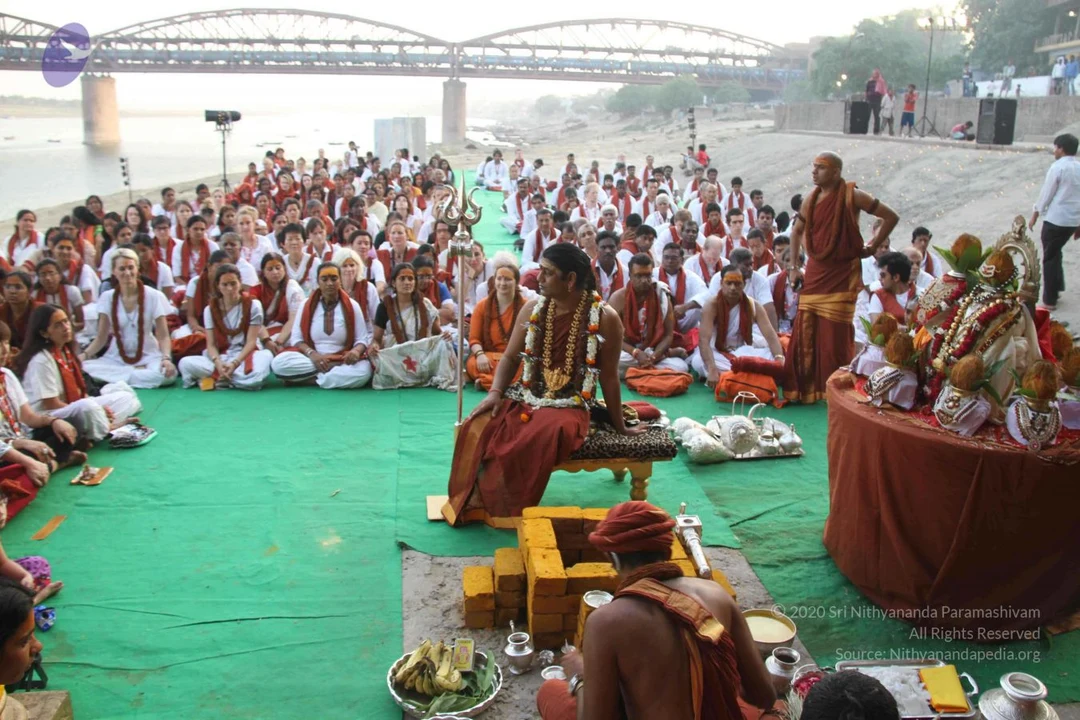
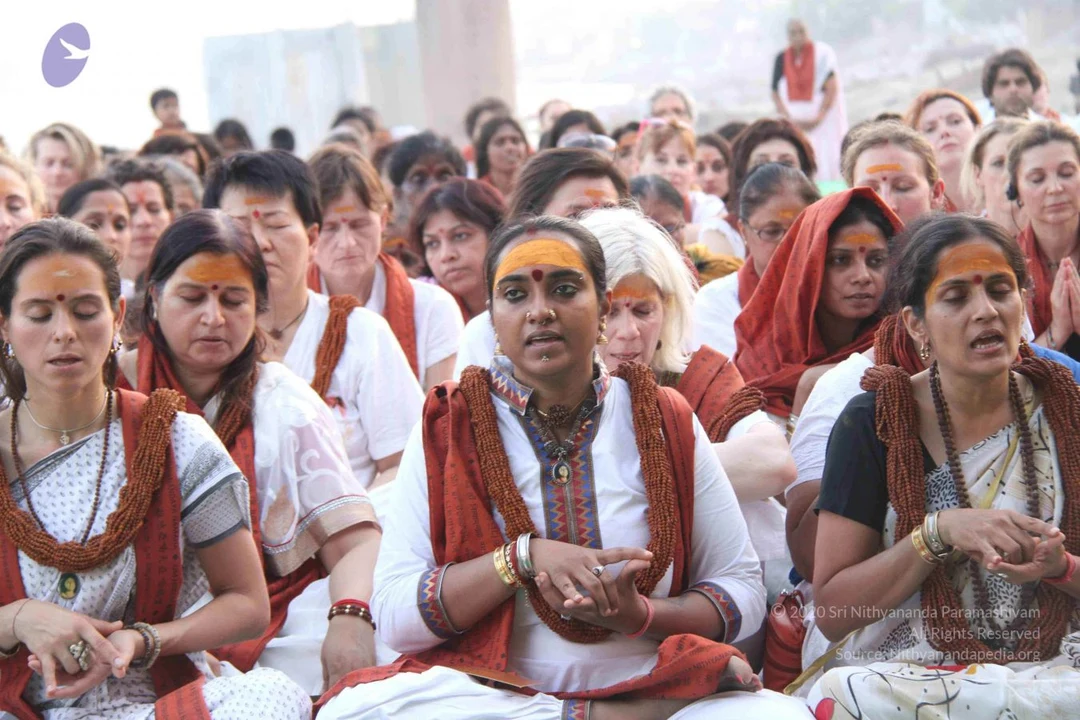
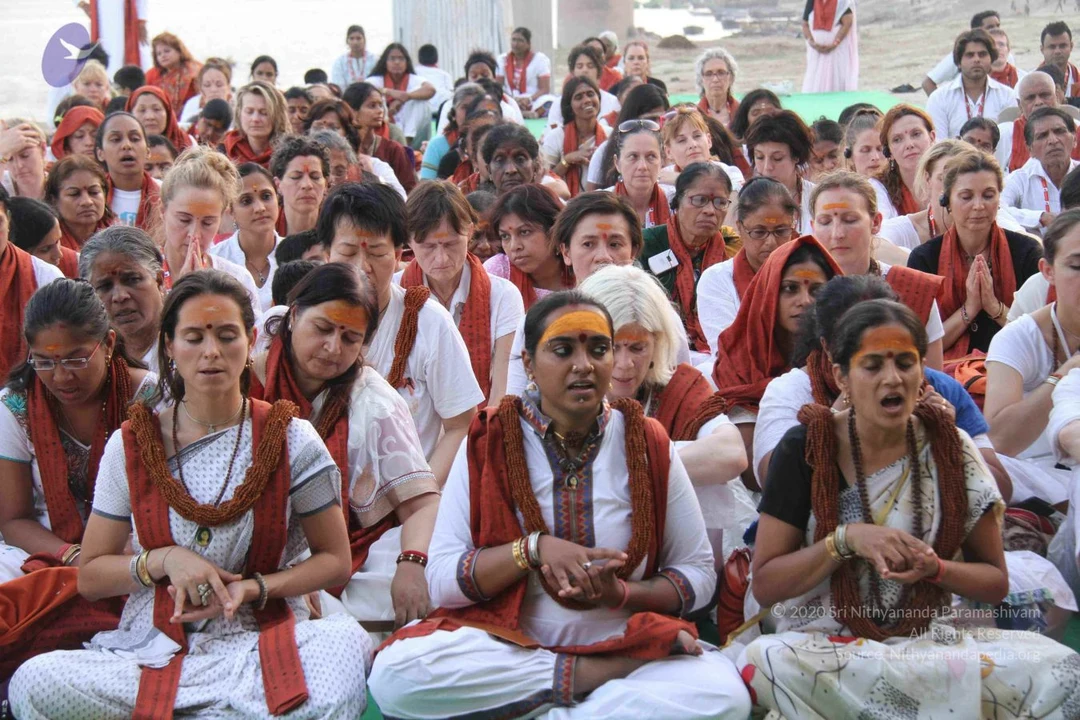
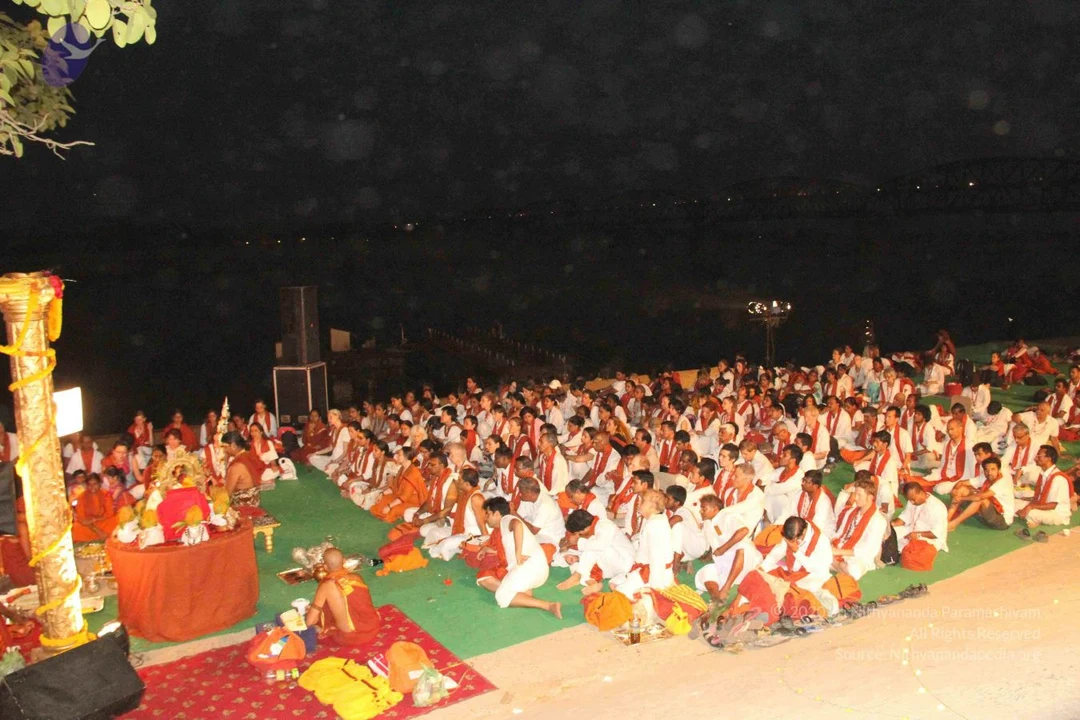
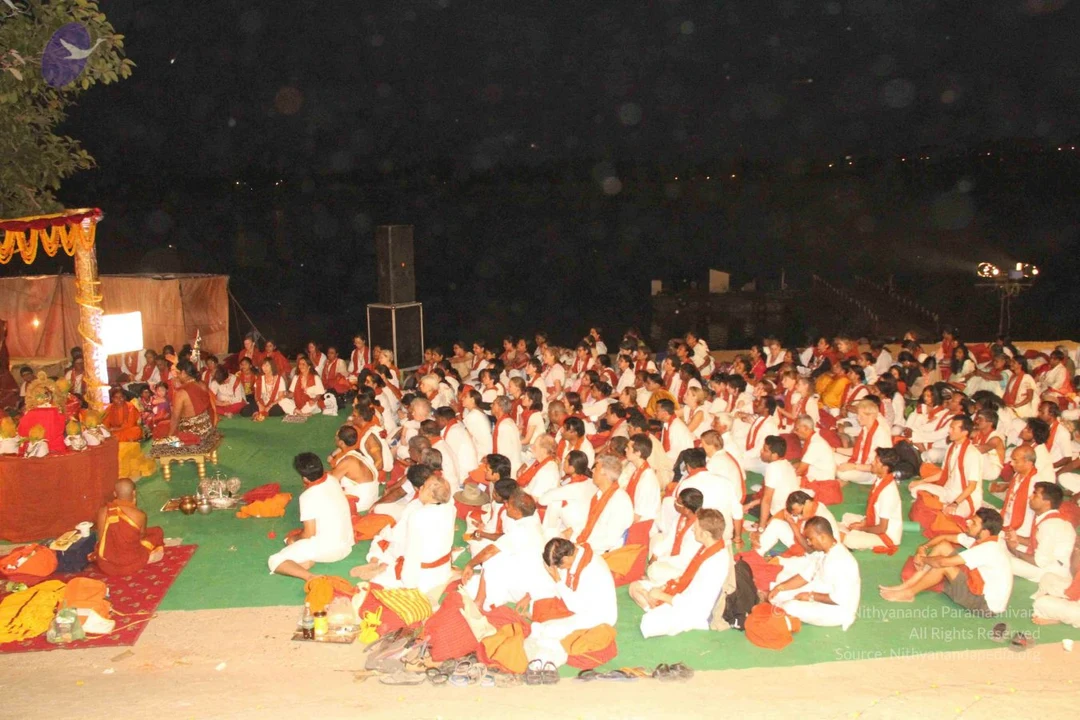
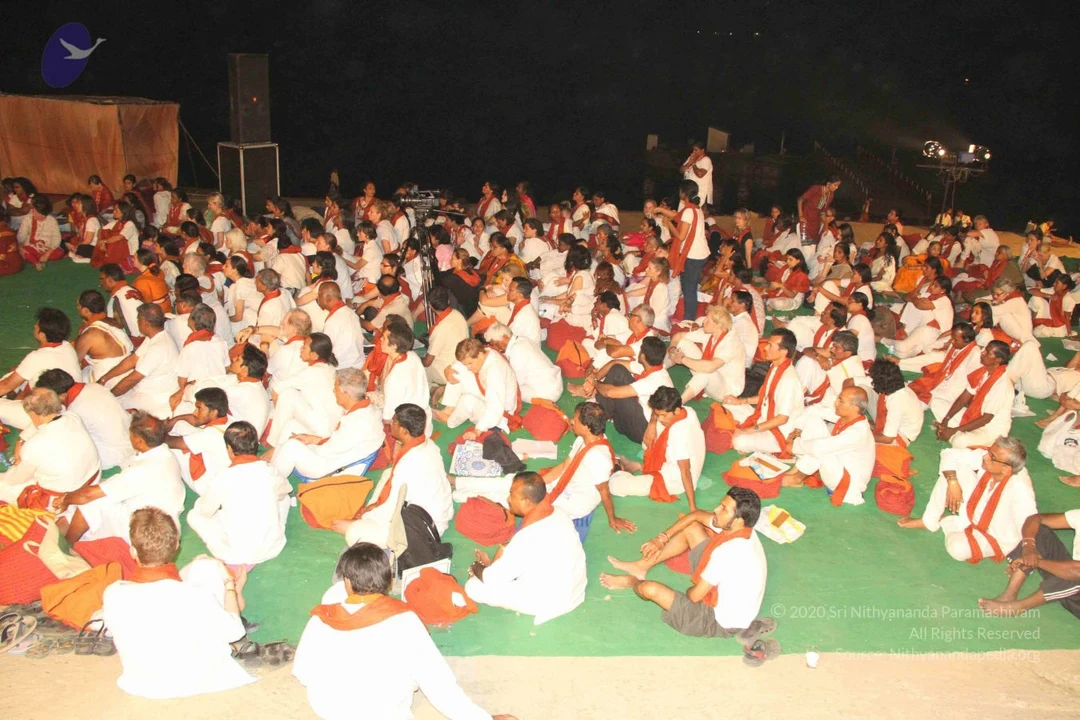
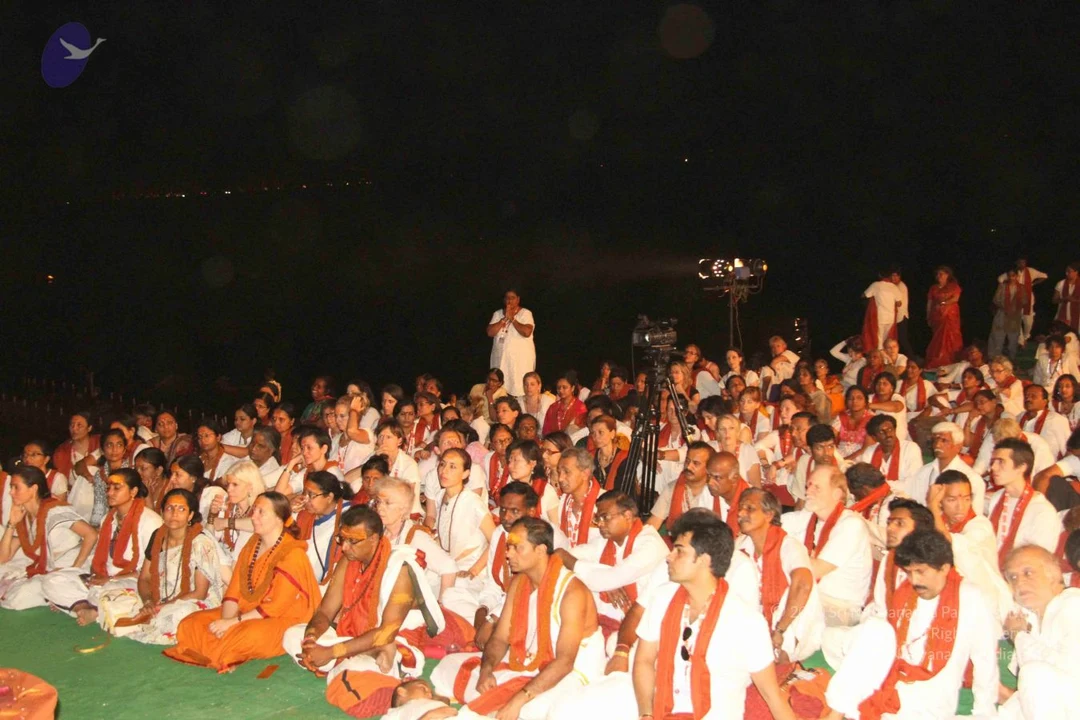
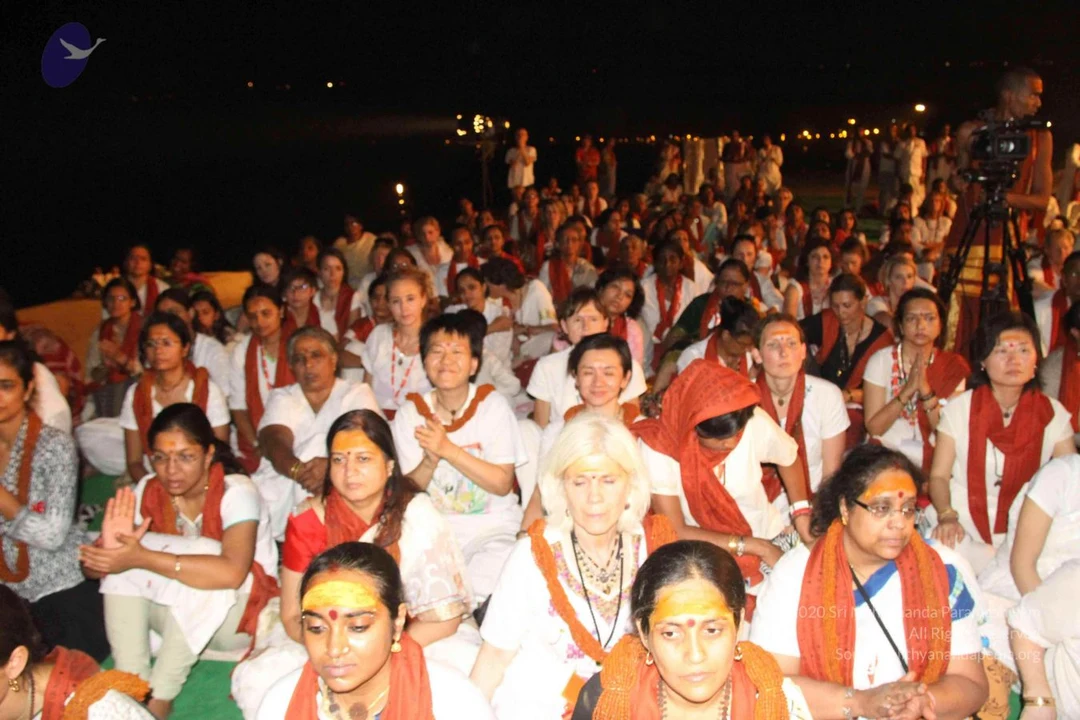
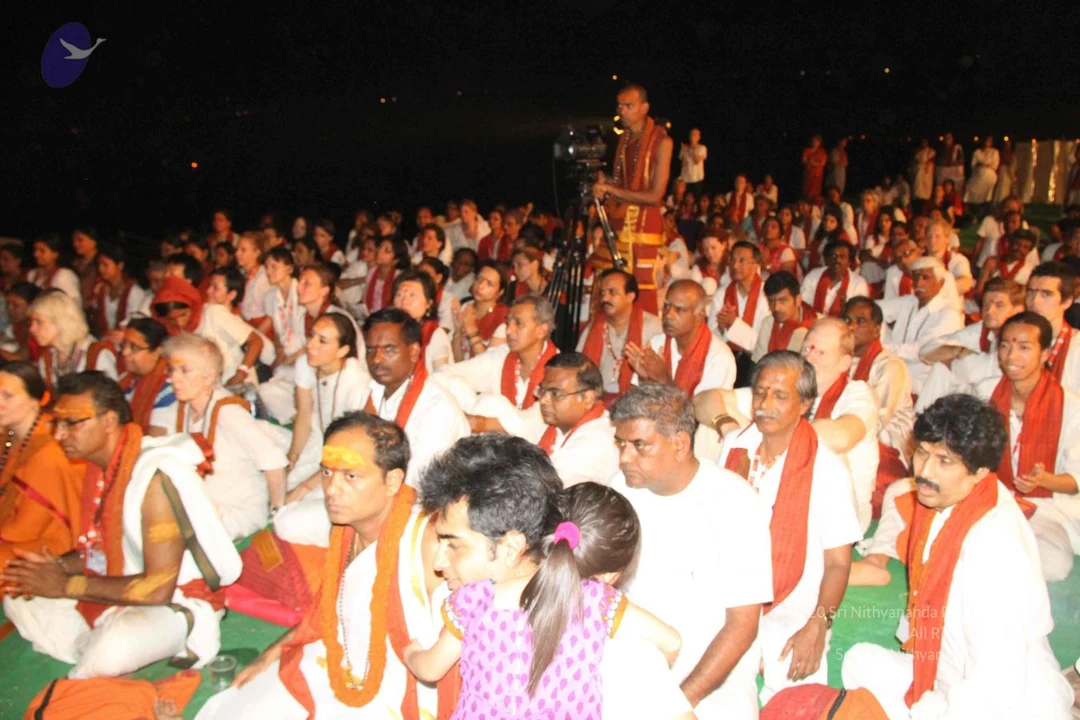
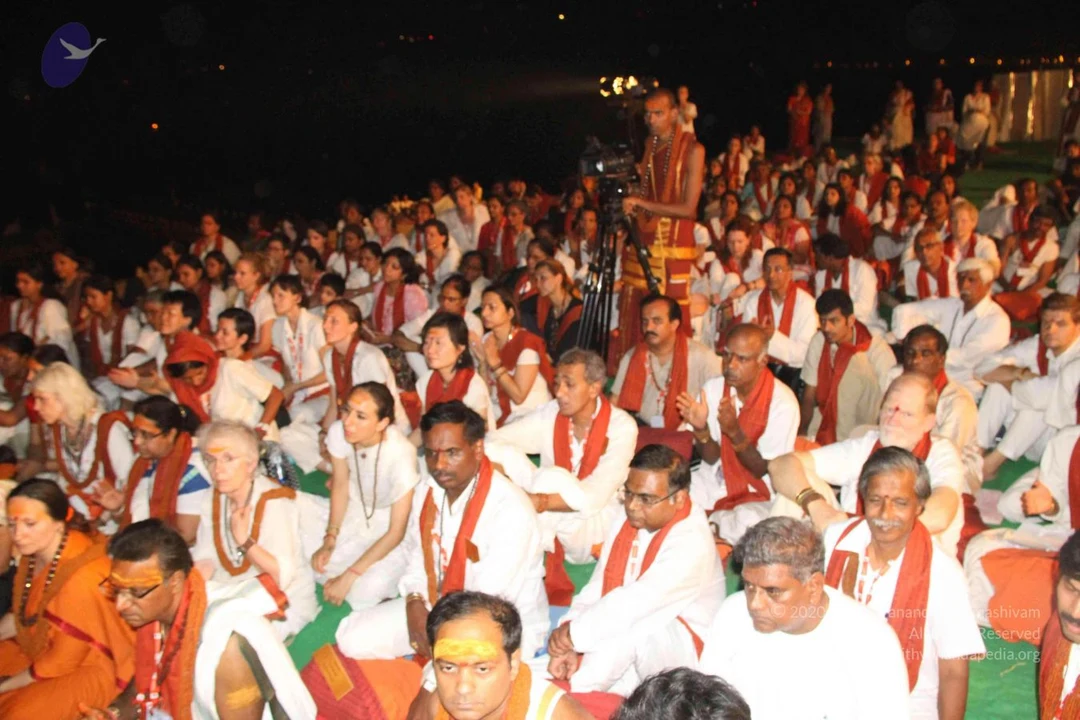
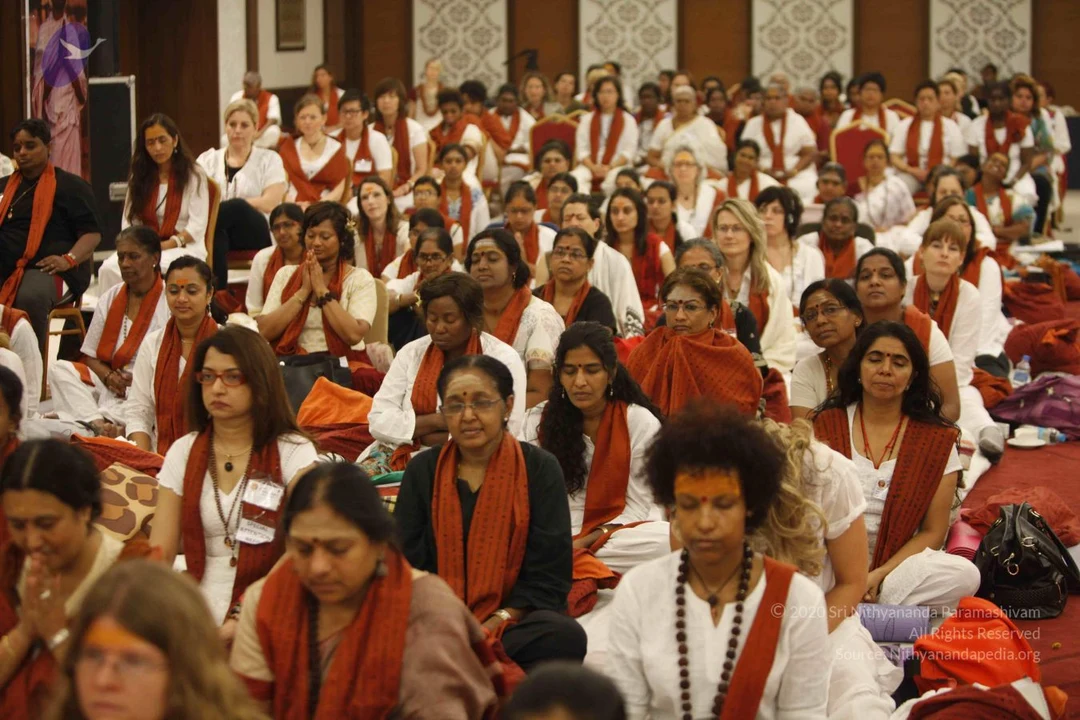
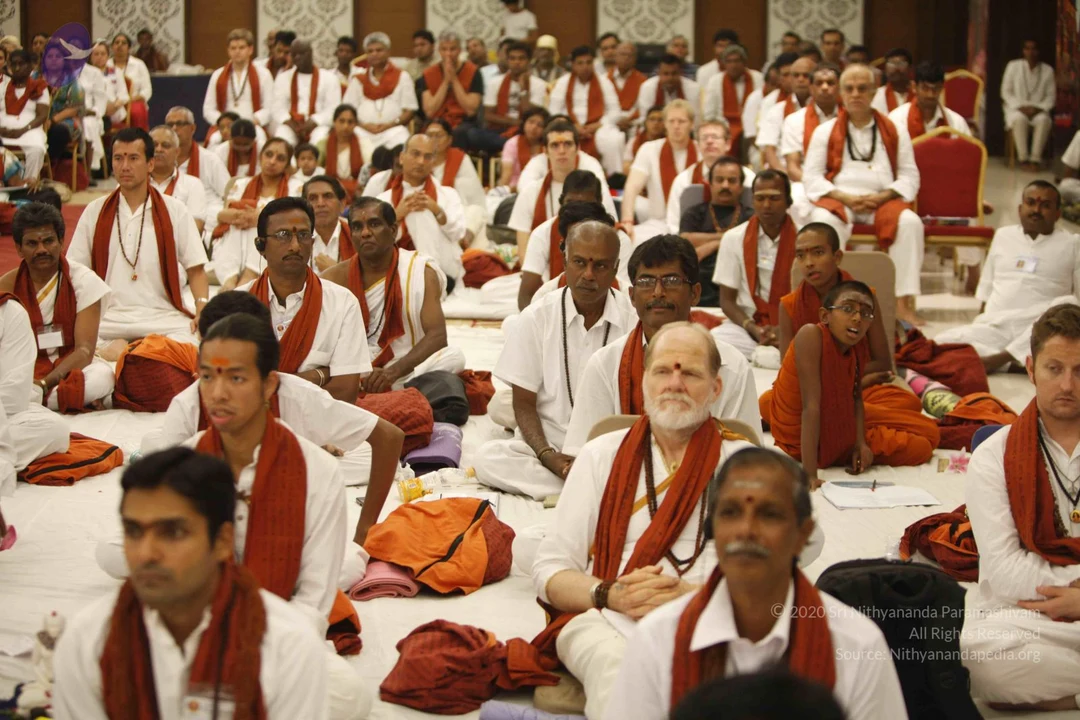
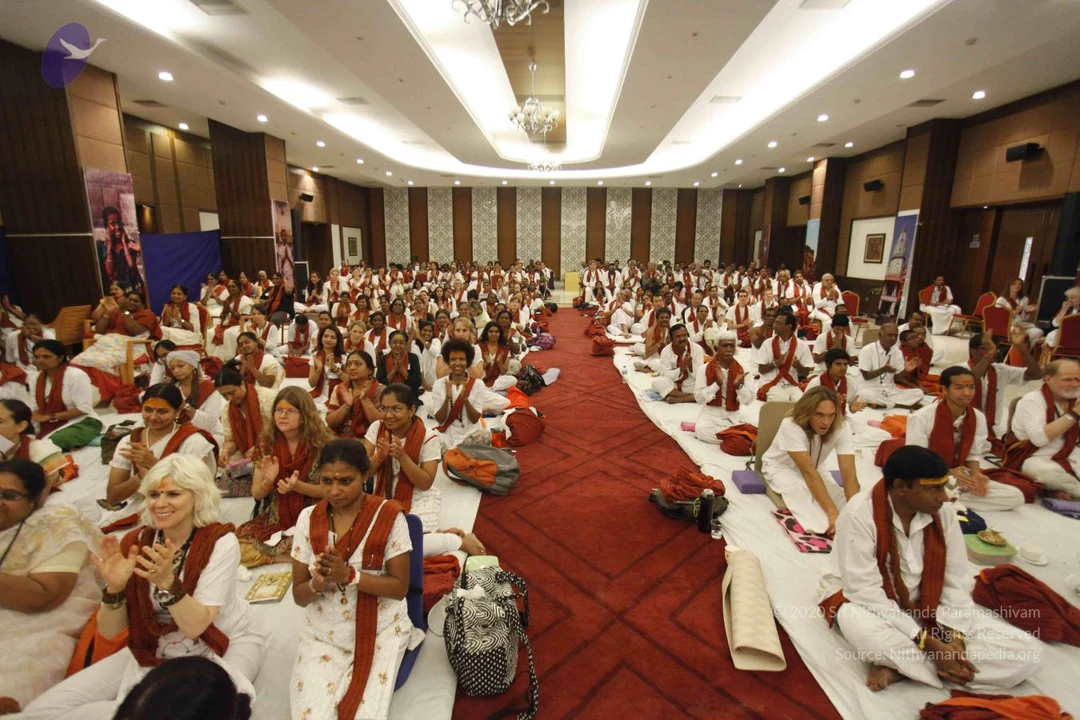
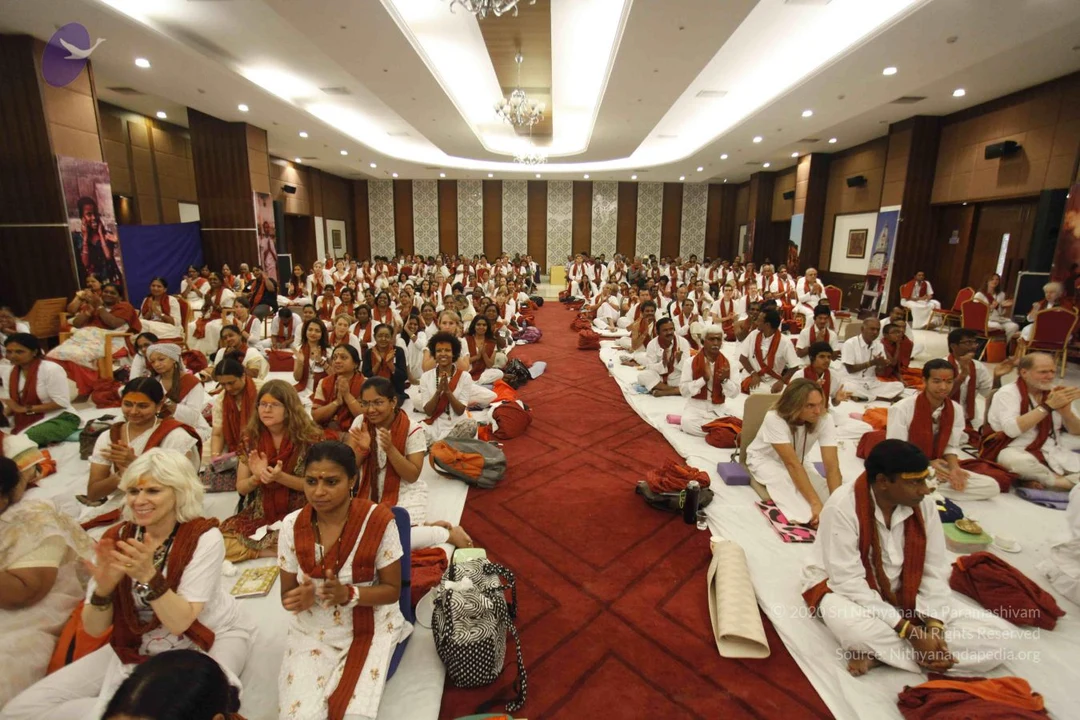
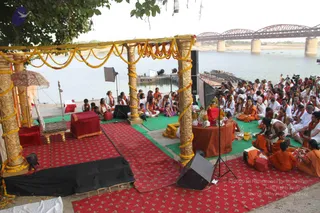
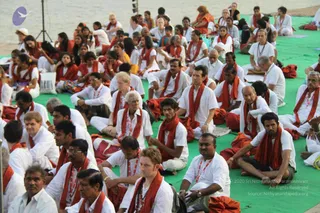
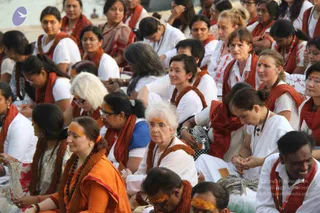
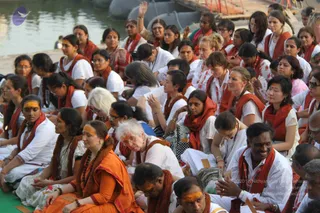
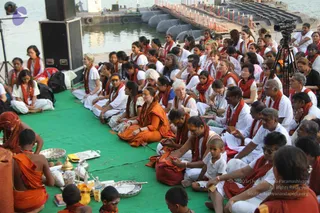
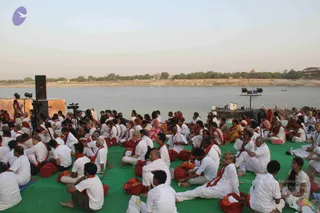
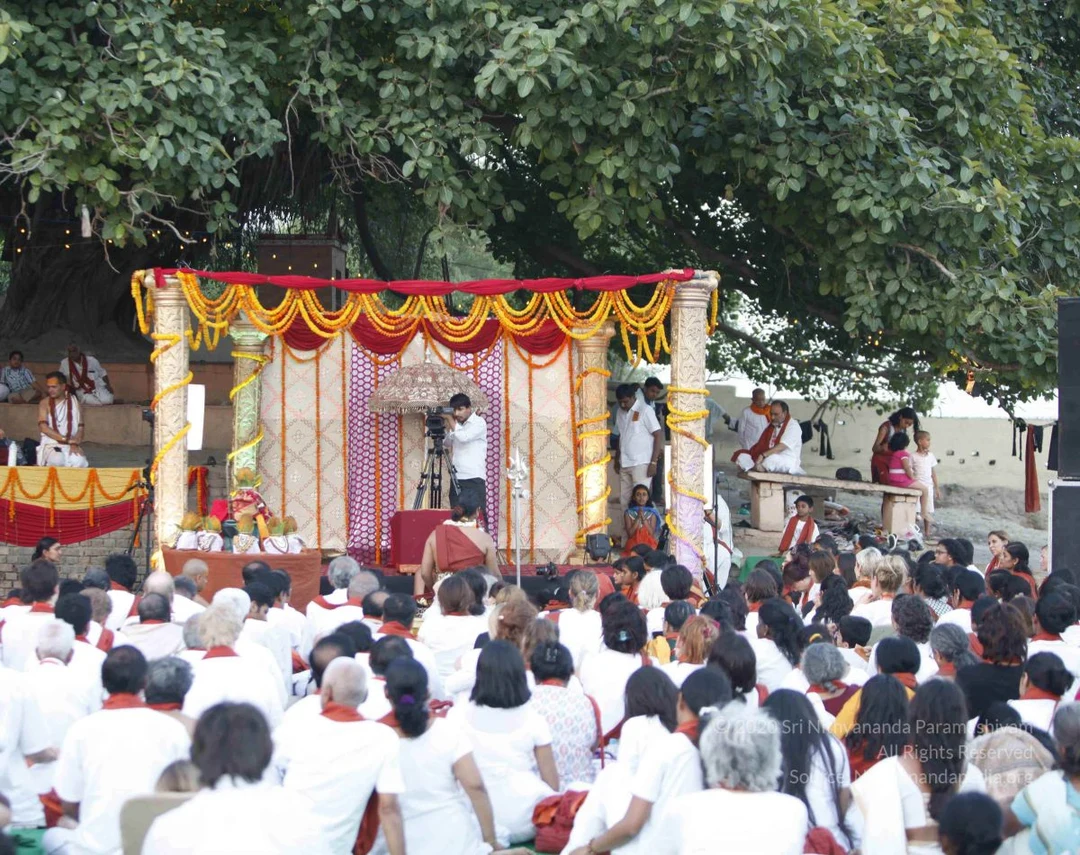
Outdoor riverside ceremony on a sandy ghat beside a wide river, with a red bridge in the background. A golden-pillared canopy draped with yellow and marigold garlands shelters a red-carpeted stage. Seated near a central orange-draped altar table, a figure in orange robes is surrounded by devotees, many in white with orange shawls, and children in orange. A small ceremonial area with a green mat sits in front, and cameras on tripods film the gathering. Speaker boxes and stage lights are visible; the scene is a Varanasi-area convention session, with approximately 60 visible people, and no clear identification of any individual.Large outdoor gathering of seated delegates on a green tarpaulin along a riverbank, with water and a tripod visible at top left. Most wear white kurta-style clothes and red shawls, with orange-red bags and prayer beads around their necks. Men and women of varied ages sit in rows facing the same direction, many with hands resting on their laps. No a person candidate is clearly visible in this frame; the scene shows only delegates.A large outdoor gathering of seated devotees on a riverside ghat, many in white kurtas or tops with red-orange shawls draped over their shoulders, and several with orange or yellow tilak marks on their foreheads. Women in the foreground wear rudraksha beads and malas; a woman at lower left wears an orange saffron sari and bead necklaces. Some participants have hands folded or are seated in rows, facing a common direction in a satsang-style session, with water visible behind them. No clearly identifiable a person figure is visible in this frame, so the a person field is set to none.A large outdoor gathering of seated delegates in white kurtas and shirts with orange-red shawls and red lanyards, many with orange-yellow forehead marks, sitting on green mats along a riverside with a stone embankment and boats behind them. In the lower left, a woman in an orange sari with a rudraksha-style beaded necklace sits near a white-haired woman in white with glasses; a man in the lower right wears a white shirt and red shawl, smiling. Several people raise hands or hold small items, and a white-clad man in the upper area lifts an arm. No clear a person candidate is visible; the scene shows delegates at an Inner Awakening session.Outdoor ghat-side ritual on a green cloth mat beside a river, with a concrete pier and floating barrier behind. Large crowd of seated devotees in white kurtas and white clothes wear red-orange shawls (angavastram) and sit in rows facing left toward a priest. A foreground attendant in orange robes and a shaved head, seen from behind, sits near brass plates and a kalasha-style vessel with flowers and offerings. Several children in white sit among adults. A camera on a tripod and a loudspeaker stand at the edge. Vermilion tilaks and red-orange shawls are common. Appears to be a group puja or satsang by the water, with people in devotional seated postures.Large outdoor gathering of seated devotees on a green mat laid along a riverbank, with a wide river and distant bridge and temple spire behind. Most attendees wear white kurta-style clothing with red-orange shawls or stoles, and some sit on red-orange cloth bags or mats. A black speaker stands at left beside a raised stage with stage lights and a video camera on a tripod, while a clothed figure stands near the stage. A boat is moored at right. Dusk light fills the scene.

Padapuja

13 photosSource gallery
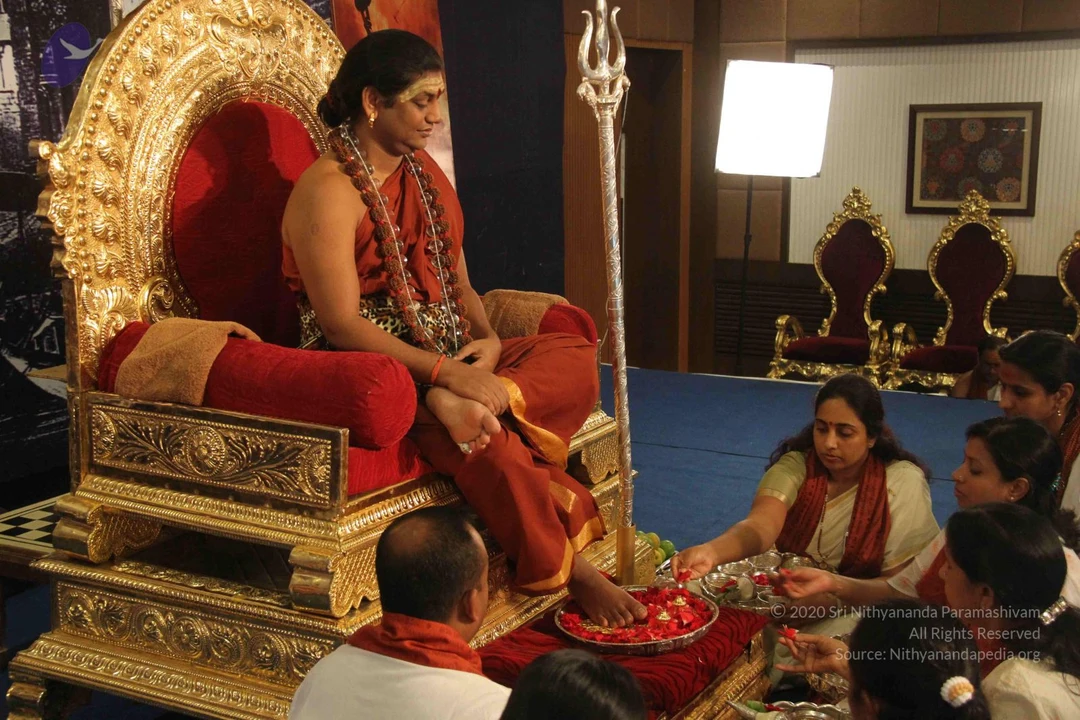
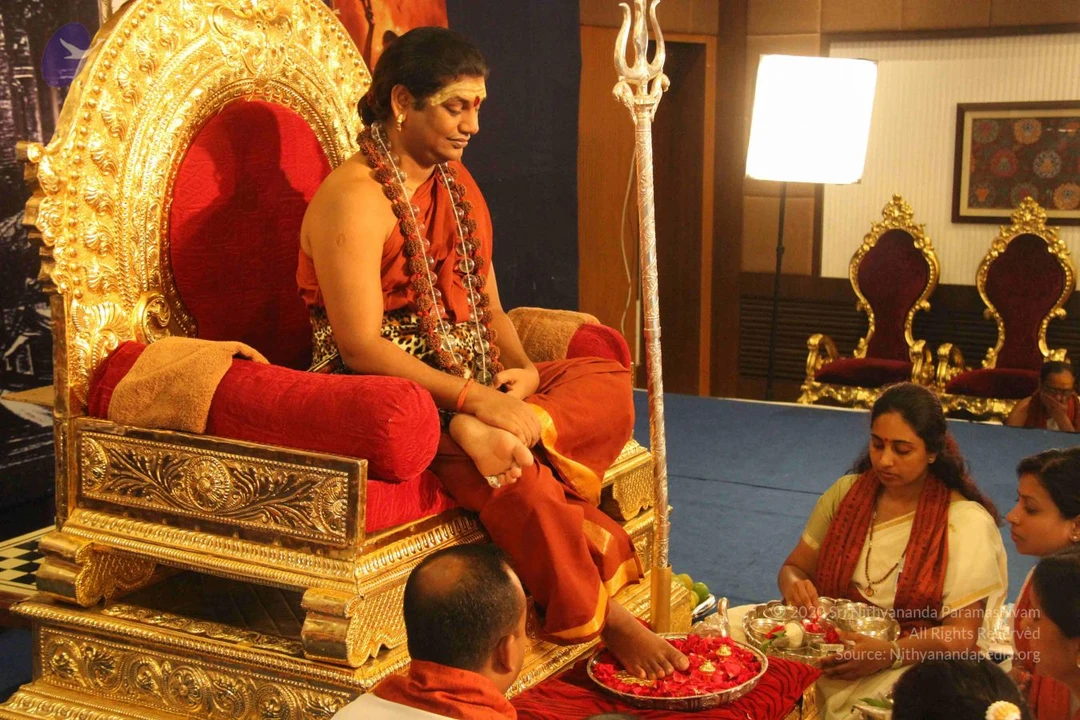
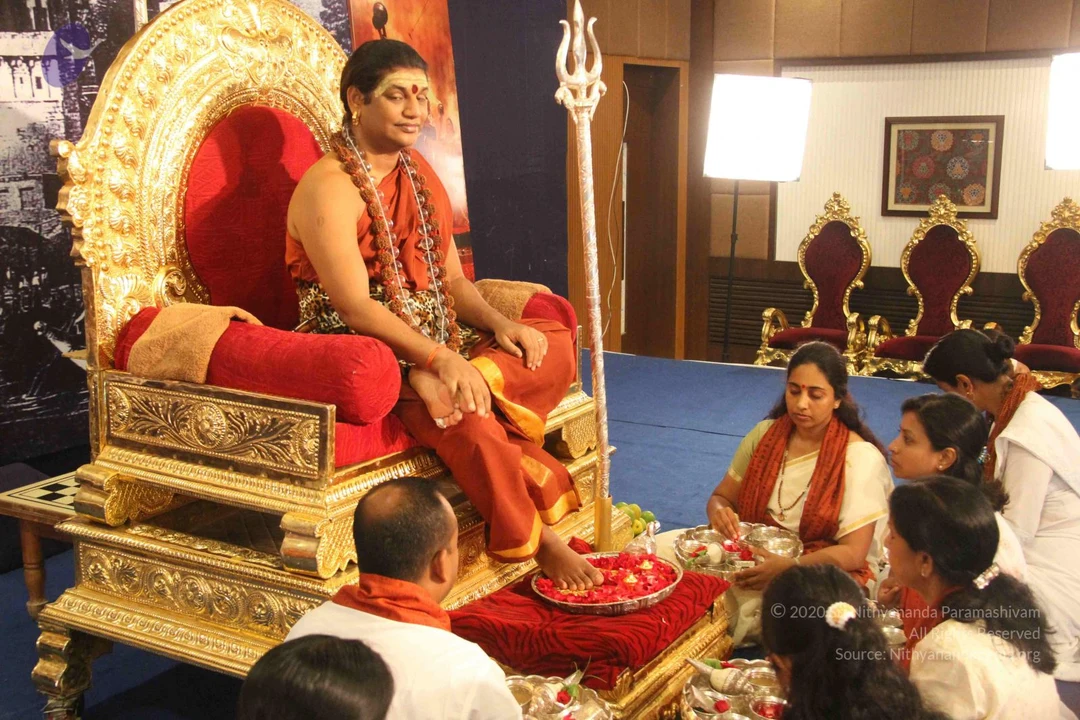
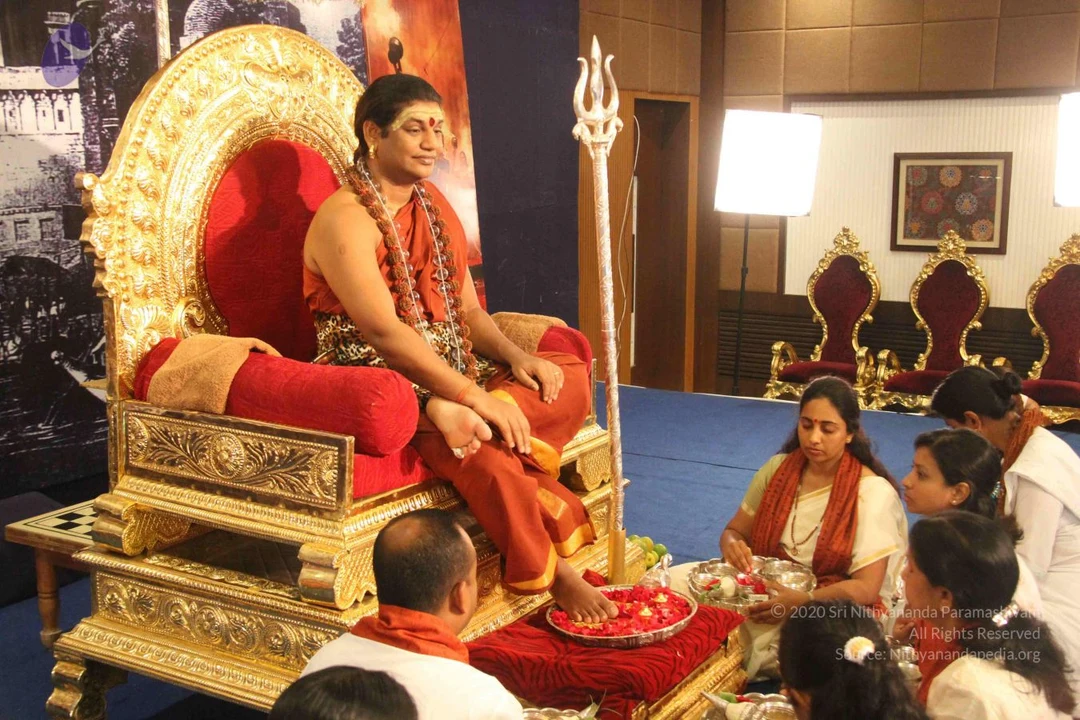
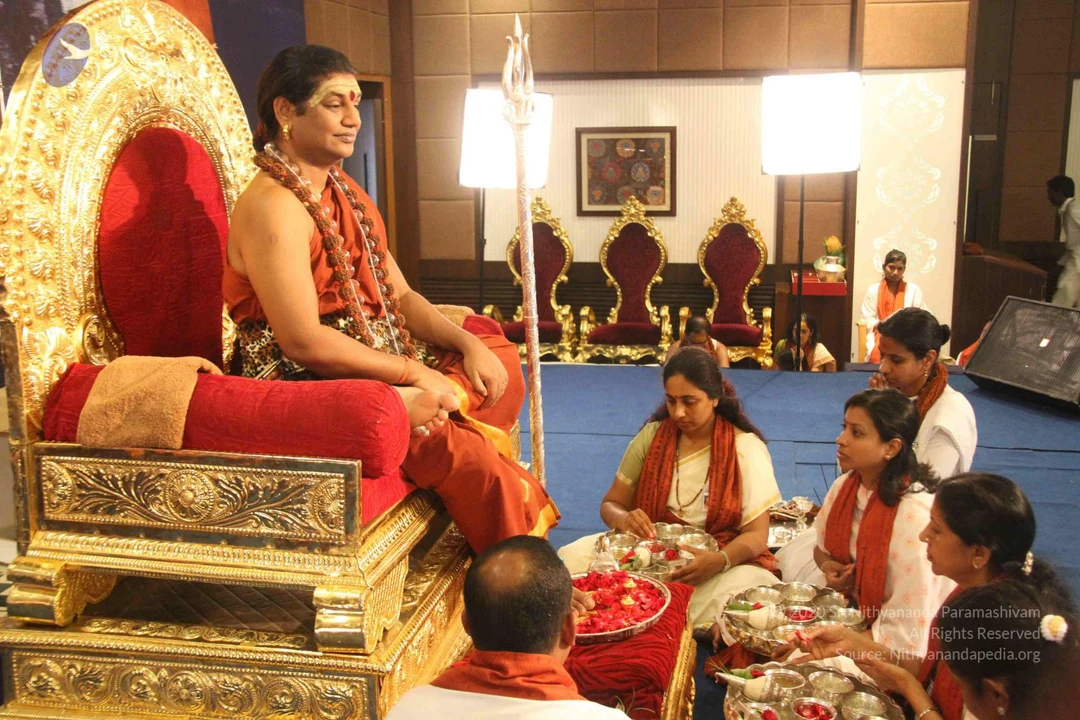
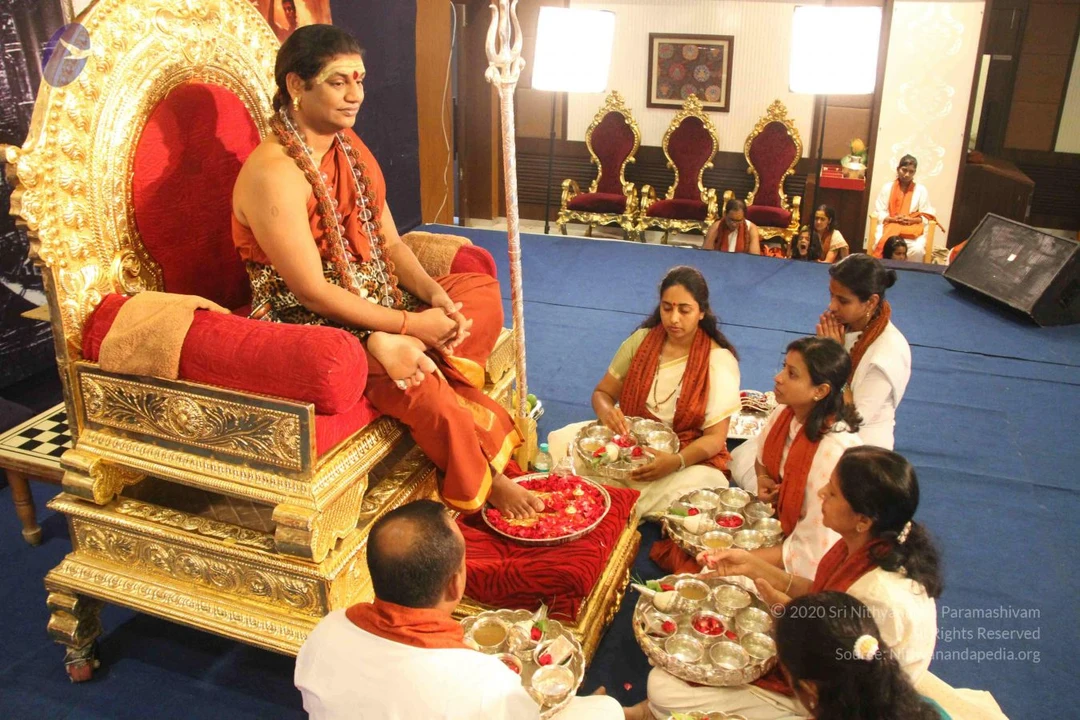
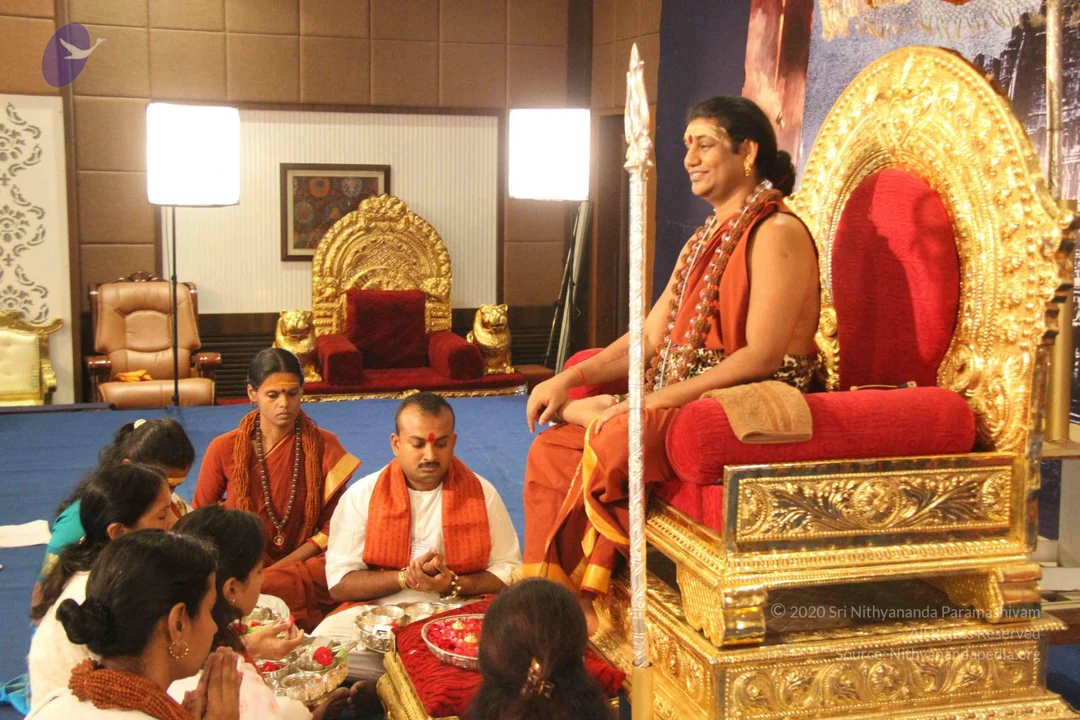
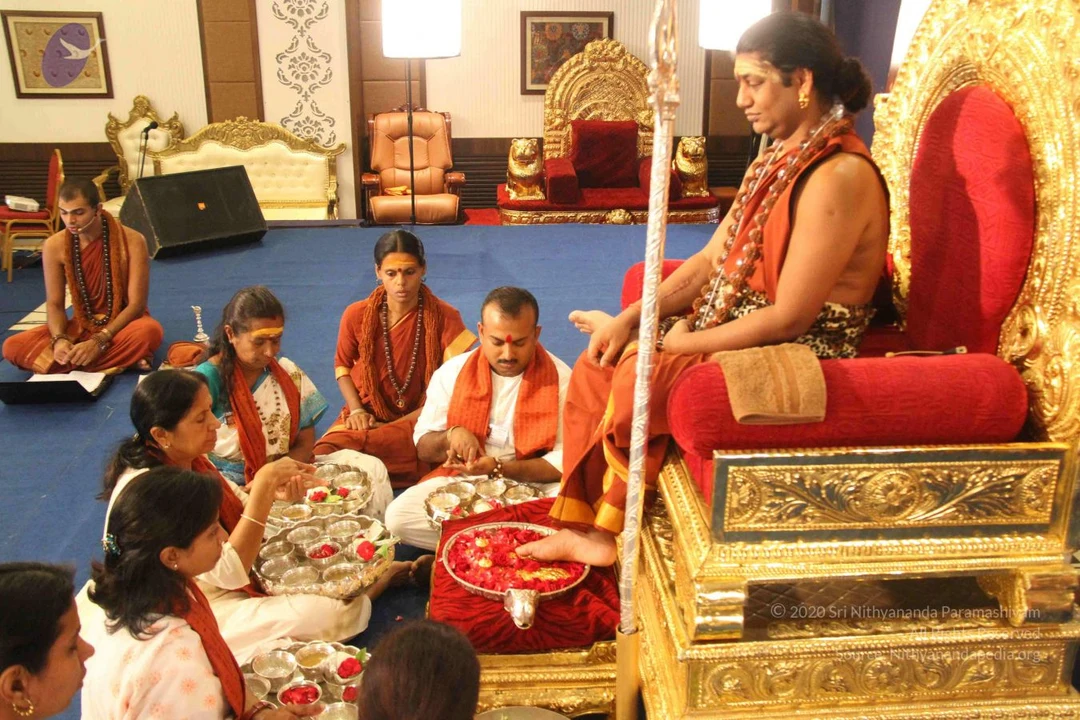
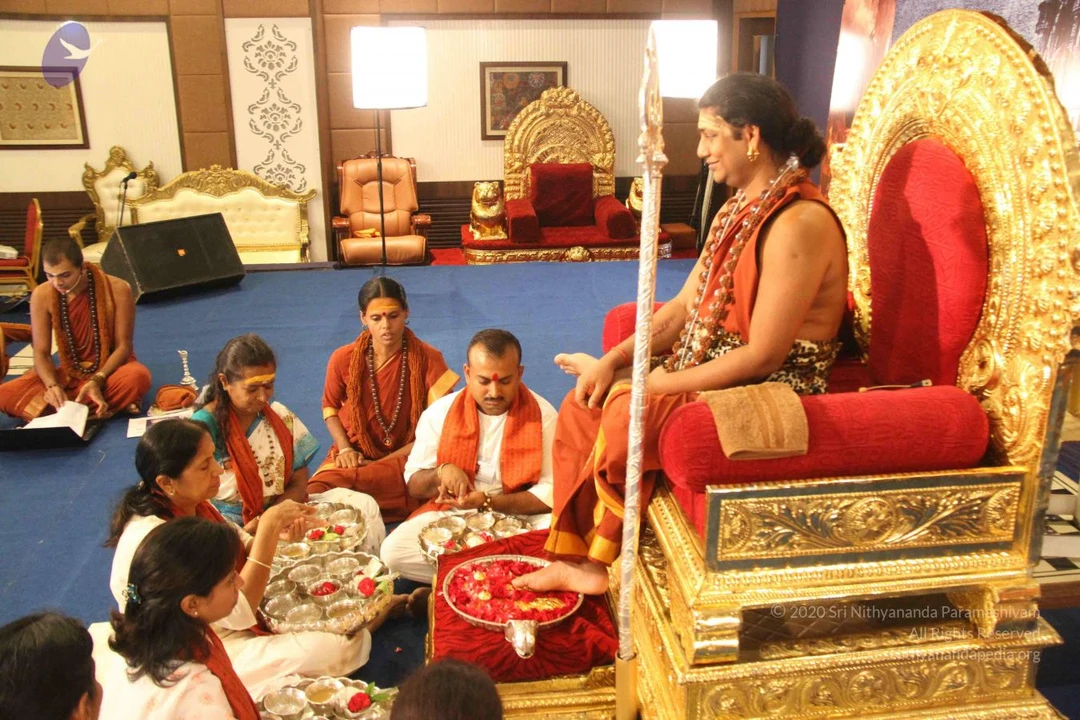
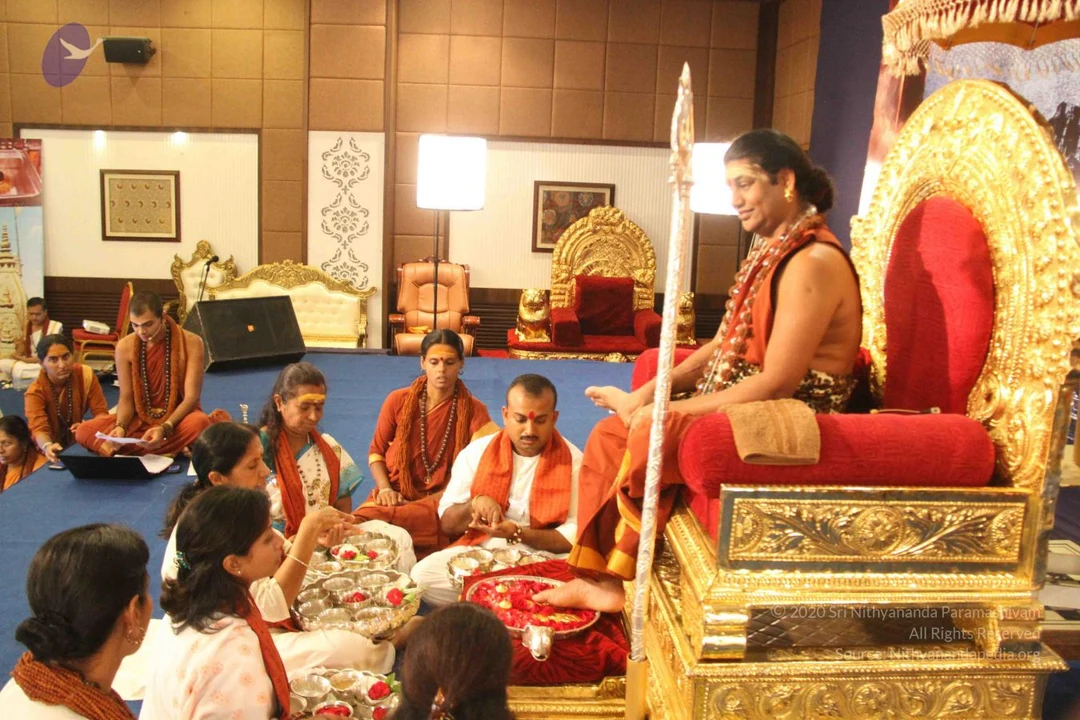
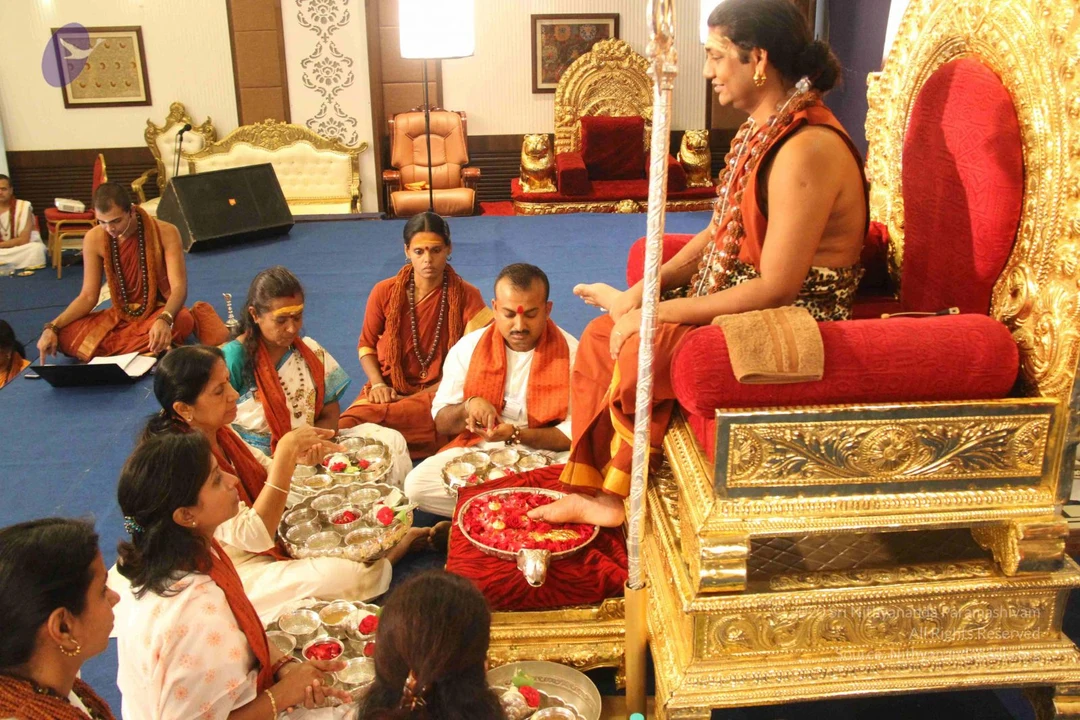
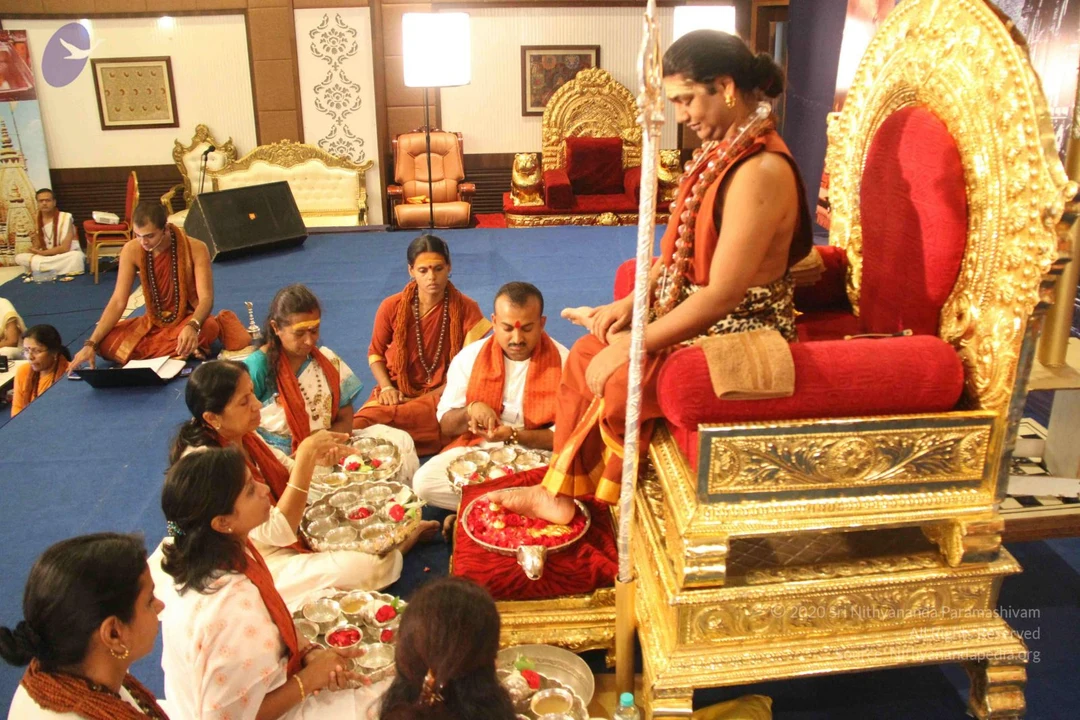
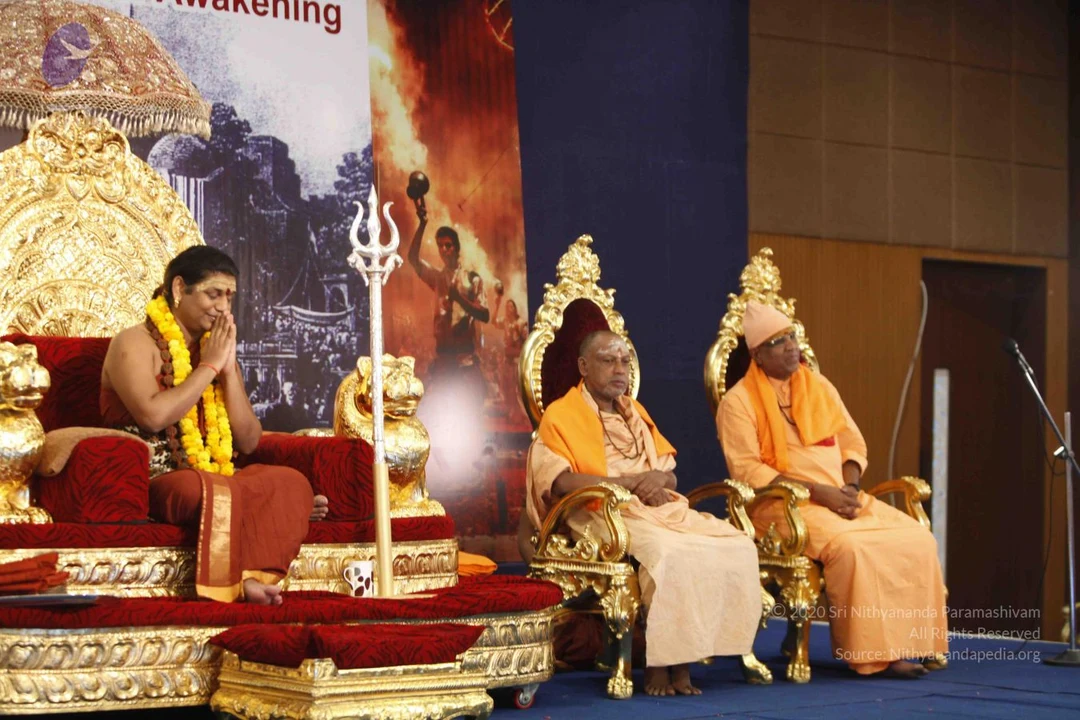
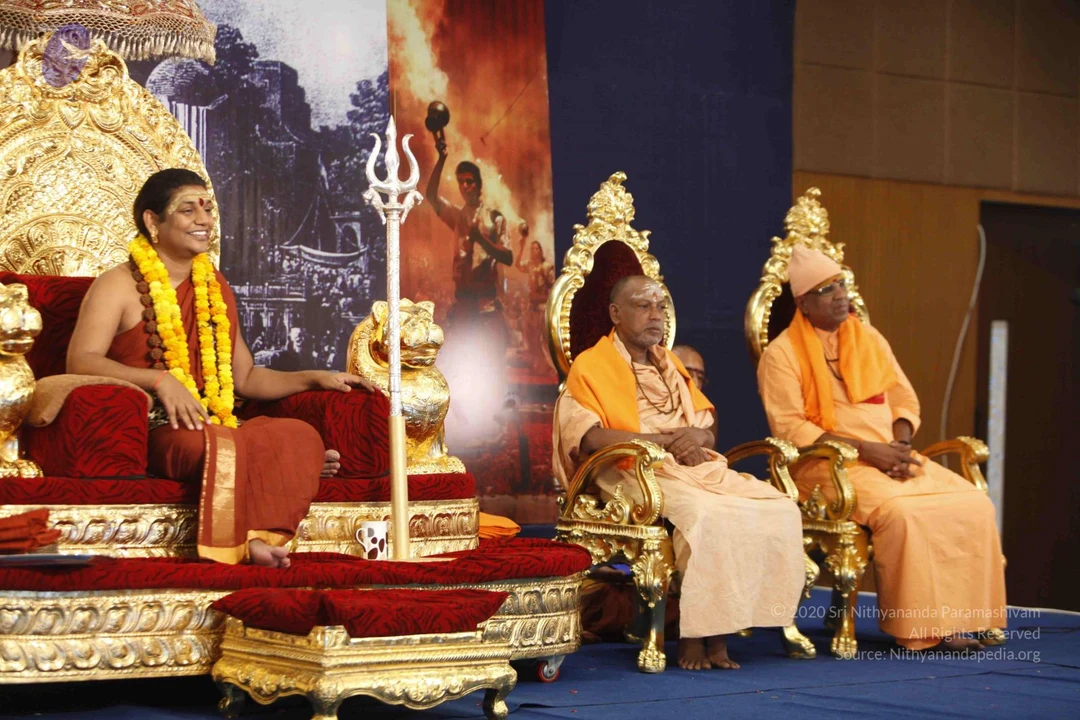
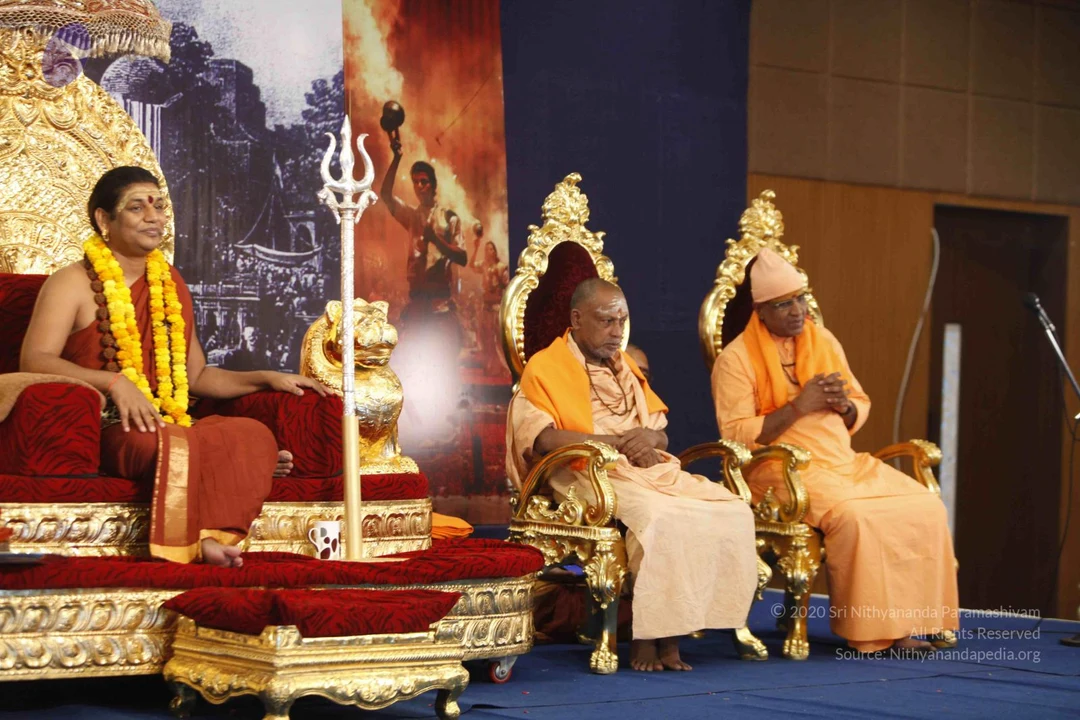
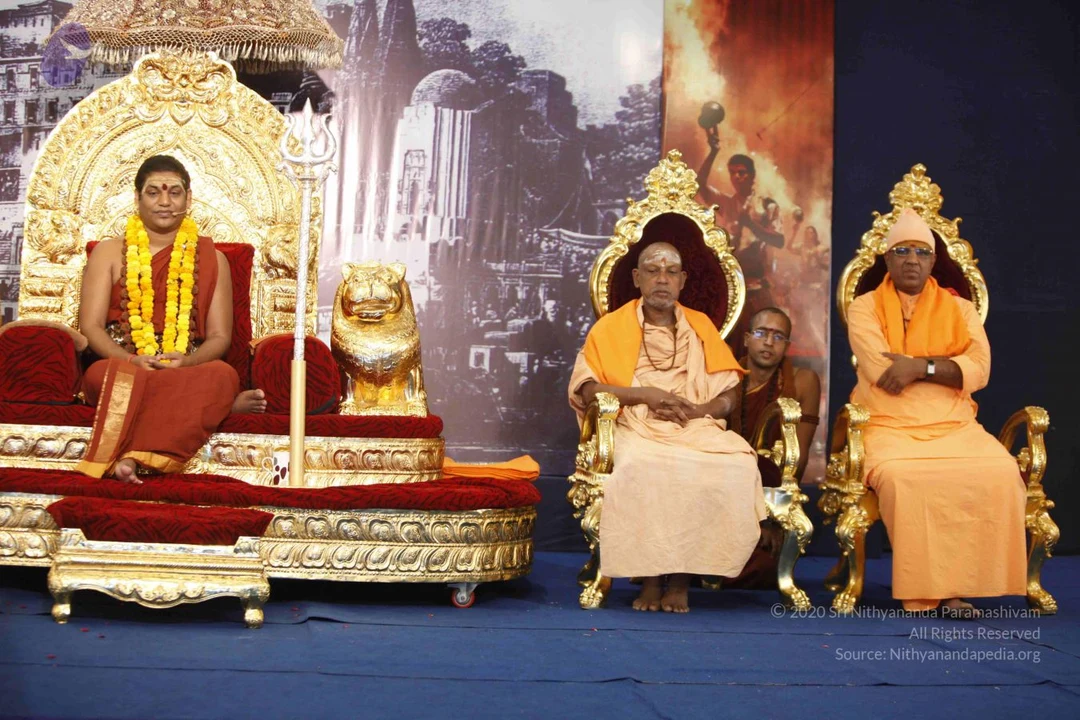
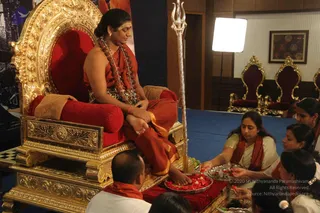
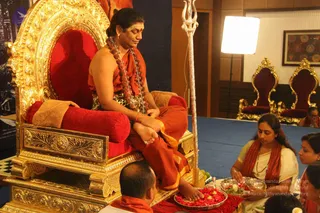
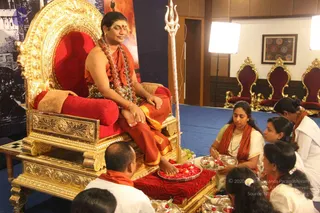
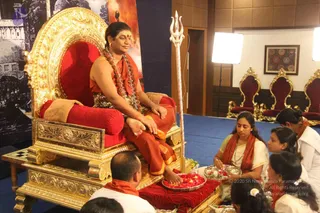
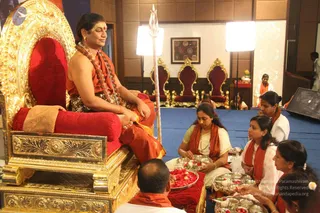
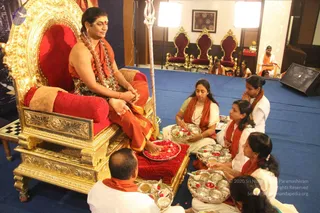
A seated figure on an ornate gold-and-red throne with carved gilt armrests and a red cushion, wearing an orange-red wrap, a rudraksha mala and a long silver necklace, with a bare upper body and a tilak on the forehead. Devotees kneel on a blue platform before the throne: a woman in a cream sari with a red shawl offers rose petals from a silver tray, another woman in a red shawl and a man in a red shawl sit nearby, and a silver trident stands to the side. Behind, empty gold-and-red thrones and a framed patterned panel are visible in a studio-like hall. Probable identity cues are present for the seated figure, who appears to be a person receiving the offerings in a padapuja-style honour.A seated figure on an ornate gold-and-red throne with carved gilt armrests is receiving padapuja. He wears a saffron-orange garment with a golden border, a multi-strand rudraksha mala and a black-and-white patterned waist cloth; his chest is bare and he has a yellow-painted forehead. A silver trident stands beside the throne. Before him, a woman in a cream sari with a red shawl and a seated man in orange robes offer hands over a silver tray of red rose petals, lamps and fruit. Two woman devotees sit to the right, and two empty gilt-and-red thrones are visible in the background. a person is the seated figure, identified by the rudraksha mala, saffron garments and the throne setting; the figure's appearance is consistent with that identification.A seated man in an ornate gold-and-red throne with a carved gilt frame is receiving padapuja from several women and a man at his feet. He wears an orange-red upper garment, a patterned lower wrap, long beaded malas and a forehead tilak. Beside the throne stands a silver trident. The women in white and cream saris with red shawls hold silver bowls of flowers and offerings, and a large silver plate of red rose petals and fruit sits on a red cloth. Blue carpeting and framed artwork fill the hall, with additional empty gold thrones behind. Multiple persons appear, so this is a ritual scene at a convention venue.A seated man on an ornate golden throne with red cushions wears orange-red robes, a red-and-saffron shawl, a rudraksha mala with multiple strands, a forehead tilak and bare upper arms. A silver trident stands beside the throne. Before him, several women in cream and red-bordered saris and a bald man in orange sit on the blue carpeted floor; one woman holds a brass plate of rose petals and offerings. Plates of flower petals sit on a red cloth in front of the throne. Behind is a dark backdrop with a black-and-white photographic panel, and empty gold chairs stand at the right. The man's identity cannot be confirmed from appearance, so the scene is described by roles: a seated spiritual figure receiving devotees with flower offerings.A man with long swept-back dark hair, a yellow tilak on his forehead, rudraksha mala necklaces and an orange-saffron cloth is seated on an ornate gold-and-red throne, receiving offerings. Several women in orange shawls and white or cream saris kneel on a blue platform, holding silver trays of red flower petals, small brass bowls and offerings. A man in orange sits in the lower foreground. Behind them are more gold thrones with red cushions, a tall silver trident, and attendants in orange. Probable Swamiji is the seated figure, seen wearing saffron clothing, rudraksha malas and long hair on the throne.A seated man on an ornate gold-and-red throne with carved gilt armrests dominates the frame, wearing orange robes, a dark patterned wrap, rudraksha mala beads and a gold necklace, with a red tilak on his forehead; he has long swept-back hair and sits with his feet on a red cushion. a person candidate in ceremonial orange clothing and rudraksha malas. Before him, four women in white with orange shawls sit on a blue carpet holding silver thalis of flowers, oil lamps and offerings, and a man in white with an orange shawl sits in the foreground with a tray. Two more empty gold thrones with red seats stand behind them, and a trident leans beside the throne. Several people are seated in the background.
Nithya-Satsang

21 photosSource gallery
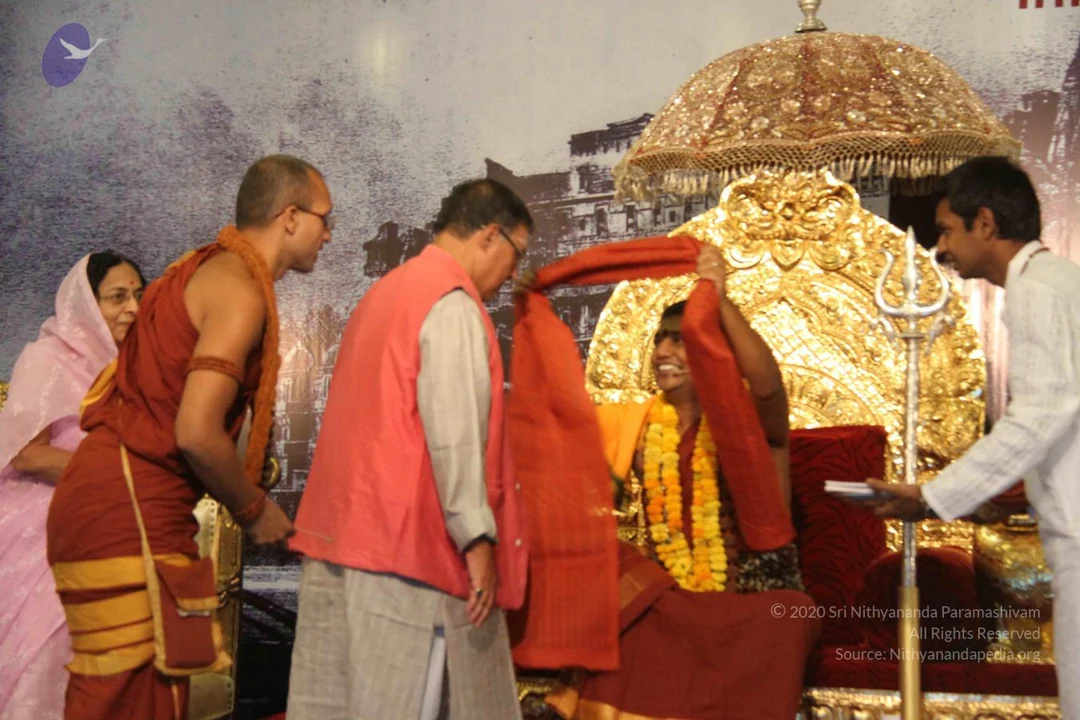
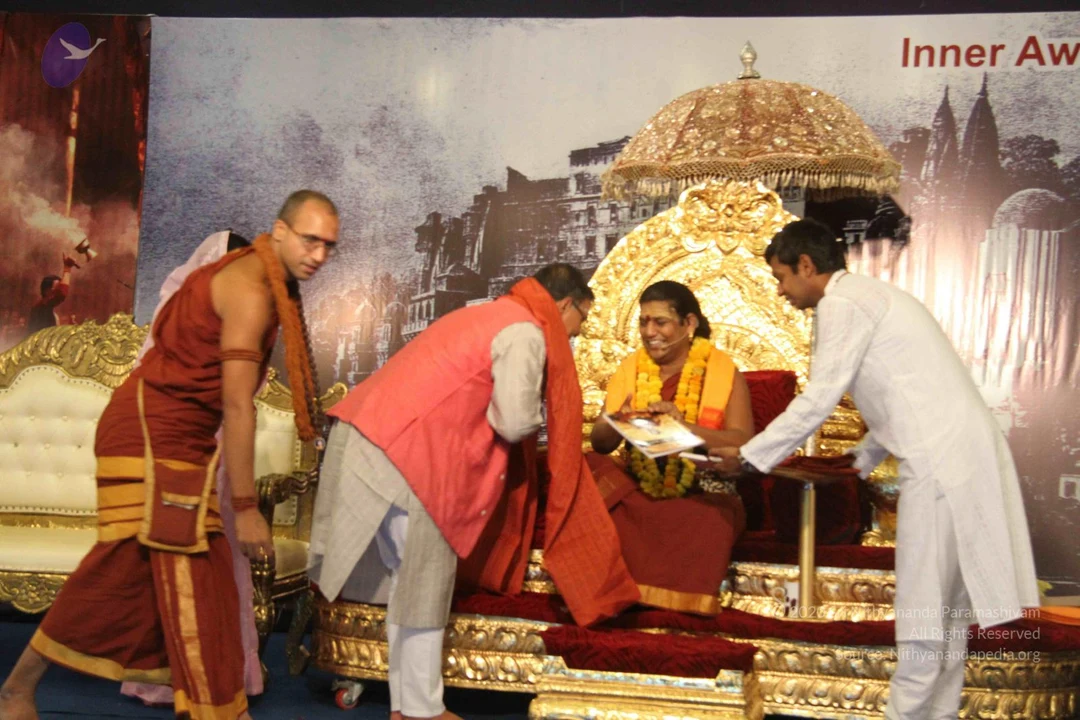
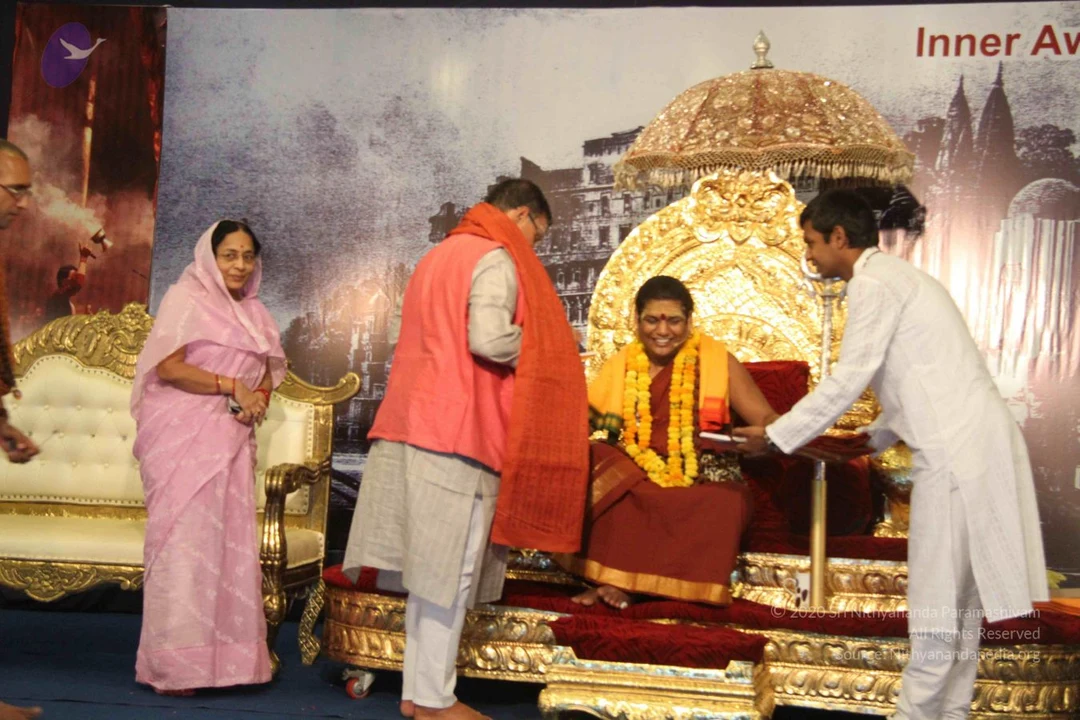
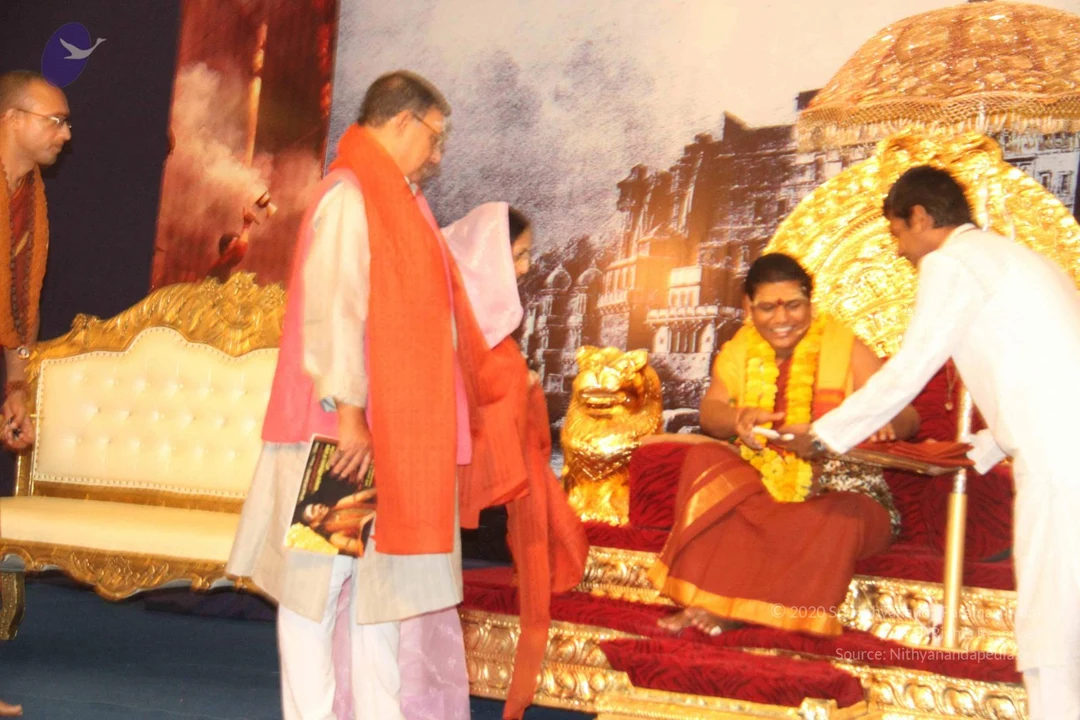
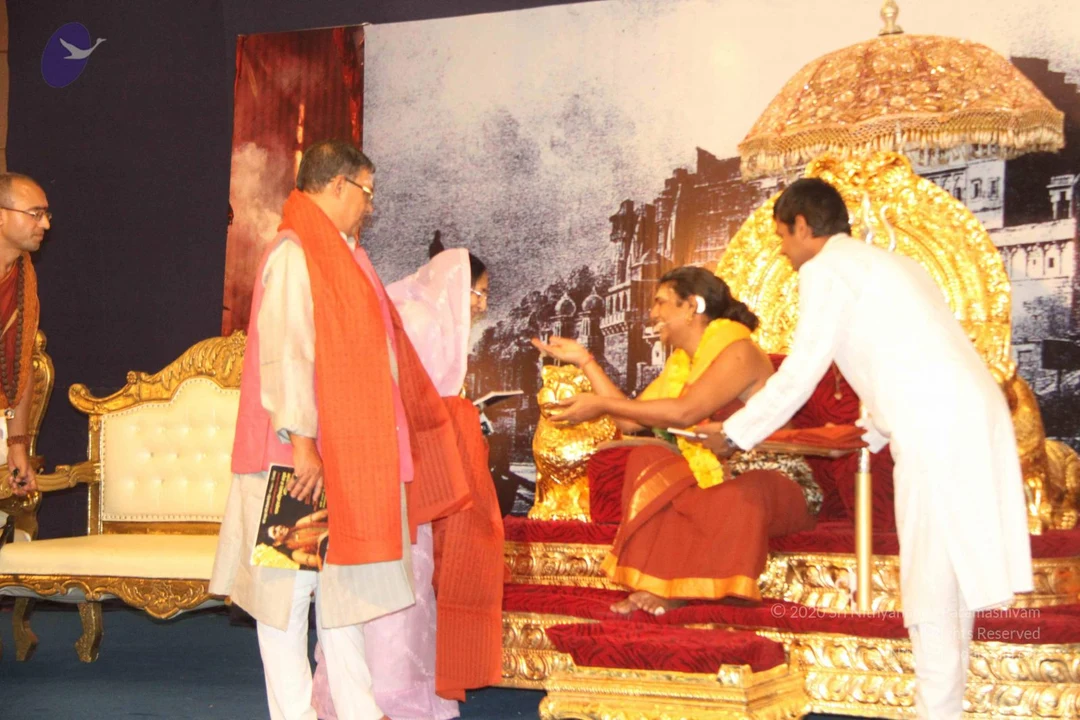
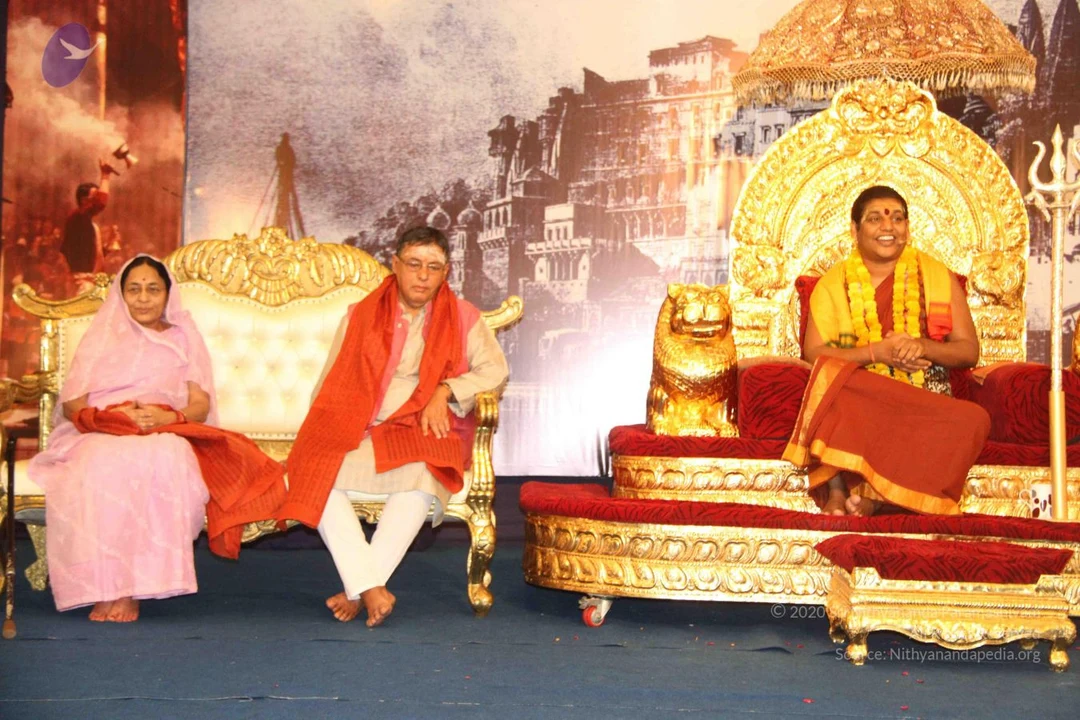
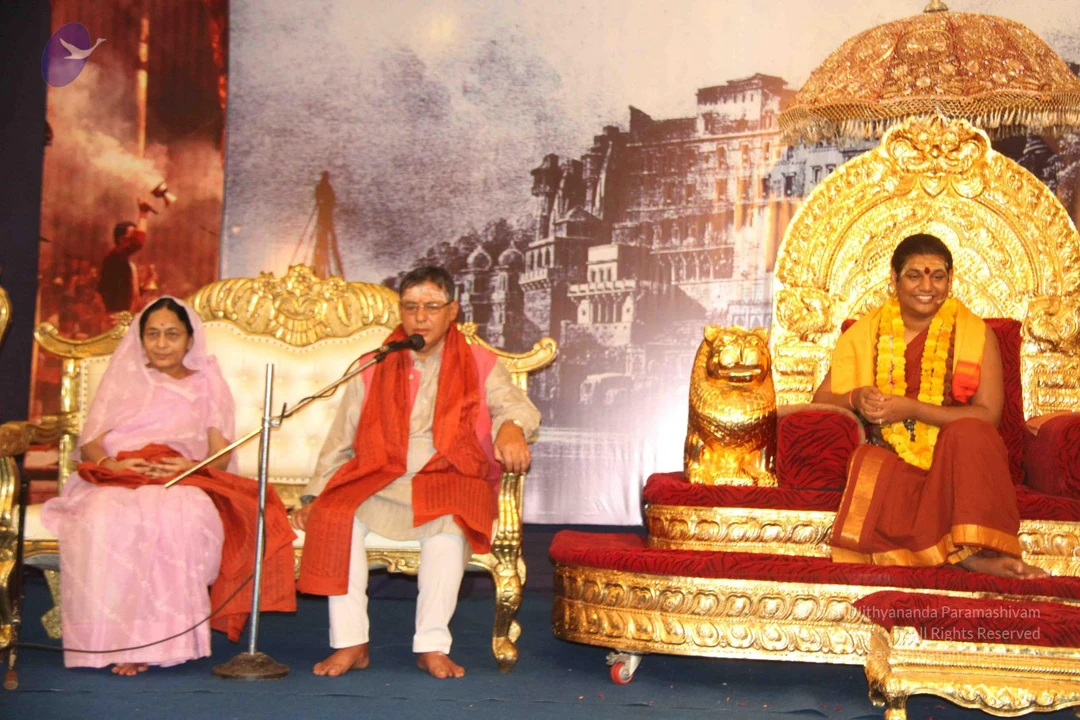
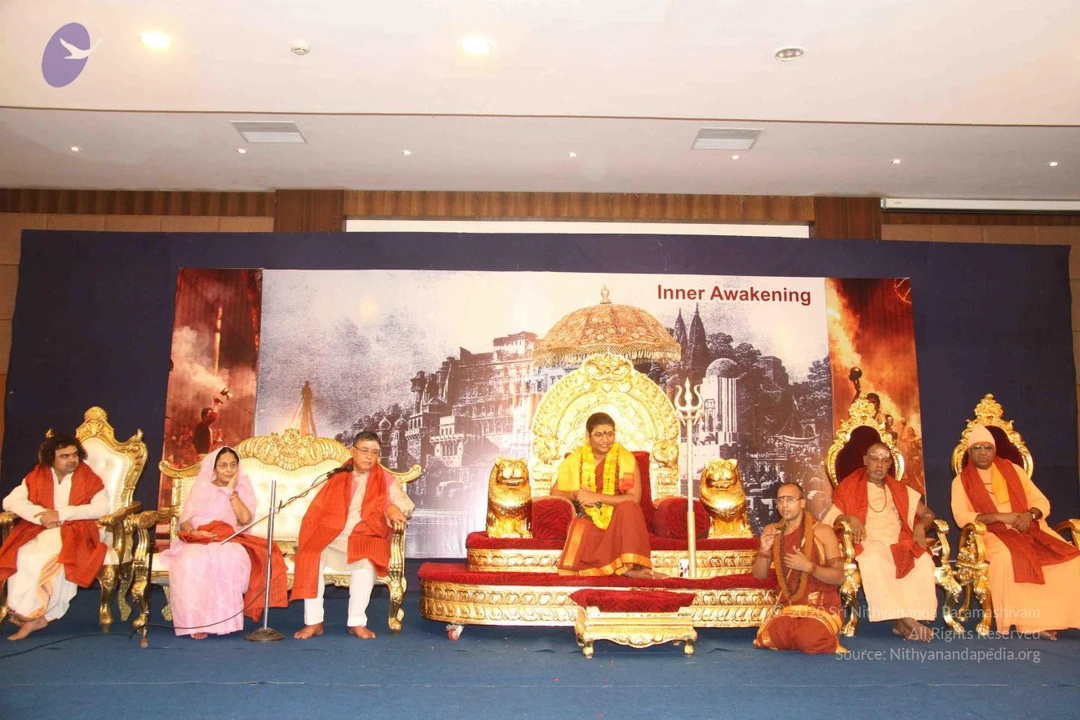
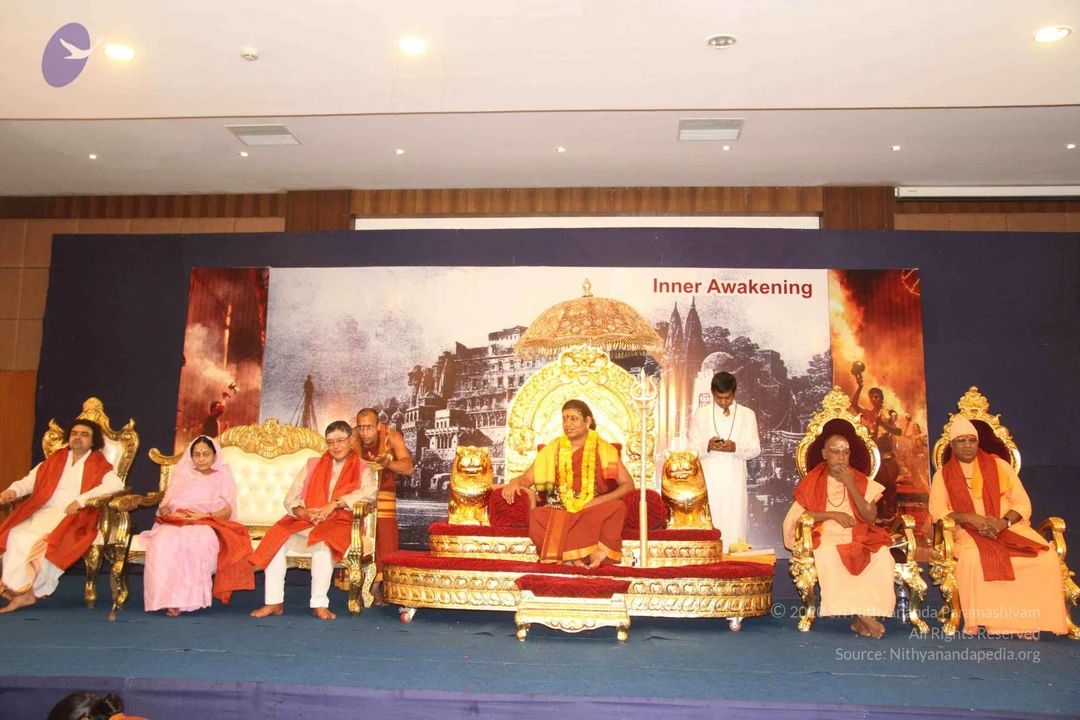
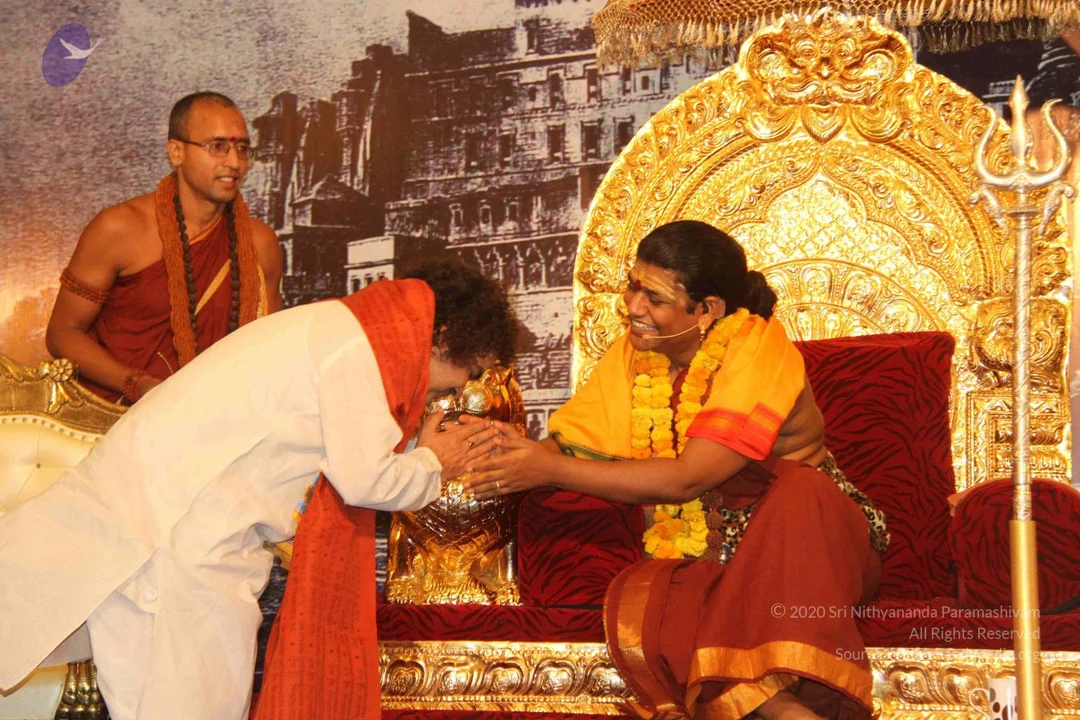
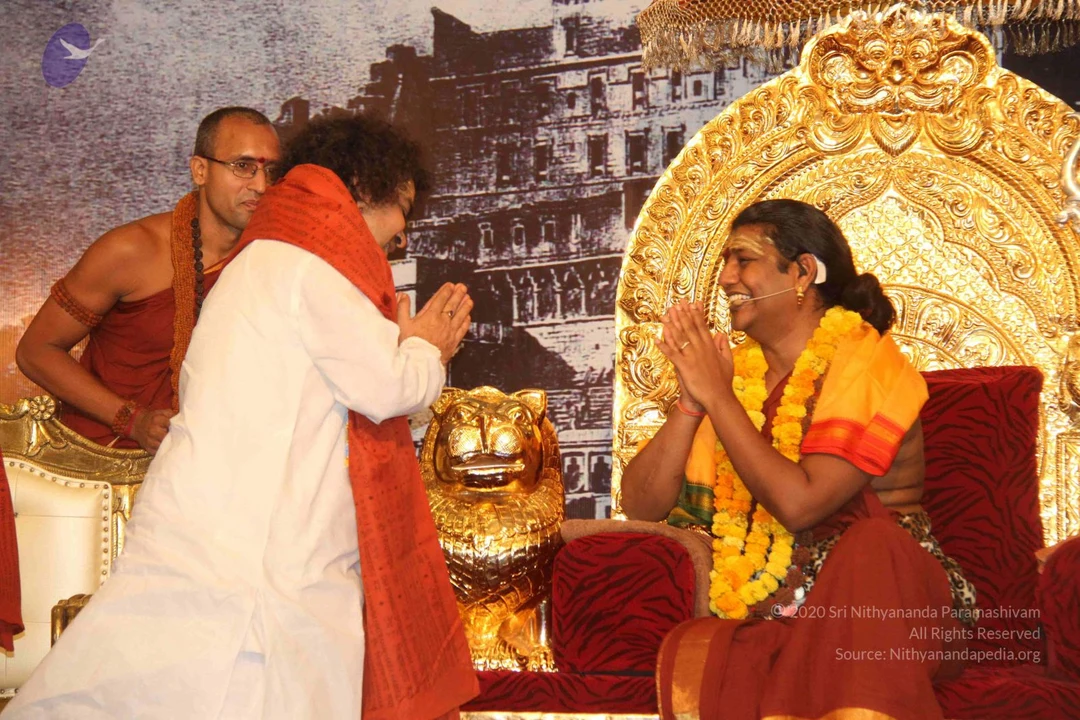
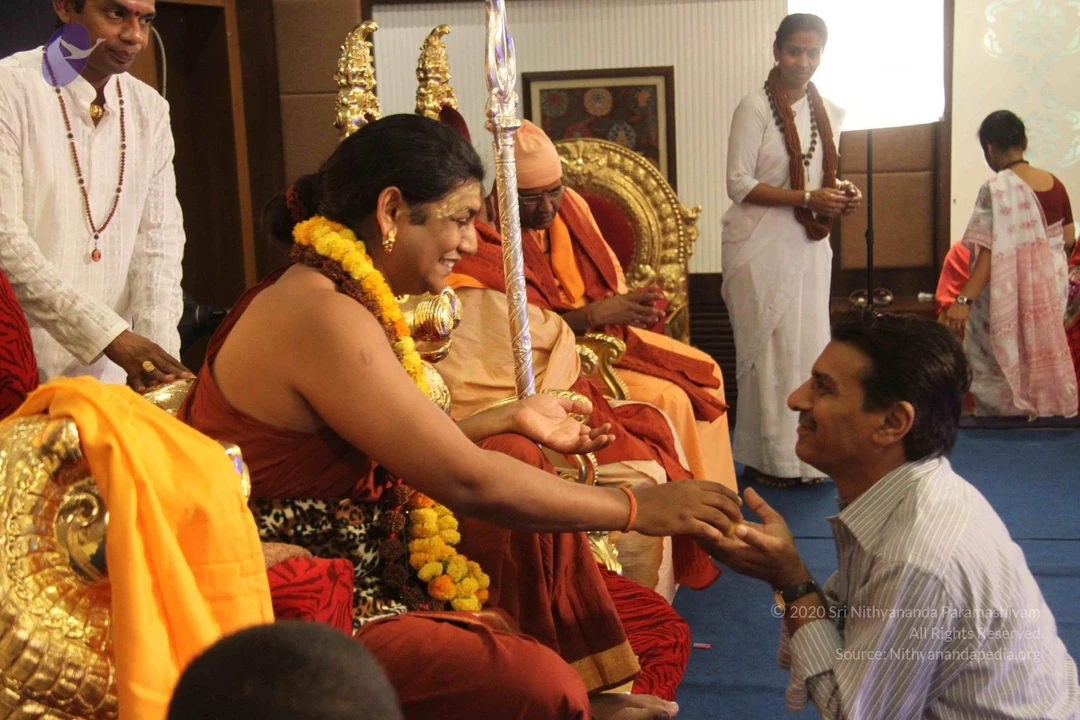
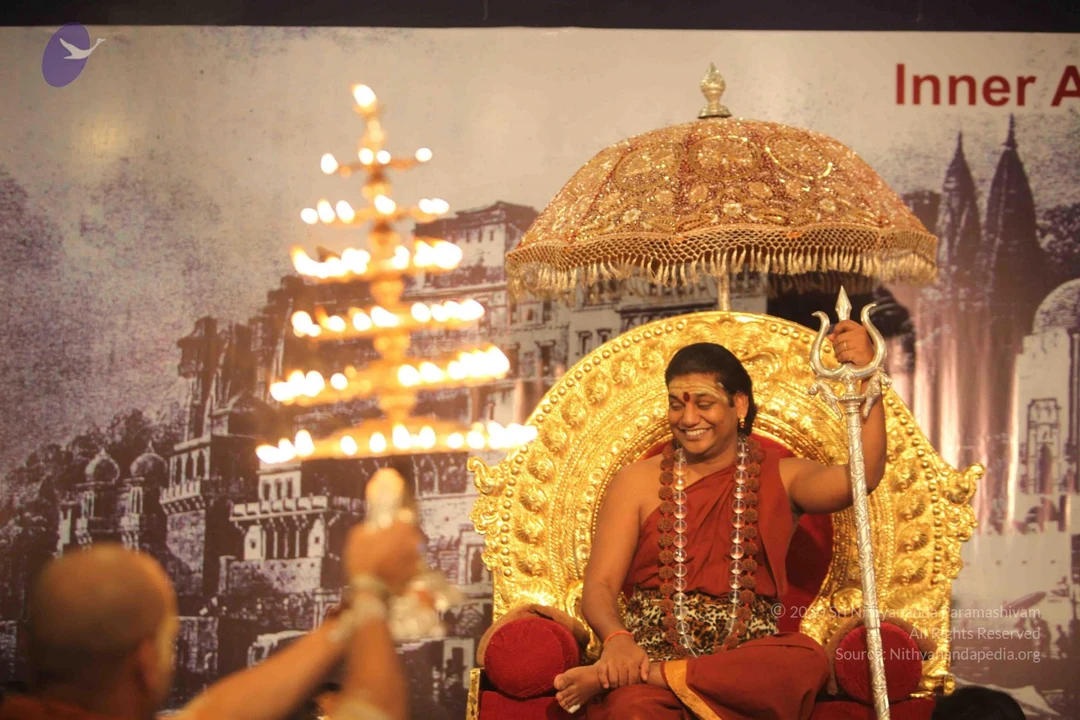
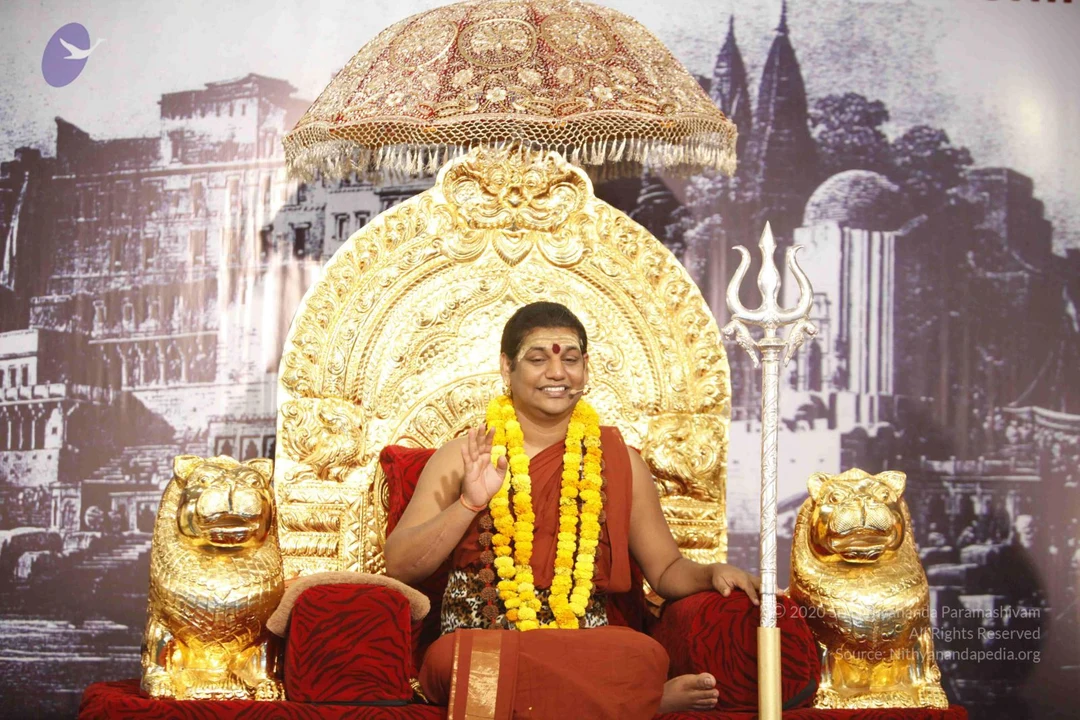
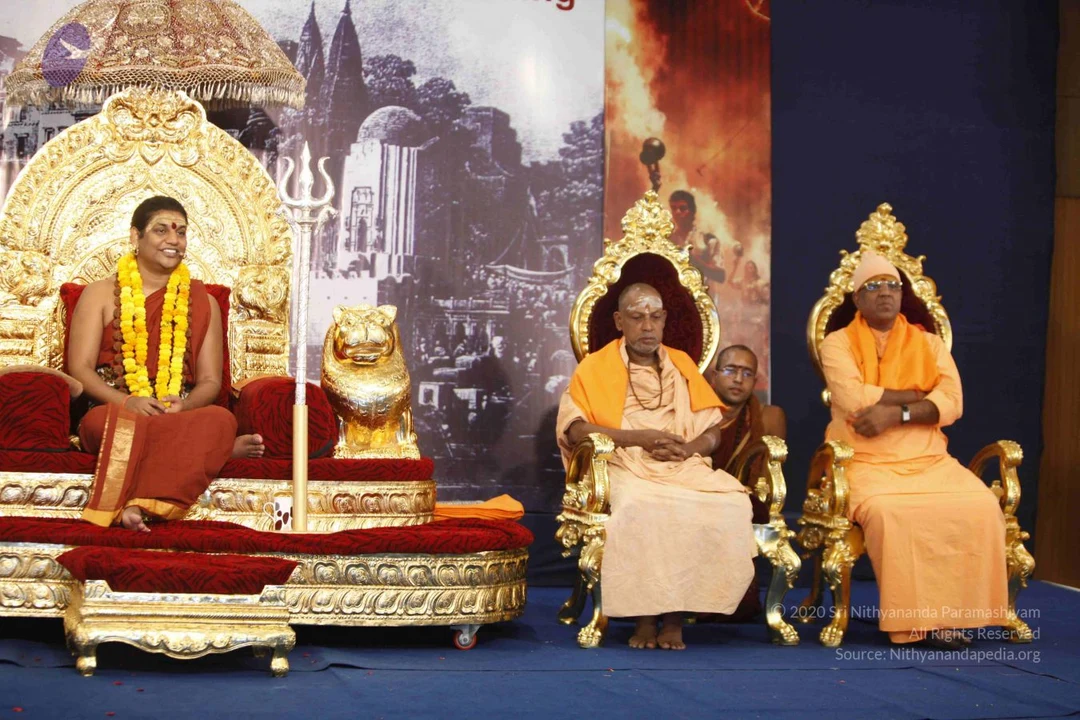
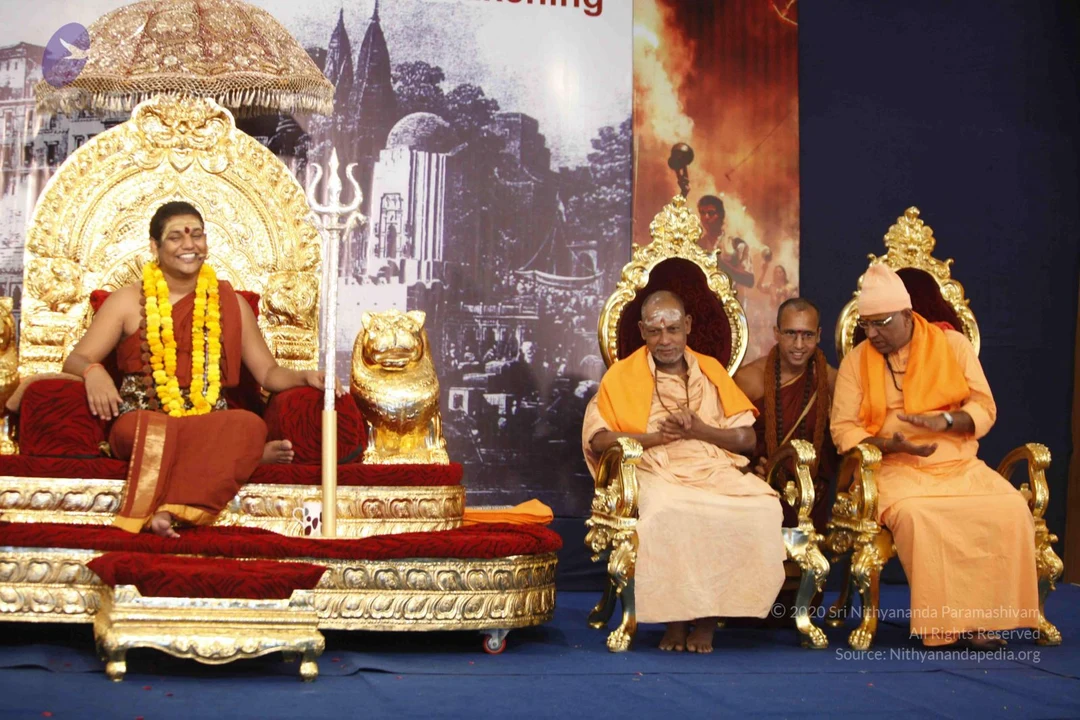
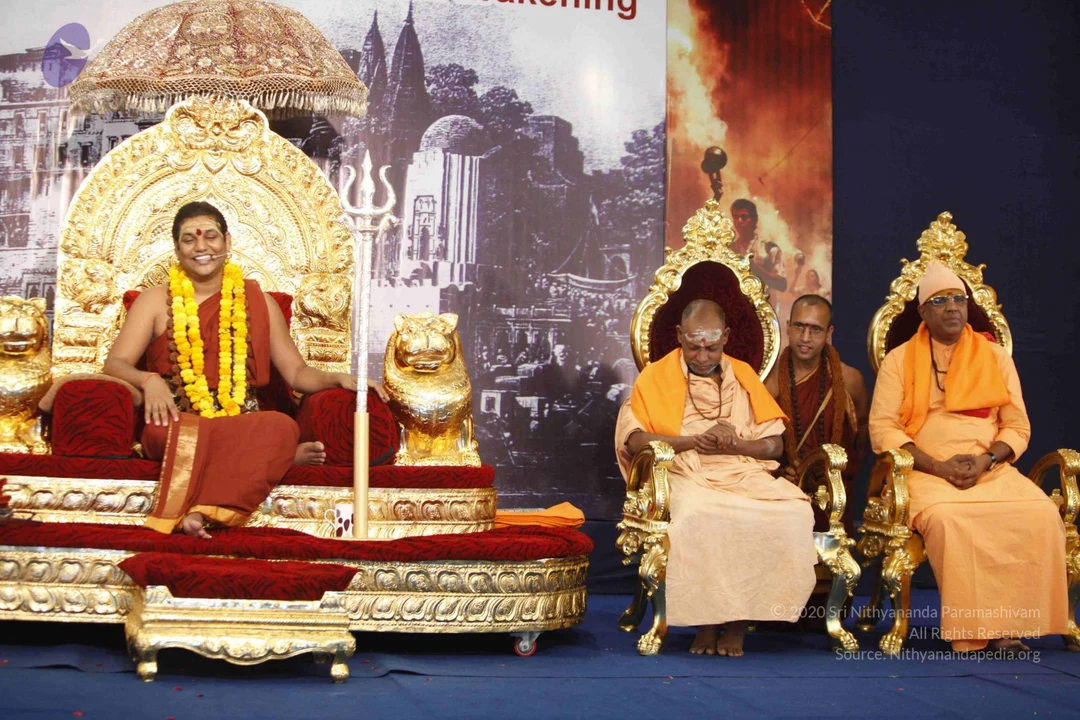
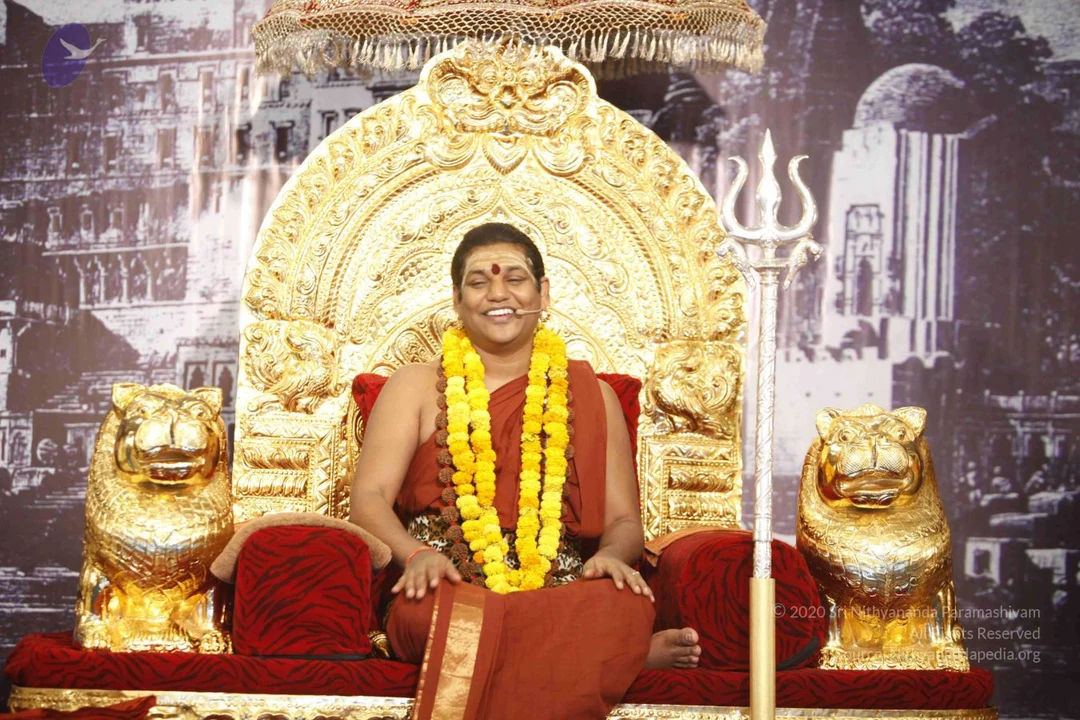
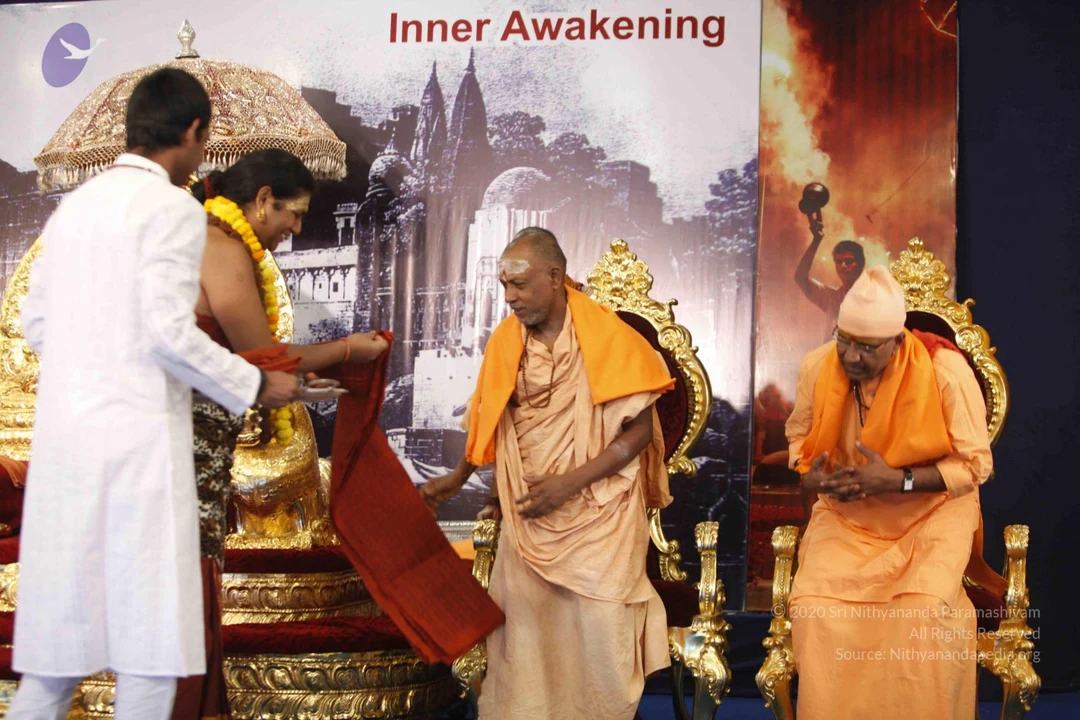
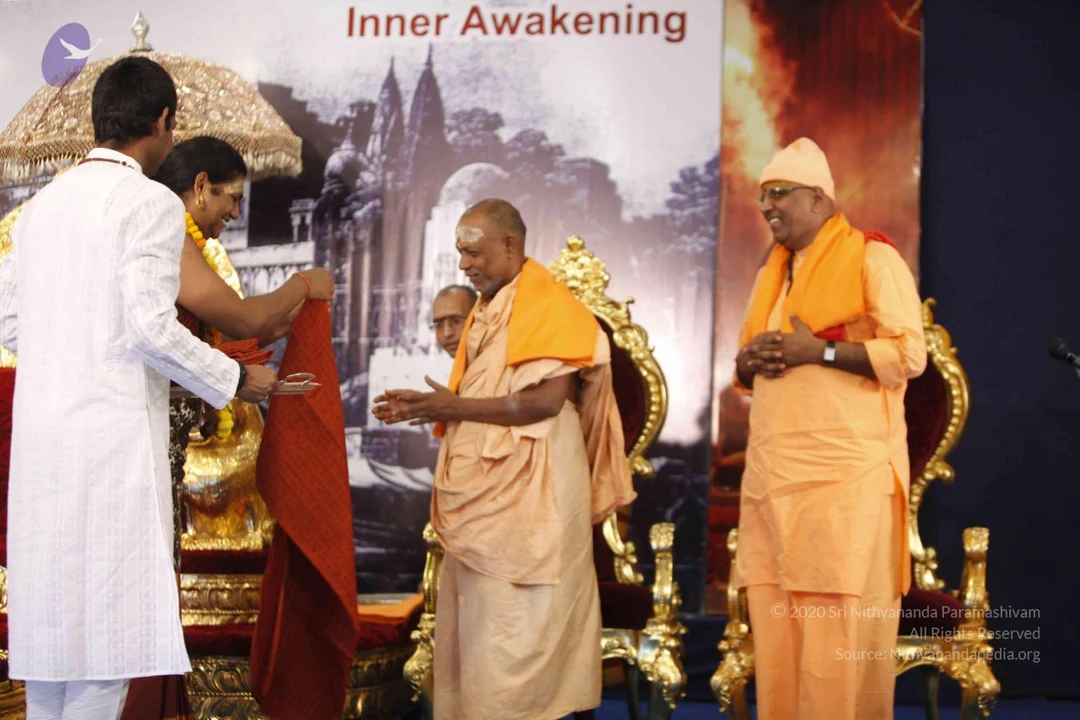
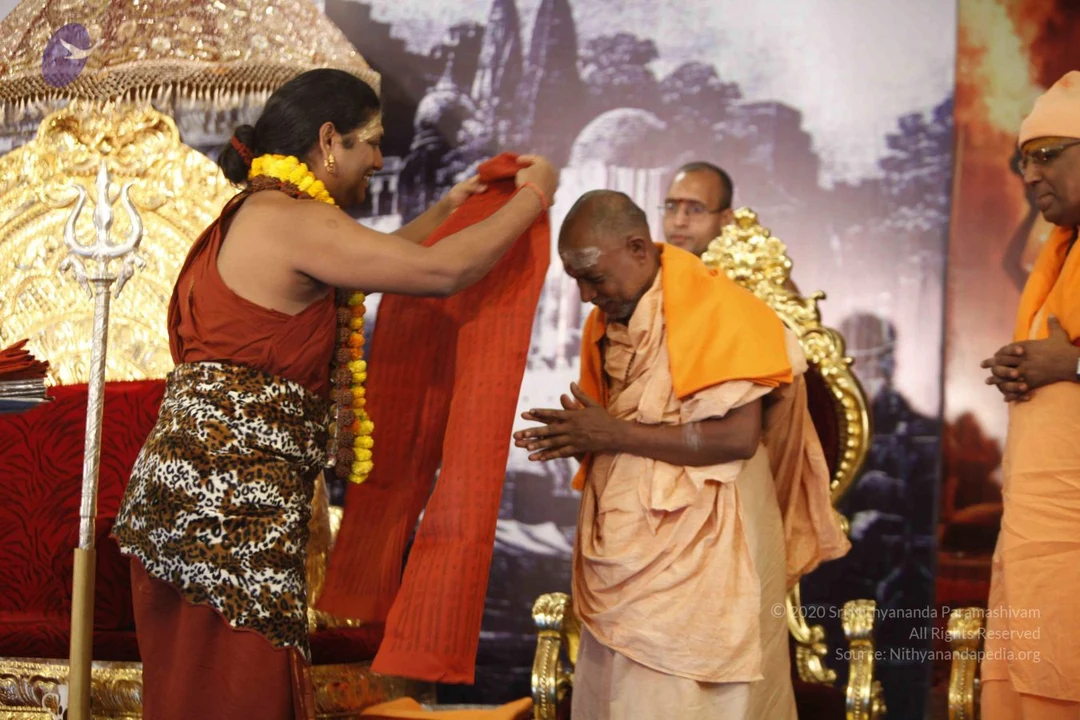
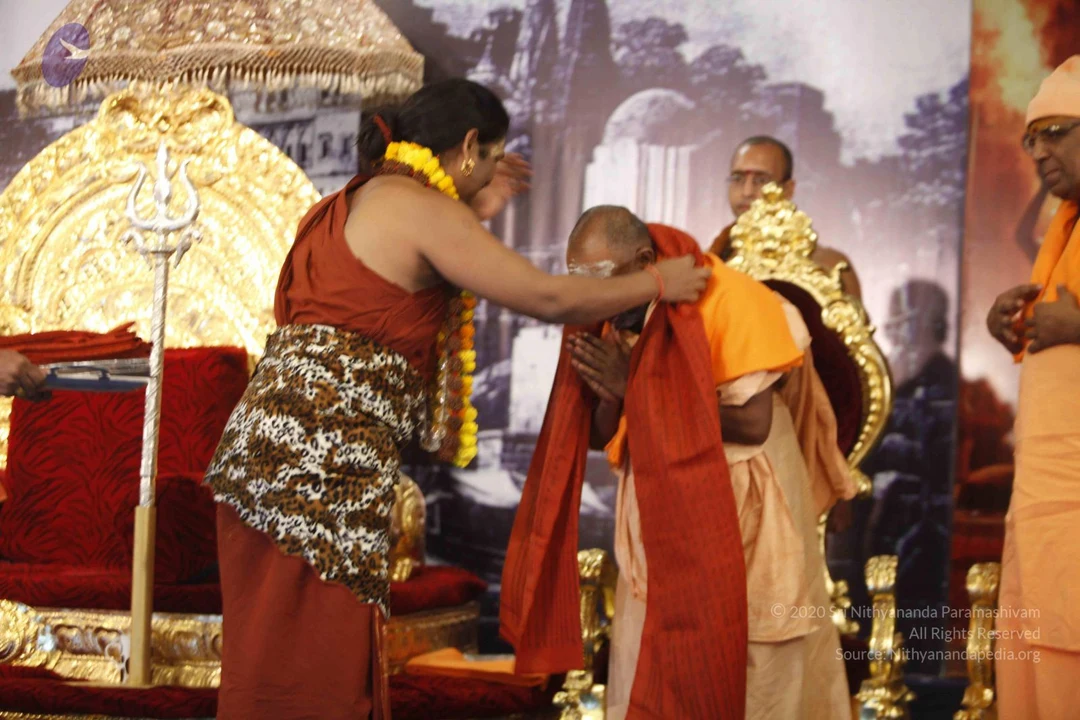
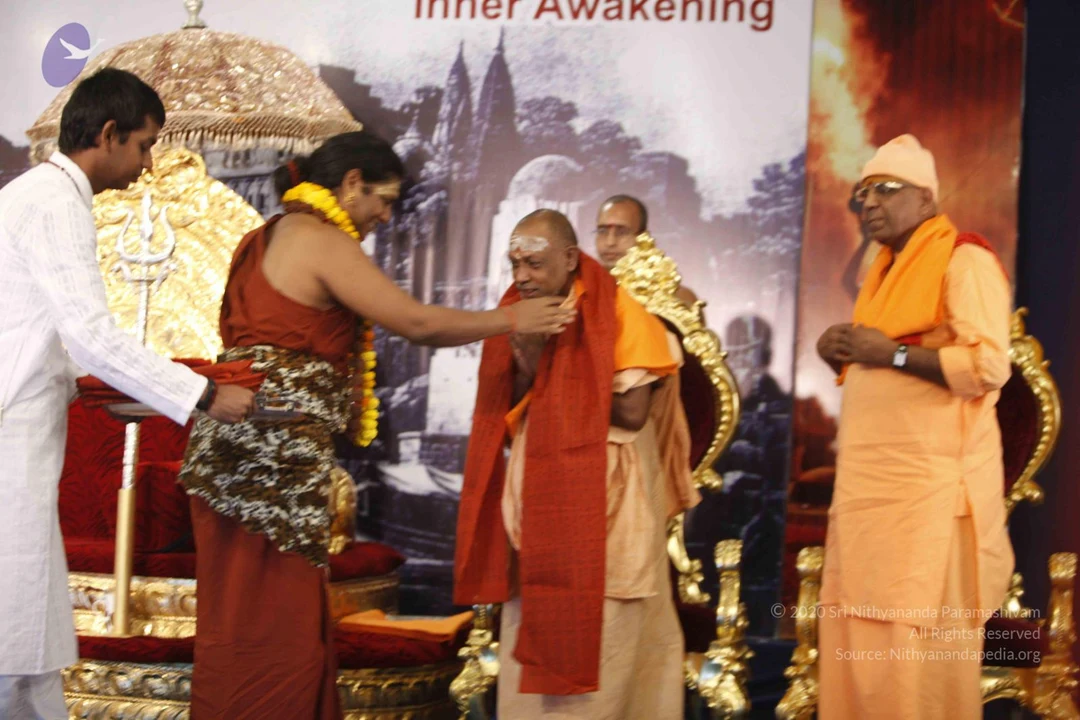
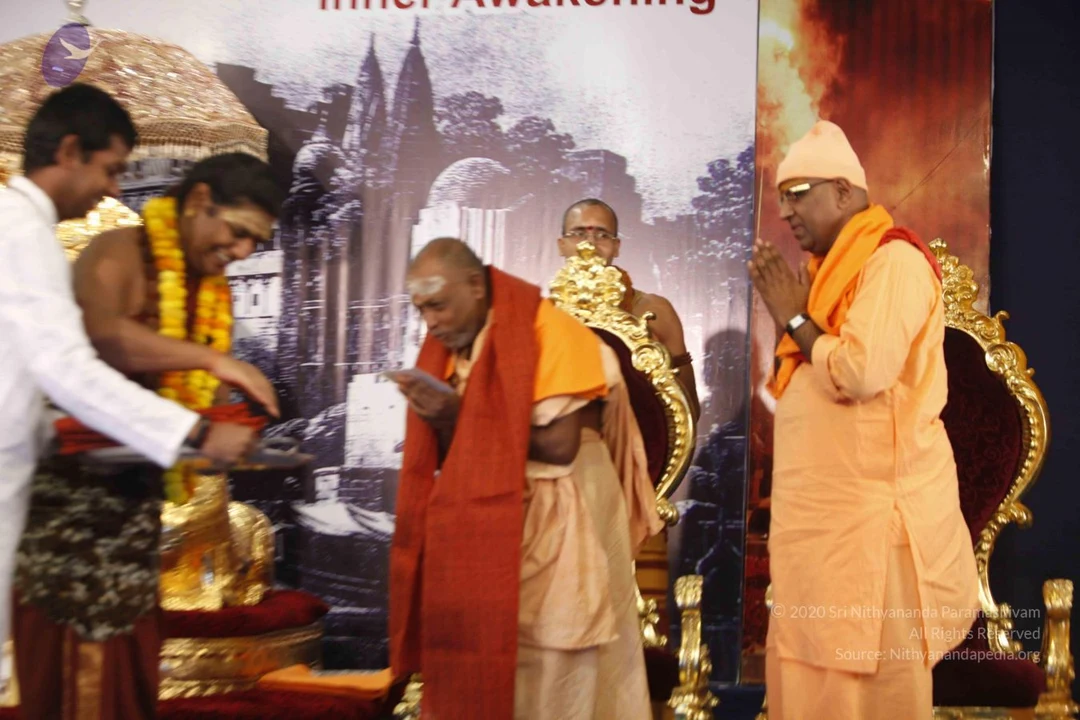
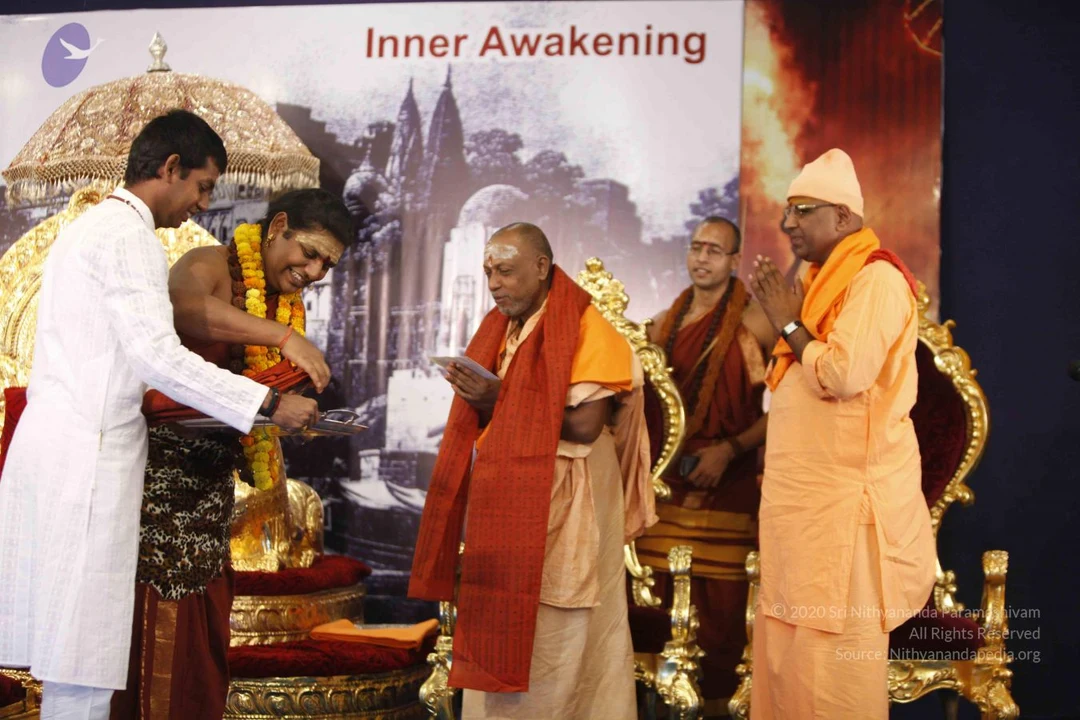
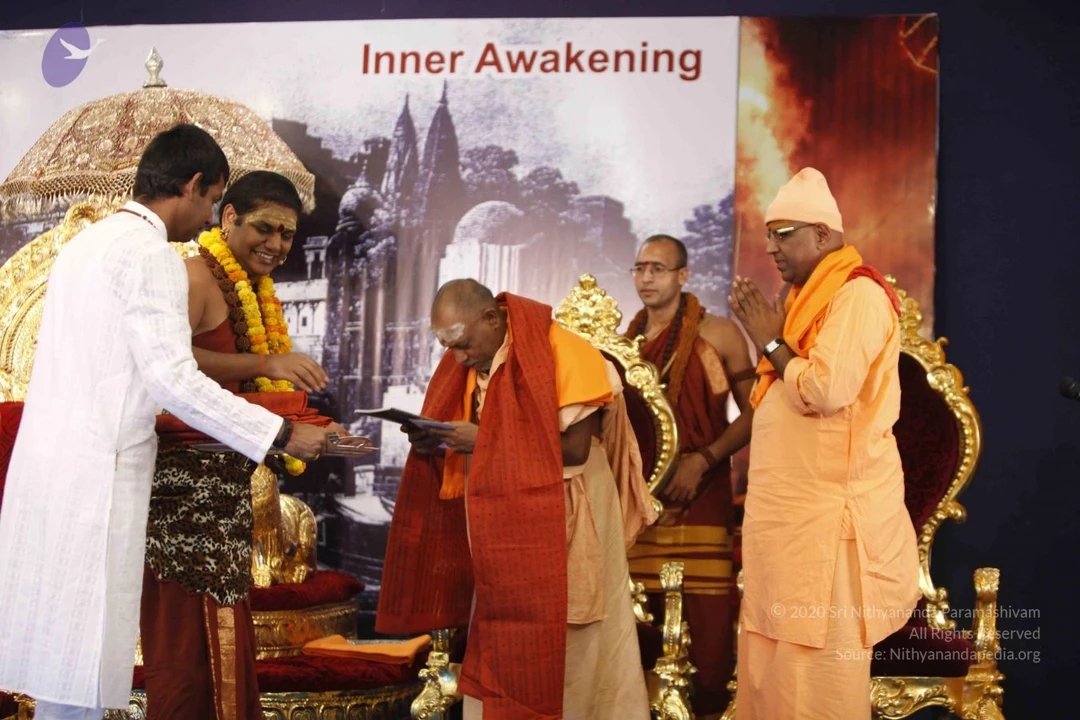
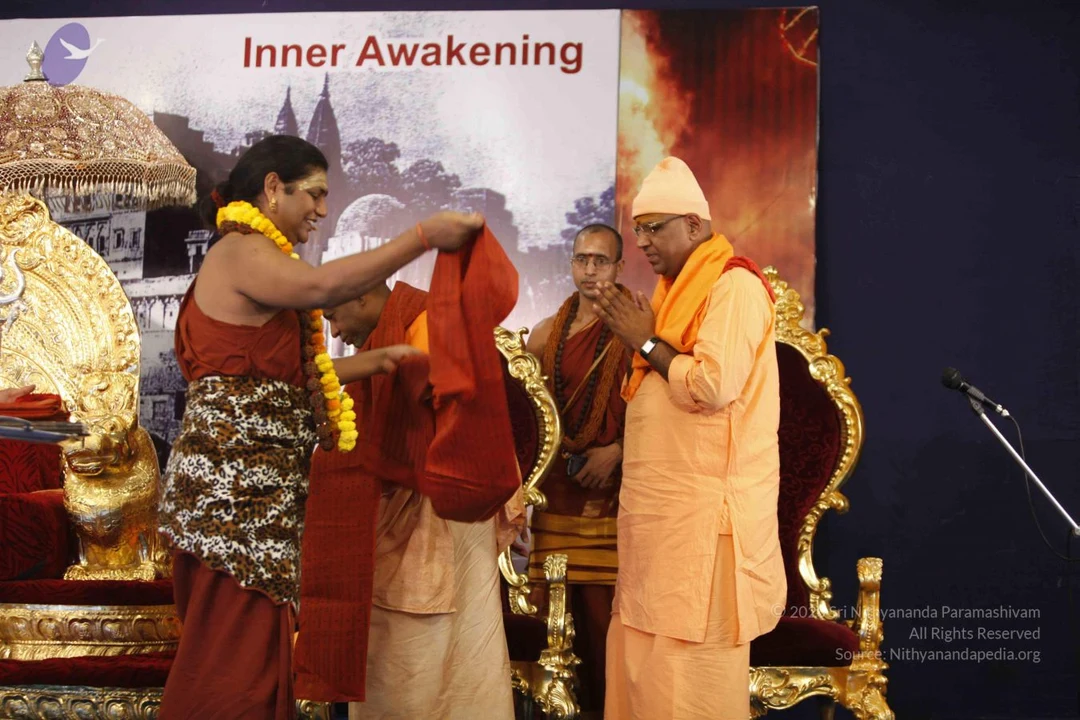
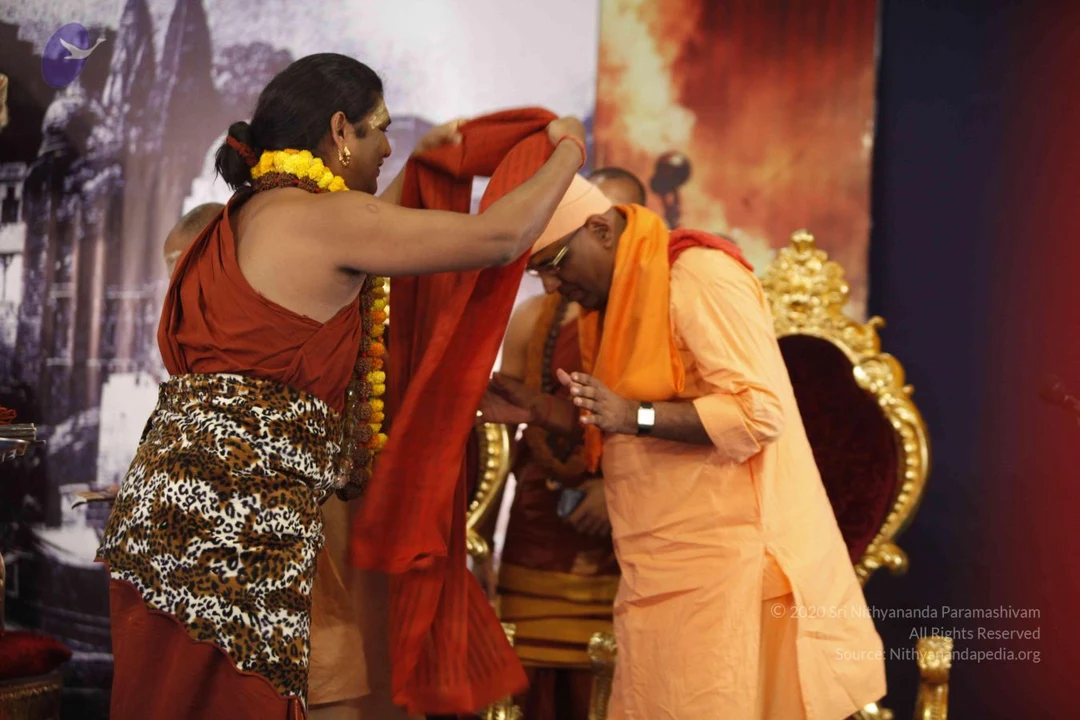
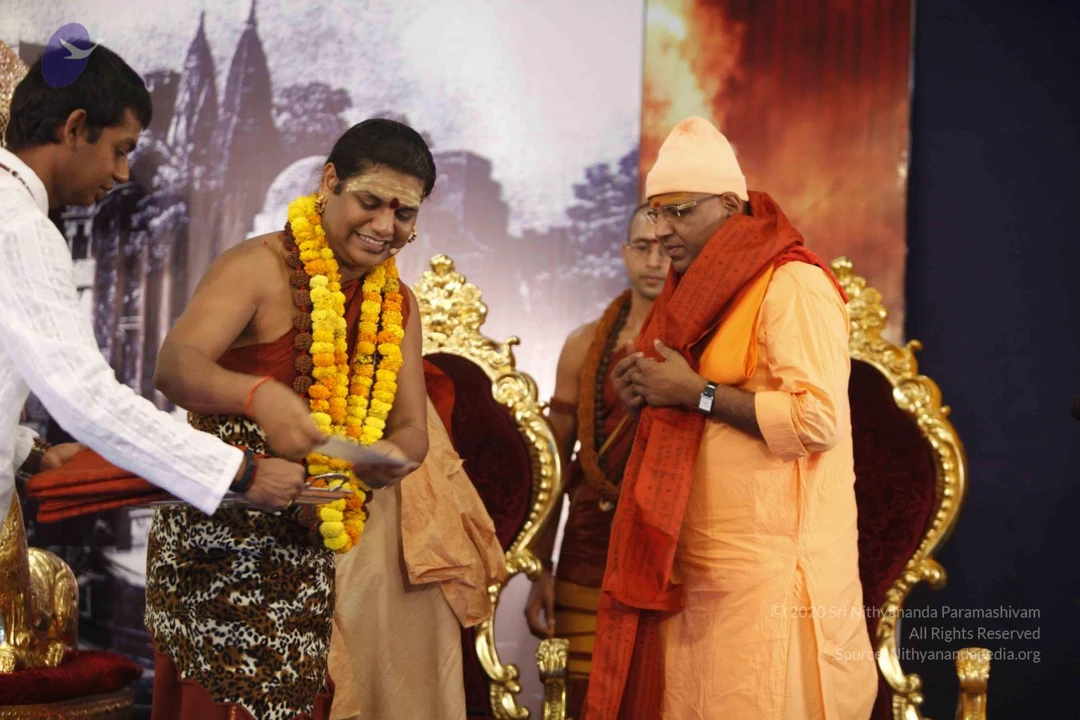
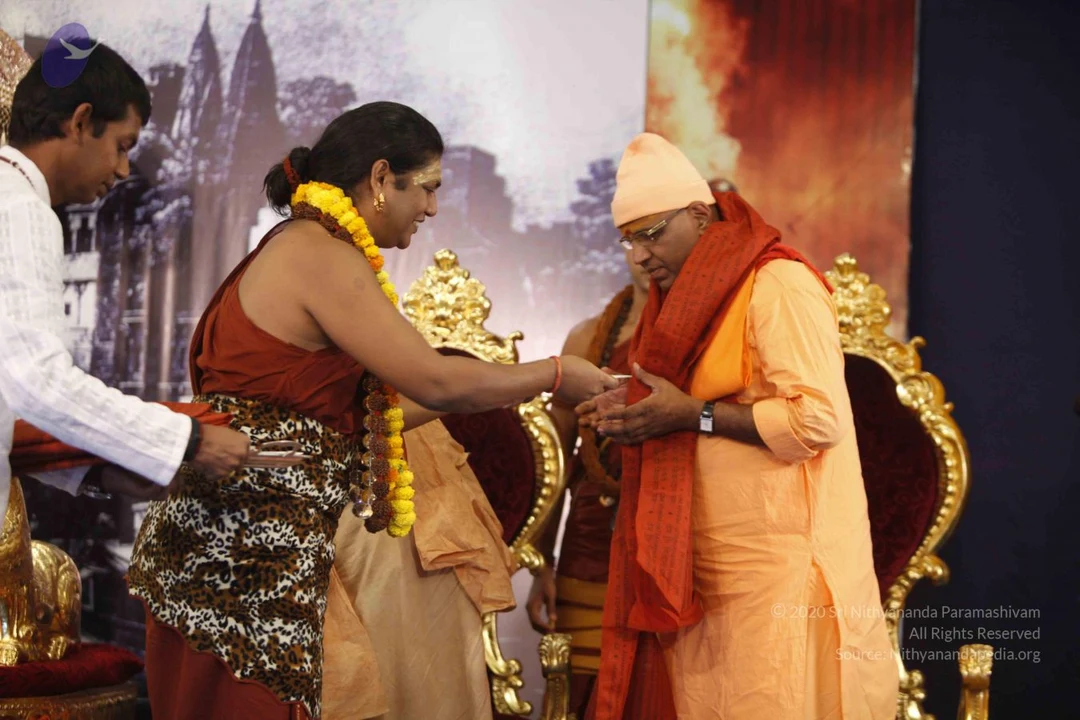
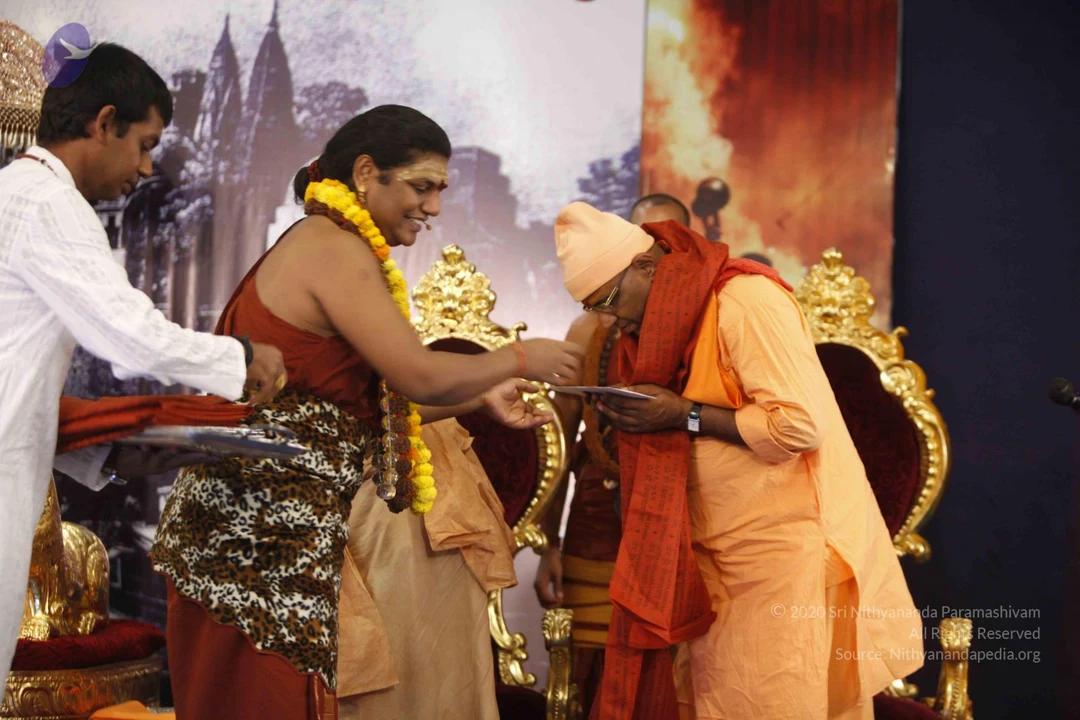
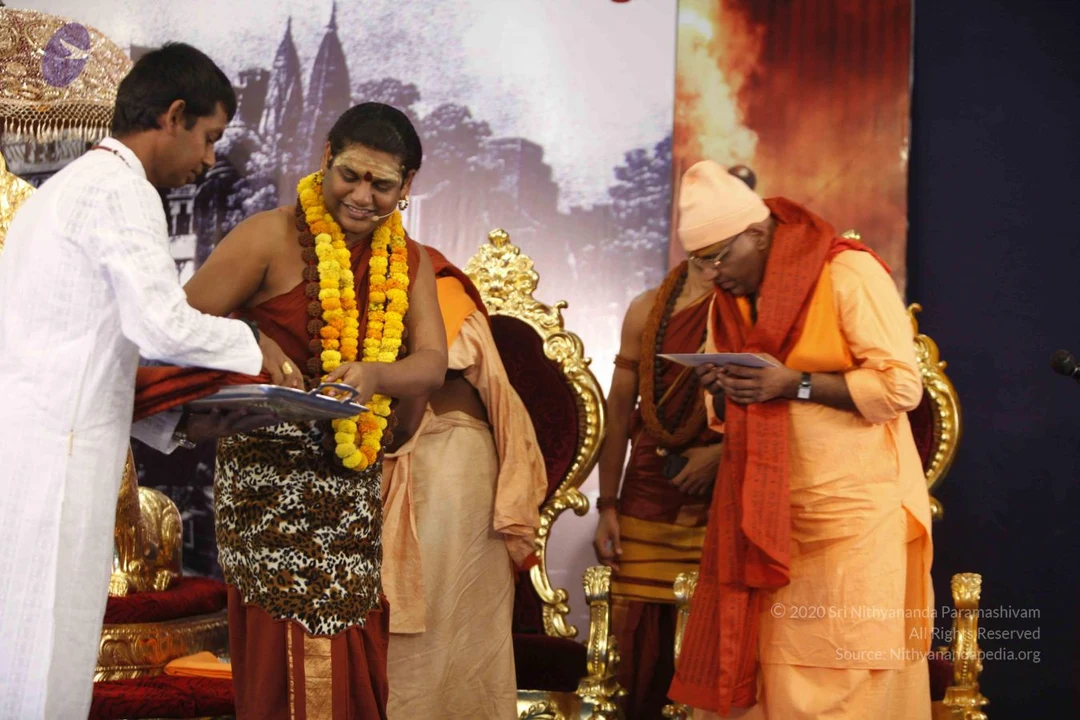
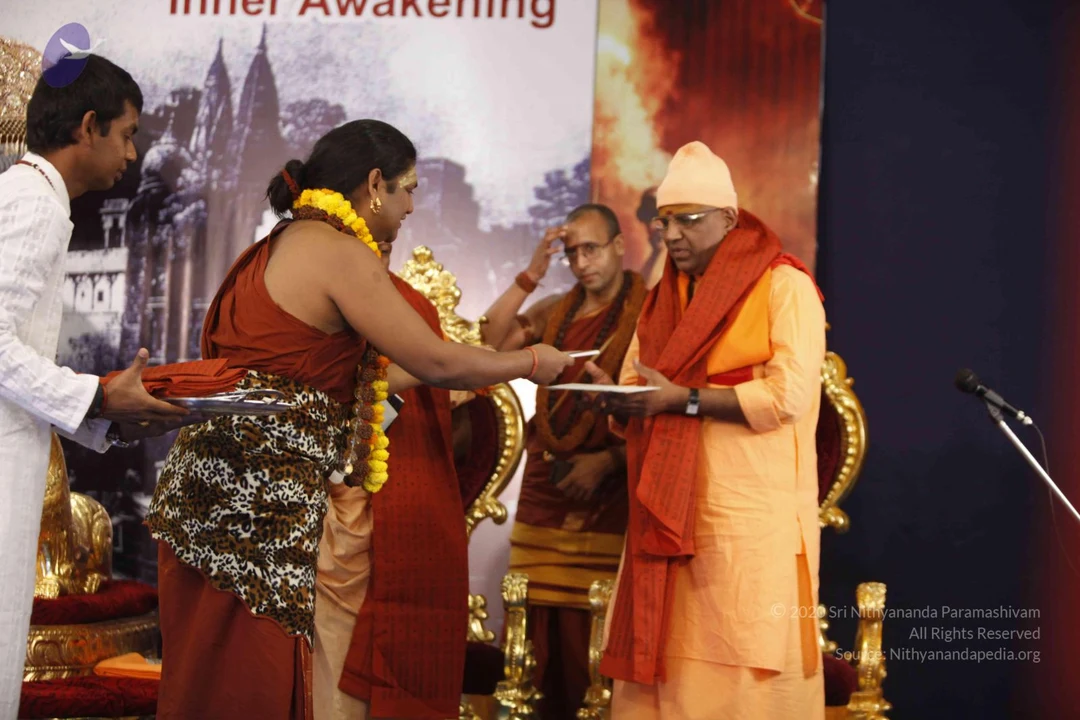
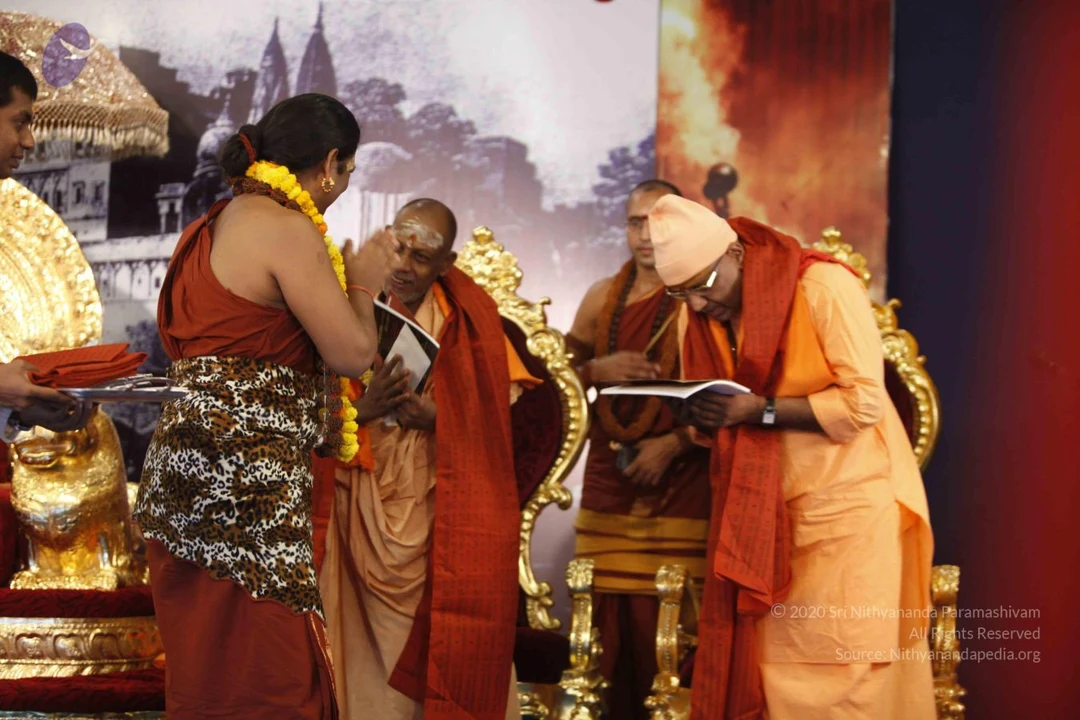
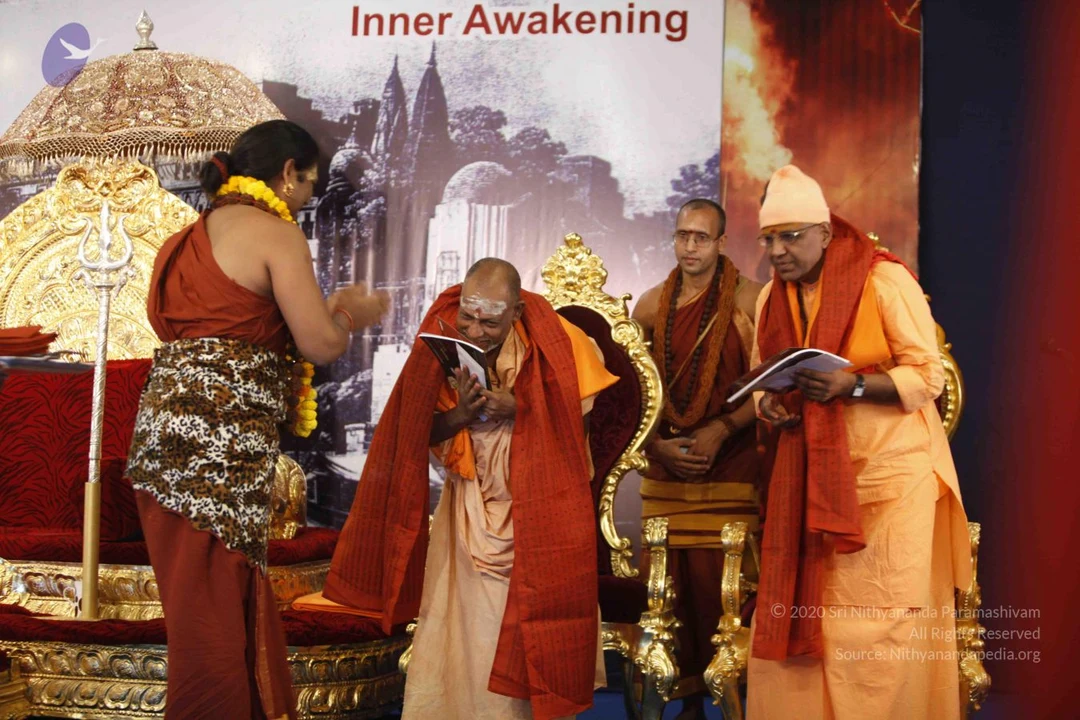
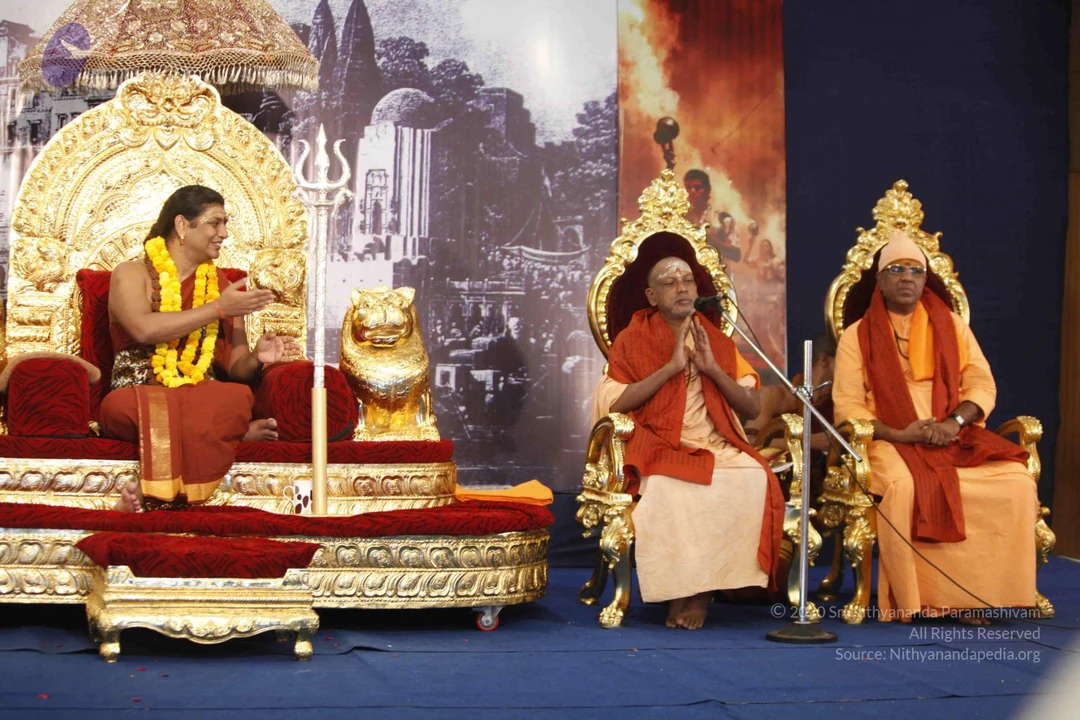
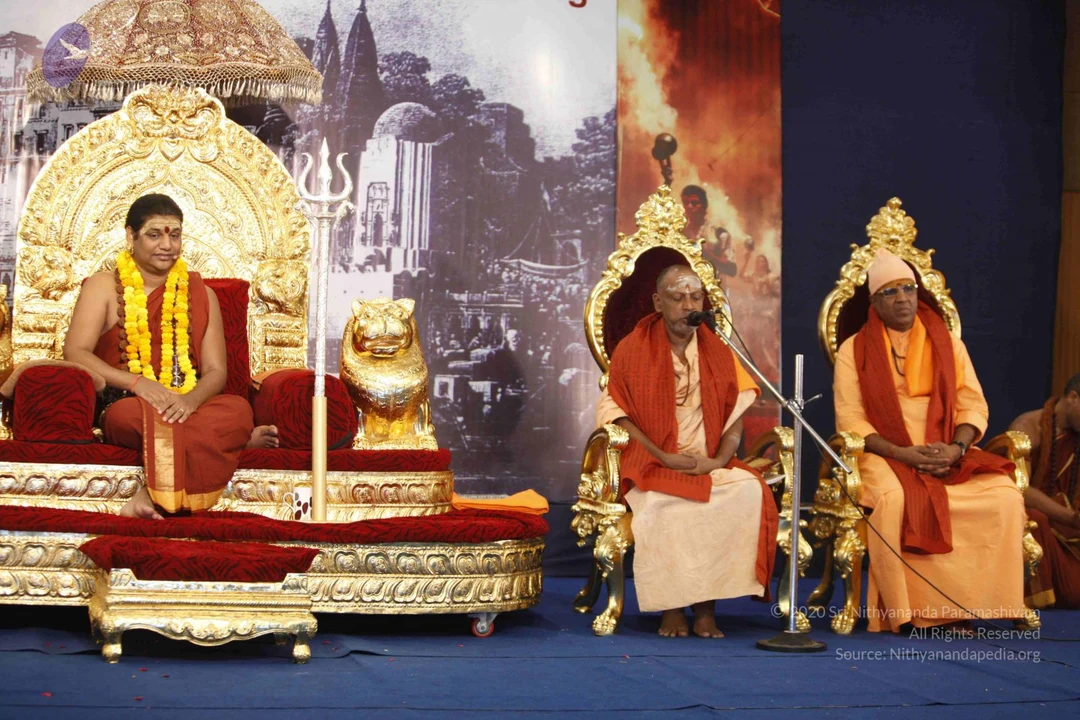
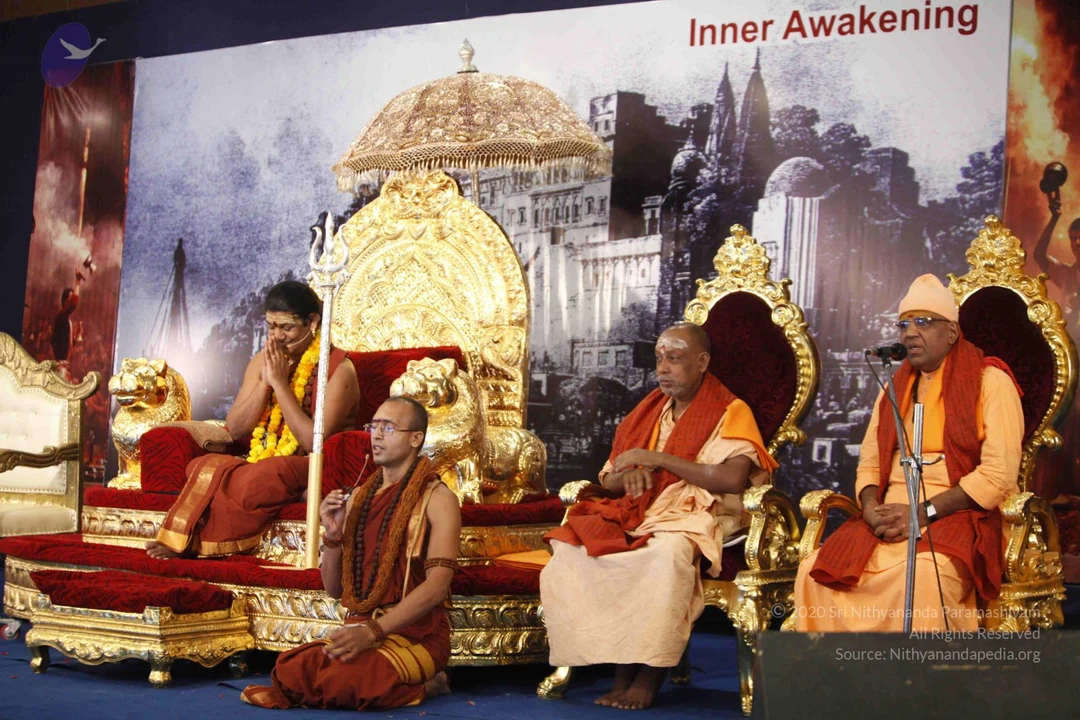
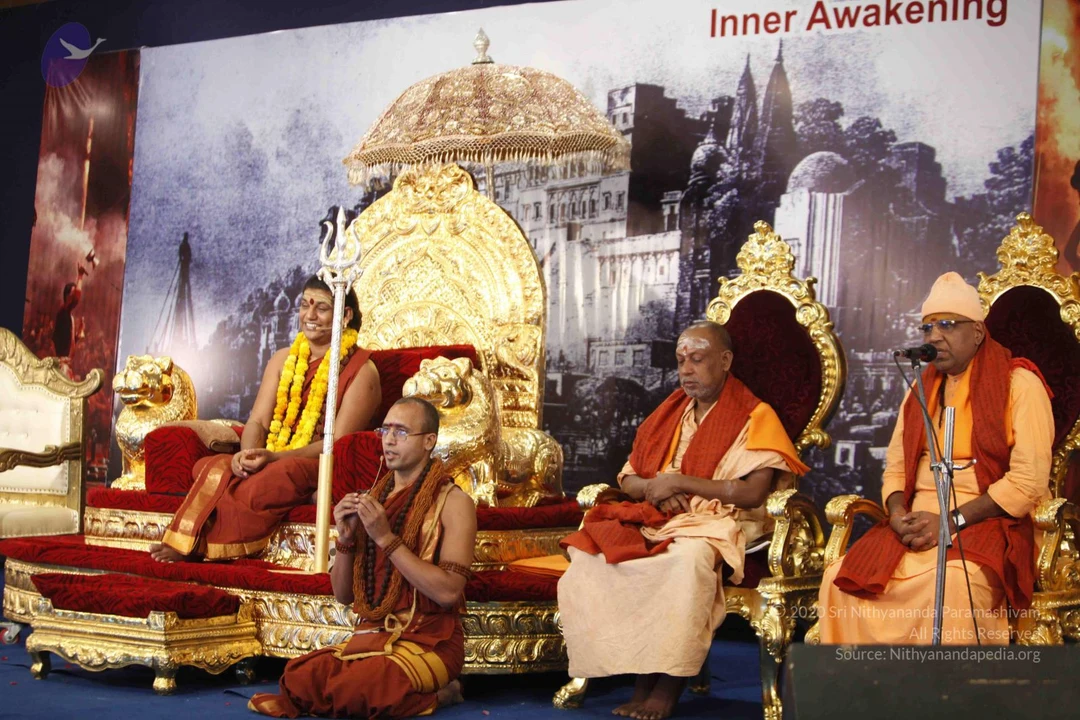
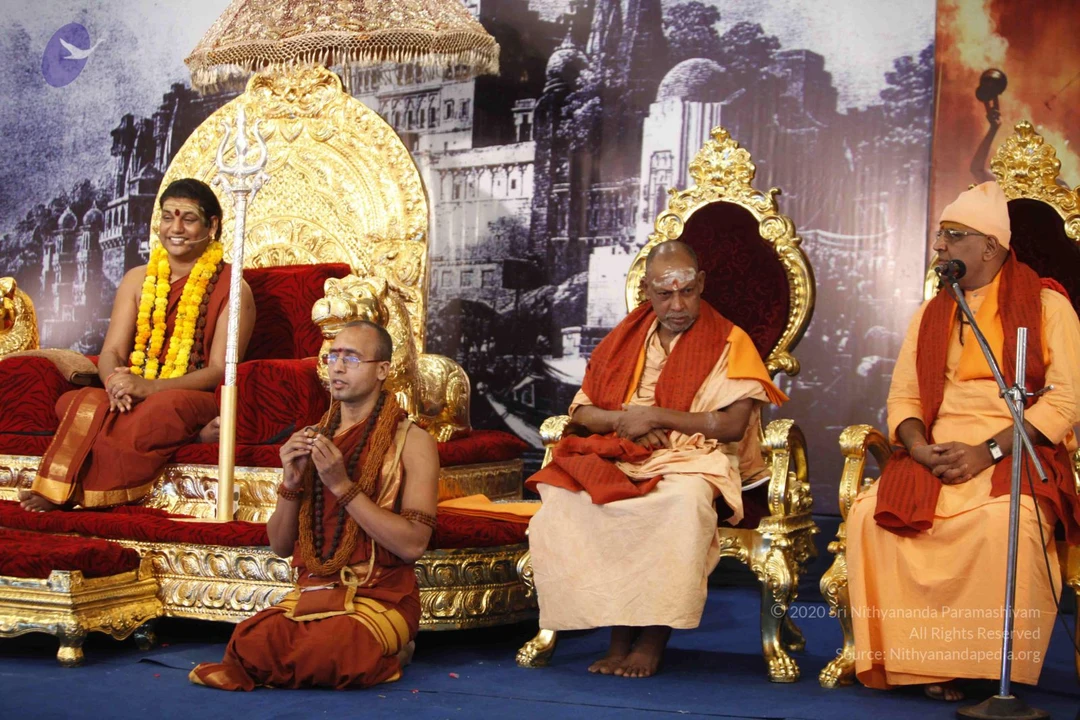
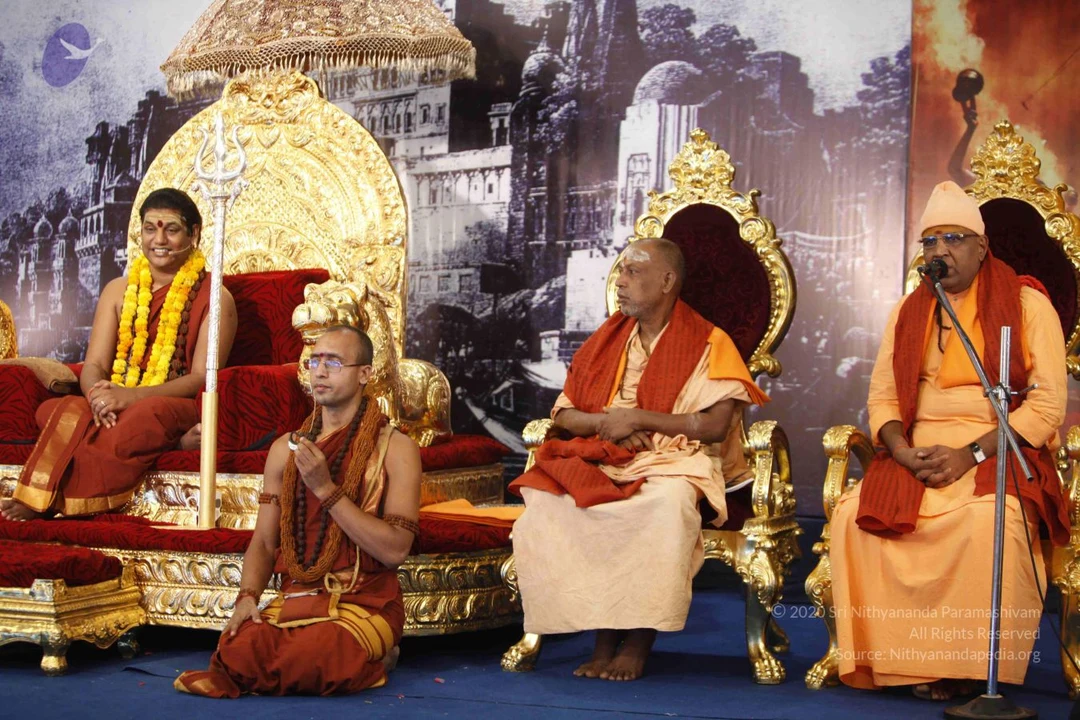
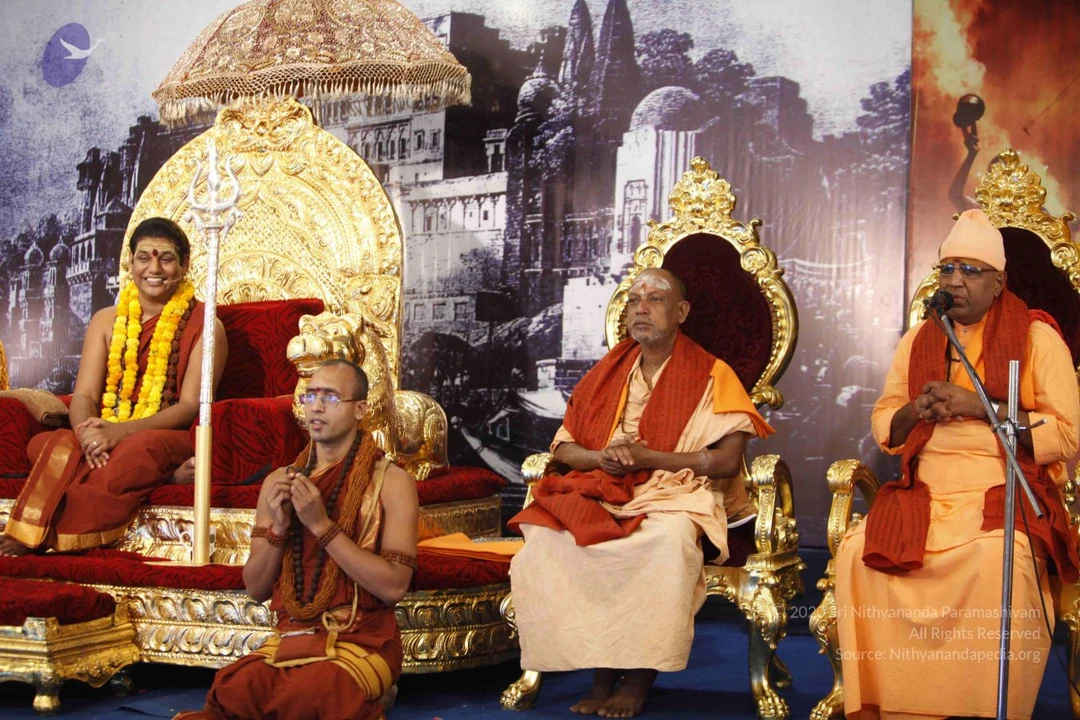
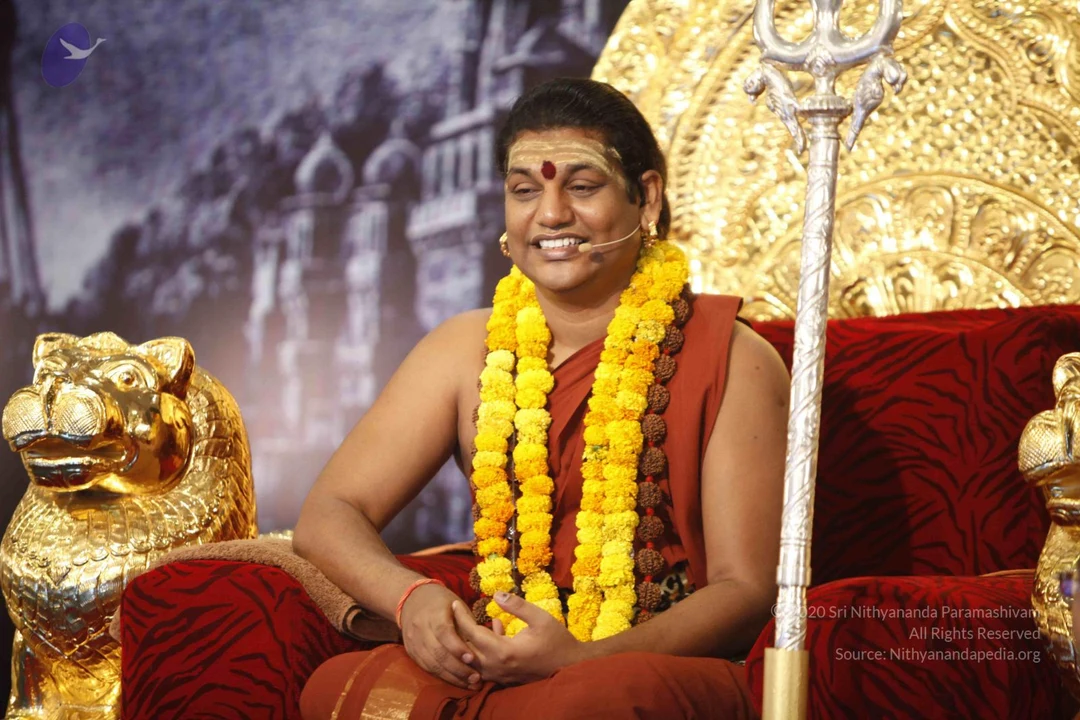
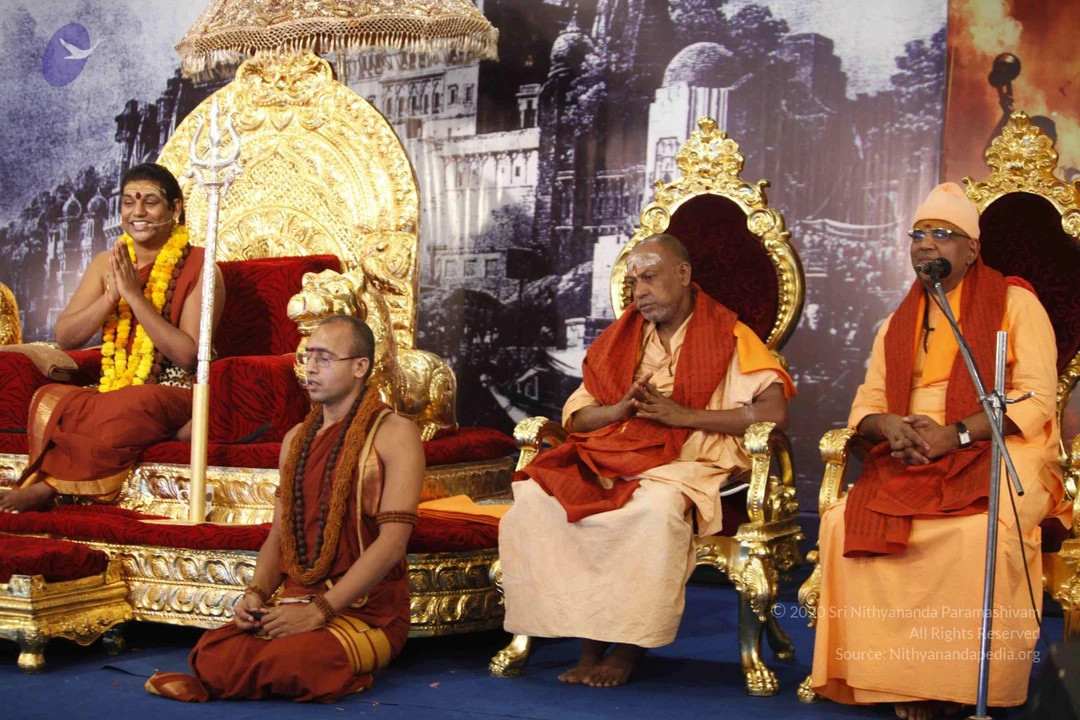
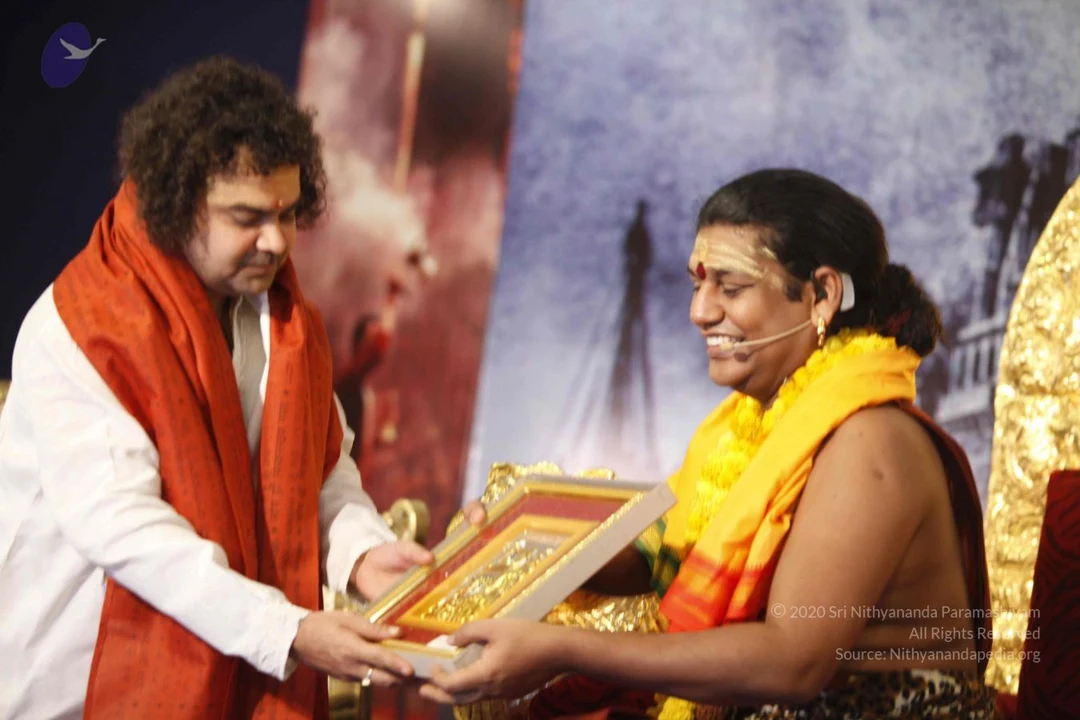
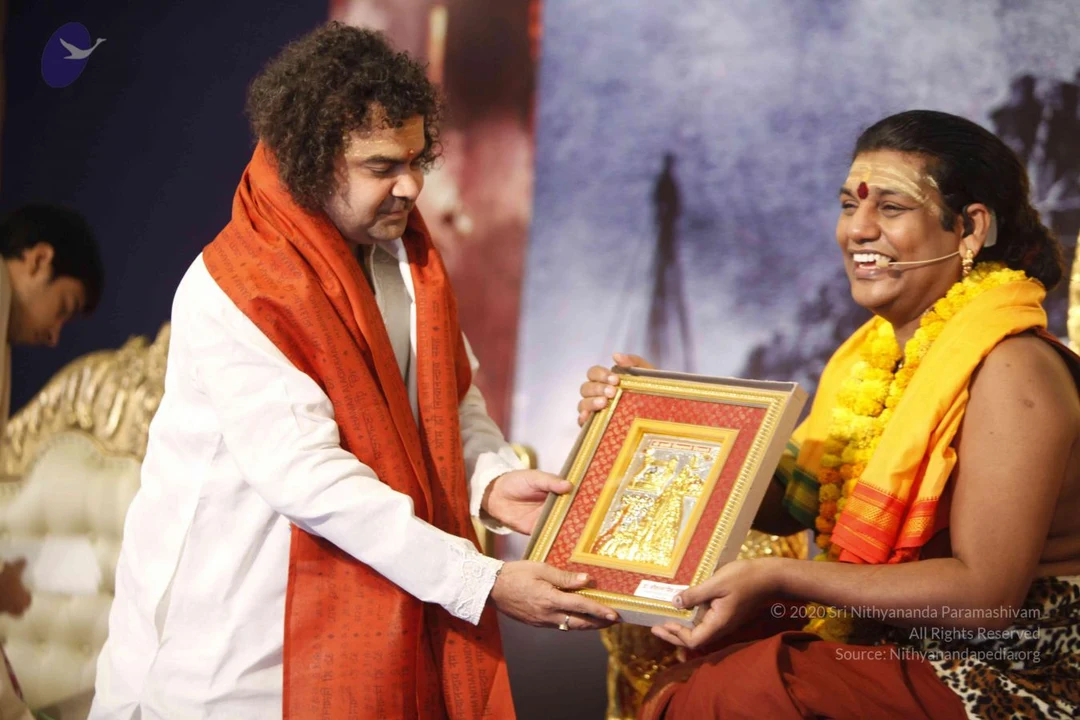
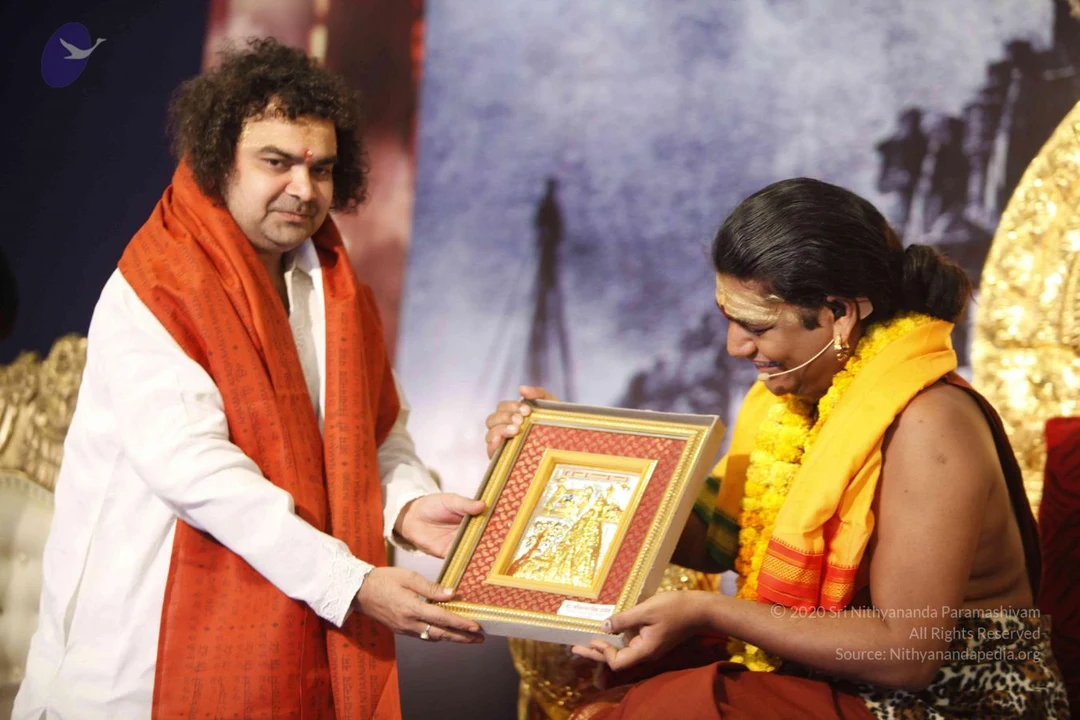
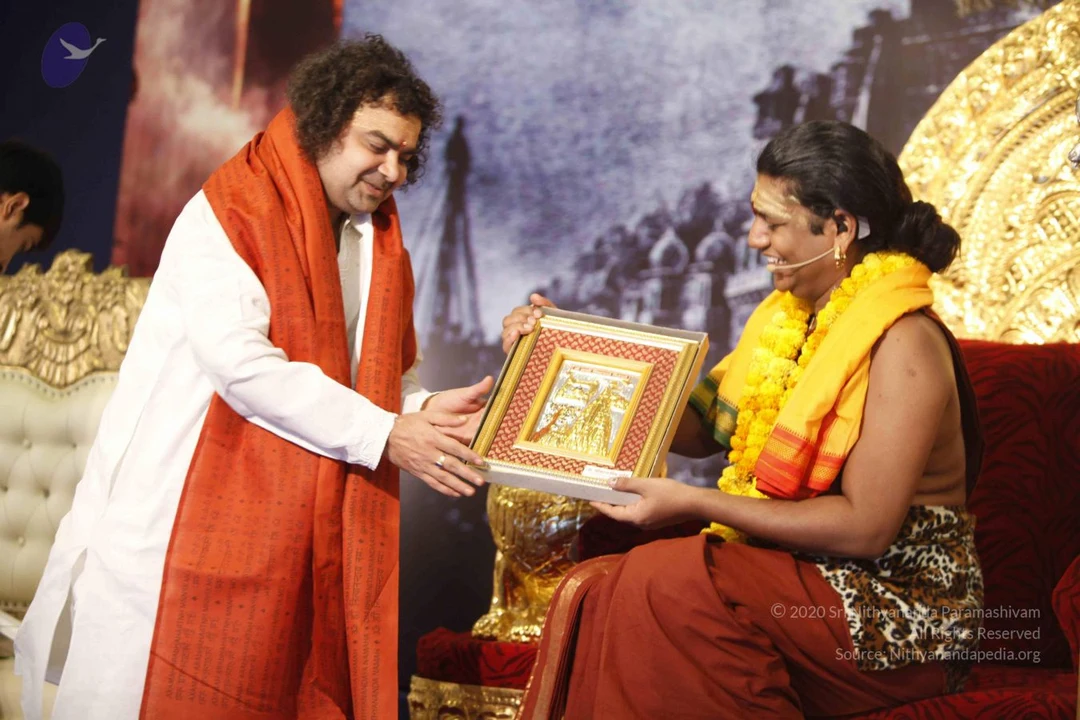
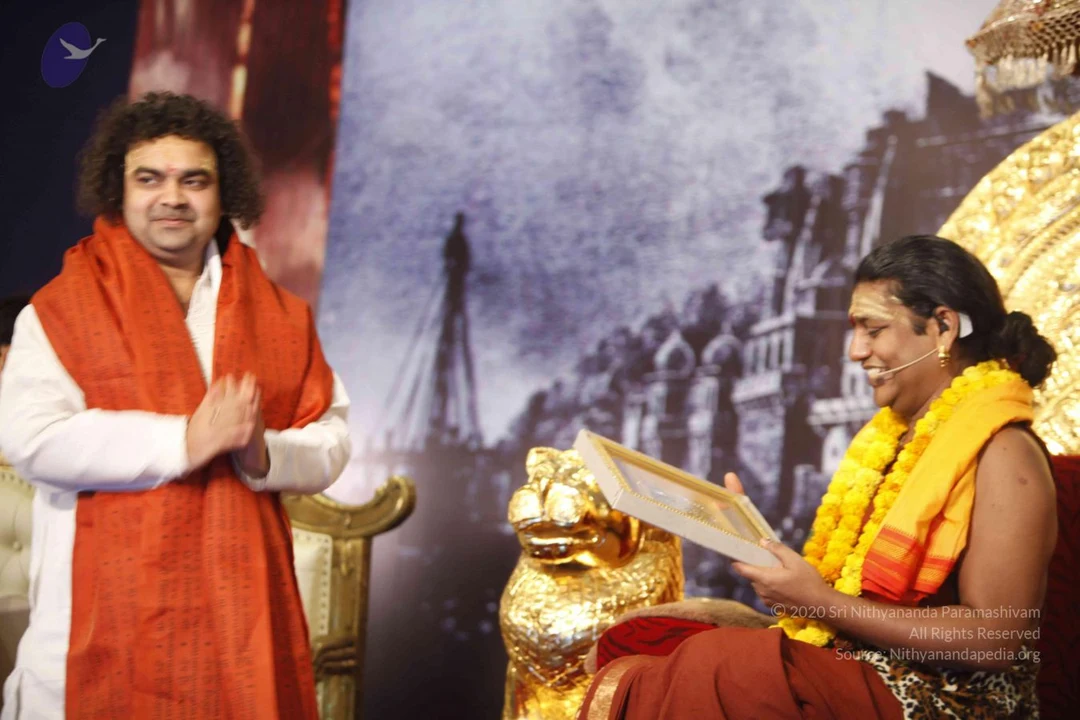
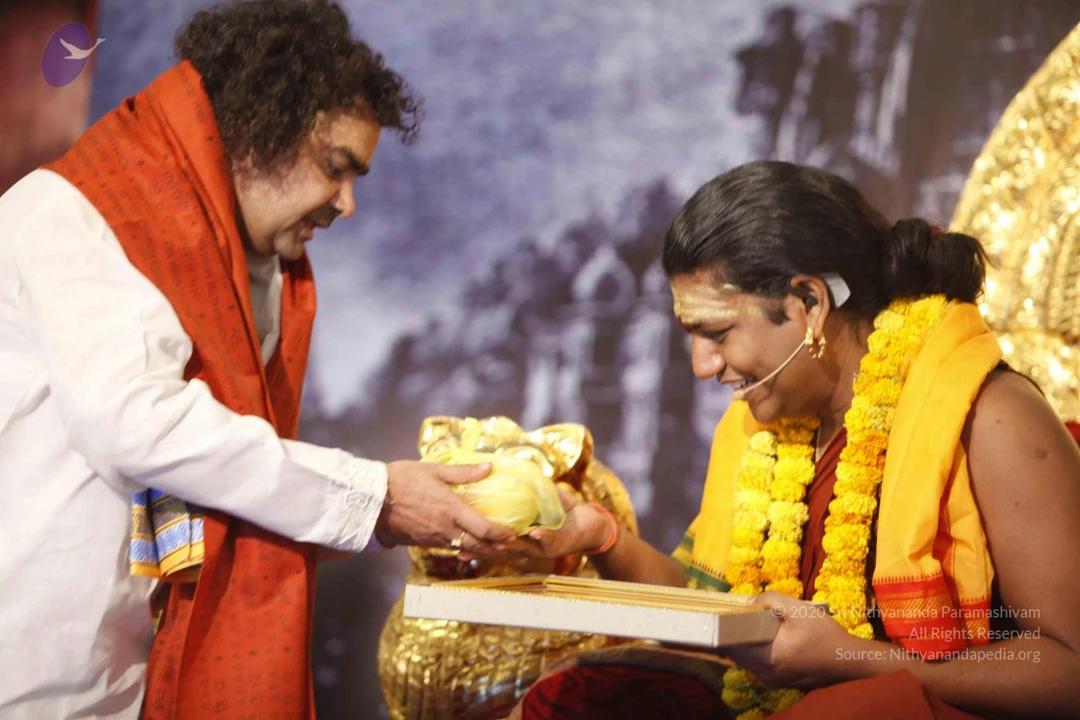
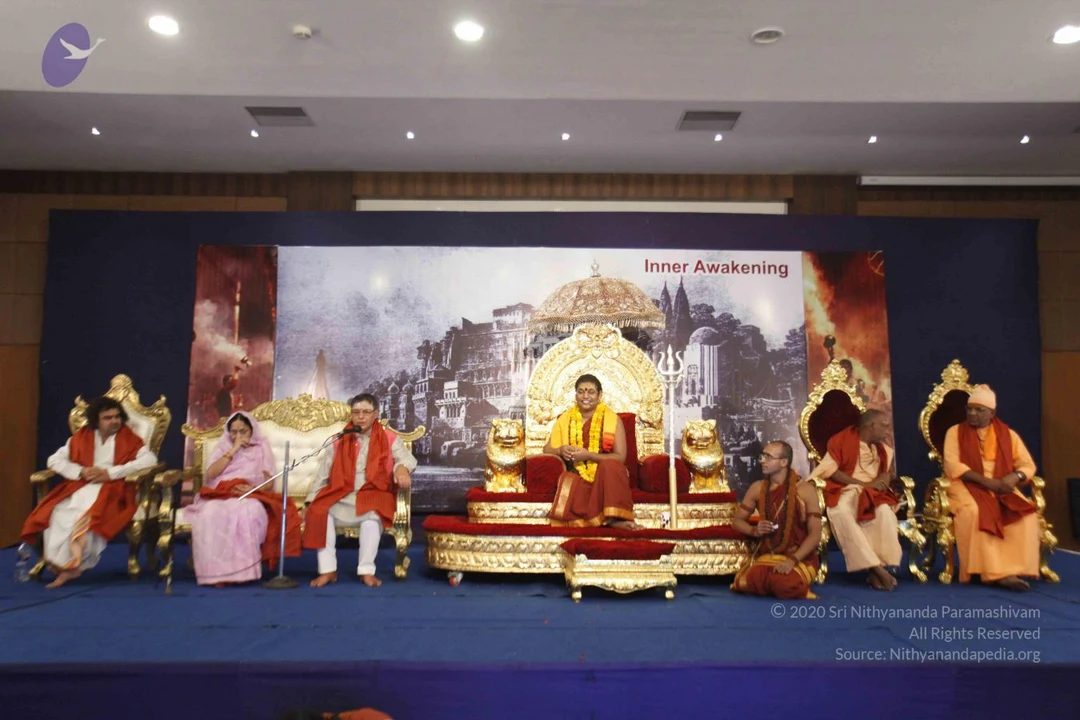
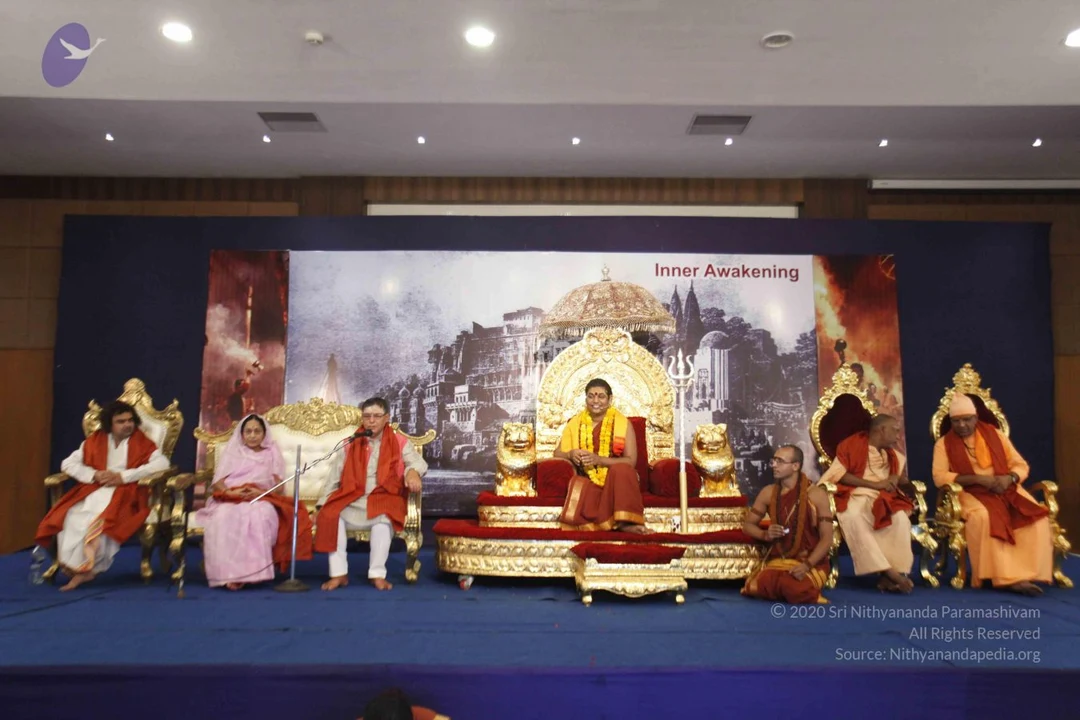
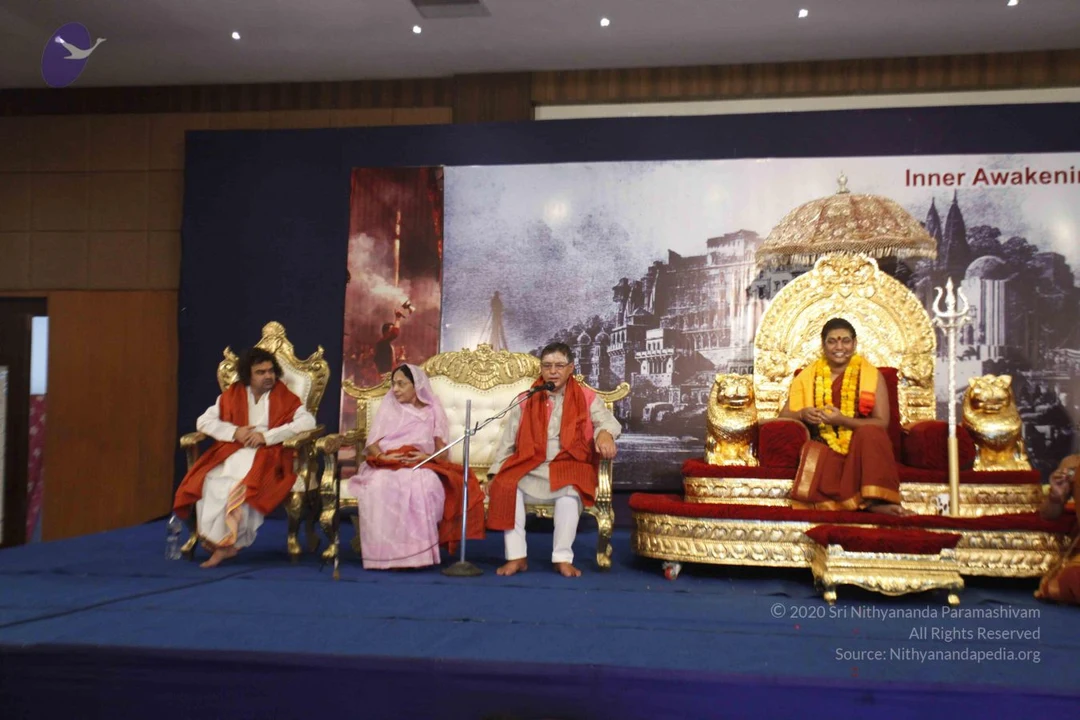
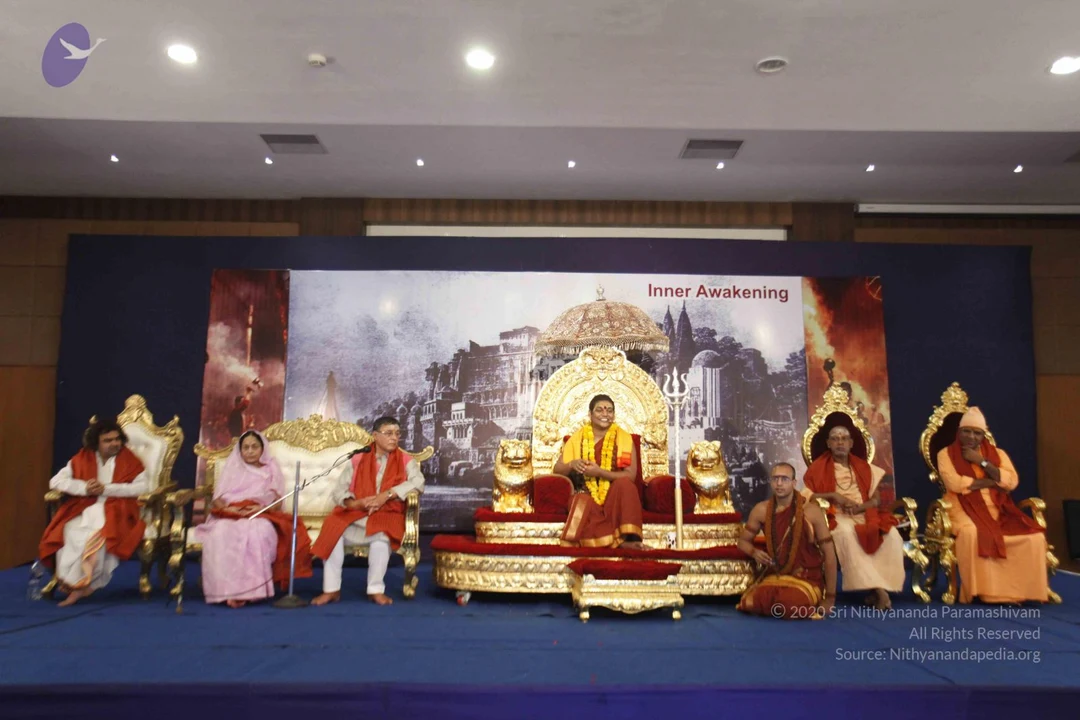
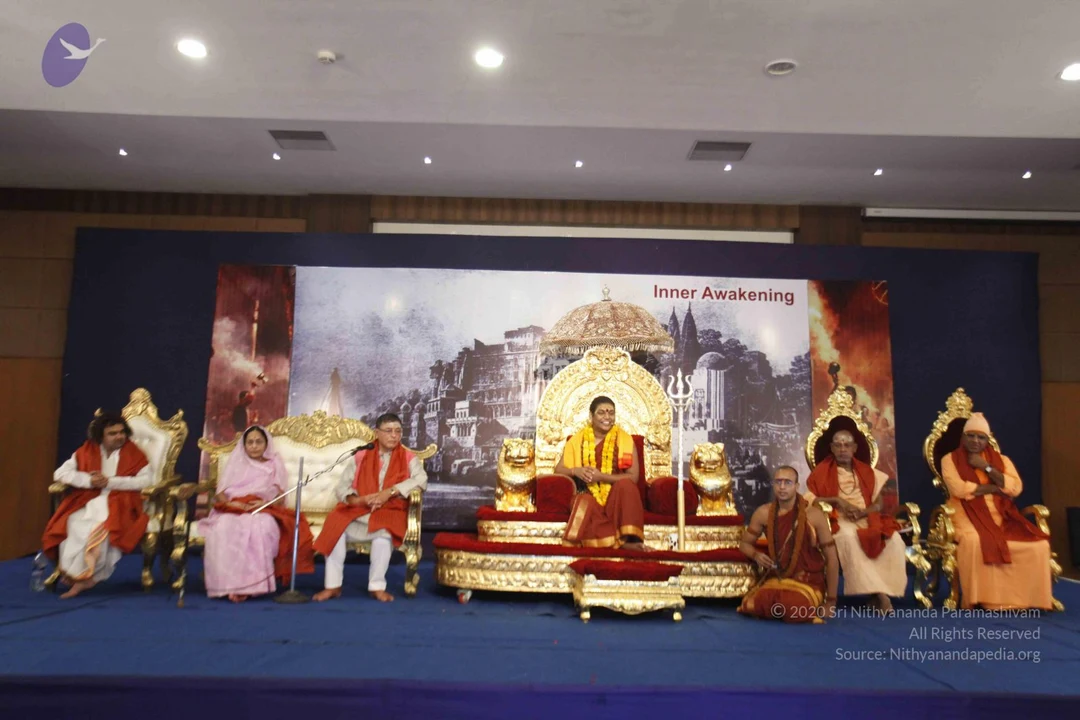
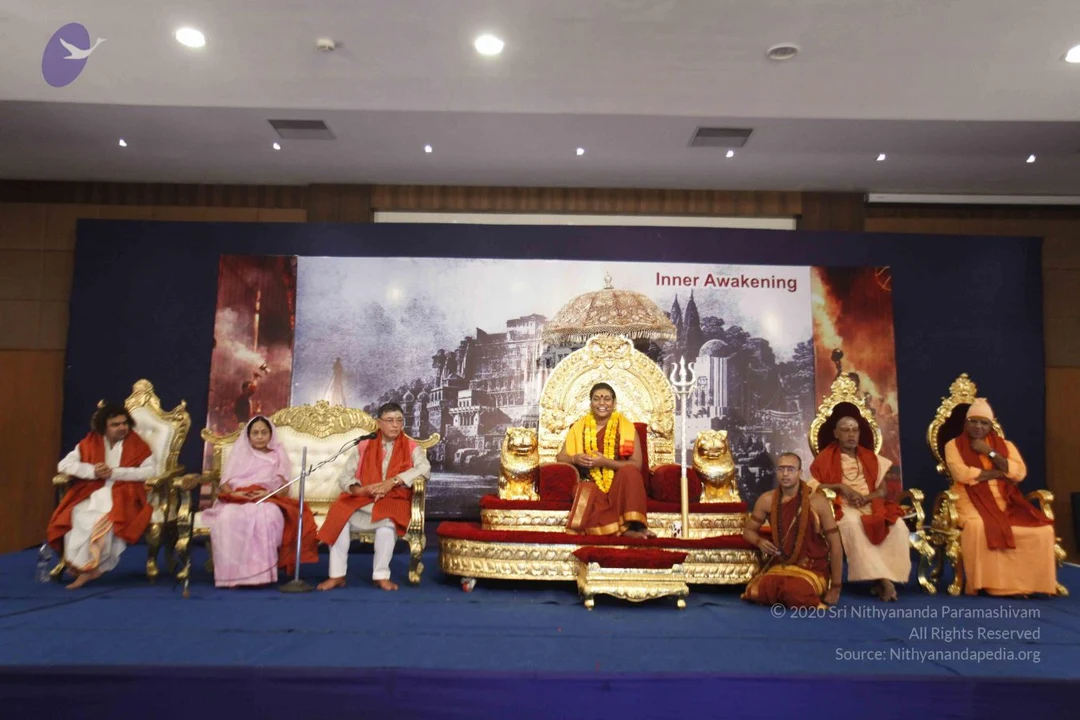
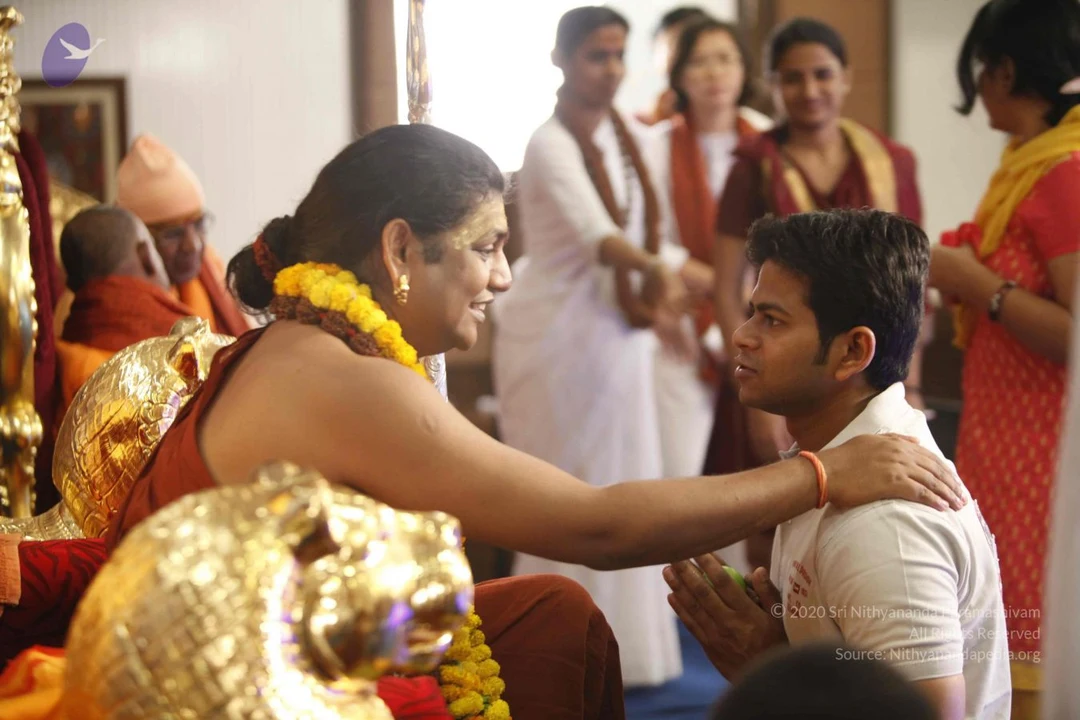
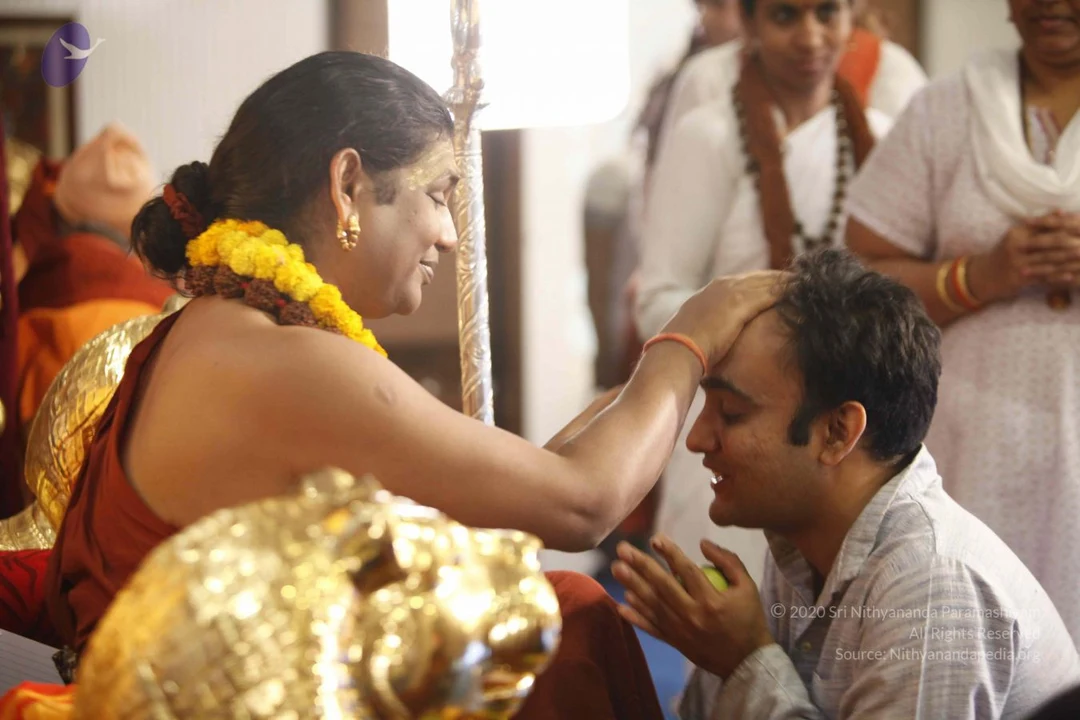
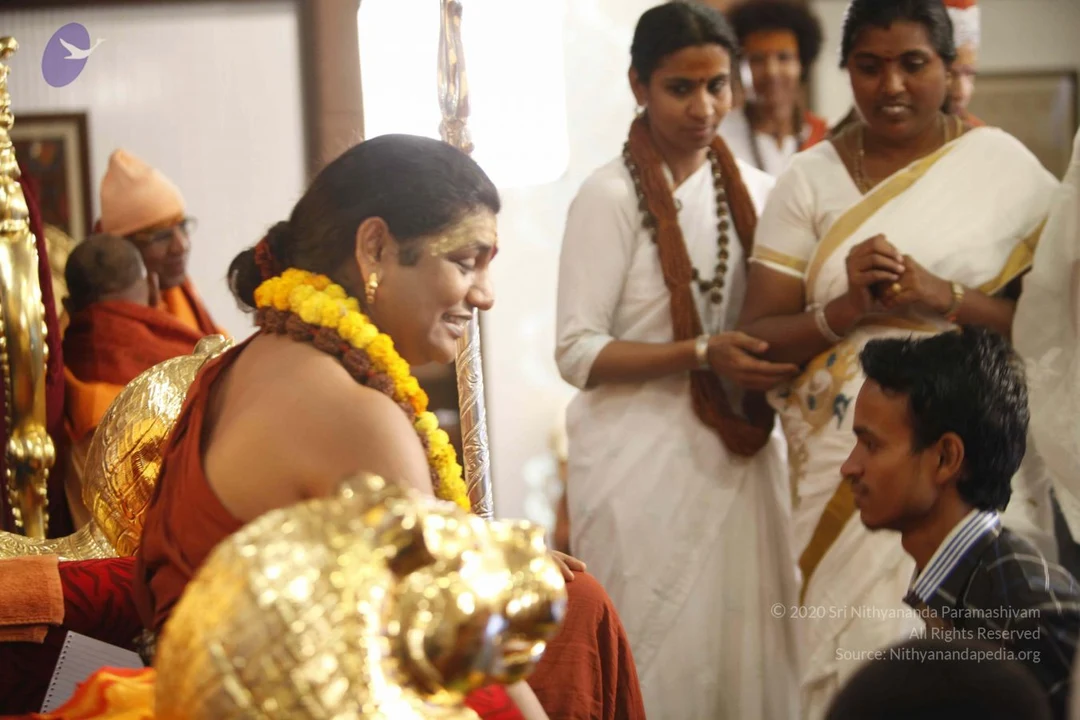
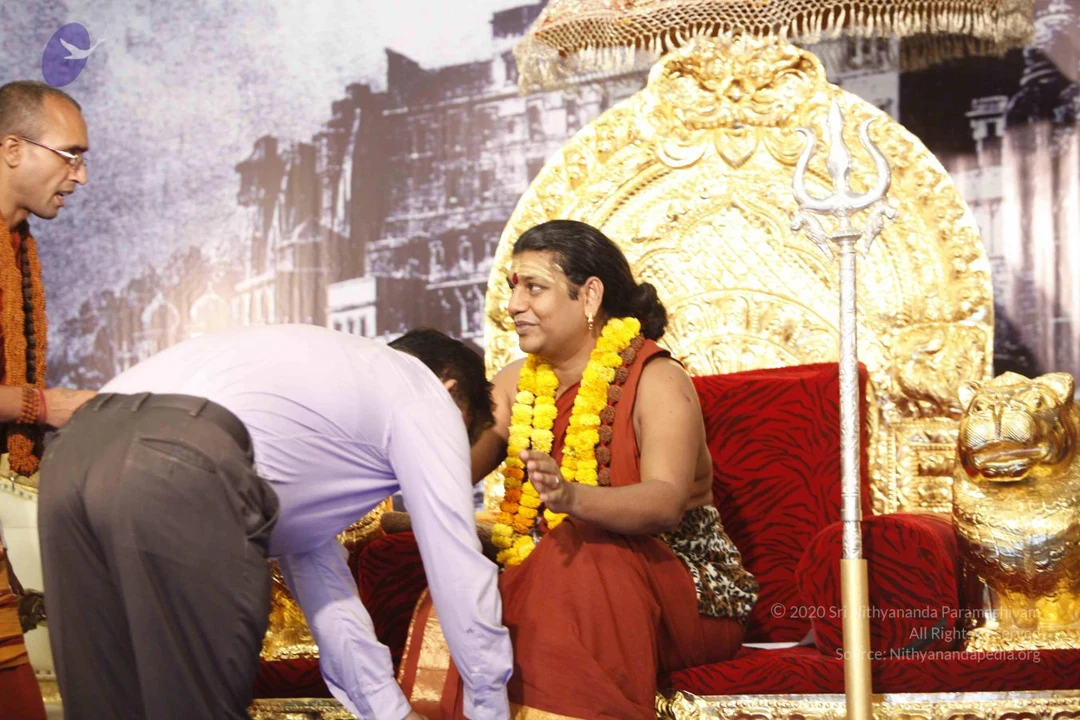
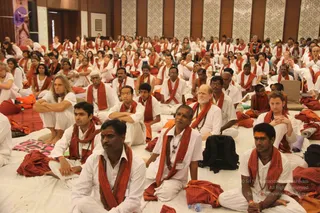
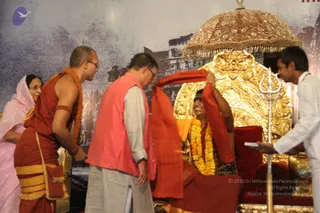
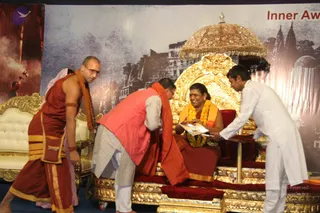
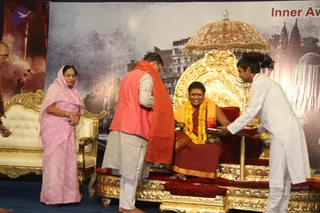
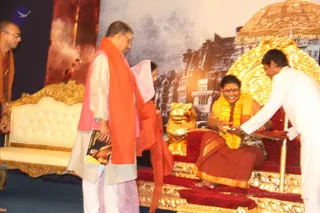
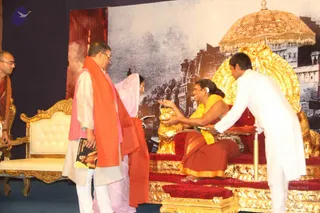
A large seated audience fills a hall with cream walls and patterned panels, sitting cross-legged on white floor mats. Most attendees wear white kurta-style clothing and orange-red shawls draped over their shoulders, with red tilak marks on several foreheads. Some hold orange cloth bags or sit beside backpacks and water bottles. A few people in the front row look toward the front of the room with attentive expressions. No individual can be clearly identified as a specific speaker from appearance, so no a person candidate is established.Photograph of a ceremonial honouring on a stage. A seated figure in a saffron-red robe and an orange-and-yellow marigold garland sits on a red-cushioned throne backed by an ornate gold canopy and gold carved panels. A man in a salmon-pink vest over white kurta bends forward and drapes a long red-orange shawl over the seated figure's head, while a bald man in an orange-red dhoti and shawl with rudraksha-style beads stands at left beside a woman in a pale pink sari. A man in white kurta at right holds a silver trishul and a small booklet. A large backdrop shows a painted city skyline.Photo from an Inner Awakening event stage. A seated man on an ornate golden throne with a red-maroon cushion wears an orange-saffron shawl and a marigold garland; he holds a booklet that a man in a red-and-grey sleeveless jacket over white kurta is leaning in to hand him. To the left, a shaven-headed priest in saffron-red dhoti and orange shawl with rudraksha beads stands beside a white-and-gold ornate chair. A man in white kurta stands at right with a microphone stand. Behind them a backdrop shows a golden parasol, a city skyline with temple spires and a banner reading Inner Awakening. Four people are visible.Photo of a stage event at an Inner Awakening convention, backdrop showing Varanasi ghats and the banner text "Inner Aw...". A seated figure on an ornate gold throne under a gold canopy wears a saffron-orange shawl, a dark red-brown robe and a yellow marigold garland, with a sweet smile. A man in an orange vest over white kurta and a saffron shawl bows toward the throne. A young man in white kurta stands at right holding a small offering tray. At left an older woman in a pink sari with a pink shawl stands beside a gold-and-white sofa. Four people are visible in total.A seated man with a yellow marigold garland and orange cloth sits on an ornate gold-and-red throne with a golden lion statue beside him, smiling as an attendant in white kurta reaches toward him with an offering. In front stands an older man in white kurta and pink vest with an orange shawl, holding a book, with a woman in an orange-and-pink sari behind him. A cream tufted gold sofa sits at left, and a backdrop shows a painted cityscape of old stone temples and ghats. A monk in orange stands at the far left edge. Multiple people are visible, the central figure is seated on a red-cushioned throne.A photograph on a stage backed by a sepia print of old Indian temple architecture and a gold umbrella. A figure with long dark hair, wearing an orange-red robe and a yellow garland, sits on an ornate gold-and-red throne and reaches toward a visitor. A man in a white kurta and a woman in a pink sari with an orange shawl stand before the throne; the man in the orange shawl holds a booklet. A younger man in white bends forward at the right, and a robed attendant in orange stands at the far left beside a gold-trimmed cream chair. The figure on the throne has distinctive long hair and orange-red clothing with a yellow garland, which is a person candidate seated in a position of honour, though the appearance is not fully clear.

Inner-Awakening

142 photosSource gallery
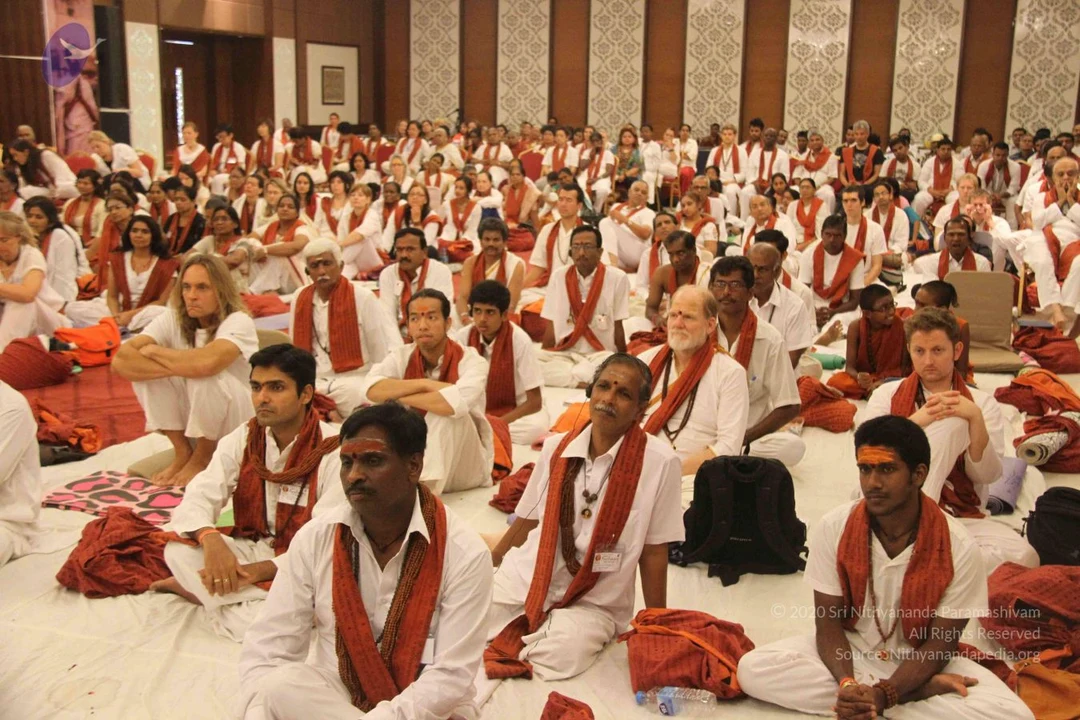
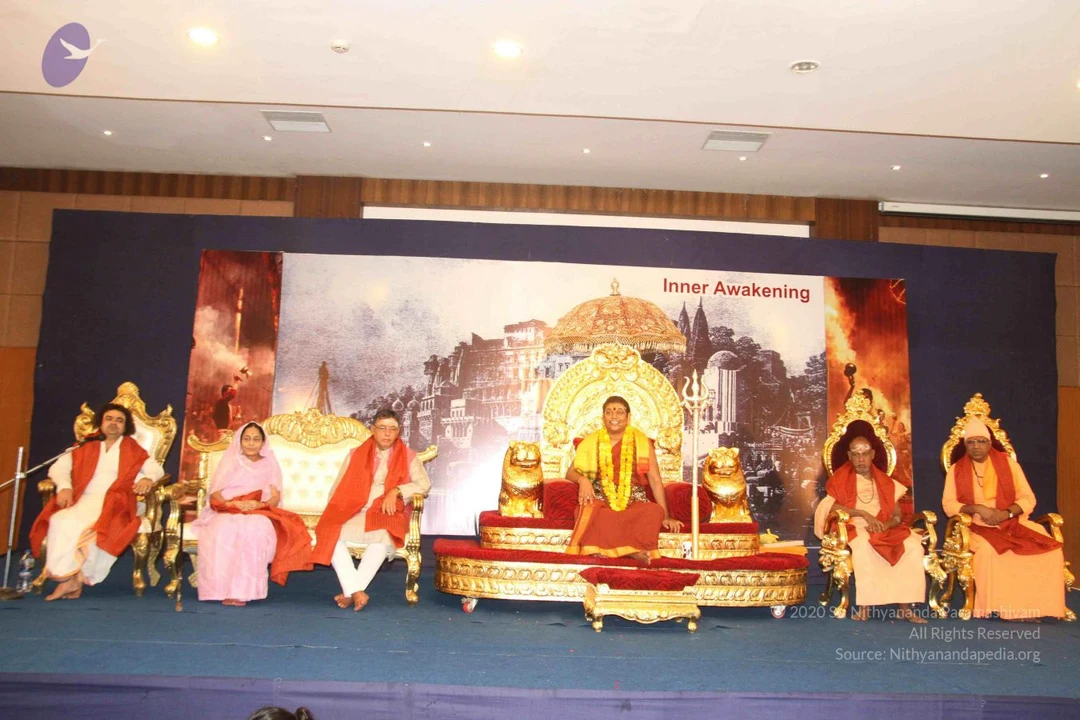
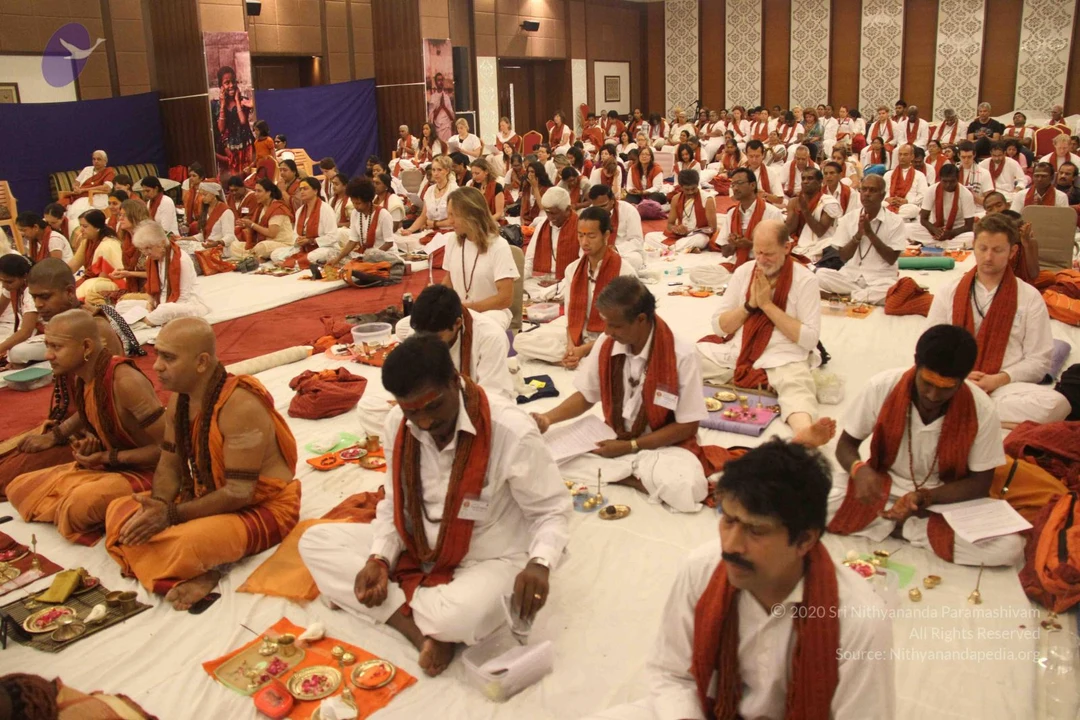
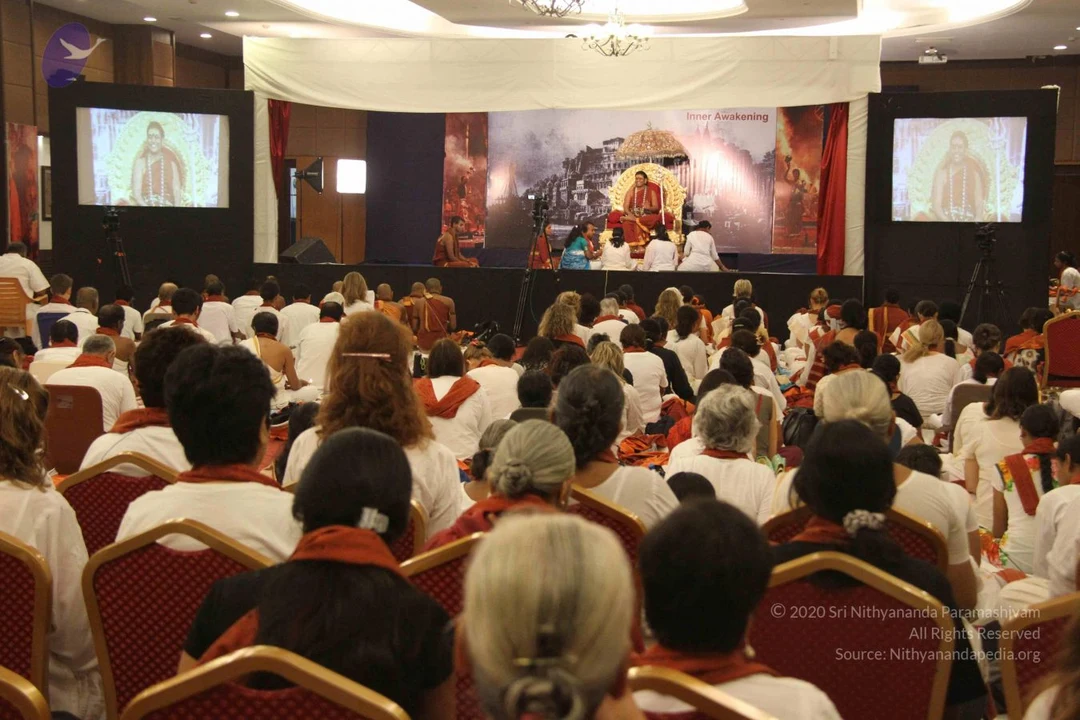
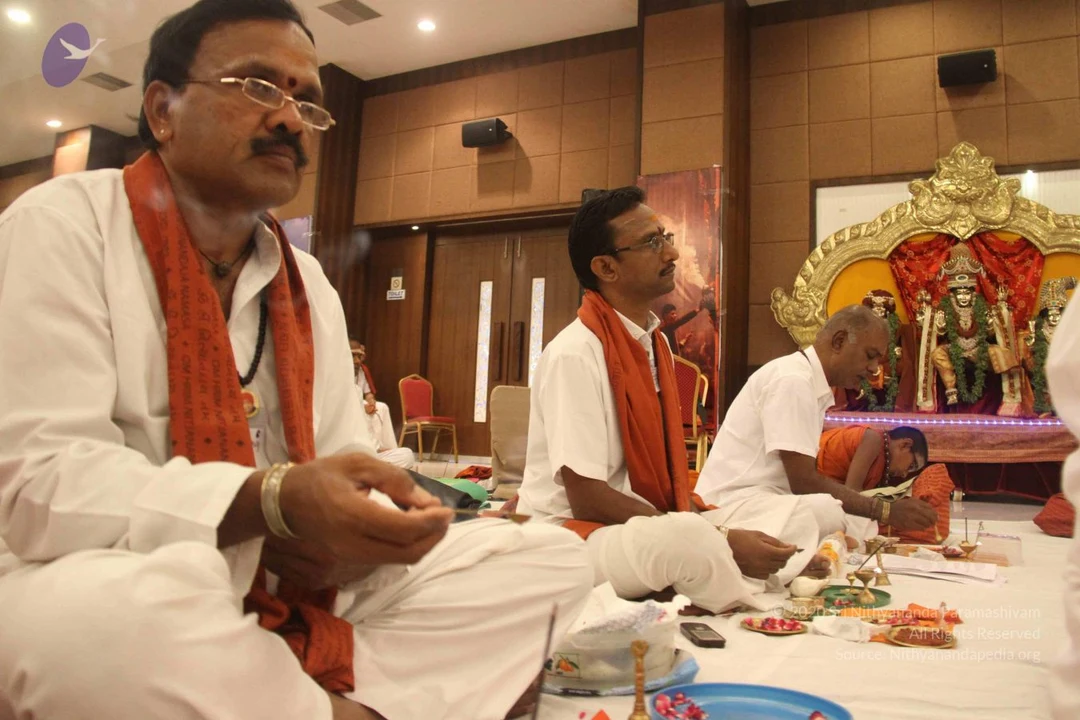
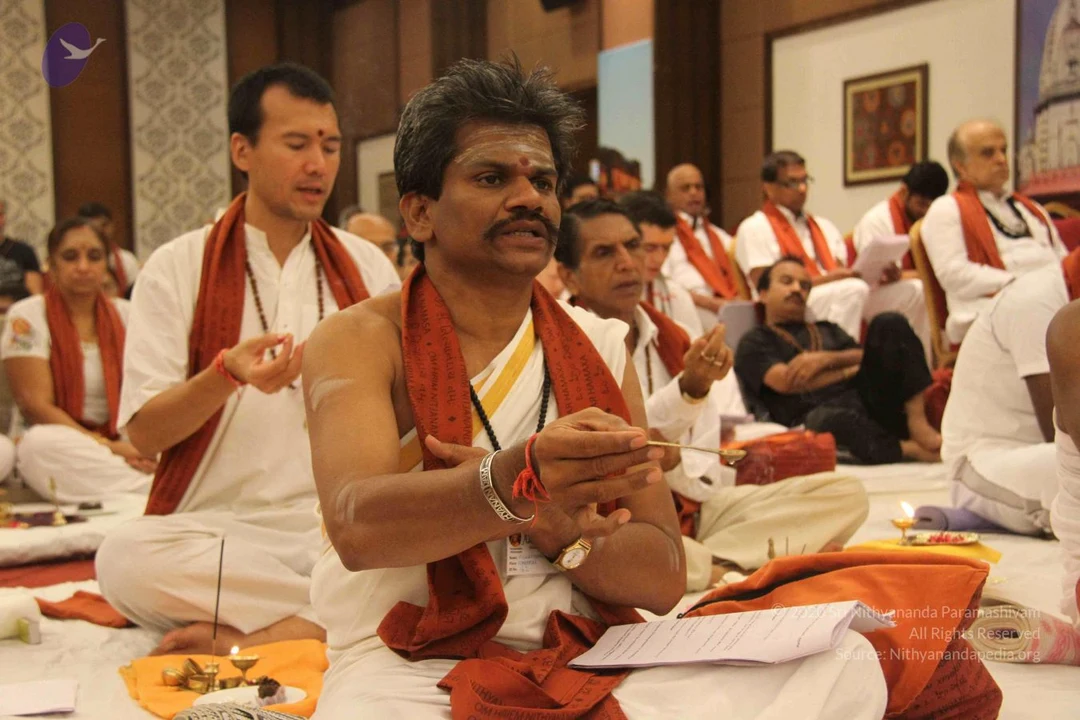
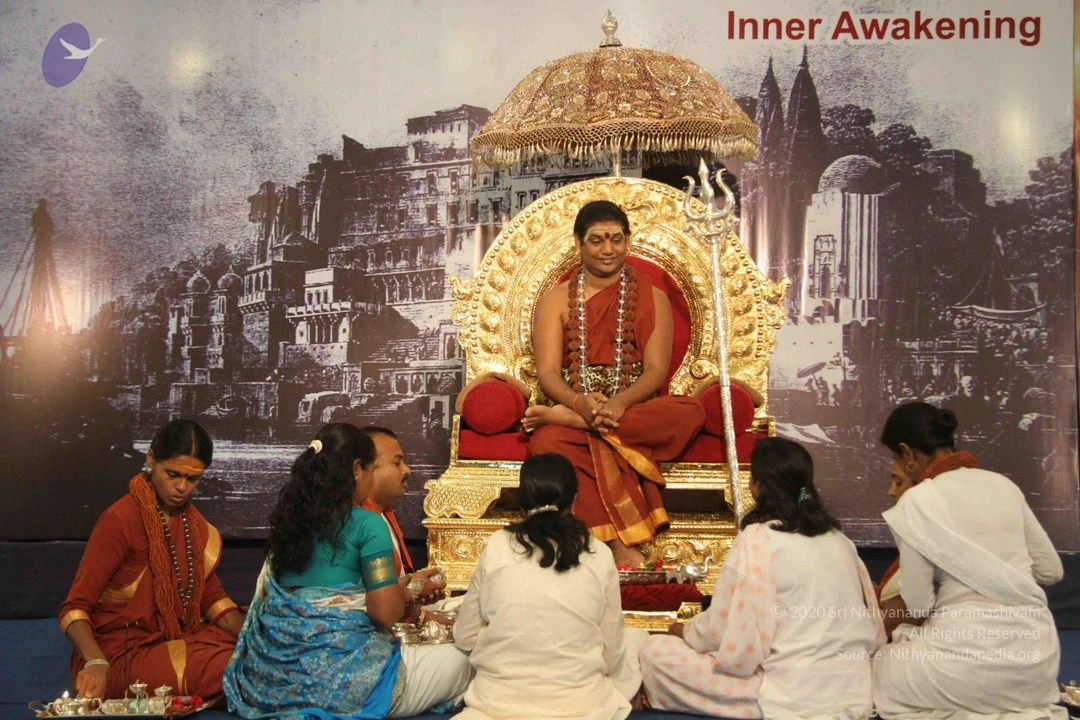
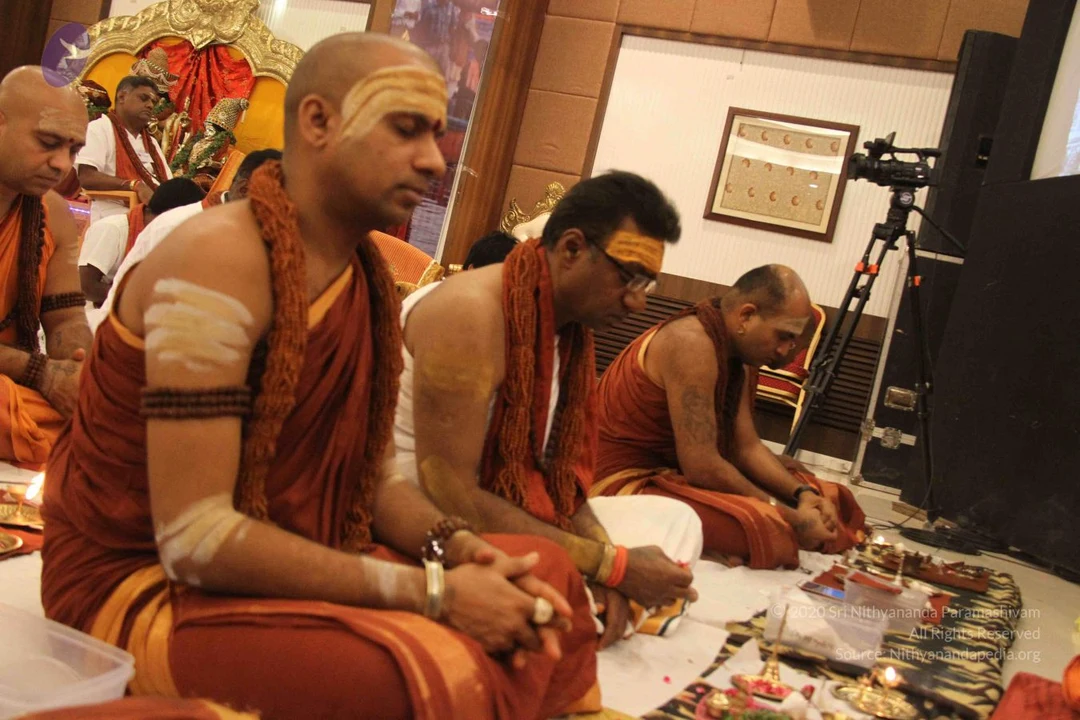
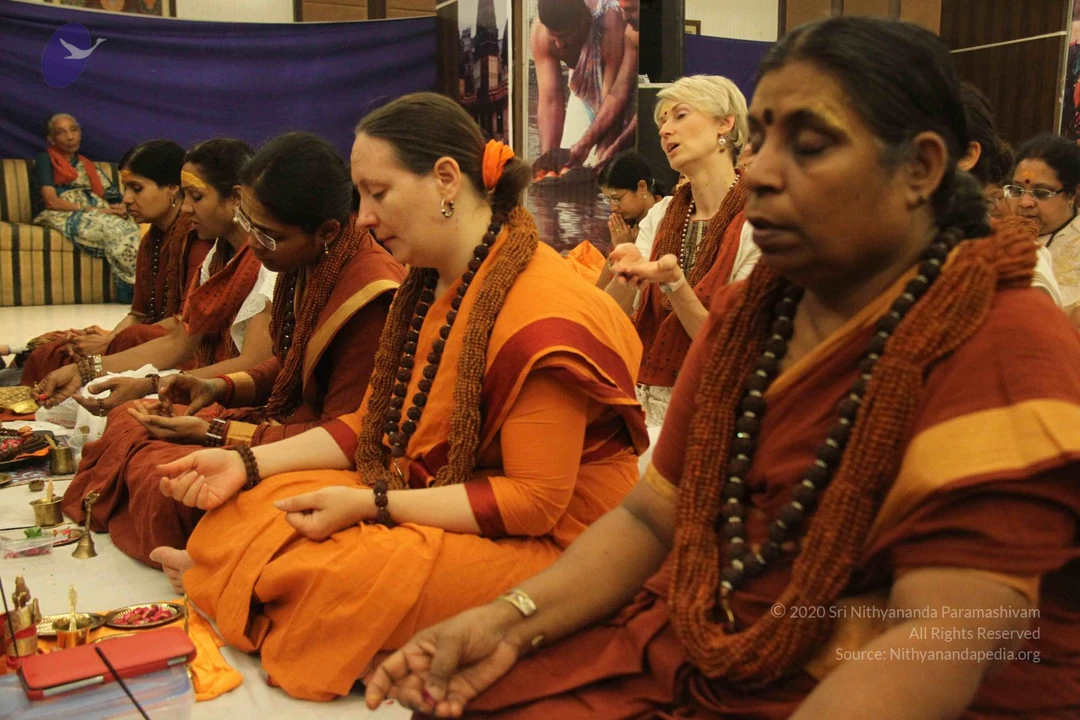
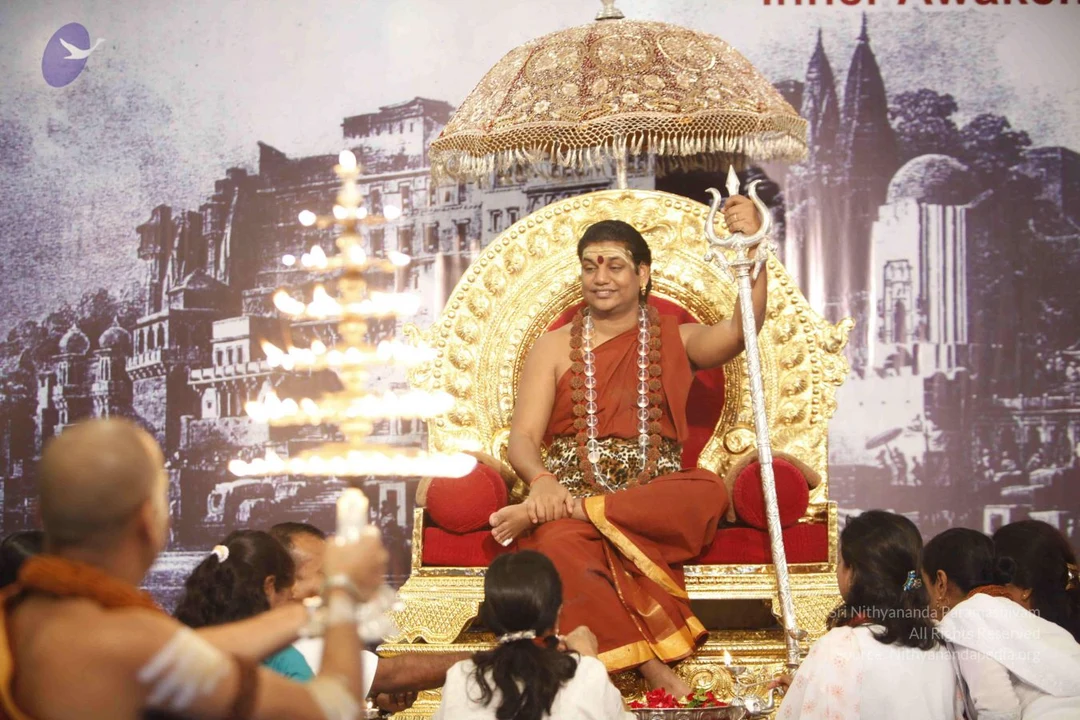
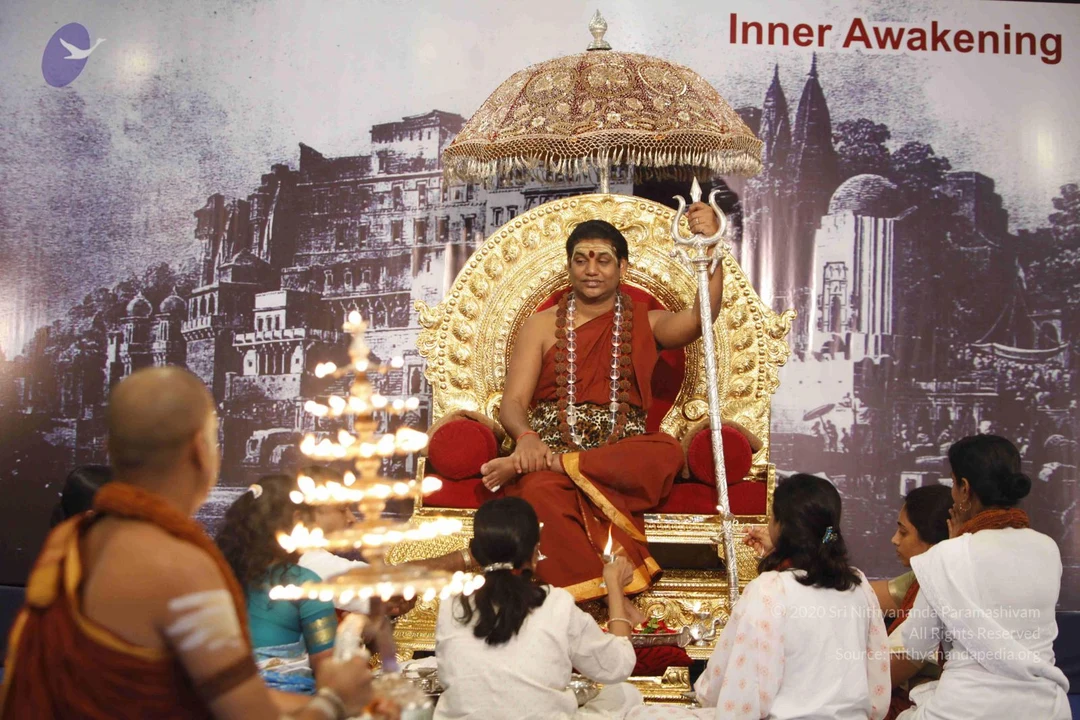
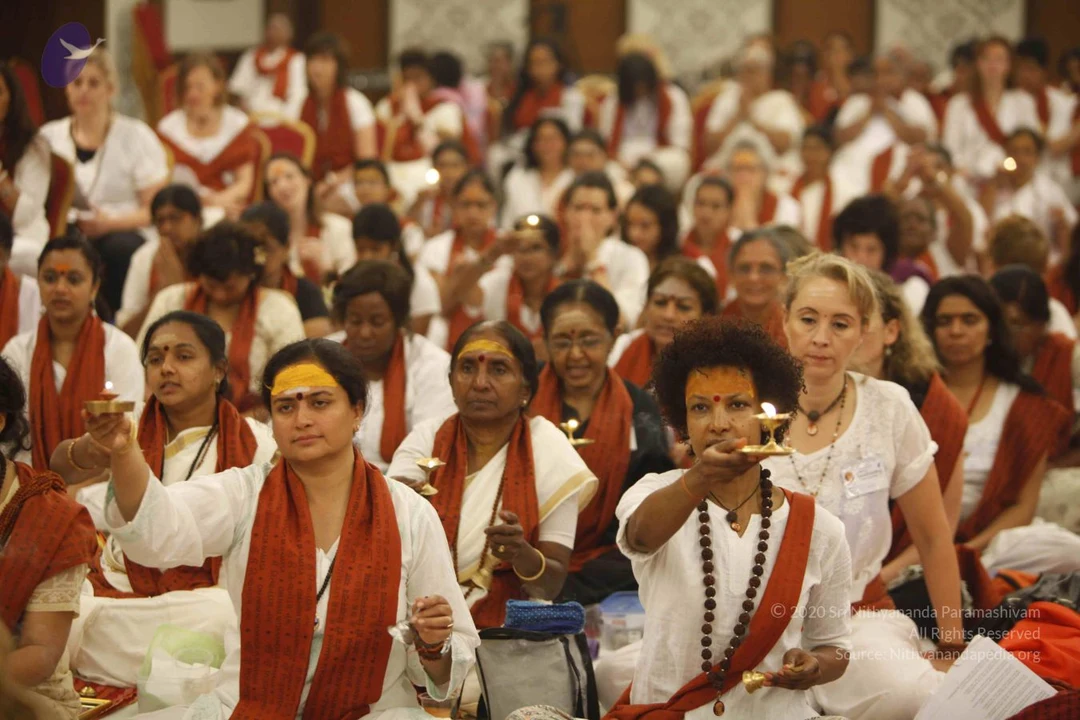
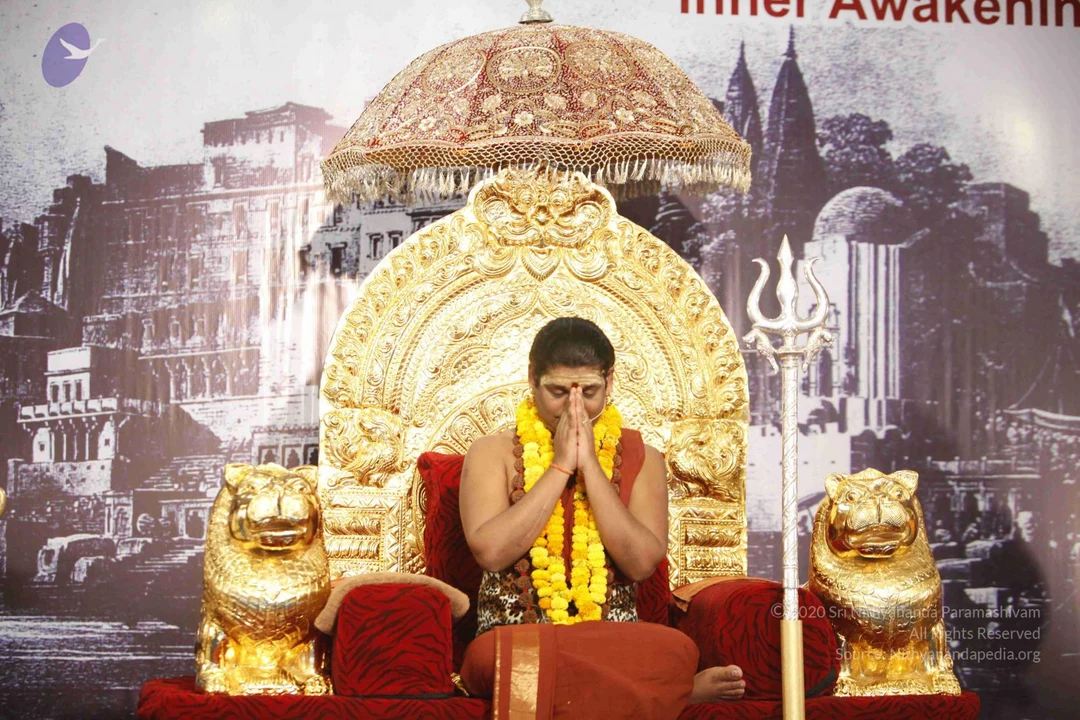
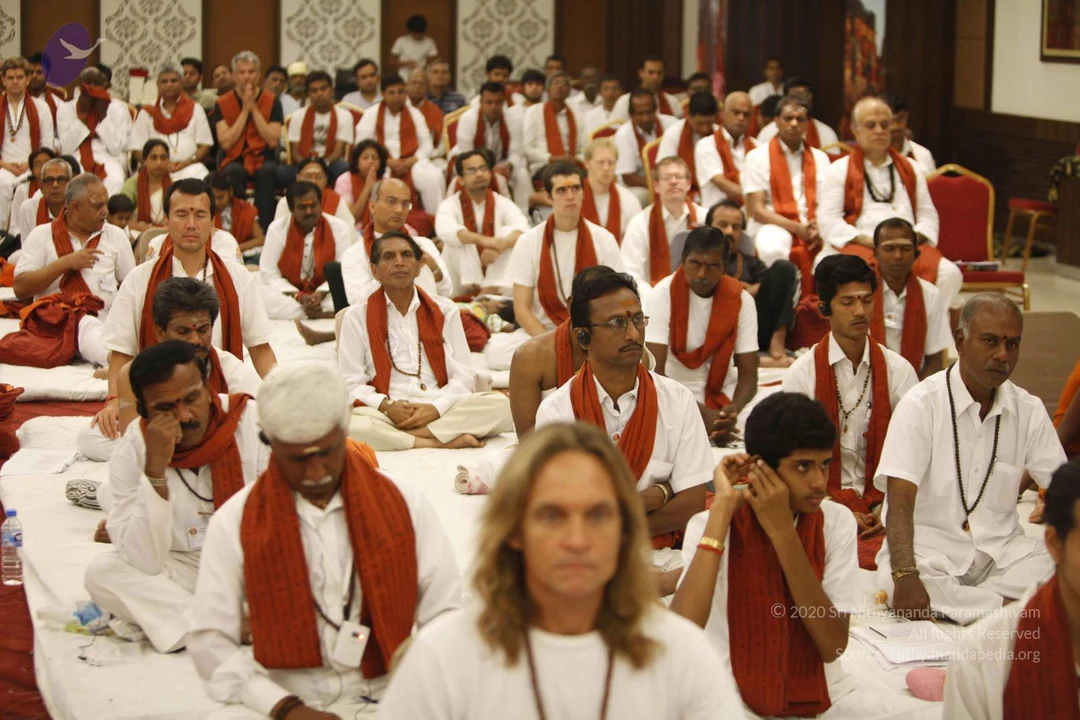
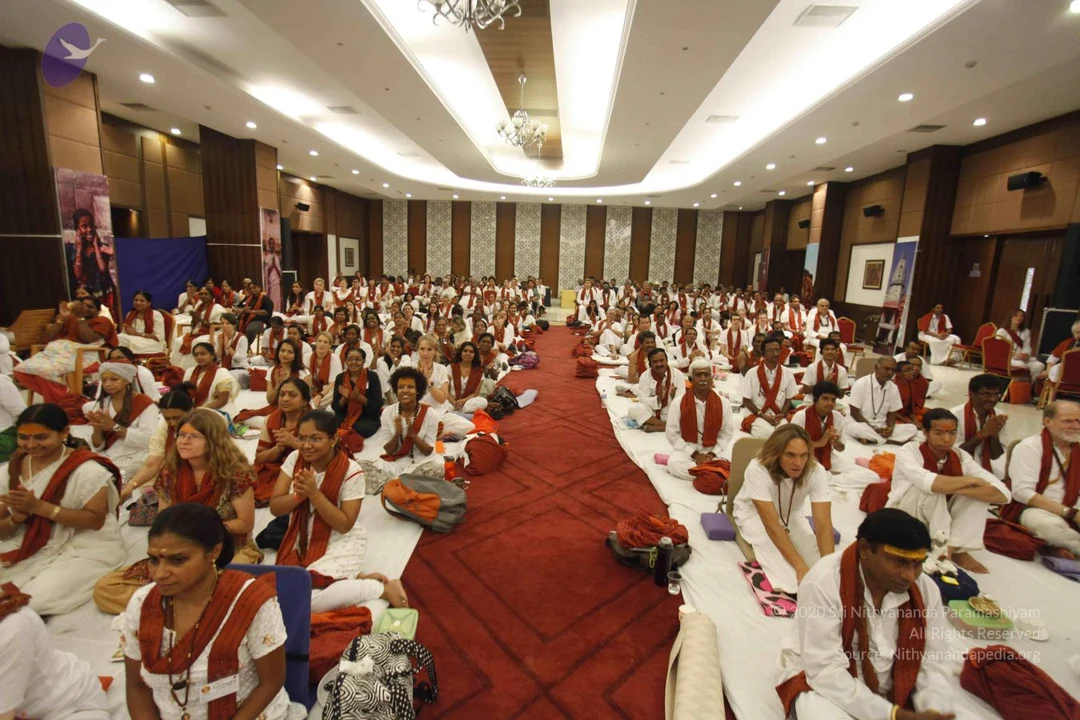
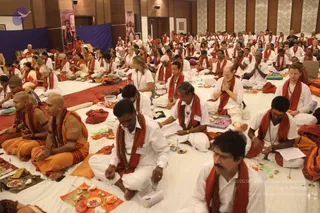
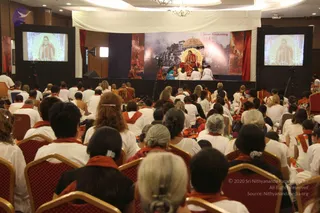
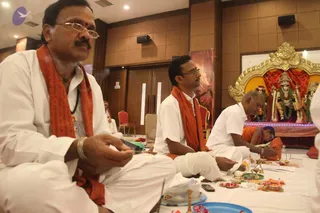
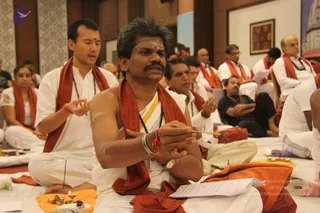
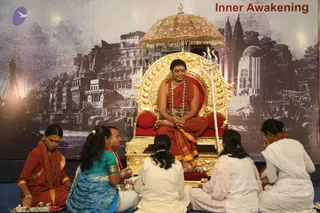
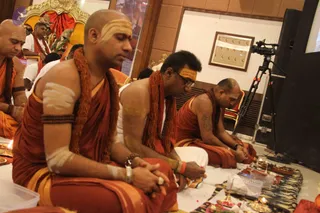
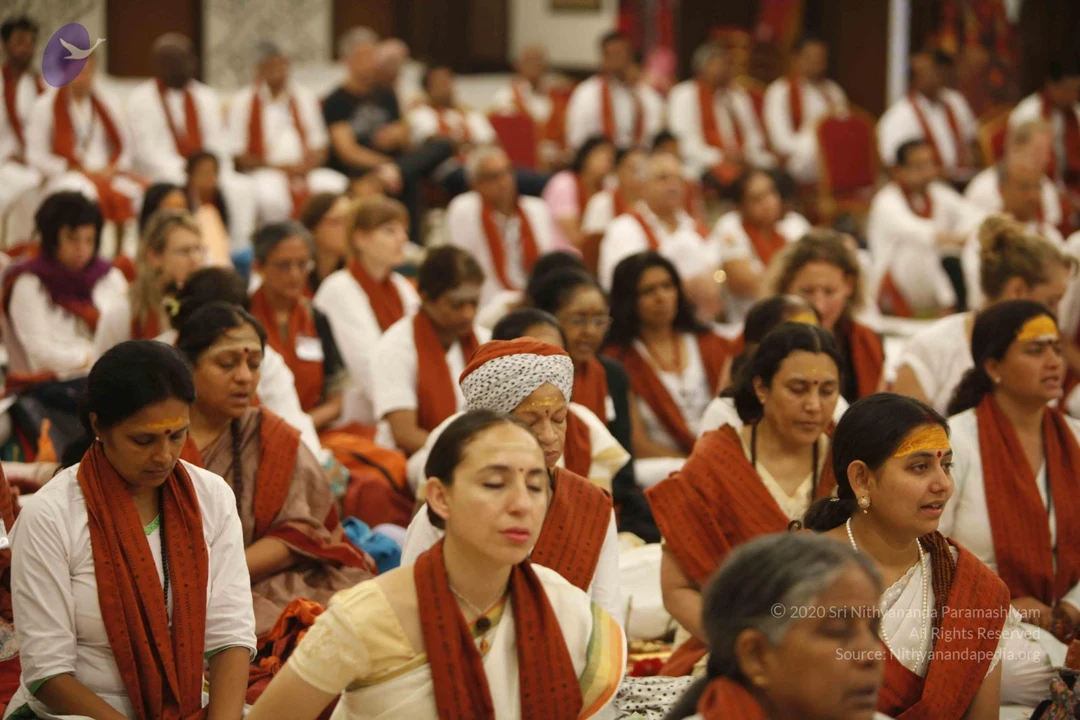
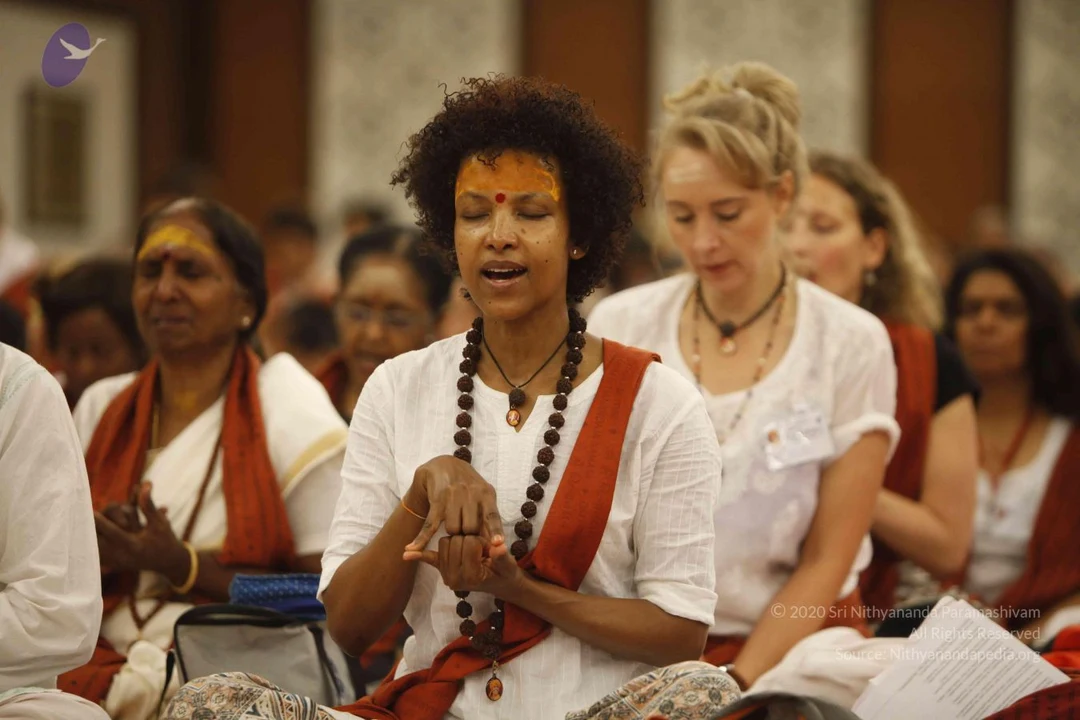
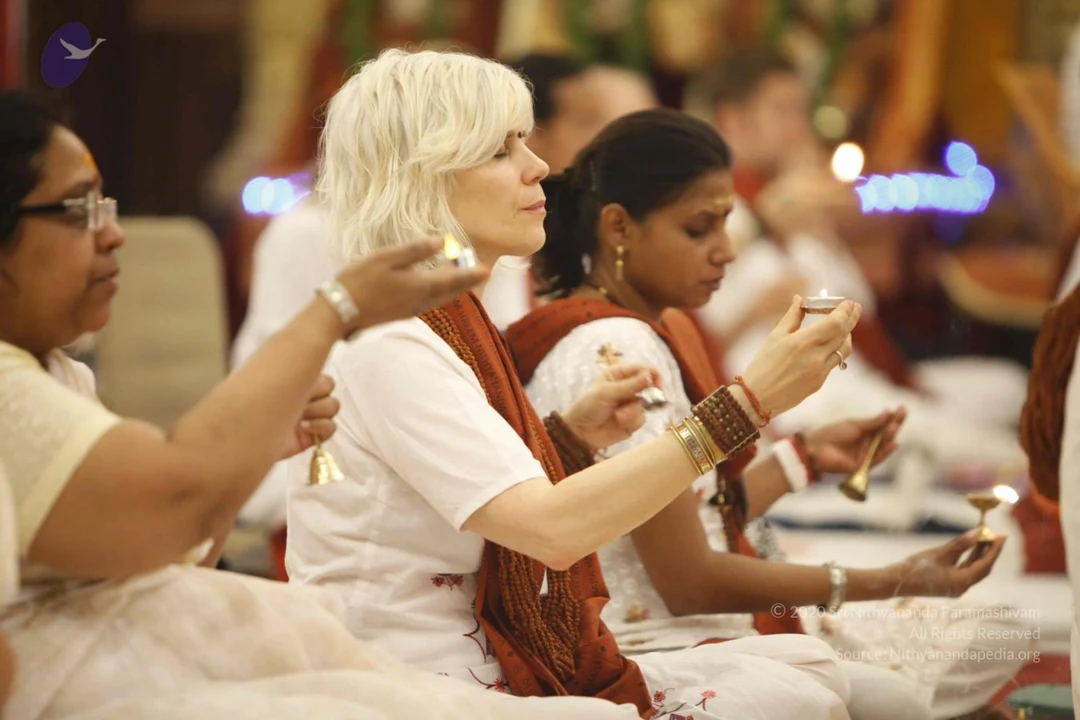
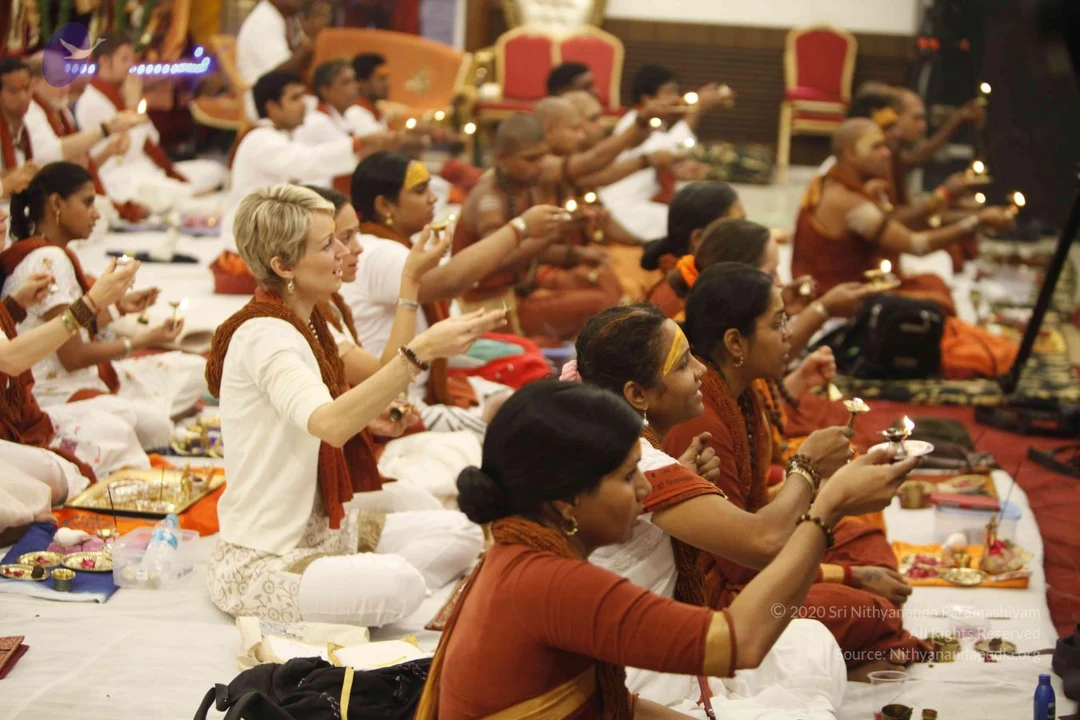
A large hall filled with seated devotees in white clothes and orange-red shawls, sitting cross-legged on white sheets in rows. Several people hold palms together in anjali, and brass plates with flowers, fruit, small lamps and kumkum sit on the floor before them. On the left, two bald priests in saffron-orange robes sit near the front. Maroon and purple banners with photographs hang on the far wall, and the room has patterned white panels. Crowded but no clear head of the event is distinguishable, so no identity is claimed.A large audience of devotees sits in red-cushioned chairs facing a stage at an indoor hall, seen from behind. Many attendees wear white clothing with red or orange shawls. On stage, a seated figure in red robes sits on an ornate golden throne with a golden canopy, with attendants in white nearby, and a person in orange near a ritual setup. Two screens show a figure in an ornate yellow-and-green frame. A banner behind the stage reads Inner Awakening and shows a riverside ghat scene with fire. Overall this is a seated satsang or discourse session.Photograph of men seated on a white cloth in a hall performing a puja. Three prominent men in white dhoti-and-shirt clothing wear orange-saffron shawls; the nearest holds incense smoke near his hands, the middle one sits with folded hands, and the man on the right tends brass items. Behind them, a gold-framed throne-like shrine holds a deity murti decorated with red cloth and green garlands. Brass oil lamps, a kalasha-like vessel, flower petals on a blue plate, and a mobile phone rest on the floor. A tall banner stands by the wall, and a small figure in orange sits at the shrine base.Seated group of devotees in white dhotis and orange-red shawls with printed script sit on white floor mats in a hall, performing a ritual. In the foreground a man with short dark hair and a moustache, wearing a white dhoti, orange shawl, rudraksha mala and a bracelet, holds a small brass spoon or ladle over his palms. Before him lie an oil lamp, a brass bowl, incense sticks and a paper sheet. Other participants nearby hold papers or sit with folded hands, and an oil lamp sits on a tray at the right edge. The setting has patterned wall panels and a framed picture.A photograph of a seated figure on an ornate gold throne with a gold canopy and a silver trident leaning beside it, in front of a large black-and-white backdrop of old Varanasi ghats and temples with the words Inner Awakening in red. The seated figure wears an orange-saffron robe, a rudraksha mala and a red bindi, with hands joined in lap. Five women and men sit on the floor before the throne in front of brass puja plates and oil lamps: one in orange with a red shawl, one in a blue sari, one in a white outfit, one in a pink-patterned white outfit, and one in white. The setting suggests a satsang or discourse session. Printed copyright text appears on the image.A photograph of several men seated on a white cloth in a ceremonial room, dressed in saffron-orange robes and orange-brown shawls with rudraksha-style beaded strands. The nearest man has pale paste markings on his arms and a yellow-and-white forehead mark, with eyes closed and hands folded. Beside him a bespectacled man with a yellow forehead mark and another shaved-headed man sit in meditation, with brass oil lamps and puja items on a patterned mat in the foreground. Behind them a gilded throne draped in red fabric and a seated figure in white are partly visible, with a video camera on a tripod at right and a framed wall picture behind.
May 20 2014

1 photoView all
A bar chart titled "IA May 2014 Health Recoveries" shows eleven orange vertical bars on a white background, each labelled with a health condition and a percentage. The bars descend in height from left to right, with the highest bar around 88% and the lowest around 74%. Category labels run along the horizontal axis beneath the bars. No people are visible in this graphic.