Skip to content
Saturday

19 May 2012

Meditation Technique For Centering

Dated photos
205
Source pages
1
Media
4
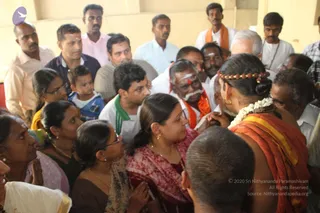
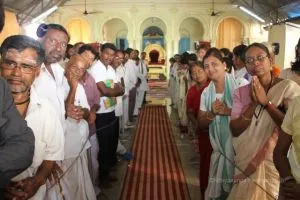
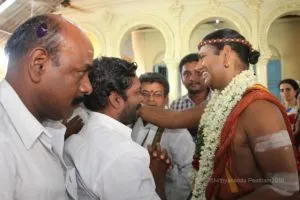
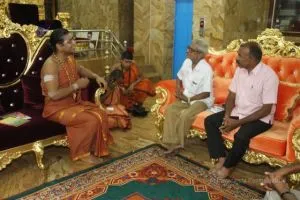
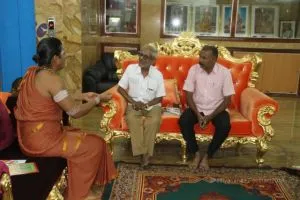
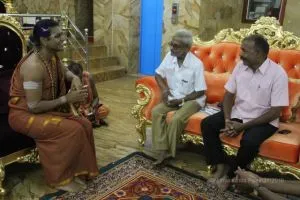
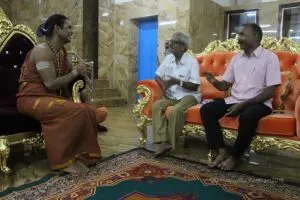
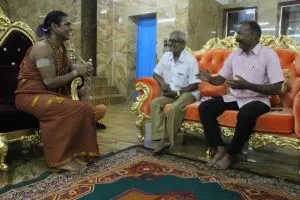
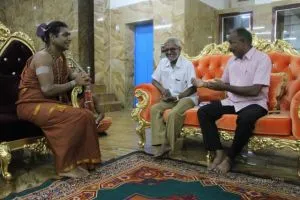
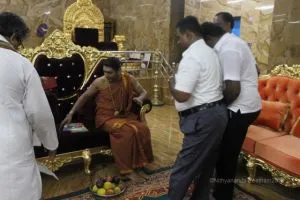
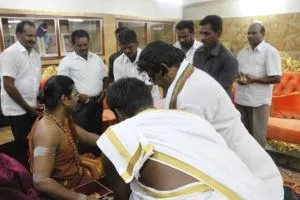
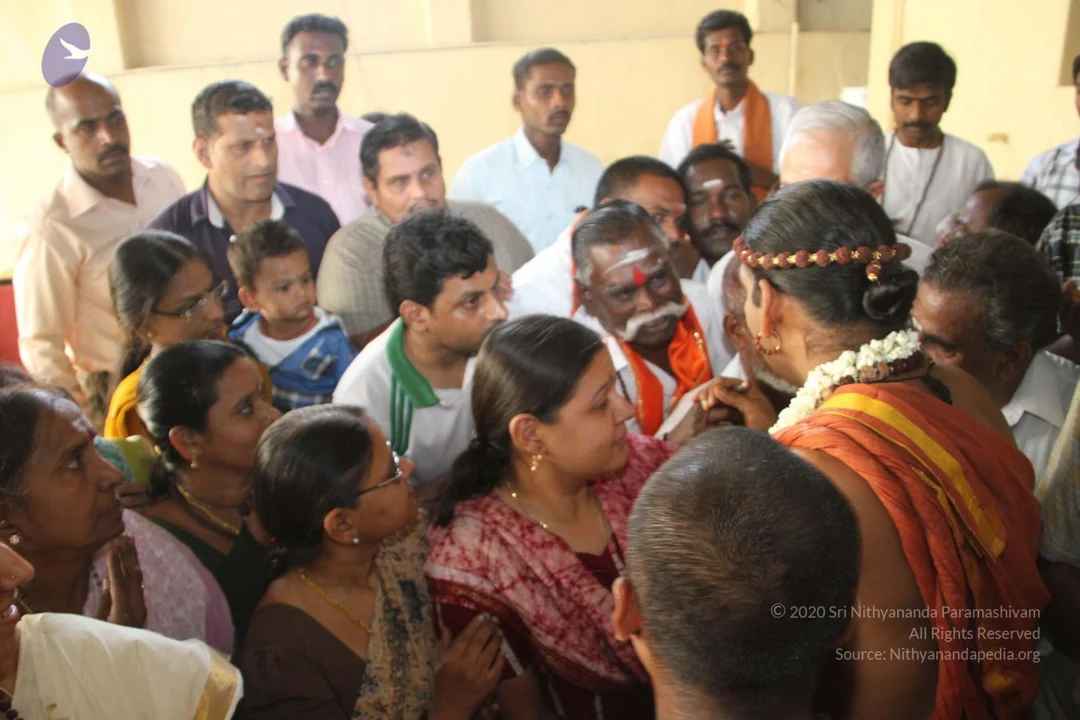
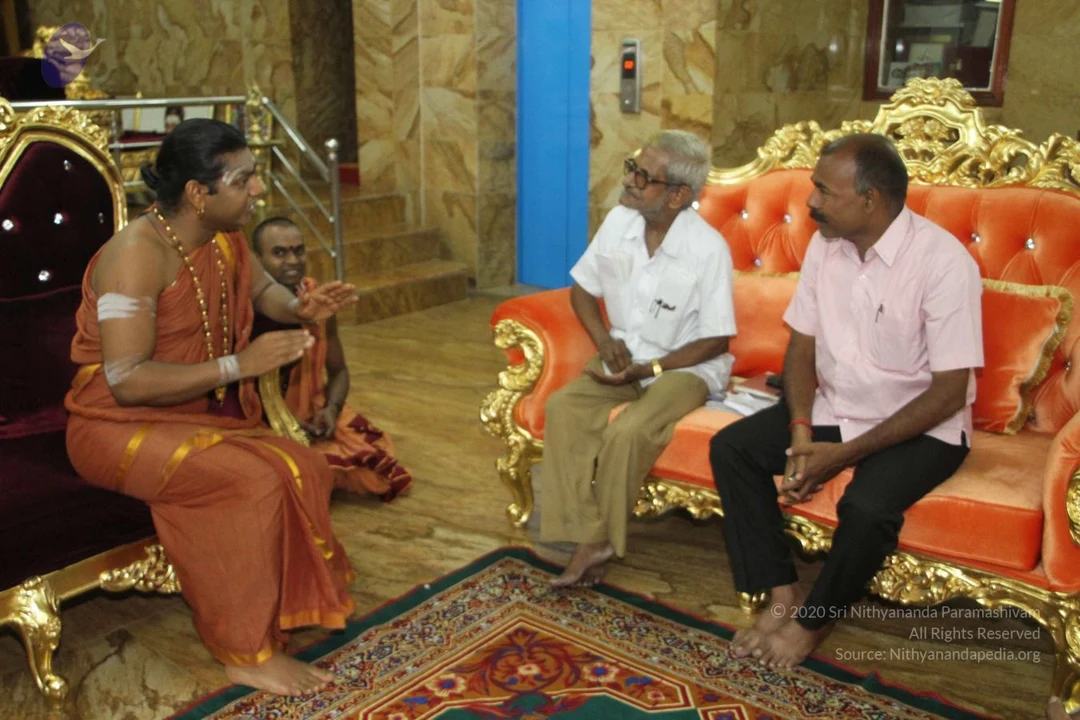
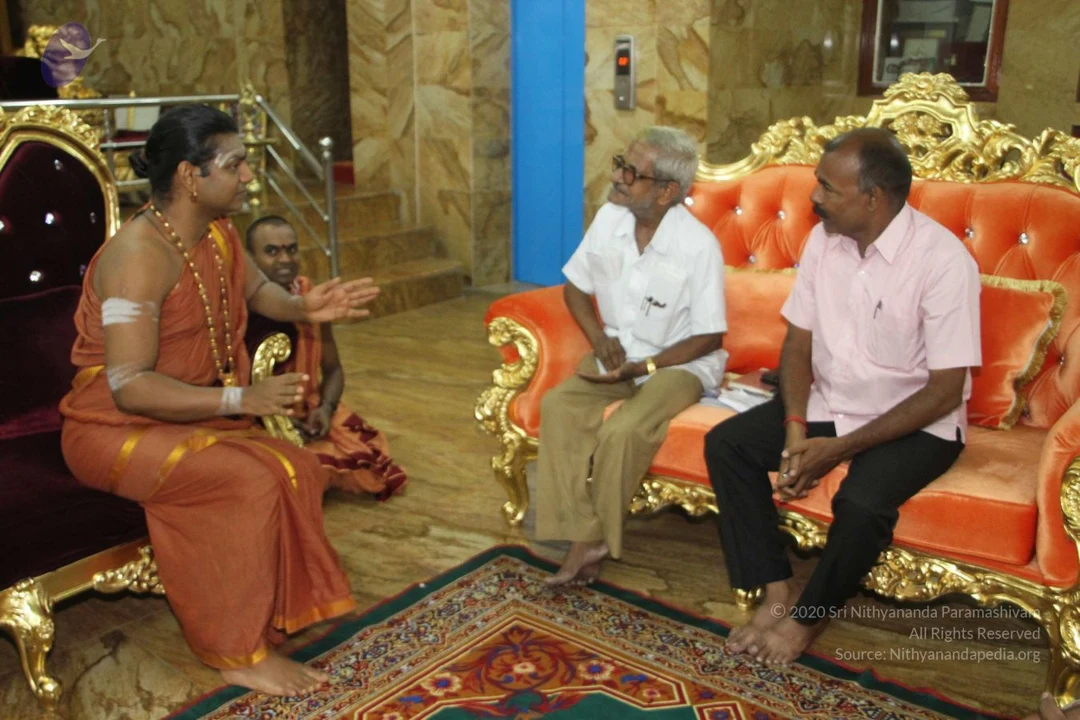
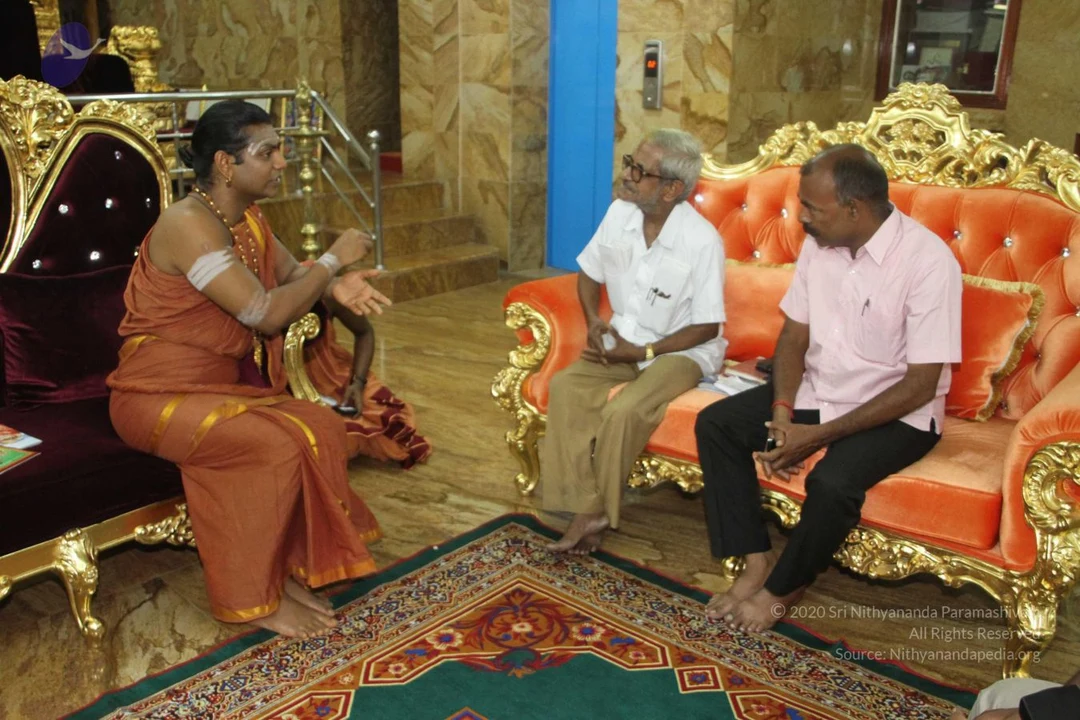
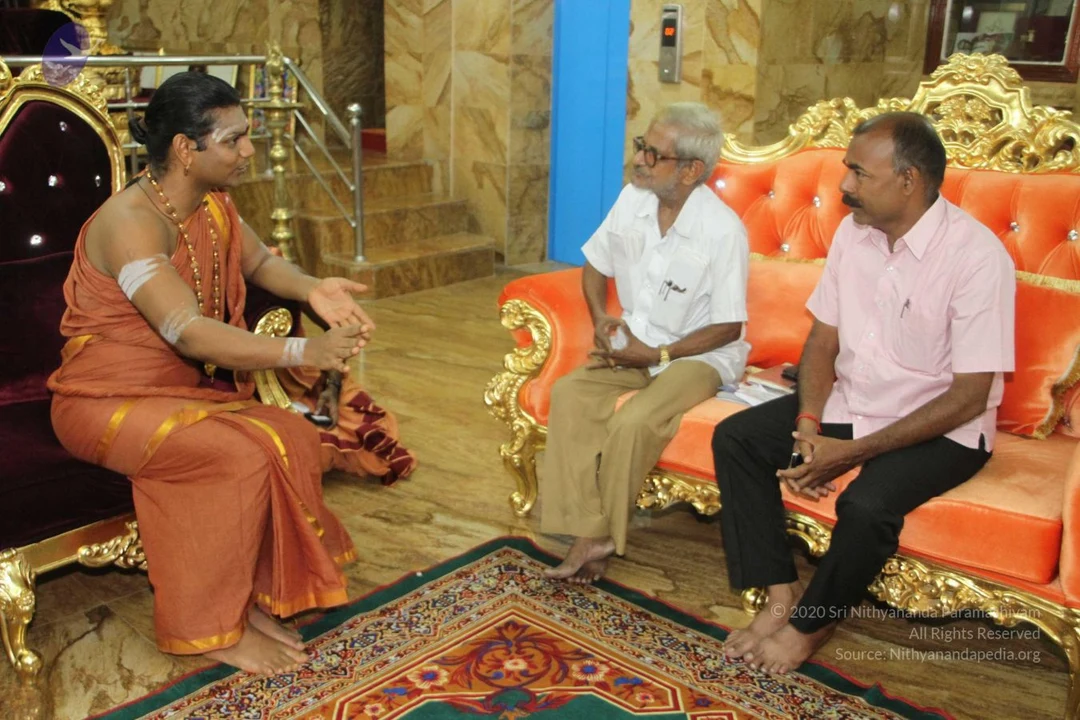
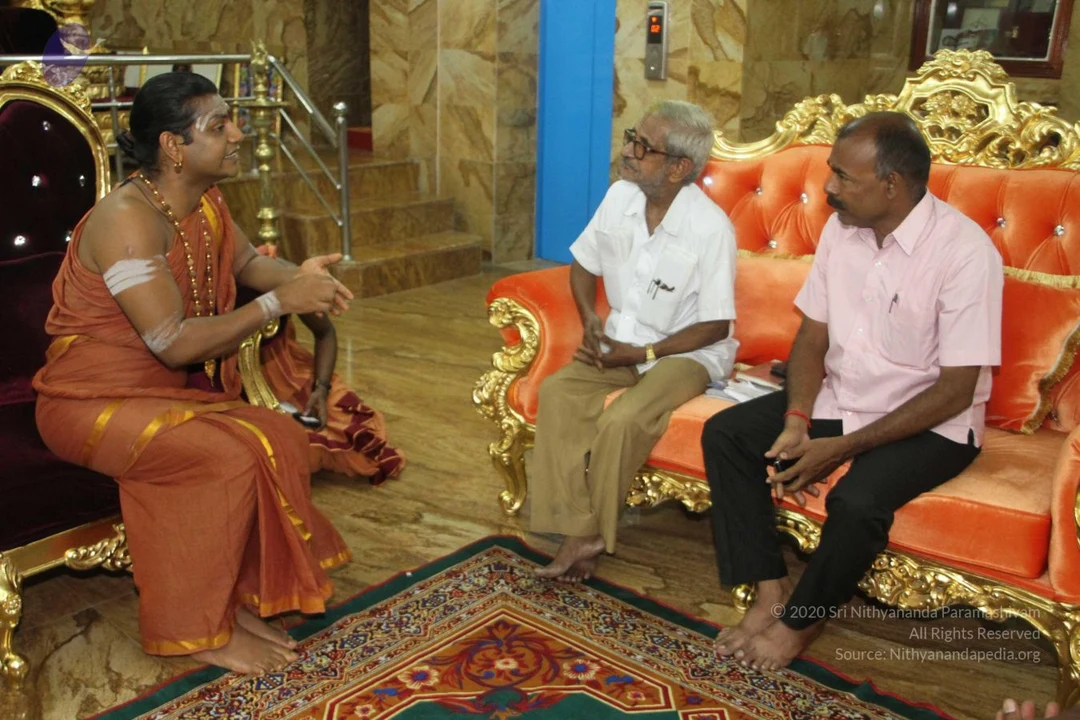
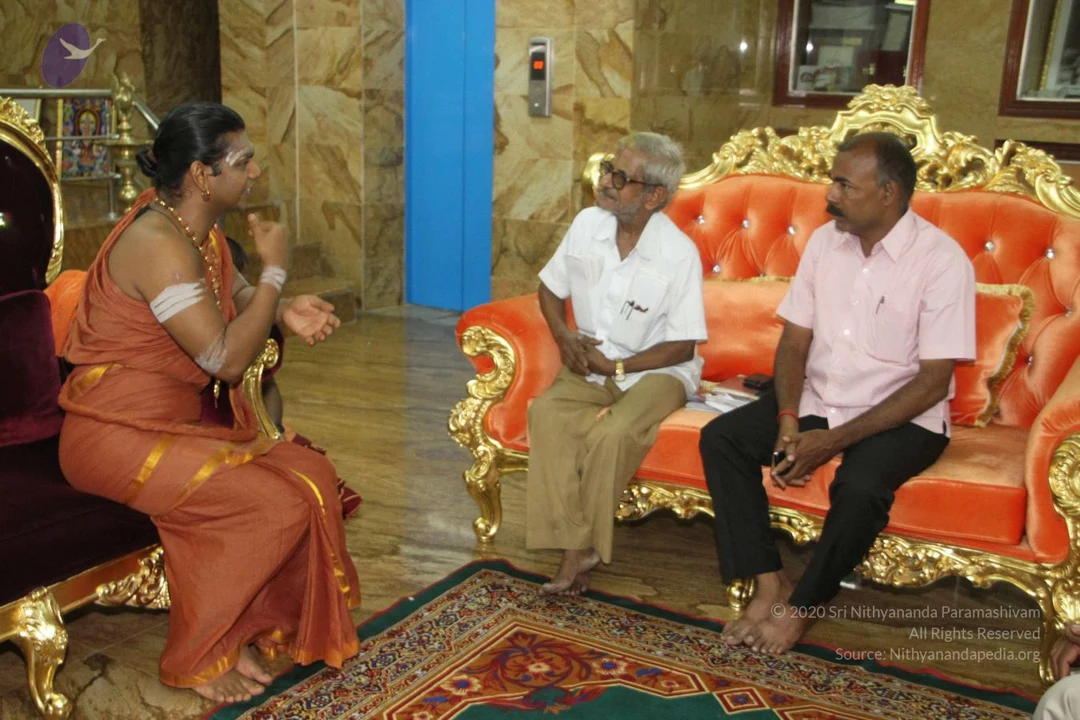
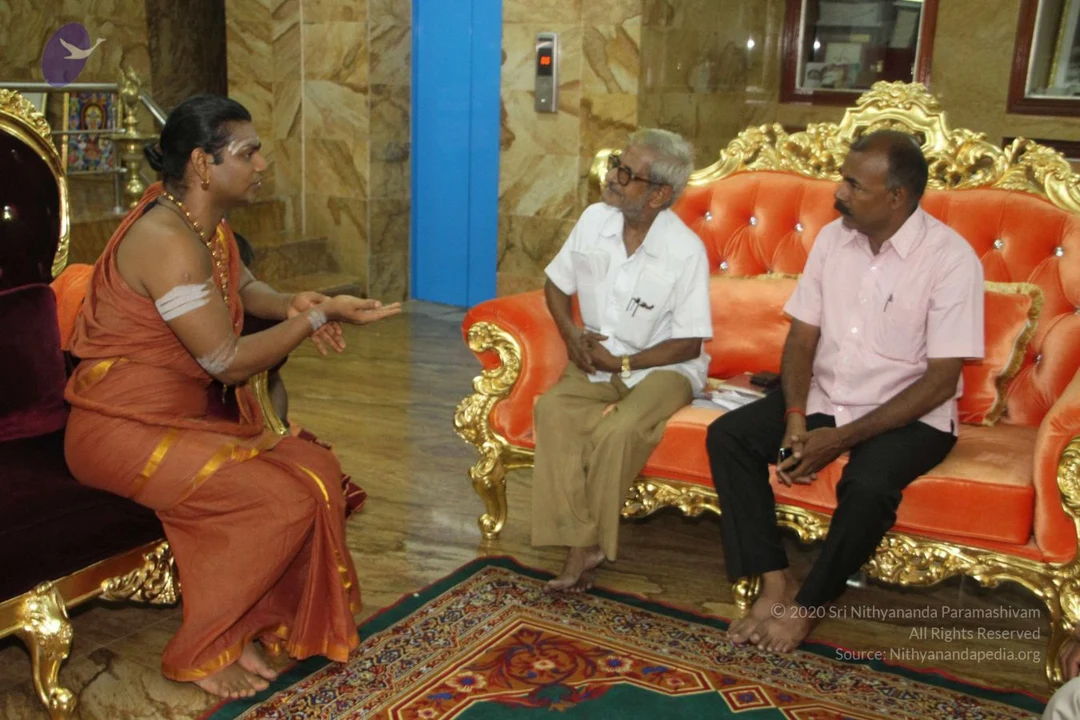
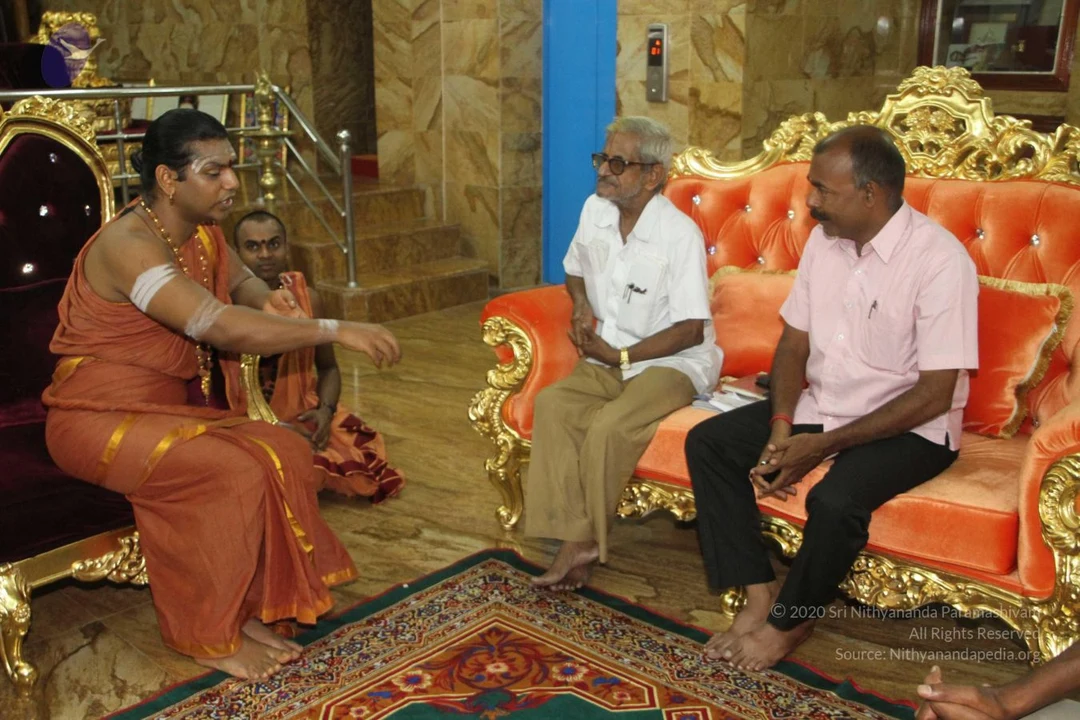
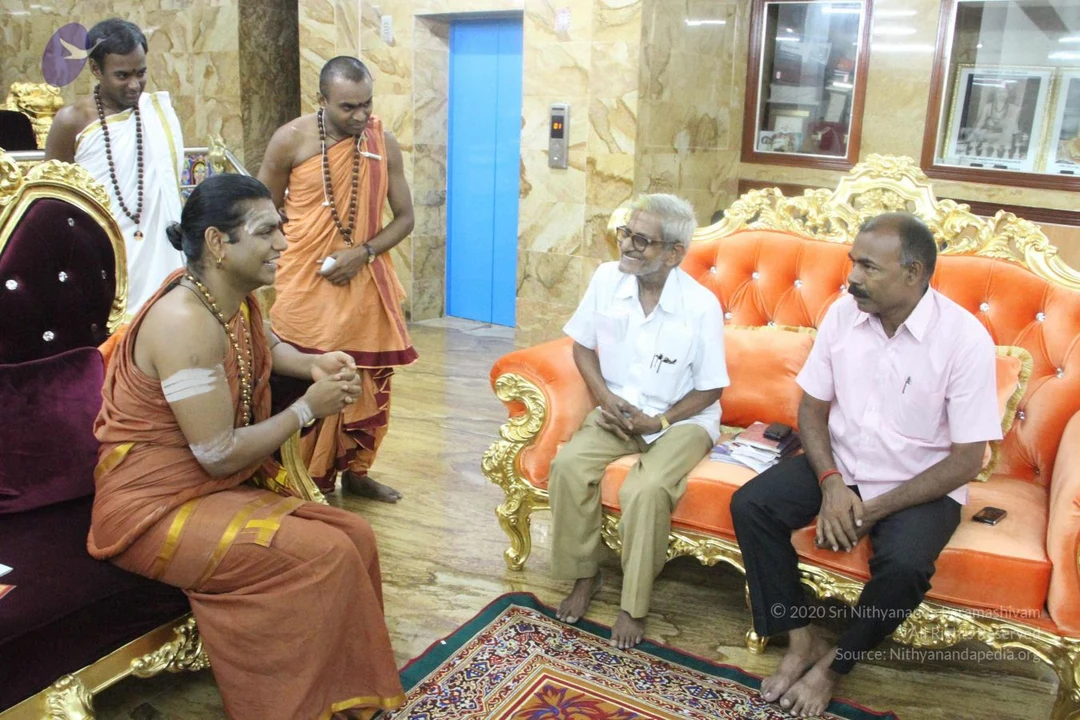
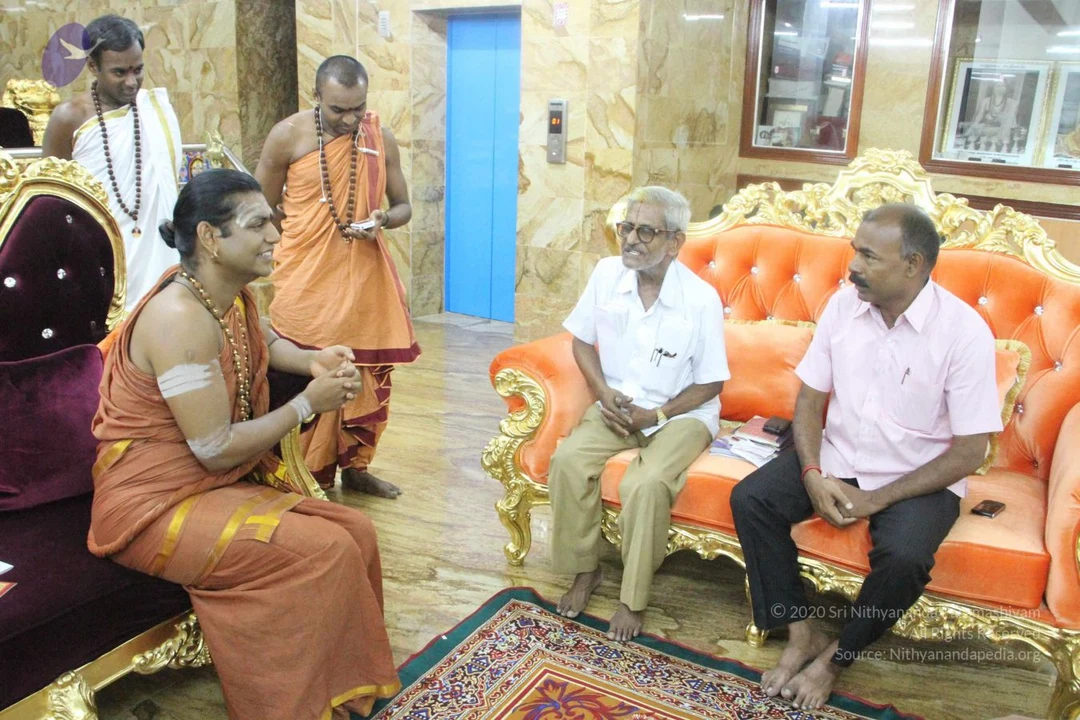
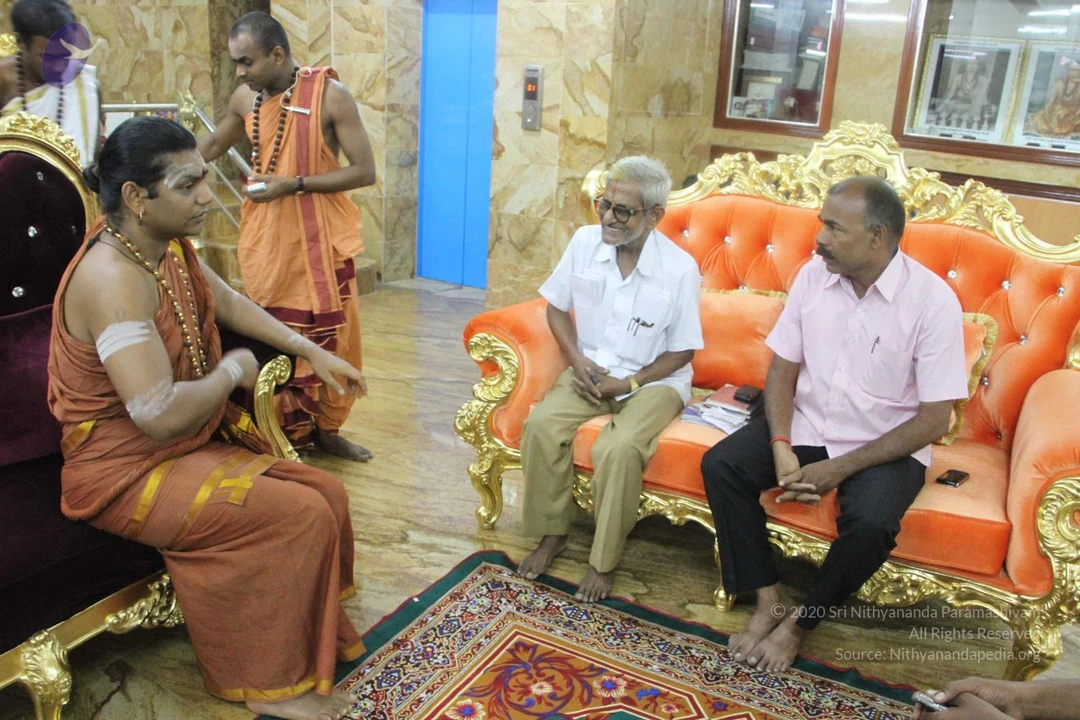
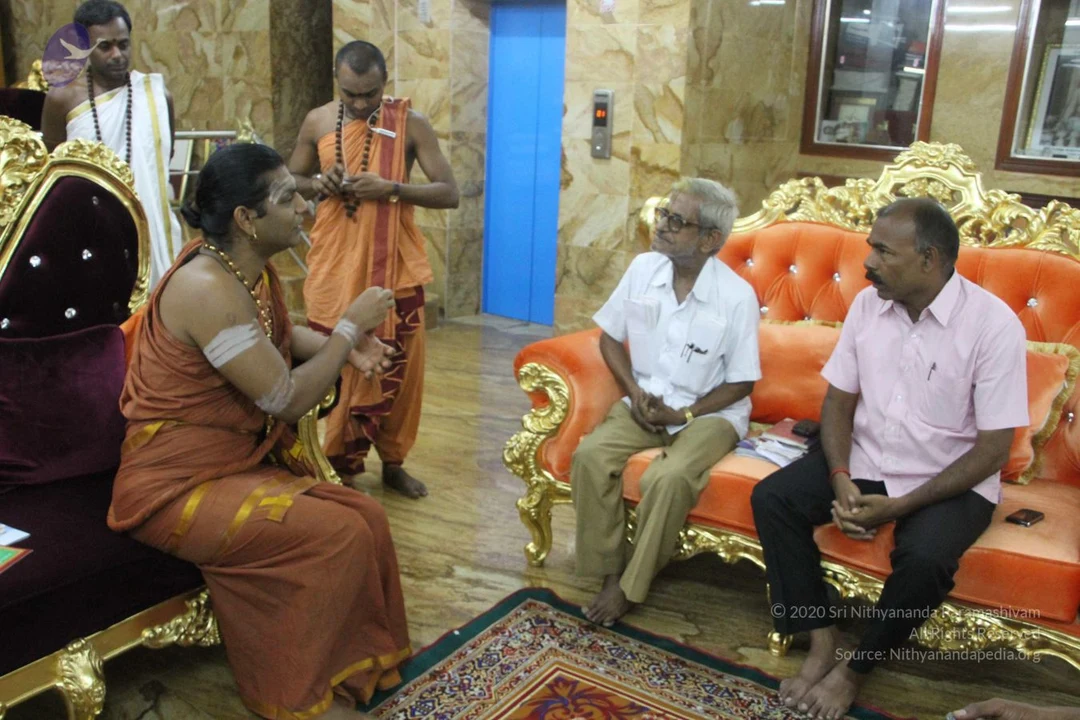
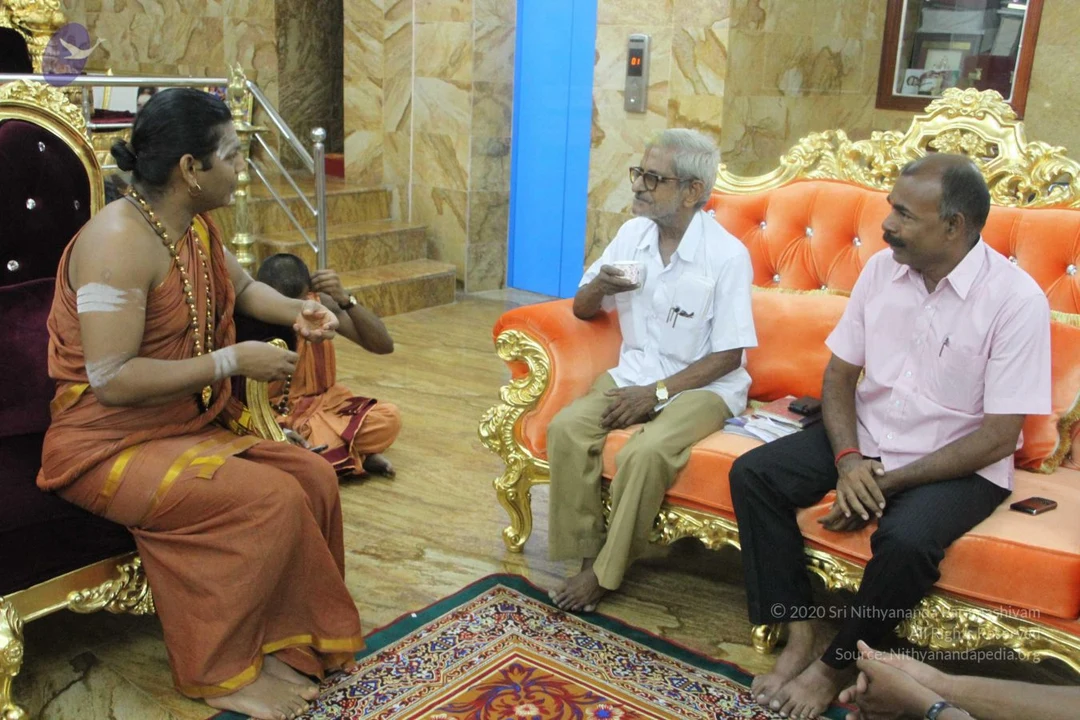
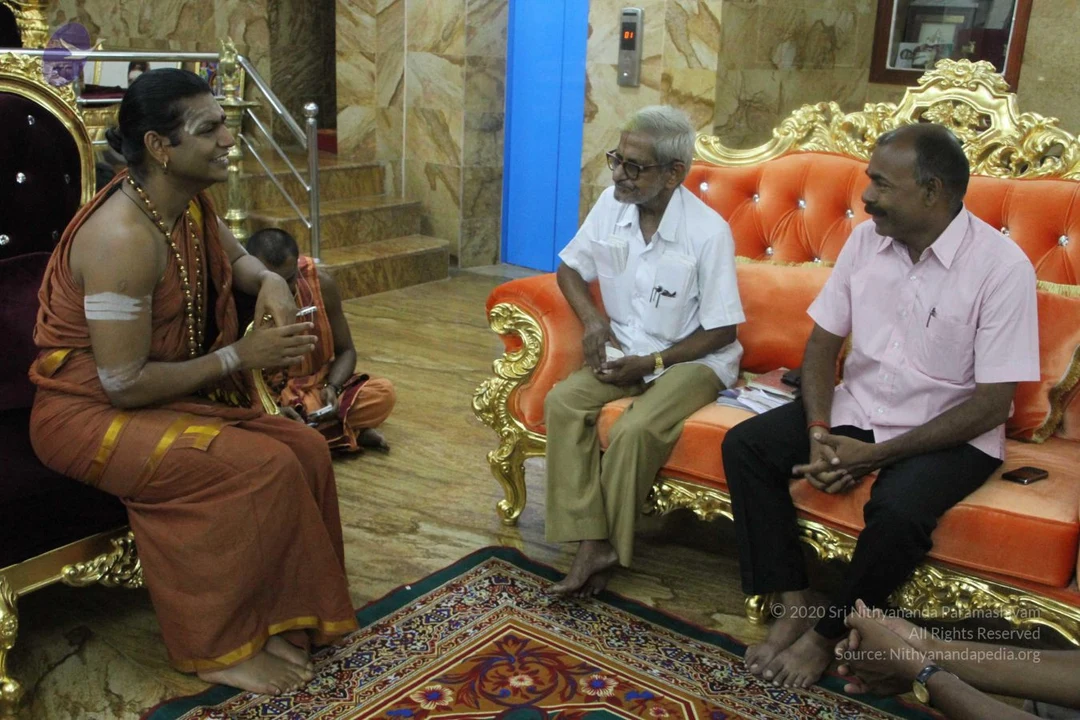
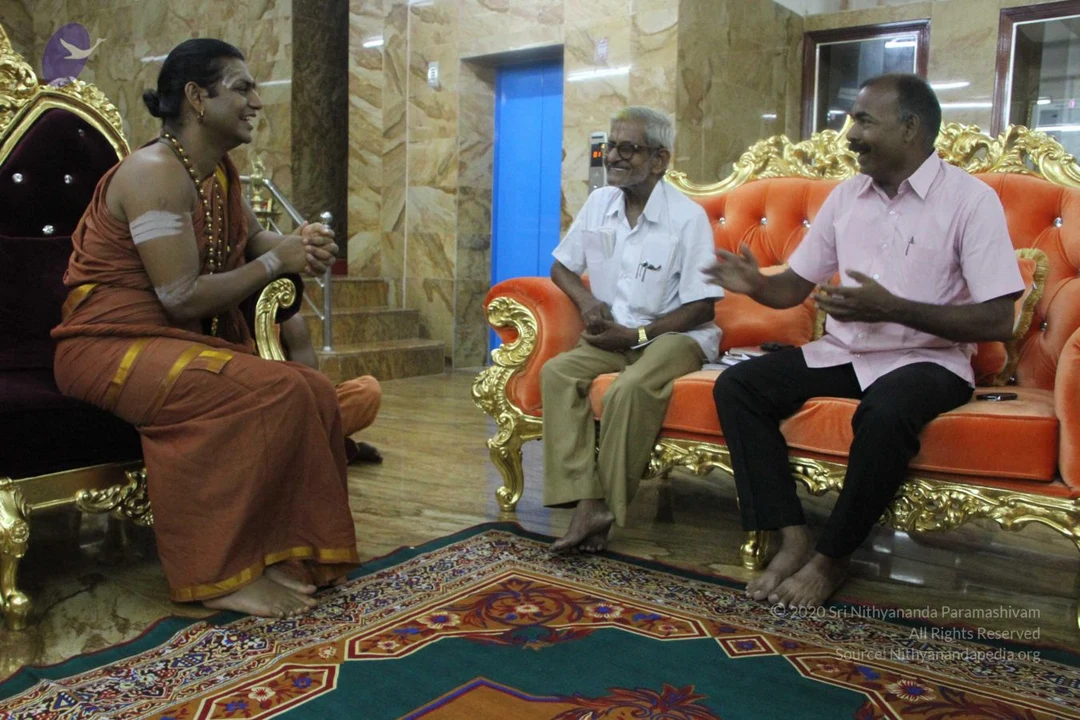
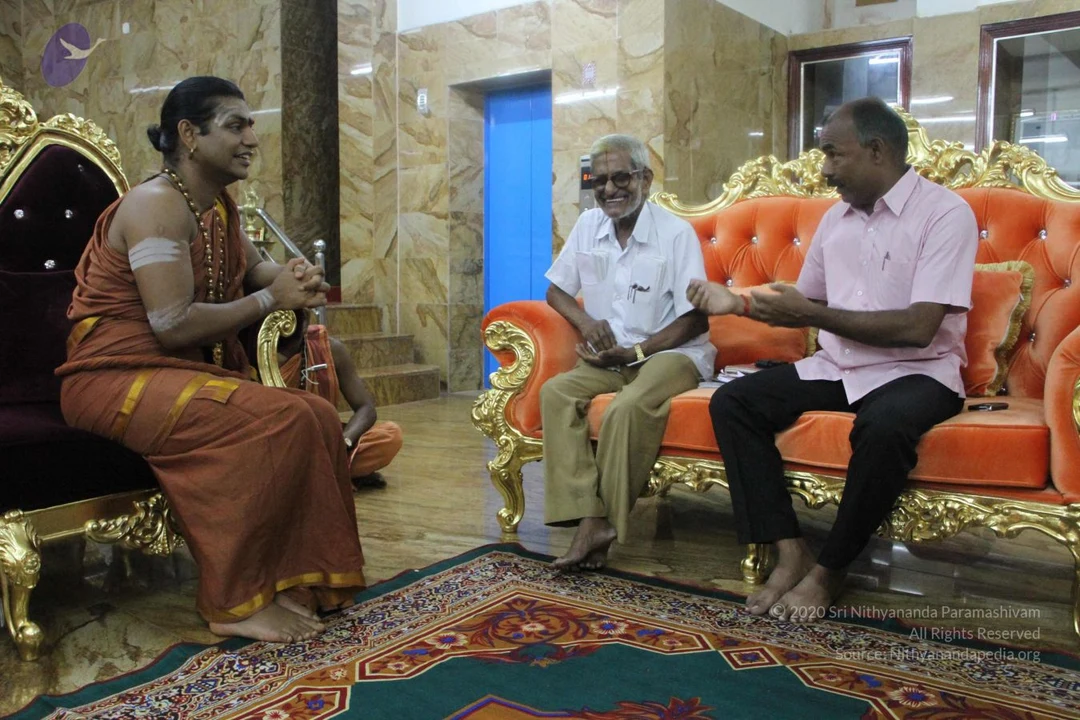
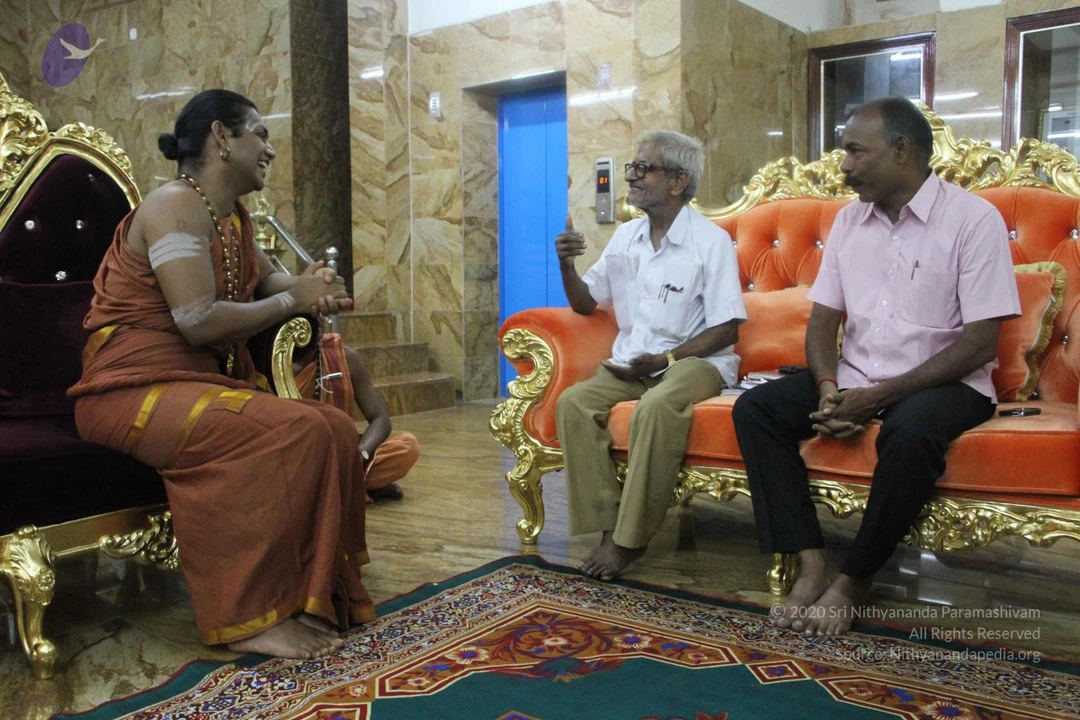
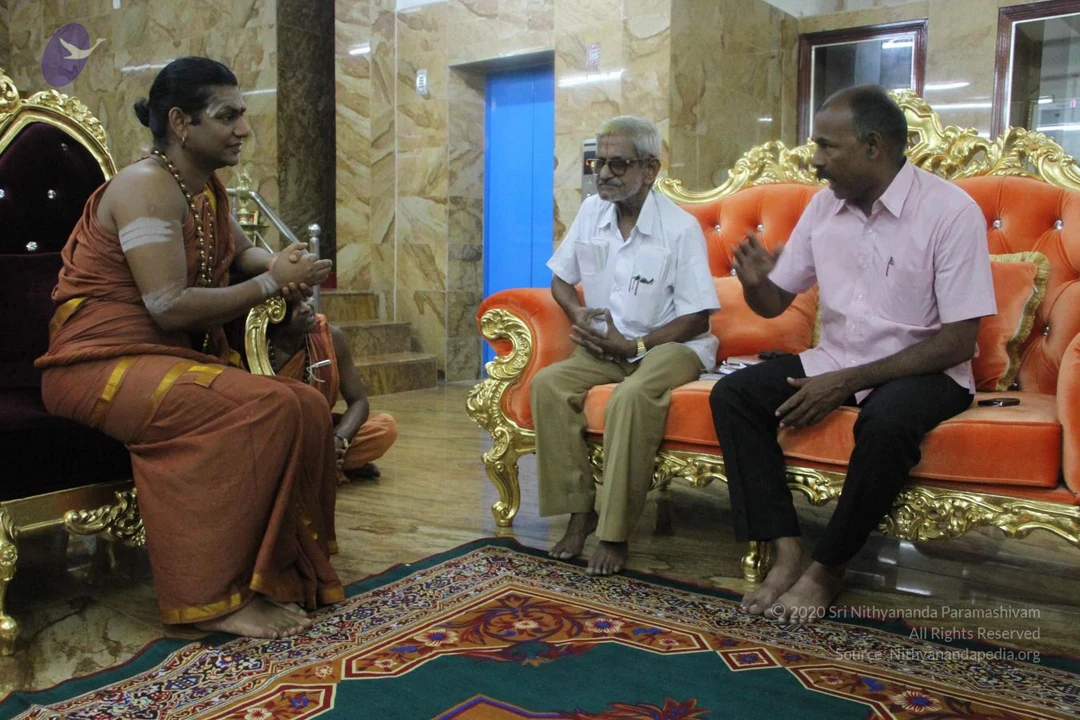
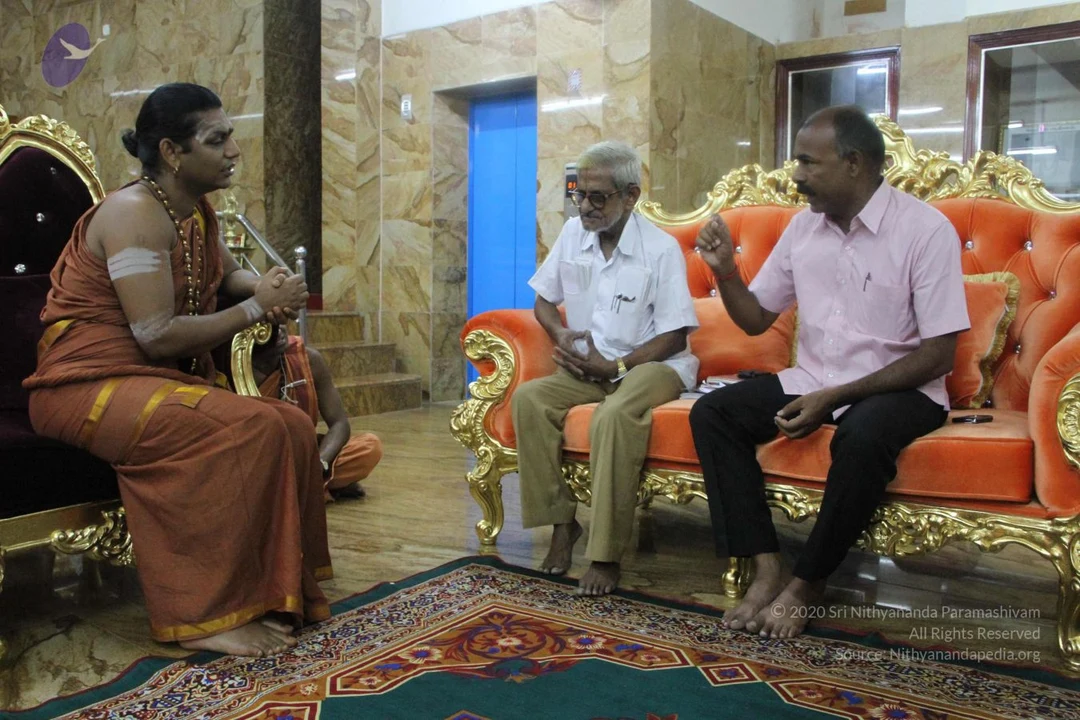
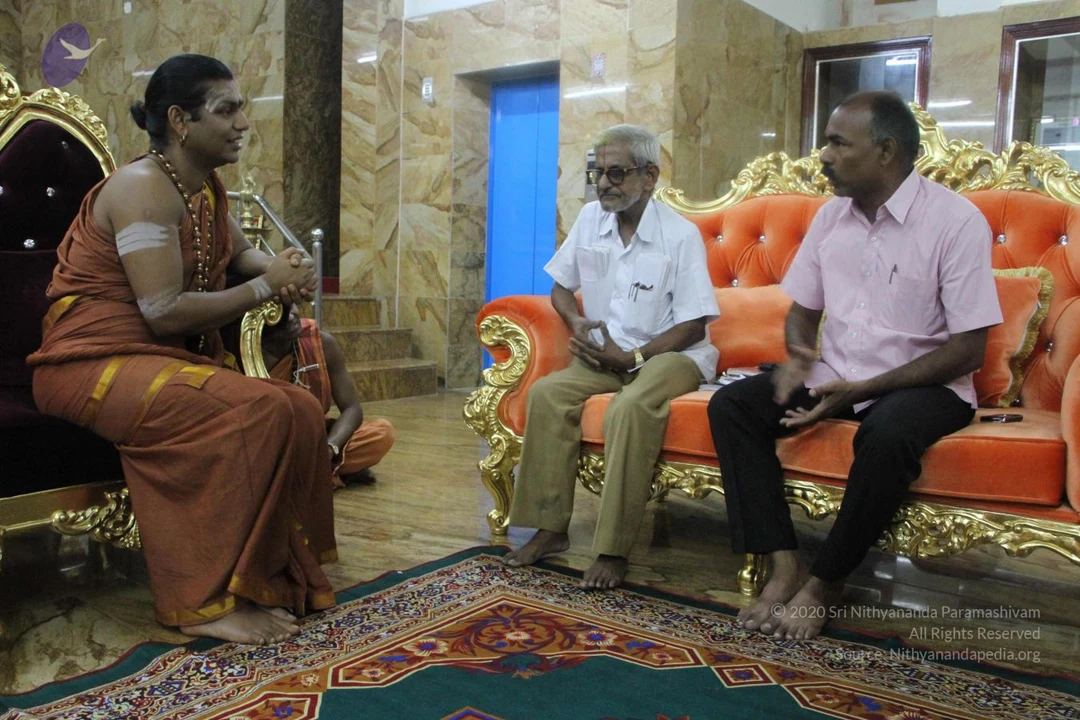
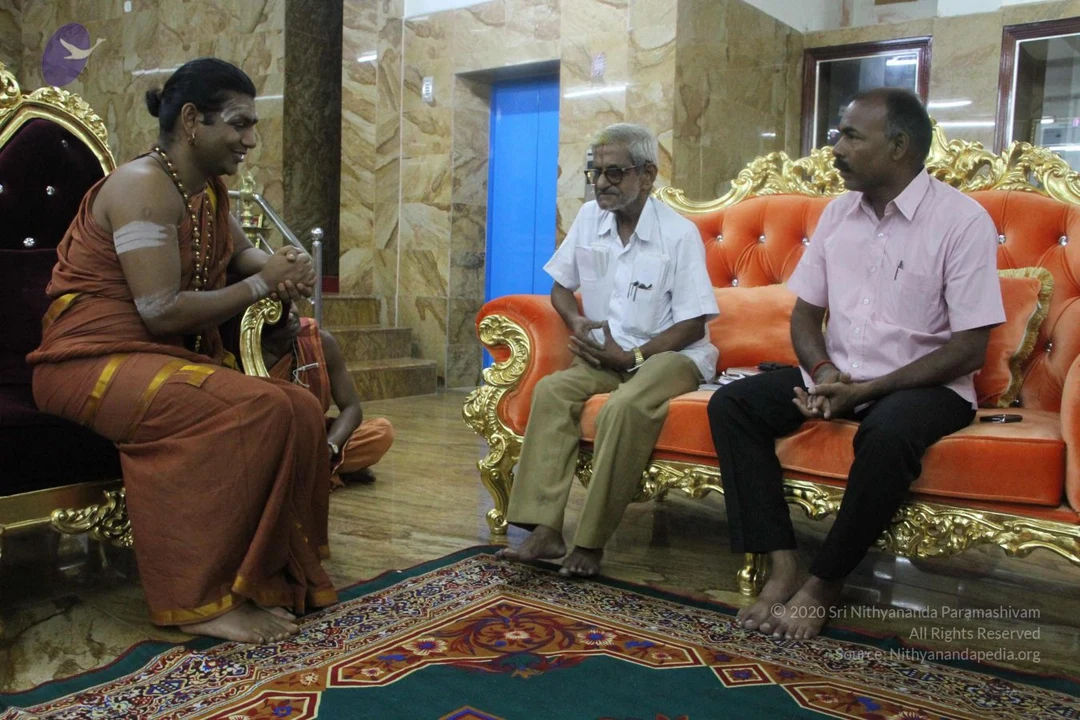
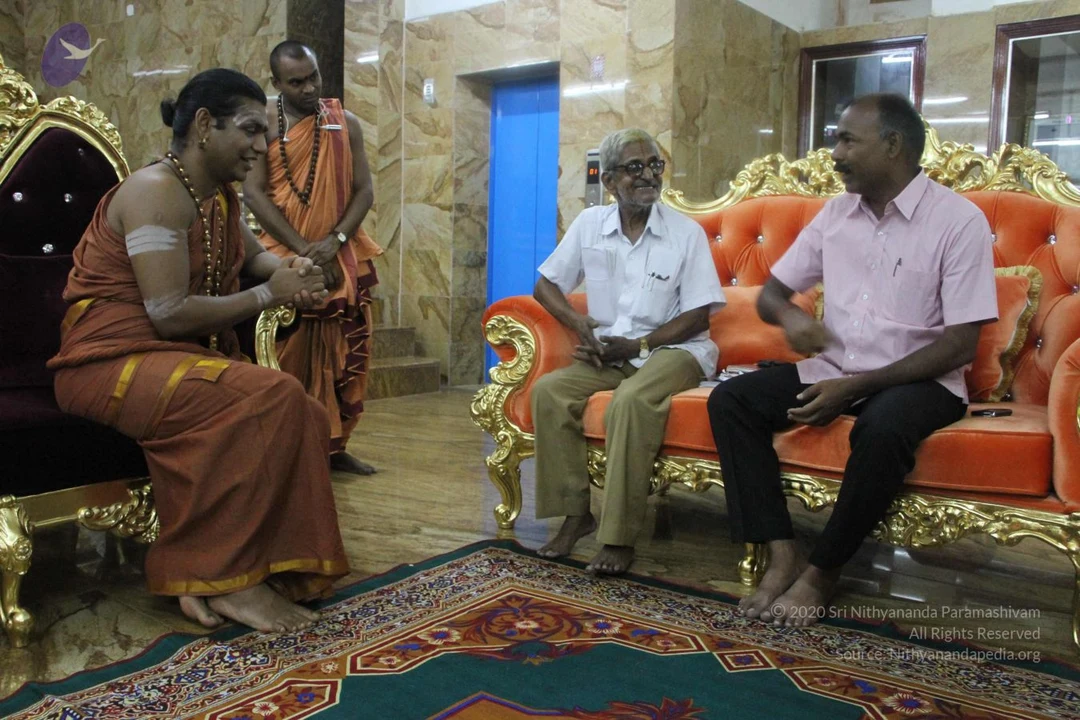
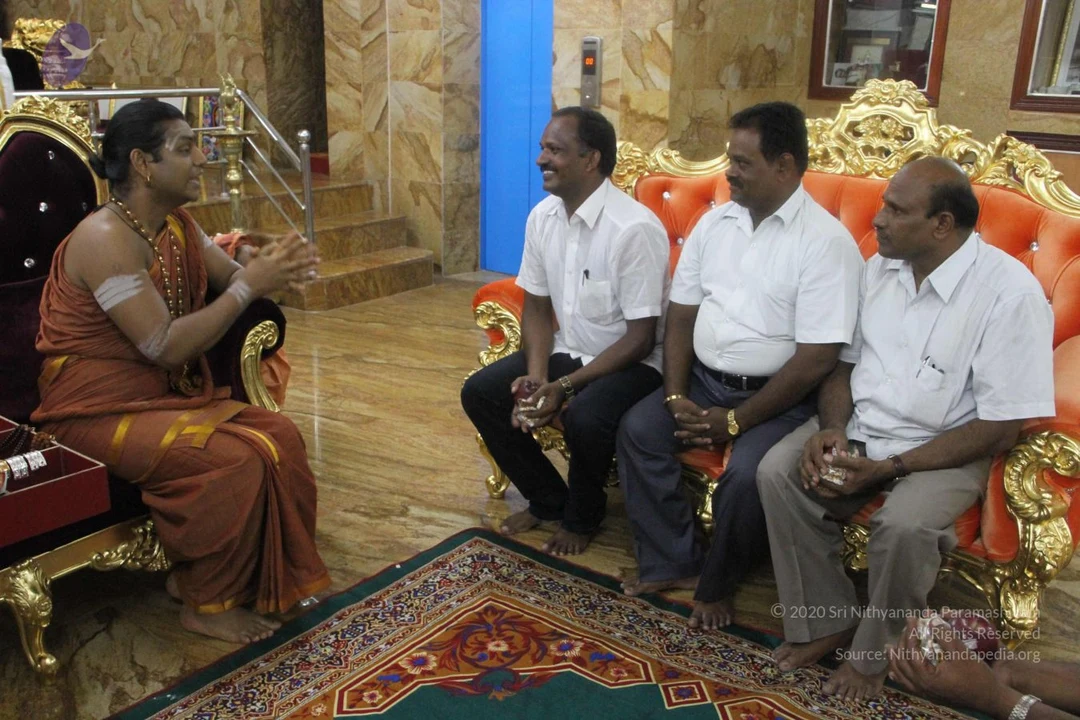
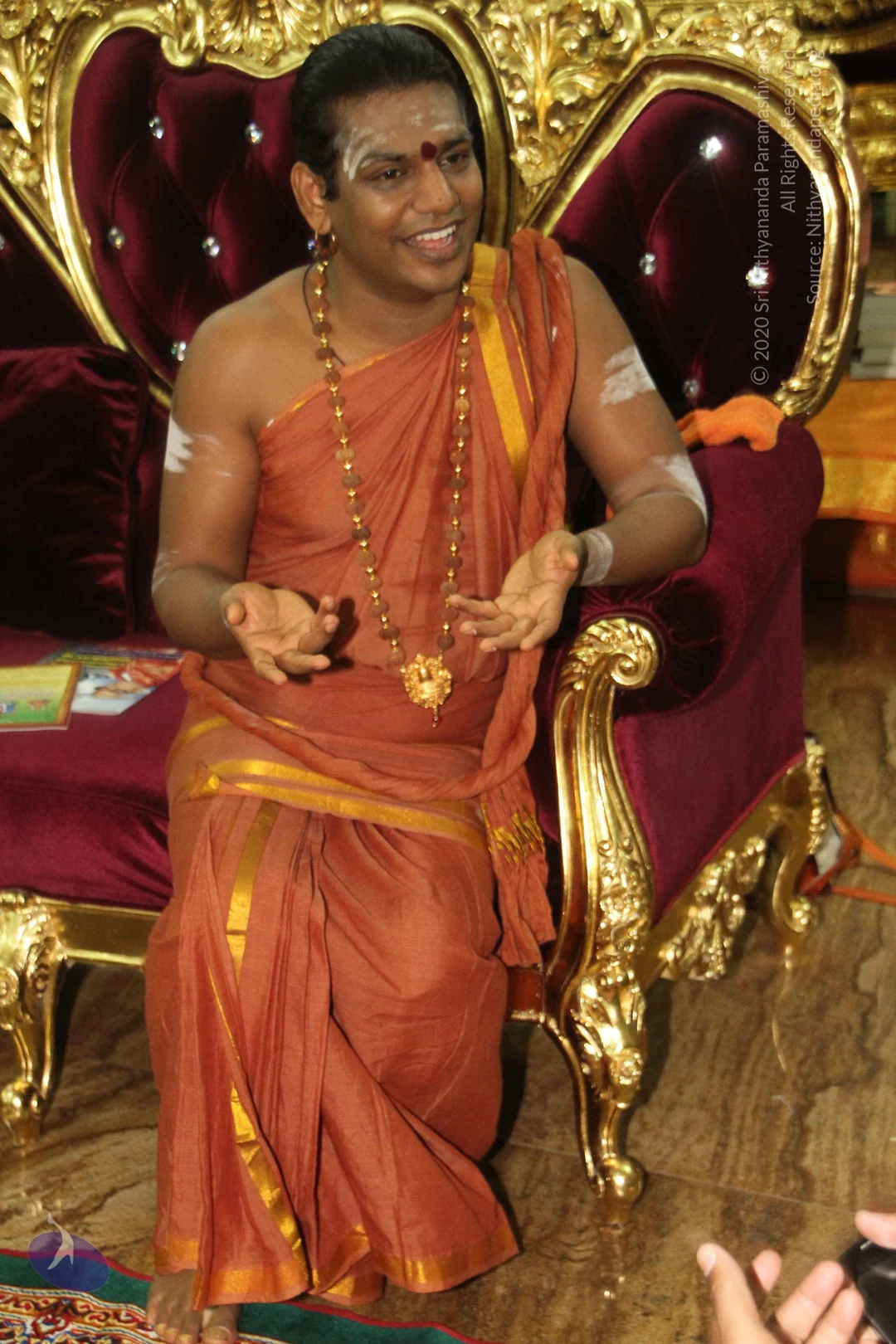
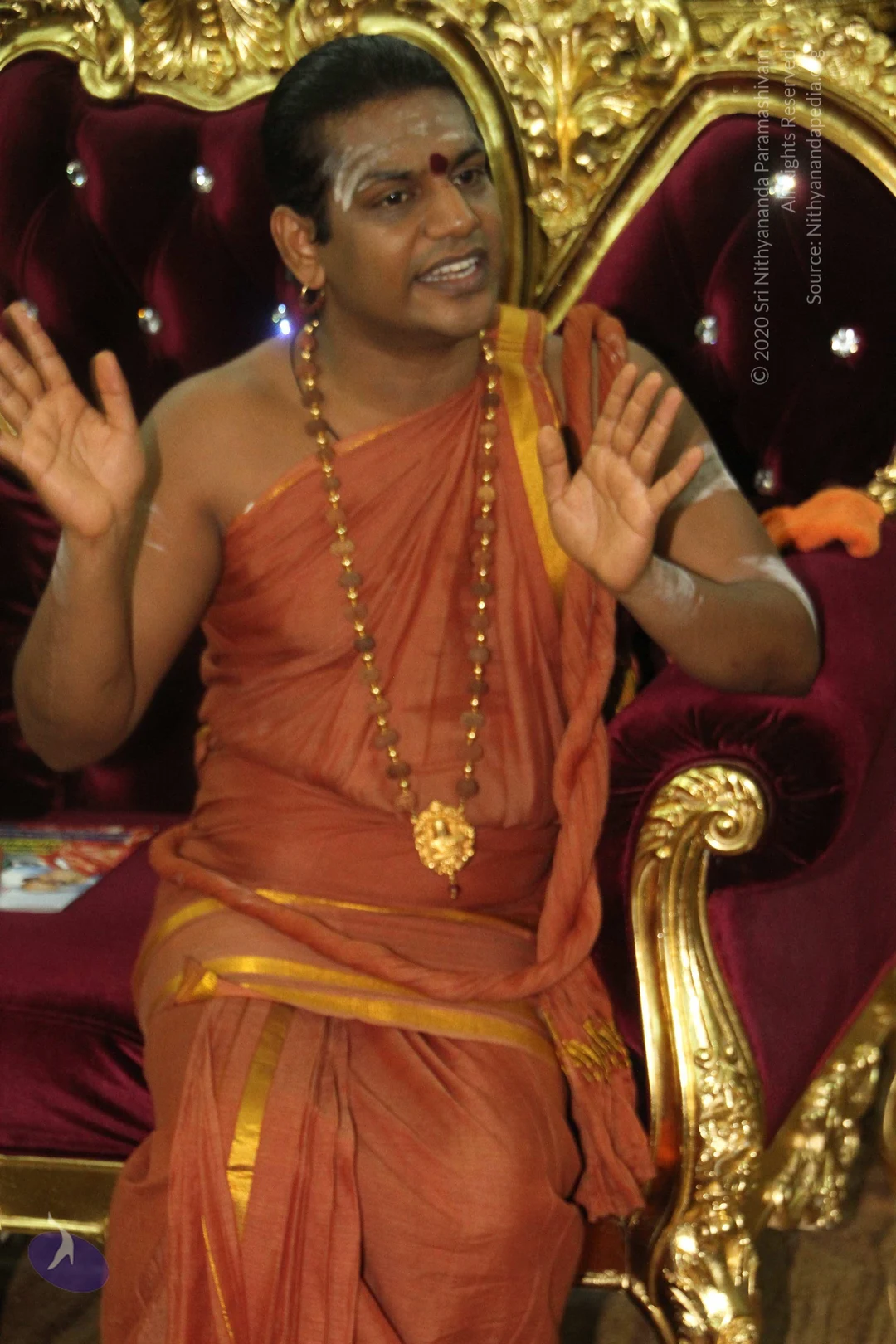
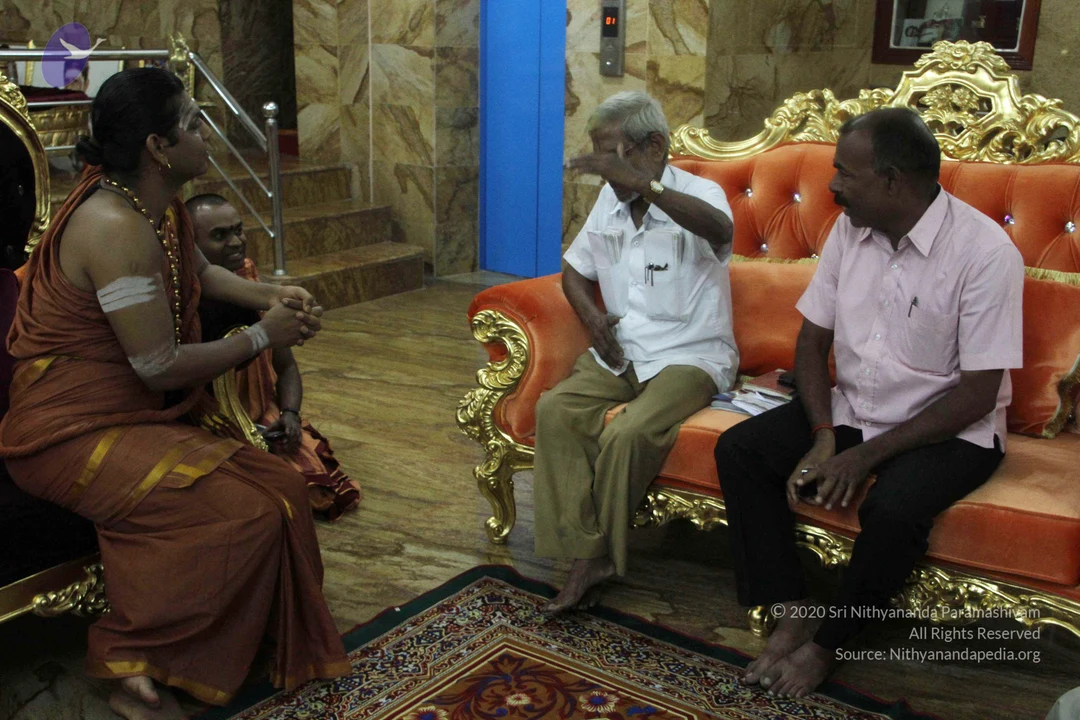
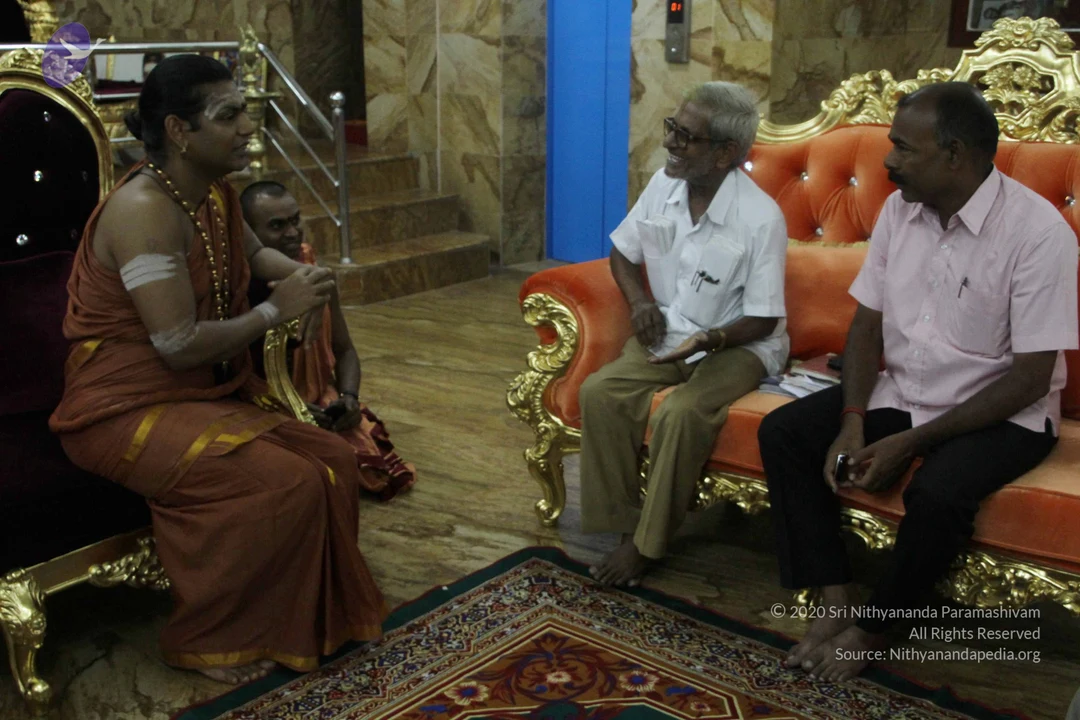
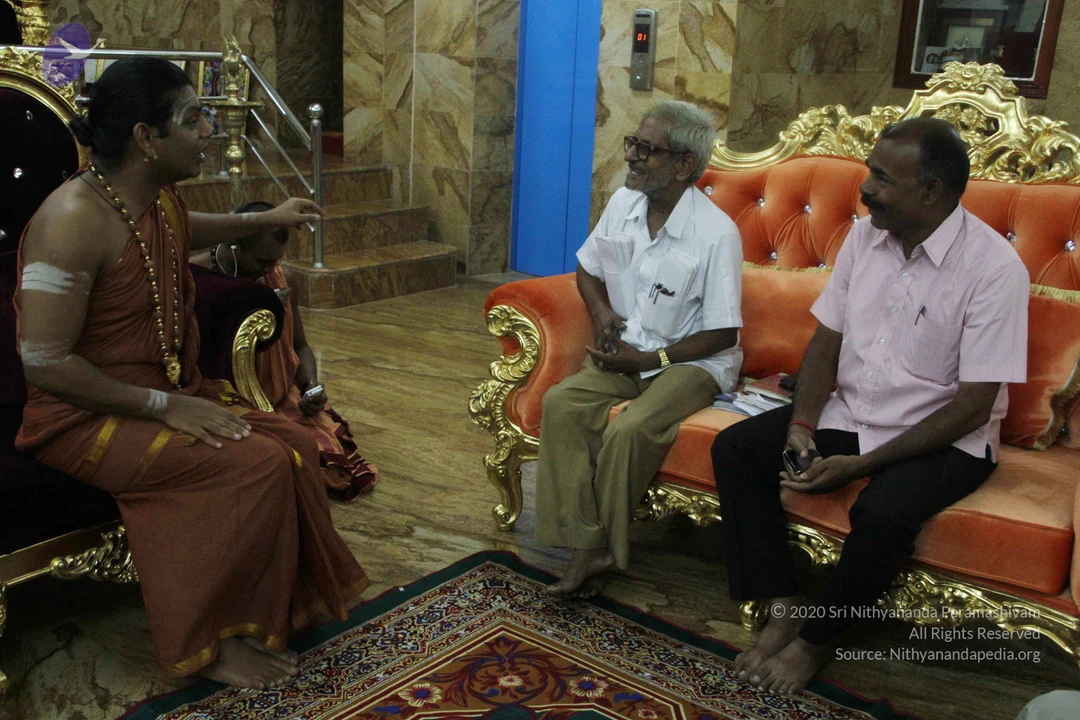
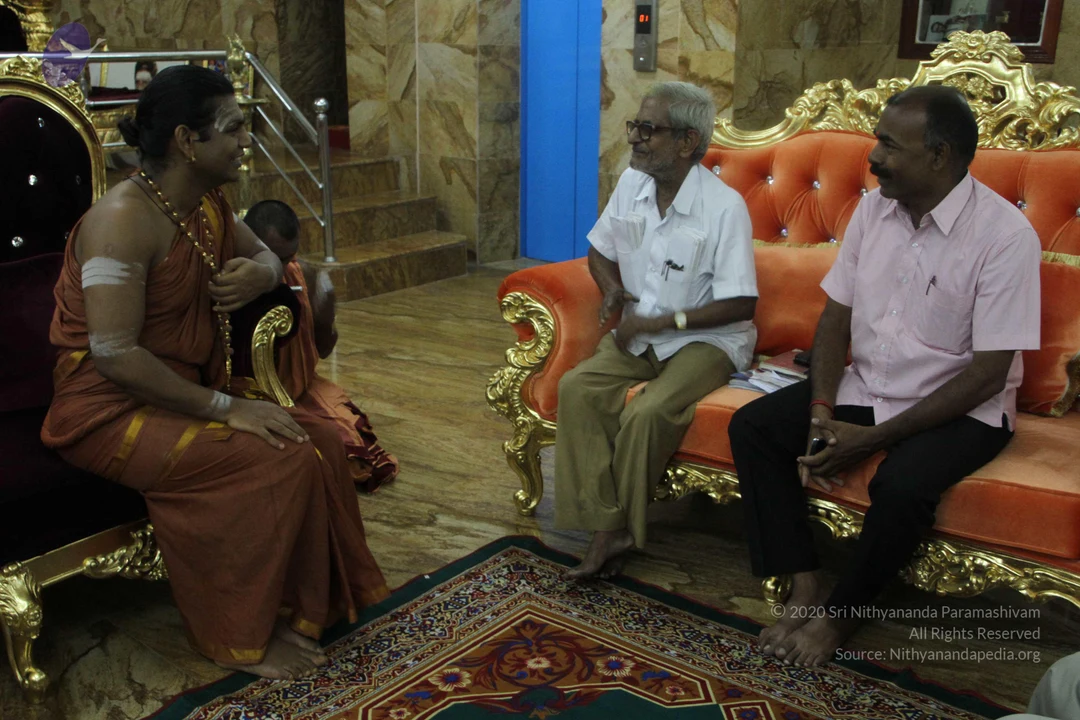
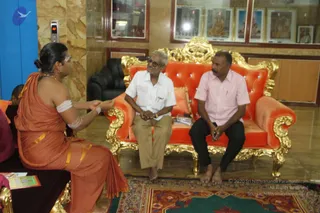
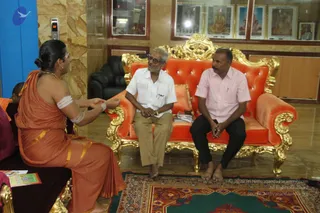
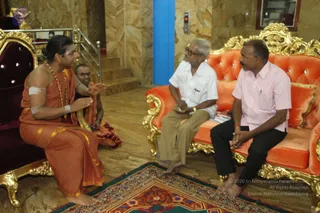
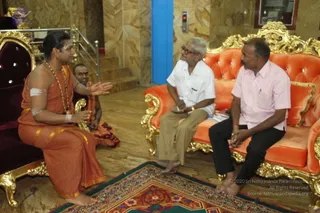
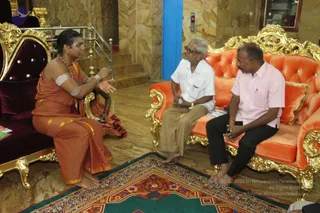
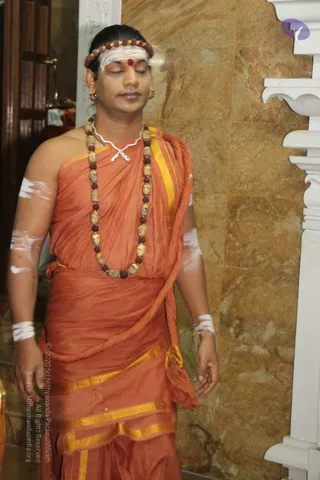
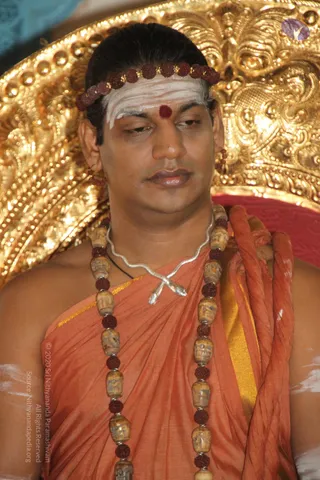
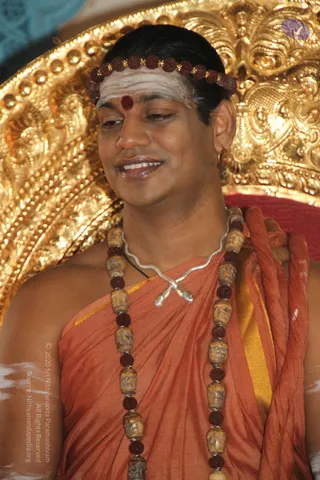
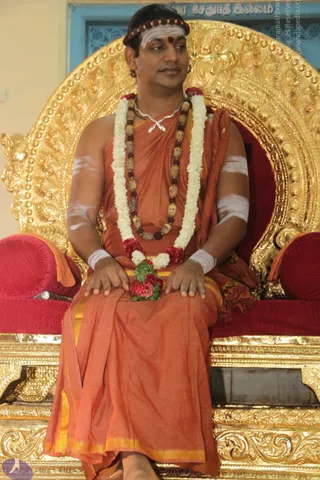
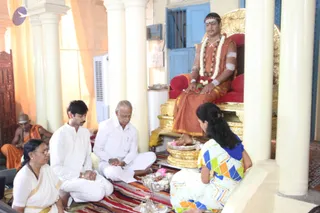
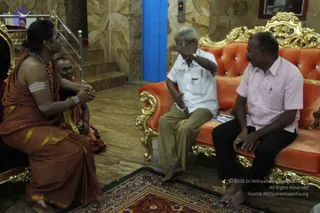
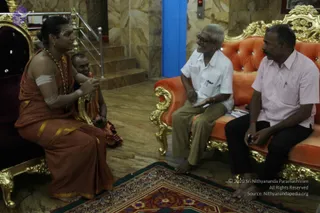
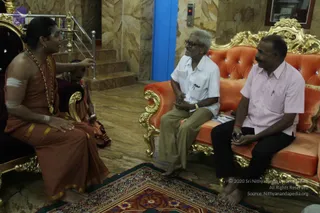
A photograph of an indoor seating scene in a marble-walled room with gold-framed orange velvet sofas and a wine-coloured throne-style chair. On the left, a person with hair swept back and a bun, wearing an ornate gold-chained necklace, saffron-orange robes with gold borders, and bandaged arms, sits in the chair gesturing and smiling. Two men sit on the orange sofa to the right: an older man in a white shirt, khaki trousers and glasses, raising one finger as he speaks, and a man in a pink shirt and dark trousers with hands clasped. A red-and-green patterned rug lies on the floor, a blue lift door is behind them, and a tiny attendant in orange sits on the steps in the background.A photograph of a crowd of devotees pressing around a bare-chested figure in an orange-and-yellow-bordered saffron cloth with a jasmine garland and a rudraksha-bead headband. Several devotees stand close, a woman in a red-and-white patterned sari with gold earrings reaches out with her hands toward him, and an older woman on the left presses her palms together in prayer. Other men in white shirts, orange shawls and a child in blue stand behind, against a plain cream wall.

May 19 2012

Original wiki page
Contents

Title:

Meditation Technique For Centering

Description:

Bhagavad Gita (Song of God) is a timeless treatise on the essence of living enlightenment. The Gita was imparted by the enlightened Hindu incarnation Sri Krishna to the warrior-prince Arjuna over 5000 years ago. Amazingly, the spiritual wisdom and life solutions offered in the Gita are so universal and current that it is even today used as a personal transformation guide. In today’s talk on Bhagavad Gita, Chapter 4 Verse 30, Paramahamsa Nithyananda (Swamiji) continues his instruction on self-remembrance. When we offer all our actions to prana – to the ability to recall what we are –we gain immense benefit even from very small effort. At first we may find it difficult to maintain this conscious recollection and still engage in the activities of daily life, but with repetition we can strengthen our skills and ultimately we are successful. Keeping a journal of each activity – driving to work, taking a meeting – allows us to gauge our progress. During the twenty minute drive, did we remember the self for each of those twenty minutes? By tracking our focus throughout the day, we polish and perfect our practice.

Link to Video:

VideoAudio

Title:

Three Simple steps to Enlightenment - part 2
19 MAY 2012 TAMIL

VideoAudio

Transcript:

Today’s satsang, 4th chapter in Bhagavad geeta – Jnana Karma Sanyasa yoga 30th verse.

Apare Niyataa-haaraha praanaan-praaneshu juhvathi

Sarvep-yete yagna-bidaha yagnya-kshapita-kalmashaaha

Having restrained taking food, others who know the power of sacrifice offer their life breath into the vital air Praana and have the sins thrown out by this sacrifice.

See, yesterday I made it very clear. If you practice the Praana Samyama: the 3 things En-Chanting, Feeling connection, Unclutching. I will be able to easily lead you in to the hunger free samyama. Today Bhagwan is exactly describing the second samyama. “Having restrained taking food others who know the power of sacrifice, offer their life breath in to the vital air and have the sins thrown out by this sacrifice.” Please understand, some of the basic truths. The basic sacred secrets you need to know from this life, from this verse is – constantly offering all your actions into your Praana. What it means? Means – during all your activities, how much ever it may be demanding – without losing your self, completely centered. Being centered in eN-Chanting, feeling connection and unclutching. That is what Krishna means “offering all your actions in to Praana”. Please understand, here Praana means the ability of self-remembrance; ability of being spiritual centered, enlightenment centered, atma centric, Higher self centered. That is exactly what is meant by the word Praana. All you need to do let the whole day your routine, your life be centered on this self-remembrance – these 3 actions: eN-Chanting, feeling connection and unclutching. Whole day. Unfortunately some of your actions demand your complete attention, emotion, complete involvement. Even during those actions start empowering the moments of remembrance. Please understand – start empowering. Many of your actions may demand your whole attention. In the beginning it may not be that easily possible for you to be centered on unclutching and eN-chanting and feeling connection. But I tell you – any activity, any action is possible being centered on Praana just by little practice. That is why Krishna says in another one Bhagawad Geeta verse “even little bit of practice of this great science brings huge benefit. It’s like a billions of rupees worth diamonds and gold is there in one room. You are doing only one small action – opening the room. You’d have never imagined just that small action of opening the room will make you rich in one minute. You’d have never imagined such huge benefit will come by such a small action of opening the room. It was there in that room for ages, just now you got the key, you opened it, suddenly you saw – Wow. It is all yours. Many time small actions you do does not bring big benefits. So you don’t trust the small actions can bring big benefits. But rarely small actions do bring big benefits. This action – the action of being Praana centered, even if it is small, practiced very little – it brings huge benefits, great benefits. And I tell you, you will become so alive and productive. If you take 4 days of vacation and not being productive constantly, you are equivalent to dead. Now all we need to do is just put little more mud on your head and cover it. You already have clay in your brain – you just need little more mud to cover your body. Just 4 days in your life continuously if you fall in to the laziness pattern, after that even you cannot help yourself. When you can’t help yourself, neither God nor Guru can help you. Please understand whether Guru or God, even if they want to help you, they can’t help you if you can’t help yourself. See the Daksha story – Daksha is God. Vishnu wants to help Daksha so much. It is so unfortunate he does not want to help himself. So even his God, Vishnu could not help him. Daksha had Saptarishis as his Gurus. Neither his Gurus, Saptarishis were able to help him nor his own father Brahma is able to help him or his Aradhya devata, God, Vishnu is able to help him. Why – because he does not want to help himself.

You wanting to help yourself is a first major criteria for your growth. If you push yourself in to the laziness pattern just 4 days – enough. Over. Bhagawan uses a very beautiful word here “praanaan-praaneshu juhvathi Sarvep-yete yagna-bidaha”. It means let all your actions be offered into the praana. Please understand, you should do this like a Tapas. How you know - whole day continuously, whenever you are performing your actions, keep a separate notebook and during each action. For example you are going to the office from the house. It is half an hour action – driving. During the driving, try constantly to be centered on Praana. End of the driving when you reach your office, note down in your book “Today during the driving, half an hour, was I established in Praana? Praana Samyama?”. Sometimes it maybe half an hour, sometimes it may be 10 minutes. Sometimes it maybe a few minutes. Write down your opinion. Then next action. “Sitting in the Office and seeing through the files” – That maybe next 2 hours. If it’s Government office then it’s only 20 minutes. See through. End of that action note down in your notebook – “Did I establish myself in Praana in the 2nd action?”. Then next action, your lunch. During this lunchtime establish yourself into the Praana. When I say establishing in to the Praana, 3 things – eN-Chanting, Feeling connection and Unclutching. In these 3 if even one you are established, that is ok. But try to be established in all 3. You have capacity. You are capable. Again in the evening session try to be established in to the Praana. End of the session, pen down “Did I establish myself in Praana?”. Note down. Try. Only in this straightforward constant training you will be able to establish yourself in Praana. Don’t miss. Understand every action should be offered in to the Praana. Means during every action you should be established in Praana. It may be little difficult in the beginning but little bit of practice, it is possible. Achieve it. Achieve it. You will be completely purified.

I tell you the purification with which you live, the purification you radiate will make you so joyful and make others in bliss. Please understand always have God and Guru both in your life for feeling connection. You may ask why – Is Guru not enough? is God not enough? Please understand however strong you may be, at sometimes you will not be able to have complete trust over Guru. Your feeling connection towards Guru will shake, may get shaken little bit. At those time, those moments you need God to hang on. You need God to hold on. You need God to keep your spiritual practice and spiritual life alive. You may ask why God is not enough, why Guru? Sometimes your feeling connection with God may not be practically useful in your day to day life to solve many of your issues. At those moments, feeling connection with Guru will be handy and directly practically useful. At one point feeling connection with God and Guru will merge in to each other. You will not have difference between two. You will just experience God and Guru is one and the same. That is ok. When that happens, it happens but now, please understand, when you begin your practices, when you begin your spiritual life. When I say when you begin, till you are enlightened – means everybody. Always have God and Guru – both so that you are safe. I have seen people who had only God - never progressed. Who had only Guru – sometime dropped out. If you have both at least even if you have little shaking, even if your faith and trust, feeling connection towards a master is shaken, your feeling connection towards God will keep you alive, will keep your spiritual path alive, will keep your spiritual enlightenment alive!

“Apare Niyata aahaaraha, praanaan-praaneshu juhvathi

Sarvep-yete yagna-bidaha yagnya-kshapita-kalmashaaha”

Very beautifully, Bhagawan is describing how to be established in Praana. Try this simple process. Process of maintaining the report in book of heart, whether you are able to retain establish yourself in praana whole day. Try this. It will help you and make you established in Praana.

Spot Notes: Saturday, May 19th, 2012

Madhurai Aadeenam

07:45 am

“Sadashiva samarambam, Jnana Sambandhaacharya madhyamam asmadacharya paryantam vande Guru paramparam!”

I welcome you all with my love and respects! I welcome all the devotees, disciples, Samajis, Satsangis sitting with around the world at this moment in 854 places through Nithyananda TV, 24 places in 2 way video conferencing having Nayana Deeksha, in 221 cities, in 25 countries!

Cities sitting with us in 2 way Video conferencing having Nayana Deeksha are - Seattle Chidambaram, Kulim Malaysia, Singapore Singapuram, Toront, Arunachala Tiruvannamalai, Ohio Prayag, Phoenix Kanchipuram, St.Louis Tirumala, Hyderabad Bhagyanagara, Nithyananda Nagara Bidadi, New Jersey Omkareshwar, Oklahoma Somanatham, Vancover Puri, New Zealand, Anna Nagar Chennai, Atlanta Ujjayini, Las Vegas, Kathmandu, San Diego, Weston Florida, Oman Siva Gangai.

4th chapter in Bhagavad Gita Jnaana Karma Sanyaasa Yoga, 30th verse –

apare niyataahaaraaha praanaan-praaneshu juhvathi |

sarve-apyete yagnyavido yagnya-kshapita-kalmashaaha ||

Translation - “Having restrained taking food, others who know (the power) of sacrifice, offer their life breath into the vital air (prana) and have the sins thrown (out) by this sacrifice.”

If you practice enchanting, feeling connection, unclutching ……power of ….

Enchanting, feeling connection, unclutching that is what Krishna means offering all your actions into praana. Please understand, here praana means the ability of self-remembrance, ability of being spiritually centred, enlightenment centred, atma-centric. Higher self-centred. That is what is exactly meant by the word praana. All you need to do let the whole day your routine, your life be centred on this self-remembrance. These three things enchanting, feeling connection, unclutching. Whole day. Unfortunately some of your actions demand your complete attention, emotion, complete involvement. Even during those actions start empowering the moments of remembrance. Please understand start empowering. Many of your actions may demand your whole attention. In the beginning it may not be that easily possible for you to be centred on unclutching and enchanting and feeling connection. But I tell you any activity, any action is possible being centred on praana just by little practice. That is why Krishna says in another one Bhagavad Gita verse even little bit of practice of this great verse bringing huge benefits. It is like billions of diamonds and money is there in one room. You are doing only one small action opening that room. You would have never imagined such huge benefit will come by one small action of opening the room. It would have been there for ages, just now you got the key and opened it. Now you saw – wow! You have opened it. It is all yours.

Many time small actions you do does not bring big benefits. So you don’t trust the small actions can bring big benefits. But rarely, small actions do bring big benefits. This action - the action of being praana-centred even if it is small, practiced very little it brings huge benefits, great benefits. And I tell you – you become so alive and productive. I know hundreds of my Ashramites especially who are sitting outside India Ashramites sitting in US, Canada whole day how they waste their time. I can see from their action list. Unfortunately they are caught in the laziness rut. See in Bidadi I am there physically to jolt them, shake them up completely wake them up. At least once in two months I create a strong system to shake them. But this strong process I not available for fellows sitting outside India. Very unfortunate. Please understand not only my Ashramites I am talking. Even my devotees I am talking. Understand this great truth. If you take four days of vacation and not being productive constantly, you are equivalent to dead. Now all you need to do is put little more mud and cover your brain. It already has mud in it. Just put more mud and cover it up. Just four days in your life continuously if you fall into the laziness pattern, after that even you cannot help yourself. When you cannot help yourself neither God, nor Guru can help you. Whether a Guru or God cannot help you if you cannot help you. Don’t miss Devon Ke Dev Mahadev …so beautifully they are presenting many spiritual truths visually. I sincerely thank the team for doing such wonderful contribution to Vedic Tradition. I am already working on making Meenakshi Sundareshwara’s leelas. Anyhow see Daksha’s God Vishnu wants to help Daksha so much. It is so unfortunate, he does not want to help himself. So even God, Vishnu could not help him! Daksha had Sapta rishis as his Gurus. Neither his Gurus Sapta rishis were able to help him, nor his own father Brahma is able to help him or his Aaraadhya Devata Vishnu is able to help him. Why because he does not want to help himself. You wanting to help yourself is the first criteria for spiritual growth. If you push yourself into the laziness pattern just four days enough! Over!

Bhagavan uses a very beautiful word here –

apare niyataahaaraaha praanaan-praaneshu juhvathi |

Let all your actions be offered into the praana. Please understand you should do this like a tapas. How you know? Whole day continuously whenever you are performing your actions, keep a separate notebook. And during each action – for example, you are going from your home to office. It is half hour action – driving. During driving be constantly centred on praana. When you reach your office note down in your book today during was I established in praana samyama? Sometimes it may be 10 minutes, few mints write down. Next sitting in office and seeing through the files. See through. End of action note down in your note book. Did I establish myself in praana in 2nd action? Next action. In lunch. During this lunch time establish yourself into the praana. When I say establish yourself into praana in 3 things – enchanting, feeling connection, unclutching. In this three even one if you do is ok, but you are capable of doing all three. Again in eve session try to establish into the praana. End of the session pen down did I establish myself in praana? Note down. Try. Only in this straight forward, constant training you will be able to establish yourself in praana. Don’t miss.

Understand every action should be offered into the praana means during every action you should be established in praana. It may be little difficult in the beginning. But little bit of practice it is possible. Achieve it. You will be completely purified. I tell you the purification with which you live, the purification which you radiate will make you so joyful and make others in bliss. Please understand, always have God and Guru both in your life for feeling connection. You may ask why is Guru not enough. Is God not enough? Please understand however strong you may be, at sometimes you will not be able to have complete trust over Guru. Your feeling connection towards Guru may get shaken a little bit. At those times, those moments you need God to hang on, you need God to hold on, you need God to keep your spiritual practice and spiritual life alive. ..Sometimes your feeling connection with God may not be practically enchanting, feeling connection, unclutching in your day to day life to solve many issues. At those times feeling connection with Guru will help …at one time feeling connection between god and Guru will merge into each other and you will just experience god and Guru as one. That is okay. When it happens it happens.

But now, please understand, when you begin your practices, when you begin your spiritual life when I say when you begin, I mean till you get enlightened. Means everybody. Always have god and Guru both. So that you are saved. I have seen people who had only god never progressed, who had only Guru sometimes dropped out. If you have both, even if your trust and fc towards the master is shaken. Your fc will keep you alive, will keep your spiritual enlightenment alive!

apare niyataahaaraaha praanaan-praaneshu juhvathi |

sarve-apyete yagnyavido yagnya-kshapita-kalmashaaha ||

Very beautifully Bhagavan is describing how to be established in praana. Try this simple process. Process of maintaining the reporting book of heart. Whether you are able to retain, establish yourself in praana whole day try this. It will help you and make you established in praana. I bless you all to be established in praana.

Now I move to the next segment of the morn satsang Dial the avatar.

Sand Diego centre will be called as “alavaay”

Today’s minutes to be entered in minutes4peace.org website is 80 minutes.

I bless you all who are sitting with us at this moment around the world in 950 places through Nithyananda TV, in 24 places through 2 way Video conferencing having Nayana Deeksha, in 251 cities, 28 countries! Let you all achieve, experience, live, express, radiate and share and explode the eternal bliss, Nithyananda. Thank you!

Photos
Tags:

Paramahamsa Nithyananda, continue, instruction, self, remembrance, offer, action, ability, recall, gain, benefit, effort, maintain, conscious, engage, life, strengthen, skills, ultimately, successful, journal, activity, progress, perfect, practice.

==Photos Of The Day:==

Padapuja

Satsang

Sarva-Darshan

Swamiji-Photos

VIP-Visit

1-Temple-Visit

2-Padapuja

3-Satsang

4-Sarva-Darshan

5-Swamiji-Photos

6-VIP-Visit

Photos from this day
View all 205 photos

Photos
38 photosSource gallery
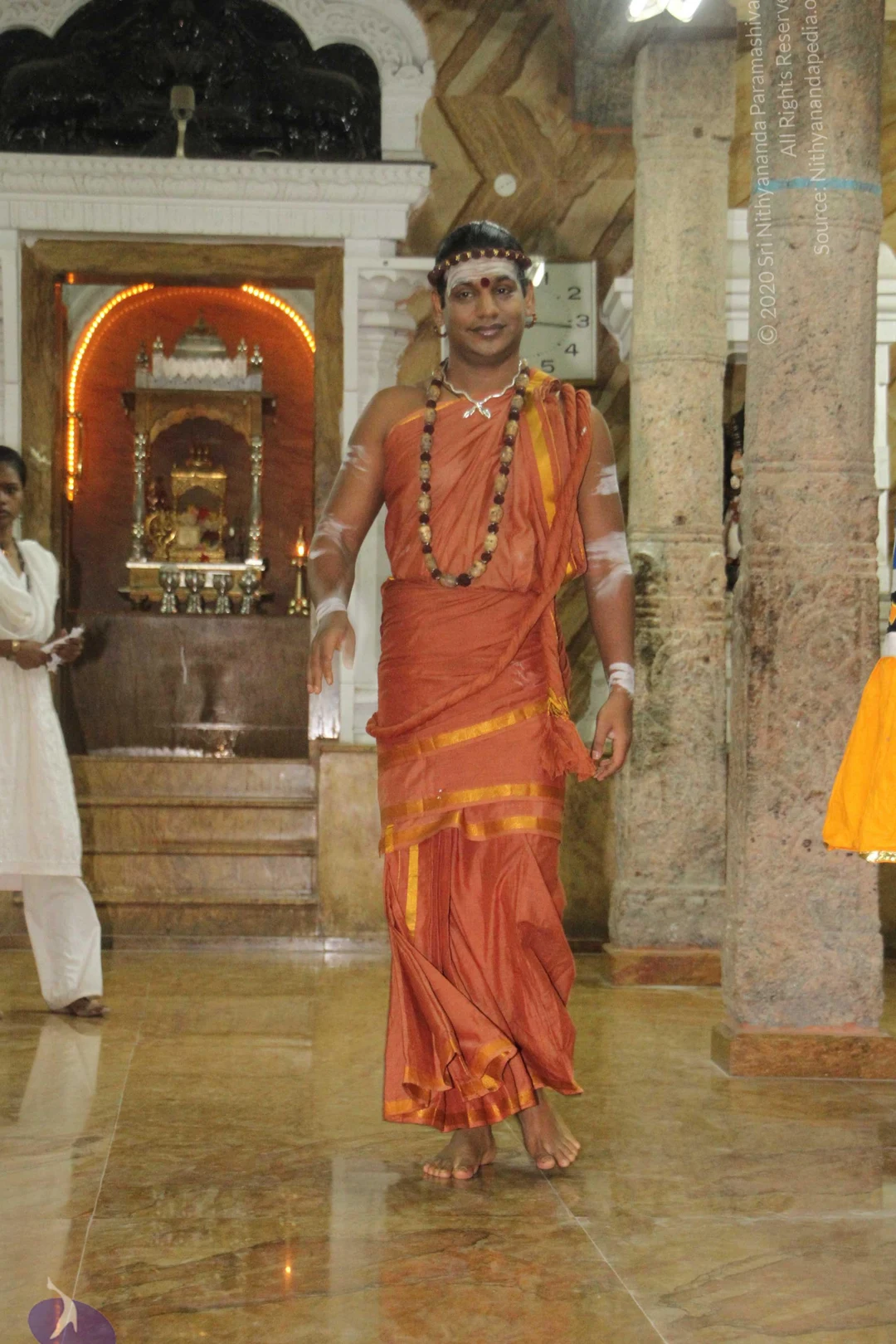
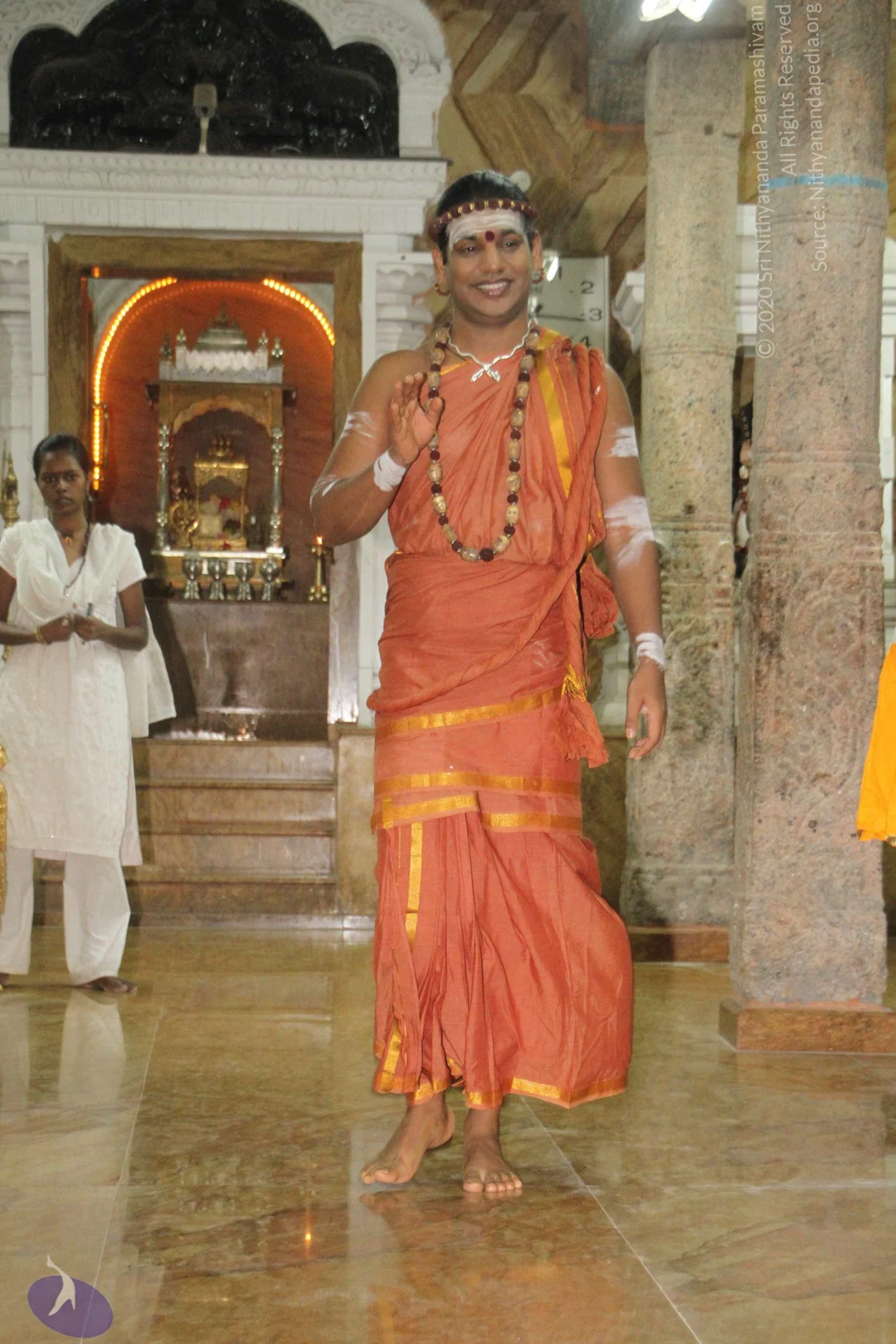
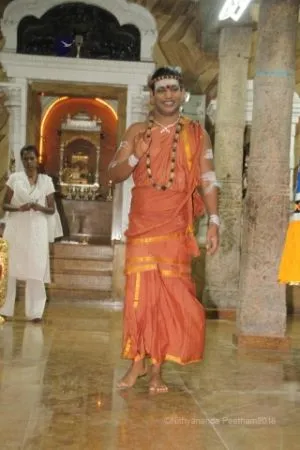
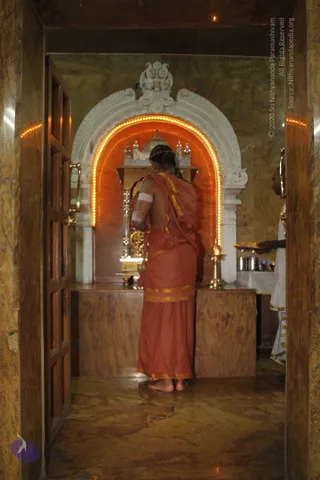
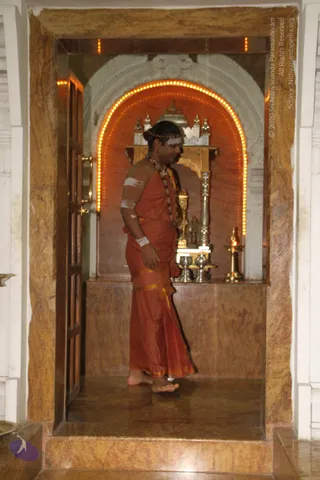
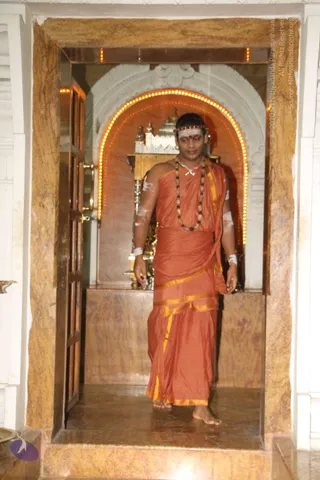
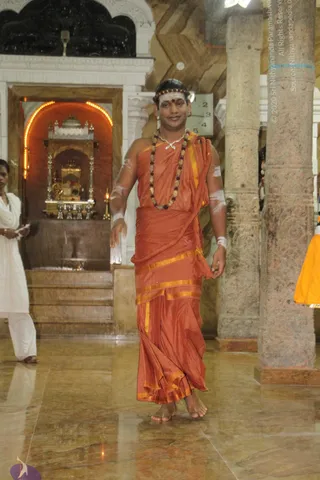
A man in a saffron-orange dhoti and wrap stands on a polished marble floor inside an ornate temple hall, with a carved stone pillar behind him. He wears a crown-like headpiece with a tilak, multiple rudraksha malas and a gold necklace, and has bangles on his arms. To the left, a woman in white stands beside an illuminated shrine with a deity murti and lamps. Another orange cloth hangs at right.A man in saffron-orange dhoti and shawl walks across a polished marble floor inside a temple hall. He wears a white headband with tilak markings on his forehead and multiple rudraksha mala necklaces, with white ceremonial bands on his upper arms. Behind him, a white-clad woman stands near ornate stone pillars, and an ornate gilded shrine with orange-lit alcove and deity murti is visible in the background.

Padapuja

24 photosSource gallery
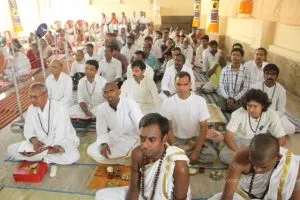
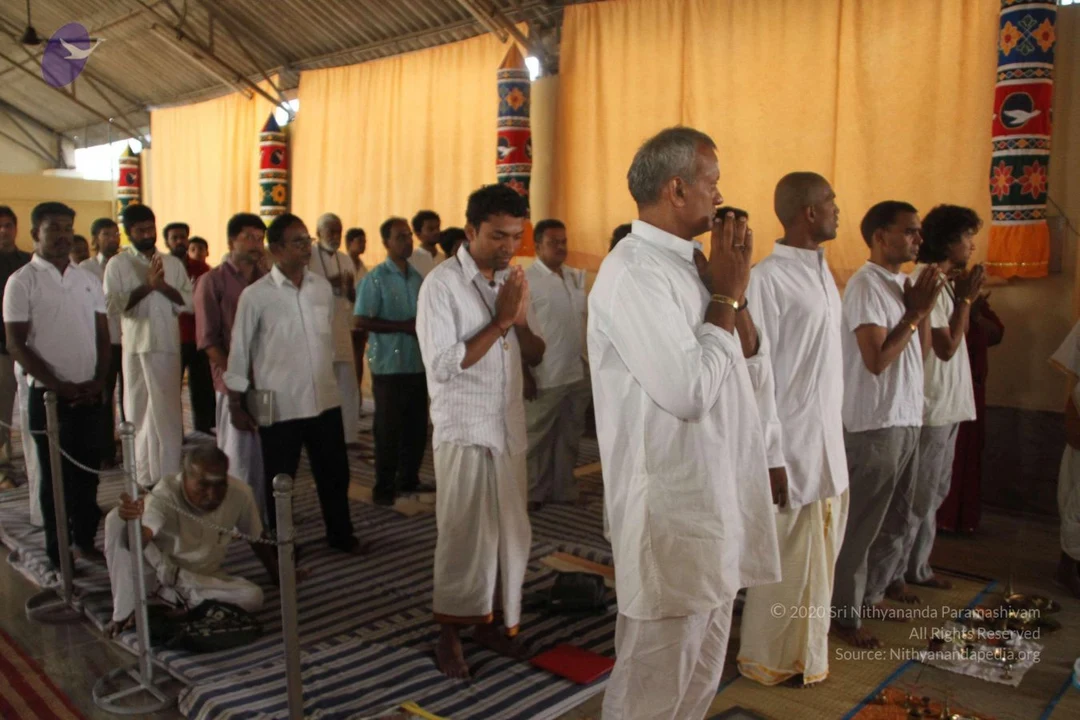
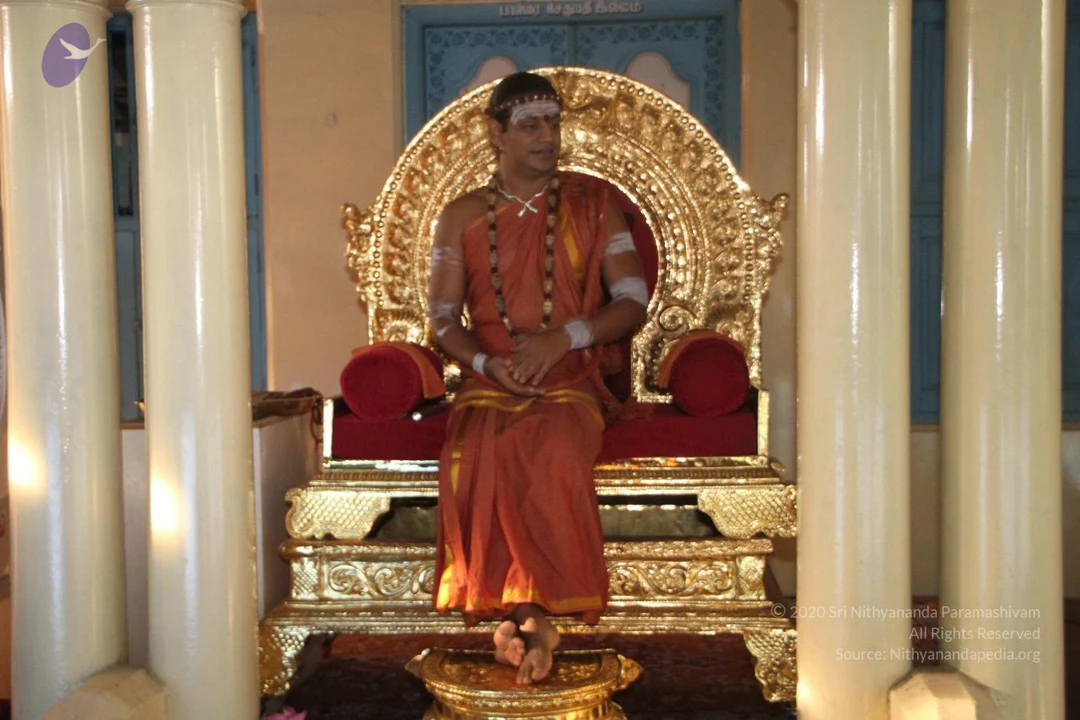
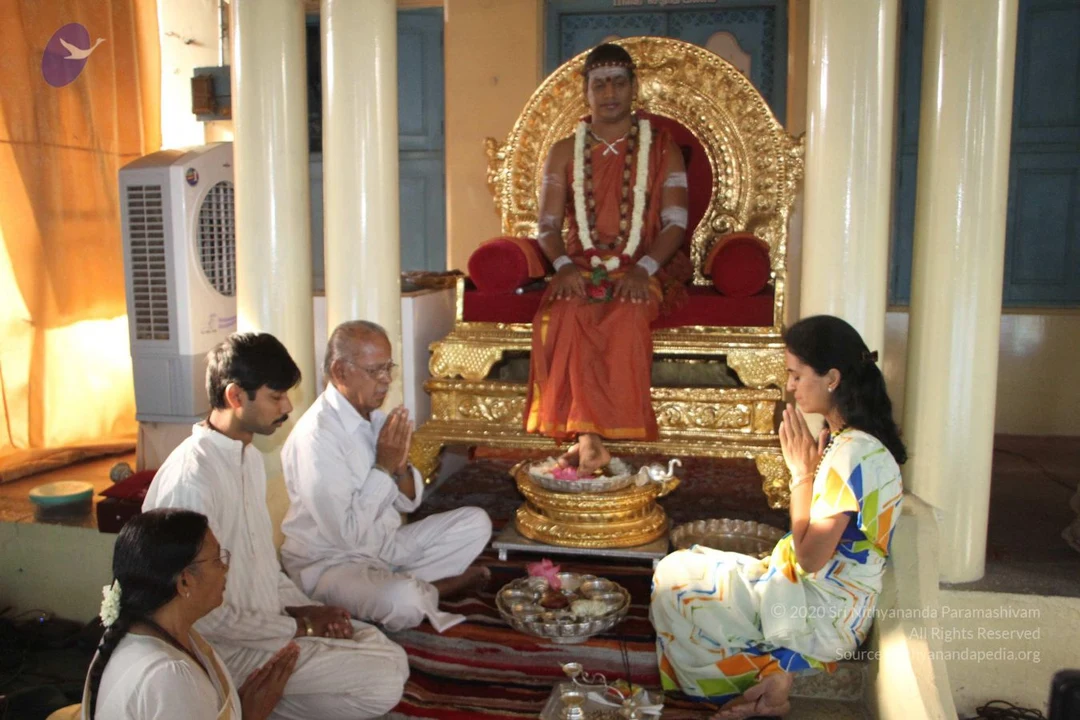
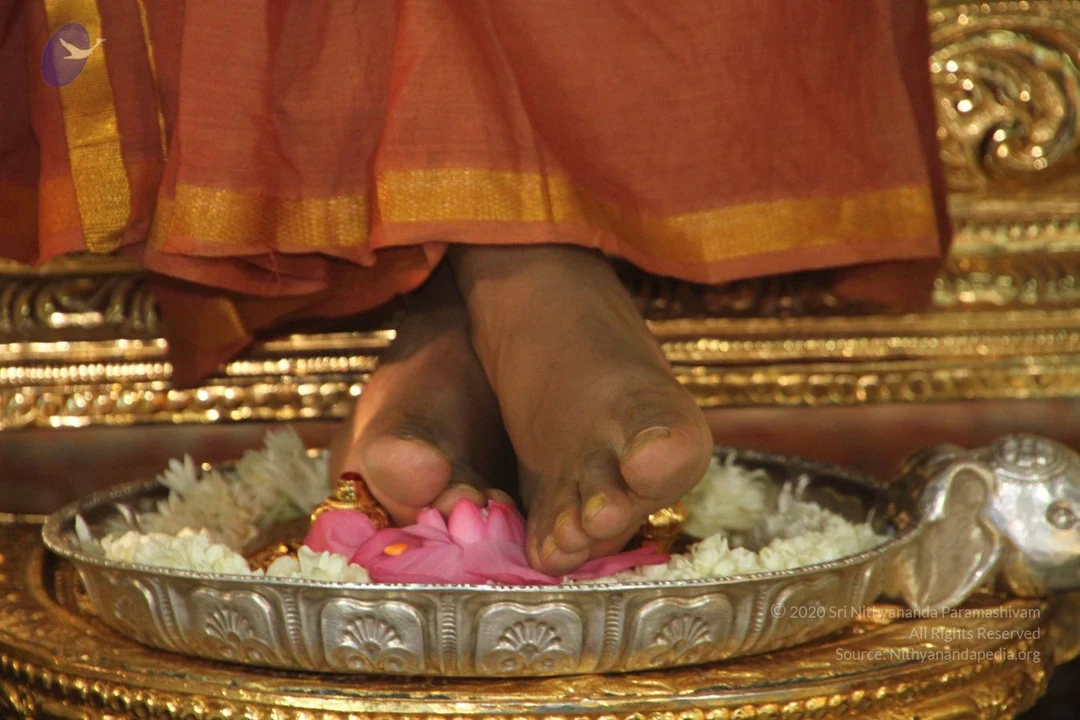
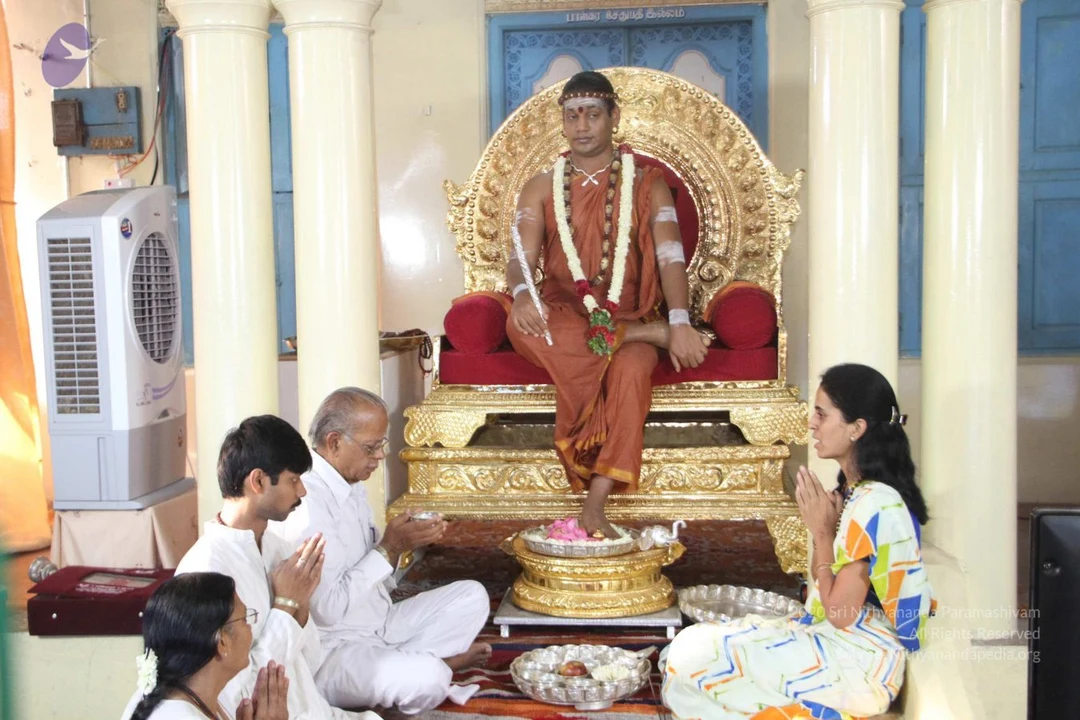
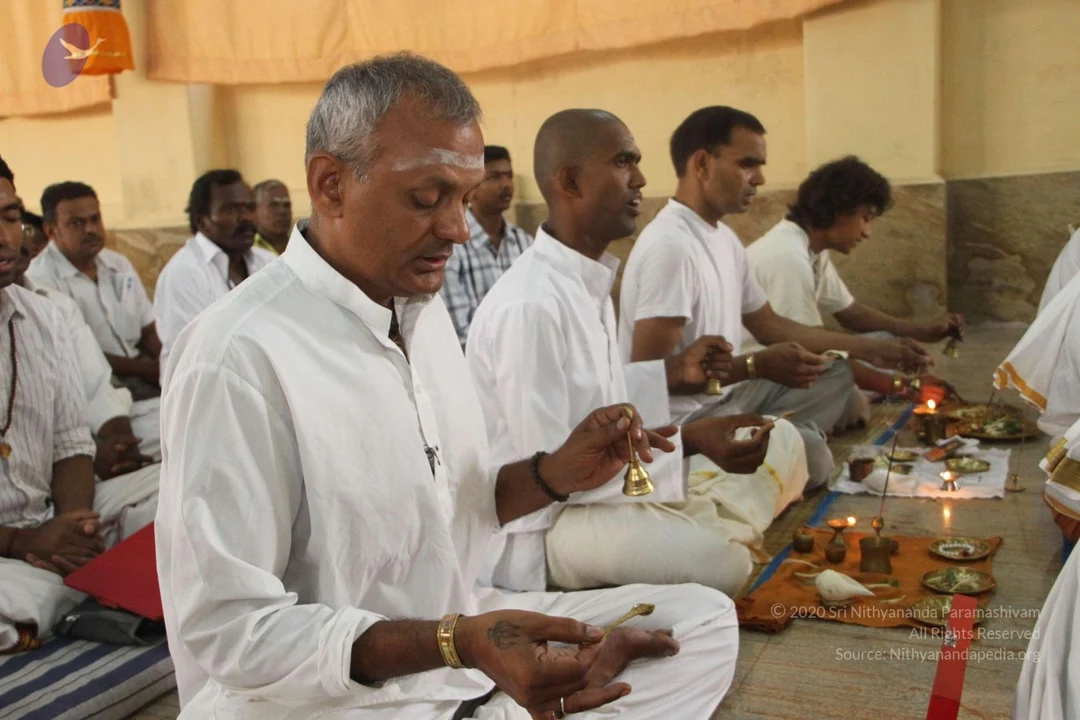
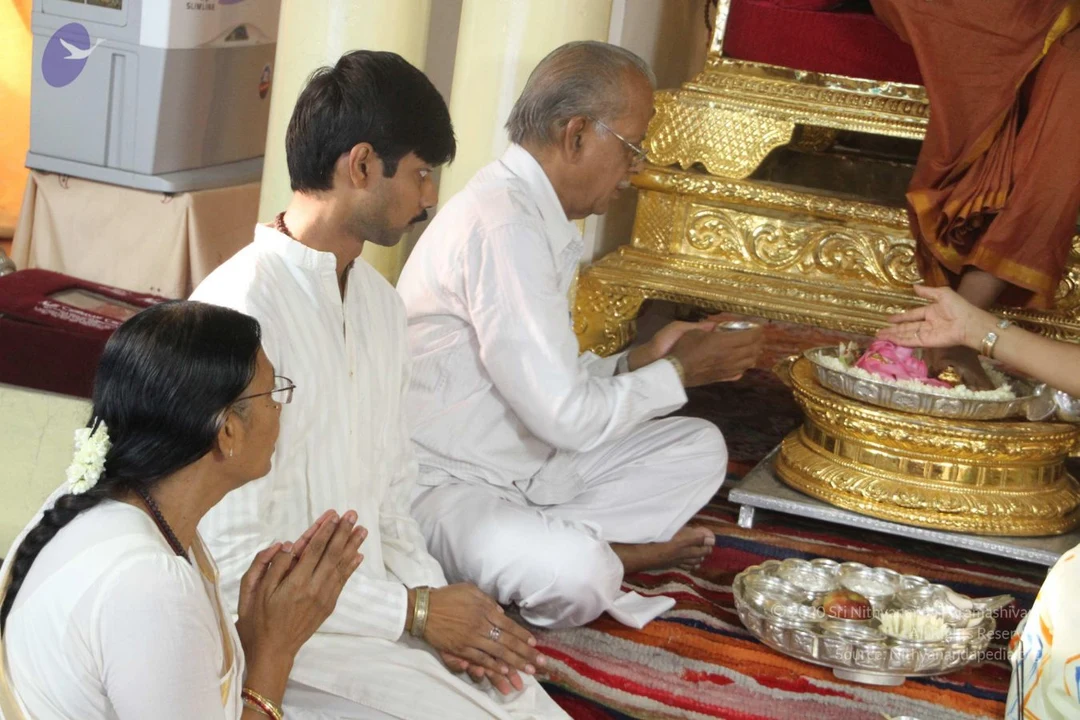
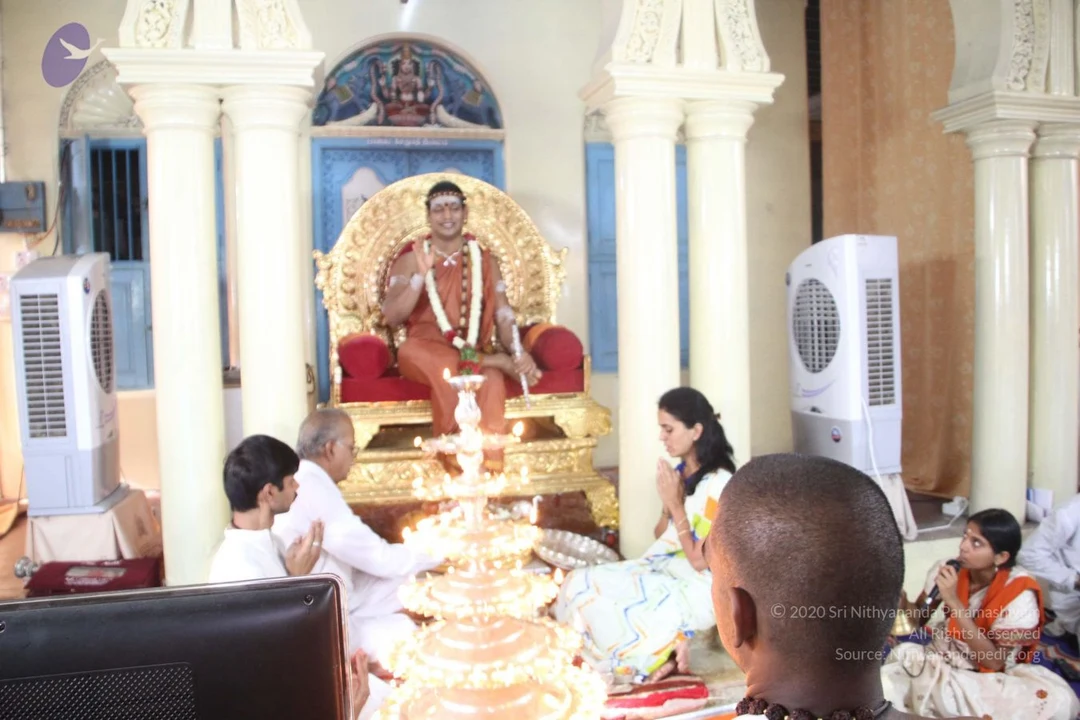
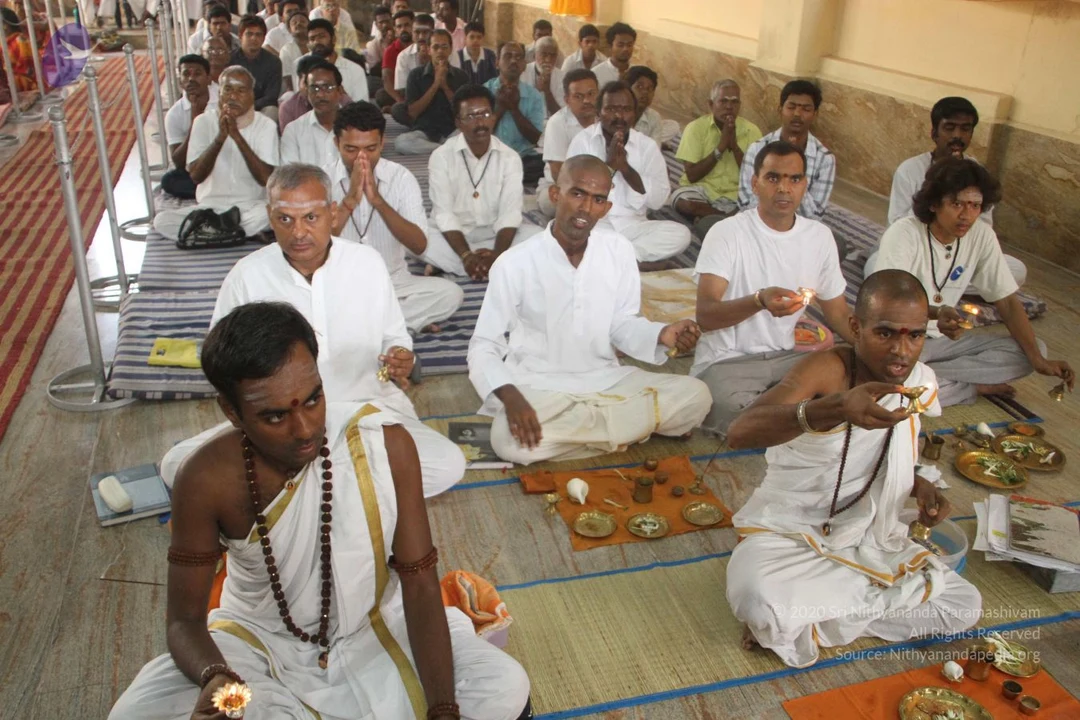
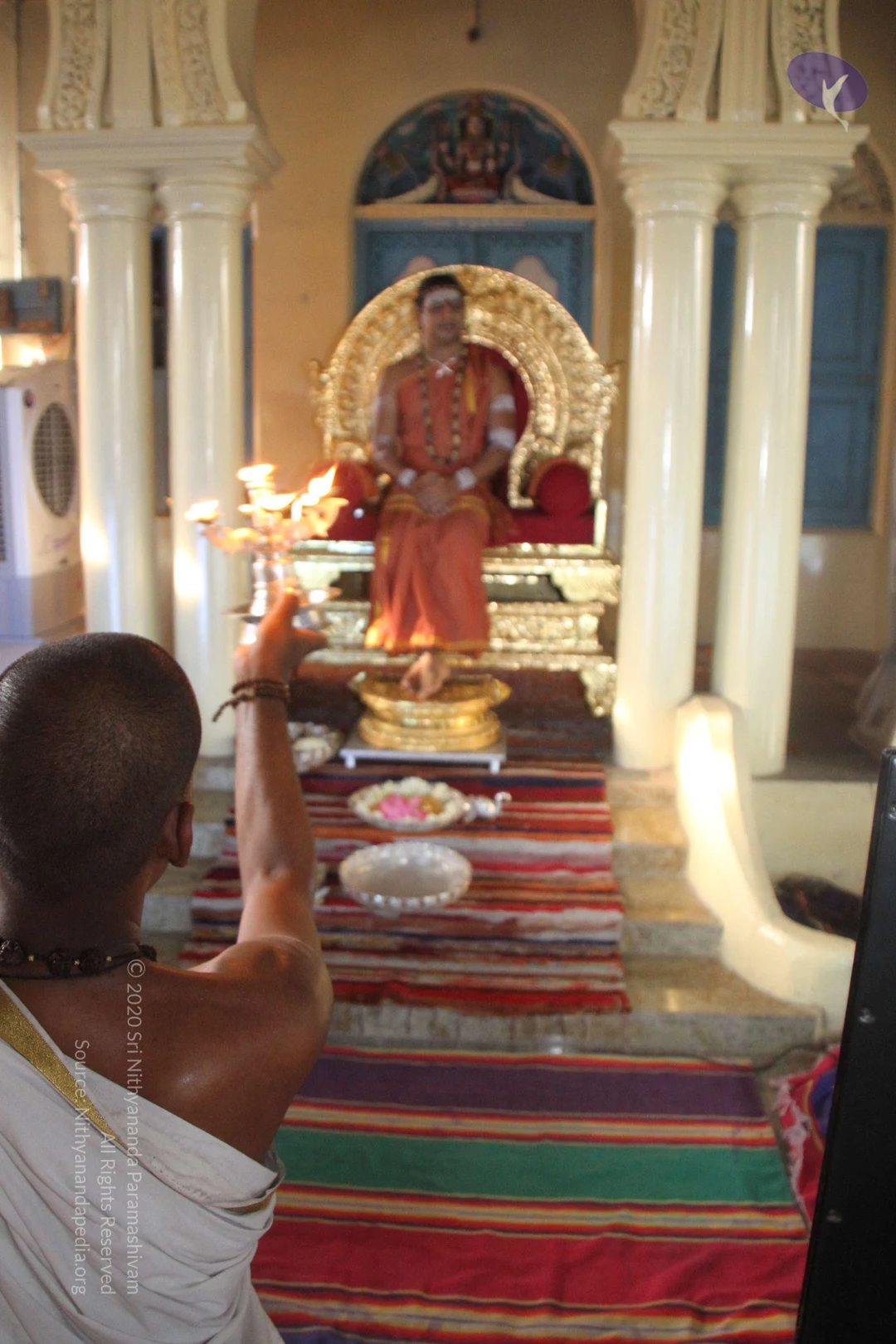
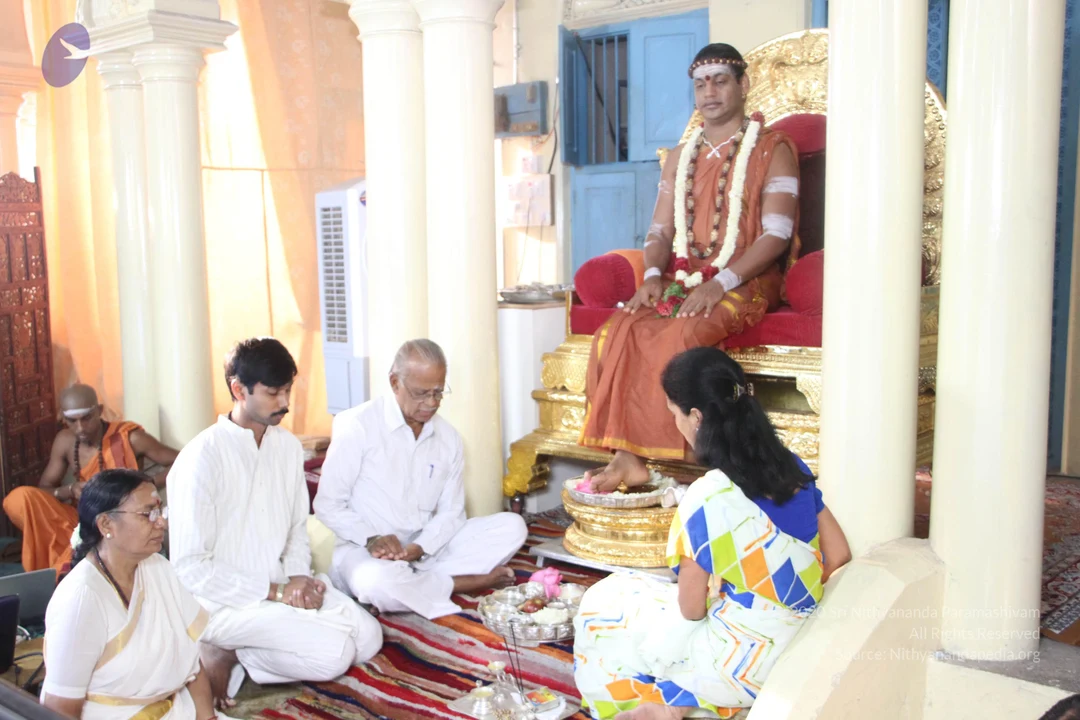
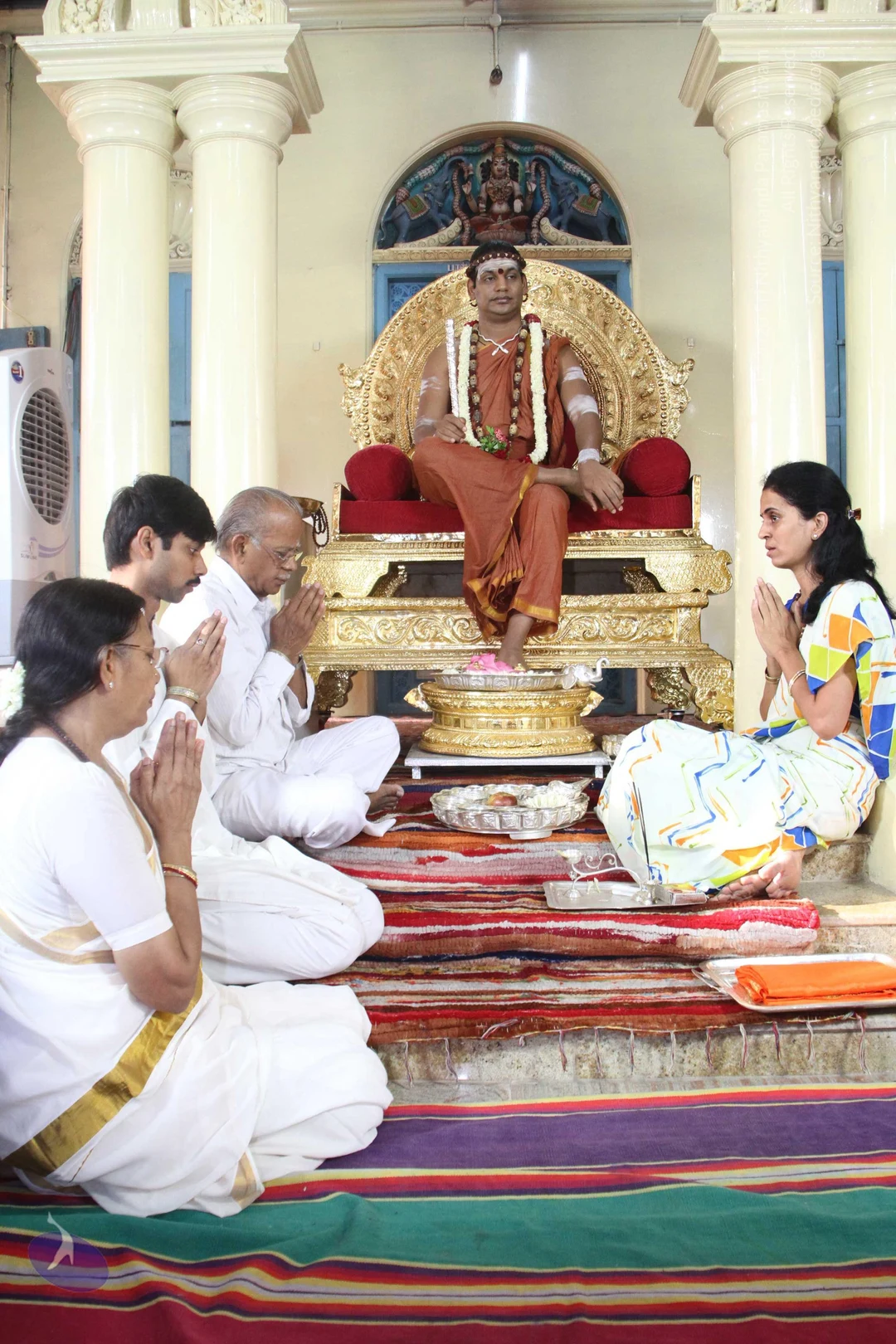
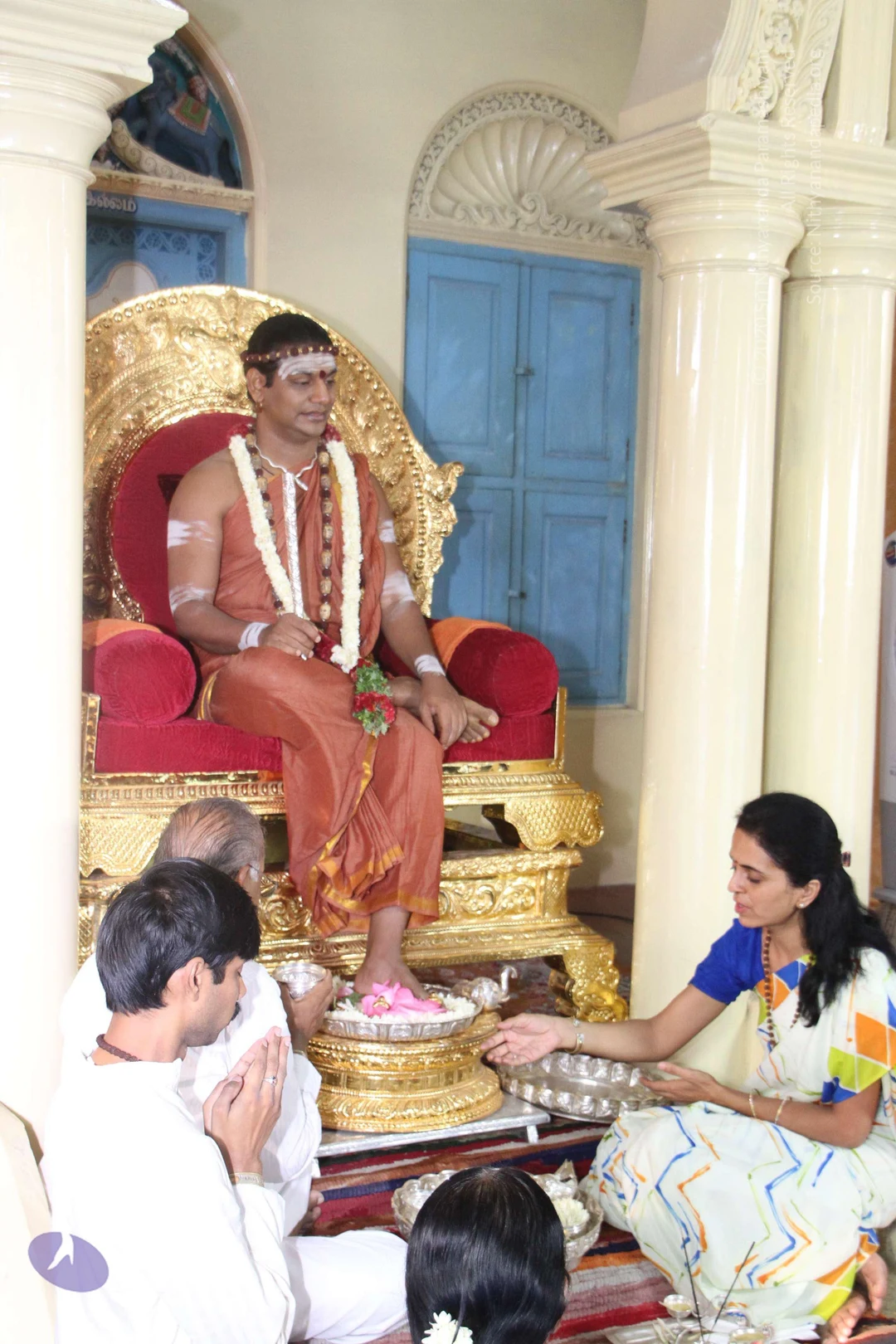
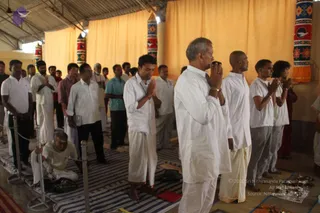
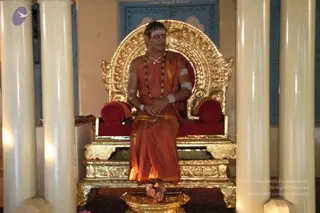
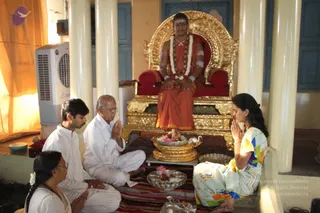
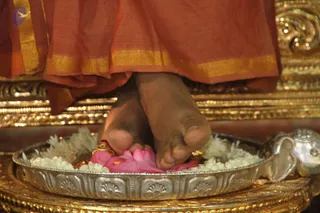
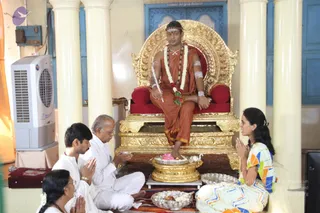
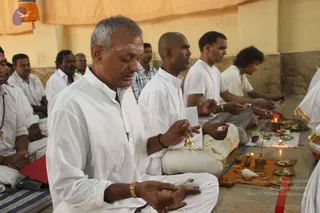
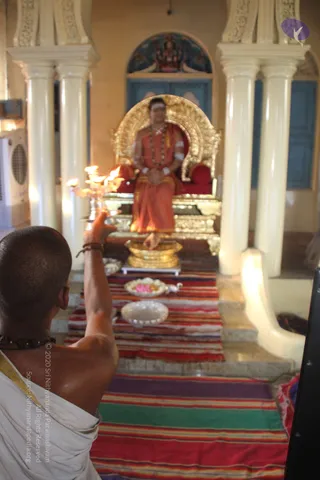
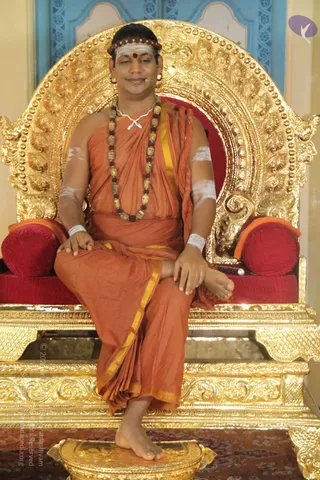
A photograph of a devotional gathering in a hall with yellow curtains and colourful patterned banners on the pillars. Several men stand in rows with palms pressed together in namaskar, most wearing white shirts and white dhotis or mundus; one man in the foreground wears a white shirt and dhoti with a gold wristwatch. A seated man in white clothes sits at left beside a metal stanchion, and oil lamps or offering items sit on the striped floor mats at lower right.A man sits cross-legged on an ornate gold throne with a deep red cushioned seat and red armrest bolsters, between two large white pillars. He wears an orange-saffron cloth draped over his body, a rudraksha mala with a ceremonial gold pendant around his neck, a white headband, and white sacred ash markings on his forehead and arms. His hands rest in his lap and his bare feet rest on a small brass footstool. Behind him a blue-framed wall bears a painted inscription. The setting is a temple-like hall with cream-coloured walls and a red floor covering.A seated figure in an orange-saffron robe with a white and red garland, rudraksha-style beads, and white markings on the forehead and arms sits on an ornate gold throne with red cushions, as devotees in white and a bright multicolored sari sit before him with palms pressed together in namaste. A silver offering tray with flowers and fruit, a brass plate and a small kalasha-like vessel rest on the red-and-white carpet in front of the dais, with a pedestal fan and pillars in the background. Whether the seated figure is the a person named on the page cannot be confirmed from appearance alone; the figure shows distinctive saffron robes, garland and beads, but the cues are not enough for a probable identification.Close-up photograph of a pair of bare feet resting on a silver tray filled with white flower petals and a pink lotus bloom. The feet extend from beneath orange-red cloth with a gold border, and a gold-toned throne or seat is visible behind. The feet are being offered a padapuja-style veneration, with a gold ring visible on one toe. The shot shows only the feet and cloth, with no visible face or full body.A photograph of a seated figure on an ornate gold throne with red cushions, wearing an orange-saffron dhoti and shawl, a rudraksha mala, a white flower garland, a red-and-white forehead mark and white-painted arms. Before the throne a gold padapuja stand holds pink flowers and a silver-tone platter, with a silver plate of offerings nearby. Three devotees kneel in prayer with hands folded: a man in white with glasses, a younger man in white, and a woman in a multicoloured sari, with a second woman in white beside them. Blue shuttered doors and white pillars stand behind, with a portable cooler at left.A seated group ritual in a hall with pale cream walls and a cloth canopy overhead. In the foreground a grey-haired man in a white kurta sits cross-legged, wearing a white forehead mark, holding a small brass bell in his right hand and a brass implement in his left, eyes lowered. Beside him a bald man in white and another in white shirt and dhoti also hold brass ritual items. Along the floor in front, brass plates of food, small oil lamps with lit flames, a kalasha-style vessel and a conch shell sit on an orange cloth. Other seated devotees in white and striped shirts fill the row behind.

Satsang

6 photosSource gallery
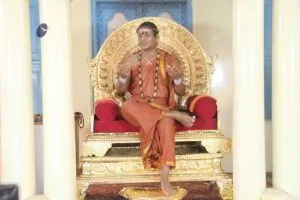
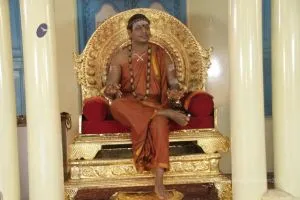
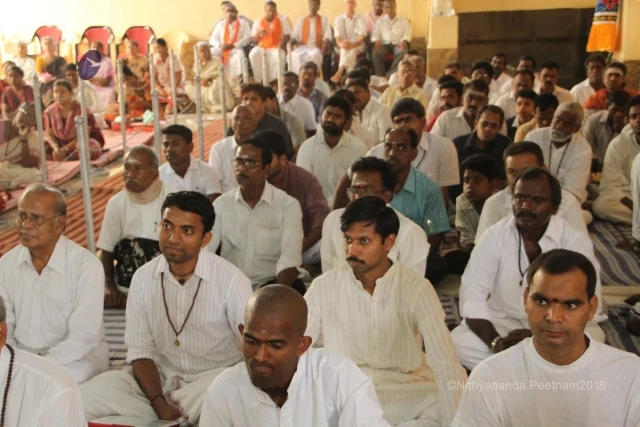
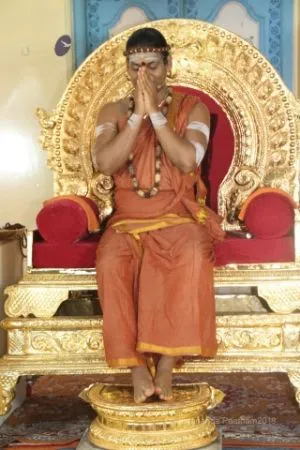
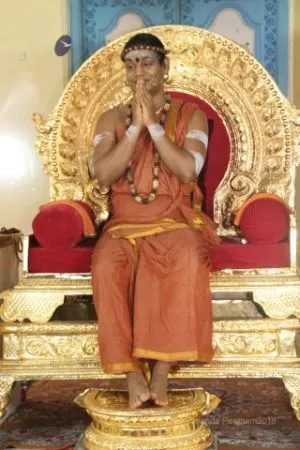
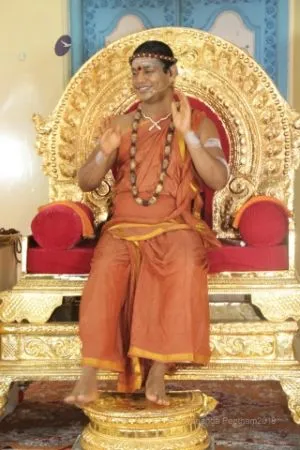
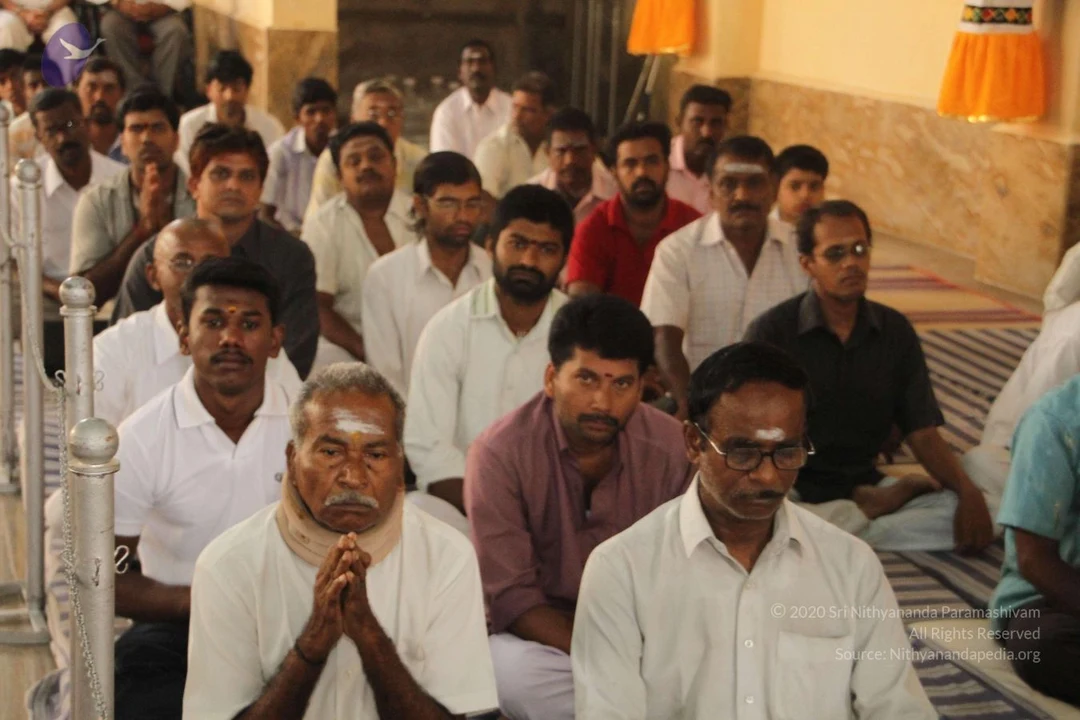
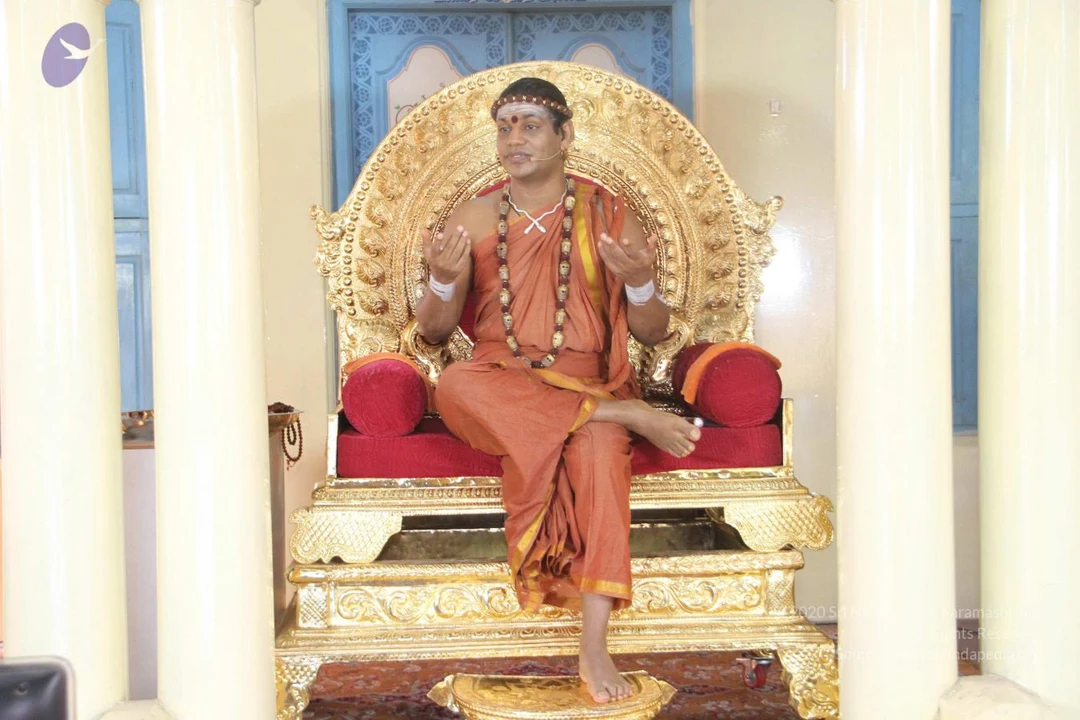
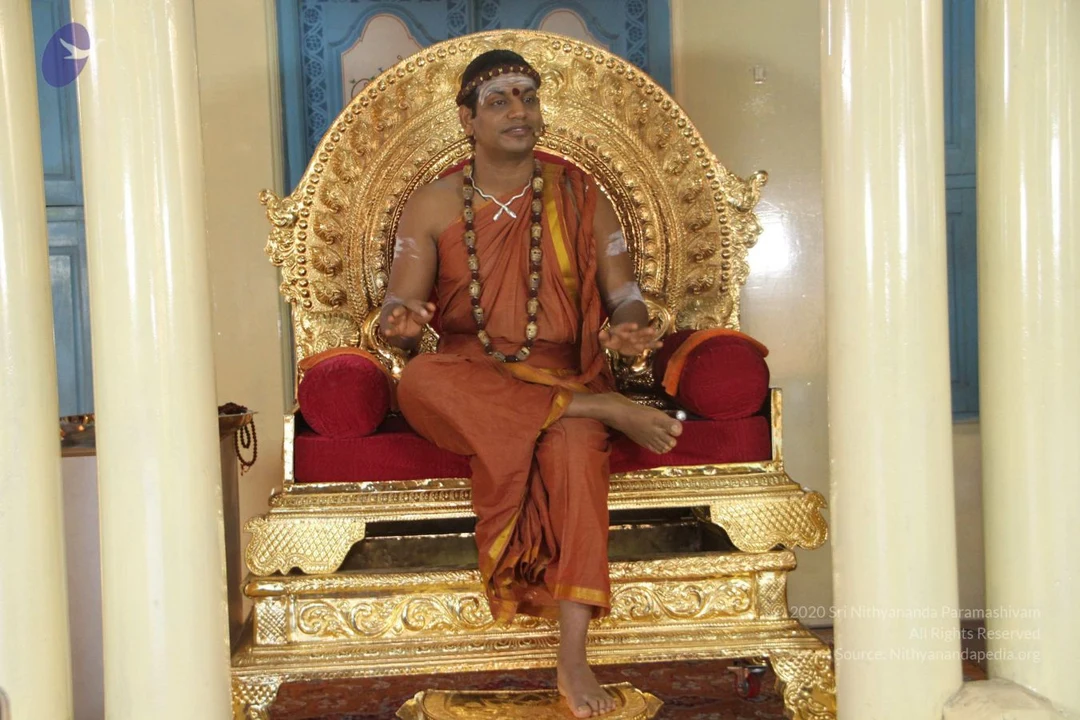
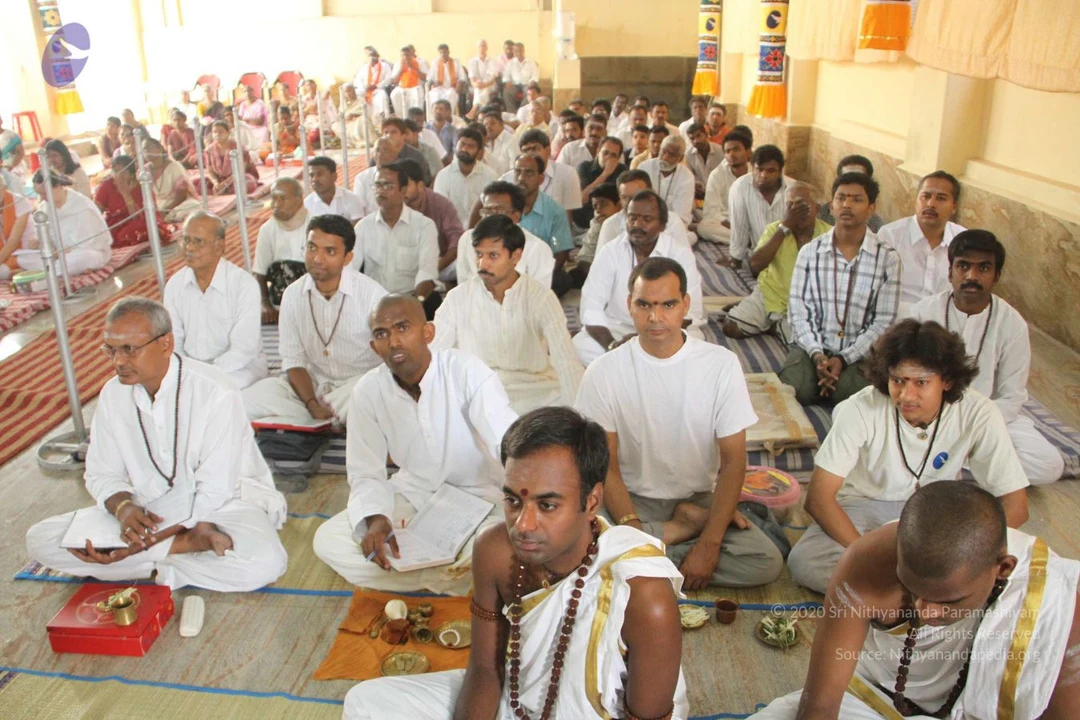
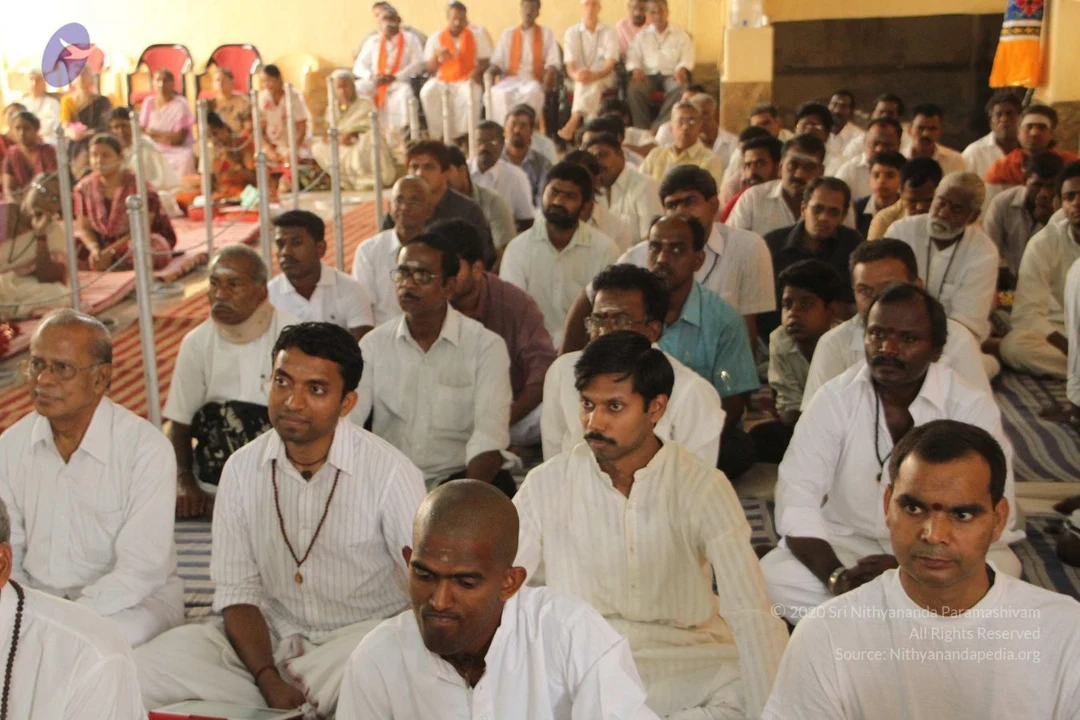
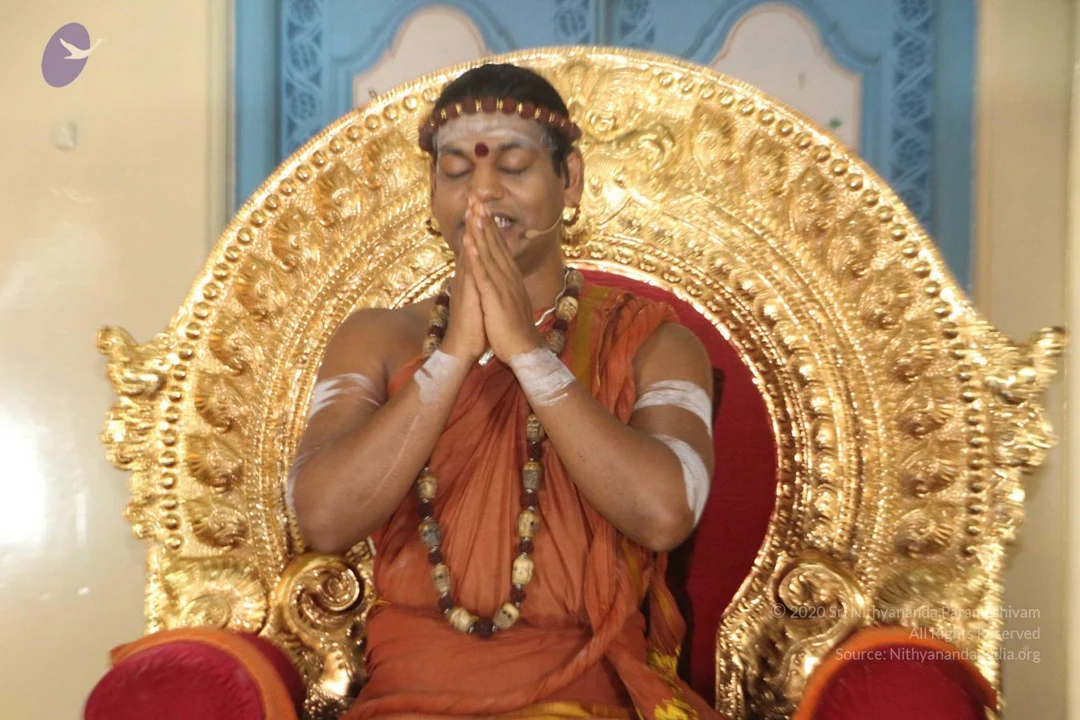
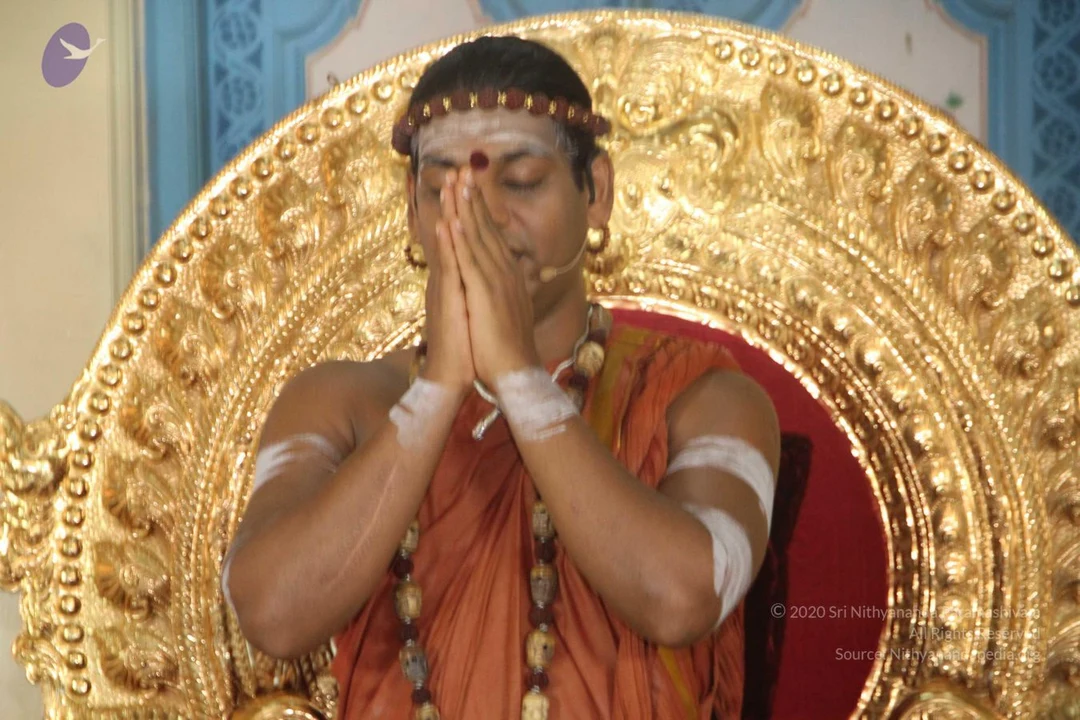
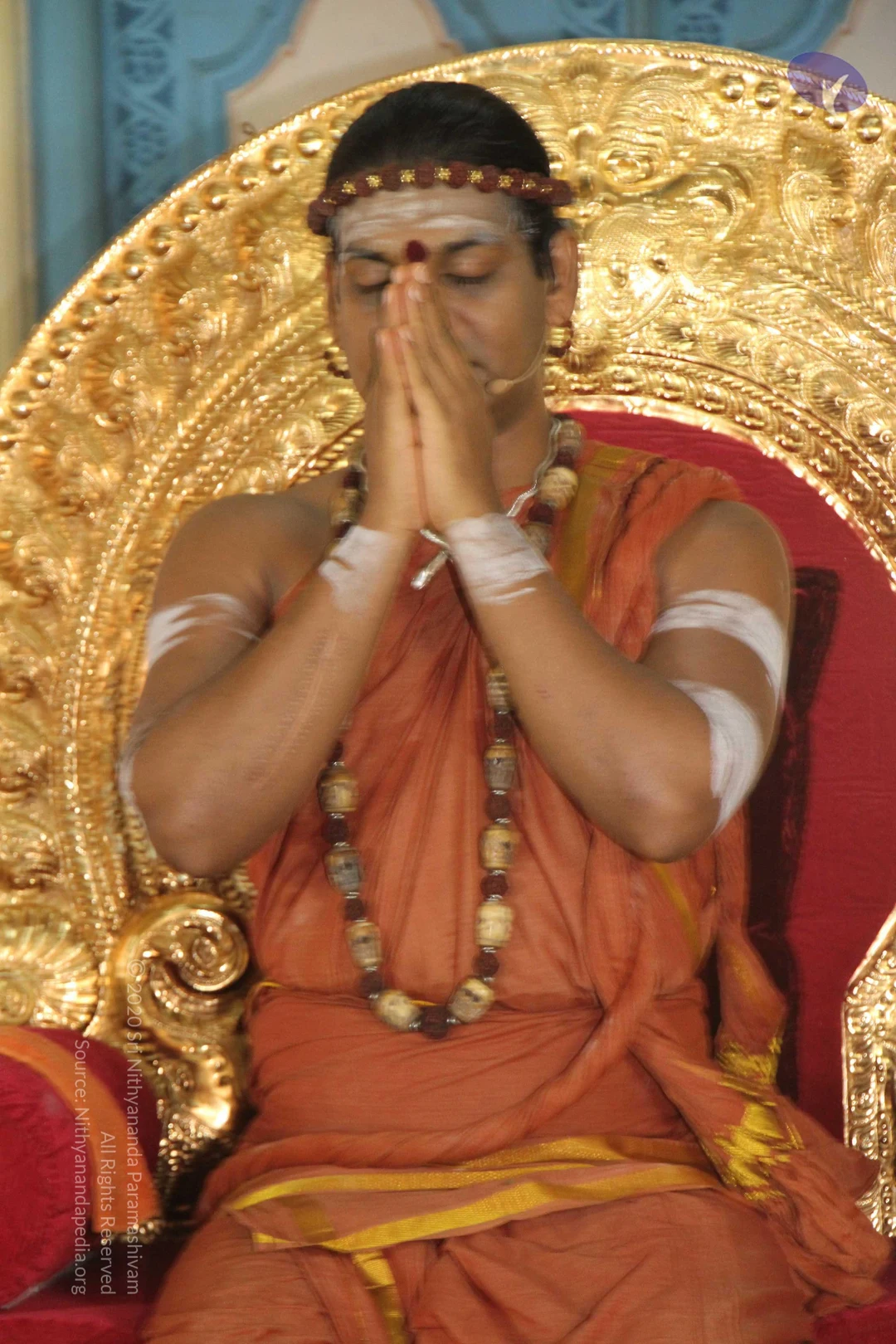
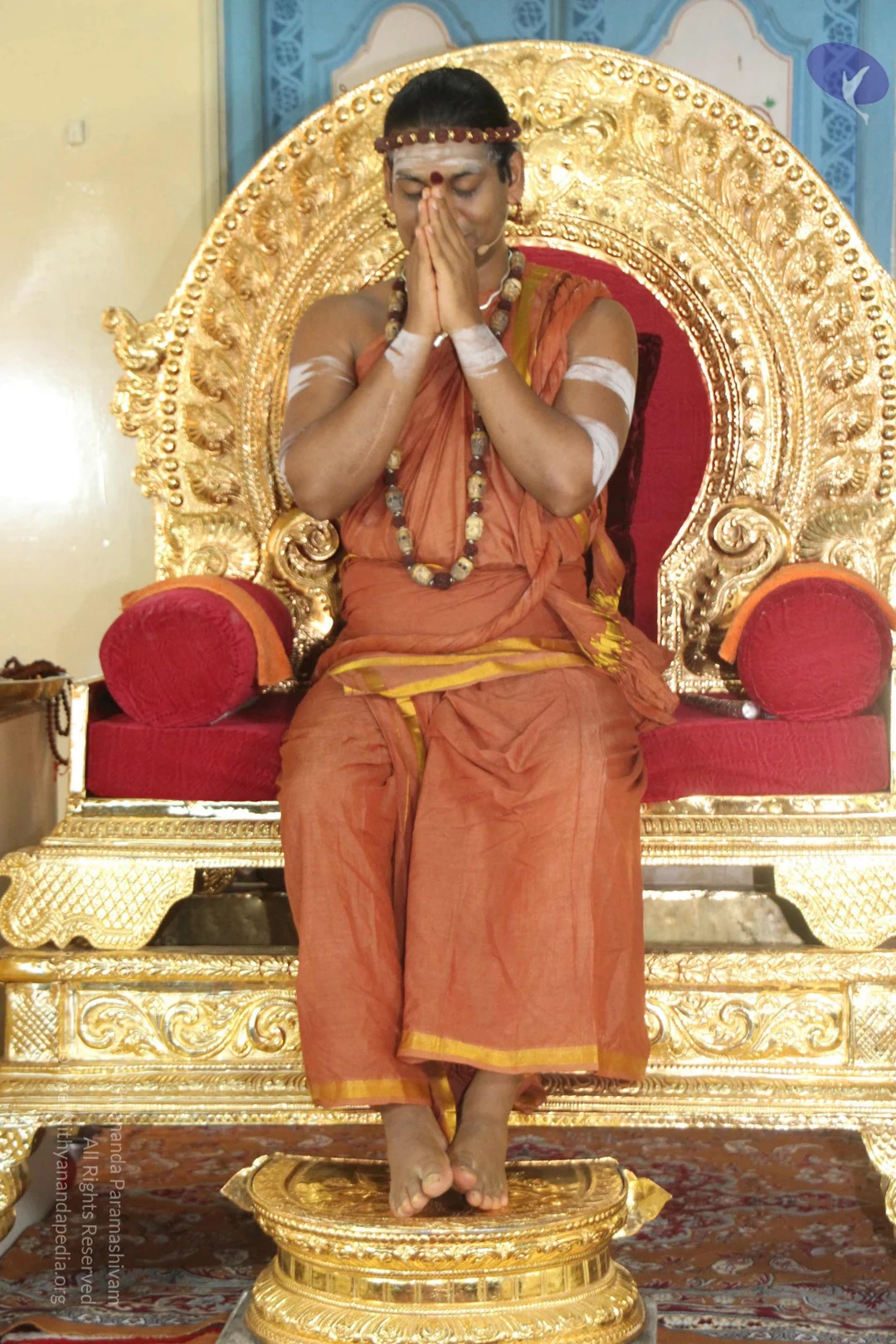
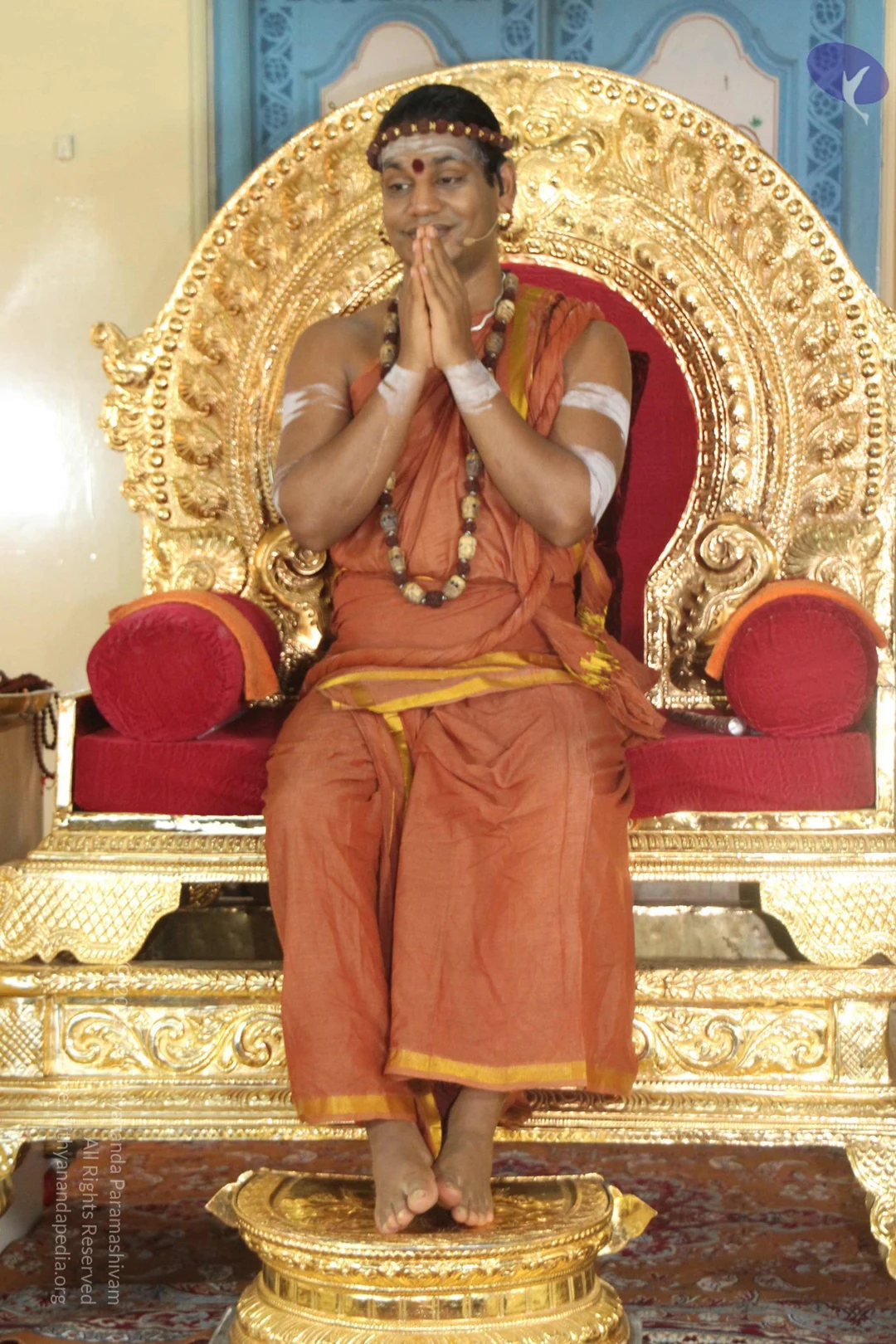
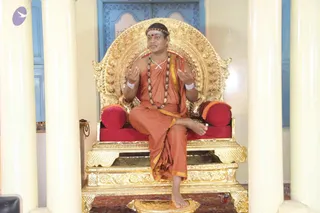
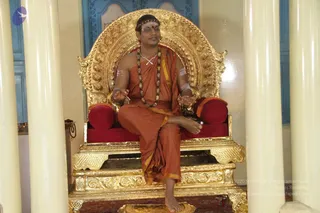
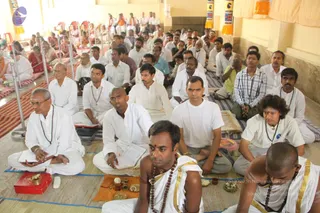
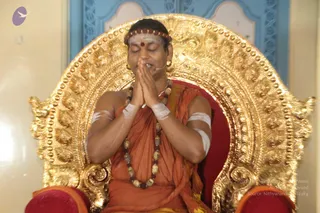
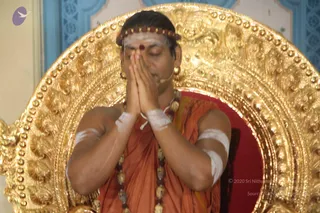
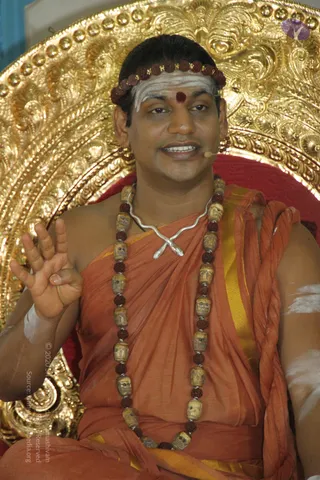
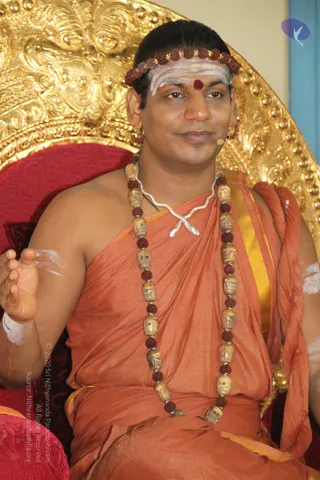
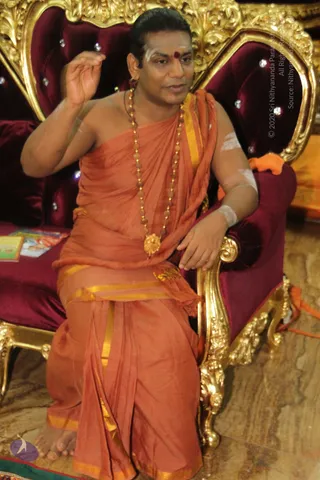
A man in saffron-orange robes sits on an ornate gold throne with red cushions, speaking with both palms open in front of him. He wears a rudraksha mala with a small crown-like headband and a red dot on his forehead. Two white columns frame the scene, with a blue doorway behind and a small lamp and red cloth on a side table. a person: the seated teacher, a sannyasi in saffron with rudraksha beads, gives a discourse on a gilded throne in a temple-like hall.A man sits cross-legged on an ornate gold throne with a deep red cushioned seat and red bolsters, in a pillared hall with blue-framed windows behind. He wears an orange-saffron dhoti and shawl with gold-yellow borders, a rudraksha mala of large beads with a pendant at the neck, a red headband, and white markings on his forehead and arms. His palms rest open in a meditative gesture as he speaks. Two white columns frame the view, and a brass lamp stands at the lower left. a person, seated in discourse on the throne with his hands in a teaching gesture.A photograph of a seated audience at a satsang or discourse hall, with devotees on mats and rugs in rows. Most wear white dhotis, white shirts or white tops, with rudraksha malas around their necks. Several men in the foreground hold open books or notebooks. A young man at lower left wears a white dhoti with gold border and a red tilak, with brass ritual items and a red box before him. Another in the lower right wears a white dhoti with gold border. Pillars with orange and blue decorations line the back wall. No figure in the scene is clearly identifiable as the speaker, and the platform at the front is not visible.A photograph of a large seated audience inside a hall during a satsang or discourse. Men in white dhotis and shirts sit on striped mats and cloth, with several men in orange shawls at the back and women in colourful saris along the left. A few men wear rudraksha malas. Metal barrier poles stand in front of the rows.A man seated on an ornate gold throne with a red cushioned seat, eyes closed and palms pressed together in namaskar. He wears an orange-saffron cloth draped over his shoulders, a multi-strand rudraksha-style bead mala, a red headband and a red bindi, with white markings on his forehead and arms. A small lapel microphone is clipped to his chest. The background is a pale wall with blue ornamental panels.A seated man in an orange-saffron robe sits on an ornate gold throne with a red cushioned back and gold-filigree arch. He presses his palms together in front of his chest in anjali, eyes closed, in a devotional gesture. He wears a red headband, white sacred ash lines on his forehead, a red kumkum dot, white bands on his upper arms, a rudraksha mala of beads around his neck and a small headset microphone. Behind him a blue patterned wall is visible. The scene suggests a seated discourse or satsang.

Sarva-Darshan

18 photosSource gallery
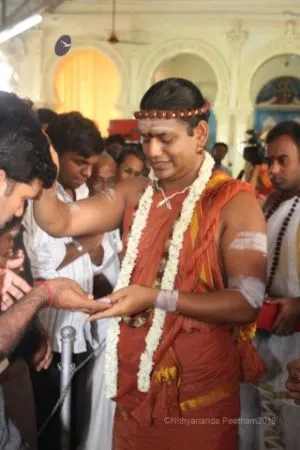
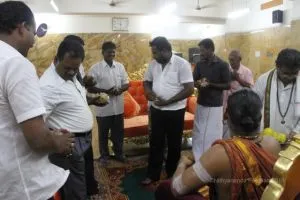
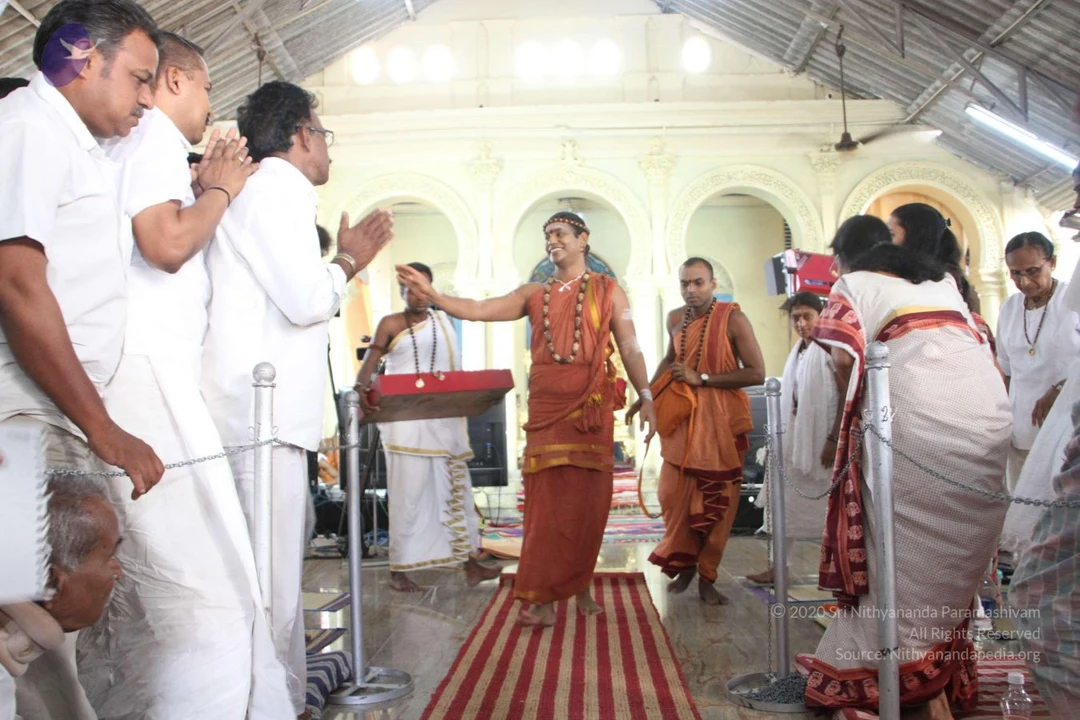
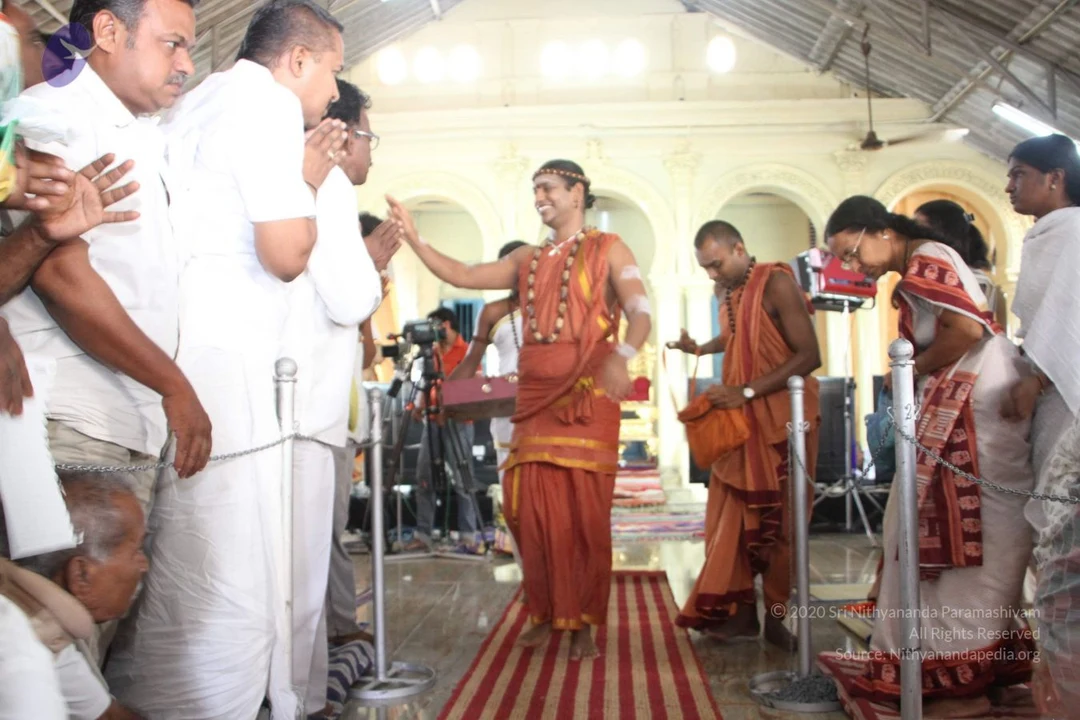
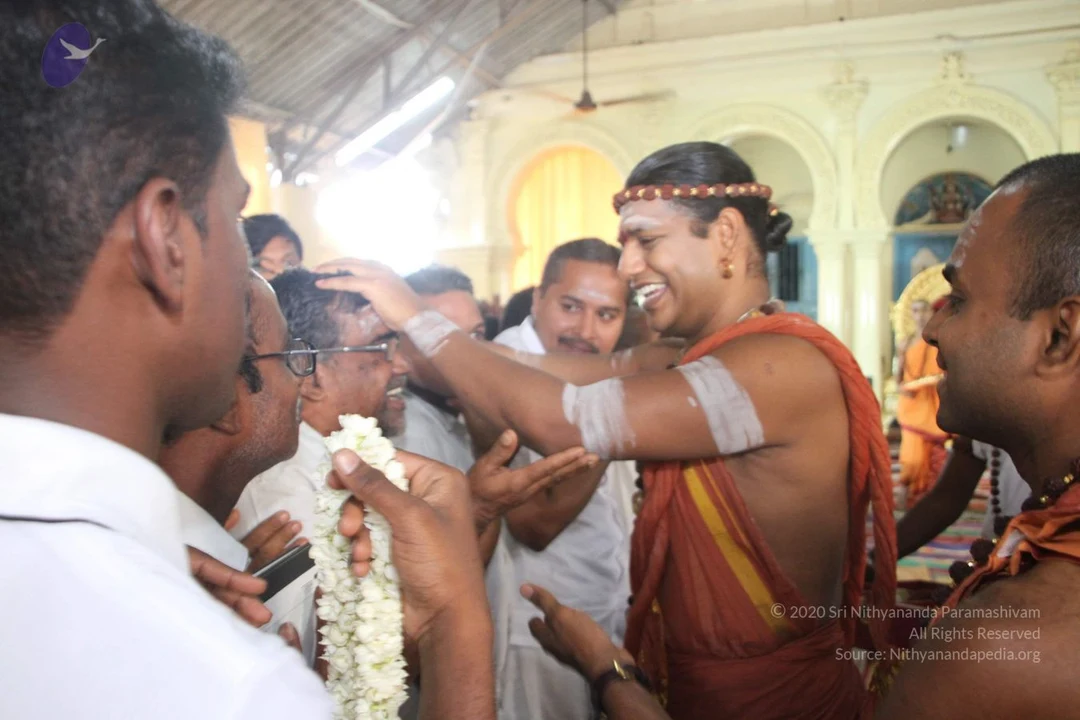
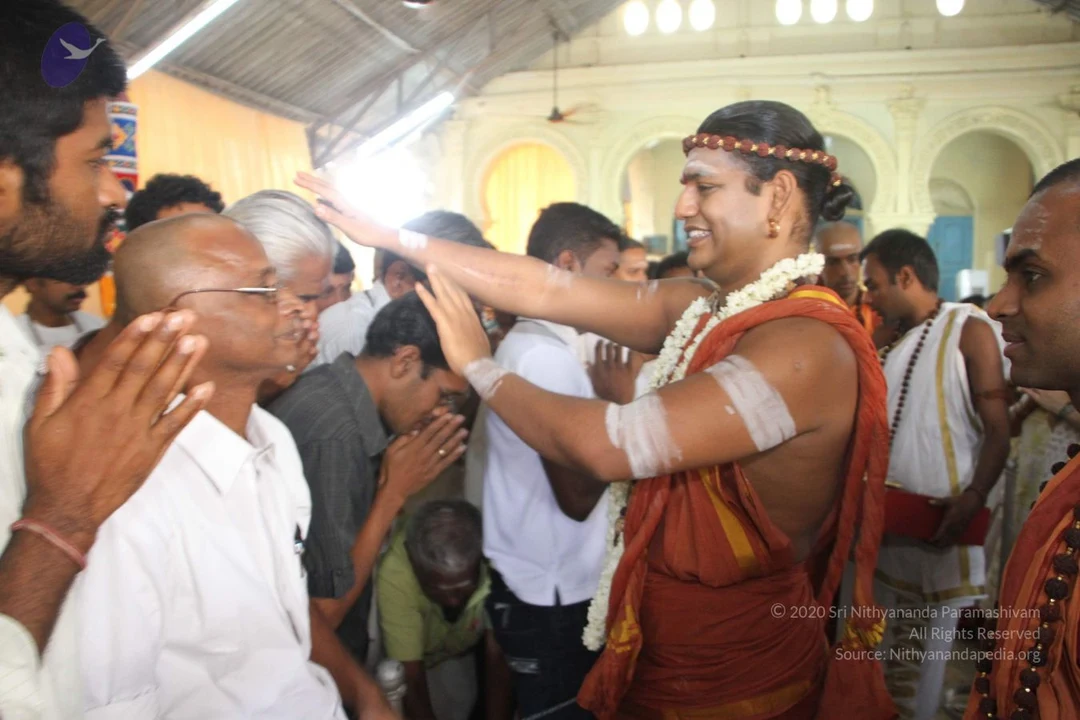
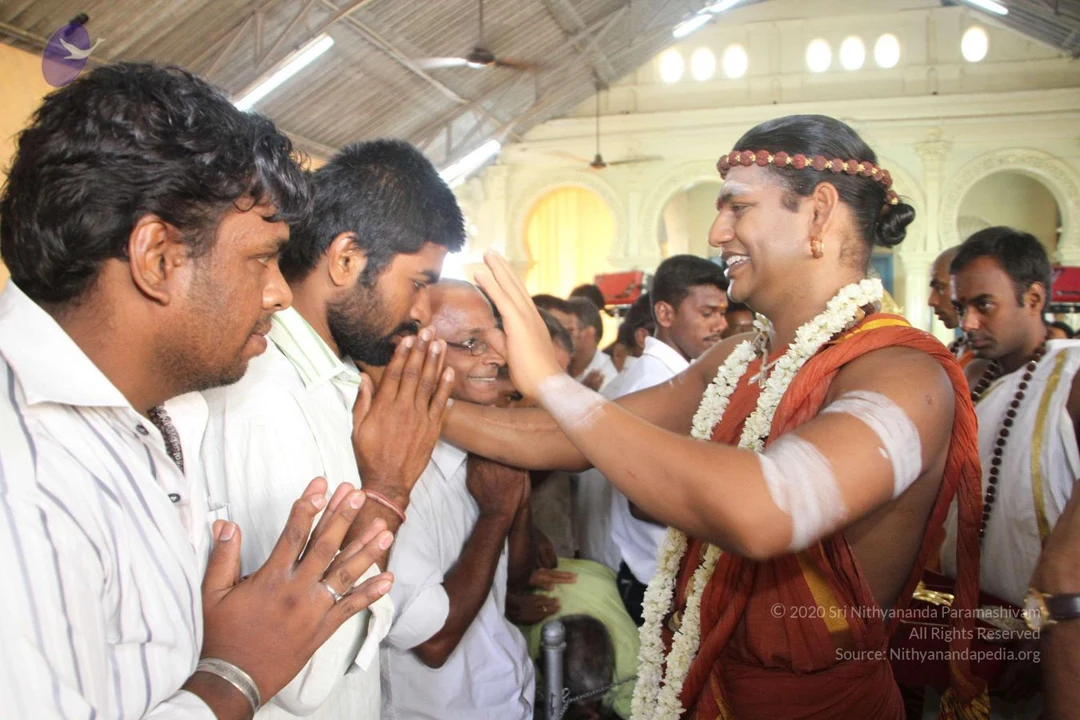
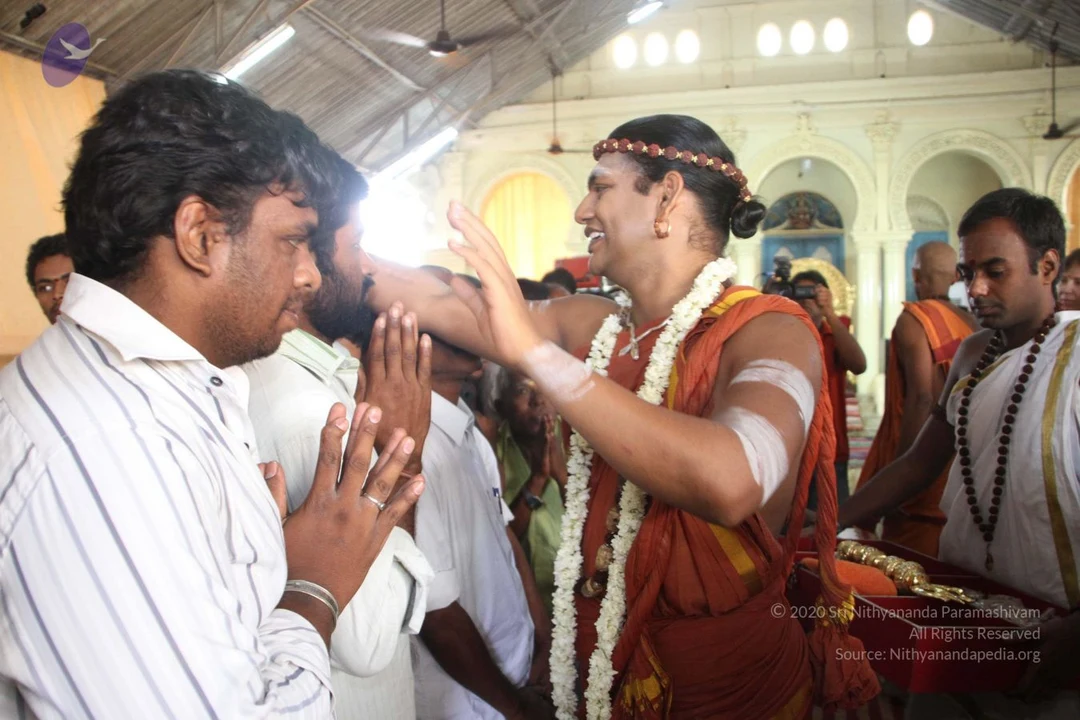
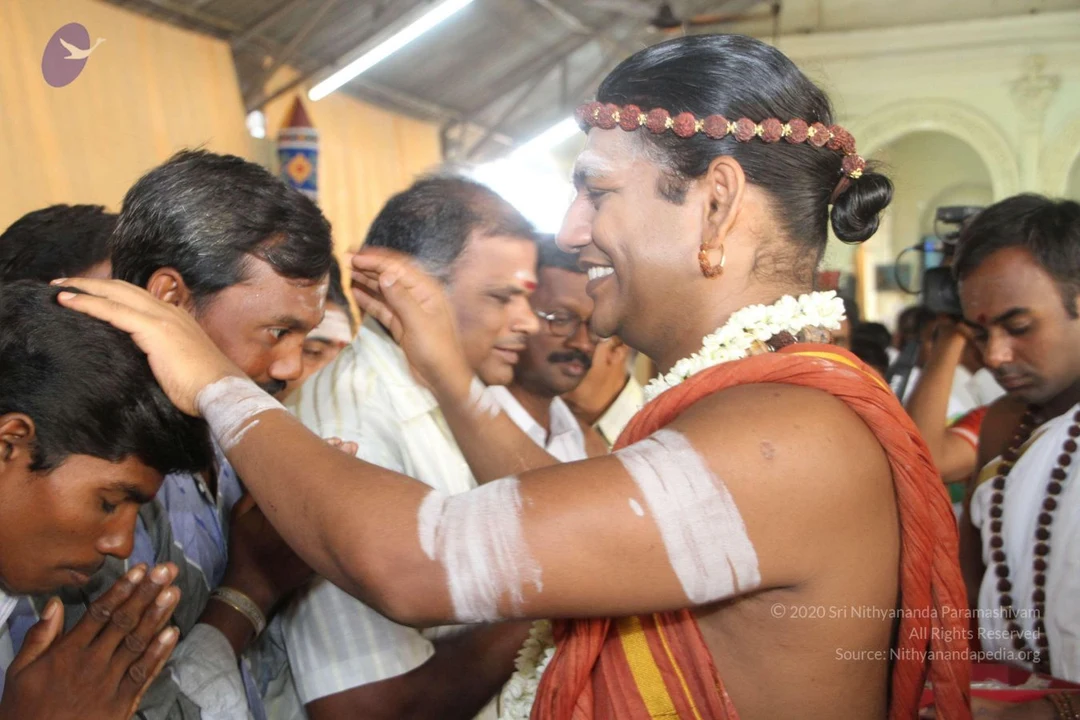
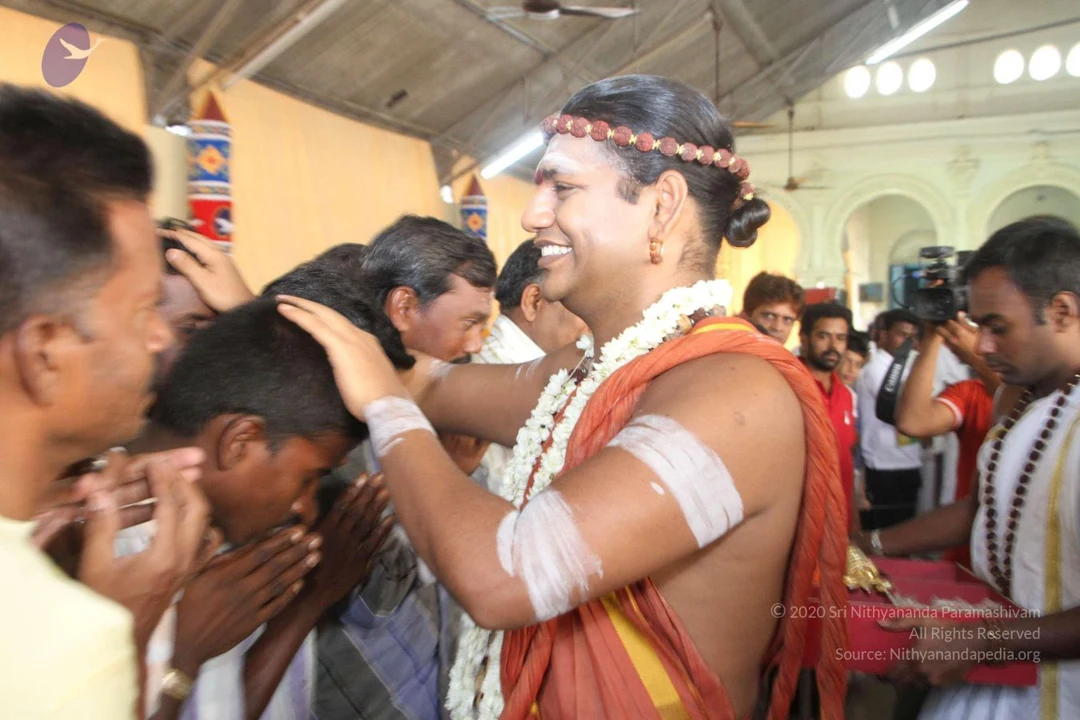
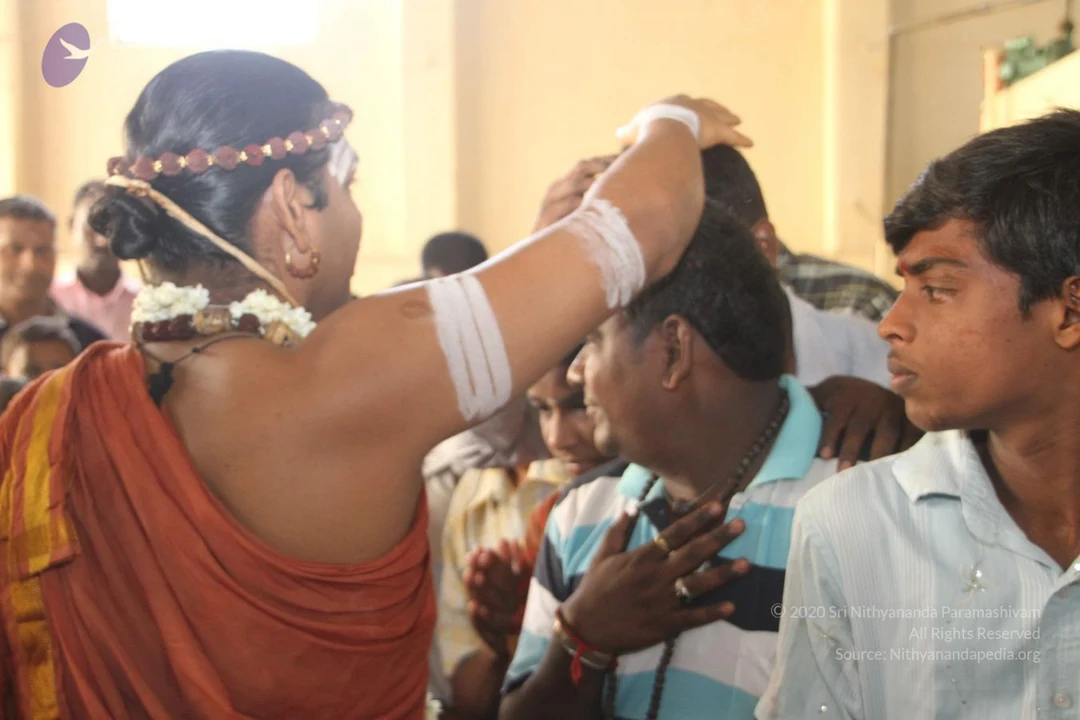
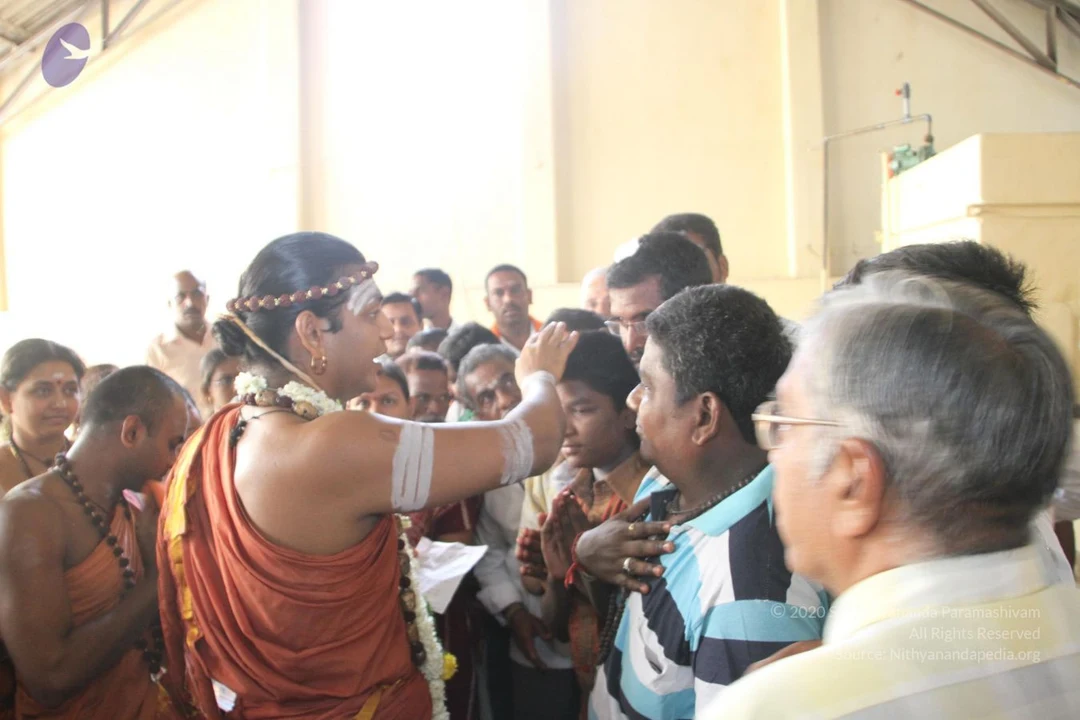
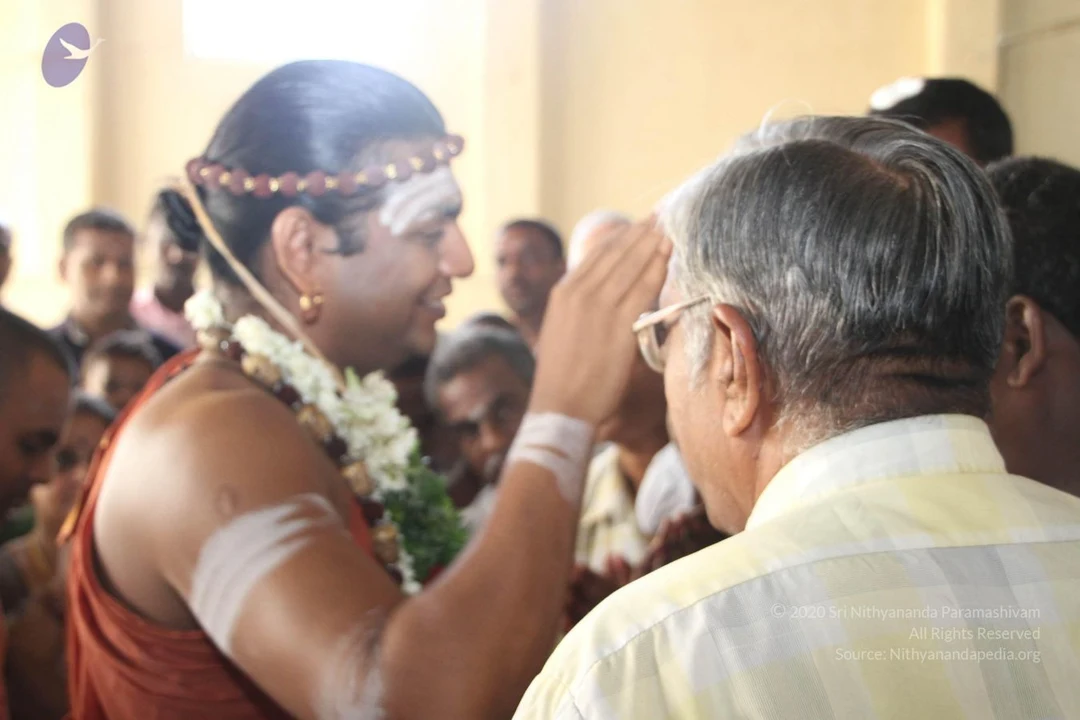
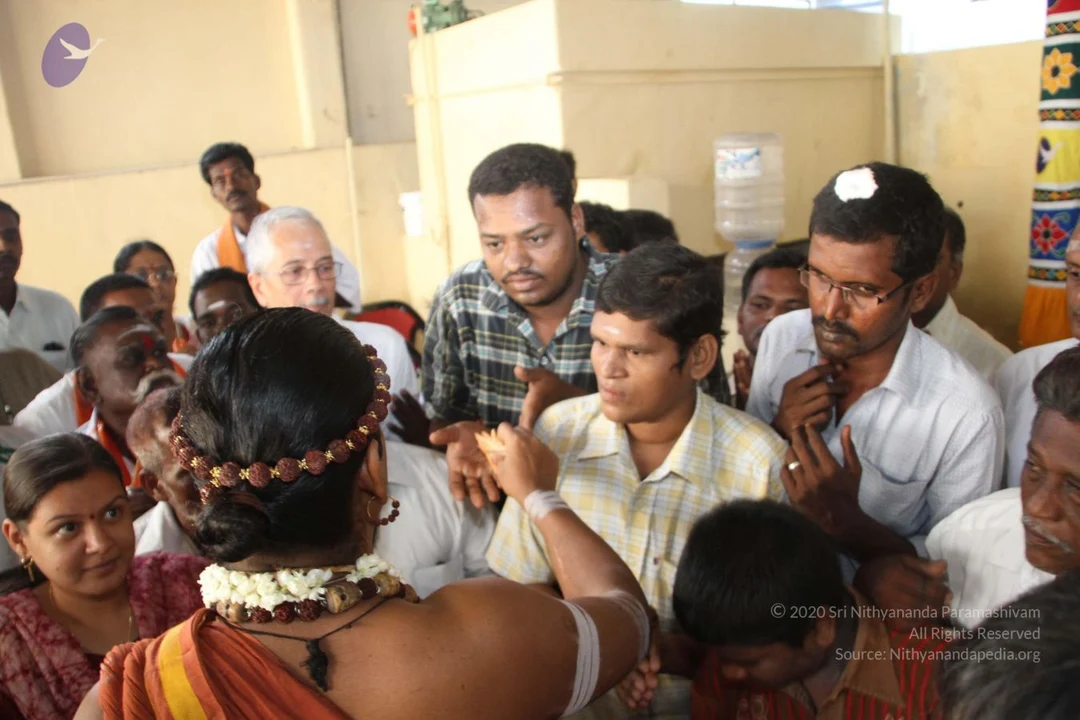
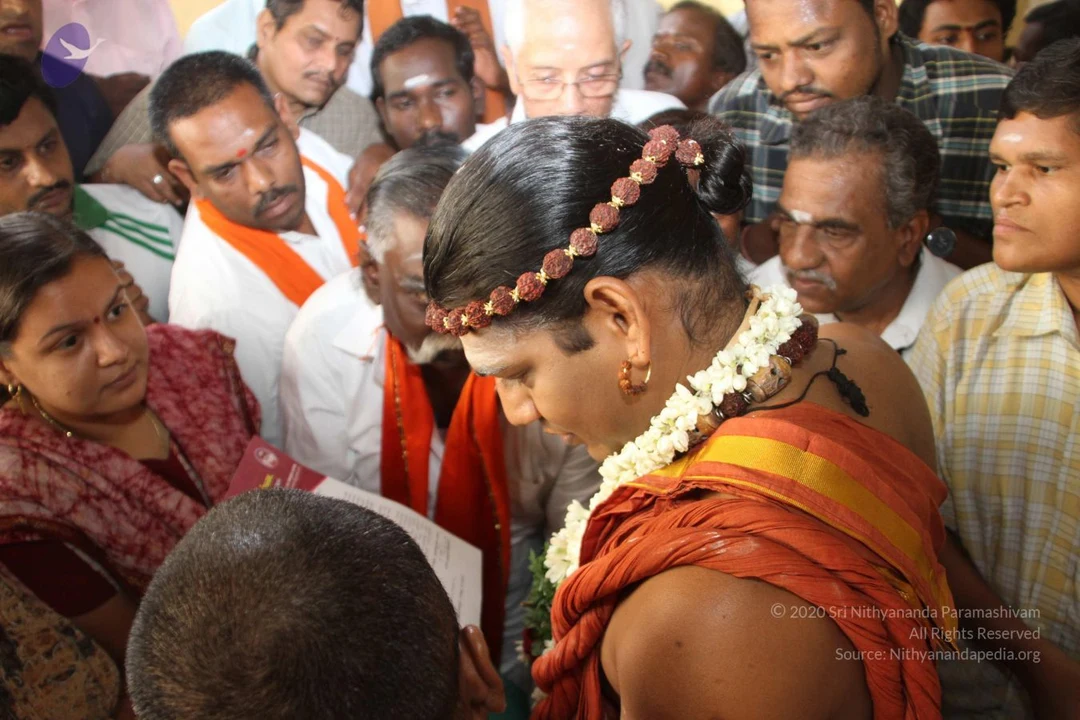
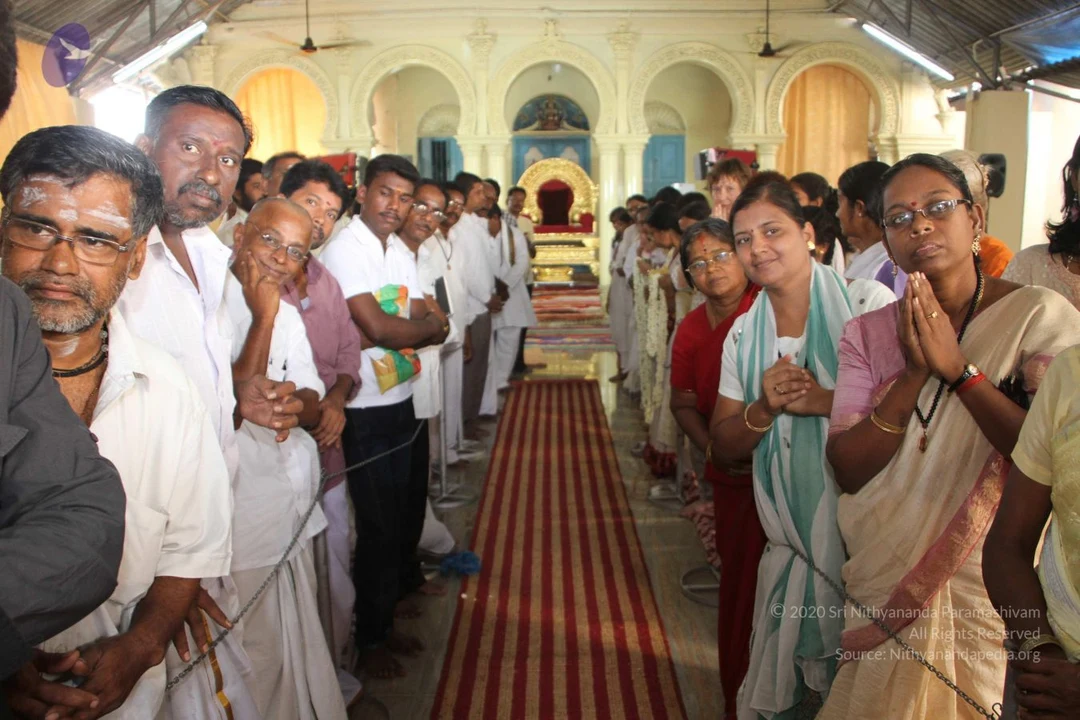
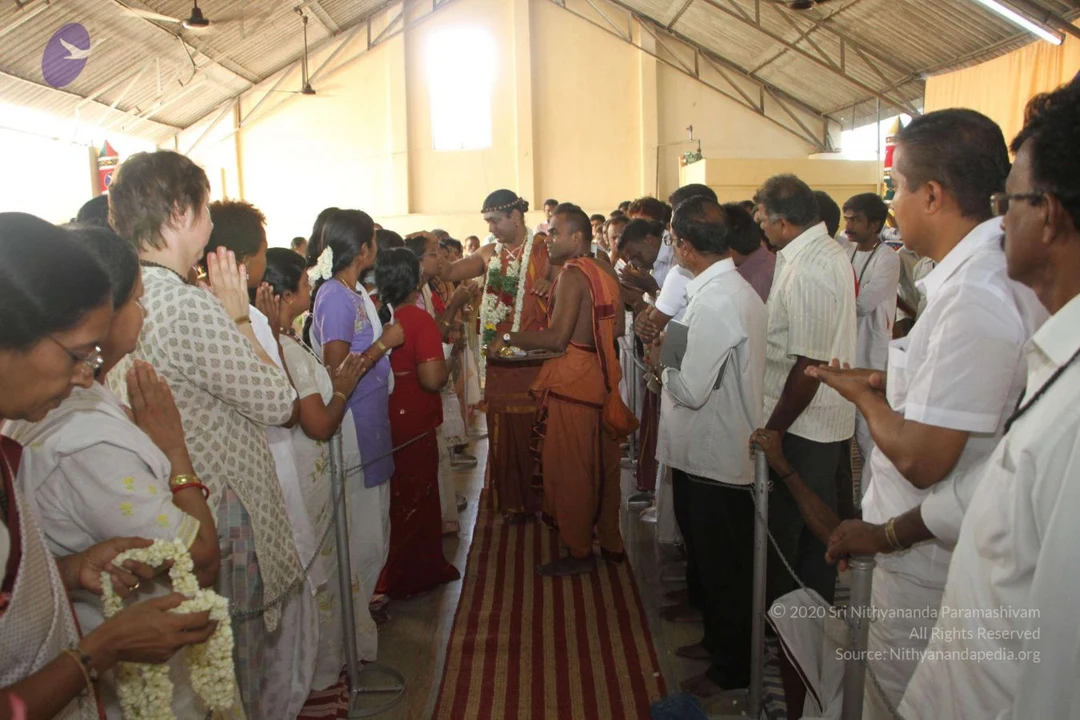
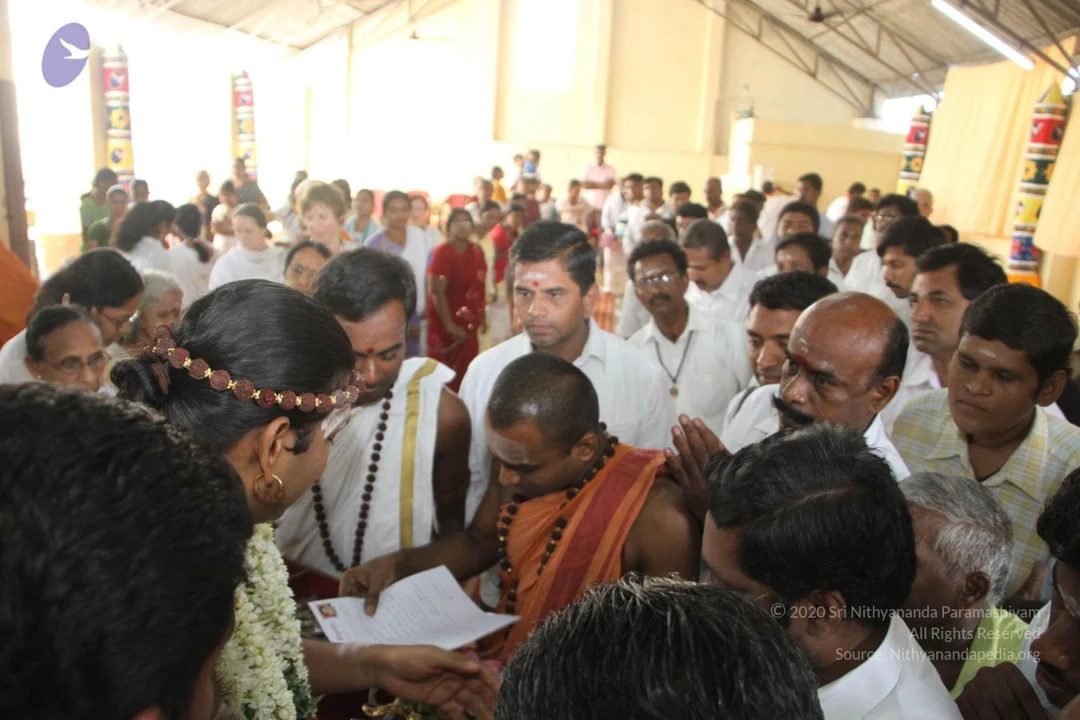
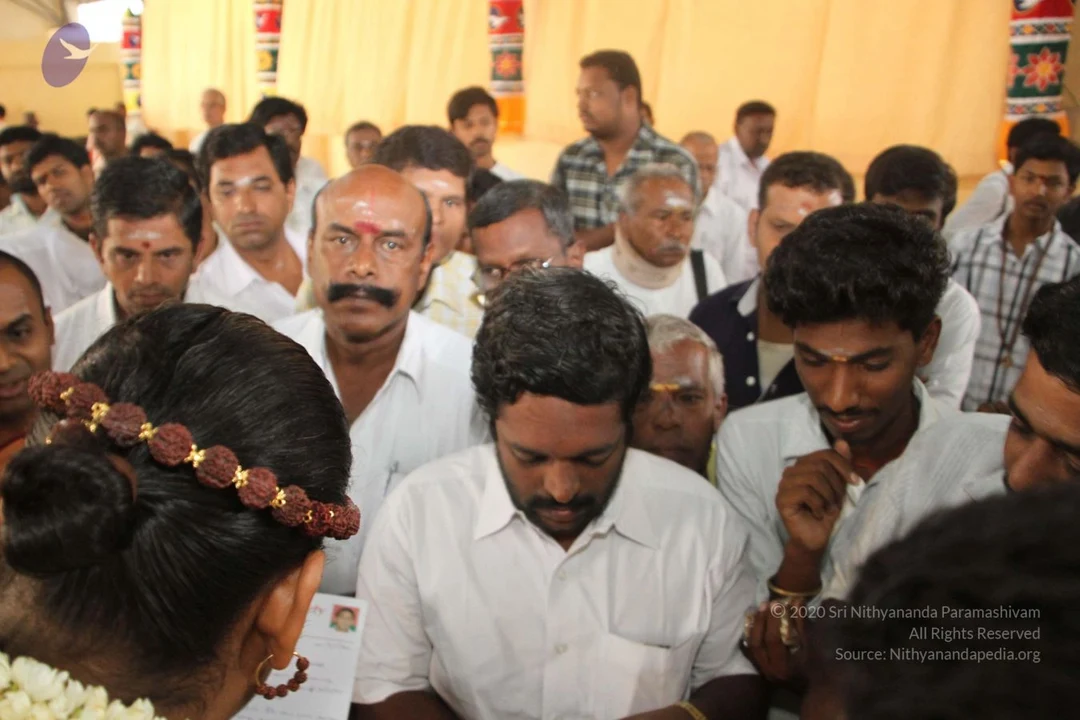
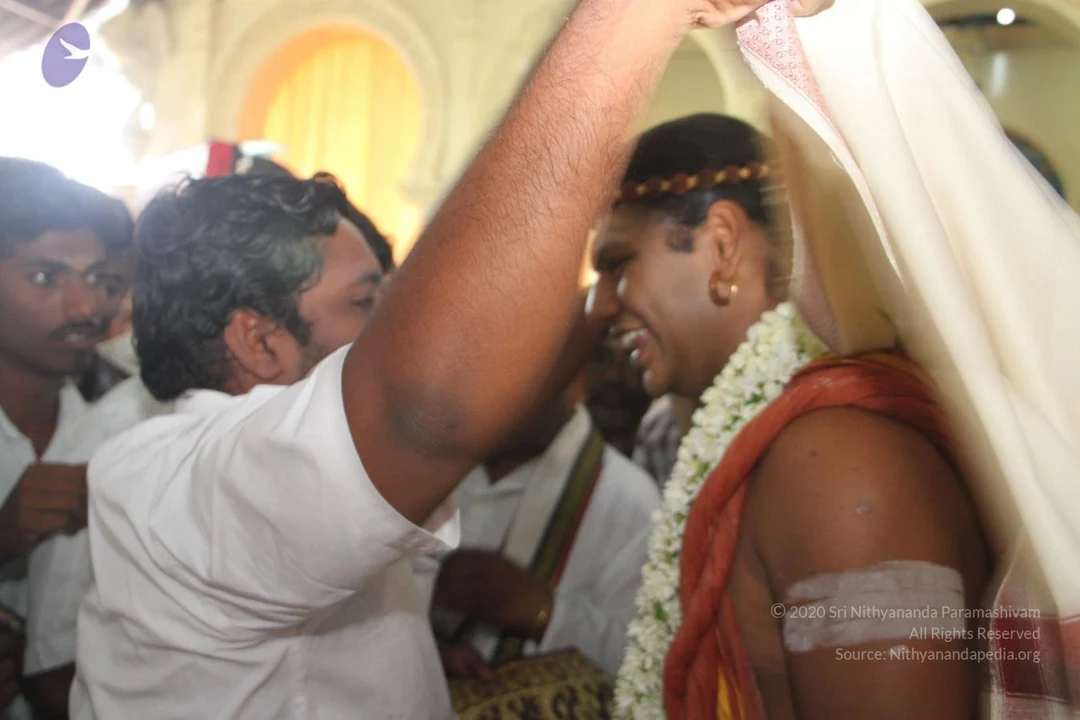
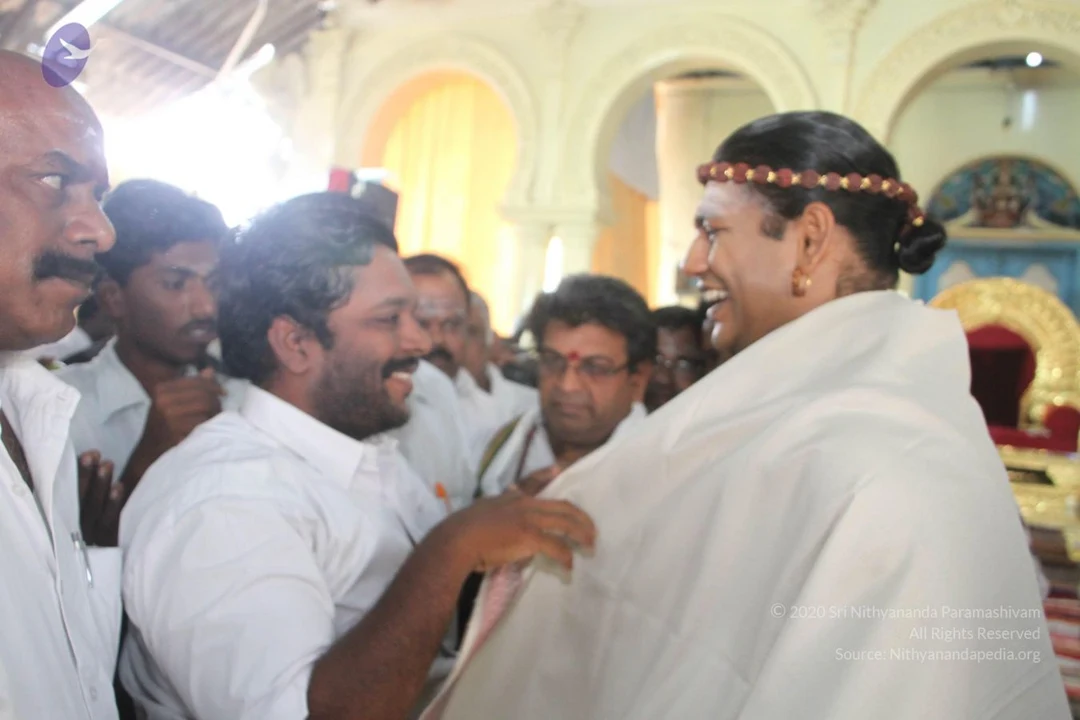
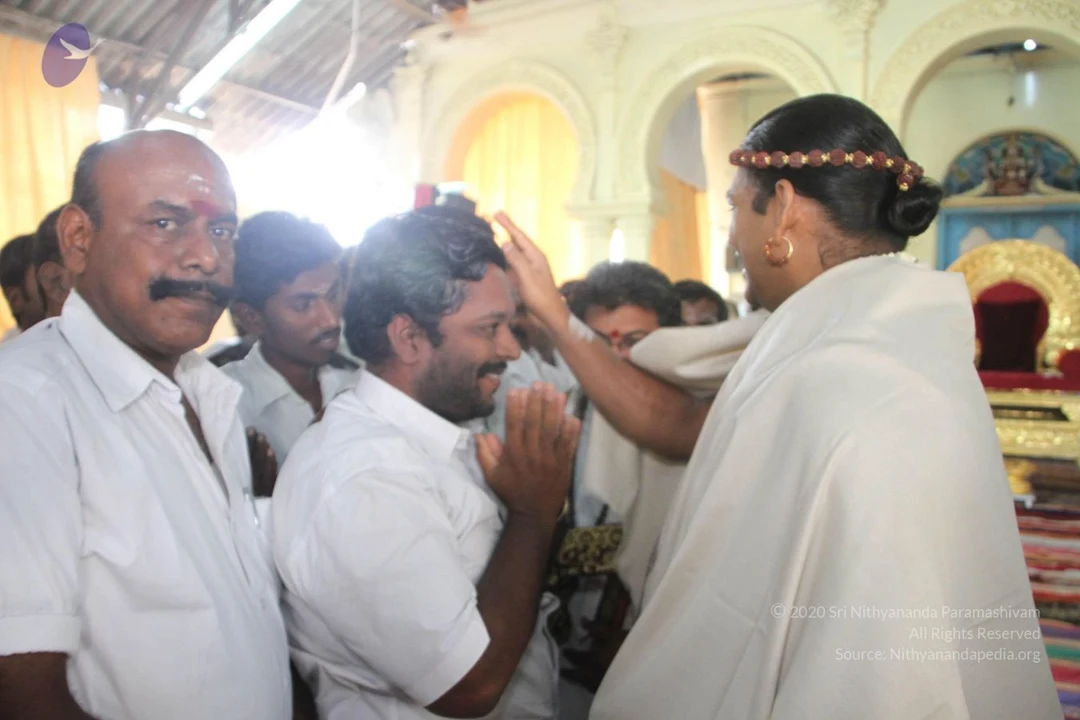
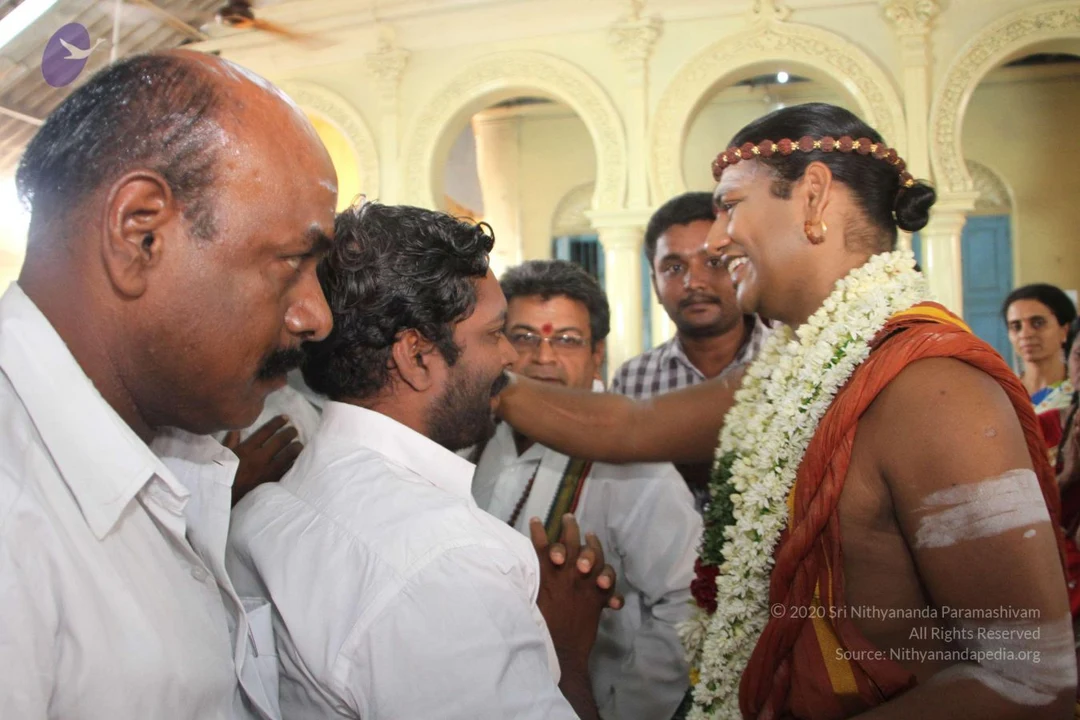
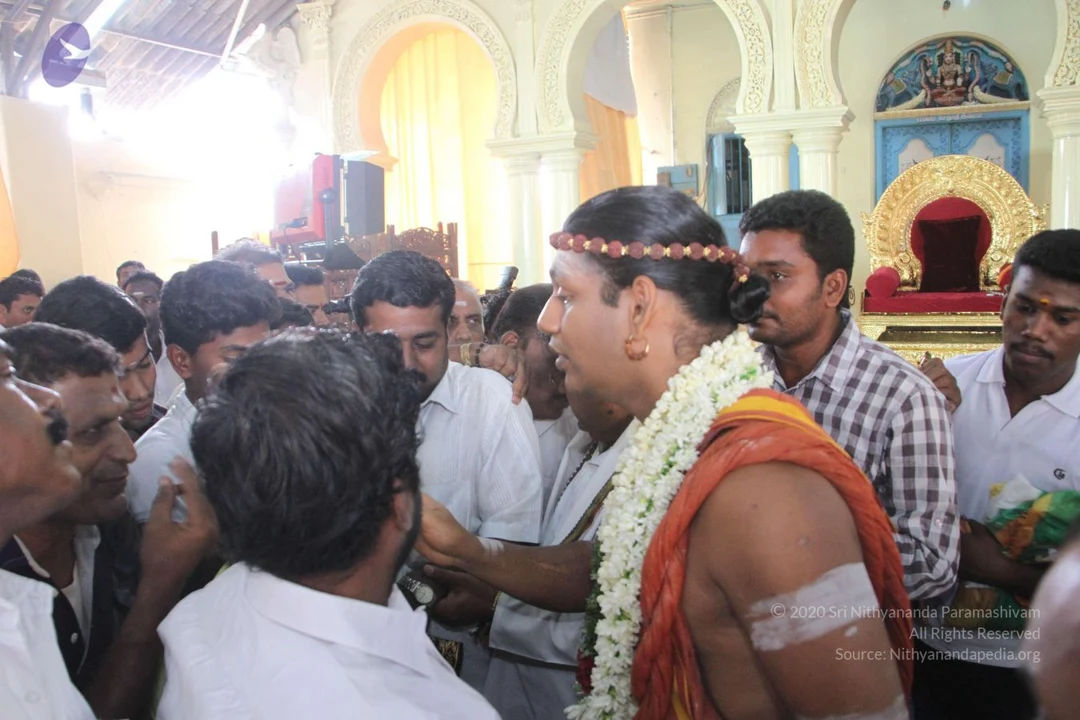
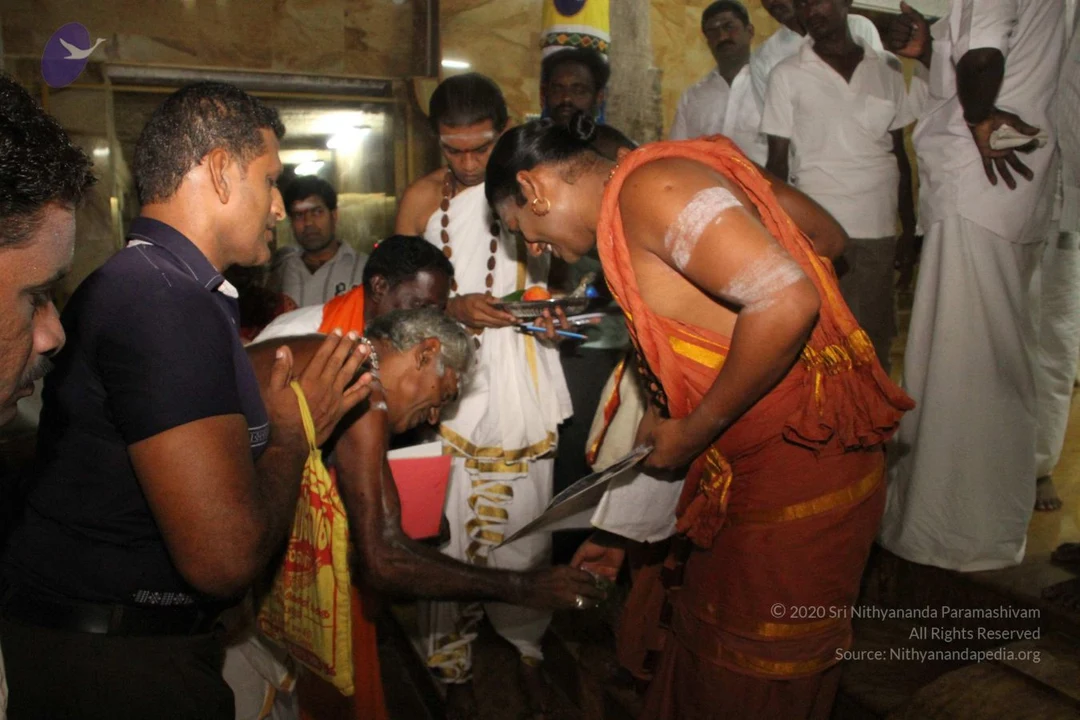
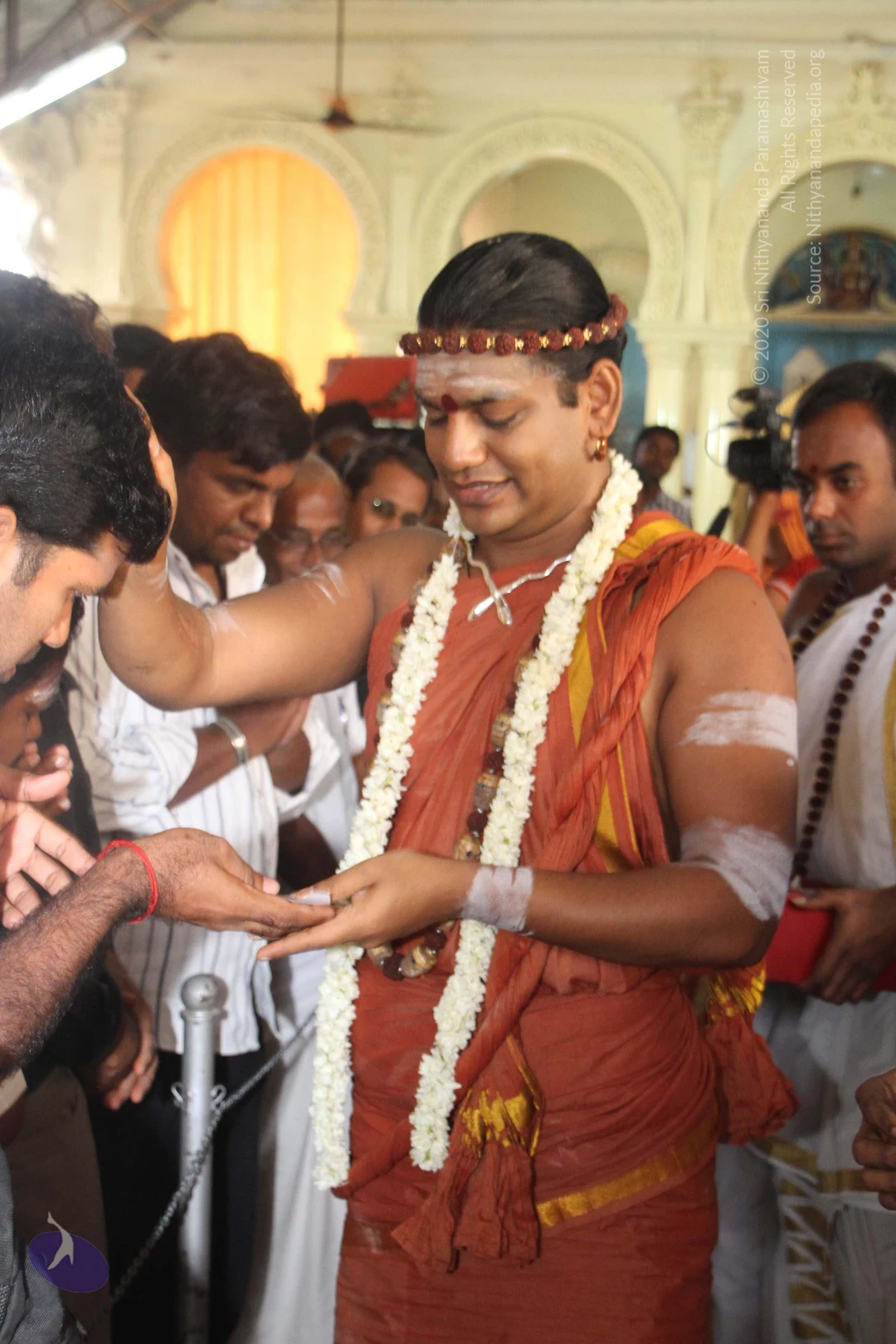
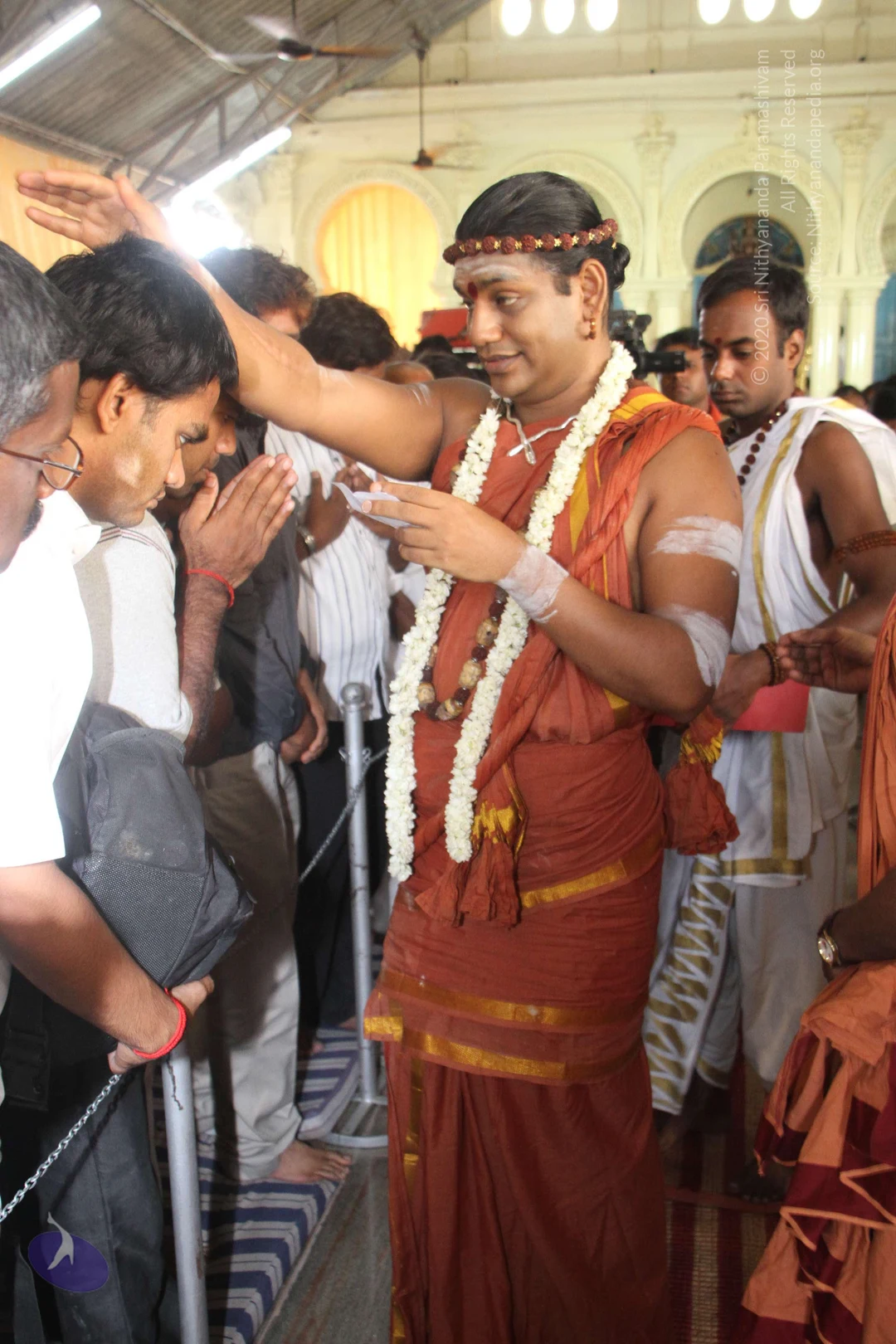
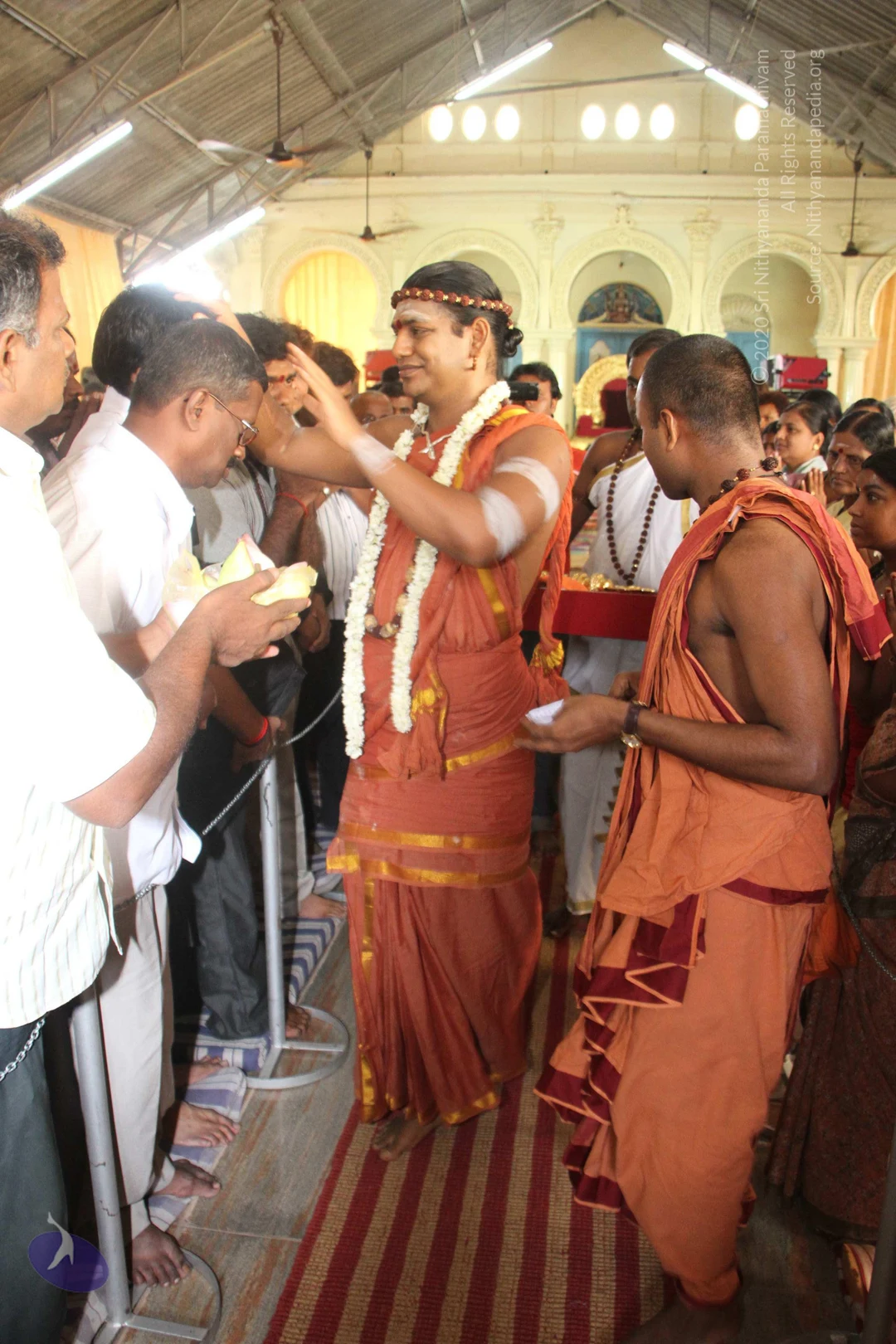
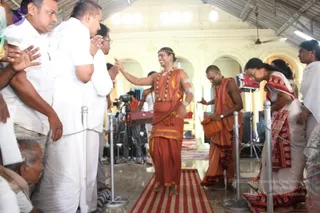
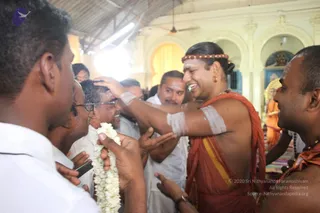
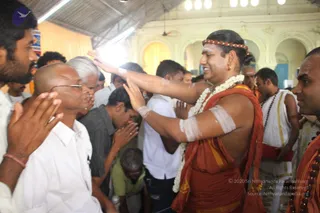
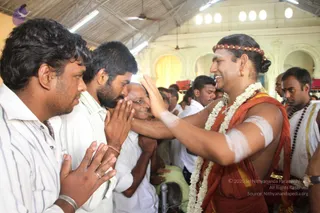
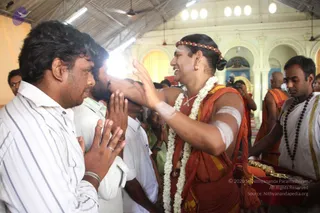
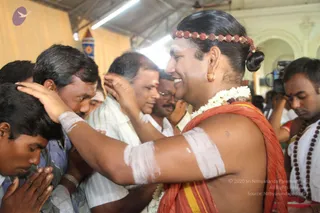
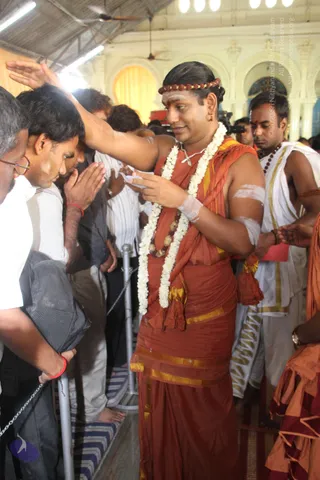
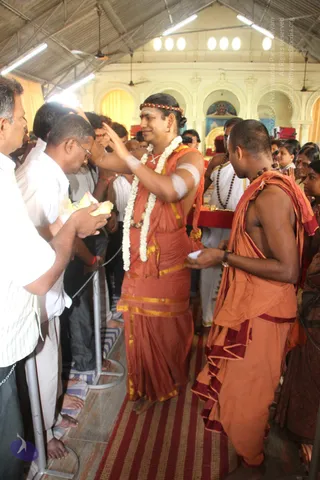
Photograph inside a pillared hall with arched windows and a ceiling fan. A central figure in saffron-orange robes with a rudraksha mala and a headband extends his hand in blessing toward kneeling and bowing devotees in white clothes on the left. Beside him a second saffron-clad sannyasi with a rudraksha mala holds an orange cloth bag, and a red-and-gold striped runner lies on the floor. A seated woman in a white sari with a red border bows her head on the right, and a camera on a tripod records the scene. The central figure's appearance shows several cues (long swept-back hair, saffron robes, rudraksha beads), but identity is uncertain from appearance alone.A photograph inside a temple hall with arched white walls, a ceiling fan and a corrugated roof. A bare-chested man with long hair swept into a bun, a red-and-white headband, white tilaka and a saffron-orange cloth draped over his shoulder reaches out and touches the head of an older man in glasses who holds a white jasmine garland. Several men in white shirts and dhotis crowd around, one smiling, and a figure in orange robes stands at the right edge beside a deity shrine. The saffron-clad man with his bun and ornaments is an appearance-based candidate for a person, shown in person giving blessing to devotees.A photograph inside a bright hall with arched cream walls, a corrugated roof and ceiling lights. A figure in saffron-orange cloth, bare-chested with white ash bands on the arms, wears a white jasmine garland, a red-and-gold headband, and rudraksha beads. He smiles while extending his palm over the heads of devotees. Around him, several people in white shirts and dhotis press forward with hands joined in anjali, some bowing low. a person figure is present with distinctive saffron robe, garland, headband and rudraksha cues, consistent with darshan blessing devotees.A photograph inside a hall with white arched walls and a corrugated roof, where a man with a red floral headband, jasmine garlands and an orange-saffron cloth draped over his shoulders places his palm on the head of a bespectacled older man in white. Several people stand around them with hands pressed in anjali, including a young man in a white shirt on the left, and a man in white with a rudraksha mala on the right. The figure in orange has white ash markings on his arms and wears a rudraksha mala and small earrings, and appears to be giving blessing. a person with a visible headband, garlands and saffron clothing, offering a blessing to devotees in a darshan setting.A photograph inside a temple hall with arched white walls and a wooden ceiling. A central figure in an orange-saffron cloth draped over the shoulder and a white garland of jasmine flowers, wearing a red and gold floral headband and gold earrings, extends an open palm toward a man in a white striped shirt whose hands are pressed together in namaskar. The central figure's arm carries a white dressing. Behind him, a second man in white and gold-bordered dhoti holds a strand of rudraksha beads, and a bald man in saffron robes stands near an altar niche with a deity figure. Several other devotees stand in the background, with a photographer visible on the right. a person: the central figure wears a saffron cloth, ceremonial garland and a crown-style headband, with ornate gold ornaments, consistent with the page's reference to a person.A photograph of a man in an orange-saffron cloth draped over the shoulders and a bare upper torso, with a red-brown flower wreath on his head and a white jasmine garland around his neck. He has white ash markings on his arms and face and is placing his right hand on the head of a kneeling man in a dark shirt, who has his hands pressed together in prayer. Several other men in white shirts and dhotis stand or bend forward nearby, some with tilak marks on their foreheads, and a young man on the right wears a white garment and rudraksha beads. The setting is an indoor hall with a white arched wall and a yellow cloth backdrop, with a camera operator visible at the right. The man in the orange cloth appears to be giving a blessing. a person, shown with a flower headpiece, orange cloth, jasmine garland and ash marks, giving a blessing to a kneeling devotee.

Swamiji-Photos
4 photosSource gallery
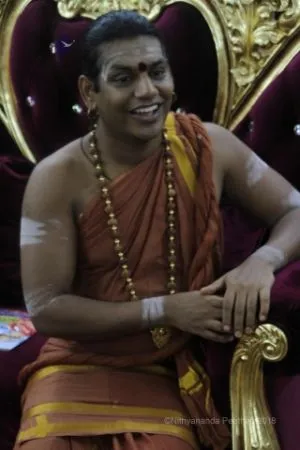
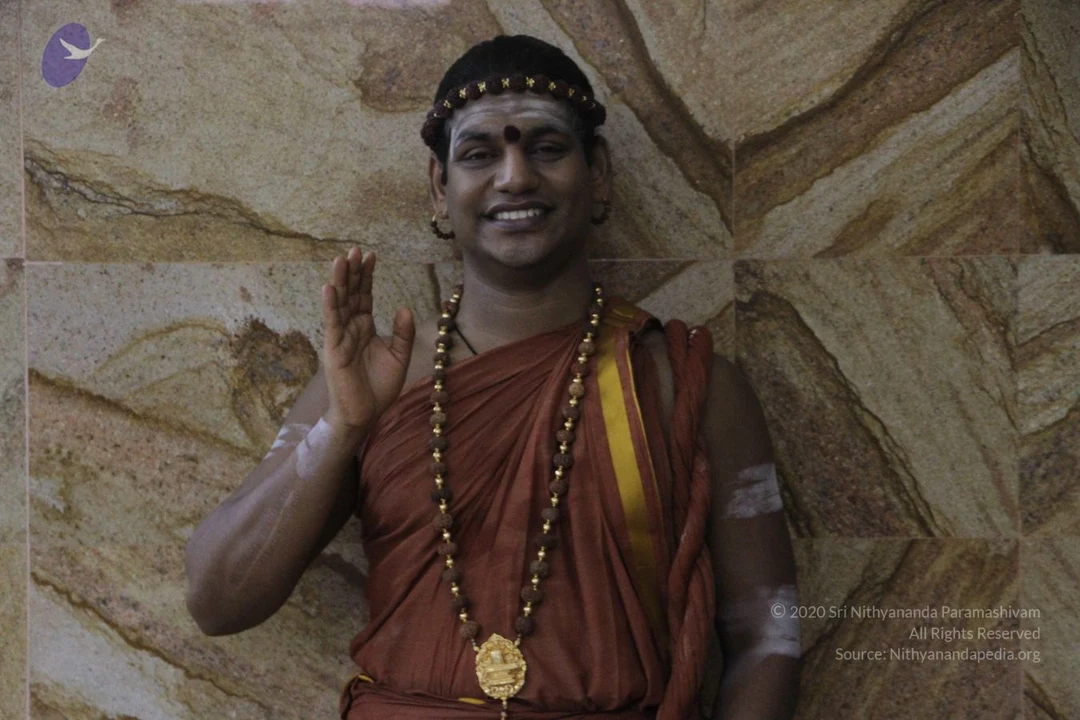
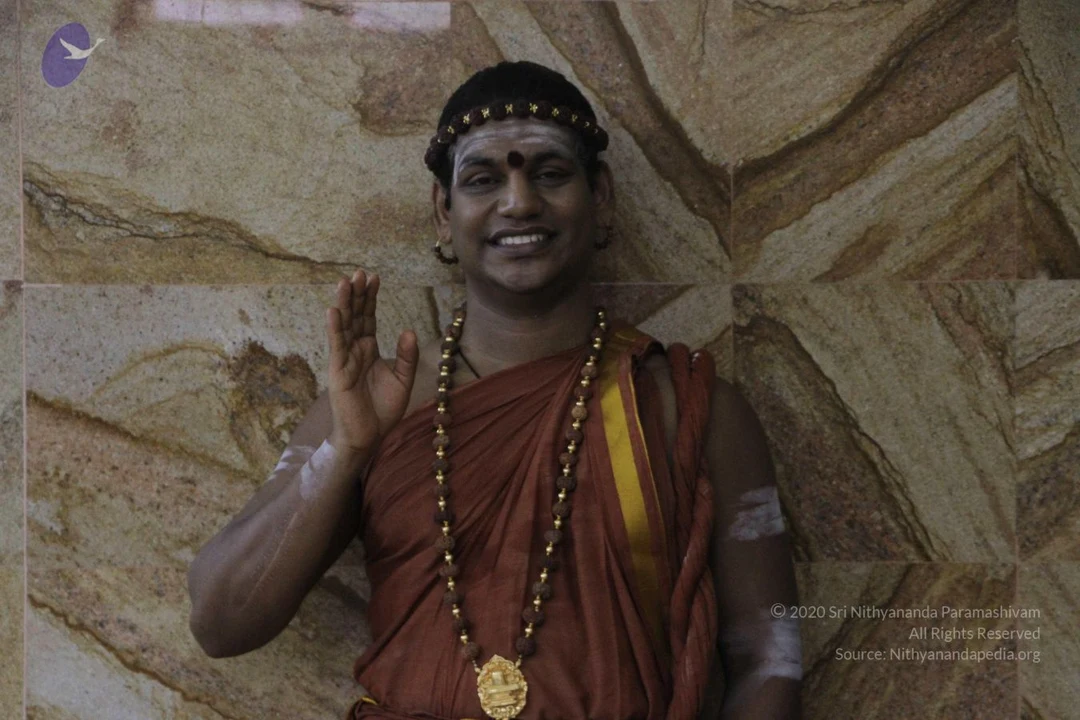
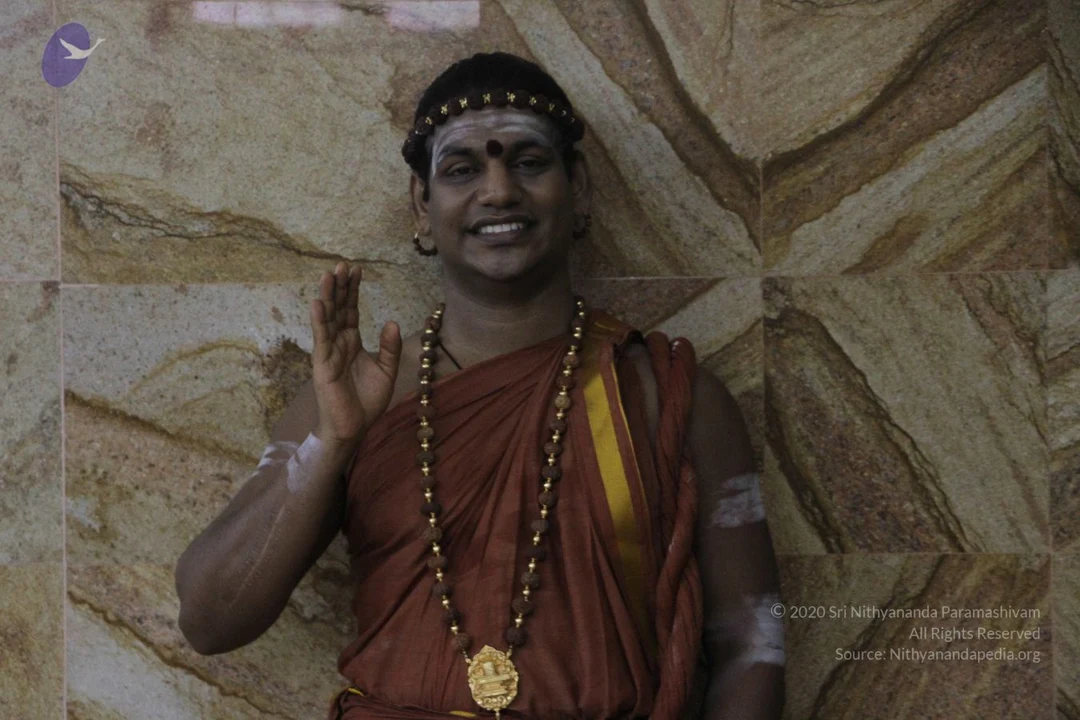
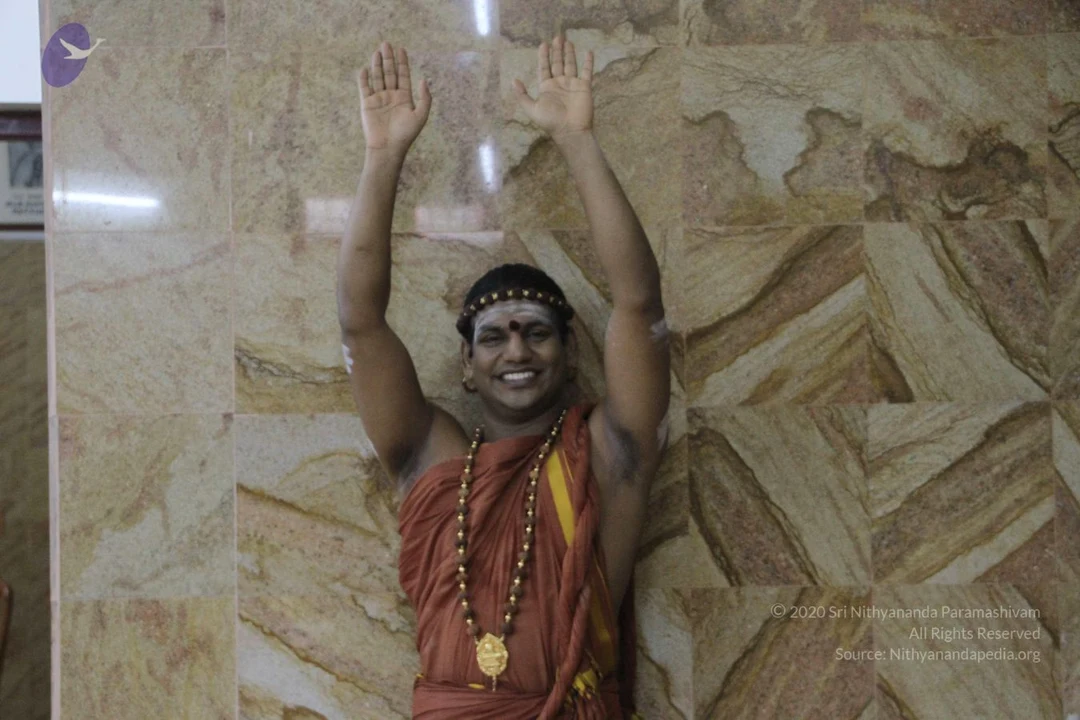
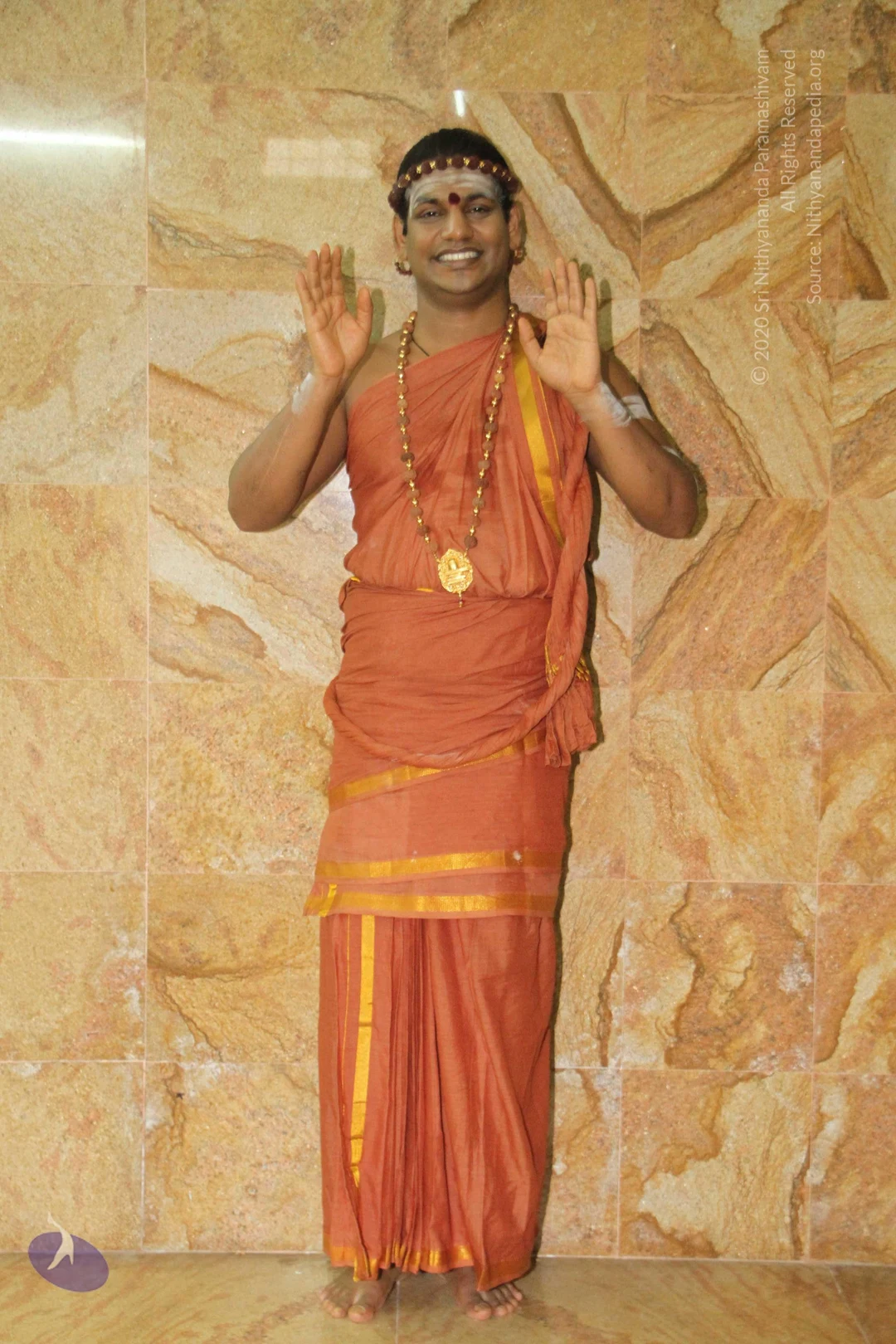
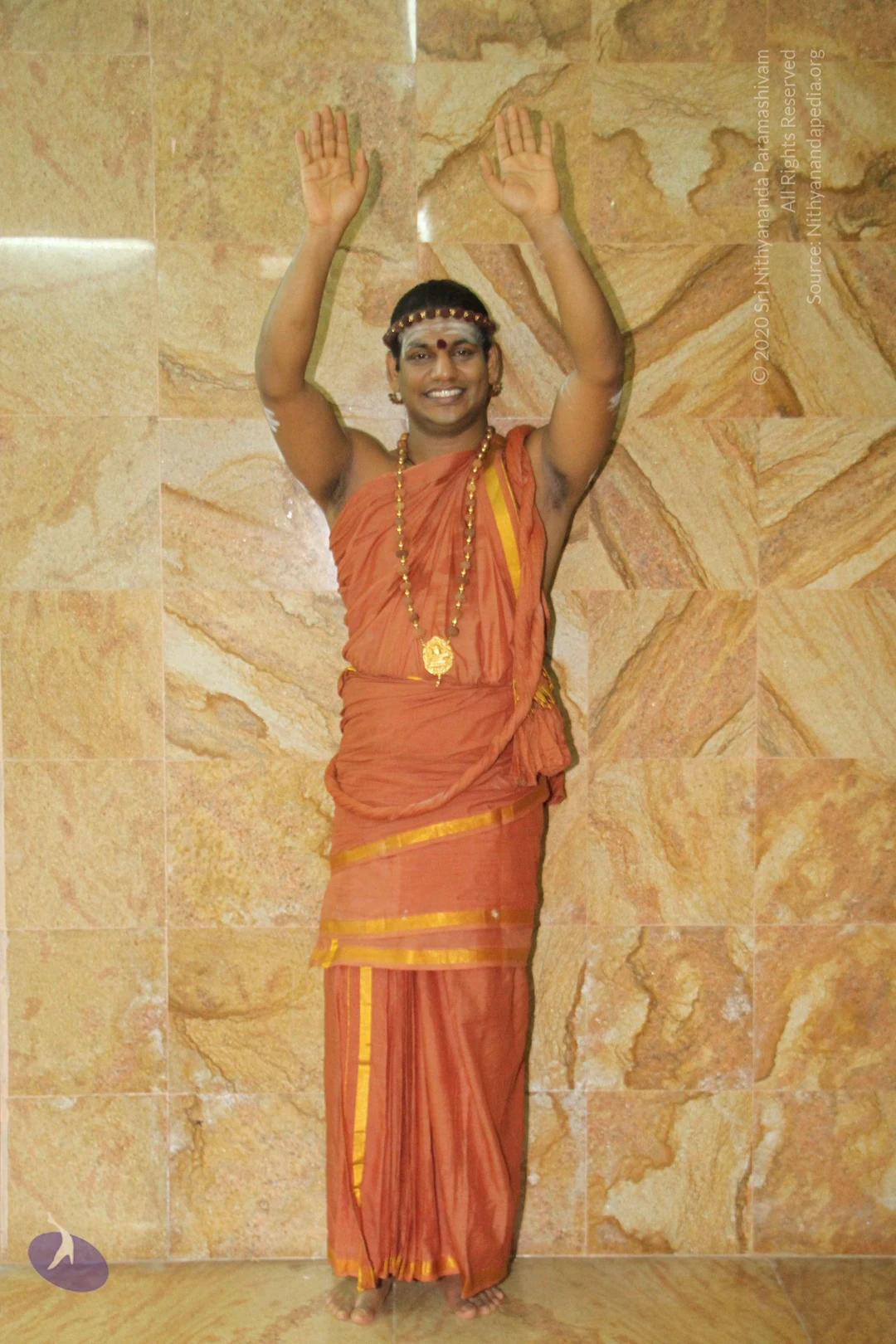
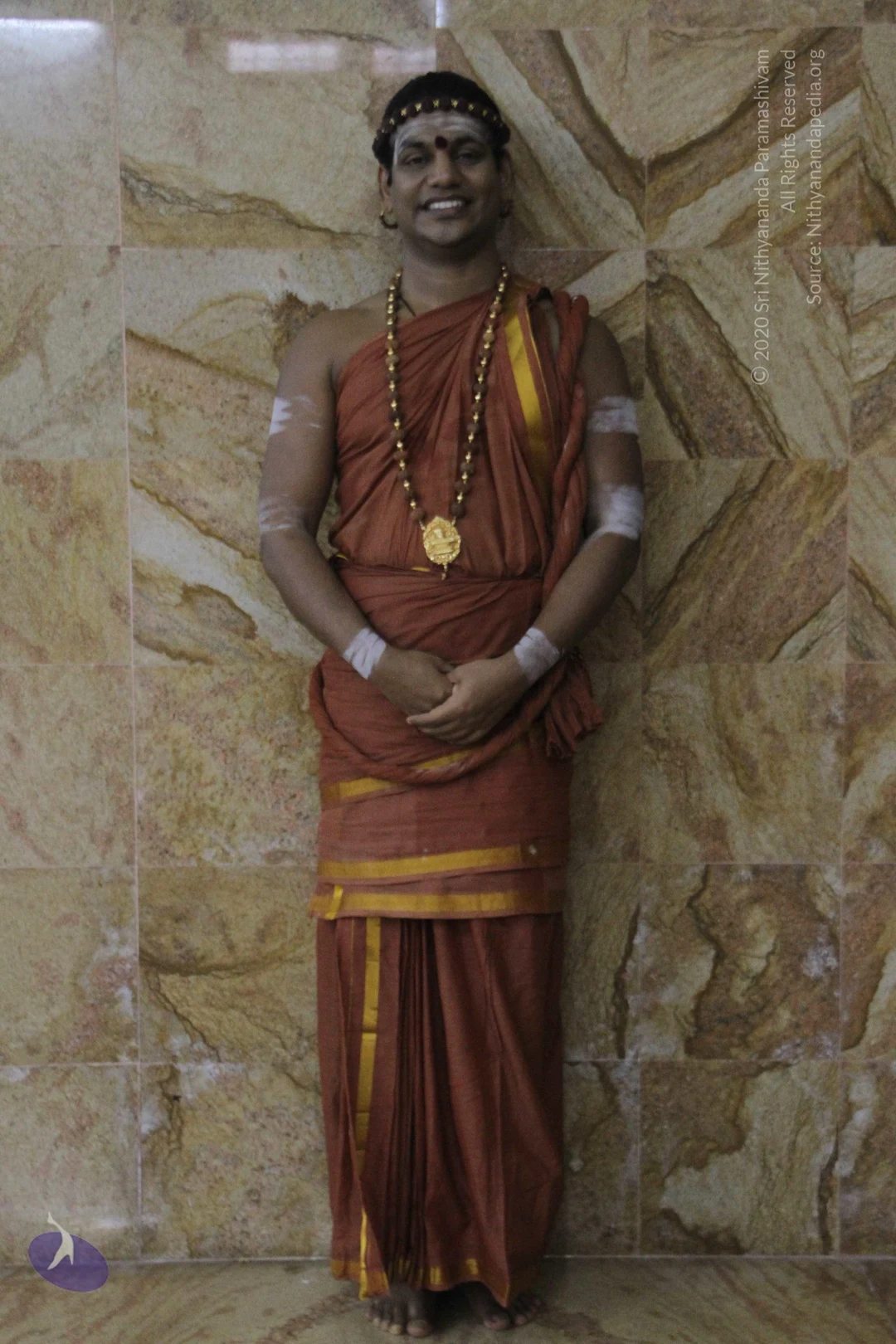
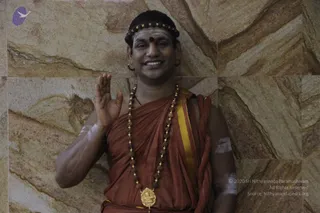
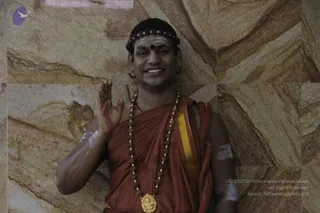
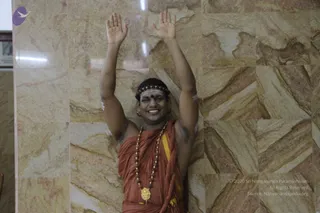
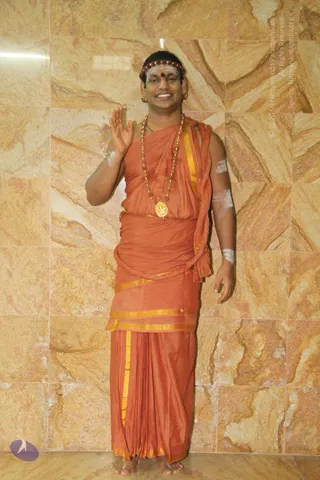
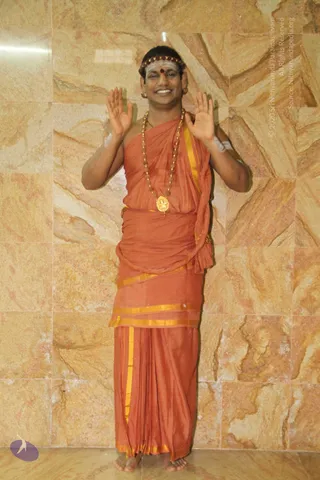
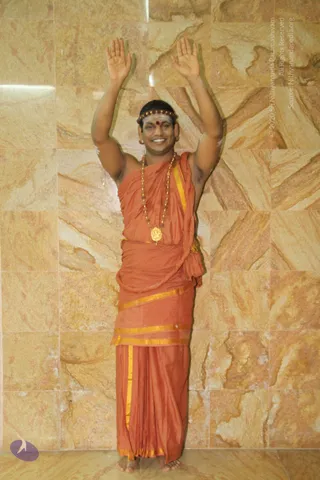
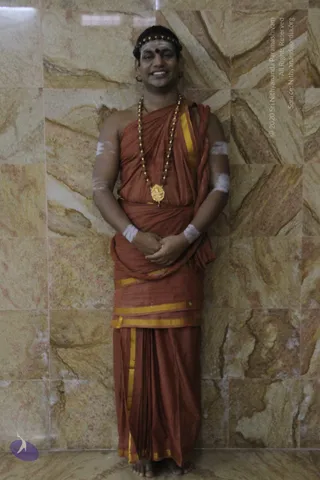
A smiling man stands against a wall of layered beige and brown stone slabs, raising his right hand in a greeting. He wears a maroon-red saffron-toned wrap with a gold-and-orange striped border, a rudraksha mala with gold beads, and a large gold pendant. A headband of gold beads sits across his forehead, with a red bindi and white ash marks on his forehead and arms.A smiling man stands against a warm, veined sandstone-tiled wall, raising his right hand in a blessing gesture. He wears a dark brown-red ochre robe draped over his shoulders with a yellow-gold border, a gold-and-rudraksha mala with a gold pendant, and a dark beaded headband. A red bindi marks his forehead, with white ash markings visible on his arms and forehead. The person's appearance is consistent with a person, wearing saffron-ochre clothing, rudraksha beads and a ceremonial gold pendant, though this is an appearance-based label only.A smiling man stands against a granite-tiled wall, raising one hand in greeting. He wears a dark-headed band with gold accents across his forehead, a red-and-orange wrap with a yellow border over one shoulder, a long mala of rudraksha-style beads with gold spacers, and a large gold pendant with a deity figure. White ash markings appear on his forehead and arms and a red bindi sits between his brows. a person is the appearance-based label for this in-person figure with saffron wrap, mala and ceremonial gold necklace.A smiling man stands with his back against a polished marble wall of mottled beige and rust tones, both arms raised overhead with palms open. He wears a saffron-orange wrap draped over his torso, a yellow sash, a long beaded rudraksha-style mala and a large gold pendant. A beaded headband and a red bindi mark his forehead, and white markings show on his arms. The posture appears to be a stretching or energising exercise. a person is shown with these distinctive saffron, mala and gold-pendant cues, shown here as a physically present devotee-practitioner.

VIP-Visit

56 photosSource gallery
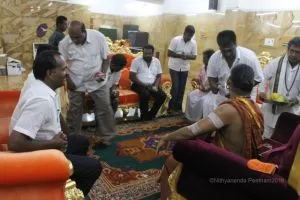
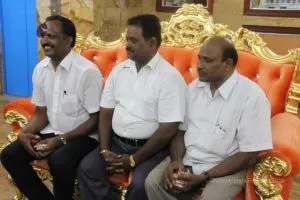
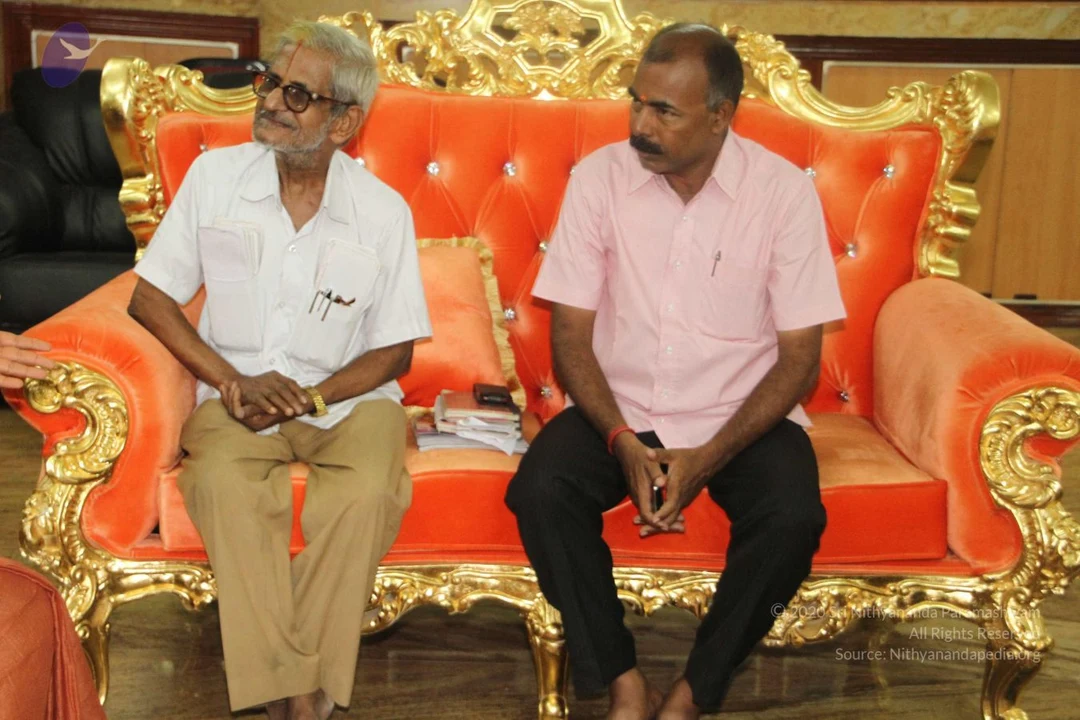
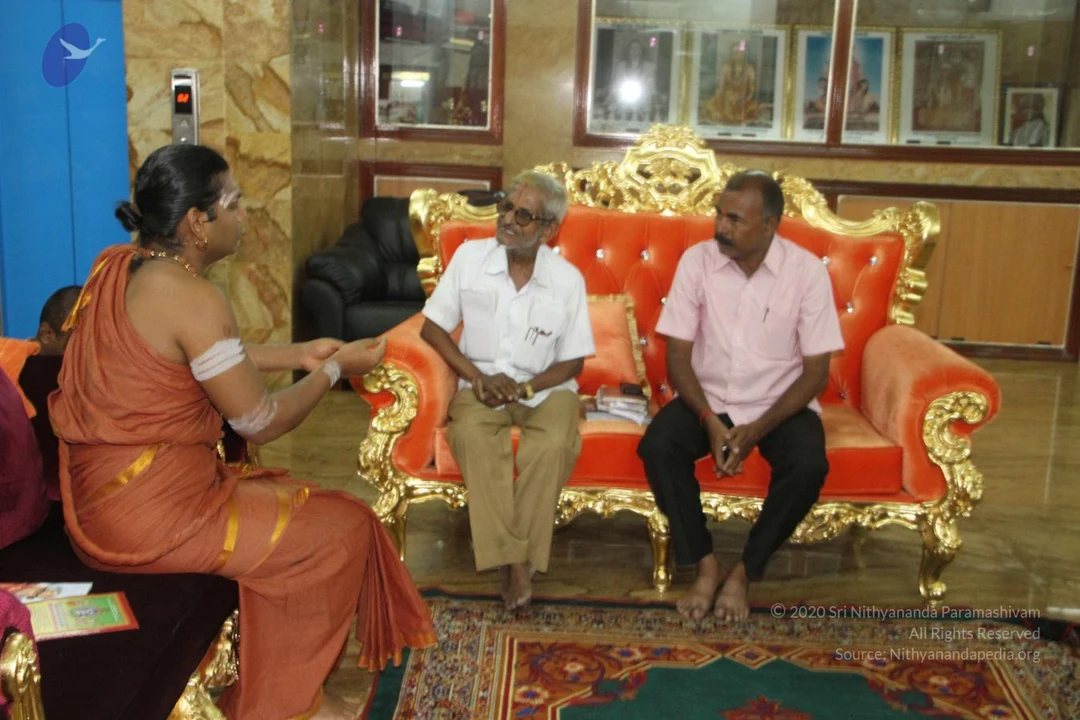
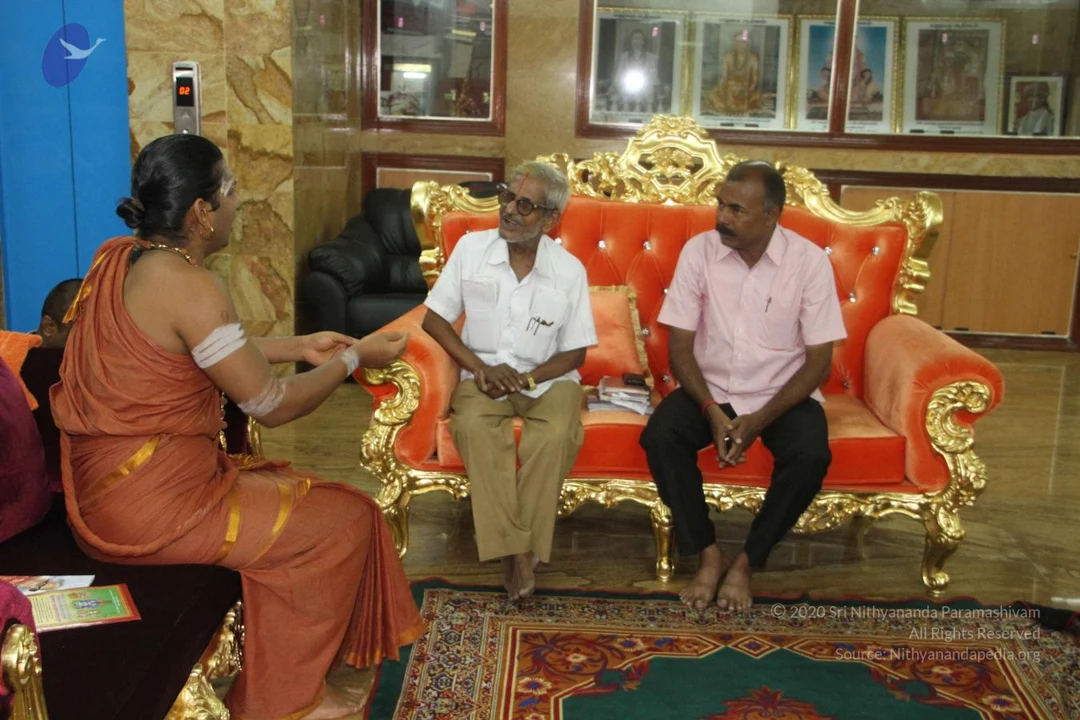
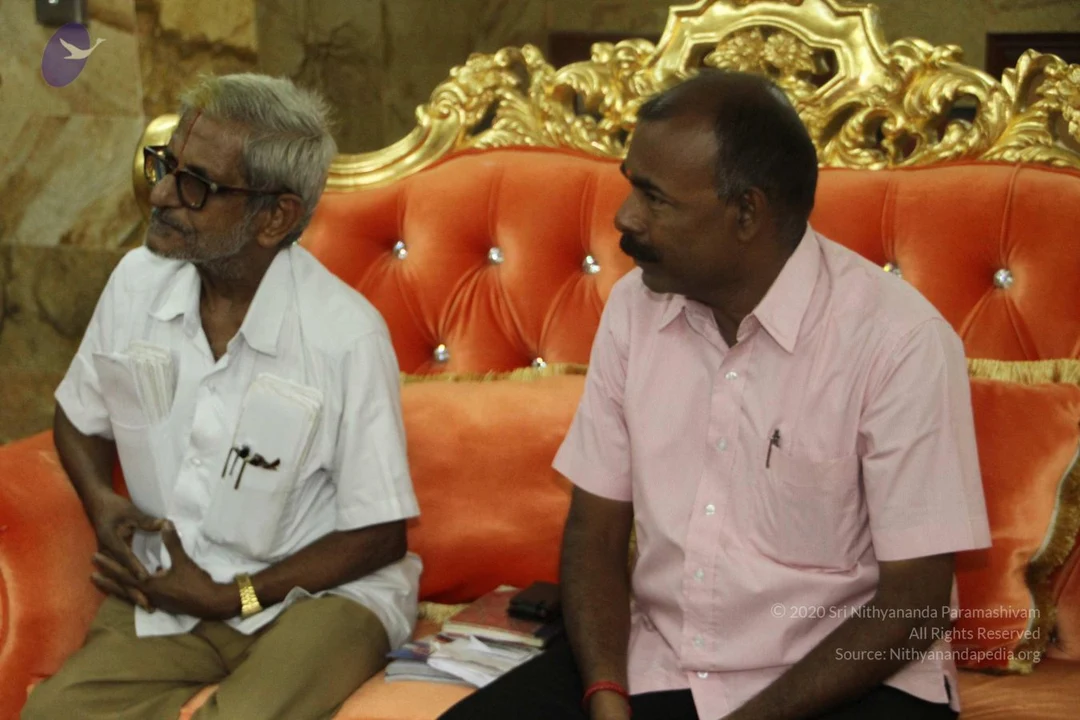
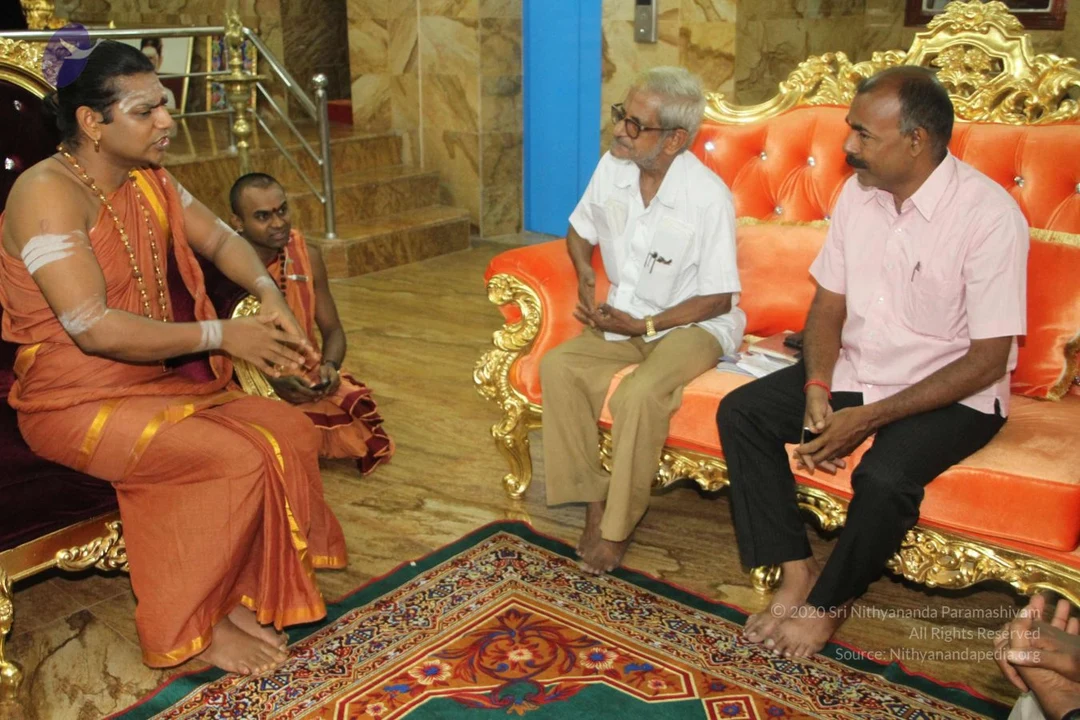
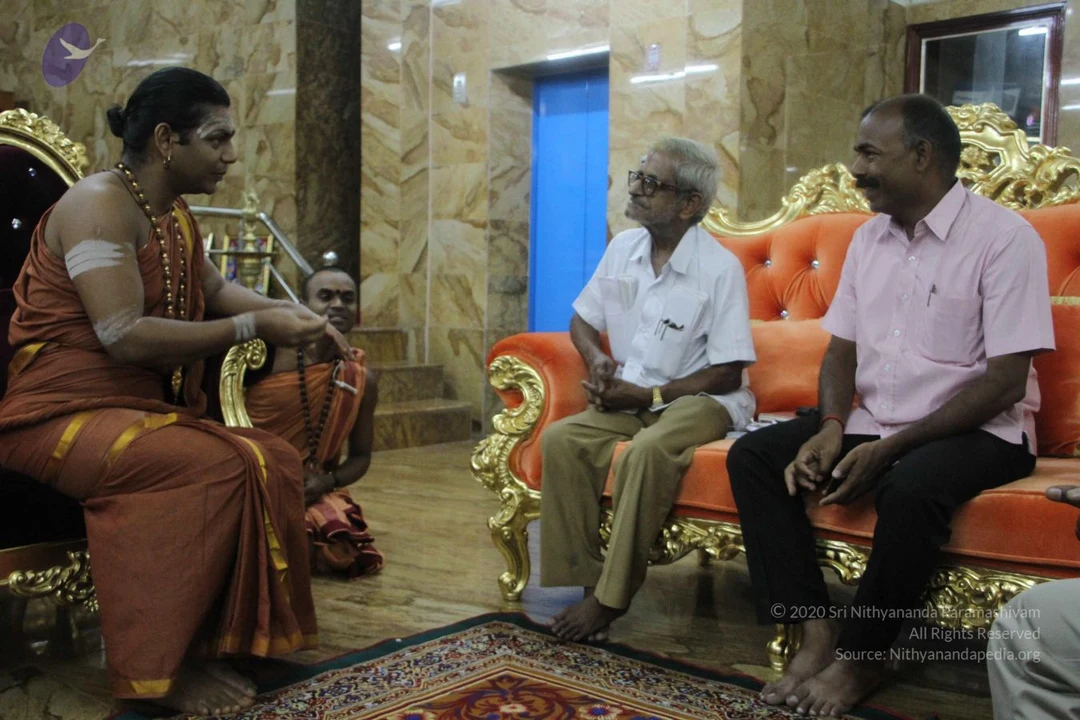
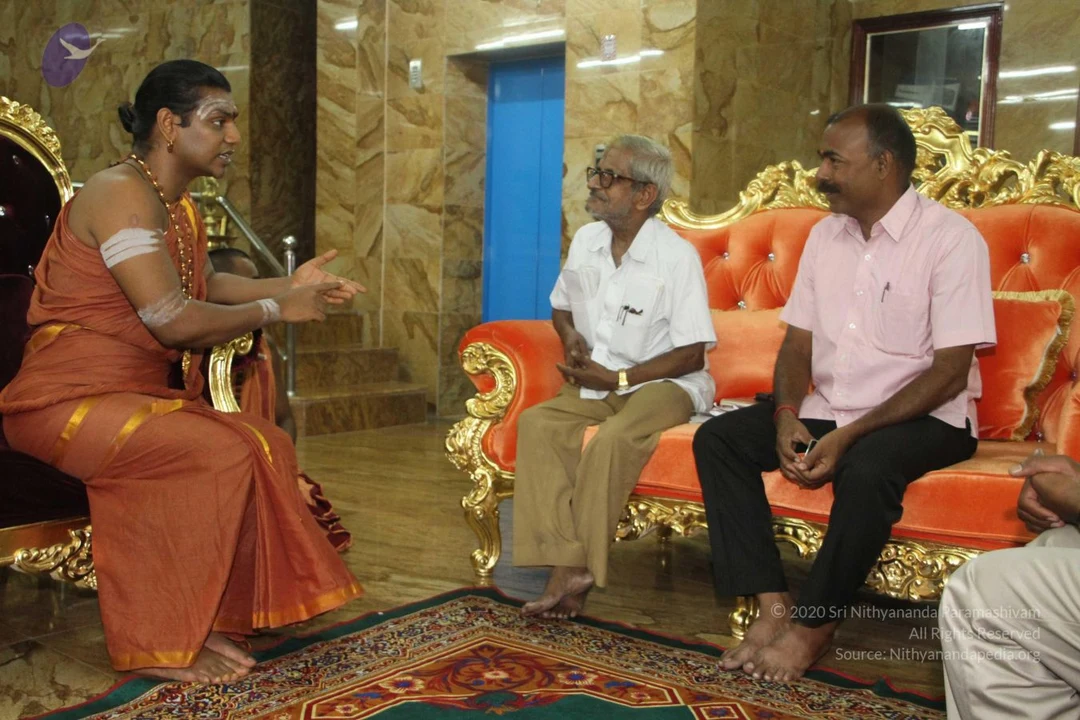
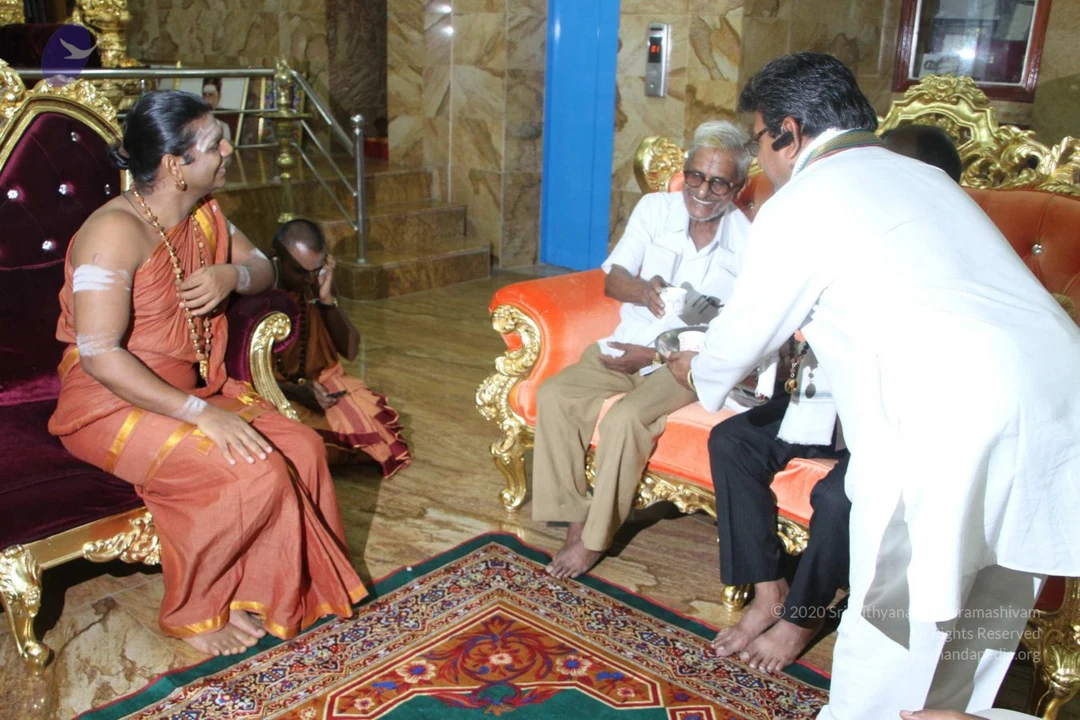
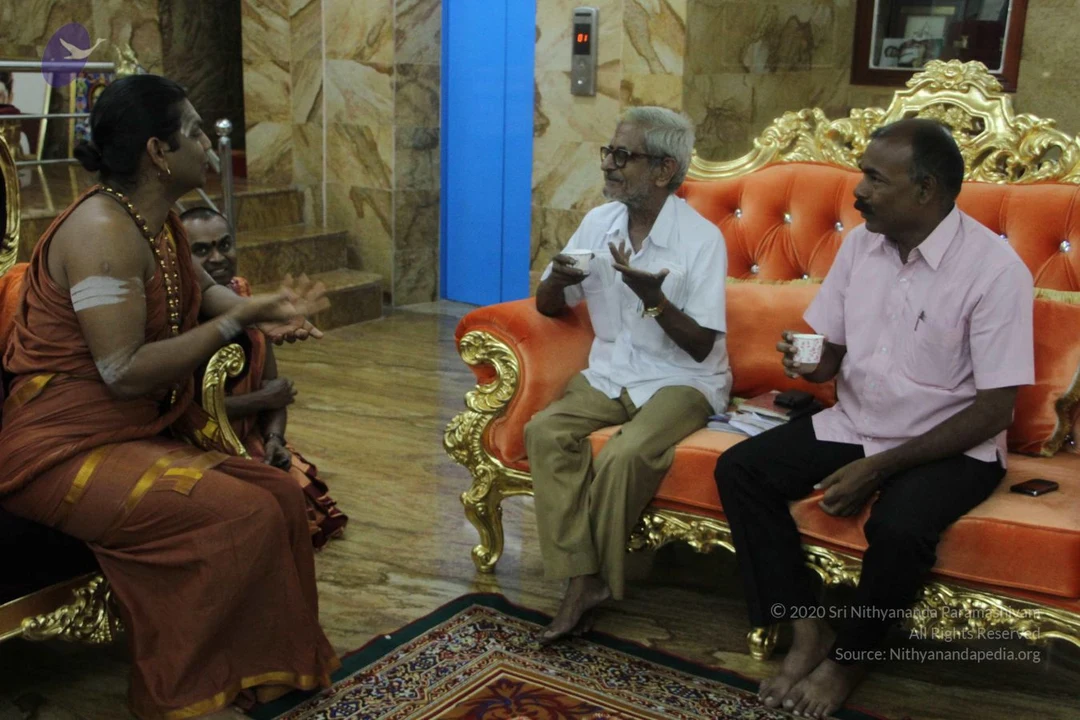
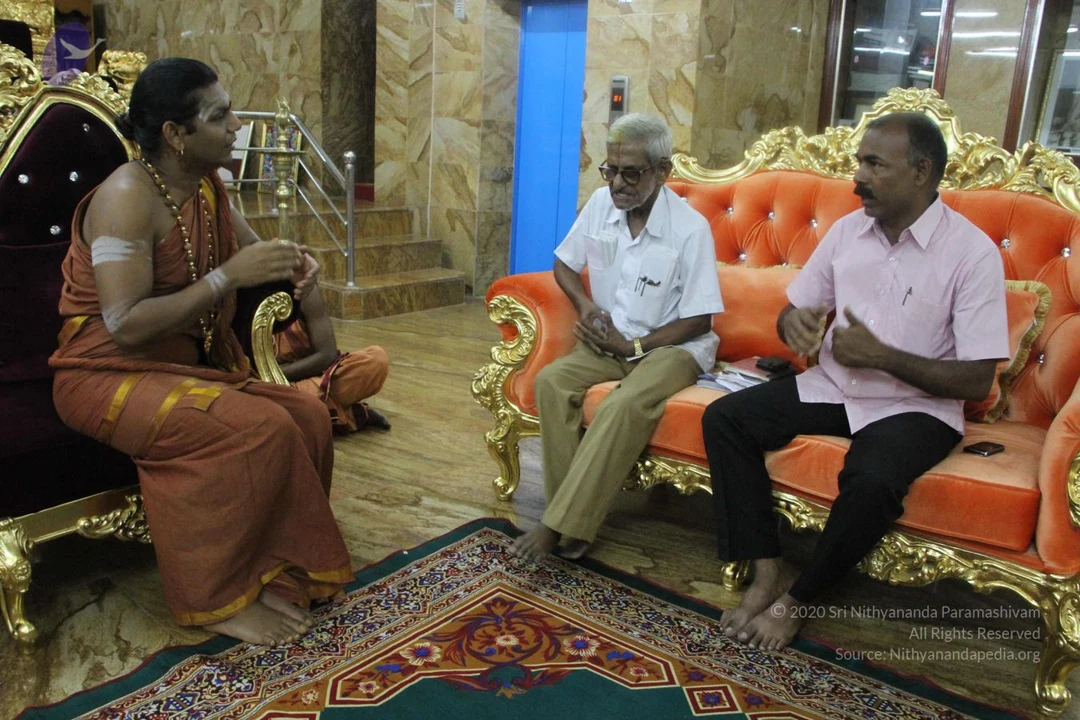
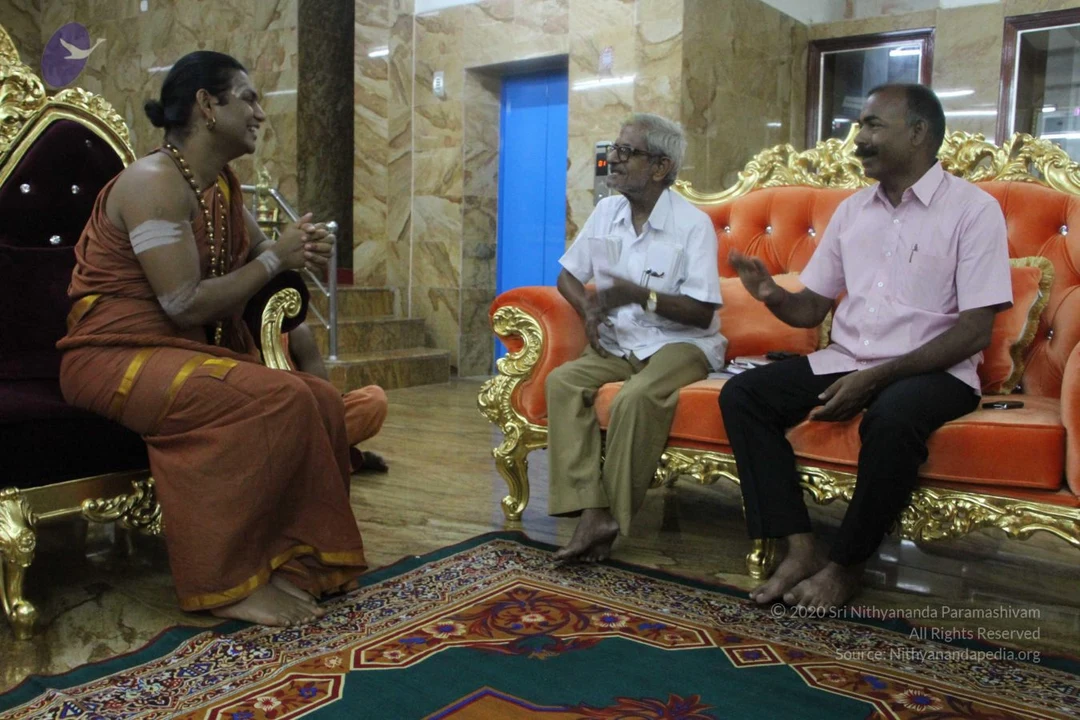
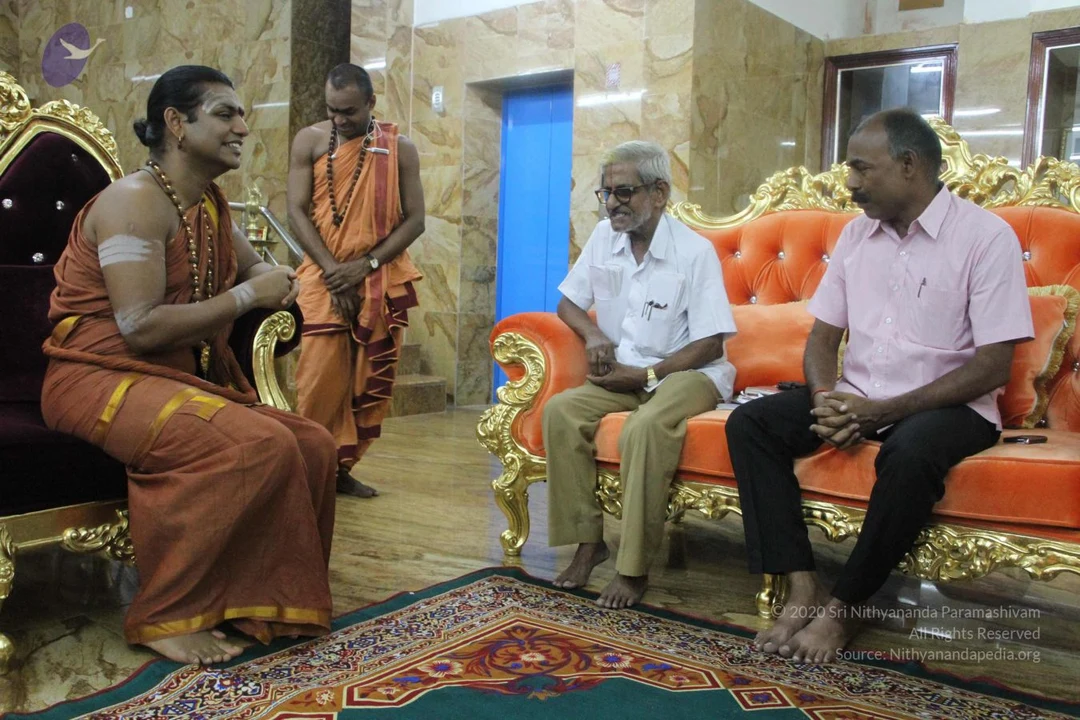
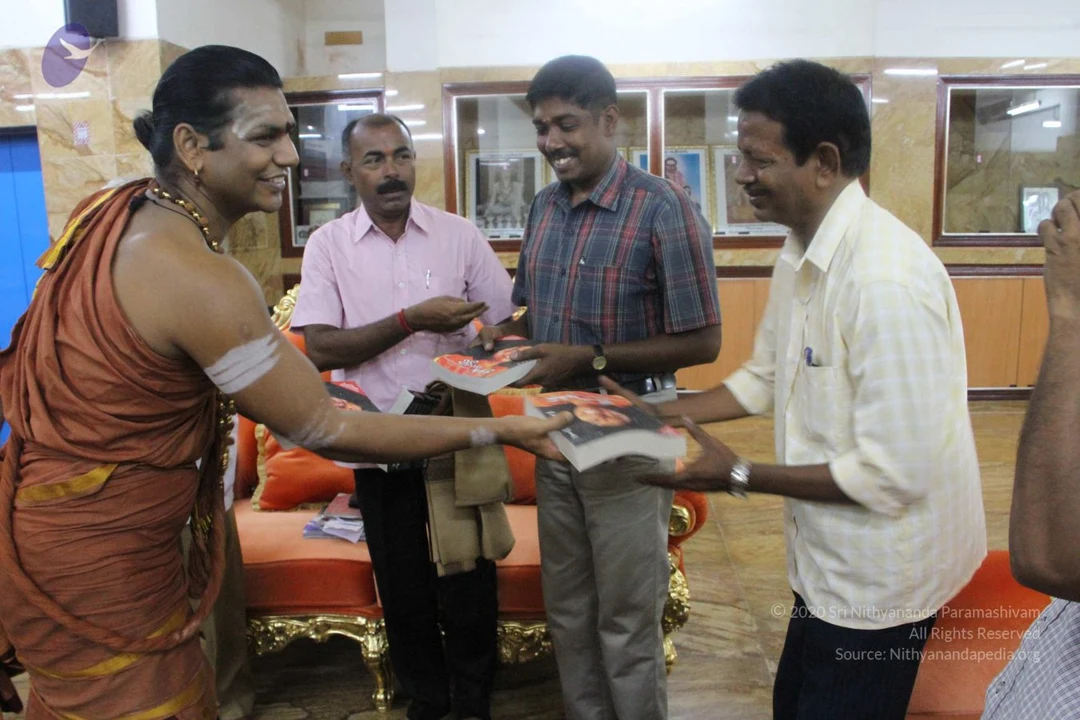
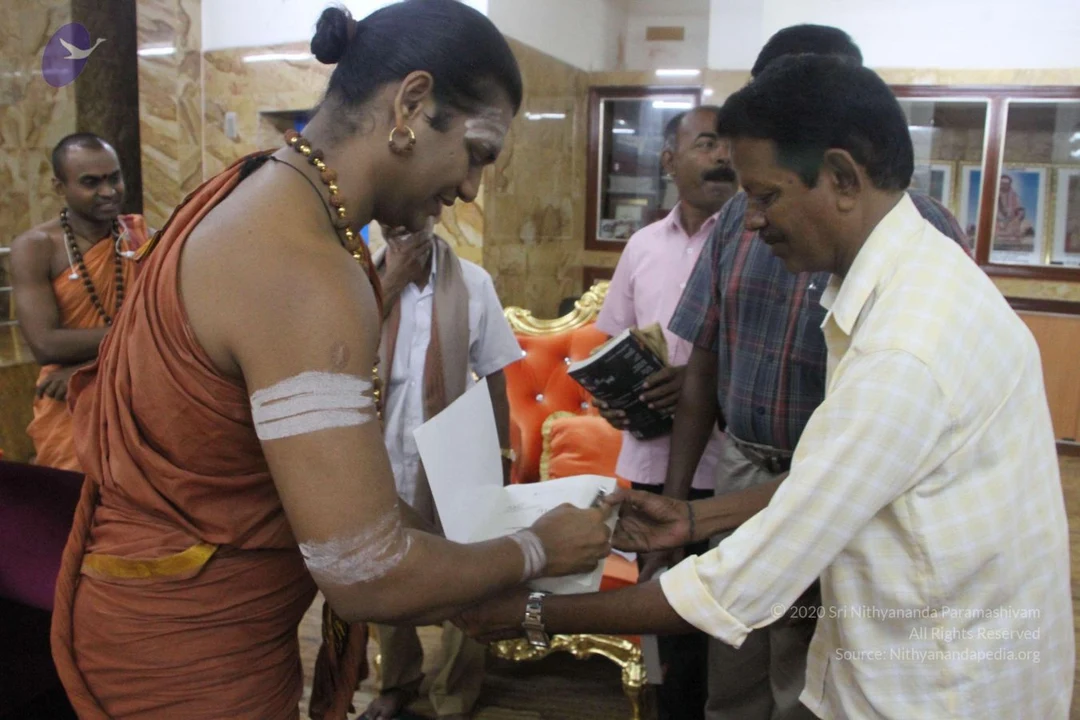
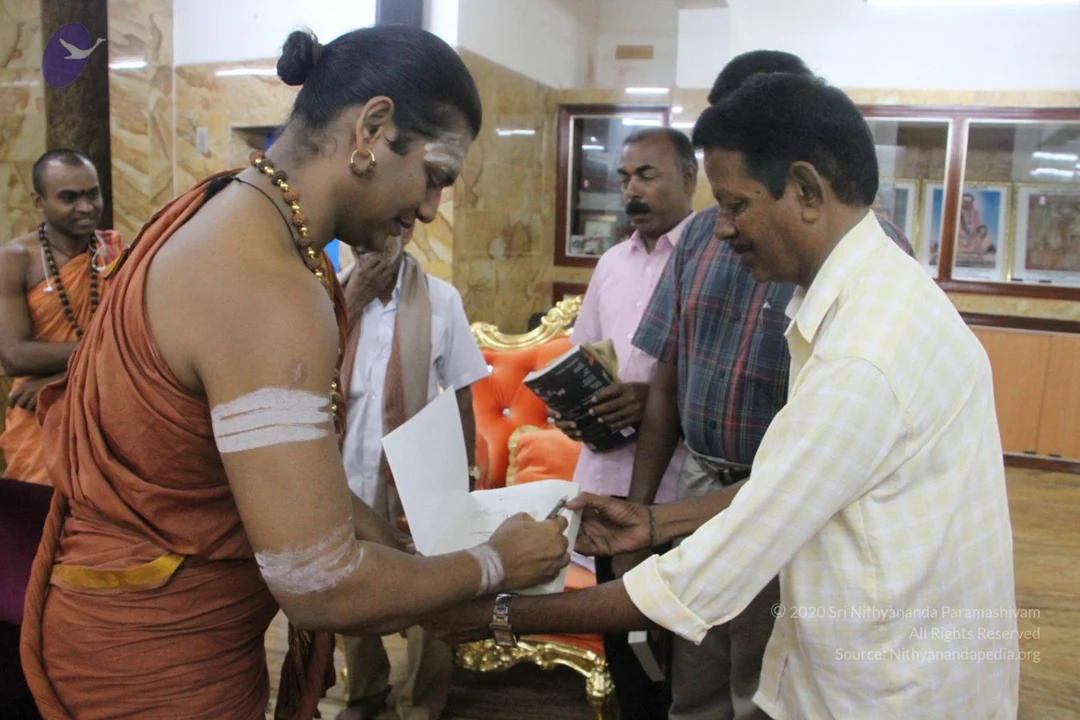
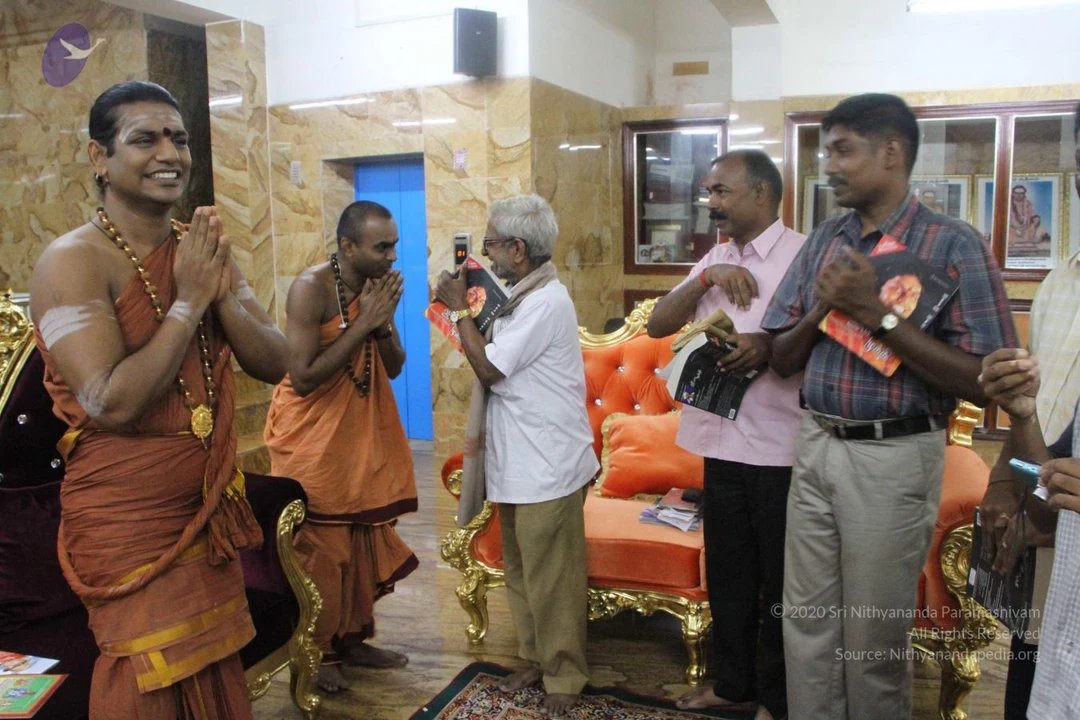
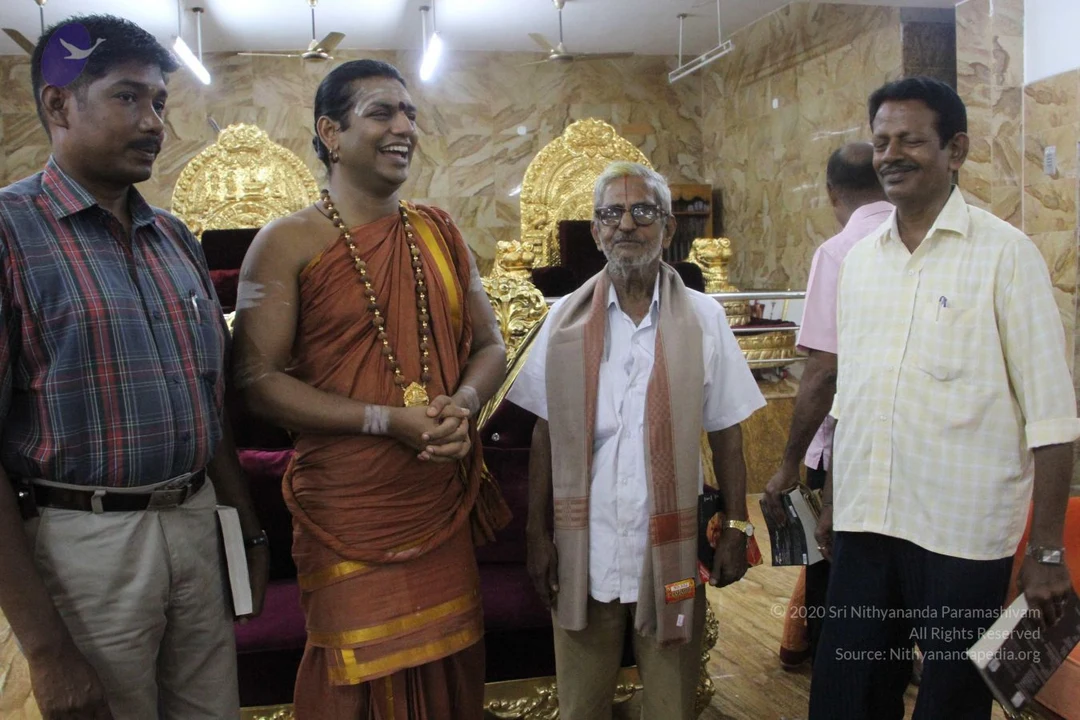
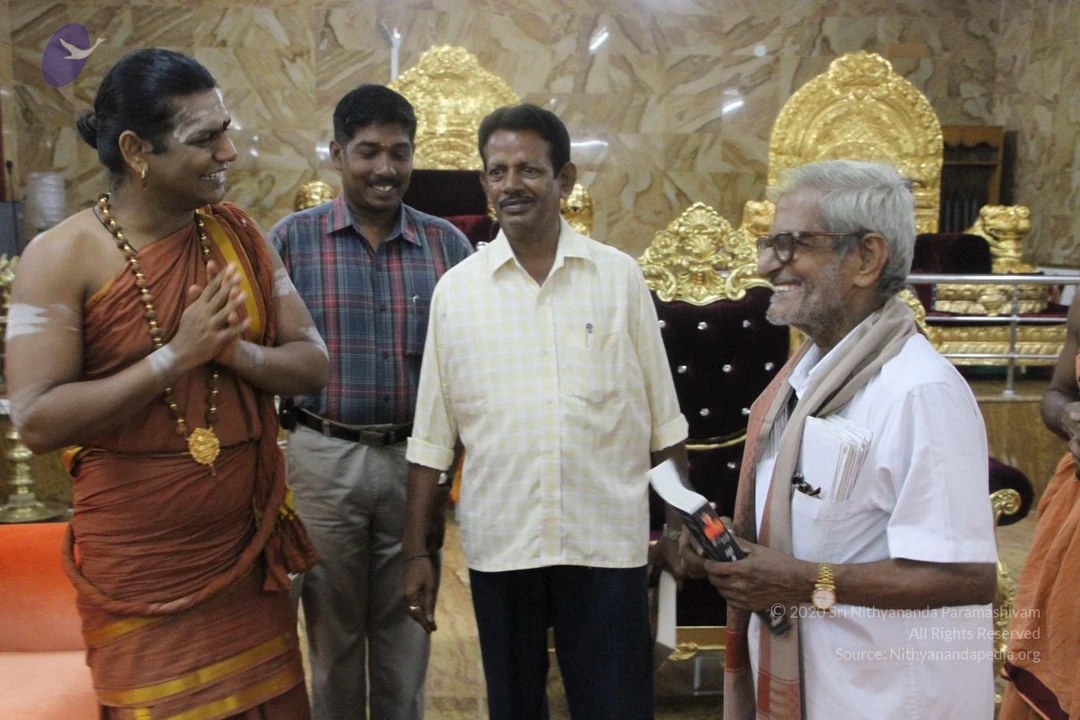
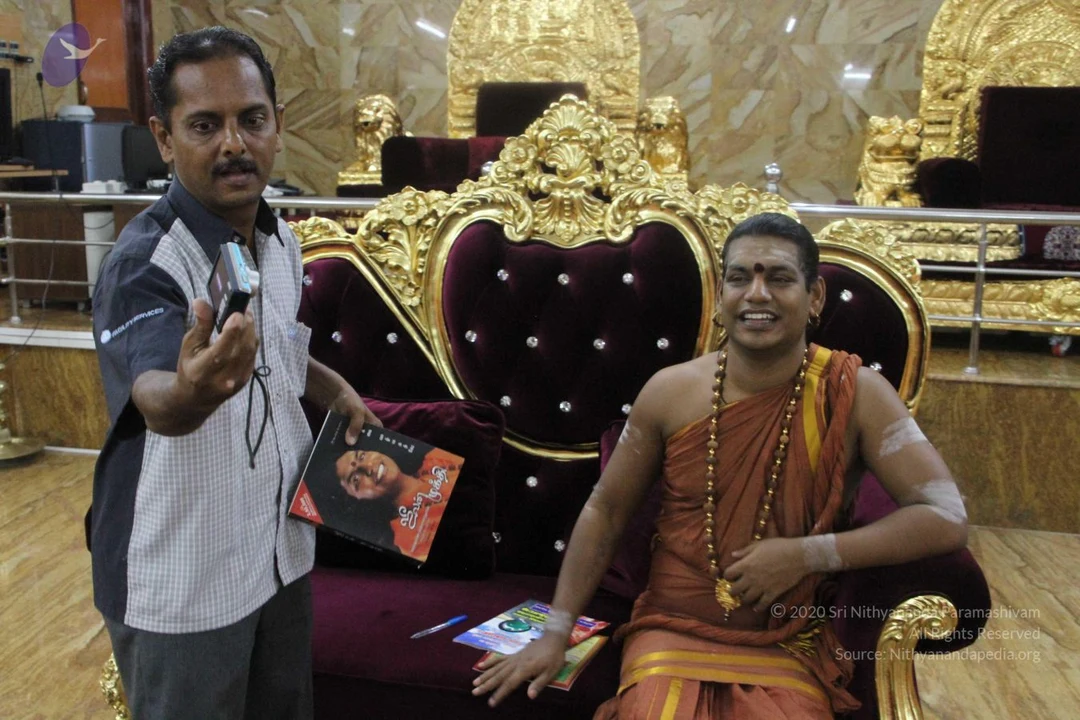
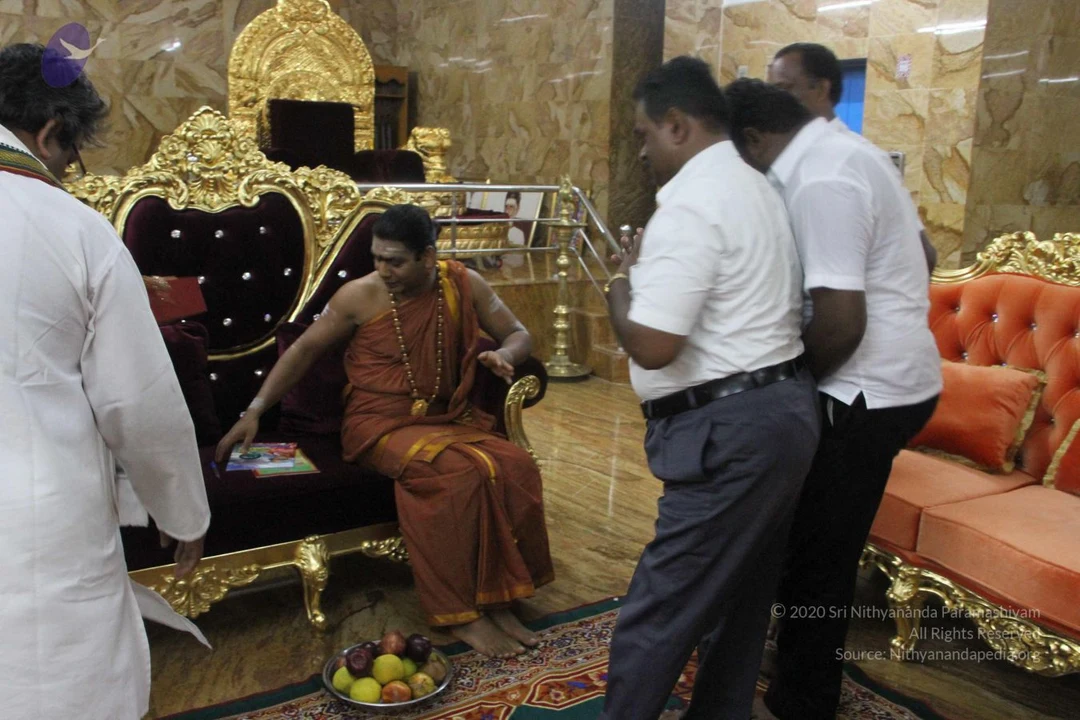
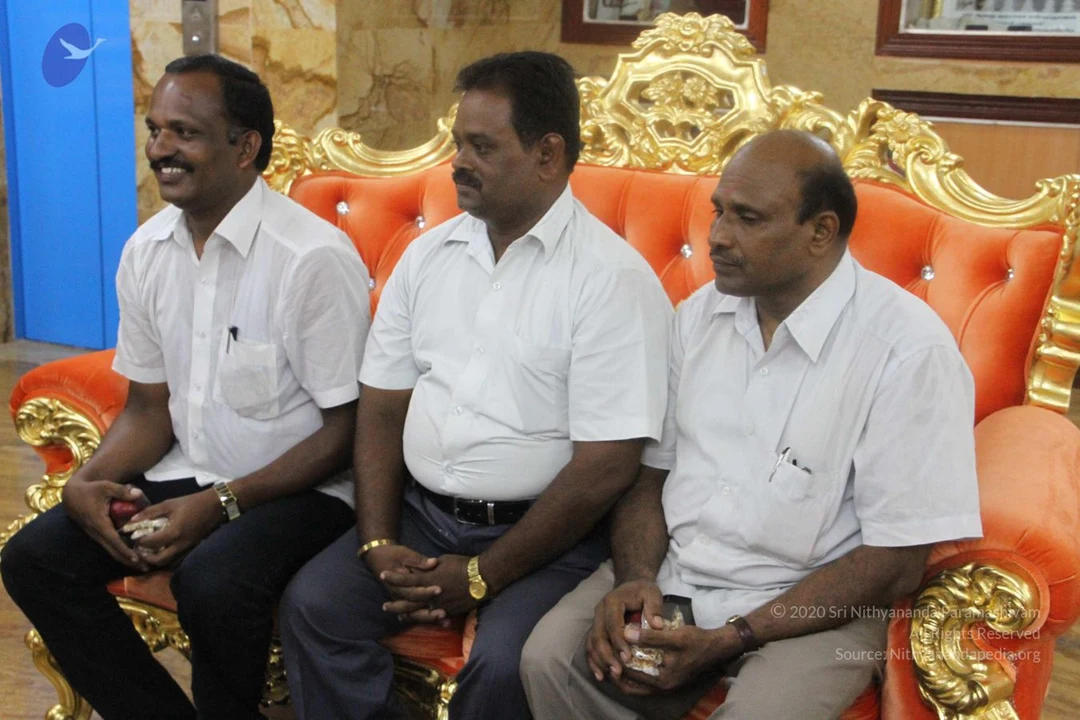
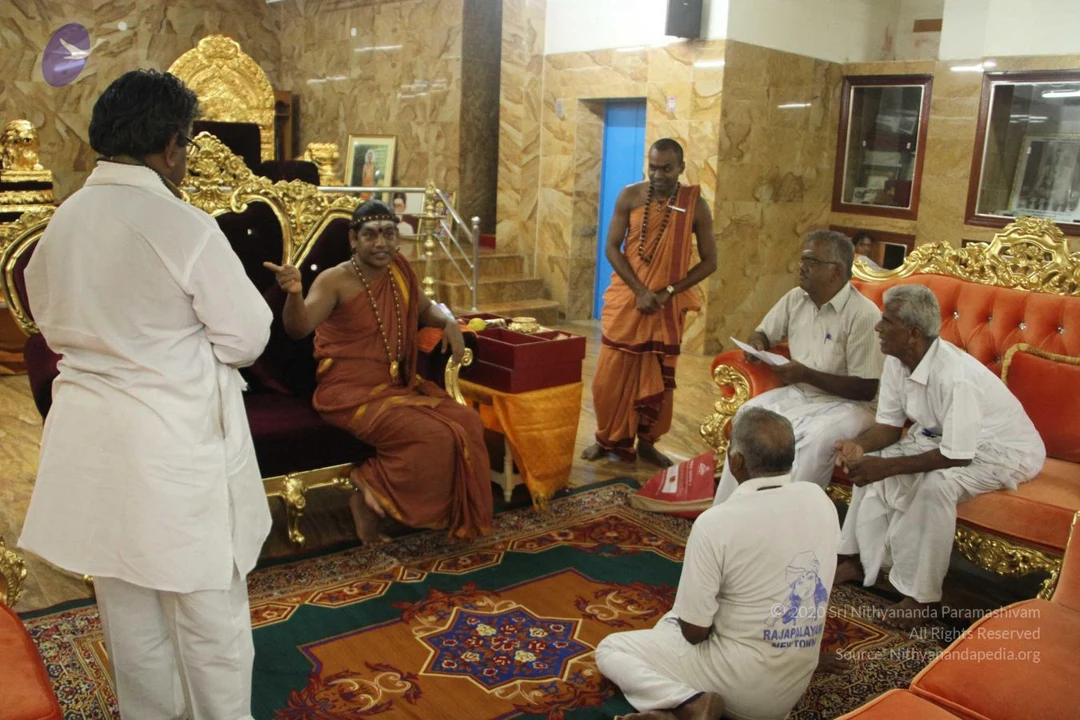
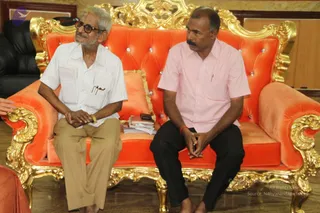
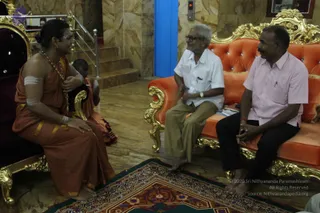
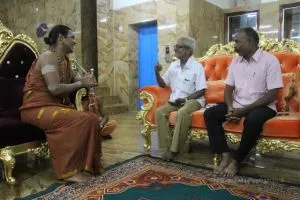
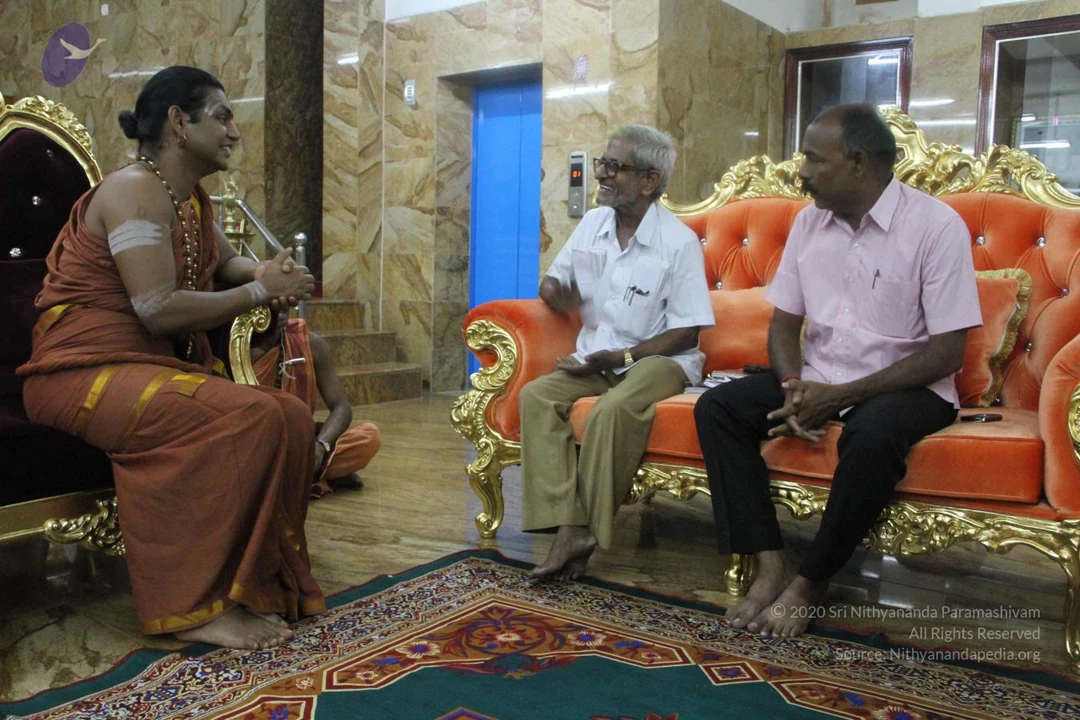
Two men sit side by side on an ornate orange velvet sofa with gold-carved wooden arms and jewelled buttons, in an indoor room with a dark leather chair at left. The older man on the left has white hair, tinted glasses, a white shirt and khaki trousers, and holds his hands together while looking to the side. The man on the right wears a pink short-sleeved shirt, black trousers and a red thread on his wrist, with his hands clasped. A small stack of books and a dark object rest on the cushion between them. A partially visible orange-robed arm appears at the left edge. No a person candidate is clearly identifiable from appearance.Indoor photo in a lobby with a gold-framed red velvet sofa on a patterned rug. On the left, a woman in an orange sari with gold border and bandaged forearms gestures while speaking. Seated on the sofa, an older man in a white shirt and khaki trousers with glasses listens, beside a younger man in a pink shirt and black trousers. Framed portraits hang on the wall behind, and a glass-panelled elevator is visible. No recognizable a person figure is clearly present among the people.A photograph in a lobby with a red velvet and gold-trimmed sofa set on a patterned rug. A woman in a rust-orange sari with a gold border and a cloth bandage on her forearm sits facing two men on the sofa. The older man on the left wears a white shirt, khaki trousers and glasses; the man on the right wears a pink shirt and black trousers. Framed portraits hang on the wall behind them, and a black leather chair and a blue wall panel are visible. The woman gestures with her hands as if speaking to them.A photograph of an indoor sitting with marble-clad walls and a gold-framed mirror. On the left, a figure in saffron-orange robes with a long swept-back hairstyle, rudraksha-style beaded necklace and a white bandage on the upper arm sits on a dark maroon throne-like seat, gesturing with raised hands while speaking. A second man in orange clothing sits behind him on the steps. On the right, an older man in white shirt and khaki trousers with glasses and a man in a pink shirt and black trousers sit on an orange velvet sofa with gold carved armrests, listening. A patterned red-and-green rug lies on the floor. The figure's appearance with long swept-back hair, saffron clothing and beaded necklace is a probable match for Swamiji in an in-person talk setting.Indoor photo in an ornate marble hall with gold-trimmed orange velvet sofas and a red-and-green patterned rug. On the left, a figure in an orange-saffron robe with a gold-and-beaded necklace and a bandaged upper arm gestures while seated on a dark red throne-like chair. Beside him, another man in orange cloth sits near the stairs. On the right, two seated visitors listen: an older man in a white shirt and khaki trousers, and a middle-aged man in a pink shirt and black trousers. A blue door and a lift panel are visible behind them.Photo of an indoor seated conversation in an ornate ashram room with gold-trimmed red velvet sofas, a gold throne-style chair, marble walls and a green-and-red patterned carpet. On the left, a figure in saffron-orange robes with a bare-shouldered wrap and beaded necklaces sits gesturing, with white dressings on the arms; the figure's appearance fits the a person cues of orange ornate clothing and distinctive adornments, and is seated in a gold chair. Two men sit on the orange sofa on the right: one in a white shirt and khaki trousers with glasses, the other in a pink shirt and dark trousers with a red wristband, both listening.

1-Temple-Visit

7 photosSource gallery
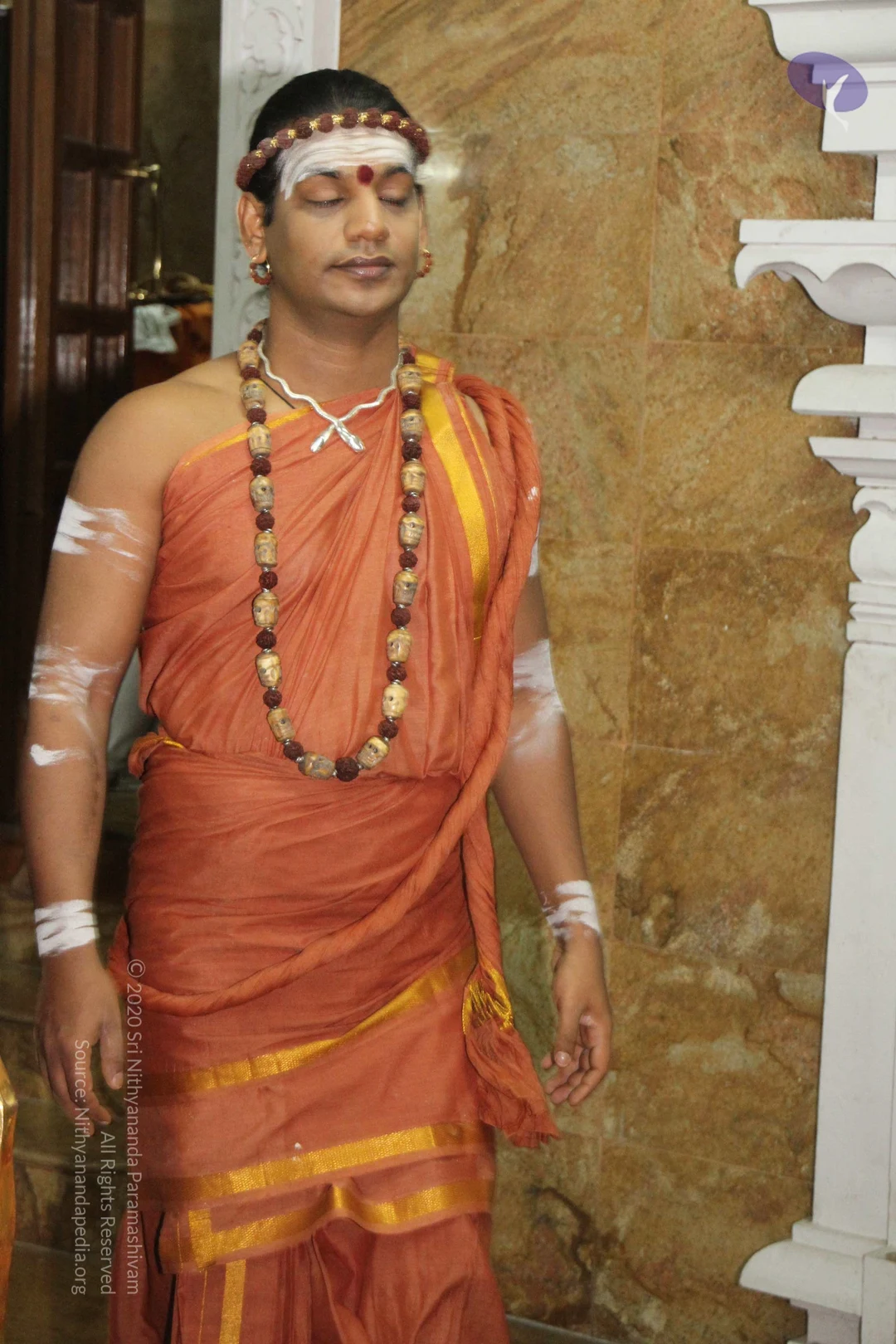
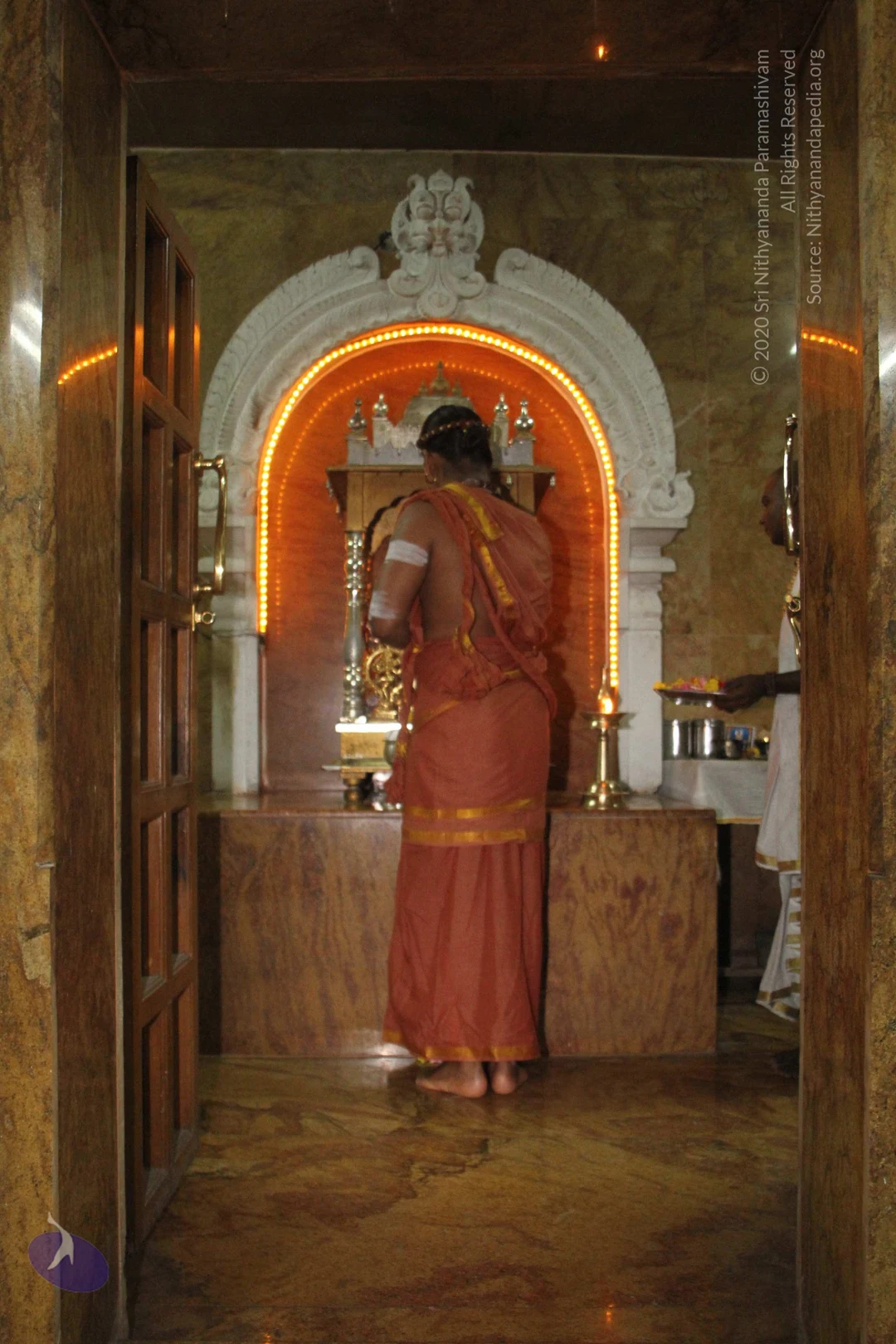
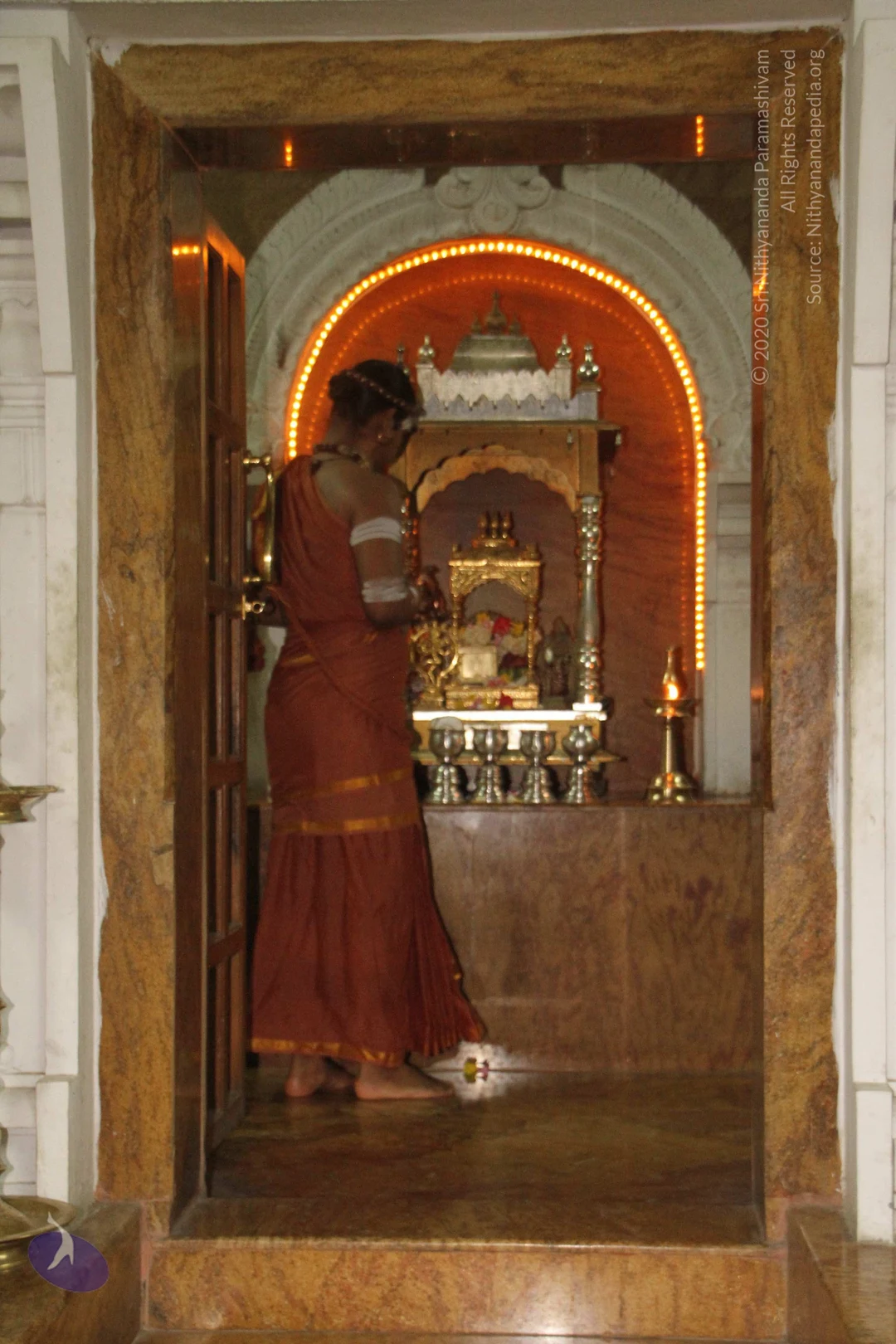
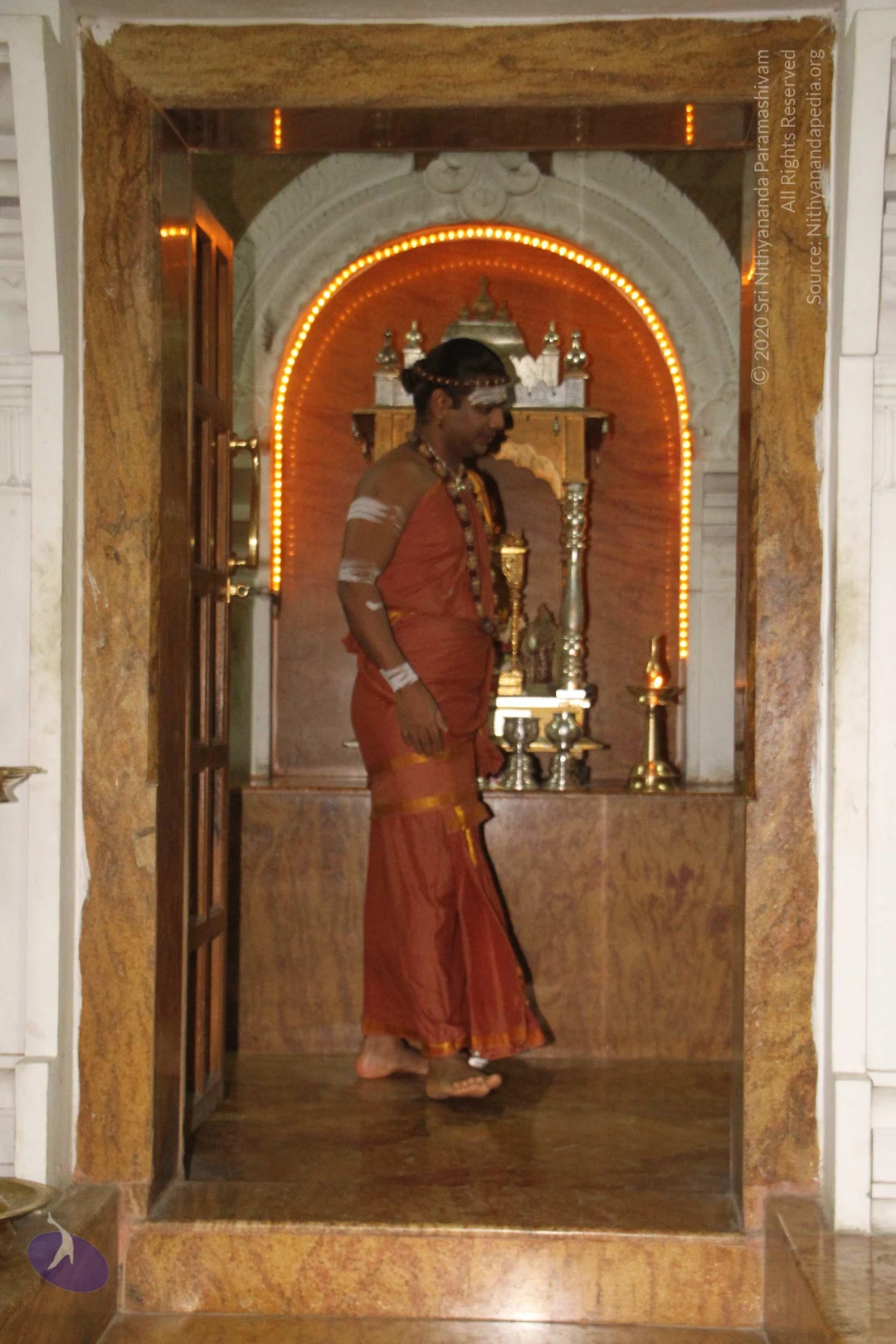
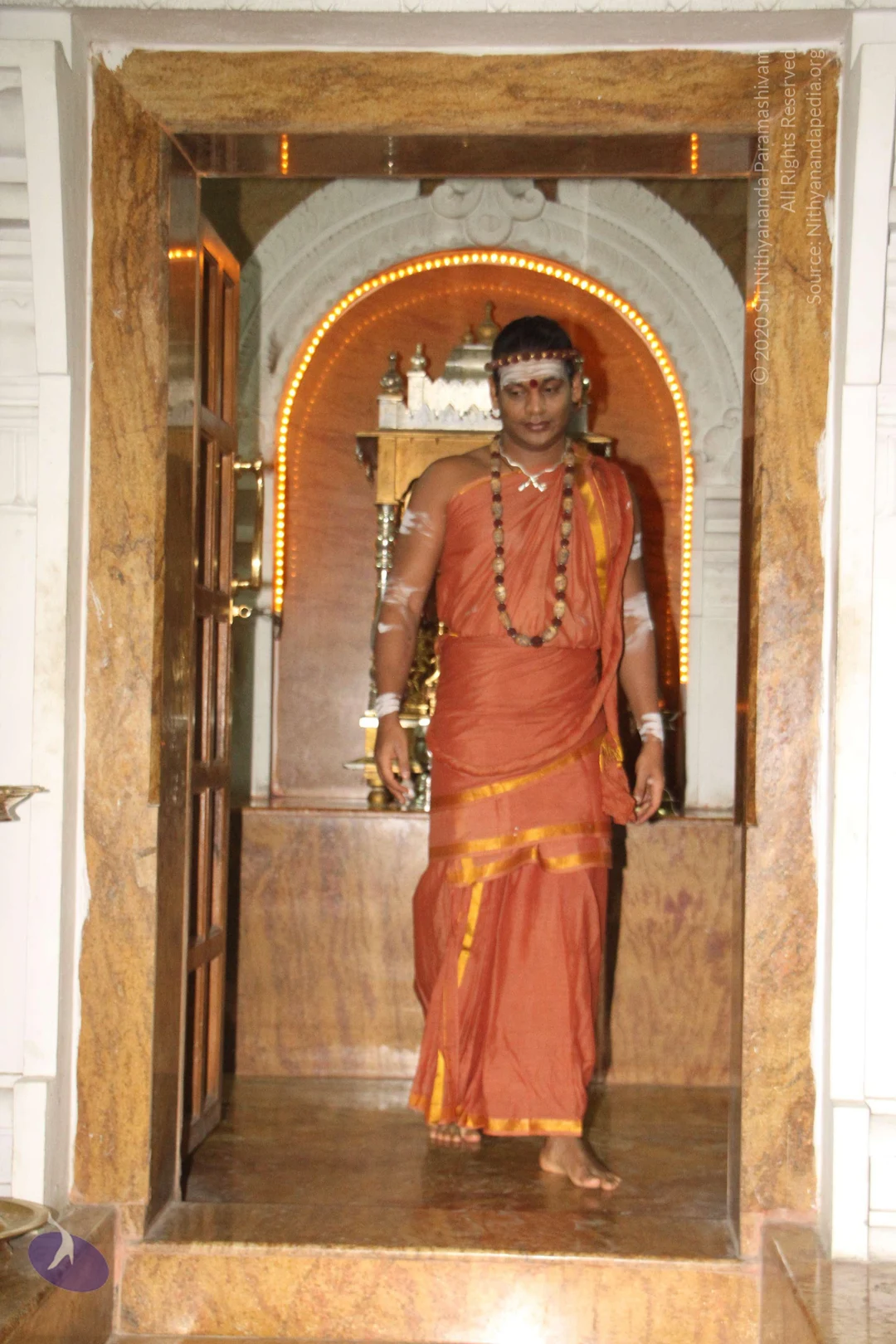
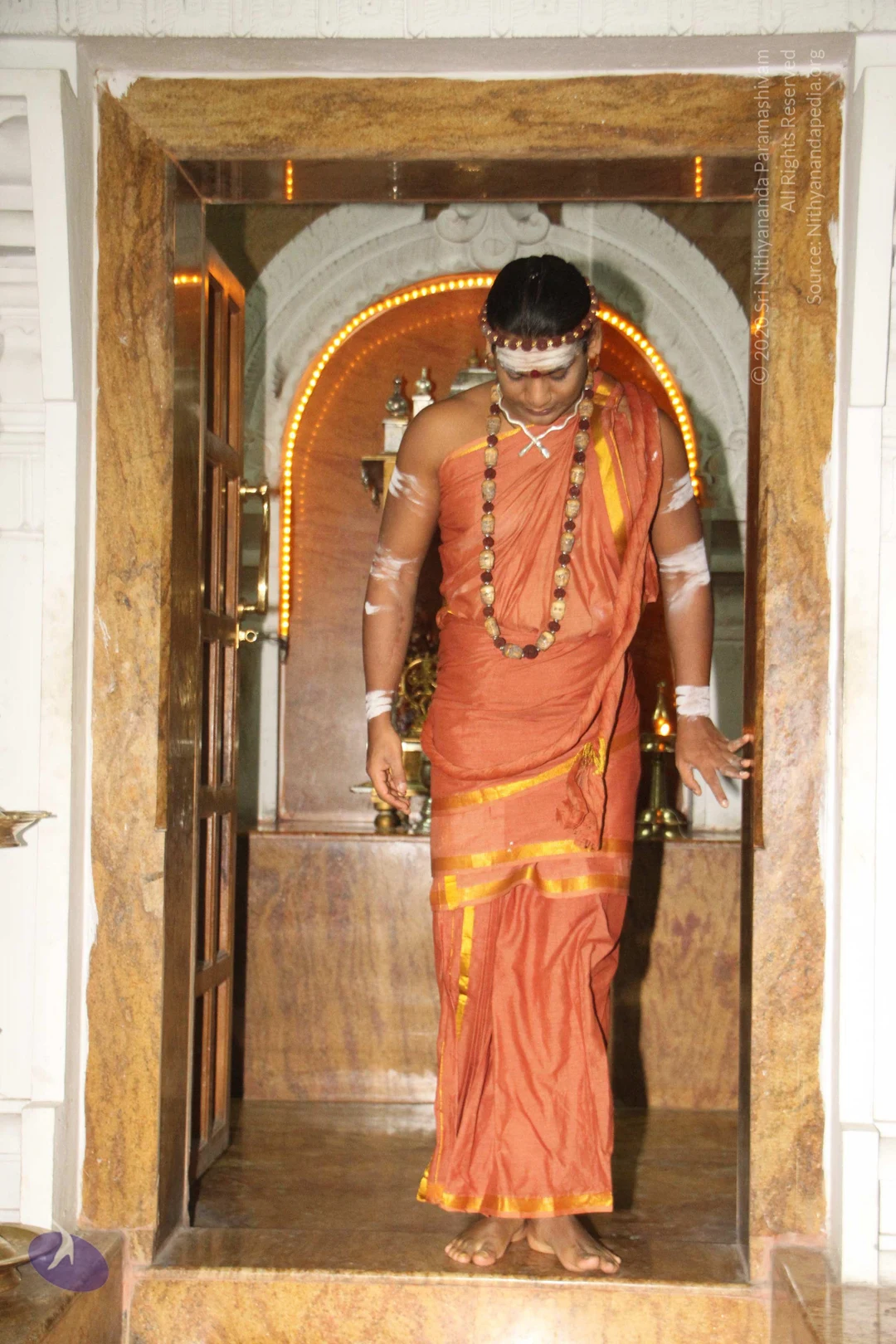
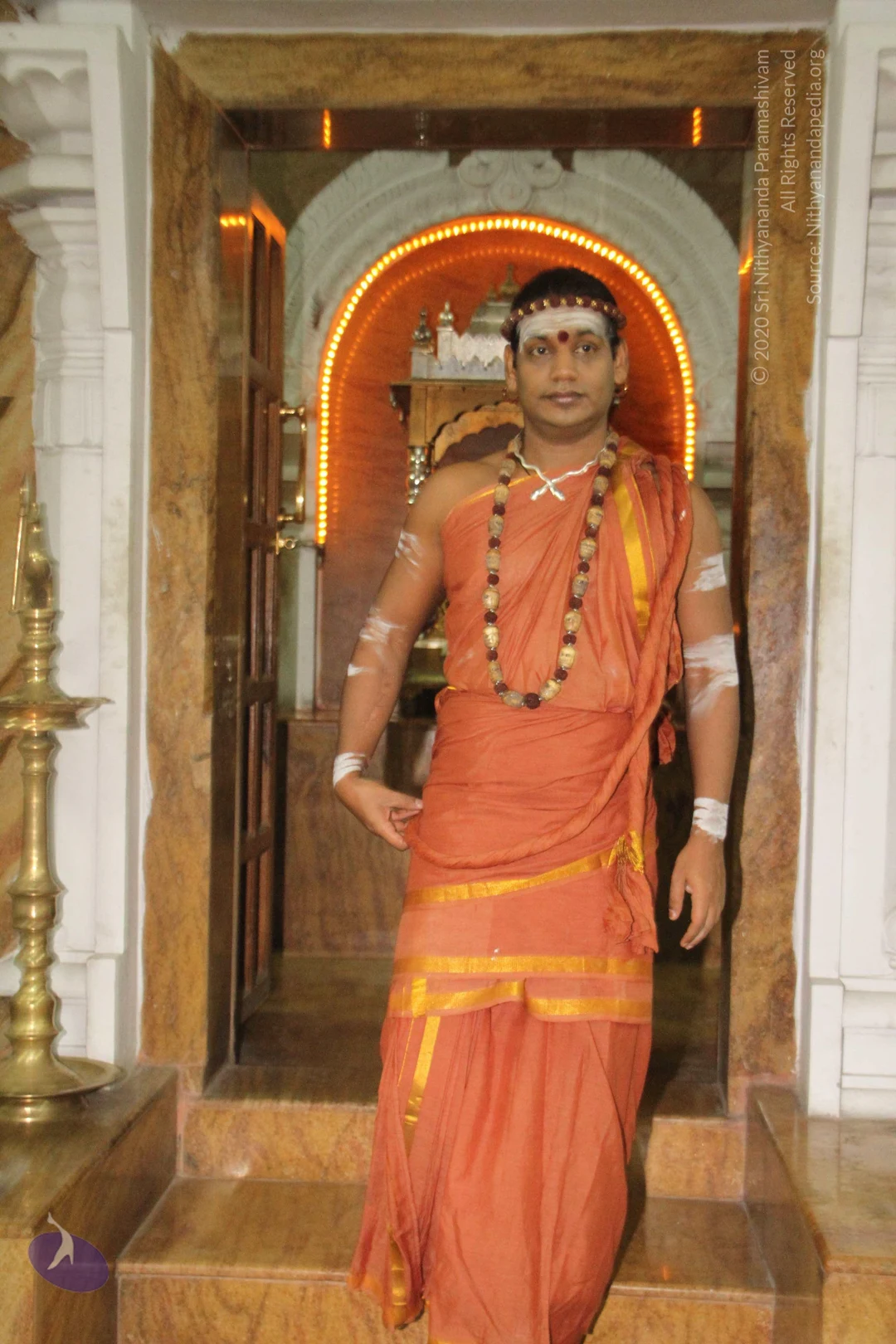
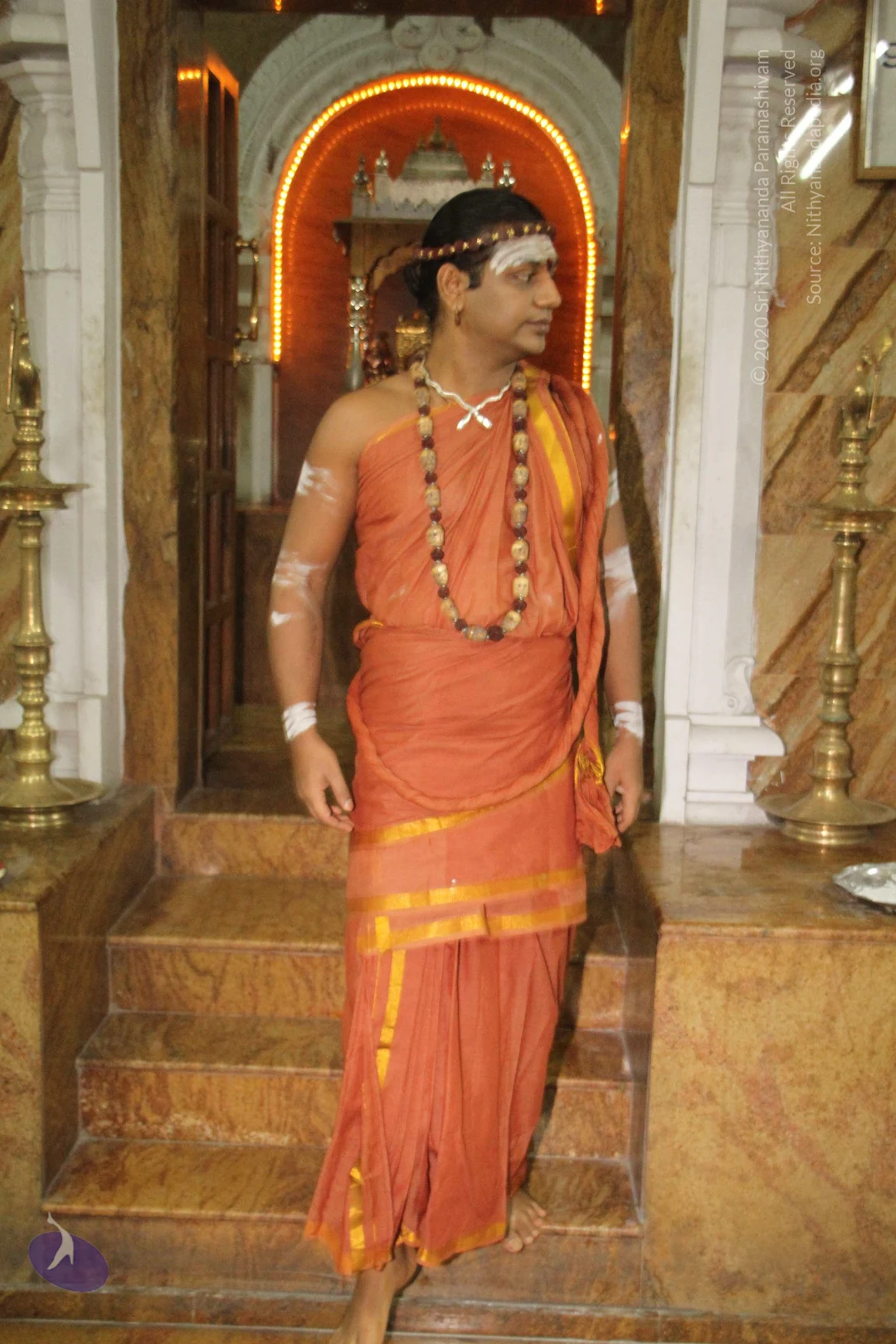
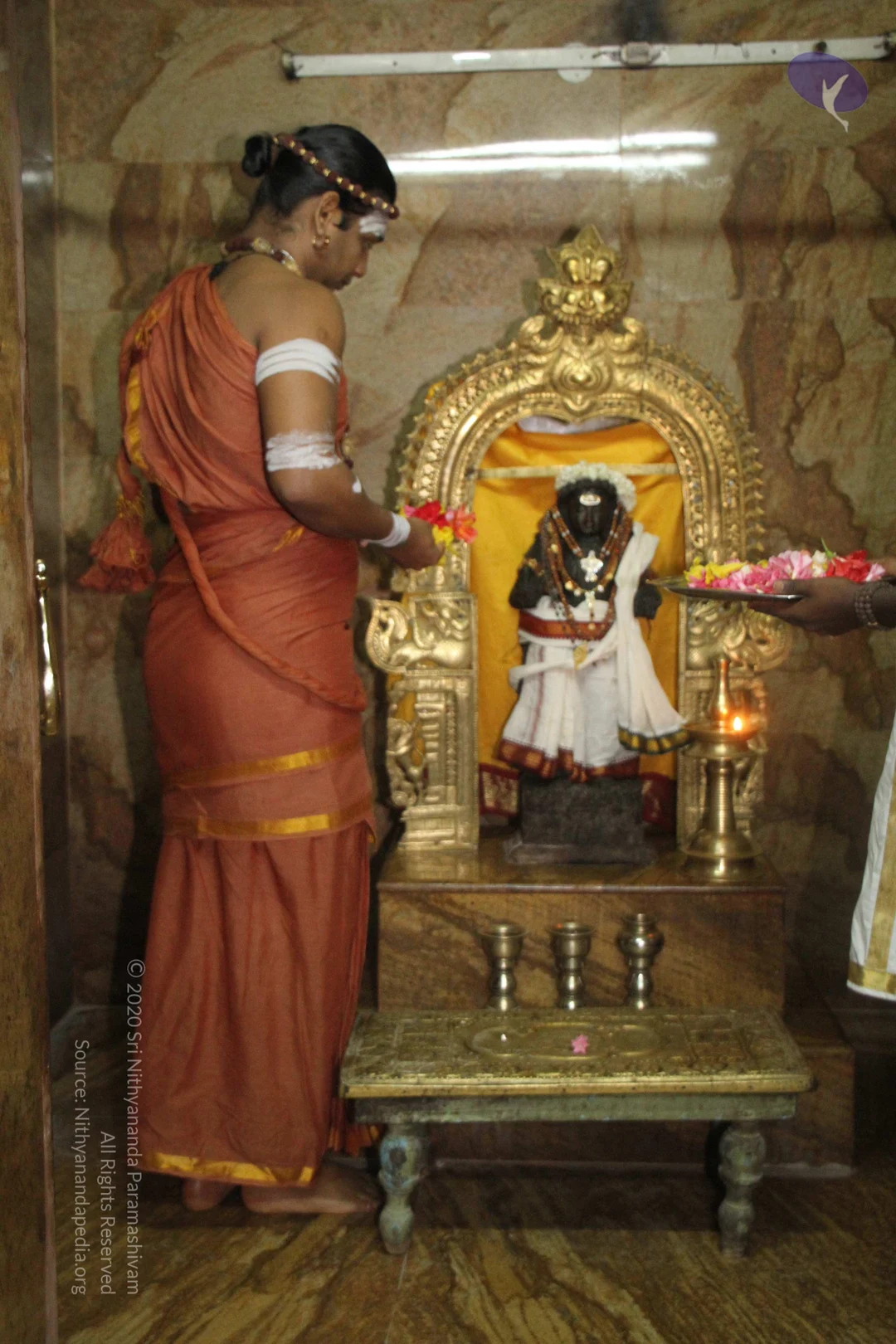
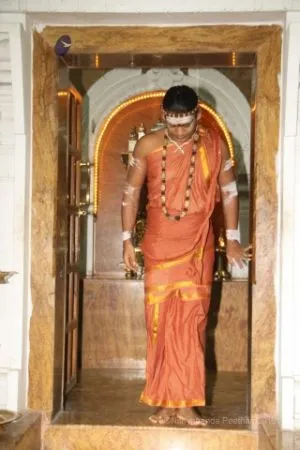
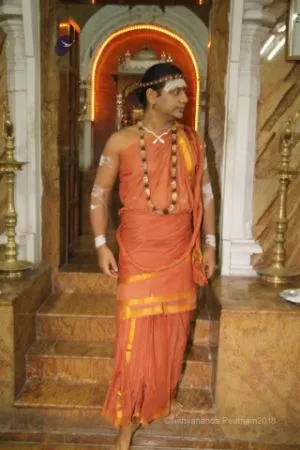
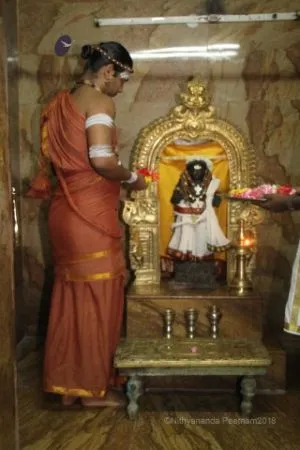
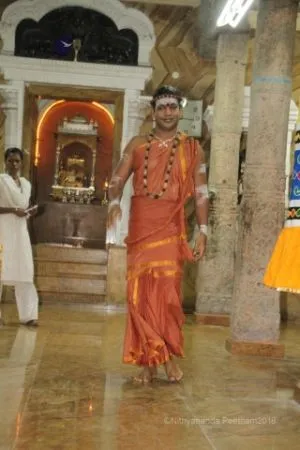
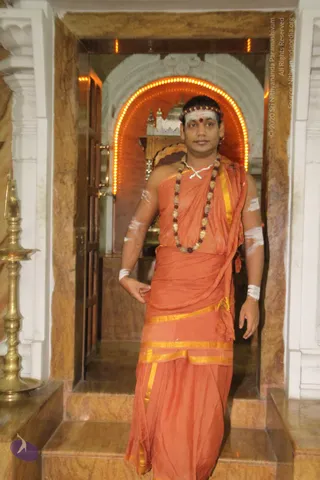
Photograph of a man standing with eyes closed against a warm stone wall beside a white pillar. He wears an orange-saffron draped garment with gold-bordered edges, a rudraksha and wooden bead mala reaching his chest, a rudraksha headband, white vertical tilak with a red dot on the forehead, and white ash markings on his arms. a person candidate appears with distinctive saffron clothing, rudraksha malas and headband cues, but the appearance is not fully certain.A woman in an orange sari with gold border stands barefoot with her back to the camera, facing a shrine niche in a temple. The arched niche is framed by white carved stone with a floral crest and outlined in warm orange lights, holding a small deity murti and brass lamps. A man in white dhoti and shirt at right holds a tray with flowers. The floor is polished marble and the doorway is wood-framed.A barefoot man in a rust-red dhoti and matching upper cloth stands in a doorway of a temple shrine niche lit by a glowing orange arch of lights. He wears a rudraksha mala necklace, a beaded headband, and white sacred ash markings on his forehead and upper arms. Behind him stands a gold and silver altar with brass lamps, a kalasha-style finial and a deity murti. The floor is polished stone with a warm wood-framed door on the left. a person by appearance cues: rudraksha mala and ornate beaded headpiece, but the face and figure are not clearly visible enough for certainty.A man in a rust-orange dhoti and shawl with gold borders stands barefoot in a stone doorway, walking out of an inner shrine. He wears a rudraksha mala, a white and red forehead marking, and white paste on his arms. Behind him an arched niche with warm orange lights holds a brass altar, lamps and a deity murti. Gold-trimmed wooden doors frame the entrance.A man stands on a marble step at the threshold of an illuminated temple shrine, wearing a saffron-orange dhoti and shawl with gold borders. He wears a headband with a red bindi and white vibhuti marks on his forehead and arms, plus a long rudraksha mala with a silver pendant. A brass lamp stands at left and a glowing arched niche with a small shrine lies behind him. The figure's appearance is consistent with a person, shown in a sannyasi role at the shrine entrance, though the cues are limited to saffron clothing and rudraksha beads.A man stands barefoot on a polished marble floor inside a temple hall, wearing a deep orange-red draped cloth with gold-bordered edges wrapped over one shoulder and around the waist. He wears a rudraksha mala with a silver pendant, a beaded headband, a red bindi and white vibhuti markings on his forehead and arms. Behind him a lit alcove holds a golden deity murti with brass lamps. A woman in white stands at the left edge, and a figure in yellow appears at the right. Tall pink stone pillars and a wall clock frame the hall.

2-Padapuja

27 photosSource gallery
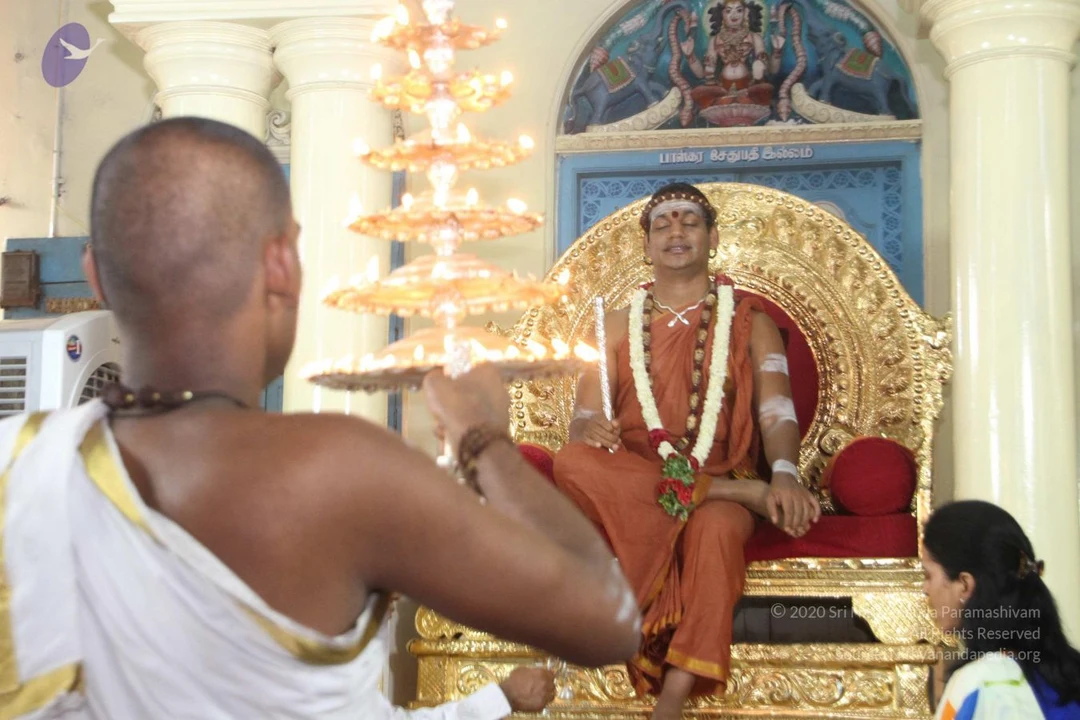
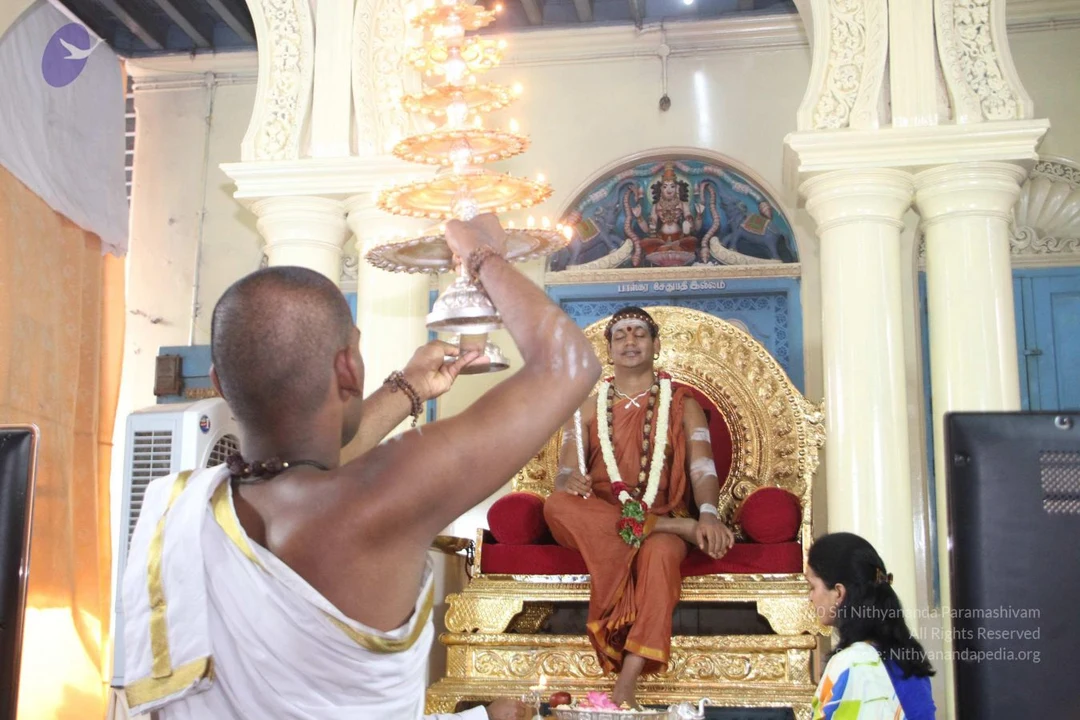
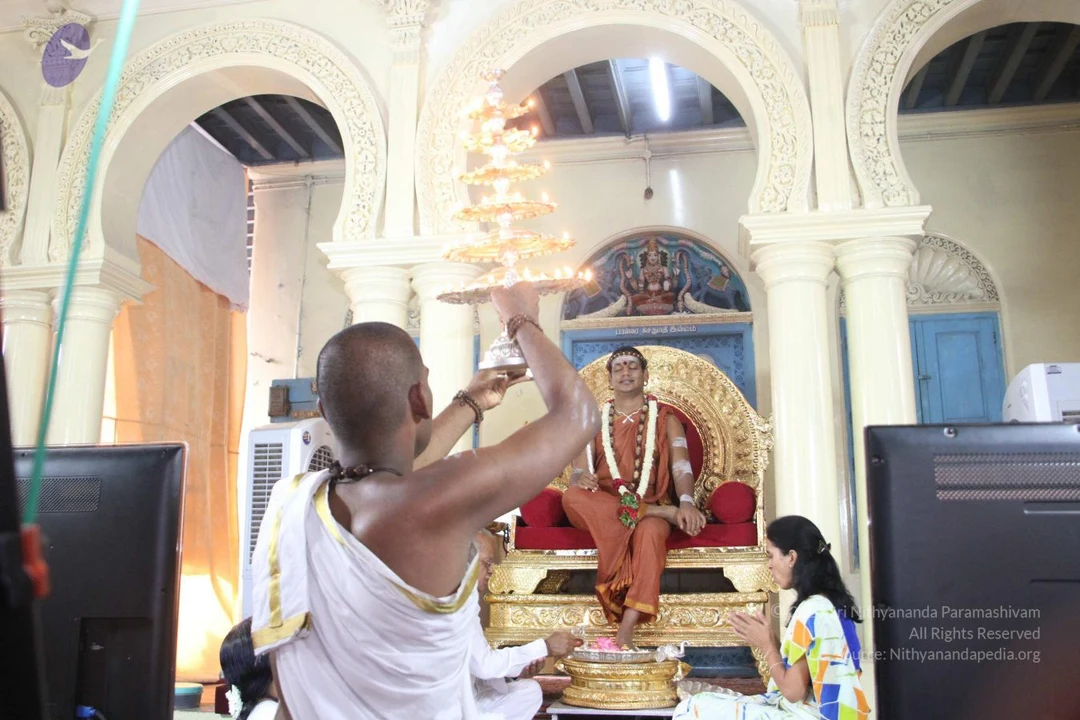
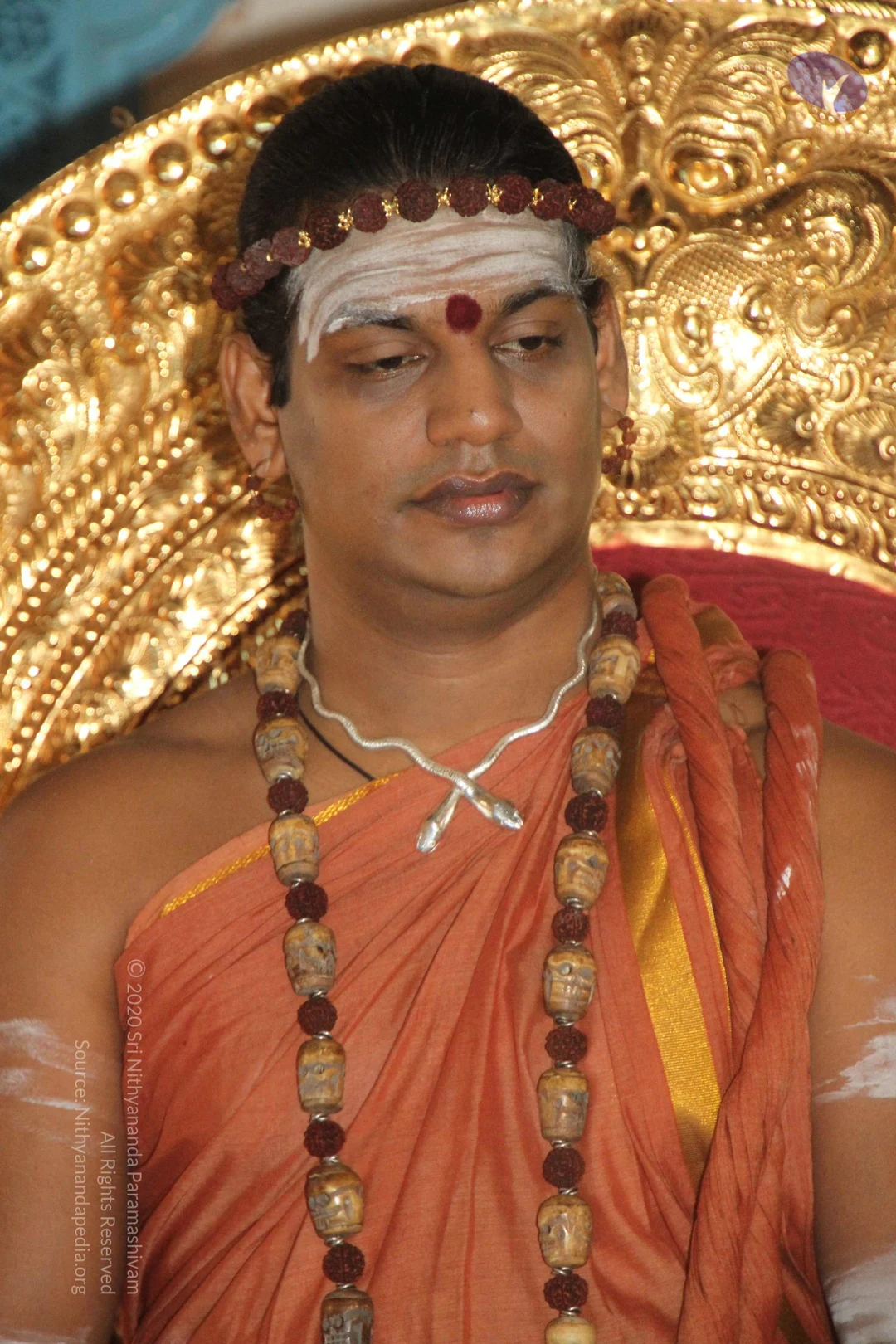
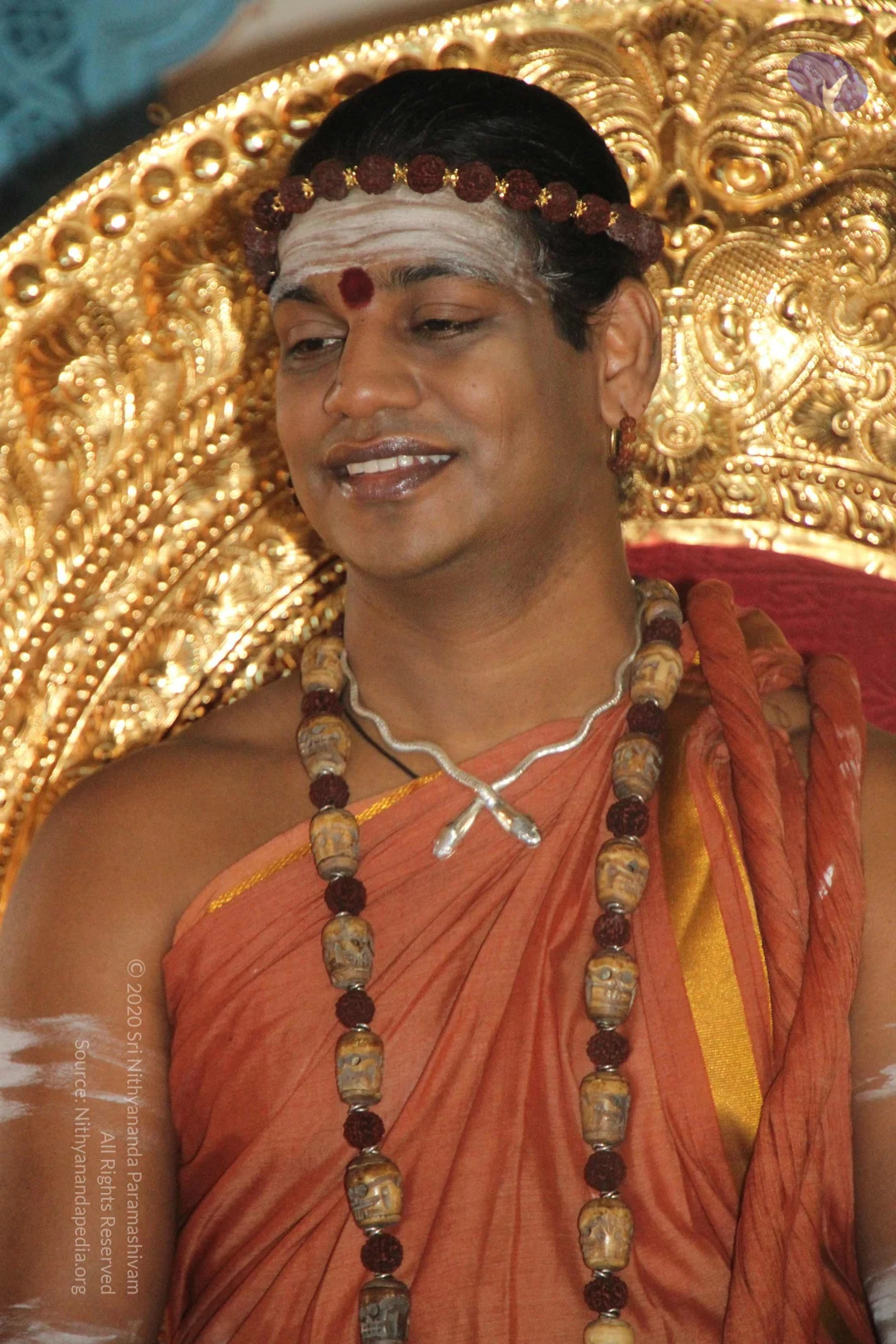
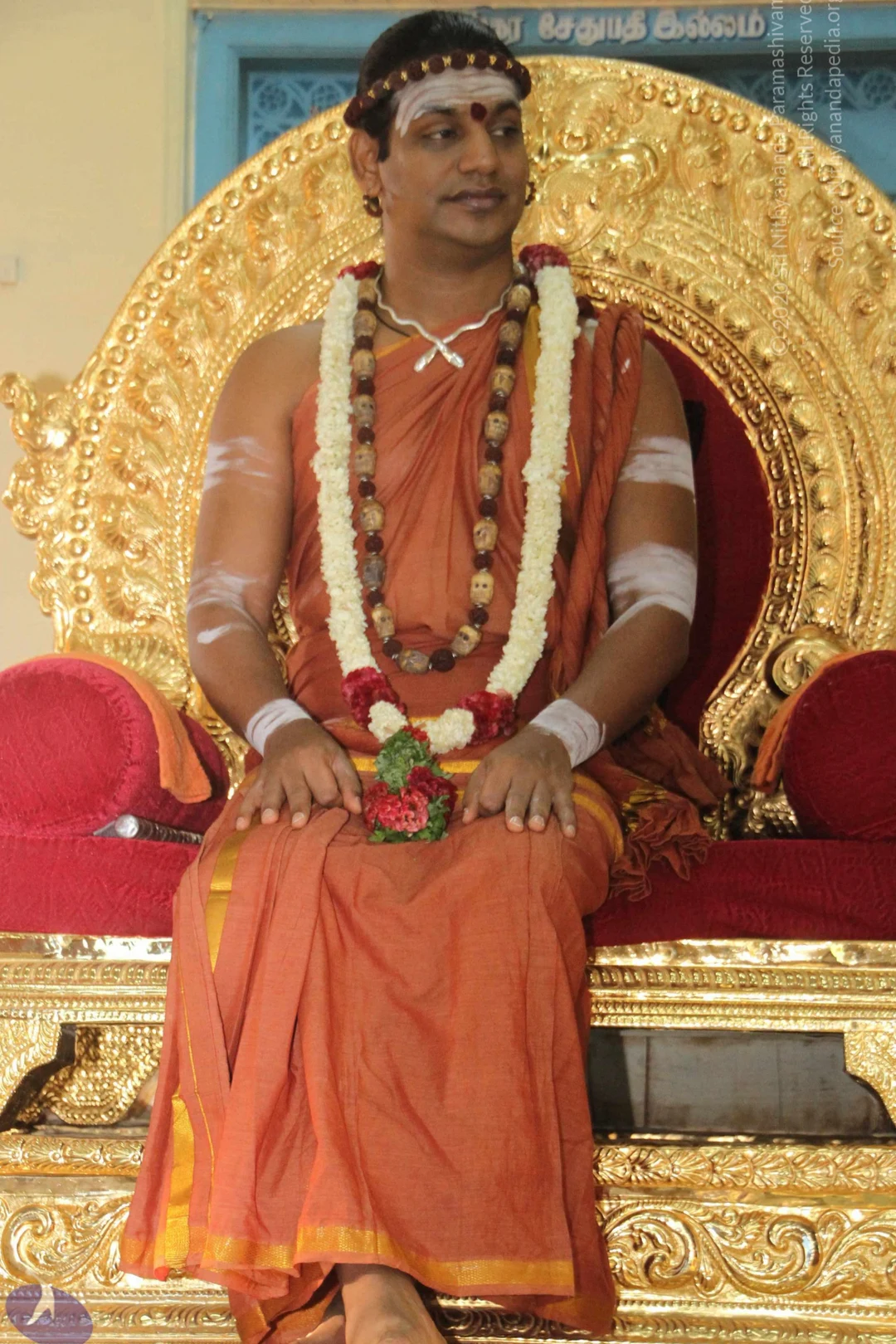
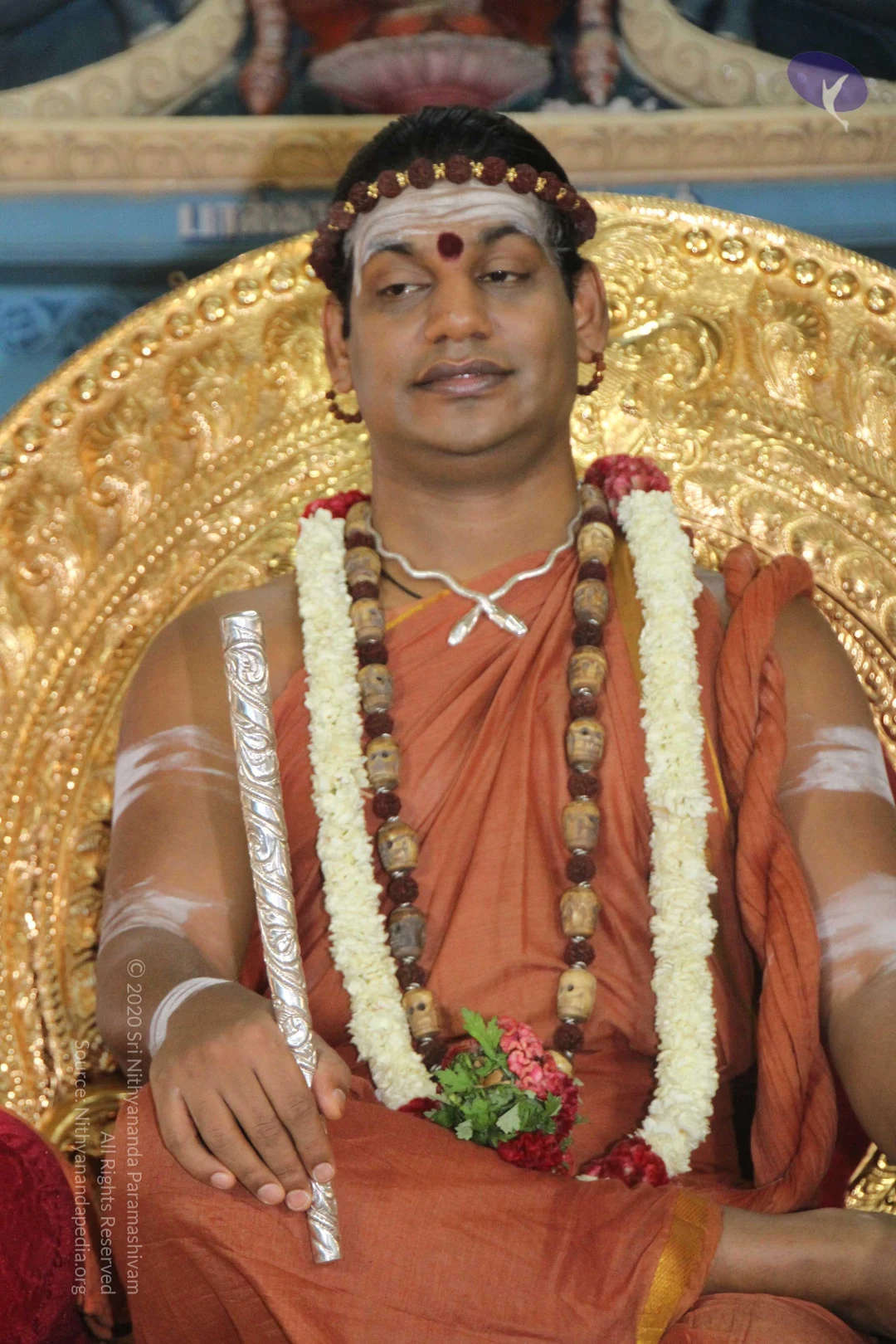
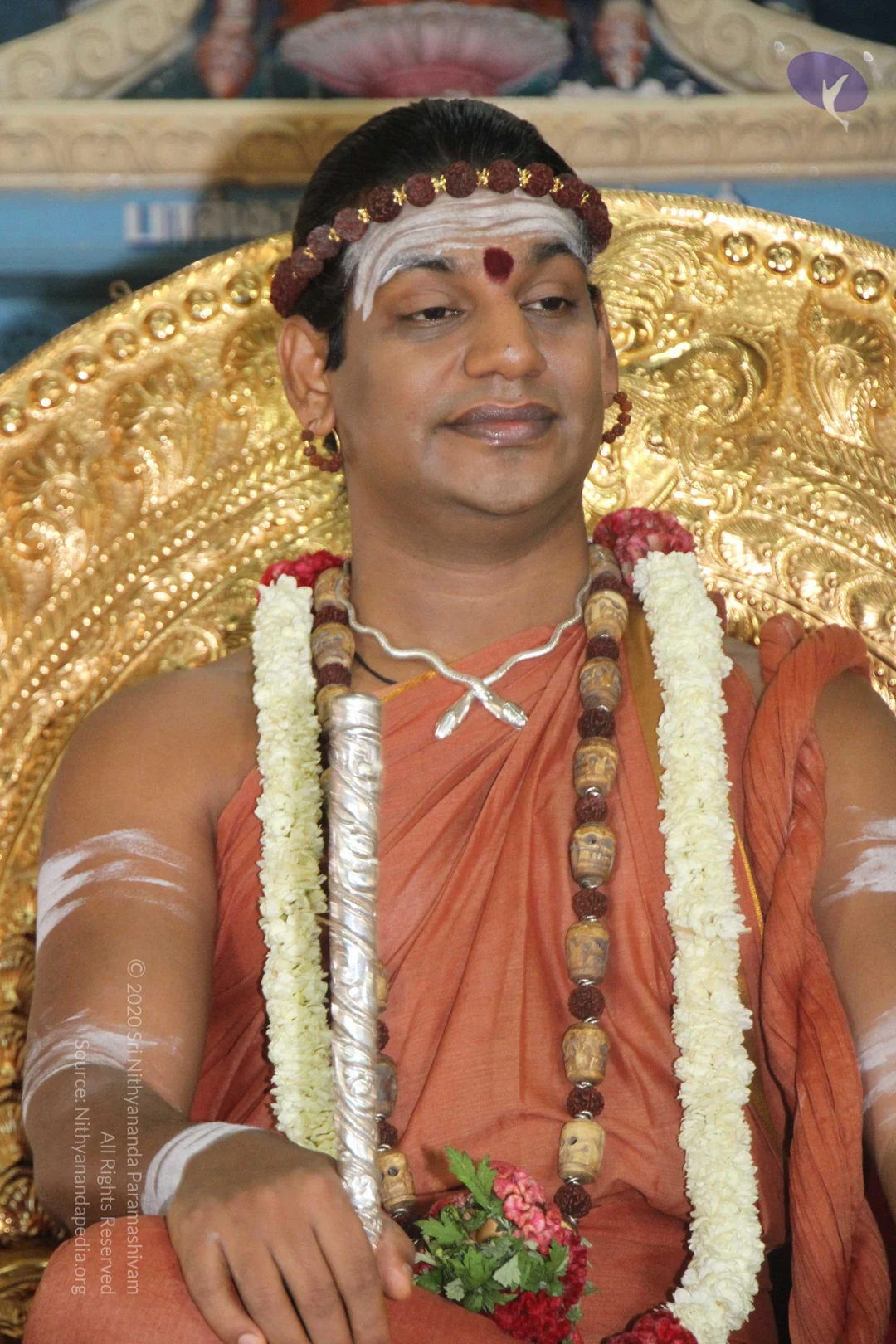
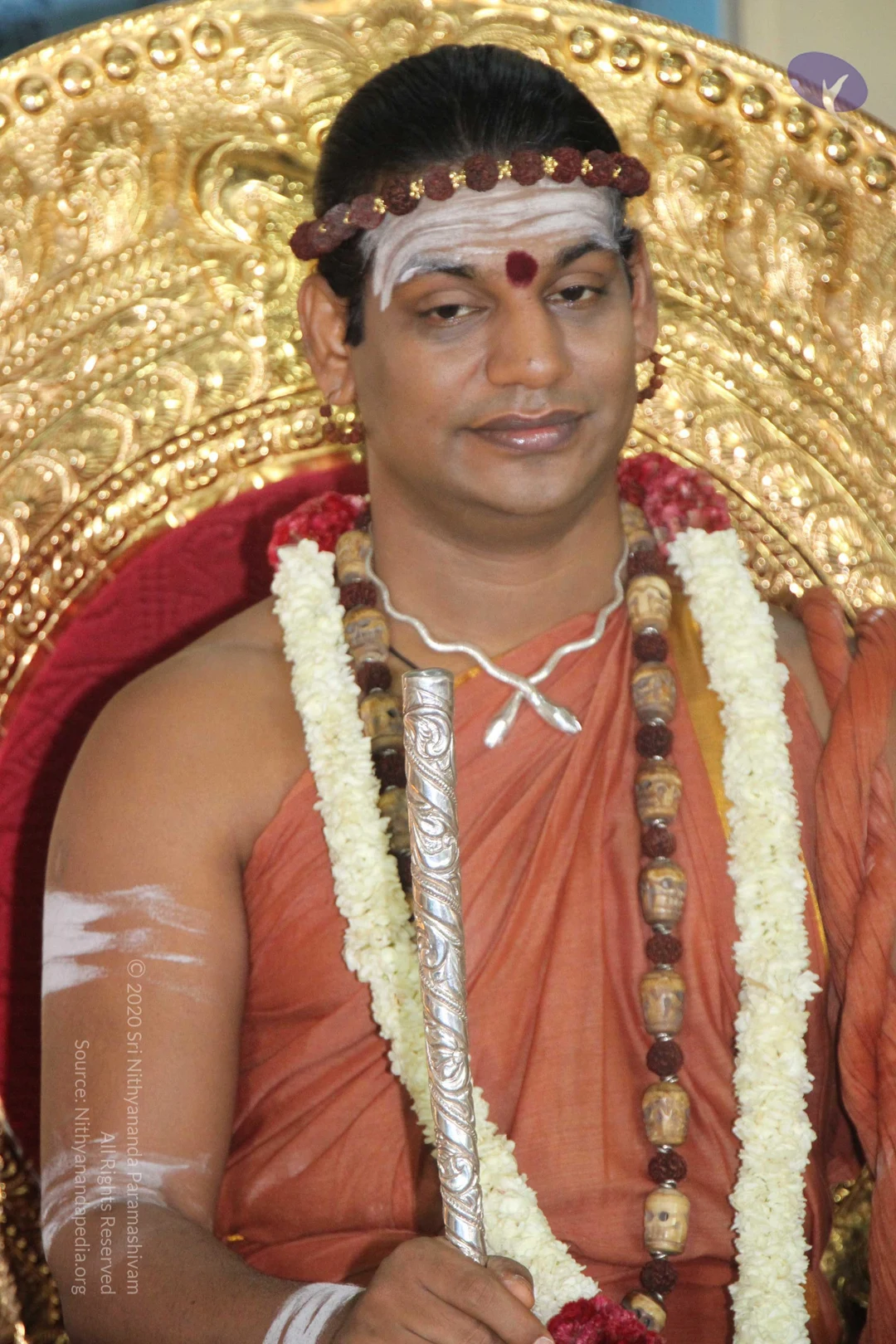
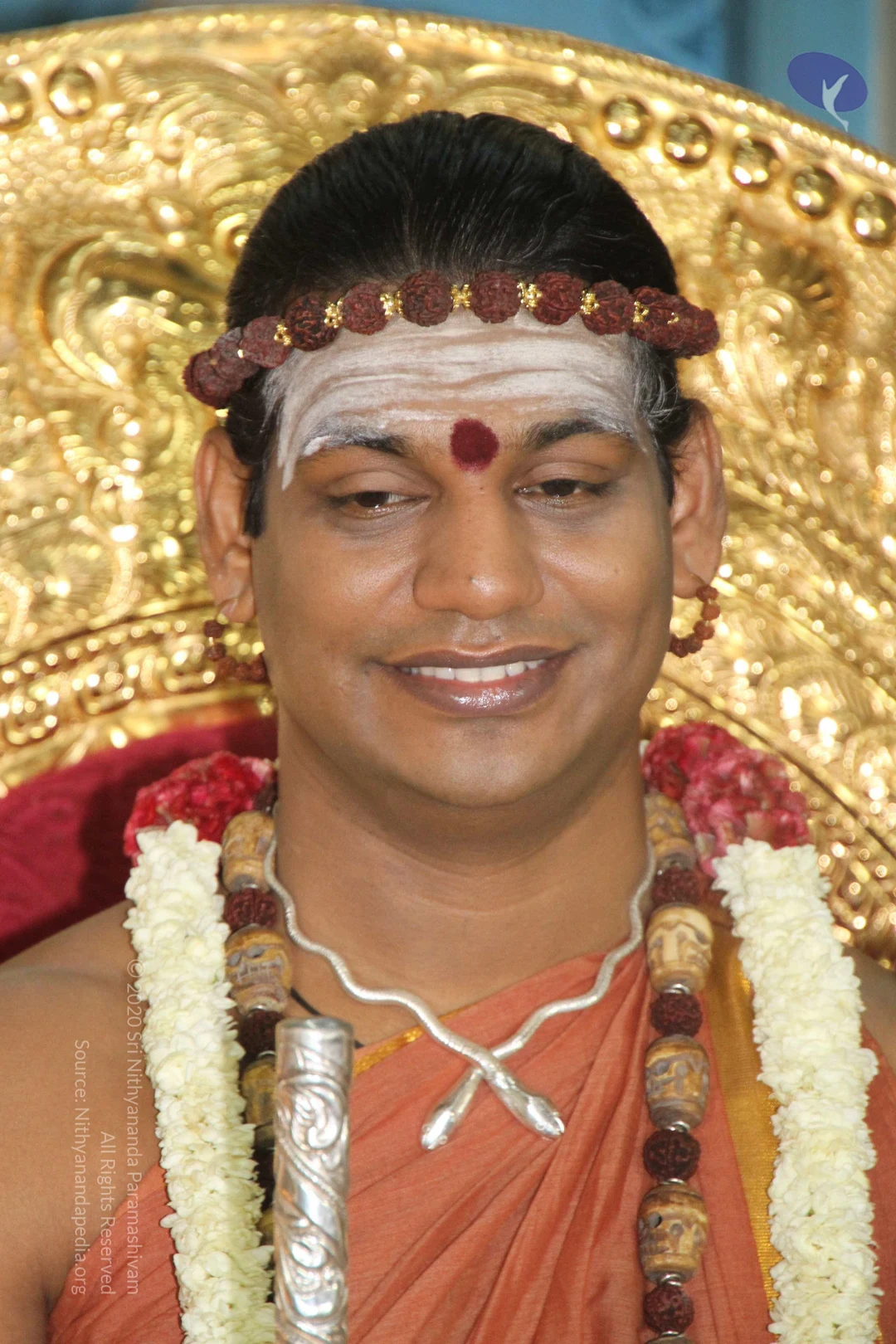
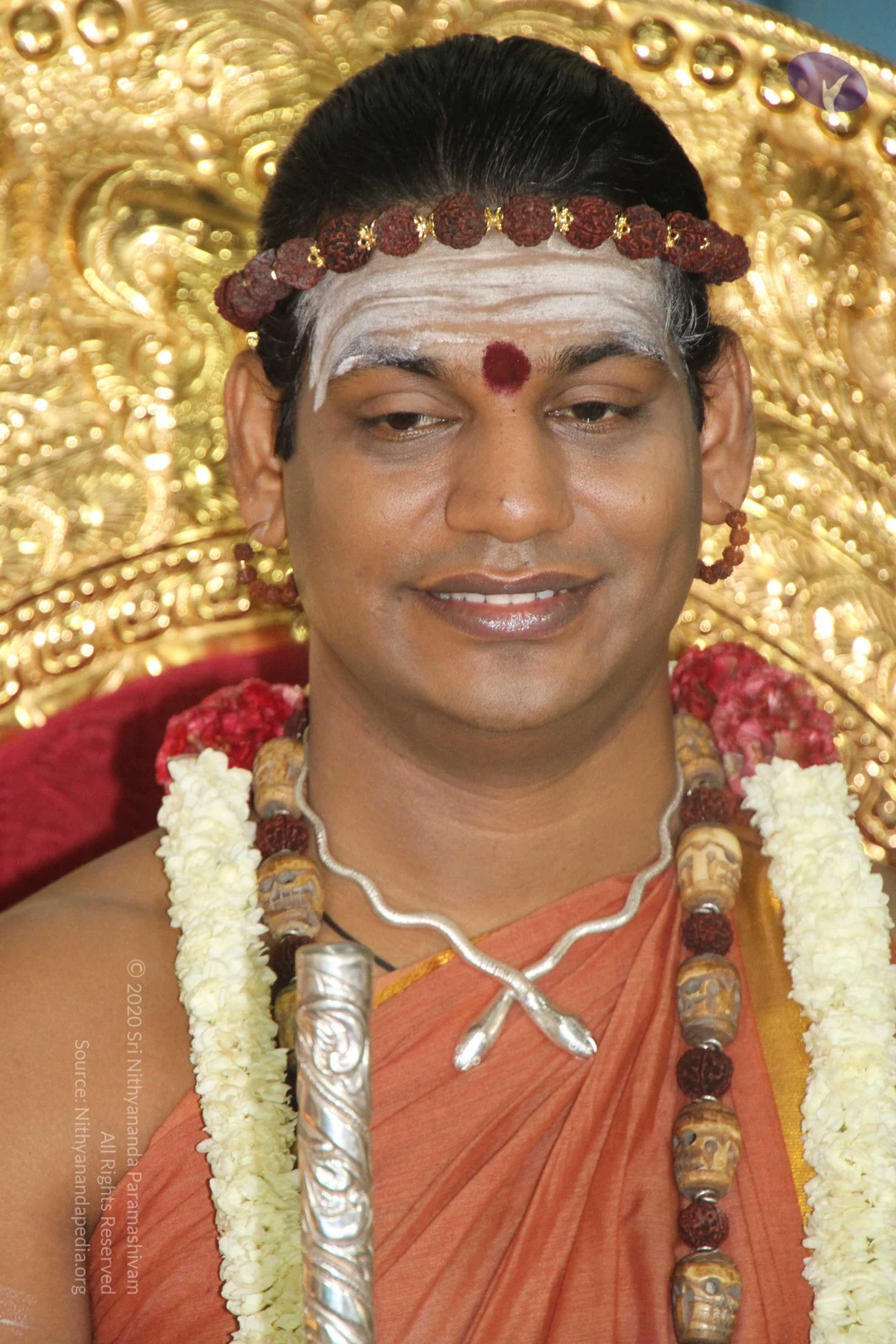
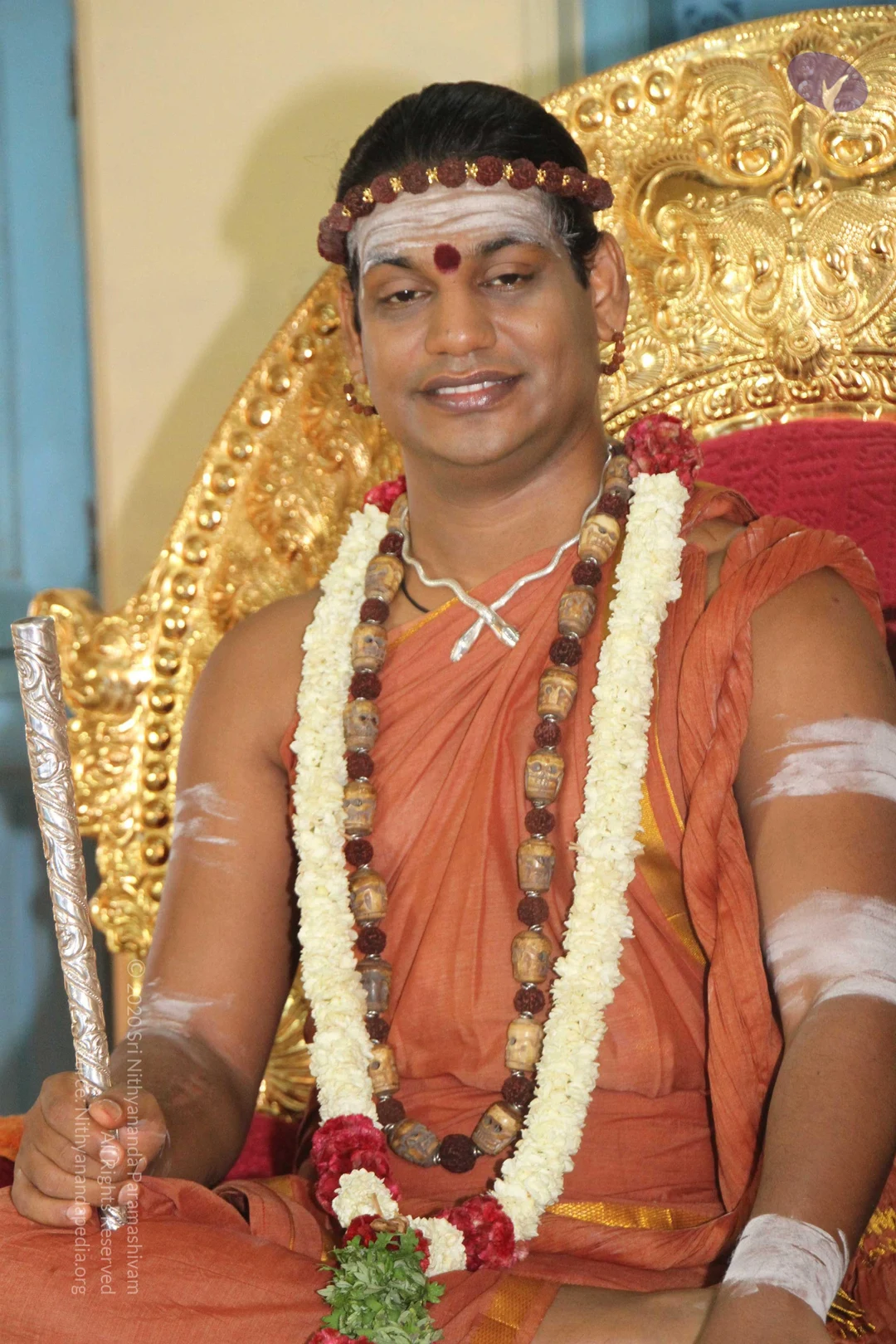
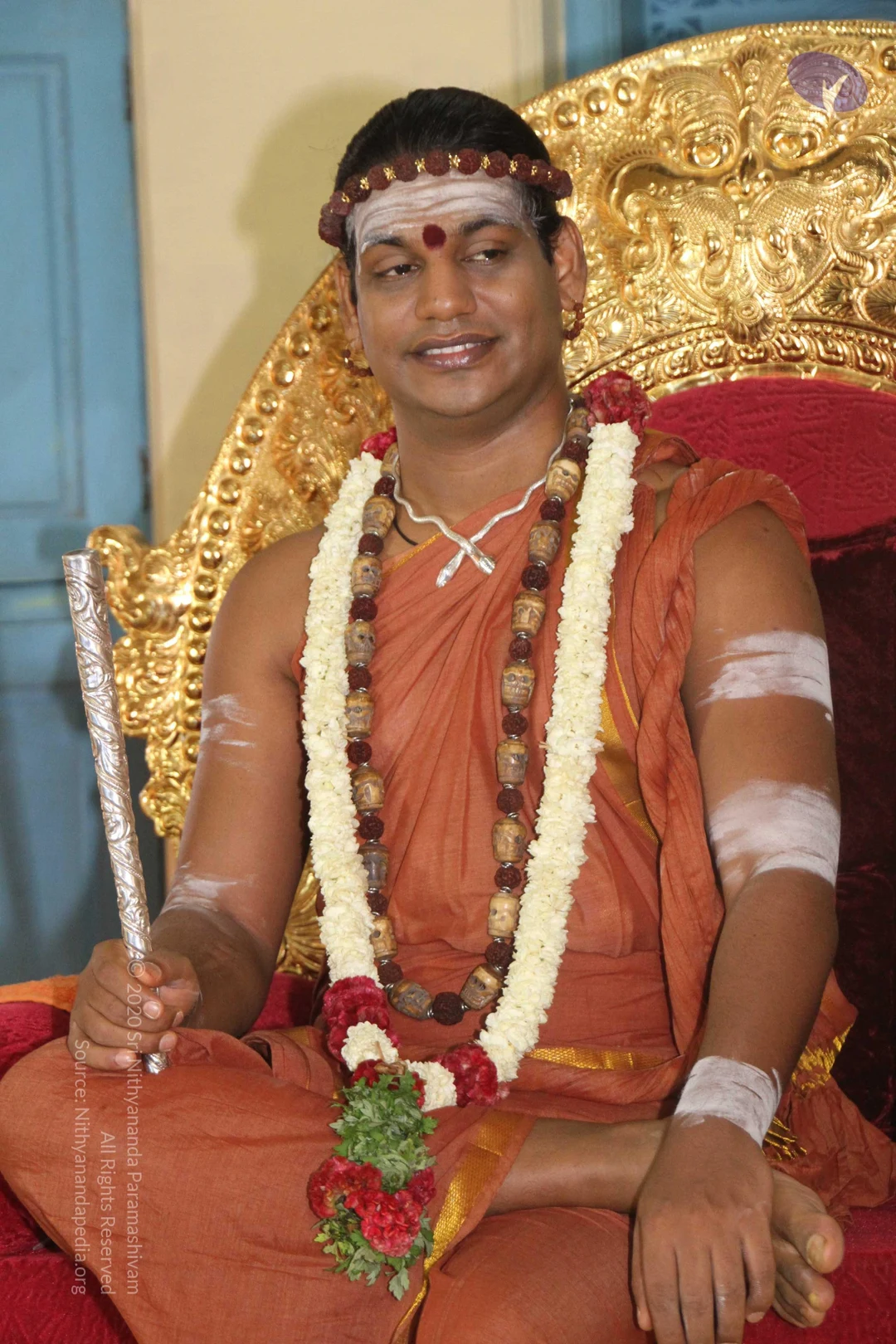
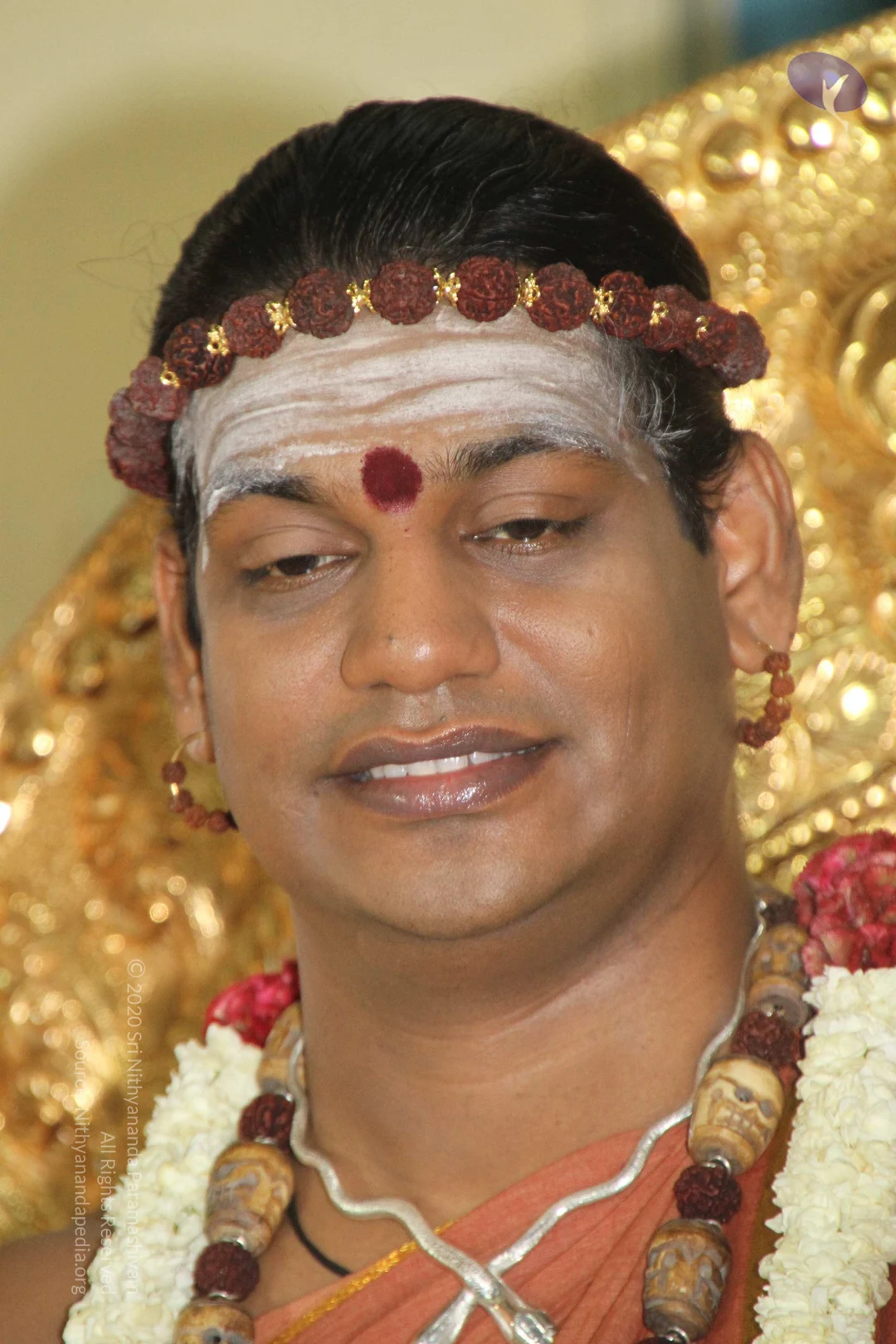
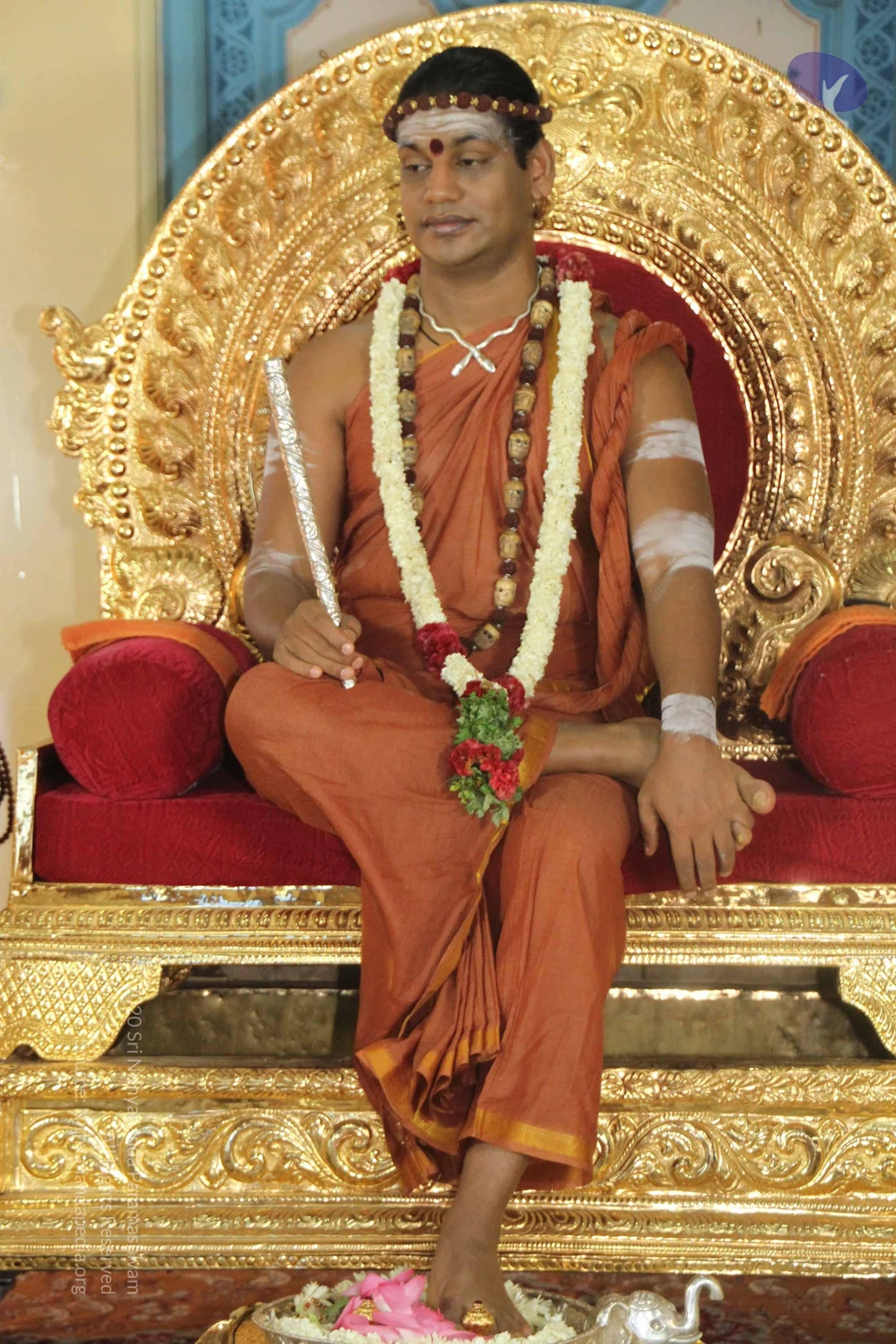
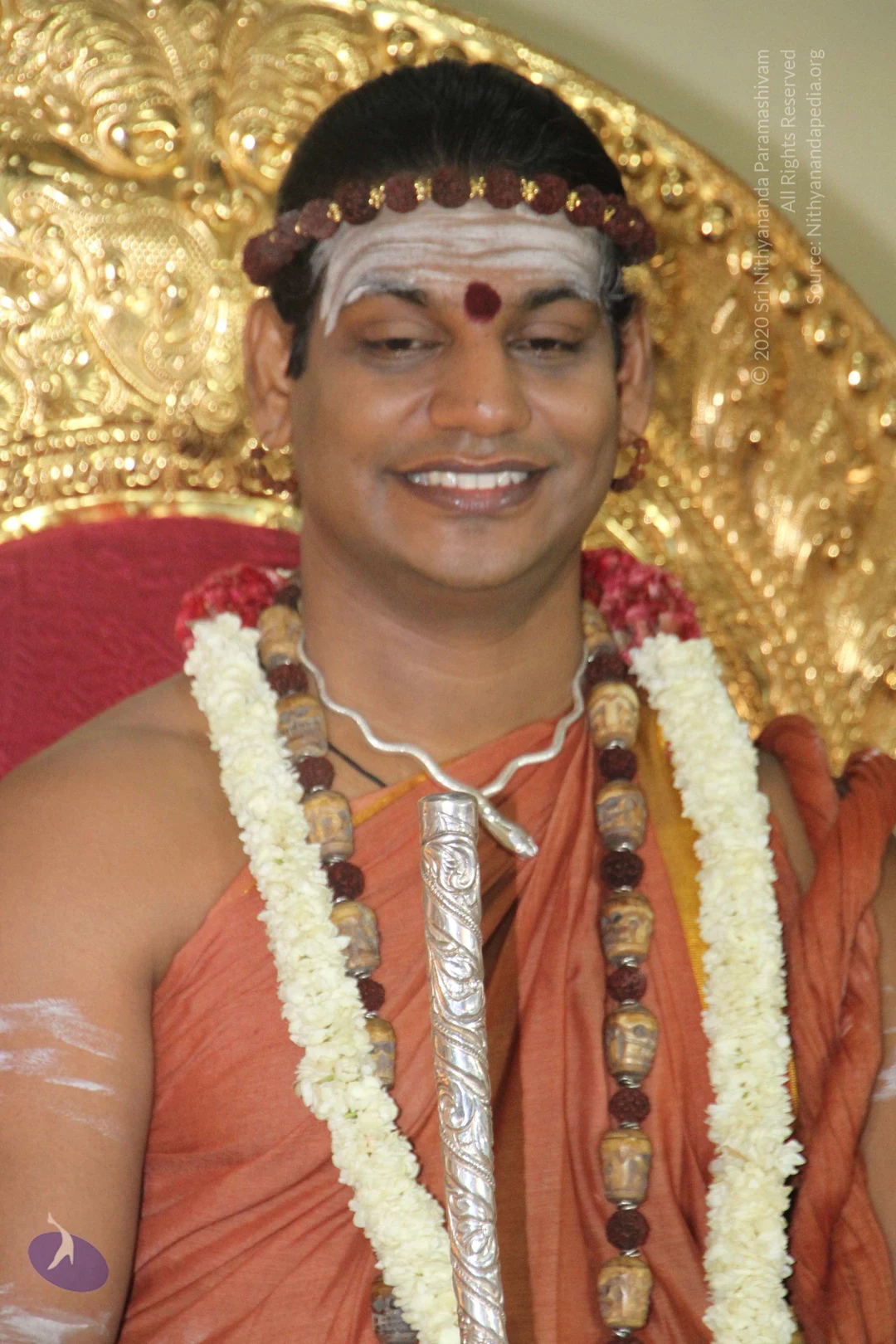
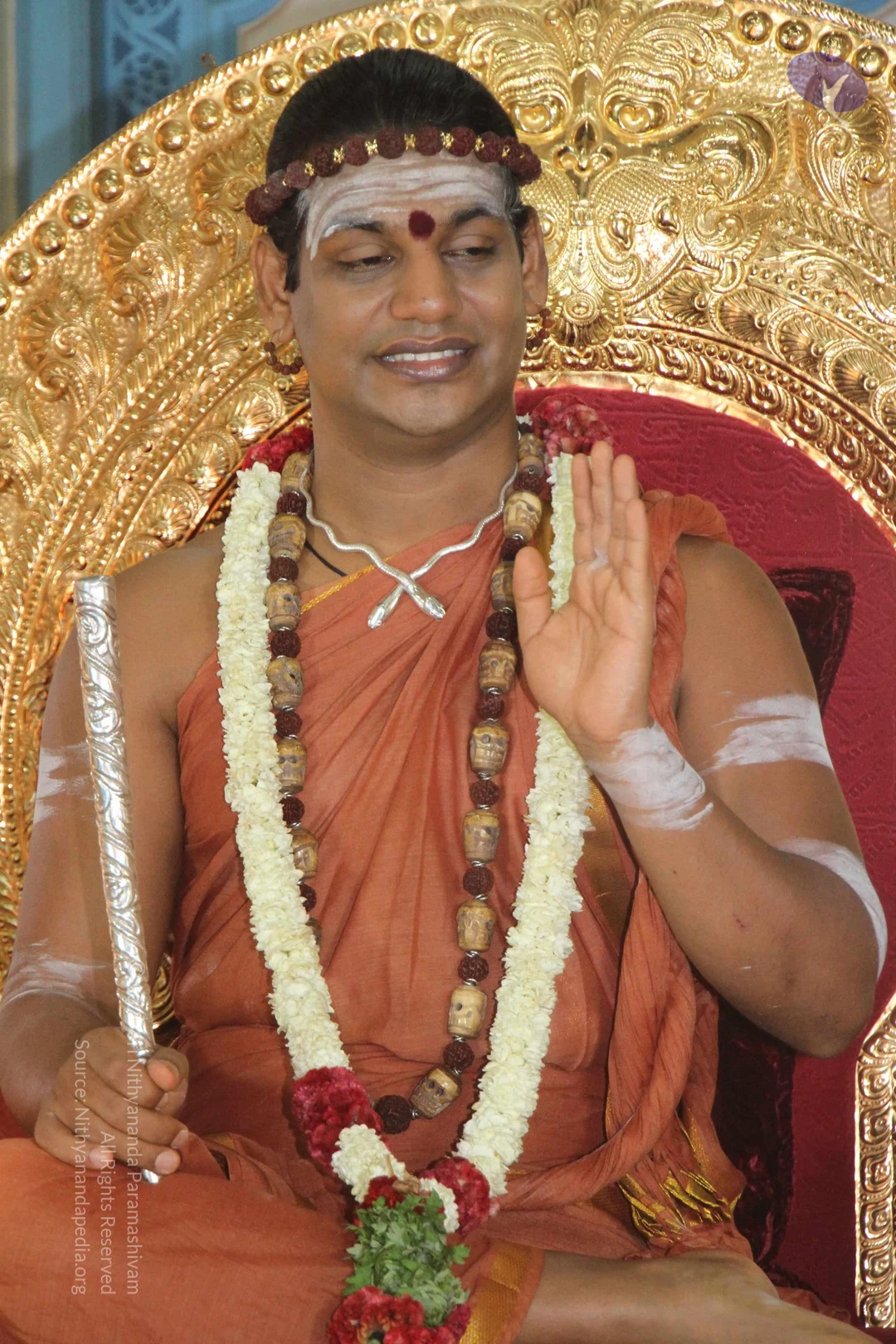
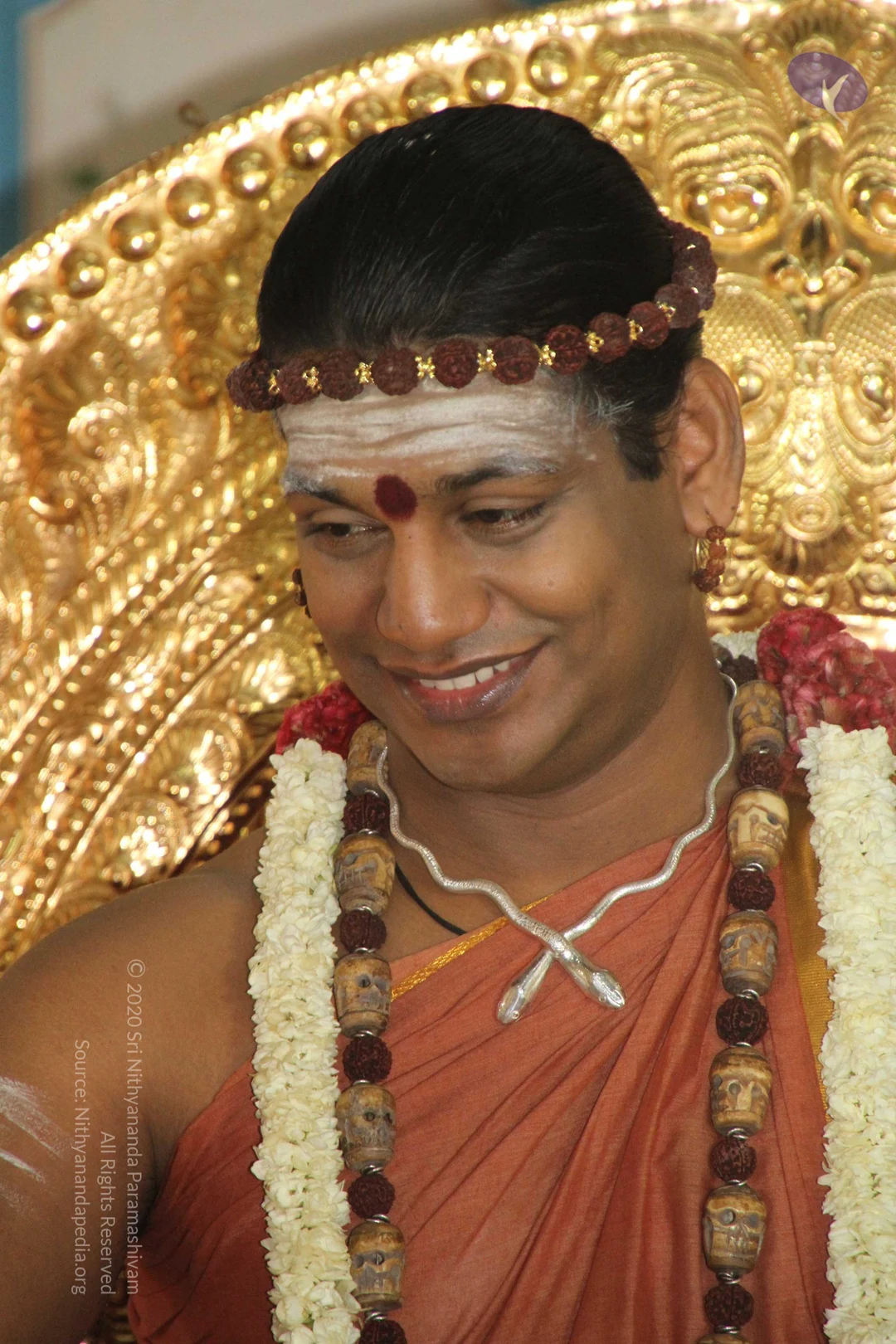
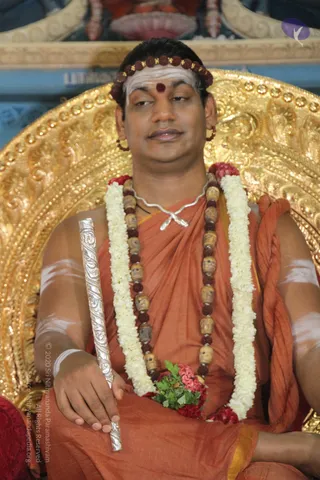
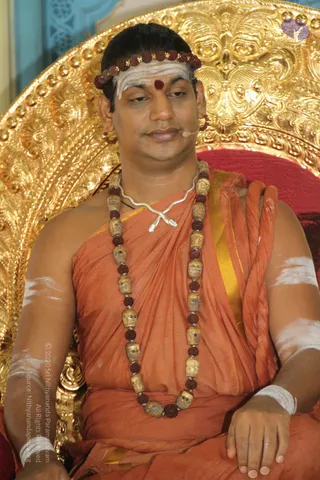
A shaven-headed priest in a white dhoti and shawl, wearing a rudraksha mala, raises a multi-flame oil lamp toward a seated figure on an ornate gilded throne with red cushions. The seated figure wears an orange-saffron garment, a rudraksha mala and a tilak, with white armbands, and sits on a gold lotus-shaped footstool. Before the throne lie a striped rug, a plate of white flowers with a pink lotus bloom, and a silver bowl. White pillars frame the shrine, and a small painted deity murti is set in an arch above. The priest performs aarti during a puja setting.A close-up photograph of a man seated before an ornate gold-leaf throne with floral repoussé carving. He wears an orange-saffron shawl draped over the shoulders with a gold border, a rudraksha mala headband, a long necklace of carved wooden beads alternating with rudraksha beads, and a silver serpent-shaped pendant. A white sacred-ash band and a red kumkum dot mark his forehead, and his eyes are lowered in meditative concentration. Swamiji (probable): long dark hair swept back, saffron clothing, rudraksha malas and ceremonial adornments, seated on a throne in a darshan setting.Close-up photo of a smiling man seated before an ornate gold throne with repoussé floral carving. He wears a rudraksha mala headband, a white and red forehead mark, a silver serpent-shaped necklace, and long beaded rudraksha and carved bead malas over an orange saffron wrap with gold border. He appears to be the presenter of the teaching, with a person appearance based on the rudraksha headband, saffron clothing and multiple malas.A seated man in saffron-orange robes sits on an ornate gold throne with red velvet cushions. He wears a white jasmine garland with red flowers, a long rudraksha mala with carved beads, a silver pendant, a rudraksha headband, and a red bindi with white tripundra markings on his forehead and arms. His hands rest on his lap holding a small bouquet of red and green flowers. A blue-framed doorway with Tamil script stands behind him. Dress and throne suggest a formal seat; the page links this to a padapuja and a satsang, which is context only. Appearance-based label: a person, seated on the throne in orange robes, rudraksha mala and headband.A seated man with long dark hair, wearing an orange-saffron garment, a rudraksha mala and a white flower garland, sits on an ornate gold throne with red cushions, hands resting in his lap and a red tilak on his forehead. Several people in white clothing sit on a striped rug before him, while a woman in a blue and green printed sari offers a silver plate with flowers and small food offerings at the throne's base. Oil lamps and brass plates sit on the floor, with white pillars and a wall air cooler behind. A bald man in orange sits at the left edge. Ritual padapuja setting, though the exact ceremony is not named.A man seated on an ornate gold throne with a carved, floral backrest, wearing an orange-saffron cloth draped over his body and a thin orange shawl over one shoulder. He wears a rudraksha mala headband, a long rudraksha and wooden bead necklace, a white ceremonial chain, and a white garland of flowers with pink blooms. He has white tripundra markings on his forehead, a red bindi, white markings on his arms, and holds a silver staff with engraved patterns across his lap. Behind him is a painted colourful backdrop with a deity mural.

3-Satsang

13 photosSource gallery
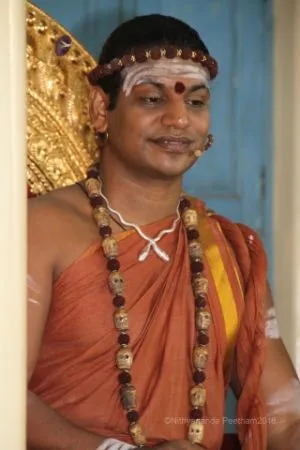
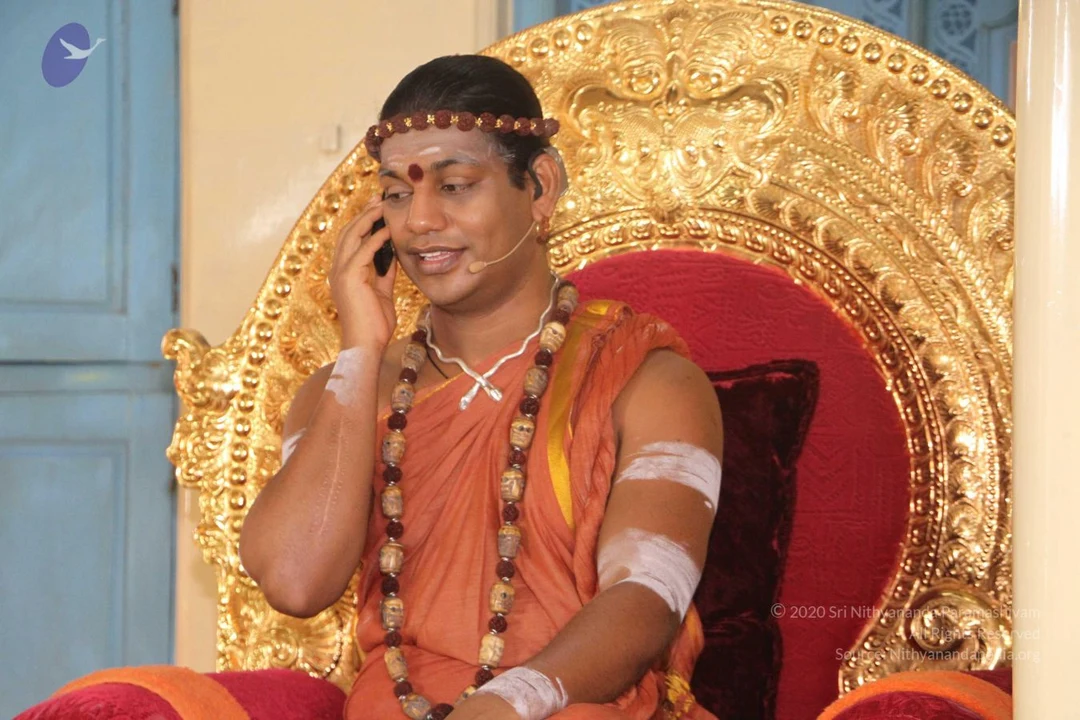
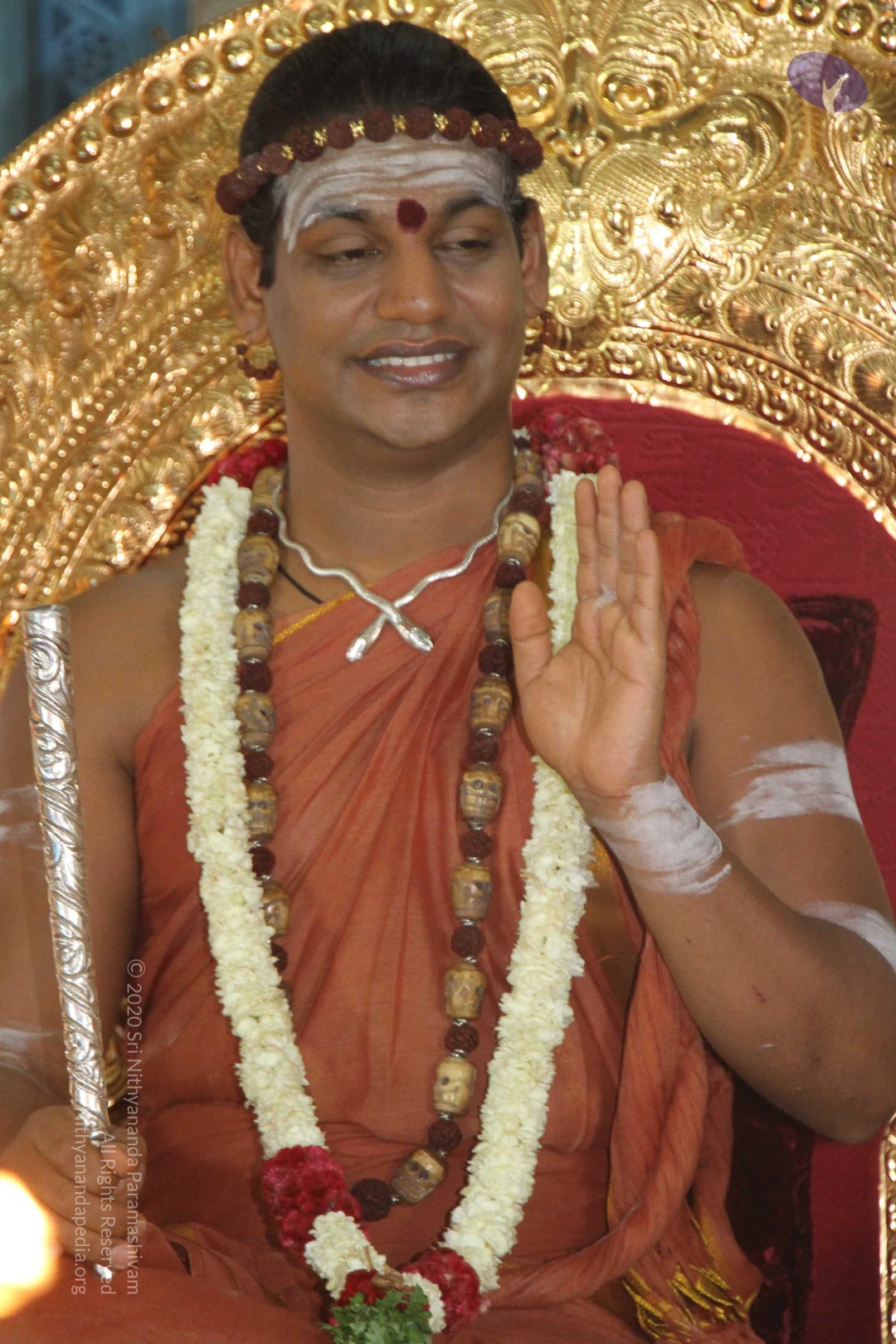
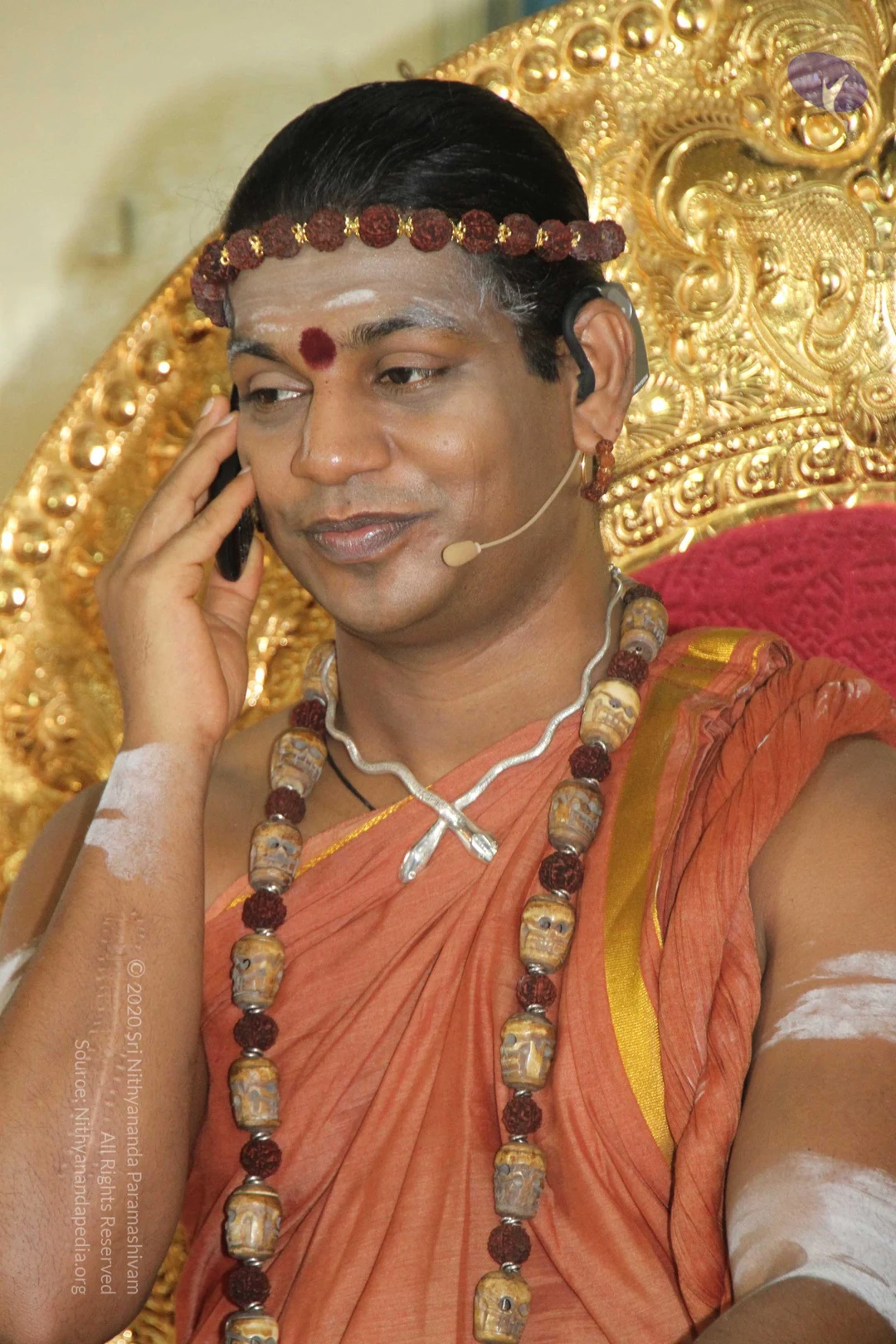
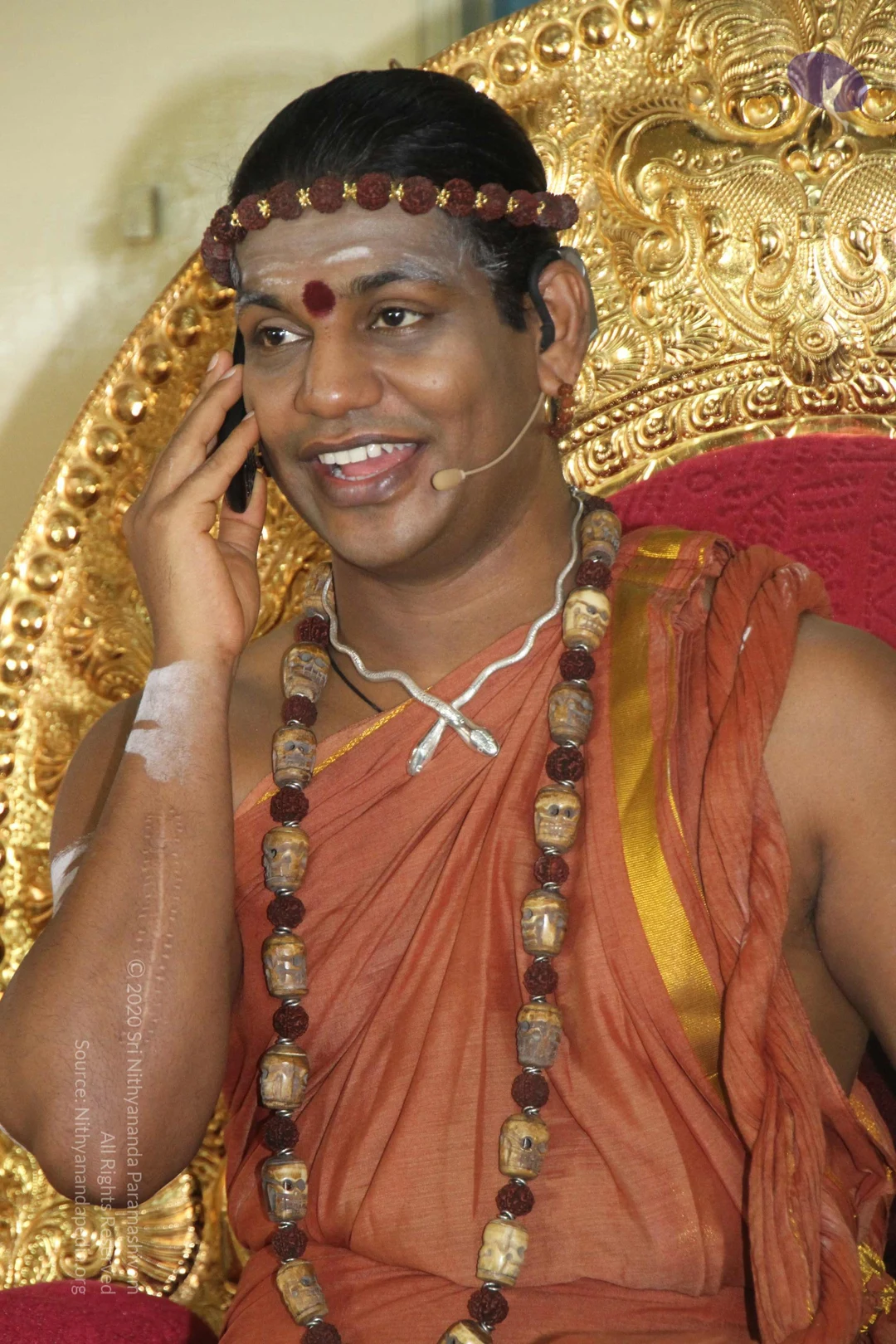
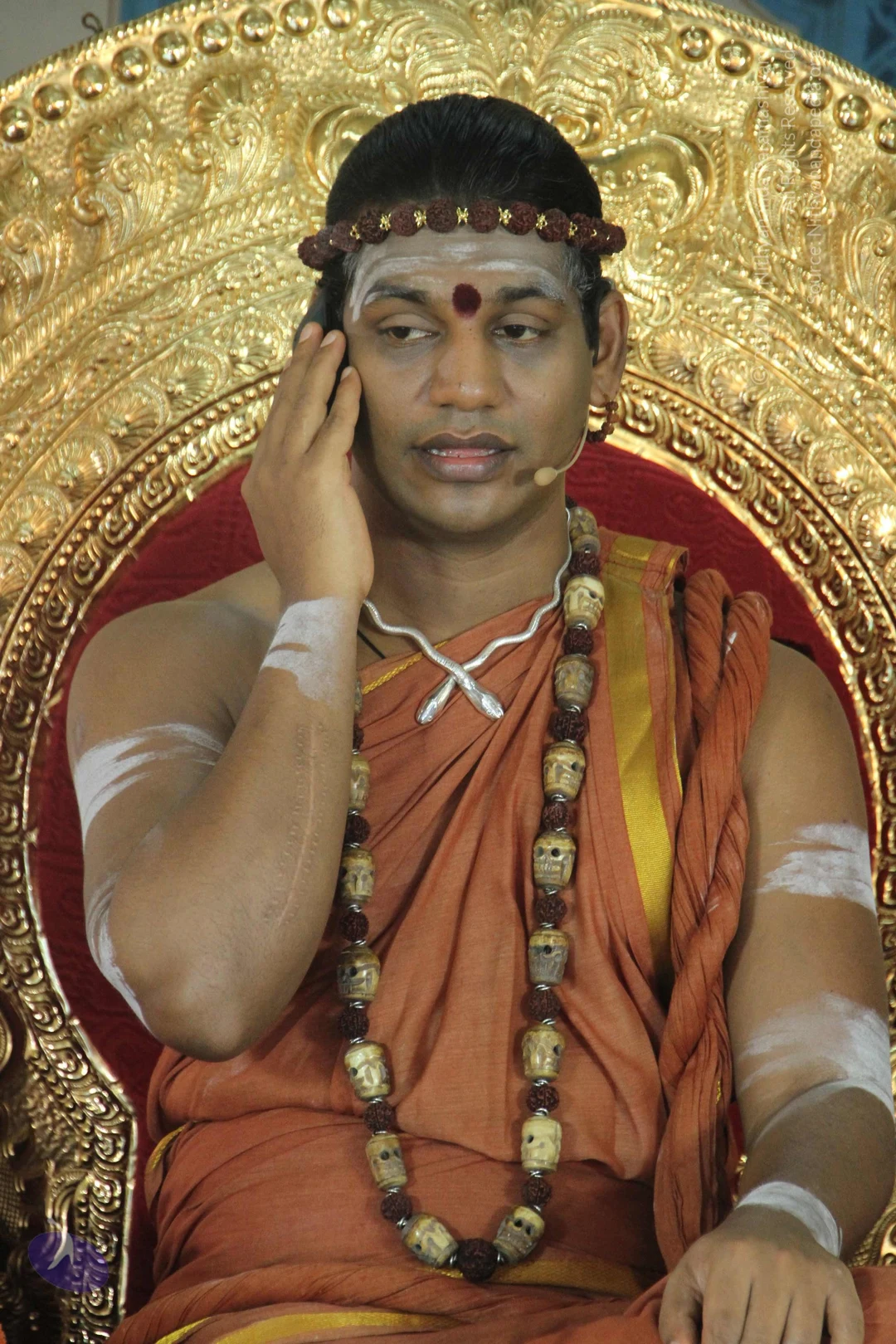
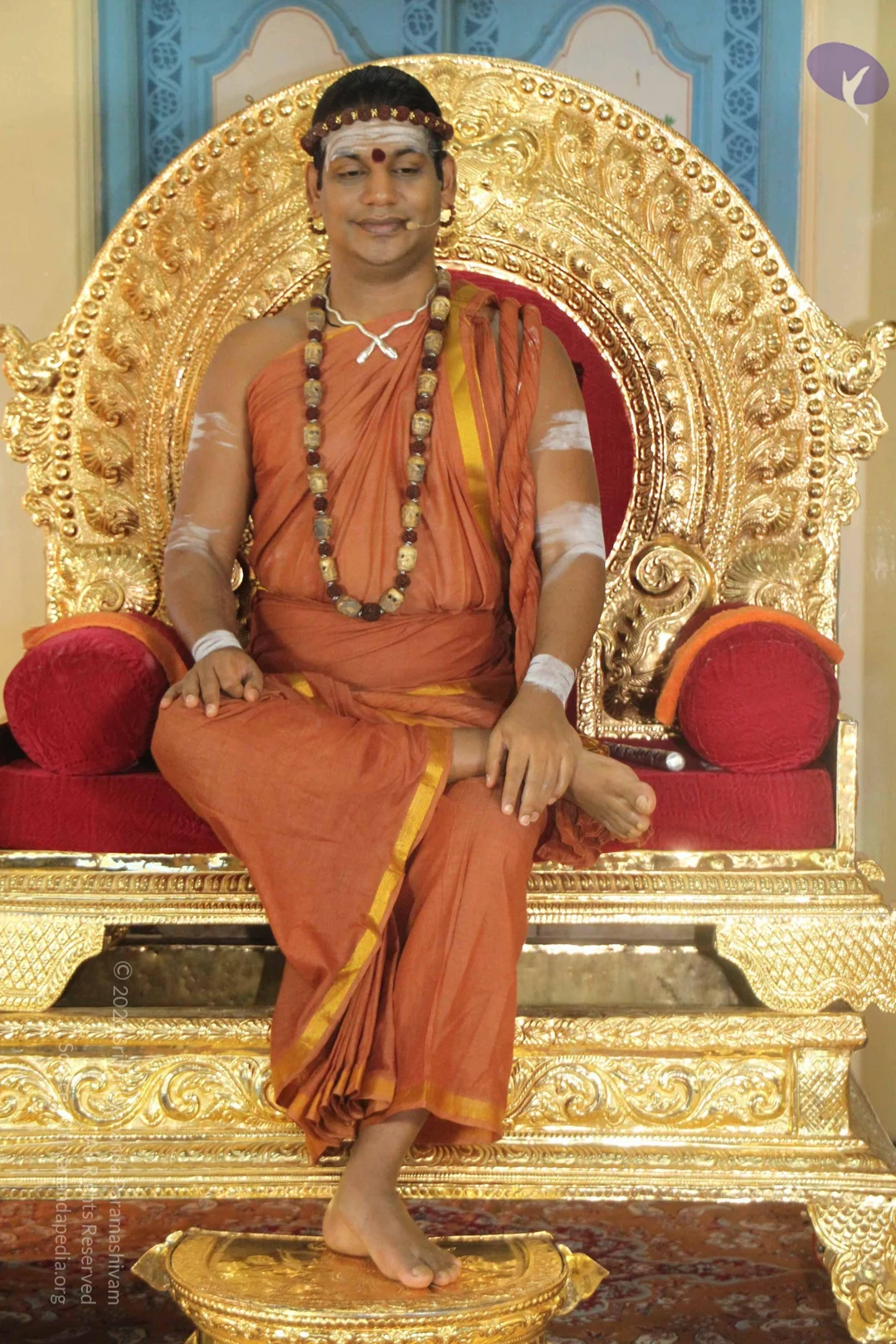
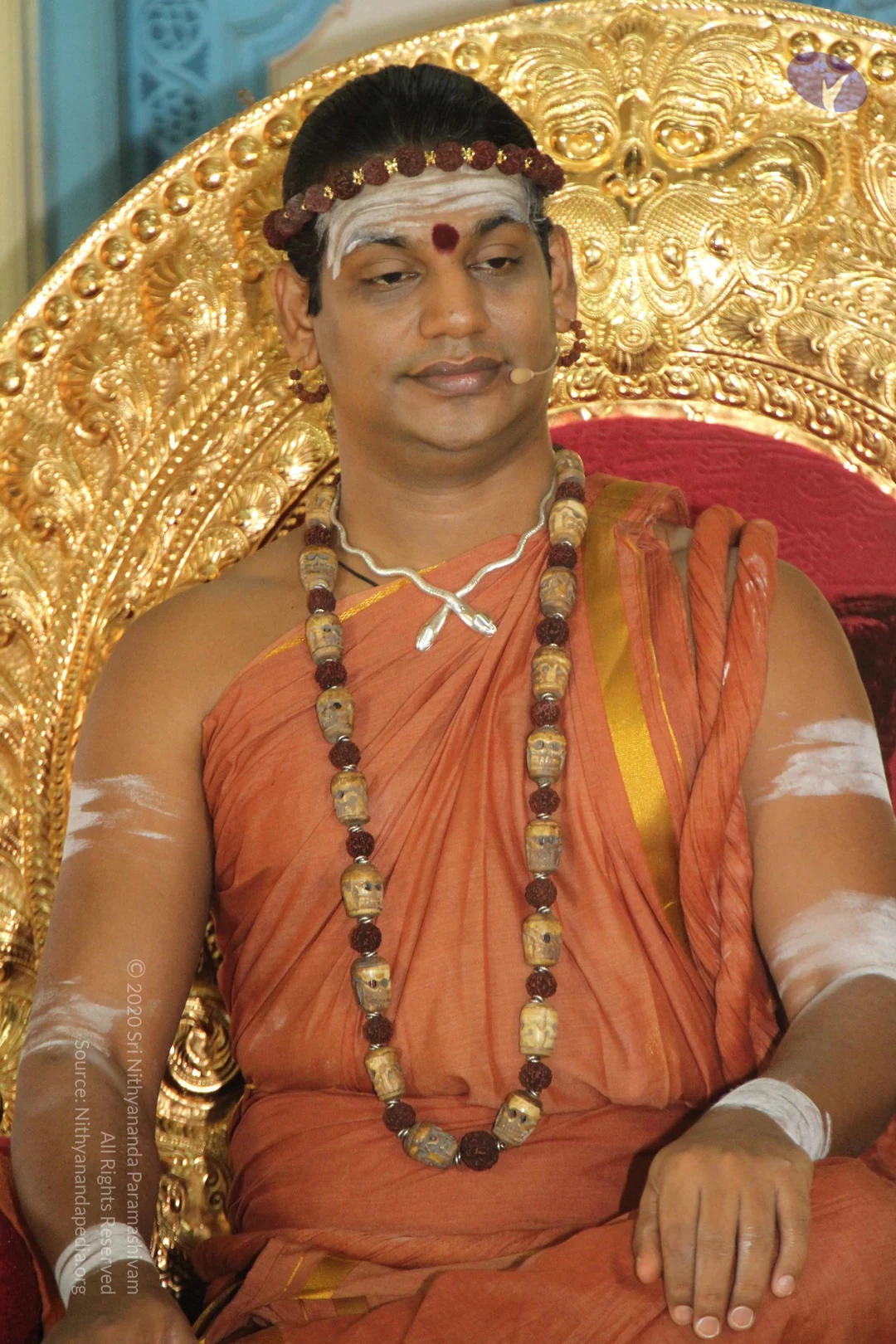
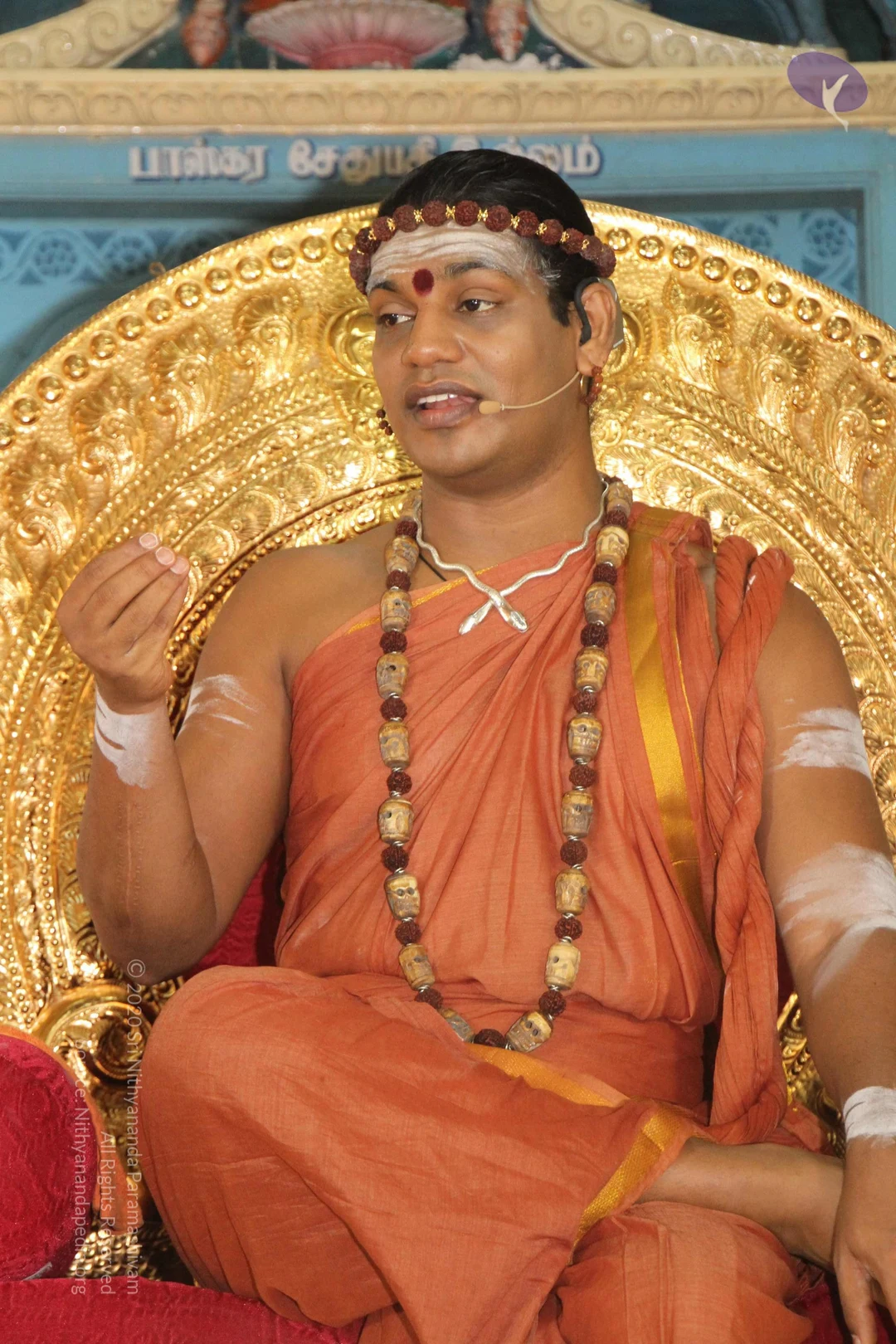
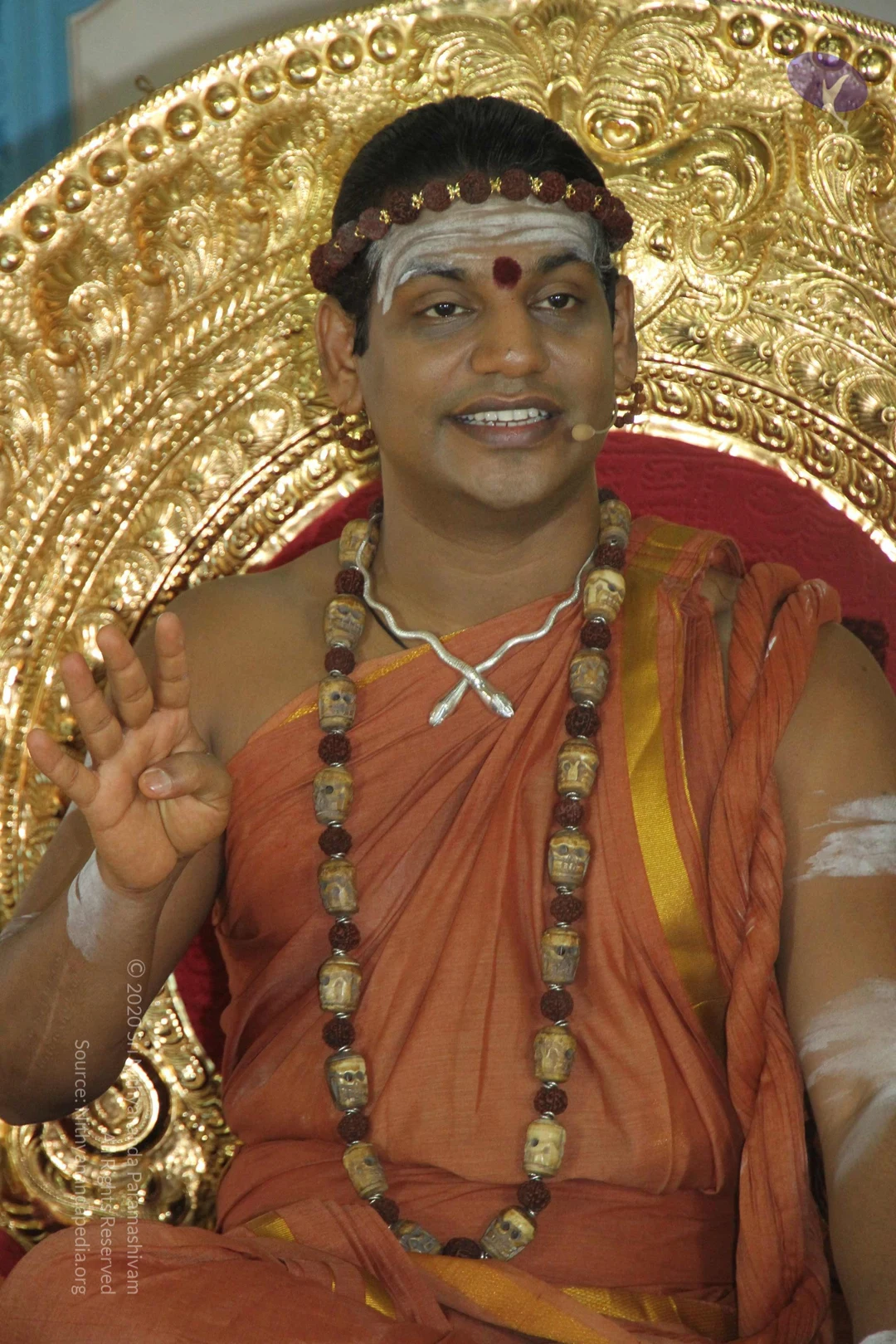
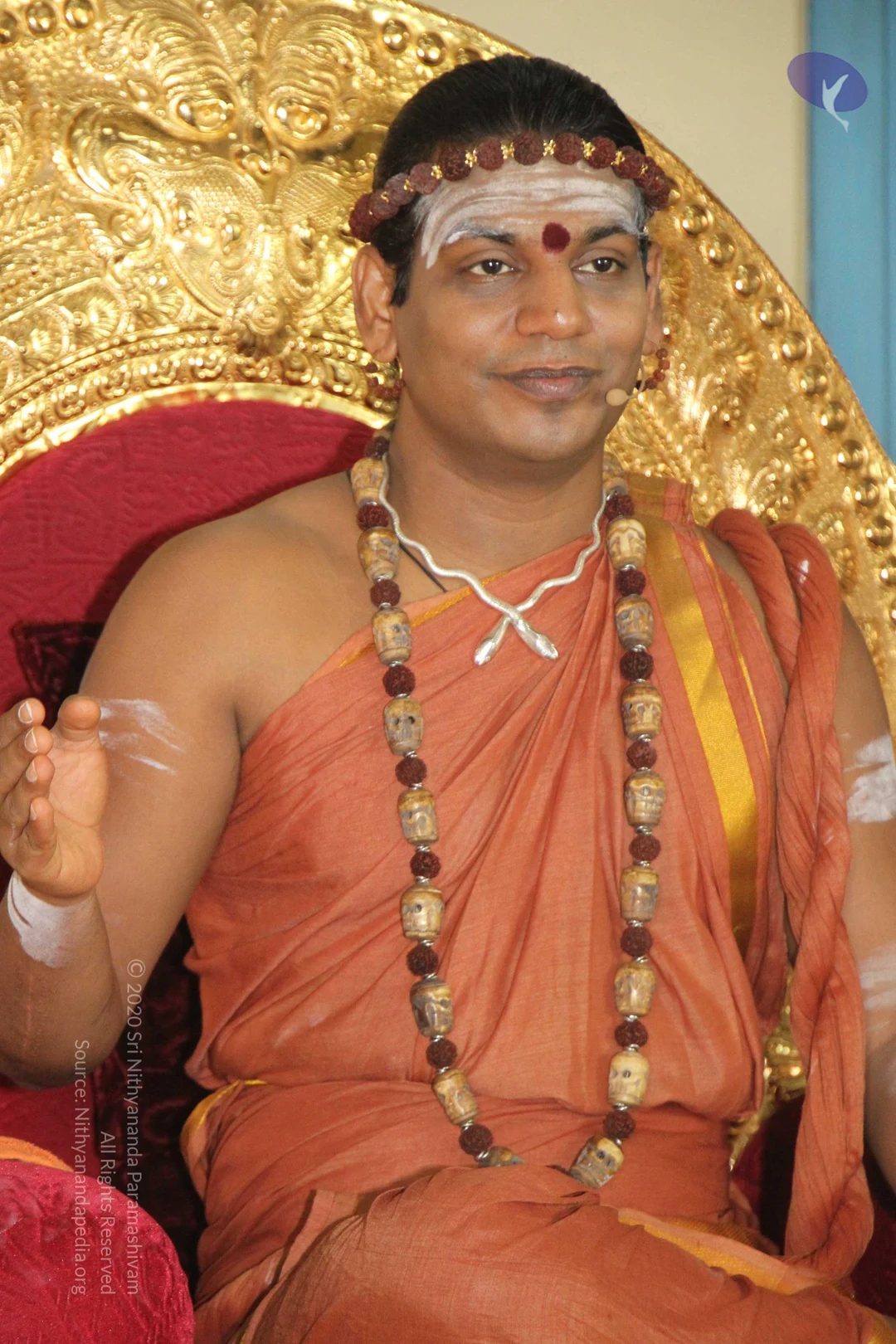
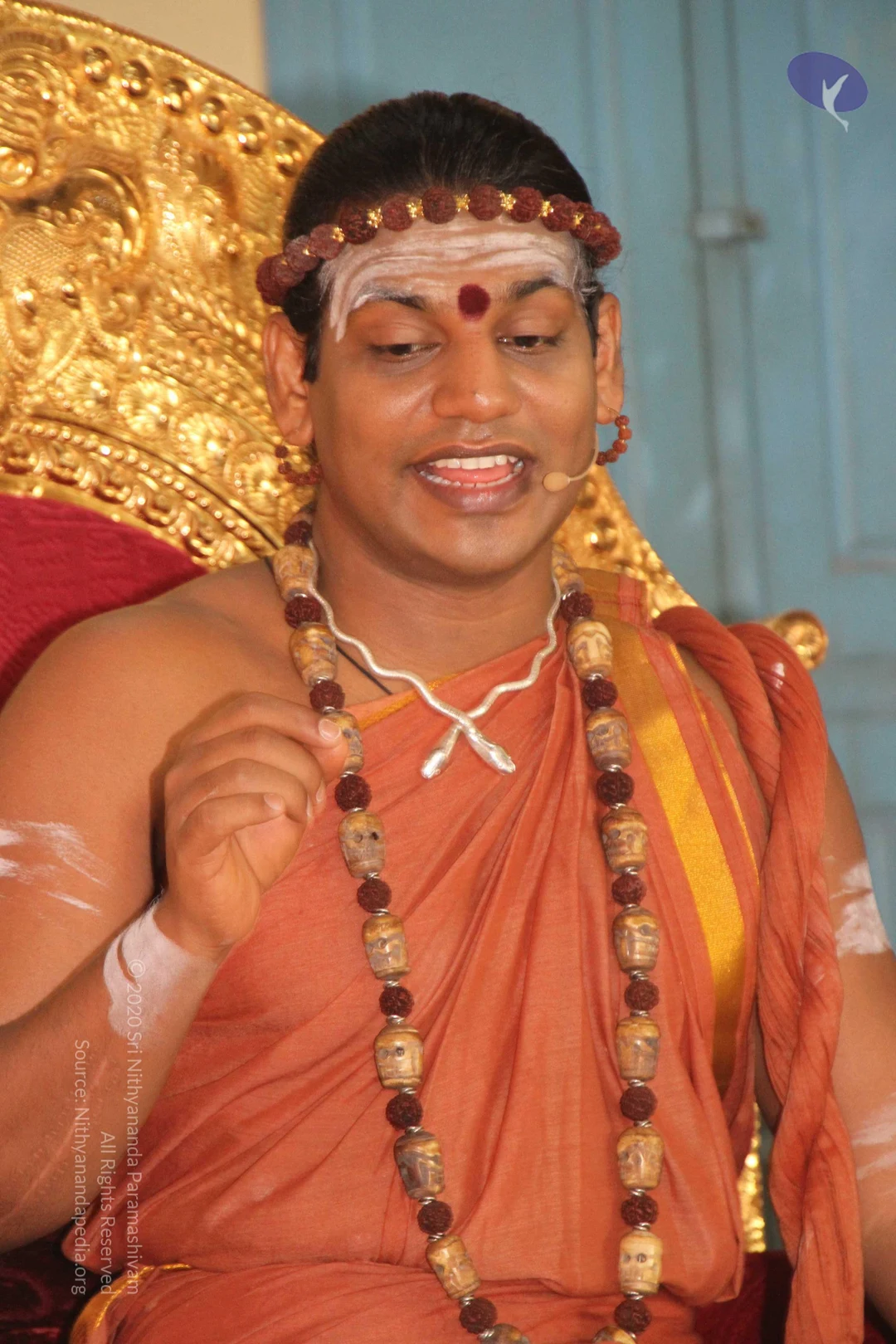
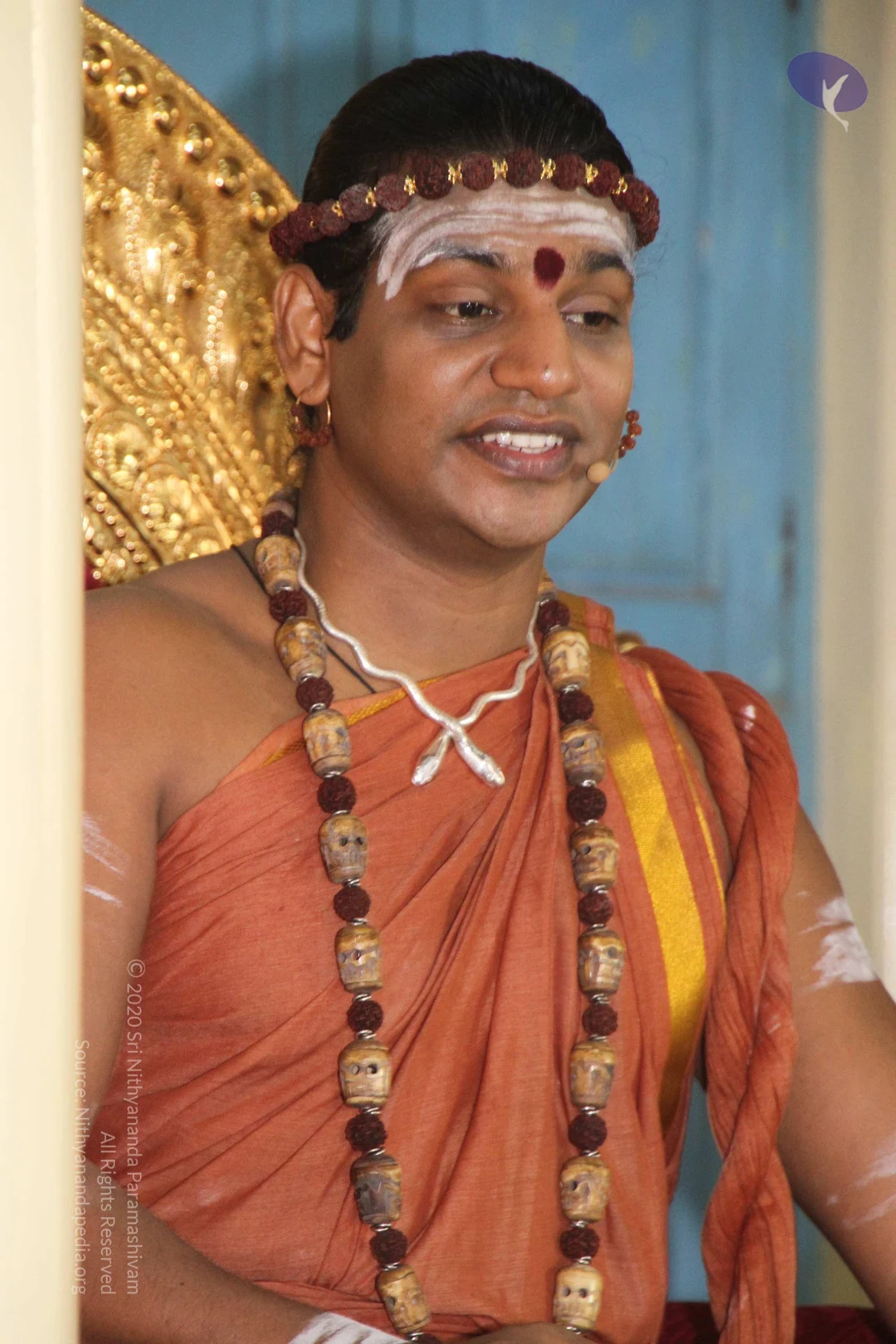
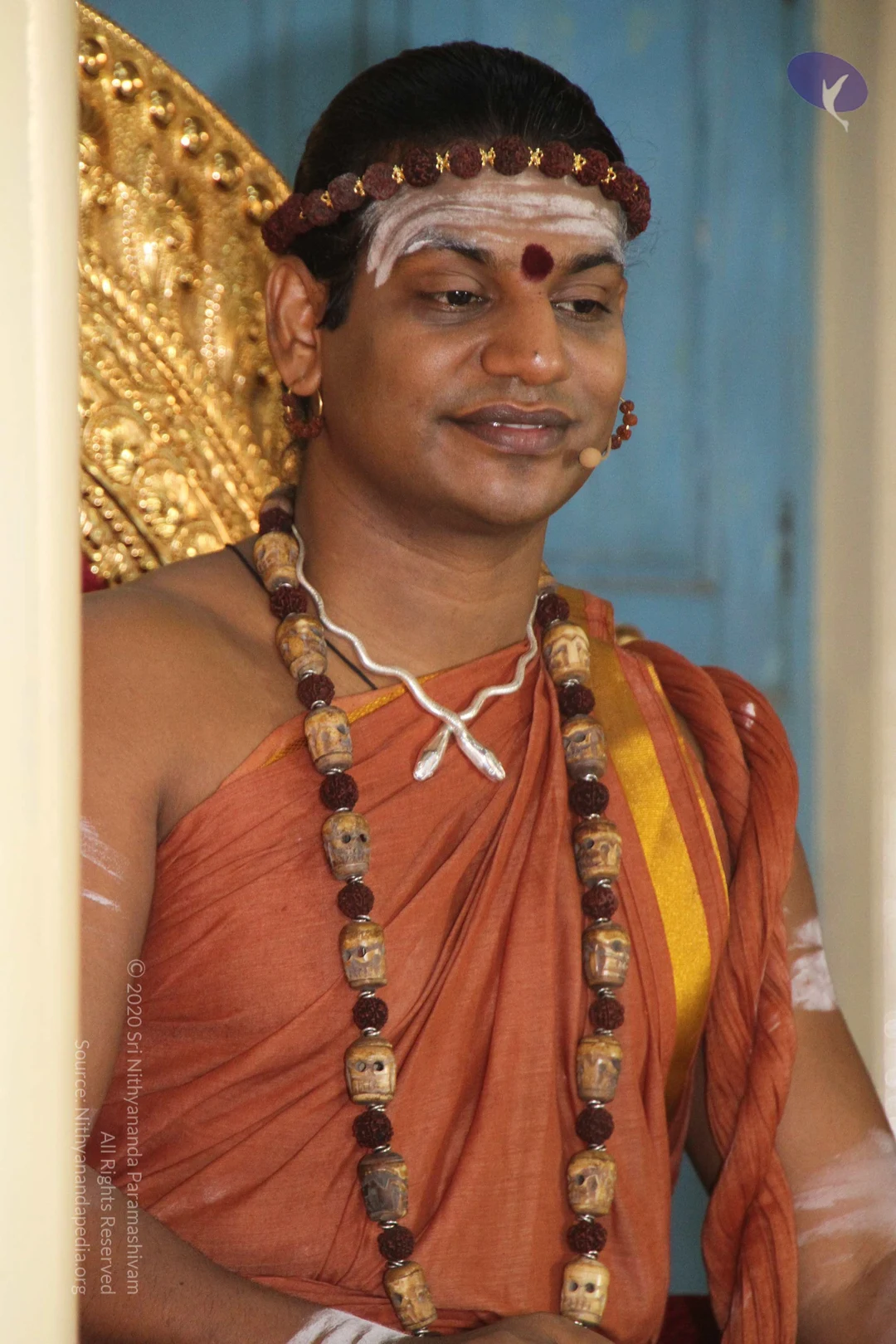
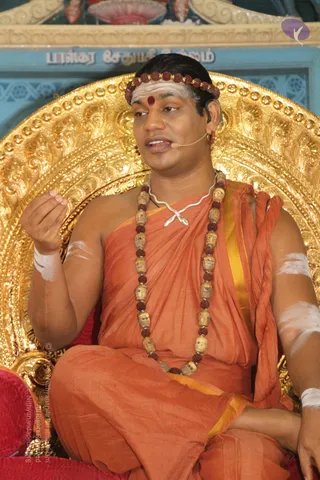
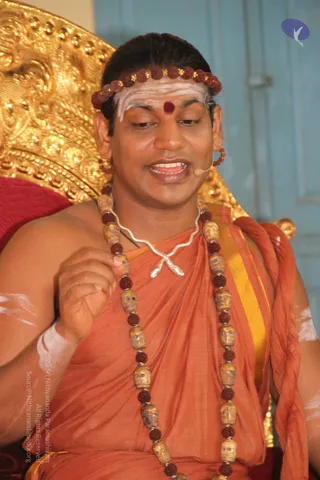
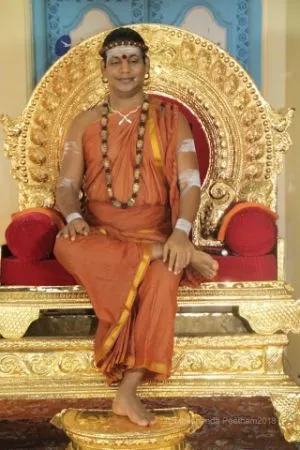
A seated man in a golden ornate throne with red cushions, wearing saffron-orange robes with gold borders draped over the body, a long rudraksha and bead mala, a headband of rudraksha beads, white vertical tilak and red bindi on the forehead, and white ash markings on the arms and wrists. He sits cross-legged with a small microphone clipped near his face, appearing to give a talk. Behind the throne are blue and cream decorative panels.A seated man in saffron-orange robes sits on an ornate gold throne with red cushioning. He wears a rudraksha head band, a red bindi and white tripundra markings on his forehead and arms, and a long necklace of rudraksha beads alternating with carved wooden skull-like beads. A silver serpent-shaped pendant rests on his chest, a gold-bordered orange shawl drapes his shoulders, and a small microphone is clipped near his face as he gazes downward. a person: the saffron shawl, rudraksha malas and ornate gold throne are the qualifying cues, and he is presented as the speaker at a satsang discourse.A man seated on an ornate gold throne with a red cushion, speaking into a headset microphone while gesturing with his right hand. He wears an orange-saffron cloth draped over his shoulders with a gold border, a heavy necklace of rudraksha beads and carved wooden beads, a silver snake-shaped pendant, and a rudraksha mala headband with a red kumkum dot and white vibhuti on his forehead. White paint marks are on his upper arms. Behind him is a blue panel with a Tamil-script sign and a decorated temple-style backdrop.A seated man in an orange-saffron shawl with gold border speaks while raising his right hand in a mudra. He wears a rudraksha headband, a red bindi and white tripundra marks, and a long necklace of rudraksha beads alternating with carved ivory-coloured skull-shaped beads, plus a silver twisted pendant. A small microphone is clipped near his mouth. Behind him is an ornate gold-embossed throne with a red cushion. Swamiji (probable): the appearance shows long swept-back hair, saffron clothing, rudraksha malas and ceremonial gold-embellished seating, consistent with the page's claim. One person is physically present.A seated man in orange saffron robes sits before an ornate gold and red throne with a lush embossed backrest. He wears a rudraksha mala headband, a long necklace of rudraksha and carved wooden beads, and a silver serpent-shaped pendant. A white vertical tilak and red bindi mark his forehead, and white ash marks his arms. He gestures with his raised left hand while speaking into a small headset microphone, with a blue wall visible at right.A seated man in an orange saffron wrap with a gold-bordered sash speaks into a small headset microphone while gesturing with his right hand, holding a long rudraksha and carved bead mala. He wears a rudraksha band across the forehead with a red bindi and white markings, a silver serpentine pendant, and rudraksha earrings. Behind him is an ornate gold throne with repoussé floral carving and a red cushion, beside a pale blue wall. a person (saffron wrap, rudraksha malas, gold throne cues), seated in a satsang discourse setting.

4-Sarva-Darshan

2 photosSource gallery
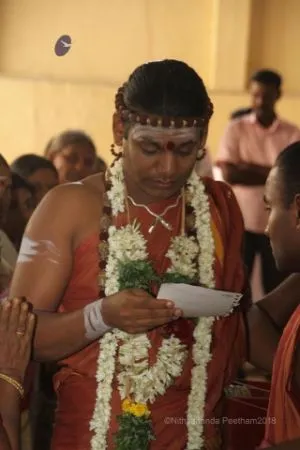
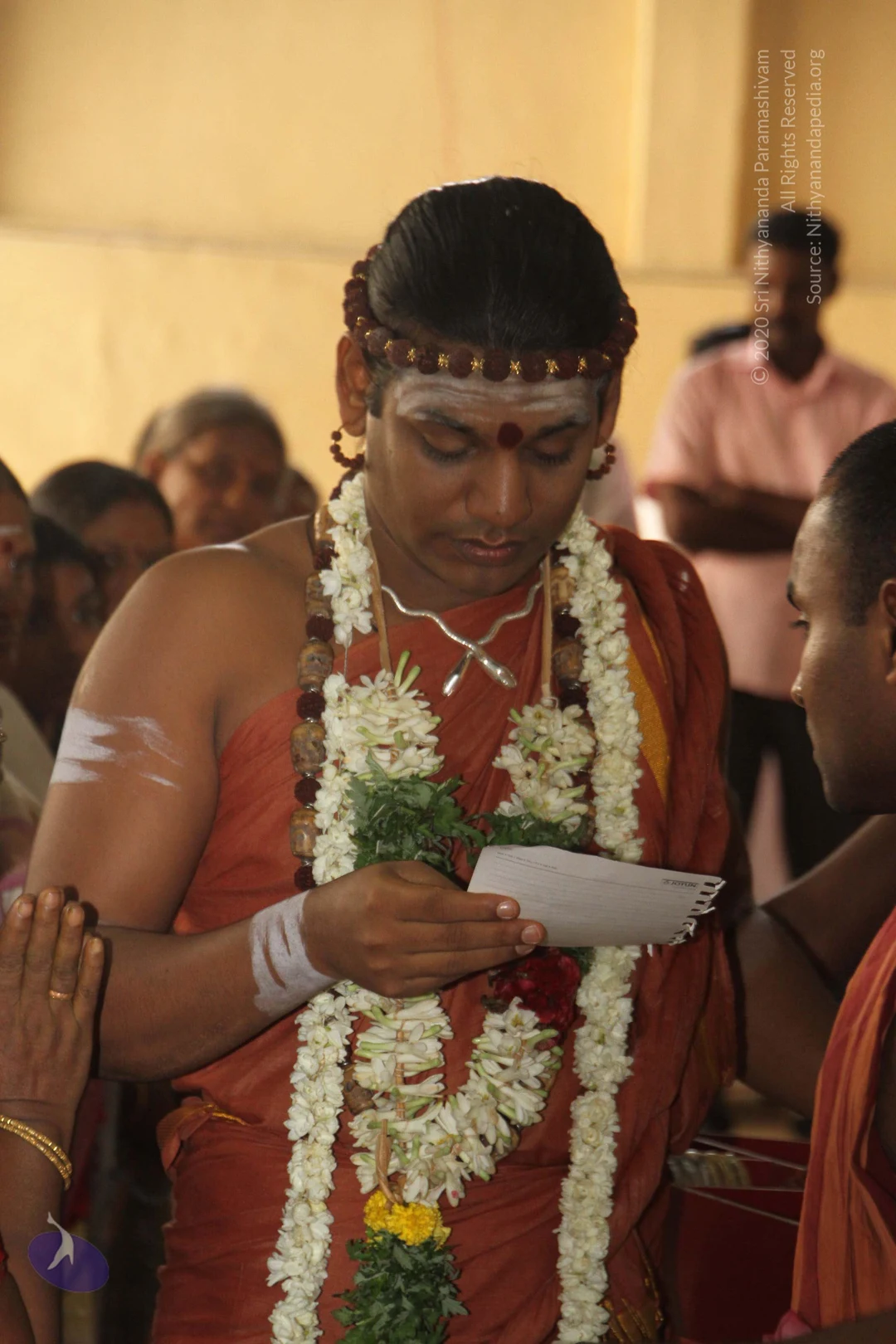
A central figure in saffron-orange robes with a gold-bordered shawl and a white jasmine garland stands in a temple hall, blessing a bowed devotee with a raised right hand while holding a small folded paper in the left. He wears a rudraksha headband, white vibhuti on the forehead, a red kumkum dot, and a rudraksha mala. A devotee in a white shirt presses palms together in namaste at left. Behind, a man in white dhoti with gold border and a red-marked forehead stands near a barrier, and white-pillared arches and yellow curtains frame the hall. Swamiji (probable): the orange robes, long swept-back hair, rudraksha adornments and garland are visible cues on the blessing figure.A photograph inside a hall with arched white walls and a fluorescent-lit corrugated roof shows a man in saffron-orange robes with a gold-bordered dhoti, wearing a red-beaded headband and a long white jasmine garland. He stands with one hand raised, blessing a devotee in white shirt and pants who holds a white flower. Beside him a second saffron-clad man with a shaved head and rudraksha mala holds a small white item. Behind them, devotees in white and a woman in a red sari watch, and a red-draped table with gold items is visible. A deity murti appears in a niche at the back.

5-Swamiji-Photos
4 photosSource gallery
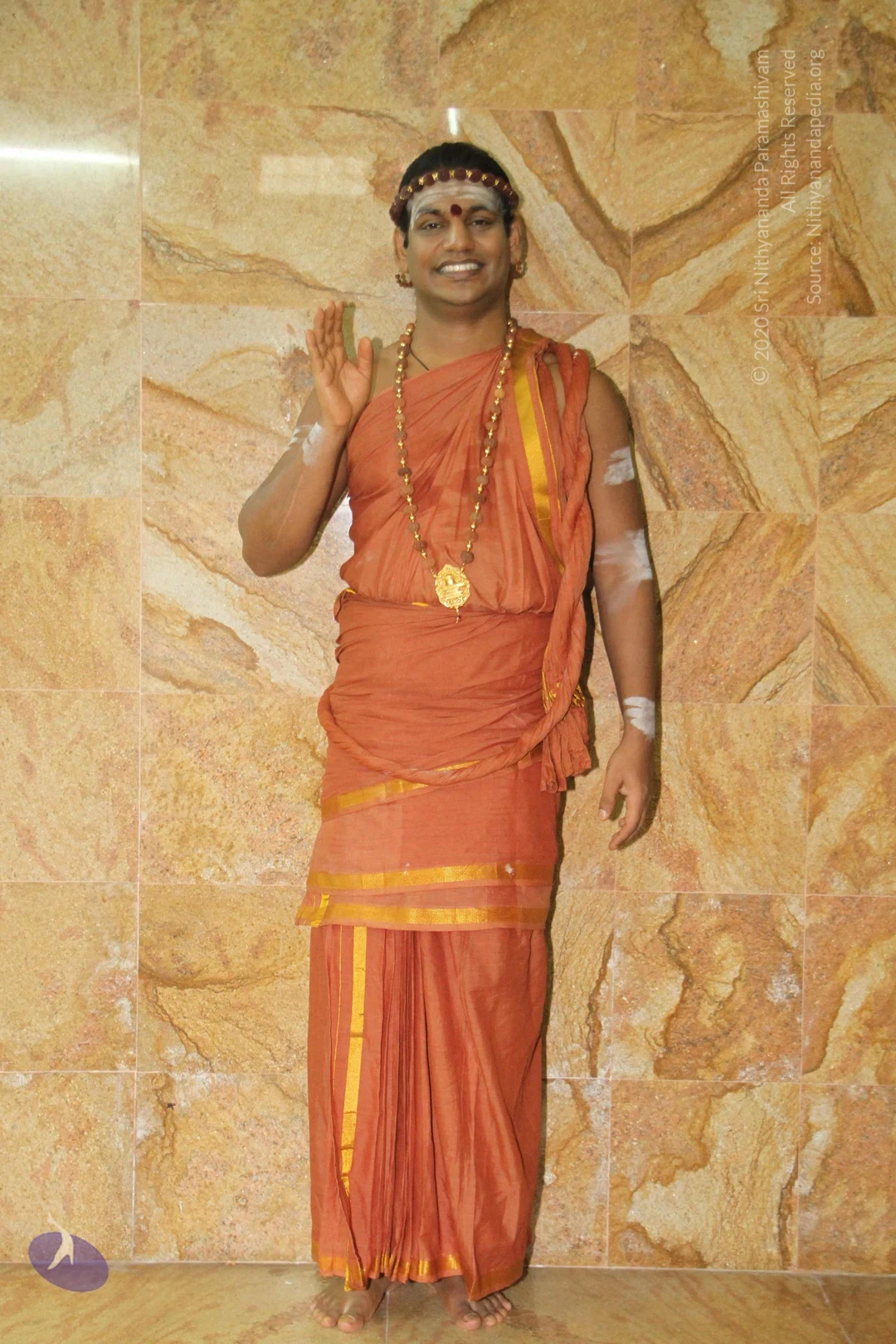
A standing man in an orange-rust draped garment with gold-bordered cloth wrapped over one shoulder and around the waist, stands barefoot against a beige stone-tile wall and waves his right hand in greeting. He wears a rudraksha bead headband, a red bindi and white markings on the forehead and arms, a long rudraksha mala with a gold pendant, and small earrings. The a person cues are the rudraksha mala with gold pendant, orange garments and ceremonial appearance, though the image is a plain standing photo with no ritual activity.A standing man in a saffron-orange dhoti and shawl with gold-bordered edges faces the camera against a sandstone-tiled wall, raising both palms outward in a blessing gesture. He wears a rudraksha mala, a gold pendant with a deity figure, a red bindi, white tripundra markings on the forehead and arms, and a beaded headband.A standing man in orange-saffron robes with gold border stands barefoot against a sandstone tile wall, both arms raised with palms open and facing forward. He wears a rudraksha bead headband, a red bindi and white forehead markings, and a long rudraksha mala with a gold pendant. He smiles broadly.A standing man poses against a beige and brown marble-patterned wall, smiling at the camera. He wears a rust-orange dhoti and shawl with gold borders, a rudraksha mala with a large gold pendant, a beaded headband, a red bindi and white tripundra markings on his forehead and arms.
6-VIP-Visit
6 photosSource gallery
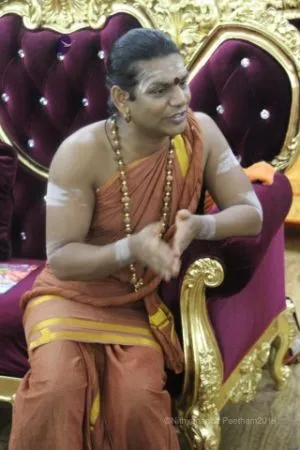
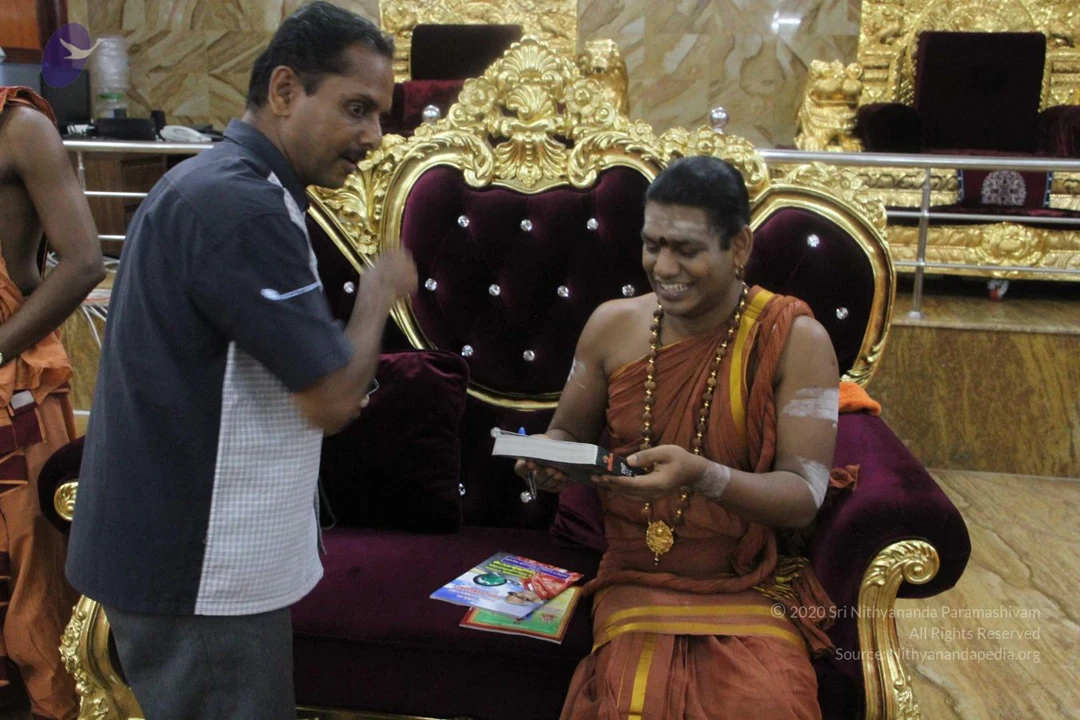
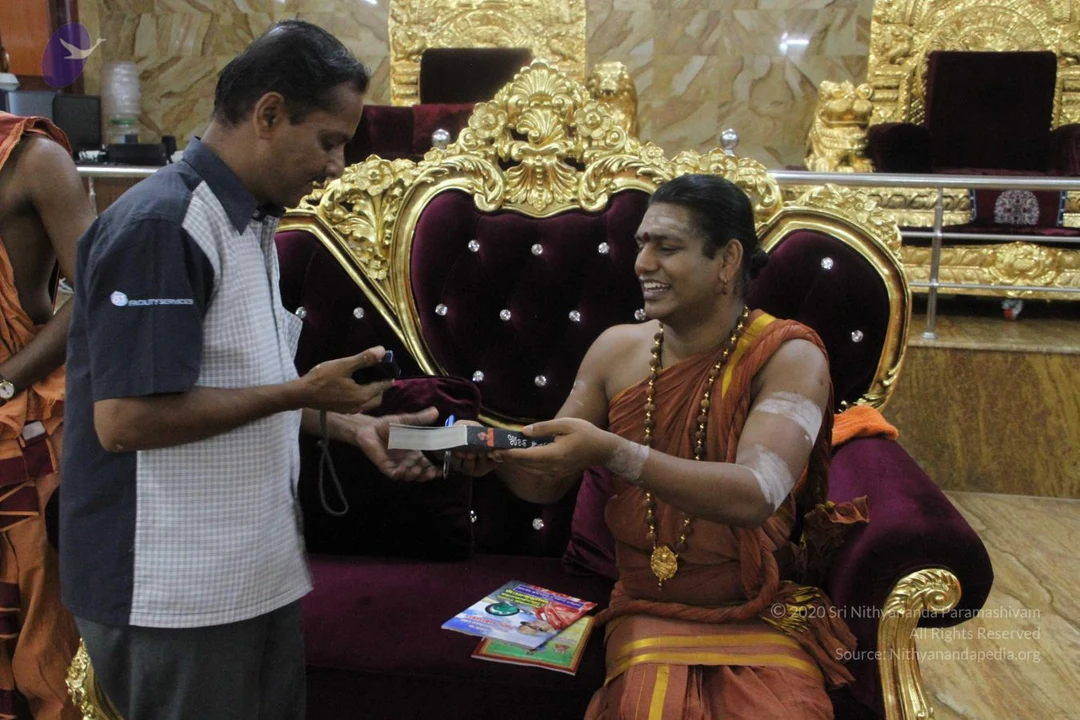
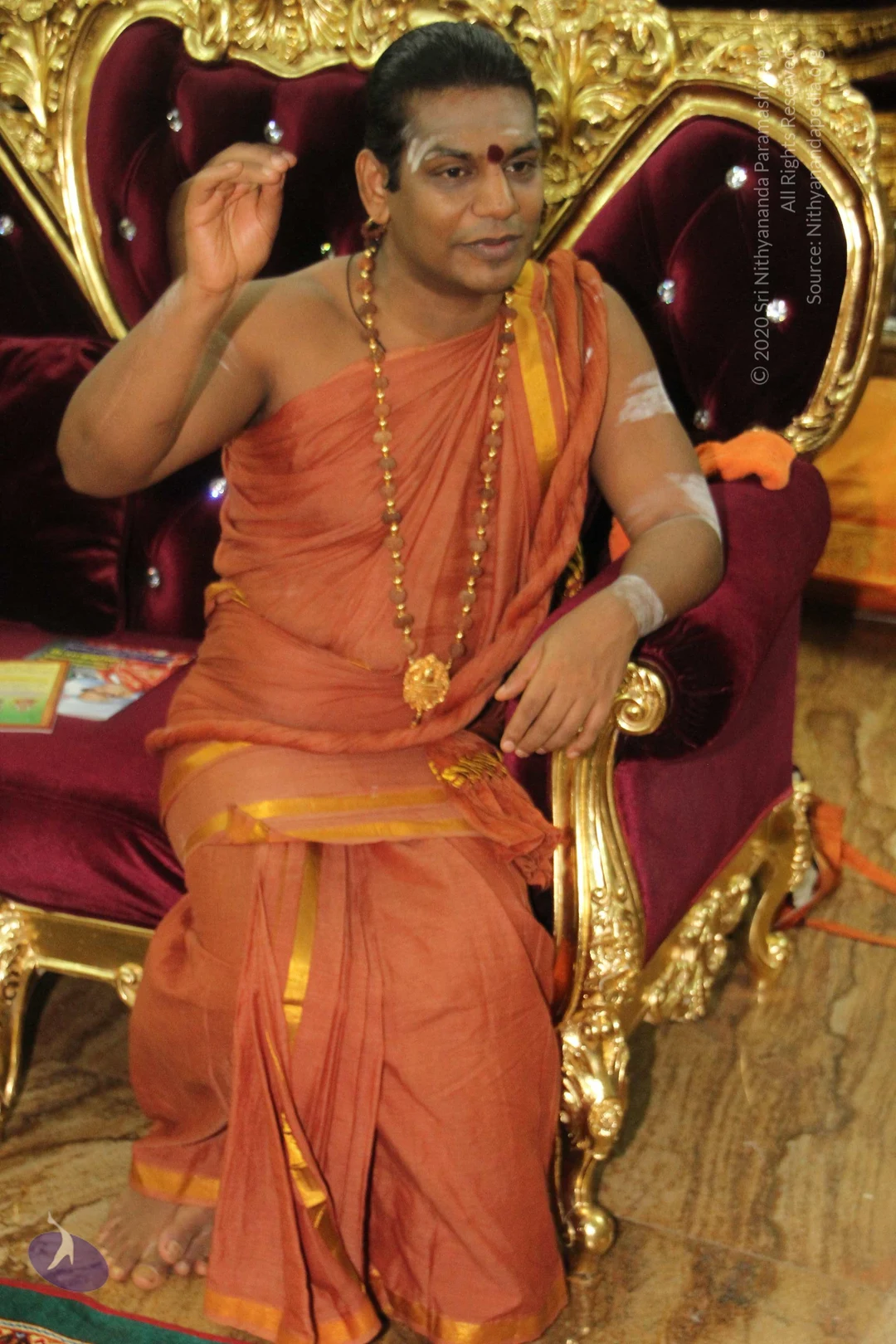
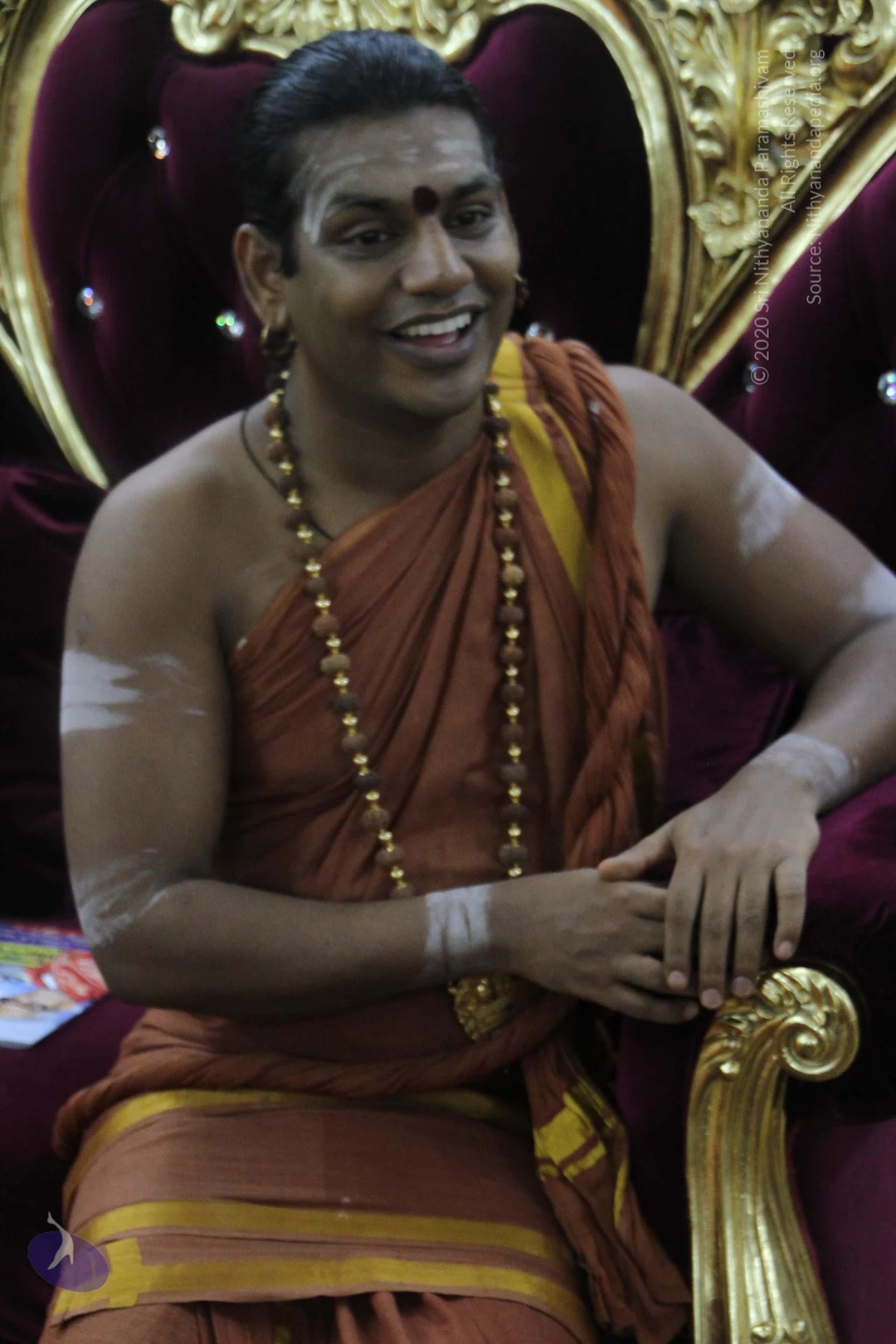
A seated man in an orange-saffron dhoti and shawl with gold-bordered edges sits on an ornate gold-framed throne with burgundy velvet upholstery and crystal studs. He wears a long beaded rudraksha-style mala with a large gold pendant, a red bindi and white markings on his forehead and arms, and raises one hand mid-gesture while speaking. Books lie on the cushion beside him, and the floor is polished stone. a person: the figure has a long swept-back hairstyle, saffron ceremonial dress, a rudraksha mala and a gold ceremonial necklace, and is seated on a throne during a teaching-style setting.A seated man in an orange-saffron dhoti and shawl with gold borders wears a long rudraksha mala with a gold pendant, and has a red bindi and white tilak on his forehead. He sits on a maroon velvet throne with ornate gold carved armrests, gesturing with both raised open palms while speaking. a person appears through distinctive visible cues: saffron ornate clothing, rudraksha mala and gold pendant, seated on a golden throne in a discourse setting. Behind him is a small printed booklet on the left and an orange cloth on the right.A photograph of an indoor seating area with marble-patterned walls, a staircase and a blue lift door. On the left, a person with a bare-armed orange saffron wrap, a long gold-toned bead necklace and a white-painted arm is seated and gesturing with hands clasped, facing the others. Behind them a second person in orange-brown robes sits partly visible. On the right, an older man in a white shirt and khaki trousers, barefoot, gestures with one hand while seated on an orange velvet sofa with gold carved armrests. Beside him a man in a pink shirt and black trousers, barefoot, listens. A patterned rug lies on the floor. Three people are physically visible.A photograph of an indoor visit in a marble-floored room with gold-trimmed orange upholstered sofas and a patterned red-and-green rug. On the left, a figure in an orange-red draped robe with gold-edged borders sits in a gold-framed chair, wearing a long gold-and-bead necklace and white markings on the arm and forehead. Behind him a second man in orange sits on the steps. Two men sit on the orange sofa on the right: an older man with grey hair and glasses in a white shirt and khaki trousers, and a man in a pink shirt and dark trousers holding a mobile phone. Their interaction appears conversational.A candid indoor photo in a marble-walled hall. On the left, a person in orange-saffron robes with a long gold-coloured beaded necklace and bandaged arms sits on a dark throne-like chair, gesturing with one hand while speaking. Beside him, a partly visible seated attendant in maroon clothing. On the right, two men sit on an ornate orange velvet sofa with gold carved frames: an older man in a white shirt and khaki trousers with glasses and papers on his lap, and a man in a pink shirt and dark trousers holding a phone. A small brass oil lamp stands on a railing behind the throne, and a patterned red-and-blue rug lies on the floor.A photograph of an indoor meeting in a marble-floored hall with gold-and-orange furniture and a patterned red and green rug. On the left, a figure with long dark hair wears an orange-saffron robe with gold borders, a long gold-beaded necklace, and white dressings on the upper arm; the figure sits on an ornate gold chair with a dark cushion, and a second robed attendant in orange is visible behind. Two men sit on an orange velvet sofa on the right: the older man wears a white shirt, khaki trousers and glasses, and the younger man wears a pink shirt and dark trousers, both barefoot and conversing with the robed figure. Whether the robed figure is a person cannot be determined from appearance alone, so the identity is left unsure.