Skip to content
Saturday

23 May 2015

How Enlightenment Is Delivered

Dated photos
498
Source pages
1
Media
12
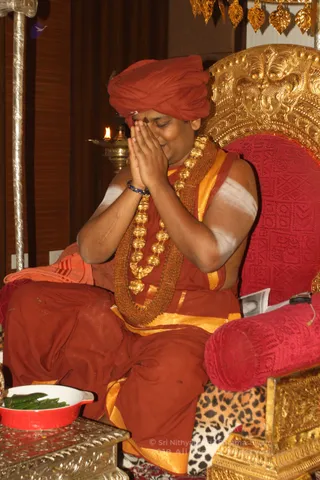
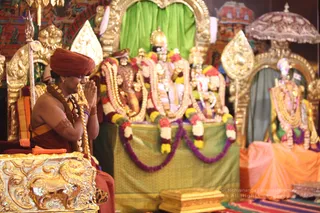
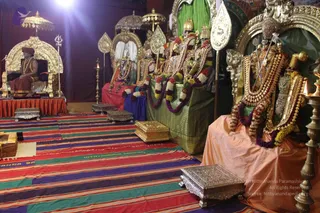
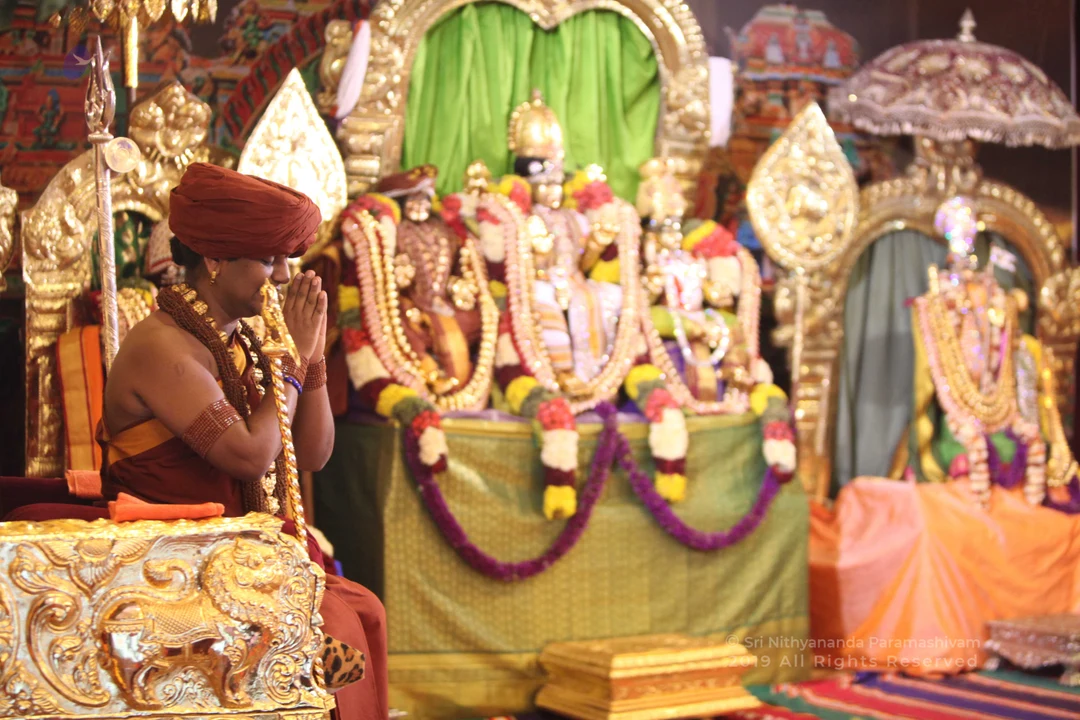
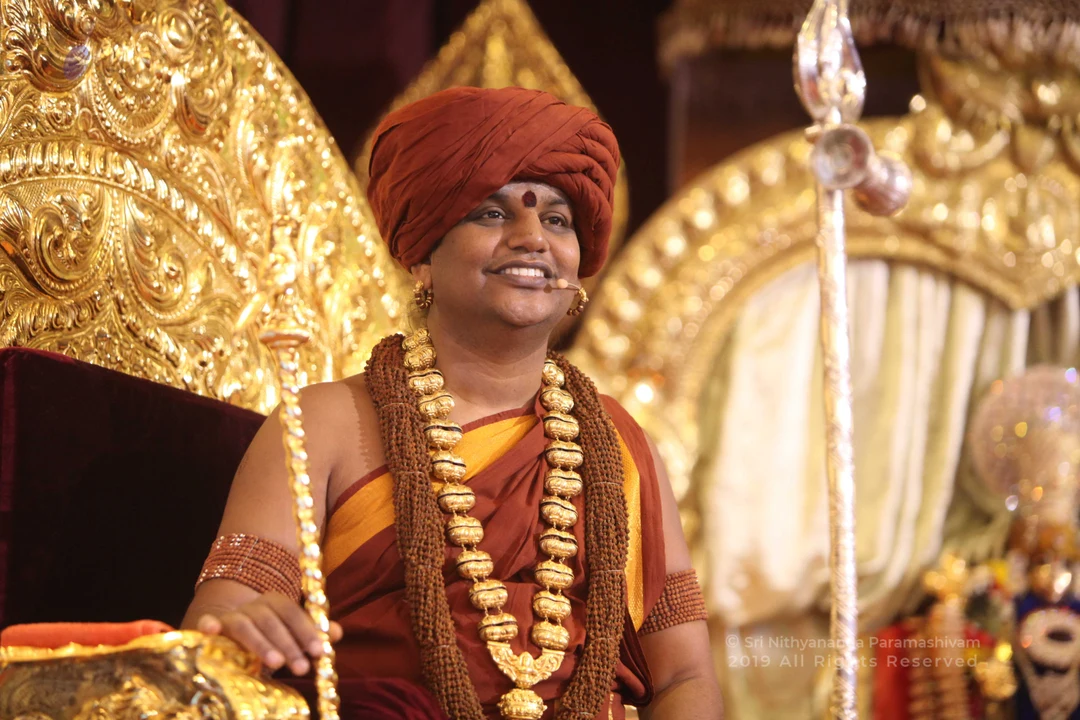
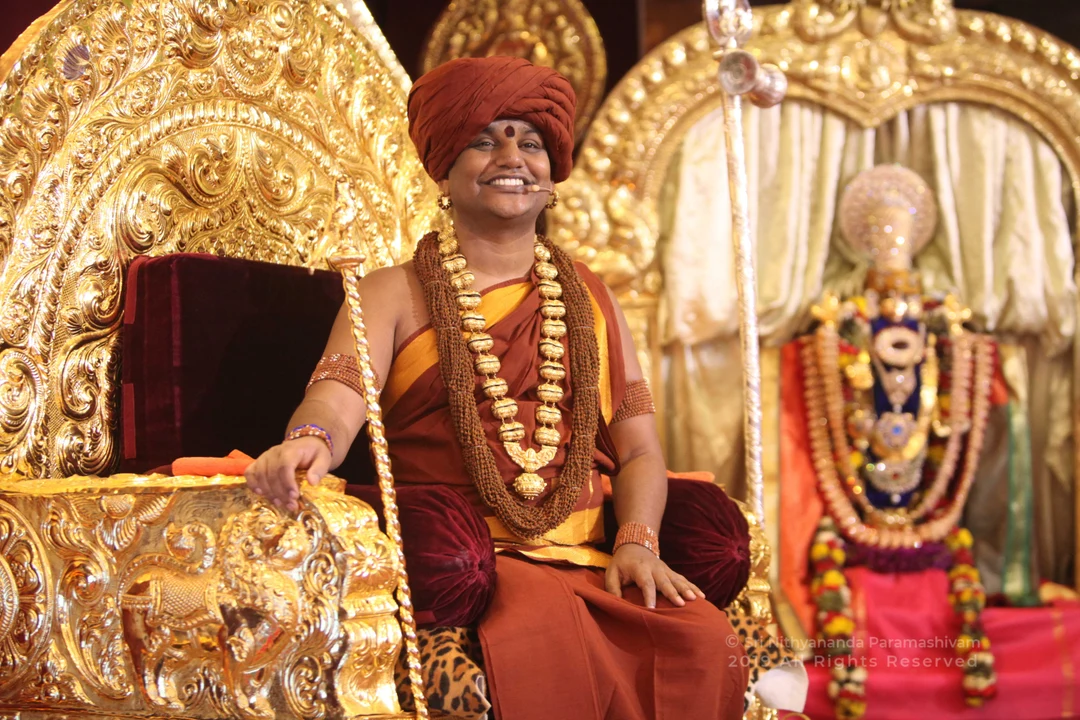
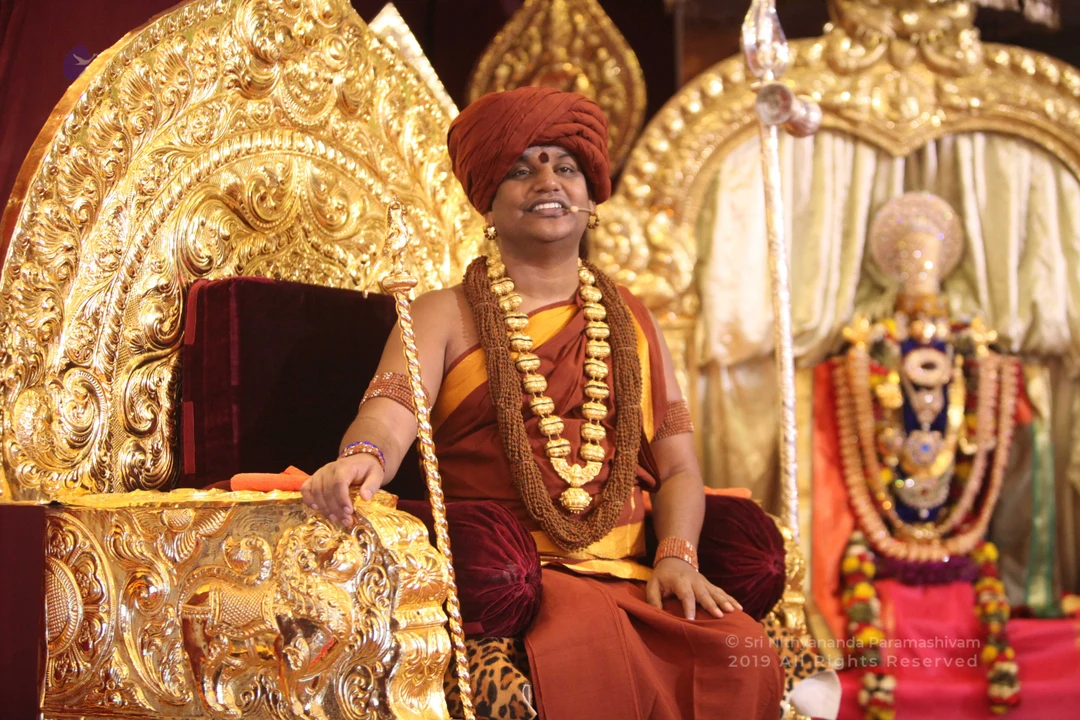
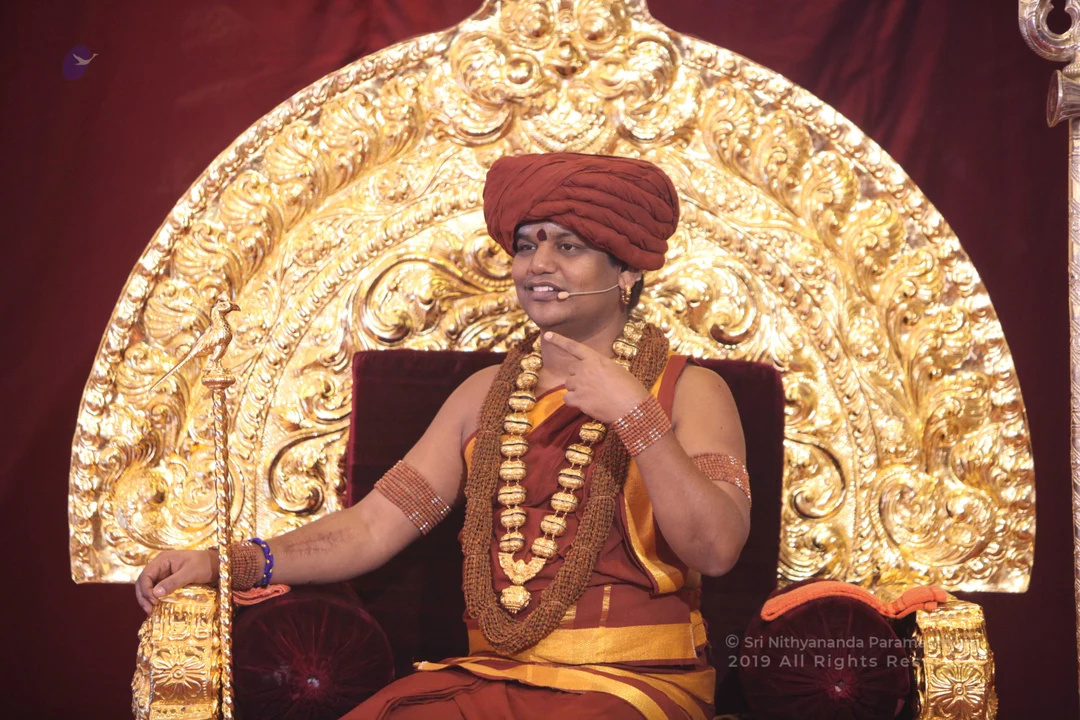
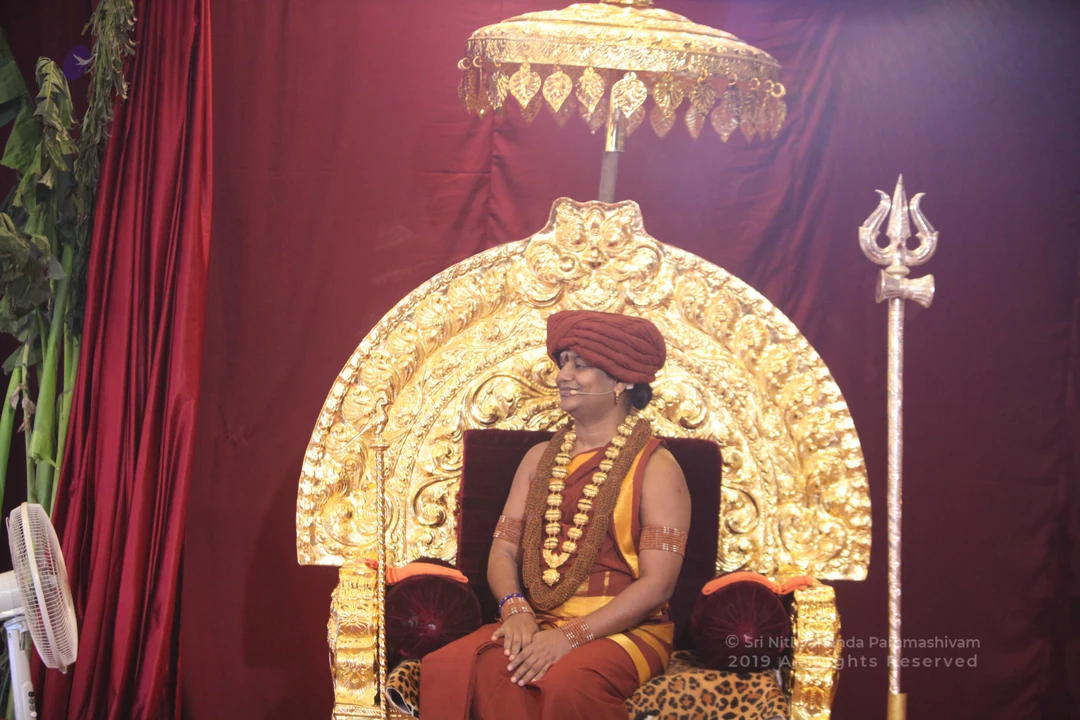
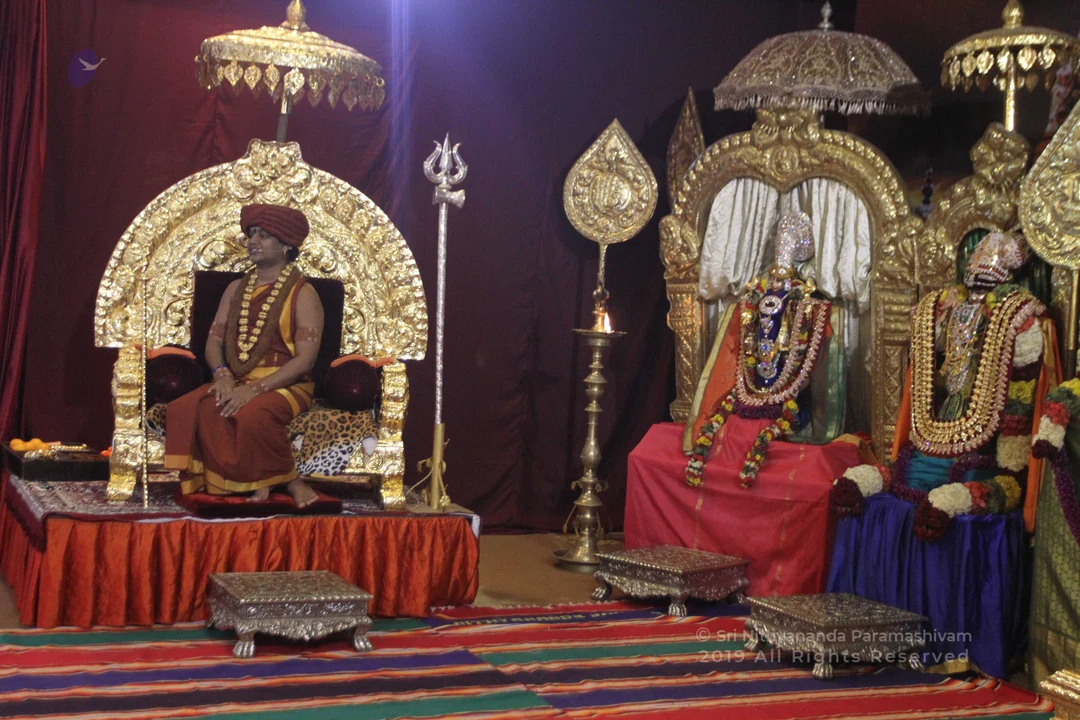
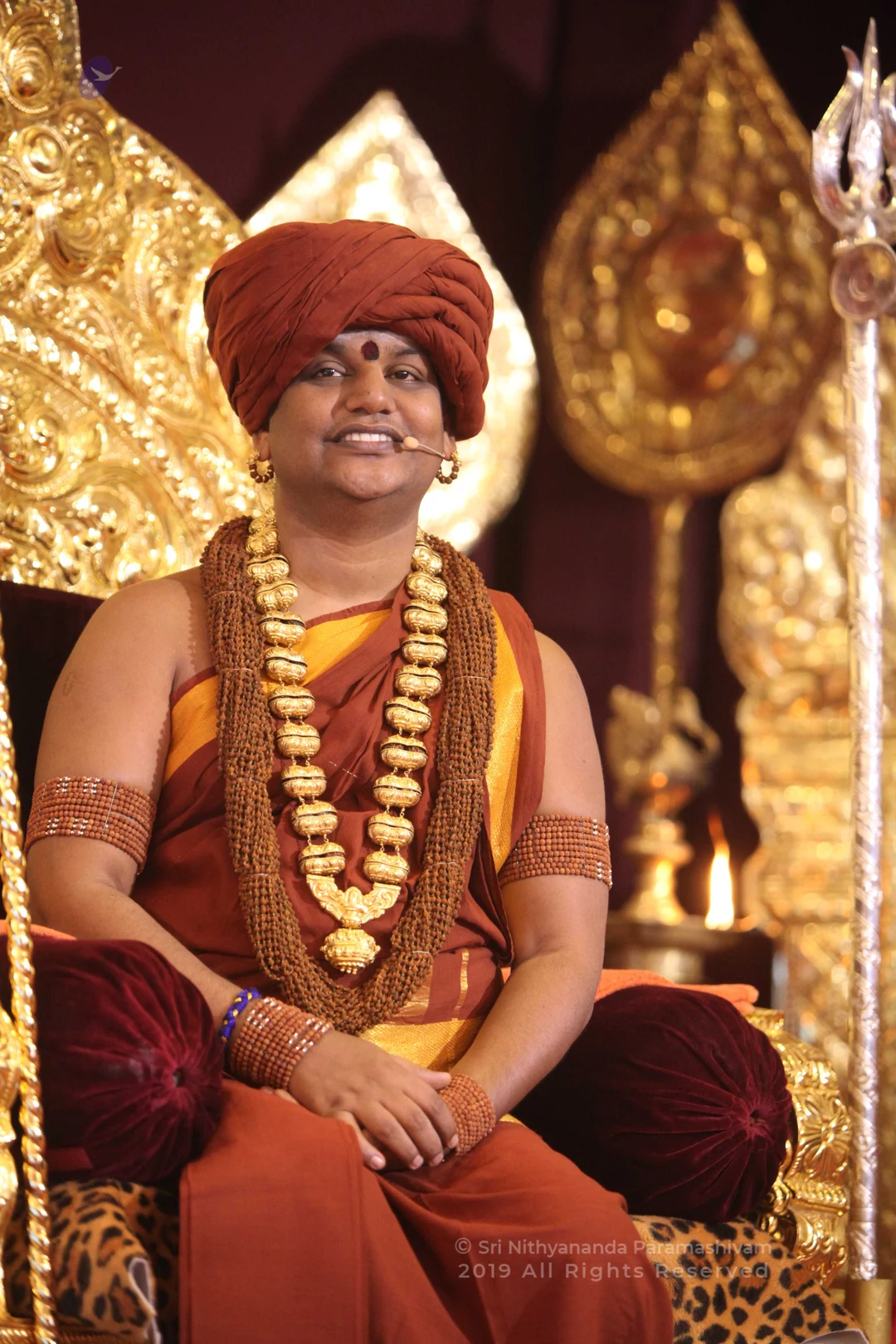
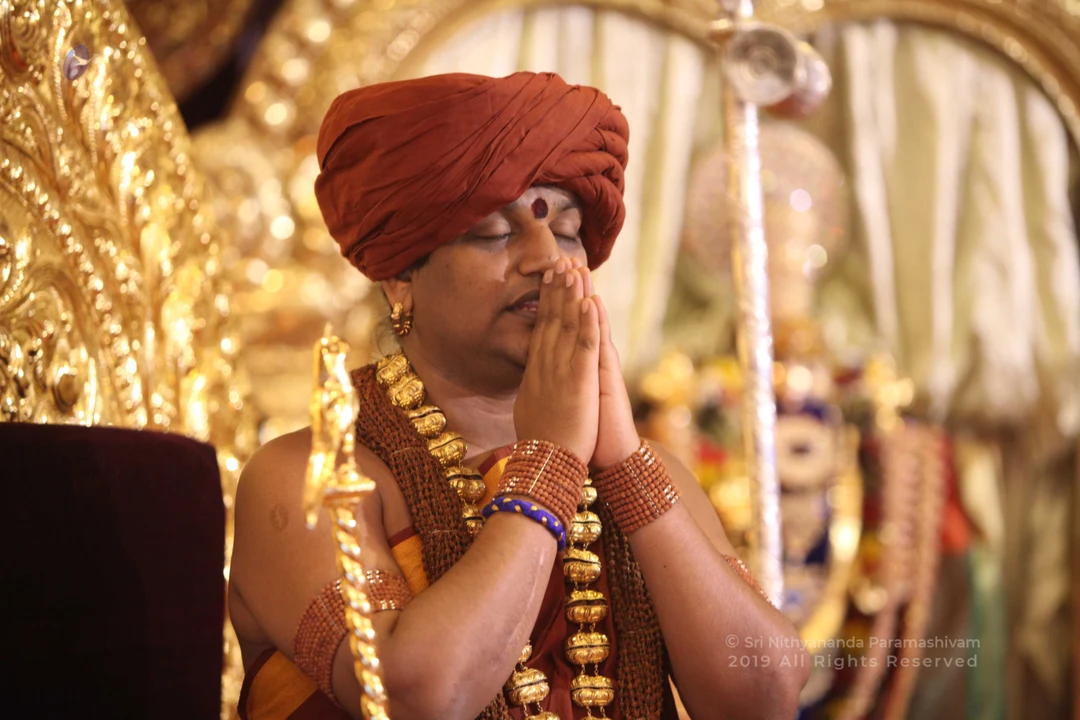
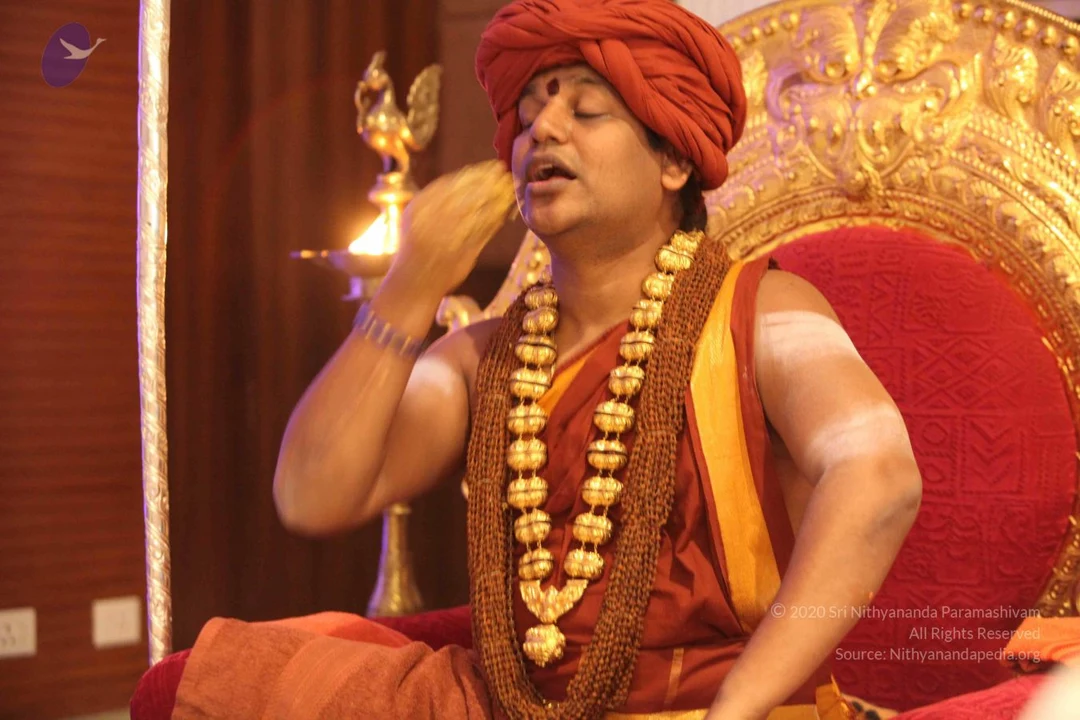
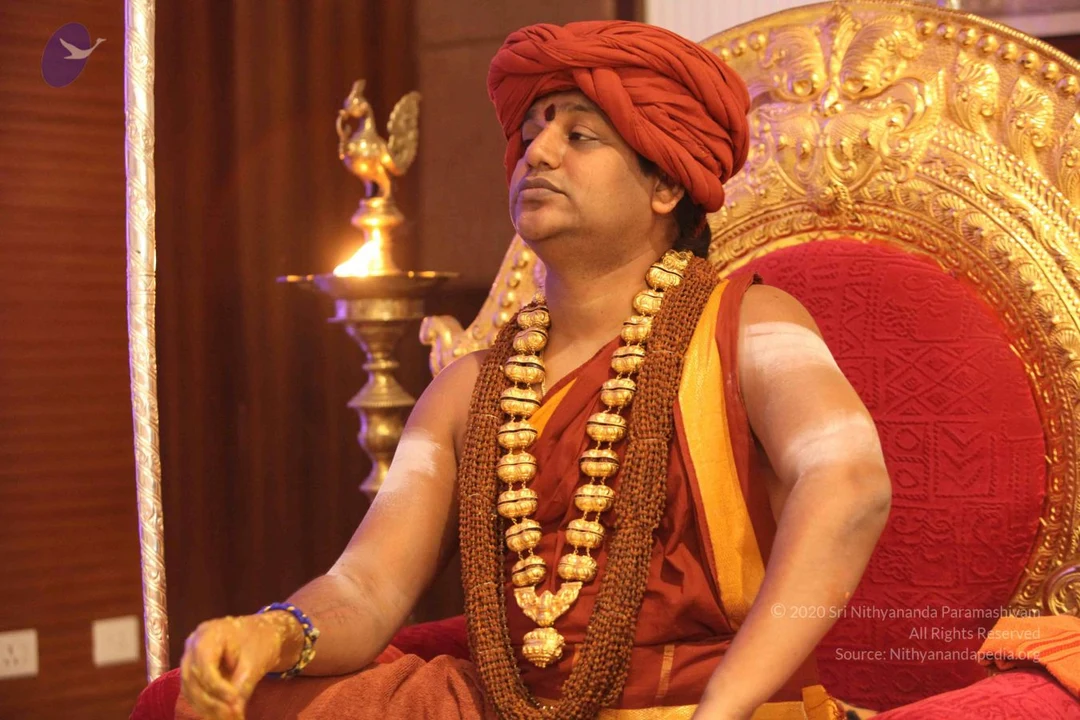
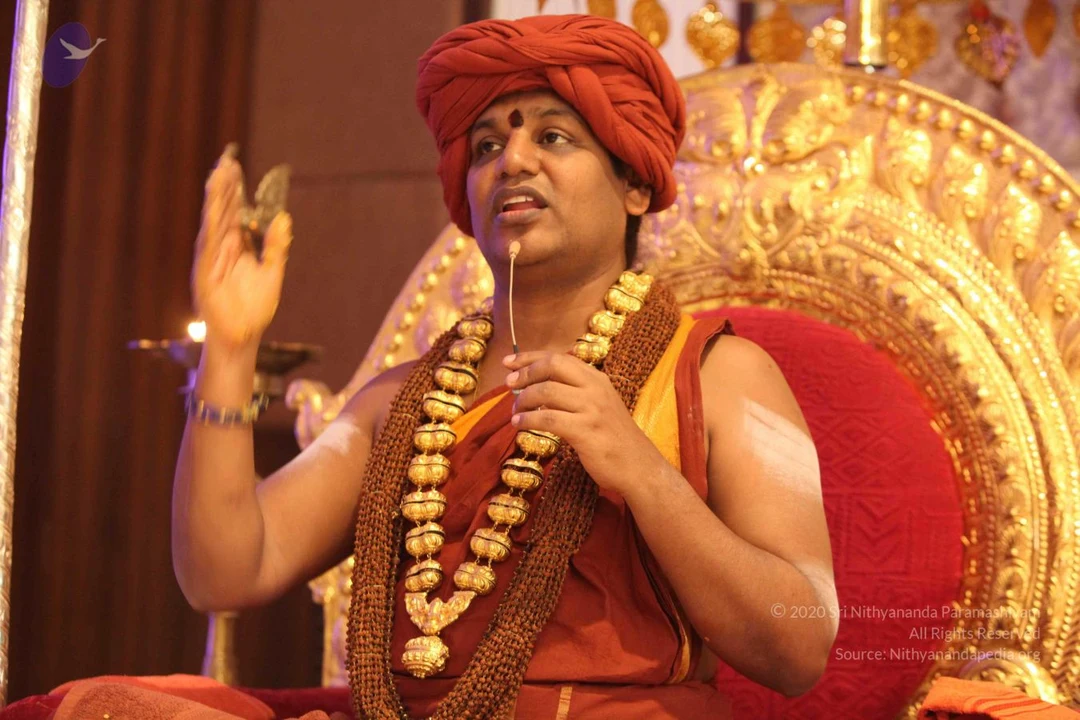
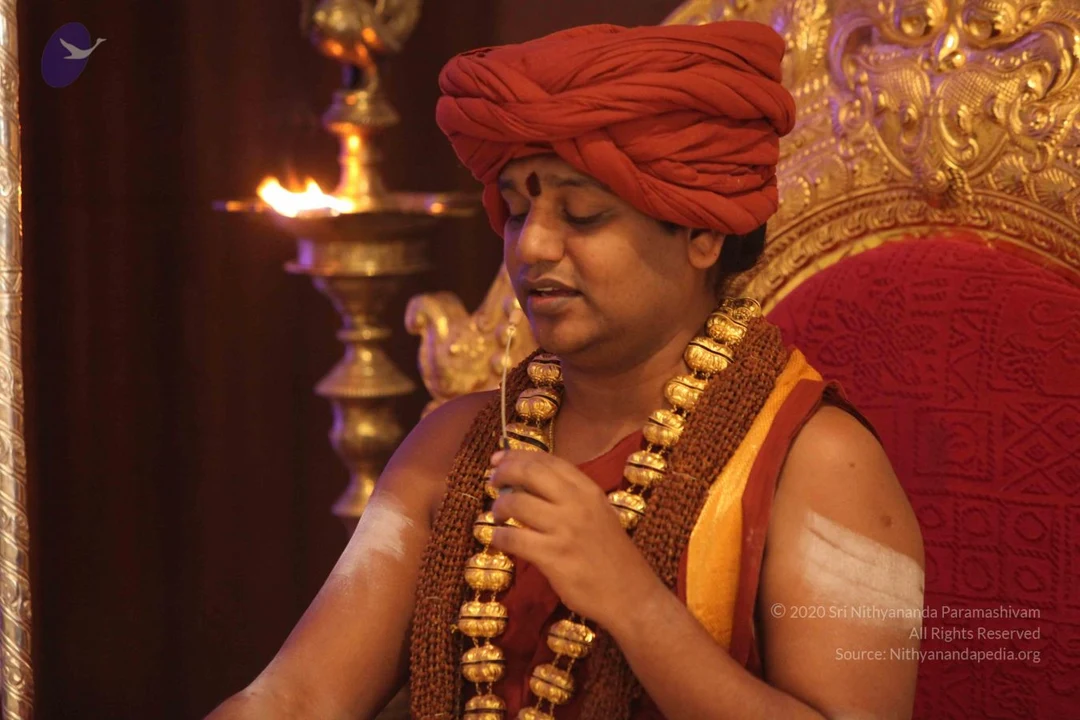
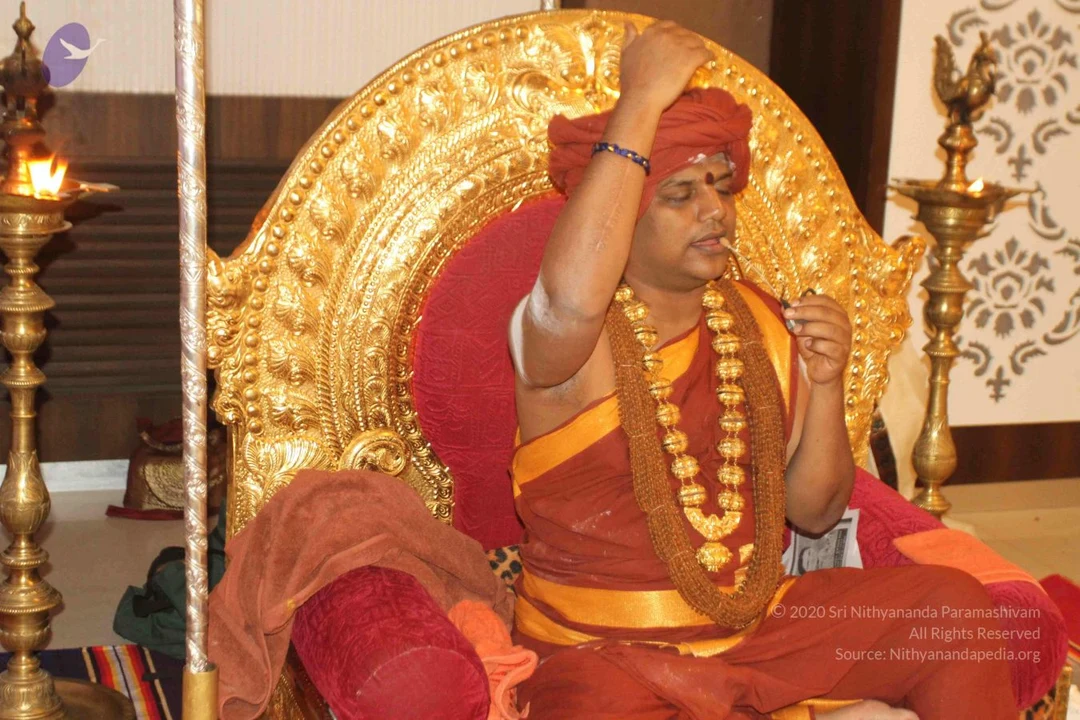
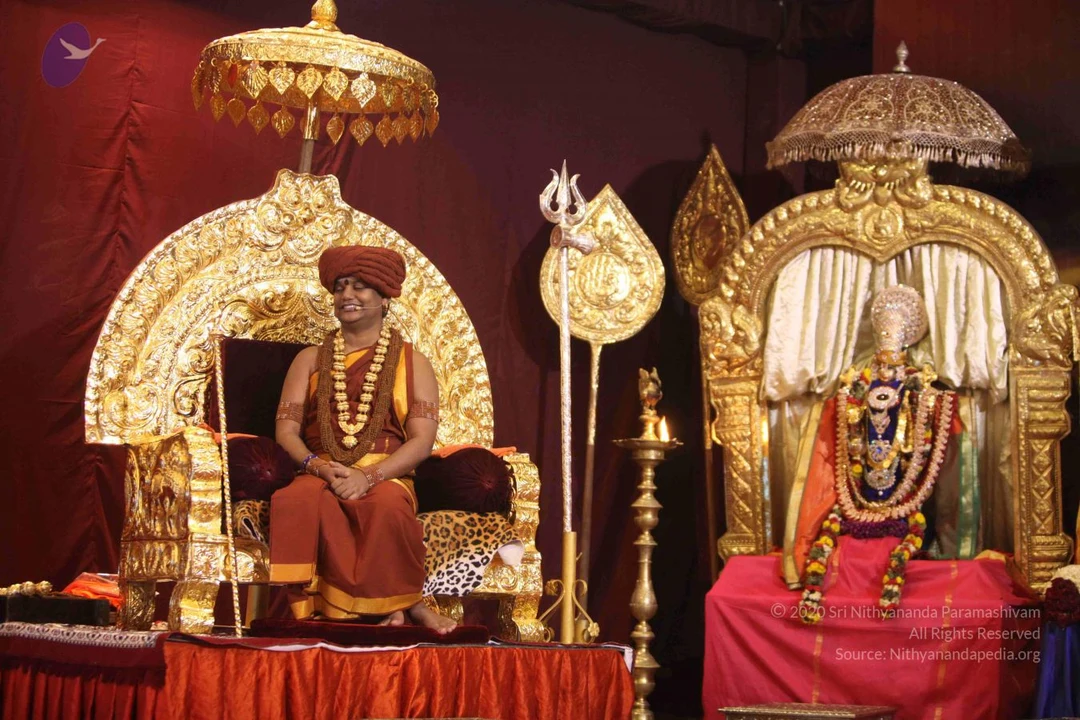
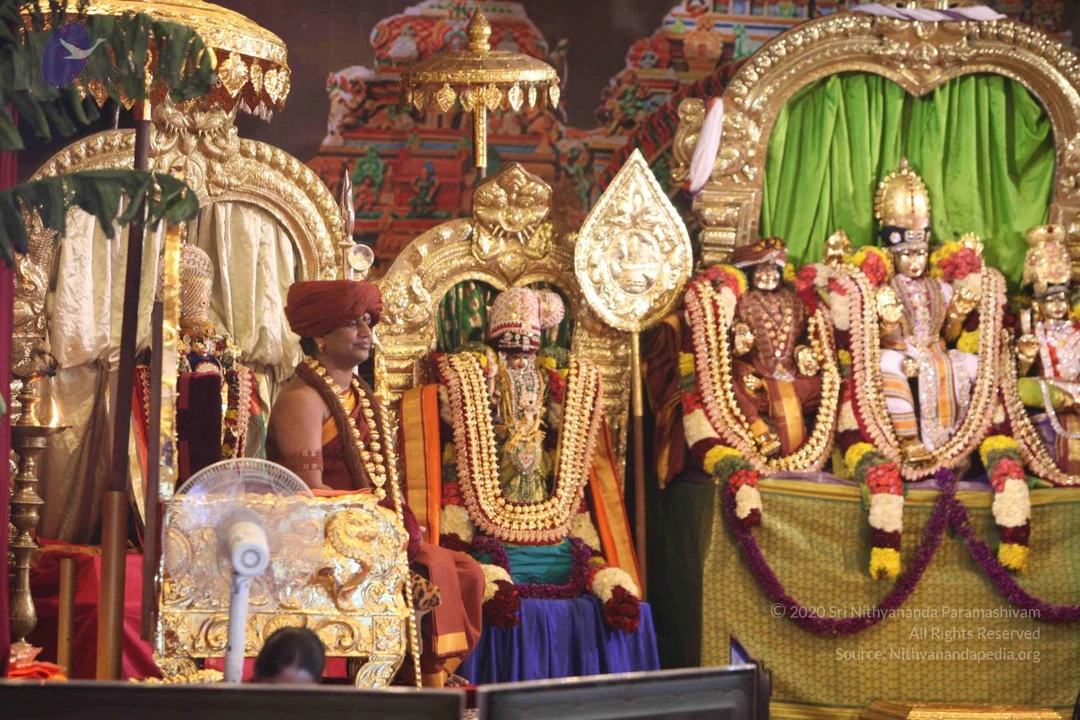
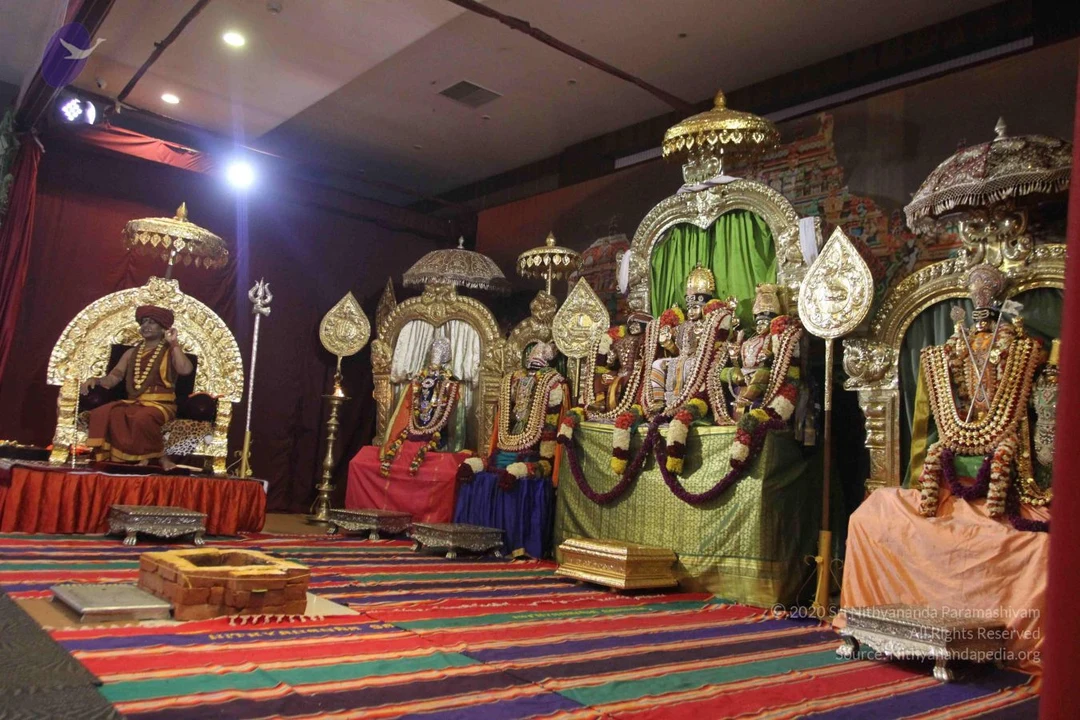
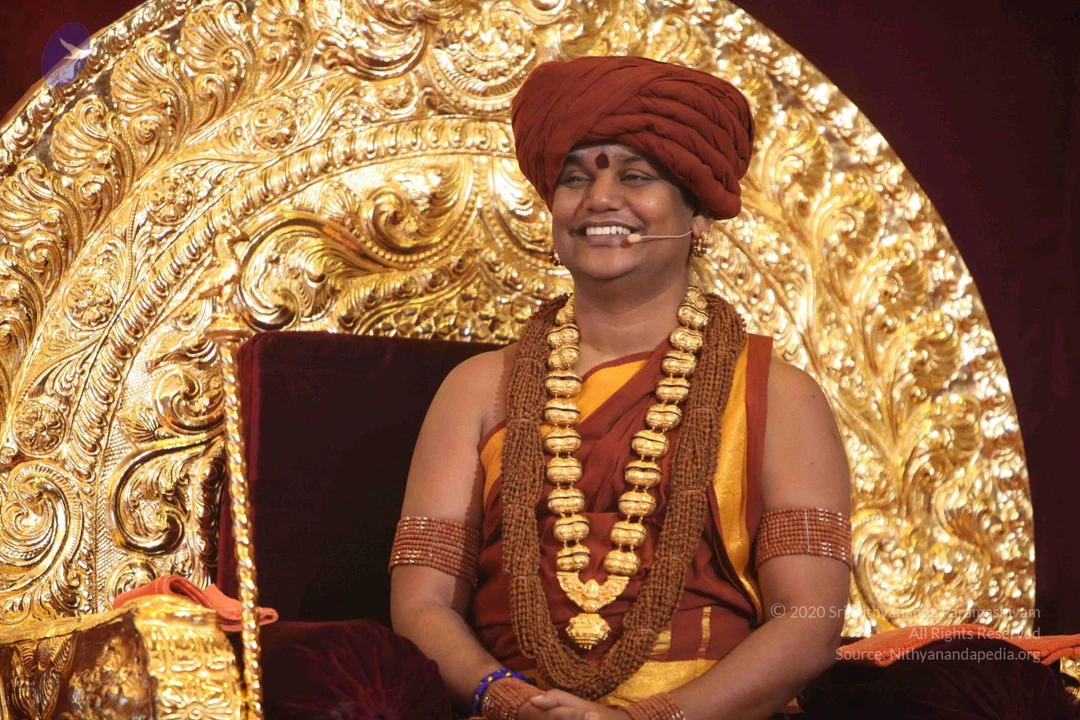
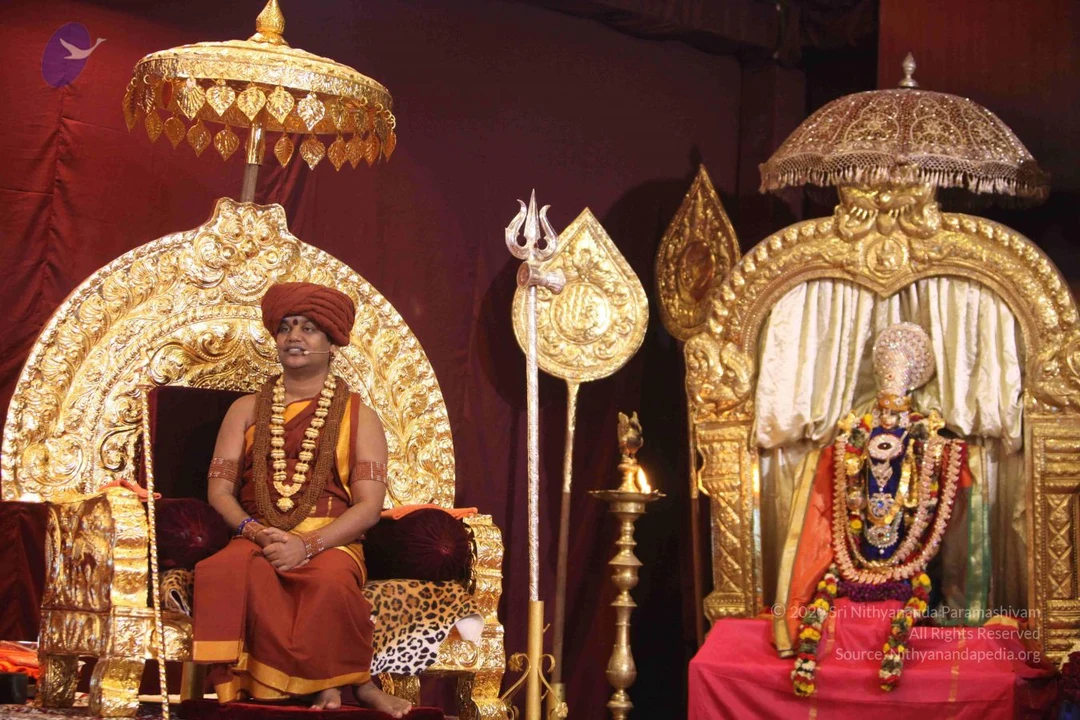
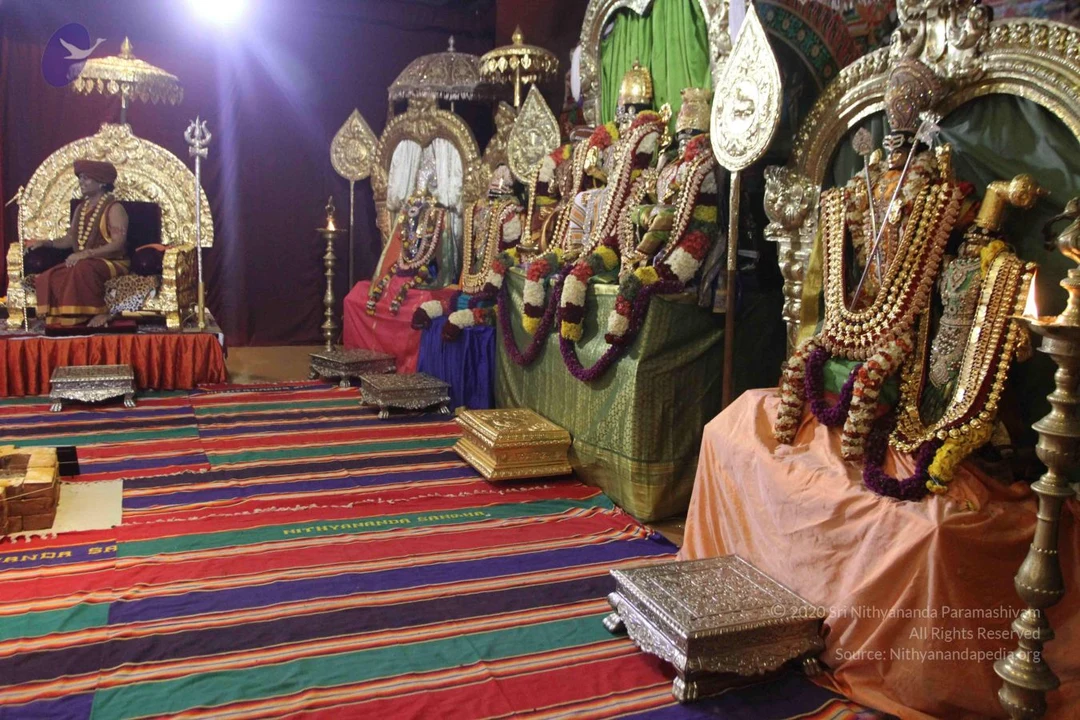
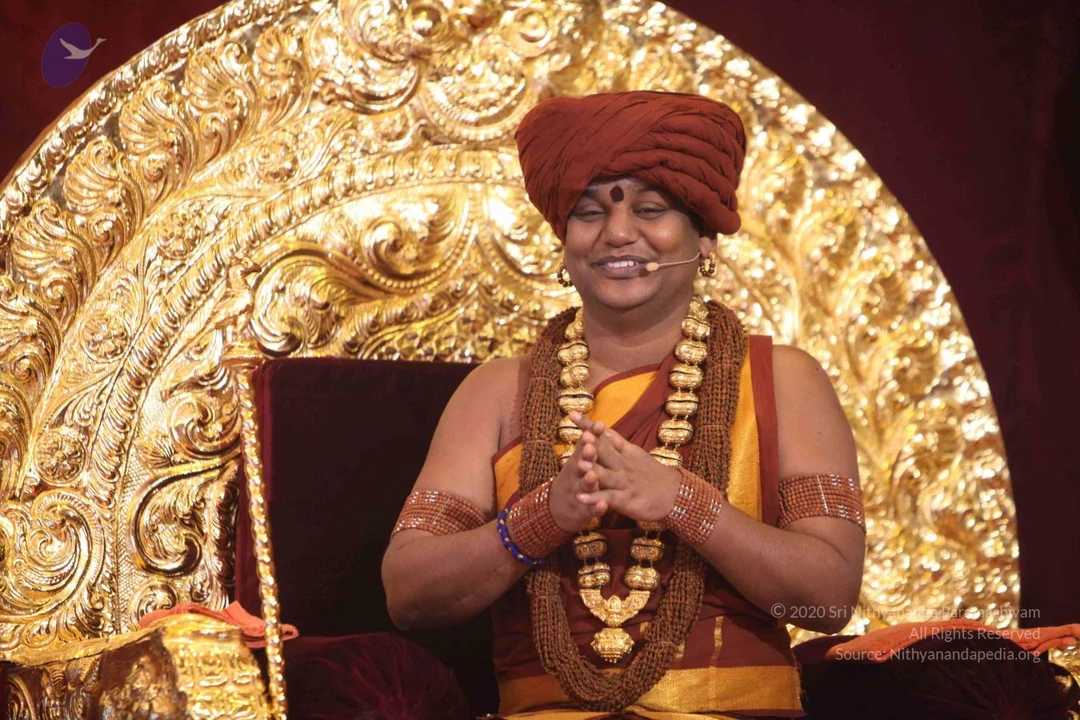
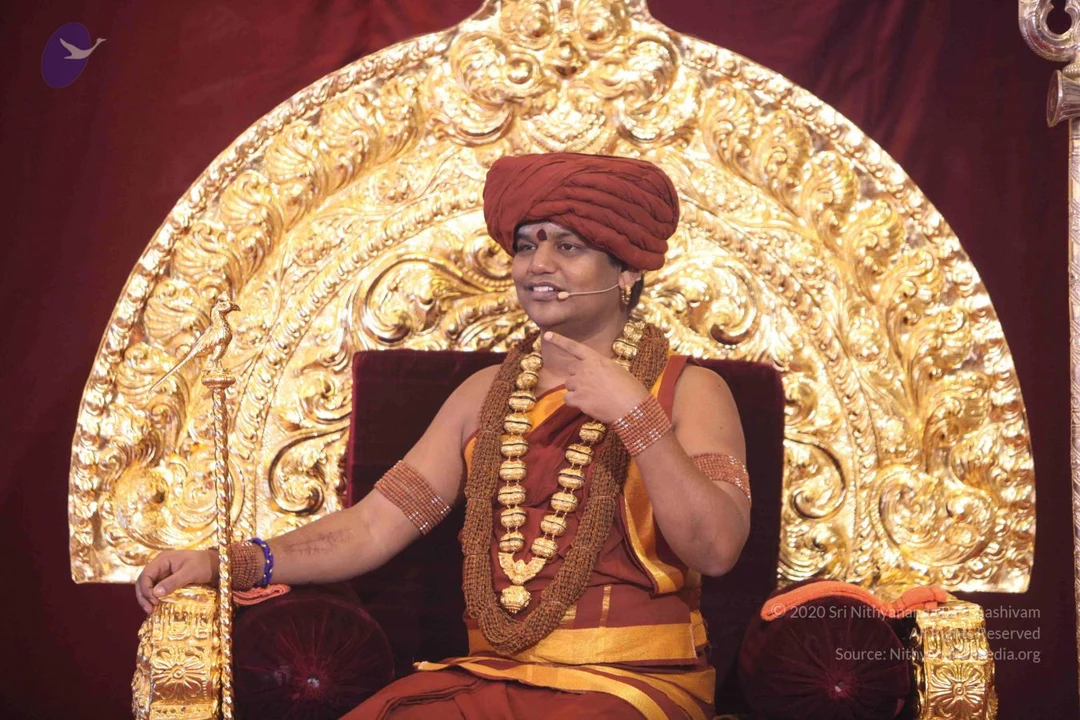
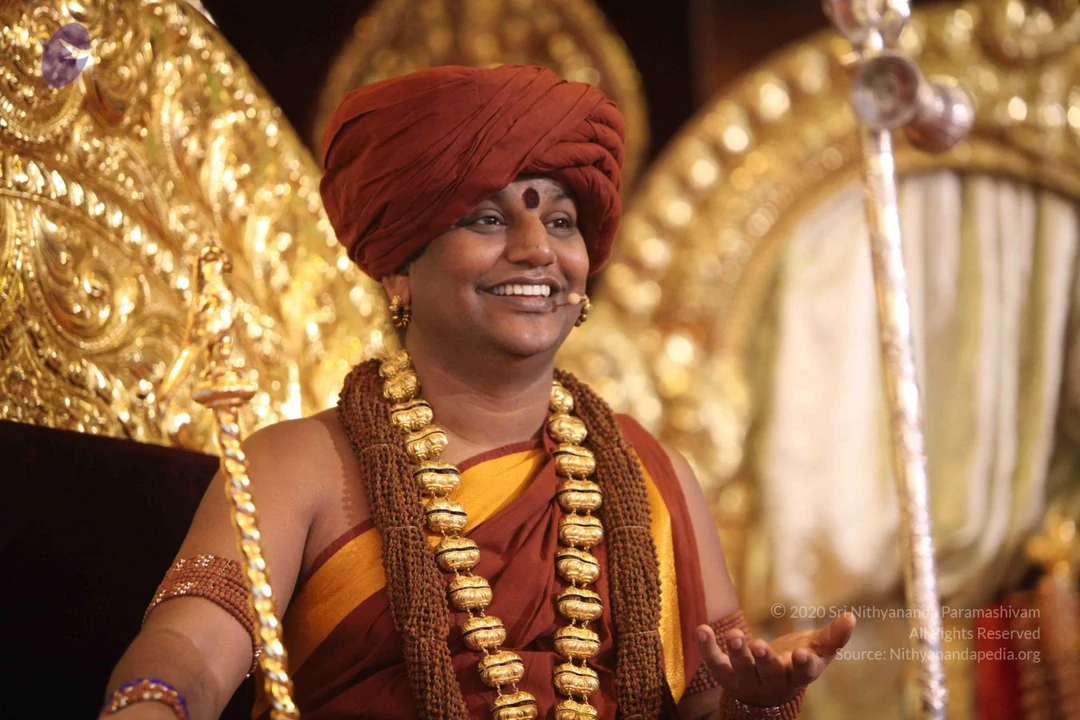
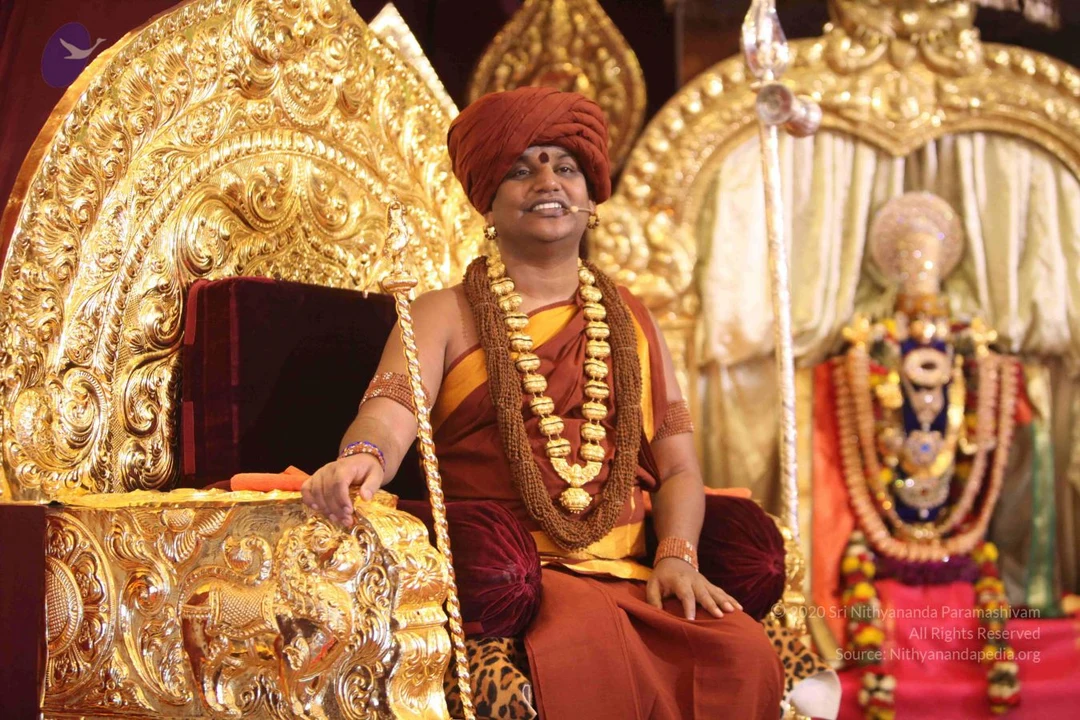
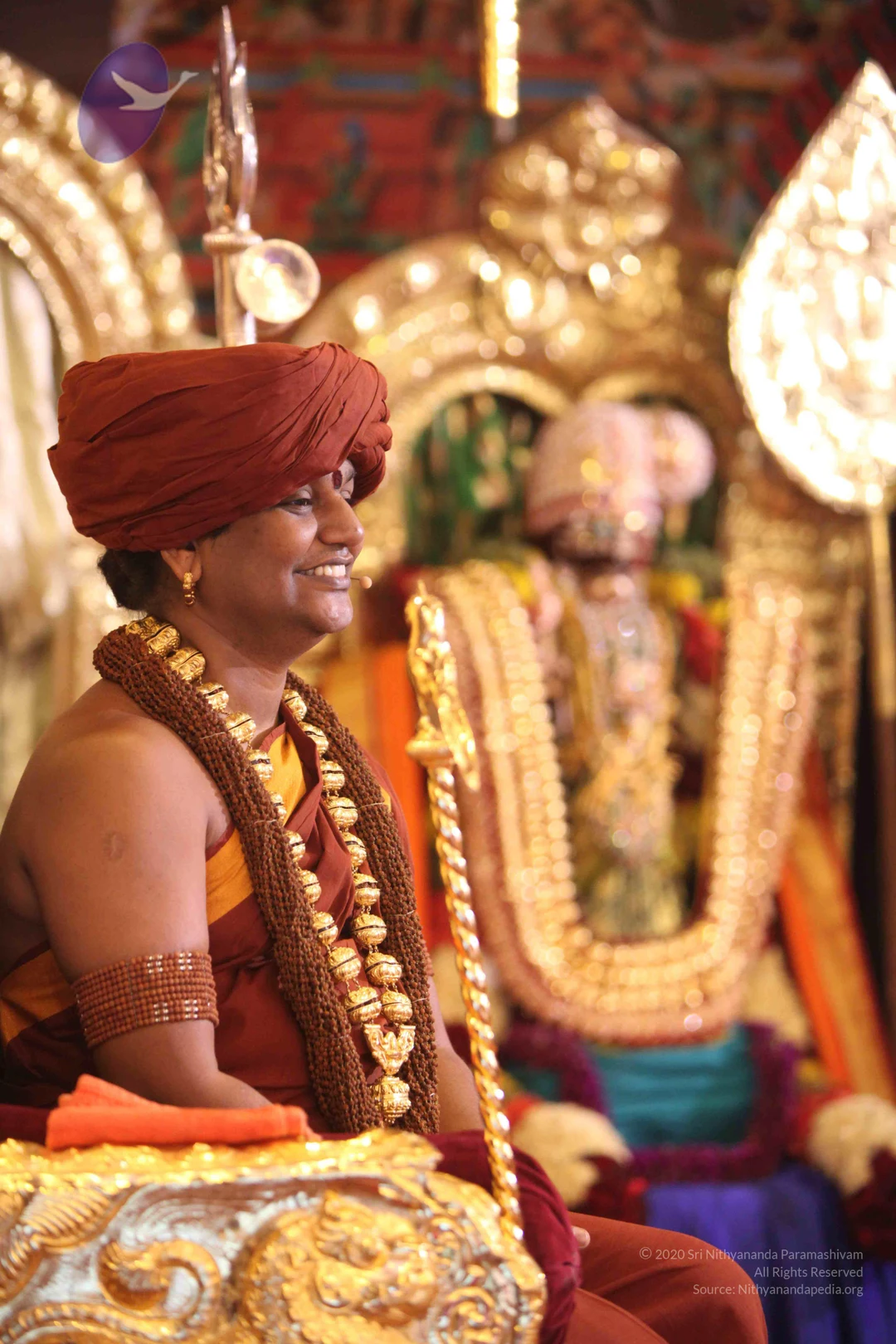
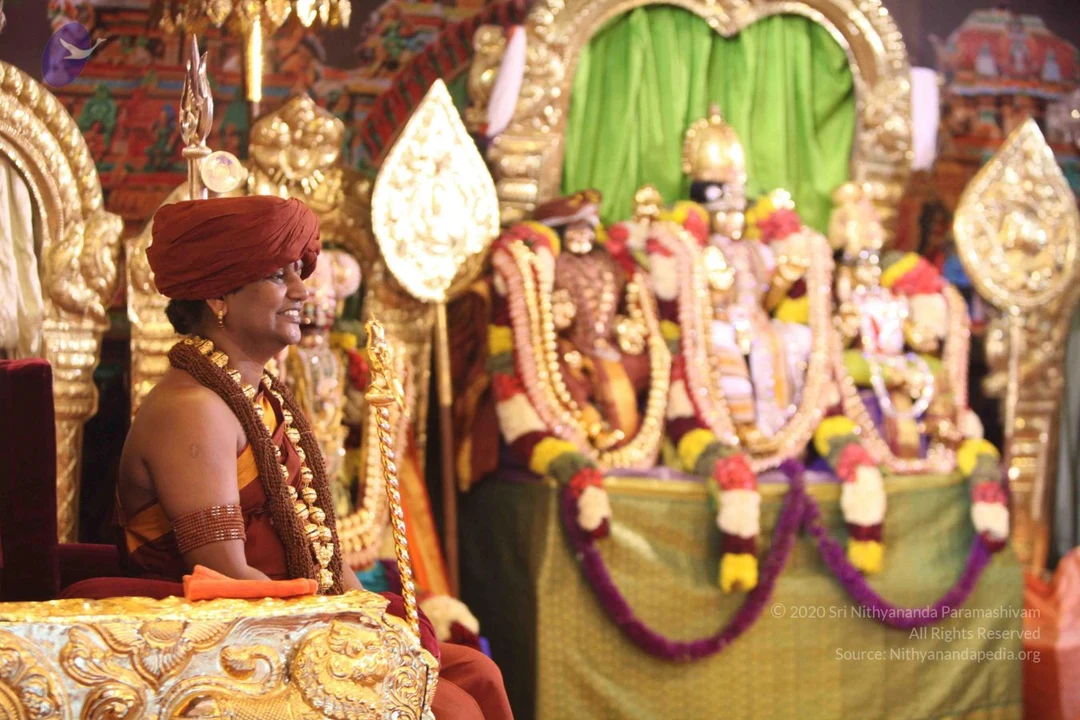
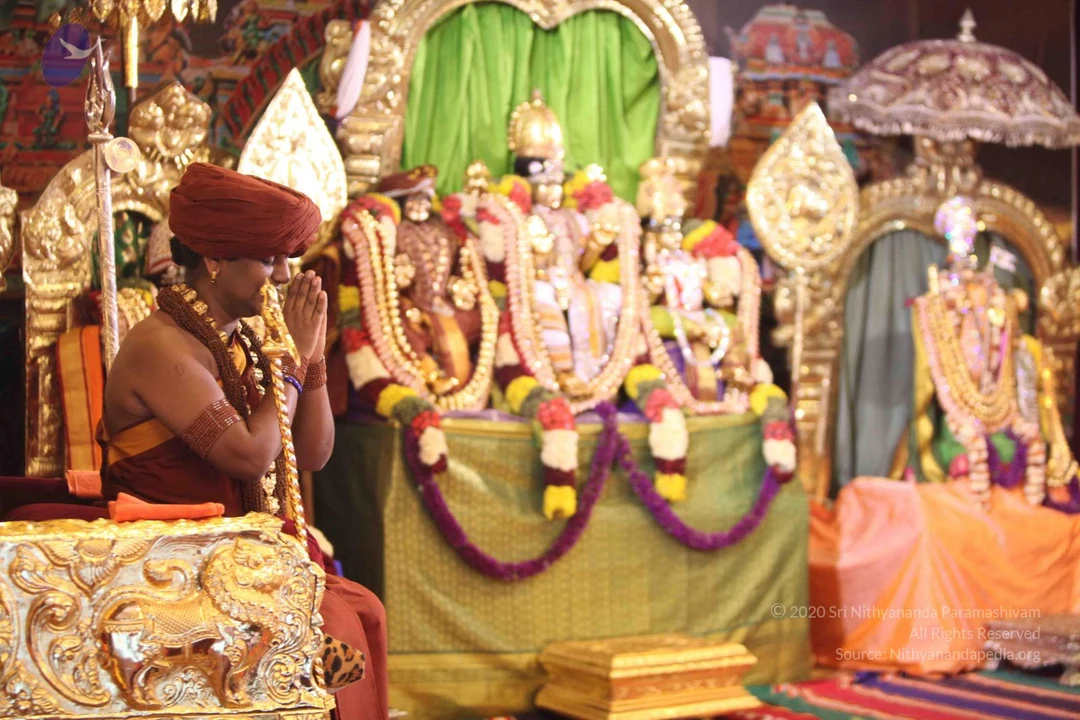
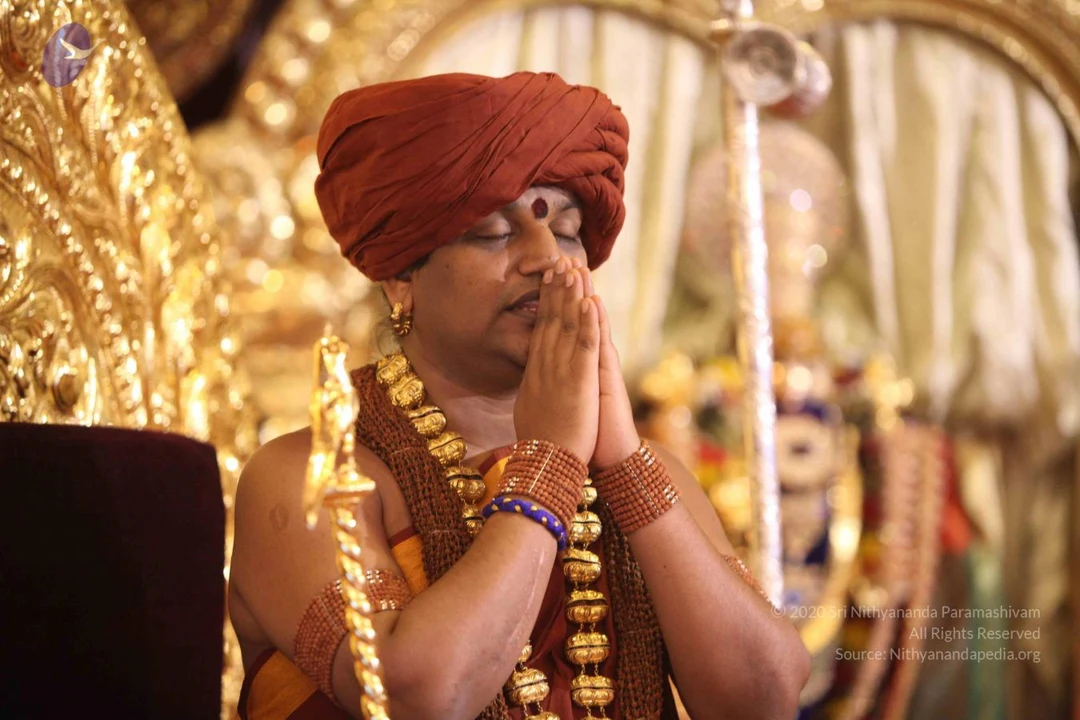
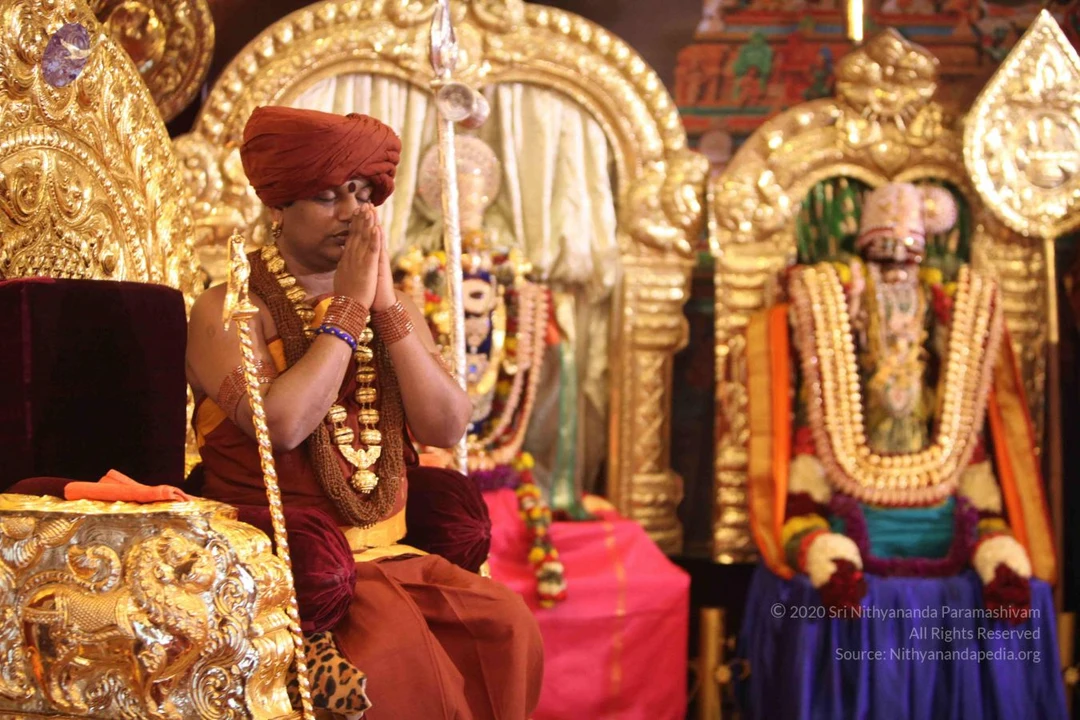
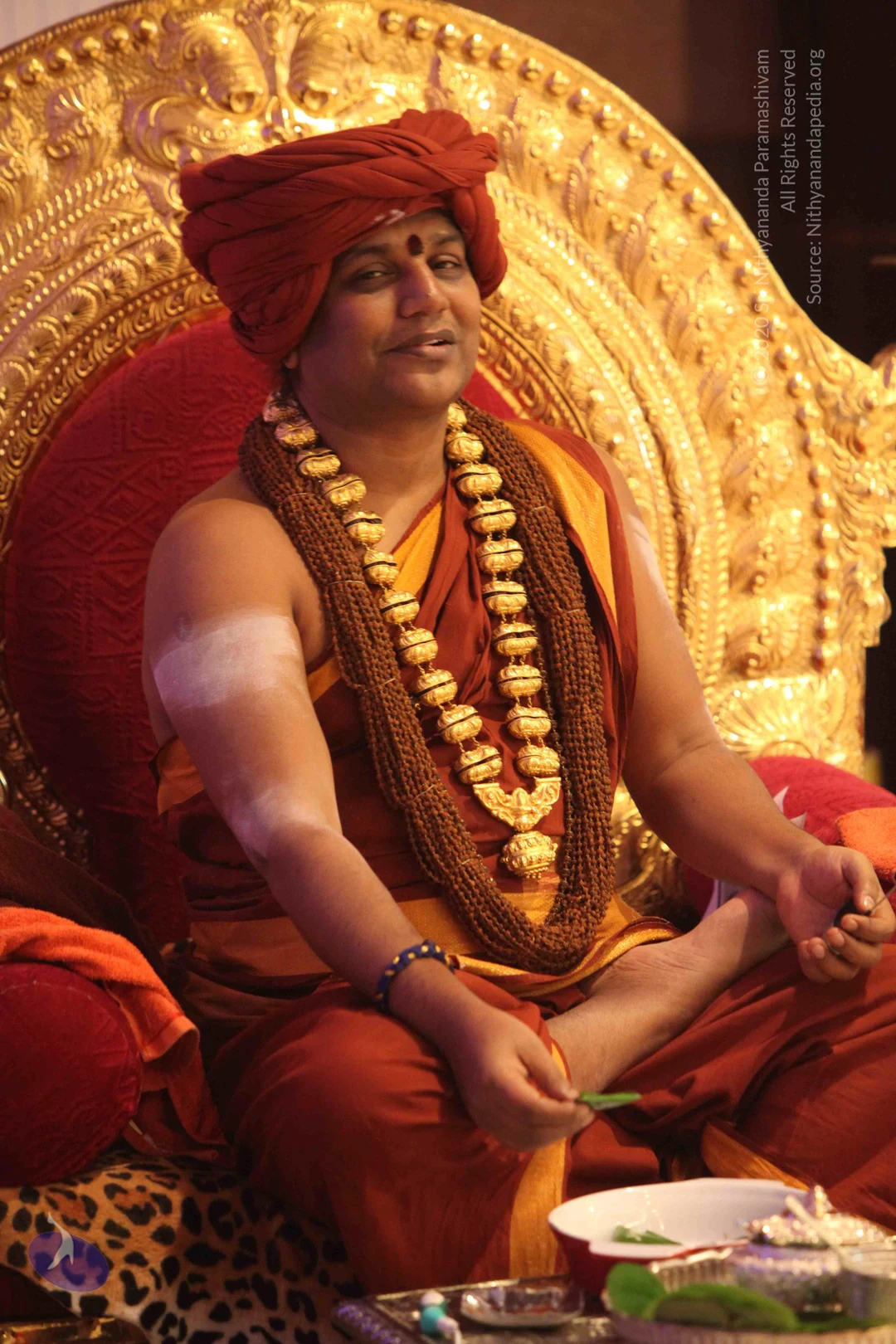
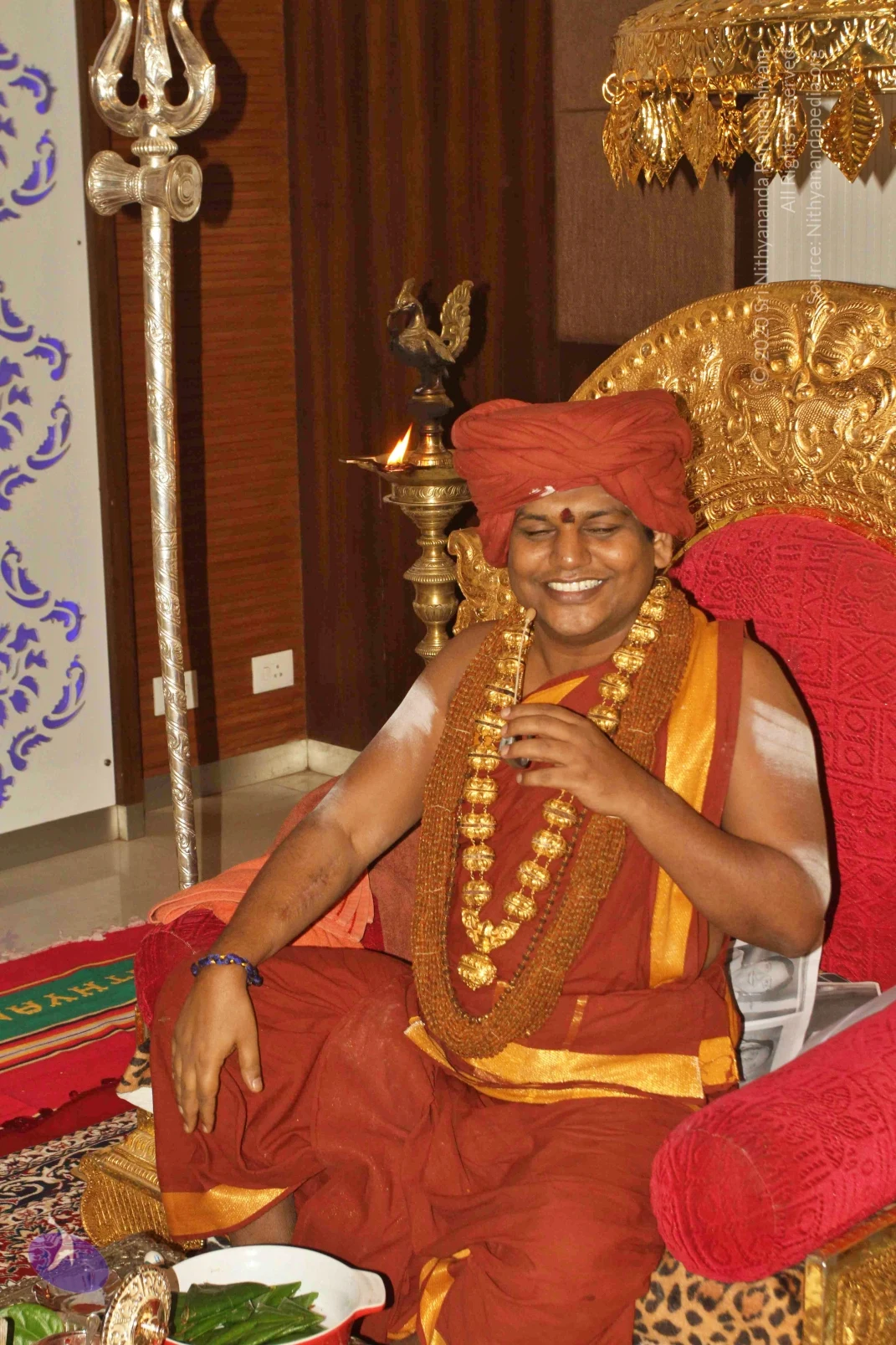
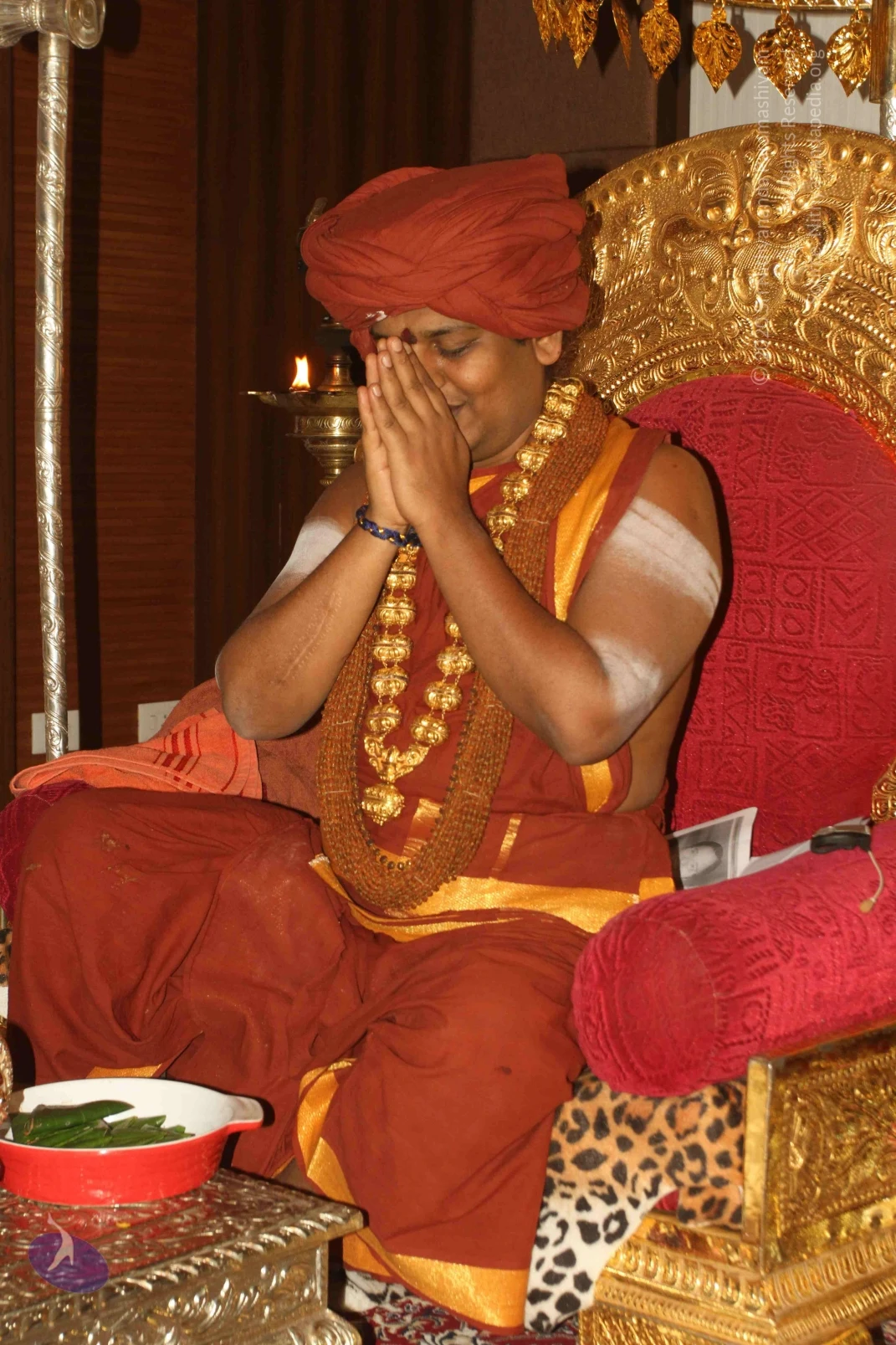
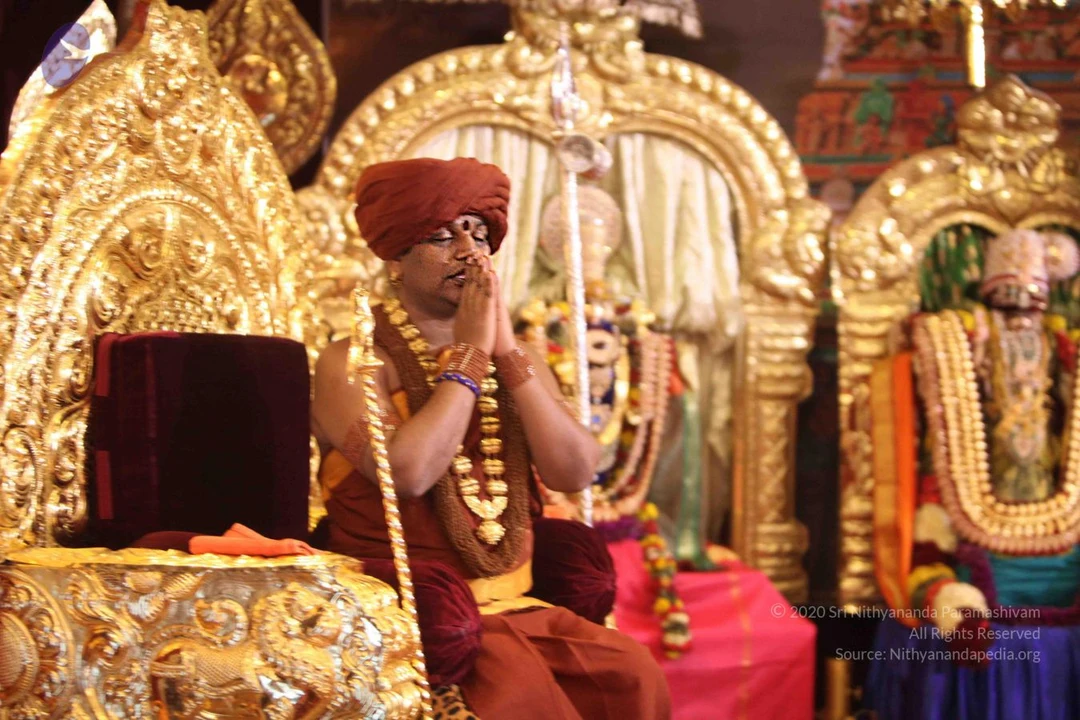
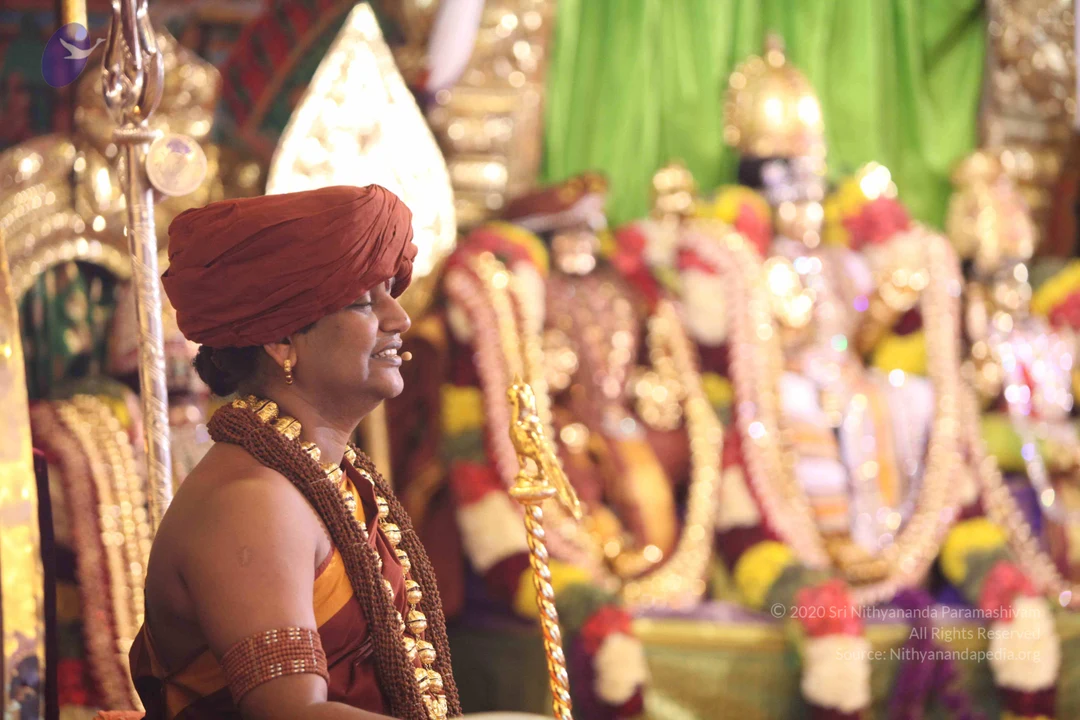
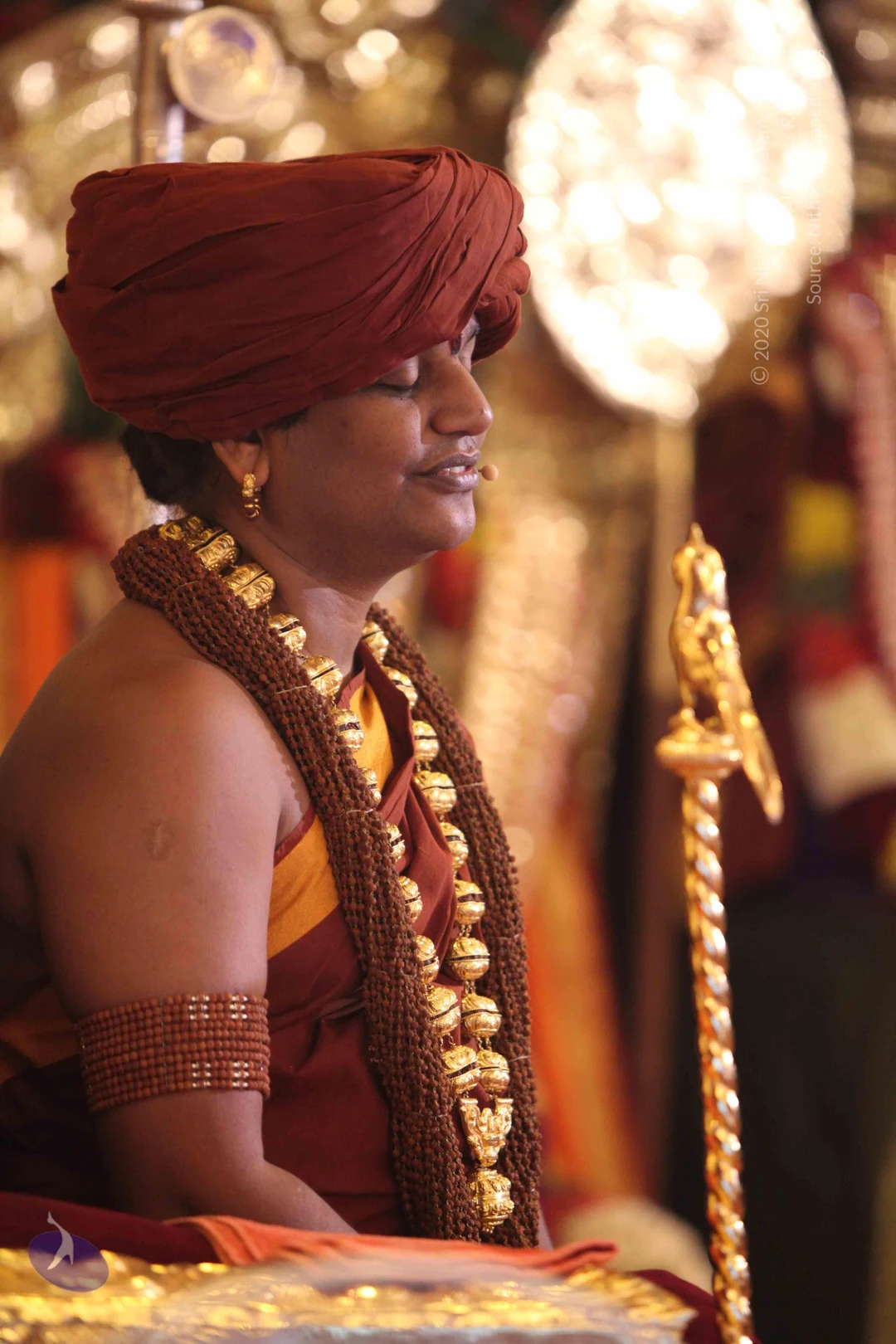
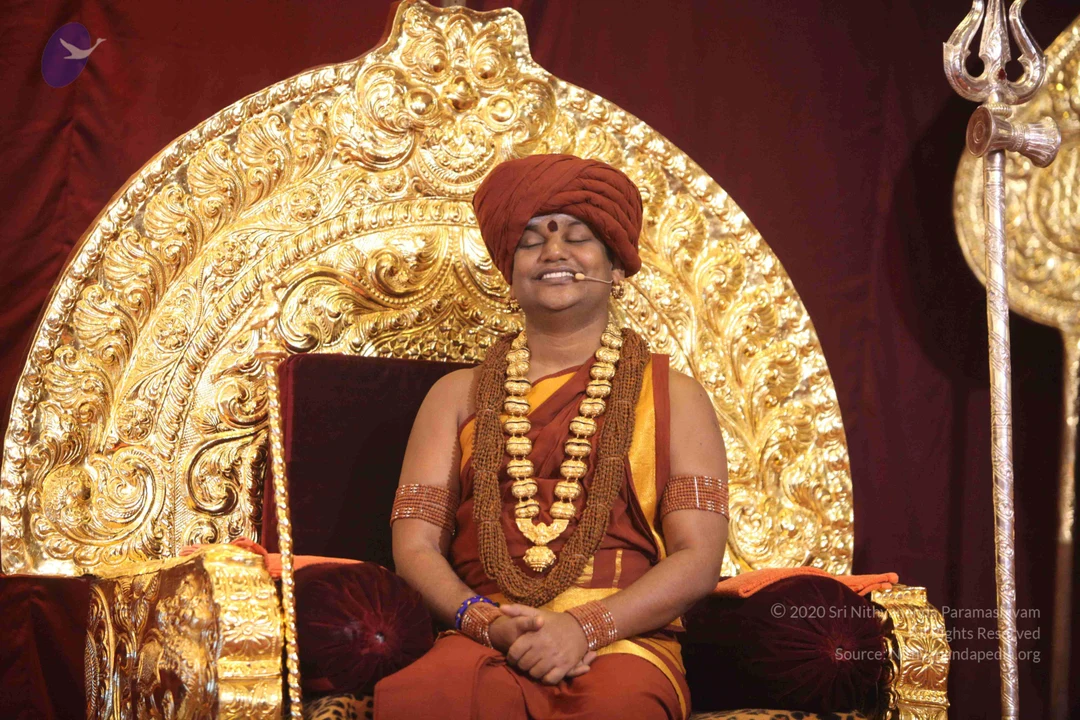
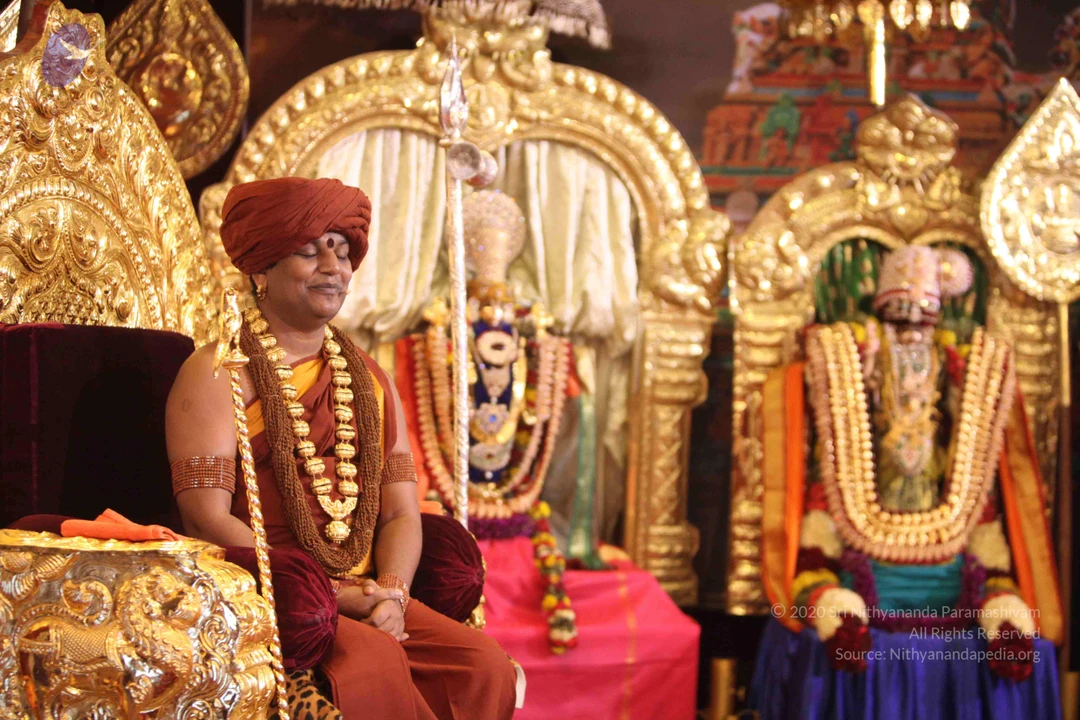
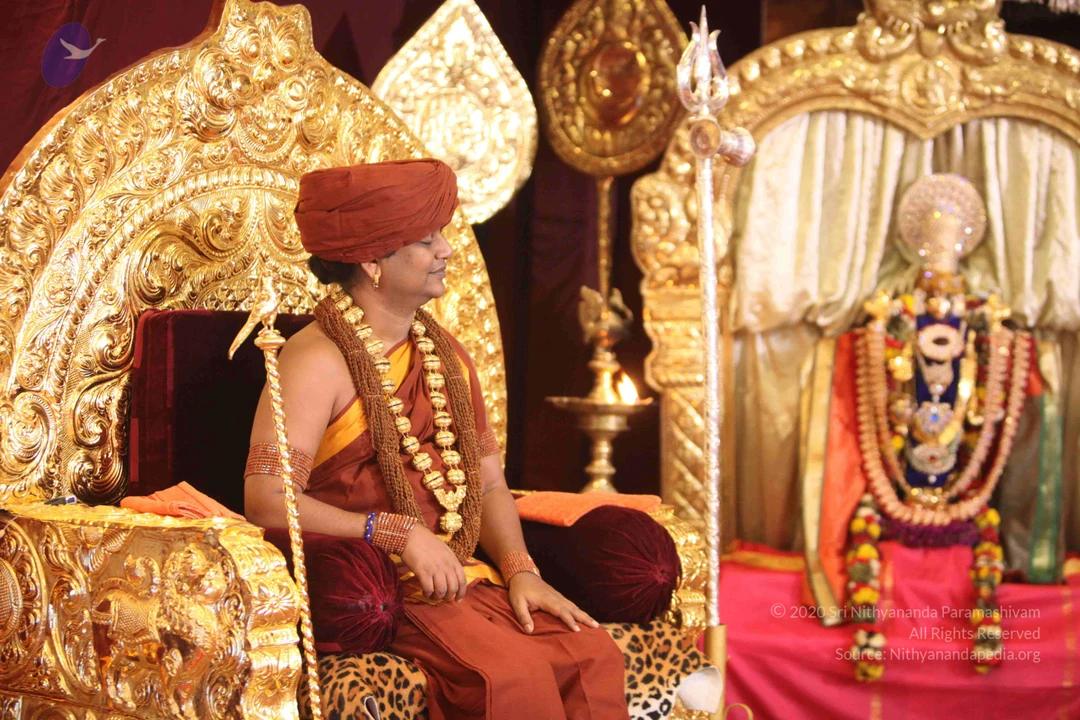
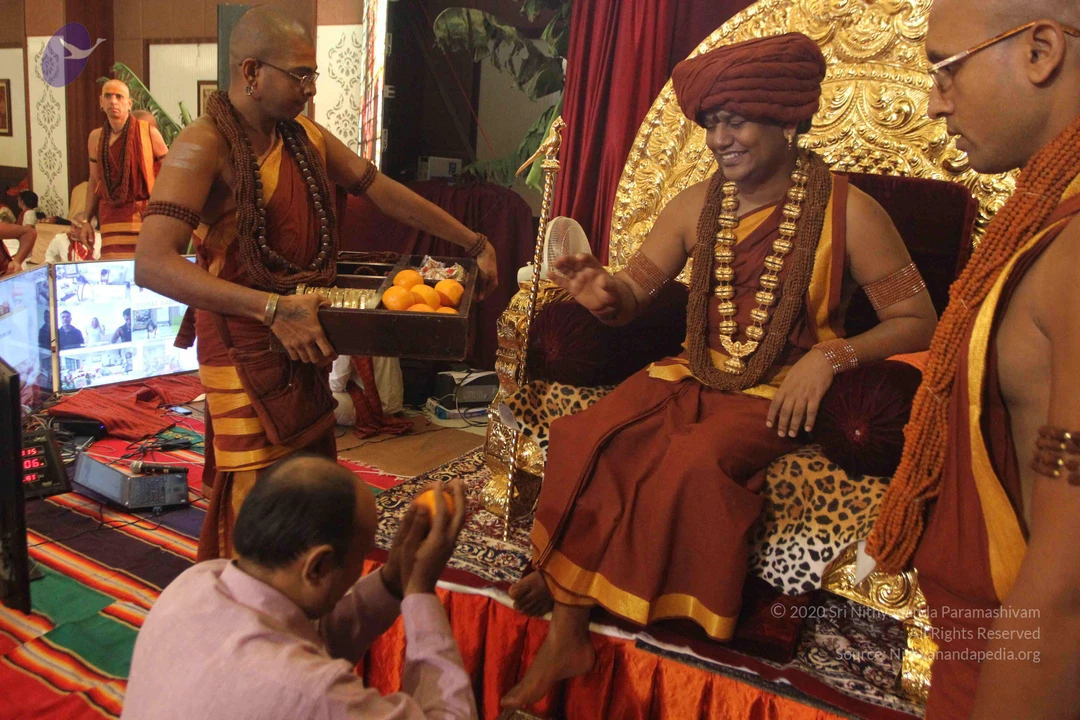
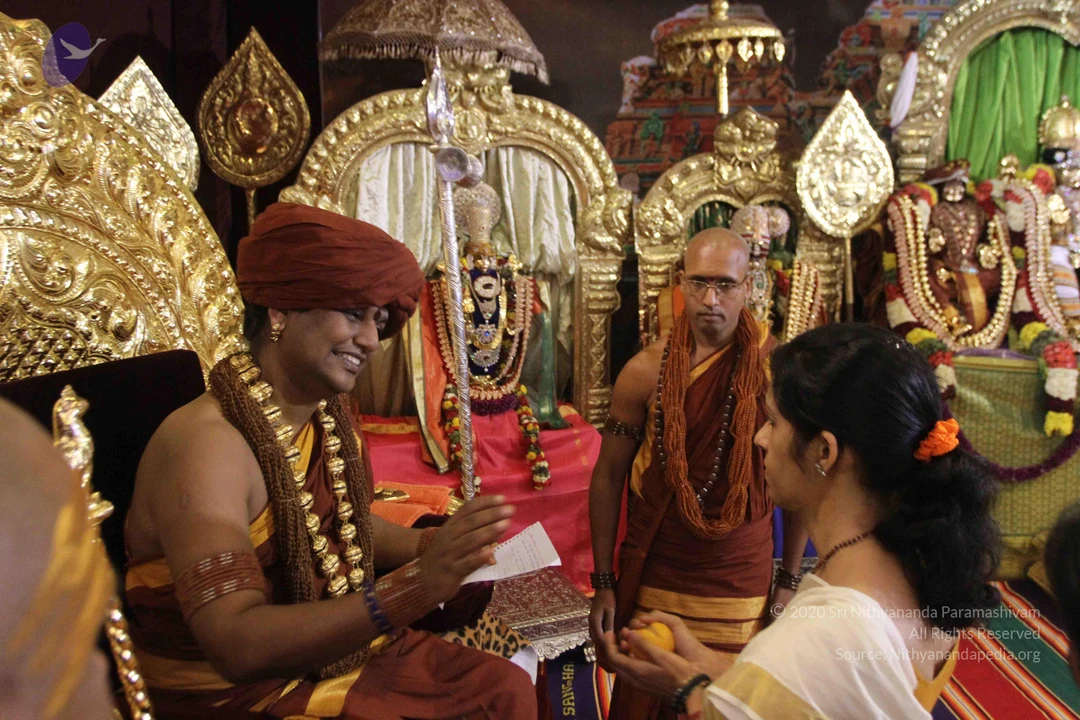
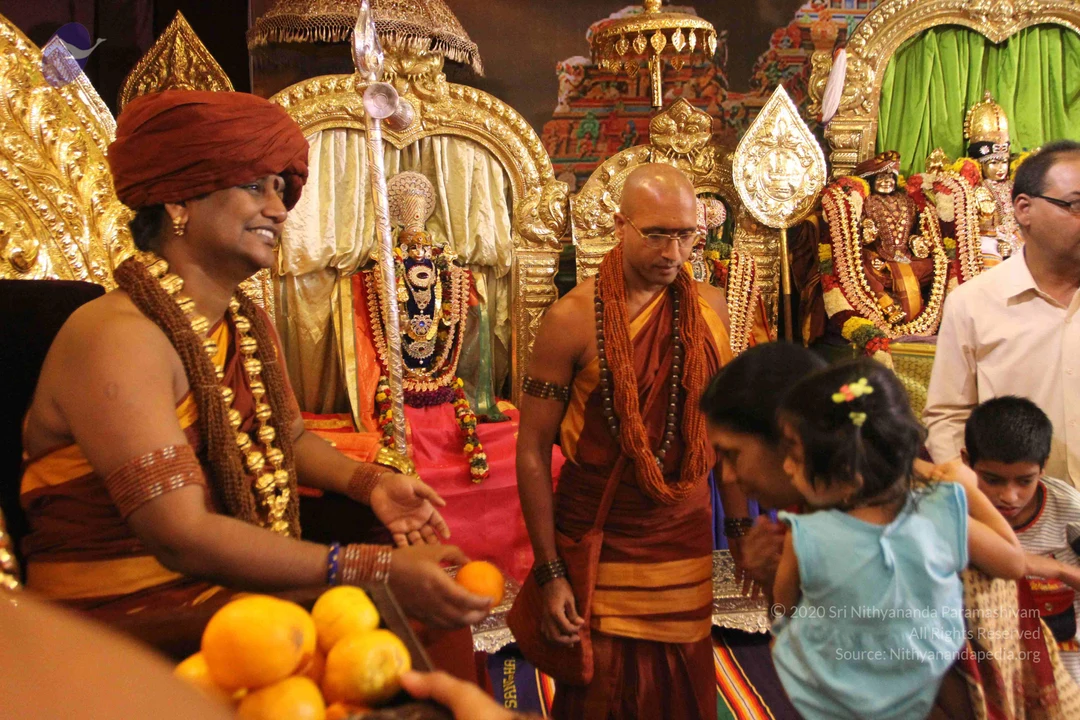
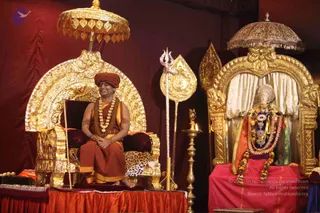
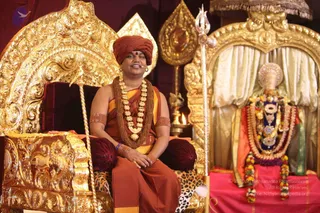
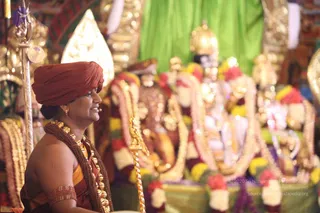
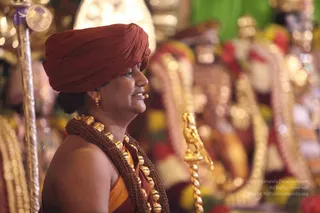
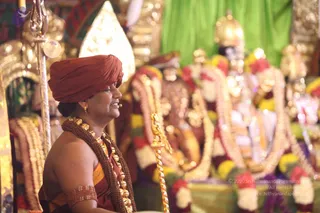
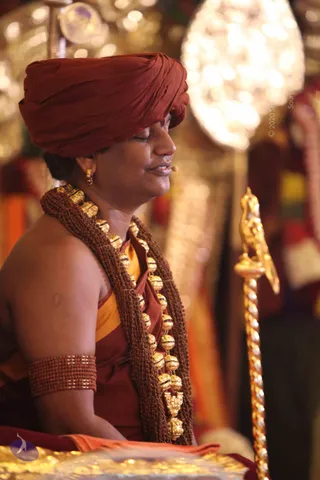
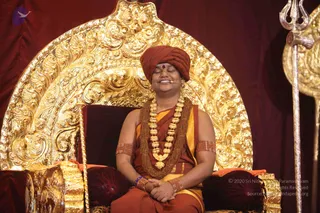
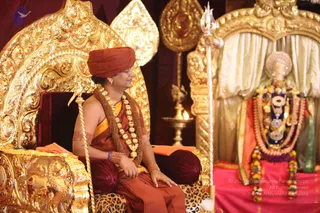
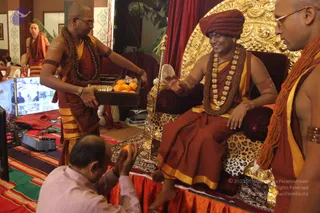
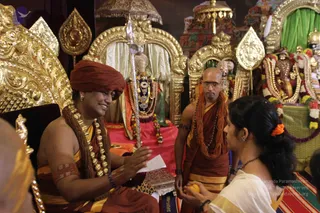
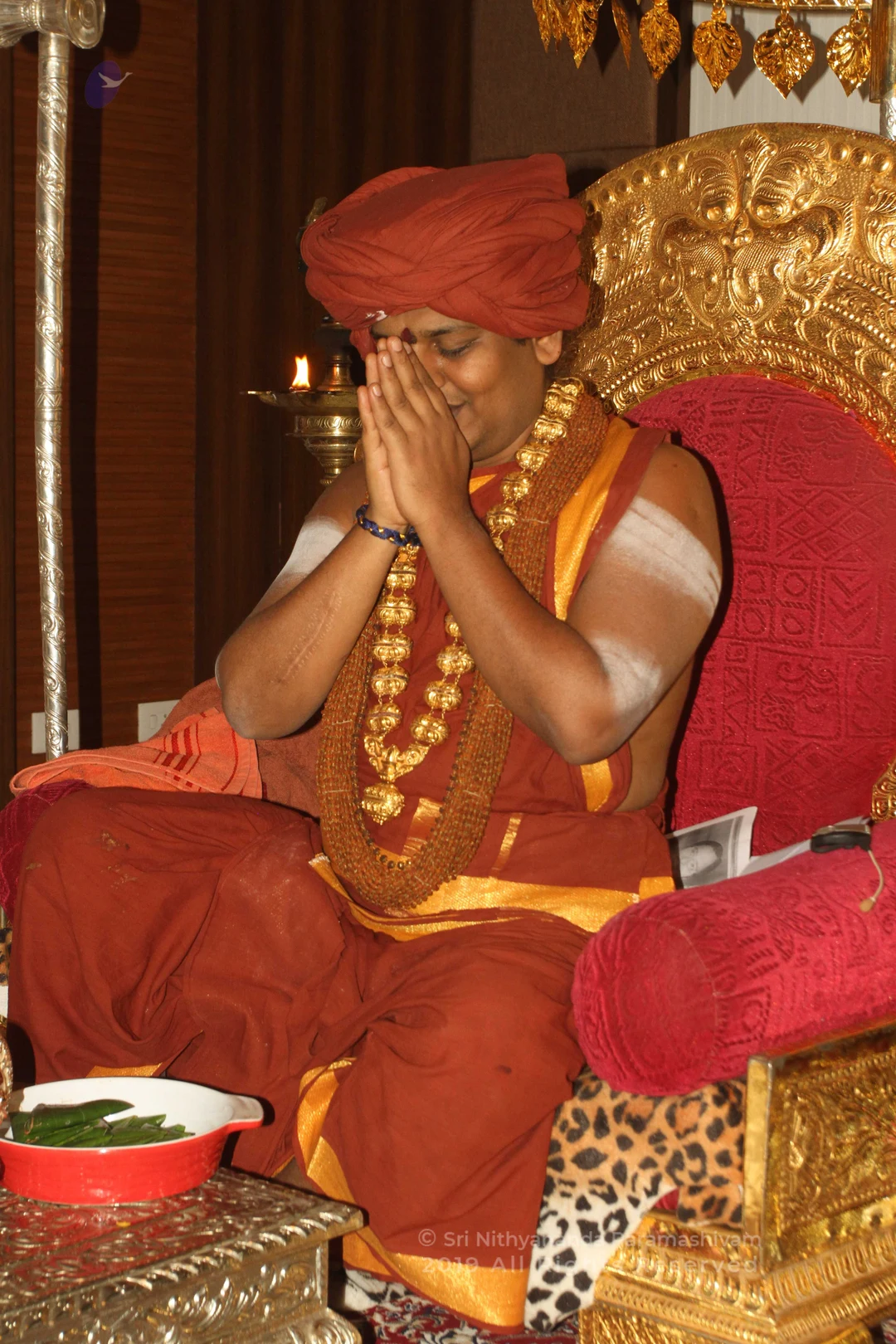
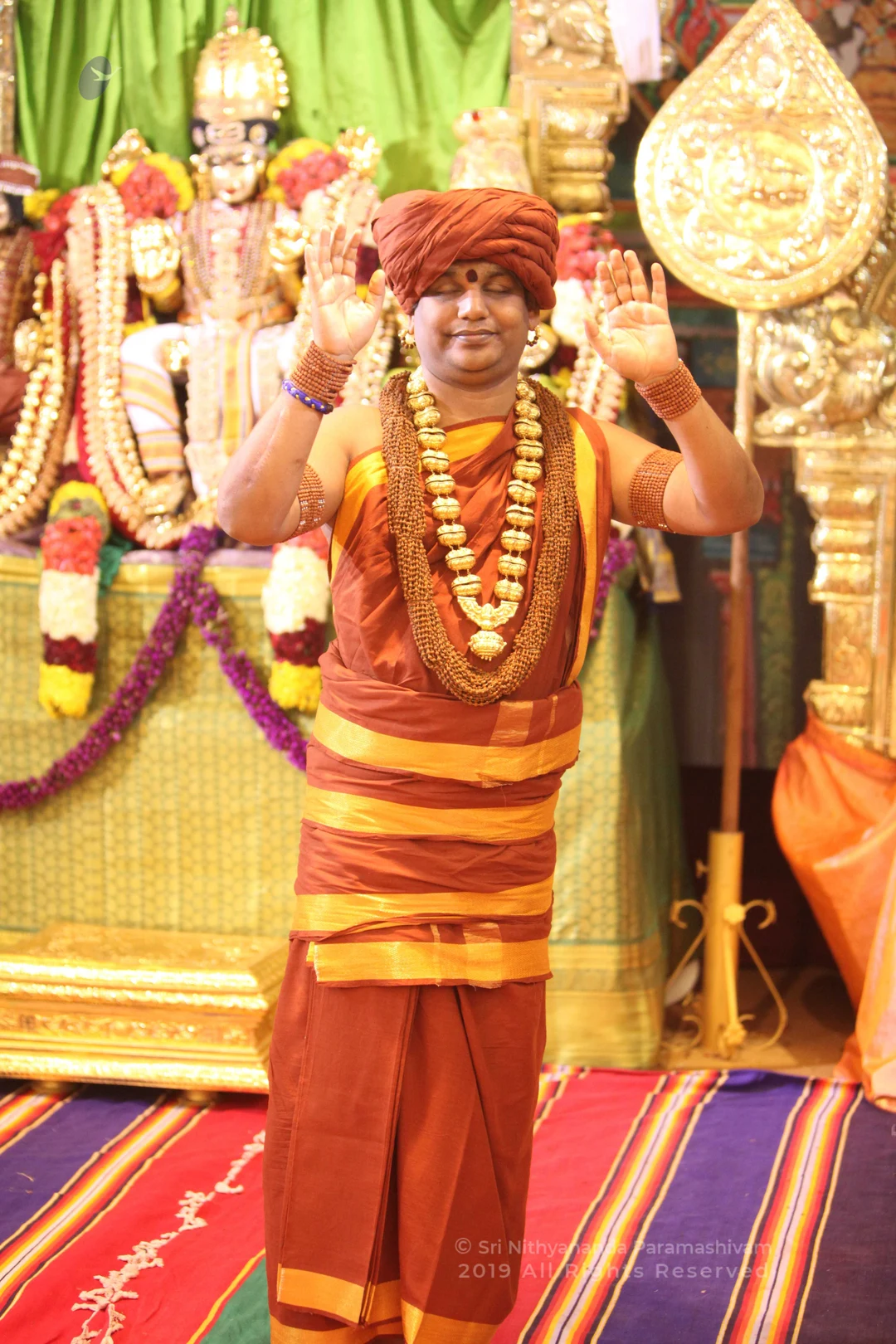
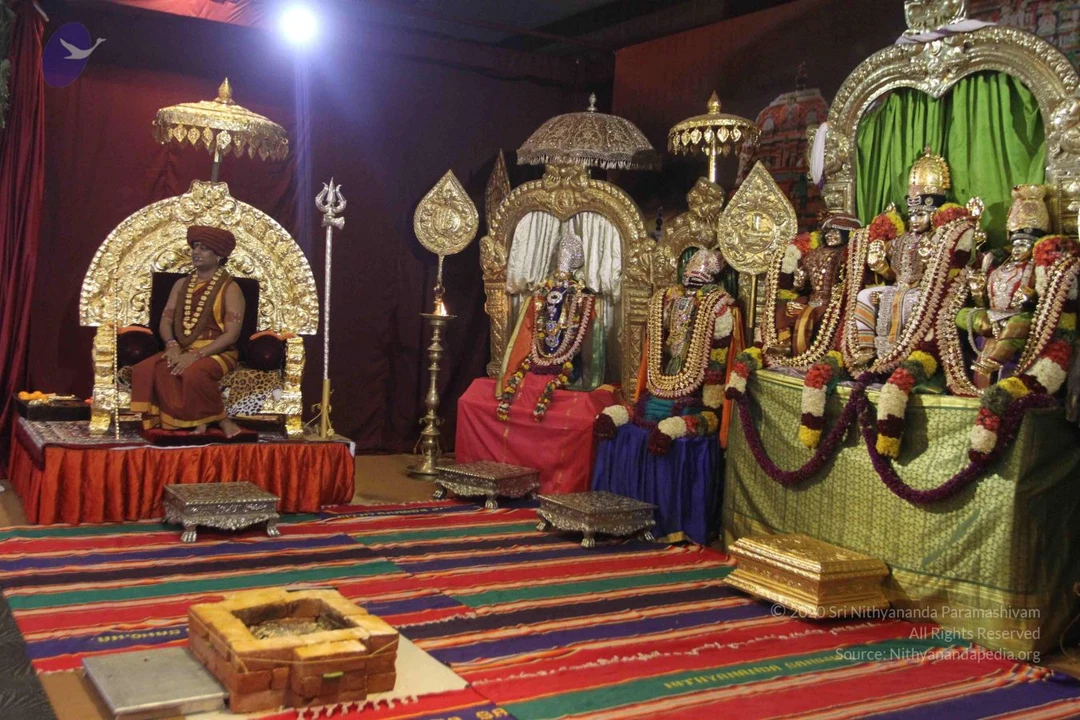
A seated man in an ornate gold-and-red throne with his palms pressed together in namaste at his forehead, eyes closed. He wears a deep red-orange turban, a red-orange robe with gold borders, a thick gold necklace of beads and a blue beaded bracelet, with white ash markings on his arms and chest. A small oil lamp burns to his left beside a silver pole, and a red bowl of green leaves sits at lower left. Gold leaf-shaped hangings are visible above and a leopard-print cloth lies on the throne base. The man is a probable Swamiji (probable) based on the turban, saffron-toned robes, gold necklace and throne presentation; the caption sets the scene as a satsang.A photograph of a figure seated on an ornate gold-and-silver throne, hands pressed together in anjali mudra, eyes closed in prayer. The seated person wears a rust-red turban, a bare-chested upper body with rudraksha beads and gold ornaments, and an orange-red shawl over the lap. In front stands a decorated altar with several deity murtis dressed in garlands of white, yellow, red and purple flowers, set against a green silk cloth. A gold-tipped trident leans to the left and a gold ceremonial umbrella is visible at upper right. The setting is a temple-style shrine with gilded arches and painted panels. The seated figure appears to be Swamiji (probable), identified by the turban, rudraksha malas, gold ornaments and ceremonial throne, though the face is not clearly visible.Photograph of a temple-style hall with a striped red, green, blue and yellow floor mat. On the left, a figure in a dark red turban and orange-saffron dhoti sits on an ornate gilded throne with a trident beside it and a bright light above. In the centre and right, several deity murtis and figures are adorned with heavy garlands of red, purple and white flowers and gold necklaces, seated on decorated thrones with a kalasha-style gilded parasol above. Brass oil lamps stand on the right, and silver-topped low stools are placed on the floor. The scene is a ceremonial satsang setting.

May 23 2015

Original wiki page
Contents

Title

How Enlightenment Is Delivered

Description:

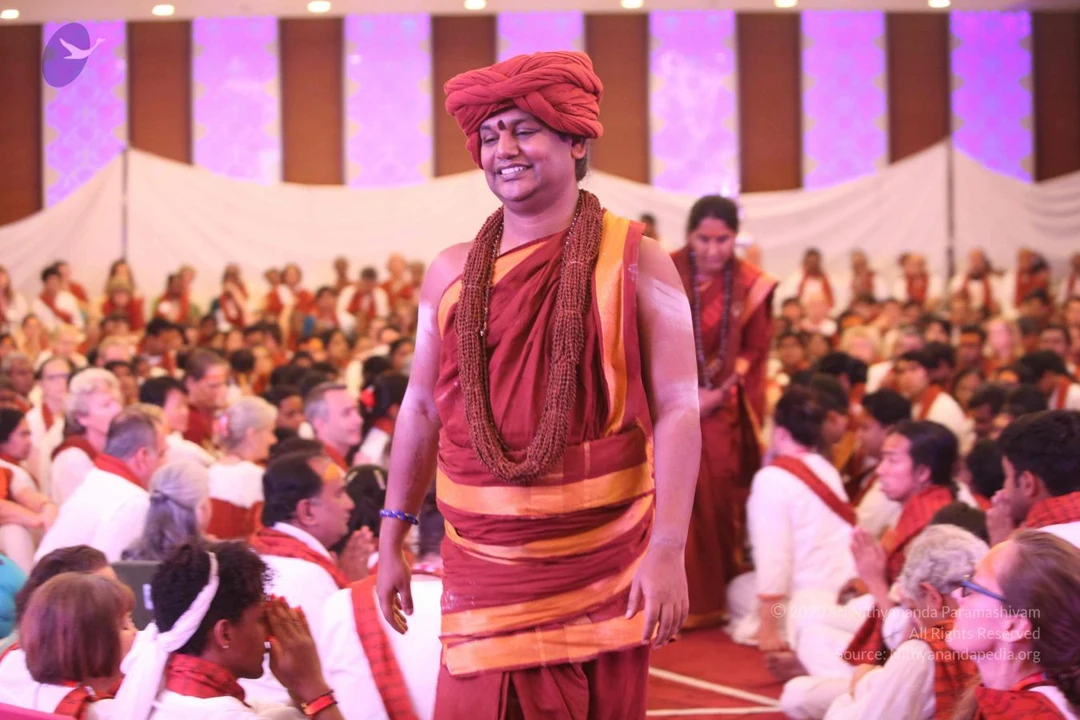
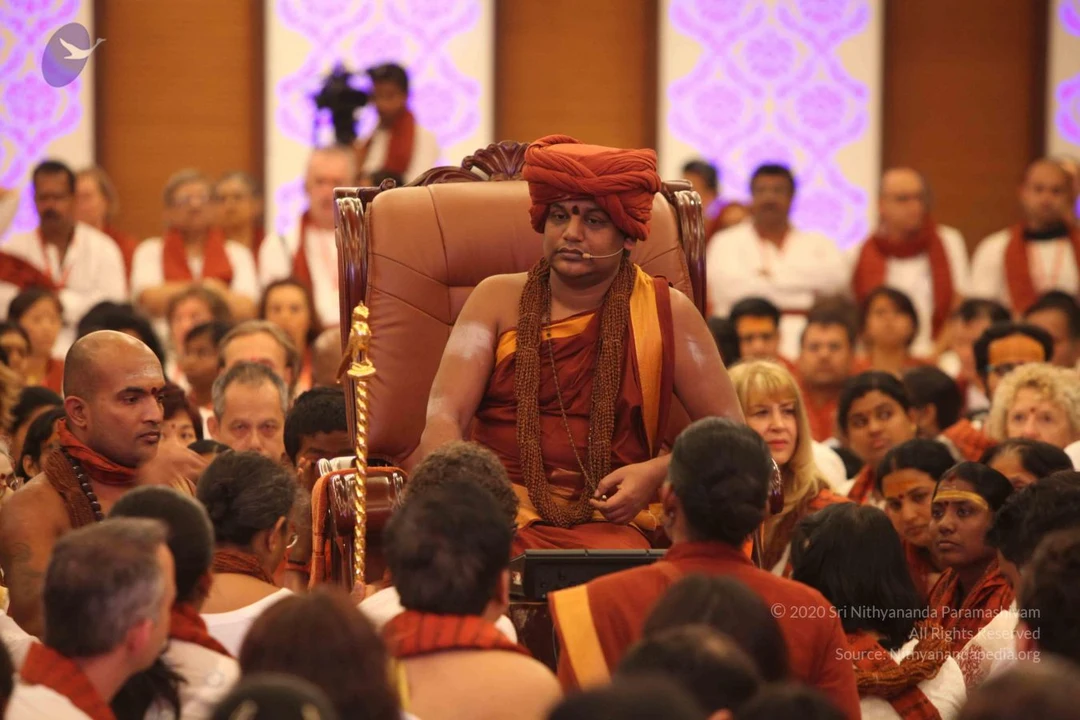
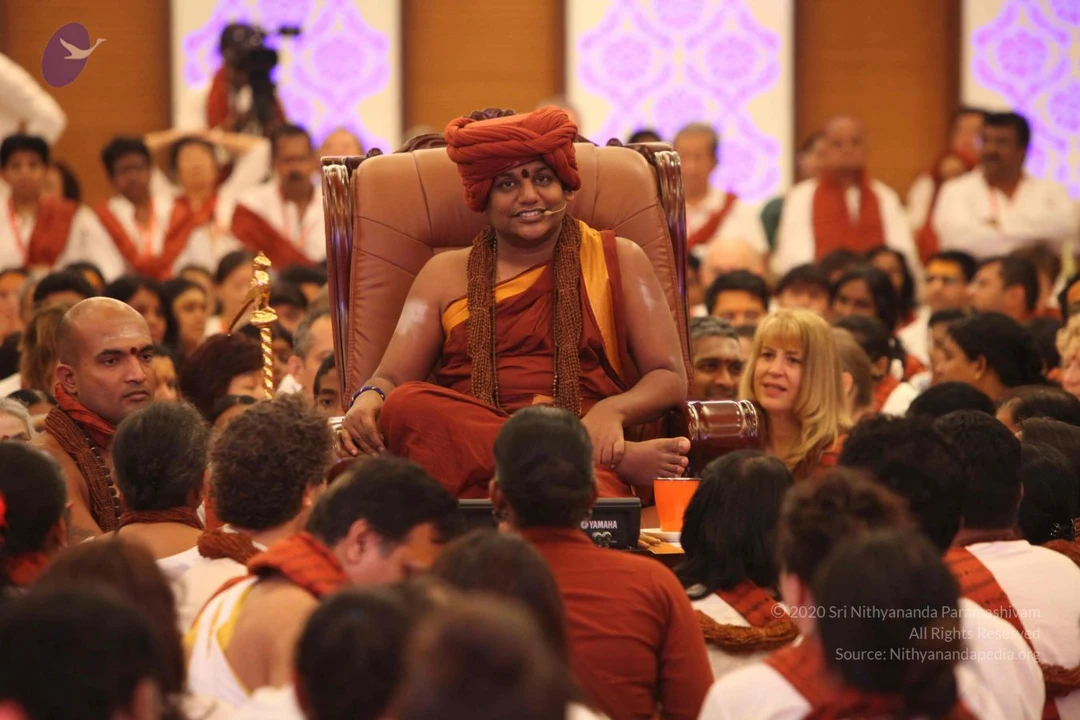
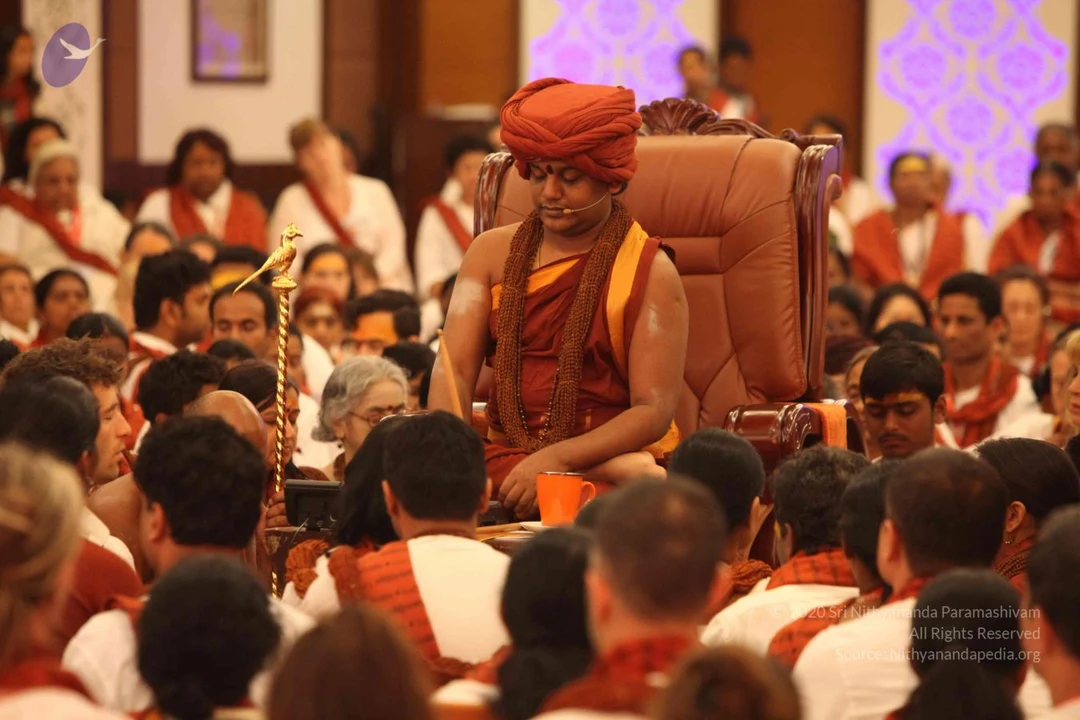
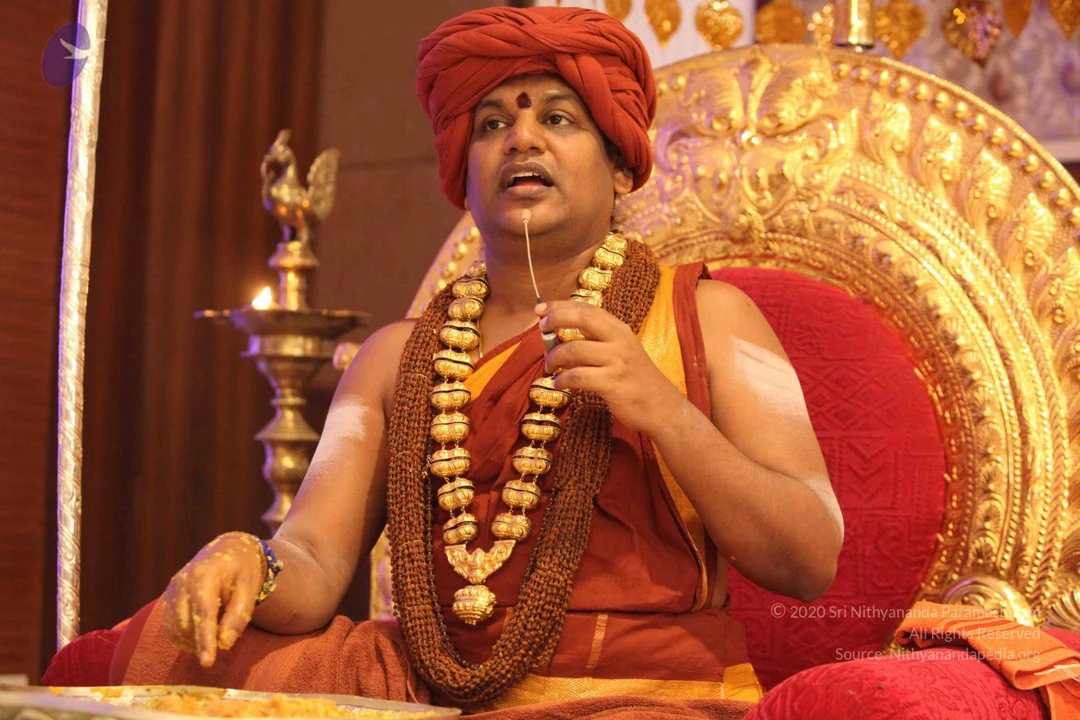
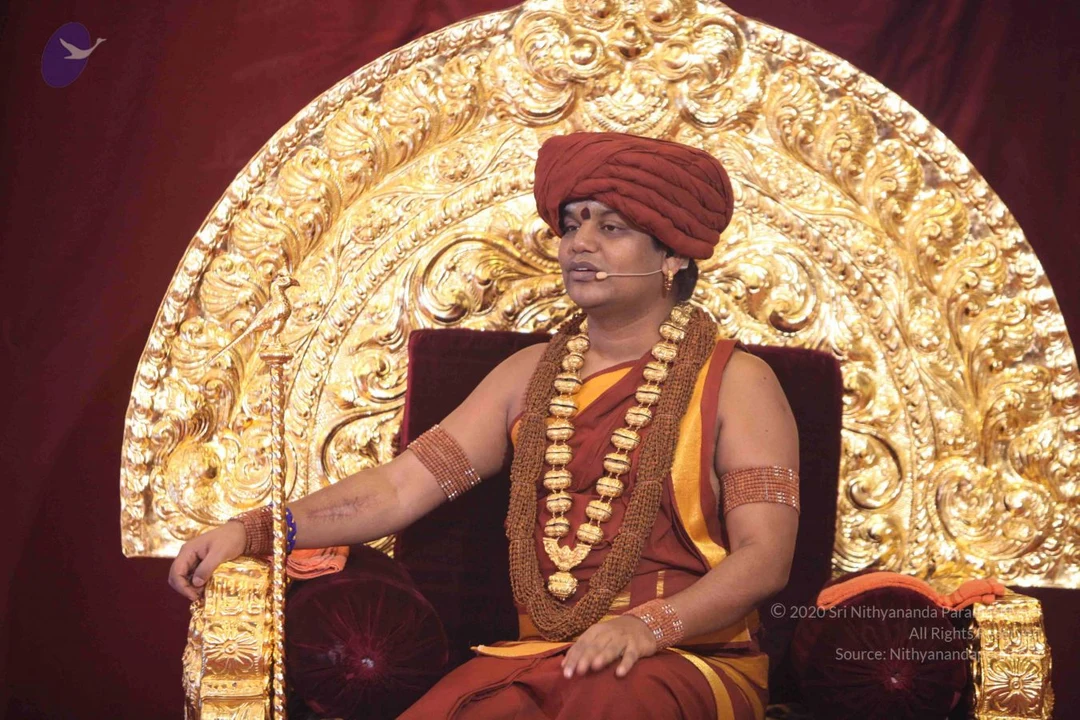
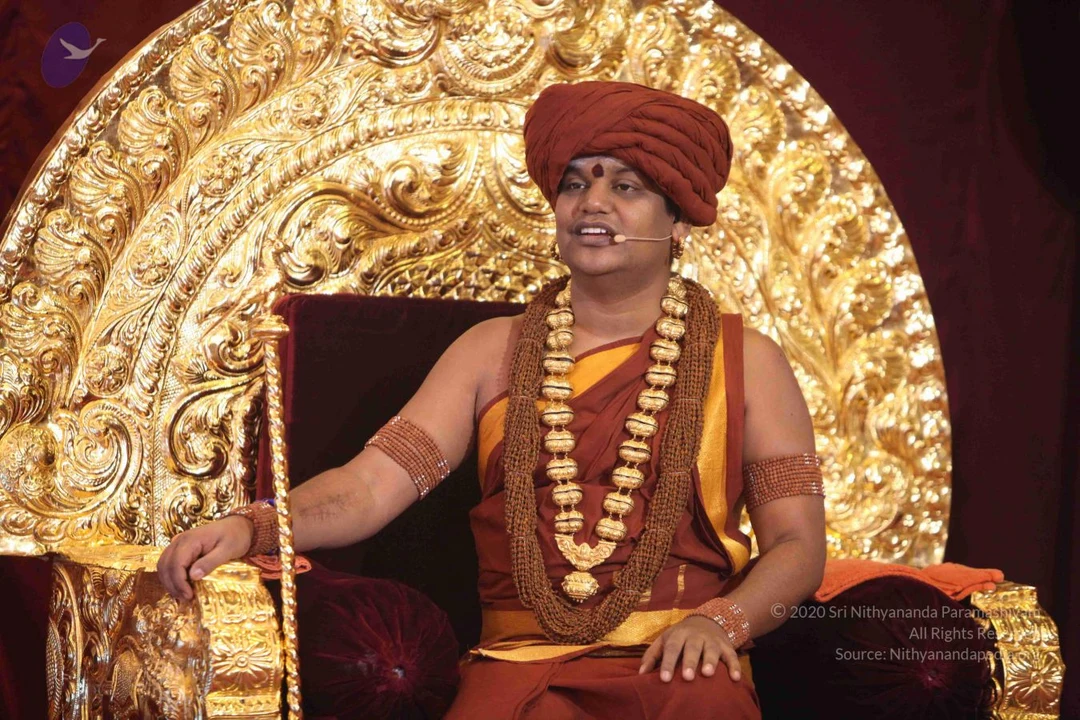
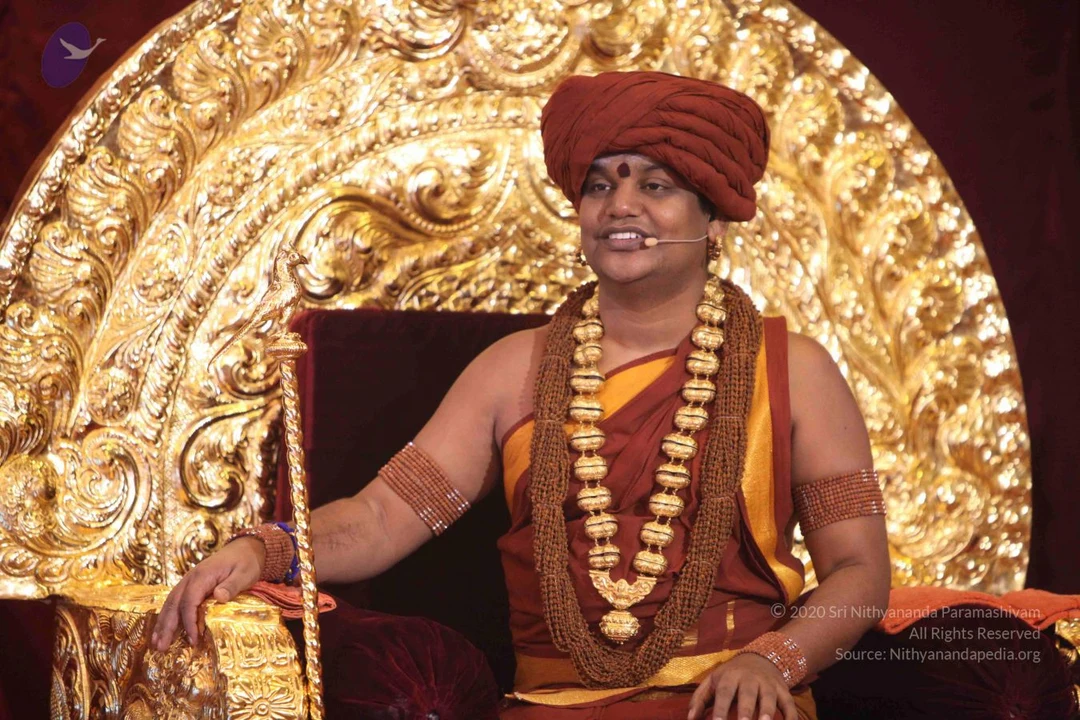
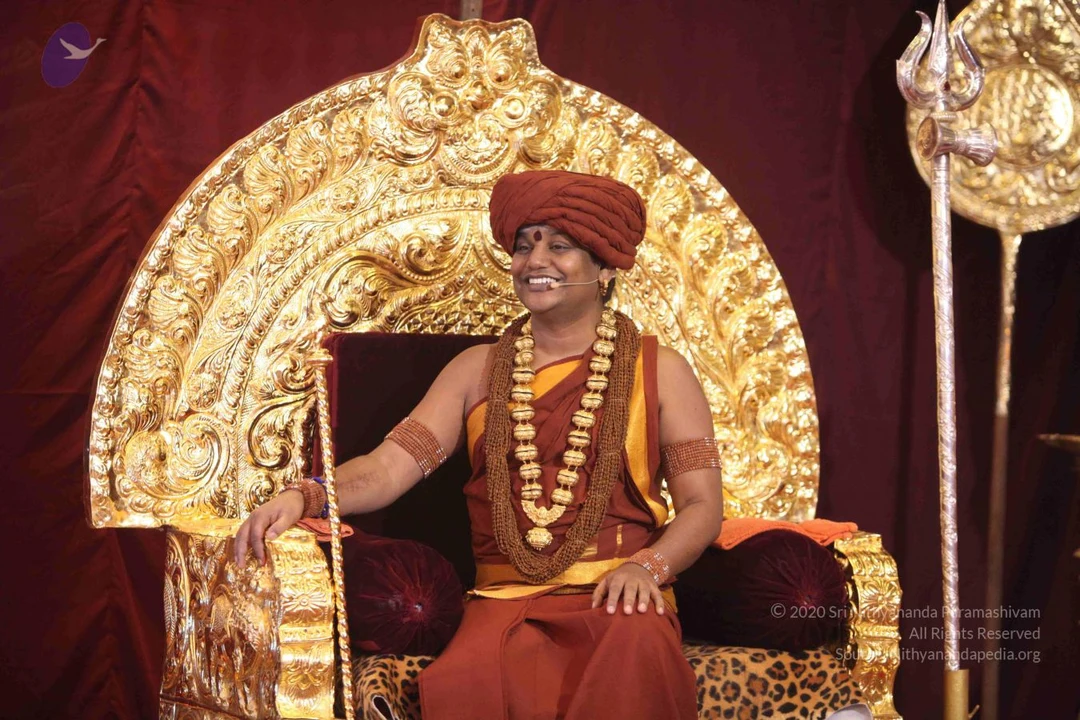
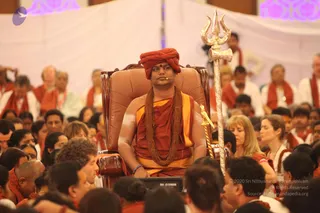
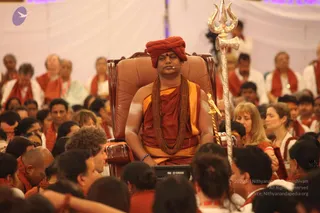
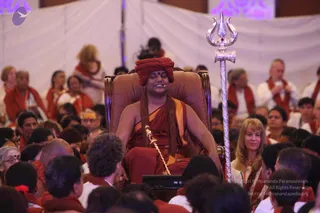
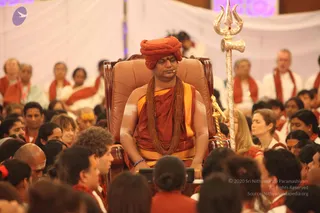
Today’s (23May15) Nithya Satsang on Kathopanishad from Varanasi, Paramahamsa Nithyananda enters into vividly narrating how the Cosmic space is created for the delivery of Enlightenment, the Reality. With the Shanti Mantra, peace invocation, he sets the context for future vision for Indian Education System, which comes from the right past. One needs to prepare for Death to prepare for Life. Unhearing the cries of a powerless disciple who feels the pain of human existence, a Master needs to insensitively deliver the Truth as it is. Yama Dharma, who does the perfect full-time job of granting Death, the most important reality of humans, is uncompromising in revealing the Akashic Records on Death. Because of the authenticity of Naciketa, one of the greatest disciples who happened on earth, and the intensity of Yama Dharma as the Master, the space is created for Enlightenment to be delivered by the Cosmos.

Link to Video:

VideoAudio

Transcript:

Nithyanandeshvara Samaarambhaam

Nithyanandeshwari Madhyamaam |

Asmath Aachaarya Paryanthaam

Vandhey Guru Paramparaam ||

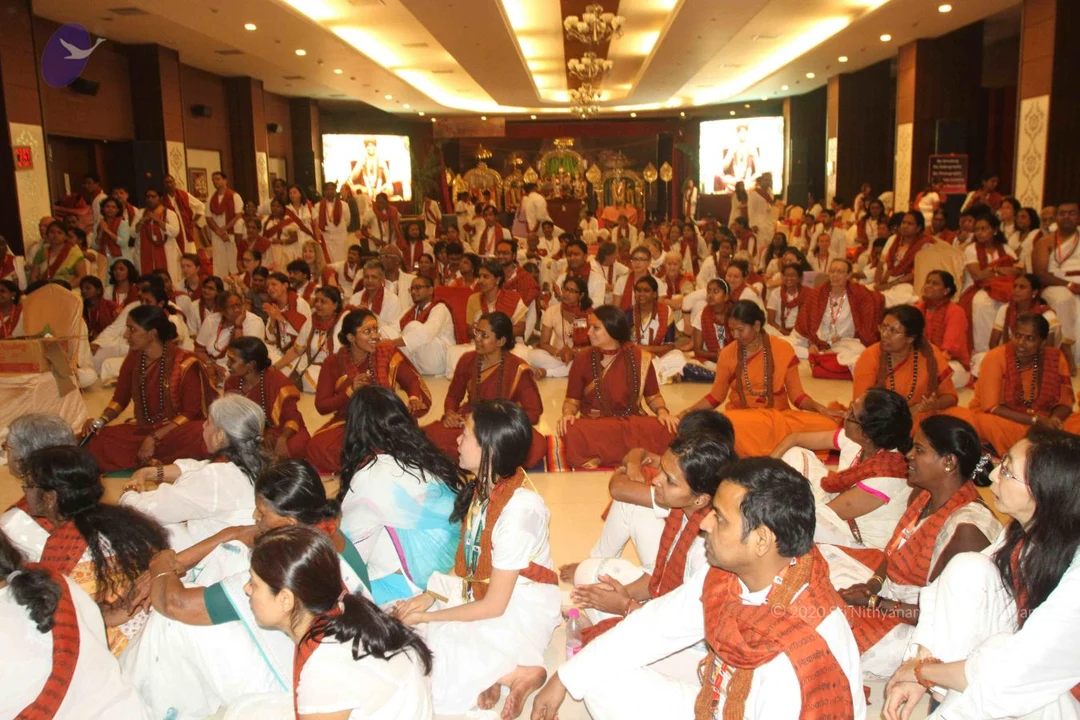
I welcome all the devotees, disciples, samajis, satsanghis, sri mahants, mahants, thanedar, kotari, visitors, viewers, everyone sitting with us through Nithyananda TV, Sadhna TV, Lotus News Channel and Arra TV and two-way video-conferencing having Nayana Deeksha.

Cities sitting with us in two-way video-conferencing having Nayana Deeksha: Kuala Lumpur-Aadhenam, Oklahoma-Aadhenam, Tiruvannamalai-Aadhenam, Los Angeles-Aadhenam, Hyderabad-Aadhenam, St. Louis-Aadhenam, San Jose-Aadhenam, Montreal-Canada, Toronto Canada-Aadhenam, China, Melbourne-Aadhenam, Redmond-Washington, Surrey-Canada, Seattle-Aadhenam, Nithyanandeshwara Hindu Temple, Los Angeles, Ohio-Aadhenam, and Houston, Santa Fe-New Mexico, Amersfoort-Netherlands, Enriching Temple Bidadi, Nithyanandanagaram-Hyderabad, Sun Prairie-Wisconsin, Wellington-UK, Singapore-Aadhenam, Monterey-Mexico, Nithyanandanagaram-Bidadi, Vancouver, Kuala Lumpur-Aadhenam, Melbourne-Aadhenam, Toronto-Aadhenam, San Jose-Aadhenam and Seattle-Aadhenam, Mukta-Seattle. Some more cities are joining.

I welcome all of you with my love and respects.

2:28

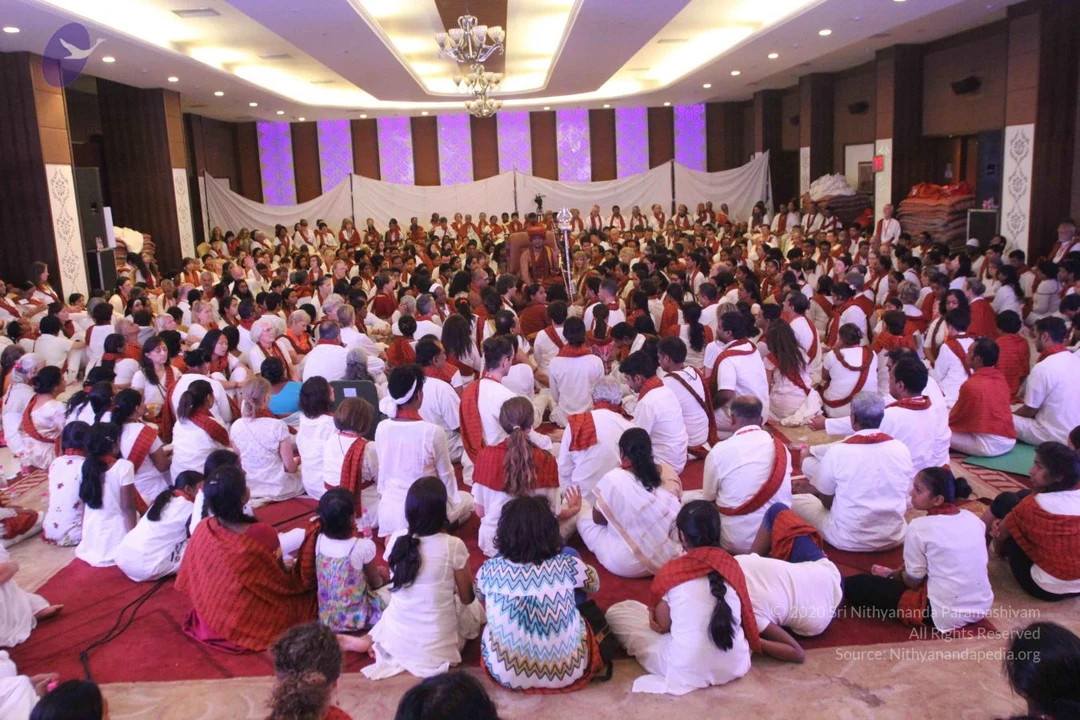
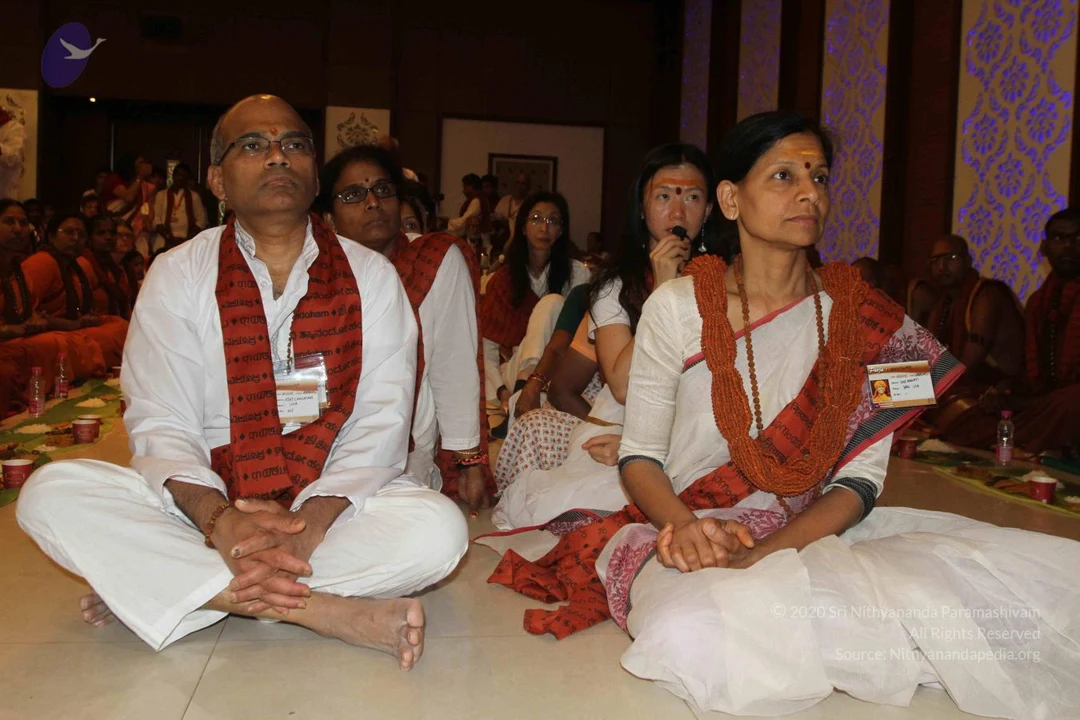
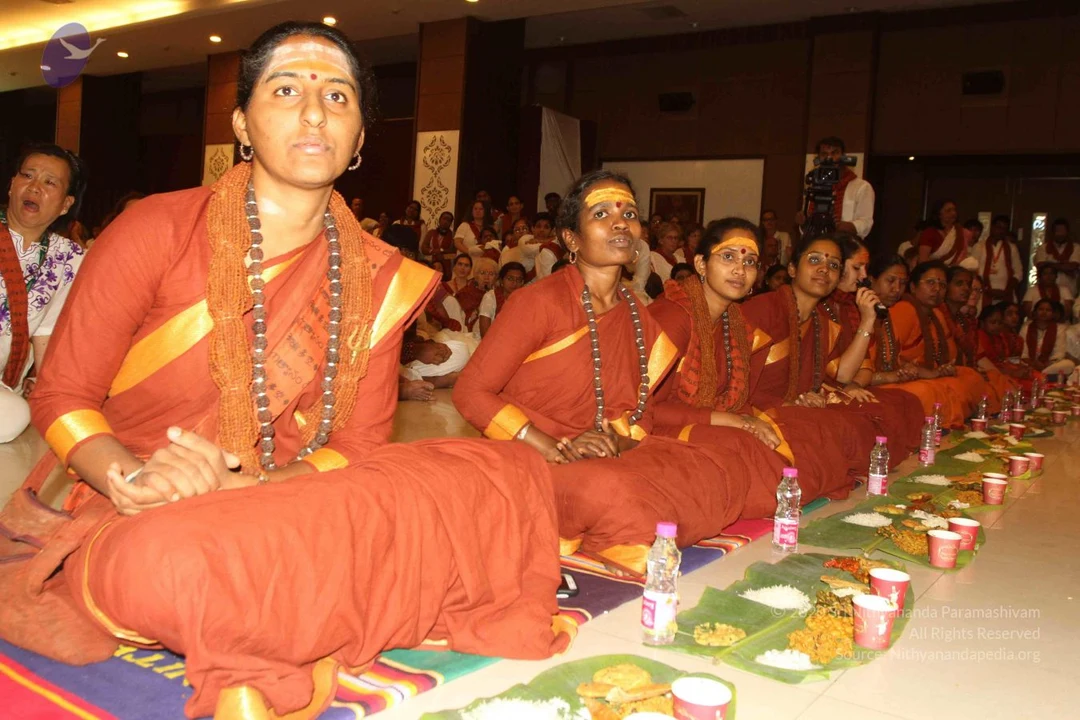
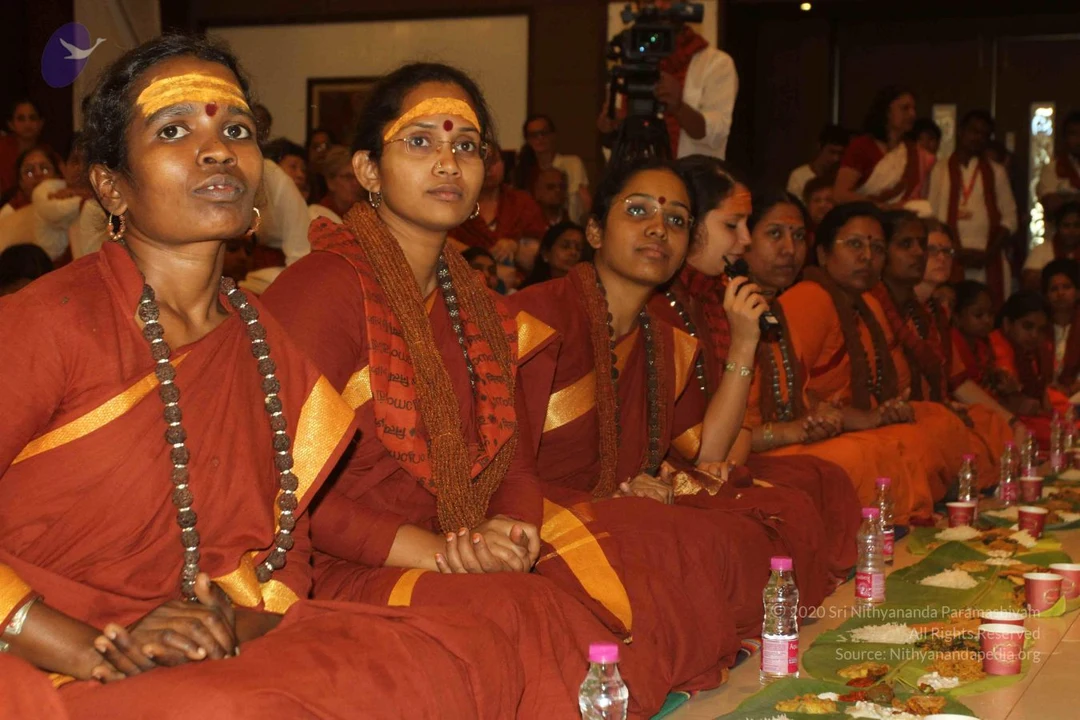
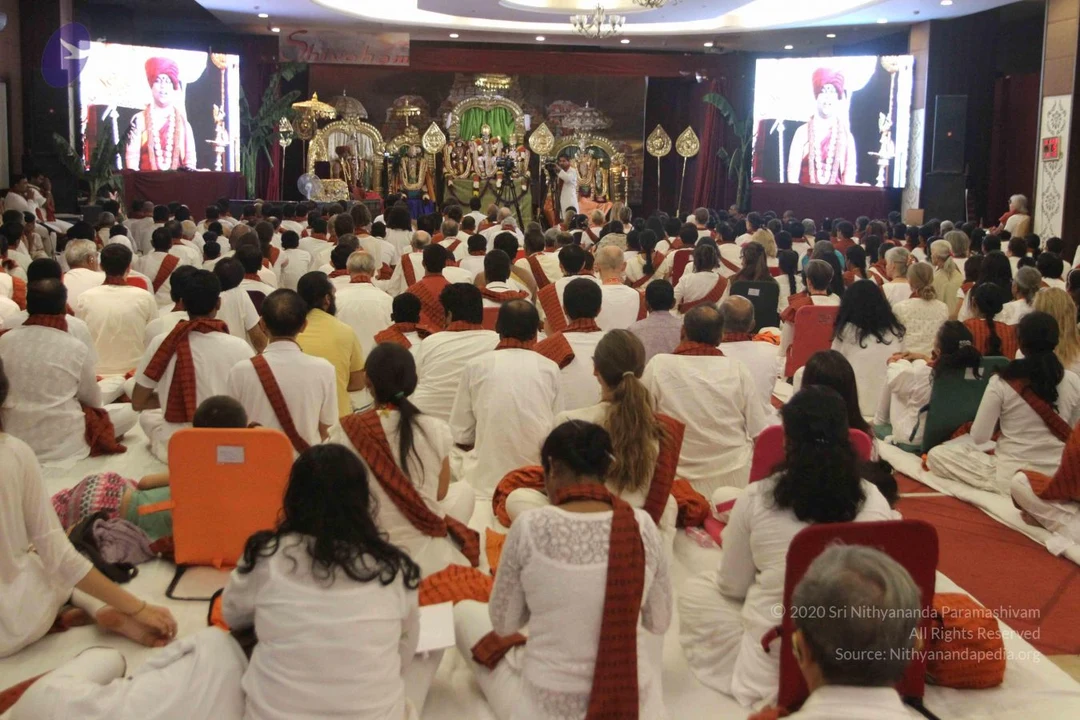
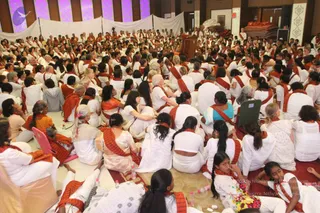
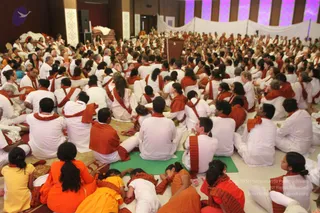
The intensity of Shivoham can be heard, in the cough sound [laughs]. The amount and kind of a cleansing going on, sound that actually first cleanses your vocal chord, that is why the sound which comes from outside also cleanses your vocal chord. The whole Shivoham process in Inner Awakening in Varanasi is going so intensely. See the intensity of the Shivoham process cannot be measured on the amount of jumping and shaking, that I’m not teaching high jump, long jump – please understand. It can only be measured based on the depth which you are going through, the kind of experience you are radiating, the way you are melting into Shiva. The ‘Aham’ merging into Shiva, ‘Aham’ merging into Shivoham. The way your inner space is working in liberated thinking, it’s only in that way the whole experience is flowering.

Let me enter into Kathopanisad, the Shanti Mantra. Please recite the Shanti Mantra along with me.

auṁ saha nāvavatu | saha nau bhunaktu | saha vīryam karvāvahai | tejasvi nāvadhītamastu mā vidviṣāvahai || auṁśāntiḥśāntiḥśāntiḥ ||

5:15

Listen! The whole concept of Indian education system, how it was, how it should be – in future – how it was and how it should be in future. Please understand, whenever I am glorifying the past, I am not indulging in it, I am visualising it for the future. Listen! If the past makes you more and more powerless, you are indulging in it. If it makes you to decide to build your future again and again, it is vision. It is vision.

Understand, all you need to do in your life, all you need to do to make what you want as reality. Looking at the right past, that gives you courage, hope, to relive it, to recreate it, the real future. Here the word ‘past’ I use should be understood not from the context of your past, but from the context of collective past. Understand, whenever I am describing about Vedic tradition, I am describing the gory of the collective past created by enlightened masters. I am not talking about your past.

7:32

You have nothing to learn from your past other than noting needs to be learnt from your past. The only thing you need to learn from your past is nothing needs to be learnt from your past. I’m not talking about your past when I am talking about the past; I am talking about the glorious Rishis’ past, the past created by the glorious civilization of Rishis.

How the Indian Education System was, and how it should be – the whole context is set in this one Shanti Mantra. Because the subject they’re going to work, the subject which is going to be taught in this Upanishad is the essence of Indian education system.

8:33

Please understand, Indian education system prepares you for death; using that same principles prepares you for life. Please understand, first it prepares you for death and then, using the same principles, prepares you for life. Because life is an option, death is not. Life is a possibility, but death is not. It is simple fact and truth and reality. Death is the only one thing which is fact, truth and reality. So the Hindu tradition educates you first, prepares you for death. From that context, prepares you for life.

Yama Dharma, the Master who read the Akashic Records about death in this Upanishad, and Naciketa, one of the greatest disciple ever born on the planet Earth. Please understand, the power and authenticity of the disciple is such, Master serves him, gives him the boons, and gives this knowledge. Not a single reference, Naciketa served Yama Dharma, no. But there is enough of reference in this Upanishad, Naciketa was served by Yama Dharma and his staff. Yama has staff, it is recorded in this Upanishad.

10:38

Understand, the authenticity of the disciple is such, Master decides to serve the disciple and teach, and share the knowledge. When I try to introduce Yama Dharma’s teacher dimension which is explained in this Upanishad, Kathopanisad, which is expressed in this Upanishad, Kathopanisad, I just can only use one word: Intensity. Whether he tries to take the life in mass, or he tries to teach. He is a no-nonsense man, I am telling you.

By taking away so many lives, doing his responsibility so well, he lost all sensitivity to the stupidity of human beings. He lost all sensitivity towards tears, emotions, ability to accept or unable to accept. He’s not bothered about any of this, he lost all his concern about all this. I think that is one of the important requirement for a teacher, for a Master. He should see to it that the disciple becomes reality. Sometimes, out of pain disciple will scream, he may not be able to accept, he may not be able to realise.

12:36

There’s a beautiful story in Shiva Purana. When Vishnu took Varaha Avatar, means the big body get the Veda’s back. After the purpose was done, even after the purpose was done, he did not return to Vaikuntha to his original state of Vishnu. He just got married to another one female pig and started giving birth, and he’s happily enjoying the pig life, cosily, having all his kids, running around with them, playing, enjoying. And the Yuga is passing, this fellow is not returning to Vaikuntha.

All the Devatas are running to Kailaasa, ‘Oh Mahadeva, what is this?’ Mahadeva says, ‘Just go and talk to him and remind him he’s Vishnu, he’s not pig.’ And the Devatas they say that no, no, we went and tried to talk to him, he just drives us out. Because, he may be in the pig body, because he’s a Vishnu he has all powers. He’s using all the powers and driving us out and asking us to keep away and he just wants to be in that body, enjoying the cosy life. Without realising he is Vishnu. Understand, there are so many Varaha here.

14:20

Then finally Mahadeva sends Devi. Devi also could not do anything. She comes back and says ‘No, he’s not recognising me. He’s not ready to even look into my eyes.’ Then Mahadeva decides no it is now too serious, he goes and straight, straight he goes and picks up the Varaha Avatar by neck and just kills him, straight. No talking, nothing. He just tears the body.

The moment that Consciousness came out, he realised I am a Vishnu [laughs]. I am Paramdhaam Vishnu, I have to go back to Vaikuntha. And He stood in front of Mahadeva and saying, “really sorry that you have to come down from Kailaasa all the way to free me.”

15:22

Please understand, when he was tearing, seems the pig was crying, calling out every name. But if Mahadeva cares for the pain of the pig, will the Vishnu happen? At some time, you can’t, a Master has to make the disciple stand.

Here the whole subject is Death. Death himself is talking about Himself. He has already become insensitive to stupidity of human beings. He just stands tall to the truth of human beings. The possibility and reality of human beings. Because he’s already achieved insensitivity to stupidity of human beings, because of his intensity. Now, he’s so straight.

16:44

Please understand, no other book, no I’m not disrespecting Mahadeva – even Mahadeva’s description about Death in Shivagamas and Tantras cannot be compared to Yama Dharma’s description of Death in this Upanishad. No comparison; because that needs a kind of a personality. See a teacher needs a kind of a personality suited for the subject he is teaching.

You can’t expect a personality not being influenced by the subject he’s constantly handling. That is why, if you pick up all the maths teachers from all the college they will look almost same. For a maths teacher there’s a special mould, for a maths teacher there’s a special mould, for English teachers there’s a special mould, for Tamil teacher there’s a special mould. Almost in all schools. Because the subject you are constantly thinking and indulging affects your personality.

18:09

Here Death, whole day is indulging only in death. For Mahadeva it’s a part-time job. For Yama Dharma it’s a full-time job, whatever is said and done. See Yama Dharma may not be able to deliver many truths of different subjects, the Scale of Mahadeva. But in Death, no-one is able to match Yama Dharma. That one thing I should put it on record, I should make this available on record: Yama Dharma is uncomparable when it comes to his subject. He’s really the Master; Master of his subject.

Death – what a straight, uncompromising revelation on one of the most important reality of human beings, this Kathopanisad. Because of the authenticity of the disciple, Yama Dharma does not need to compromise; does not need to compromise.

19:39

See Devi is embodiment of Grace. So whenever Mahadeva reveals some powerful reality which is painful for human beings, or disciples to practise, Devi says ‘Don’t worry, Mahadeva, you should not be that strong. Through my Grace I will liberate them. It’s okay.’ So the intensity of the teaching takes the backburner.

It is like when the Shivoham process started happening, the completion takes backburner. When the Grace is flowing, you self-effort takes the backburner.

20:26

But here, fortunately Yama Dharma’s wife is not interfering. And Naciketa is so authentic, he’s all about truth. Just truth, truth, truth. He’s all about truth. And the authenticity of the disciple, ability of the disciple to face the truth gave courage to the Master. Yama Dharma, Yama Dharma even warns Naciketa ‘No don’t ask for that, ask for anything else’.

Naciketa says ‘No’. Even accuses of Yama Dharma of cheating him. ‘No, I’m not interested in anything else, get me only that.’

I think that kind of a space, which got created by the authenticity of Naciketa gave the courage to Yama Dharma to reveal the truth as it is. Authenticity of Yama Dharma, intensity of Yama Dharma, and the sincerity of Naciketa – the kind of a space the created for the delivery of the reality. Delivery of Enlightenment.

22:07

I am just trying to describe – actually whenever that kind of a space is created, the Cosmos has to deliver enlightenment. And the best things has to happen. You can’t even verbalise it. Only by creating that kind of a space I can show, demonstrate it is possible.

So I invoke that space created by Naciketa and Yama Dharma here. Let the Enlightenment happen.

I bless you all, let you all radiate with integrity, authenticity, responsibility, enriching, causing living Advaita the eternal bliss, Nithyananda. Thank you. Be blissful.

Title

Shodasi Mantra Initiation || Part 1 || IA || 23 May 2015

Description

Name Of The Program : Inner Awakening Session on: Srimandala Initiation into 16 Source Sounds Date : 23 May 2015 Venue : Varanasi, India Title : Initiation into Shodasi Mantra Part 1

In this video Supreme Pontiff of Hinduism HDH #Nithyananda Paramashivam introduces into the Science of Sound and Lines and its connection on us. He continues with the insights on the Srimandala initiation process which involves using 16 Primal sounds of the #cosmos called as "#SHODASI" The sound has the possibility to awaken multiple layers of powers.

Link to video:

VideoAudio

Title

Shodasi Mantra Initiation || Part 2 || IA || 23 May 2015

Description

Name Of The Program : Inner Awakening Session on: Srimandala Initiation into 16 Source Sounds Date : 23 May 2015 Venue : Varanasi, India Title : Initiation into Shodasi Mantra Part 2

In this video Supreme Pontiff of Hinduism HDH #Nithyananda Paramashivam continues expanding on the Science of initiation through 16 sounds and initiates the participants into the #Srimandala process. The combination of these 16 sounds can instil many powers in you and helps to get rid of incompletions, #depression and any patterns in a very powerful way.

Link to Video

VideoAudio

Title

Introducing Third Eye Awakening || IA || 23 May 2015

Description

Name Of The Program : Inner Awakening Session on: Introducing third eye awakening Date : Varanasi, India Venue : 23 May 2015

In this video Supreme Pontiff of Hinduism HDH #Nithyananda Paramashivam introduces third eye power for the first time to Inner Awakening participants after it has already been manifested only by kids in the Adheenam. HDH shares the truths that intuition is also a #power, insists to drop the Self-Doubt, Self-Denial, Self-Hatred about. Also shares how eye sight problems will be cleared if #thirdeye is awakened.

Link to video:

VideoAudio

Title

Radiate Joy Radiate Bliss || IA || 23 May 2015

Description

Name Of The Program : Inner Awakening Session on: Introducing Third Eye Awakening Venue : Varanasi, India Date : 23 May 2015

In this video Supreme Pontiff of Hinduism HDH #Nithyananda Paramashivam introduces third eye power for the first time to Inner Awakening participants after it has already been manifested only by kids in the Adheenam. HDH shares the truths that intuition is also a #power, insists to drop the Self-Doubt, Self-Denial, Self-Hatred about. Also shares how eye sight problems will be cleared if #thirdeye is awakened. Supreme Pontiff of Hinduism HDH #Nithyananda Paramashivam answers the questions asked by participants of the program.

Watch, share and like our videos | Subscribe to our channel to be notified of the next upload.

Link to Video

VideoAudio

Title

Moments to Cherish || Nithyananda As He Is || IA || 23 May 2015

Description

Name Of The Convention : Inner Awakening Session on: Moments to Cherish Date : 23 May 2015 Venue : Varanasi, India

In this video Supreme Pontiff of Hinduism HDH #Nithyananda Paramashivam graces the delegates with divine moments.

Link to Video:

Title

Nithyananda Times - 23rd May, 2015

Description

The Daily Video Magazine of the Nithyananda Sangha

Link to video:

Other Photos

<
<
>

Tags:

Paramahamsa Nithyananda, Varanasi, Shiva, Inner Awakening, Shivoham, Katha Upanishad, Kathopanishad, Indian Education System, Shanti Mantra, Future Of Education, Yama Dharma, Nachiketa, Vishnu, Mahadeva, Varaha Avatar, Enlightenment, Death, Deathless

Photos Of The Day:

Shivoham
Photos Of The Day:

Maheshwarapooja

Photos Of The Day:

Inner-Awakening-Varanasi

Photos Of The Day:

Maheshwara-Puja

Photos Of The Day:

Maheshwara-Puja

Photos Of The Day:

Shivoham
Photos Of The Day:

Photos Of The Day:

Inner-Awakening-Varanasi

01-Shivoham

01-Shivoham

1-Inner-Awakening-Varanasi

,

Photos from this day

View all 498 photos

Other Photos

1 photoSource gallery
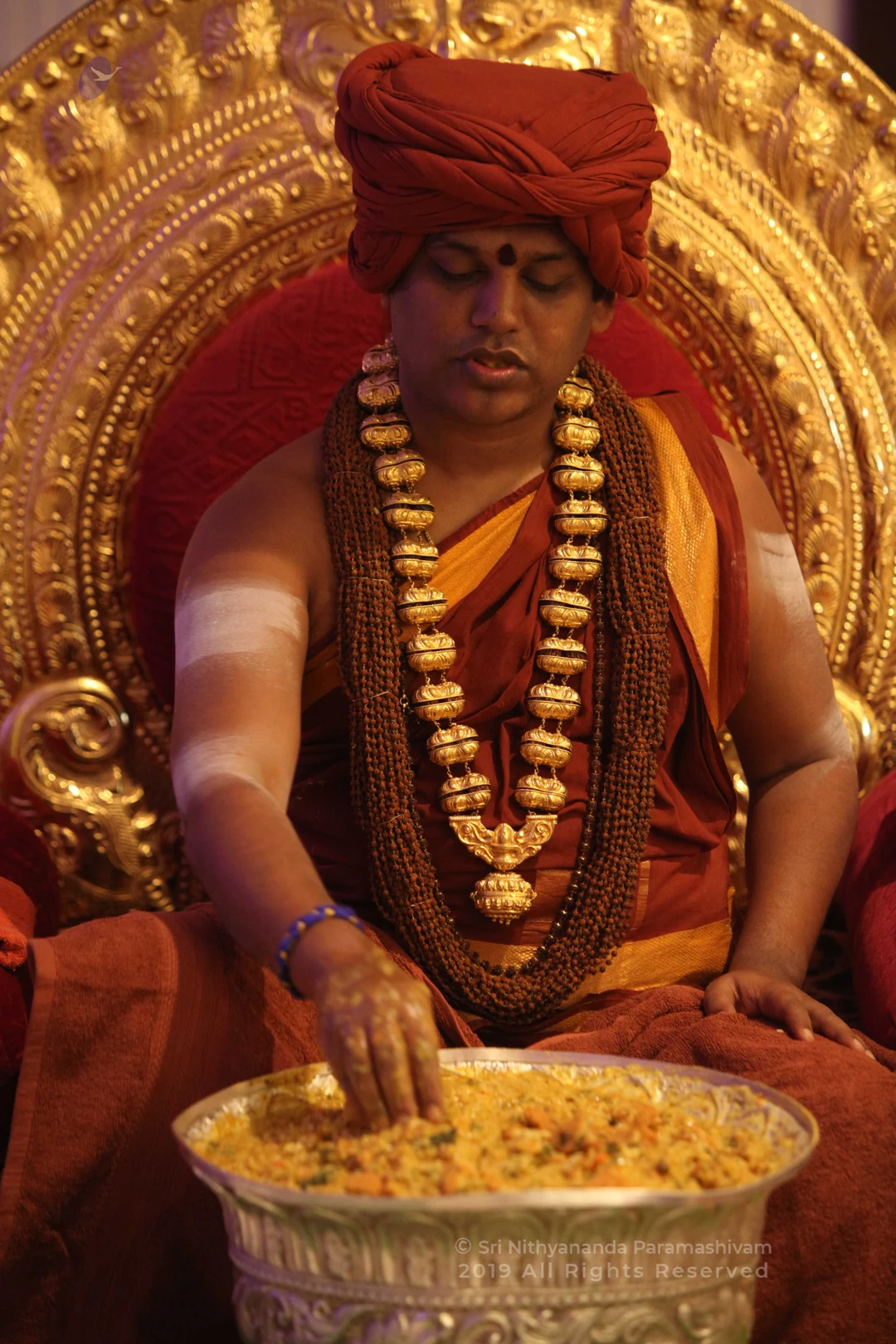
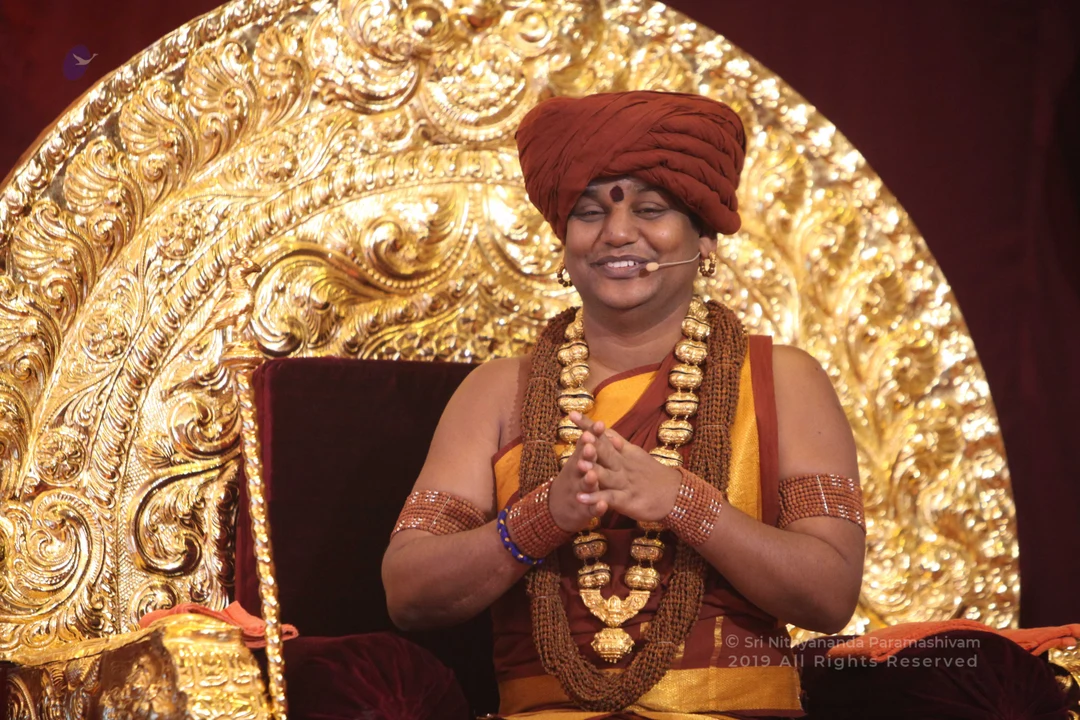
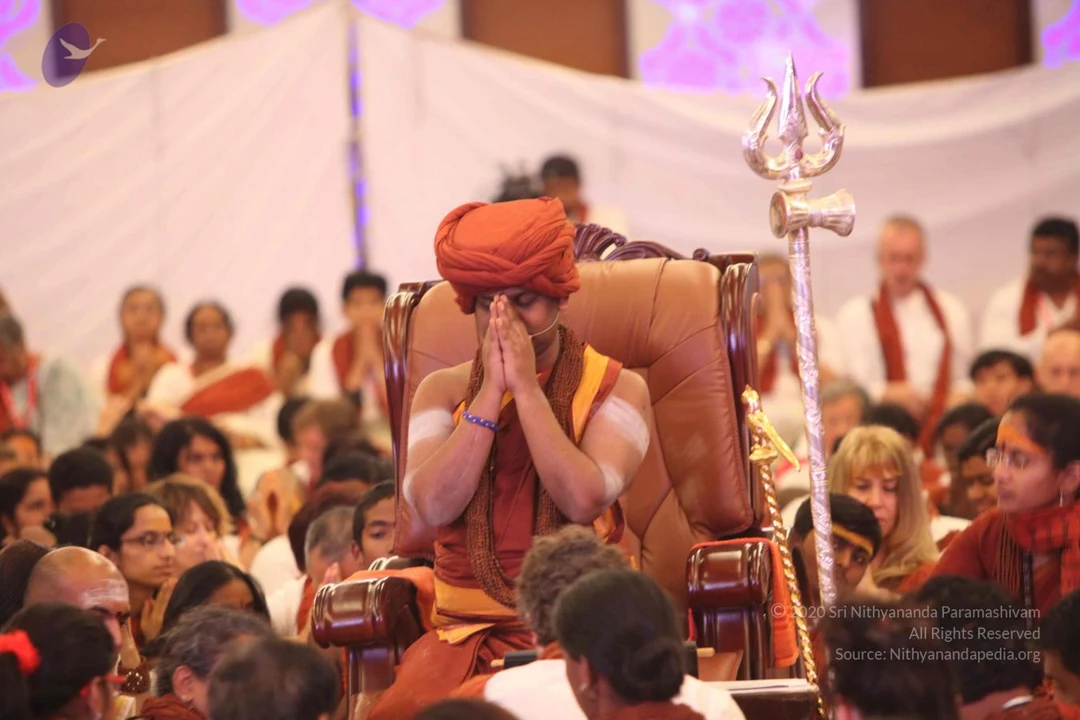
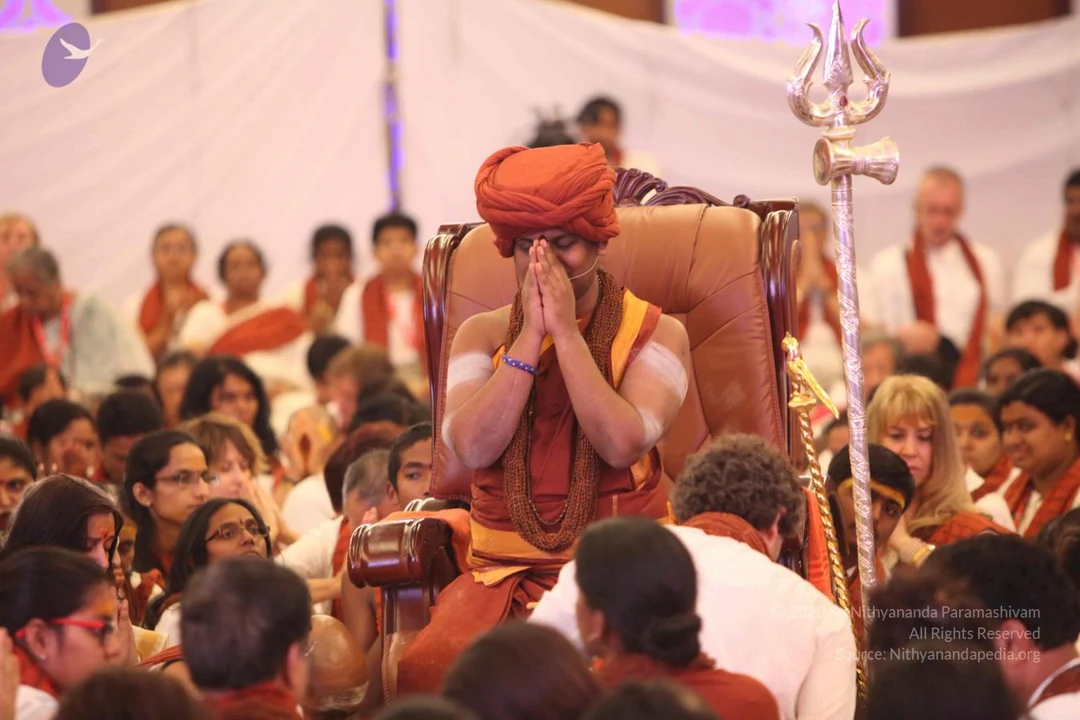
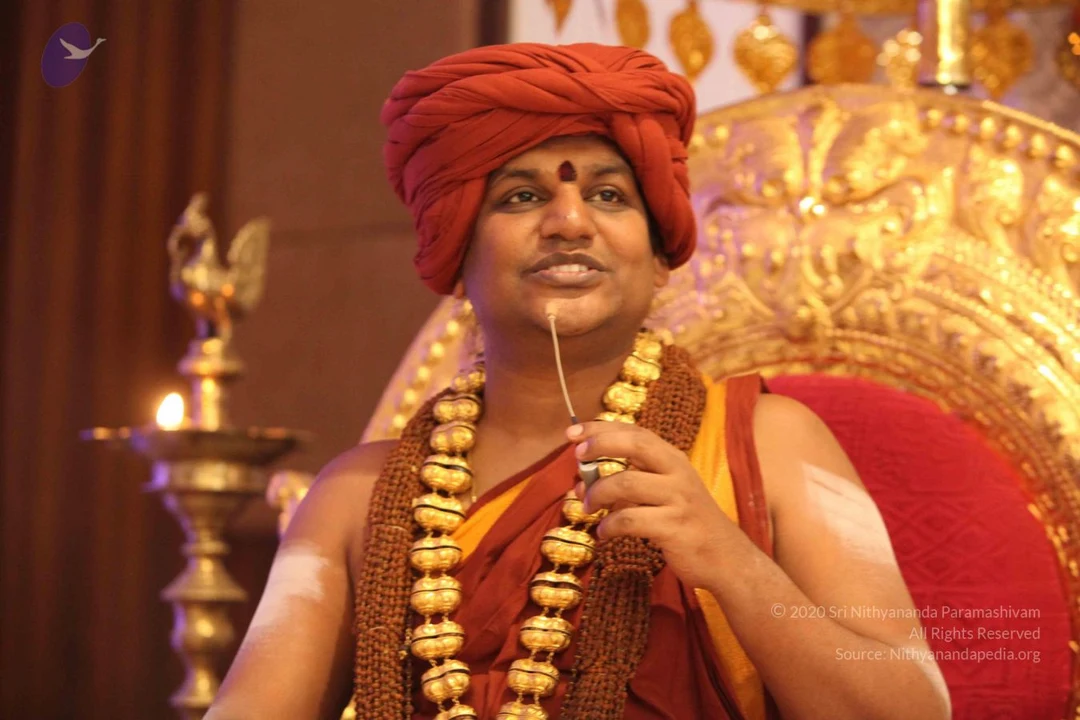
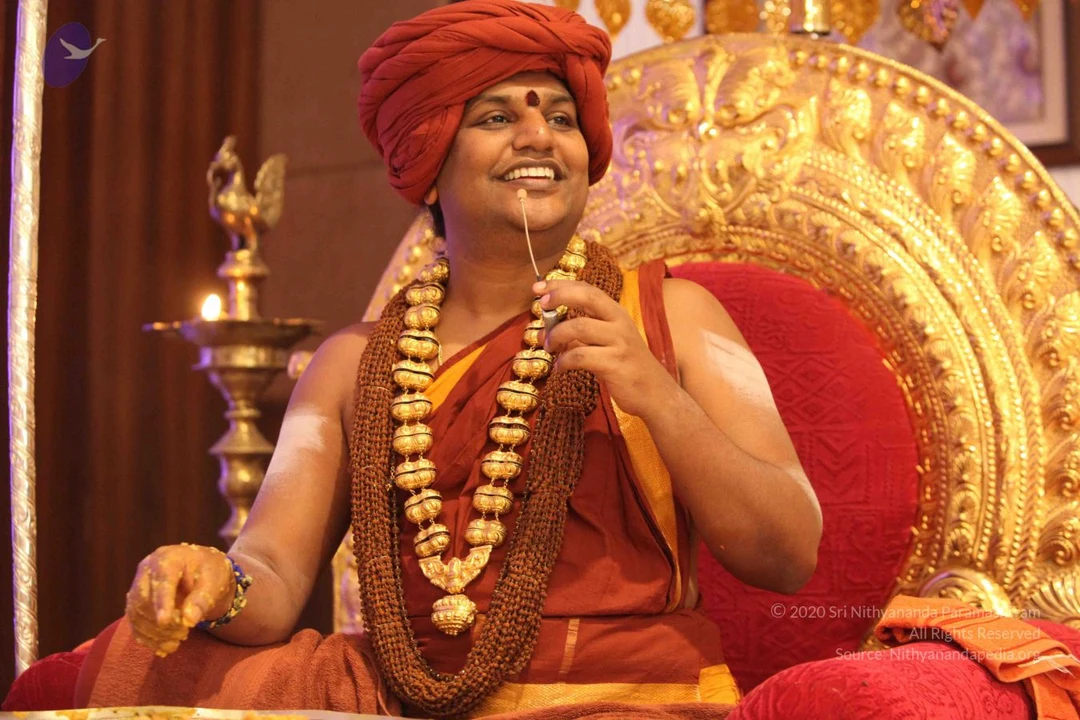
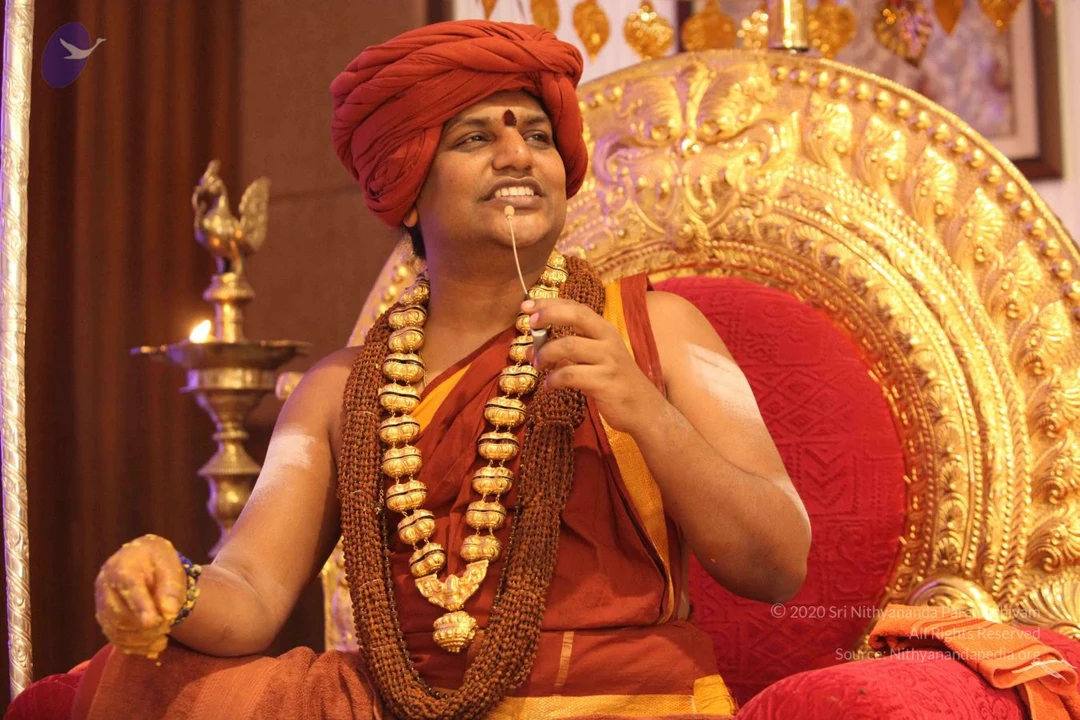
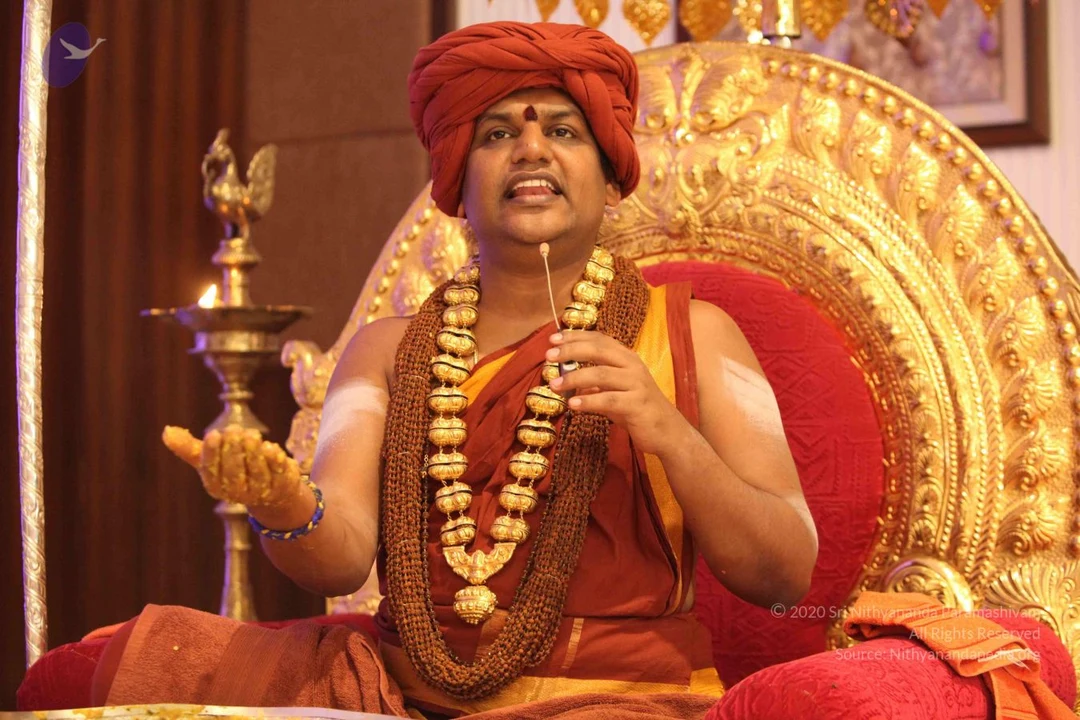
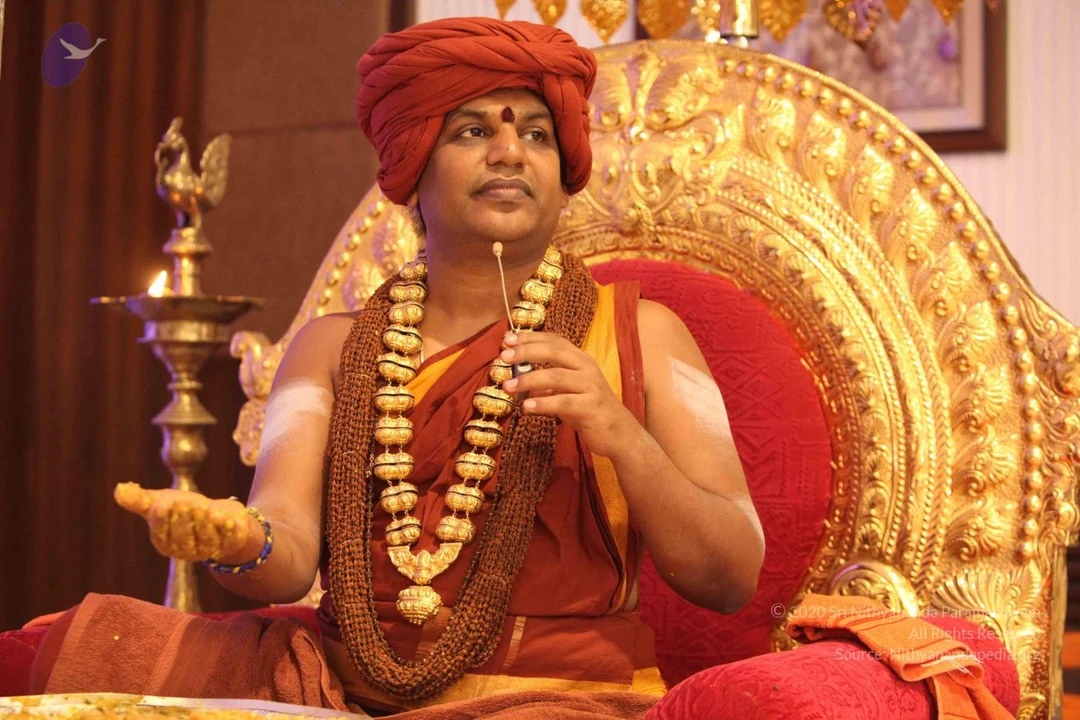
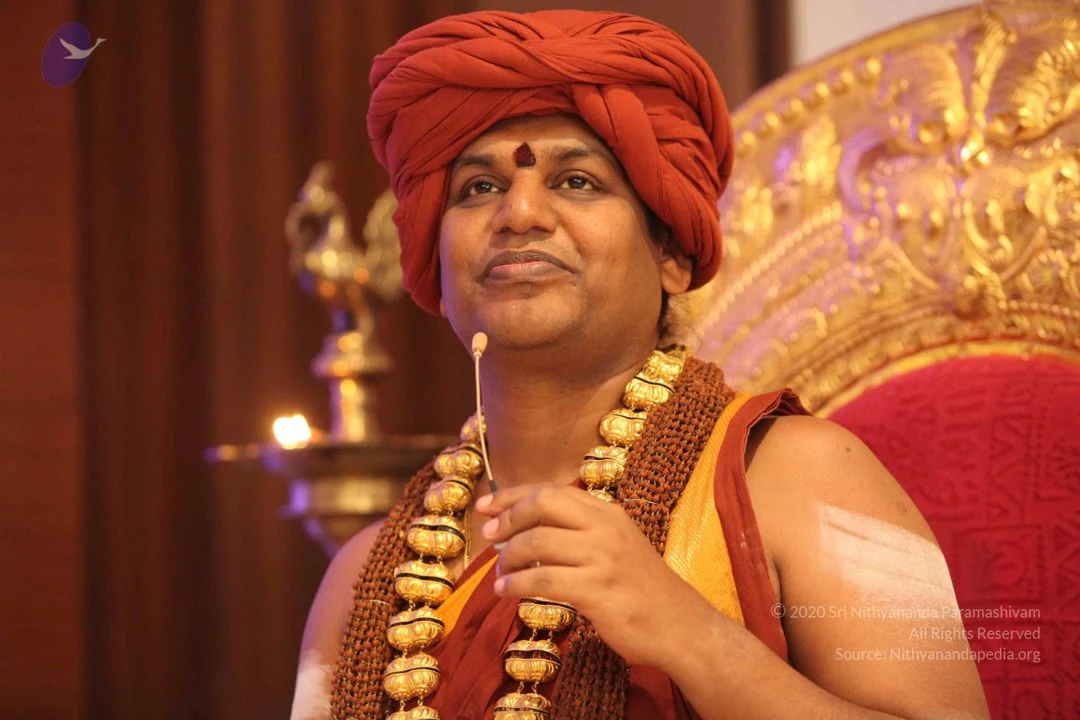
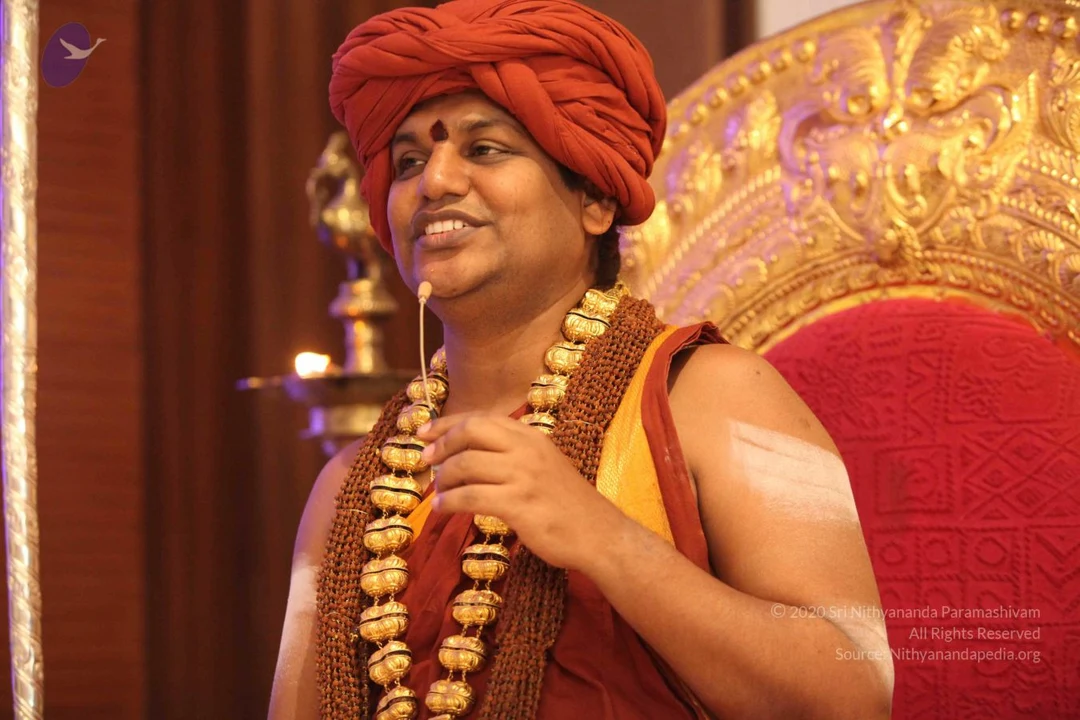
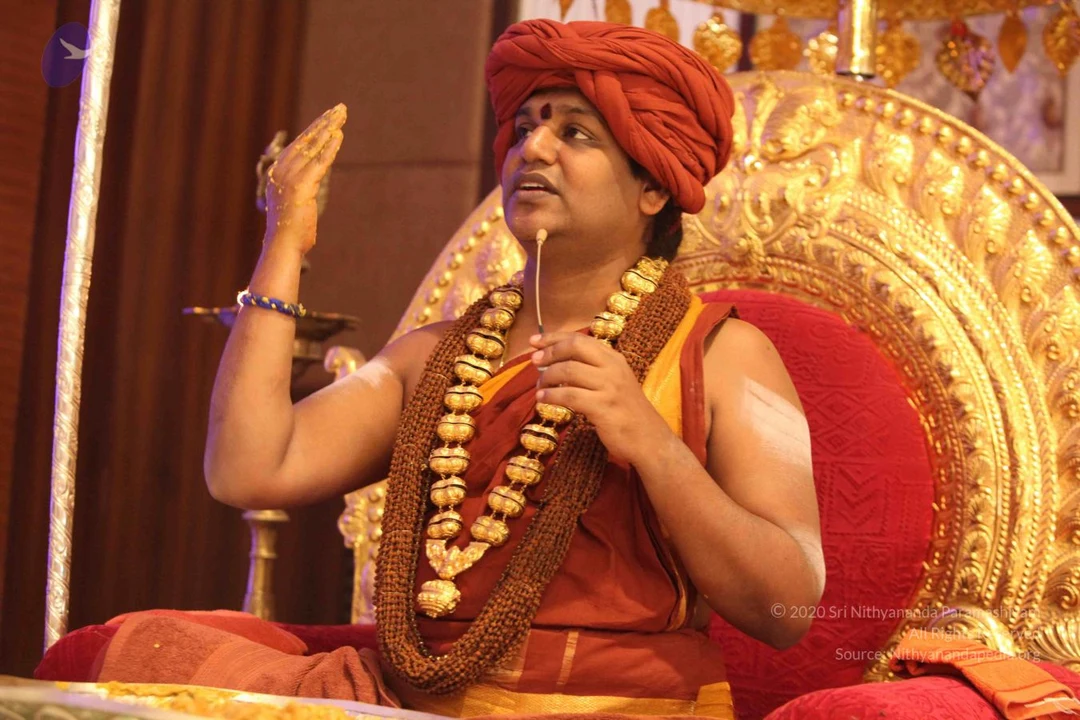
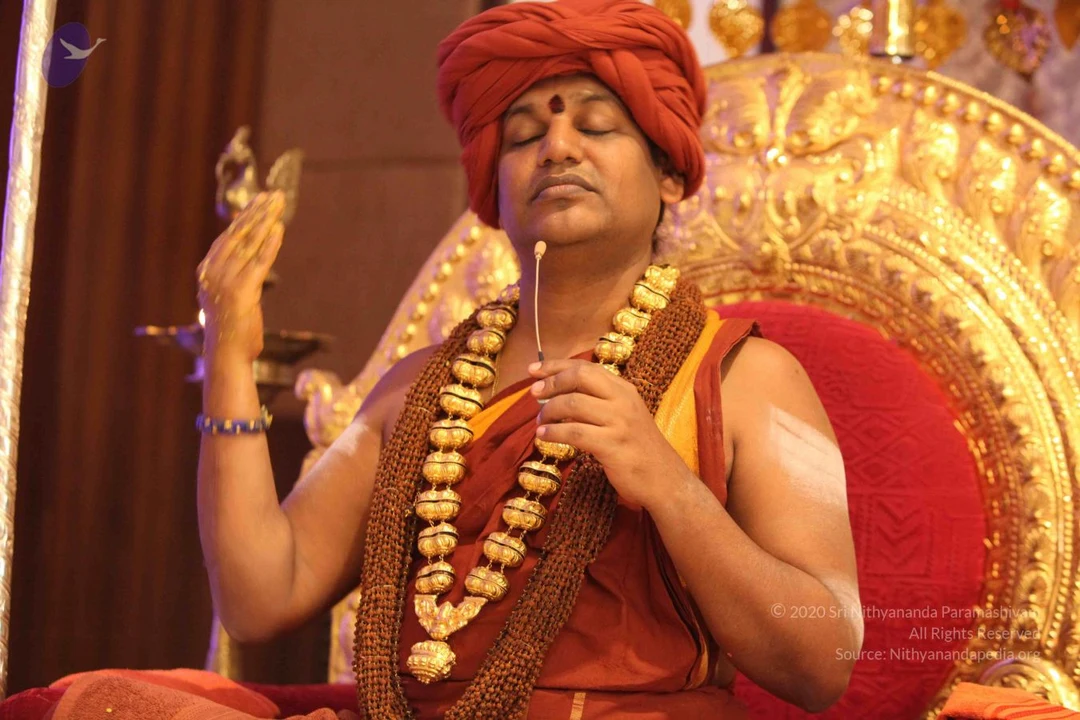
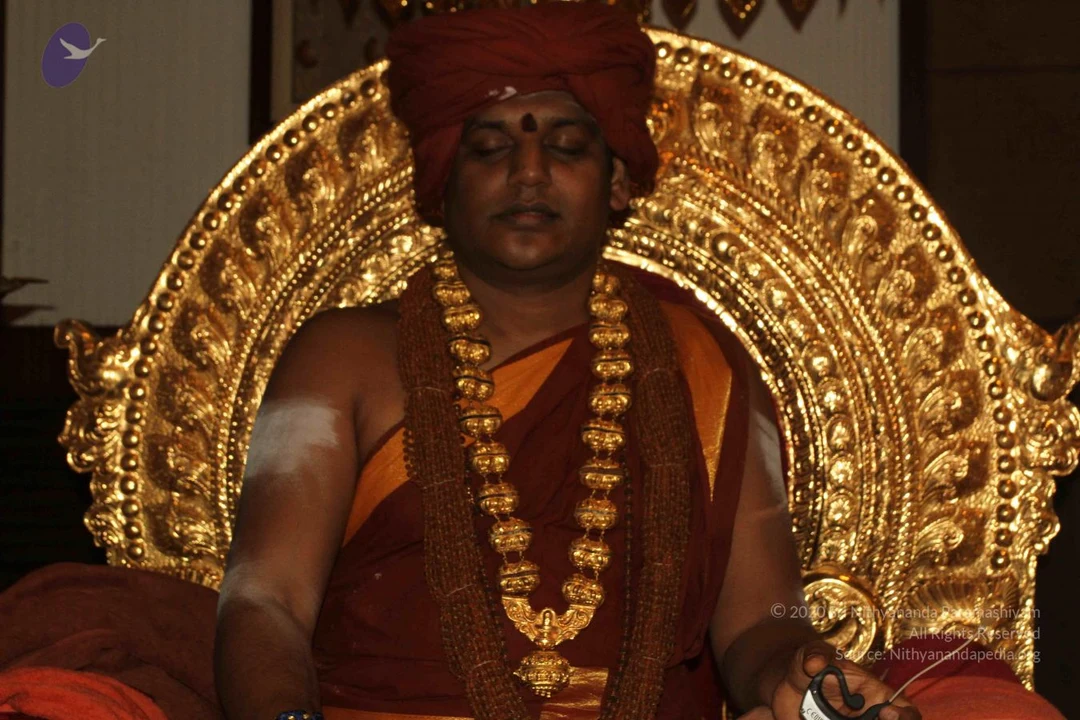
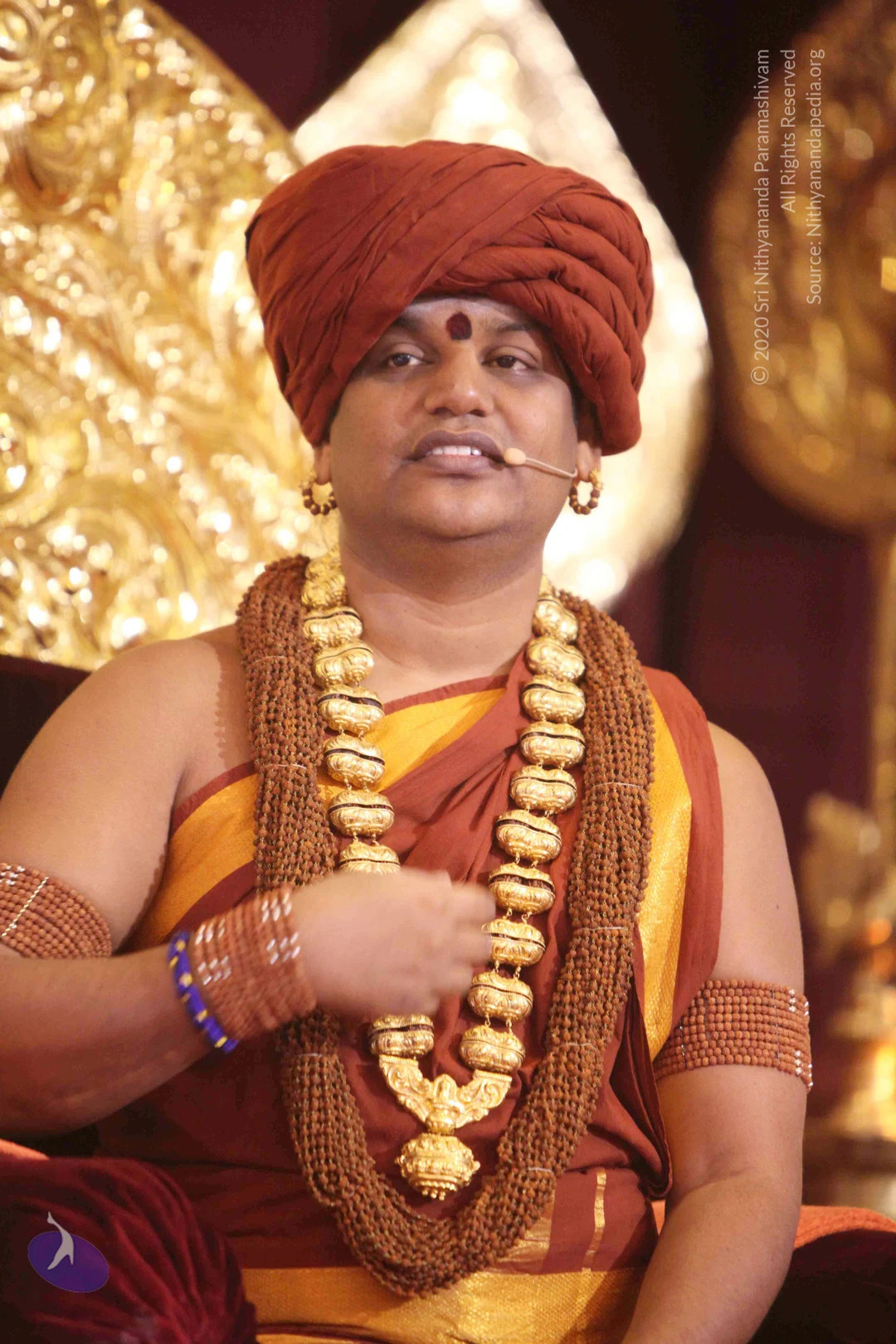
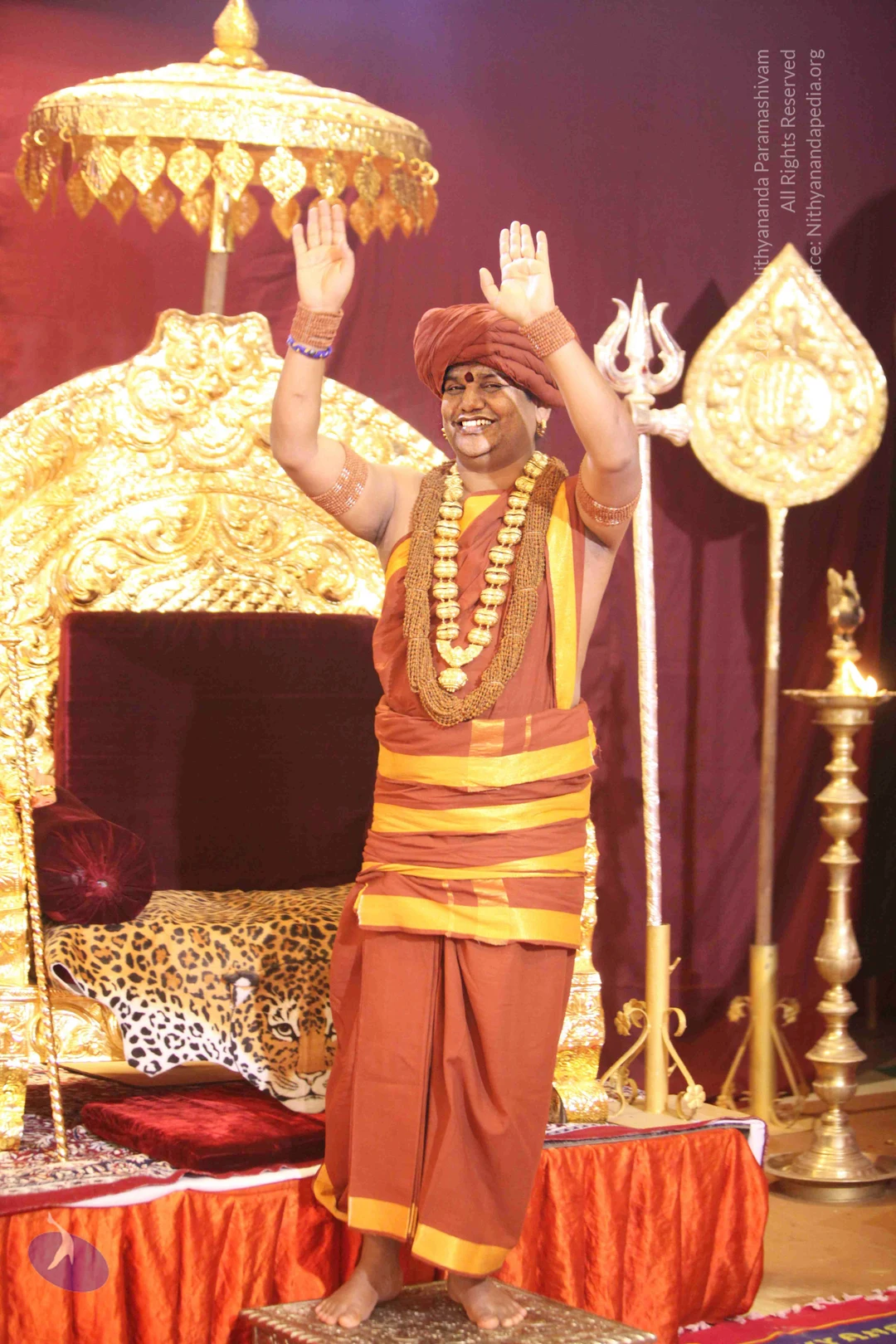
A seated man in an ornate gold-and-red throne with his palms pressed together in namaste at his forehead, eyes closed. He wears a deep red-orange turban, a red-orange robe with gold borders, a thick gold necklace of beads and a blue beaded bracelet, with white ash markings on his arms and chest. A small oil lamp burns to his left beside a silver pole, and a red bowl of green leaves sits at lower left. Gold leaf-shaped hangings are visible above and a leopard-print cloth lies on the throne base. The man is a probable Swamiji (probable) based on the turban, saffron-toned robes, gold necklace and throne presentation; the caption sets the scene as a satsang.

Other Photos

3 photosSource gallery
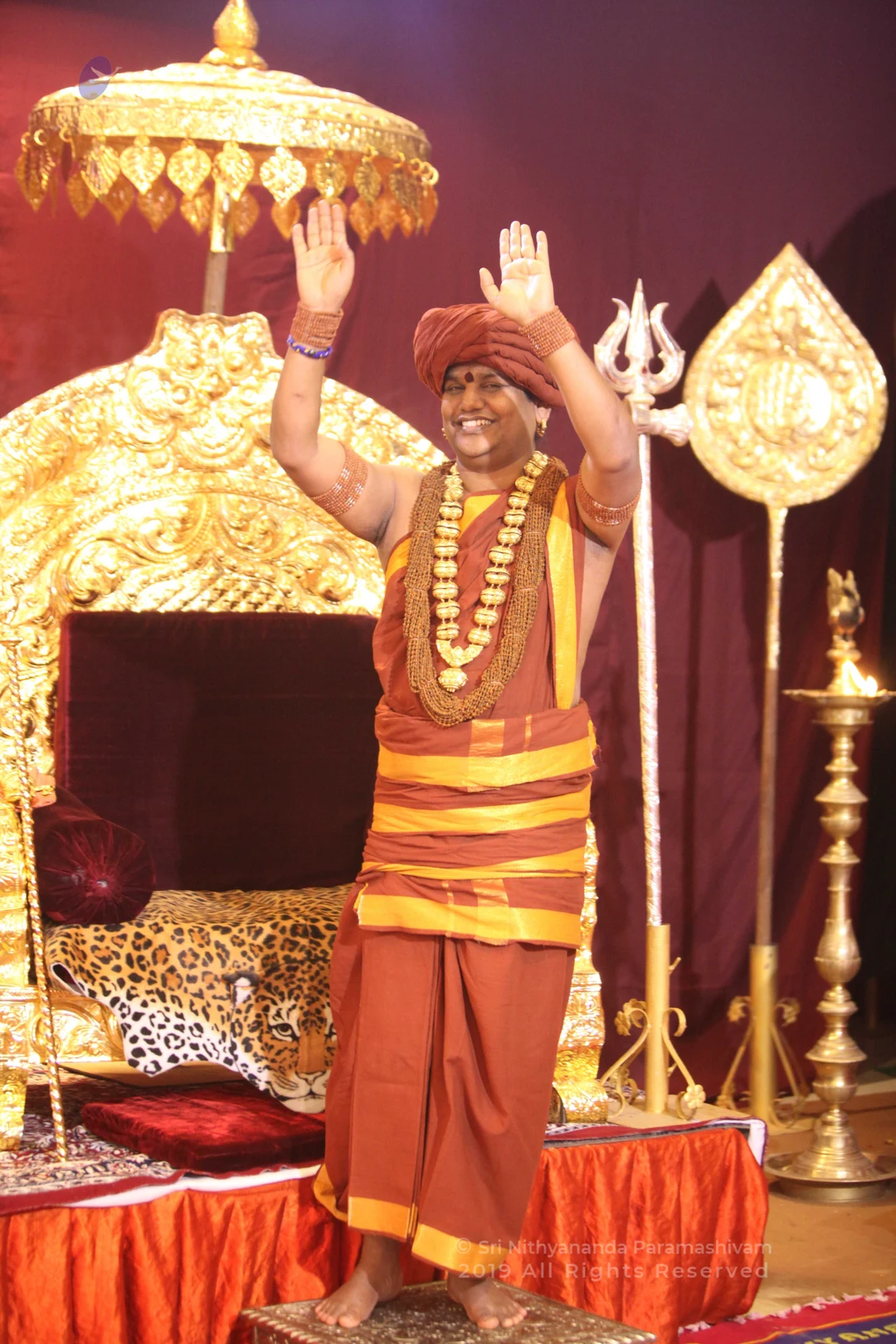
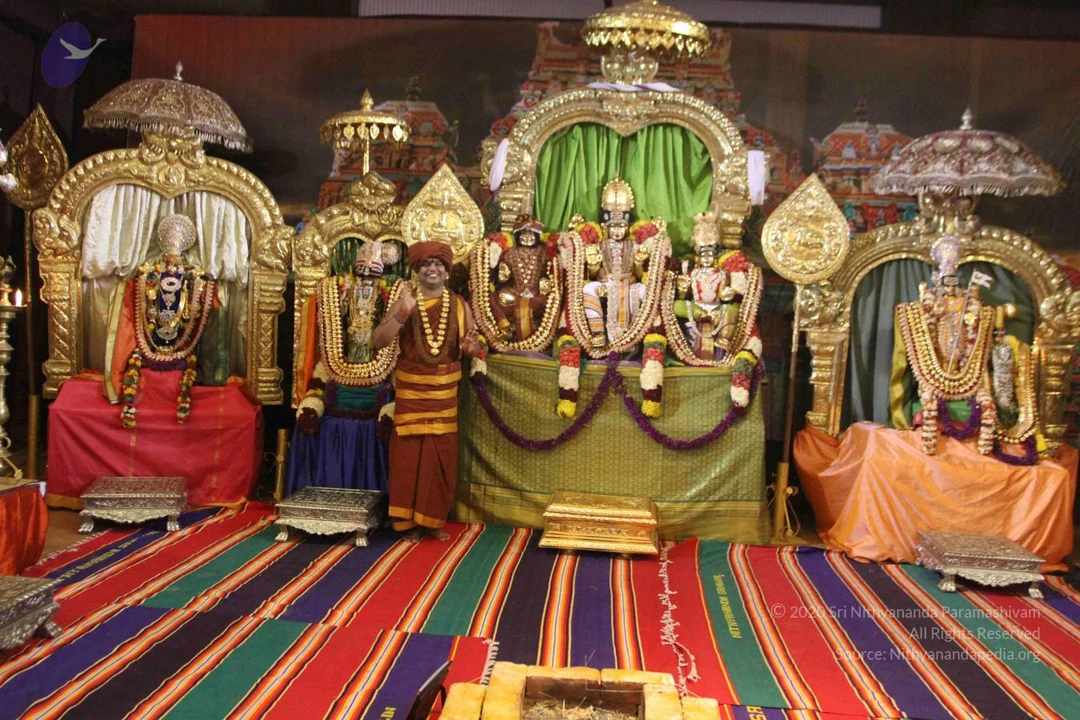
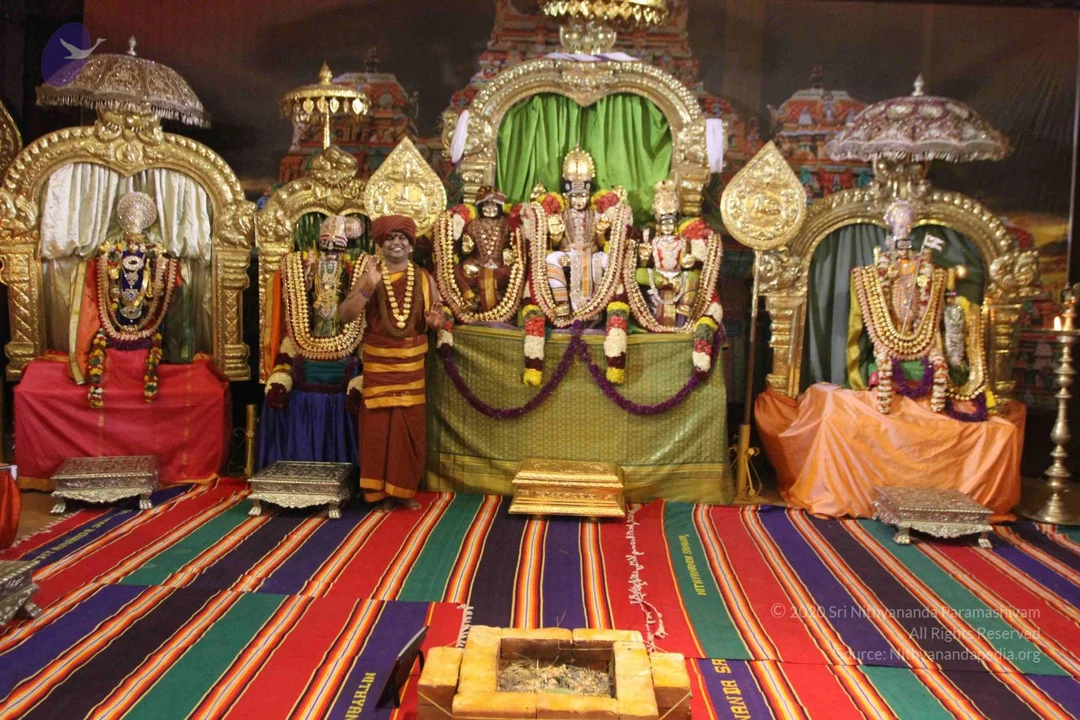
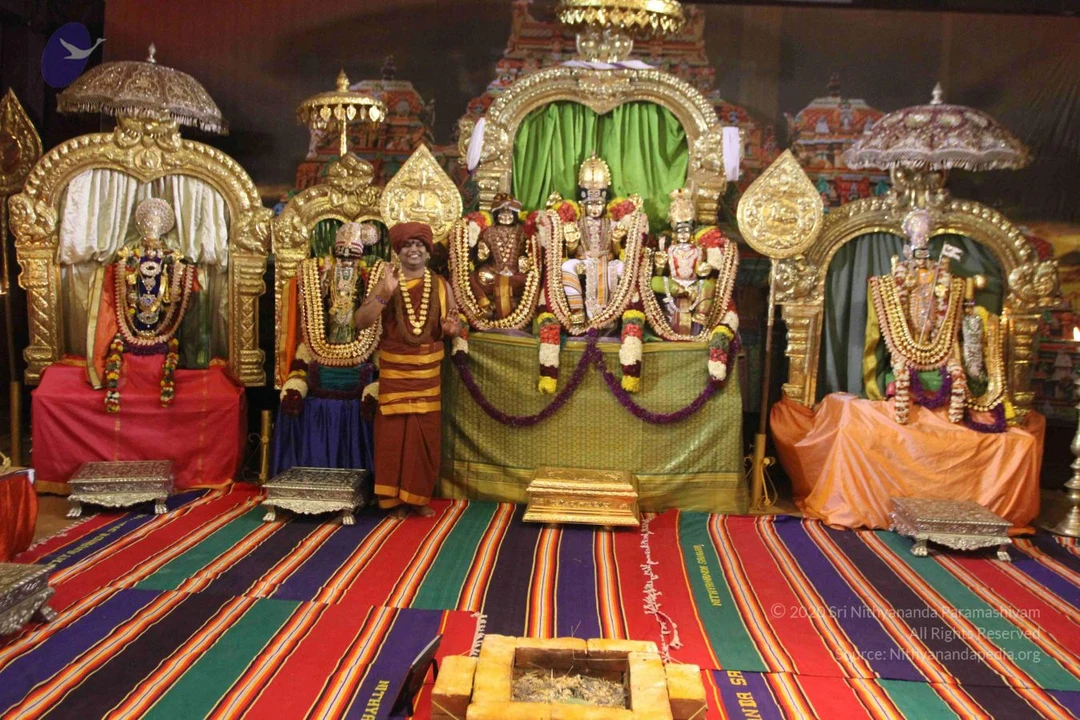
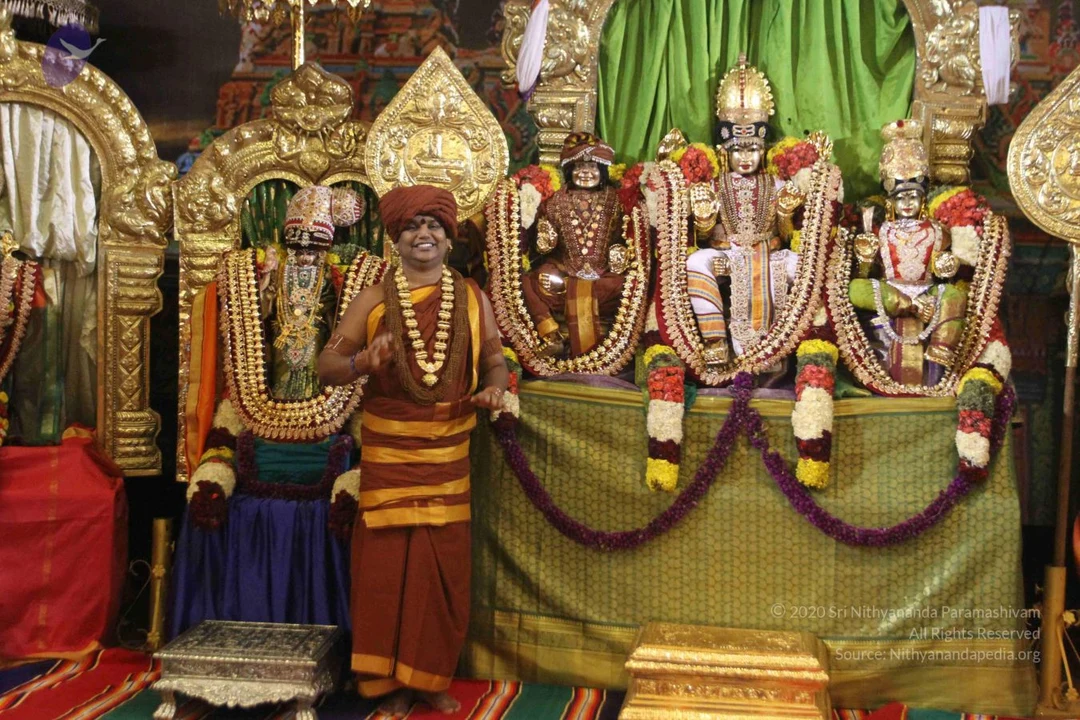
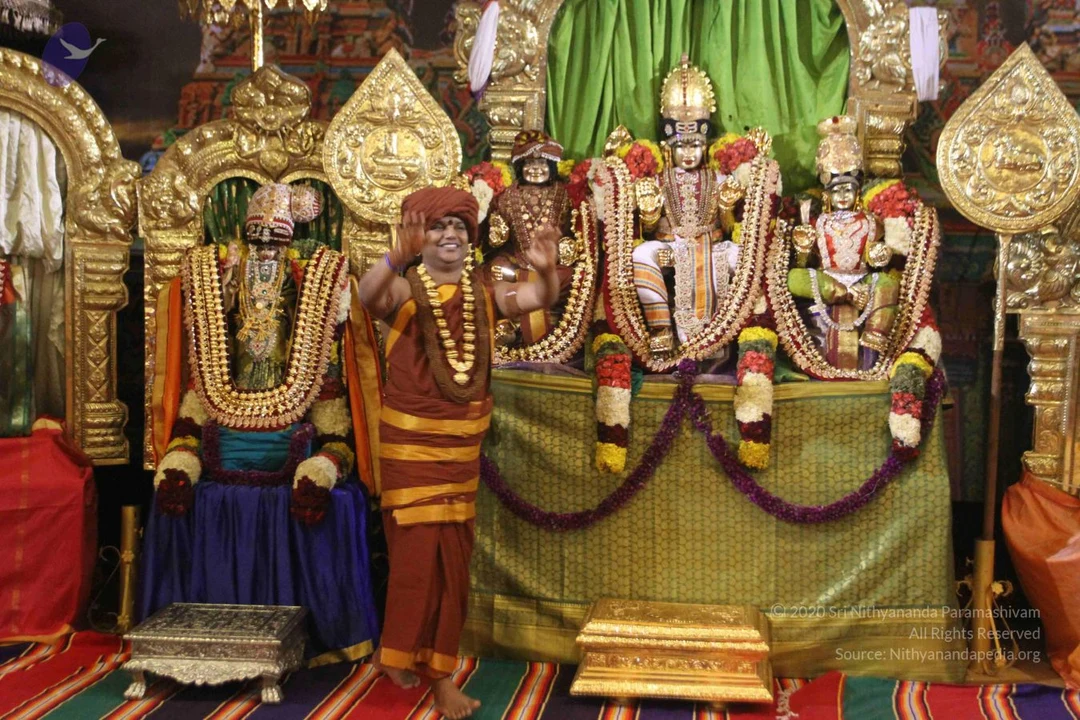
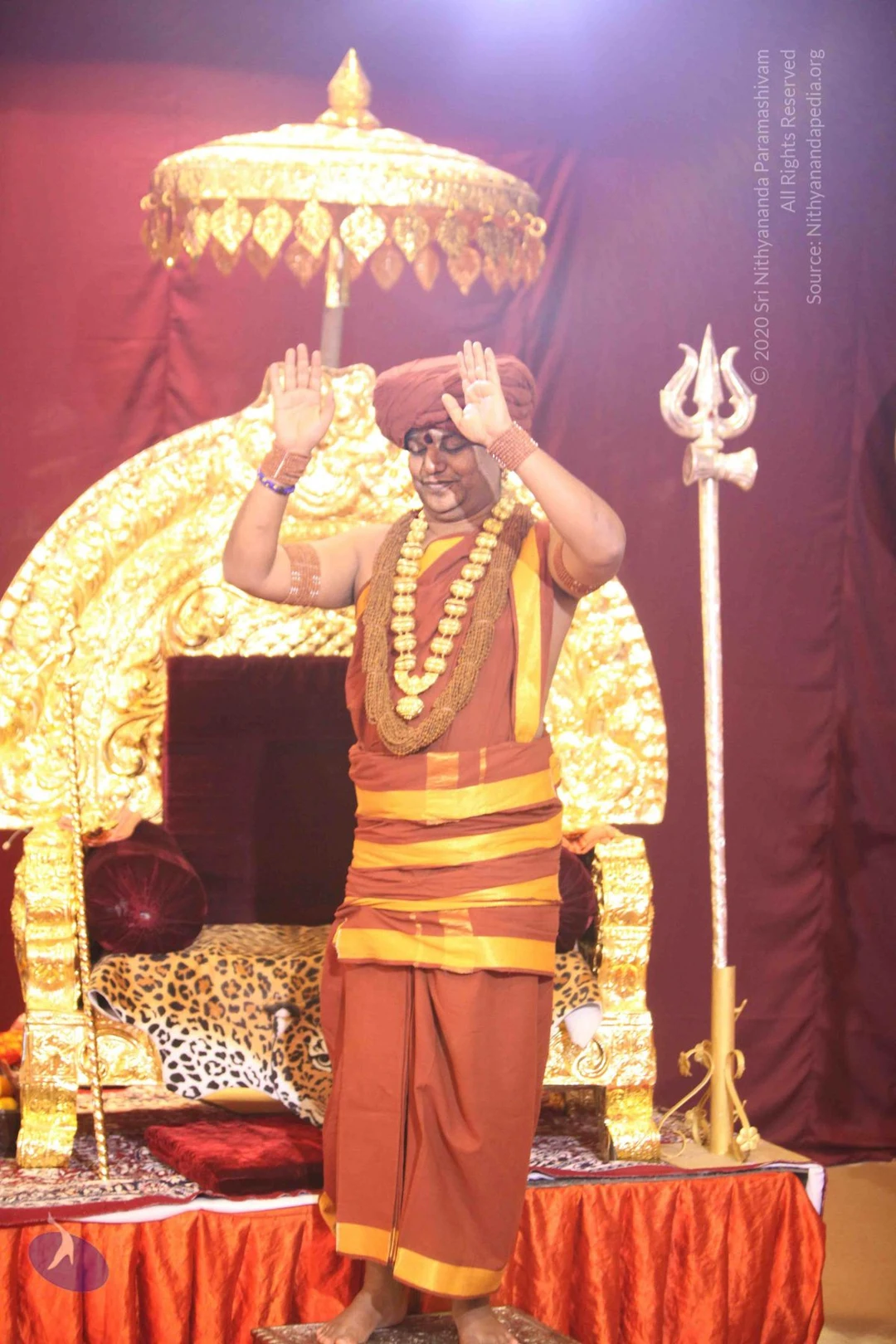
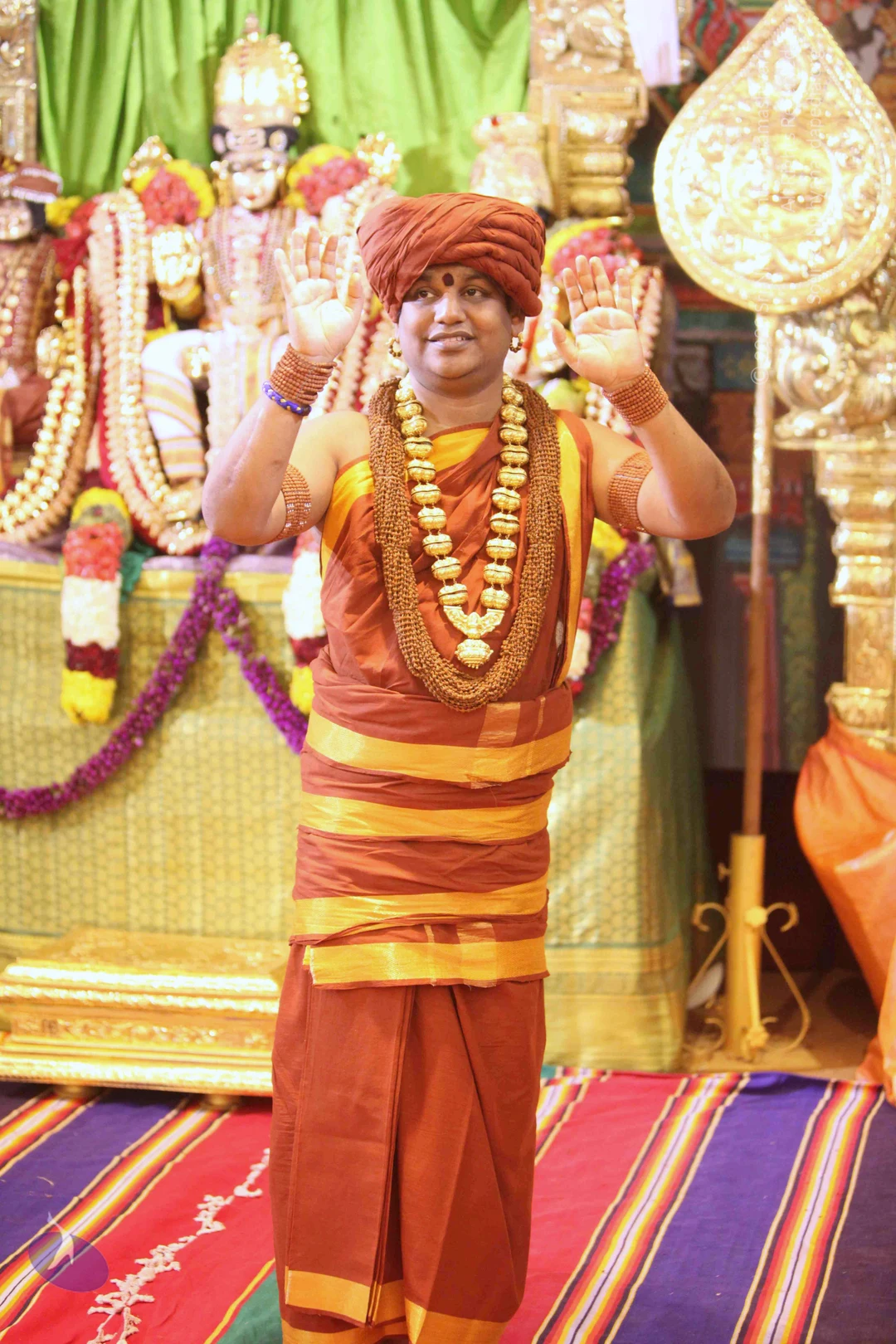
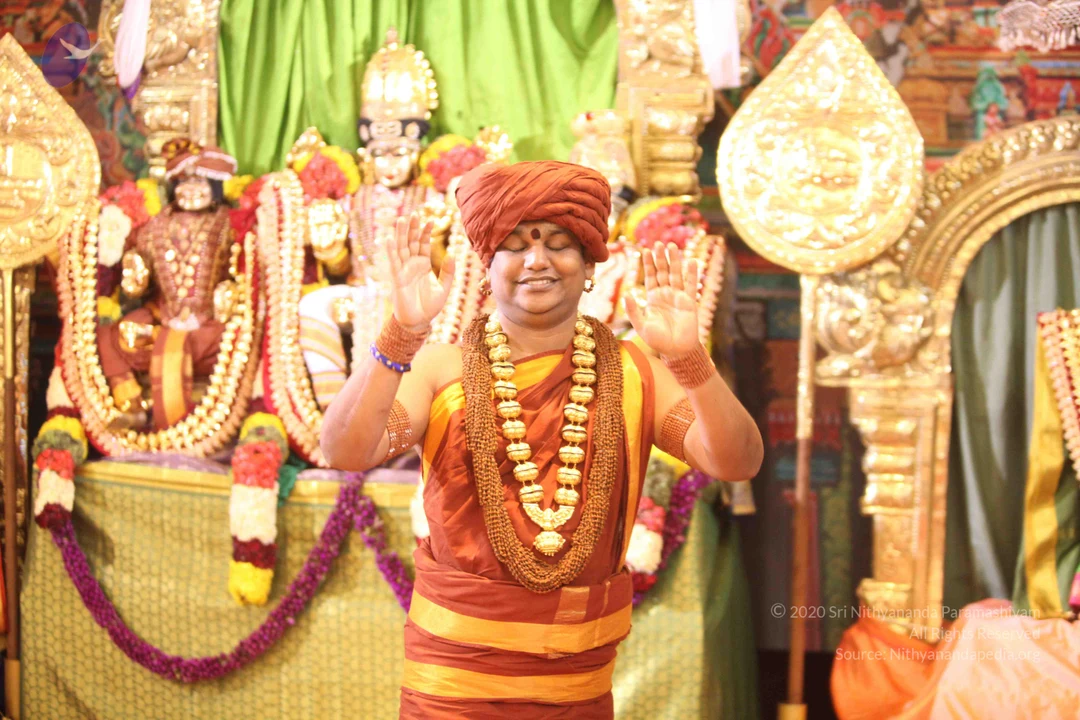
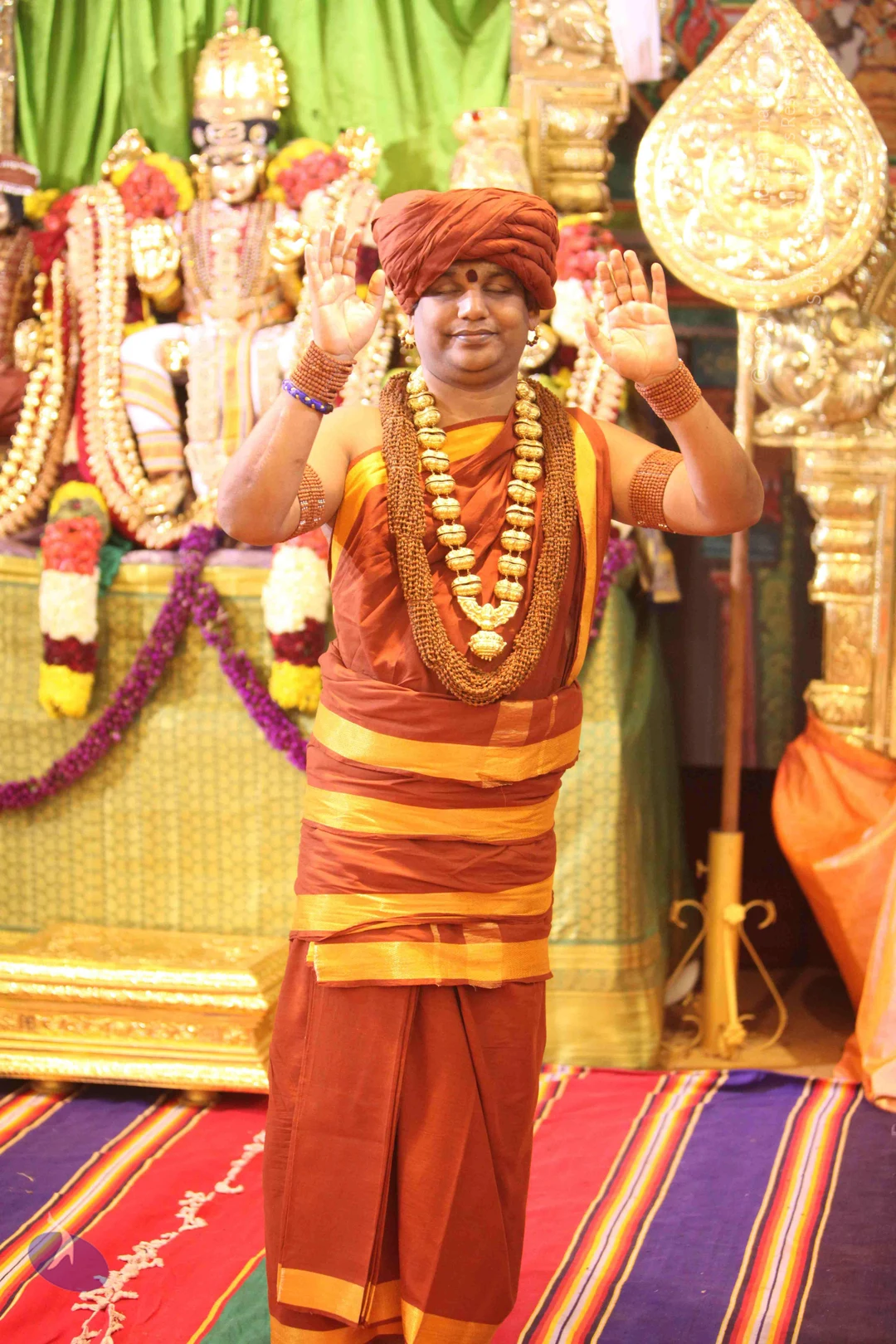
A standing man in a rust-orange turban and rust-orange dhoti with gold-bordered wrap raises both palms beside his head with eyes closed, in an attitude of blessing or invocation. He wears a heavy multi-strand gold bead necklace, beaded bangles and an armband, with a red bindi on his forehead. Behind him stands a golden deity murti garlanded with white and red flowers, flanked by golden ornamental pillars and a gilded arch, with a green silk backdrop and a striped rug on the floor.A photograph of a figure seated on an ornate gold-and-silver throne, hands pressed together in anjali mudra, eyes closed in prayer. The seated person wears a rust-red turban, a bare-chested upper body with rudraksha beads and gold ornaments, and an orange-red shawl over the lap. In front stands a decorated altar with several deity murtis dressed in garlands of white, yellow, red and purple flowers, set against a green silk cloth. A gold-tipped trident leans to the left and a gold ceremonial umbrella is visible at upper right. The setting is a temple-style shrine with gilded arches and painted panels. The seated figure appears to be Swamiji (probable), identified by the turban, rudraksha malas, gold ornaments and ceremonial throne, though the face is not clearly visible.

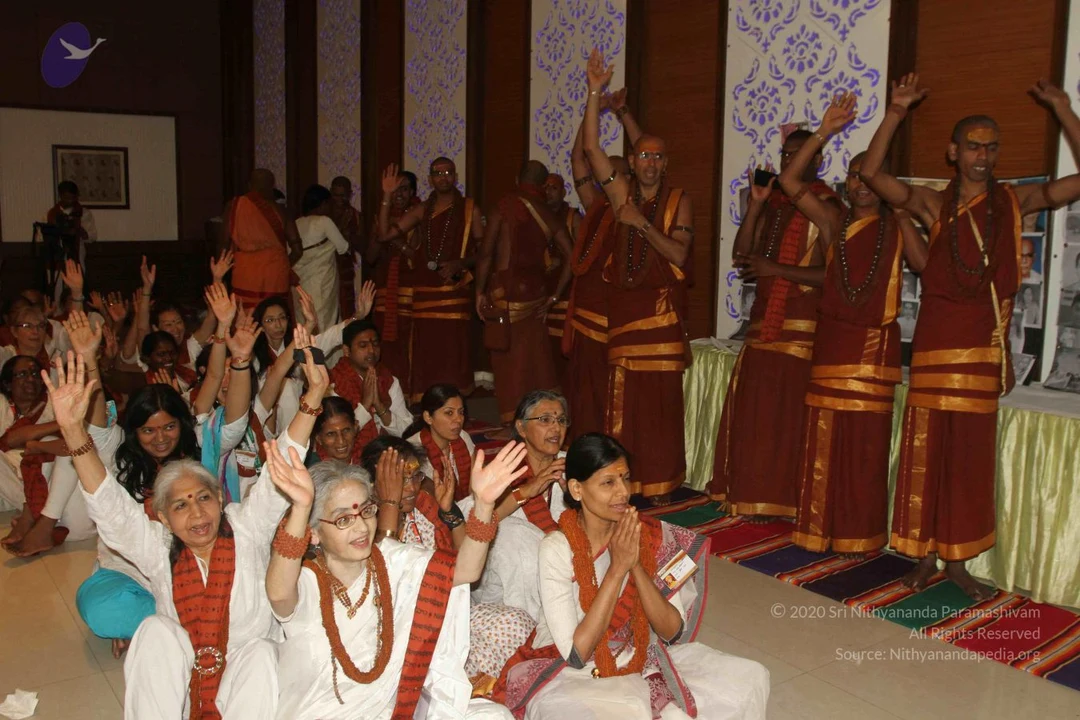
Shivoham
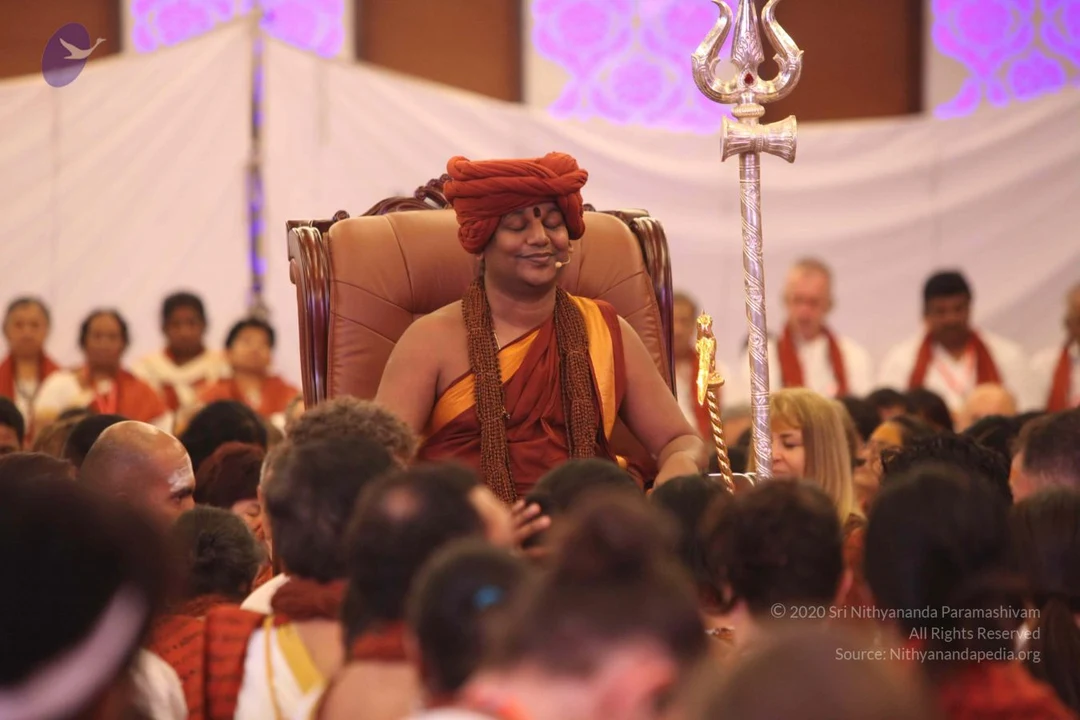
155 photosSource gallery
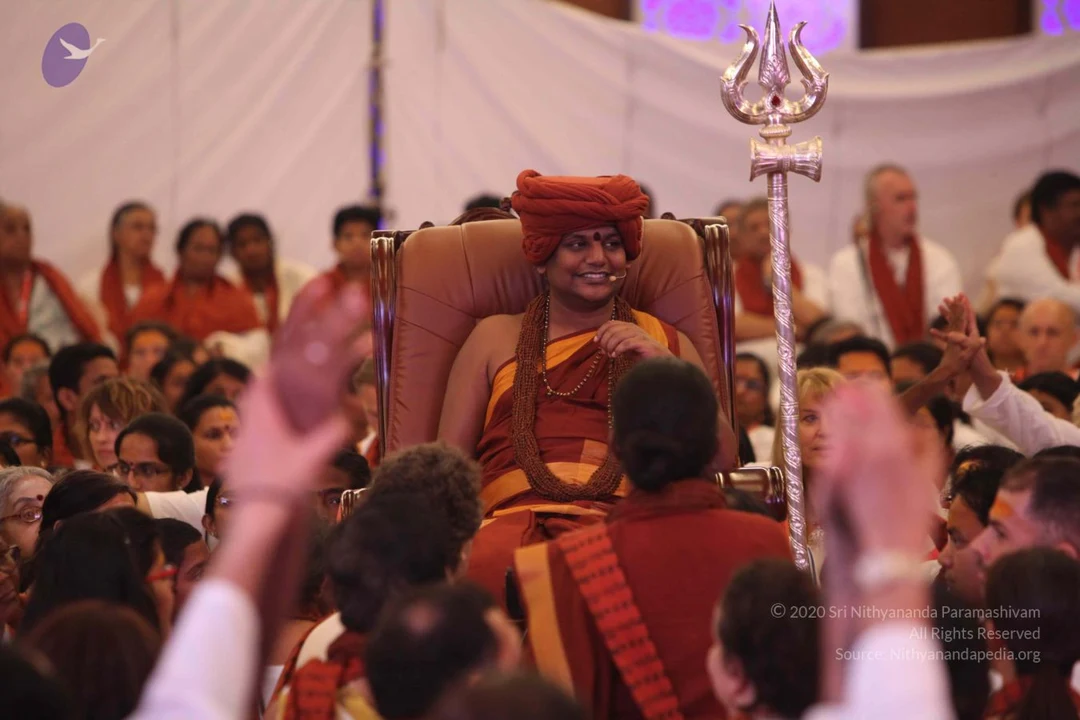
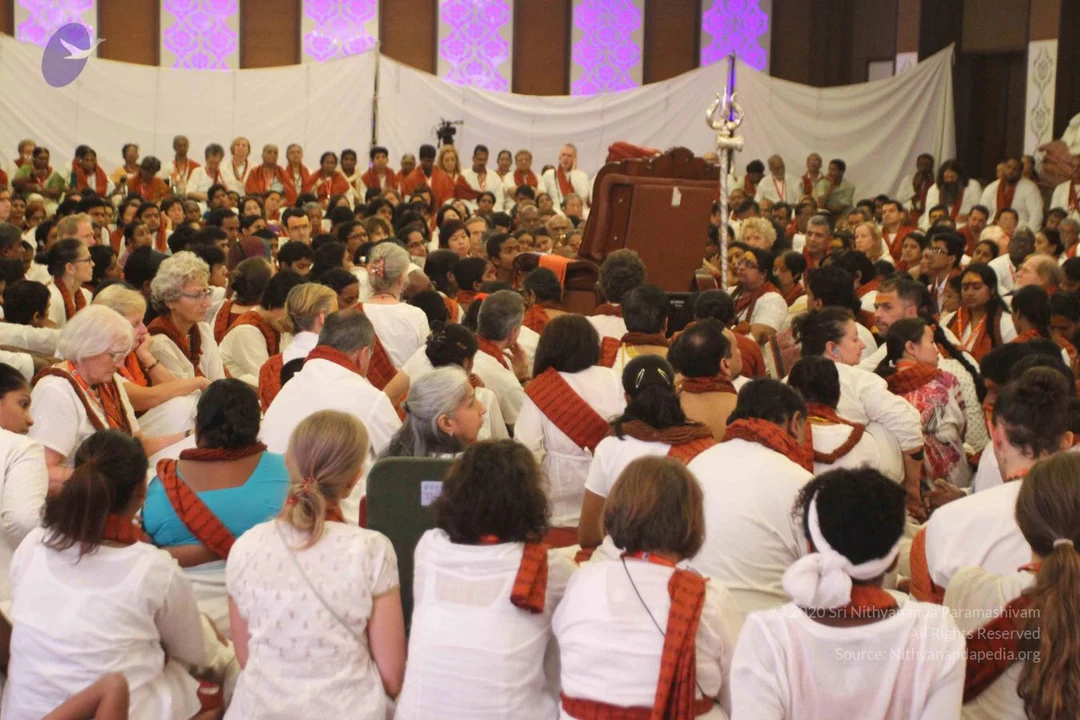
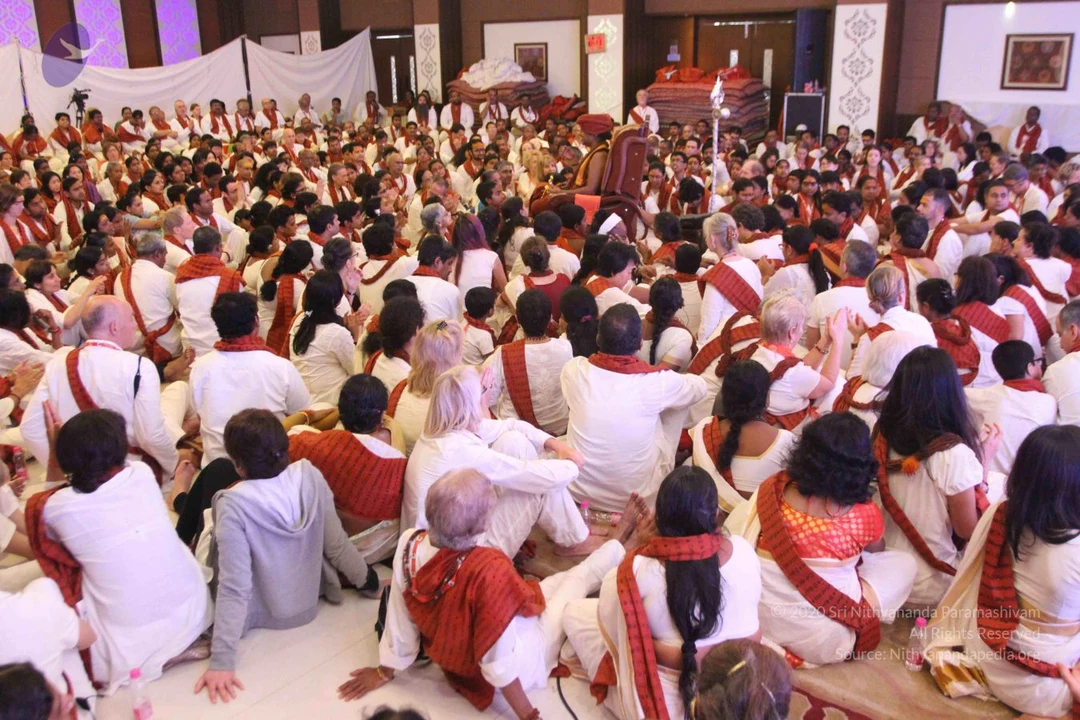
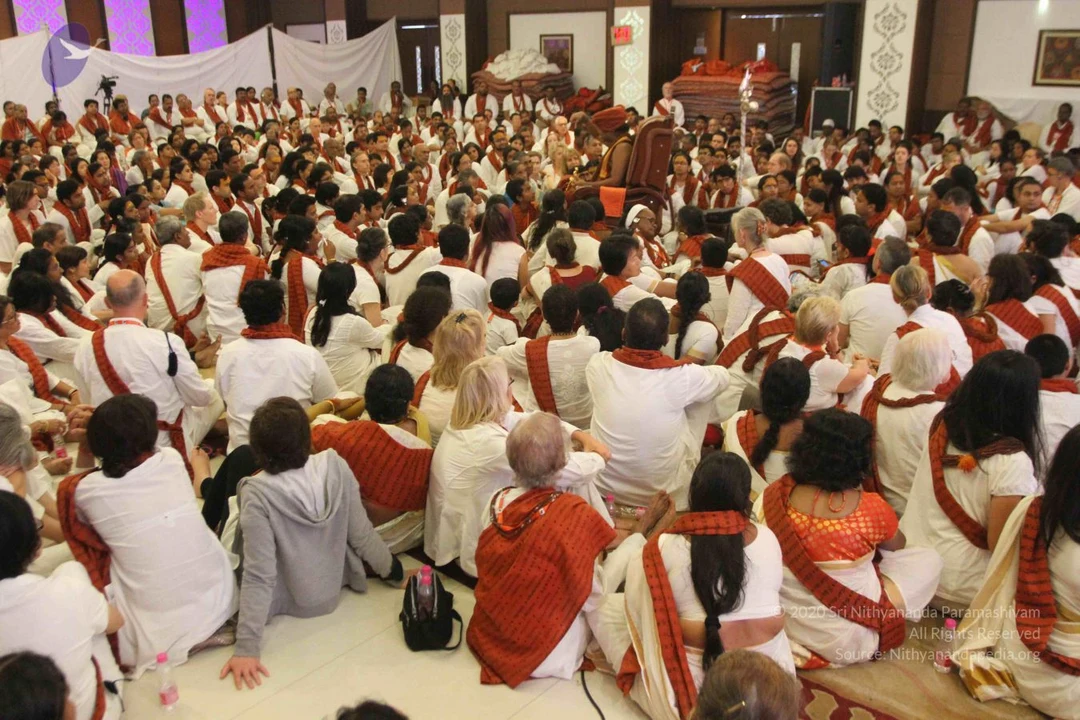
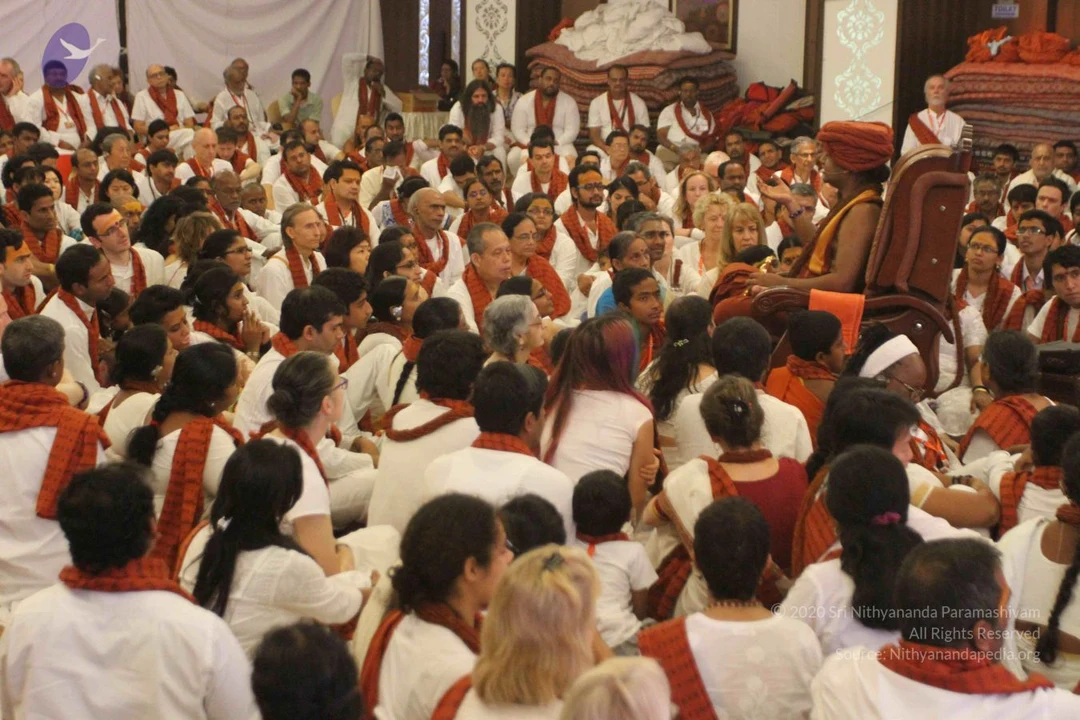
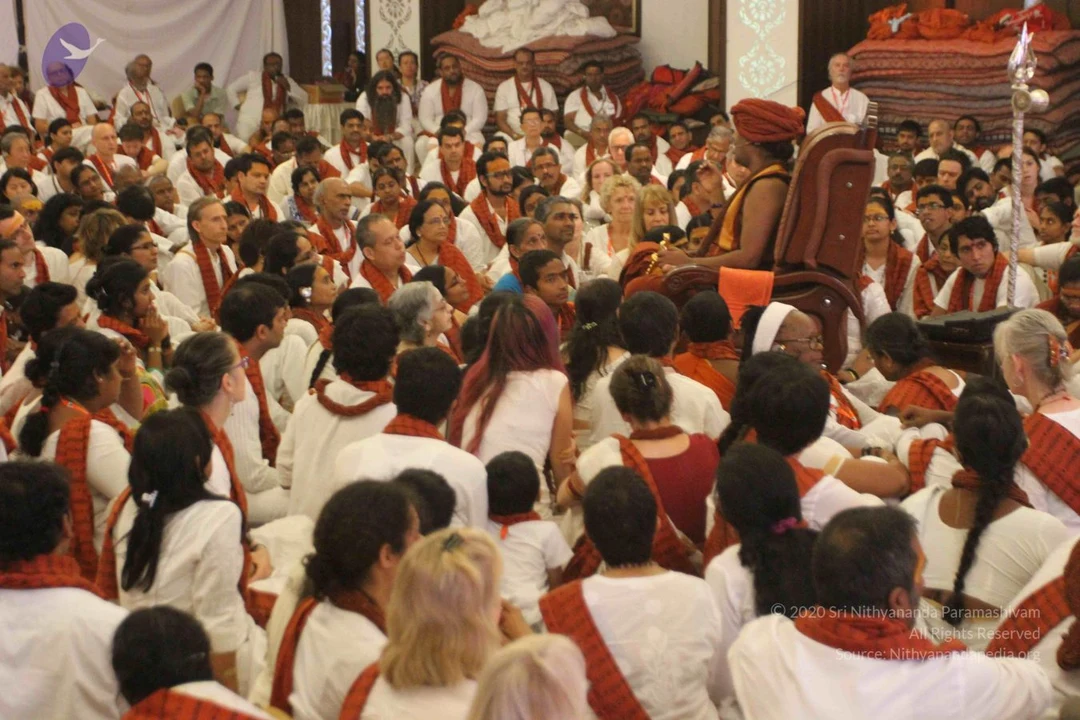
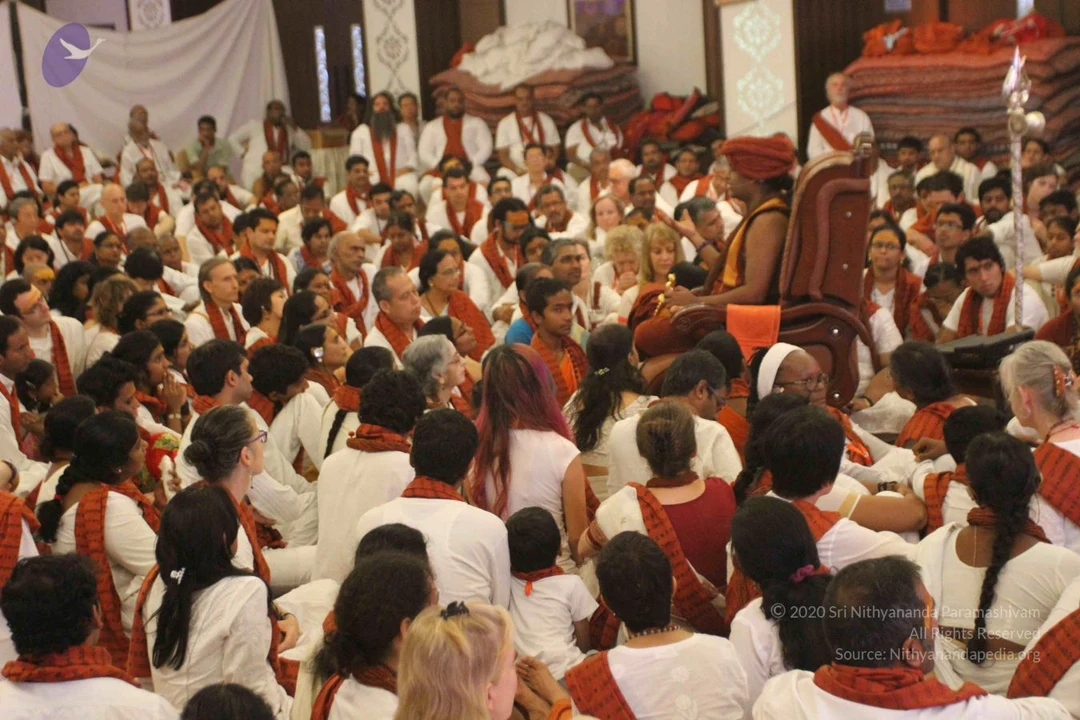
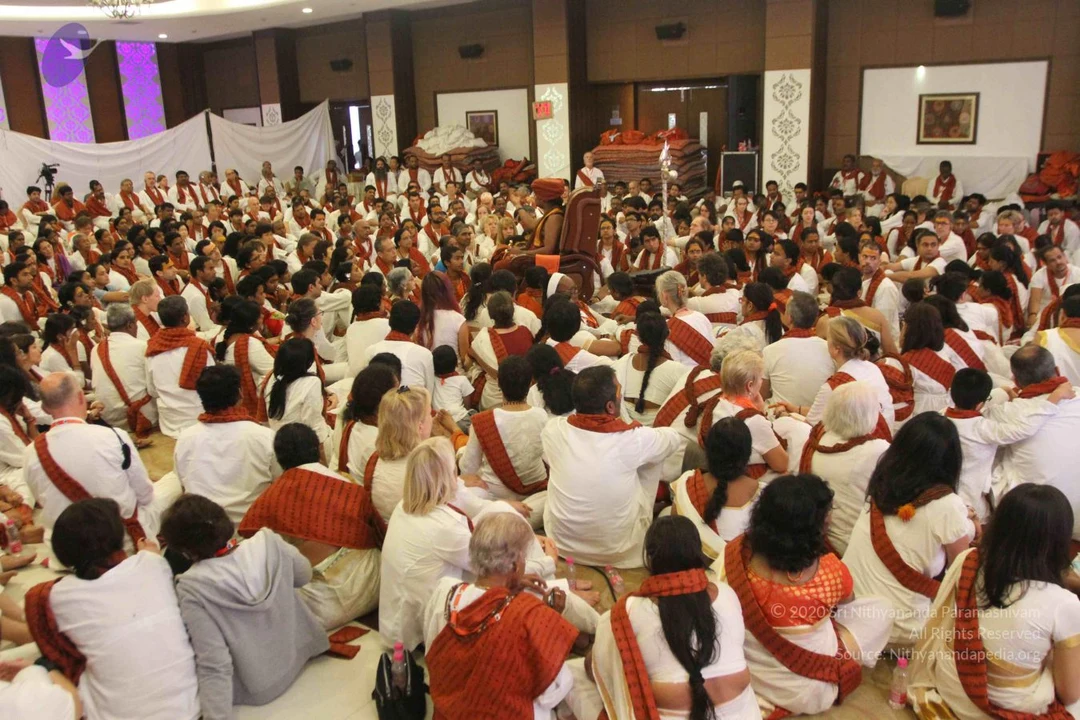
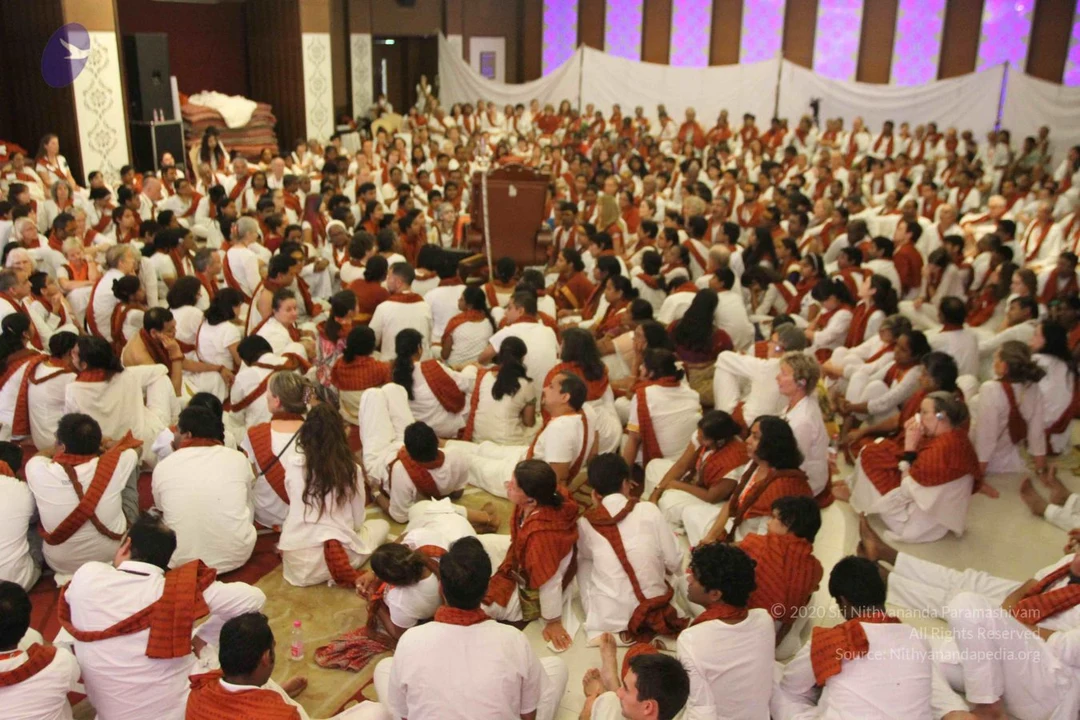
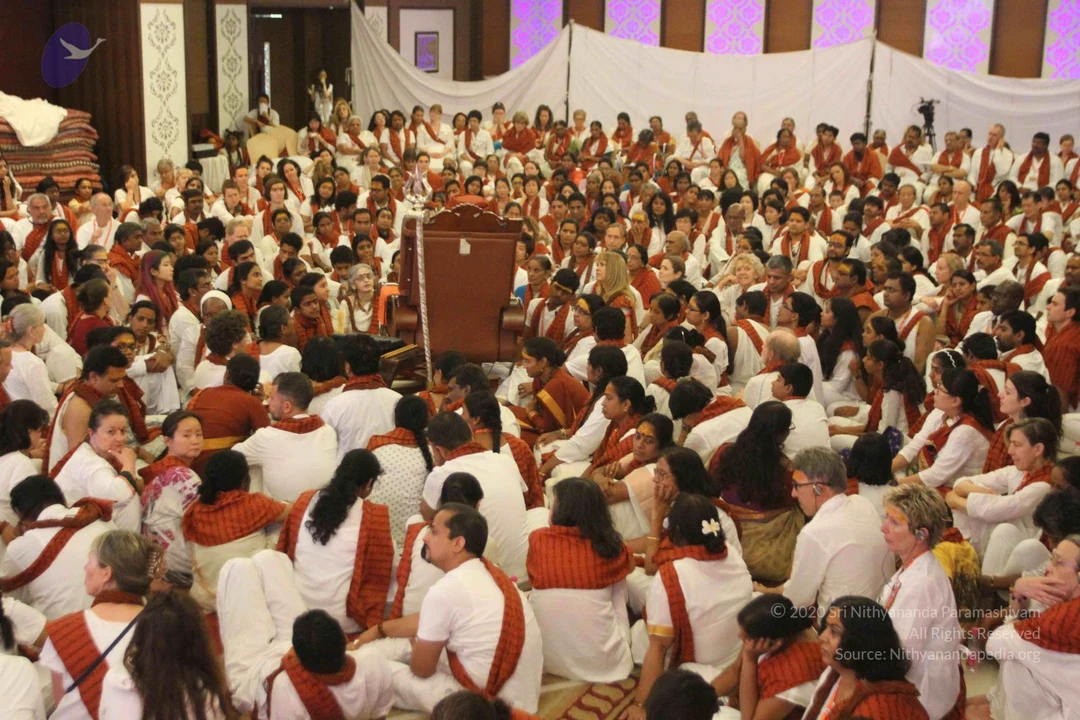
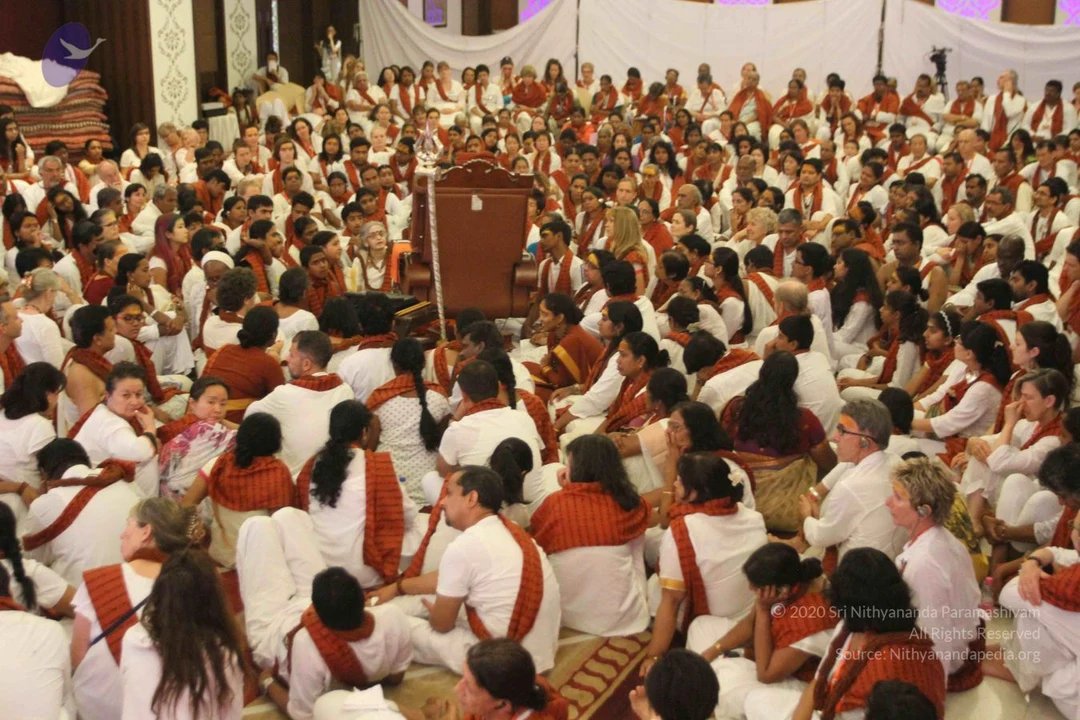
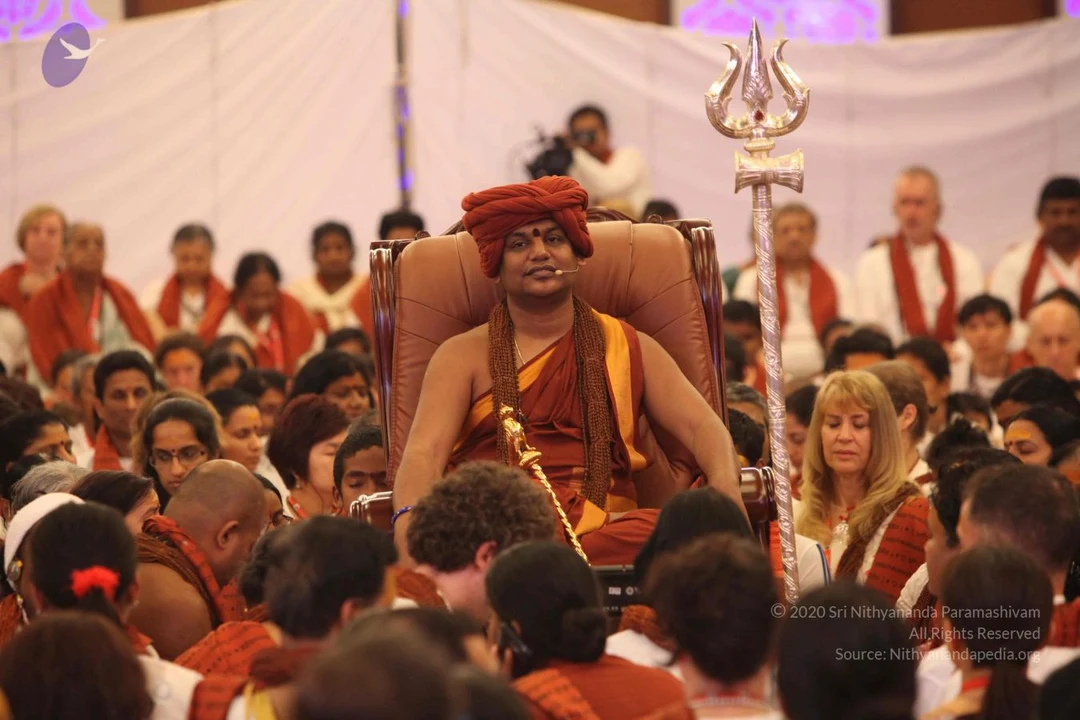
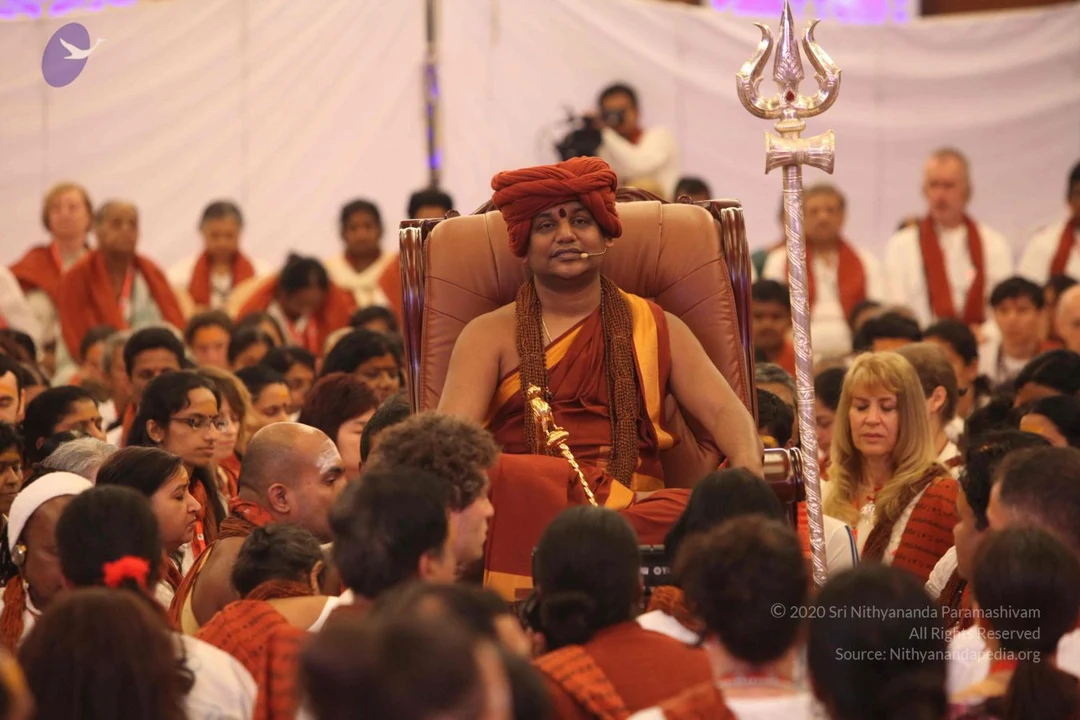
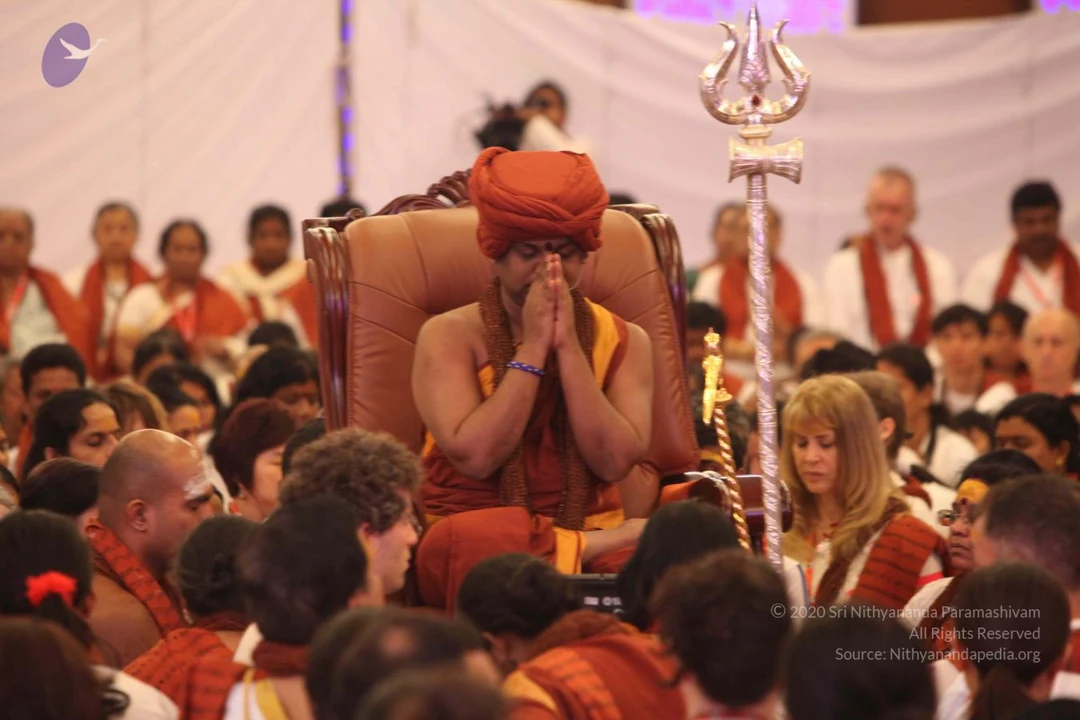
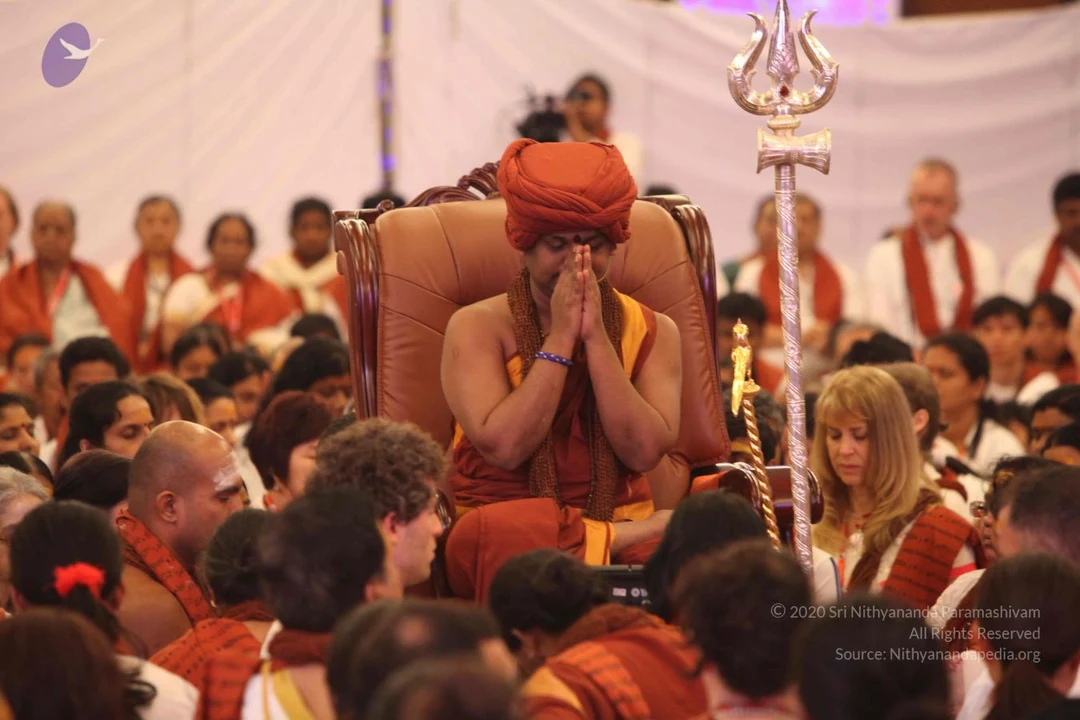
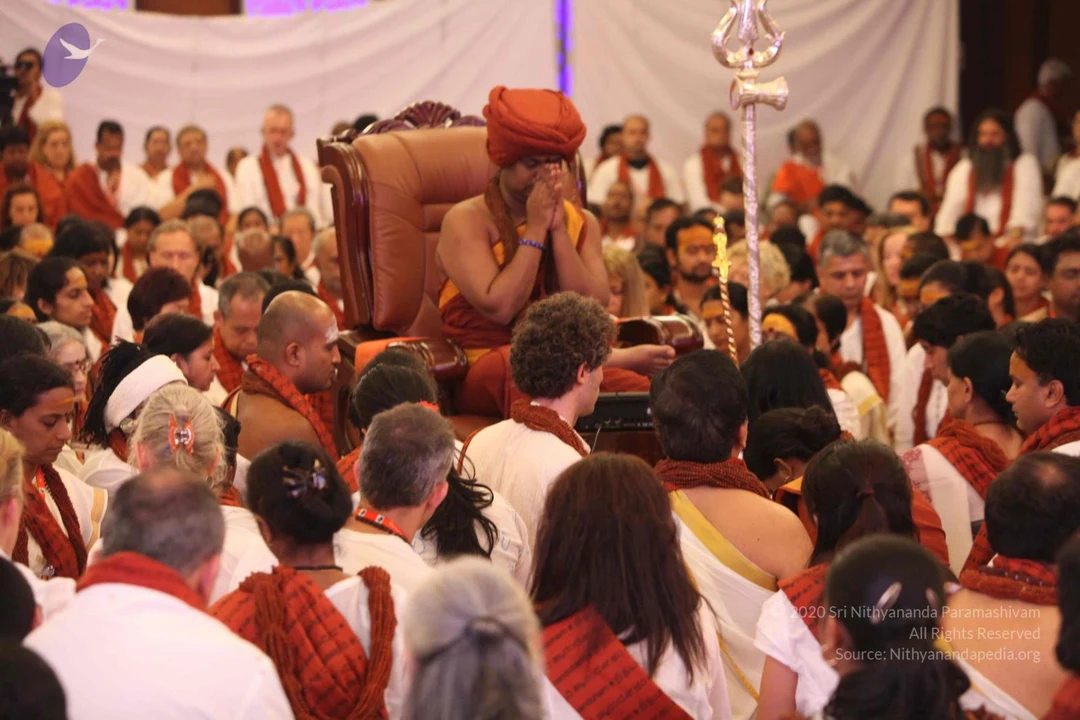
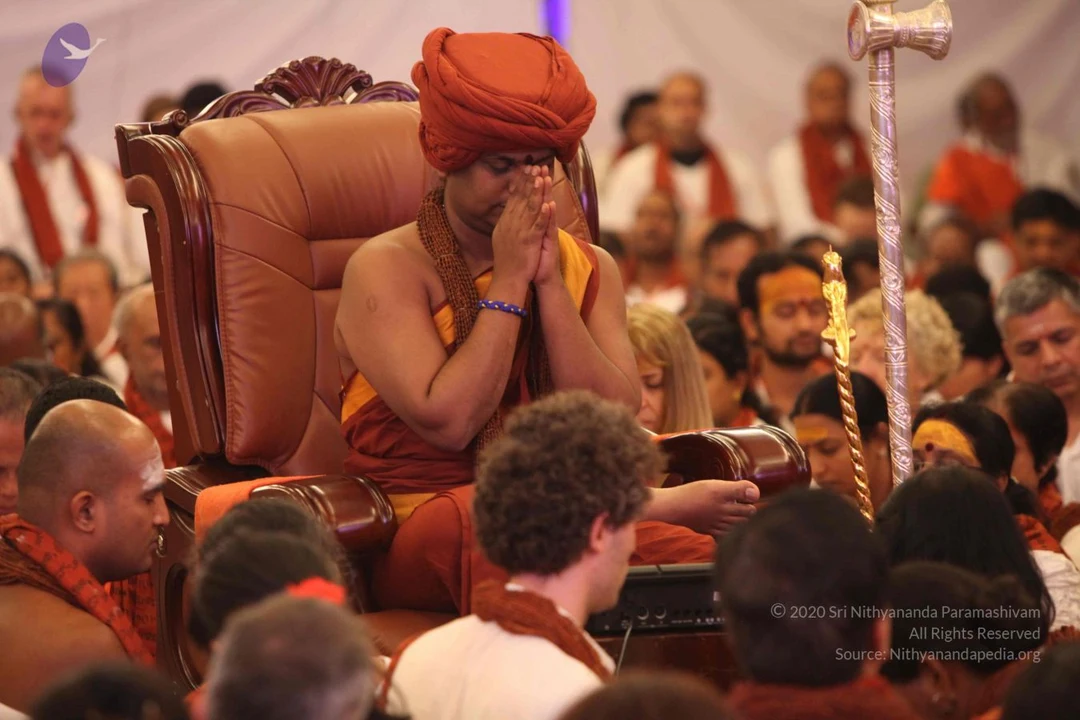
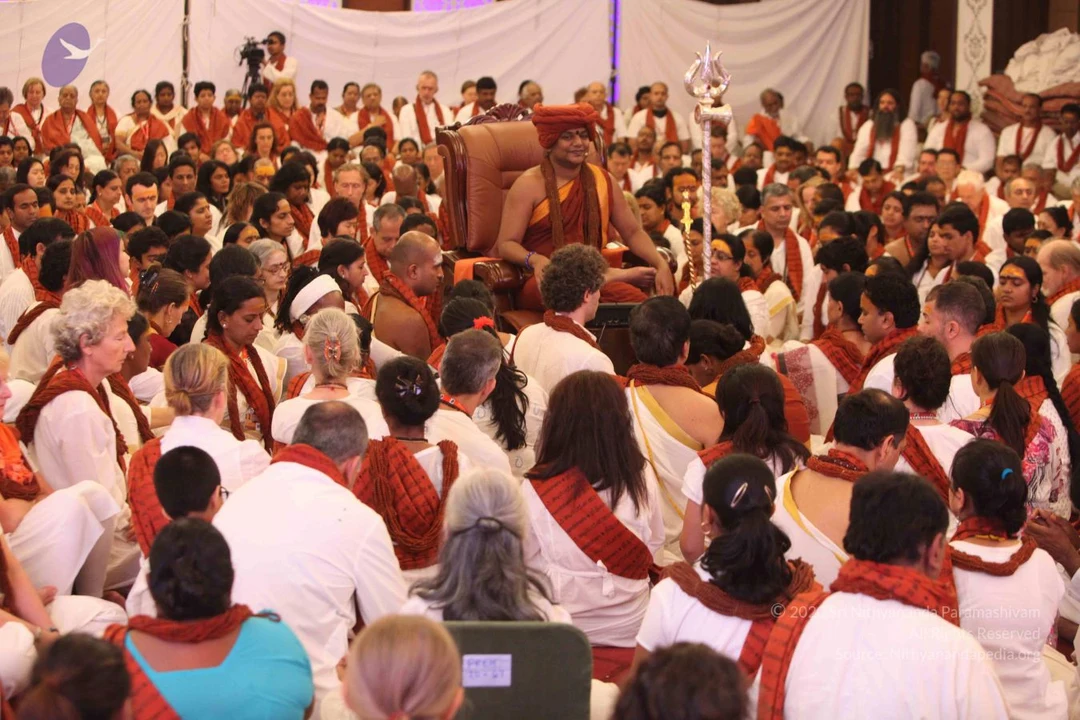
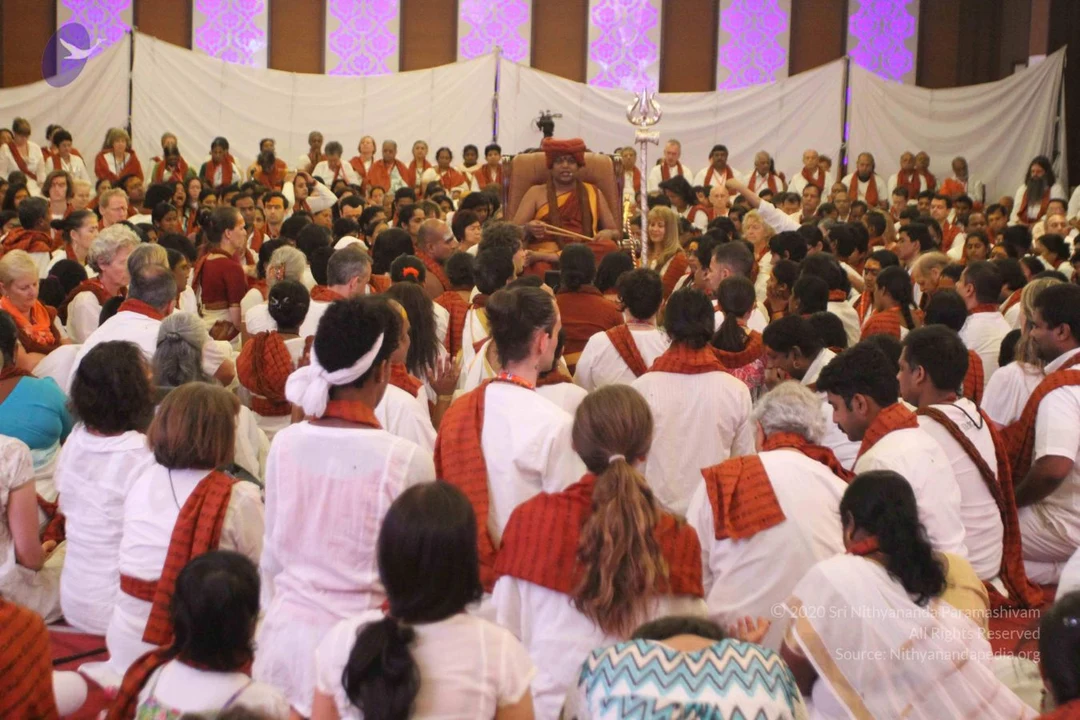
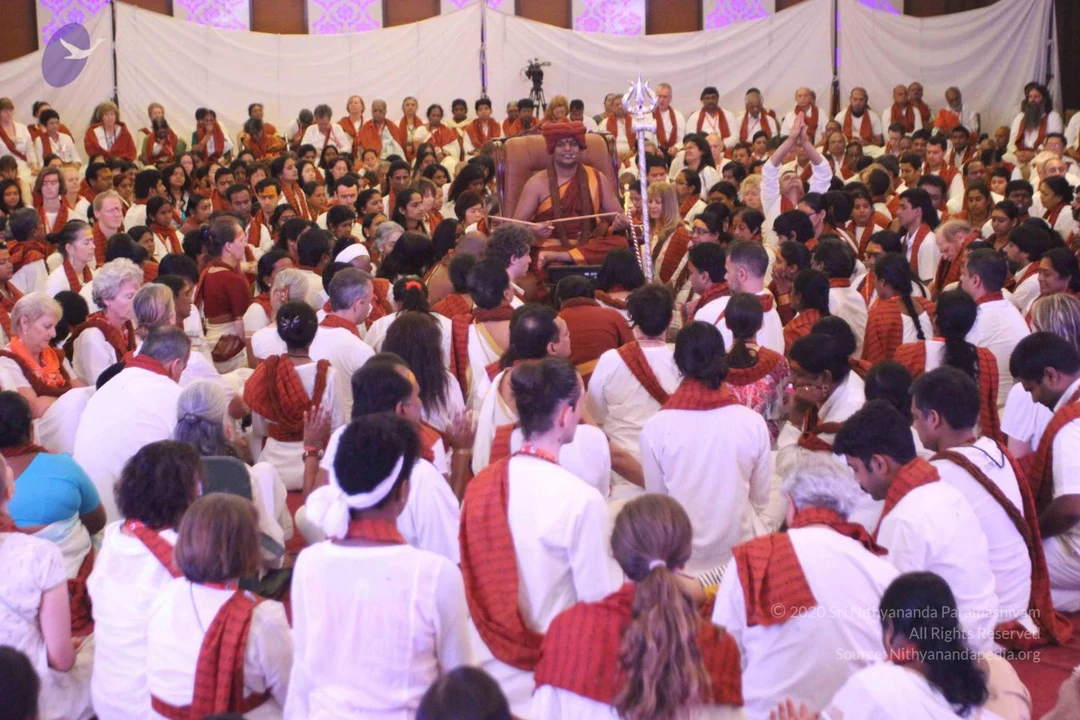
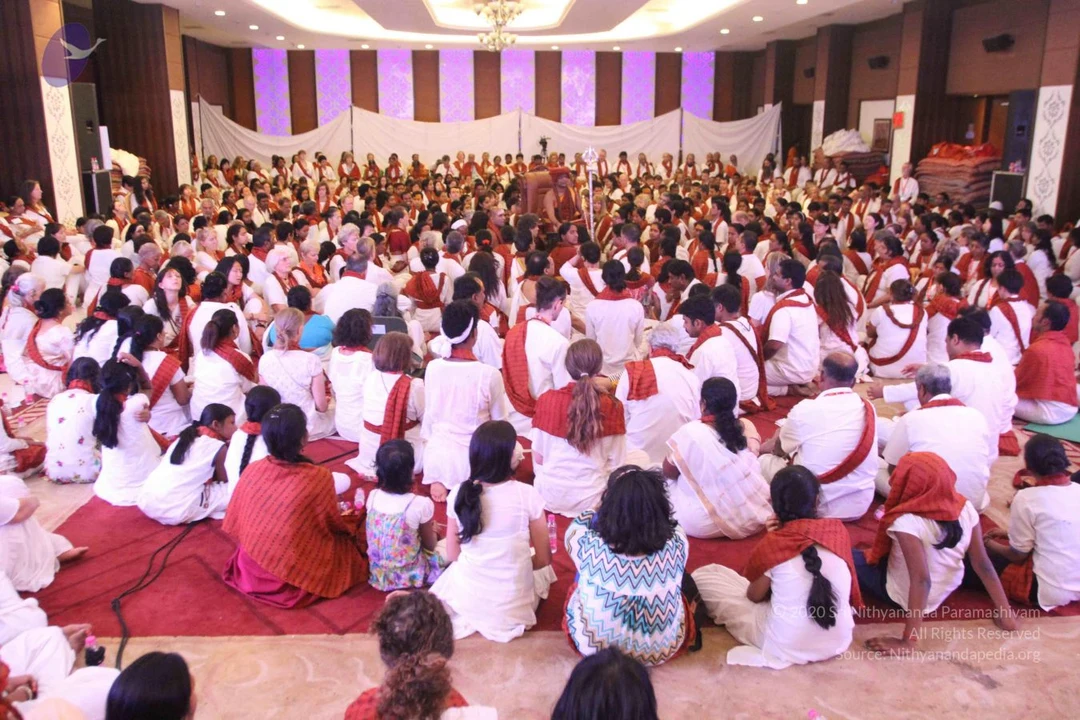
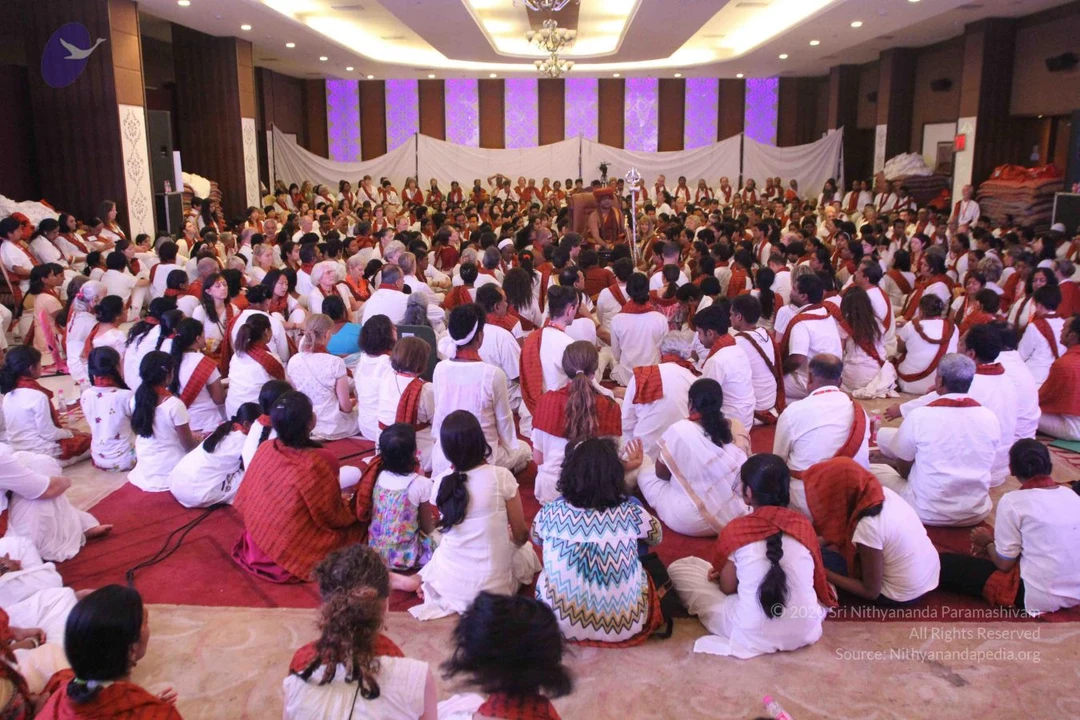
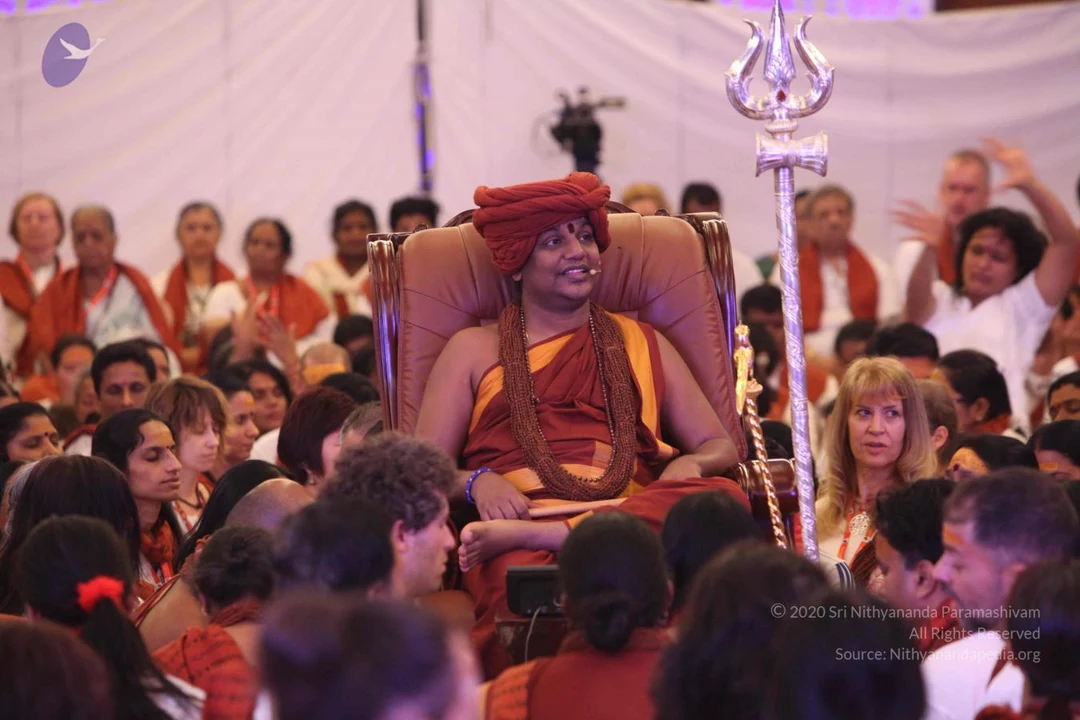
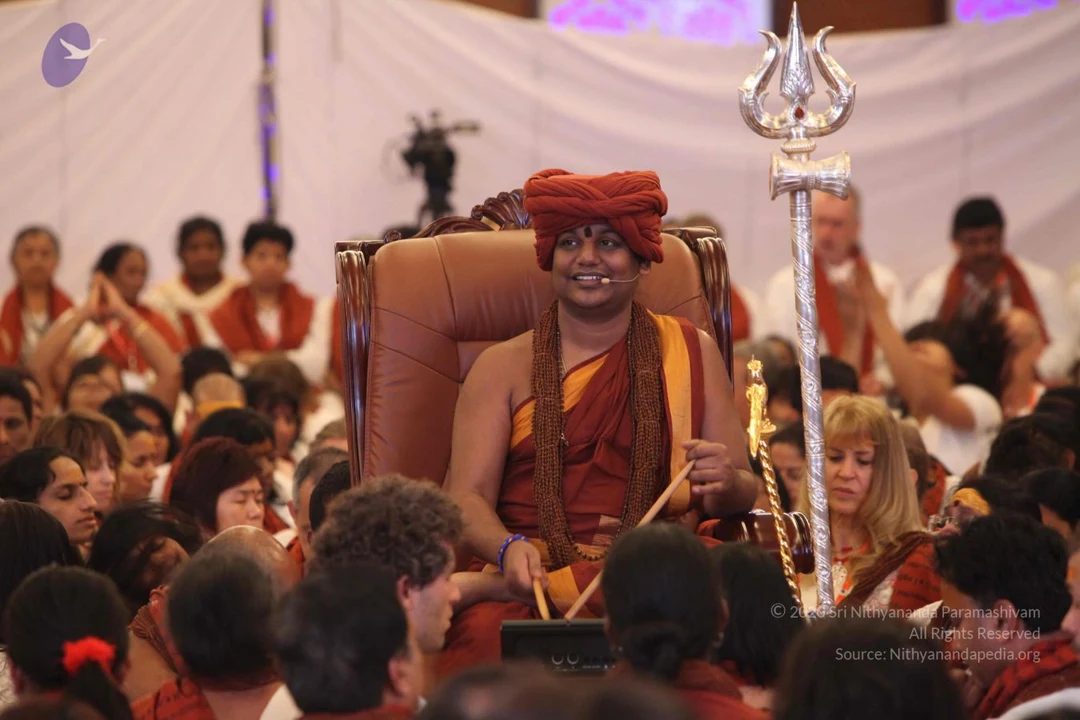
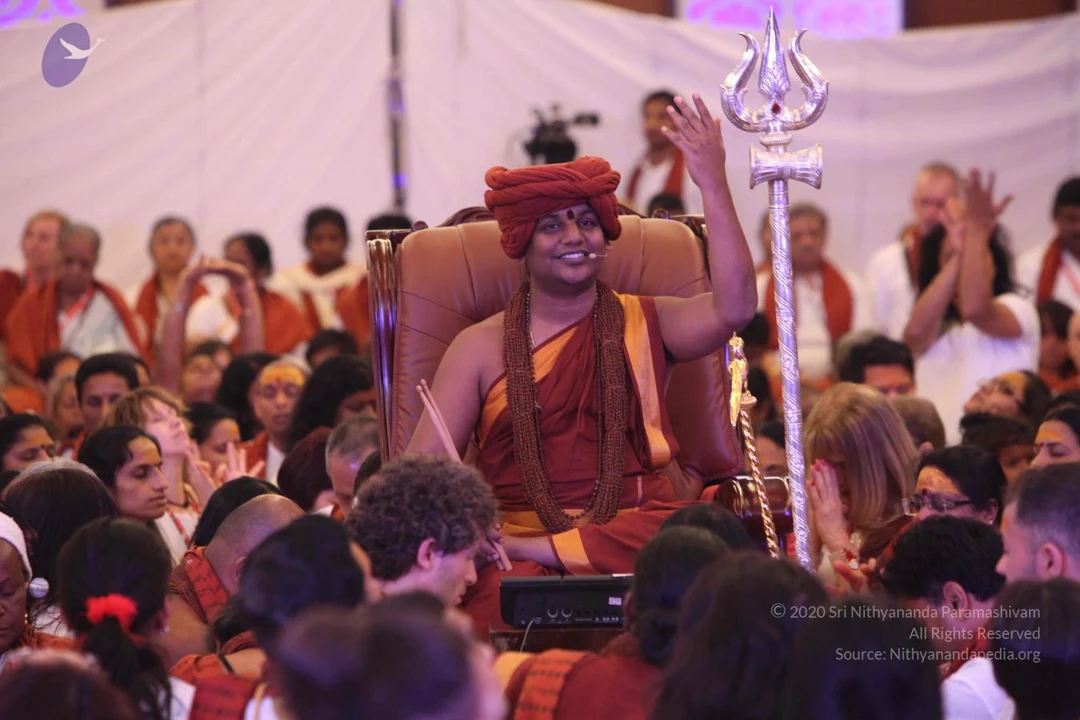
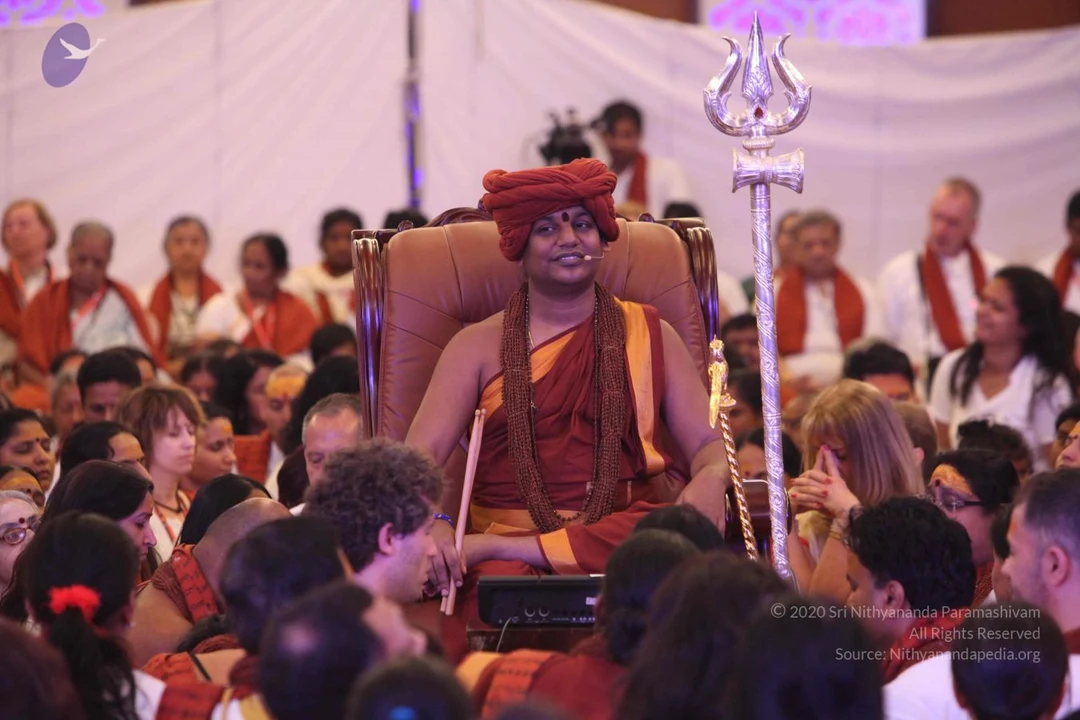
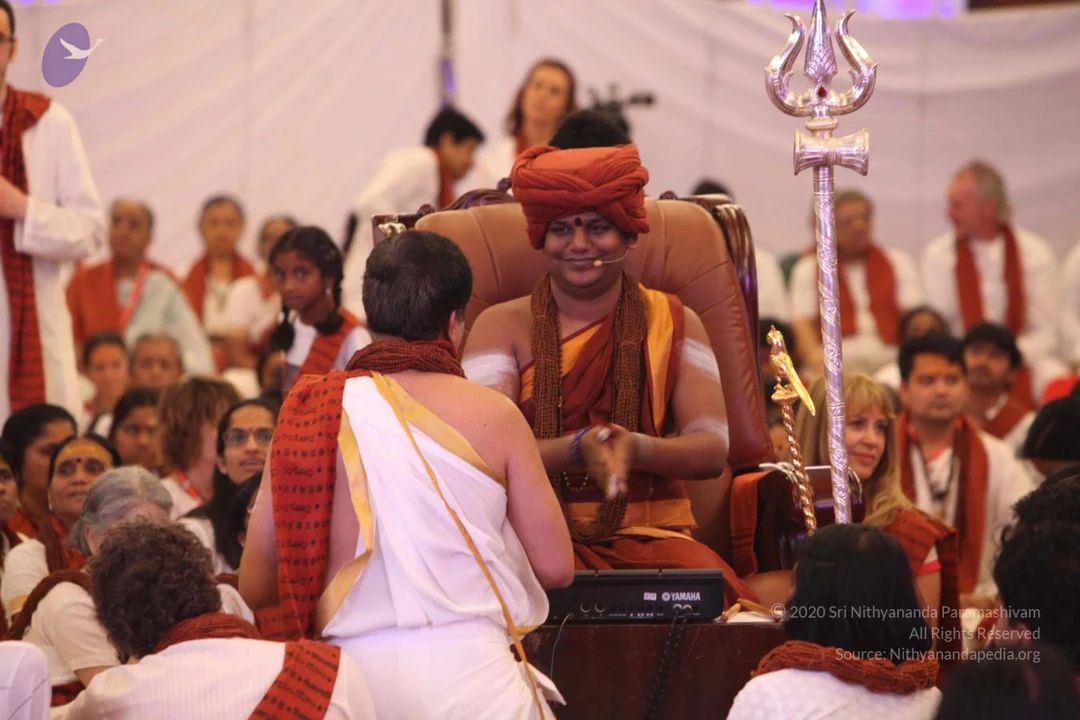
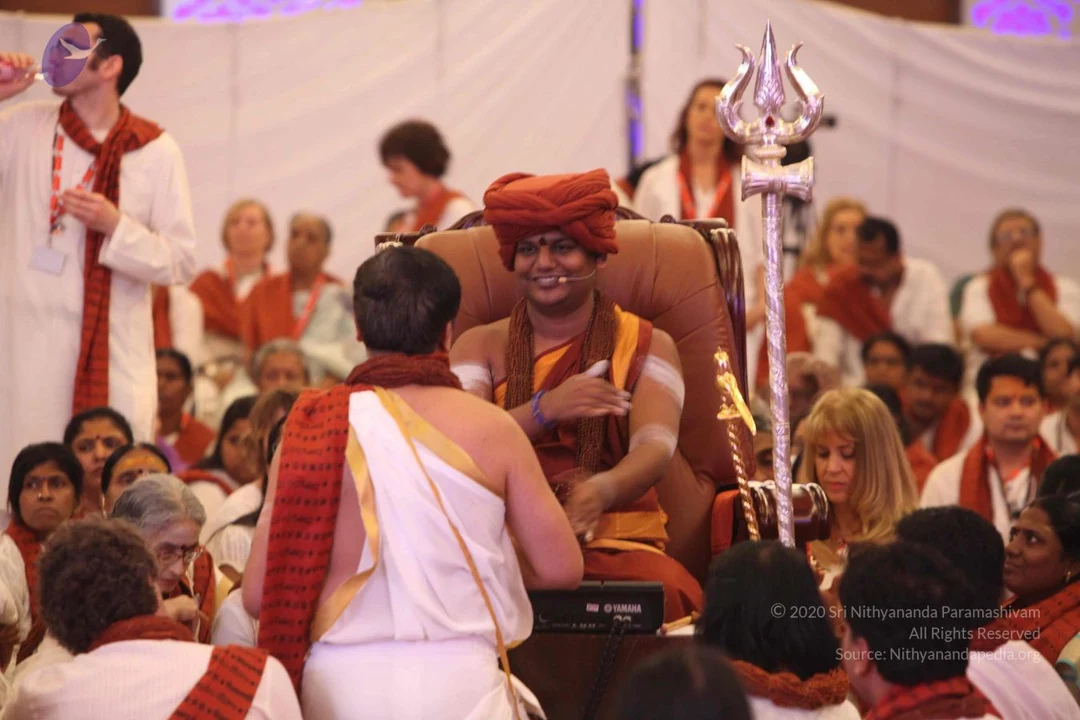
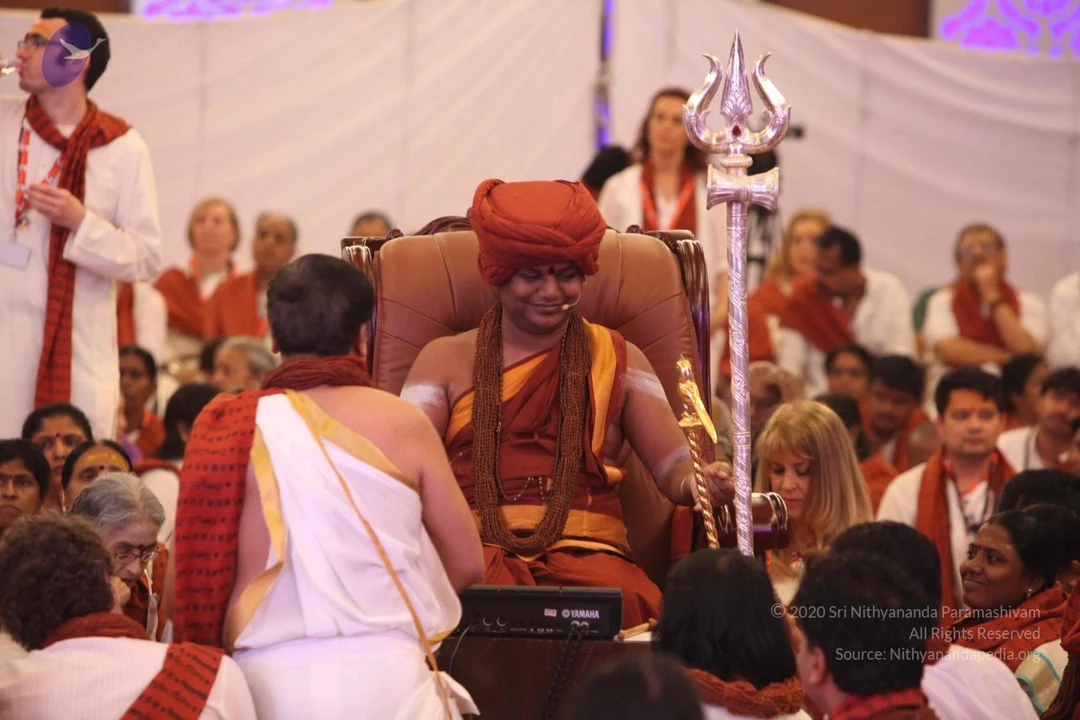
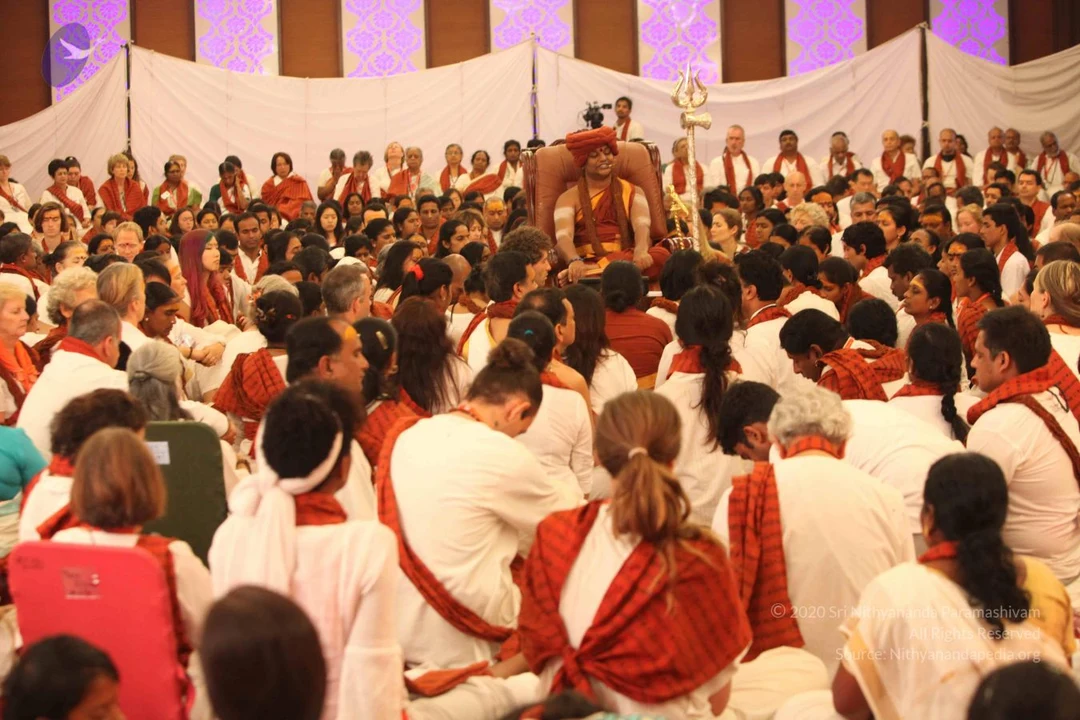
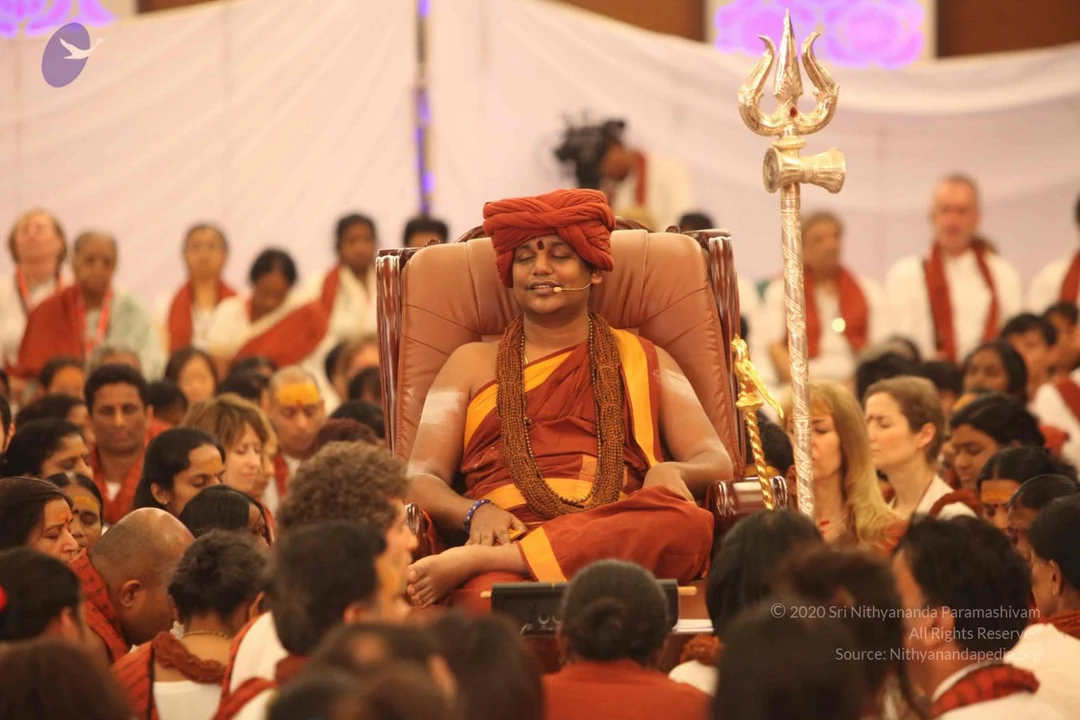
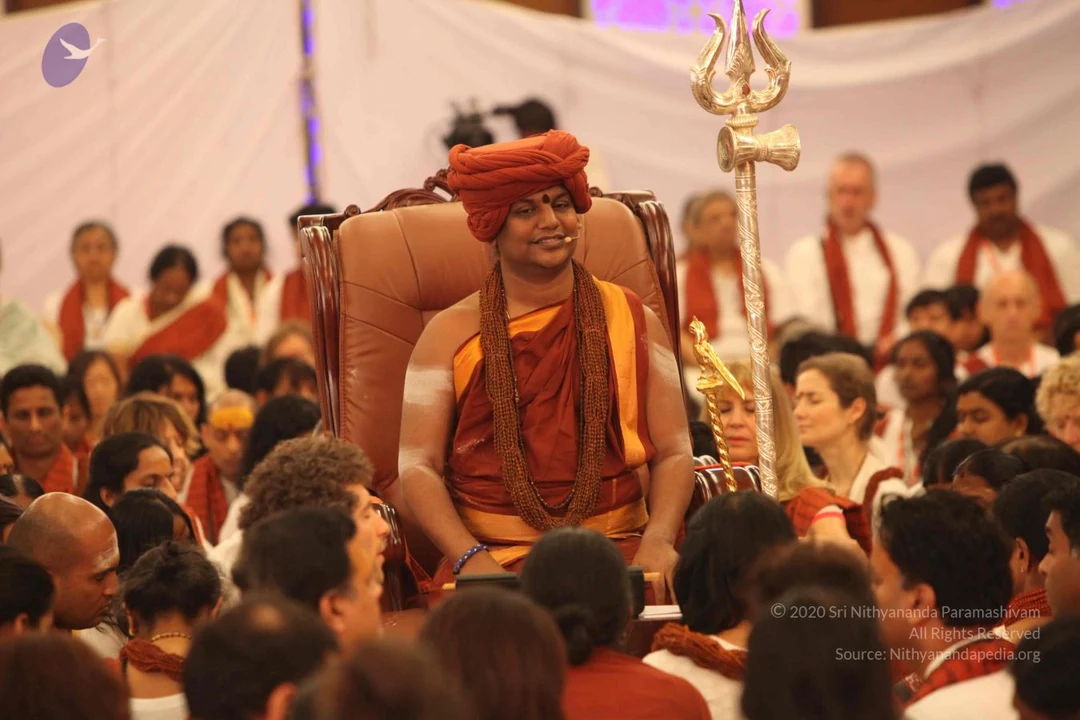
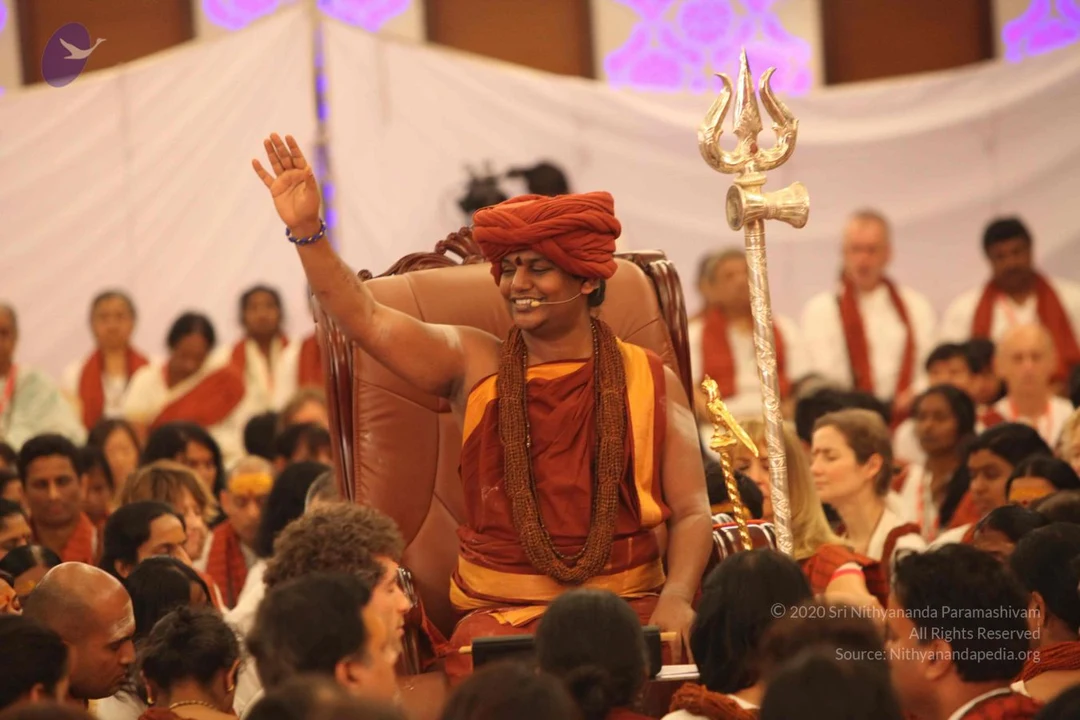
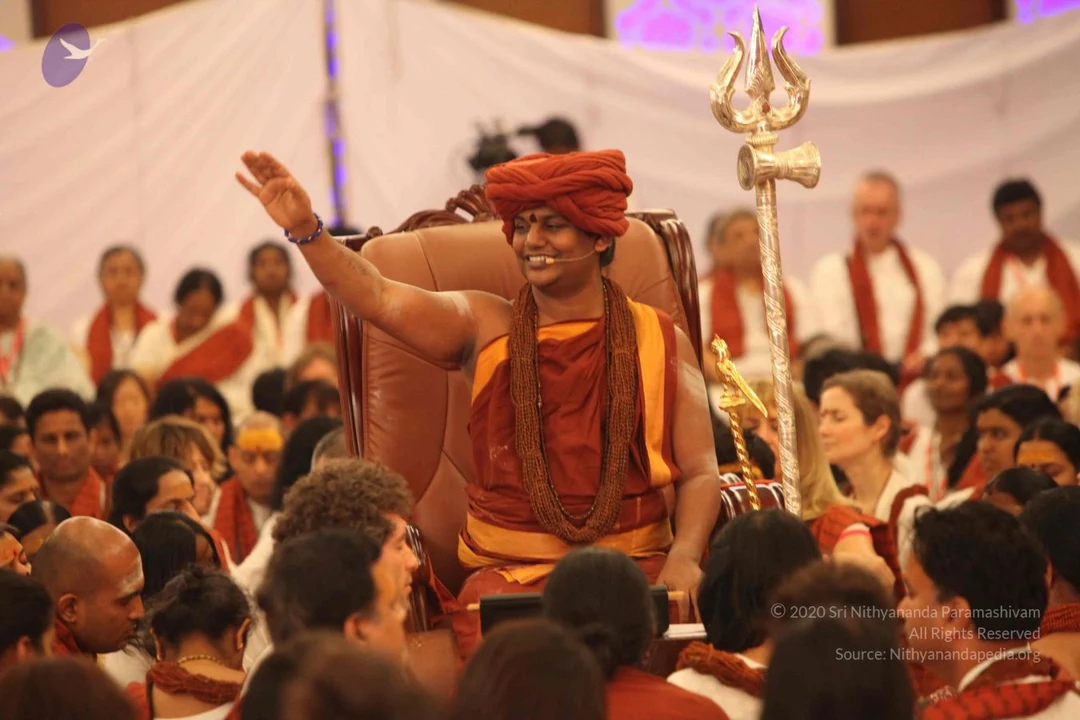
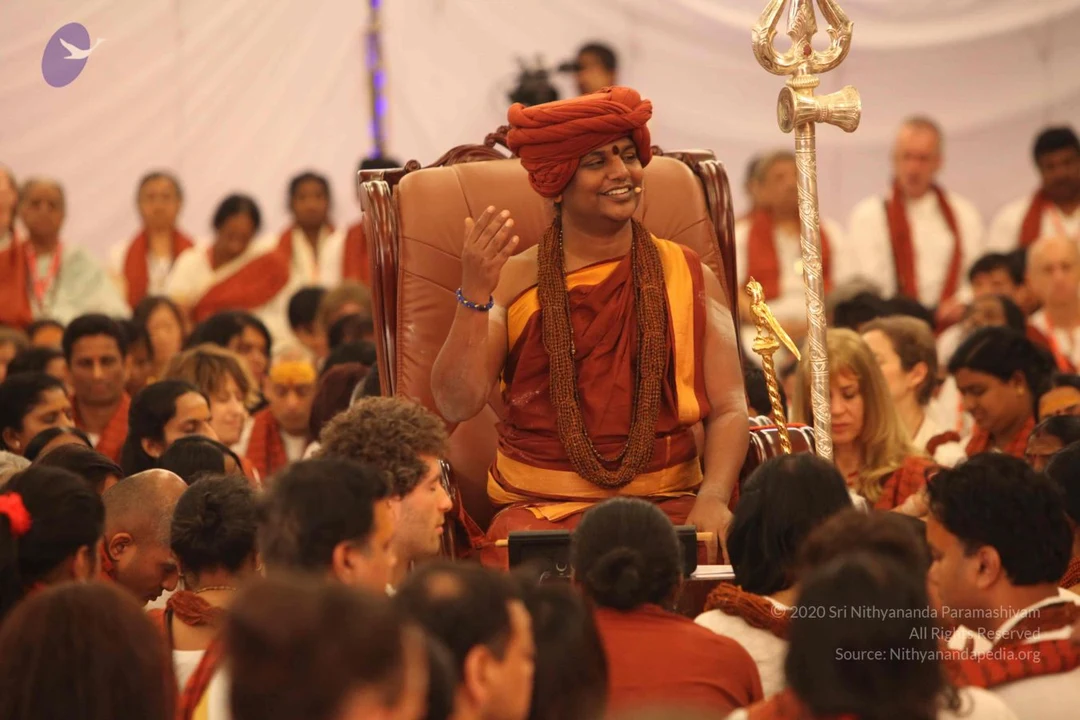
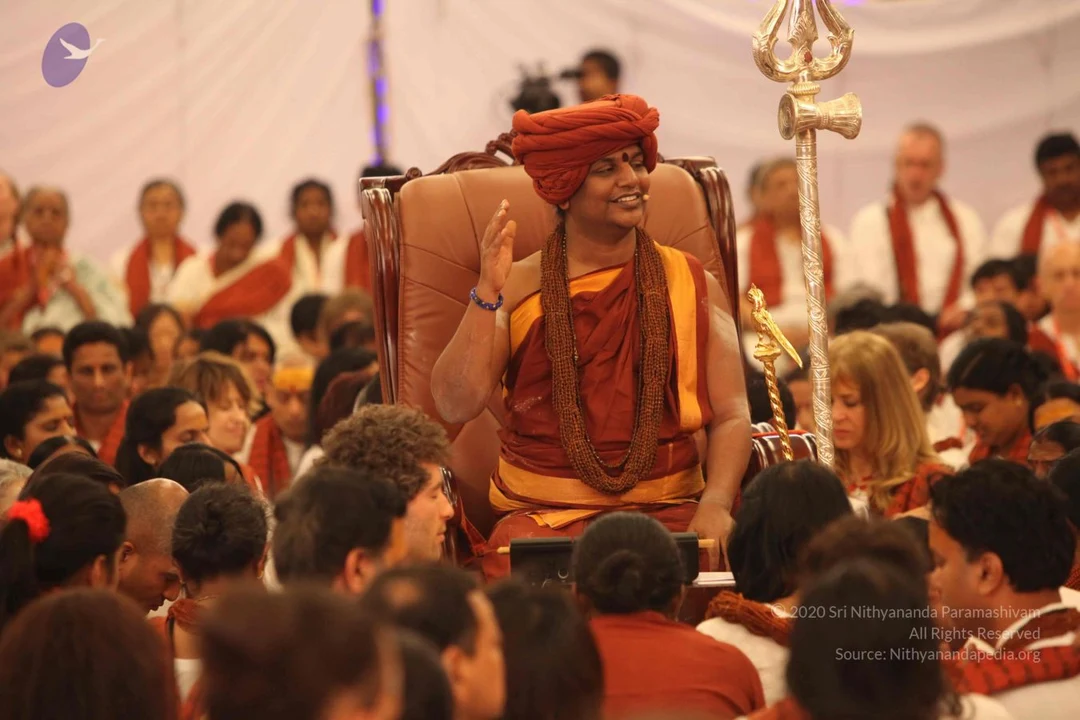
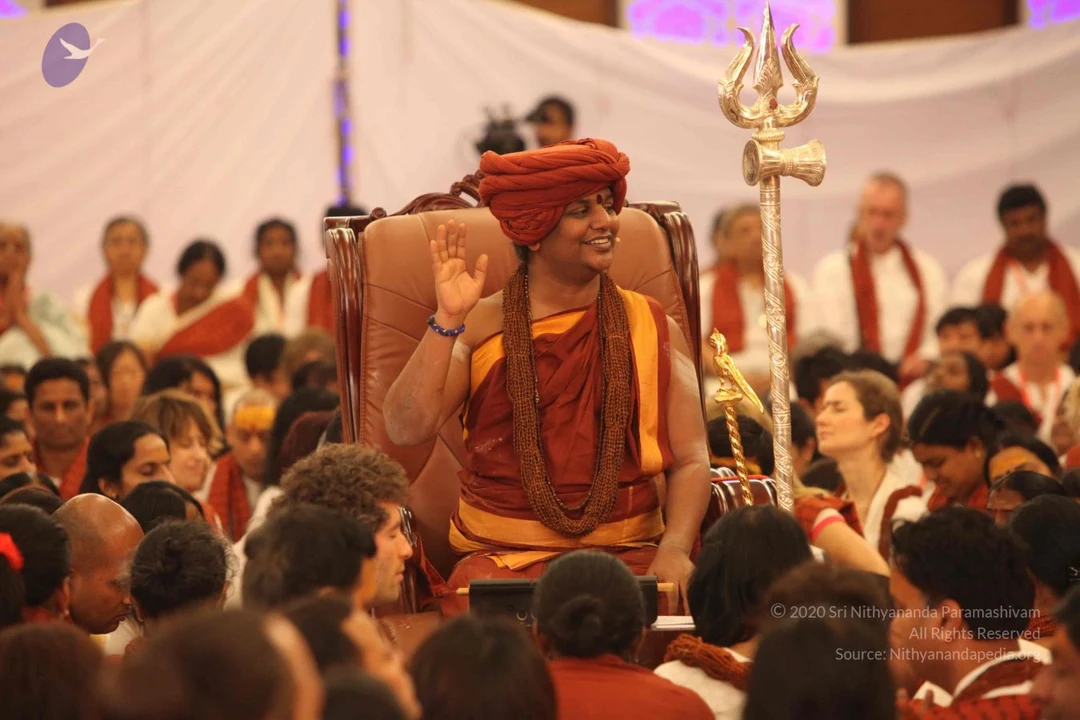
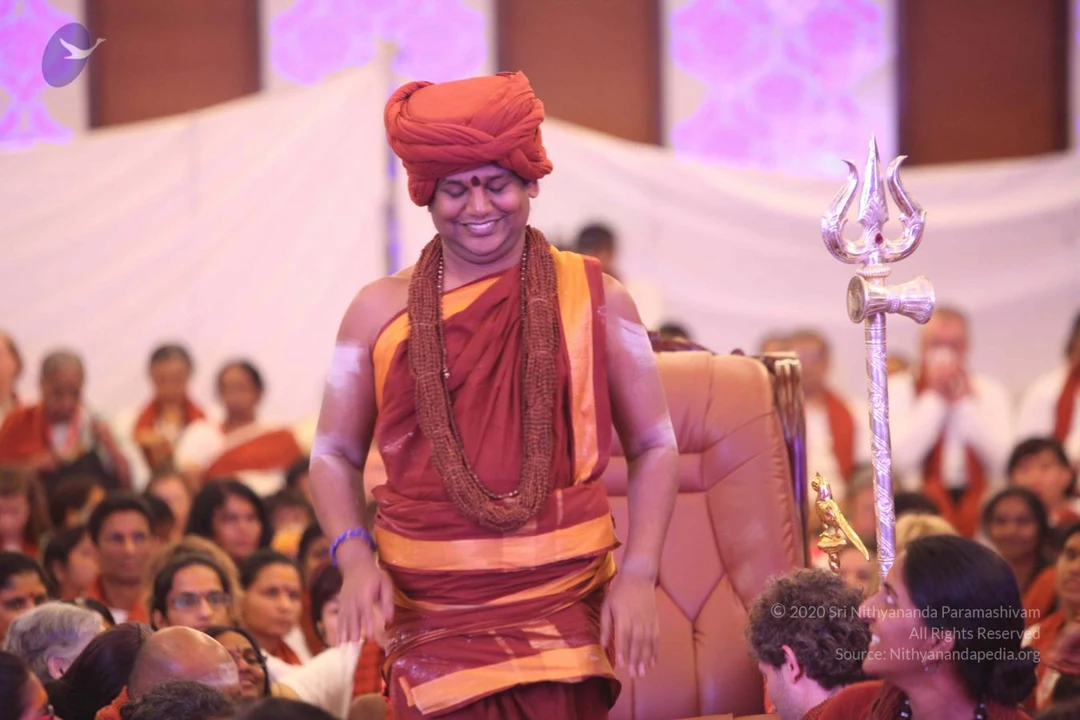
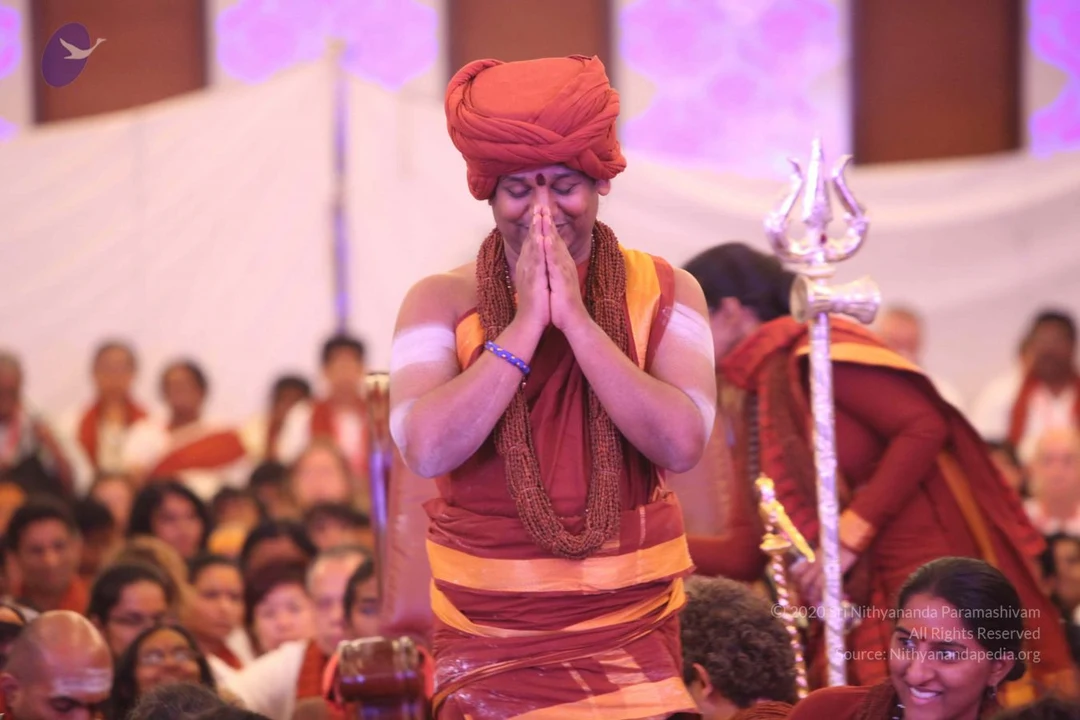
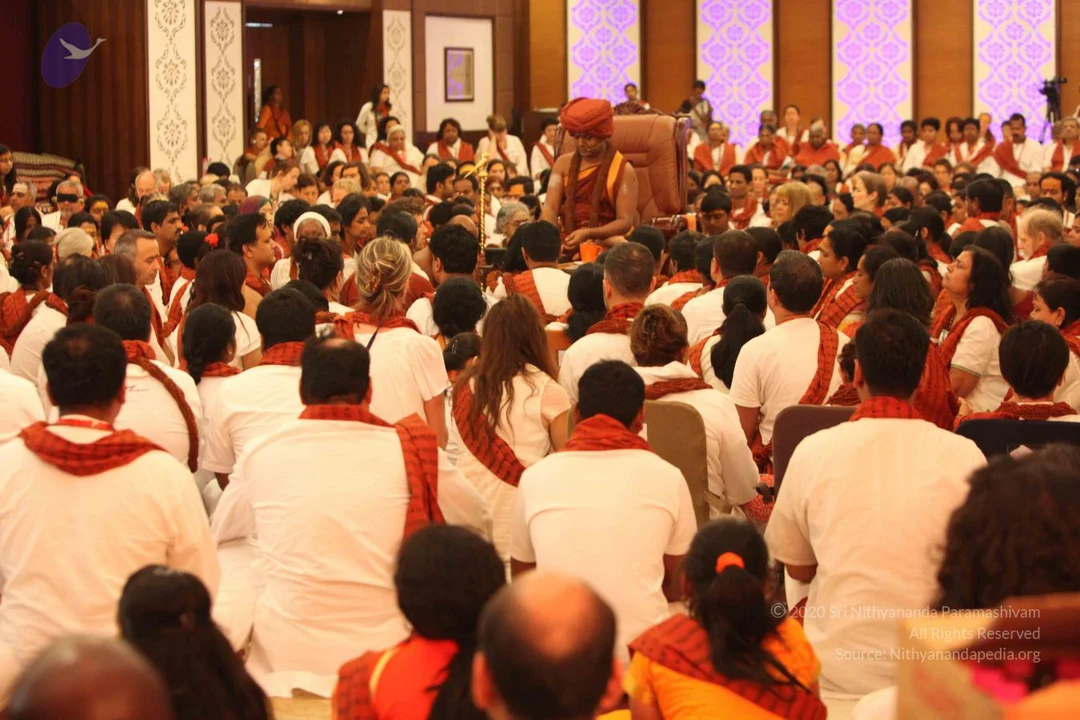
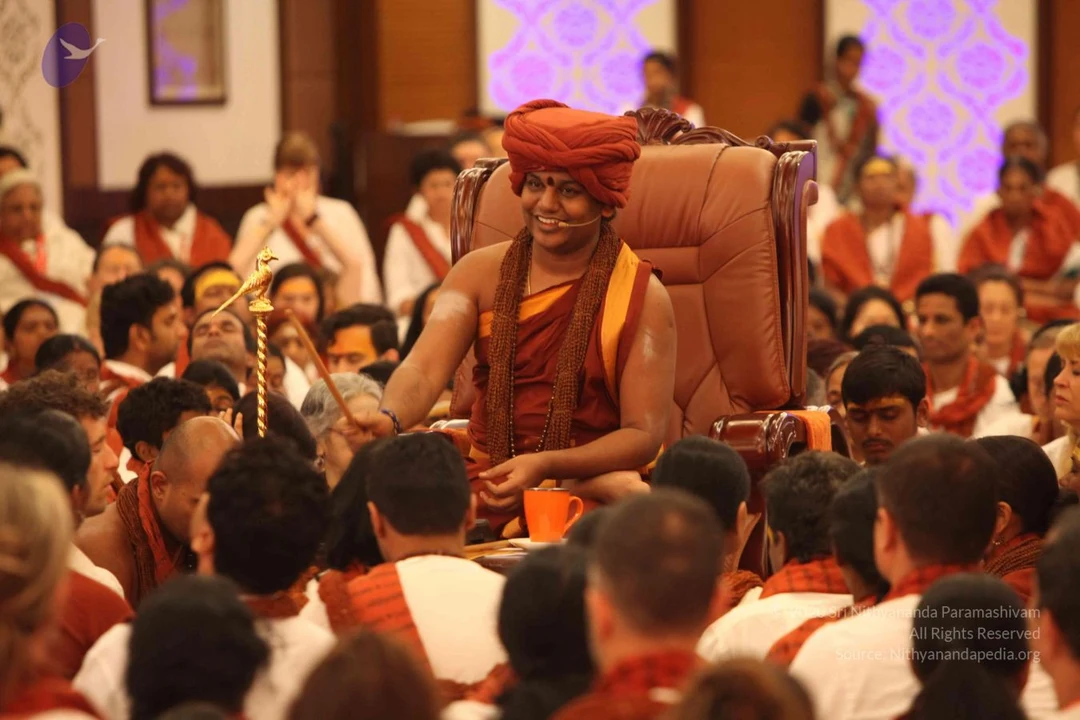
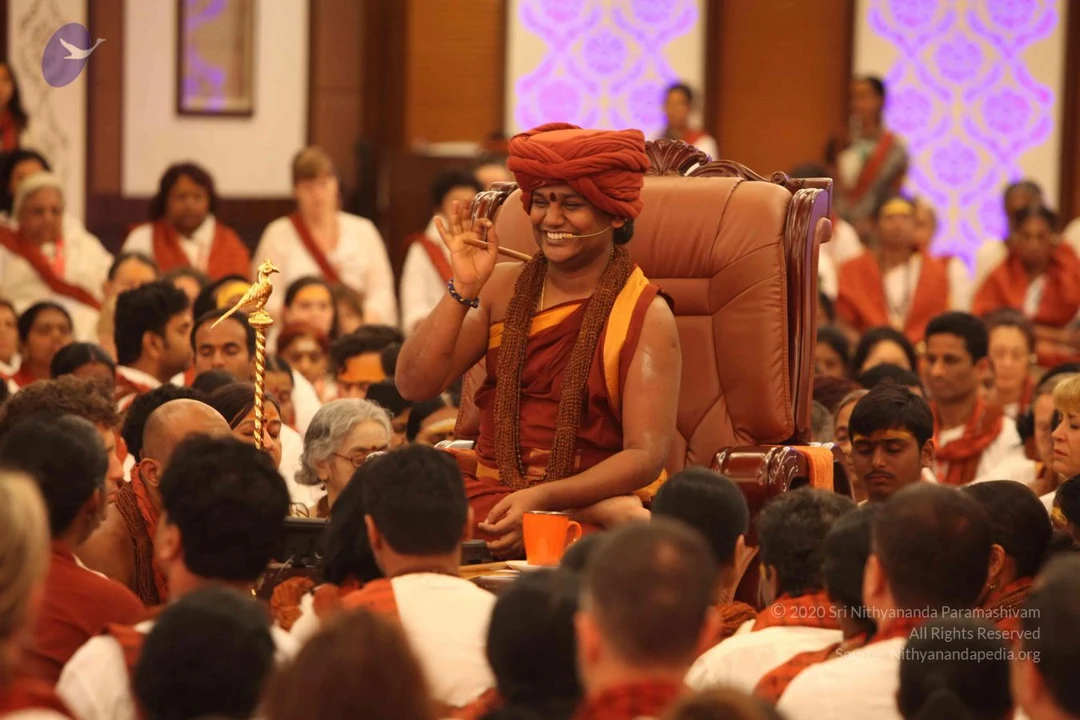
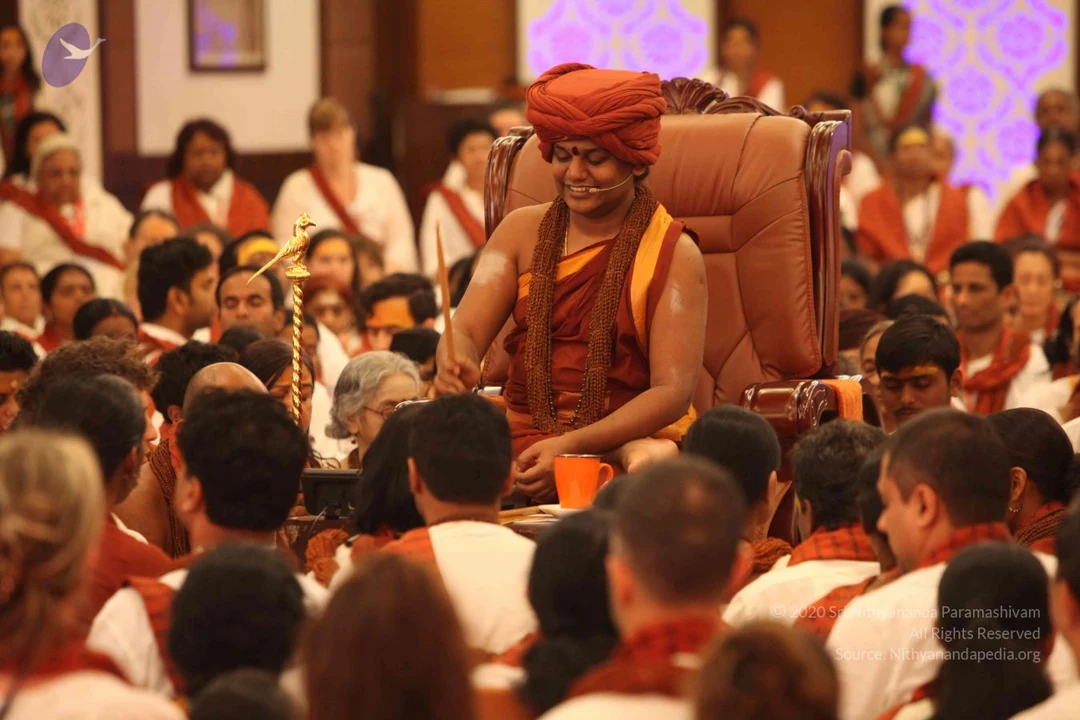
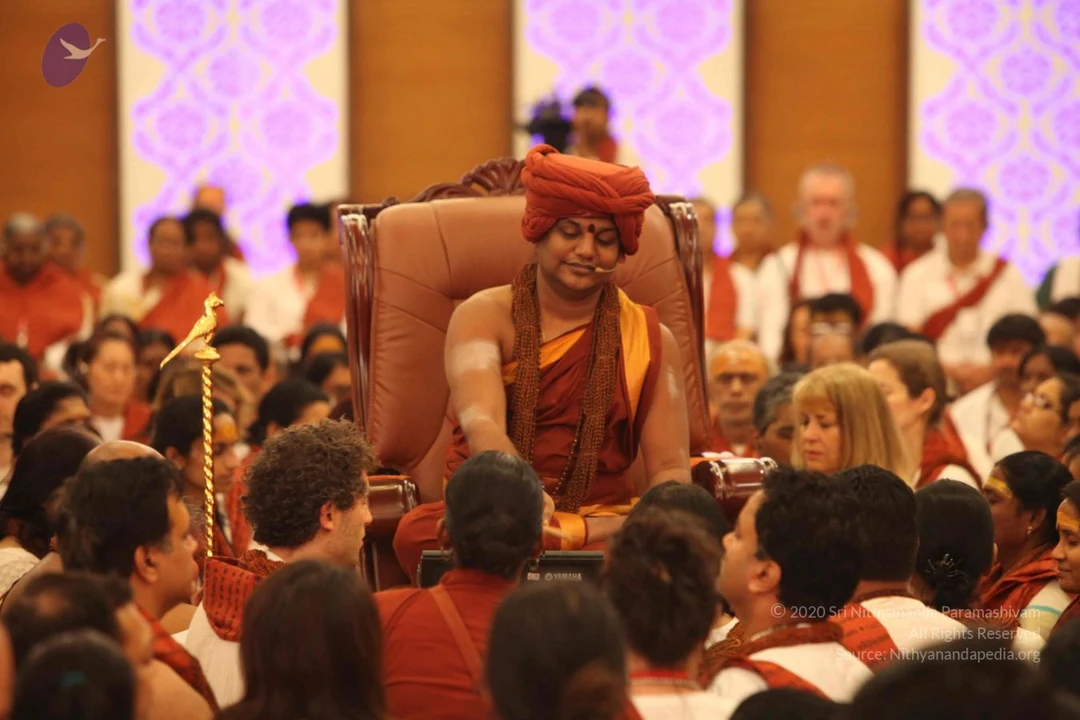
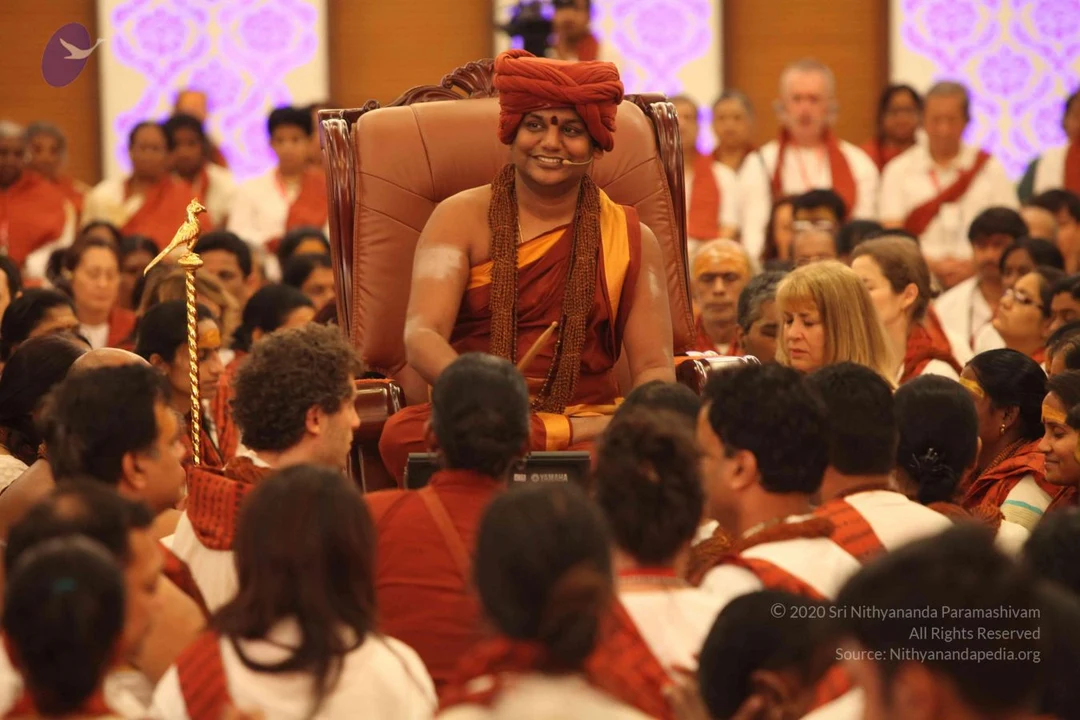
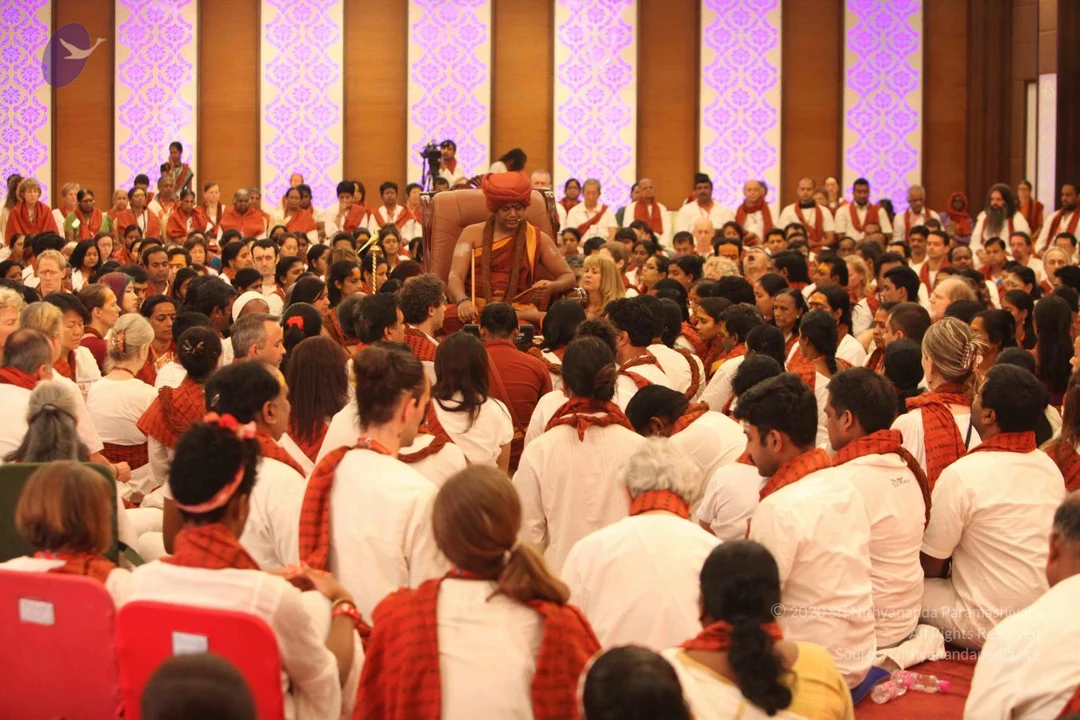
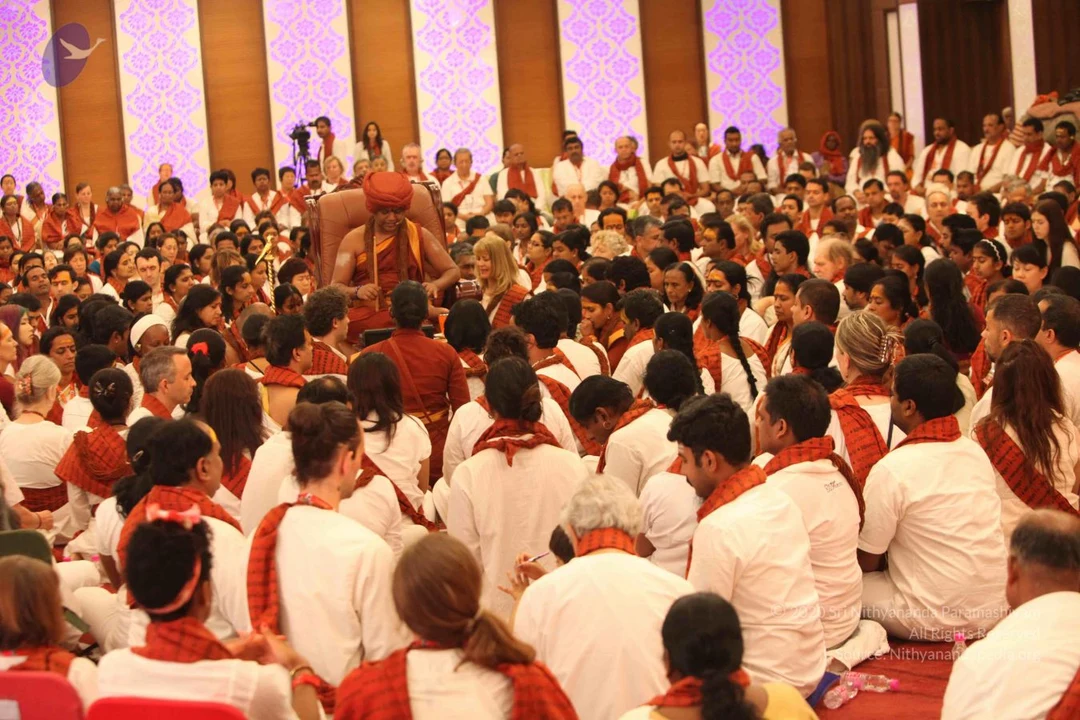
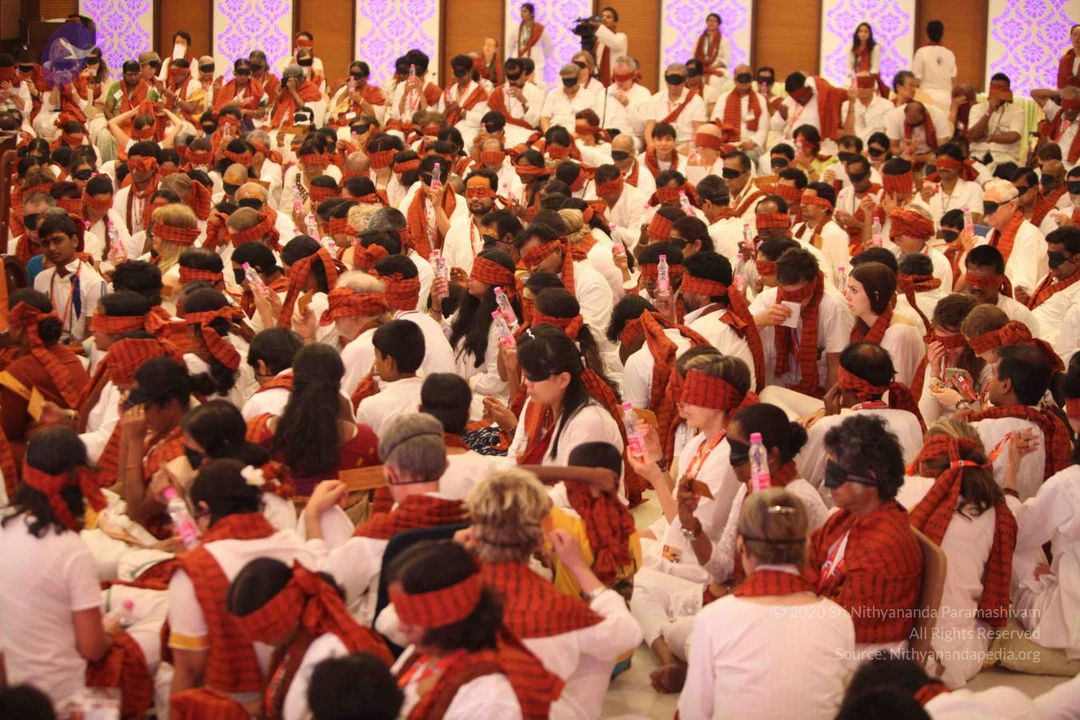
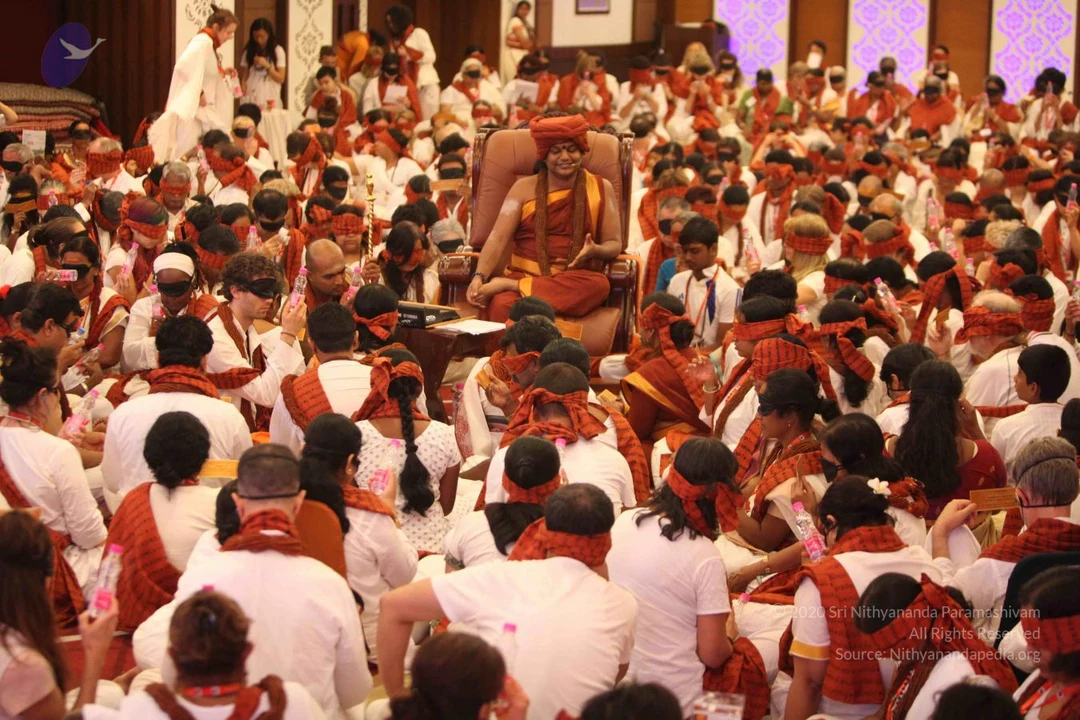
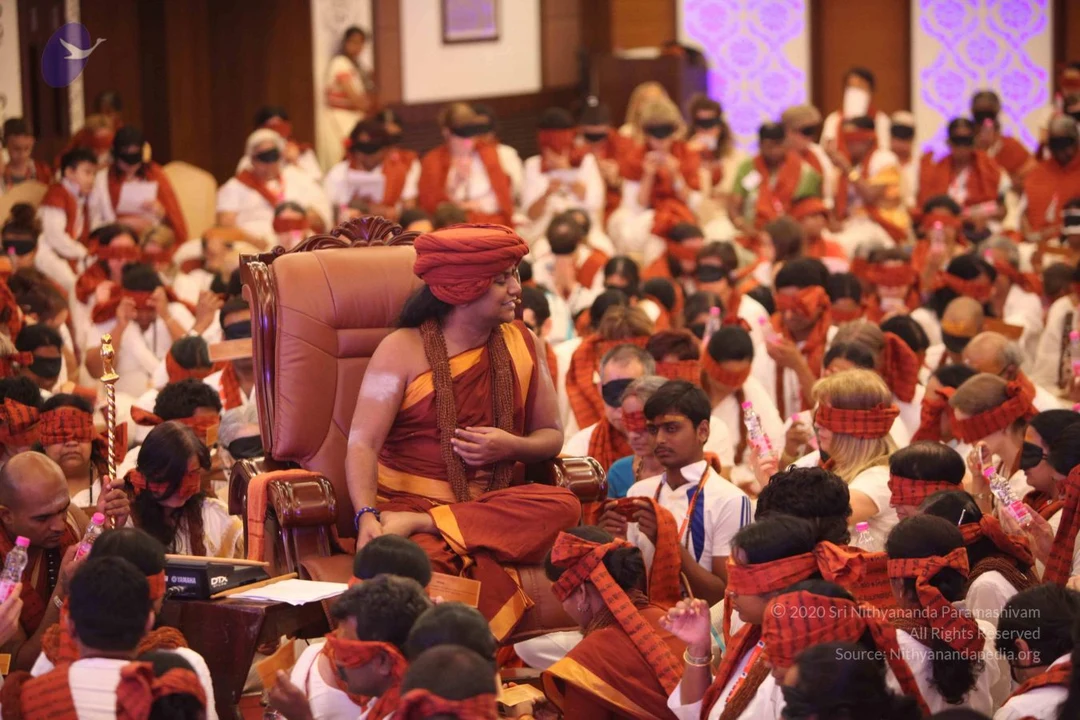
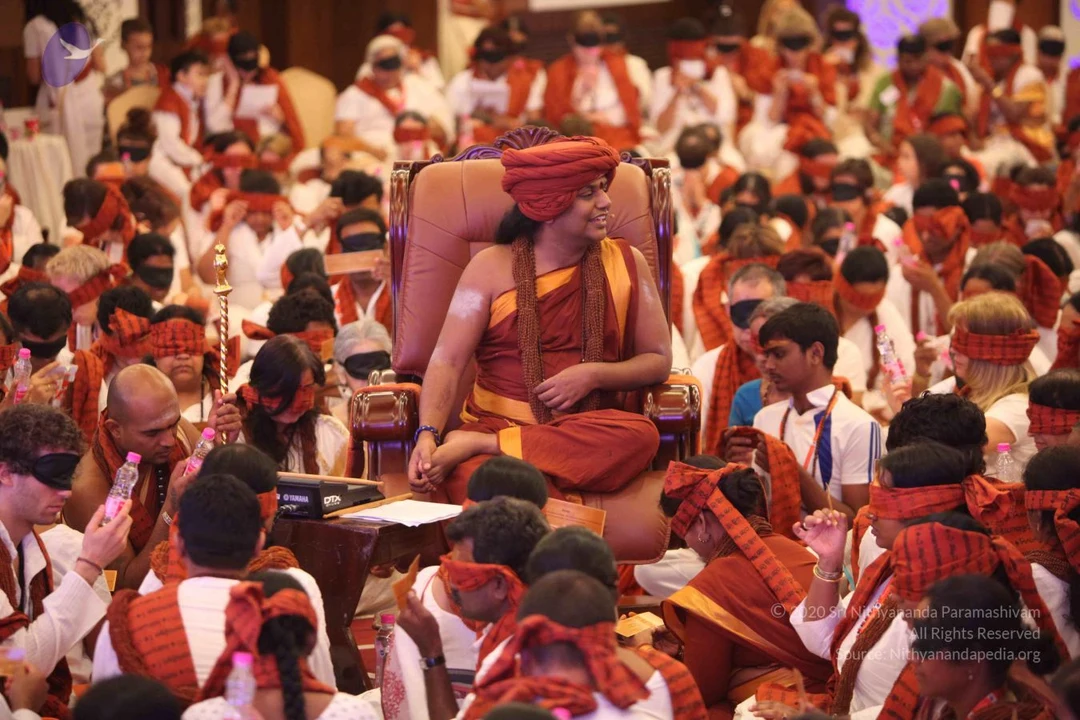
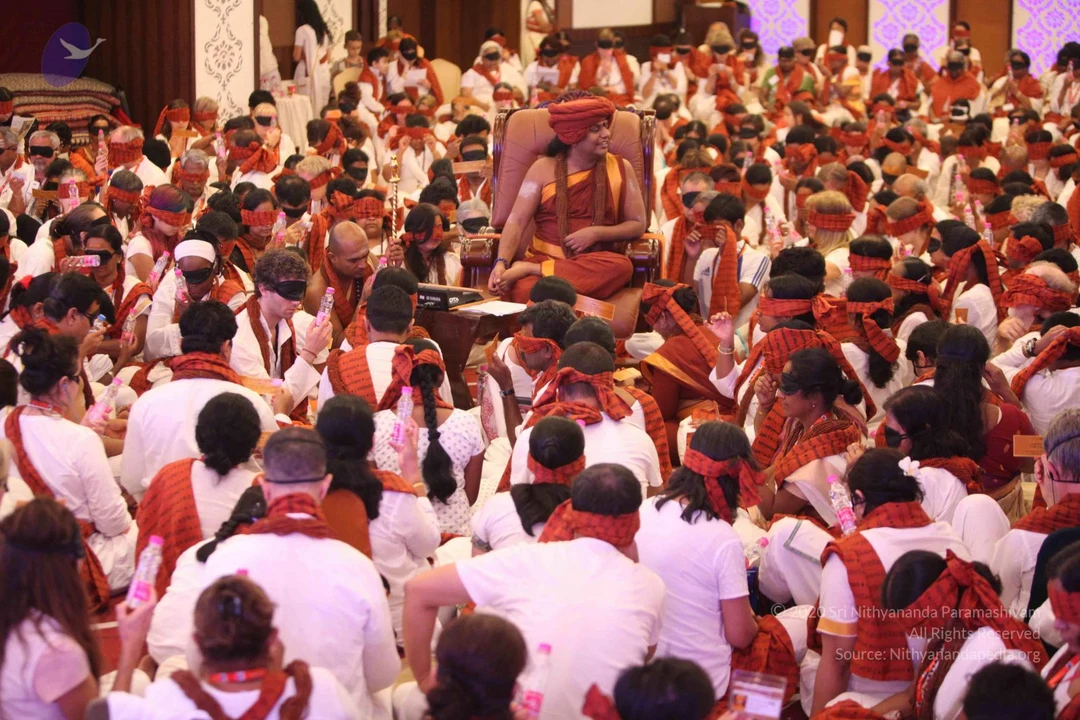
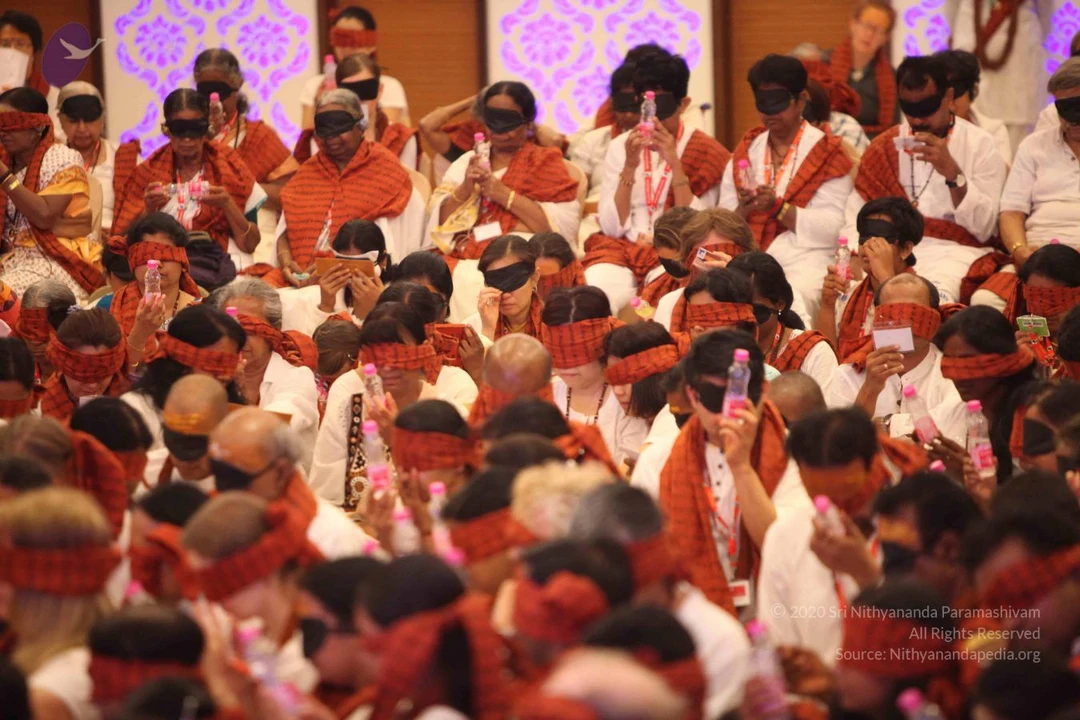
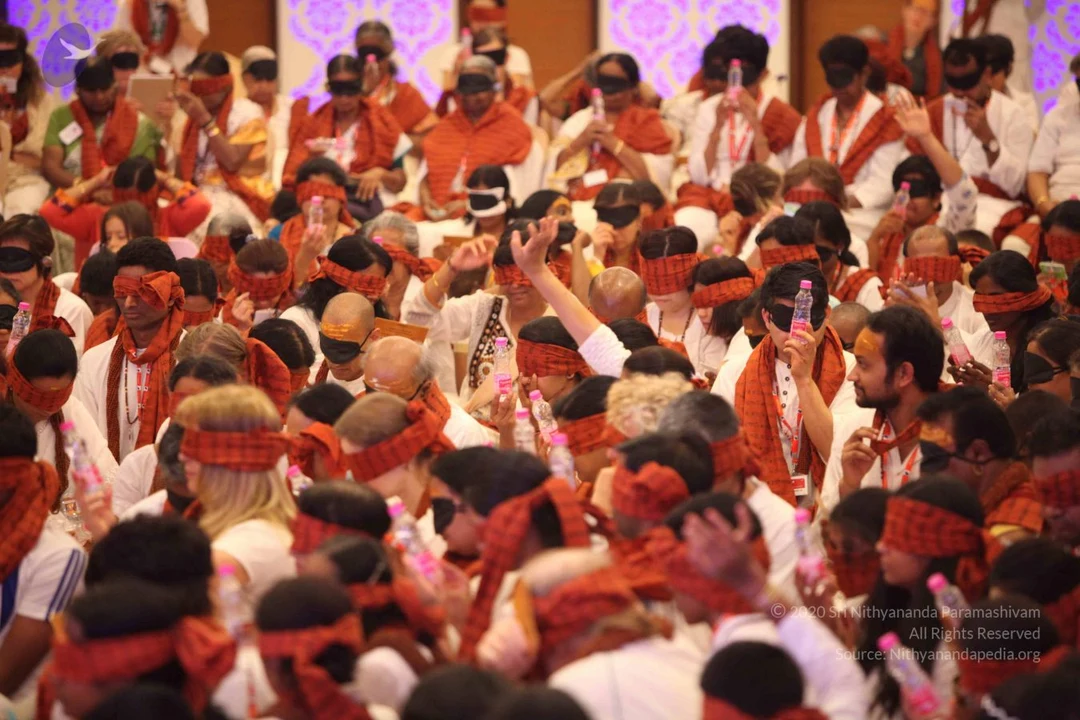
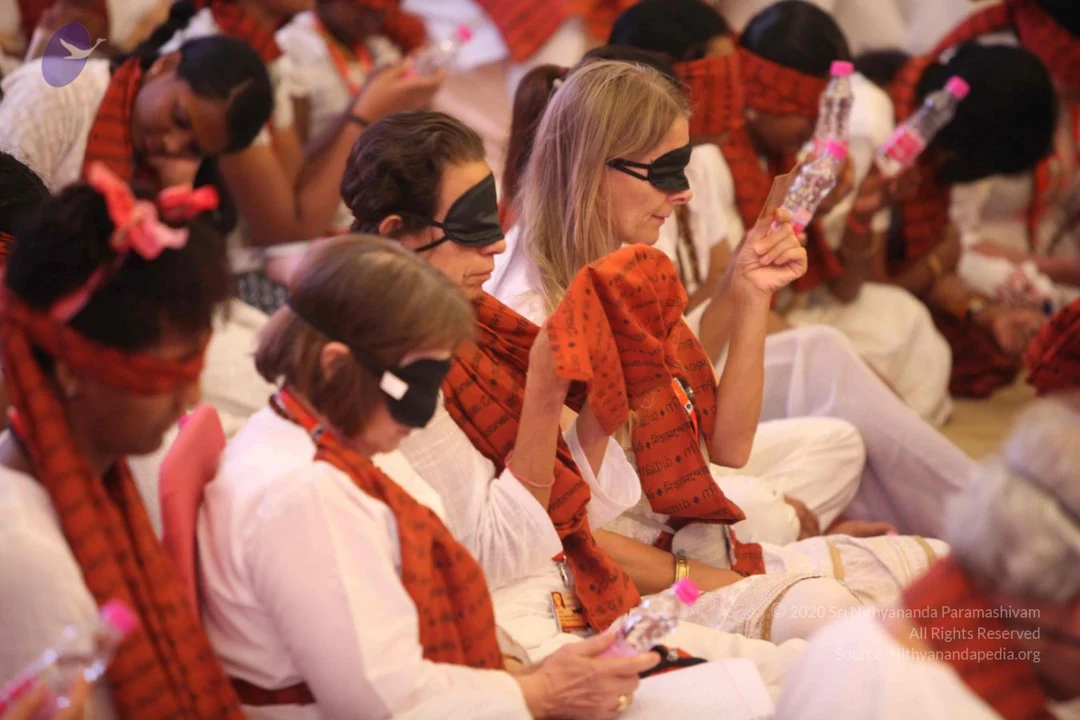
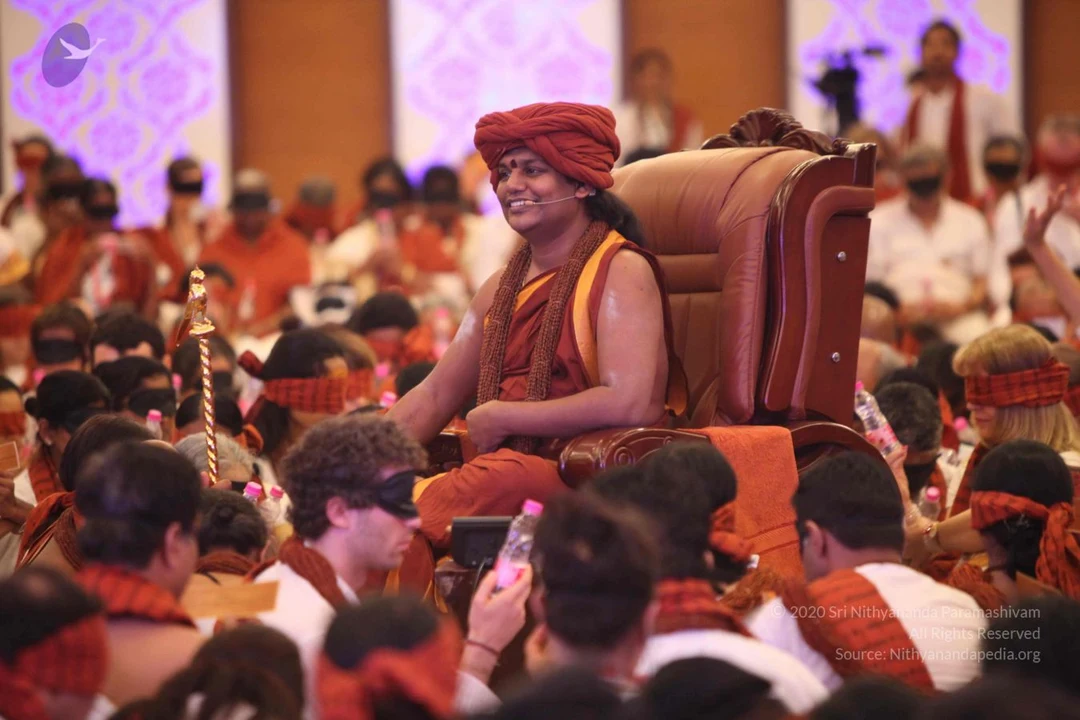
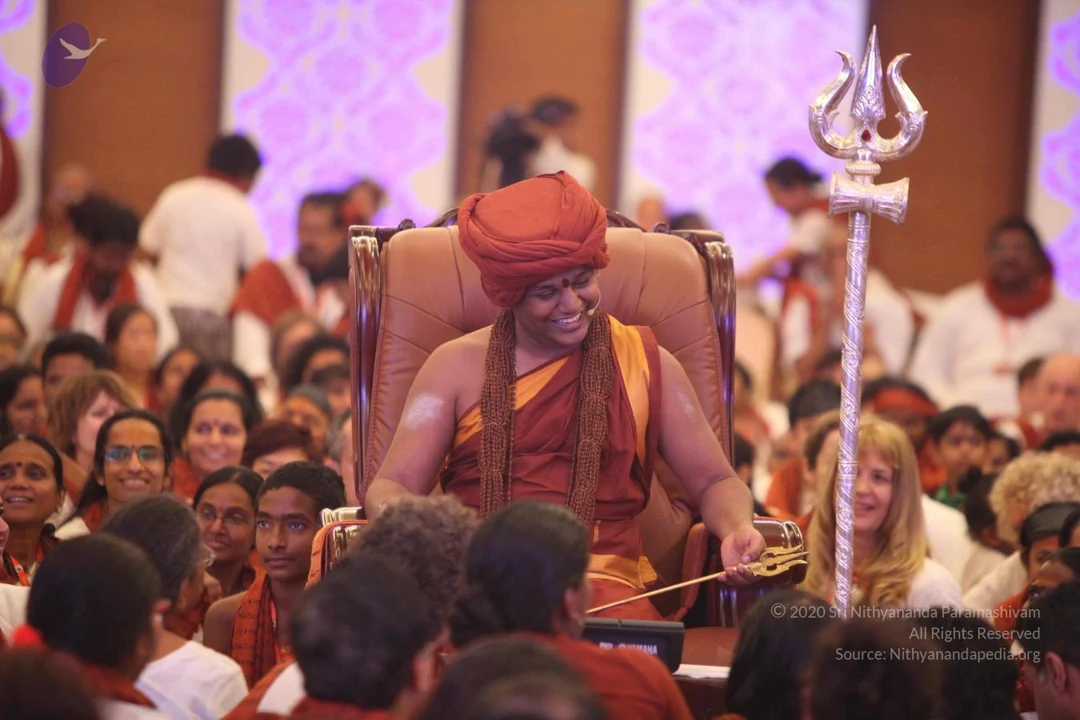
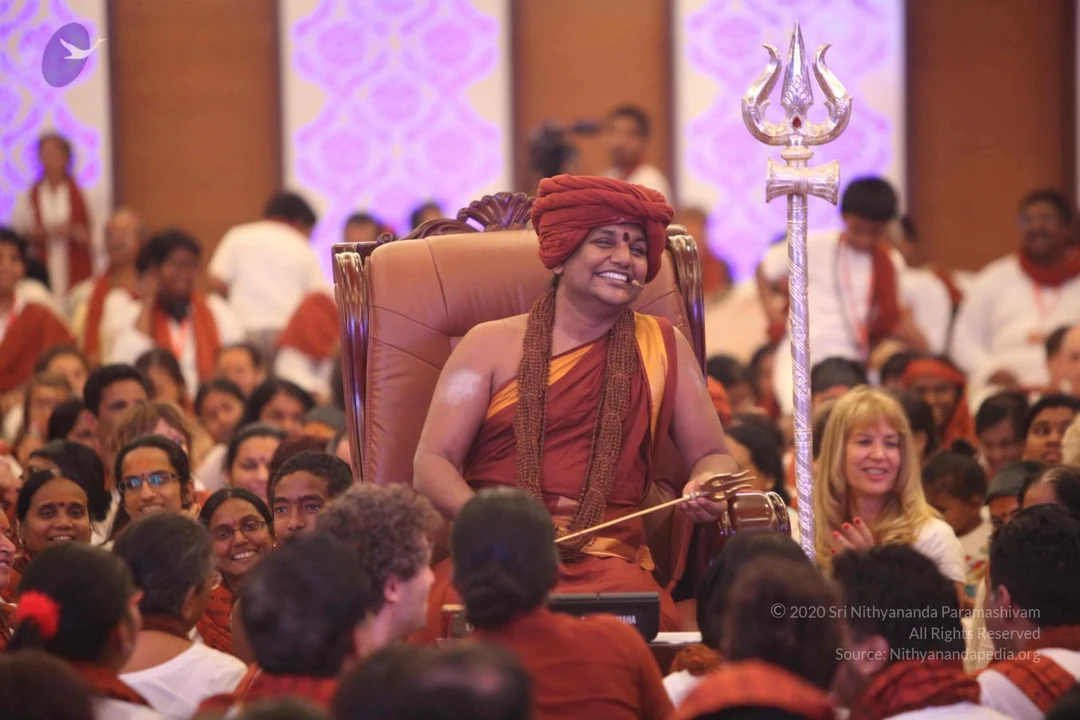
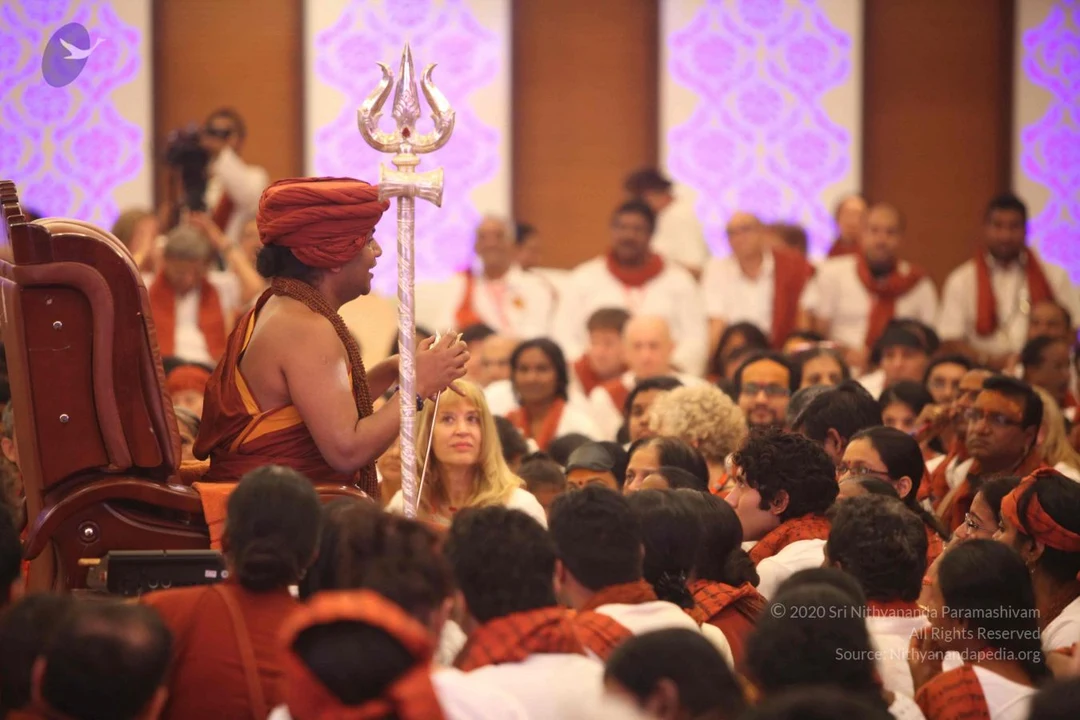
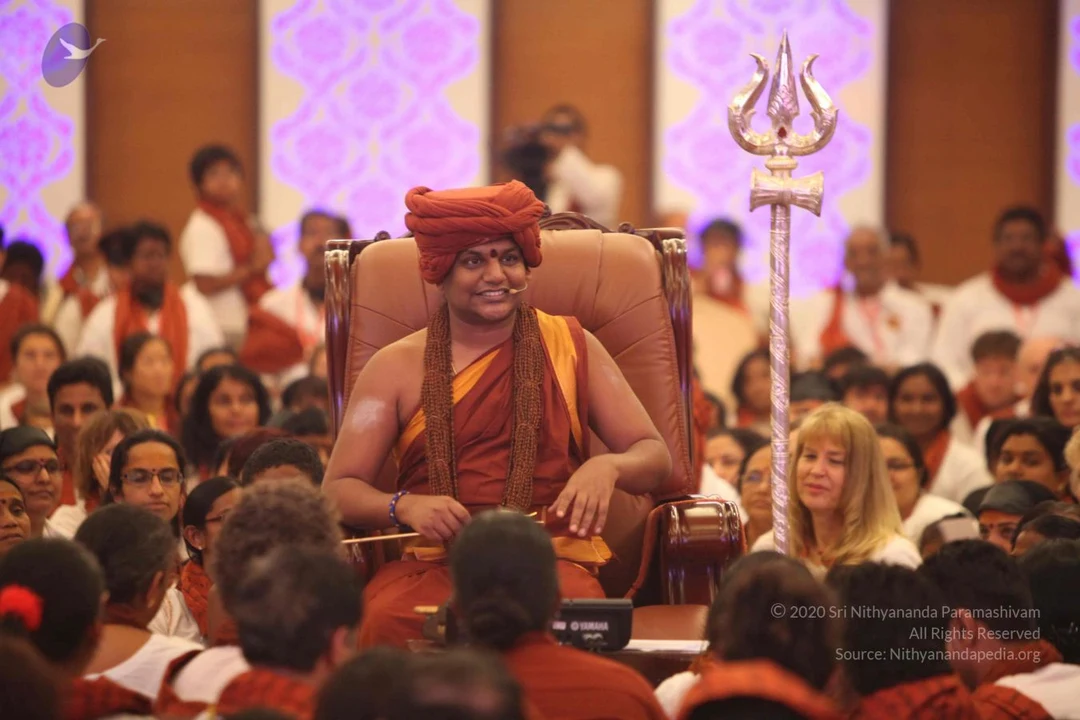
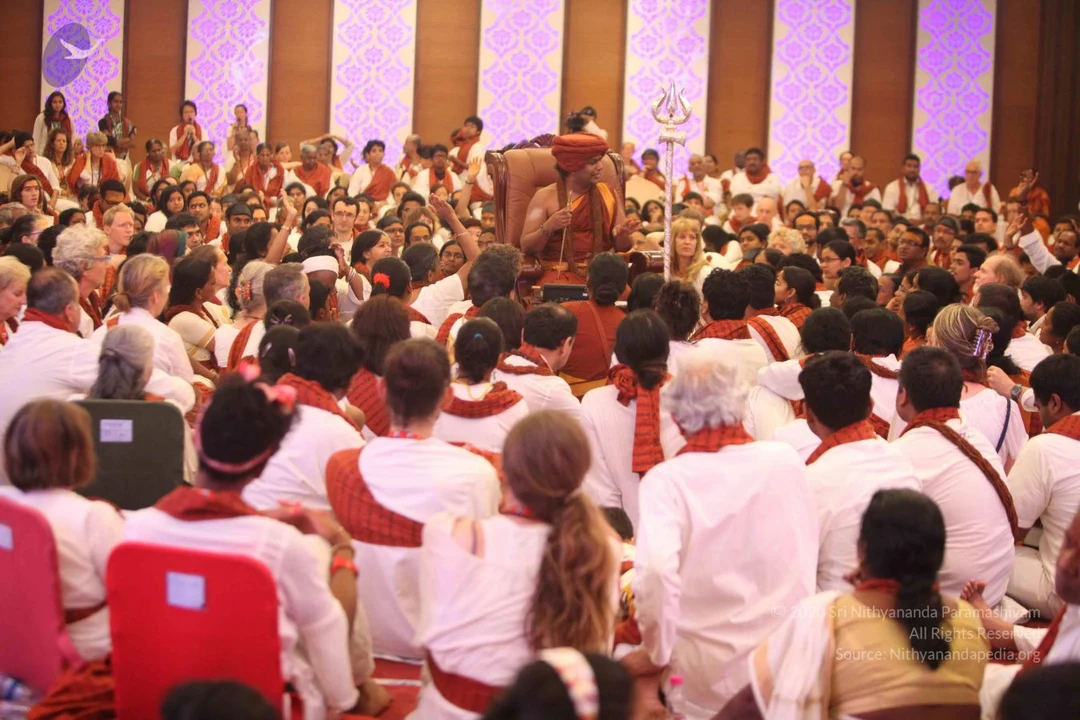
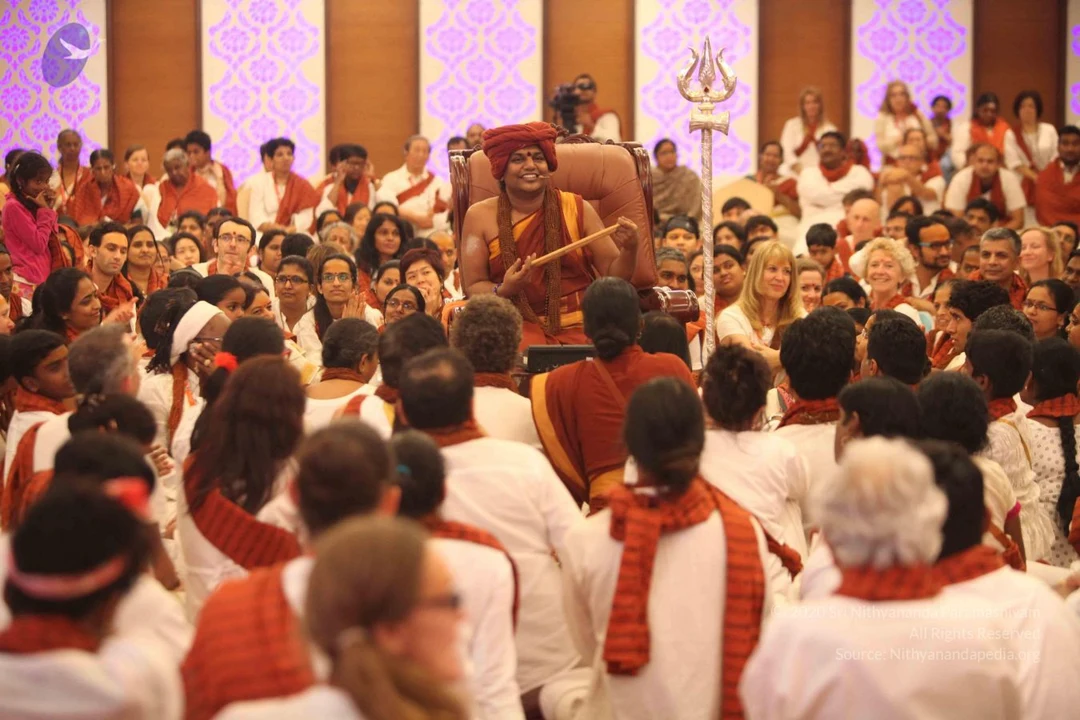
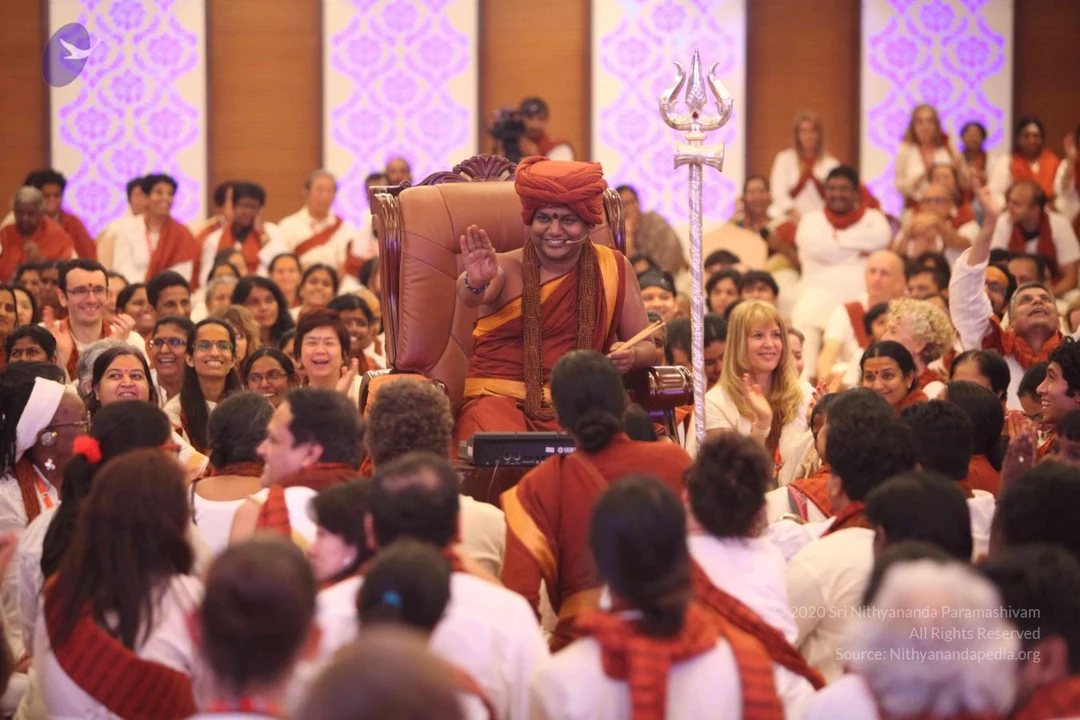
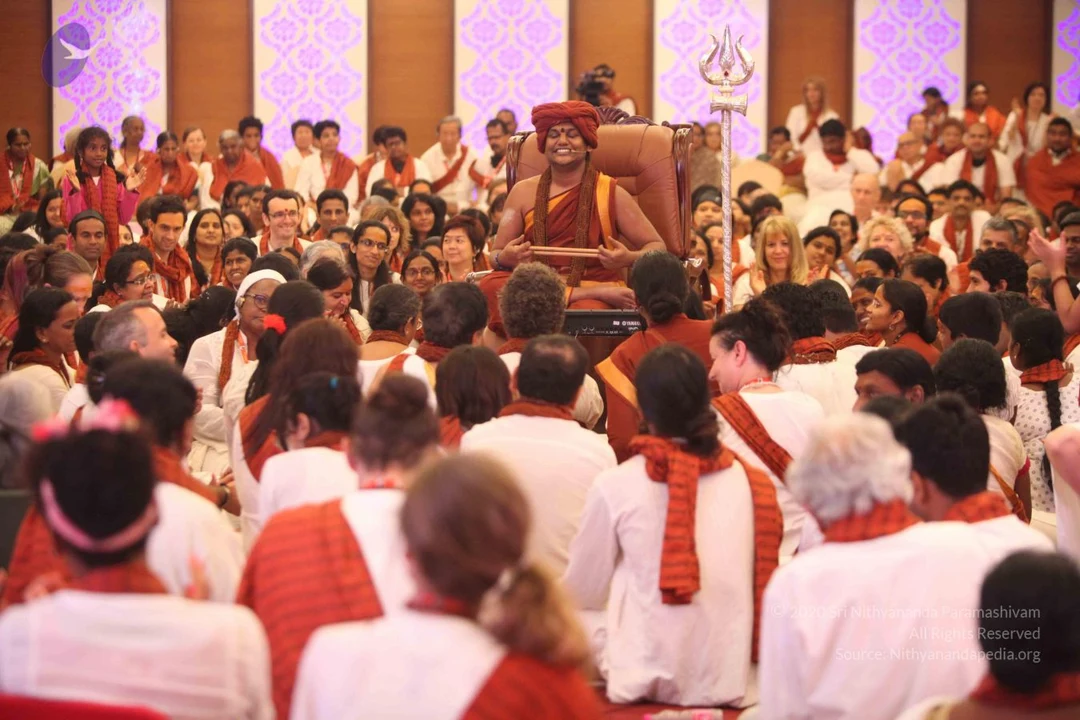
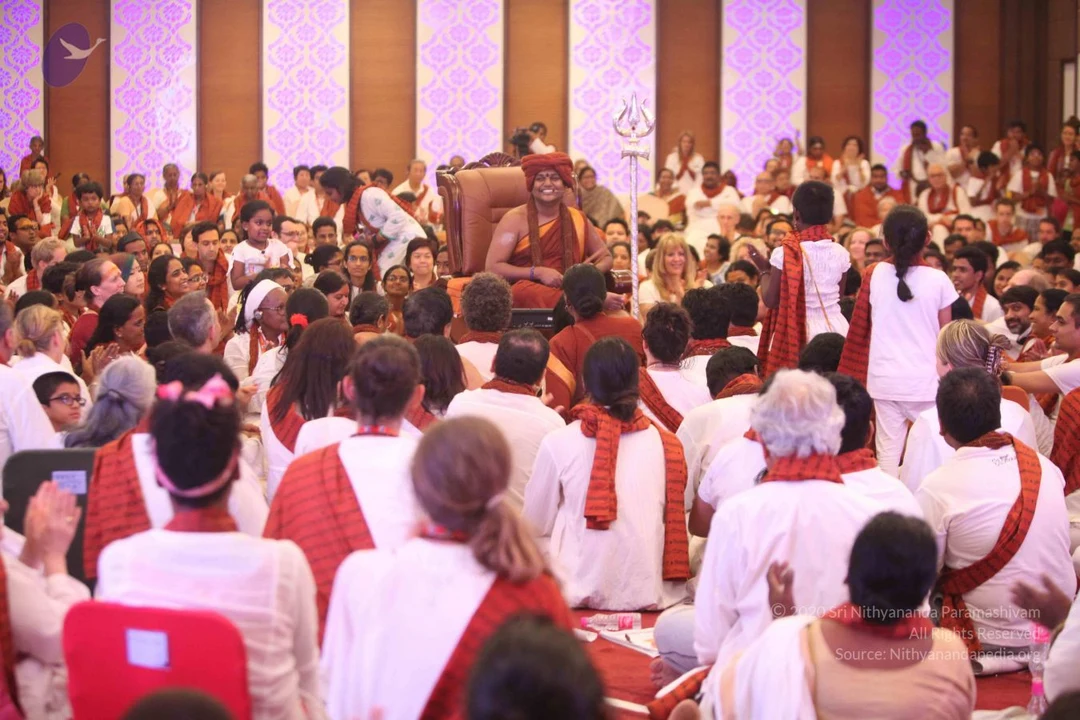
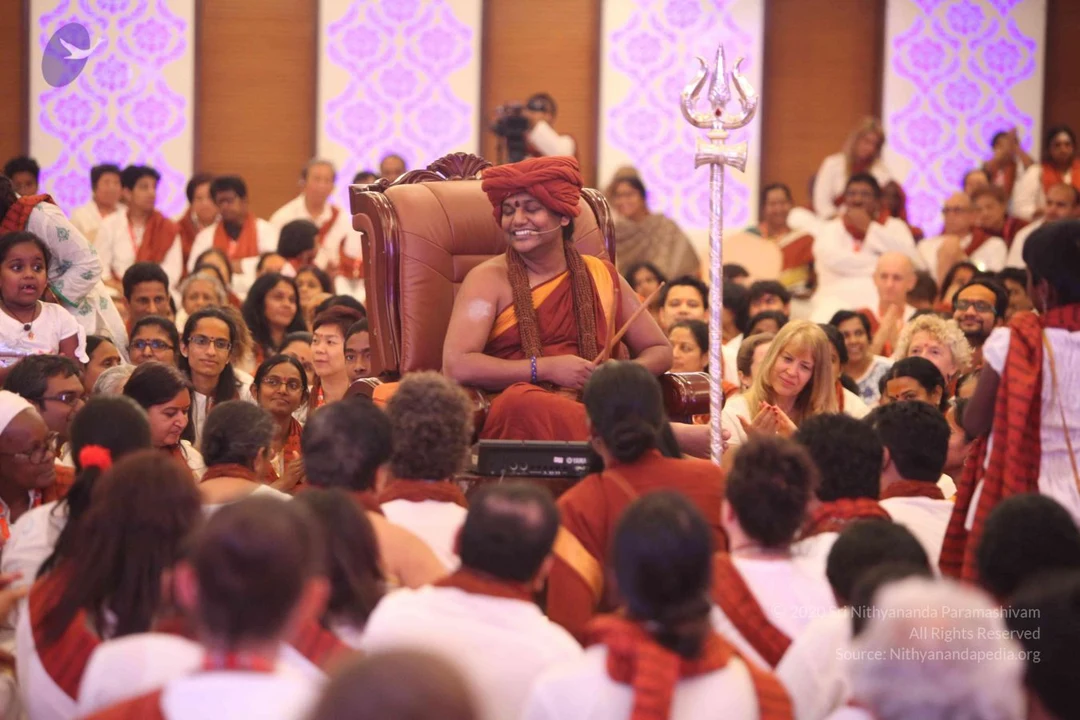
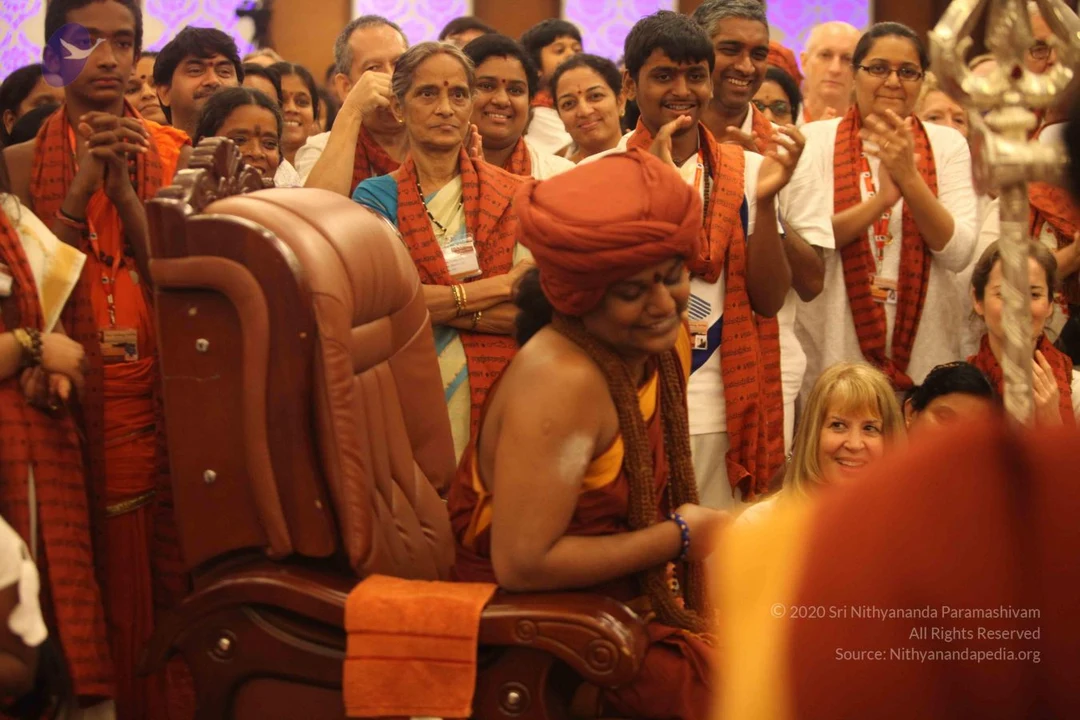
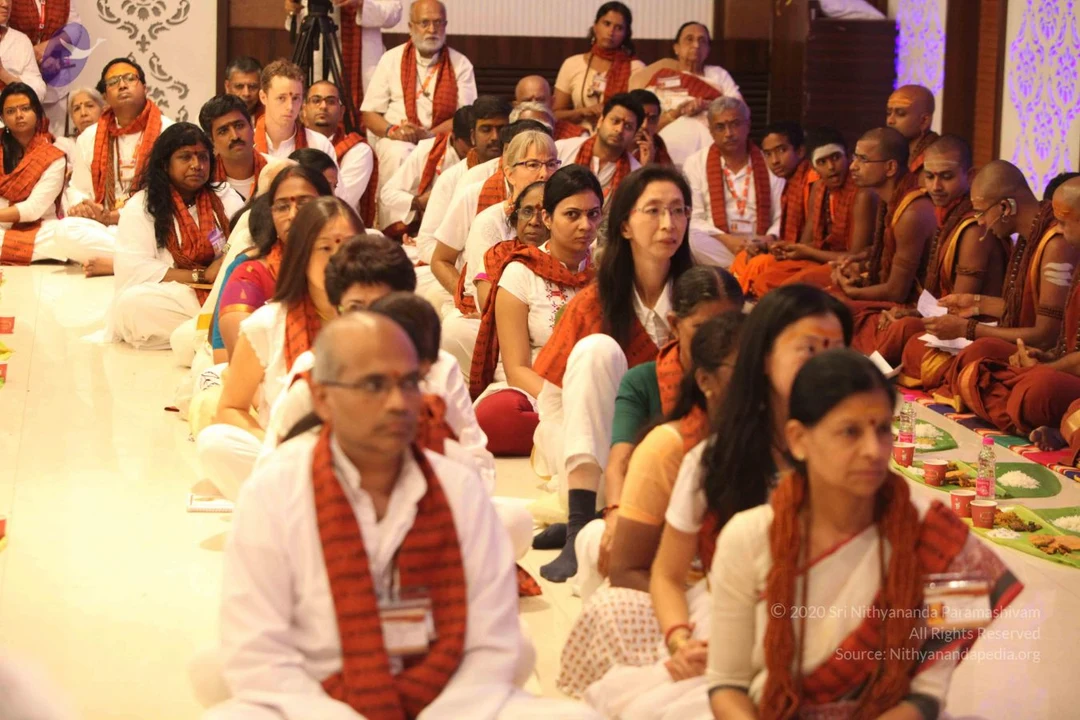
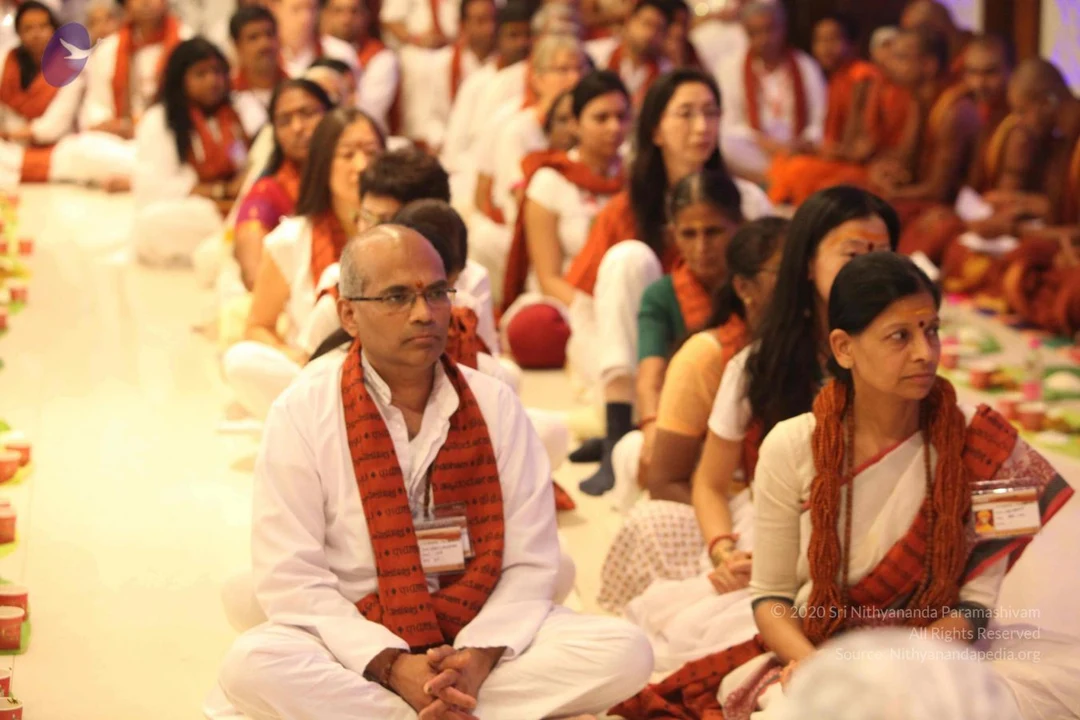
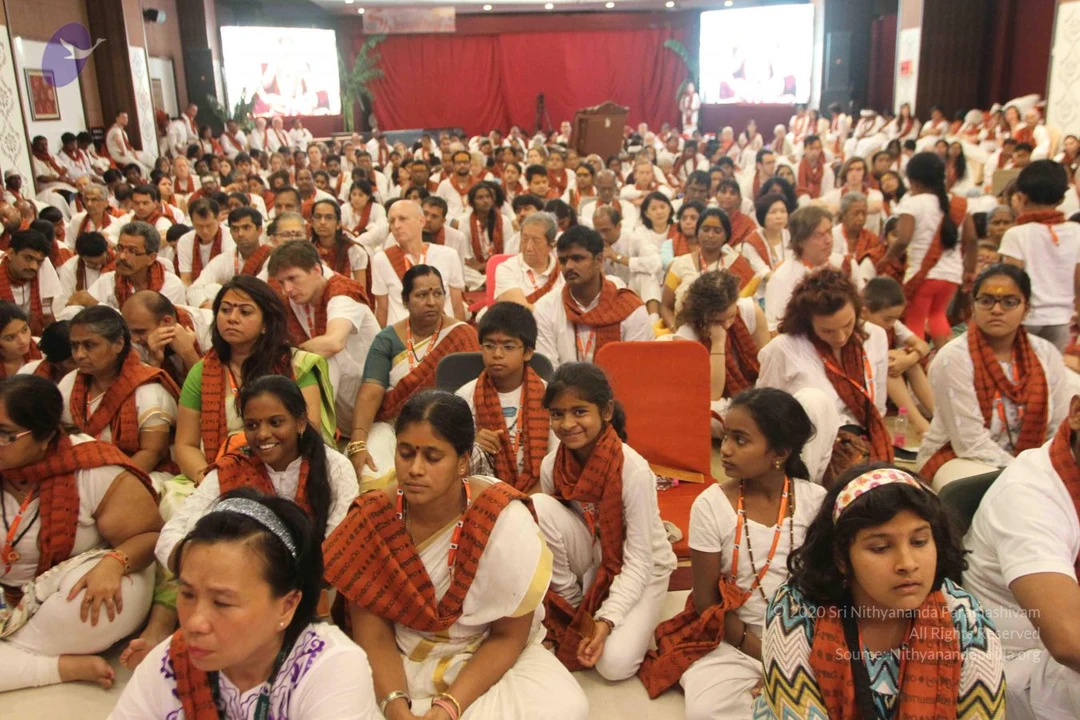
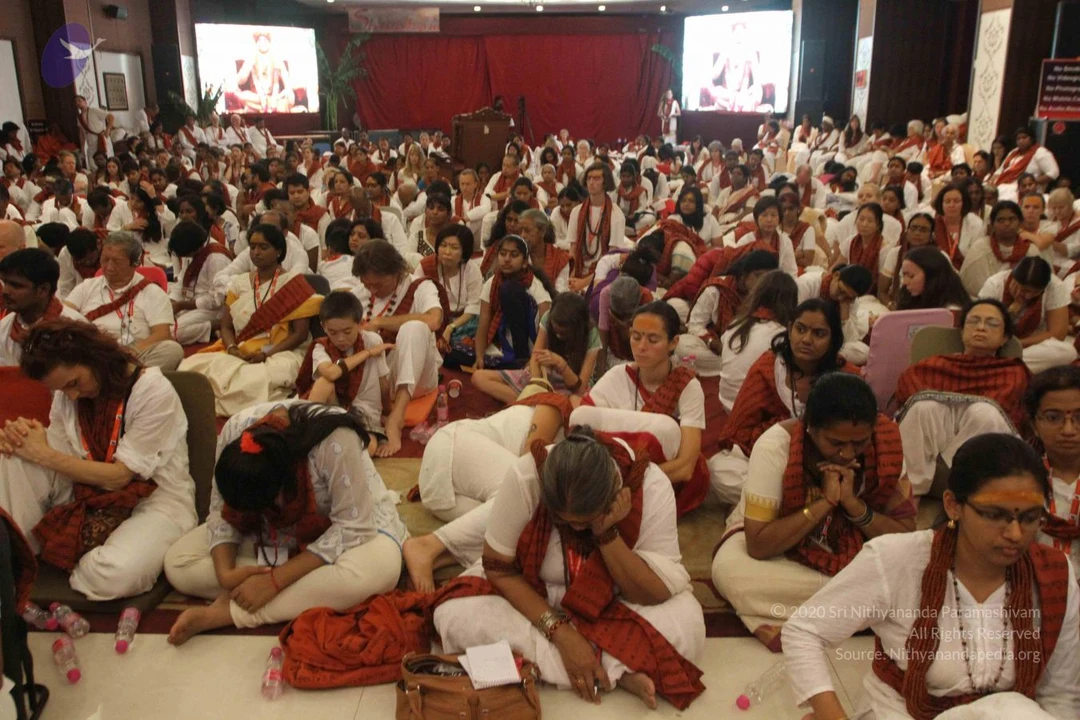
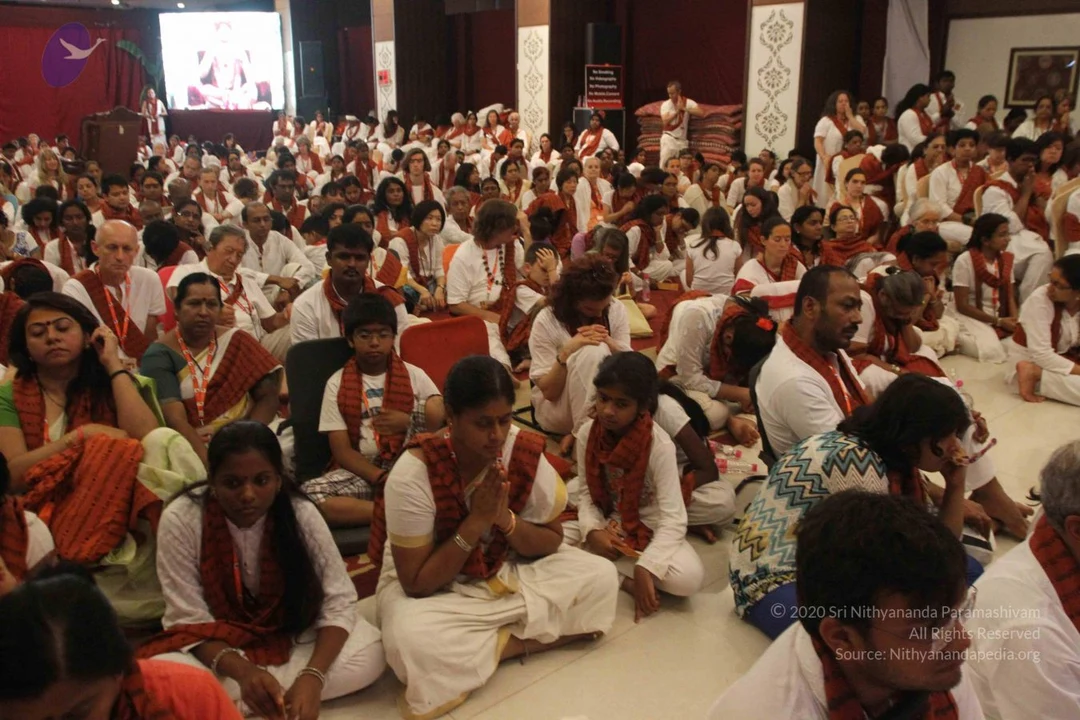
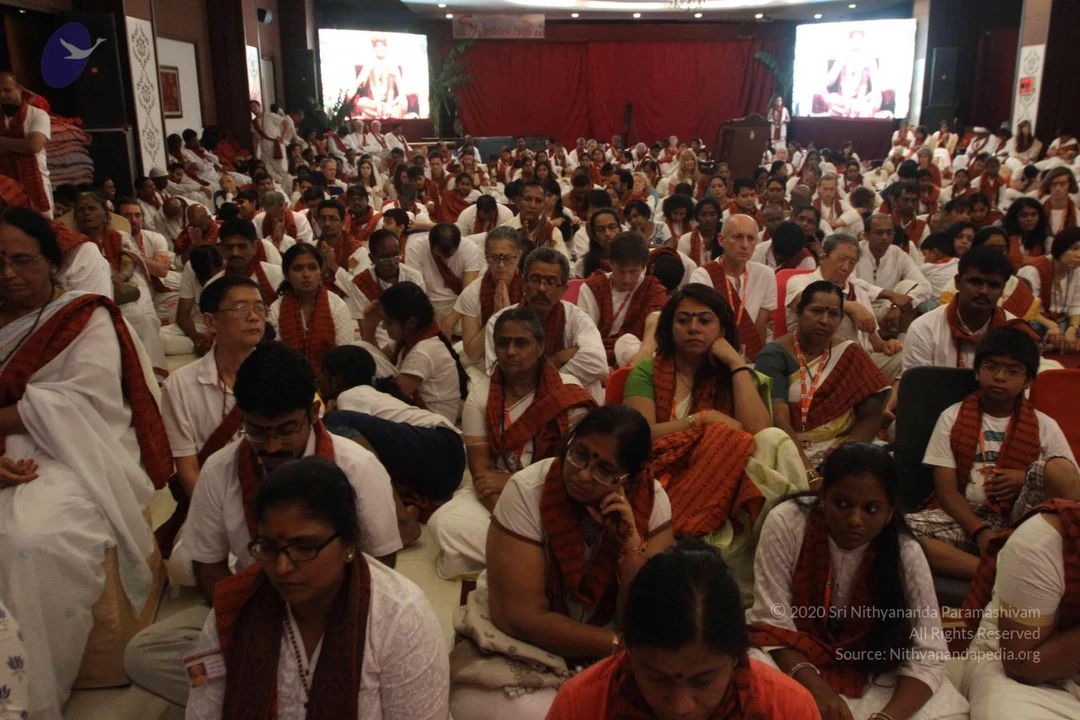
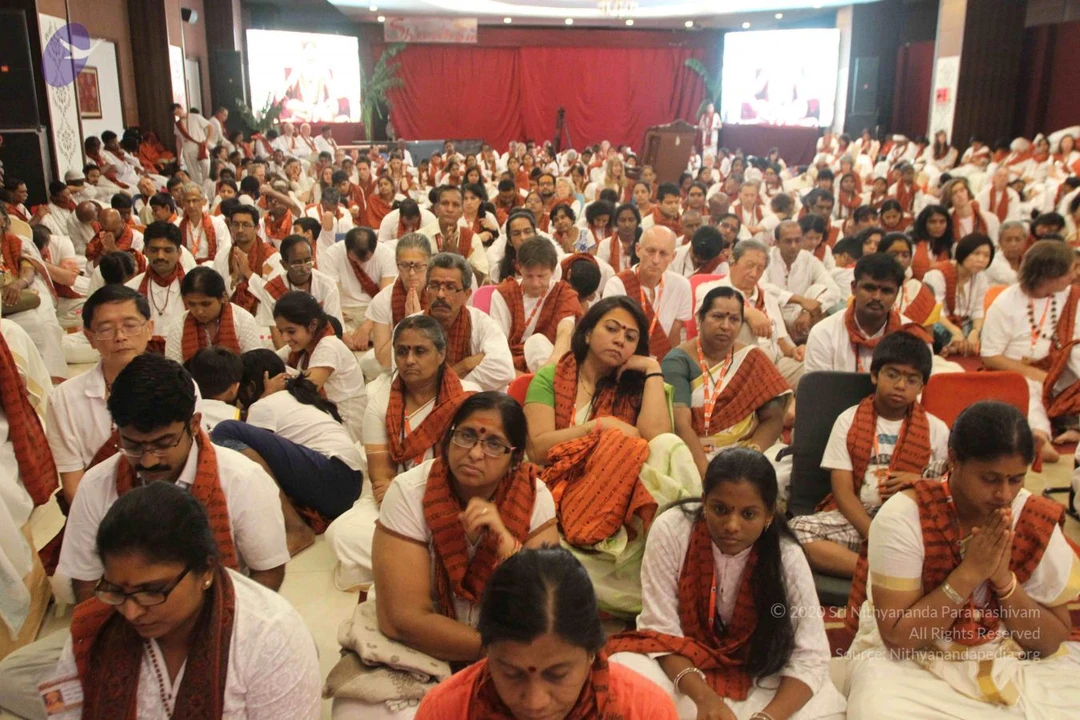
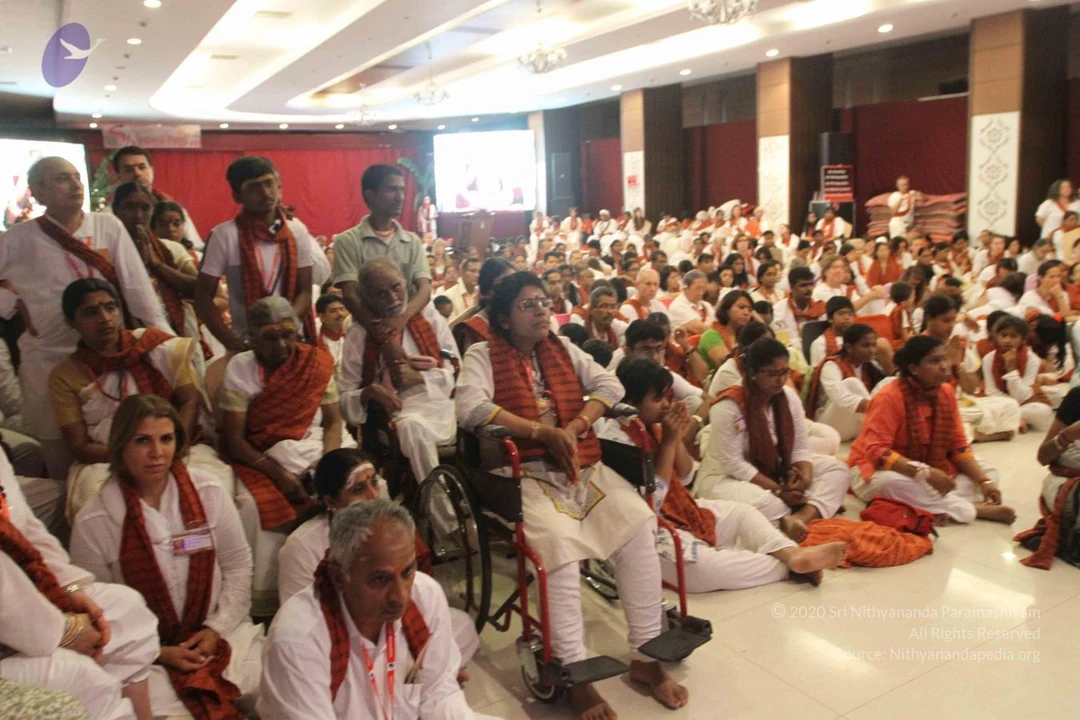
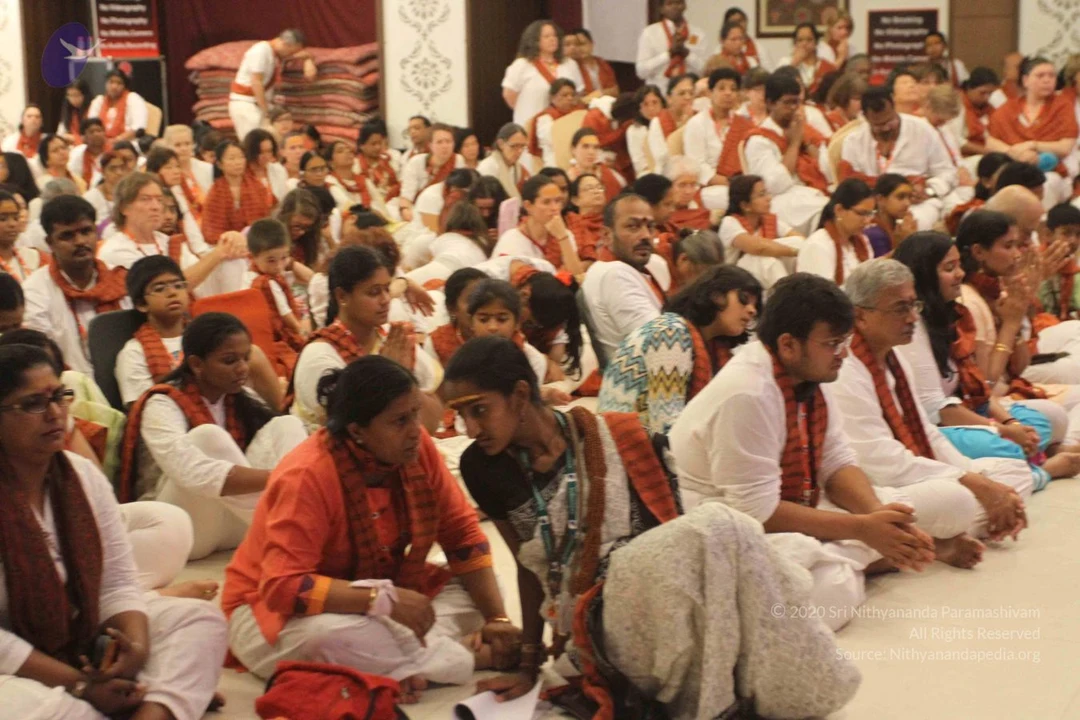
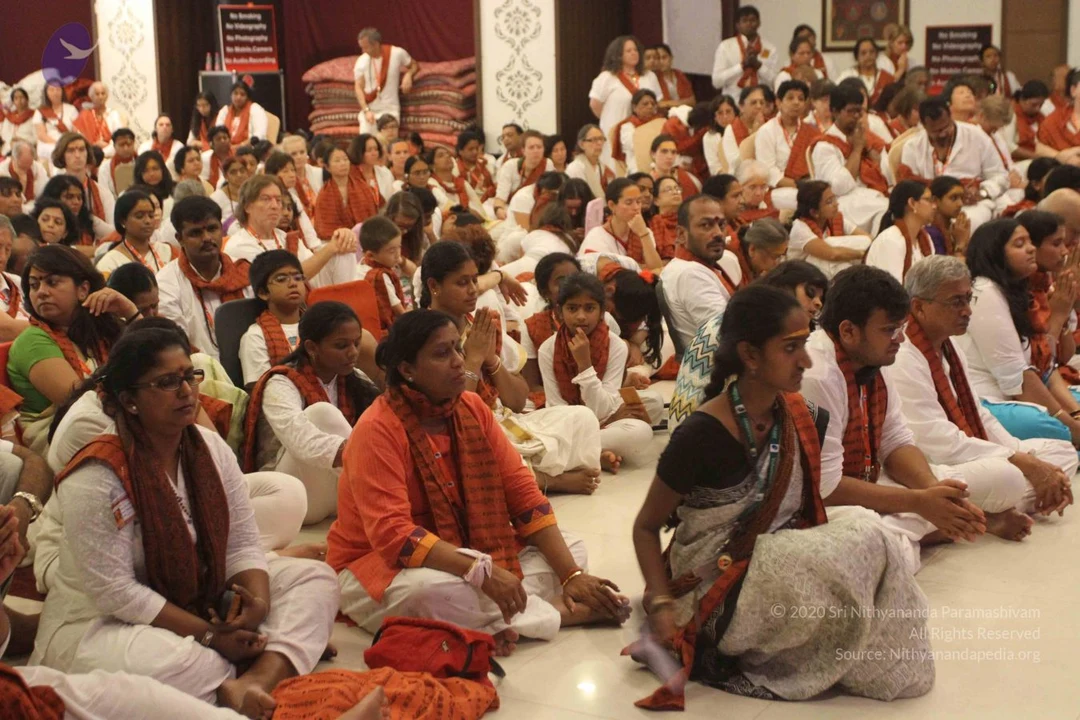
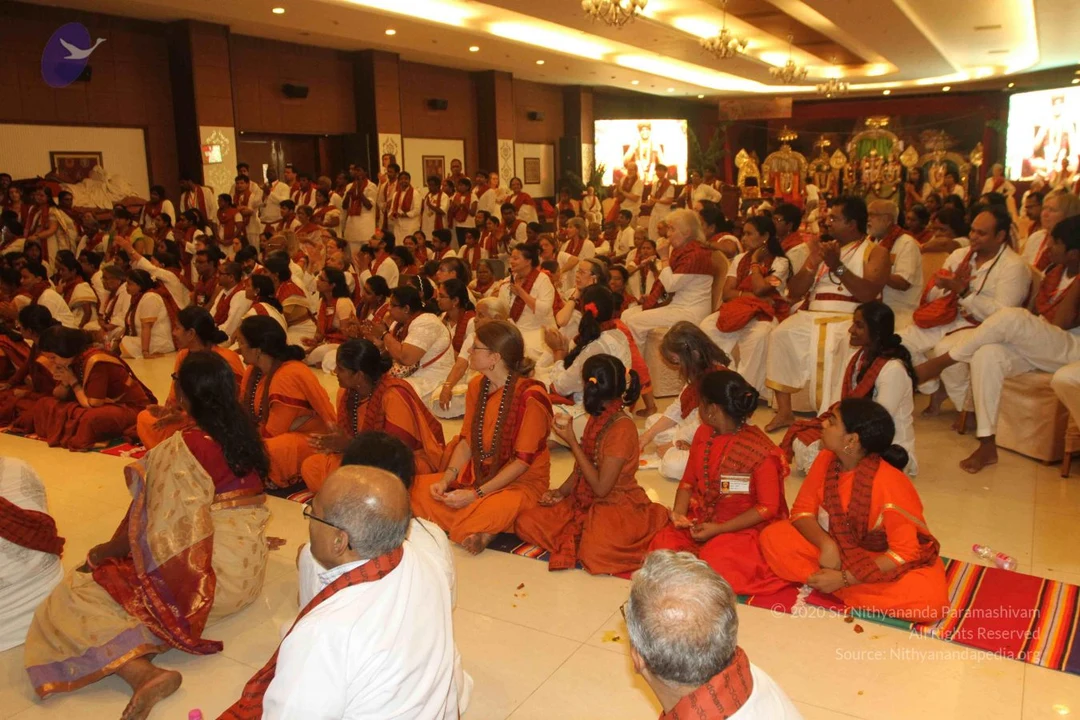
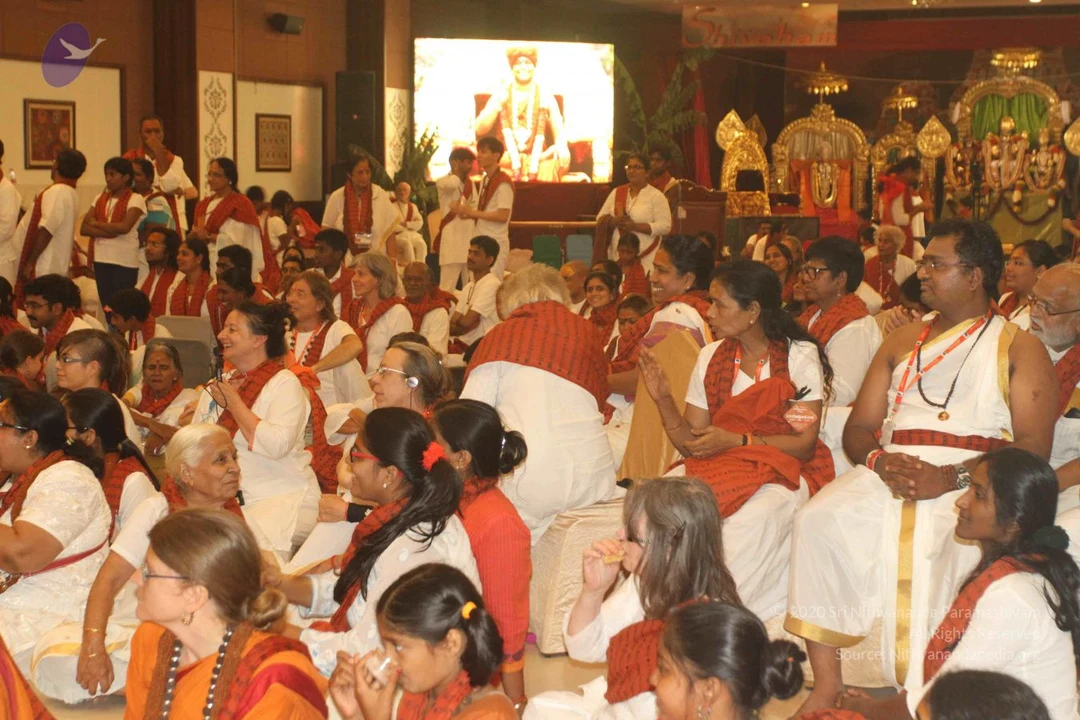
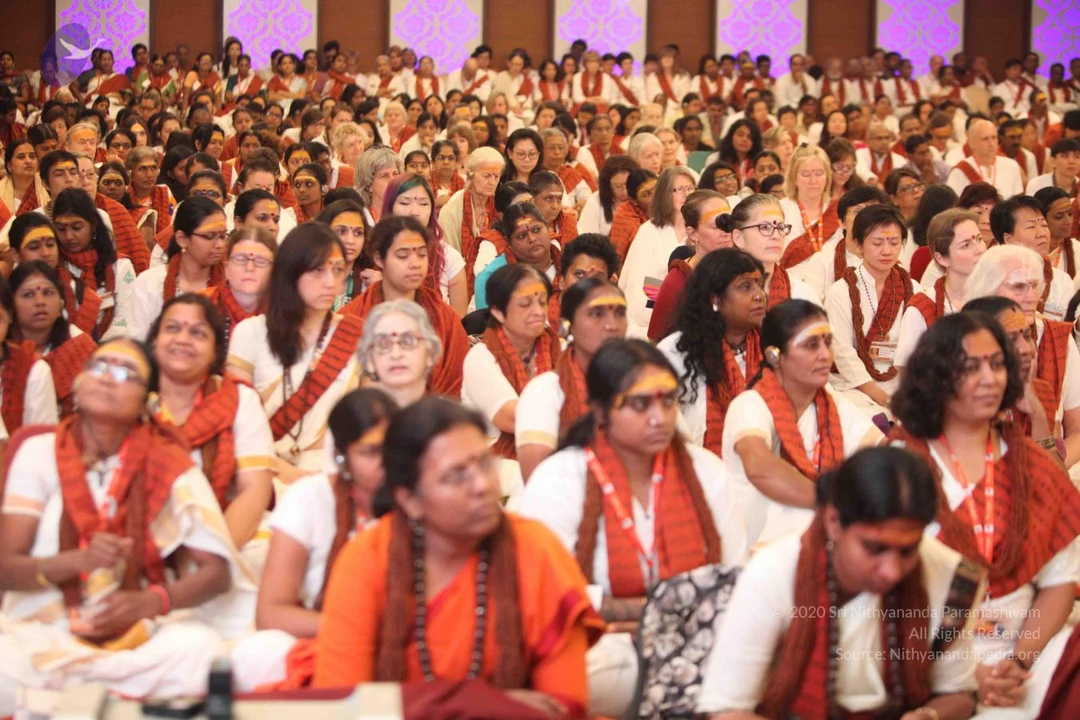
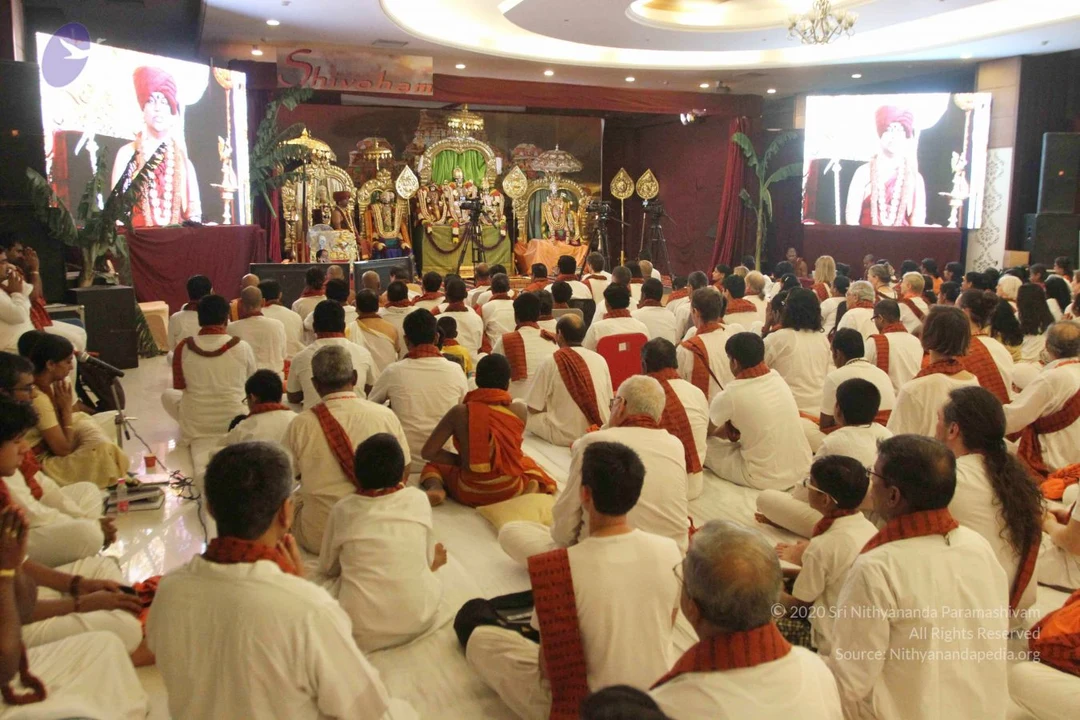
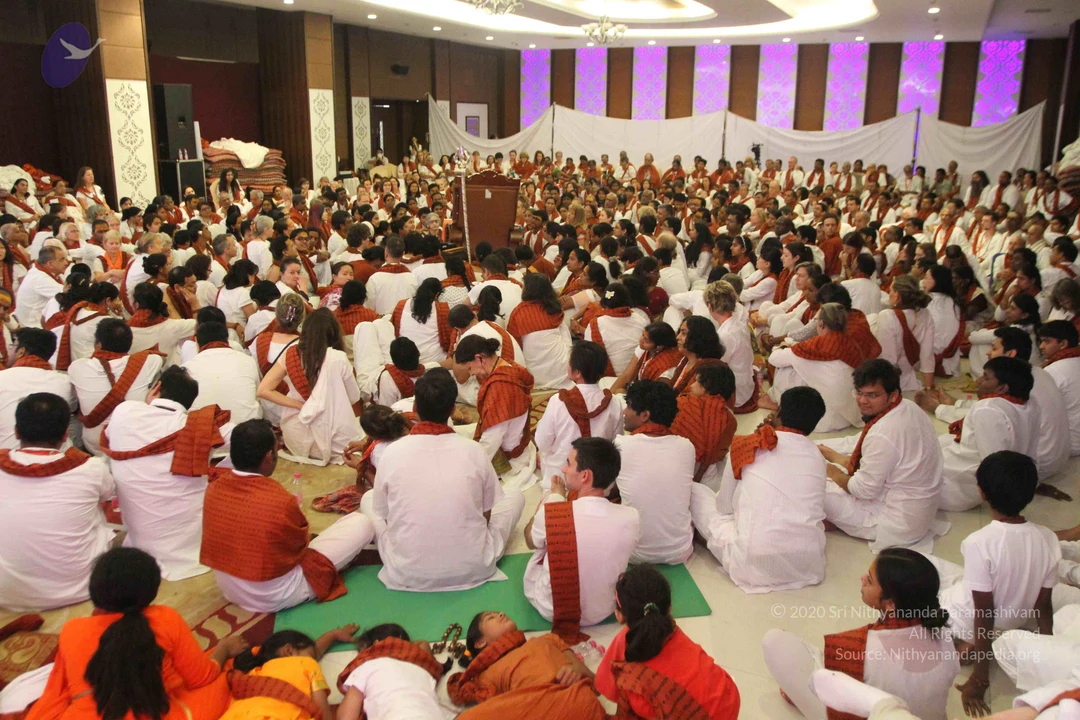
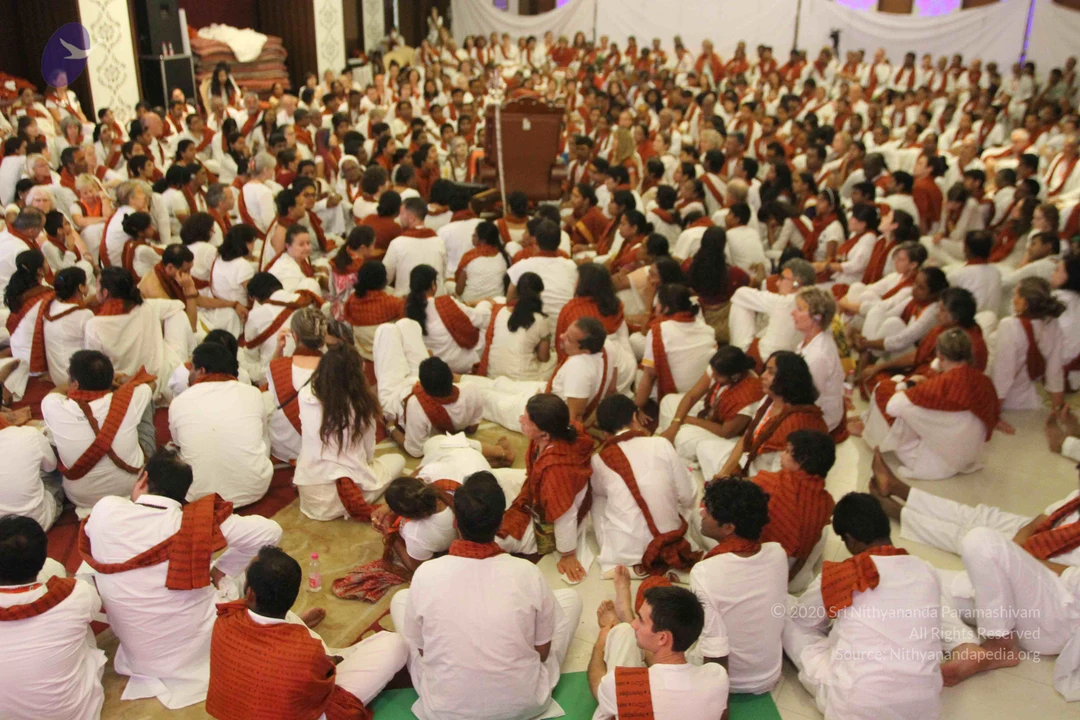
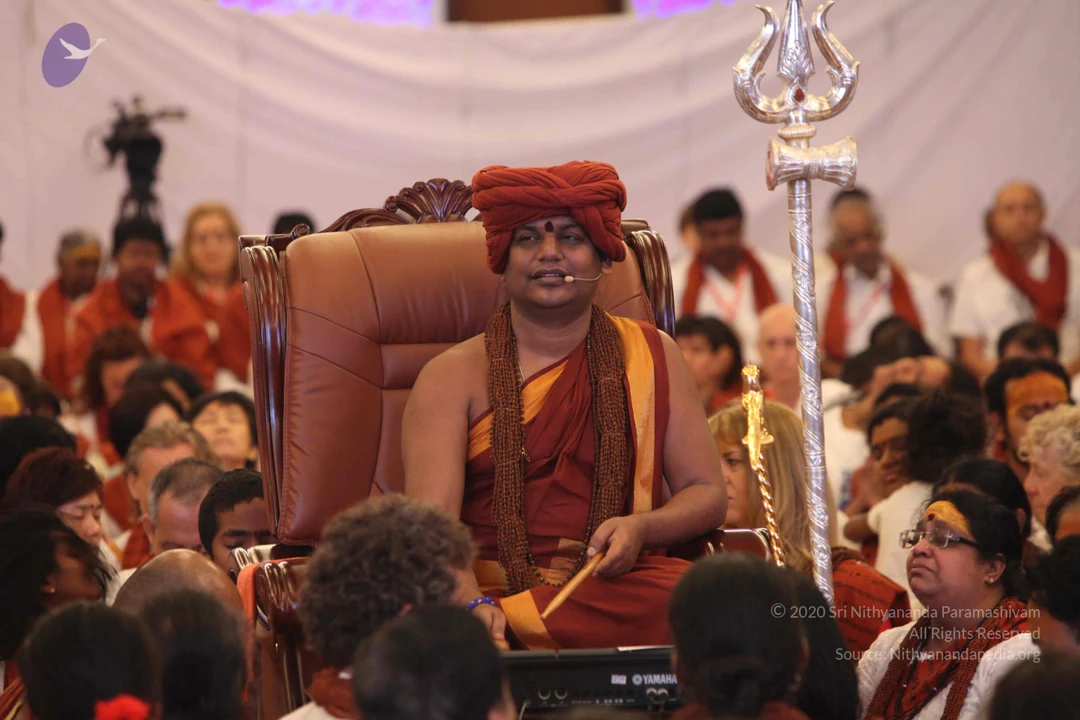
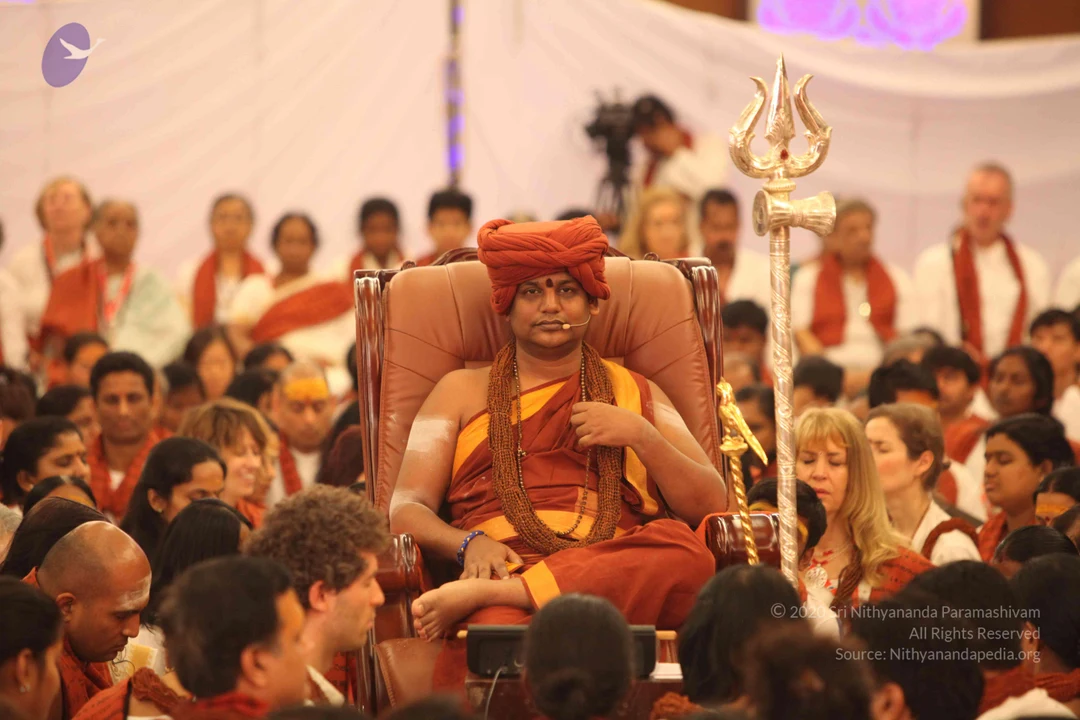
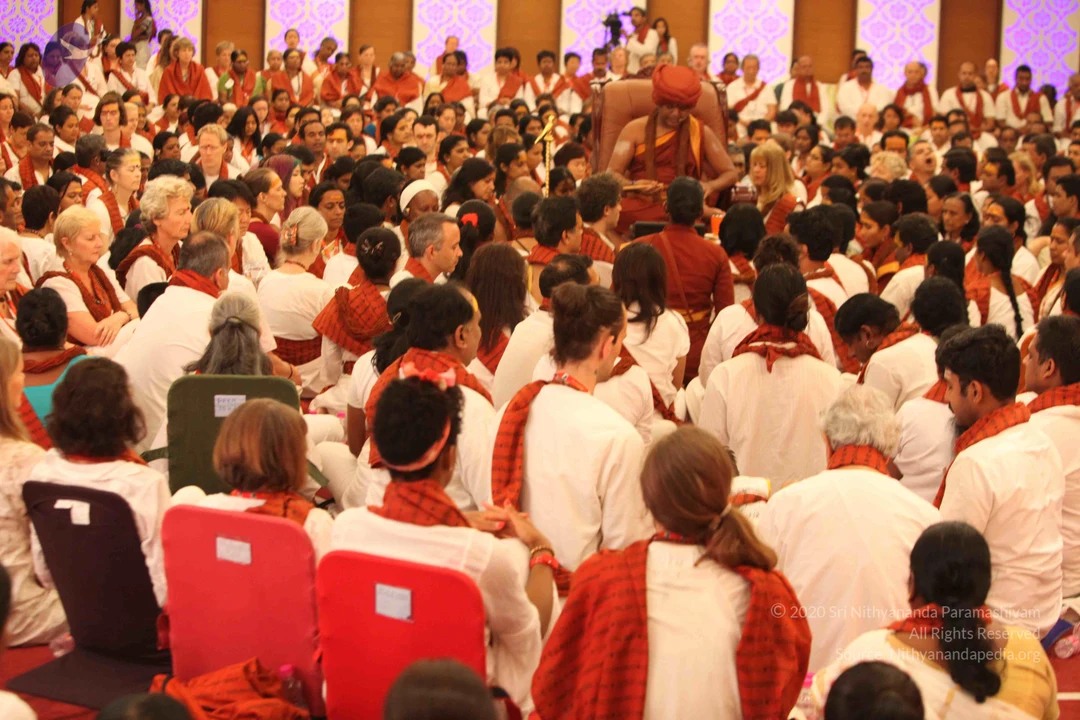
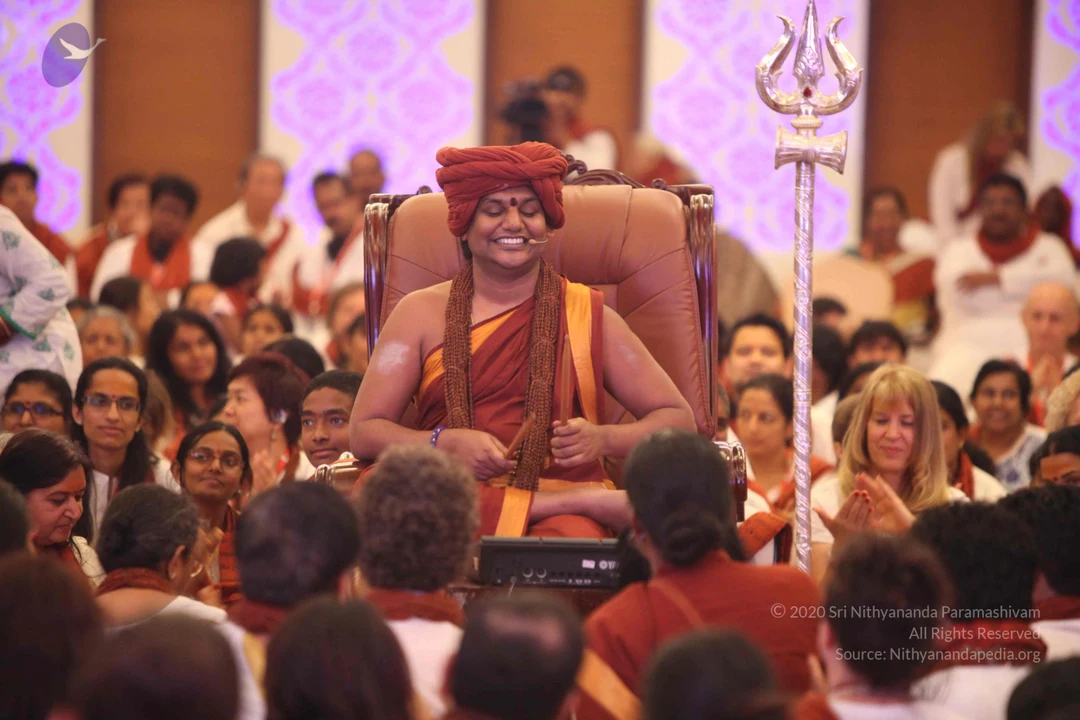
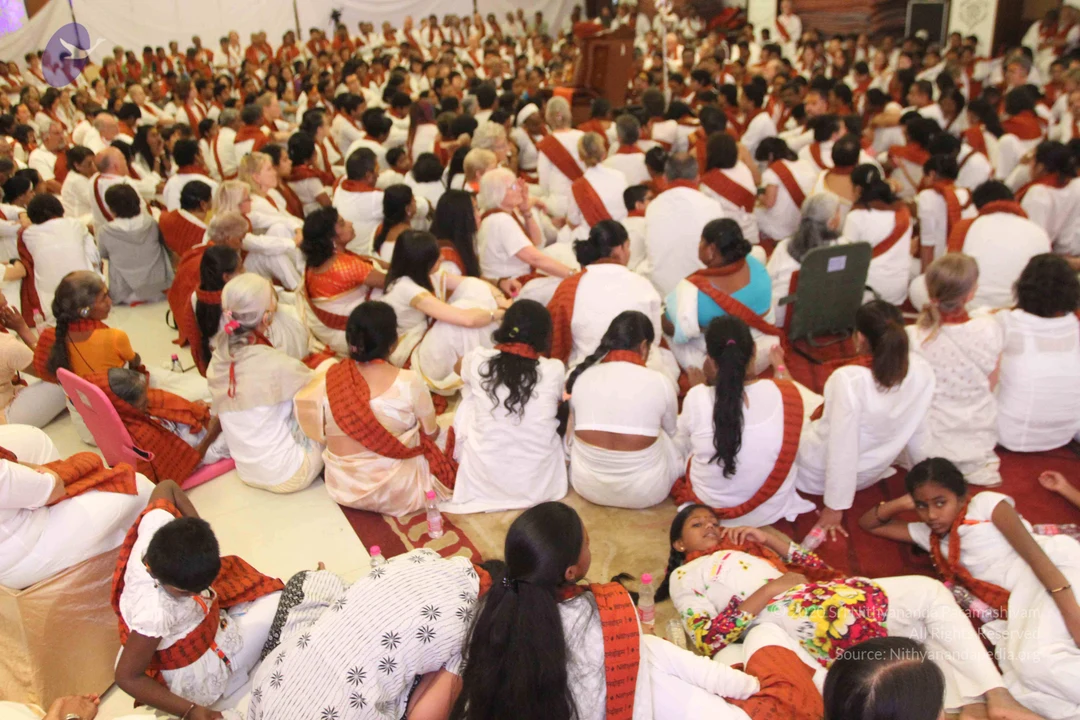
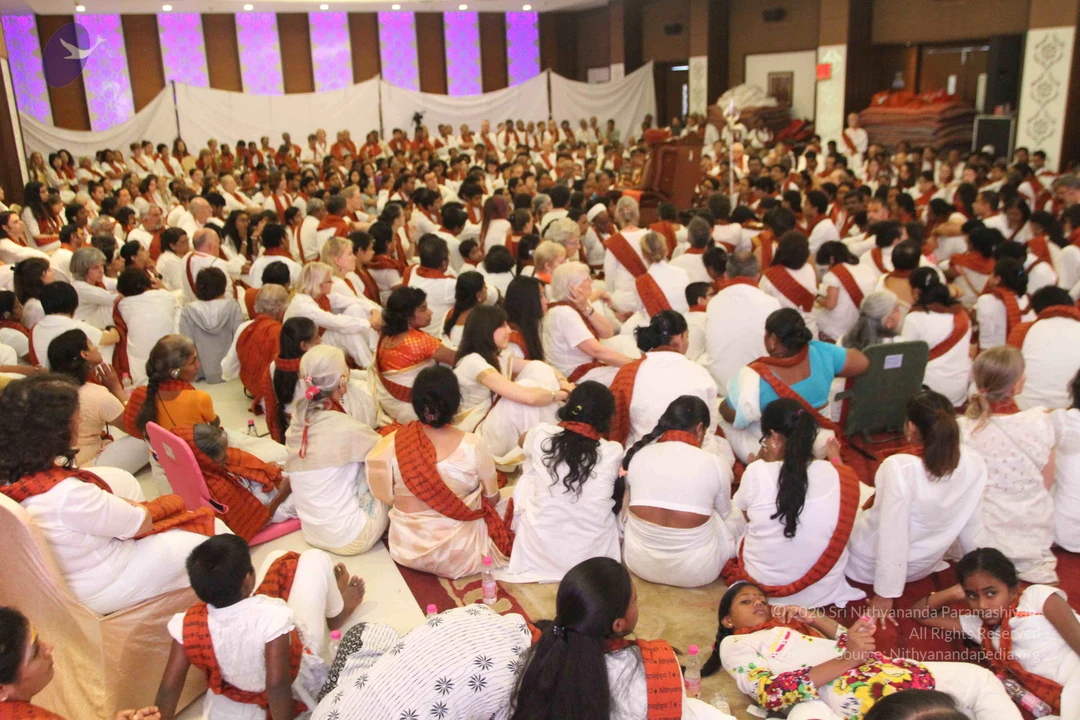
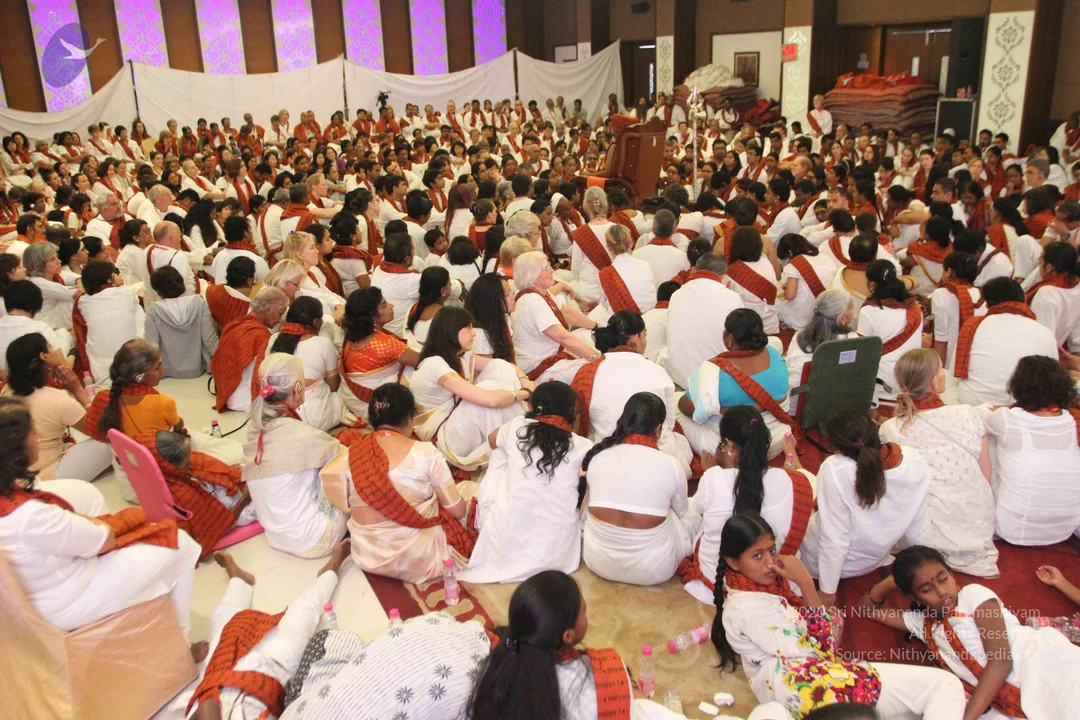
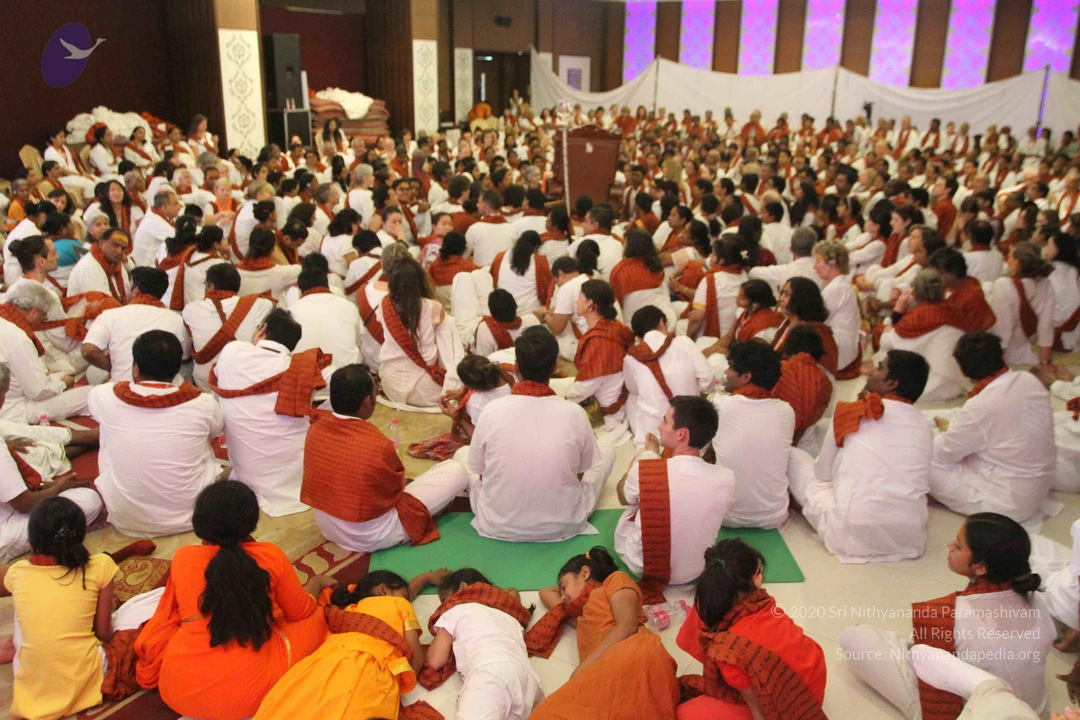
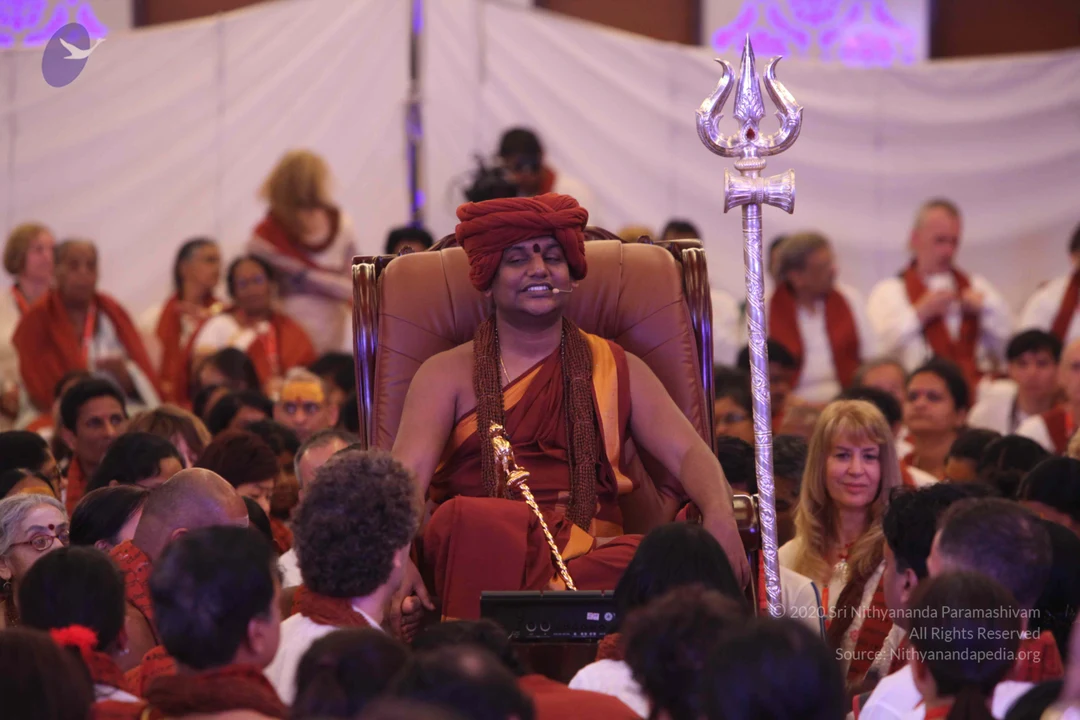
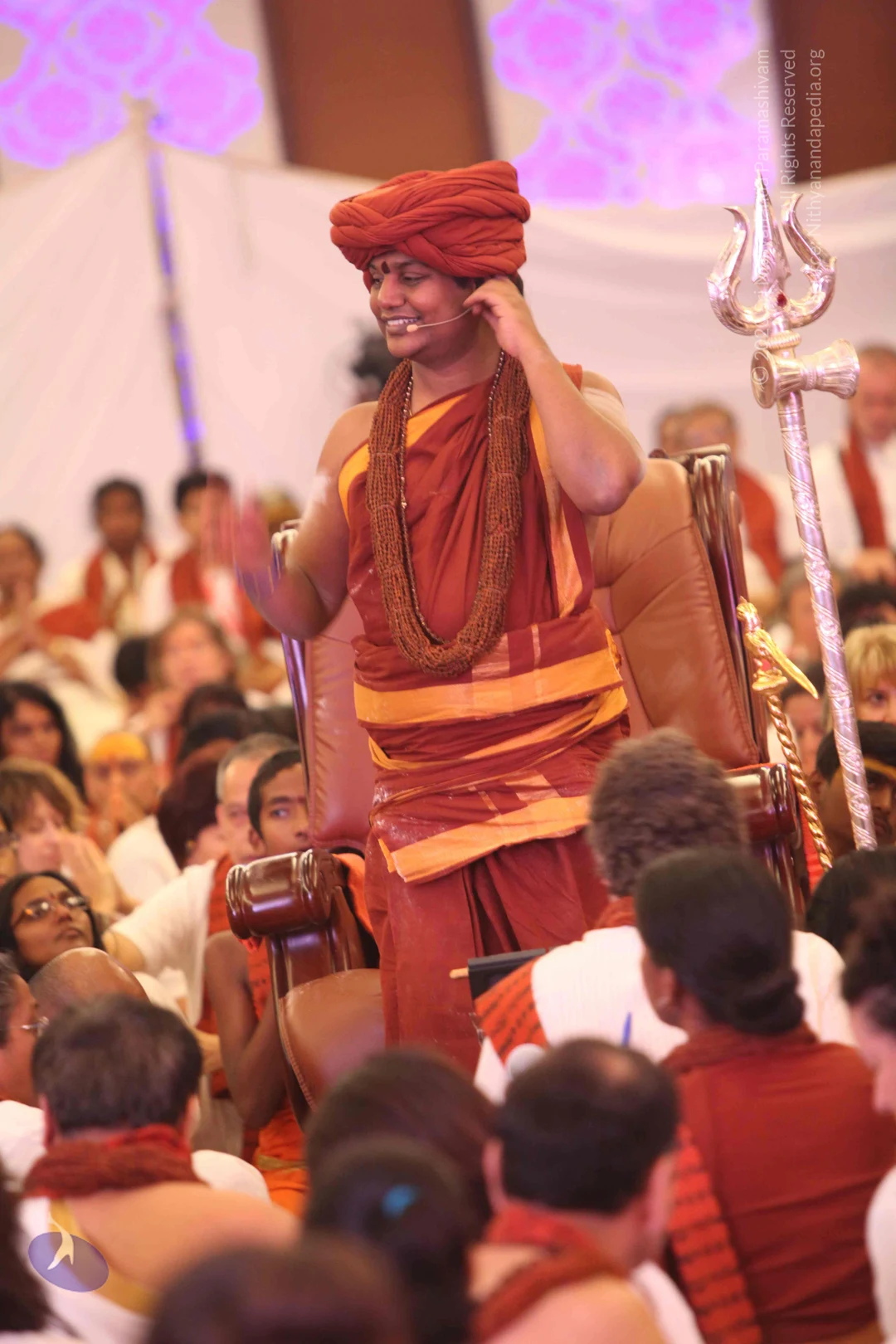
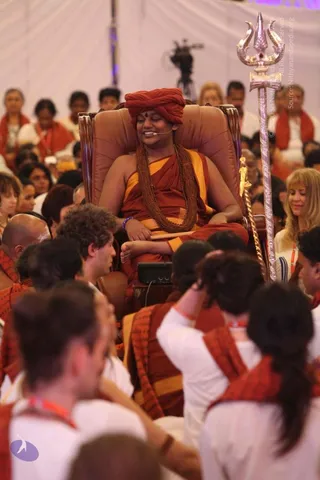
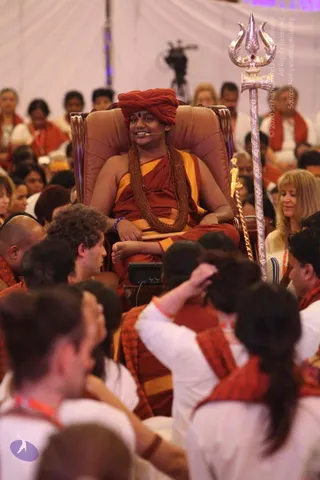
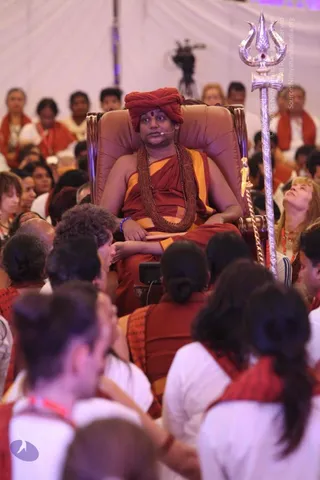
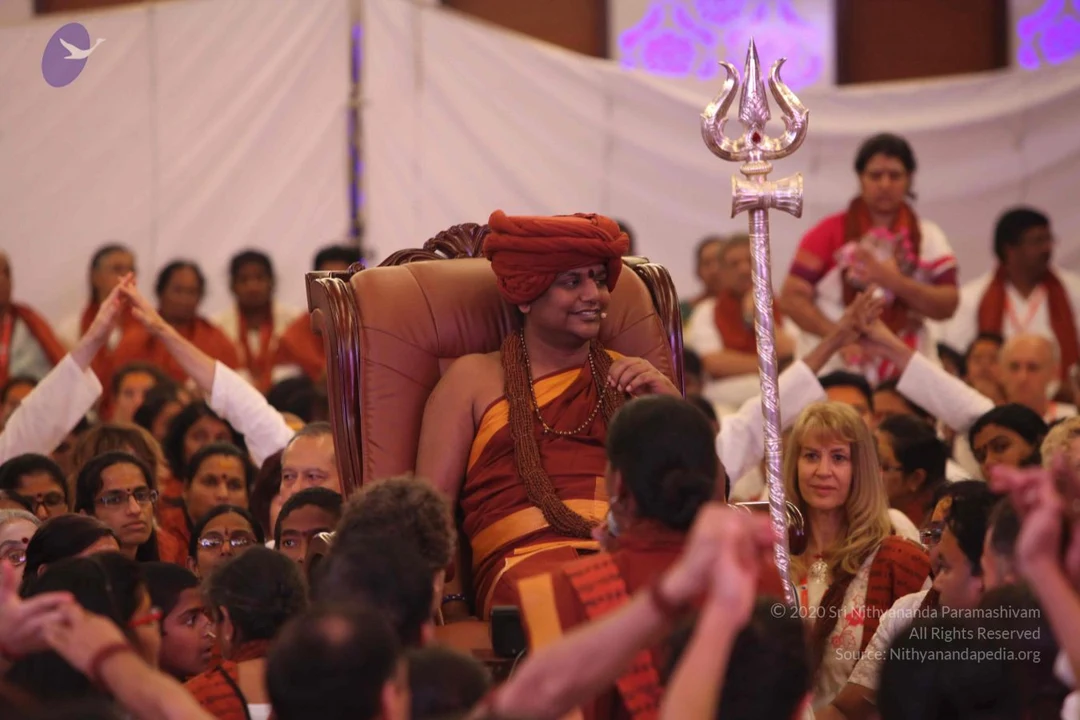
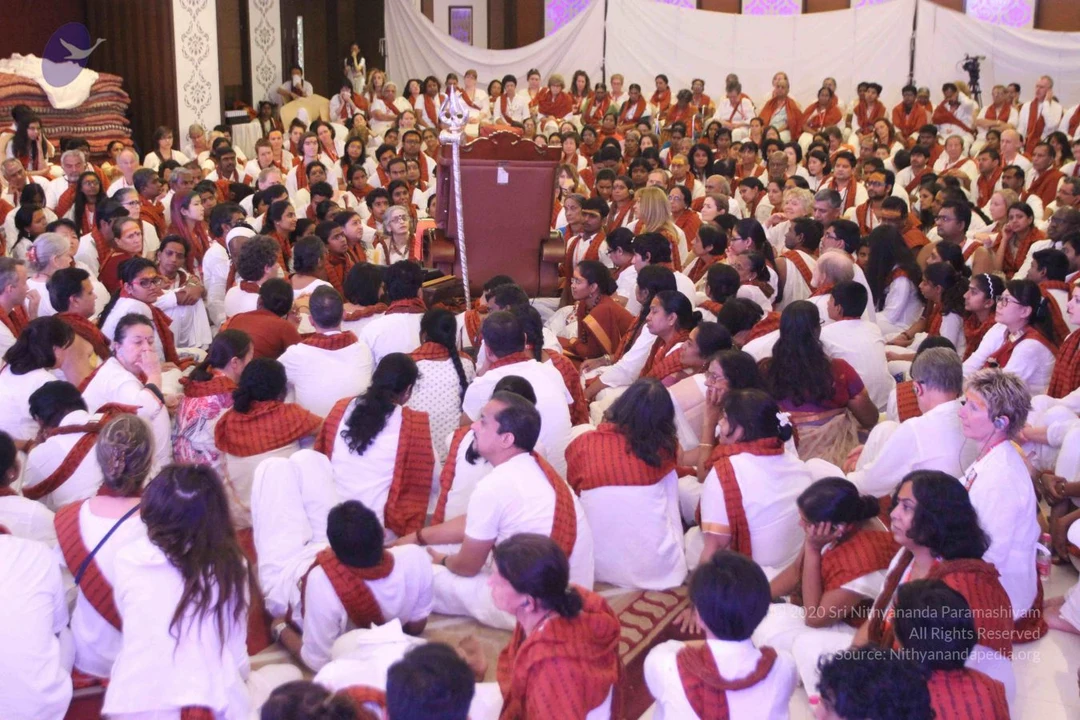
A photograph of a satsang gathering in a large tent-like hall with white fabric walls and purple floral lighting. A man seated on a brown leather throne-style armchair wears an orange-red turban, an orange and saffron robe and a long rudraksha mala, smiling. A silver trident stands beside the chair. Around him, many devotees in orange and red shawls sit and raise their arms with palms joined in the air, while a woman in a white top and orange shawl sits in front on the right. Probable Swamiji seated on the throne, identified by the turban, saffron robe and rudraksha mala cues.A photograph of a satsang gathering in a tent-like hall with white draped fabric behind. A man seated on a brown leather throne-style armchair wears a saffron-orange turban, a rudraksha mala draped across his chest, and an orange-and-gold dhoti-style garment, smiling with a small headset microphone at his ear. Beside the chair stands a tall silver trident (trishul). In the foreground, a woman in a maroon-red sari with a dark bun is seen from behind, and many hands are raised by the audience in front. Seated devotees in orange and white clothing fill the background, and some have sindoor or tilak marks. Probable Swamiji seated on a peetha throne, identified only by the appearance cues of the orange turban, rudraksha mala and saffron clothing.A large satsang hall full of seated devotees in white clothing with orange-red shawls draped over their shoulders. In the foreground, rows of people sit with their backs to the camera, several with hair in buns or ponytails. Toward the back, a raised wooden seat or throne stands beside a tall silver trident (trishul) on a stand. White draped fabric and purple-patterned panels decorate the wall behind. No clearly identifiable figure is seated on the throne; the figures visible are devotees, and no appearance-based candidate for a person can be confirmed.A large seated satsang gathering in a bright hall with white walls and framed artwork. Hundreds of devotees sit closely on white floor coverings, most dressed in white with red-and-orange shawls draped over their shoulders, some with red and gold trim. Many have hands folded or raised in devotion. At the front, a raised carved wooden throne stands with a figure seated on it, flanked by a tall ceremonial staff and stacked folded red-brown cloths, indicating a discourse setting. A white draped backdrop and a gold-and-purple decorated pillar frame the stage area.A large satsang hall filled with seated devotees dressed mostly in white with orange-red shawls draped over their shoulders. Many sit cross-legged on a white floor in dense rows facing a raised dais at the back, where a figure in an orange garment sits on an ornate wooden chair beside red-and-gold cushions. Some attendees wear orange saris and tilaks, and a few hold water bottles. Maroon and white drapes hang behind the stage, with a white cloth backdrop along the top.A large seated satsang gathering of devotees in white clothing with red-orange shawls draped over their shoulders. In the right foreground, a figure in an orange turban and orange-saffron garment sits in a carved wooden chair, appearing to lead the discourse; a probable Swamiji by appearance, with the turban and saffron clothing as cues. Devotees sit closely packed on the floor facing him, many in white with red-orange shawls, some in dark or colourful clothing. Stacked folded cloth bundles and red-orange bedding sit against the back wall, with a white draped canopy above the left side of the hall.

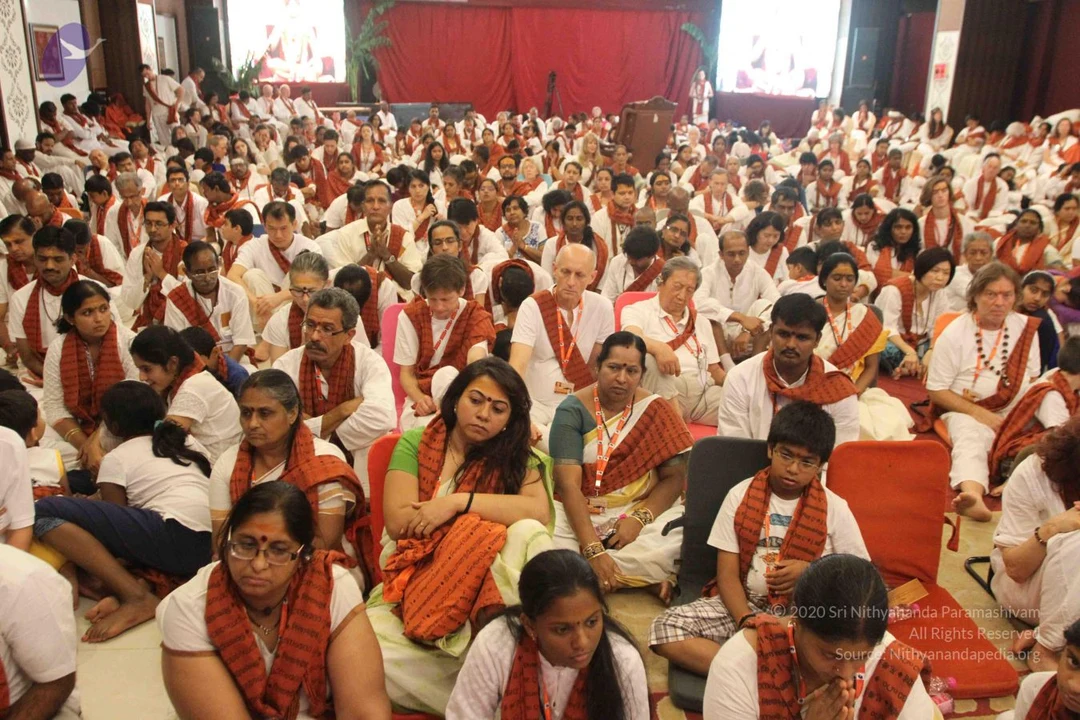
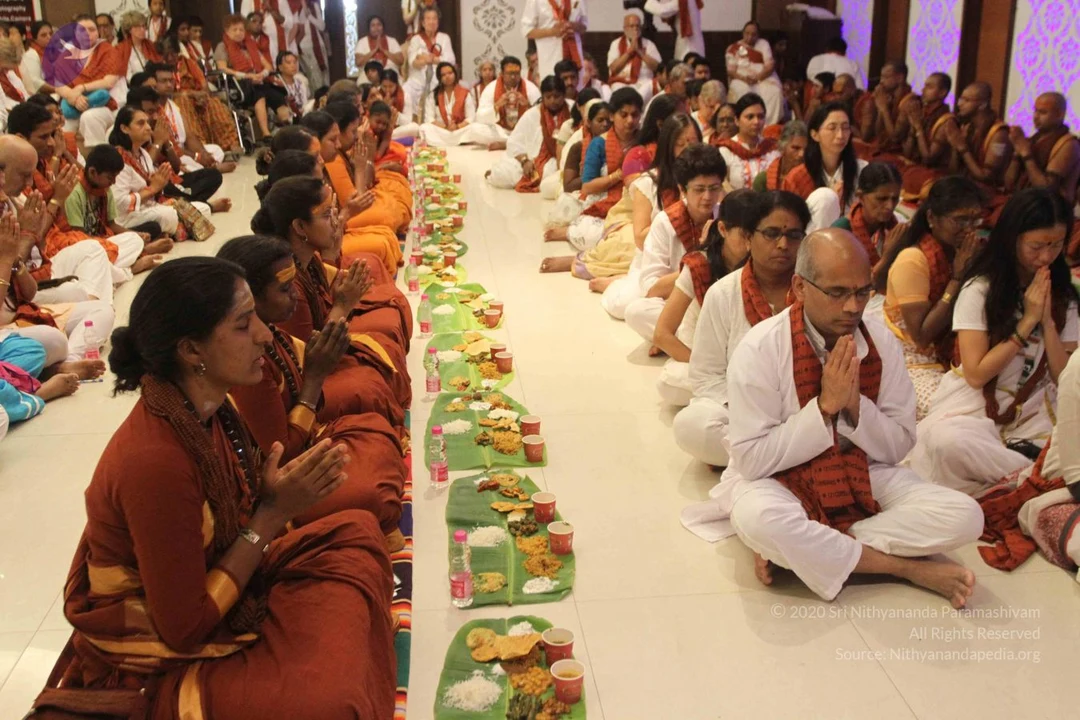
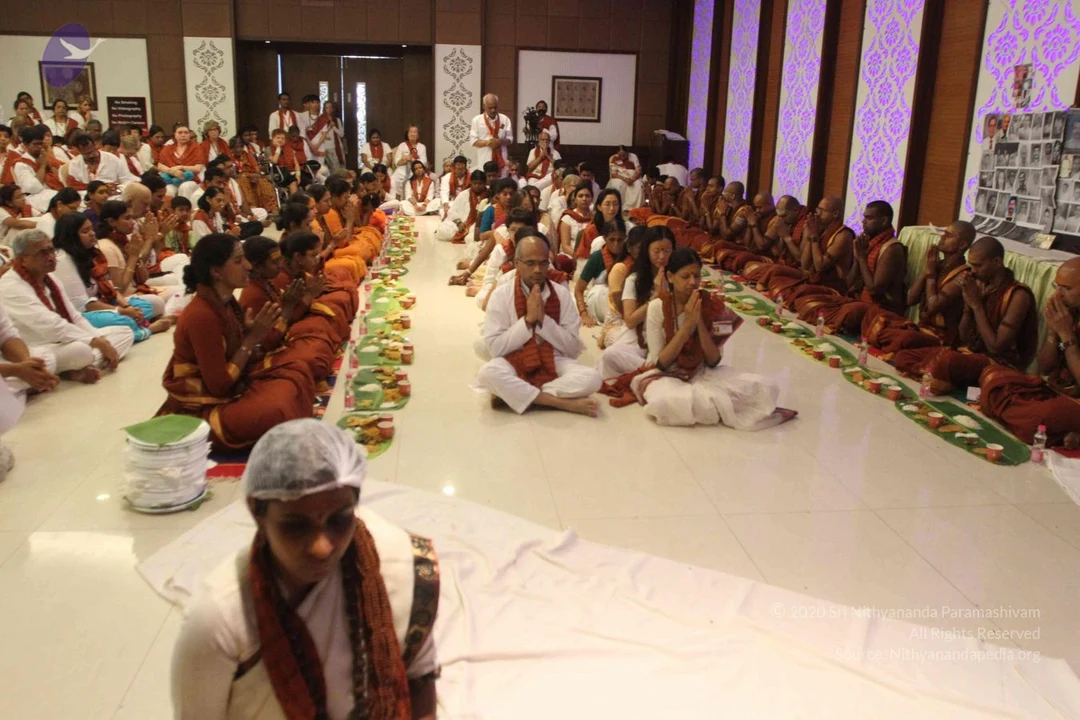
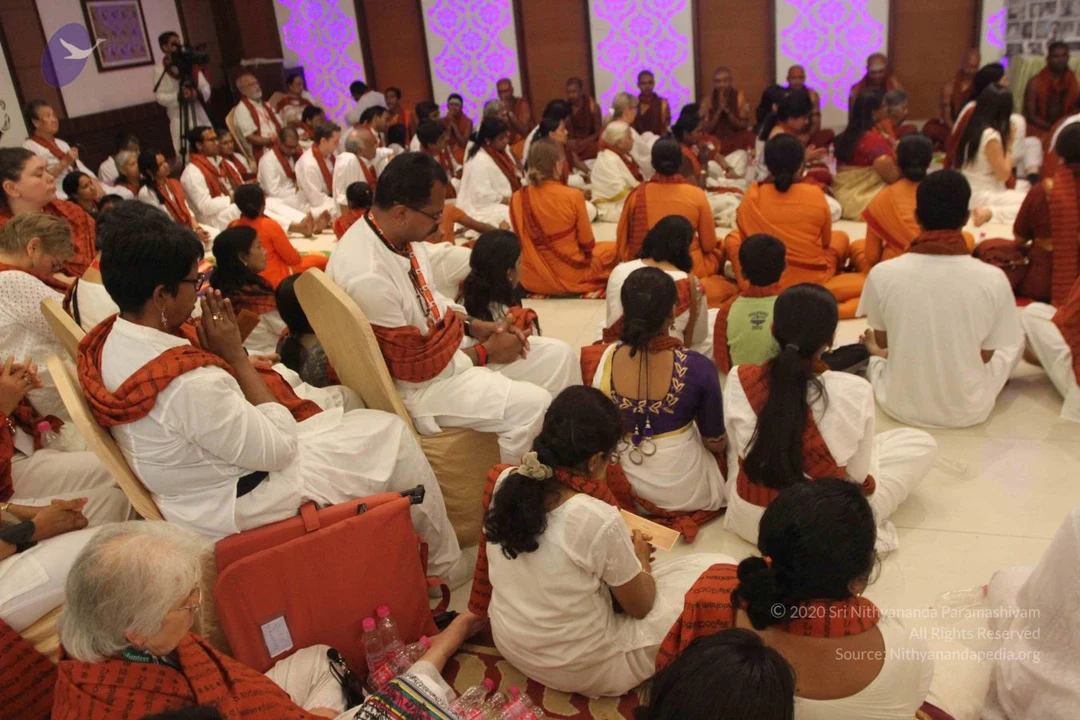
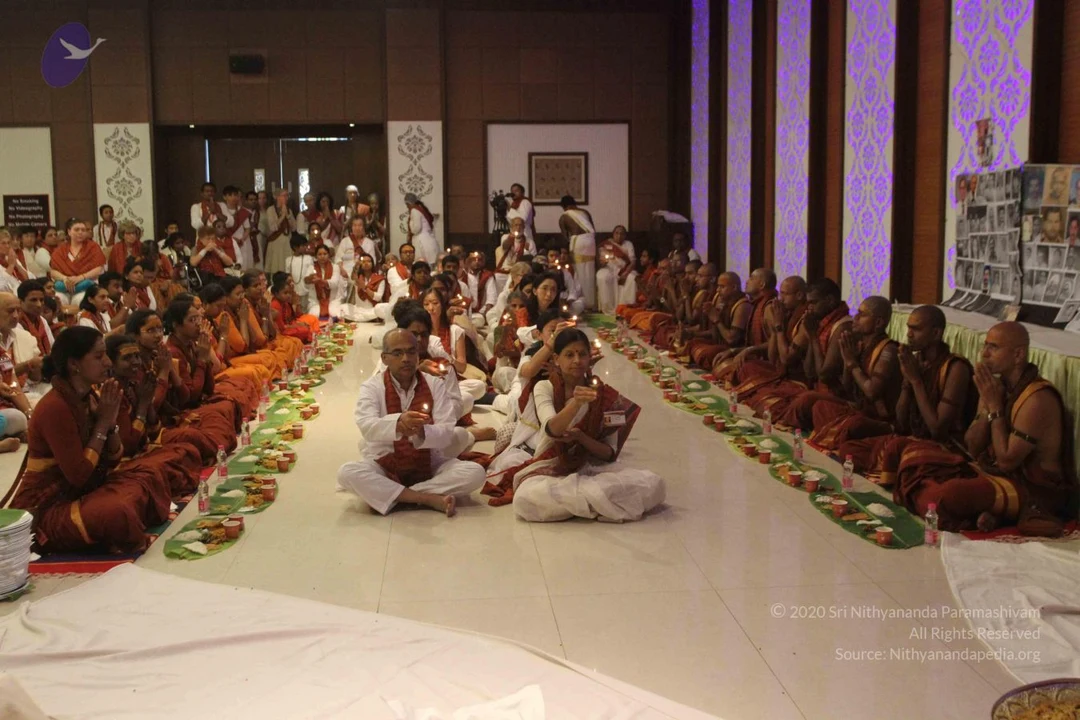
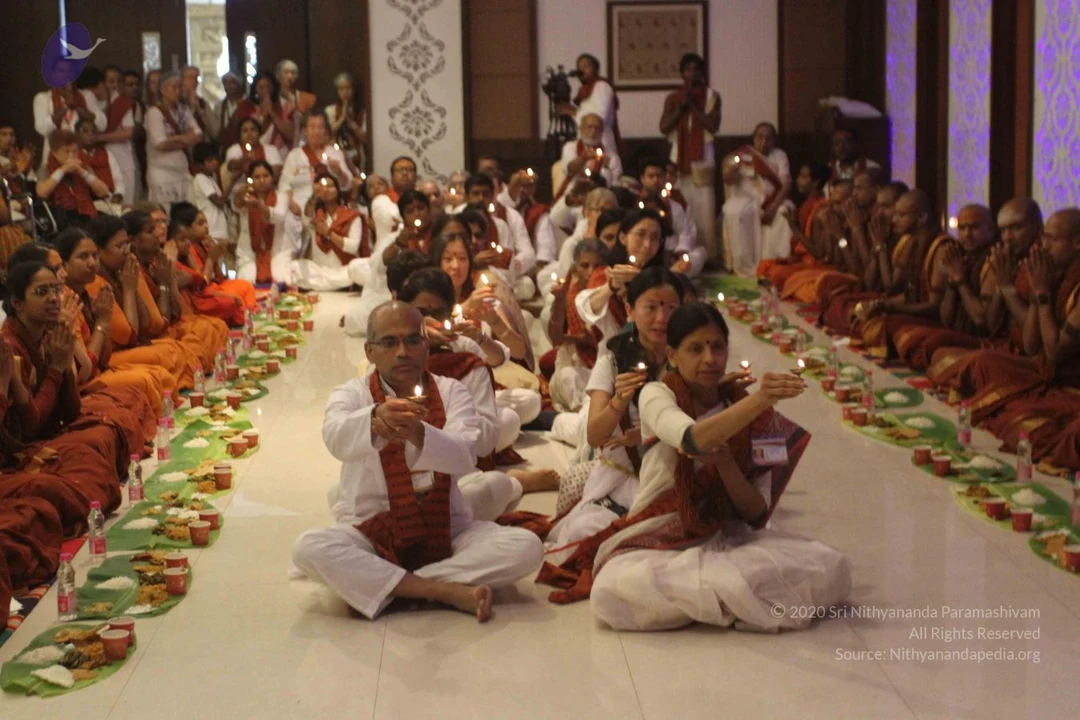
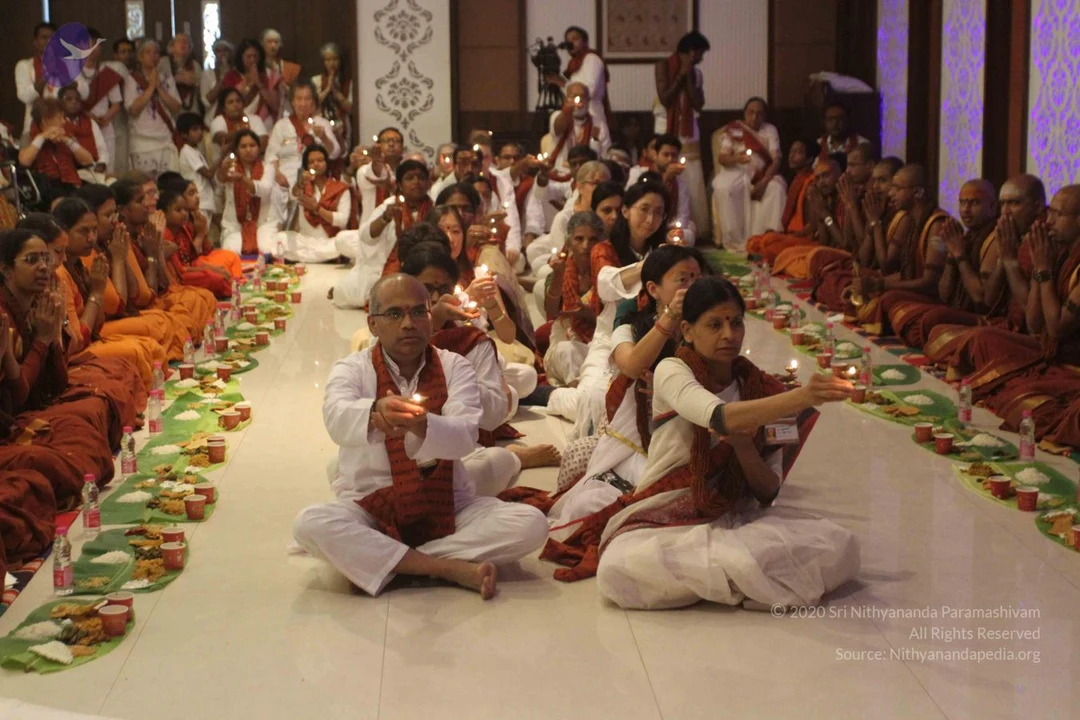
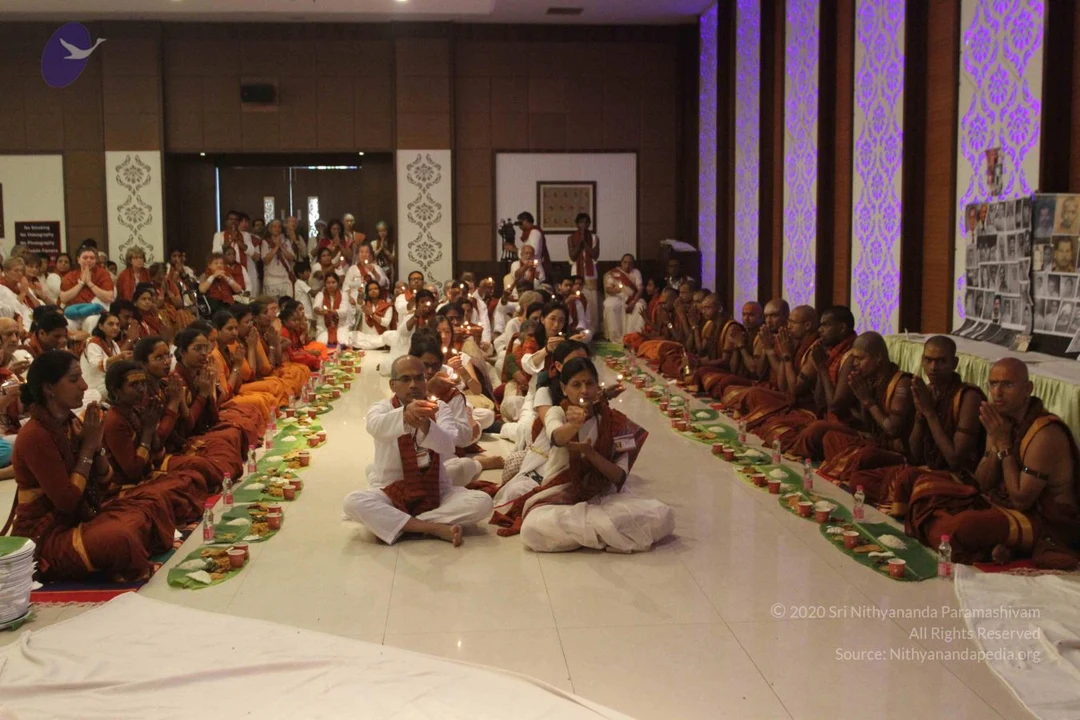
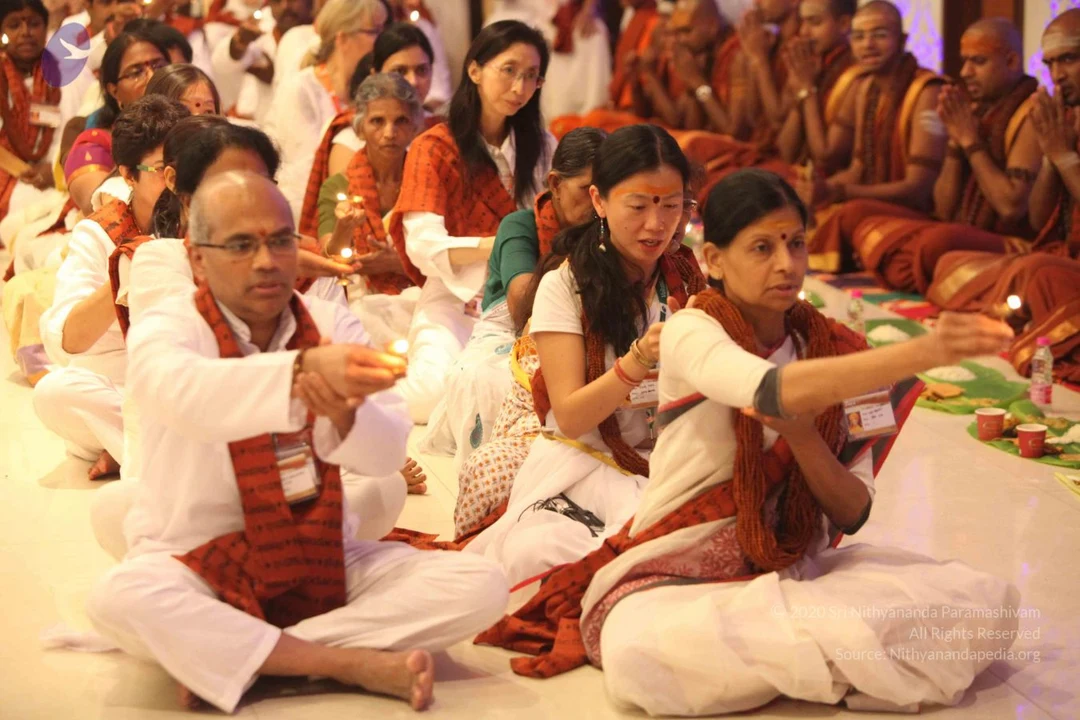
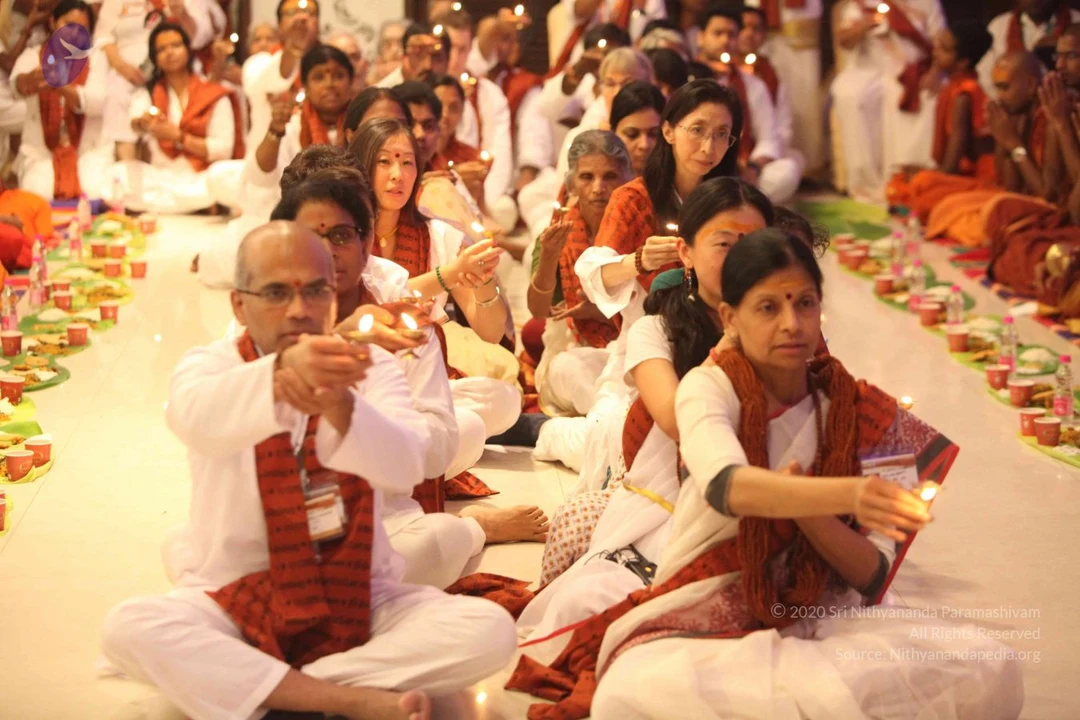
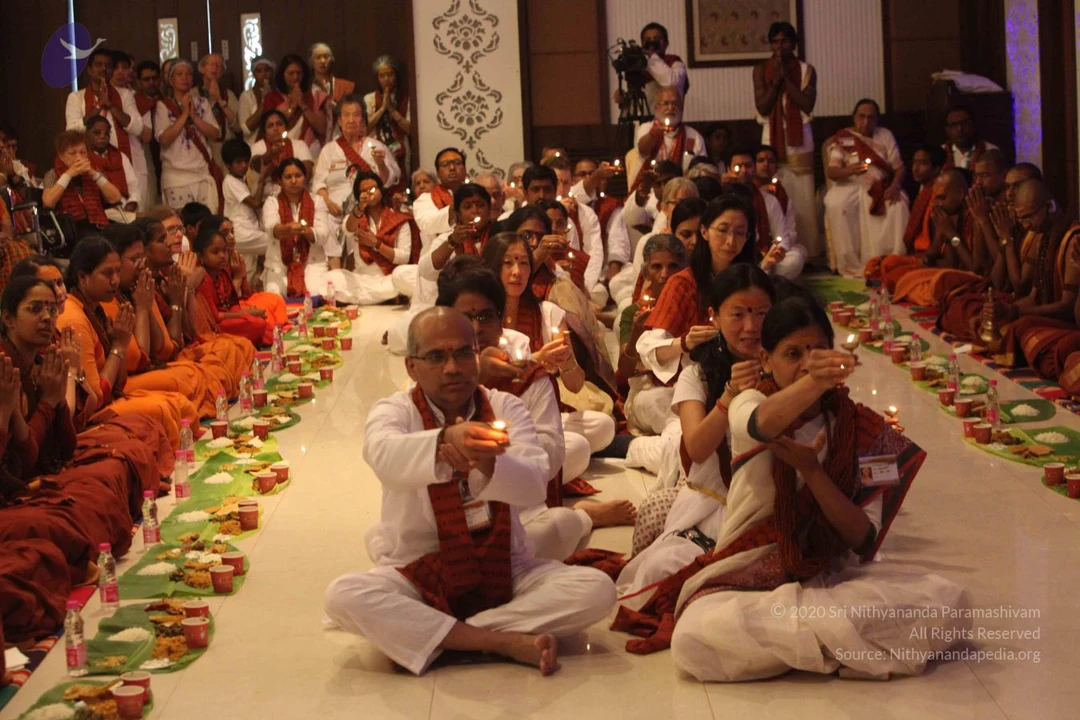
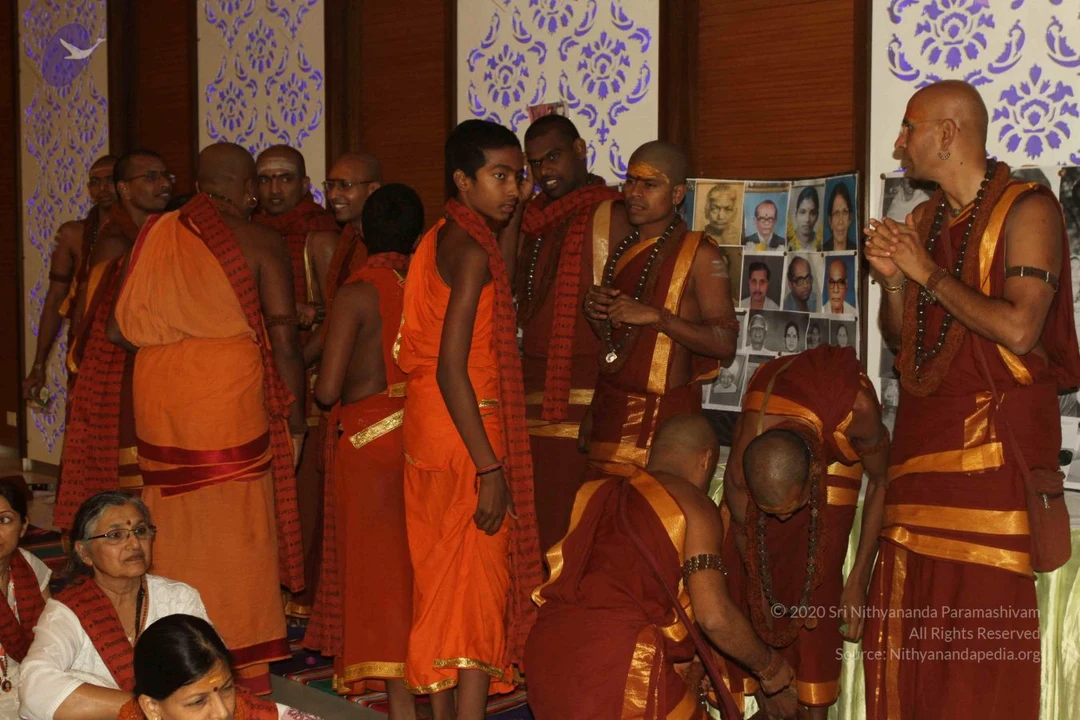
Maheshwarapooja

166 photosSource gallery
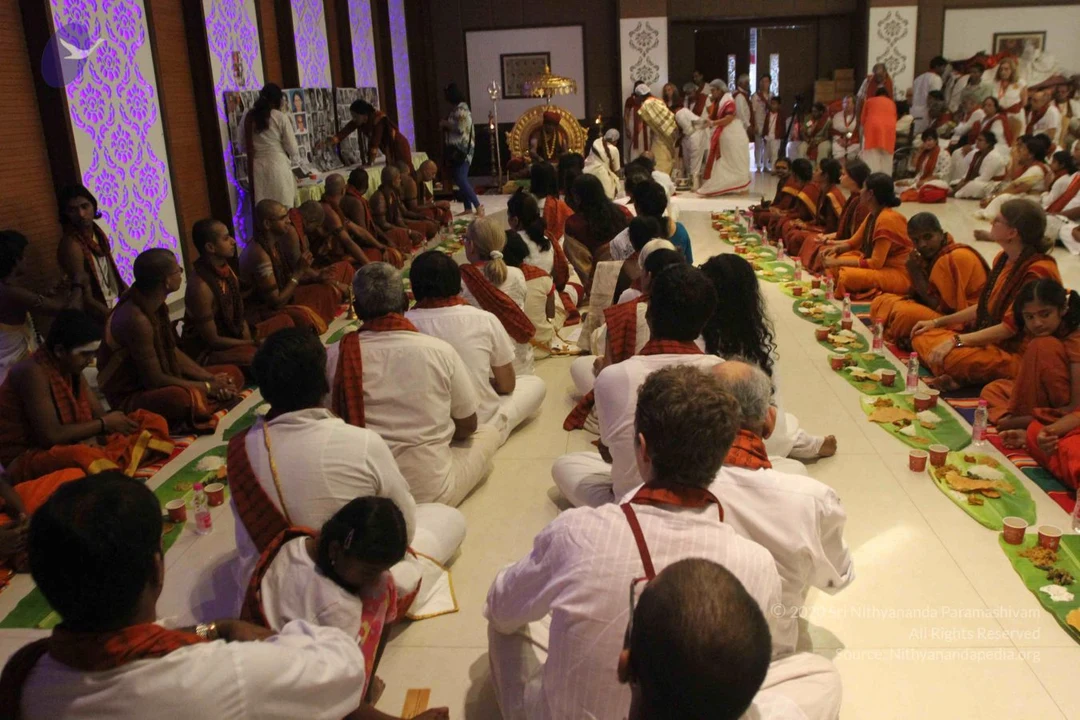
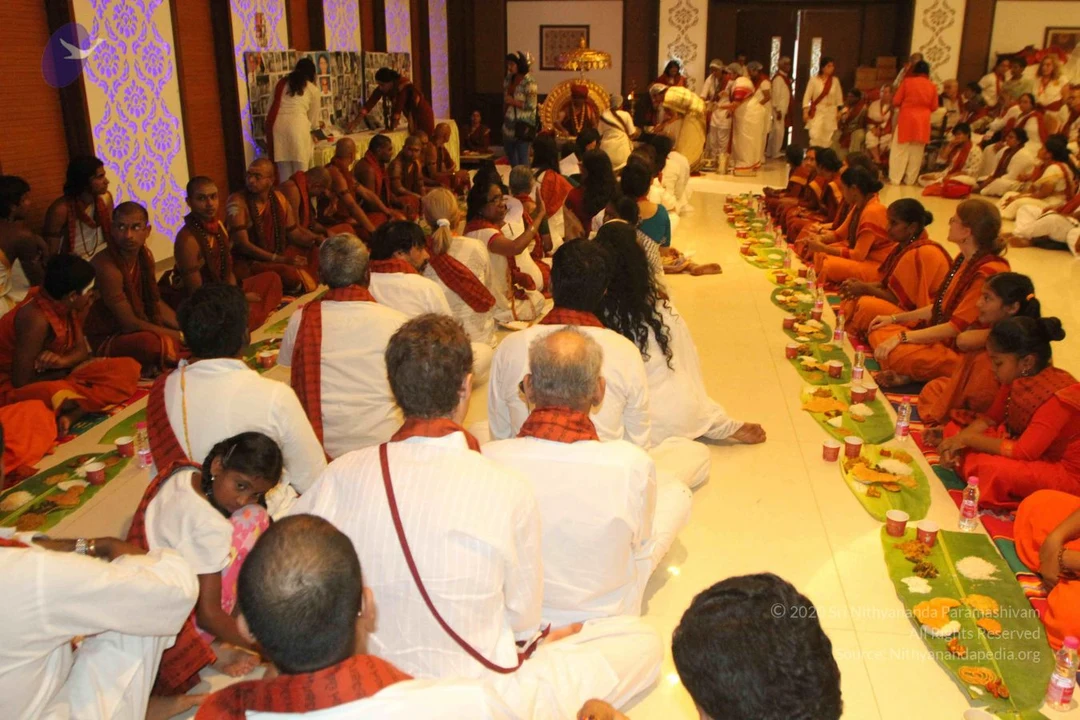
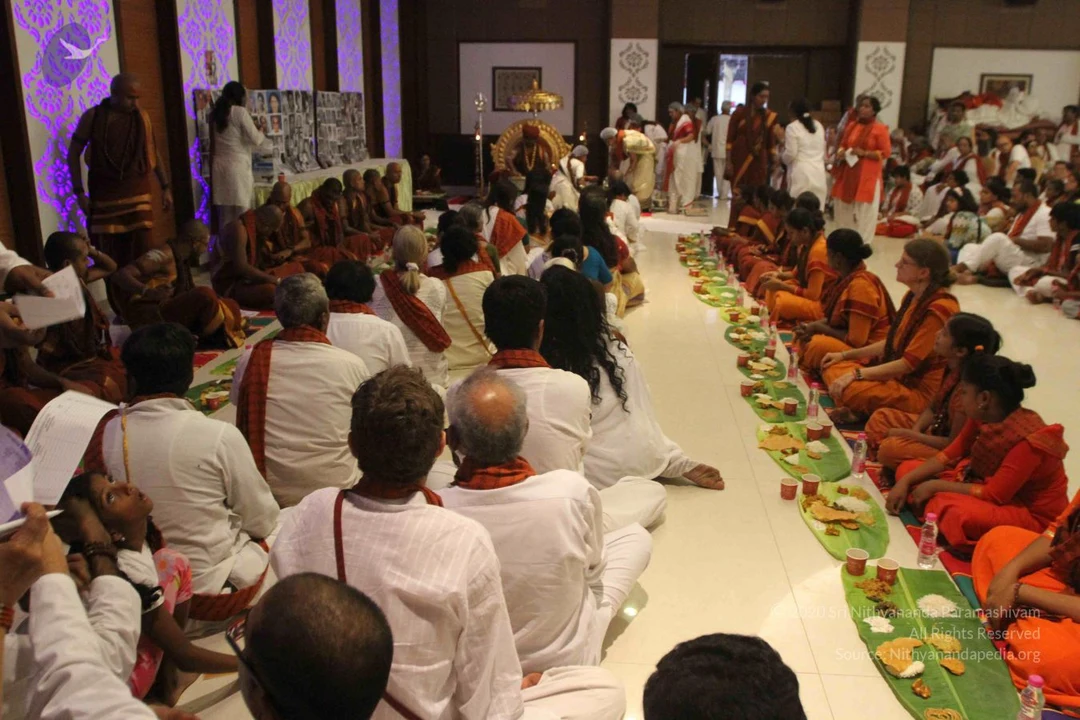
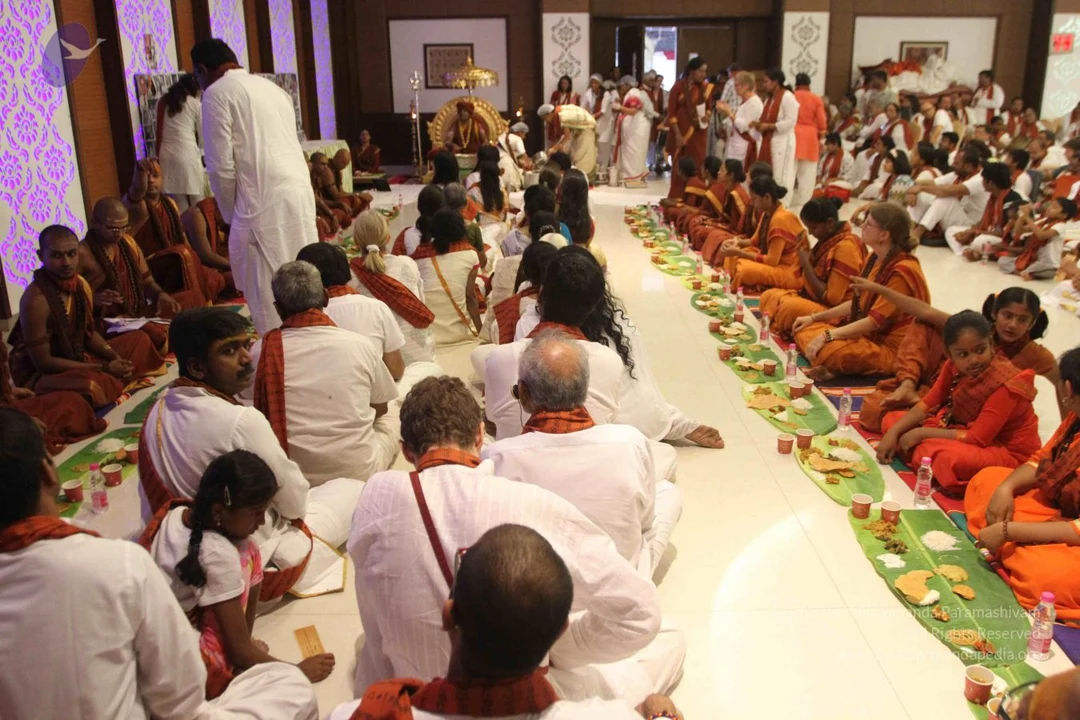
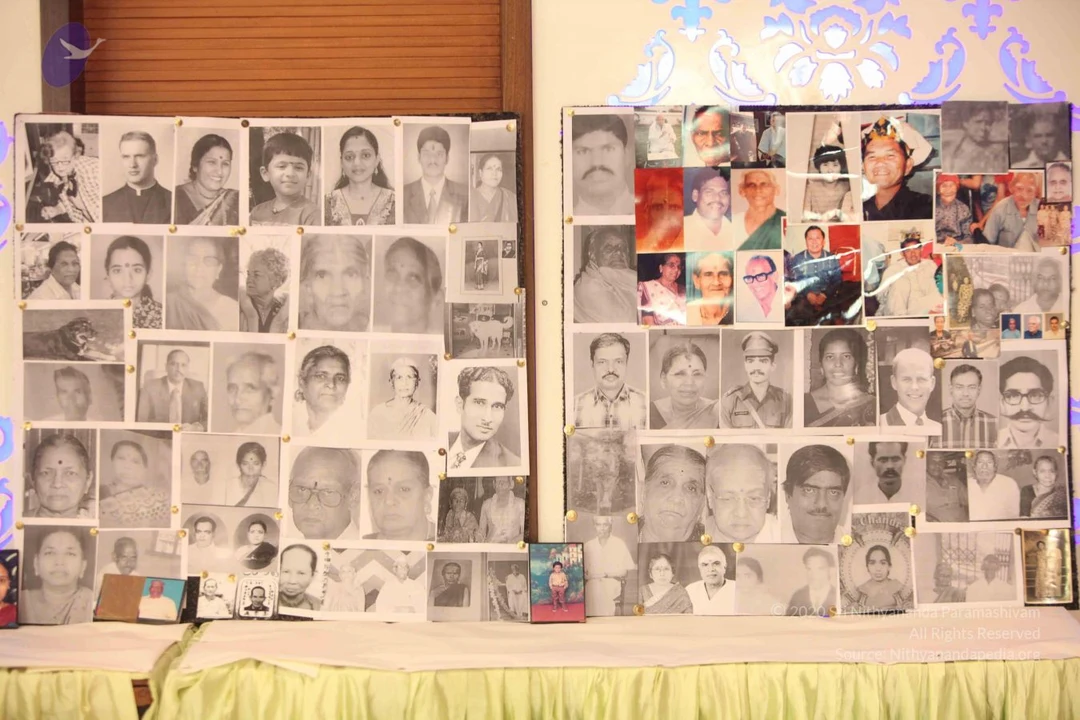
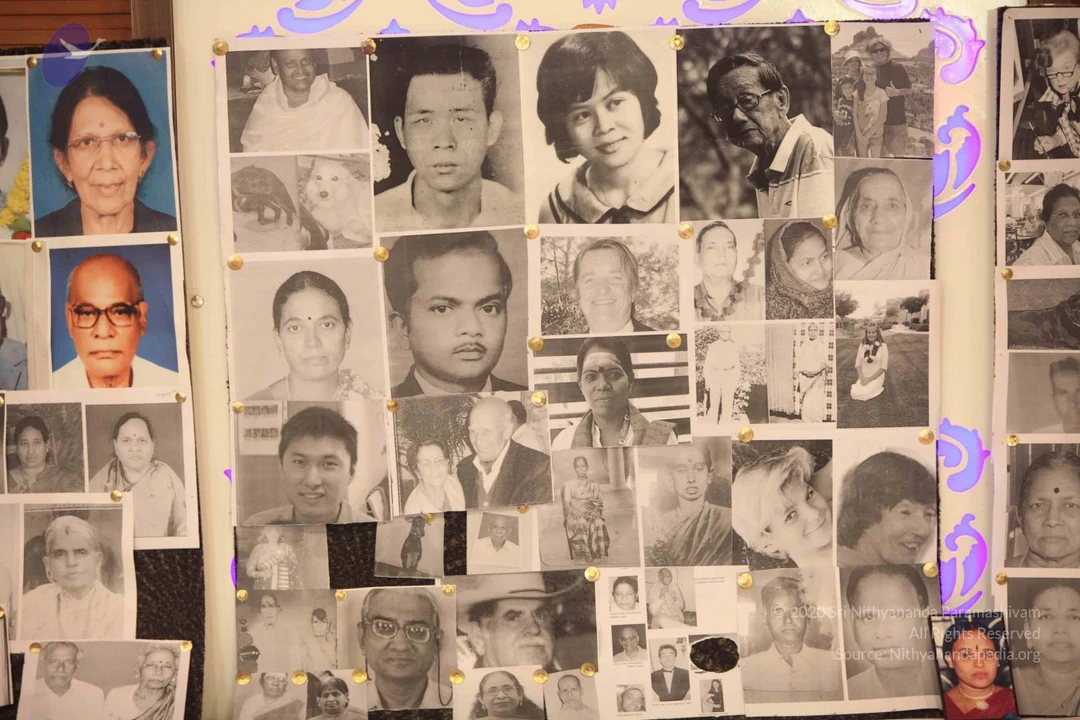
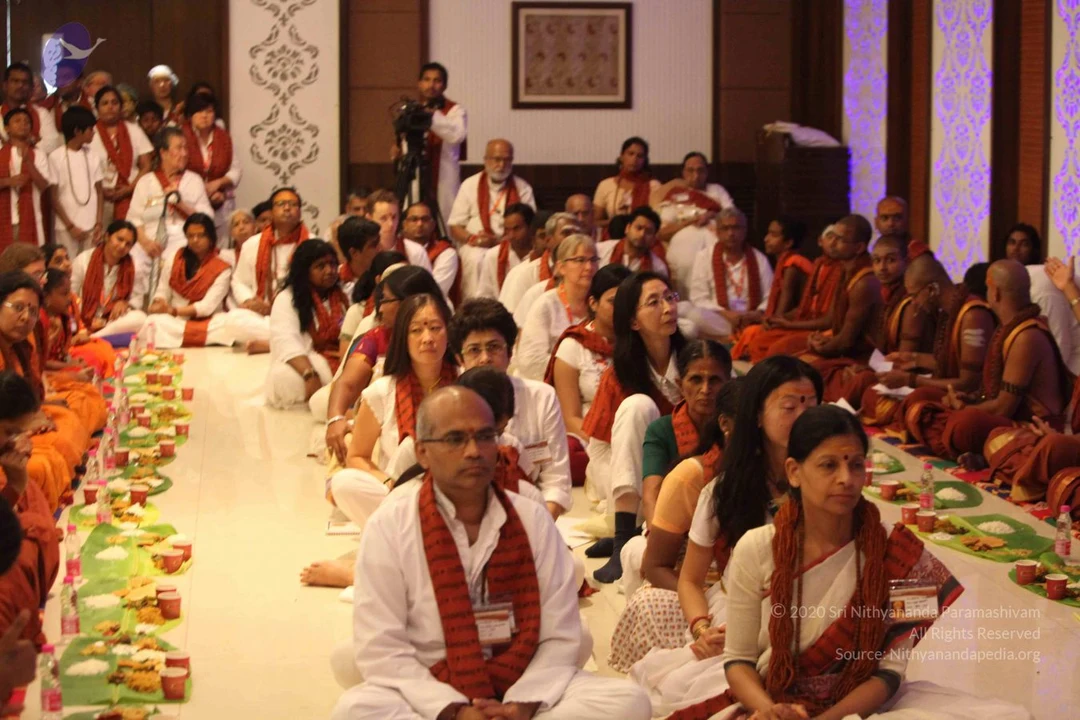
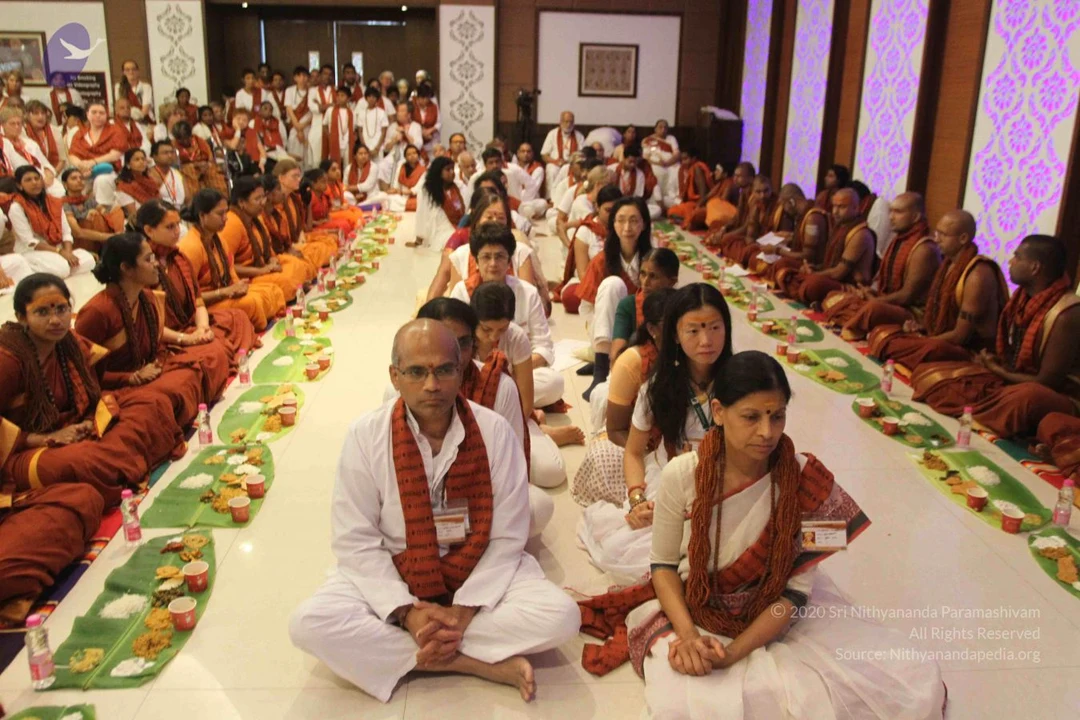
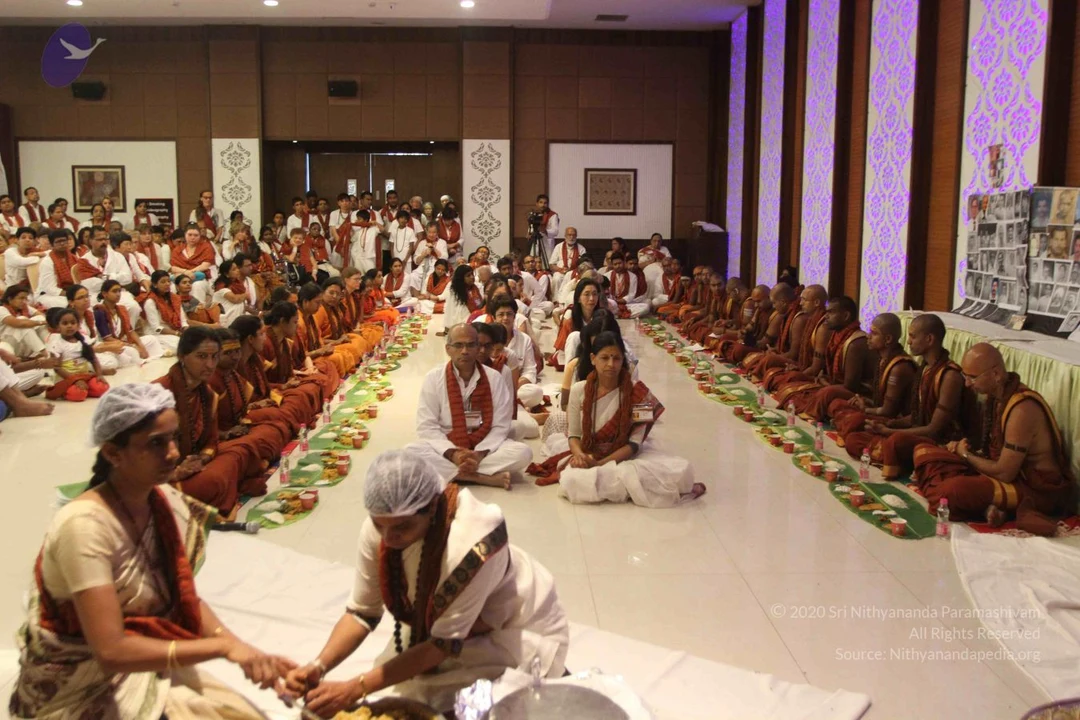
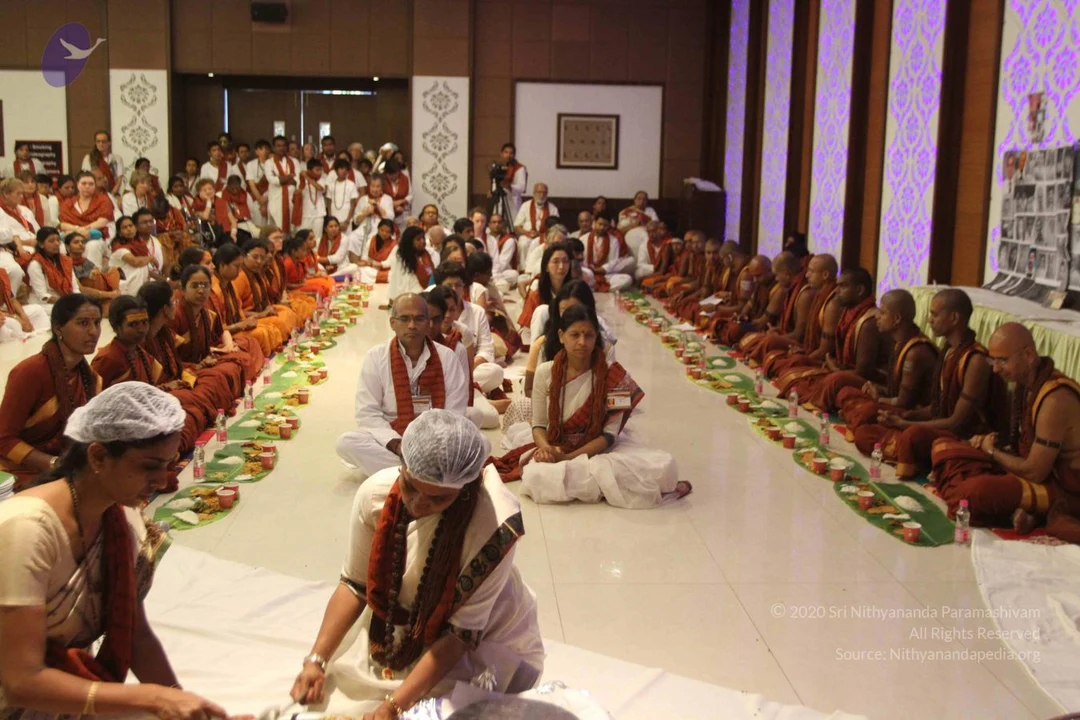
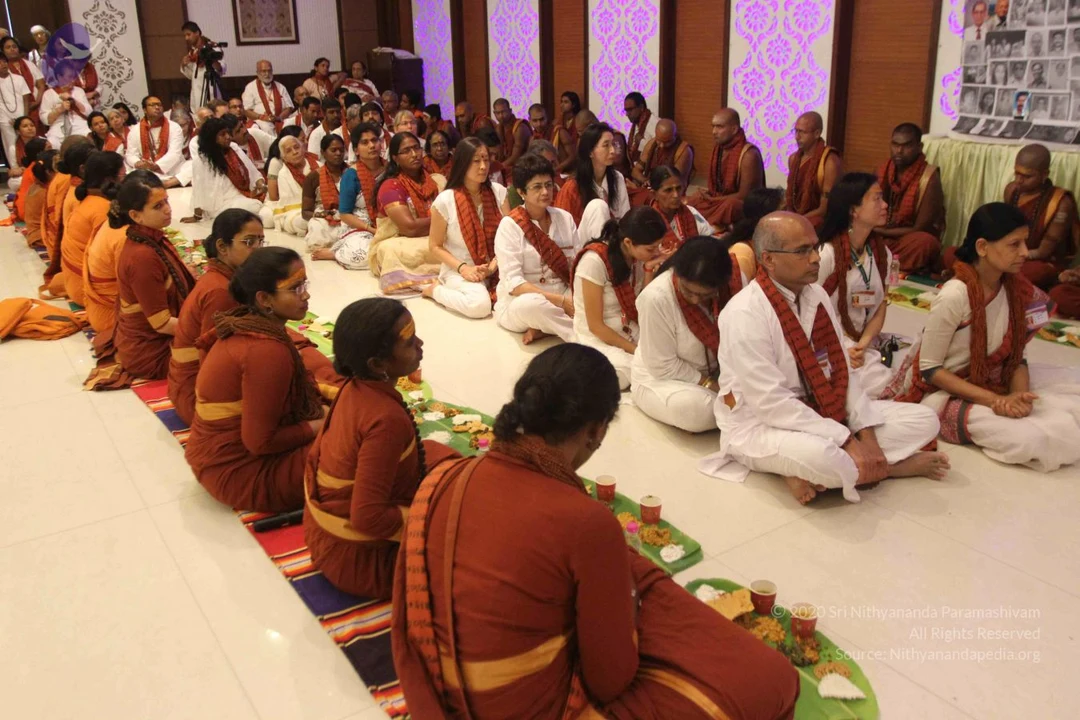
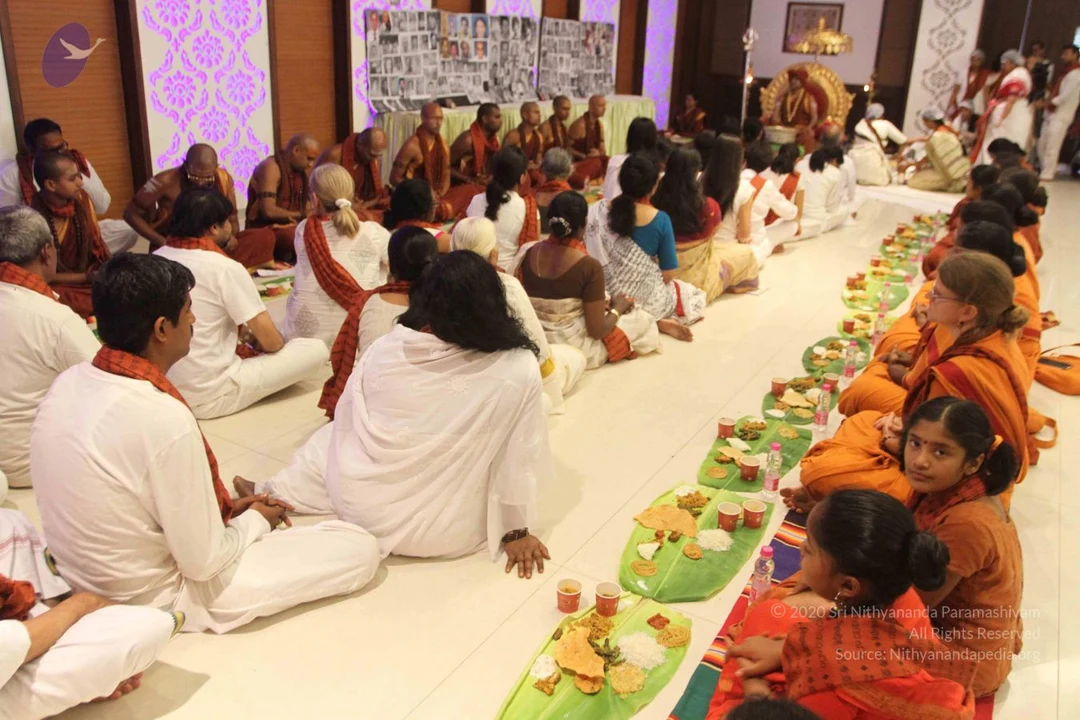
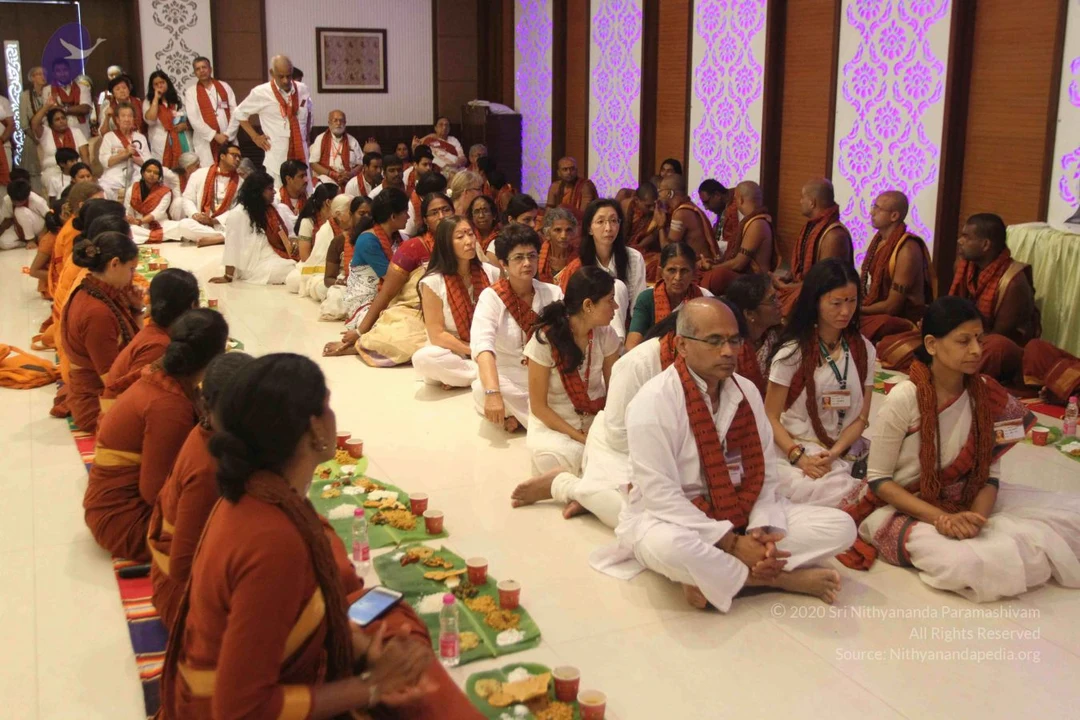
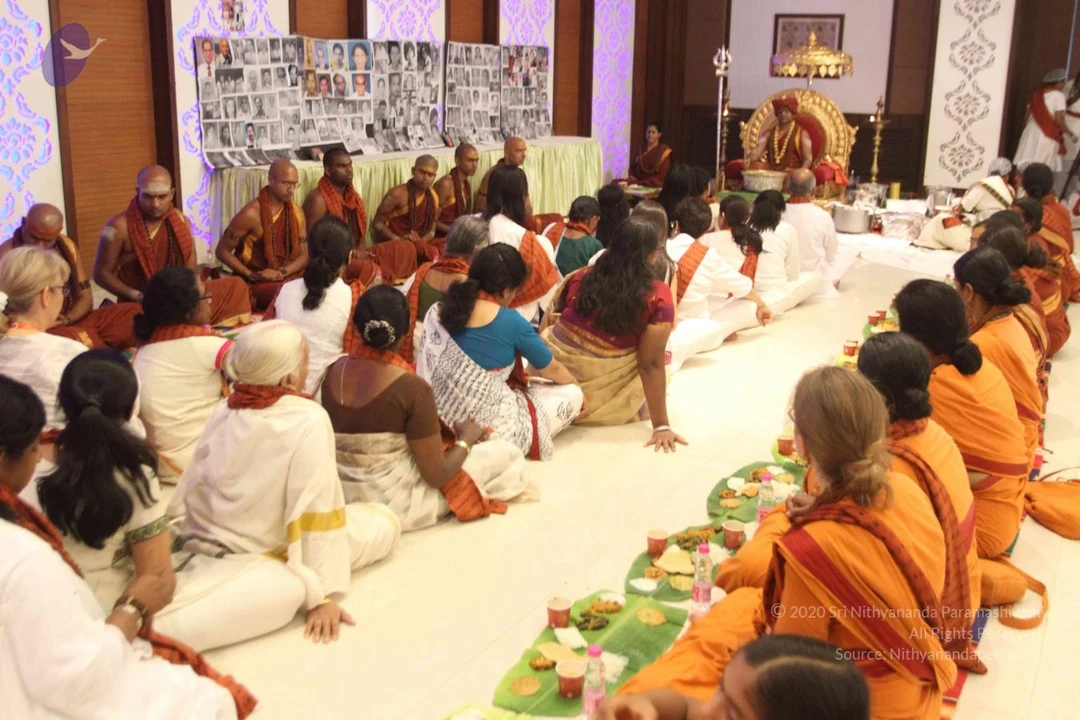
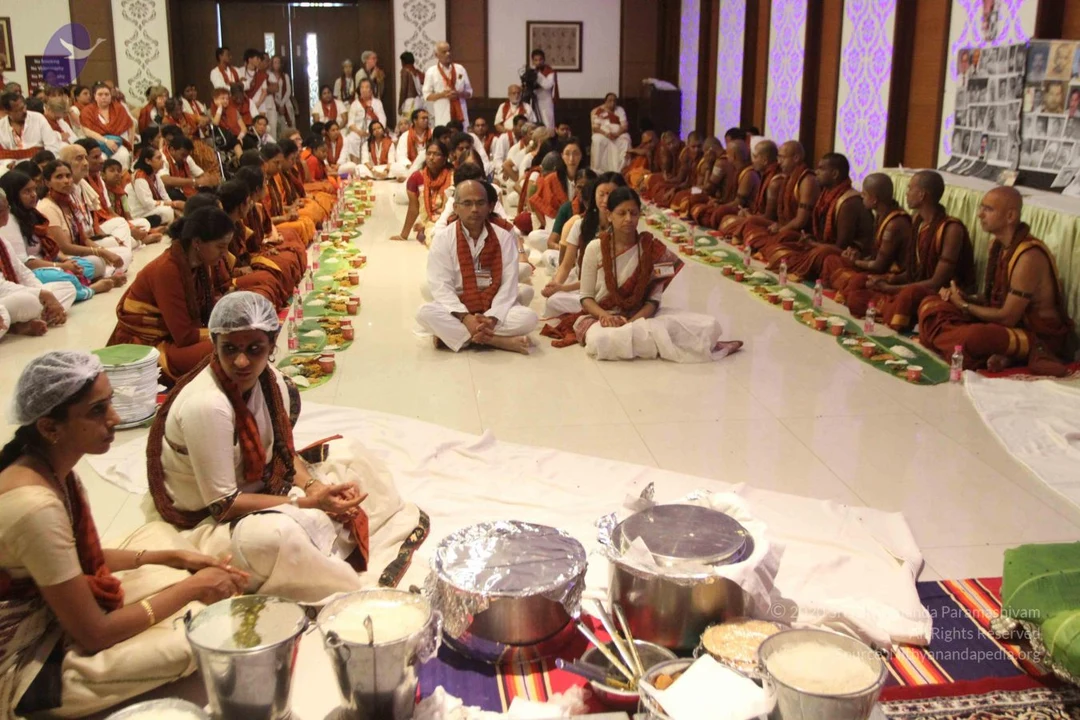
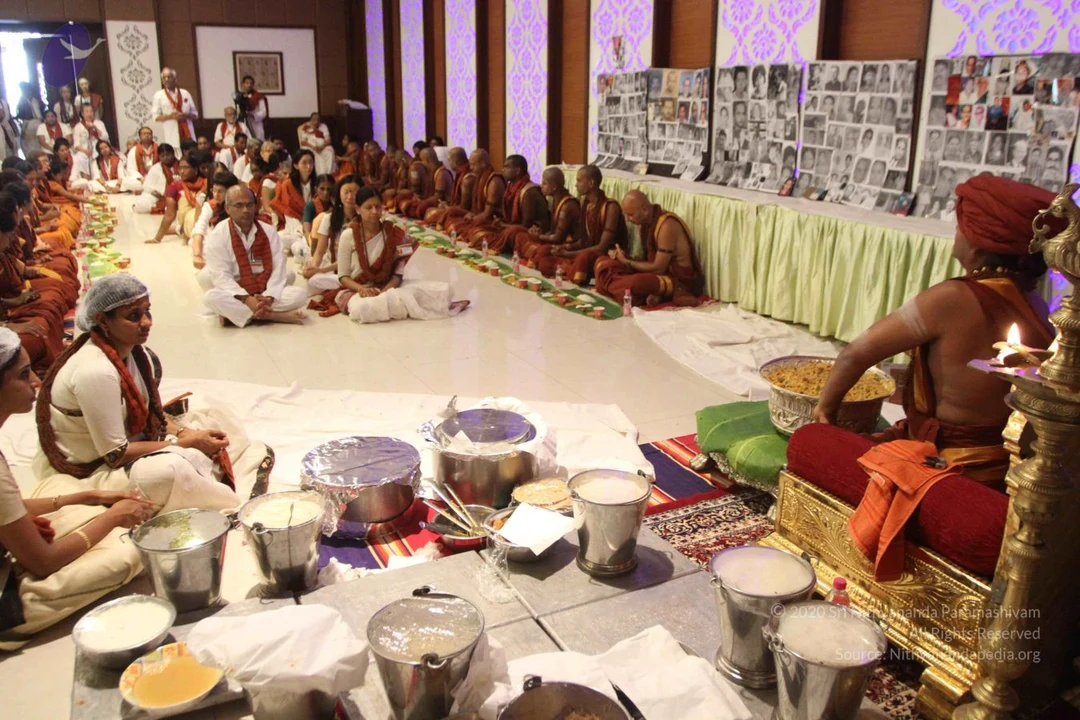
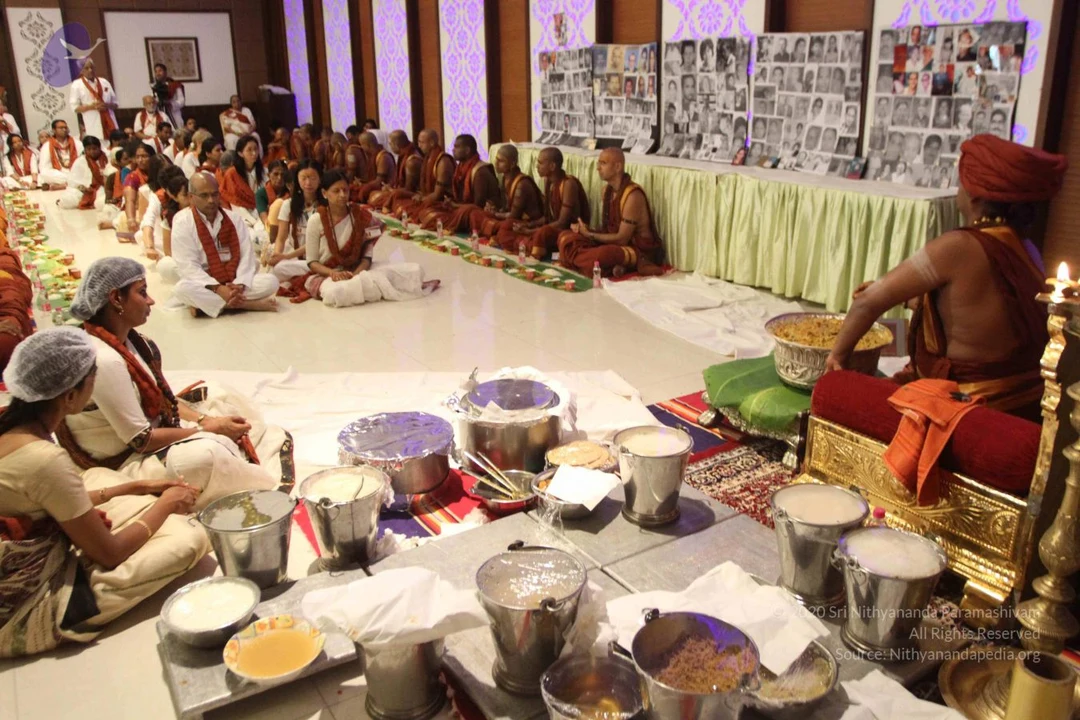
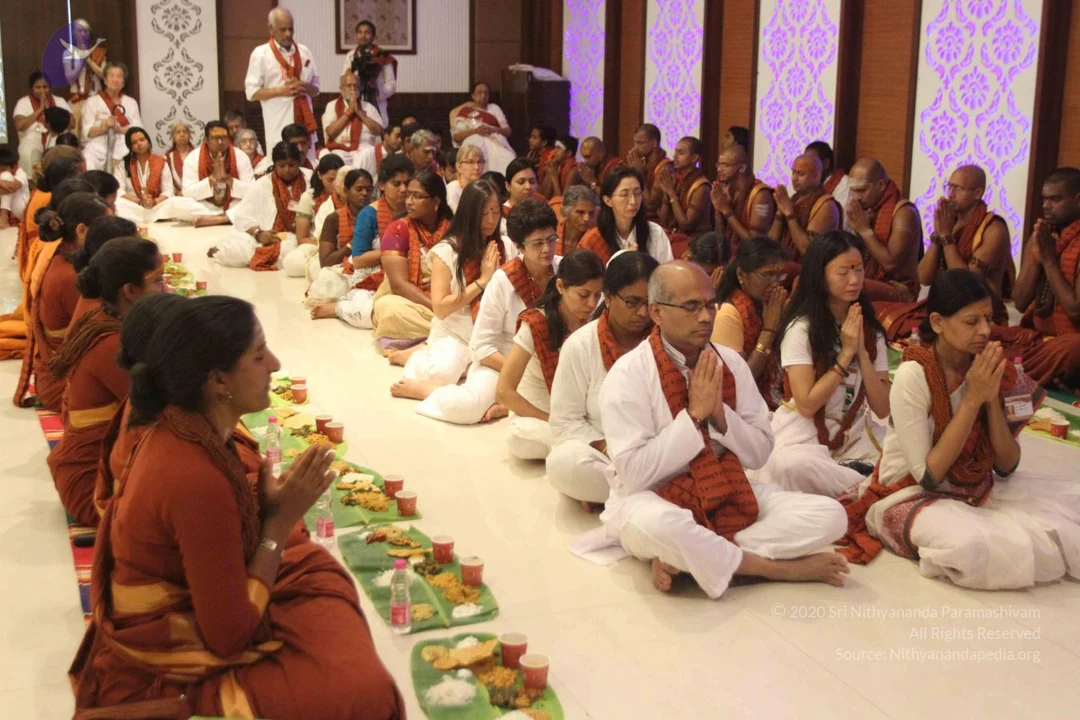
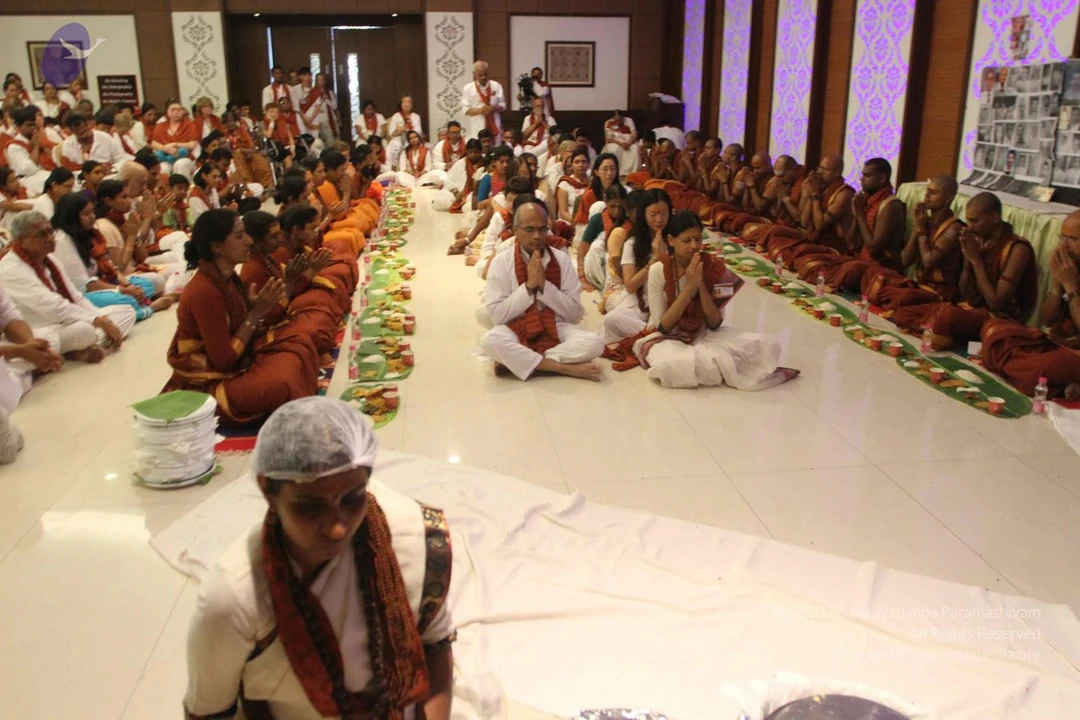
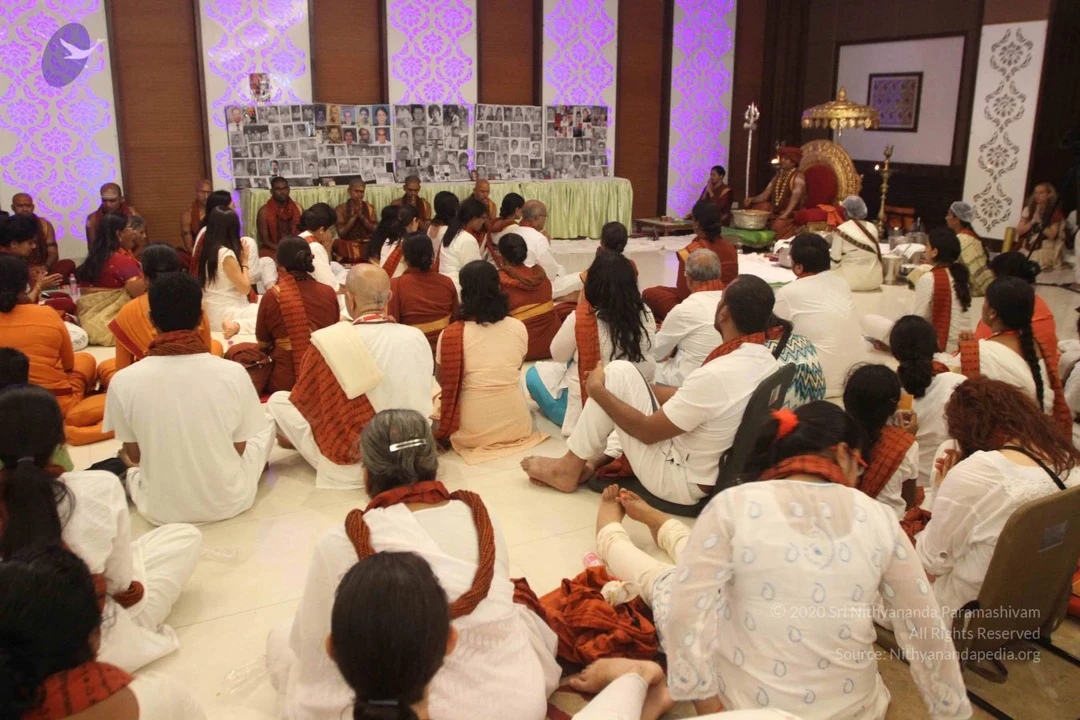
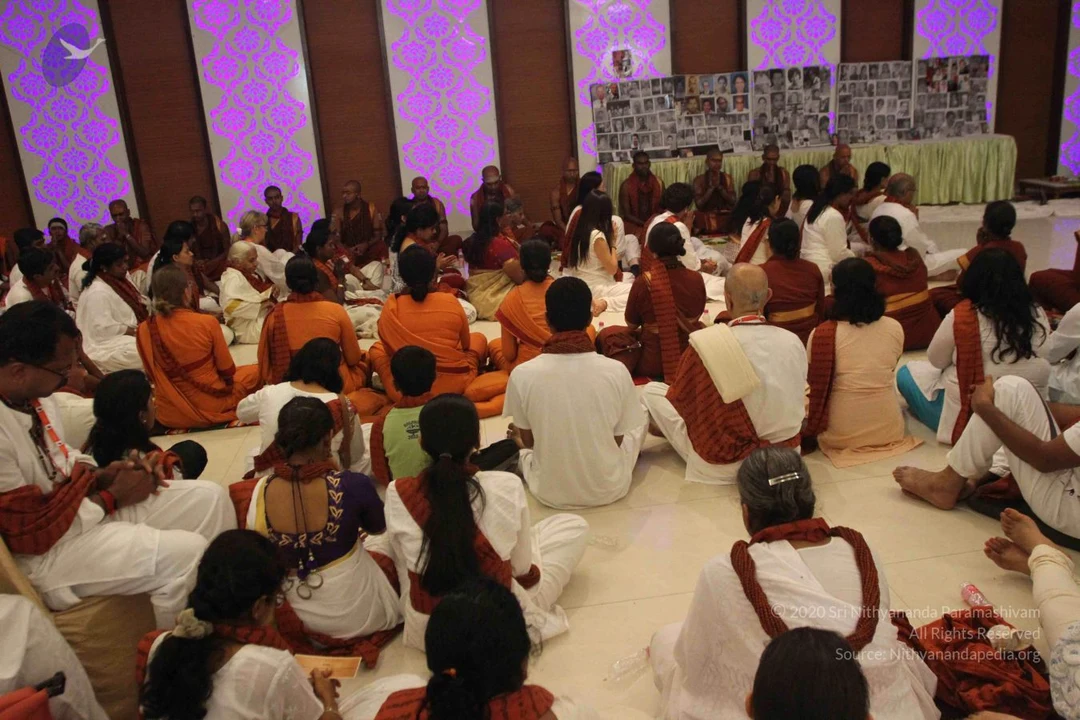
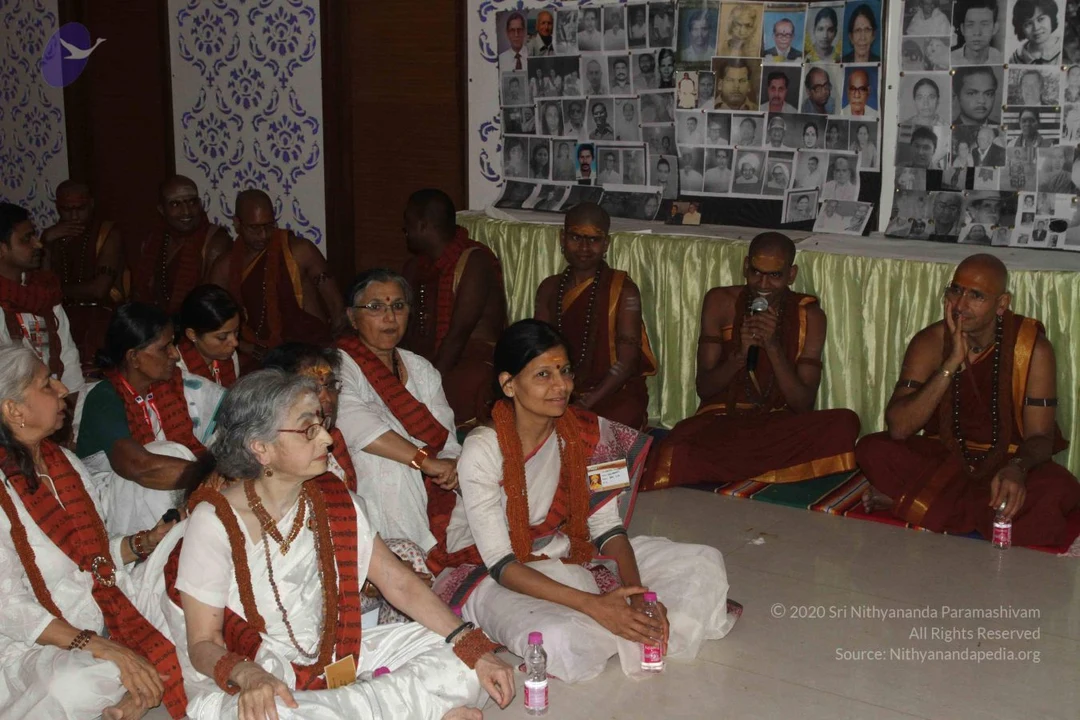
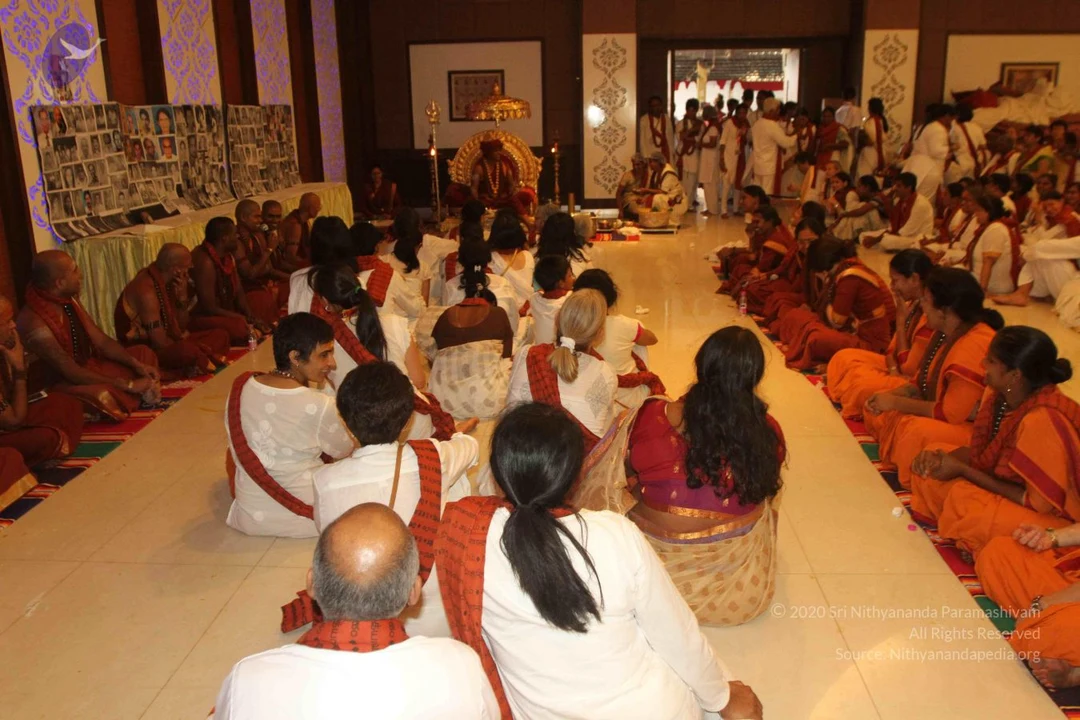
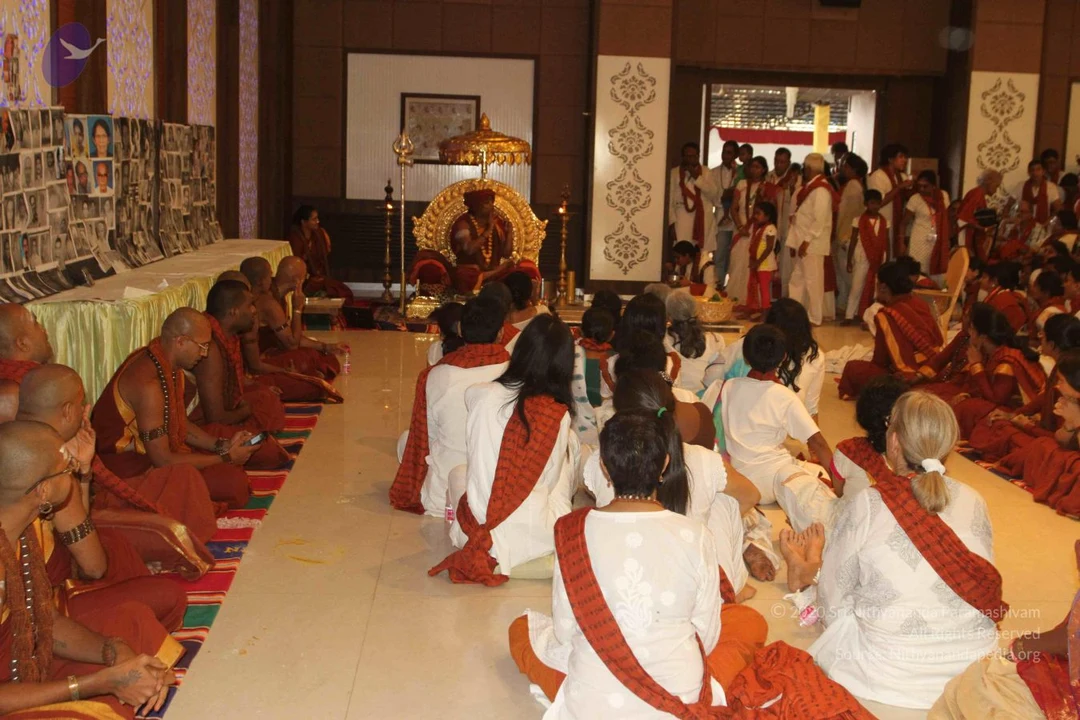
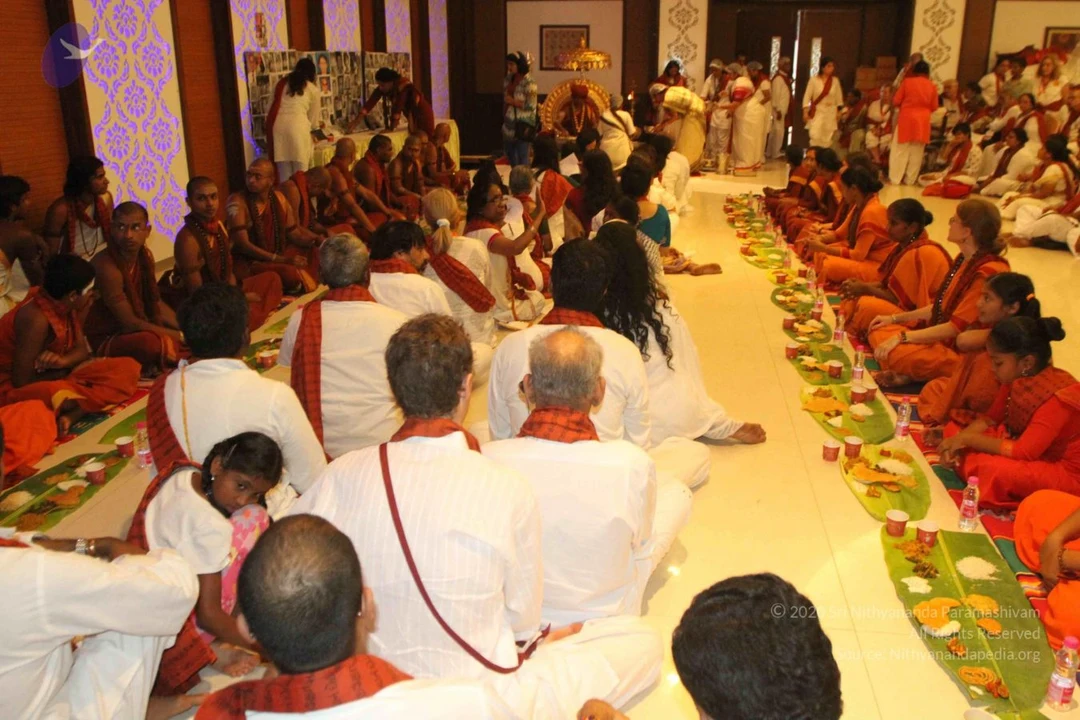
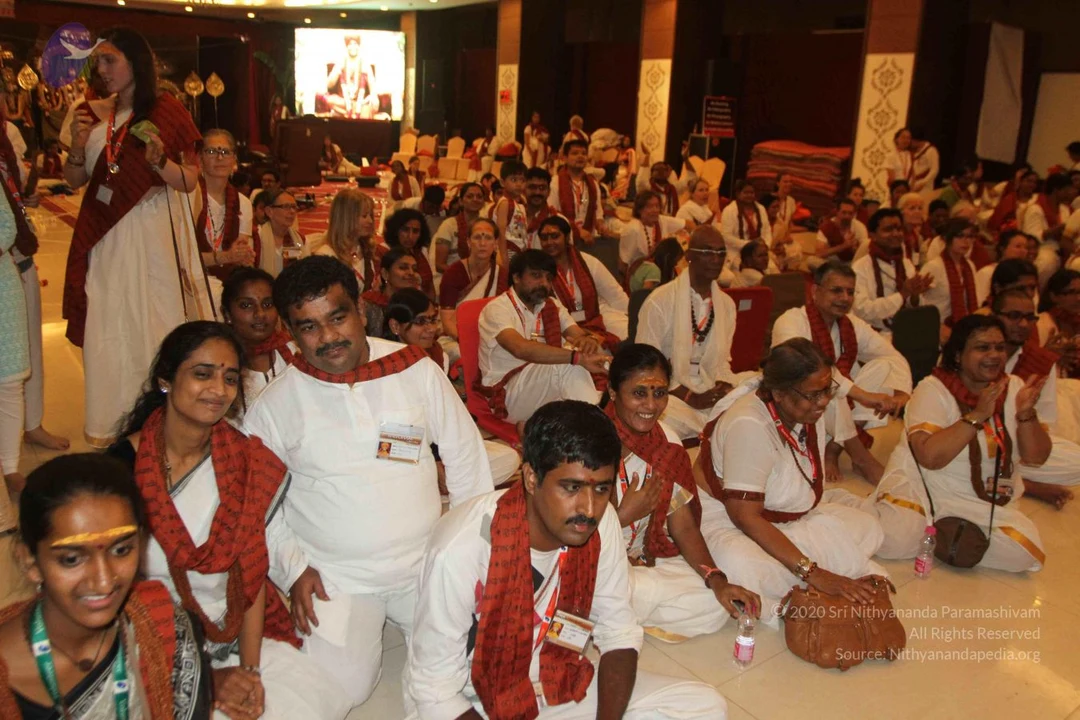
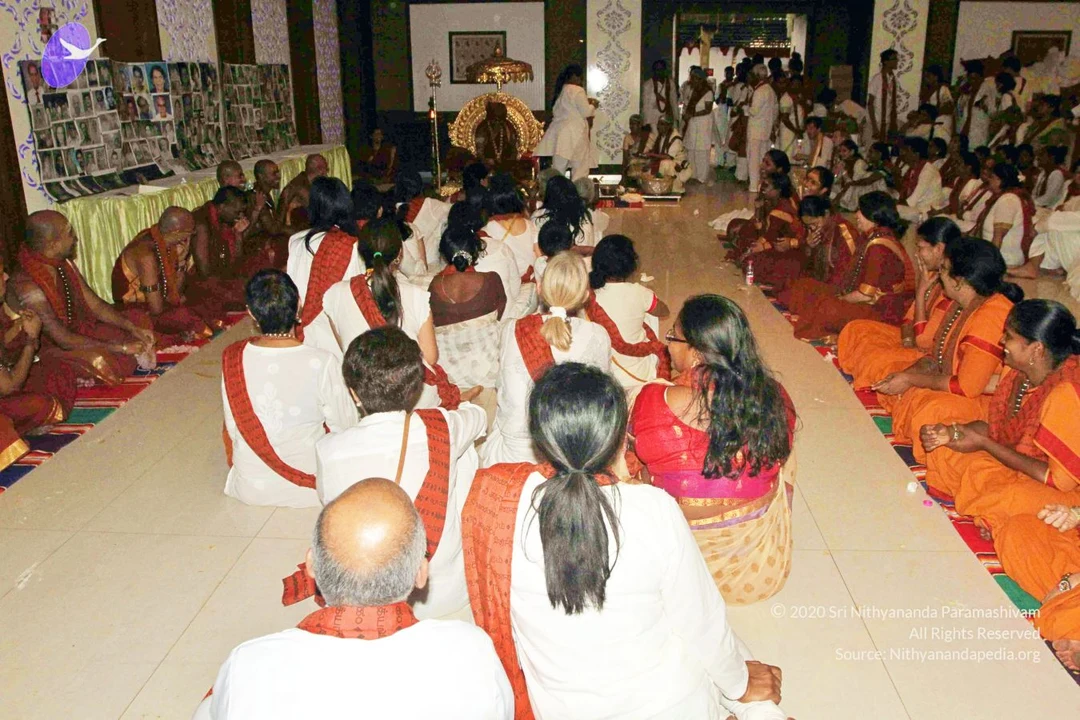
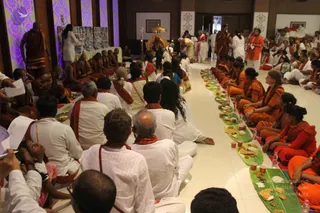
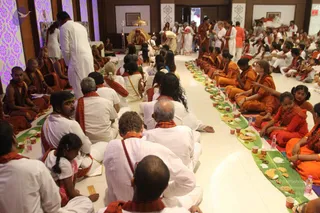
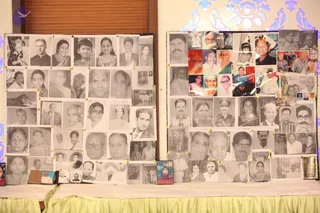
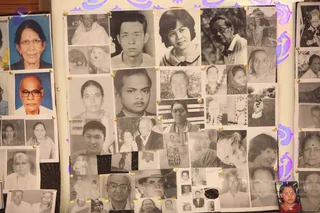
A large hall with many seated devotees on the floor facing a central raised golden throne-like seat with a gilded canopy and an oil lamp nearby. In the foreground, rows of men and women sit in white and orange-saffron clothes with red shawls around their shoulders; several wear orange robes and rudraksha-style beads. Banana-leaf plates with food, small cups and water bottles are set before them. Behind the throne a few figures in white and orange stand, and a group of people in white and orange are arranged near the throne area. Purple patterned panels line the left wall, with framed photographs displayed on a stand. The scene suggests a satsang or ritual meal in an ashram hall.A seated group meal in a bright hall with cream floor tiles and purple patterned wall panels. Rows of devotees sit on the floor facing a central figure on an ornate golden throne-like seat in the far background. Foreground people wear white and white-and-red shawls with red-and-white cloth; saffron-robed sannyasis with rudraksha malas sit along the left and right. Banana leaves hold rice, sides, and small red cups along the aisles, and water bottles sit at the ends. A woman in orange and a child in white sit at the left edge. Many attendees are seated, with others standing near the throne area. The figure on the throne is too distant to confirm appearance.A photograph of a large indoor satsang hall with a white tiled floor, where a seated crowd faces a raised dais. Many attendees sit in rows on the floor, men in white kurtas with red-orange shawls and women in white or orange and red saris. On the left, a monk in saffron robes stands near a board with photographs, and an orange-robed figure stands by an ornate golden throne-like seat with a golden canopy. Along the right, long rows of banana-leaf plates hold prasad, sweets and small cups, with water bottles in front. Purple decorative panels line the back wall, and a framed picture hangs above the entrance. Several people stand or walk near the dais. Many figures are visible, so the crowd is large.A large indoor satsang hall with rows of seated devotees on white floor mats facing a raised golden throne at the far end. Many people wear white kurta-style clothing with orange or saffron shawls and rudraksha-style neck beads, while several in orange and saffron robes sit in the foreground. Long green banana-leaf plates with food offerings, small brass or copper cups and water bottles line the floor in the right foreground. A standing attendant in white clothes stands at left near a golden lamp stand. Purple decorative wall panels frame the room. The figure seated on the throne is not clearly identifiable from appearance, so no identification is made. Roughly 60 people are visible.Two large pinboards in a hall display dozens of framed-style photo portraits of older and middle-aged men and women, many in black and white, some in colour, pinned in grid clusters. A draped green-and-white tablecloth lies on the table in front, holding small framed photographs and a few offering items. Walls behind have decorative blue cutout panels and a wooden slat screen. The portraits are printed photos, not people physically present, and no one stands in the frame.A wall covered with many black-and-white and colour printed photographs of older and younger people, pinned up with brass-headed push pins on a light background and framed by purple ornamental motifs. The portraits show men and women in everyday dress, sarees and kurtas, some smiling, some posed outdoors or indoors. Some printed pictures show pets or group scenes. The arrangement appears to be a memorial or honour display. No a person candidate is visible as a person in this image.

Inner-Awakening-Varanasi

68 photosSource gallery
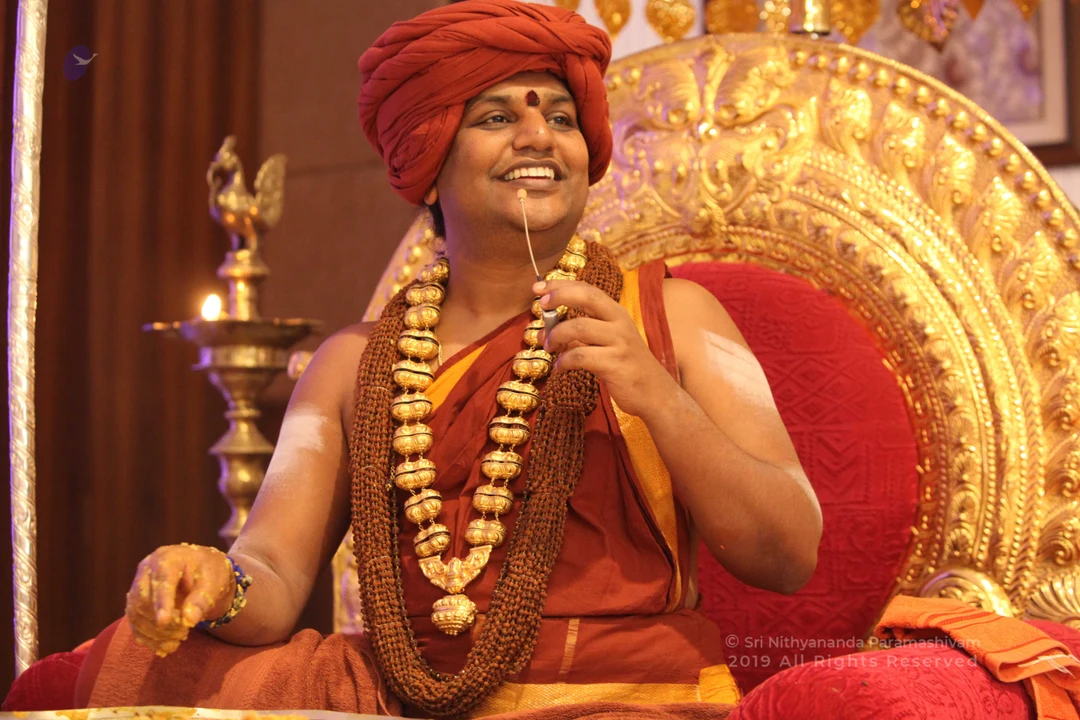
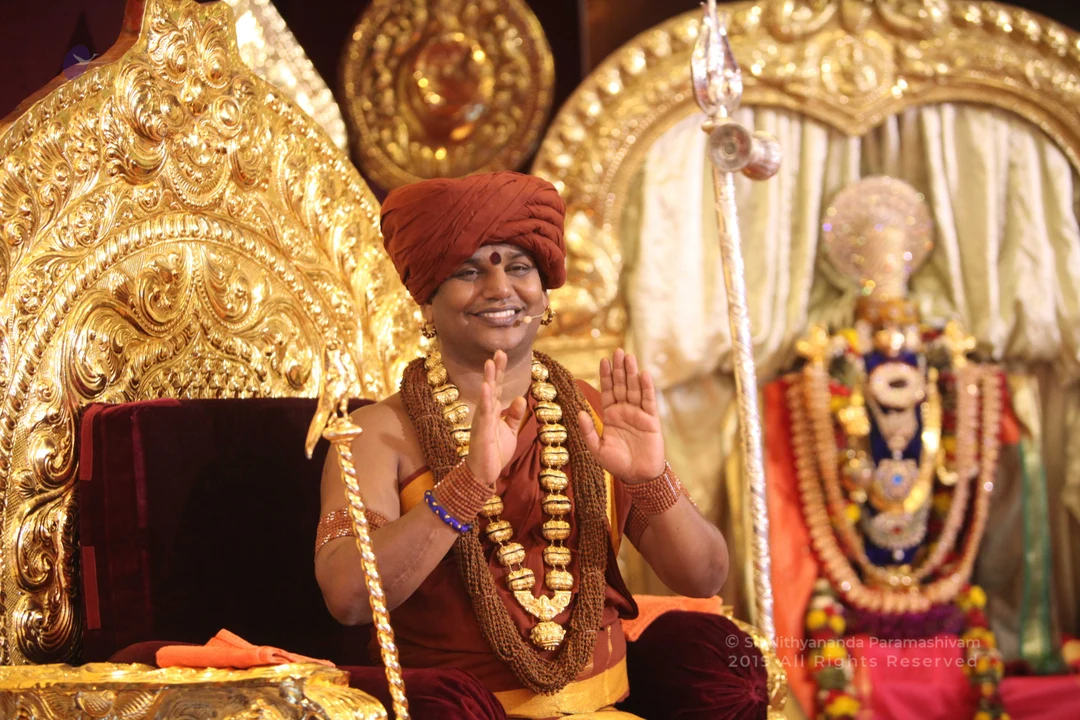
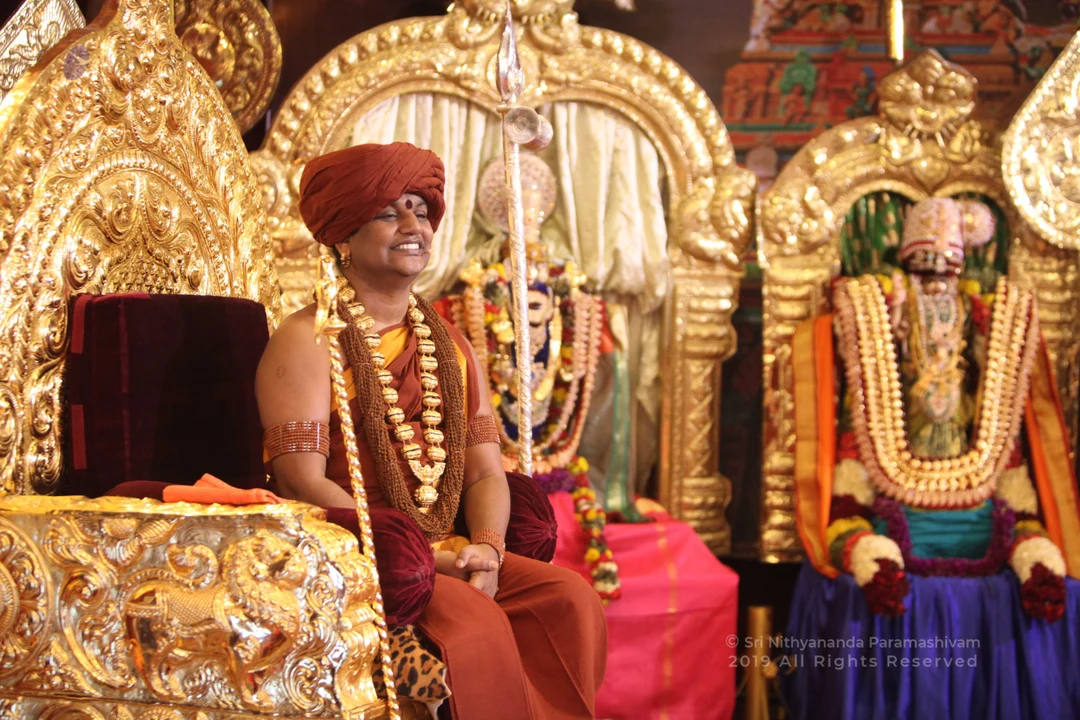
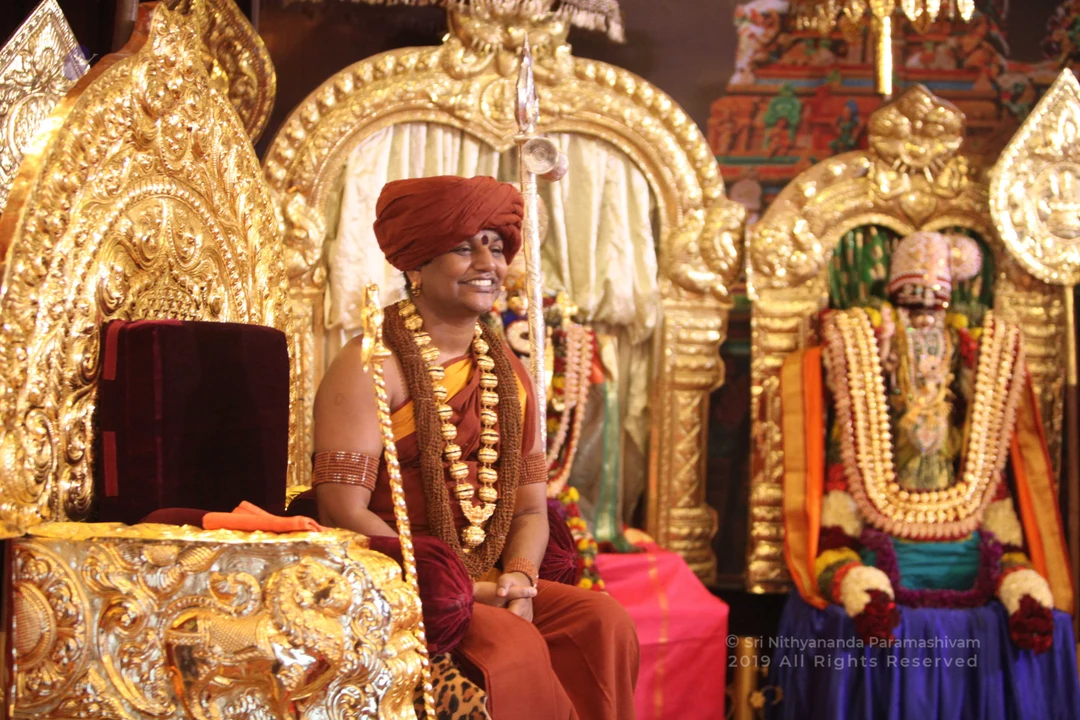
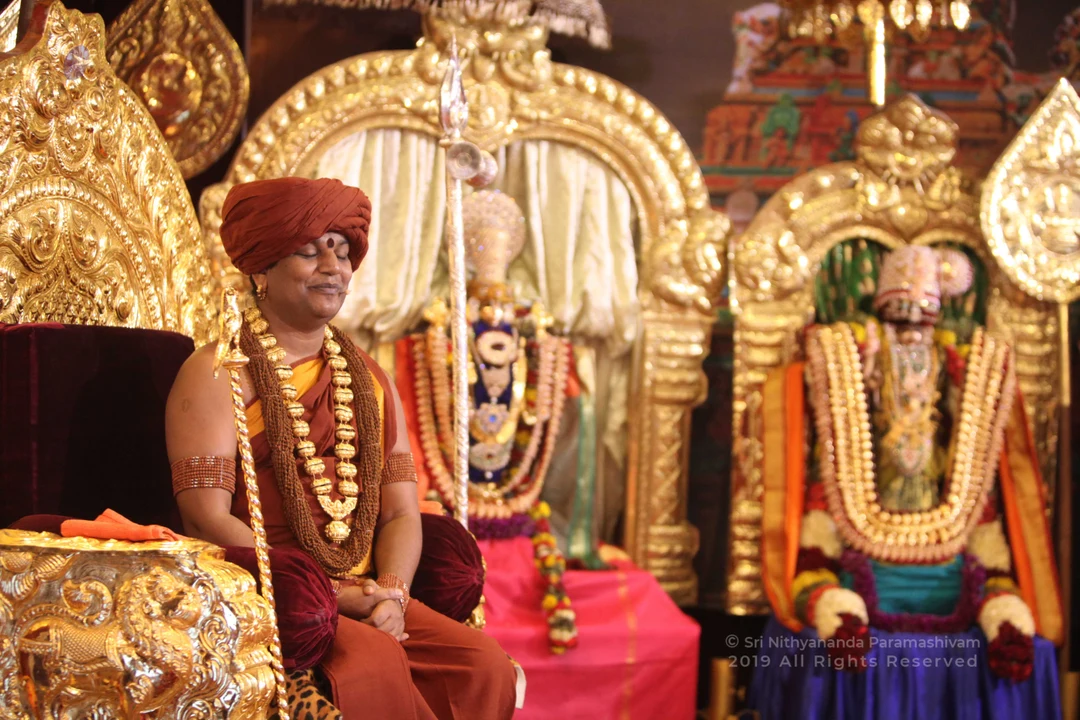
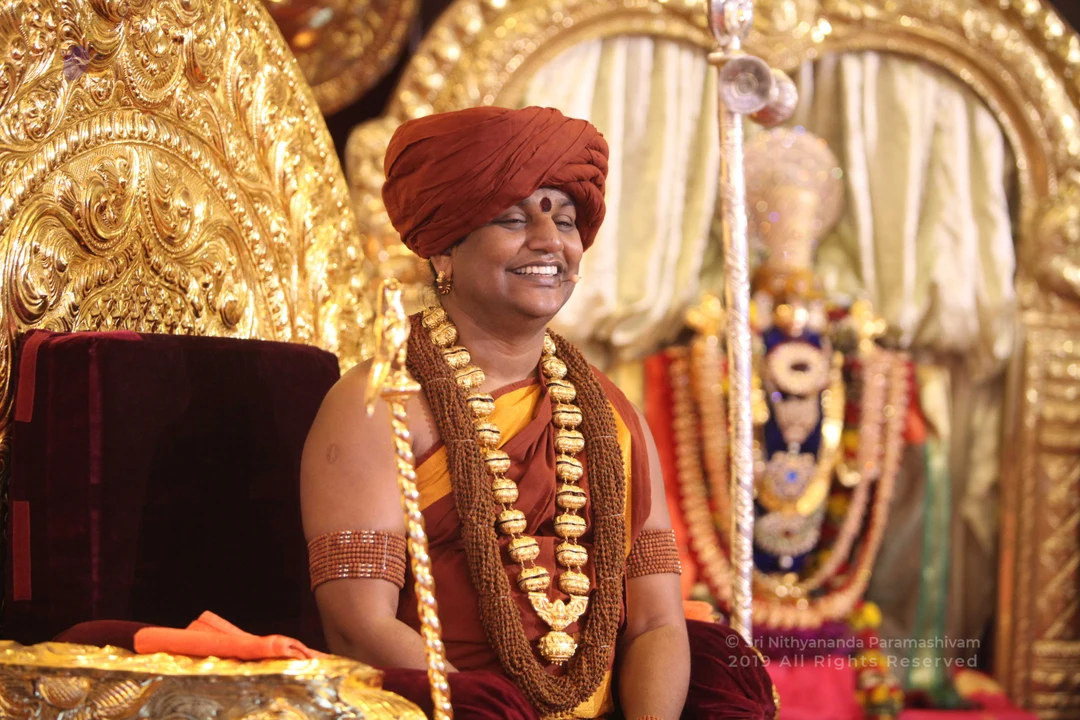
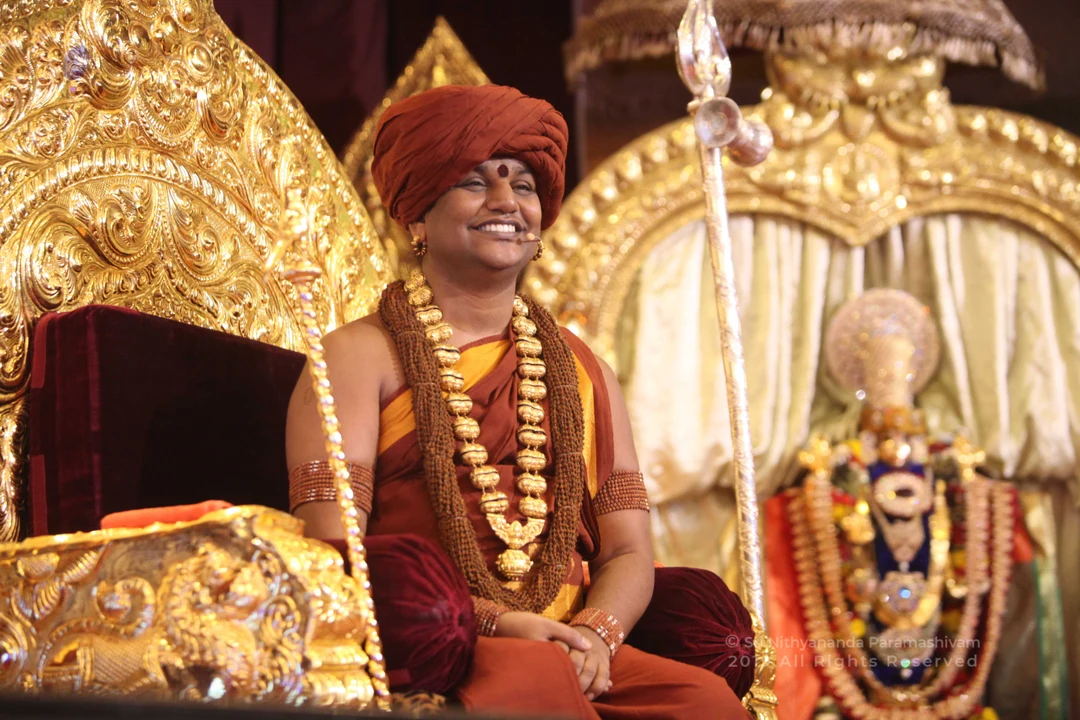
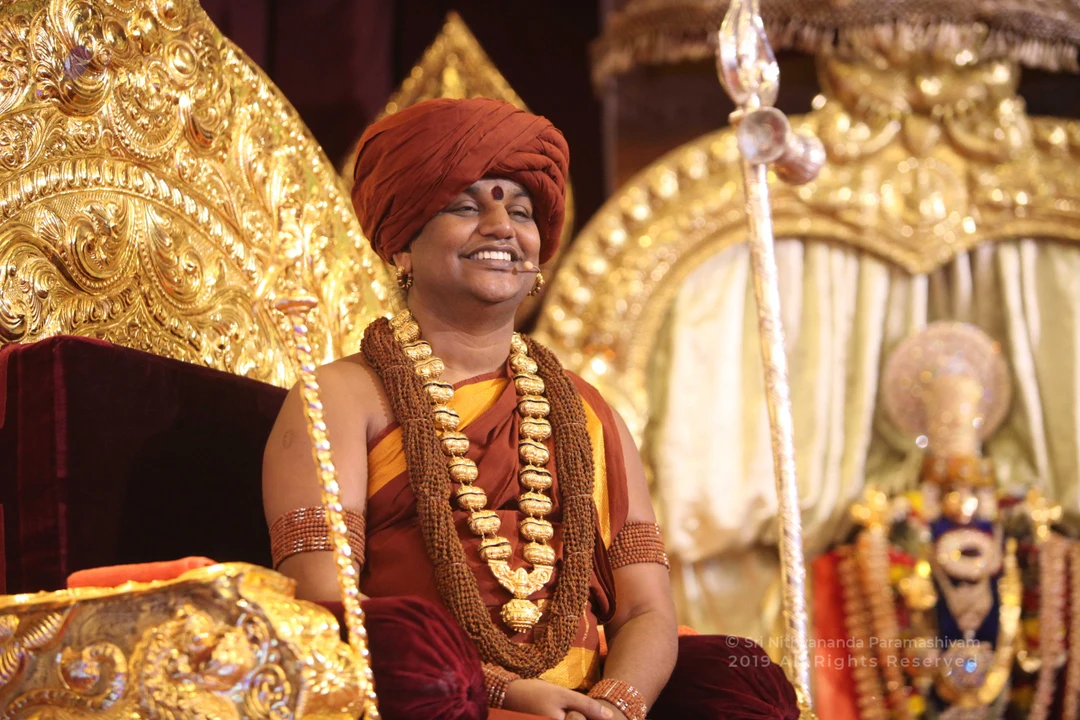
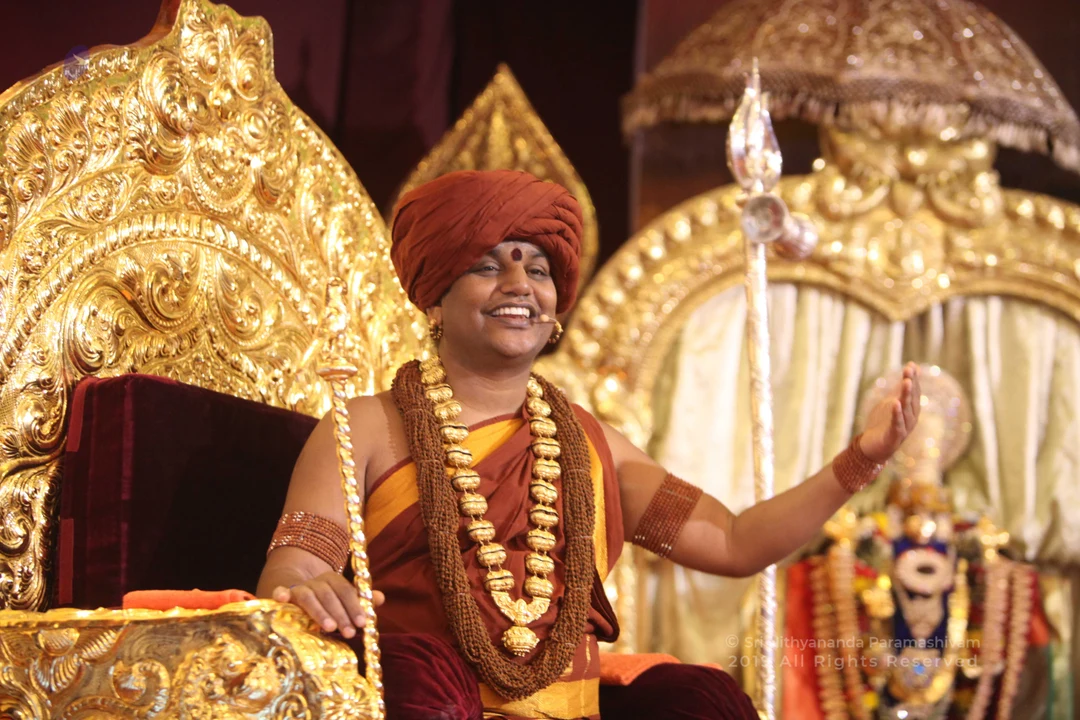
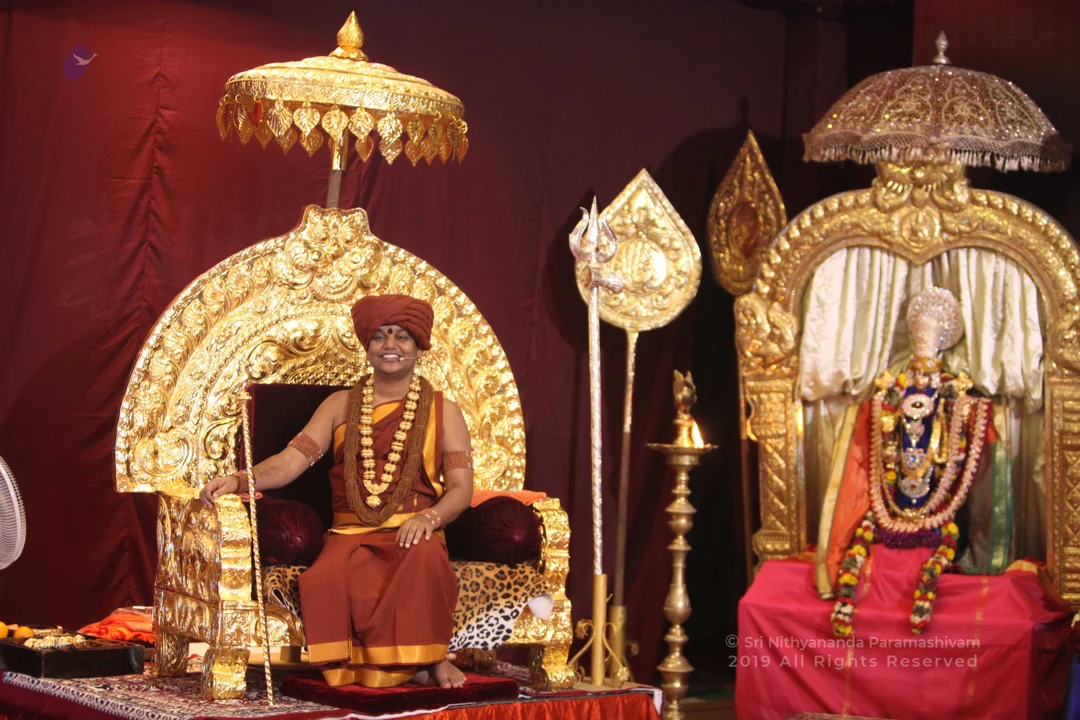
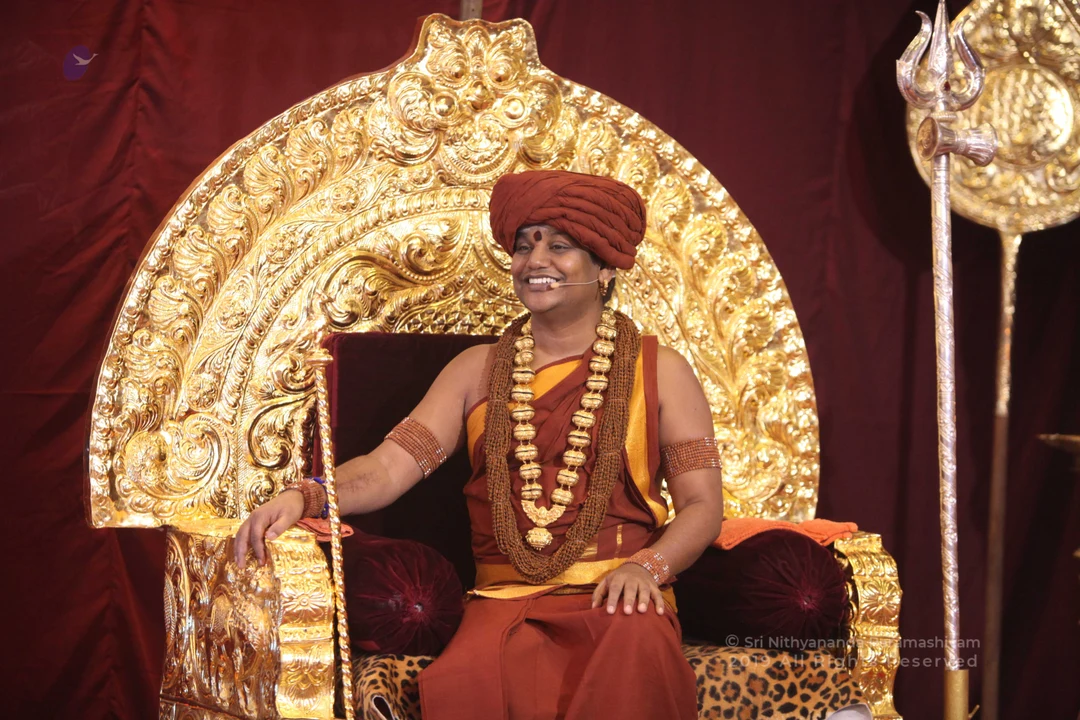
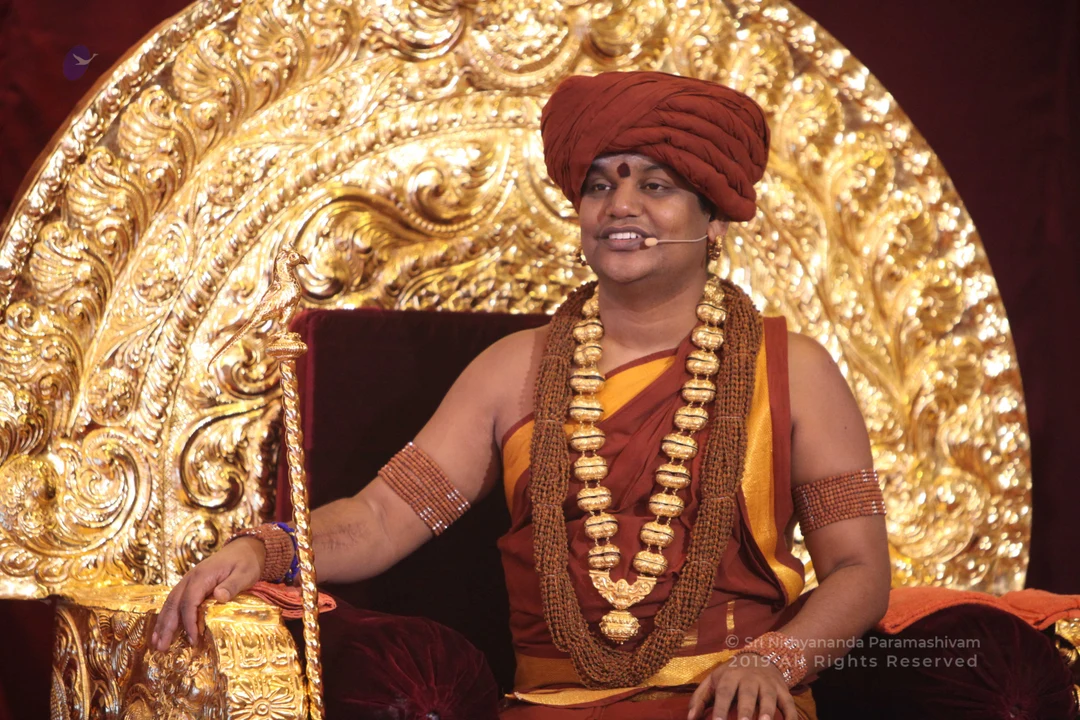
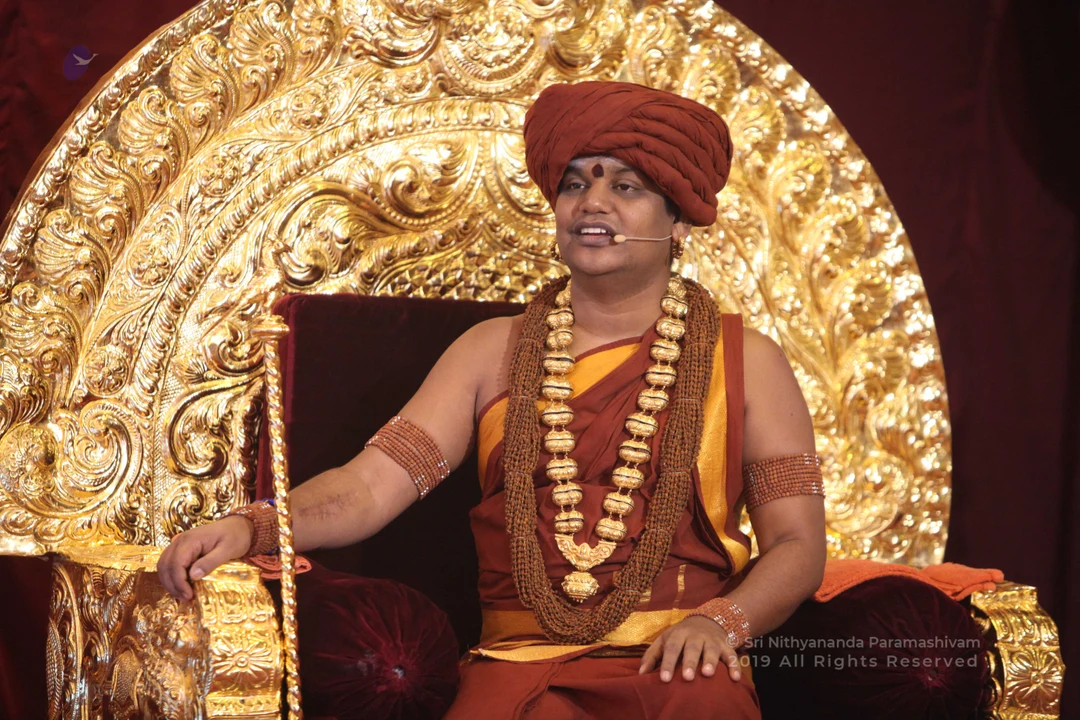
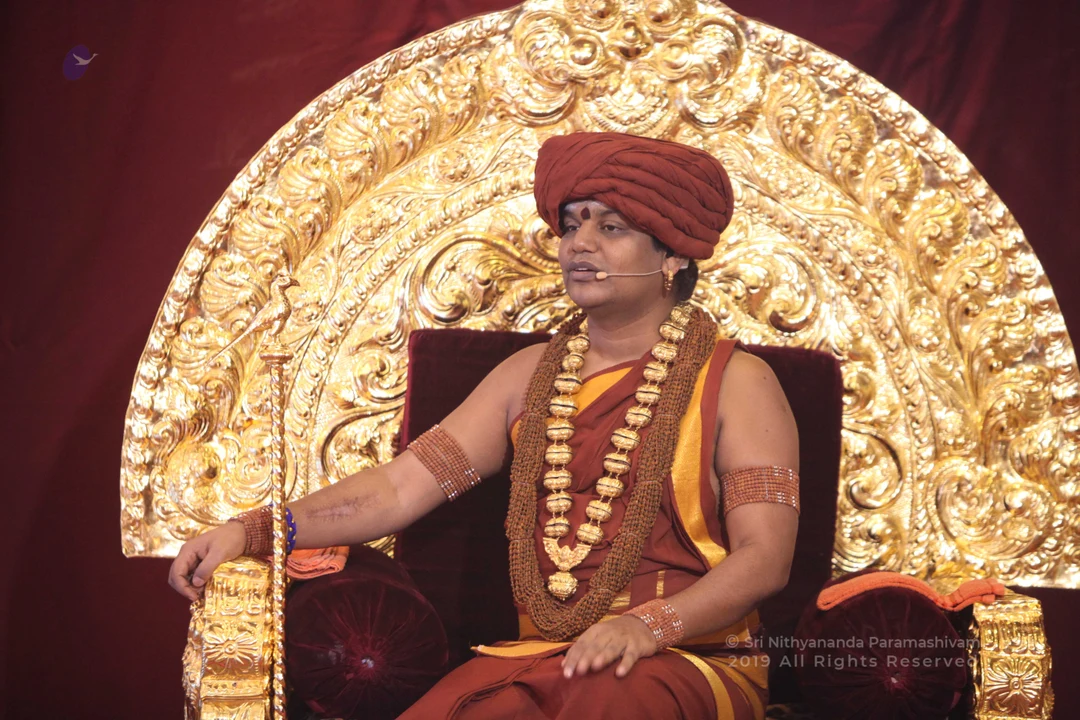
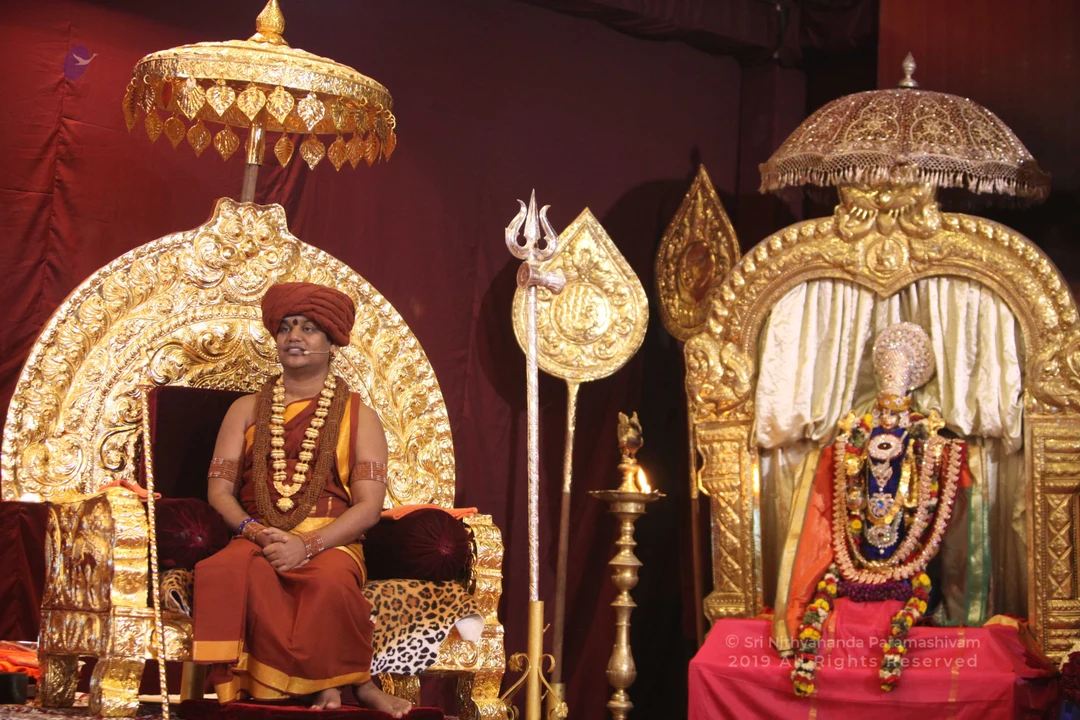
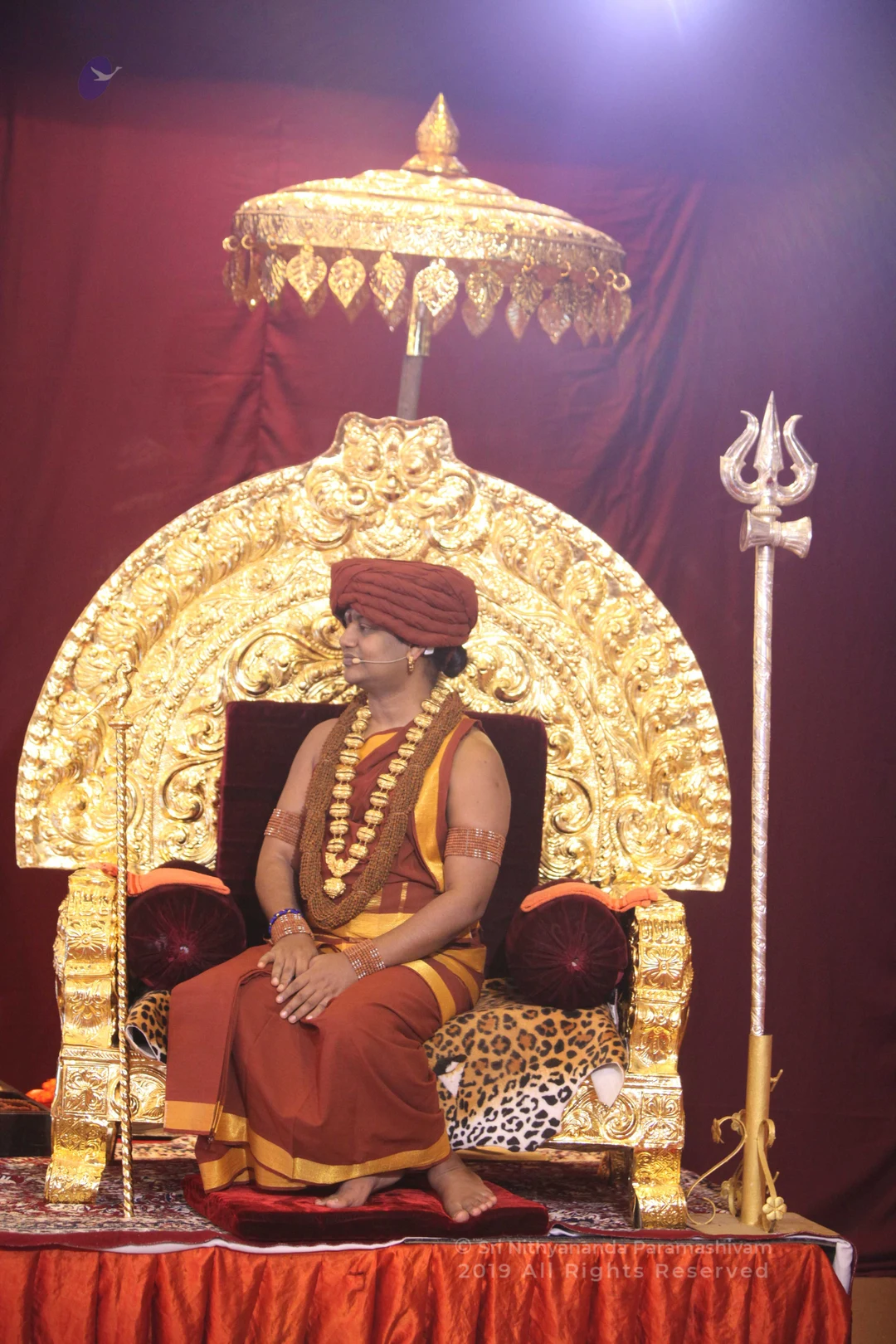
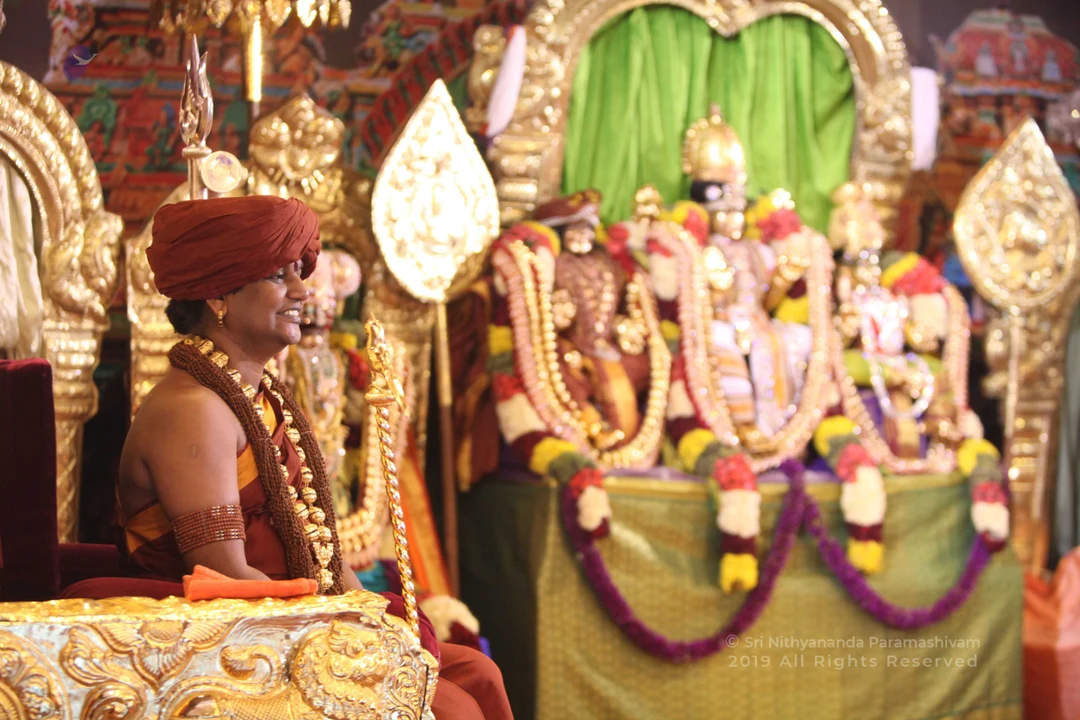
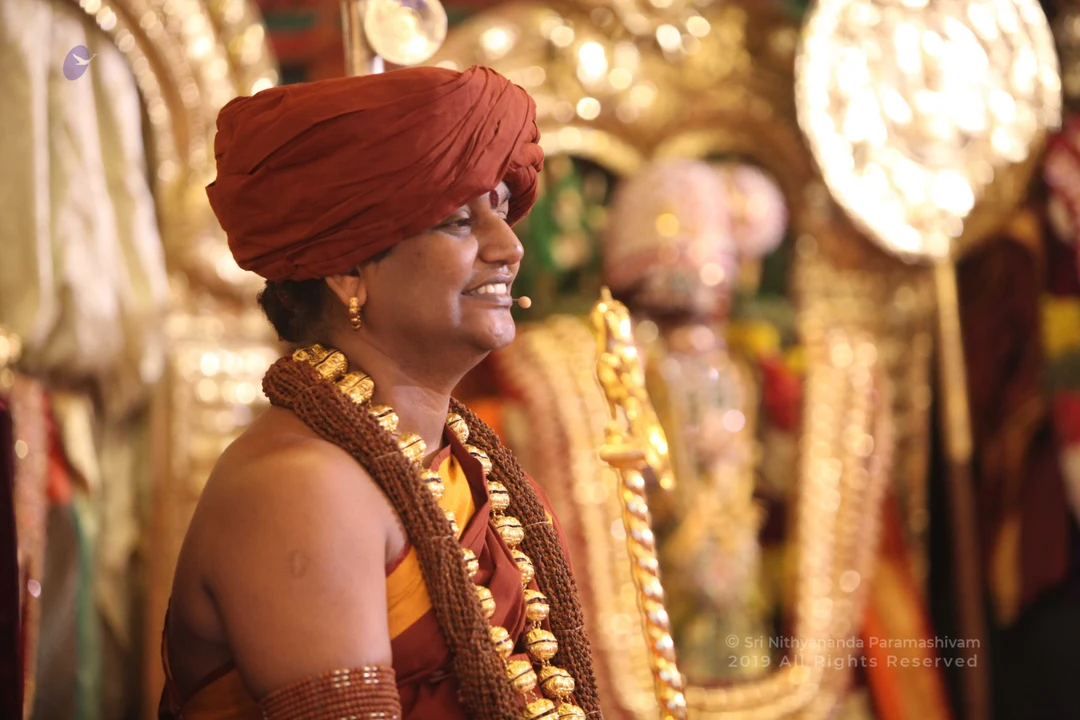
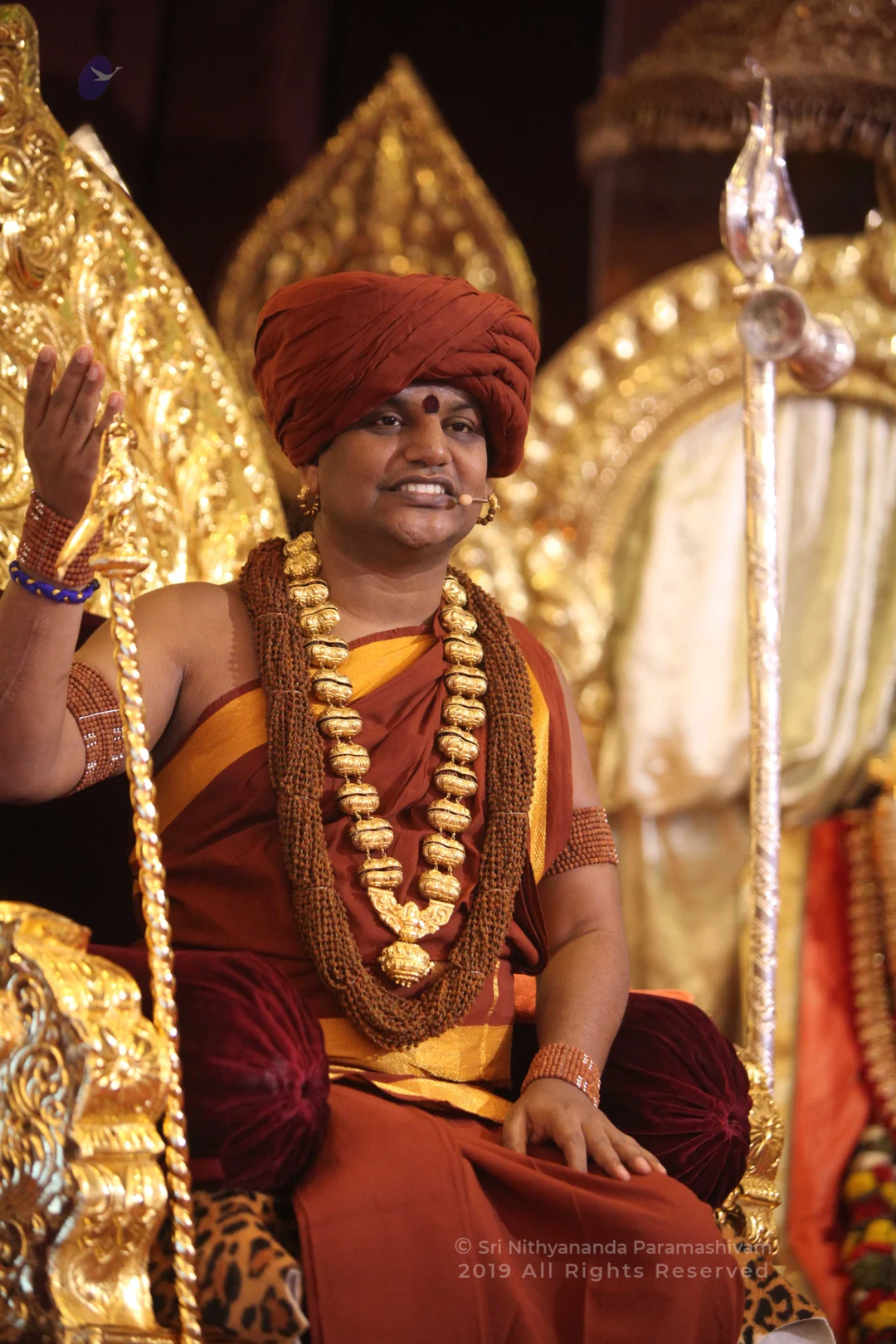
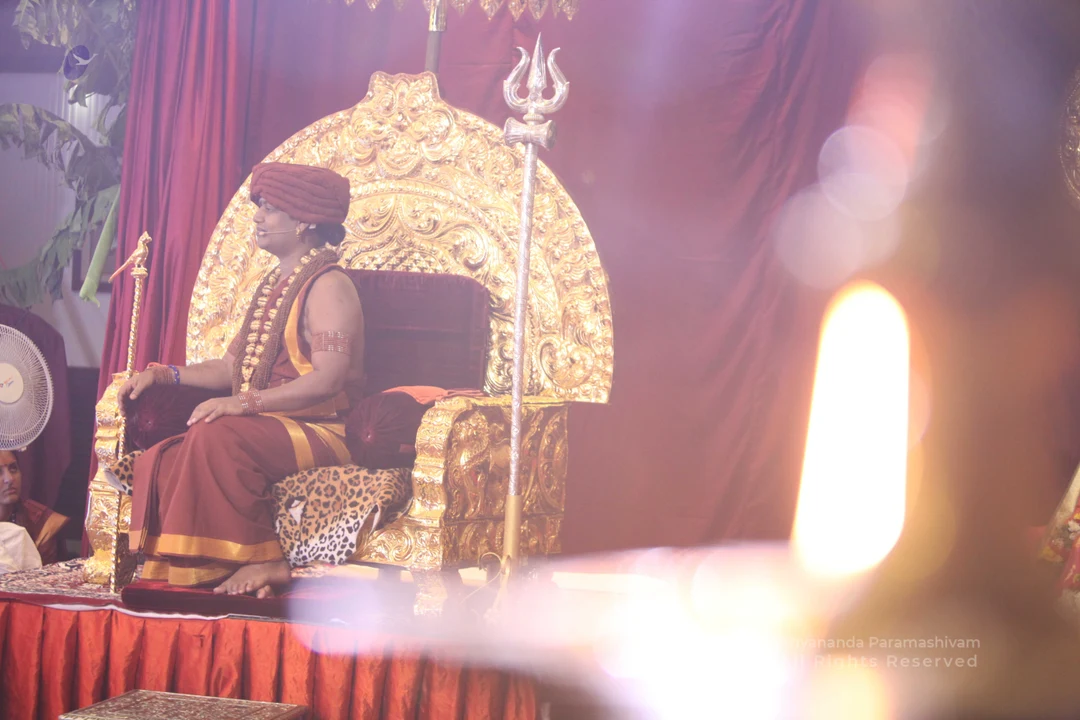
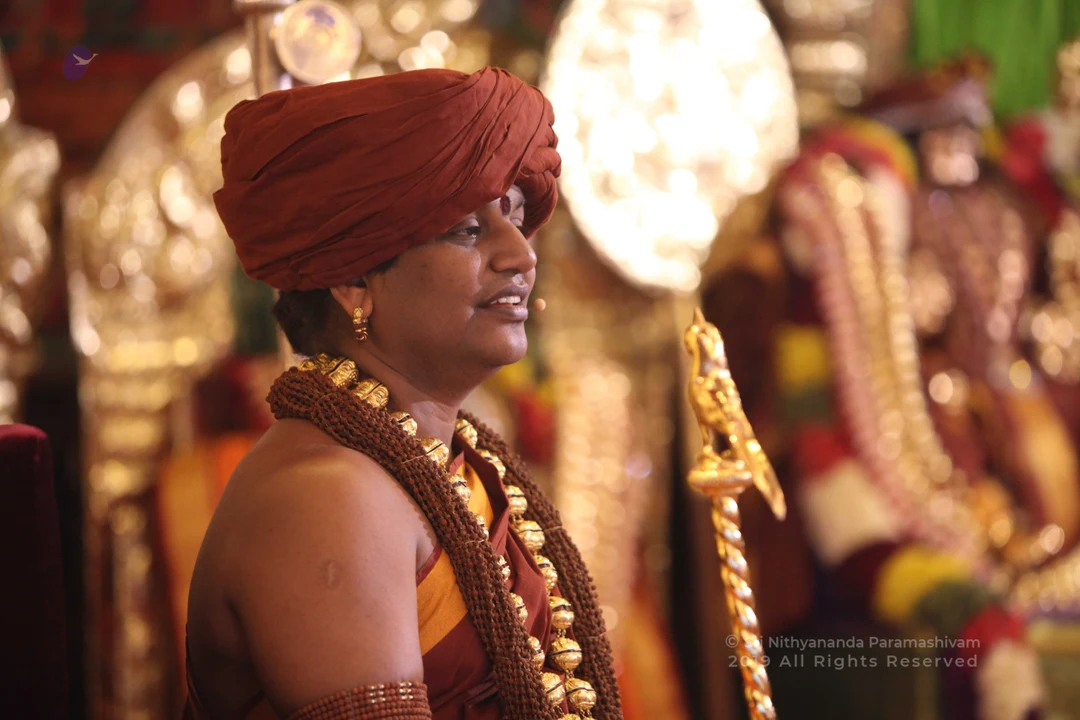
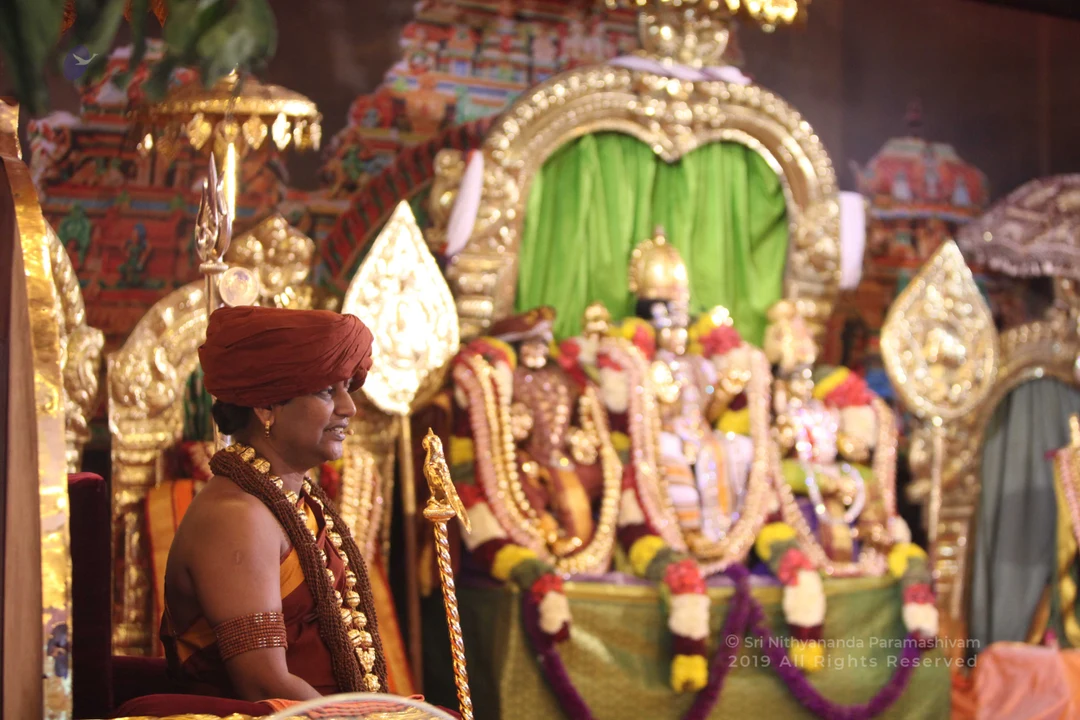
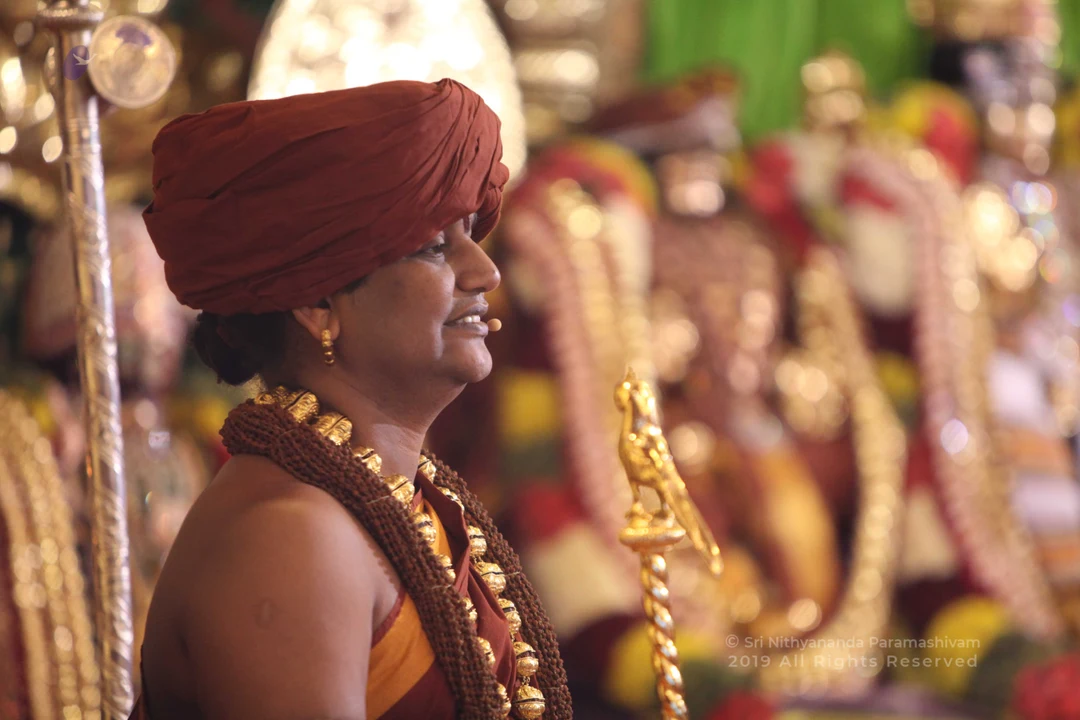
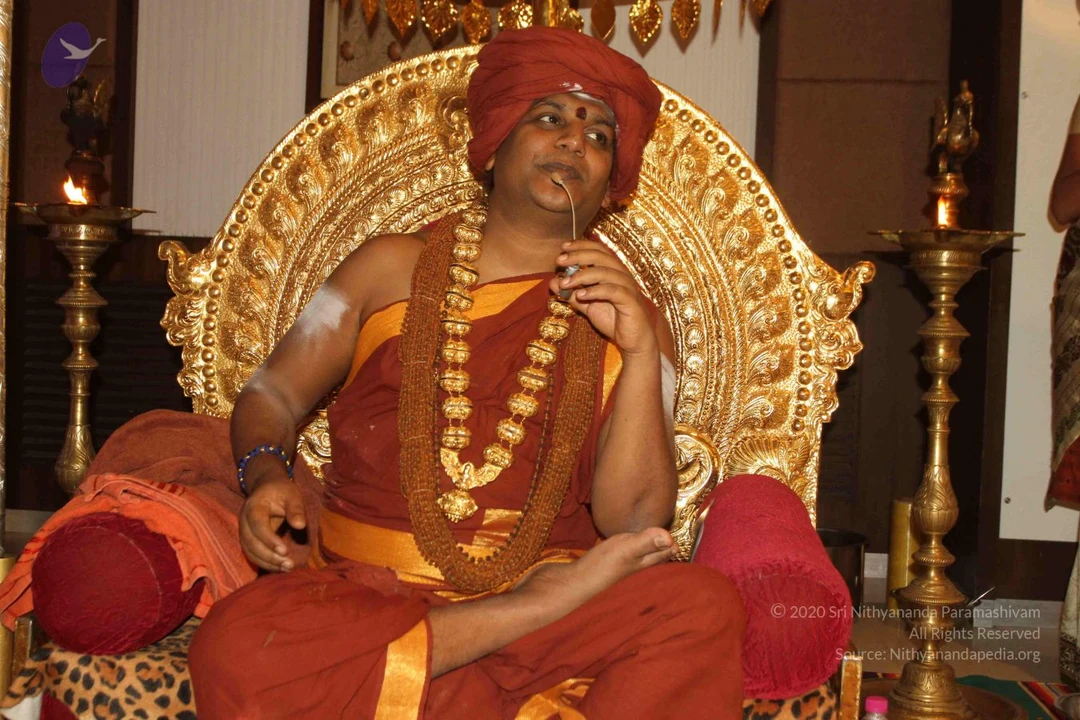
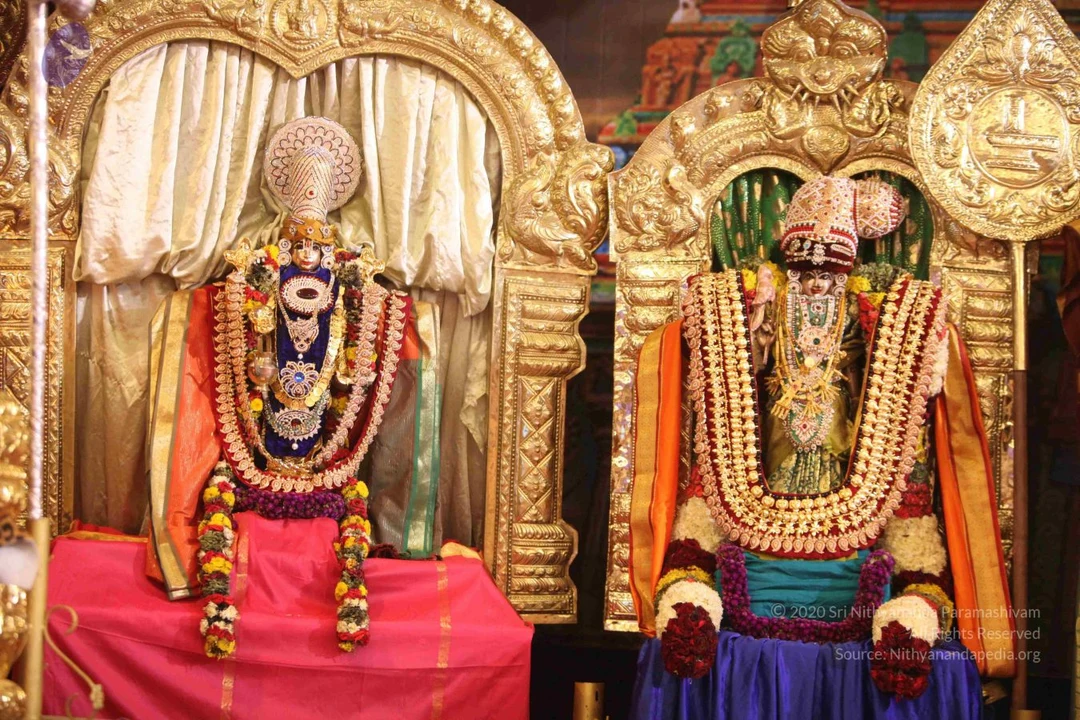
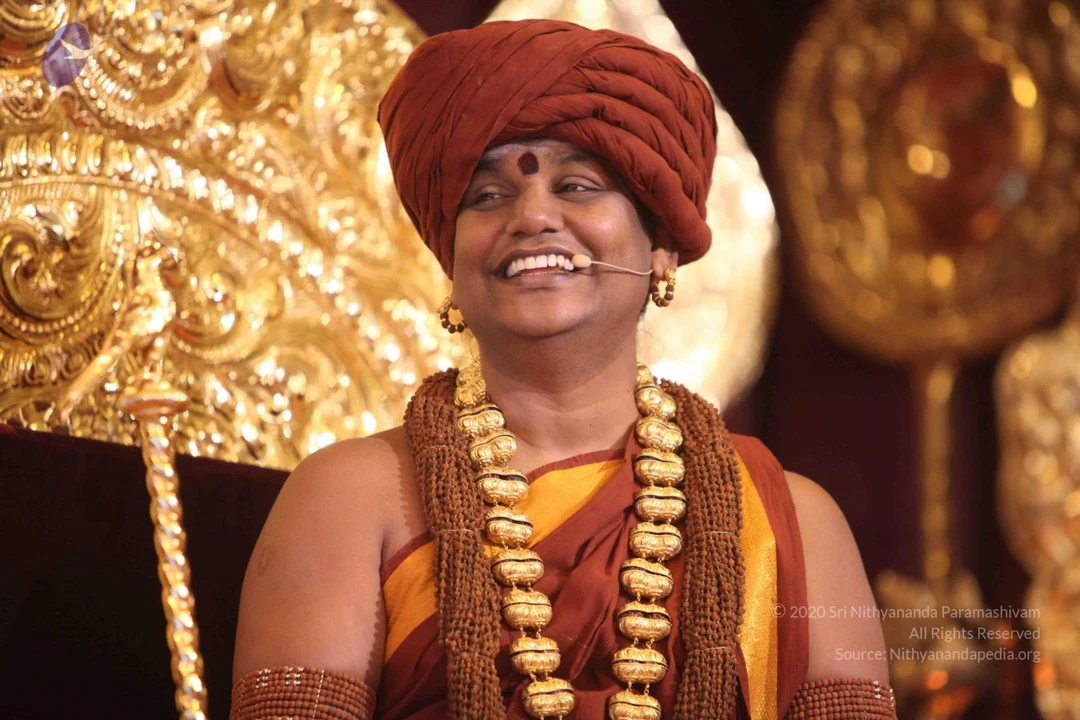
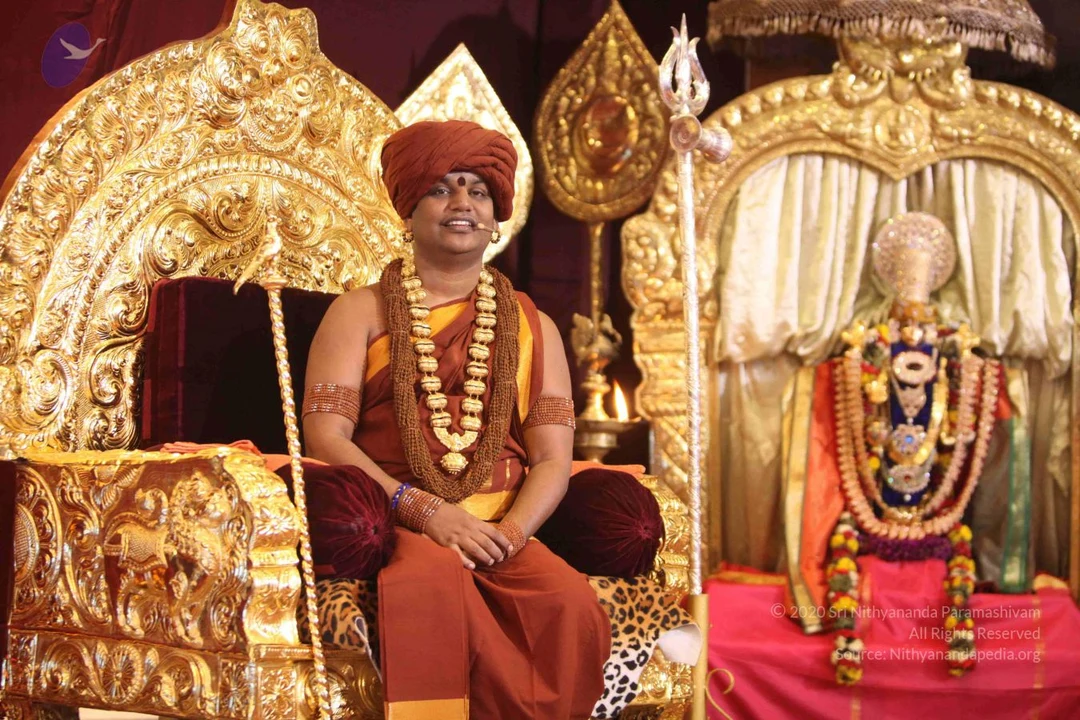
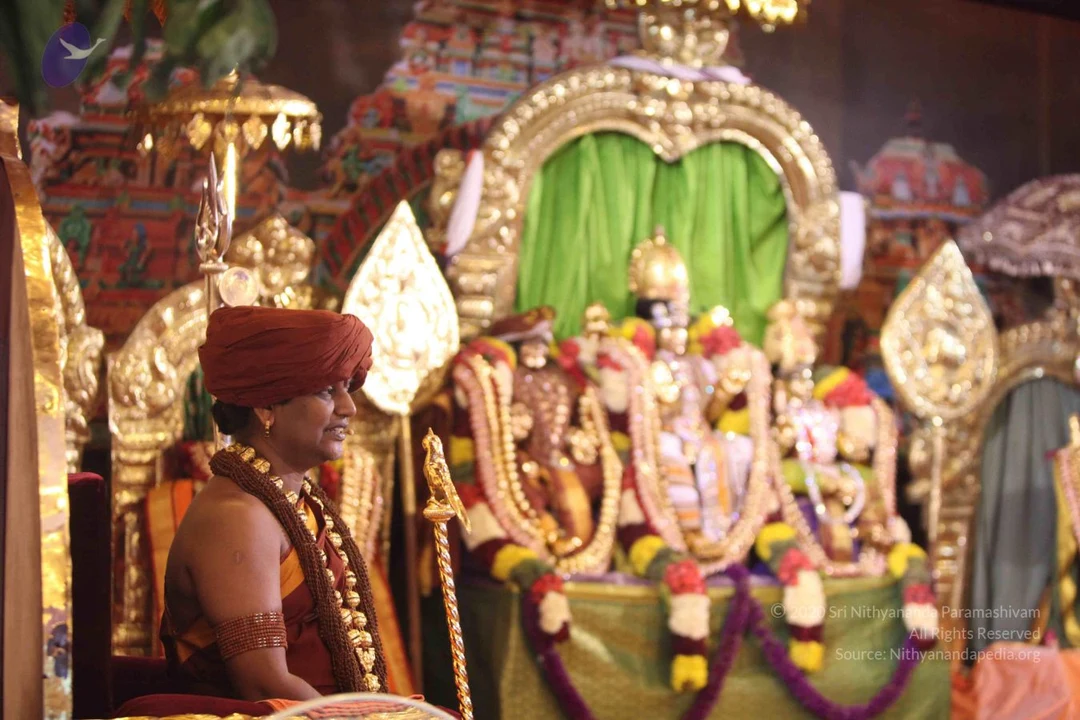
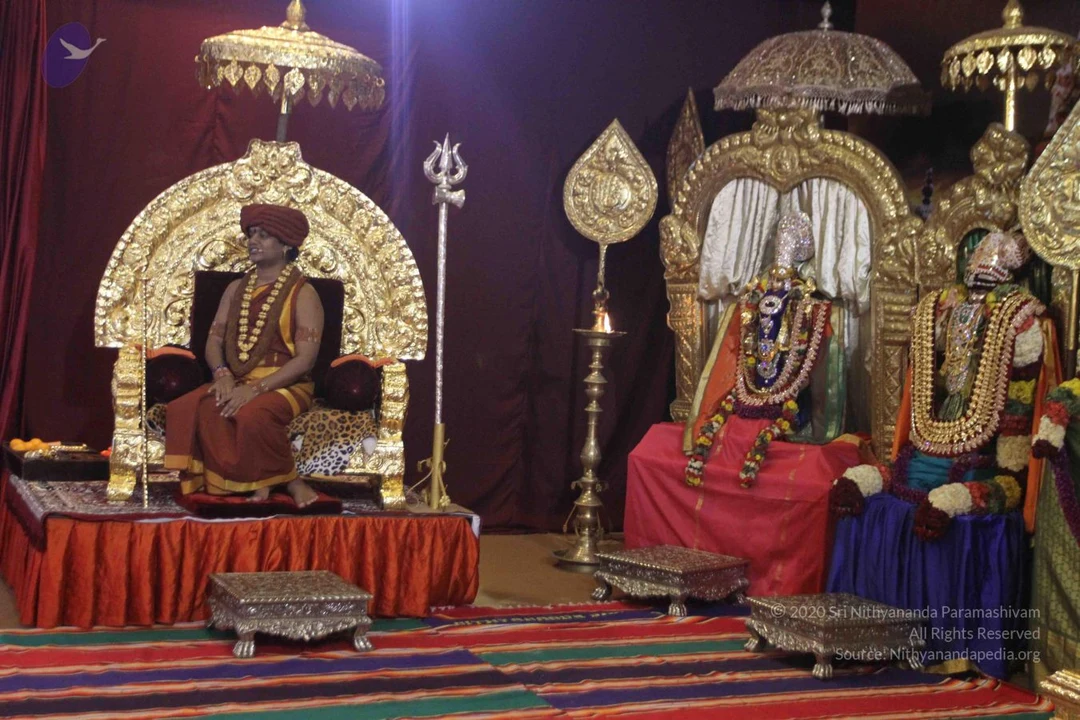
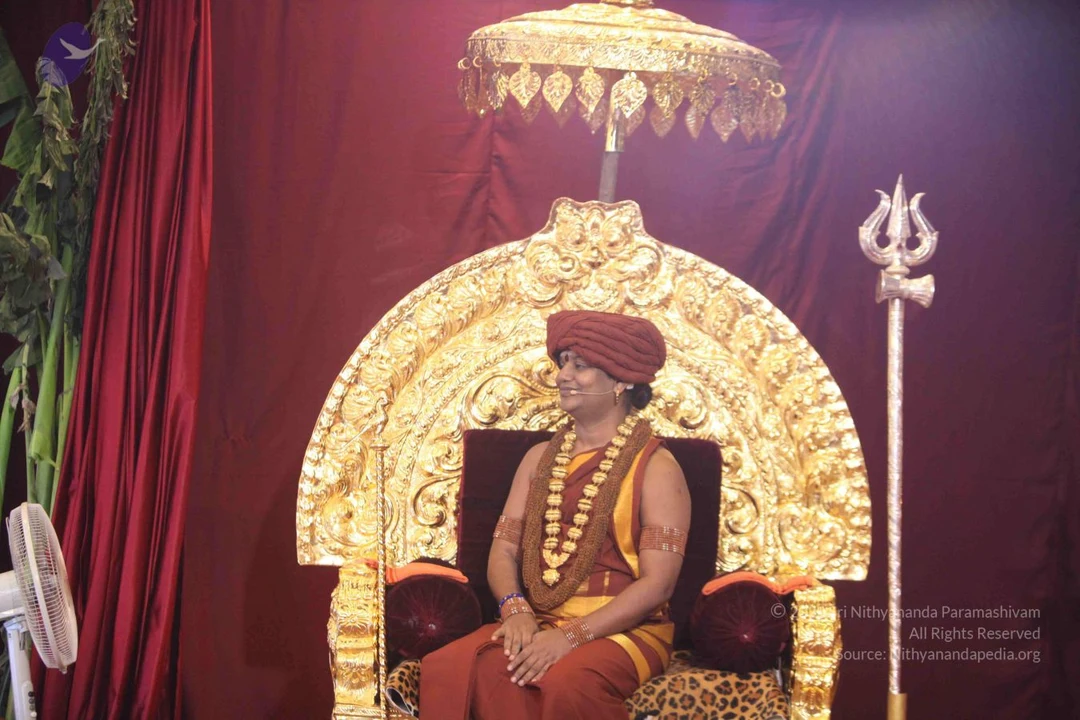
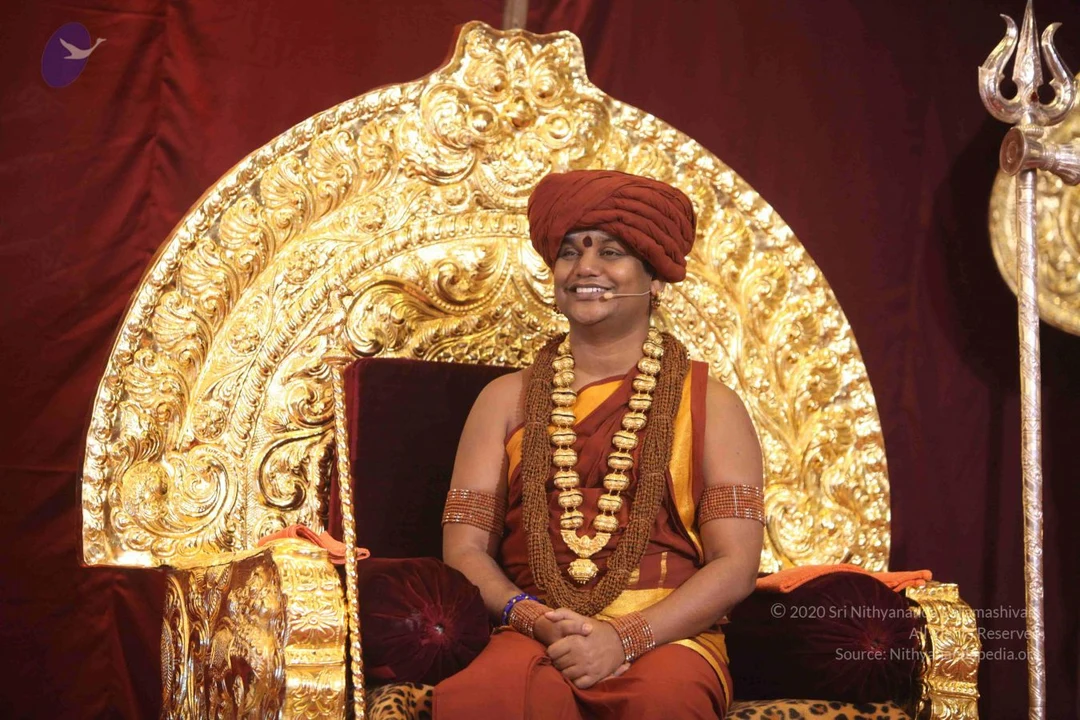
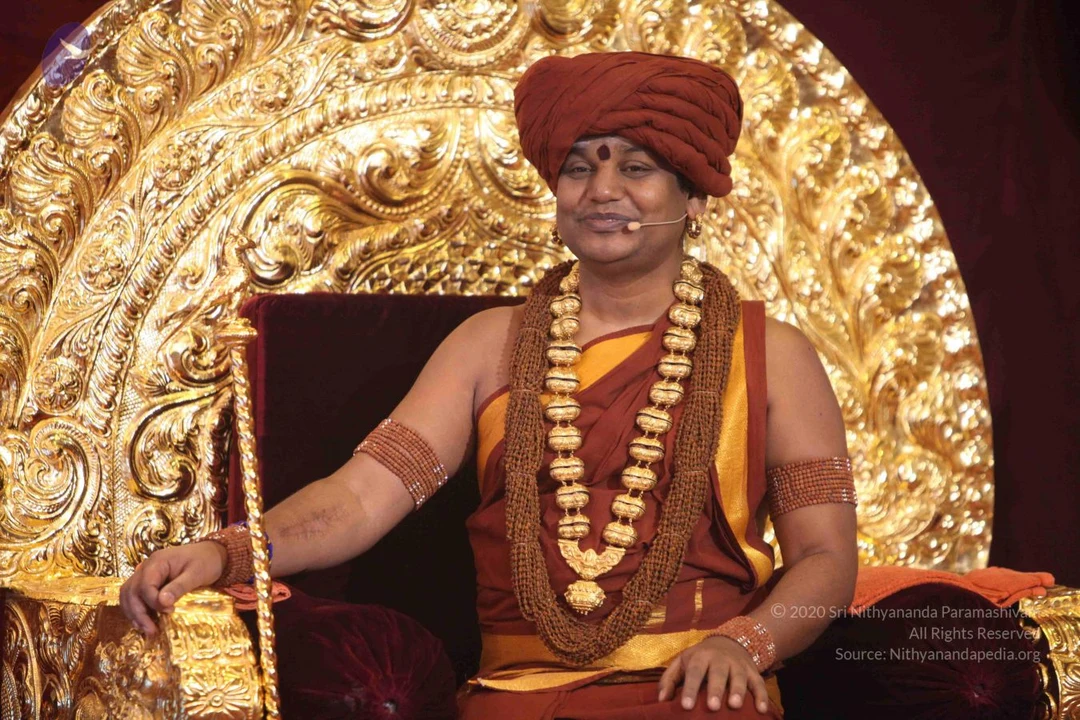
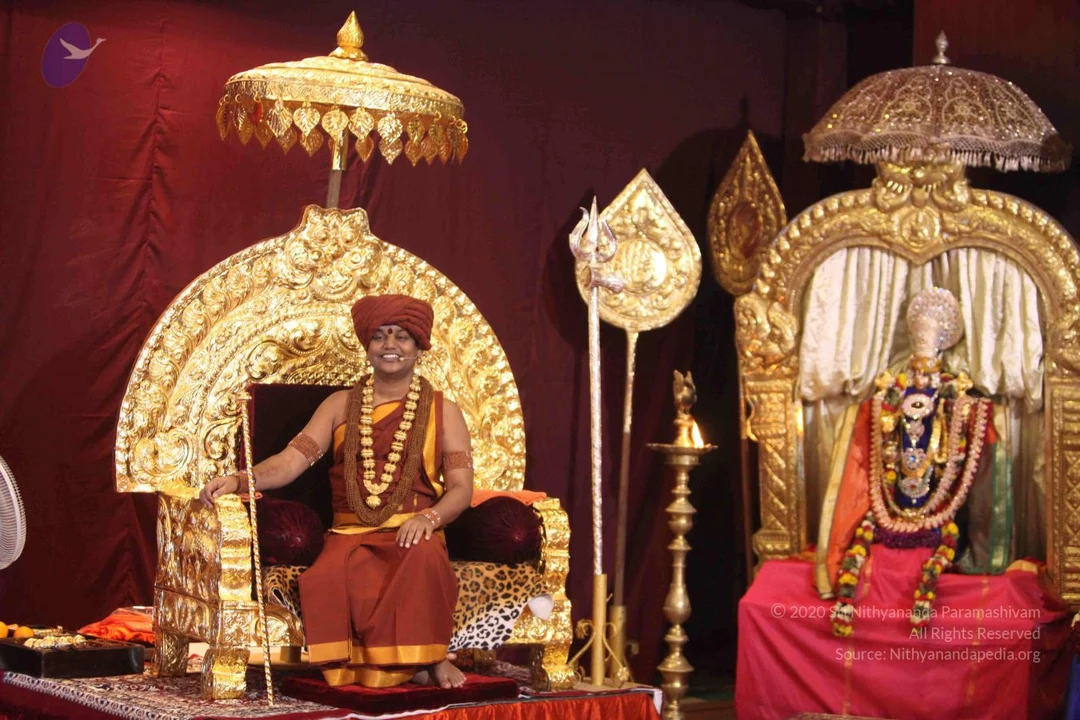
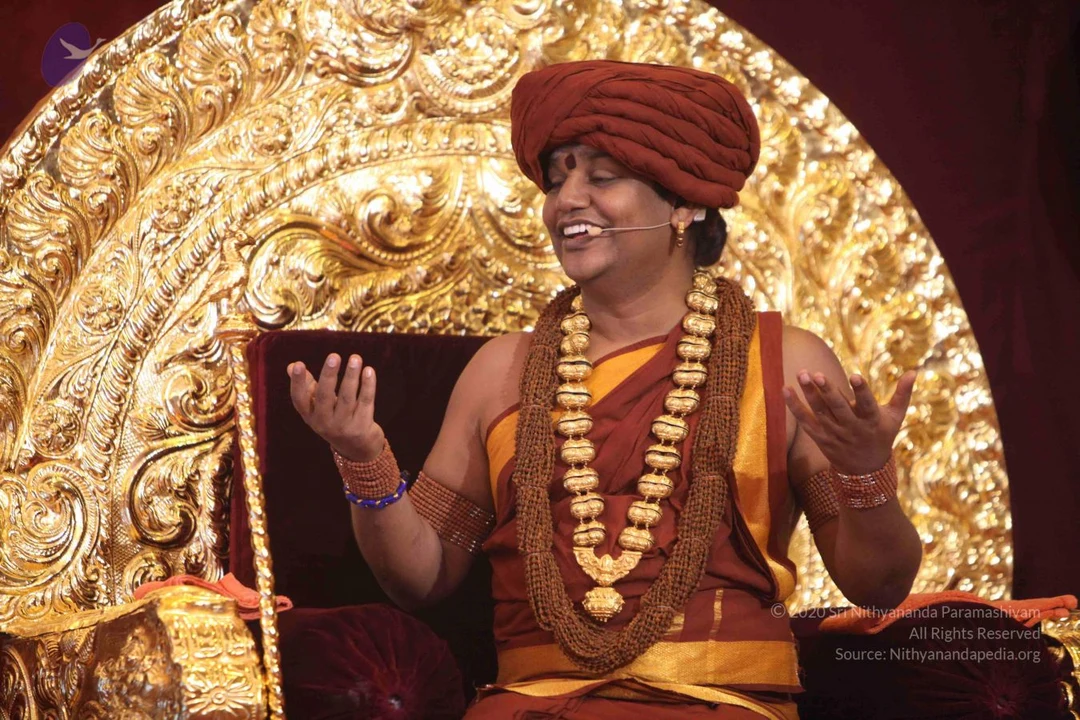
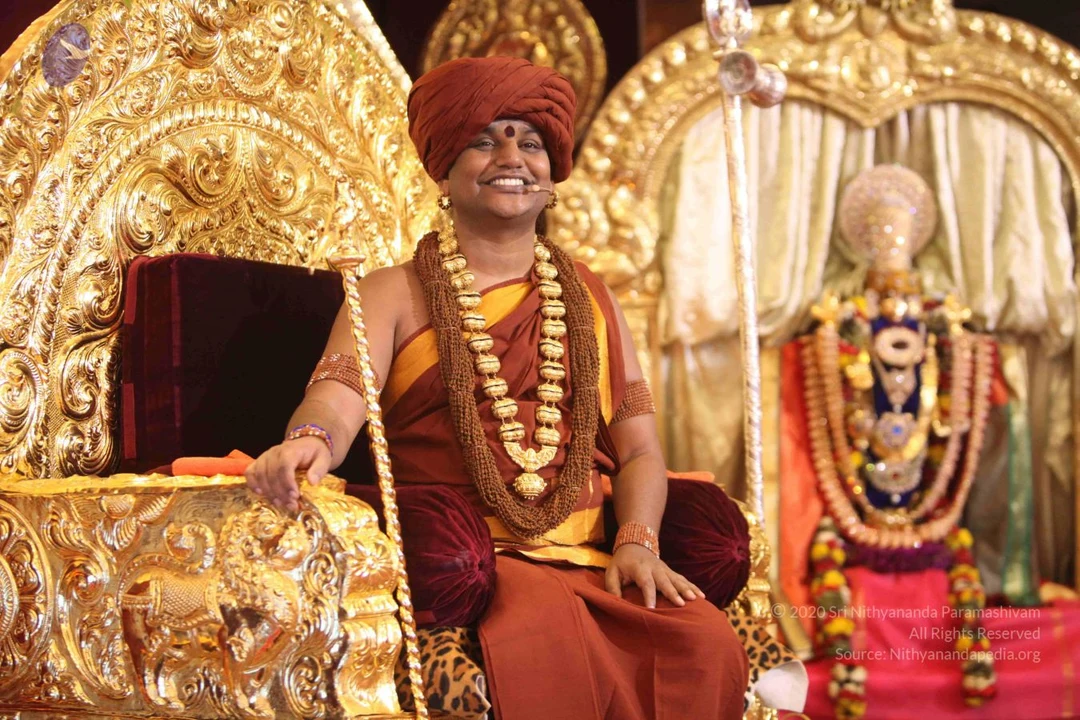
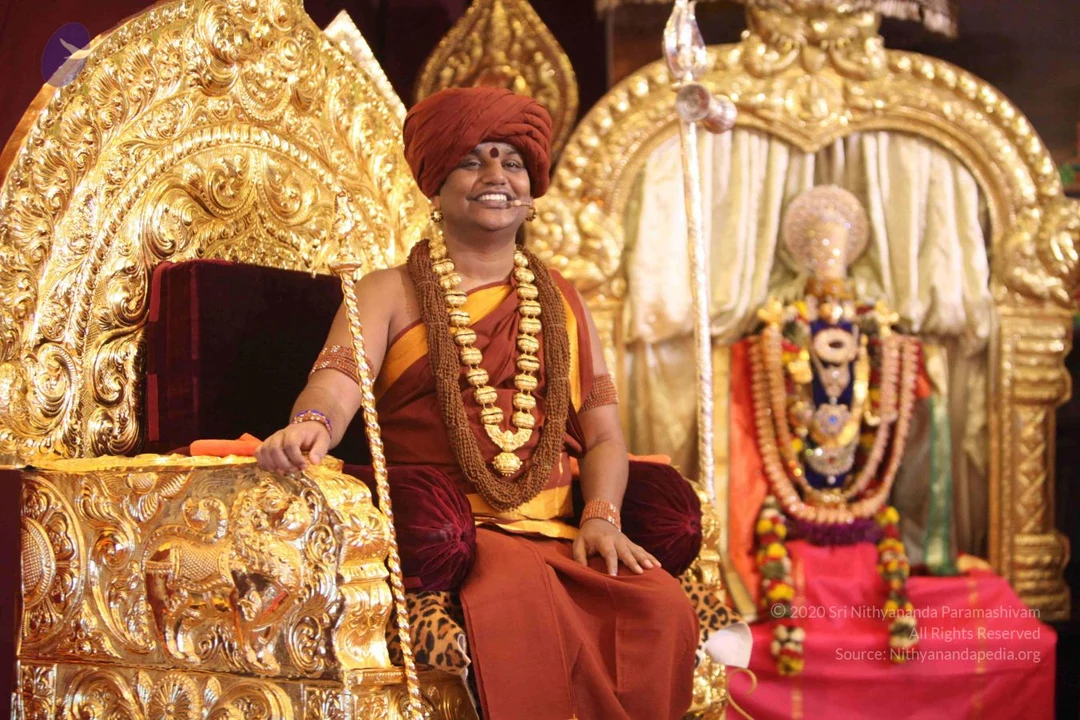
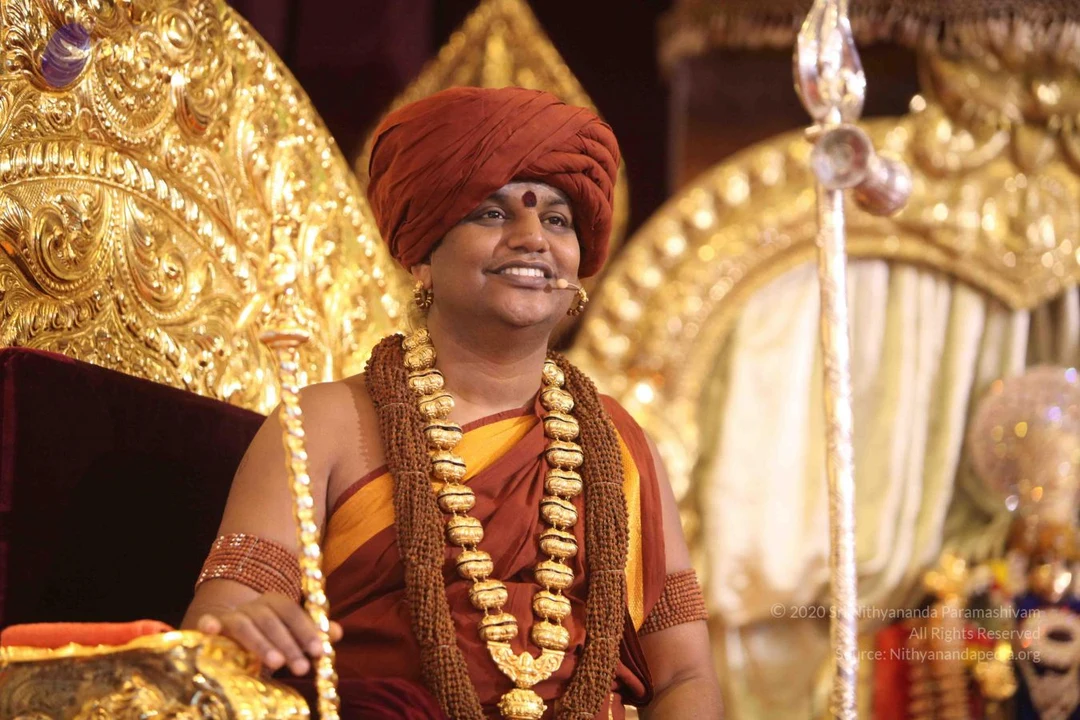
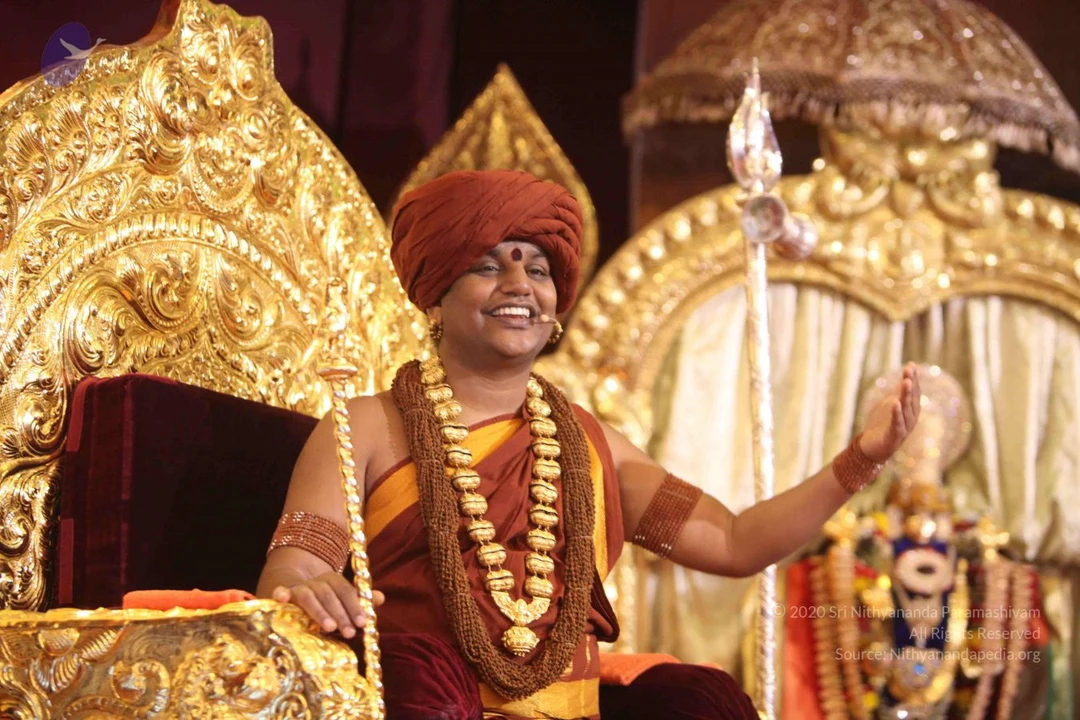
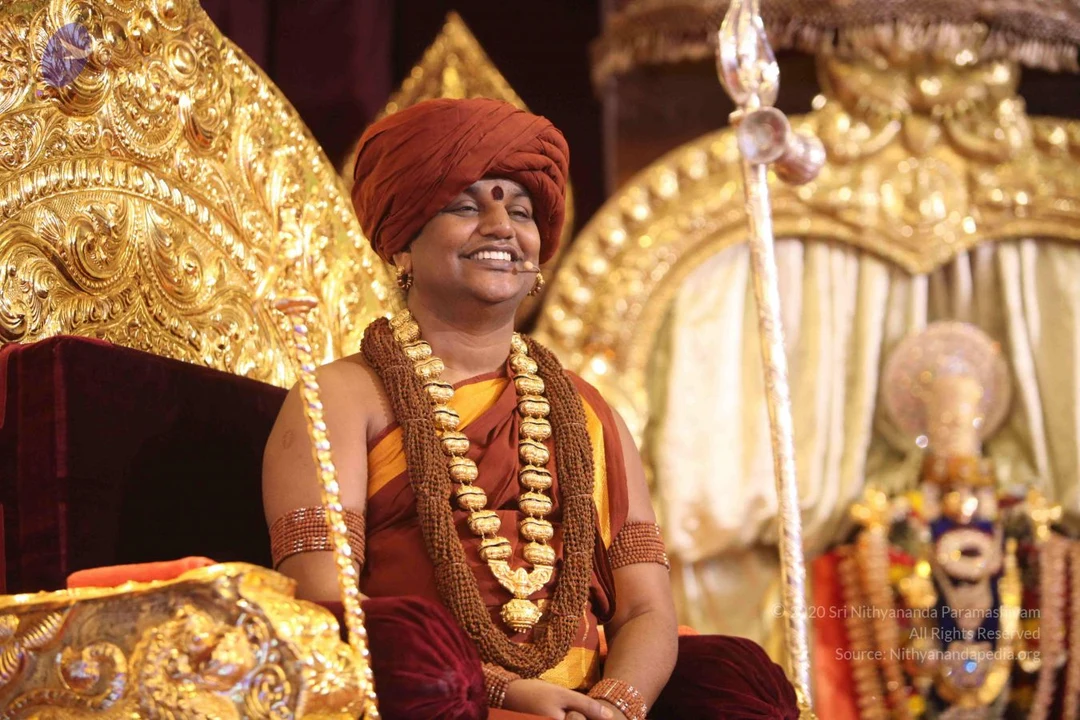
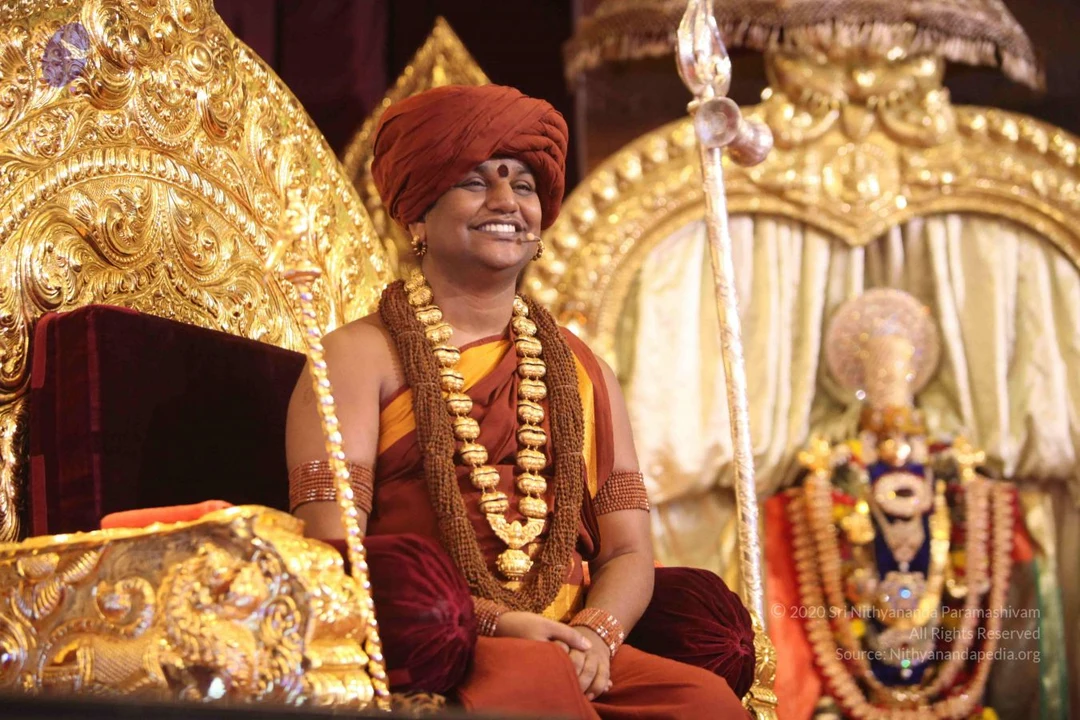
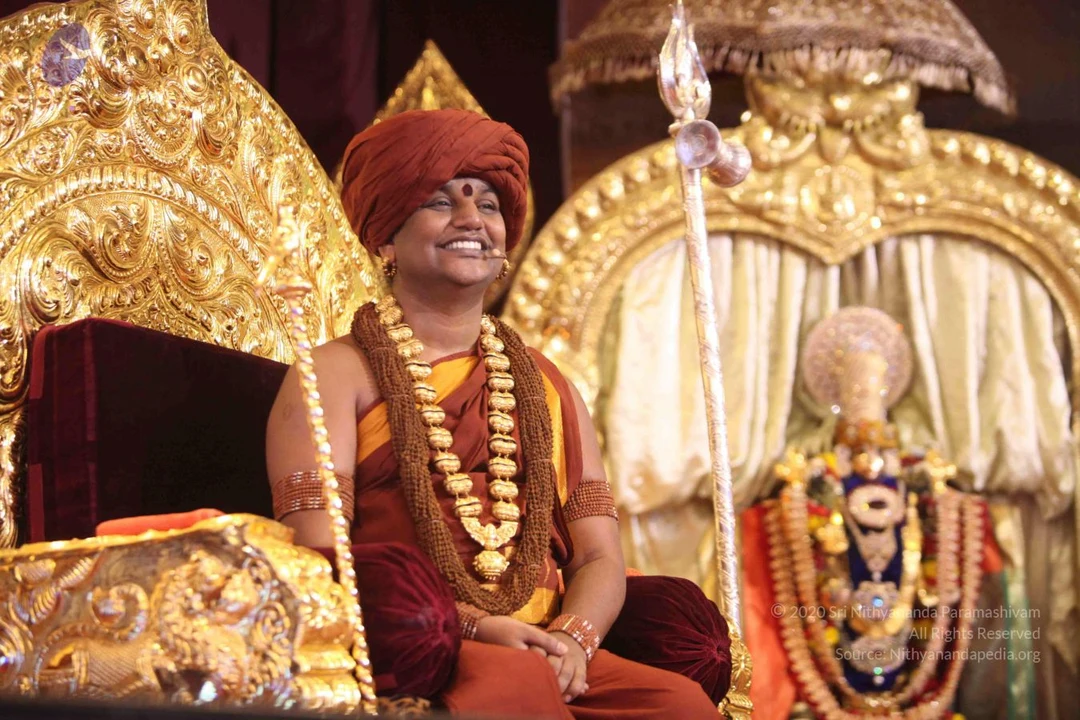
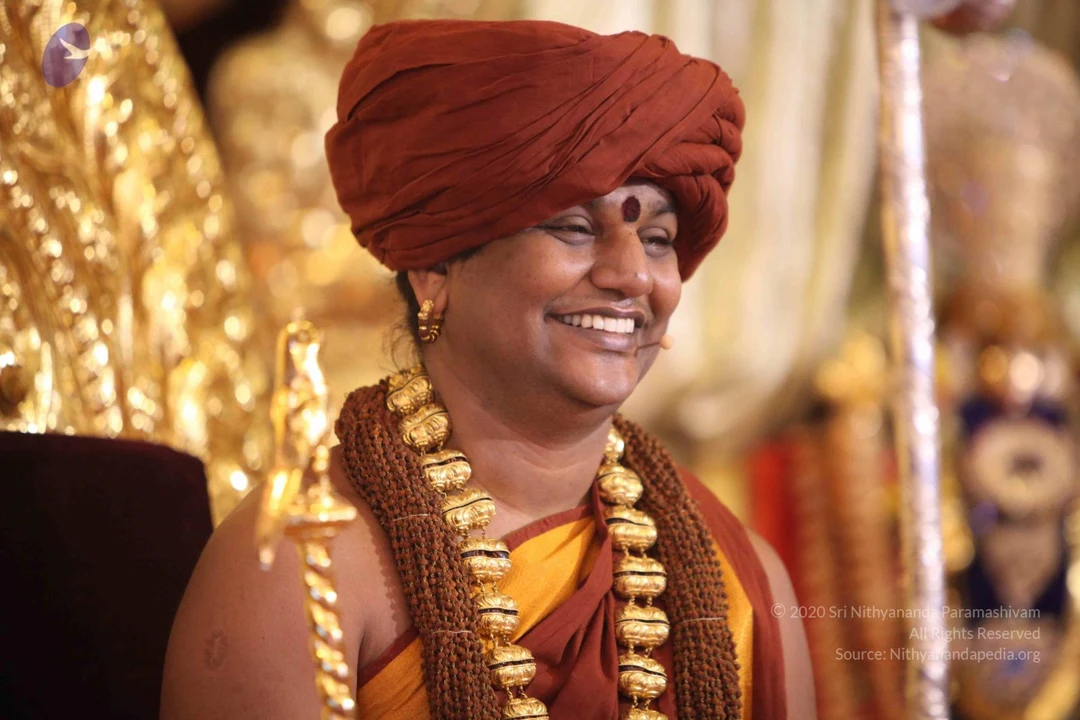
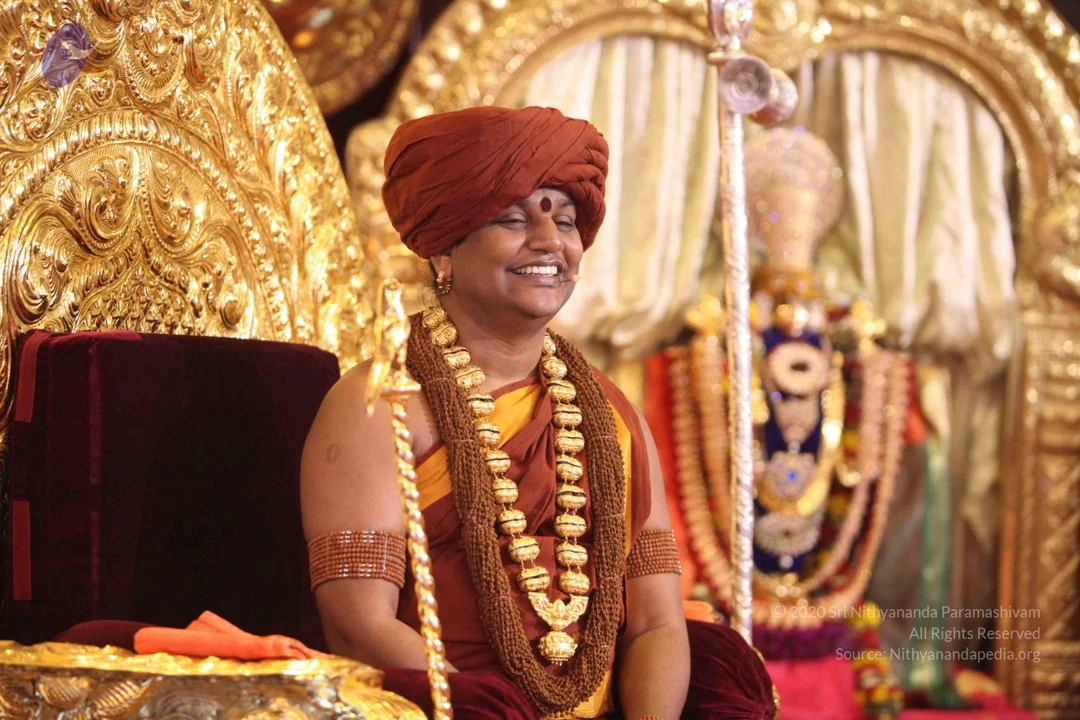
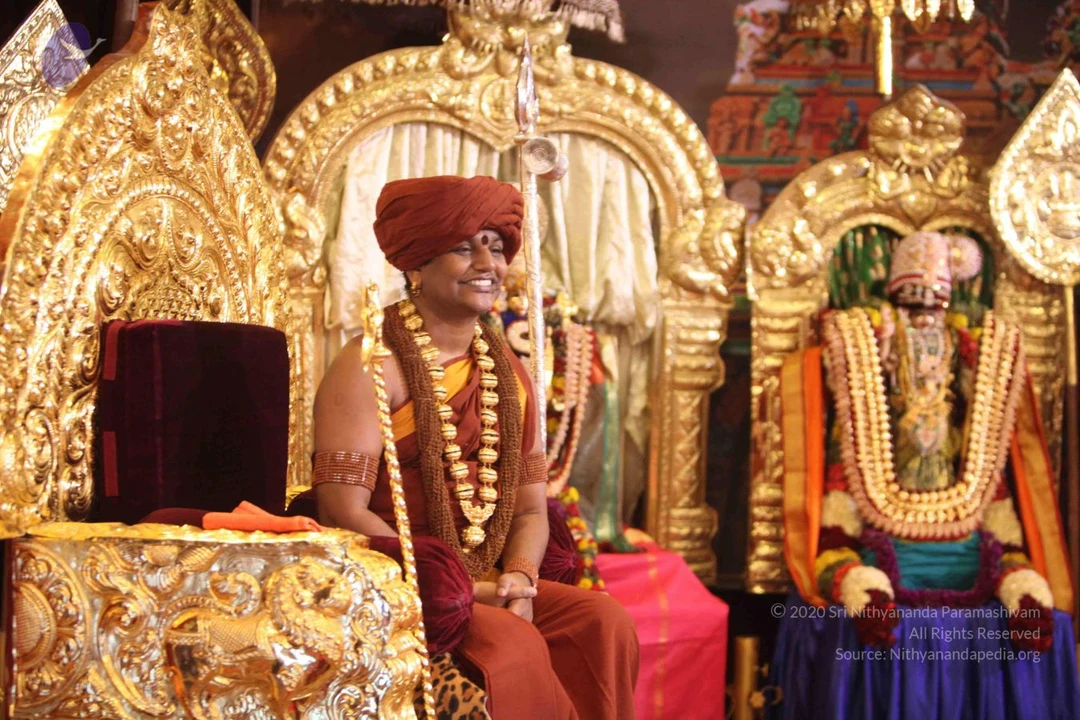
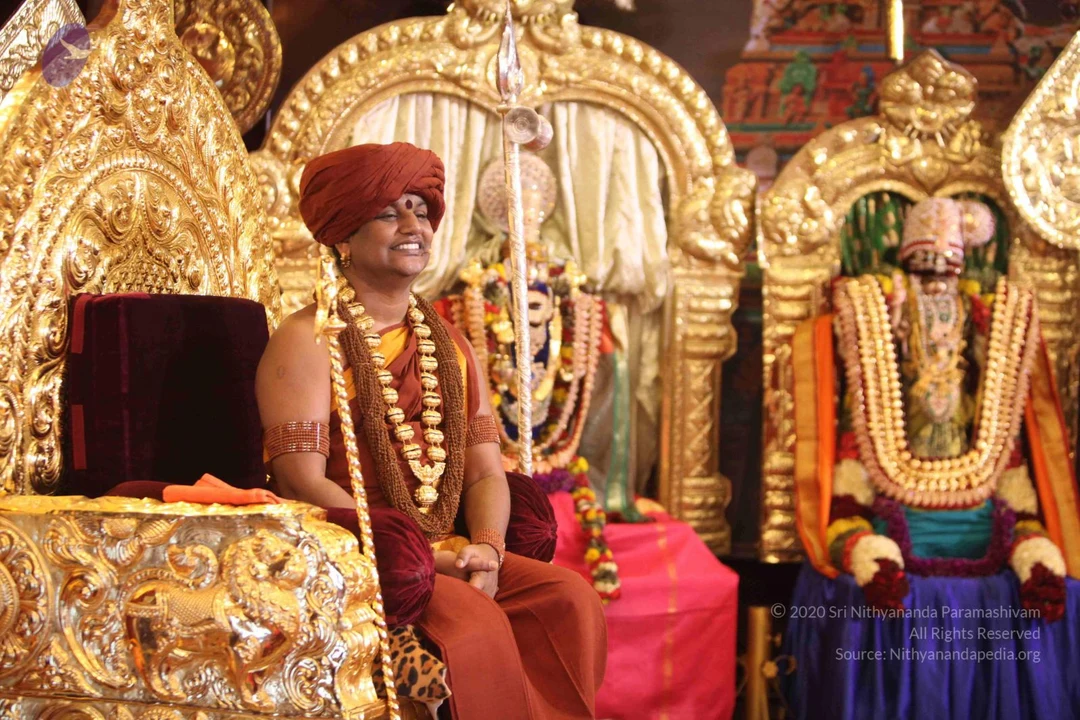
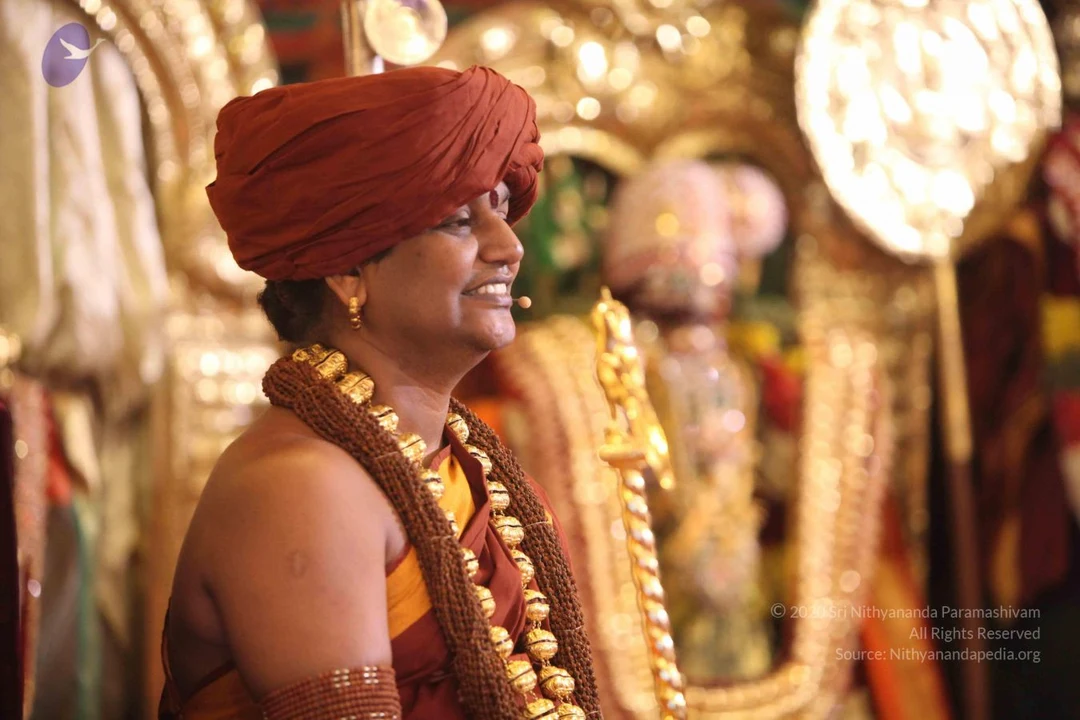
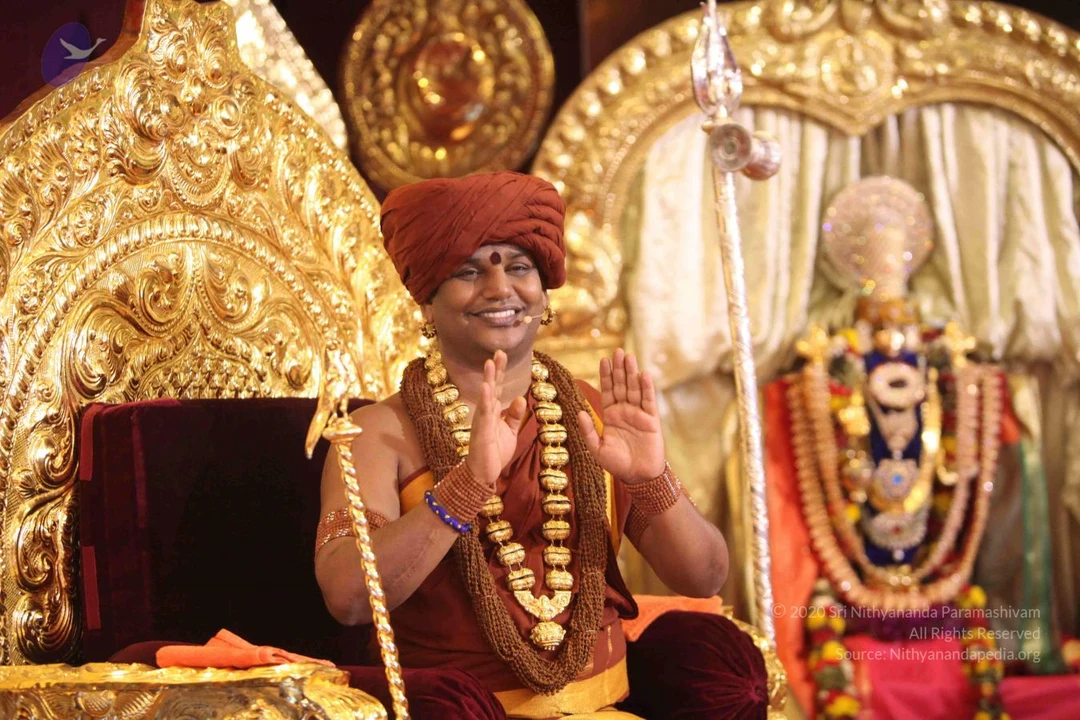
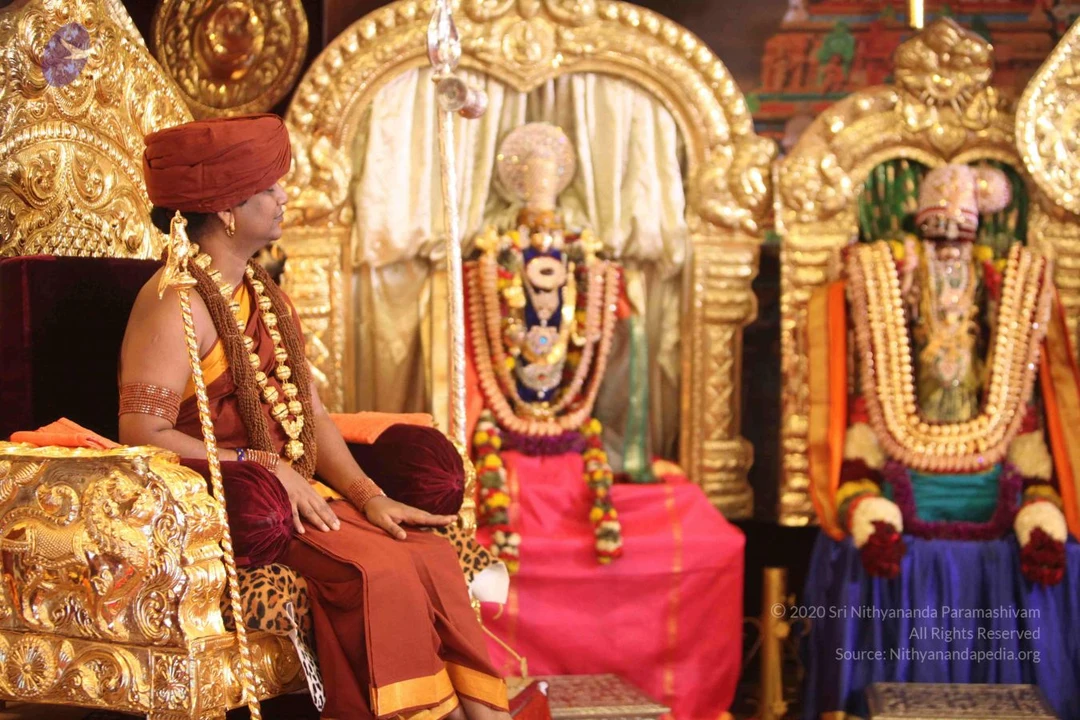
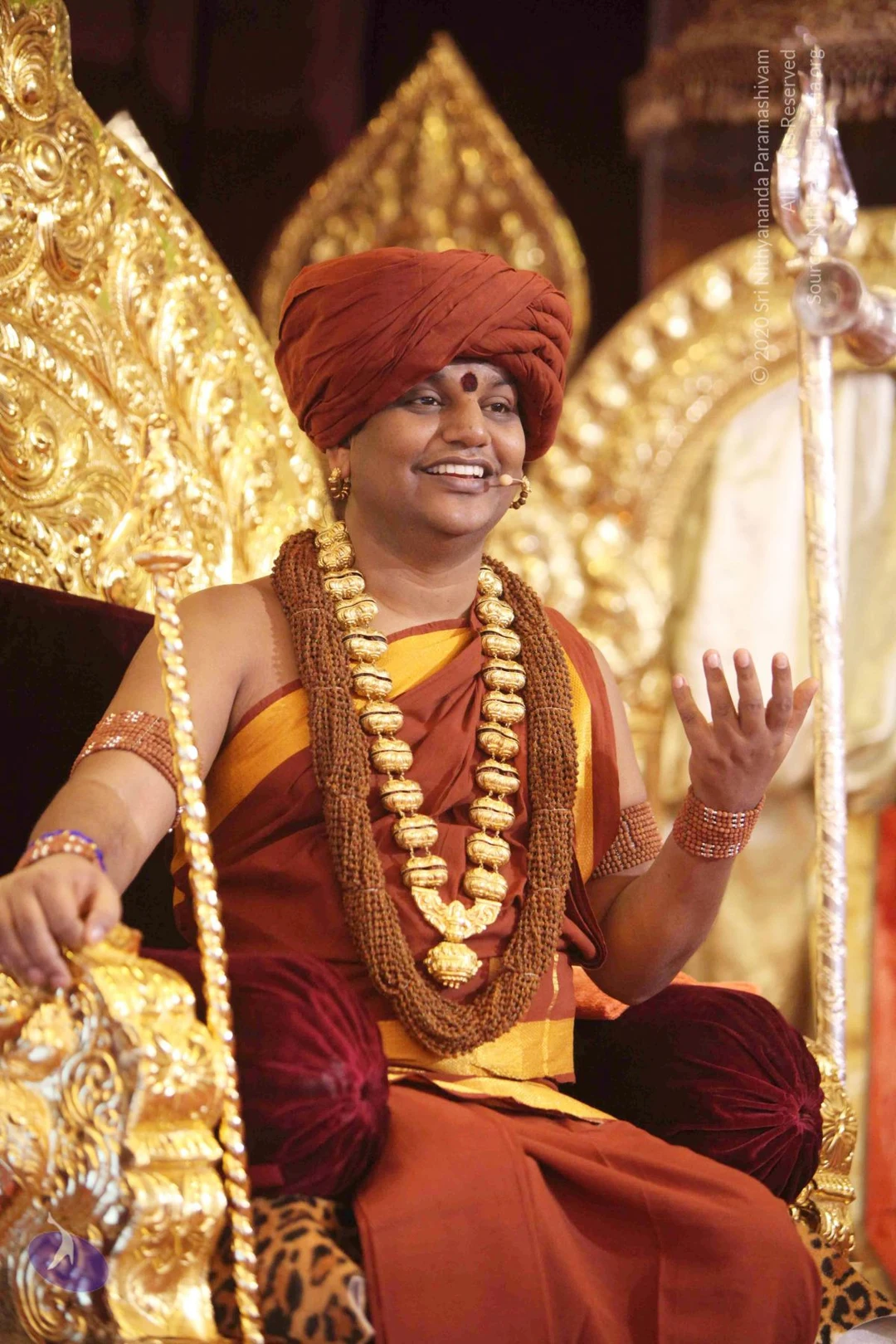
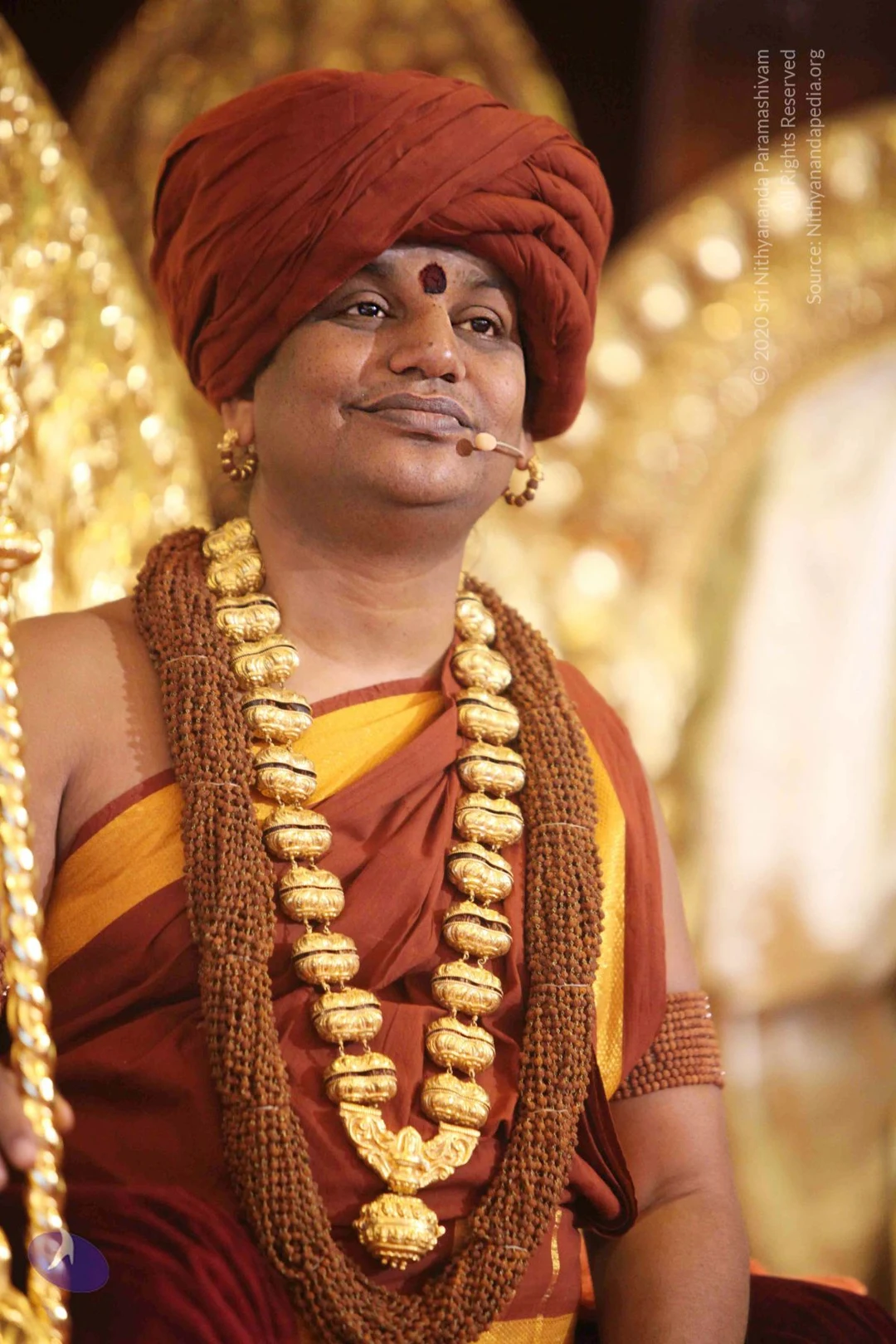
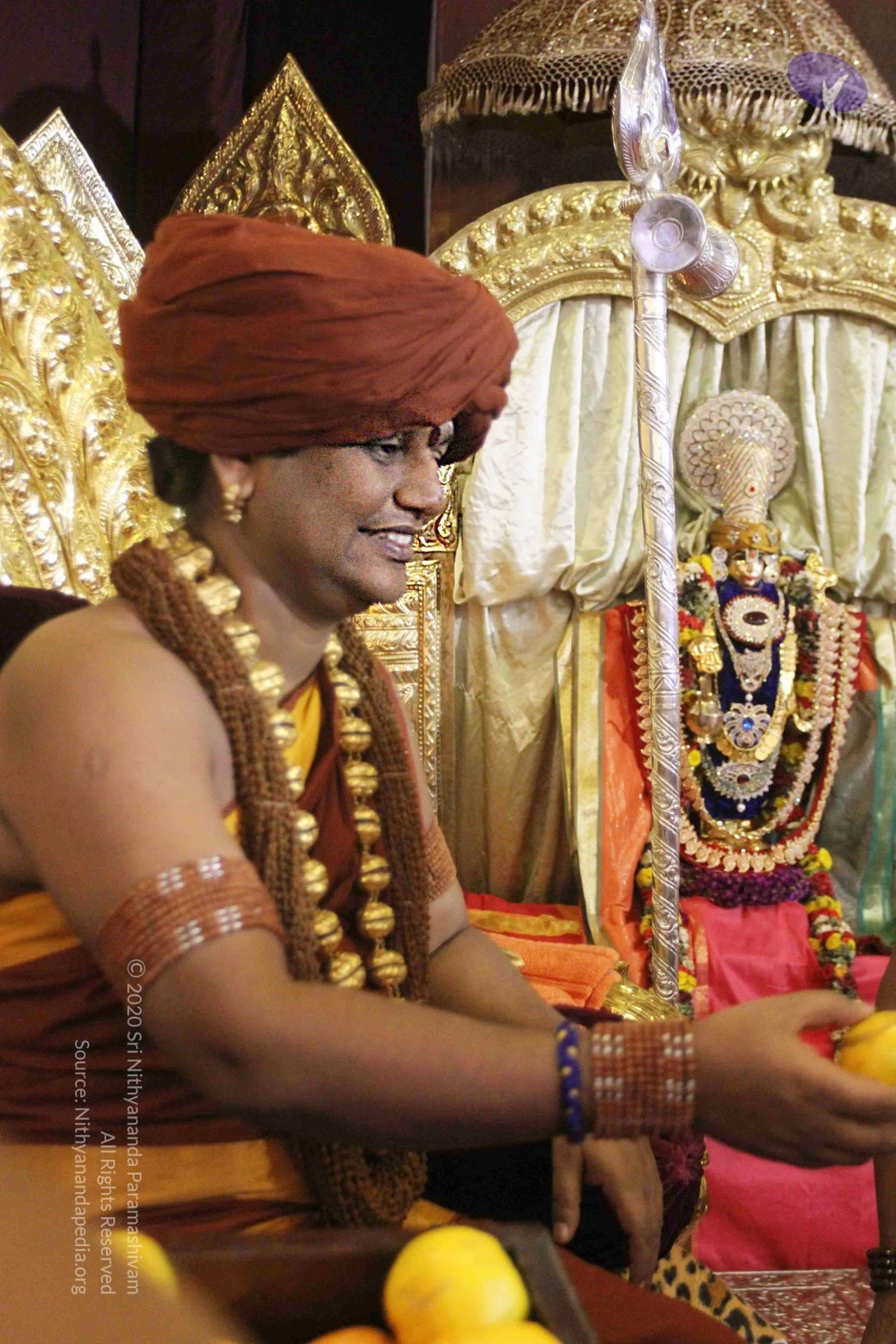
A seated man in an orange-red turban and saffron-orange robes sits smiling on an ornate gold throne with an arched canopy and leopard-print cushion on a red stage. He wears a rudraksha mala and a ceremonial gold-beaded necklace, with bangles on his arms. Beside him stands a gold trishul and a gold-and-red throne-style seat, and to the right a decorated deity murti with a gold canopy, white drapery, flower garlands and a brass oil lamp. The background is a deep red curtain. Appearance-based candidate: Swamiji (probable), seated in the throne with the ceremonial cues of turban, saffron robes and gold beaded necklace.Two deity murtis stand in gilded shrine niches framed by ornate gold carved arches. The left murti is blue-bodied with a feathered crown, a white and gold garland, and a silver-gold necklace, draped in orange and green silk. The right murti wears a tall pink and red crown, a long gold and red floral garland, gold jewellery, and orange and blue silks. Both stand on draped pink and blue cloth with flower garlands at their feet. No people are visible.A smiling man in a rust-orange turban with a red bindi sits before an ornate gold throne-like backdrop with carved gold filigree. He wears a lapel microphone, gold drop earrings, a long rudraksha mala with large gold beads, an orange and gold garment, and beaded brown armbands. Swamiji (probable): the man has the distinctive orange turban, ceremonial gold necklace and rudraksha mala cues, seated as a teacher during a satsang discourse. Gold ornate decor fills the background.A seated man in a rust-orange turban and matching saffron-orange robe sits on an ornate gold throne with carved floral and lion-like motifs, a leopard-print cushion beneath him and velvet bolsters at his sides. He wears a heavy gold necklace, gold bangles and a headset microphone, and his hands rest in his lap. To the right stands a decorated deity murti dressed in a silver-gold cloth with garlands, a gold crown and a jewelled necklace, beside a tall silver trident and a brass oil lamp. Swamiji (probable): the seated man wears a turban, saffron robe and ornate gold necklace on a throne, matching the page's description of a satsang discourse.A photograph of a seated person in a rust-red turban and saffron-orange cloth, wearing a brown rudraksha mala and layered gold necklaces with a gold armlet on the upper arm. A tall silver staff with a crescent-topped finial rises at the left edge. Behind, ornate gold and green decorations surround garlanded deity murti adorned with marigold and pink flower garlands. The person's head is slightly turned and they appear to be listening, with a small microphone visible near the chin.A photograph of a person in profile at a satsang setting, wearing a rust-red turban and a dark brown beaded mala with large gold beads and a gold-coloured pendant. The person wears an orange-saffron garment and a small microphone clip. A tall gold-handled ceremonial staff with a bird-shaped finial stands in the foreground, and blurred gold and red ornaments fill the background. One physical person is visible.

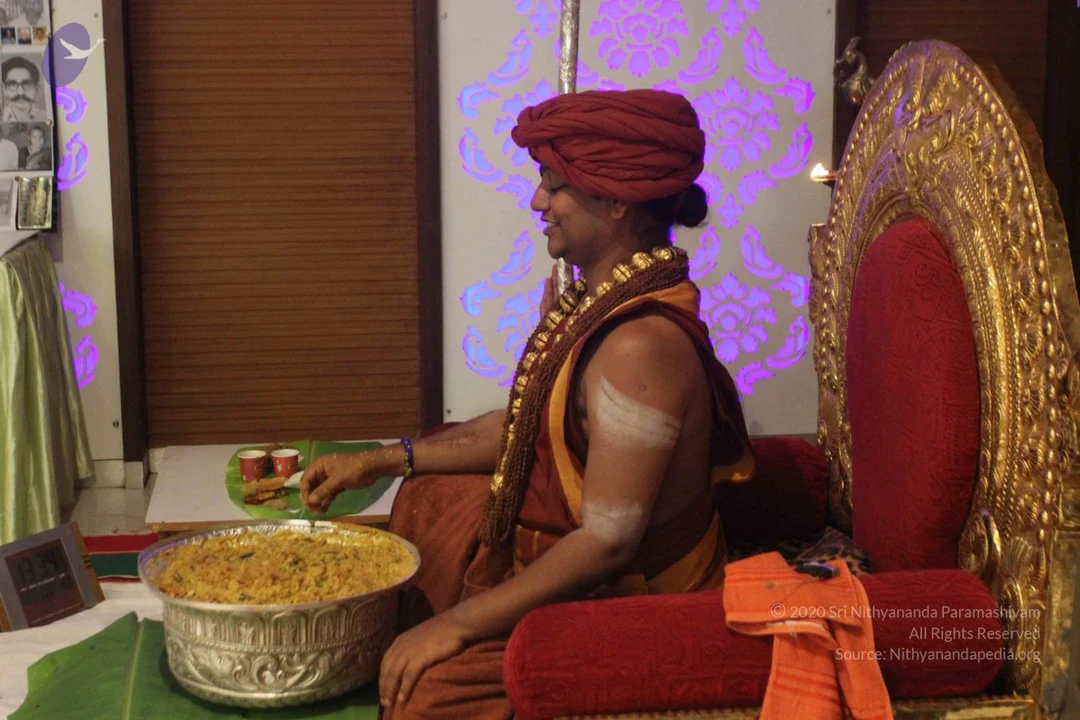
Maheshwara-Puja

108 photosSource gallery
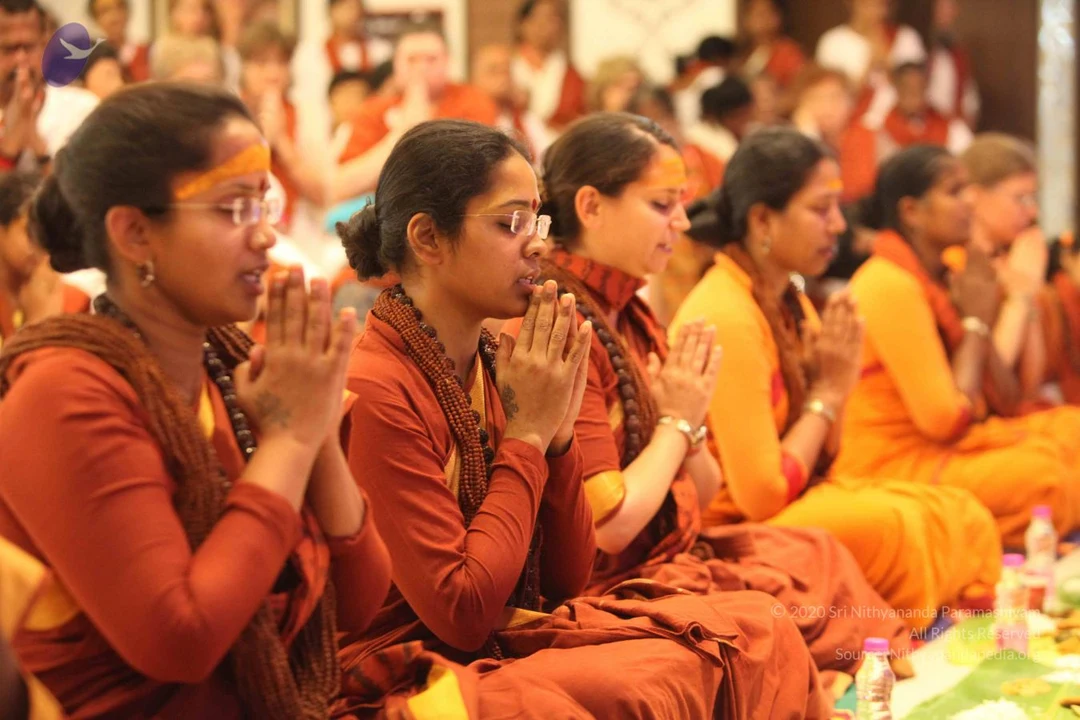
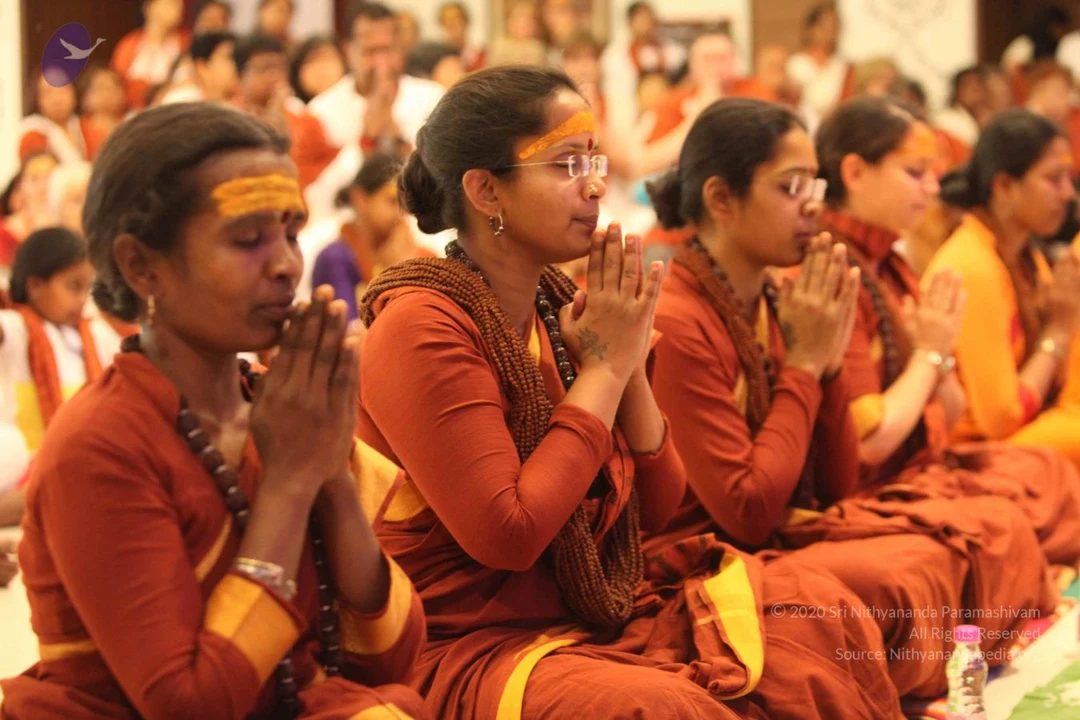
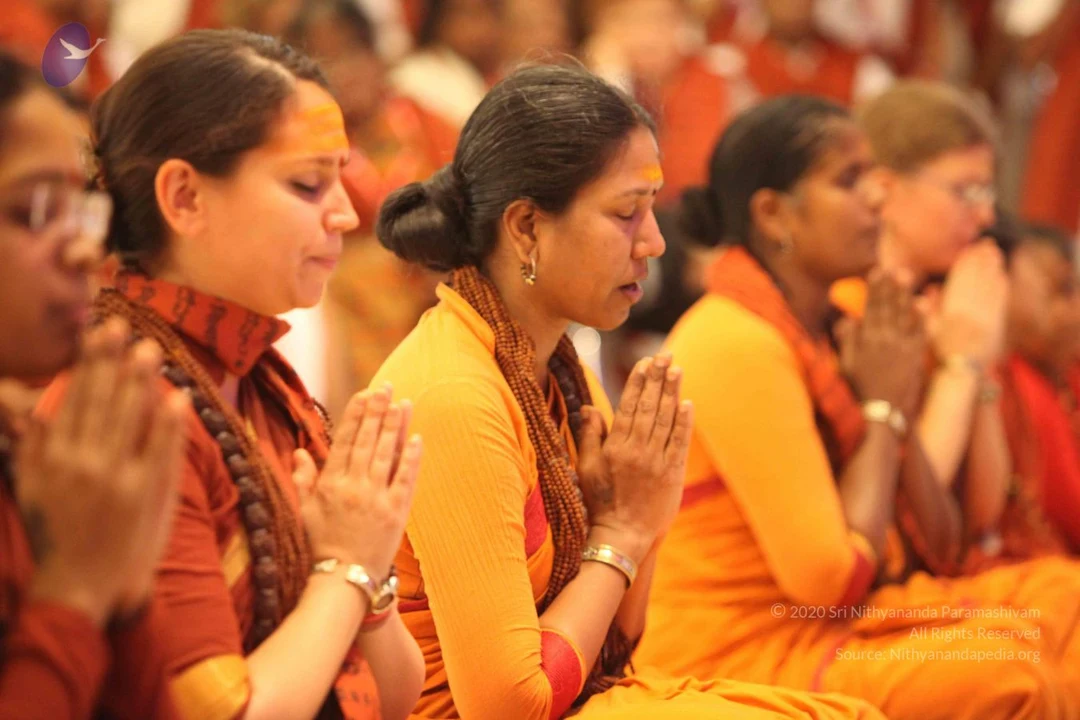
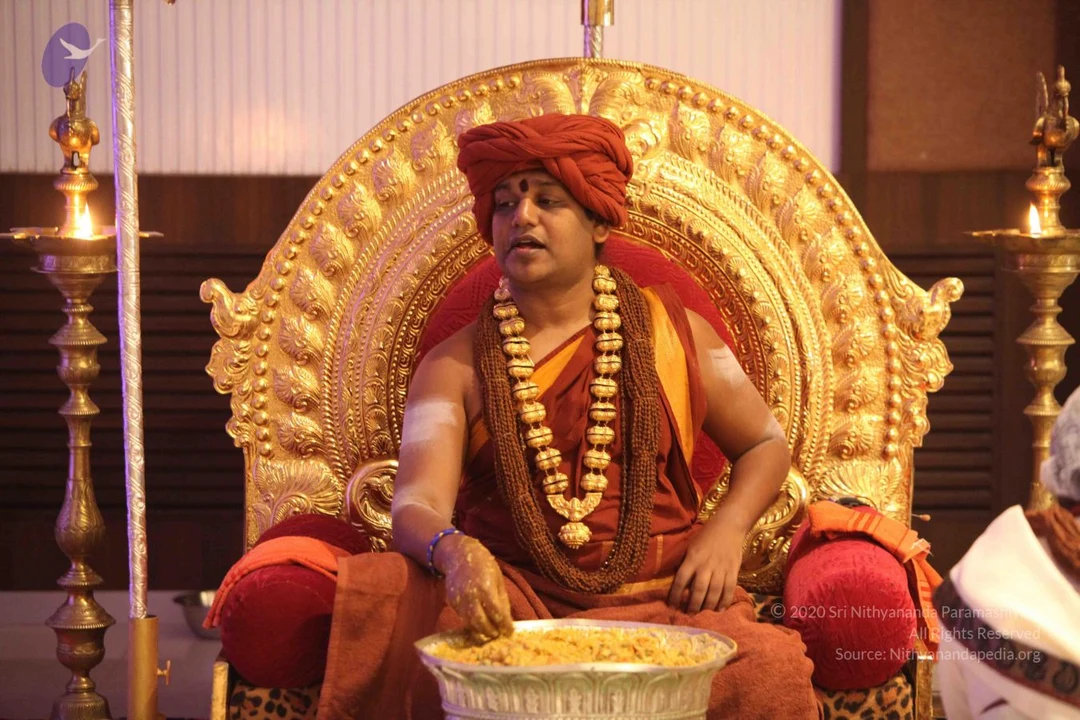
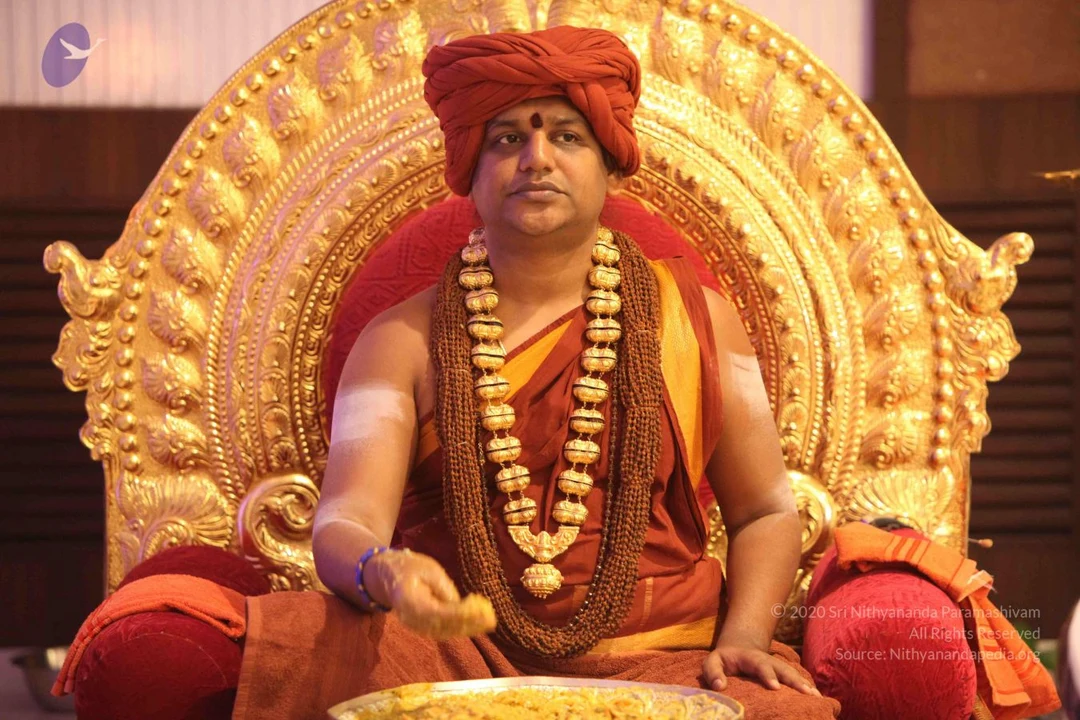
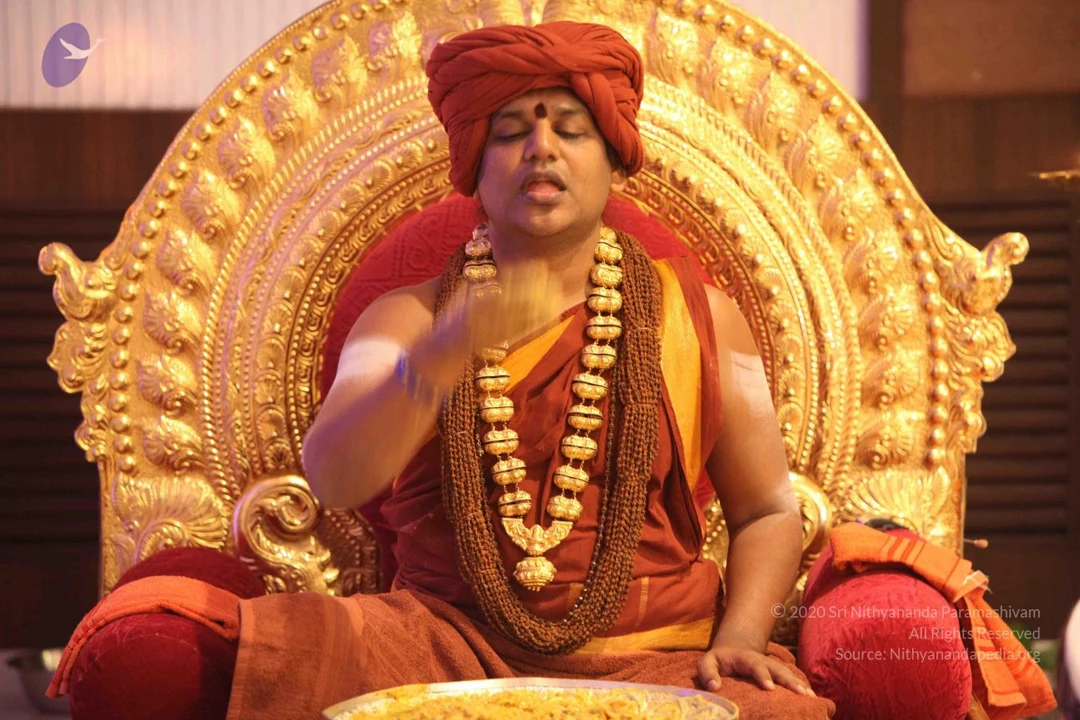
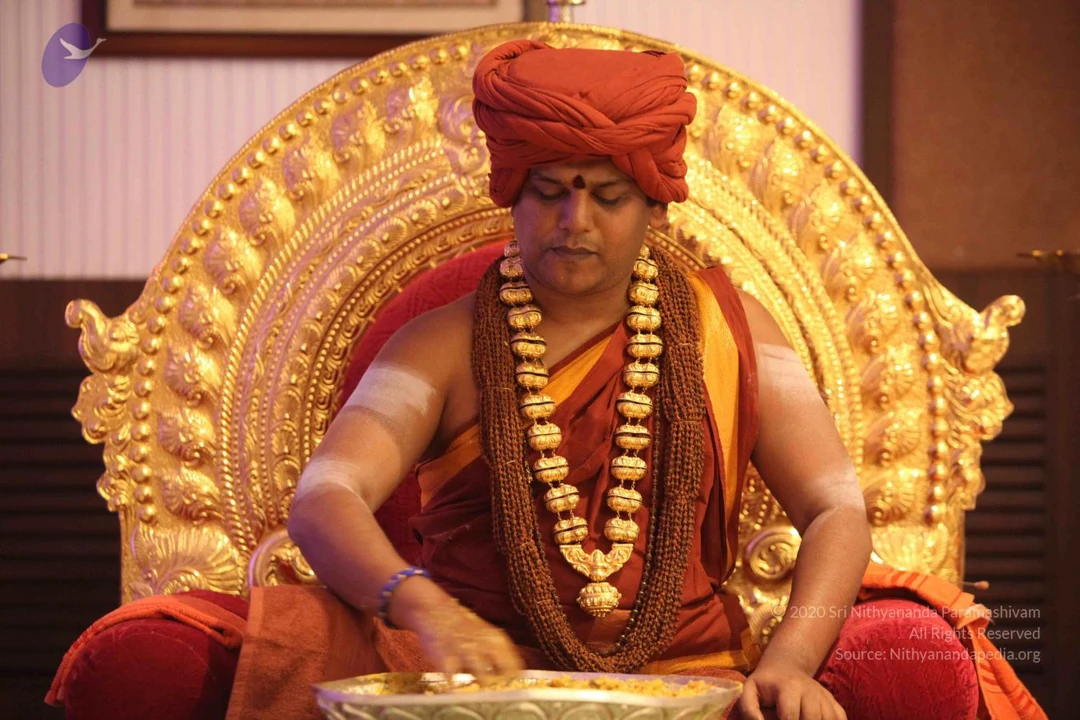
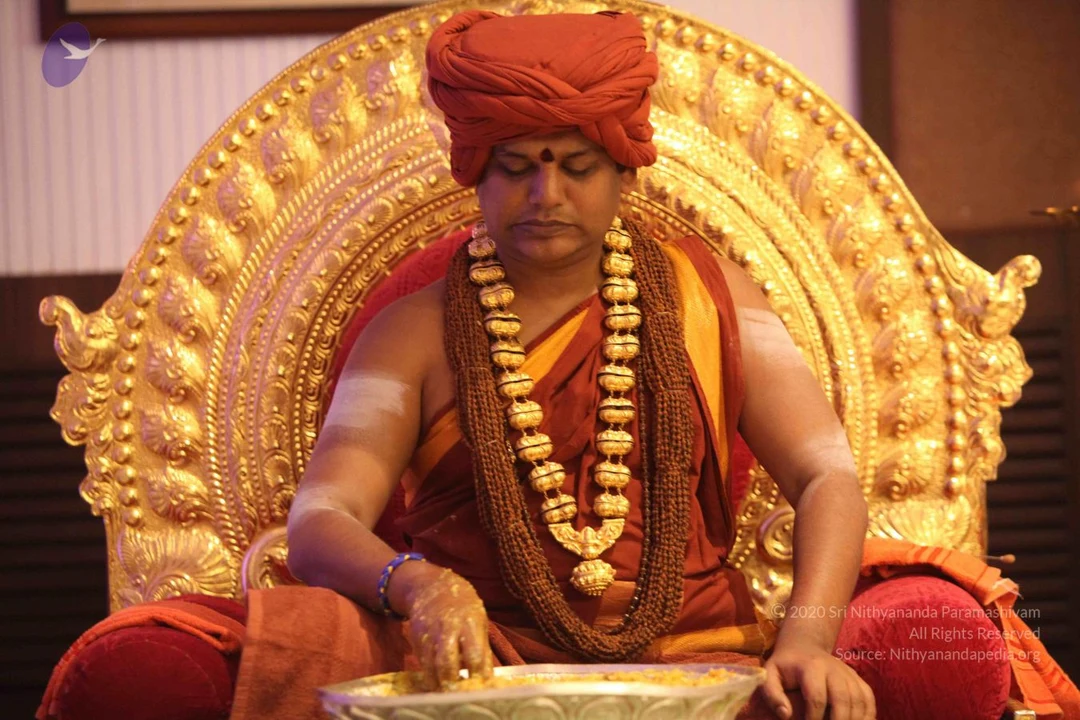
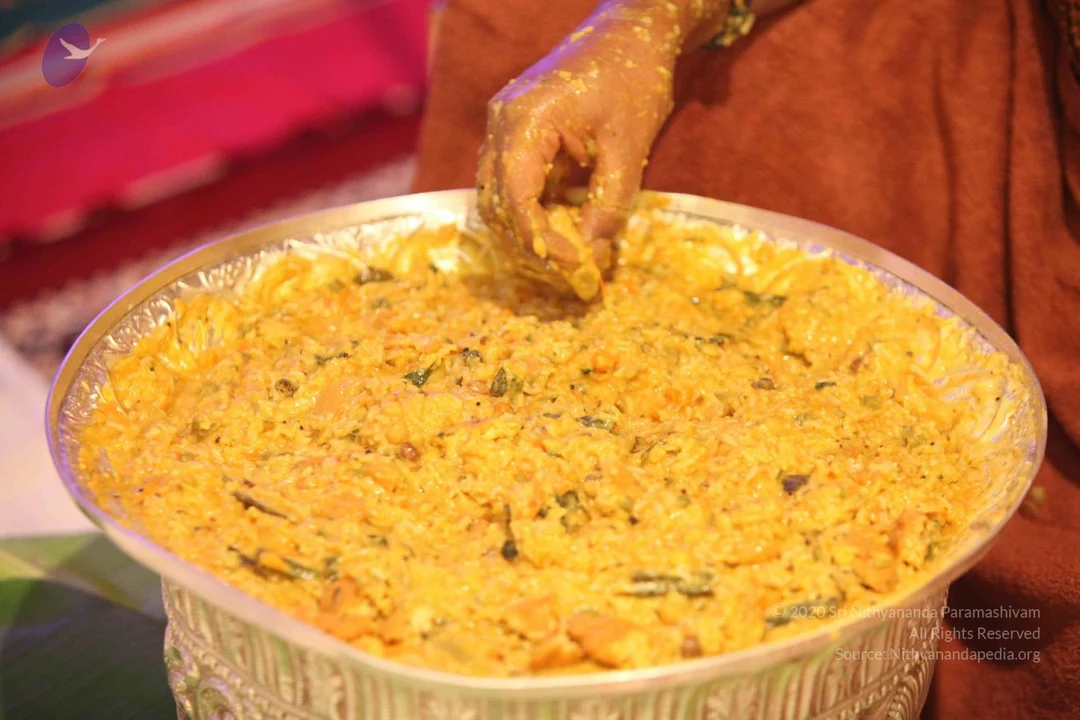
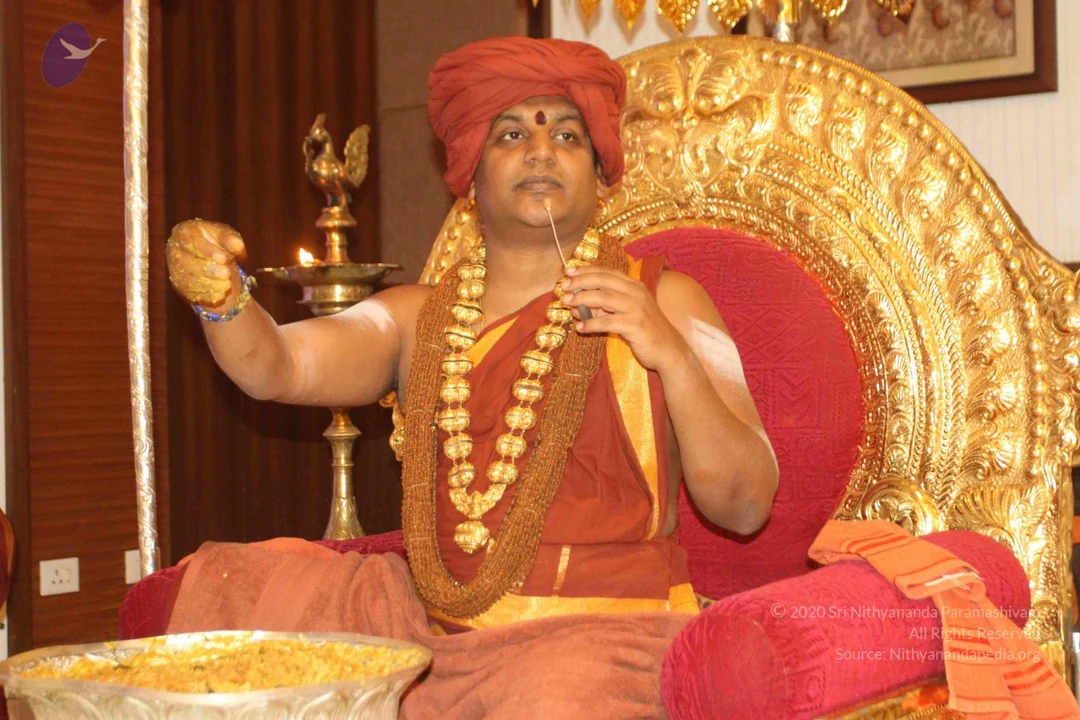
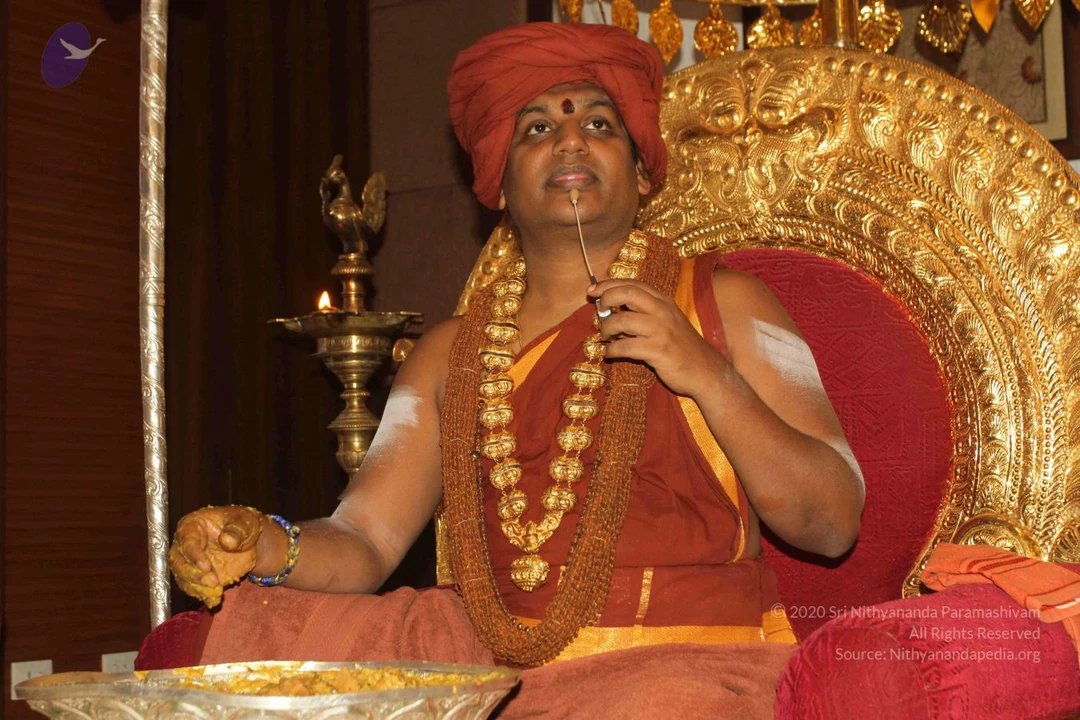
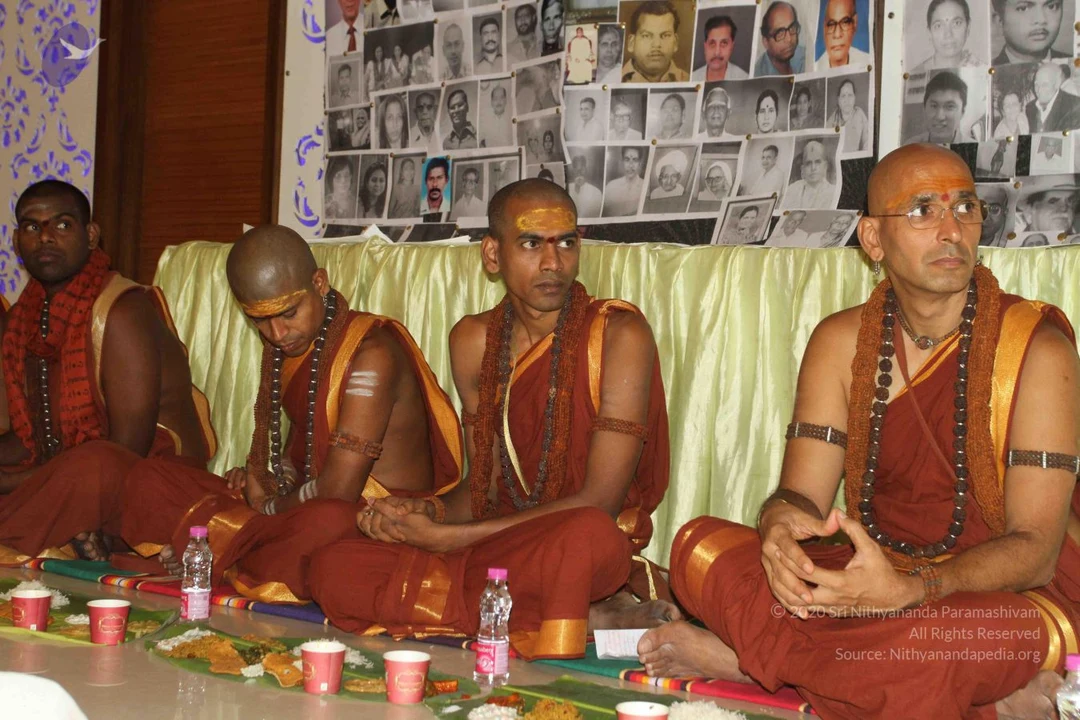
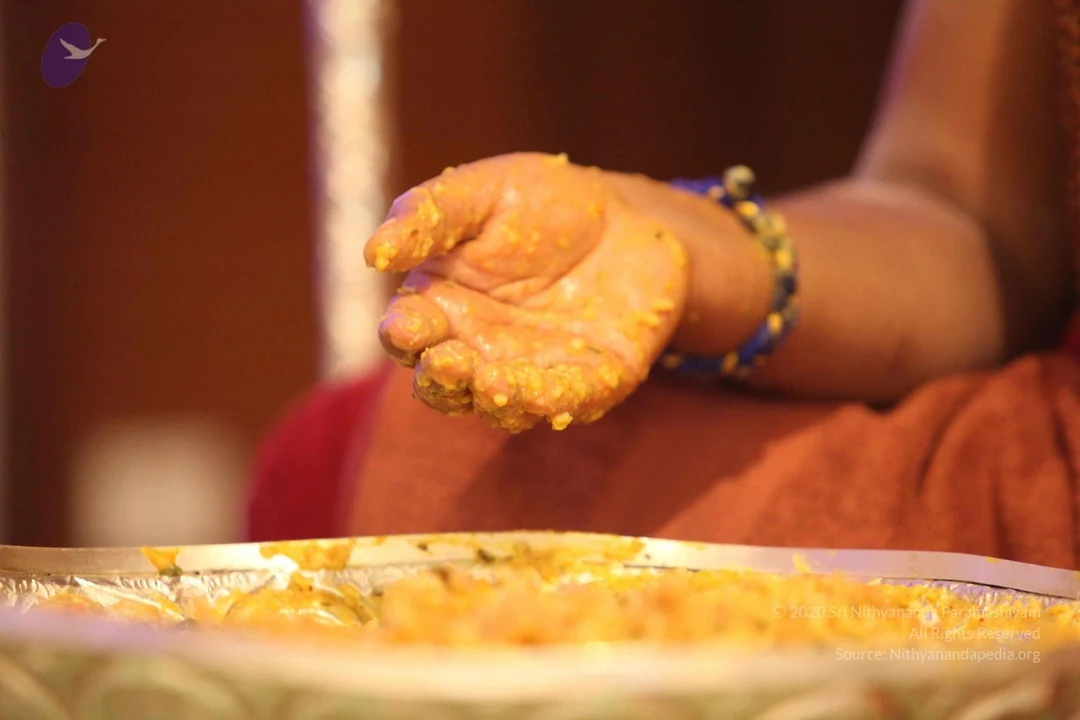
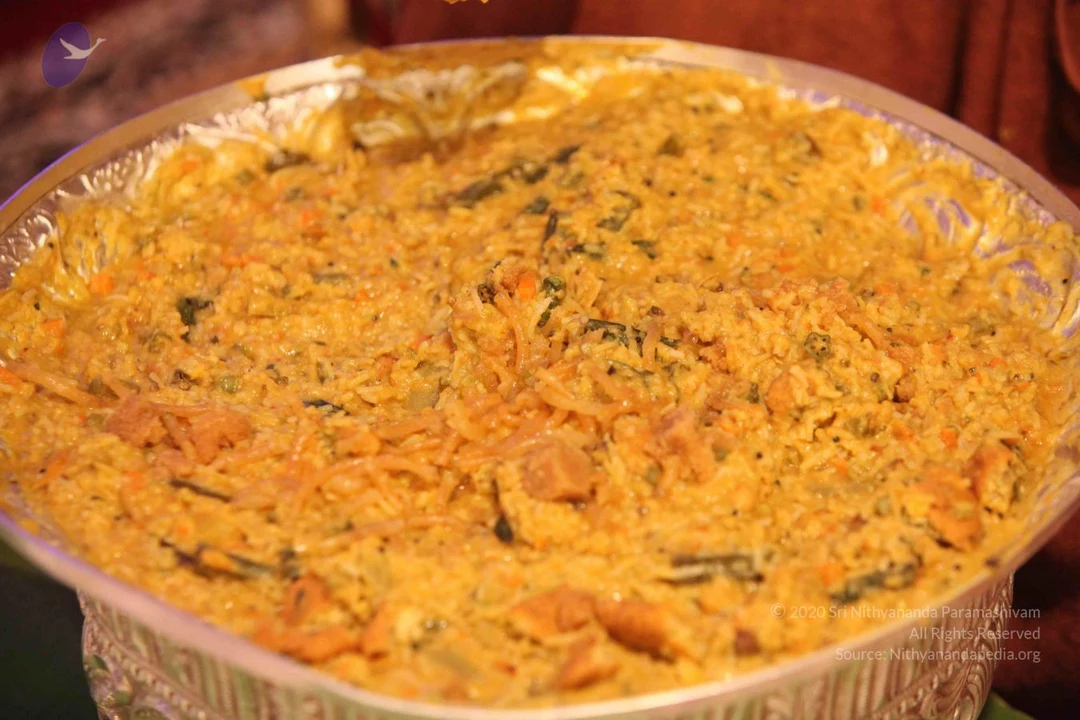
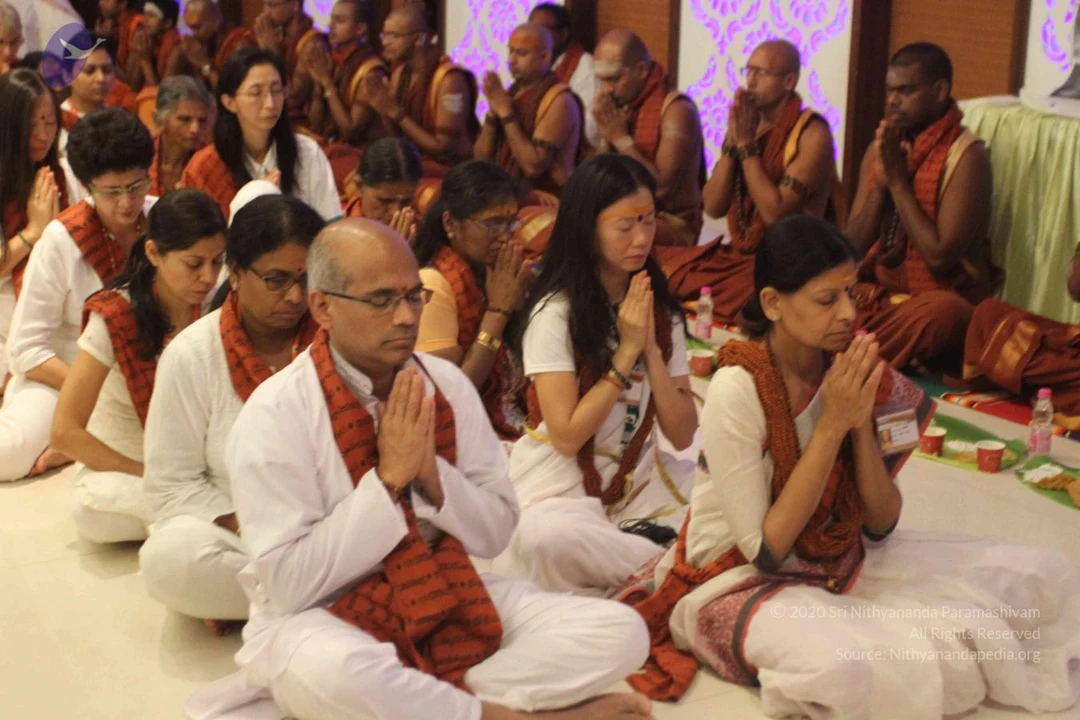
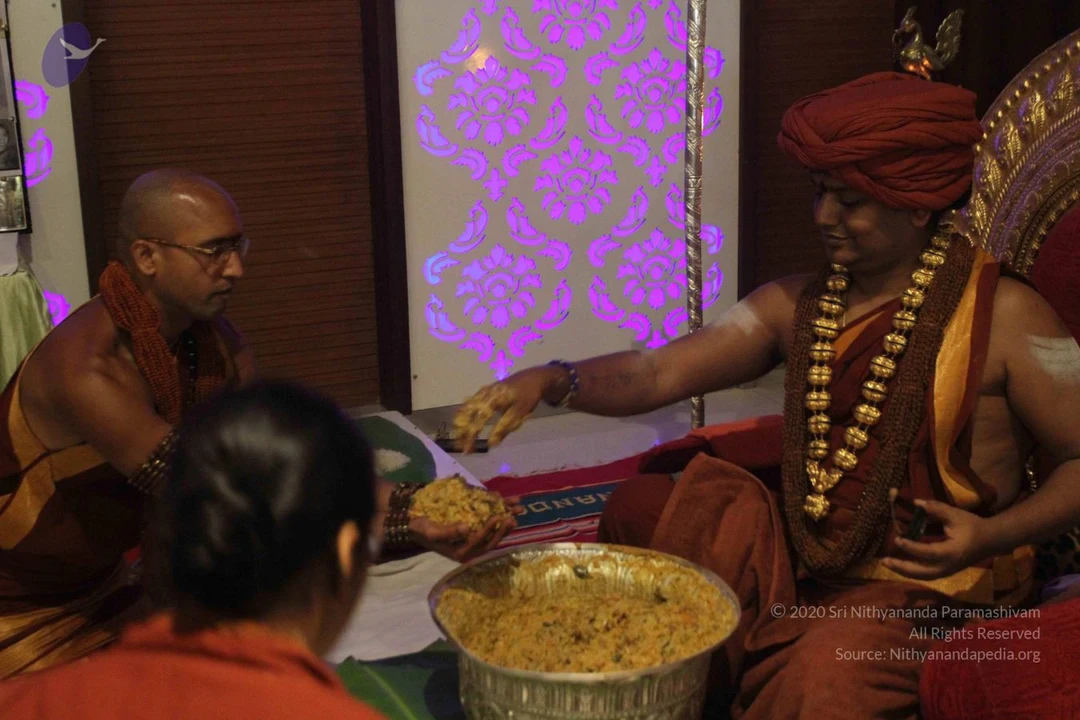
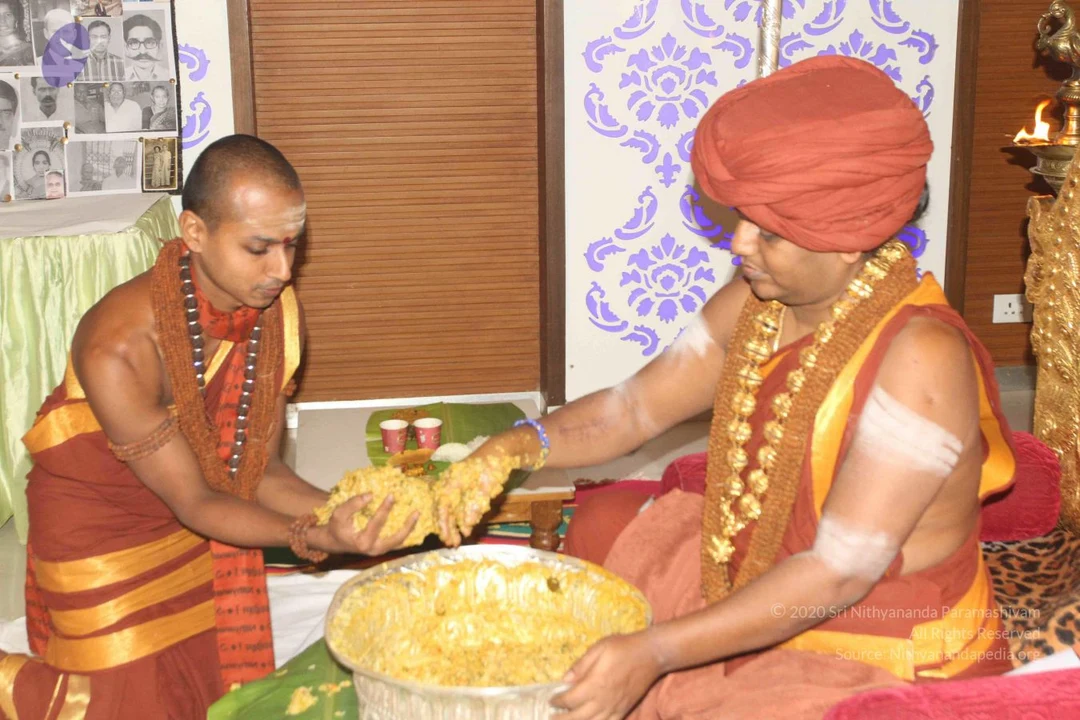
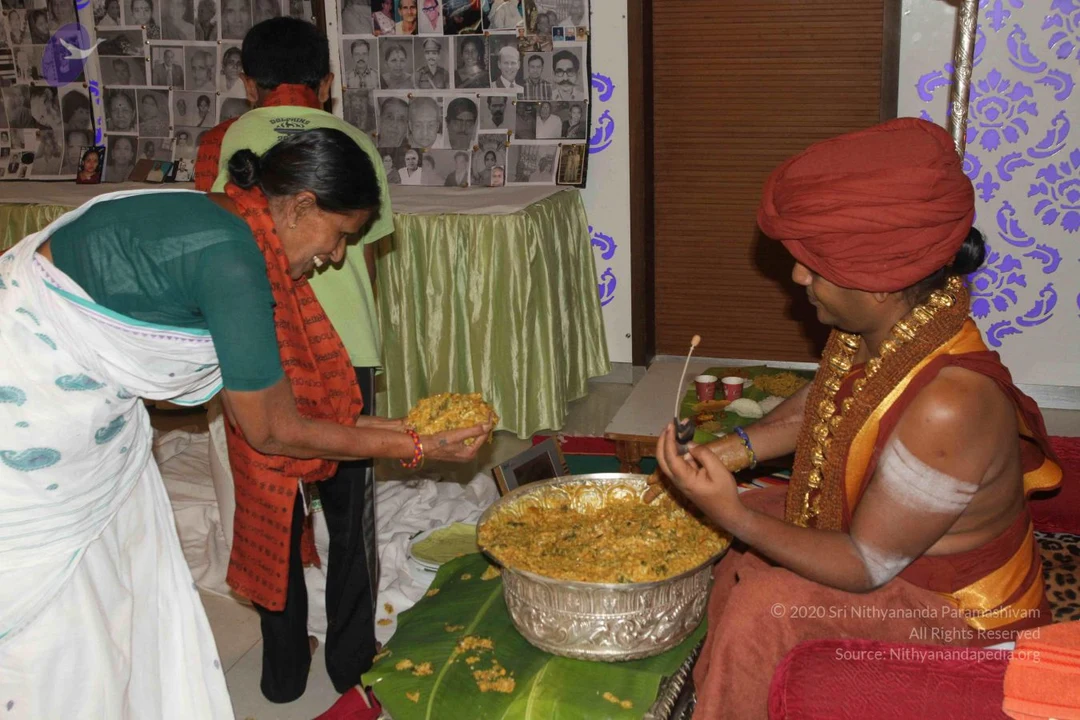
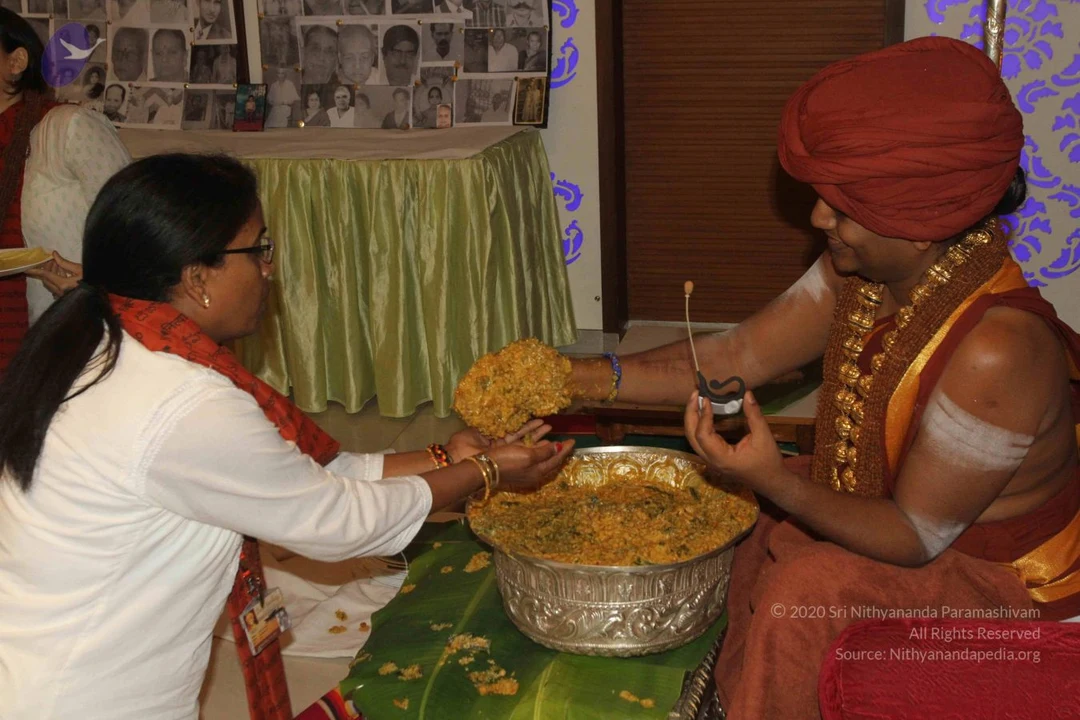
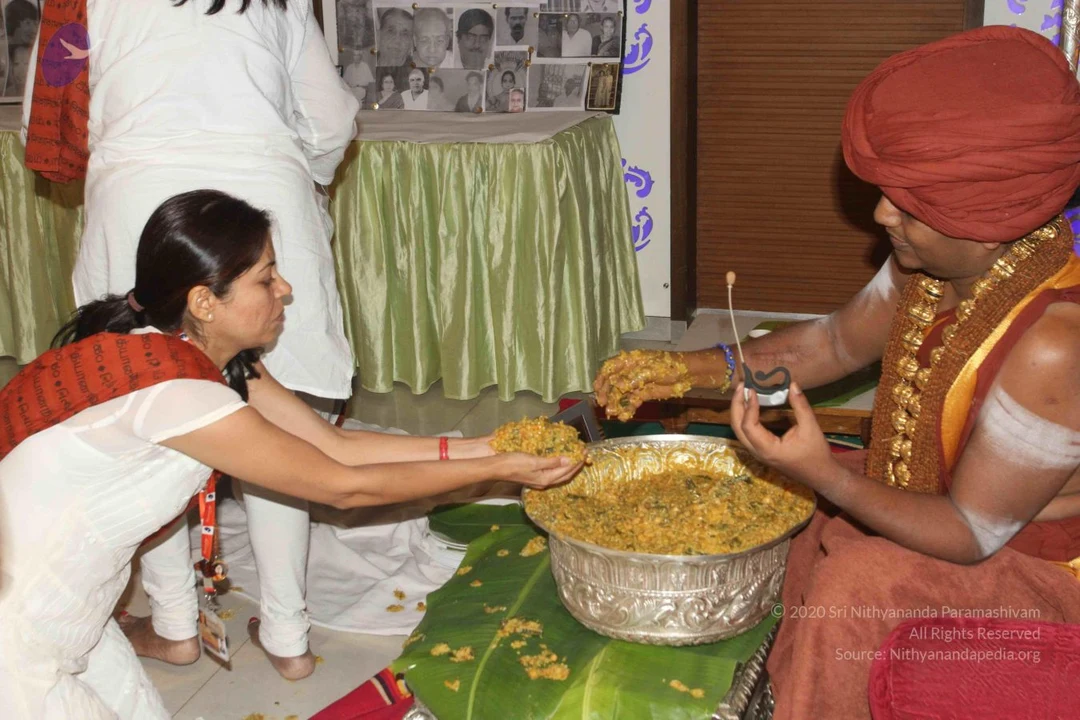
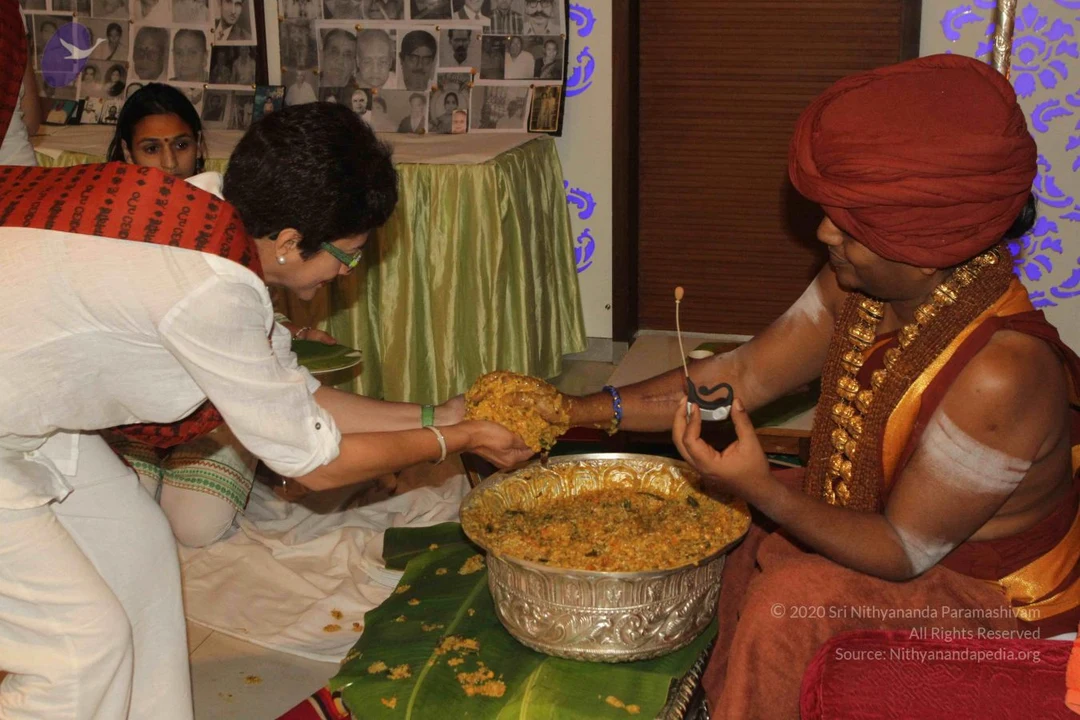
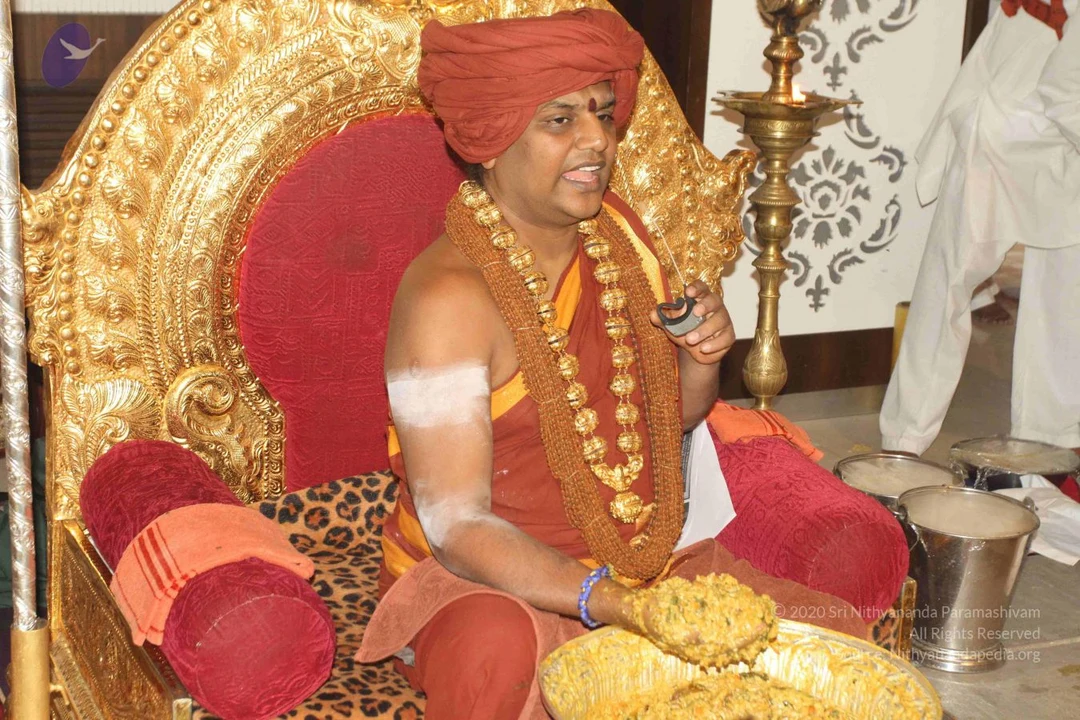
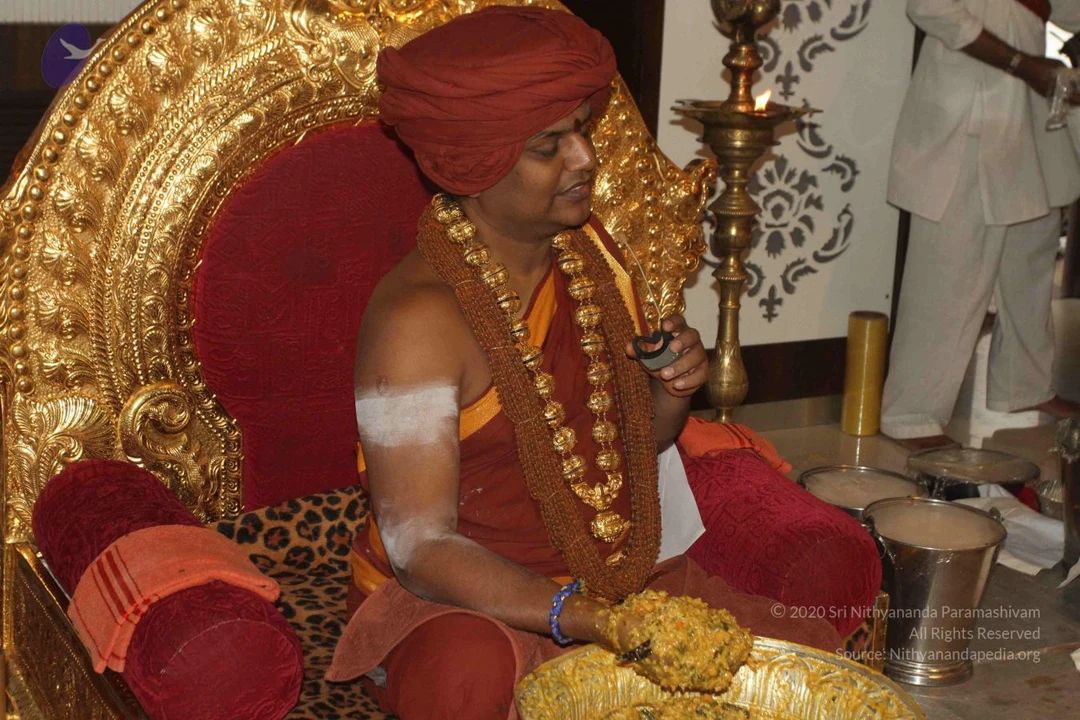
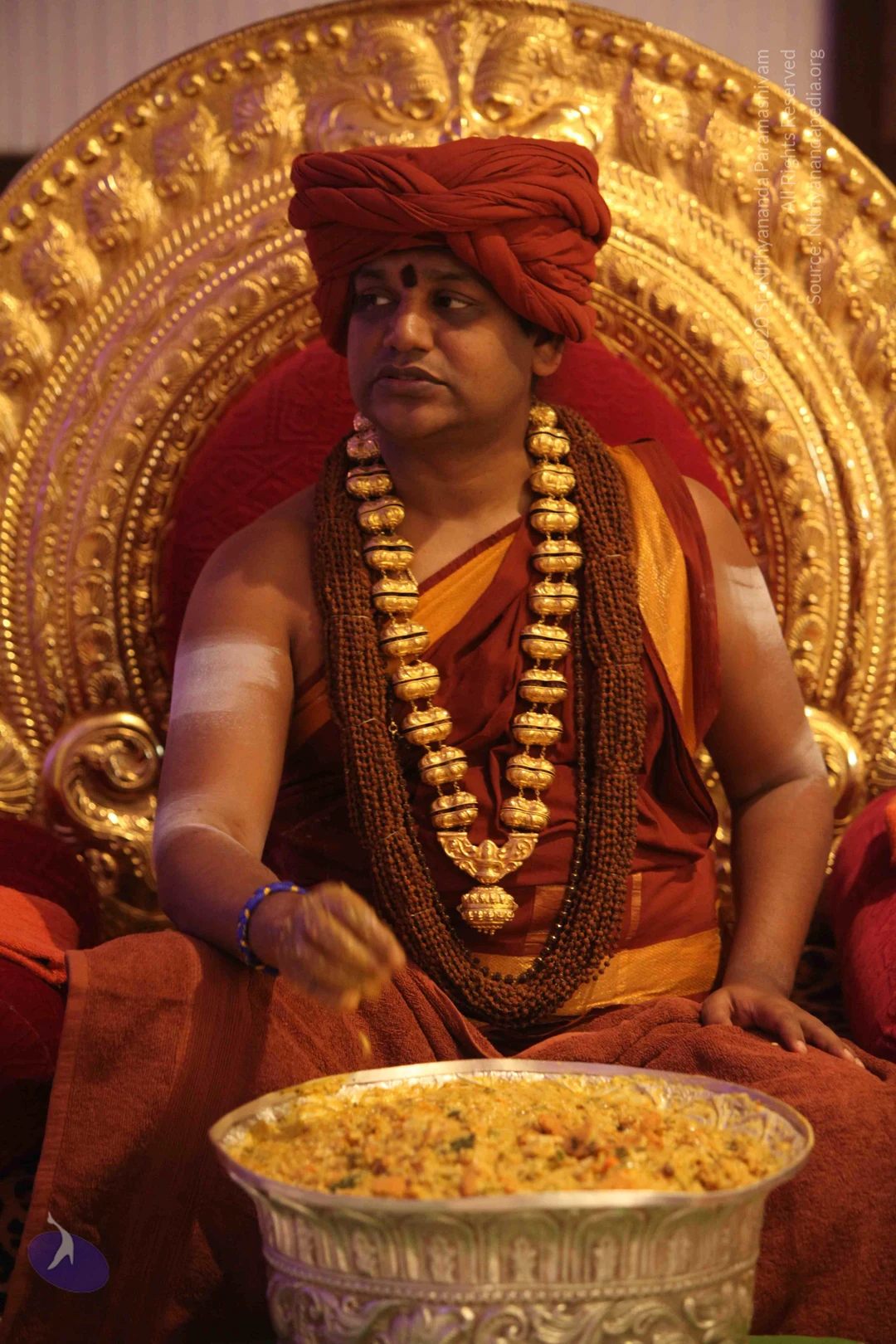
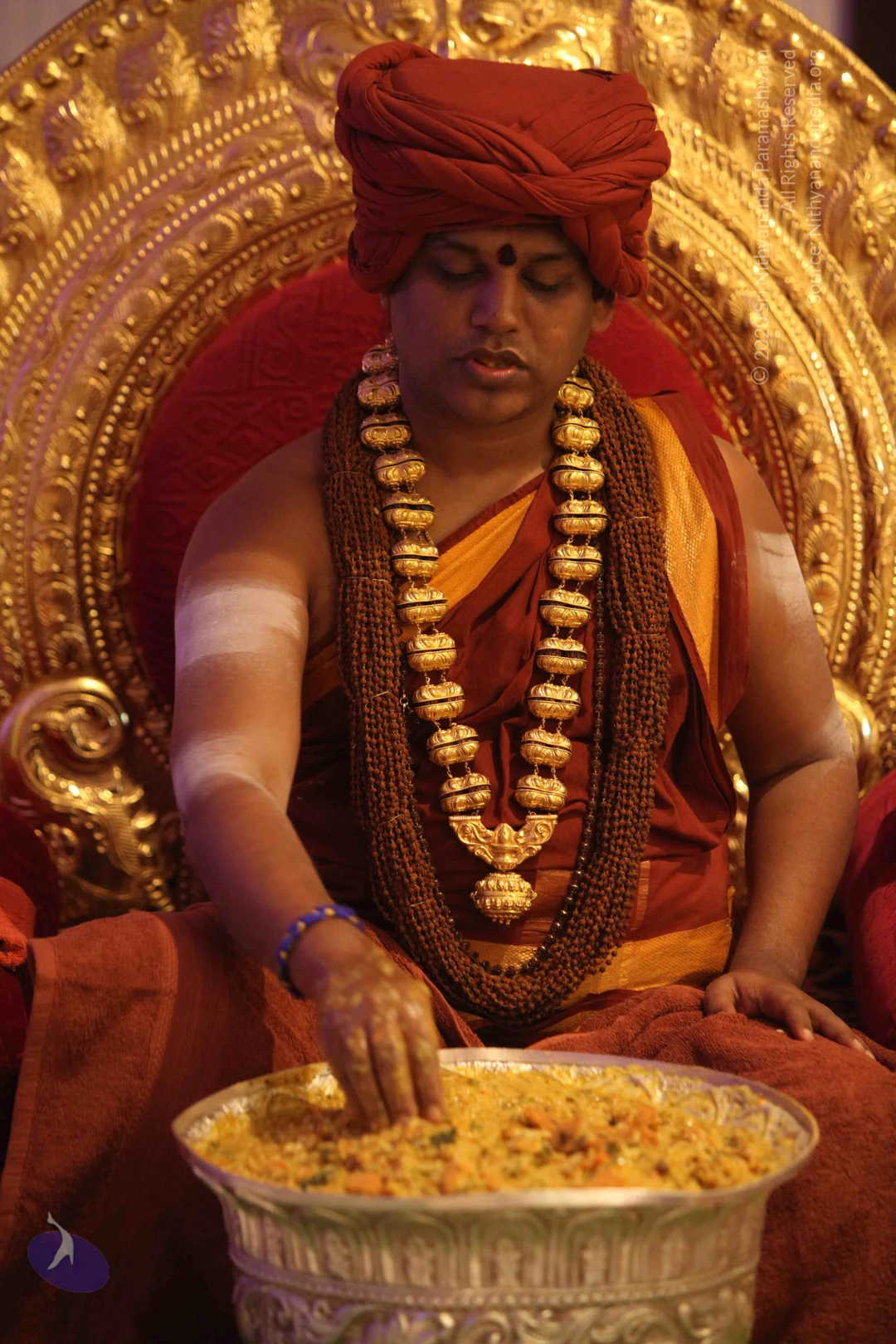
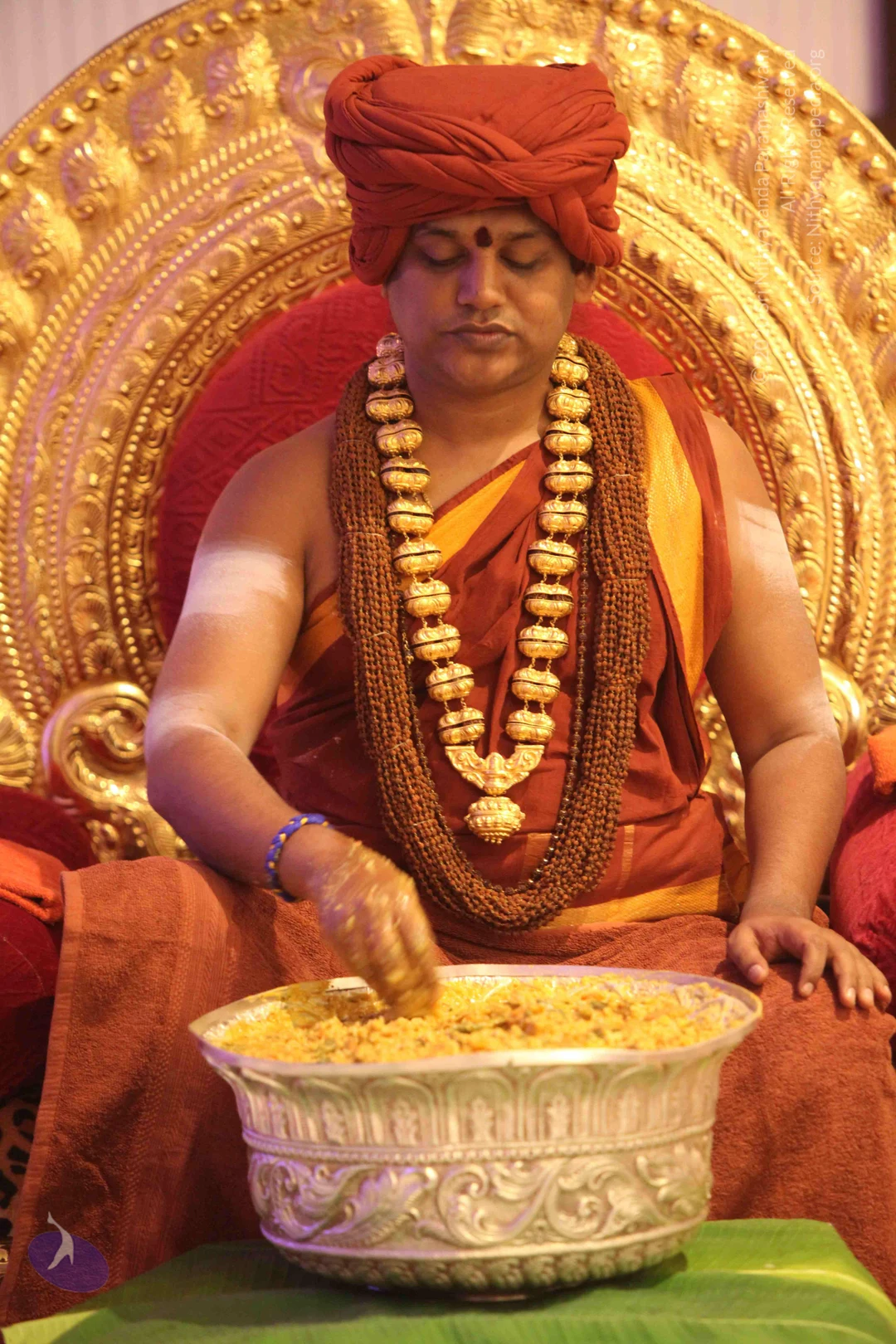
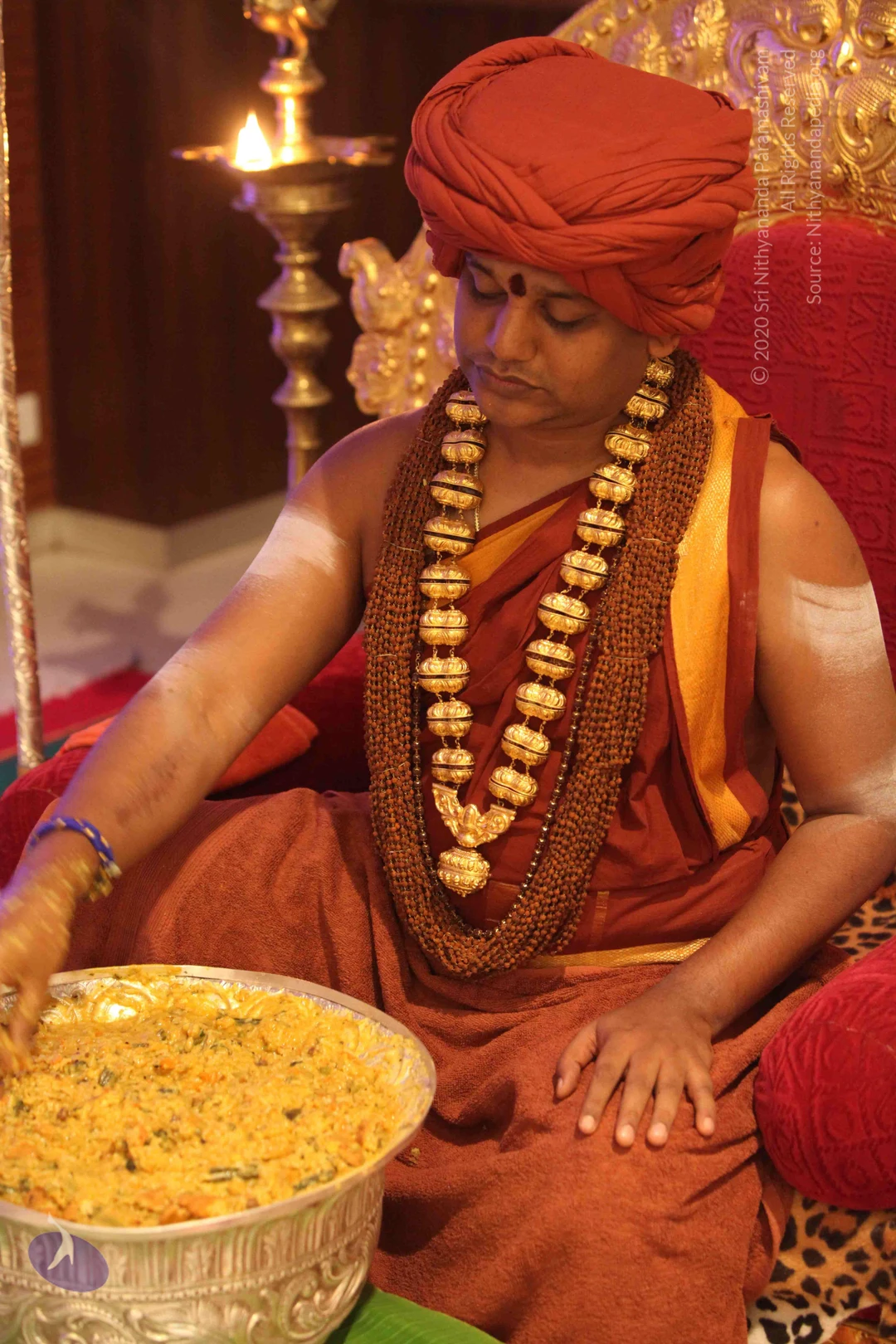
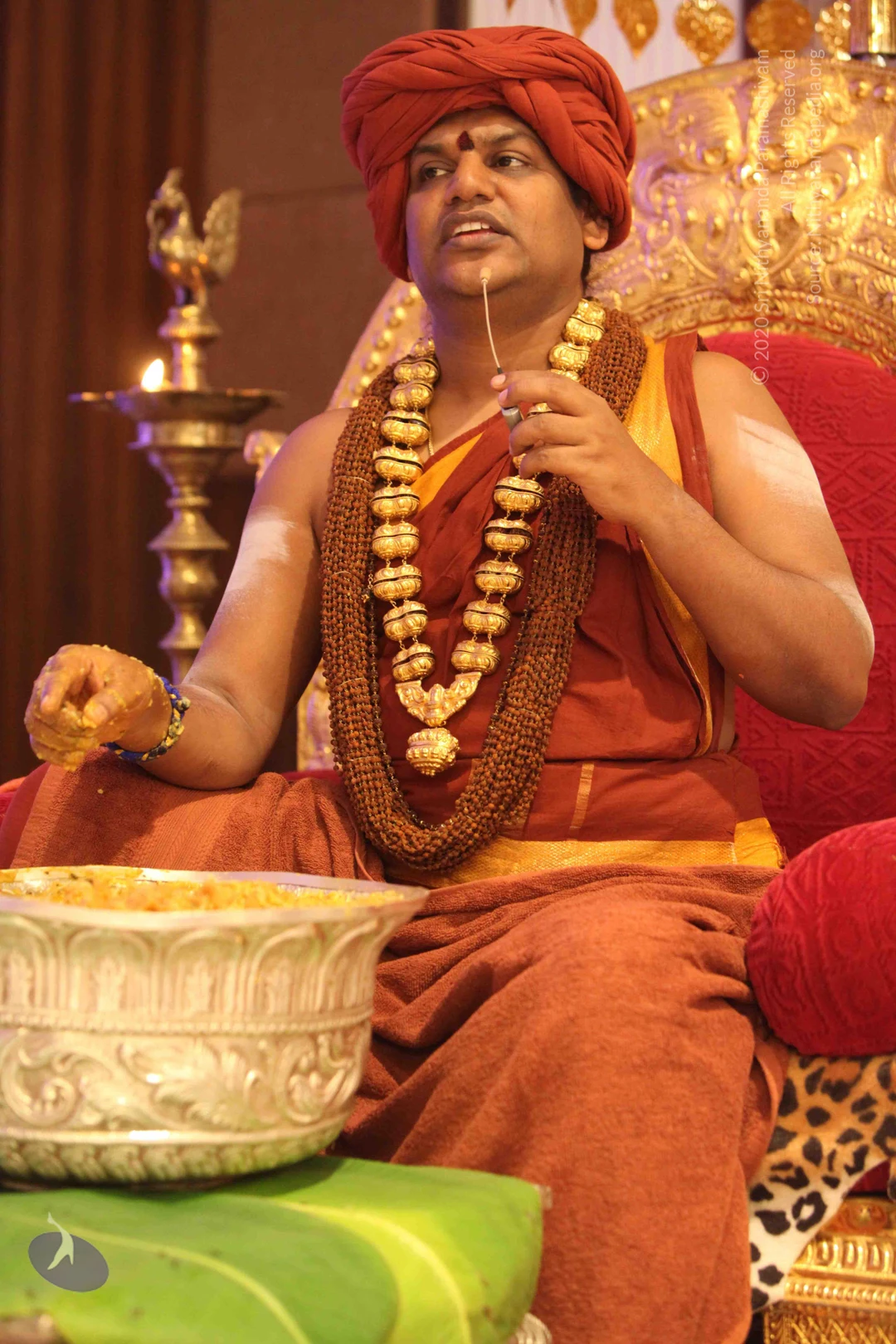
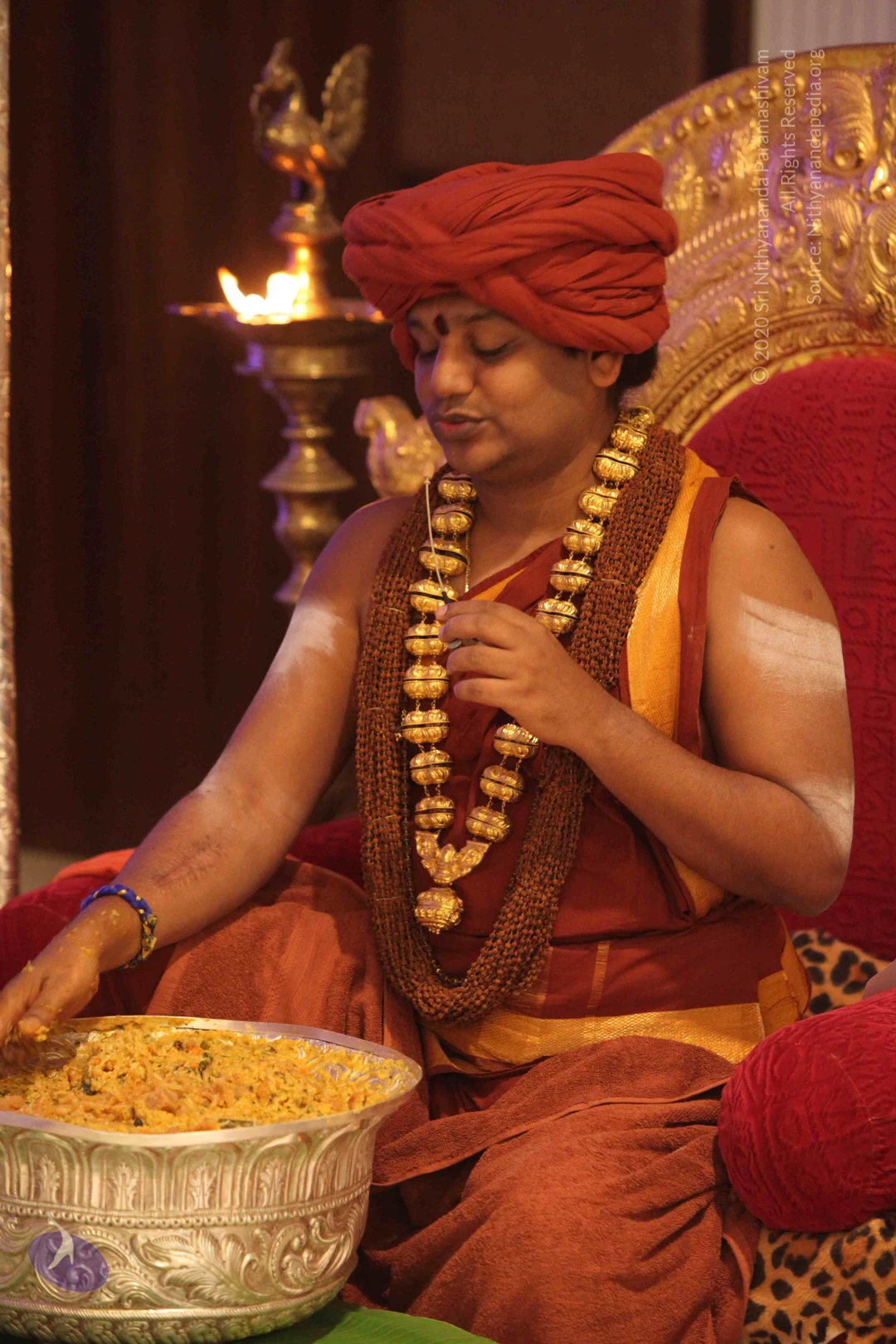
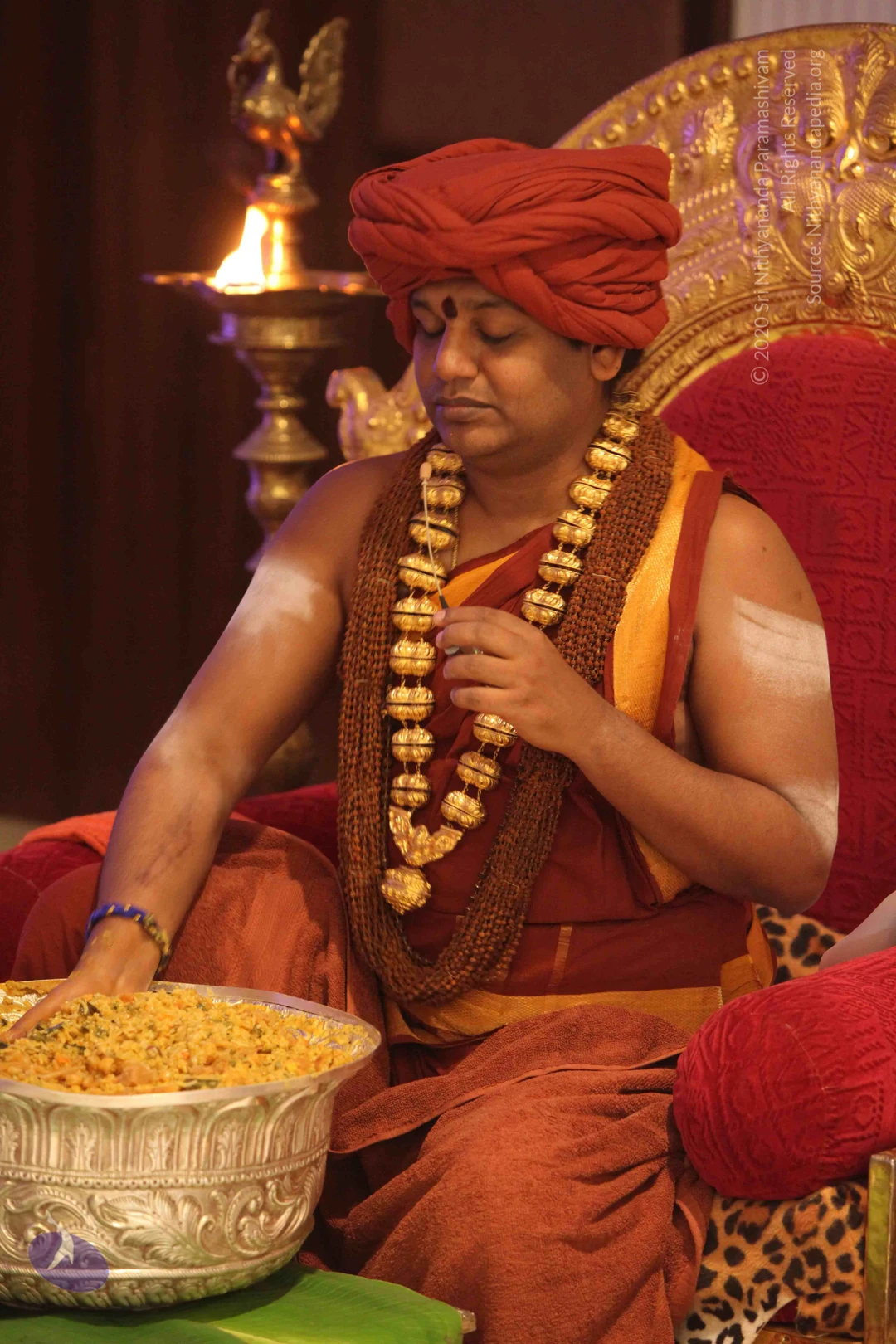
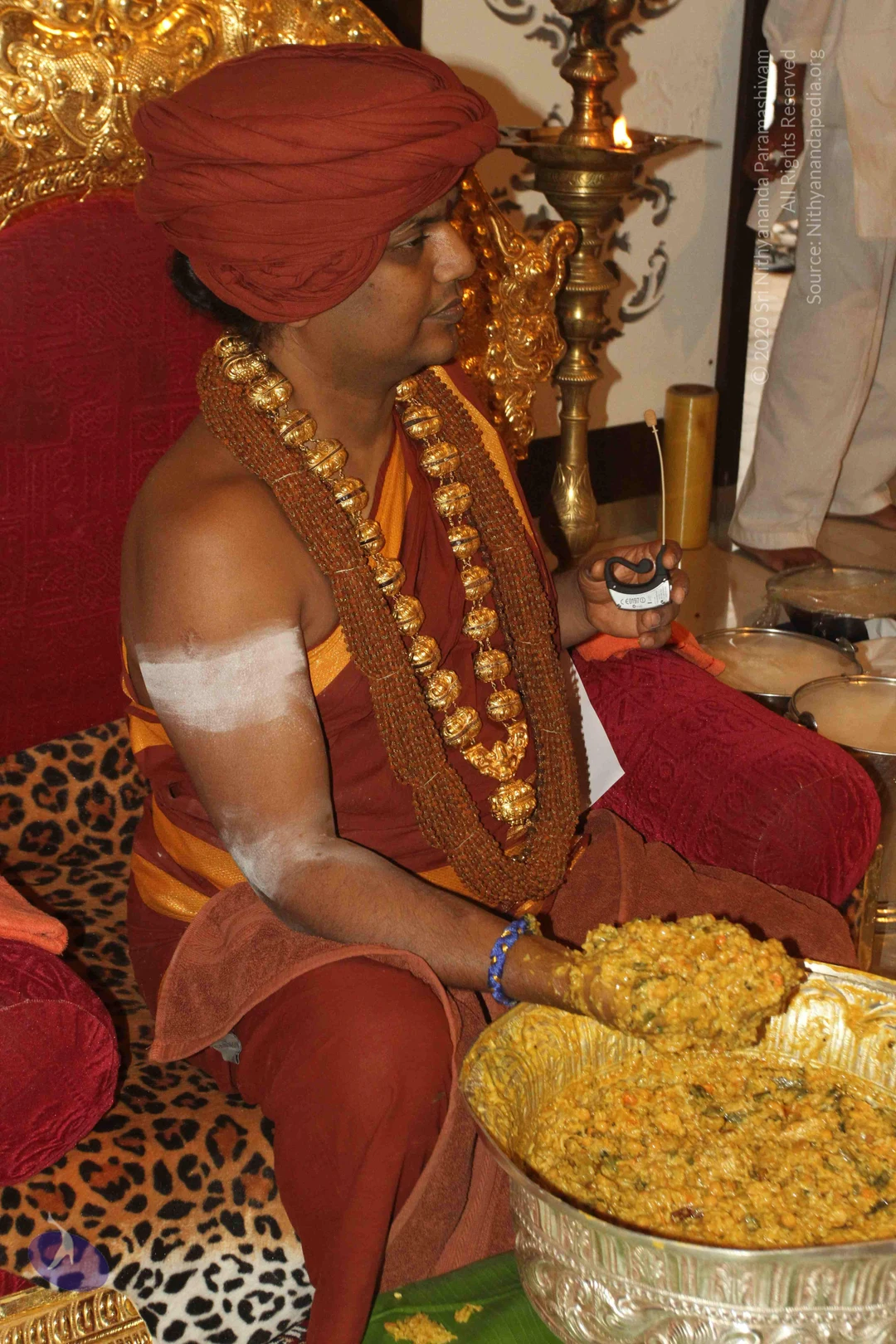
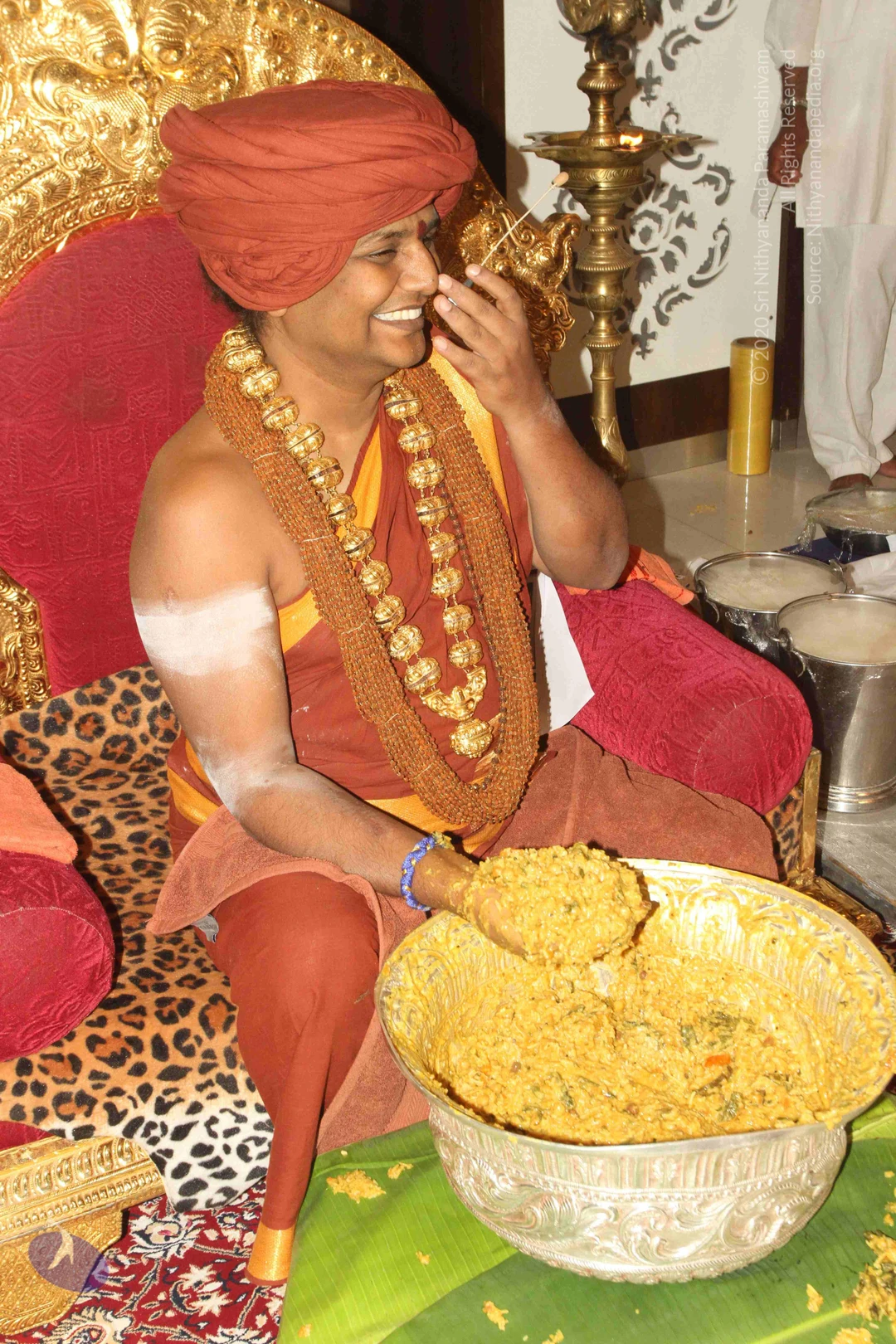
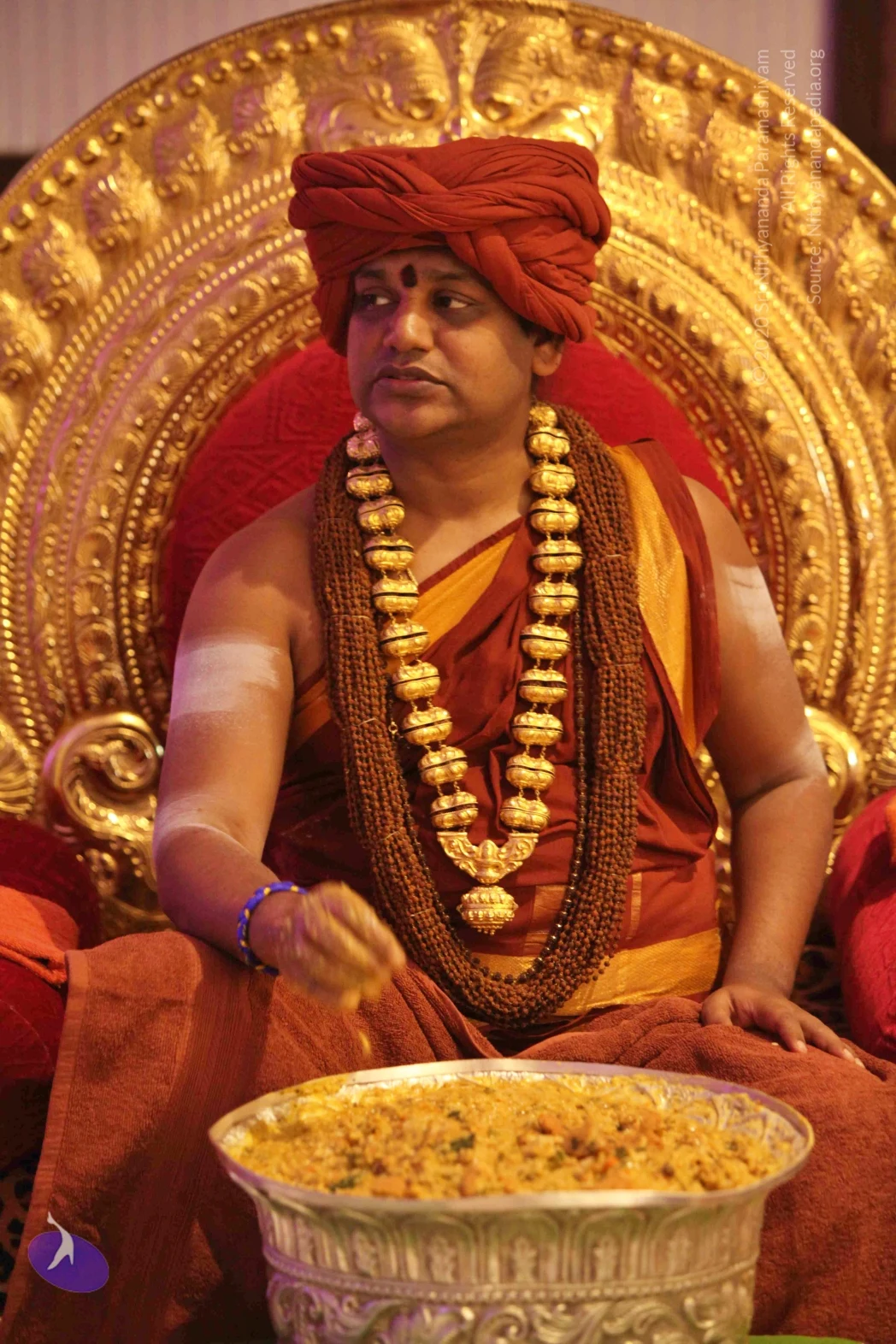
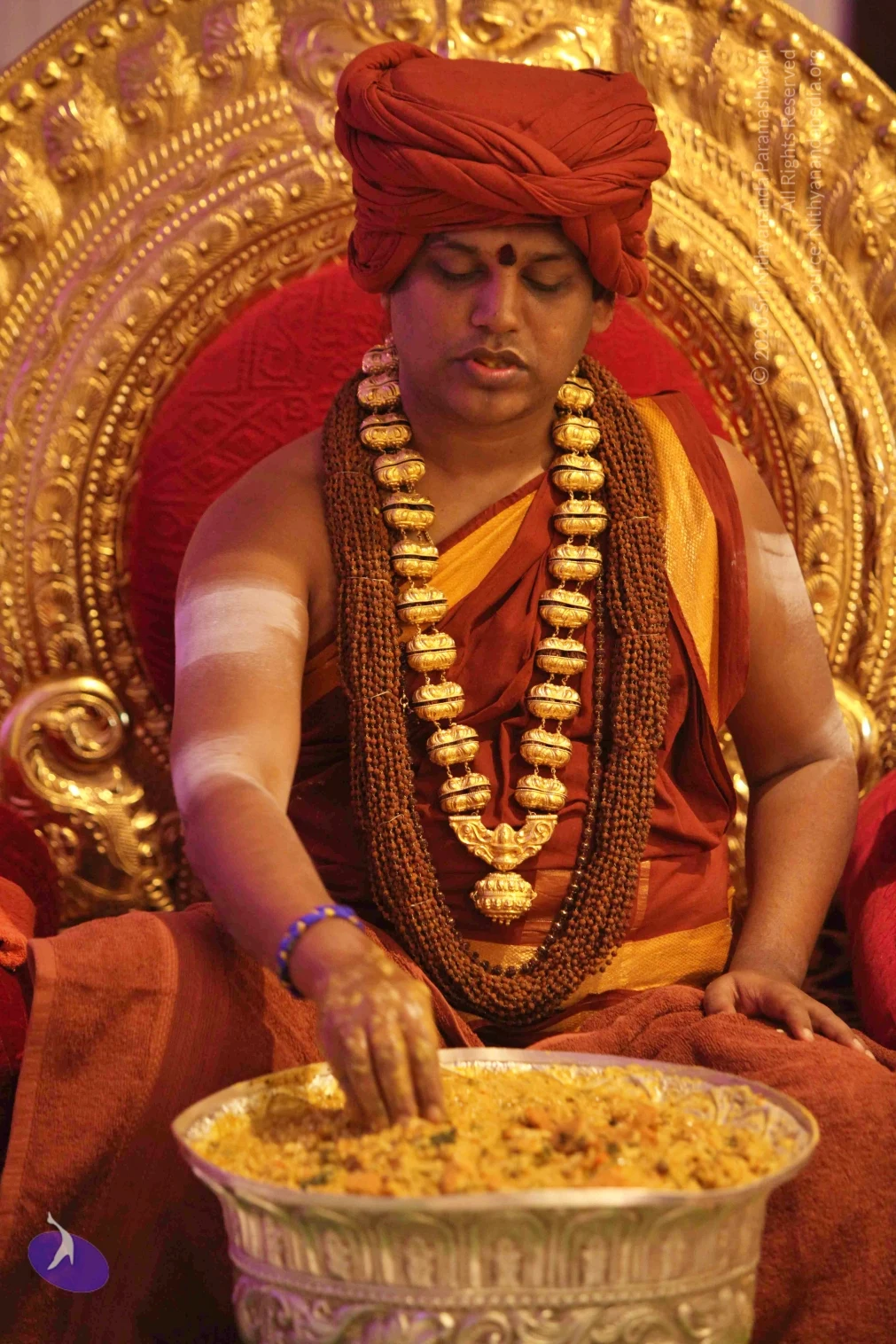
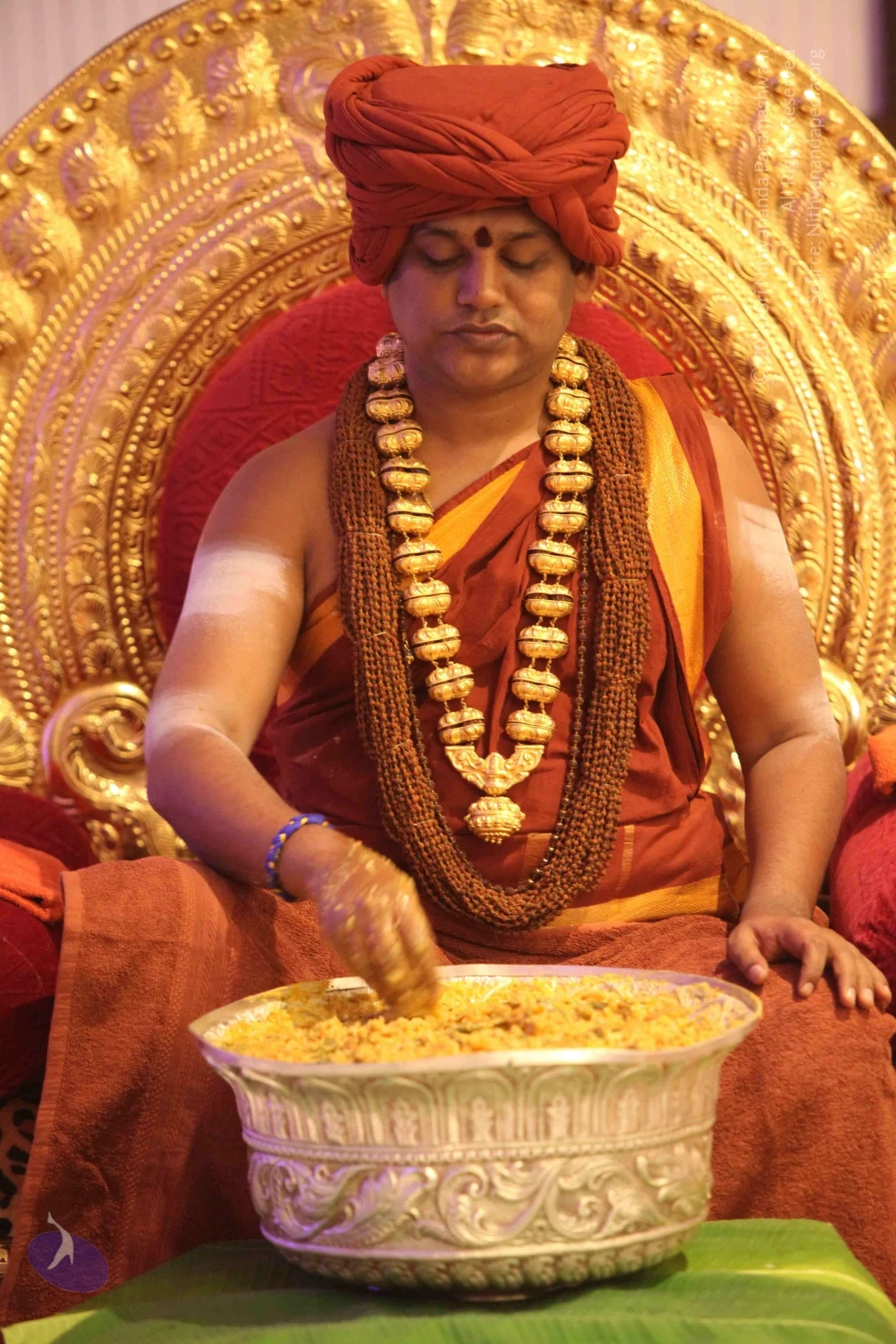
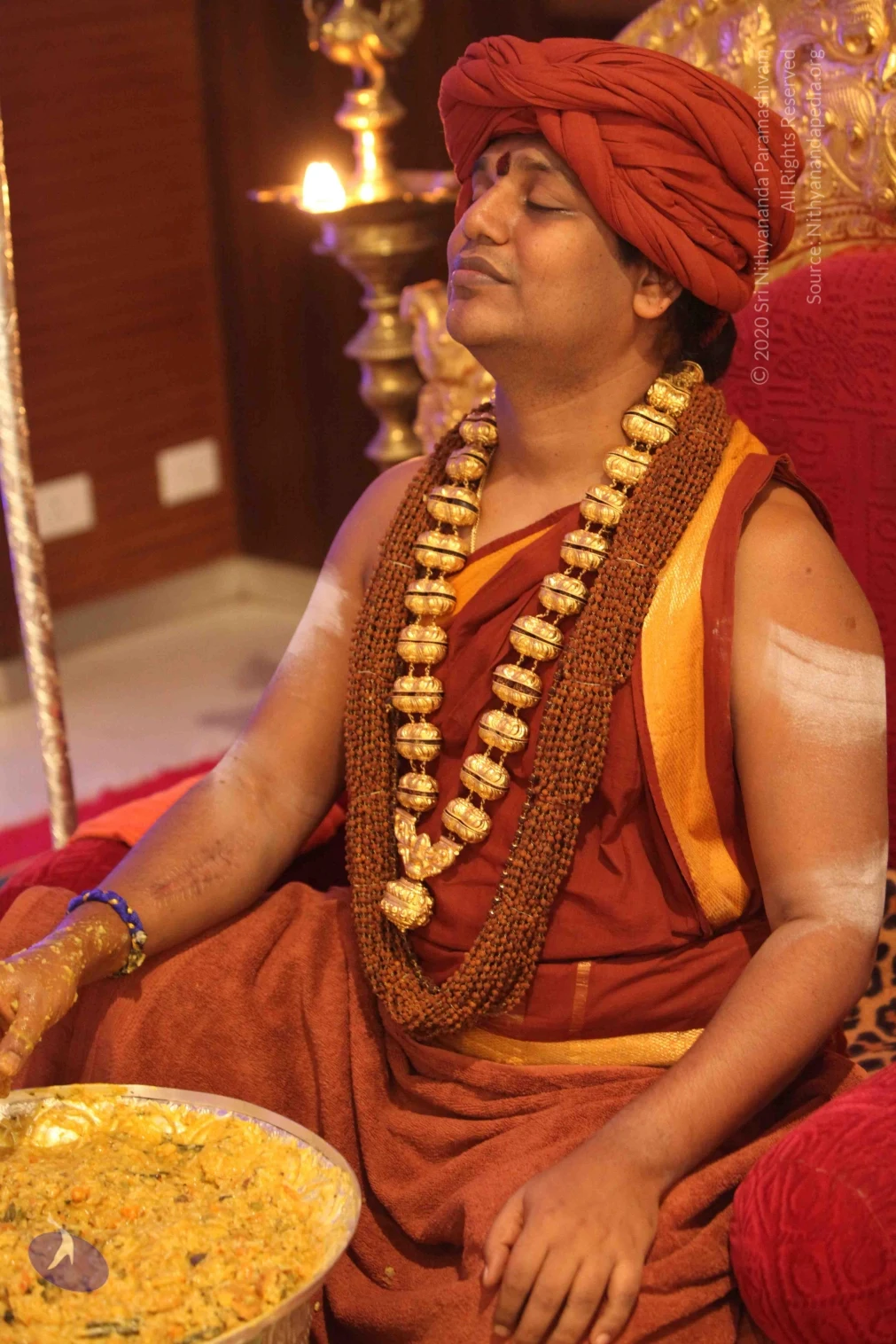
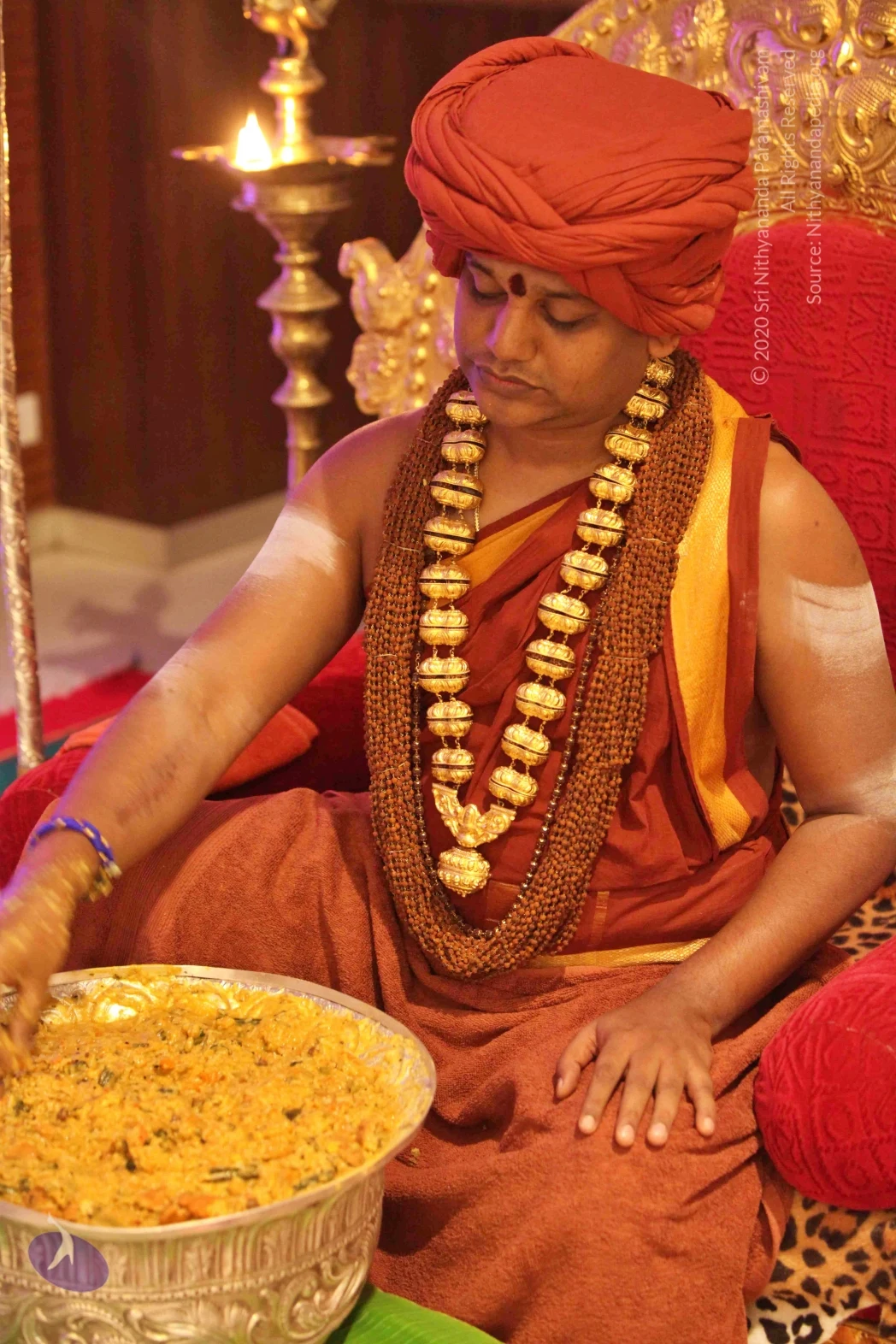
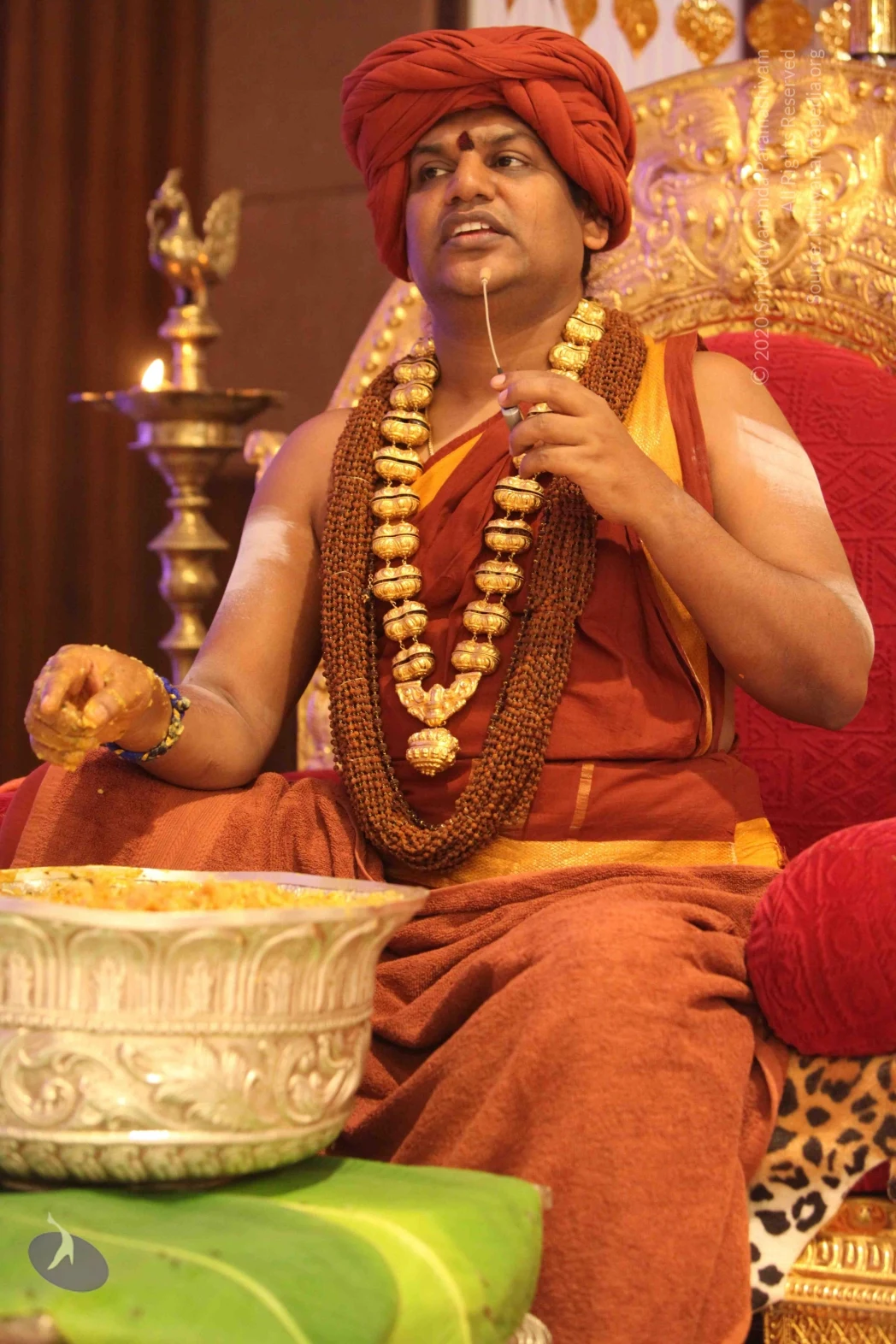
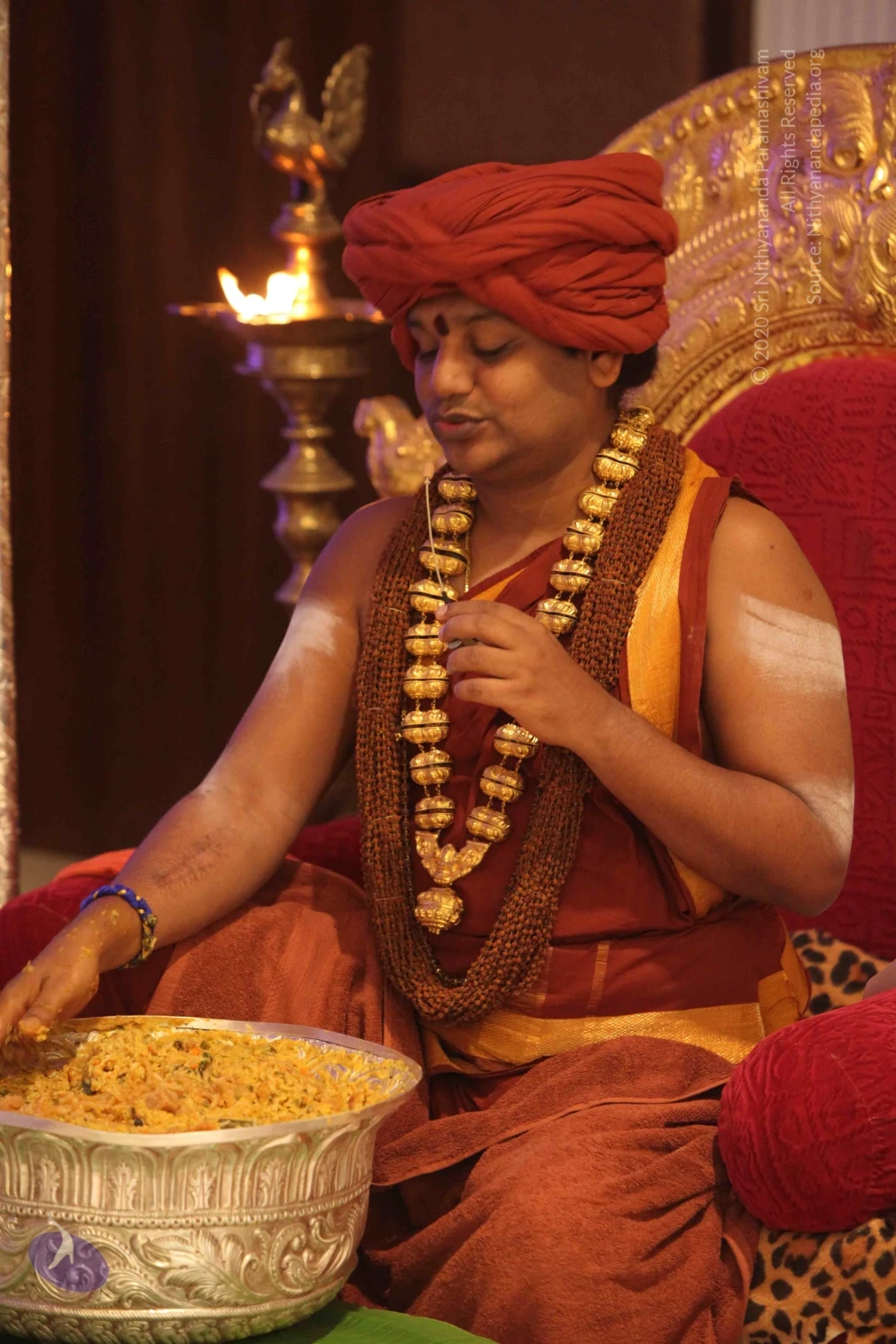
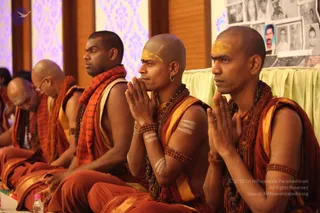
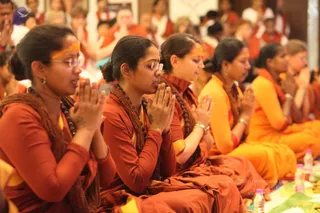
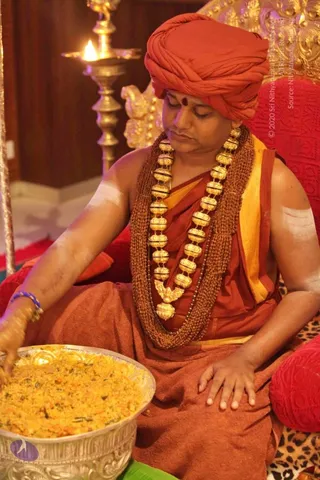
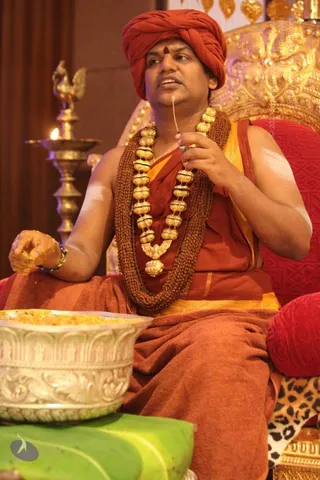
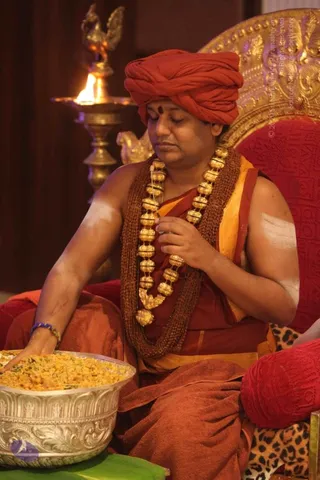
Photograph of a row of seated men in orange and saffron robes at a satsang hall, most with bare shoulders and rudraksha malas. The two closest figures, one in the centre and one at right, sit with palms pressed together in anjali mudra, with yellow tilak on their foreheads and white markings on their arms. Behind them stands a wall of framed black-and-white portrait photographs and a pale green draped table. Three to four men are clearly visible, with others partly cut off at left. Bottles and a patterned purple backdrop appear at the edges.A seated group of female devotees in orange and red saffron-toned clothing sit with palms pressed together in namaste during a satsang gathering. The woman on the left wears an orange tilak on her forehead and a brown shawl with rudraksha mala beads; the centre woman wears glasses, a dark rudraksha mala and a reddish-brown shawl, eyes closed in prayer. Others to the right wear yellow-orange saris and bangles. Behind them more devotees in orange fill the hall, and in the lower right foreground are water bottles and green leaf-plate offerings. No a person candidate is visible in the frame.Several women sit close together in a satsang setting, palms pressed in anjali mudra with eyes closed in devotion. The central woman wears an orange-yellow top and a rudraksha mala draped over her shoulders, with a red border on her garment and a tilak on her forehead. Women to the left wear red-orange and rust-coloured garments with rudraksha malas and forehead marks; a woman at right wears orange clothing and bangles. The background is filled with more seated devotees in orange and red robes.Close-up photo of a large silver-rimmed bowl filled with yellow rice mixed with vegetables and green herbs. A hand with yellow-stained fingers reaches into the rice, stirring it. The wearer's clothing is a rust-brown cloth, and a pink and blue textile lies at the upper left. The bowl sits on a green banana leaf.A wall display of many framed and pinned black-and-white and colour portrait photographs of numerous individuals, mostly head-and-shoulders or small photos arranged in a dense grid on a purple-decorated board. Some portraits show men in white shirts and ties, others women in saris, and a few elderly people in white head coverings. Several photos sit in gilt frames at upper right. The display appears to be a memorial or devotional arrangement of photographs; the portraits themselves are not physical people present. No a person candidate is visibly present.A man seated on an ornate golden throne with carved scrollwork and a rounded backrest, wearing a red-orange turban, saffron-orange robe, multiple rudraksha mala beads and a large gold necklace. He has a red tilak on his forehead and white ash markings on his arms and shoulder, and is dipping his hand into a silver bowl of yellow grains in front of him. Brass oil lamps with lit flames stand on either side of the throne, and a small attendant in white is partly visible at the right edge. The setting is an indoor hall with wooden paneling and a pale wall. Swamiji (probable) appears to be the seated figure, identified by the turban, saffron robes, rudraksha malas and gold necklace on a throne.

Maheshwara-Puja

2 photosSource gallery
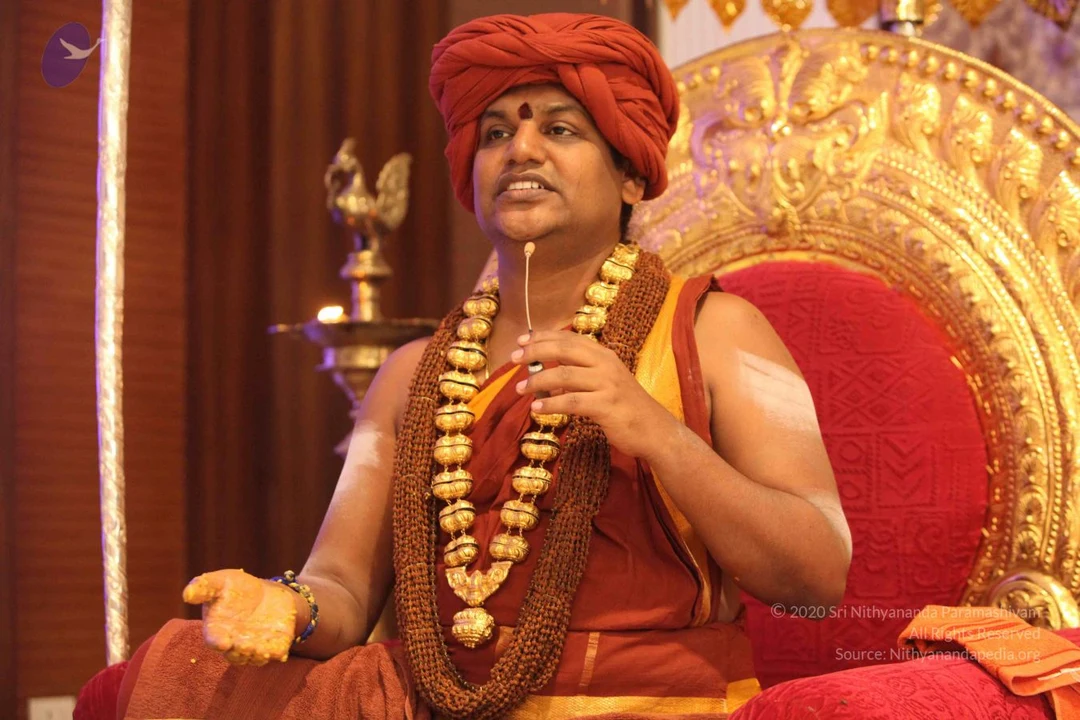
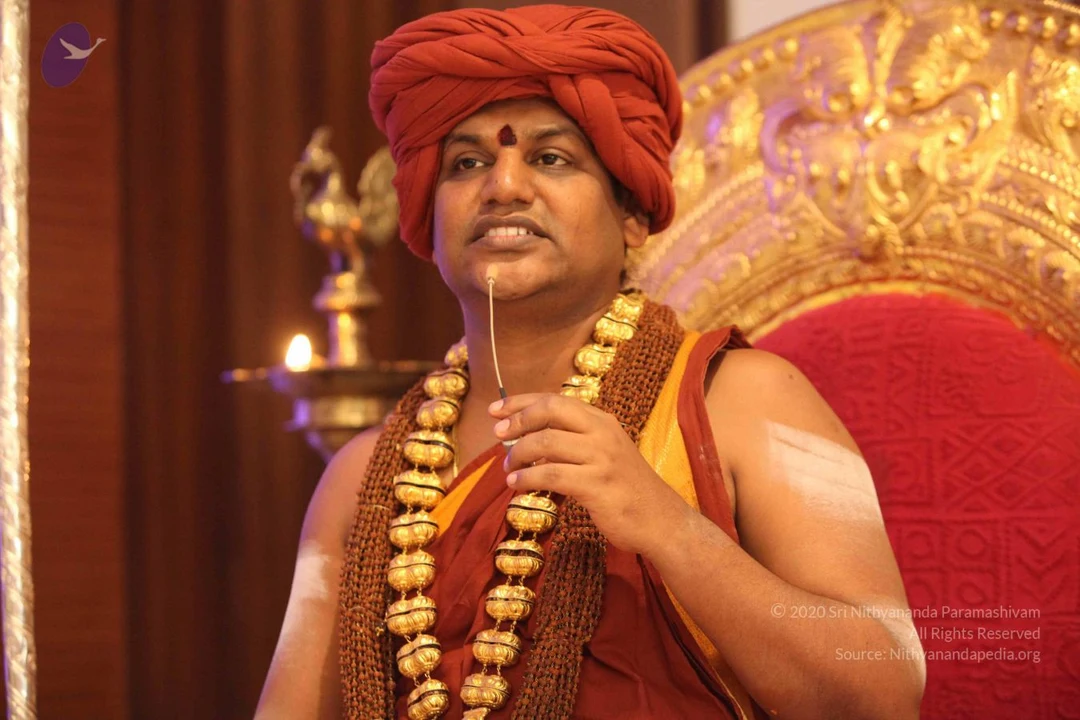
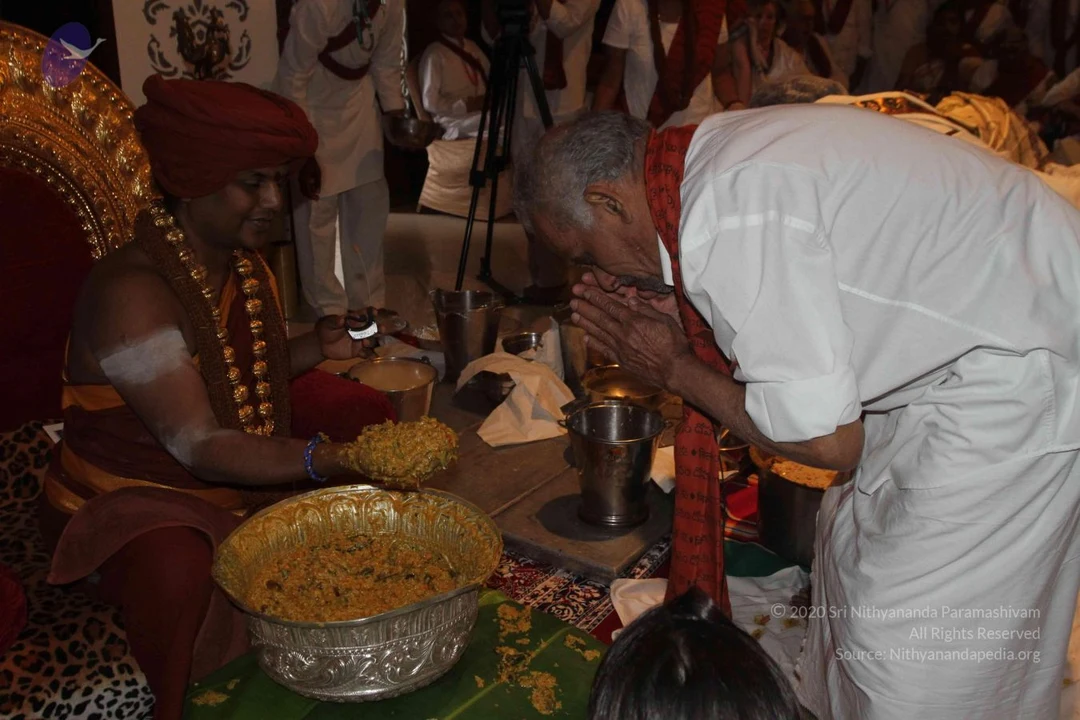
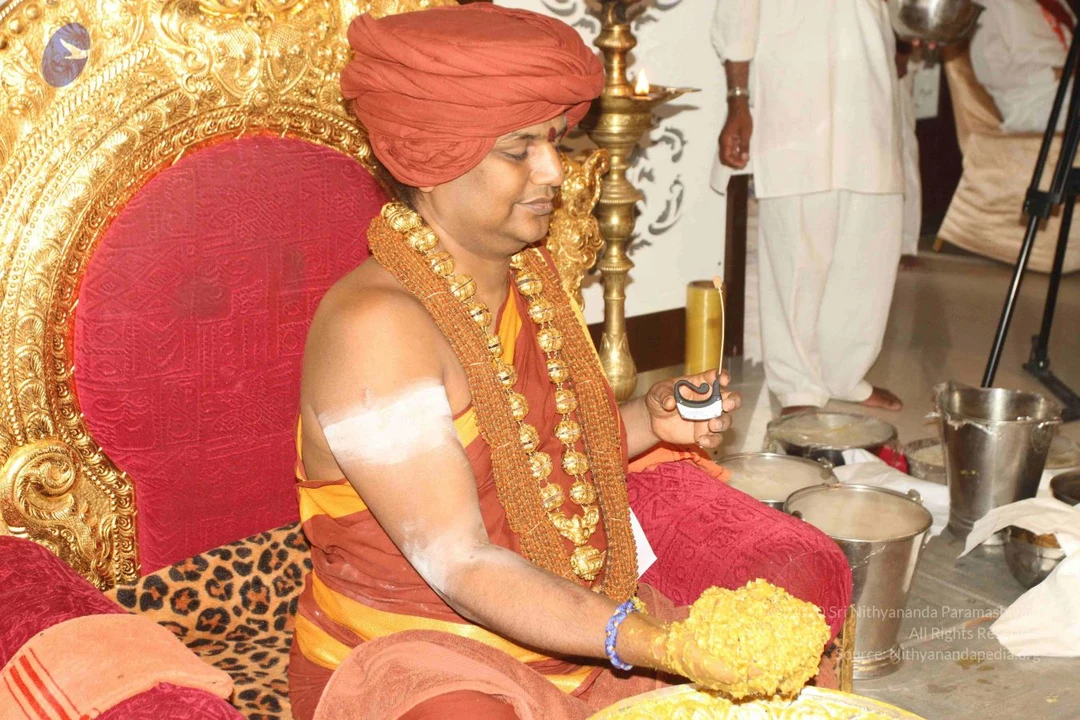
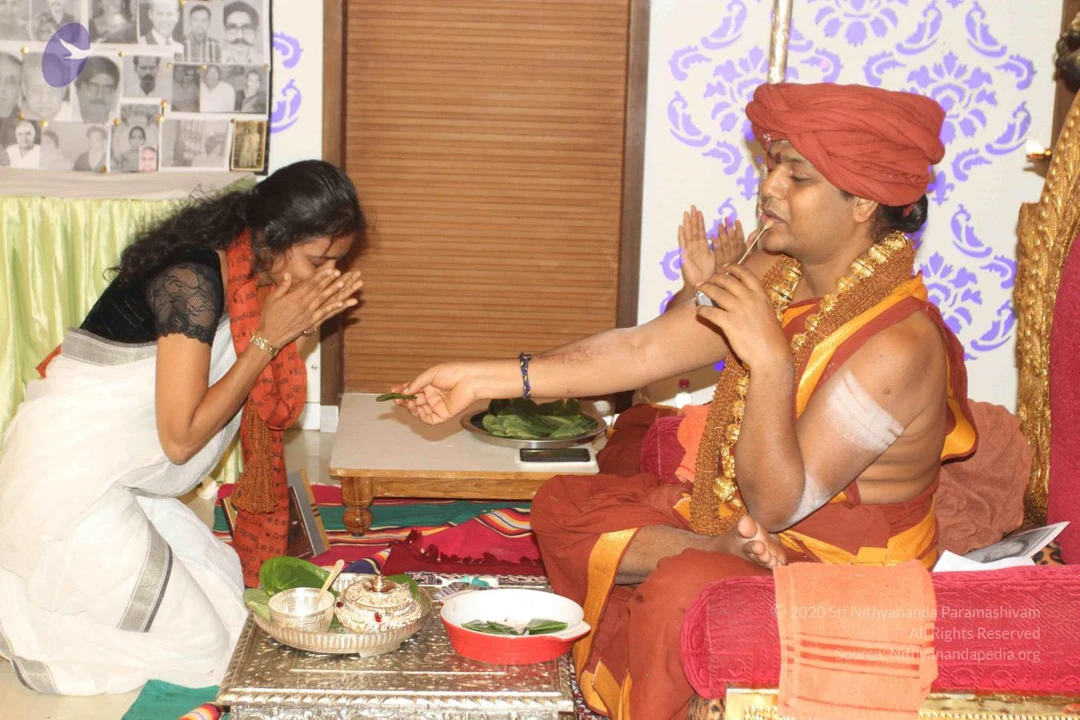
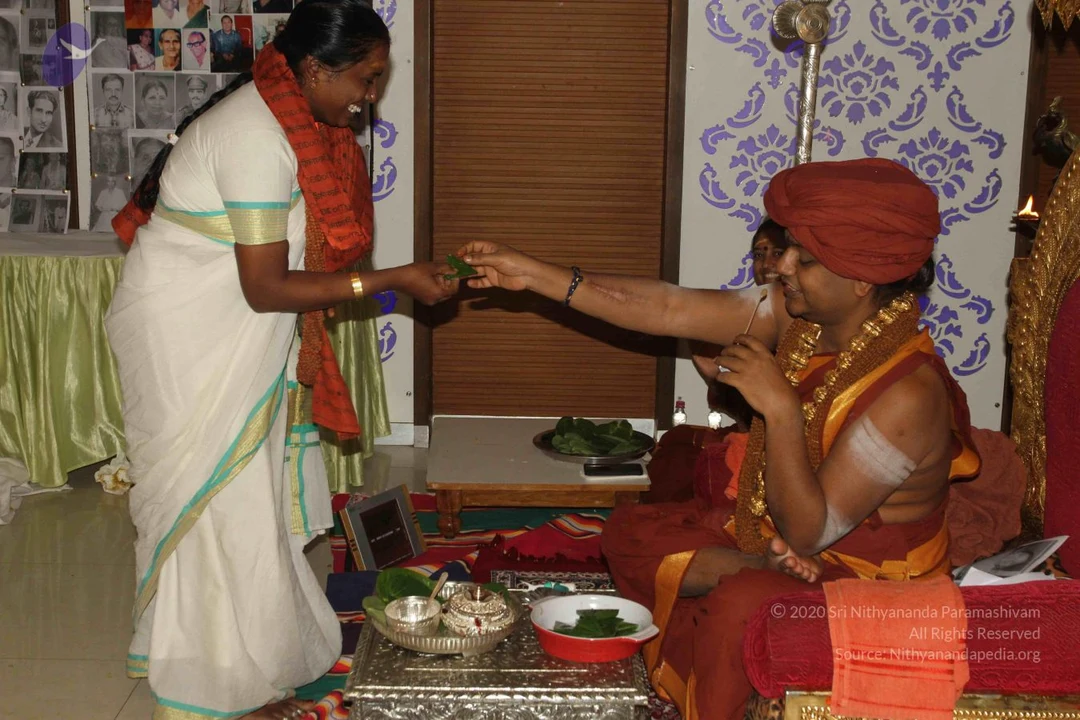
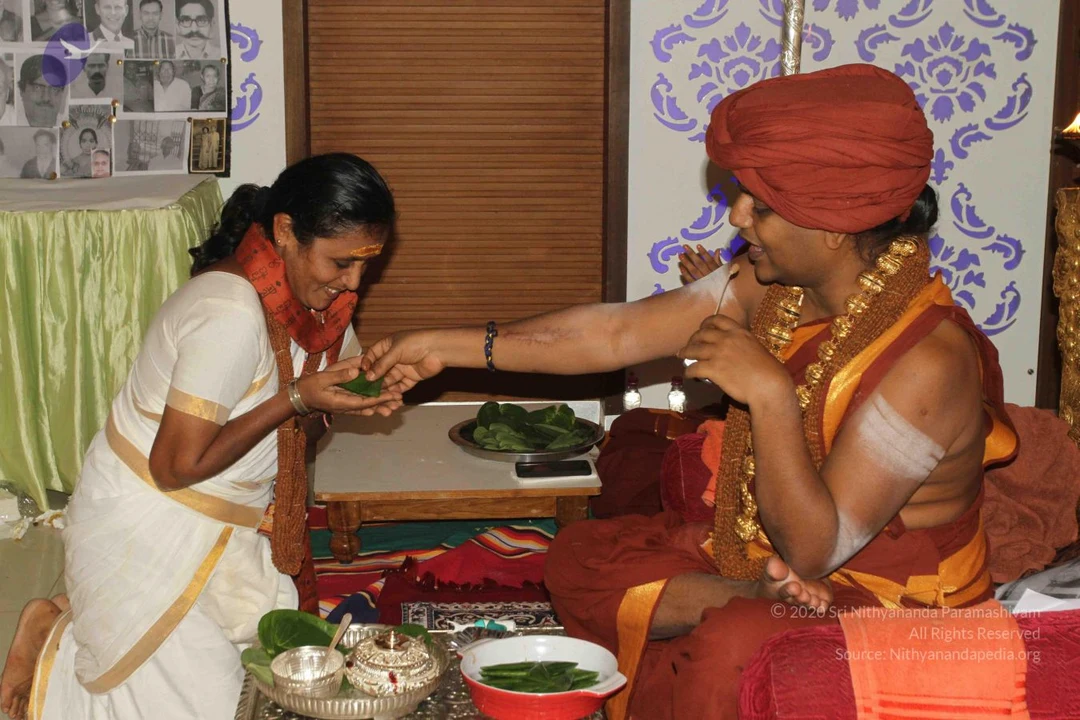
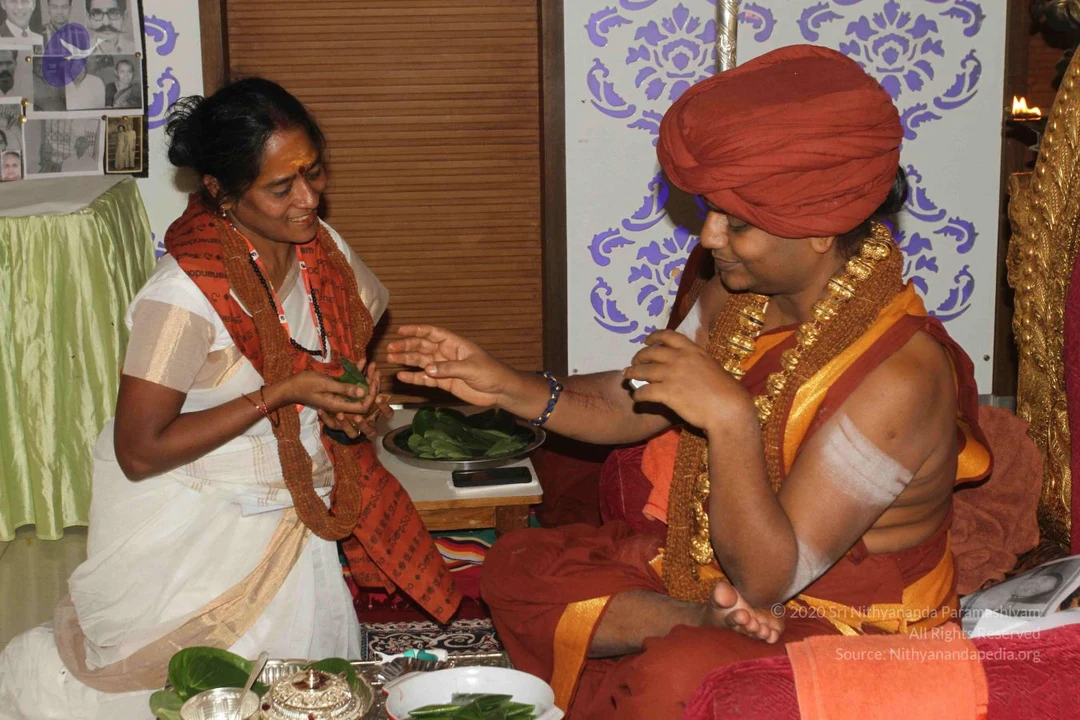
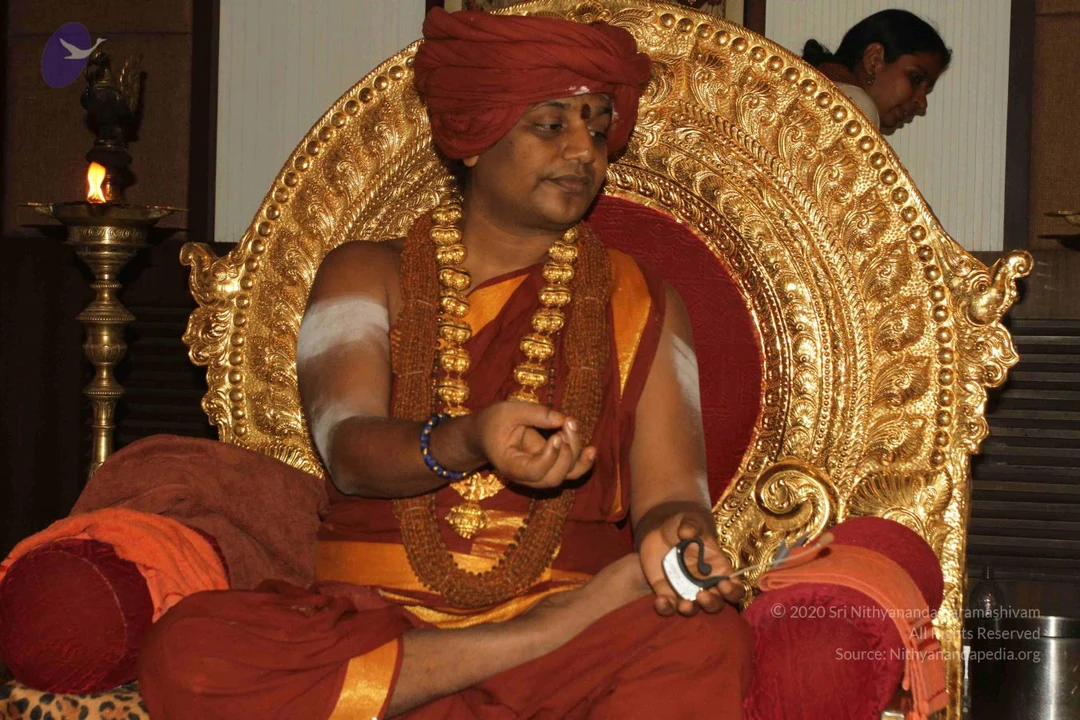
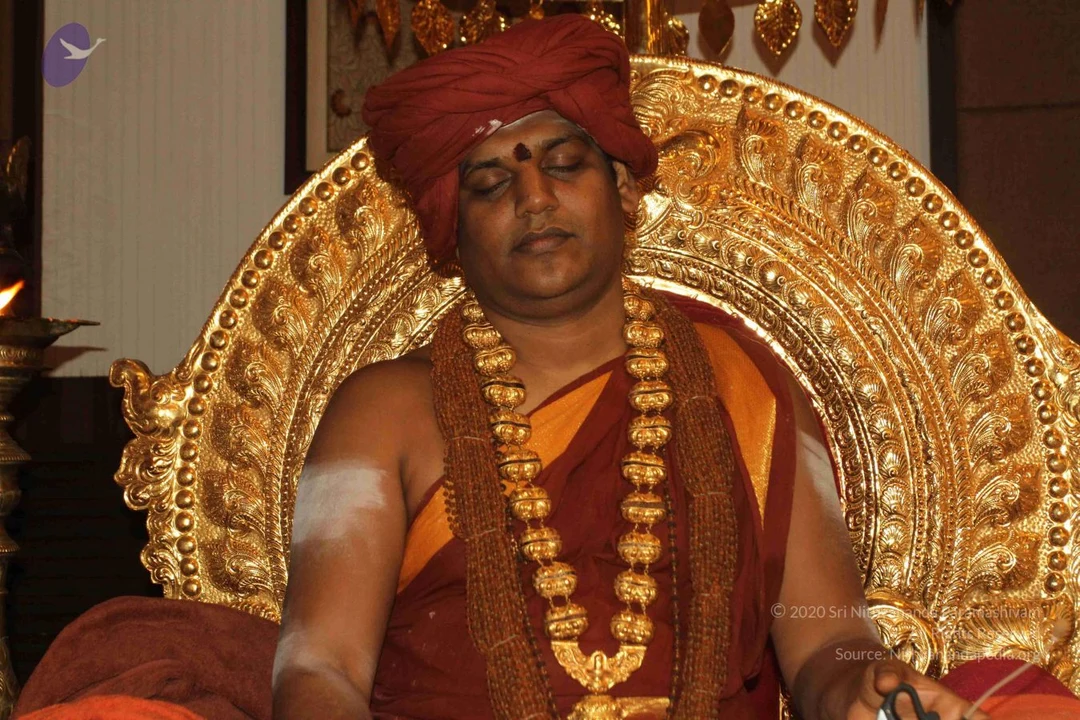
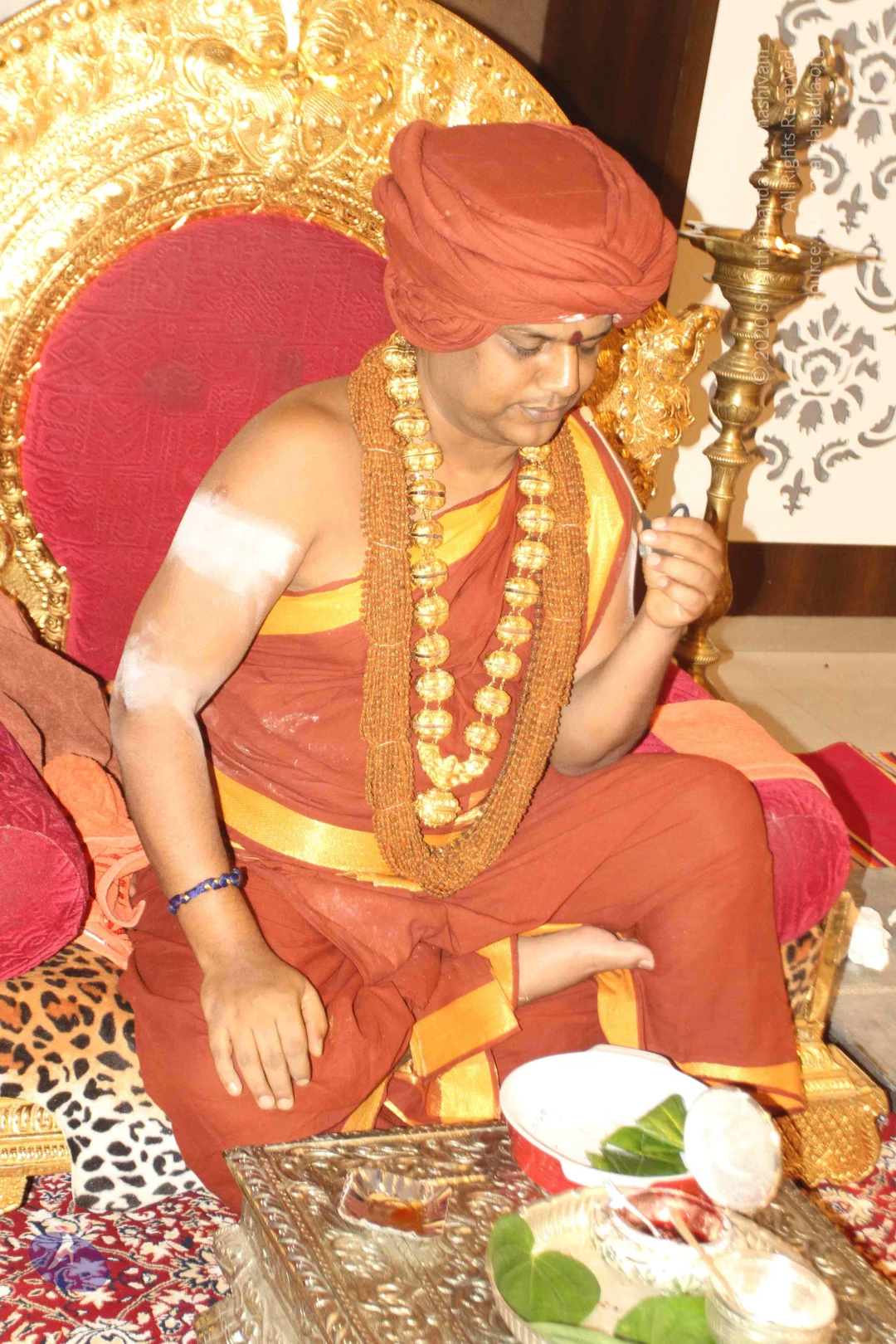
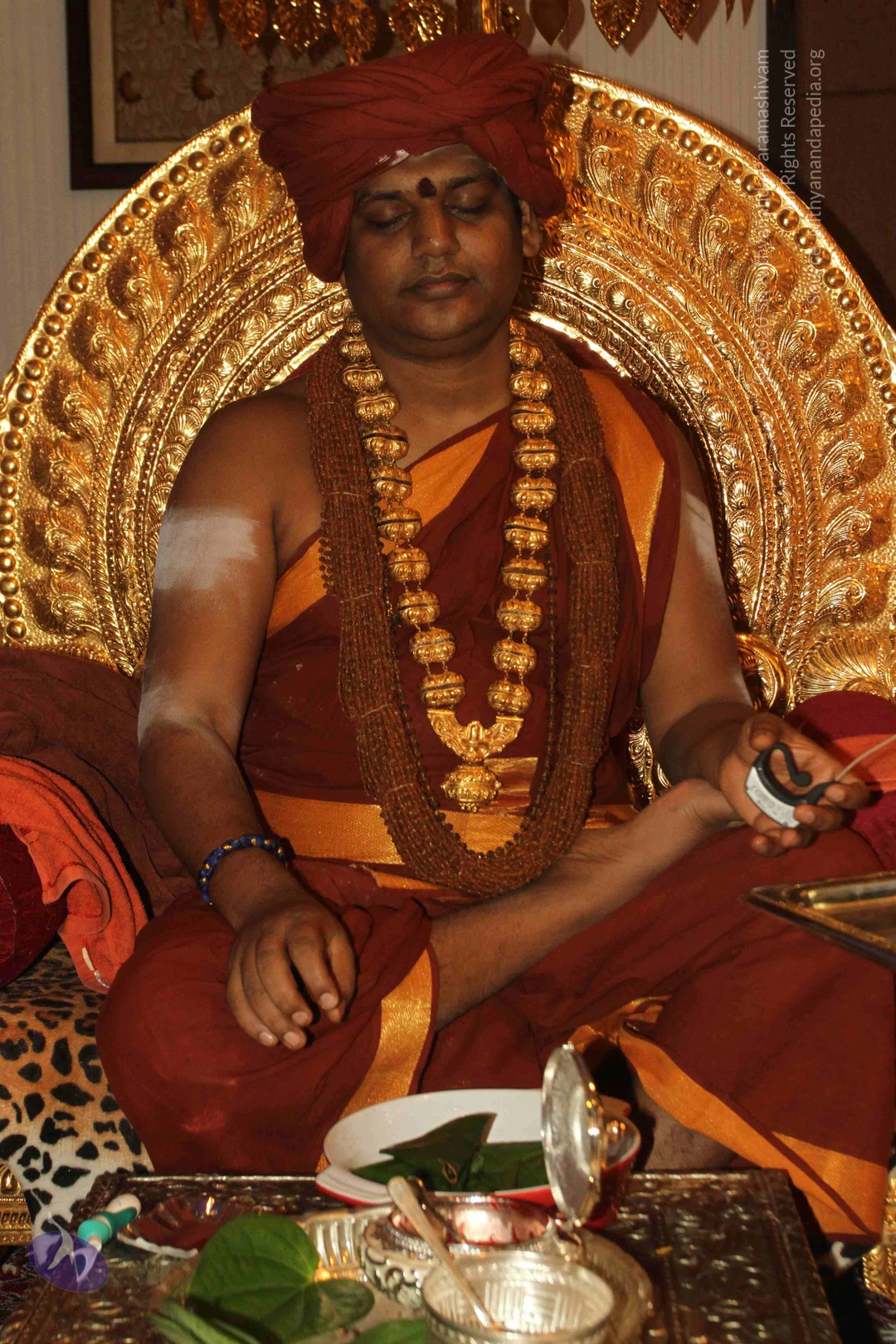
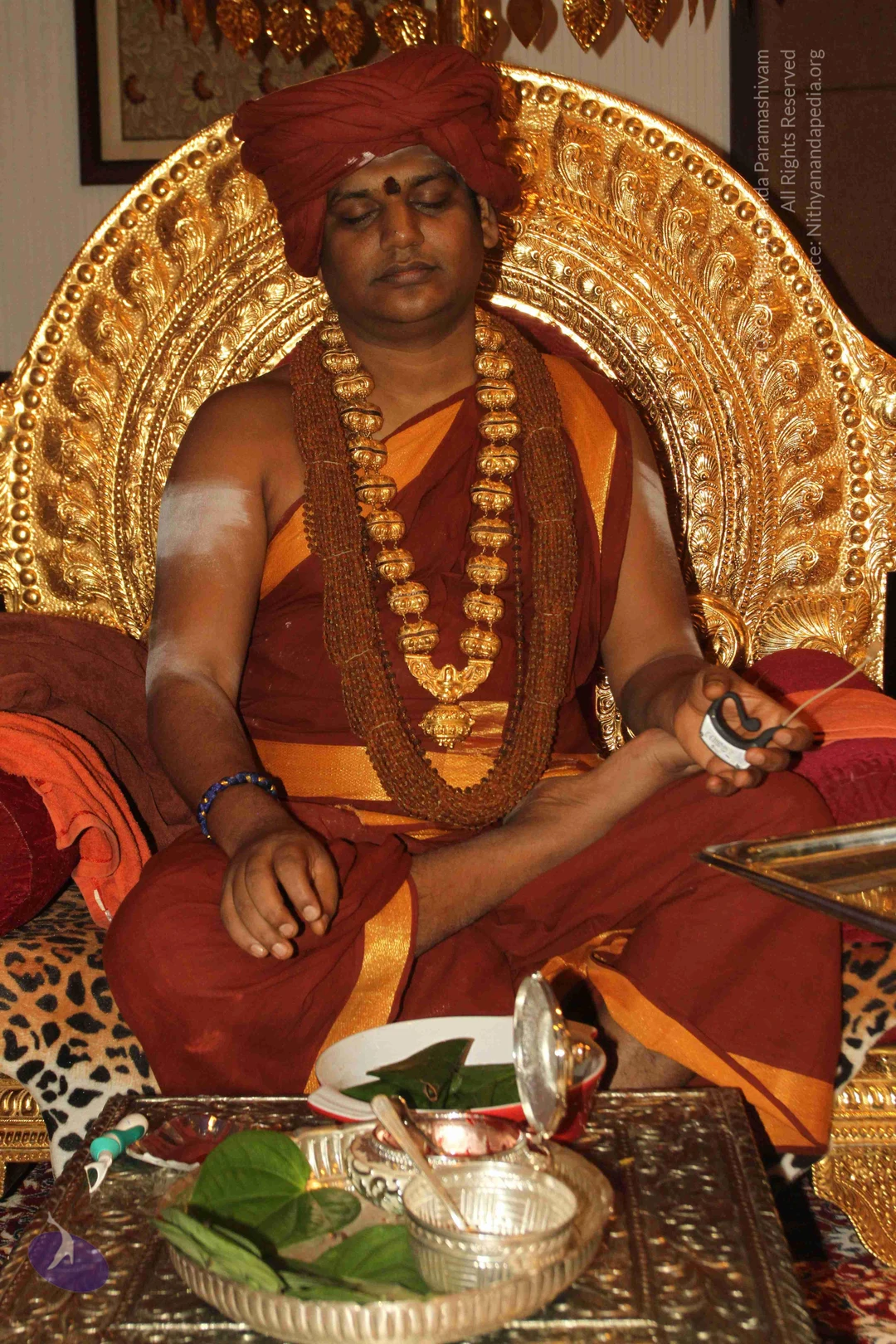
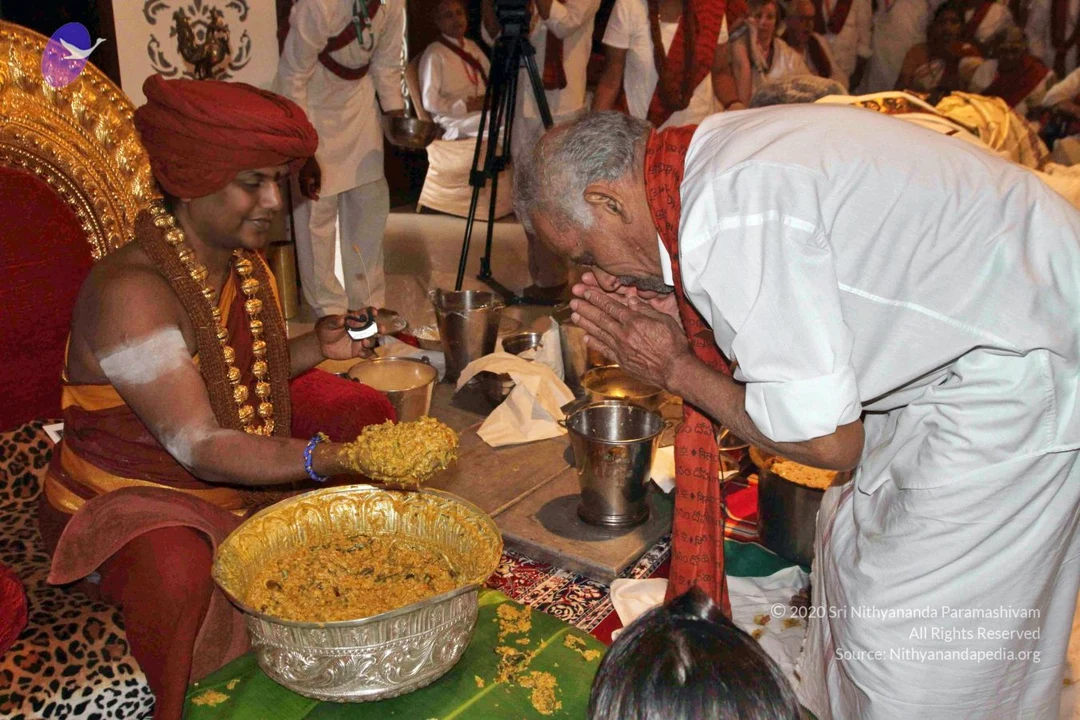
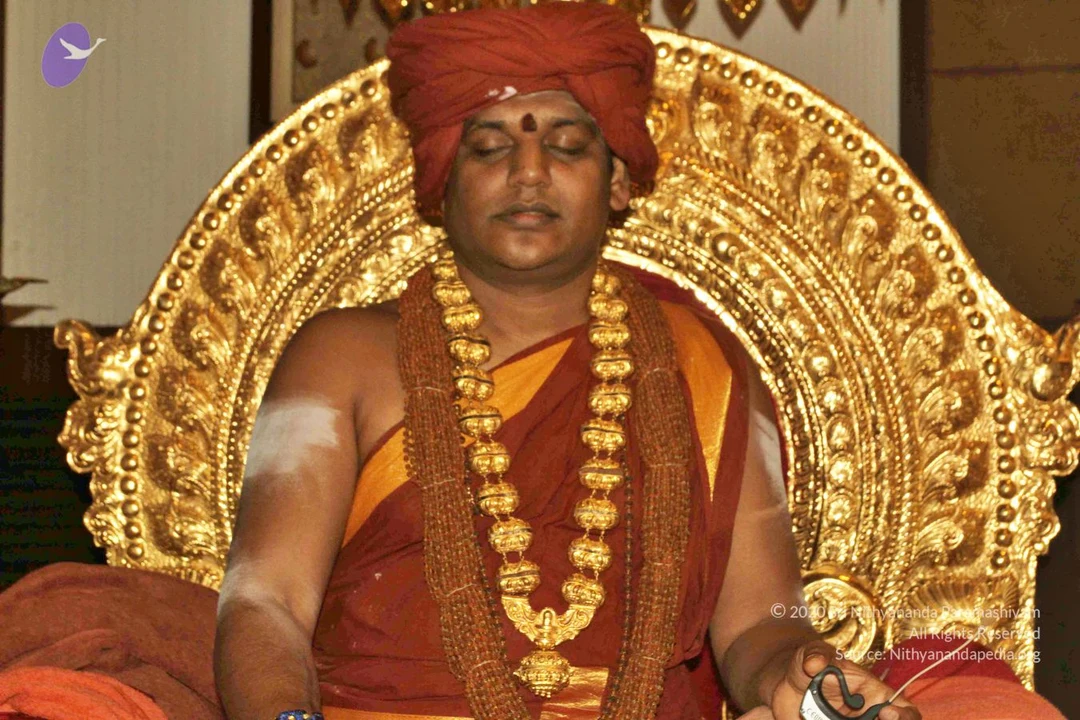
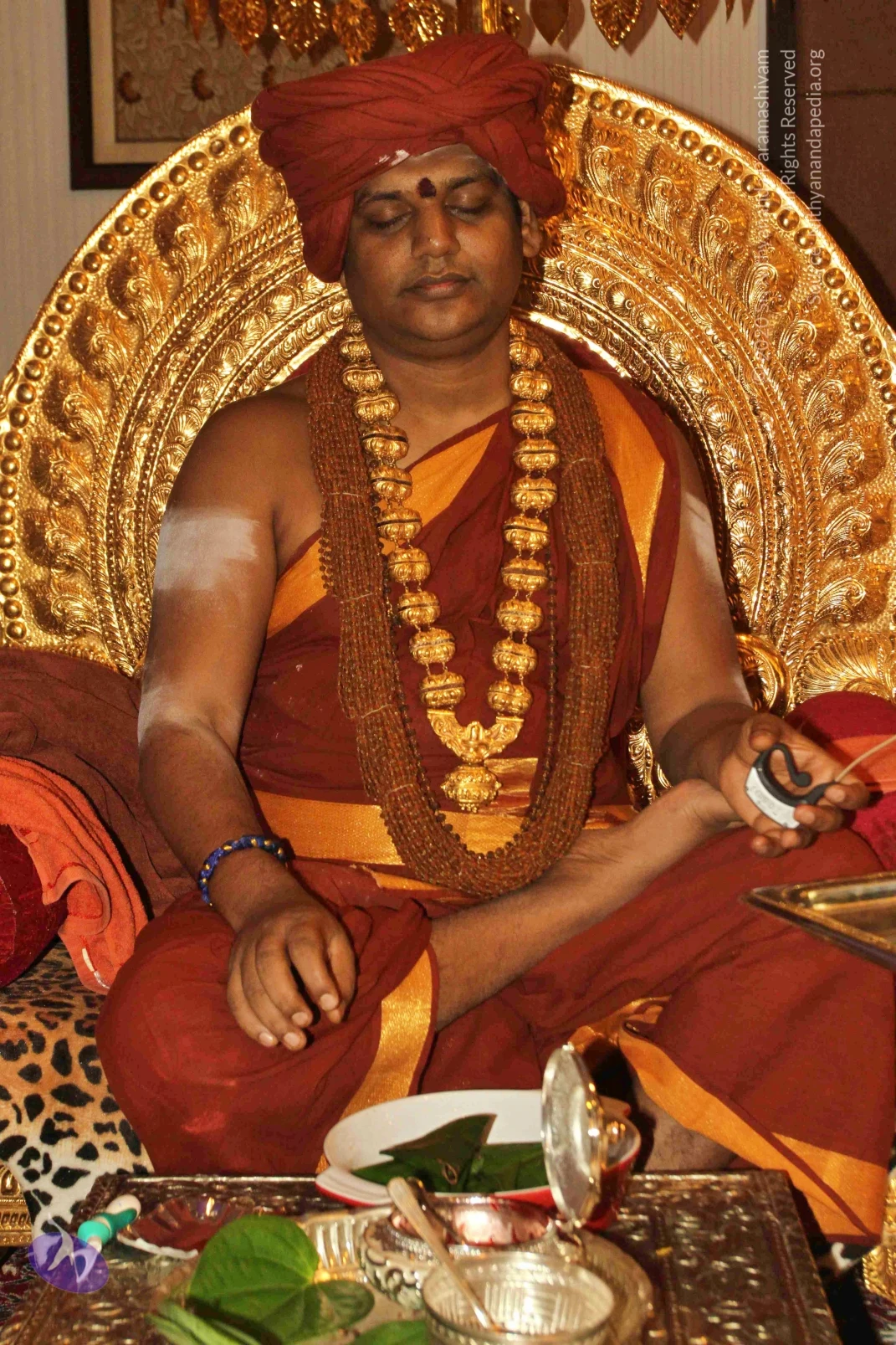
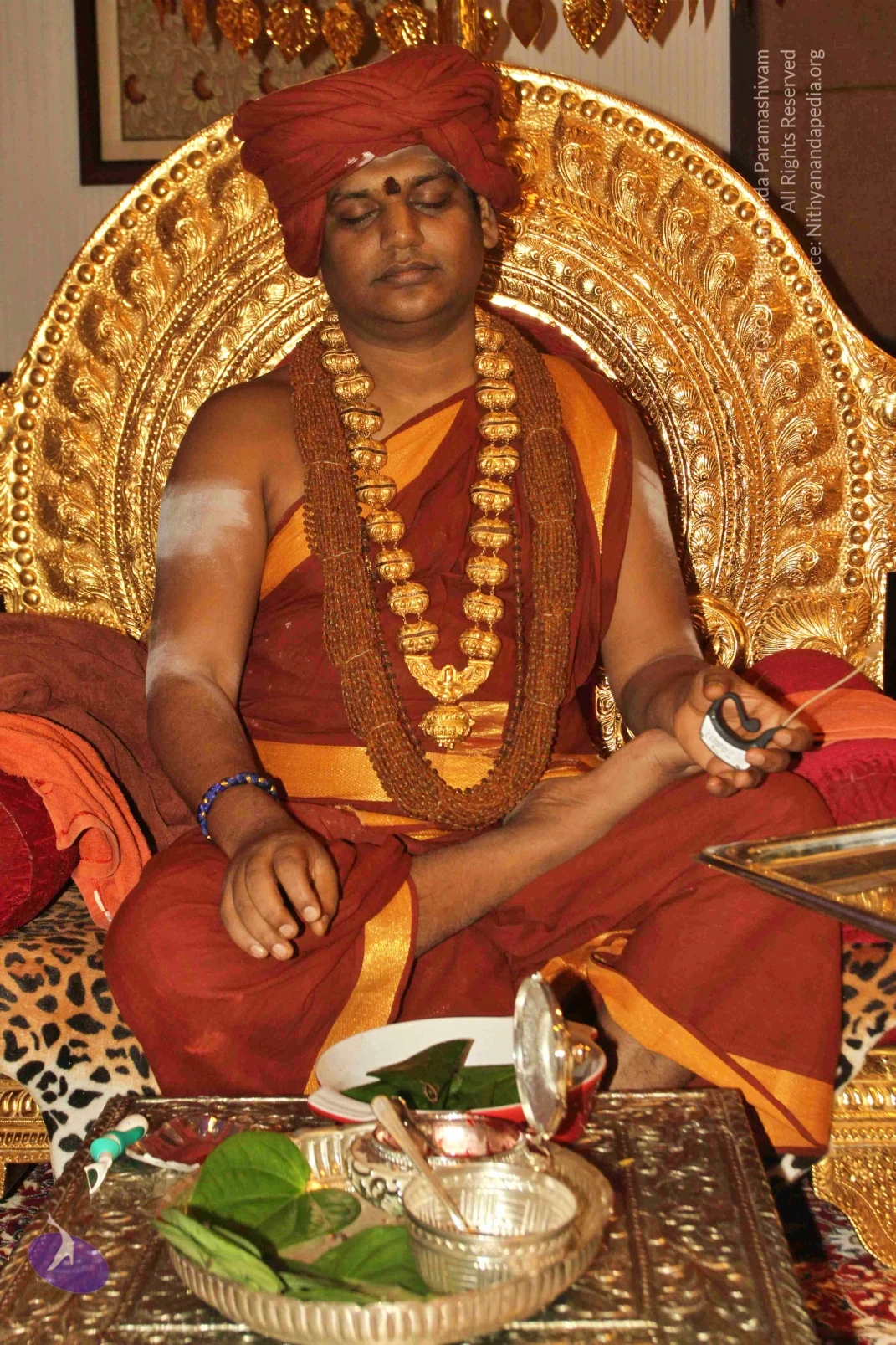
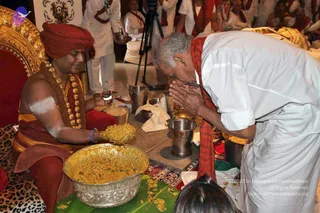
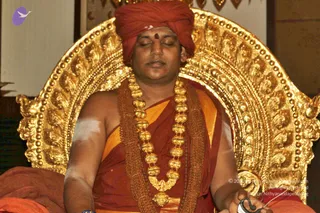
A seated figure in a red-orange turban and saffron-and-red robes, wearing a long beaded rudraksha-style mala with gold accents and bare upper arms marked with white paste, sits on a red cushioned seat beside a golden throne. He serves rice from a large silver bowl of yellow-tinted food with his right hand, while a white-clad devotee with grey hair and a red shawl bows deeply with palms pressed together. Steel vessels, a leopard-print mat, a banana leaf and a tripod-mounted camera surround them, and white-clad attendants stand in the background.A seated man with eyes closed sits on an ornate gold throne with a carved, beaded backrest. He wears a red-orange turban with a small red bindi on the forehead, a saffron-orange garment draped over his shoulders, and a thick multi-strand gold-bead necklace with a large ornate gold pendant. Pale ash marks show on his upper arm, and he holds a small silver-toned object in his right hand. The setting appears to be a temple or ritual hall.

Shivoham
12 photosSource gallery
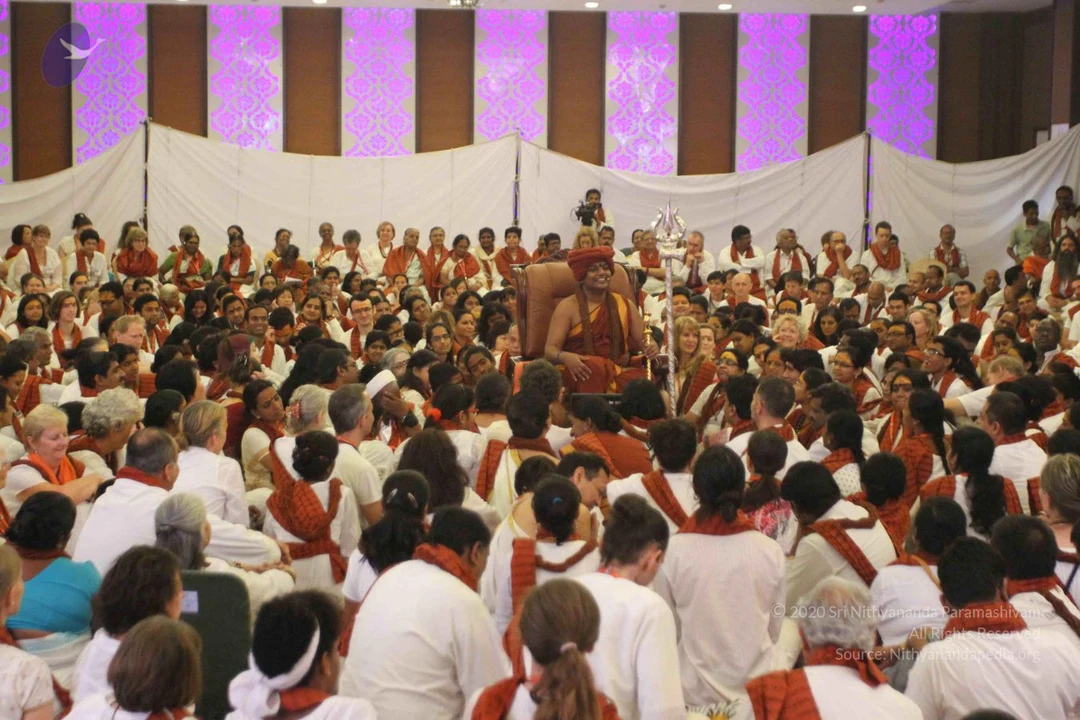
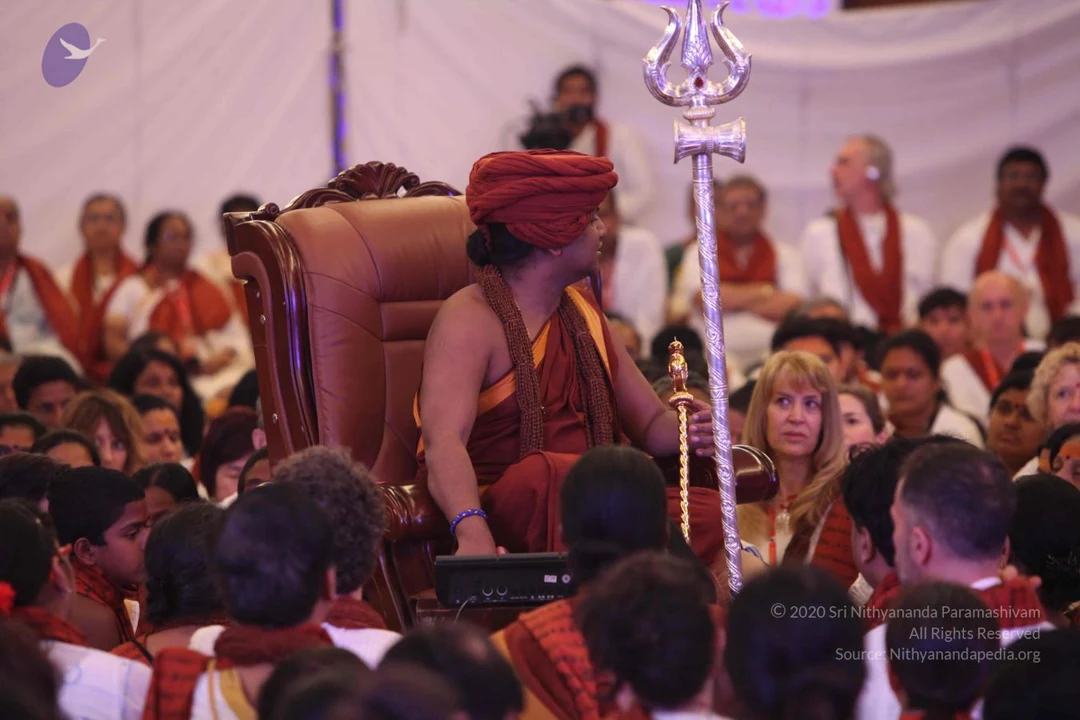
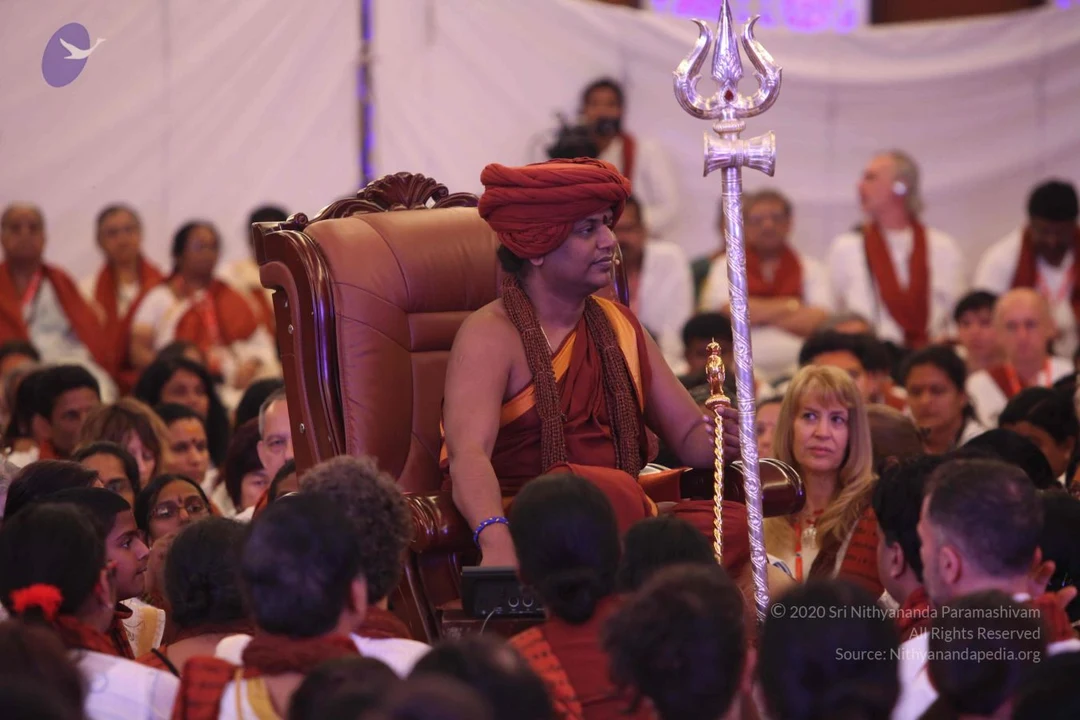
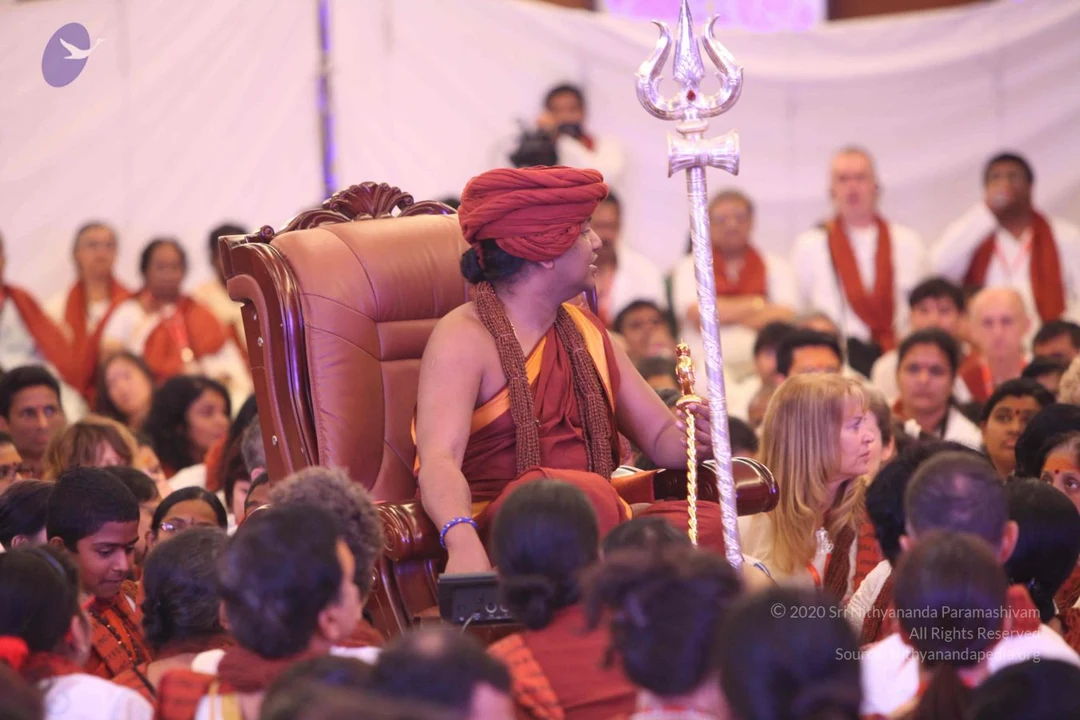
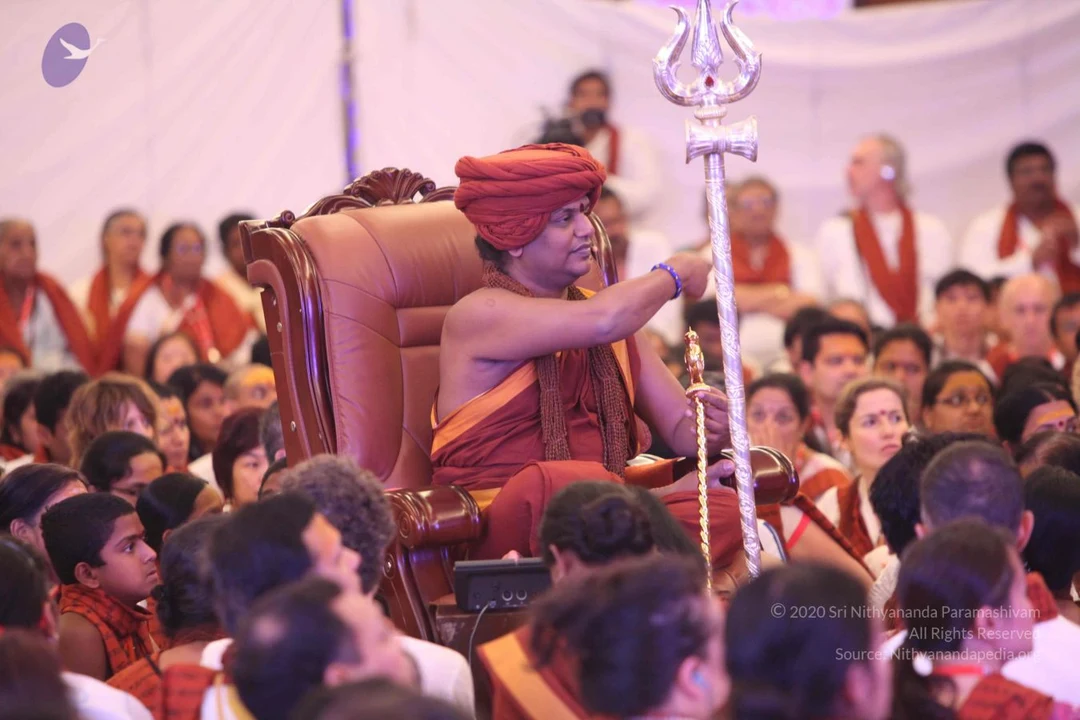
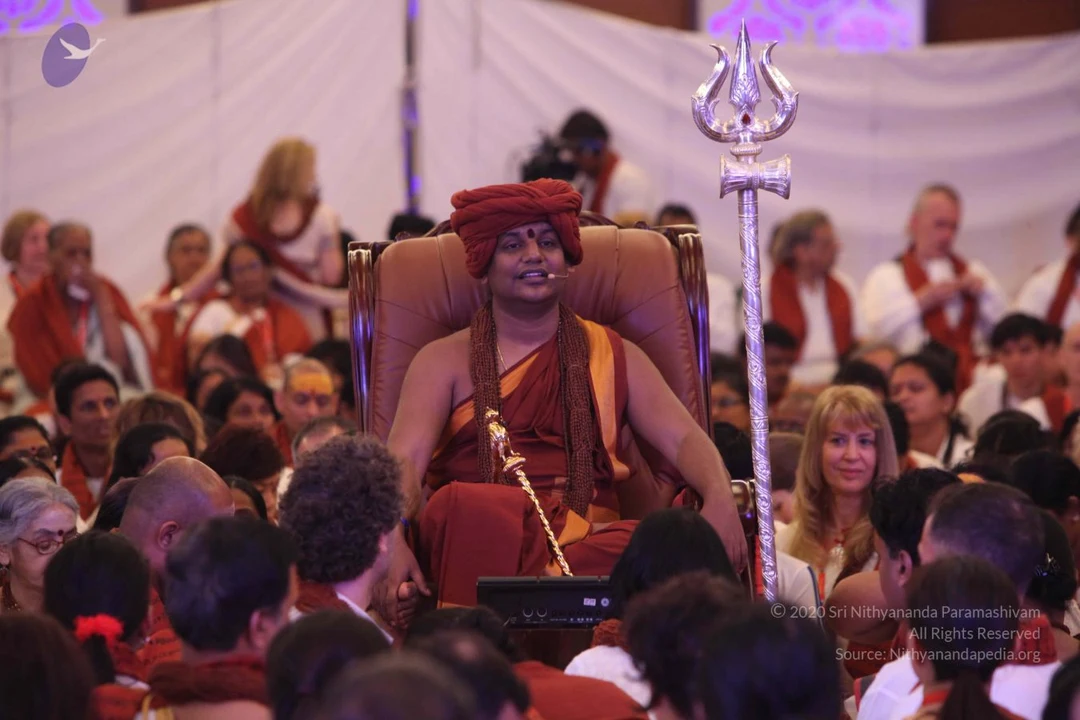
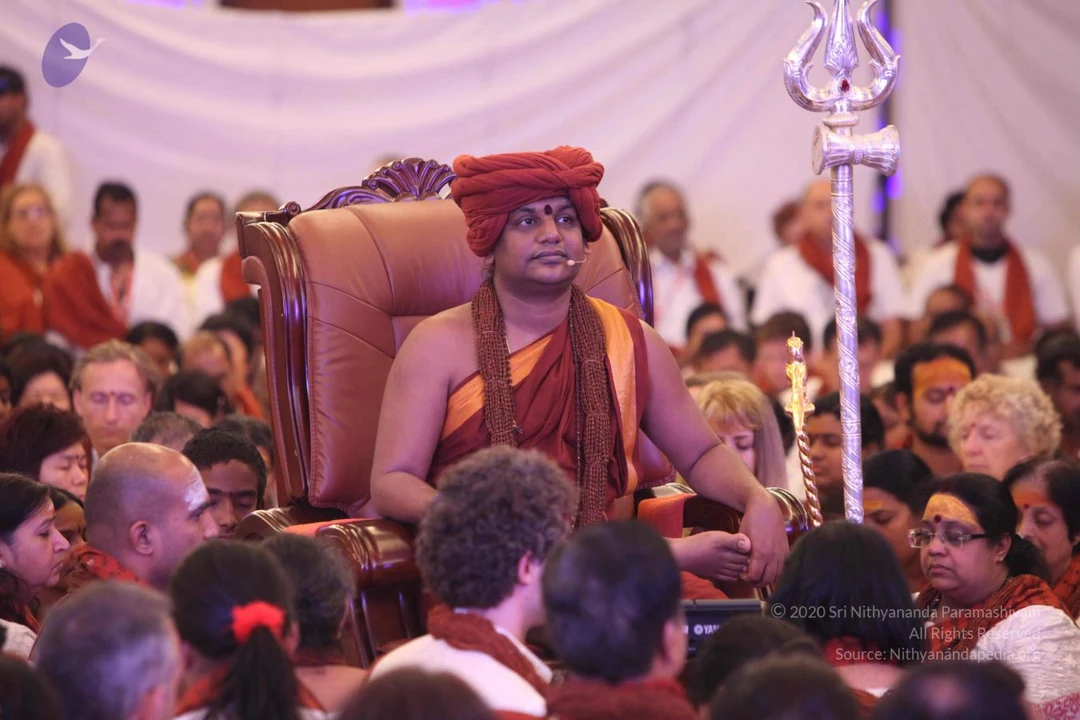
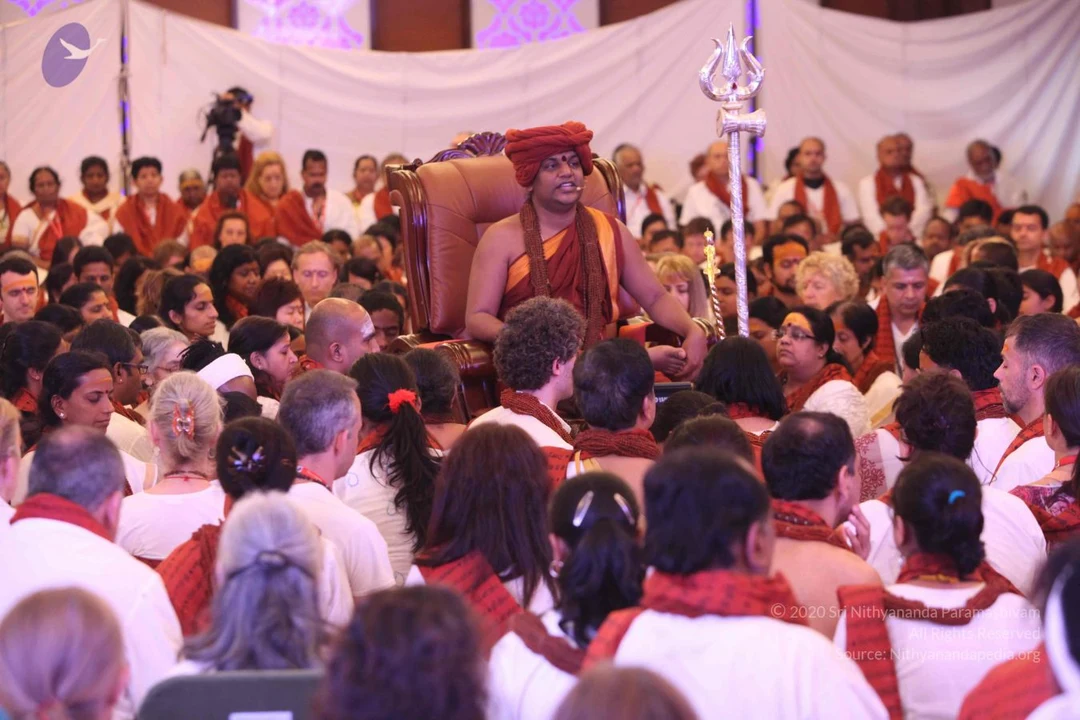
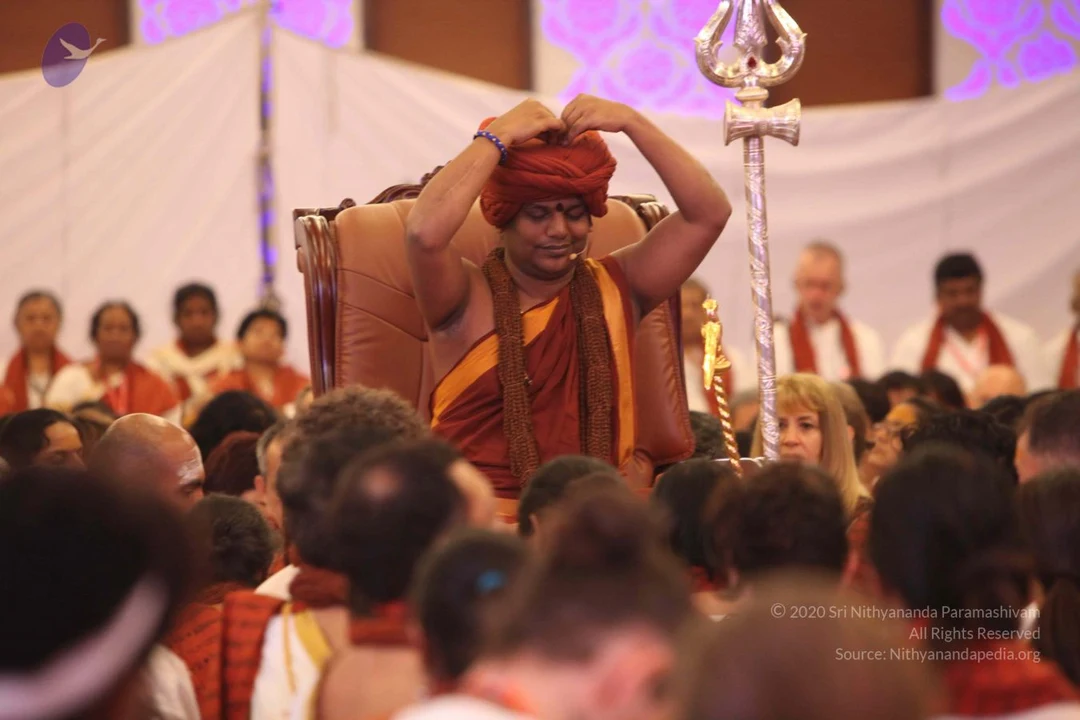
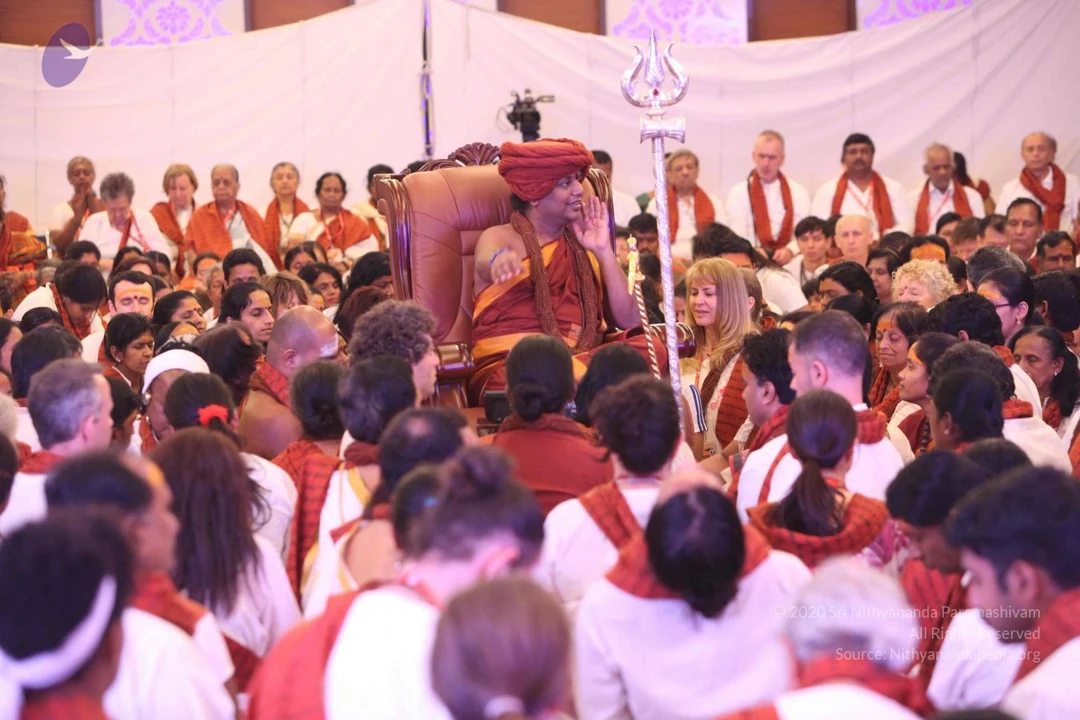
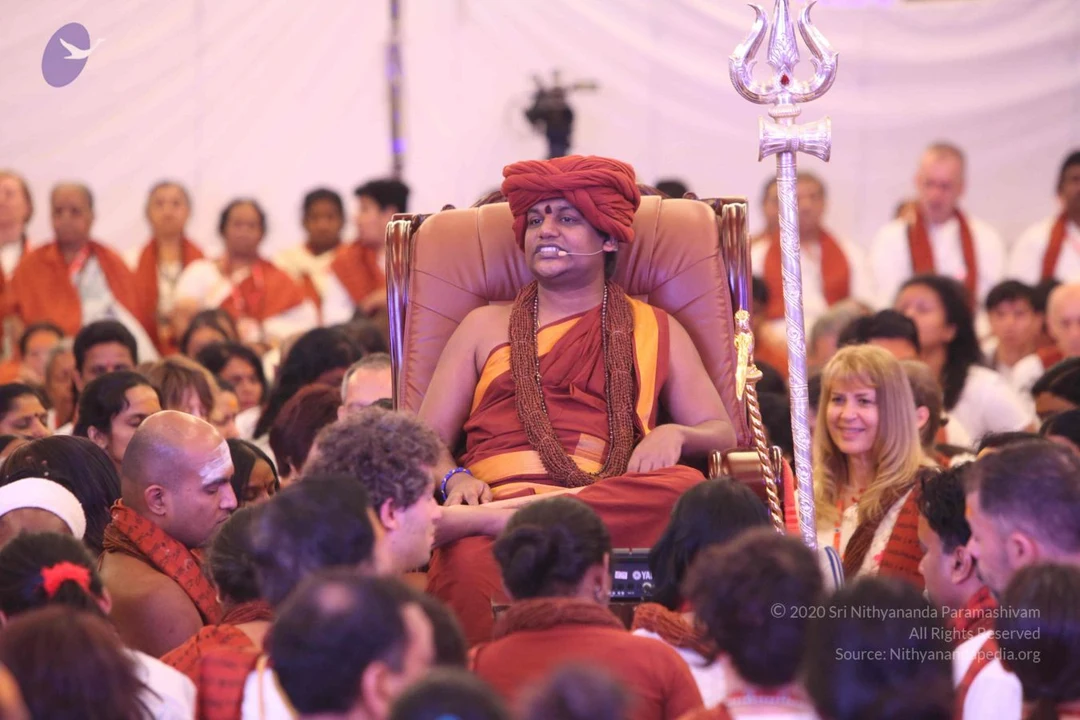
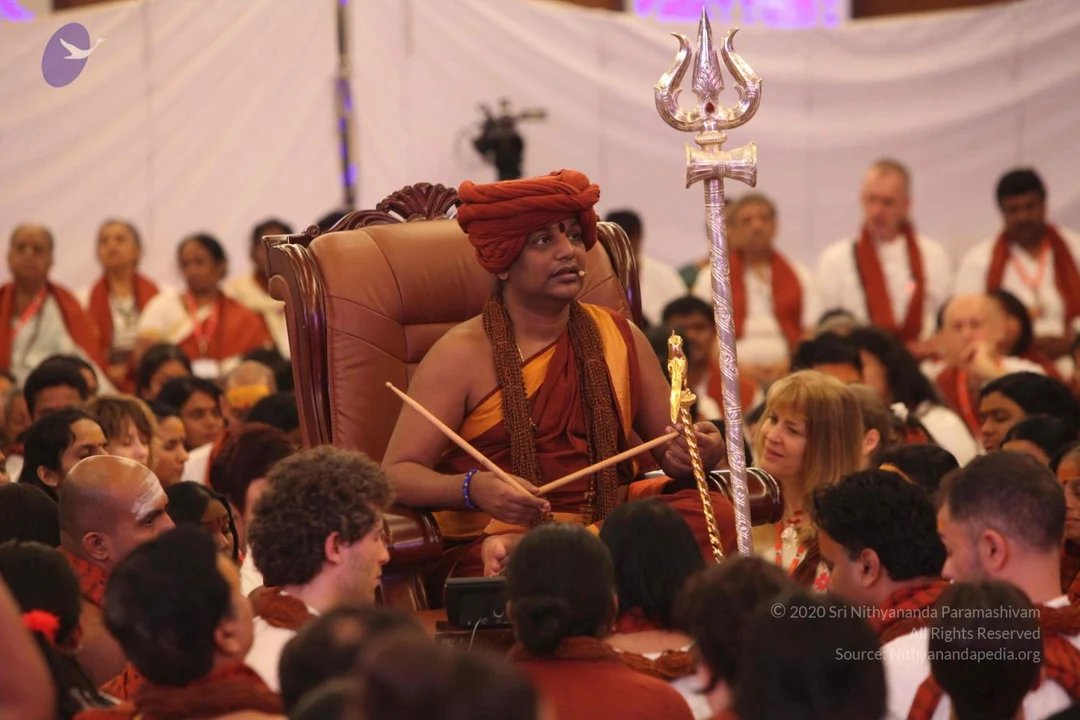
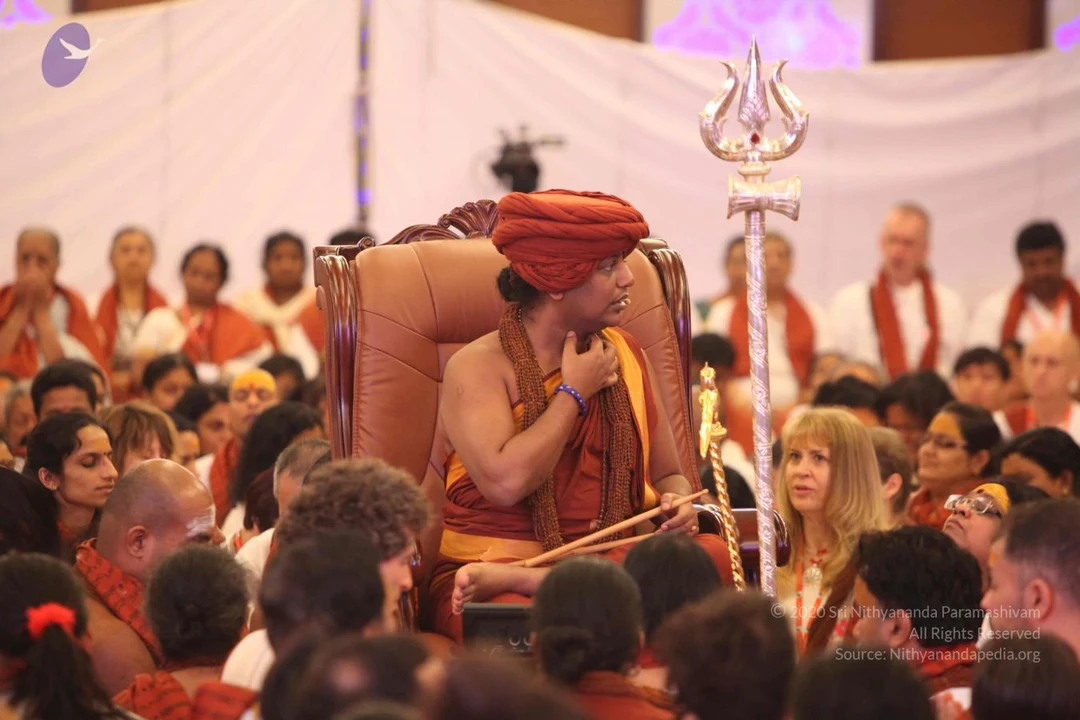
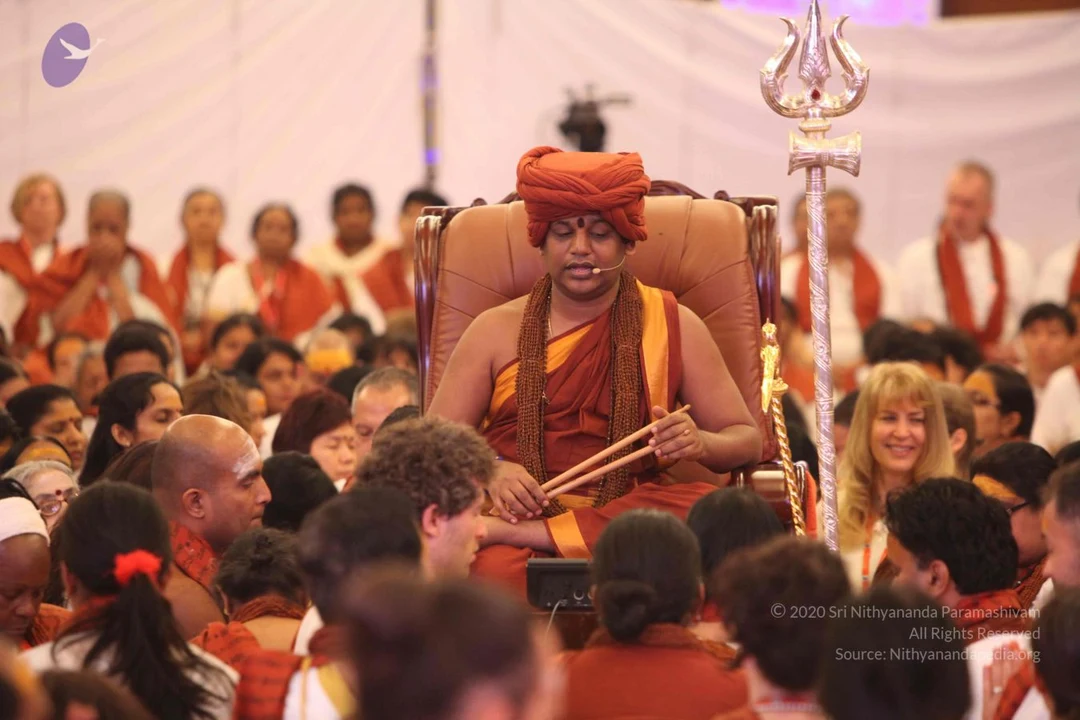
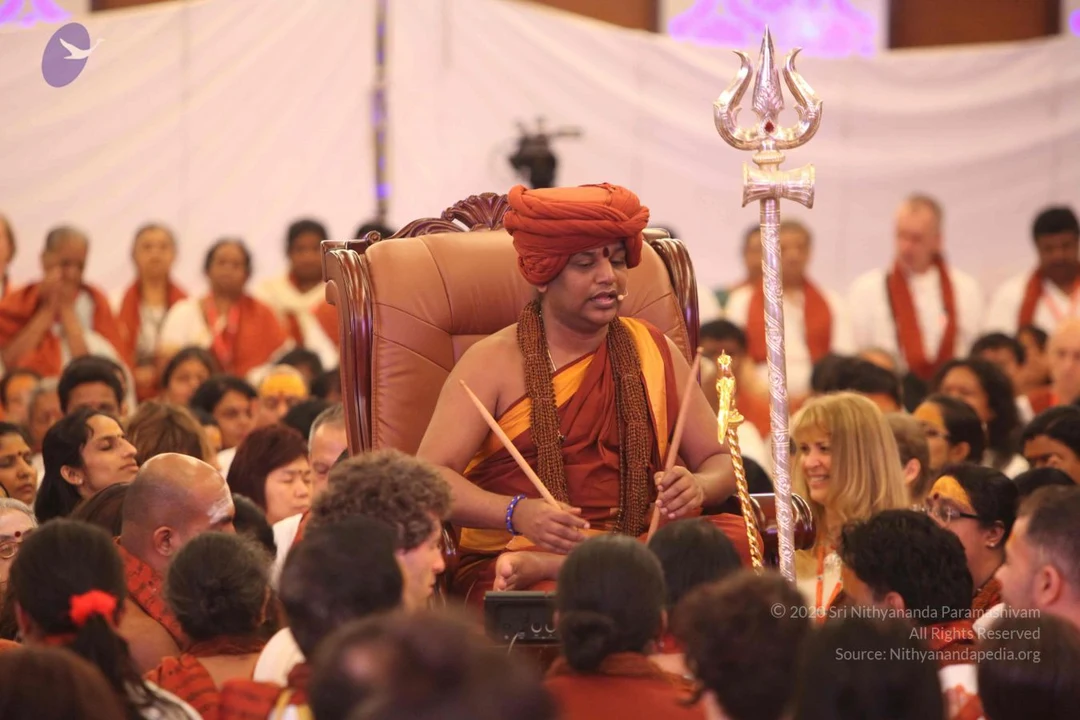
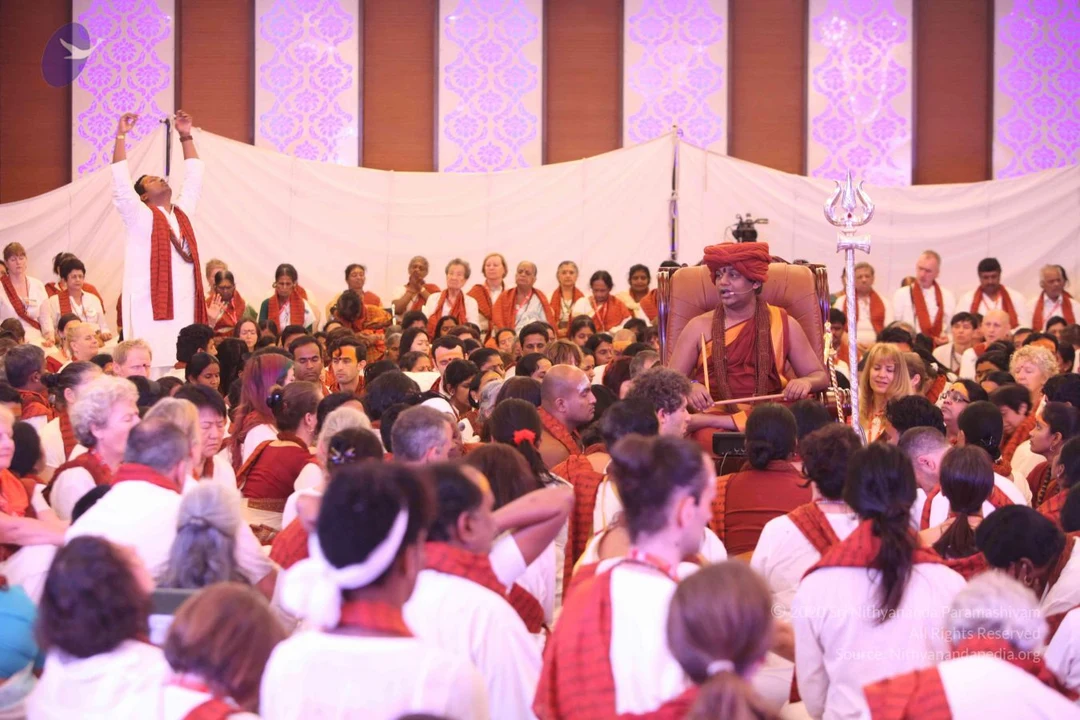
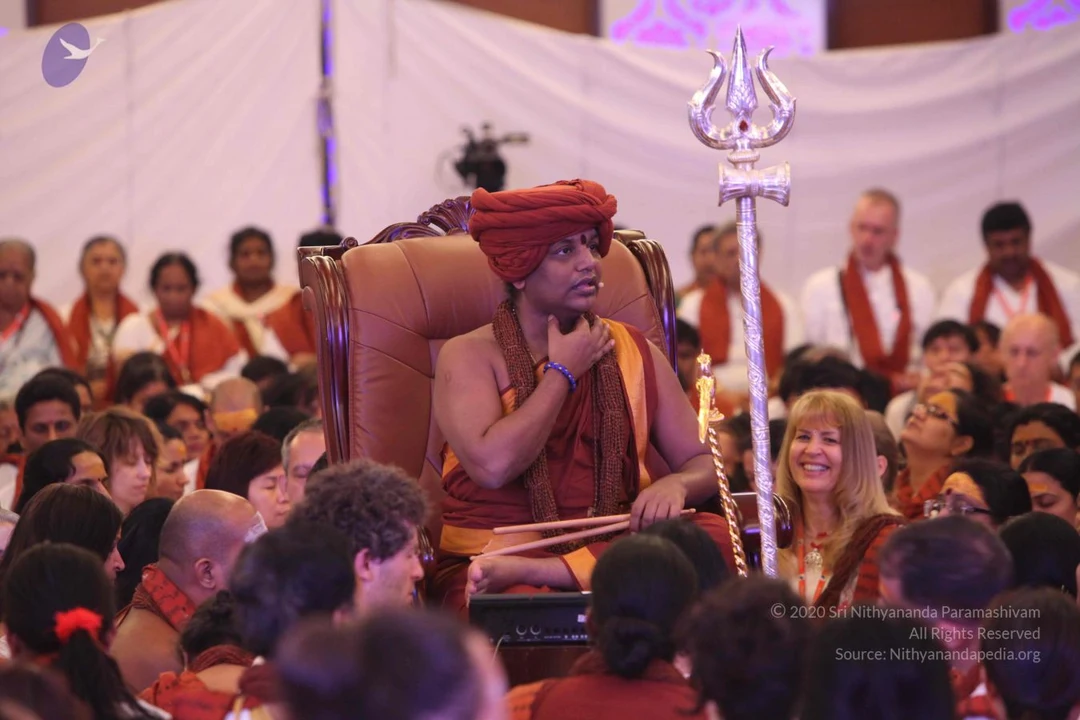
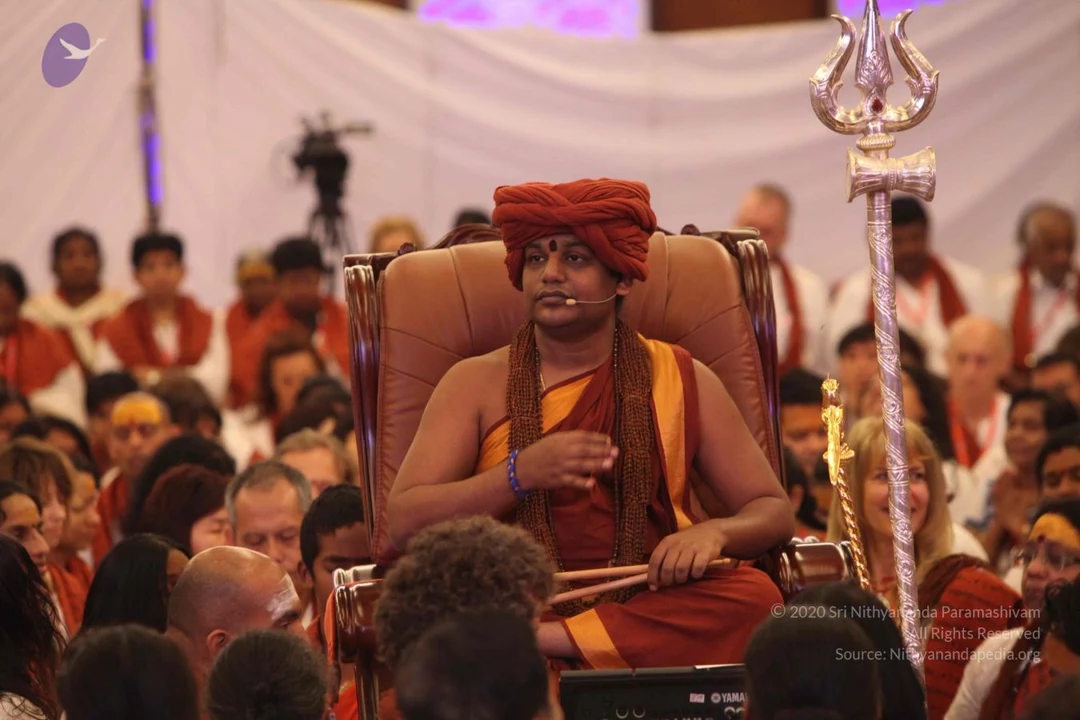
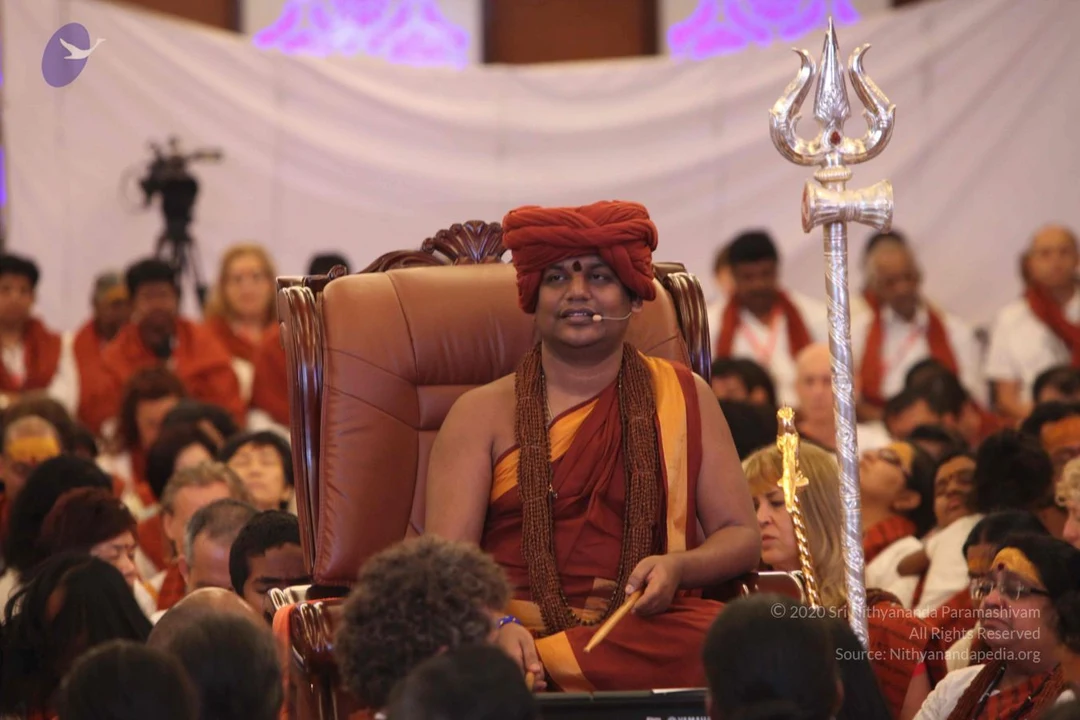
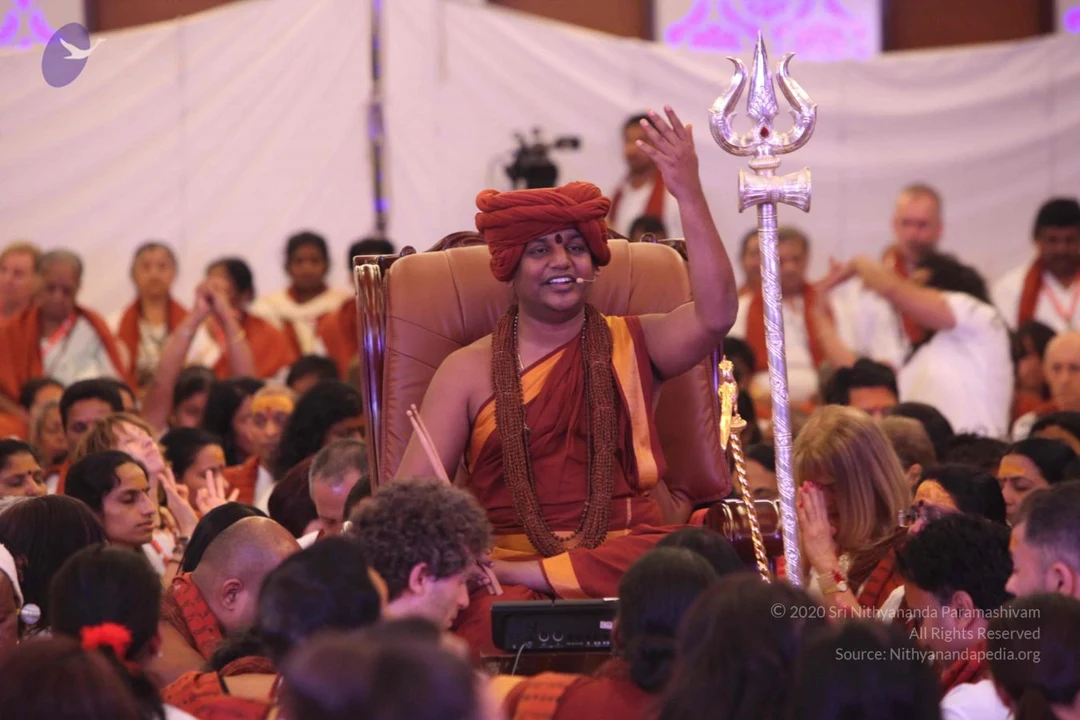
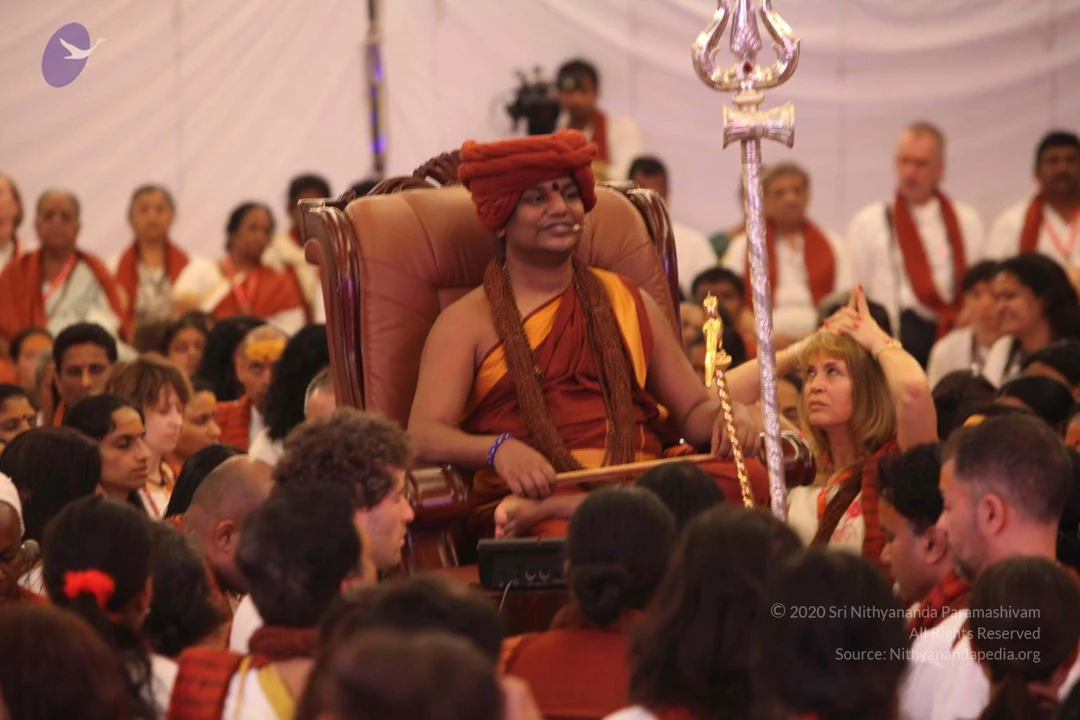
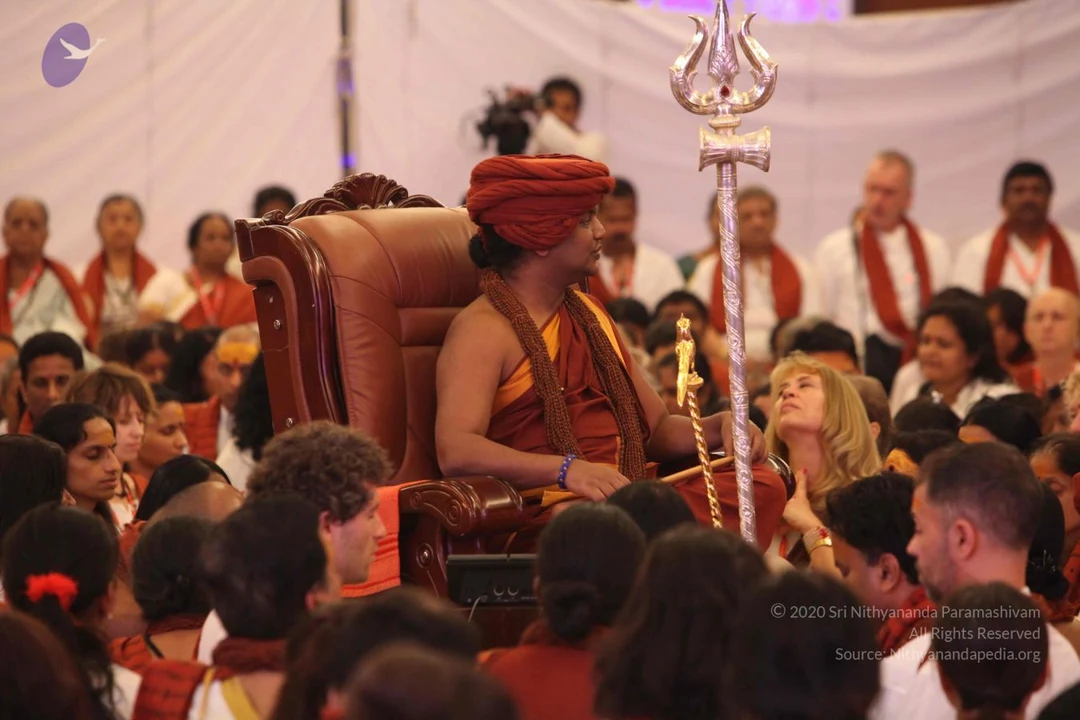
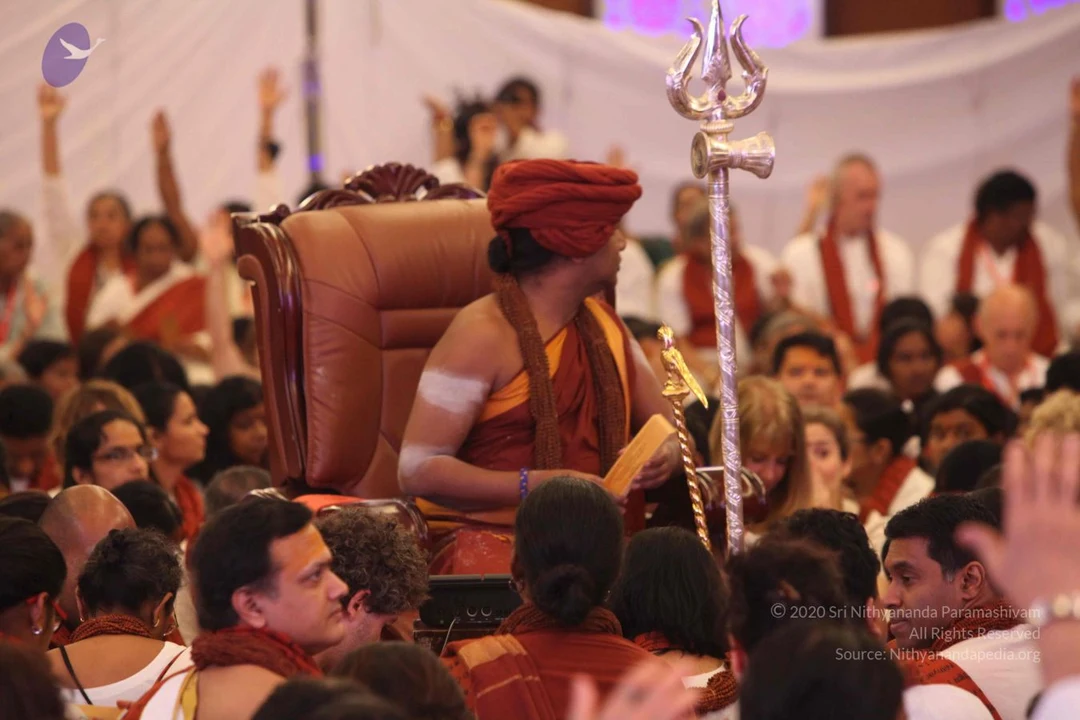
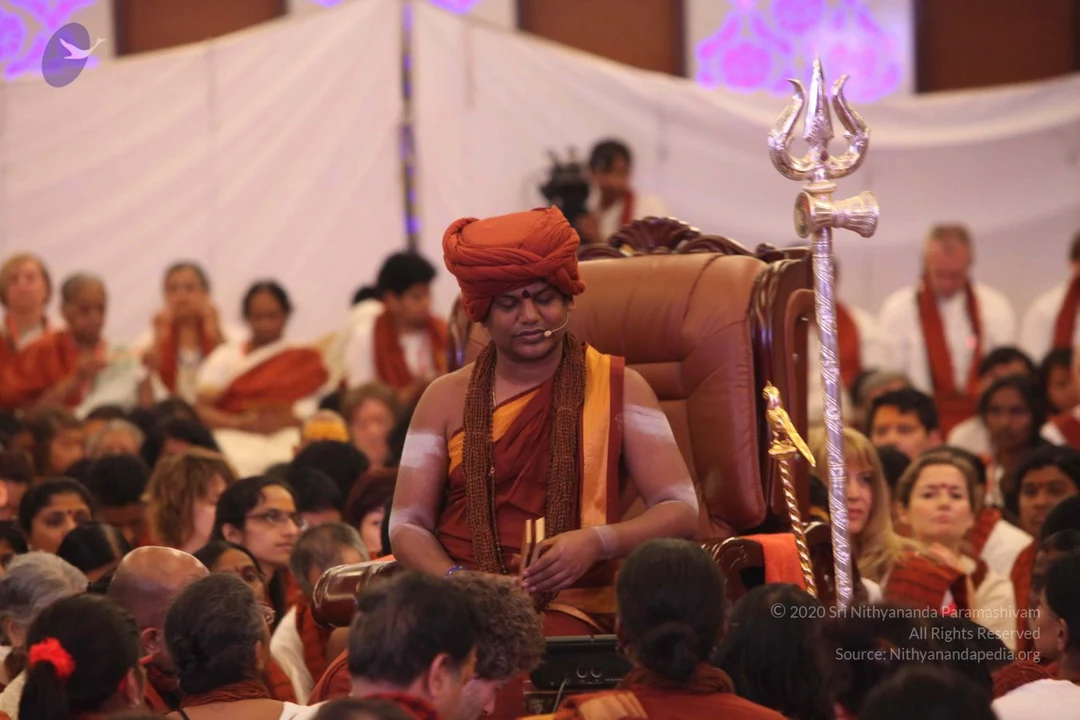
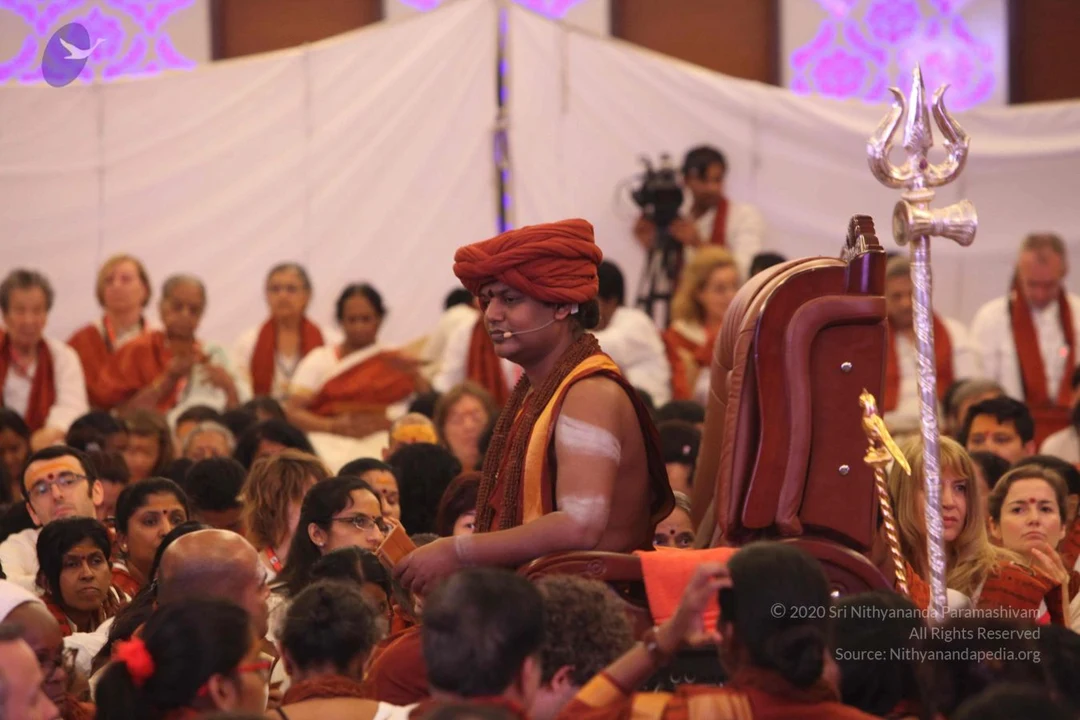
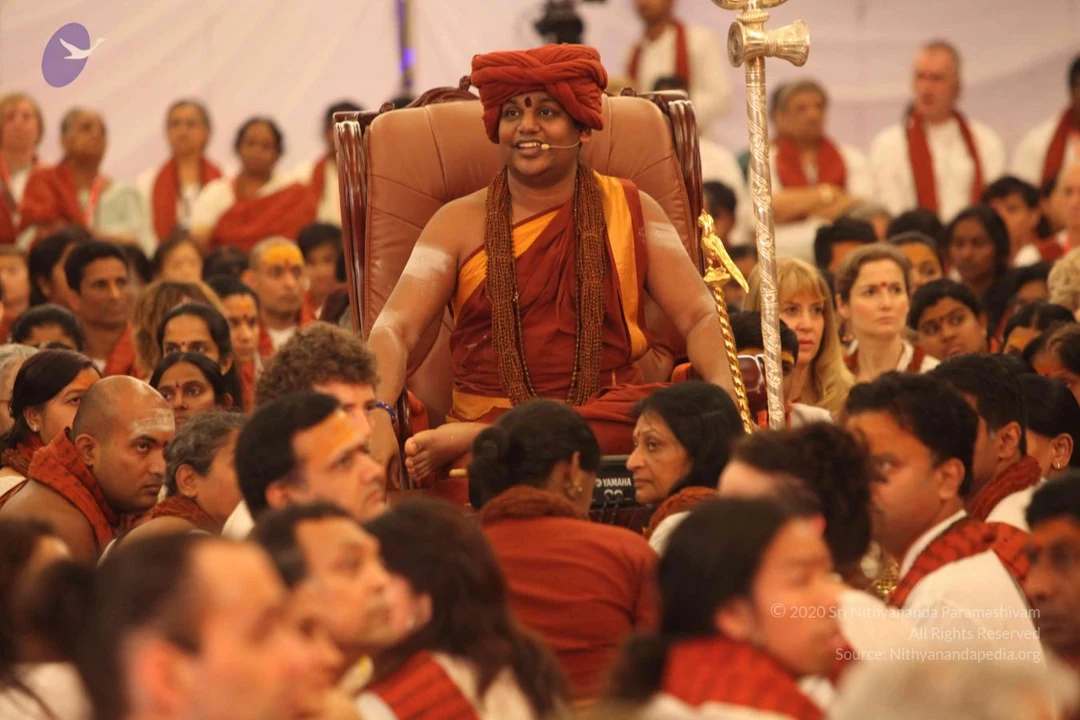
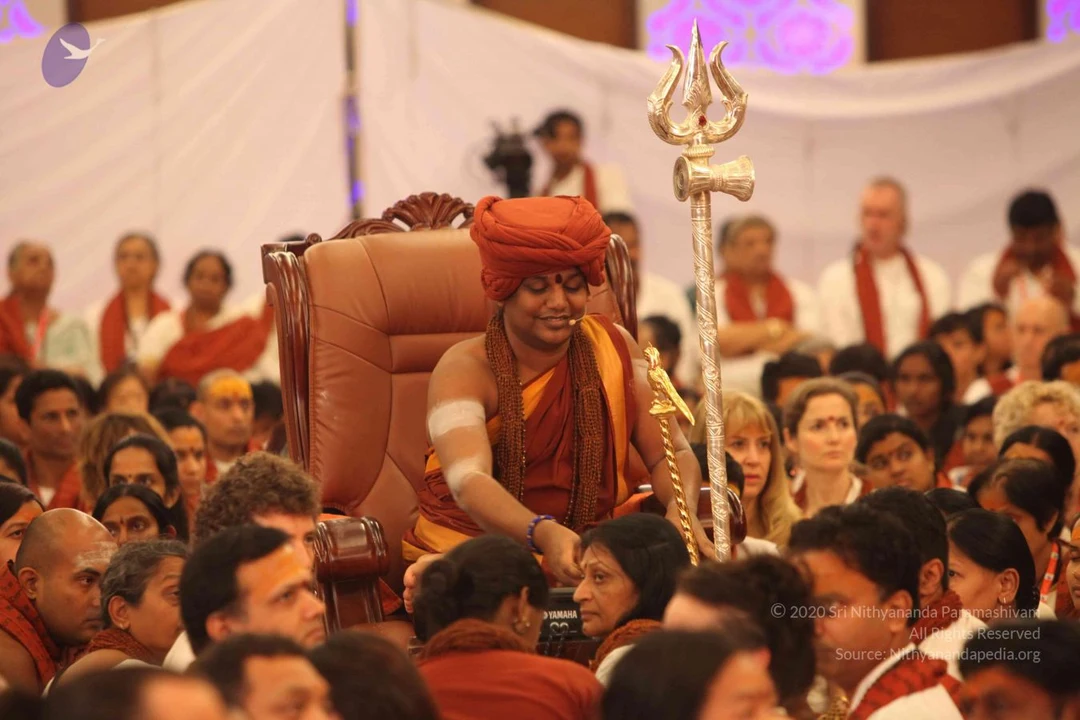
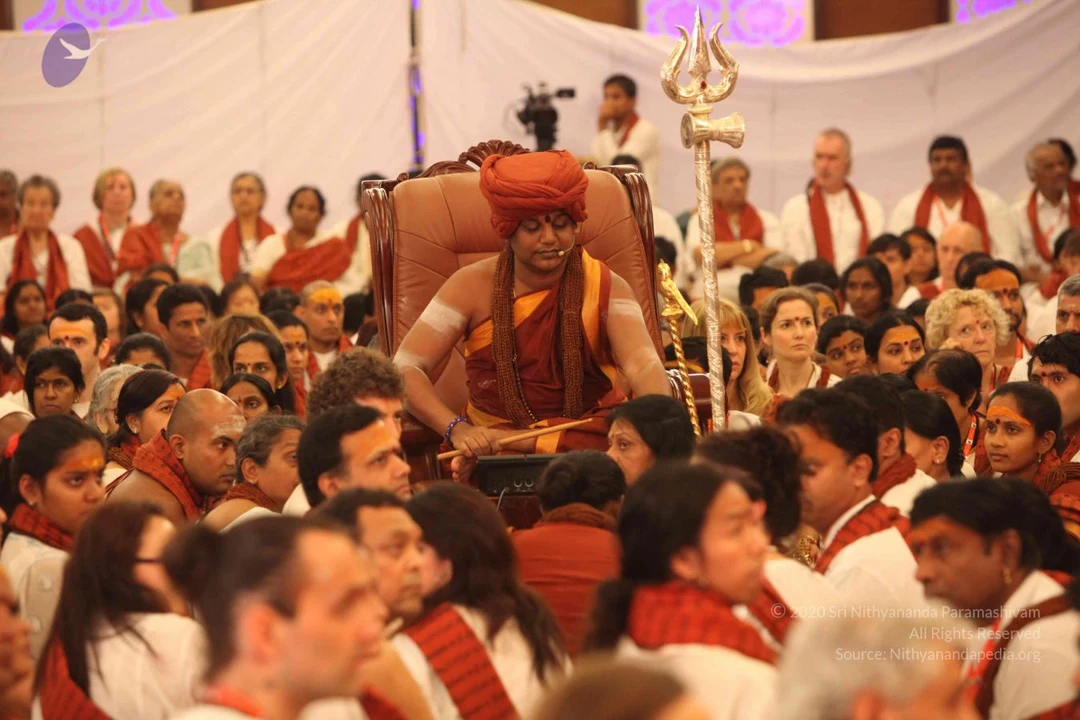
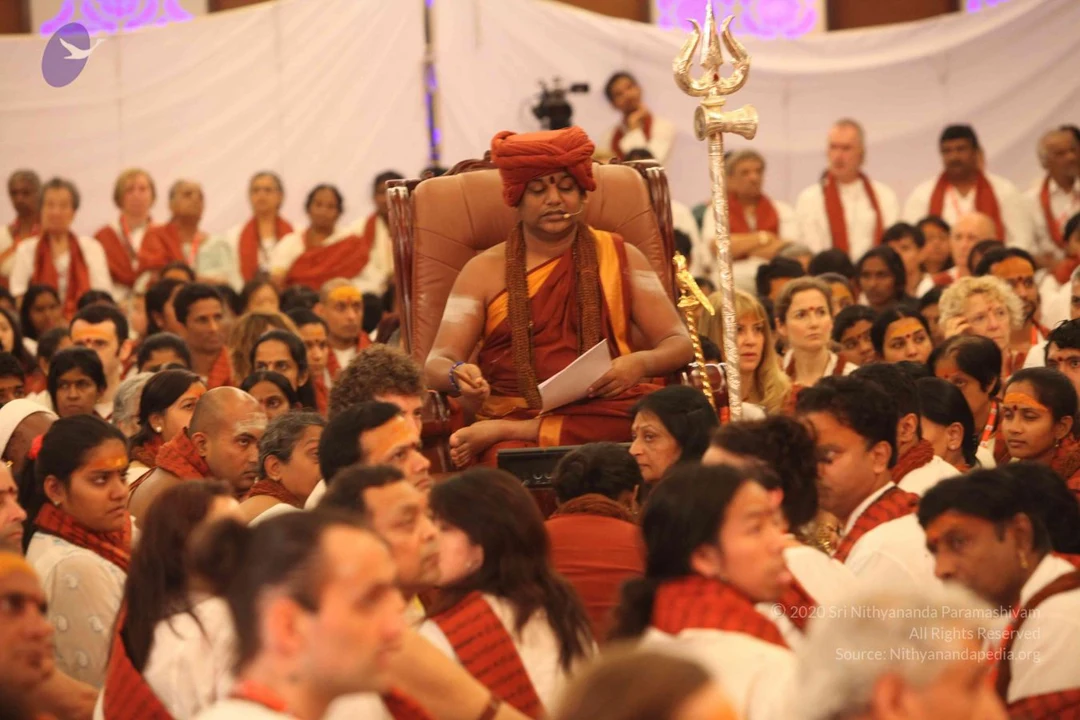
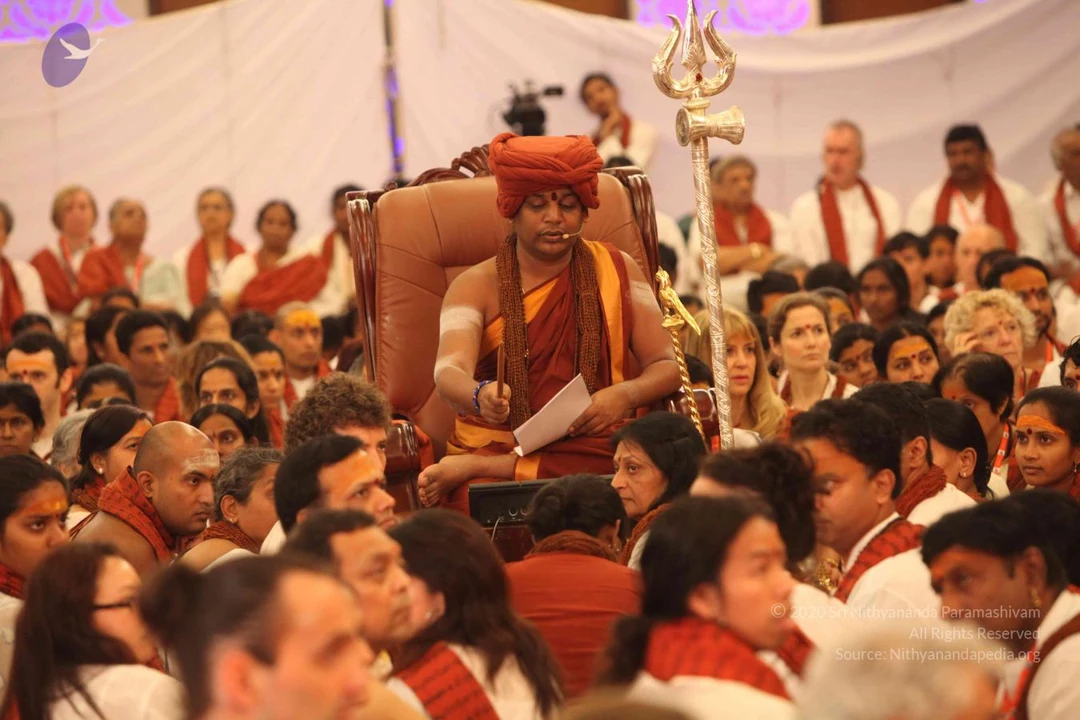
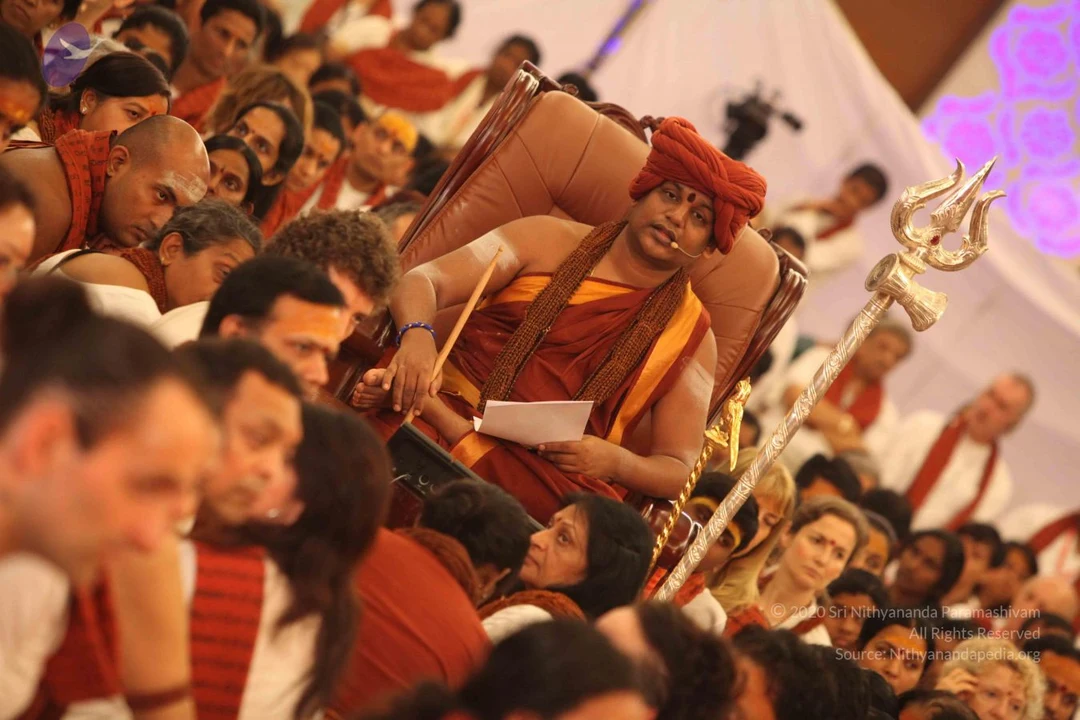
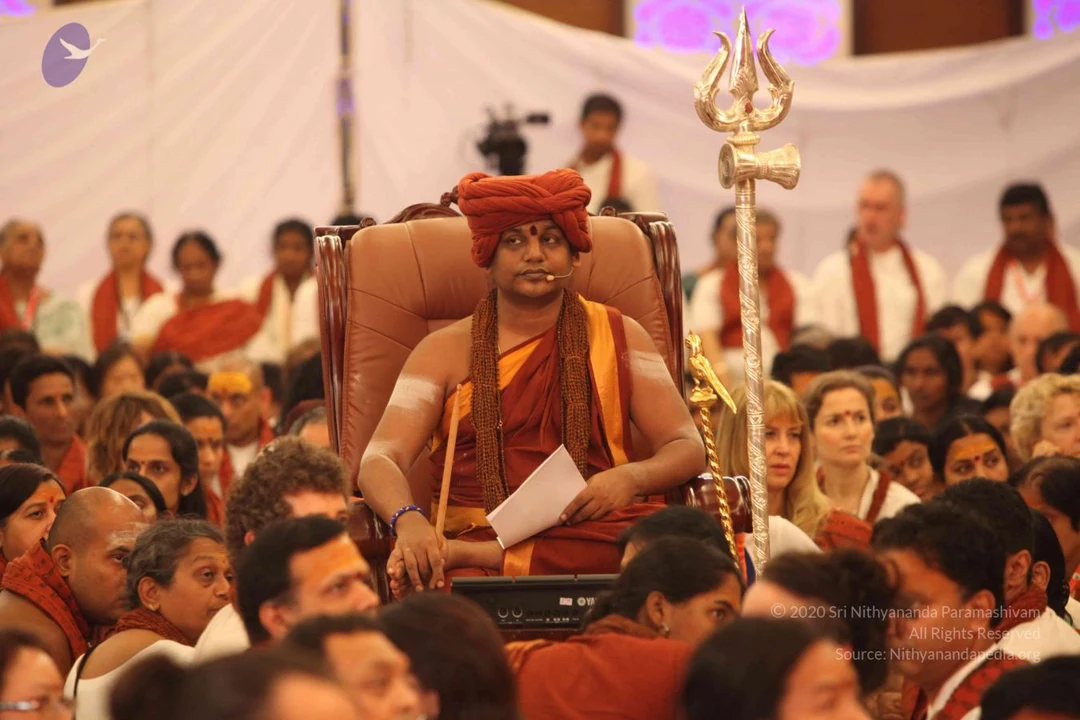
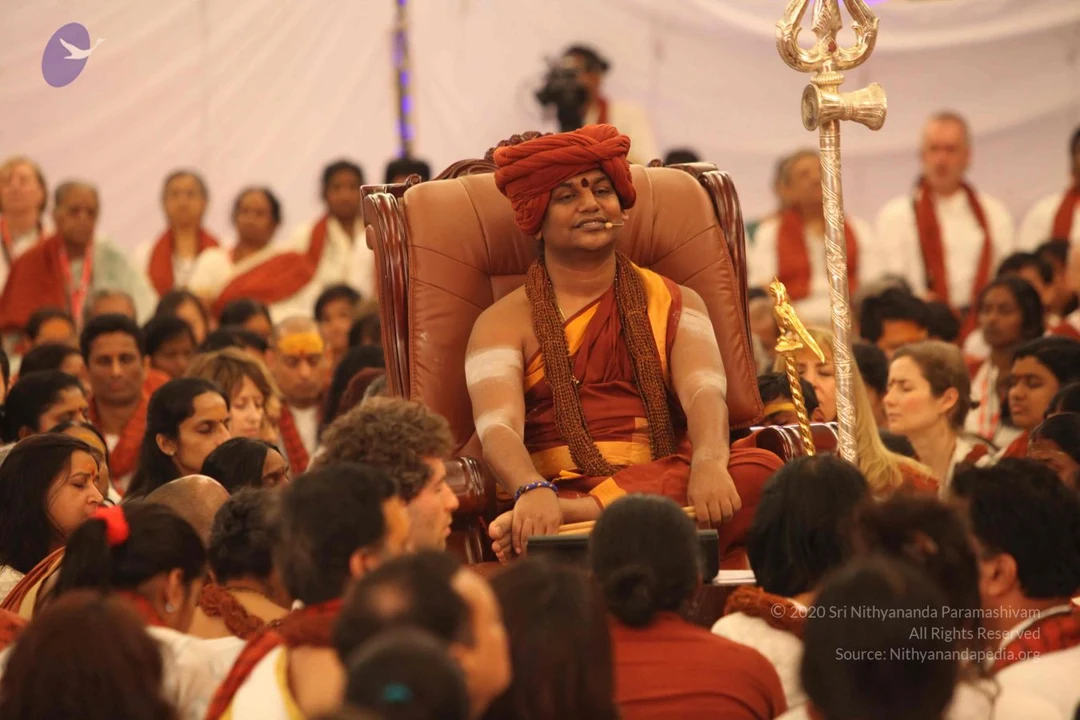
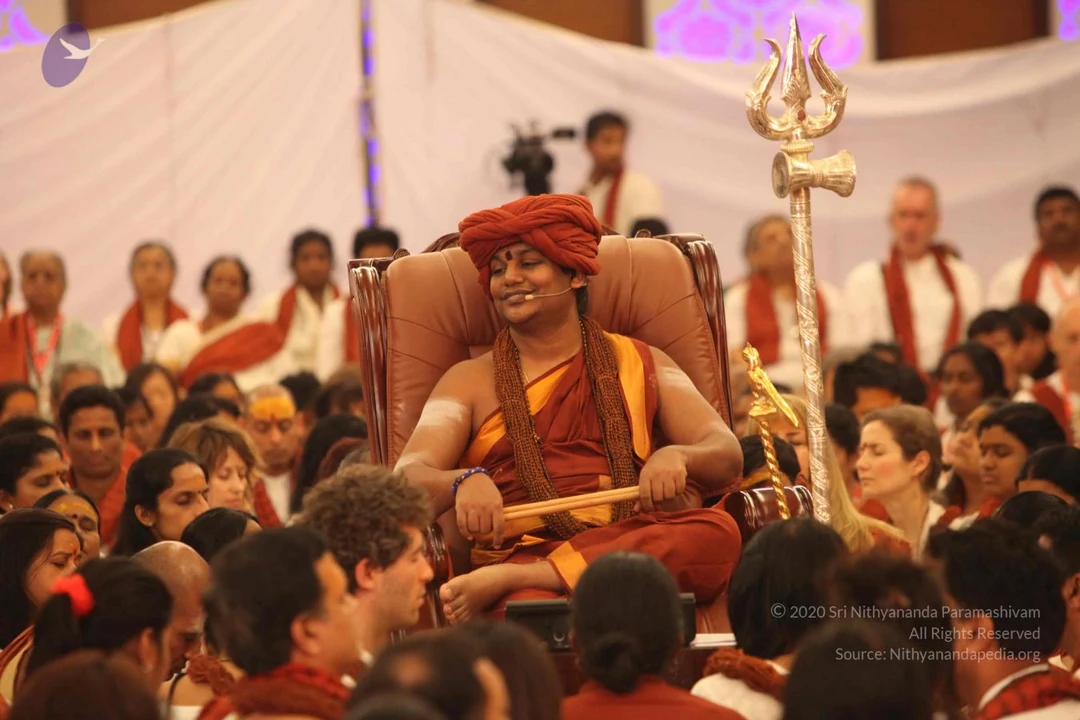
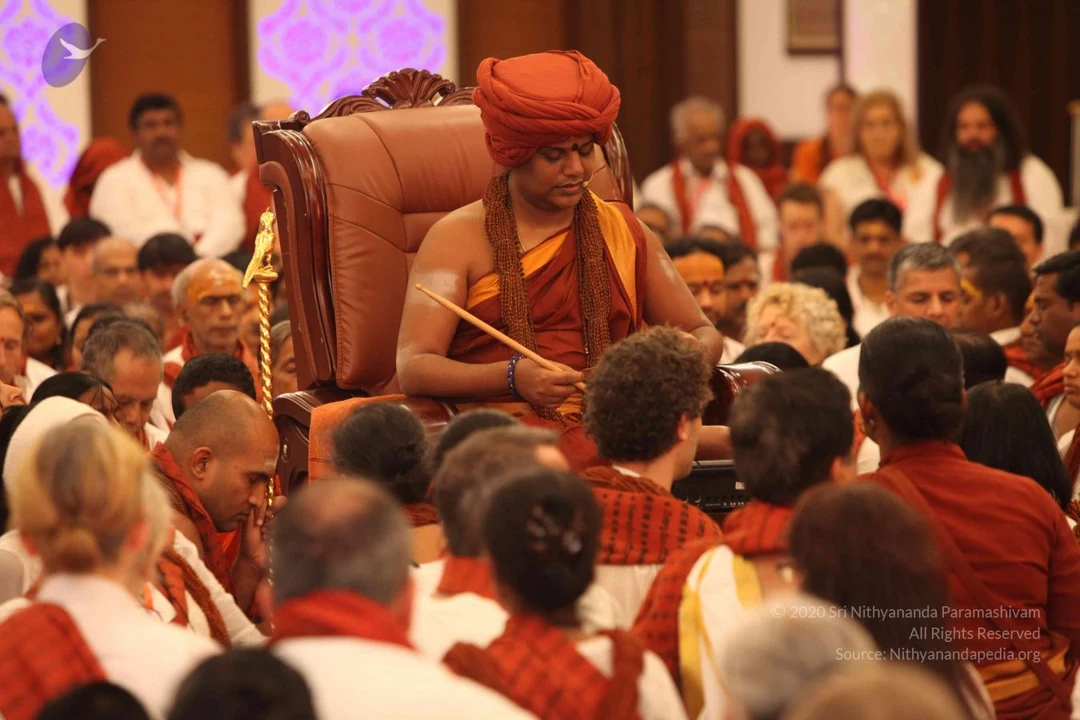
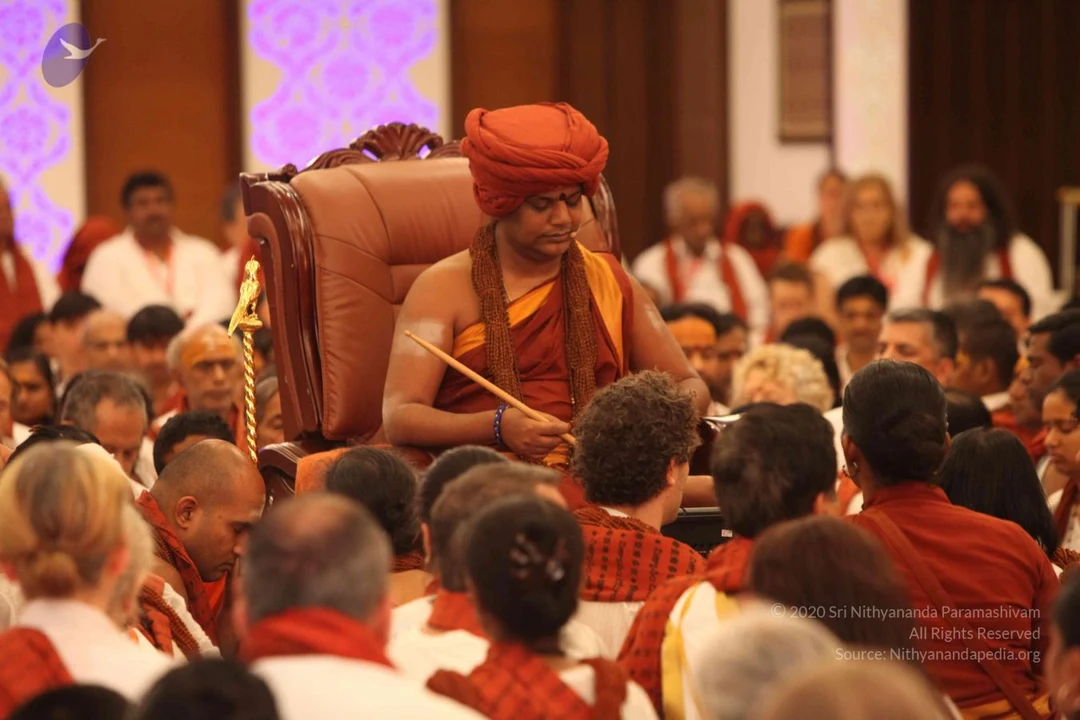
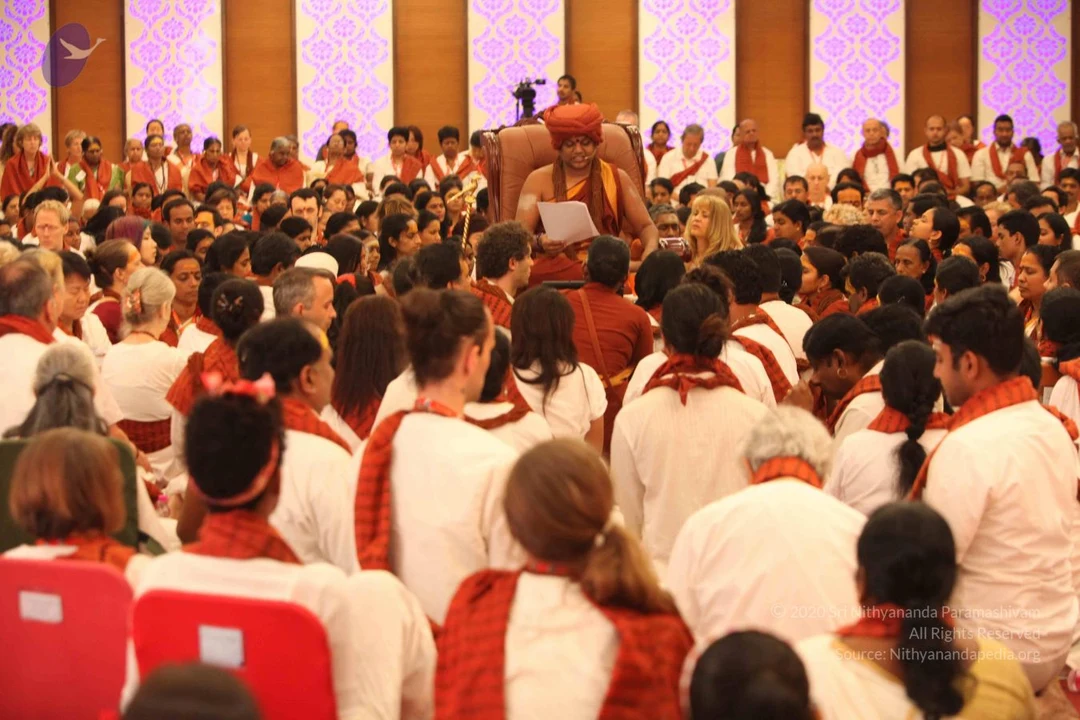
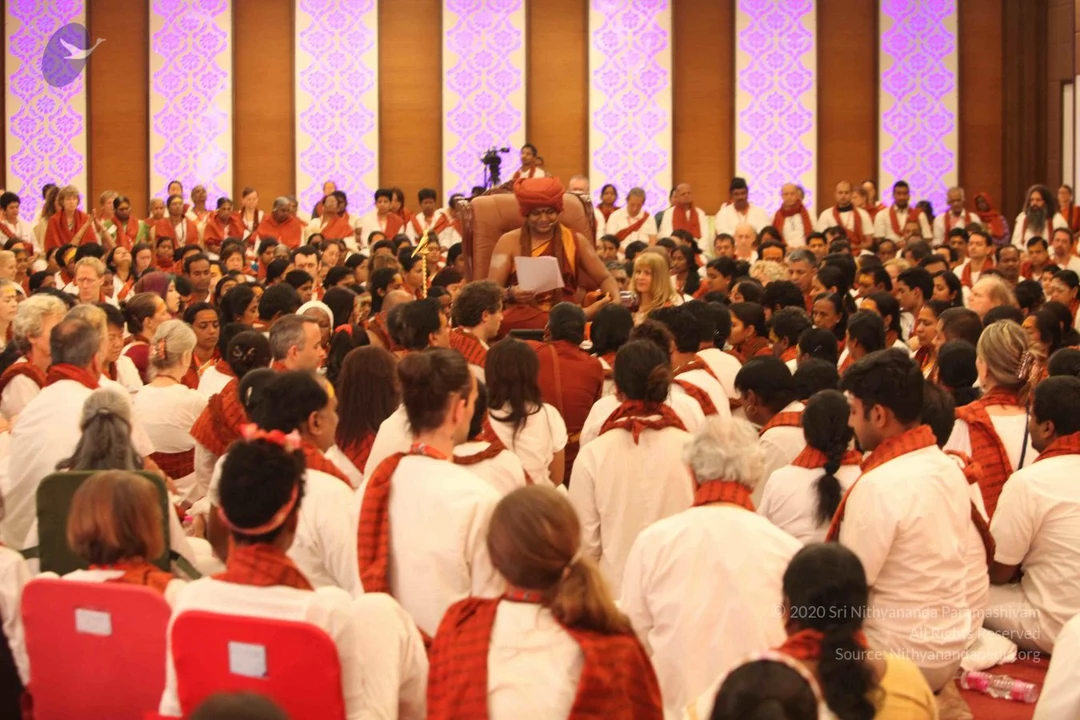
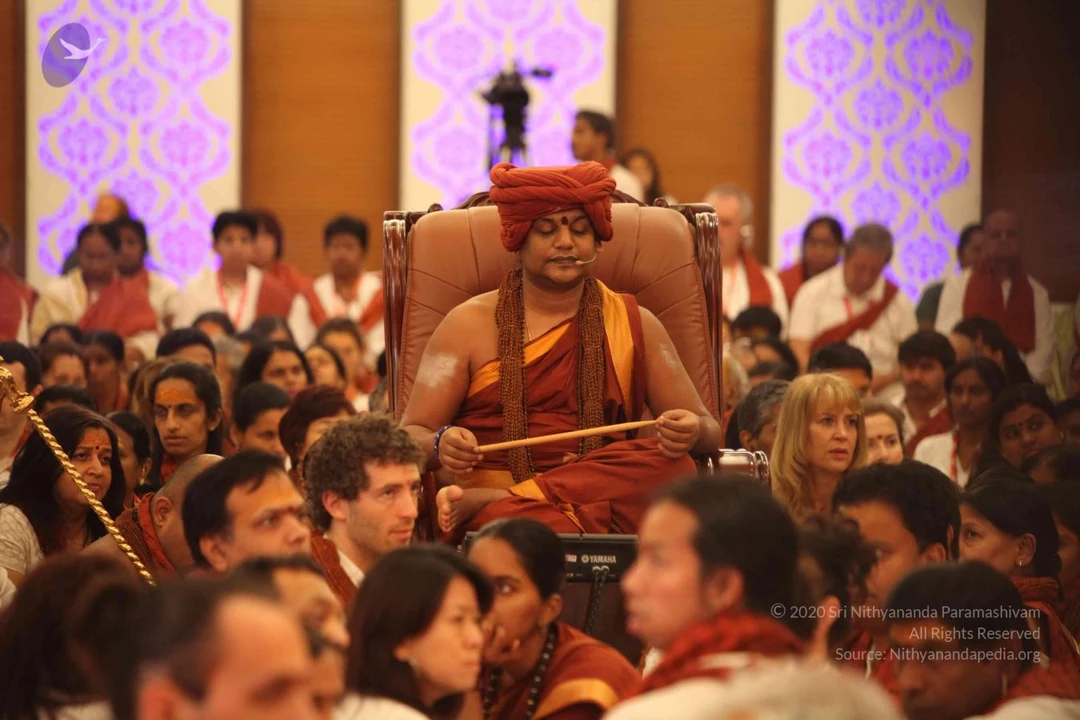
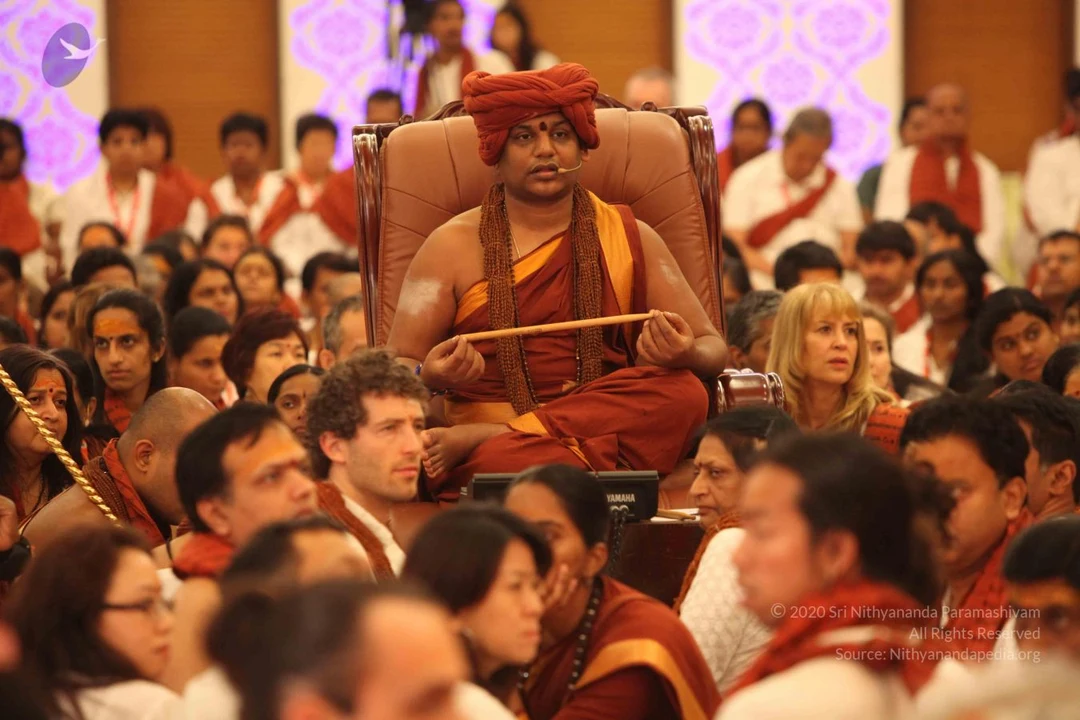
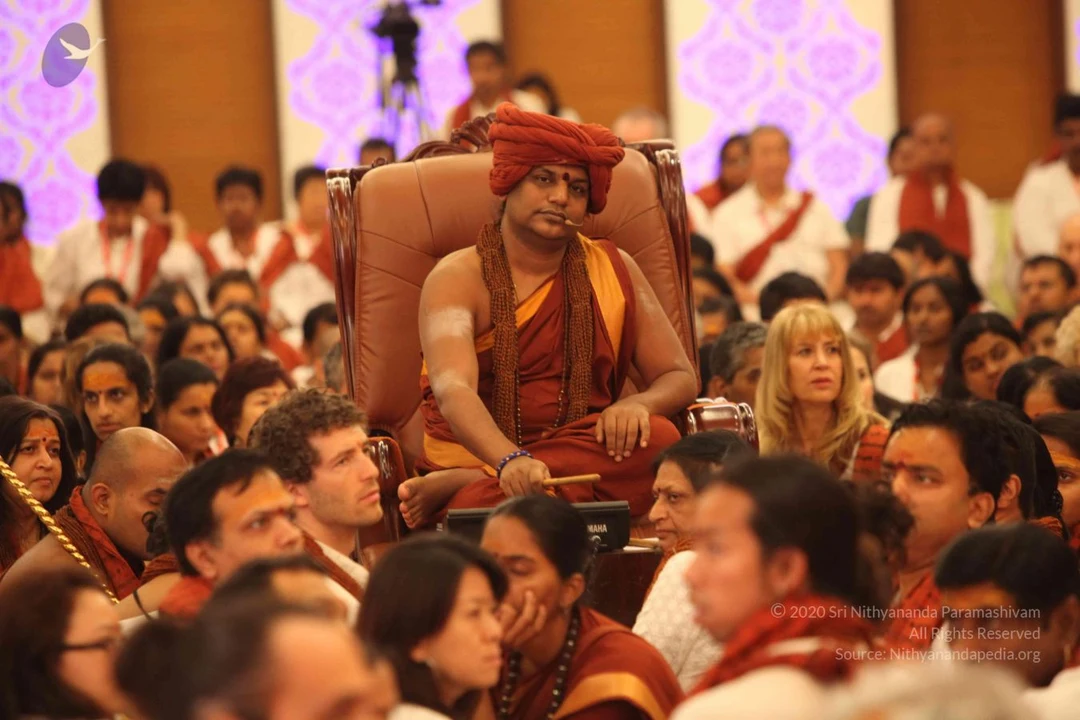
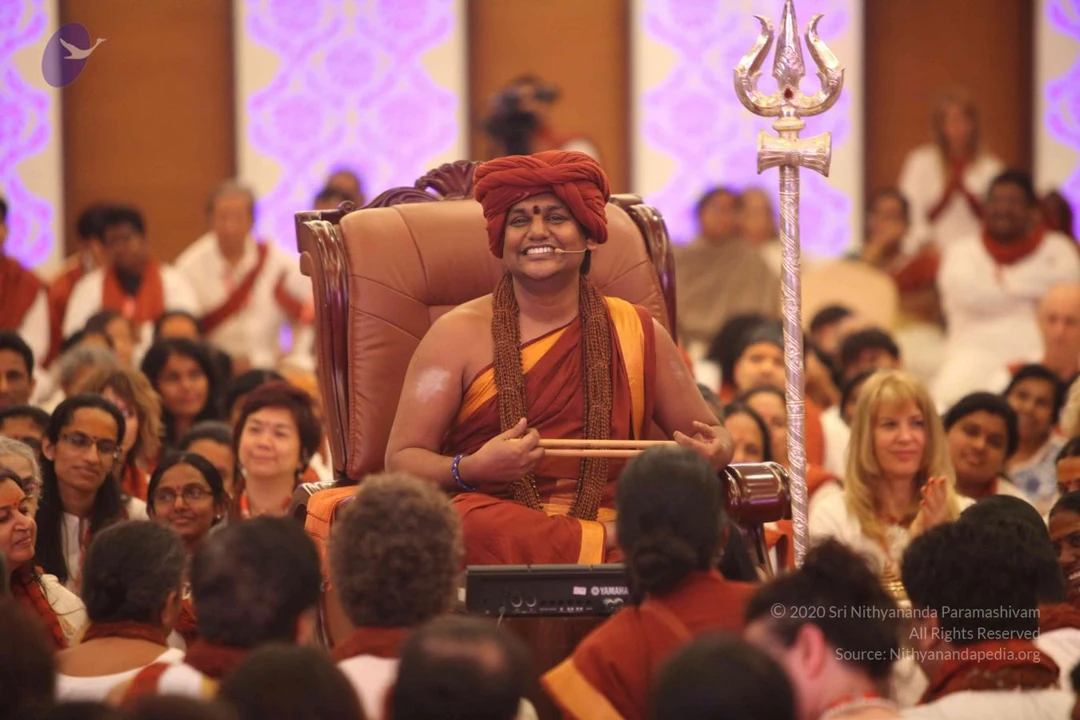
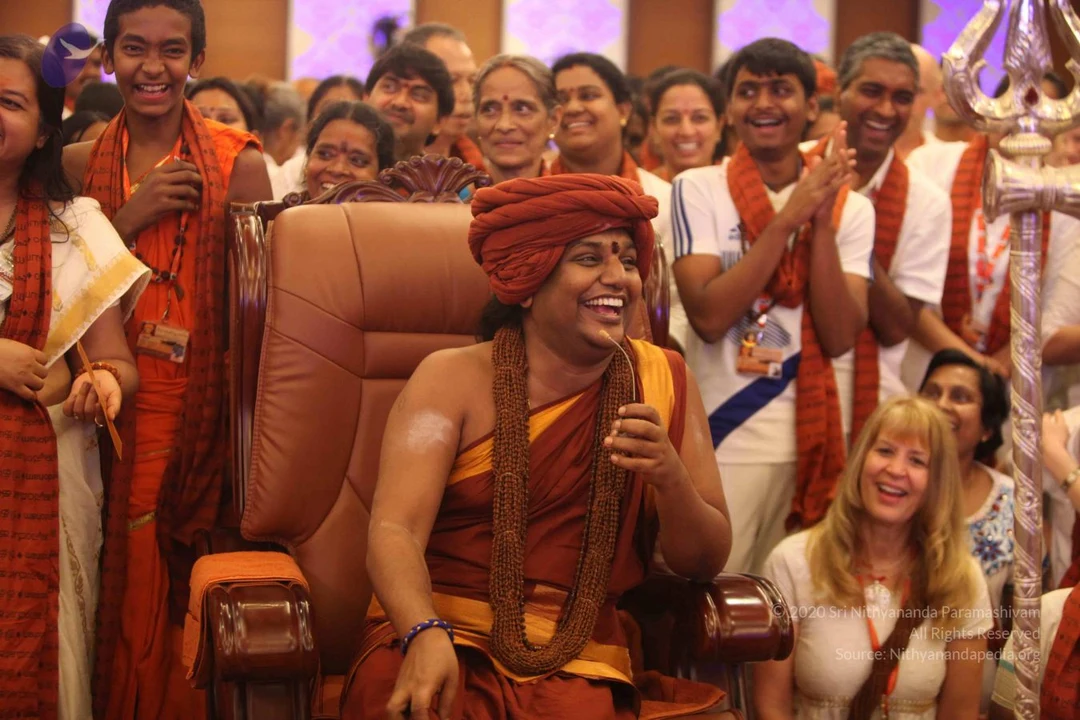
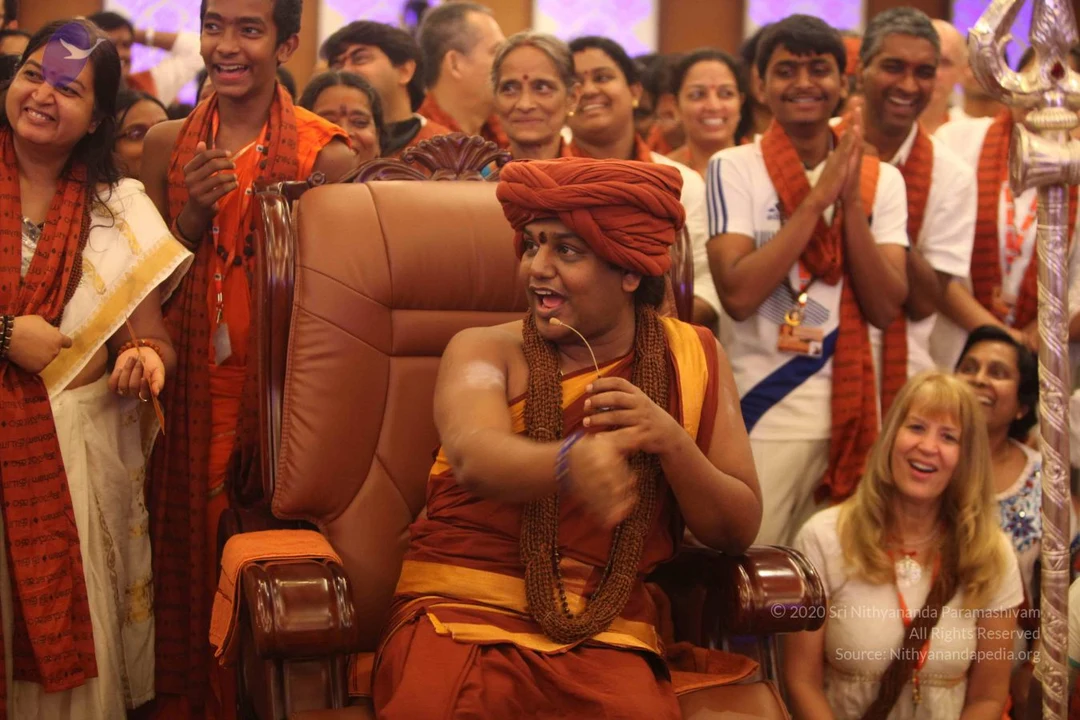
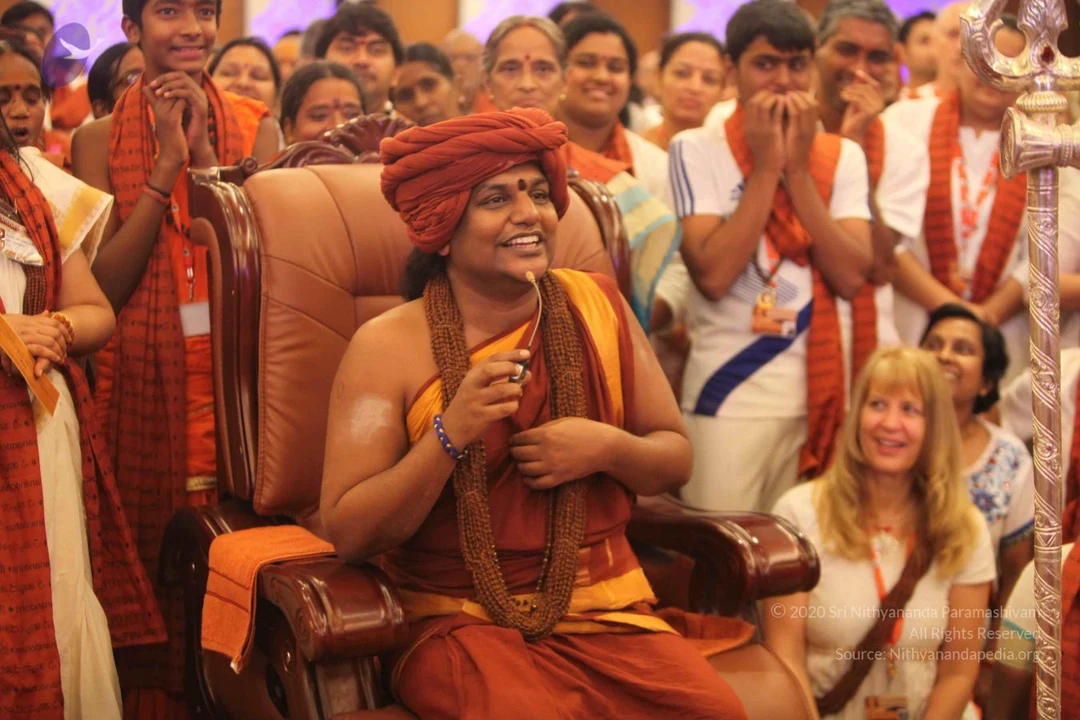
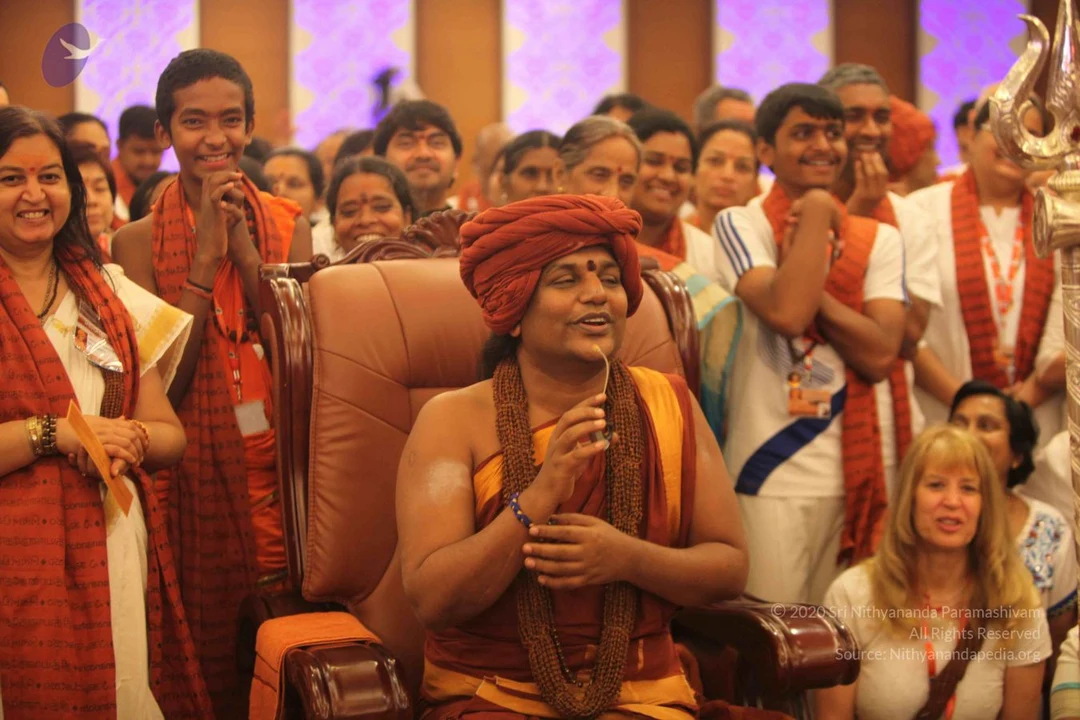
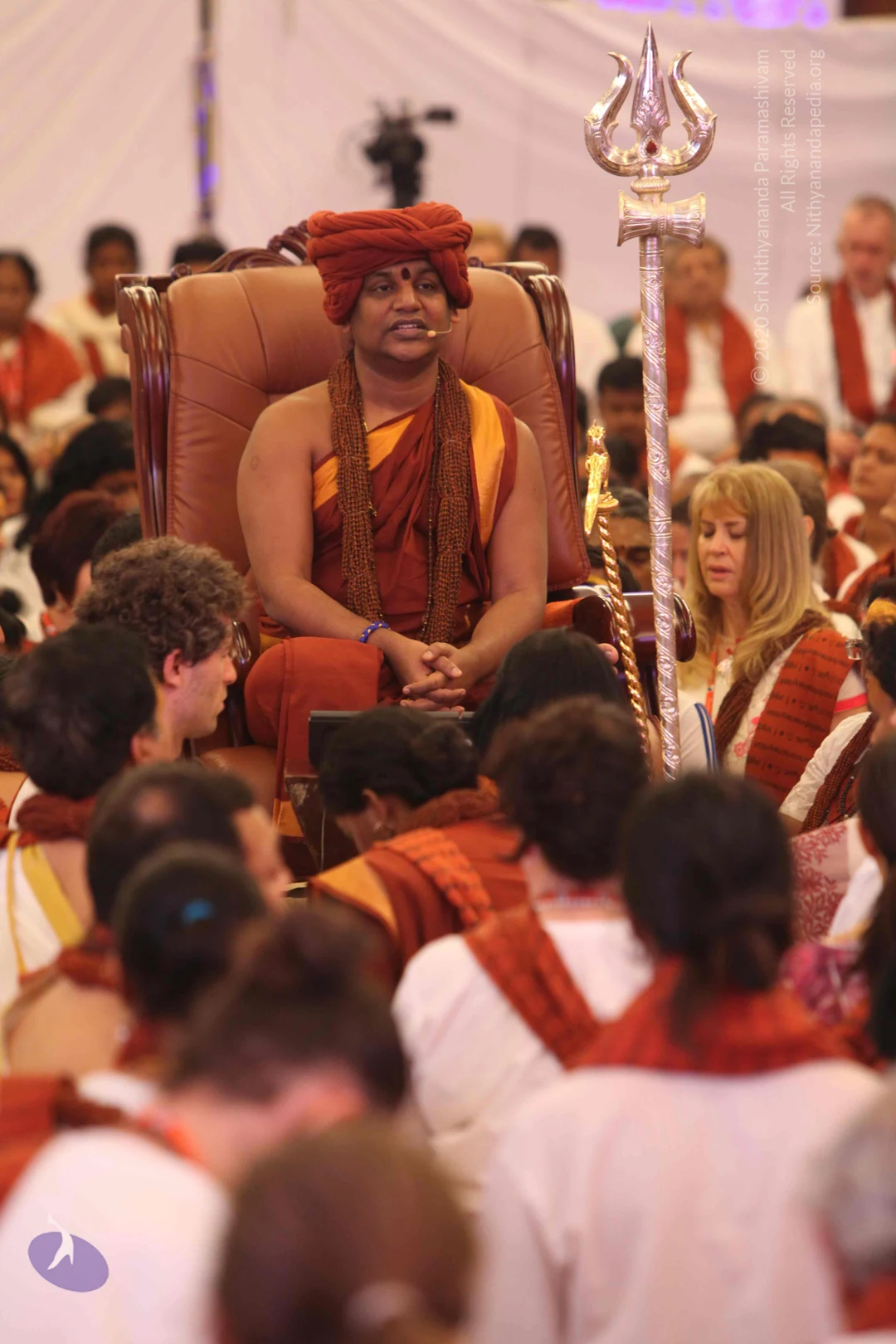
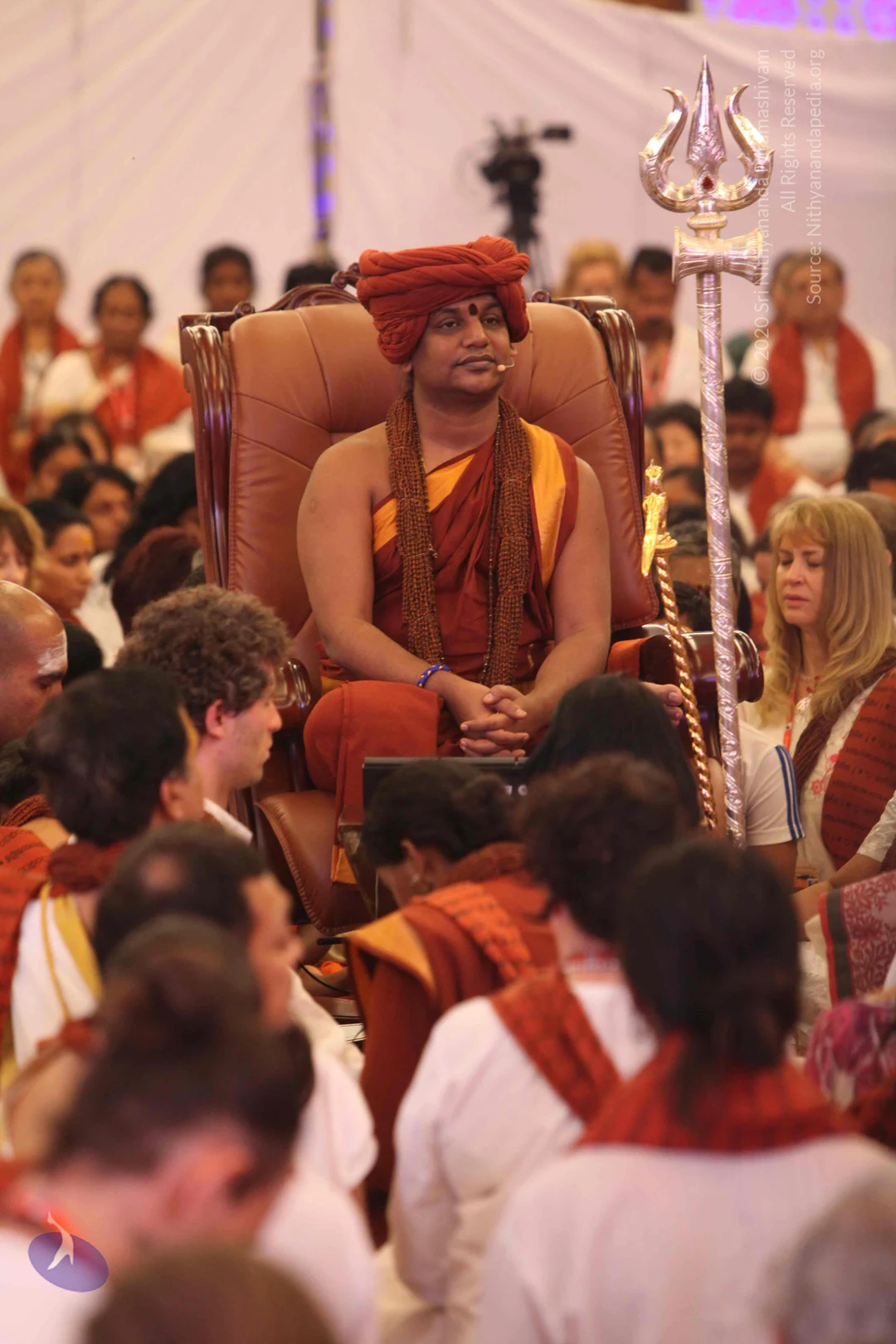
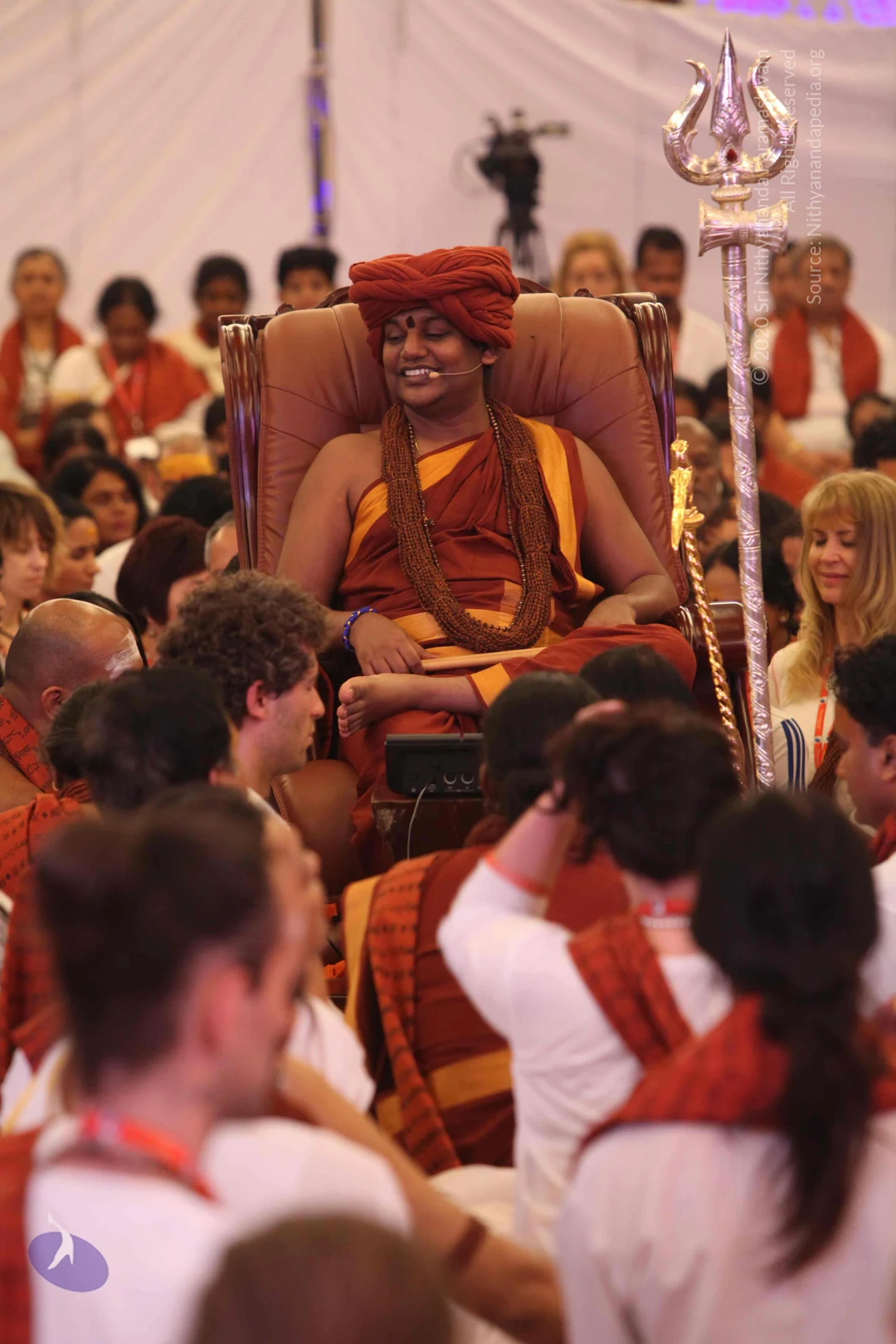
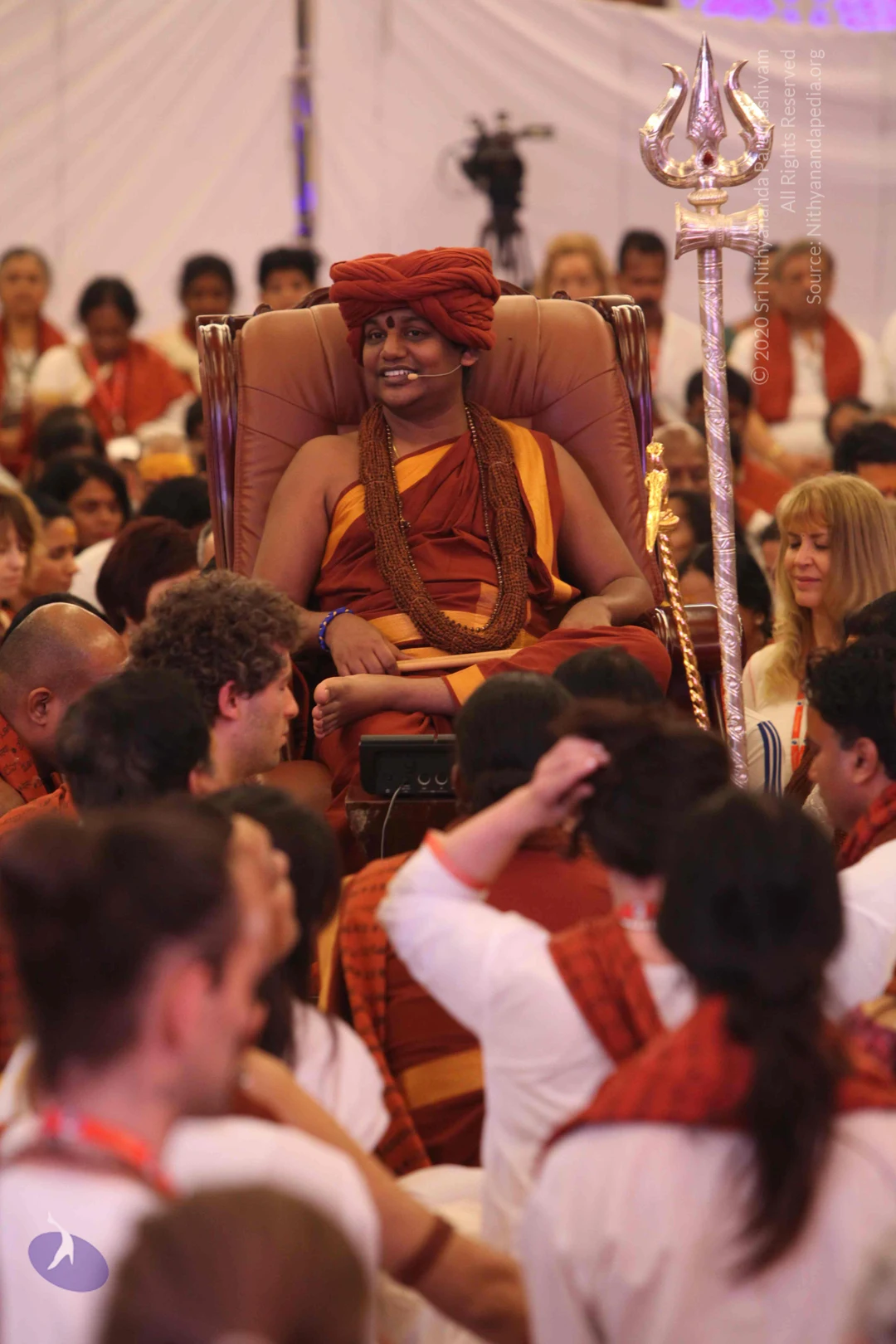
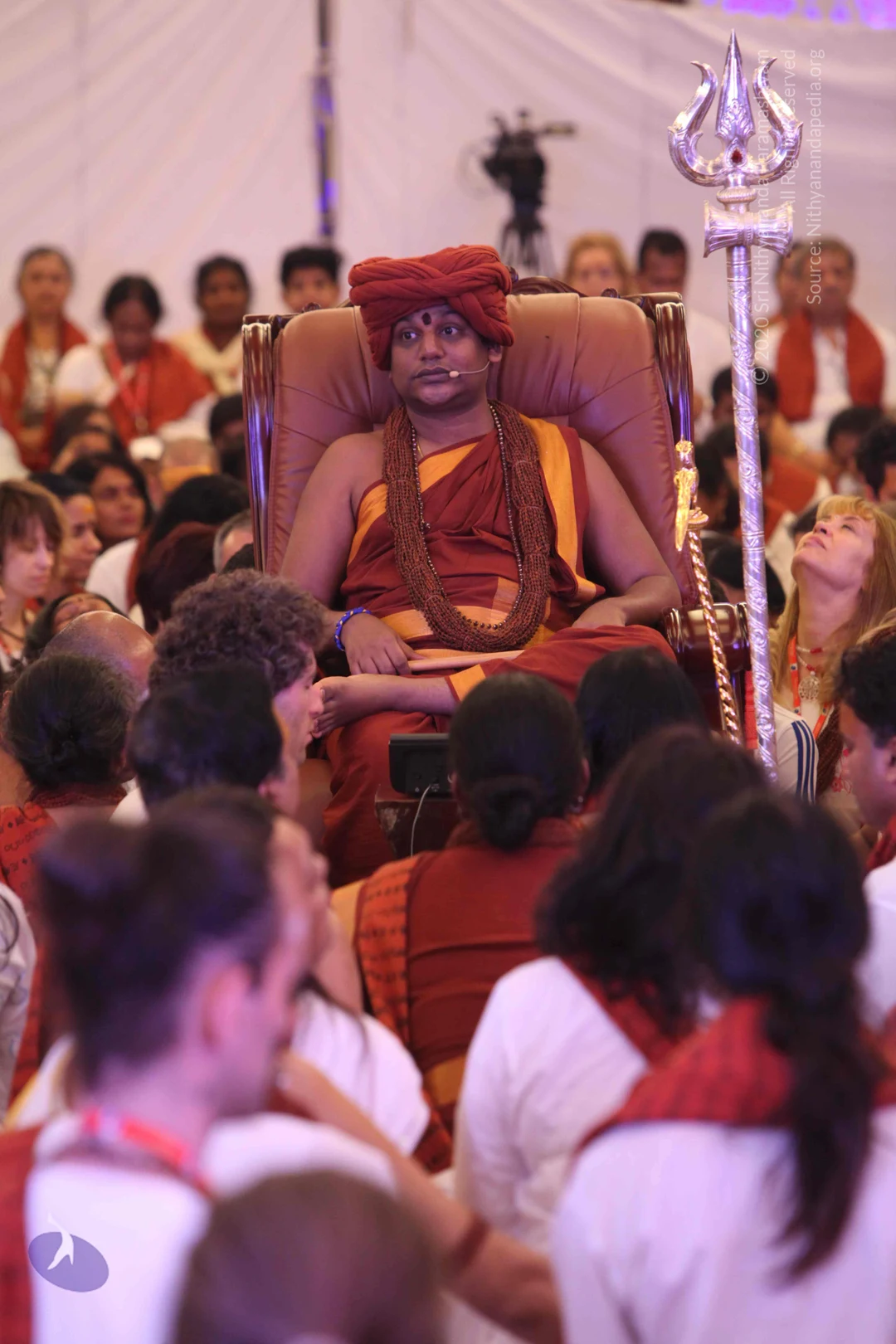
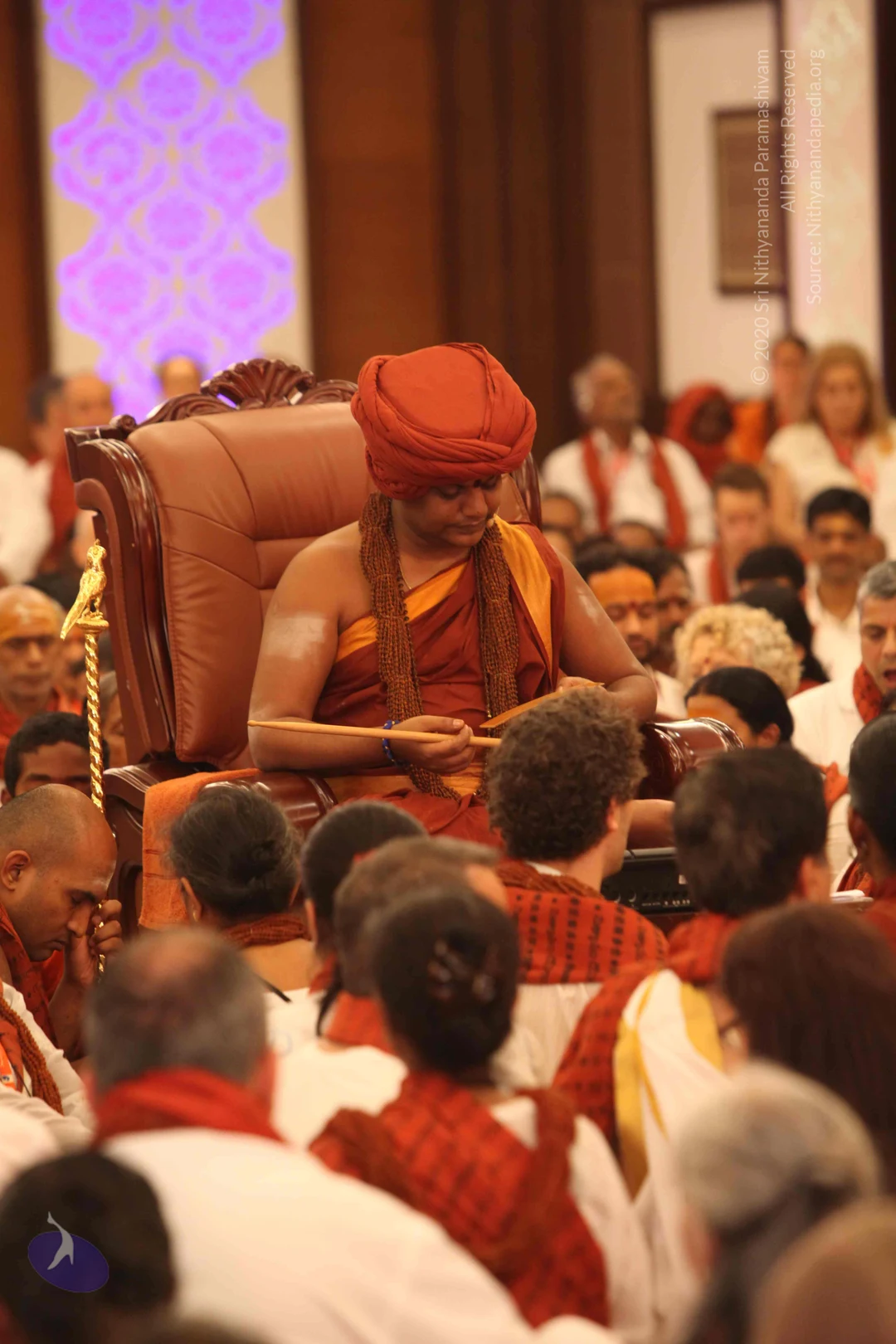
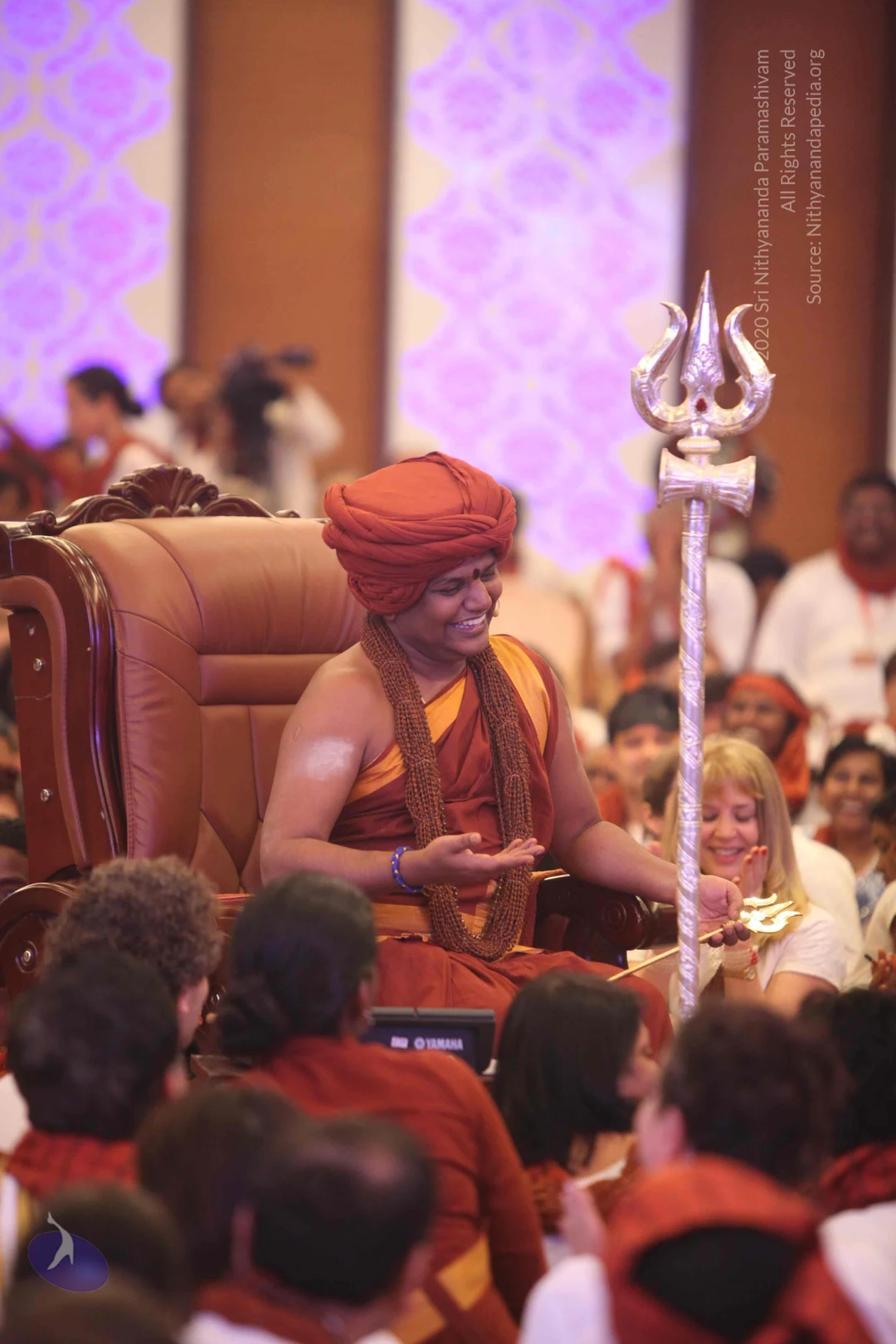
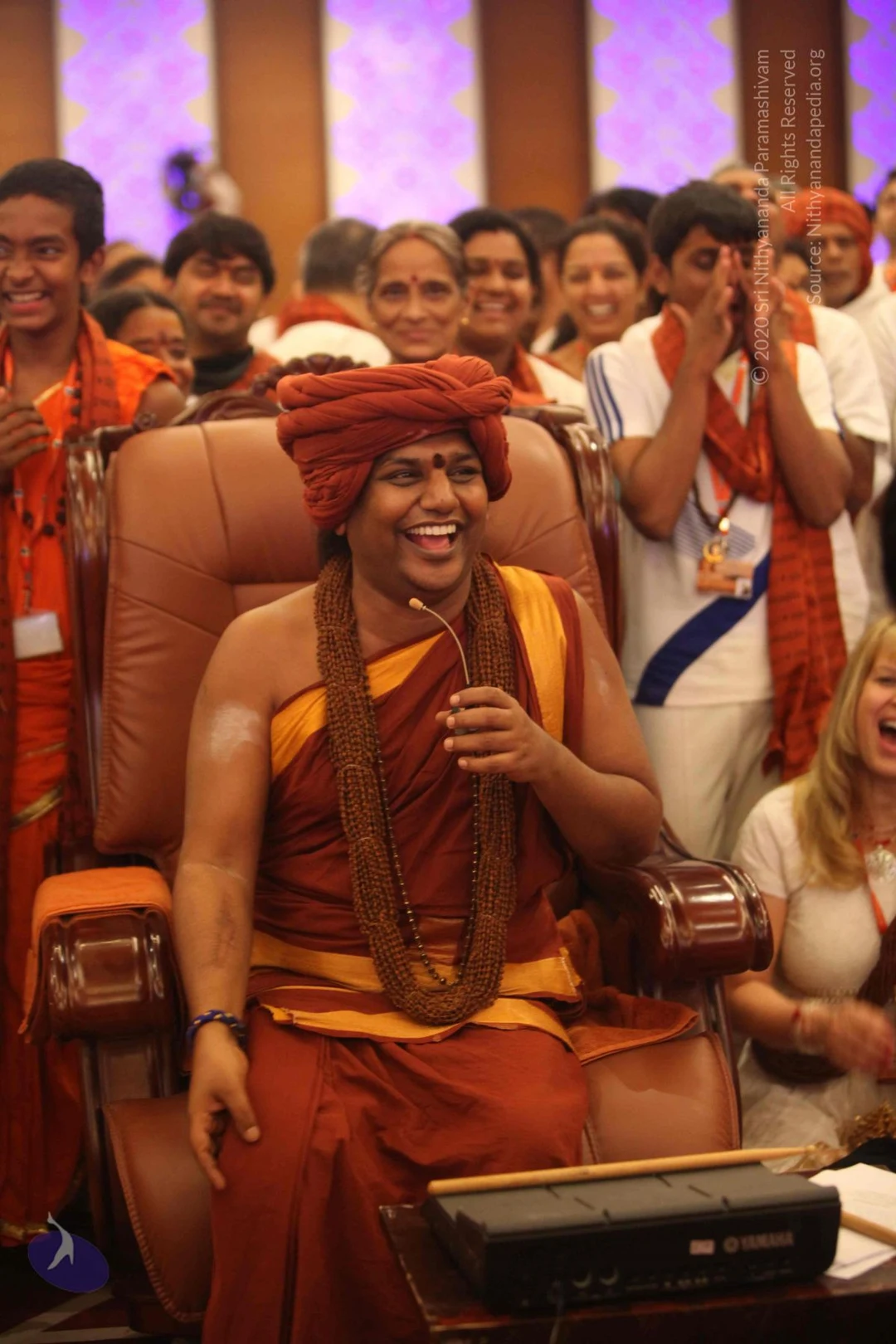
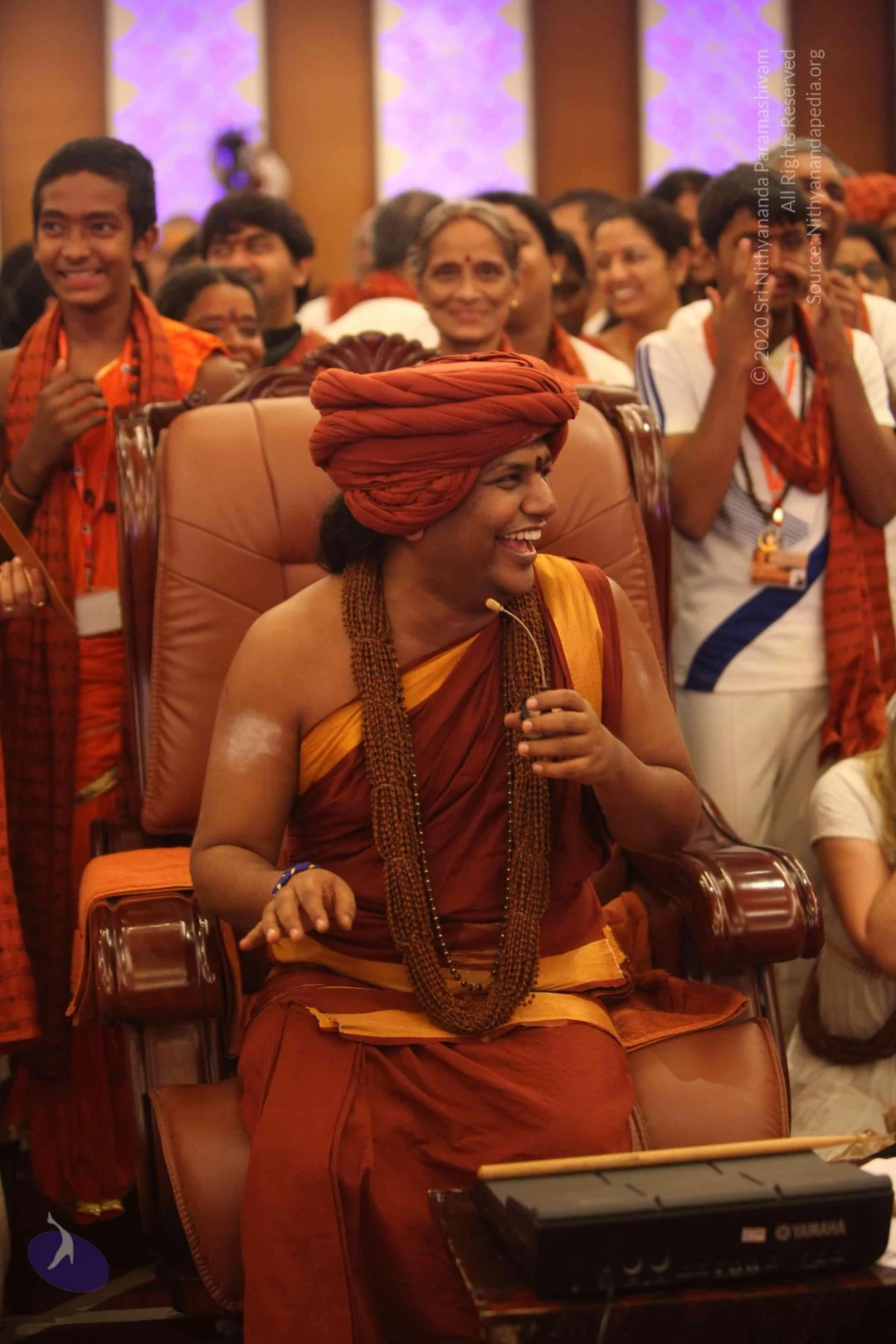
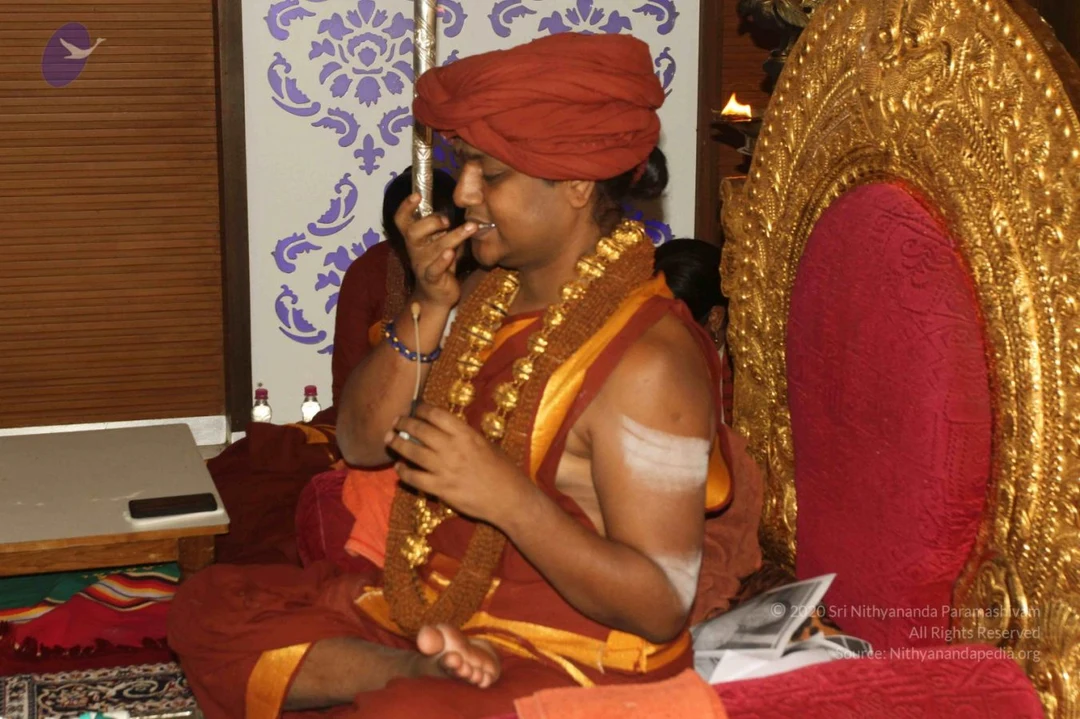
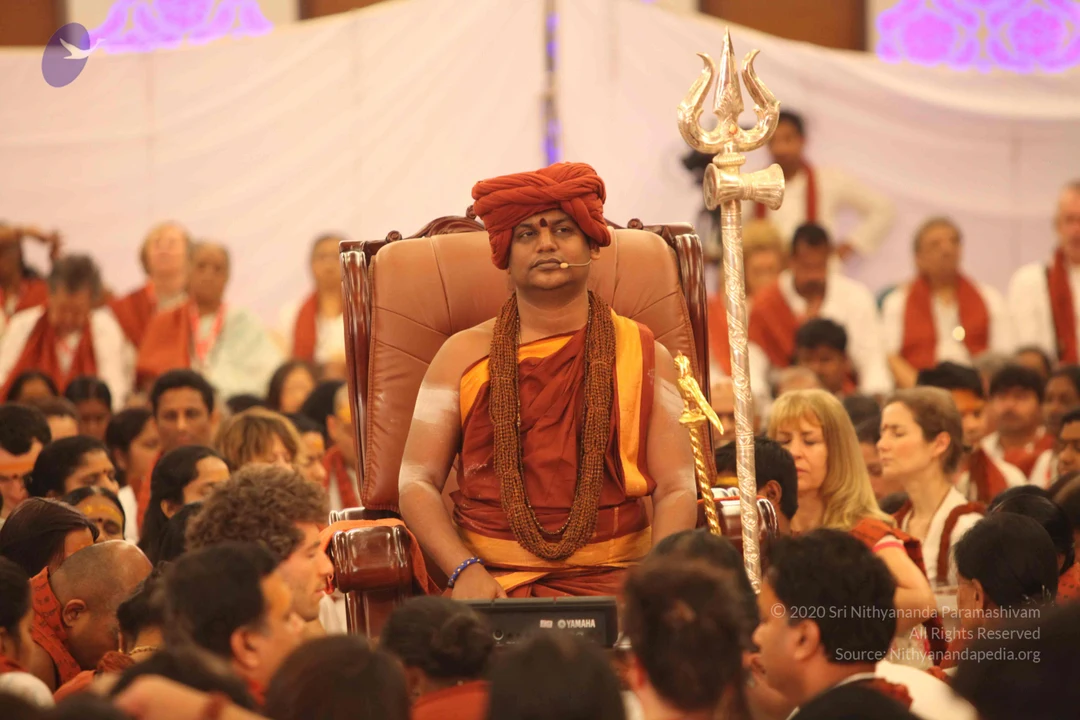
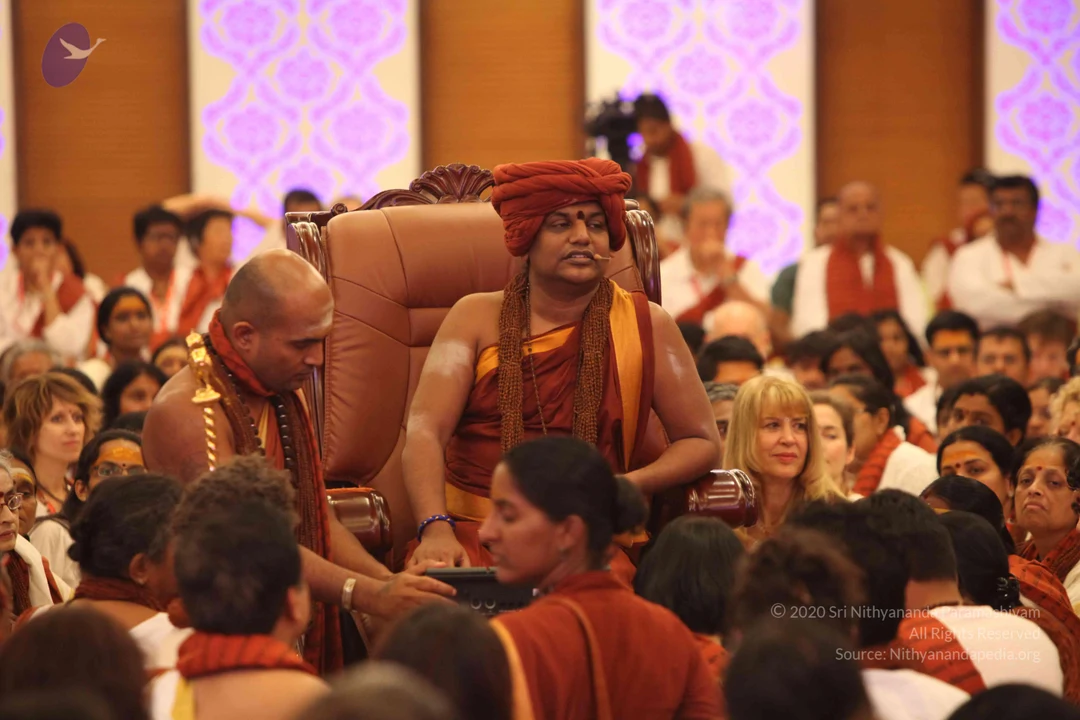
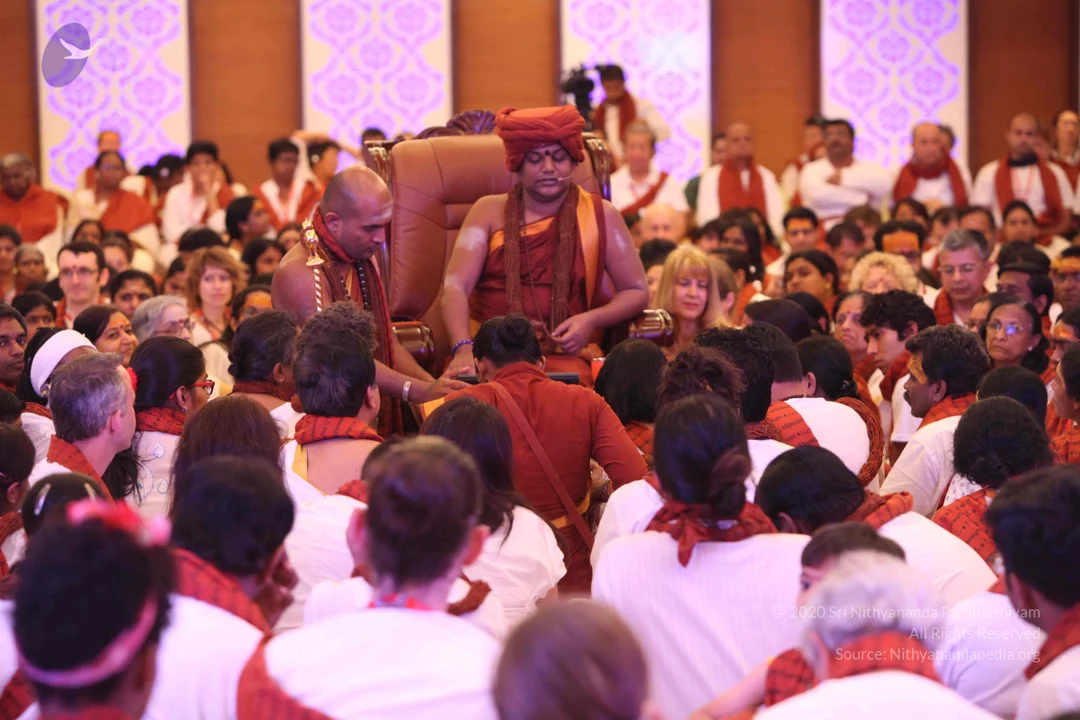
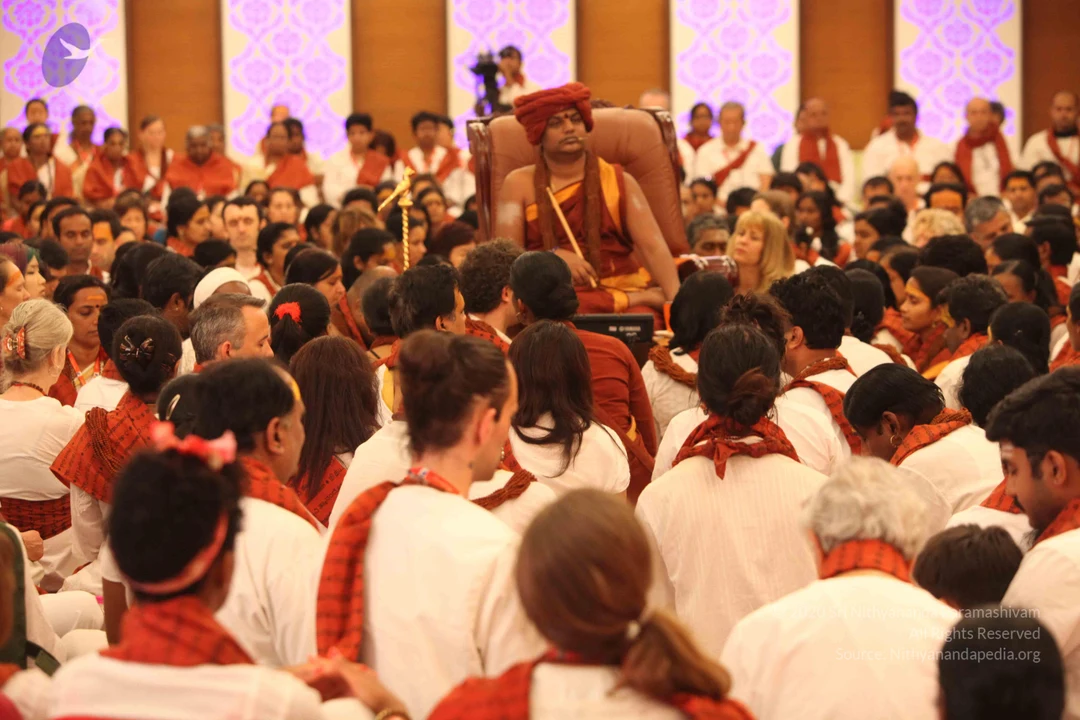
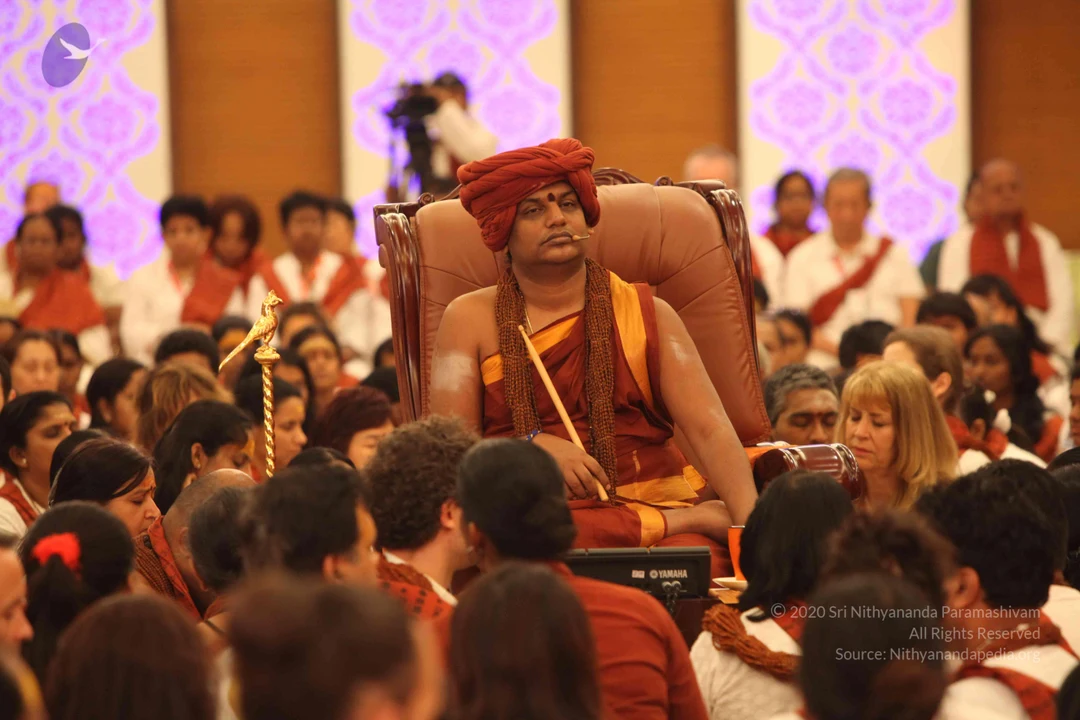
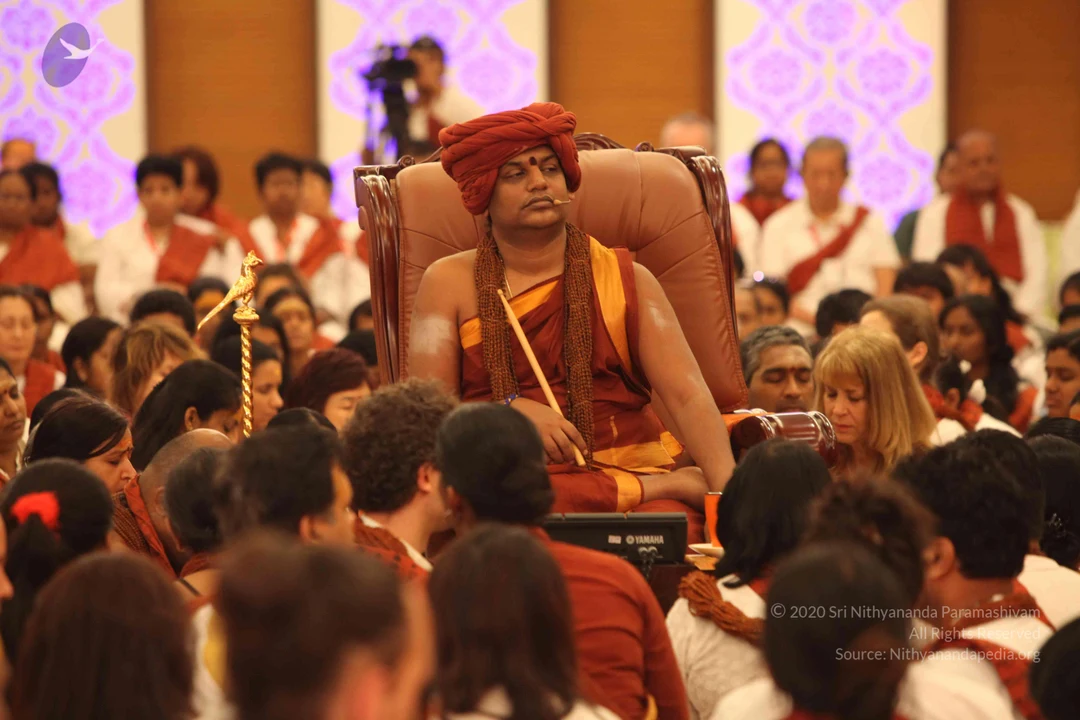
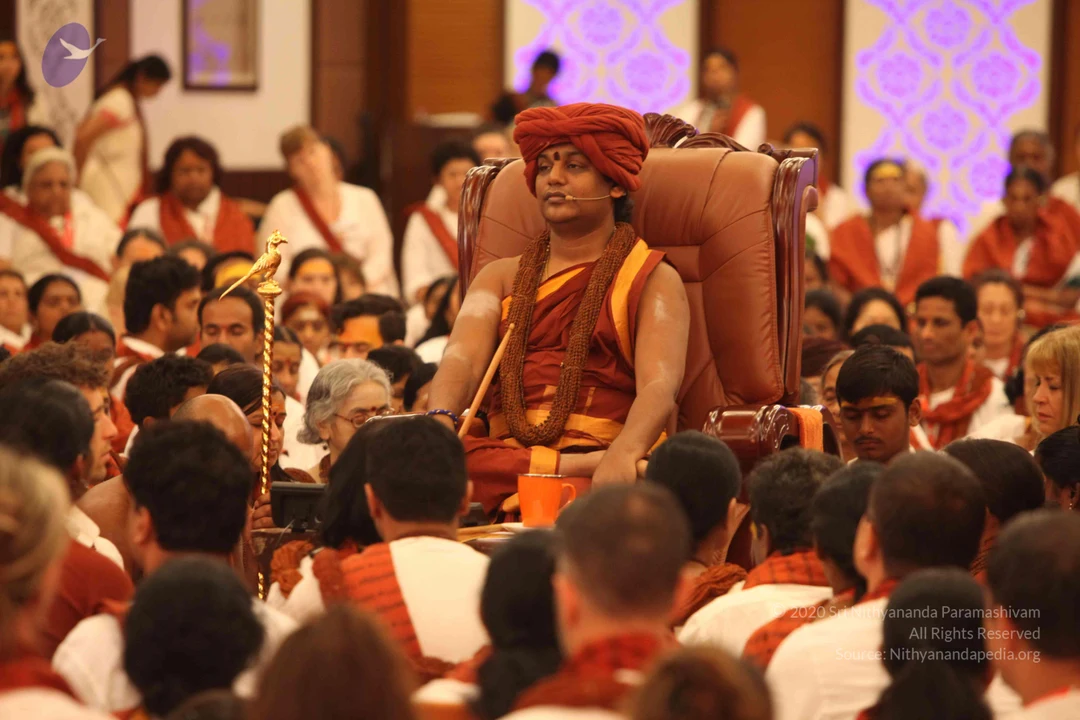
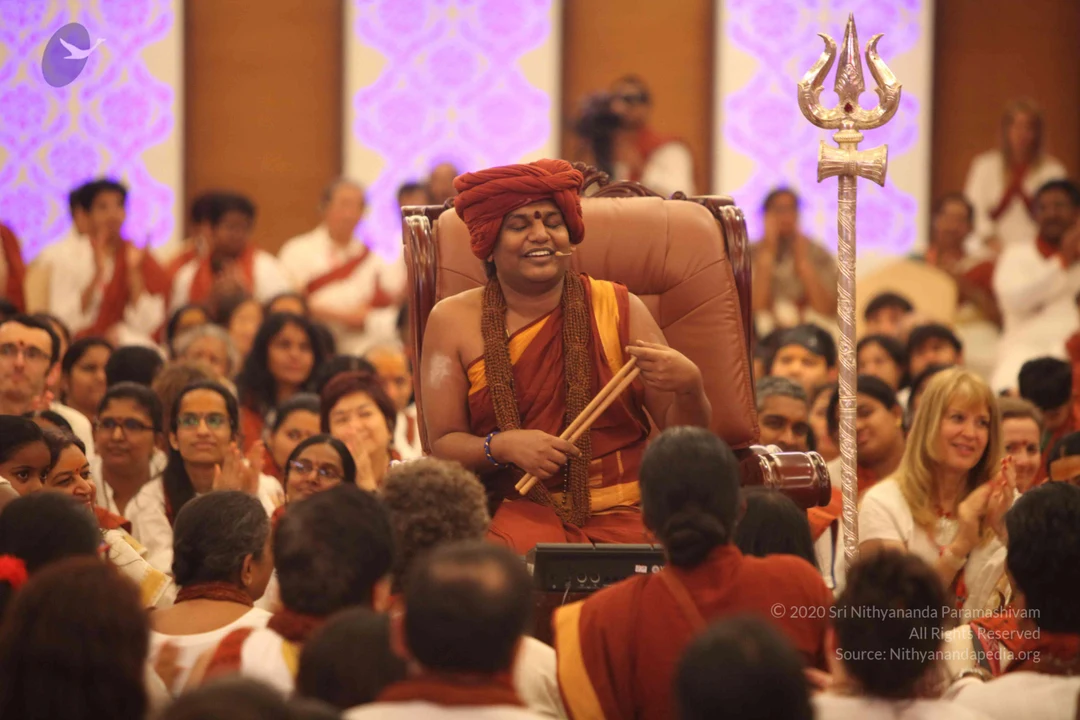
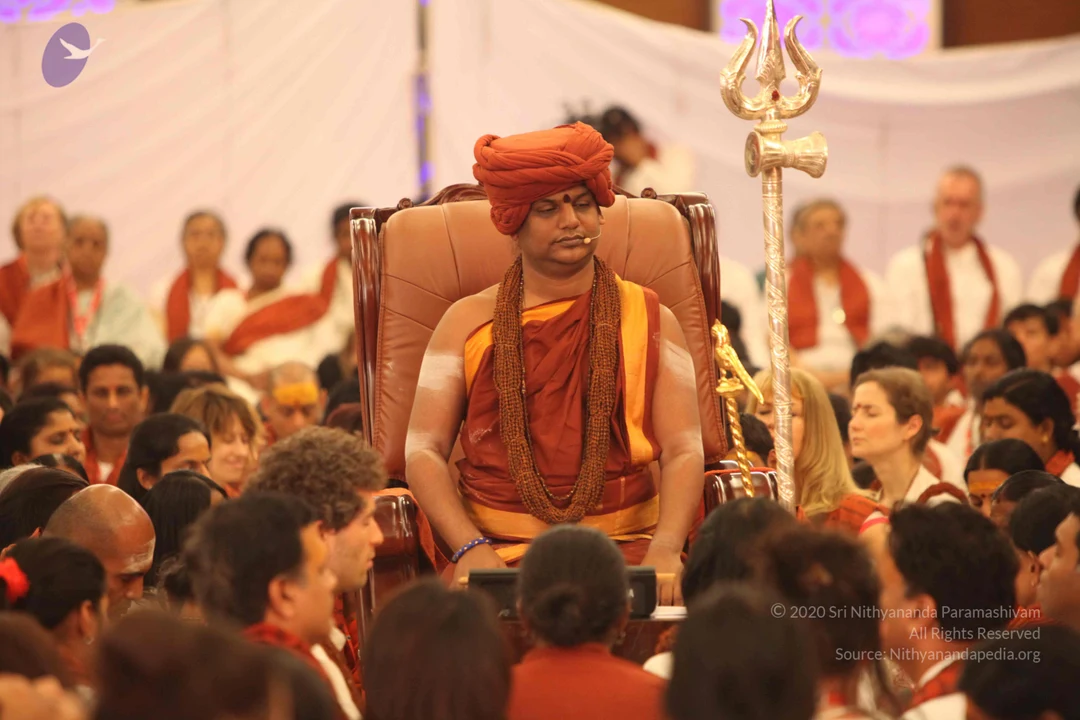
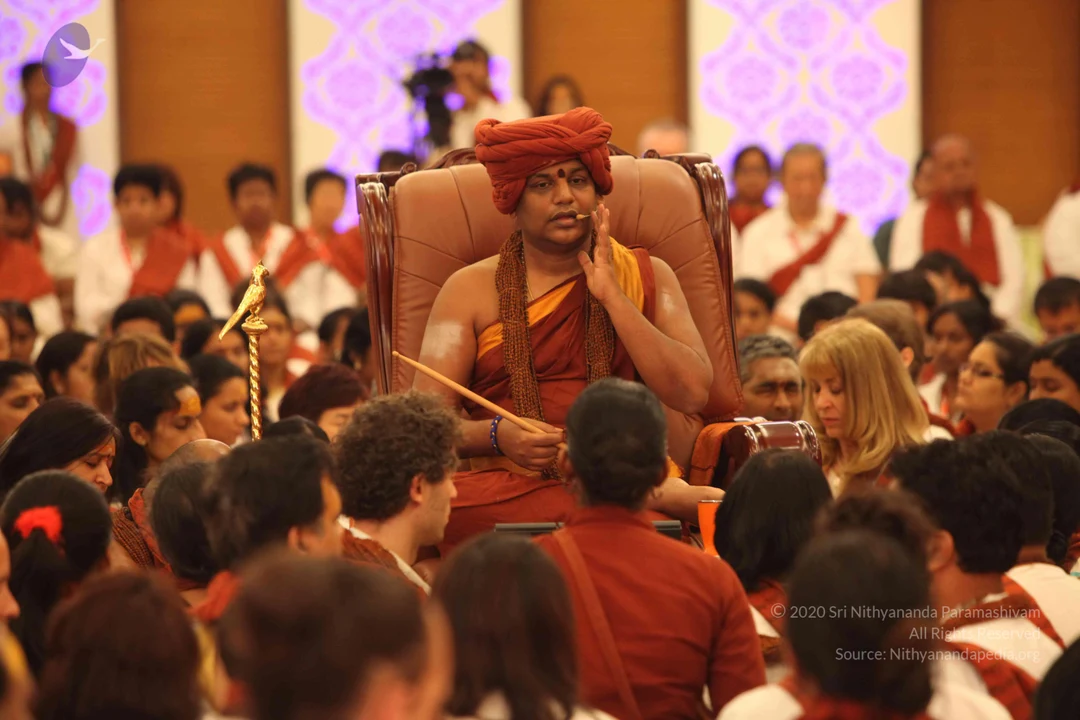
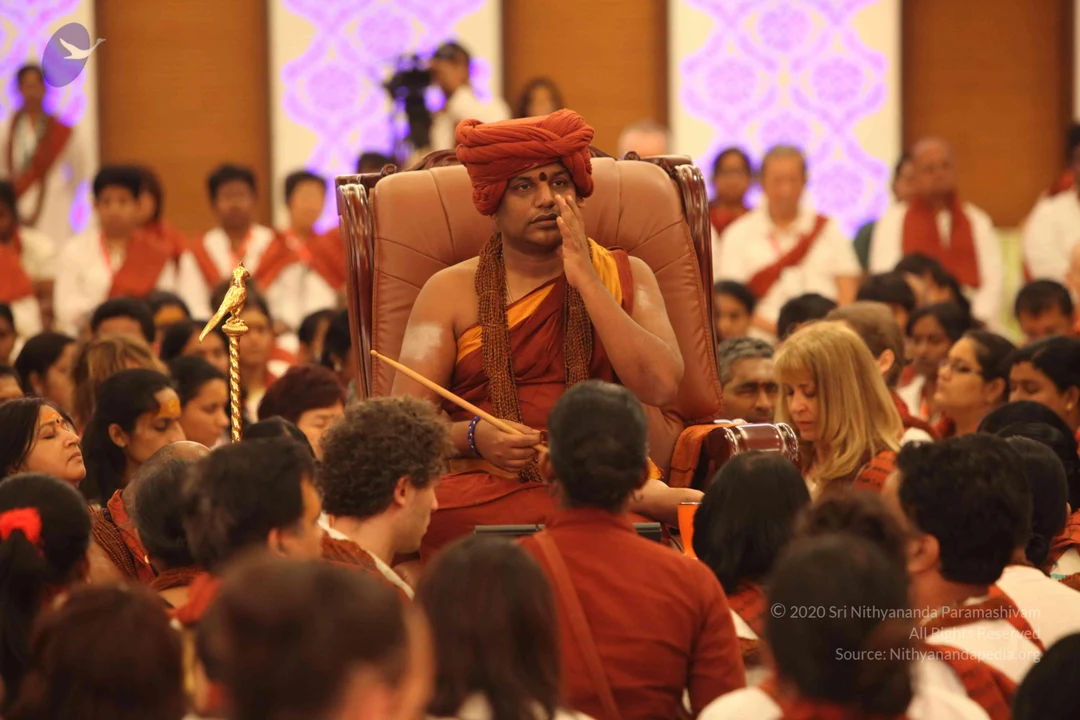
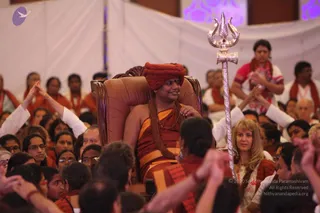
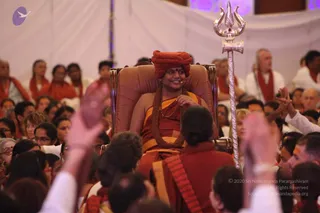
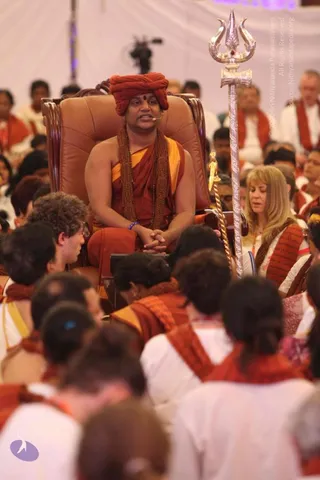
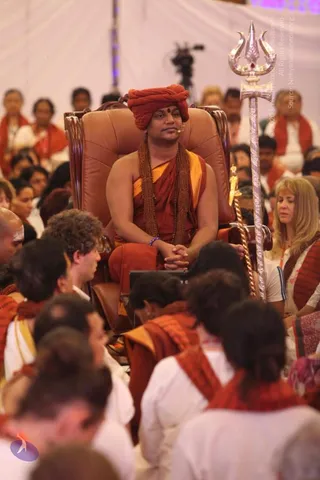
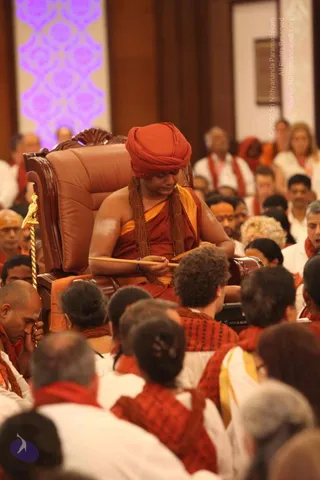
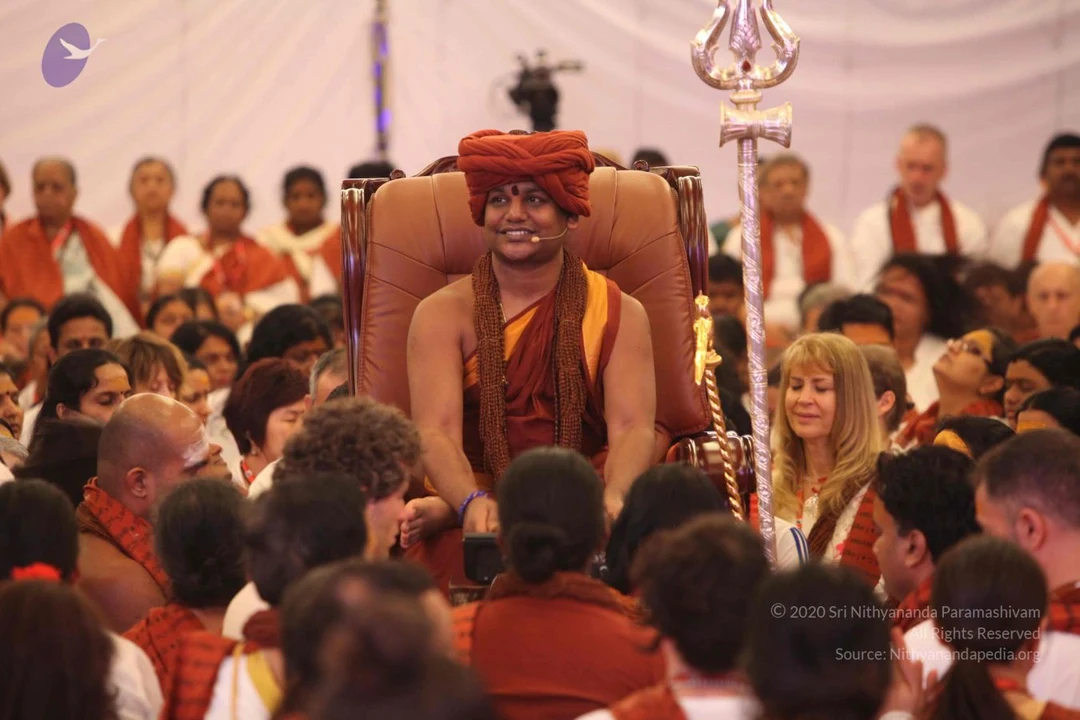
A man in a red-orange turban with a red bindi, wearing an orange and saffron sash over bare shoulders and a long rudraksha mala, sits in a brown leather throne chair and speaks into a headset microphone, hands clasped in his lap. A large silver trident stands beside the throne. In front, many seated devotees in white and orange-red shawls face him, including a woman with long blonde hair in a white and red top listening nearby. Behind is a white tented hall with a camera on a stand.A man in an orange-red turban and rust-orange robe with a yellow sash sits on a large brown leather throne in a white tent before a seated audience. He wears a long rudraksha mala and a small red bindi, hands clasped in his lap. A silver trident stands beside the throne and a tall camera is visible at the back. Seated devotees in white and red-orange shawls, and a woman with blonde hair in a red-and-white outfit, fill the foreground and sides. The trident and throne suggest a satsang setting. Swamiji (probable): the seated figure on the throne wears an orange turban, rudraksha mala and saffron robes, cues consistent with the page's identification of Swamiji as present.A seated figure in an orange-red turban and saffron-and-ochre robes sits on a brown leather throne-style chair beneath a white tent, with a small headset microphone at the face and a rudraksha mala of dark brown beads draped over the chest. A tall silver trident stands to the right of the chair. The seated figure has long swept-back hair and ornate clothing, with a red bindi on the forehead; these cues are consistent with an appearance-based Swamiji (probable) candidate presenting as the discourse speaker. Around the chair, a seated audience in white and red-orange shawls faces the stage, including a woman in a white top with red trim and several people in white at the front.A man in saffron and orange robes and a red turban sits on a brown leather throne-like chair under a white tent, smiling and wearing a headset microphone. He wears a thick brown rudraksha mala and a blue bracelet, and holds a wooden stick across his lap. A silver trident stands beside the chair. Seated devotees in white and orange shawls fill the foreground and background, and a woman with blonde hair sits to the right. A camera rig is visible behind. Swamiji (probable): the seated man wears saffron robes, a red turban, and a rudraksha mala, and is seated on a throne, which fits the page's reference to a satsang discourse.A seated man in an orange-red turban and saffron-red robe with orange border sits on a brown leather throne-style chair, wearing a dense rudraksha mala and a head microphone. A tall silver trident stands beside the chair. Devotees in red shawls and white clothes sit on the floor in the foreground and around the tent, and a camera on a tripod is visible. The setting is a large white tent gathering.A seated man in an orange-red turban and saffron-and-rust robes sits on a carved brown leather throne, holding a thin wooden stick and a small paper or book in his hands while reading. He wears a long brown beaded mala and a blue bead bracelet. Seated devotees fill the foreground and background, many in white with red-orange shawls. A golden staff with a bird finial stands at the left edge. Purple decorative panels and wood-paneled walls form the hall backdrop. The man's appearance is consistent with the page's claim of Swamiji, with a turban, saffron-toned robes and a mala, so he is marked as a probable in-person candidate.

Photos Of The Day:

15 photosSource gallery
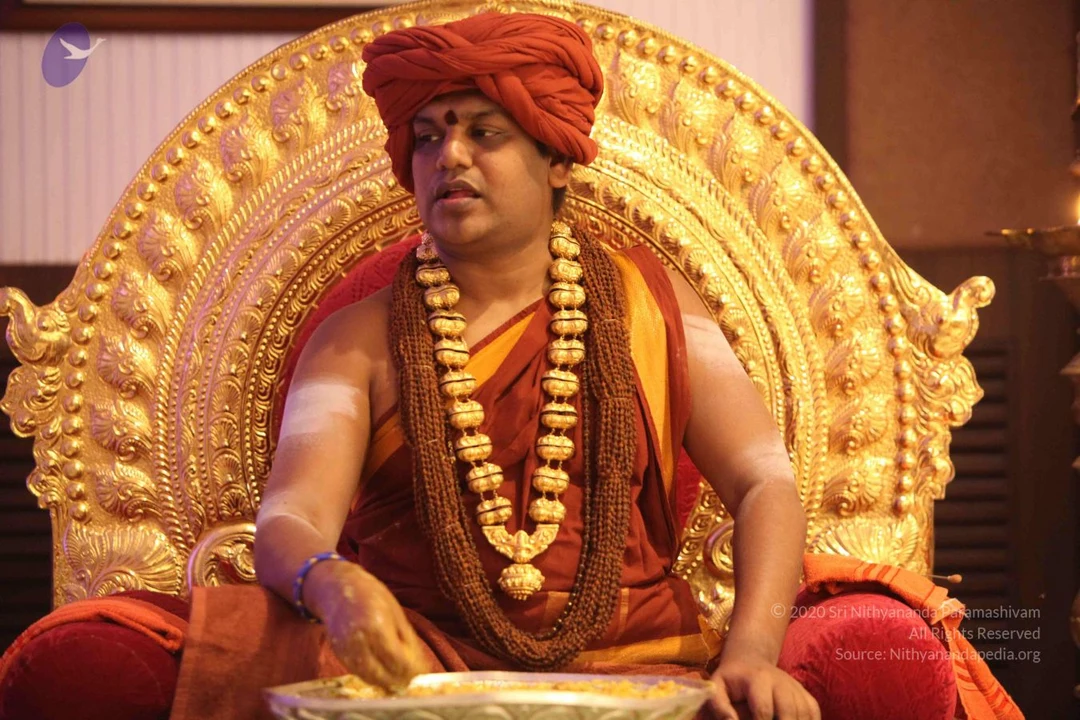
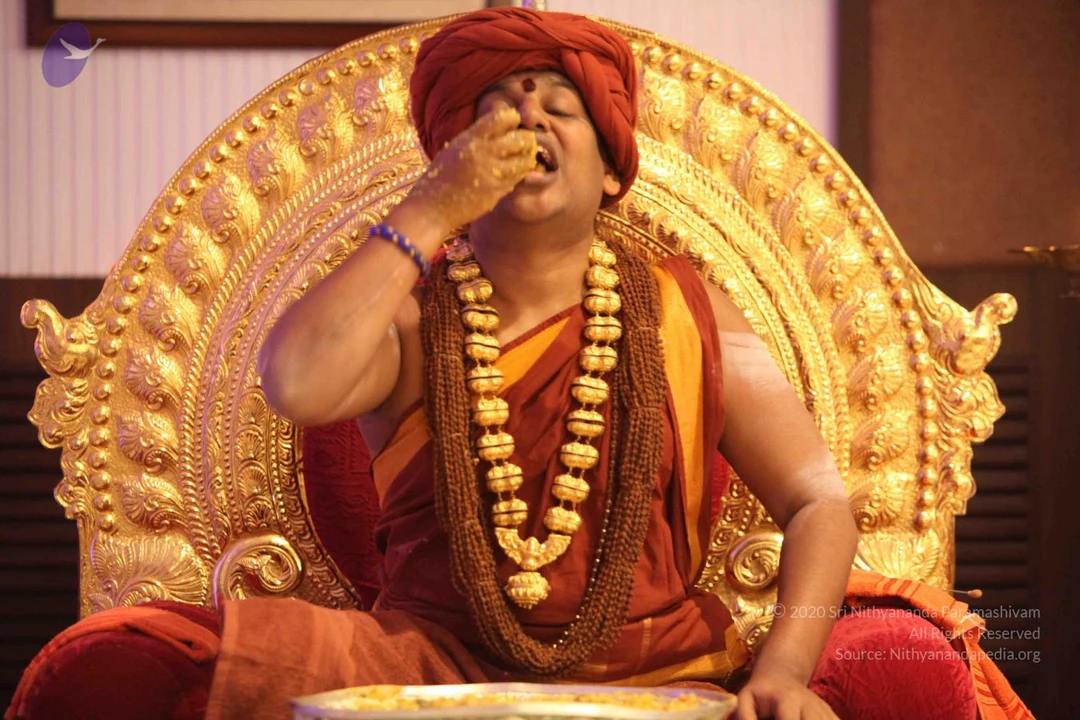
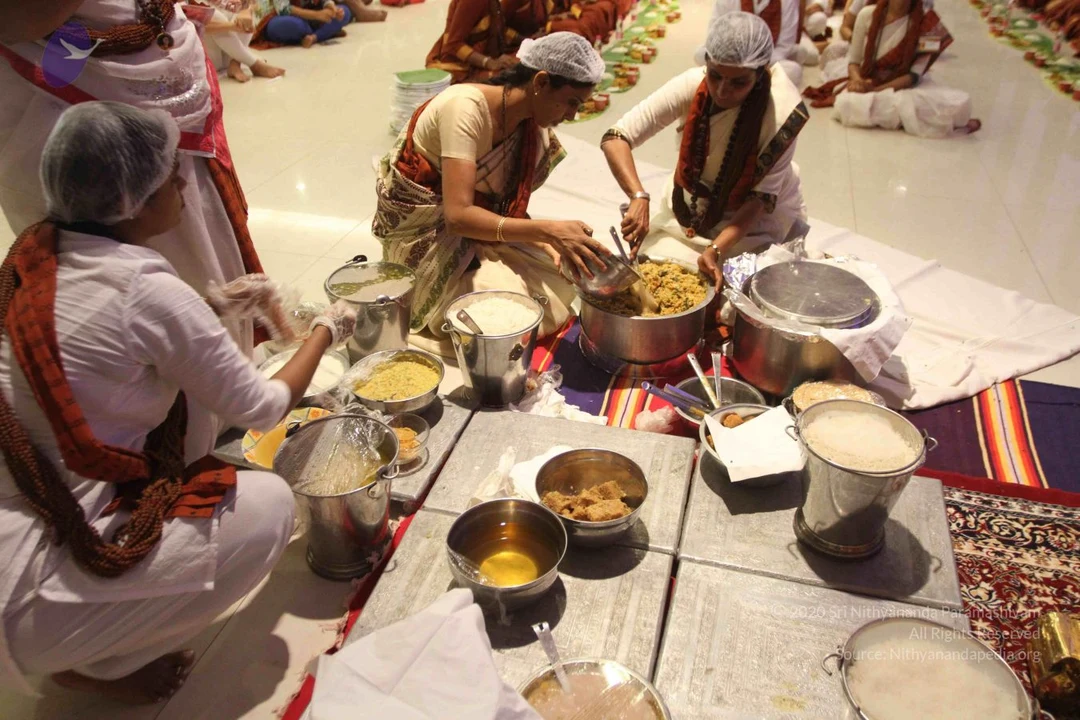
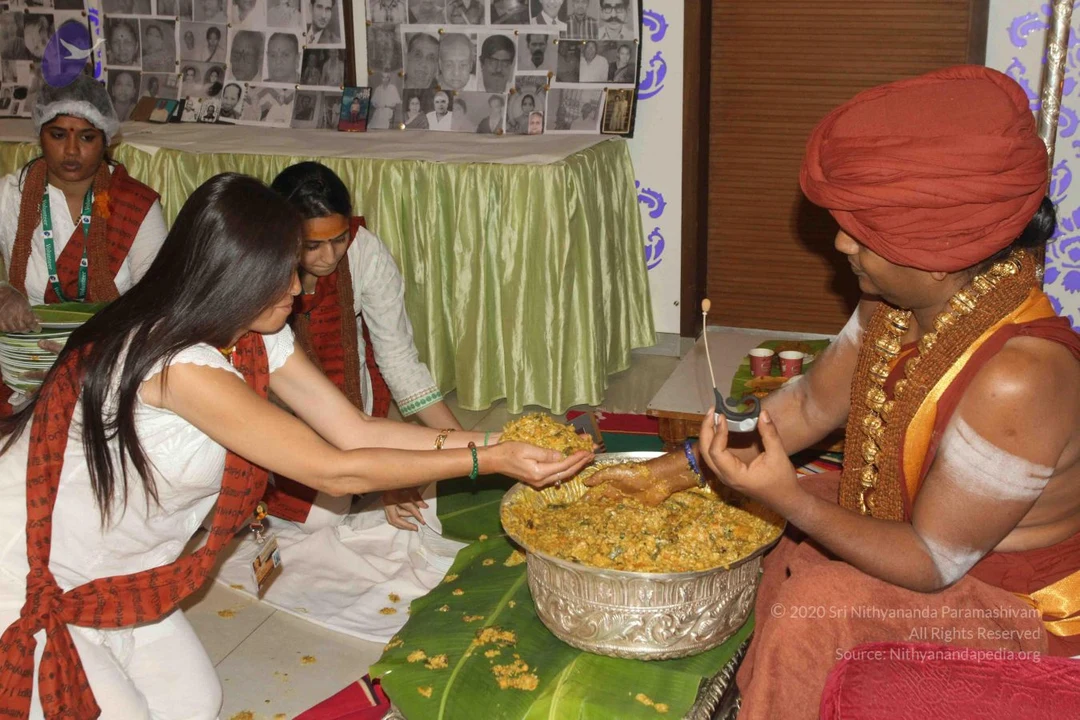
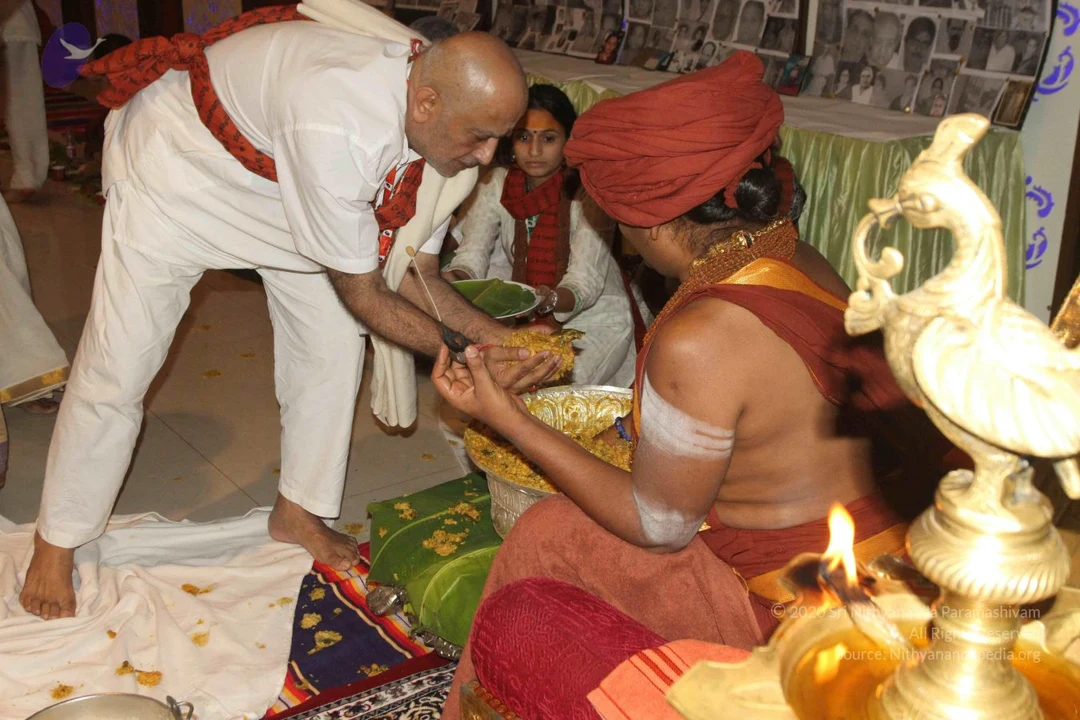
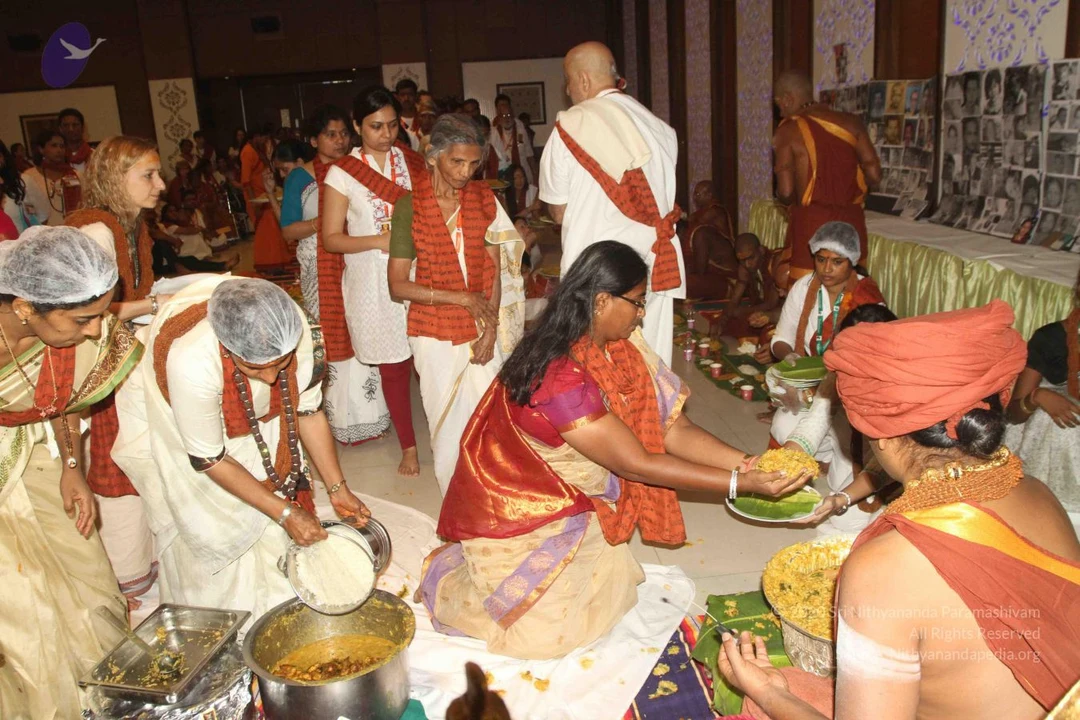
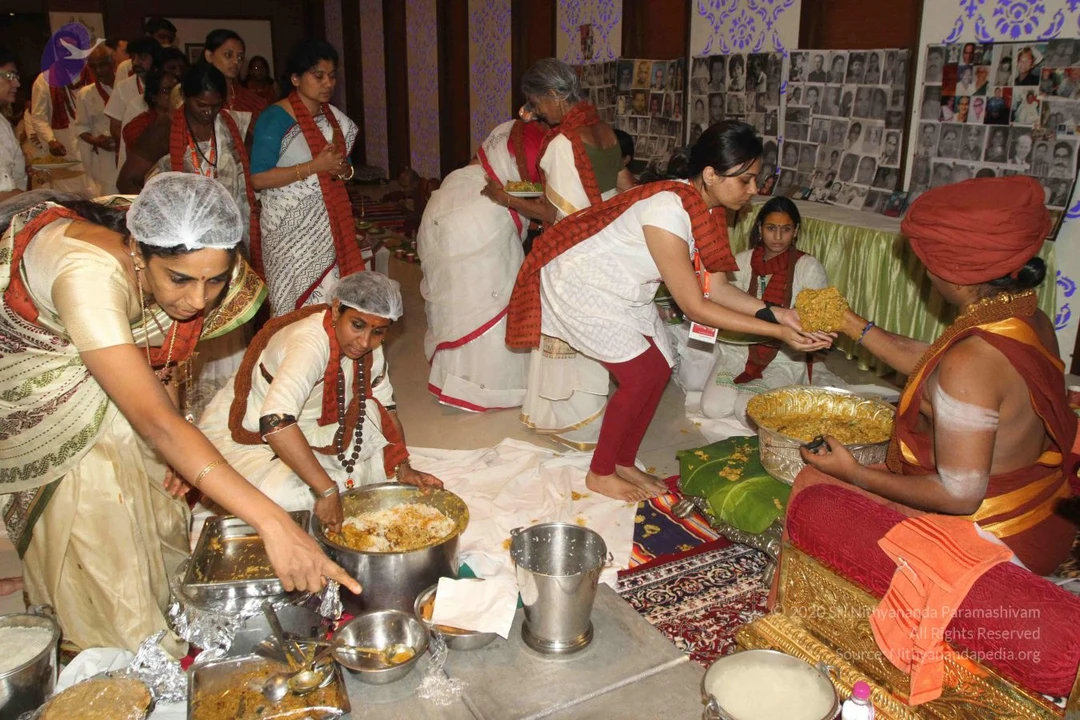
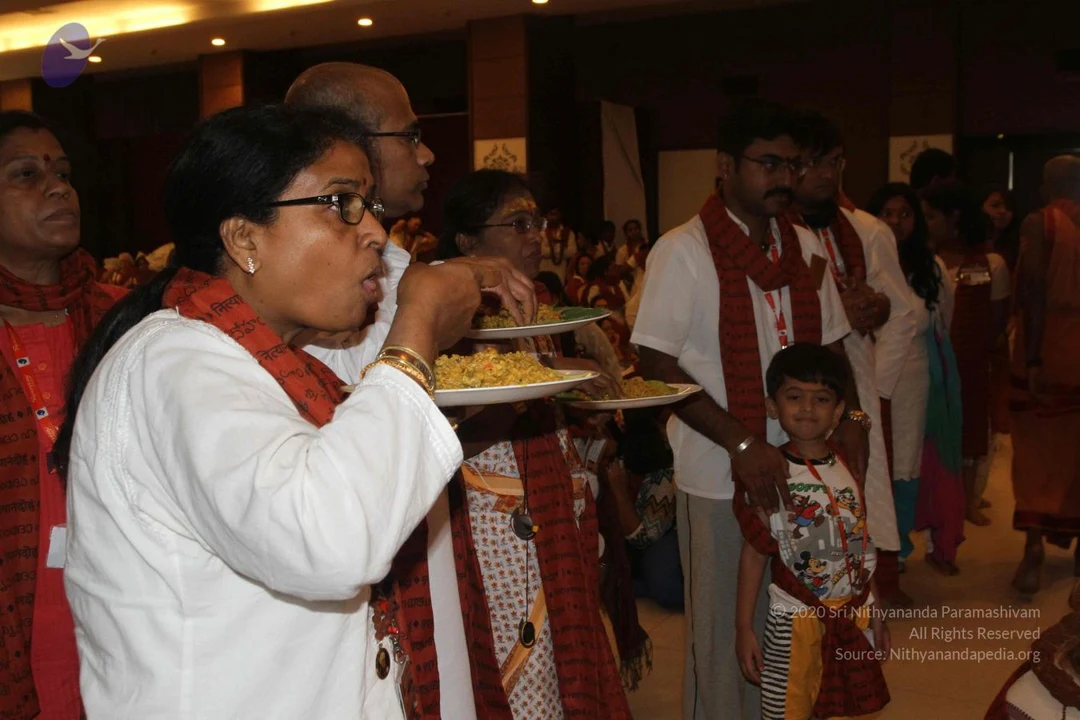
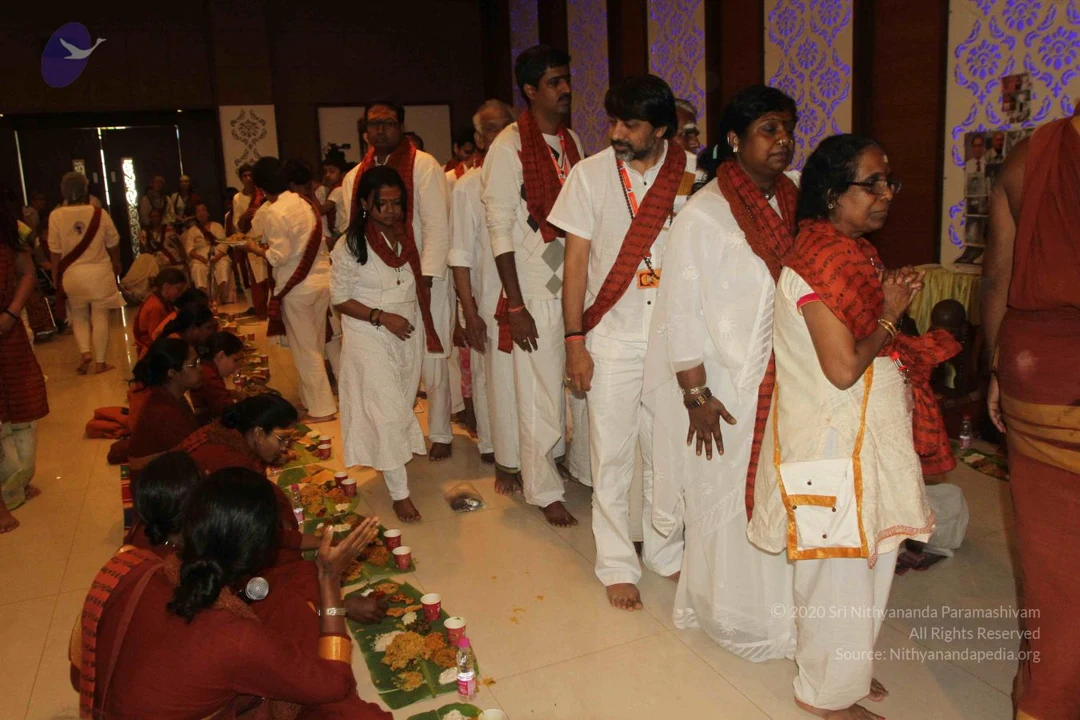
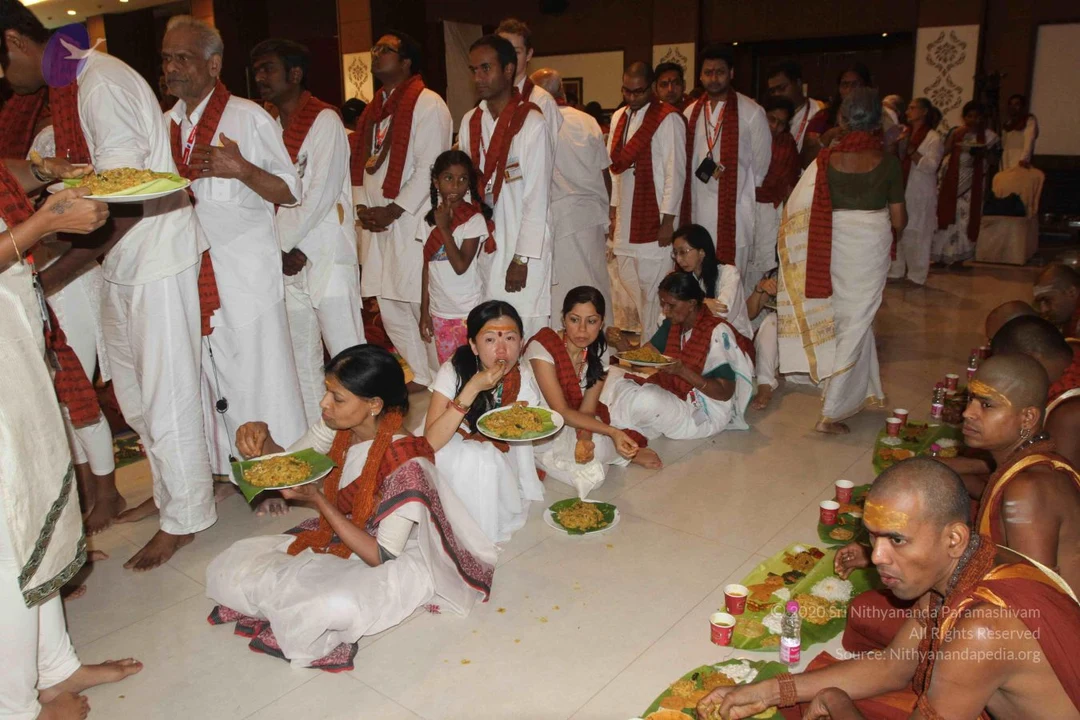
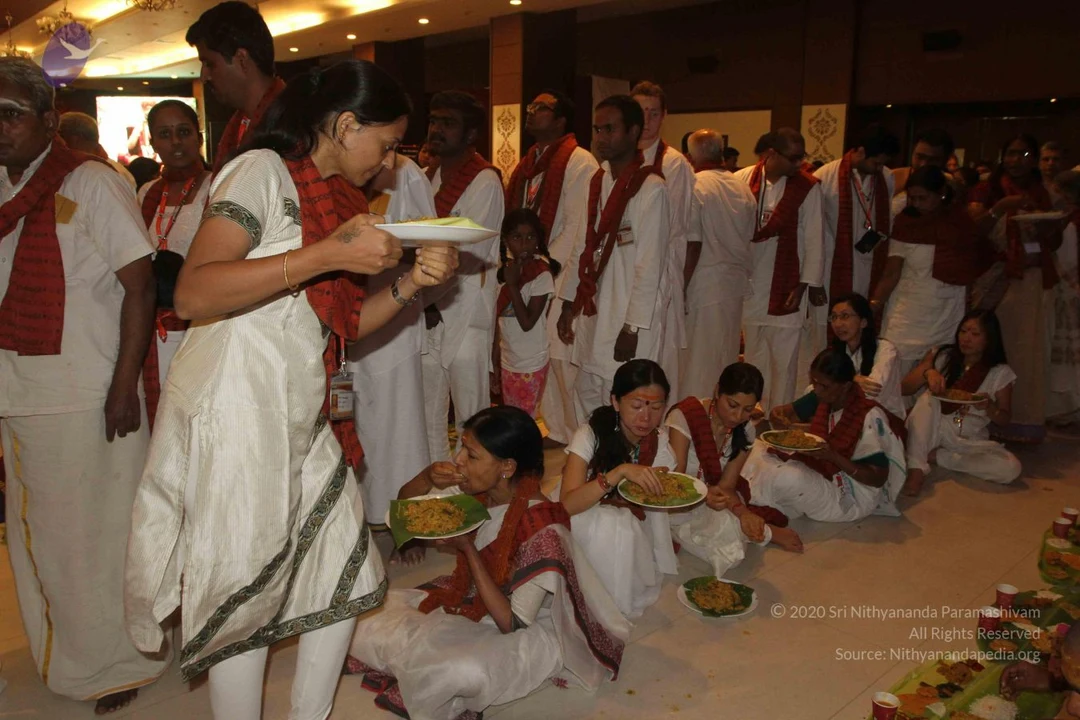
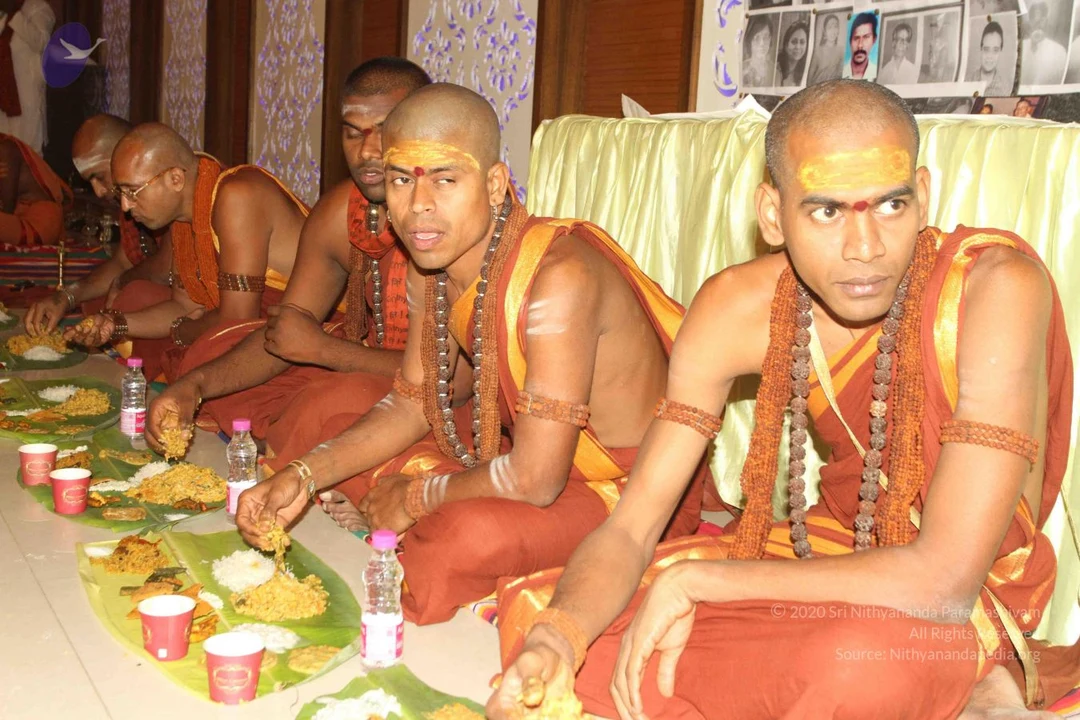
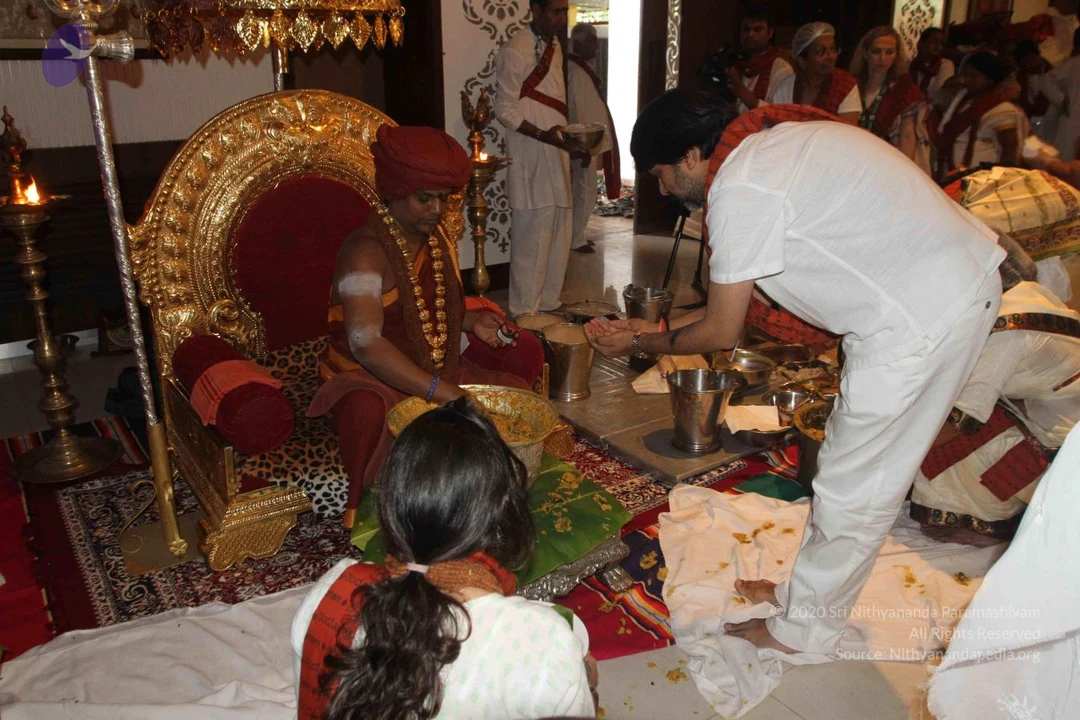
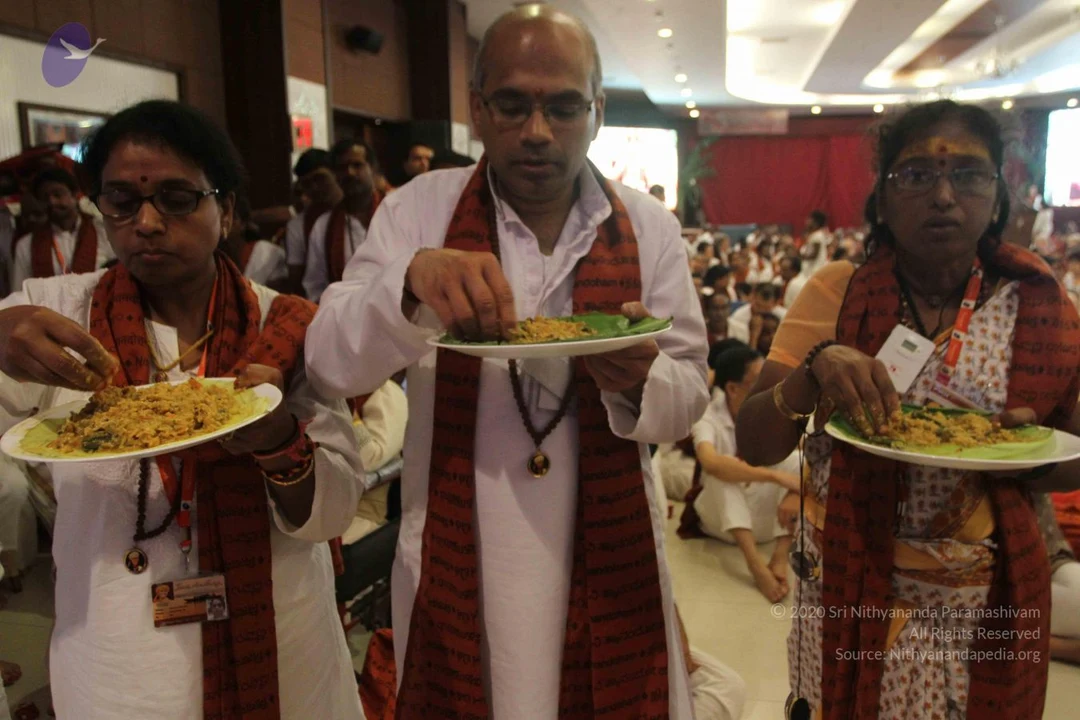
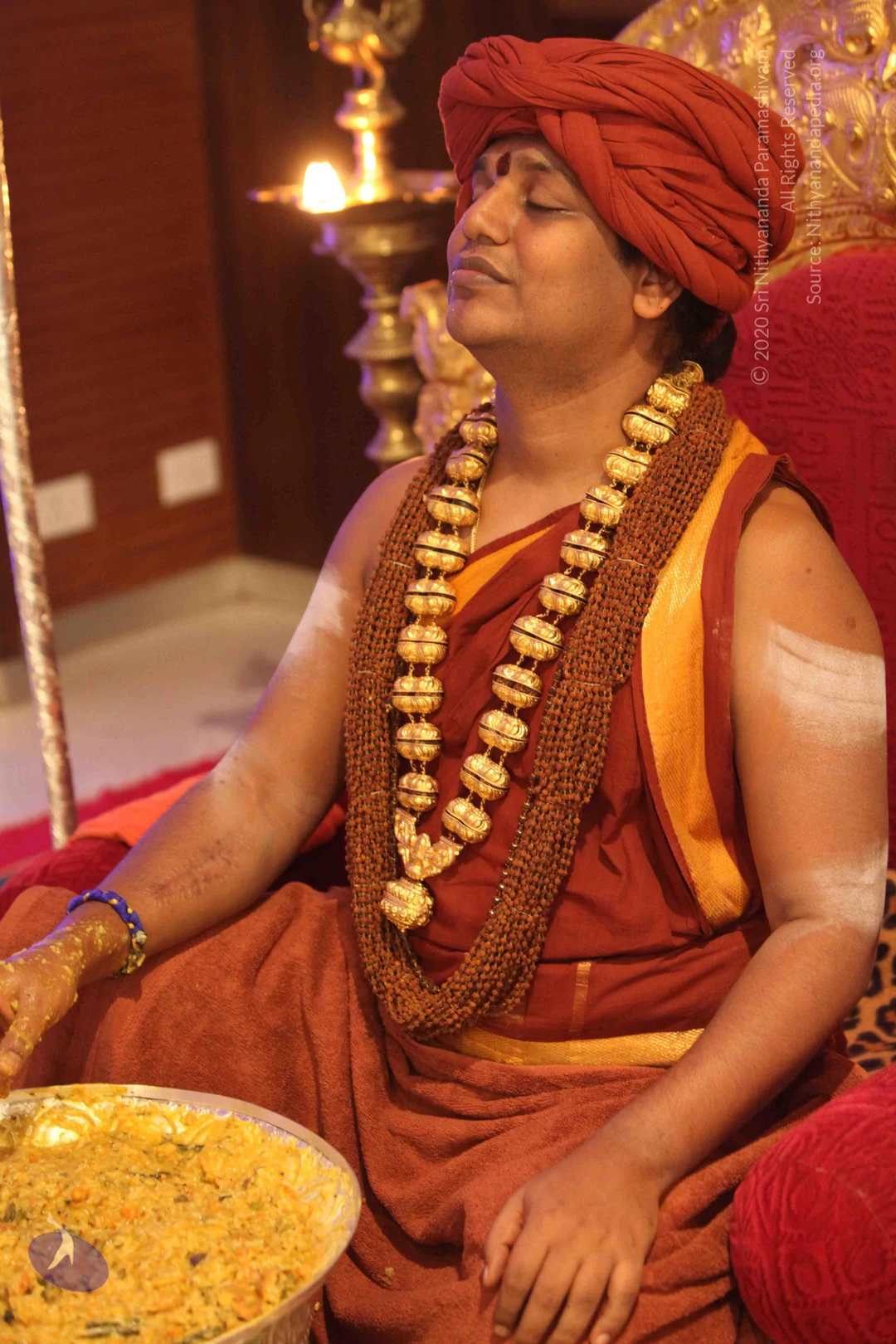
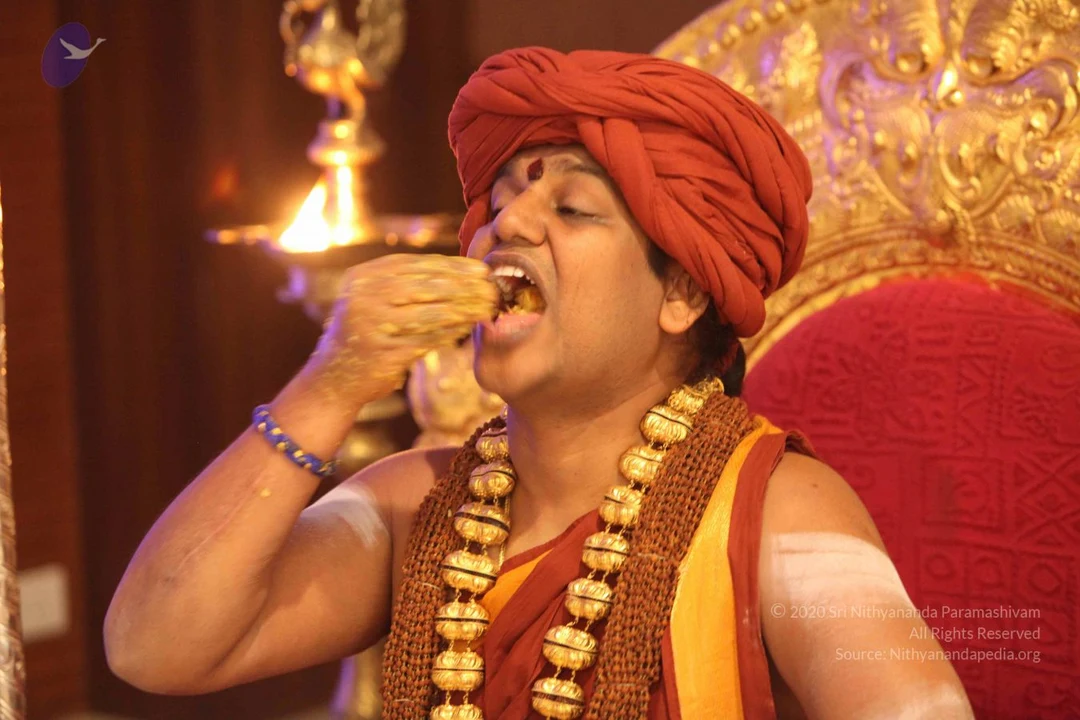
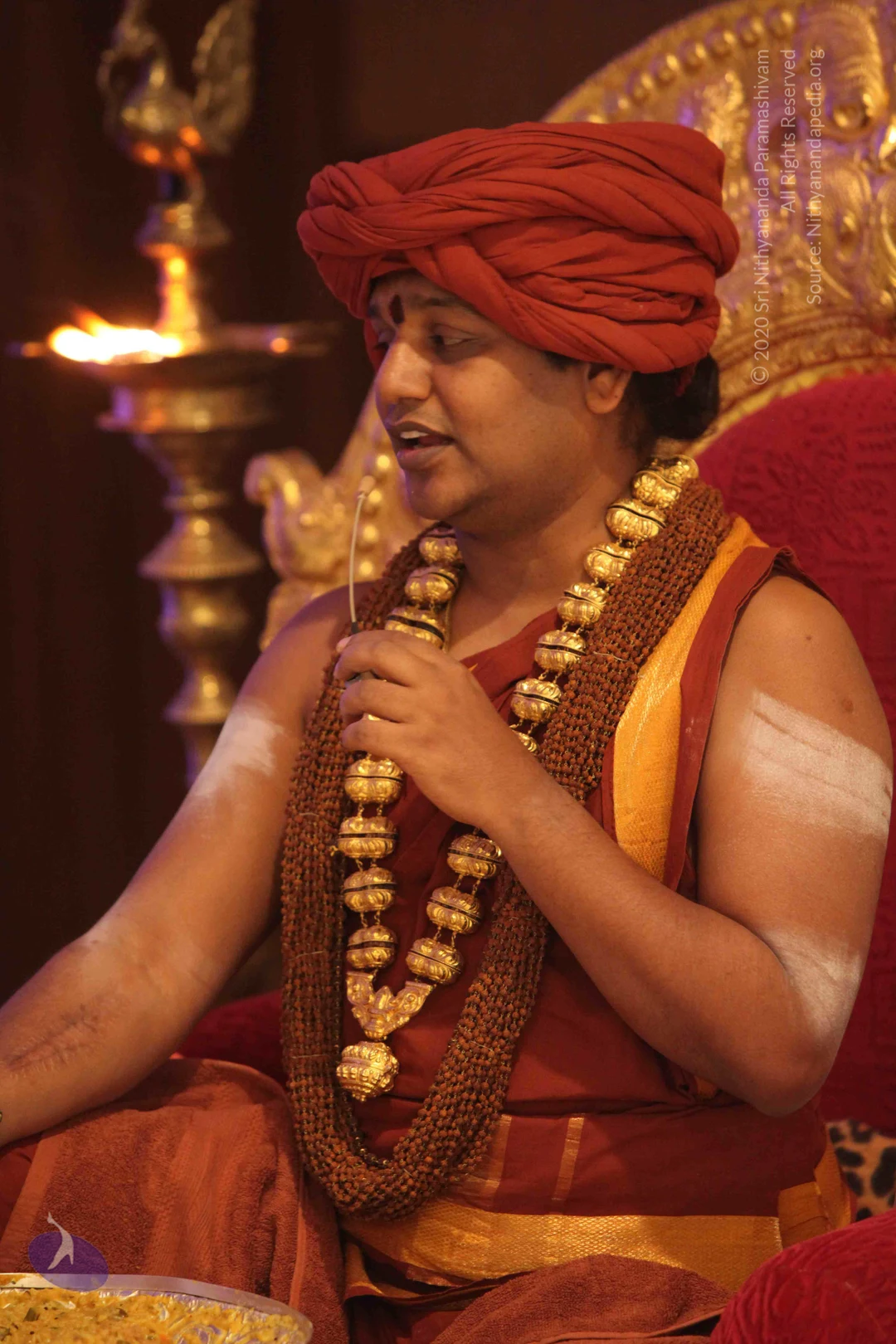
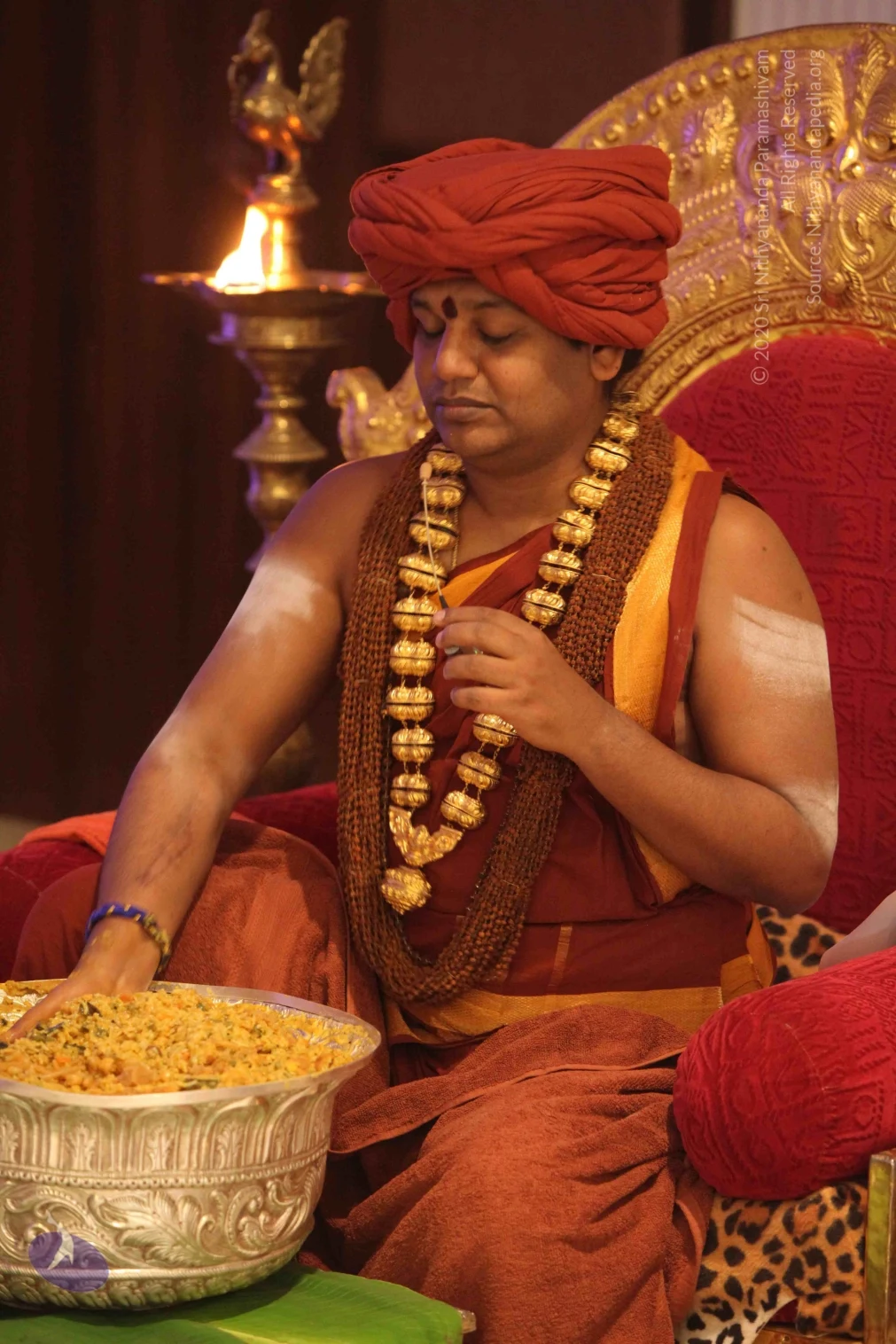
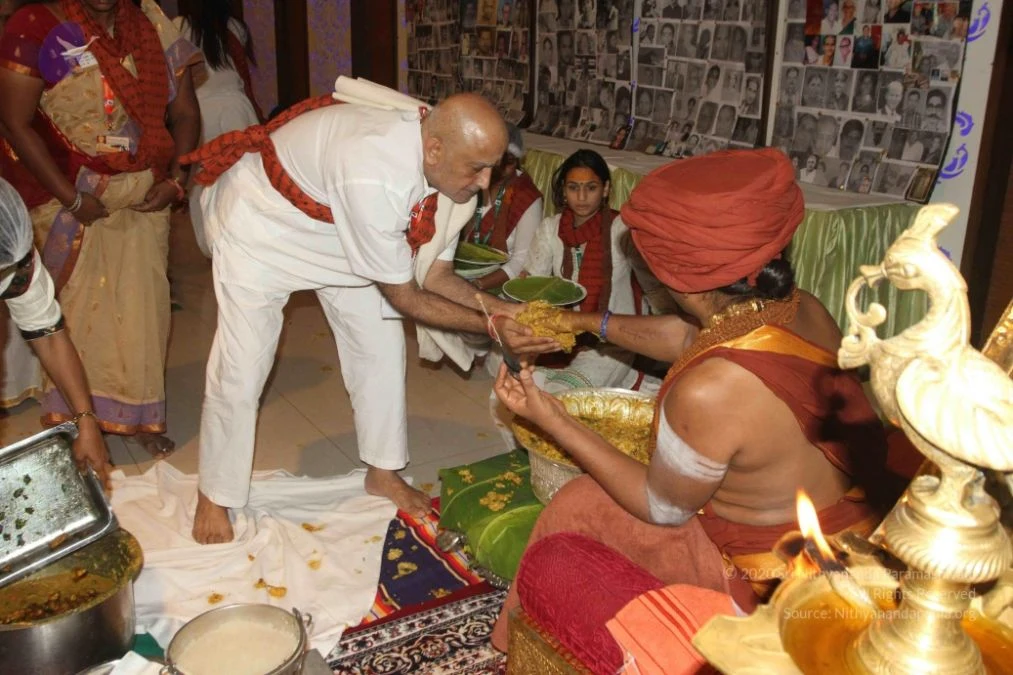
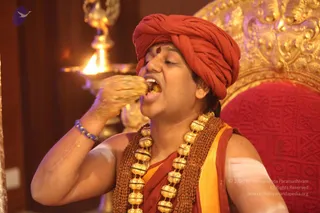
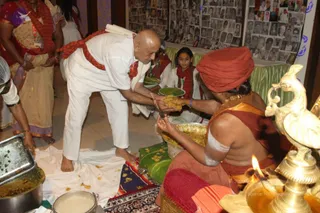
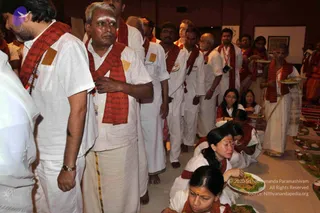
A man wearing a red-orange turban with a small red tilak on his forehead eats from a golden-yellow offering held in his right hand near his mouth, eyes closed. He wears a long gold-bead necklace over a rust-brown rudraksha-style garland and an orange-and-yellow shawl over bare shoulders, with a blue bracelet on his wrist. A lit oil lamp with a visible flame and a golden ornate throne with a red cushion sit behind him. The Swamiji appearance cues are a red turban, ornate gold necklace and saffron-toned shawl, so this is a probable Swamiji in person.A photograph of a ritual offering in an ashram hall. A barefoot man in white kurta and trousers, with a red sash, bends forward to receive a handful of yellow food from a seated priest with a saffron-orange turban and bare upper body in orange and gold cloth, who is holding a metal bowl heaped with the same food. Leaf plates with more food sit on a green leaf and on the white cloth on the floor, and a brass pot of rice and curry stands at the lower left. Behind them a young woman in red and white garments with a red sash, and a woman in a cream and purple sari, stand near a green-draped table. Panels of black-and-white portrait photographs cover the back wall. A brass lamp with a lit flame and a peacock-shaped finial stands at the lower right.A photograph of a large indoor prasadam or annadan meal in a hall. Many men and women in white ritual clothes wear red shawls with dark patterned borders. A man in front has white vibhuti marks on his forehead and holds a wrapped red cloth. Several women seated on the floor eat from plates of food on banana leaves. Others stand in a long line behind them, and some carry plates. A framed picture hangs on the wall behind, and the floor carries a row of food spreads and small cups. The overall scene is a communal meal with devotees dressed in white and red. No figure is clearly identifiable as a person.

Inner-Awakening-Varanasi

20 photosSource gallery
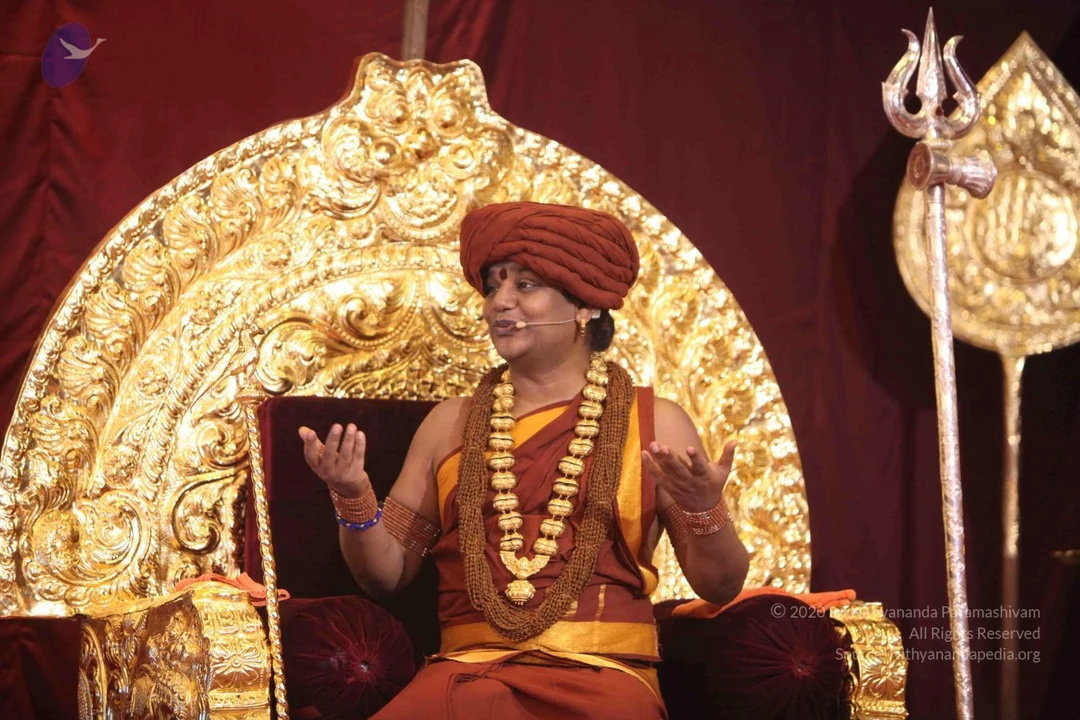
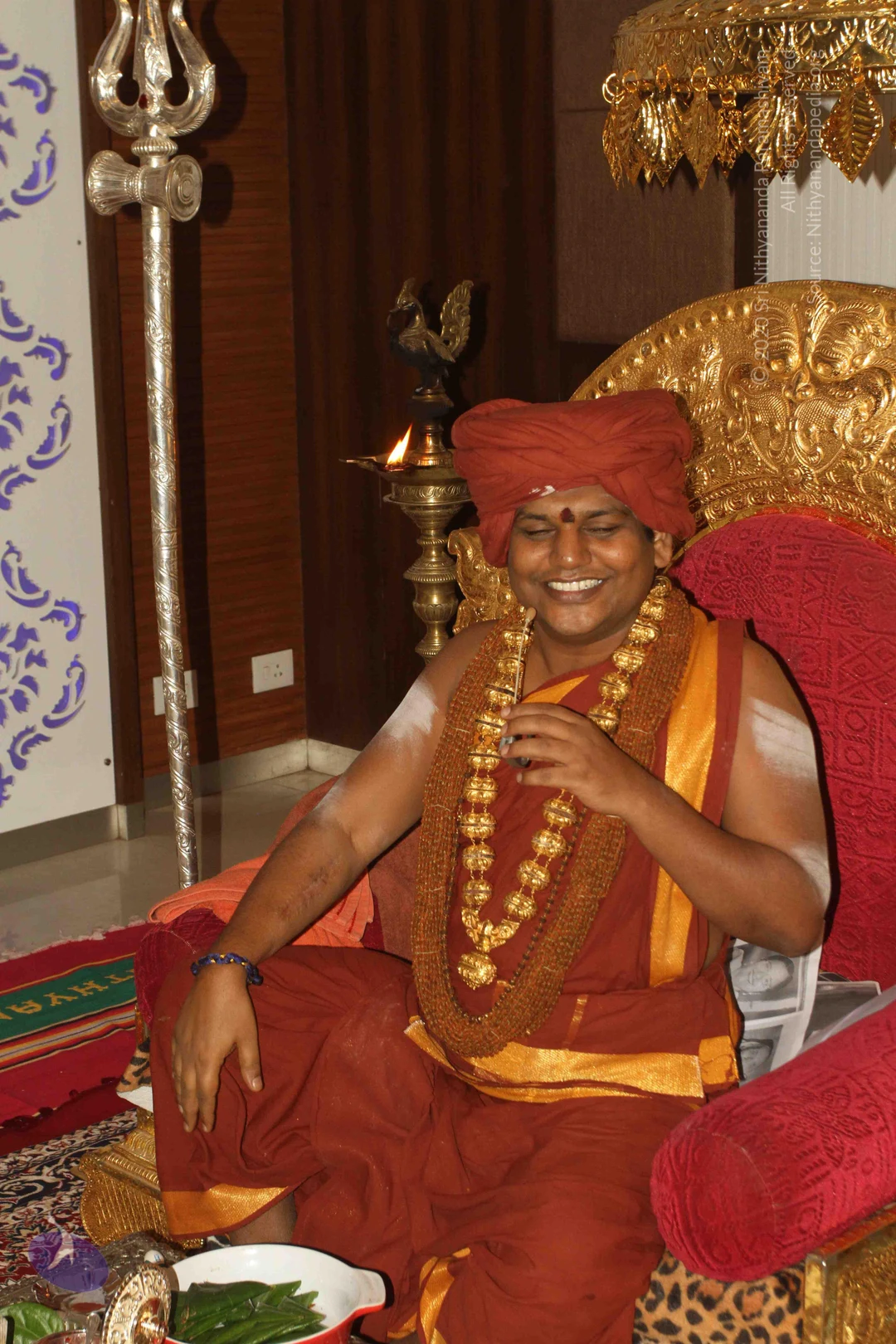
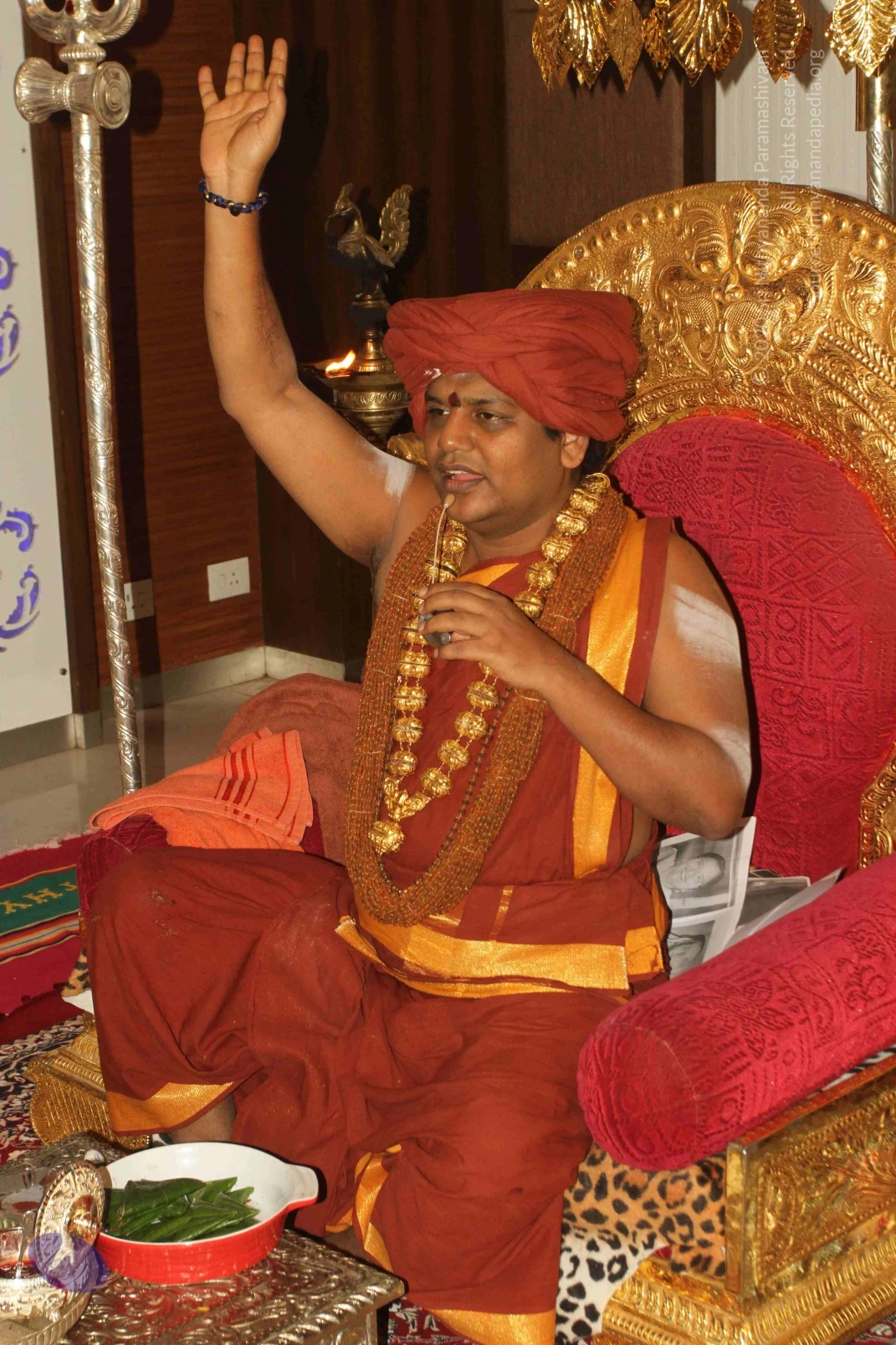
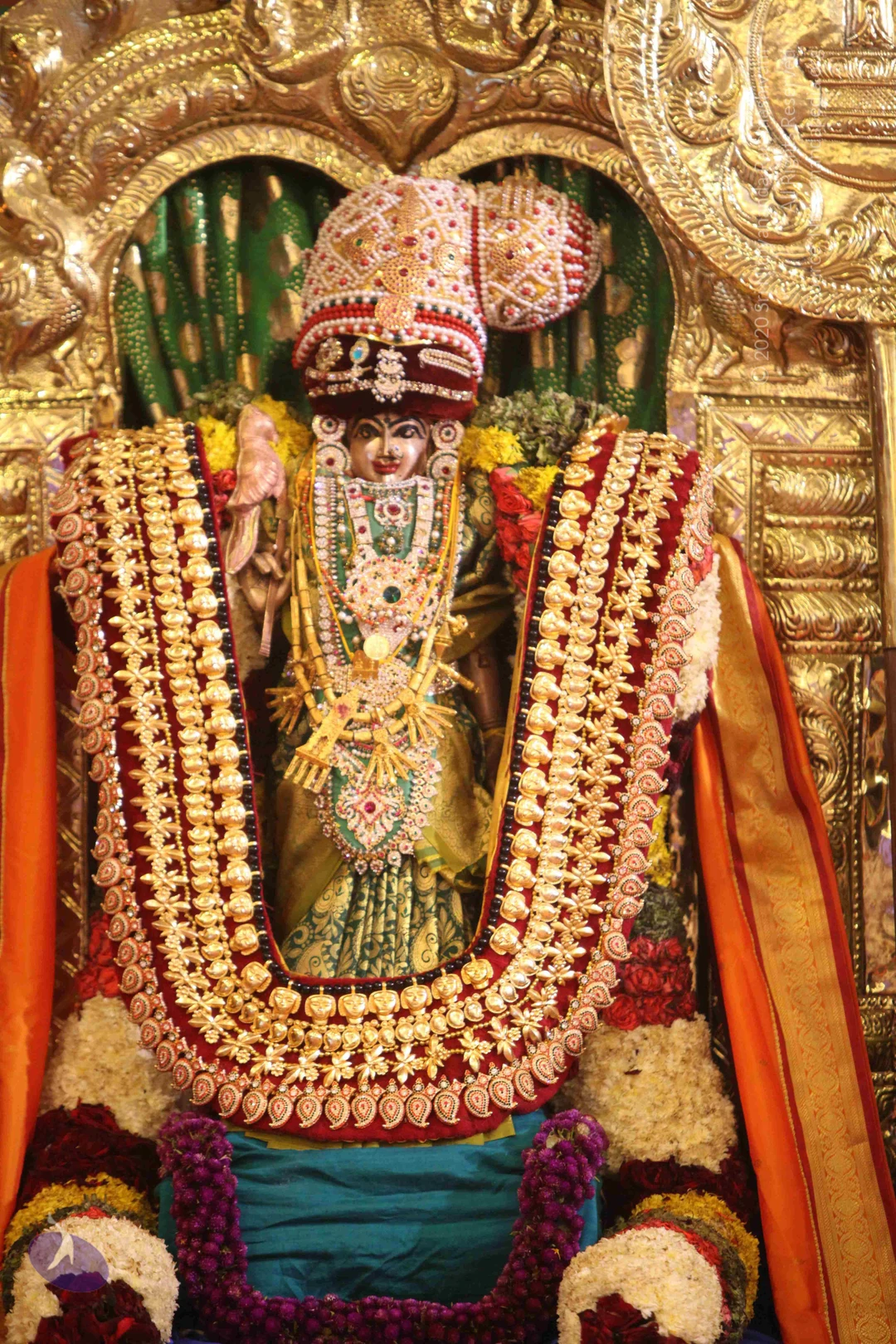
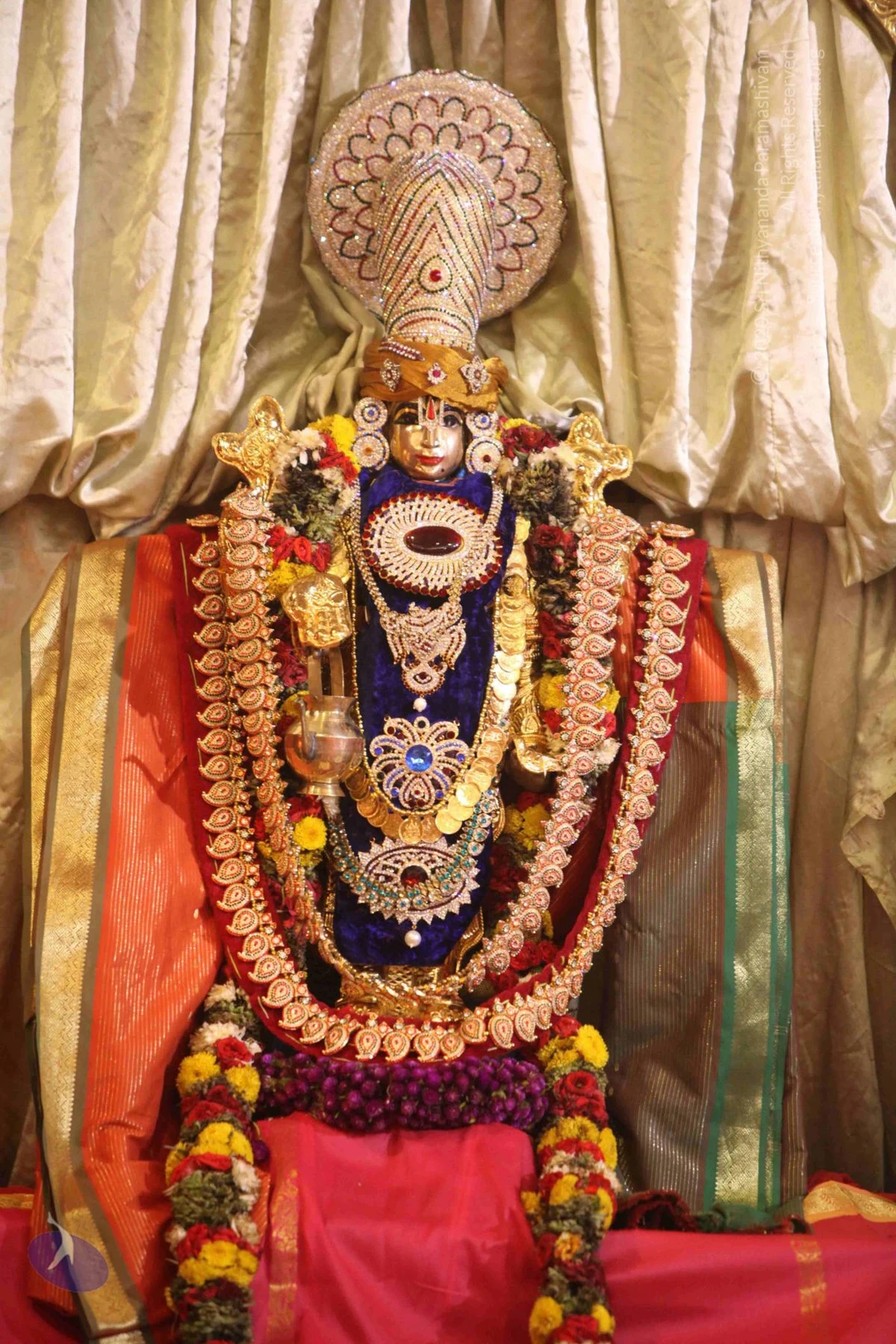
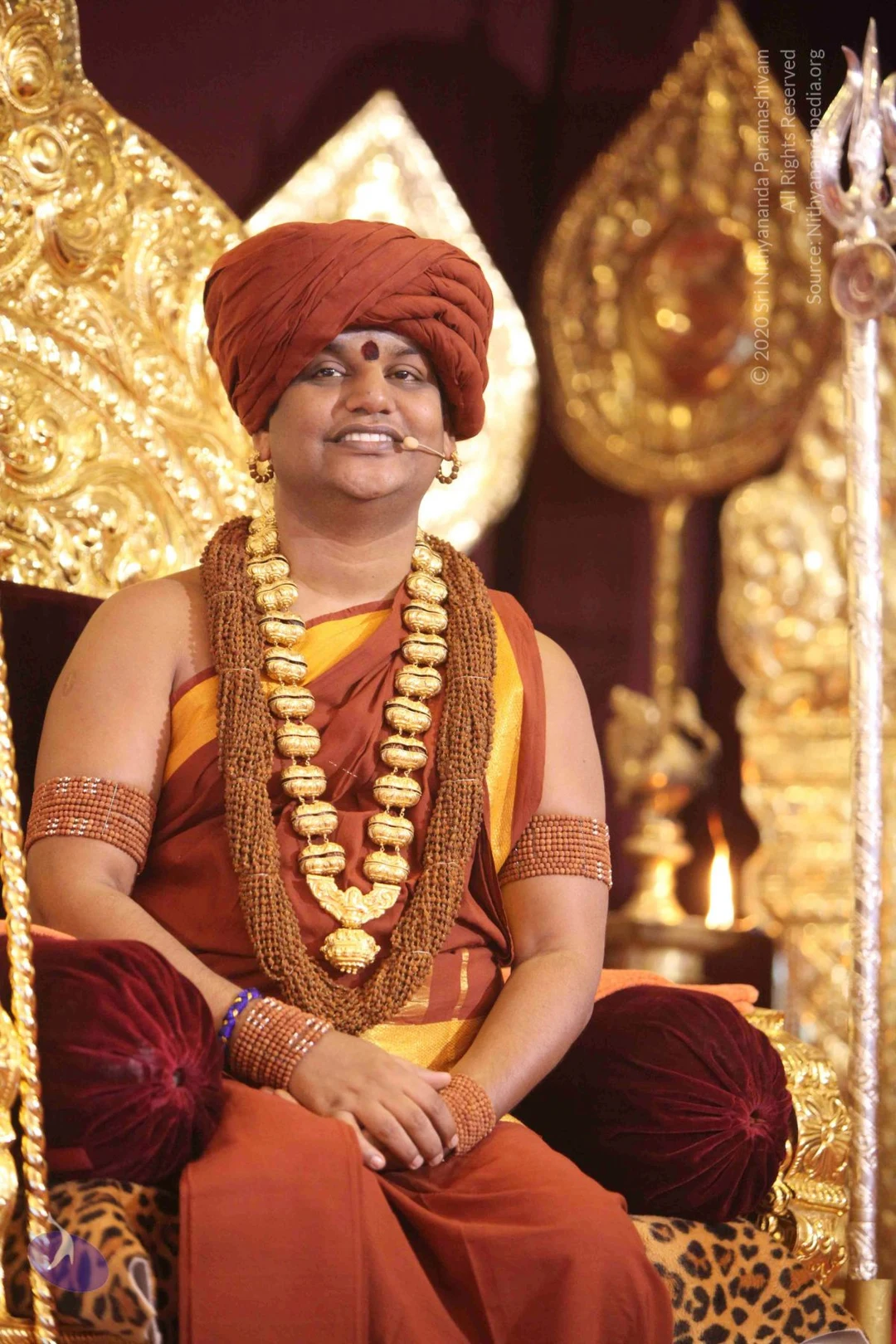
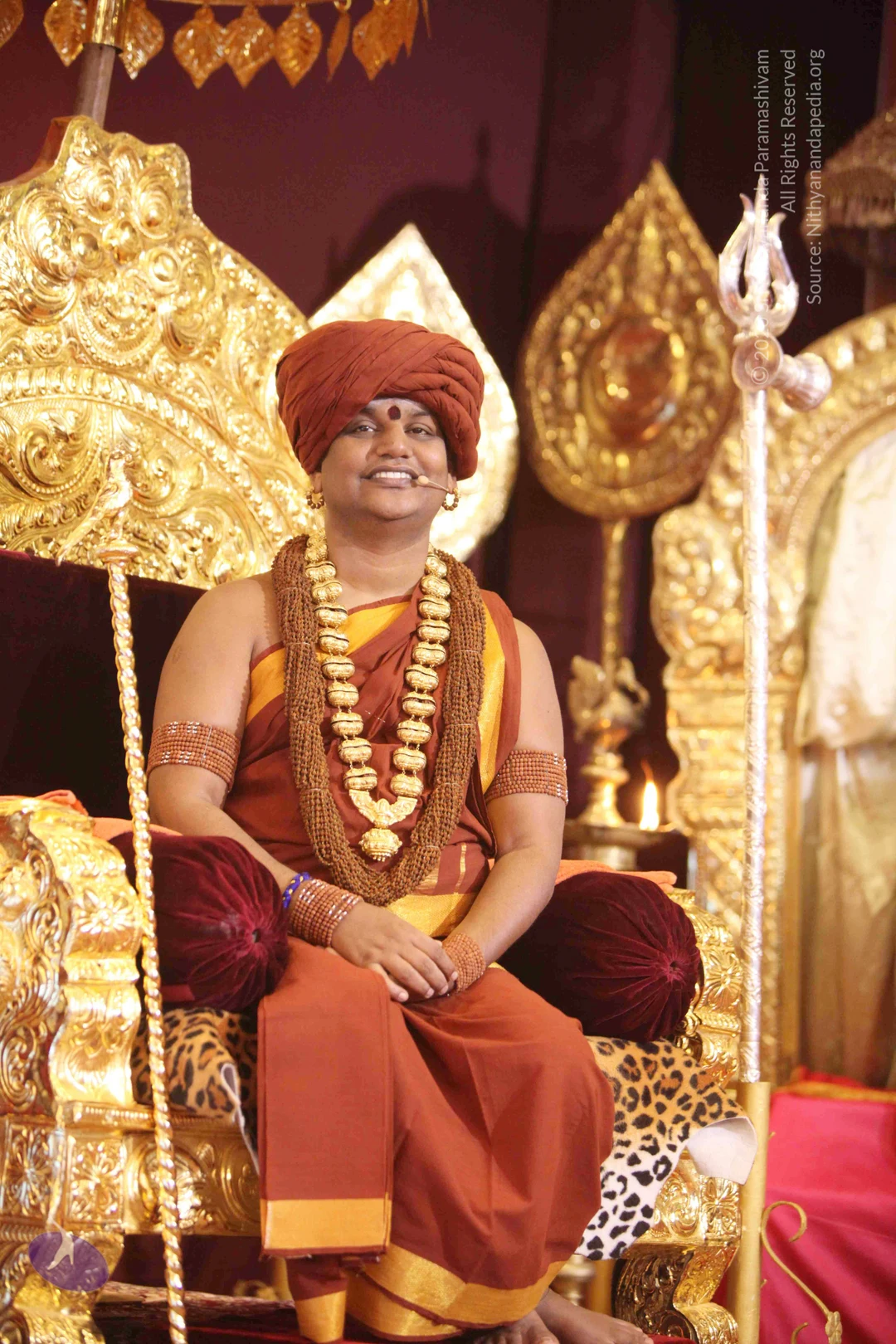
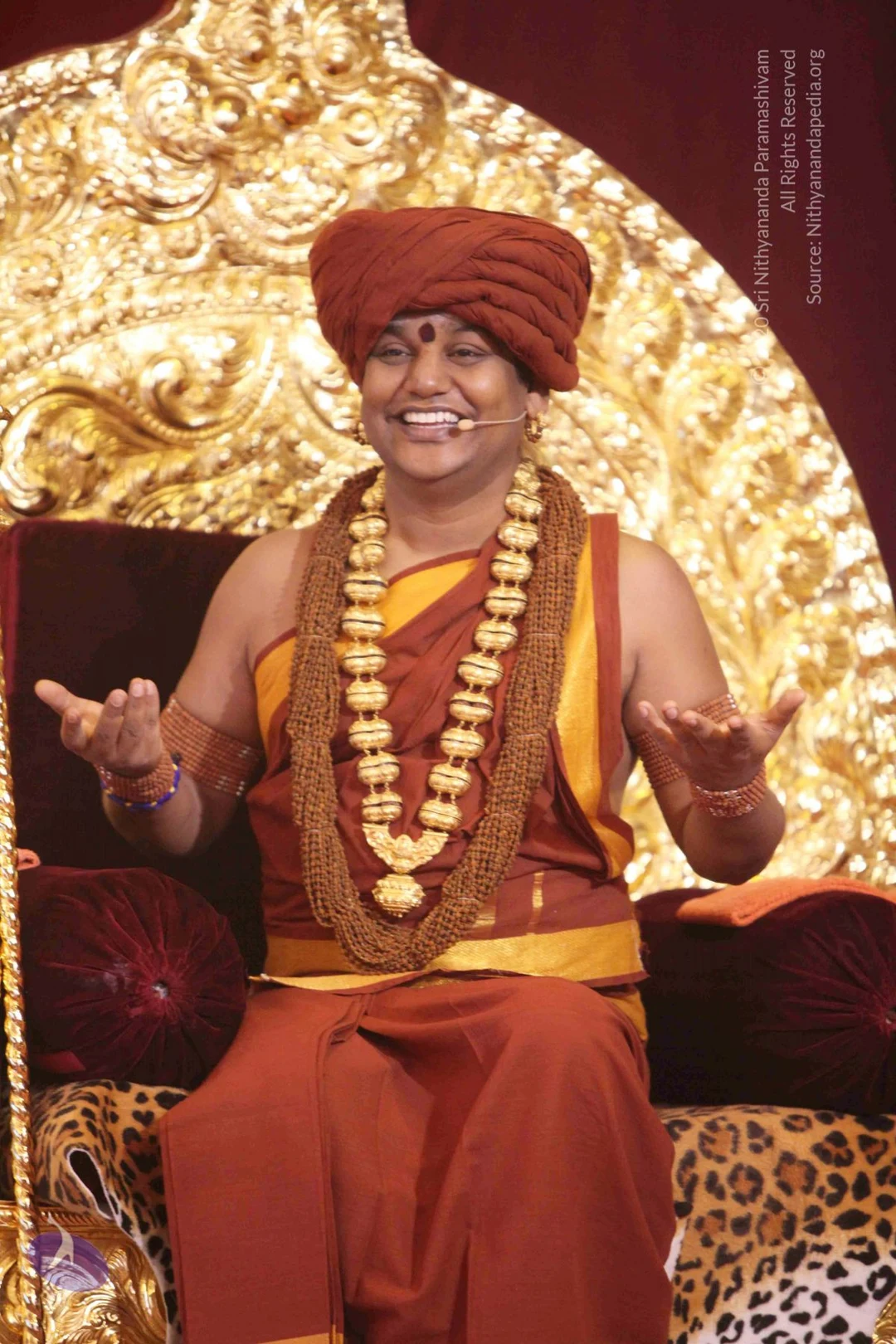
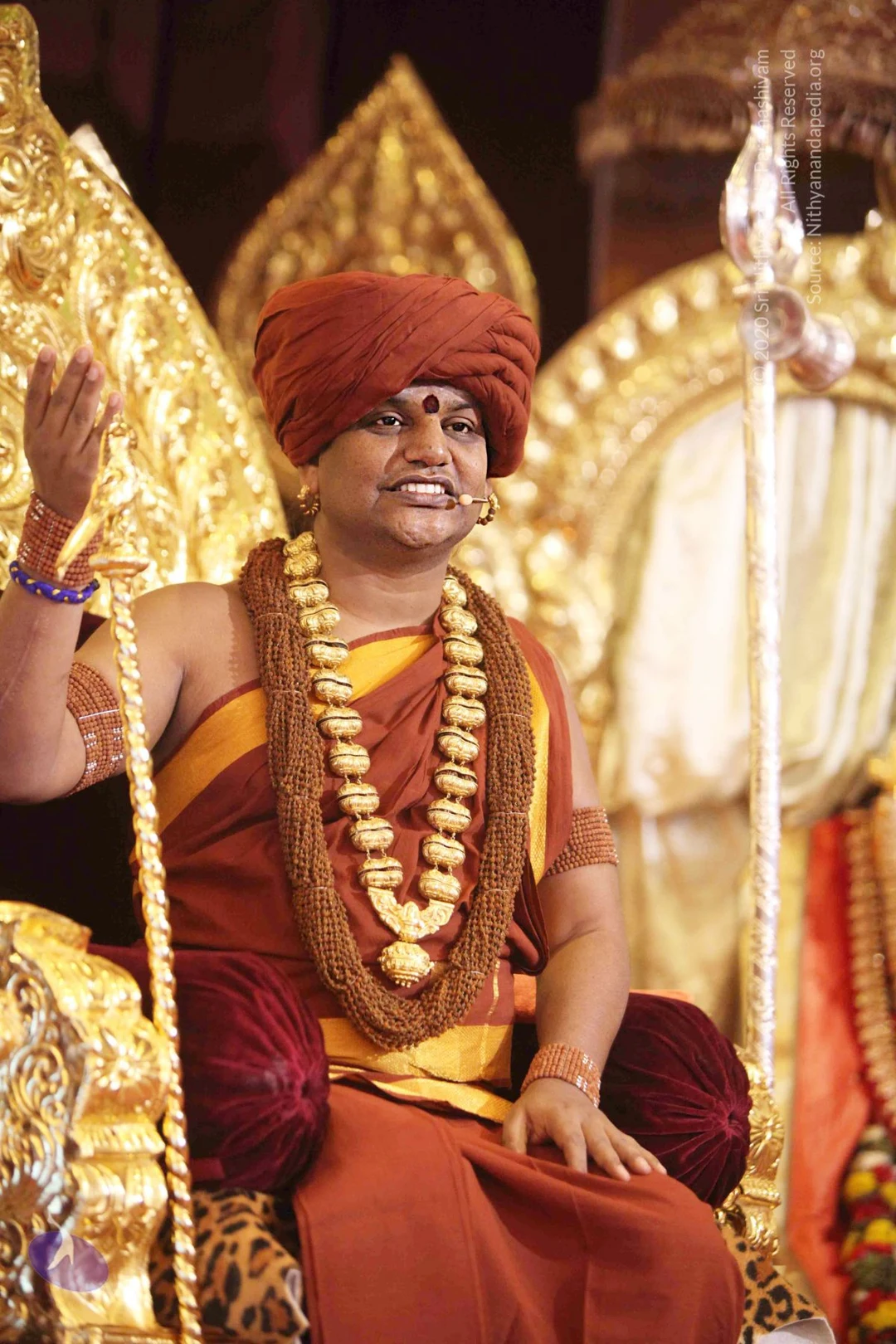
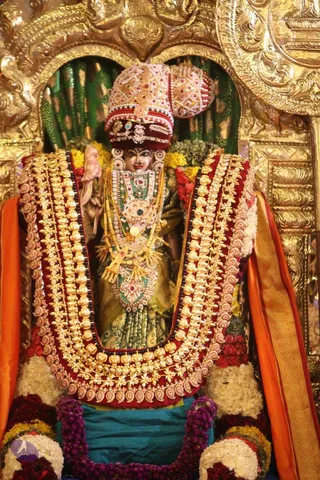
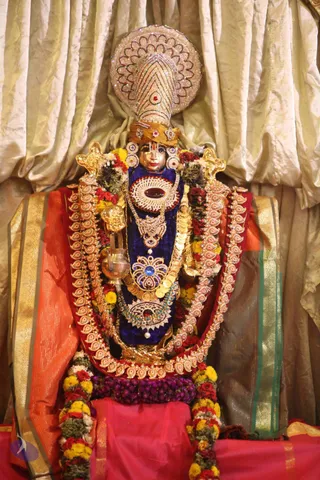
A richly decorated deity murti stands in a gilded shrine niche. The figure wears a jewelled crown of pearls and red stones, a green and gold silk garment, layered gold necklaces and a large garland of golden coin-like ornaments draped in a maroon velvet collar. Garlands of yellow marigolds and white flowers surround the base, with orange silk drapes on either side and a green patterned backdrop behind. No people are visible.A decorated deity murti of Krishna-like form stands at the centre of a shrine, framed by orange and cream silk drapes. The murti wears a tall ornate crown with peacock-feather style rhinestone fan, a blue velvet garment, layered gold and jewelled necklaces, and holds a brass flute-like staff and a small brass vessel. Garlands of marigolds, roses and green leaves hang across the figure, with a purple flower mound at its base and a red cloth draped on the platform below.A man seated before an ornate gold carved backdrop, wearing a rust-red turban with a small red tilak, gold hoop earrings, and a headset microphone. He wears a rust-red and gold-bordered shawl over his shoulders, multiple strands of rudraksha beads, a heavy gold bead necklace with a gold pendant, and rudraksha armlets. He gestures with one hand while speaking. Appearance-based cues (turban, rudraksha malas, ceremonial gold necklace, saffron-toned clothing) suggest a Swamiji (probable) seated as a speaker at a satsang discourse.A smiling man sits on an ornate gilded throne decorated with golden floral carvings and red velvet cushions, with a leopard-print cloth beneath him. He wears a rust-red turban with a small red tilak on his forehead, a red and saffron-bordered garment, layered golden beaded necklaces, rudraksha bead bracelets on his arms and wrists, and a small wireless microphone clipped near his mouth. Behind him stand gold-plated ceremonial items, including a silver trident and a brass oil lamp with a flame. a person, seated in person as the speaker at a satsang-style setting.A smiling man in an orange-red turban with a red bindi sits on an ornate gold throne with carved floral backrest, red velvet cushions and a leopard-print seat cover. He wears a brown rudraksha mala with a large gold bead necklace, orange-red robes with gold borders, and beaded bracelets on his arms and wrists, with a small microphone at his ear. A silver trident stands beside the throne, and an oil lamp glows in the background. Appearance cues are consistent with the page's Swamiji reference (turban, rudraksha mala, gold necklace, saffron-toned robes), so he is labelled Swamiji (probable).

01-Shivoham
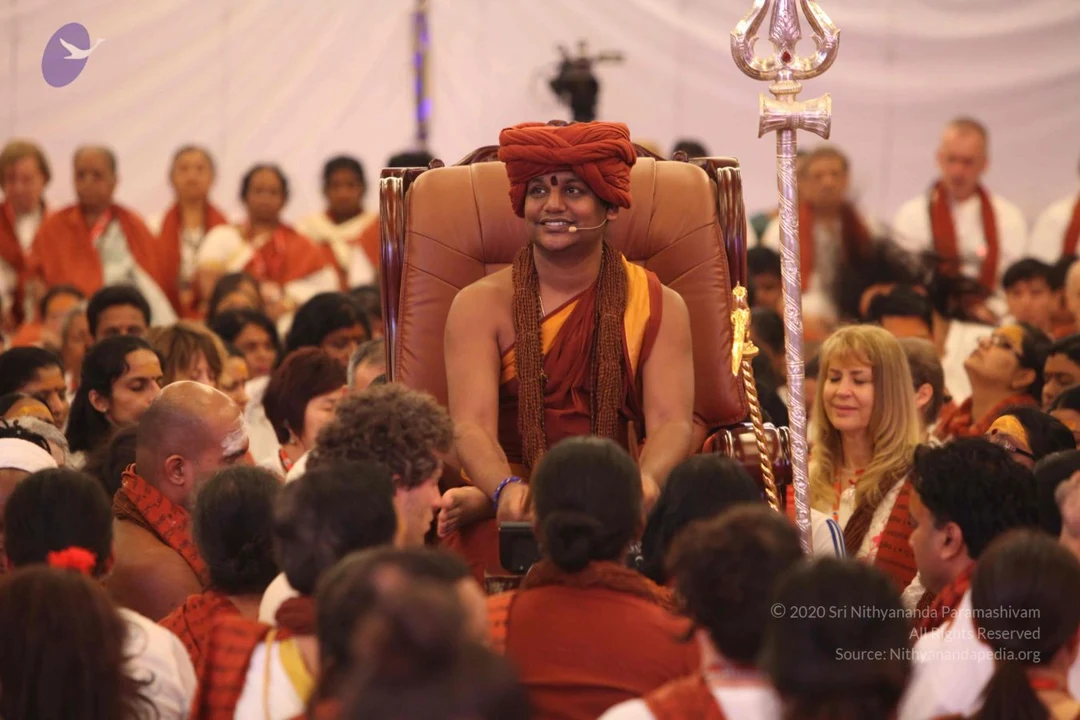
15 photosSource gallery
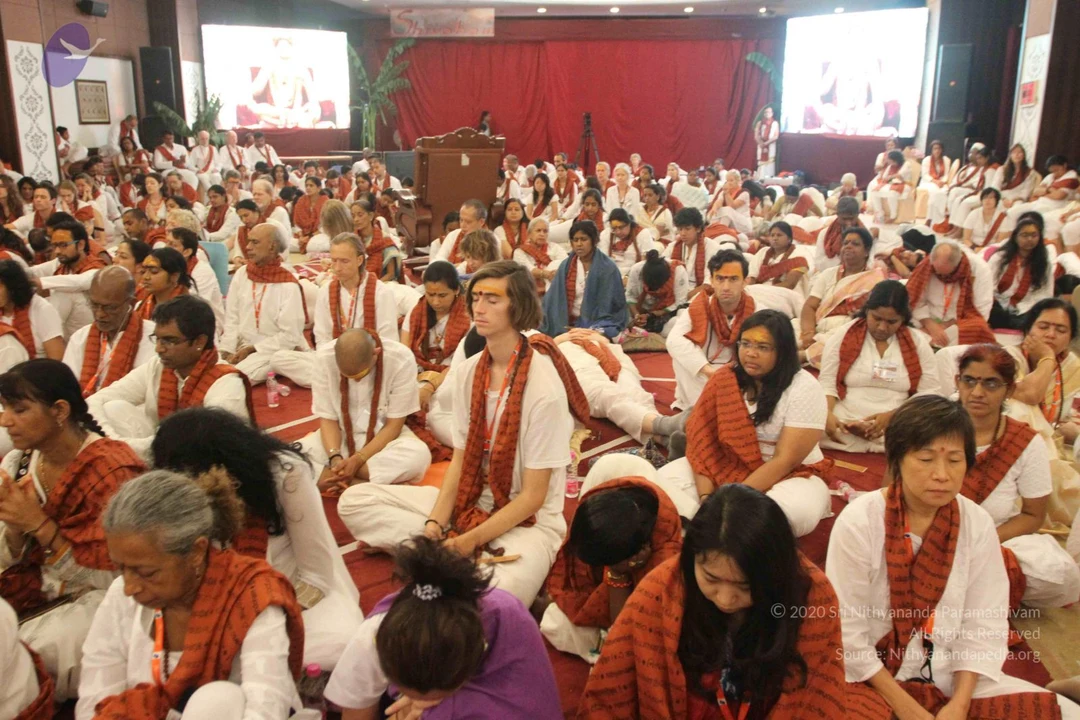
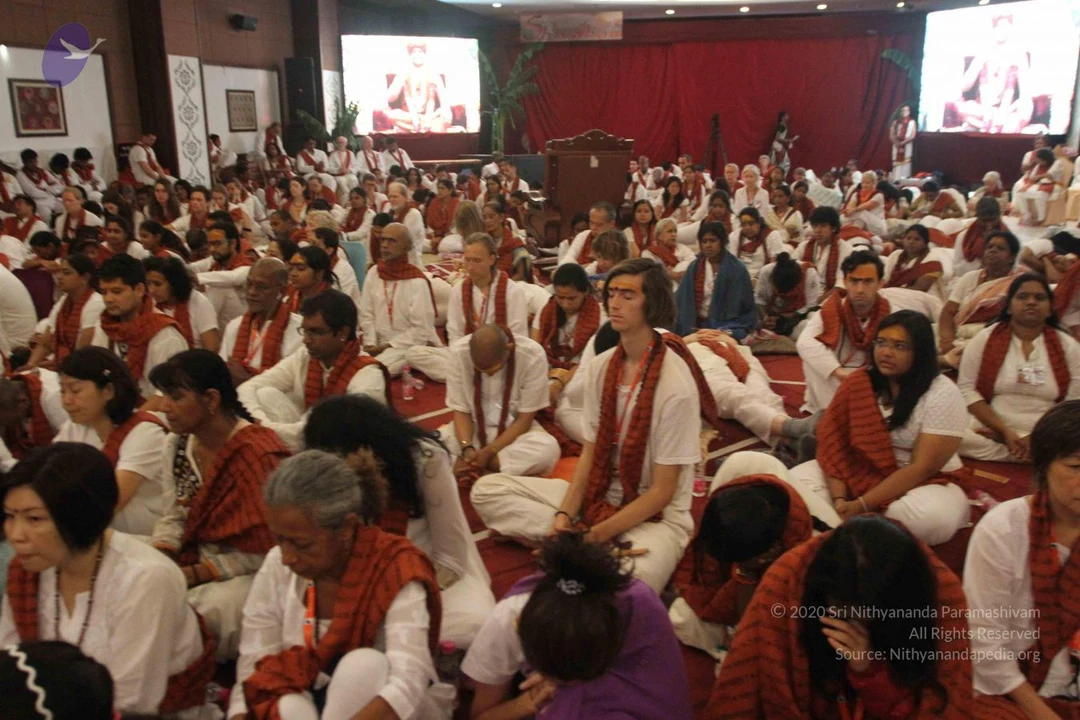
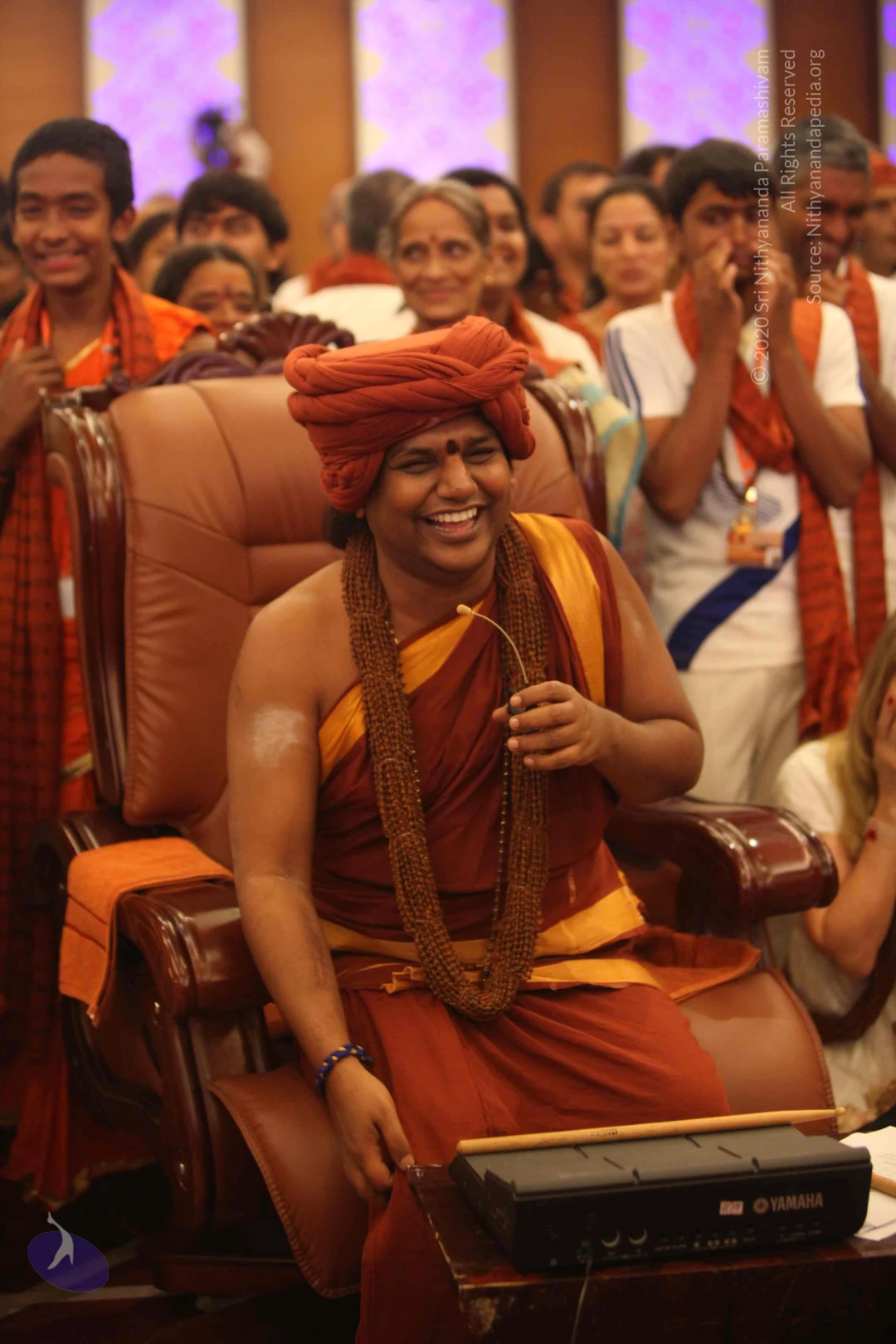
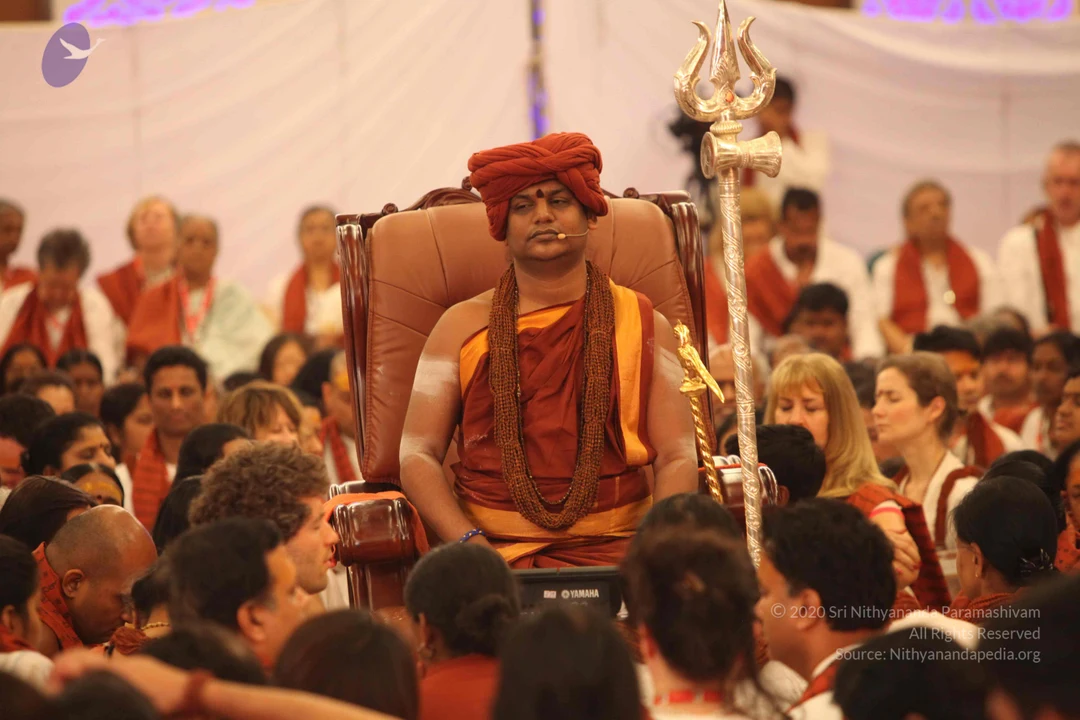
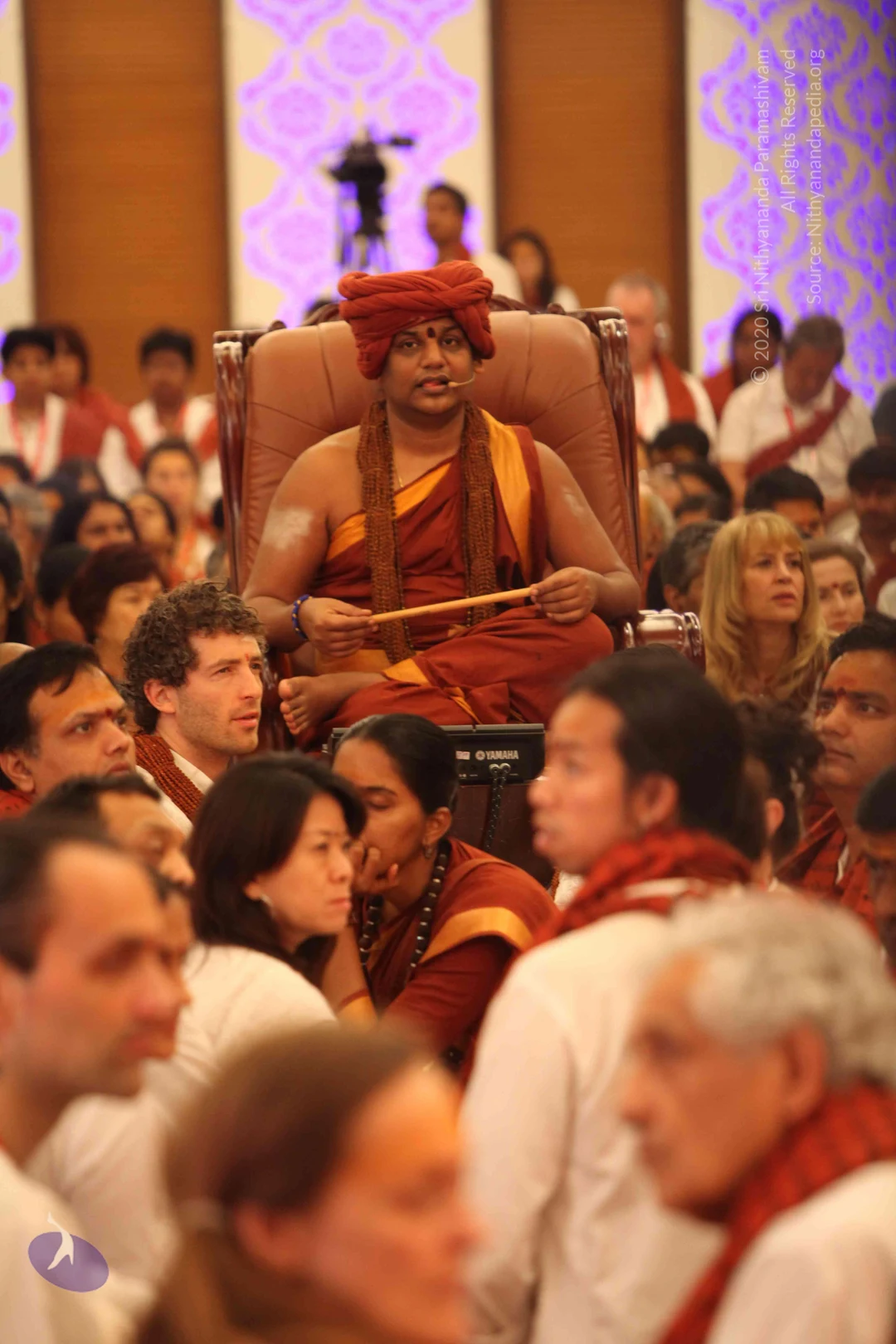
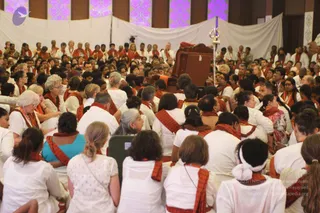
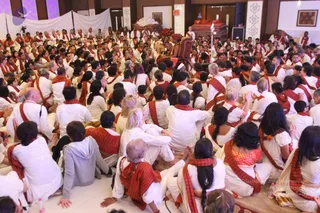
A large indoor satsang hall filled with hundreds of seated devotees dressed mostly in white kurtas and dhotis with orange-red shawls draped over their shoulders. In the centre, a wooden lectern or seat stands at the front of the room, facing the crowd. Several people sit on green and maroon mats in the foreground, and a few devotees in orange and saffron clothing sit at the lower left. Purple patterned panels and white draped fabric decorate the back wall.A large satsang gathering seated on the floor of a bright hall, with hundreds of devotees dressed in white clothing and orange-red shawls draped over their shoulders. Many sit cross-legged in rows and clusters, some with hands folded or raised. Near the top of the image, a wooden seat or dais stands at the front of the hall, and white draped fabric hangs along the ceiling. The scene conveys a dense, orderly sangha assembled for teaching.A man in saffron-orange robes and a red turban sits on an ornate brown leather throne with carved wooden arms, holding a wooden stick and wearing a rudraksha mala with a golden-tan shawl across his chest. He speaks into a headset microphone. Behind him stands a tall silver trident. Seated and standing devotees in red and orange shawls and white clothes fill the foreground and background of a white-draped hall, with a Yamaha keyboard in front. Swamiji (probable) is seated on the throne as the speaker, identified by the rudraksha mala, saffron robes, red turban and ornate throne cues. A woman in the right foreground wears glasses and a yellow-orange forehead mark. Several people are visible in the crowd.A seated bearded man in an orange-red turban, orange and saffron robes, and a long rudraksha mala sits in a brown leather throne-like chair beside a tall silver trident. He wears a small microphone at his mouth and bare feet rest on the chair. Around him a large seated audience in white and red-orange shawls listens at a satsang; a cameraman stands in the background behind a white draped backdrop.A seated man in orange-red ochre robes and a red turban sits on a brown leather throne-style chair at a satsang, holding a silver trident (trishul) beside him. He wears a long brown rudraksha mala and an orange-yellow shawl, a small microphone clipped near his face. Around him, devotees in white and red shawls sit closely in rows, many with orange or red garments. A pink and purple floral backdrop and white draping frame the stage. Swamiji (probable) appears to be the central seated figure, shown with a turban, rudraksha mala and ochre robes, presiding over the satsang.A seated figure in a large brown leather throne-style chair at a satsang gathering, wearing a red-orange turban, an orange and saffron garment and a long rudraksha mala with a ceremonial golden trident-topped staff beside the chair. A small microphone is at the mouth. Around him, a large audience sits on the floor wearing red-orange shawls and white clothes, some with eyes closed. A white tent backdrop and a keyboard are visible.

01-Shivoham
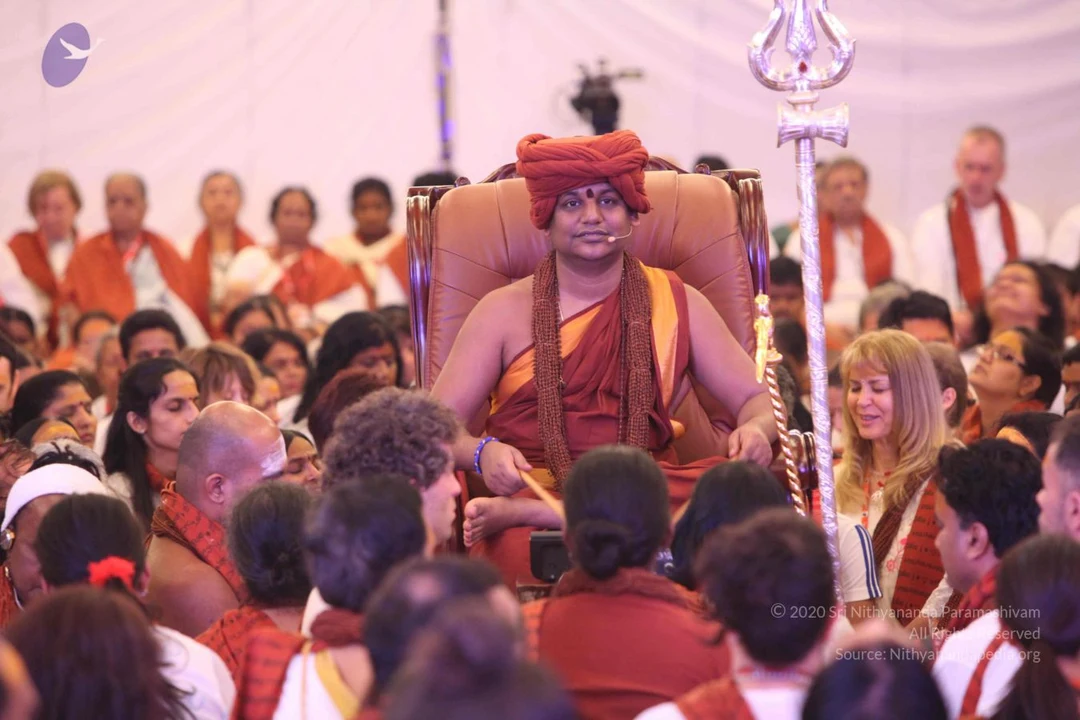
19 photosSource gallery
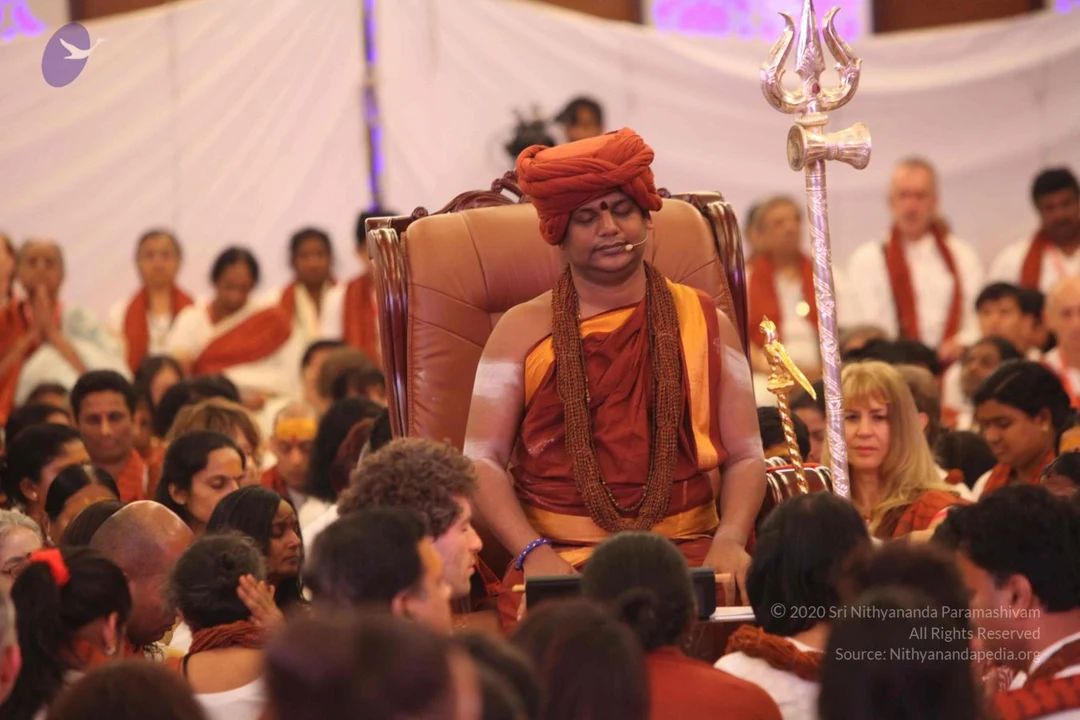
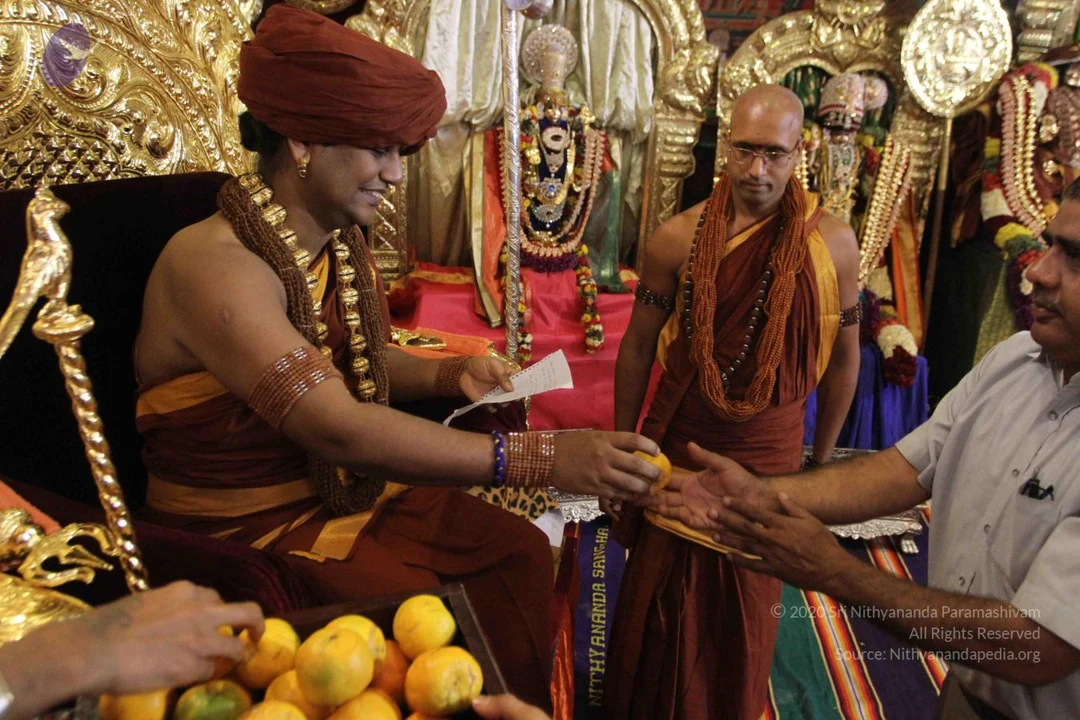
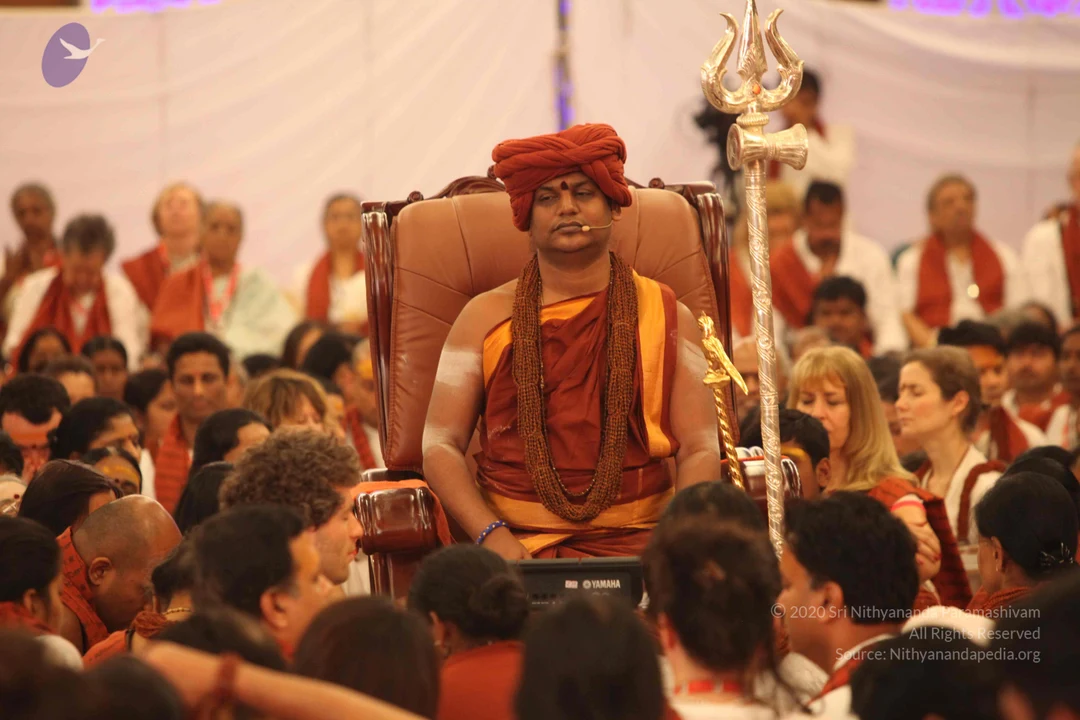
A large indoor satsang gathering of devotees seated on the floor, mostly in white clothing with orange-red shawls draped over their shoulders. Many people sit close together on red and beige mats under a white tent-like ceiling. A few women wear orange and yellow saris, and a child in a floral dress lies on the mat at lower right. Some attendees turn toward the front, where a wooden lectern stands near the top of the frame. No individual can be picked out as a presiding teacher, and no candidate for a person is clearly visible in this crowd view. Water bottles sit among the seated devotees.A large satsang hall filled with a dense crowd of devotees seated on the floor in white clothes with orange-red shawls, many wearing the same red-and-white sashes. Some sit on chairs at the front and side, and a few people in the foreground include children. Purple patterned banners hang along the back wall, with white drapes above. A wooden lectern and speaker stand are visible at the front near the top of the hall, with a few figures in white standing near the stage. Plastic water bottles sit among the seated devotees.A large indoor satsang hall packed with hundreds of seated devotees in white clothing with orange-red shawls draped over their shoulders. Most sit cross-legged on the floor on red and beige mats, many holding water bottles. A wooden lectern or stage stands at the far end under white draping and purple patterned panels, with a small plant and a red-cushioned chair in the foreground. Several women in saffron and white saris and young girls with braided hair sit near the front.A large seated congregation fills a hall during a satsang. Most attendees wear white clothes with orange-red shawls draped over their shoulders, and a few wear saffron or orange garments. Several people sit in the foreground on green mats, some with heads bowed. At the front, a wooden lectern or podium stands near the centre, with a white draped canopy and purple lit panels along the upper wall. The audience is seated on the floor in rows, with many people visible from the back and side.A seated figure in a large brown leather throne-style chair speaks to a packed audience at a satsang under a white canopy. He wears a red-orange turban, an orange and saffron robe, and long rudraksha-style beaded malas across his chest, and holds a small white fly-whisk-like staff. A large silver trident stands beside the throne. Seated devotees in red and white shawls, some in white kurtas, fill the foreground and rows behind; a woman with blonde hair in a red shawl sits to the right. A cameraperson stands in the background. A purple floral lighting motif and a logo appear at the top corners.A seated man in a red-orange turban and saffron-and-red robes sits eyes closed on a brown leather throne at a satsang. He wears a long rudraksha mala and a small red bindi, with white sandalwood marks on his arms. A tall silver trident stands beside him. Around the stage, many people in white clothes with red shawls sit and stand, and a large crowd of devotees fills the foreground. Swamiji (probable): the seated figure has long dark hair under a turban, rudraksha malas and saffron-orange robes, with a crown-like turban and ceremonial adornment, and is presiding over the satsang on a throne.
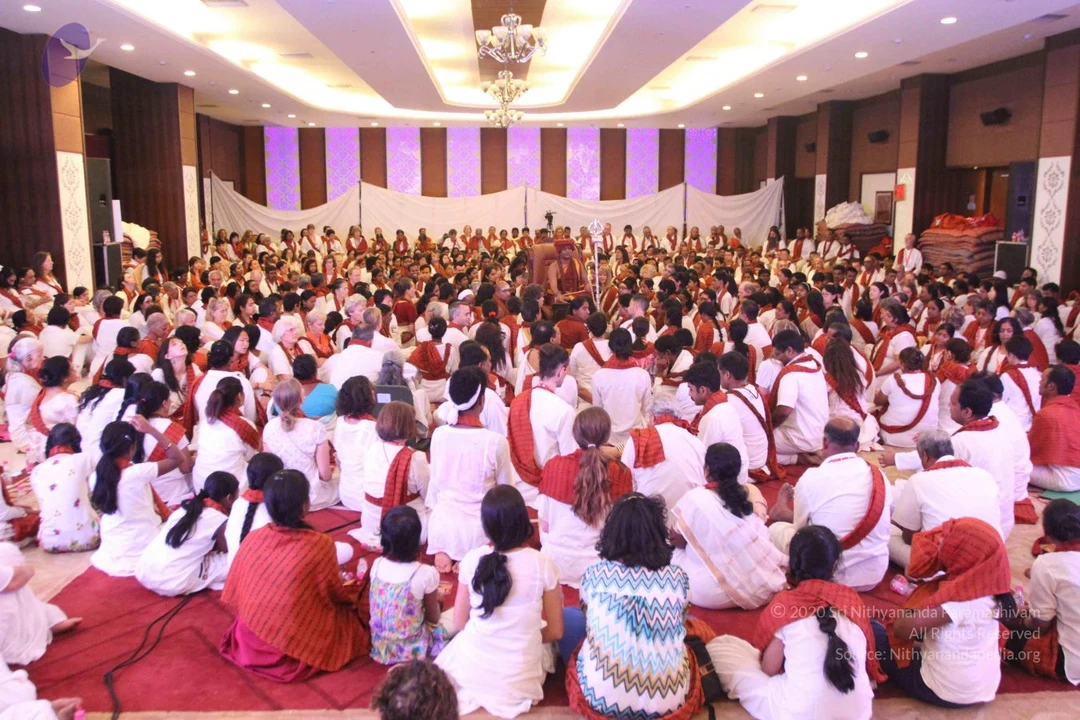
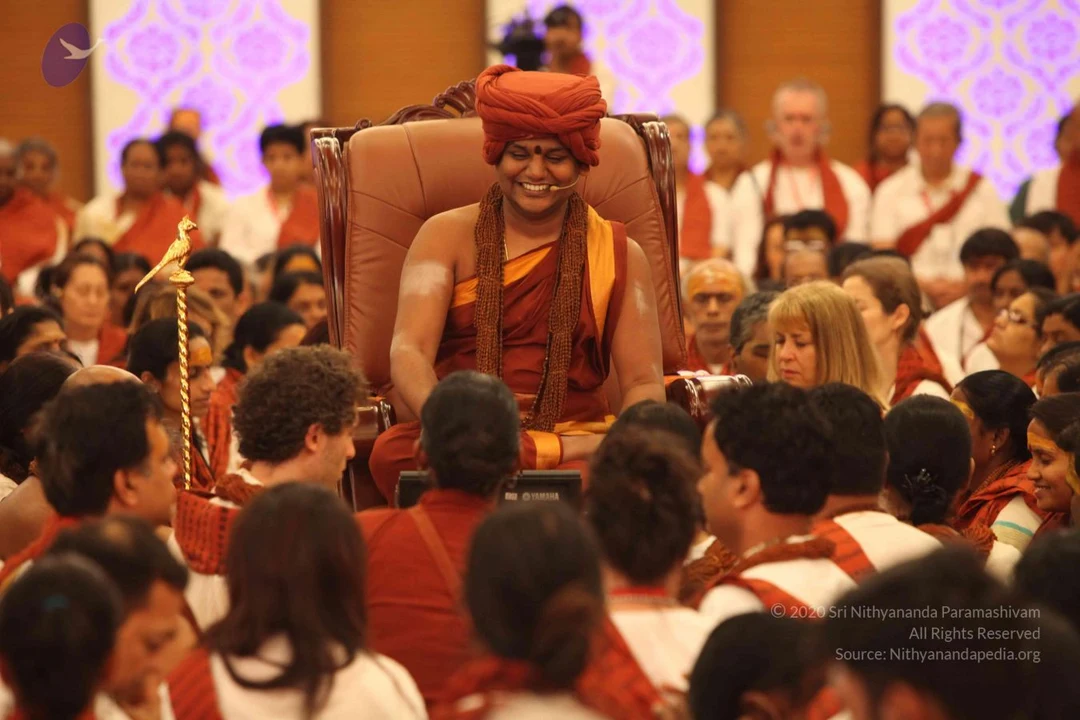
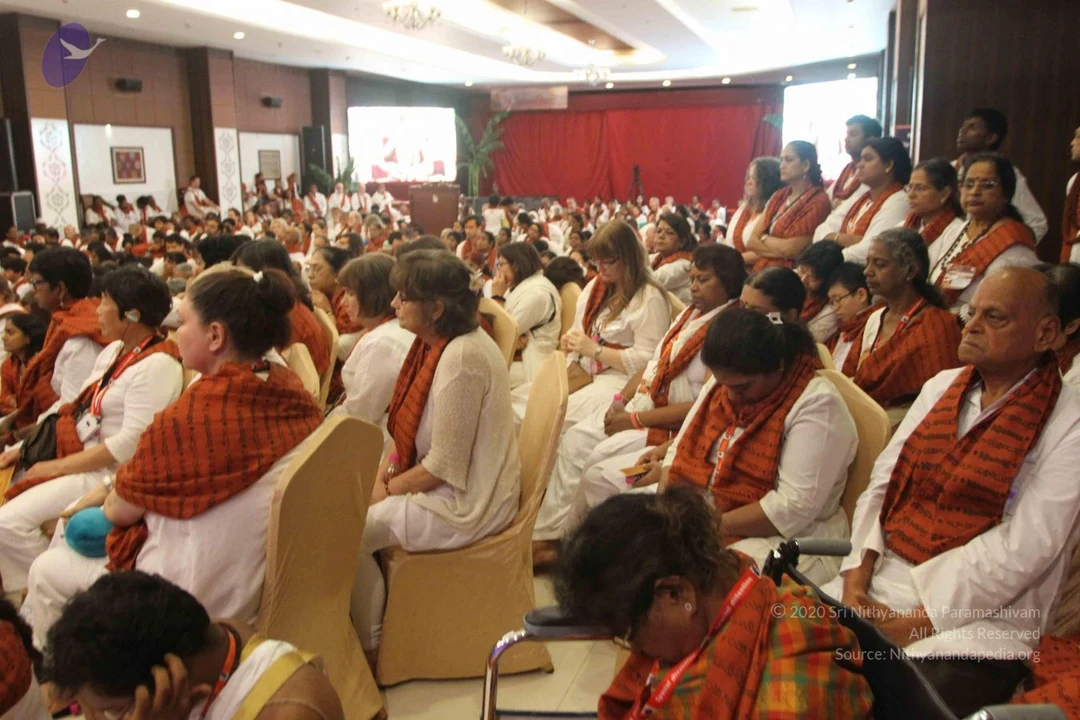
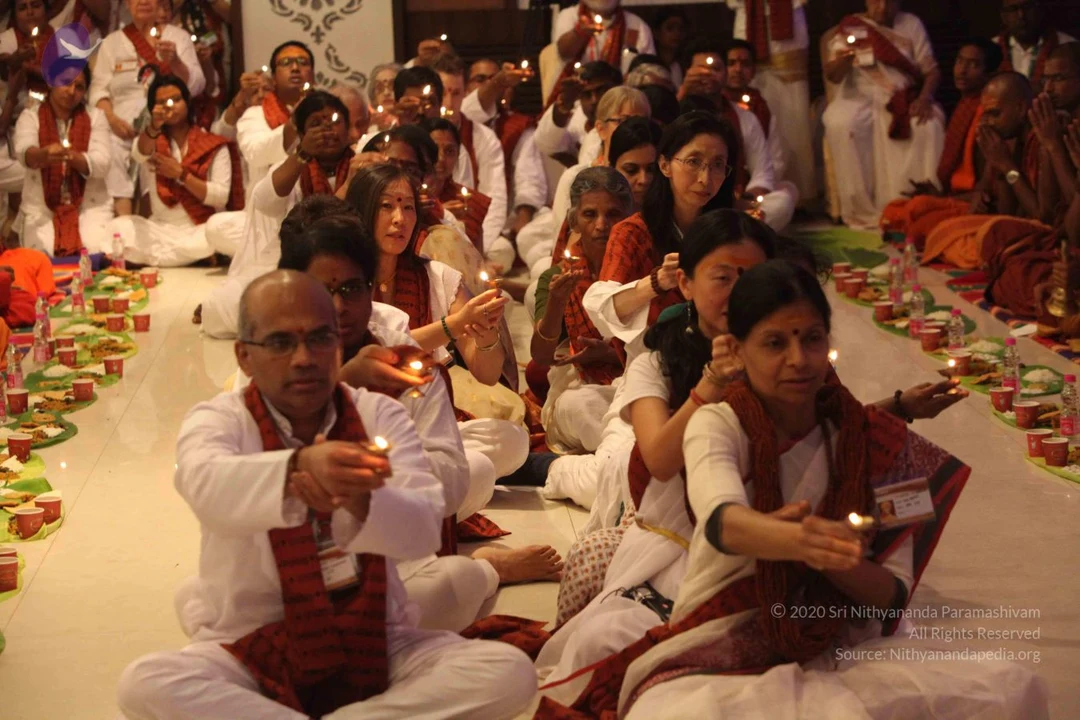
1-Inner-Awakening-Varanasi
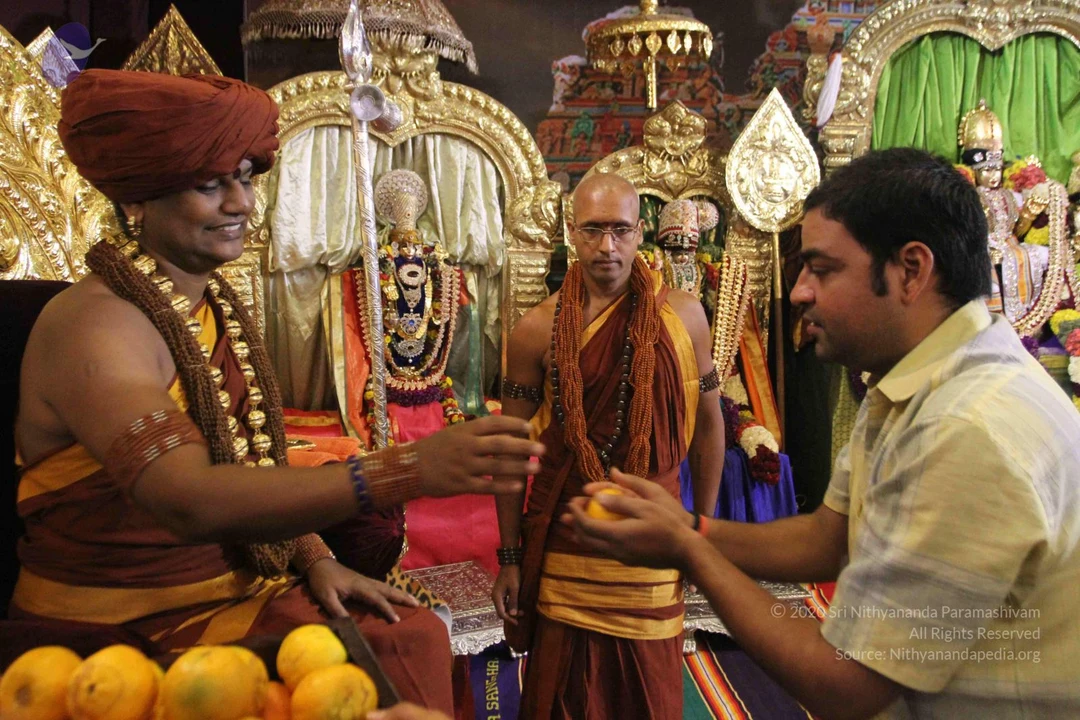
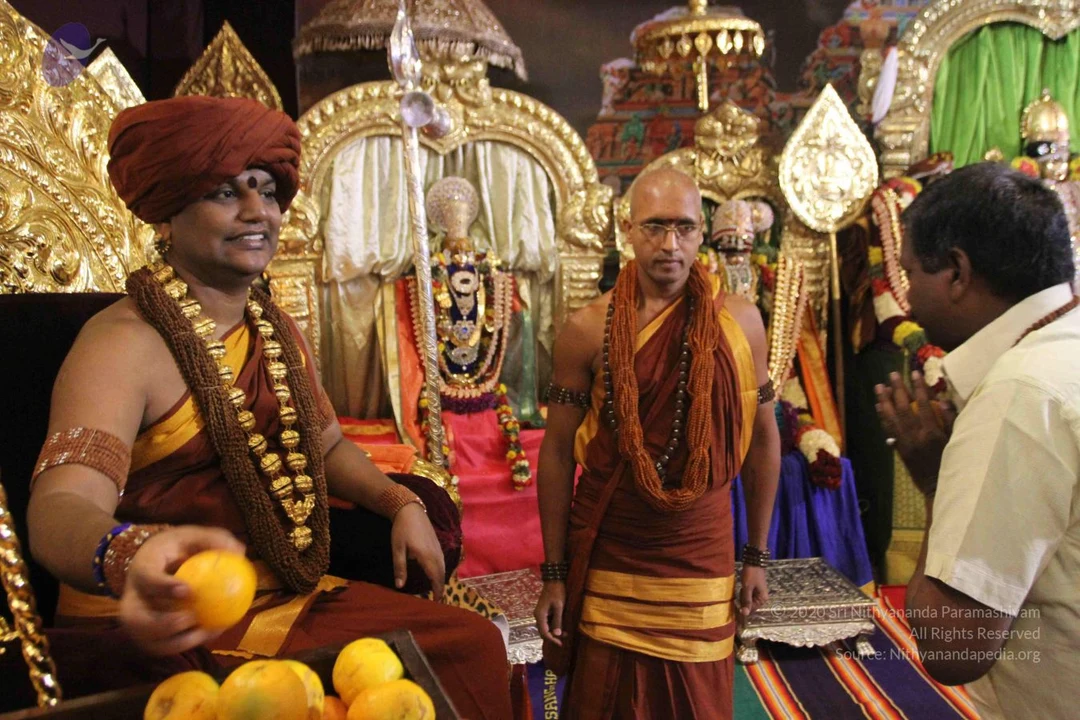
12 photosSource gallery
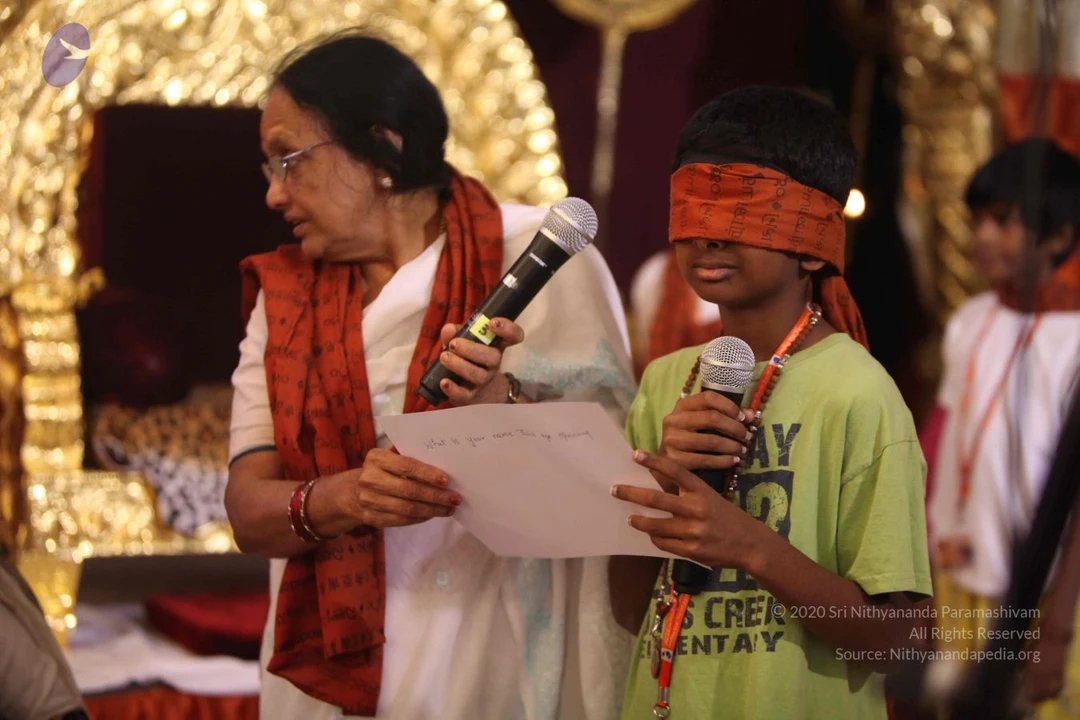
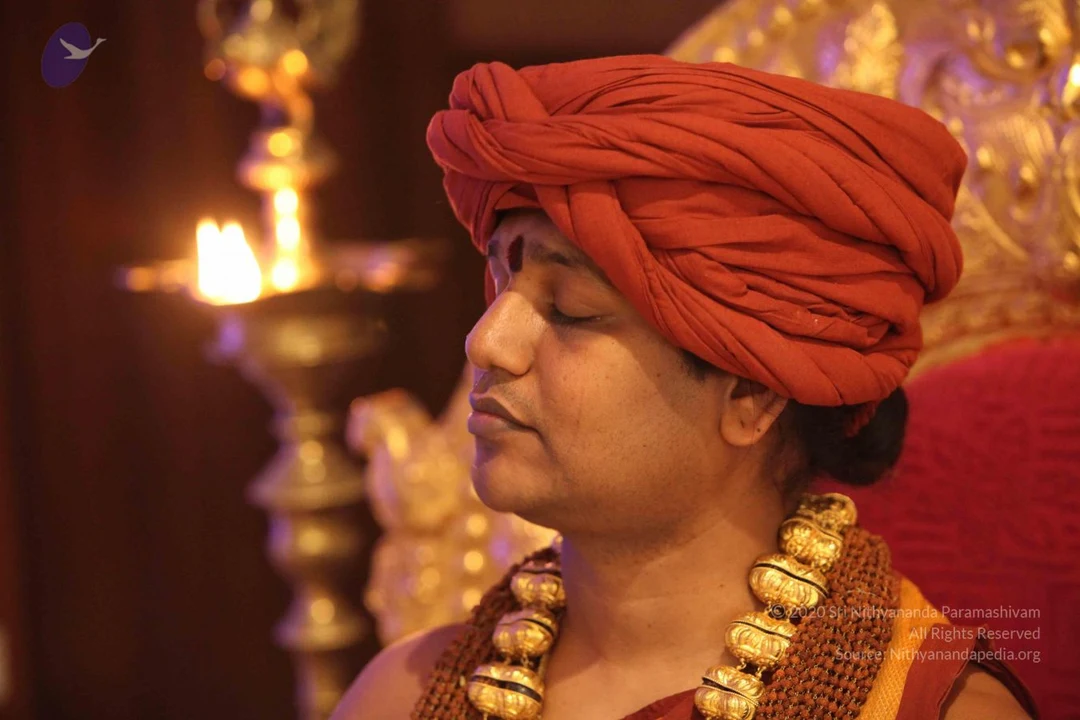
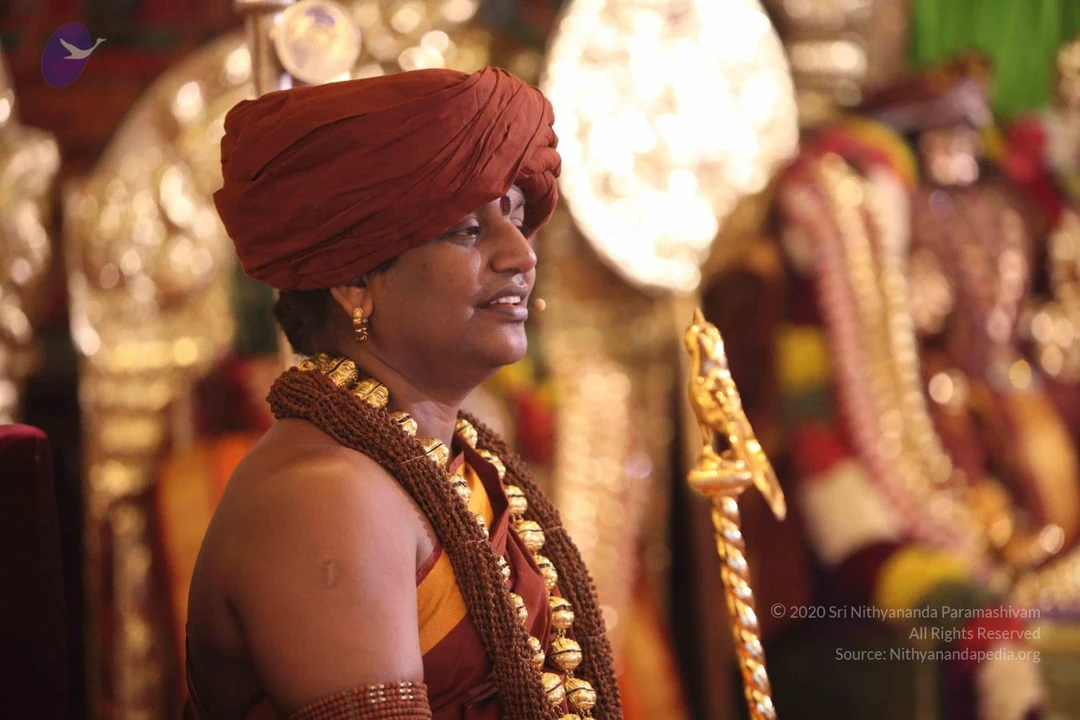
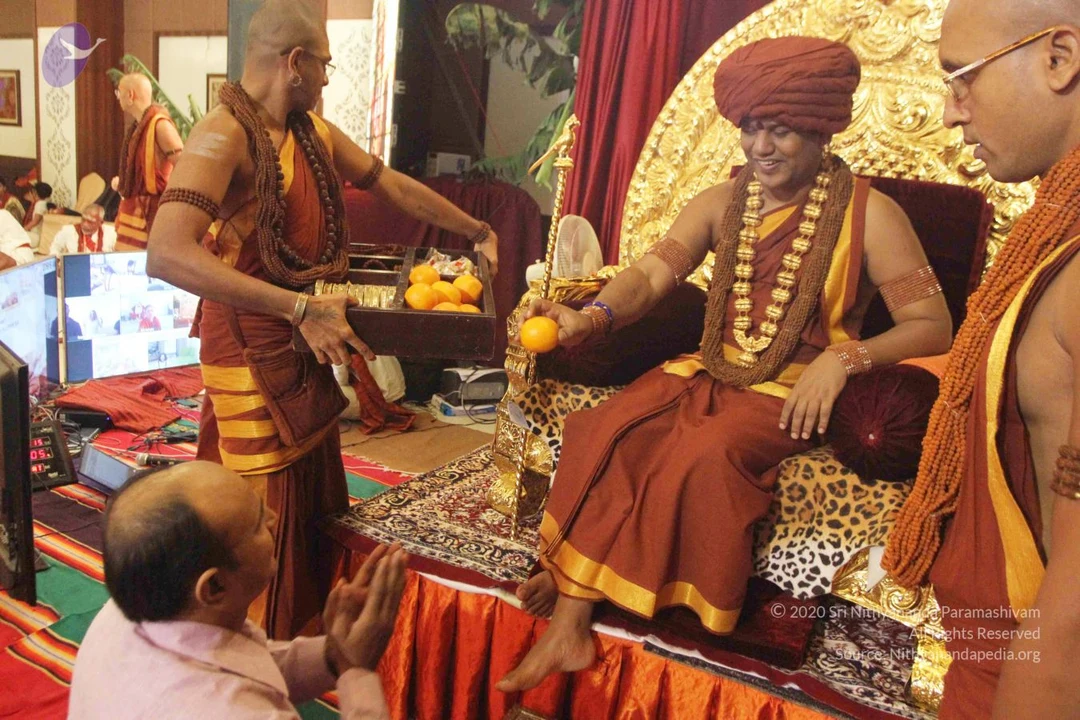
Profile portrait of a man seated on a throne-like dais, wearing a rust-red turban, a rust-red and saffron-yellow garment, a thick rudraksha mala with ornate gold beads and a gold pendant, and a rudraksha bracelet on the upper arm. A small clip-on microphone is attached near his cheek. He has closed or lowered eyes and a calm expression. To his right stands a gold ceremonial staff topped with a figure, and behind him are blurred warm lights and ornate gold and red decorations. a person appears in this image, seated as a speaker during a satsang. Visible cues include the ornate gold necklace, rudraksha mala and saffron-toned clothing.A seated man sits on an ornate gold-leaf throne with a deep red velvet back and cushions, against a dark red draped backdrop. He wears a rust-red turban with a small red bindi on his forehead, a saffron-and-maroon shawl over orange garments, and a long ceremonial gold bead necklace over a rudraksha mala. Gold armlets and a small lapel microphone are visible; his eyes are closed and he smiles with hands clasped in his lap. A silver trident stands to the right beside a second gold ornate piece. Single person visible.Photograph of a satsang setting with a seated figure on an ornate gold throne draped in a dark red-brown cloth with a matching turban, wearing a long gold-beaded necklace and a rudraksha mala. Beside him a robed attendant in saffron-orange and gold-bordered cloth holds a wooden tray of oranges and sweets while a man in a pink shirt kneels, reaching for an orange. A shaven-headed attendant in orange robes stands to the right, and monitors showing video feeds sit at the left. Leopard-print and patterned rugs cover the platform, and a fan is visible near the throne.A photograph inside a gilded temple-style hall. A man seated on an ornate golden throne with a carved golden backrest wears a rust-red turban, a bare-chested saffron-and-gold robe, long rudraksha mala strands and a heavy gold necklace; he smiles and holds a folded paper while speaking to a young woman in a white sari with an orange hair flower who holds out her cupped hands. Behind him stands a shaved-headed man in rust-red and gold robes with a rudraksha mala and glasses. A golden parasol and a ceremonial staff stand beside the throne, and decorated deity murti with garlands are visible in the background alongside a green curtain and temple-tower imagery. Identity is an appearance-based candidate only: the seated man has a turban, ornate gold adornments and rudraksha malas, but the face and presentation are not sufficiently distinctive to confirm, so the a person field is unsure.