Skip to content
Monday

23 May 2016

Manifesting Extraordinary Power with Asthakanma Initiation

Dated photos
191
Source pages
1
Media
3
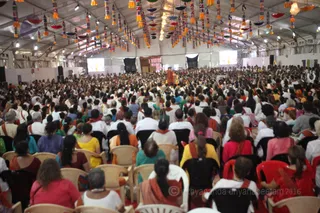
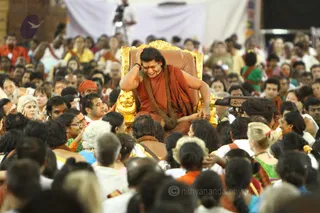
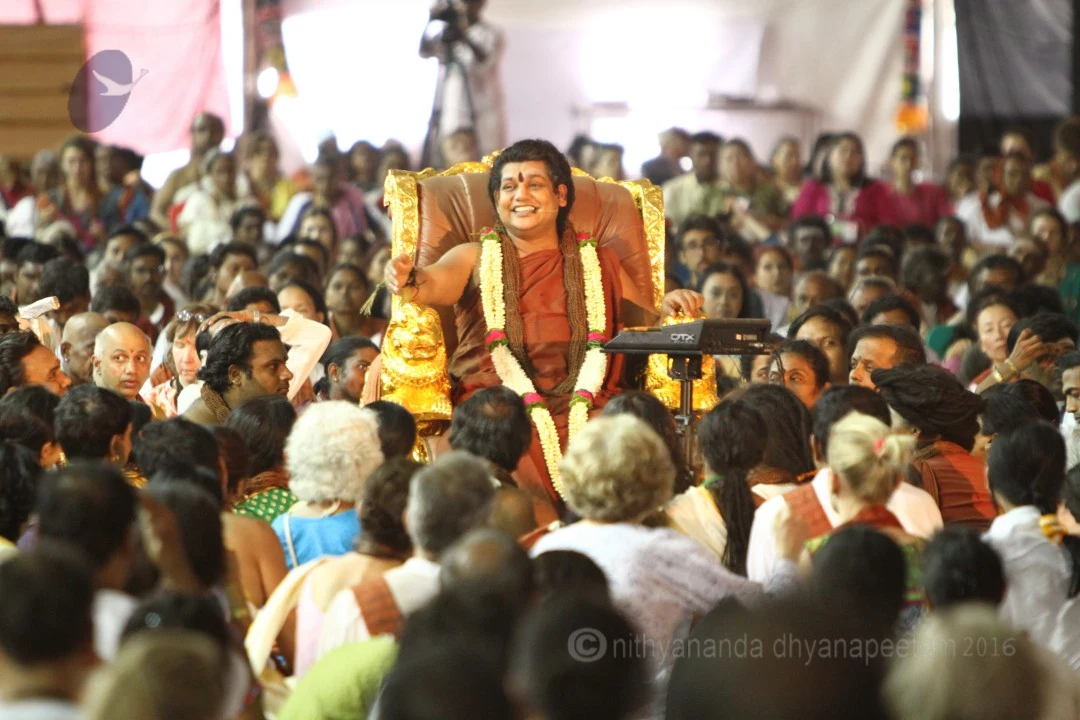
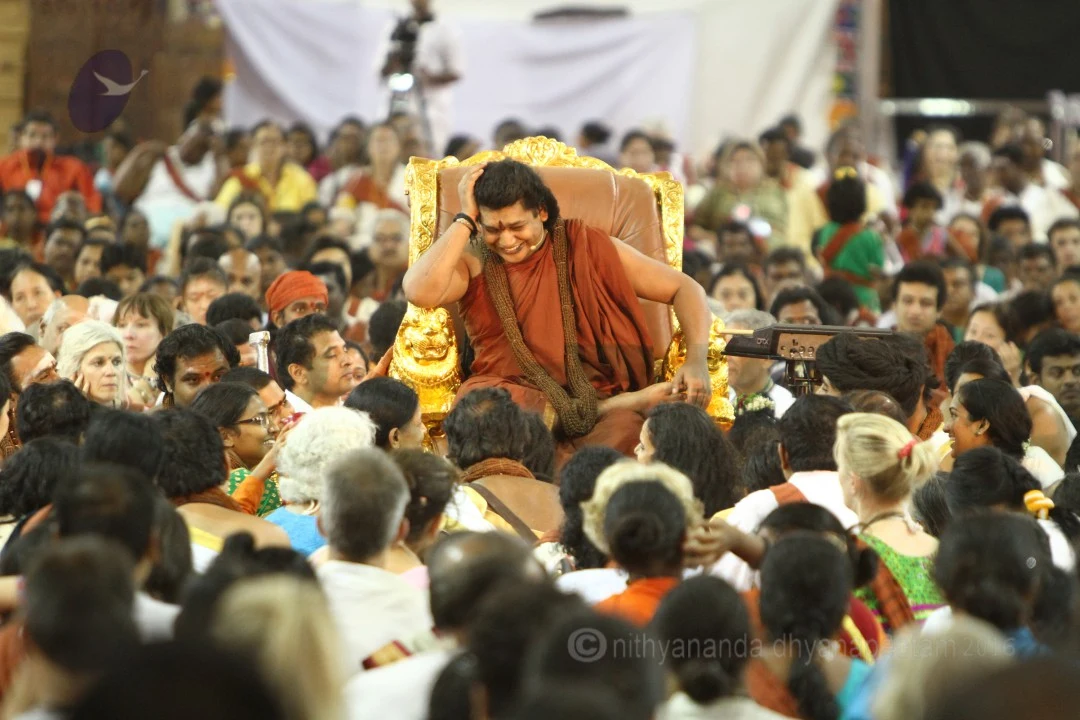
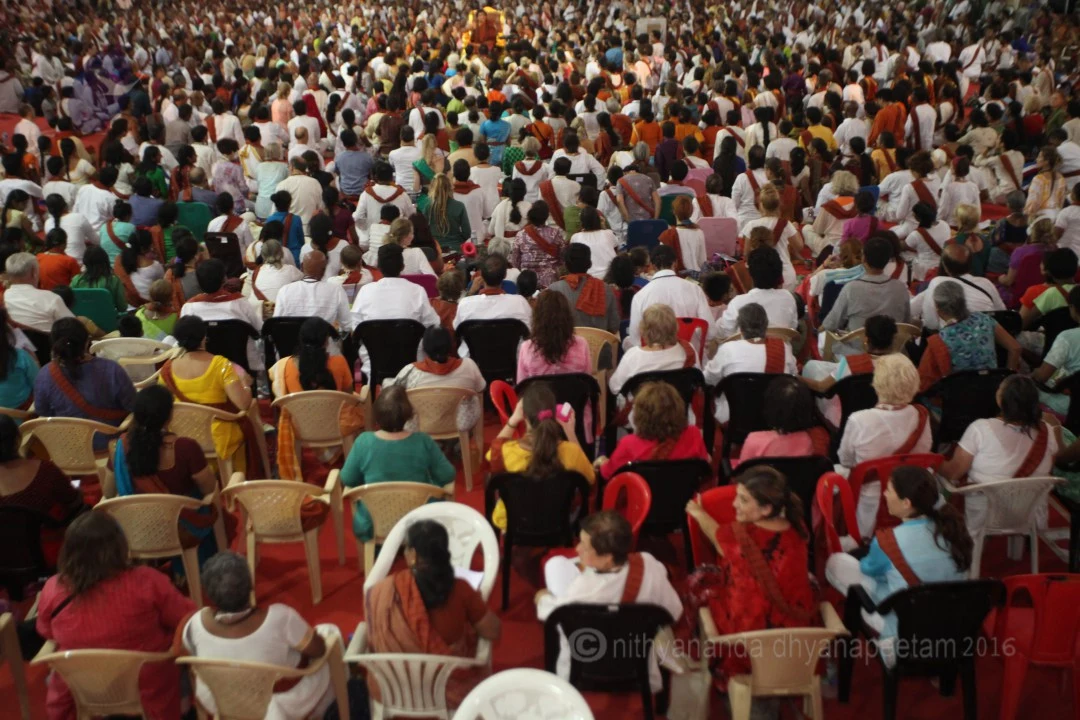
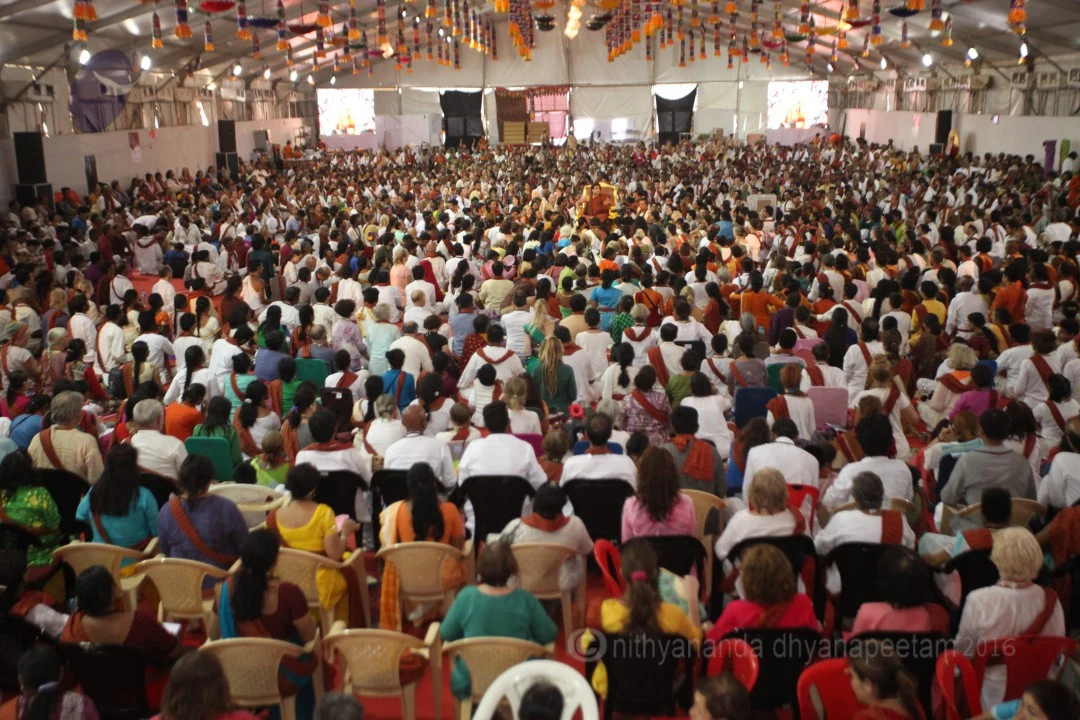
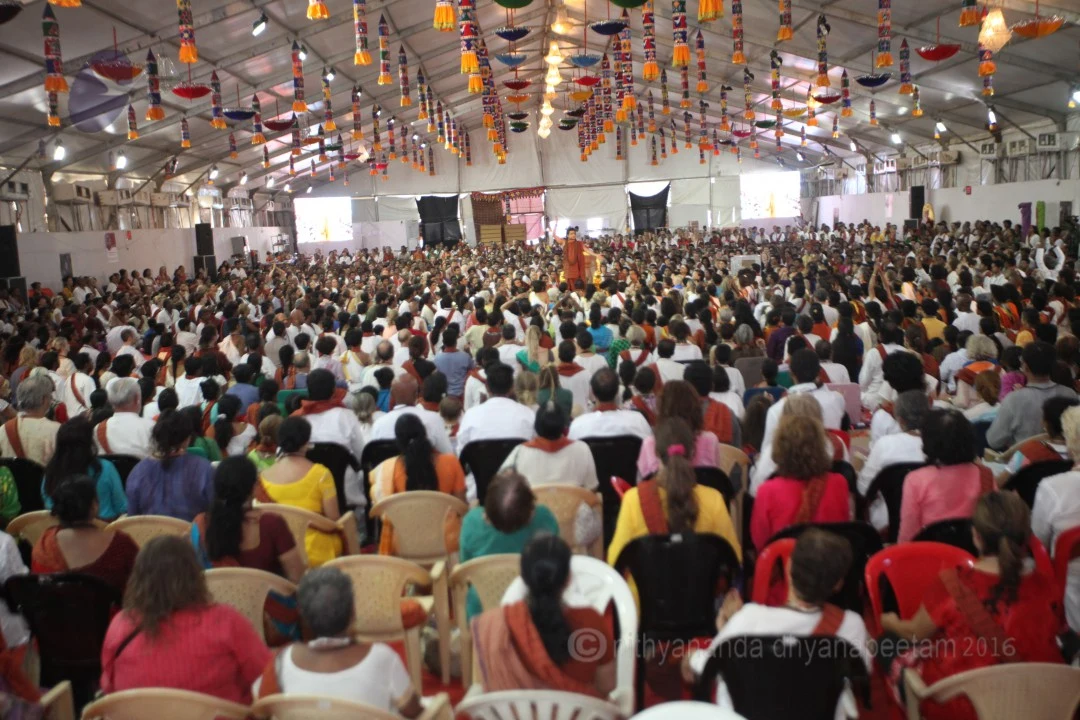
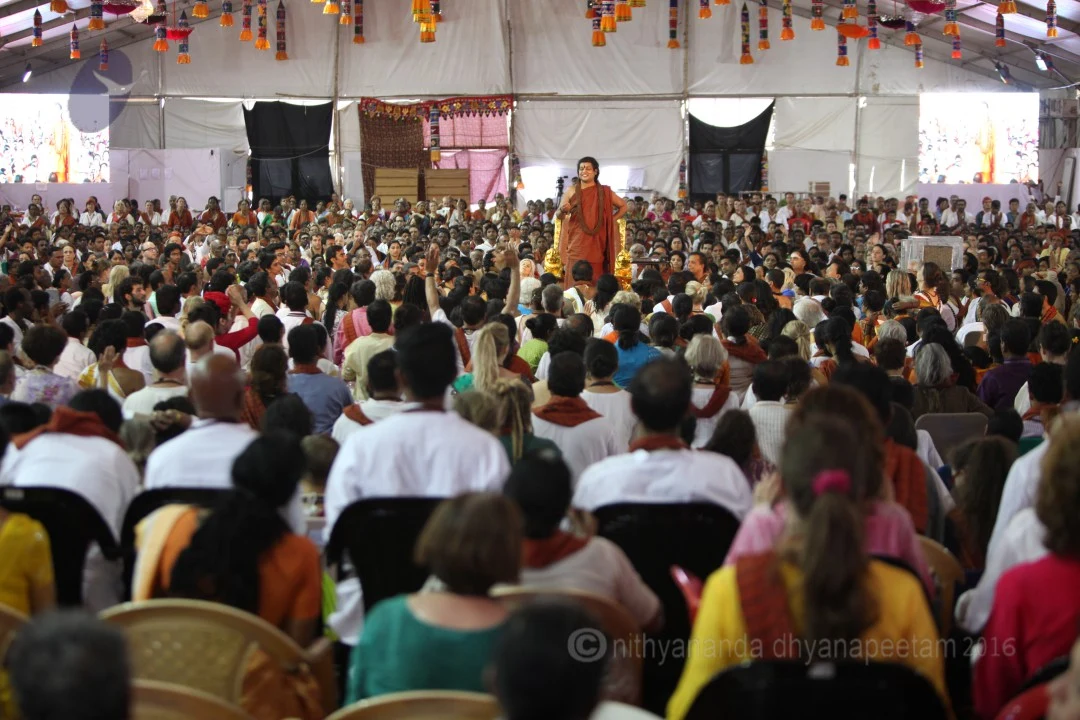
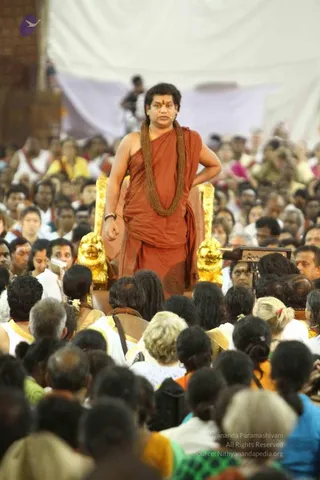
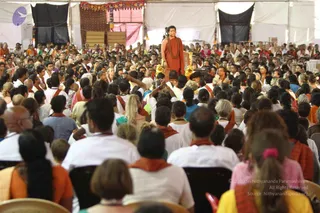
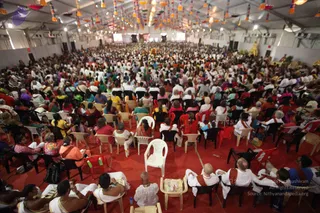
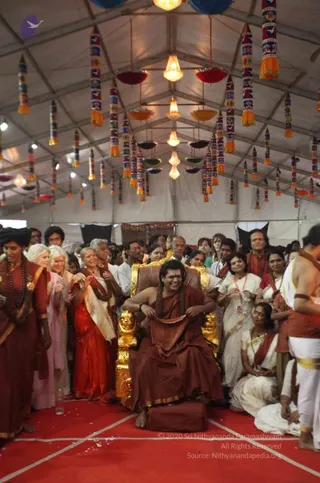
Large photograph of a crowded tented assembly hall with a white canopy decorated by hanging colourful tassels, streamers and red and green bowl-shaped ornaments. Hundreds of seated attendees, mostly women in white, red, pink, yellow and orange saris and shawls, fill plastic and wooden chairs facing a distant stage. On the stage at the far centre, a single figure in orange robes stands near a small set-up, appearing as a distant speaker addressing the audience. Stage screens, speakers and side panels frame the scene.A photograph of a large crowd at a seated spiritual gathering. A man in a rust-orange robe with a long beaded rudraksha-style mala draped over his shoulder sits on an ornate gold throne with a brown leather seat, one hand raised to his head and his face contorted in an expressive gesture. Dense rows of devotees fill the foreground and background, many women in saffron, green and yellow saris and men in white and orange. A white backdrop and a camera on a tripod are visible behind the throne.

May 23 2016

Original wiki page
Contents

Title

Manifesting Extraordinary Power with Asthakanma Initiation

Description

During the Shuddhadvaita Saivam program at Kumbh Mela Ujjain May 2016, Paramahamsa Nithyananda initiated participants into 70 spiritual powers. On 23 May, he explained about the extraordinary powers which can express through the Ashtakanma Initiation.

Ashtakanma stands for 8 actions: ability to stop, divide, falling in tune, making an object do what you want, ability to manipulate, ability to make it still and one 8th action that can be shared only to those in the direct presence of the living master. These 8 actions you can perform with 8 objects: earth, water, fire, air, sky, your own mind, animals and plants.

Of these 8 objects, your own mind is the most difficult to work with. If you can manifest the 8 actions on your own mind, you can express all the other powers also.

Link to Video:

VideoAudio

Transcript

The ashtakanma, the eight actions I explained, I have completed the initiation of that 8 actions, means, ability to stop, divide, and falling in tune, making that object to do what you want, ability to manipulate, ability to make it still... like this 8 abilities. Now I am going to initiate you, you will be able to do this 8 action with 8 objects. The first object - Earth, second – water, third – fire, fourth - air, fifth - Sky, sixth - your own mind, seventh - animals and plants. This is the major chunk of initiation; 8 powers X 8 objects 8 X 8 - 64. This is the major chunk. In this the most difficult is expressing these powers on your mind. You can actually tell a plant it will do, you can tell an animal it will do, you can tell a Being you will manifest the power on the Beings; but manifesting this powers on your mind that eighth is the most difficult. If you can do that you will become completely enlightened. This 8 Ashta kanma on 8 objects, the 7 will be very easy. I can help you to manifest it immediately. The eighth one - manifesting all these powers on your mind, means - stopping your mind, dividing your mind, looking into your mind, making it active or silent, or making it non-existent.... on your mind - that is the most difficult. (2:41) Maybe we will spend one month of morning satsangs. I will help you to manifest that powers. This Inner Awakening I am going to make the Science of Completion and Science of Causing your and others reality 15 days. The last one week you will go through Shivoham process, Nithyanandoham process and Shuddhadvaitam process. You will have at least major 6-7 Shuddhadvaitam initiations. So now the Inner Awakening is all about completion and experiencing Shivoham and manifesting the powers of Sadashiva. Please understand, the bio energy - the Kundalini, I have programmed it with this ashta kanma on 8 objects. See, the whole agama, the Sivagnana Upanishad, that part which Sadashiva describes, when he described he gave the process, initiation both. So I just picked up that process and initiation, programmed it into the bio energy, Kundalini Shakti. Like a seed form I am going to throw literally on every one of you. If it just settles on your bio memory that's enough for me. After that manifesting it I can do it easily through two way video conferencing through satsangs; through the morning satsang itself just by seeing you I can make it manifest. Only for putting the seed we both need to be in a breathing space physically; so even if you missed any session... this session is enough, the seed will go inside and we can start the manifesting process.

Photos

Ashtakarma Initiation
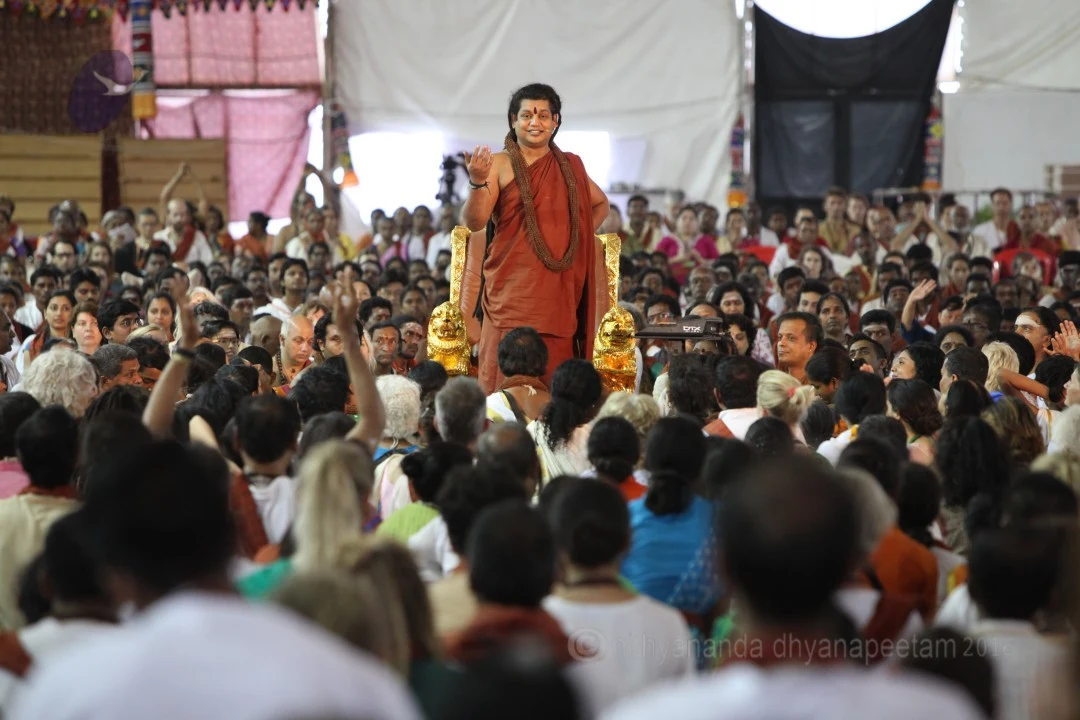
Tirujnanasambandar Puja
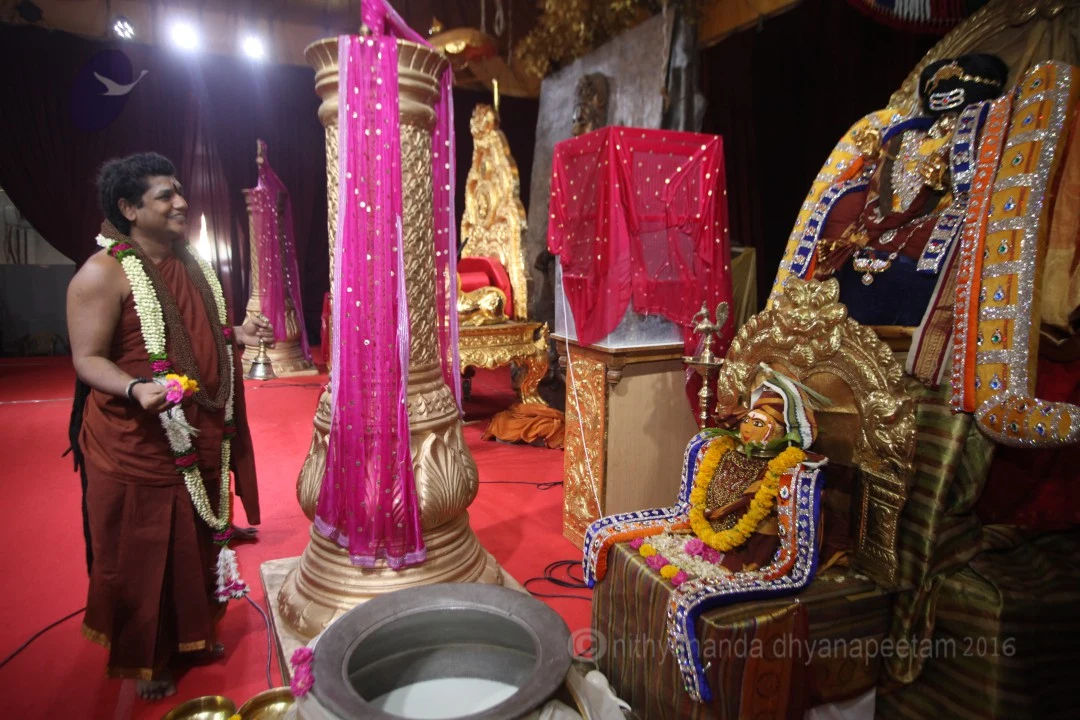
Sakshi Pramana:

sharing from Kumba mela

Photos from this day

View all 191 photos

Ashtakarma Initiation

2 photosSource gallery
A photograph of a large crowd at a seated spiritual gathering. A man in a rust-orange robe with a long beaded rudraksha-style mala draped over his shoulder sits on an ornate gold throne with a brown leather seat, one hand raised to his head and his face contorted in an expressive gesture. Dense rows of devotees fill the foreground and background, many women in saffron, green and yellow saris and men in white and orange. A white backdrop and a camera on a tripod are visible behind the throne.Large photograph of a crowded tented assembly hall with a white canopy decorated by hanging colourful tassels, streamers and red and green bowl-shaped ornaments. Hundreds of seated attendees, mostly women in white, red, pink, yellow and orange saris and shawls, fill plastic and wooden chairs facing a distant stage. On the stage at the far centre, a single figure in orange robes stands near a small set-up, appearing as a distant speaker addressing the audience. Stage screens, speakers and side panels frame the scene.

Tirujnanasambandar Puja

1 photoSource gallery

May 23rd 2016

188 photosView all
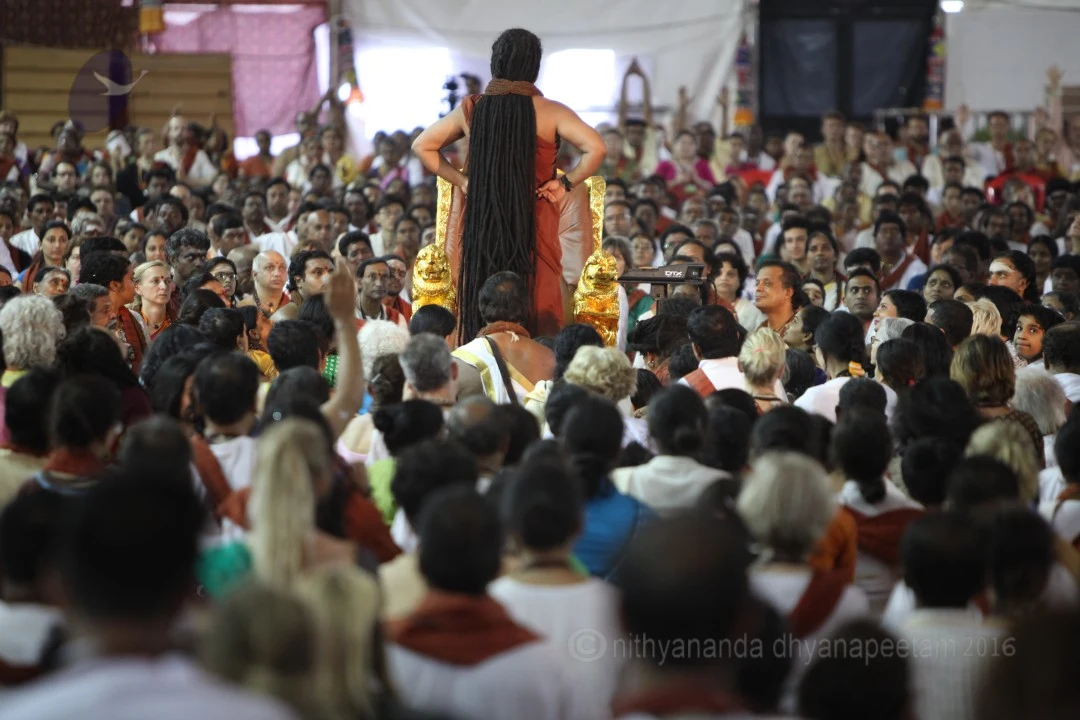
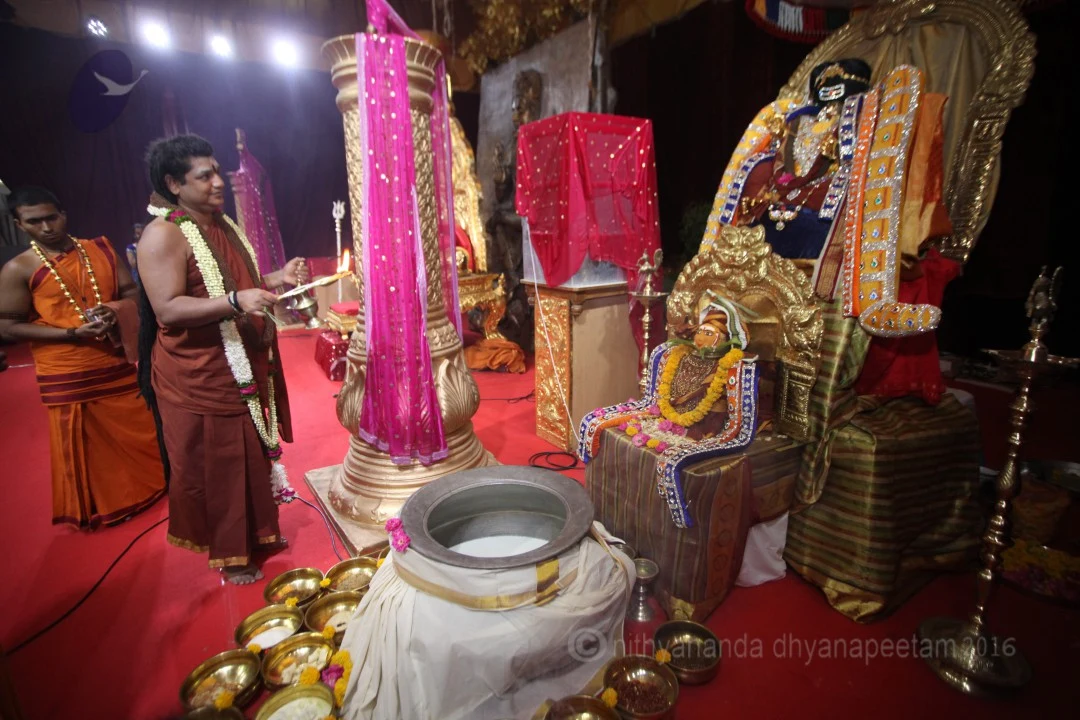
A large tented hall packed with seated devotees viewed from behind. Many wear white or saffron clothing and red shawls, and a woman in yellow sits in the foreground. Strings of colourful tassels and small lamps hang from the tent ceiling. A single standing figure in an orange-red robe and gold-trimmed cloth stands on a raised stage at the far end, facing the audience, while a large wooden seat and draped fabric backdrop sit behind them. Plastic chairs fill the aisles.A man in a rust-orange saffron wrap and a brown rudraksha mala stands on a golden throne with lion-head armrests, facing a large seated crowd in a tent. He has short dark hair, a red bindi and a dark wristband, and rests one hand on his hip. Audience members in white, yellow and green clothes sit in the foreground, many with hair in buns, and a microphone stand is visible at right. A white tent canopy hangs behind the stage.A large crowd of seated devotees fills a white tented hall, viewed from behind the rows of people in the foreground. Many wear white clothing with orange or saffron shawls and sashes. On a raised stage at the back, a figure in an orange-red robe with a dark shawl and beaded necklace stands near a gold-coloured object, with colourful hanging fabric decorations and black drapes framing the stage. Some attendees raise their hands. The scene suggests a large initiation gathering.A large crowd of devotees fills a white-roofed tent with a red carpet, seated on white and black plastic chairs facing a distant stage at the far end. Many are dressed in white, orange, red, pink and yellow saris and kurtas. Front rows show shaved-headed men in white dhotis and orange-striped cloths seated near the aisle. Colourful paper streamers and bunting hang from the ceiling, and screens flank the stage. The scene reads as an initiation gathering, with a yellow-clad figure visible near the stage on the right.A photograph inside a white tent decorated with hanging colourful cloth tassels, lit oil lamps and bowl-shaped lamps. A man with long swept-back hair and a long braid, wearing a rust-red robe, sits on an ornate golden throne flanked by golden lion figures, smiling and holding the edge of his cloth. Around him, a crowd of devotees in white, cream and red saris and red robes stands and kneels, several clapping and smiling. On the left, a person in a red robe with rudraksha beads and a head covering stands near two women in pale clothing. On the right, a man in white dhoti with a gold border stands near the red-marked floor. The floor is red with white painted lines and scattered petals.A photograph taken indoors under a white tent-like hall with hanging lights and orange decorations. In the foreground a young man with a tall, dark, swept-up matted hair crown and a red bindi on his forehead smiles toward the camera. He wears a rudraksha mala necklace and an orange garment with gold trim, and his bare shoulder is visible. Beside him a small child in an orange cloth with gold edging grins and touches their chin. Behind them a crowd of people in white and orange clothing fills the hall, with other matted-hair figures visible at the right edge.