Skip to content
Sunday

22 May 2016

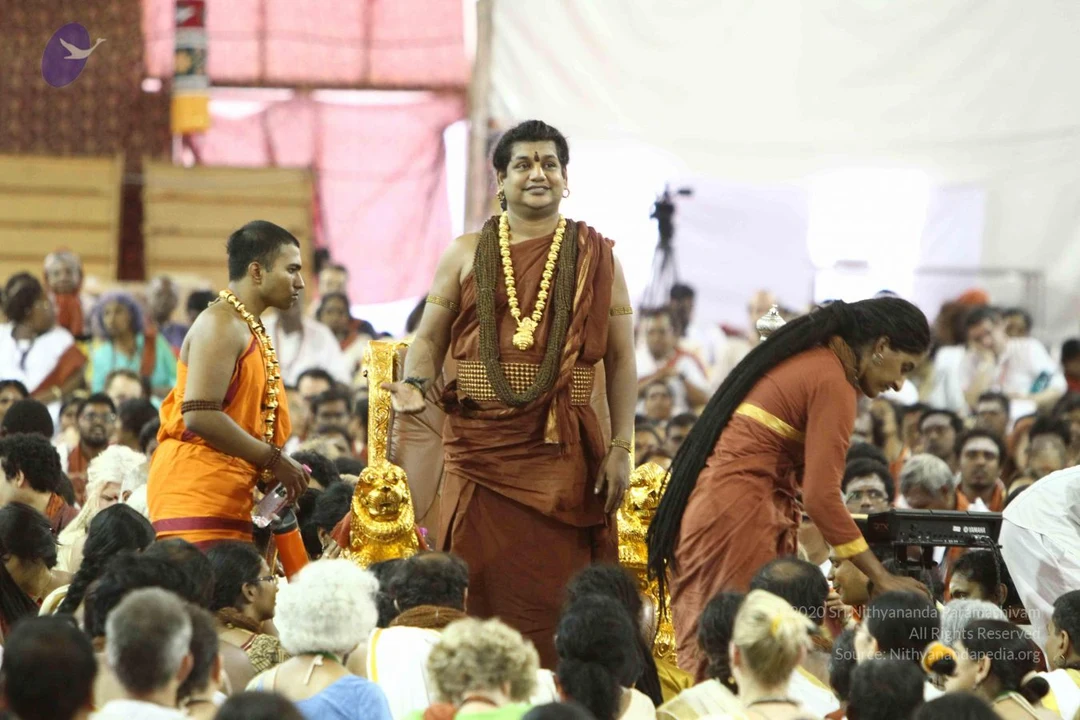
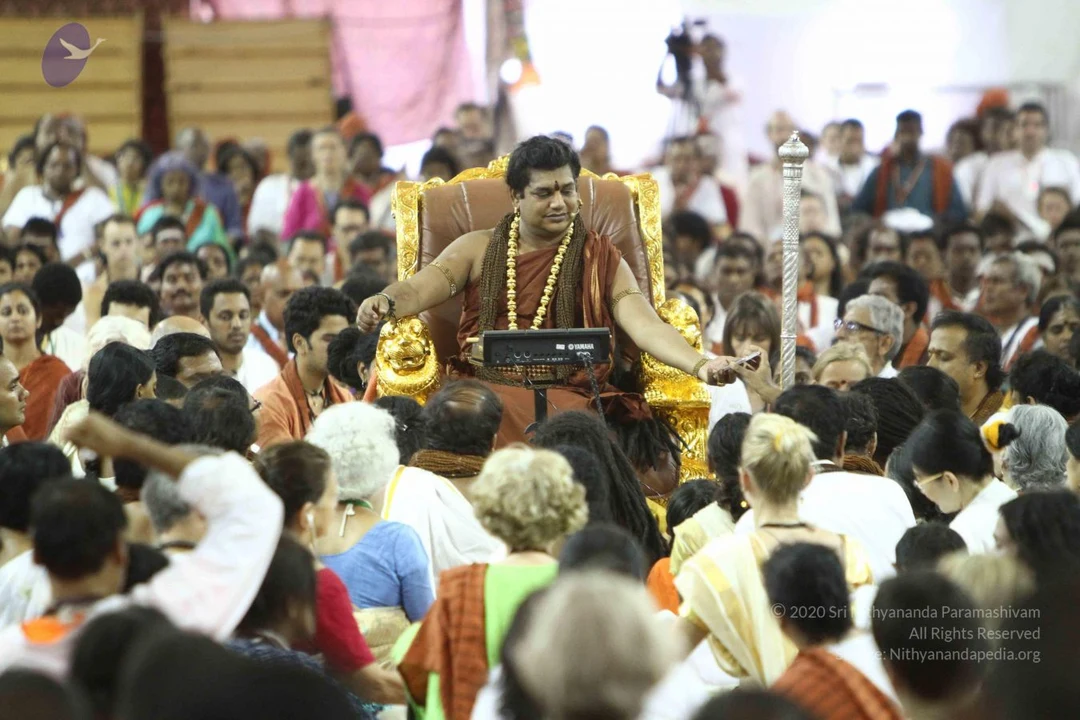
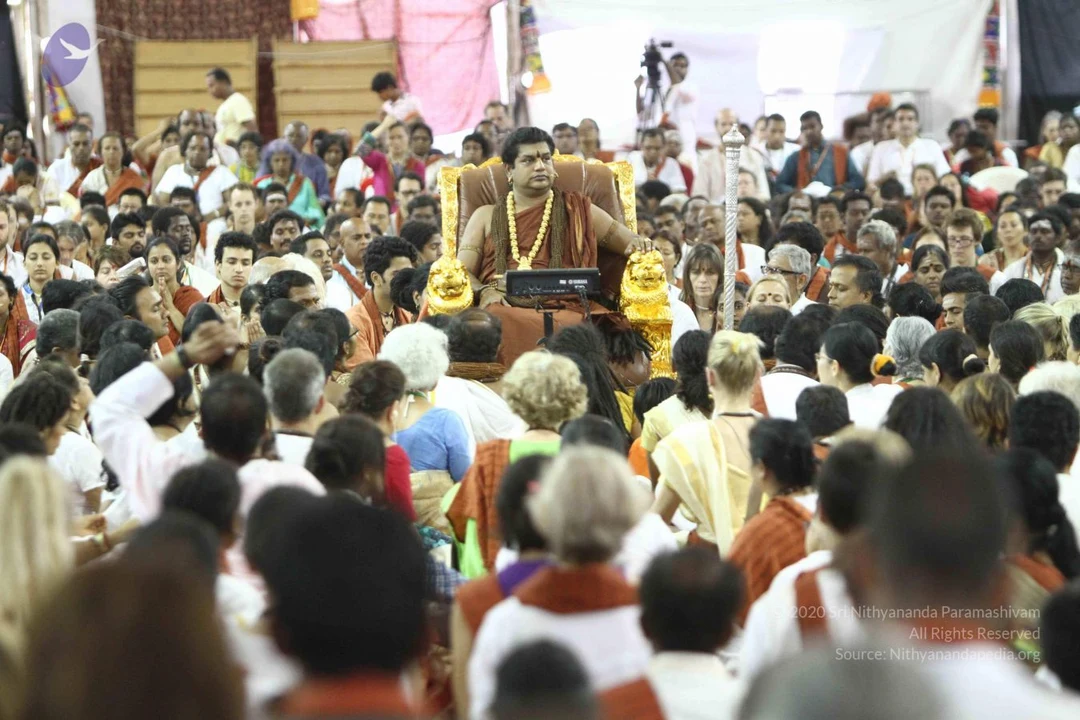
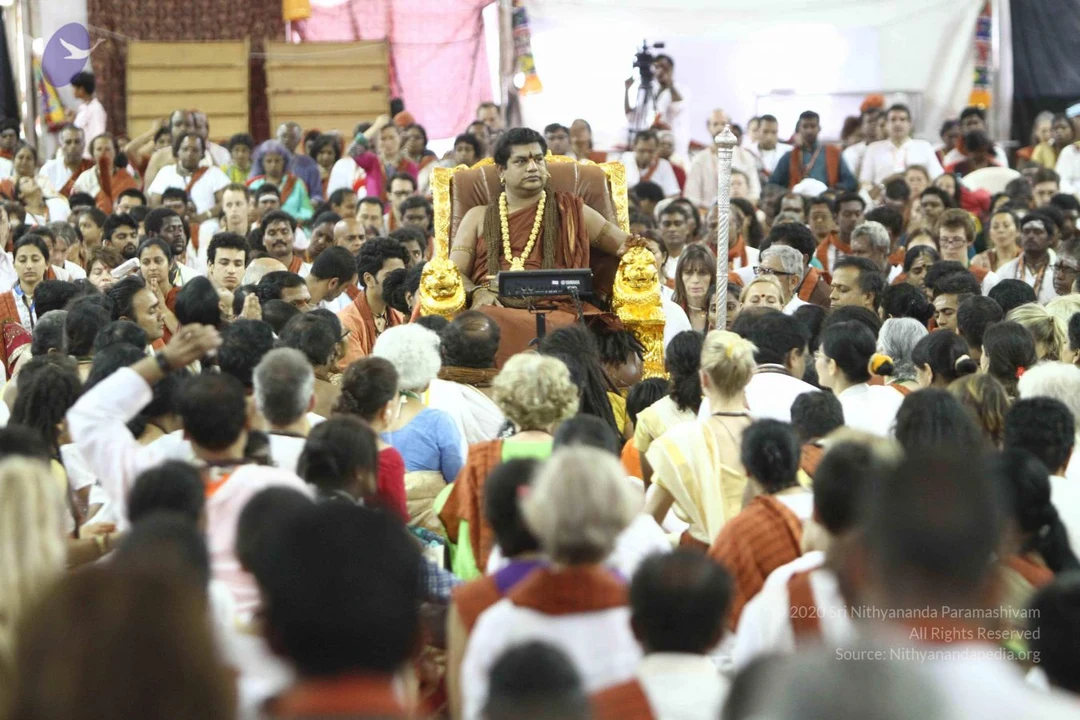
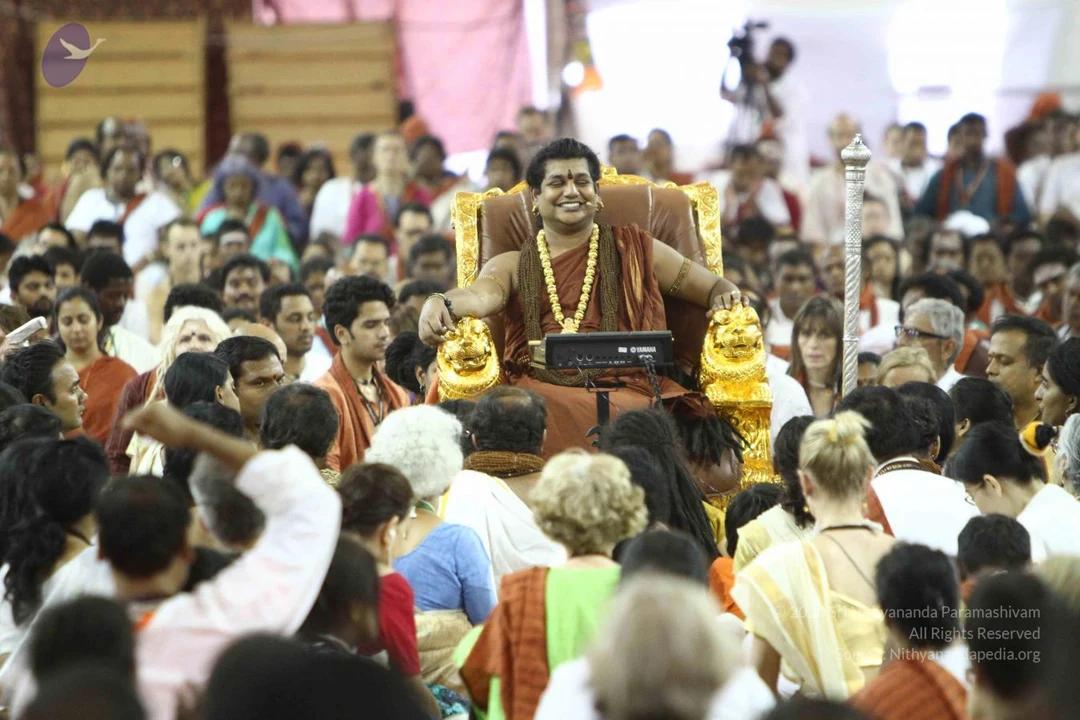
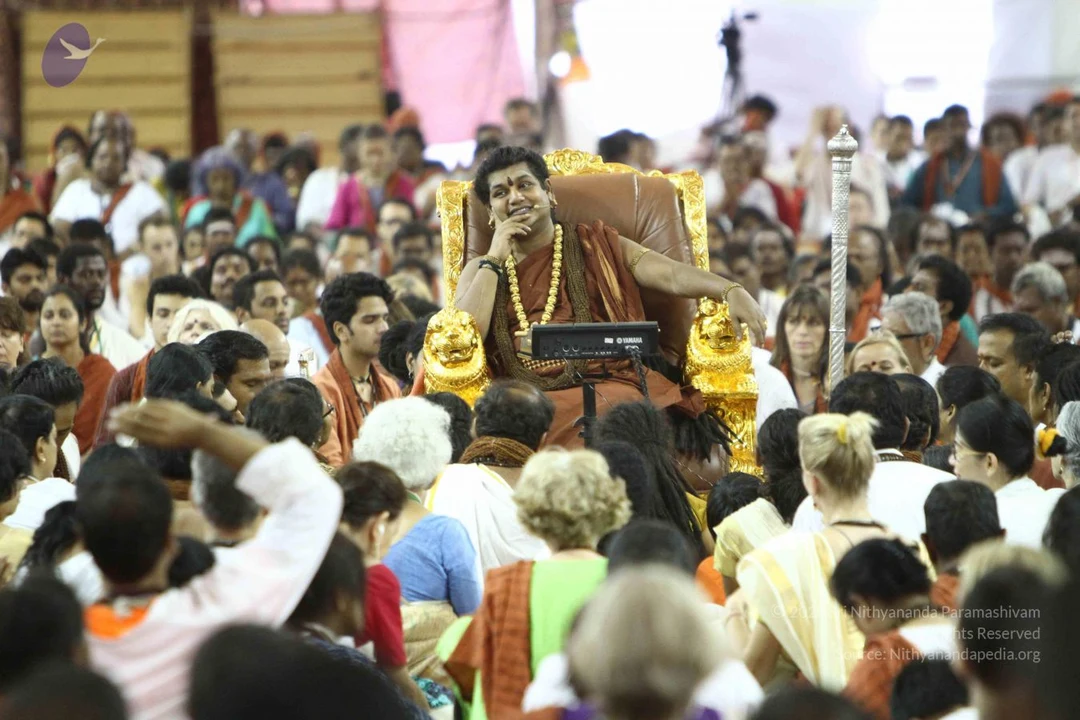
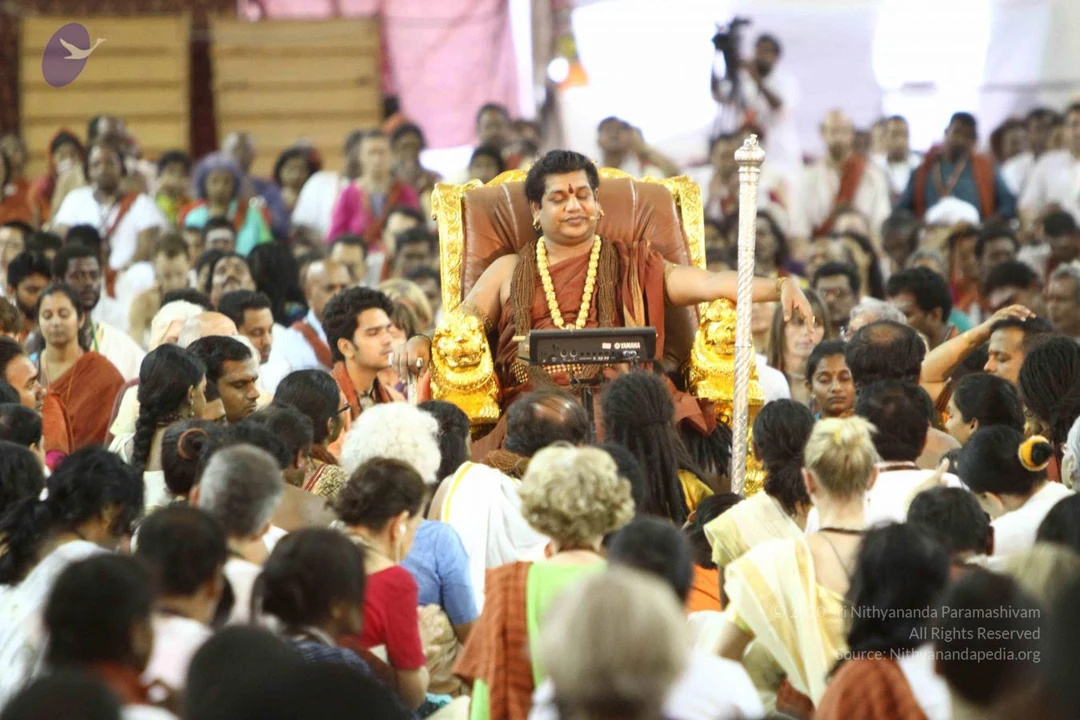
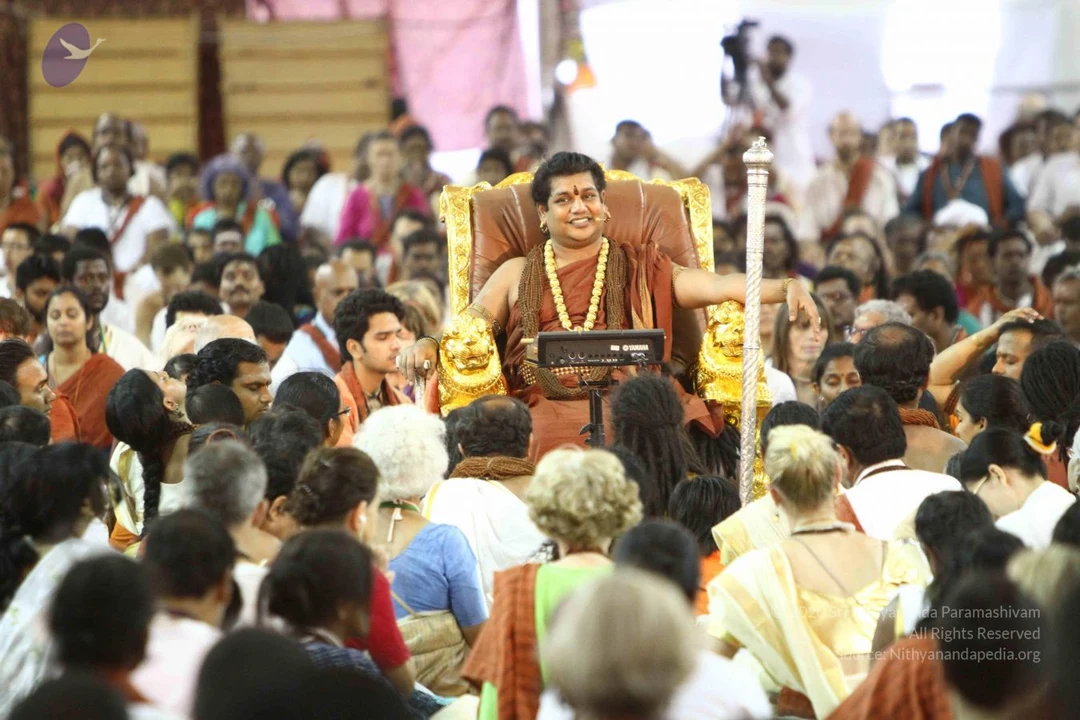
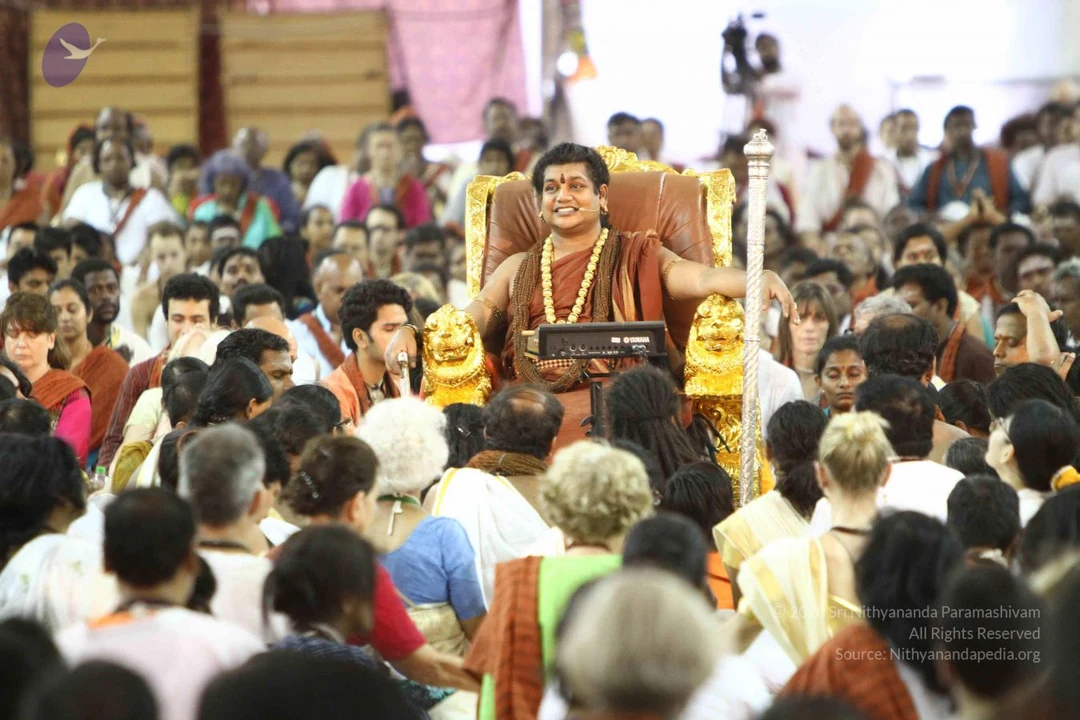
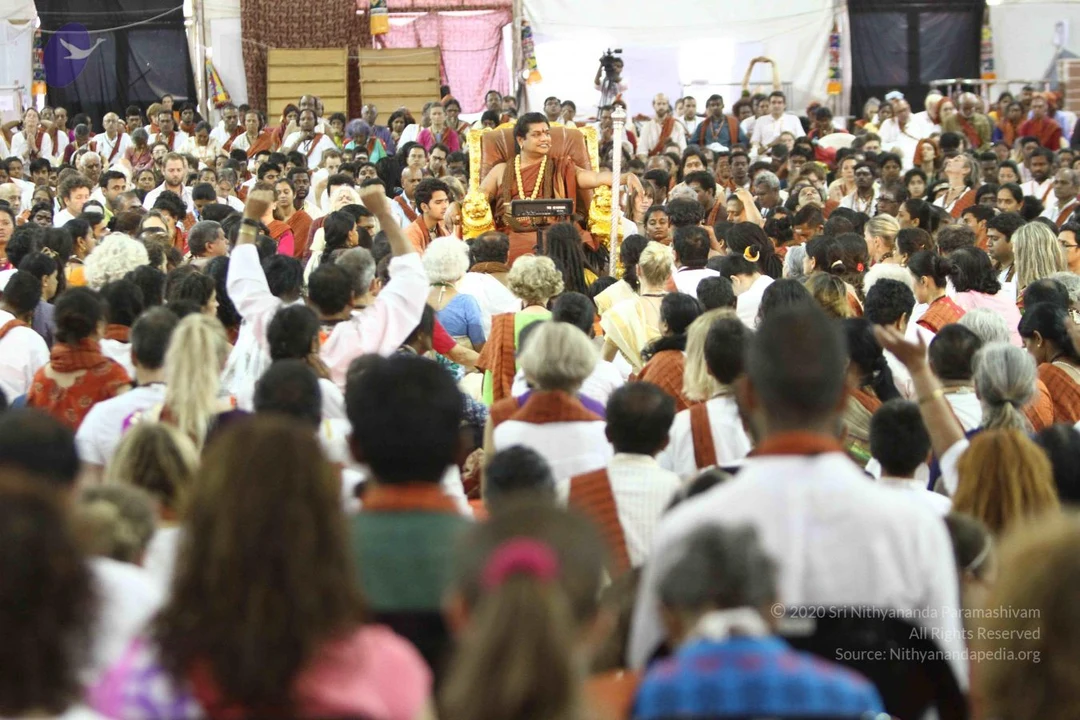
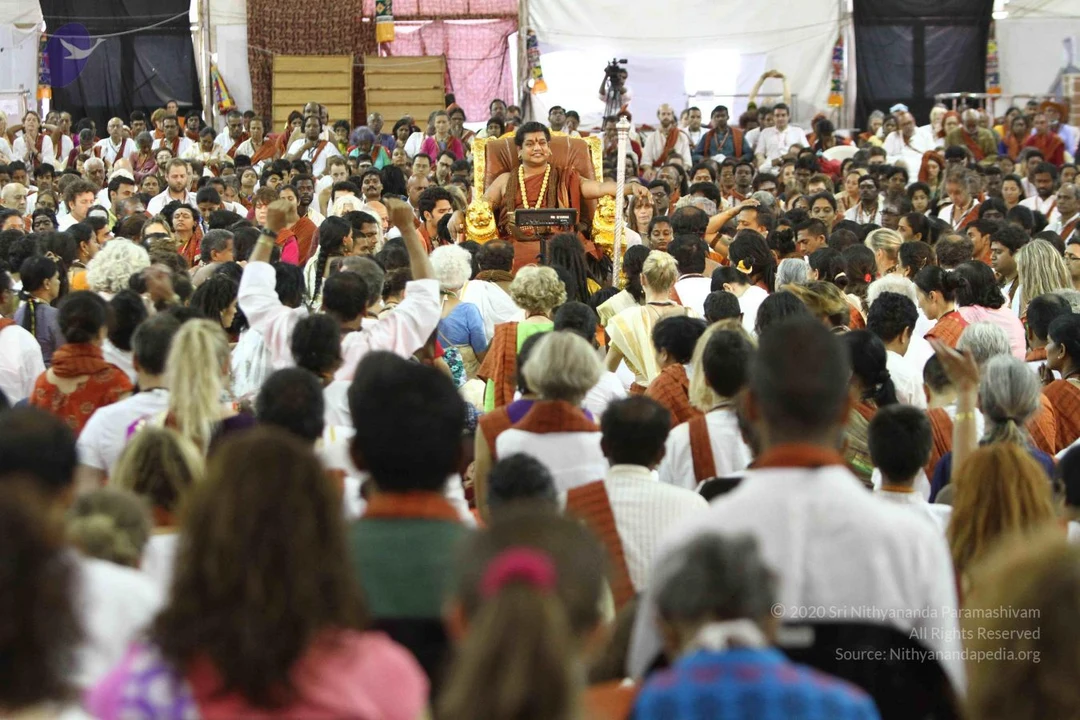
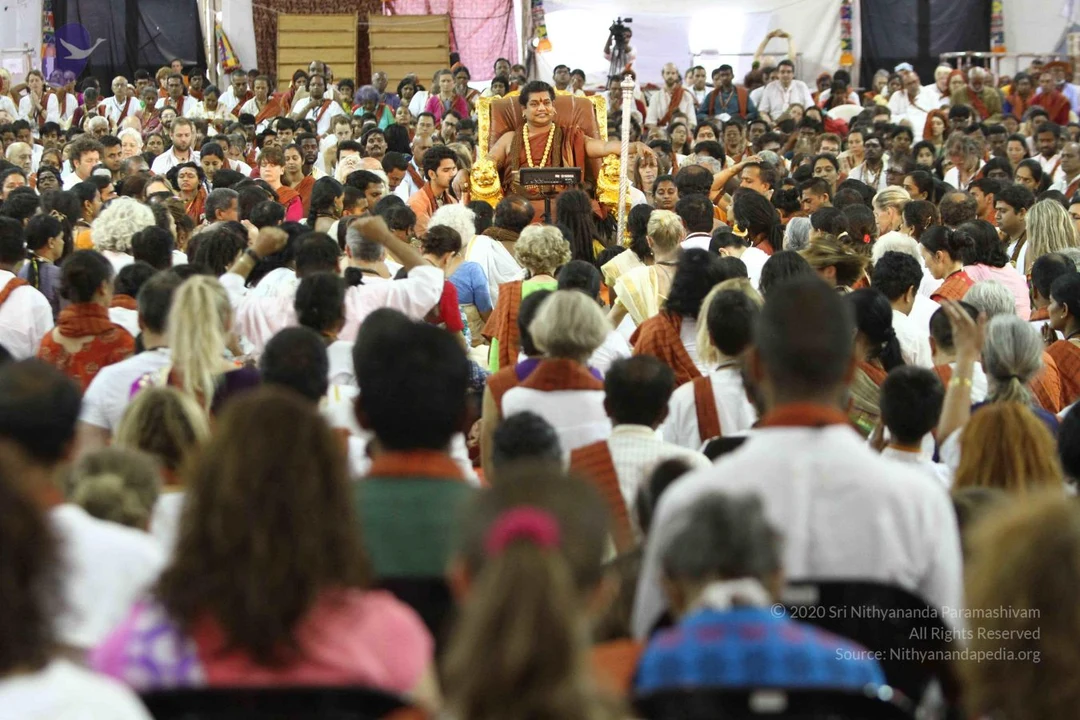
Ujjain Sarvadarshan || Kapataru Darshan || 22 May 2016

Dated photos
277
Source pages
1
Media
3
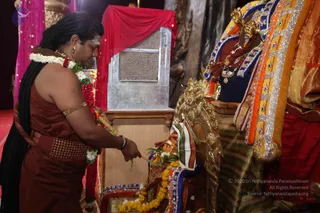
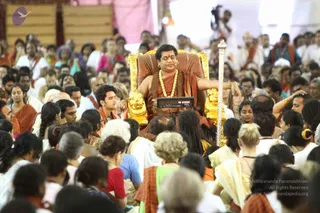
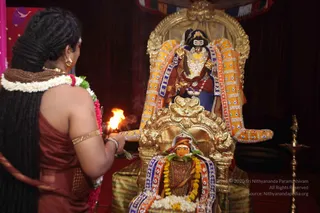
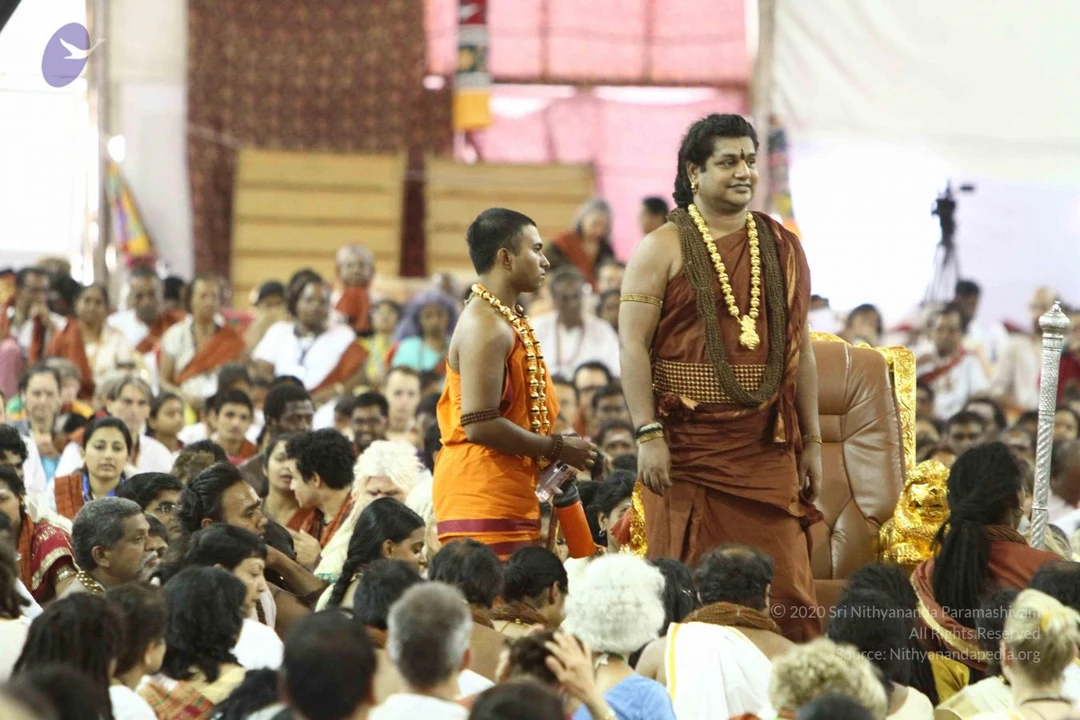
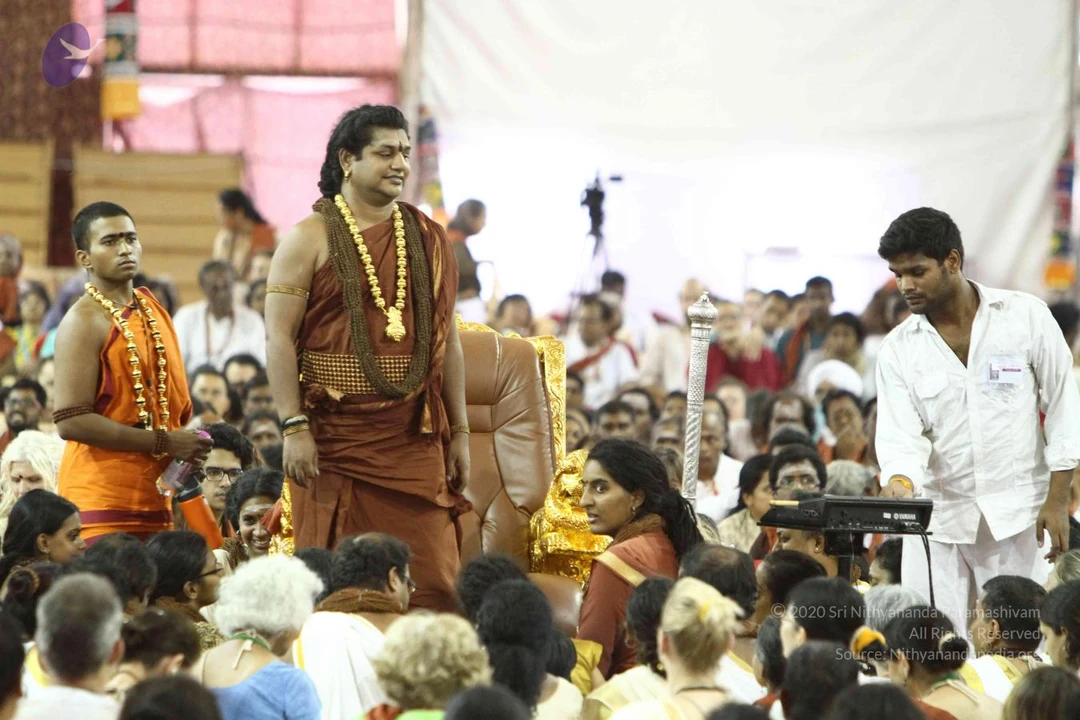
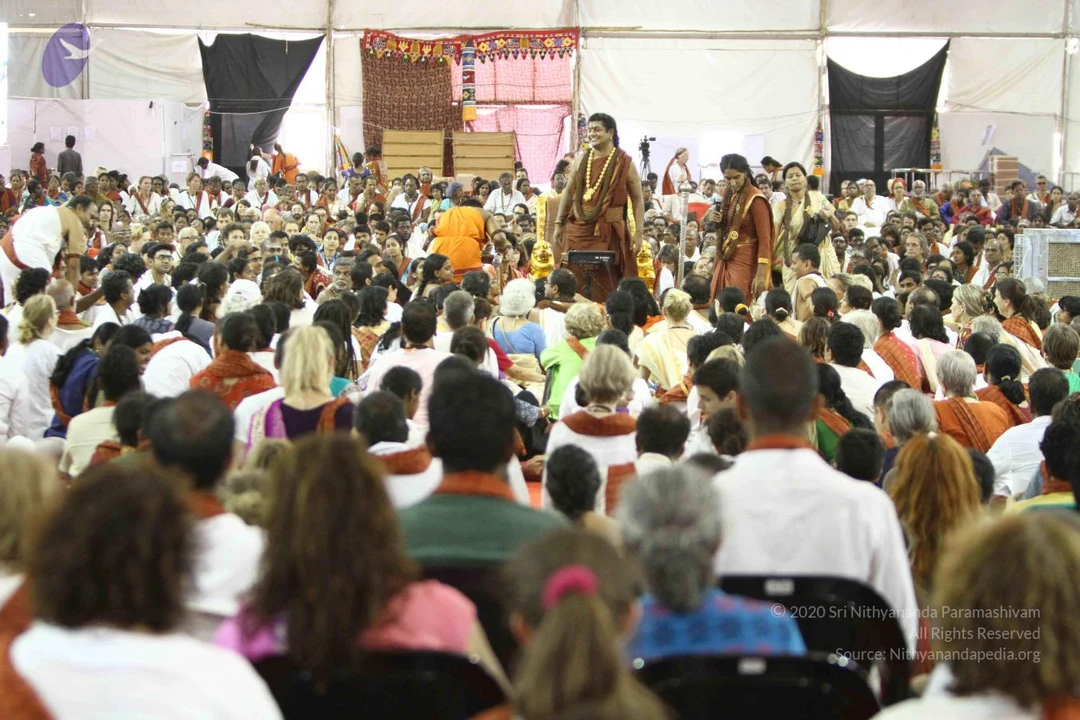
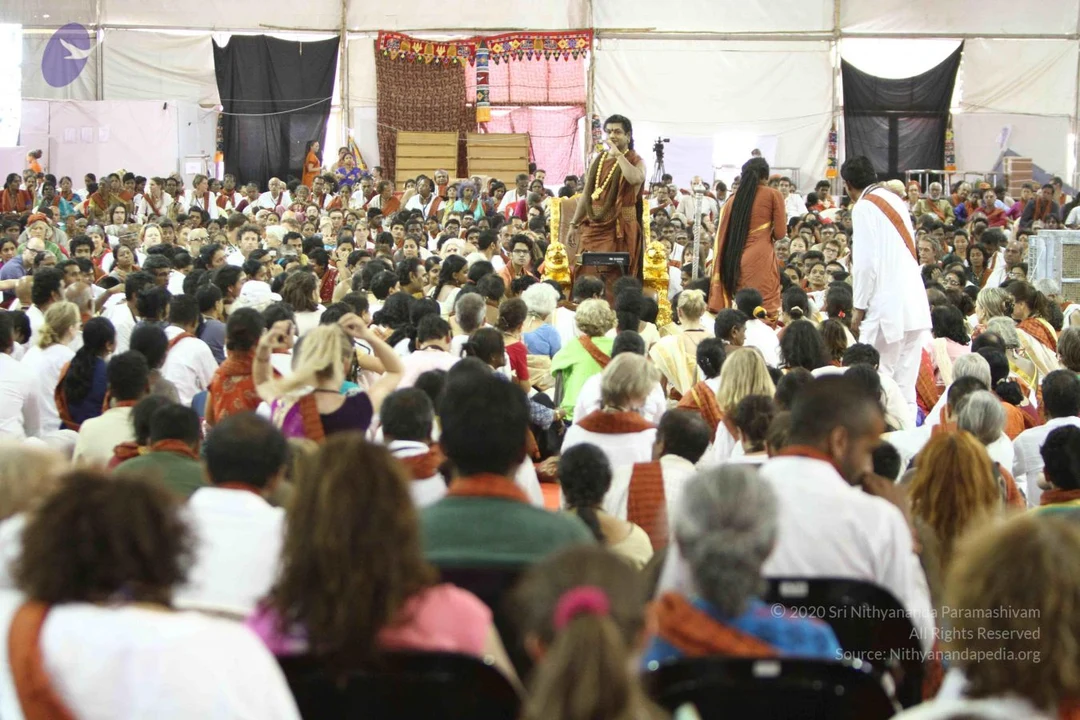
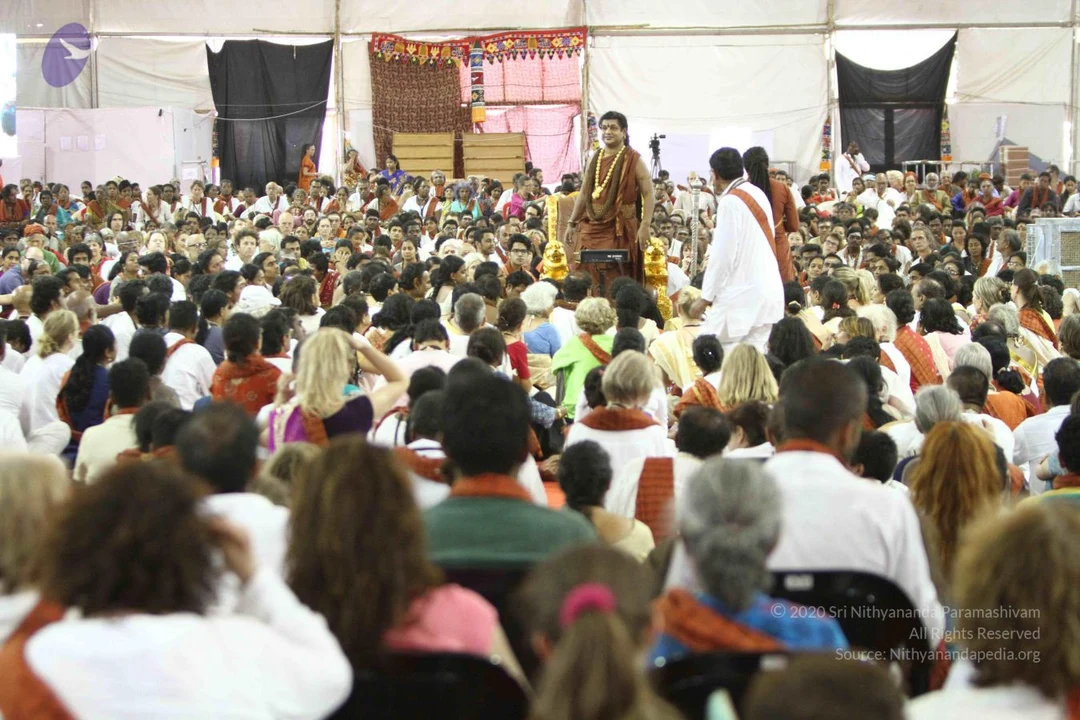
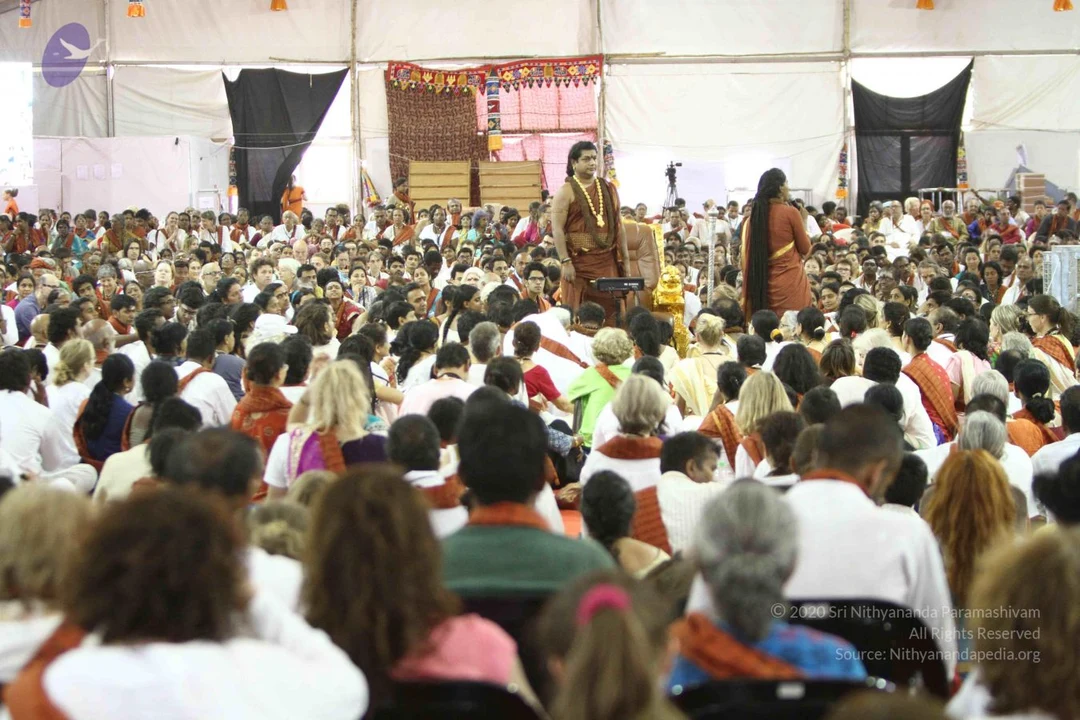
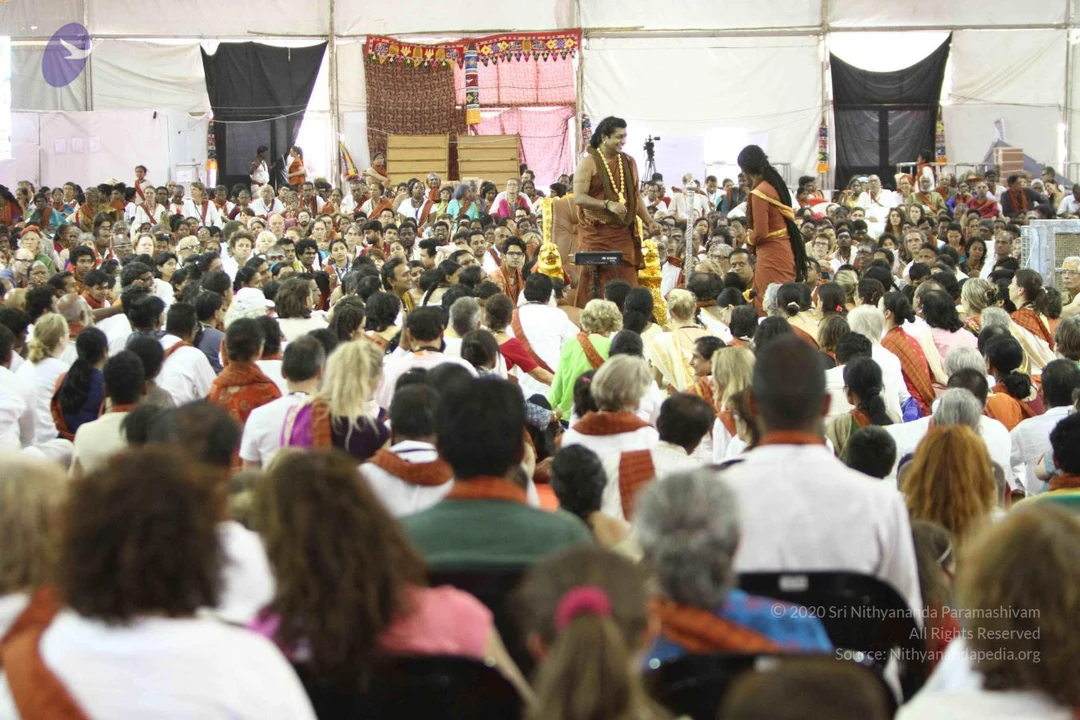
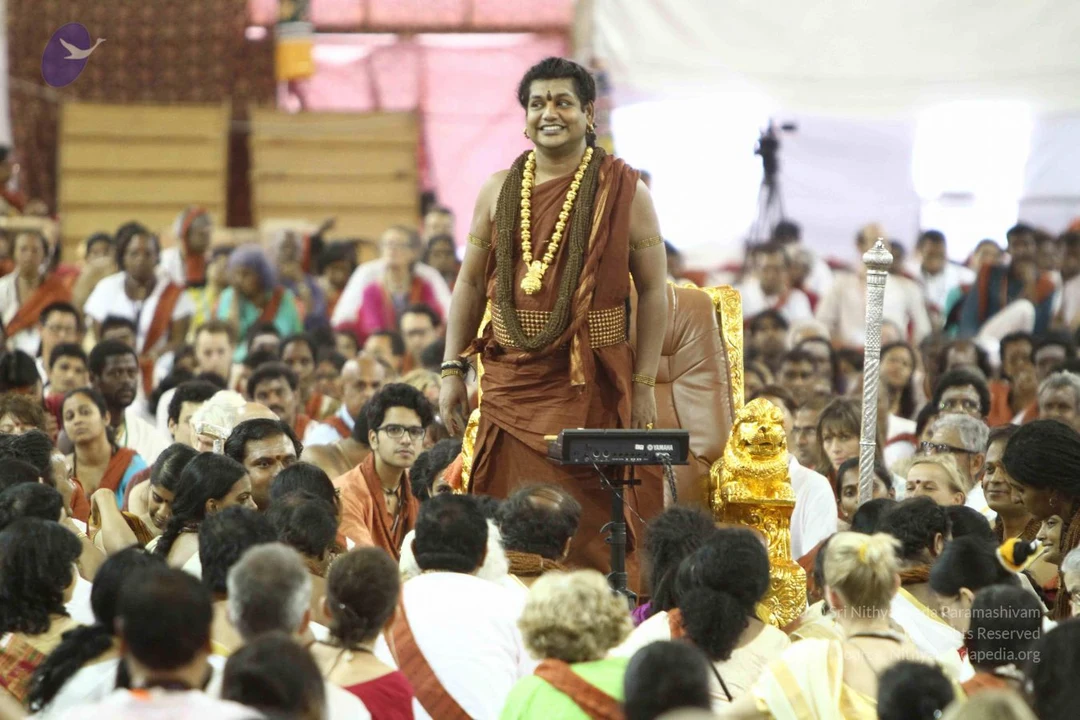
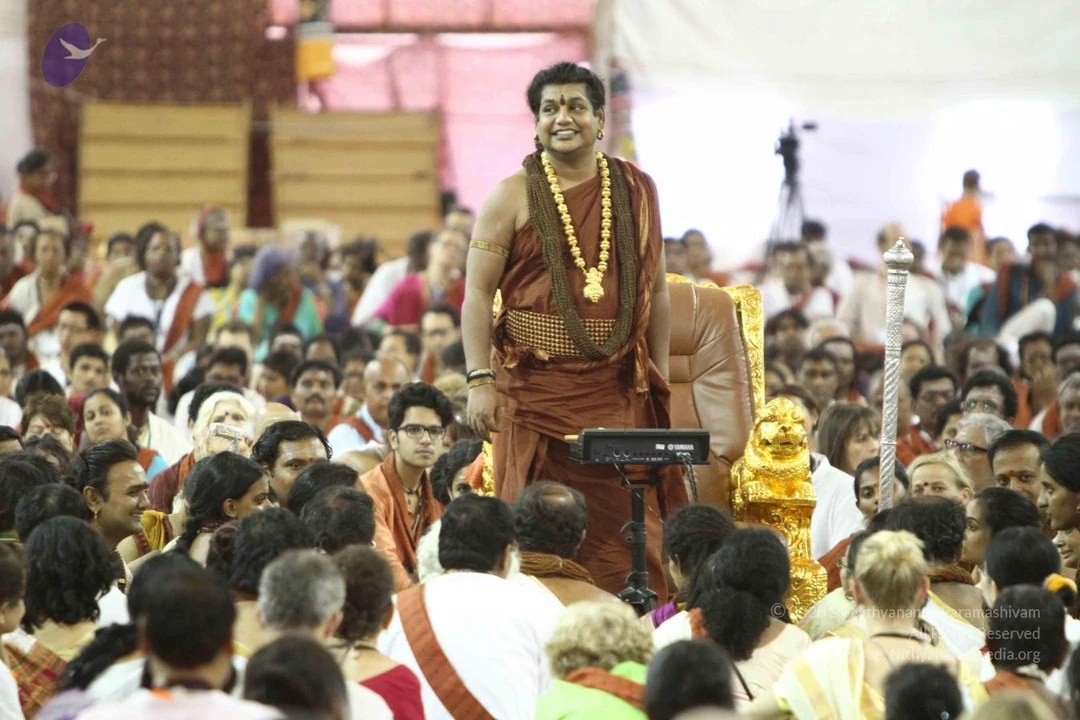
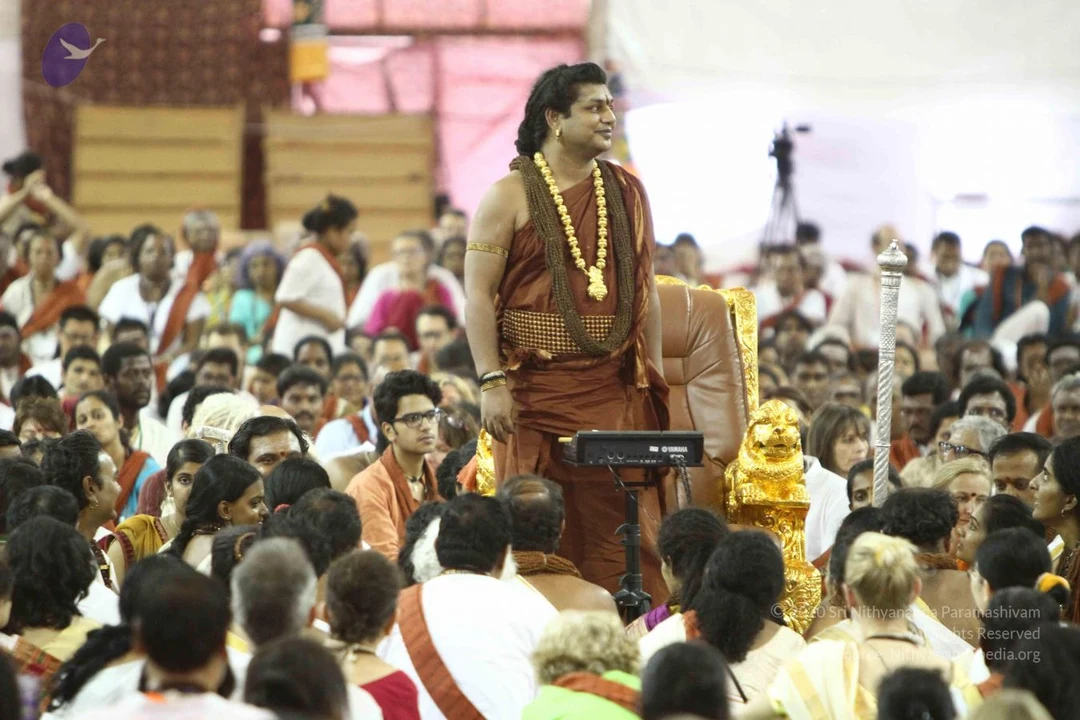
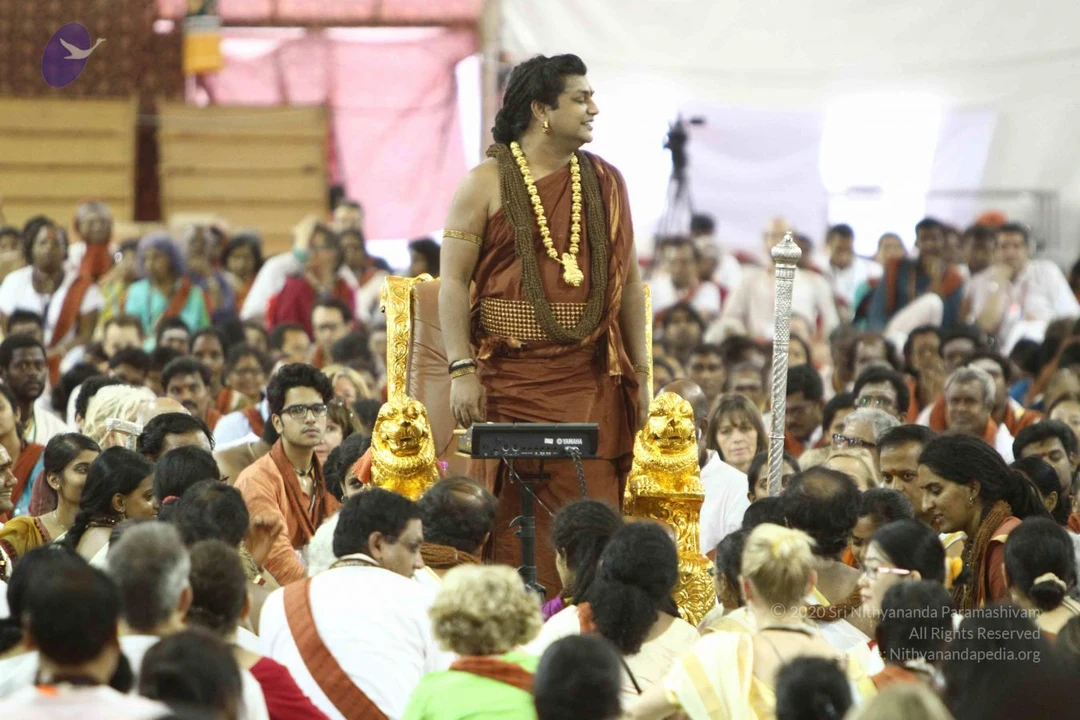
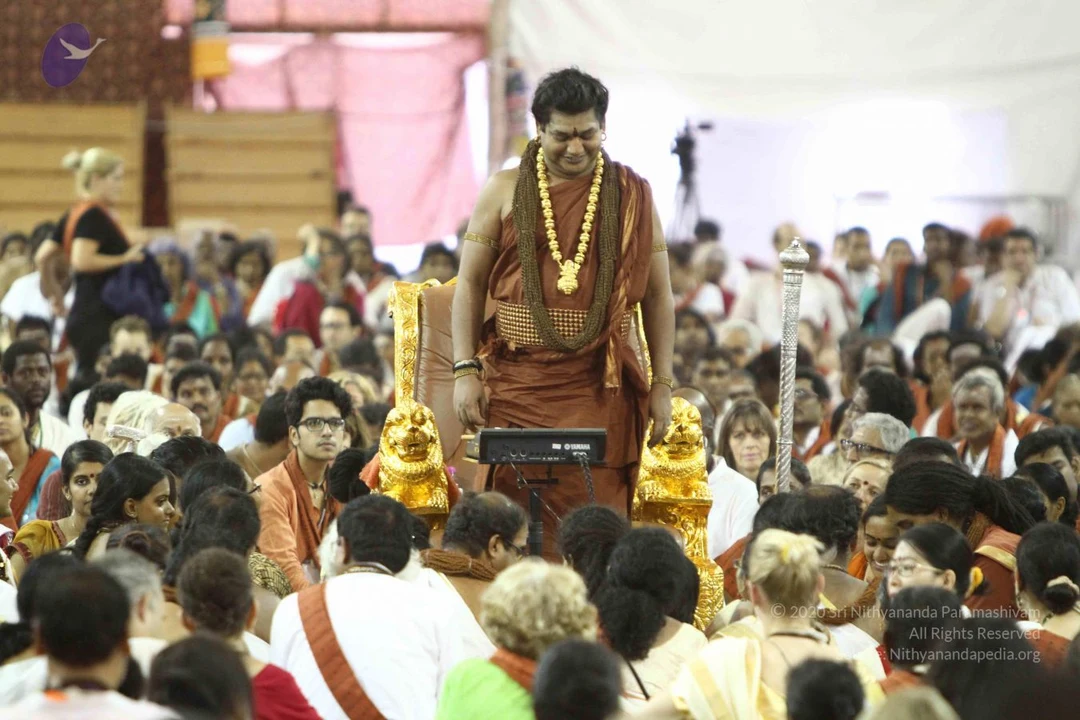
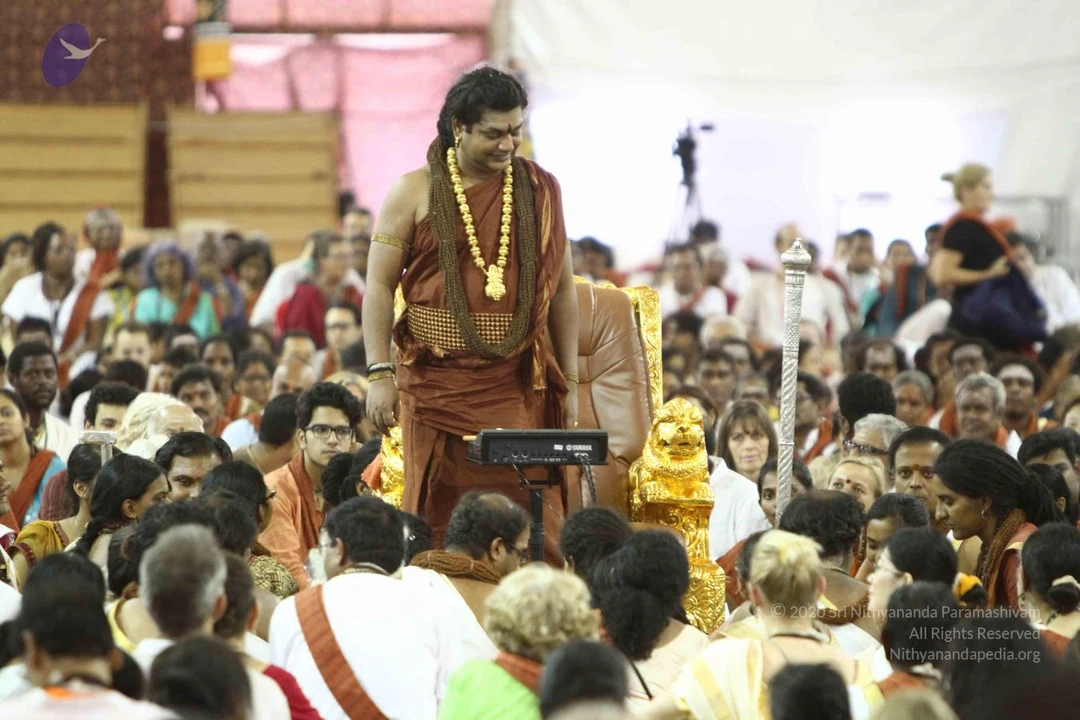
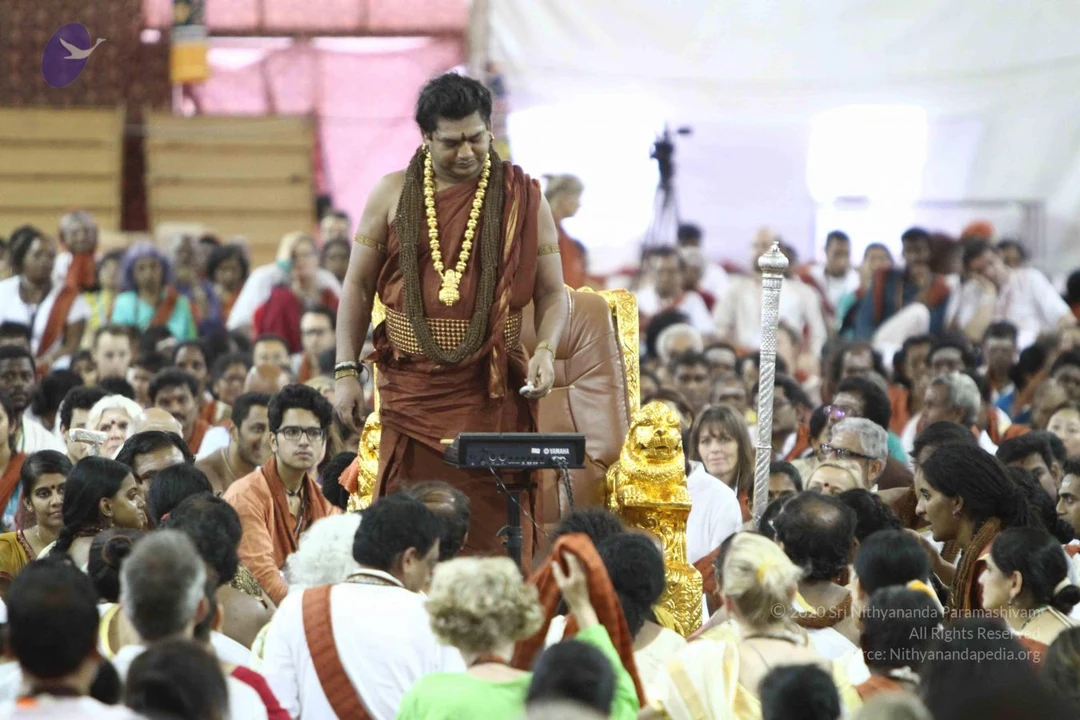
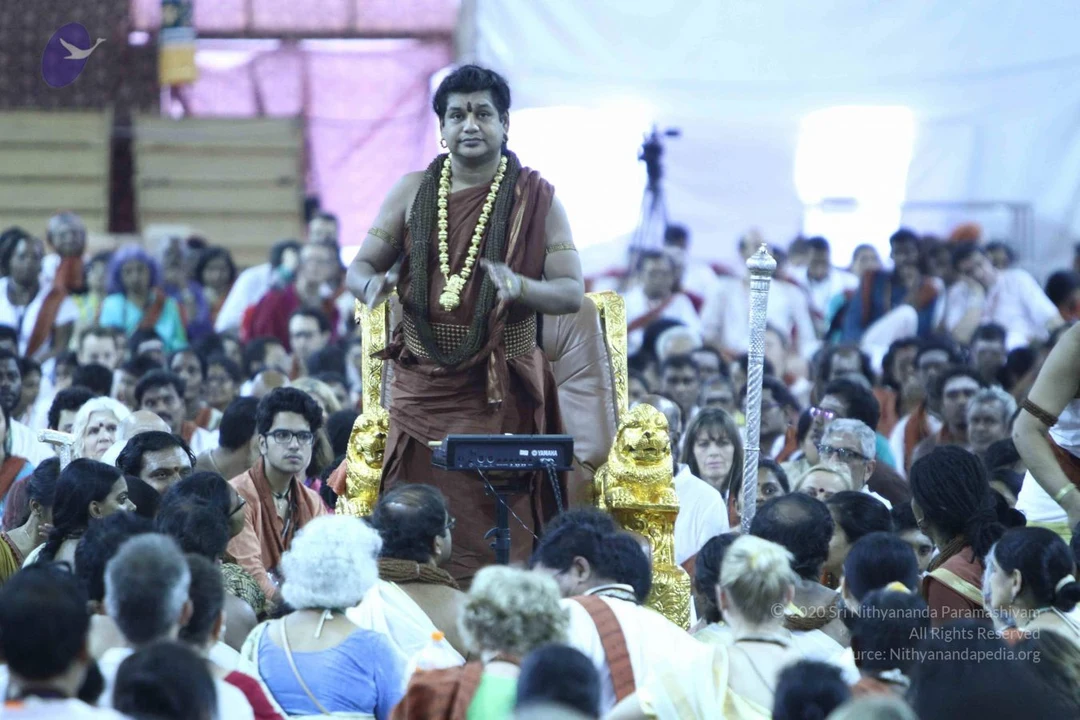
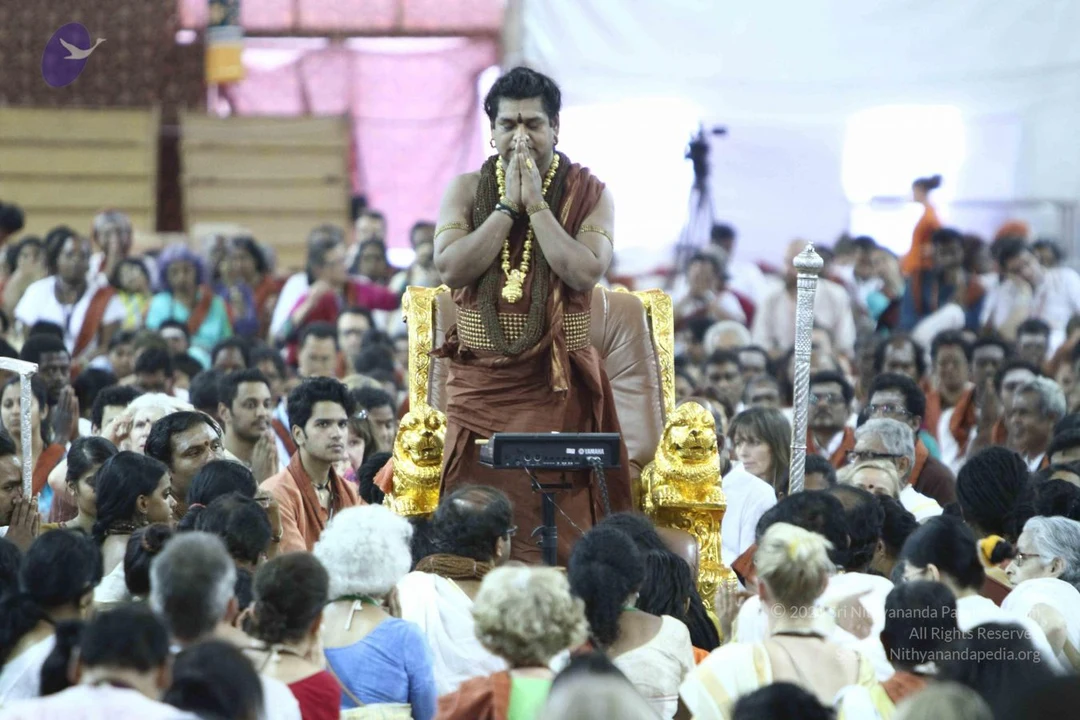
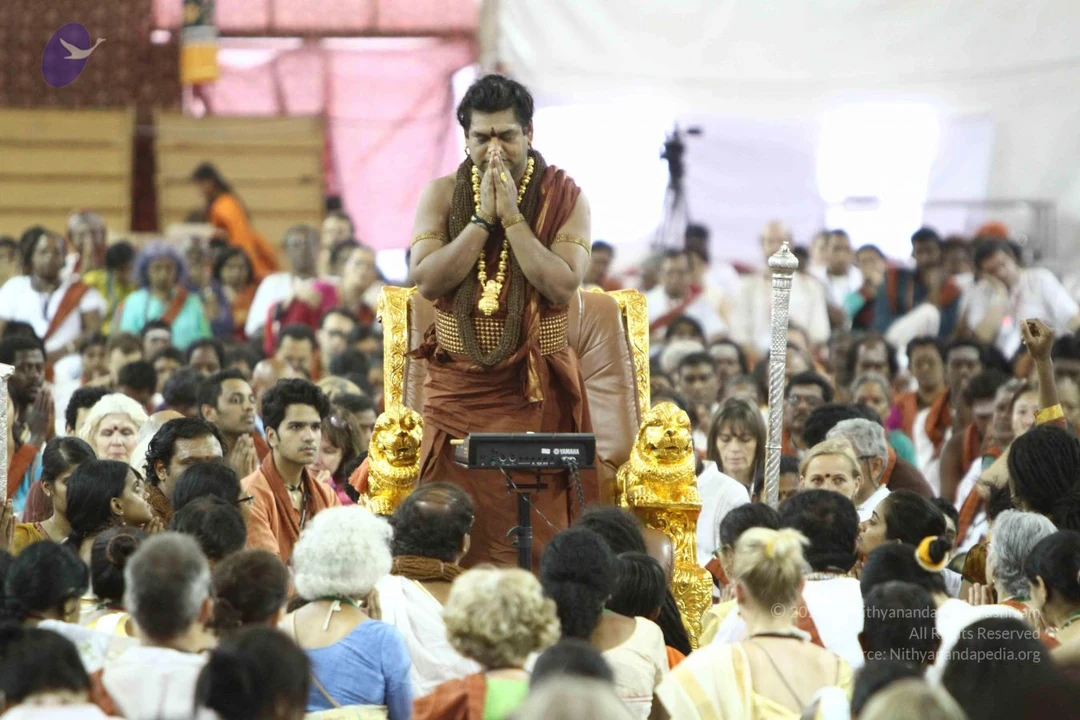
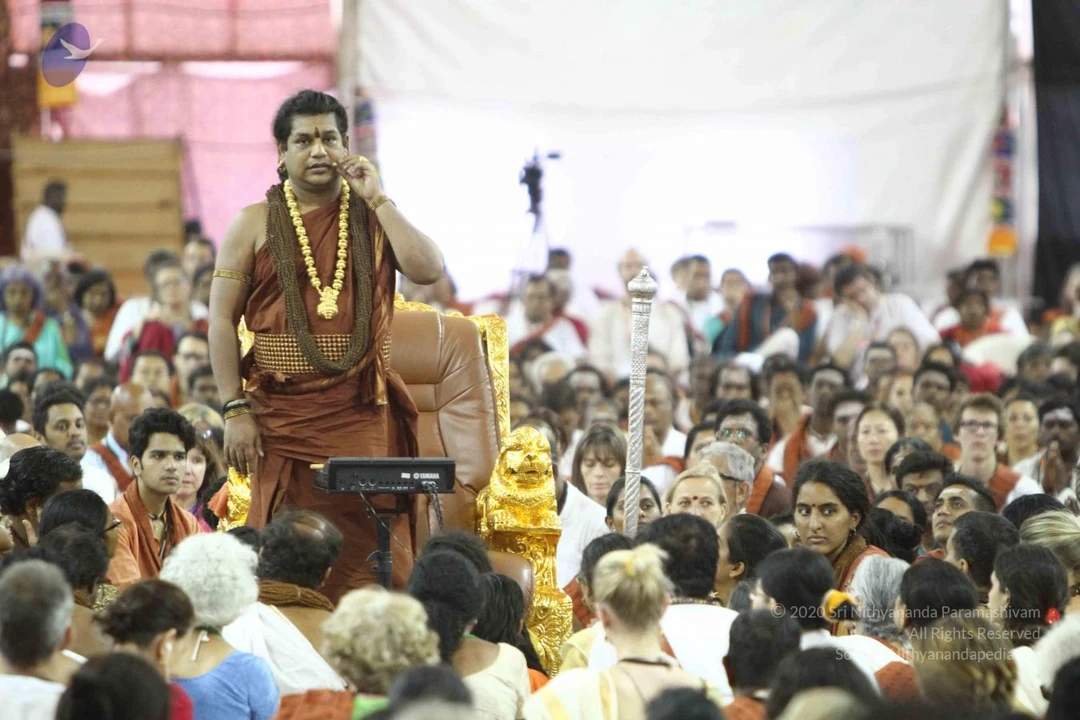
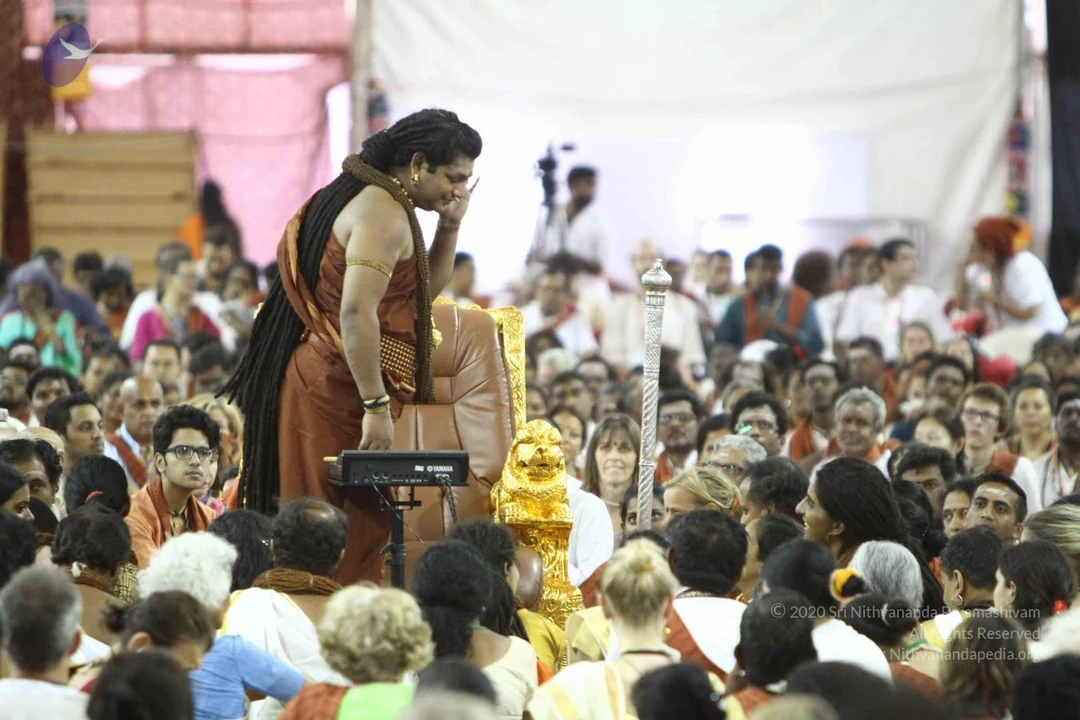
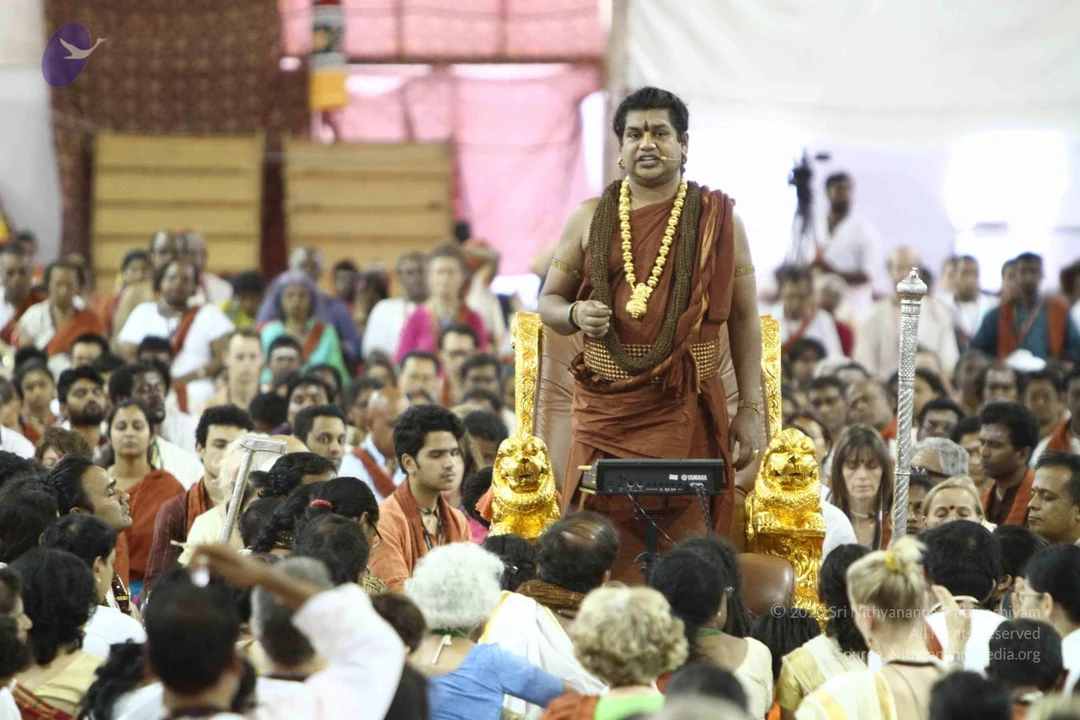
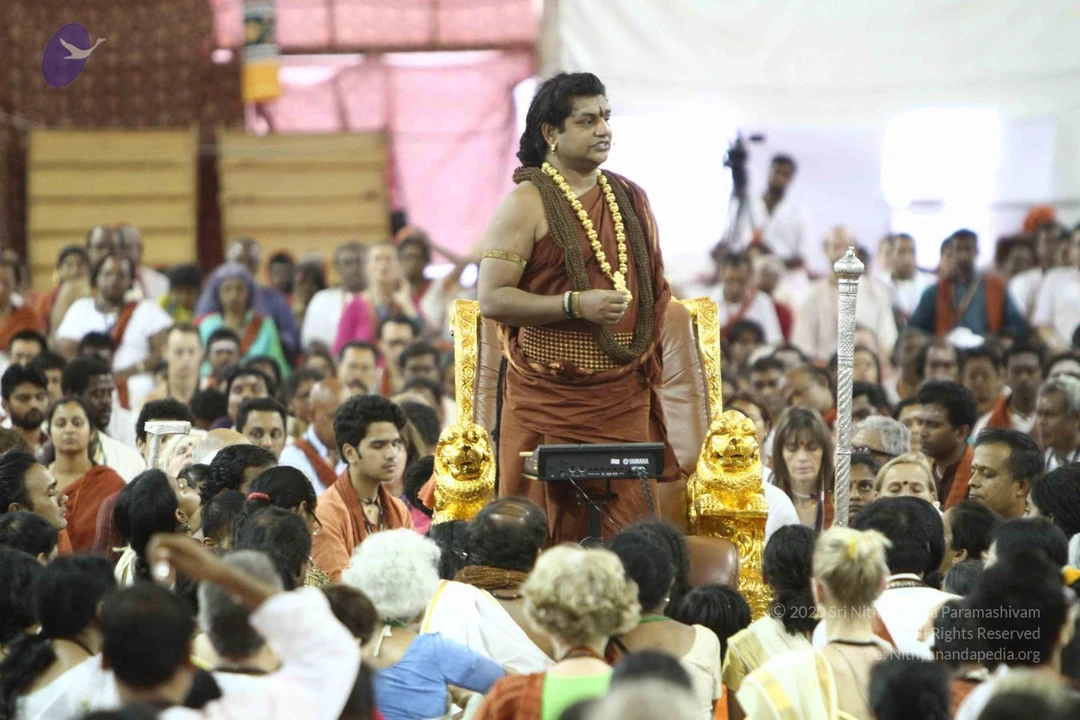
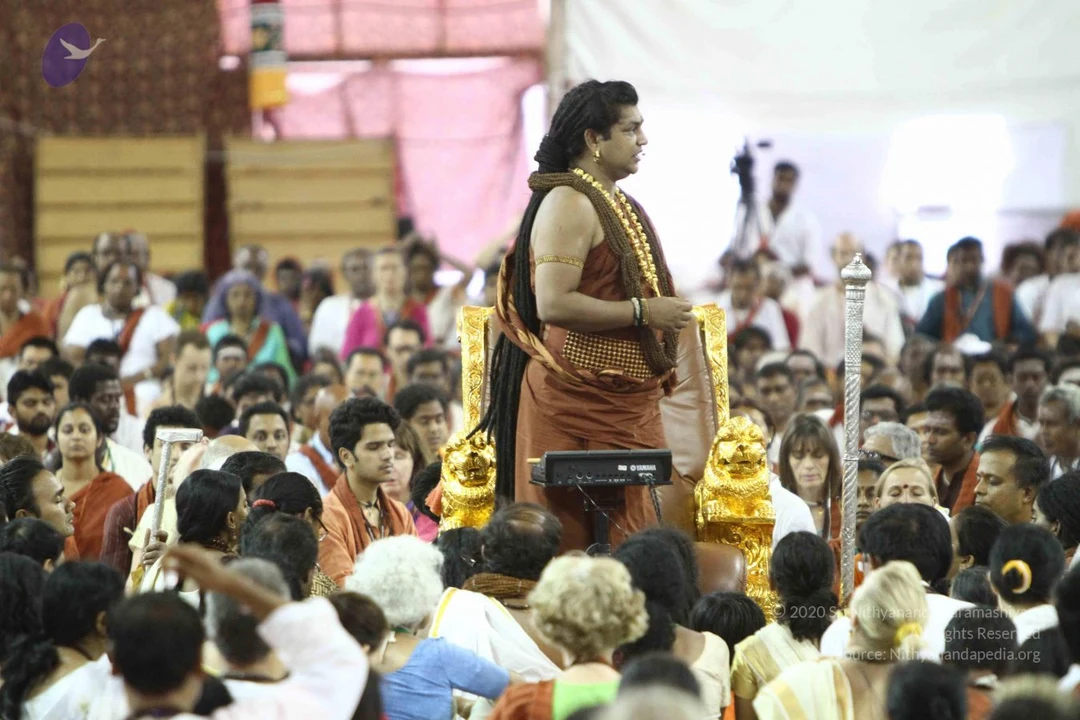
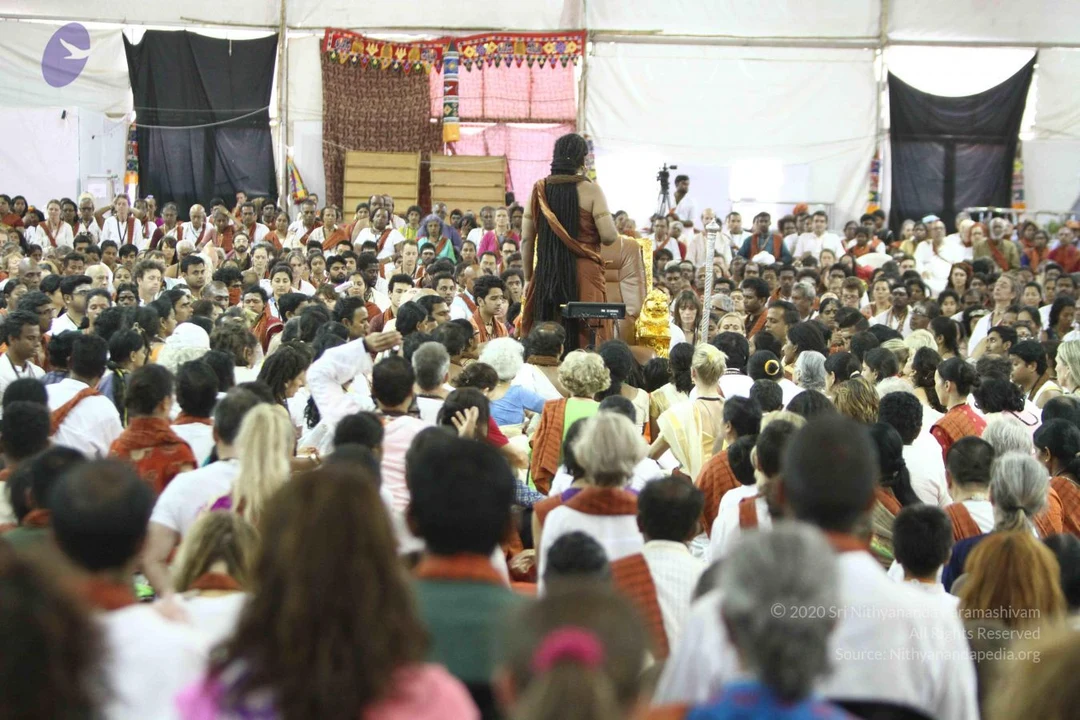
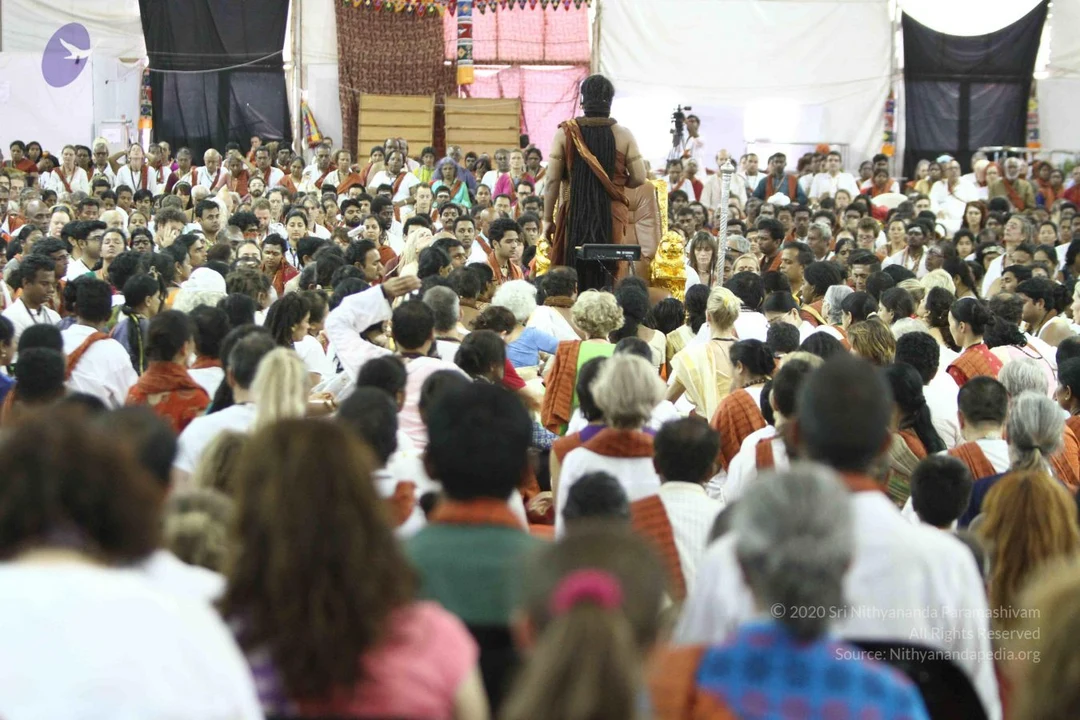
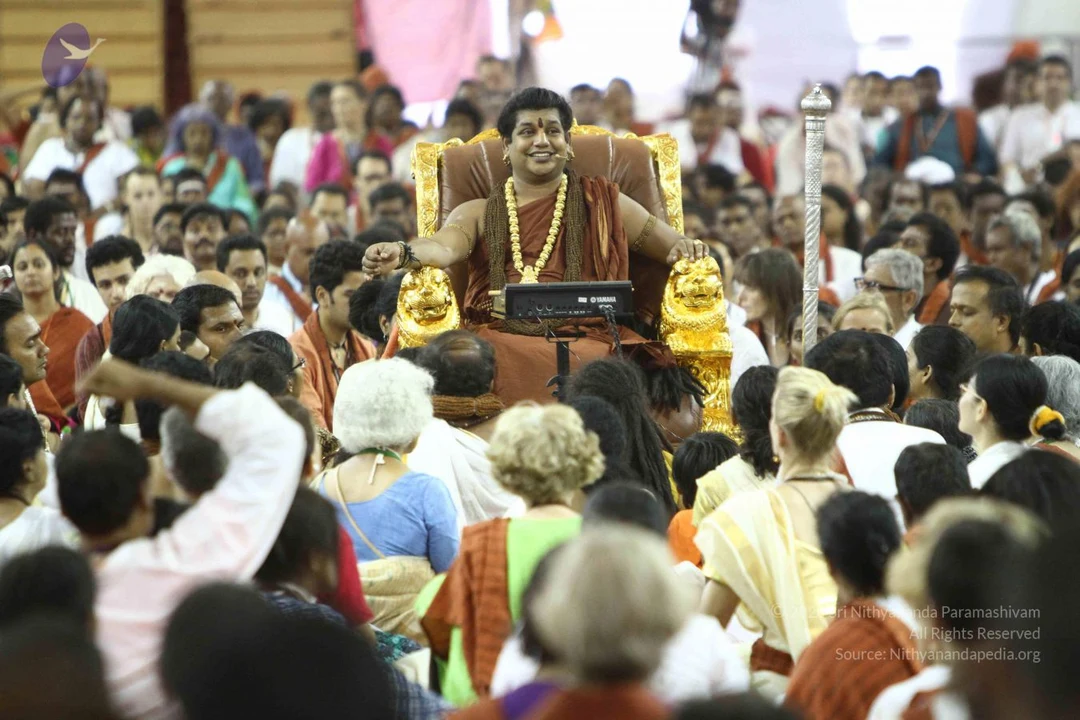
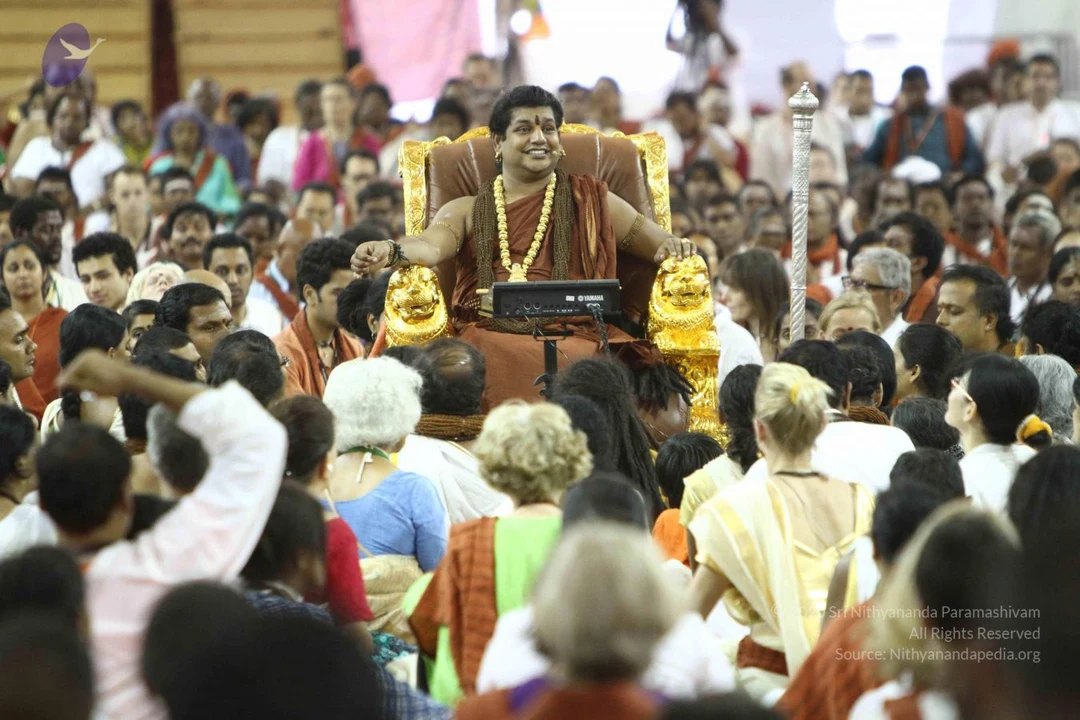
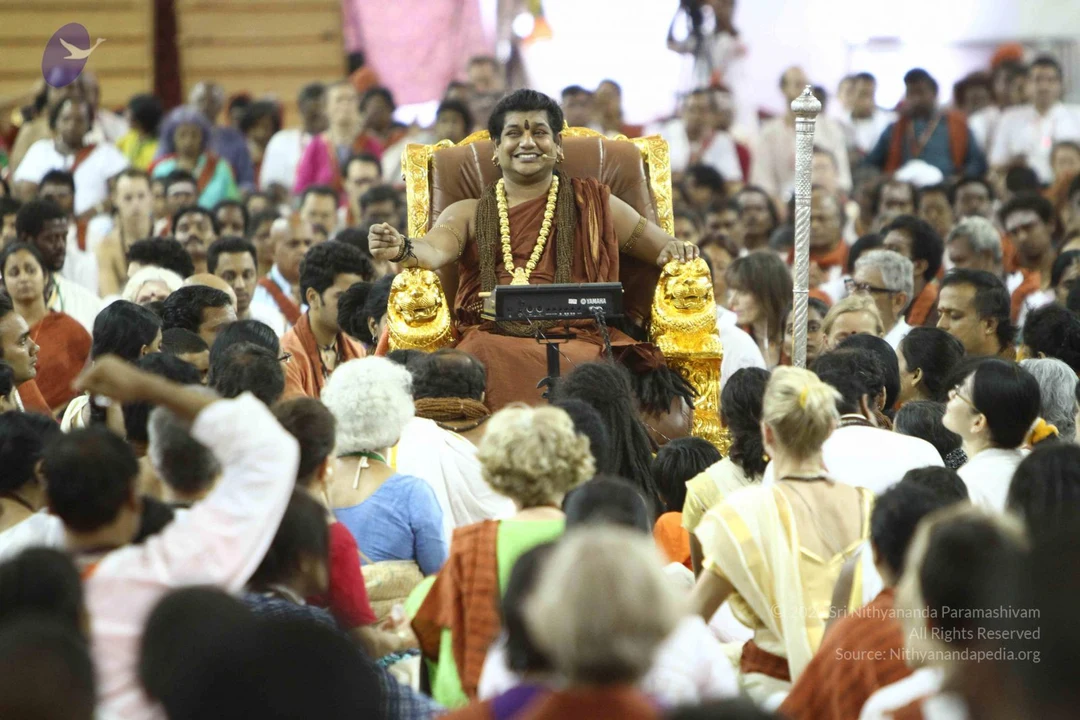
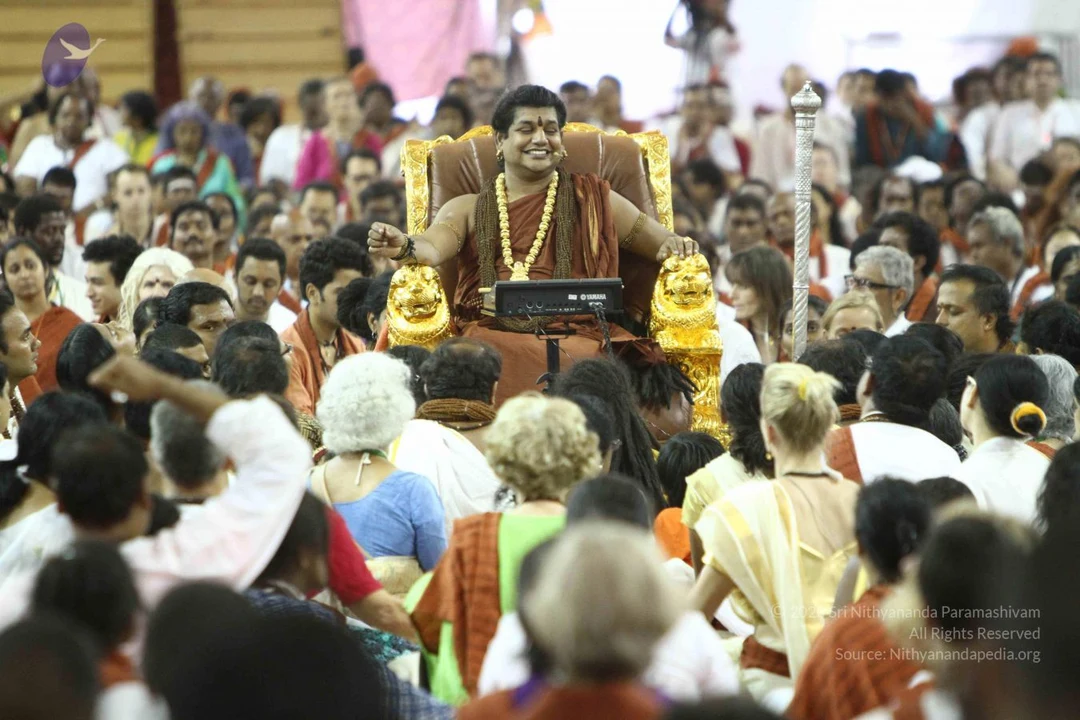
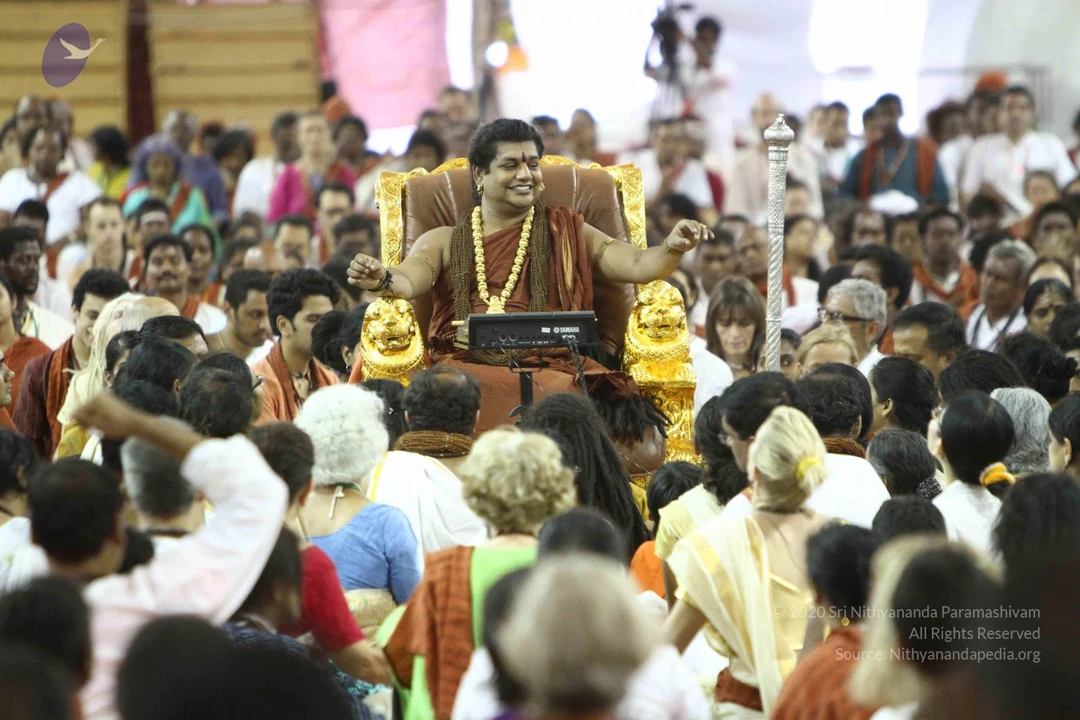
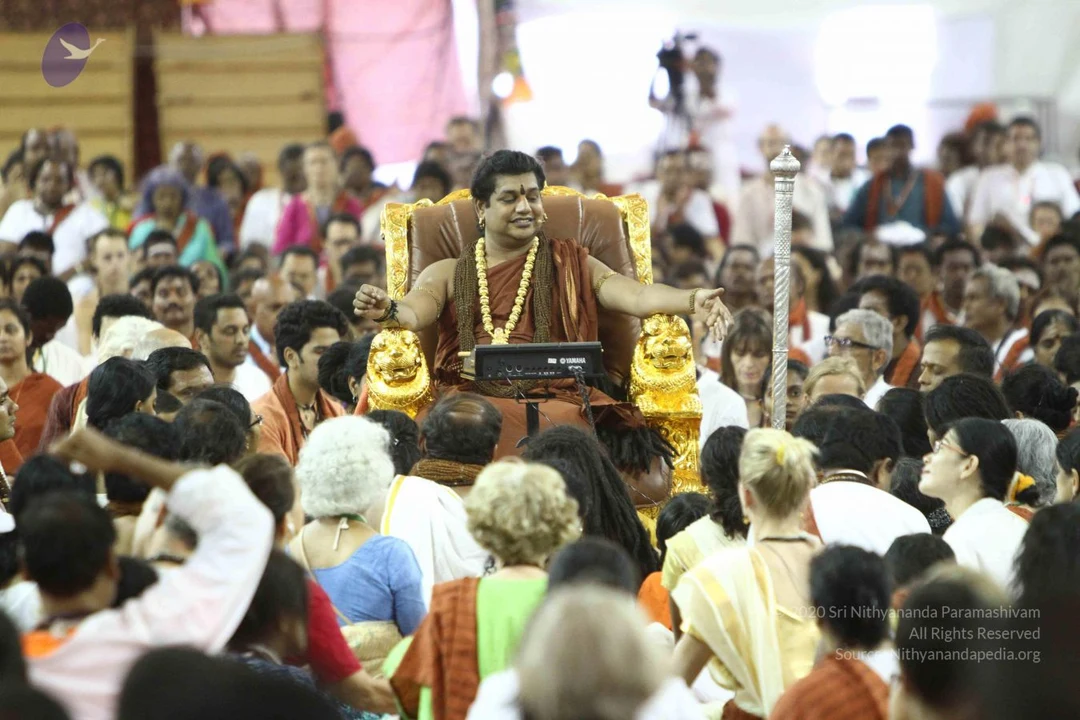
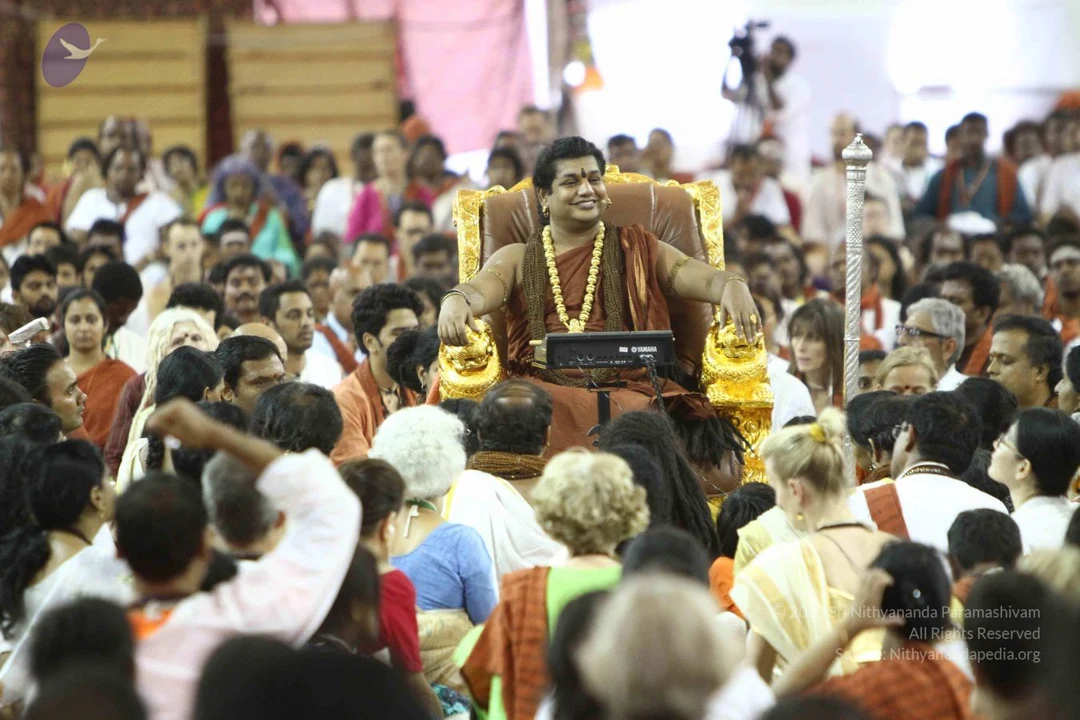
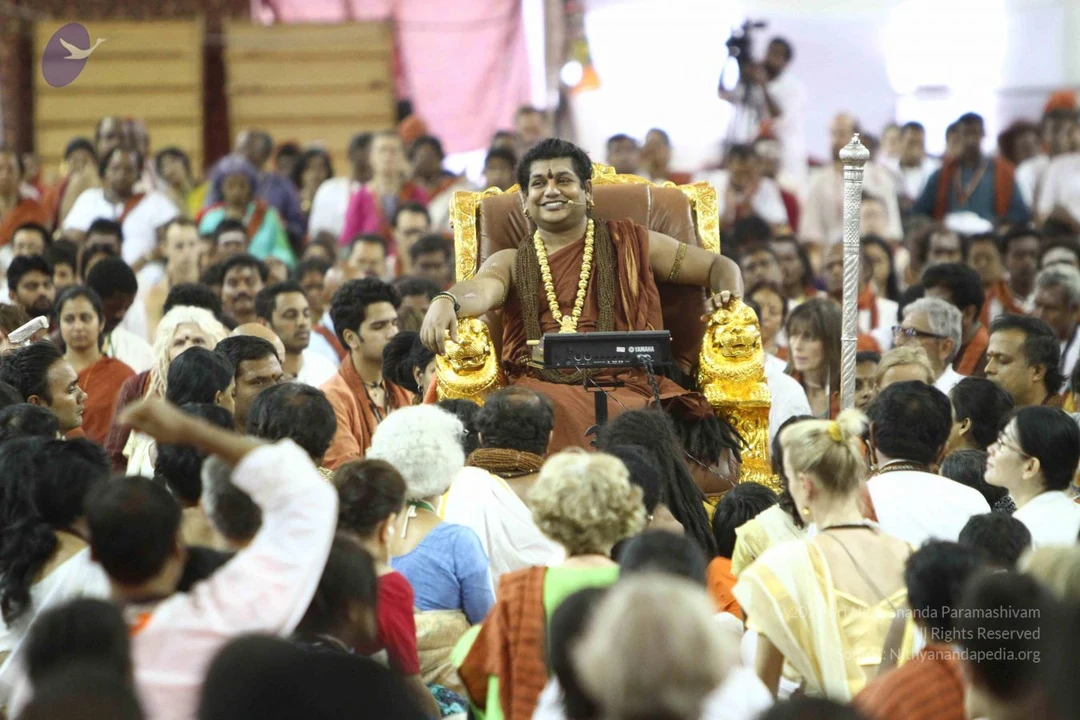
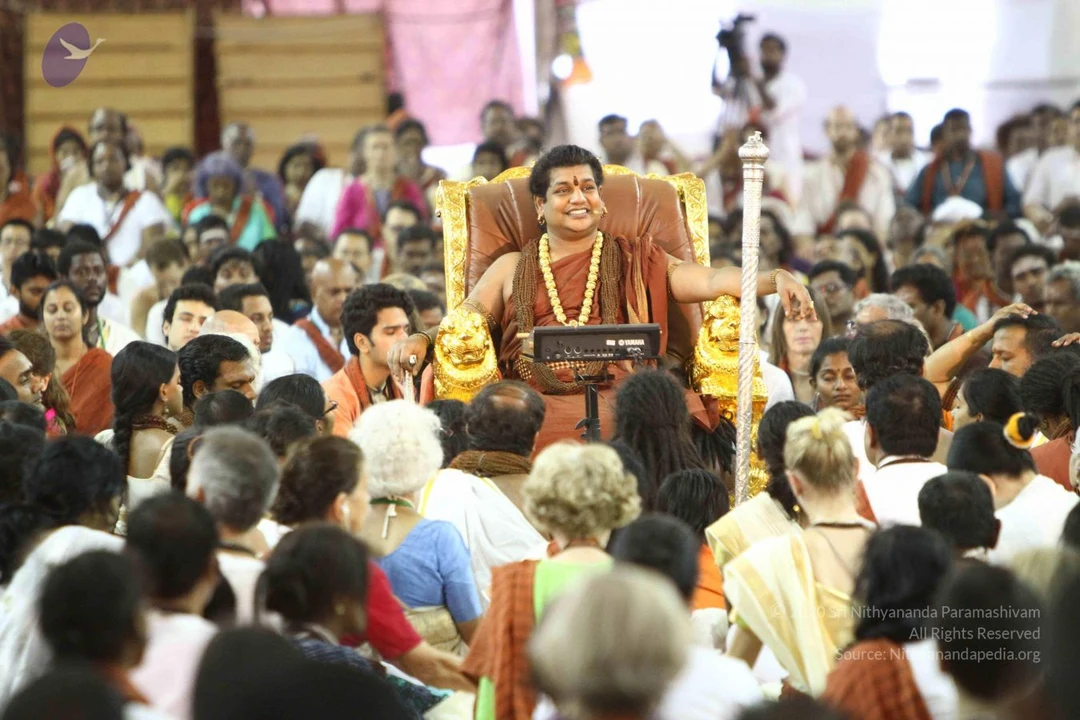
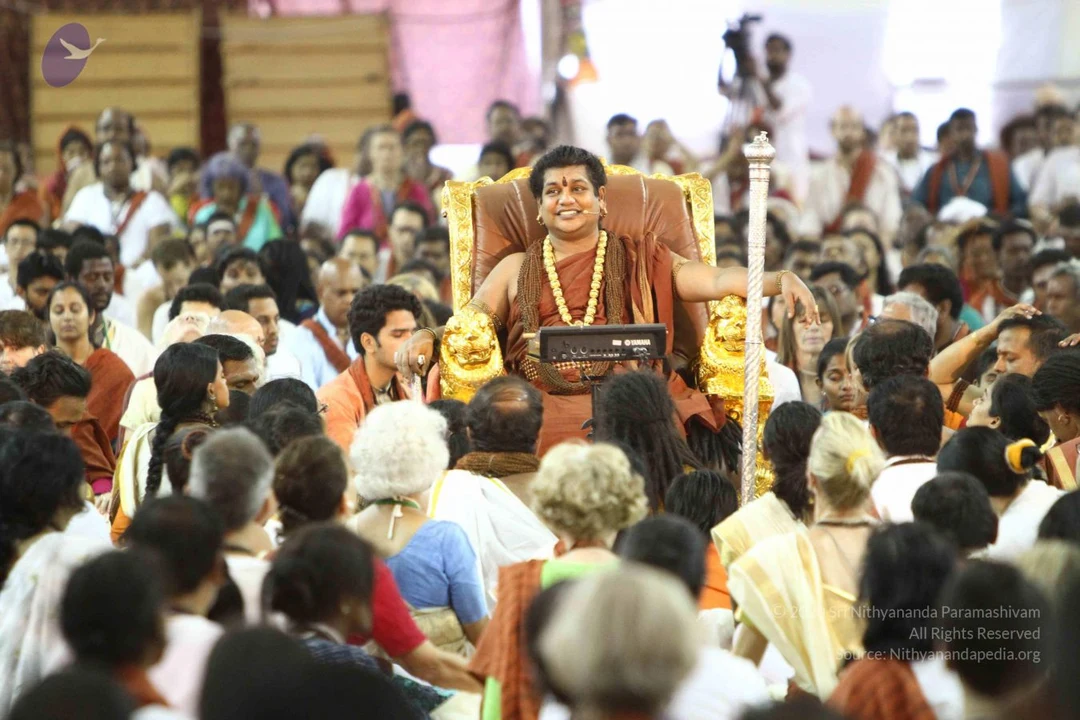
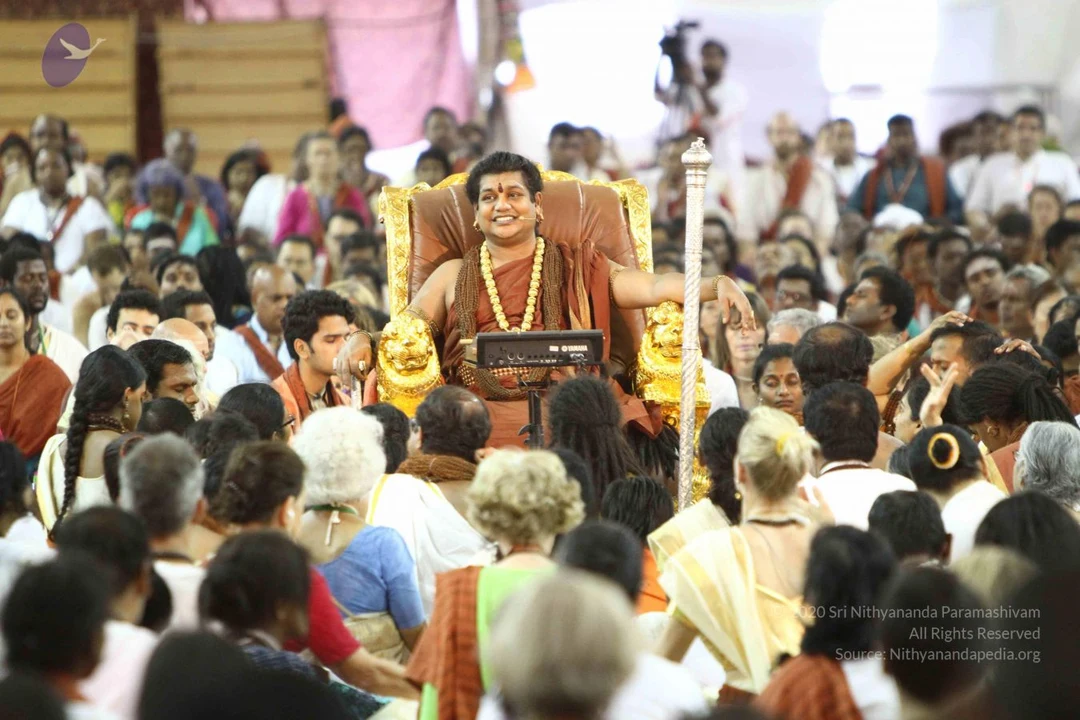
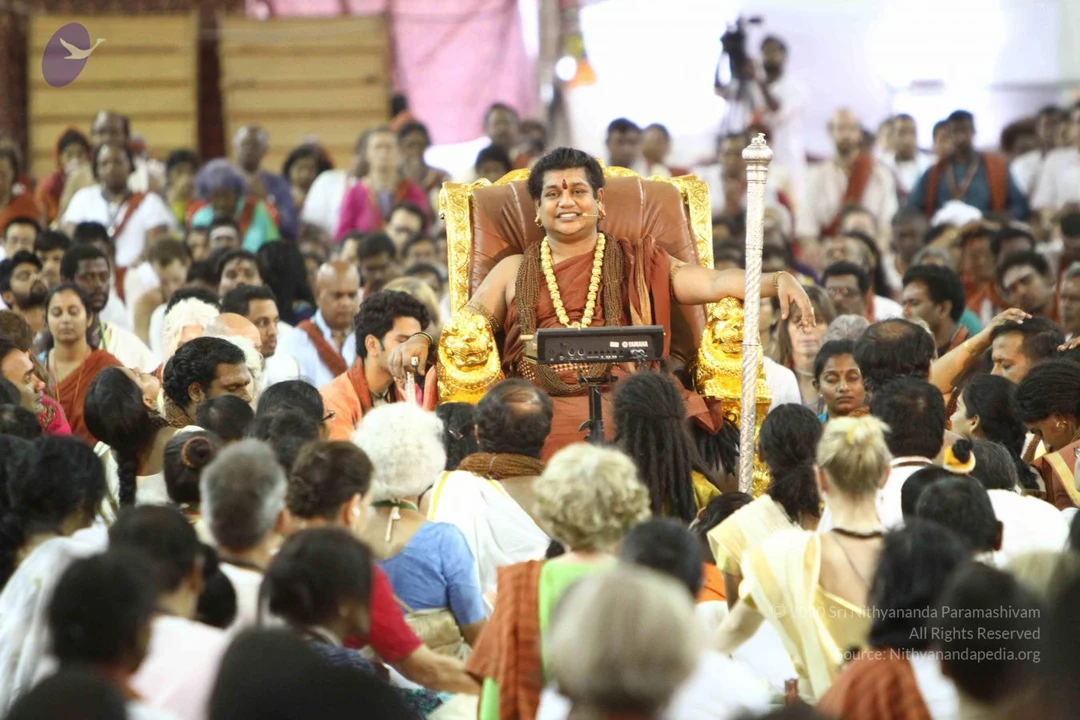
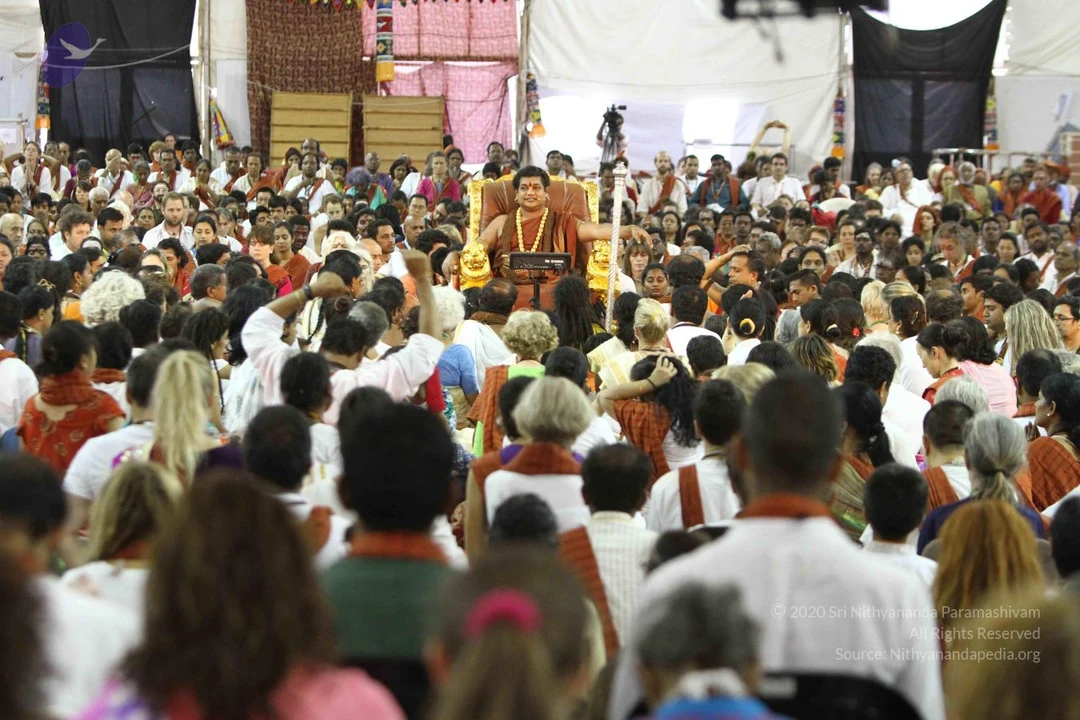
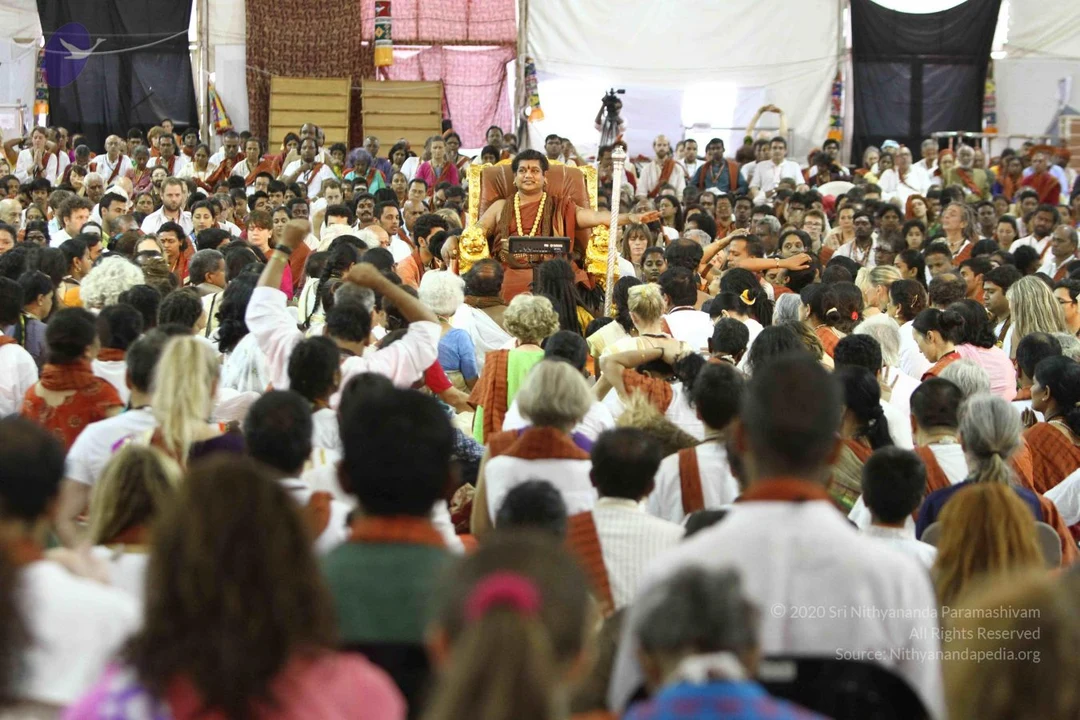
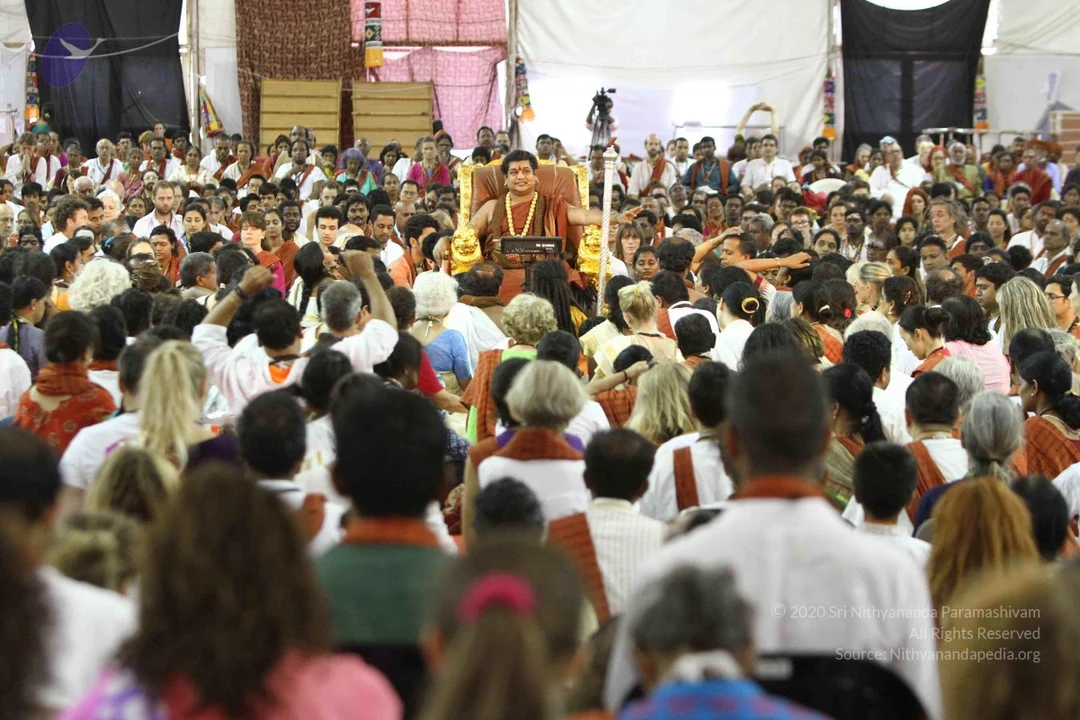
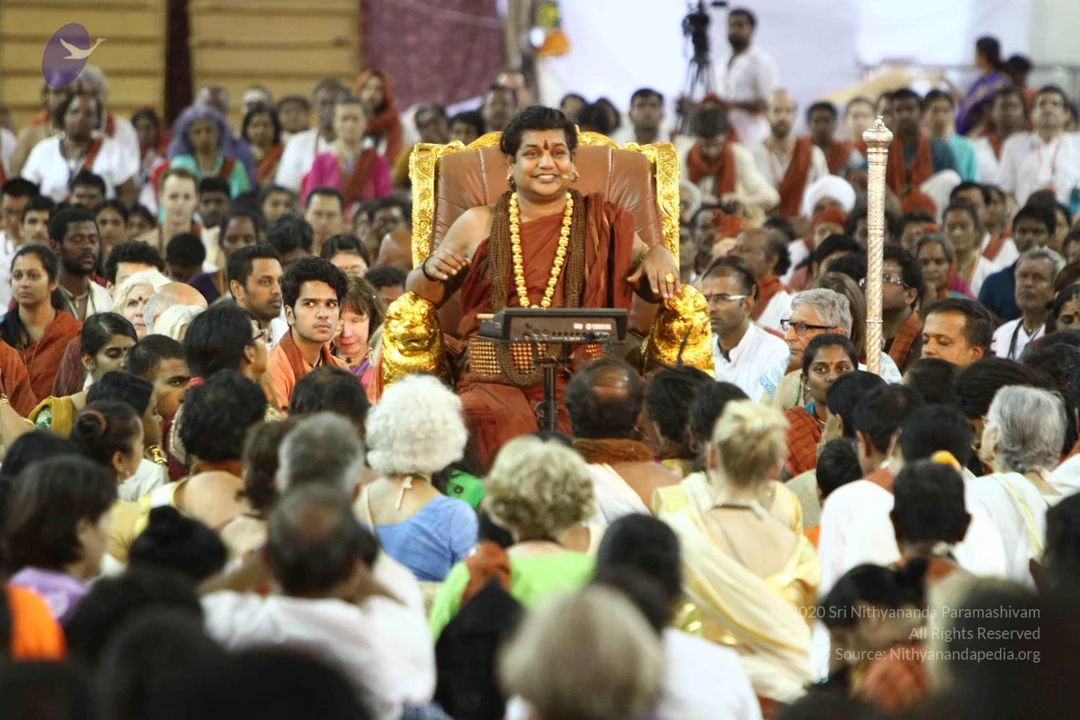
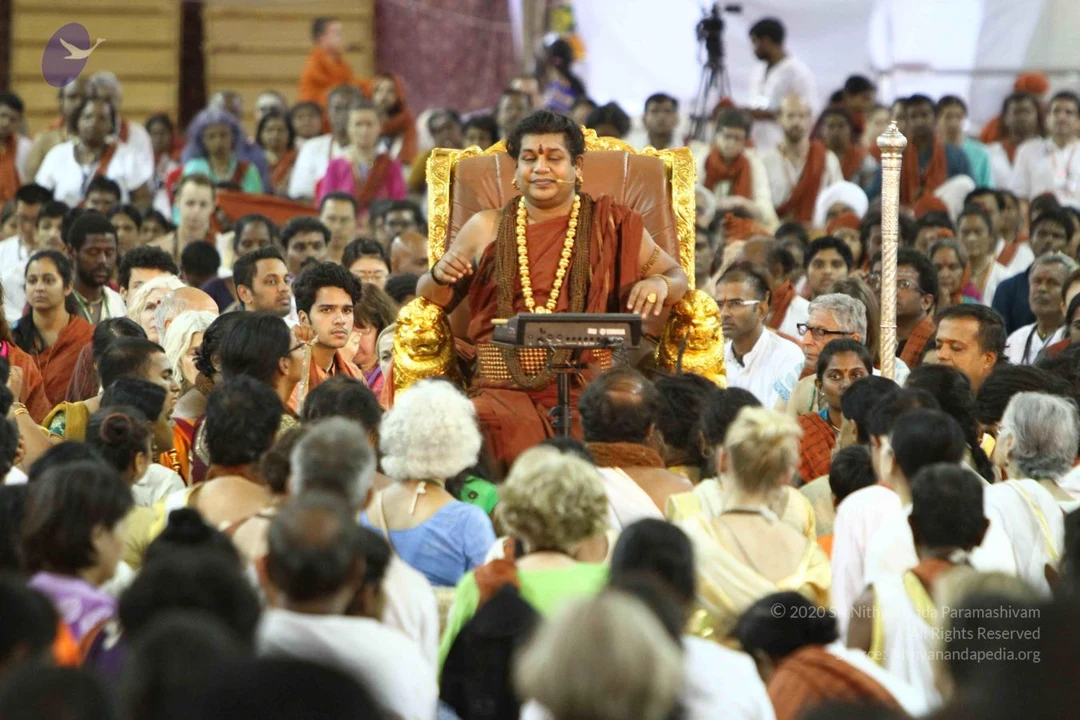
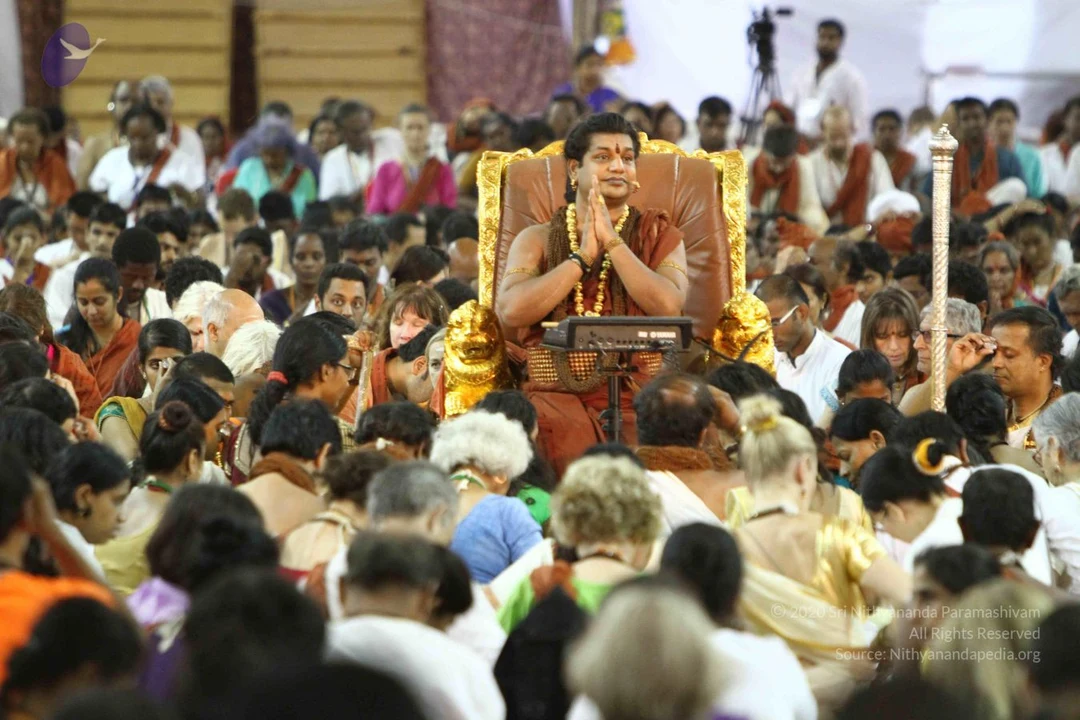
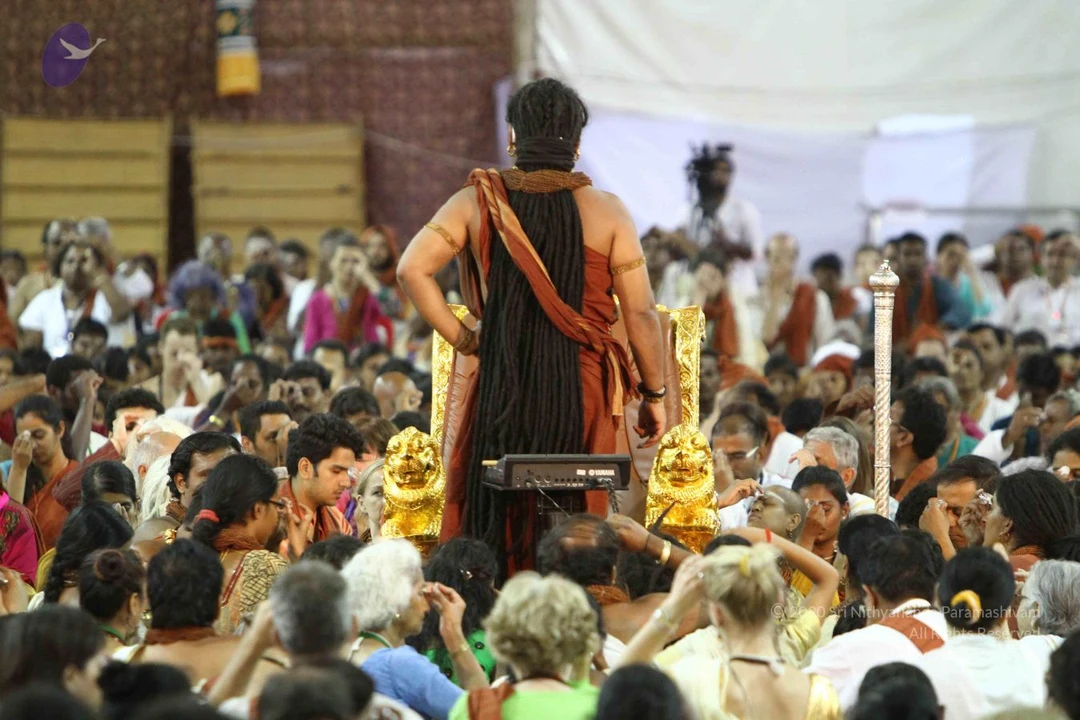
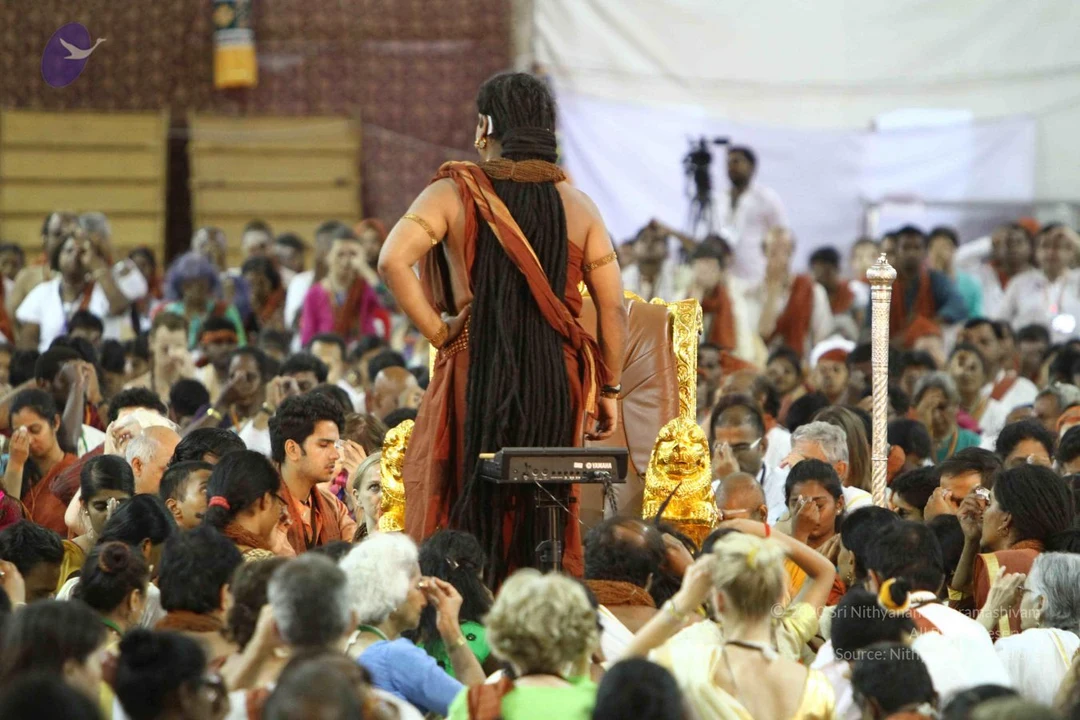
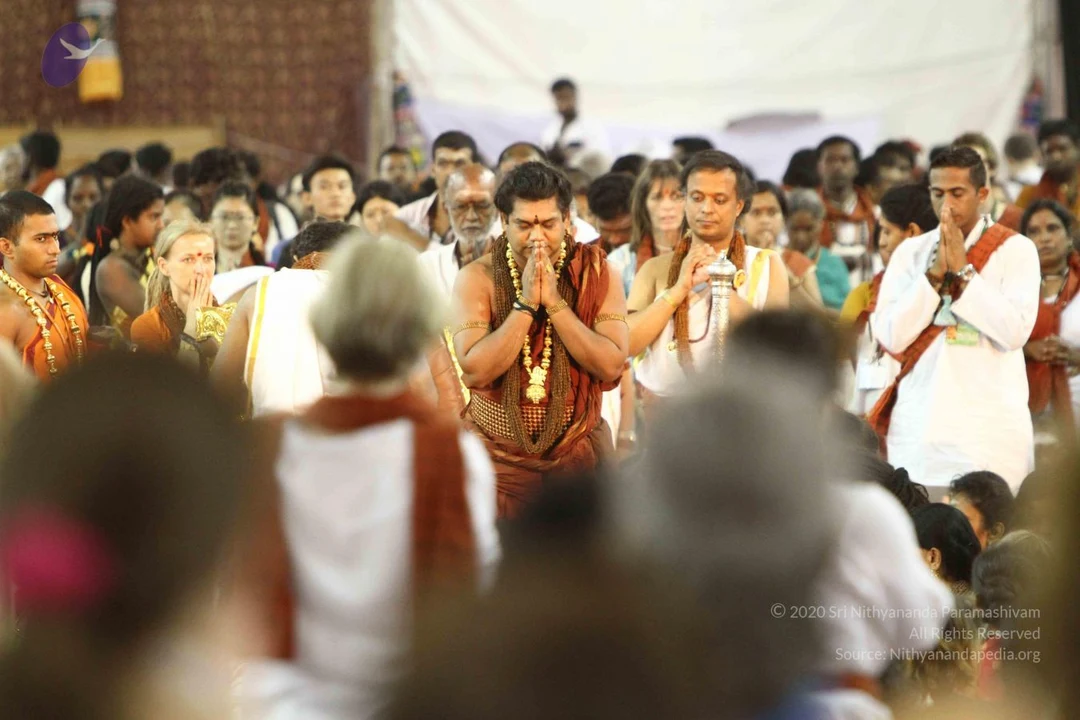
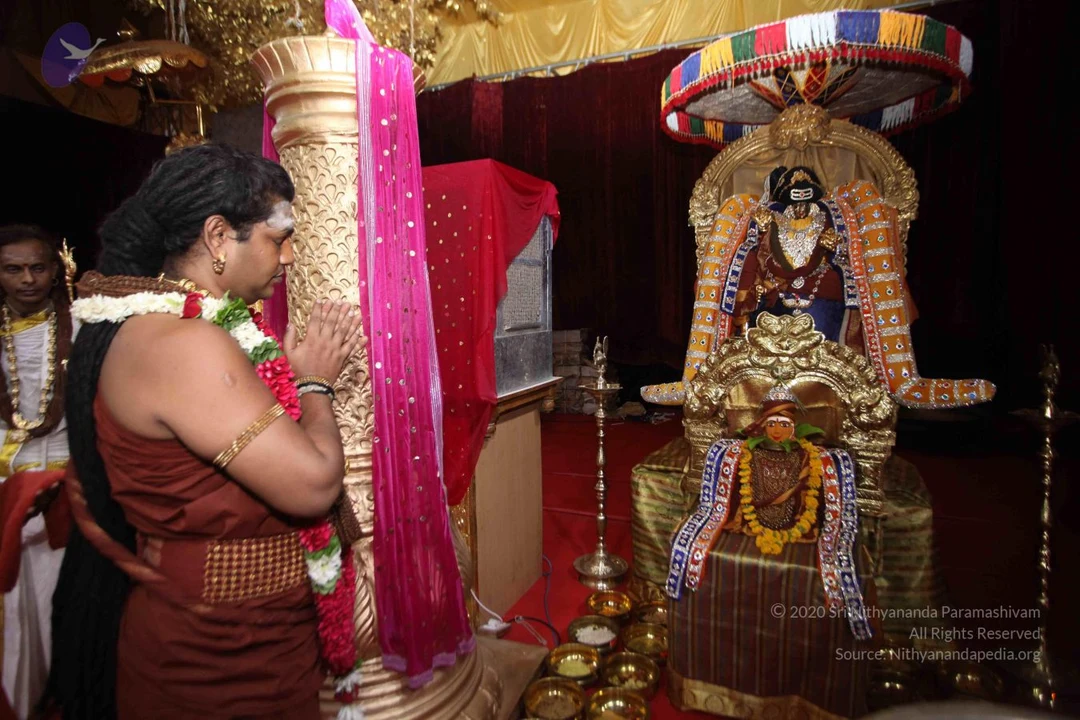
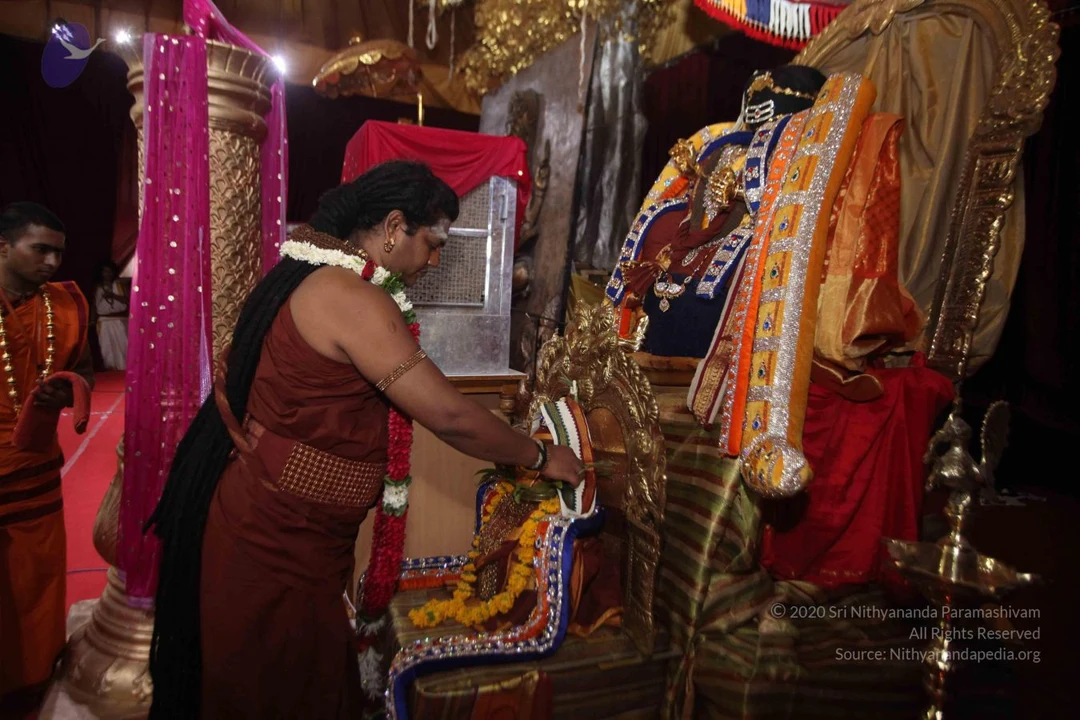
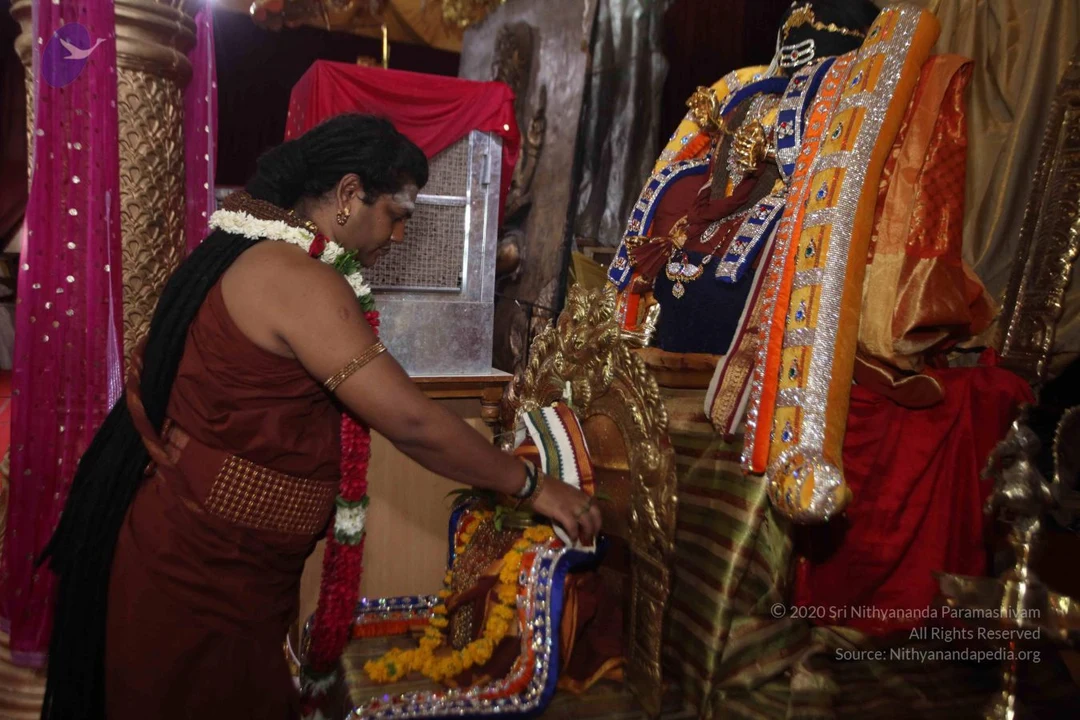
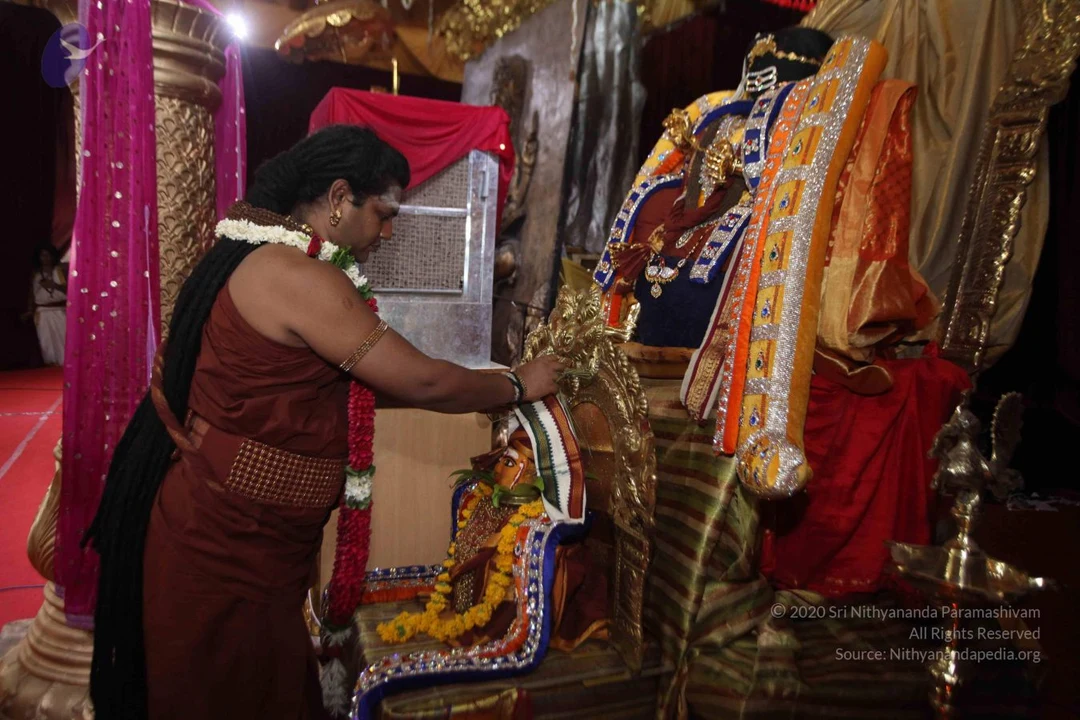
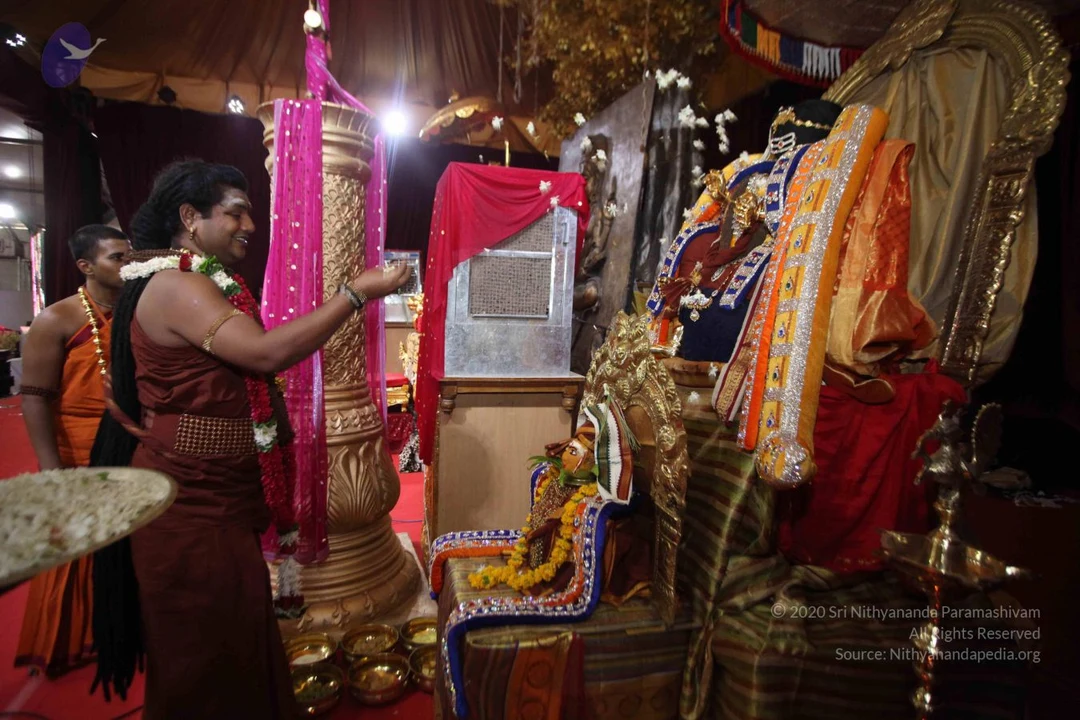
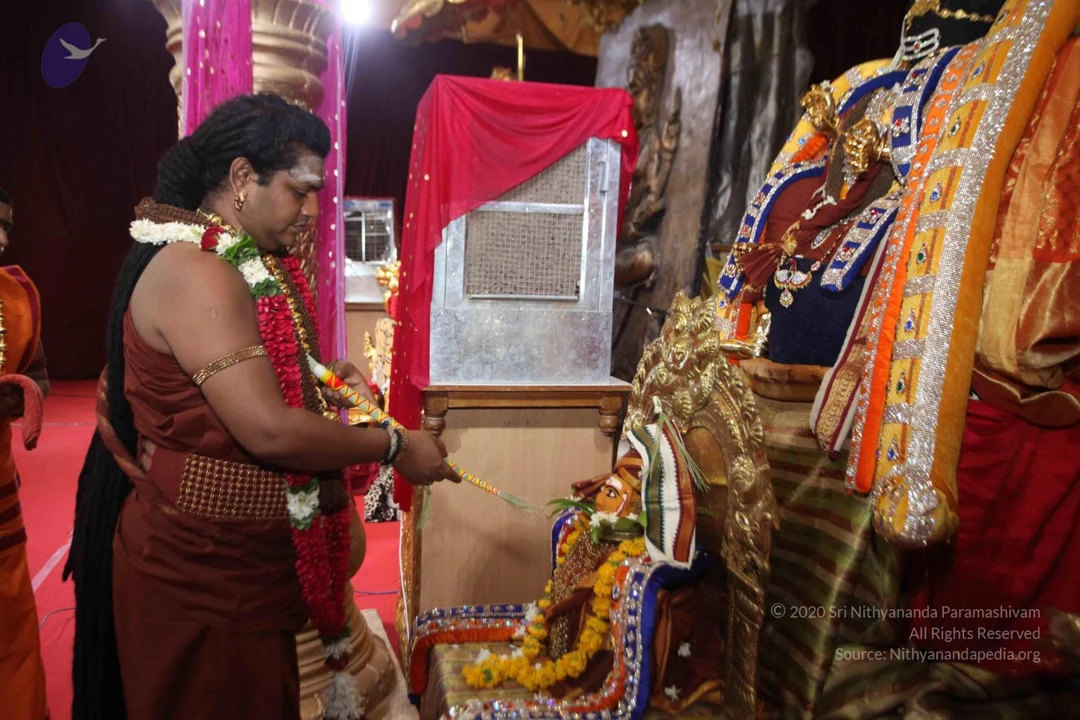
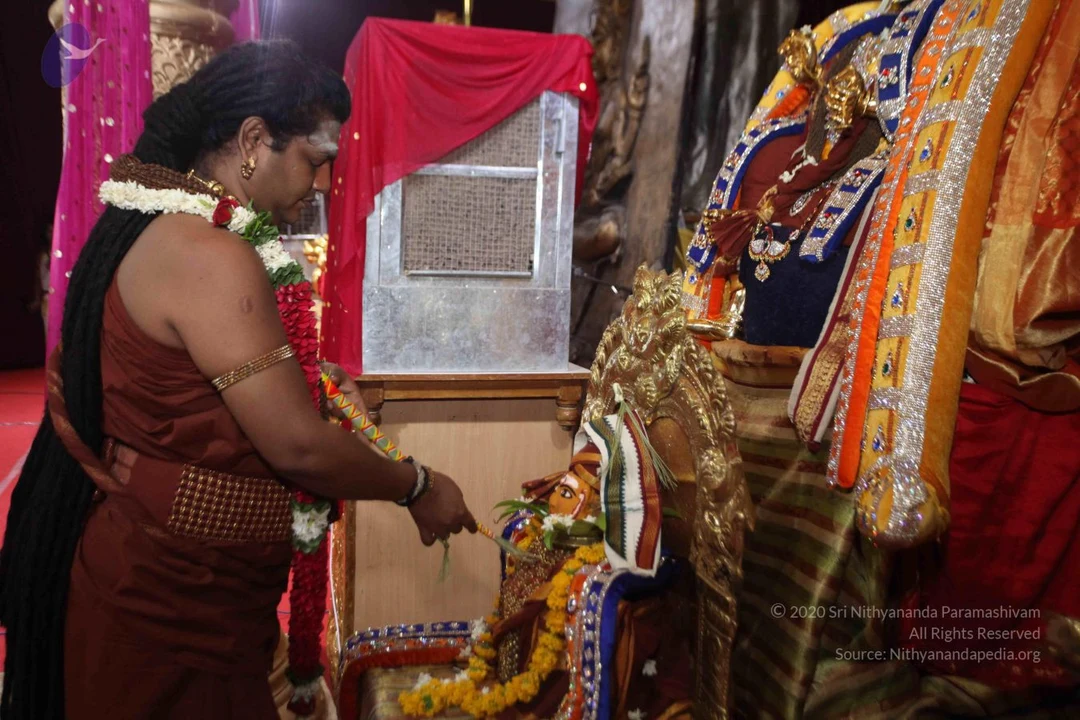
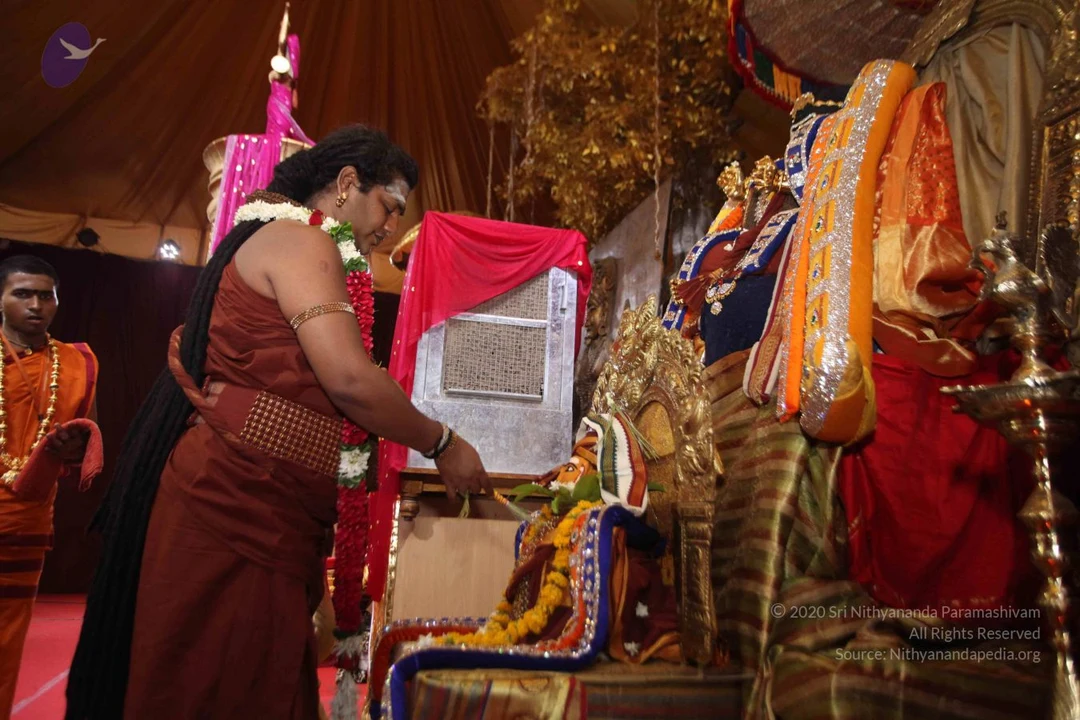
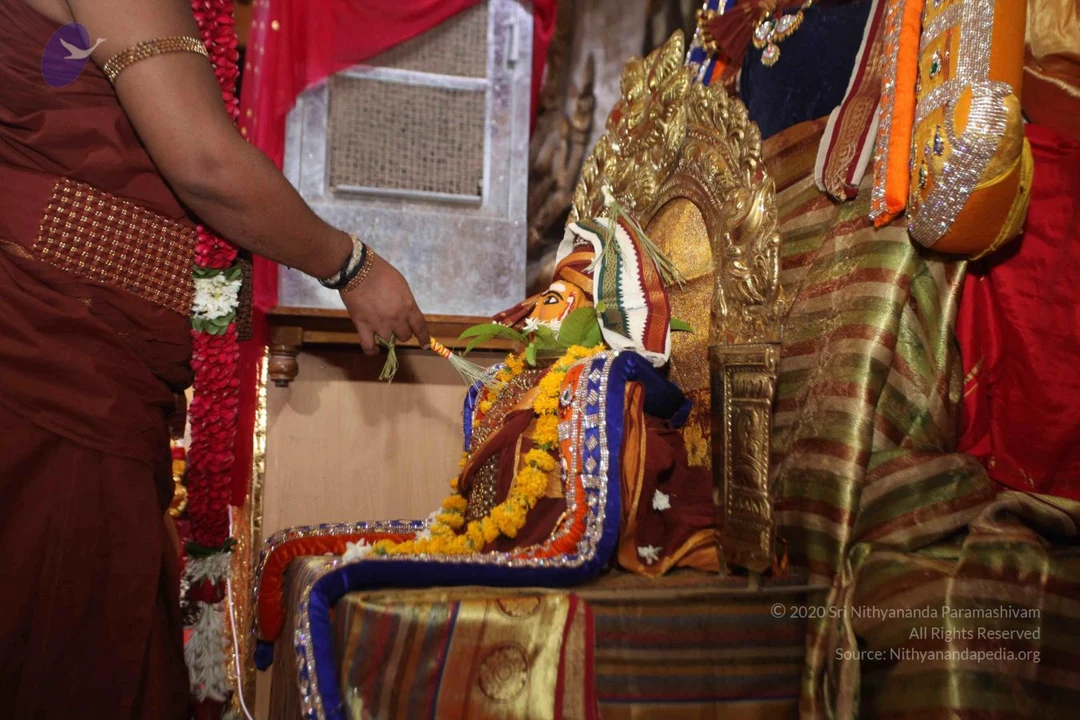
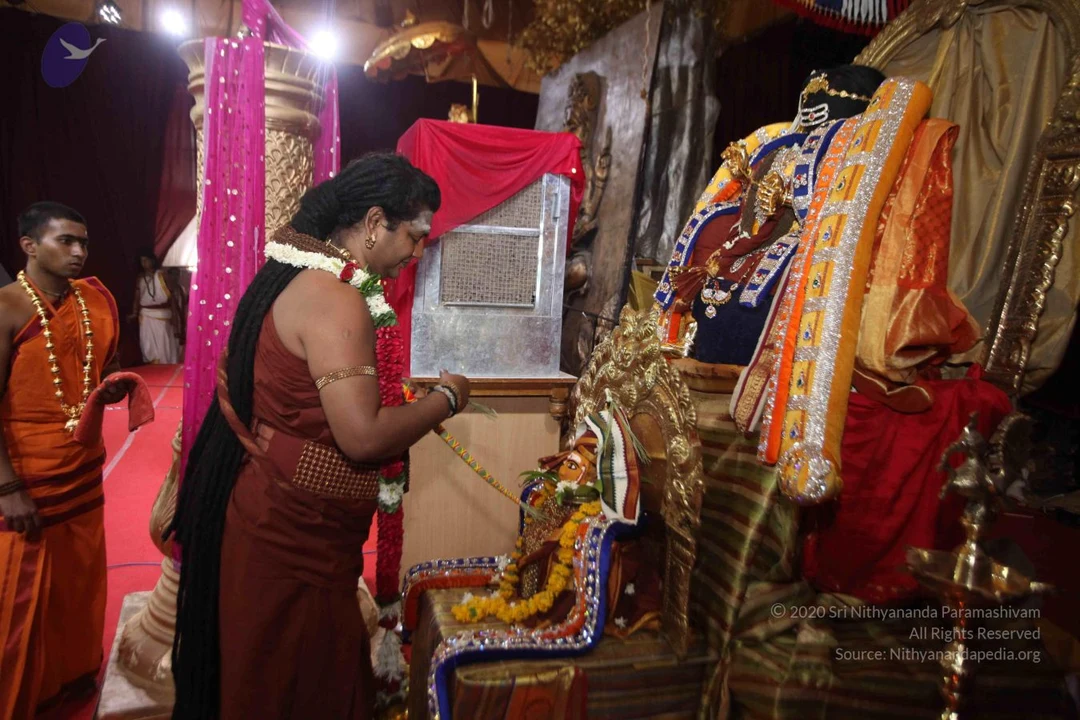
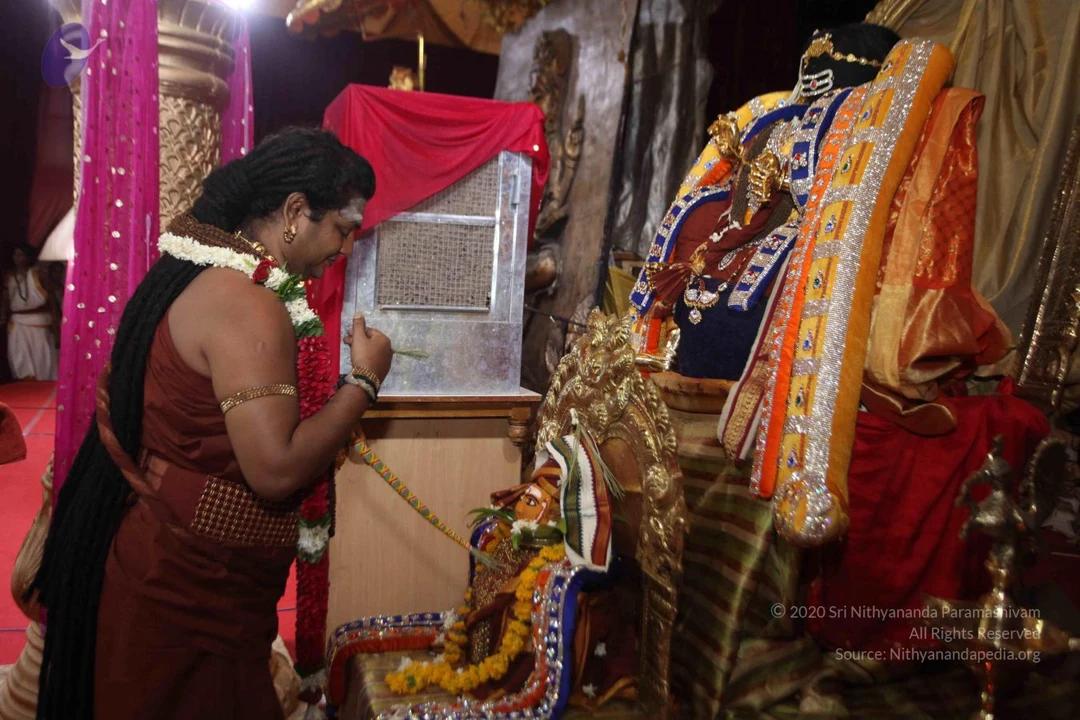
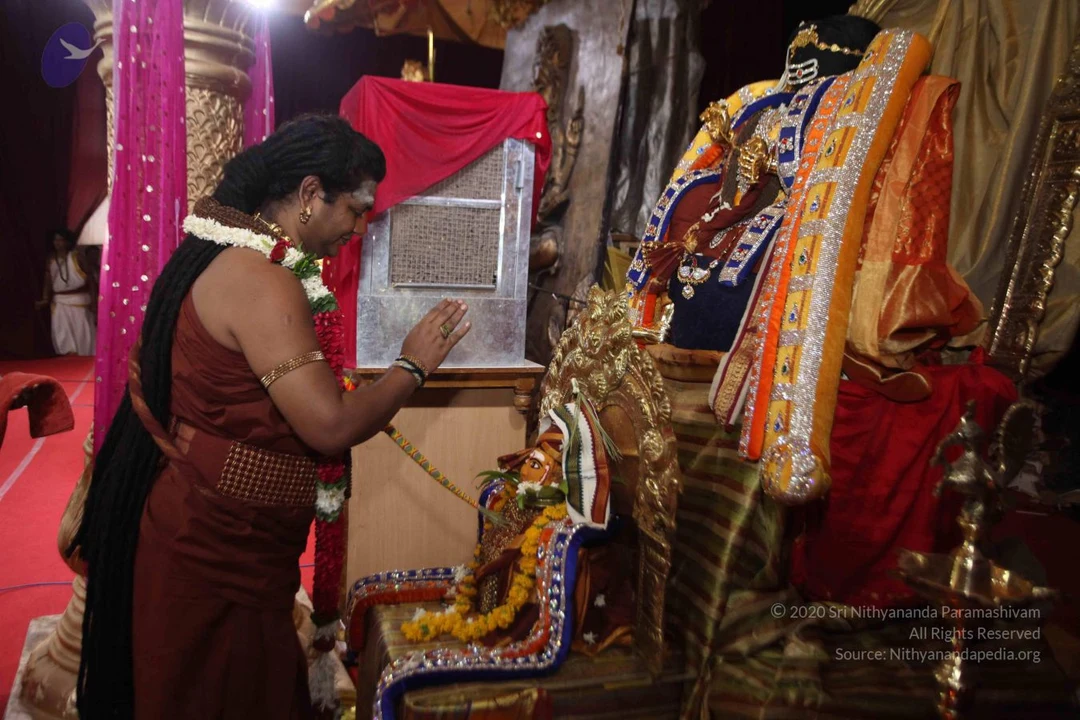
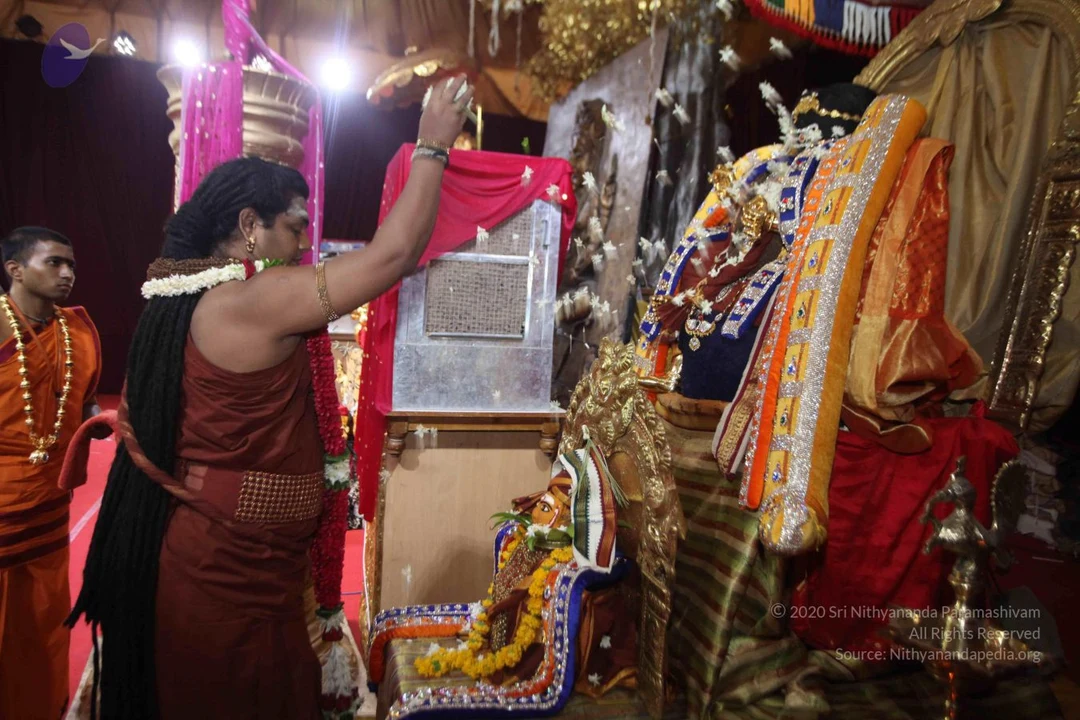
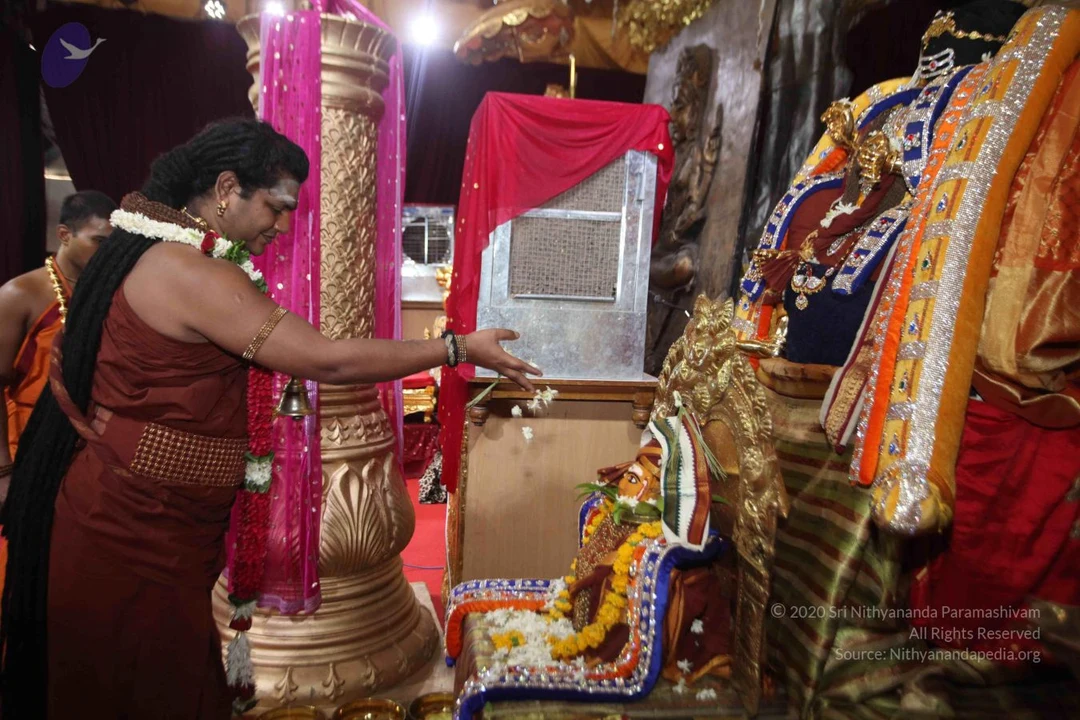
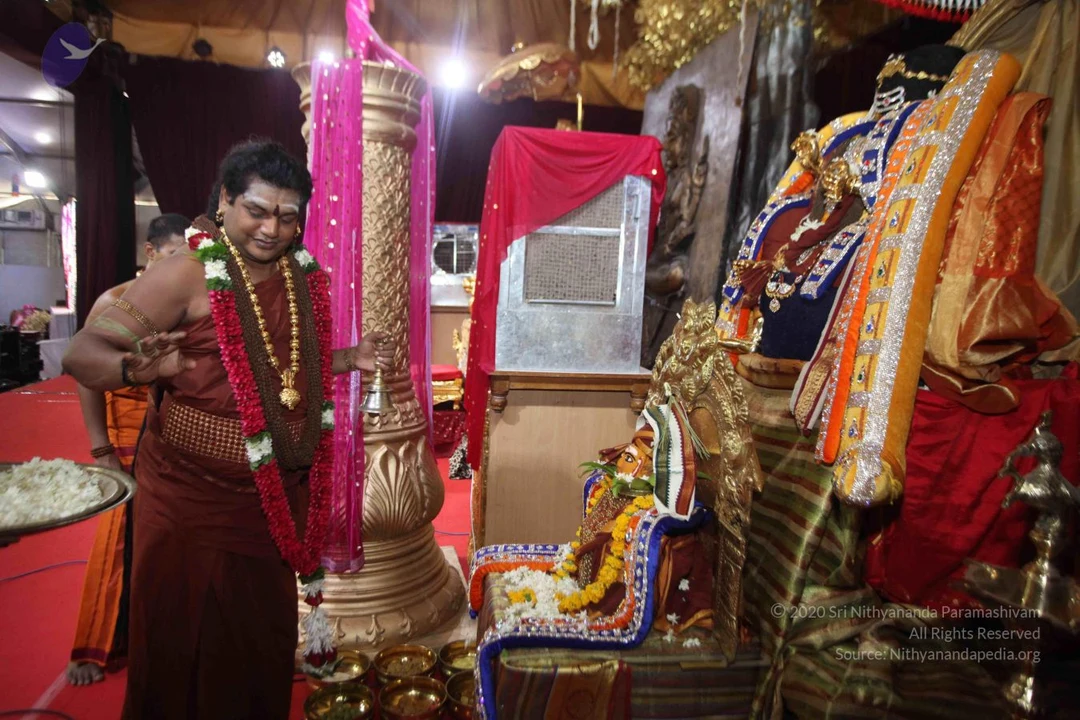
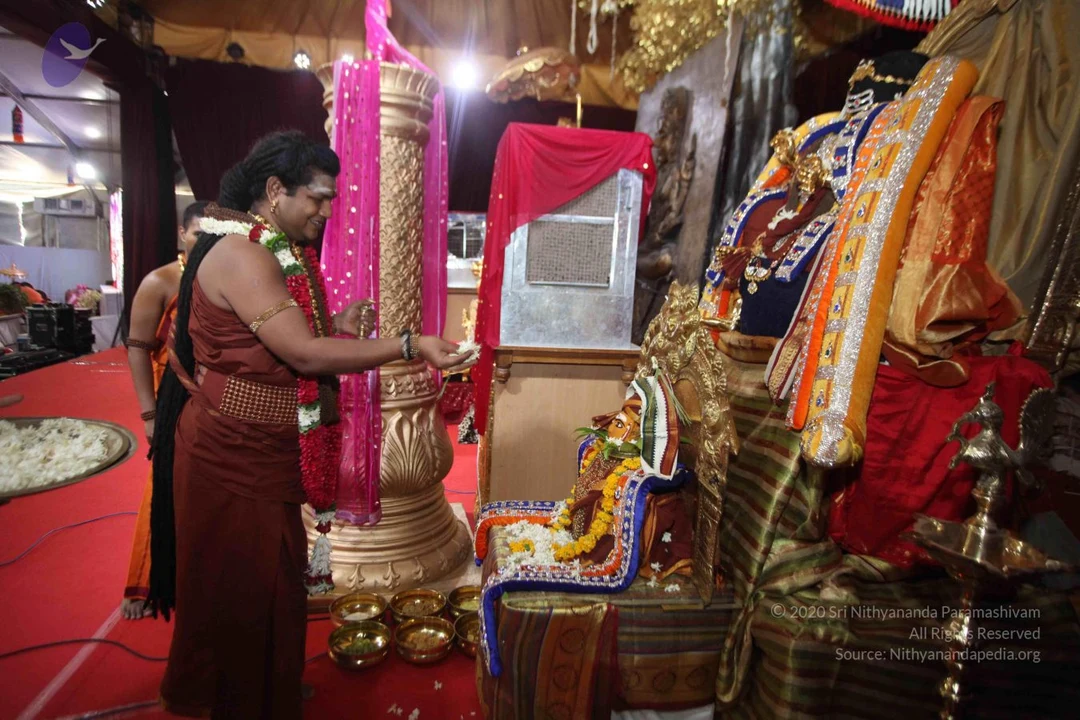
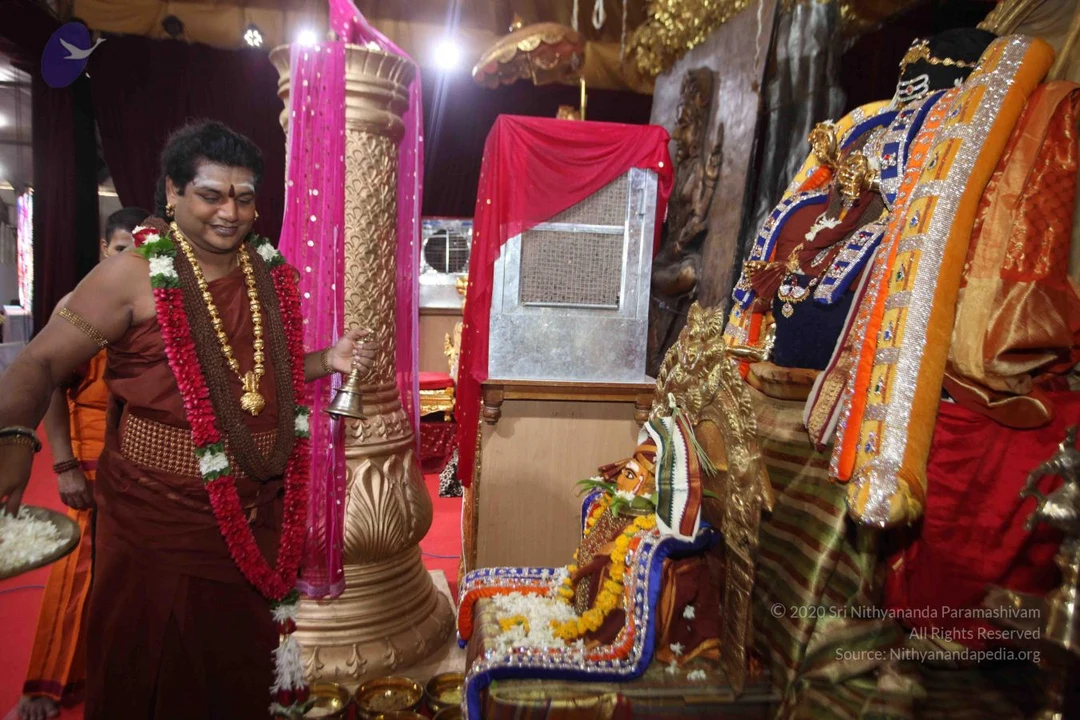
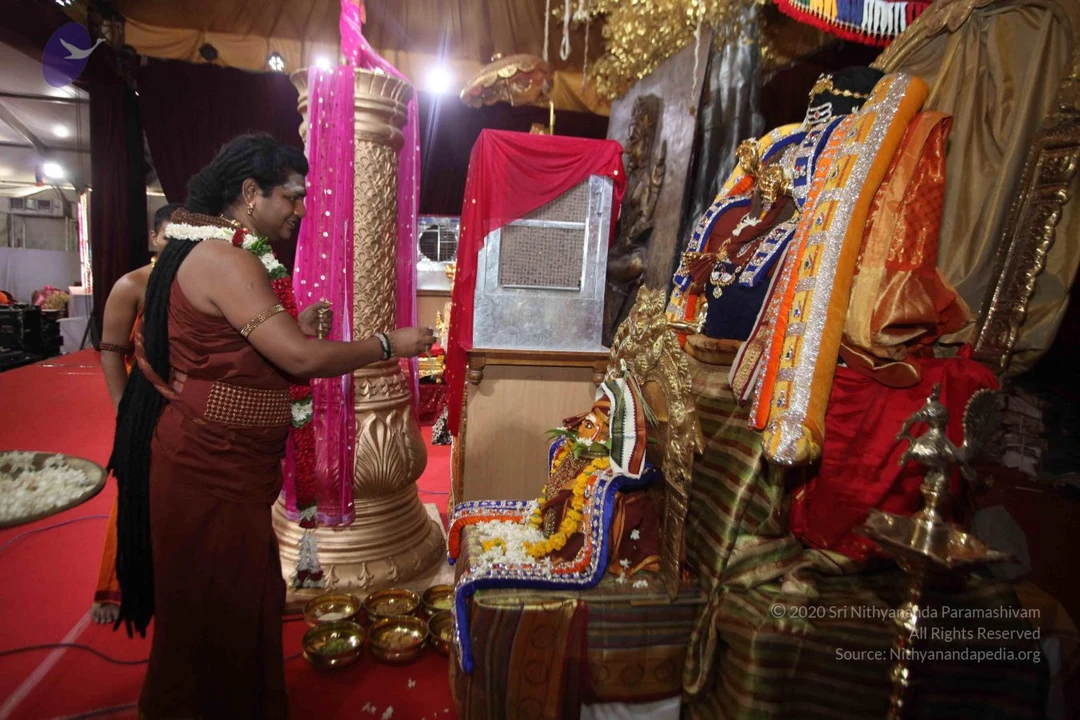
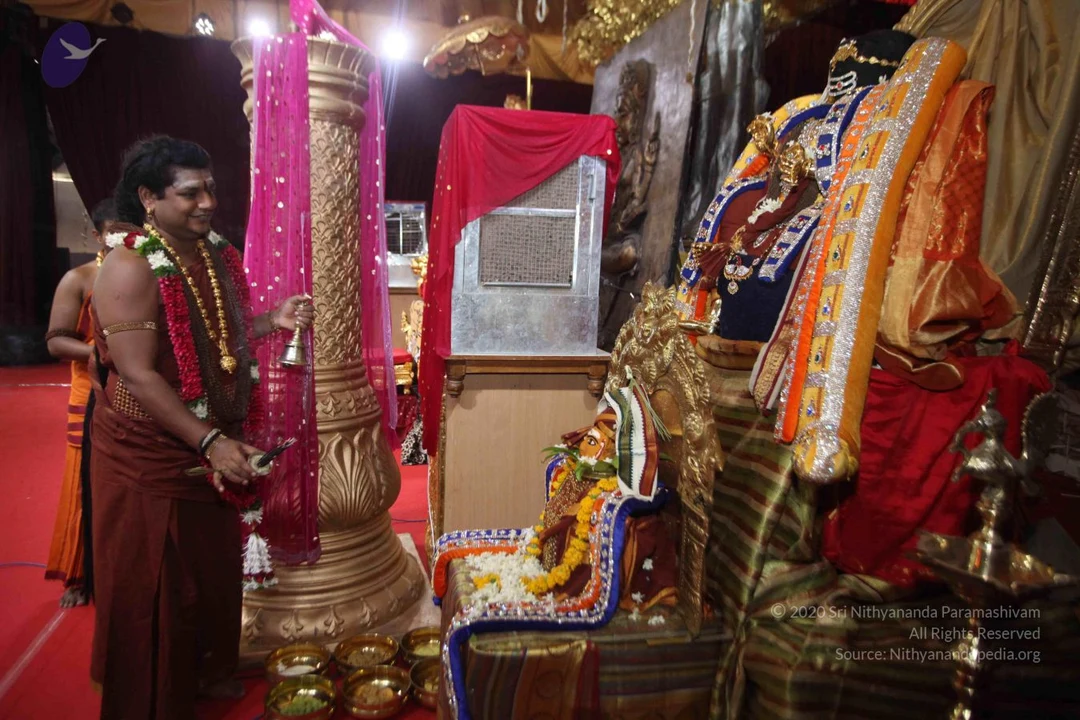
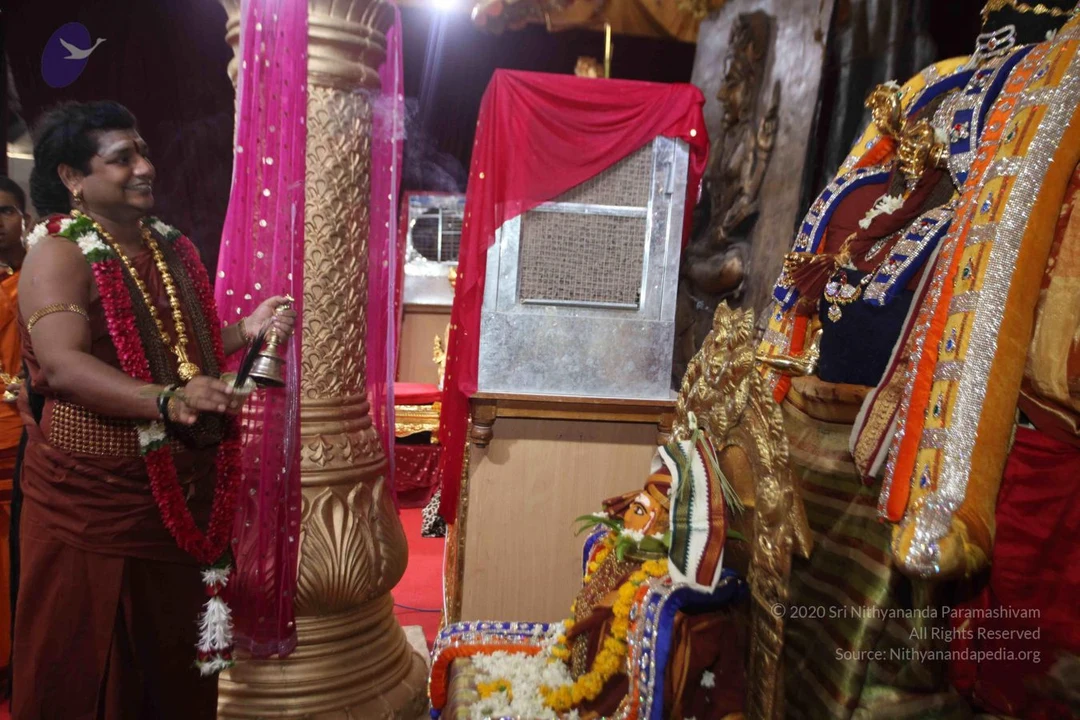
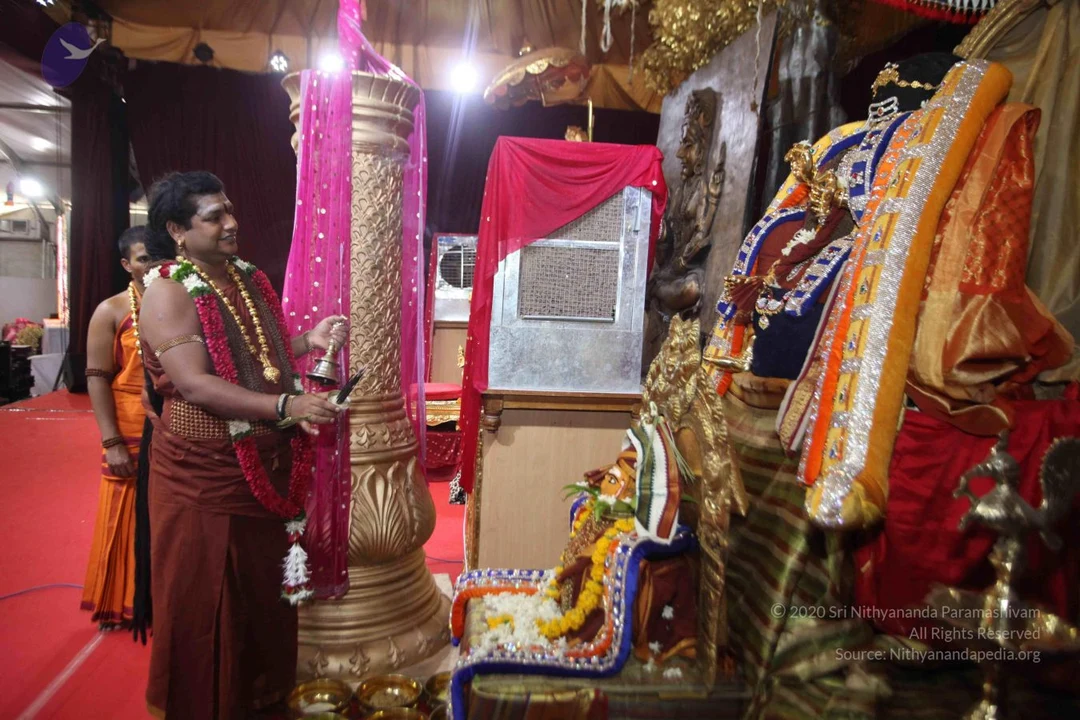
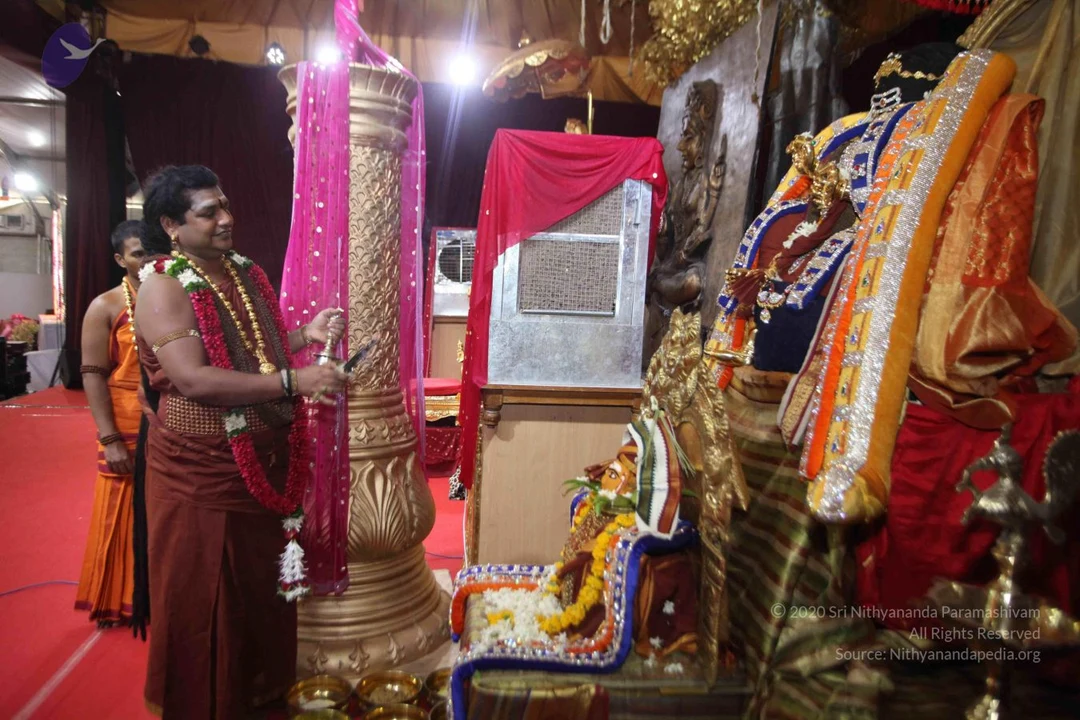
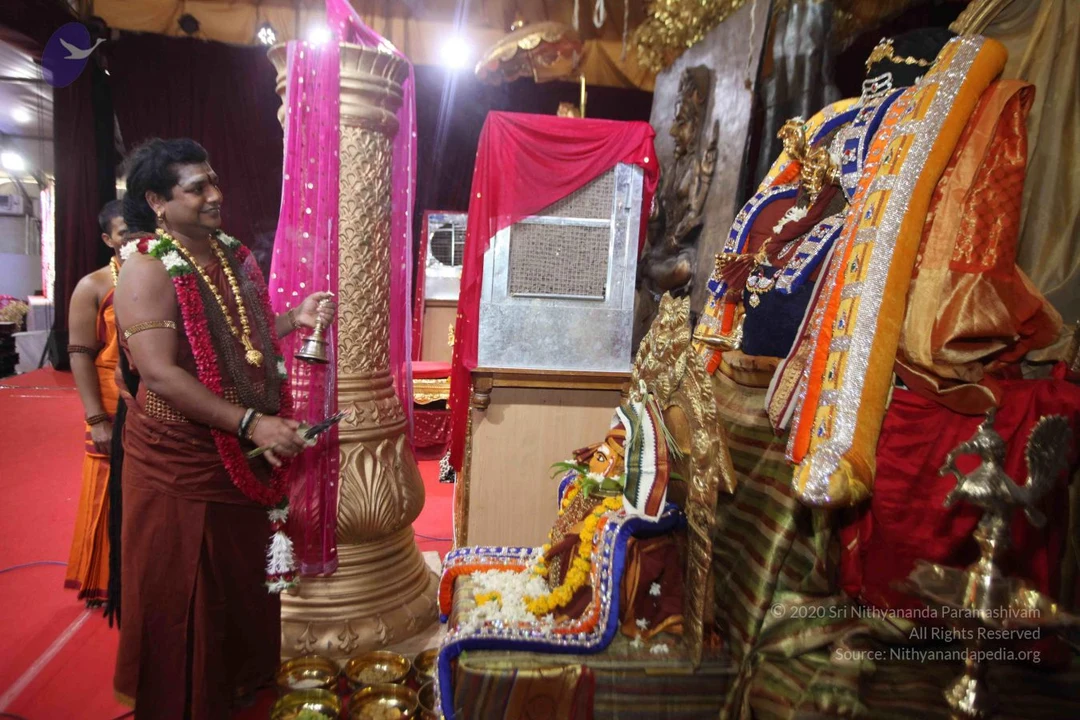
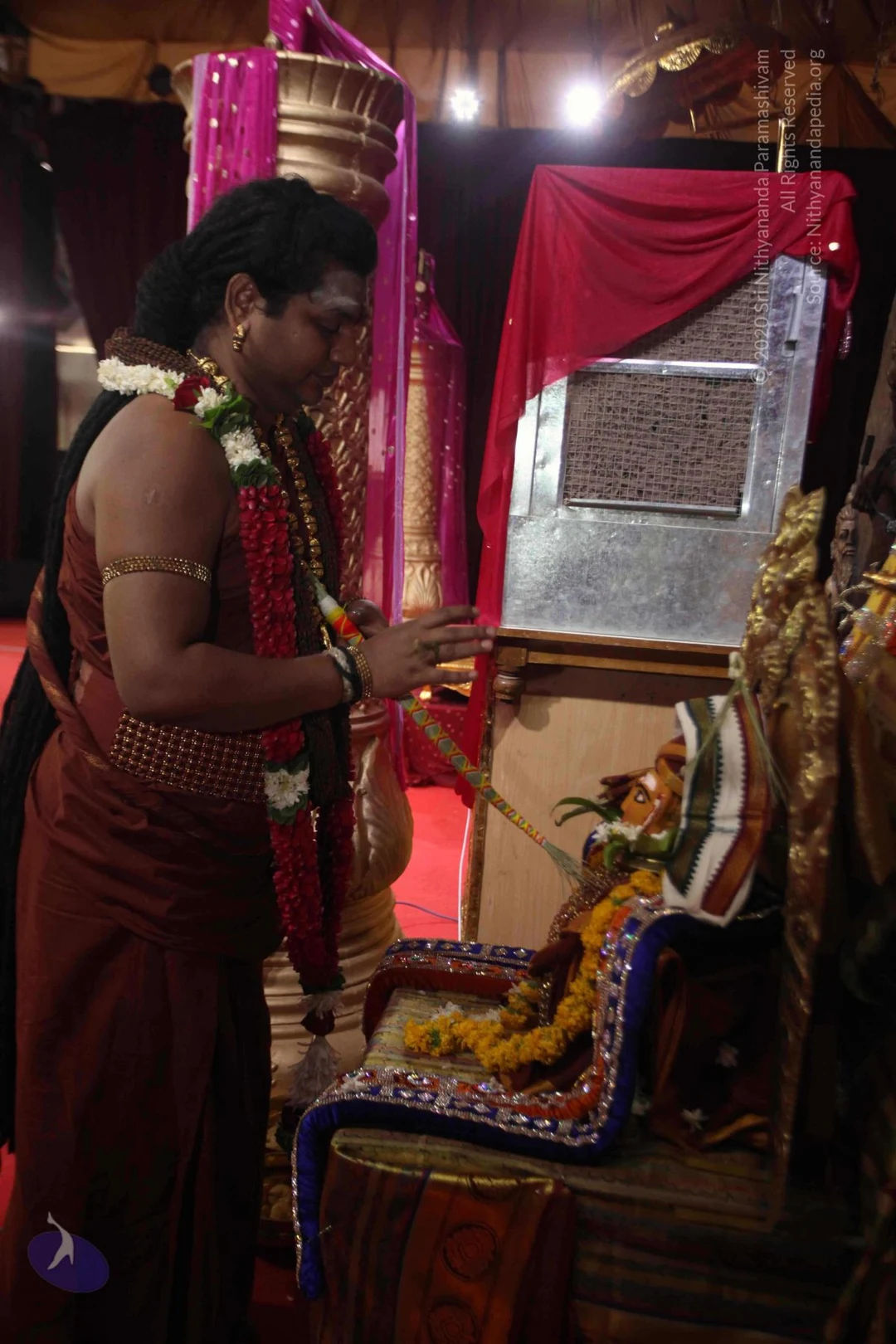
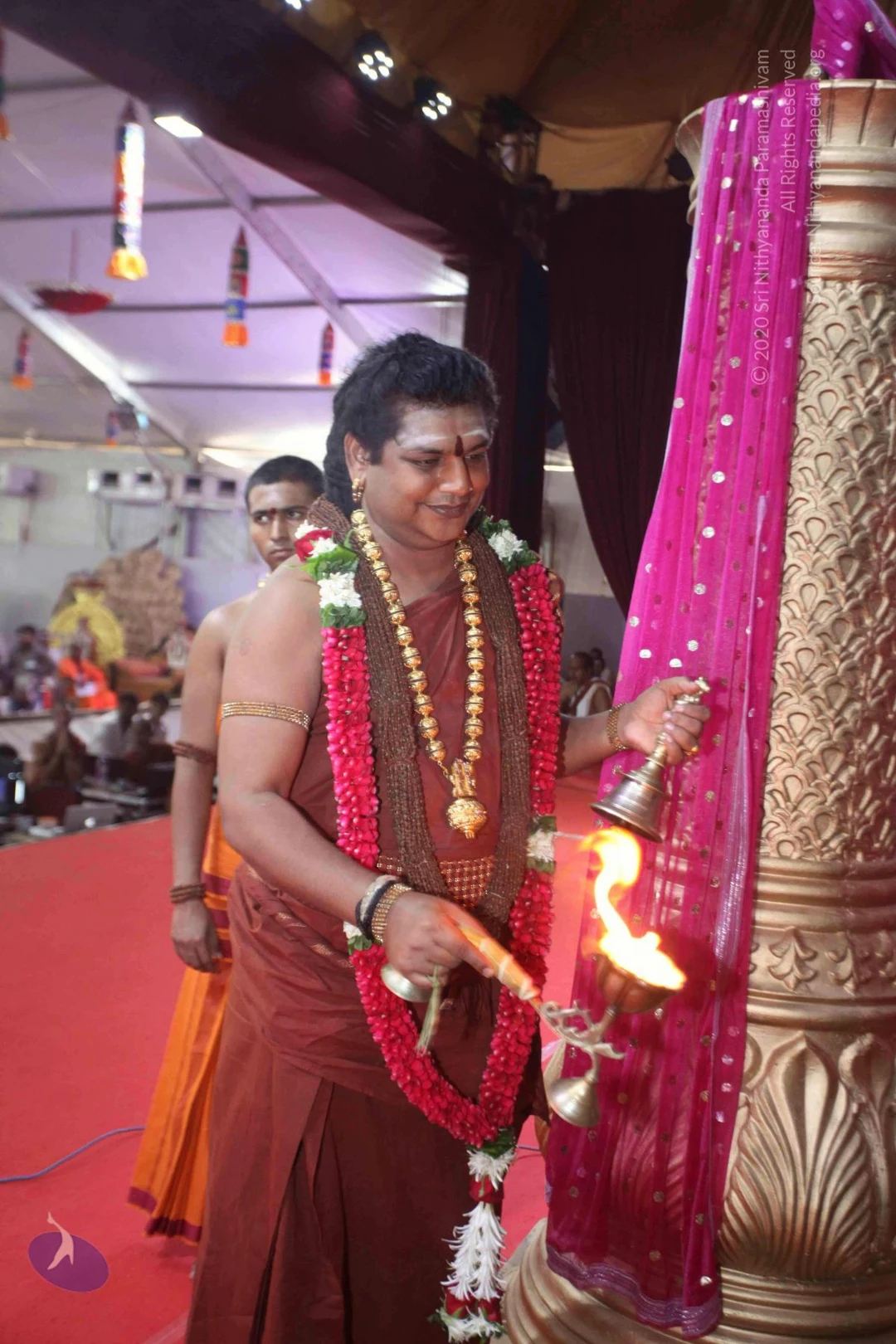
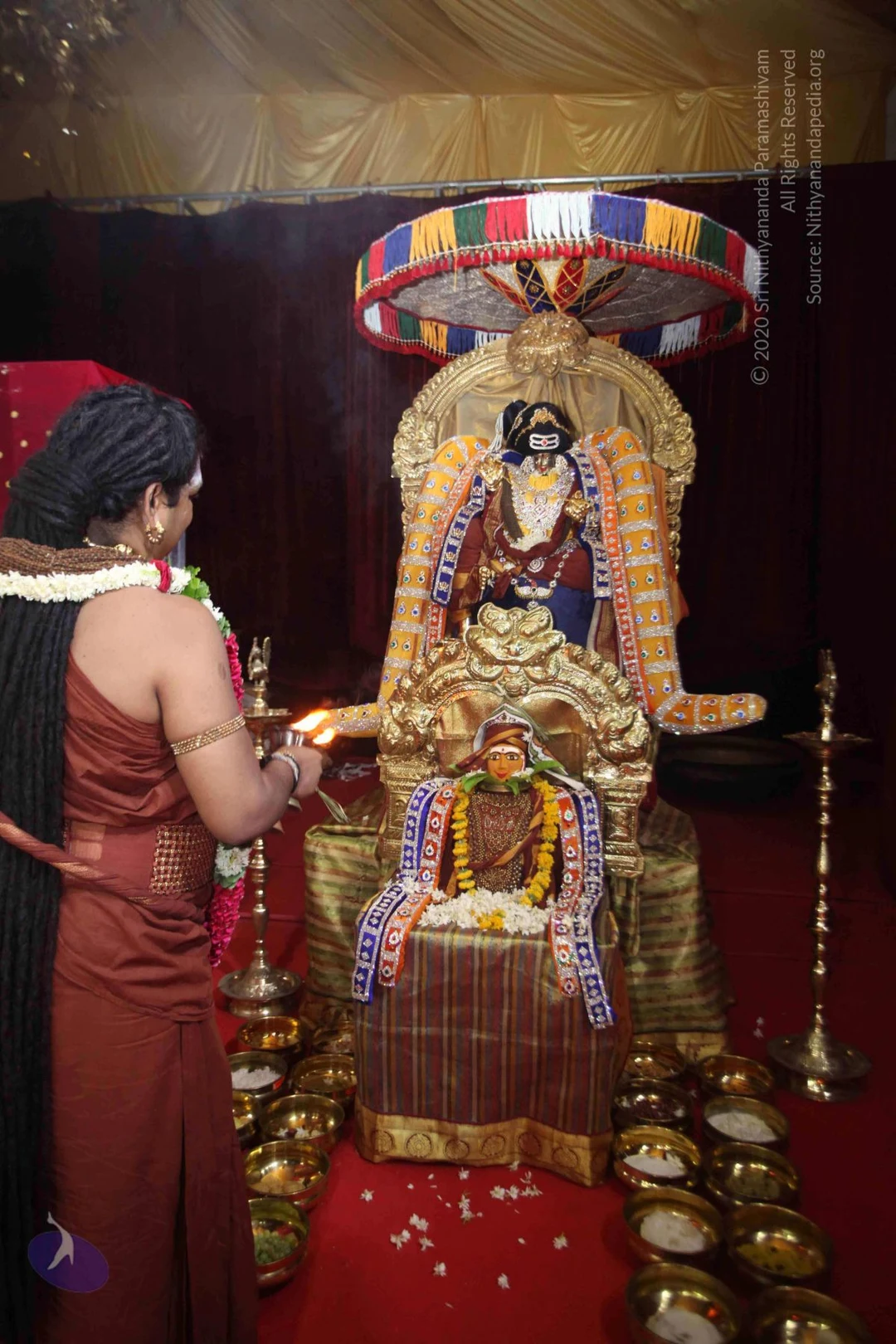
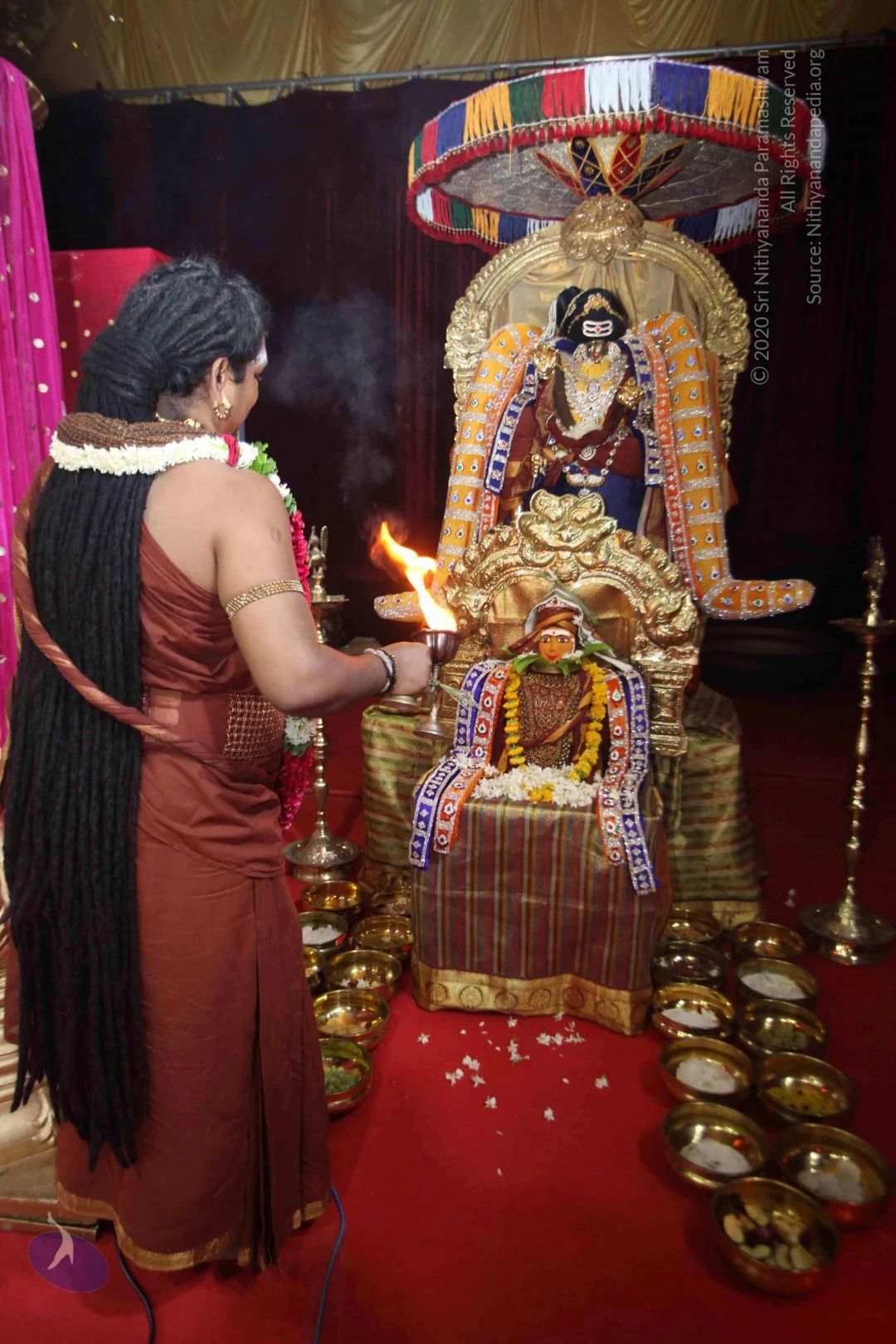
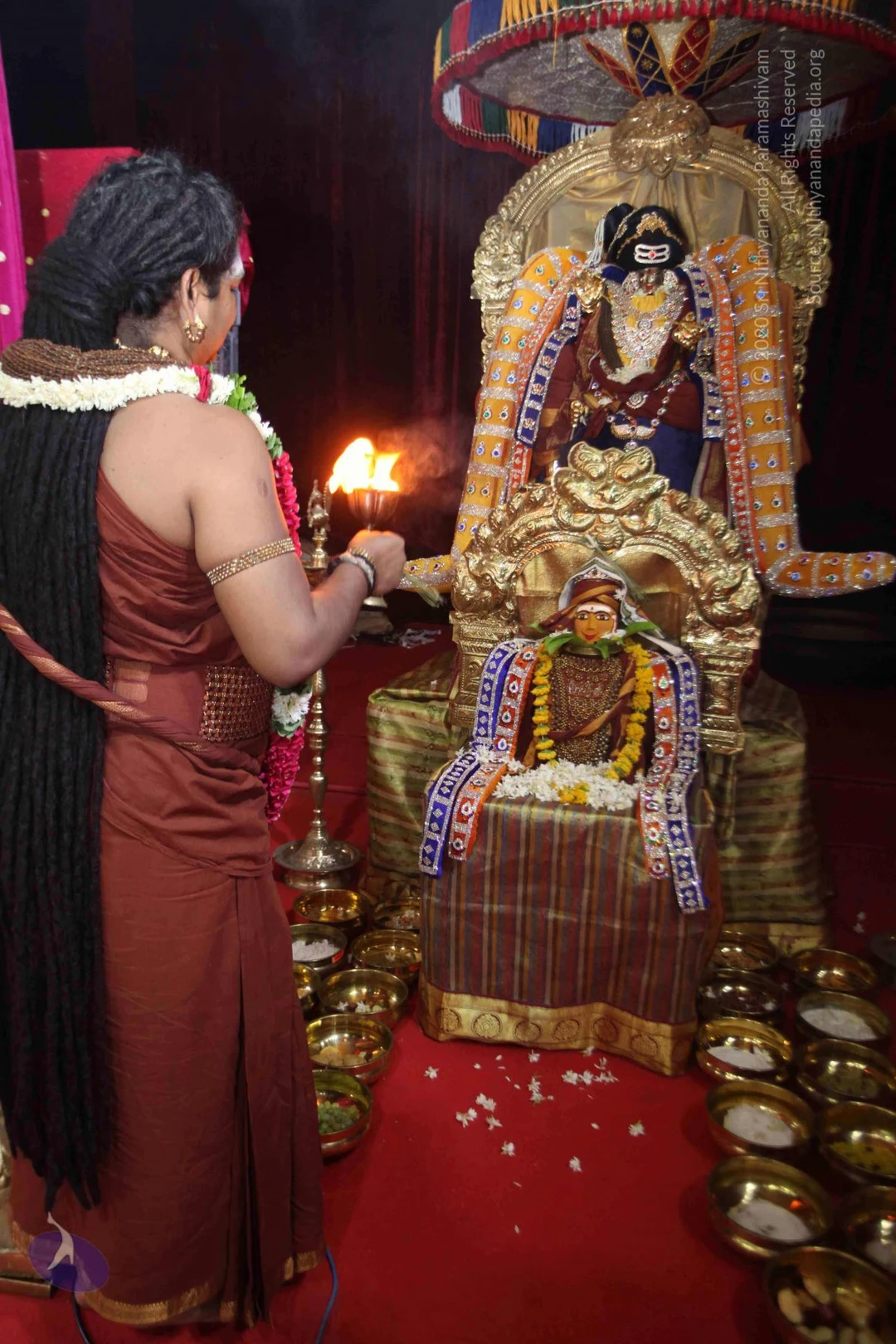
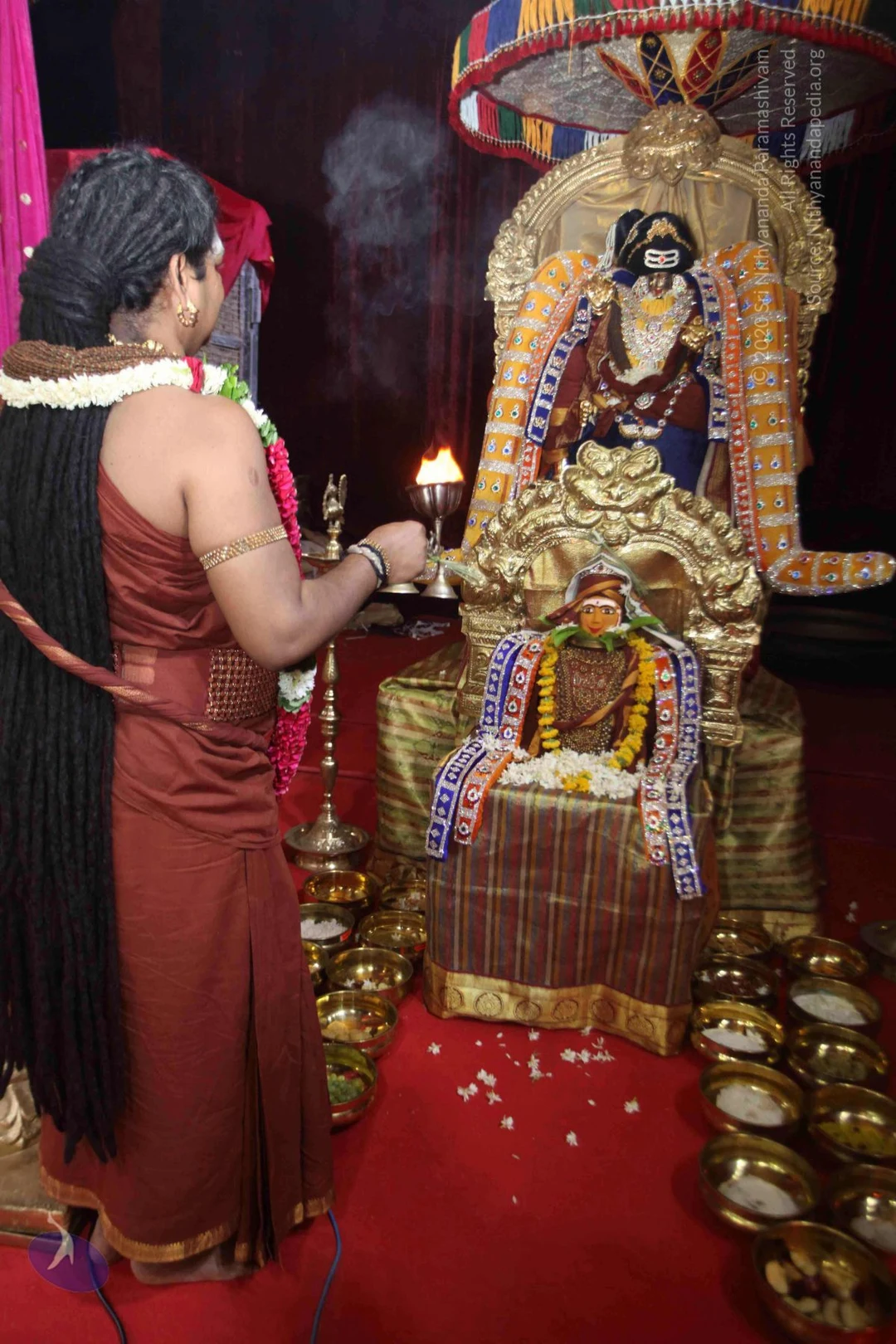
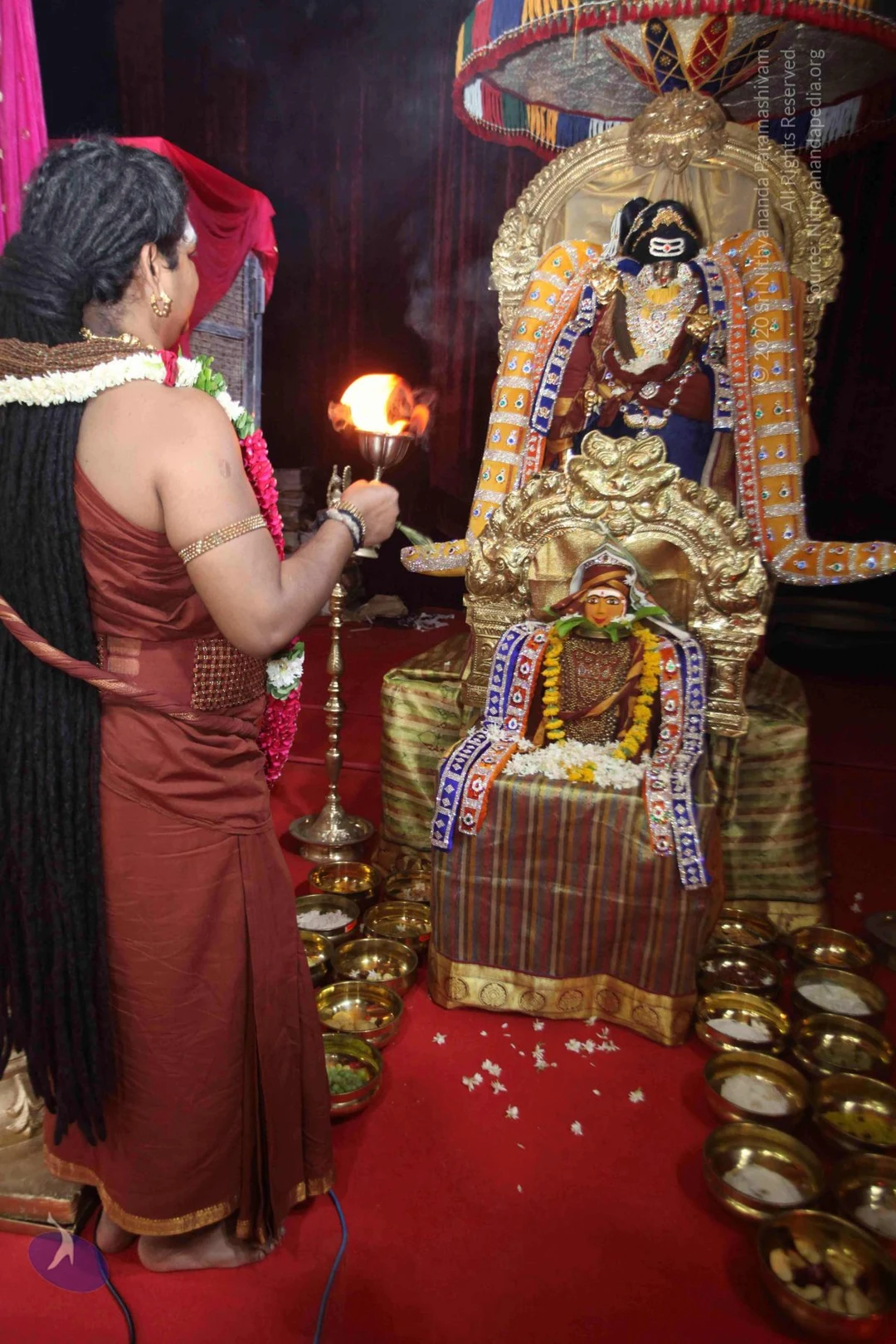
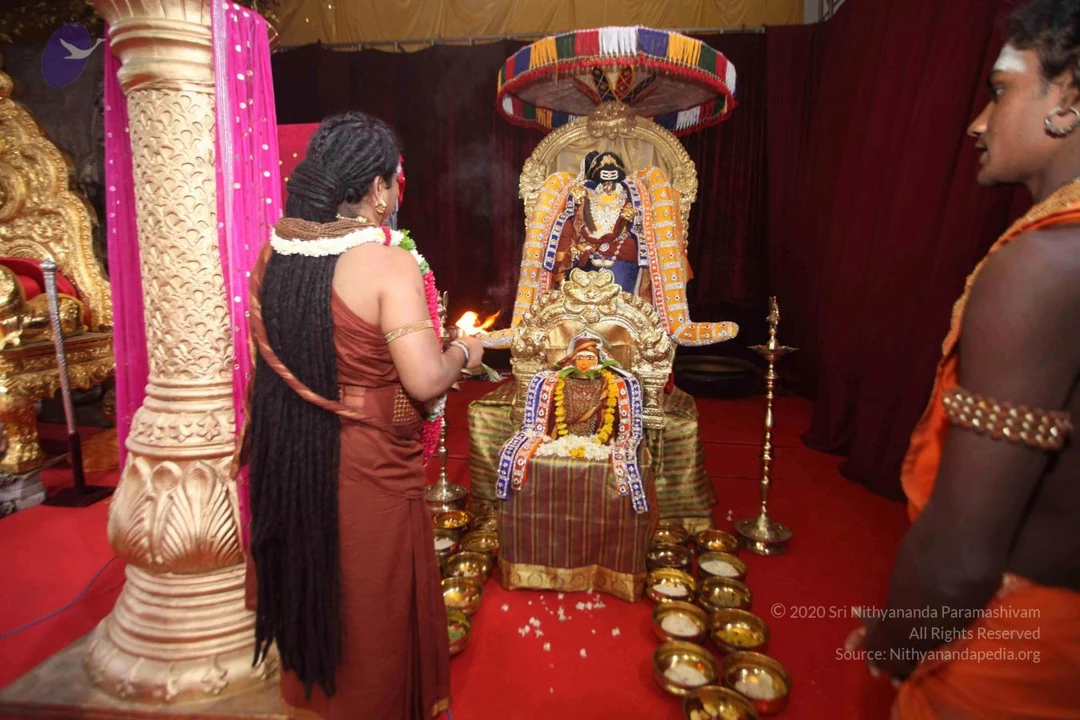
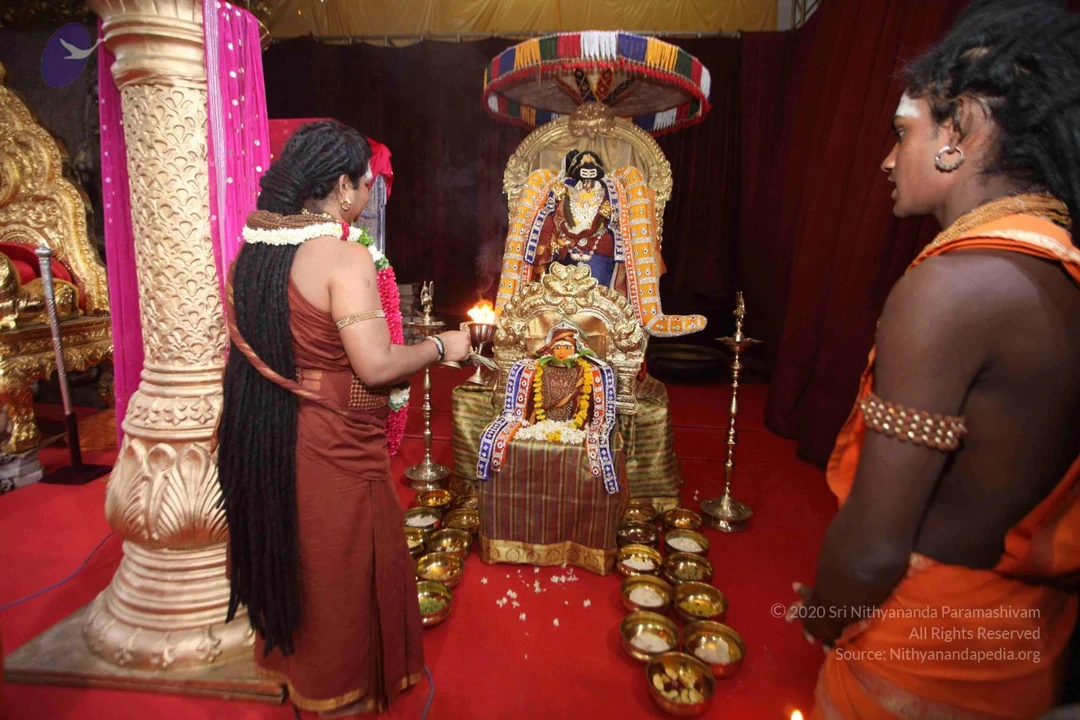
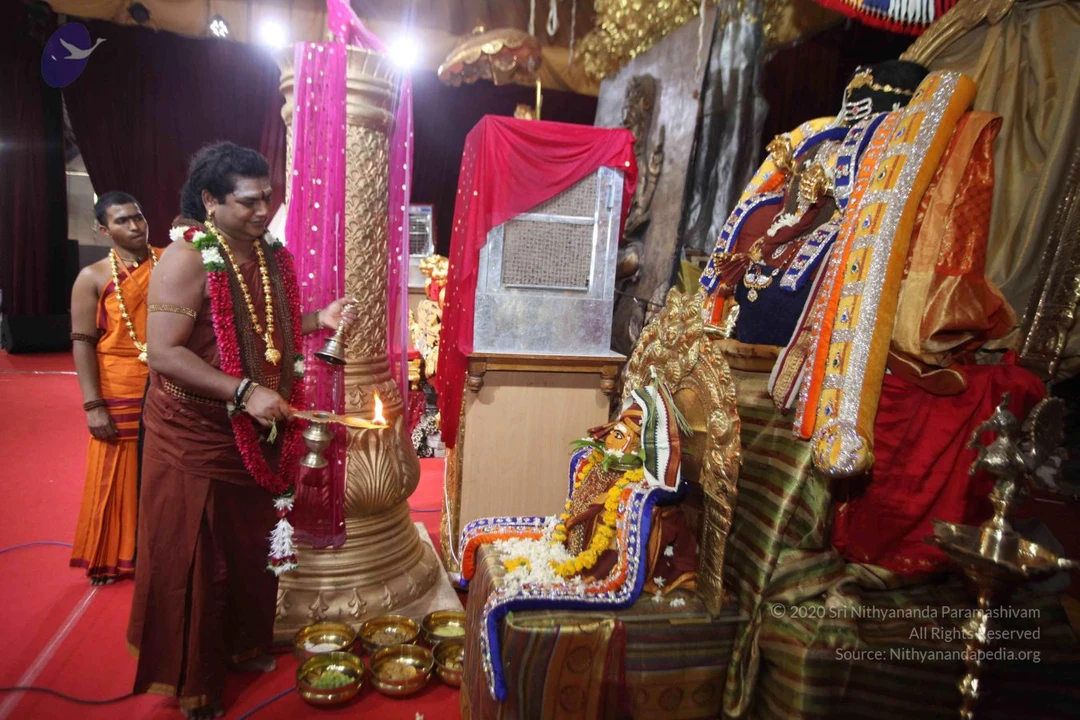
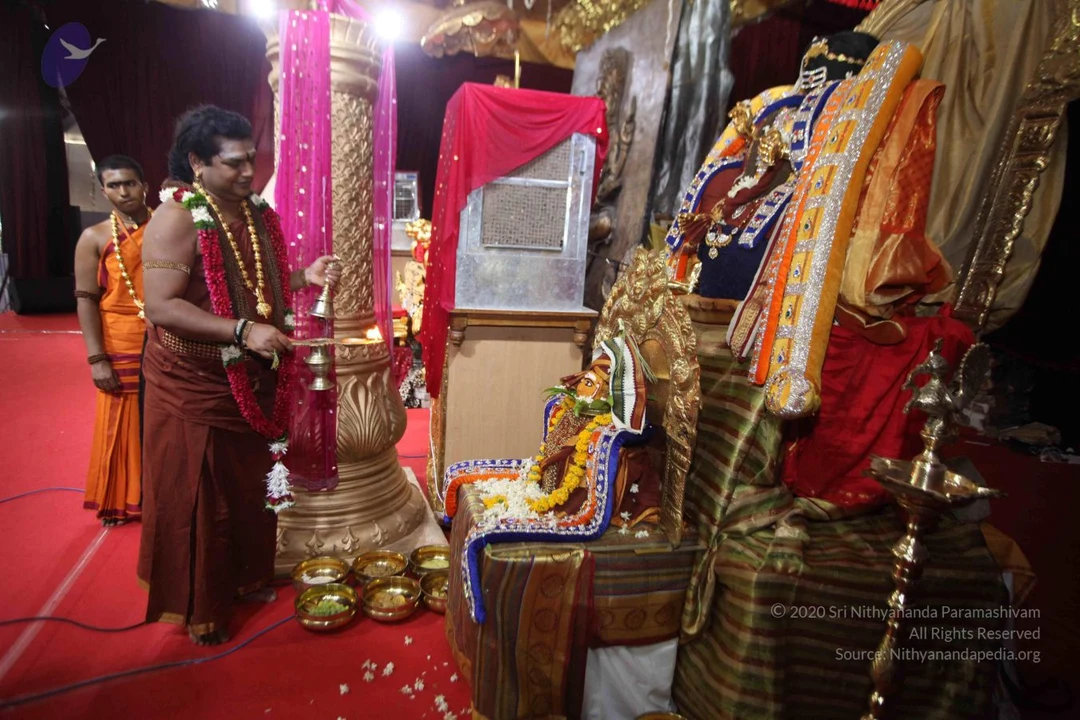
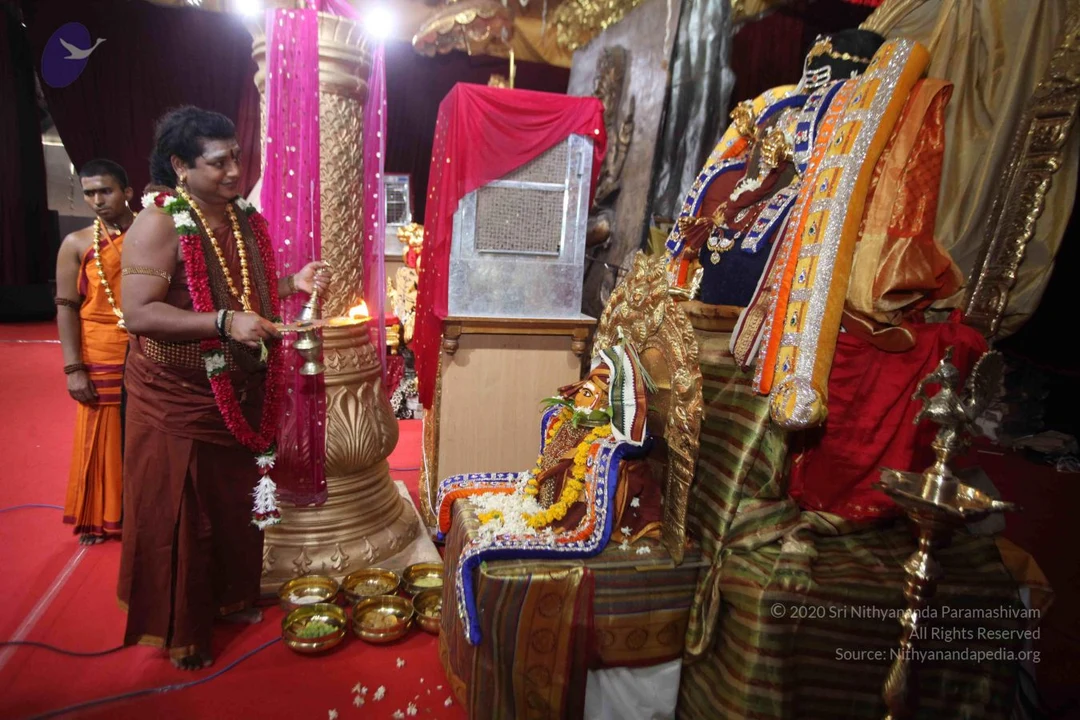
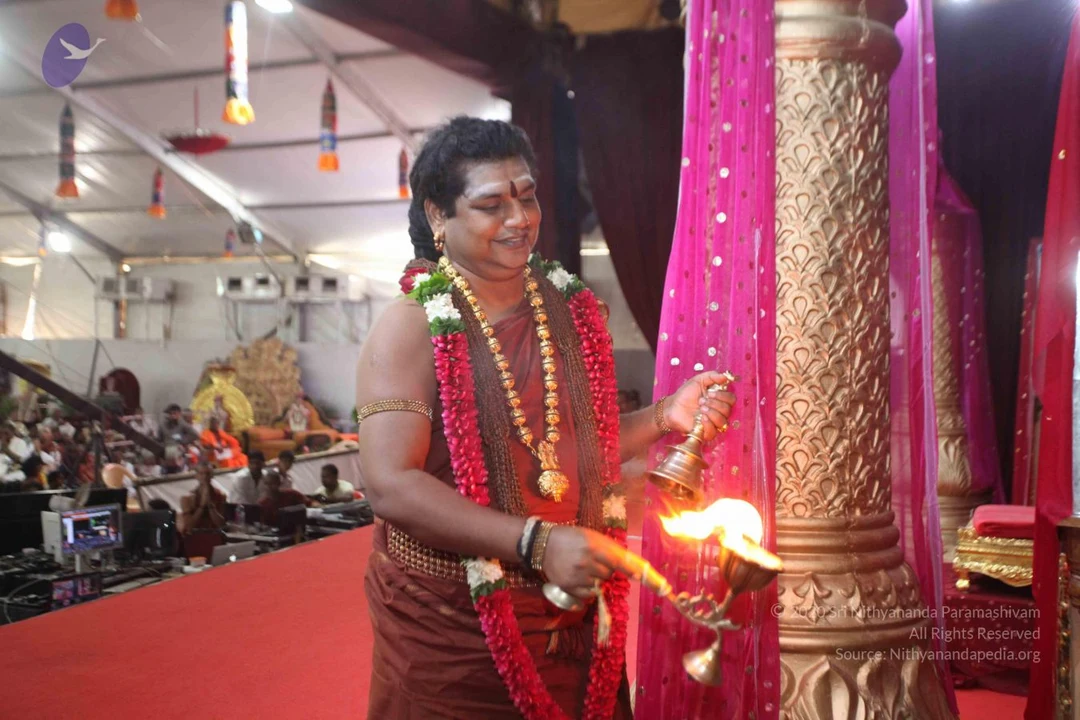
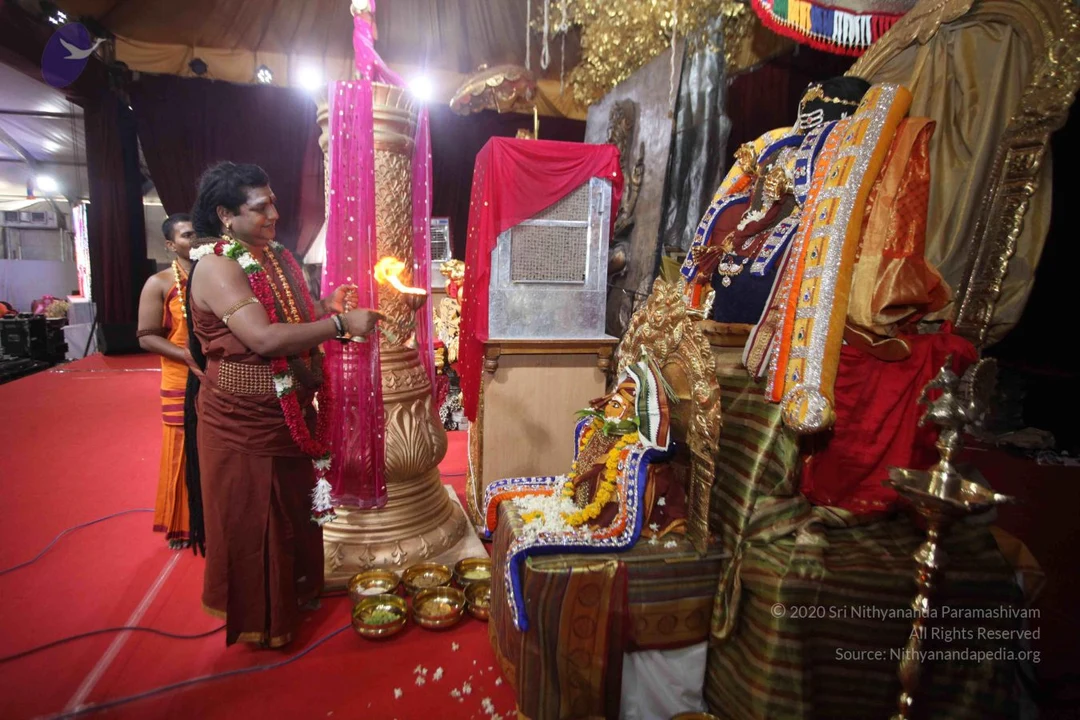
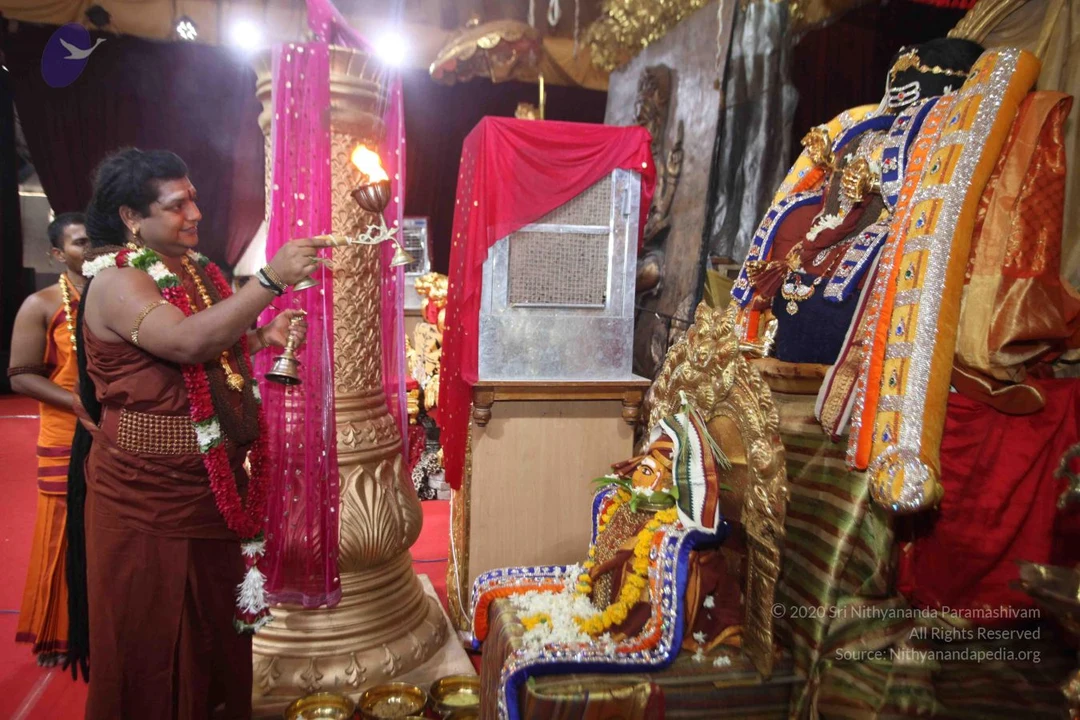
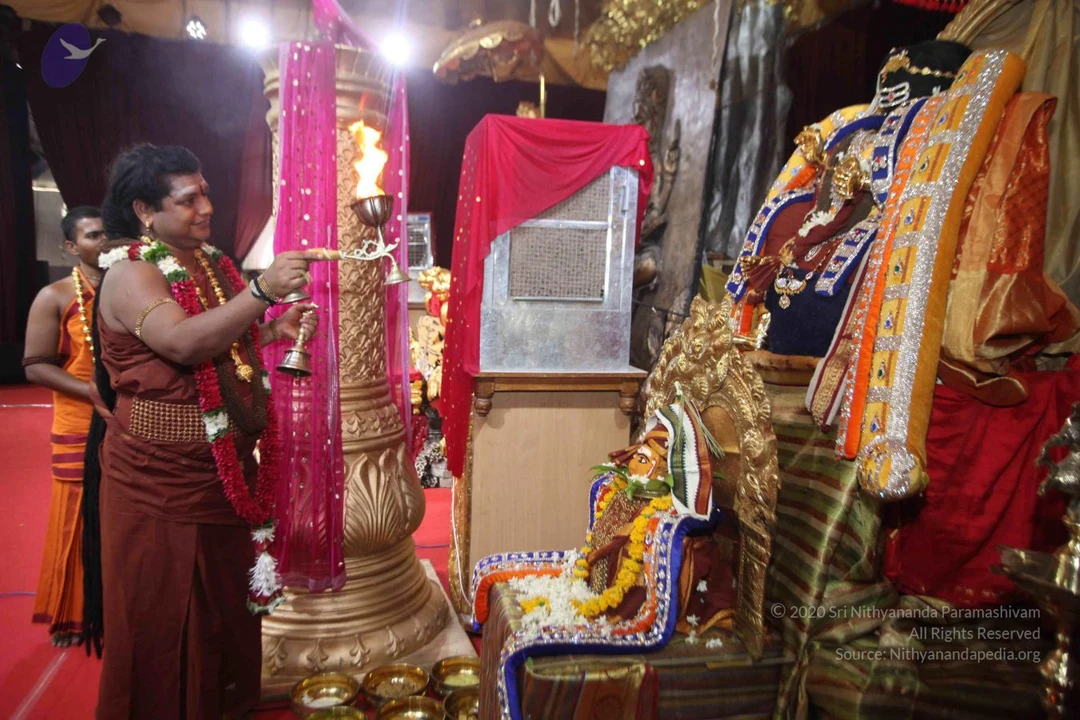
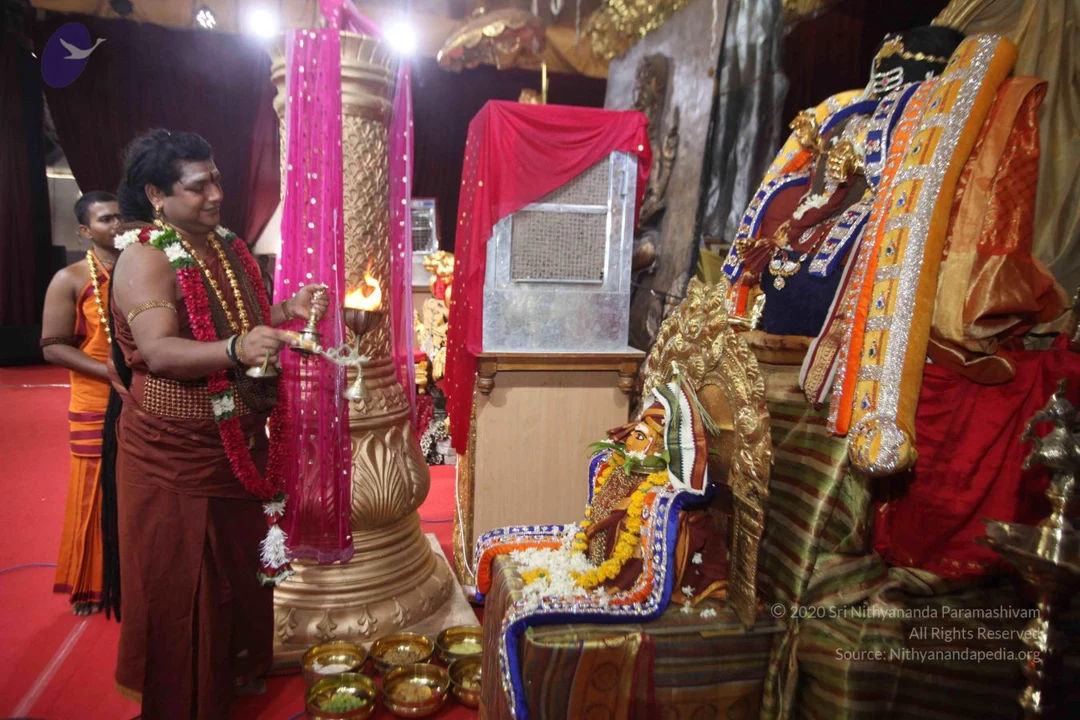
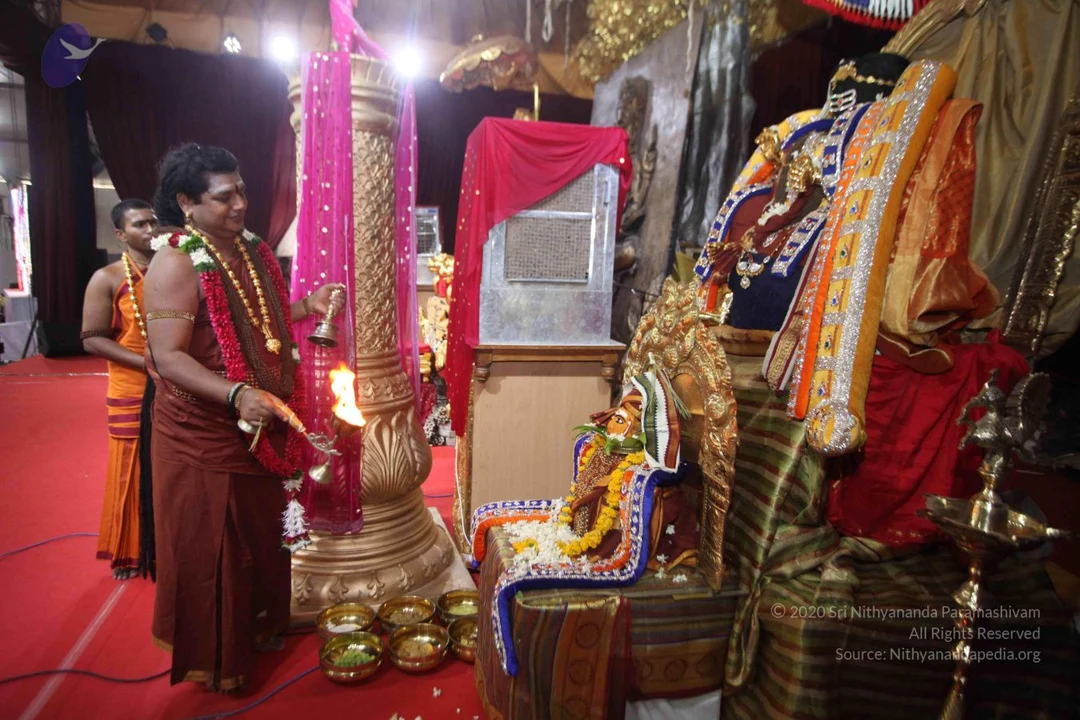
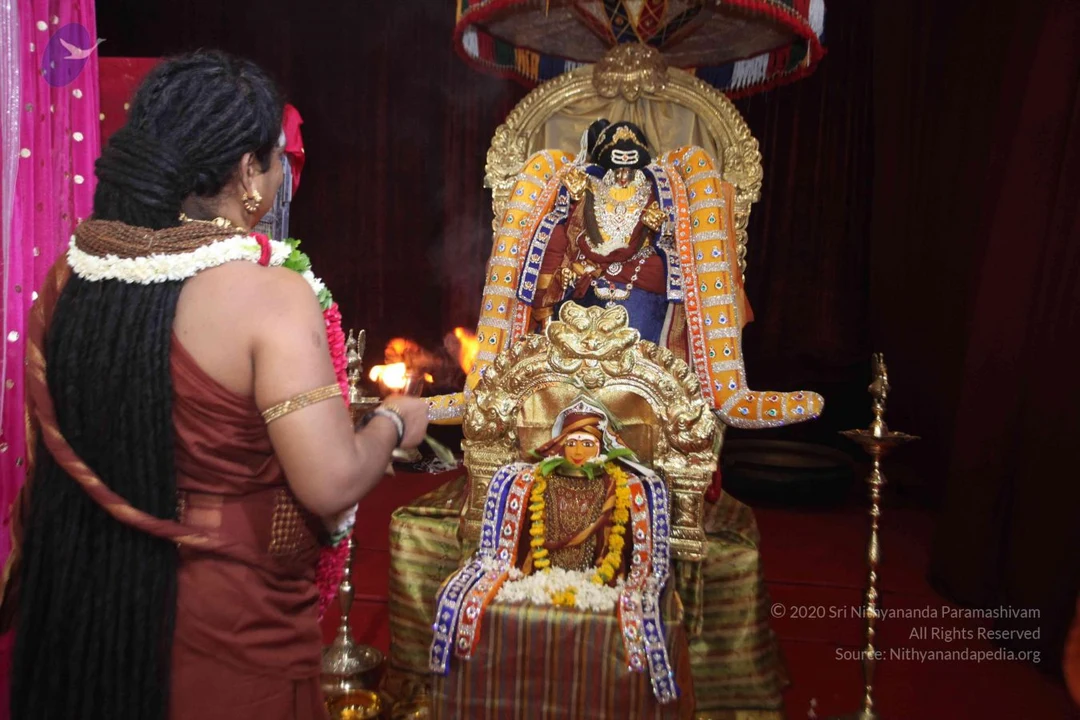
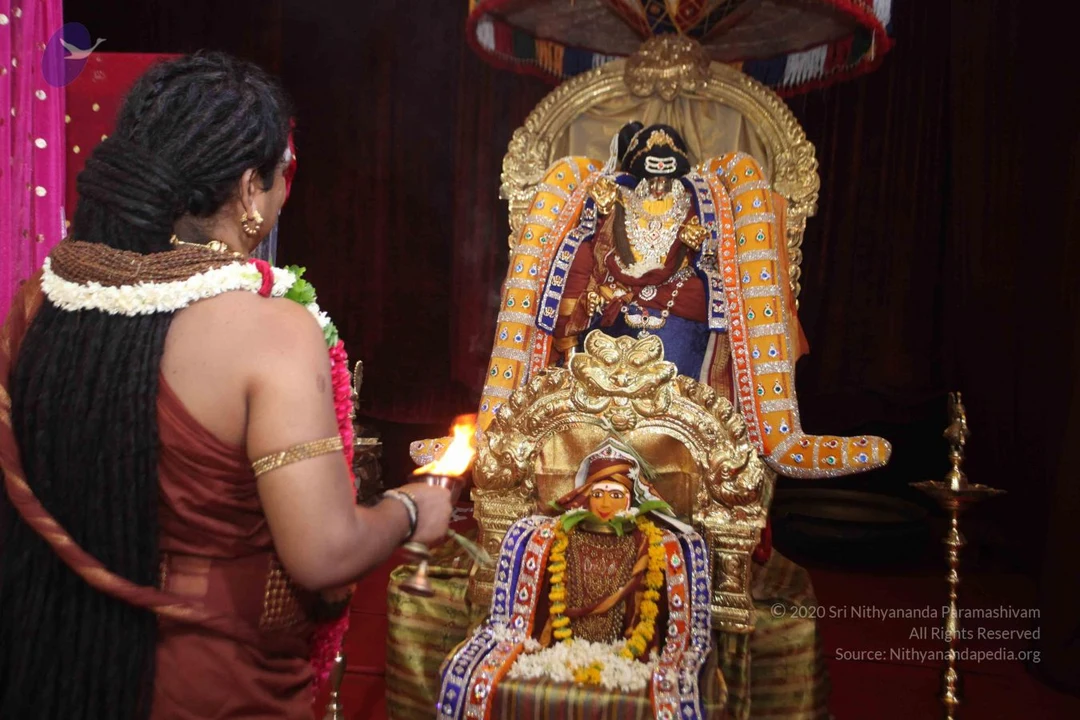
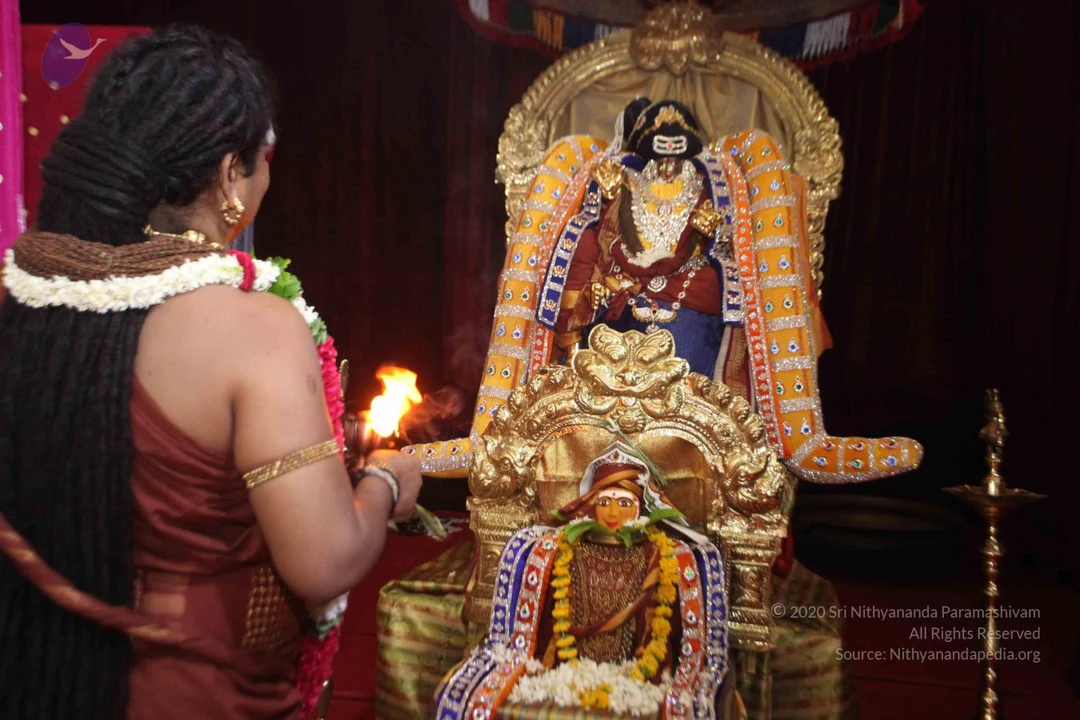
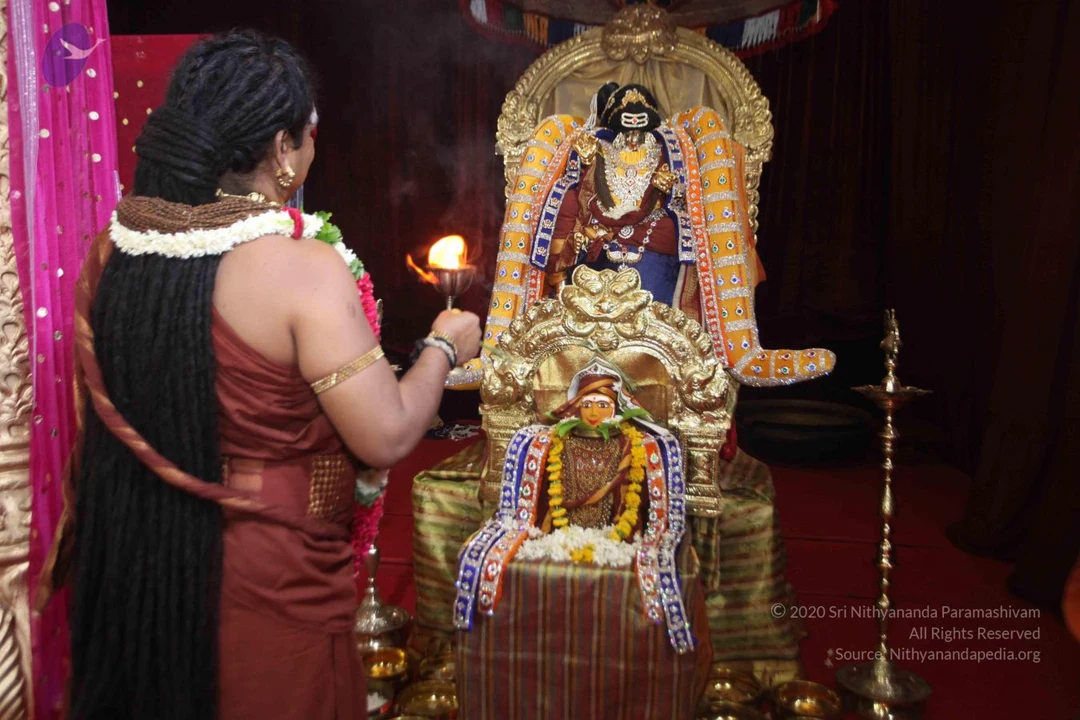
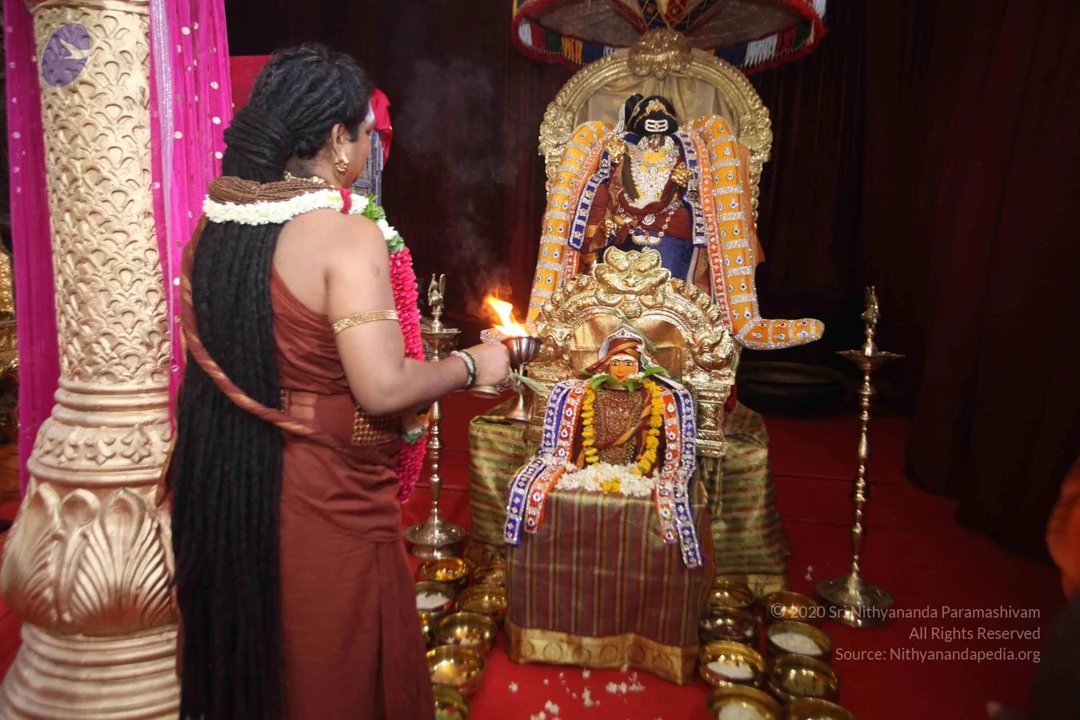
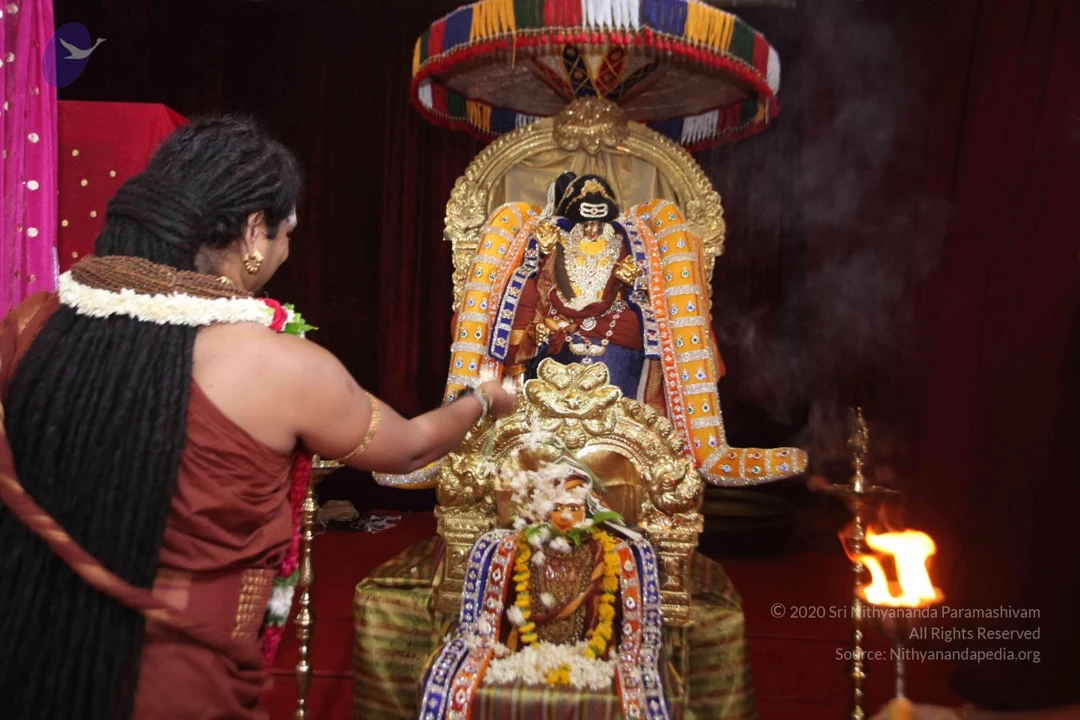
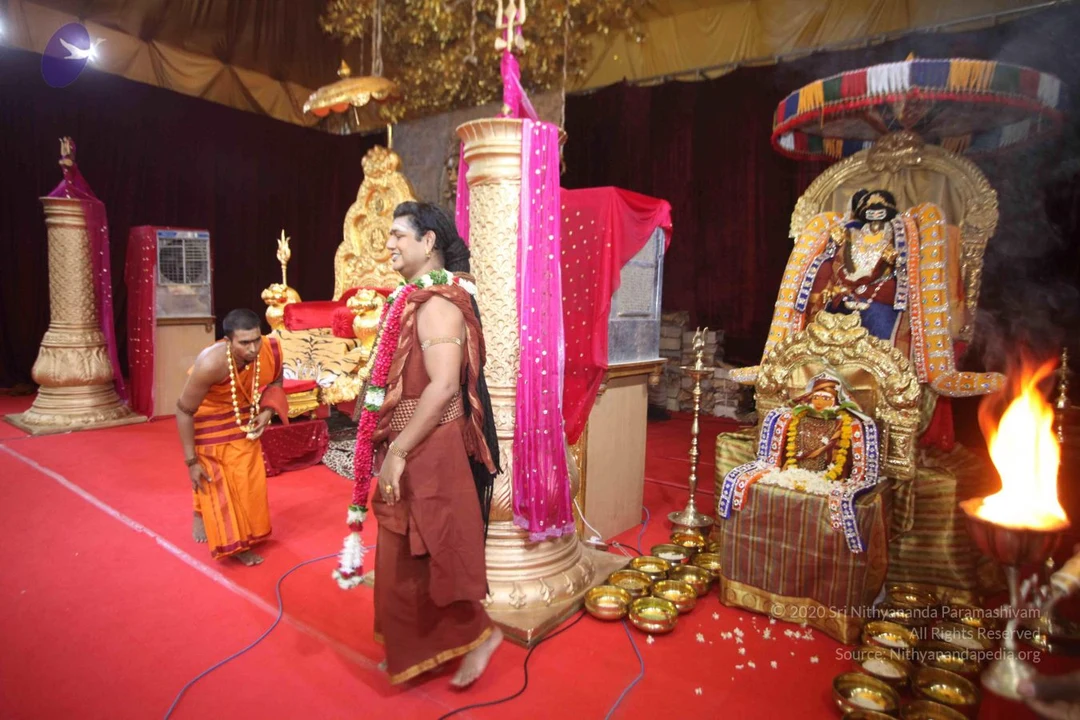
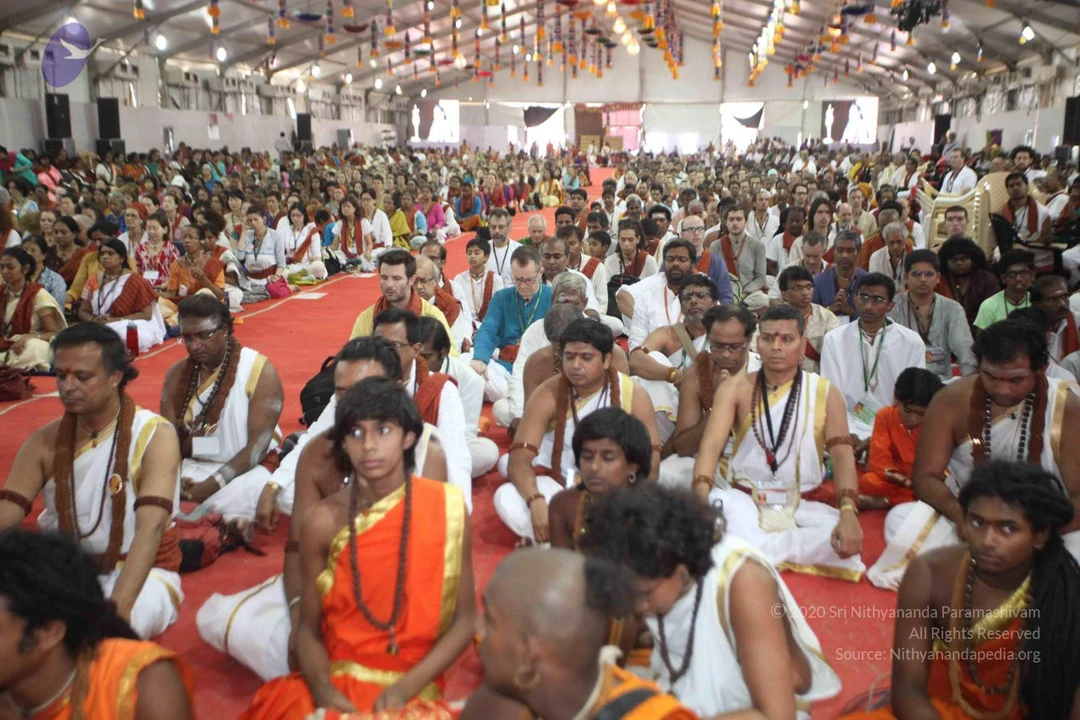
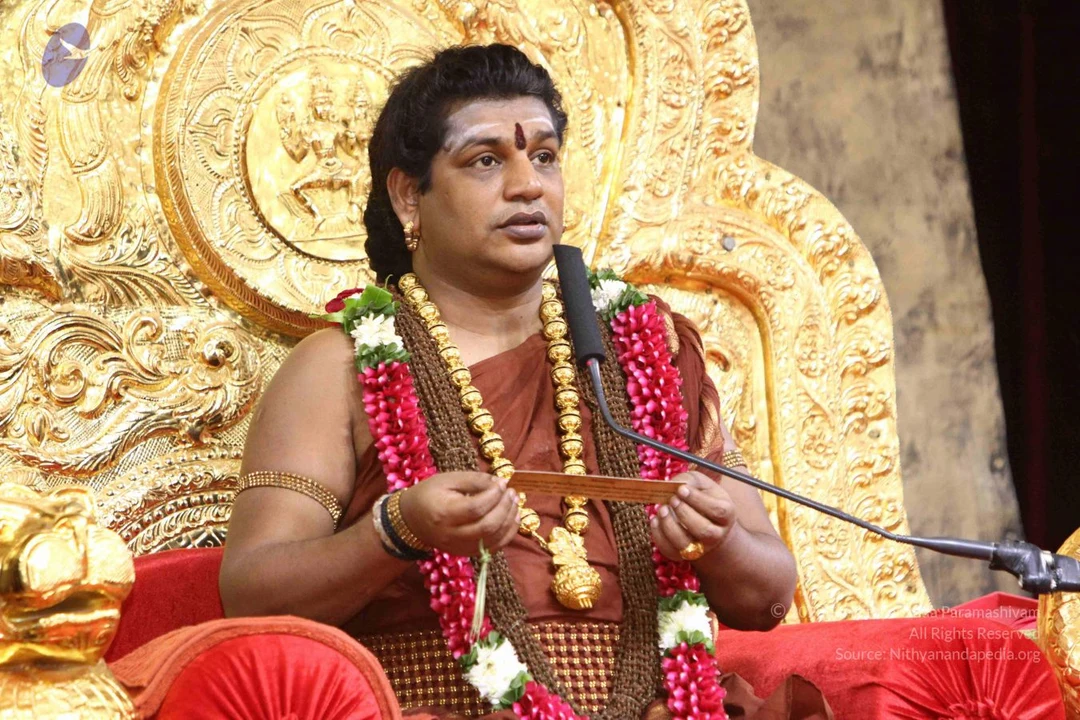
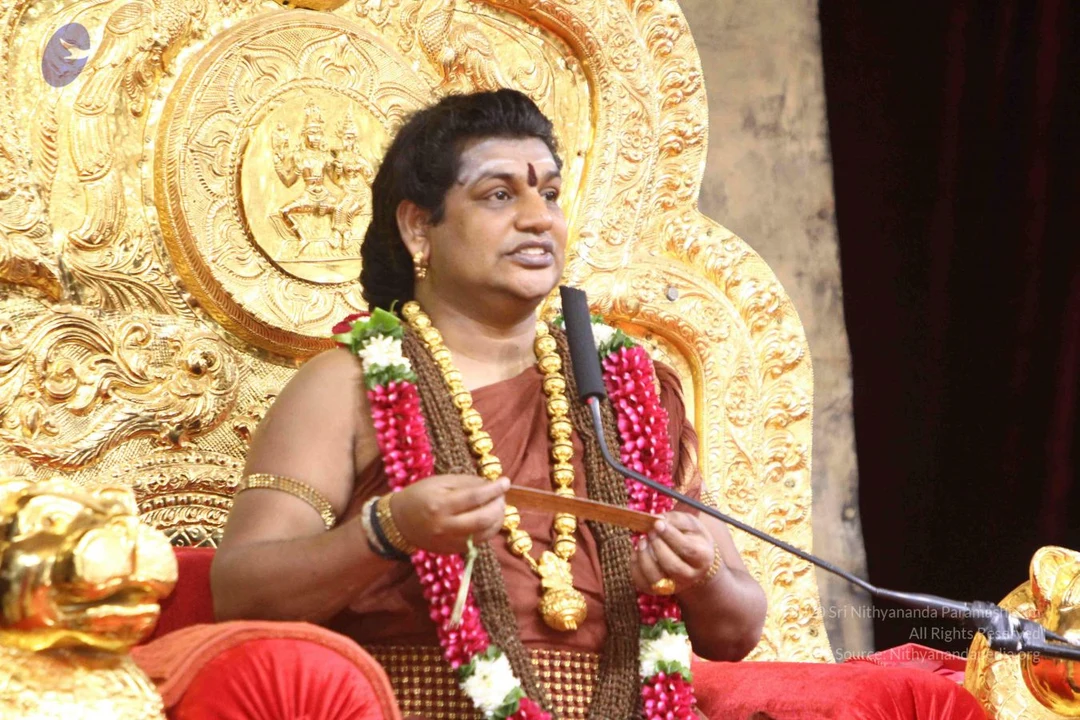
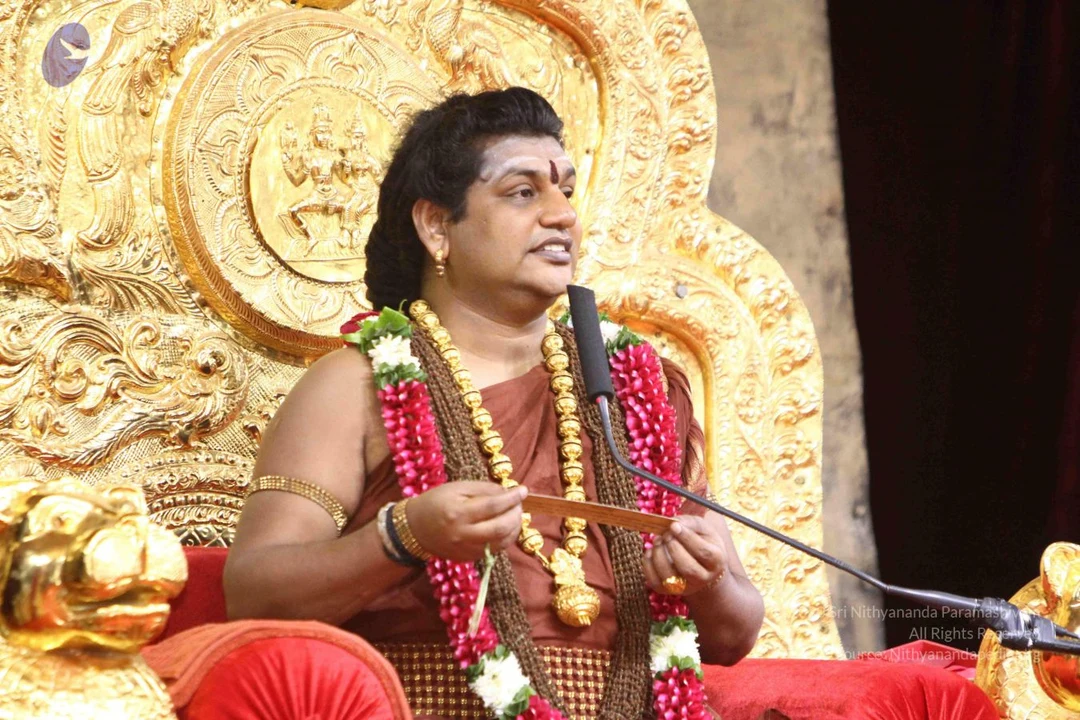
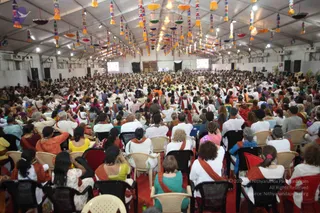
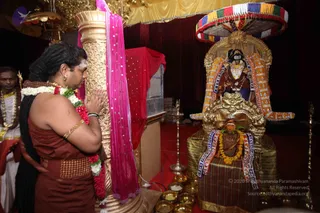
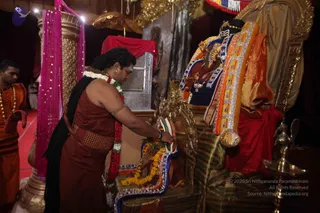
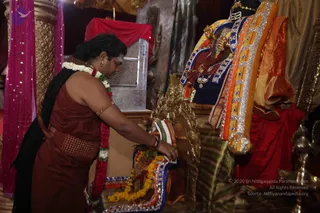
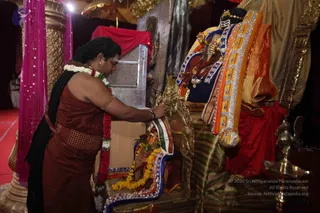
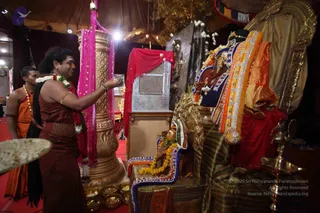
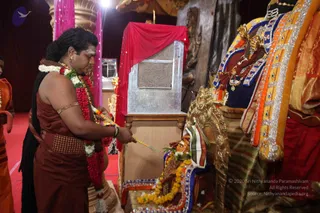
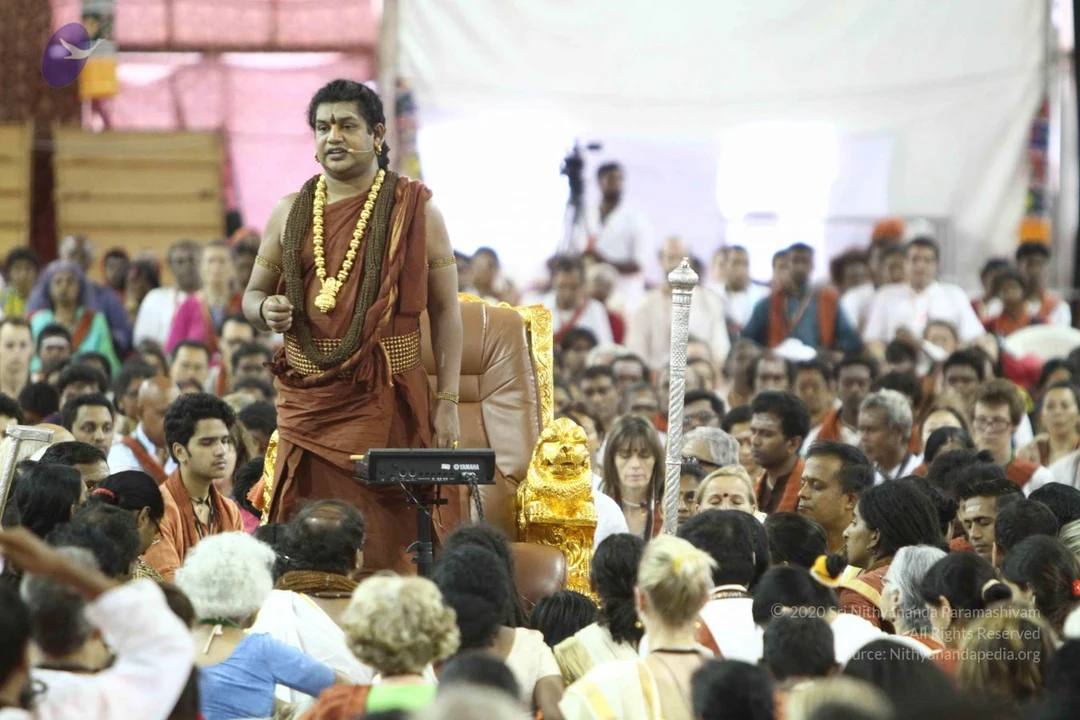
A photograph of a long-haired man in a rust-brown robe and white-and-red flower garland standing at a shrine, holding a small ritual implement and touching or offering to a decorated deity murti. The murti is draped in an orange-and-blue embroidered garment with sparkling trim, flower garlands and a gold ornament, and sits on a gilded throne-like seat. Behind it stands a tall silver-framed structure covered with a red cloth and a gold-patterned hanging. The man has a gold armlet and bracelets and a tilak on his forehead.A photograph of a large seated crowd at an outdoor assembly. A man seated on an ornate gold-trimmed throne with a brown cushioned back wears an orange-saffron robe, a rudraksha-style necklace of pale beads, and a shawl draped over his shoulders, with a bare arm raised. Beside him stands a tall silver staff, and a black keyboard unit sits on a small table in front. A gold-colored lion-style armrest flanks the throne. Around him, hundreds of devotees in white, orange and multicoloured clothing sit closely packed on the ground, many with covered heads, and some camera equipment appears in the upper background.A photograph of a temple puja. In the foreground a figure seen from behind, with long dark hair, a white-and-red flower garland over the shoulder and a gold armlet, wears a rust-brown garment and holds a lit flame. Before them stands a large deity murti seated on a gilded throne, dressed in orange, blue and gold brocade with a jeweled necklace and a painted face. In front sits a smaller seated murti with a yellow and orange garland. A tall brass oil lamp stands at the right edge against a dark red backdrop.

May 22 2016

Original wiki page
Contents

Title

Ujjain Sarvadarshan || Kapataru Darshan || 22 May 2016

Description

Name Of The Convention : Kalpataru Darshan Session on: Ujjain Sarvadarshan Date : 22 May 2016 Venue : Ujjain, Madhya Pradesh, India

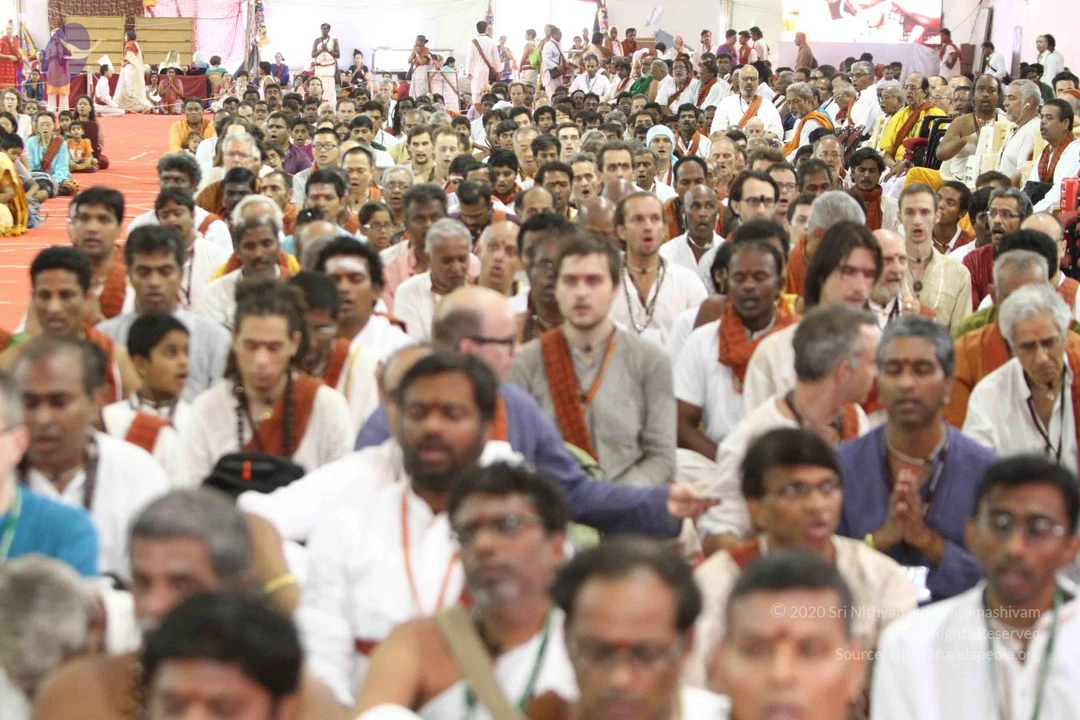
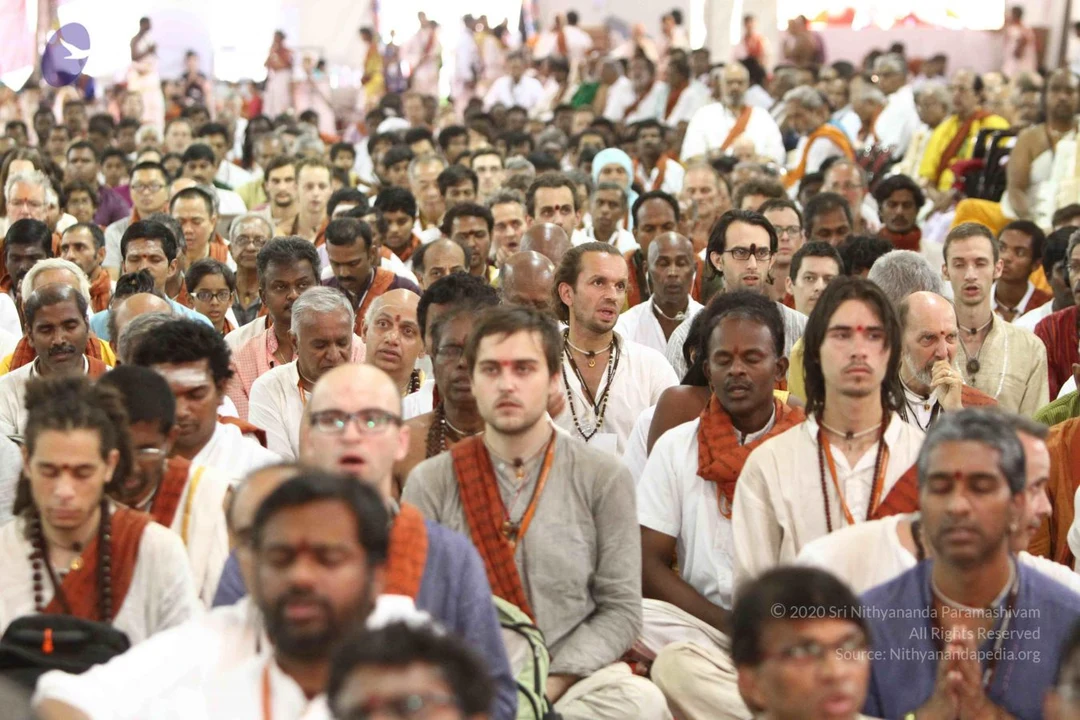
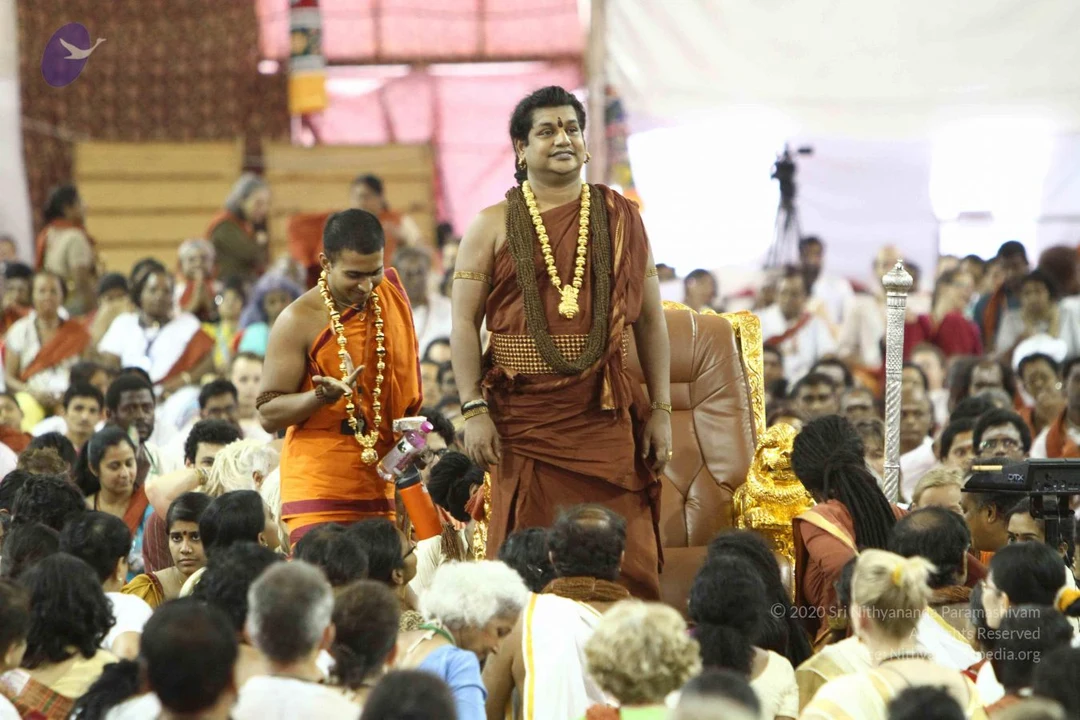
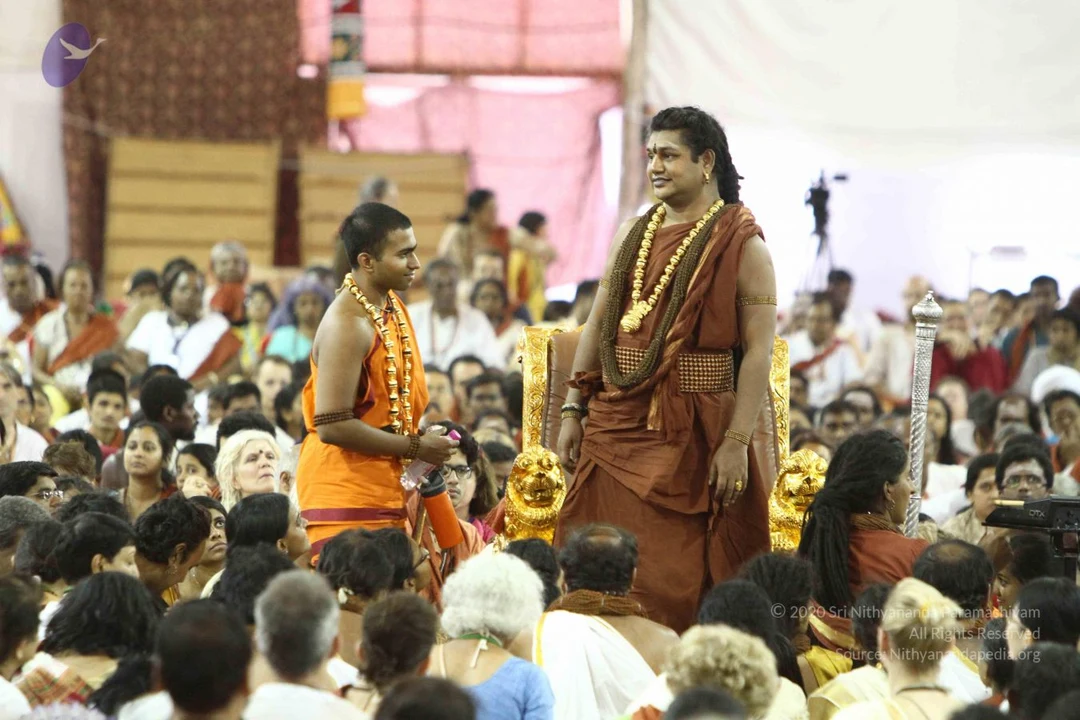
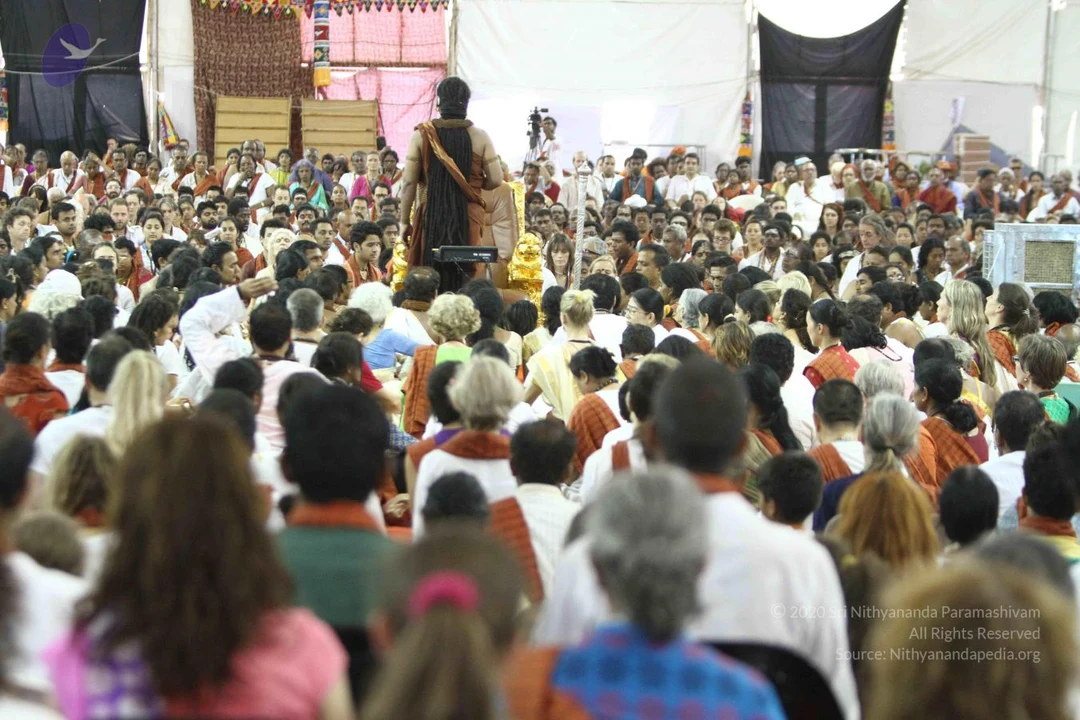
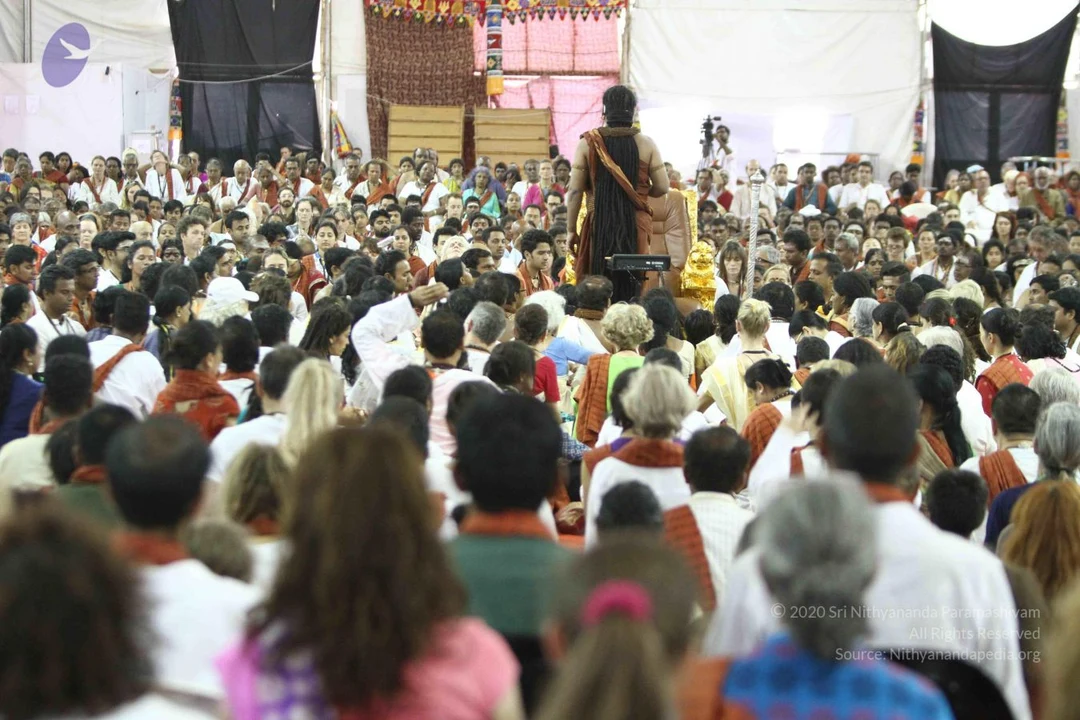
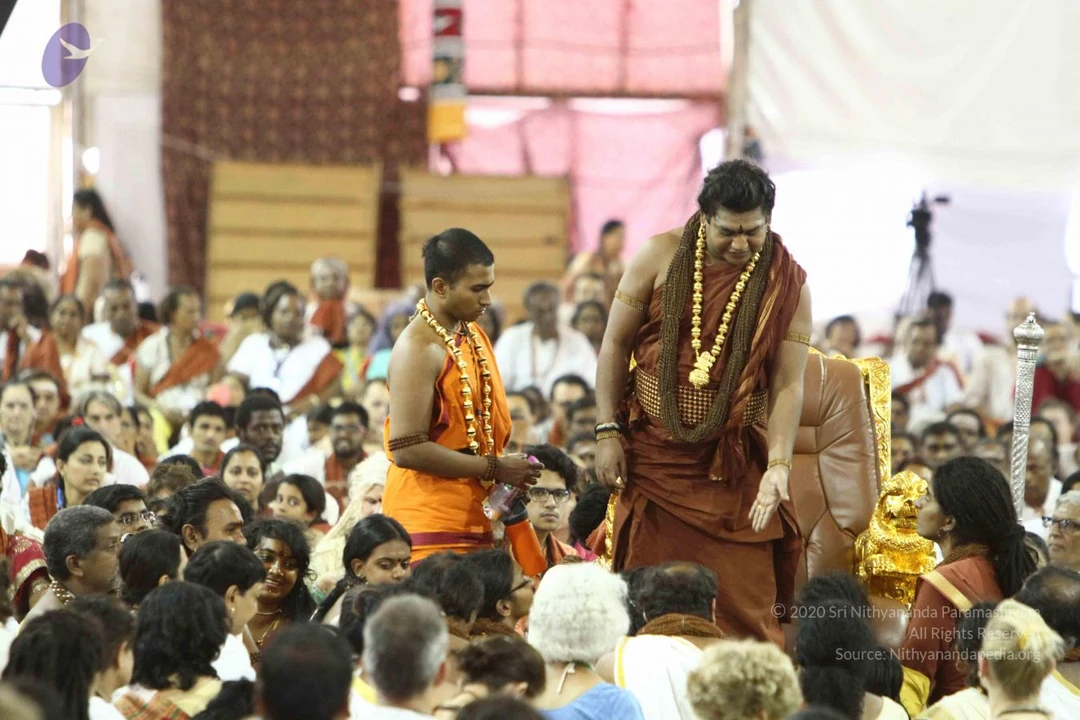
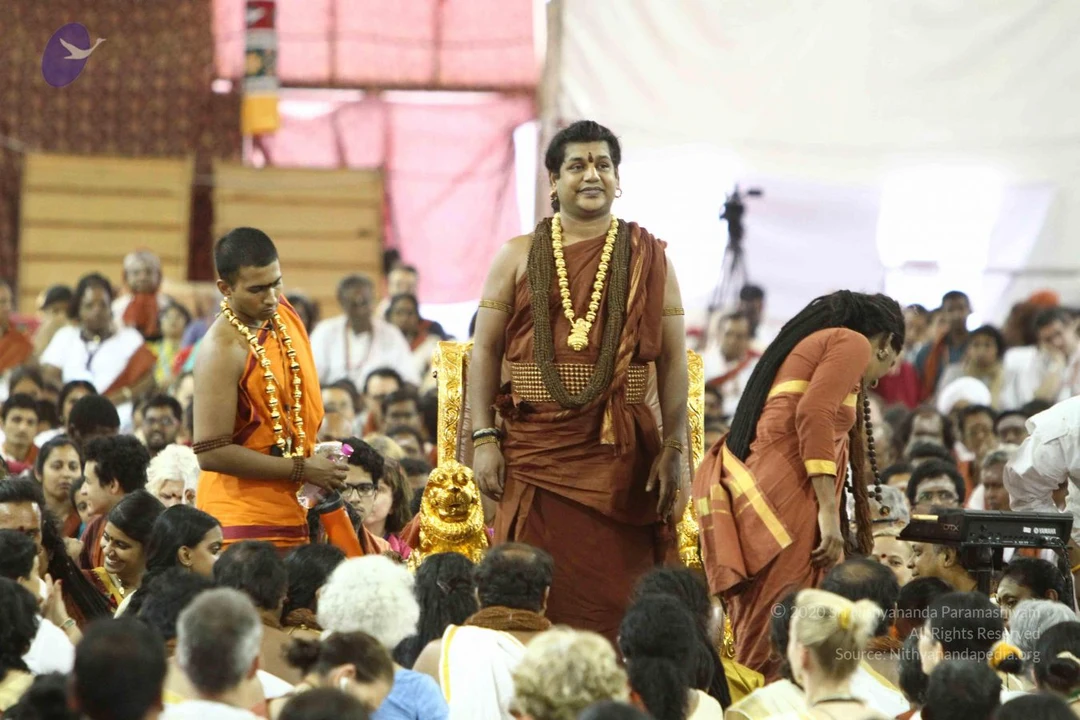
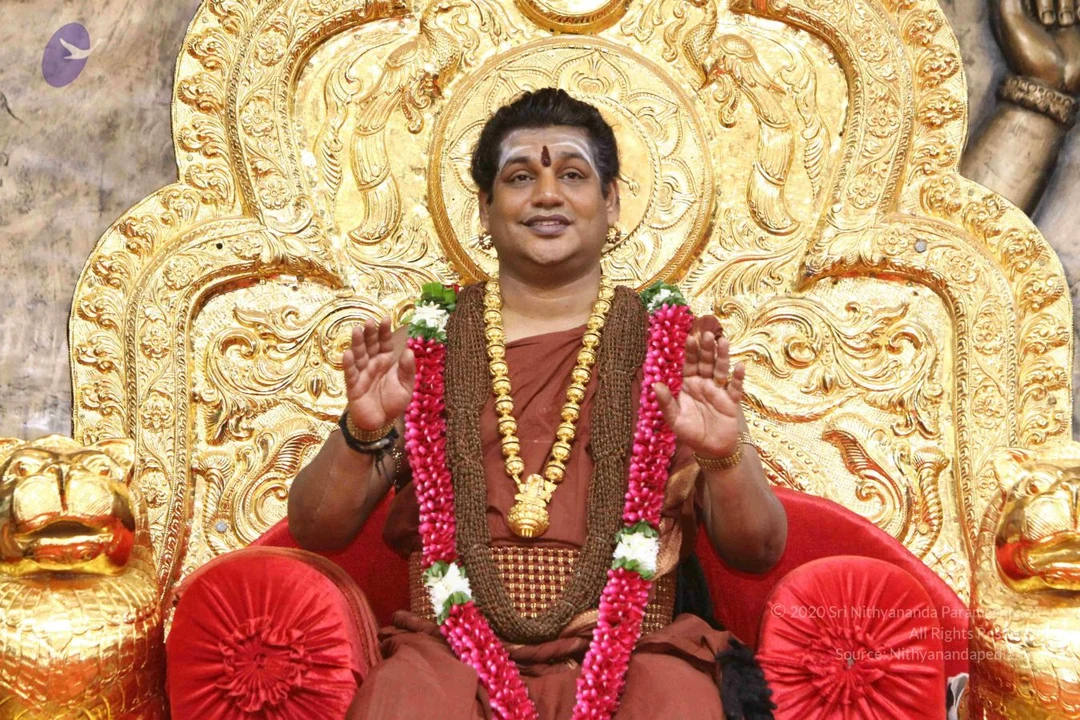
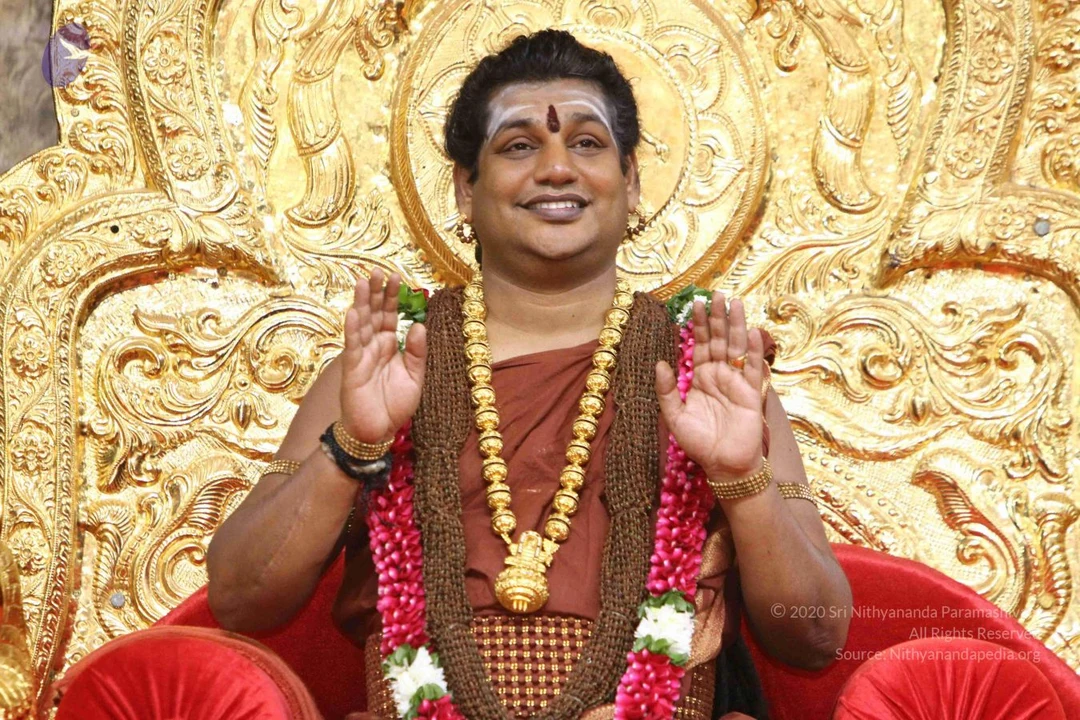
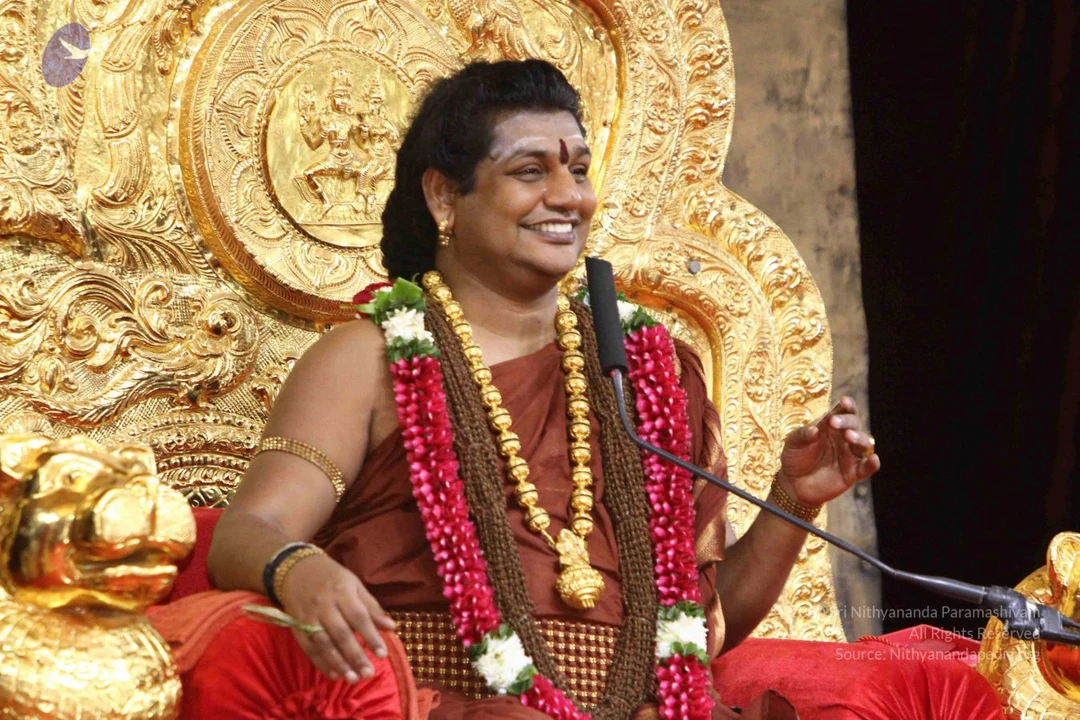
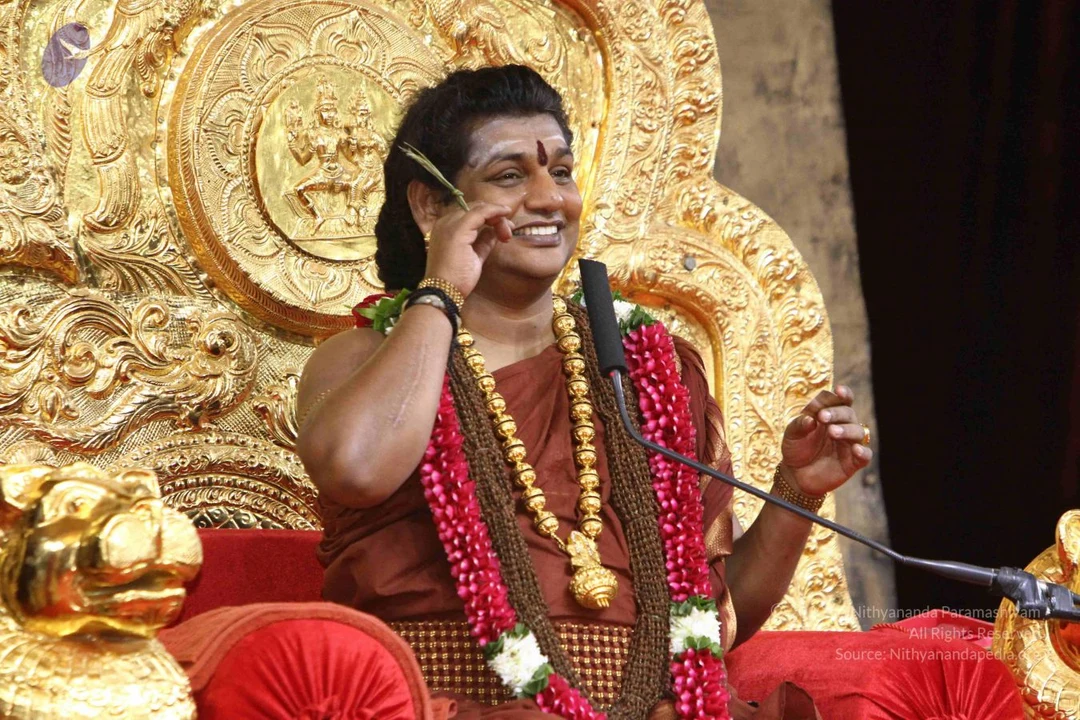
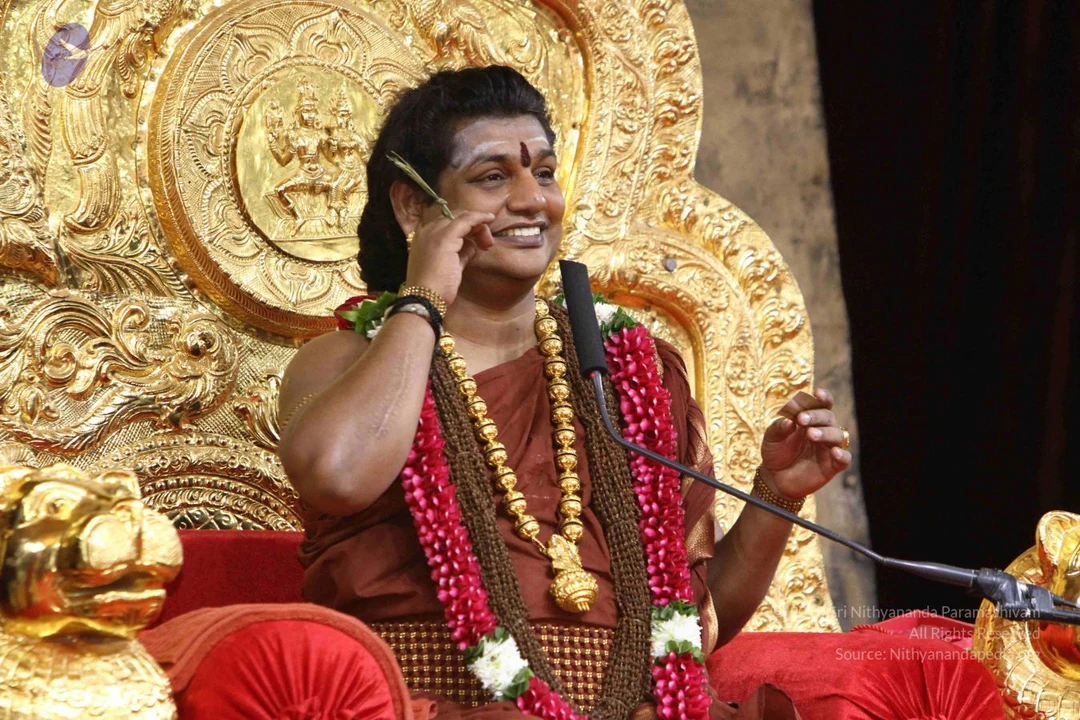
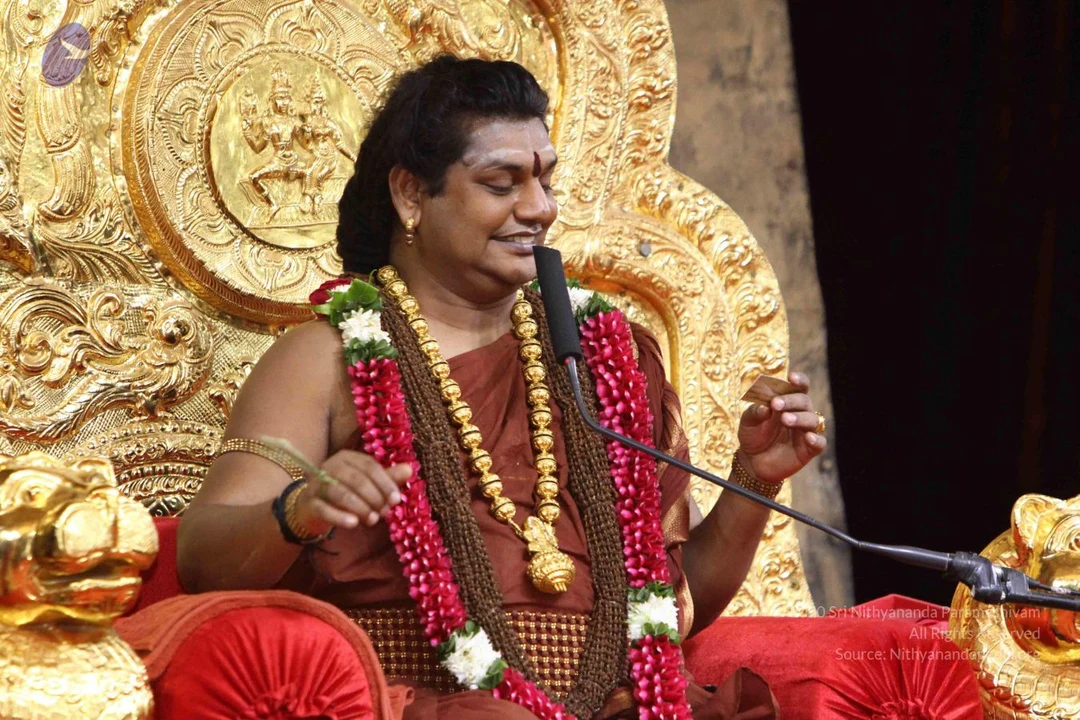
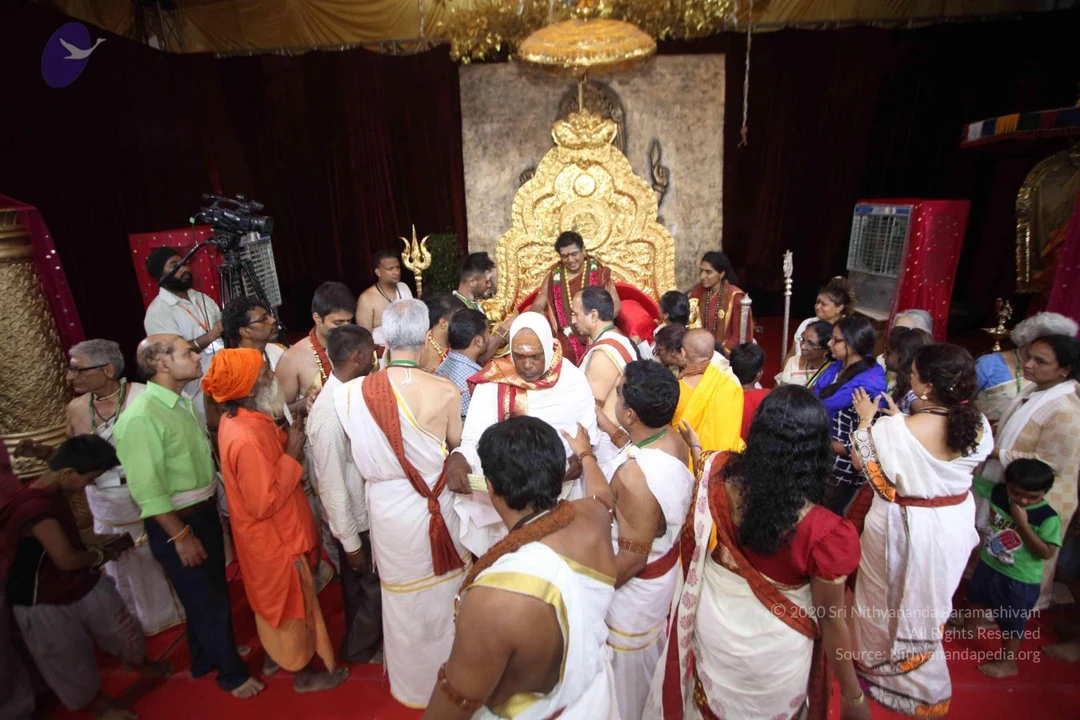
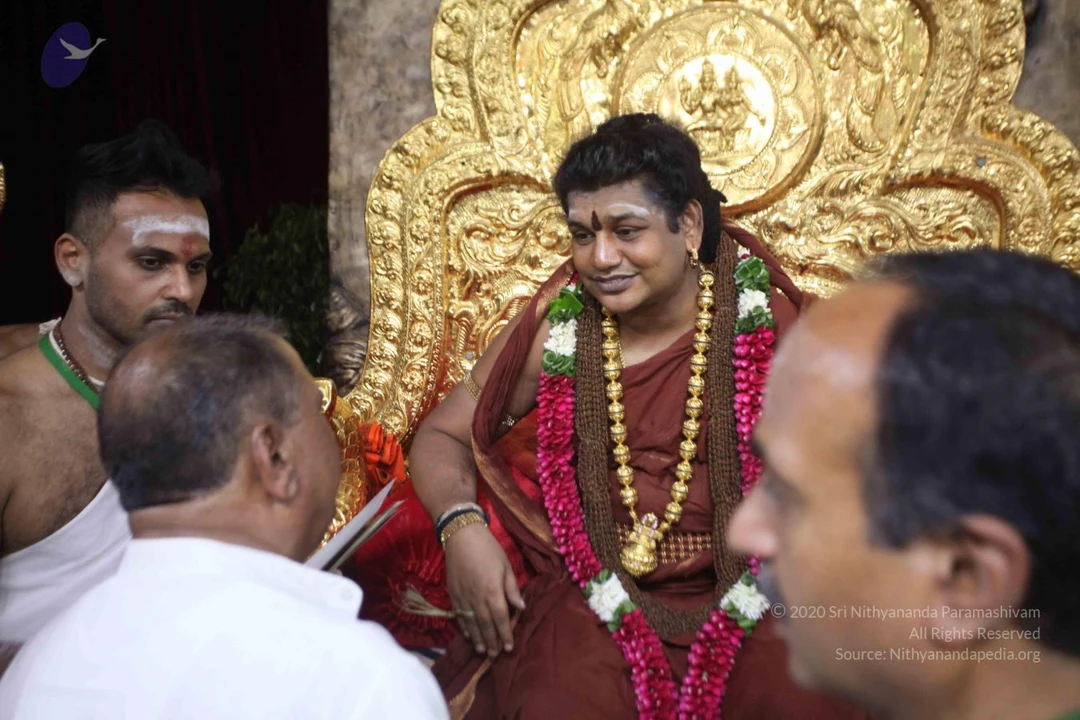
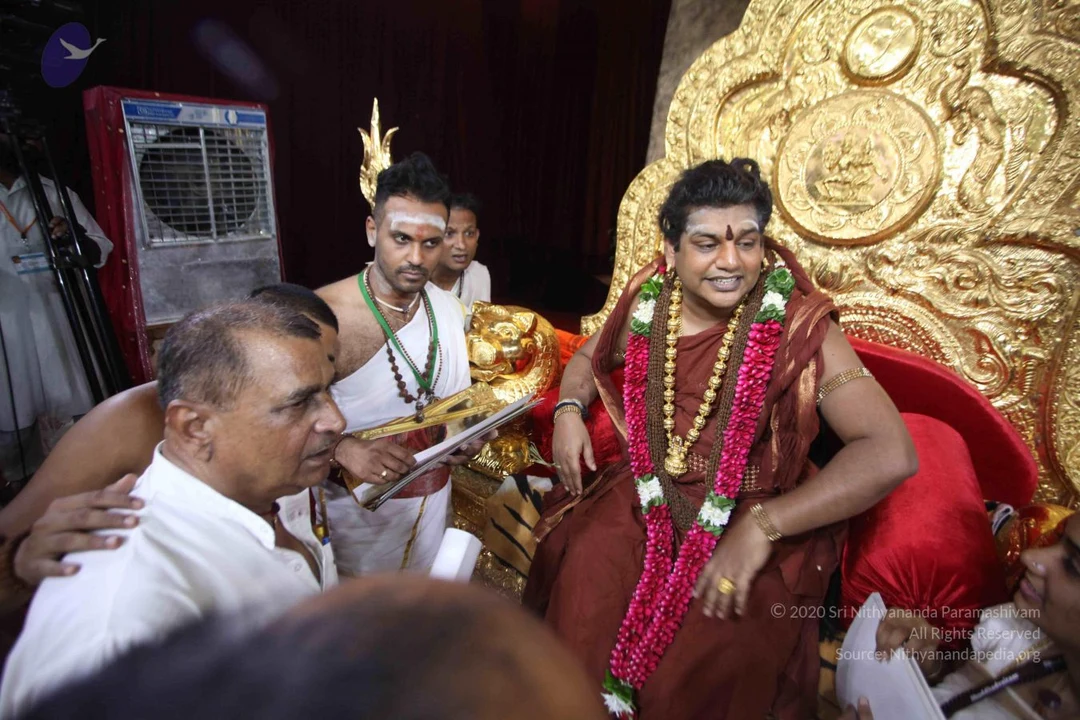
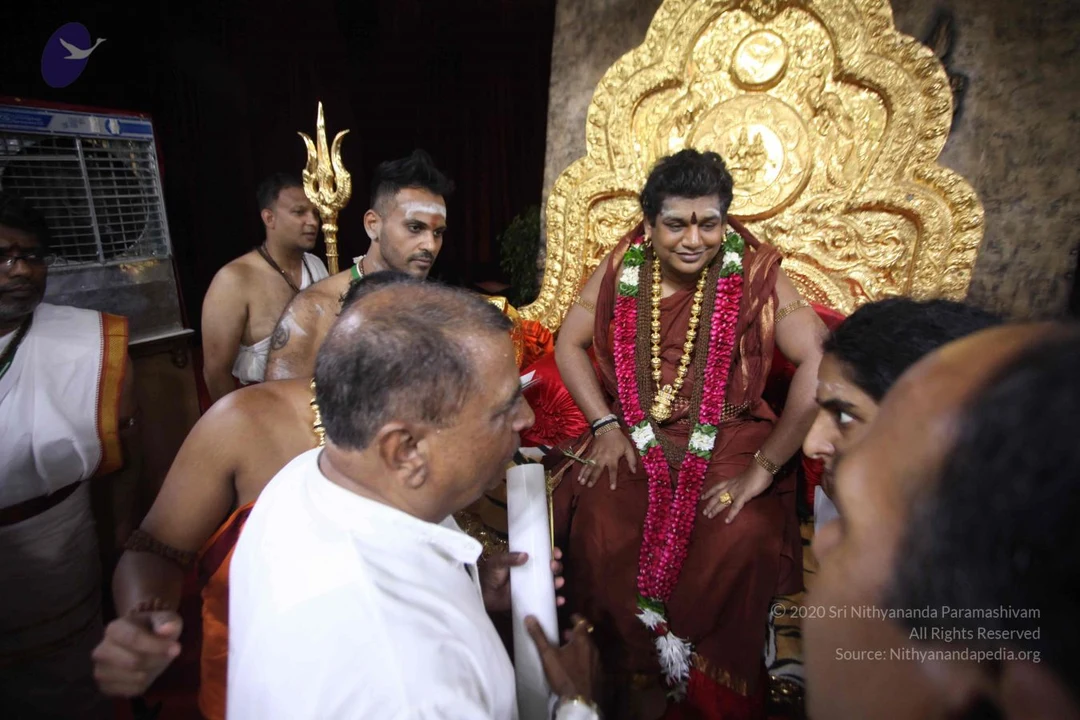
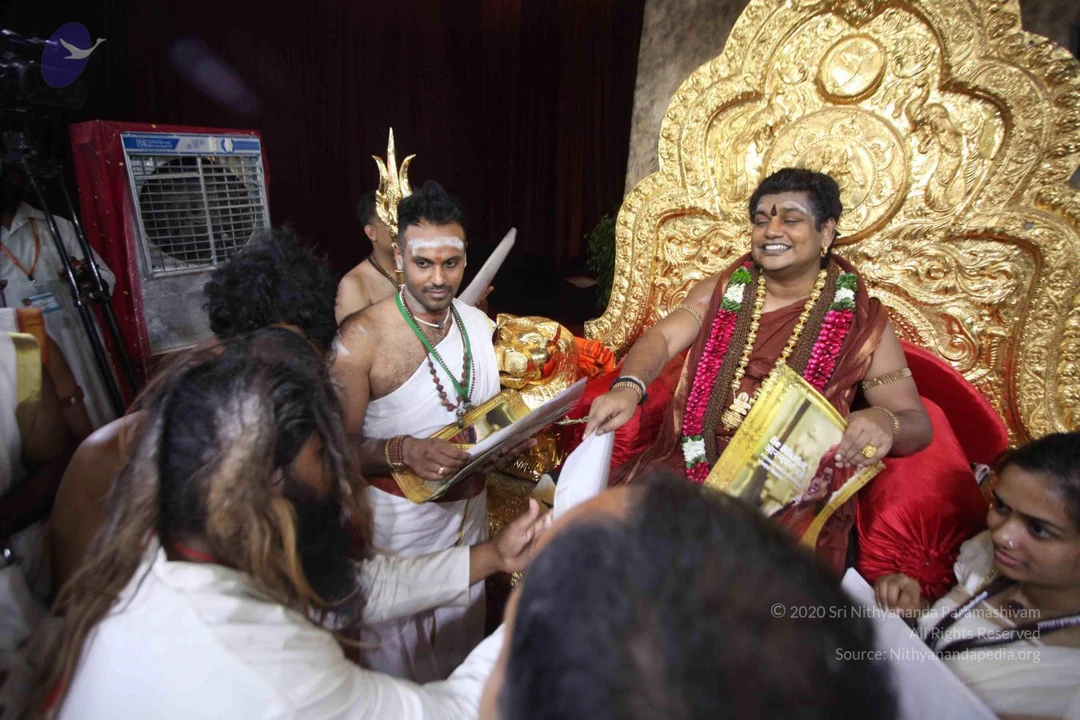
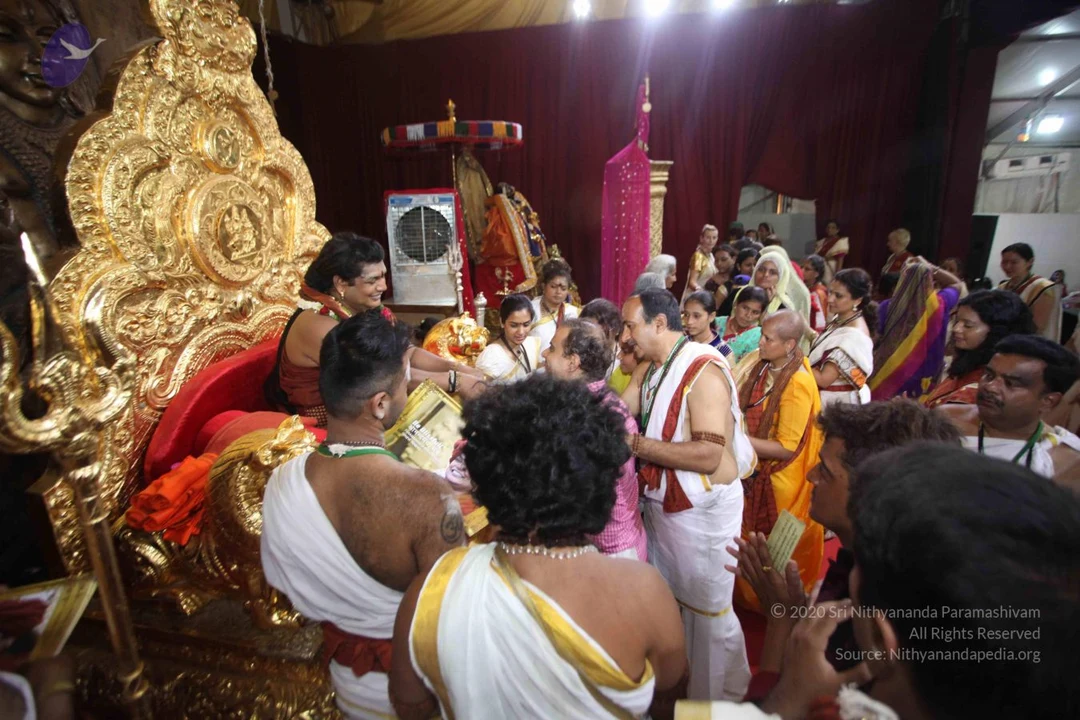
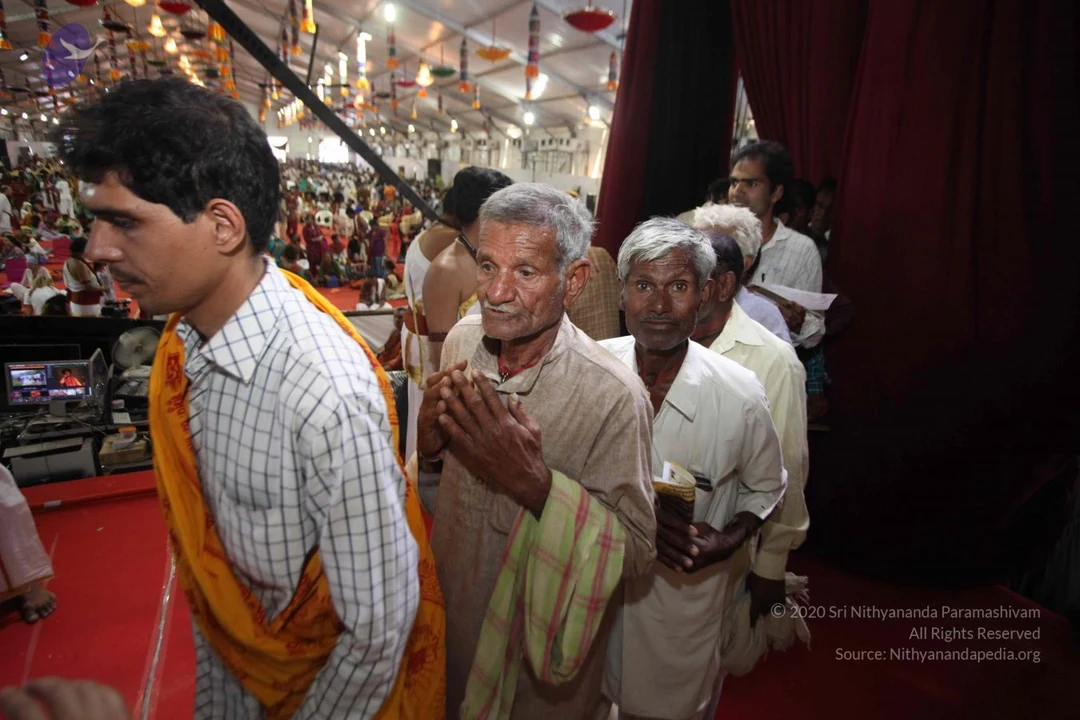
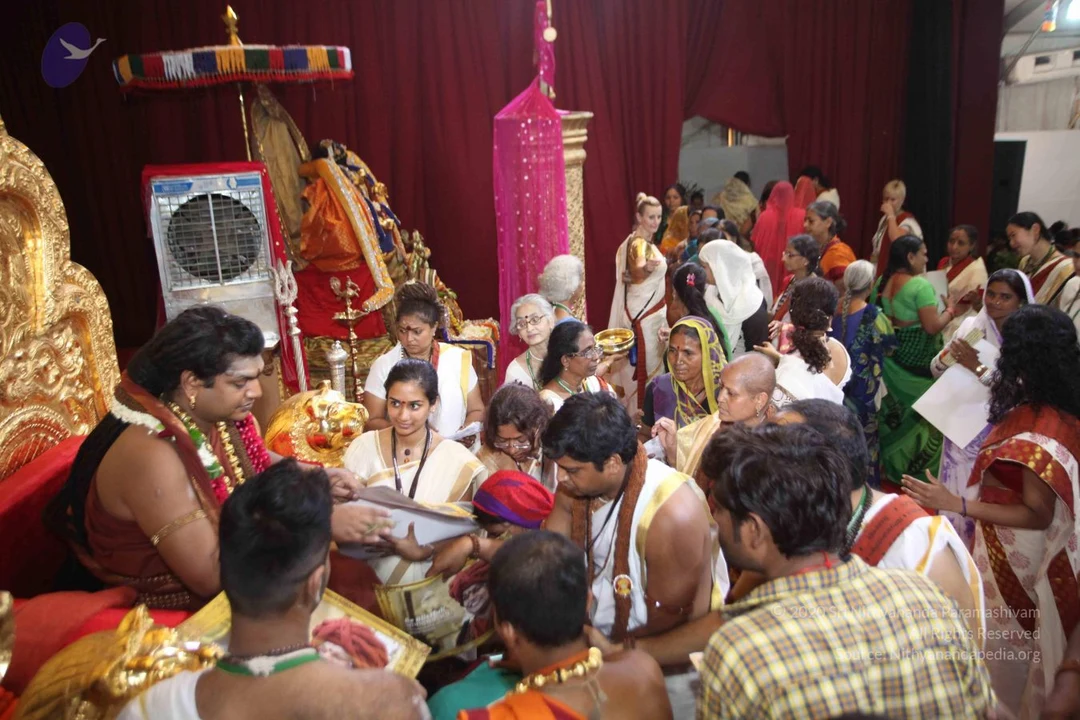
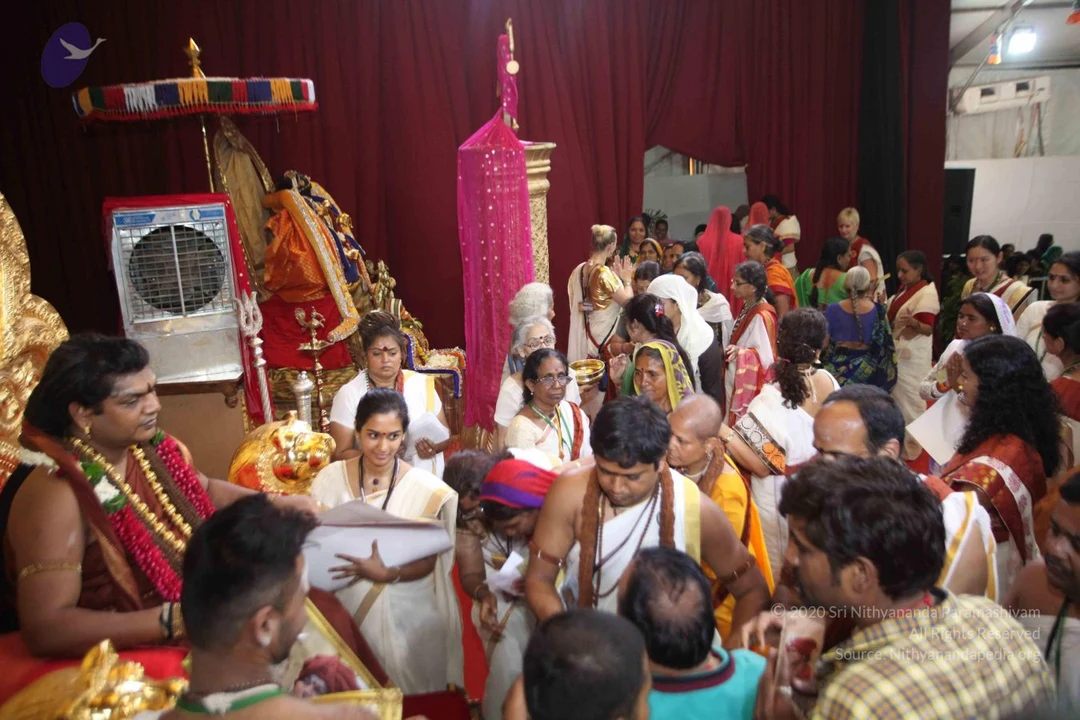
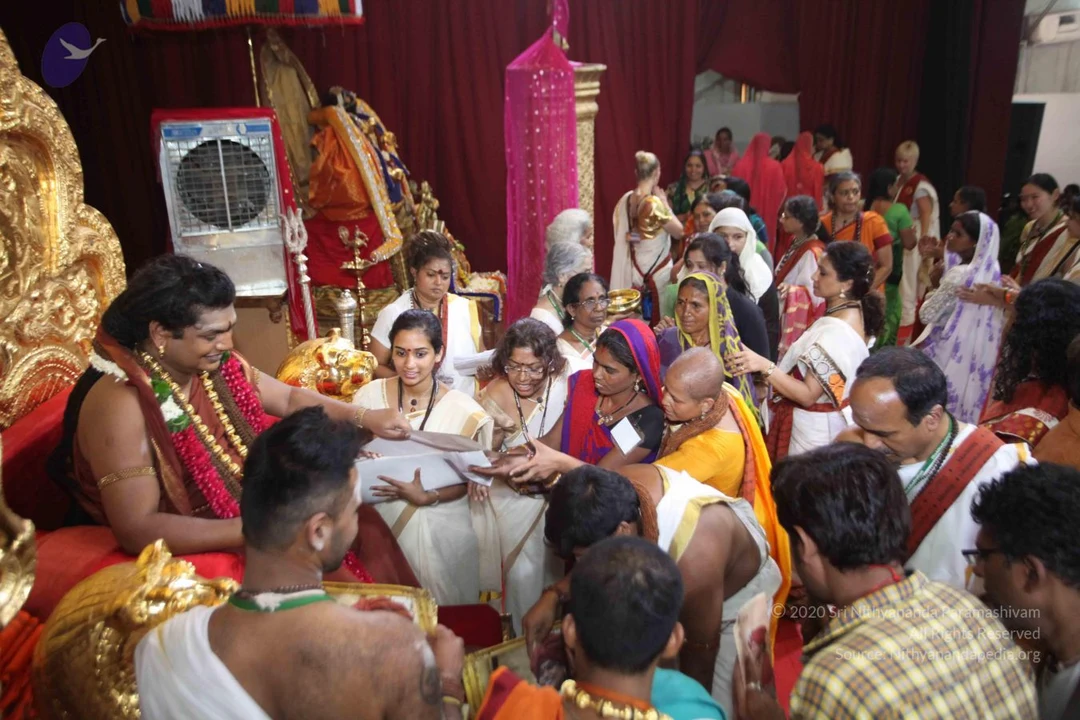
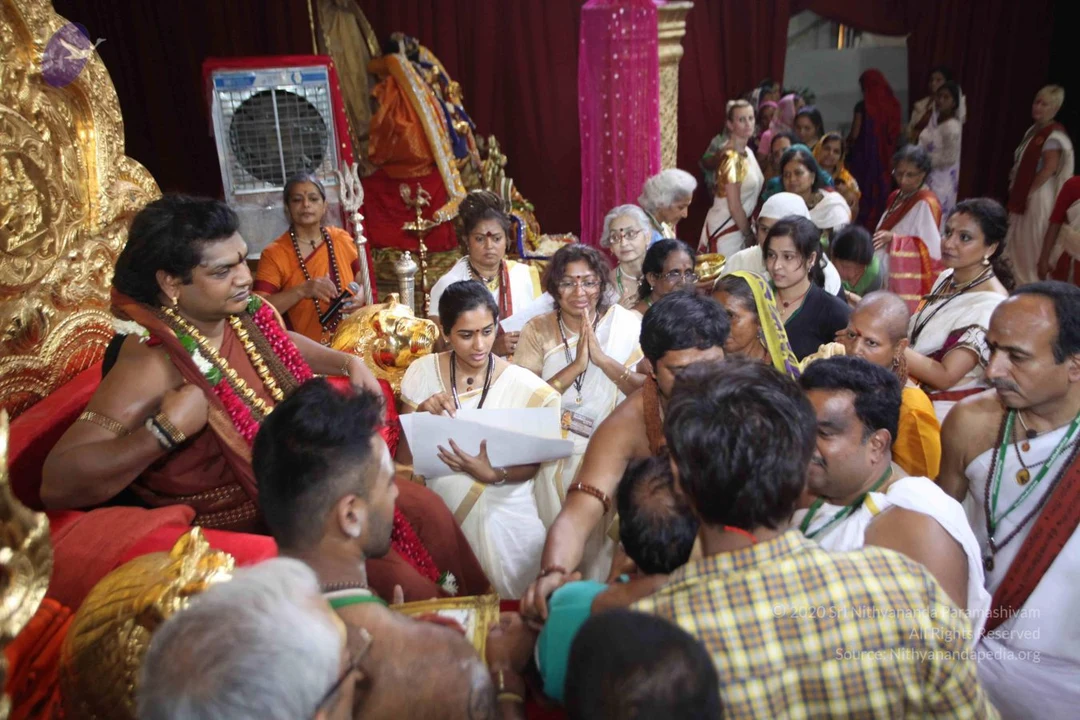
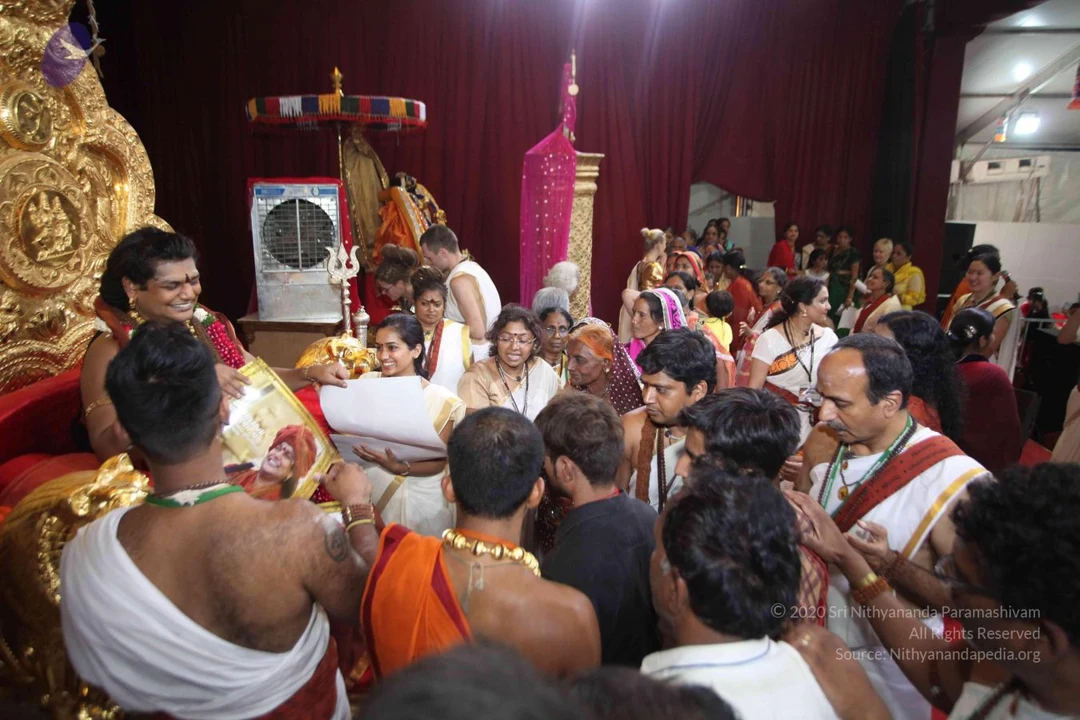
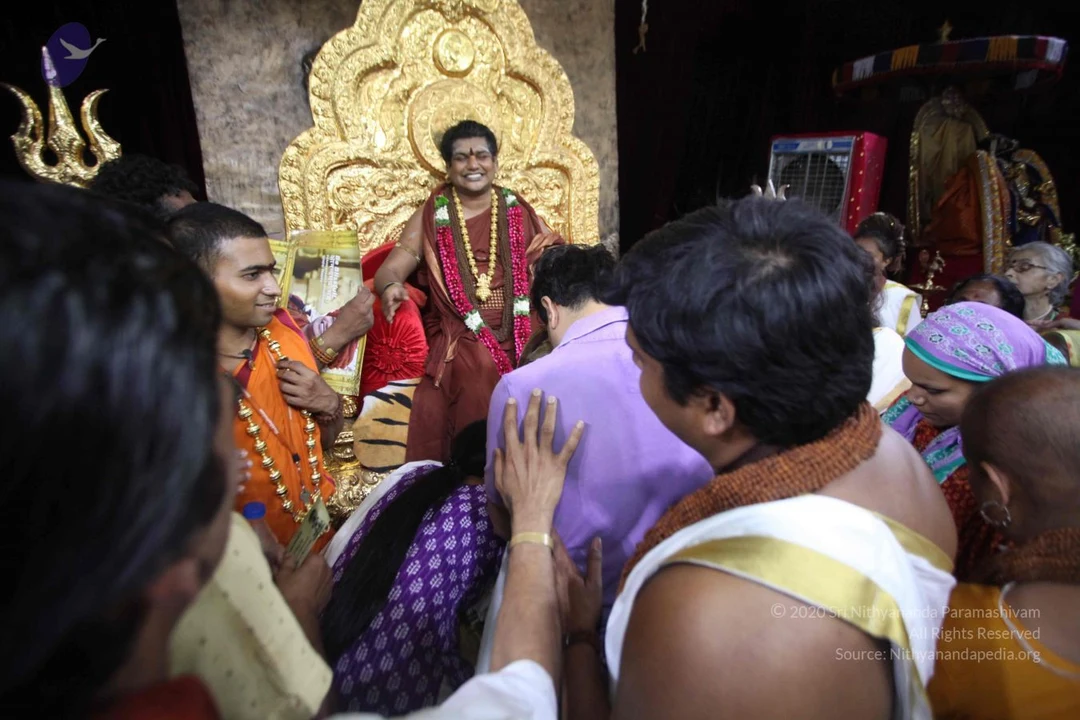
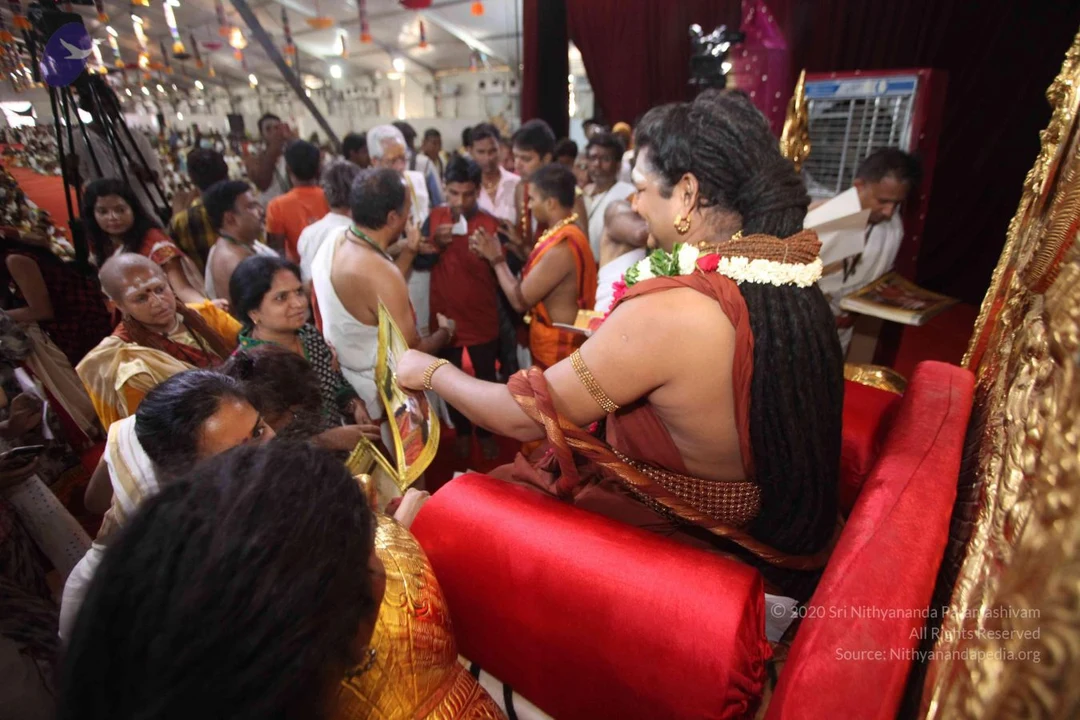
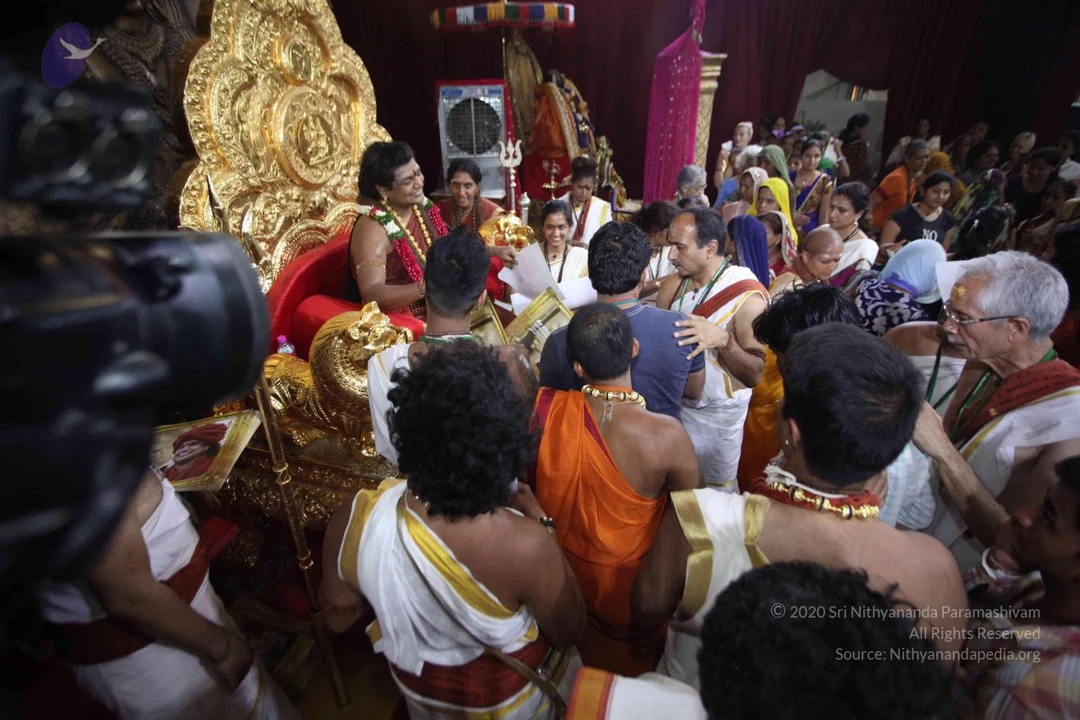
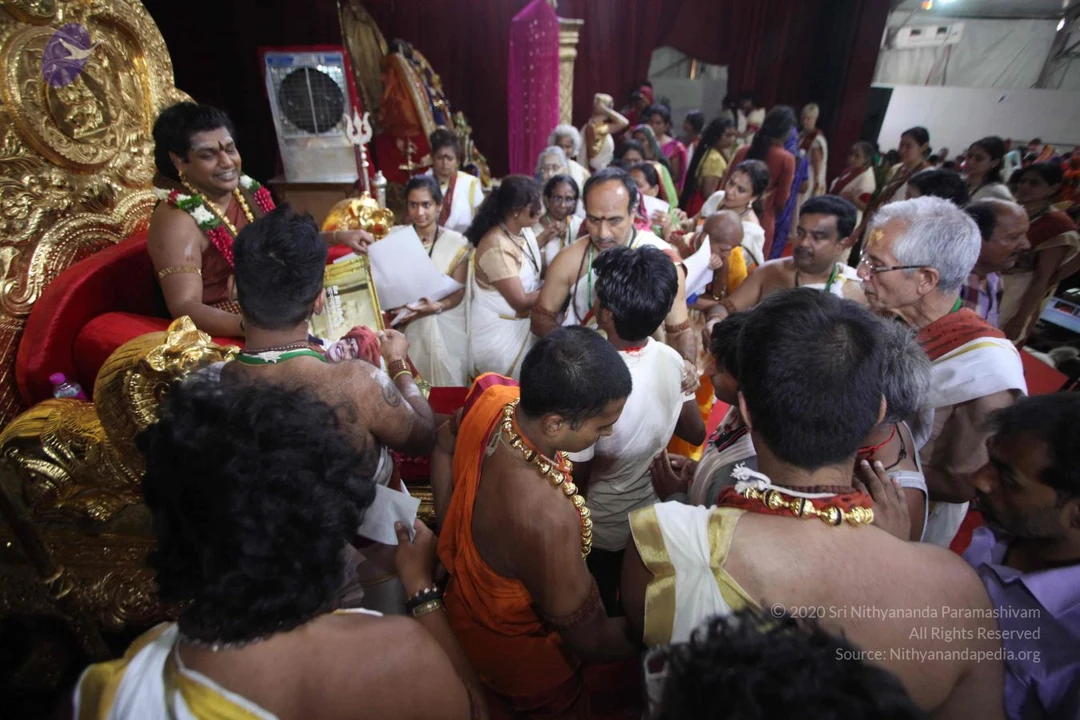
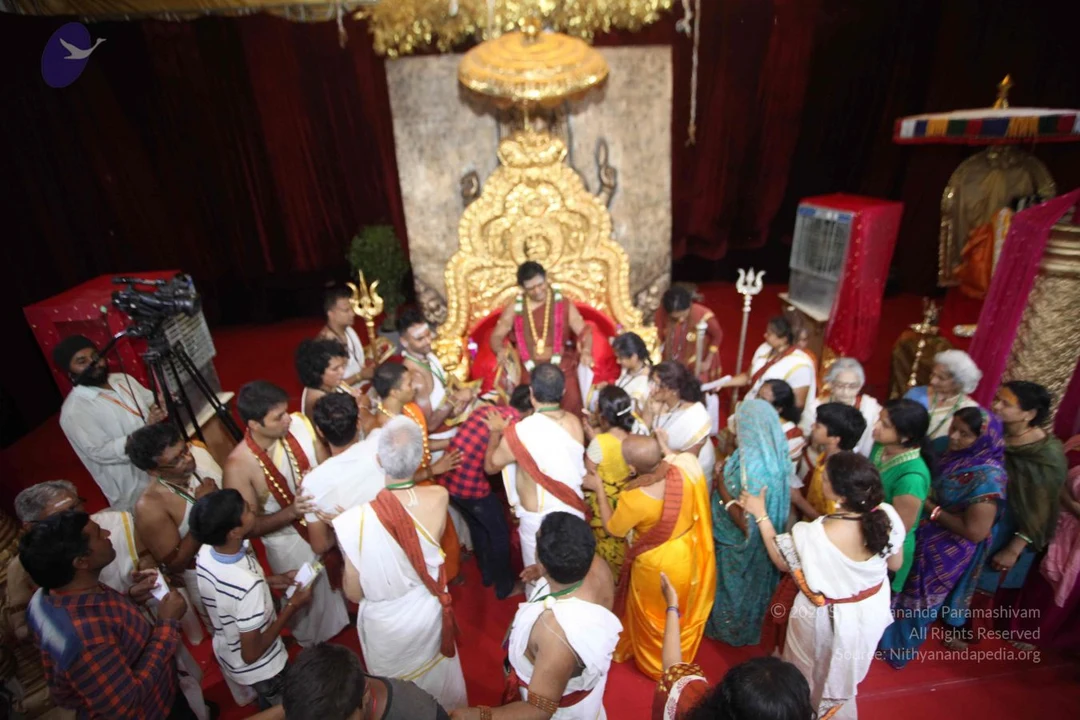
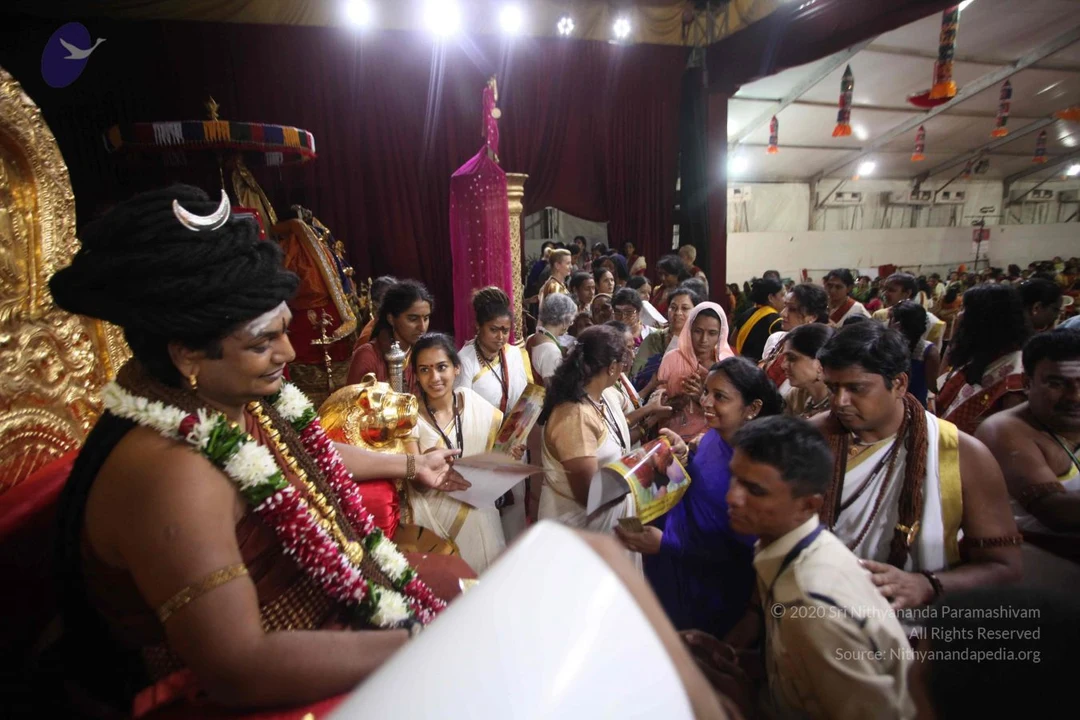
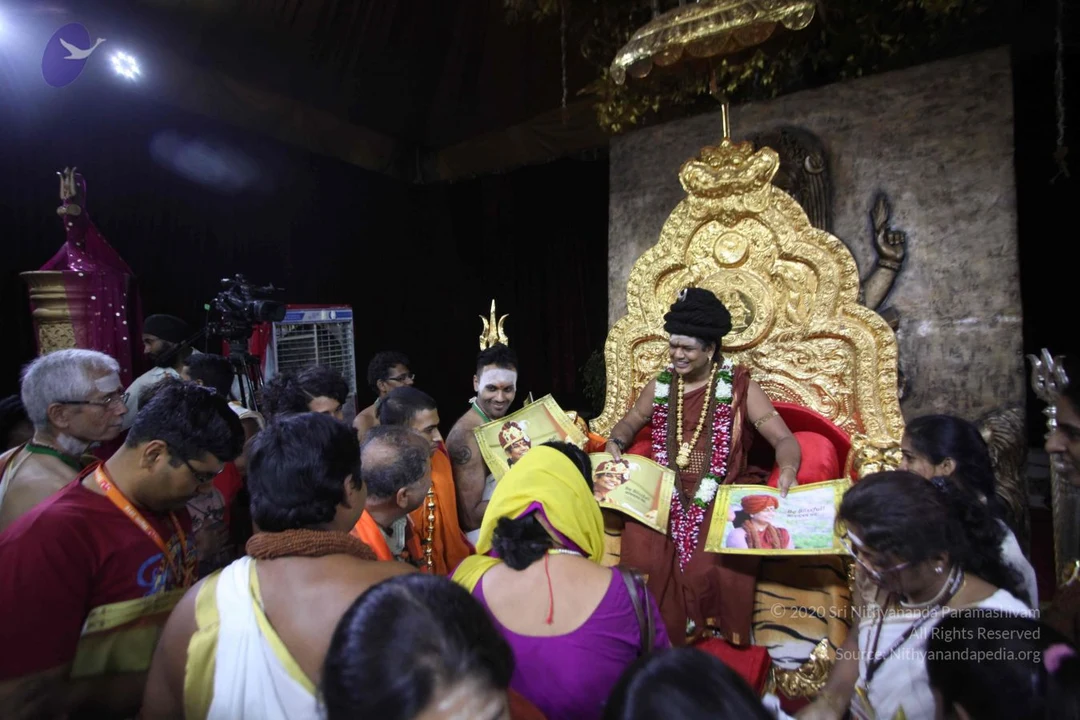
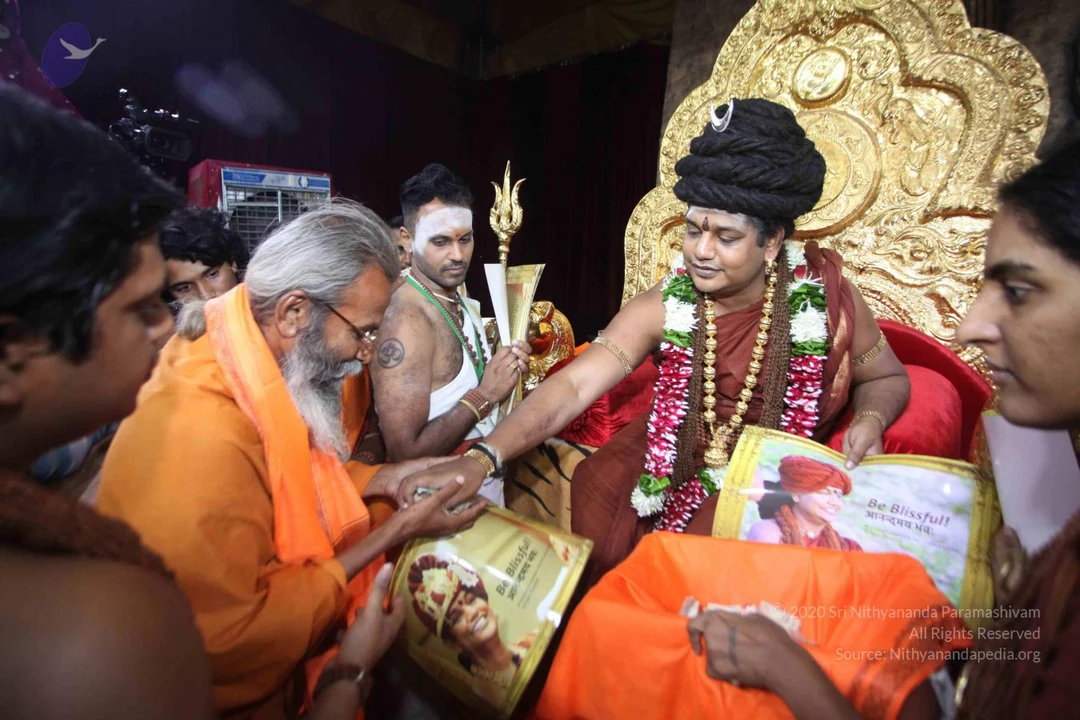
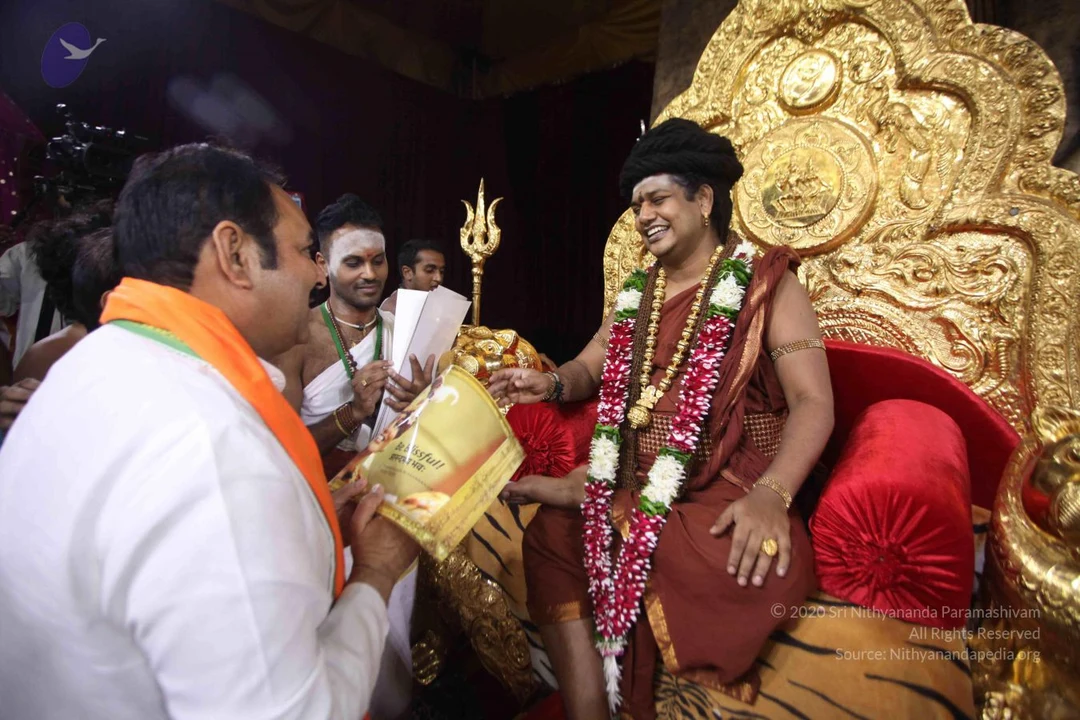
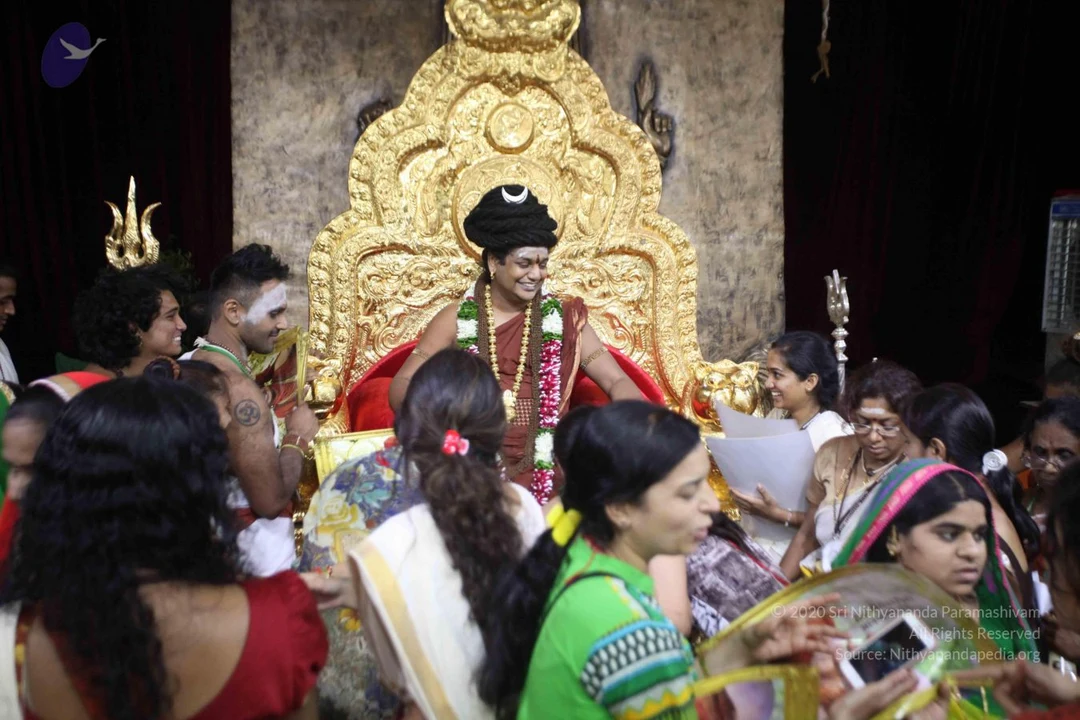
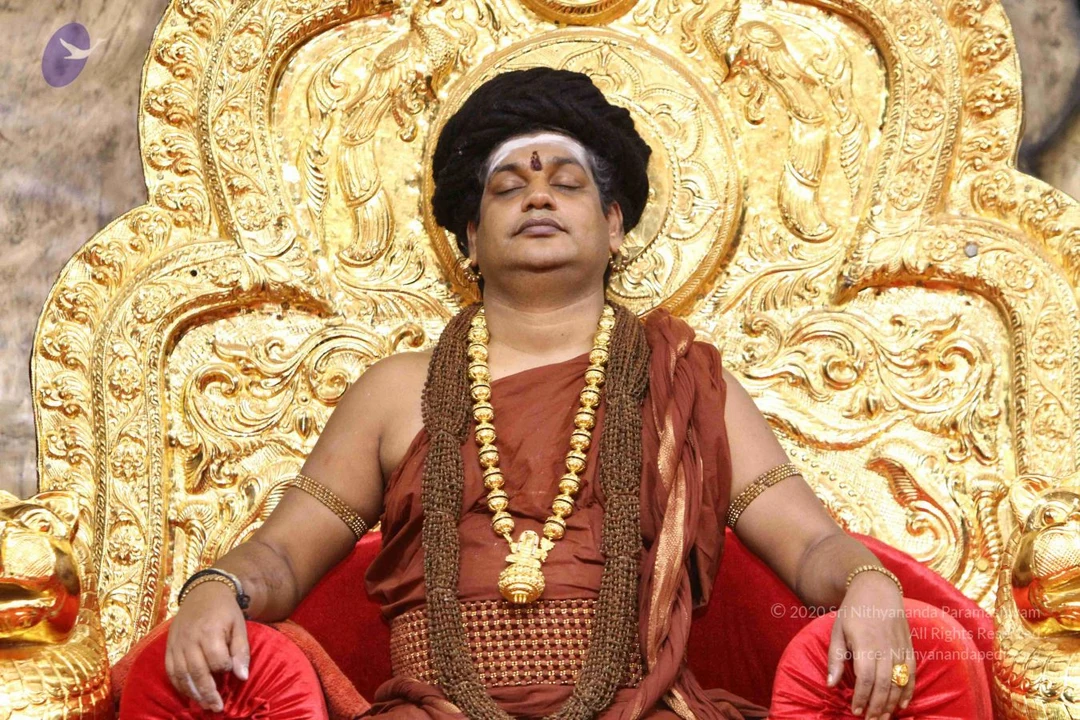
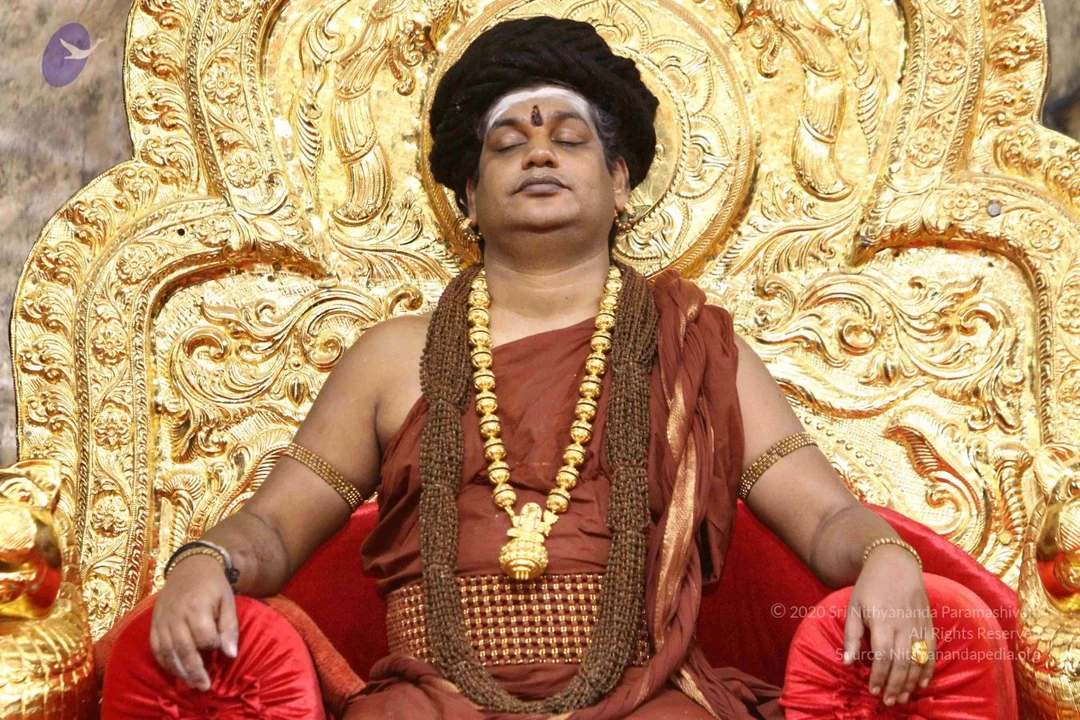
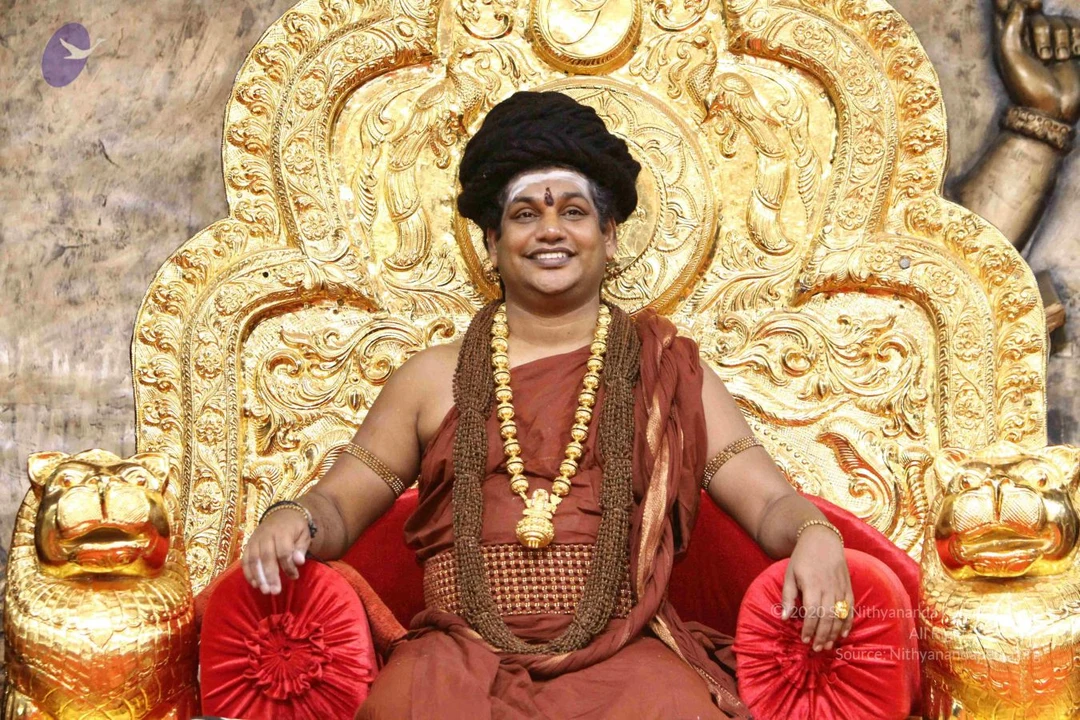
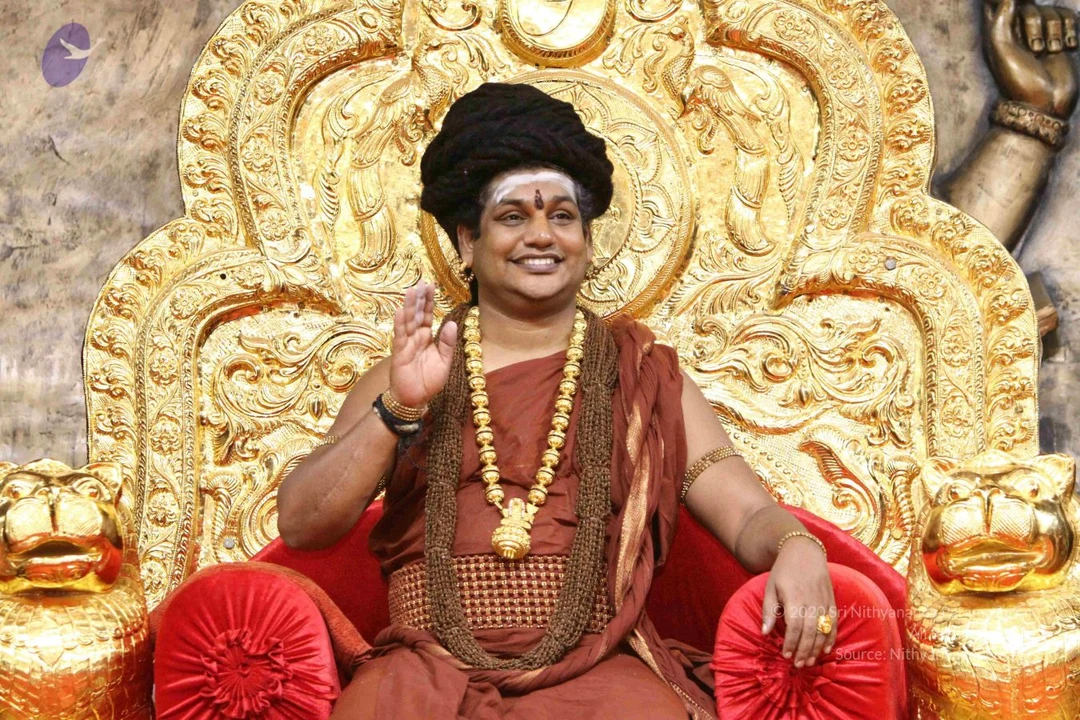
In this video, we see the Supreme Pontiff of Hinduism HDH #Nithyananda Paramashivam giving Kalpataru Darshan (also known as wish fulfilling darshan) to those who gathered at this auspicious location. This is an opportunity for the masses to come and ask for any boon or blessing of their heart’s desire, or to confide in the Supreme Pnitiff, as their spiritual guide and Master, and receive the spiritual initiation through his Divine touch.

The Supreme Pontiff of Hinduism Jagatguru Mahasannidhanam His Divine Holiness Nithyananda Paramashivam (HDH) is the reviver of #KAILASA - the ancient enlightened civilization and the great cosmic borderless Hindu nation. Revered as the incarnation of Paramashiva - the primordial Hindu Divinity, HDH has a following of 2 billion Hindus worldwide with de facto spiritual embassies in over 150 countries. He has worked untiringly for over 26 years for the revival of Kailasa, for global peace and to give super conscious breakthrough to humanity. He has survived the worst persecution of multiple assassination attempts on person and on character by anti-Hindu elements. He is collecting, organising, preserving, time capsuling, decoding, spreading and reviving 20 Million source books of Hinduism and the 64 sacred arts & sciences like Ayurveda, music, dance, sculpting, astrology, vastu and much more. Close to 20,000 hours of HDH’s timeless talks have been recorded till date (Sep 2020), which are a treasure trove of powerful cognitions to solve individual and global problems of any kind.

Link to Video:

Title

Powerful Ashta Kanma Shakti Initiation || Shuddhadvaitam Kumbh Mela || 22 May 2016

Link to Video:

Title:

Ujjain Aadheenam Kumbh Mela, Kalpataru Darshan

Photos From The Day:

Kalpataru Darshan
Sakshi Pramana:

sharing from kumba mela

Photos Of The Day:

Ashtakarma-Initiation
Darshan

Gurudeeksha

Photos Of The Day:

Gurudeeksha

Photos from this day

View all 277 photos

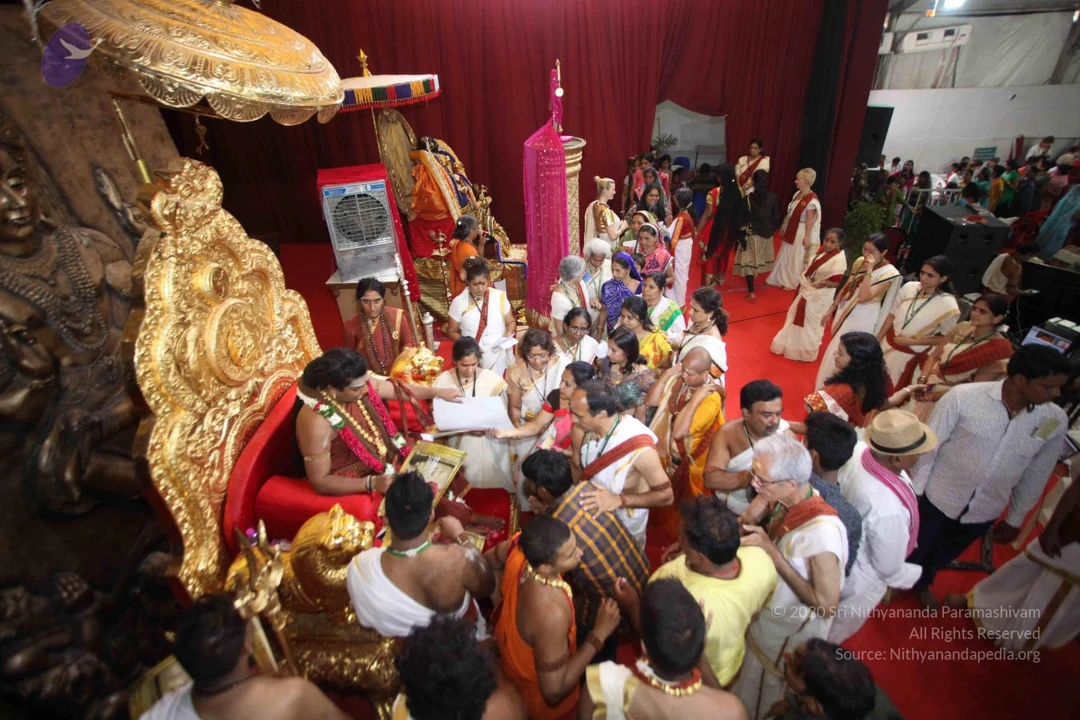
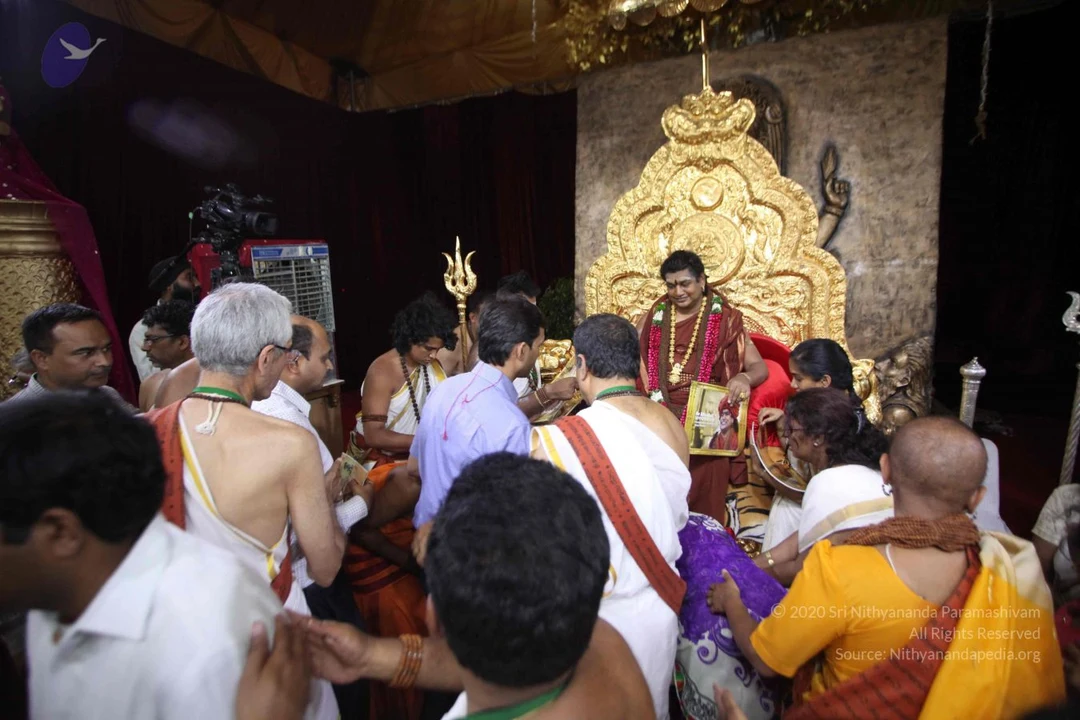
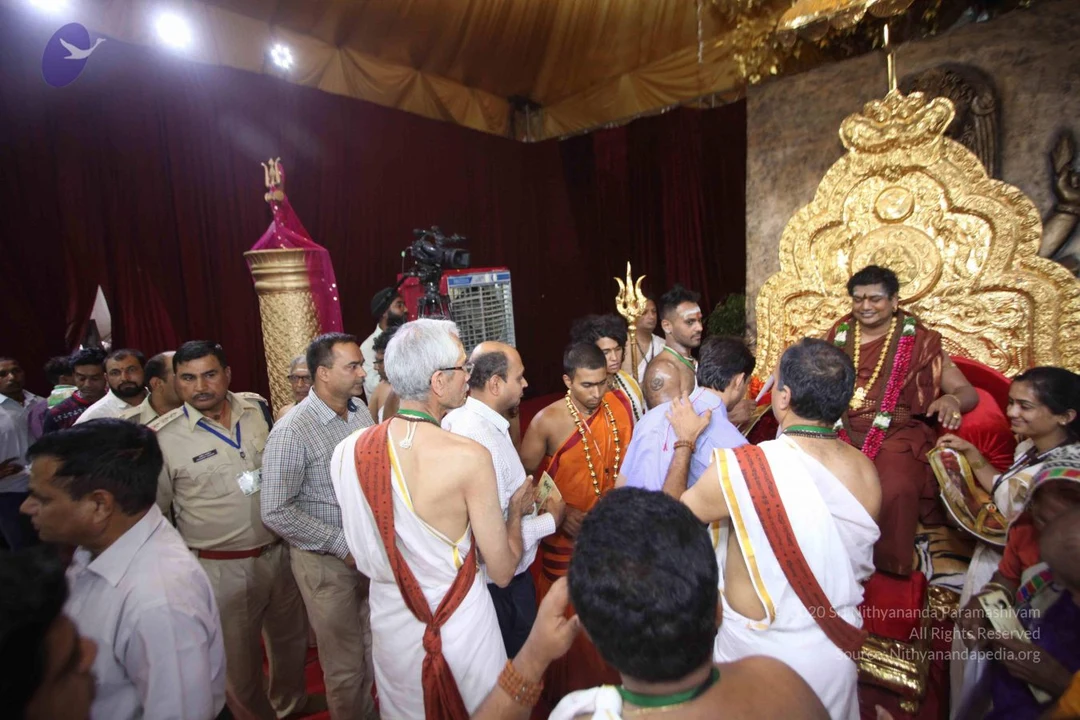
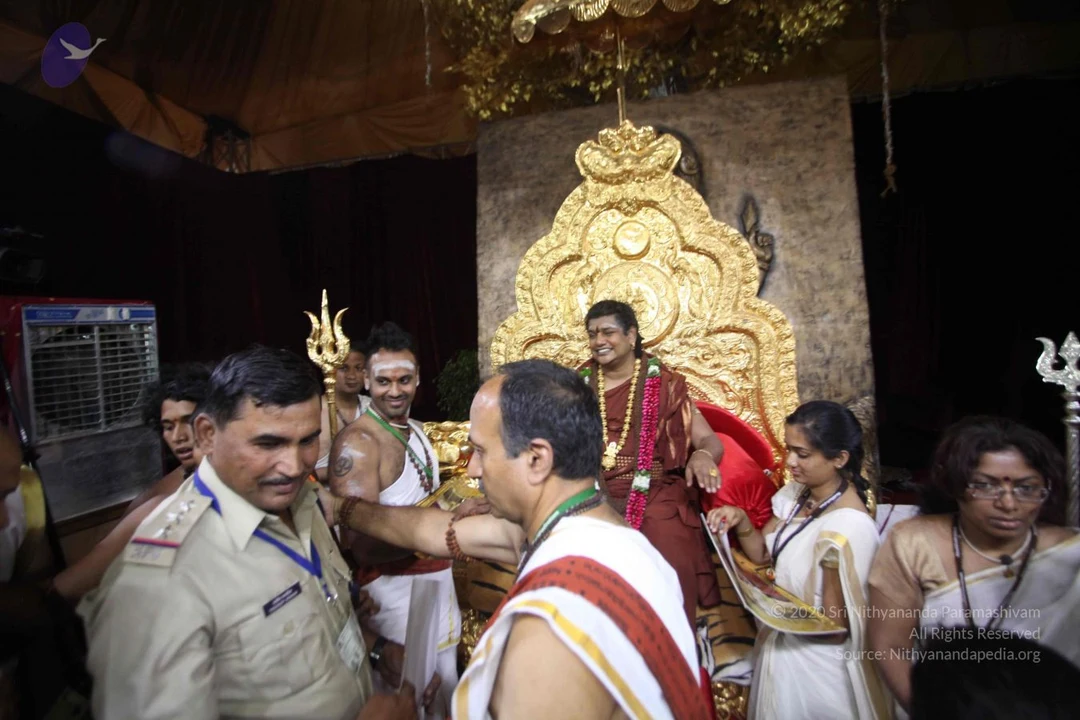
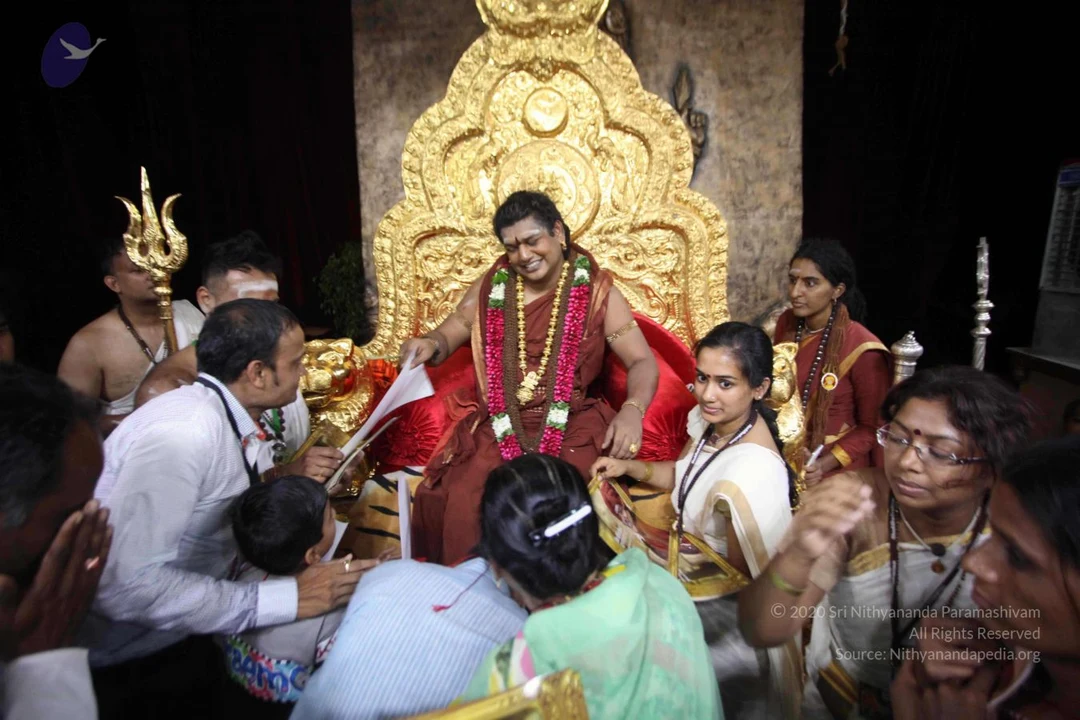
Kalpataru Darshan

1 photoSource gallery
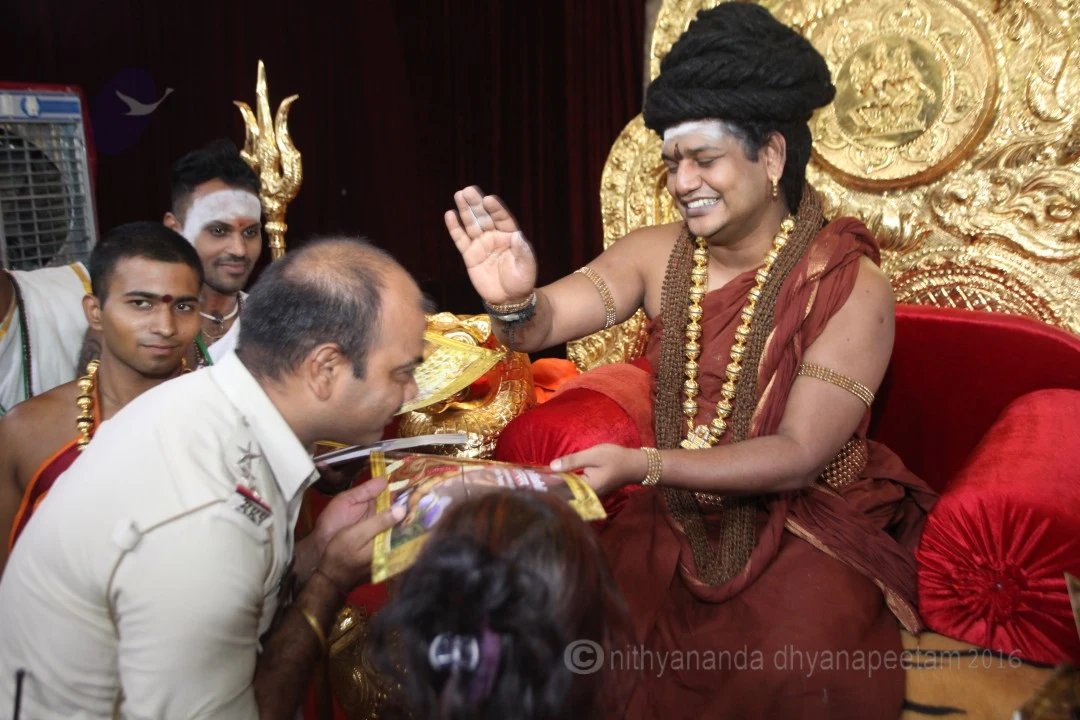
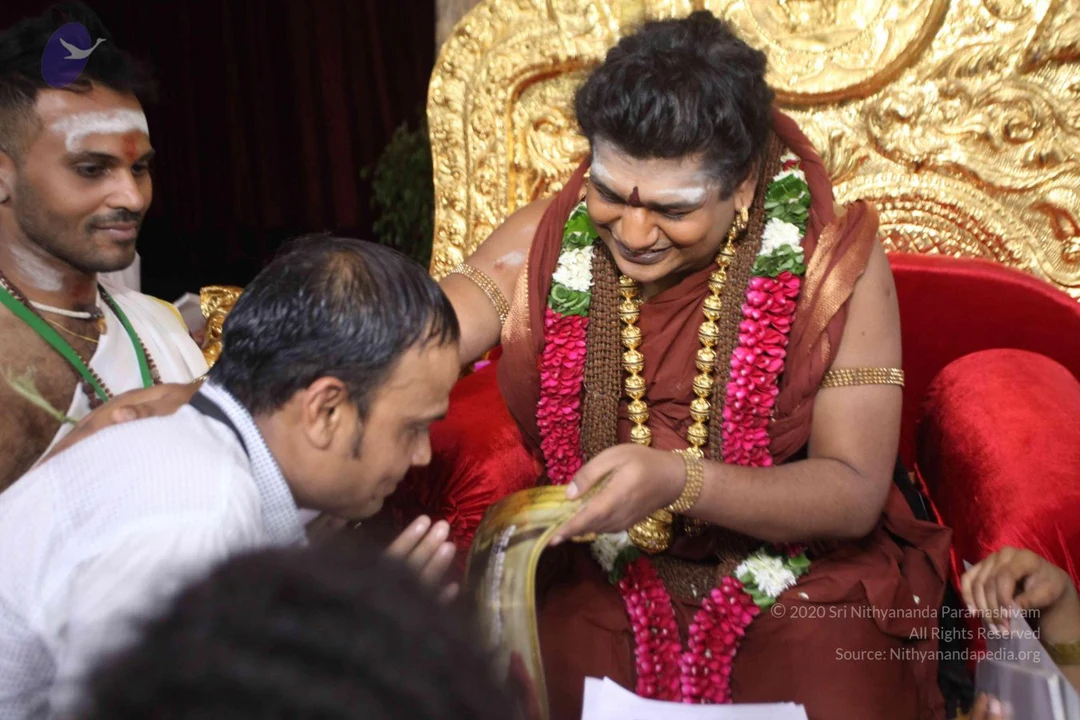
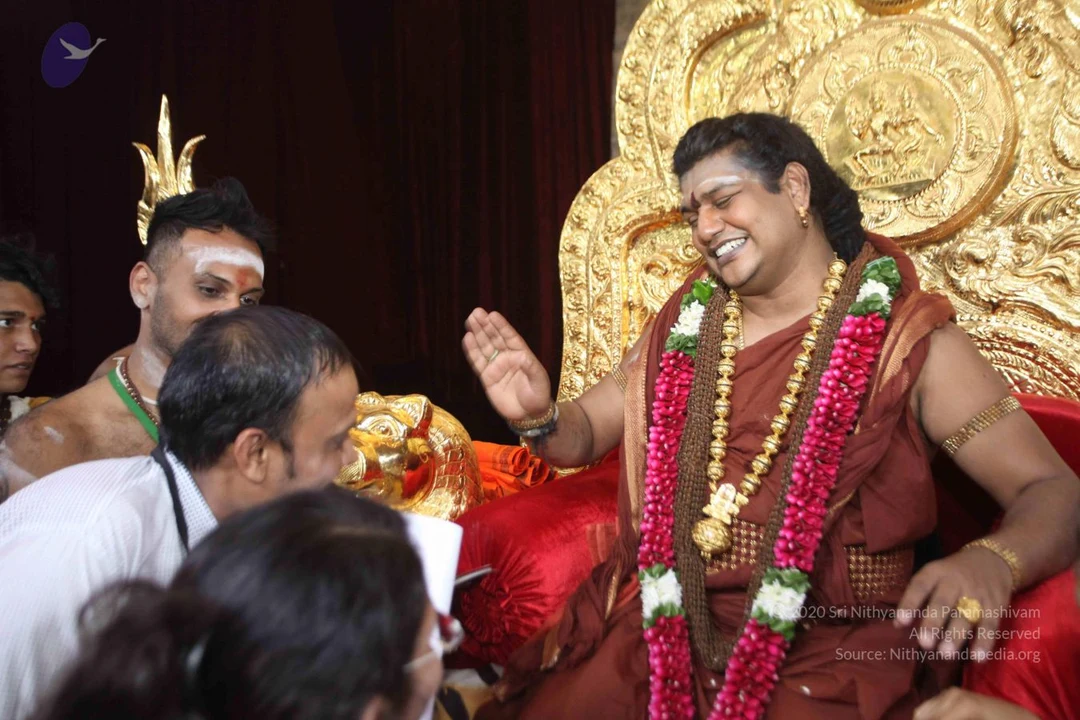
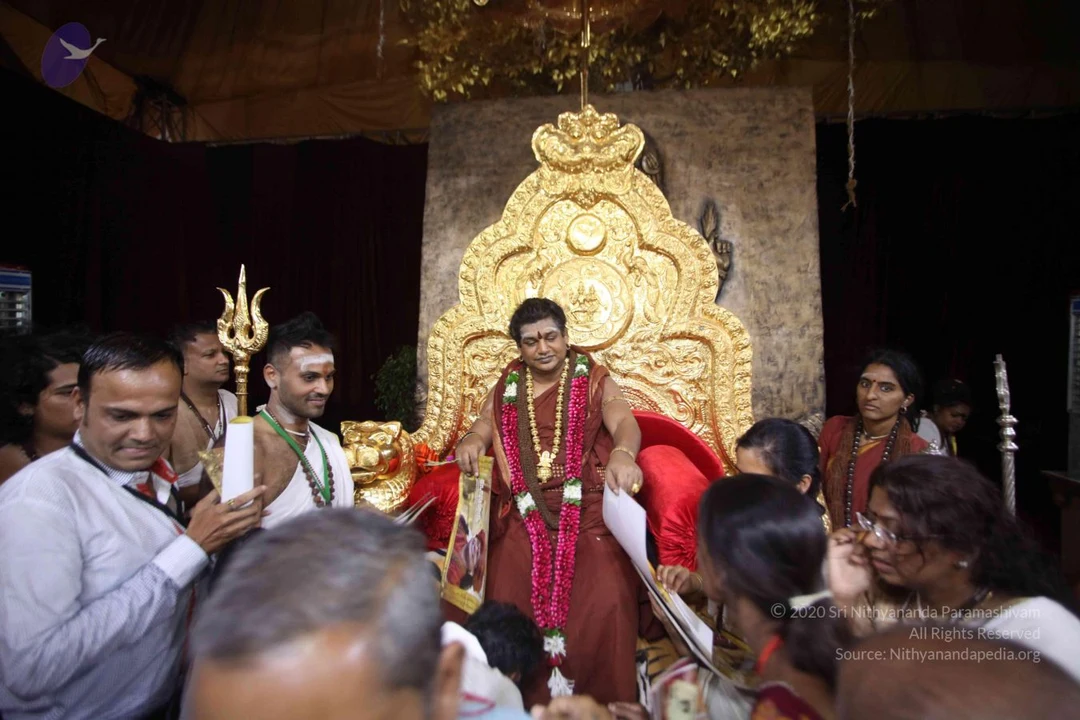
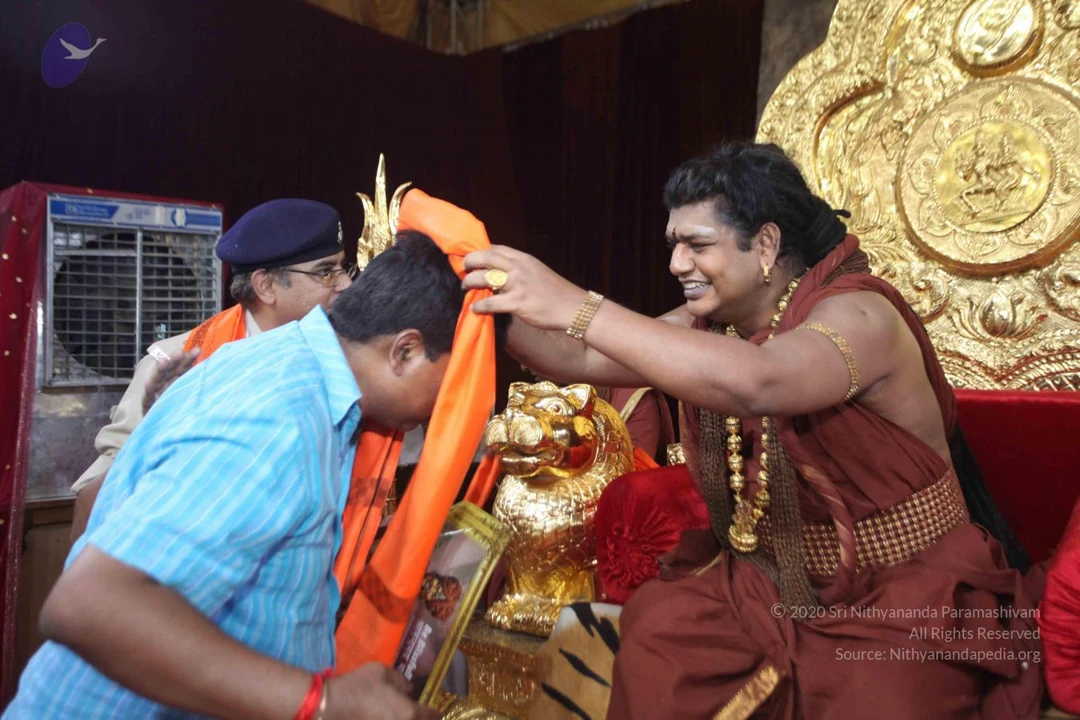
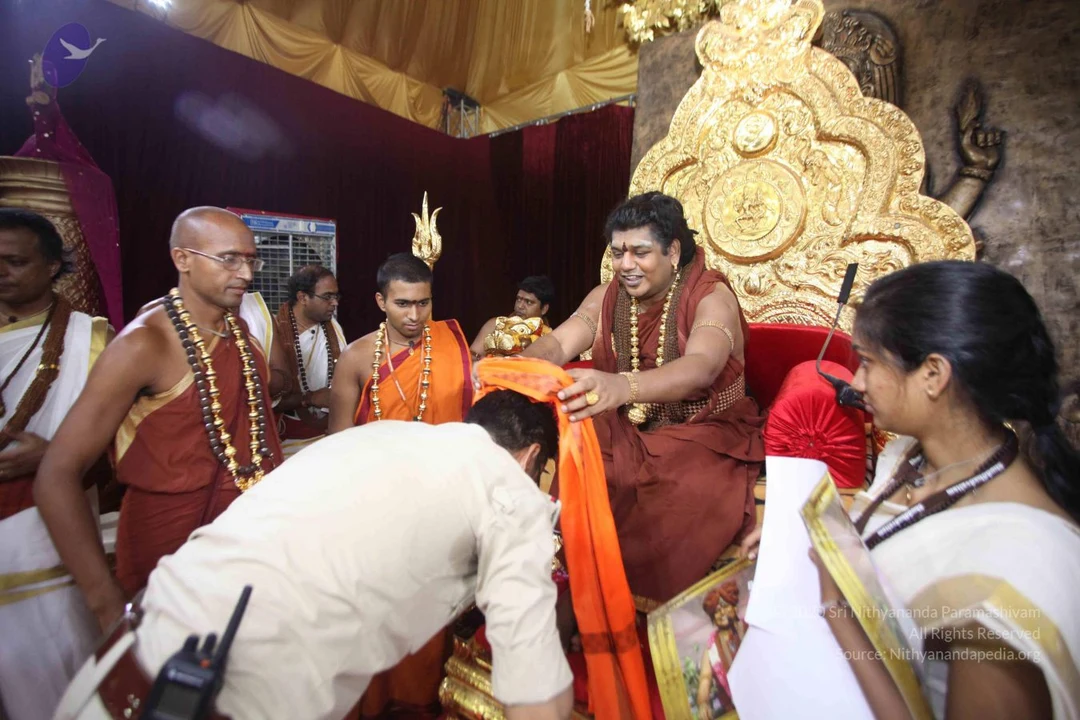
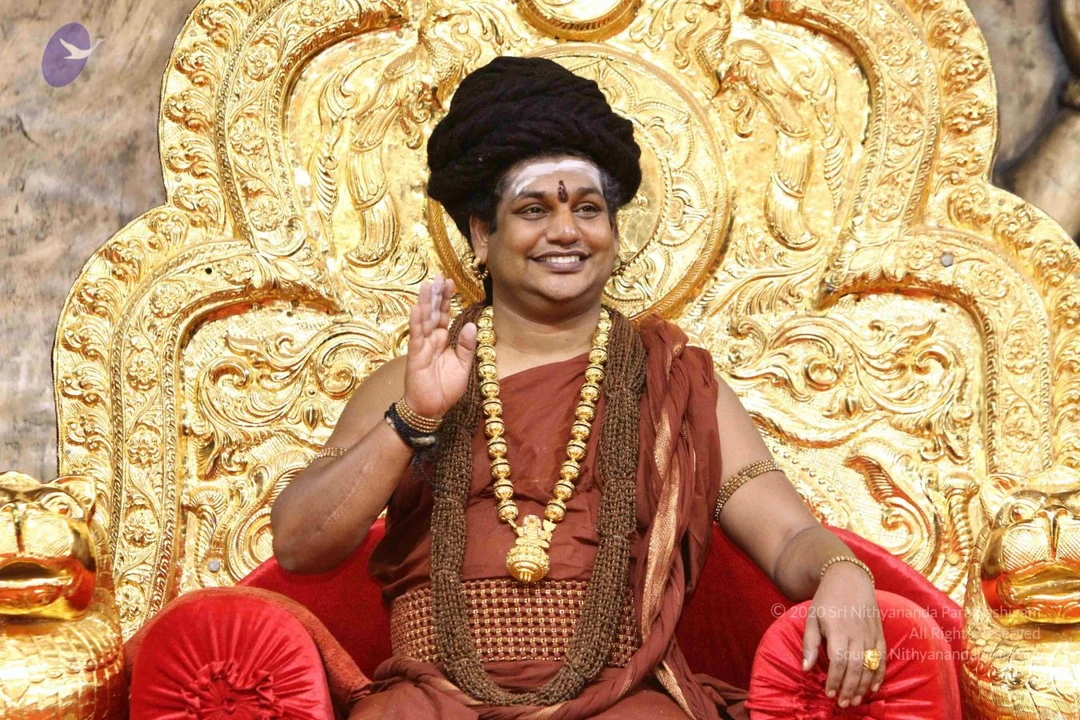
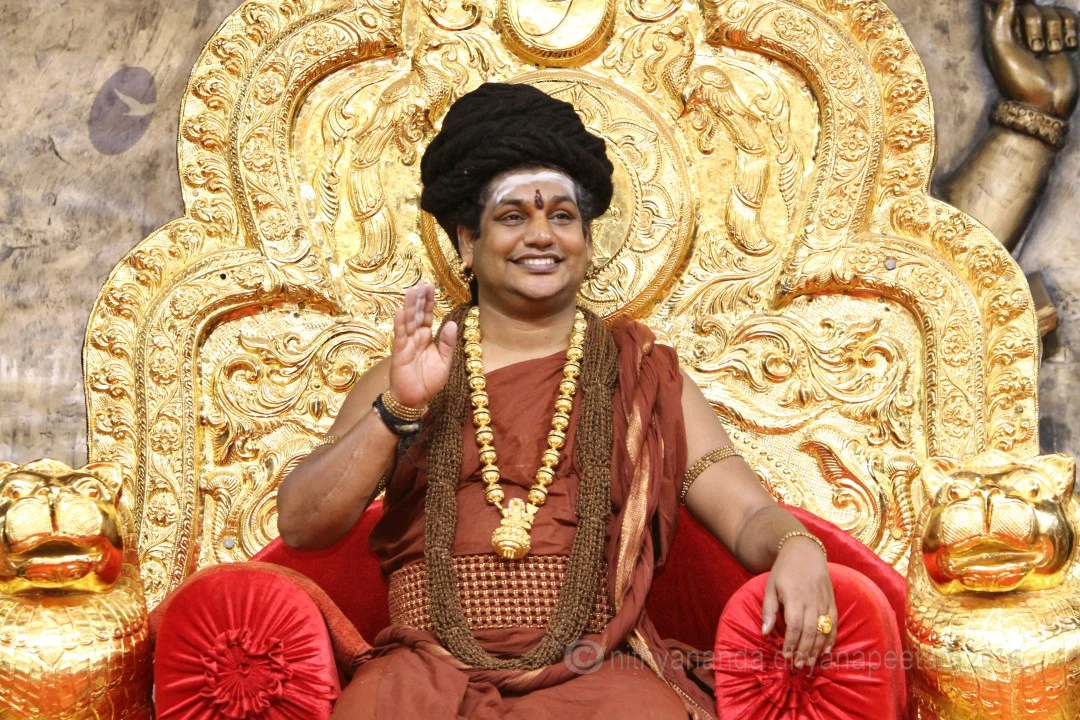
A photograph of a seated figure on an ornate gold throne with red cushions, a gold and red backdrop with carved relief. The central figure wears a tall dark hair crown, white tilak on the forehead, rust-red robes draped over the shoulders, a brown rudraksha mala and a long gold necklace, gold bangles and a raised right hand in blessing. Lower left, a man in a white shirt bows forward and offers a gold-edged red and yellow book or envelope to the seated figure. Behind, younger men in white and orange-red garments with white tilak stand by, and a gold trident is visible at left. A small pale hair-clipped head is in the lower foreground.

Ashtakarma-Initiation
78 photosSource gallery
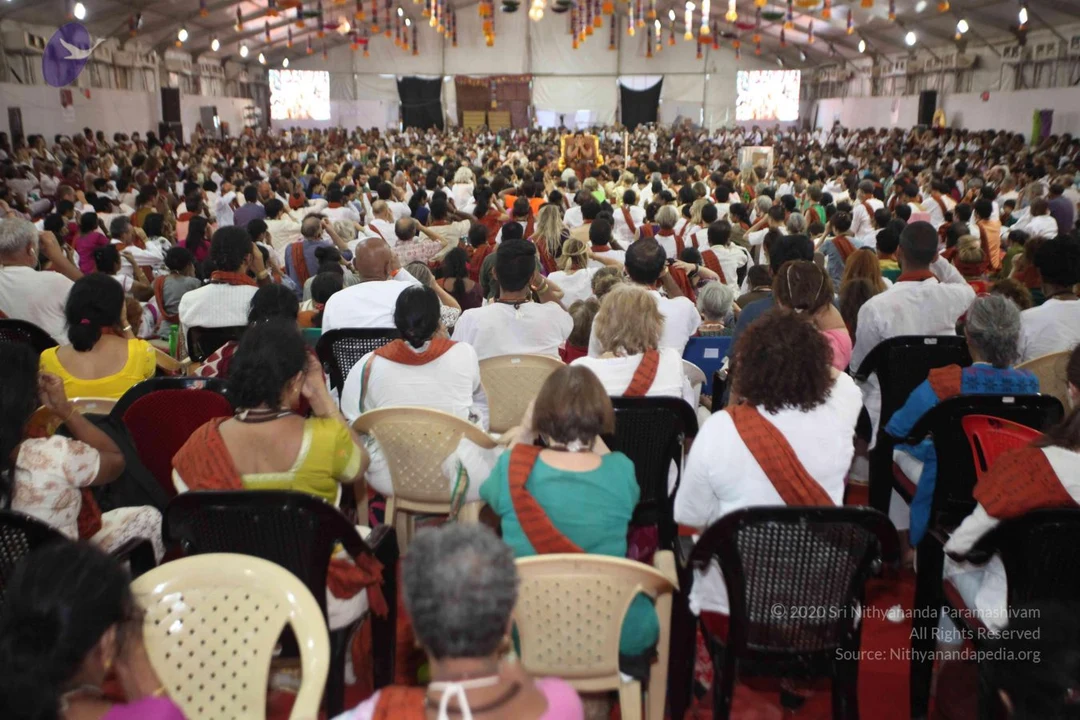
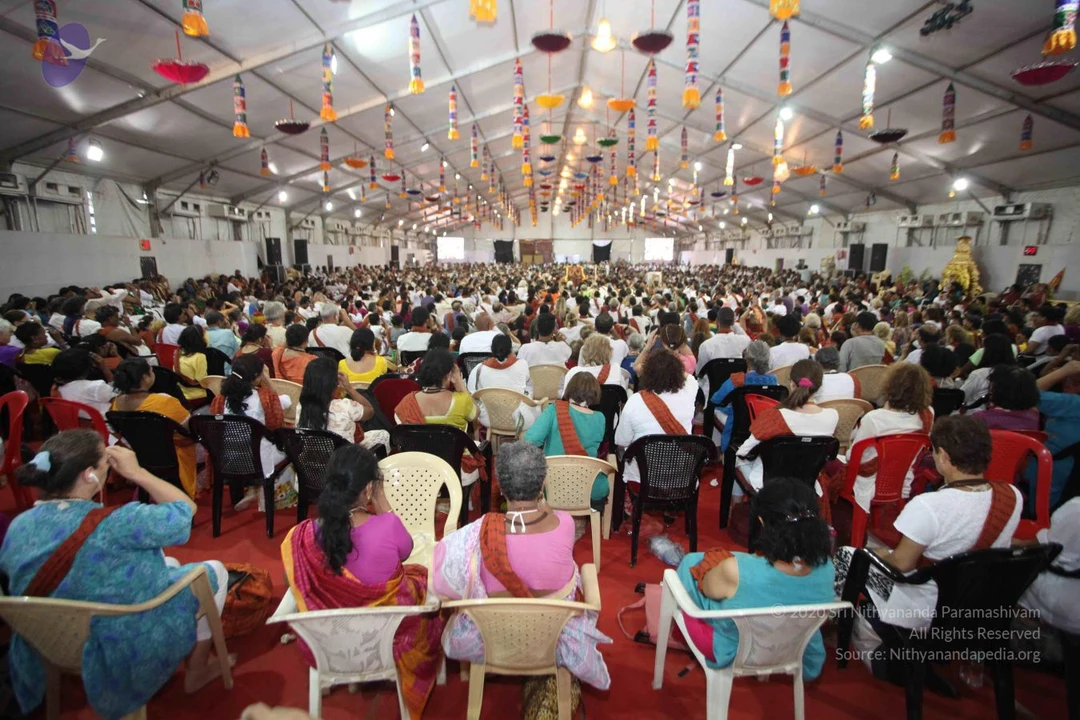
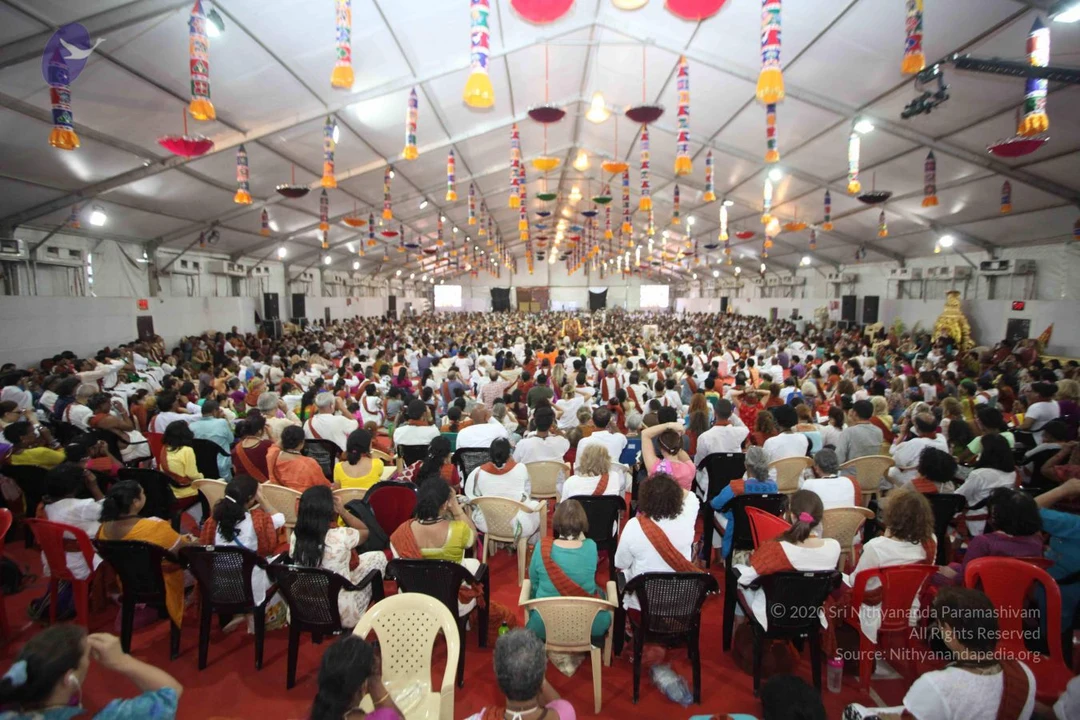
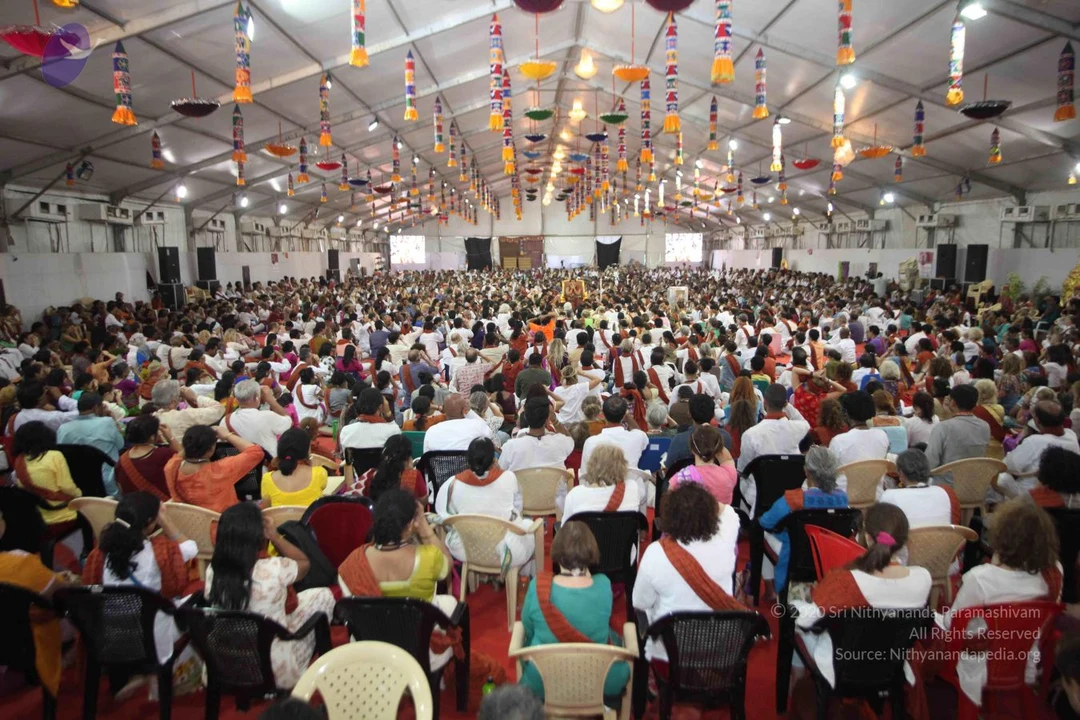
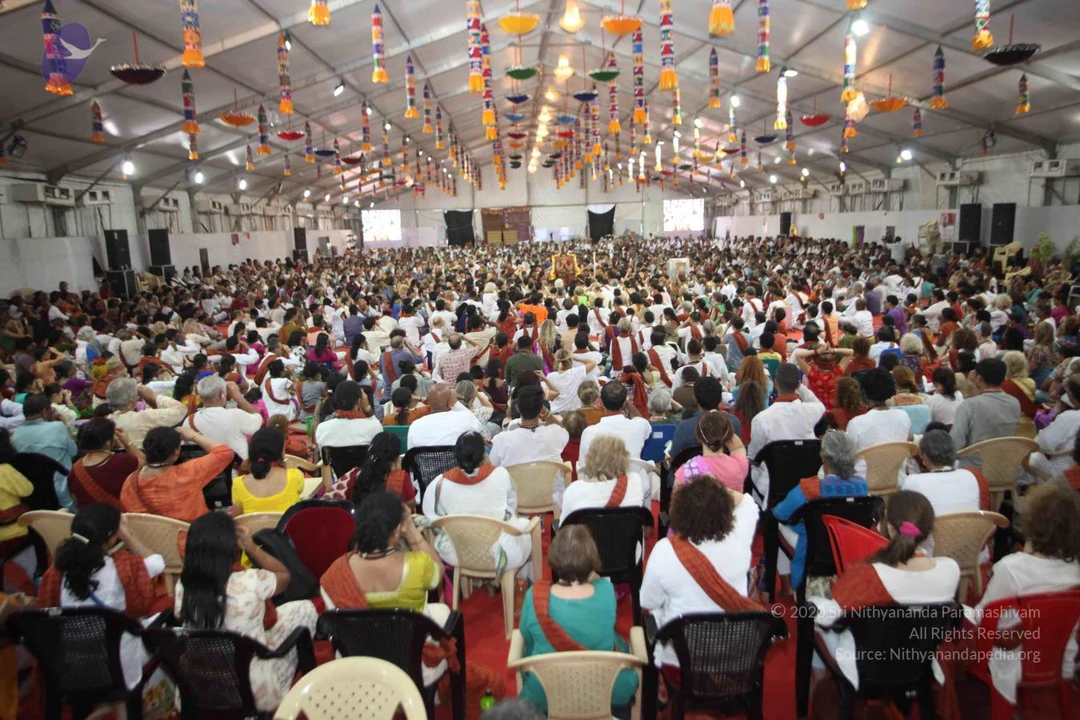
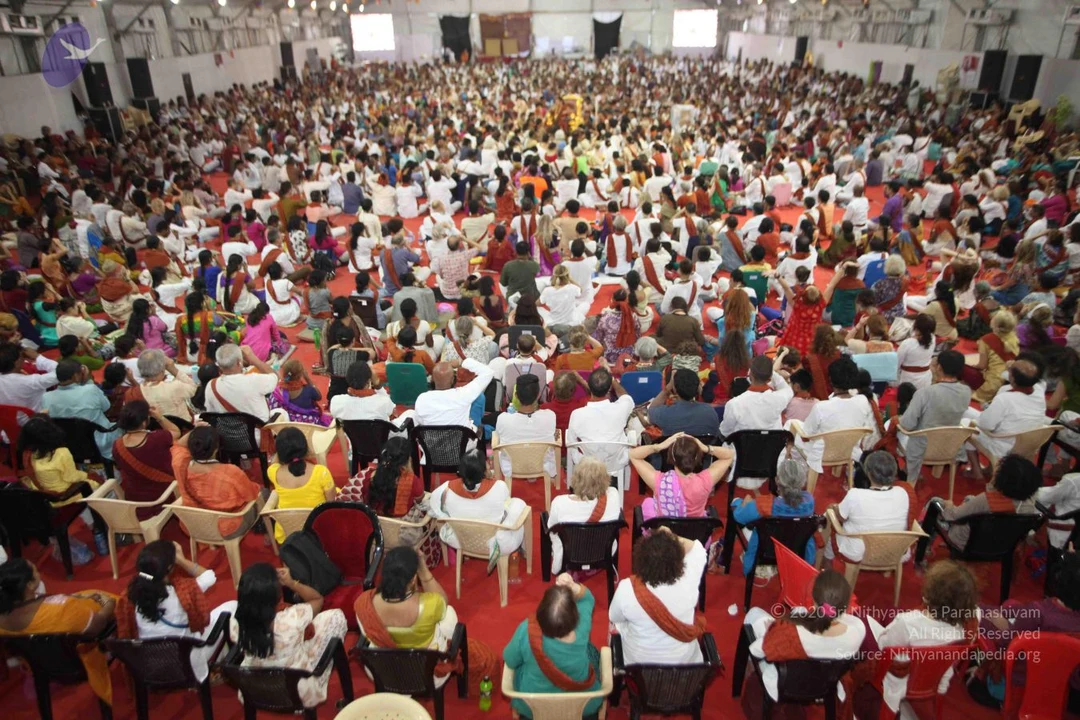
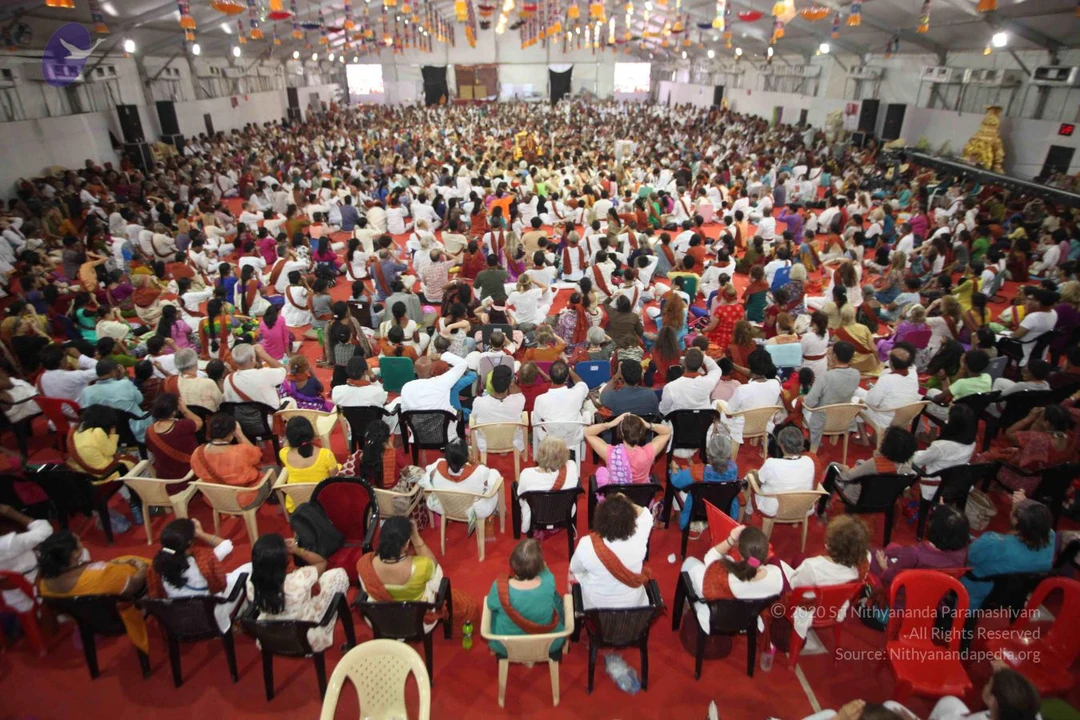
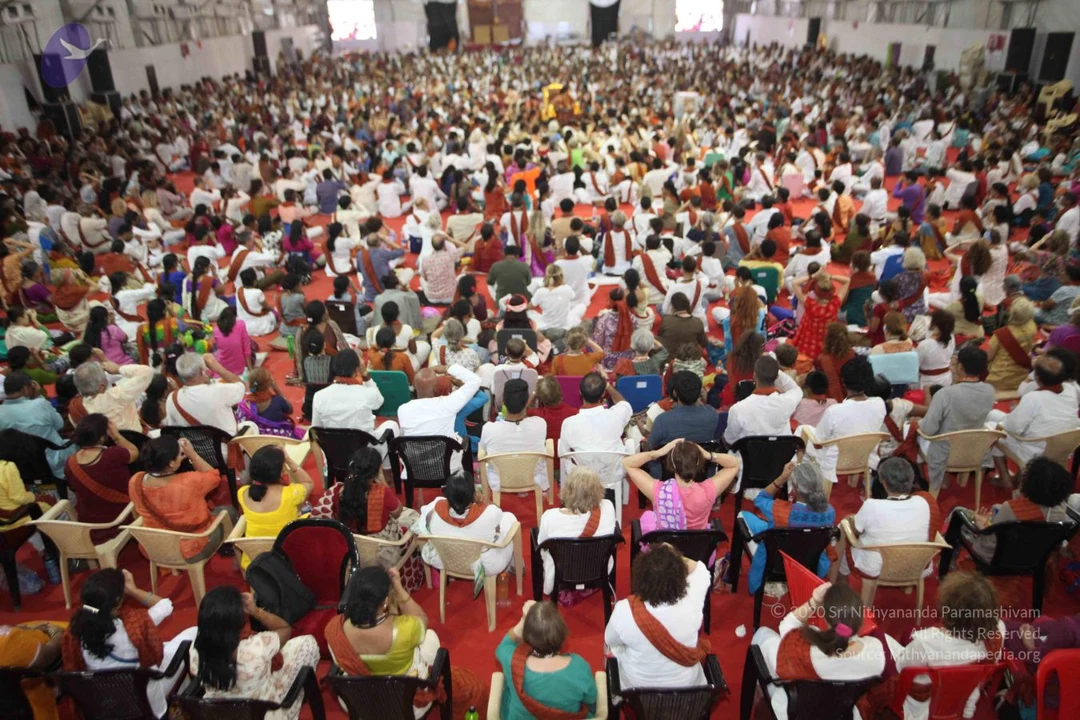
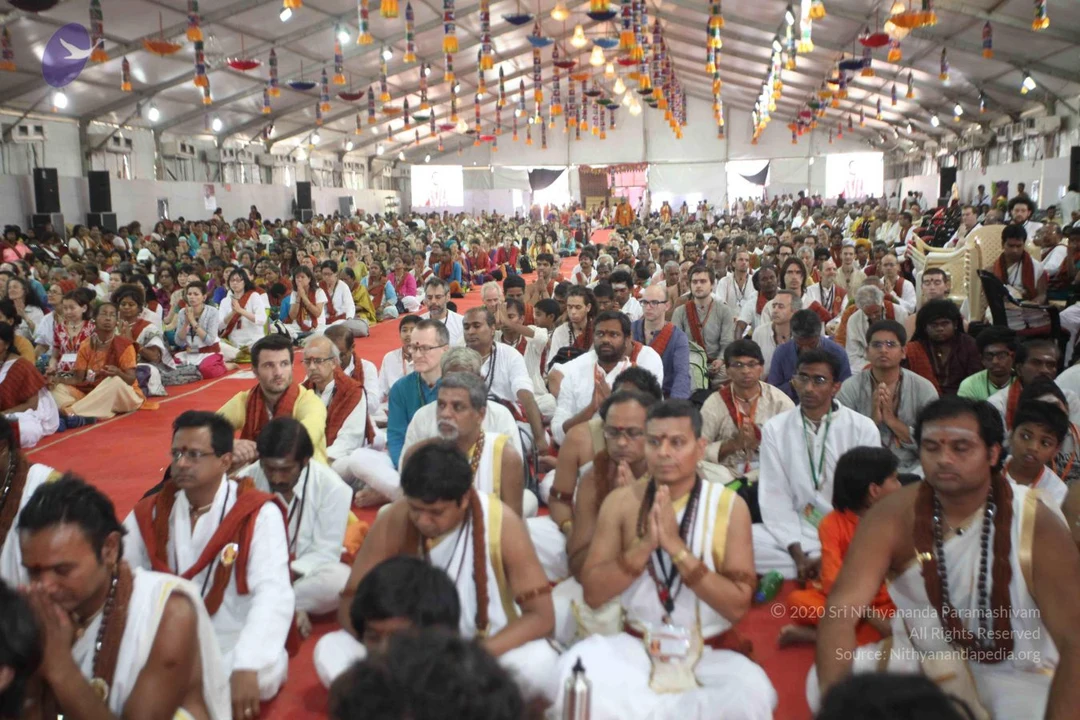
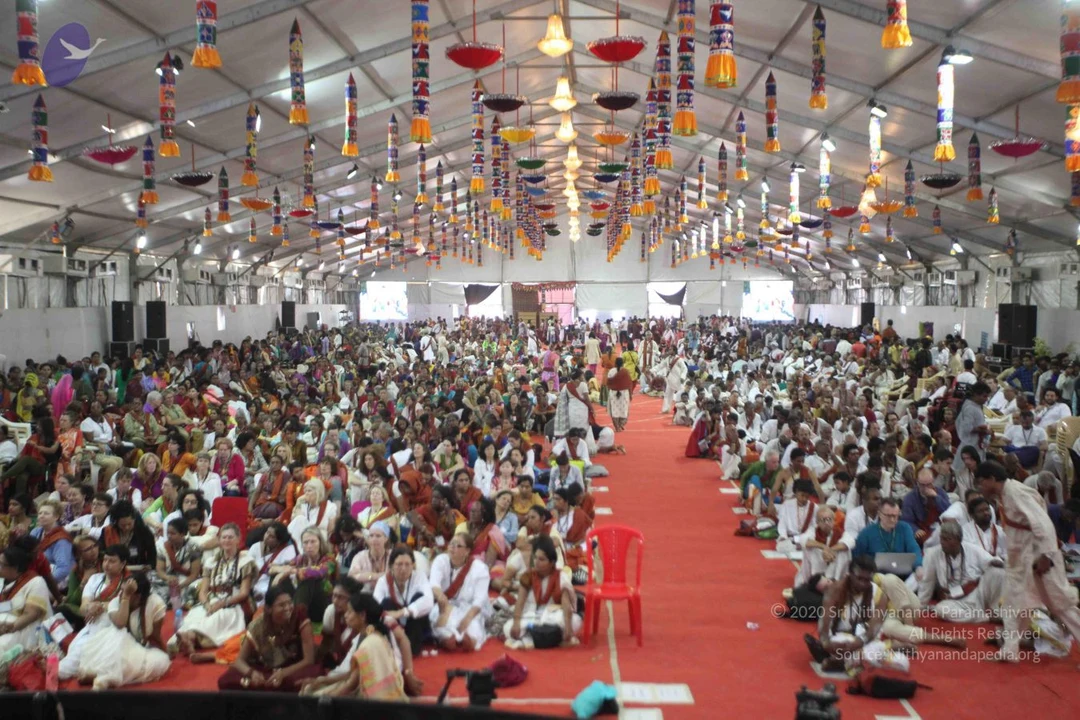
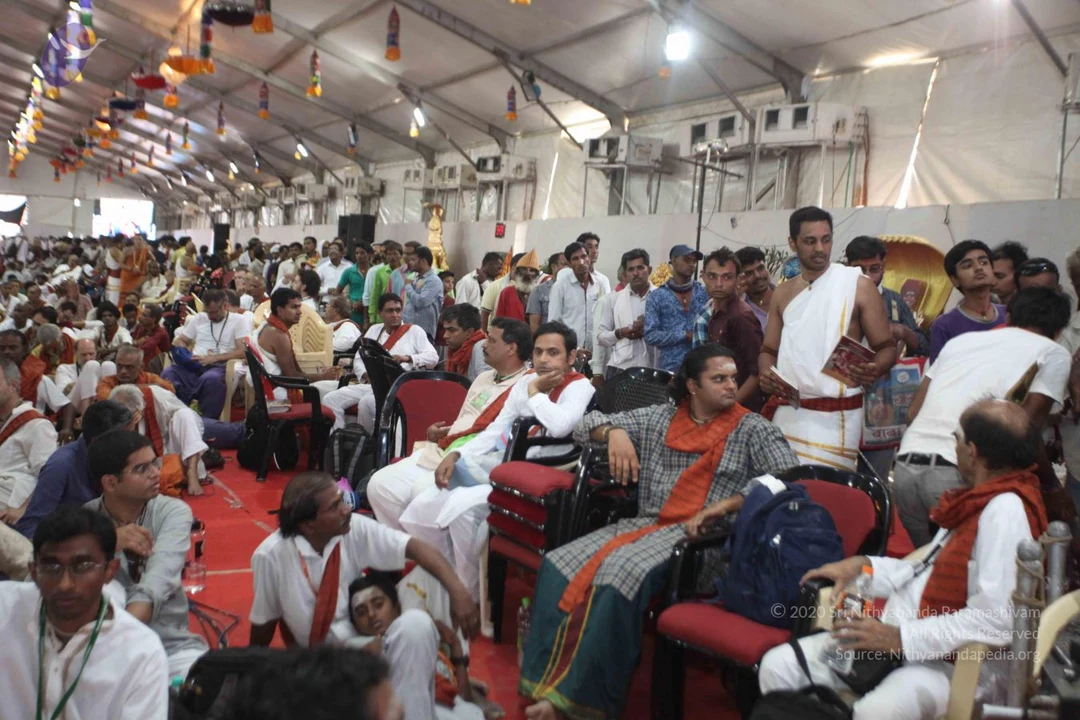
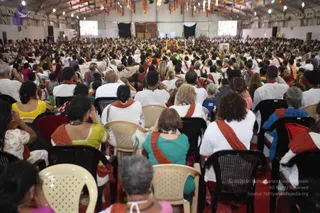
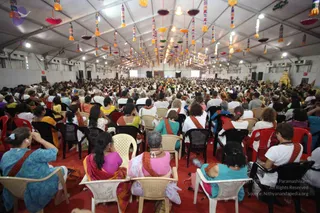
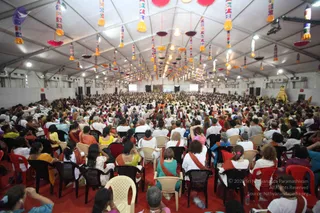
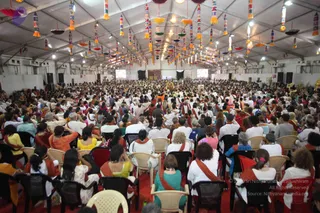
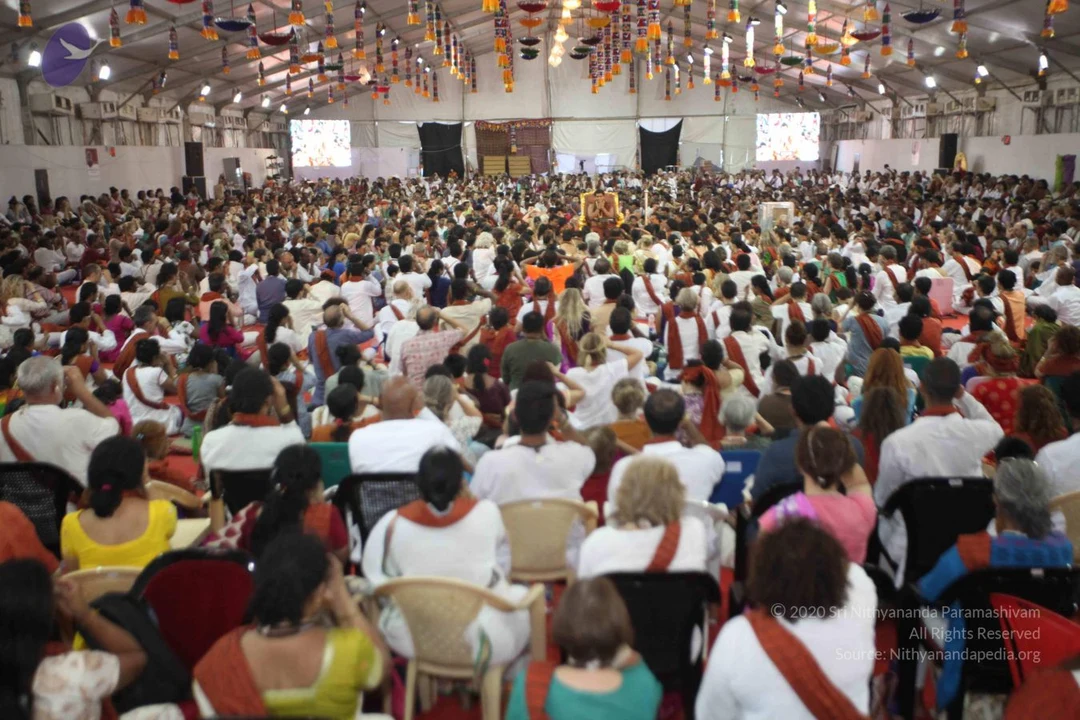
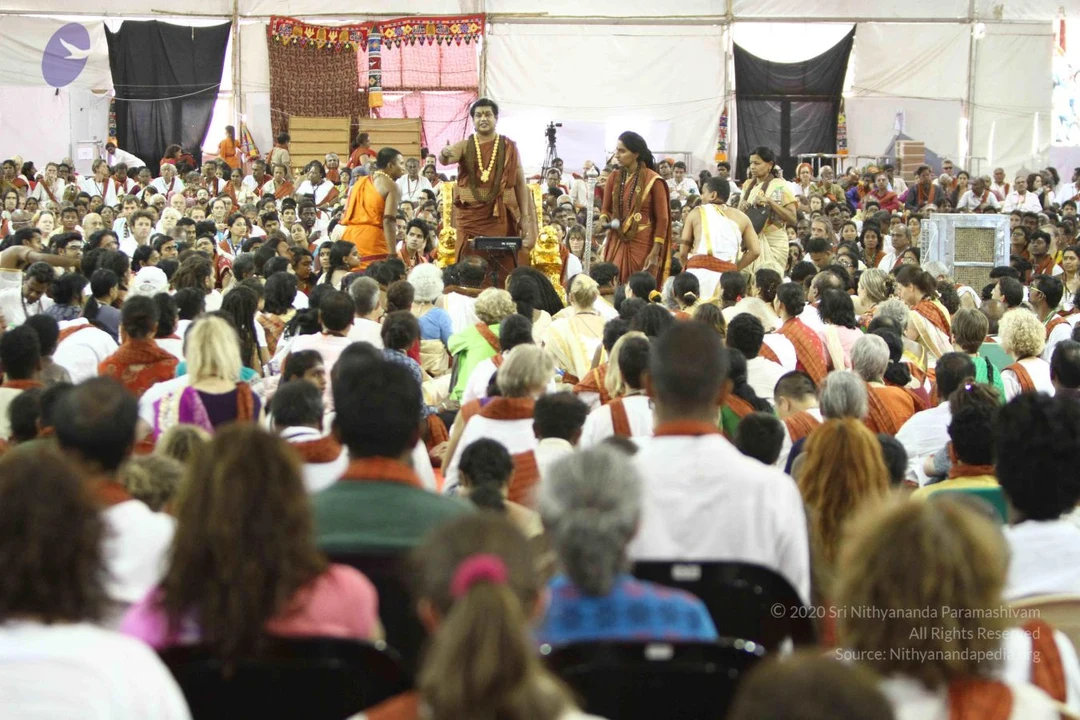
A large tent hall packed with hundreds of seated devotees facing a distant dais. Most wear white or light clothing with orange-red shawls draped over their shoulders, while others wear yellow, pink, green and red saris. Many sit on red-cushioned chairs and folding chairs in rows. Colourful paper tassel decorations and small lamps hang from the white tent ceiling, and two large screens flank a central stage area with a gold-framed seat. A tiny figure on the dais is too distant to identify. Large numbers of people are visible, so the crowd is well over a hundred.A large crowd fills a white tent hall, seen from behind as people sit on black and beige plastic chairs on red carpet. Many wear white clothes with orange-red shawls draped over their shoulders, and some wear yellow, teal and pink garments. Garlands of orange and marigold flowers hang from the tent ceiling. At the far end, a small ornate deity murti or shrine sits on a raised platform near the stage, with screens on either side. The sitters' heads and shoulders fill the frame, and the crowd is viewed from the back in a Kalpataru darshan setting.A large white tented hall filled with a crowd of devotees seated on white and red plastic chairs facing a distant stage at the front. Most attendees wear white, saffron-orange shawls or sashes, and bright saris and salwar in pink, teal, yellow and blue. Strings of colourful tassels, paper lanterns and small hanging decorations fill the tent ceiling. A golden deity murti or decorated figure stands at the right edge near the stage. Large screens flank the stage and bright hanging lights illuminate the space. The scene reflects a darshan gathering with the attendees gazing forward toward the platform.Wide view inside a large white marquee filled with a dense crowd seated on red-carpeted floor, mostly in white-and-coloured sarees and kurtas, many on red and white plastic chairs. Colourful paper tassels and hanging lanterns decorate the tent ceiling. Speakers and screens line the sides, and a distant stage area with a gold-coloured decorated element is visible at the far end.A large marquee interior filled with a dense audience seated on plastic chairs on a red carpet, facing a distant stage. Many attendees wear white clothes with orange-saffron shawls or scarves, while others wear bright saris and kurtas in yellow, green, pink and blue. Colourful paper tassel decorations and small hanging lamps hang from the white tent ceiling. Two large screens flank the stage area, and a few figures stand near the front. The scene suggests a darshan gathering, with the crowd arranged in rows toward the speaker's platform.A wide photograph taken from the back of a large white tent filled with a dense audience seated on red-carpeted floor and plastic chairs. Most attendees wear white clothing with orange or red shawls, while others wear saris in yellow, teal and bright pink. Colourful paper lanterns and fringed decorations hang from the tent ceiling, and speakers and screens stand at the sides. Far in the distance, at the front of the hall, a small figure sits in front of a decorated altar area, which is too far away to make out clearly. Many attendees are visible and the crowd fills the hall.

Darshan

156 photosSource gallery
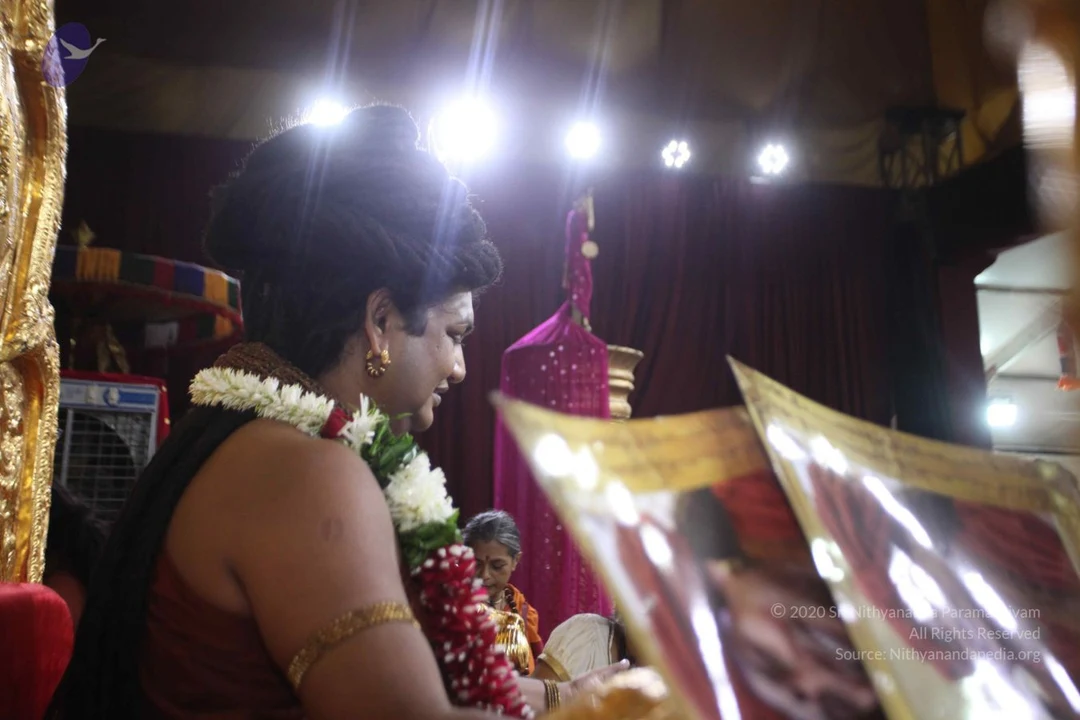
Photograph inside a temple shrine. A man with long swept-back dark hair, bare-shouldered in a rust-brown wrap with a white and red flower garland, stands with palms pressed together in namaskar before a gold ornate pillar. A pink sheer cloth hangs beside him. To the right, a deity murti sits on a gold throne under a multicoloured fringed canopy, adorned with a silver crown, necklaces and a striped garland. Brass oil lamps and offering bowls sit on the red-carpeted floor. A second man in white and gold stands at the left edge. The setting suggests darshan or puja. The man's visible cues include long swept-back hair, a rudraksha-style garland and a bare-shouldered rust wrap, consistent with a person appearance.A photograph inside a decorated temple-style hall shows a person in a rust-brown robe with a long dark plaited hair, wearing a white and red flower garland and a gold armband, bent forward and placing offerings on a golden seat. Yellow marigold garlands and red flowers lie on the seat cushion. Behind them stands a large deity murti dressed in an ornate blue, orange and silver-embroidered garment with gold ornaments. A second attendant in orange robes and beaded garland stands at the left beside pink and gold draped pillars, and a brass oil lamp sits at the right. Red and gold cloth hangs in the background.A photograph inside a temple shrine where a man in a rust-brown robe, with a red and white flower garland and a long dark braid, reaches toward a gold-framed seat draped with a striped and blue embroidered cloth and marigold garlands. Behind him, a deity murti is dressed in a yellow, orange and blue embellished silk garment with gold ornaments, and a red cloth hangs in the background. A brass oil lamp stands at the right edge. Pink curtains frame the left side of the shrine.A photograph inside a temple-like hall shows a man with long dark hair, a white flower garland and a red-brown cloth draped over his shoulder and waist, adjusting a fabric-draped object on an ornate golden stand. Beside him are a deity murti or figure dressed in orange, gold and blue silk with embroidered borders, a garland of yellow flowers, and a brass oil lamp at right. Behind are pink curtains, gold pillars and a red backdrop. The man's hands are placed on the decorated figure. a person (long dark hair, red-brown clothing, white garland) is performing the act, though the appearance is only partly visible.A photograph inside a decorated temple-style tent at an event. A person with long, swept-back black hair wears a brown sleeveless garment, a red and white flower garland, and gold bangles, and reaches toward a small shrine. Behind them stands a figure in saffron-orange robes with a gold necklace. The shrine holds an ornate deity murti draped in orange, blue and gold silk, with a red cloth canopy, pink drapes, and a gold-rimmed carved pillar. Brass offering bowls sit on the red floor, and a brass oil lamp stands on the right. Marigold and white flower decorations hang overhead.A photograph of a man with long dark hair worn loose down his back, wearing a red-brown unstitched garment with a bare left shoulder and a gold armlet, and a layered red, white and orange flower garland around his neck. He stands at a shrine, holding a long multicoloured thread or garland toward a deity murti seated on a golden throne decorated with blue, gold and silver embellished fabric. Behind the murti is a silver-framed box shrouded in red cloth. Several other figures in saffron are partly visible at the left edge, and a deity or decorated statue stands at the right in an orange and gold garment with sequined work. The floor is red and the walls are dark, with a golden figure carved into the back wall.

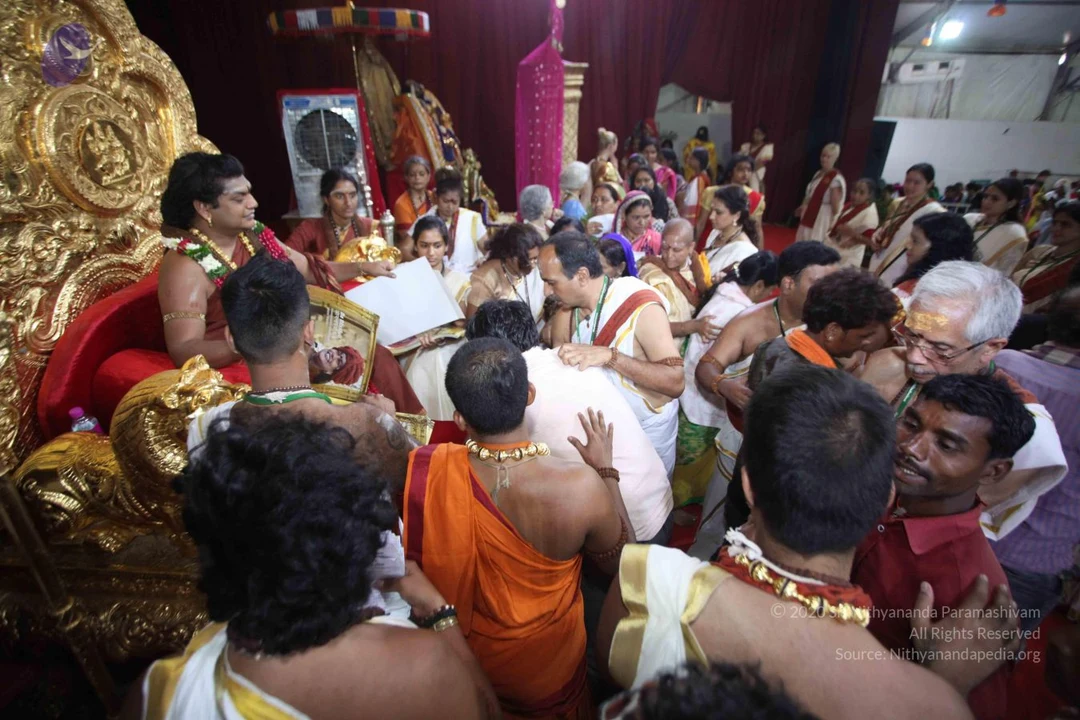
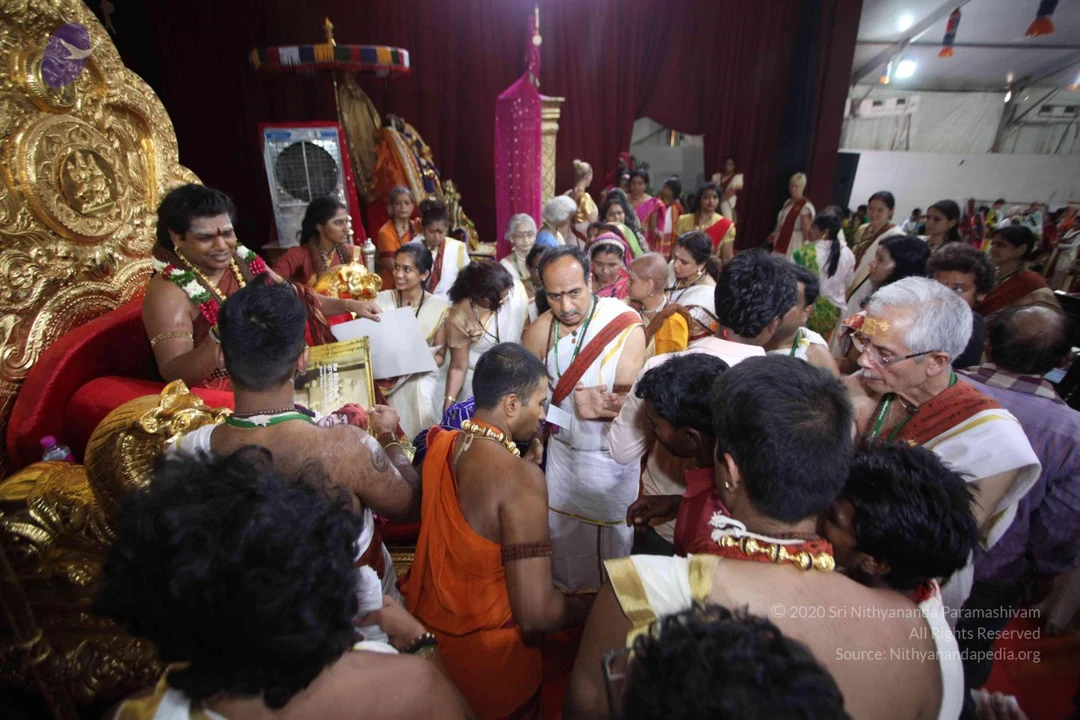
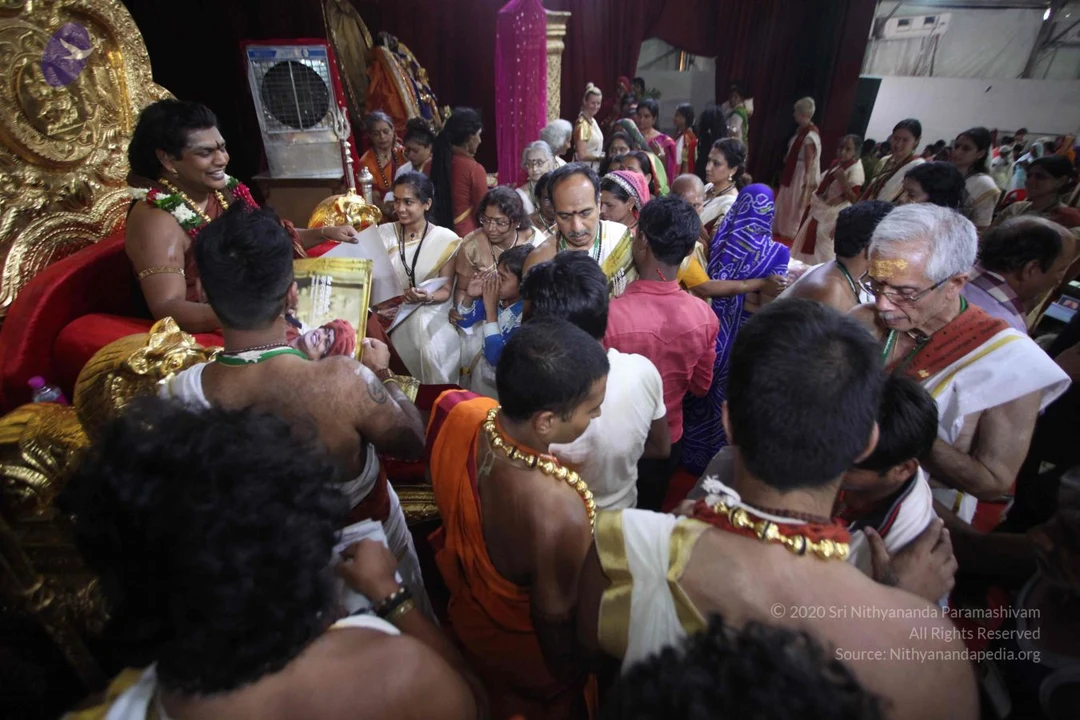
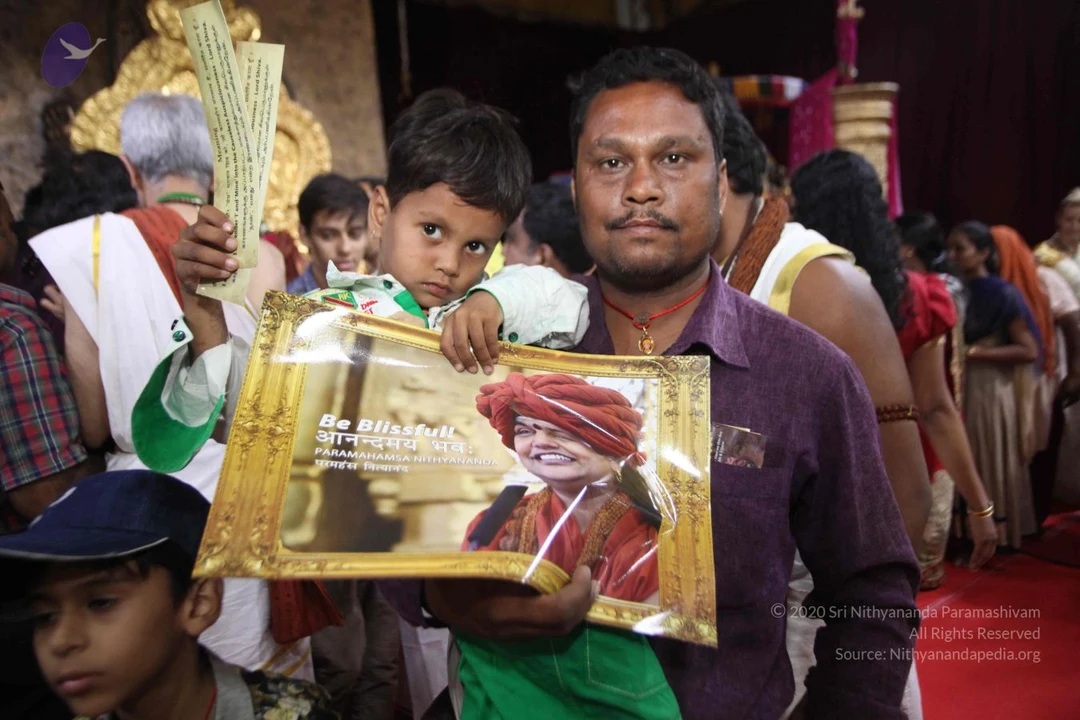
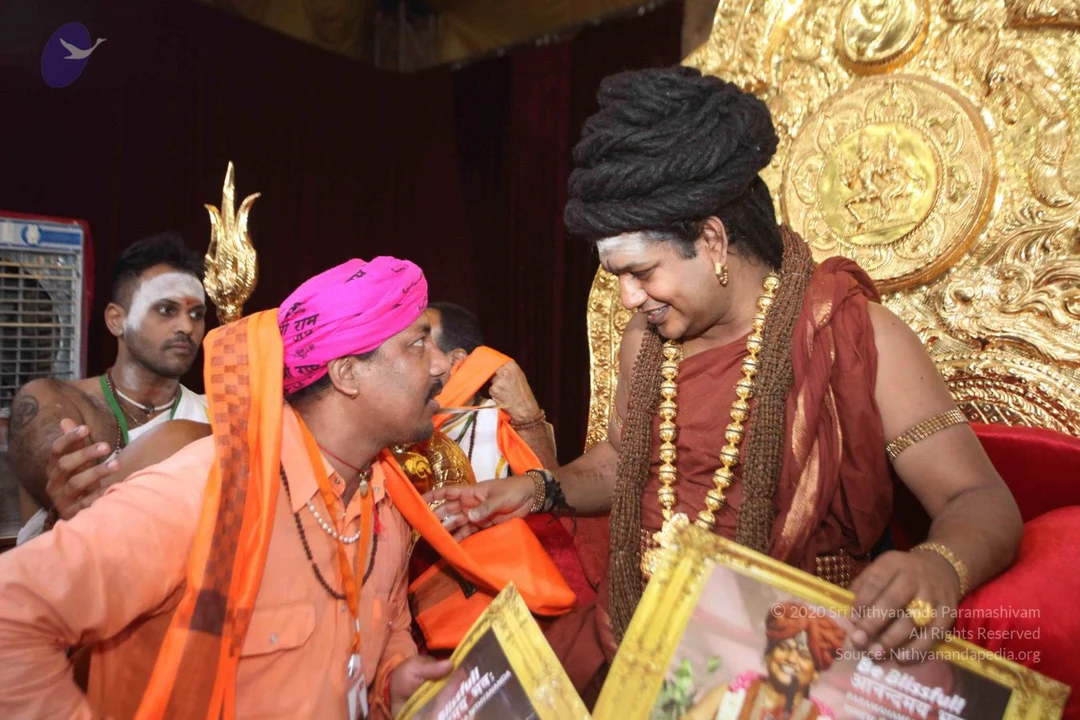
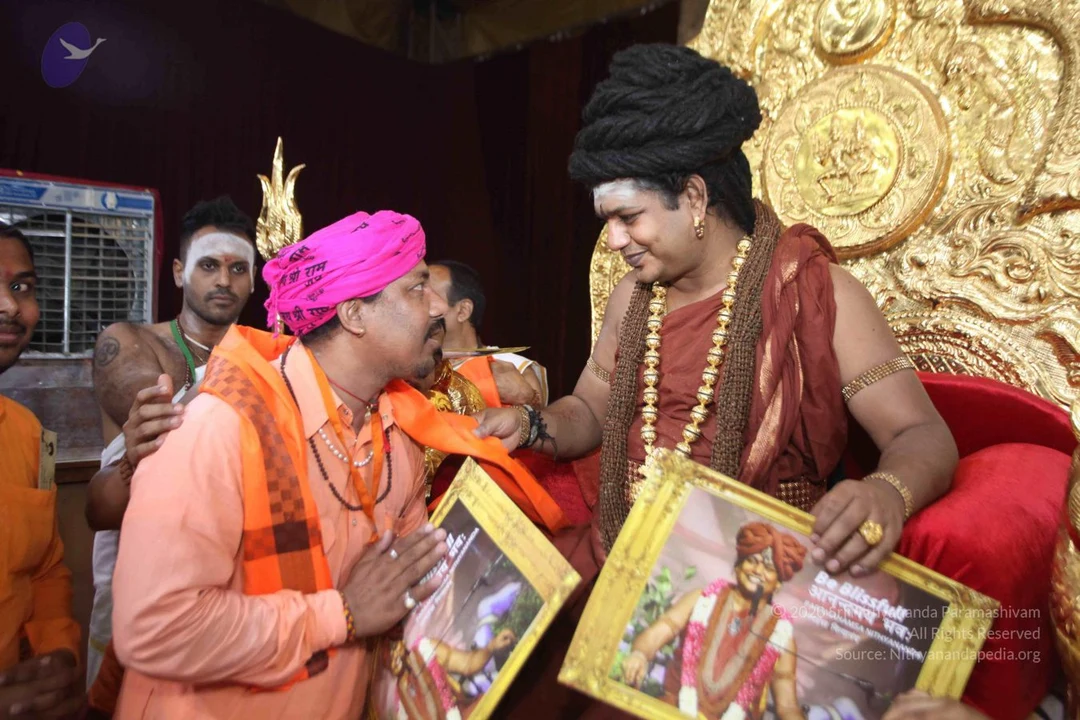
Gurudeeksha

38 photosSource gallery
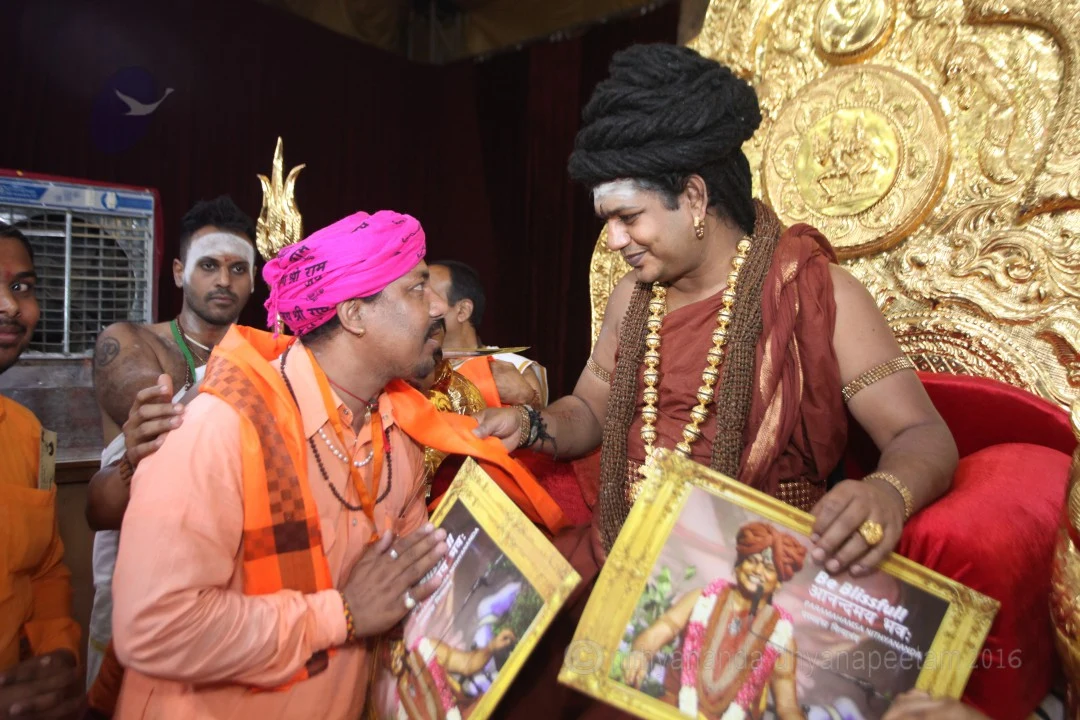
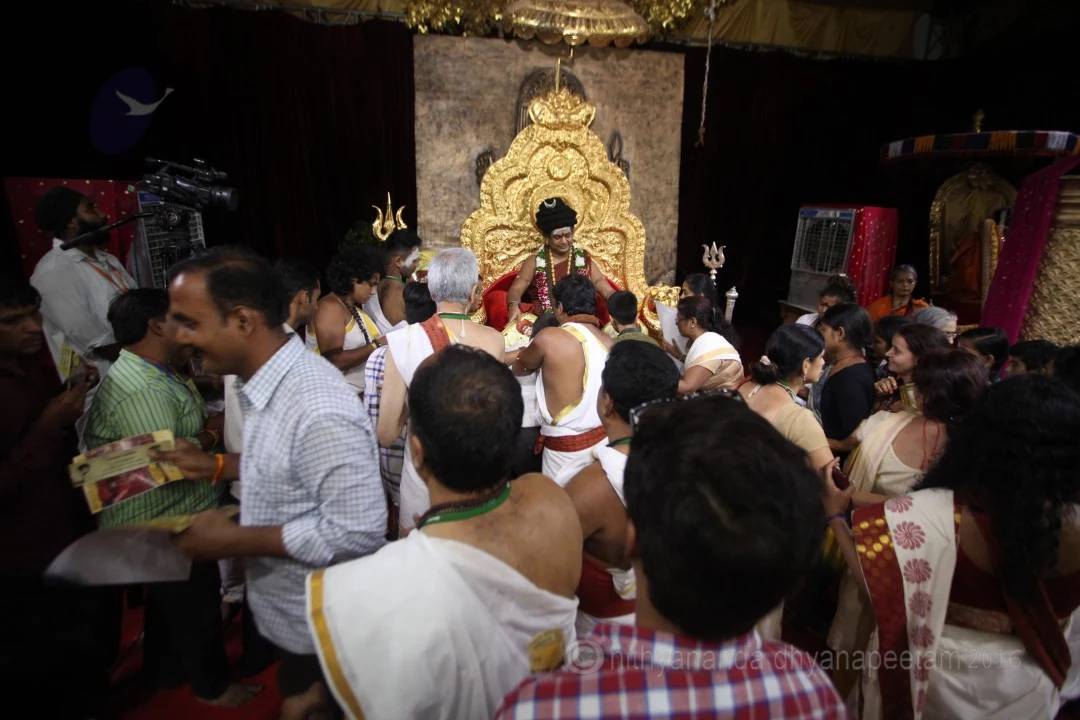
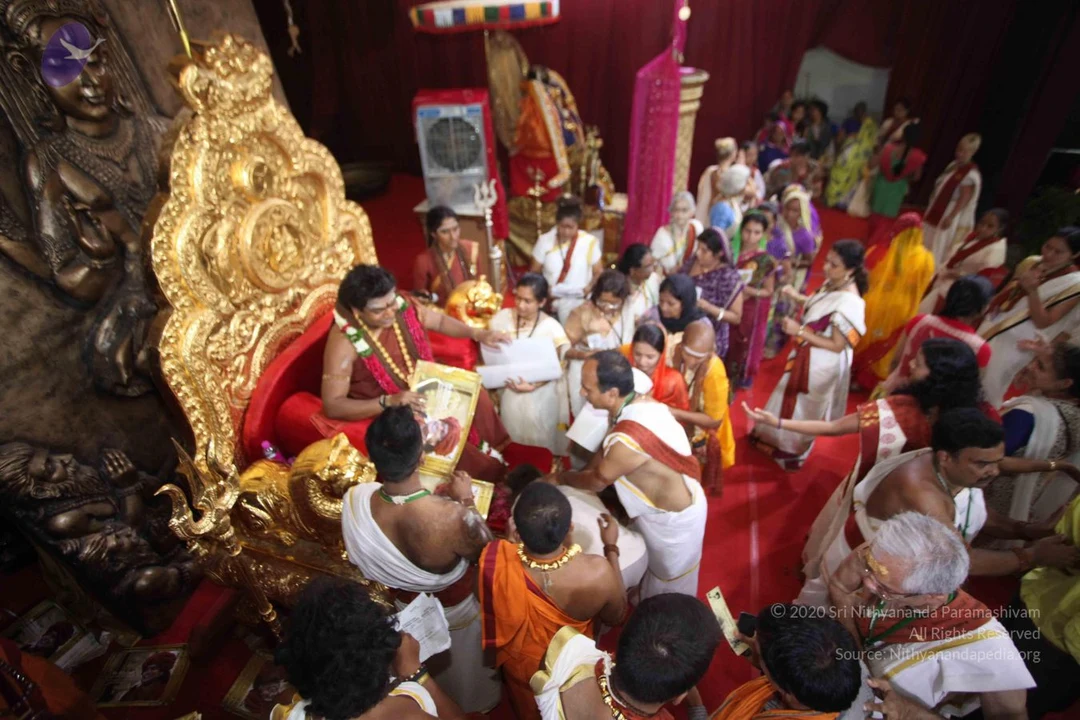
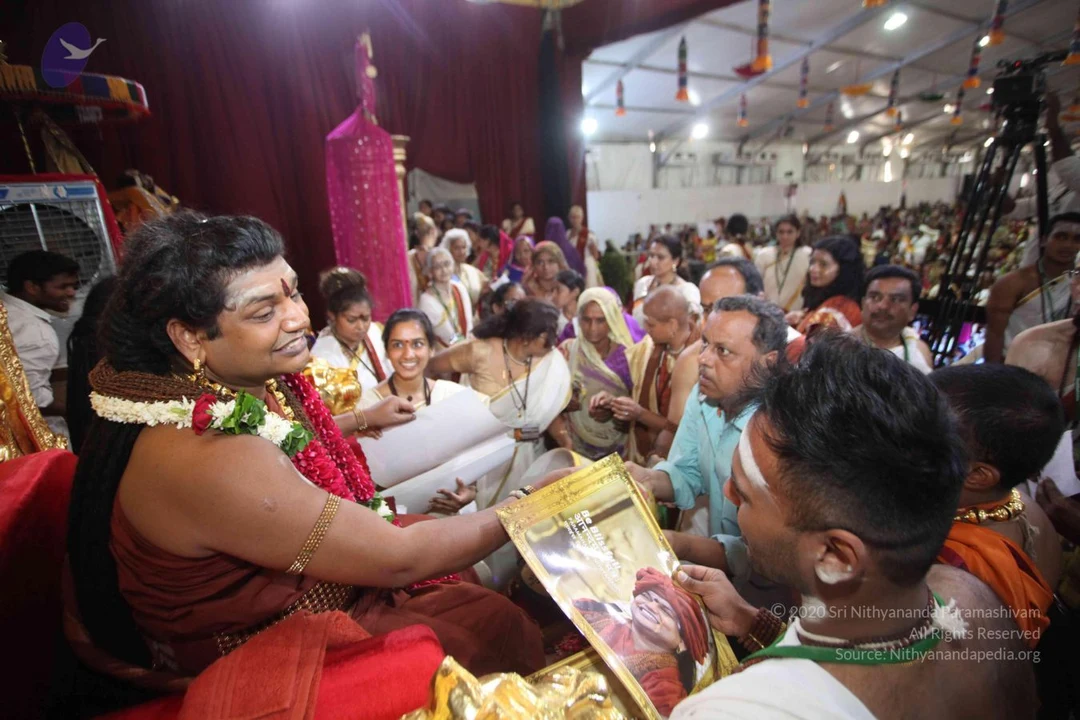
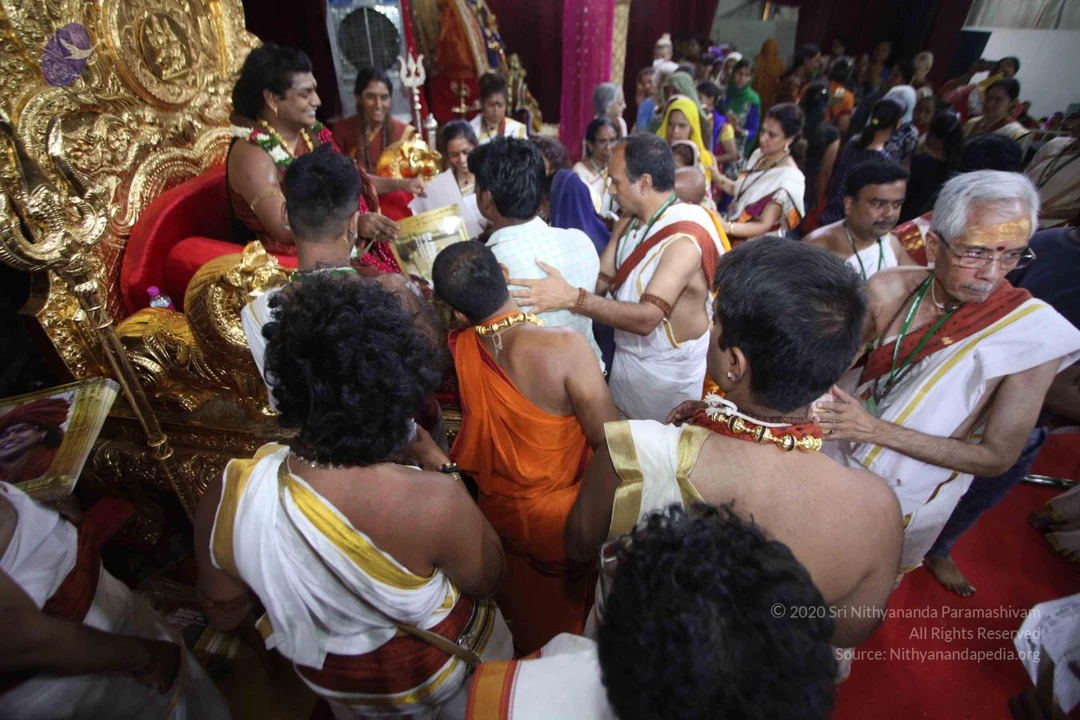
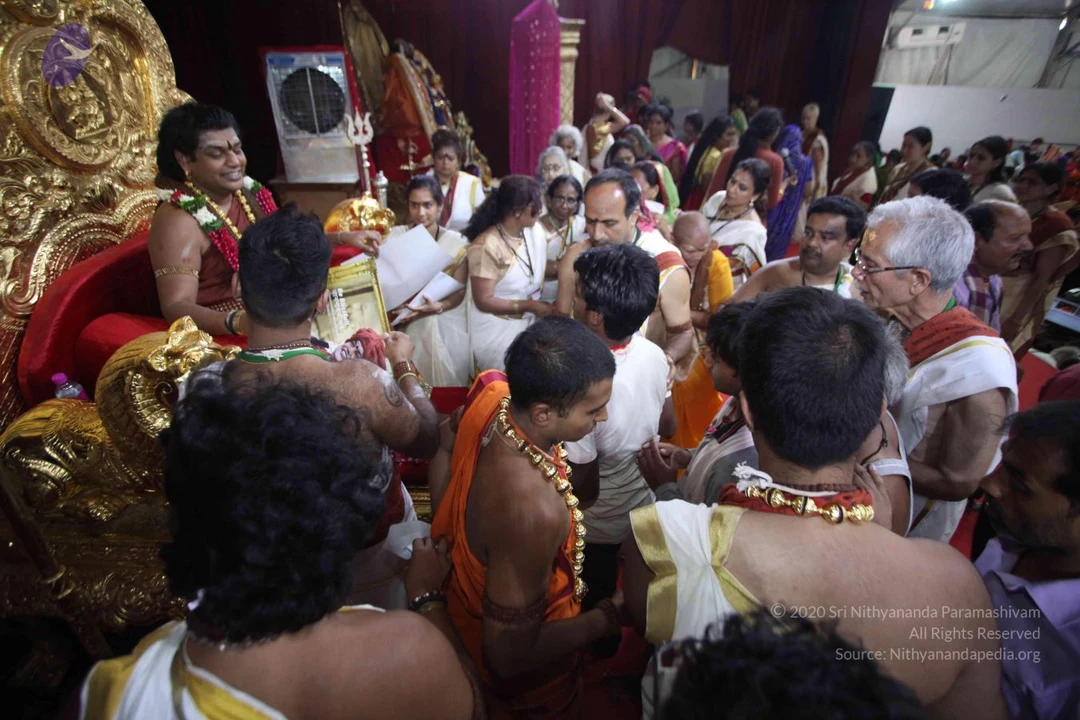
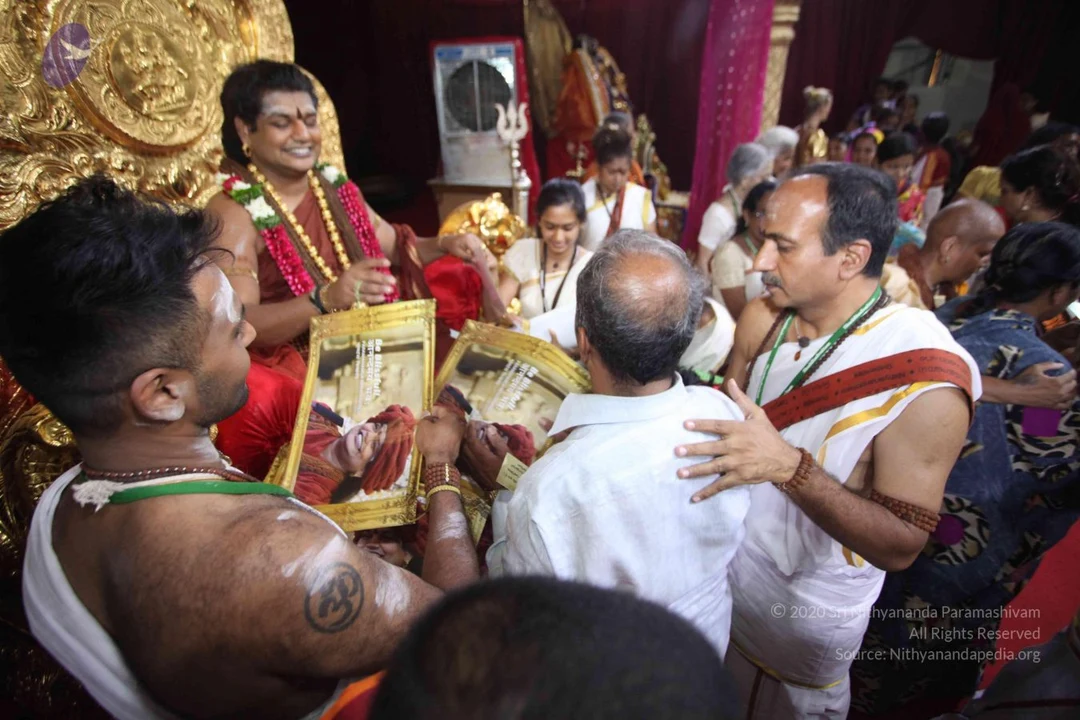
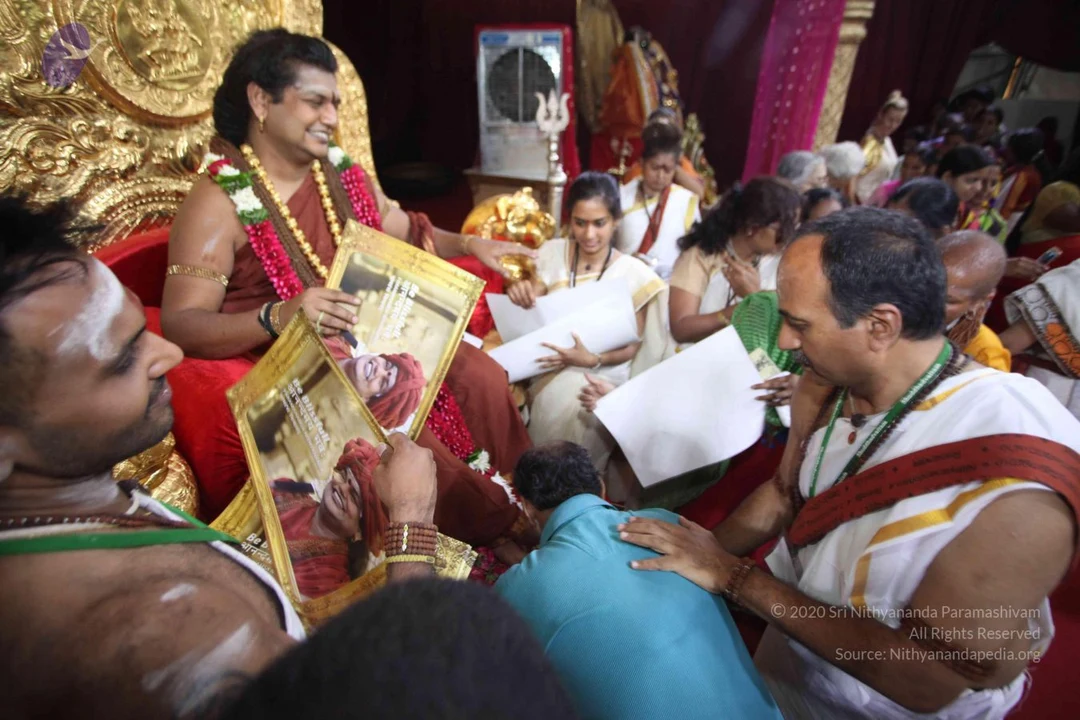
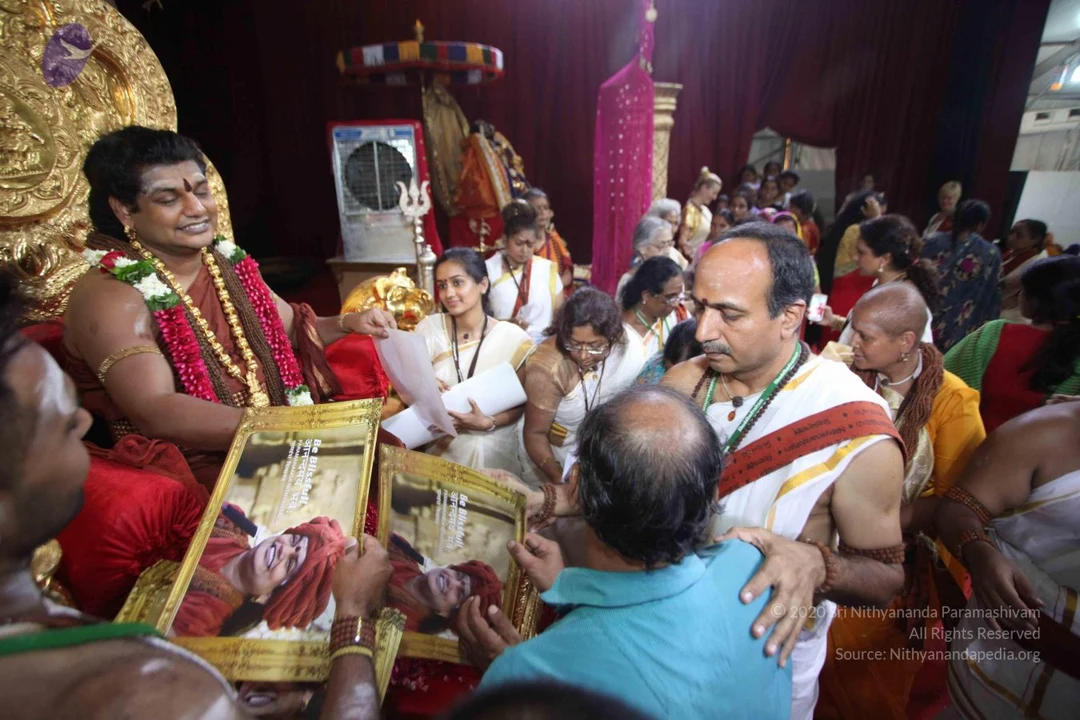
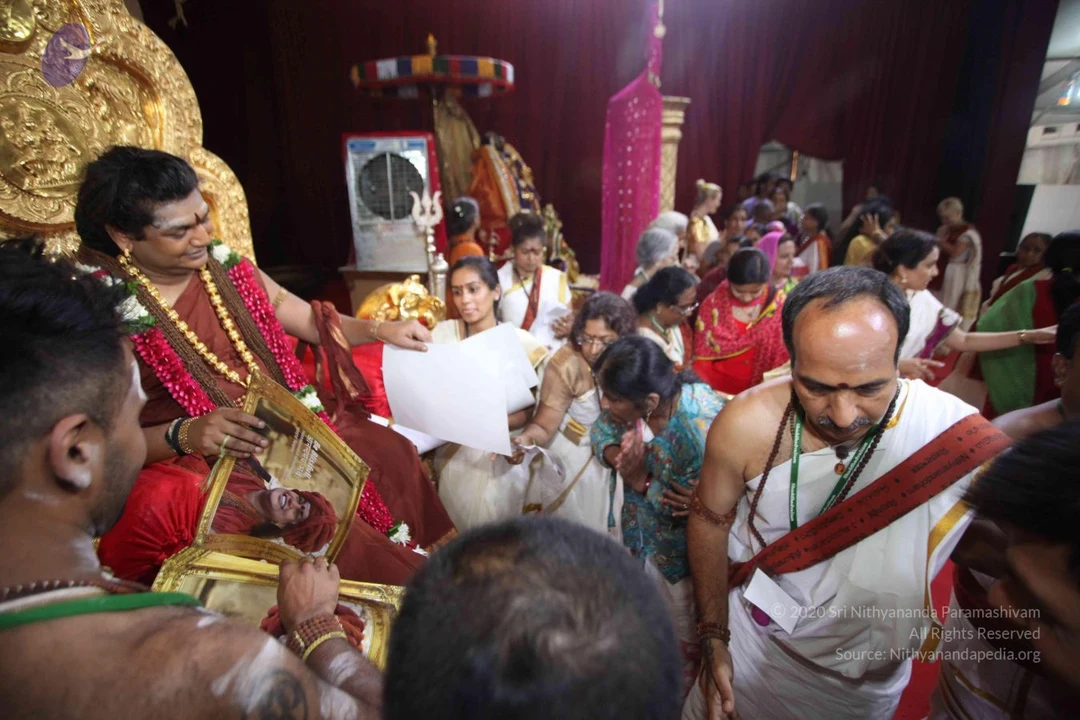
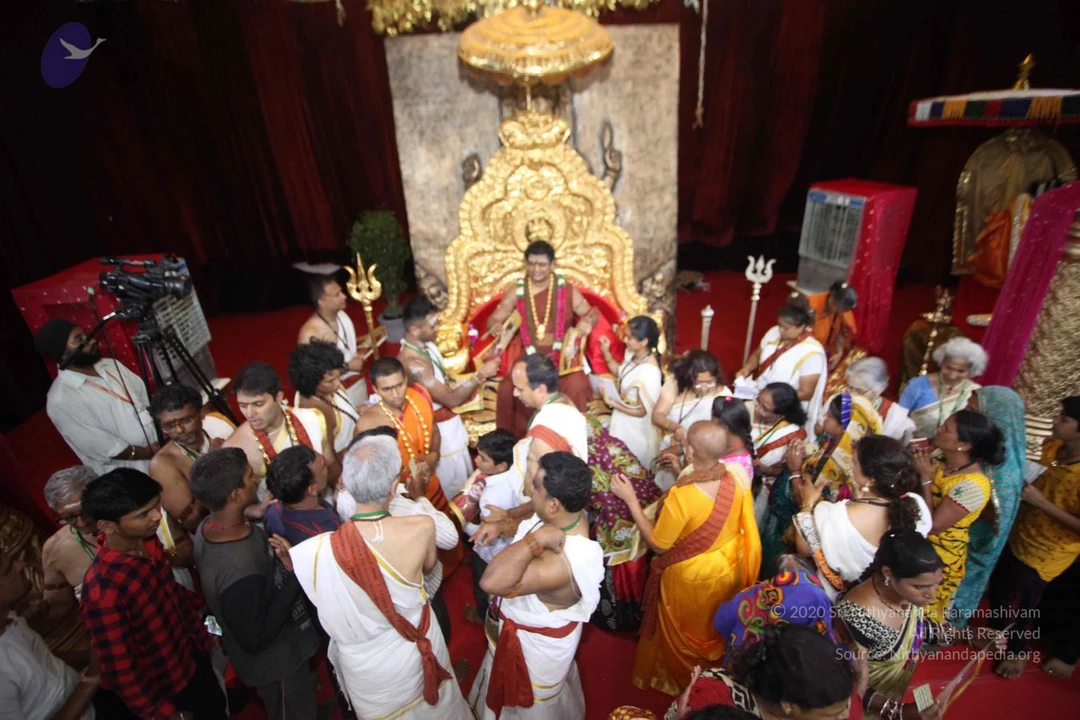
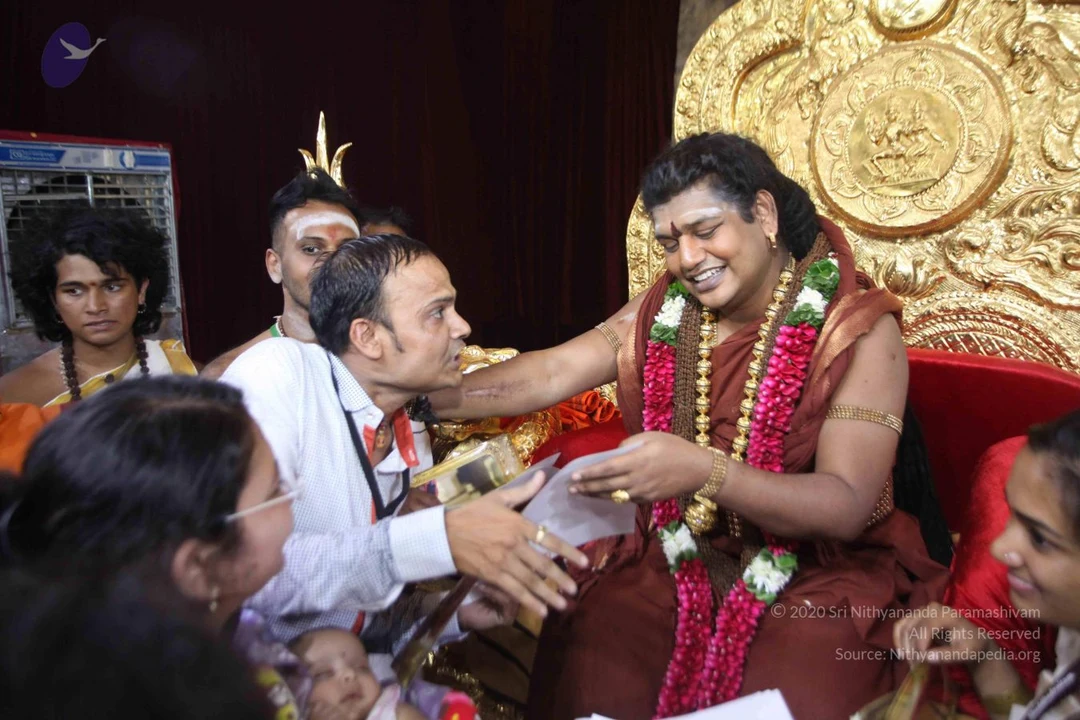
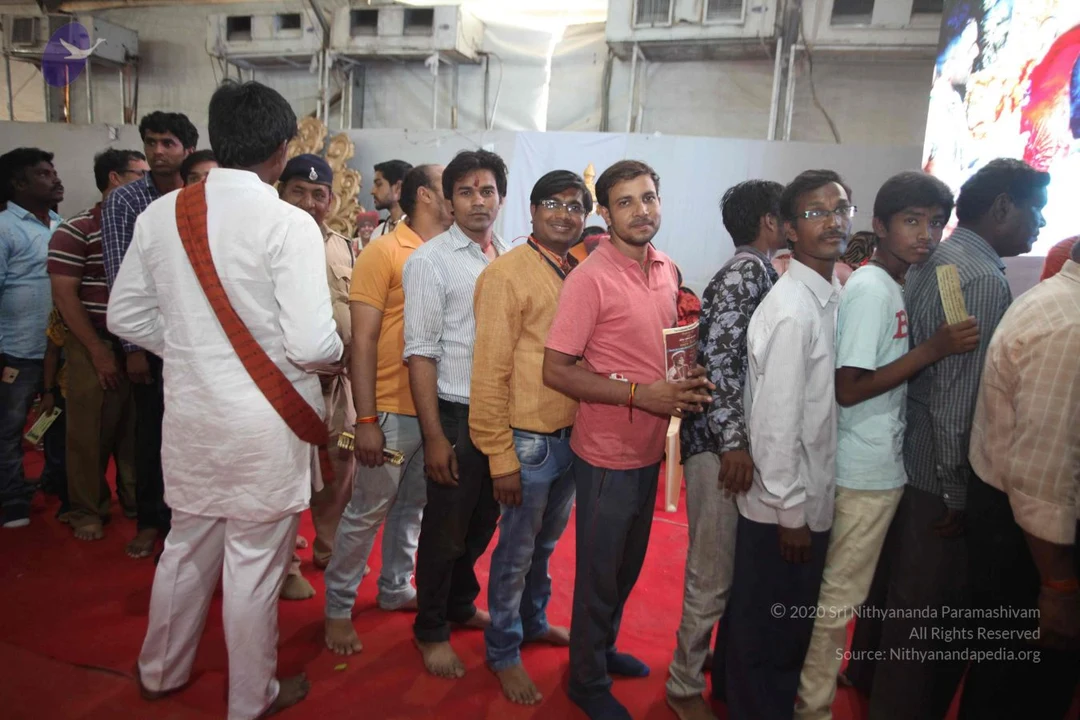
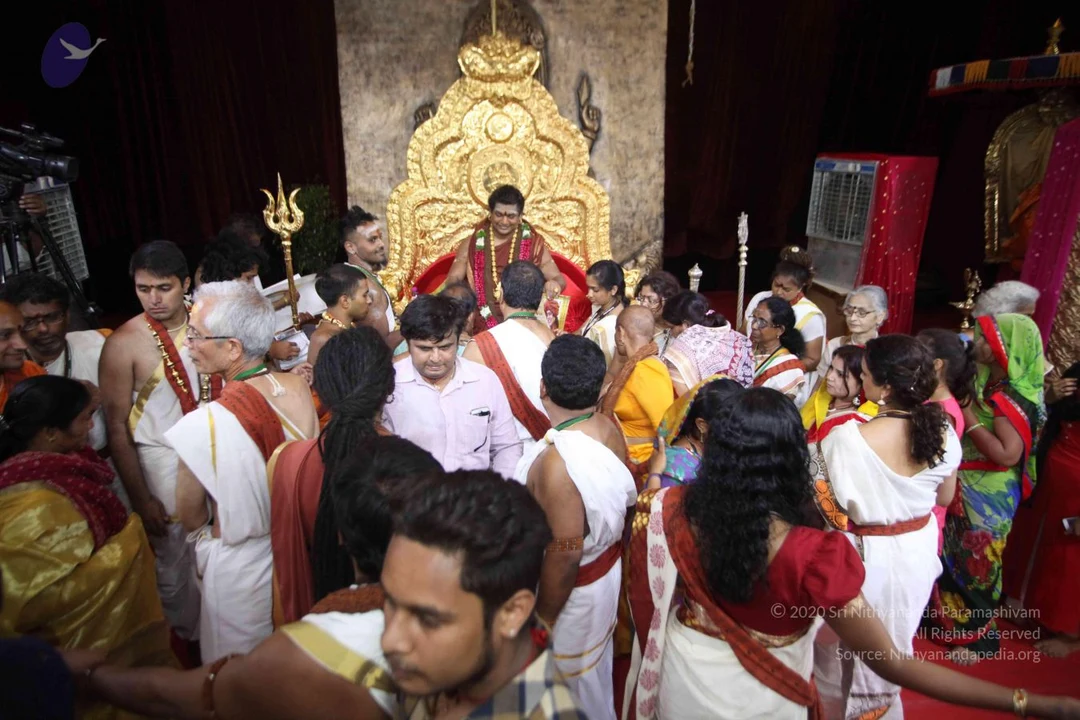
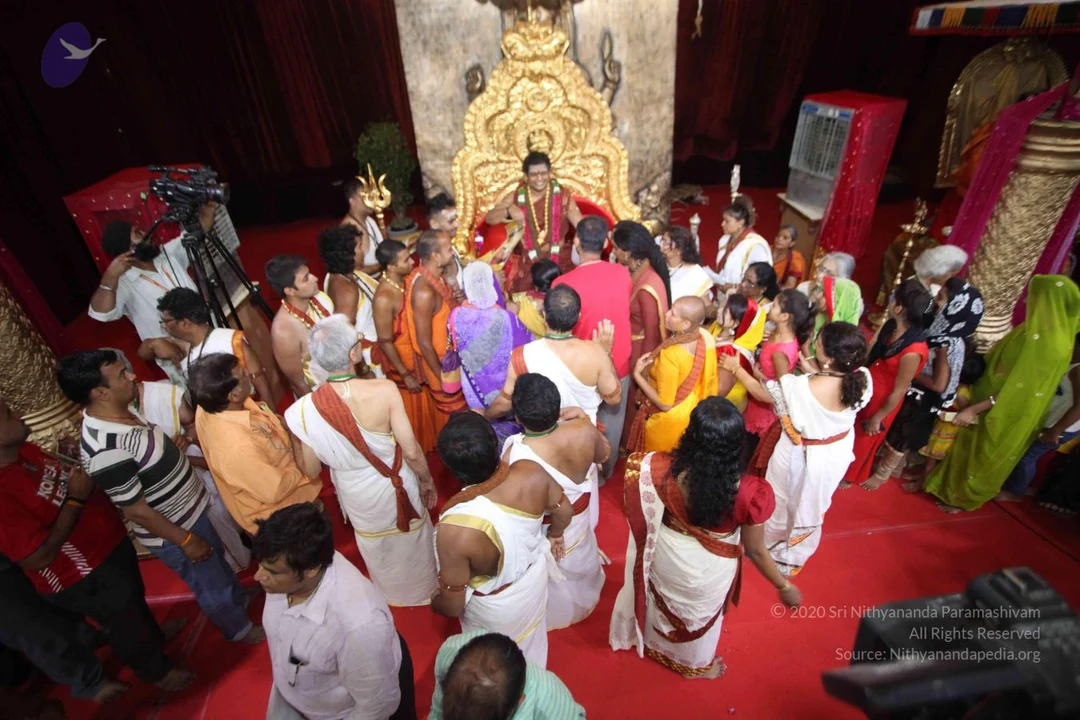
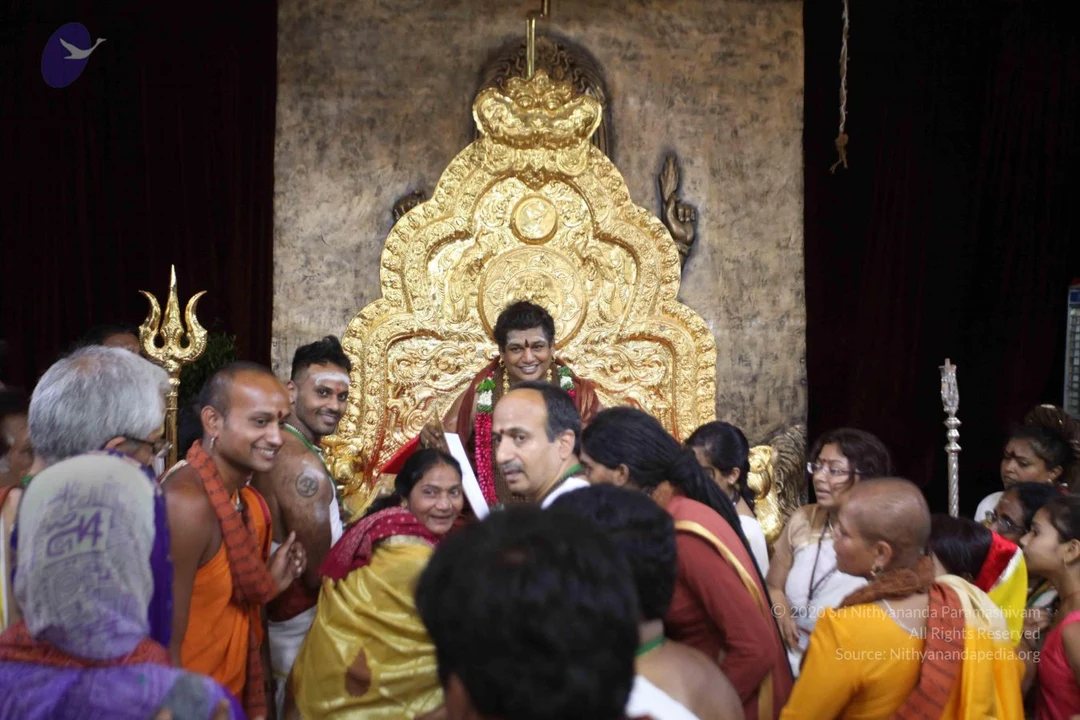
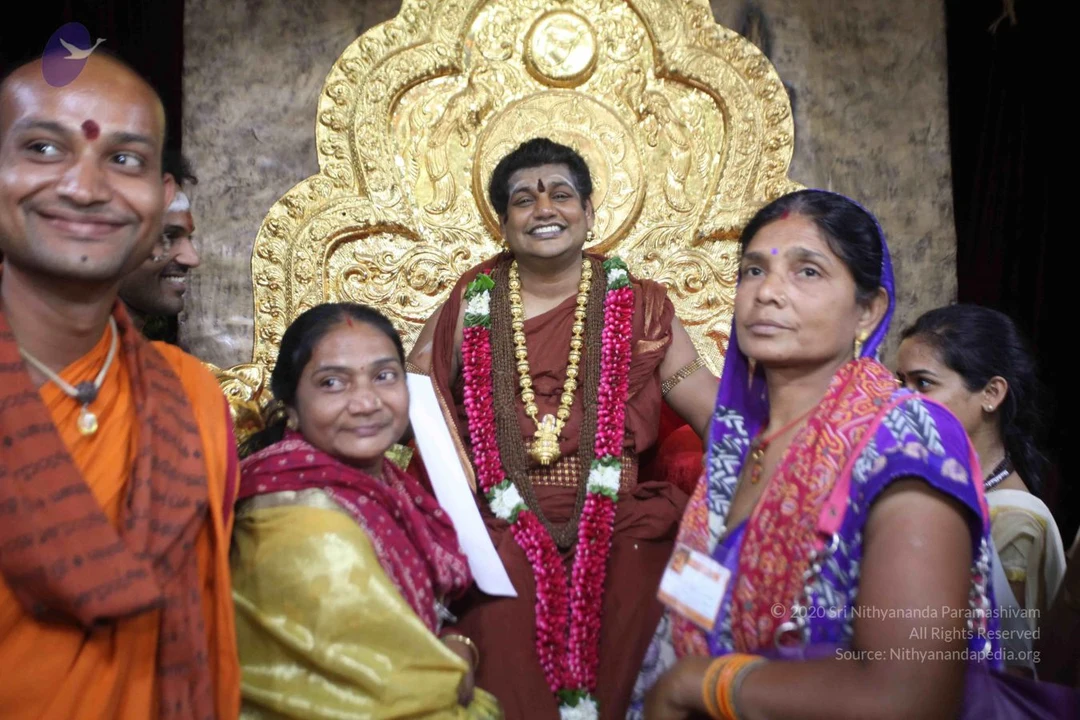
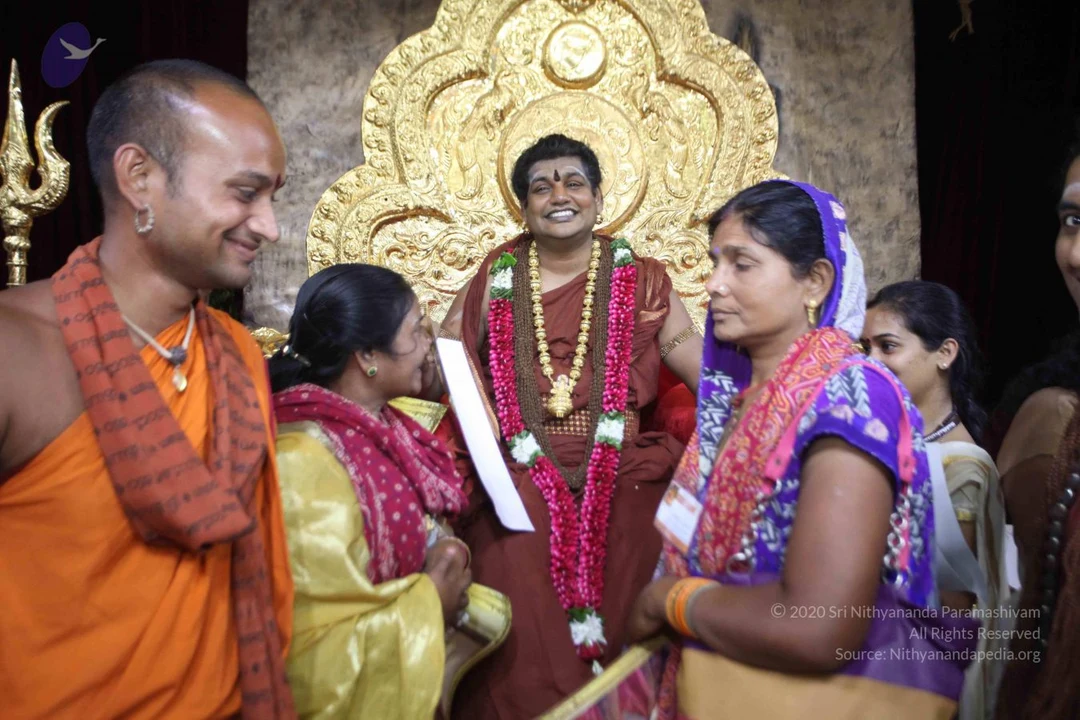
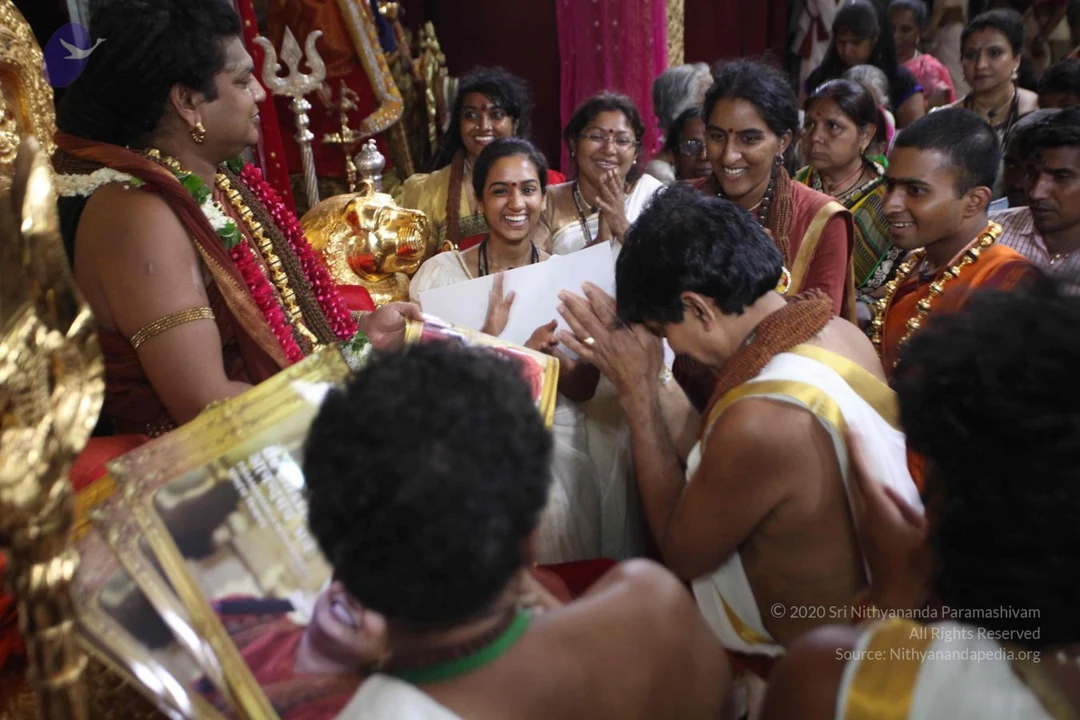
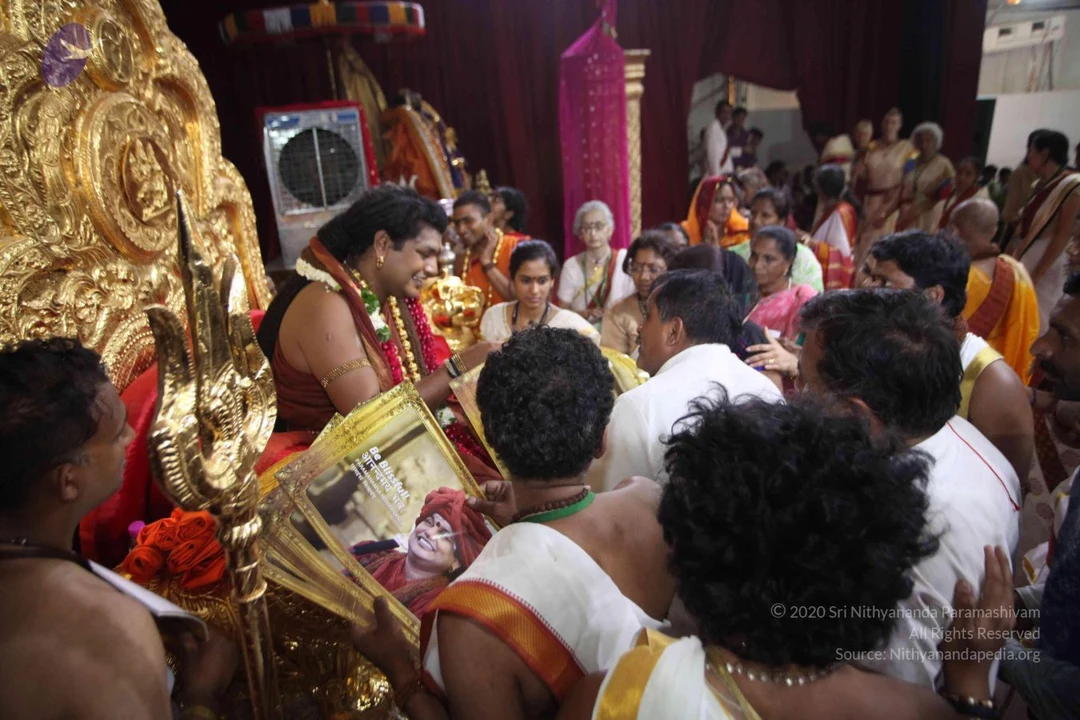
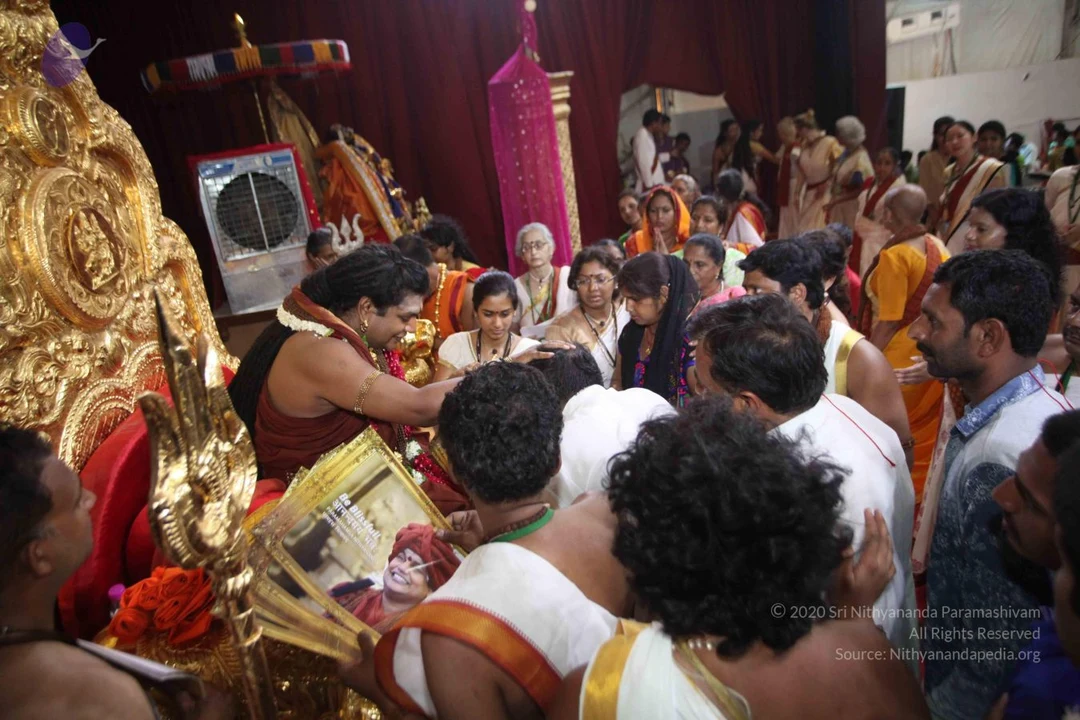
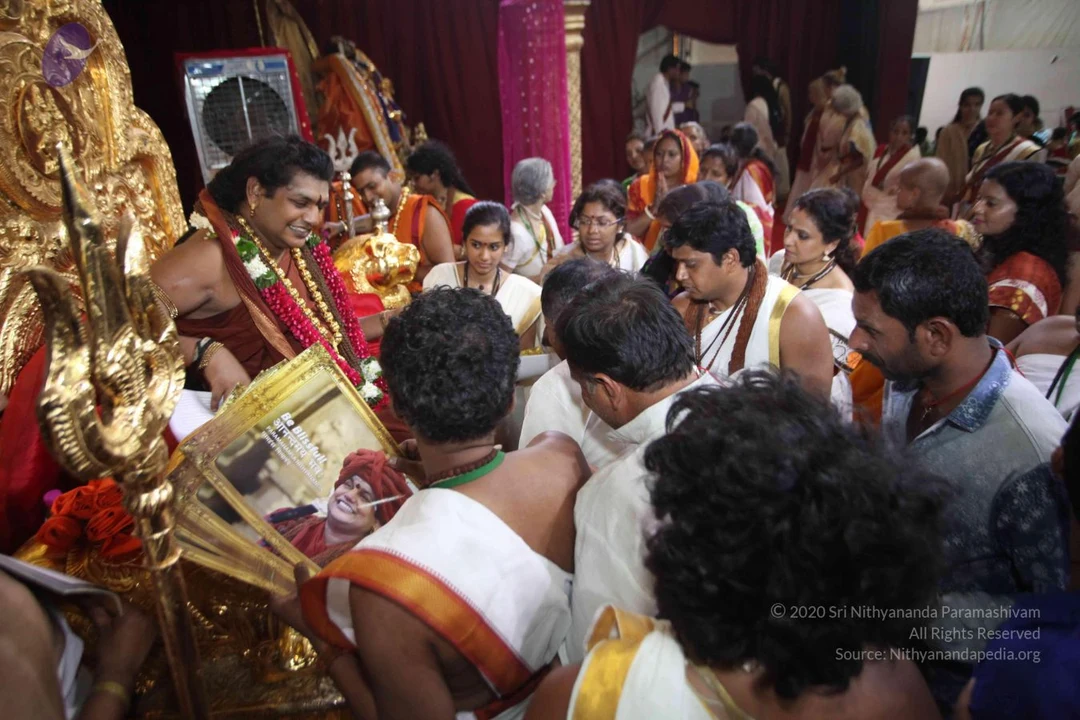
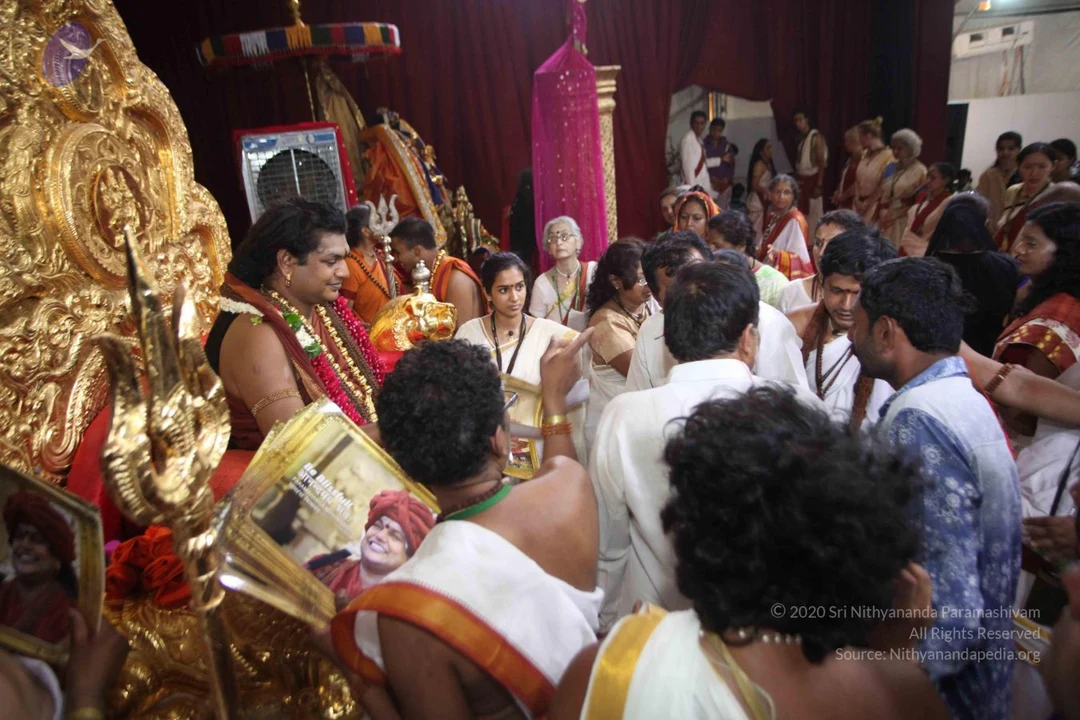
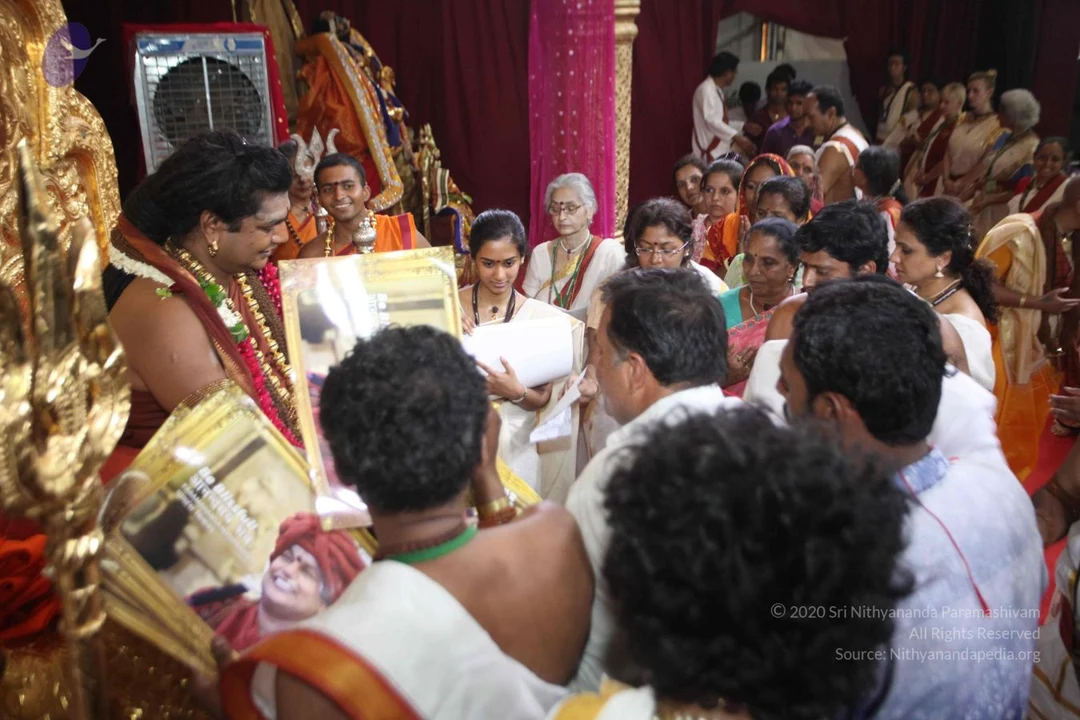
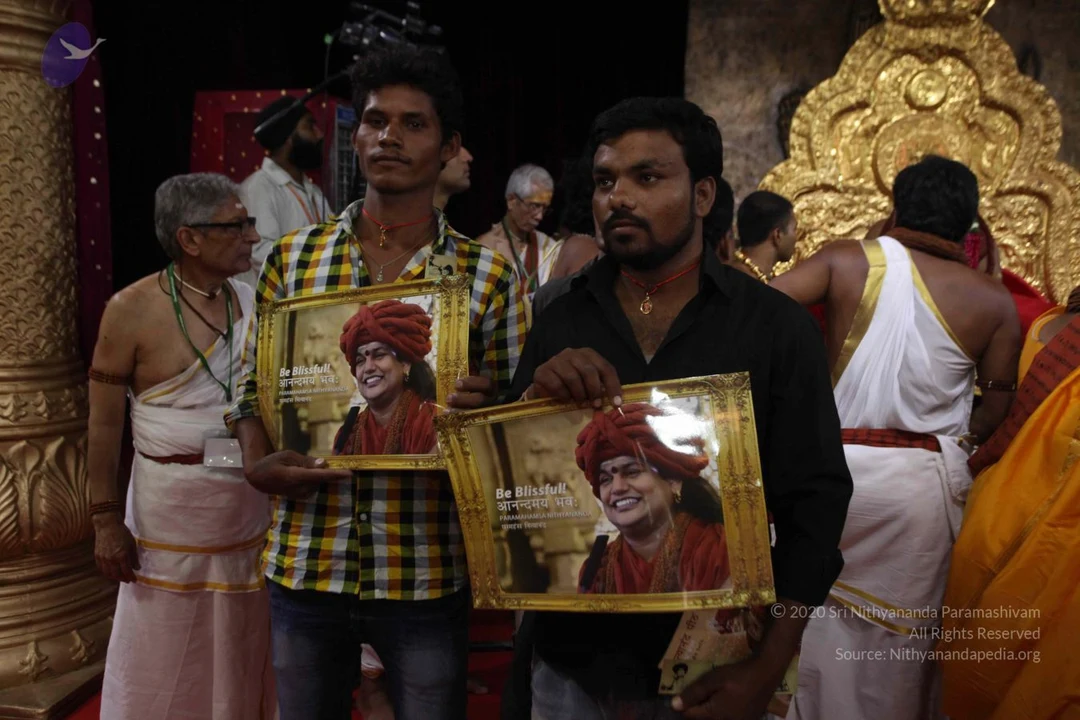
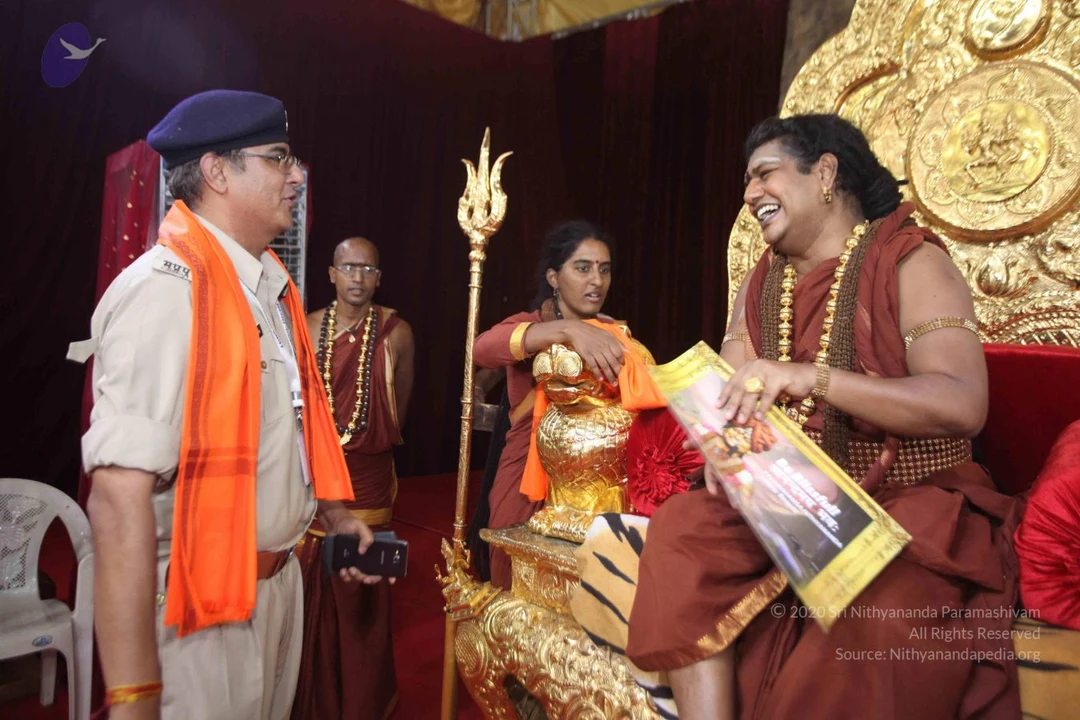
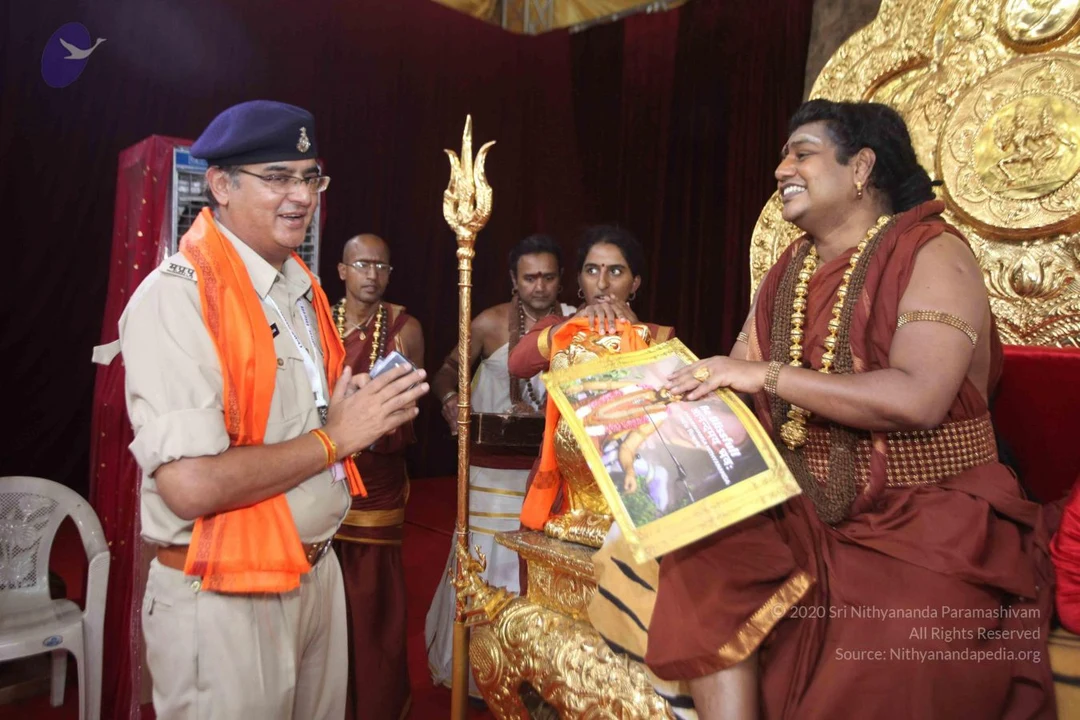
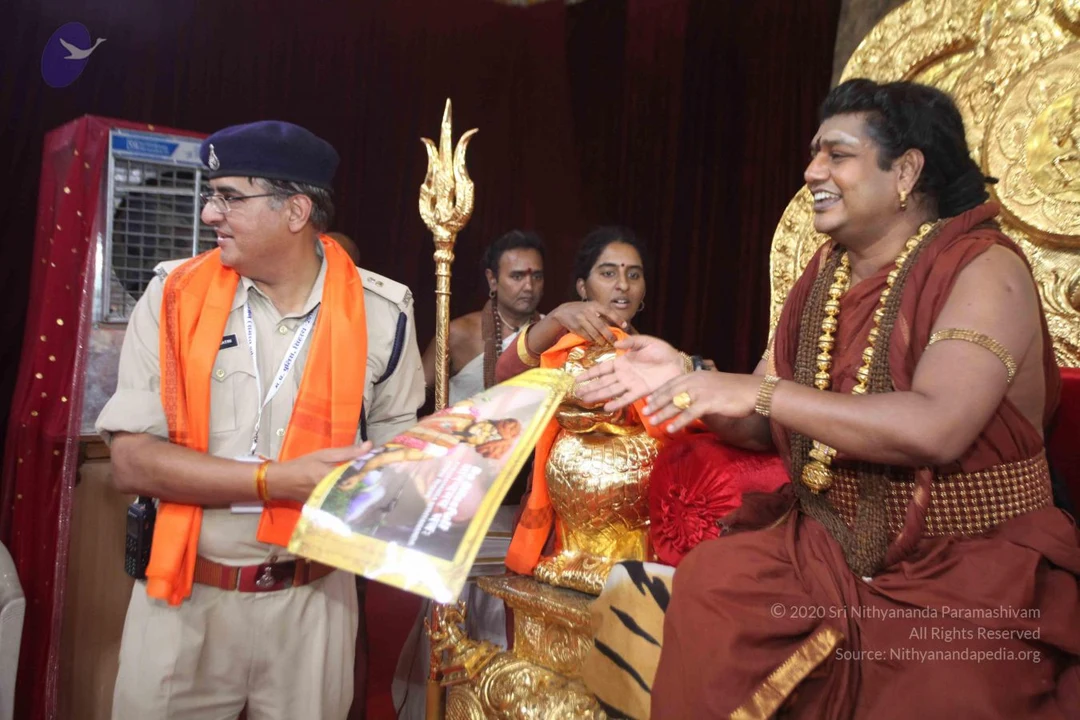
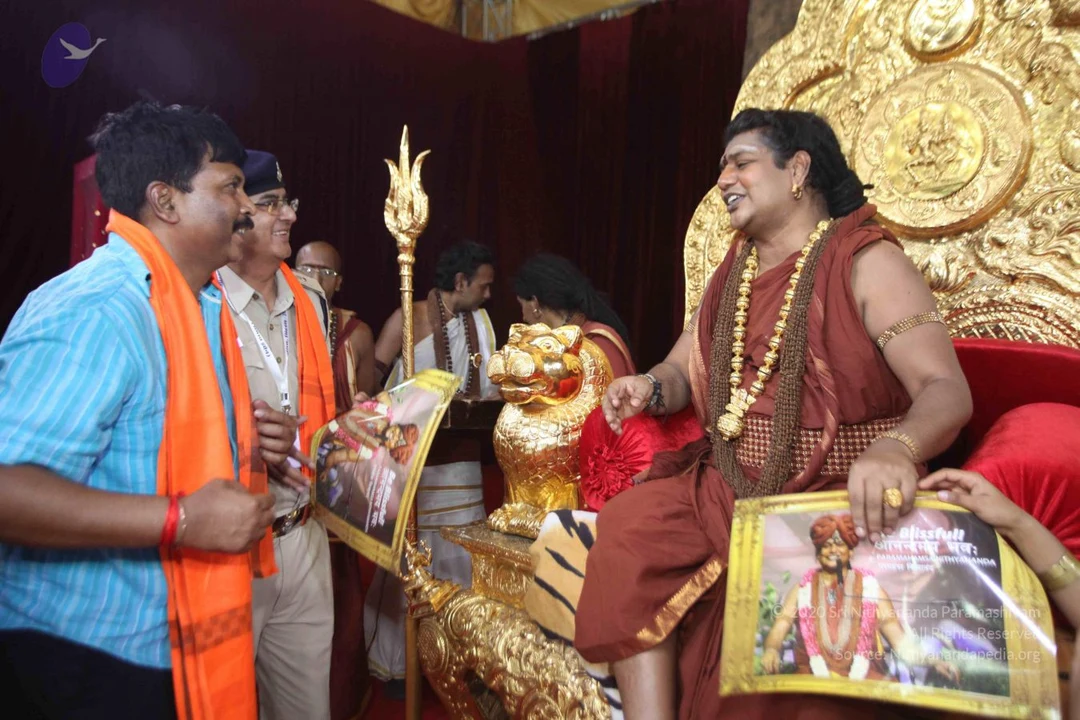
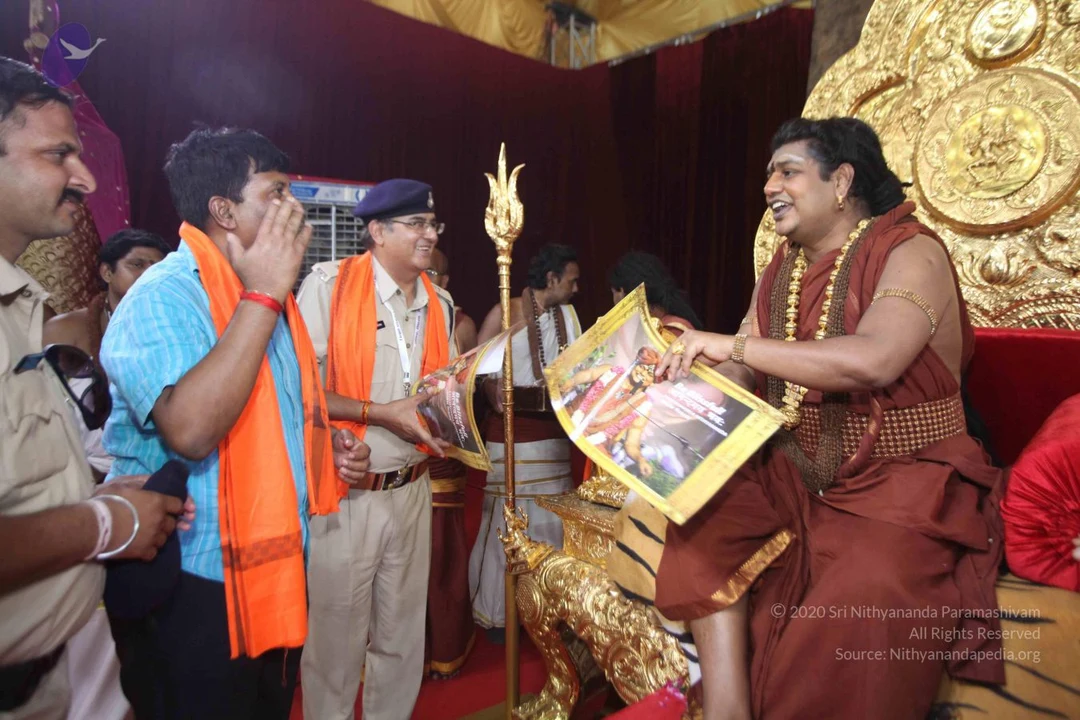
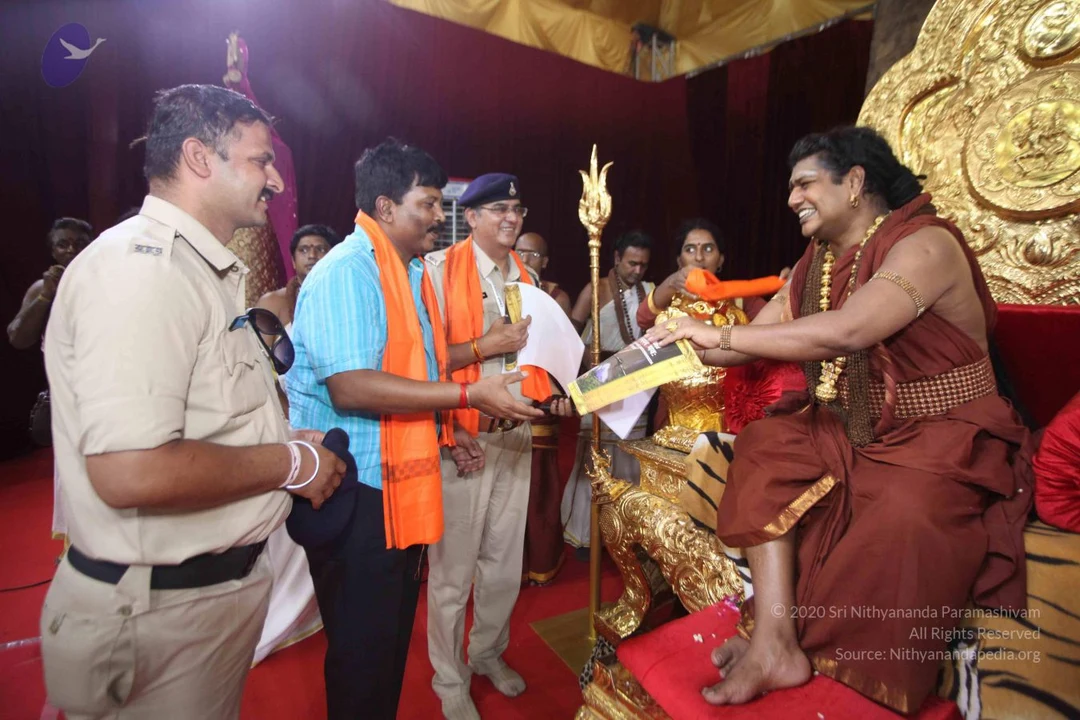
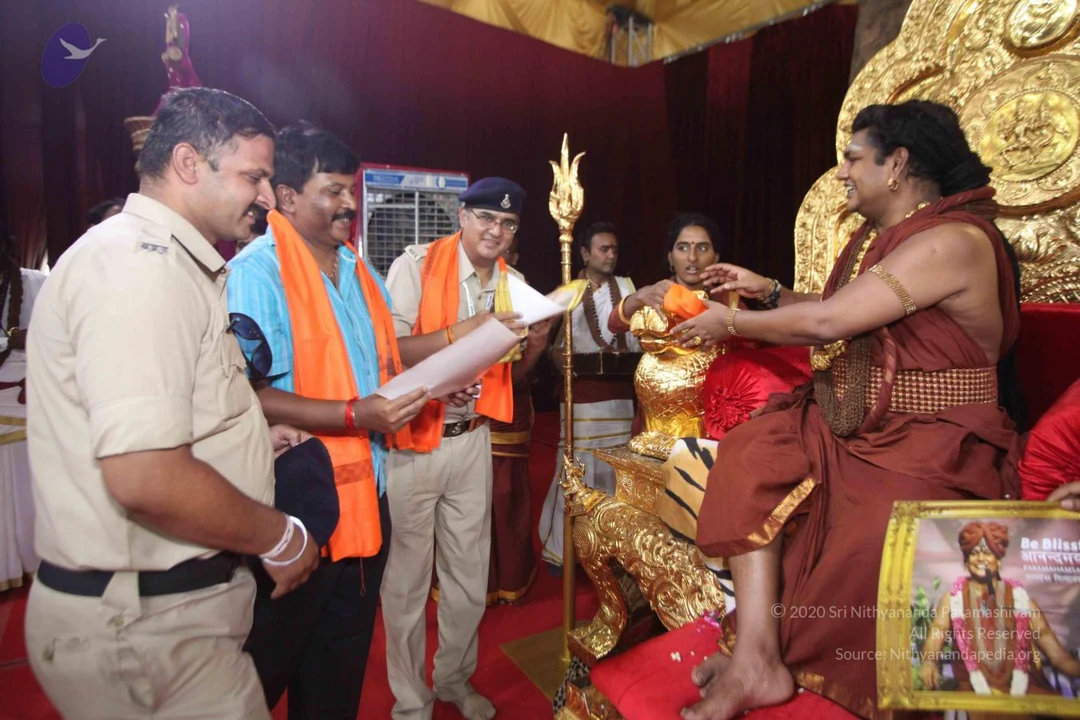
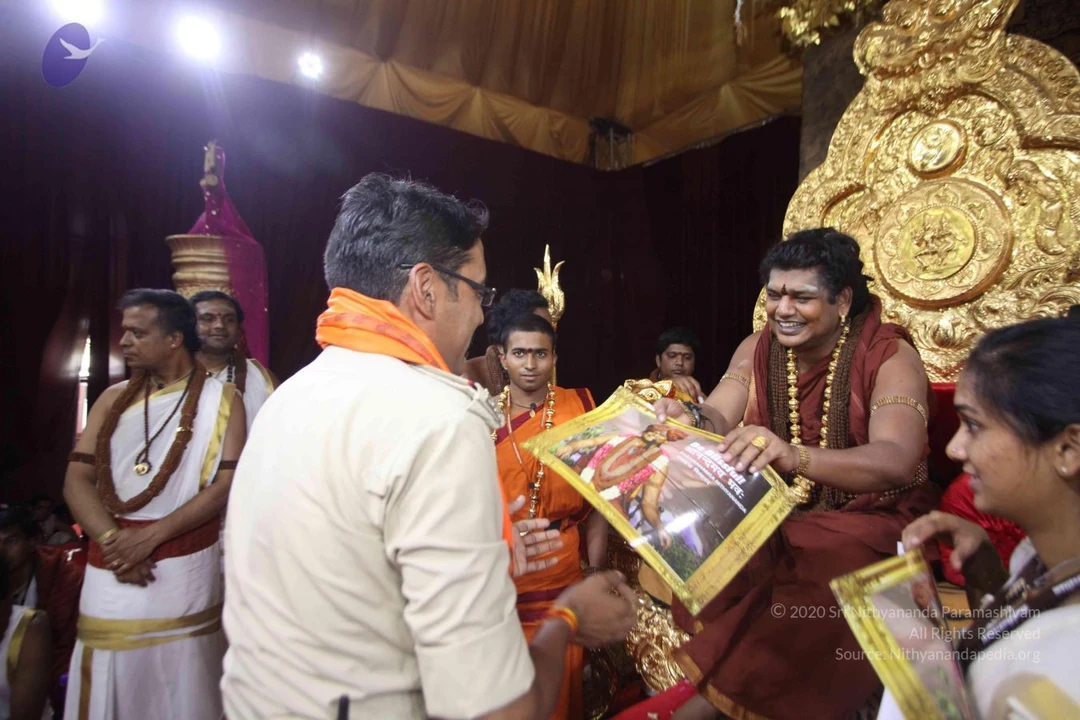
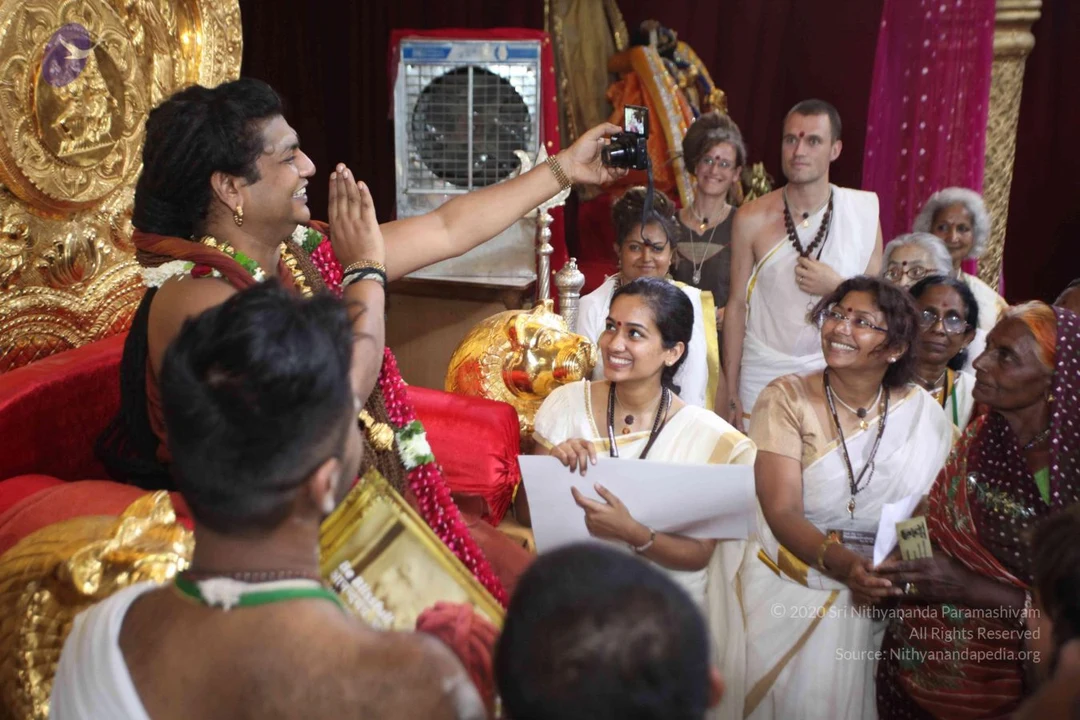
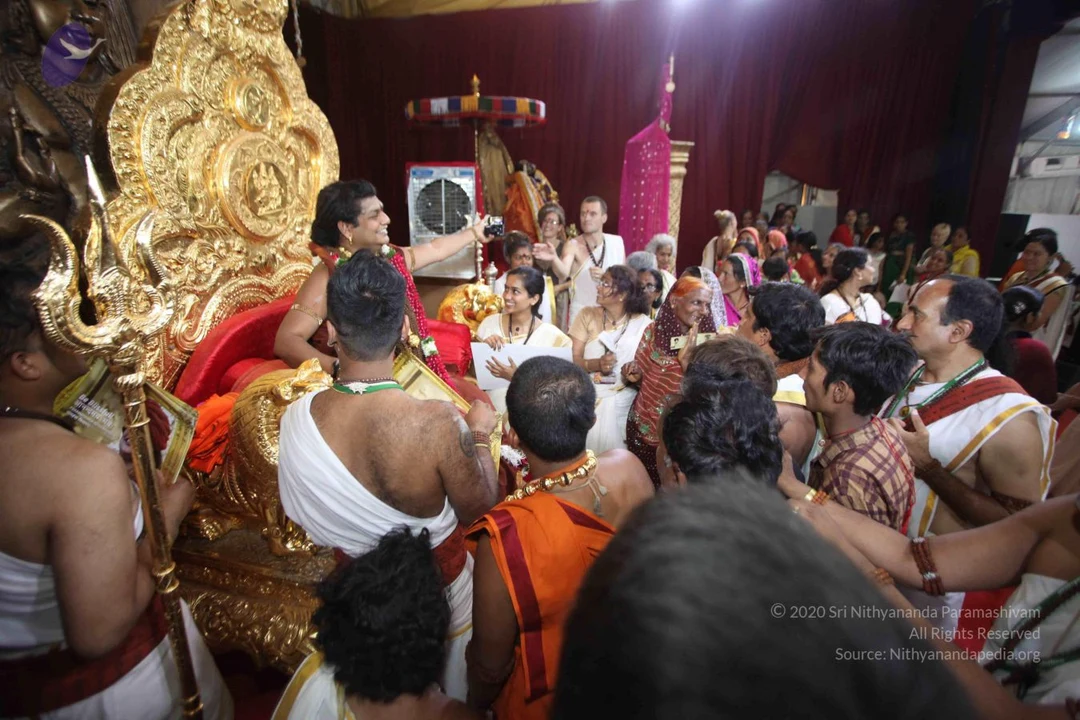
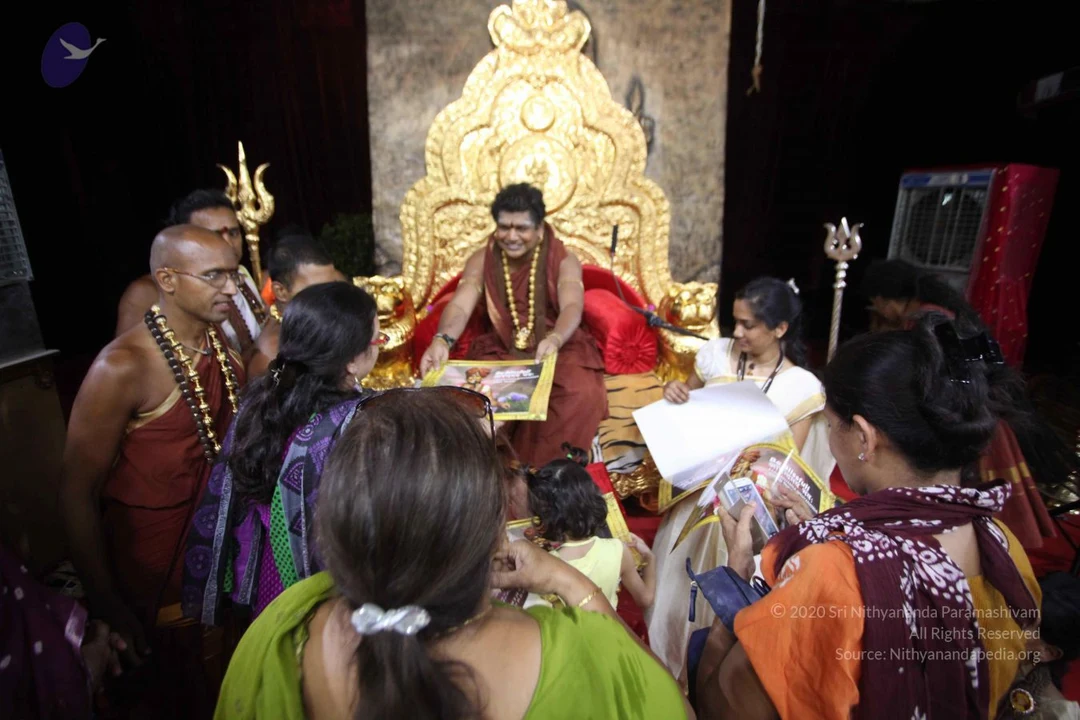
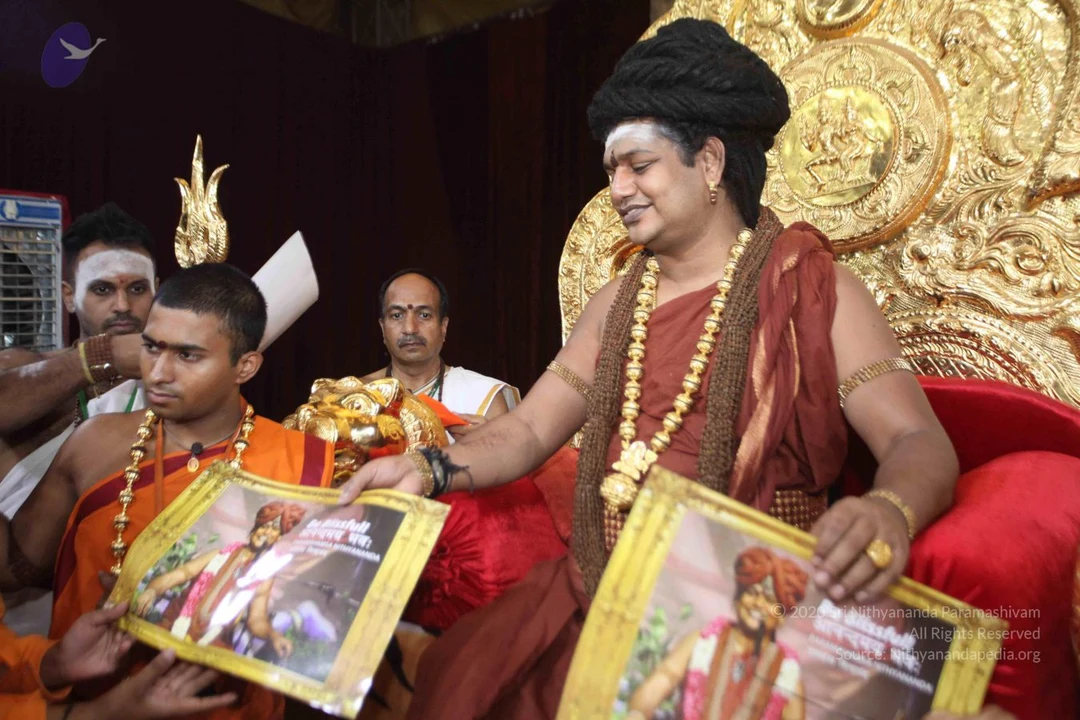
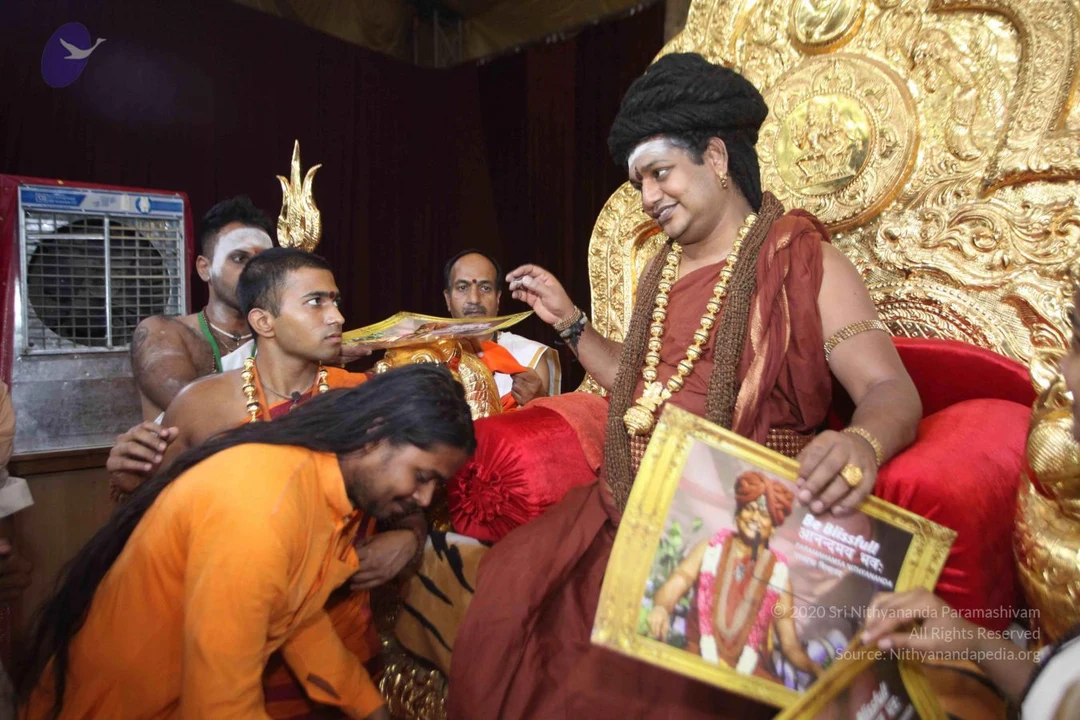
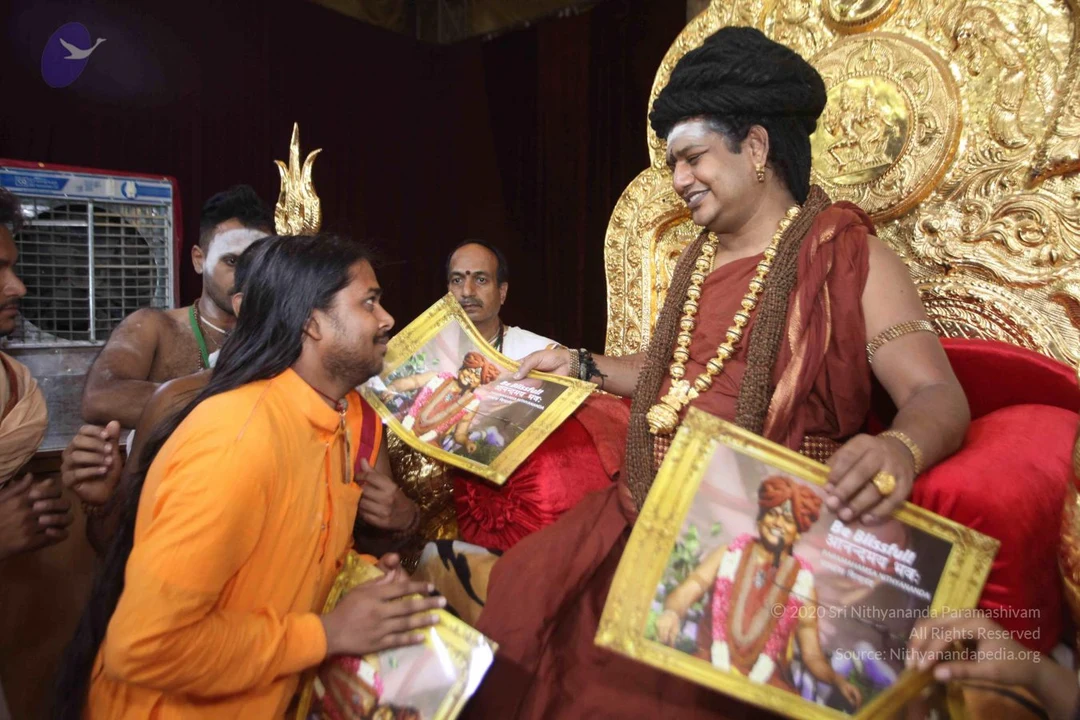
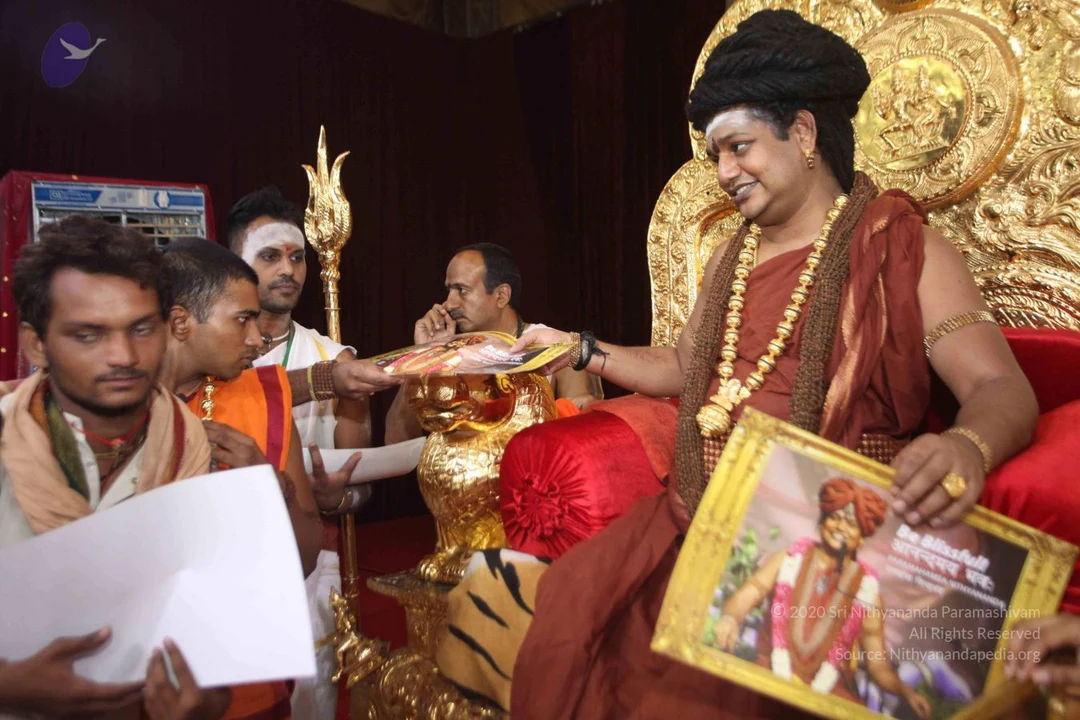
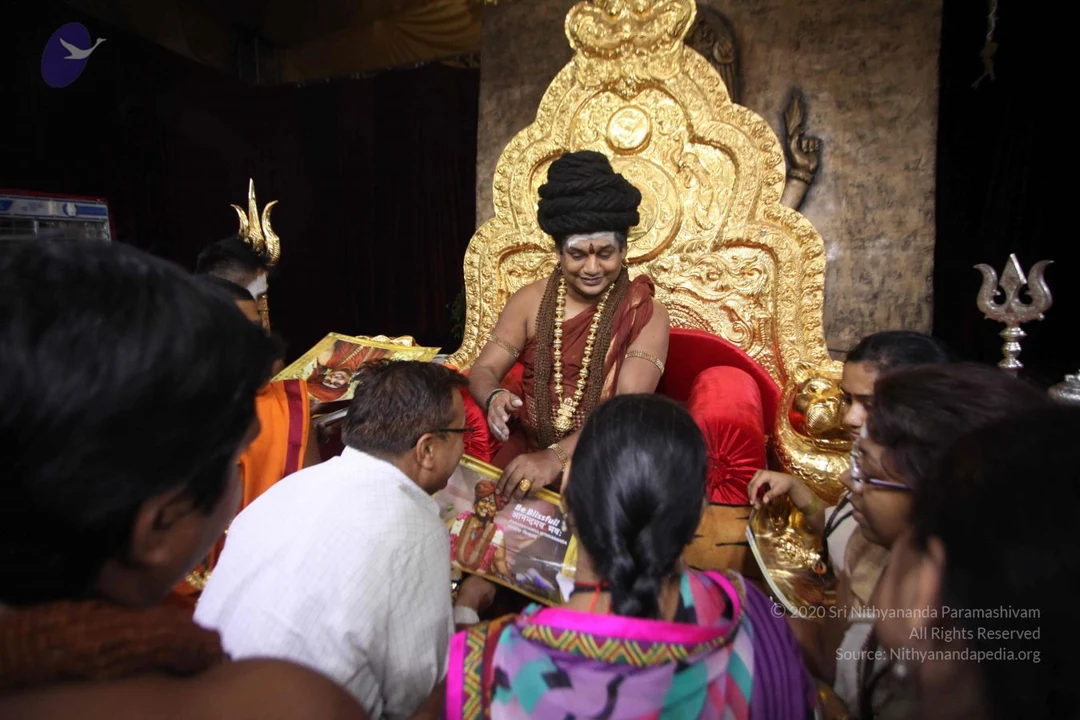
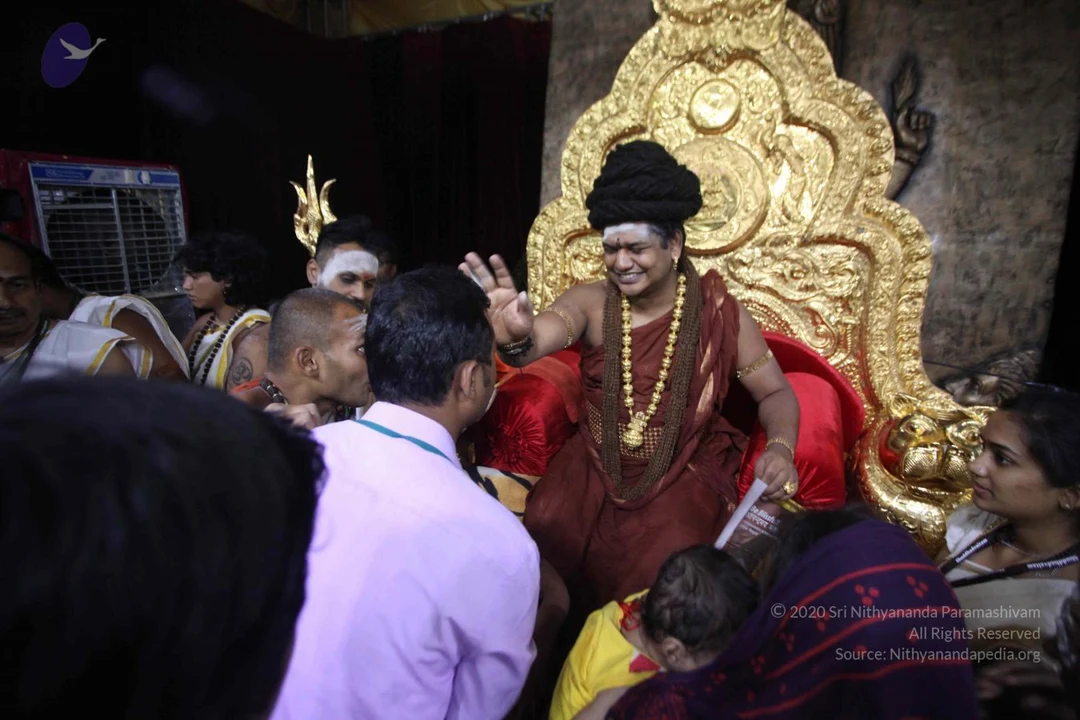
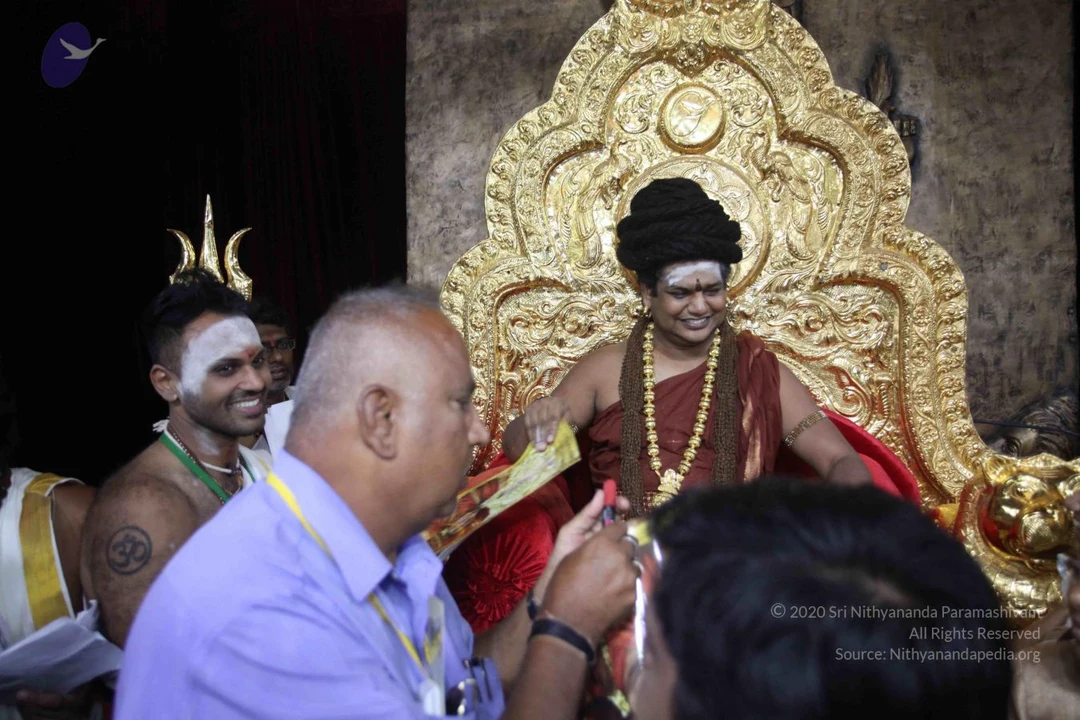
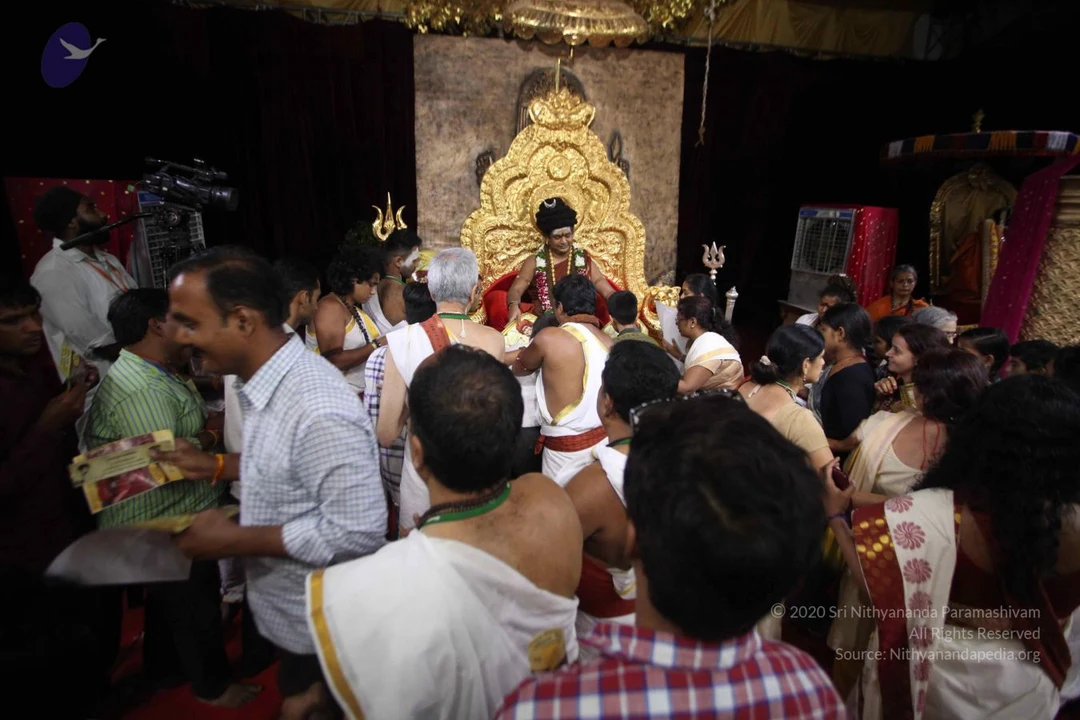
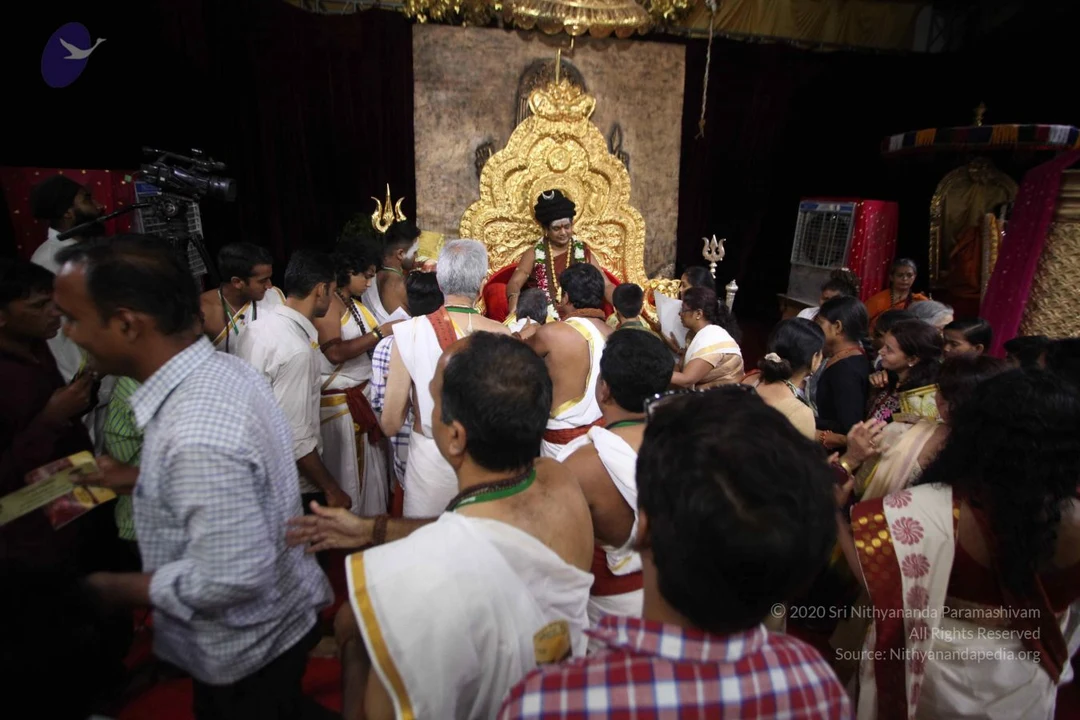
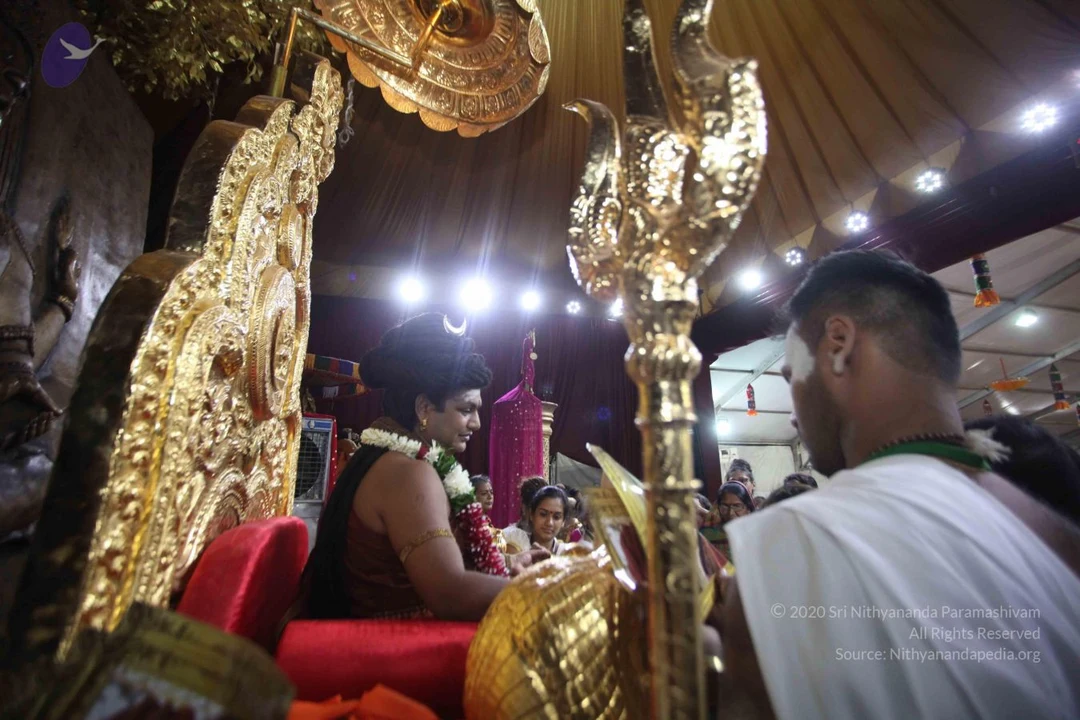
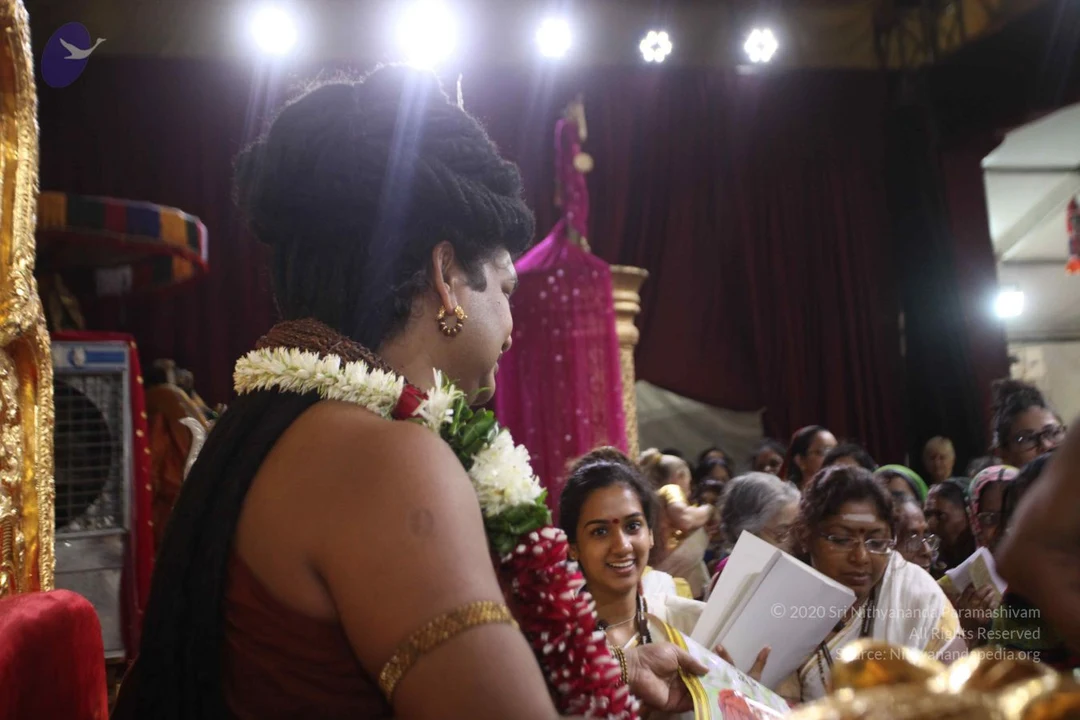
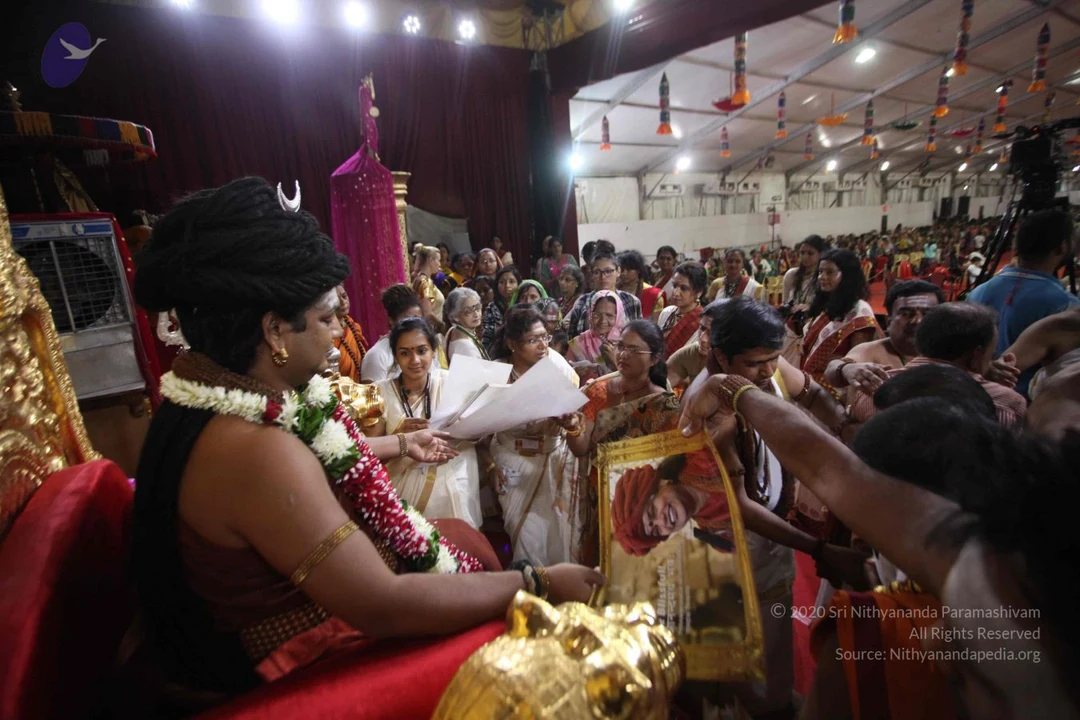
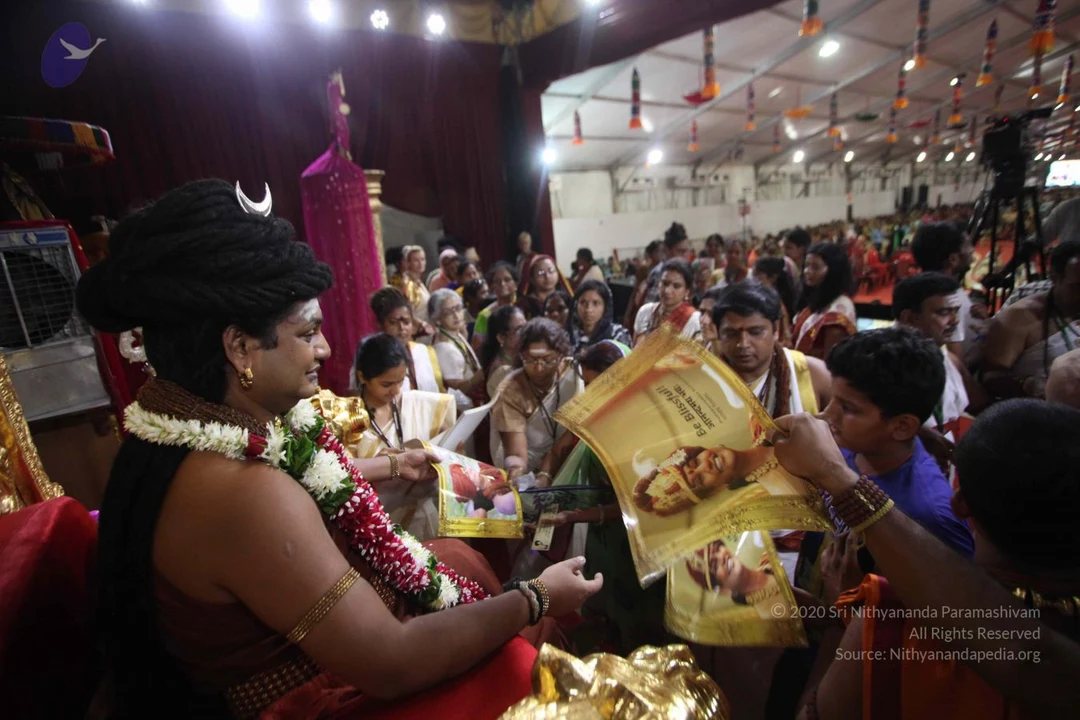
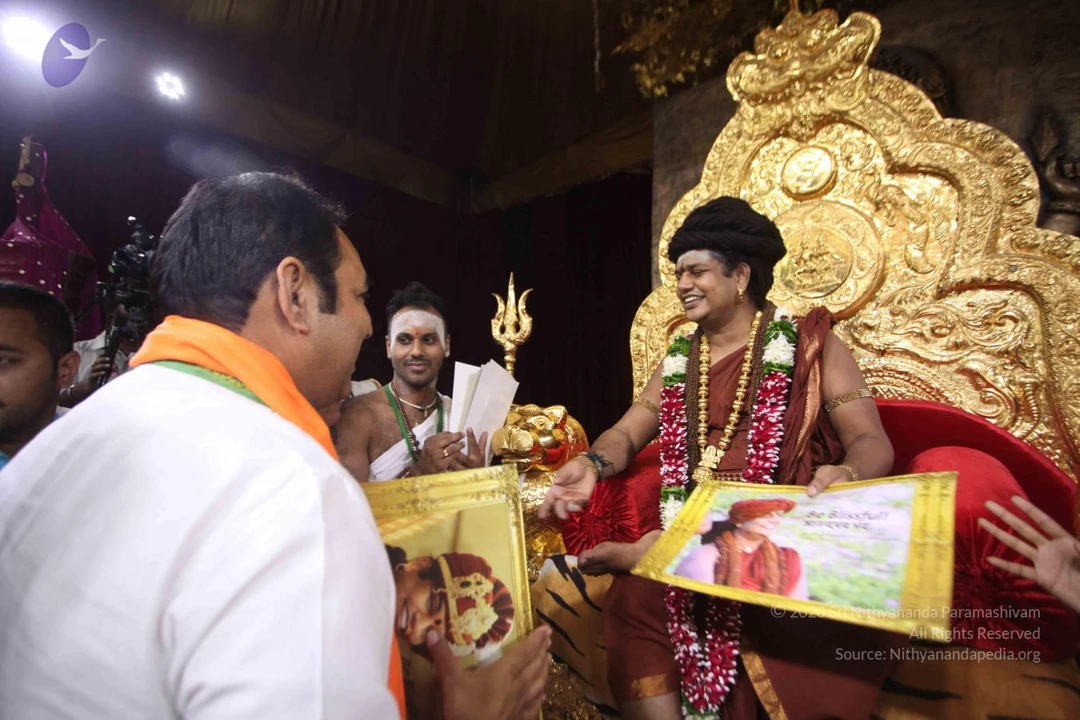
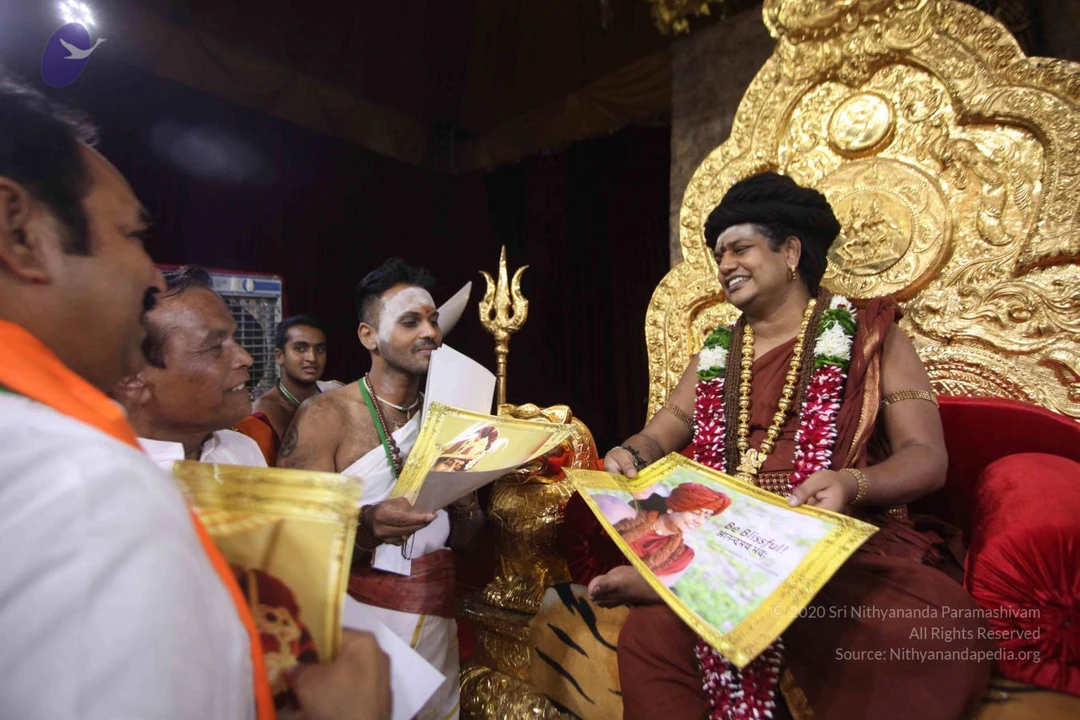
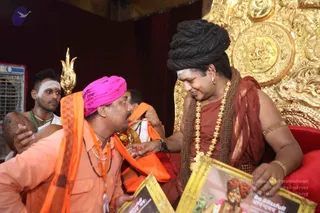
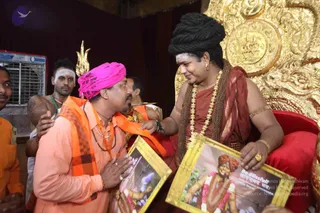
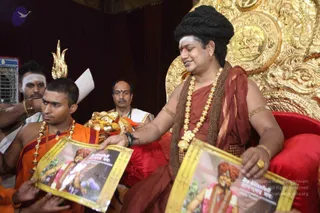
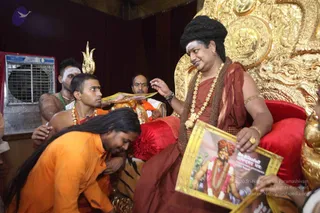
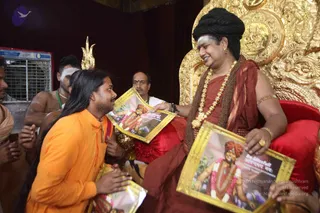
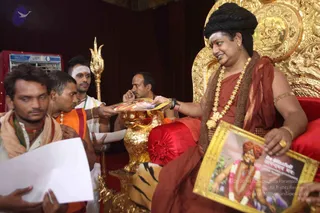
A photograph of a formal darshan setting in front of an ornate gold-embossed backdrop with relief deity panels. A man seated on a red chair wears a rust-brown robe, a long dark dreadlocked topknot, a gold-beaded necklace and a rudraksha-style mala, with white forehead markings; he smiles while holding a gold-framed printed booklet and touching the shoulder of a devotee. The devotee wears a bright pink turban and orange shawl, with a lanyard and a rudraksha mala, and bows forward toward him. Behind them stand a man with white forehead paint and a green sash and another attendant. A portrait label on the framed booklet is partly visible. The seated man matches the page's a person cues, so this is a probable identification.A photograph of a seated man on an ornate gold throne with a red cushion, wearing a dark maroon-brown robe, a long dark swept-back turban-style hairstyle, multiple strands of gold beads and rudraksha-style necklaces, and gold armbands. He leans forward to clasp the hand of a standing devotee in an orange-saffron robe with an orange and brown shawl, a bright pink head wrap, rudraksha beads and a cord, who joins his palms in respect. The seated man's appearance is consistent with the page's description of a person, with cues including the swept-back long hair, ornate gold necklaces and maroon robe. Two framed printed pictures with gold frames are held, one showing a deity figure with a red turban and pink garland. Behind them stand white-marked attendants, one bare-chested with a white face marking, and a gold ceremonial staff with a trident-like finial. A red-curtained backdrop and a wall-mounted air cooler complete the setting.A seated man in a rust-red and maroon shawl and dhoti, with long swept-back dark hair, a white tilak on his forehead, layered gold necklaces and a rudraksha mala, rests a hand on one of two golden-framed printed booklets held by an attendant in an orange robe. Behind a red cushion, a gold-embossed throne backdrop with floral and deity carvings is visible. A second attendant with a white tilak and a standing man in white ritual dress are partly visible, and a brass kalasha sits near the throne. The scene resembles a Kalpataru darshan. The seated figure is an appearance-based probable Swamiji (probable) in a throne and ritual setting, with long swept-back hair, rudraksha mala and gold necklaces.A photograph of a seated man on an ornate gilded throne with red cushions, wearing a dark maroon-red dhoti-style garment, a tall black turban-like headdress, a thick gold beaded necklace and brown rudraksha-style mala, and gold bangles. He holds a gold-framed portrait of a saffron-turbaned figure garlanded with pink flowers, and gestures with his right hand toward a kneeling young man in orange robes with long hair who bows at his feet. Behind them stand attendants, including one in white with a turban and a man in white holding a folded paper. A gilded deity relief decorates the throne back. The appearance-based cues of long black headdress, gold necklaces, rudraksha mala and ornate throne fit the page's a person reference, so this is a probable match.A photograph of a seated man on an ornate gold throne with red cushions, wearing a tall black turban, rust-red robes, a long beaded gold necklace, a rudraksha-style mala, and gold armbands, smiling as he receives a framed picture. A younger man kneels in front of him wearing an orange-saffron robe and has long dark hair. The seated man holds a gold-framed portrait of a deity-like figure in red with garlands; a second framed portrait is held in the foreground. Behind them stand attendants in white, one with white face markings and another in a white dhoti with a sacred thread. A gold kalasha-like finial and a red curtain frame the scene. Swamiji (probable) appears to be the seated figure, identified by the turban, ornate gold necklace and throne, with the kneeling devotee in saffron offering a darshan-style gesture.A photograph of a seated figure on an ornate gold throne with red cushions, wearing a dark swept-back turban-style hairstyle, rust-orange robes, a long gold beaded necklace and a rudraksha-style mala, with gold bangles and a ring. a person is shown in his role as presiding teacher, leaning forward and handing a small object to a young man. Around him, several men stand in white and saffron clothes: one in white with a white sandal-paste mark on the forehead, another in an orange cloth, and a man in a light shirt. A gold lion-shaped armrest, a gold trident staff and a gold-framed picture showing a figure with a flower garland are visible. The picture holds a printed Sanskrit caption. Four people are visible in the scene.
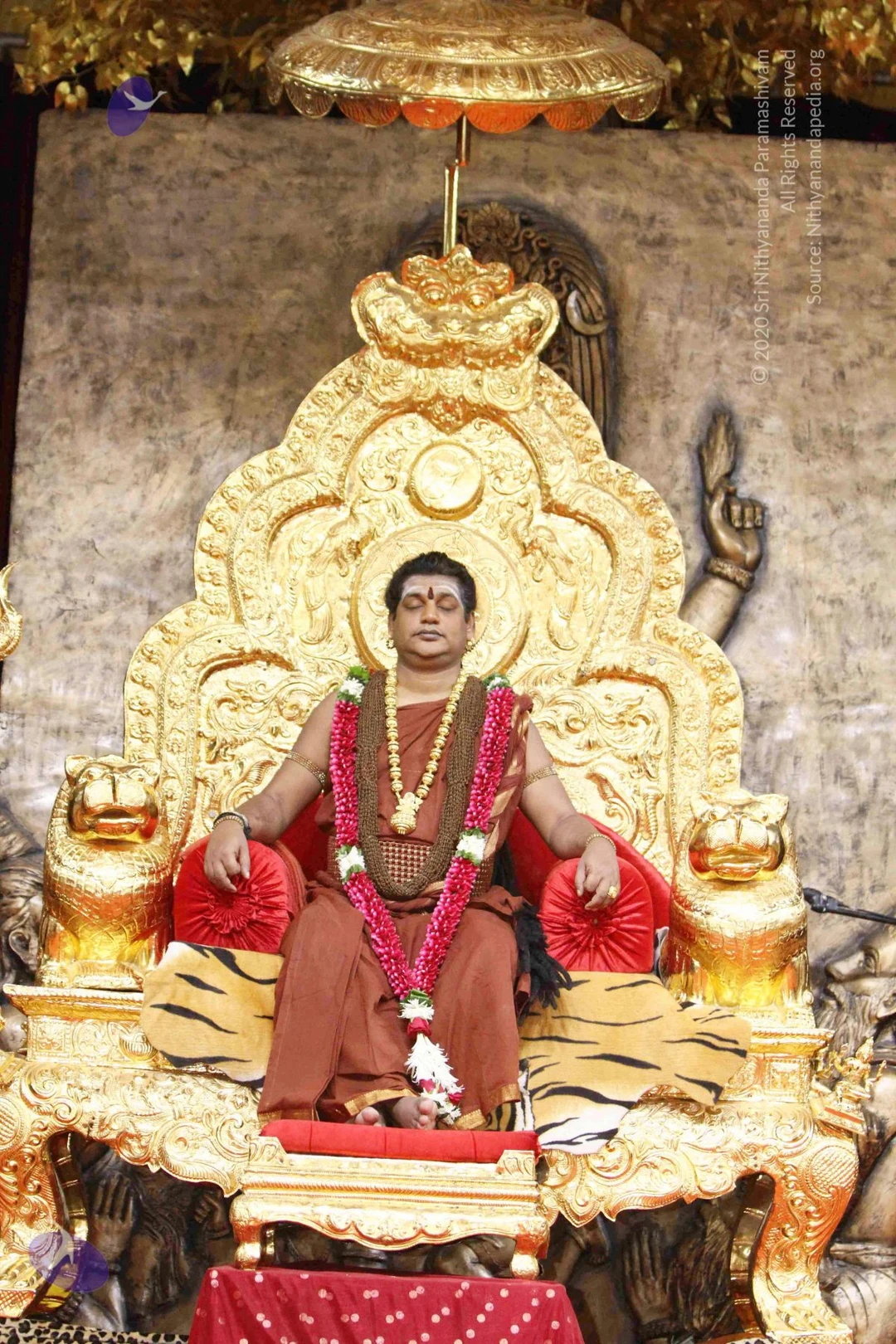
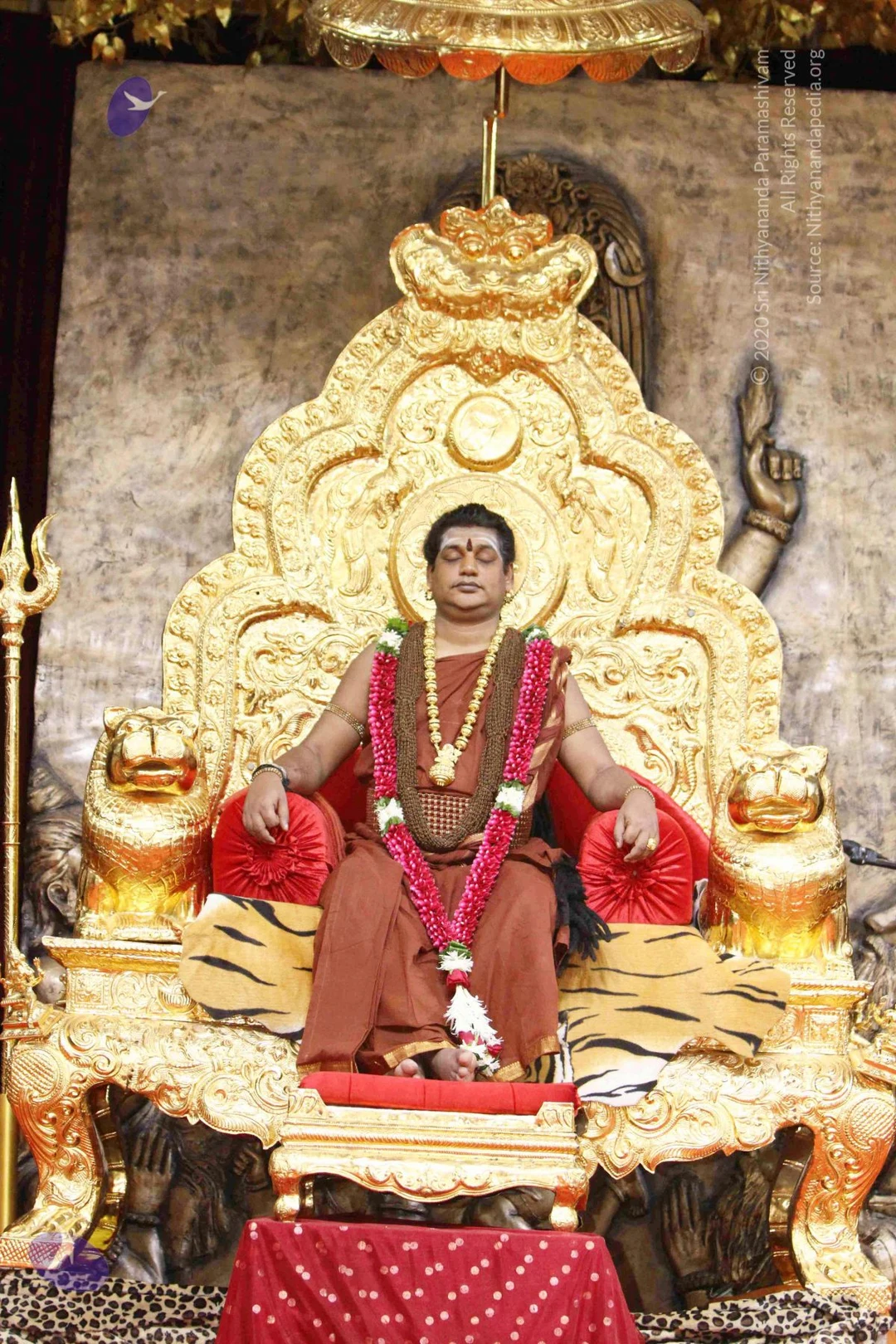
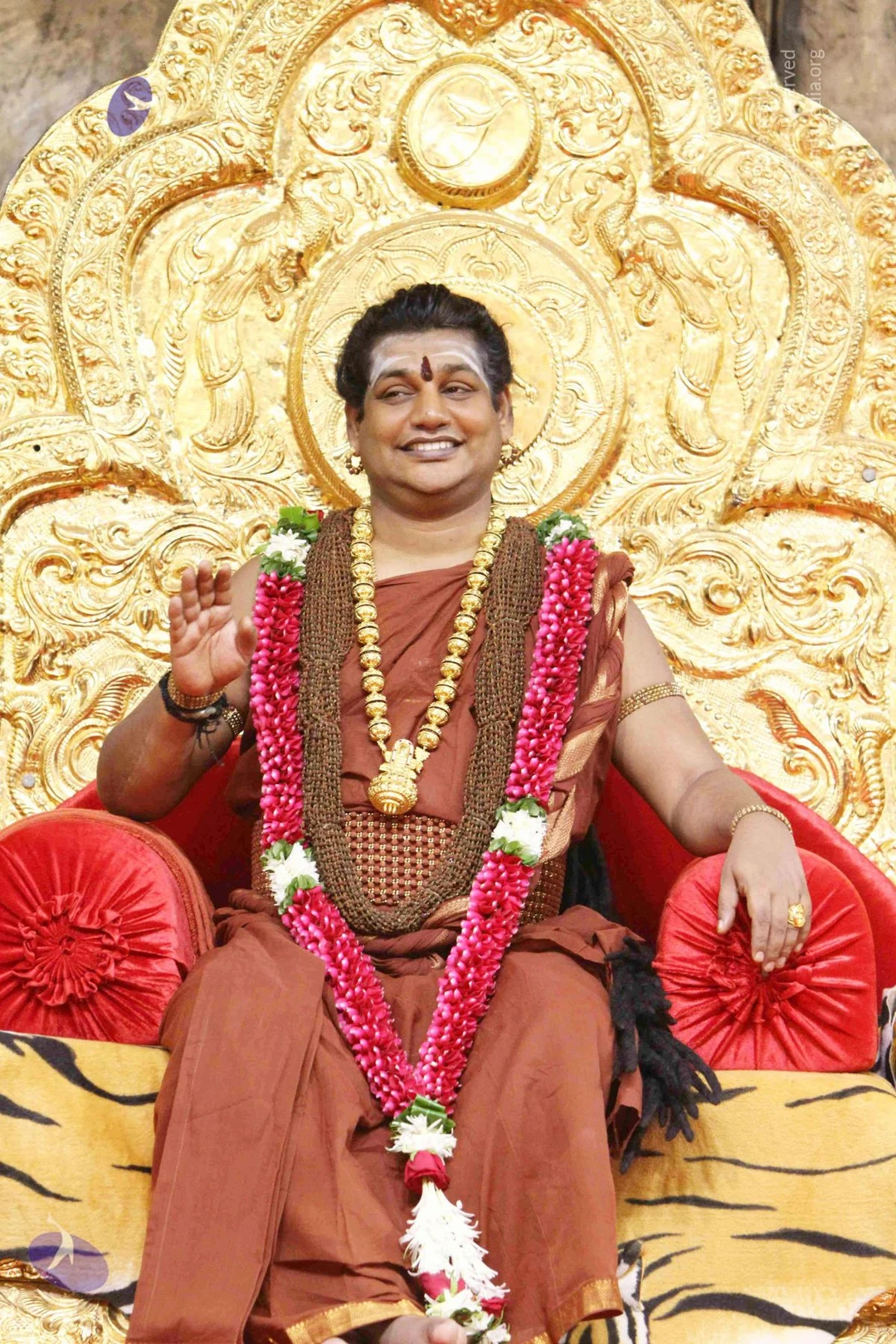
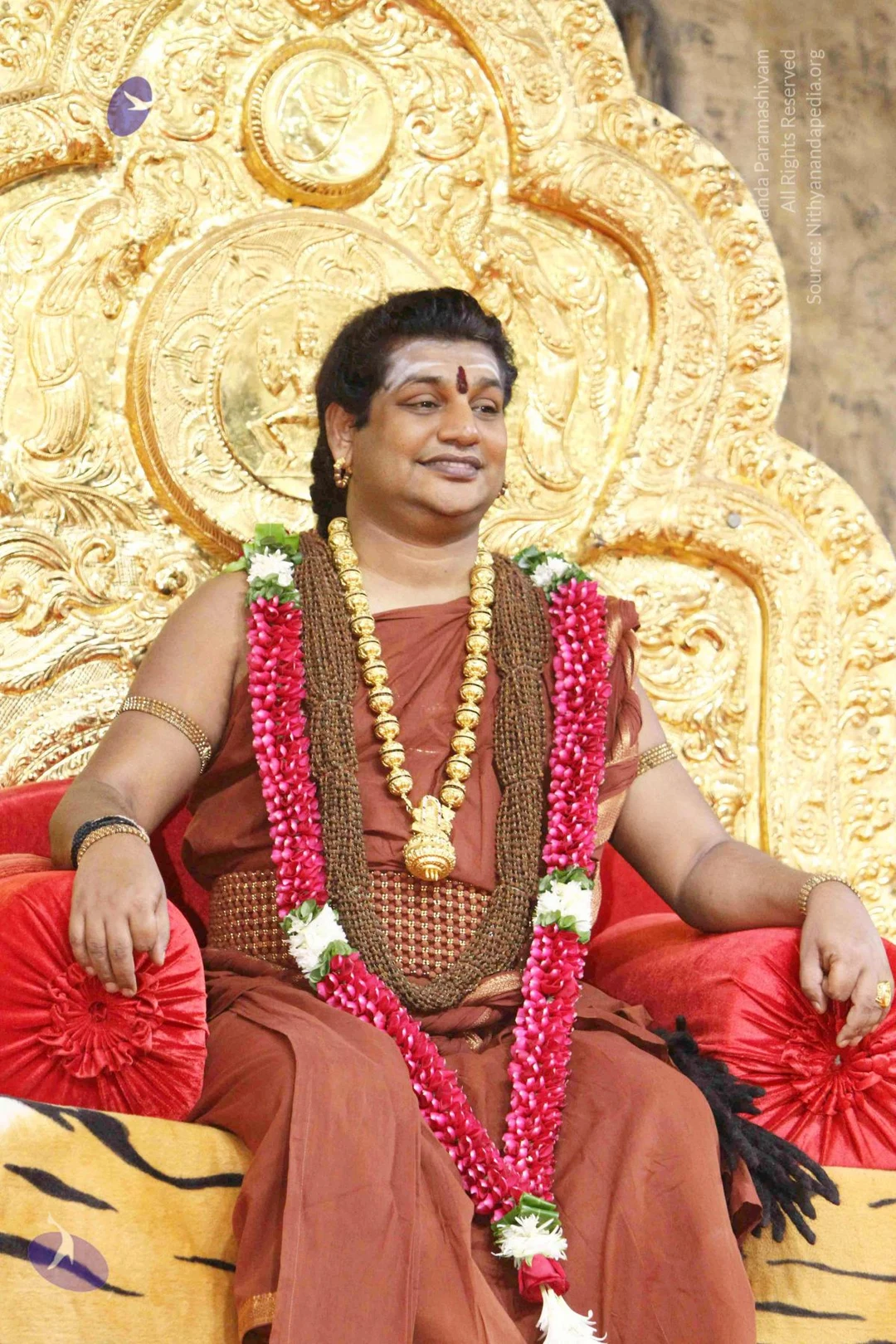
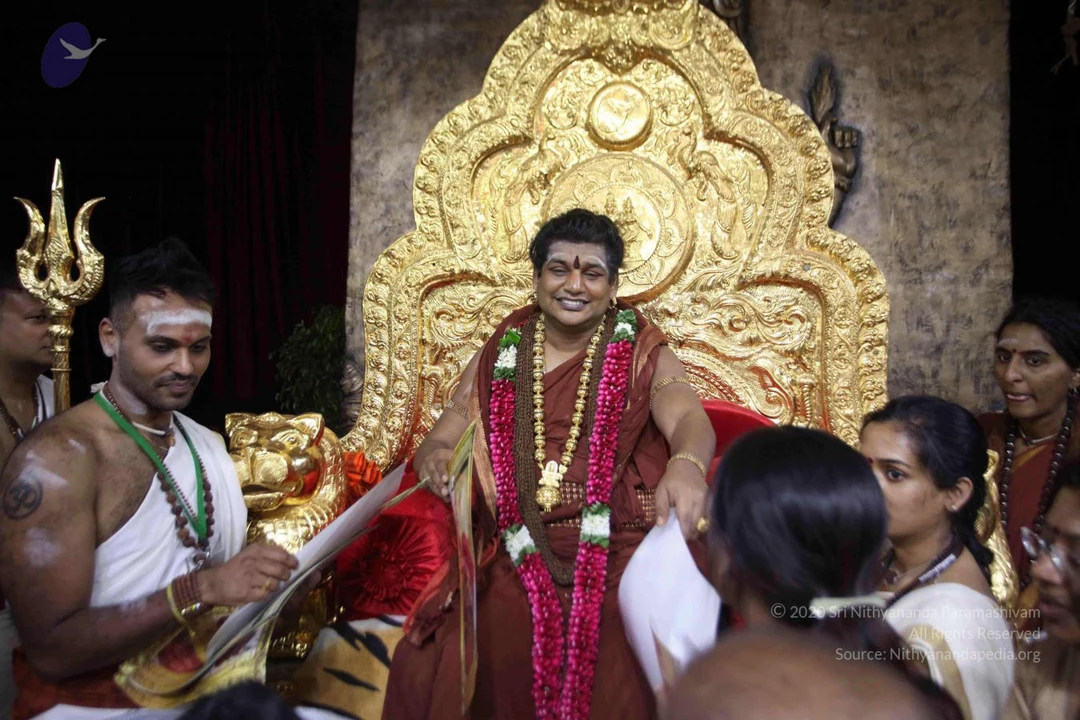
Gurudeeksha

4 photosSource gallery
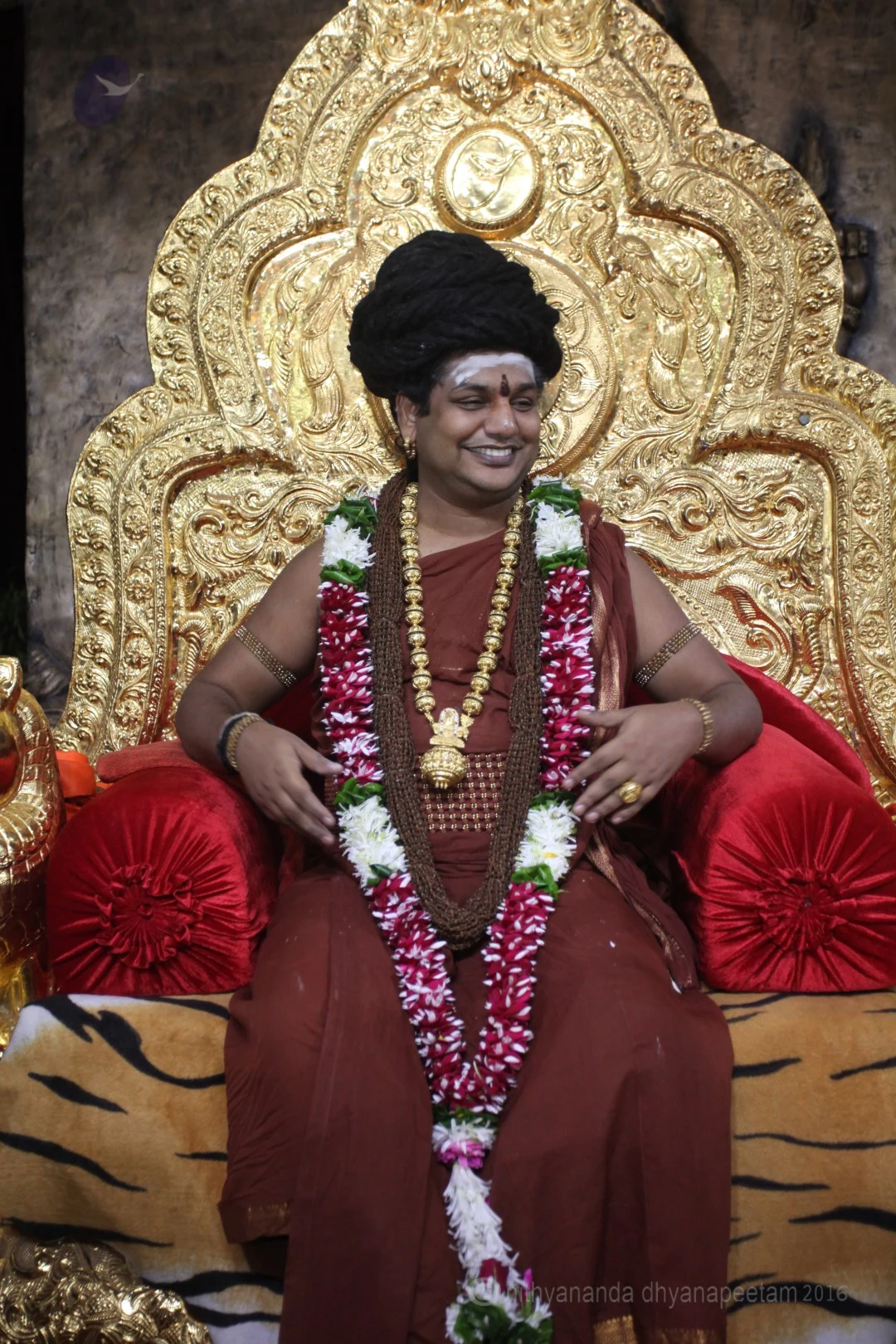
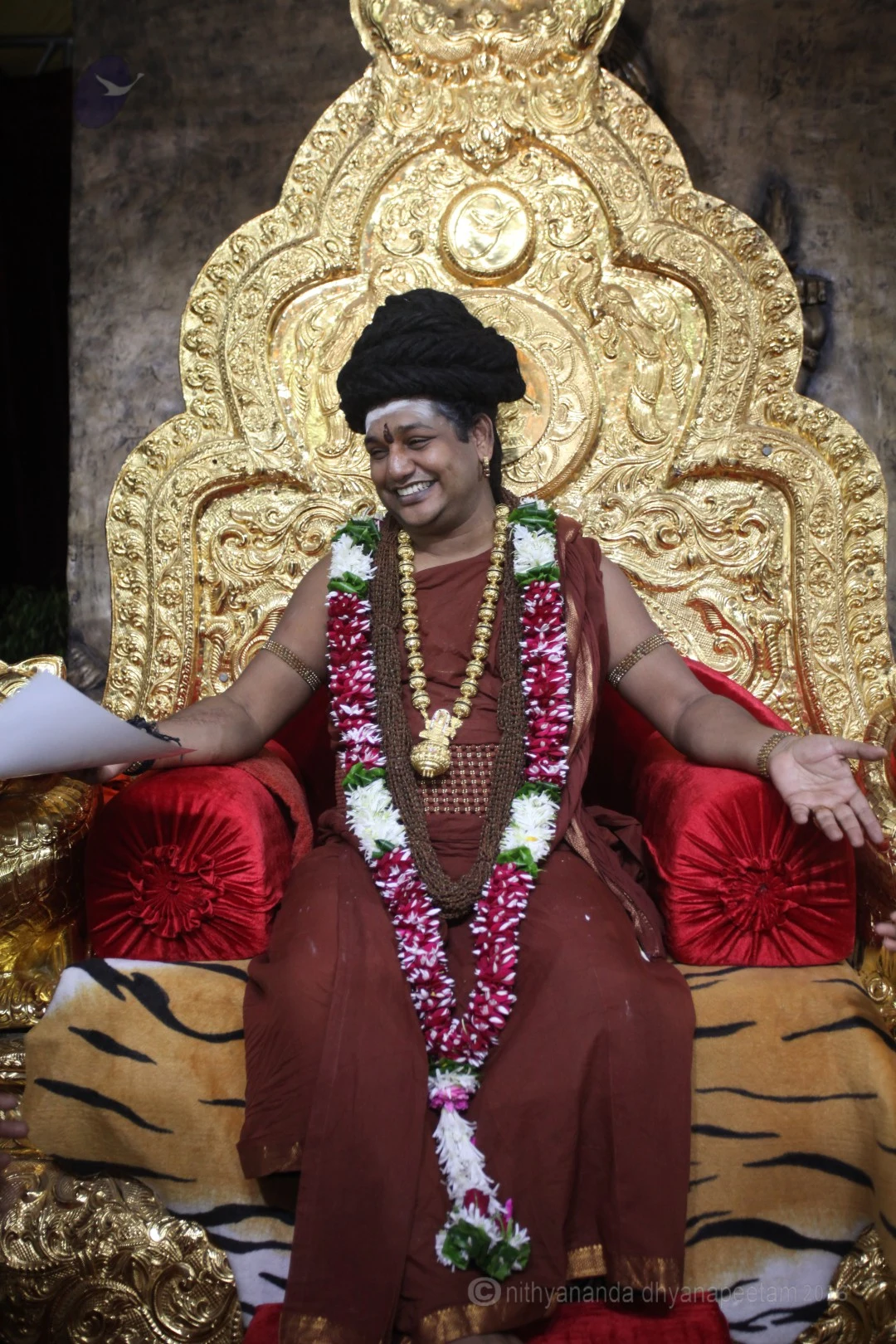
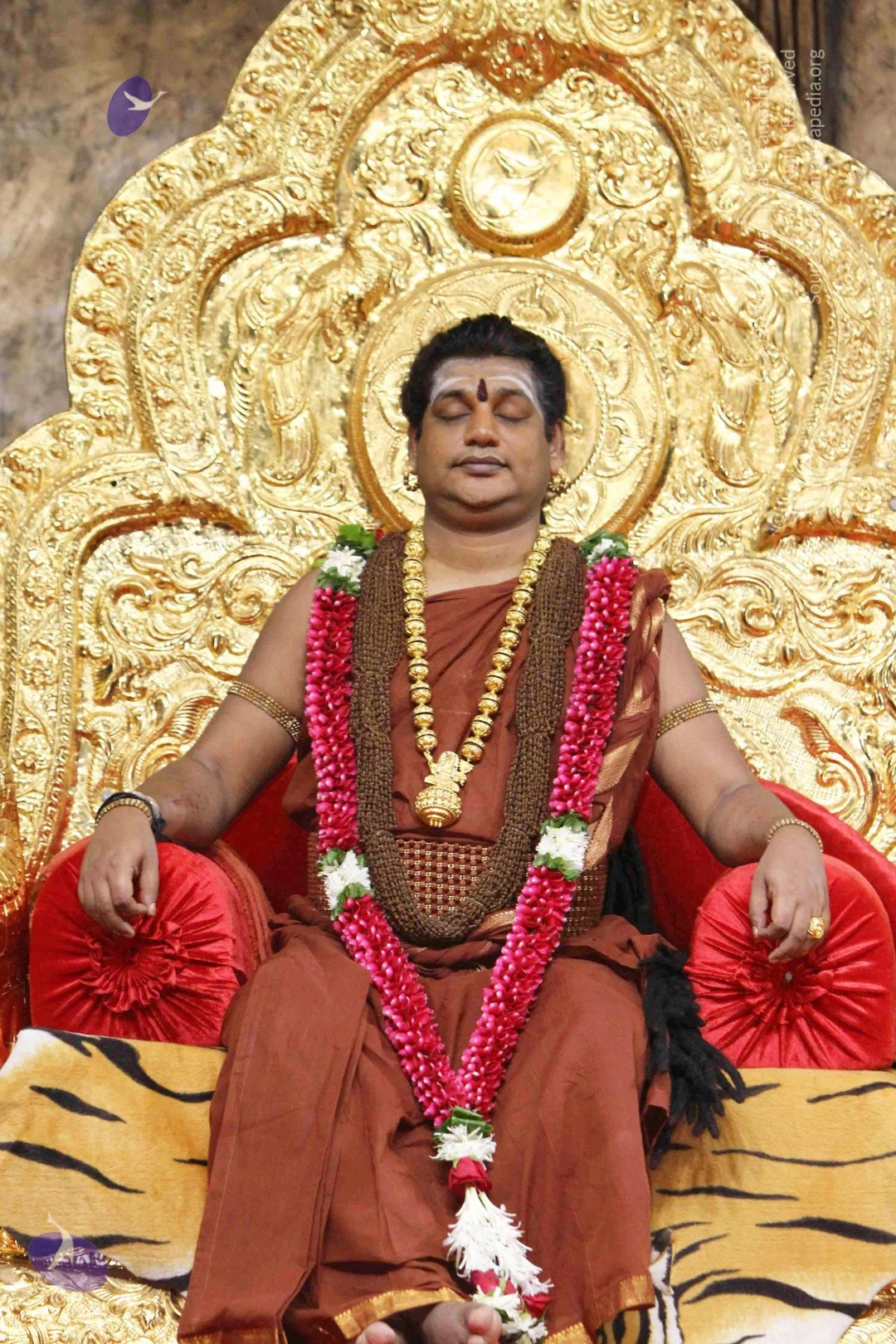
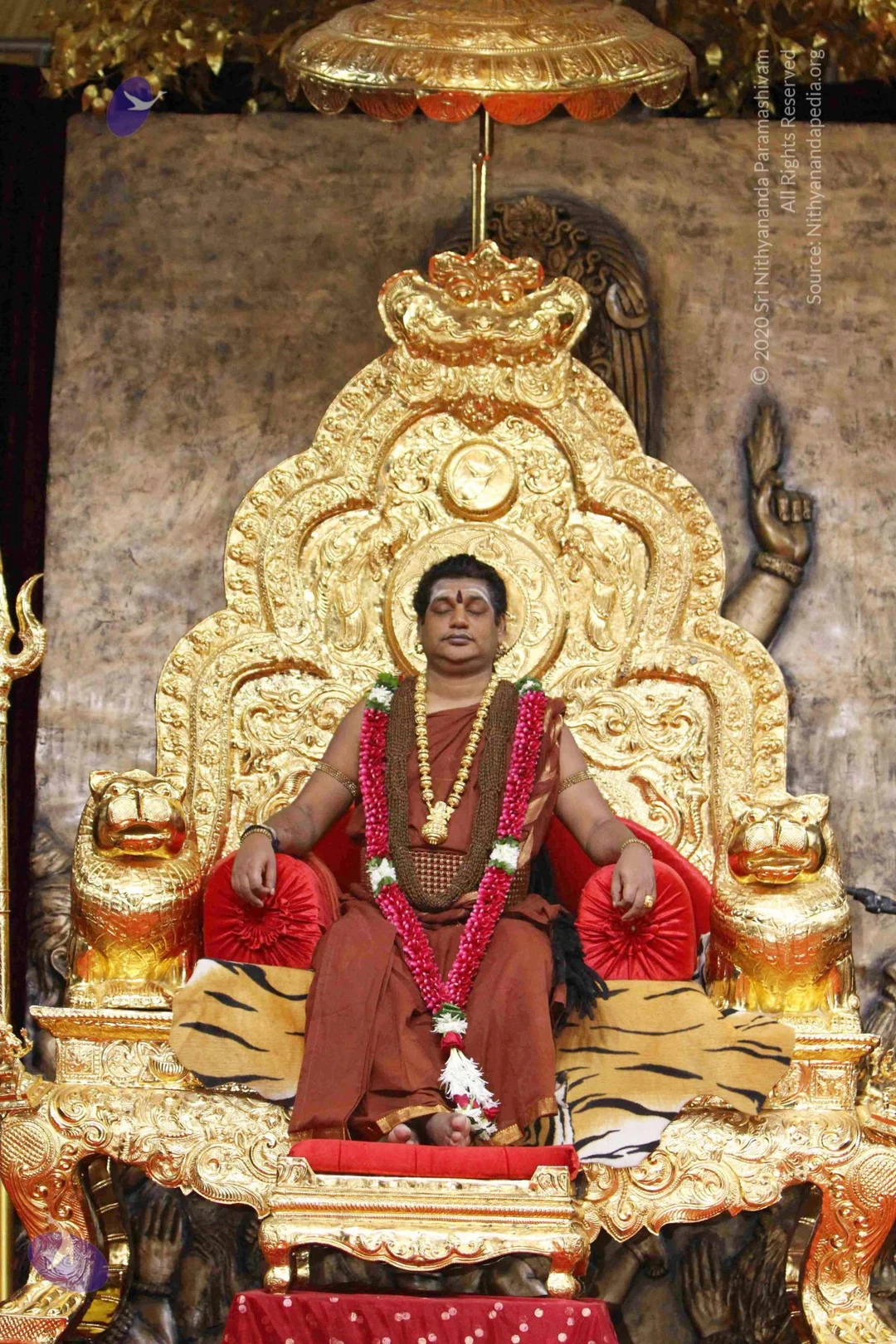
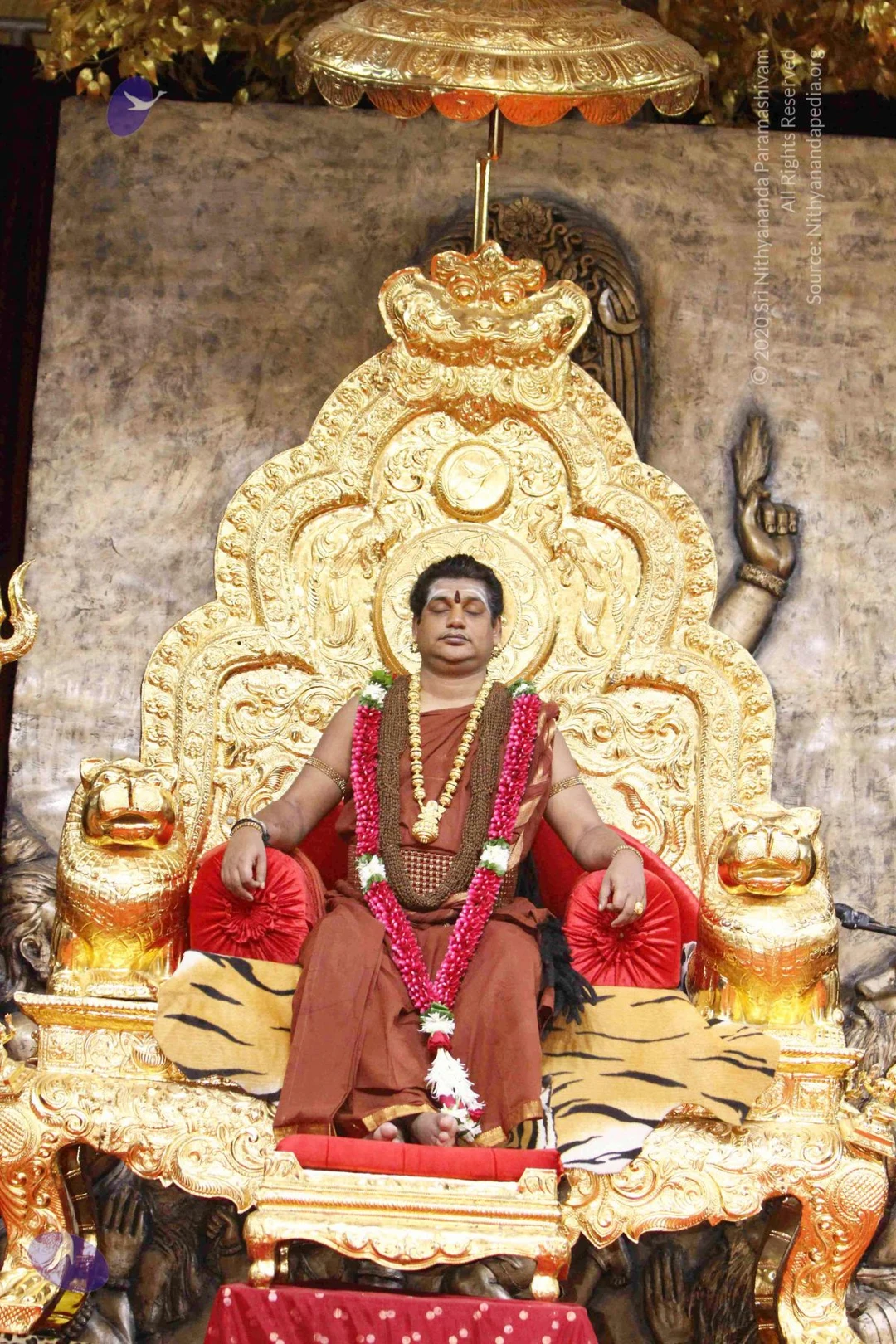
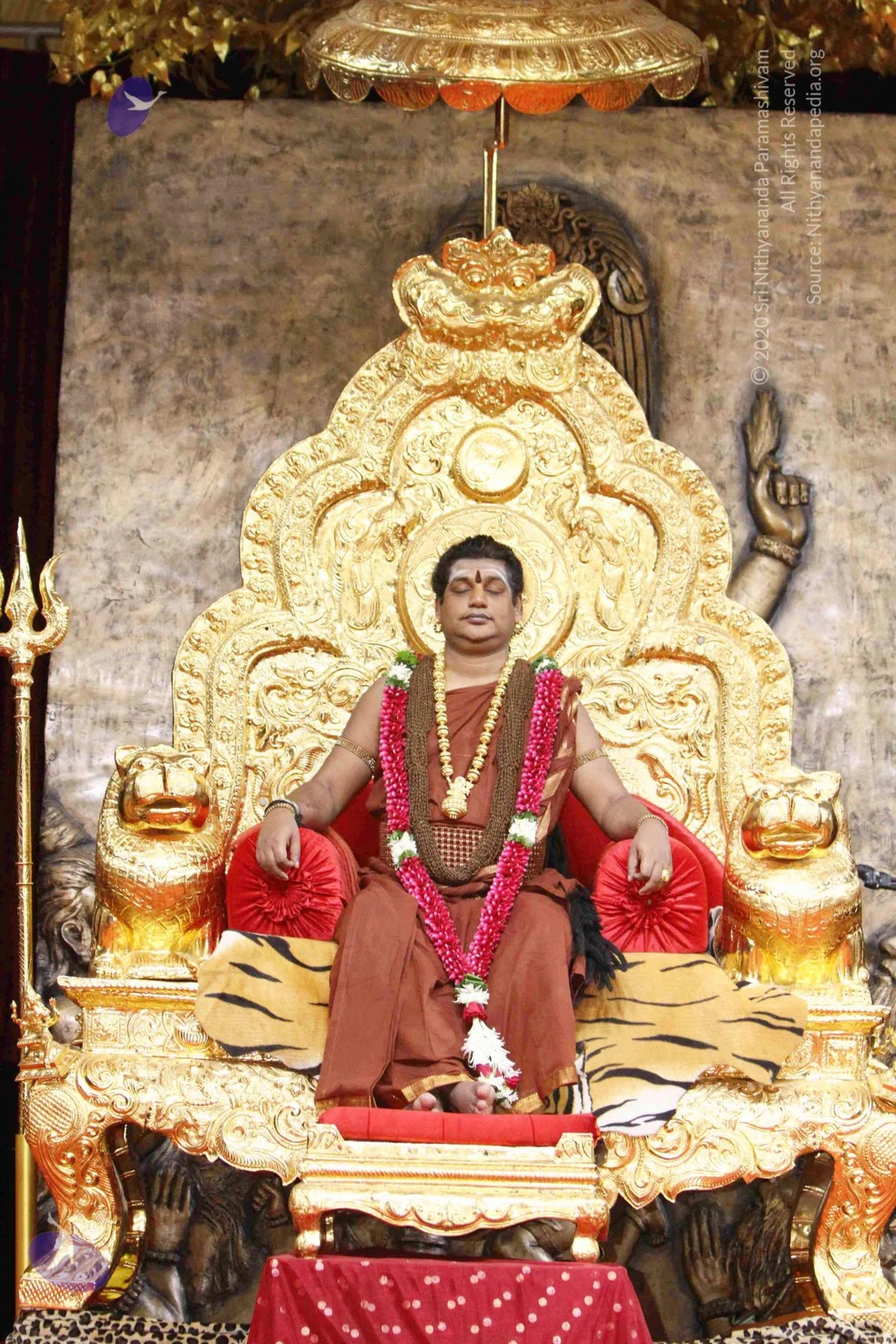
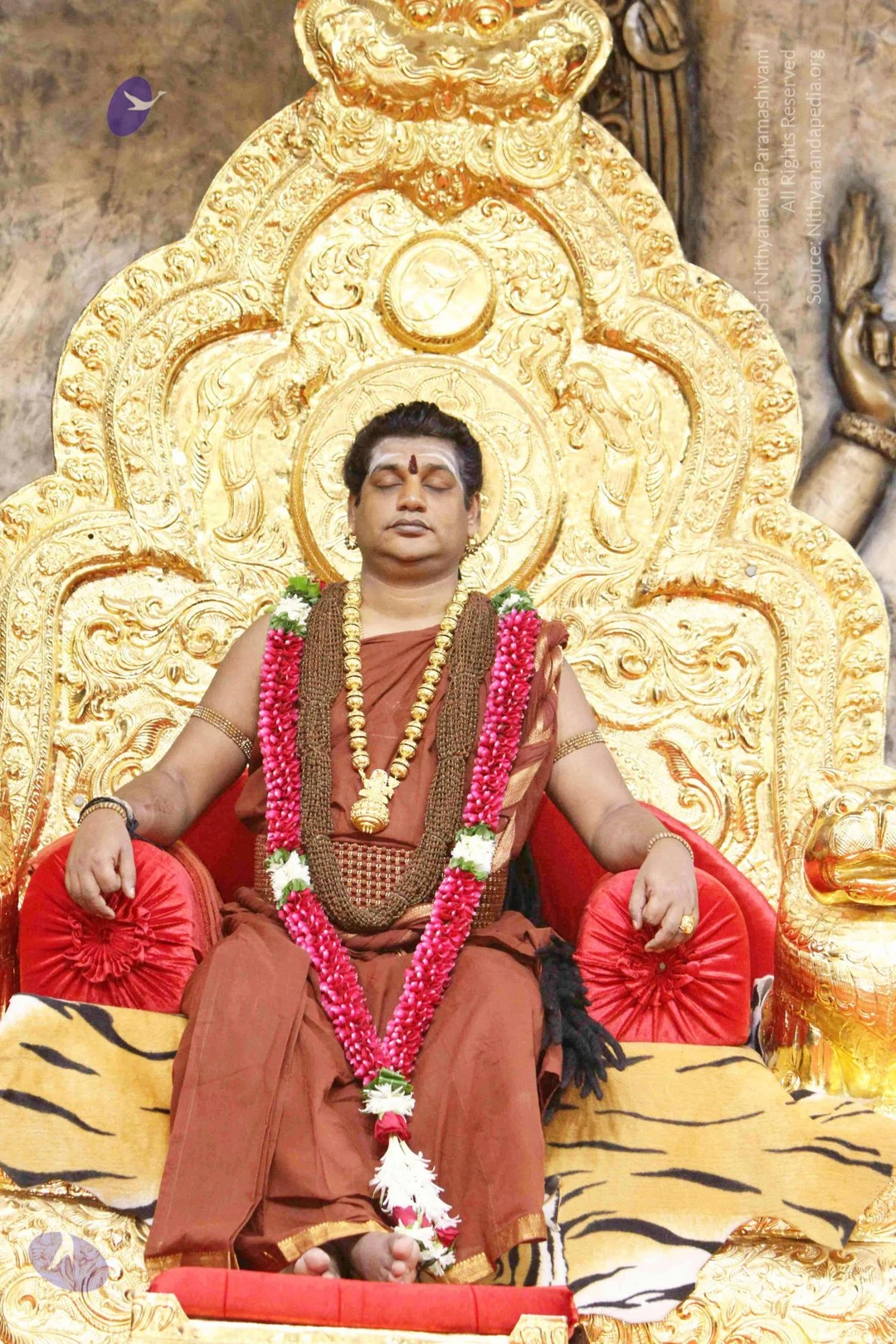
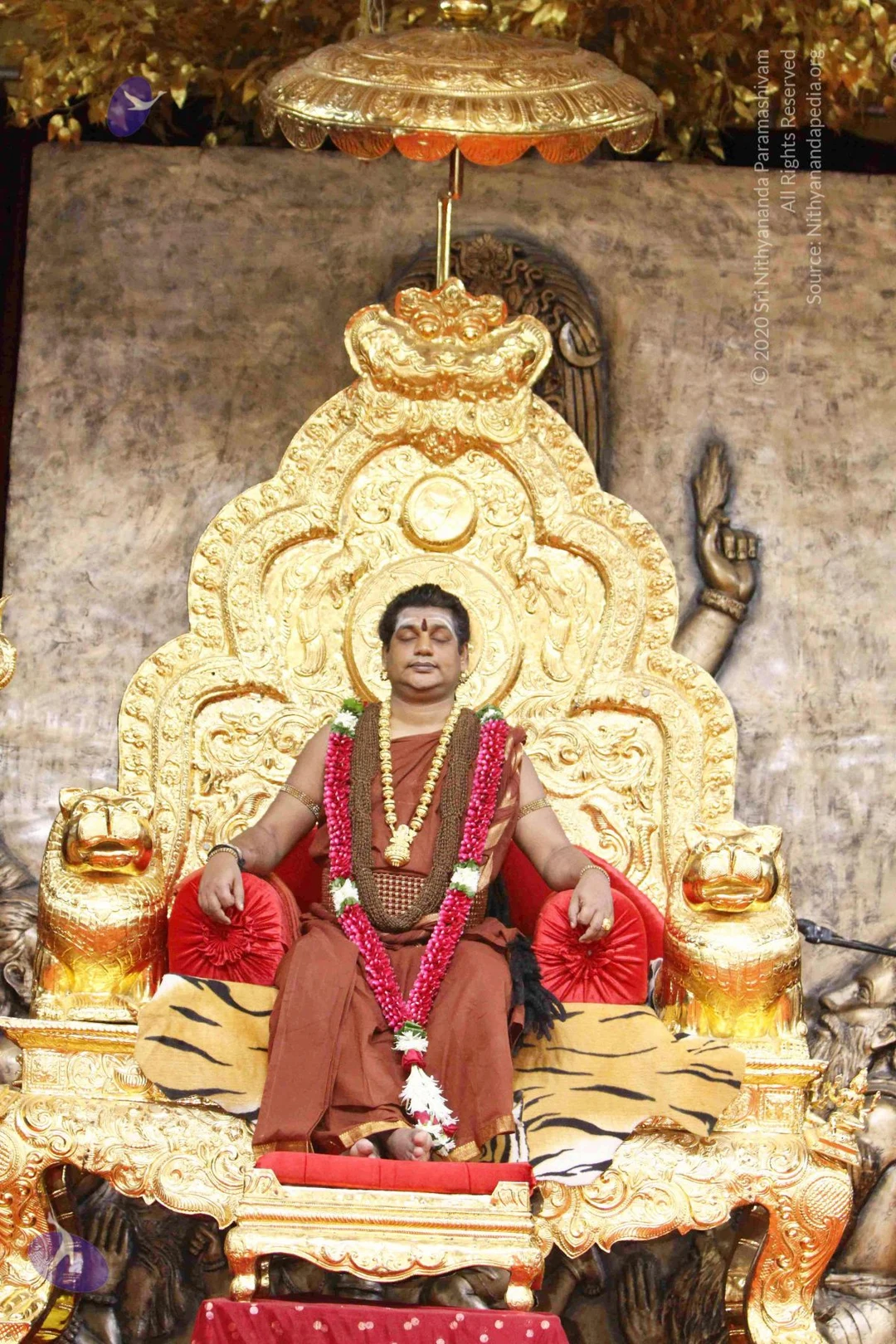
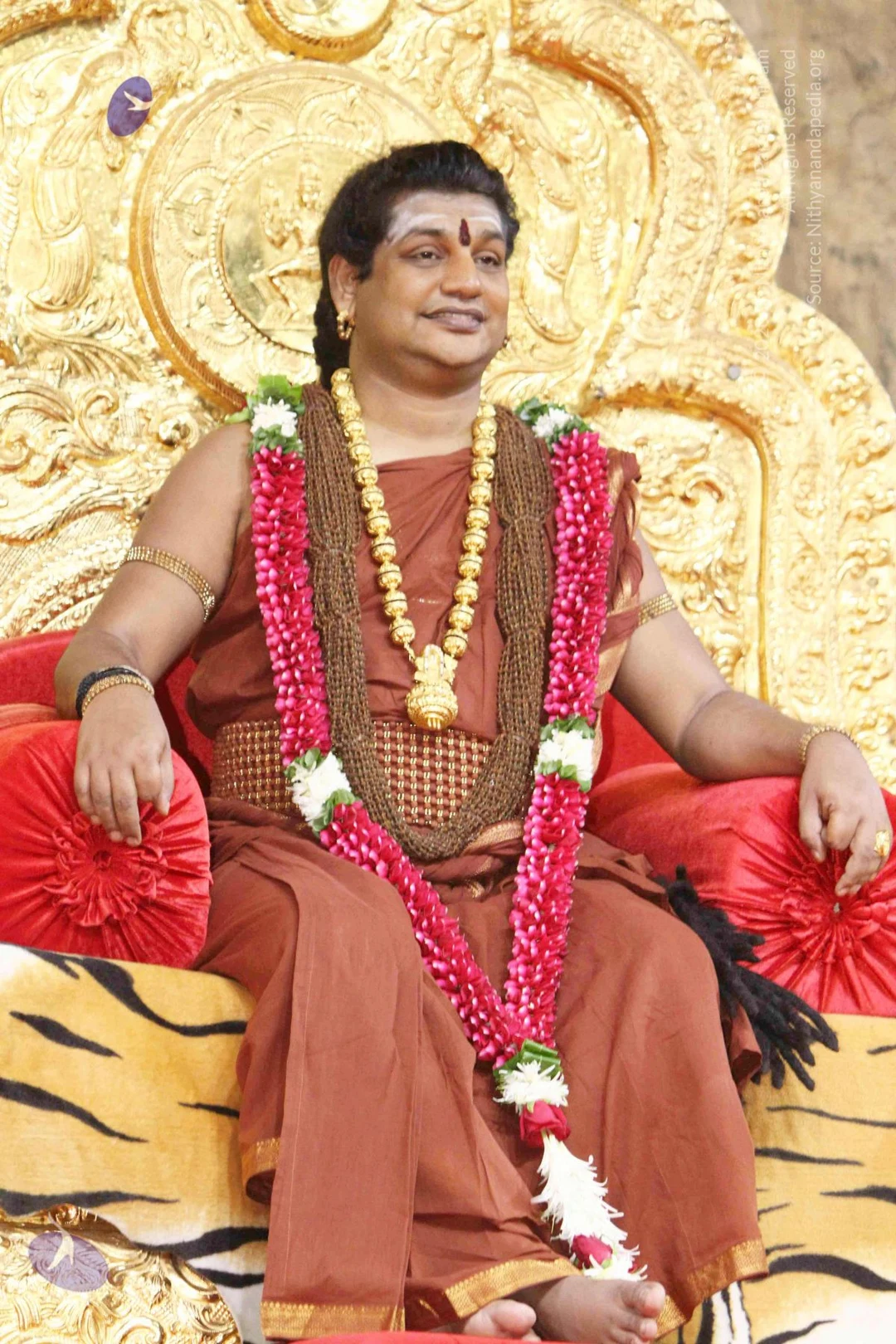
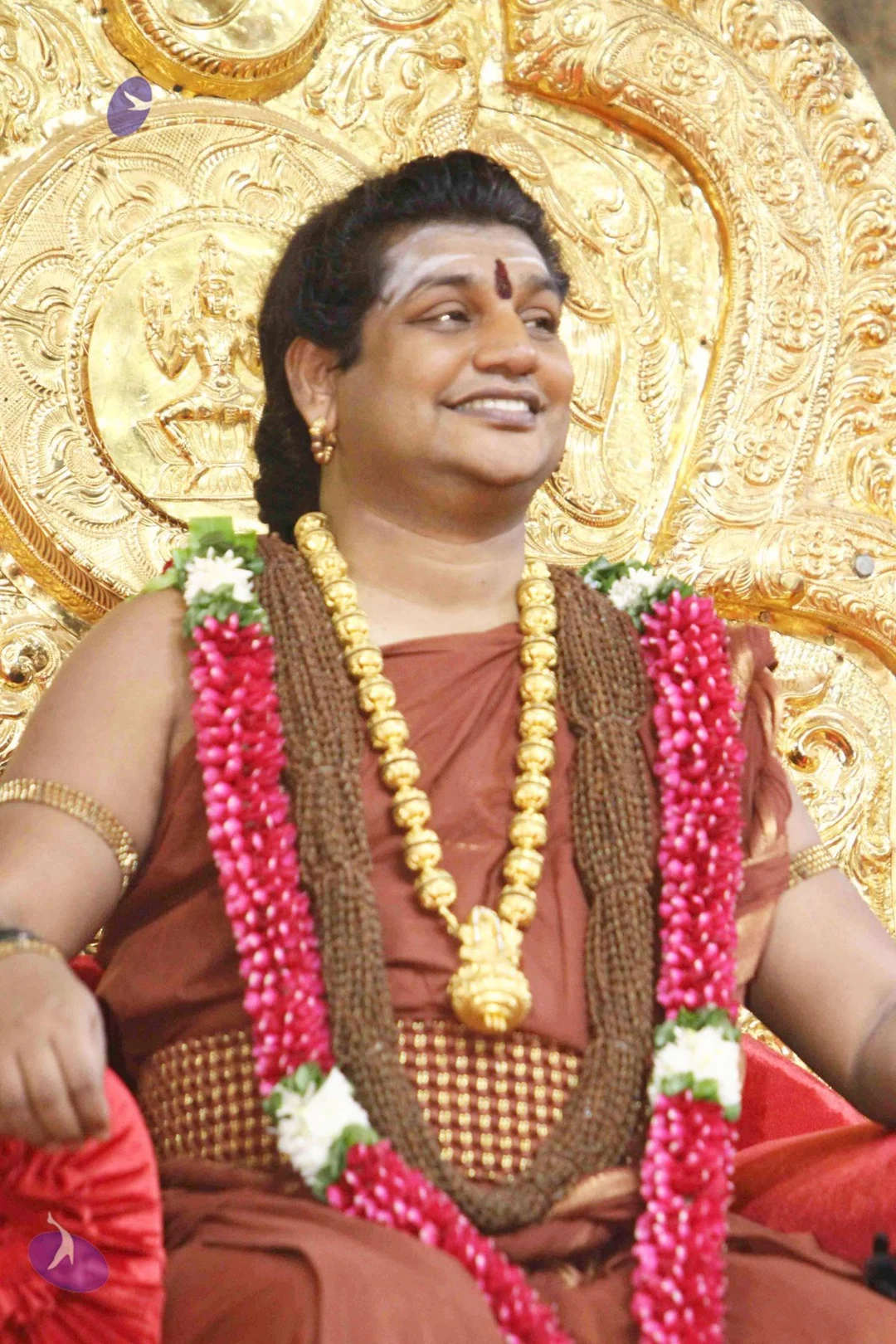
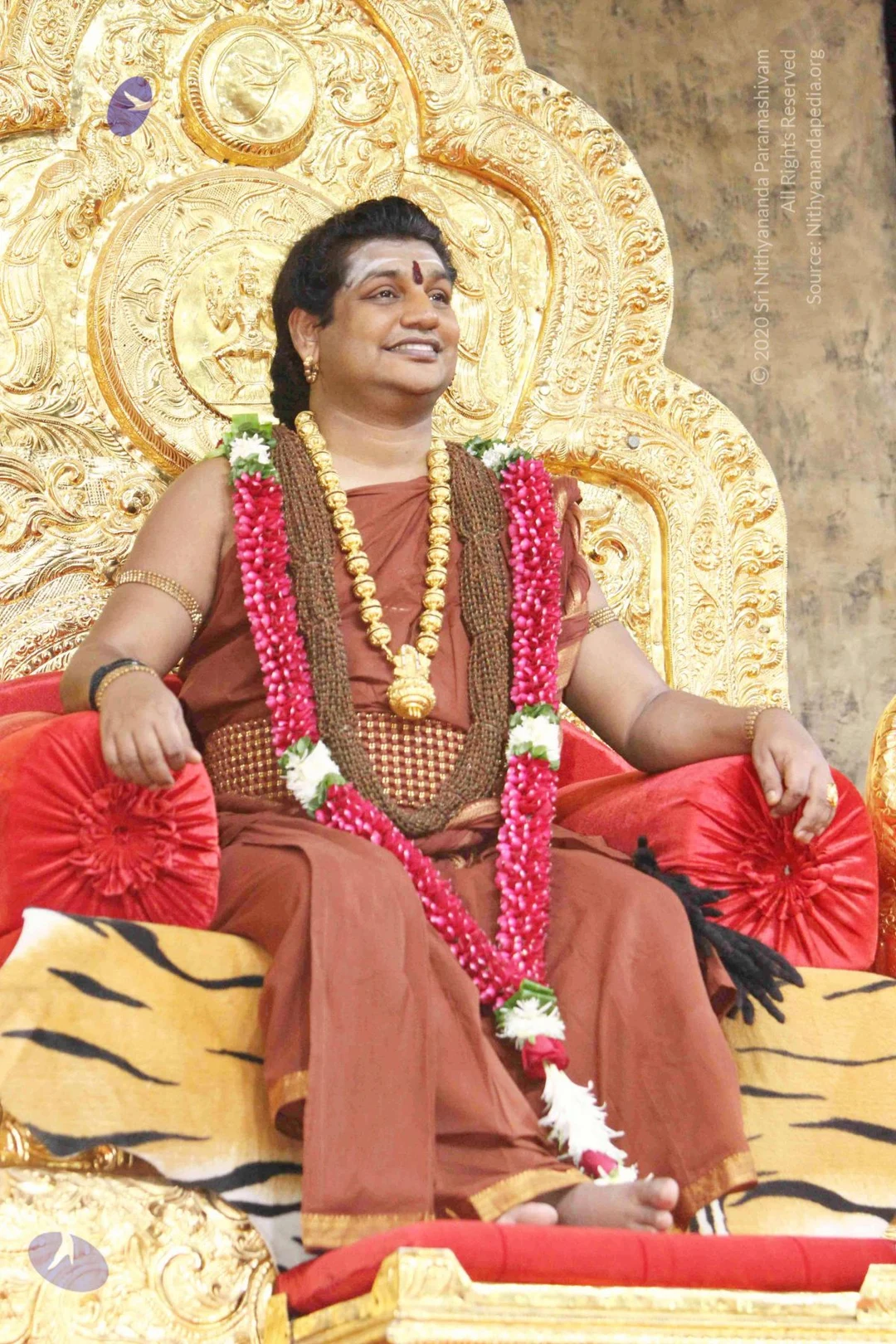
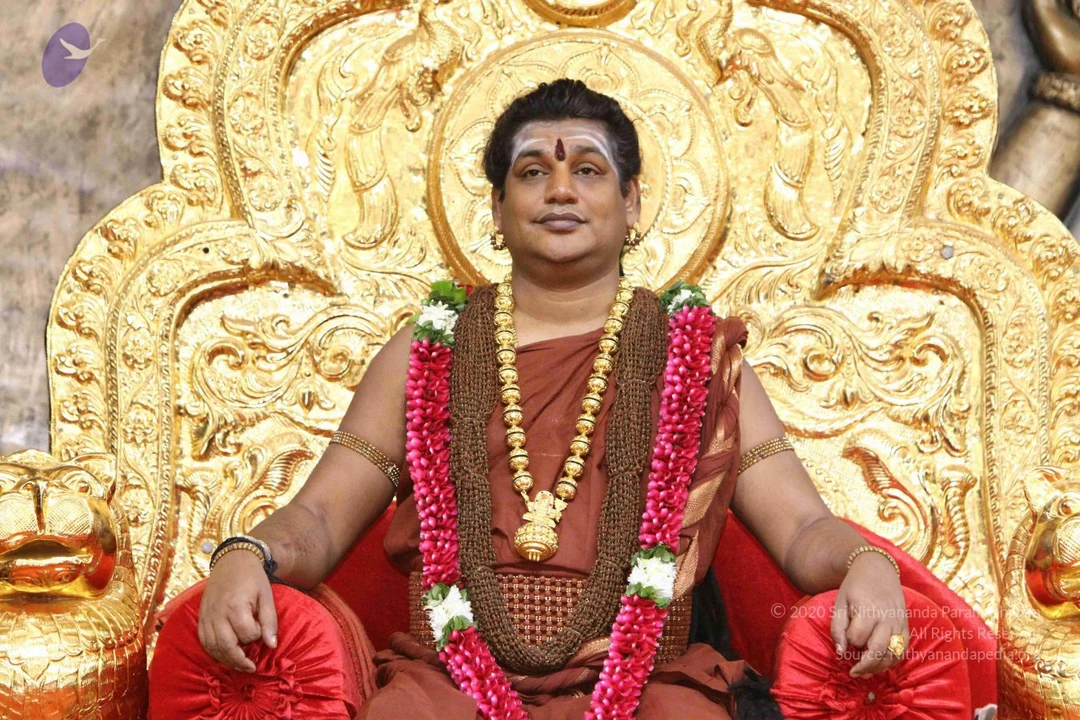
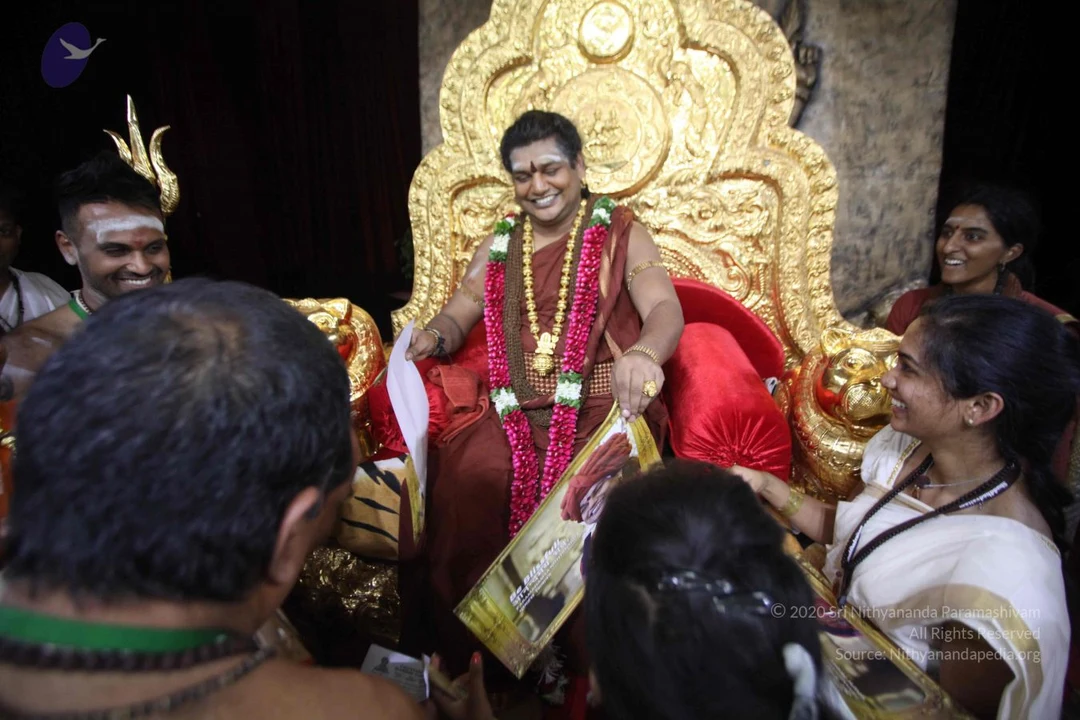
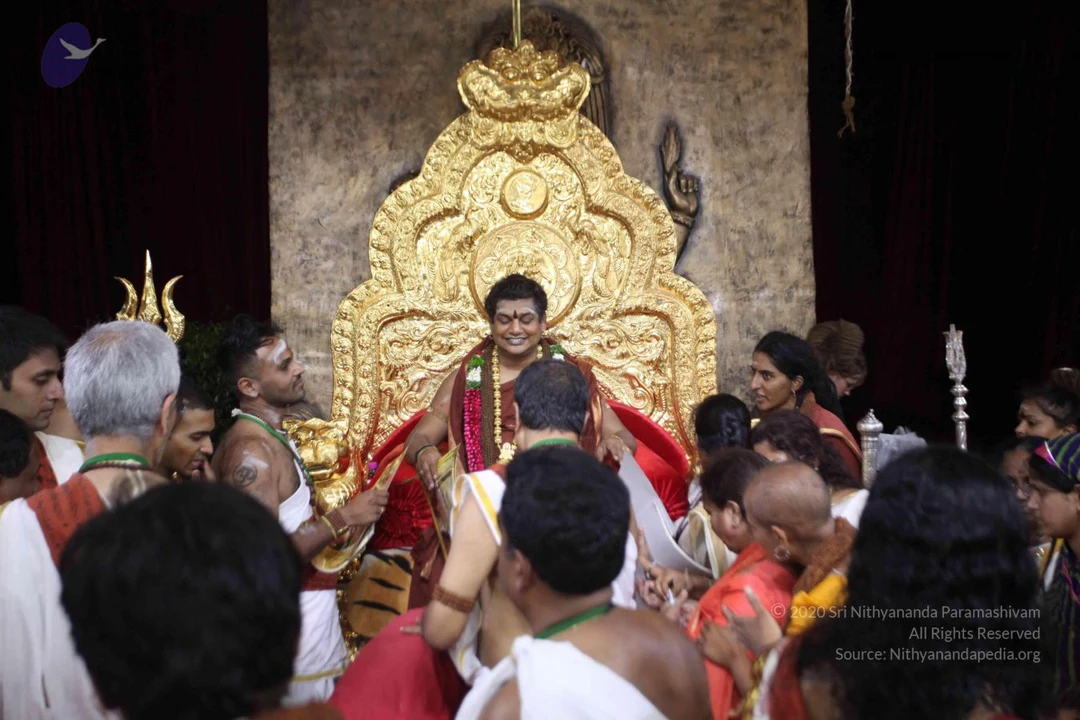
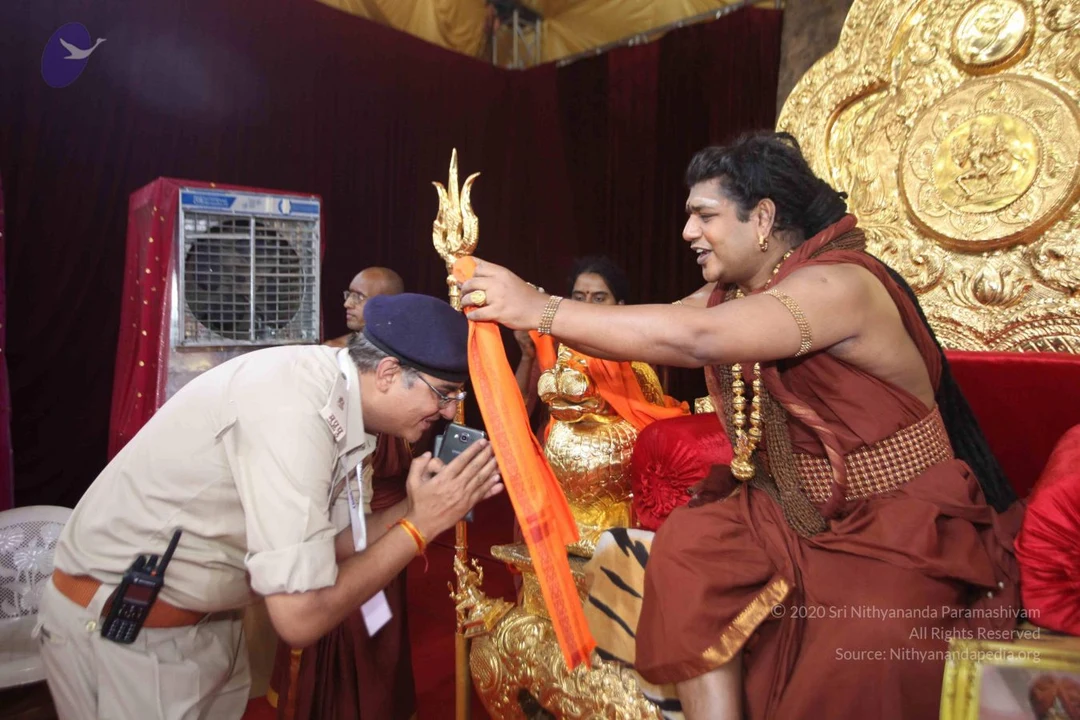
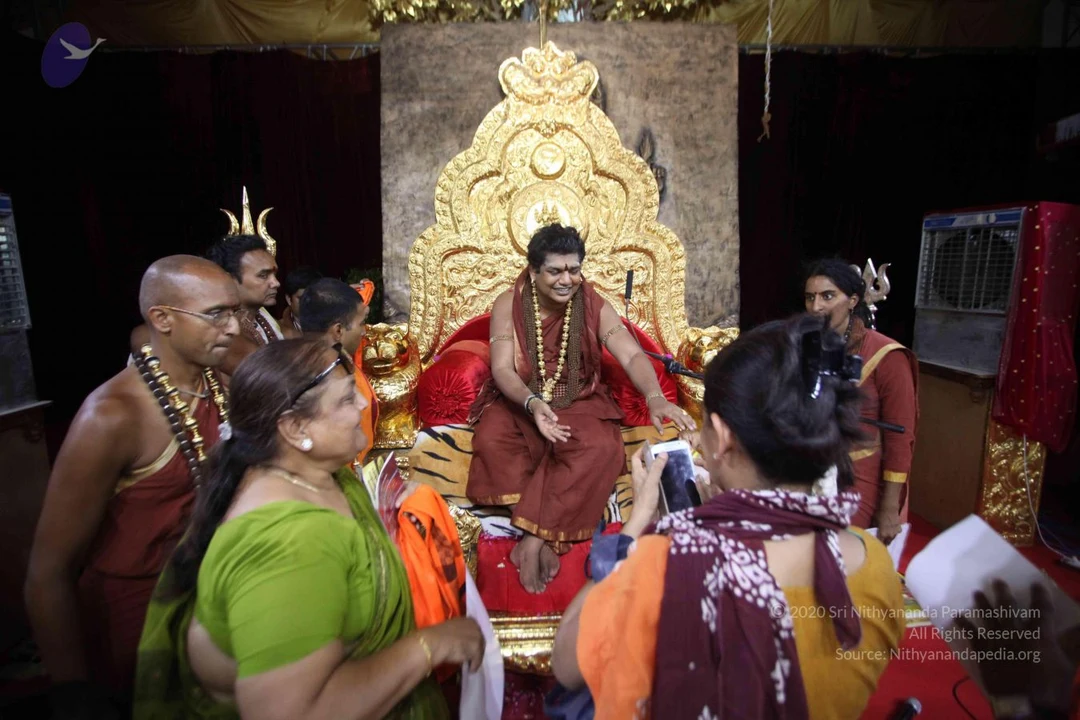
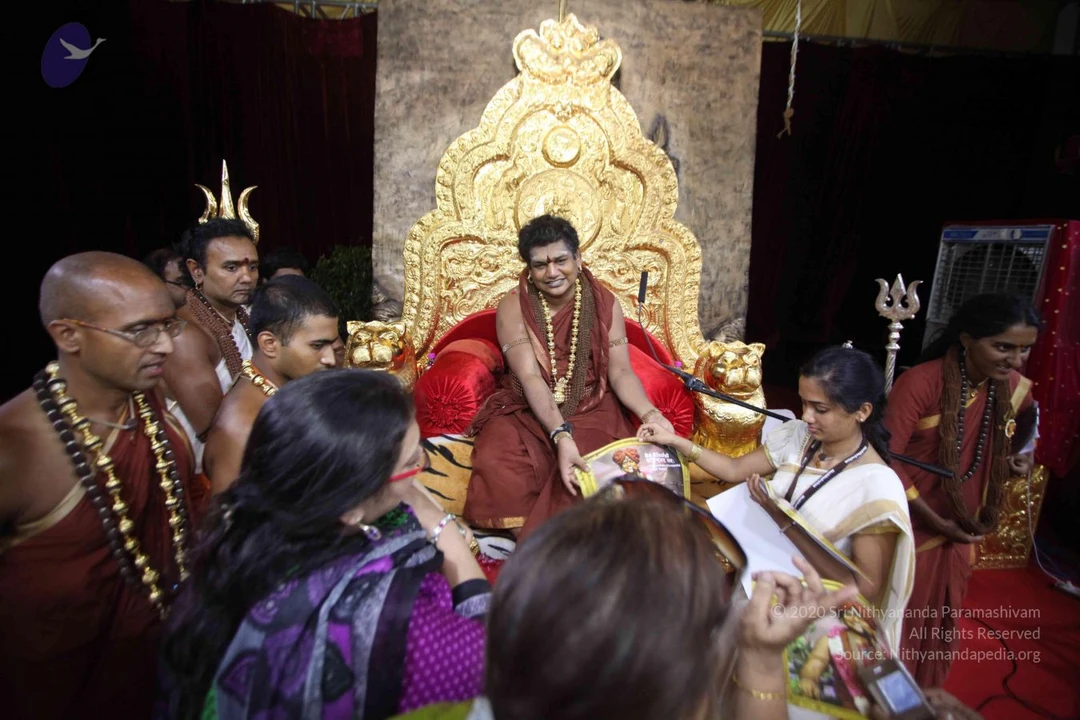
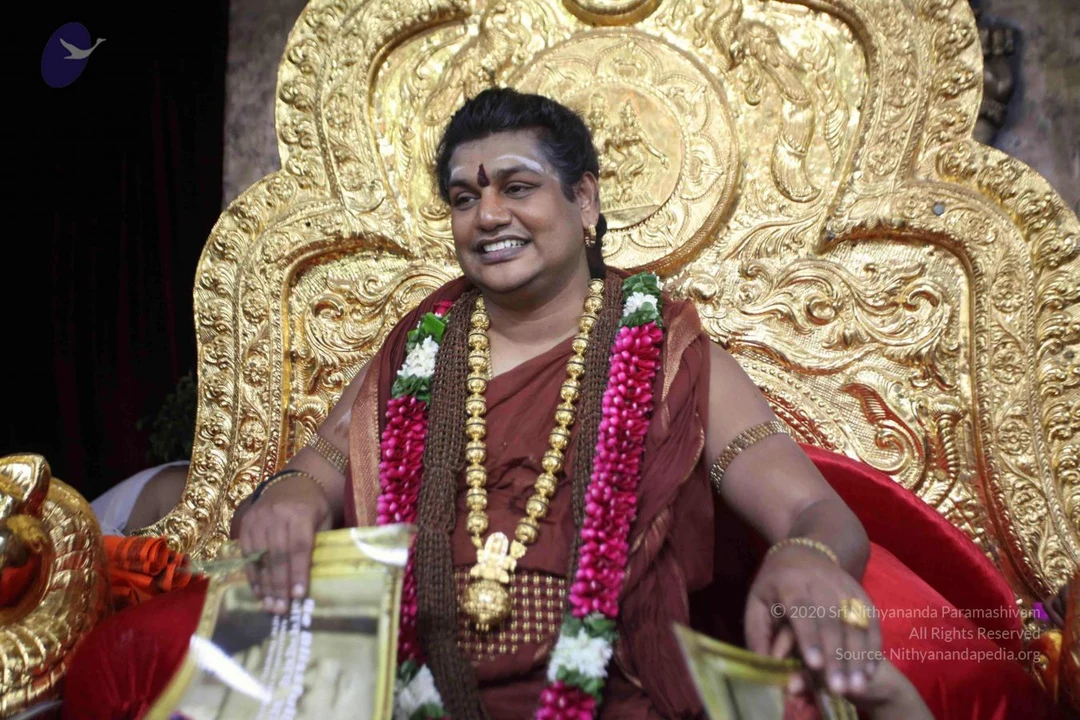
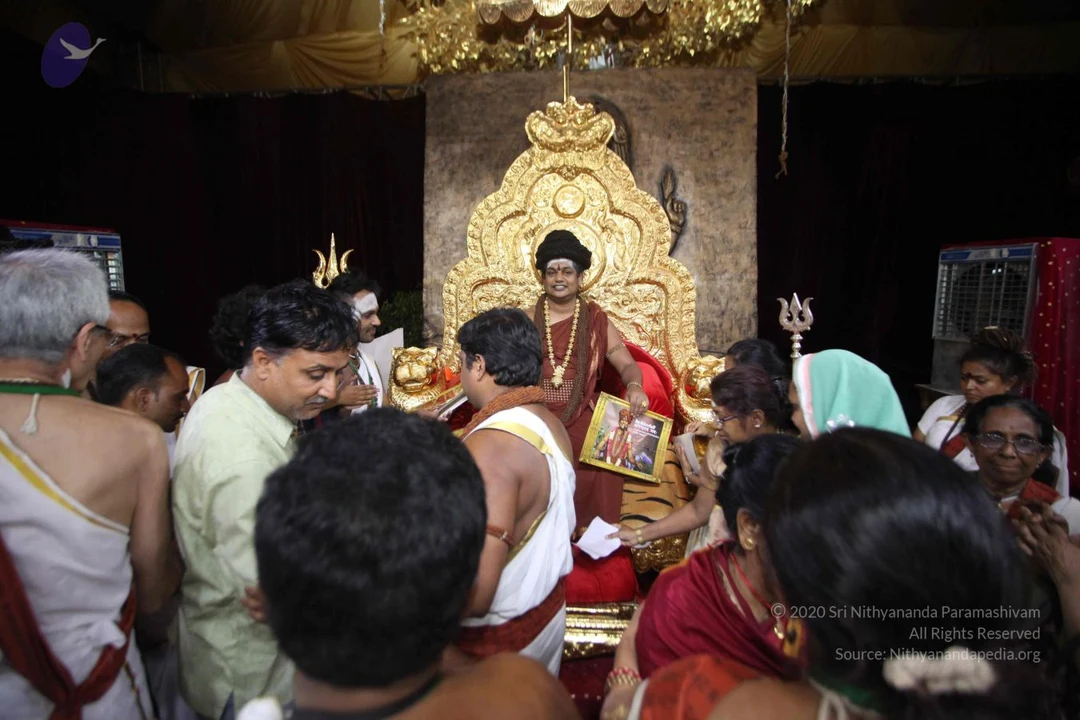
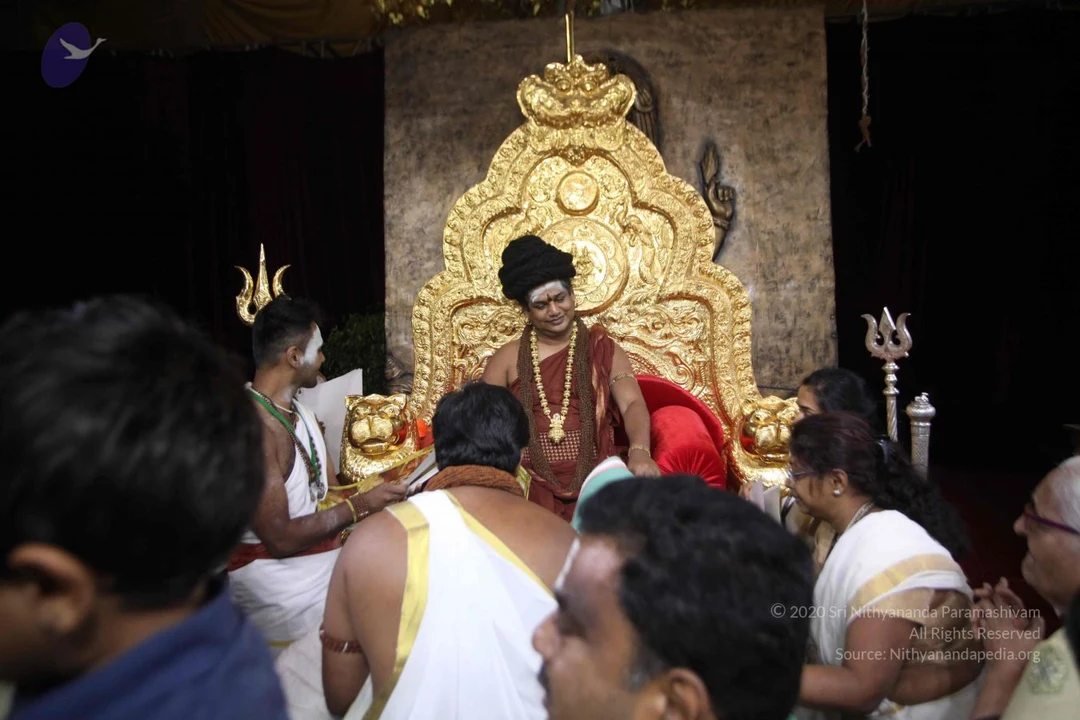
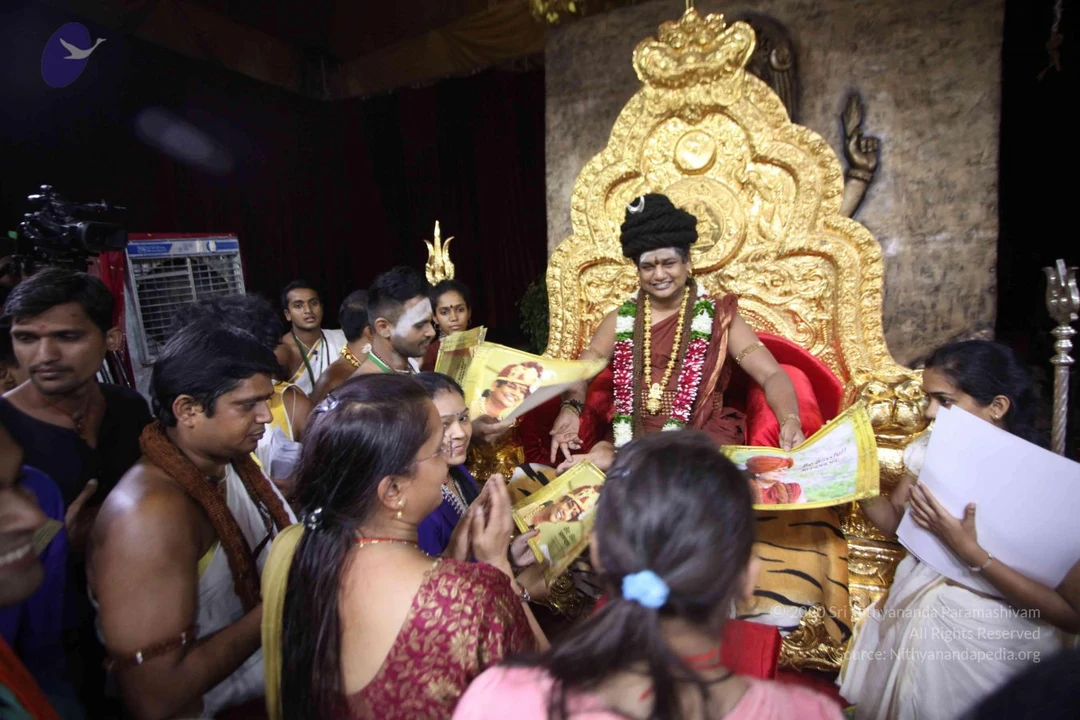
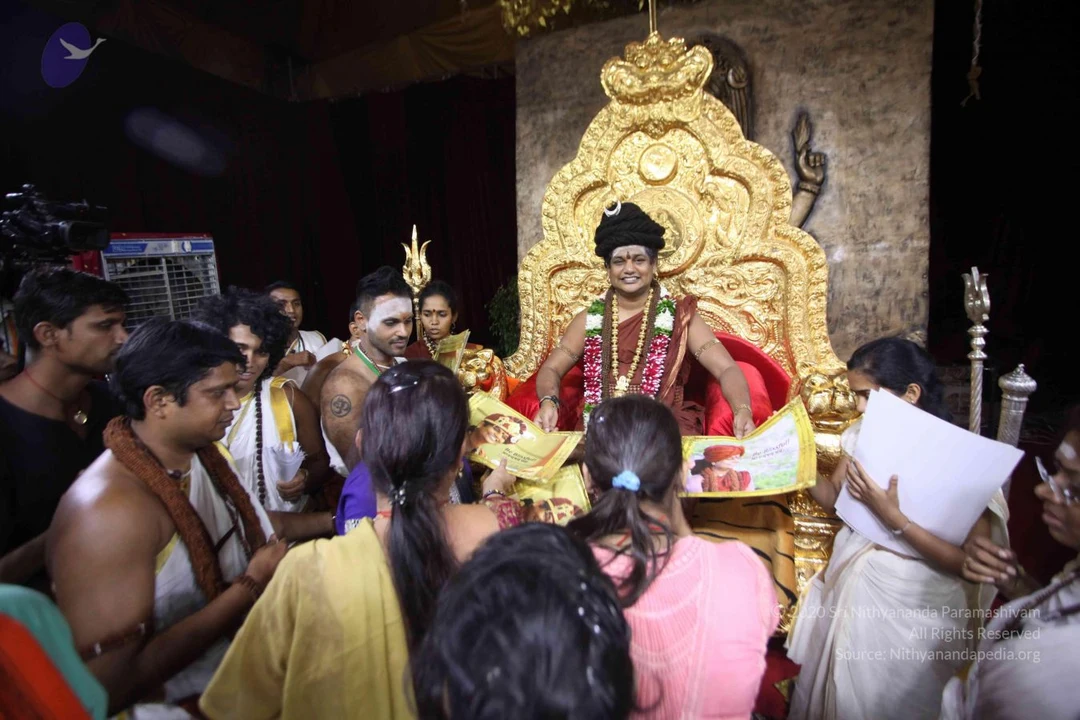
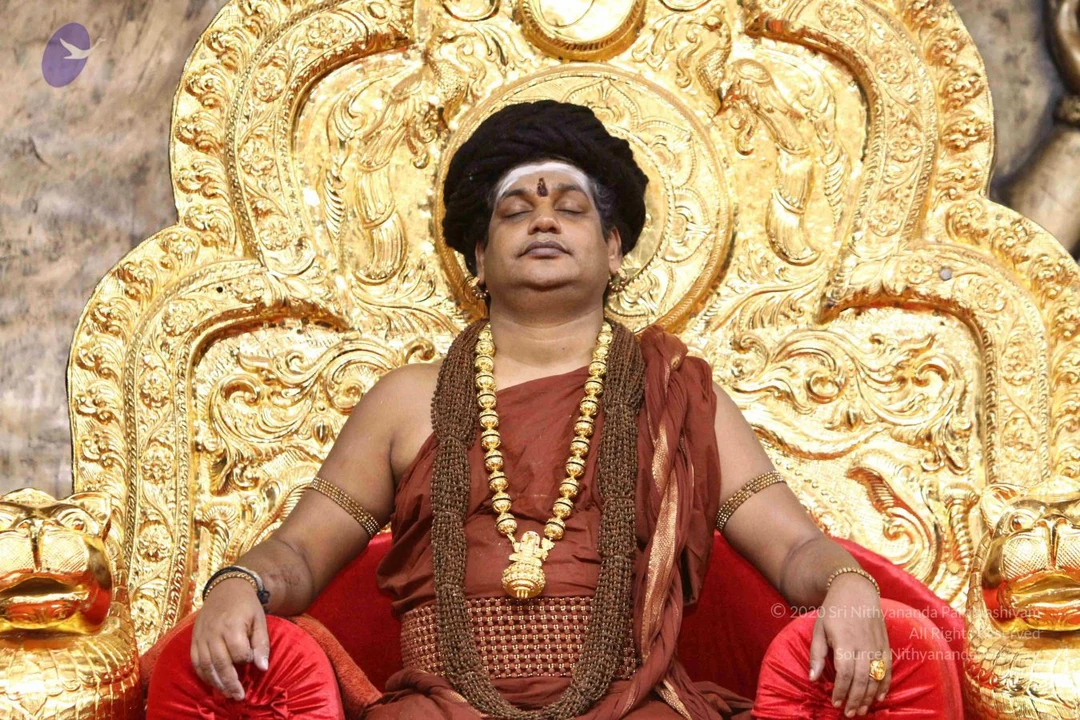
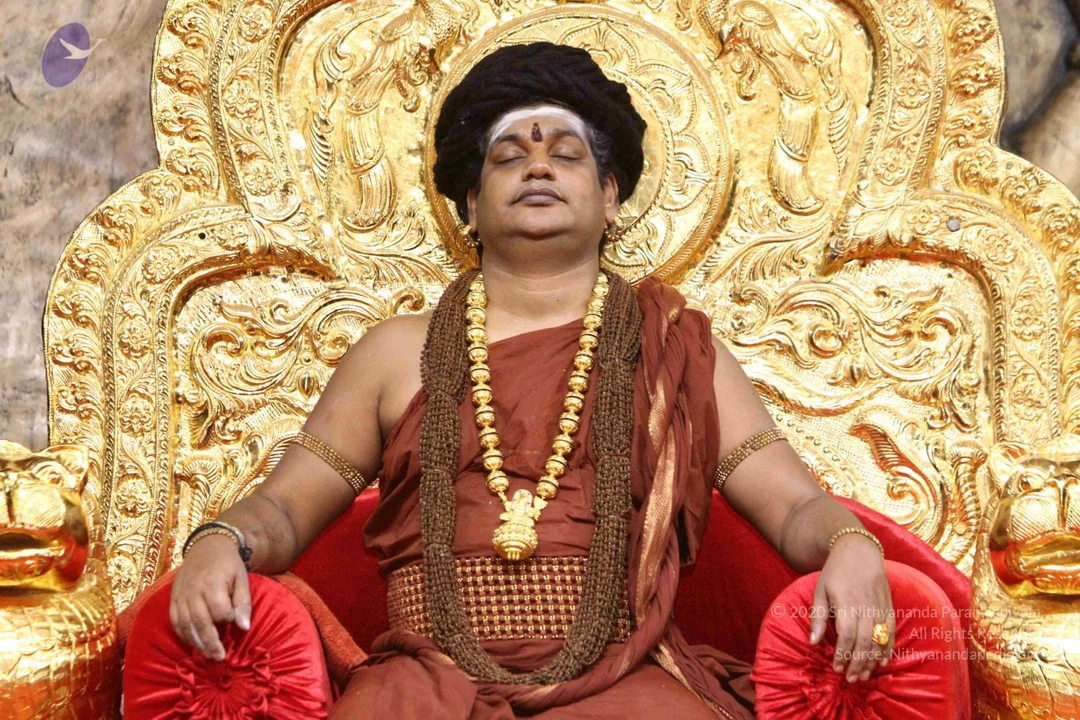
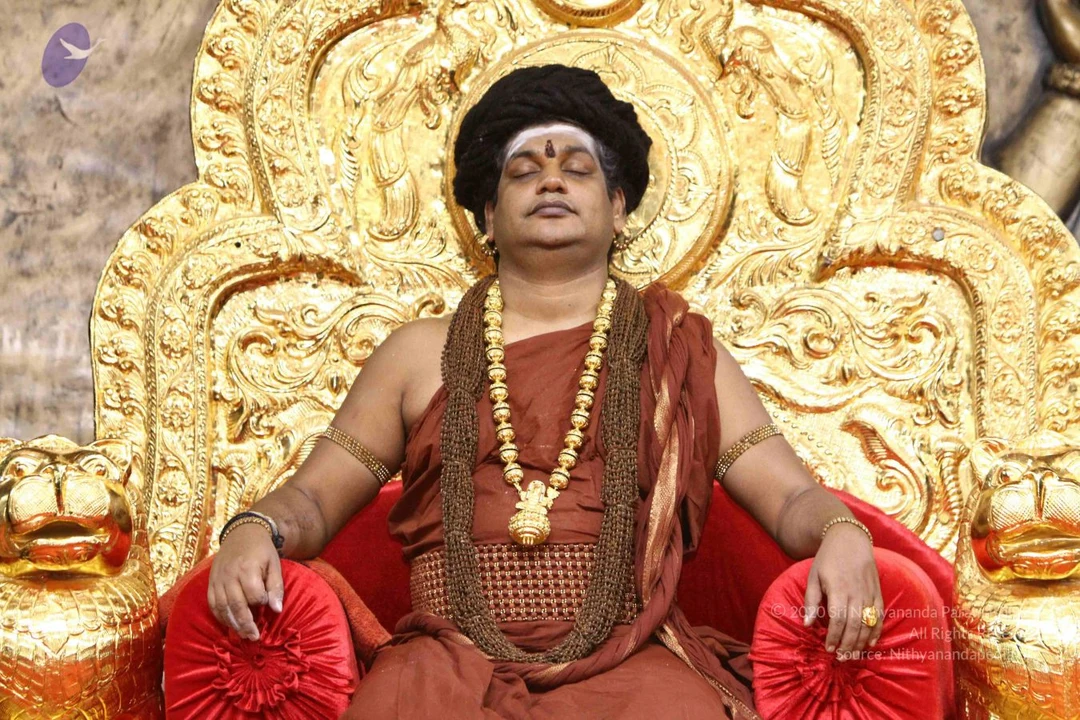
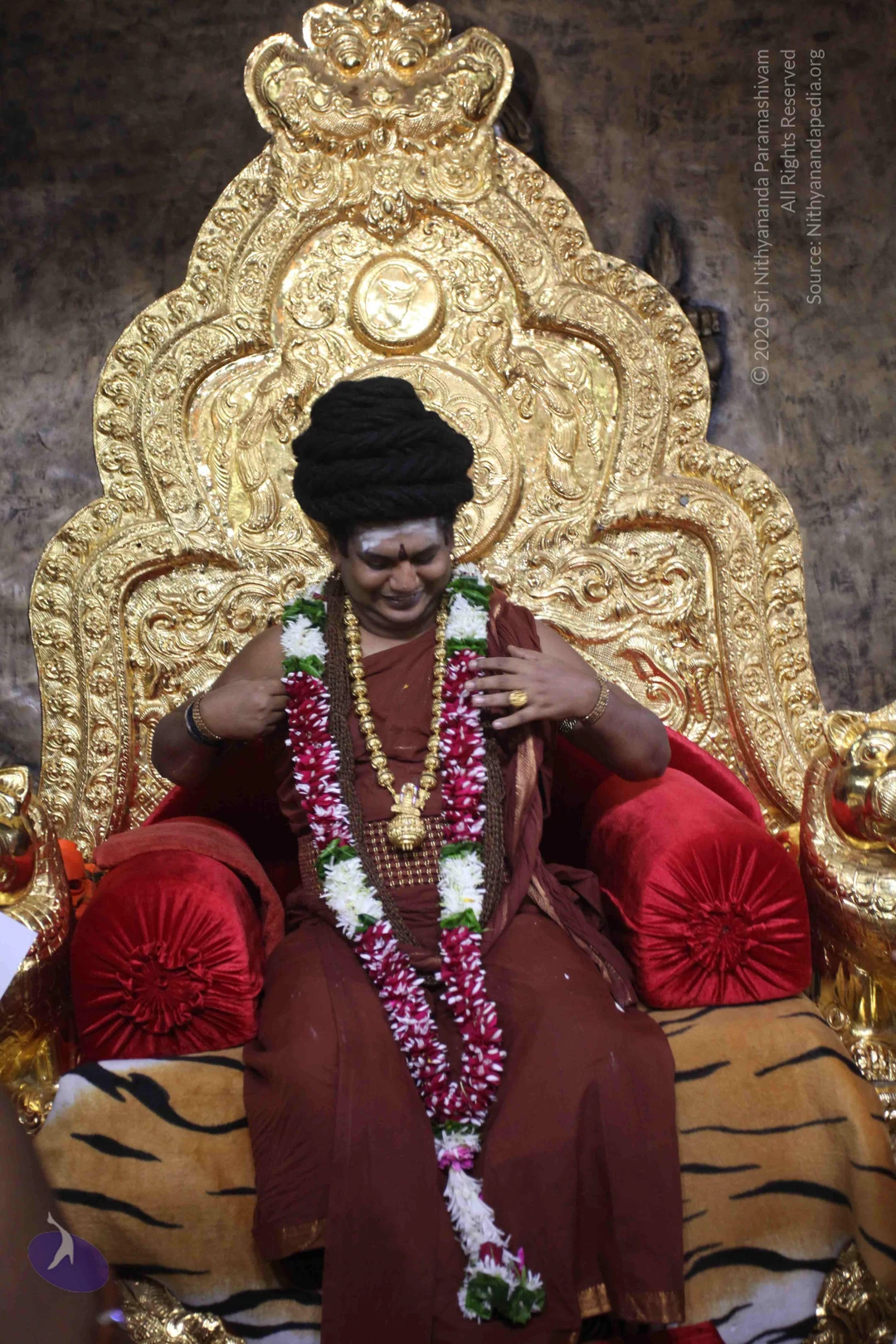
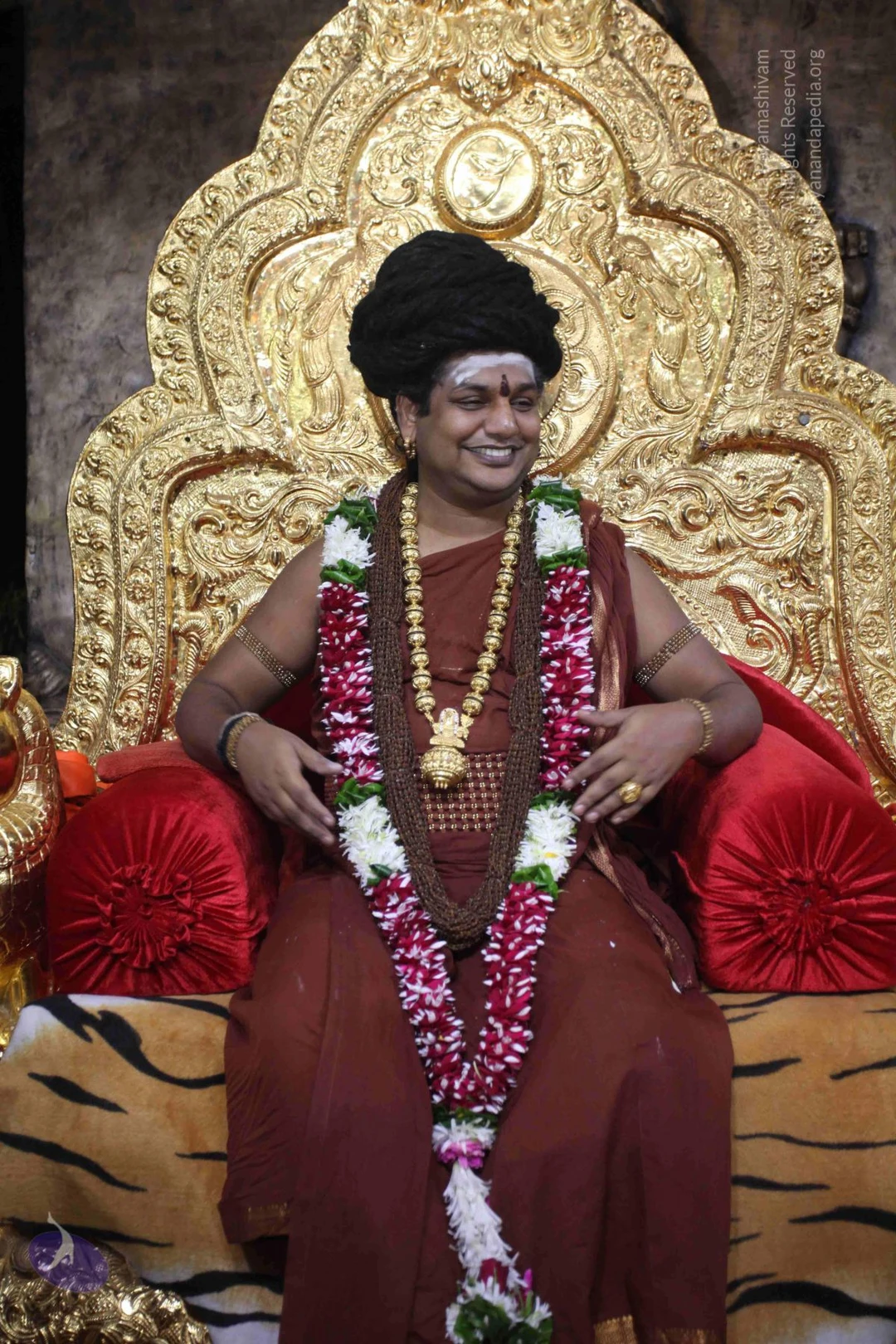
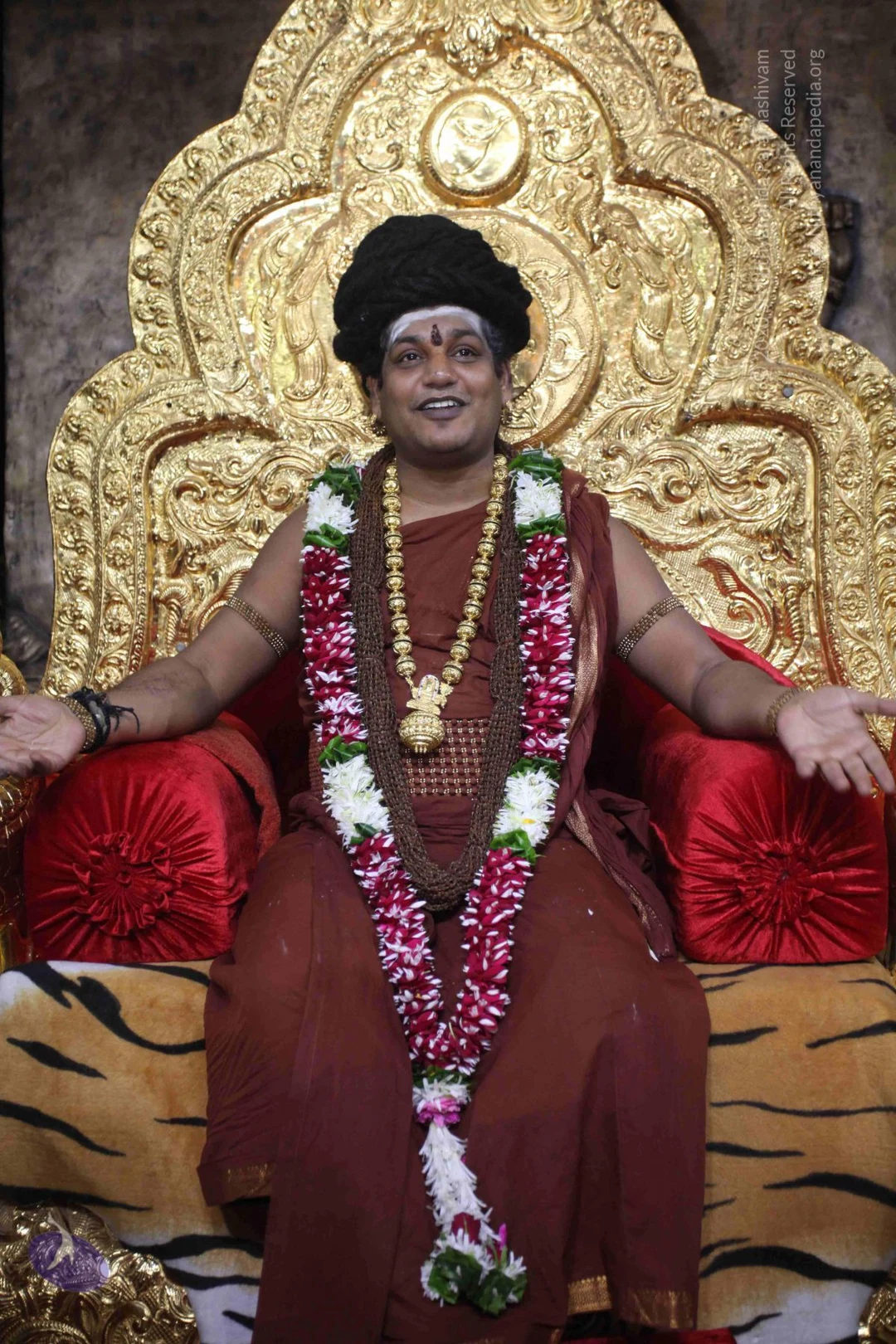
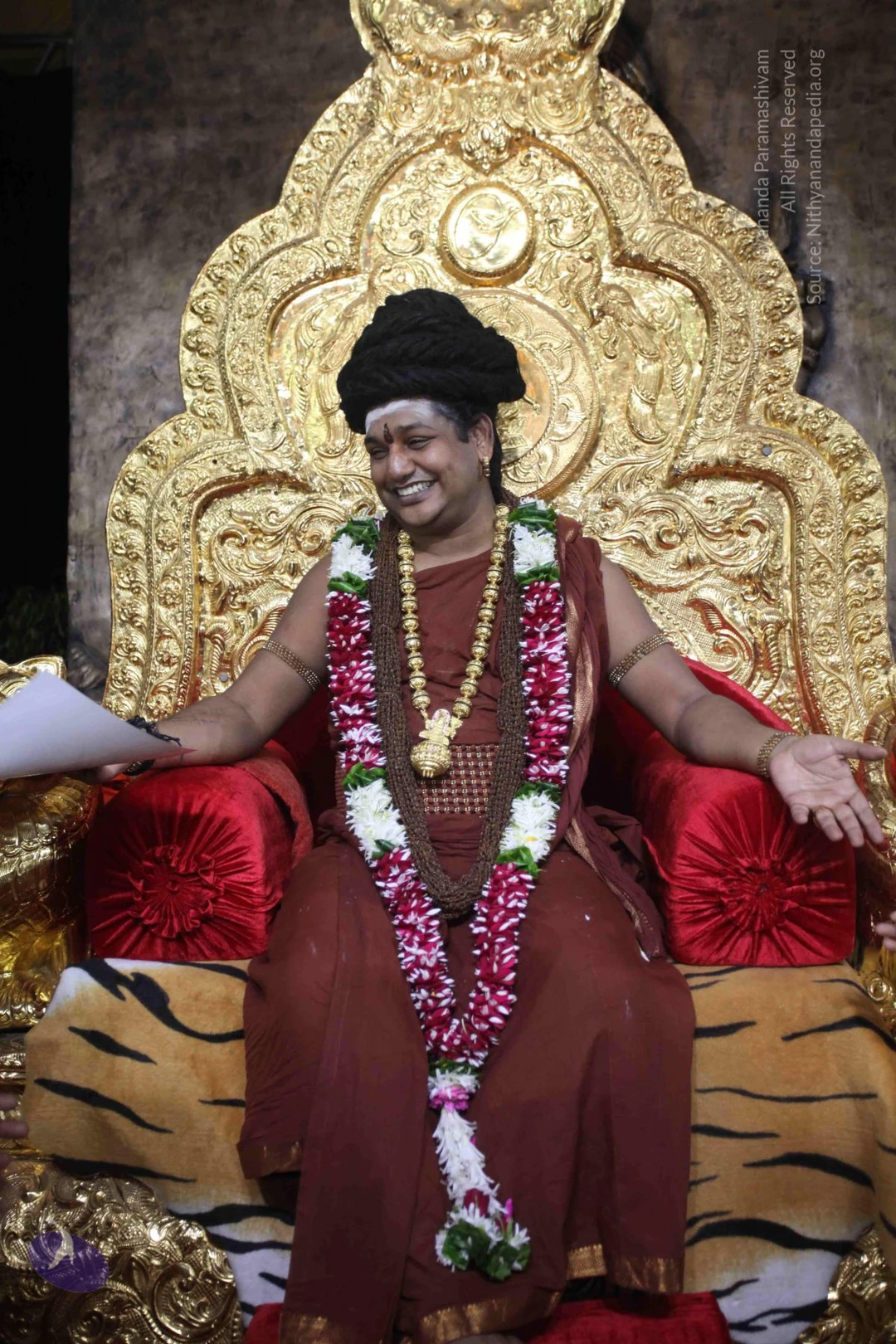
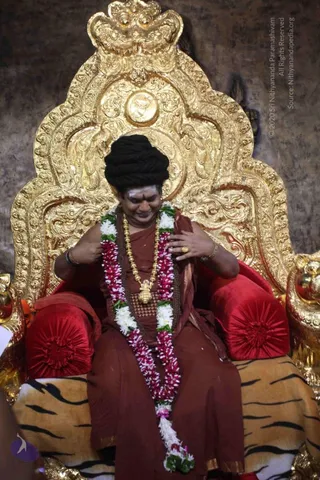
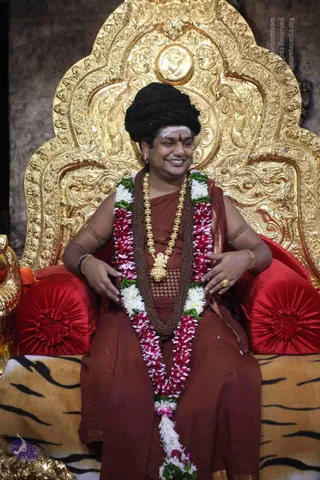
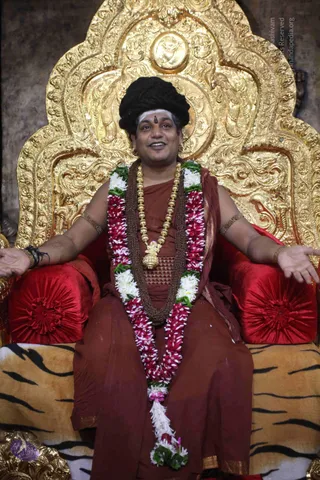
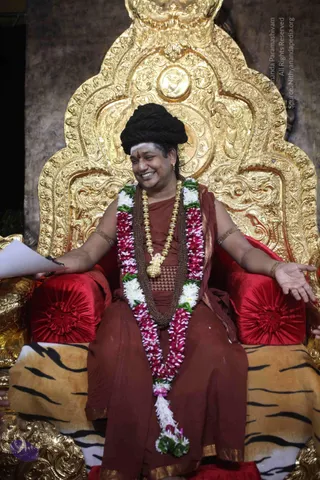
A seated man on an ornate gold throne with carved scrollwork and red velvet armrests, draped over a tiger-striped cushion. He wears a maroon-red robe with a gold-coloured border, a tall dark twisted topknot, white and red forehead markings, and a heavy gold necklace with a pendant. He holds a long garland of white and pink flowers with green leaves, adjusting it across his chest with both hands while looking down and smiling. A gold ring and bangles are visible. Scene is a darshan with the seated man as the only physical person.A seated man in a maroon-red robe smiles while wearing a long multicolour garland of white, pink and green flowers and a heavy gold bead necklace with a gold pendant over rudraksha beads. His dark hair is piled high in a topknot, with white and red forehead markings. He sits on a red velvet cushion before an ornate gold-leaf throne with a tiger-striped fabric draped over its base. a person: the swept-back topknot, rudraksha mala, gold necklace and ceremonial garland fit the candidate's presentation, and the page names him as present, though his features cannot be confirmed.A seated man in a maroon-brown robe sits on an ornate gold-leaf throne with a tall, carved, arched back, with red velvet cushioned armrests and a tiger-striped cloth draped over the seat. He wears a long gold bead necklace, a gold pendant, gold armbands, and a large multicoloured garland of white and red flowers with green leaves hanging to his waist. His black hair is piled high, with white sacred ash and a red mark on his forehead, and his arms are spread open in a welcoming gesture. No other people are visible.A smiling man with a tall black turban and white and red tilak on his forehead sits on an ornate gold throne with a carved gold back, on a striped tiger-print cloth over red velvet armrests. He wears a rust-red robe, a gold necklace, a rudraksha mala, and a long red and white flower garland, and extends one hand outward while a hand holding papers appears at the left edge. Behind him stands a gold carved backrest. Appearance cues are strong (turban, rudraksha mala, gold ornaments, ornate throne), so the presiding figure is an appearance-based probable Swamiji seated in person.