Skip to content
Tuesday

15 July 2014

Hardwar - Million Year Old University

Dated photos
218
Source pages
1
Media
2
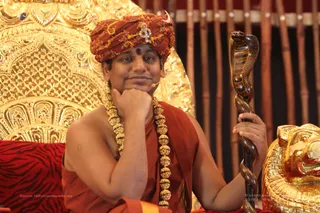
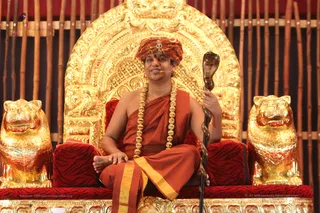
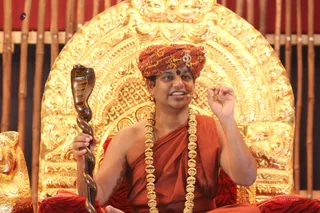
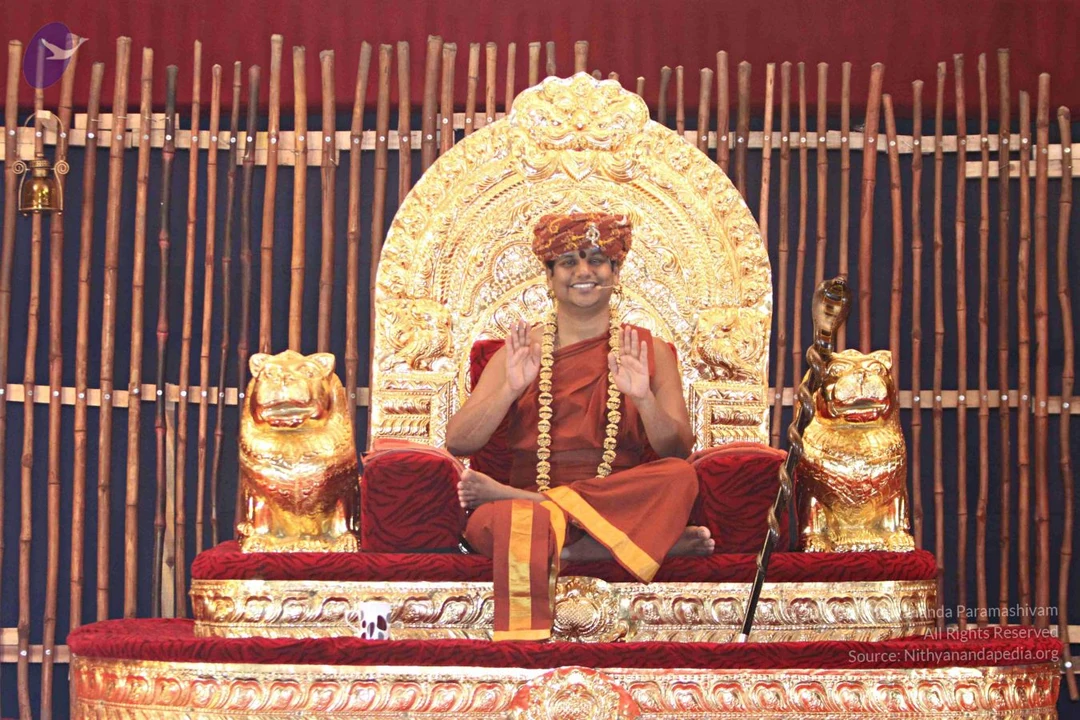
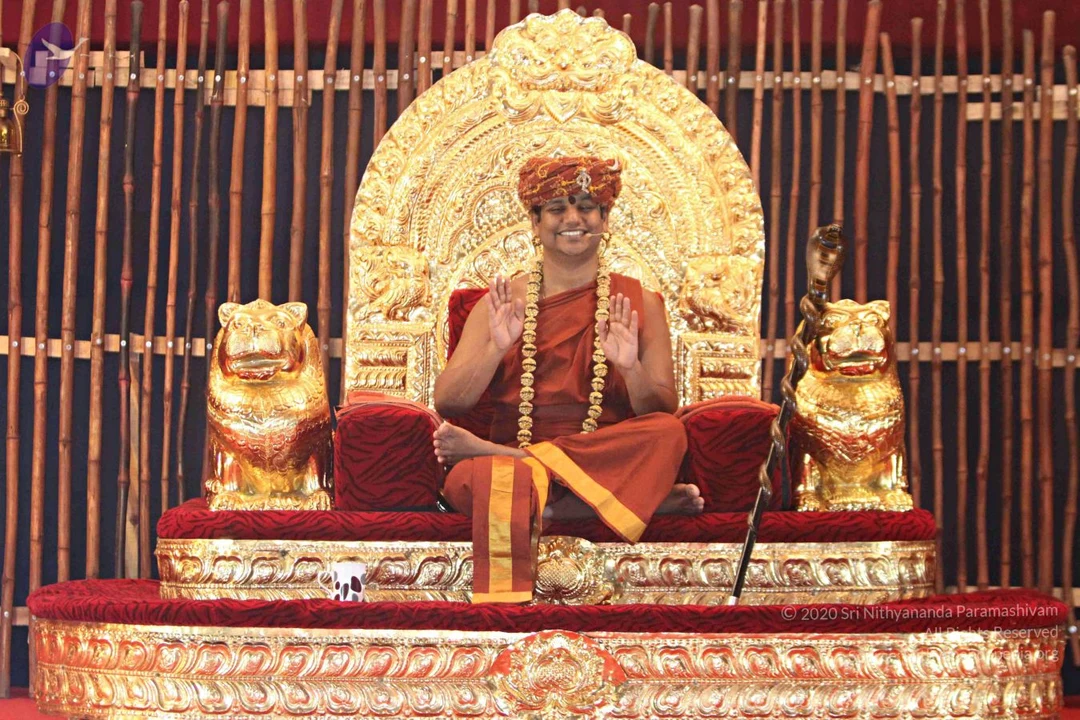
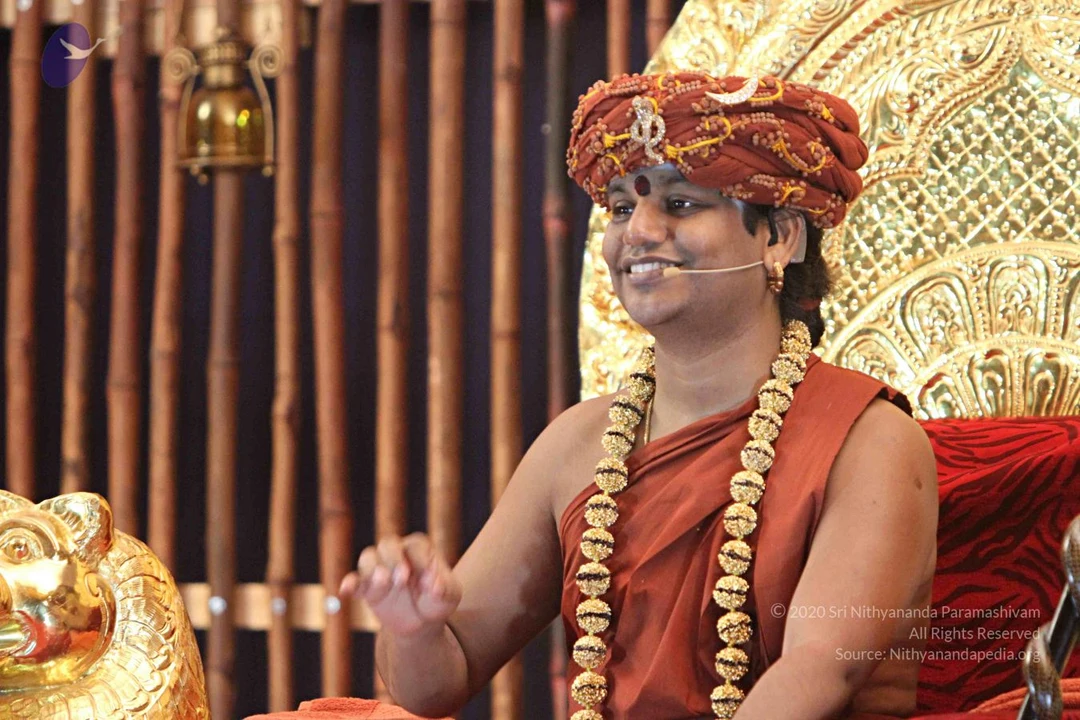
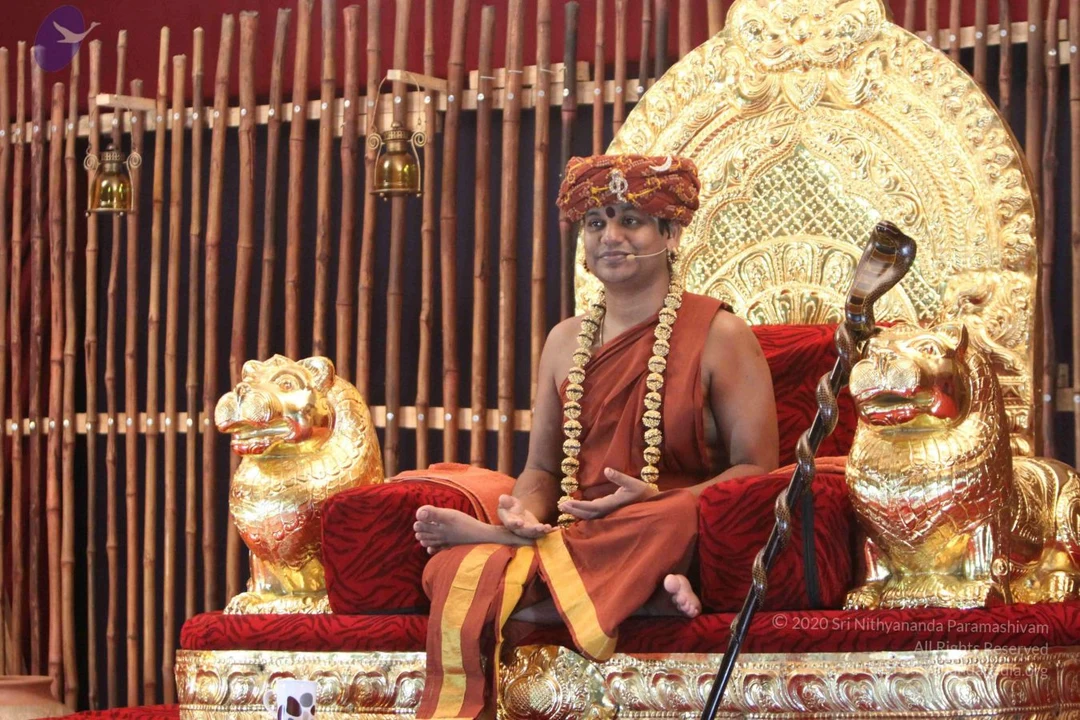
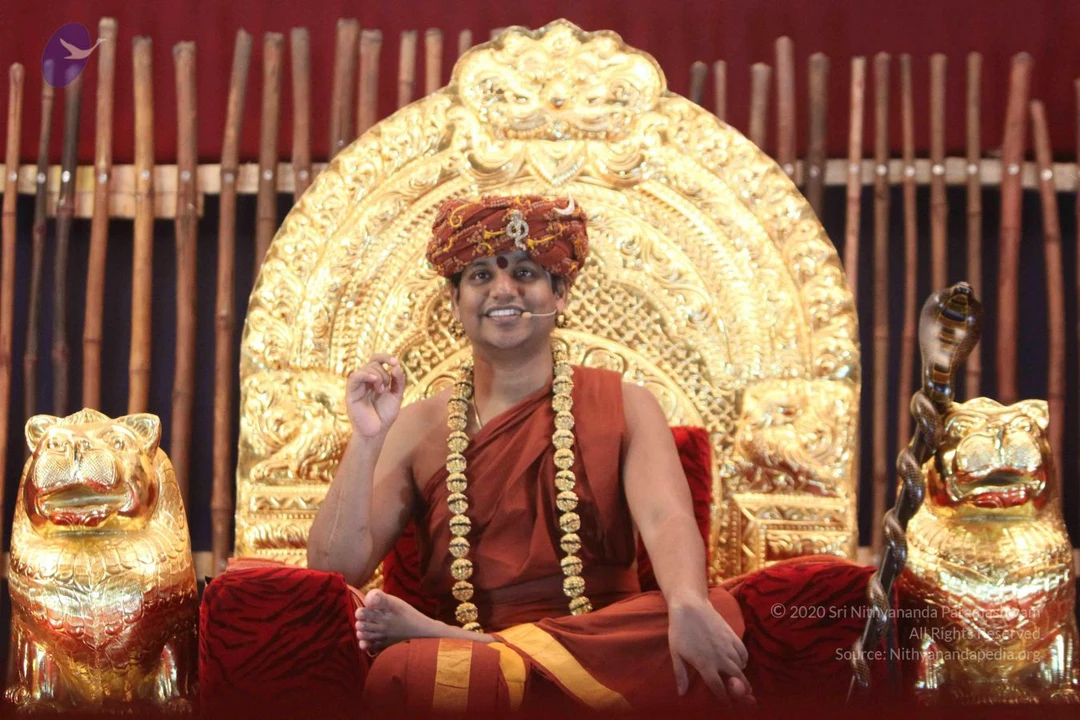
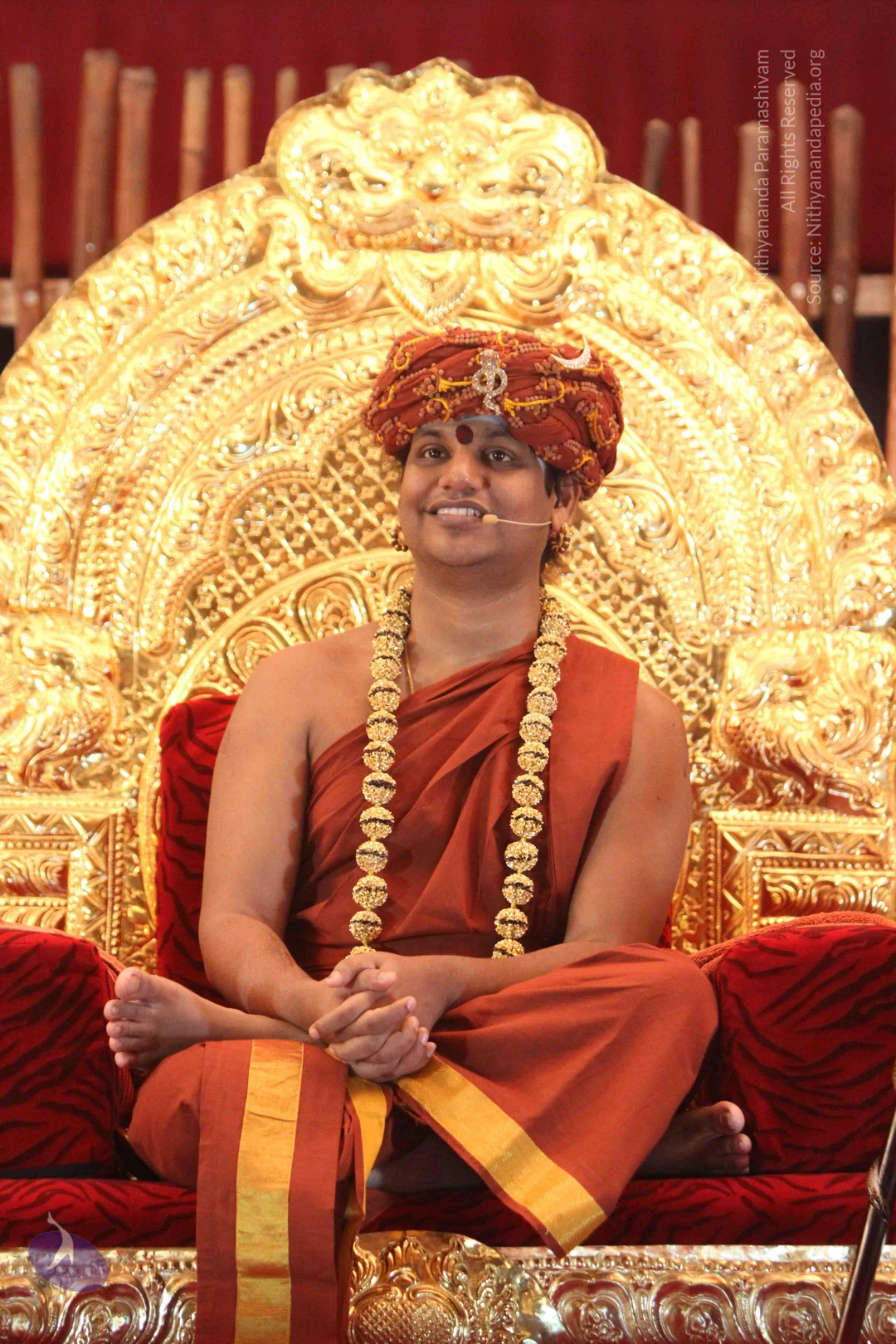
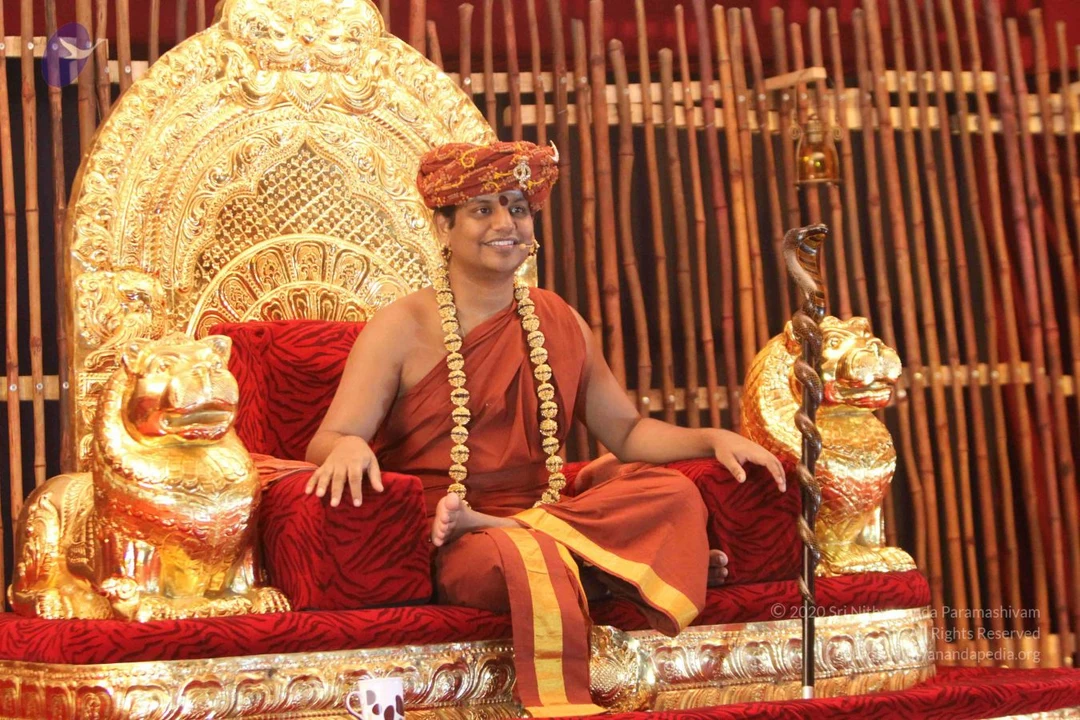
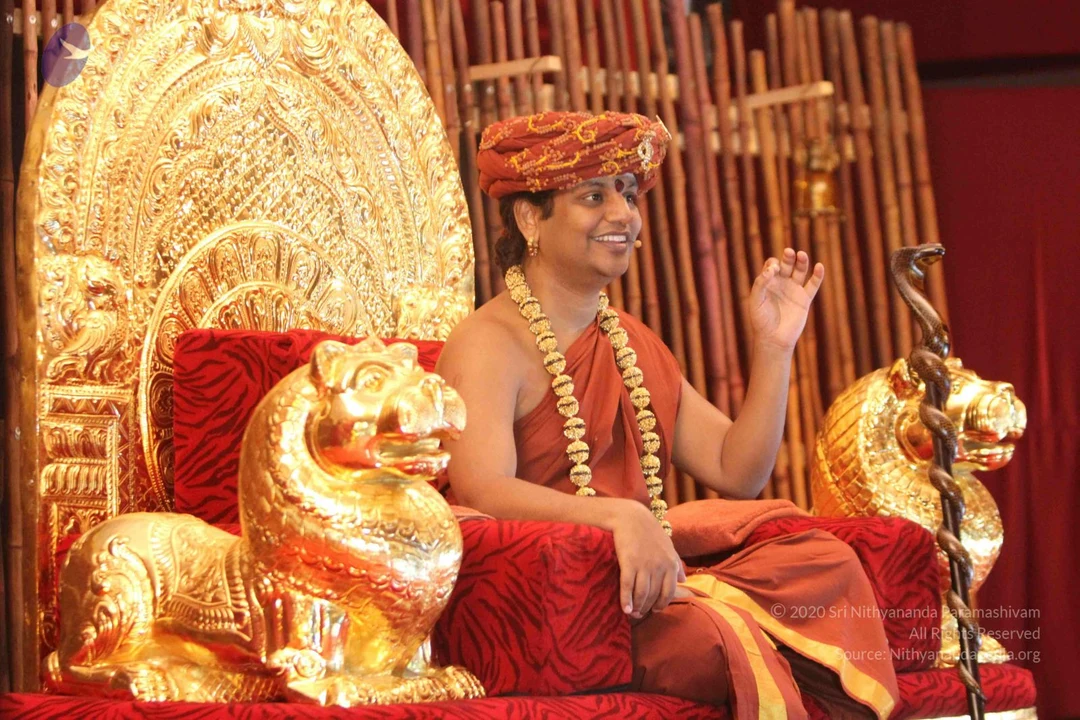
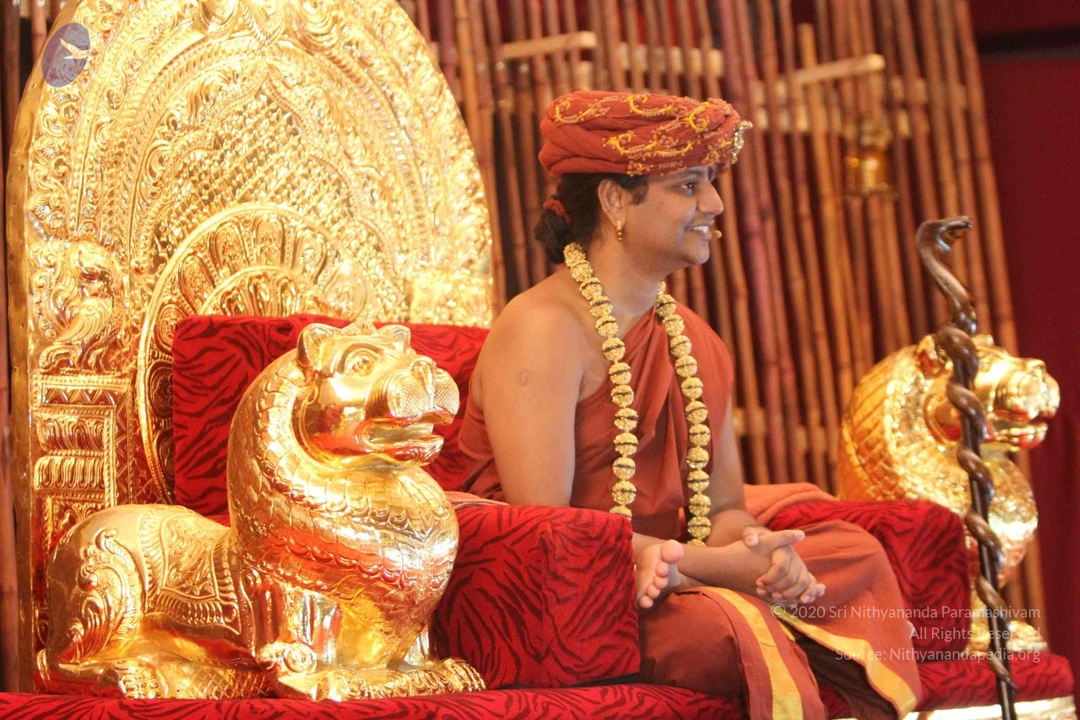
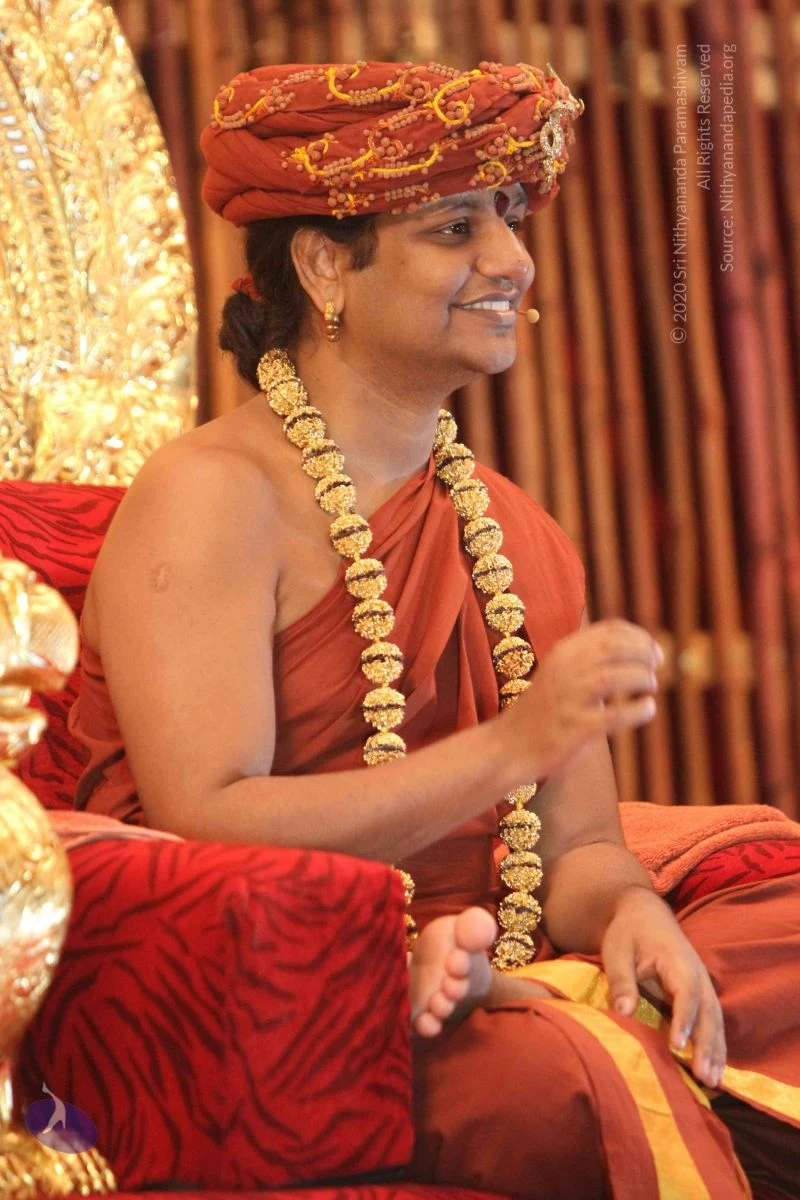
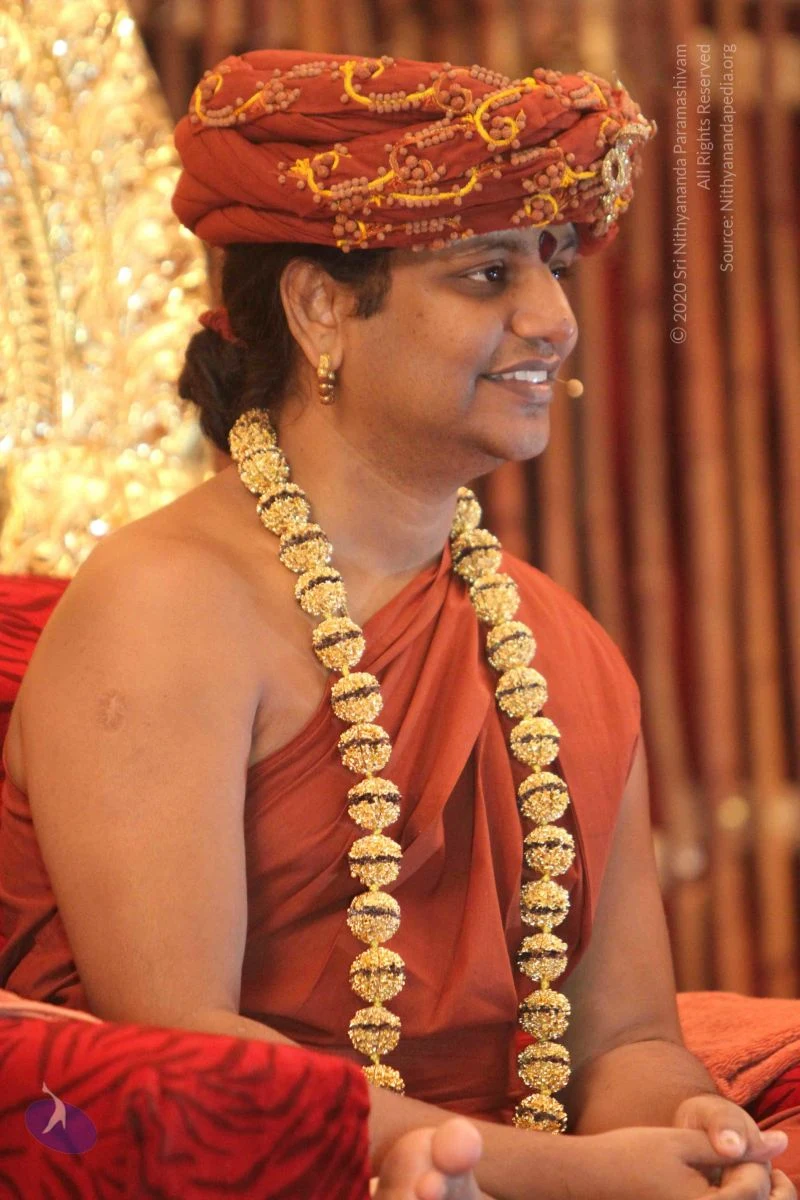
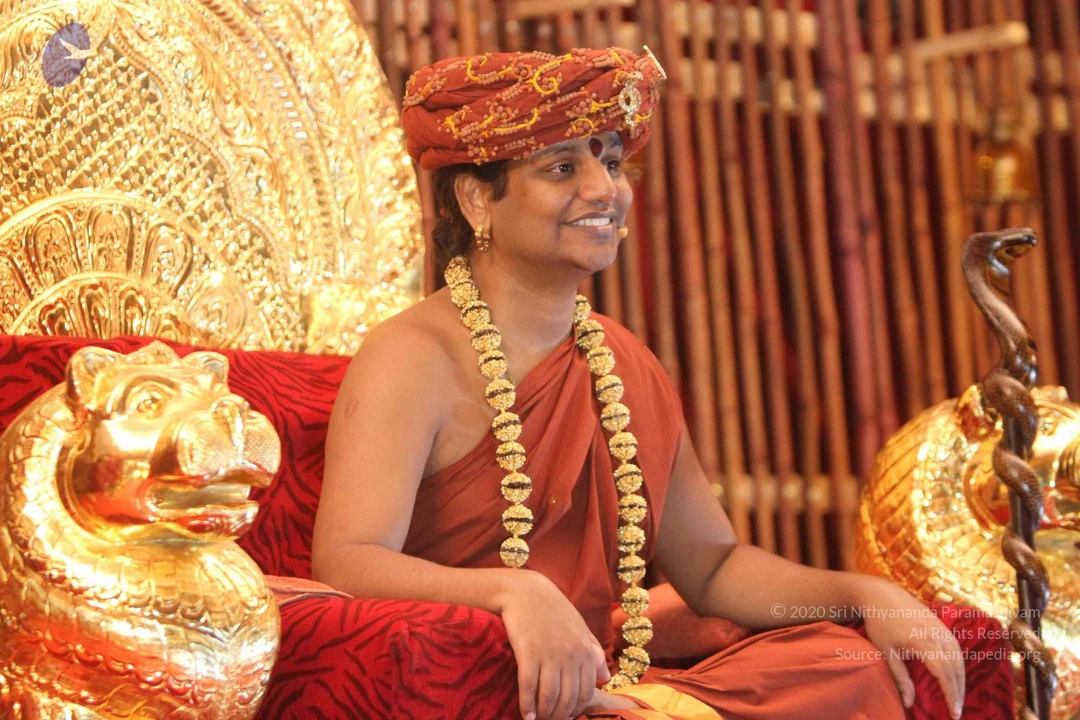
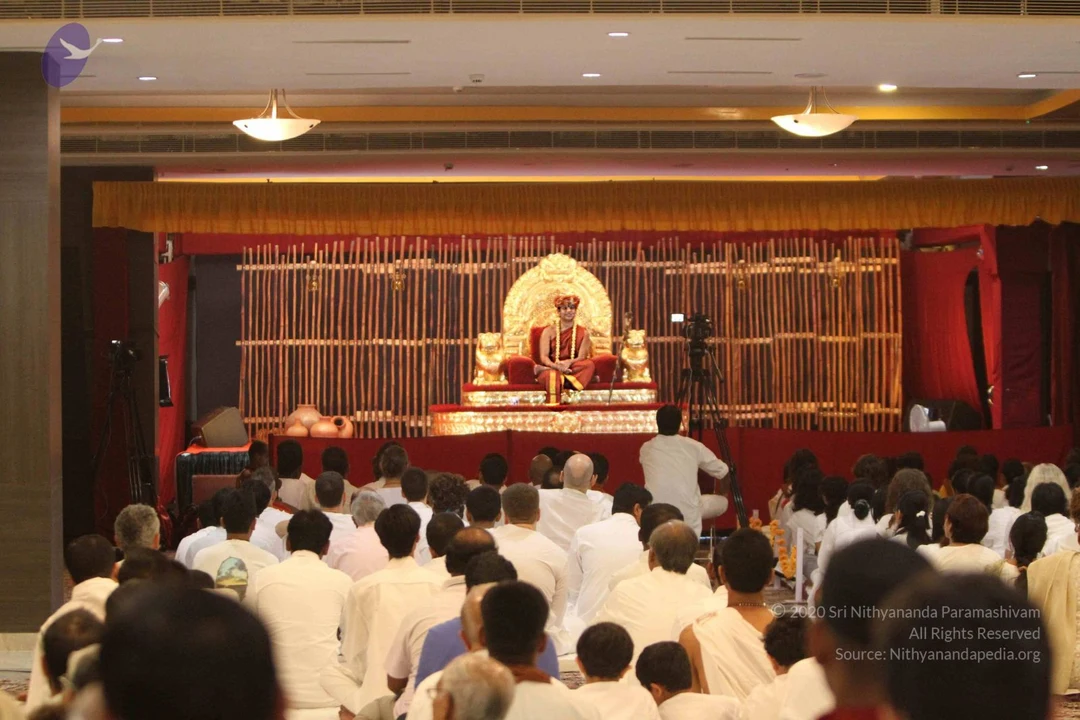
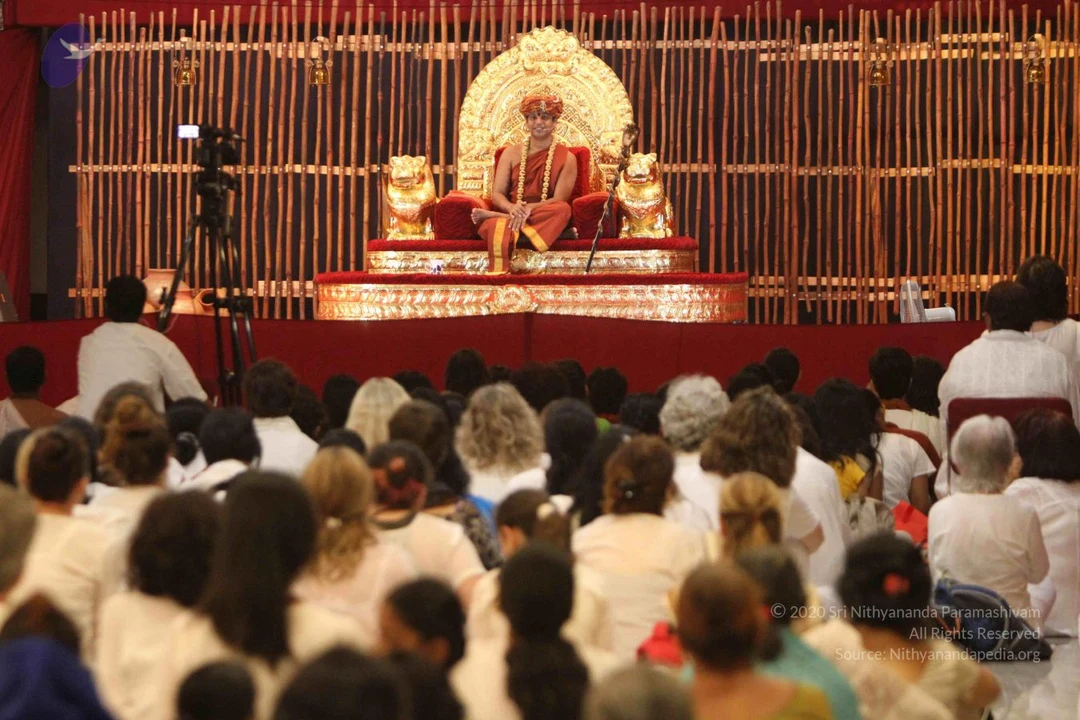
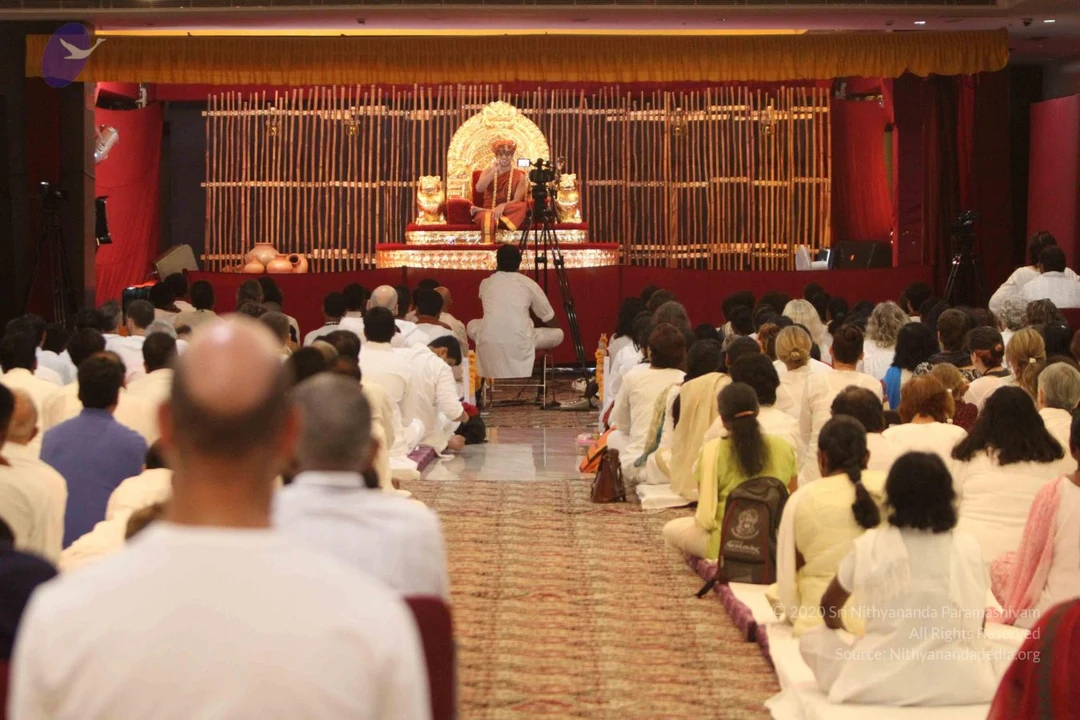
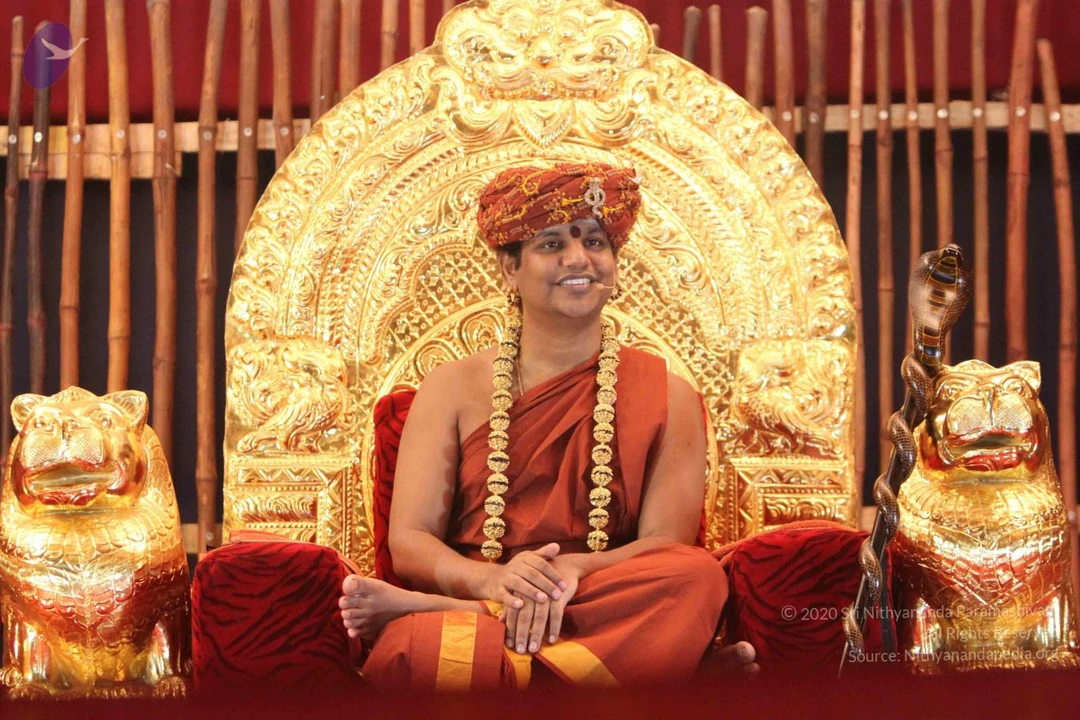
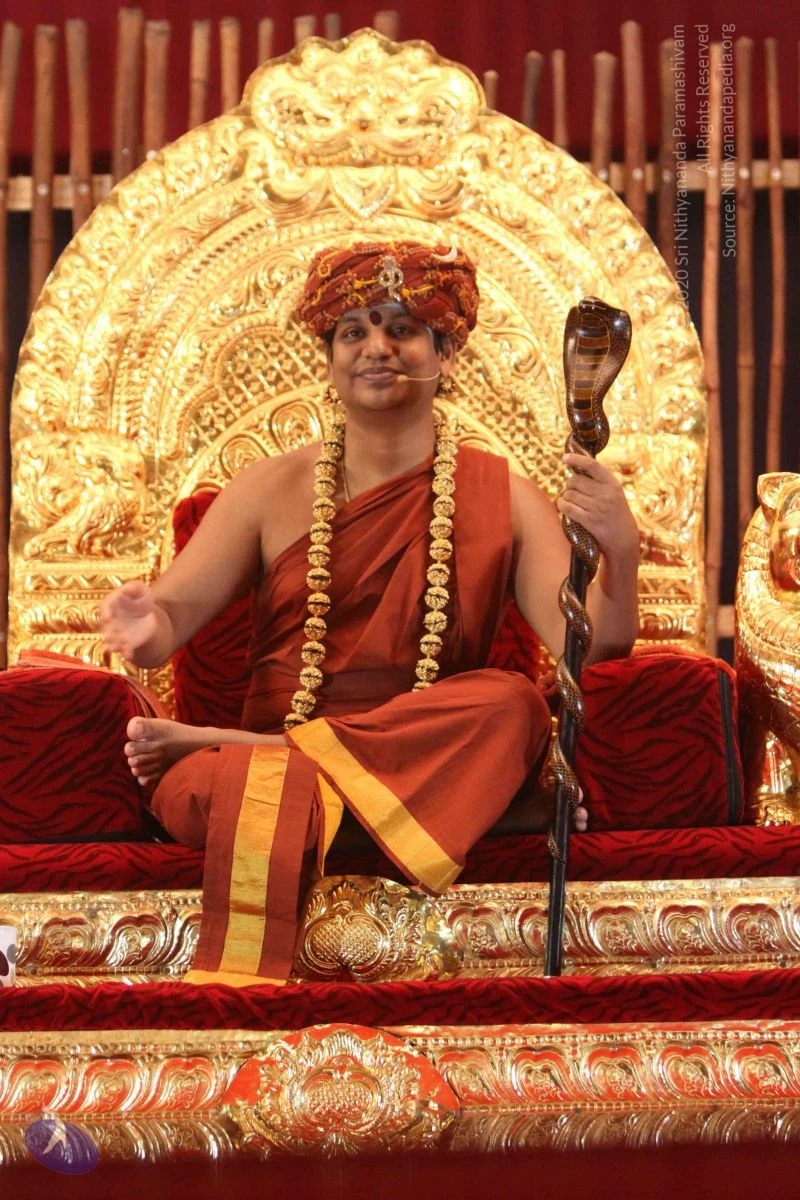
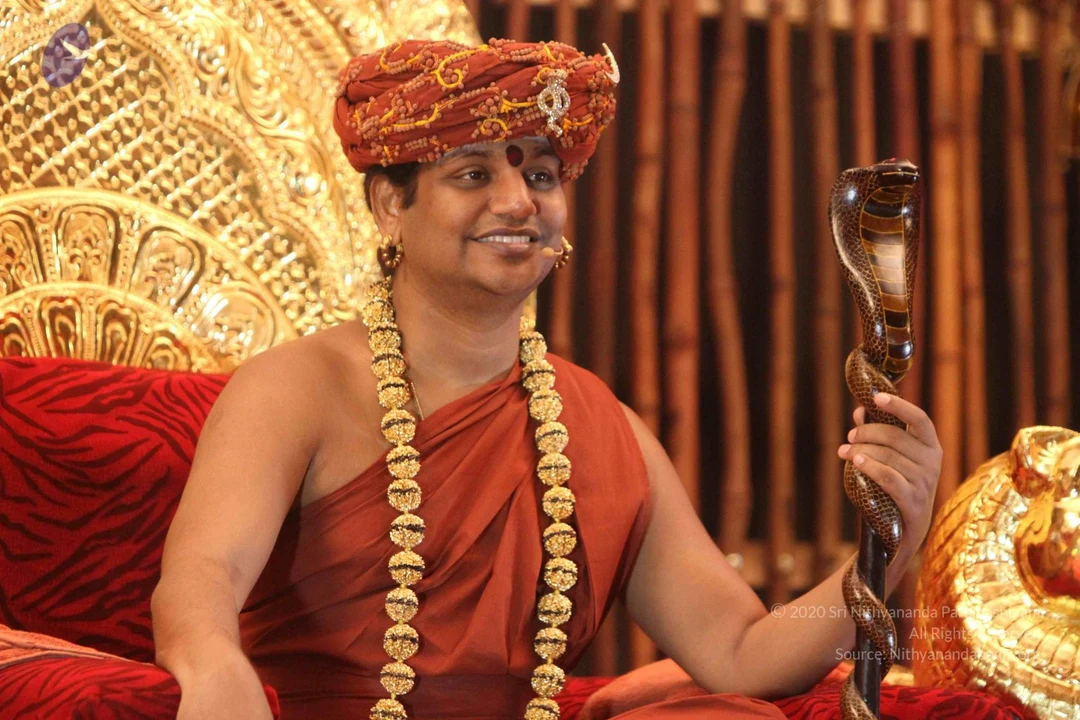
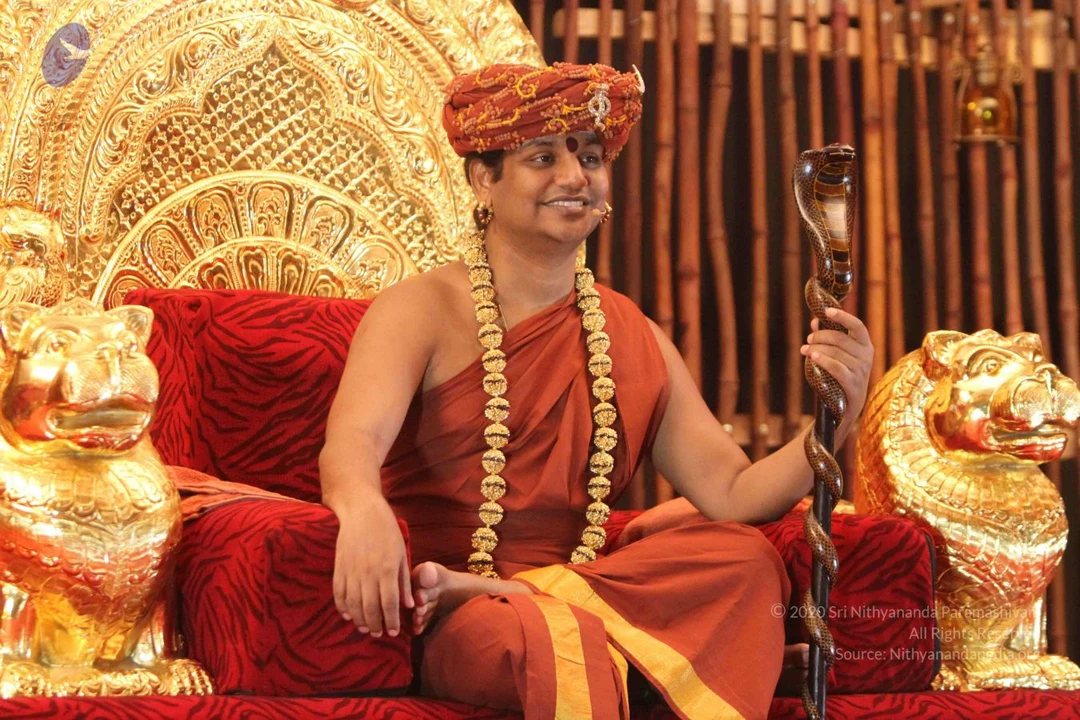
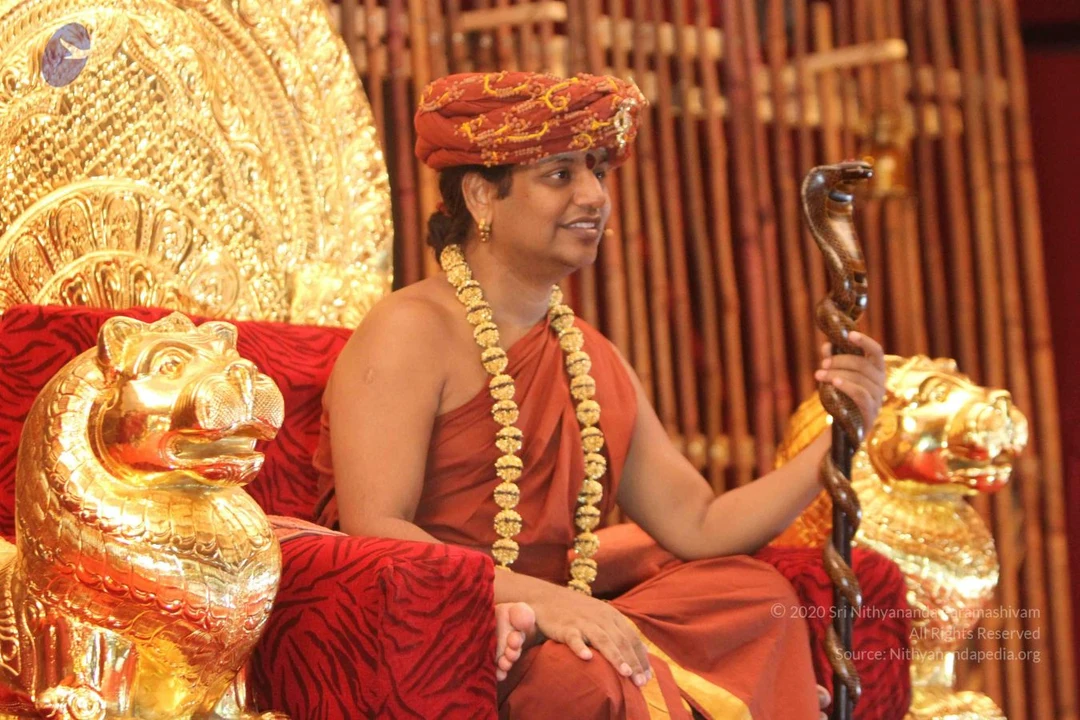
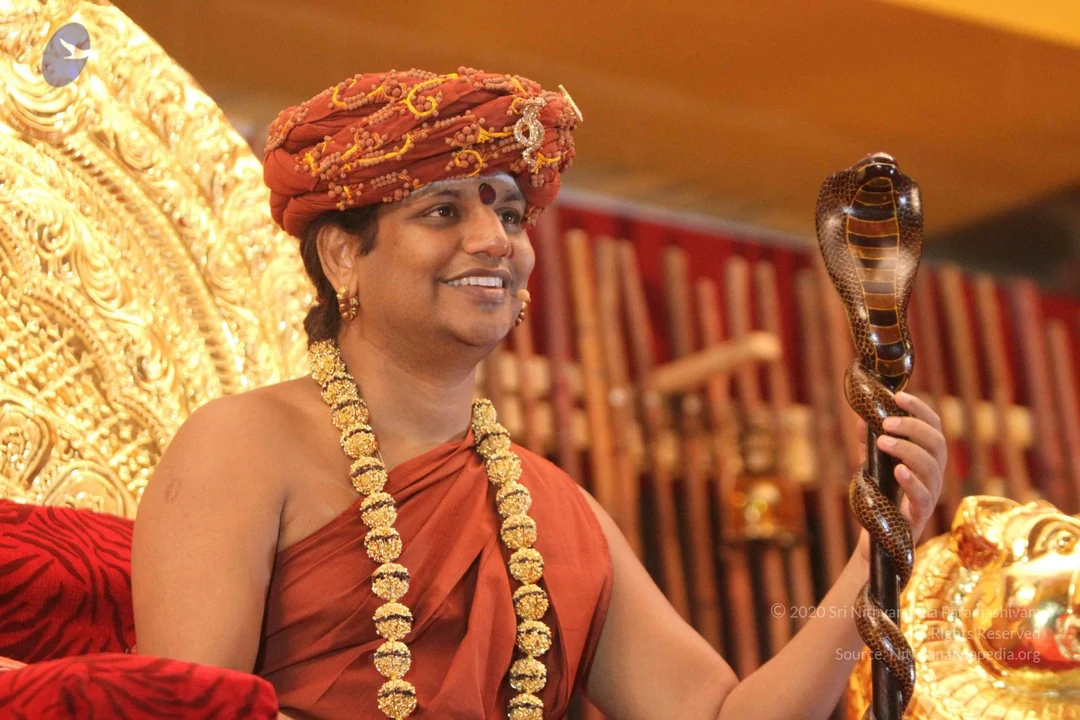
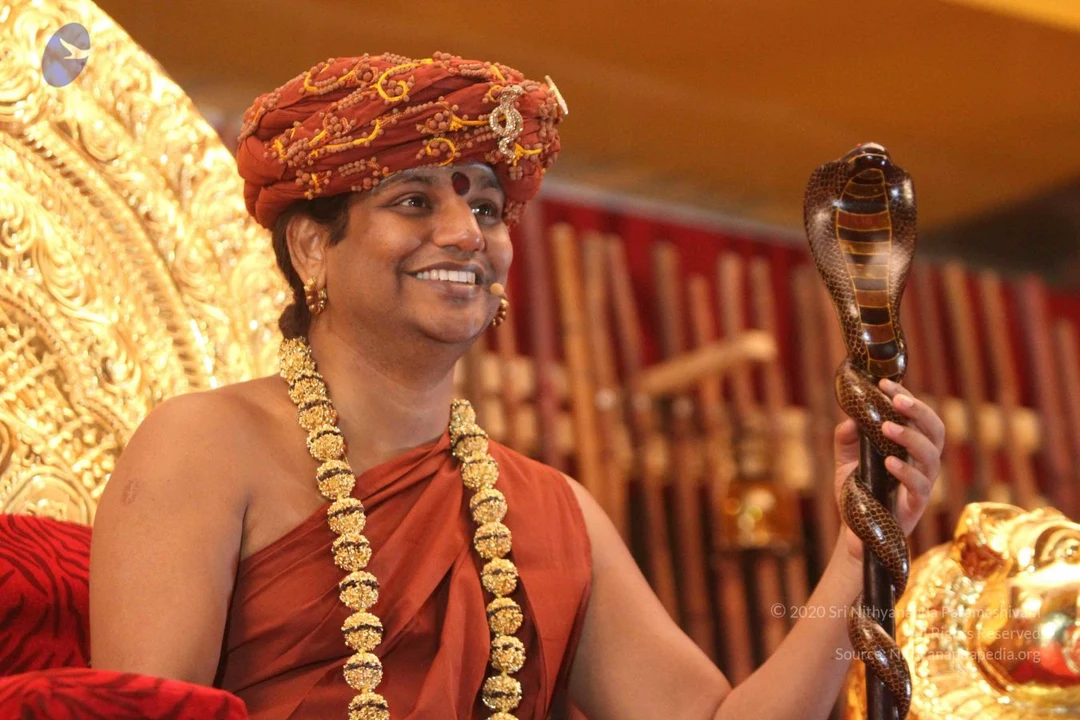
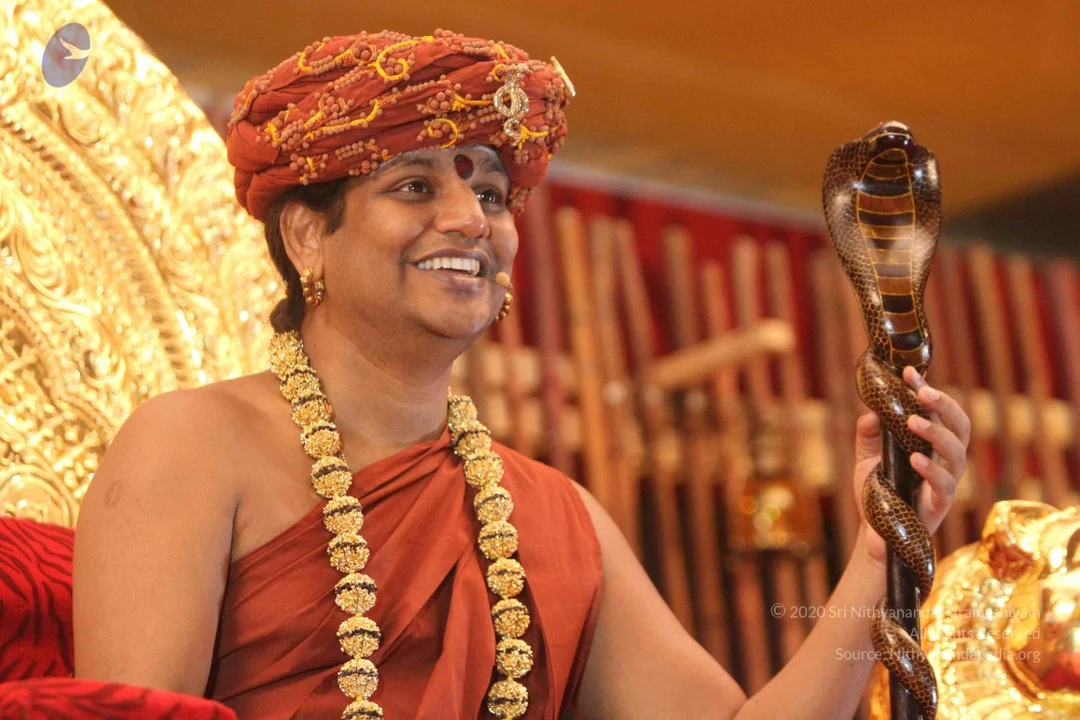
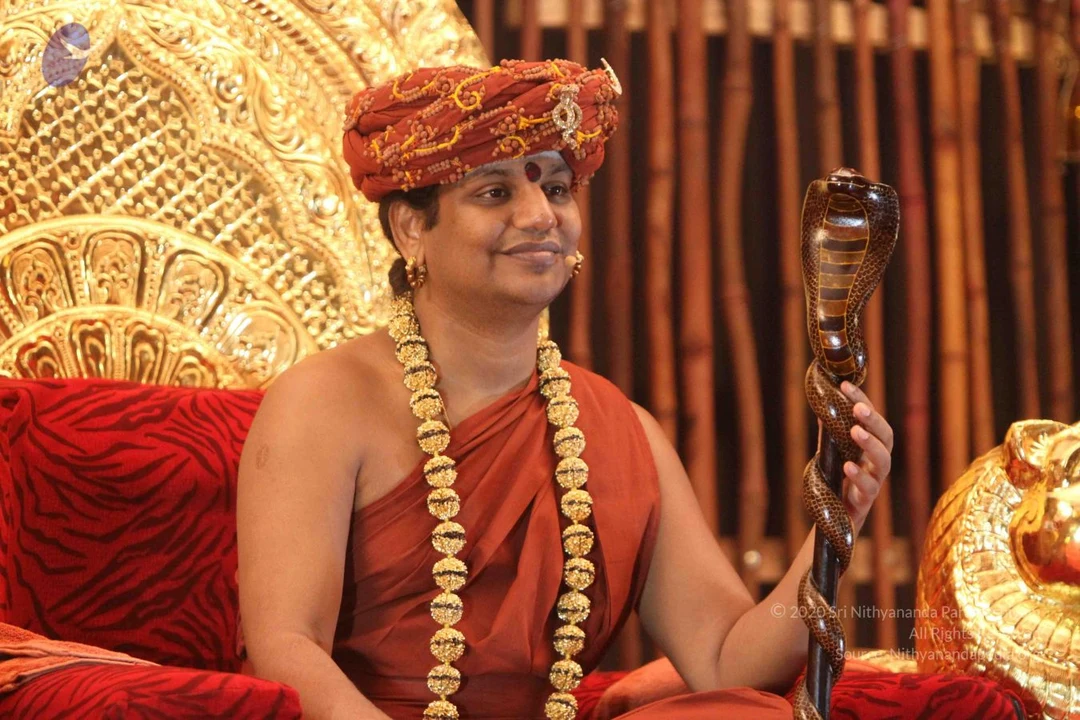
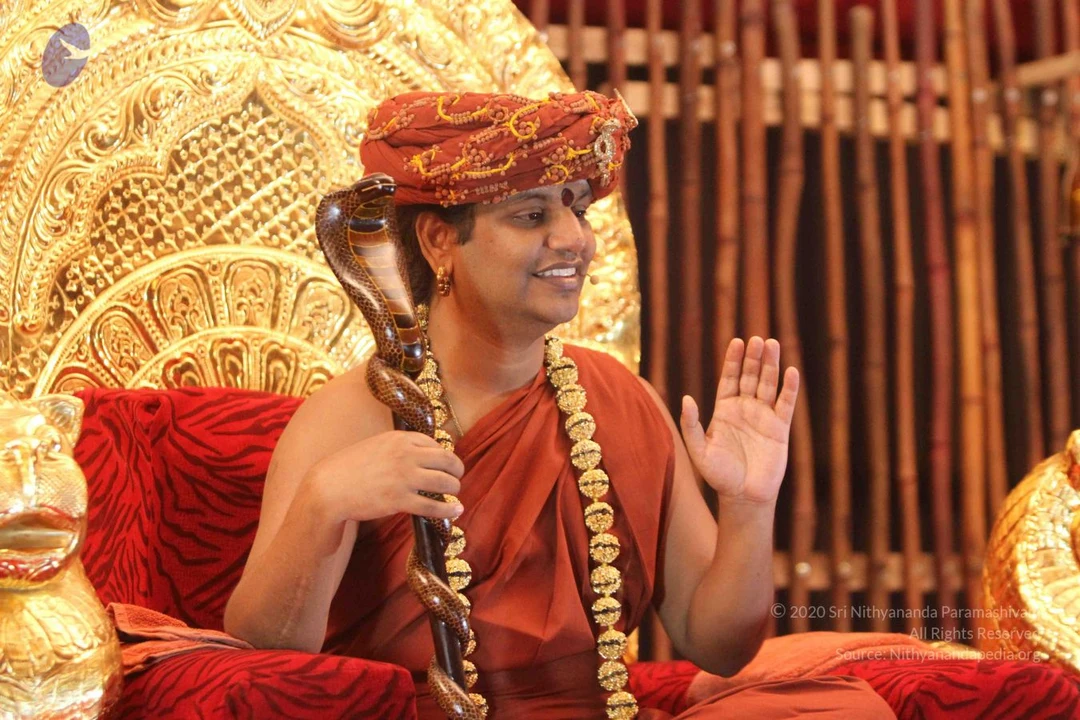
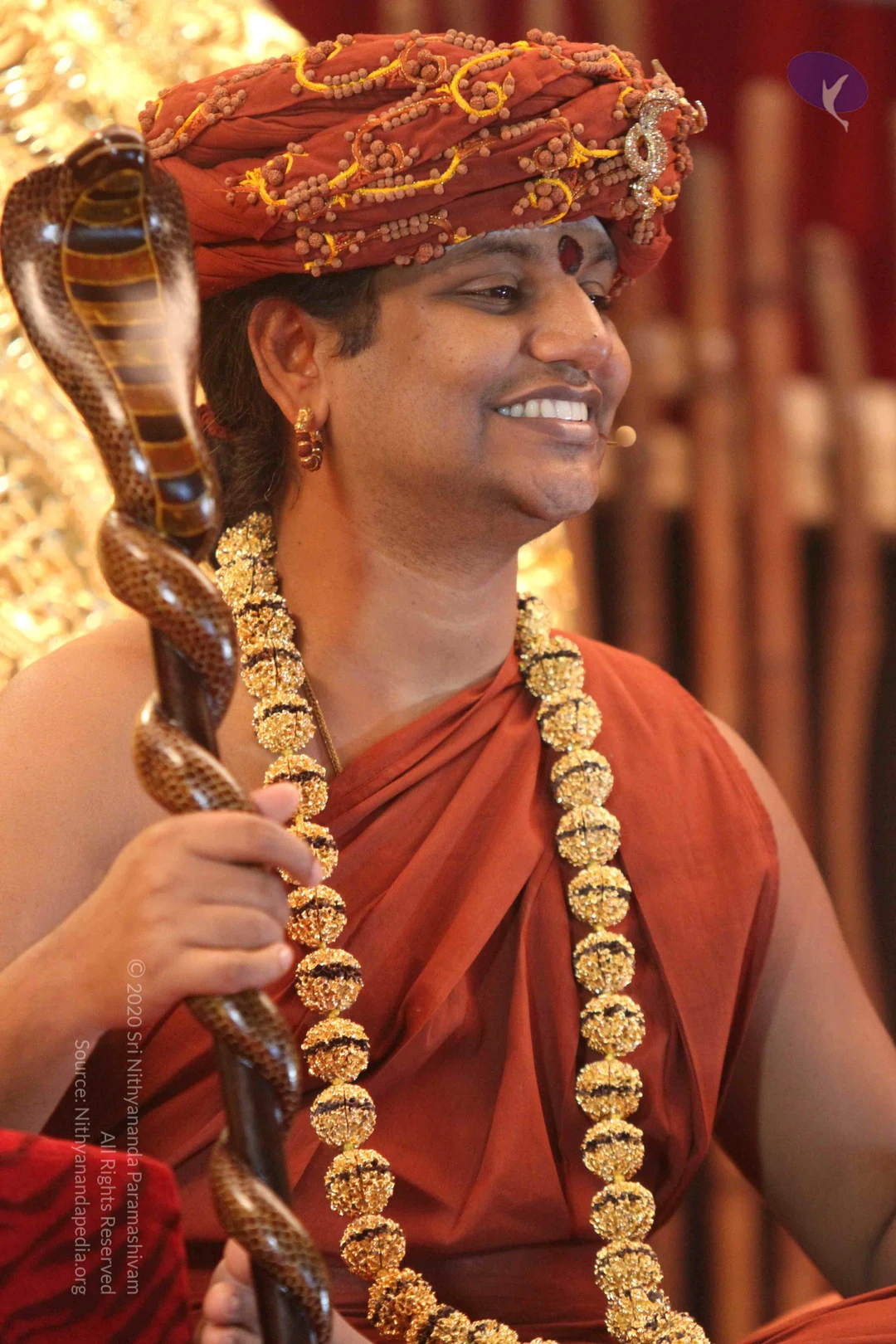
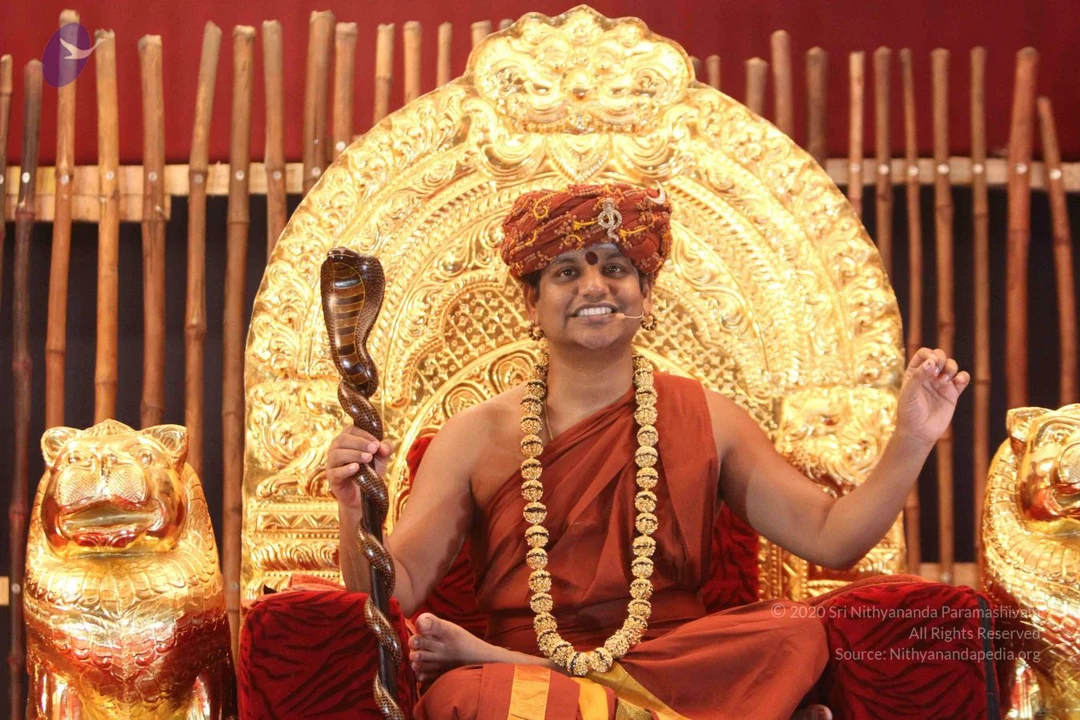
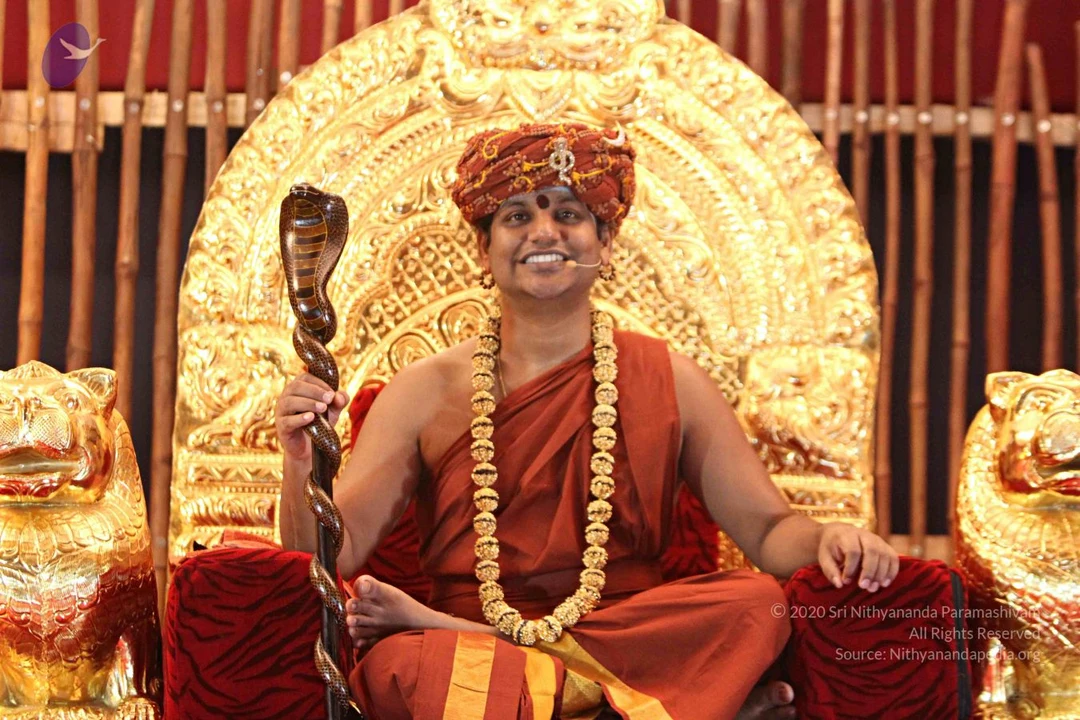
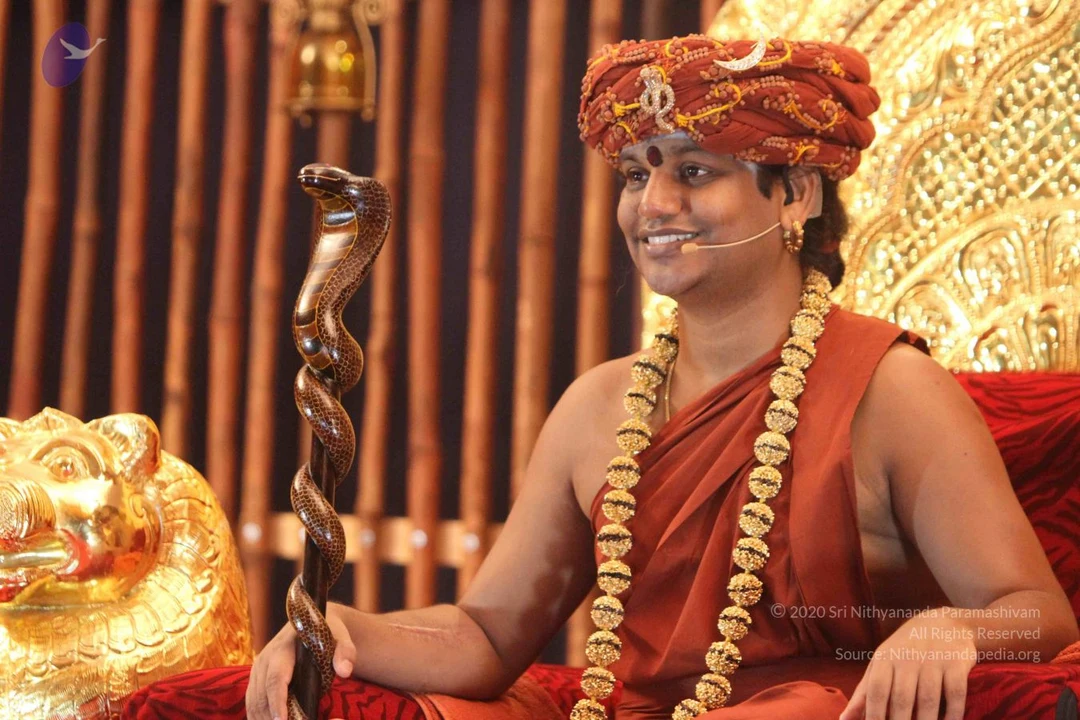
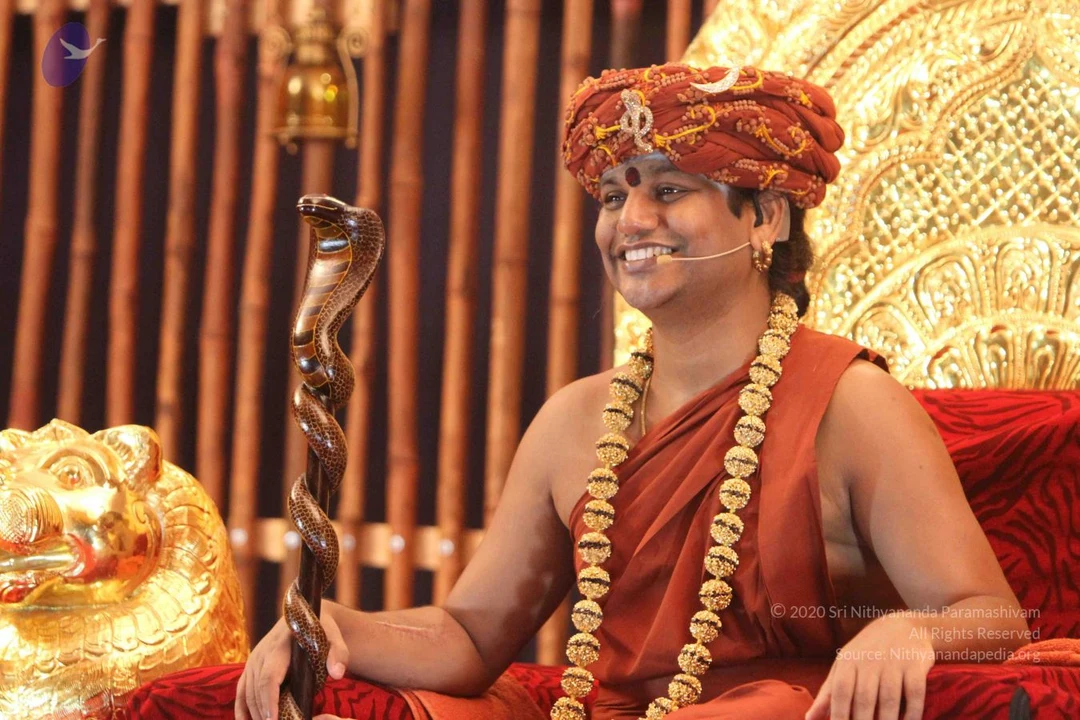
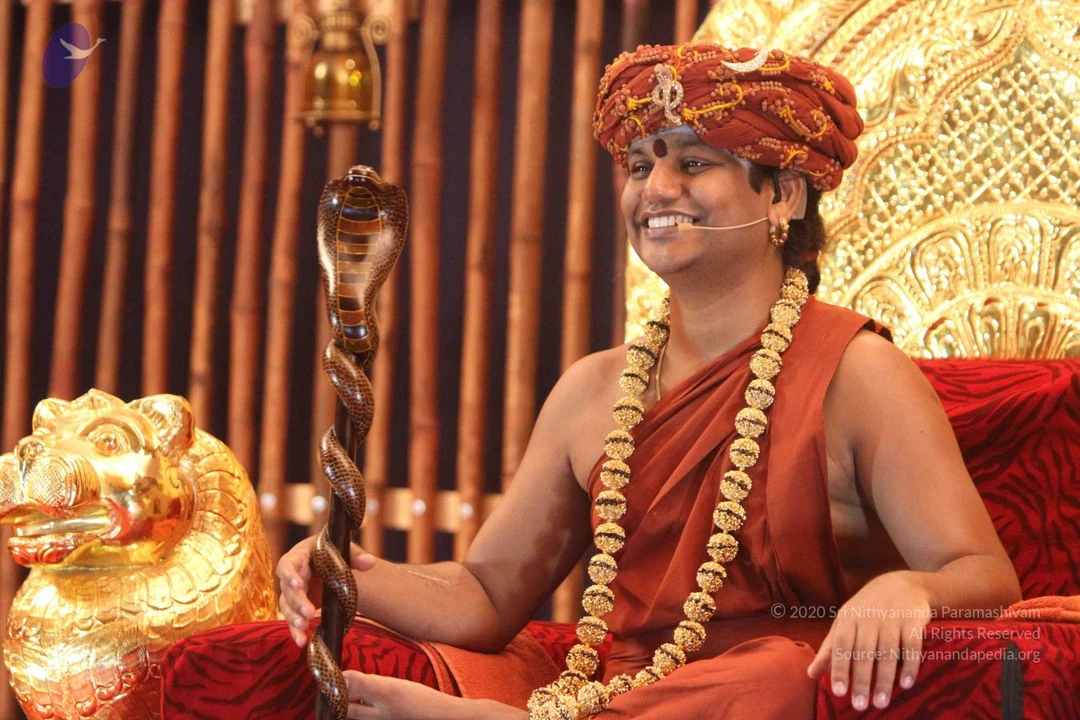
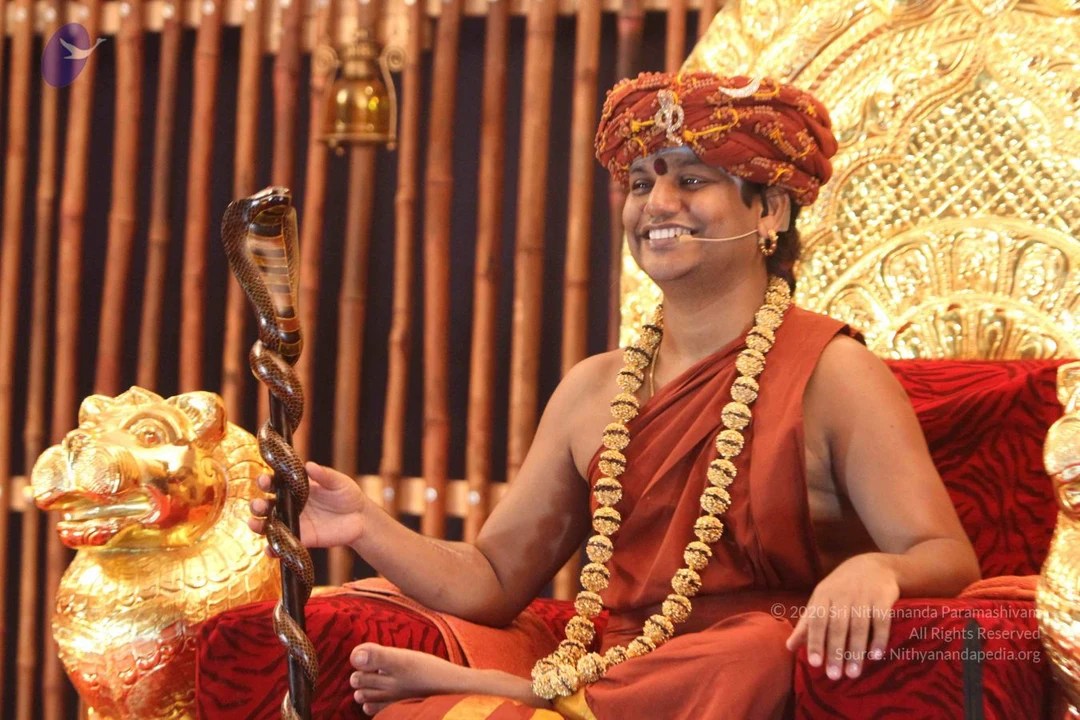
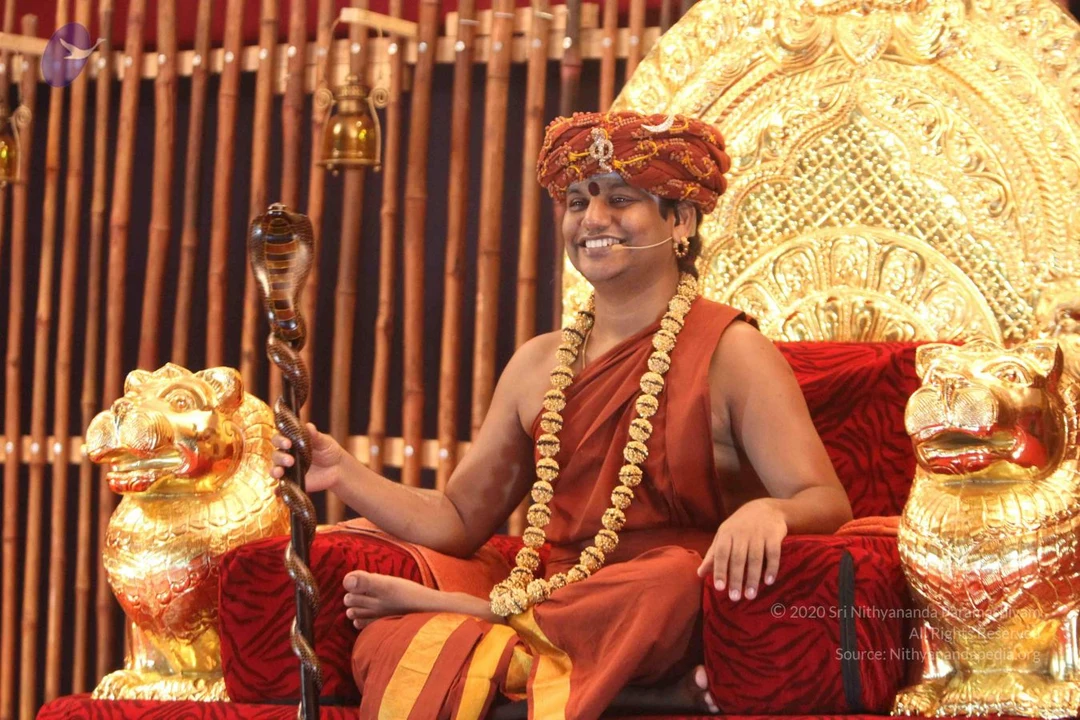
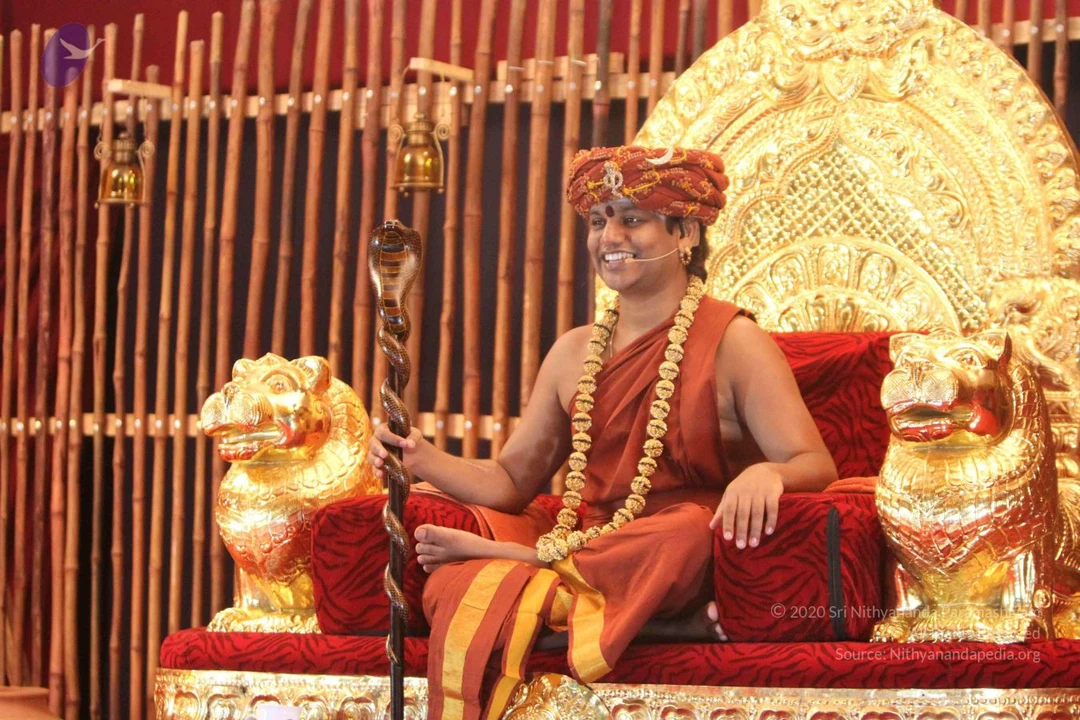
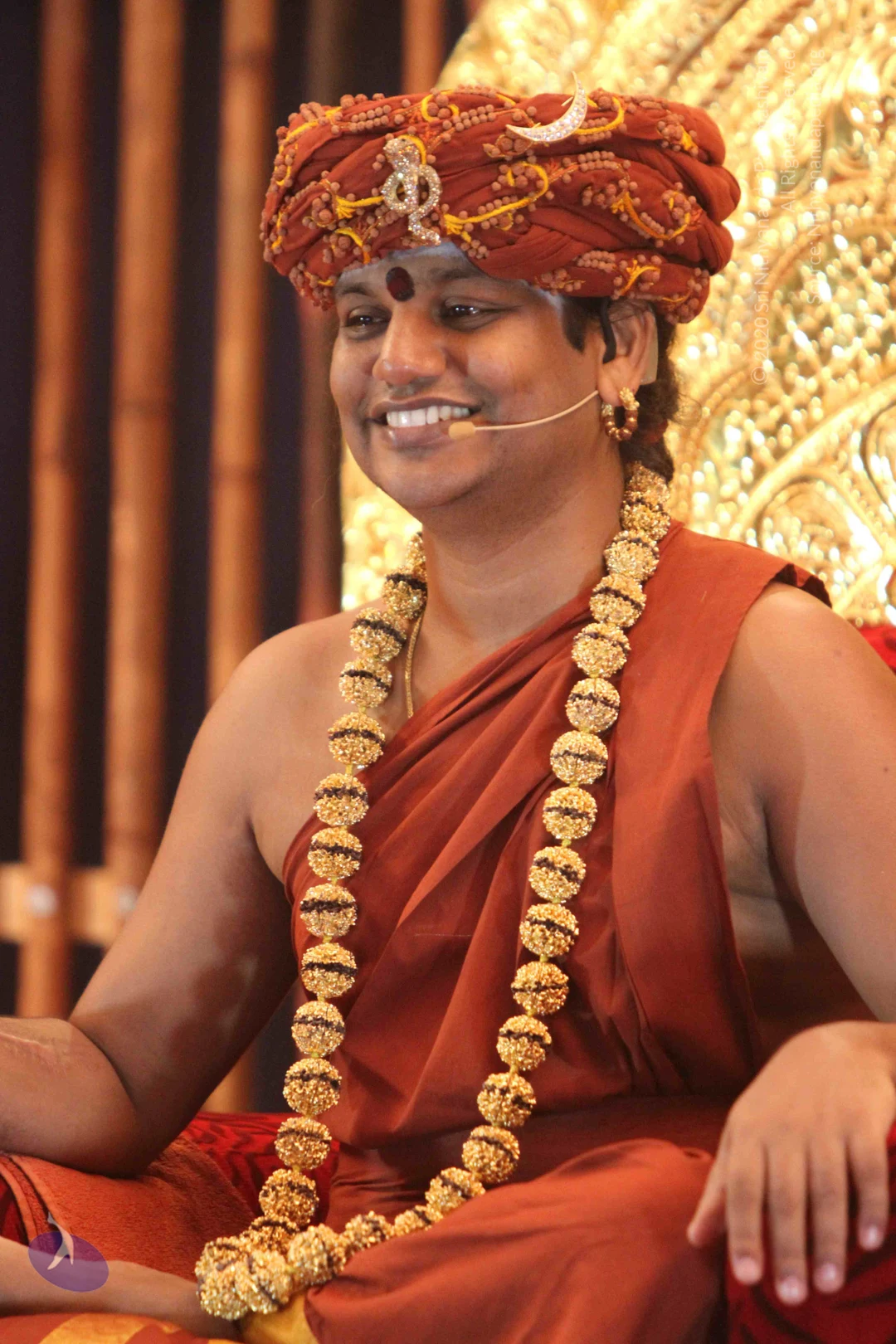
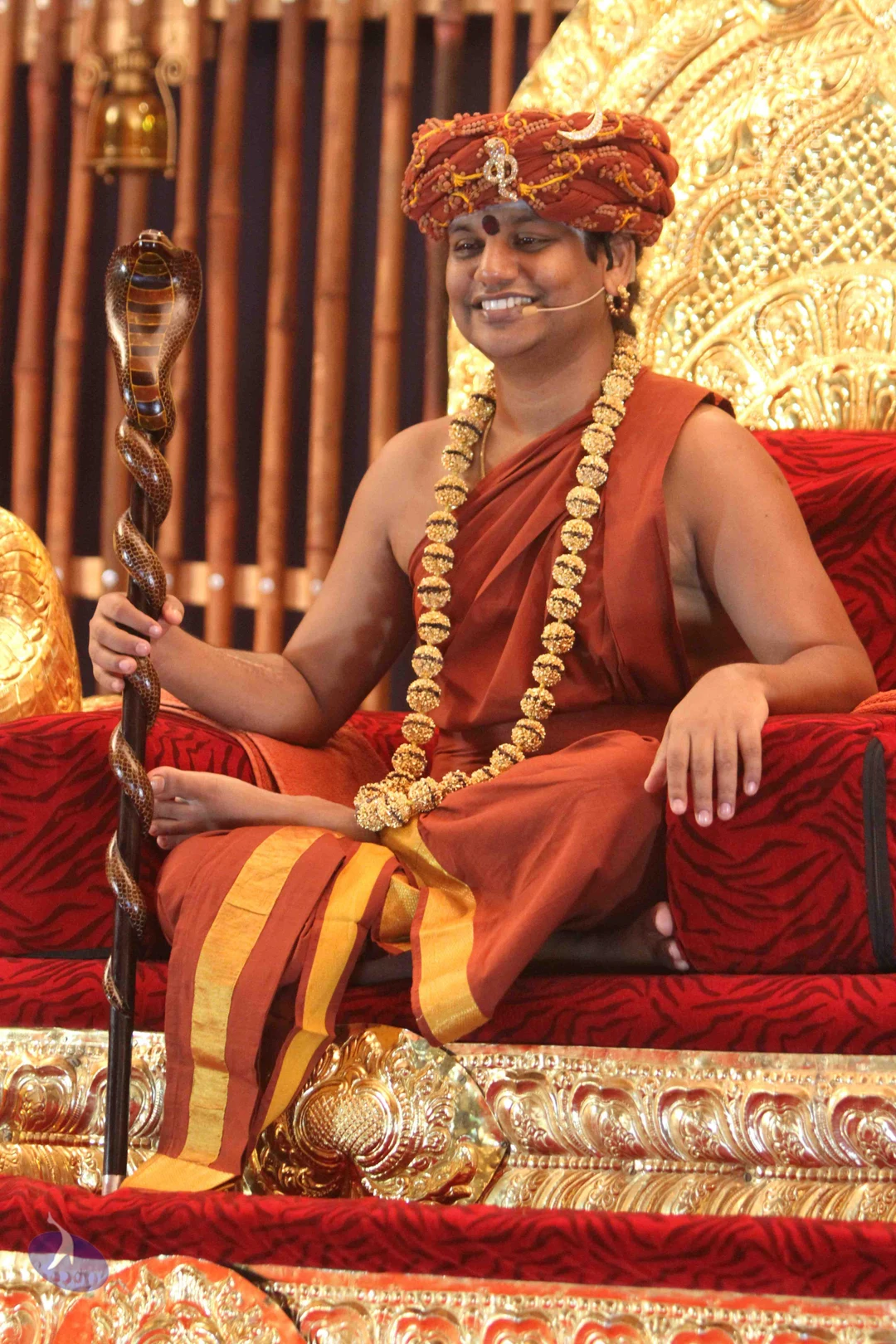
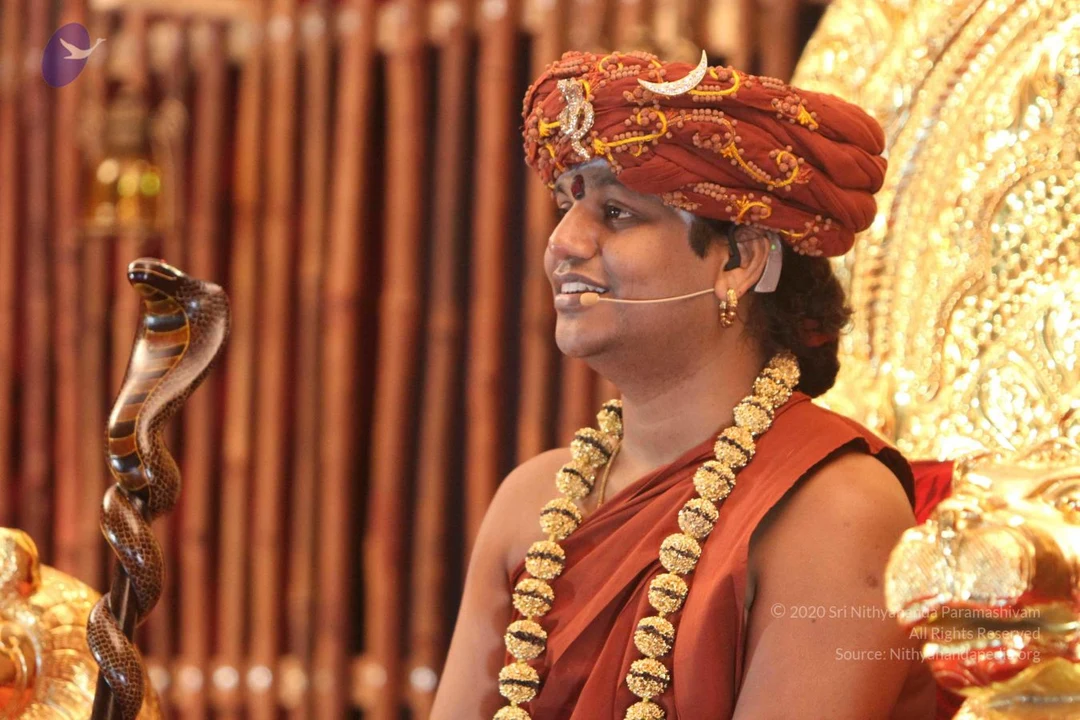
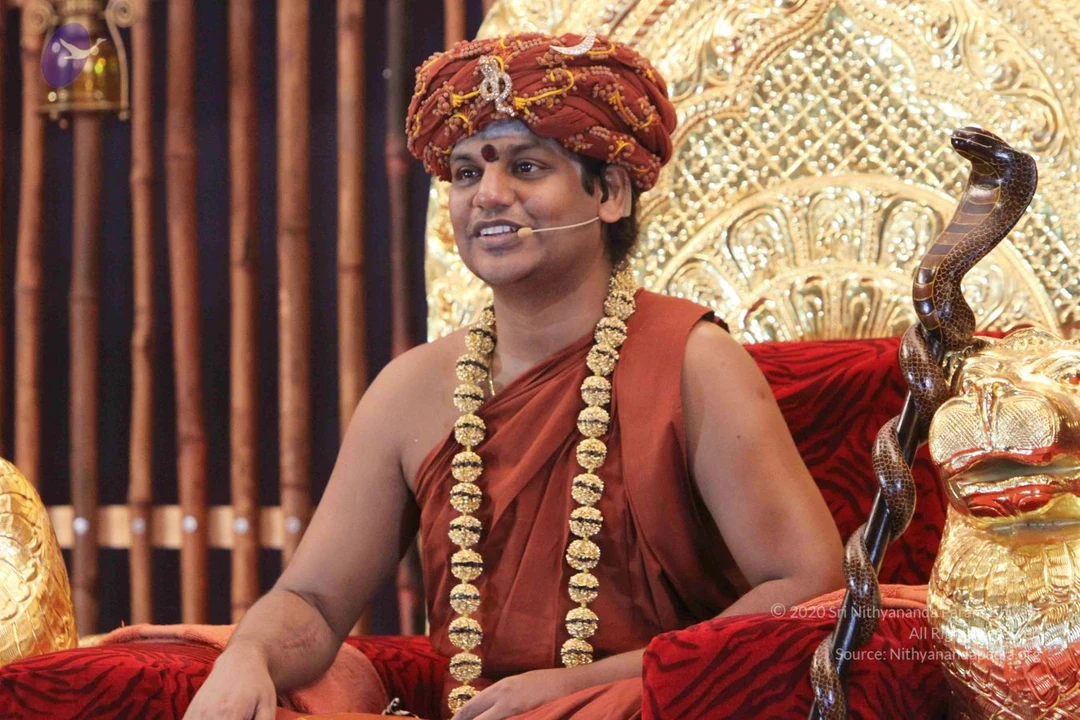
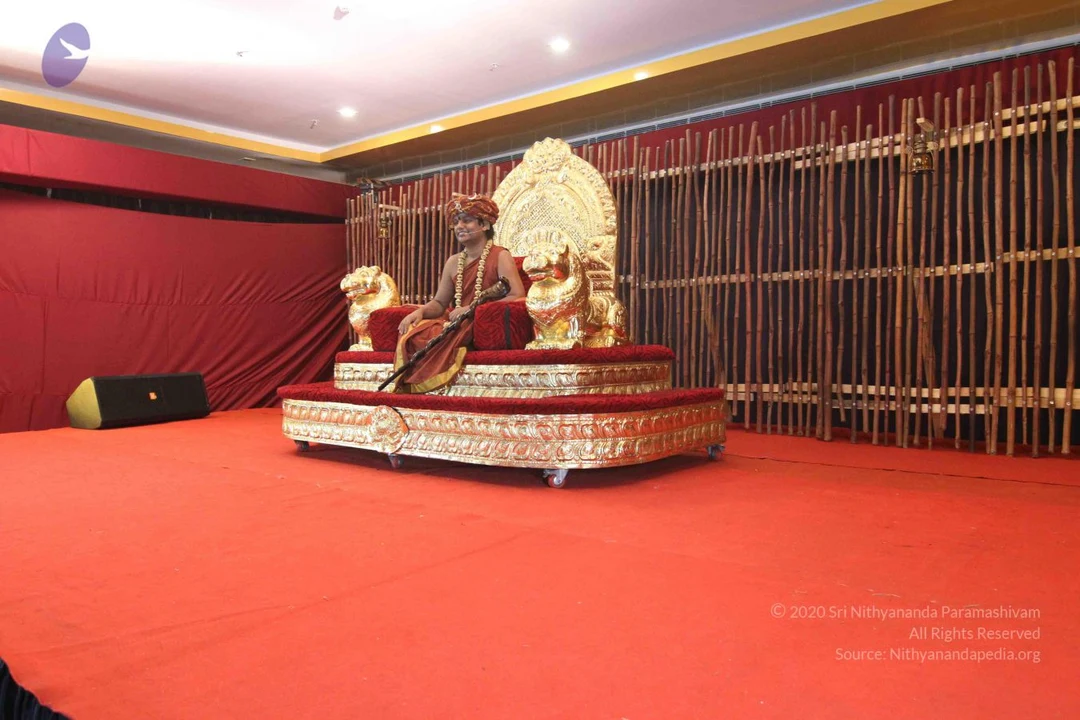
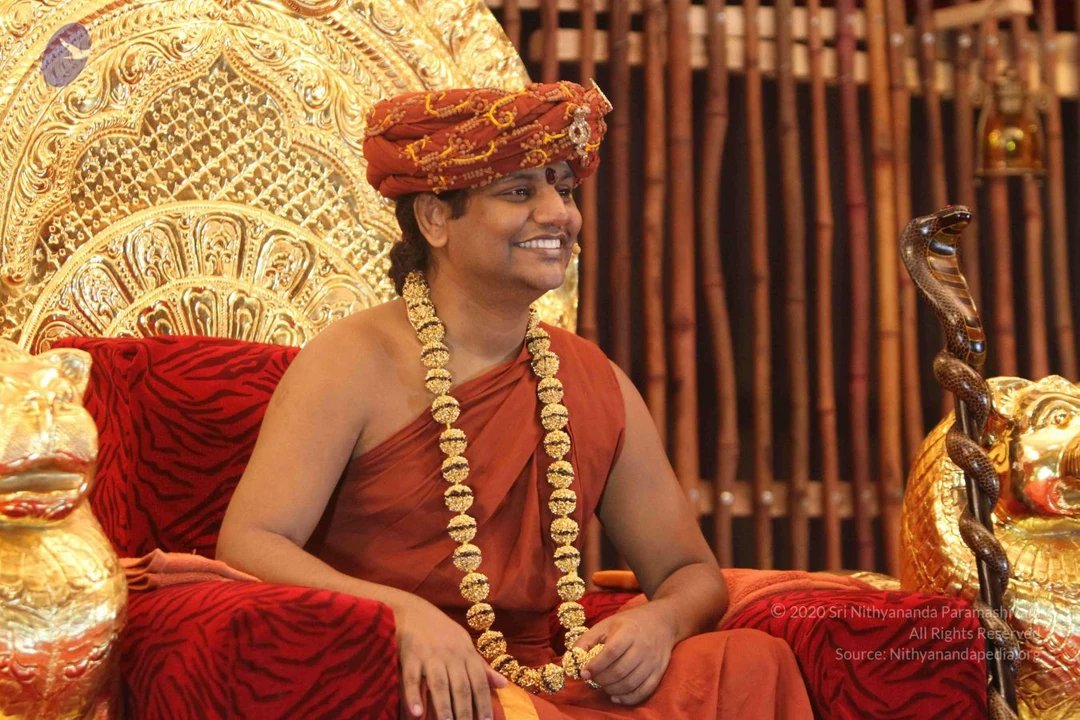
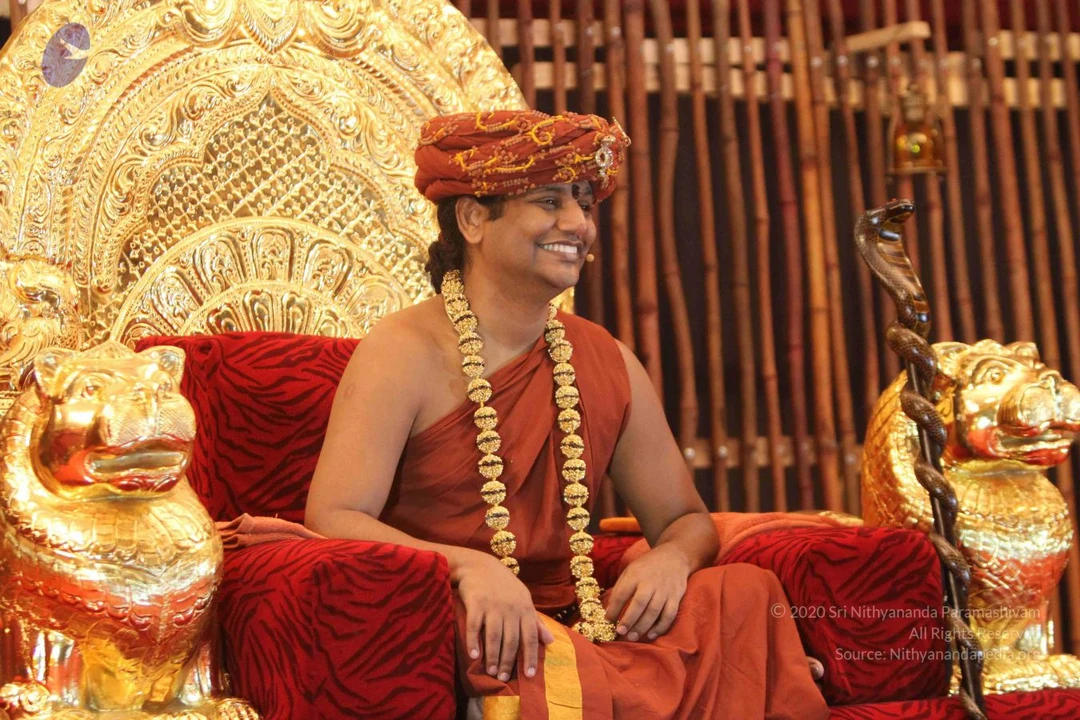
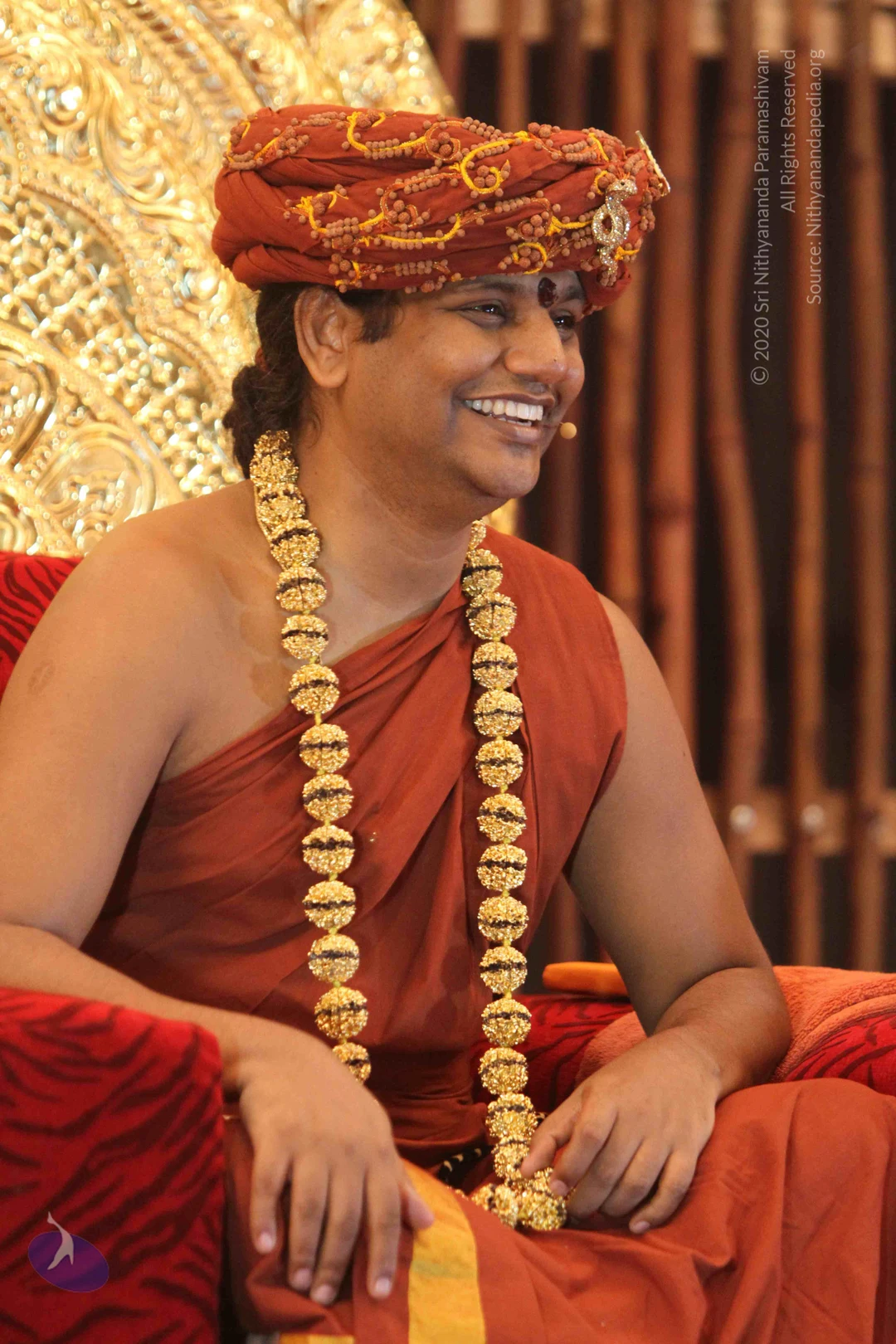
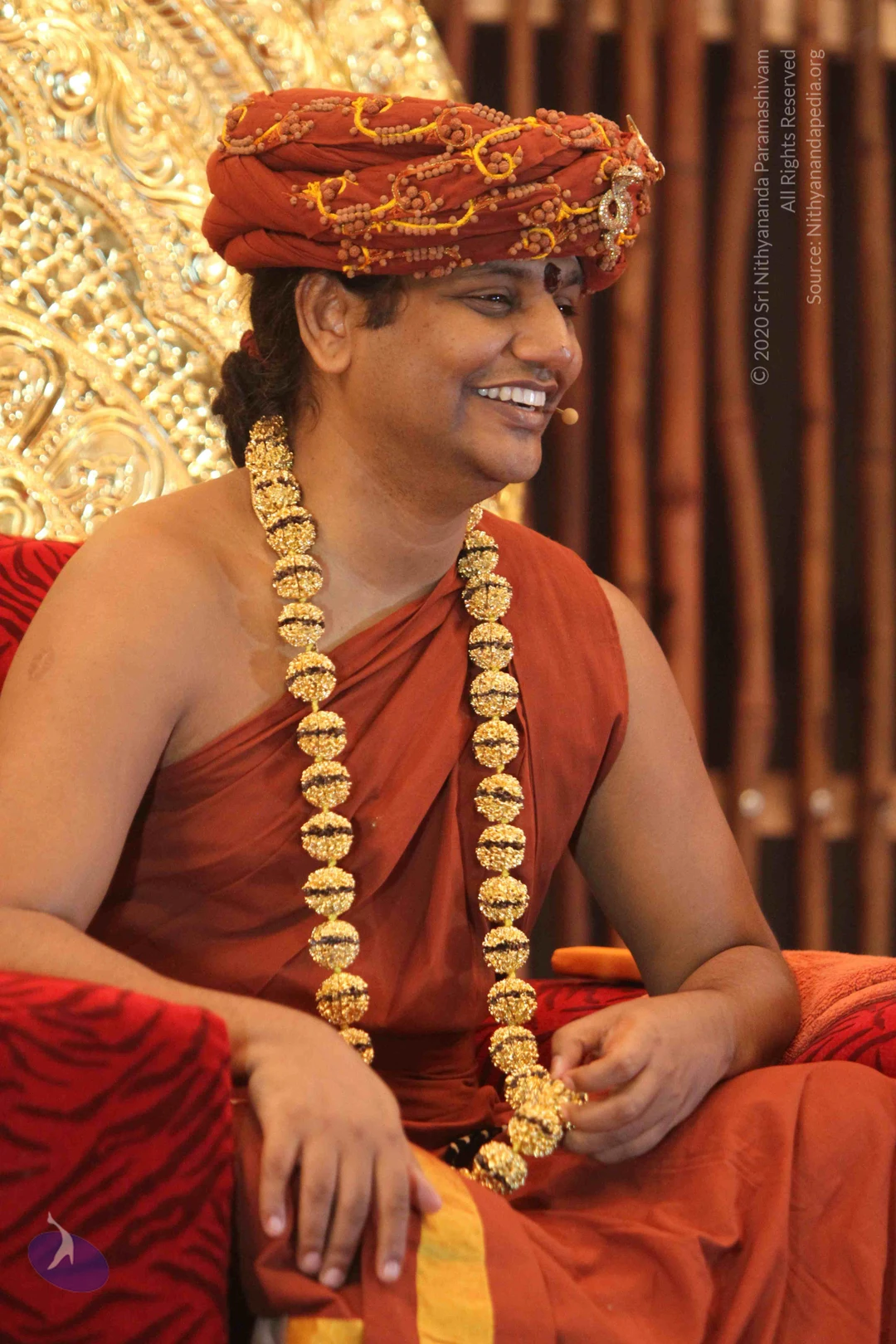
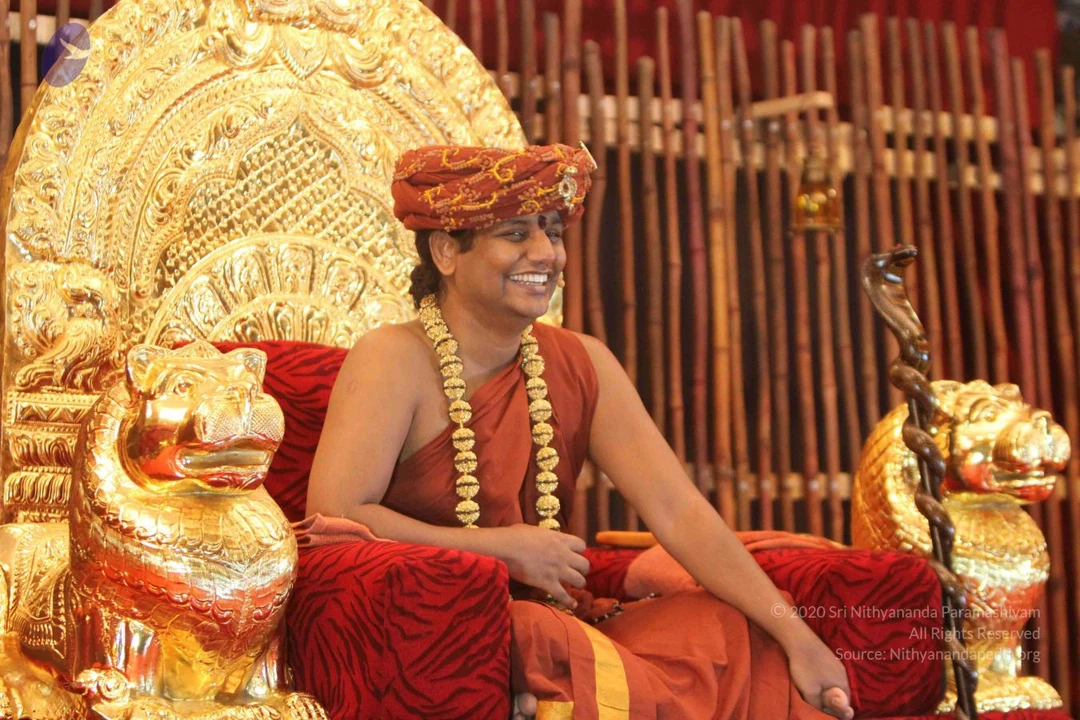
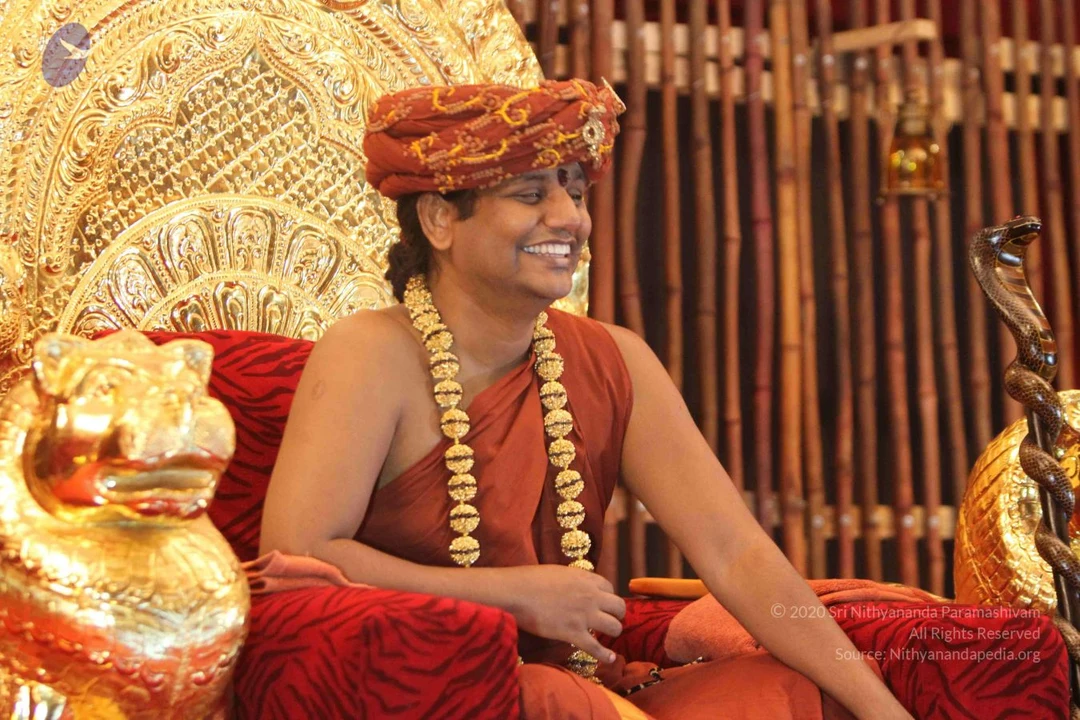
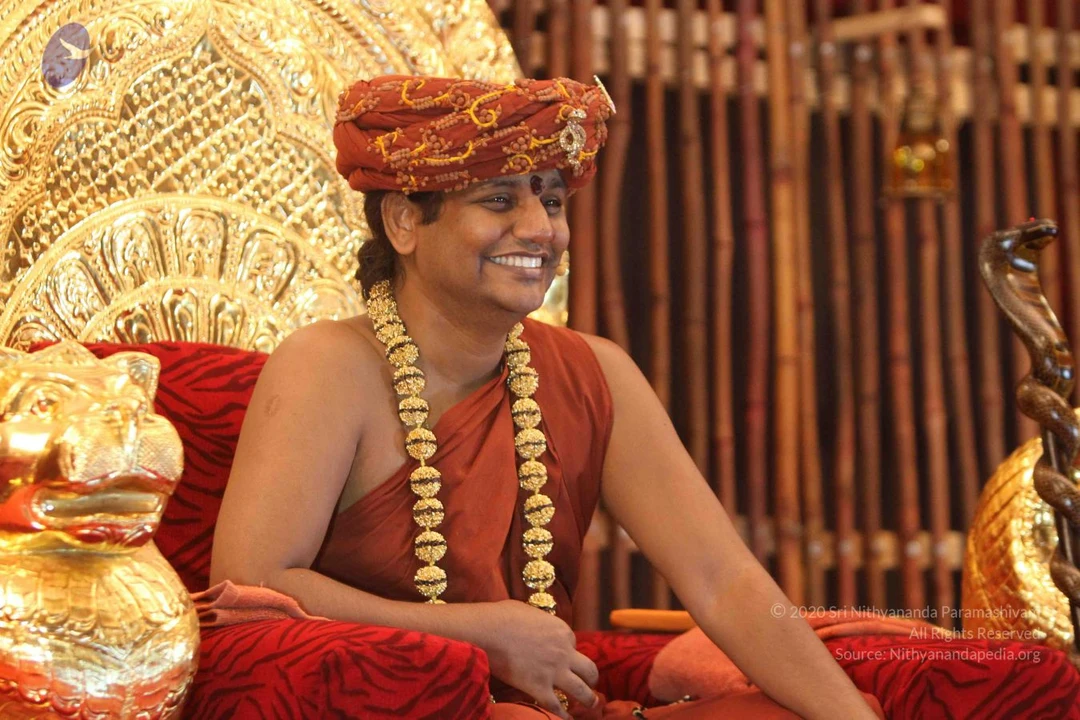
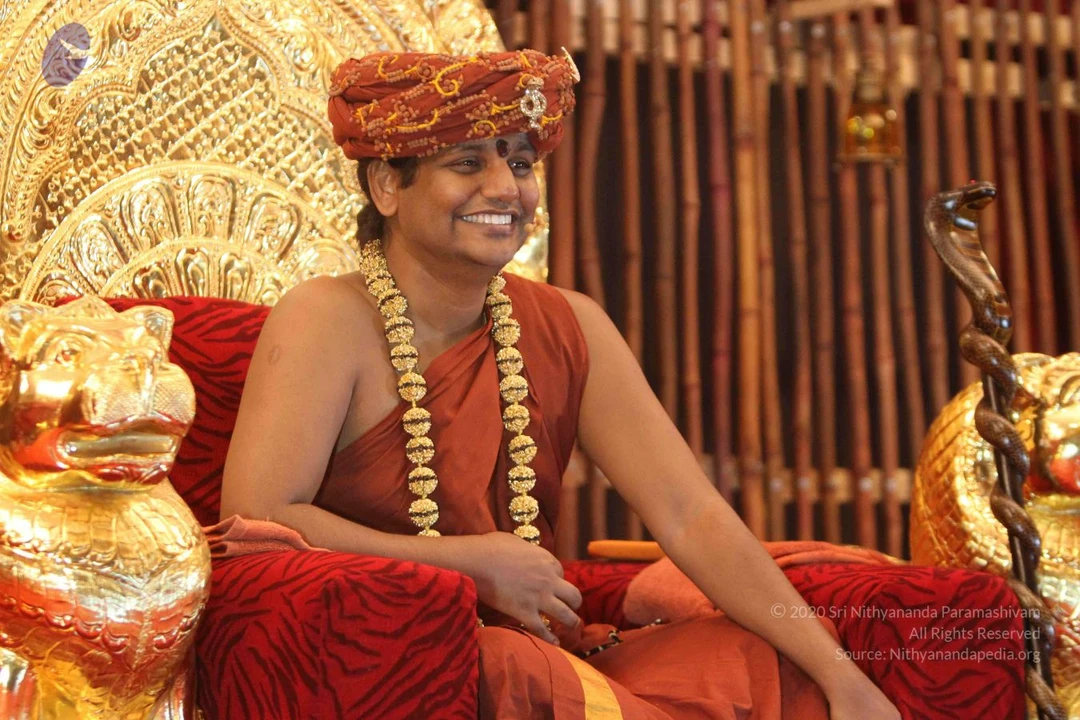
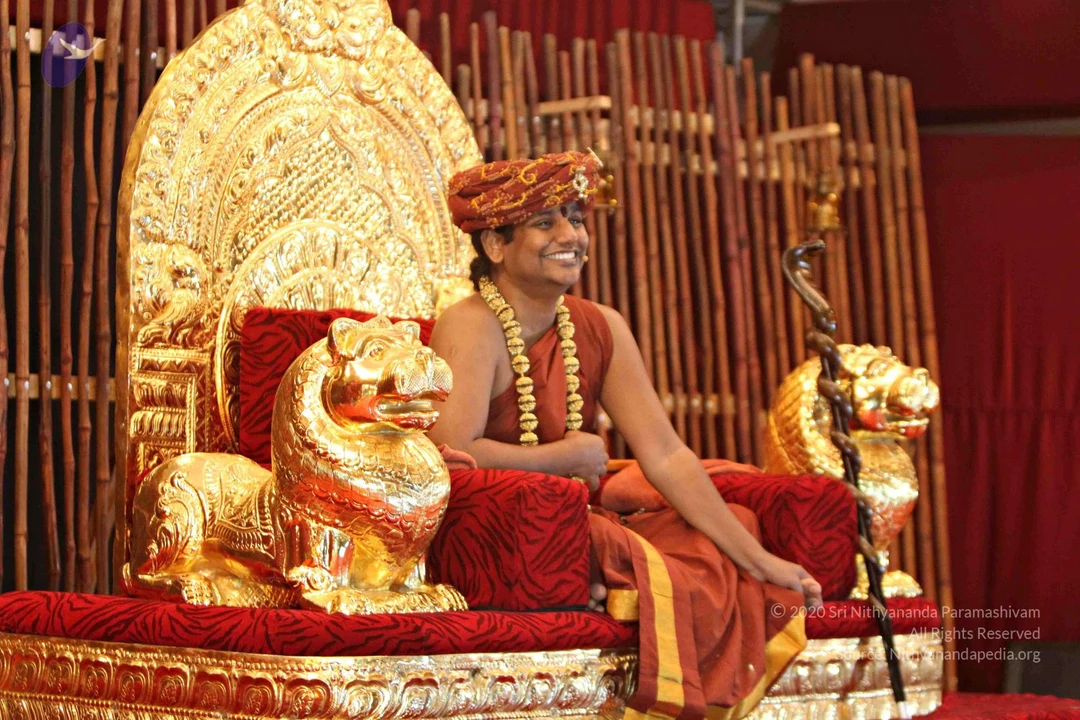
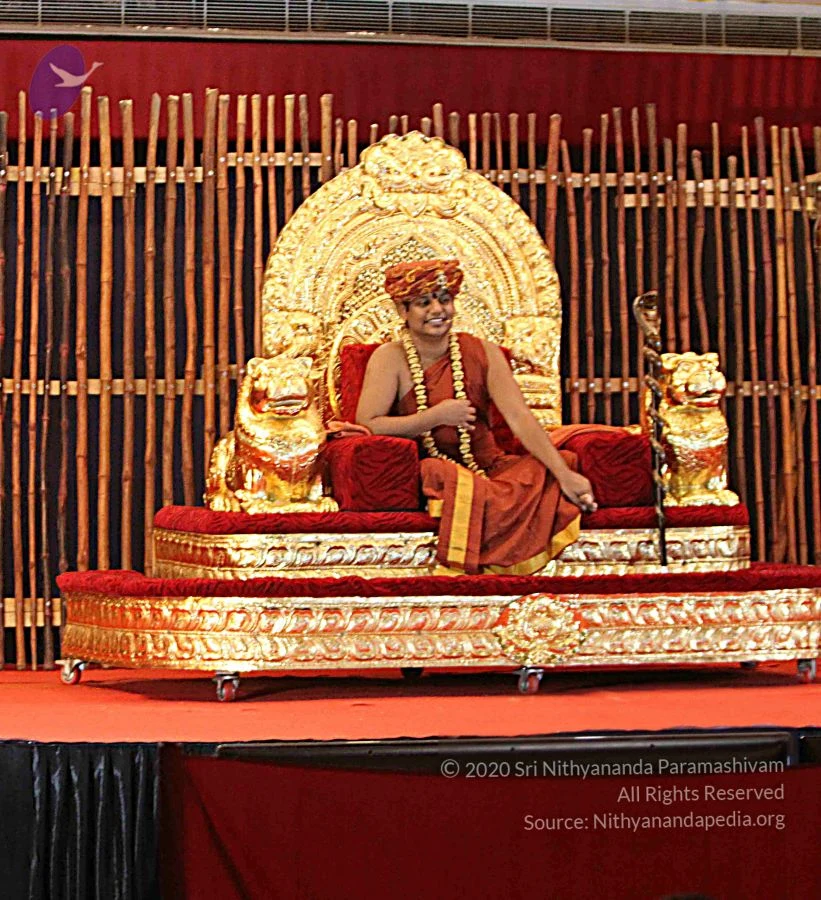
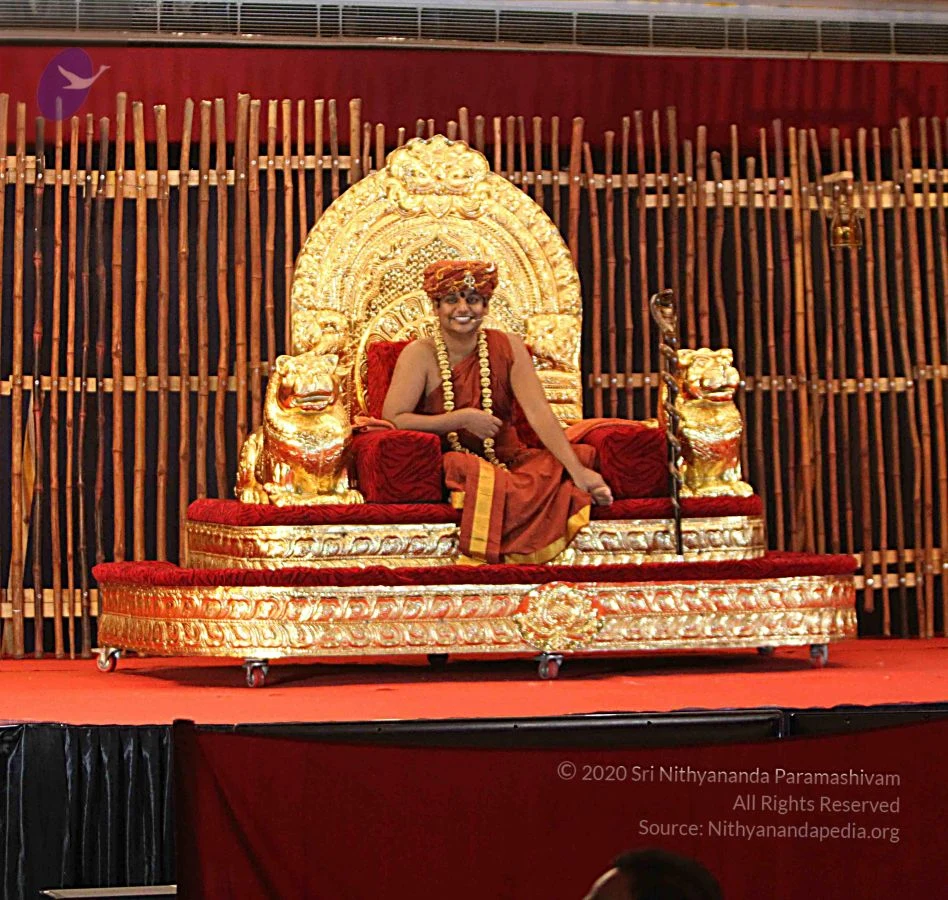
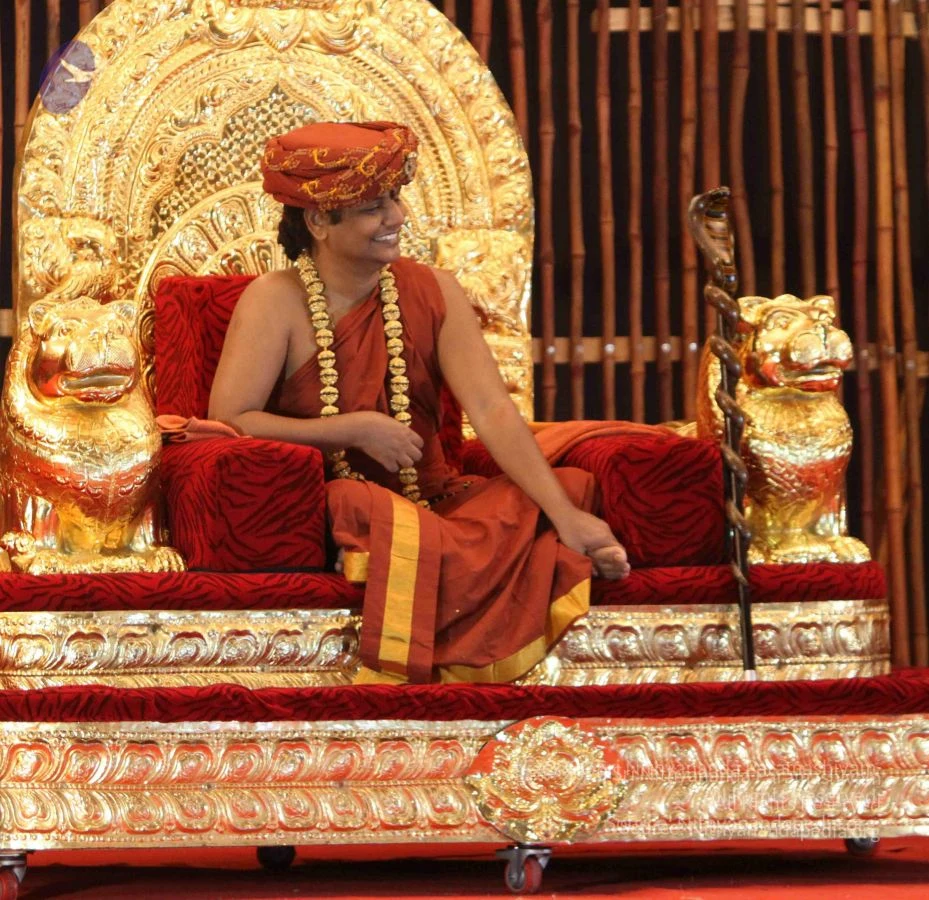
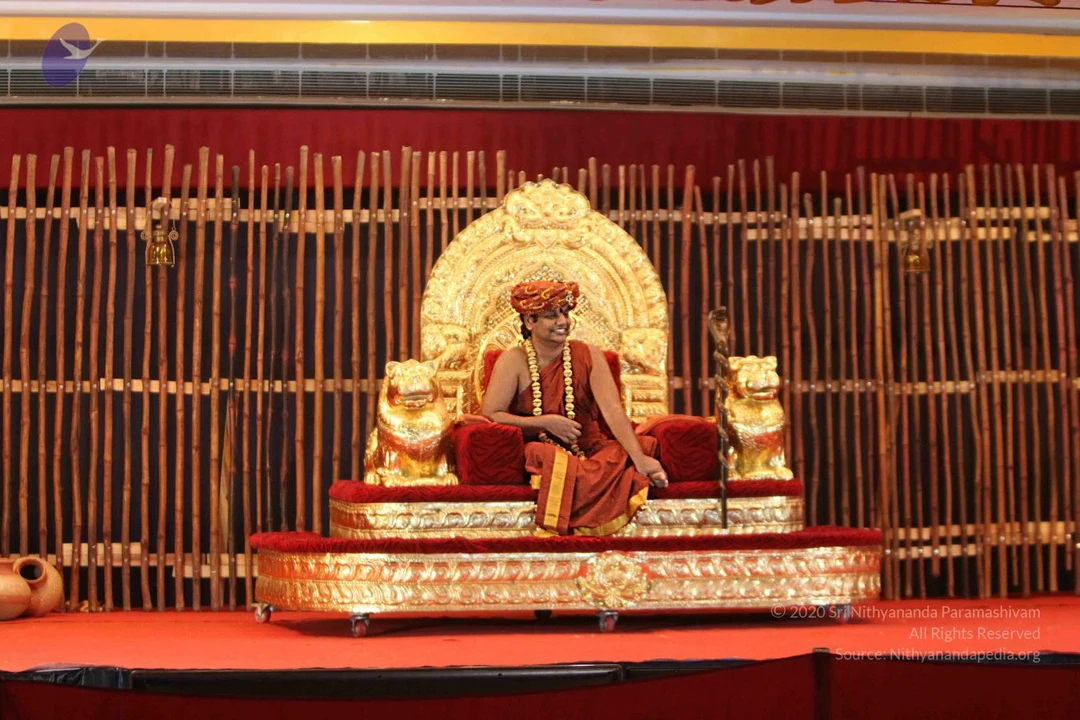
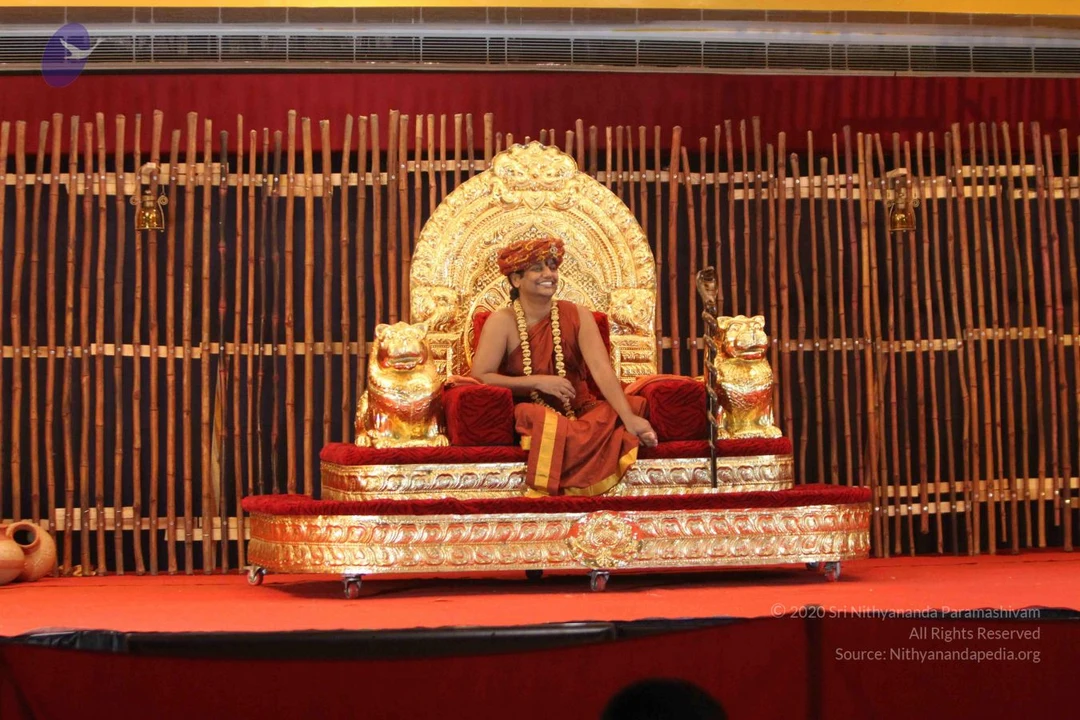
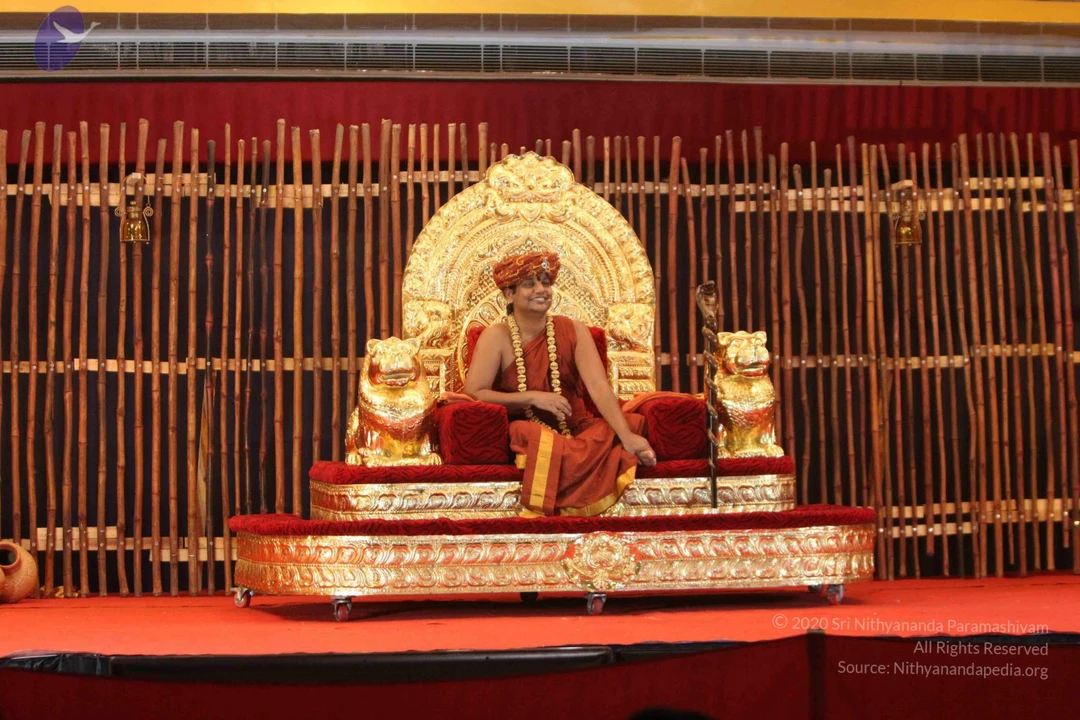
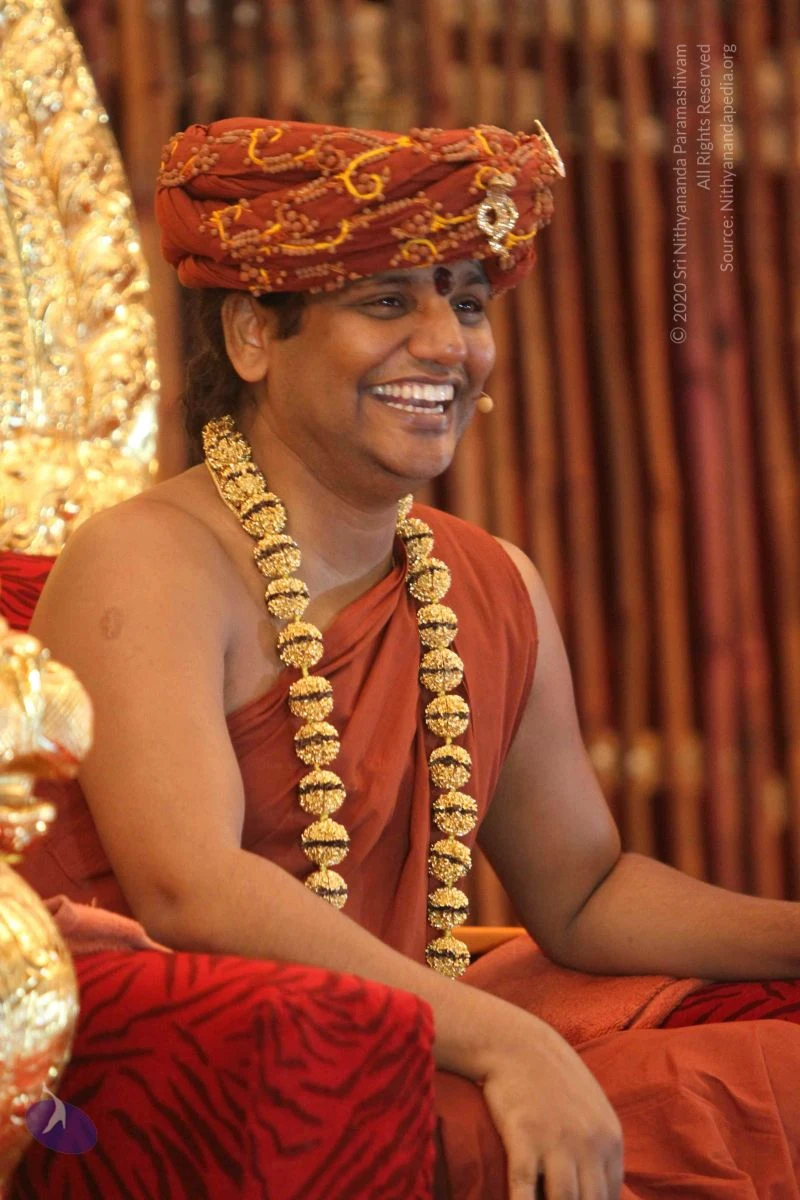
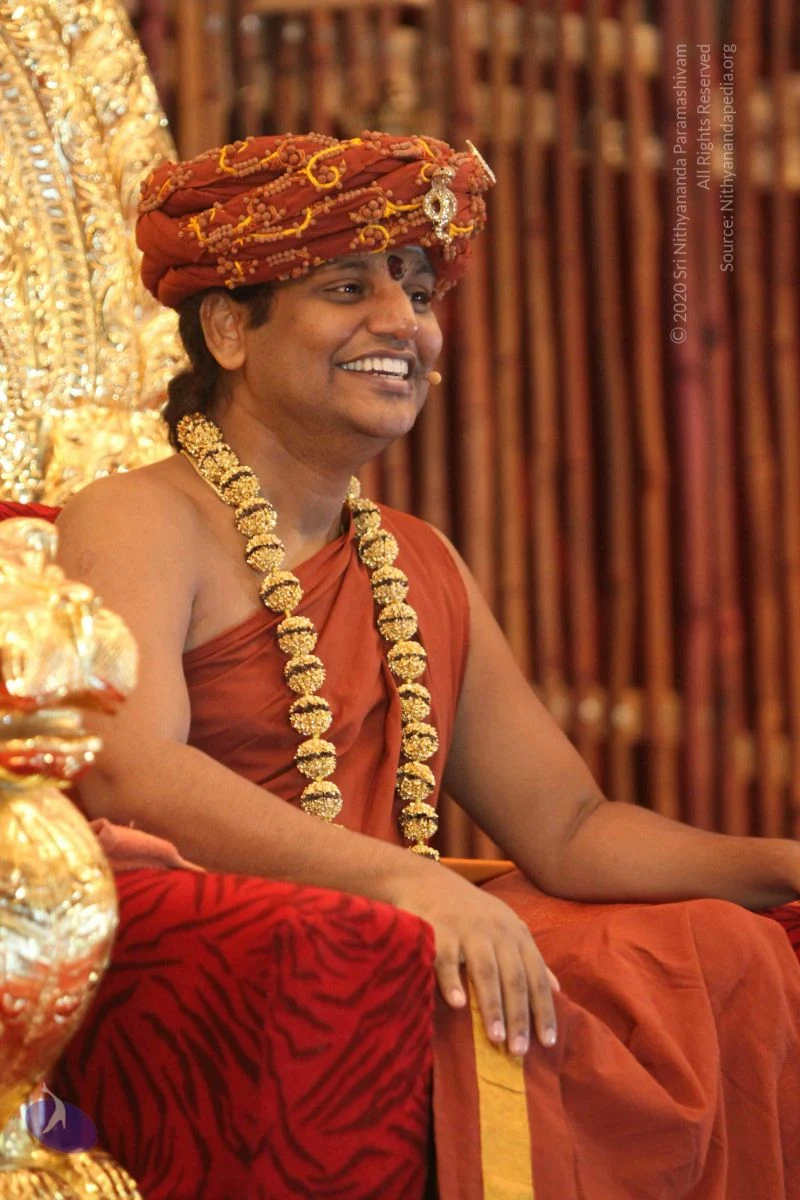
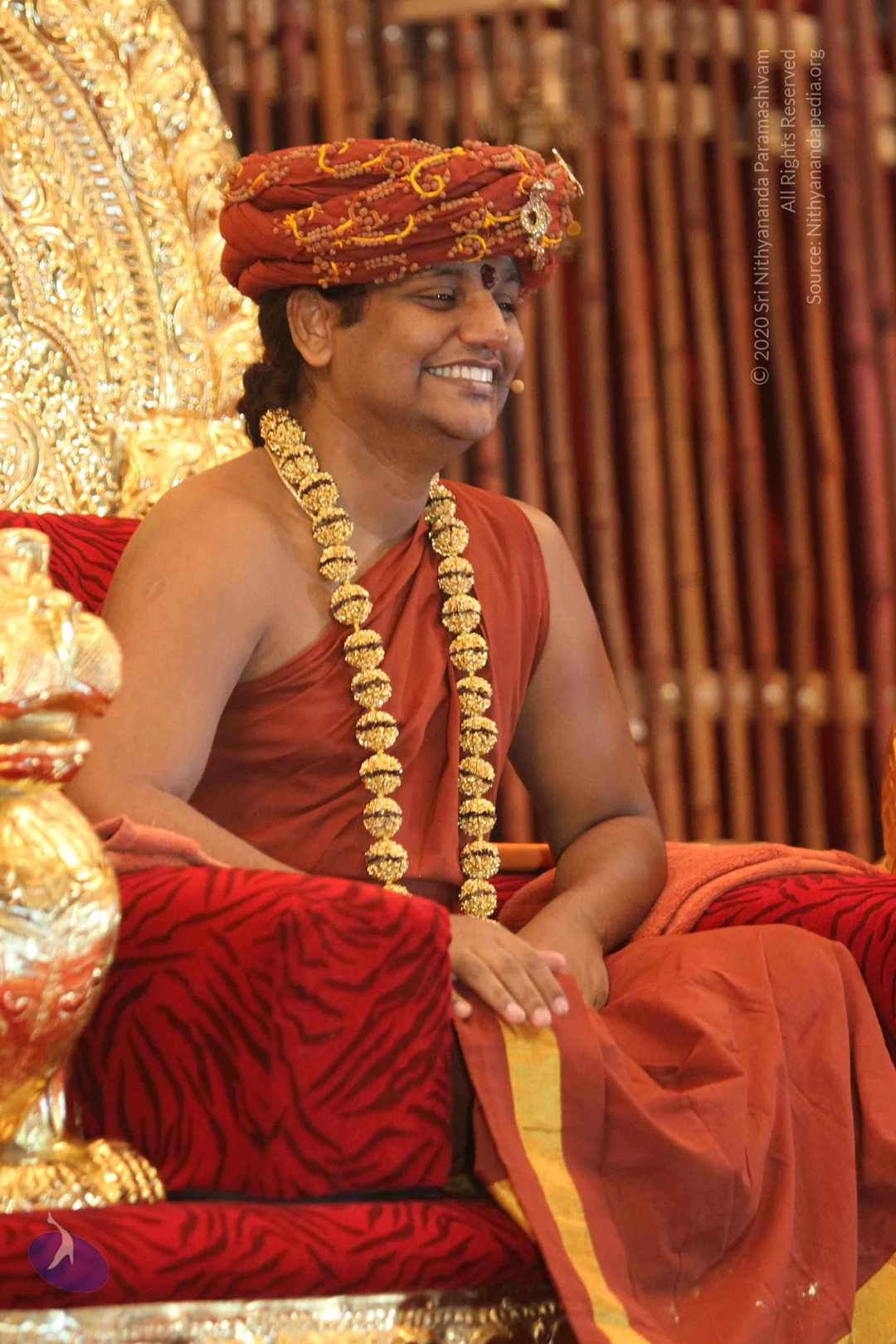
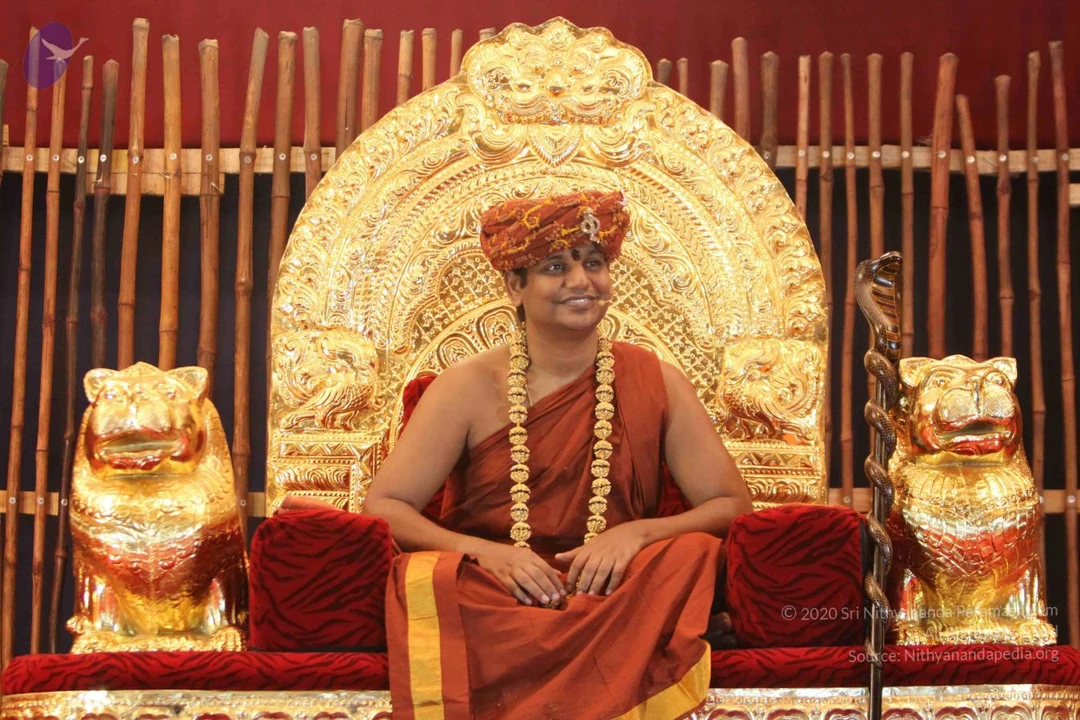
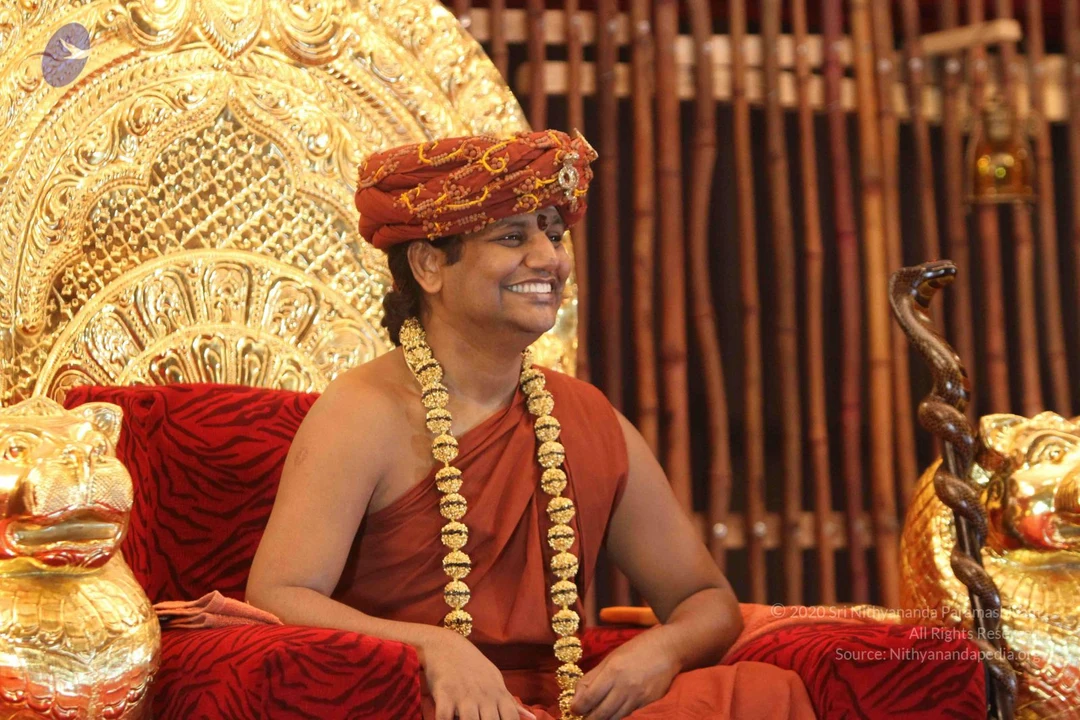
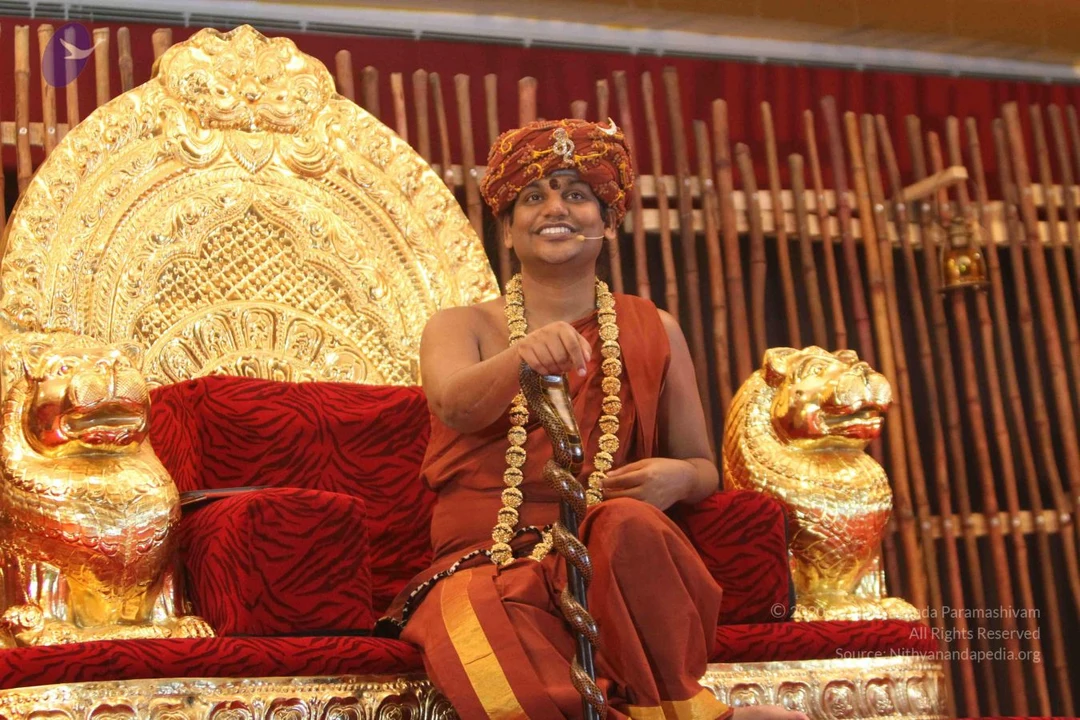
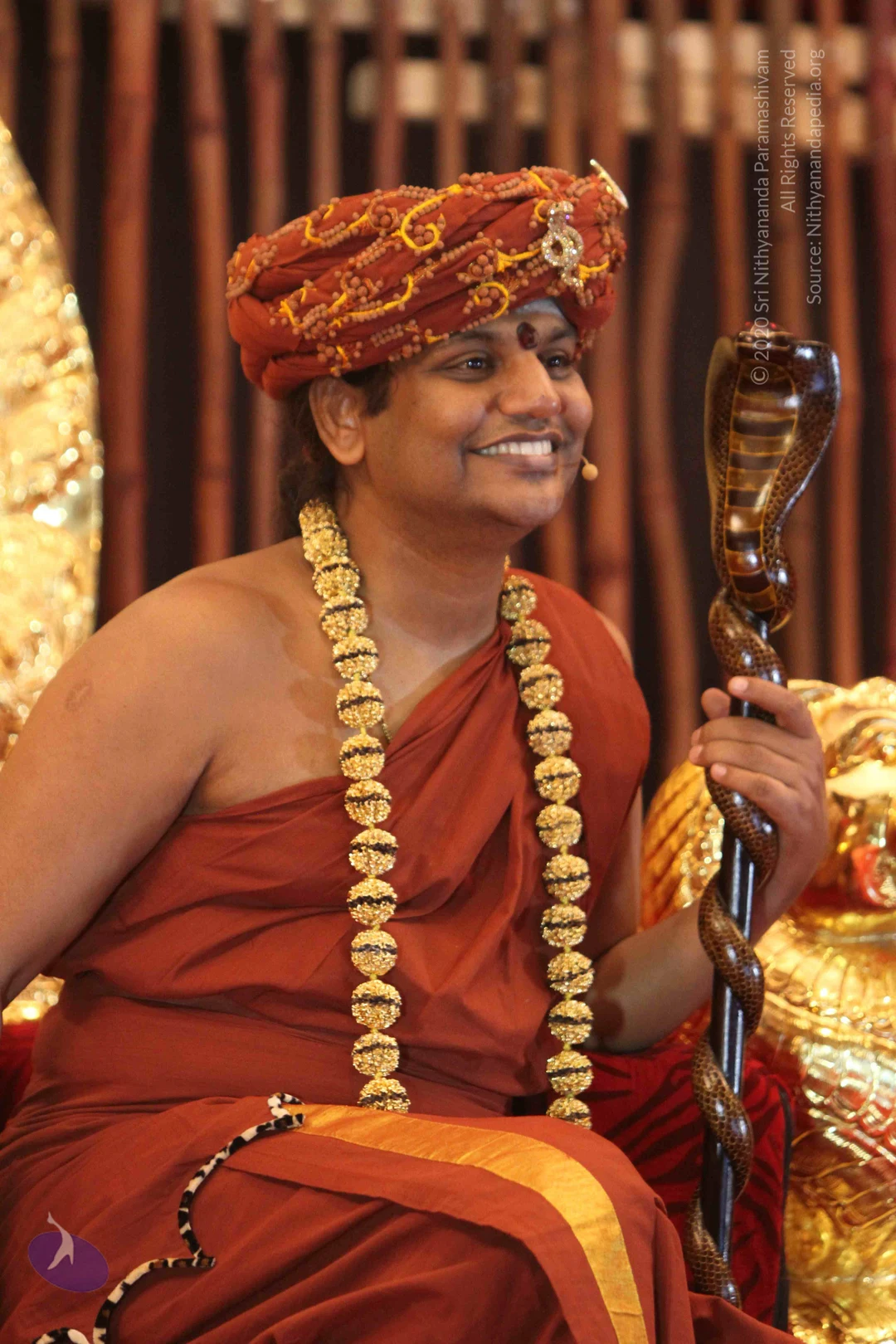
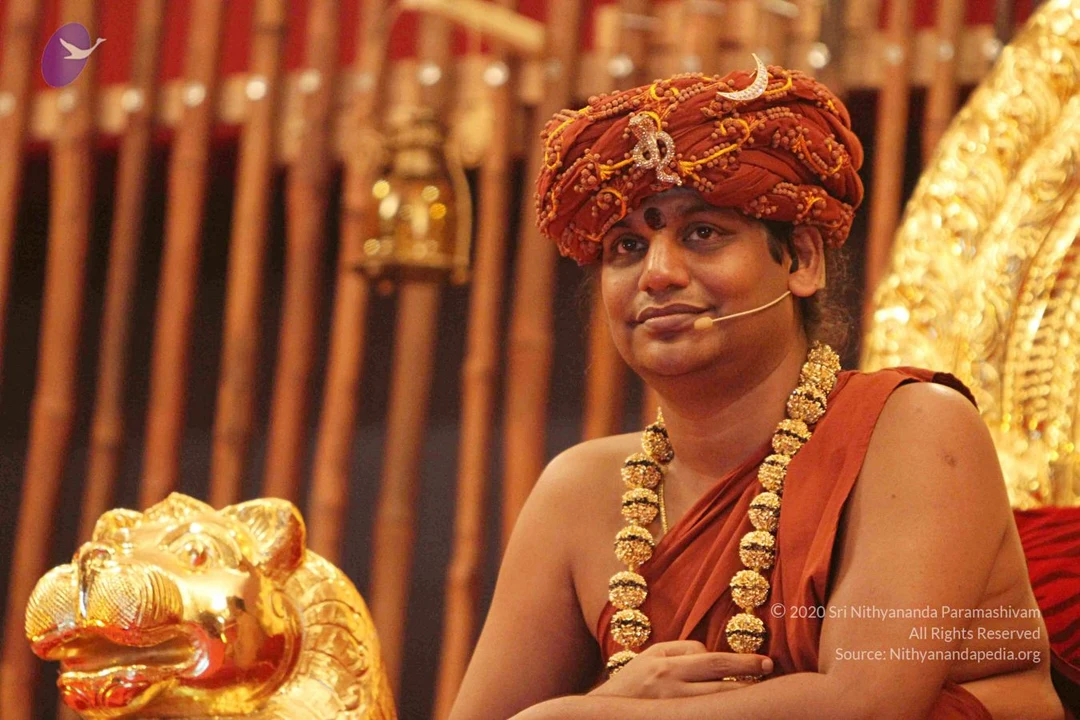
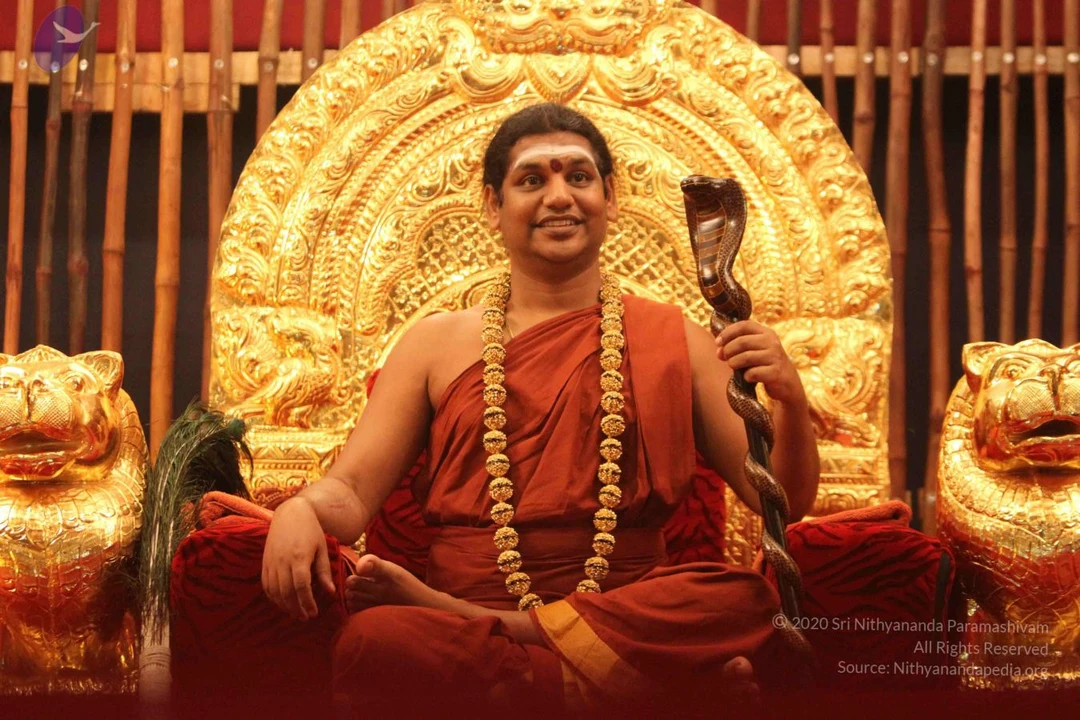
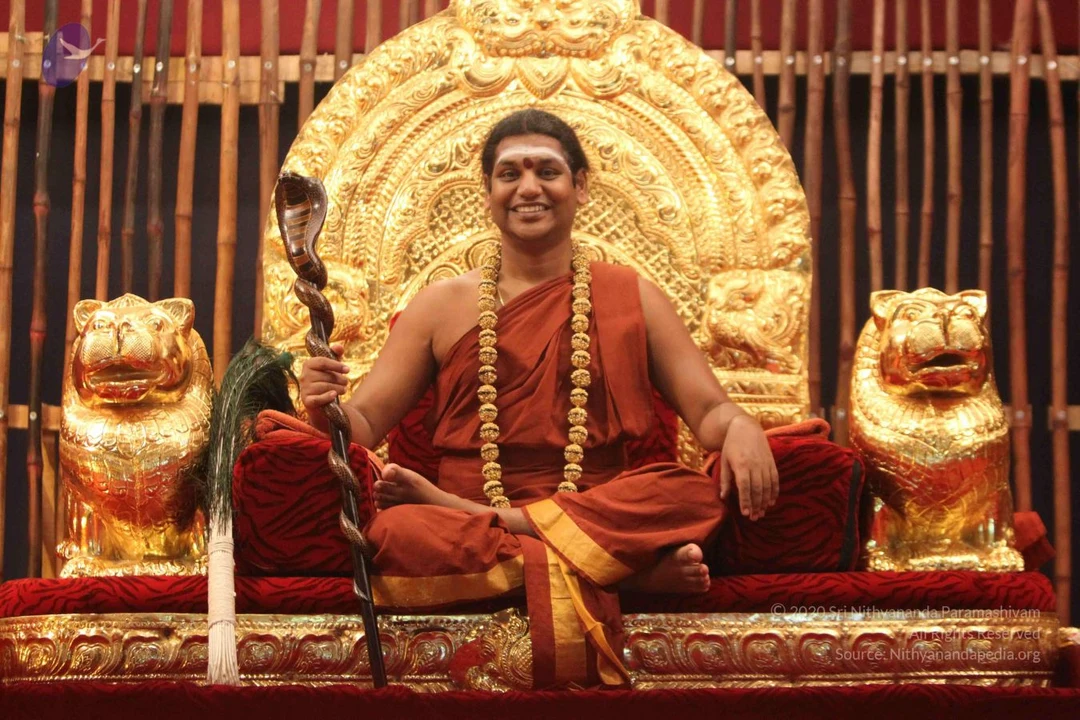
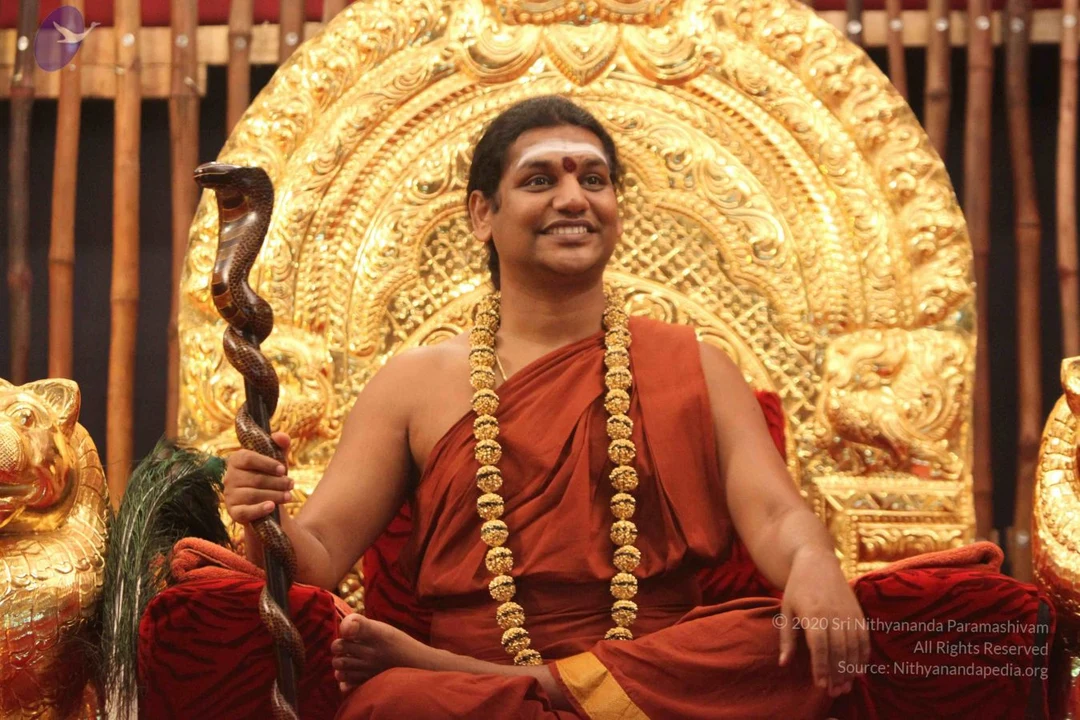
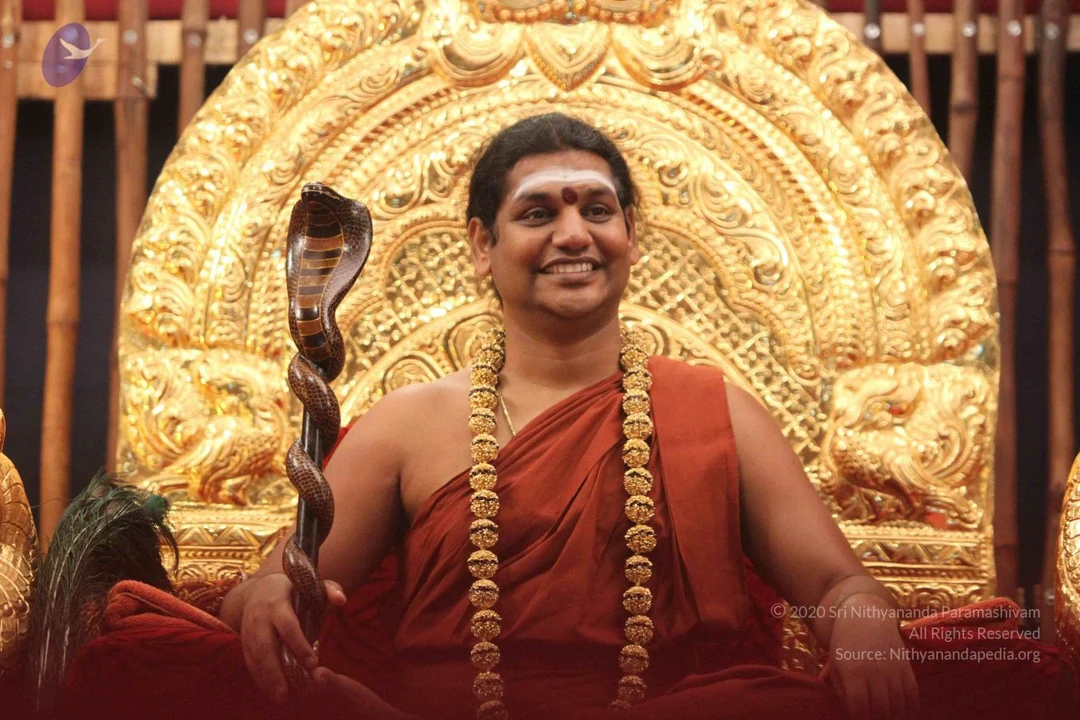
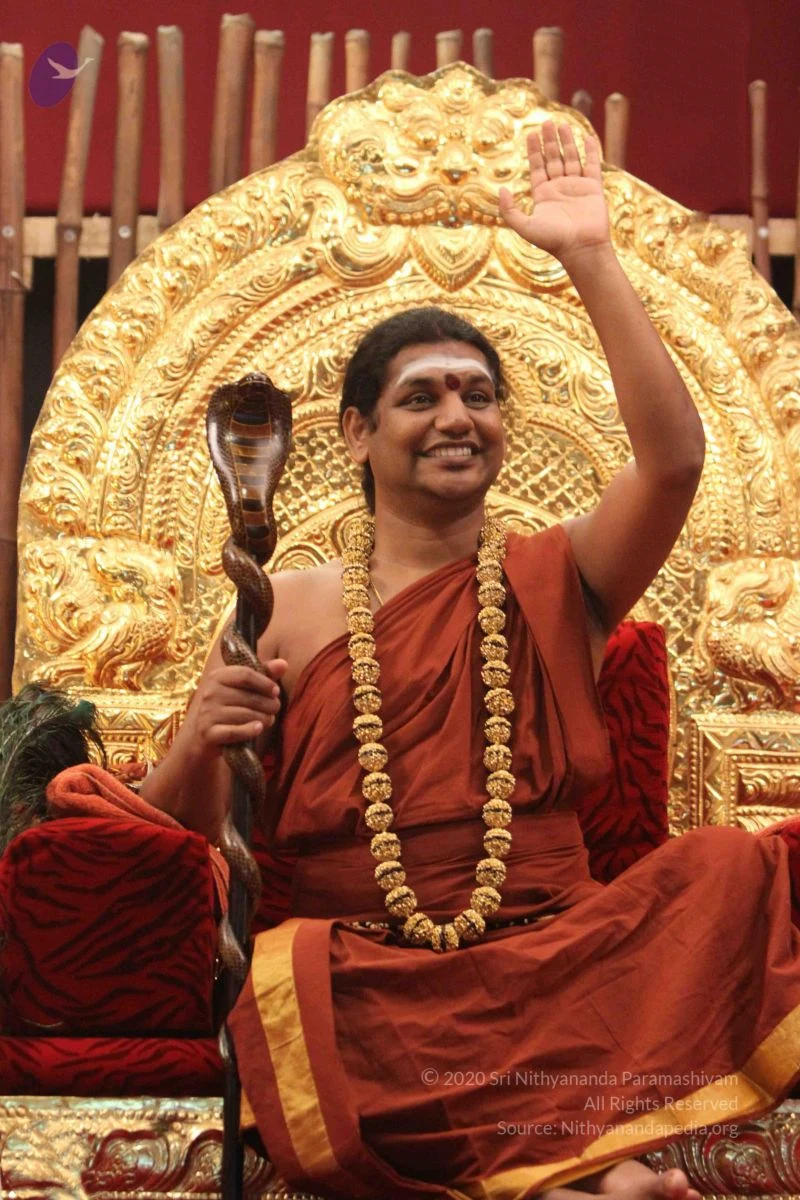
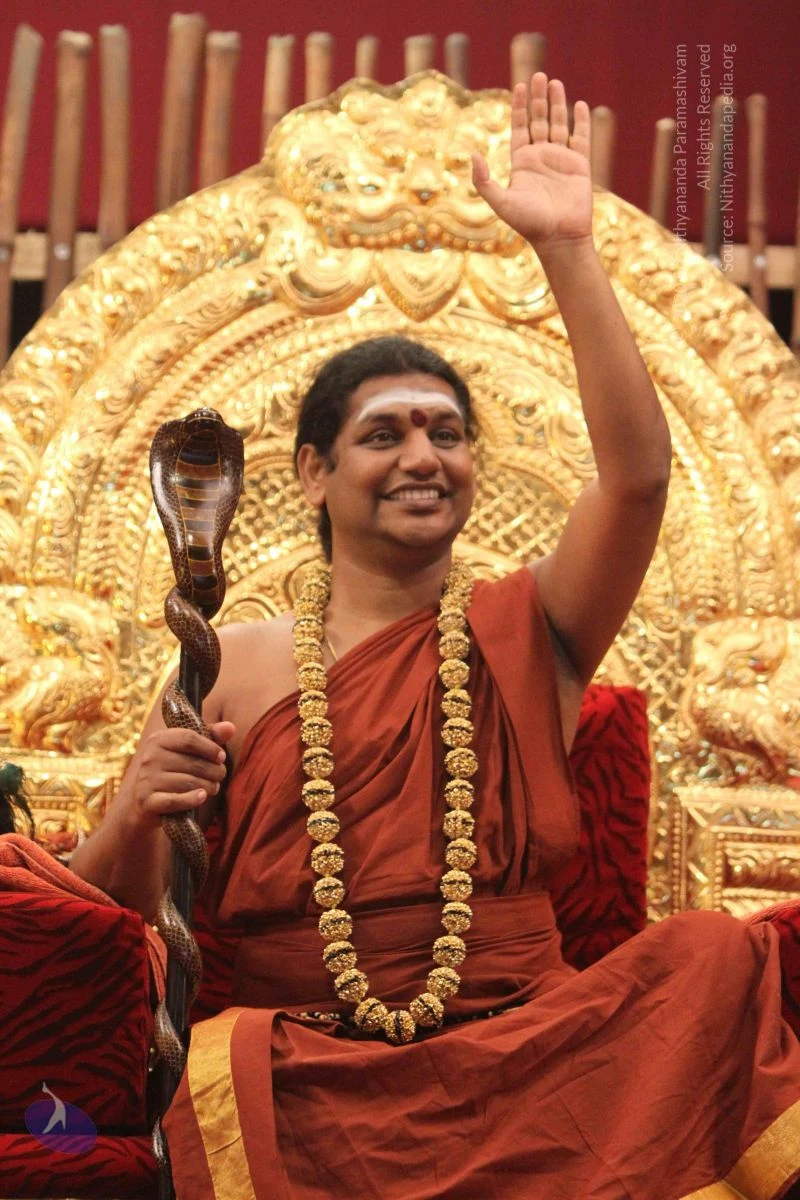
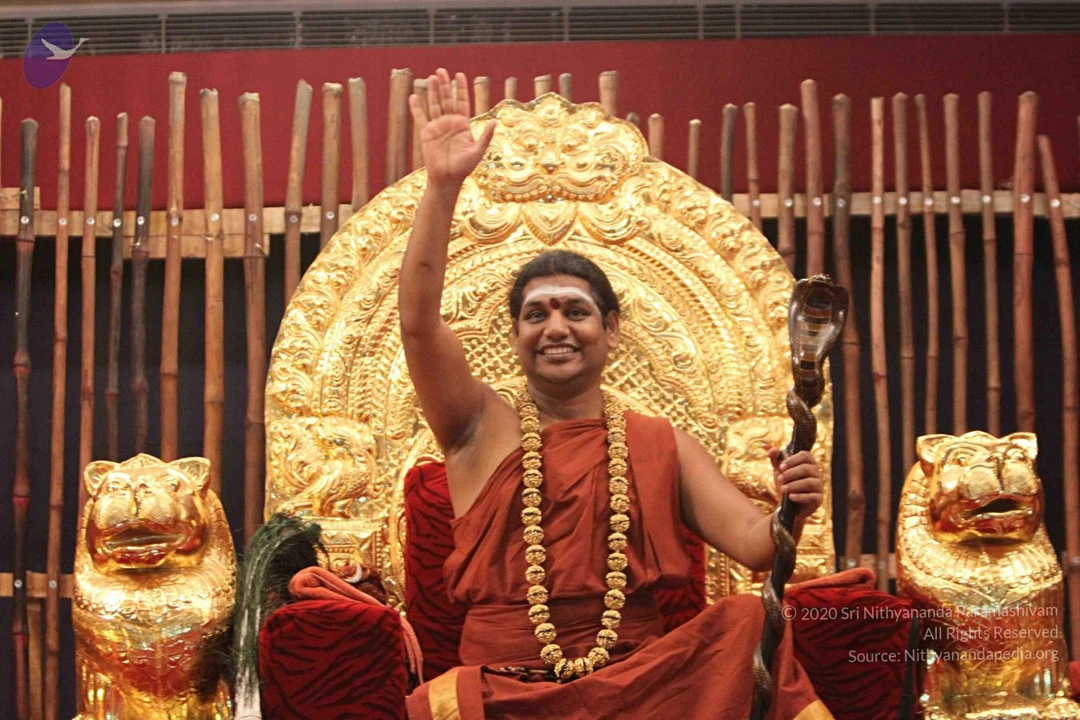
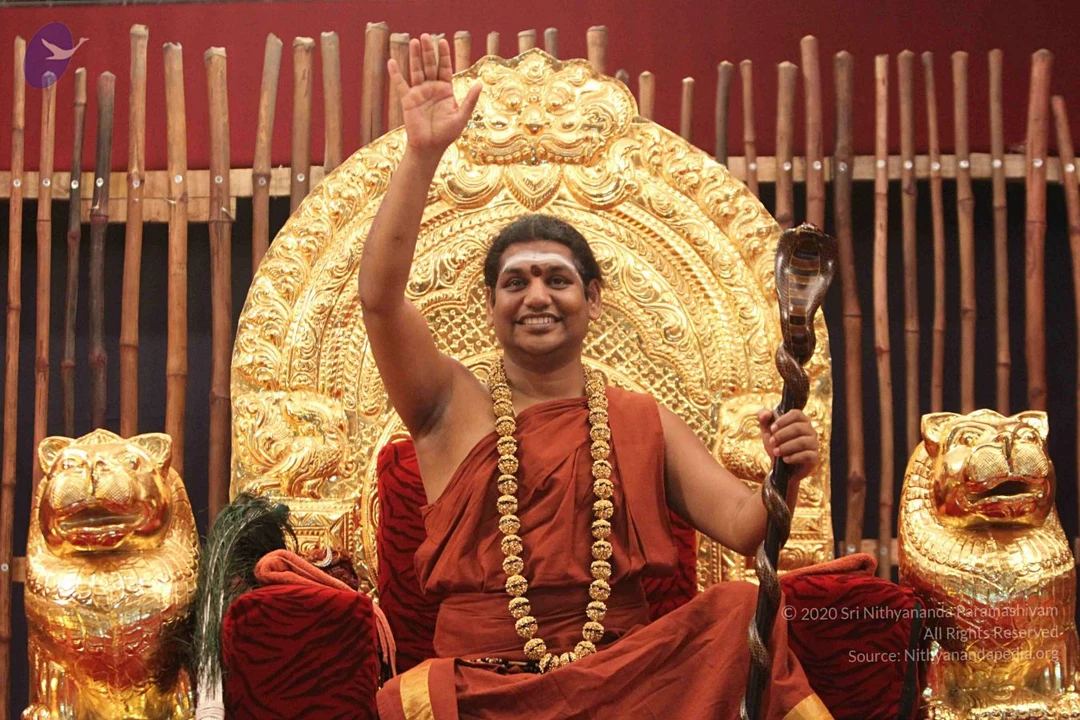
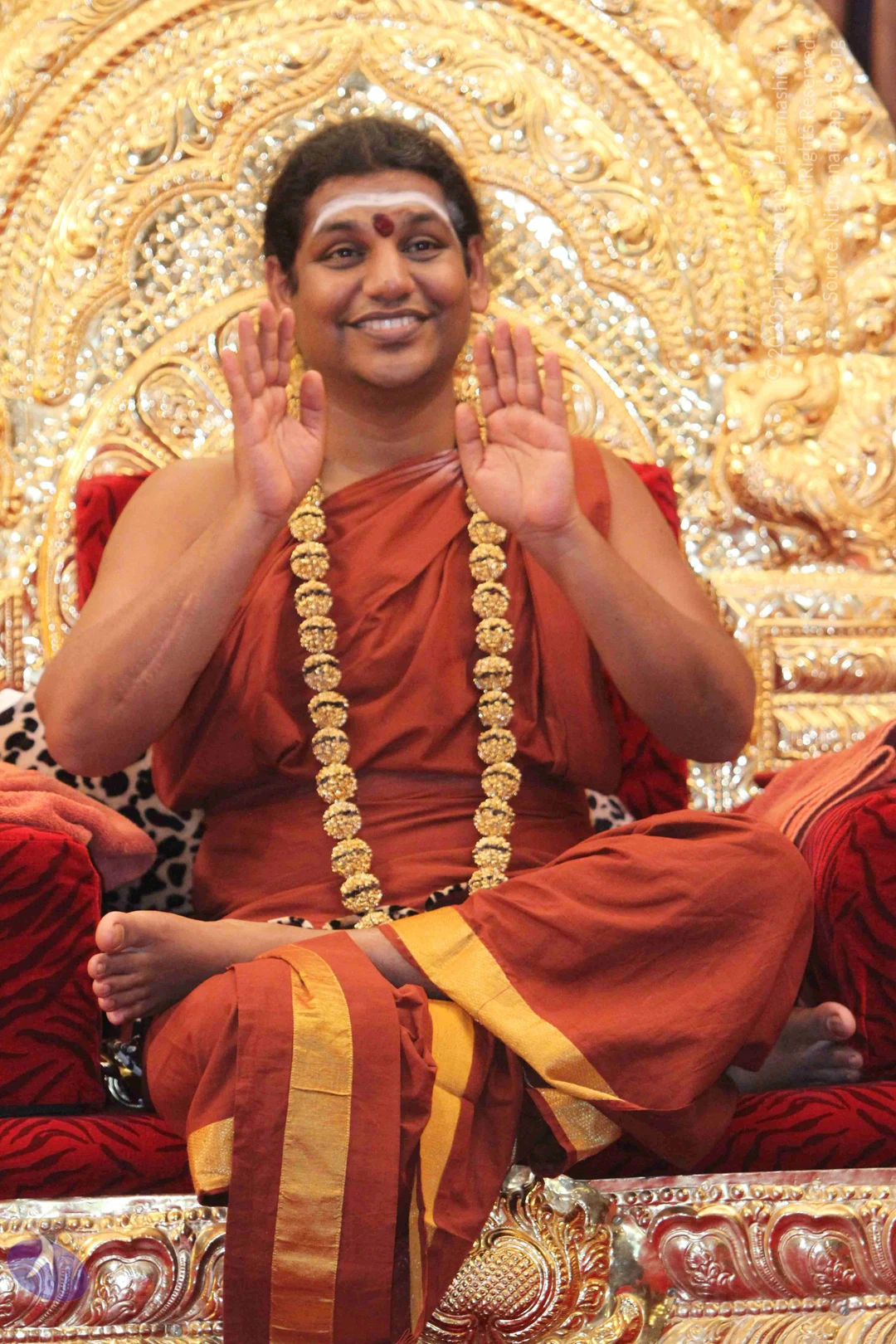
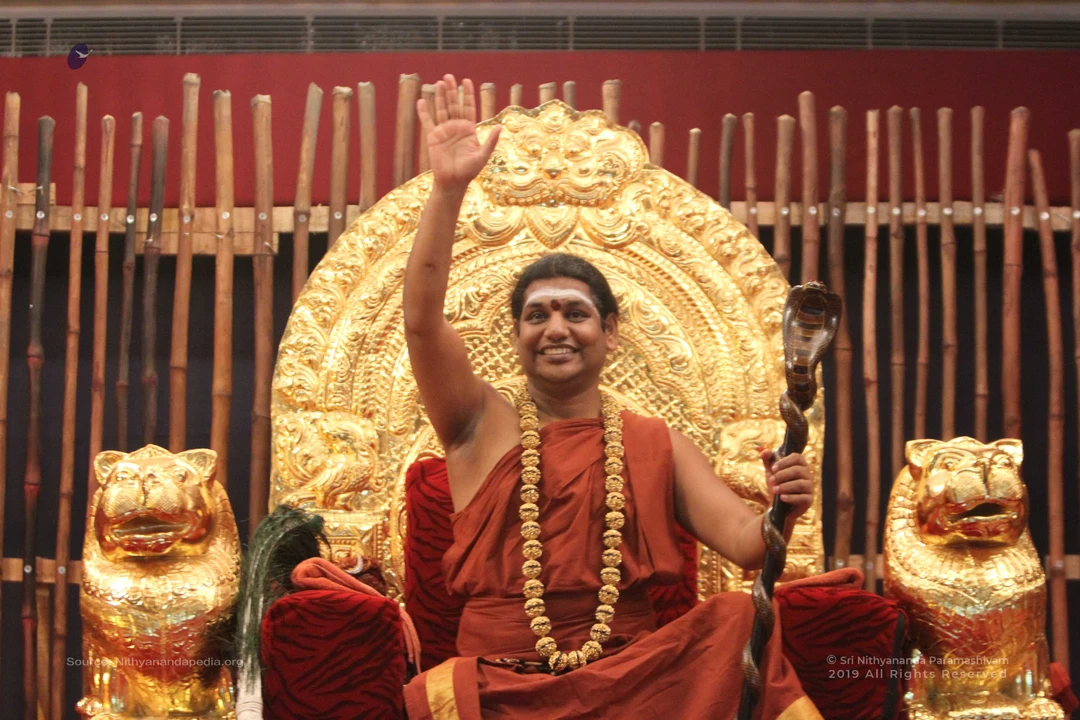
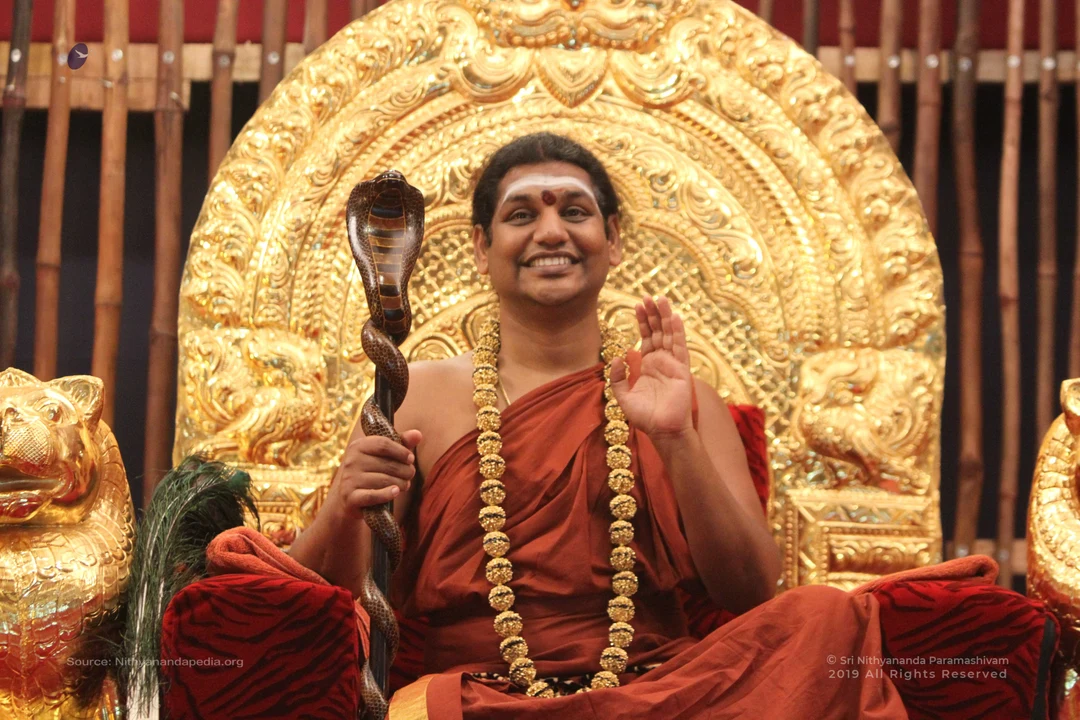
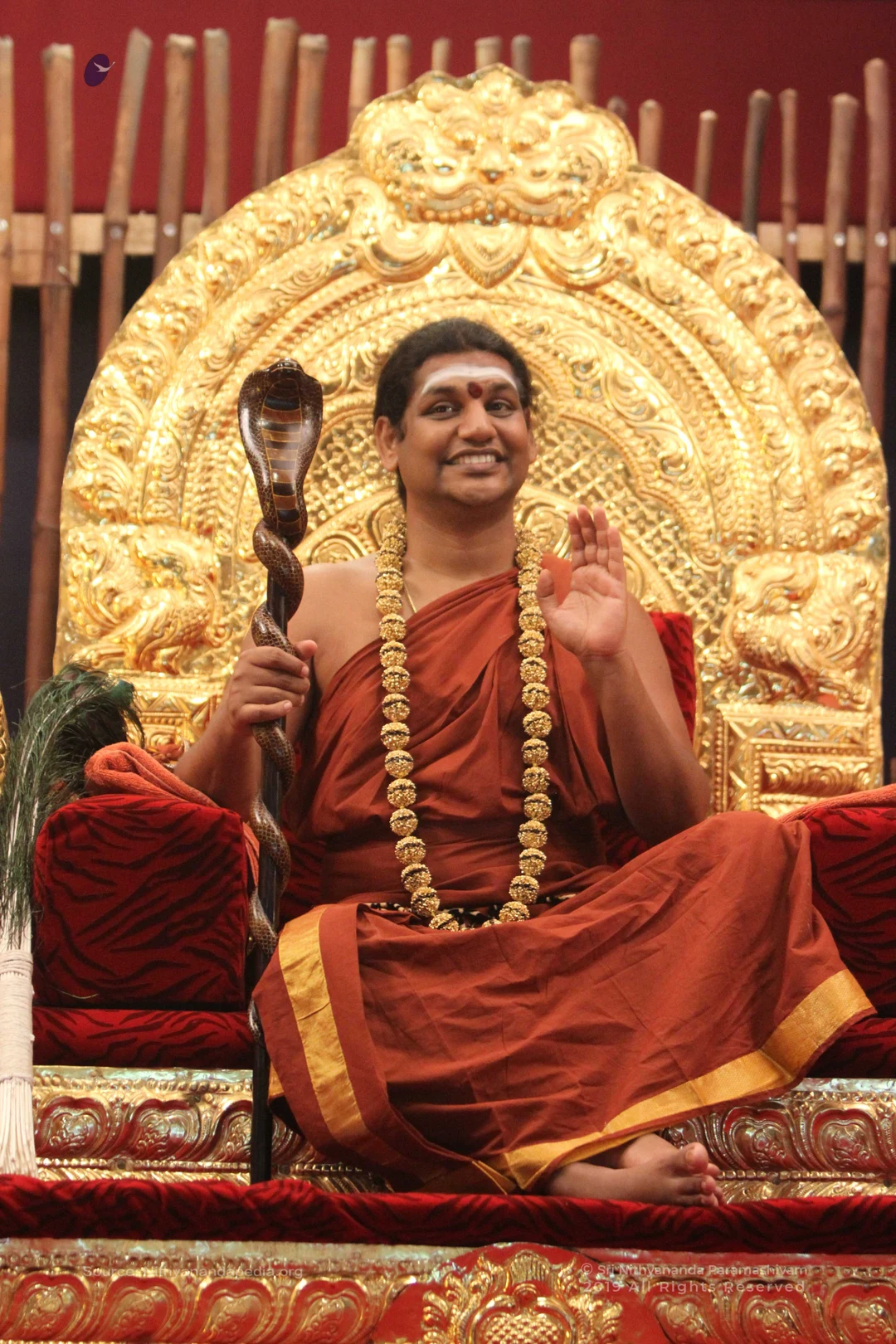
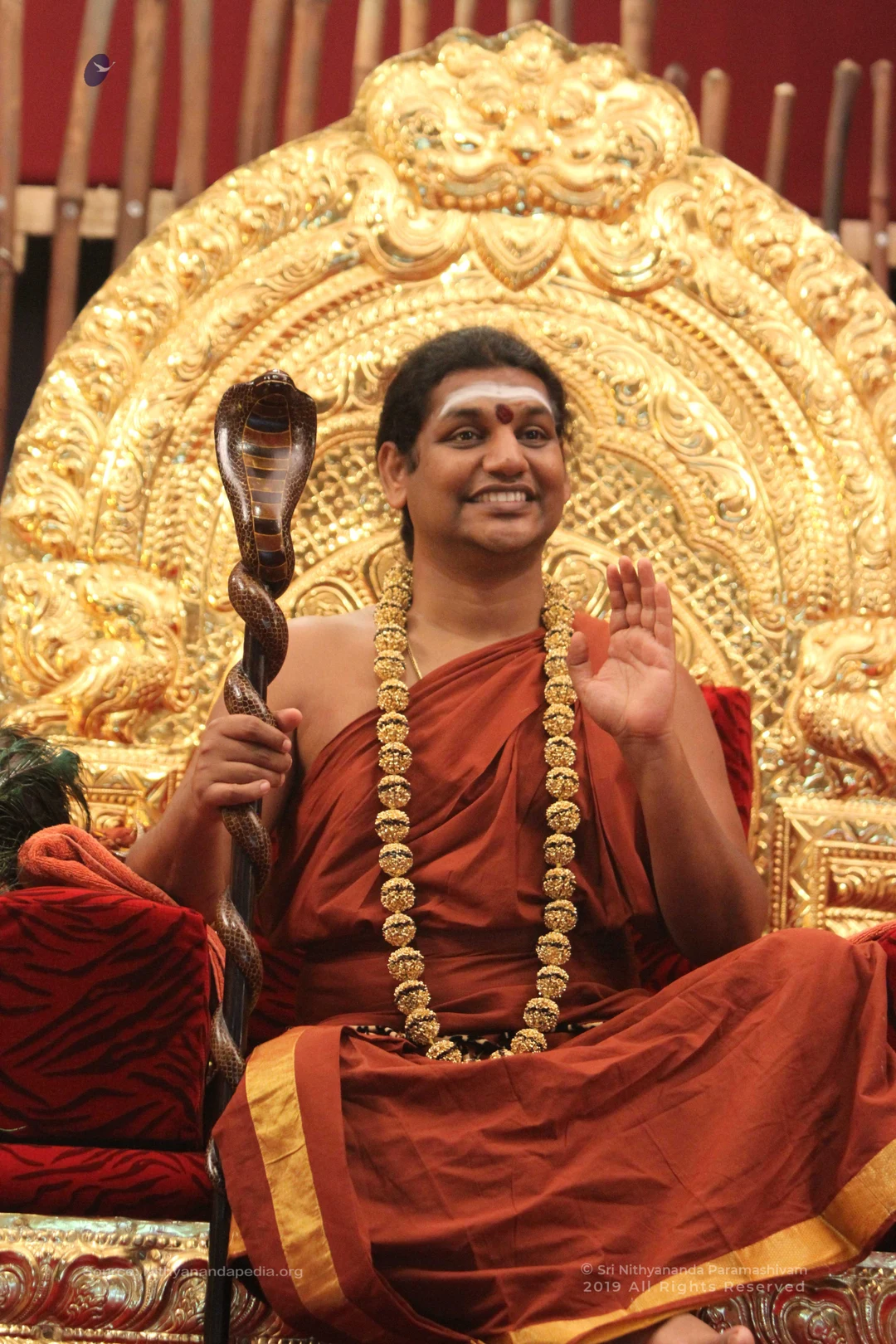
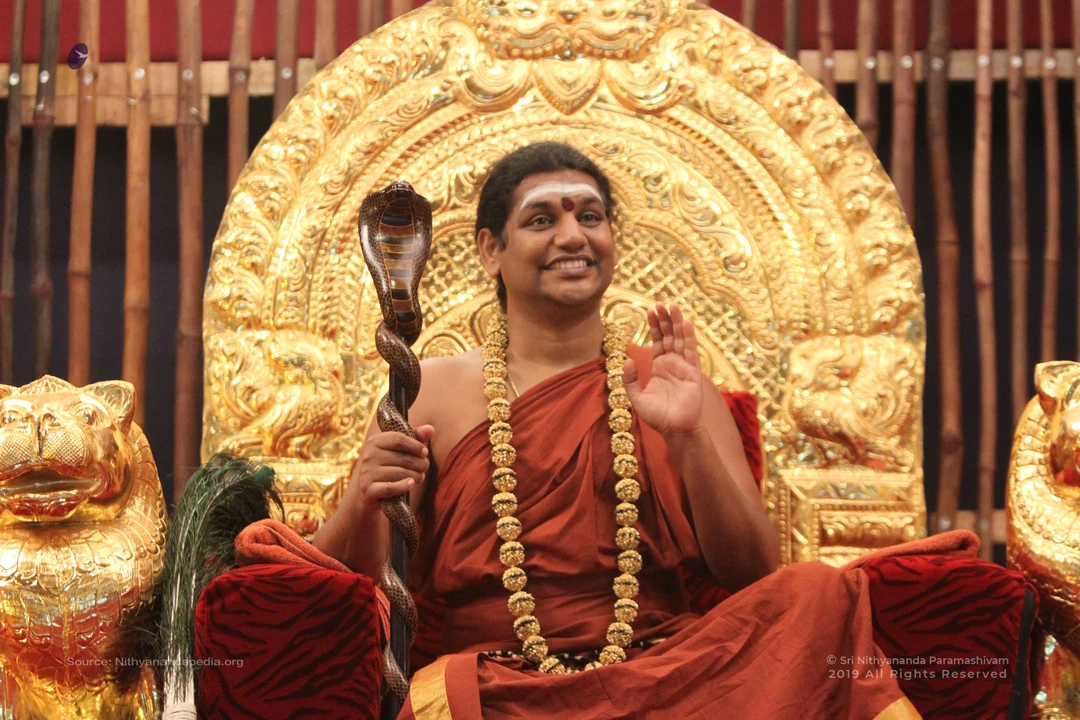
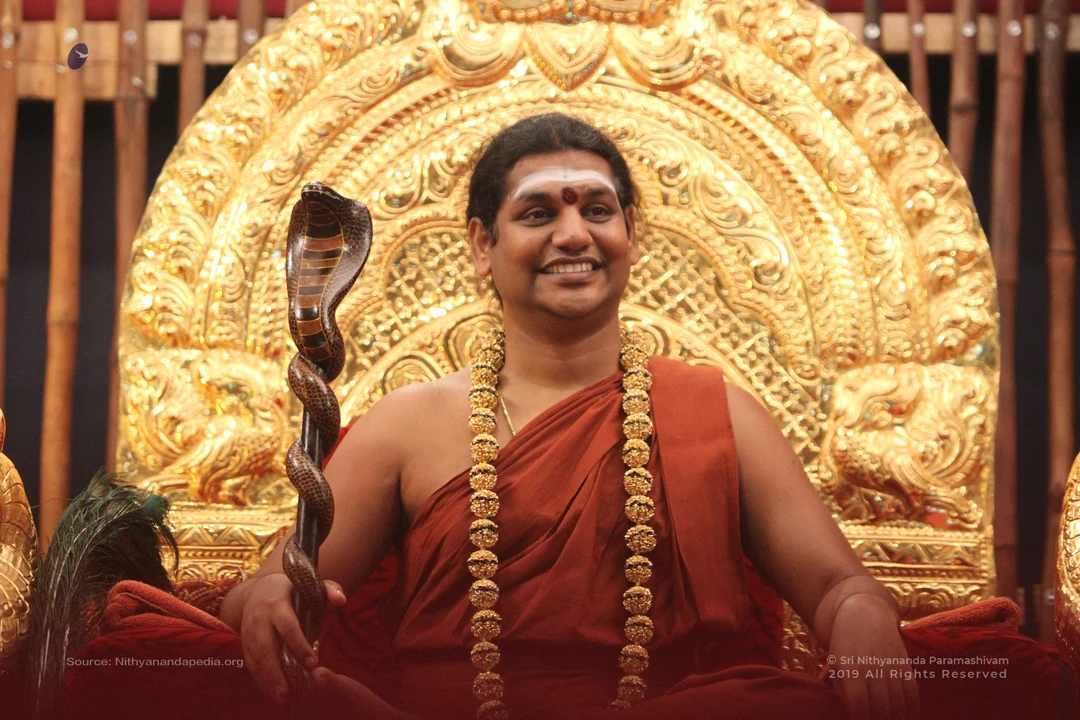
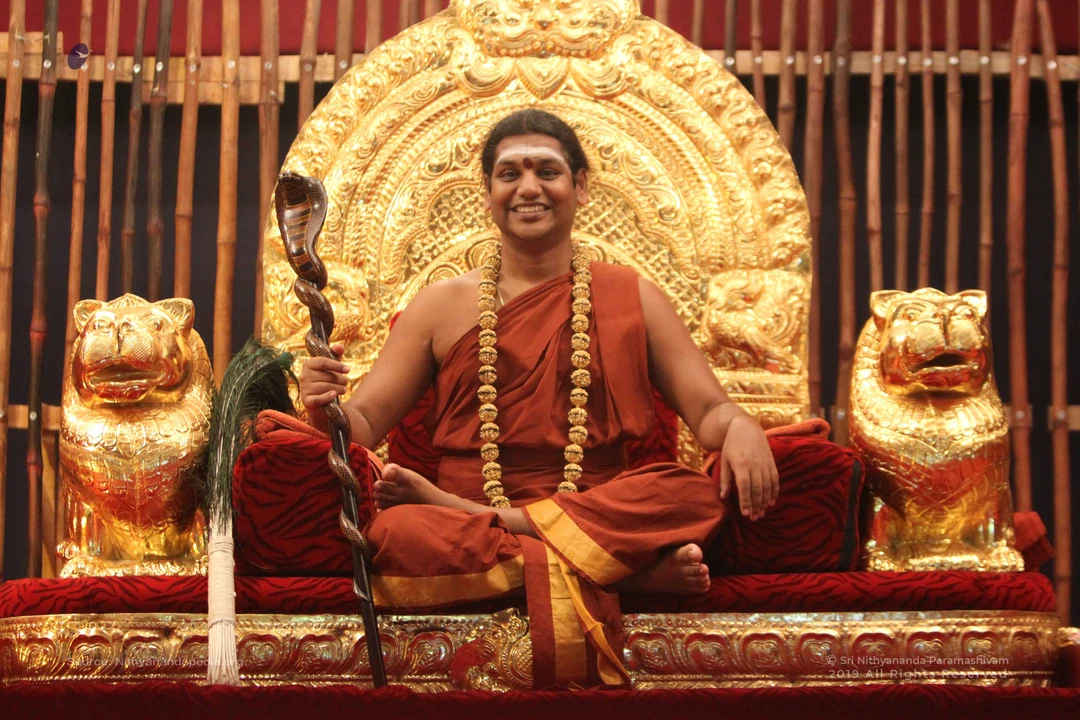
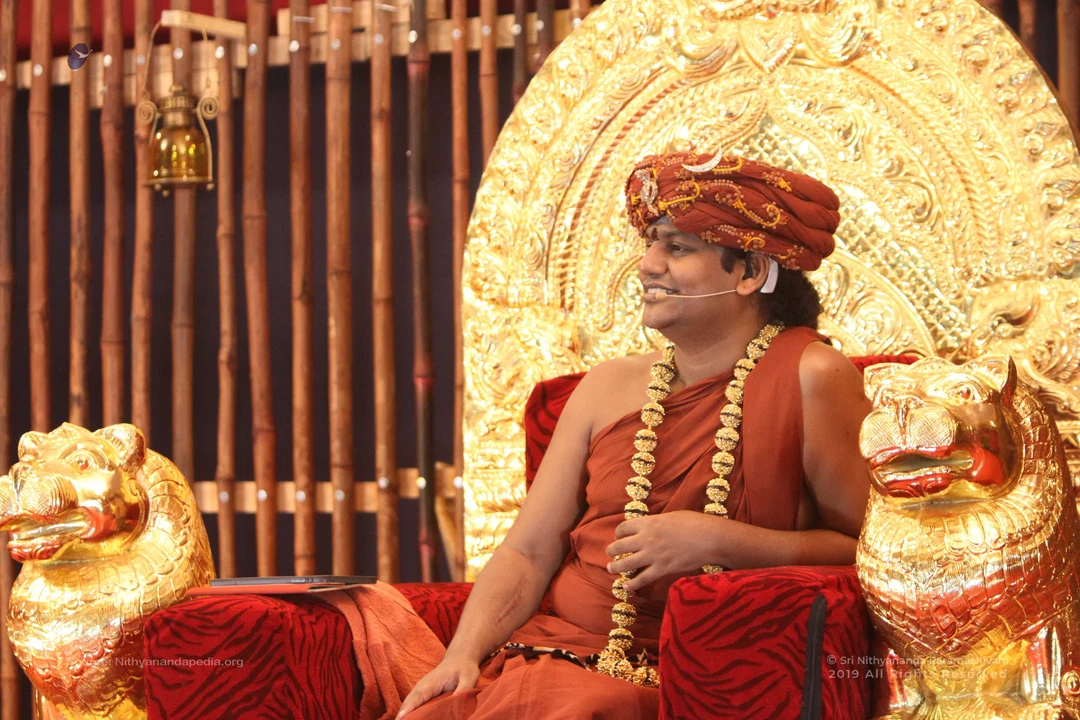
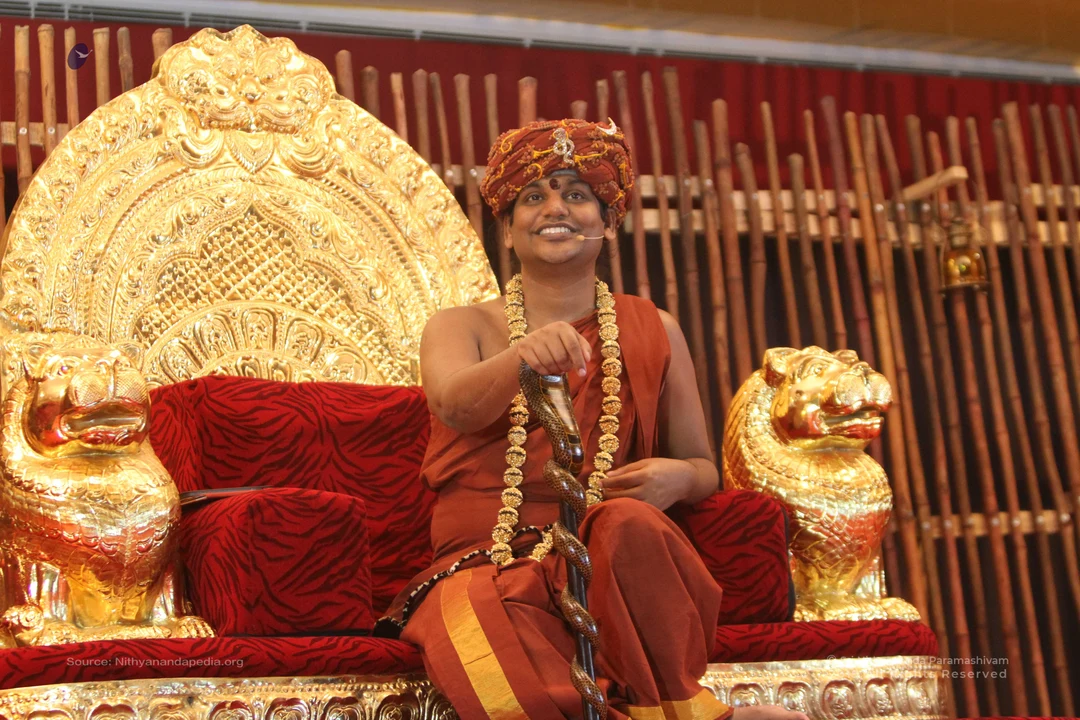
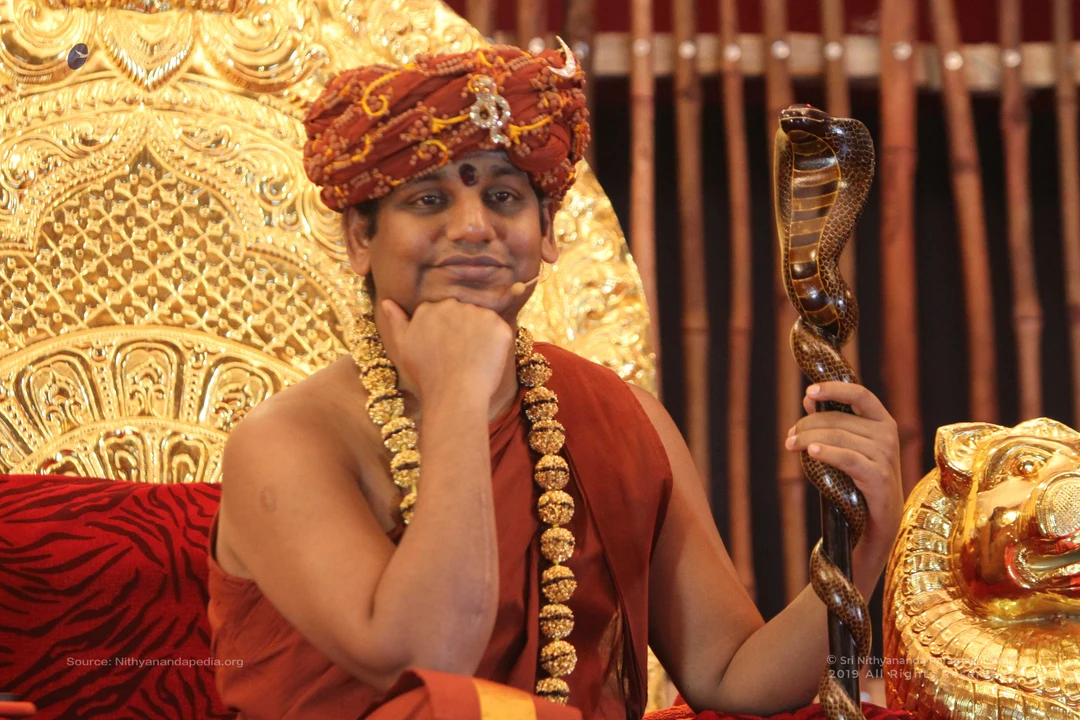
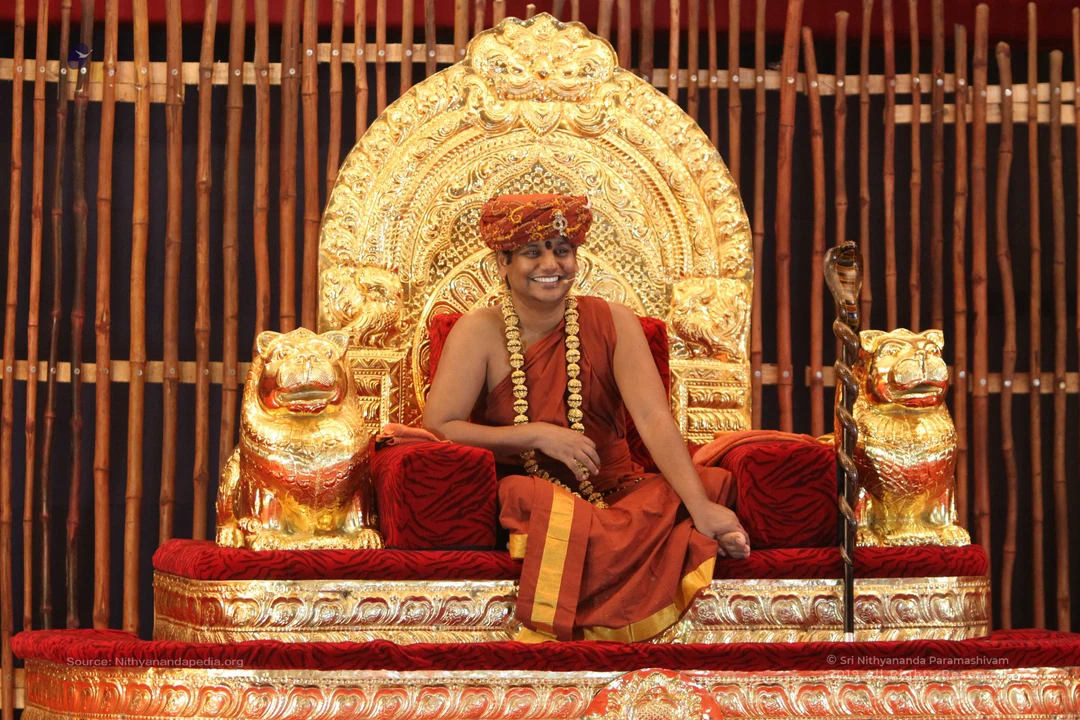
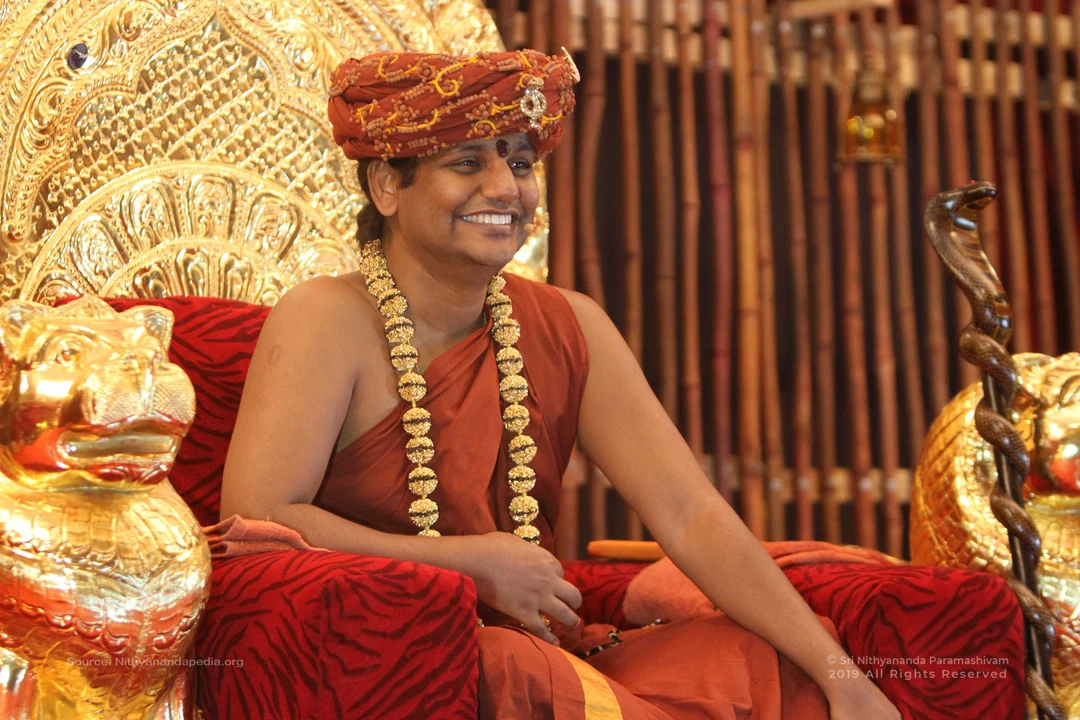
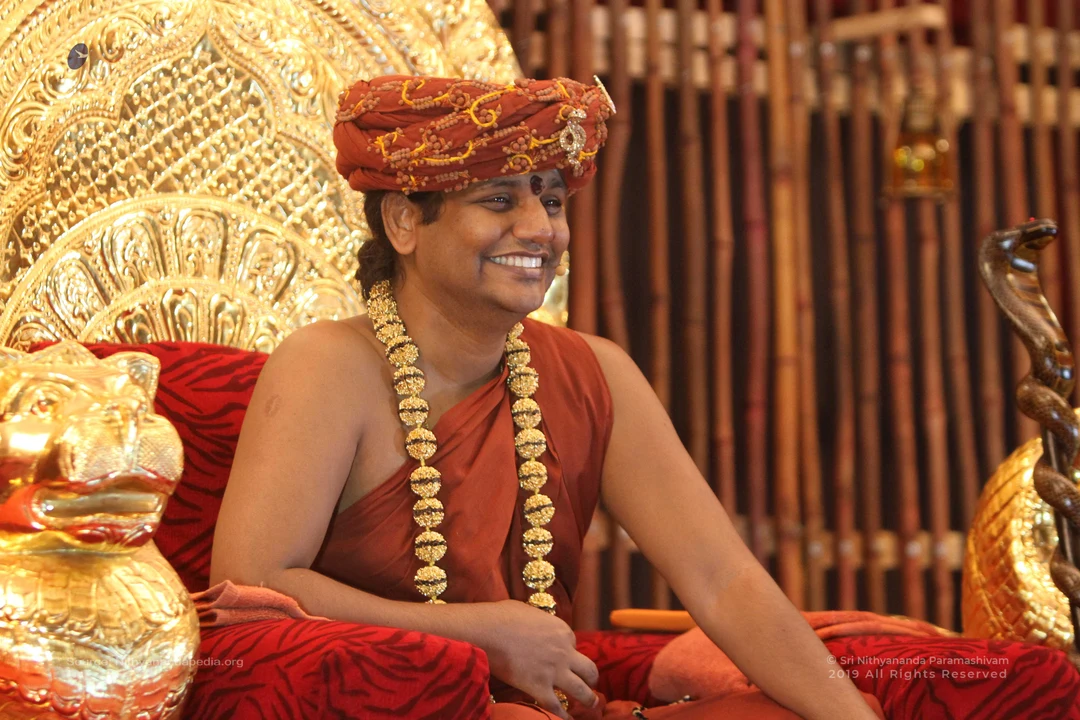
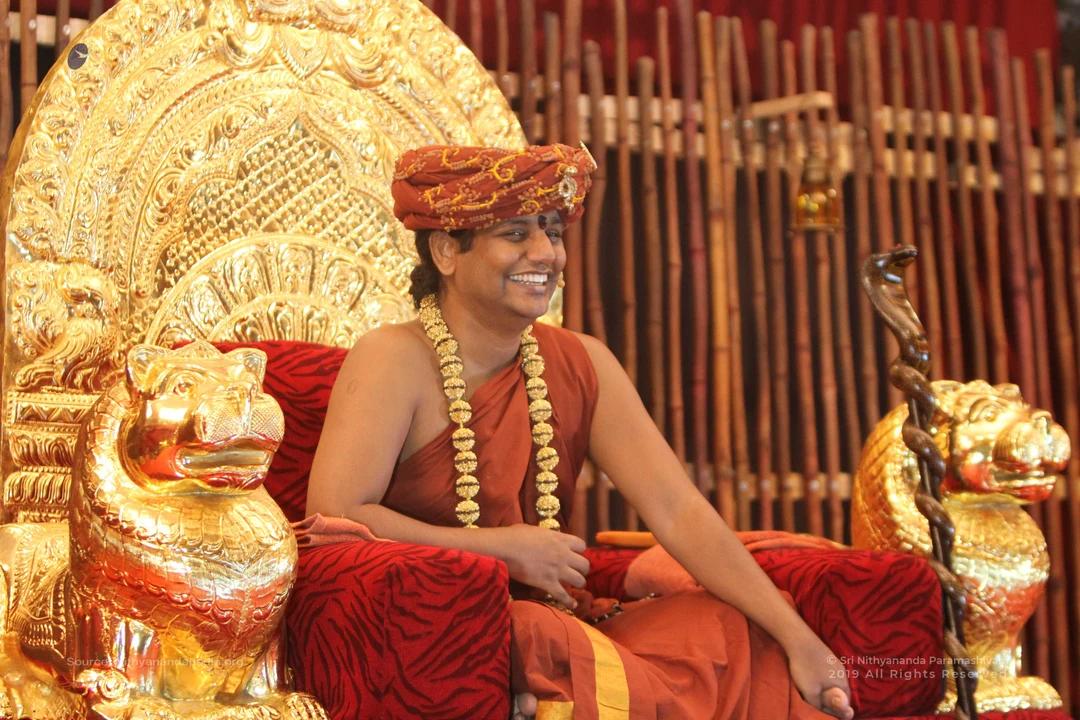
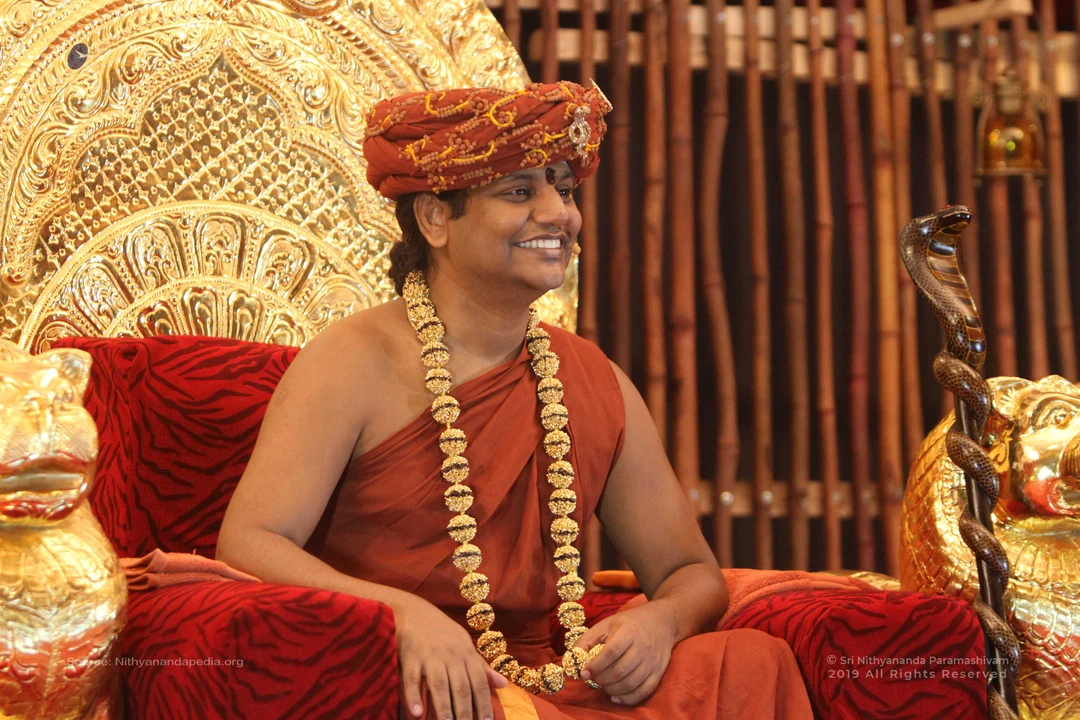
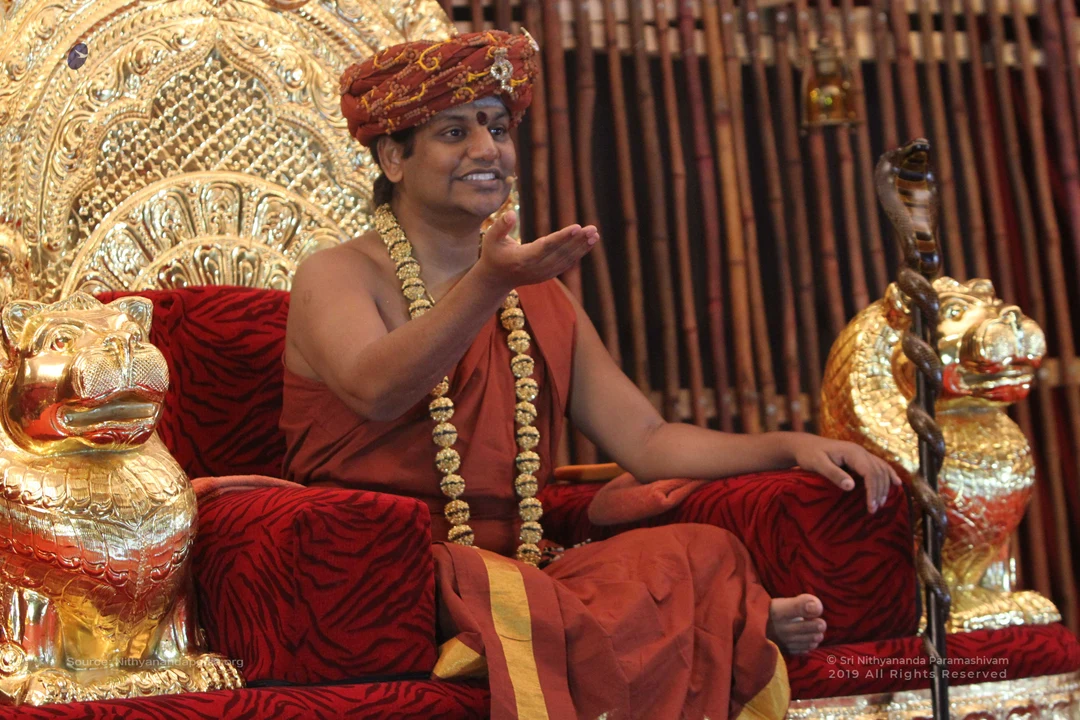
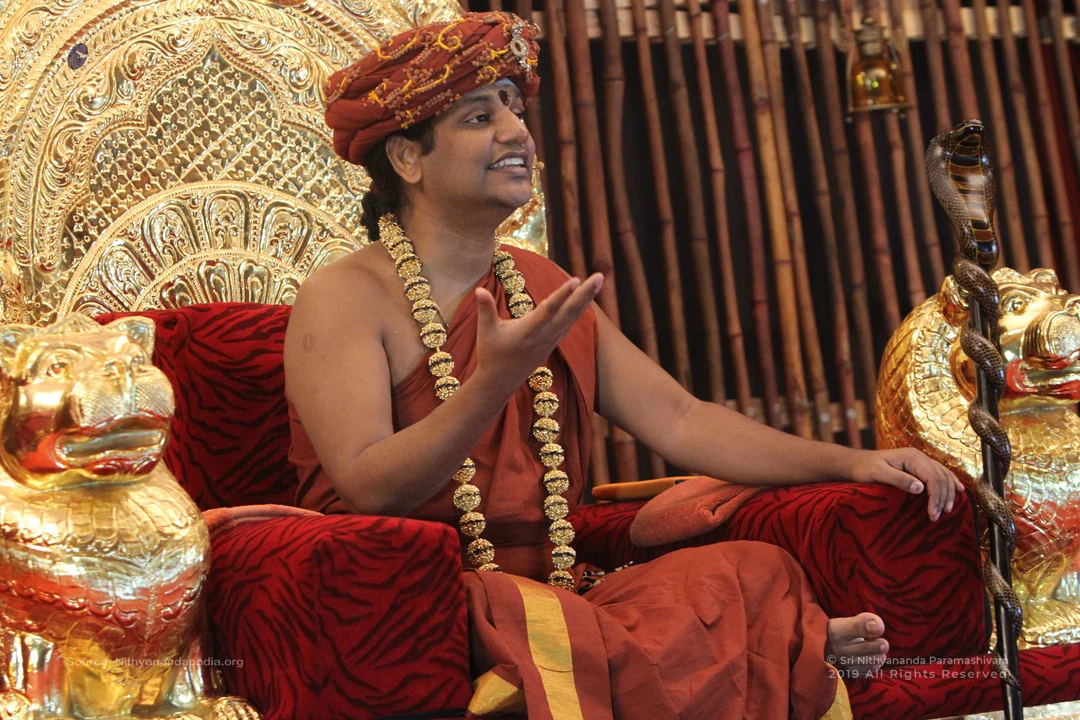
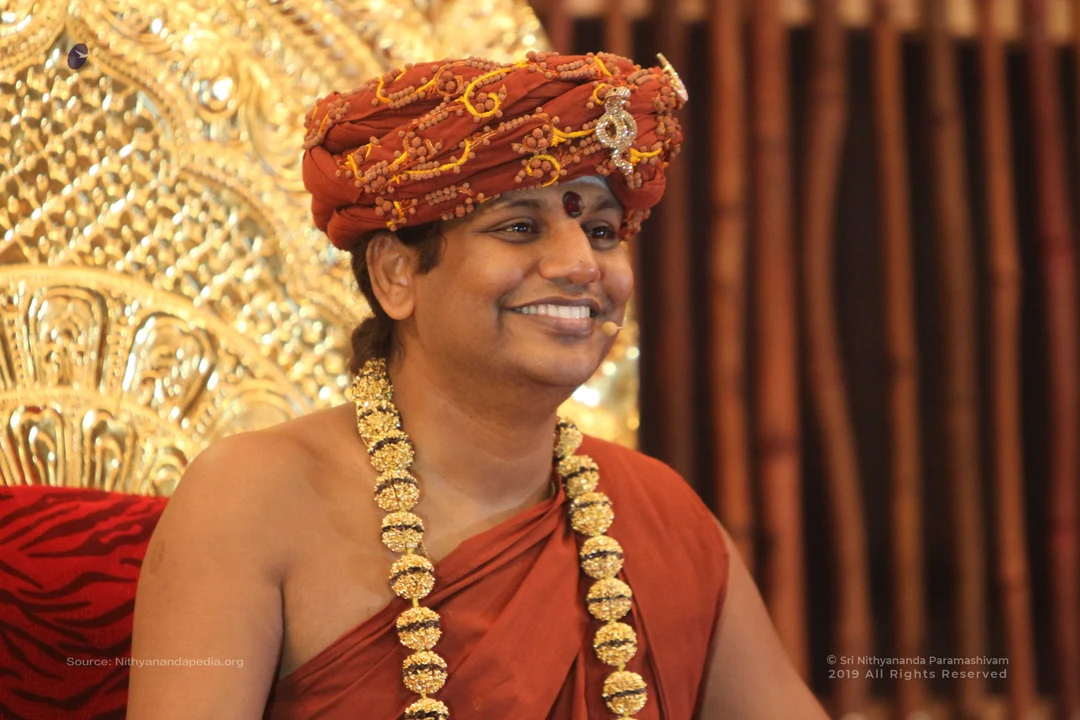
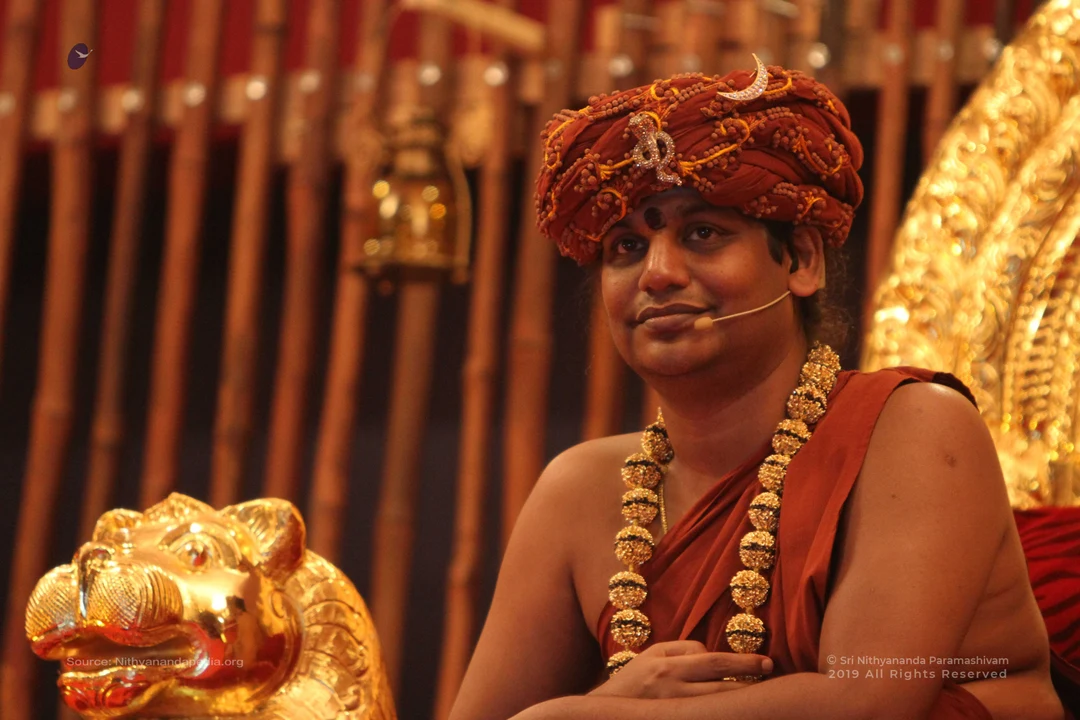
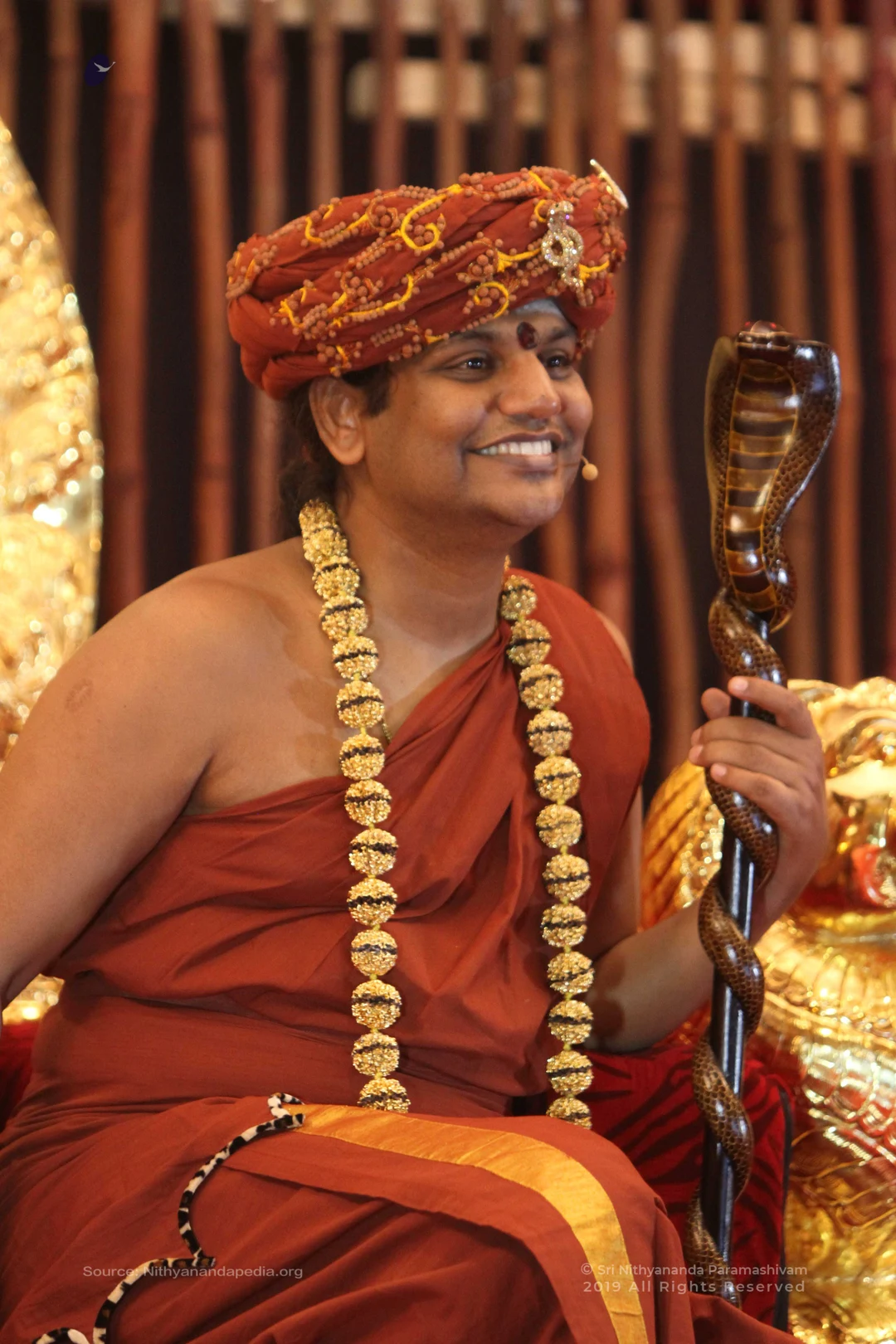
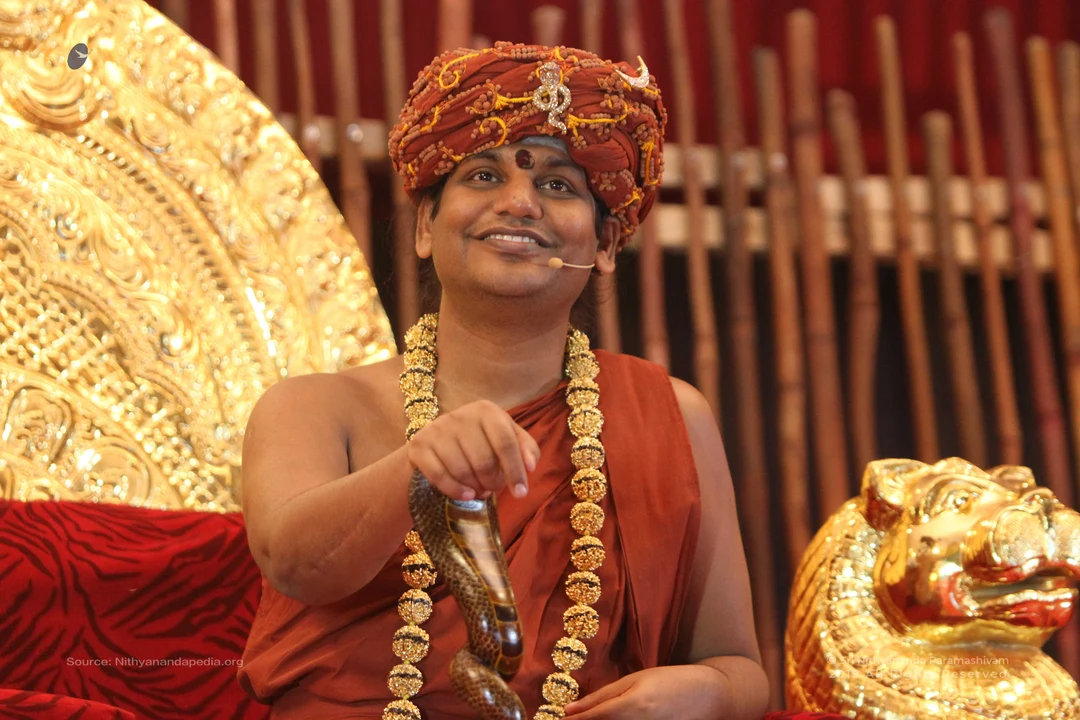
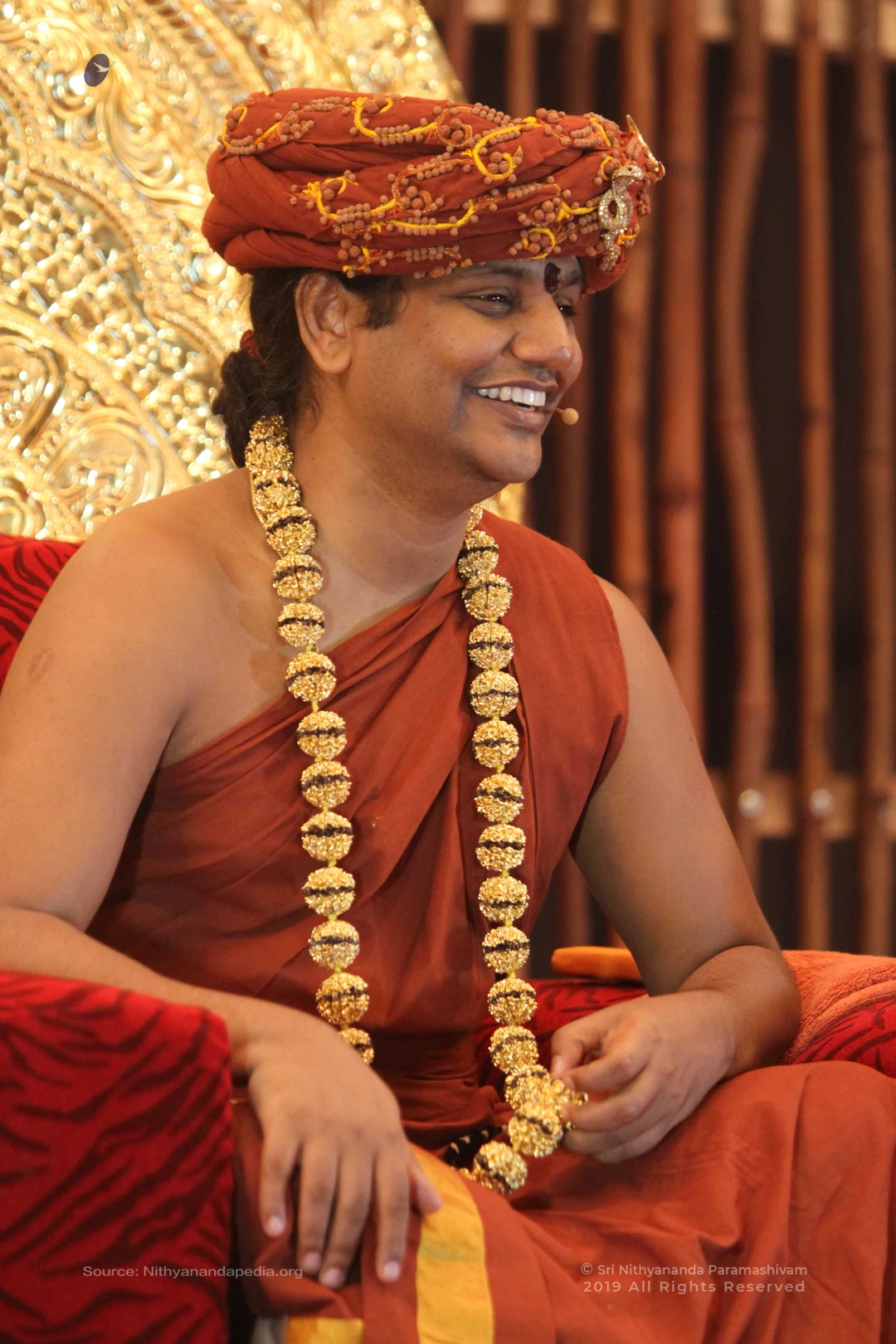
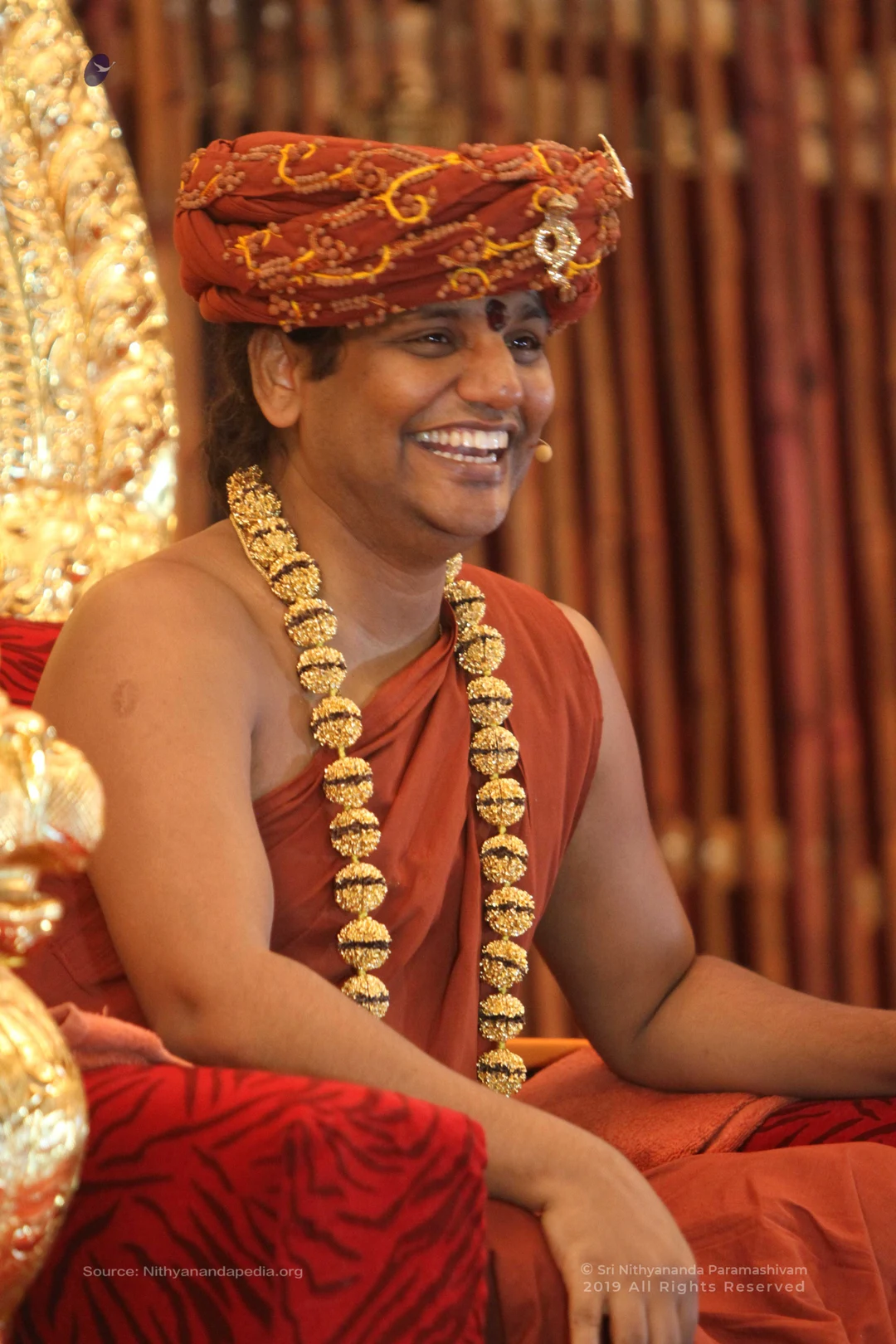
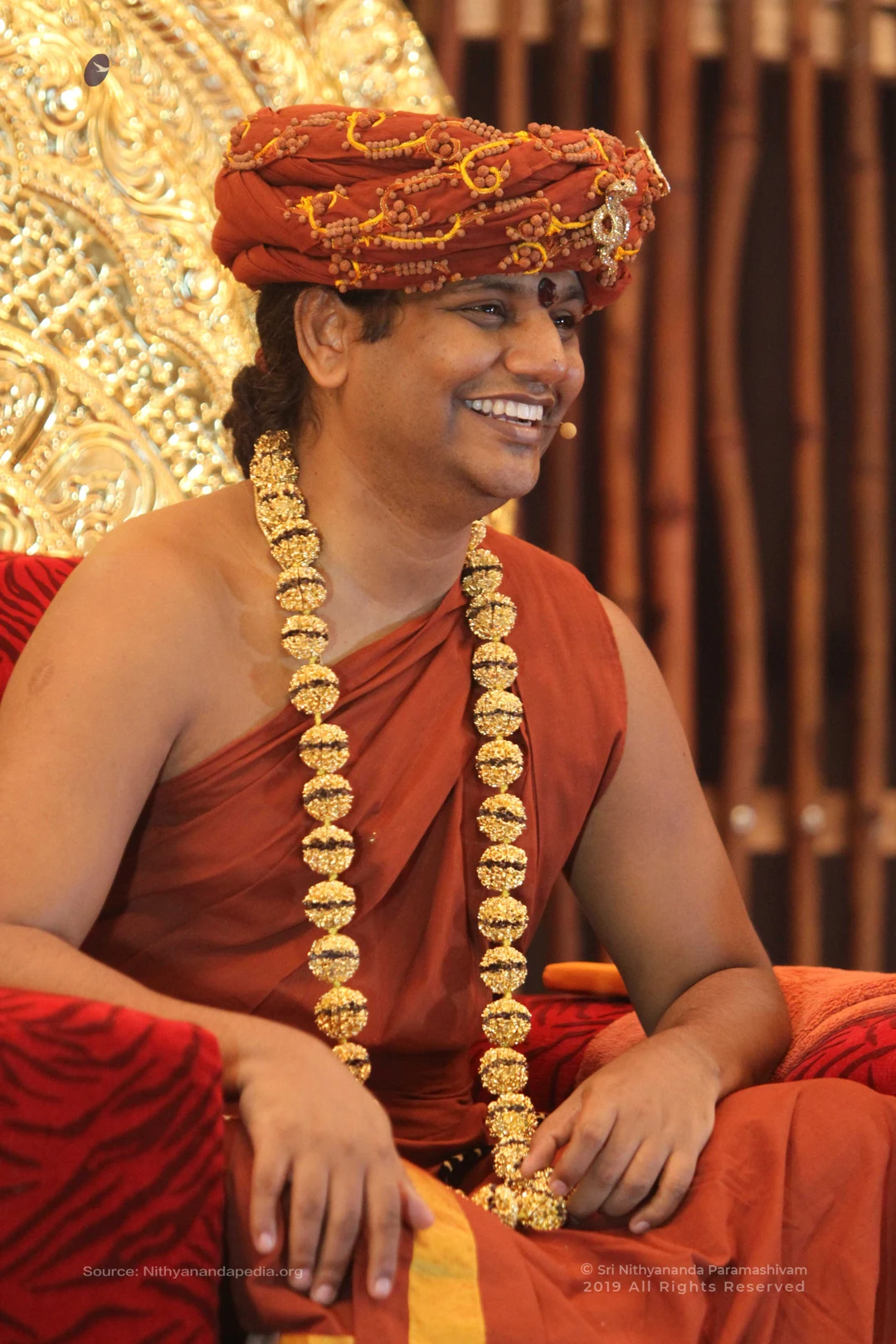
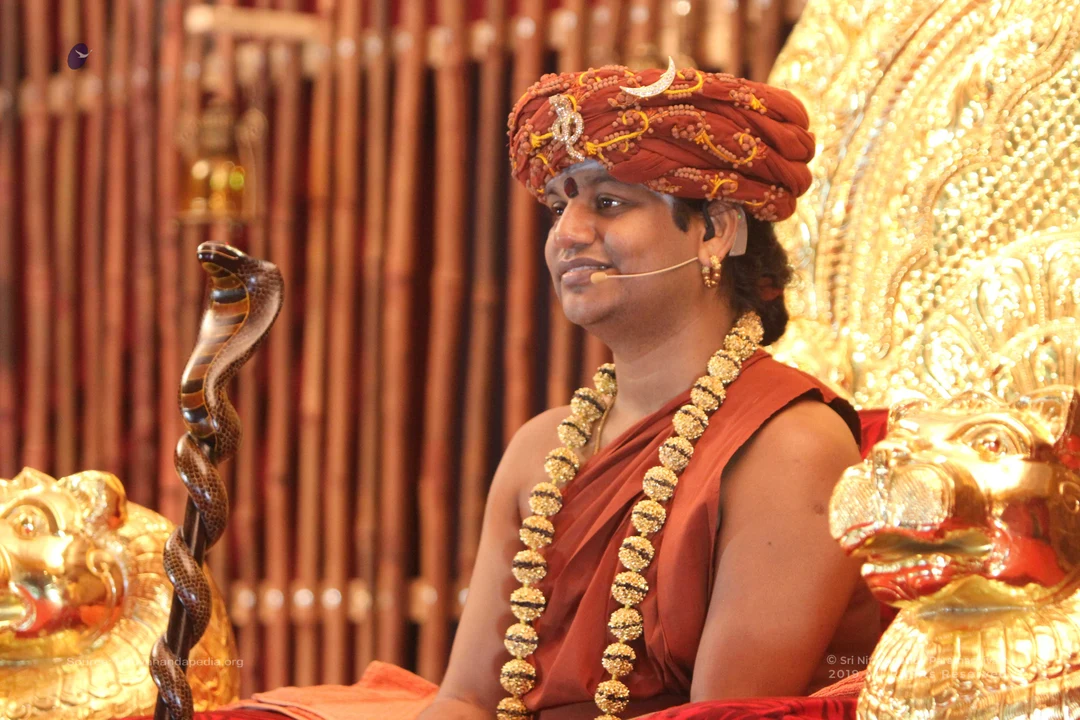
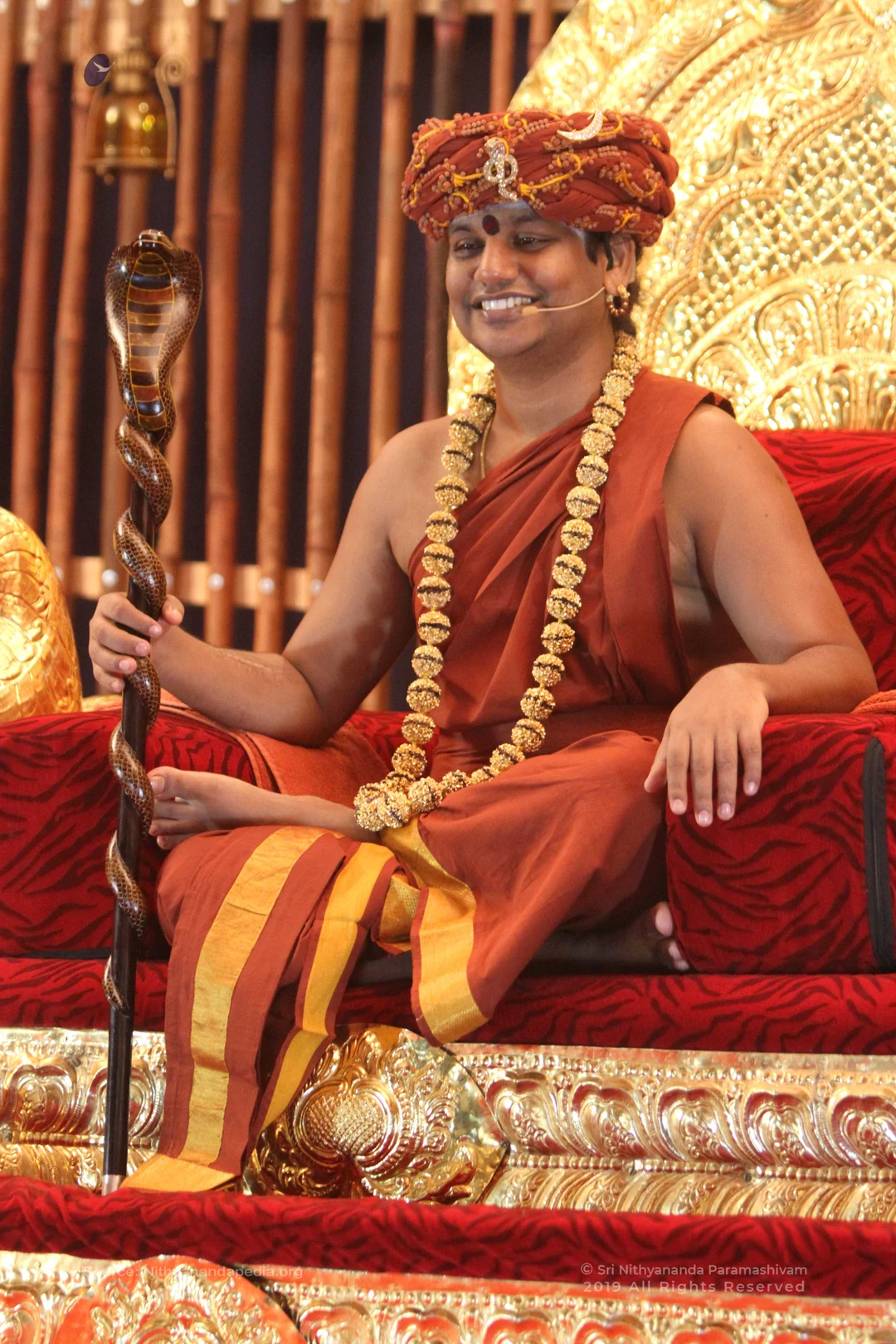
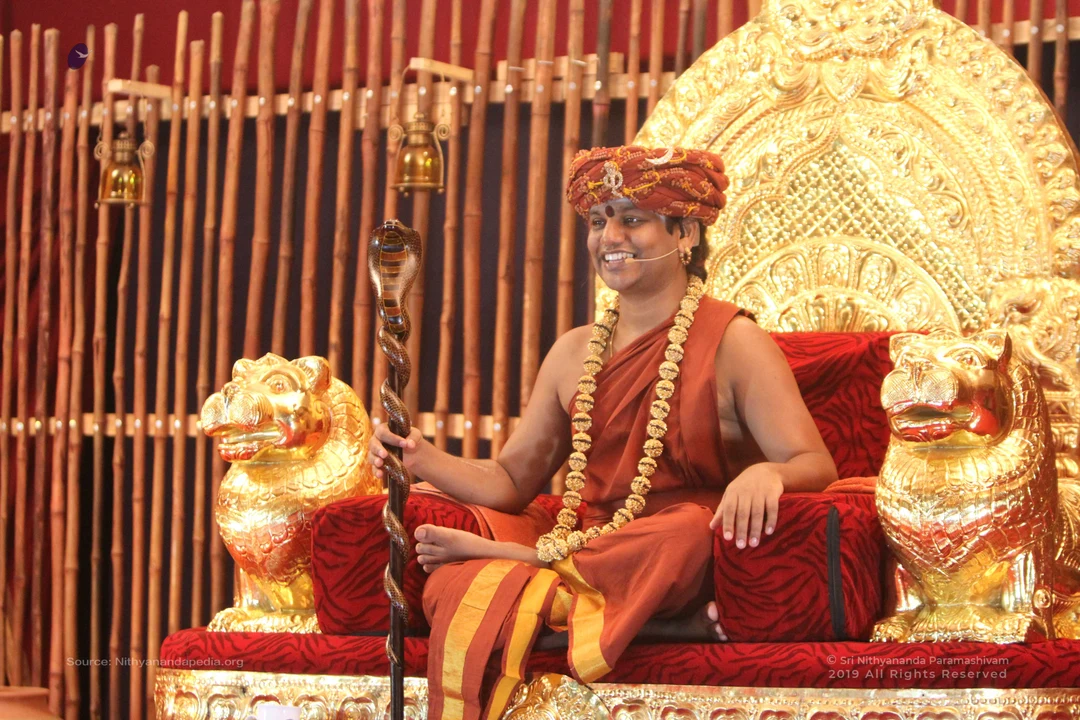
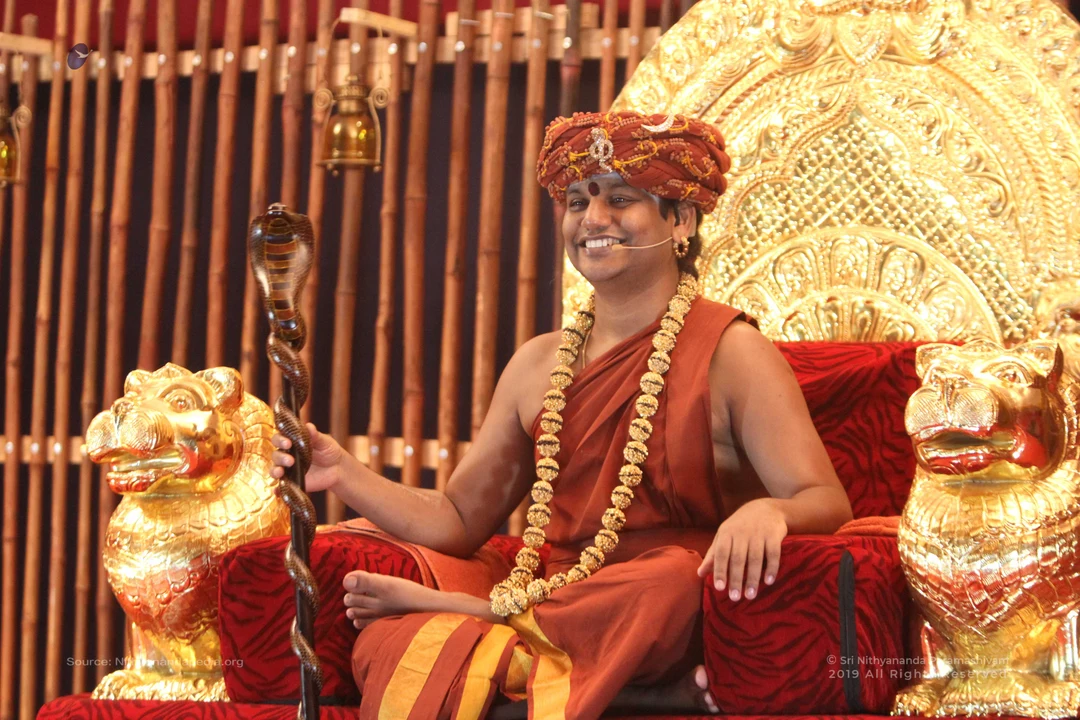
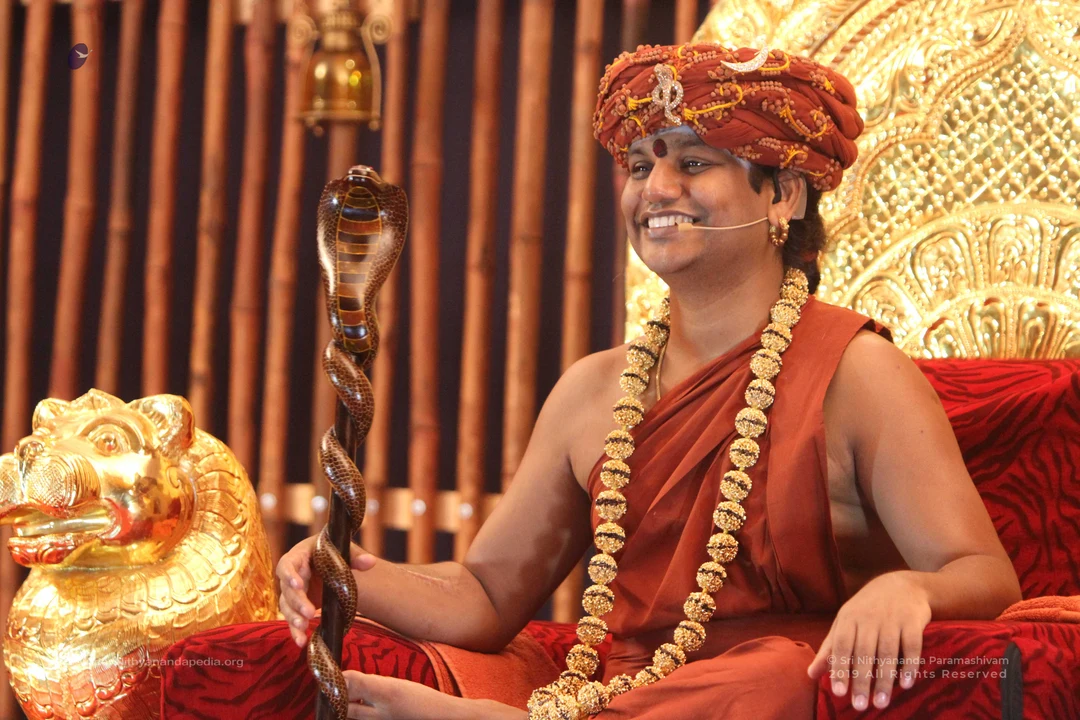
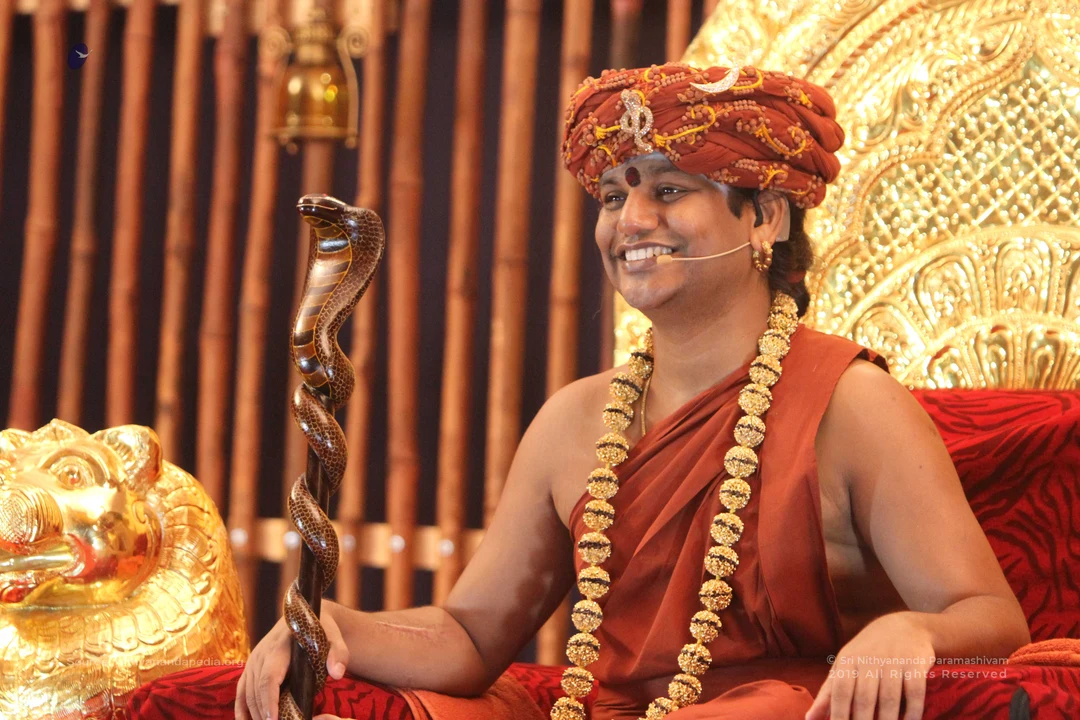
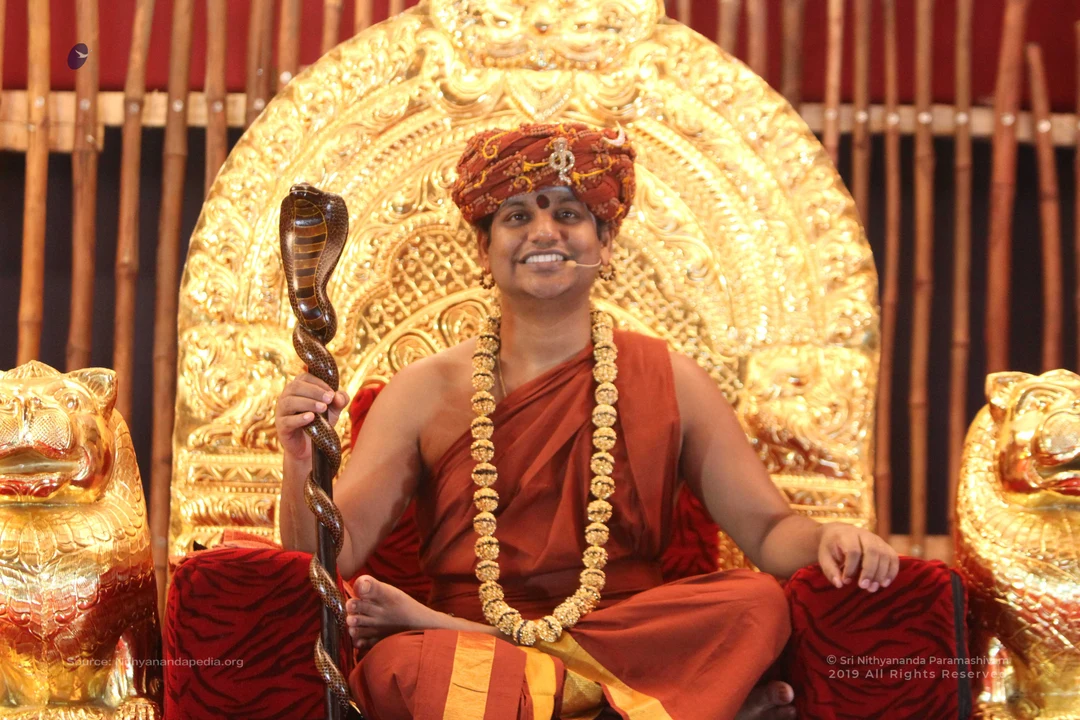
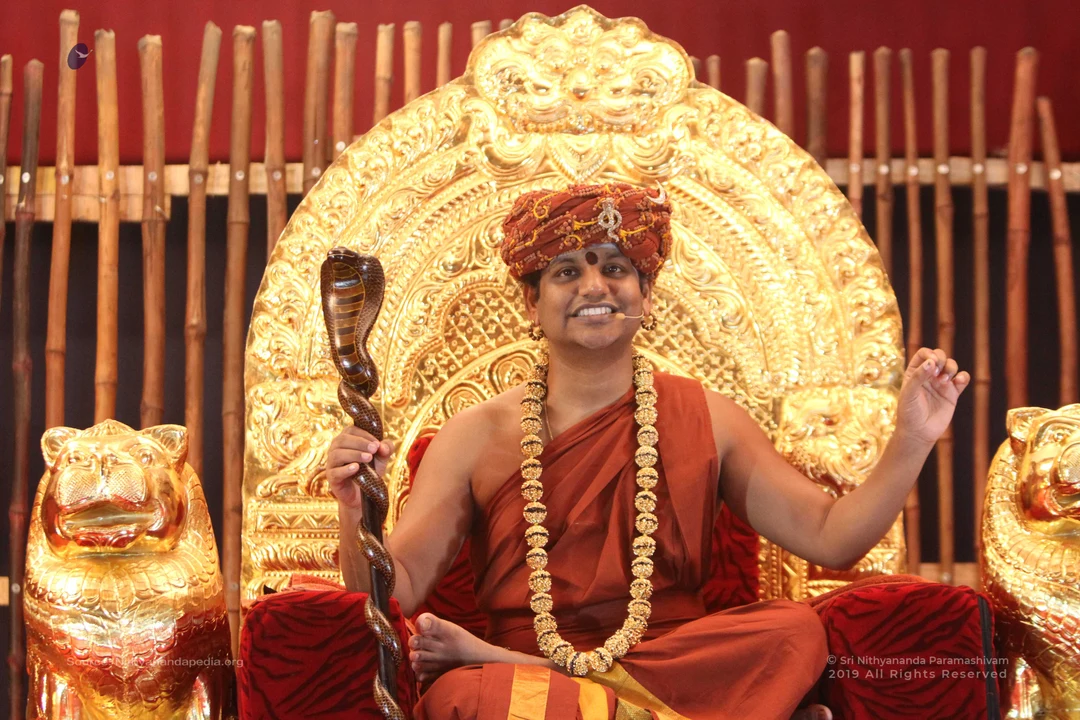
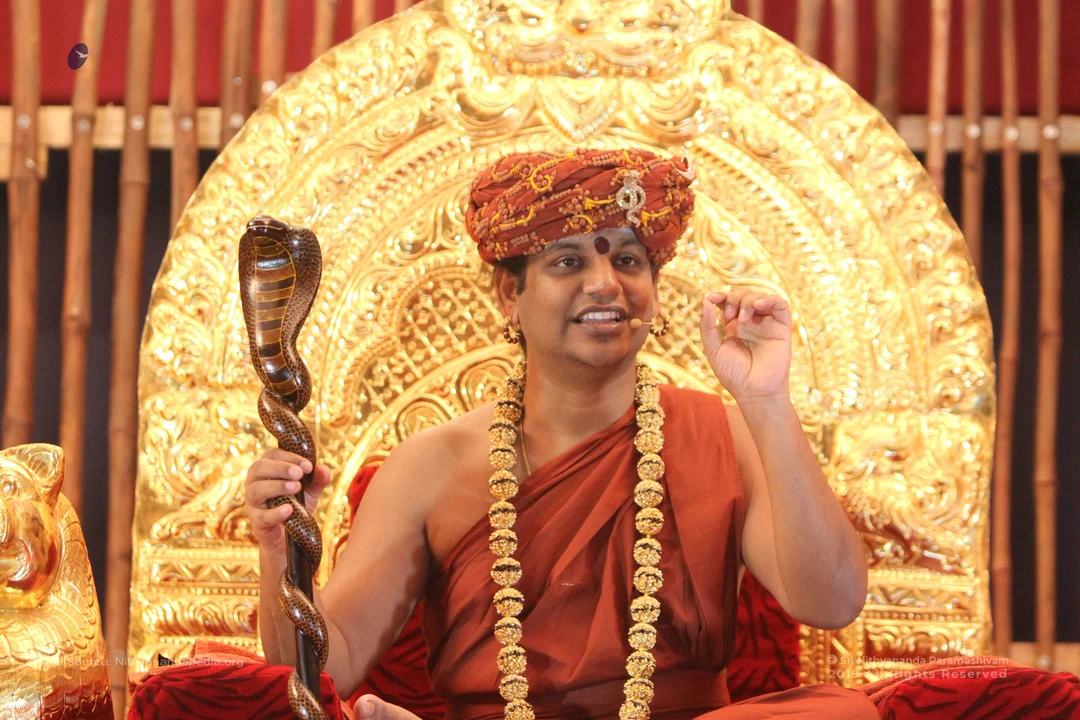
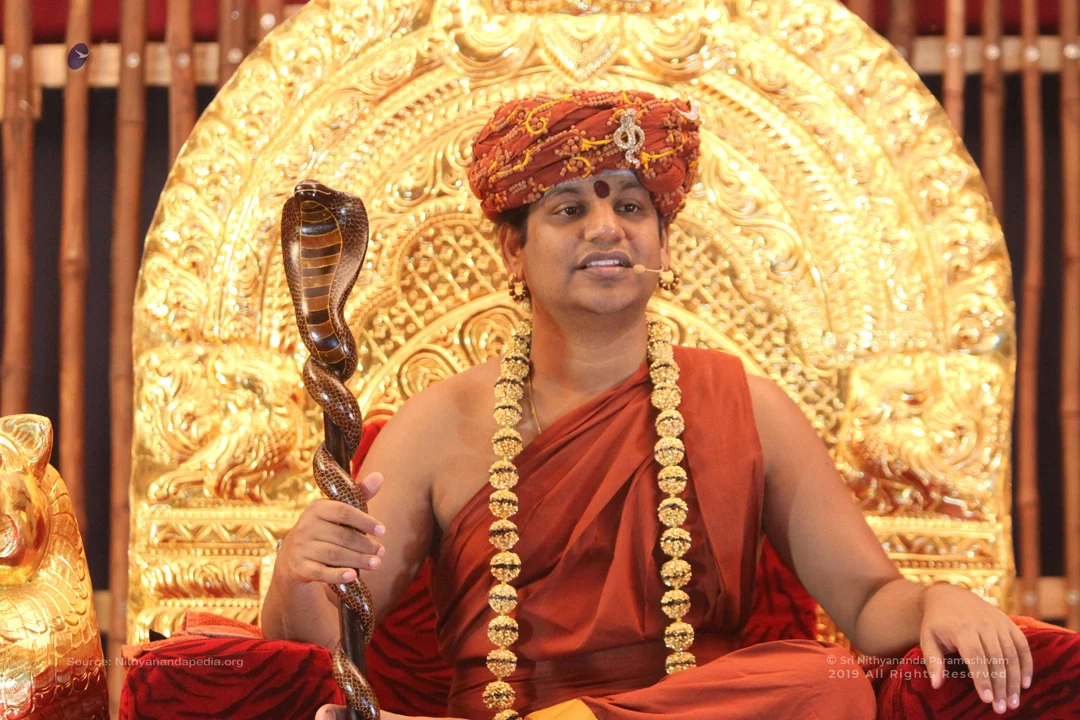
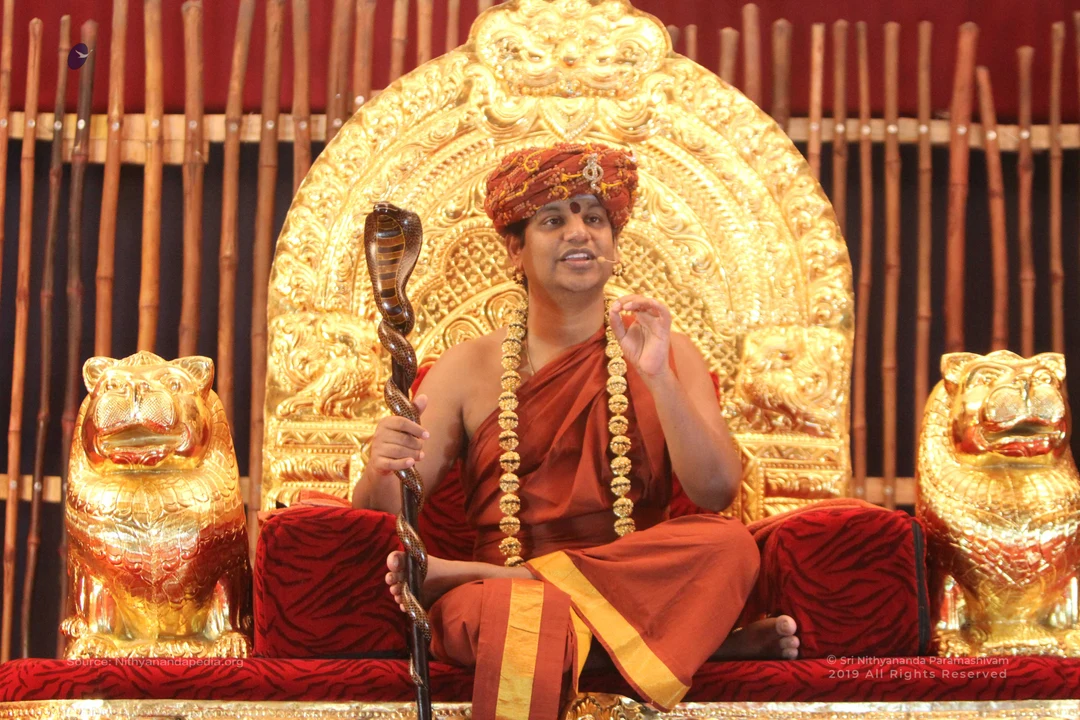
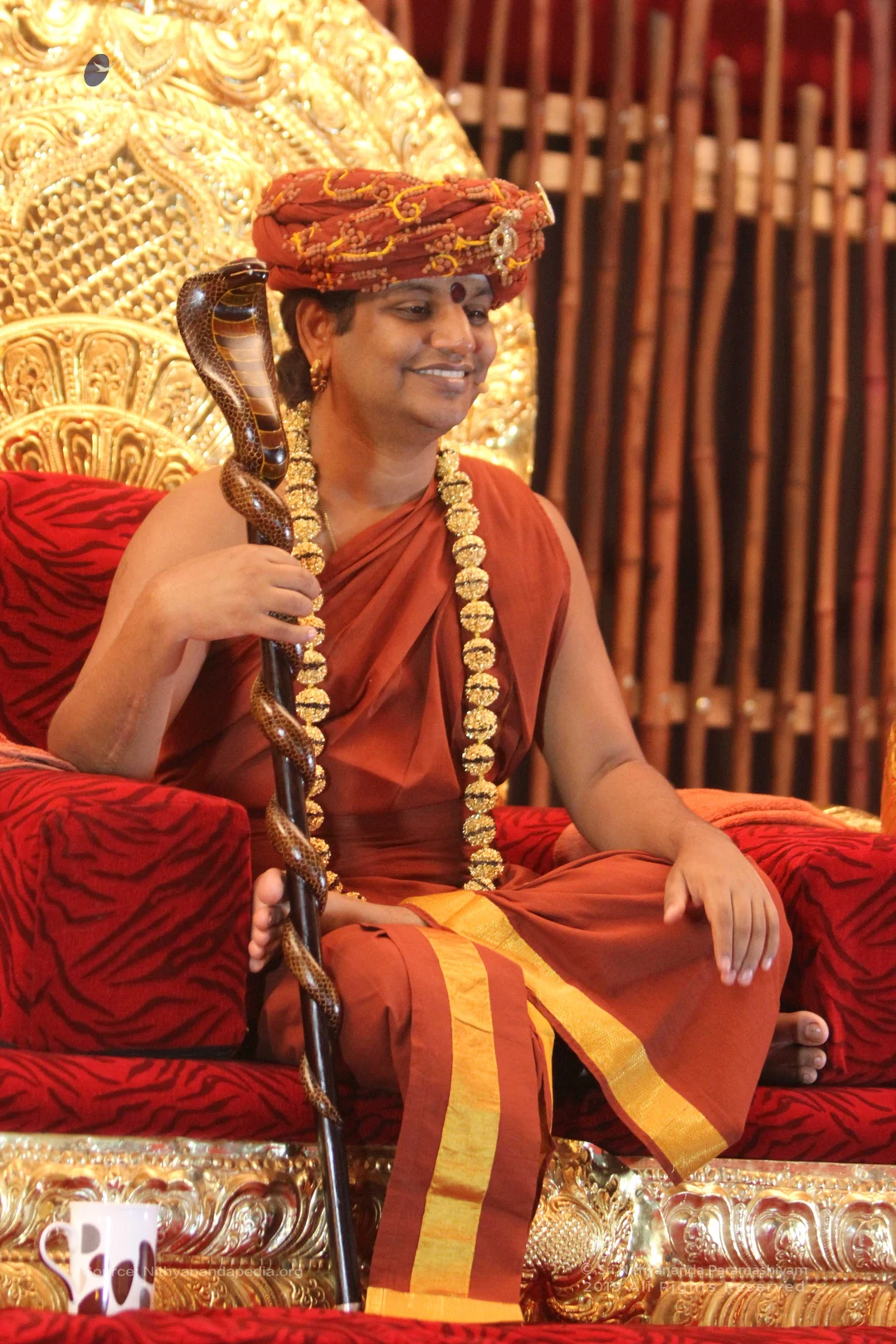
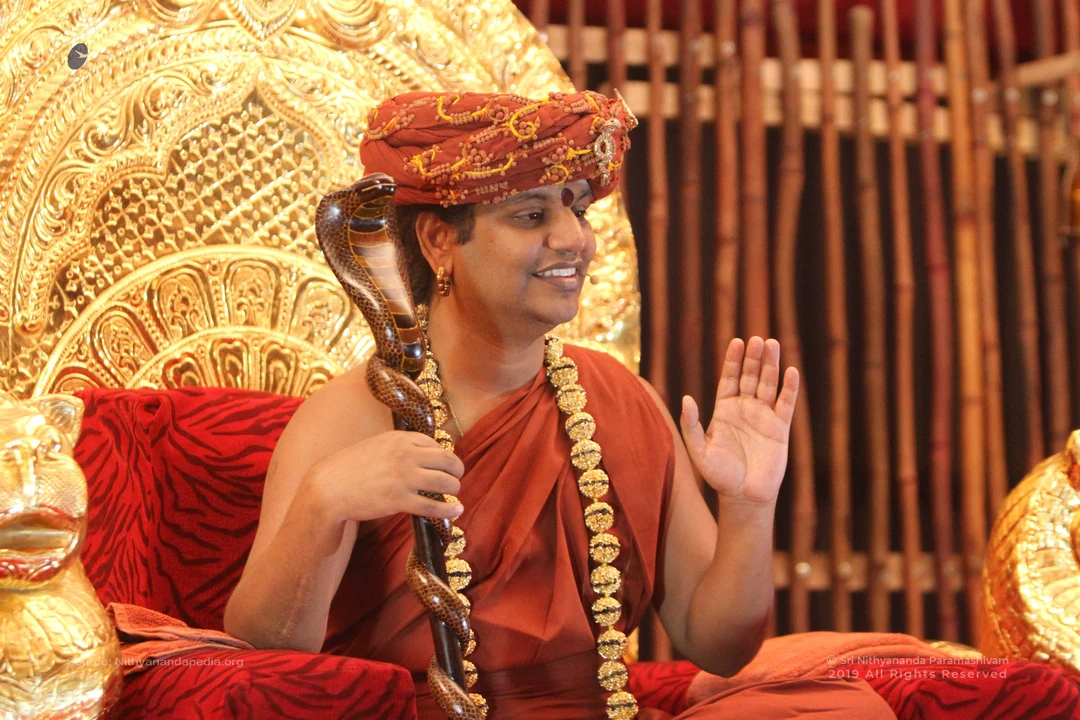
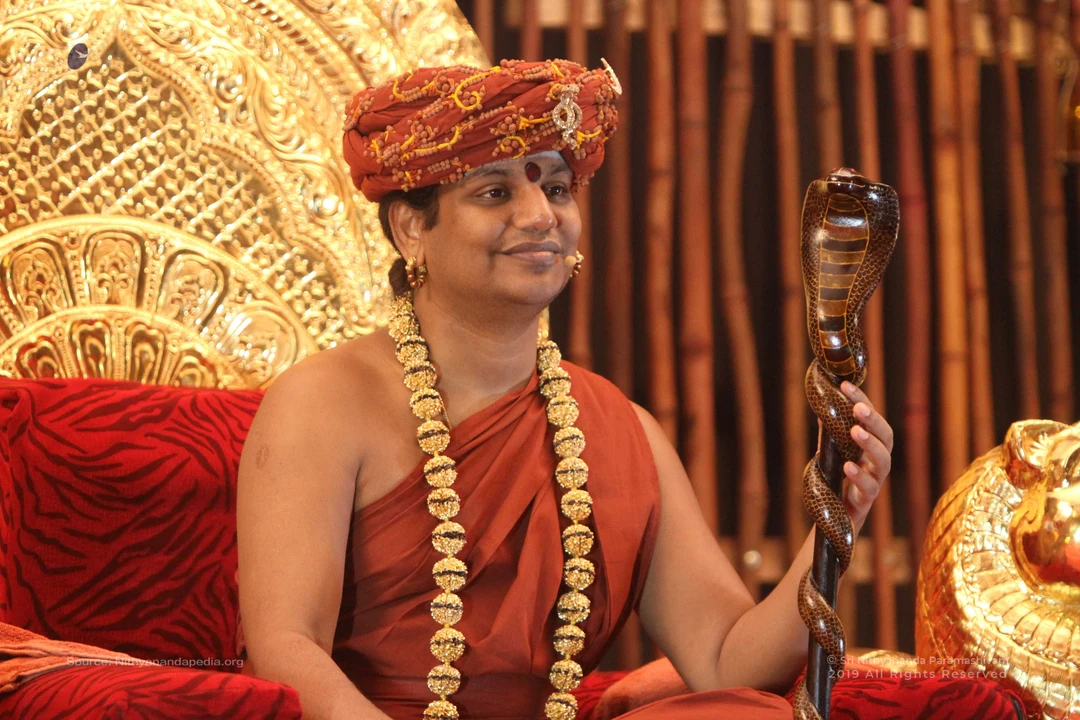
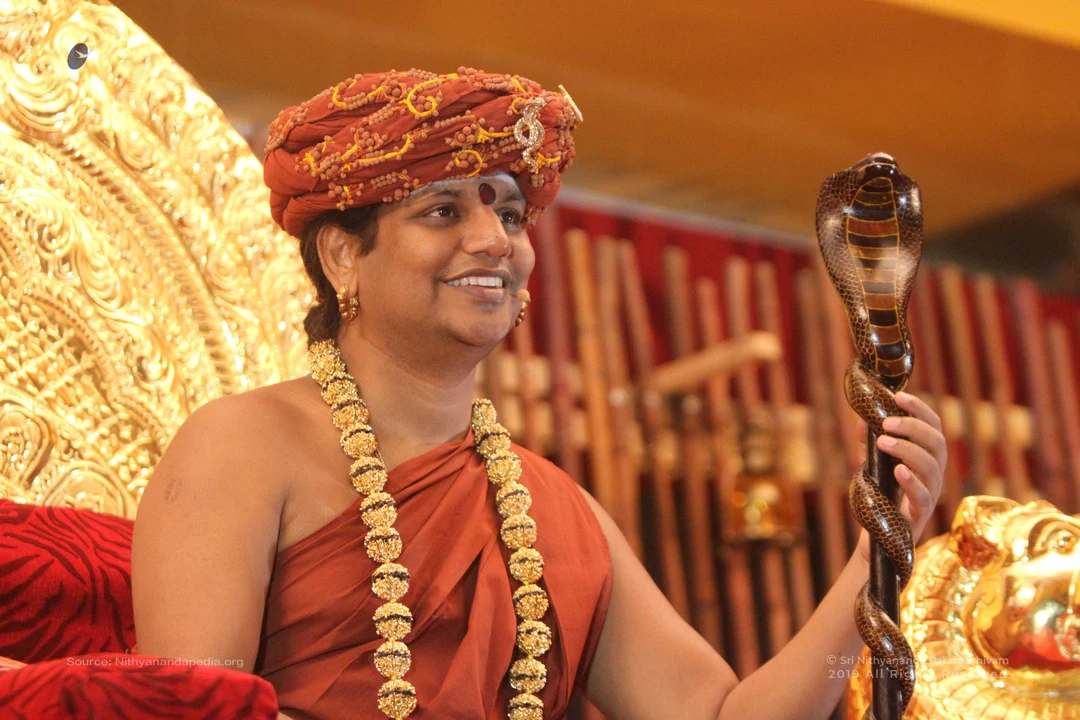
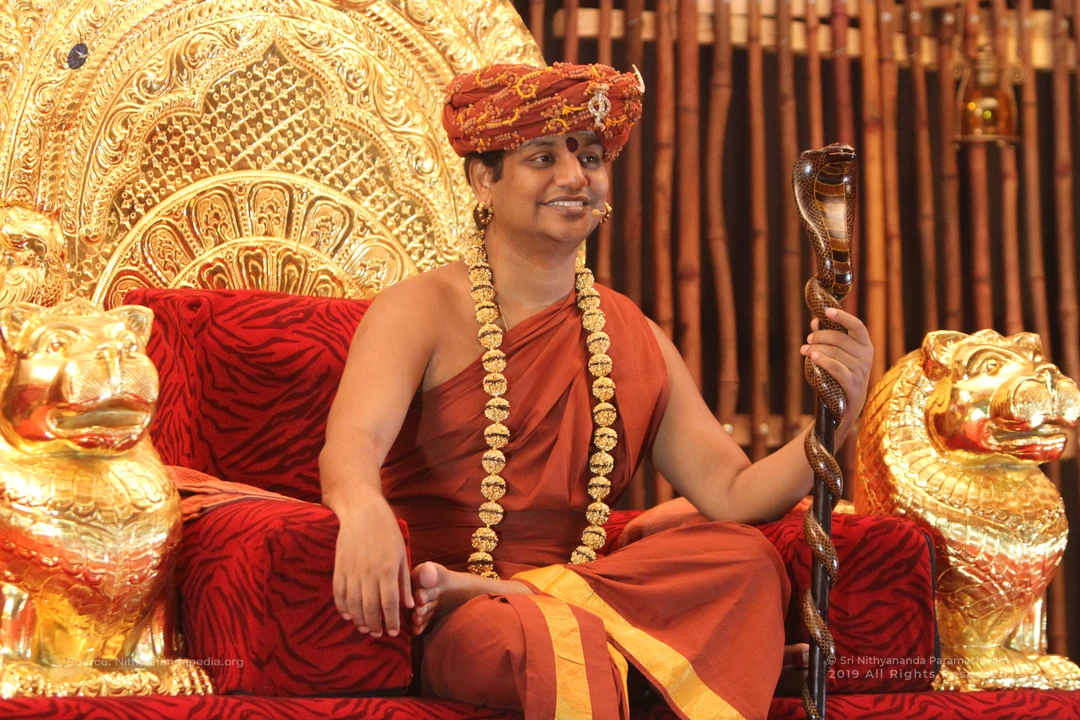
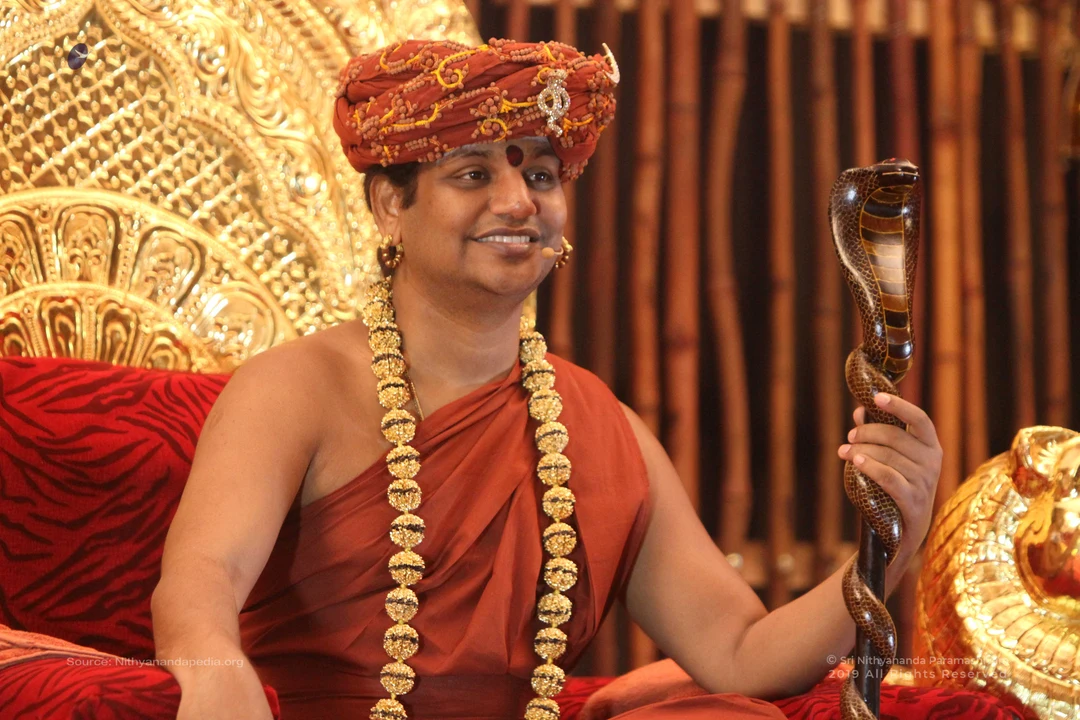
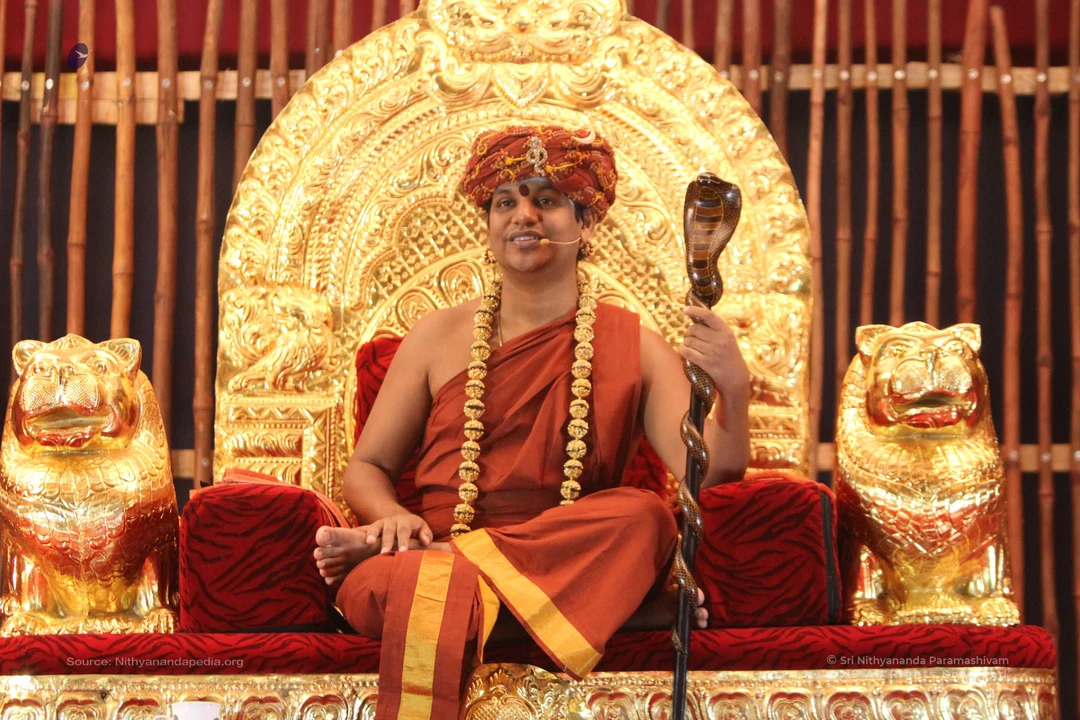
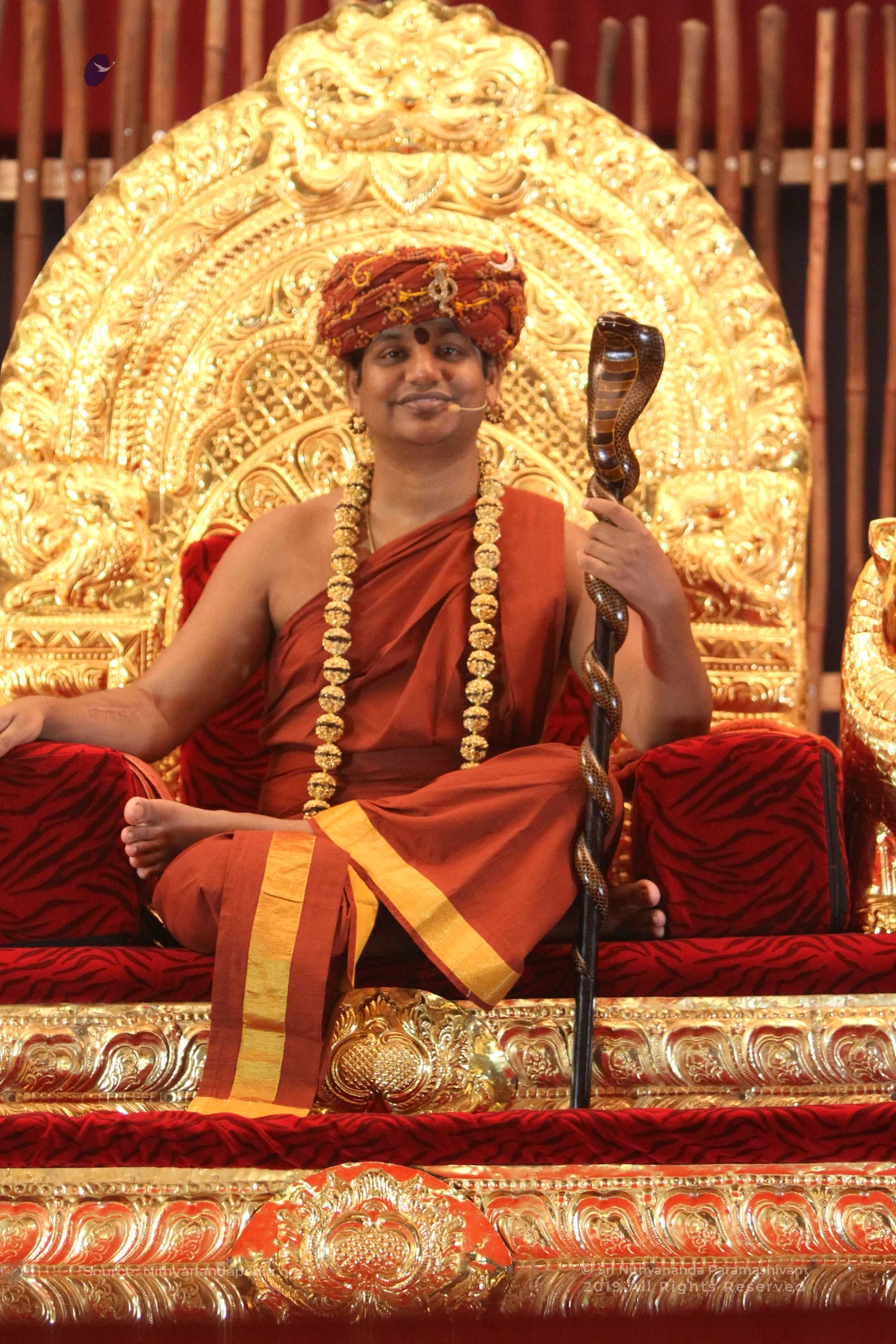
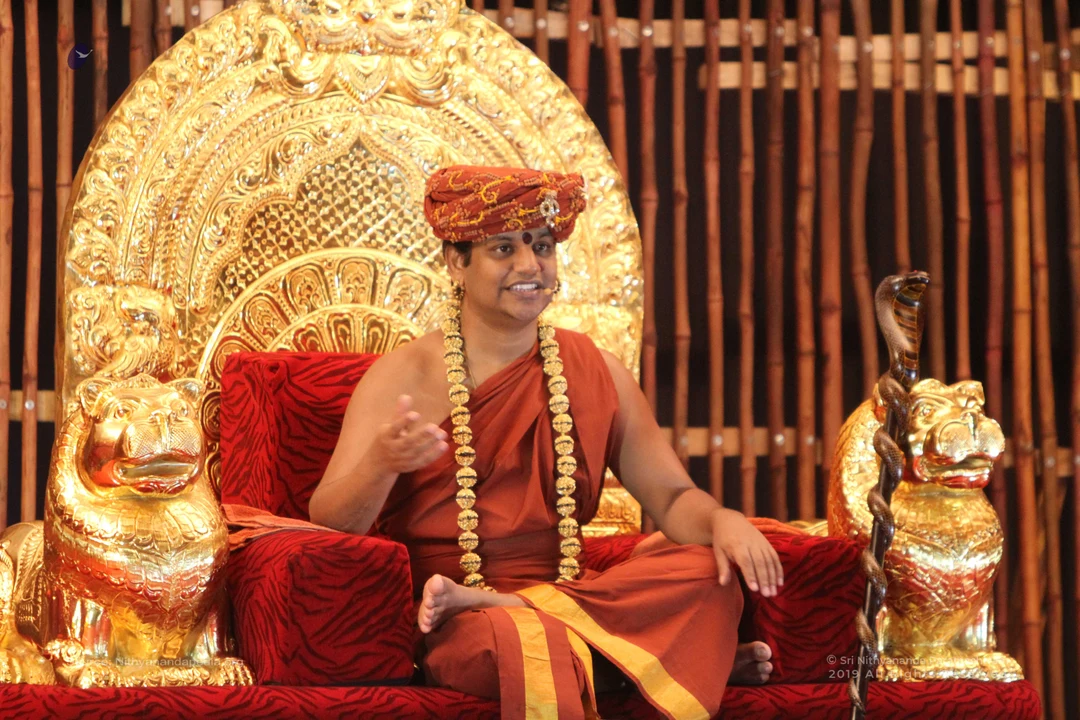
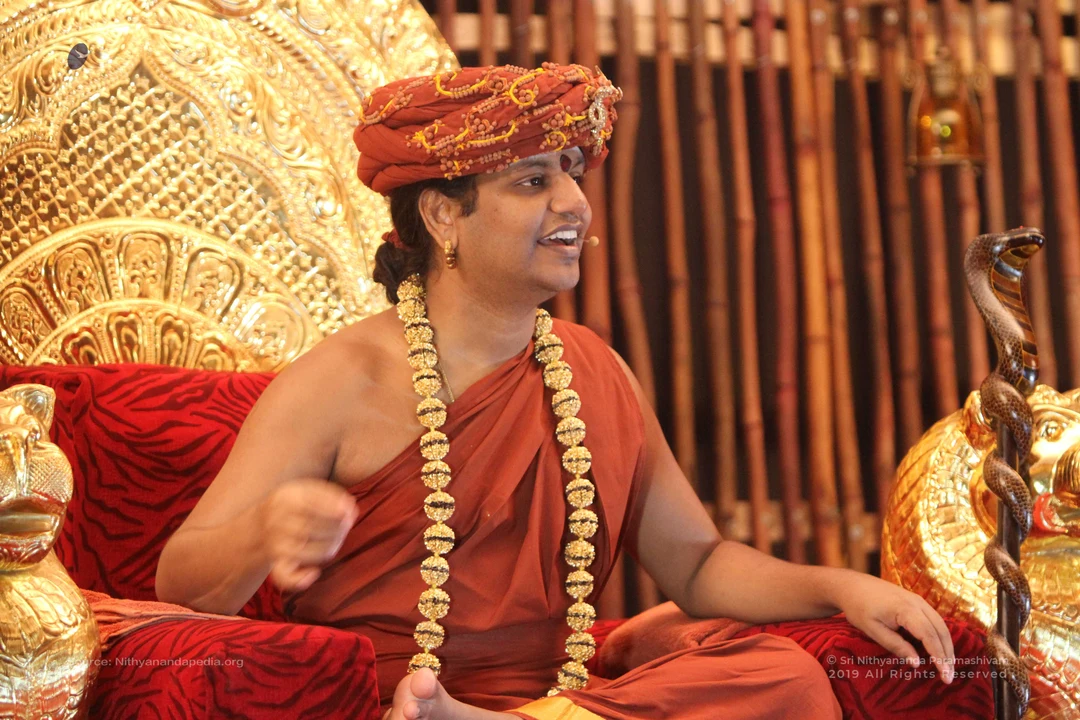
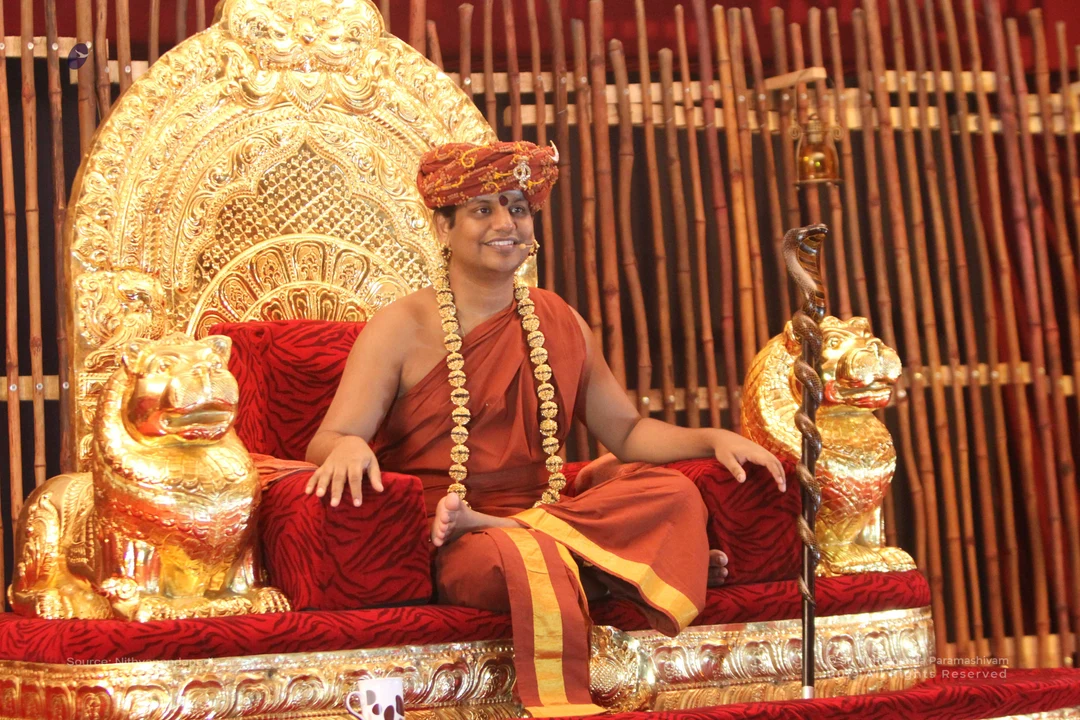
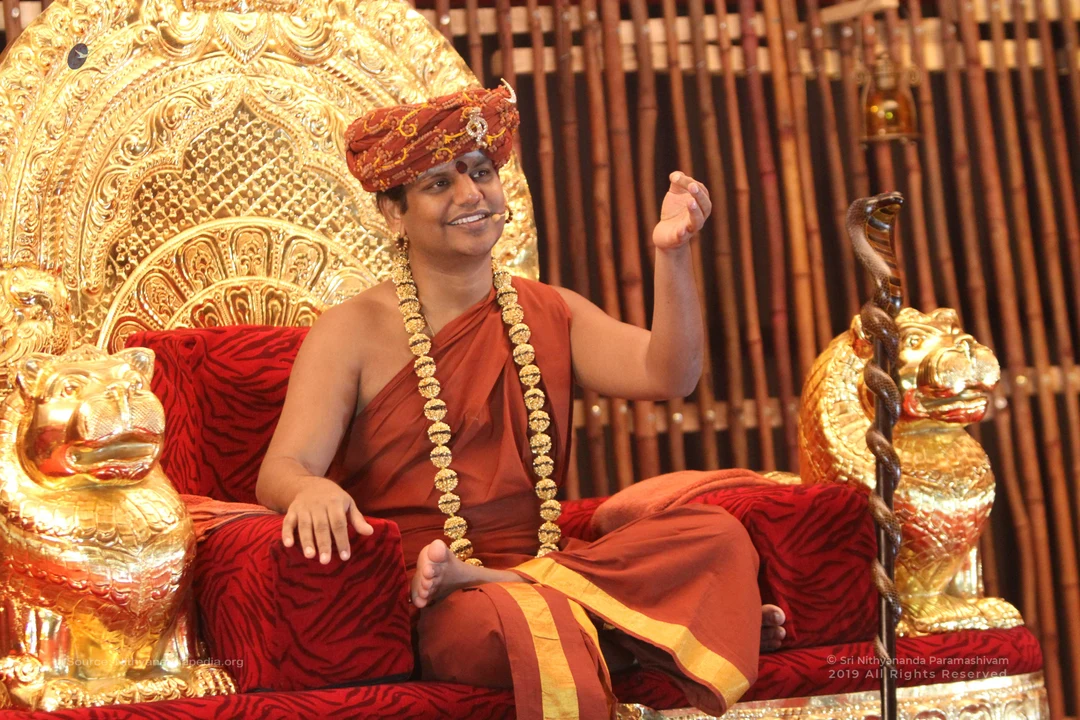
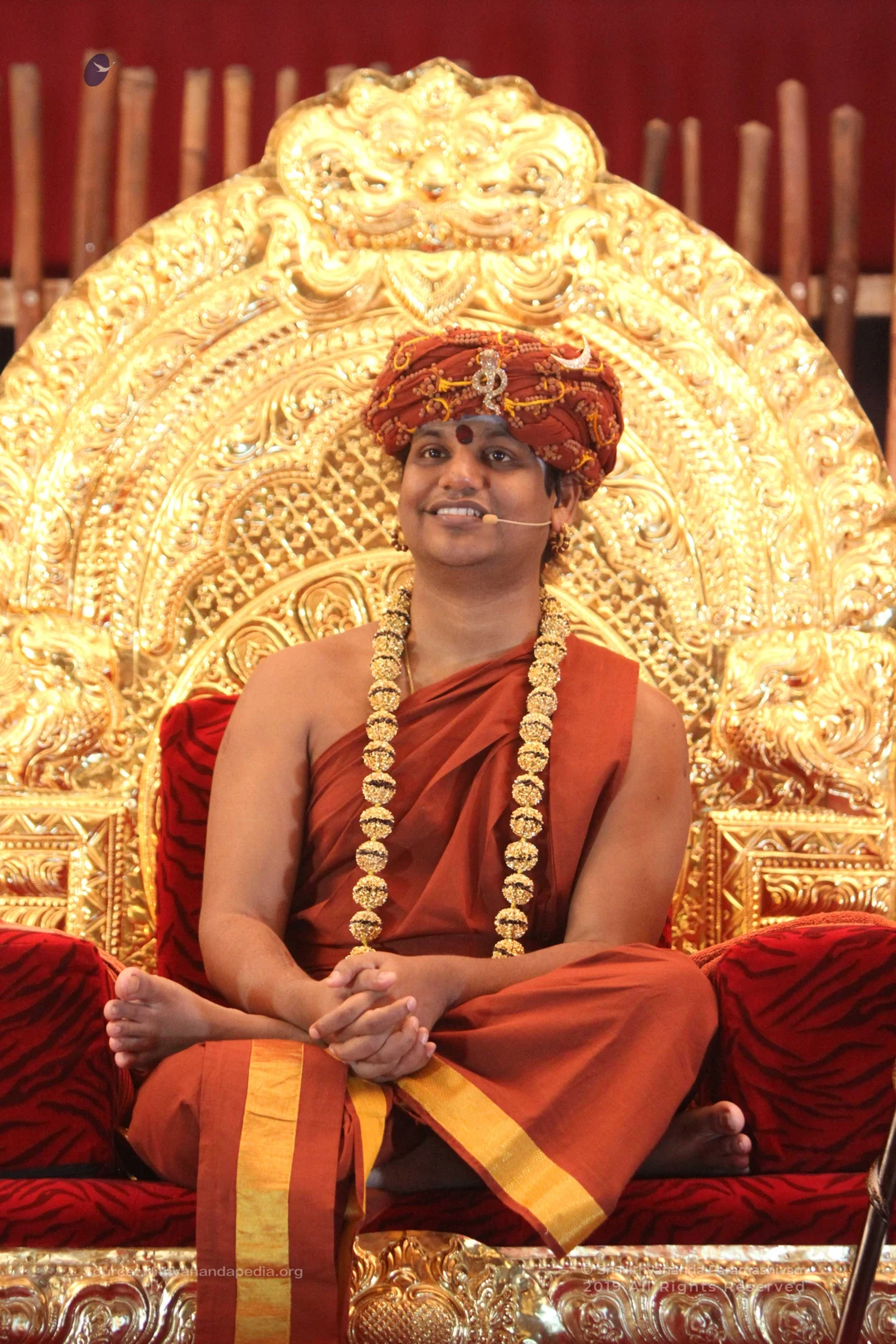
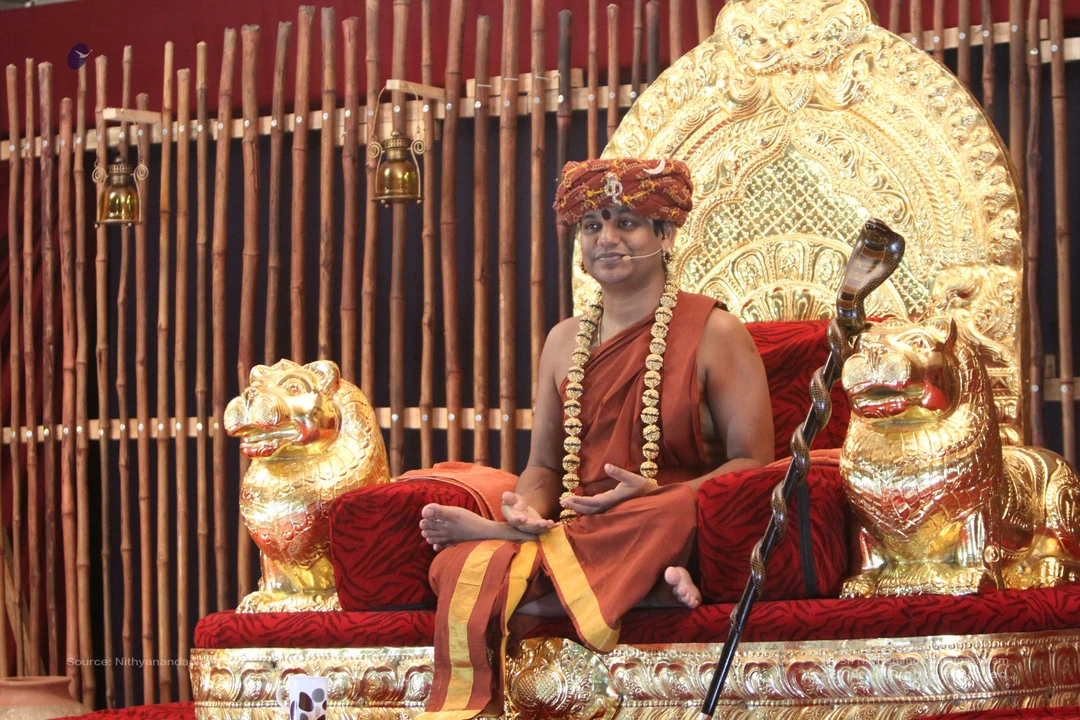
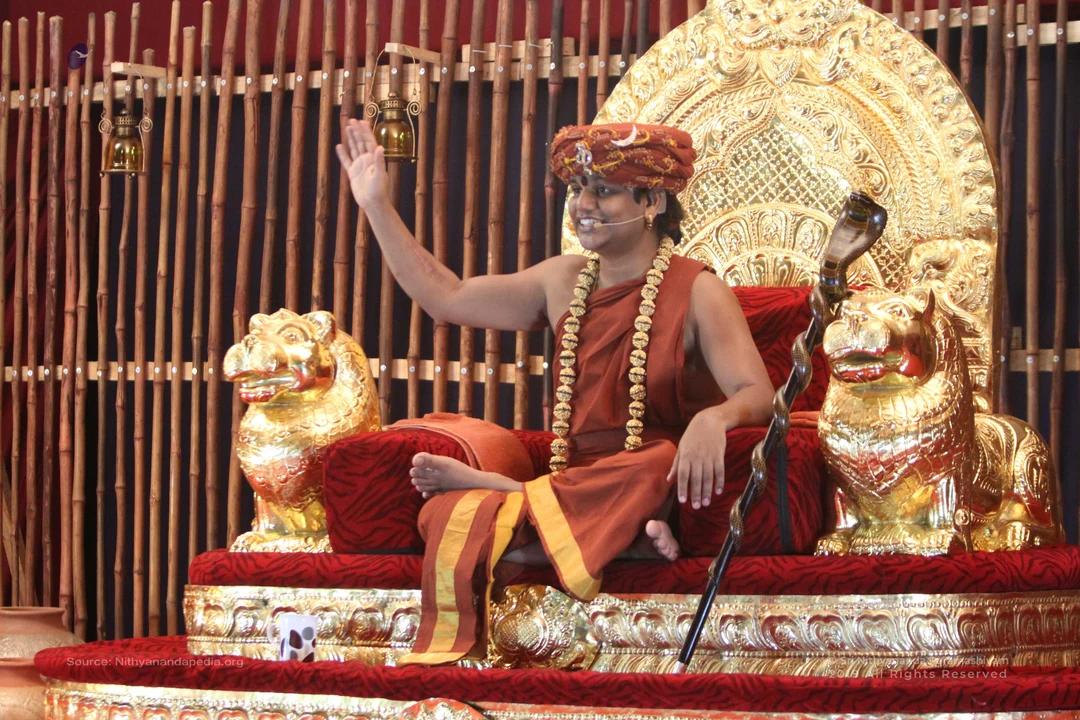
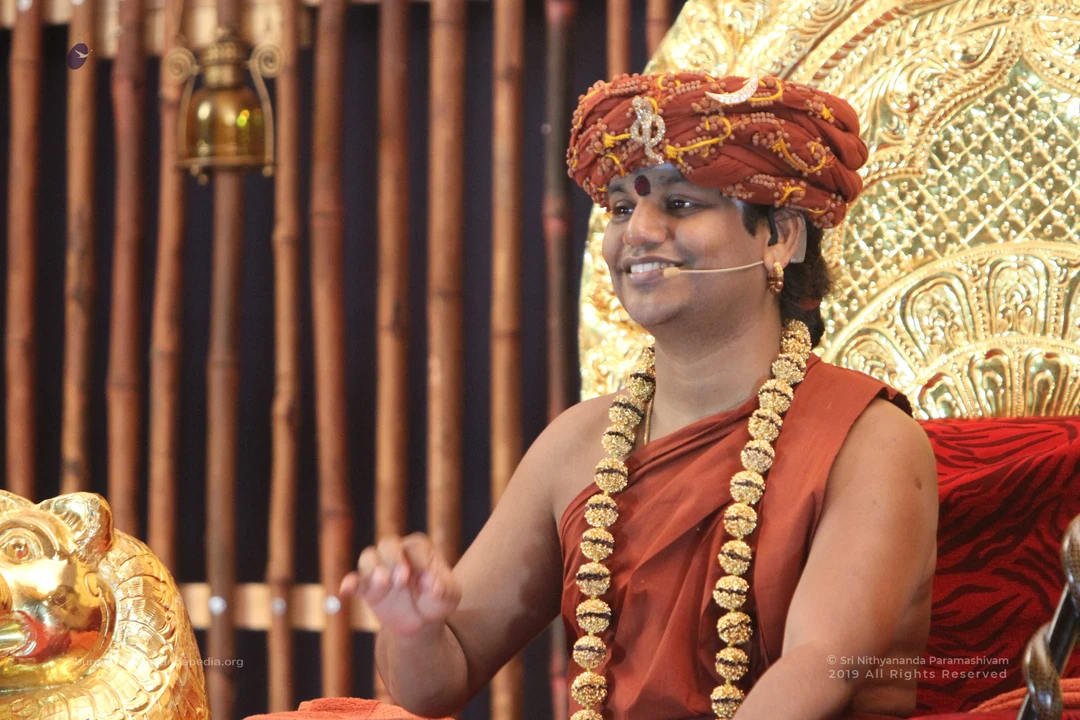
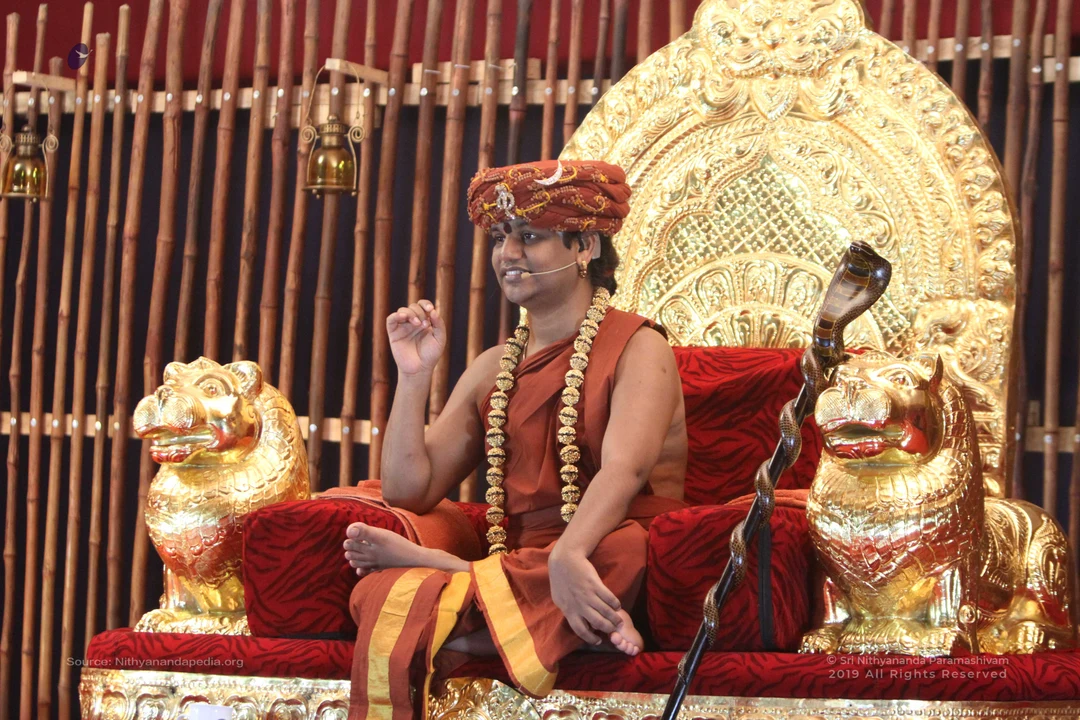
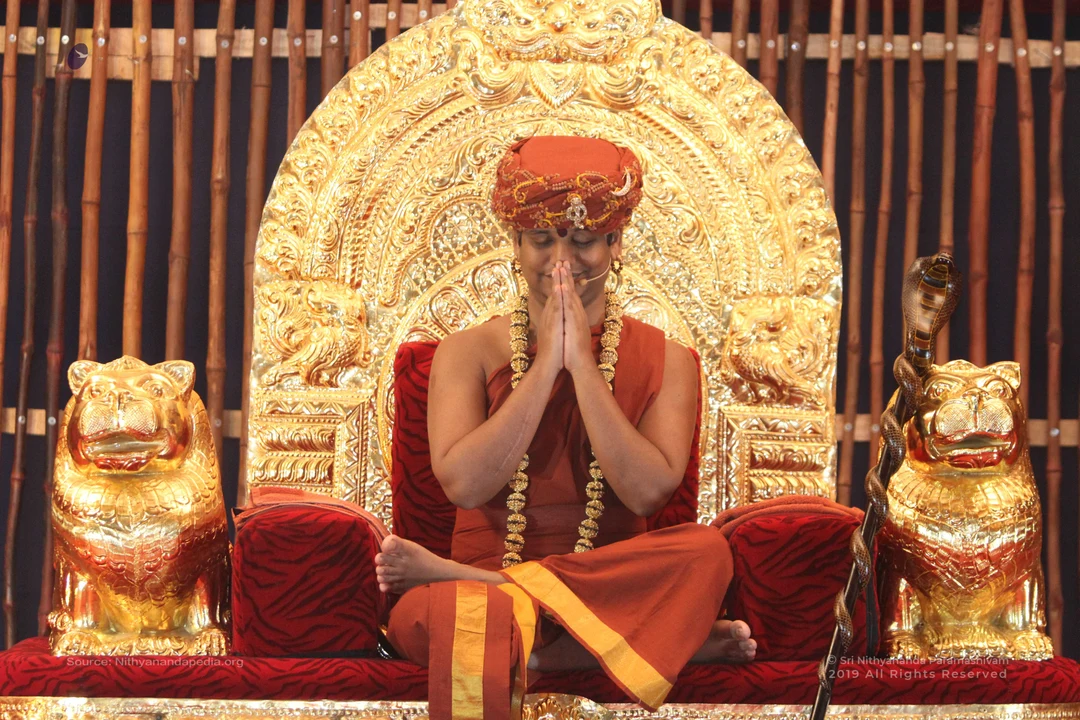
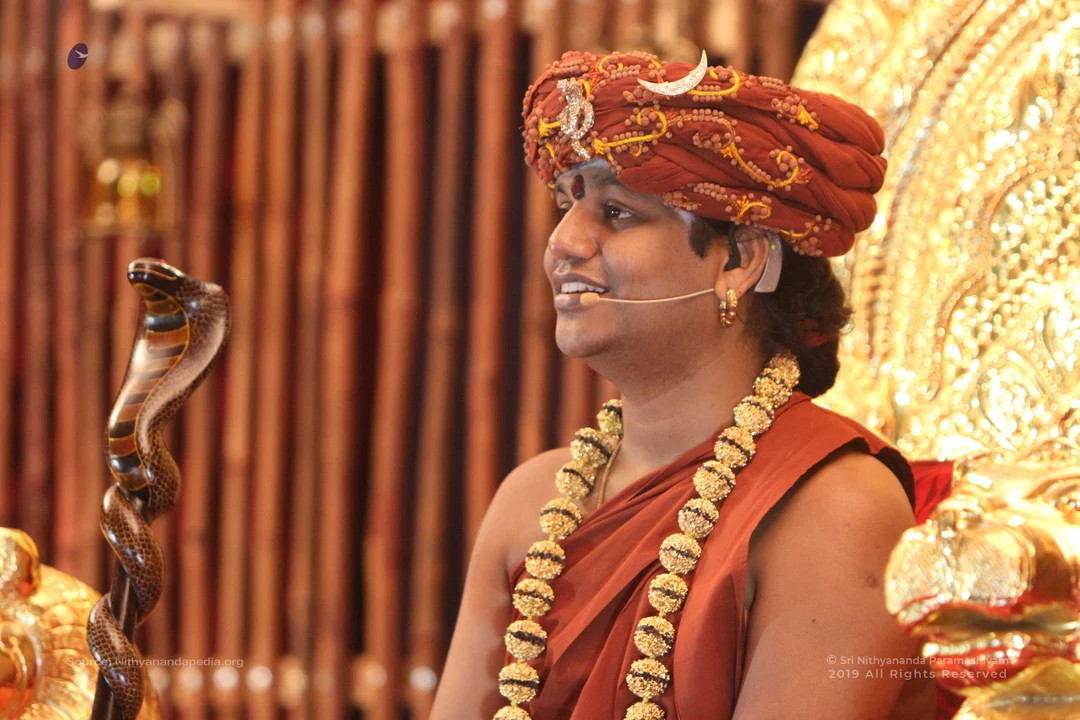
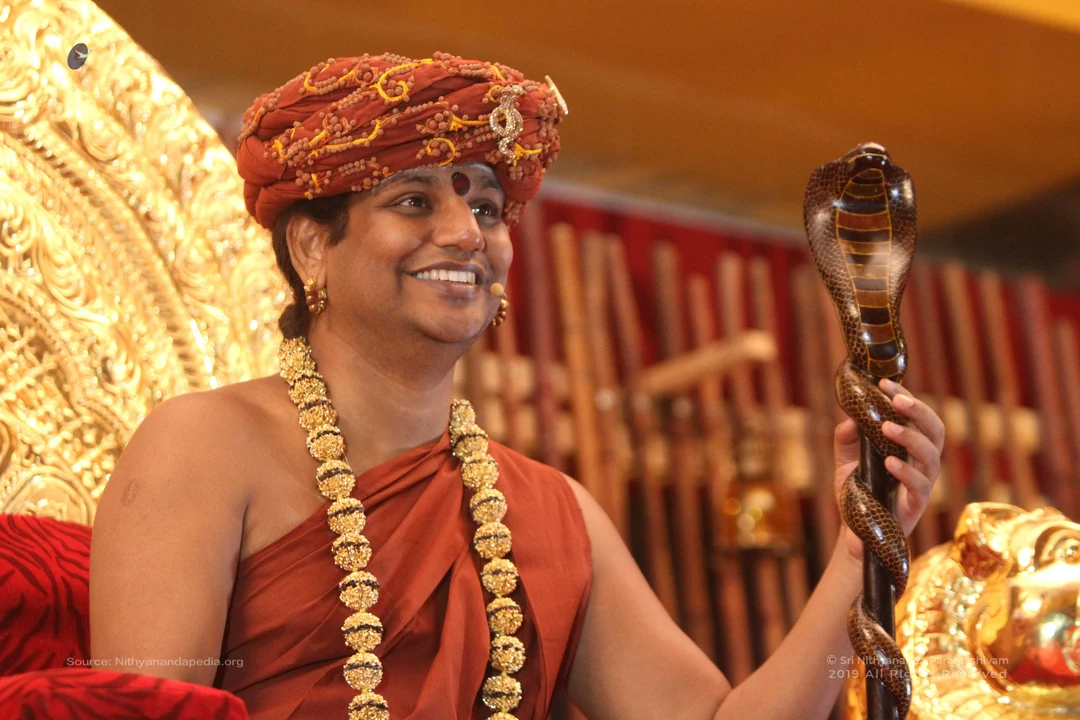
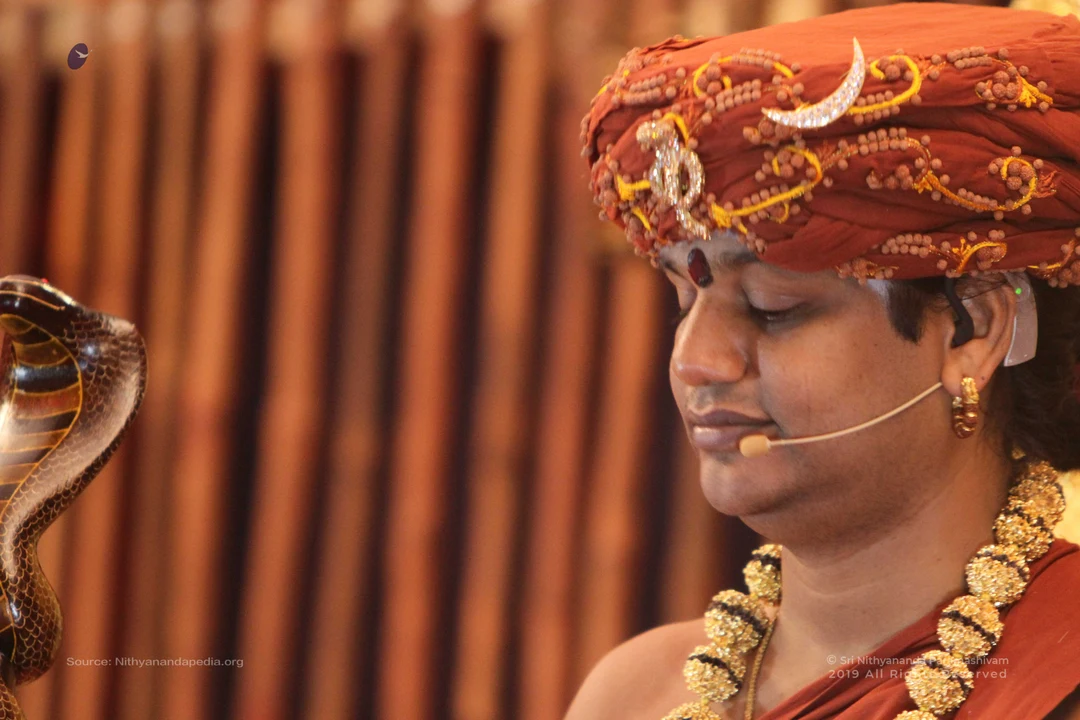
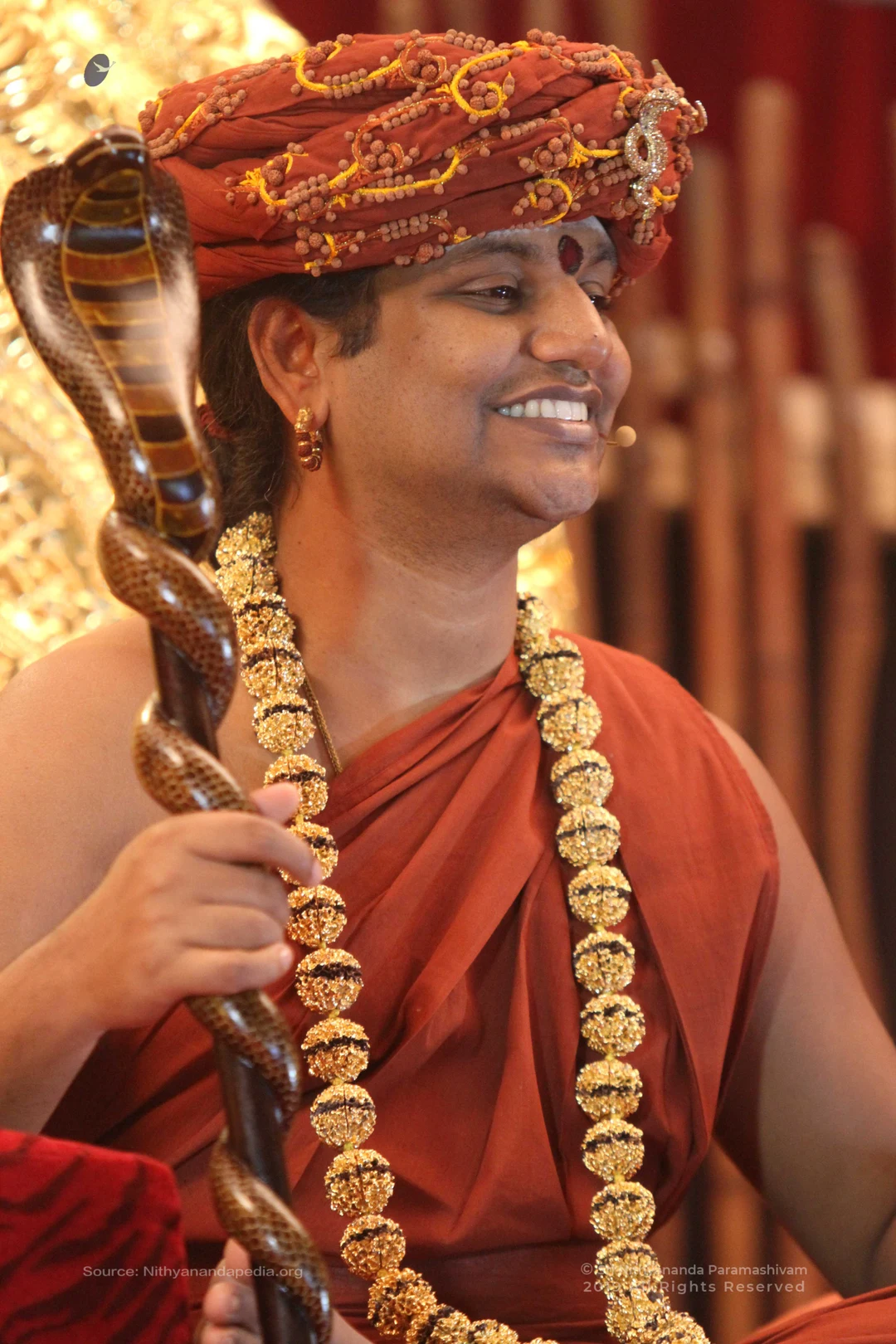
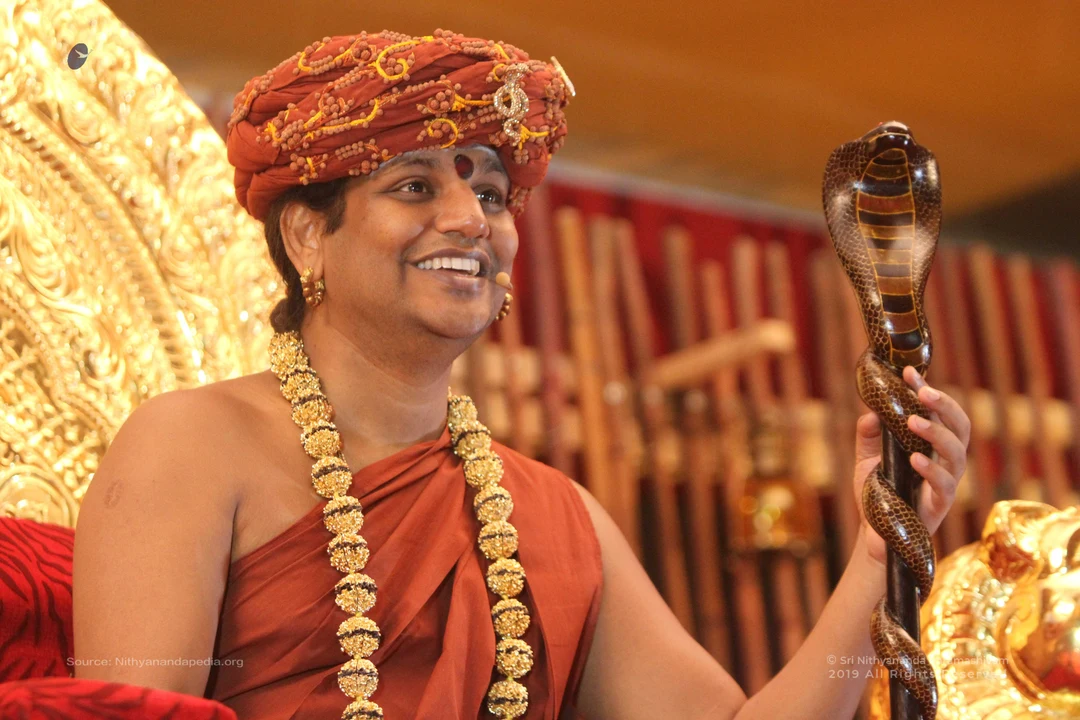
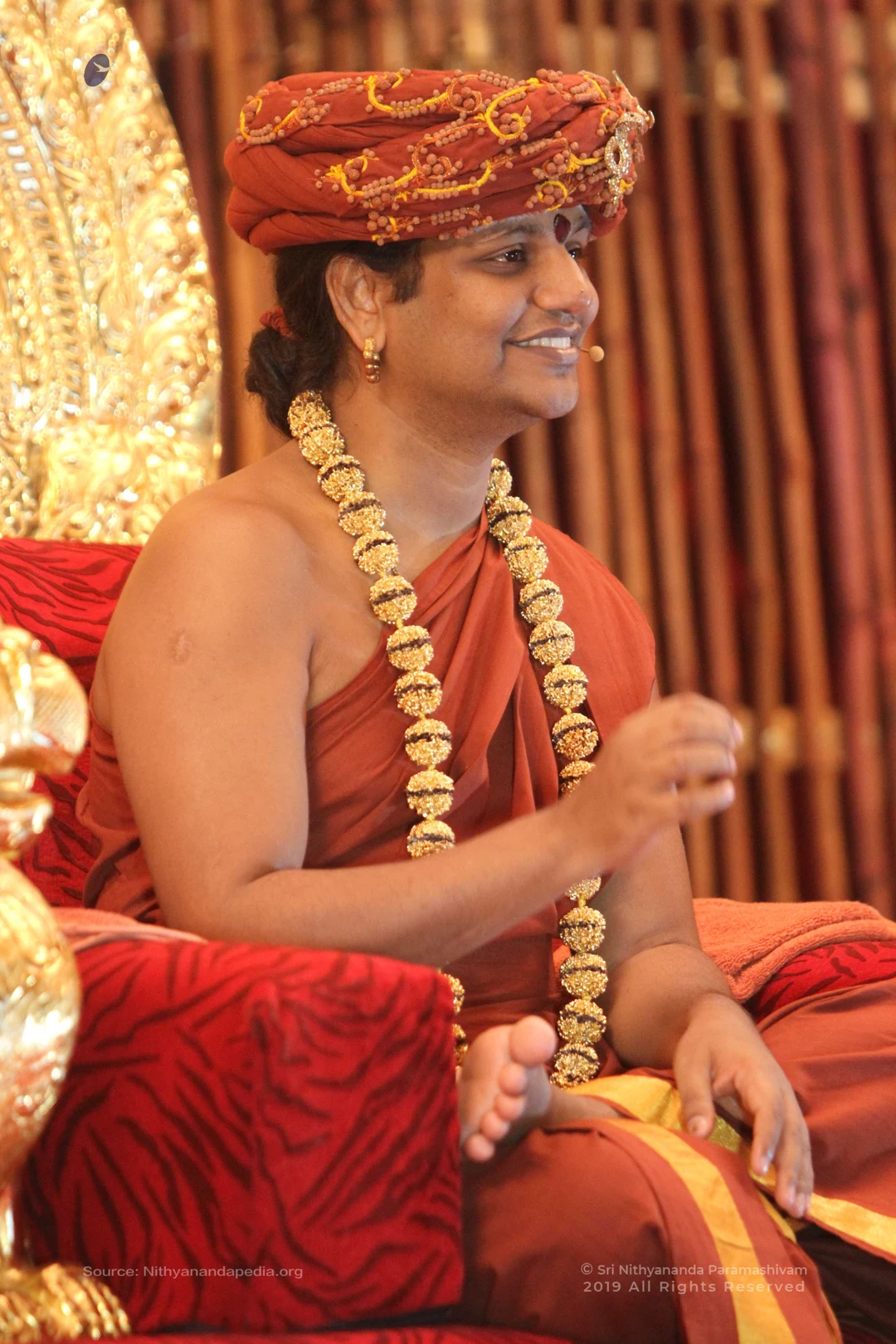
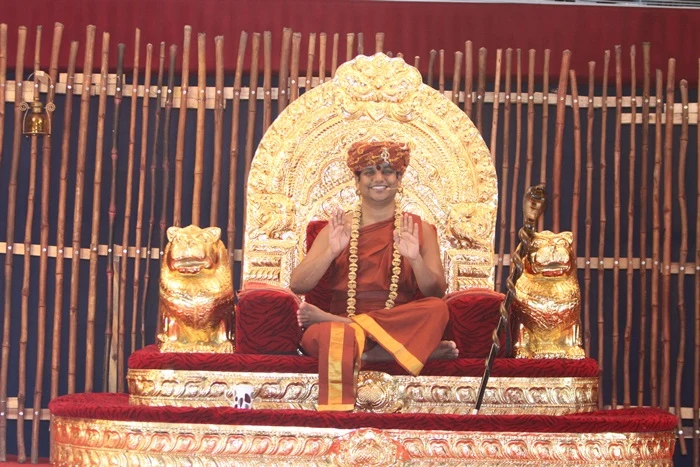
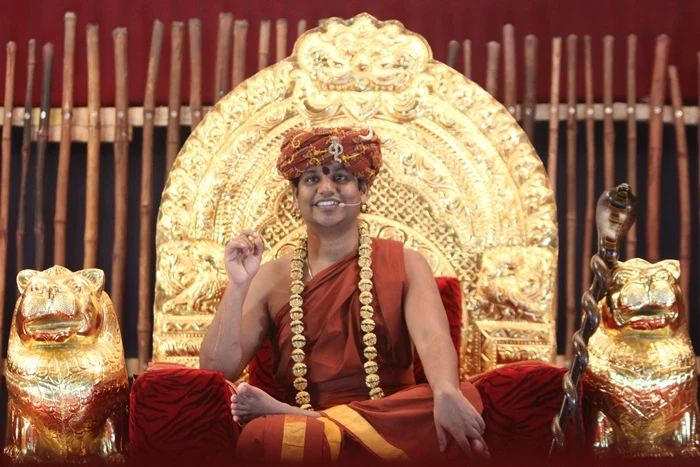
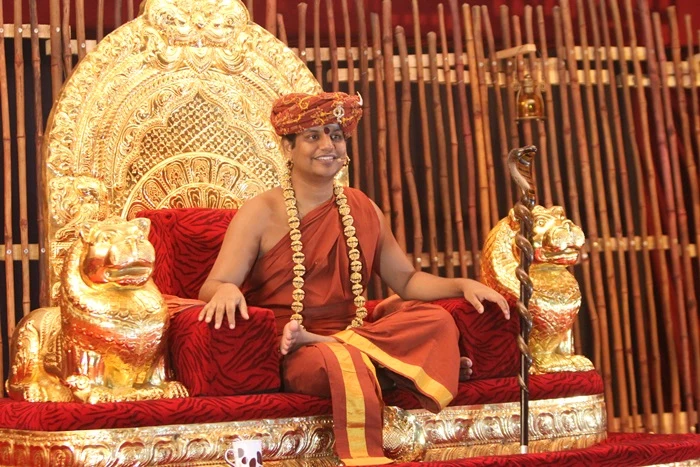
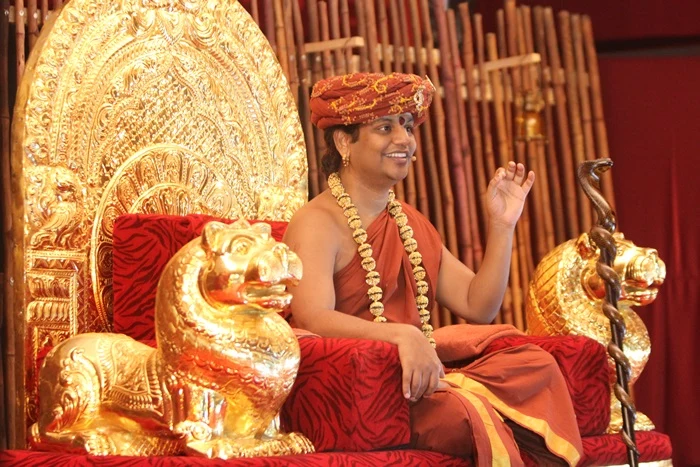
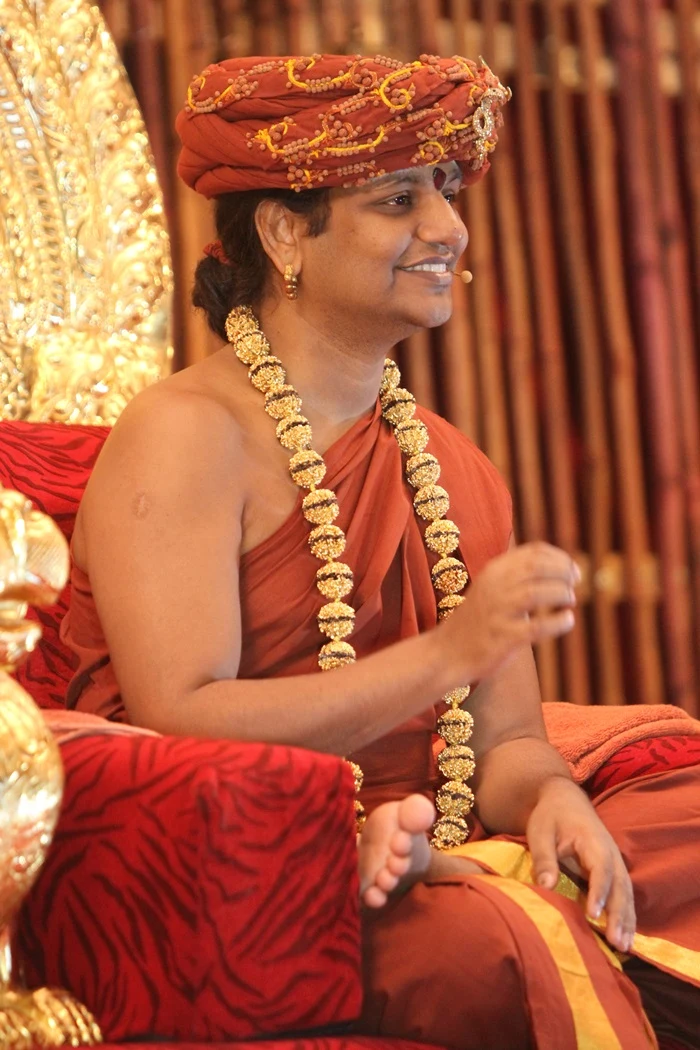
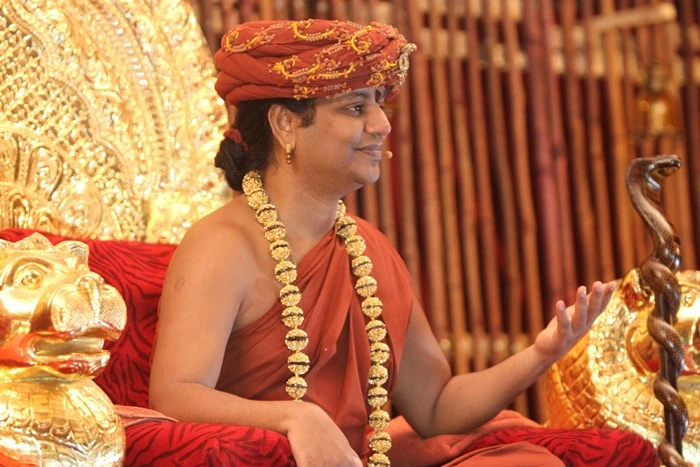
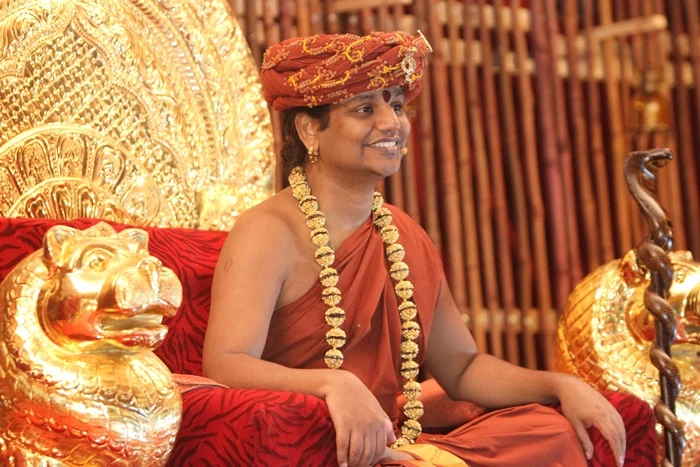
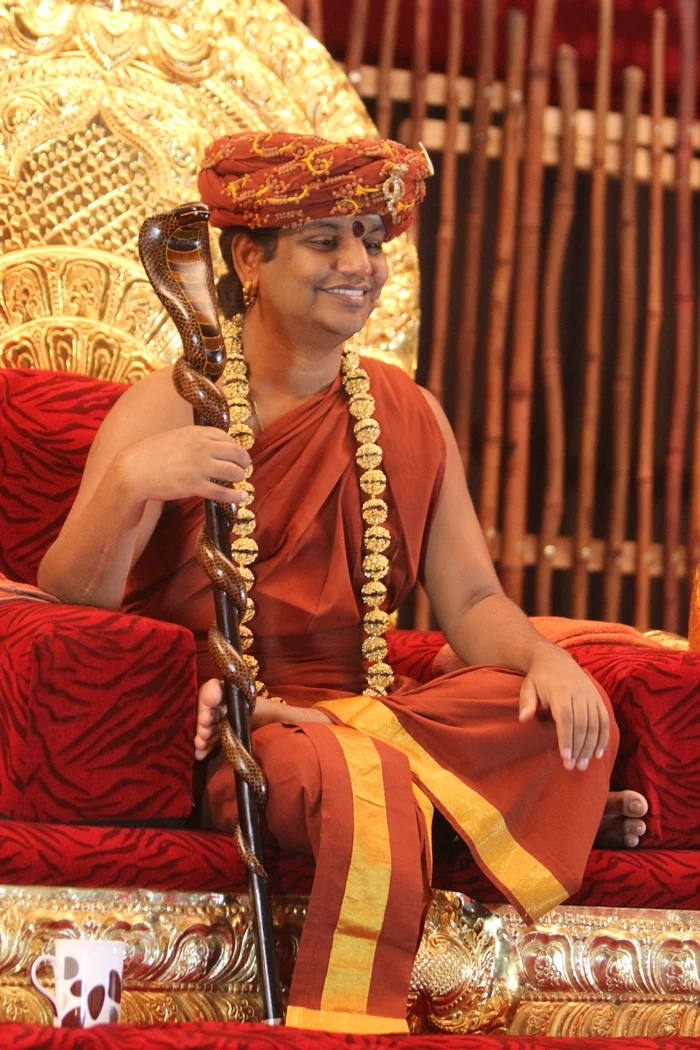
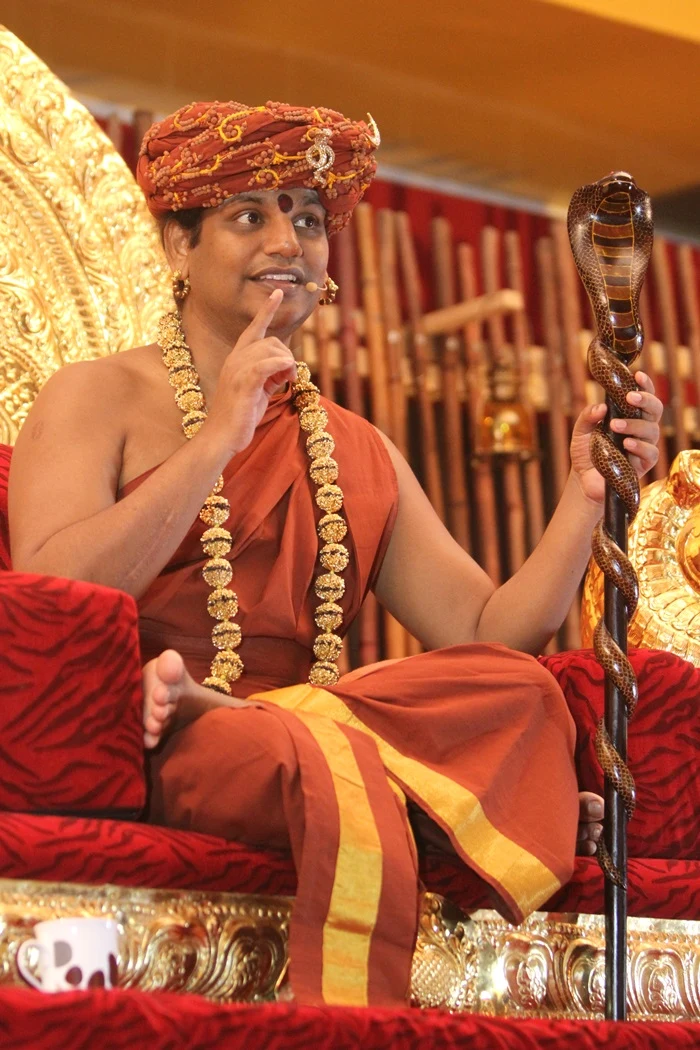
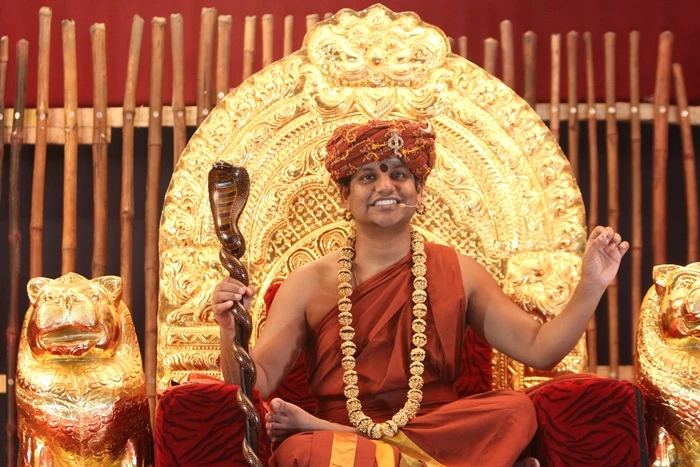
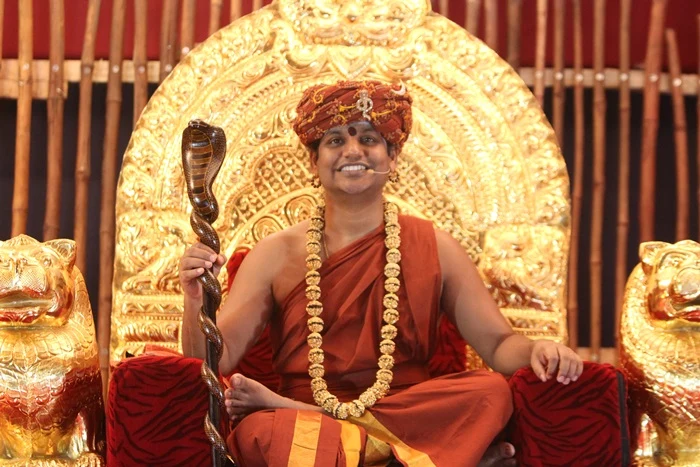
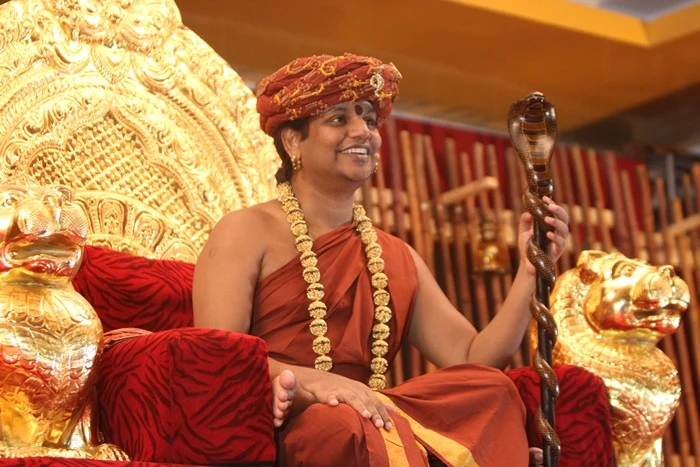
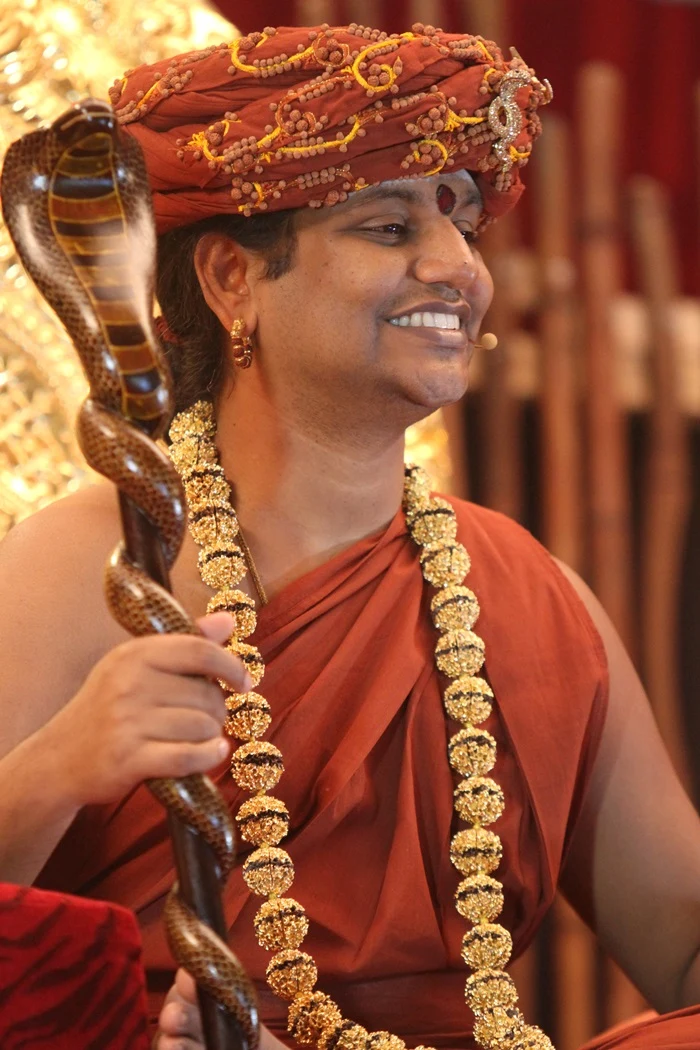
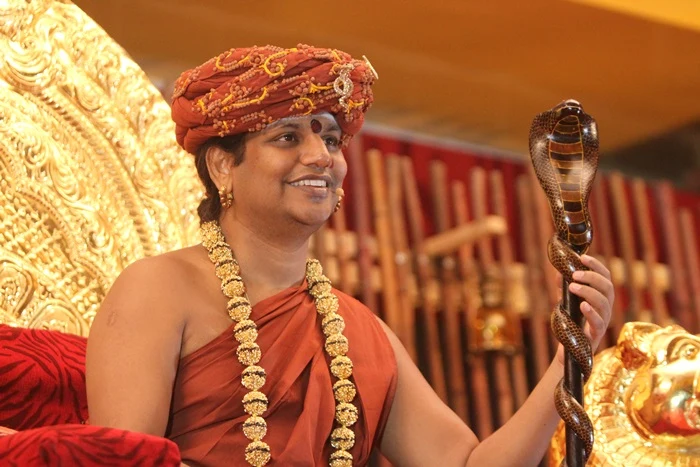
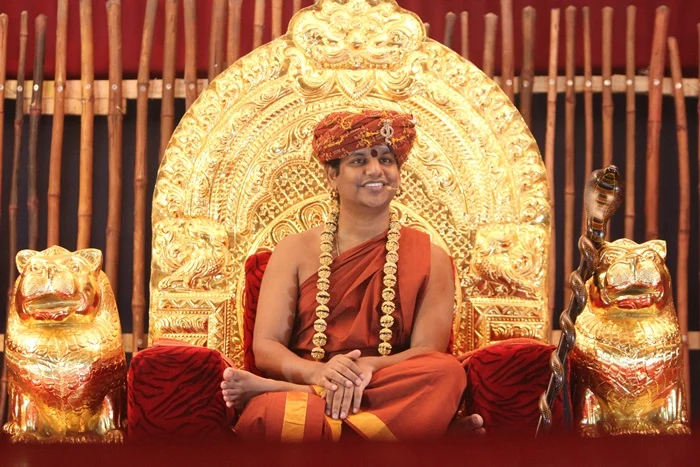
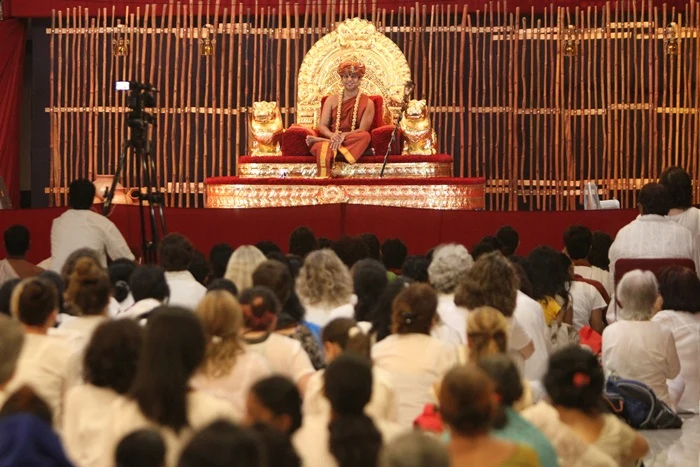
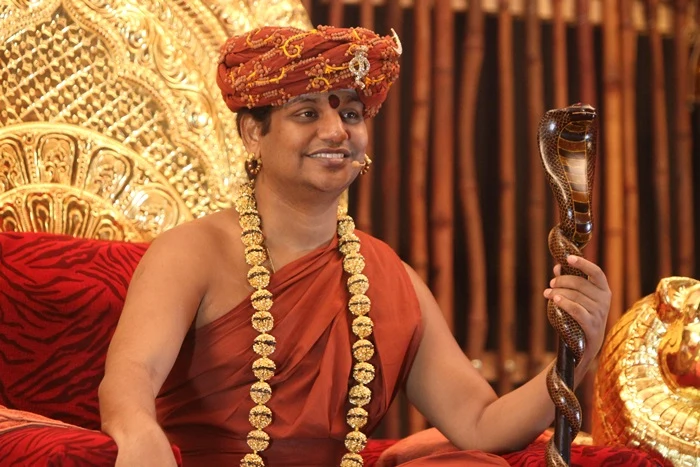
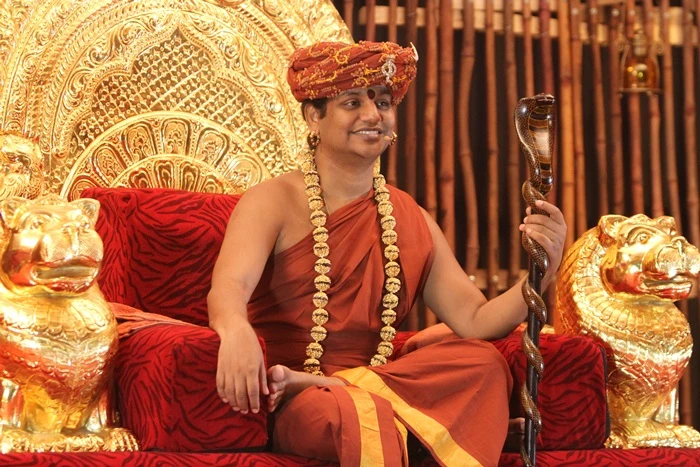
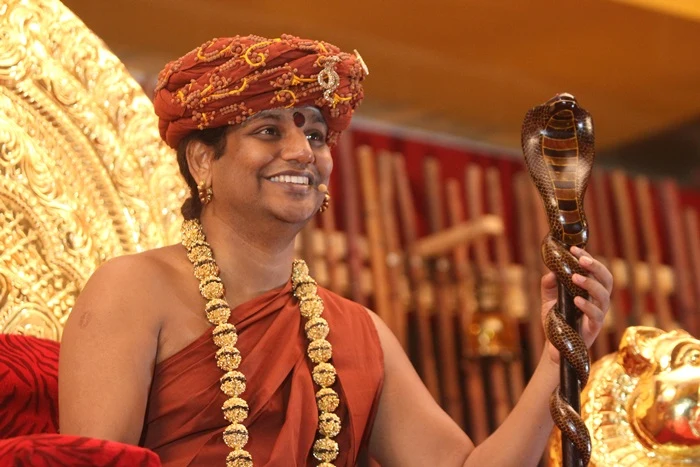
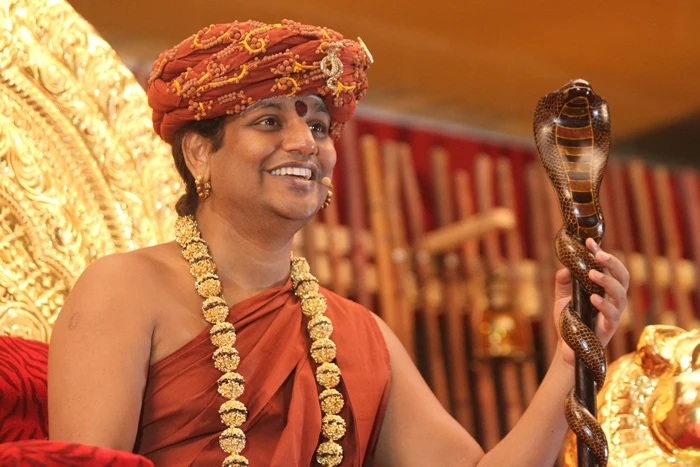
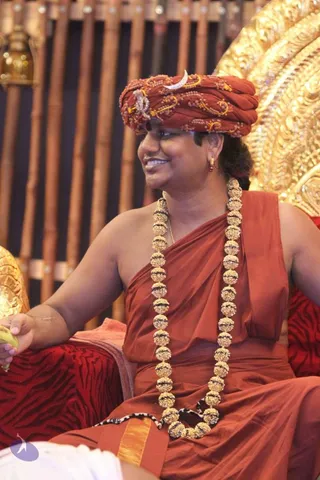
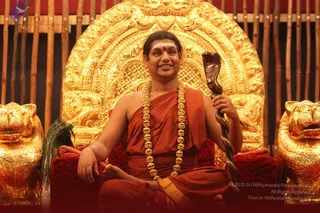
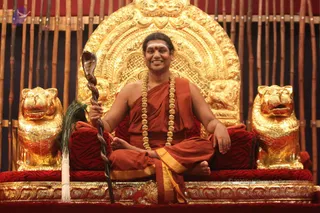
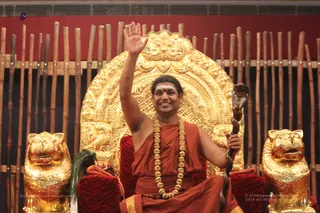
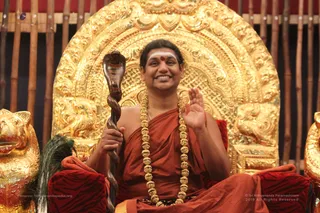
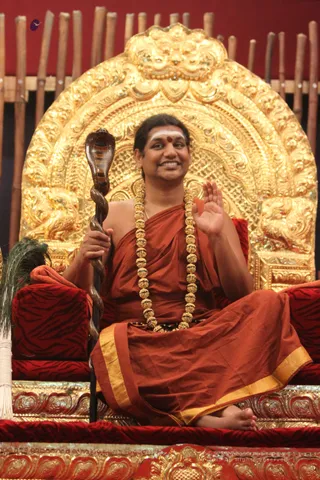
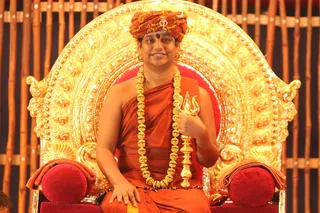
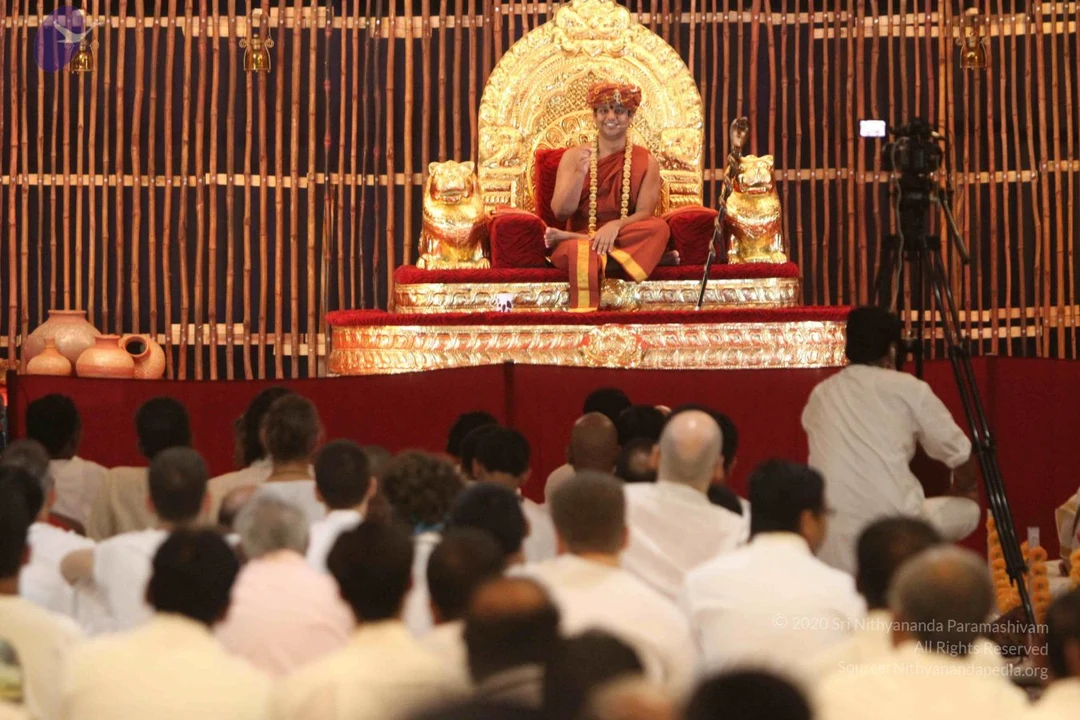
A seated man in a rust-red turban with a small gold ornament and a red-and-gold beaded decoration wears a rust-orange garment and a long gold-beaded rudraksha-style mala. He rests his chin on one hand and holds a dark carved cobra-headed staff. He sits before an ornate gold throne with a red zebra-striped cushion and a golden lion-head armrest, with bamboo poles in the background. Swamiji (probable): the rust-orange robes, turban, ceremonial gold mala and staff indicate the presiding guru figure, seated in a throne-like setting.A photograph of a seated man in a saffron-orange robe and matching orange turban, wearing a long gold bead necklace, holding a carved wooden staff topped with a serpent head, seated on an ornate gold throne flanked by gold lion figures with red velvet cushions. A small microphone is visible near his face. Behind him are bamboo poles. The seated figure is a discourse speaker on a throne, and the appearance cues (orange turban, saffron robe, gold necklace, serpent staff, throne) are distinctive, so this is a probable identification as Swamiji (probable) present in person.A man seated on an ornate gold throne with carved floral and foliate relief, set against bamboo poles and a red backdrop. He wears an orange-red turban with gold trim and a red bindi, an orange-red saffron-toned robe, and long gold bead necklaces. He holds a dark wooden staff carved with a coiled cobra in his left hand and raises his right hand in a gesture while speaking into a head microphone. A gold lion-like carved figure is visible at the lower left. Probable Swamiji cues: orange-red turban, saffron robe, long ornate gold necklaces and the seated throne, with the role of a speaker giving a discourse on a dais.

July 15 2014

Original wiki page
Contents

Title:

Hardwar - Million Year Old University

Description:

In today’s morning satsang from Haridwar Paramahamsa Nithyananda spoke about how completion starts and ends in Advaitha and when you practice completion , advaitha becomes a reality in your every day life. There is nothing to wait for; even when practicing Advaitha becomes your reality and your lifestyle. Your source is always in the space of completion, radiating advaitha which is why we can do completion for others and others can do completion for us. Completion is you being sure about reality and shared reality. It saves you from shared reality becoming reality.

Link to Video:

Link to Audio

Description: Hardwar - Million Year Old University by HDH Bhagavan Nithyananda Paramashivam on 15 July 2014'

Transcript:

Nithyanandeshwara Samaarambhaam Nithyanandeshwari Madhyamaam | Asmath Aachaarya Paryanthaam Vandhey Guru Paramparaam ||

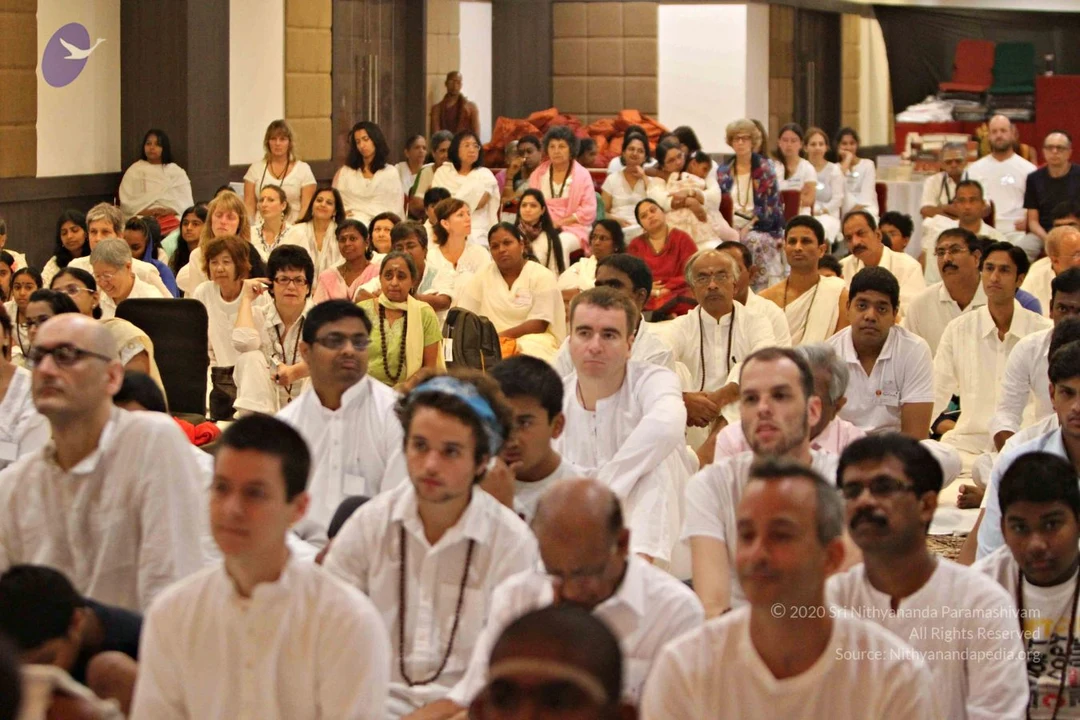
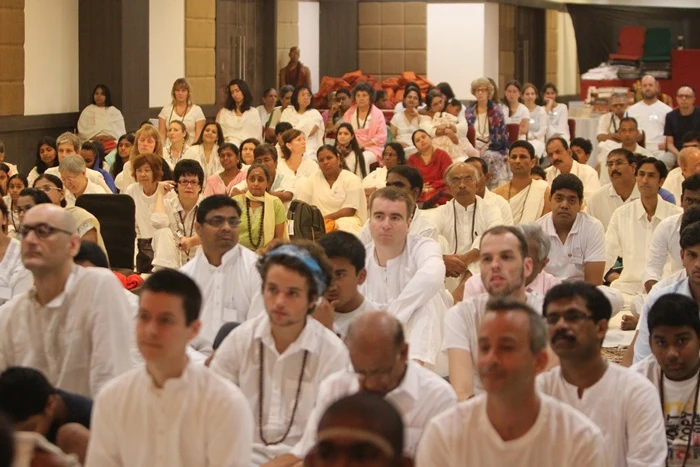
I welcome all the devotees, disciples, samajis, satsangis, Sri mahants, Mahants, Thanedars, Kotharis, visitors, viewers, participants of Inner Awakening program and everyone of you with my love and respects. Today I wanted to expand few important truths about listening and Completion. Please listen and through this morning satsang I also formally inaugurate the 27th Inner Awakening program and 24th eN Genius program.

1:47

Listening and Completion! In Sanskrit we use the word ‘Shravana’ for listening. Exactly the shravana means, please understand, I am giving you the technical definition of ‘Shravana’ which will really help you if you can visualize that. When Ganga river moves form one ghat to another ghat it is called ‘Shravana’; means you be a empty space for the sound to travel through you. Please listen, when Ganga moves from Rishikesh to Haridwar, she is not leaving Rishikesh, she enriches Rishikesh also and moves to Haridwar. Listening, in listening you are expected to be like that. The words move through you does not mean you are not enriched; you are also enriched but it also goes on enriching everything around you. It goes on enriching around you. Right shravana, please understand you will be surprised to know some of the great definitions in Vedic tradition; the definitions of some of the technical terms are just examples; no separate definition is given. Only examples are provided.

Dhyana means tailaadhara patra. That’s all is defined! Means, when the oil flowing from one vessel to another vessel when it is poured that is called dhyana. Same way Ganga moving from one ghat to another ghat, one place to another place is called shravana. Understand shravana, listening, is one of the most powerful process to achieve Completion. Most powerful process to achieve Completion! When no one stands by you Completion can stand by you. When no one listens to you ‘Listening’ will listen to you. Develop this habit of Listening. You having the habit of Listening itself will be such powerful friend to yourself.

Please understand, you can develop a best friend for yourself through the habit of Listening. Your habit of Listening can be an amazing friend for you in all your difficult times. You don’t need somebody else listening you. Your habit of Listening is enough. It can be an amazing friend. Understand, this land where you are sitting, at least for last million years, please understand million years when I say I mean! I am talking with my integrity. At least 10 lakh years this land is the place of knowledge. Human beings were coming here to meet the Adiguru who carried the physical body walking around in this area, living in this area, sharing the knowledge of human consciousness.

6:38

Please understand you may ask how I am so sure? 10 lakh years. The star, constellation of the stars, the astronomical happenings which could have happened only 10 lakh years before were precisely recorded, which cannot be recorded unless you are seeing it directly when it is happening. Unless when those stars and constellations are happening, unless you see it, you can’t record so precisely. That precisely the constellations, astronomical events which cannot be imagined through the astrological calculations, still the modern day astronomers, people who are working with the space were shocked the Rig Vedic recordings of the constellations, astronomical happenings, the precise way they are recorded at least 10 lakh years before astrological happenings are recorded .

And one more important information you need to know the point zero was always Haridwar. All the recordings match the space between Haridwar and Rishikesh. That was the space from where the observations are done and recorded, whether some of the unique planet alignments, stars alignments, happened 10 lakh years before were precisely recorded observed from this zone. So at least for last million years human beings are coming here to receive various knowledge about life, various branches of knowledge about life, consciousness, cosmos, universe, individual consciousness, enlightenment and everything.

So please understand you are in the land where Adiguru walked and shared the science of living with human beings and with all my integrity and authenticity I promise and commit with you, you will listen the same truth, with same authenticity, in the same voice. Adiguru, Mahadeva, Shiva has not left anything to be discovered. But he goes on allowing us to enjoy the excitement of re-discovery and re-invention. He lets us rediscover to keep us all excited, to keep us all inspired, engaged, entertained. He happens again and again and again helping human beings to rediscover your own glorious, super conscious, existential experience by teaching you the science of life, science of consciousness. You are here in the same place and the same space of Mahadeva, Adiguru, Shiva, to listen to the truths which is being sung, which is in this very air, which fills this very air for last 10 lakh years, at least, at least 10 lakh years!

12:49

I don’t want to say 10 lakh years before Adiguru walked on this land. I can say at least 10 lakh years before; because the constellations recorded by the direct observations in the Rig Veda are at least 10 lakh years before and I can be sure many shakhas, branches, which we lost can have the secrets recordings which were much earlier also. So I can be sure of only one thing at least 10 lakh years before these truths have started getting sung in this zone. They are filled in this air, unbroken, for last 10 lakh years; unbroken for last 10 lakh years!

Please listen even I used to believe we are only 10-15 thousand years old from the British historians’ stupid theories and theologies. Thanks to one of the great Swami Prakashanand Saraswathi who opened my eyes made me understand. If you can I want all of you to read his book. He has written a beautiful book on the history of Hinduism which I made as a syllabus for all our sanyasis in the adheenam and I will strongly recommend all of you to read that book. That book has opened my eyes to logically understand that Rig Veda is at least 10 lakh years old. And I am happy I read his book and dedicate my knowledge, this knowledge at his feet. And I also wanted to tell you all, after reading that whole thing, with my pure consciousness I scanned it, the whole thing was true and I have also referred the cosmic archives the information Prakashananda Saraswati is presenting is true.

15:27

This land was part of the oldest university naimisharanya. Naimisharanya means the place where people never sleep. This was the place where kutakeshas lived; like Kashi was the place only people who can fly were living. Naimisharanya only people who conquered the sleep were living; means that amount of Completion they were carrying. Understand sleep itself is nothing but you trying to escape from your incompletions. Thoughts are nothing but incompletions. If you are having the same thought again and again you are stuck in an incompletion deeply. So if you are having thoughts regularly you are having incompletions. If you have thoughts you need sleep. If you have incompletions you need escape from incompletions. Sleep is not Completion, its escape from incompletions. It is like a temporary shutting down; saving yourself from the incompletions. When you are in the highest space of Completion, Complete Completion, the Perpetual Completion, you don’t need sleep.

Naimisharanya was the space where at least 10 lakh beings who did not need any sleep were living. I can say very honestly with authenticity I have seen at least 10 people who have not slept for last 15 years at least; ten people. I am trying to get one sadhu in this next 21 days for all of you to have darshan. He is not agreeing to come over here. I said at least if he accepts to, gives darshan we will all come there. I can say very authentically he has not slept at least for last 23 years; no sleep! He has mastered his body and mind. I have seen some more sadhus during Kumbh Mela, but this sadhu lives the forest between Hardwar and Rishikesh. Let’s see whether he allows us to come and have his darshan. But I wanted you to know this truth. Naimisharanya existed where people who have conquered the sleep lived here teaching the truth to the whole world.

Those days the whole population wherever they lived, the Vedic era, we had 56 settlements, human settlements. All the 56 human settlements came to this place to study, to master. Kashi was a place where teaching was going on. People who mastered here, many of them went to Kashi and started staying there and teaching. But this continued to remain as a main campus of the Vedic University. Please listen you are in this place and fortunately in that very space. Listen, listen; the greatest opportunity to listen those same great truths, unadulterated, undiluted, pure. One advantage is - the language you can understand. Its only advantage, the language you can understand.

20:53

Listen, listen, listen, just listening can lead you to the space of Completion. Just listening can rejuvenate you. Just listening can raise you to that space. Please listen; especially when you are listening to the space of Completion, the words coming from the space of Completion, you simply experience Completion; because no other spiritual practice can be done for others.

Please listen. For example japa- japa means repetition of the spiritual sound. It can be God or Guru’s name or a beeja mantra or a concept or Mahavakya. Repetition of any sacred sound is called japa. Japa you can only do it for yourself. Dhyana, meditation, you can only do it for yourself. Yoga you can only do it for yourself. Pranayama you can only do it for yourself. Kriya you can only do it for yourself. But only Completion you can do it even for others and you will see the result immediately. If somebody is agitated, incomplete, angry, perturbed, shaken, shivering, frightened, powerless, remember that person and complete. Bring Completion in yourself. You will see that person is complete. Immediately the effect of your Completion fills that being. Only Completion can be done for others too; because the science of Completion is rooted in the science of oneness.

Science of Completion is rooted in the science of oneness. When you are complete everyone around you can experience Completion. Everyone around you can experience Completion. And when you listen to somebody who is in the space of Completion simply Completion possesses you, it fills you, it overflows in you, it possesses you; that’s the right word I will use. It possesses you. Listen and allow my Completion space to posses you, to purify you, to fill you. Allow my space of complete Completion, the perpetual Completion, to become your space, your inner space. You will see in front of your eyes, hundreds of miracles in next 21 days; whether miraculous healings or materialization, teleportation, kundalini awakening, people levitating, jumping or your past being predicted clearly or your future being predicted clearly, whatever, you will see hundreds of miracles. But I tell you, all that I won’t call it as effect of Inner Awakening. My effect is only one, ultimate miracle- leading all of you to the space of Completion. That is the ultimate miracle! Everything else is side effect.

25:43

They are not wrong but they are only side effect. Don’t go away with just side effect. Receive the main effect. That is the Complete Completion, the Perpetual Completion, Complete Completion, Perpetual Completion. Complete Completion is the greatest gift you can receive in this 21 day; just by listening. In the next sessions I will be teaching you the science of listening. Now I just want to introduce the power of listening and the need for listening and the purpose of the whole program; not to get diverted in the side effects. Enjoy them nothing wrong! It’s really exciting suddenly when something materializes in front of you out of the blue! Sometimes it may be even in your own hand and it’s really exciting when your body is jumping beyond your control with so much of joy and excitement filling you! All this is great; enjoy them, but know very clearly the purpose of this whole thing should settle down in you as Complete Completion.

Siddhis are great as long as they inspire you to reach the ultimate. Siddhis are, siddhi means the extraordinary powers, they are great as a sign board showing Hardwar 120 kms, Hardwar 60 kms, Hardwar 10 kms; as a sign board they are great. But the sign boards are themself not Hardwar. So siddhis should lead you to Compete Completion. It should lead you to complete Completion. Even when your kundalini is awakened you should have the right purpose, authenticity, so that your kundalini can flow in that direction.

I have seen many people, when you don’t have the right answers for yourself about your life’s purpose, what you want to achieve, your goal, when you have confusions, conflicts, contradictions, and your goal about the life is not very clear to yourself, I have seen, even if I awaken your kundalini it goes back to sleep. It feels ‘I don’t want to be living with this confused guy, better let me go back to my place and rest.’ So understand even if you awaken your kundalini you need to give the purpose for the kundalini; only then it continues to be awake, alive, working, functioning.

You need to engage your kundalini shakthi. I always tell people if you don’t practice engineering you will forget the subject even if you have studied. If you don’t practice law you will forget the subject even if you have done a doctorate in it. If you don’t practice medicine you will forget even if you have mastered it. If you don’t practice enriching you will forget even if you have attended Inner Awakening! Understand practicing is so important to keep the kundalini shakthi alive. After sometime practicing will become your breath. It is as normal and part of you as breathing. When it becomes as natural as breathing in you then you are established in the space of Perpetual Completion or the Complete Completion.

31:24

You are in the land of entrance to Mahadeva. This place is called Hardwar. Hara means Shiva, dwar means entrance. You are in the gate, entrance to Mahadeva and I am here to keep the gate open for you to enter. You are welcome to enter into the Hardwar and experience Hara, Shiva, Mahadeva!

Nirahara Samyama or The Samyama done during the Inner Awakening awakens your kundalini shakthi to a peak and it literally does the cleansing of all your internal organs. Internal organs, your whole blood flow, your nervous system, everything is thoroughly purified by The samyama especially done during the Inner Awakening; along with the Inner Awakening The samyama I can guarantee you with all my Integrity and Responsibility you will anti age at least 25 years. See by the cholesterol, BMI and your heart rate, blood pressure, diabetes your age is measured. See apart from your body’s age, the way your body has aged, both are completely different. Sometime your physical age may be only 25 but you would have abused your body so much it would have aged to the level of 50. Sometime your physical age may be 50 but you have properly kept your body so well your actual aging would have been only 25. So age is different, aging is different.

This time we are doing a scientific research to measure the anti aging effects of Inner Awakening and The samyama in this program. We have done this earlier three times and we are conducting the fourth time this research in a developed way to tell the world how the anti aging happens. If The samyama is done along with IA I guarantee at least 25 years of anti aging will happen. You will be younger at least 25 years. If you do Nirahara Samyama I can guarantee at least 15 years you will become younger. The anti aging will happen at least 15 years; you will grow younger. It’s a very powerful process of bringing tremendous Completion with your body and with your, many of your patterns.

35:40

One of the important component I have added in this Inner Awakening; see every Inner Awakening I add something and make the program better and better. This Inner Awakening, science of Completion with your lust. This is going to be the very important component I have added; removing all the powerlessness. I am neither asking you to become a sanyasi, celibate nor asking you to get married or asking you to womanize. I am not giving any solution. I am neither giving the solution what Osho gave nor giving the solution what Ramakrishna gave or giving the solution of Raman Maharishi gave. I am giving you the unique solution – removing powerlessness from your lust patterns. Then it can lead to celibacy or it can lead to a married life. It is up to you - but removing all the powerlessness. You will not have any powerlessness related to your lust pattern. That is going to be the unique component I have added in this Inner Awakening.

This is the subject everyone does hush hush hush hush! But unfortunately even thought the society never discusses about it the hypocrisy and all the sufferings related to it is continue to grow. That is the stark reality. One side we don’t want to see the stark reality the other side the problems are continuously happening. Somebody has to bell the cat. I have decided I am going to bell the cat and rat both.

I bless you all. Let you all radiate with Integrity, Authenticity, Responsibility, Enriching and causing eternal bliss, Nithyananda. Thank you.

Photos Of The Day:

Nithya-Satsang
Kalpataru-Darshan-IA-Sessions

Evening-Darshan

Photos Of The Day:

Temple

Goshala

01-GOSHALA

Photos From The Day:

Nithyananda Diary 15th July 2014 | Inner Awakening Day 1 | Pratyaksha Pada Puja | Nithya Kirthan | Satsang

Tags:

Haridwar, Paramahamsa Nithyananda, completion advaitha, practice, reality, lifestyle, source, others, you being sure, shared reality. [[Category: Special Photo Collections]

Photos from this day

View all 218 photos

Nithya-Satsang
58 photosSource gallery
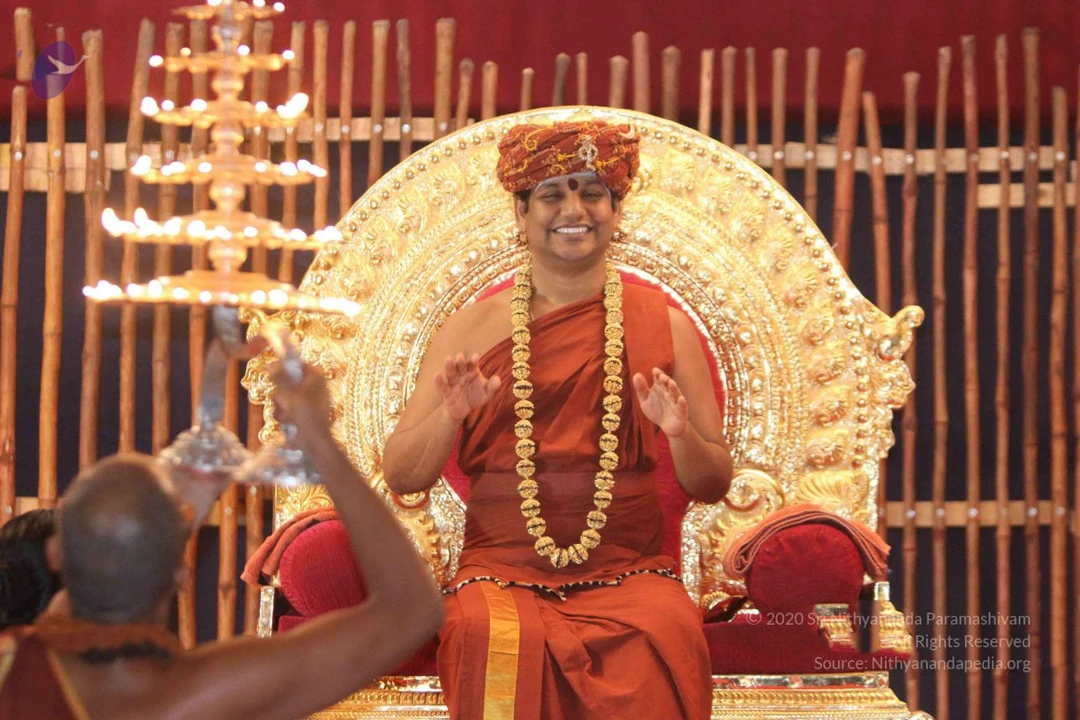
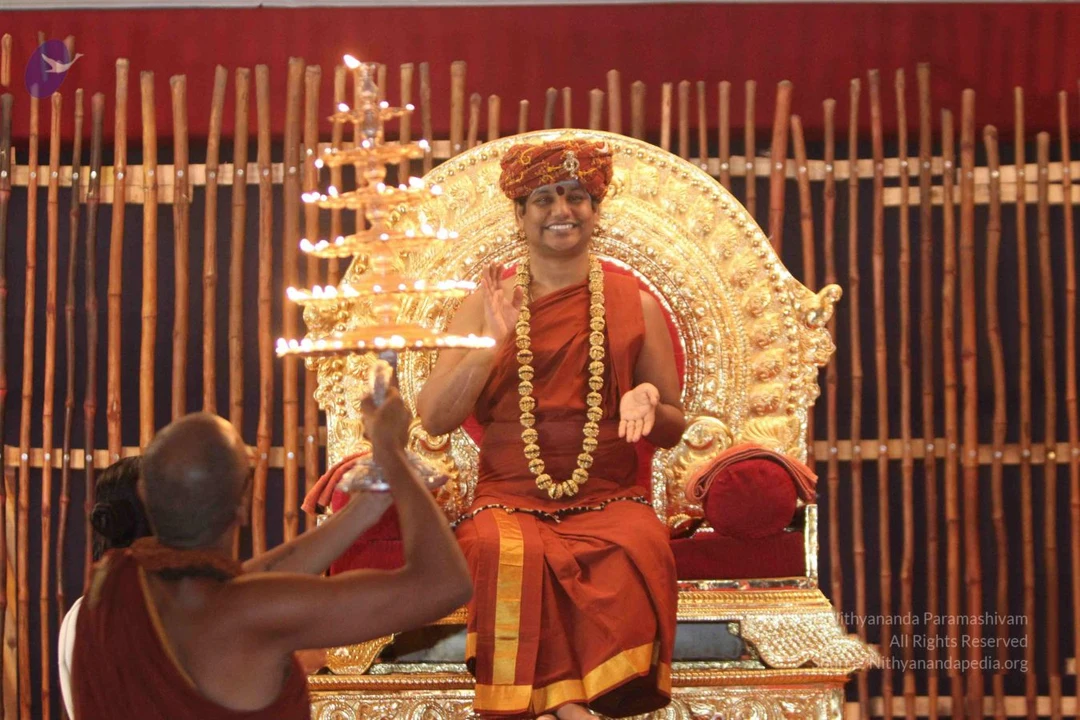
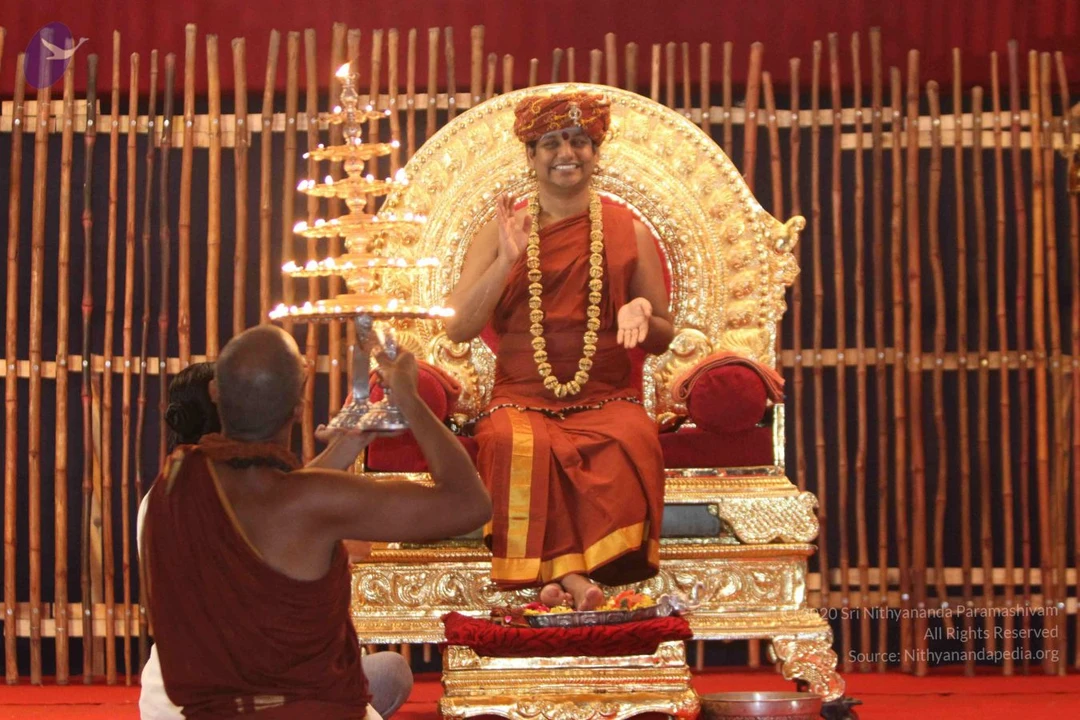
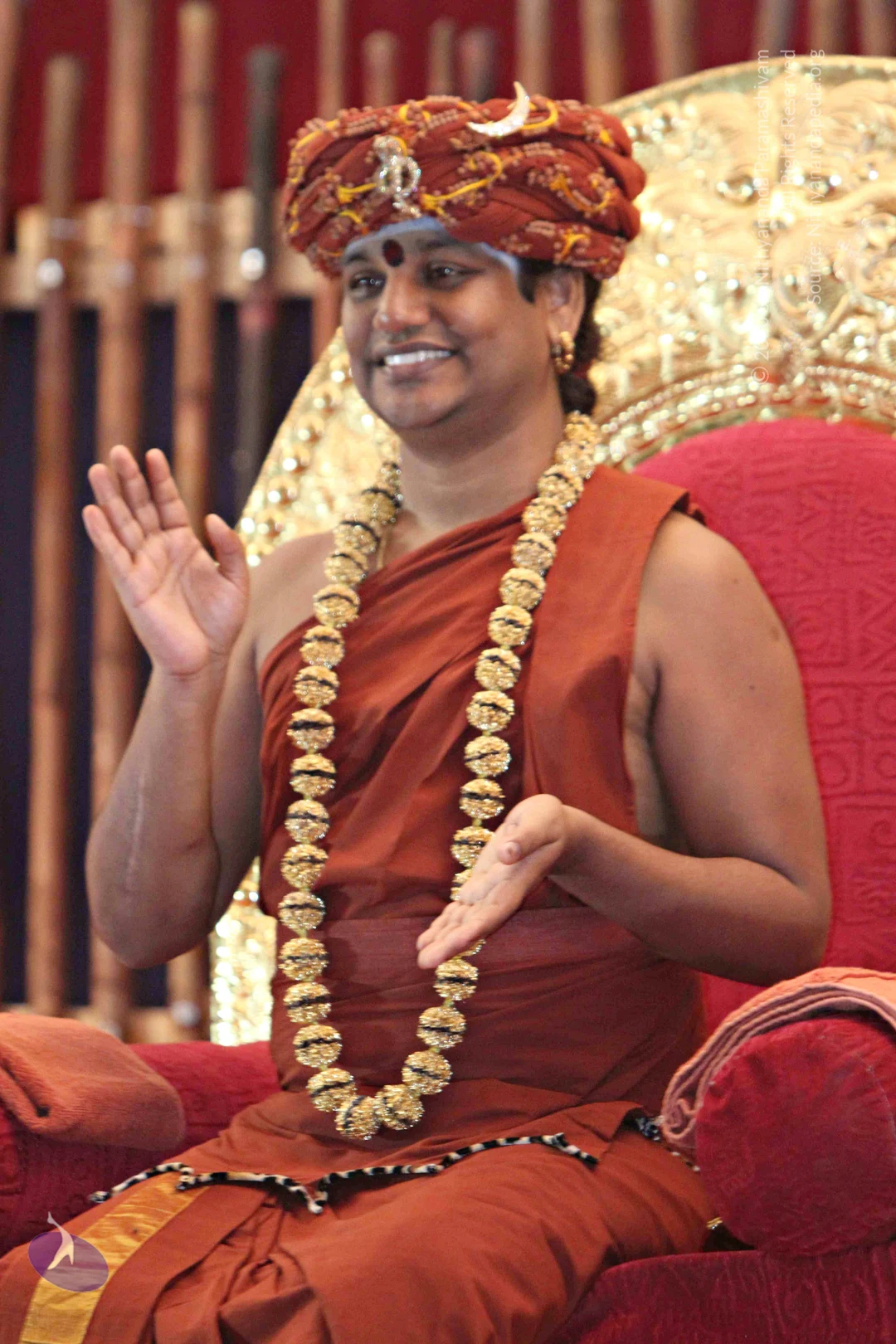
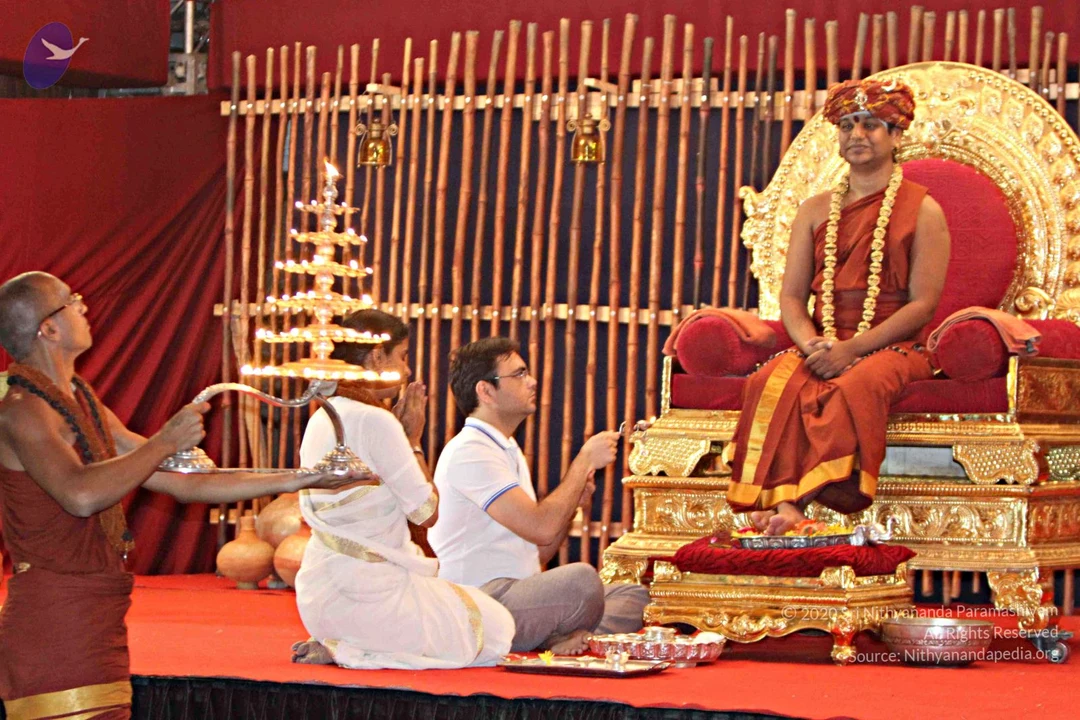
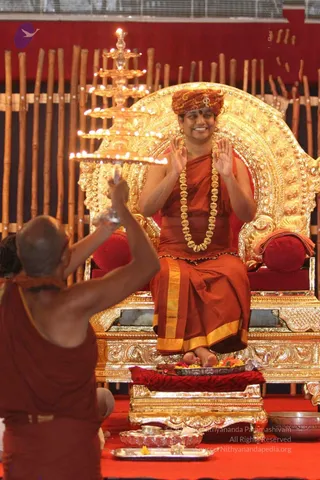
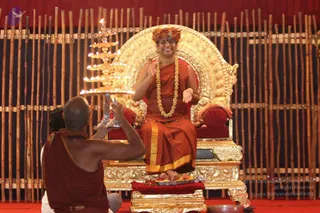
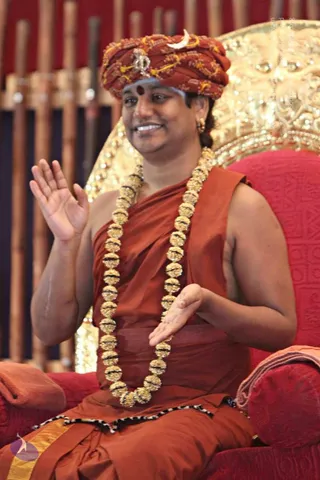
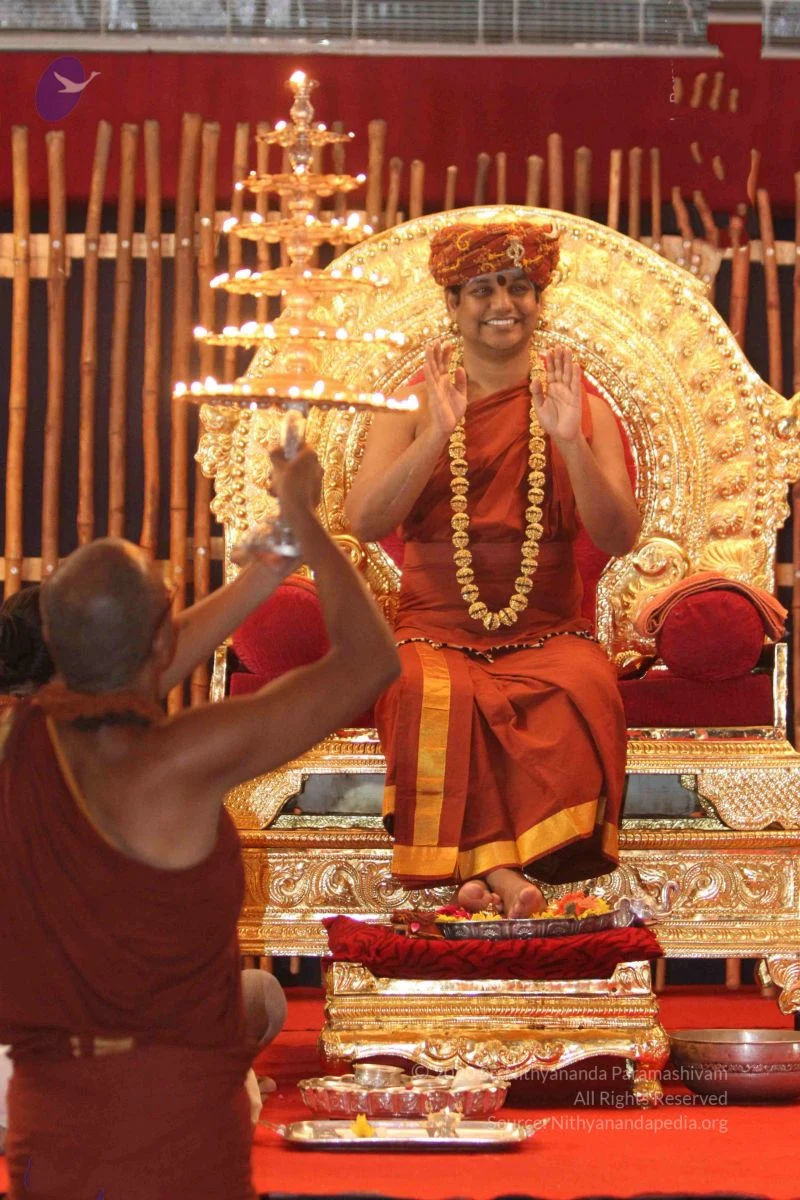
A photograph of a seated figure on an ornate gold throne with red cushions, in front of a bamboo-pole backdrop and red floor covering. The seated person wears an orange-red turban, an orange-red robe with gold border, and a long gold bead garland, and raises both palms in a blessing gesture while smiling. In the foreground, a bald priest in an orange-red garment with a gold-edged cloth holds up a tiered gold aarti lamp with lit flames toward the seated figure. Offerings of flowers sit on a red cushion and a brass plate before the throne, with a brass bowl and a silver tray with flower petals at lower right. Appearance-based probable Swamiji, seated on throne with orange-red robes, turban and gold garland, receiving aarti.A photograph of a smiling man seated on an ornate gold throne with a red cushioned seat, wearing an orange-red turban with a small gold ornament, a red-orange robe with a gold-bordered cloth, and a long gold bead necklace. His hands are raised in an explanatory gesture, and a red tilak mark is on his forehead. In the foreground at left, a bald man in orange-red robes raises a tiered oil lamp with several lit flames toward him. Bamboo poles and a red curtain form the backdrop. a person is seated on the throne as the central figure, with the lamp-bearer as a priest.A seated man in saffron-orange robes with a striped saffron-and-gold border sits on an ornate gold throne with a carved backrest, a red cushion beside him, and a gold-and-red turban. He wears a long gold-bead necklace and a red-and-gold tilak mark on his forehead, and raises one hand in blessing while smiling. In the foreground at left, a bald man in a red-brown robe holds up a tiered brass oil lamp with lit flames, an aarti offering. Behind them stands a backdrop of bamboo poles over a red curtain. Cues: an ornate throne, saffron robe, turban and gold beads for the seated man, who may be Swamiji (probable) as the page indicates.Photograph of a ceremonial aarti at a stage with a bamboo-slat backdrop. A seated figure on an ornate gold throne with a red cushion wears a saffron-orange turban, saffron robes with gold border, and a long garland of beads, smiling with hands raised. A bare-shouldered man in a maroon-red wrap in the foreground holds a tall multi-tiered brass lamp with lit flames toward the seated figure. A brass bowl with flowers and offerings sits on a red cloth at the base of the throne. The seated figure's distinctive orange turban, saffron robes and bead garland match the Swamiji (probable) appearance cues, seated as an honoured figure receiving aarti. The priest-like attendant holding the lamp is a devotee. Red carpet on the floor.A smiling man seated on a red upholstered chair before a gold-embroidered backrest and a wall of bamboo poles. He wears a rust-orange turban decorated with gold beadwork and a crescent ornament, a red bindi, orange-red sleeveless robe, and a long gold rudraksha-style bead mala with black stripes. His left hand is raised in a gesture while the other rests at his waist. Presentation cues match Swamiji (probable): ornate turban, saffron-orange robes, and ceremonial beaded mala on a throne-like seat.A photograph of a tiered silver aarti lamp with multiple rows of burning oil lamps, held up by a hand gripping its curved silver handle against a red background. Only the hand and forearm are visible; no person's face or full figure is shown. The lamp's several flame-lit tiers and ornate silver base are the main subject.

Kalpataru-Darshan-IA-Sessions

44 photosSource gallery
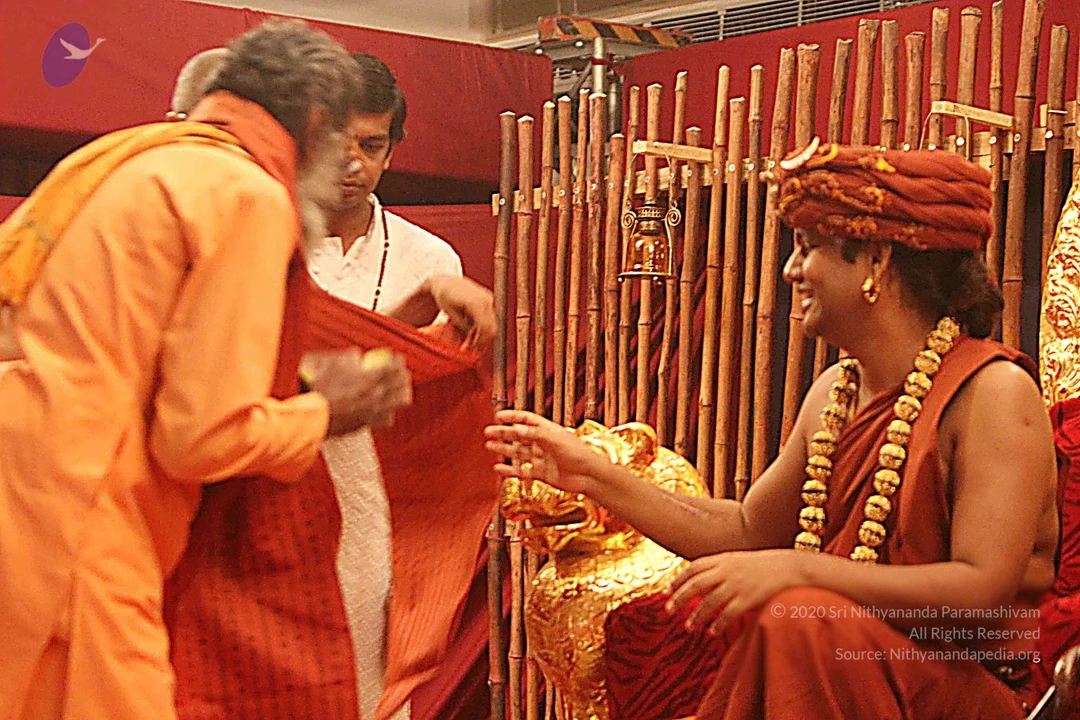
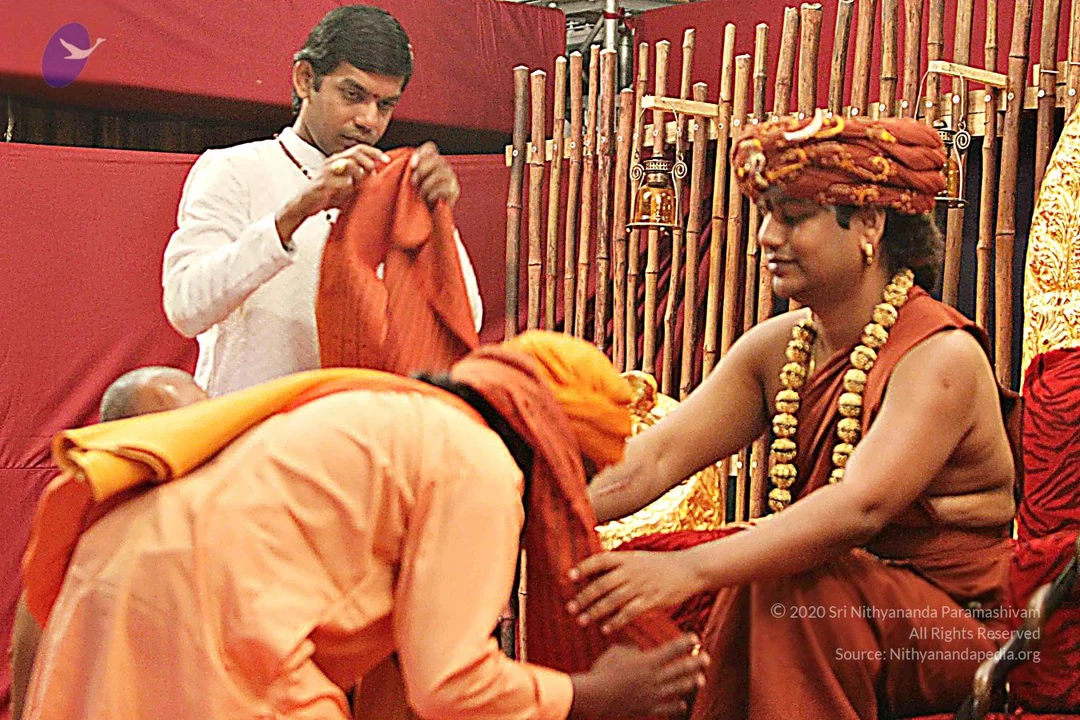
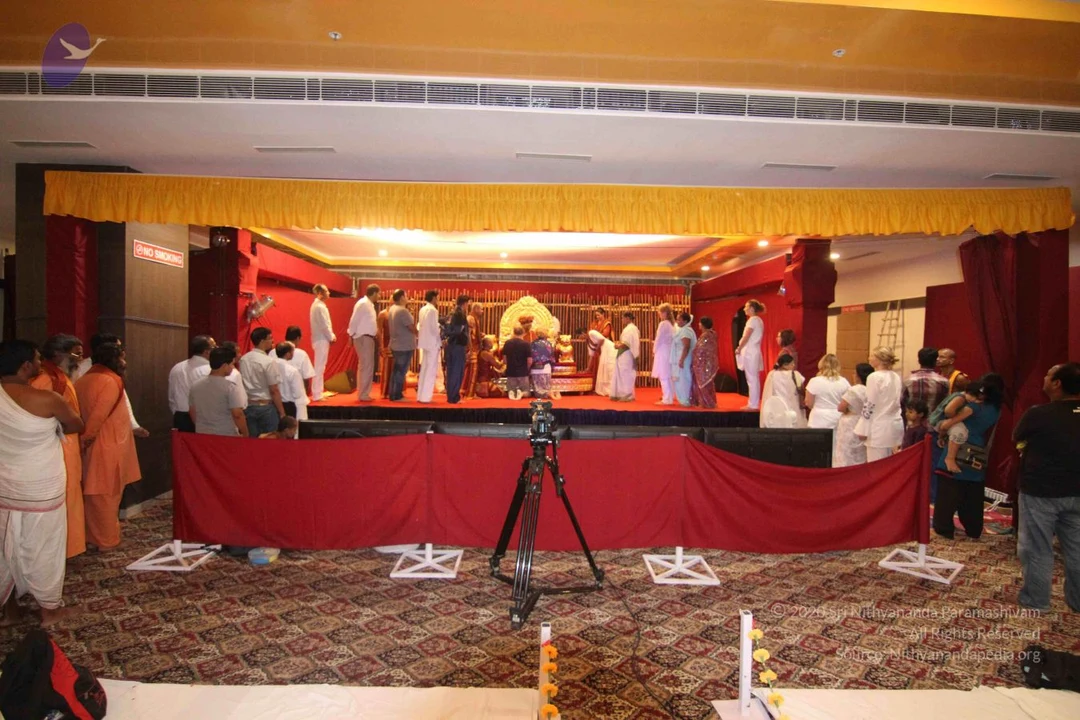
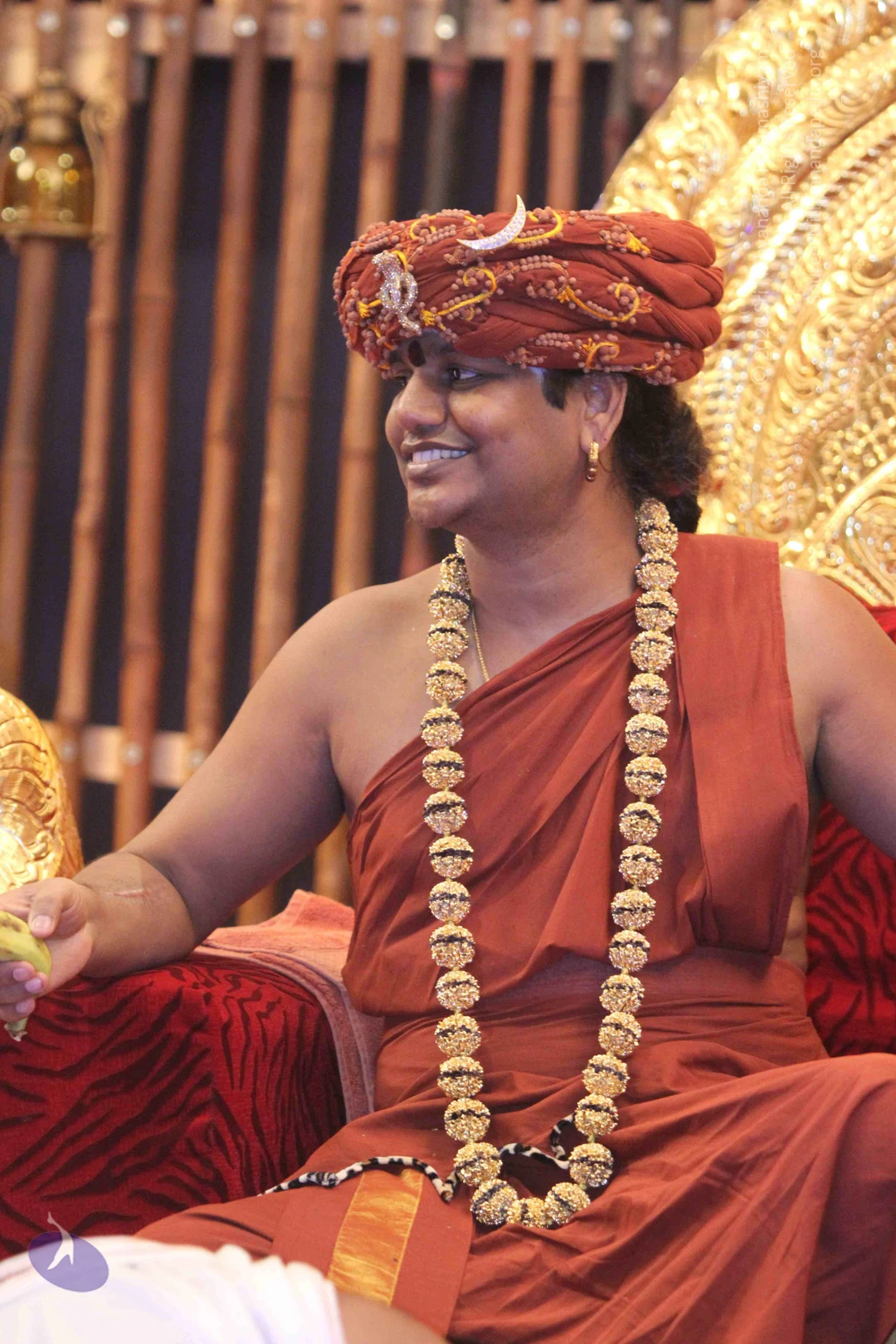
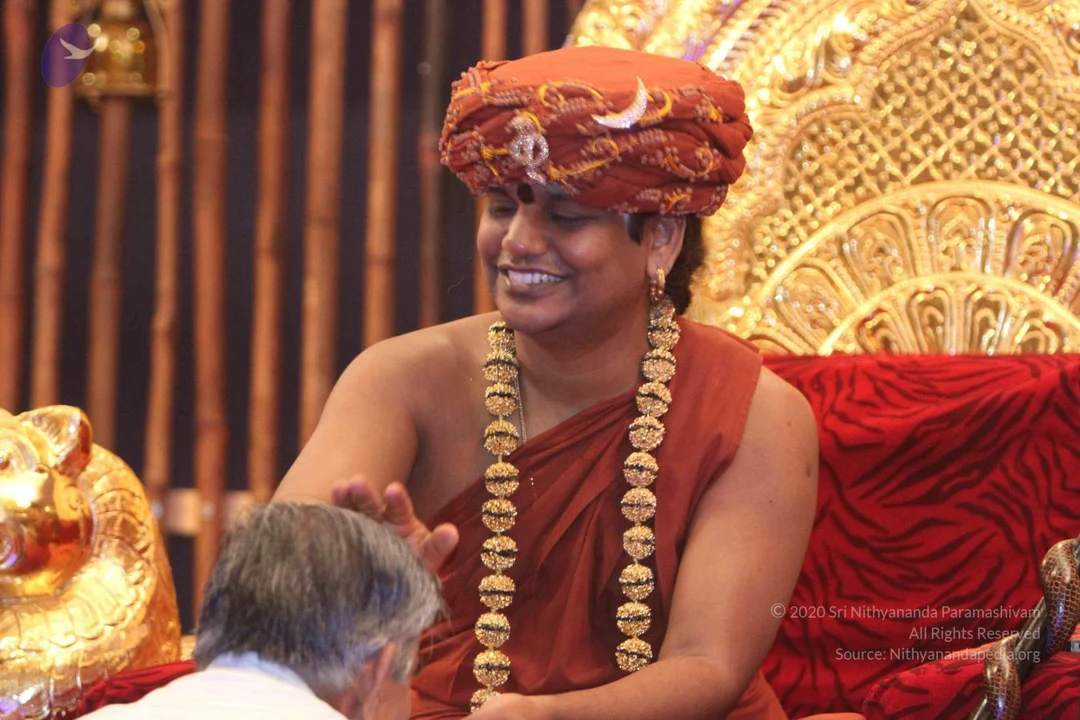
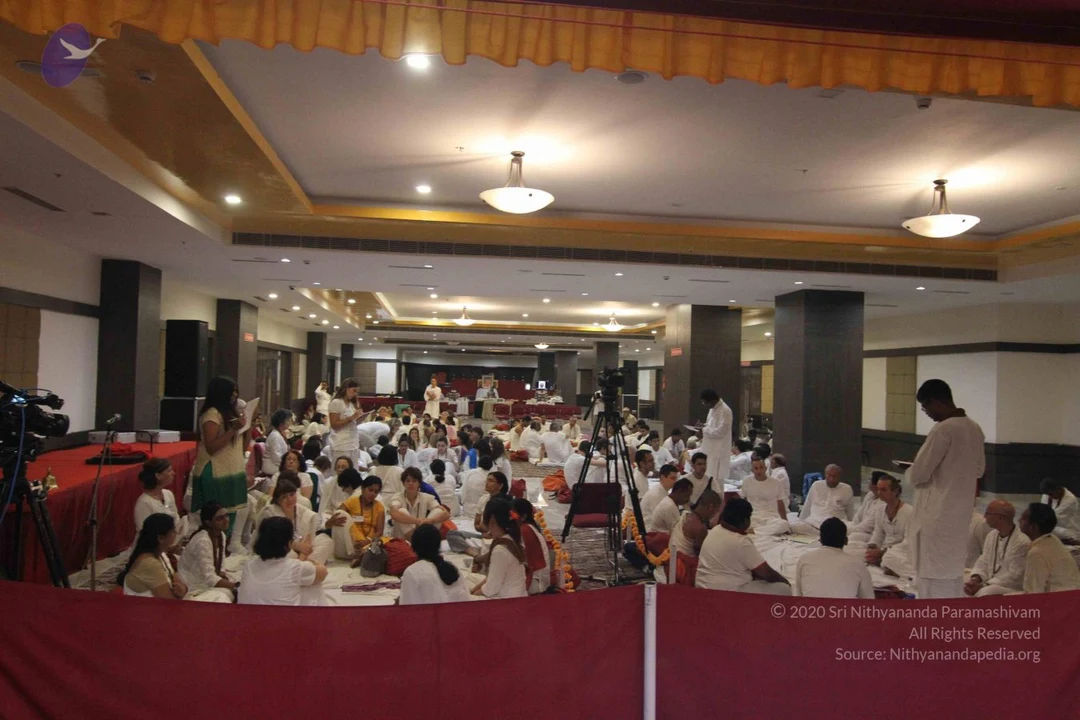
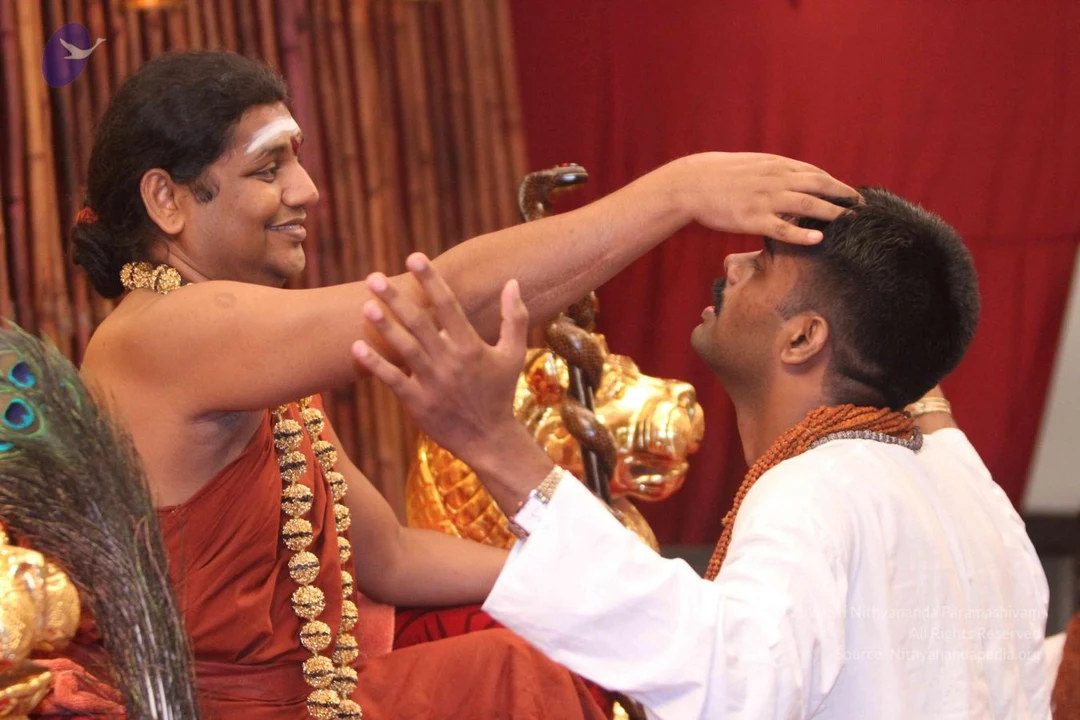
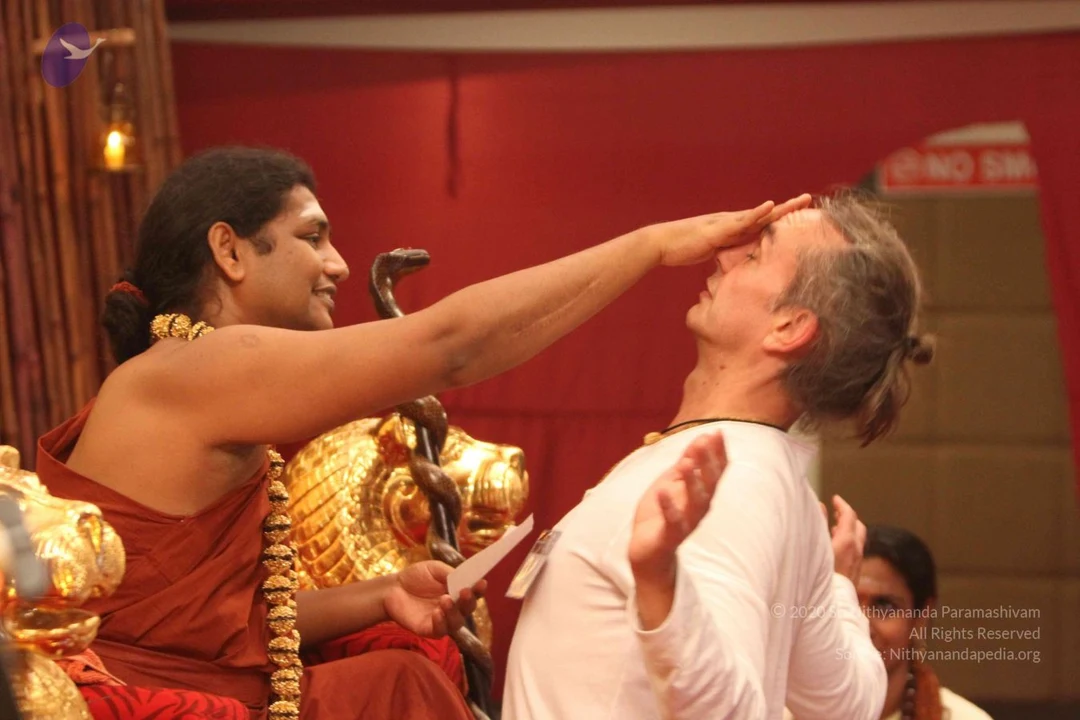
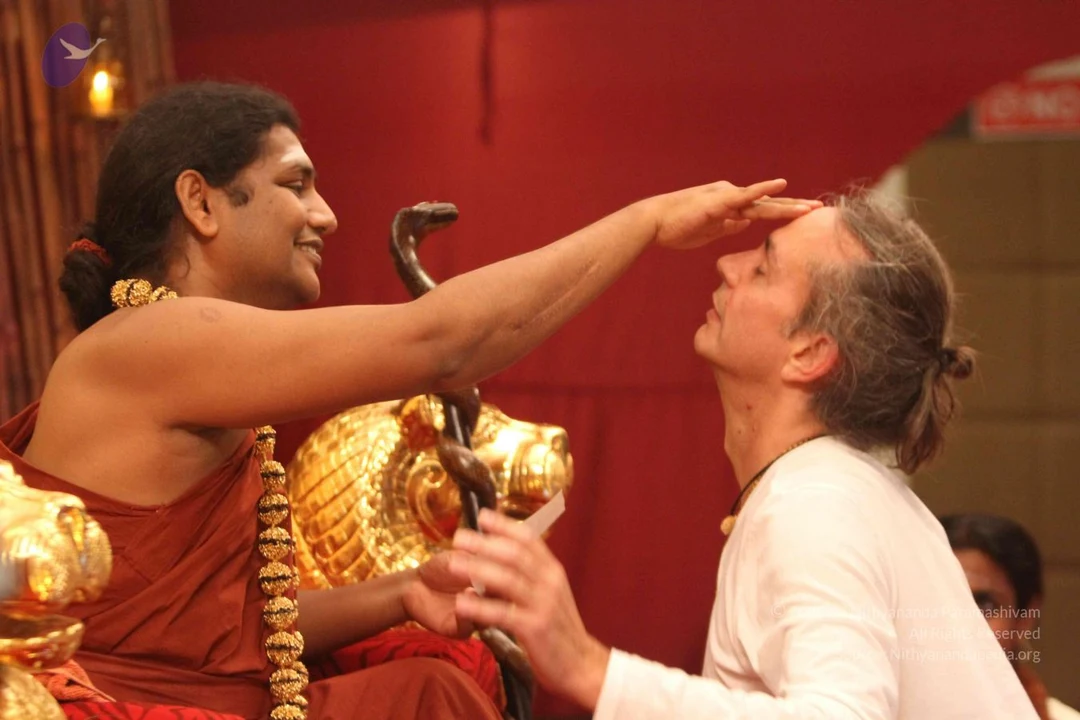
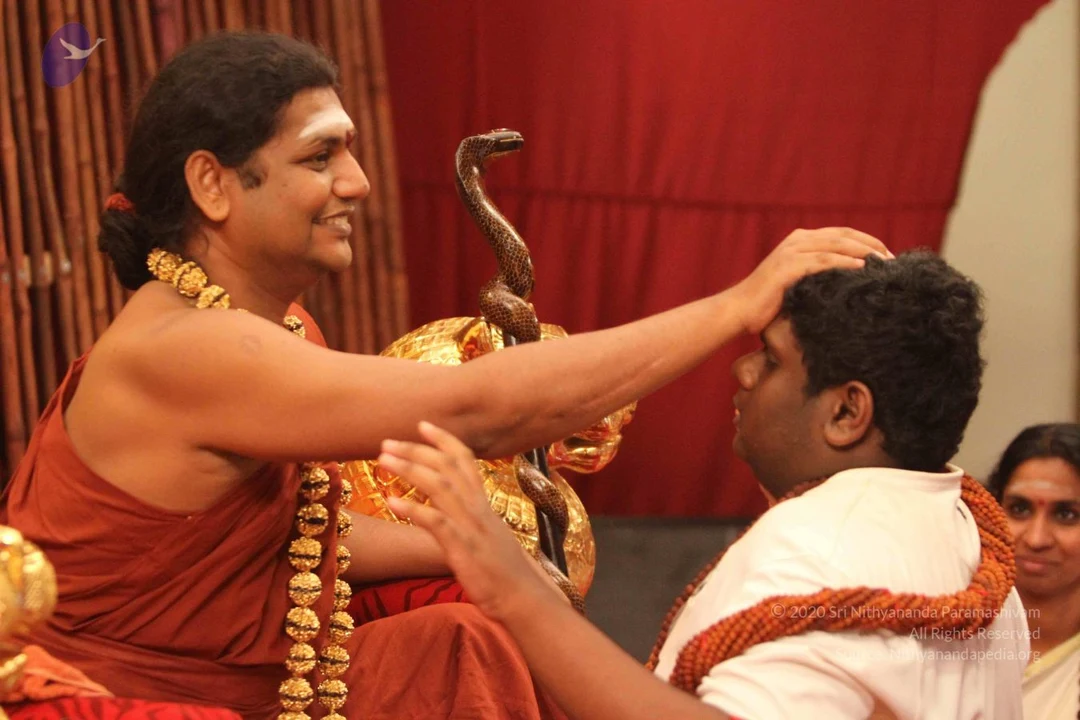
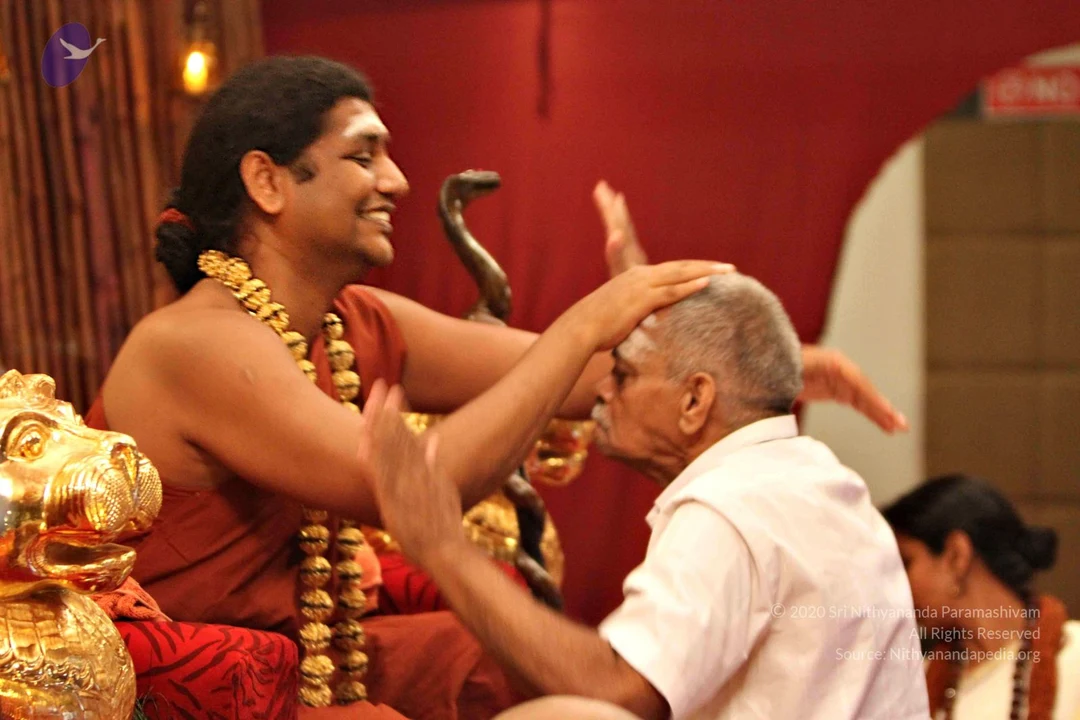
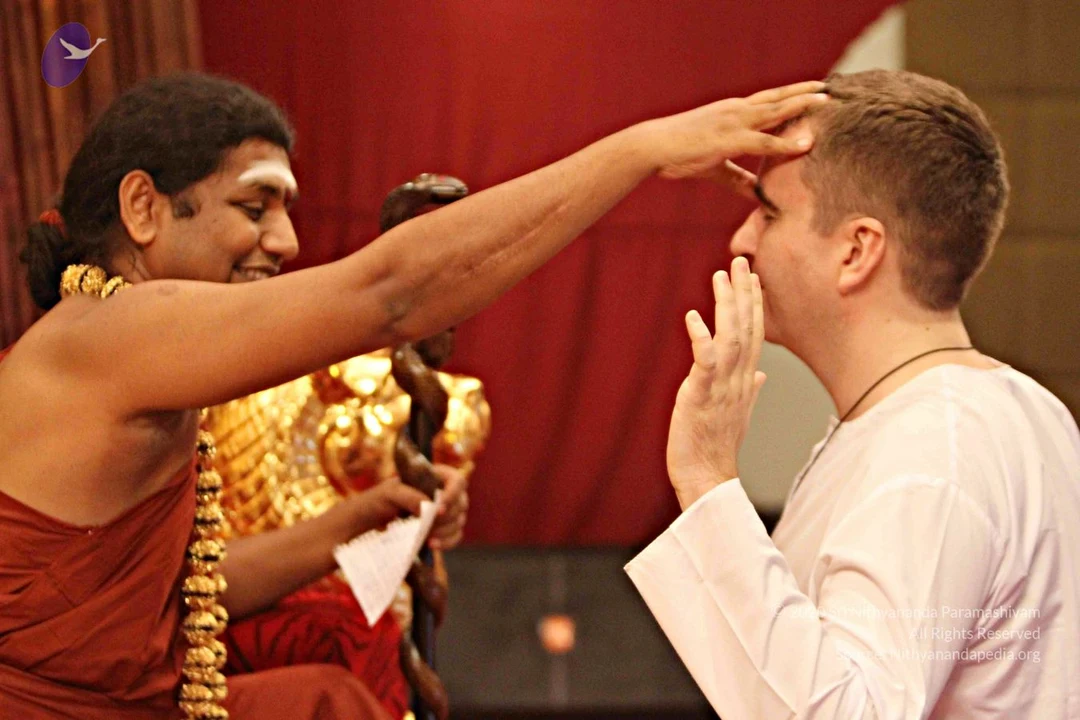
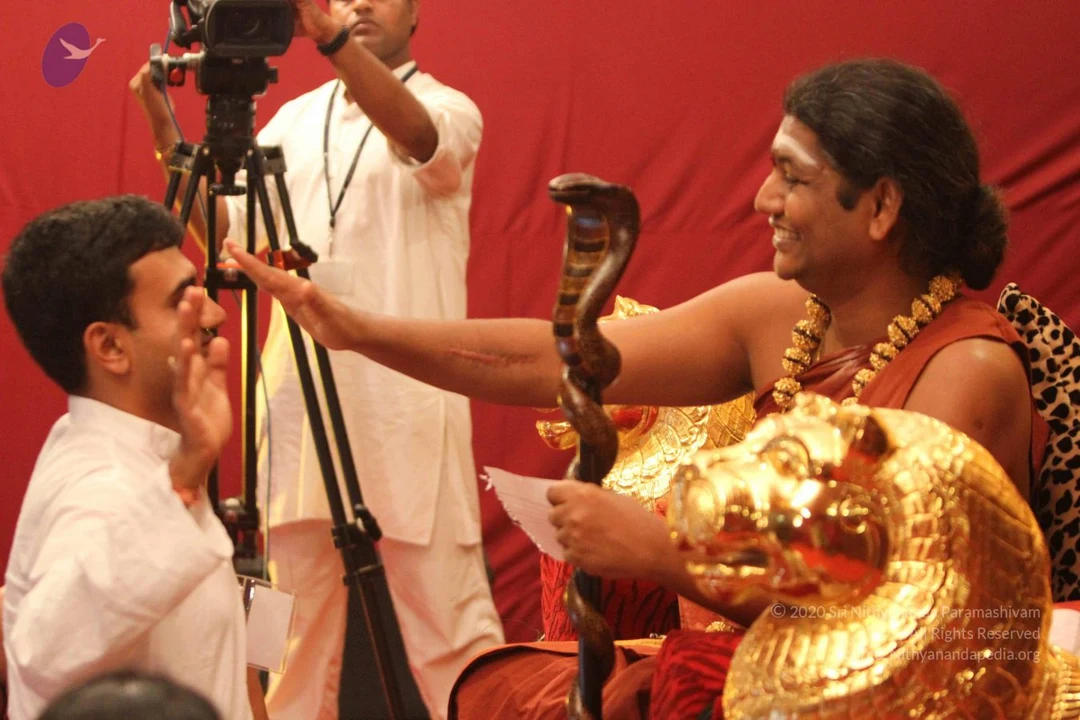
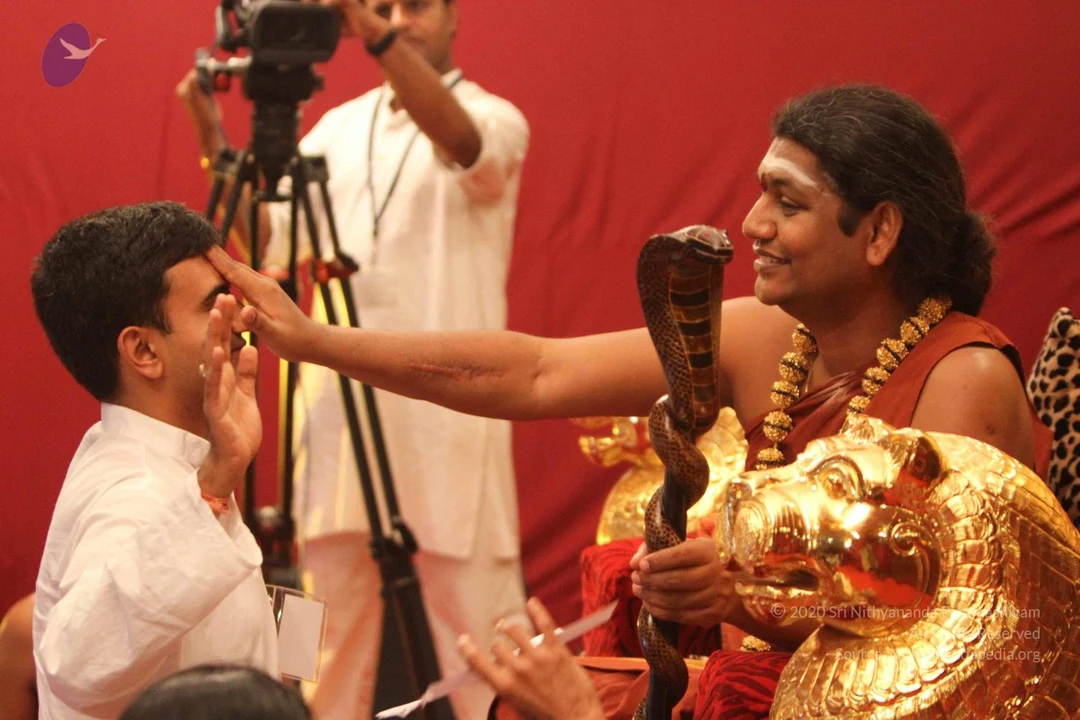
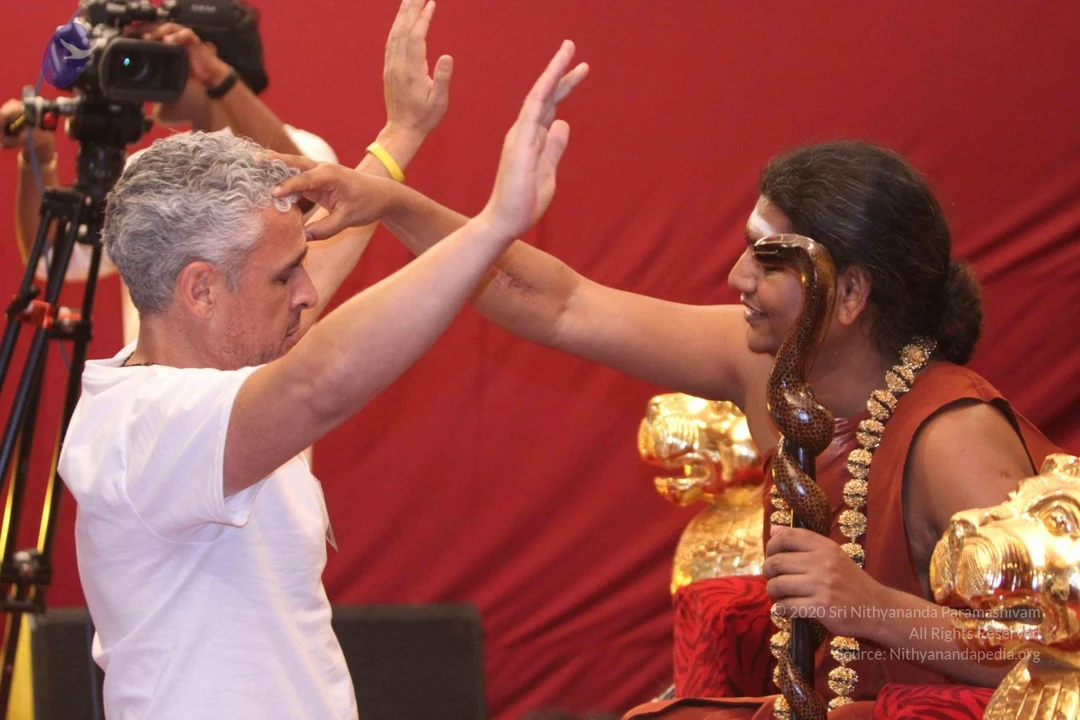
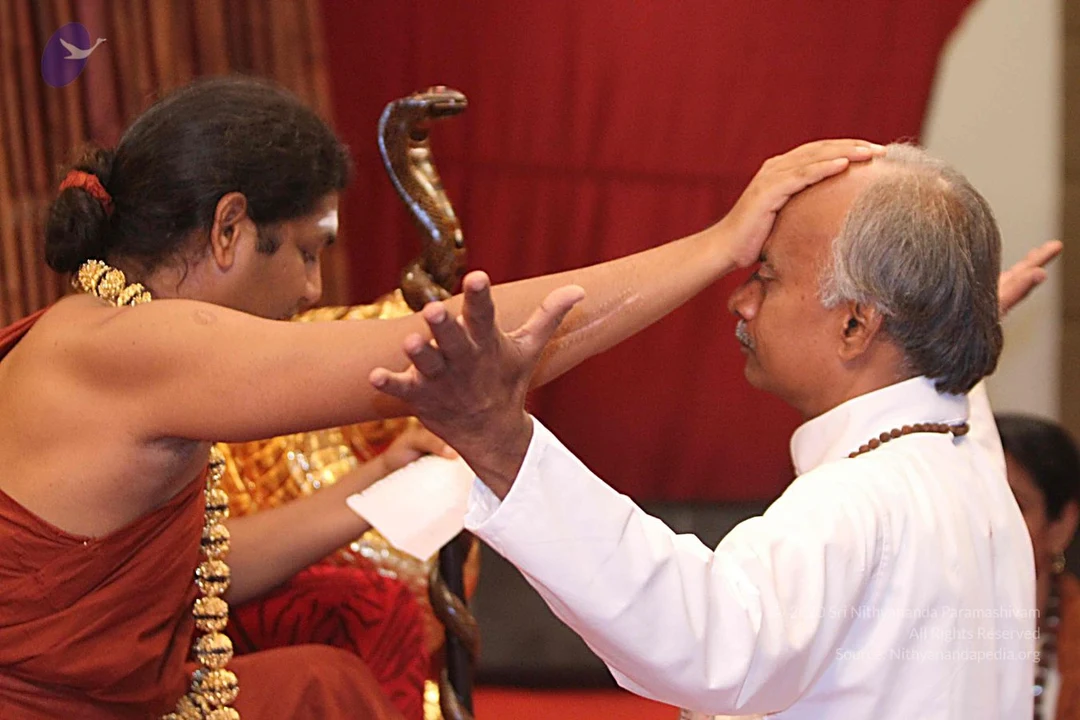
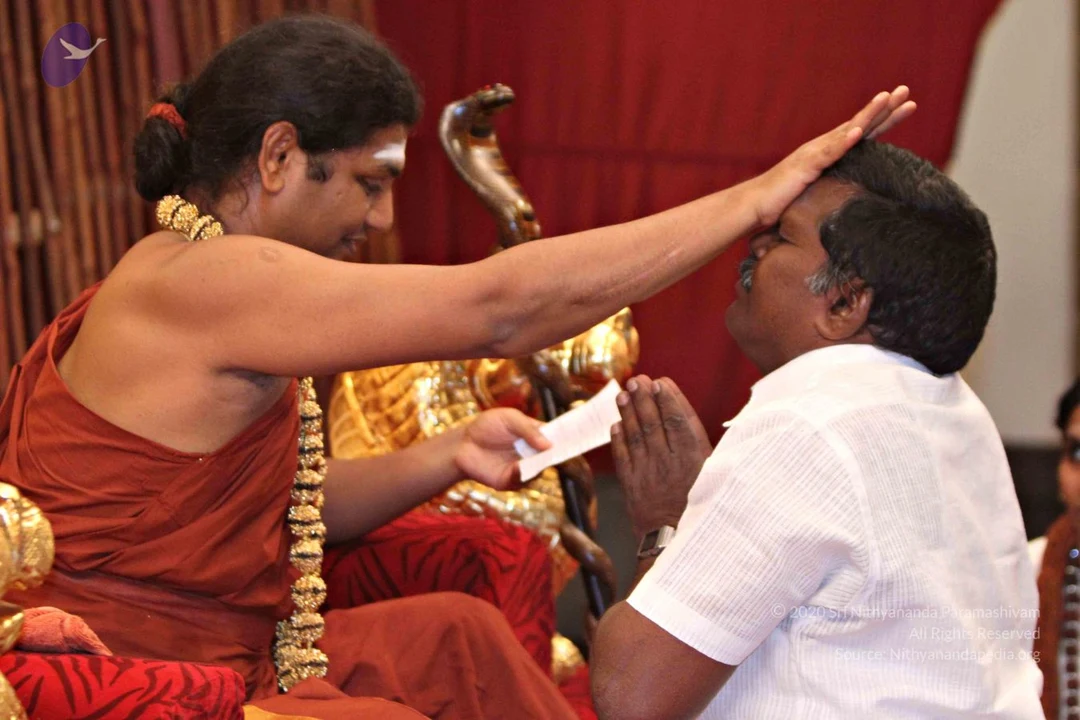
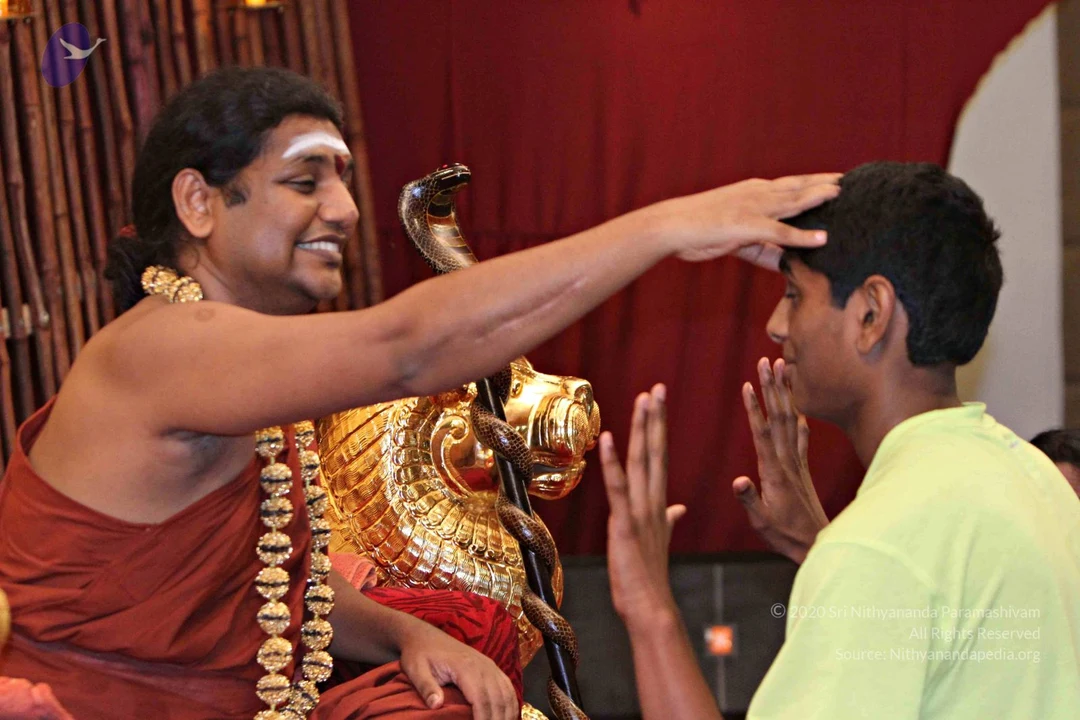
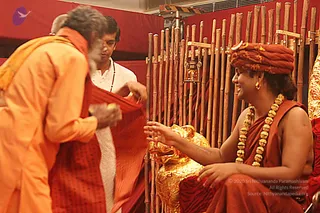
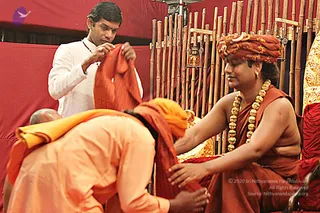
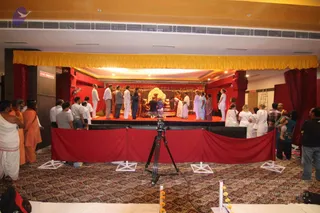
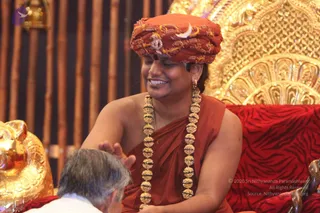
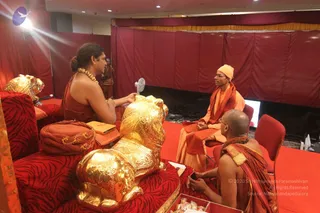
A seated figure in a red-orange turban, orange-red robe and a long gold-bead necklace smiles and gestures toward a gold-sheathed object on a throne-like seat beside bamboo screens and a hanging brass bell. A second person in orange robes leans in from the left, while a man in white with a dark shawl across his shoulder stands behind, adjusting the red cloth. Red fabric backdrop and a gold-leaf lion-like ornament complete the scene.A photograph of a ceremonial scene in front of a red draped backdrop and a row of bamboo poles hung with brass bells. On the right, a man with a crown-like orange and gold turban, rudraksha mala with large beads, gold earrings and a deep orange-red robe sits on a golden-patterned throne and rests his hands on the head of a kneeling devotee. The kneeling devotee, bent forward in an orange and yellow robe, receives the blessing. Behind them, a man in a white kurta holds up a folded orange cloth. Swamiji (probable) appears as the seated man, based on the turban, mala and ornate saffron clothing, shown in a blessing role.A wide view of an indoor stage set with red drapes, a gold valance and red carpet, where a golden throne-like seat with a large gold arched backdrop stands in the centre. Several people in white and pastel clothing gather around the stage, some with folded hands, while a camera on a tripod and a row of white floor stands with marigold-like flowers frame the foreground. Audience members in mixed western and Indian dress, including a man in an orange robe and a priest in a white dhoti at left, stand in the surrounding hall. Presence of a clear appearance-based a person candidate is not established.Swamiji (probable) seated on an ornate gold throne, smiling and turning to his right. He wears a rust-red embroidered turban with a silver crescent ornament, a rust-red sleeveless wrap, and a long necklace of large gold-toned beads with dark rudraksha-style beads. A hand holding a yellow fruit is at the left edge, and a red tiger-striped cushion lies beside him. Behind him are bamboo-like poles and a carved gold backdrop.A photograph of a smiling figure seated on a gold-and-red throne in front of an ornate gold backrest, wearing a red-orange turban with a silver crescent ornament, a bindi, saffron-orange robe and a long gold-beaded mala. A gilded lion figure stands at the left and a red zebra-print cushion covers the seat. A man with grey hair in a white shirt bends forward at the lower left, one hand raised toward the seated figure's hand. Appearance-based candidate: Swamiji (probable), wearing a turban, saffron robe and ornate gold beaded necklace, seated on a throne.A photograph of a stage set with deep red draped curtains and red carpeting. On the left, a man with hair tied in a bun, bare-chested and wearing a saffron-orange cloth with a floral garland, sits on a red tiger-striped throne beside a large gold lion statue and gold cushions, gesturing with one hand. Two men in saffron-orange robes sit on the right: one wears a saffron head cloth and glasses, and the other, shaven-headed and bare-chested with a saffron wrap, holds a mobile phone beside a tray of small packets. A small electric fan stands between them and a bright stage light is visible at the upper left.

Evening-Darshan

49 photosSource gallery
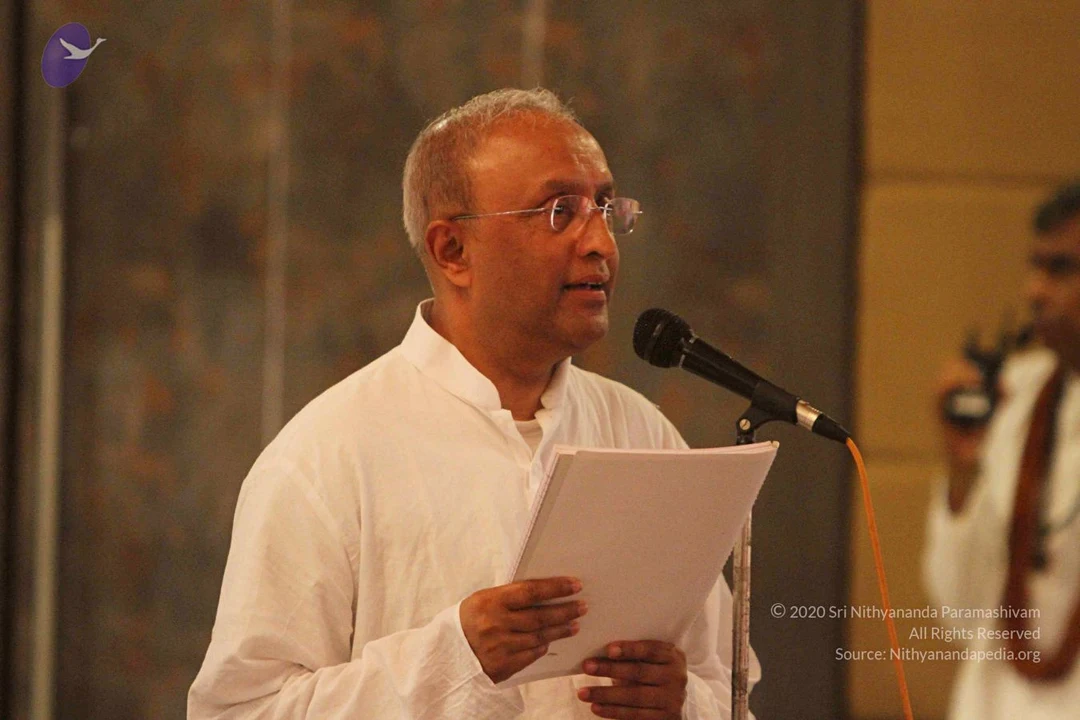
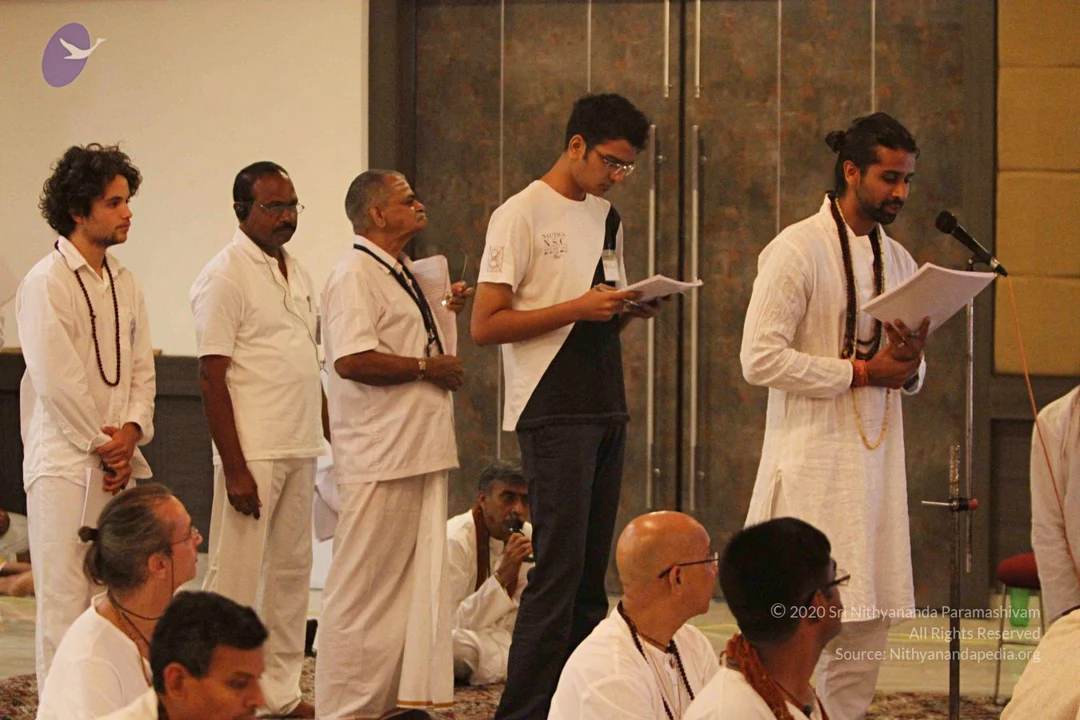
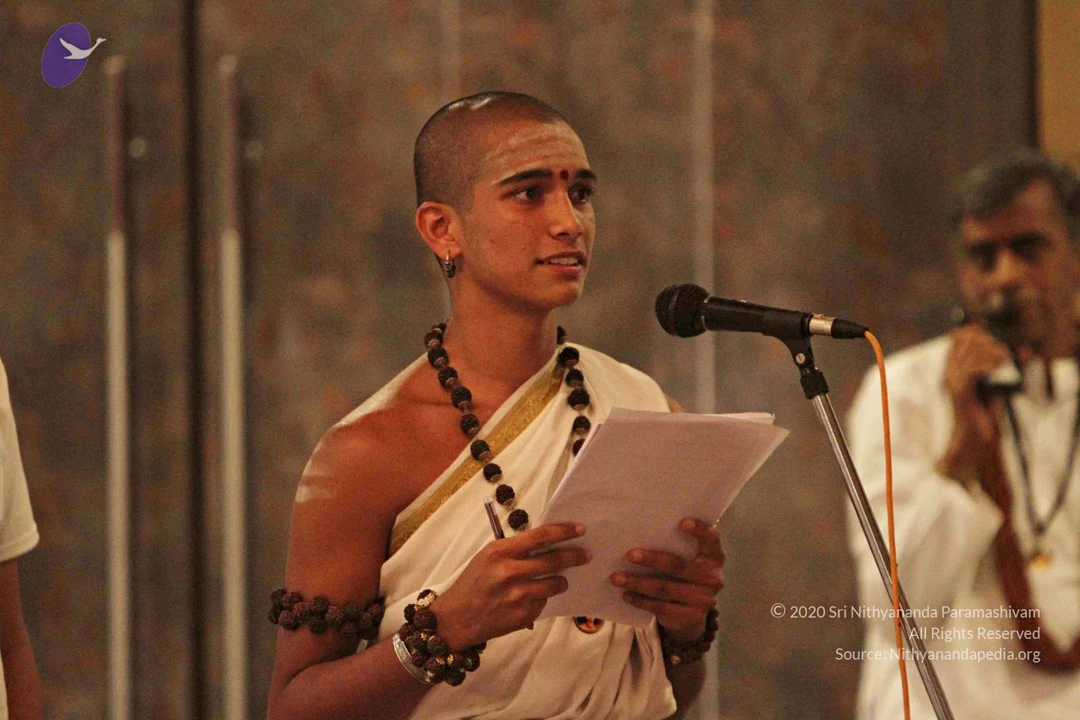
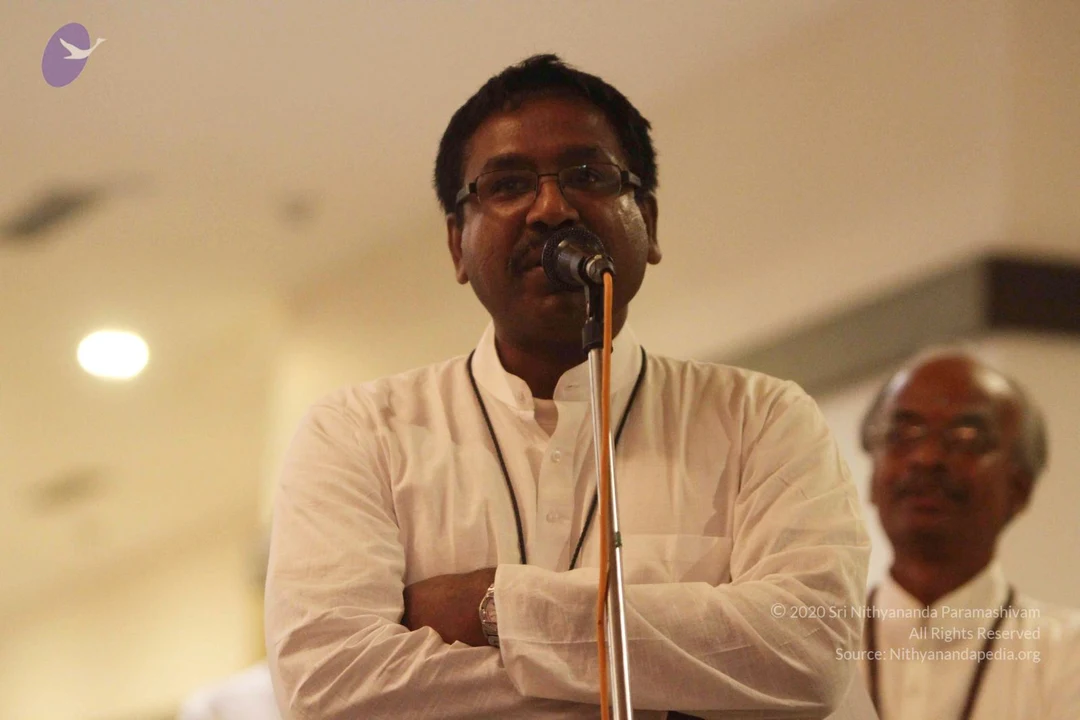
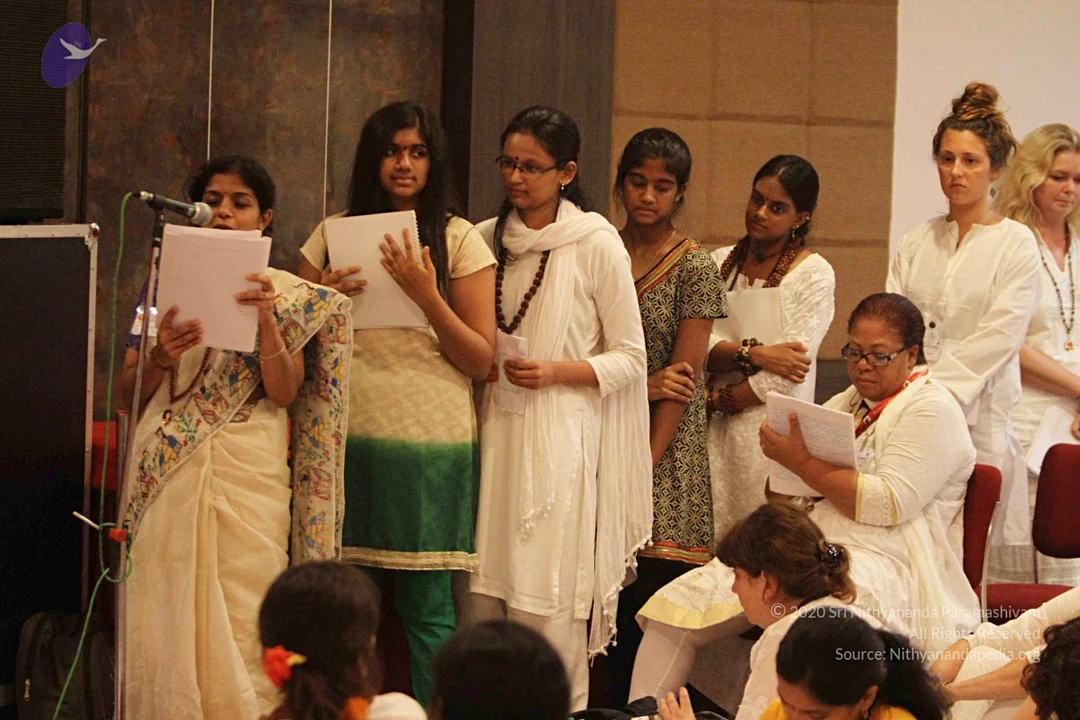
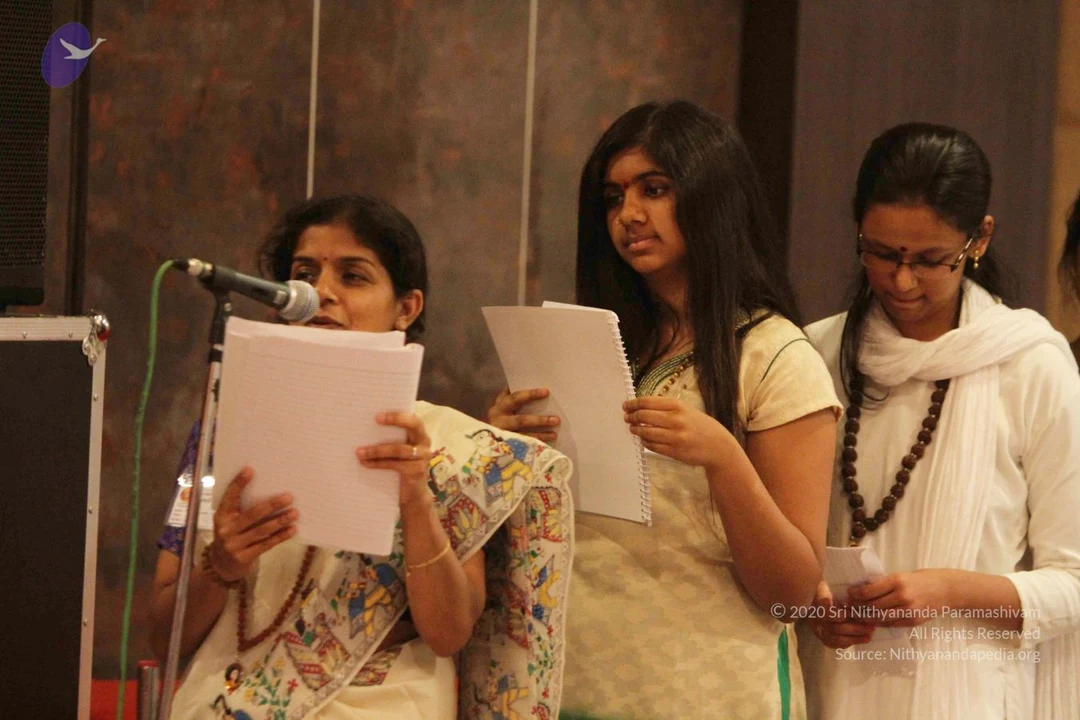
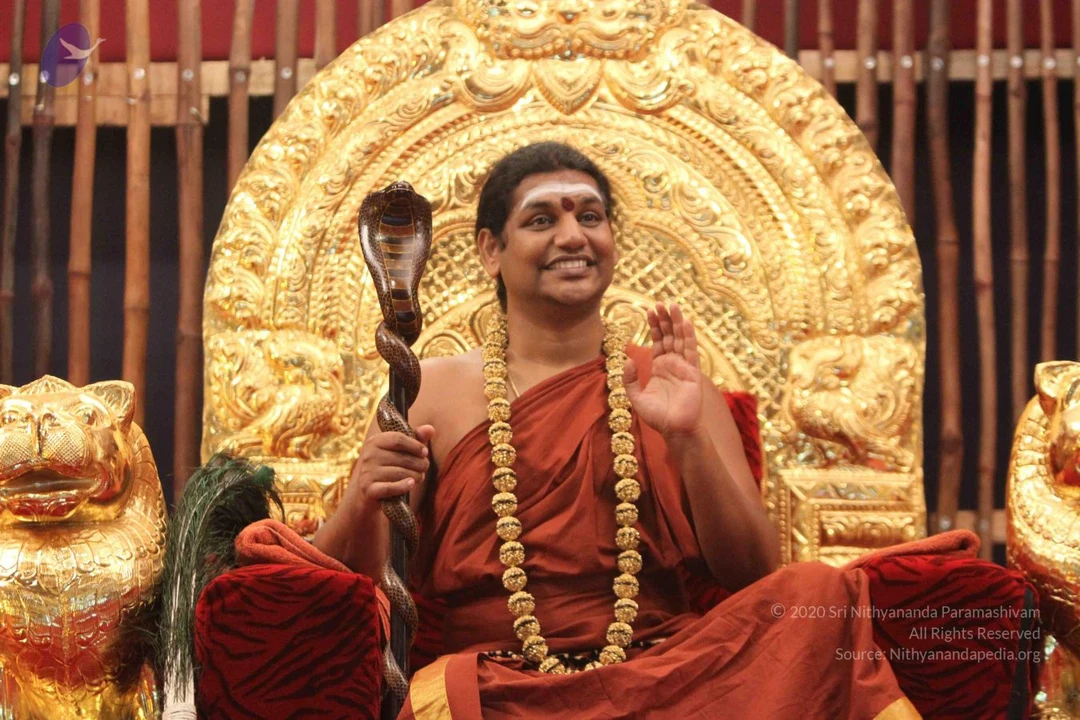
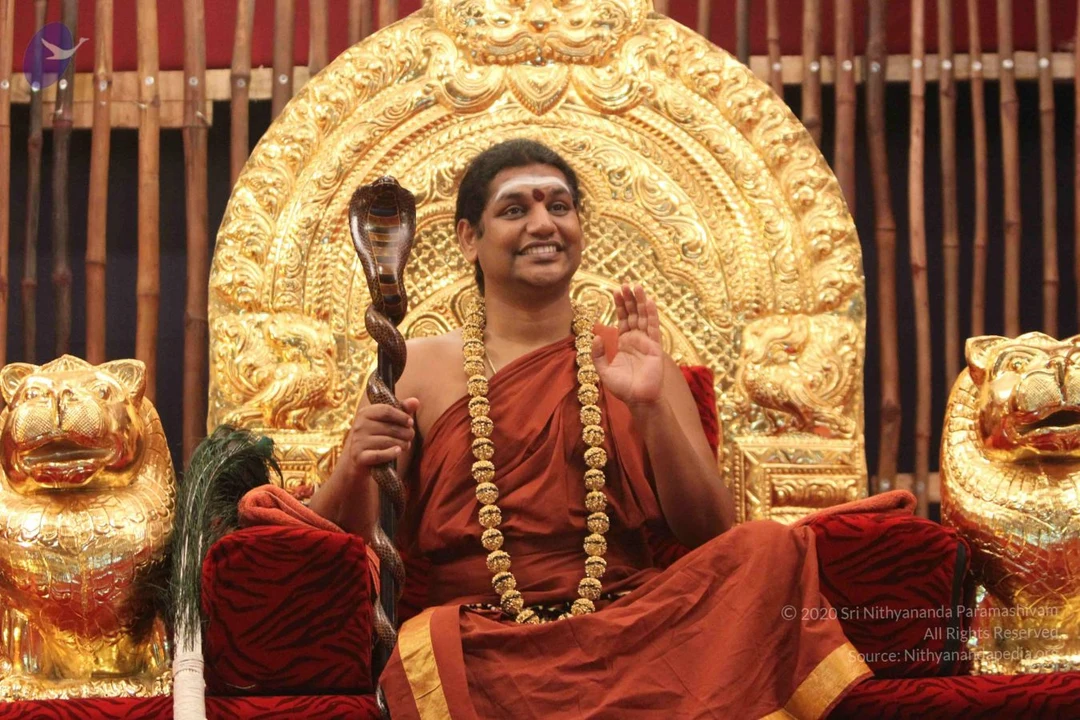
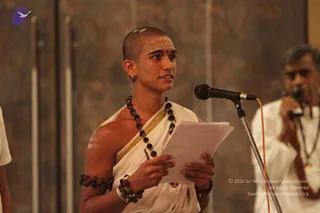
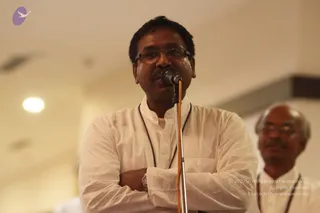
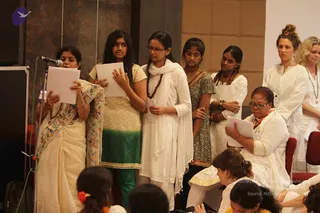
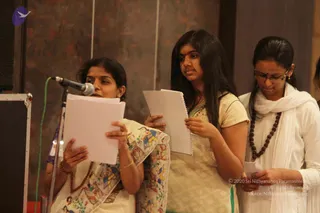
A shaved-headed young man in white ritual cloth with a gold border stands at a microphone on a stand, holding printed pages and reading aloud. He wears a long rudraksha mala around his neck, rudraksha bracelets on his wrists and an armlet, with a red bindi on his forehead. Behind him on the right, an older man in white clothes and a mala holds a microphone and stands with folded hands. The background is a wall of dark stone-like panels. The young man appears to be a speaker or reader rather than a person with confirmed identity, and no a person candidate is established by clear appearance cues.A man in a white kurta with a mandarin collar and a dark beaded necklace stands with arms folded behind a microphone on an orange stand, appearing to speak to an audience. He wears glasses and a wristwatch. A second man in white, slightly out of focus, stands at the right edge of the frame. The setting is an indoor hall with a ceiling light. Appearance cues are limited and the presenter's identity cannot be confirmed from the image.A group of women stand and read from printed sheets at a microphone in an indoor hall. The woman at left, in a cream saree with a colourful patterned border, reads aloud at the mic stand. Beside her a young woman in a green and white kurta holds papers, and a woman in a white kurta and white shawl with rudraksha beads wears glasses and reads. Further right a young woman in a green patterned kurta and a woman in white clothing with a rudraksha mala stand with papers. A seated woman in white with glasses and a red shawl reads from a sheet, and other white-clad participants stand at right. Audience members sit in the foreground.Three women stand at a microphone on a stage with a dark textured wall behind them, reading from sheets of paper. The woman on the left wears a cream sari with colourful painted border motifs and a red-beaded necklace, and she holds a white sheet while speaking into the mic. The middle woman in a pale yellow kurta and dupatta holds a spiral-bound notebook. The woman on the right wears white clothing with a white shawl and a rudraksha mala, wearing glasses and holding a small paper. No a person candidate is visibly present, so the scene shows devotees reading aloud at an event.A seated man in saffron-orange robes sits on an ornate gold throne with a gold-leaf arched back, flanked by golden lion statues and bamboo poles behind. He wears a long necklace of large gold beads and a tilak on his forehead, holds a dark cobra-shaped staff in his right hand, and smiles toward the camera. A peacock-feather fan rests on the left.A seated man in saffron-orange robes sits cross-legged on an ornate gold-and-red throne with golden lion figures at each side and a golden arched backdrop. He wears a multi-strand gold-beaded necklace and a red-and-gold dhoti border, holds a dark carved staff with a snake-head top, and a peacock-feather fan rests beside him. He has a red tilak on his forehead and smiles. Bamboo poles form the background.

Temple

12 photosSource gallery
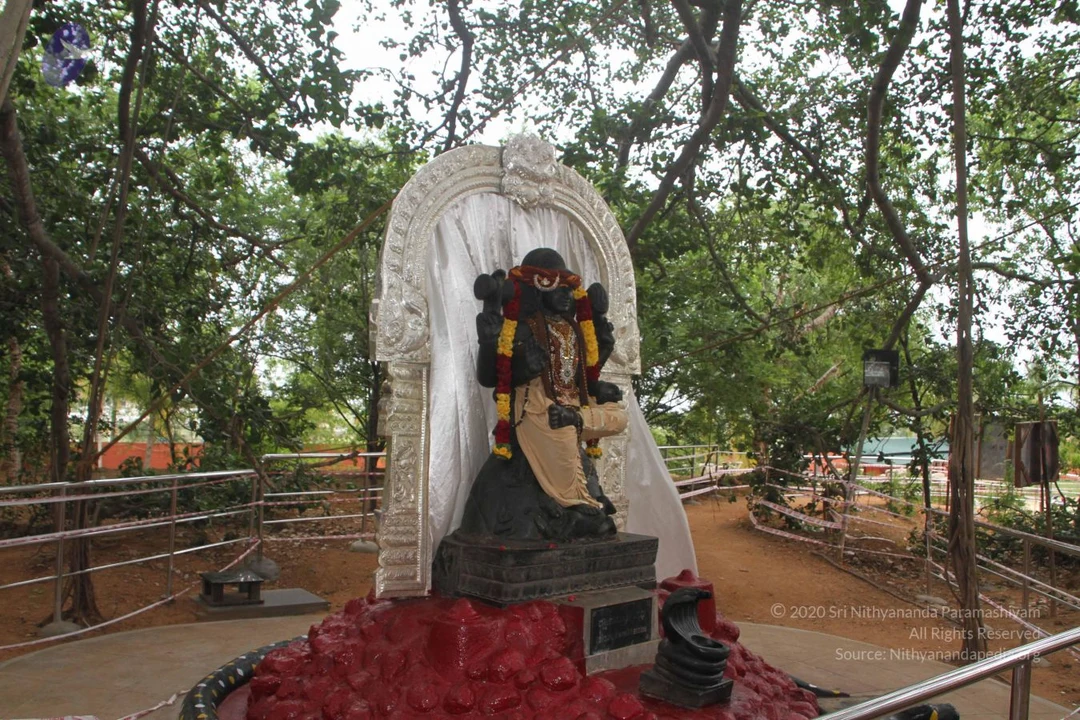
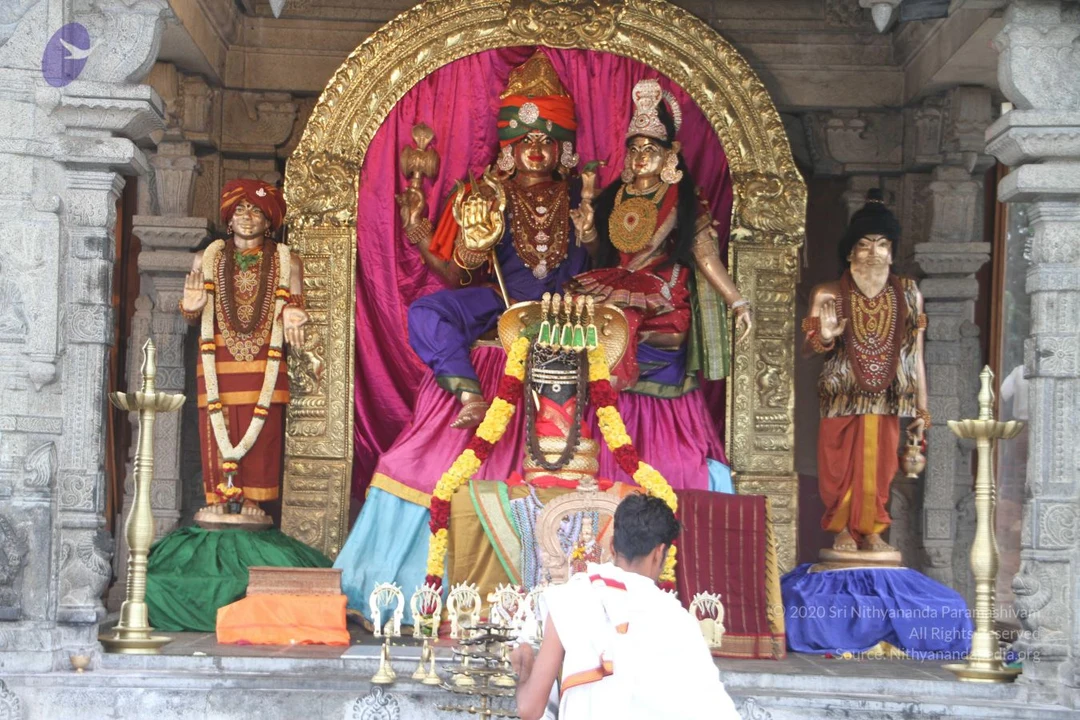
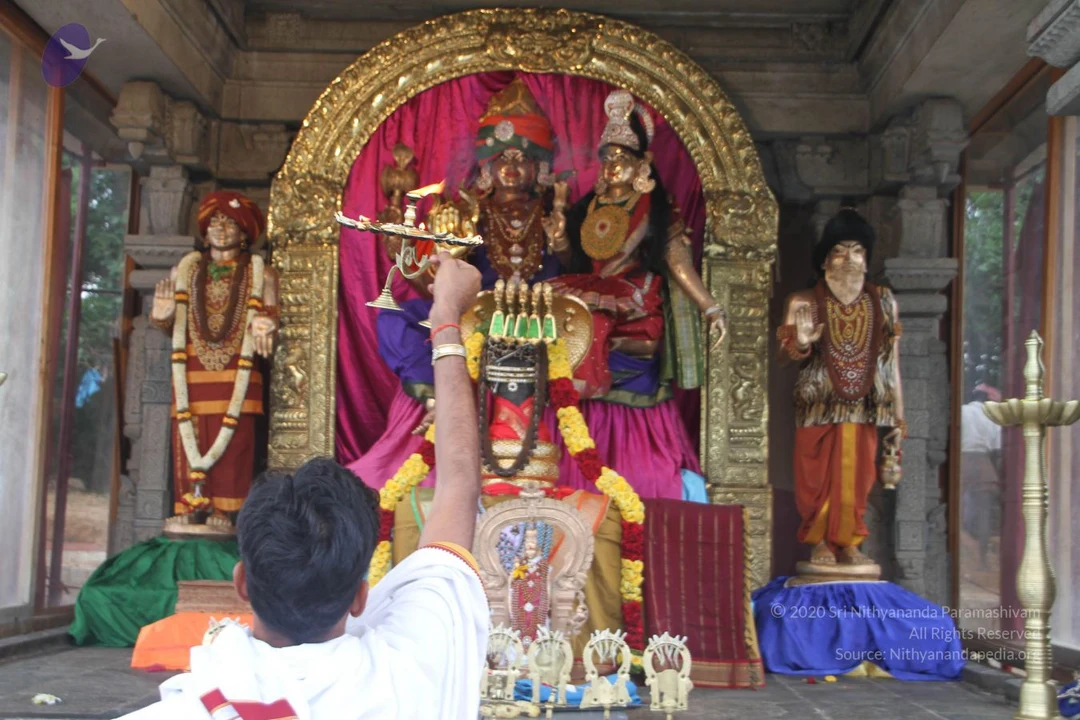
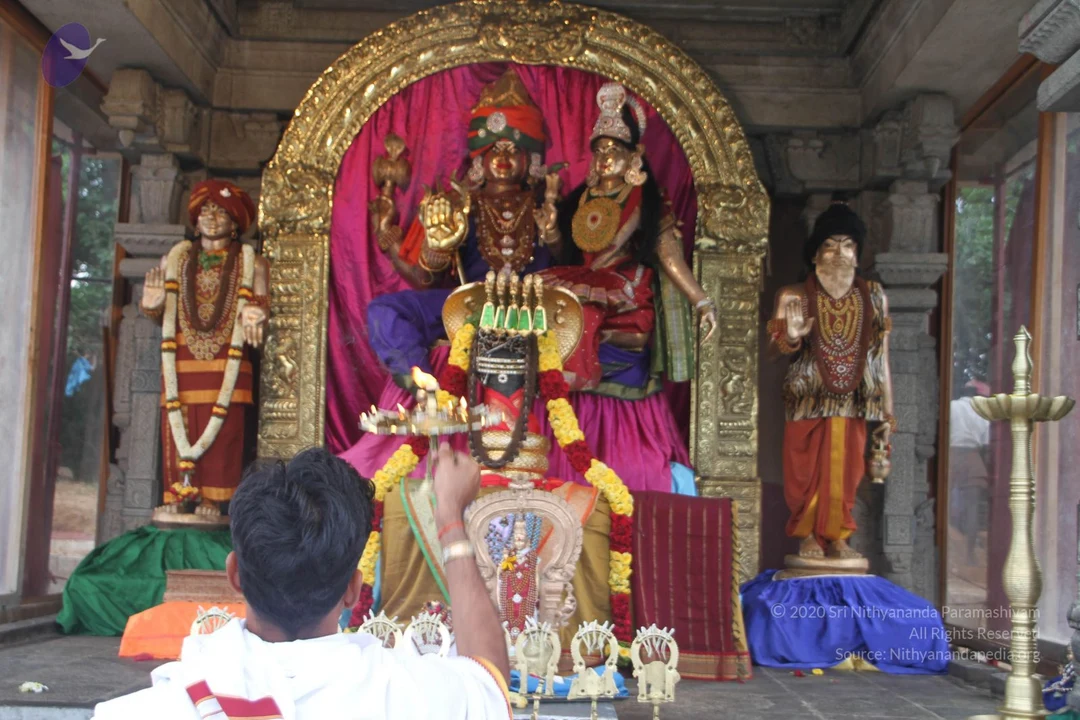
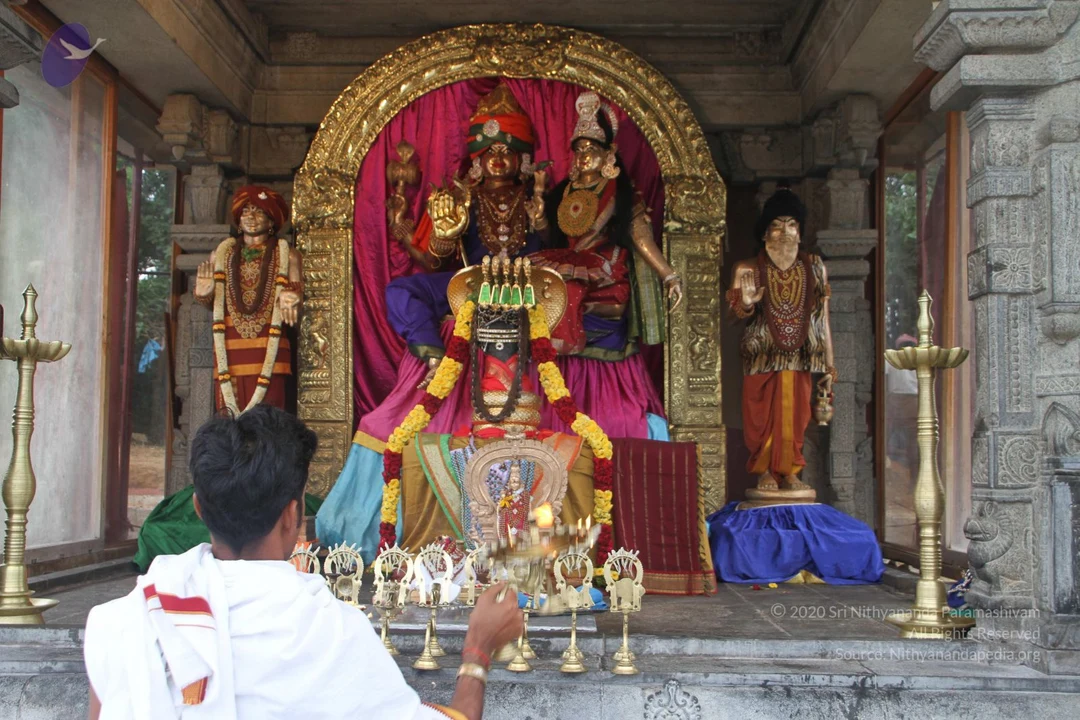
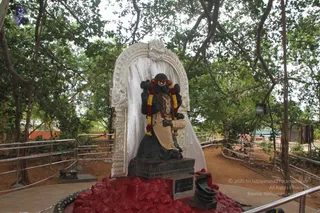
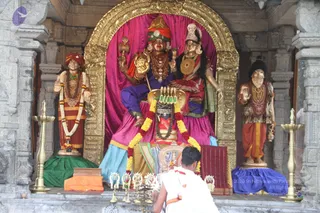
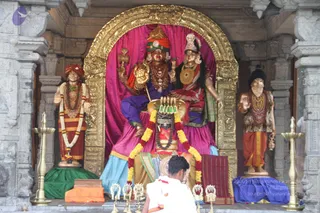
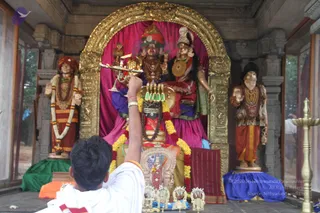
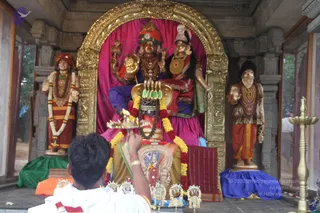
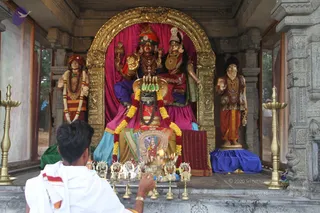
A dark stone deity murti stands in an open outdoor shrine beneath a dense canopy of large trees. The black figure wears a red and yellow marigold garland and an ornamented cloth around its waist, with a small tilak mark on the forehead. It is set on a raised red-draped base in front of a white silver-toned arched backdrop with draped white cloth. A black shivalinga-style stone sits to the right of the base, and metal railings and sandy ground surround the shrine. No people are visible.A photograph of a shrine niche with a golden arch framing a deity murti of Shiva and Parvati seated together on a pink-draped backdrop. The seated pair wear purple and red garments with garlands, rudraksha-style beaded necklaces and crowns; a pair of standing attendant statues flank them, one in red and orange with a garland and the other bare-chested with beads. A Shiva linga stands in front, decorated with yellow marigold garlands and a row of green-tipped offerings. A devotee in white dhoti and cloth stands at the base of the shrine with hands together, while brass oil lamps stand on either side. Ornate grey stone pillars frame the scene.A shrine interior with a gilded arched niche framed by pink drapery holds a large deity murti: a seated figure in blue and red attire with a red and green turban, a rudraksha-style necklace and gold ornaments, flanked by a consort figure with a gold crown and ornate jewellery. Two standing statues in orange and saffron dhotis with bead garlands stand on either side, and a Shivalinga-like object decorated with yellow and orange marigold garlands sits at the base, with a kalasha-style arrangement above it. A white-clad devotee with a shaved head stands in the foreground before the offerings, with brass oil lamps and small offering dishes around them. The walls are carved grey stone.A devotee in white clothing with a red sash raises a brass aarti lamp before a shrine of deity murti. The central gold-framed arch holds a figure with a crown and red garland, beside a female deity in red and purple with a decorated headdress. Two standing figures flank the shrine, one in a red turban with garlands, the other in an ochre dhoti and rudraksha-style necklaces. Marigold garlands hang on a black shivalinga with a bright pink drape behind. A tall brass oil lamp stands at the right, and small silver offerings sit at the base. This is a puja at a temple shrine.A photograph of a temple shrine showing a deity murti seated on a throne-like pedestal under a golden arch with a magenta cloth backdrop. The central deity figures wear saffron and purple garments, with garlands of yellow and orange flowers draped down the pedestal. A dark stone lingam sits in front, adorned with marigold garlands and a yellow shawl, with a brass aarti lamp of several flames being offered. Flanking figures stand on either side in red and saffron clothes with garlands and rudraksha-style beads. In the foreground, a person in white dhoti and shirt with a red sash raises an arm toward the shrine, holding the lamp.A photograph of a shrine niche with a gilded arch framing a central deity murti of Shiva and Parvati seated together on a pedestal, with a magenta cloth backdrop, marigold and yellow garlands, and a rudraksha-like mala. Two flanking statues stand in the side niches: one on the left wearing a red-and-yellow turban and garland, one on the right with a bearded face and a dark hat. In front, a row of brass oil lamps is lit, and a young man in a white shawl with a red border, his back to the camera, holds a lamp and makes an offering. Tall brass lamp stands flank the shrine. Statues and the deity murti are not physical people.

Goshala

6 photosSource gallery
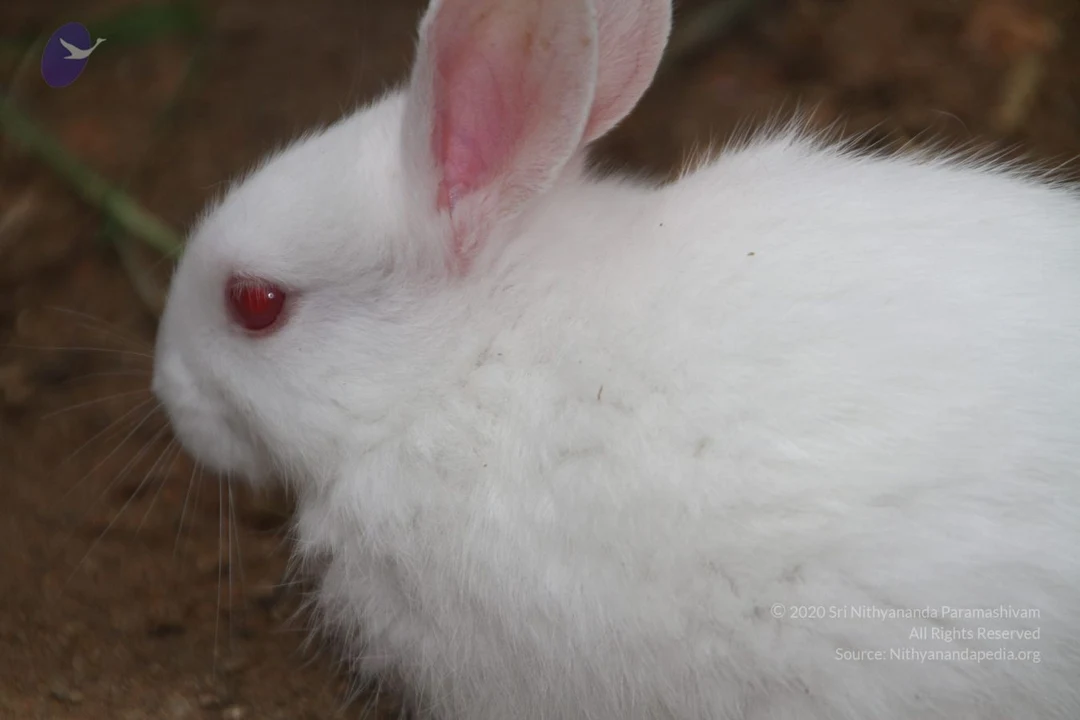
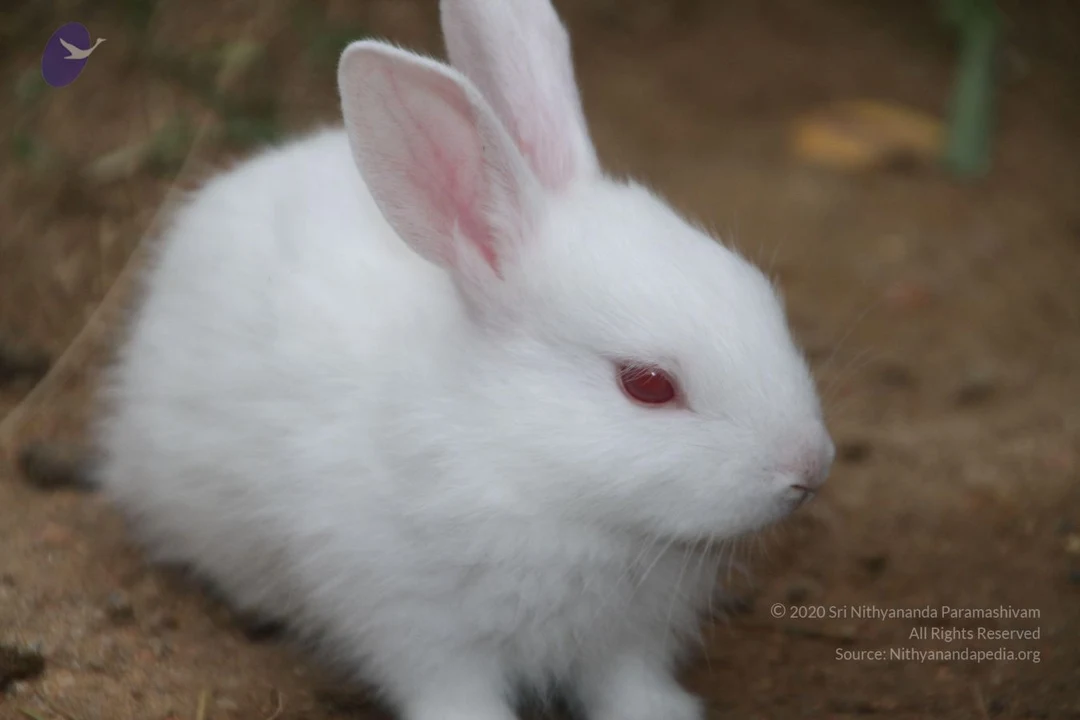
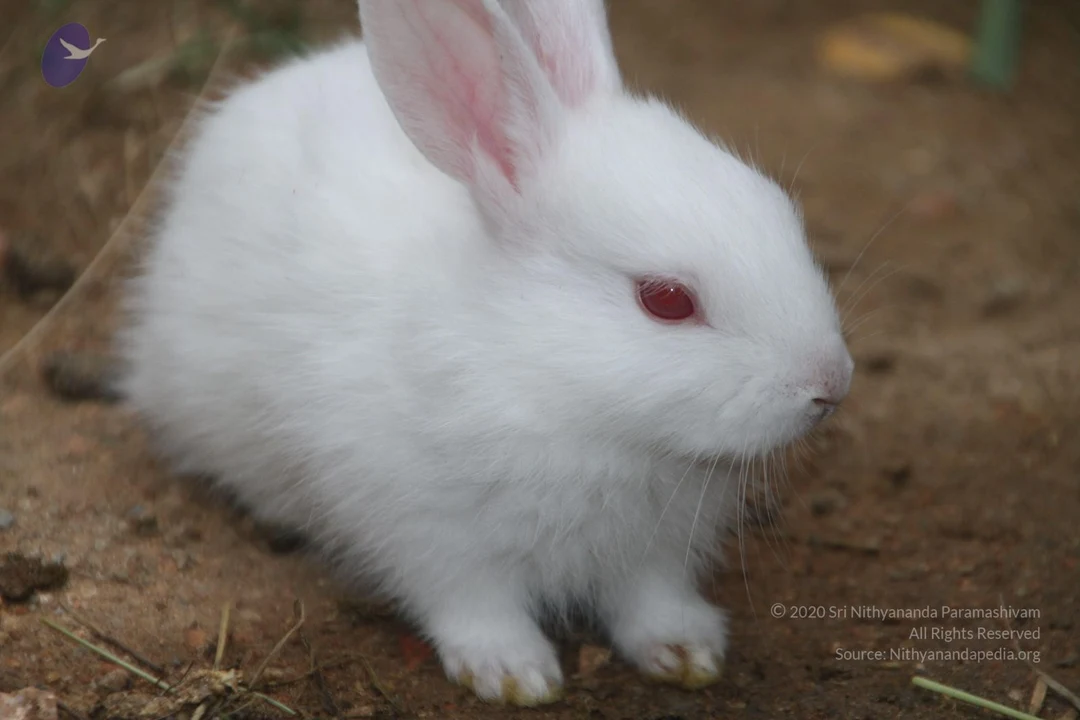
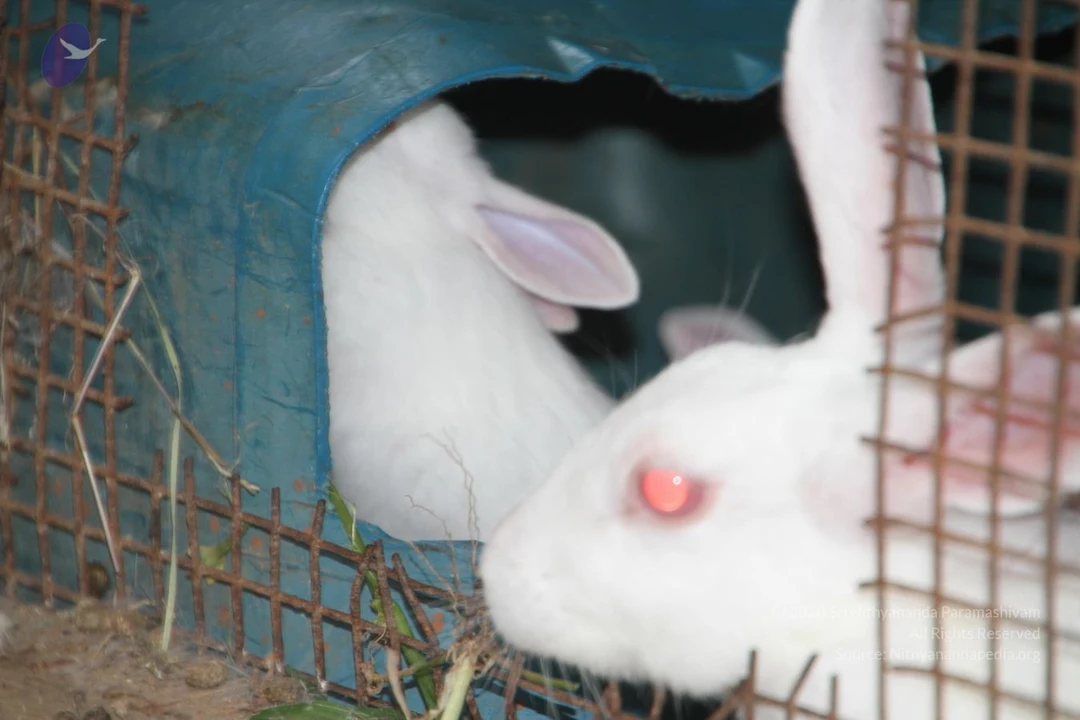
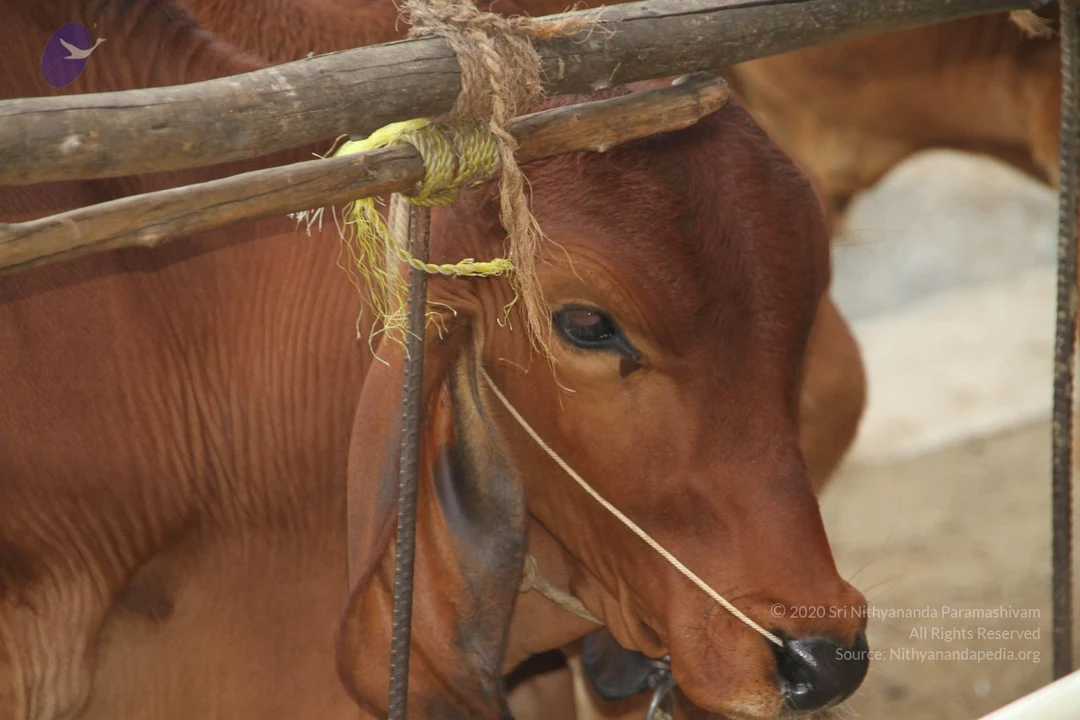
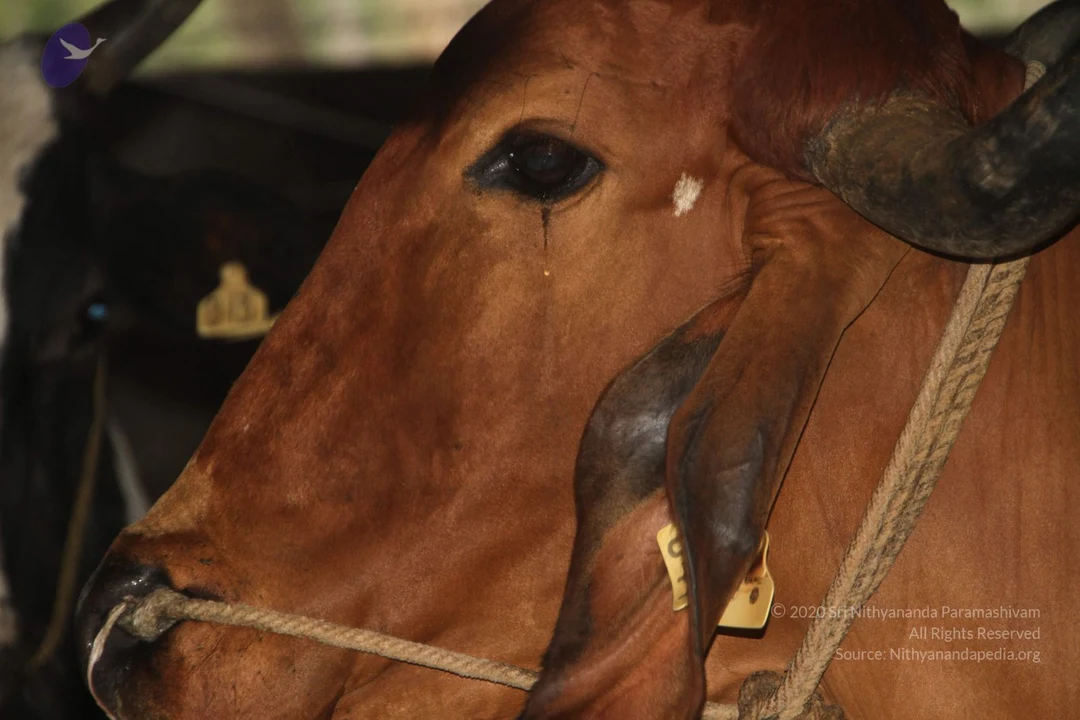
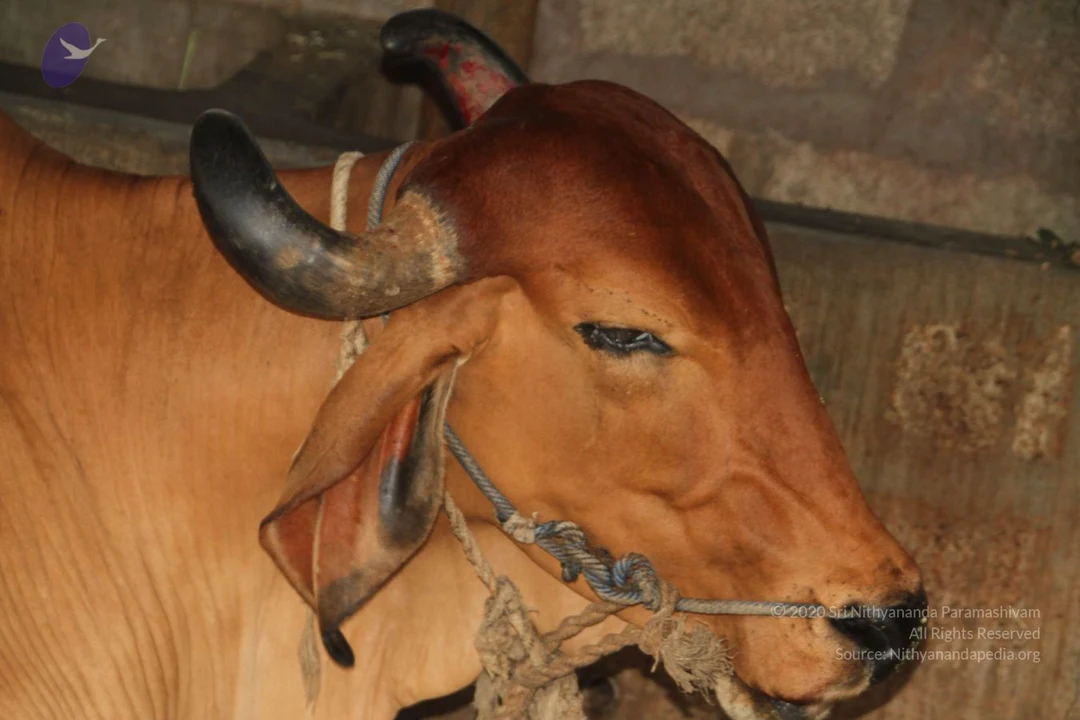
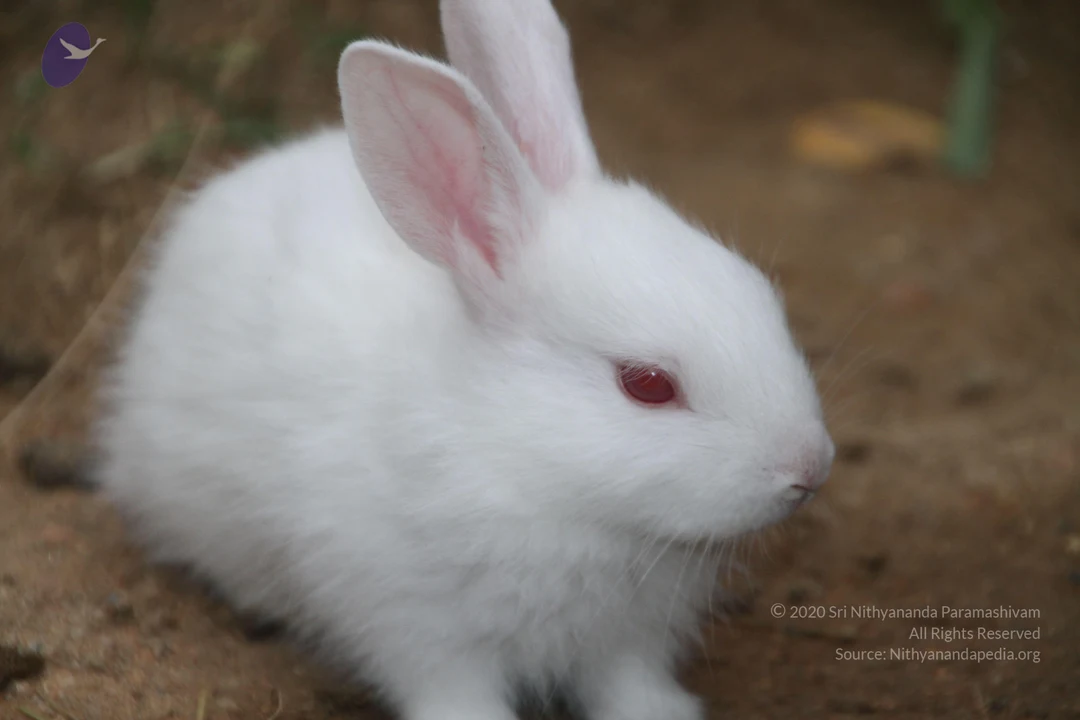
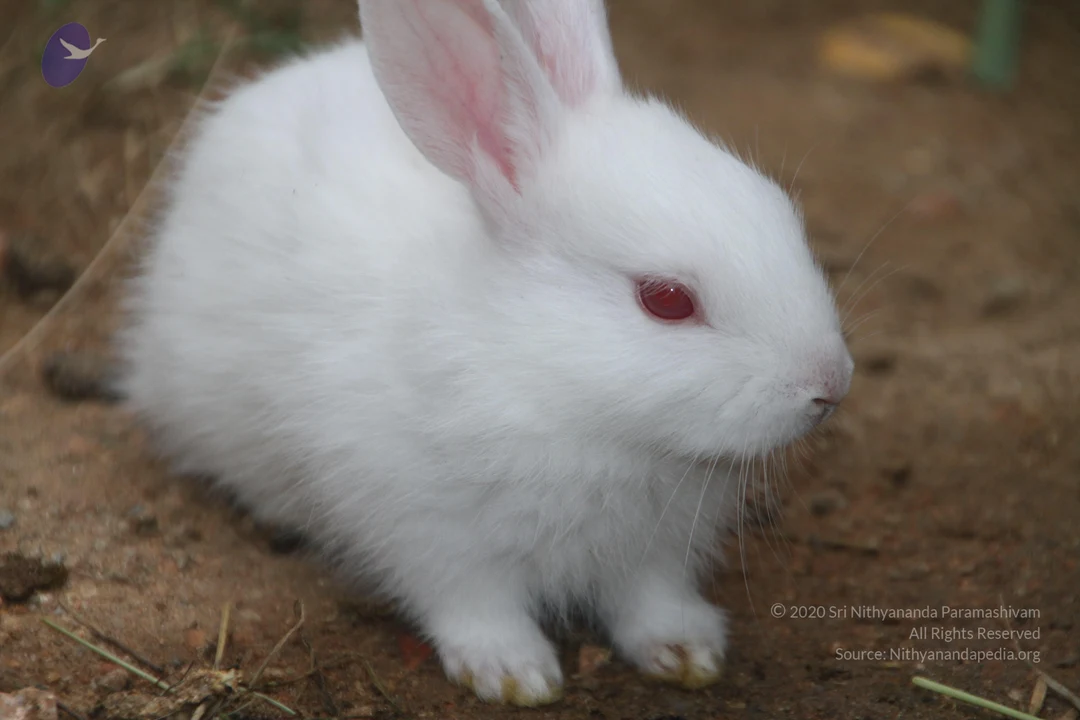
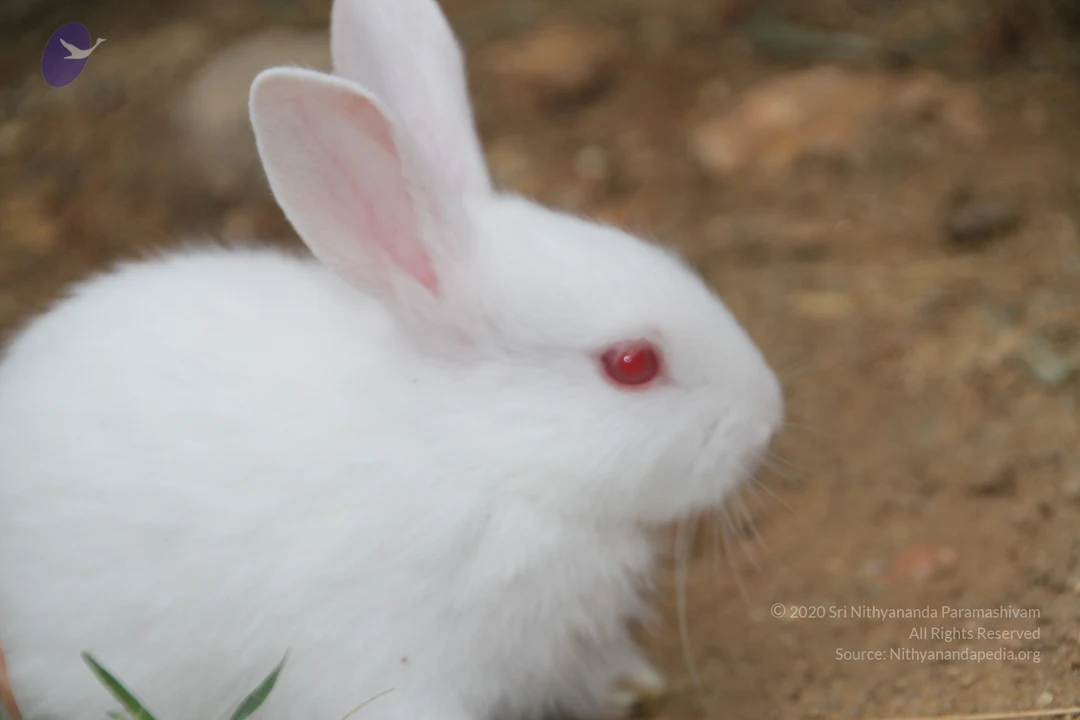
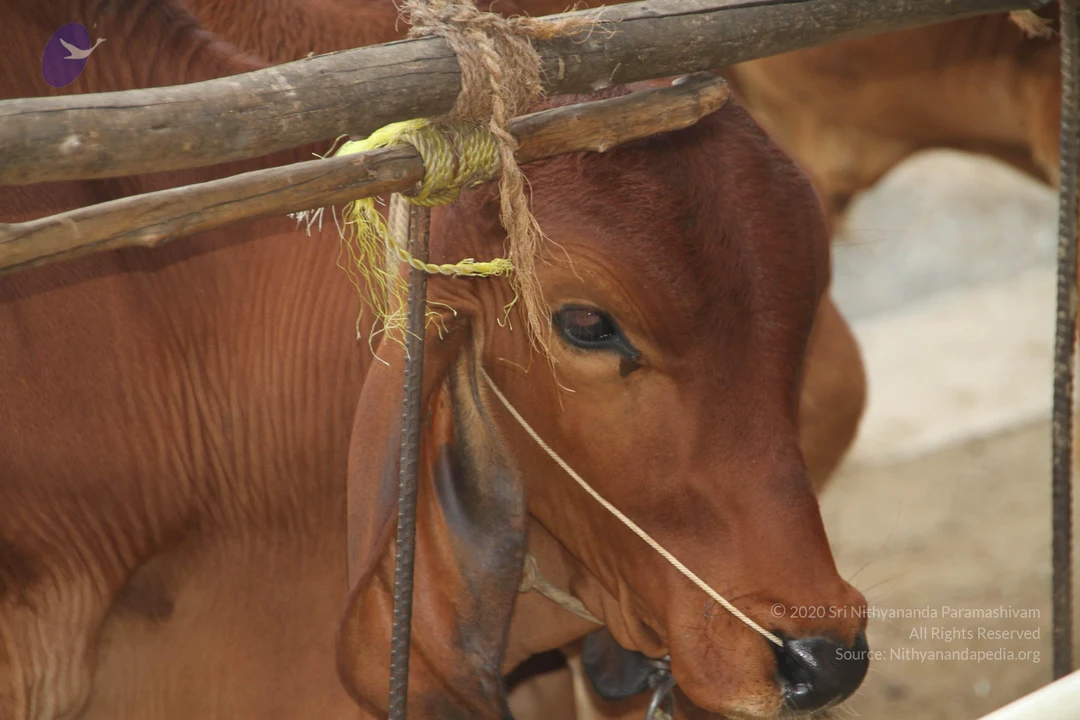
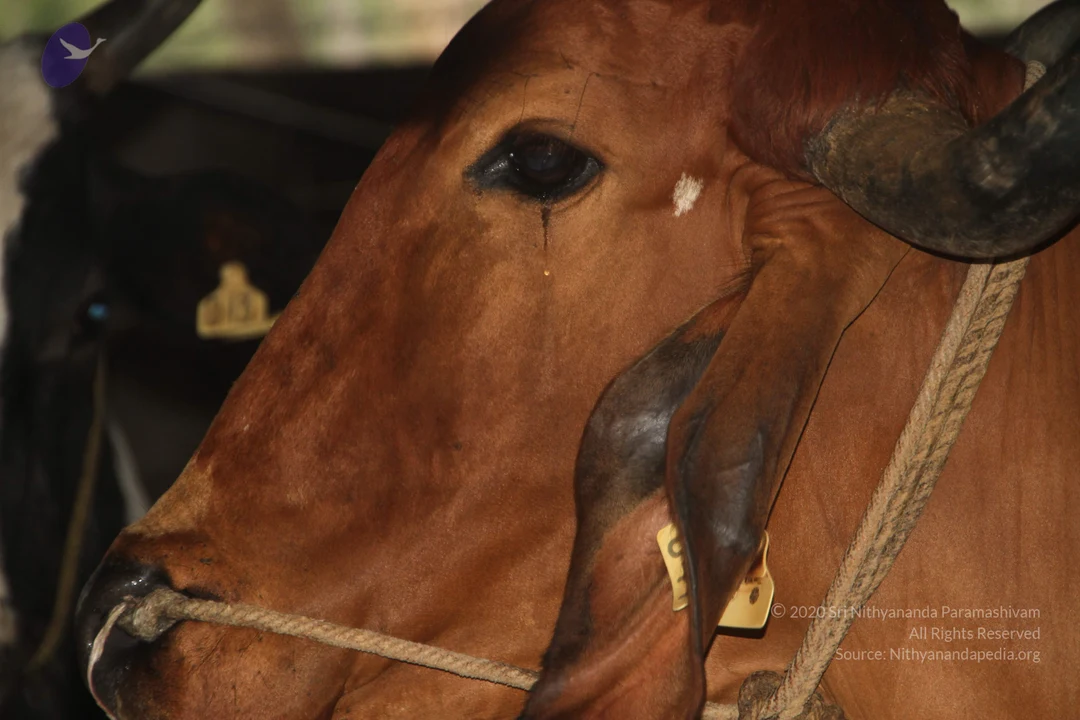
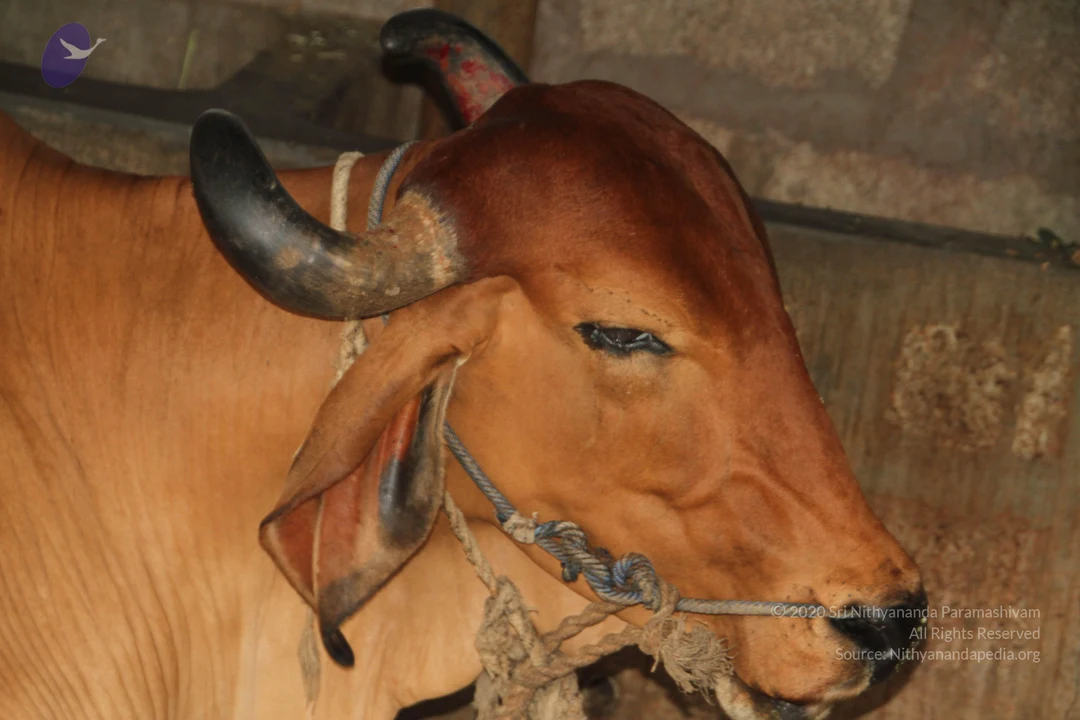
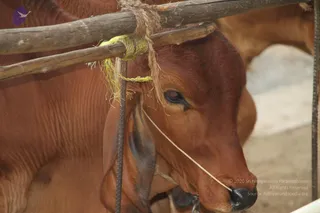
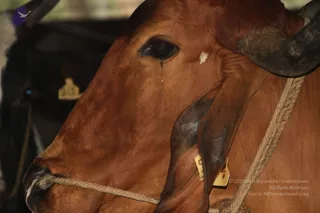
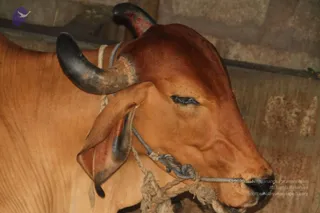
Close photograph of a small white rabbit with pink-tinged ears and red eyes sitting on bare brown soil. Its fluffy fur fills the frame, with soft blurred background foliage and a yellow leaf. No people are present.A small white rabbit with pink-tinged inner ears and red eyes sits on bare brown soil with scattered dry grass blades. The close-up shows its soft fluffy fur and whiskers, with a blurred background.Close photo of two white rabbits with pink ears and red eyes in a wire mesh cage. One rabbit peeks out from a blue plastic hutch or box at left, while the foreground rabbit faces the camera at right. Dry grass and straw lie on the cage floor. No people are visible.Close-up photograph of a reddish-brown cow with a white nose tied to a wooden rail fence with a twisted rope and yellow cord. Several other cows stand behind it in a pen. The animal's large dark eye and white muzzle are prominent, and the background shows dusty ground. No people are visible in the scene.Close-up photograph of a reddish-brown cow's head in profile, showing its dark eye, white forehead marking, curved dark horn and a rope halter across its muzzle. A yellow ear tag is visible on its ear, and a dark animal is blurred in the background. No people are visible.Close-side photograph of a tan-brown cow with dark, curved horns, its head turned toward the right with a rope halter tied around the muzzle. A rope is looped through the cow's ear and neck. It stands in front of a weathered stone wall. No people or a person candidate are visible.

01-GOSHALA

8 photosSource gallery
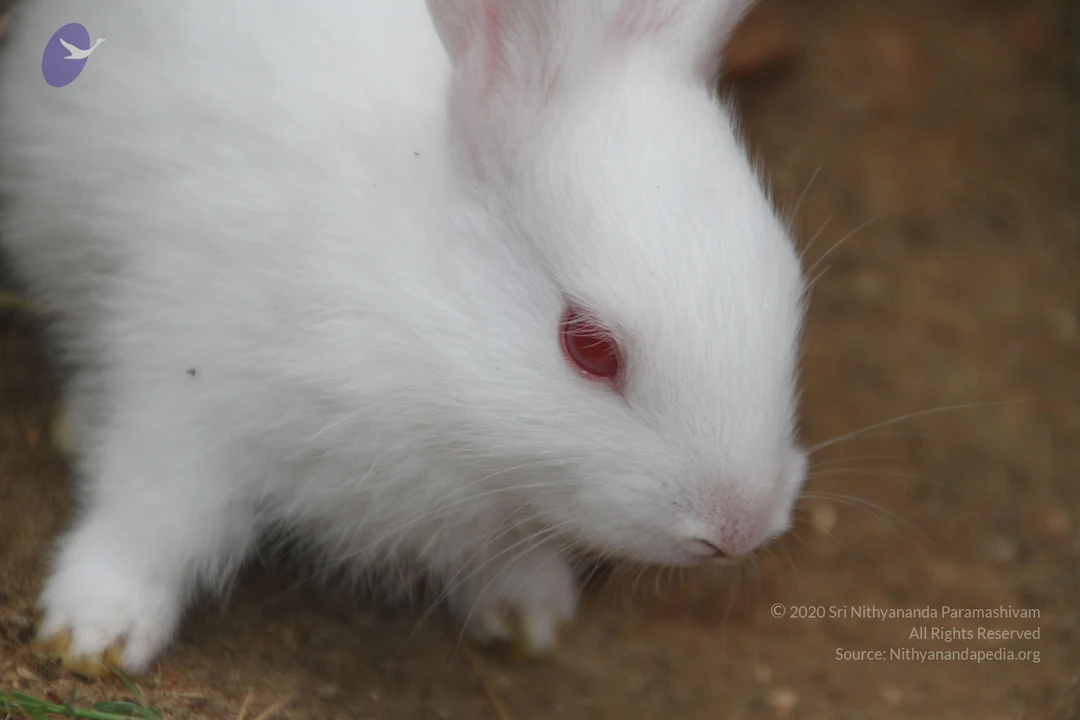
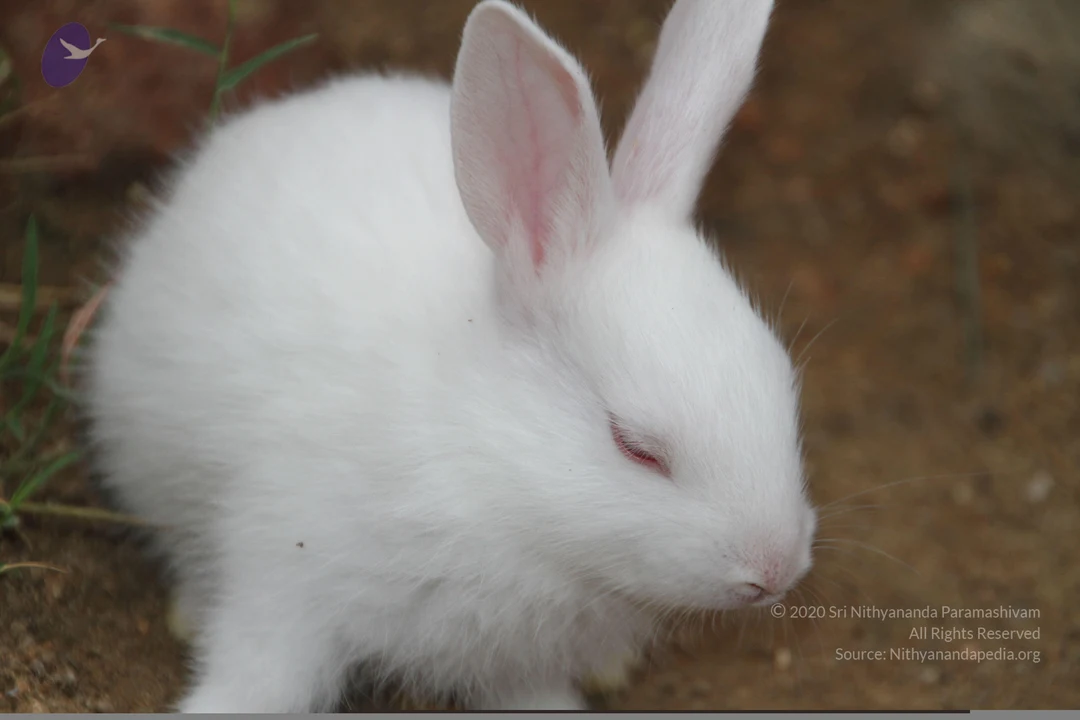
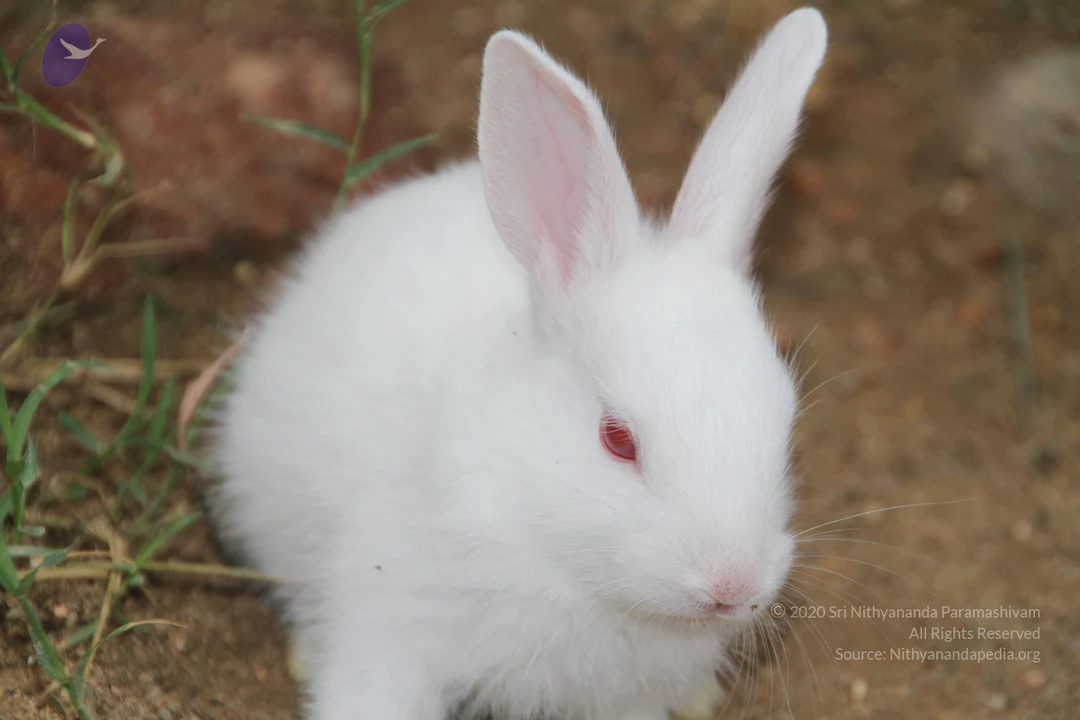
Close-up photograph of a white rabbit with pink ears and a red eye, sitting on brown dirt ground with green grass at the bottom edge. Its fur is fluffy and its pink nose and whiskers are visible. No people are present.Close-up photograph of a small white rabbit with pink-tinged ears and a pink nose, eyes partly closed, sitting on bare reddish-brown soil with a few green blades of grass at the left edge. The background is softly out of focus. No people are visible in the frame.A small white rabbit with pink inner ears and a red eye sits on bare brown soil beside green grass blades. The rabbit faces the camera with its whiskers visible, in a close outdoor shot with a blurred background.A small white rabbit with pink inner ears and a red eye sits on sandy brown ground beside green grass blades at a farm or goshala setting. No people are visible in the frame.A small white rabbit with pink inner ears and a pink-red eye sits on bare reddish-brown dirt beside thin green grass shoots. Its fluffy white fur fills most of the frame. No people are visible. A purple logo appears in the upper left corner.A close photograph of a fluffy white rabbit sitting on brown dirt ground with a blurred pale background and a sprig of green grass at the left edge. The rabbit has long upright ears with pink inner tones, a pink nose and a red eye, and its whiskers are visible. No people are present, and no ritual, a person or event activity is shown.

Photos From The Day:

29 photosSource gallery
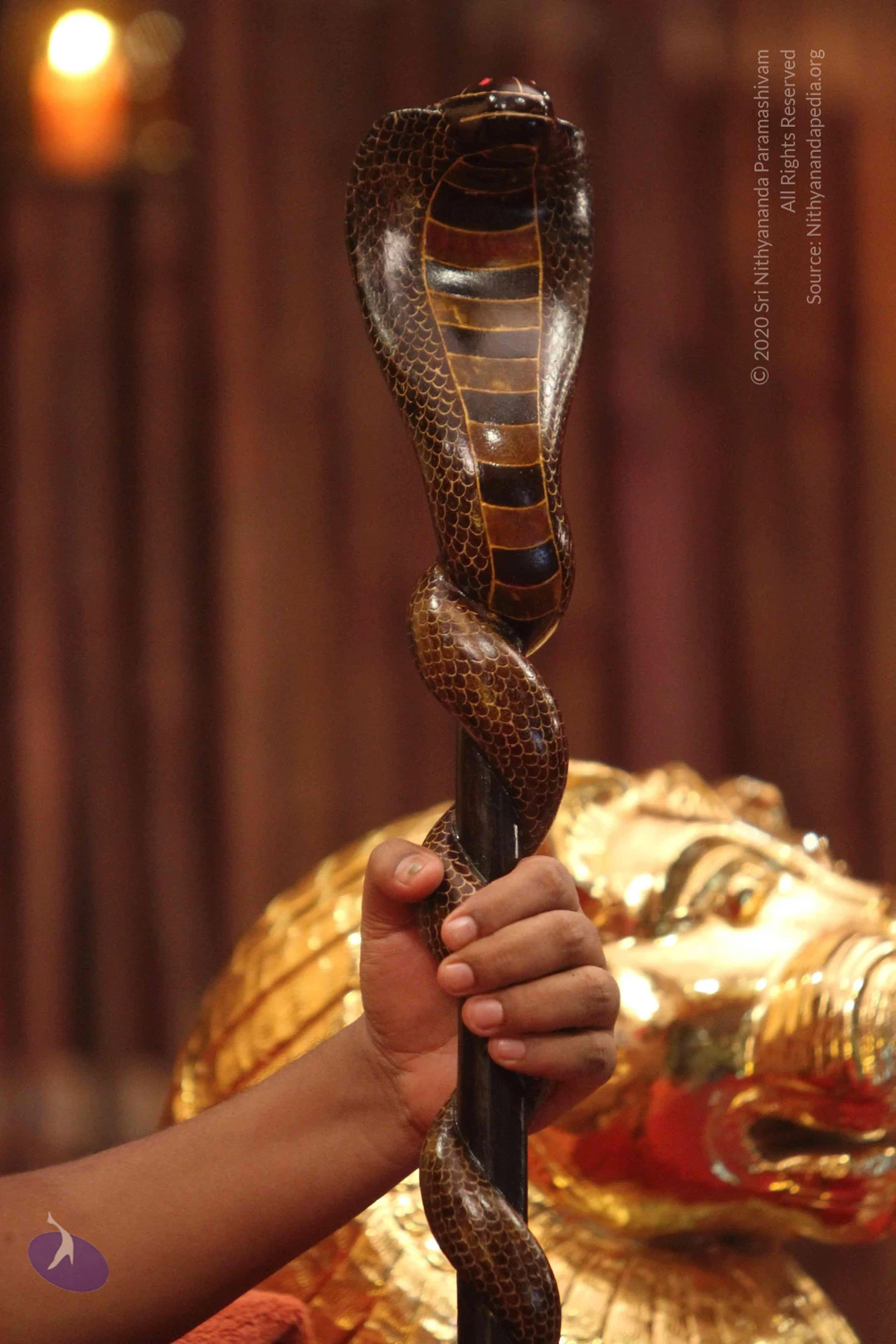
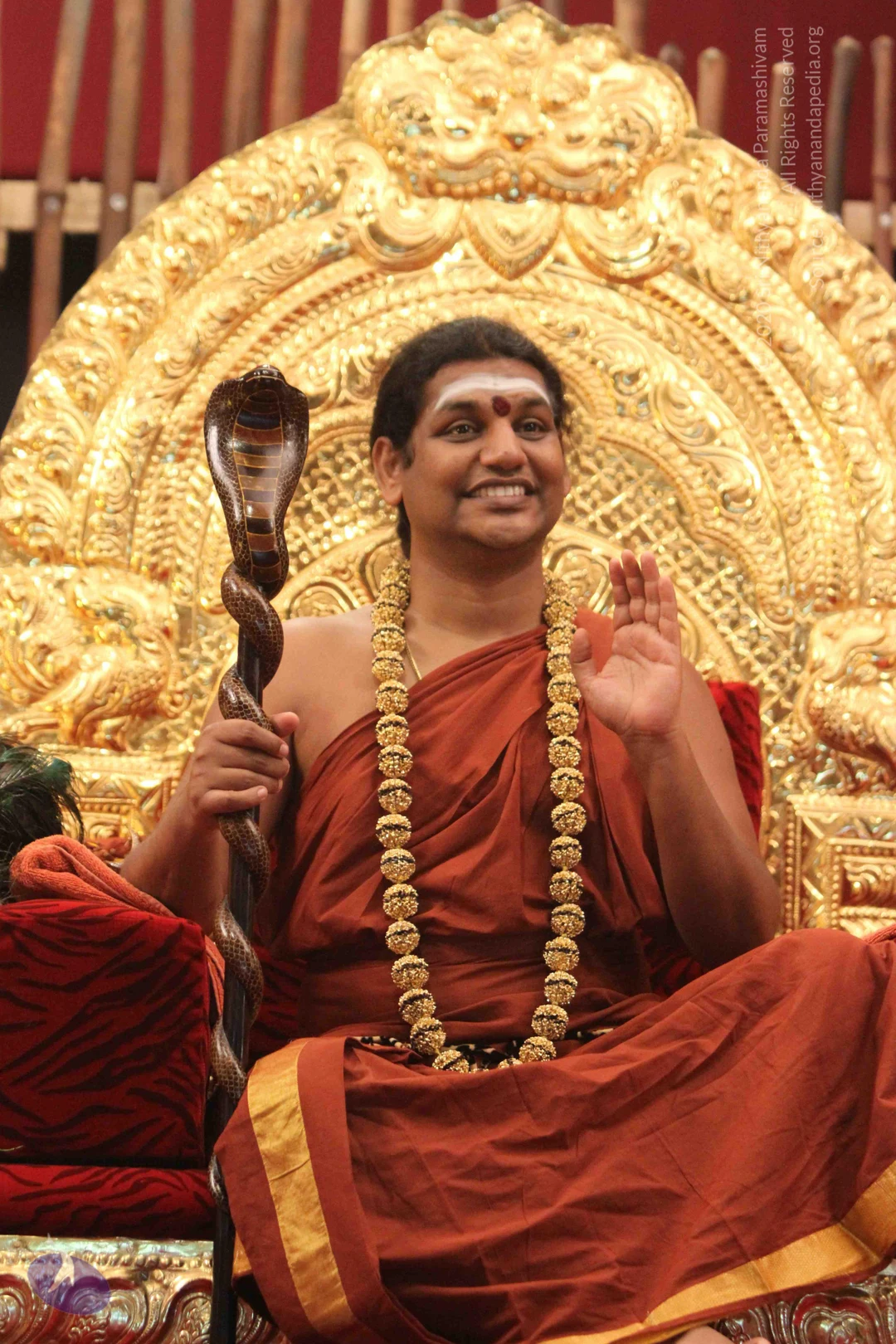
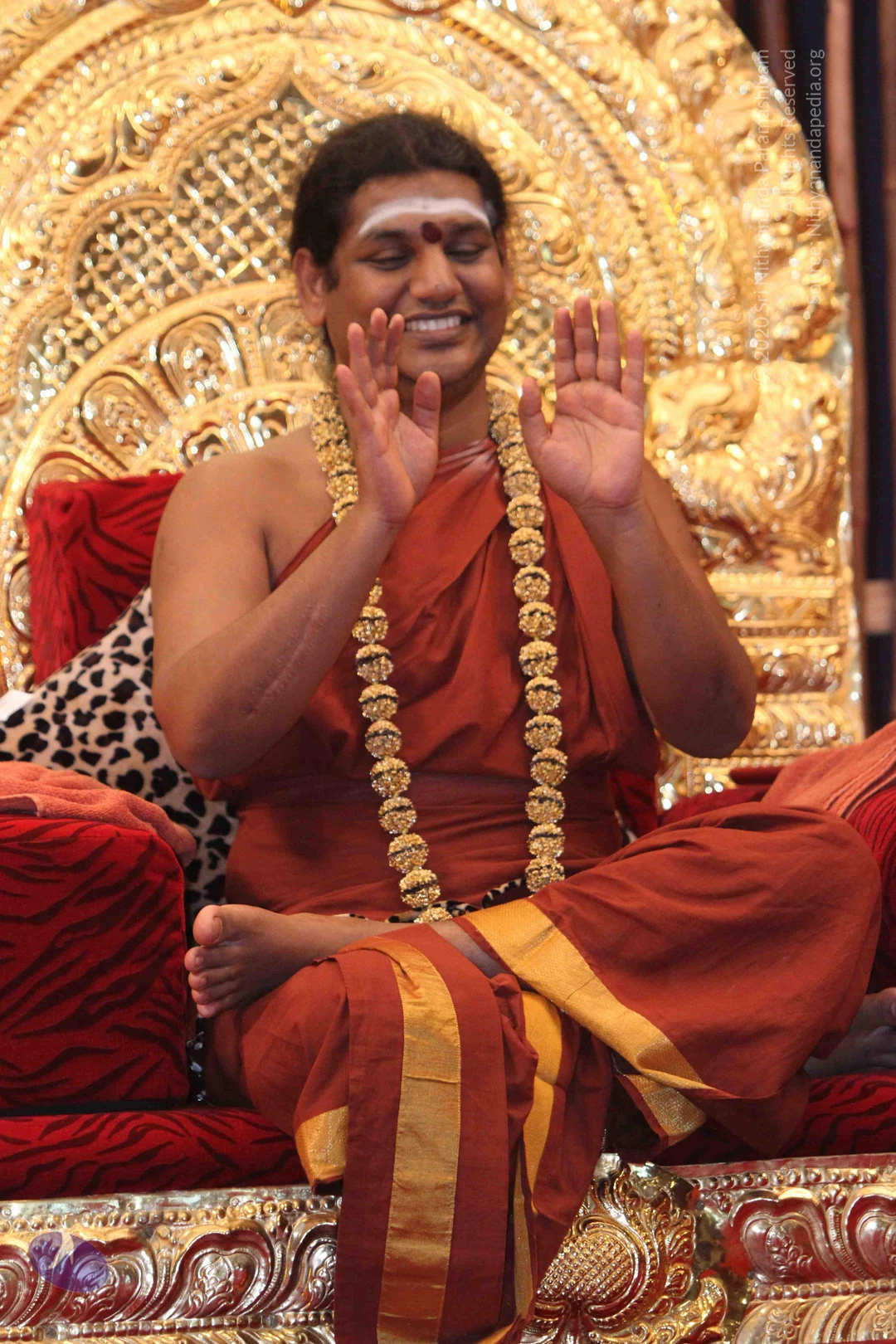
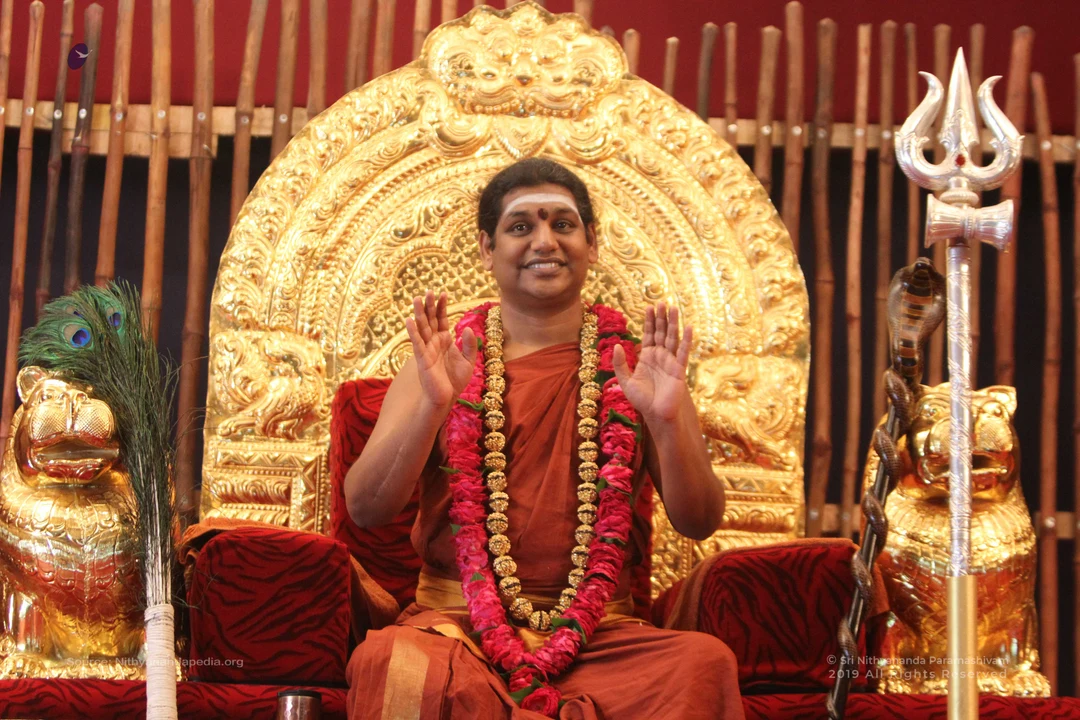
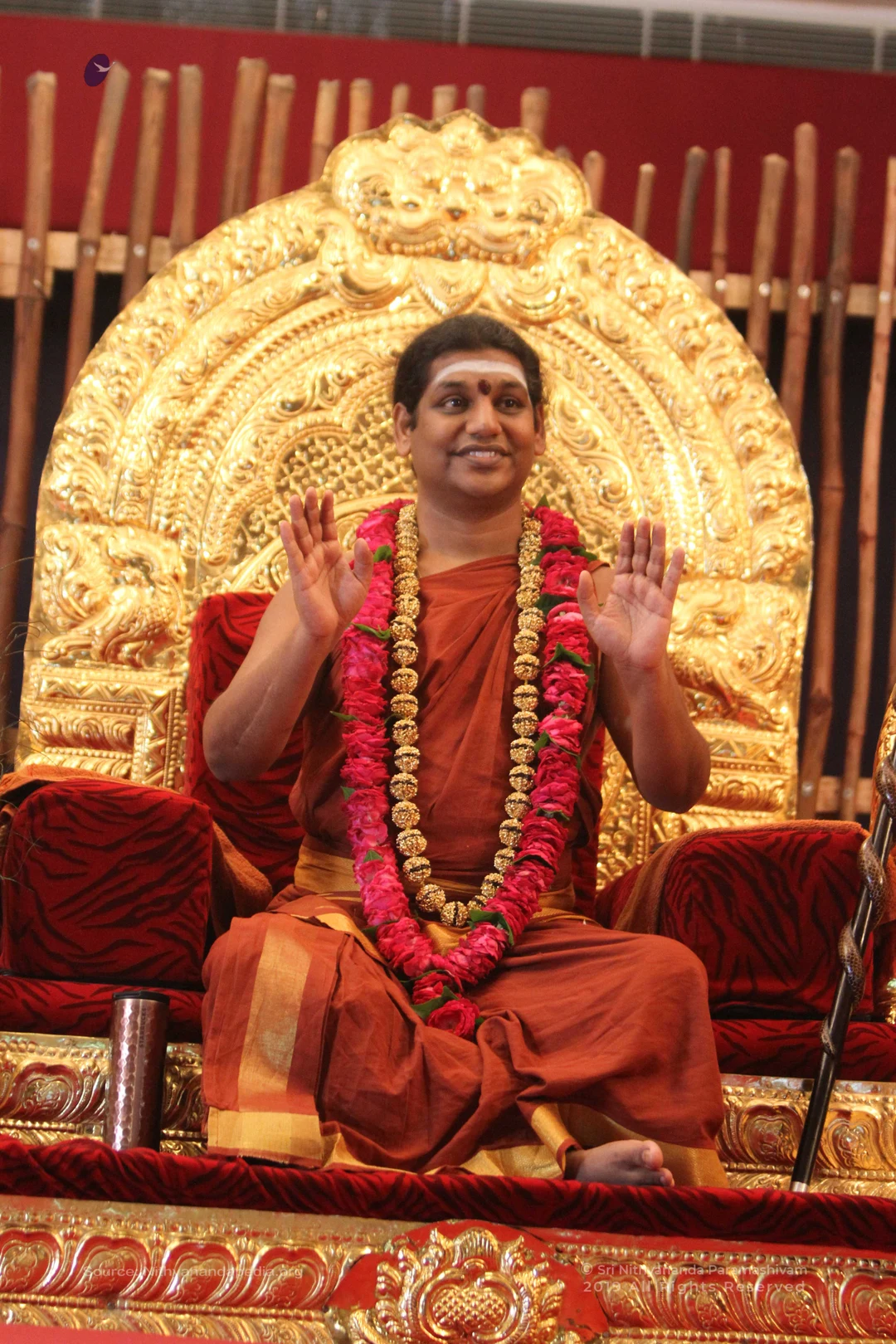
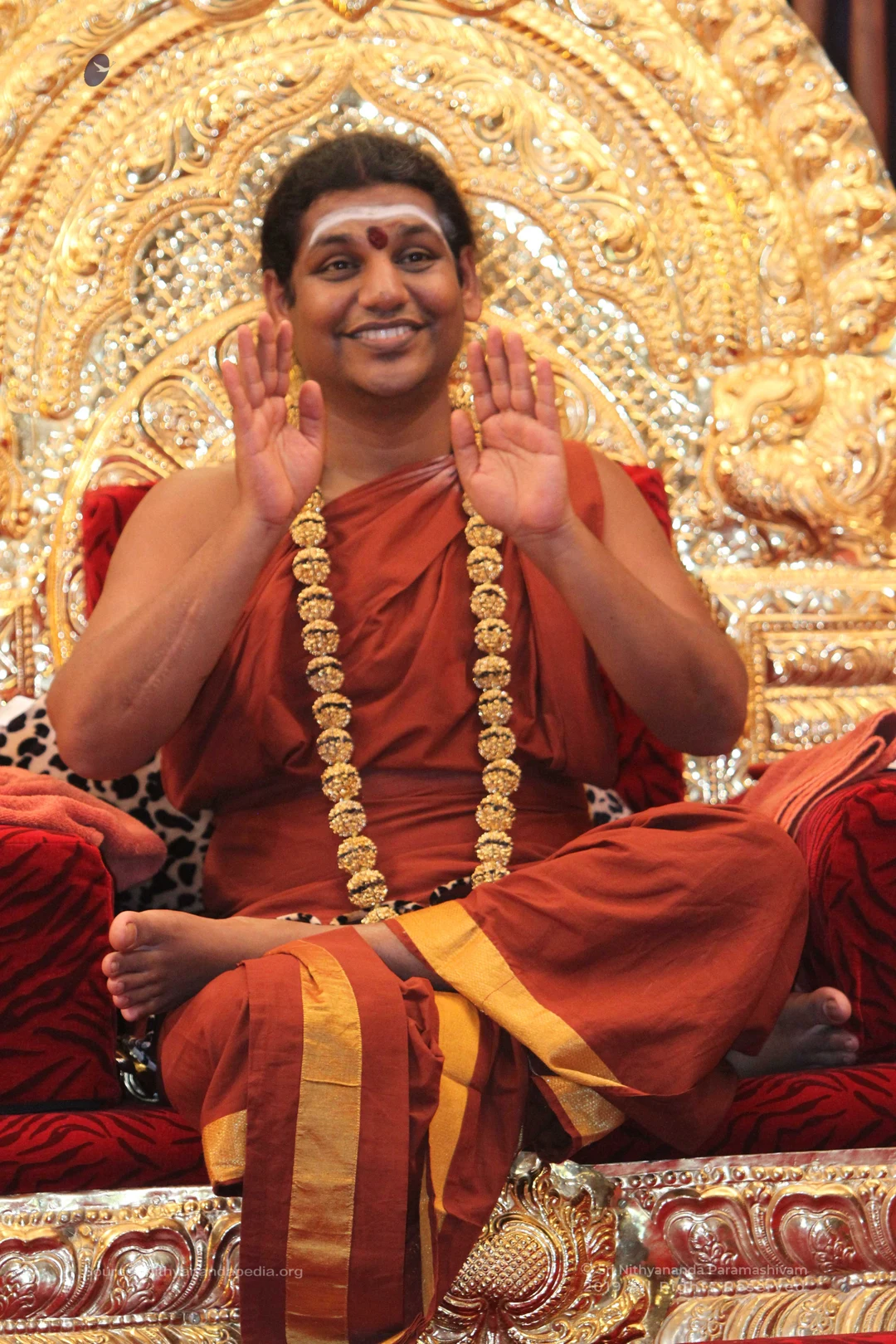
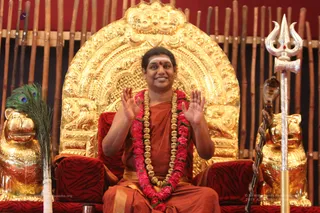
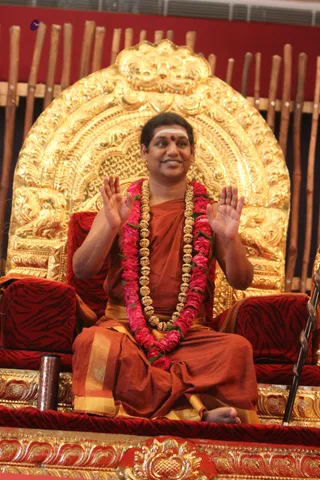
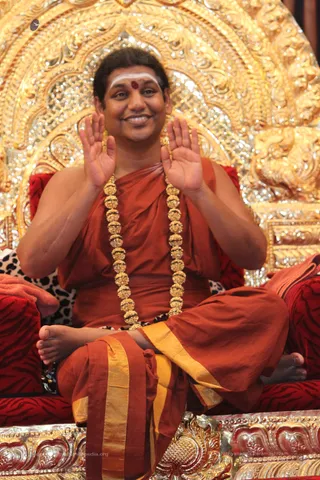
A seated man in a rust-orange robe with a gold-bordered wrap sits on an ornate gold throne with a carved arched back and red tiger-striped cushions. He wears a red rose garland over long gold bead necklaces, a white vertical forehead mark with a red dot, and raises both open palms in a blessing gesture while smiling. Bamboo poles stand behind the throne against a red wall, and a metal flask sits on the dais to the left.A seated man in a saffron-orange sannyasi-style wrap and matching dhoti with gold borders sits cross-legged on a red velvet cushioned throne with ornate gold repoussé carving behind him. He wears a long gold bead mala with dark rudraksha-like beads, a white forehead tilak with a red dot, and raises both palms toward the camera in a blessing gesture while smiling. He is barefoot. The scene is an indoor setting with a gilded throne.A man seated on an ornate gold throne with carved lion-face armrests, in front of a backdrop of vertical bamboo poles above red fabric. He raises his right hand in a blessing wave and holds a long staff topped with a carved cobra head in his left hand. He wears a rust-orange robe draped over one shoulder with a yellow-gold edge, a long gold bead garland, and a white-and-red forehead mark. Two gold lion statues flank the throne, which rests on red striped cushions. The man appears to be a person, based on the orange robe, golden garland, and the cobra-topped staff, seated in a position of honour.A smiling man sits cross-legged on an ornate gold throne with a carved arched back and gold lion-like armrests. He wears saffron-orange robes, a long gold bead necklace, and a white and red tilak on his forehead, and raises his right hand in a blessing gesture while holding a carved wooden cobra staff. Behind him stand bamboo poles and a red cushioned seat, with a peacock feather fan at left. The man's appearance matches the page's reference to a central teacher with long swept hair, saffron clothing and ceremonial gold beads, so he is described as a person.A smiling man seated cross-legged on an ornate gold throne with a carved gilded arch and red velvet cushions, raising his right hand in a blessing gesture. He wears a saffron-orange draped robe with gold border, a heavy gold bead necklace, and has white and red tilak marks on his forehead. He holds a dark wooden staff carved with a cobra, and a peacock-feather fan rests at the left edge. A bamboo-style backdrop stands behind the throne.

Nithyananda Diary 15th July 2014 | Inner Awakening Day 1 | Pratyaksha Pada Puja | Nithya Kirthan | Satsang

12 photosSource gallery
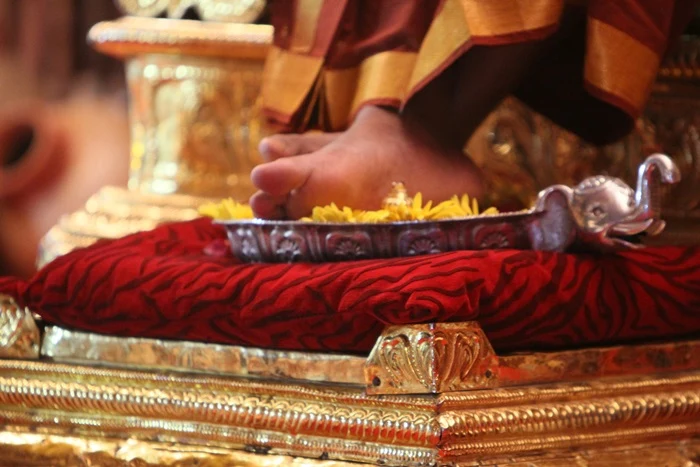
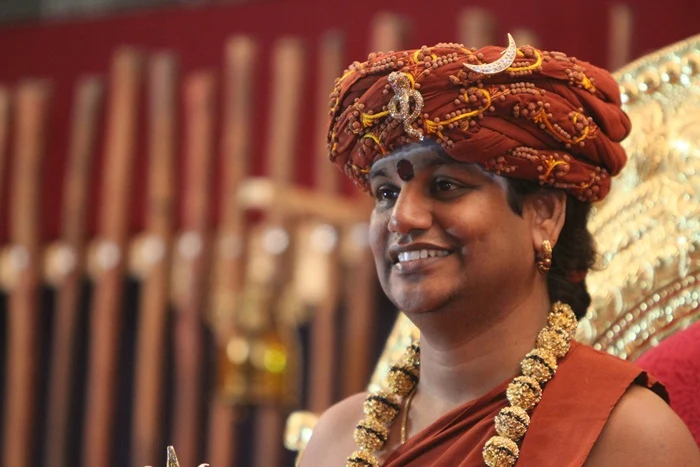
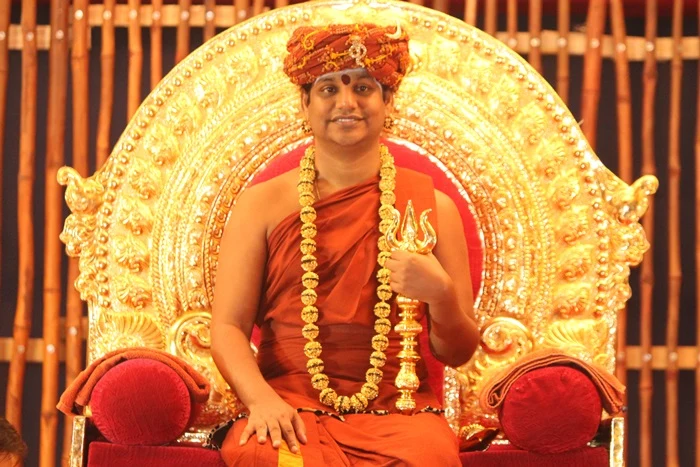
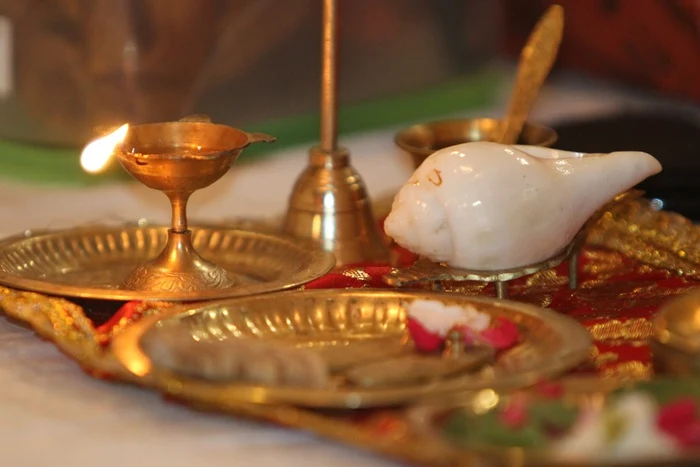
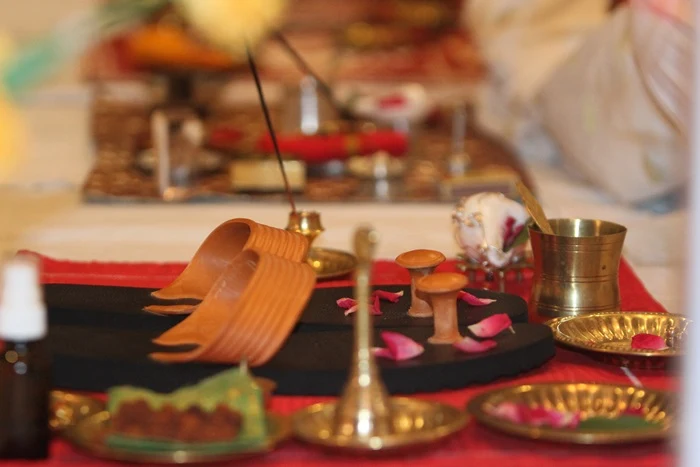
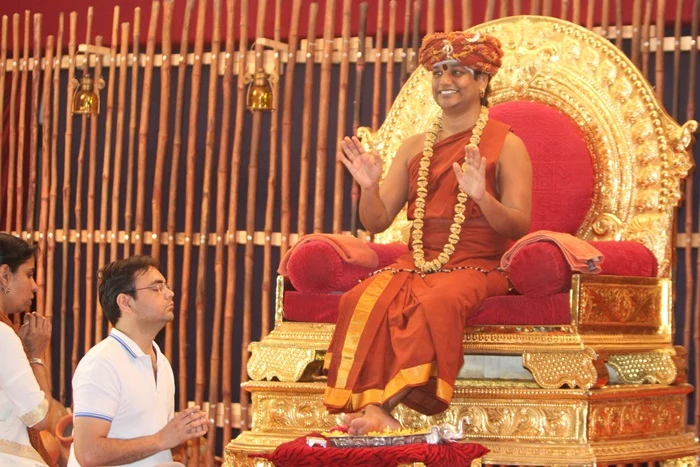
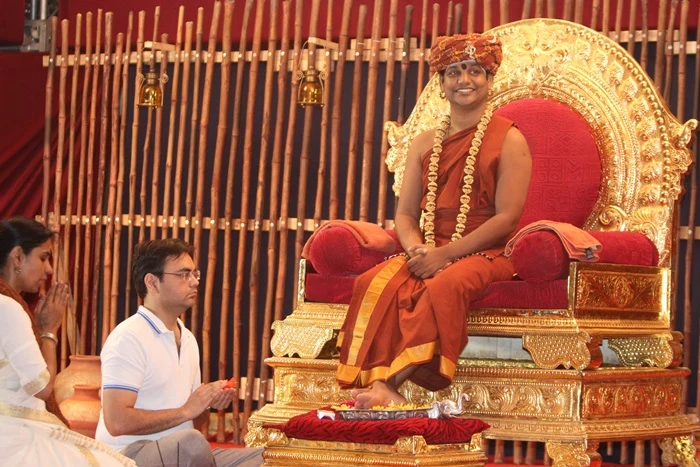
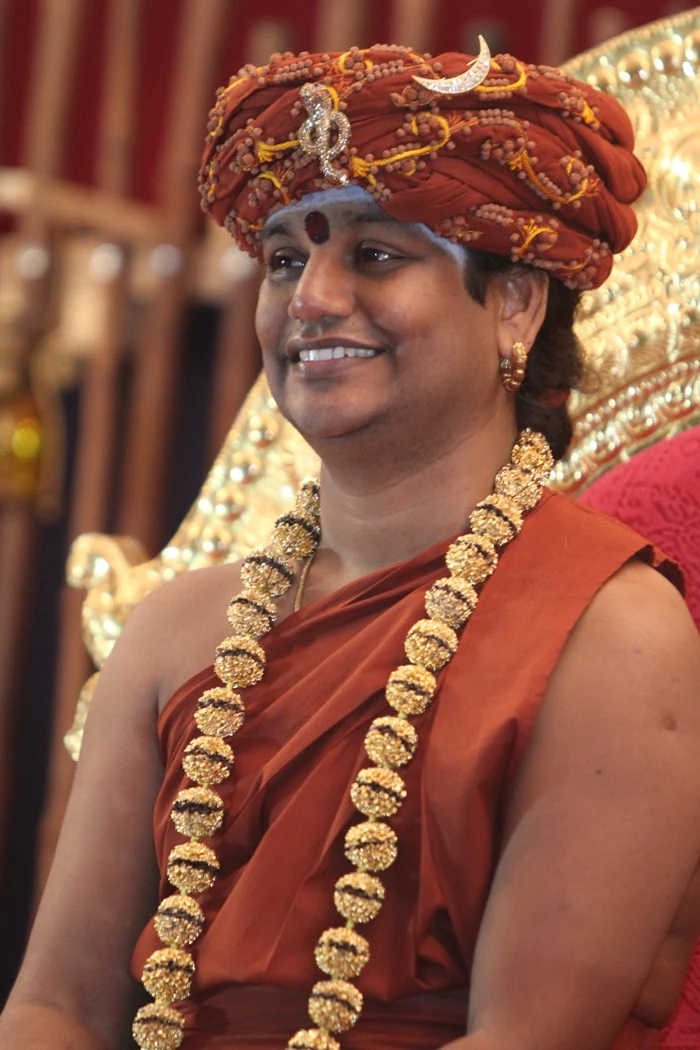
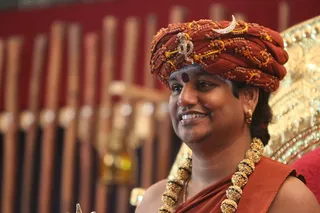
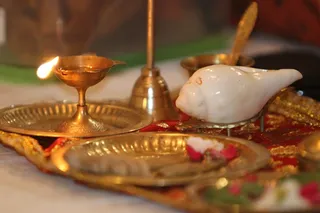
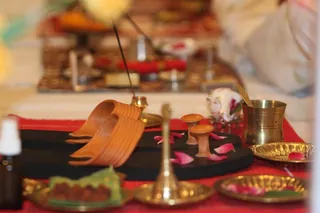
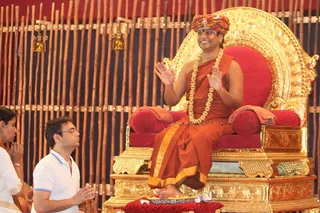
Close-up of a bare foot resting on a silver padapuja tray filled with yellow marigold petals, placed on a red velvet cushion with dark tiger-stripe pattern atop an ornate gold-leaf throne or peetha. The silver tray has a decorative elephant-head handle. Only the foot and tray are visible; the wearer's saffron-and-gold garment is partly visible at the top.Close photograph of a smiling man in a rust-orange turban decorated with gold embroidery, a gold crescent-moon ornament and a gold emblem at the front, with a red tilak mark on his forehead. He wears an orange-saffron shawl over his shoulders and a long gold necklace of bead-like pendants. Behind him are tall wooden poles or pillars and a gilded golden throne-like backdrop. Appearance-based label: Swamiji (probable), wearing a distinctive saffron turban, crescent ornament, gold necklace and orange shawl, seated in a ceremonial setting.A seated man on an ornate gold throne with a red velvet seat and cushion, against a backdrop of bamboo slats. He wears an orange-saffron turban with a small emblem, an orange-saffron shawl draped over an orange robe, and a long gold-bead garland of ceremonial beads. He holds a gold trident-staff in his right hand and sits with his left hand resting on his knee. a person: the saffron clothing, turban and ceremonial gold garland fit the page's description of a person, though the appearance is only partly confirmed. A single person is visible in the frame.Close-up photo of a ritual setup on a red and gold cloth. A brass oil lamp with a lit flame stands on the left, beside a brass bell with a handle. A large white conch shell rests on a small brass stand in the centre, with a brass plate in front holding rose petals and sweets. No people are visible.Close-up photograph of ritual puja items arranged on a red cloth and black tray in the foreground. Brass bells and a brass cup with a spout sit beside a stack of small wooden or clay pieces and scattered pink rose petals. A lit incense stick rises from a brass holder, and a green leaf-wrapped sweet lies on a brass plate. A small brass bowl and a glass vial are visible at the edges. In the blurred background are more brass vessels, a red cloth and a white garment, with no clearly identifiable person in focus.A photograph of a seated figure on an ornate golden throne with red cushions, set before a backdrop of vertical bamboo poles with hanging brass bells. The central figure wears an orange-saffron robe with a gold-bordered shawl, an orange turban, and a long white and gold beaded necklace; he is smiling with both palms raised in a welcoming gesture, bare feet resting on a red cloth. Probable Swamiji by appearance, given the saffron robe, turban and garland. To the left, a man in a white polo shirt and glasses kneels with palms pressed together, and a woman in white stands beside him with hands folded in namaskar. Small red-and-yellow offering items sit on a red cloth at the base of the throne.