Skip to content
Wednesday

16 July 2014

Two types of Reality

Dated photos
260
Source pages
1
Media
8
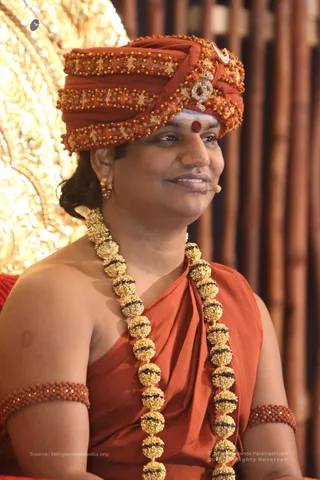
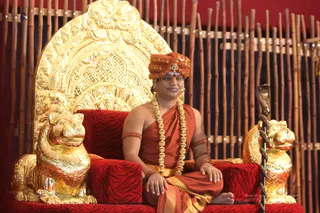
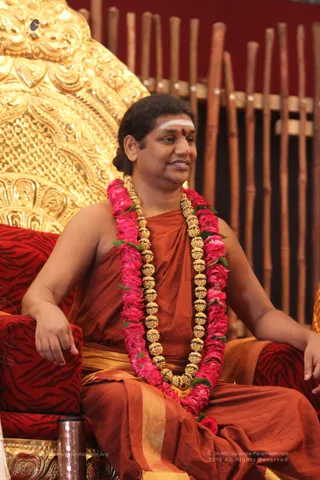
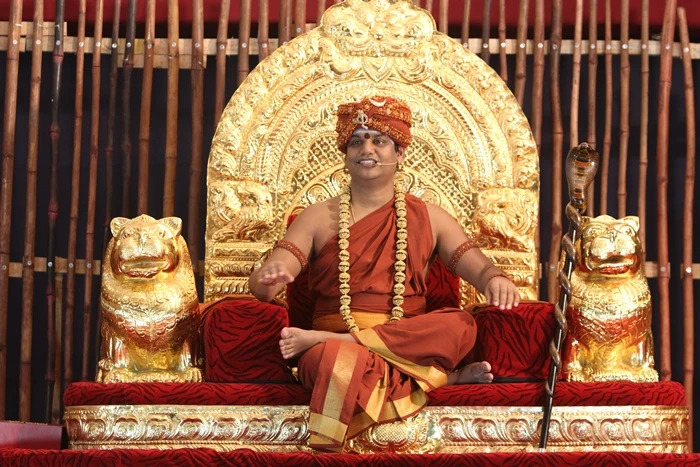
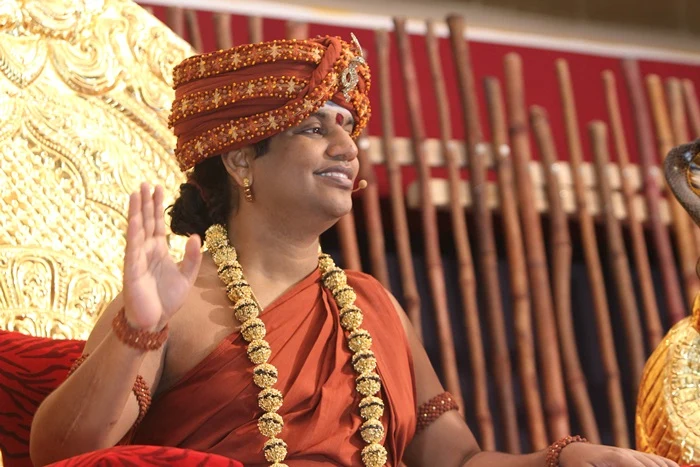
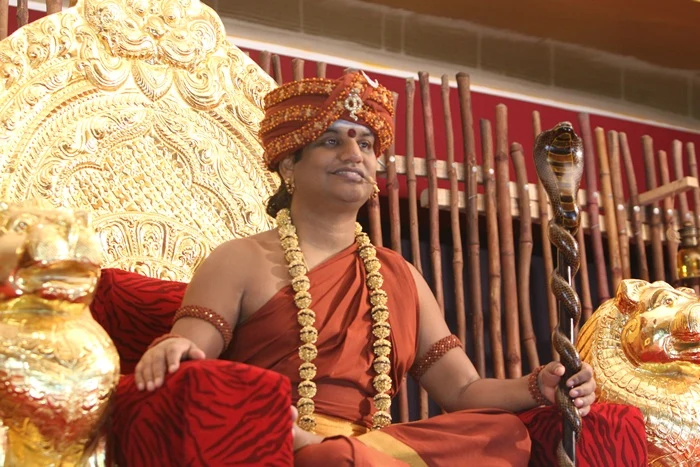
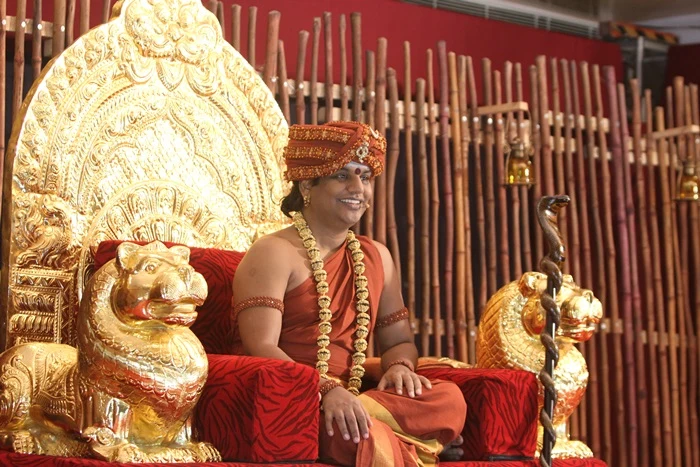
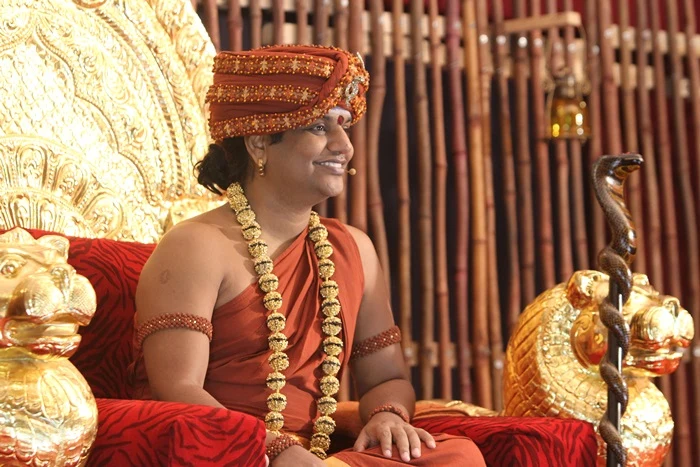
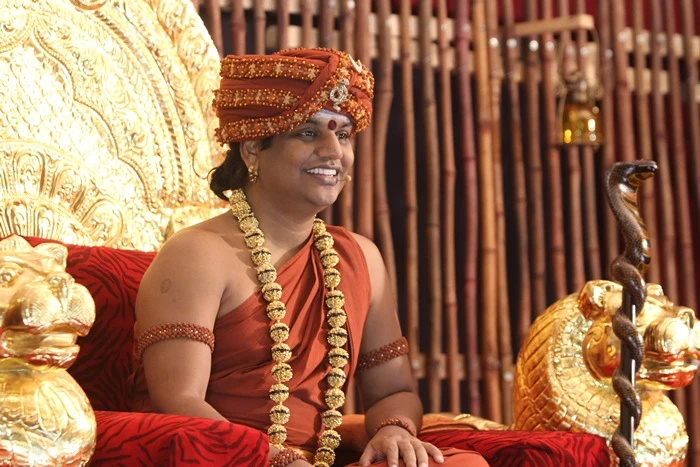
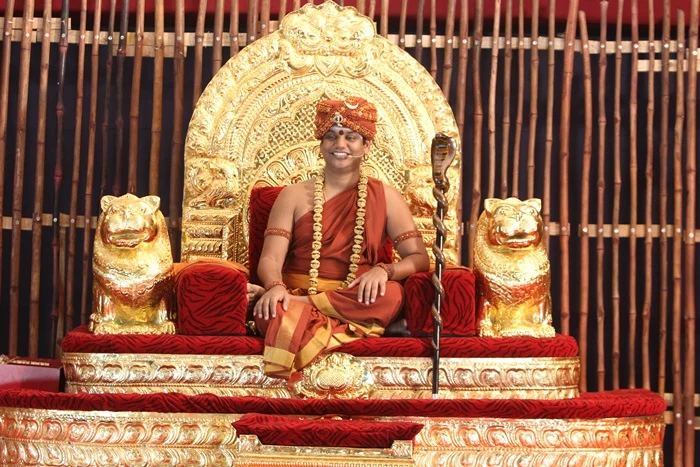
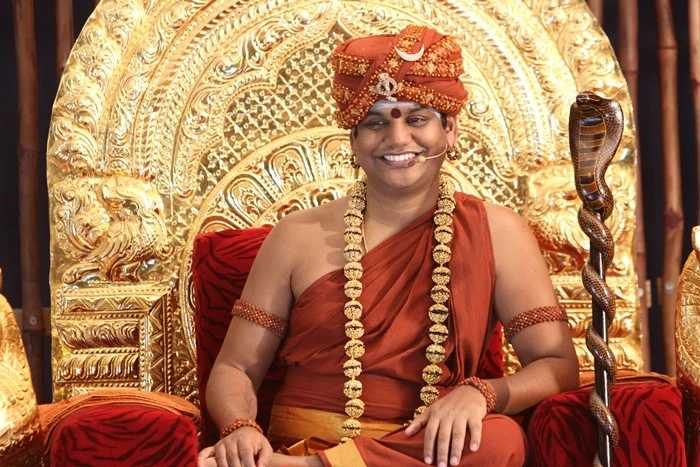
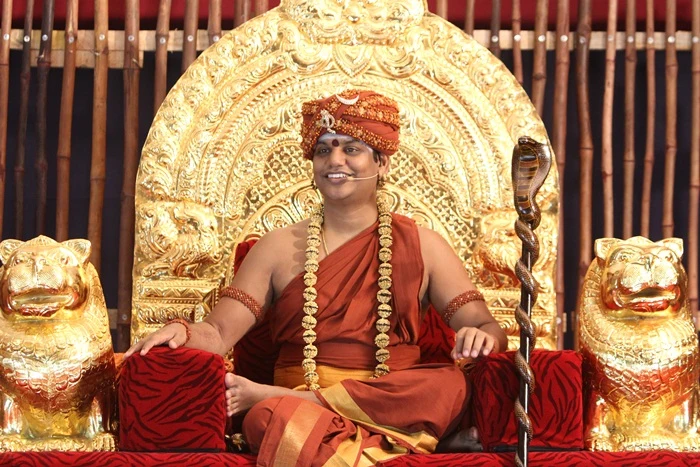
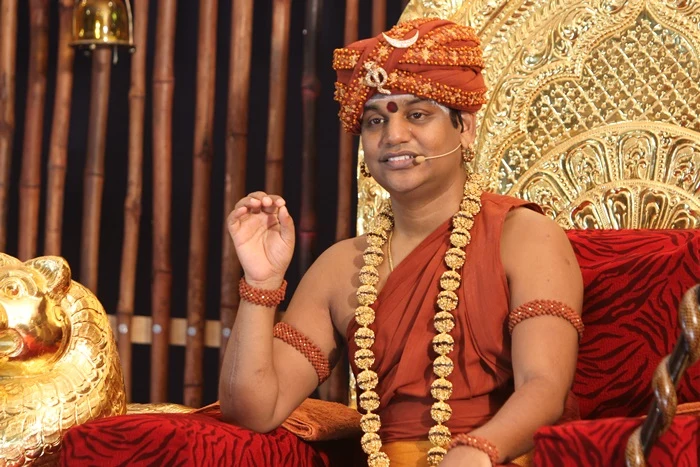
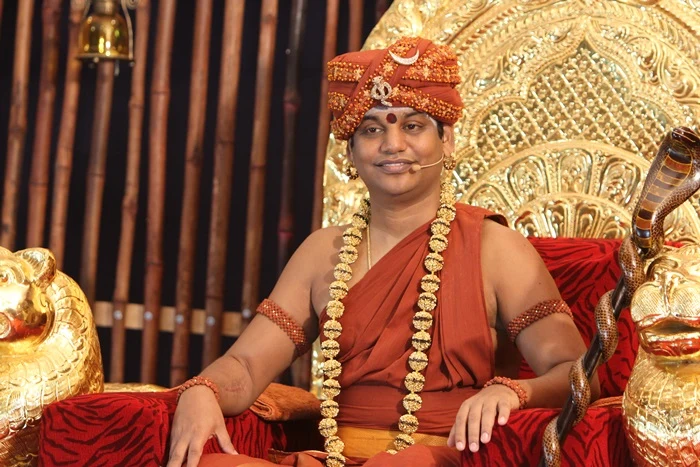
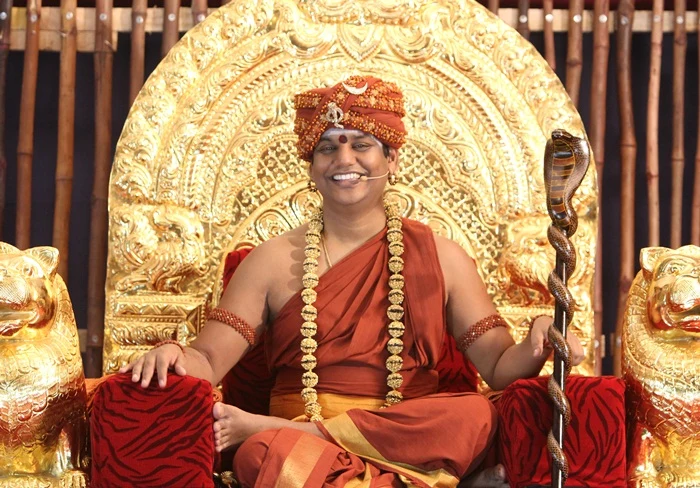
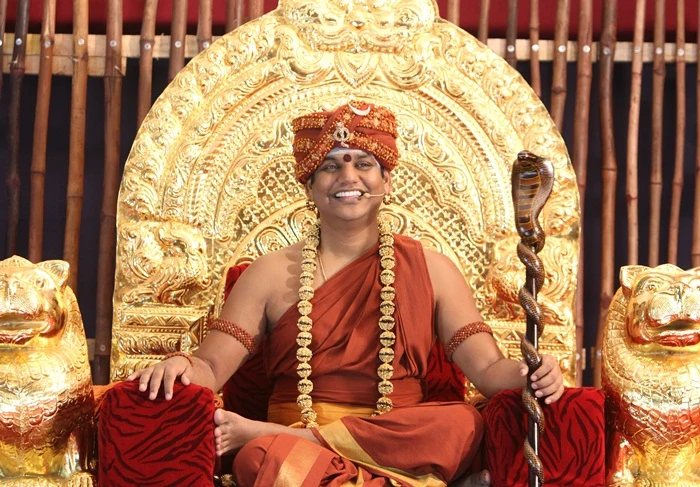
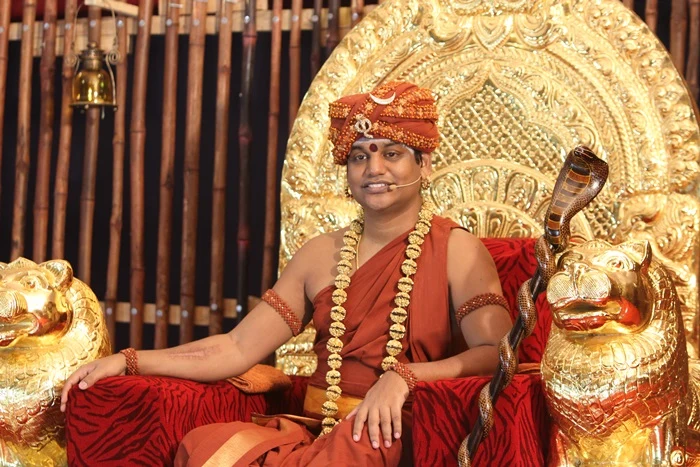
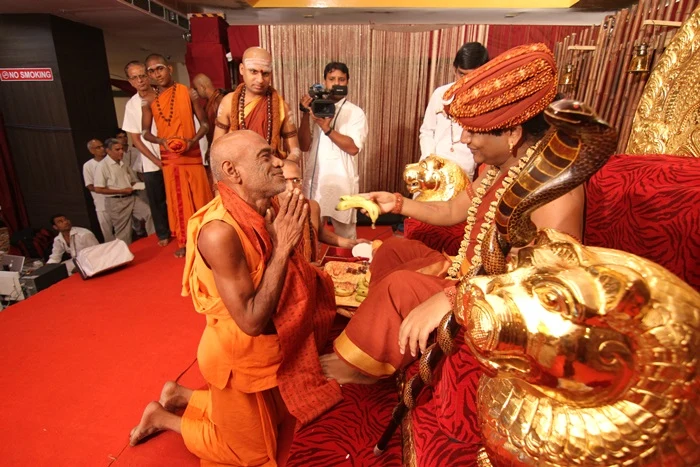
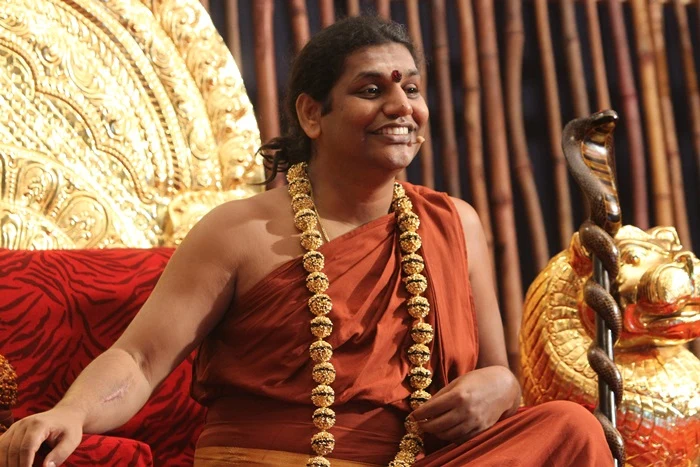
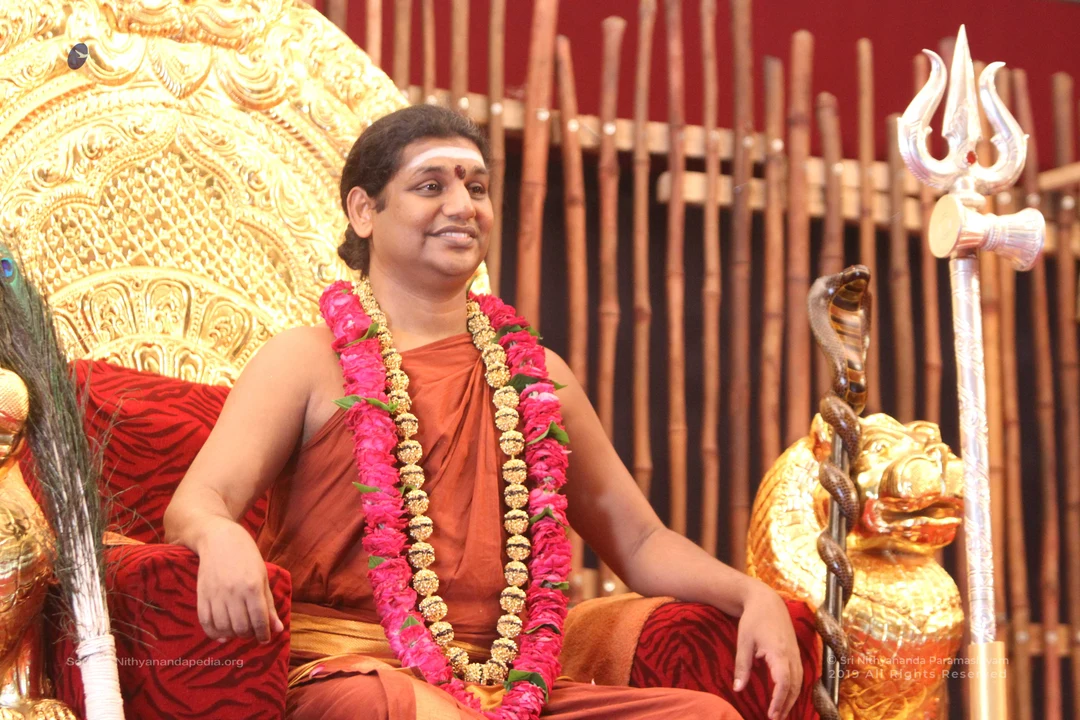
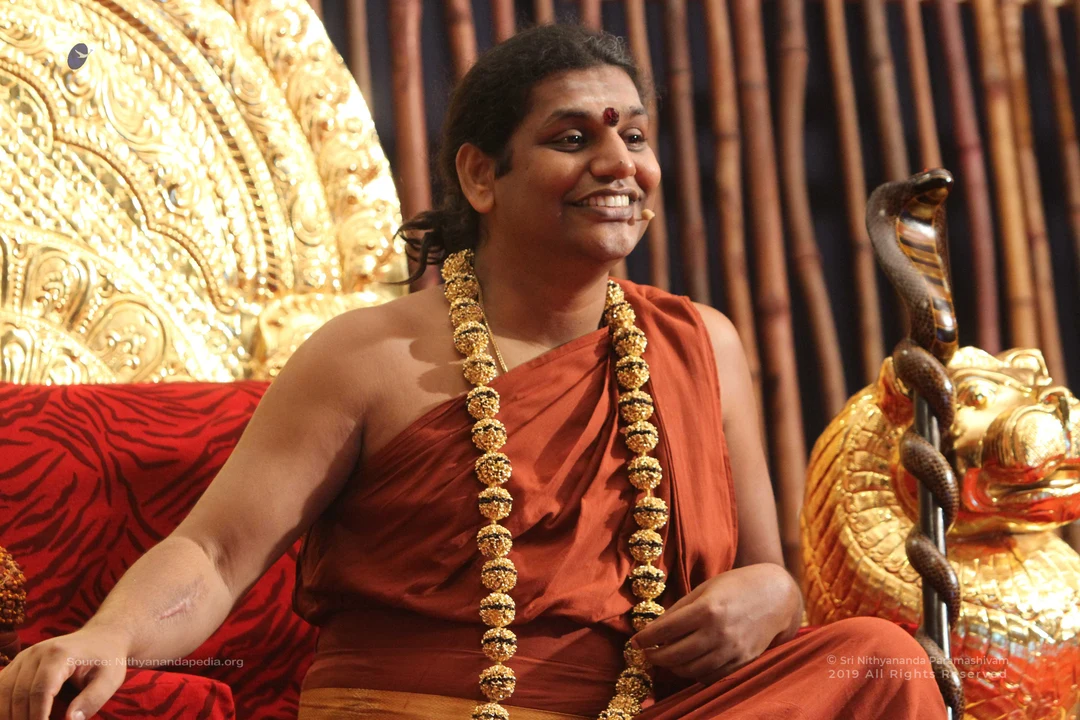
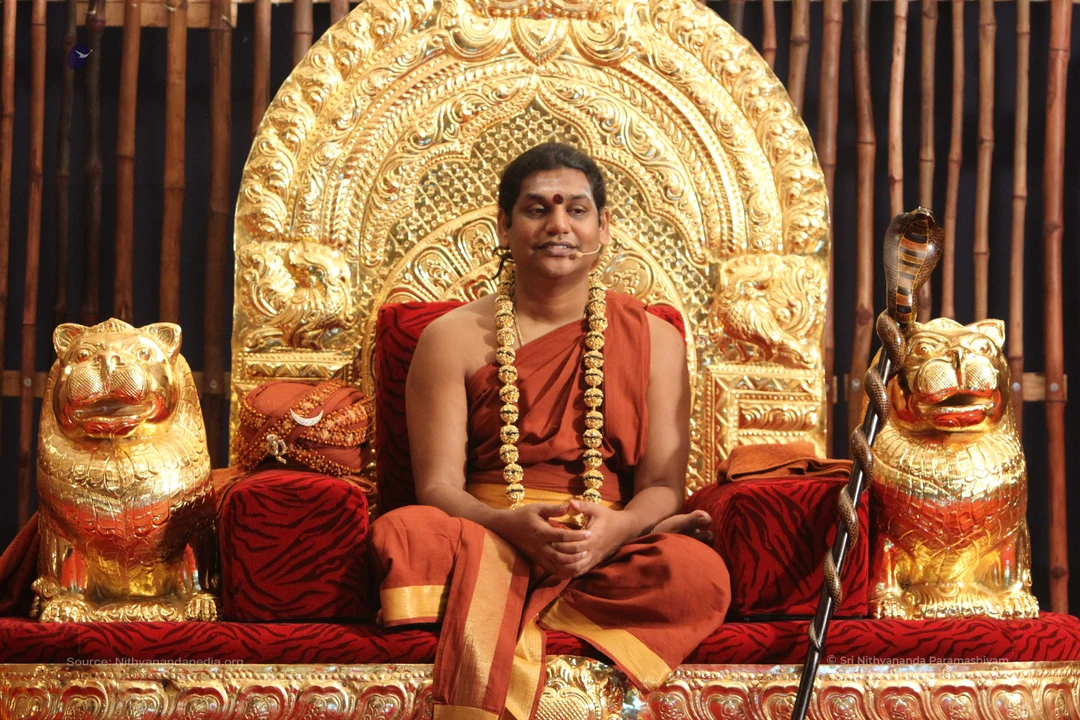
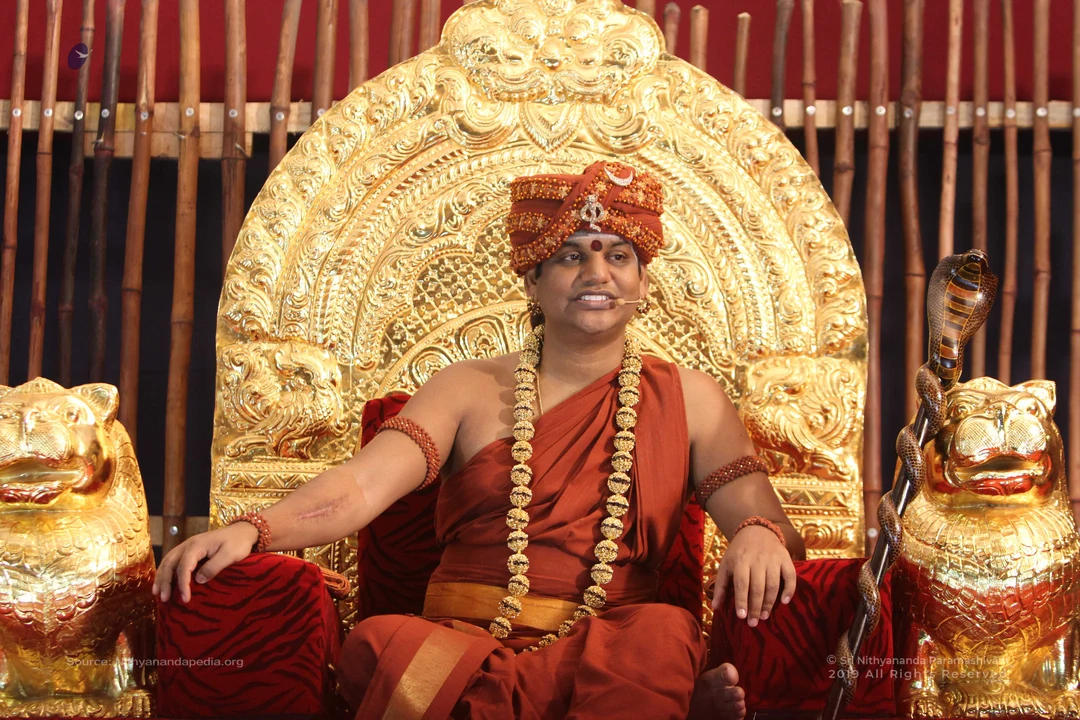
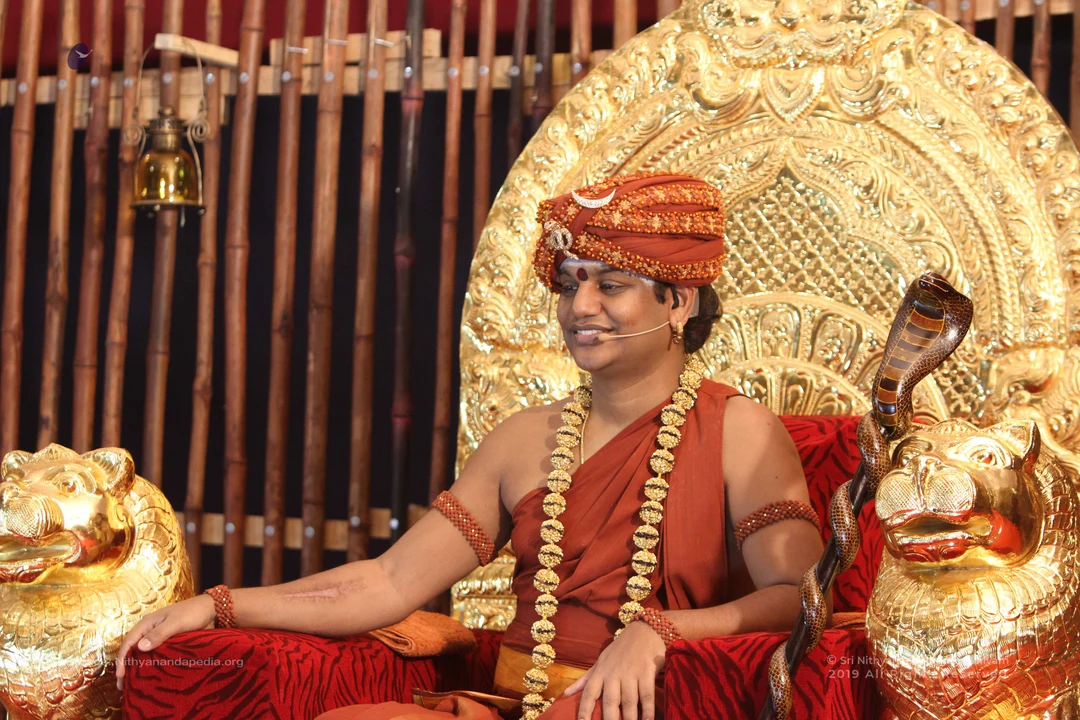
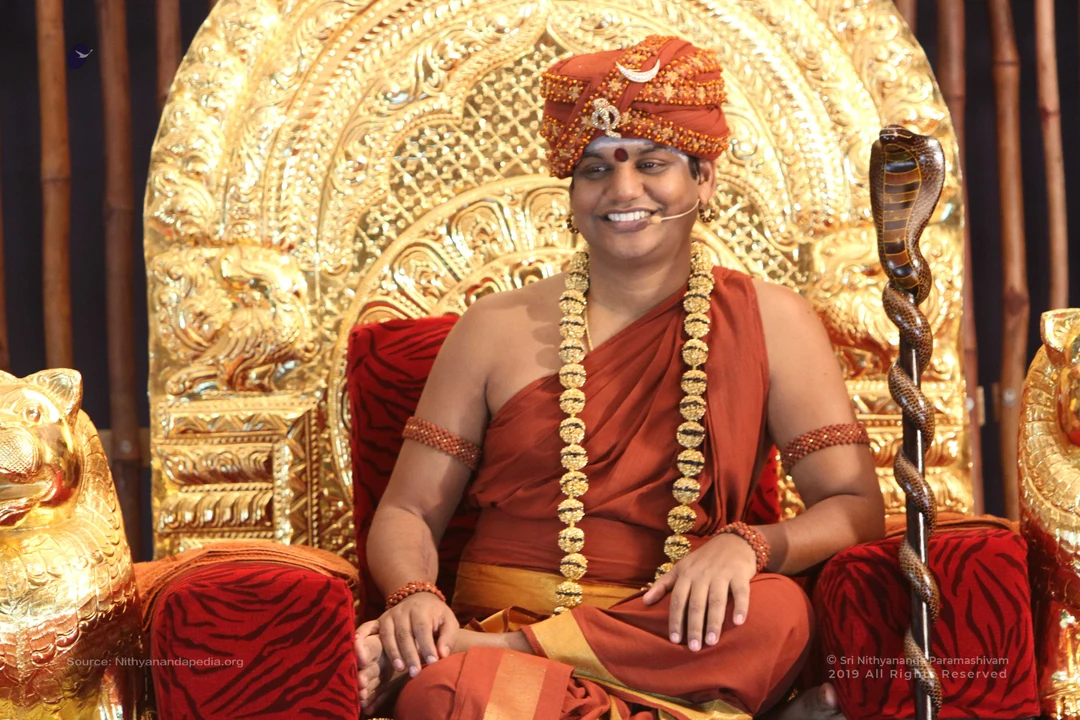
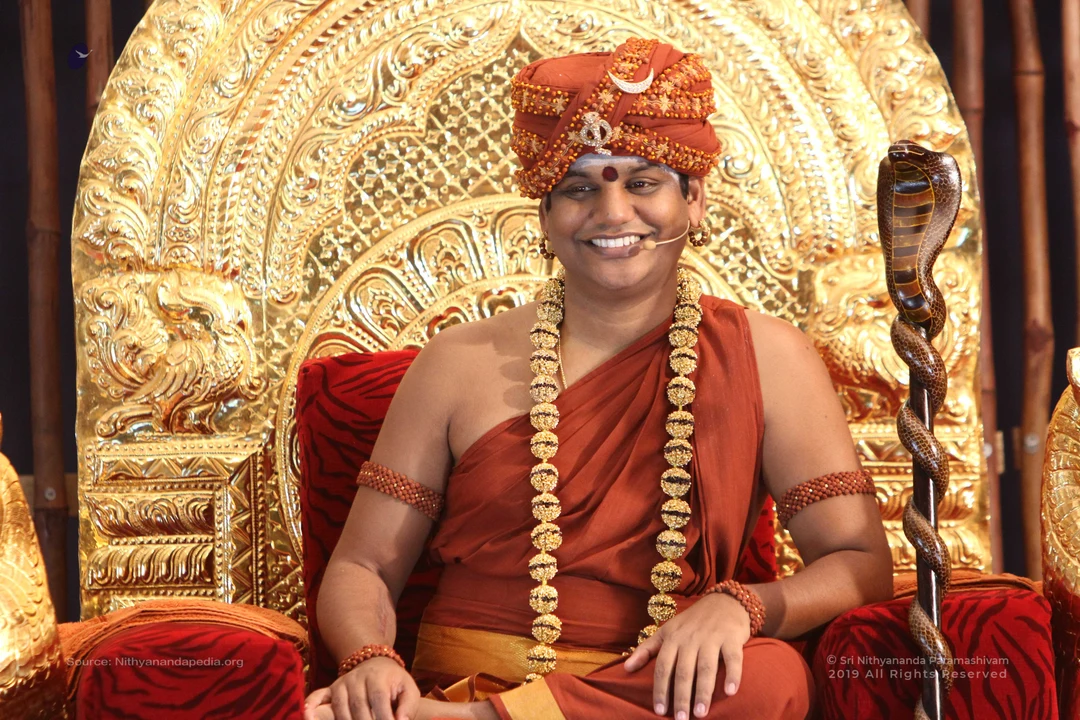
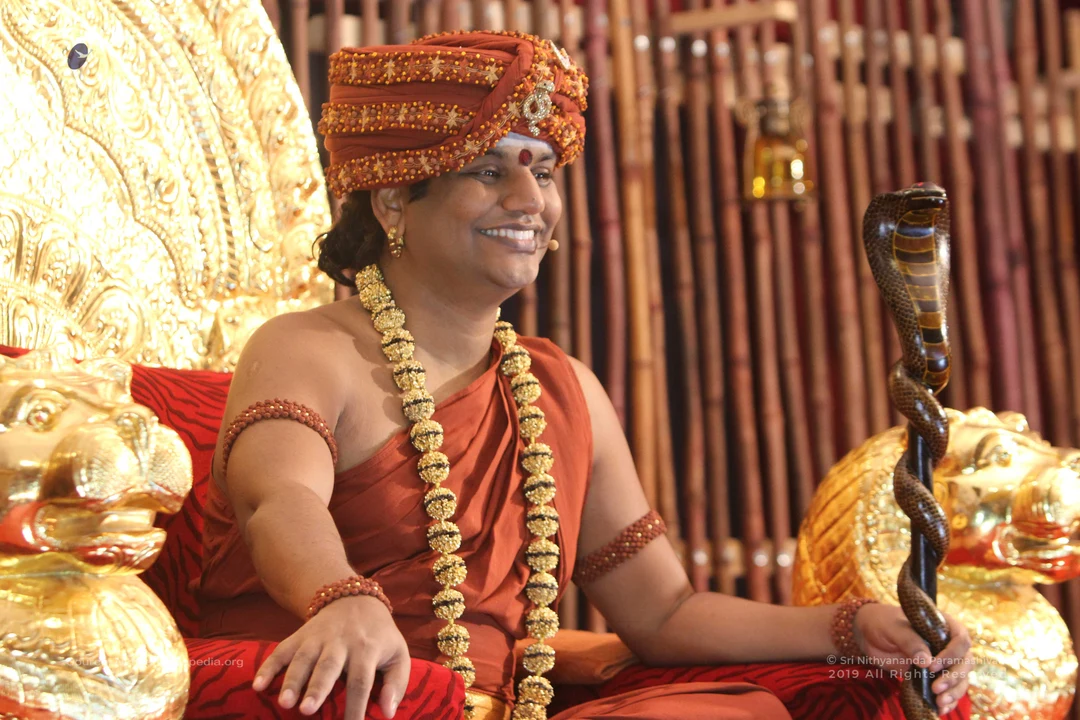
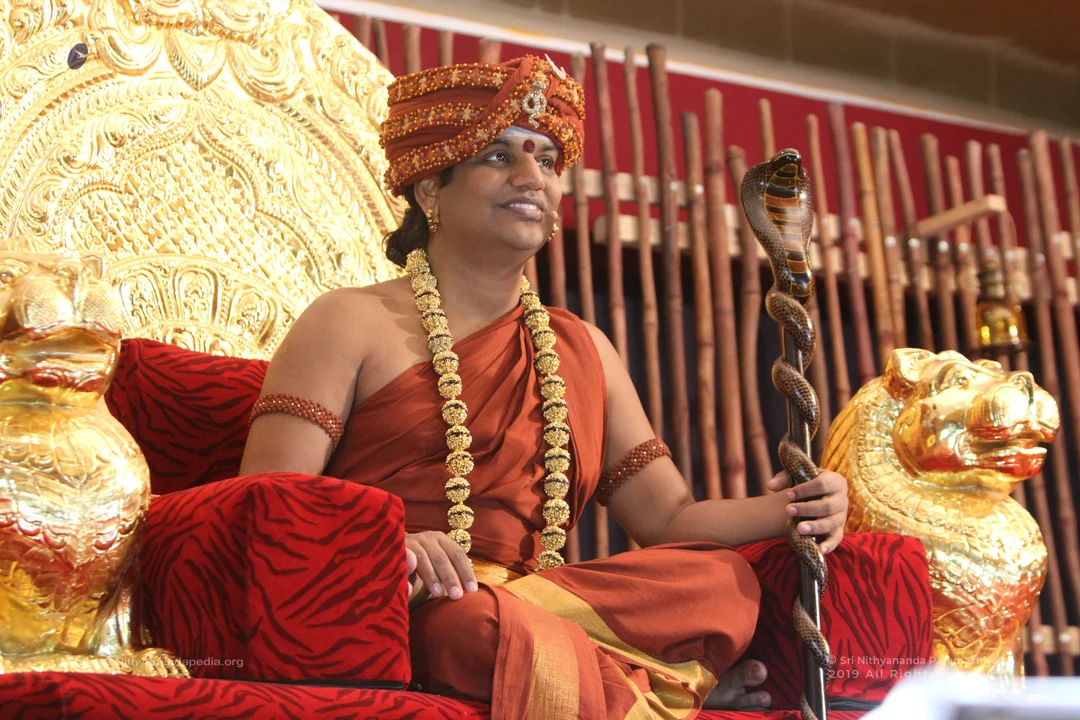
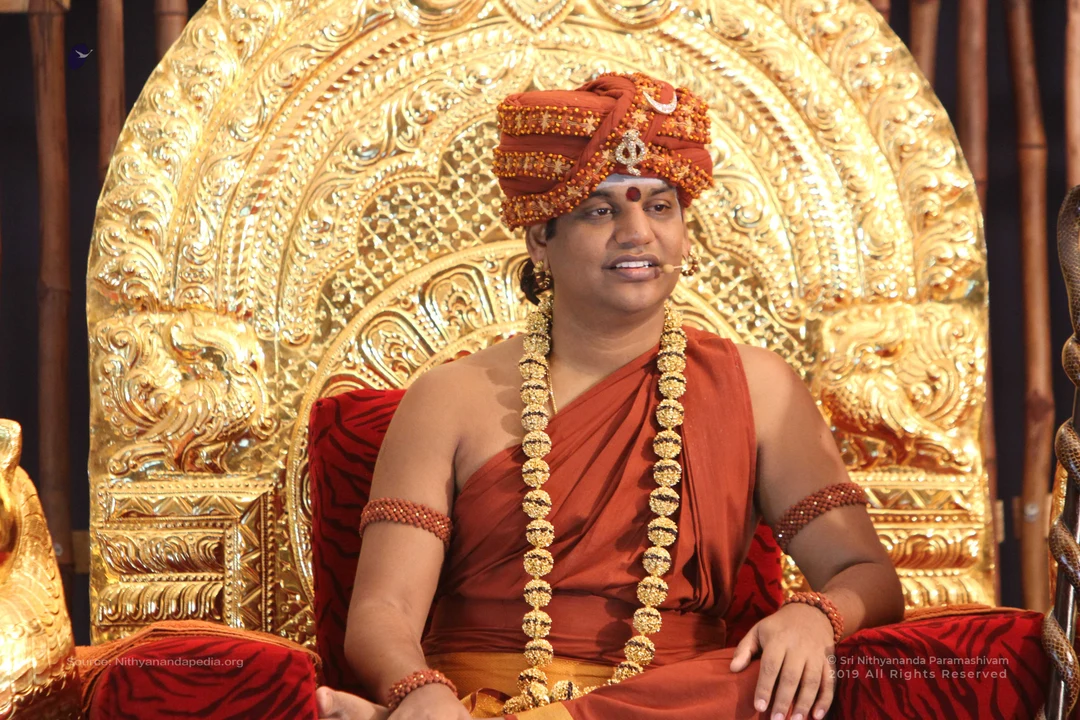
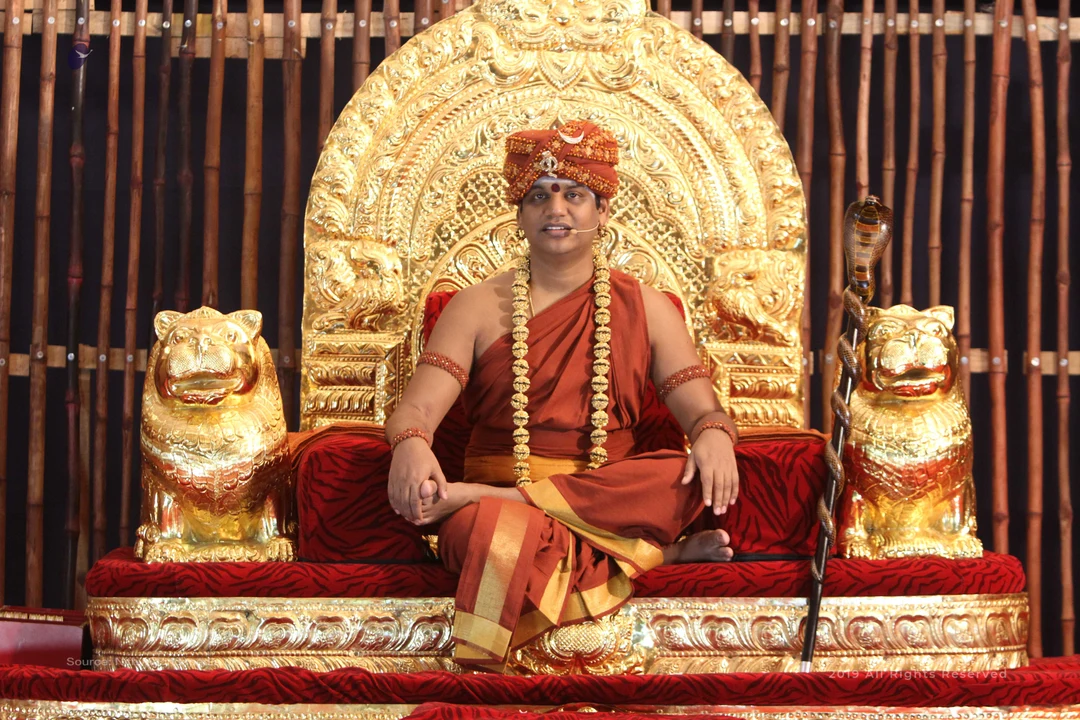
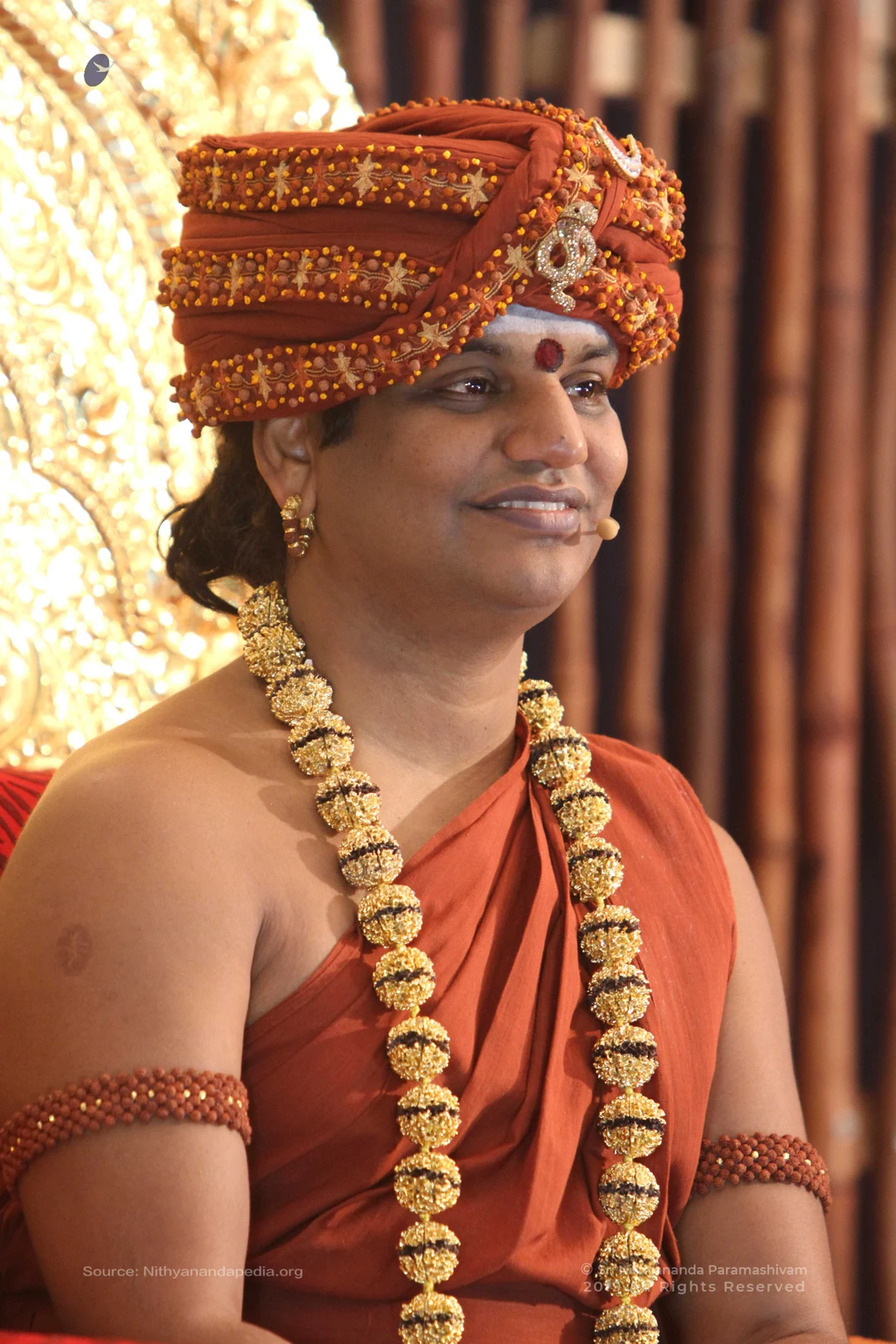
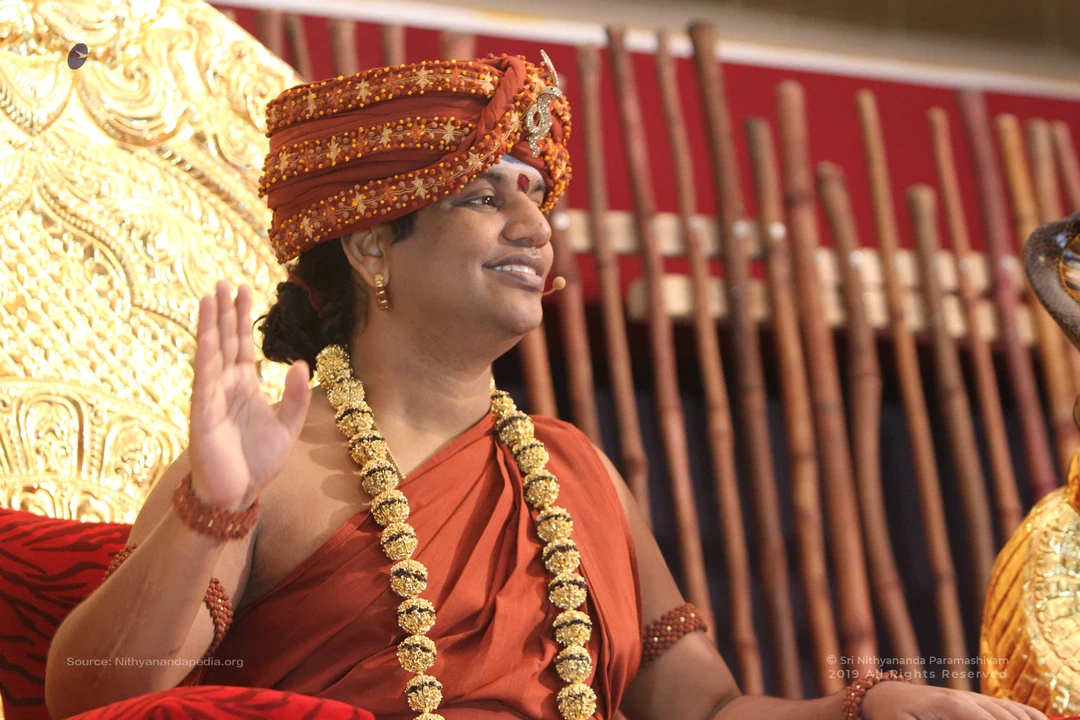
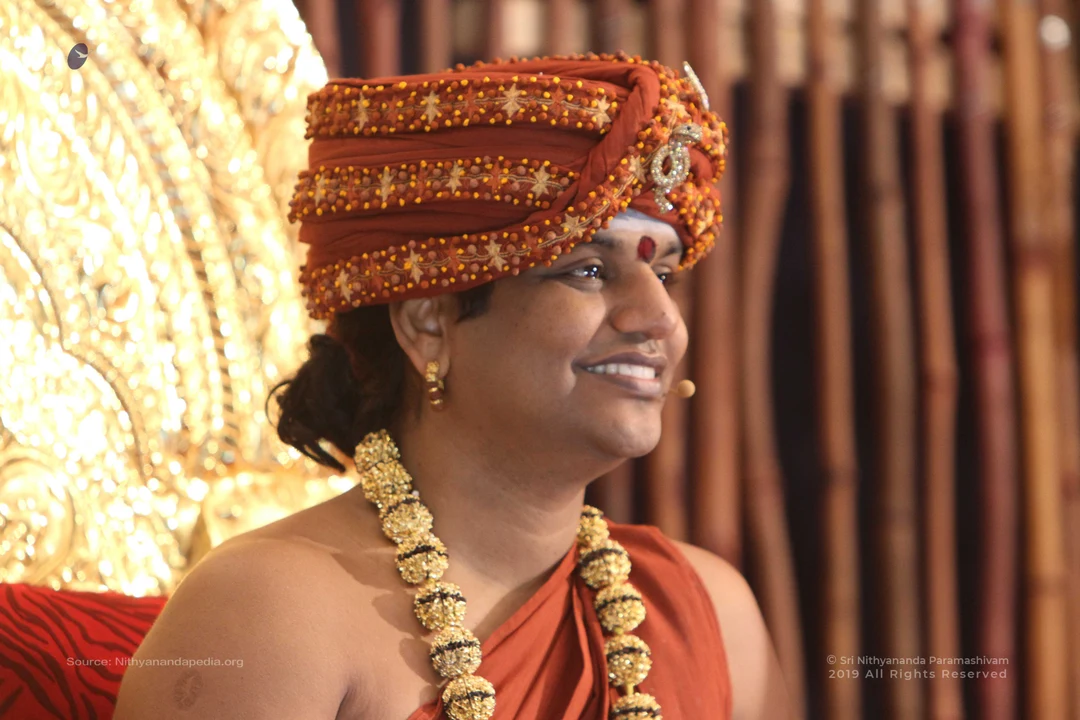
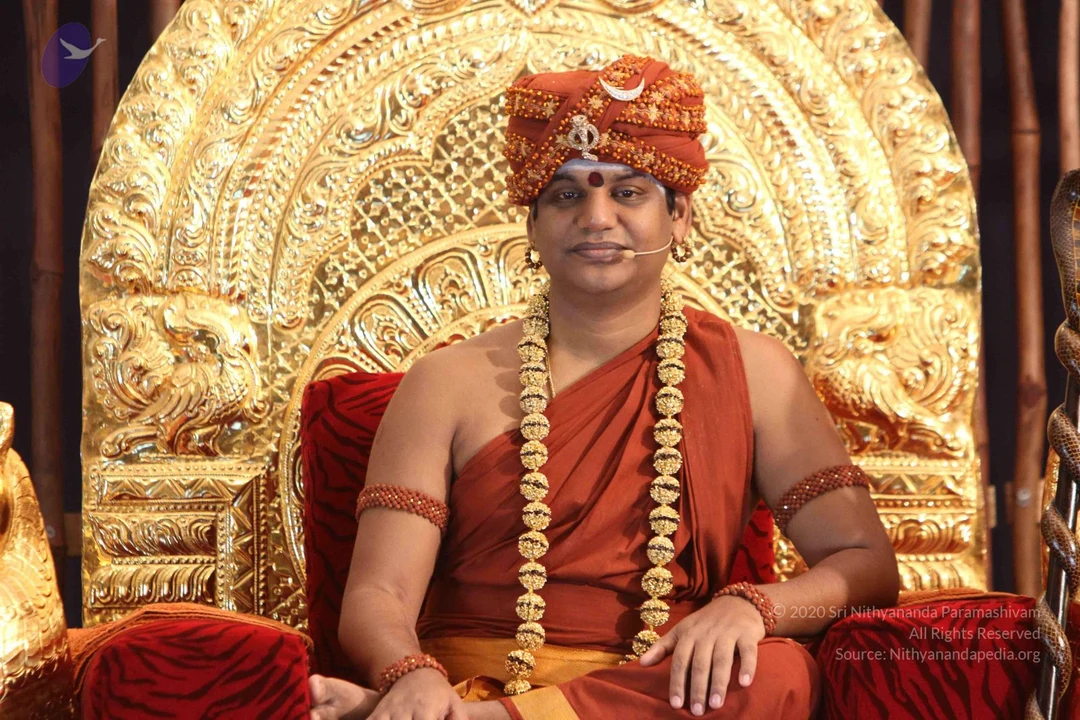
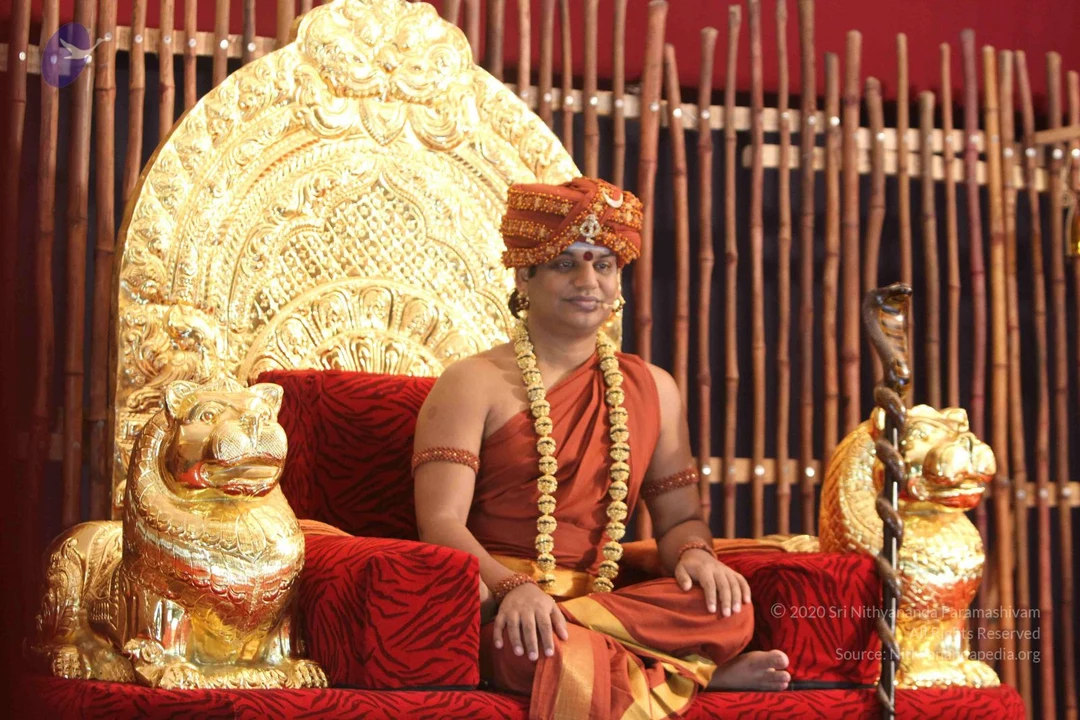
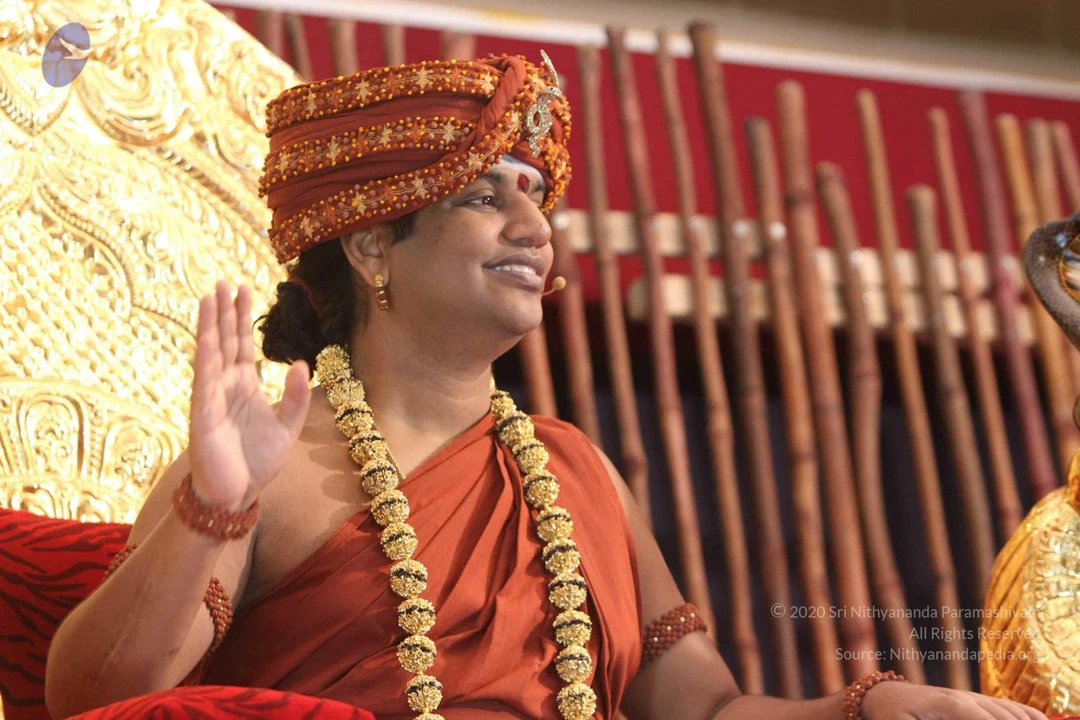
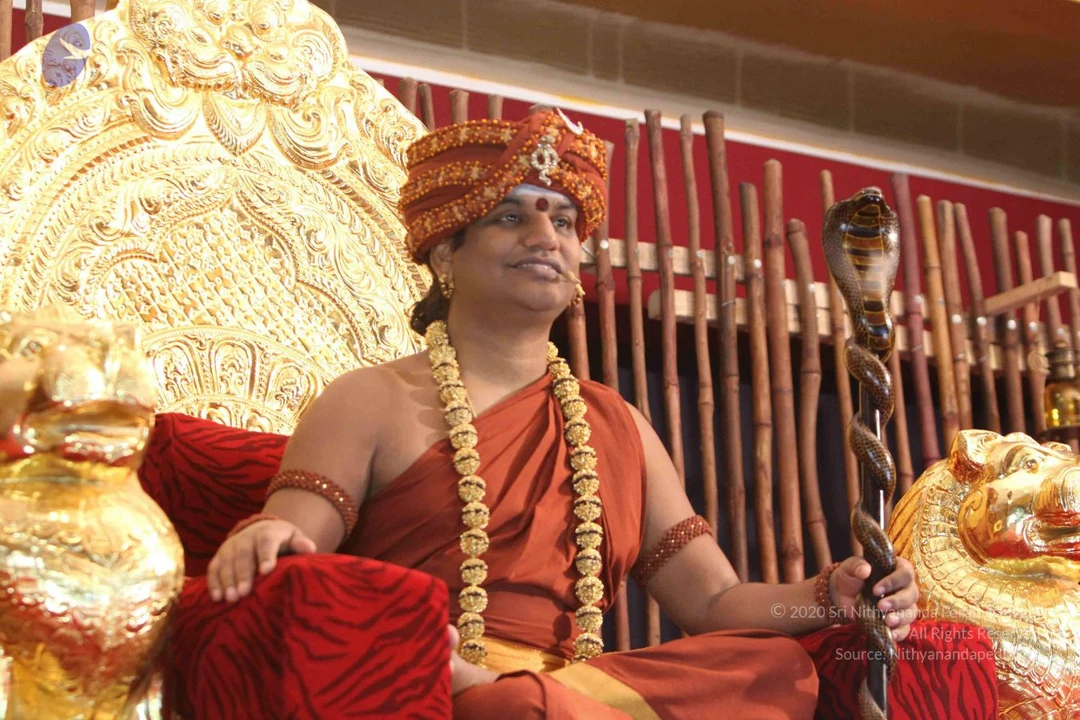
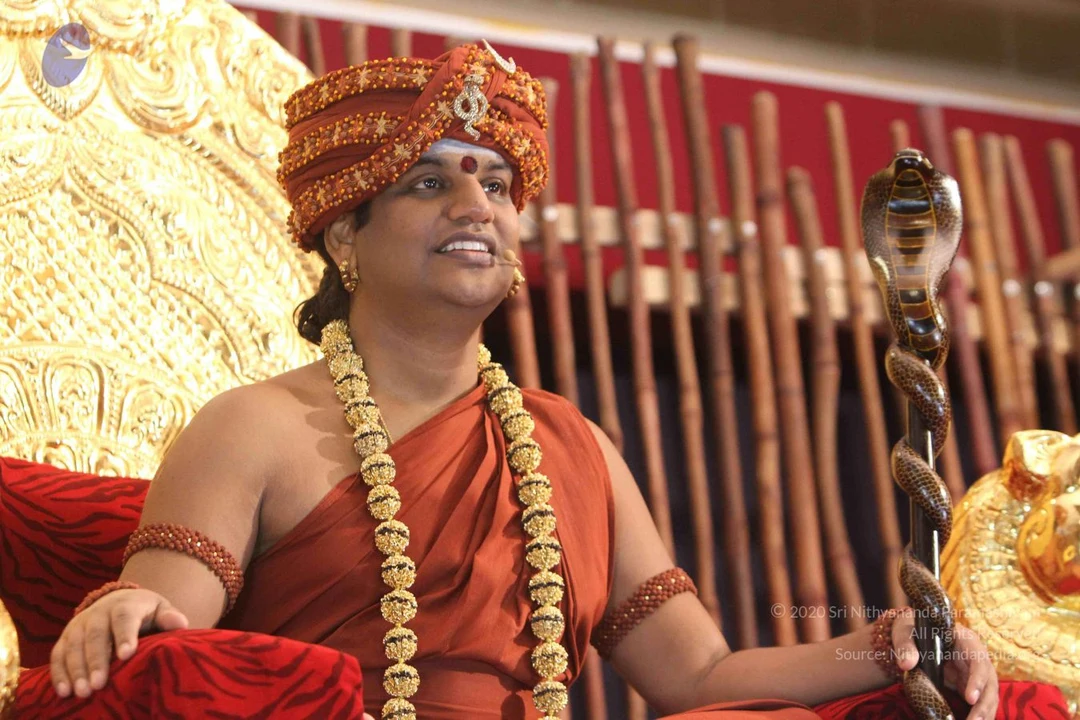
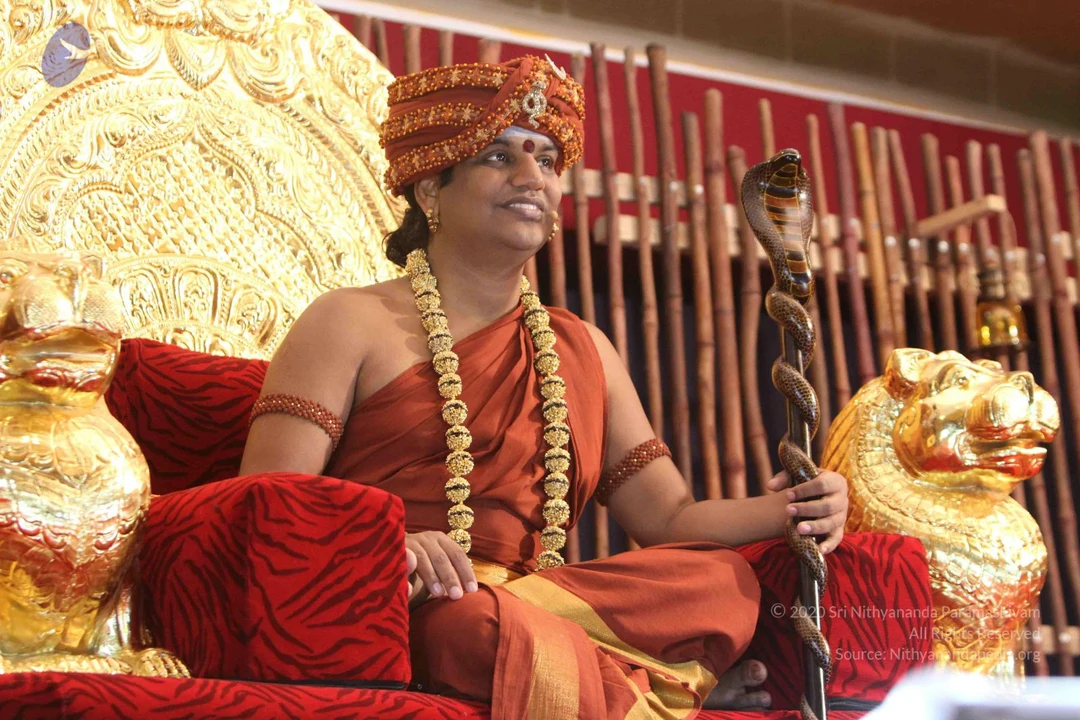
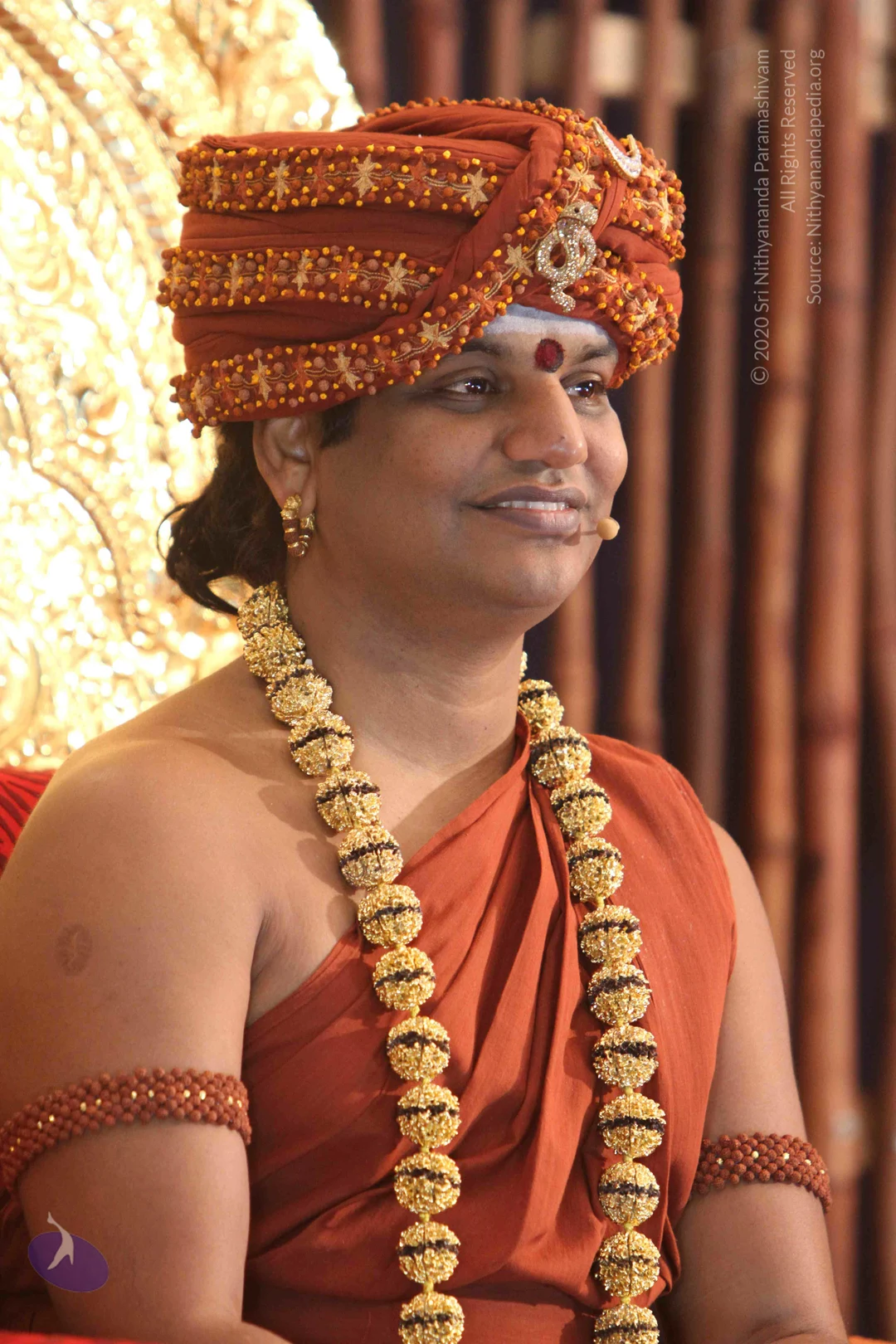
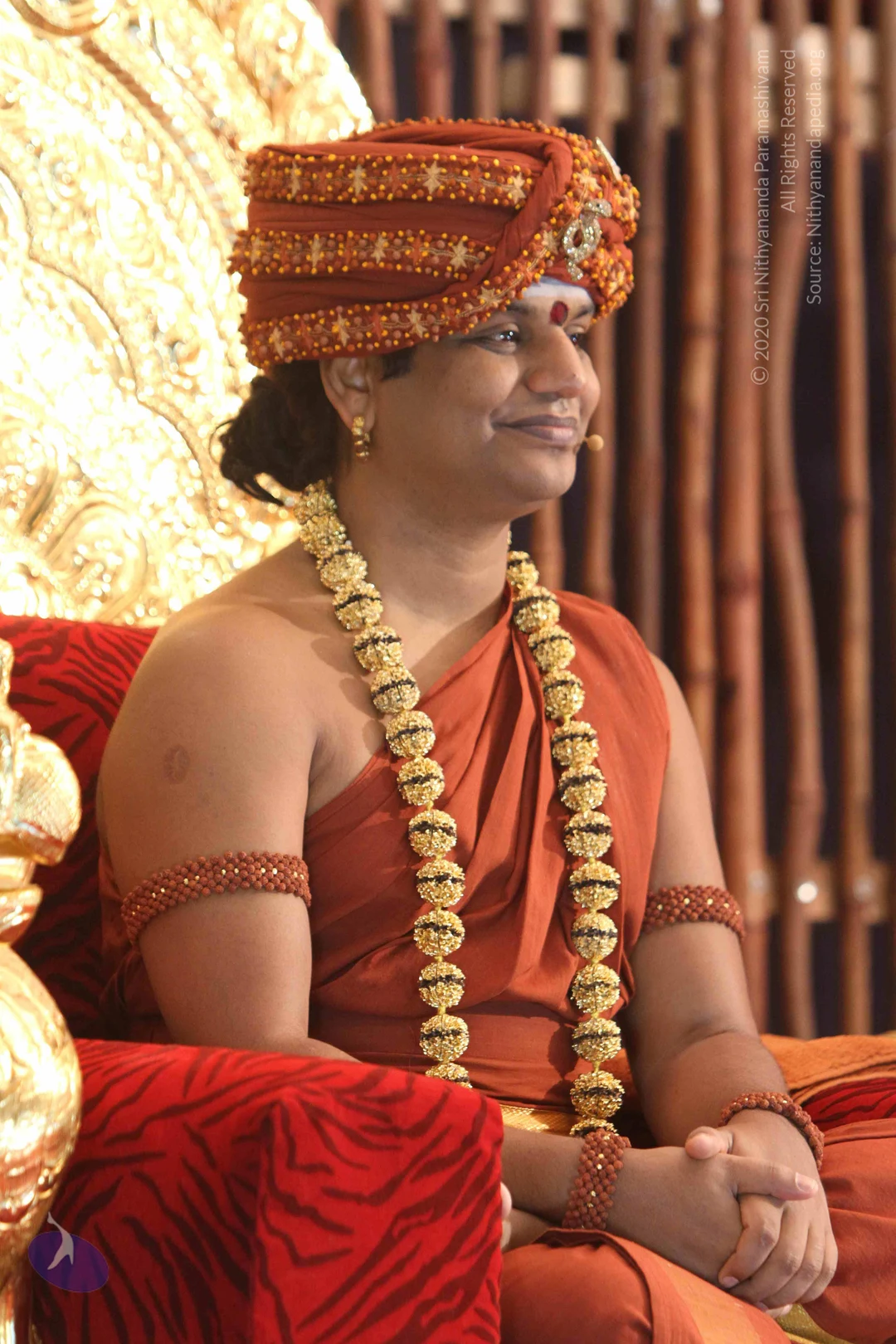
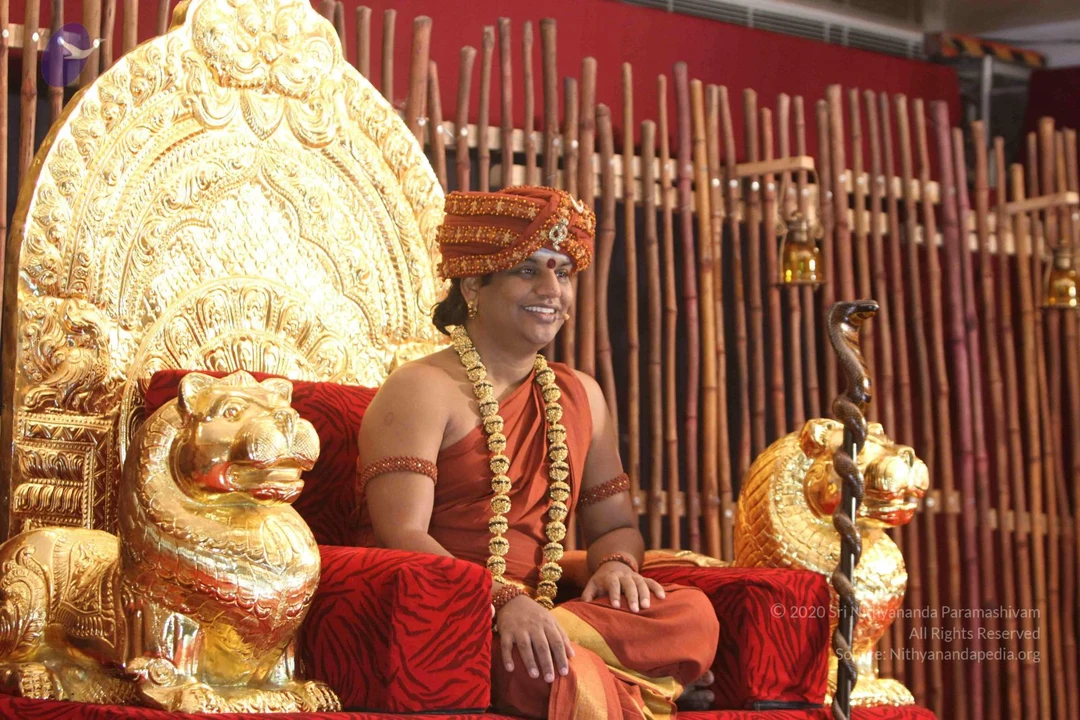
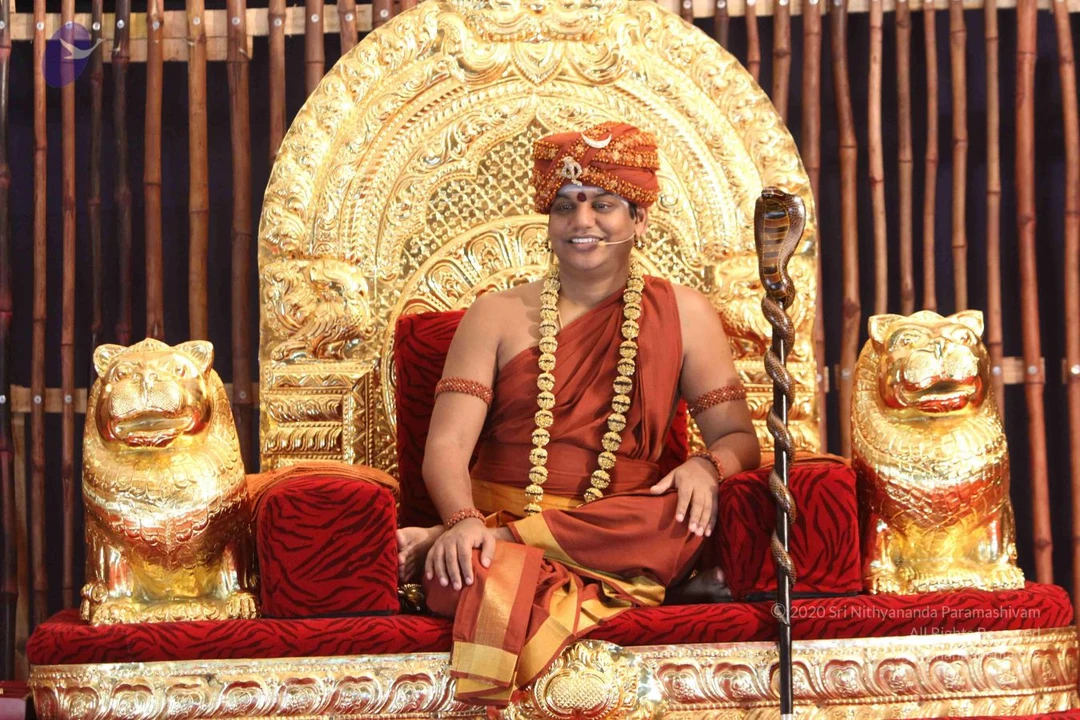
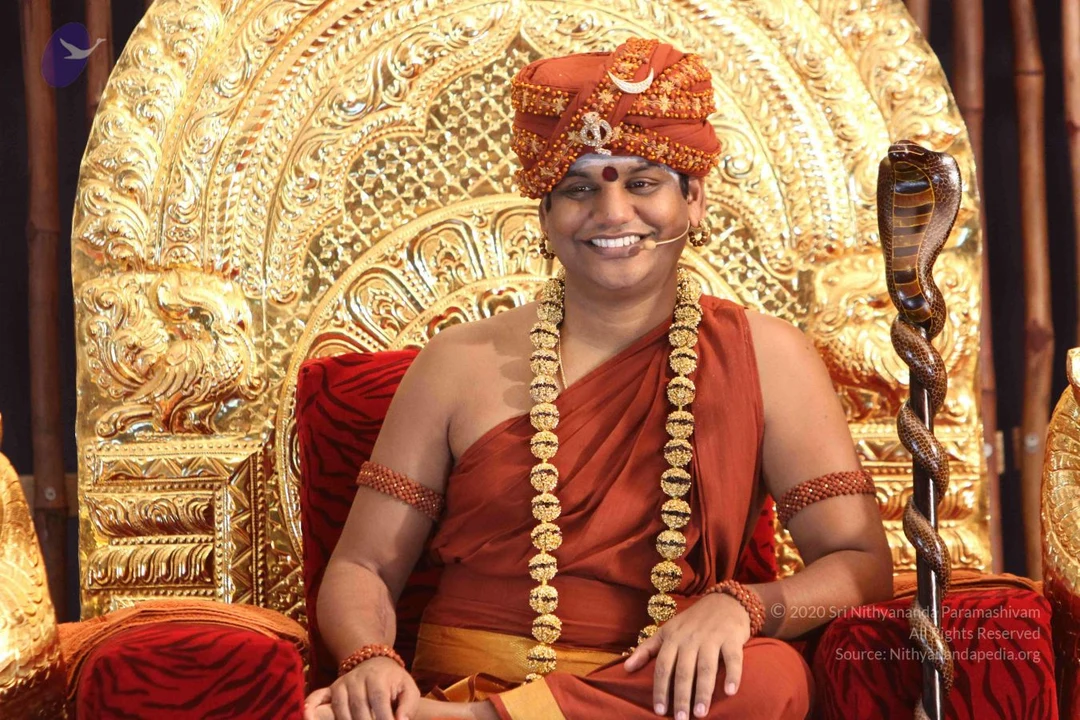
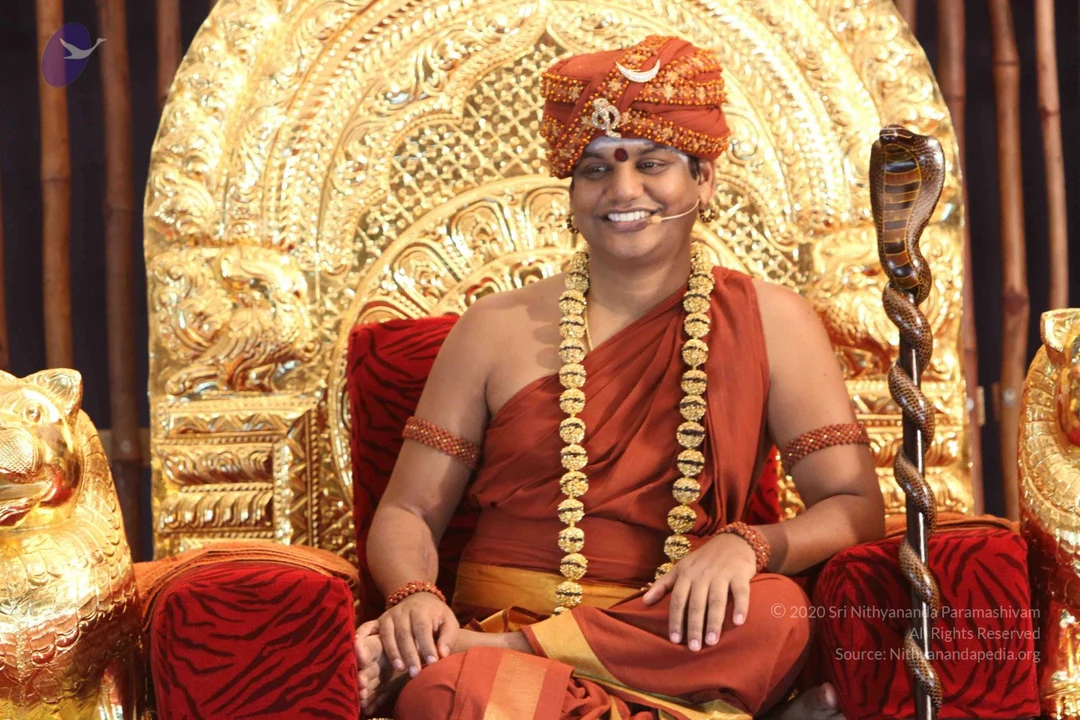
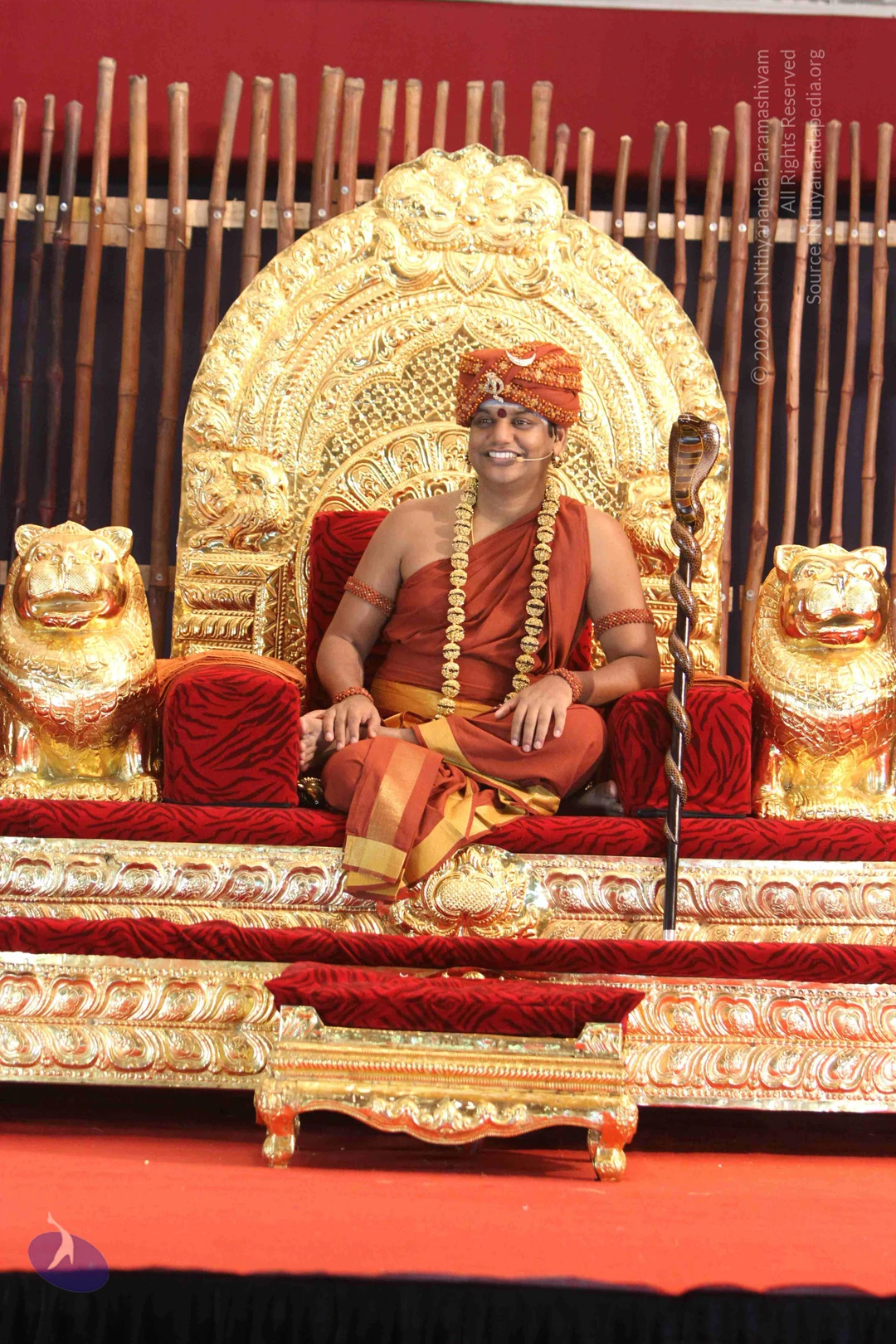
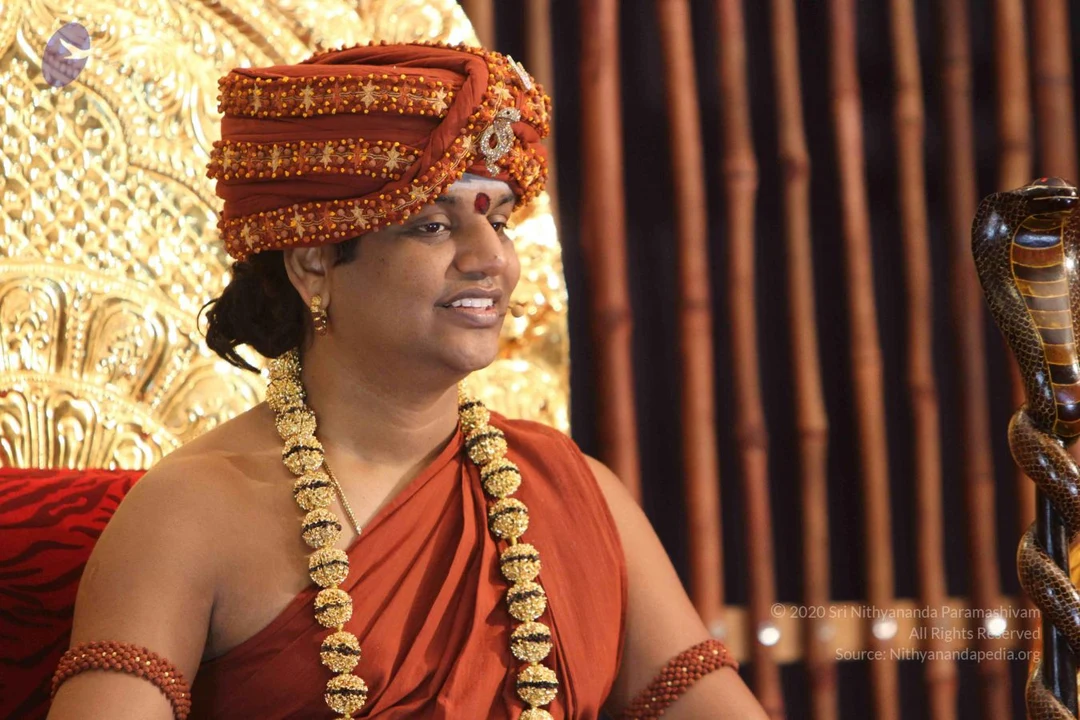
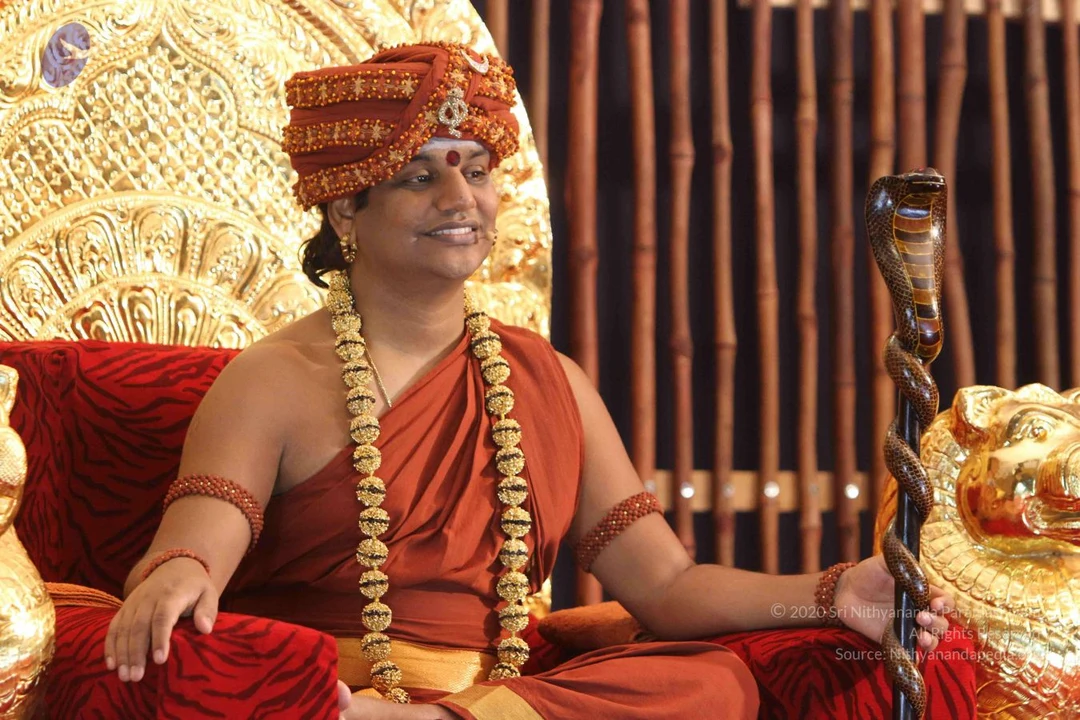
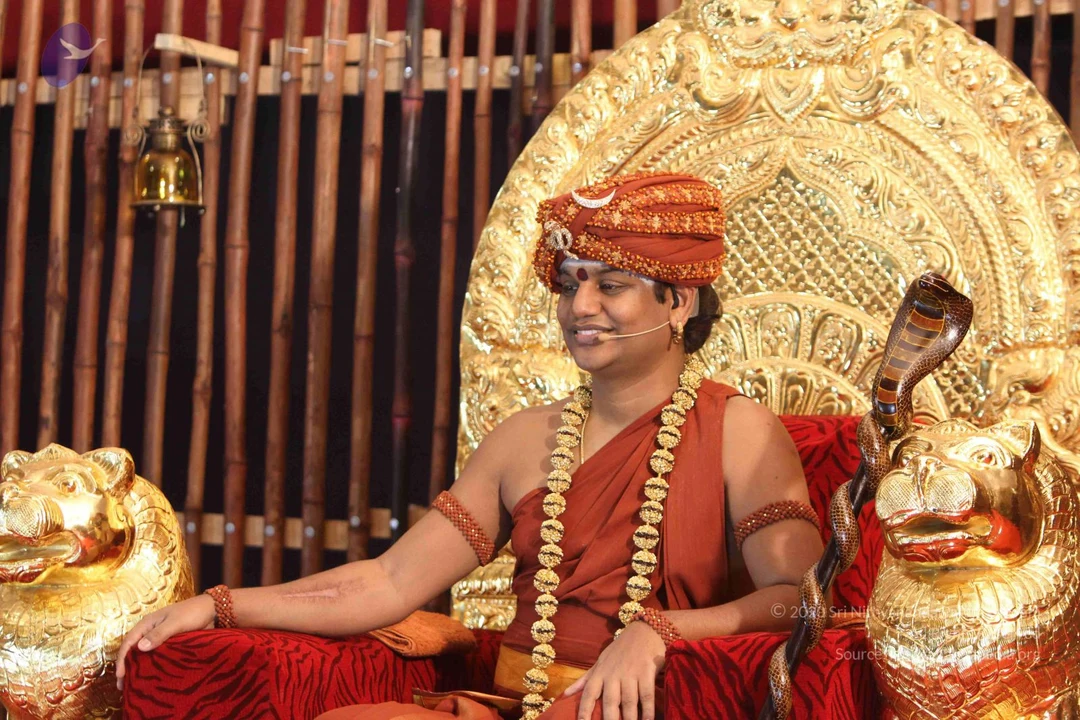
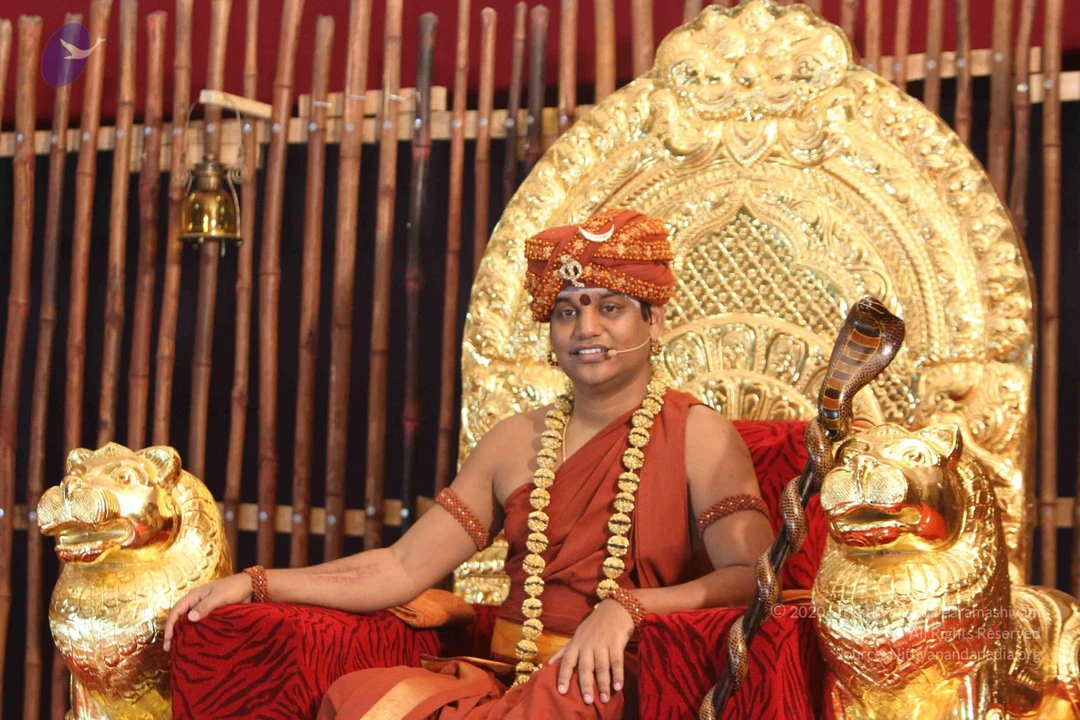
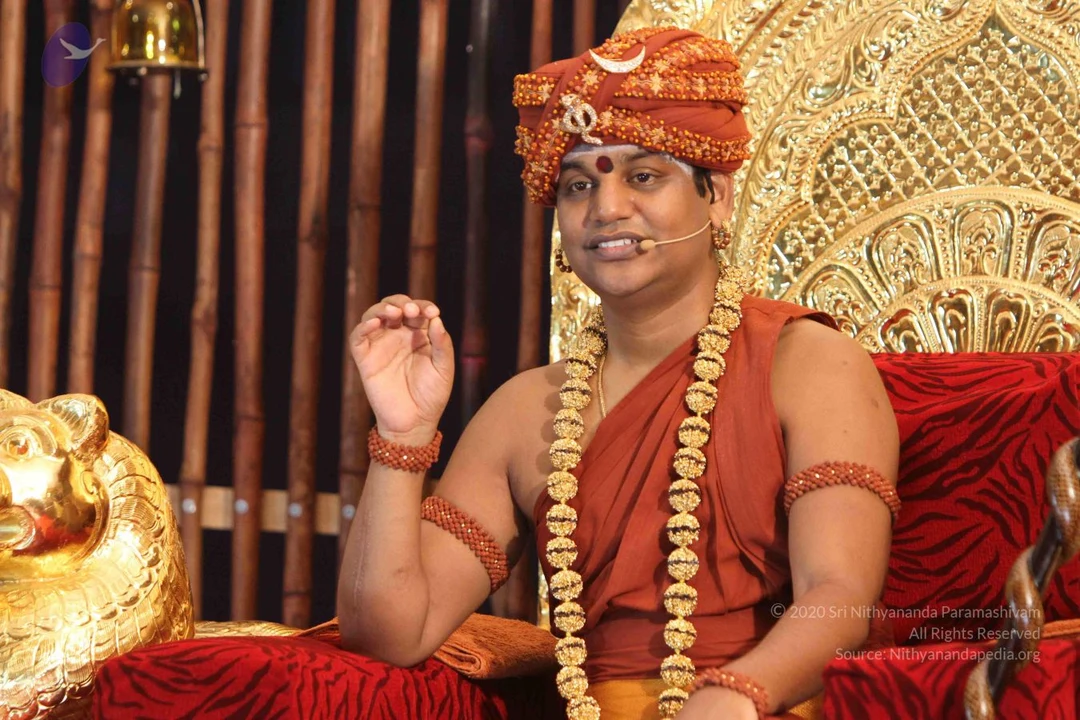
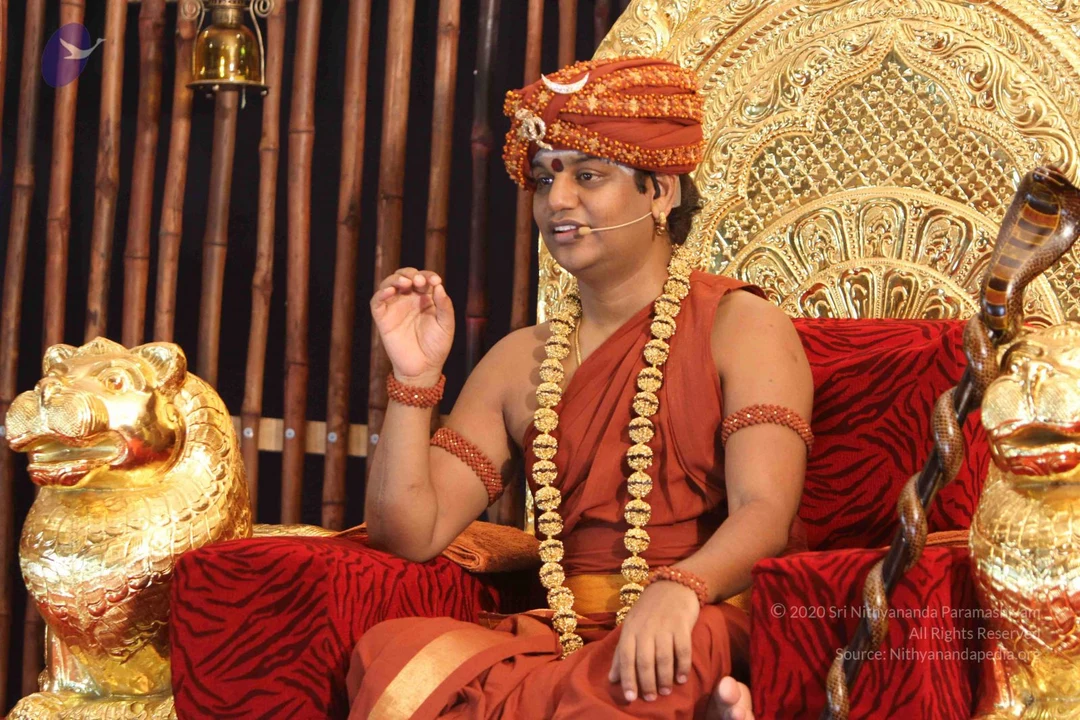
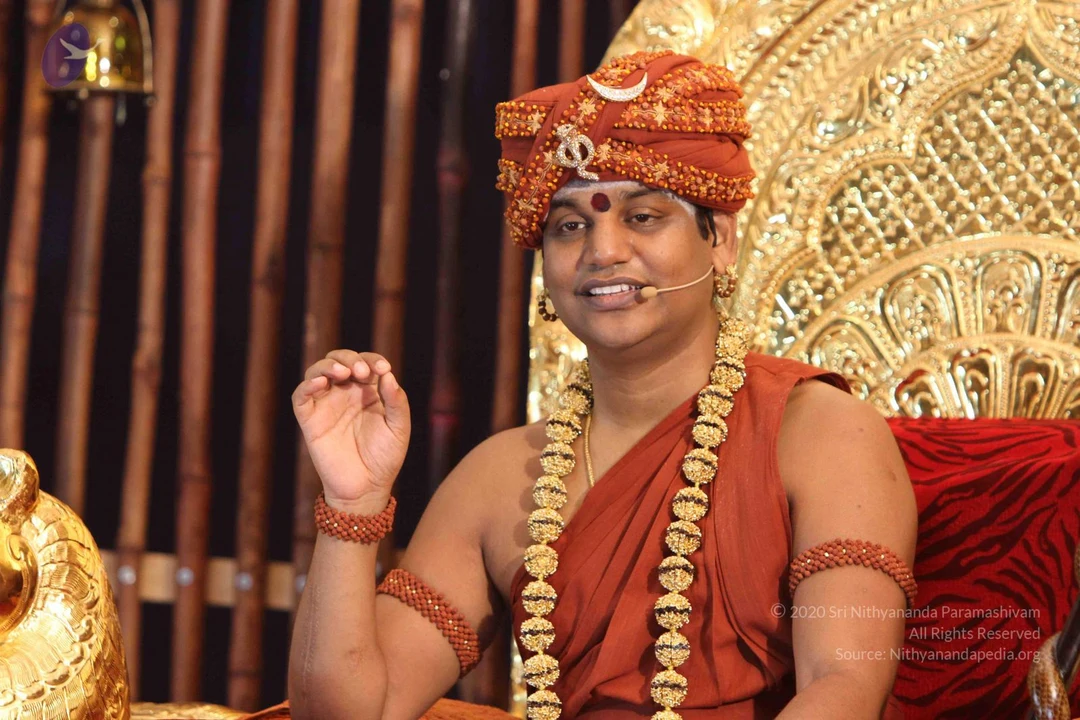
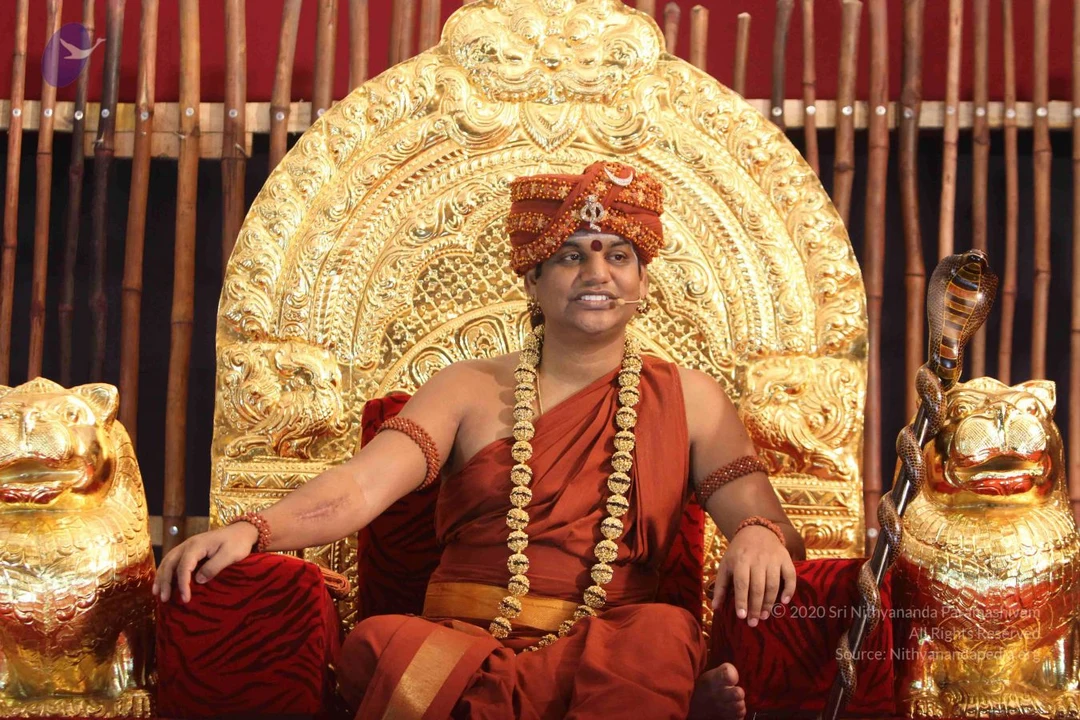
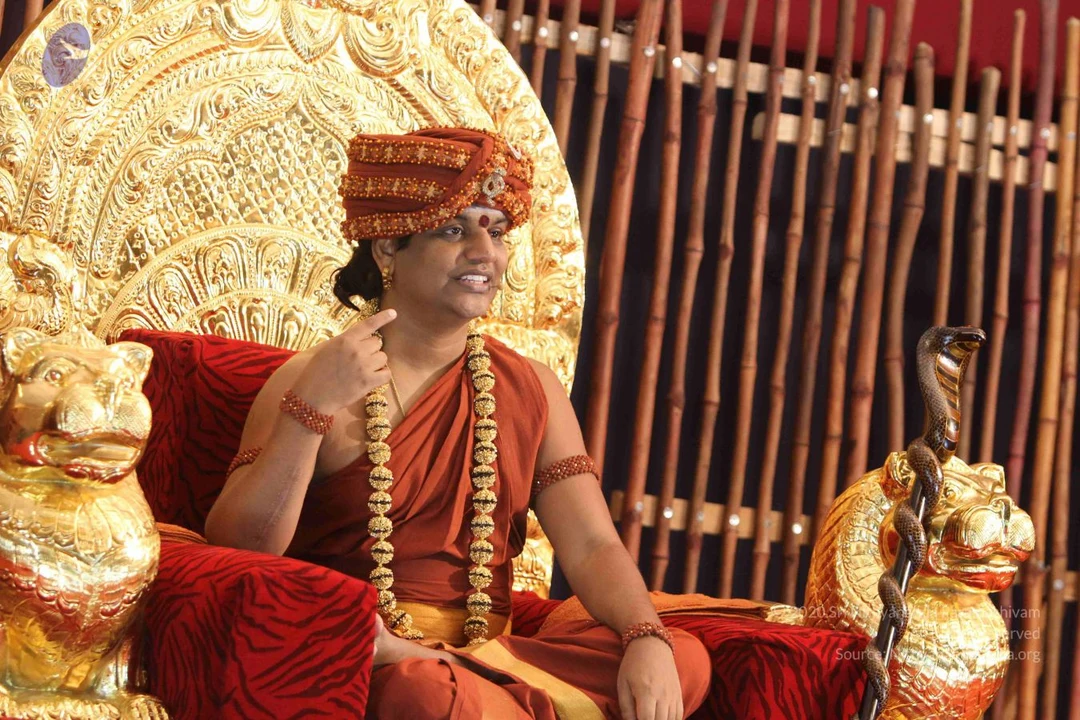
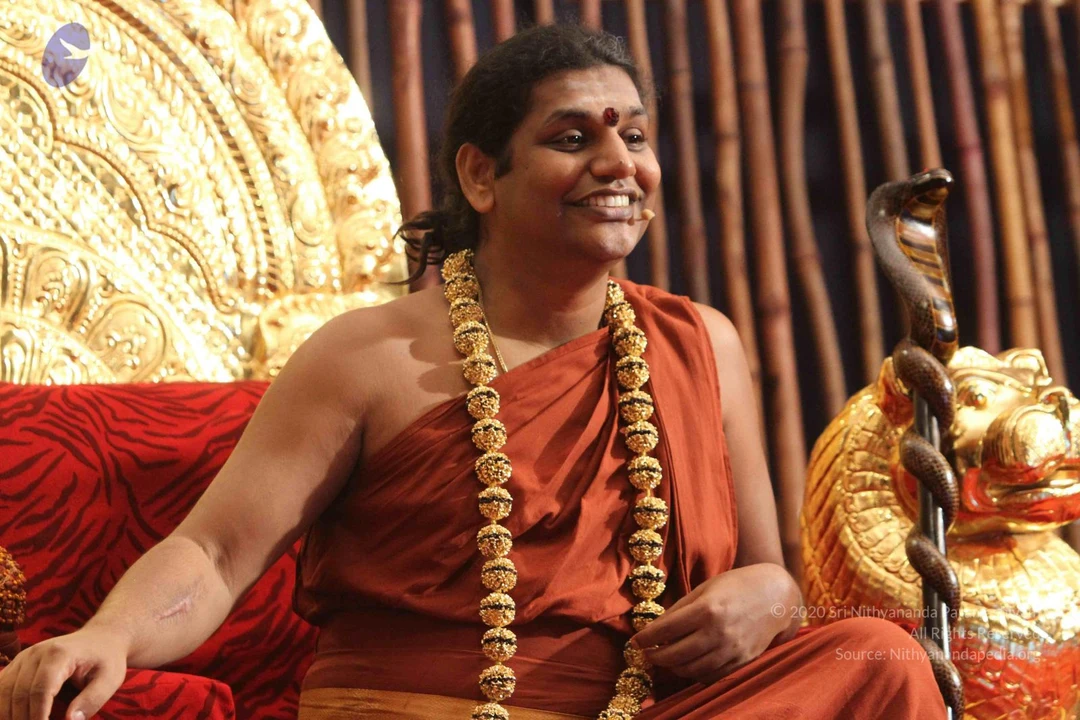
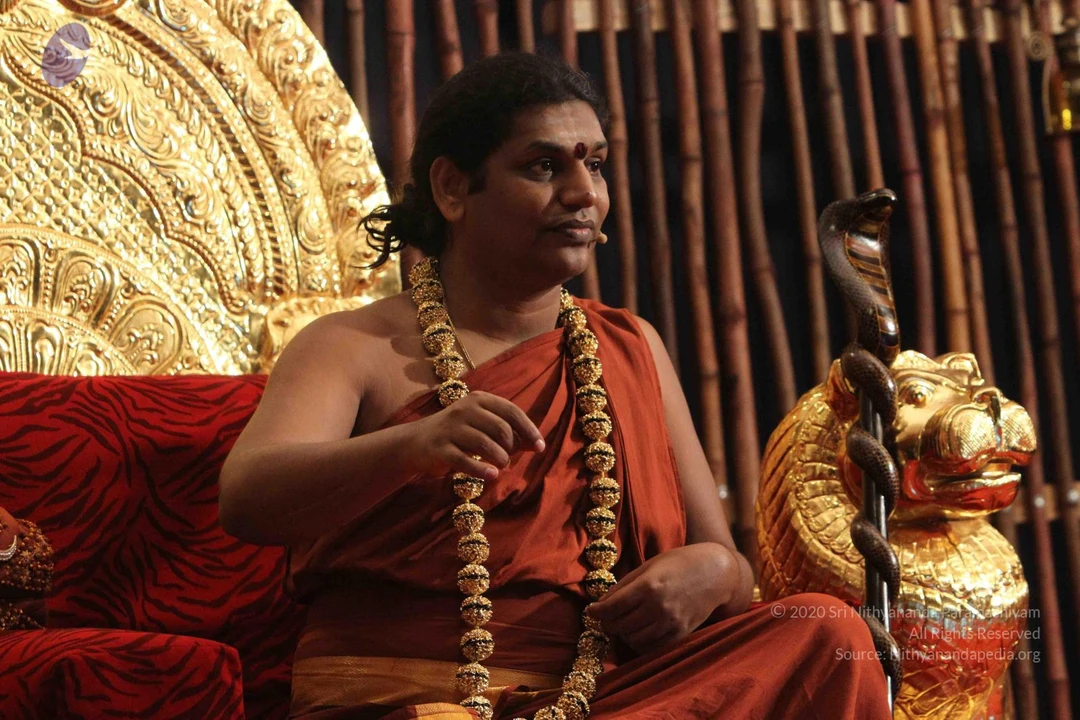
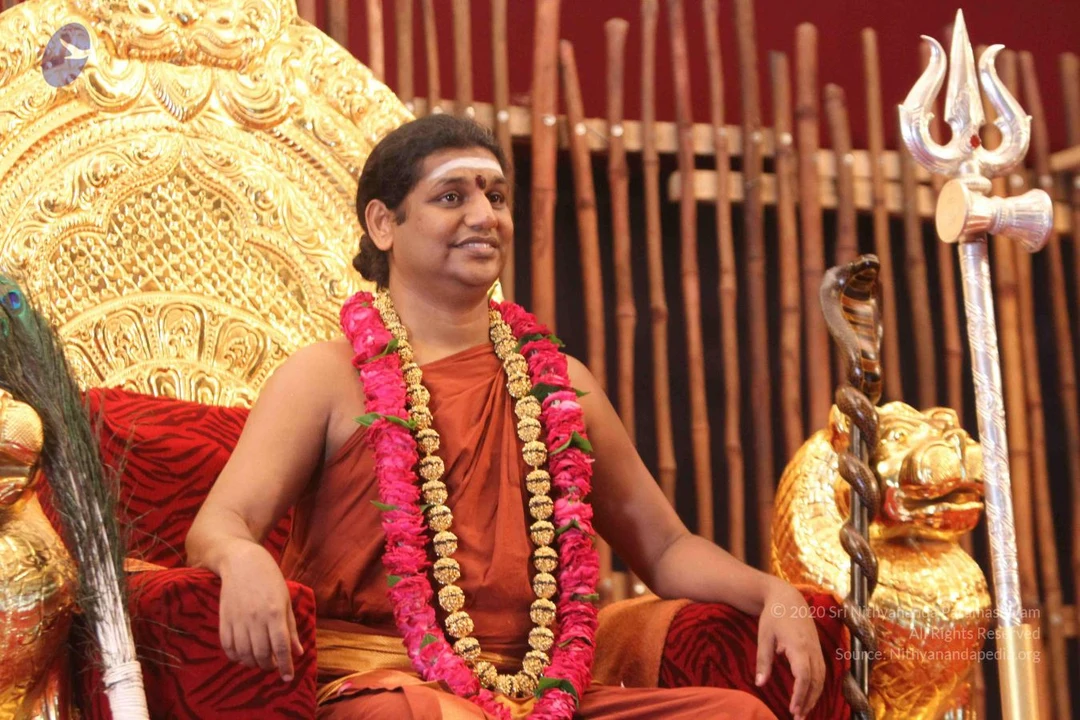
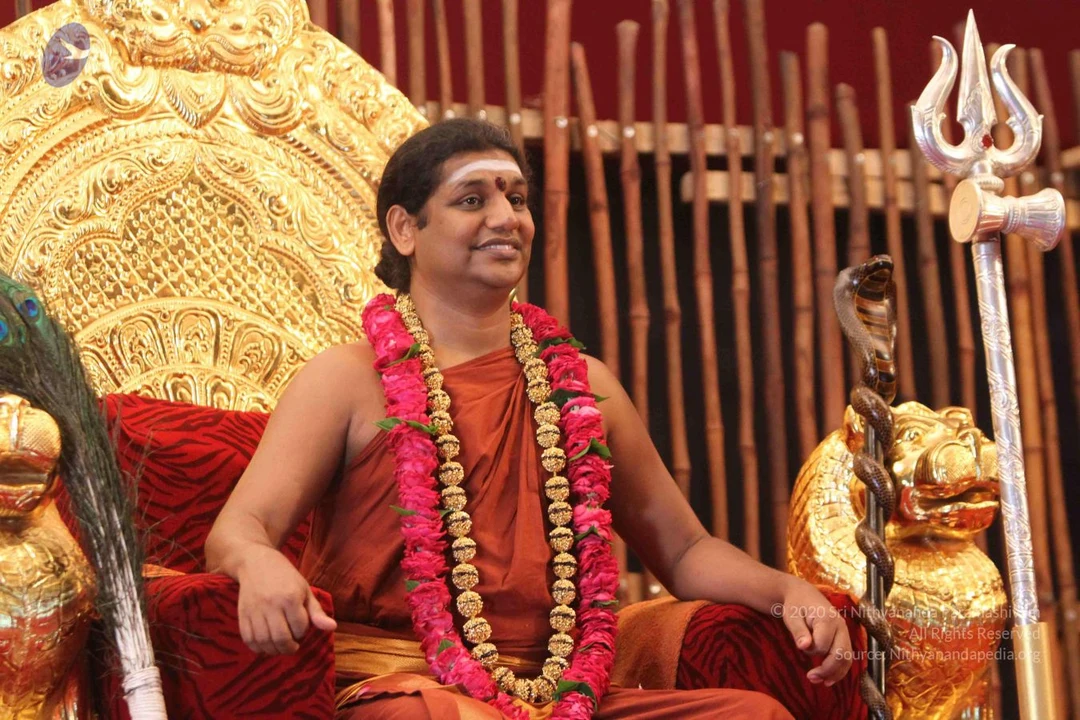
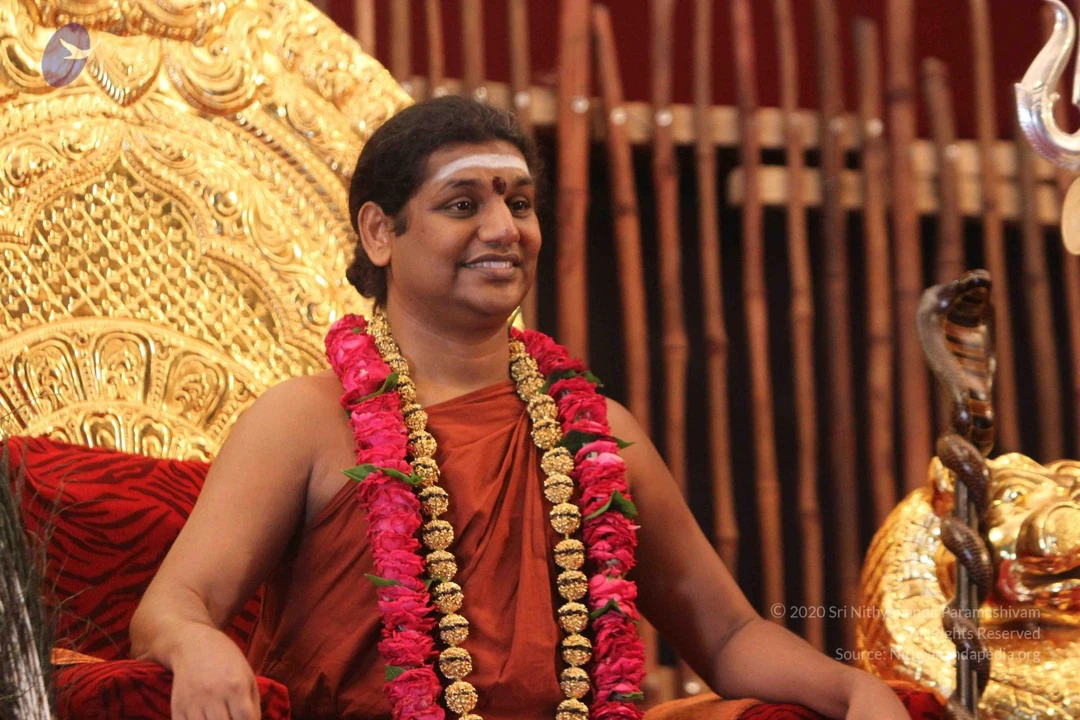
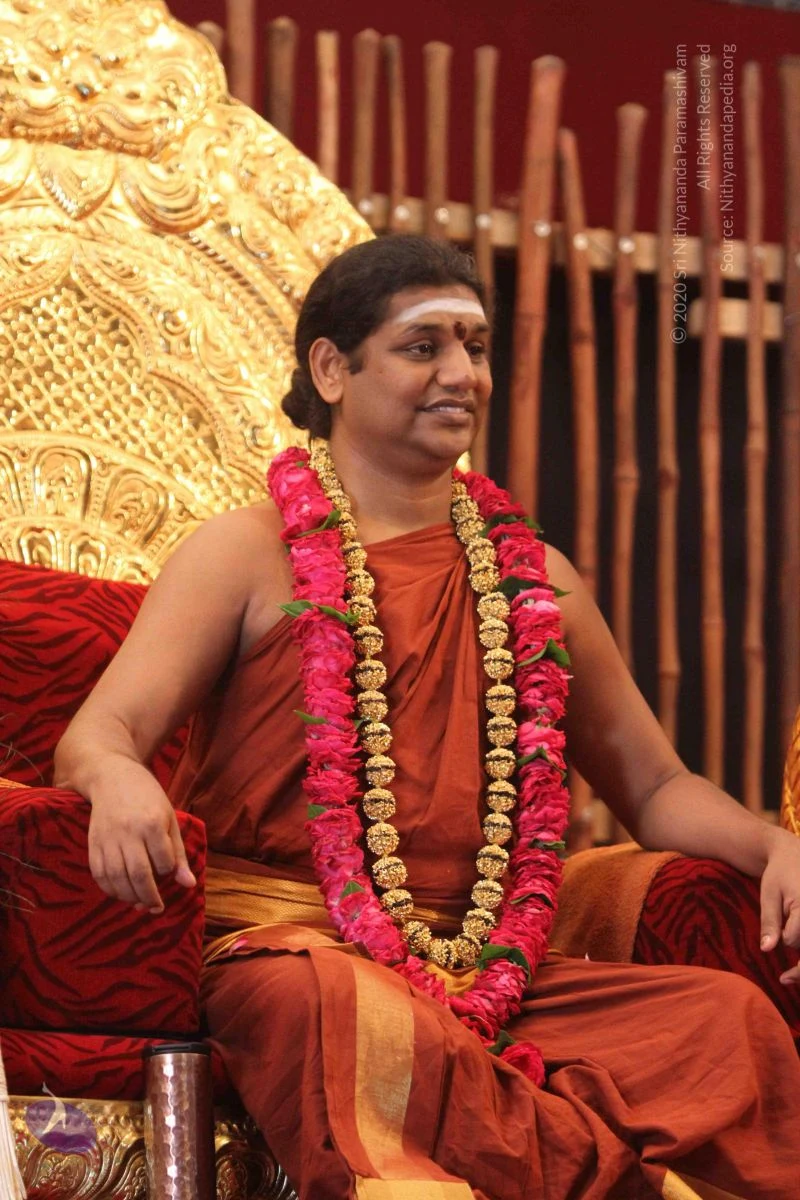
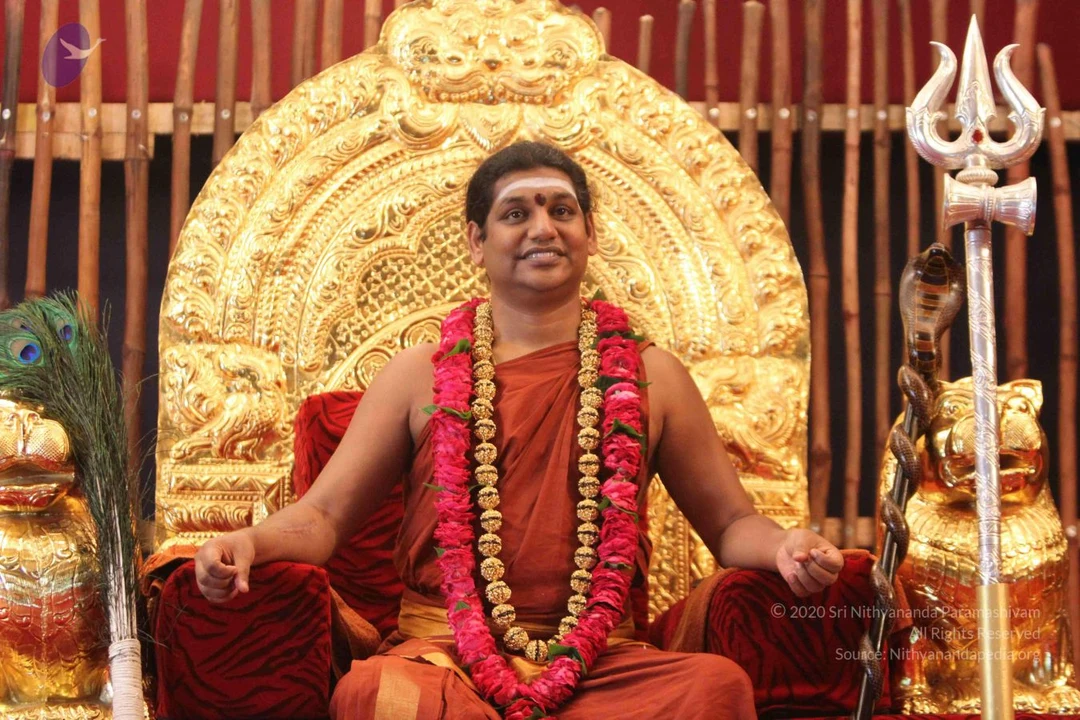
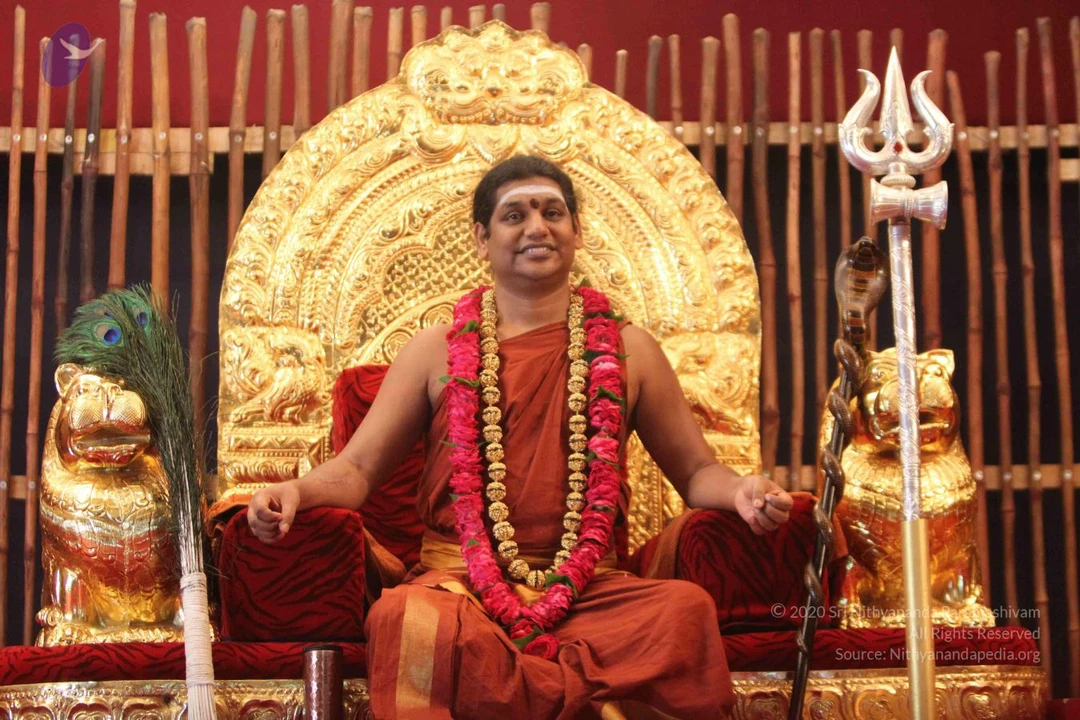
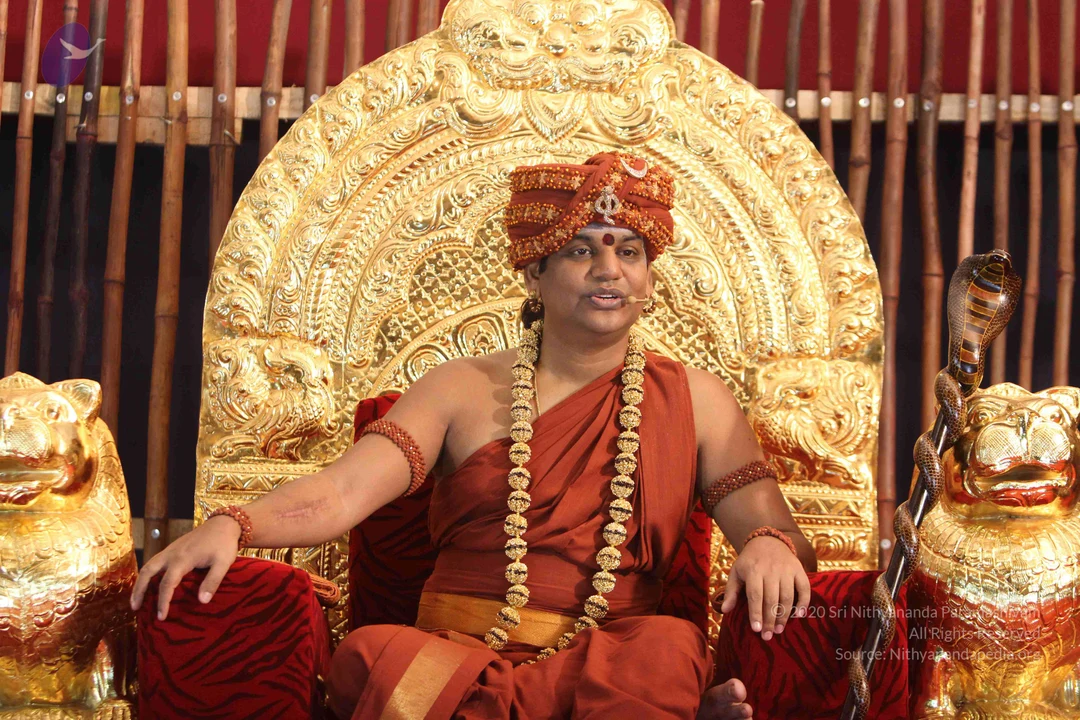
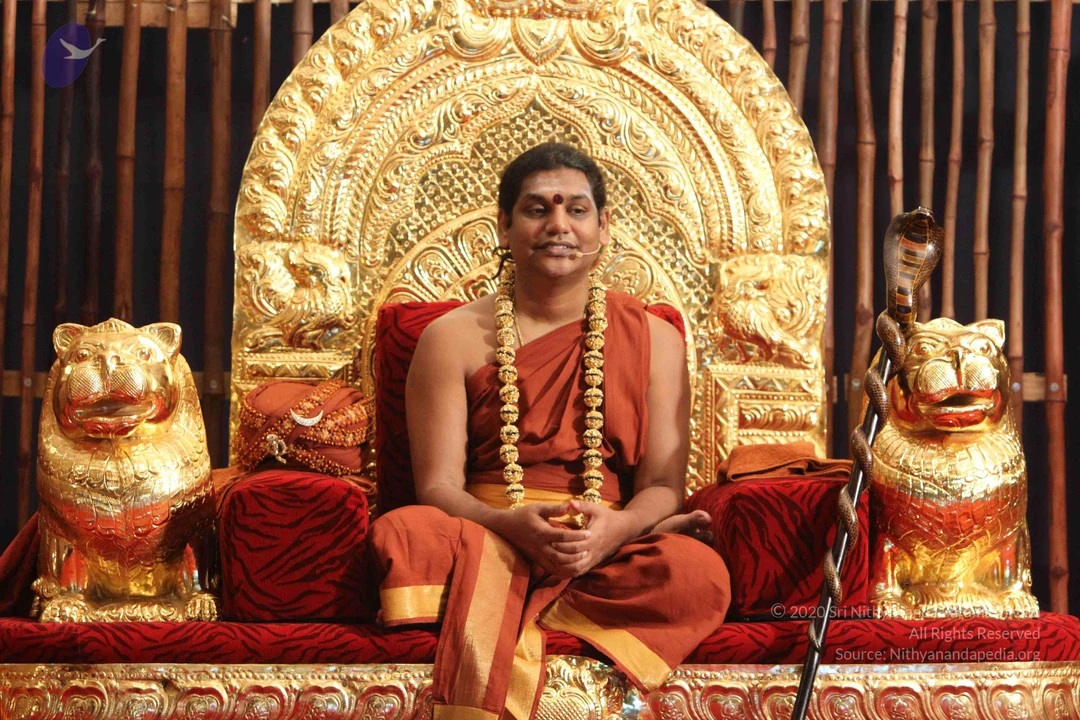
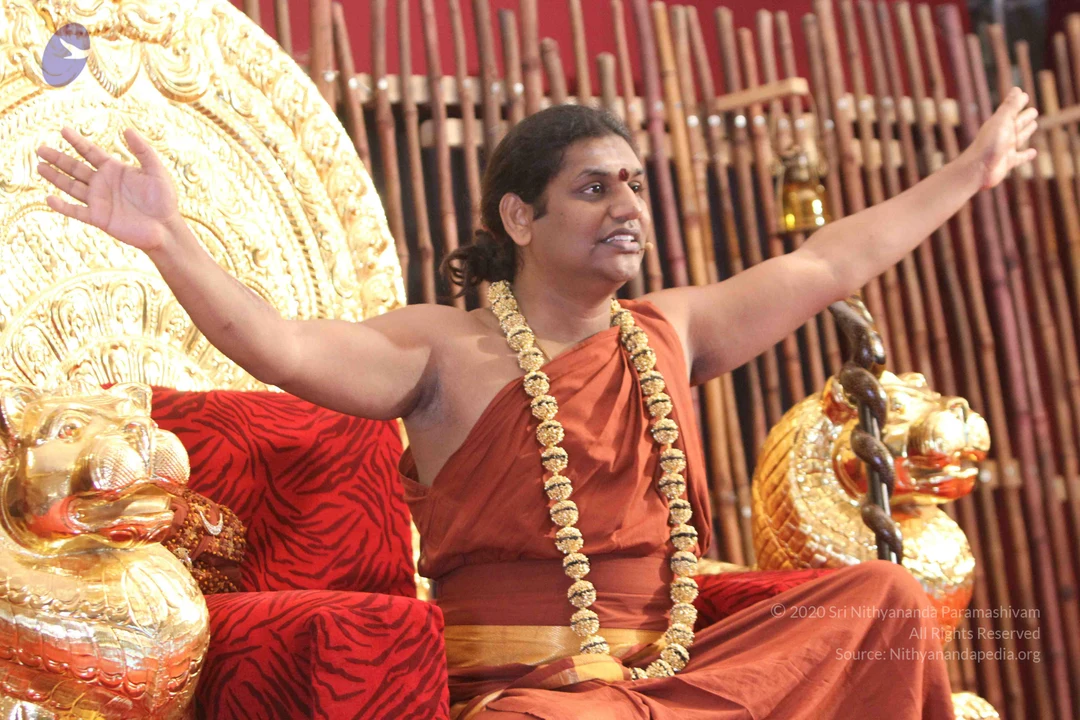
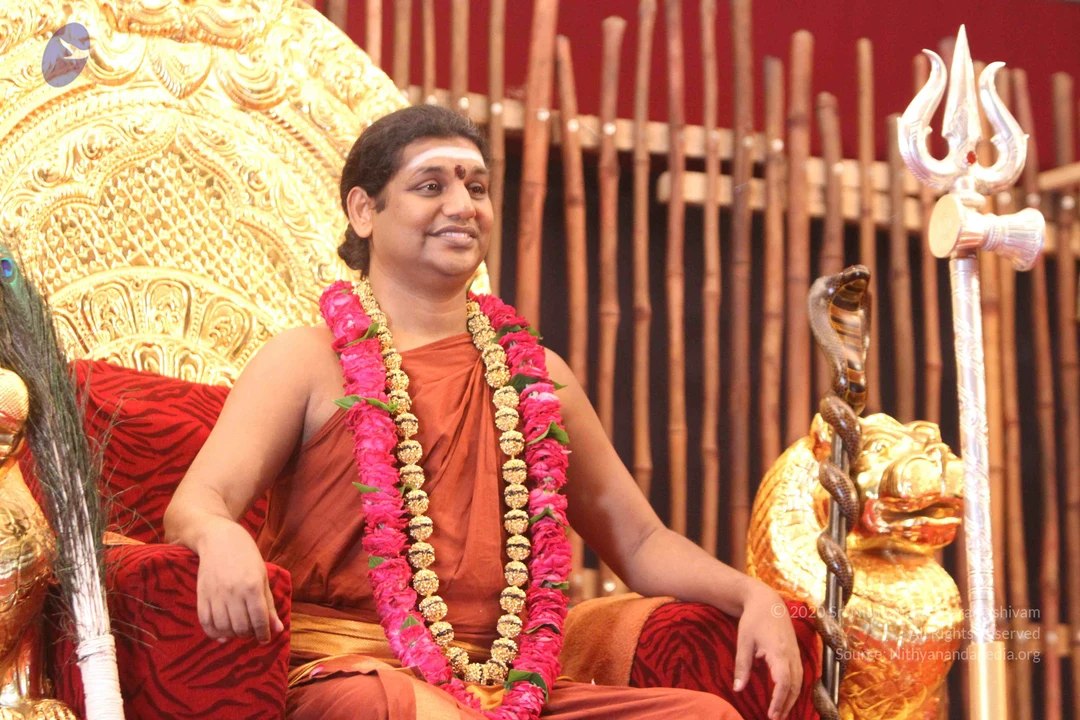
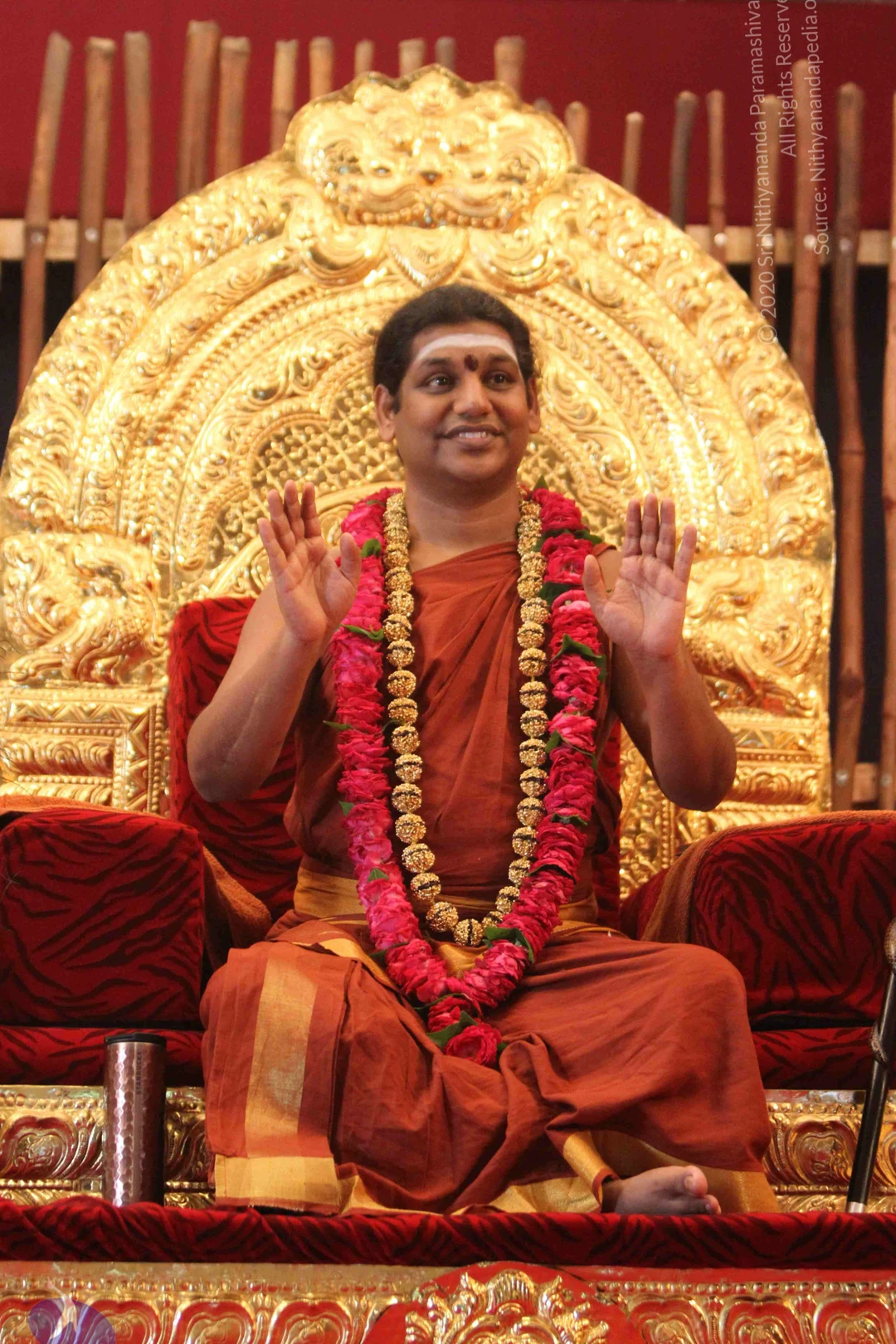
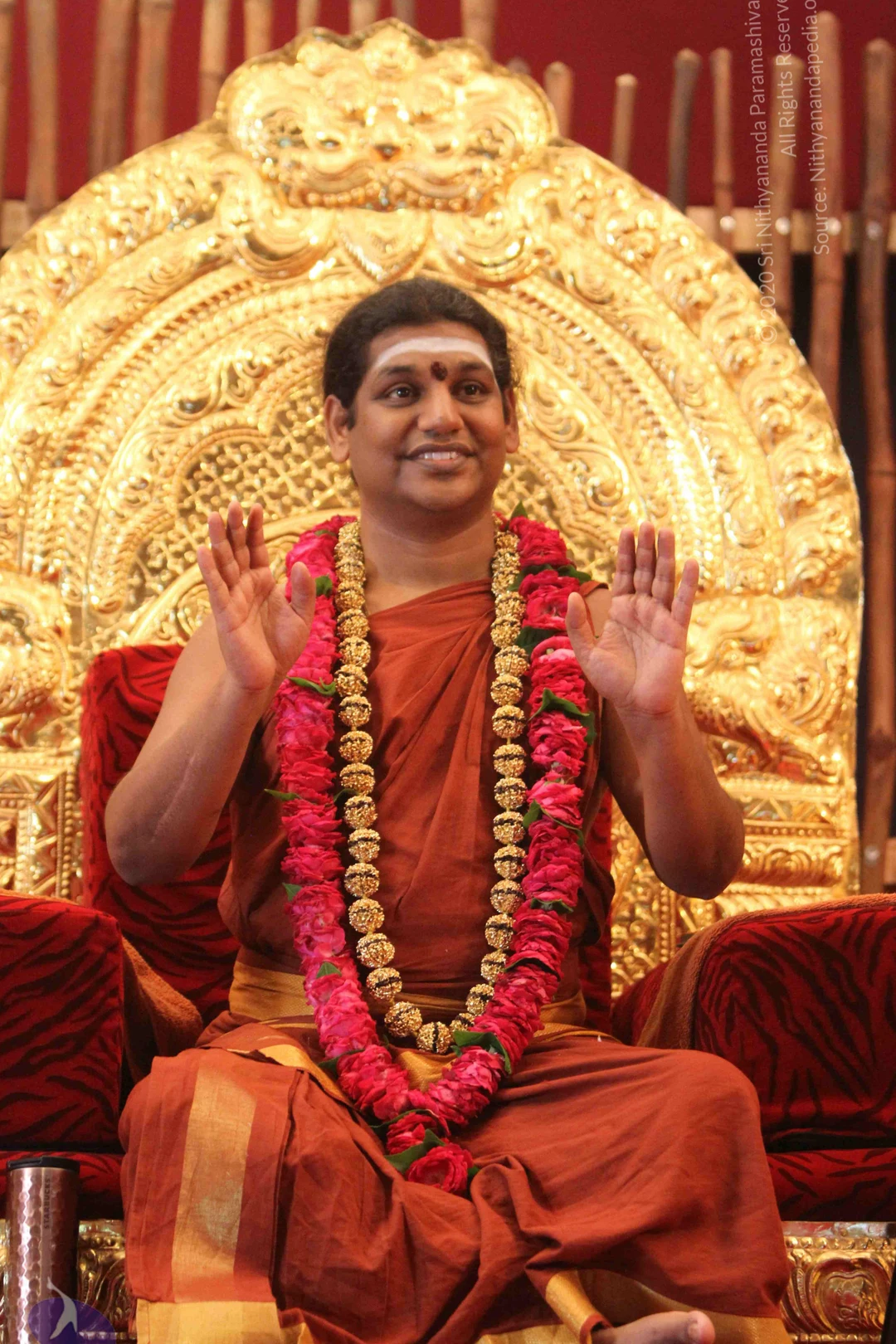
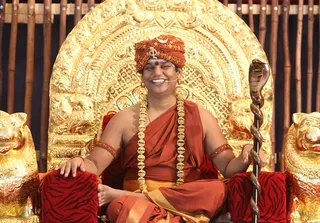
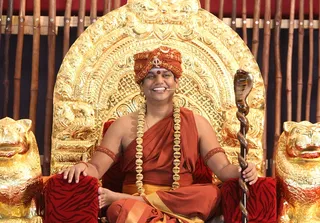
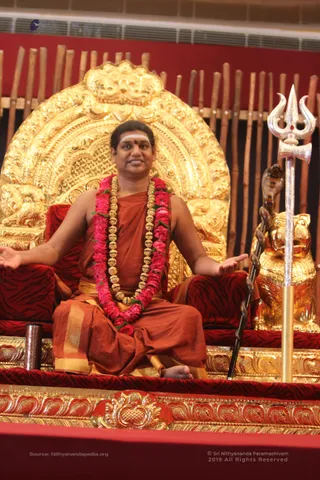
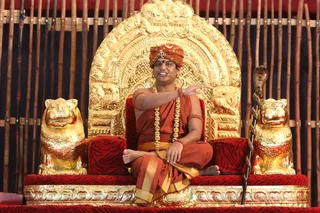
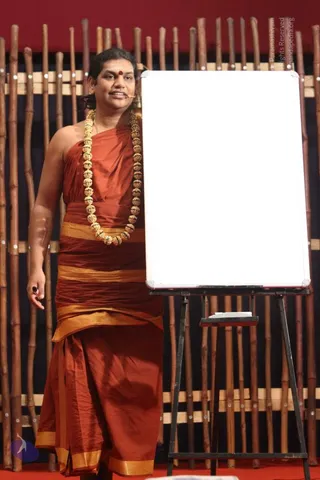
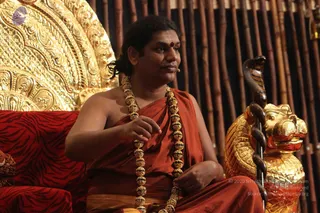
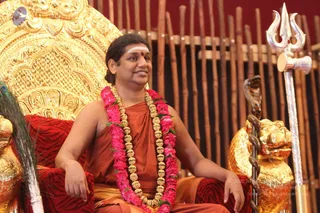
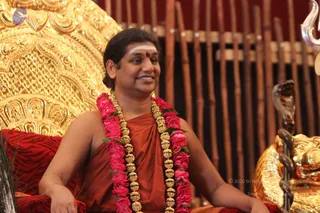
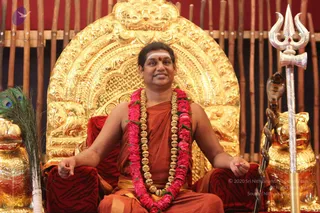
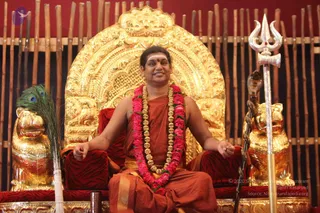
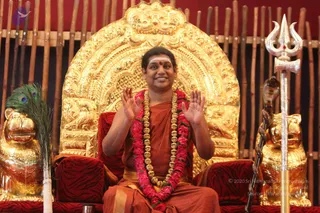
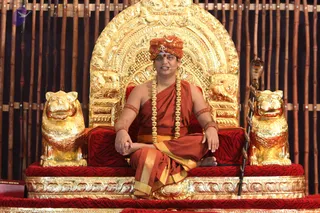
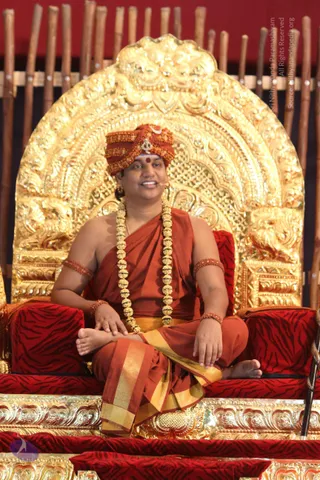
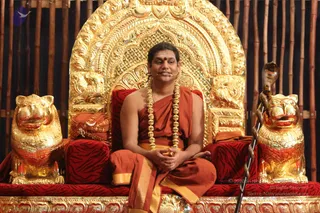
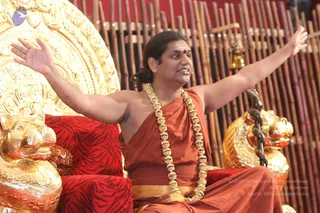
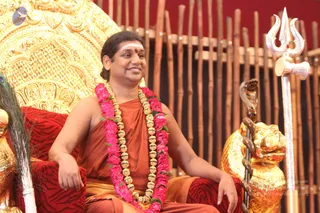
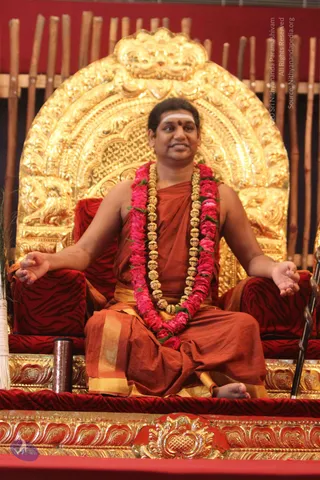
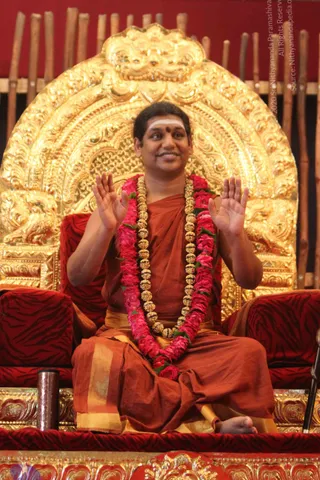
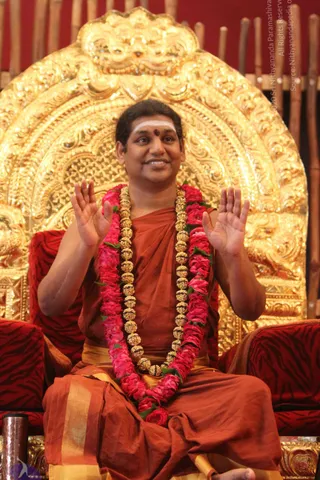
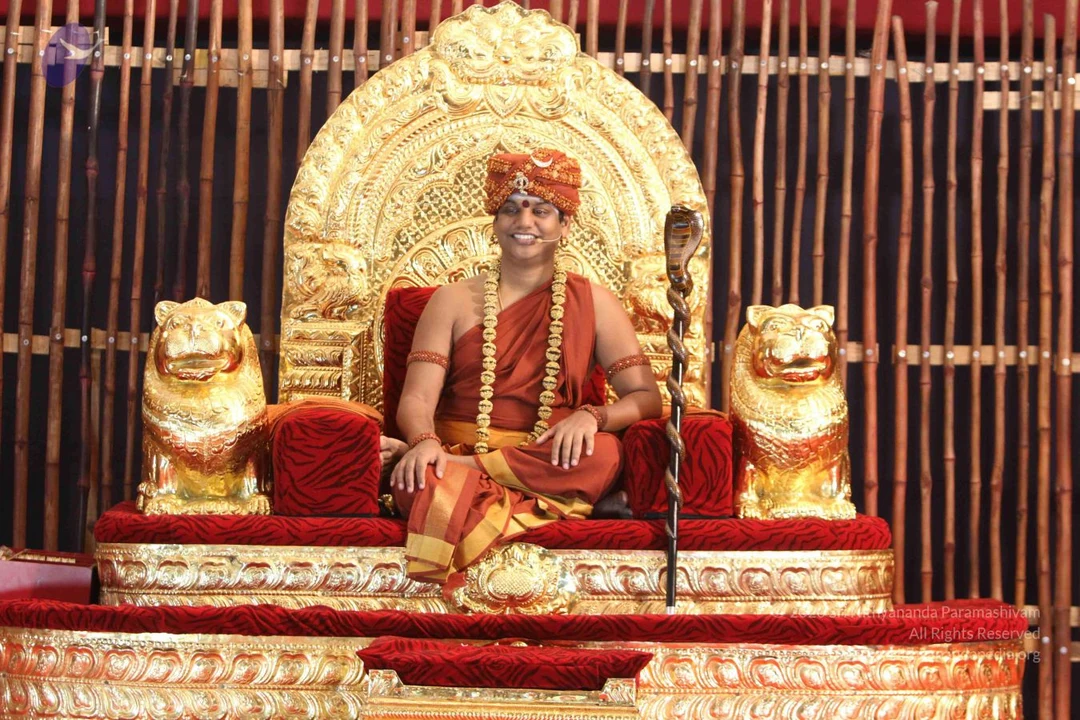
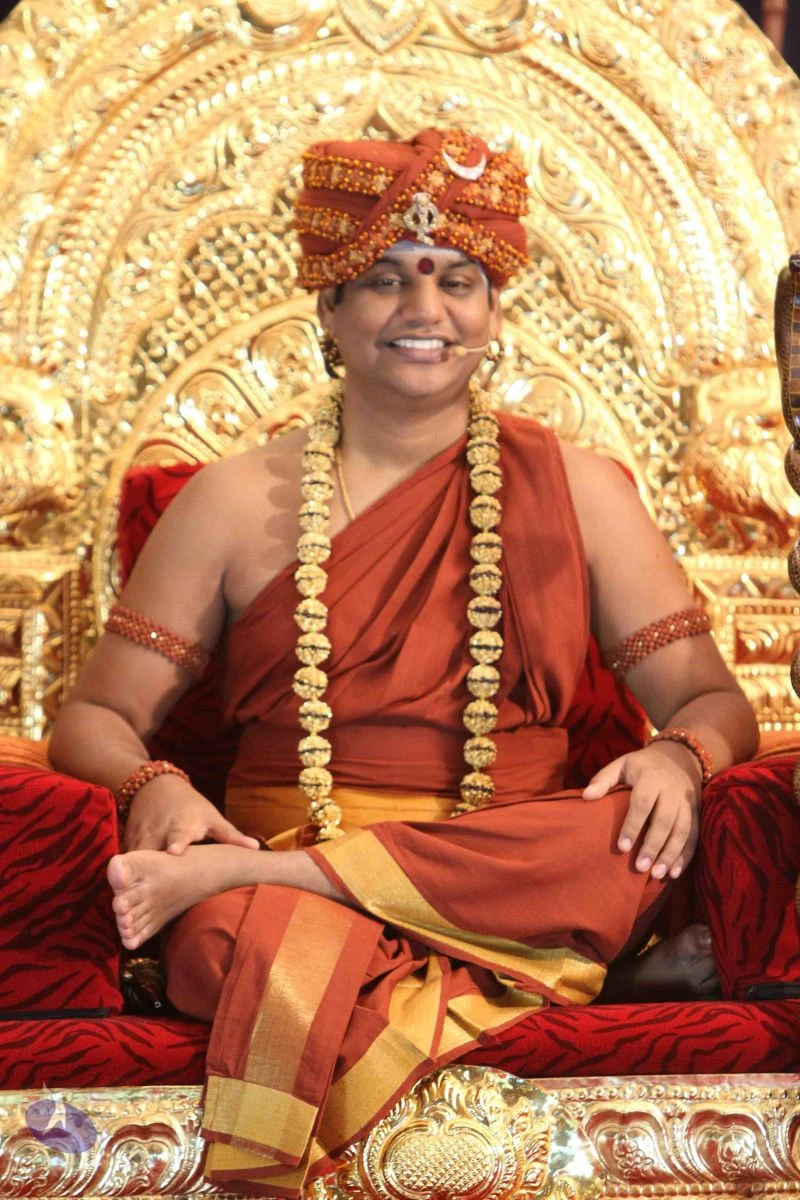
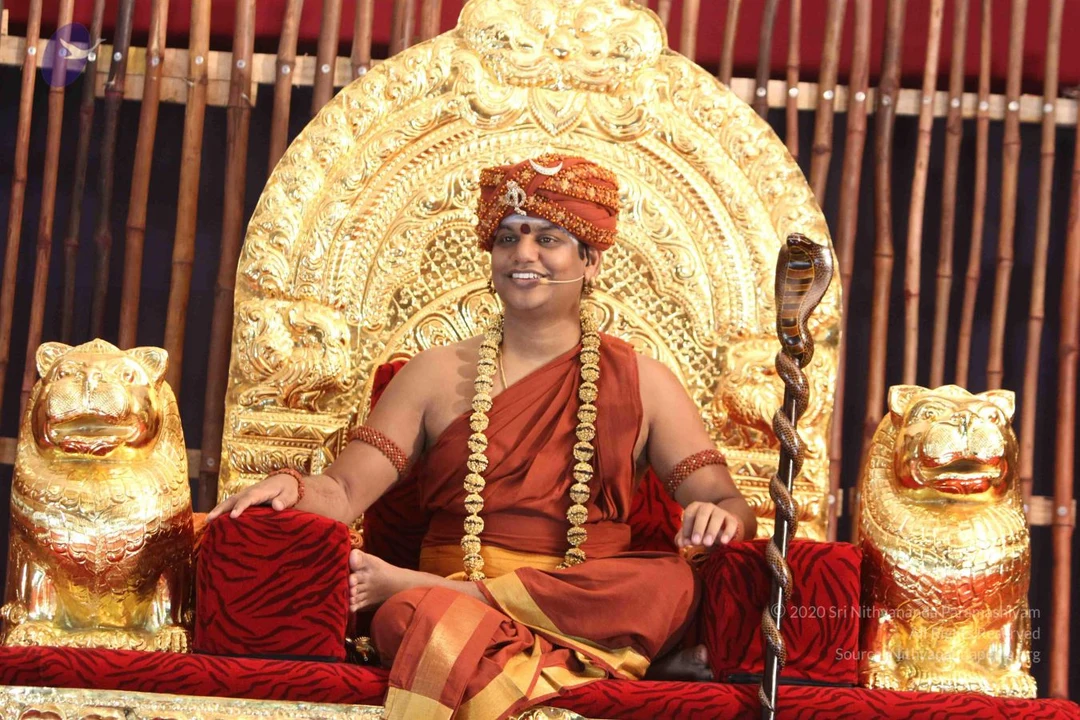
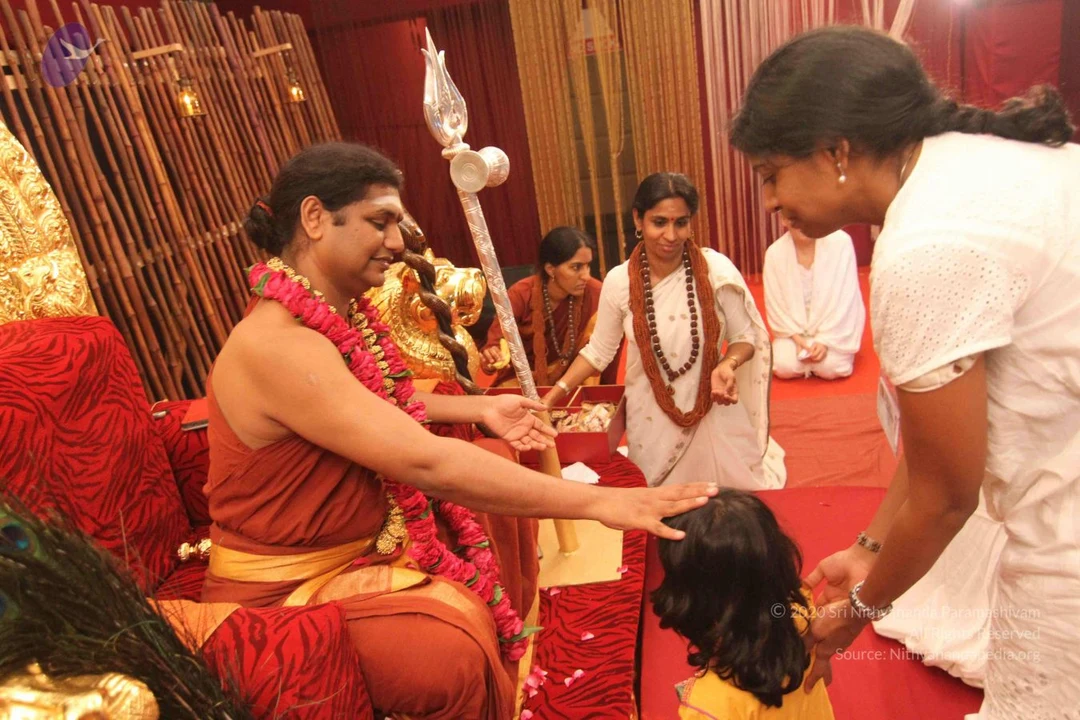
A photograph of a man seated in profile, facing right, wearing an ornate rust-orange turban decorated with gold embroidery, star motifs, beaded trim and a jewelled brooch. He wears a rust-orange shawl draped over one shoulder, a long gold-beaded rudraksha-style mala necklace, matching beaded armlets, gold earrings and a red tilak on his forehead, with a small microphone clipped near his mouth. Behind him is a glowing golden ornamental backdrop and wooden pillars. Only one person is visible.A seated man in orange-red robes sits on an ornate gold throne with a gilded backrest and carved gold lion-form armrests, upholstered in red with black tiger-stripe pattern. He wears a red and gold turban with a small emblem, a red forehead mark, a long gold-bead garland, and red beaded bands on his upper arms and wrists, with his hands resting on his lap. A bamboo-pole backdrop in red and brown surrounds him, and a carved wooden staff with a serpent-like head stands at the right. Probable Swamiji: the turban, saffron-orange robes, ornate gold garland and throne are the qualifying cues, presented as a seated guru in a formal satsang setting.A seated man in a rust-orange dhoti and draped orange-brown shawl sits on an ornate gold throne with red tiger-striped cushions. He wears a thick garland of pink flowers with green leaves and gold beaded beads across his chest, and has a white tilak and red bindi on his forehead. Behind him stand vertical bamboo poles against a dark red wall. A metal tumbler sits at the lower left. The man smiles and gazes to the side. a person: his saffron-orange robes, flower garland and throne mark a ceremonial seat of honour; the garland and gold beads are distinctive adornments.

July 16 2014

Original wiki page
Contents

Title:

Two types of Reality

Description:

16th July, 2014 Morning Satsang of Paramahamsa Nithyananda

Link to Video:

VideoAudio

Title:

Rewriting Your Future - Technique For Aligning To Your Most Authentic Image,16 July 2014

Description:

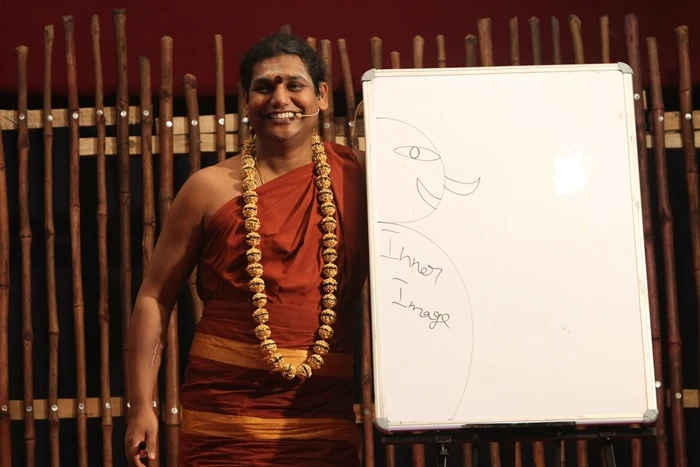
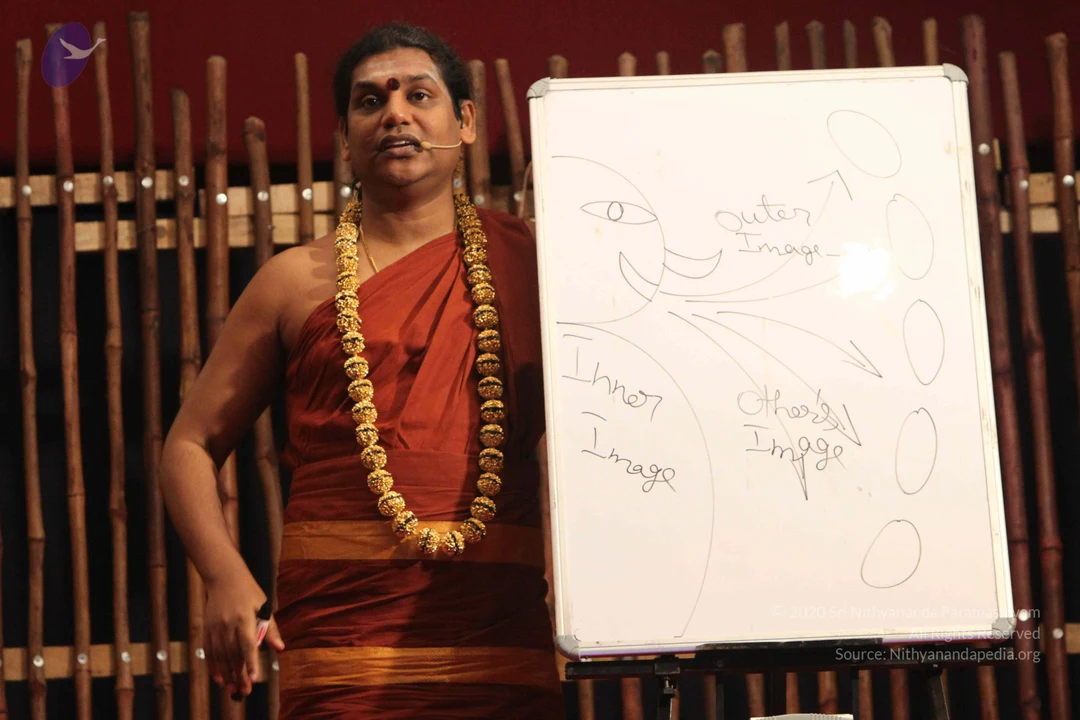
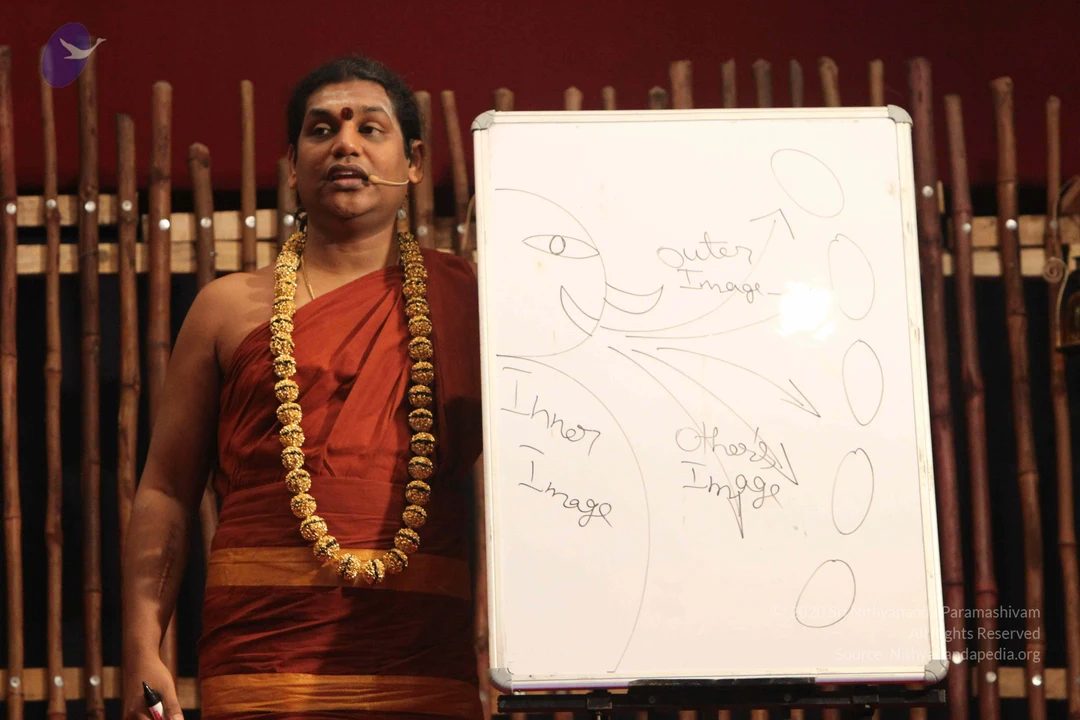
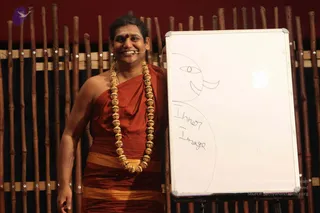
In this session, Swamiji leads us deeper into the completion process for self Doubt, self Hatred and self Denial. He conducts a small question and answer session and then requests us to write our best inner, outer, others, and life image we have, to align and live authentically.

Link to Video:

VideoAudio

Title:

Relive to Relieve -Completion Process, Inner Awakening, 16th July 2014

Description:

In this video Swamiji initiates into completion process, Initiation into completion,this process has to be practiced till one achieves enlightenment and explains how Enlightenment itself happened through this completions process

Link to Video:

VideoAudio

Transcript

Initiation into completion. listen how many of you are listening about completion for the first time from me raise your hand, so for all of you this is initiation., How many of you already heard from me raise your hand its re-initiation for all of you but initiation. This process you are going to do till you achieve enlightenment I tell you, every auspicious thing I received in my life all the best things I received in my life happened through this completion process, from this completion process every good thing in my life happened through this completion process, my knowledge, my experience, my ability to share with you all. my sangha my enlightenment itself happened through this completion process.

As I said this is one of the greatest gift given to all of us by Mahadeva. first few days when you practice It will look like a technique after few days you will just become like a spontaneous decision its the greatest gift from Mahadeva for all of us there are various methods to do completion I will be guiding you the various ways but this is the first initiation 22nd verse of Vigyana Bhairava Tantra Mahadeva defines completion. he teaches completion science to Devi i'll read out the original translation of the verse then give you the exact way to do. “Look at your past dis-identified and let attention be at a place where you are seeing some past happening and even your form having lost its present characteristics is transformed”. Listen I'll repeat look at your past dis-identified let attention be at a place where you are seeing some past happening and even your form having lost its present characteristics is transformed. Ill give you the exact methodology reliving is relieving means now you wrote all the incidents am I right just sit re-live that incident not just remembering. Reliving means go back to that same form If you are reliving the incident happened at the age of seven become a 7 year old boy don't retain any intelligence memory justification of present now, 35 year old person, “No”. Now intelligence reasons justifications whatever you have drop everything and go back I'll give the example. Example:- At the age of three you are playing in the street in the rain your mother came just dragged you into the room and pushed you into the house and locked you into the house screaming you will catch cold, you will fall sick now if you look back remember that incident you will think your mother cares for you so much she took care of your health. am I right because now you have the intelligence you might have fallen sick and your mother always cares for you and all that, but at that moment did you feel this way? you would have been screaming towards your mother kicking the wall, kicking the door telling your mother you die leave me to play. So now do you understand the difference between re-living and remembering, remembering means having this context and recalling that those incidents reliving means drop this context and go there and relive as it is, as it happened allow whatever got built up during that incident fear, guilt, shame, suffering allow all that to unwind itself in your nervous system let all those experience and emotions unwind itself in your nervous system and get ease. See every incident, the in-completions built during the incident becomes the stress in your nervous system in your Bio memory when you relive,relieve that knots that stress melts down but you have to relieve from that context, you should feel without justifying that your mother was taking care of your health, without justifying from this context go back and feel your mother is demon that is the way you felt at that time whatever you felt you might have not felt demon you might have felt some huge animal or wild, weird whatever you felt at that time without the context of present knowledge without the interpretations of present mind,relive them when you relive them the tremendous load, unexplainable load you carry which is the combination of fear, sadness, depression,self-hatred, self-doubt, self-denial which is a combination of so many things will all start melting down.

your nervous system will start easing out your nervous system will start getting healed.your bio memory will release those memories from your system,Re-living is relieving. Understand I think I've explained completion in a very precise way for the first time today.Much more detailed way than anytime especially this difference not to bring the present context to relive the past incident.Am I right?

All of you understood when you relive the attack done on you by your mother,you will not justify from present context, no she always did good for you and she is sacrificed everything she must have done only good for me.I am not saying she has done bad for you but this context will never be understood by your nervous system which has recorded those bio memories, go to that bio memory that context that situation whatever you know at that time whatever you recorded at that time re-live that, that is what is re-living and relieve so much sadness may leave your system, so much suffering may leave your system, so much bio memory will leave your system, so much heaviness will leave your system, all the anxiety attacks will leave your system, you may have tears you may be crying you may have panic attack,you may shiver tremble don't worry let all this leave your system leave your bio memory.

Reliving will relieve you. Each incident at least 5 times when you re-live.You will see the 5th time you are reliving, the incident has no more power over your system already you are bio memory, your nervous system is relaxed it is not carrying the heaviness when you remember that incident you will see it. if you have re-lived and relieved your past it will never impact anymore your future decisions, your future decisions it will never be part of your cognition in your day to day life. How many of you are getting what I'm saying.

Shall we start I’ll first guide you then,I will lead you to next next level of completions. I commit with you all as Incarnation happened to transmit this experience to all of you with my integrity authenticity,responsibility and enriching I commit with you all I Will completely burn all your in-completions and destroy them.Have courage,I am here supporting all of you re-live and relieve complete Ill complete all of you. Come on, close your eyes, tie the ribbon. If you want to take a few minutes to read what you wrote you can take a few minutes to read what you wrote.

Title:

Genesis of Identity - Psychology as Explained by Mahadeva 16 July 2014

Description:

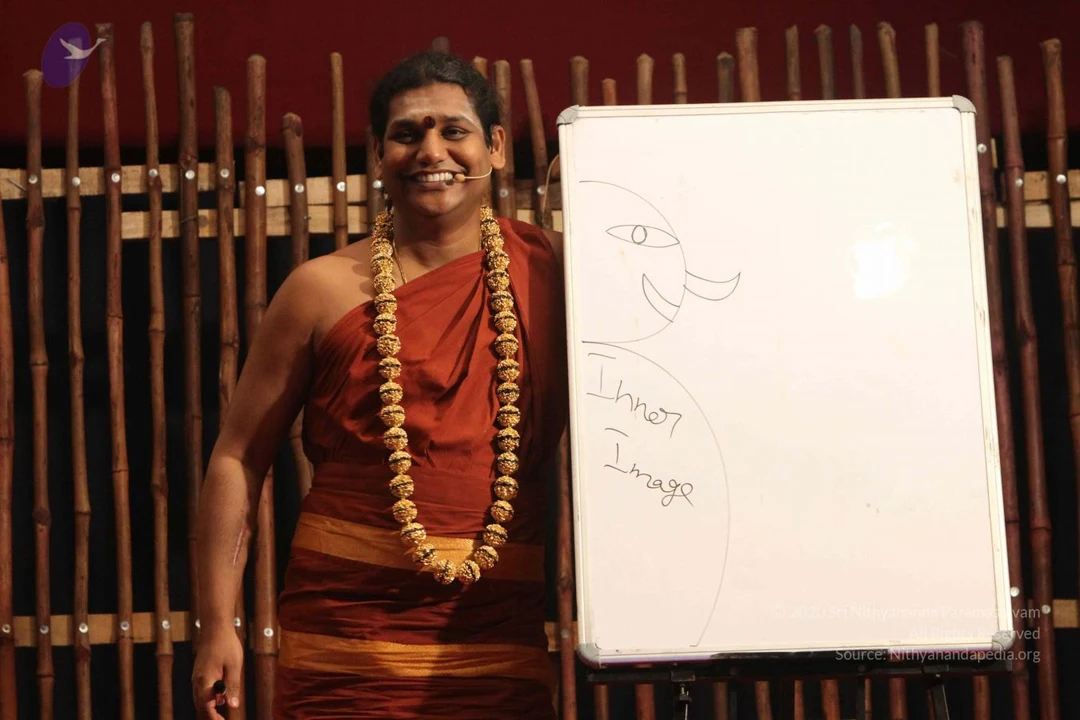
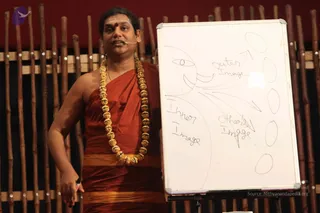
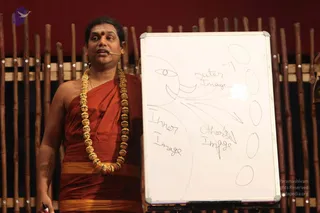
In this session during the Inner Awakening program, Swamiji explains what the inner image, outer image, others image, and life image are. He goes on to talk about the four images which he holds, what they are, and how they differ from ones typically held by most people. Then, he concludes by sharing his role in this all for us as an incarnation, to create completion and anything relating to enlightenment in us

Link to Video:

VideoAudio

Photos
Tags:

Paramahamsa Nithyananda, completion, advaita, advaitha, reality, decisions, Mahadeva

Photos Of The Day:
Nithya-Satsang-Darshan

IA-Session-Photos
Darshan

Photos Of The Day:
Photoshoot

1-Morning-Satsang-Darshan

3-IA-session-photos
4-Darshan

1-Photoshoot

Photos from this day
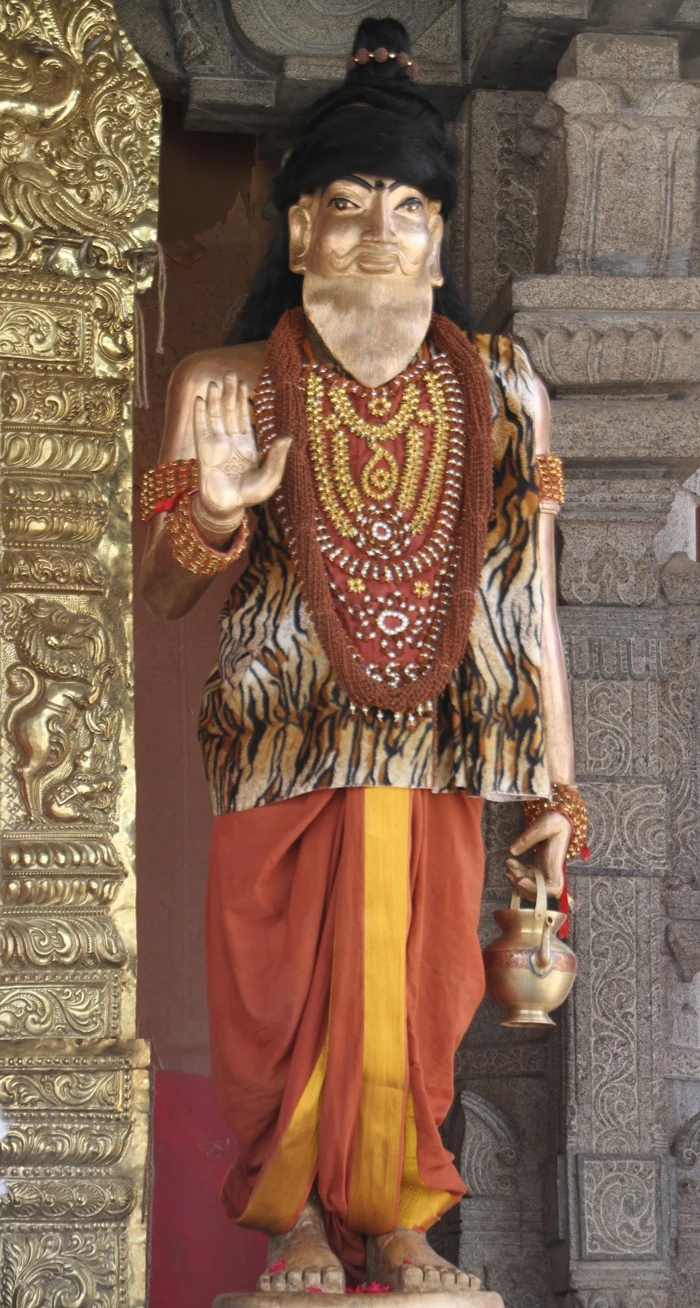
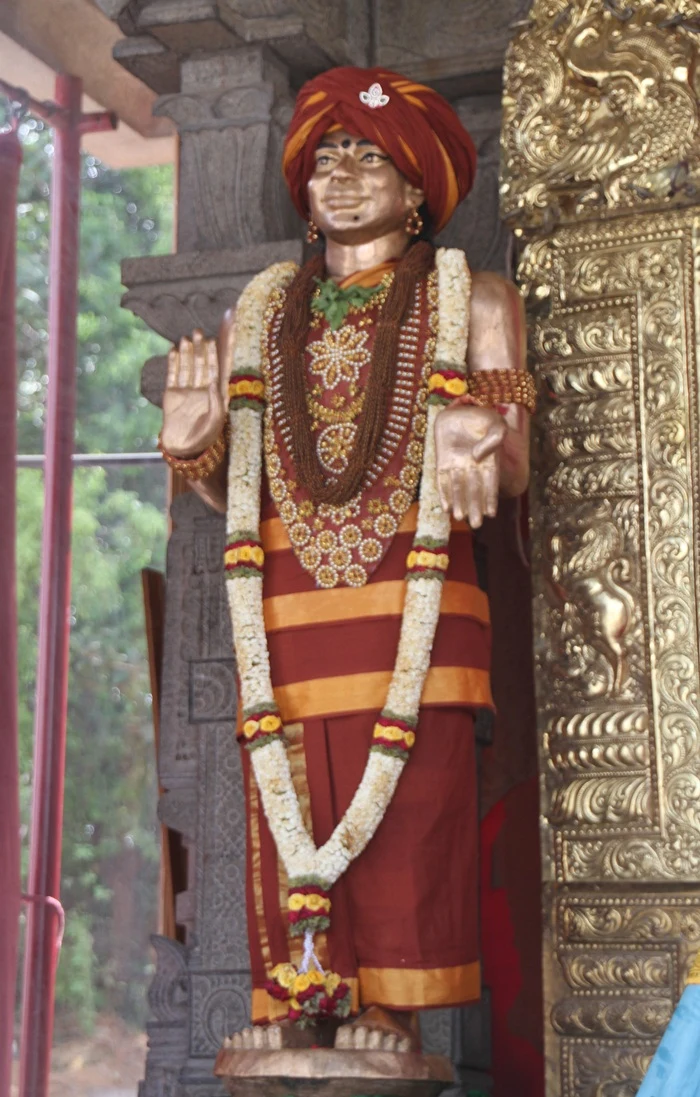
View all 260 photos

Photos

15 photosSource gallery
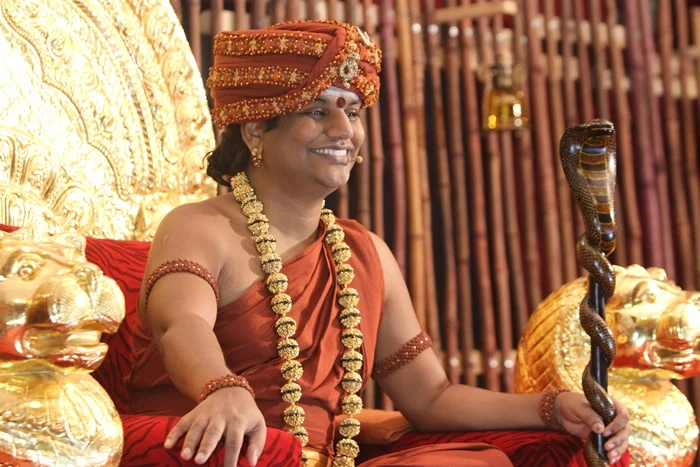
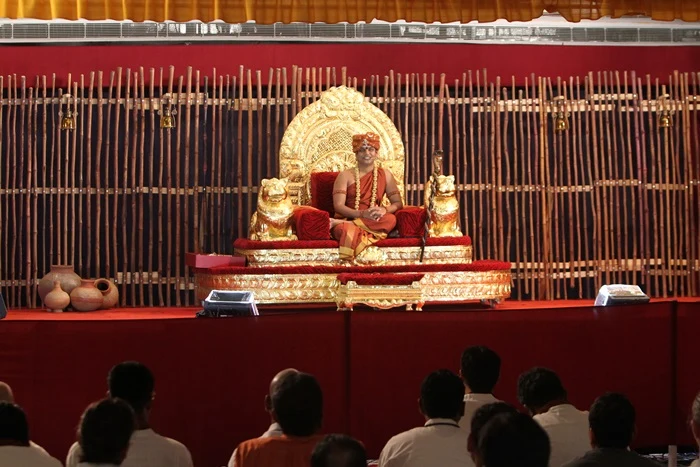
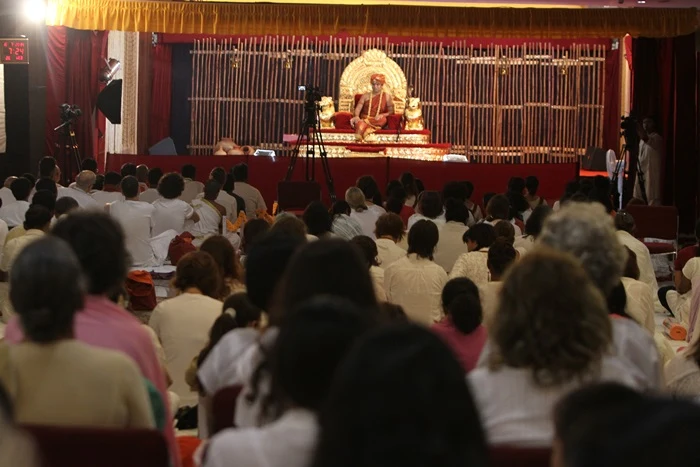
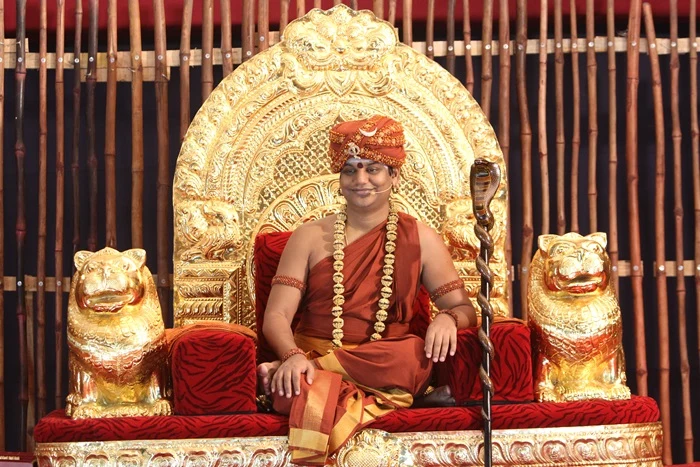
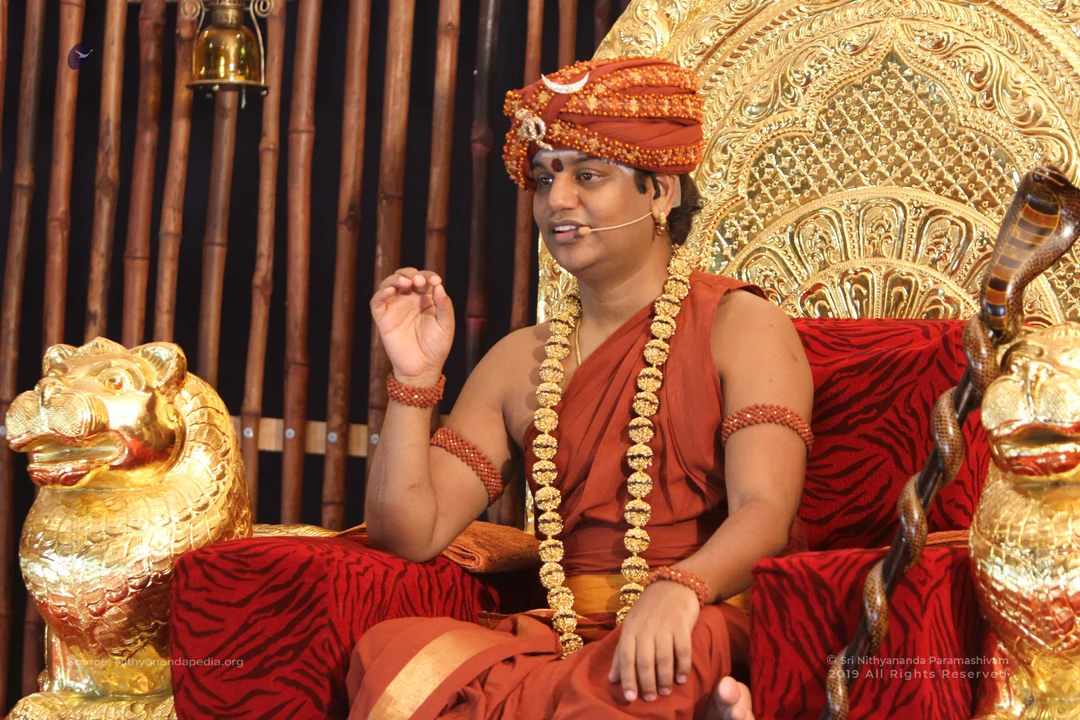
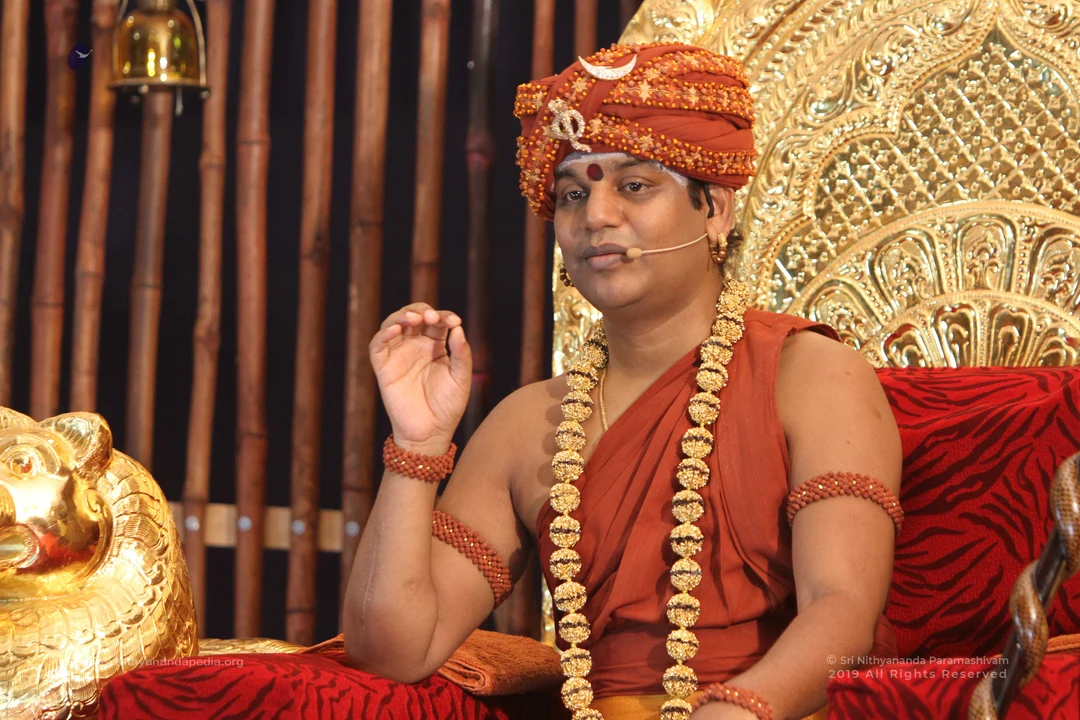
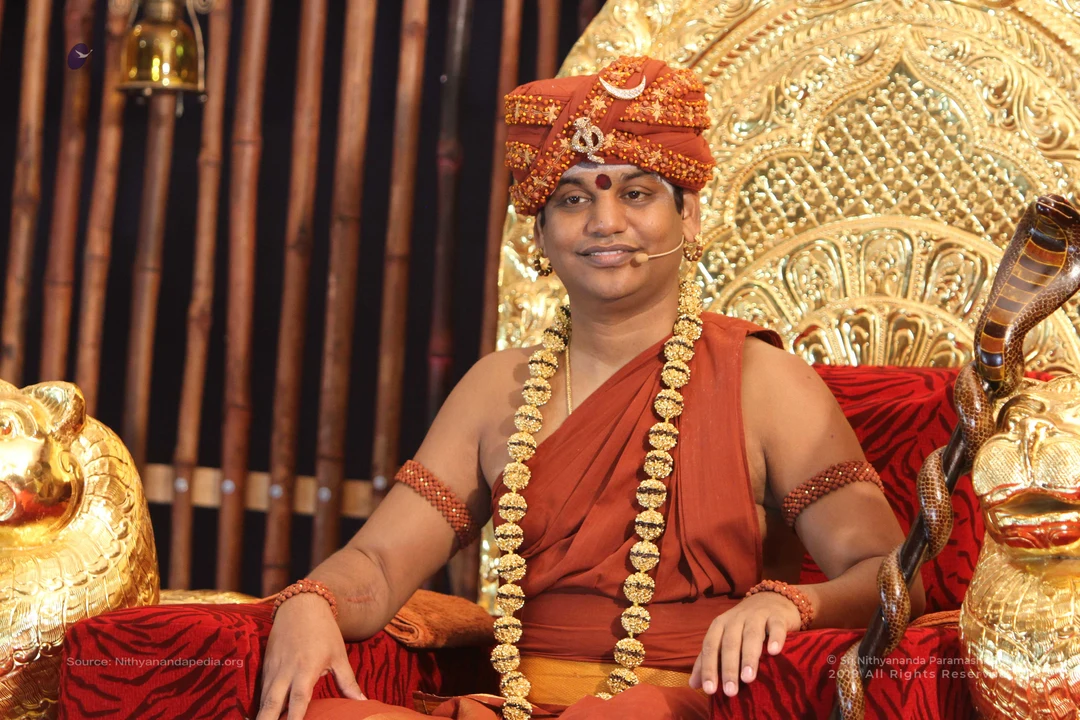
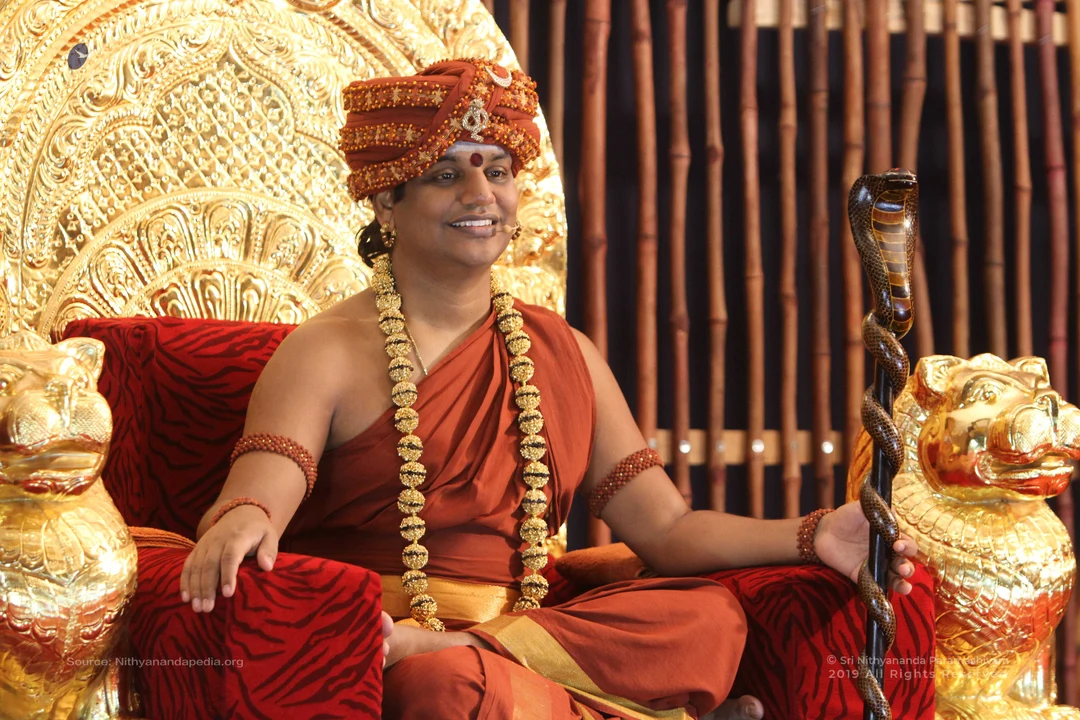
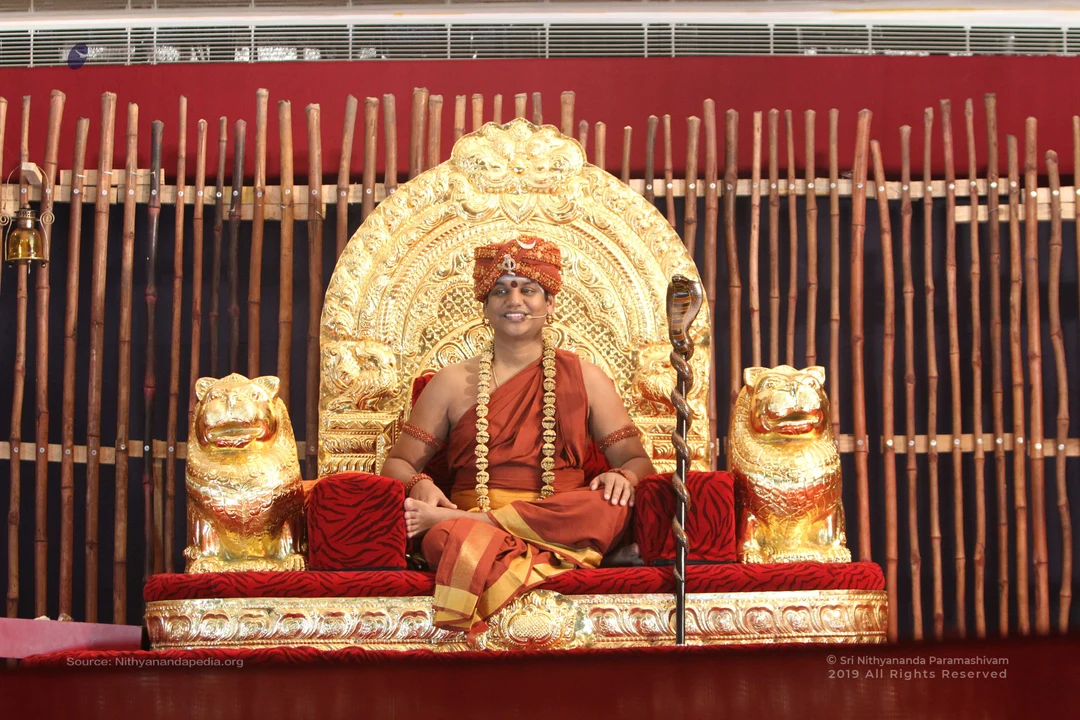
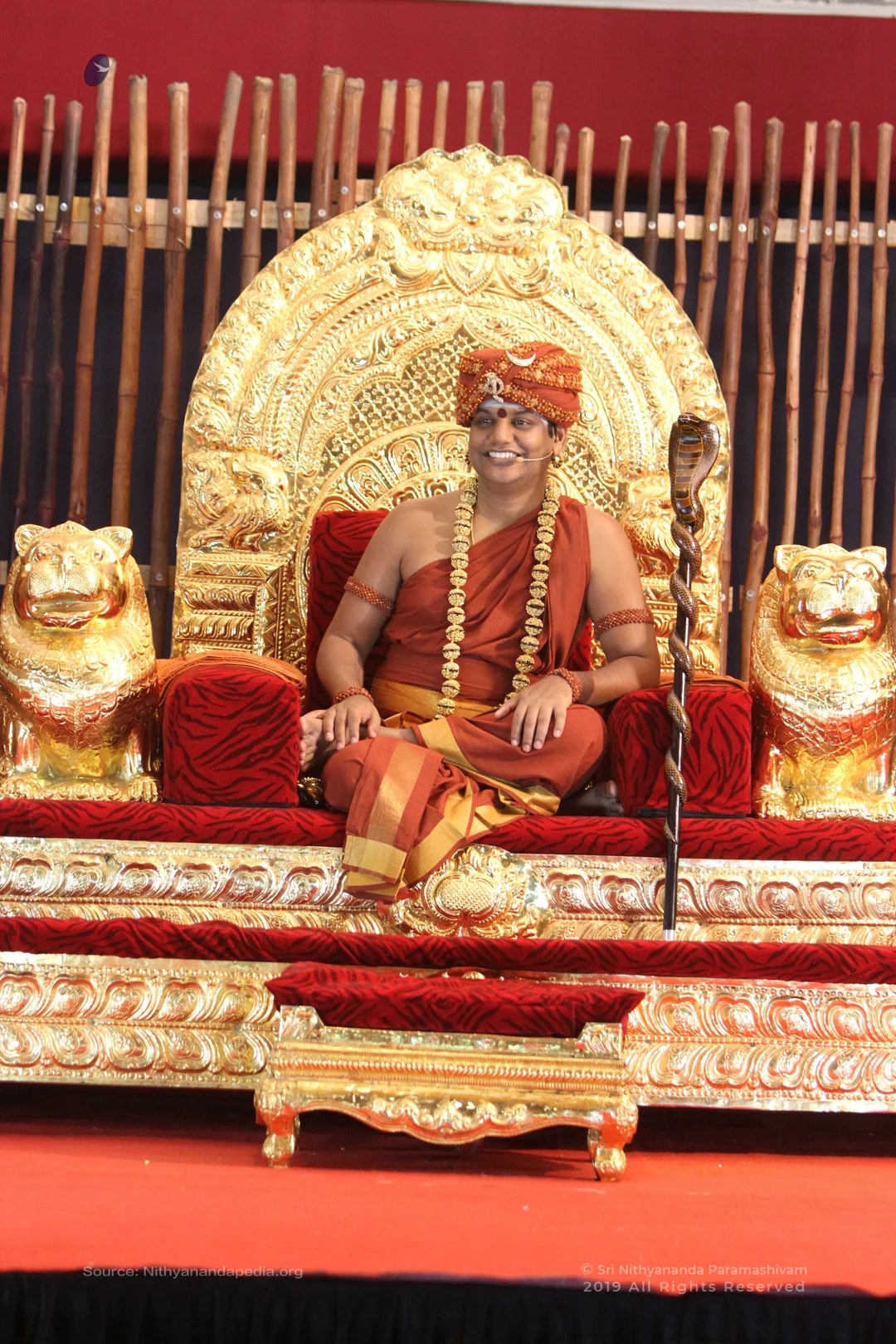
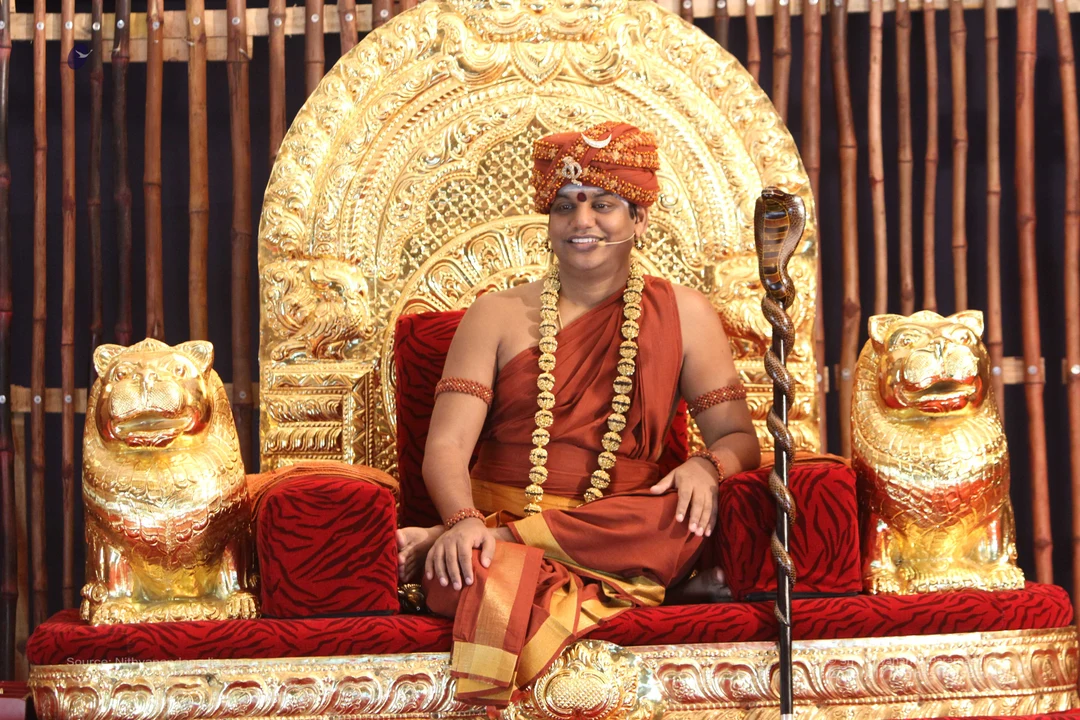
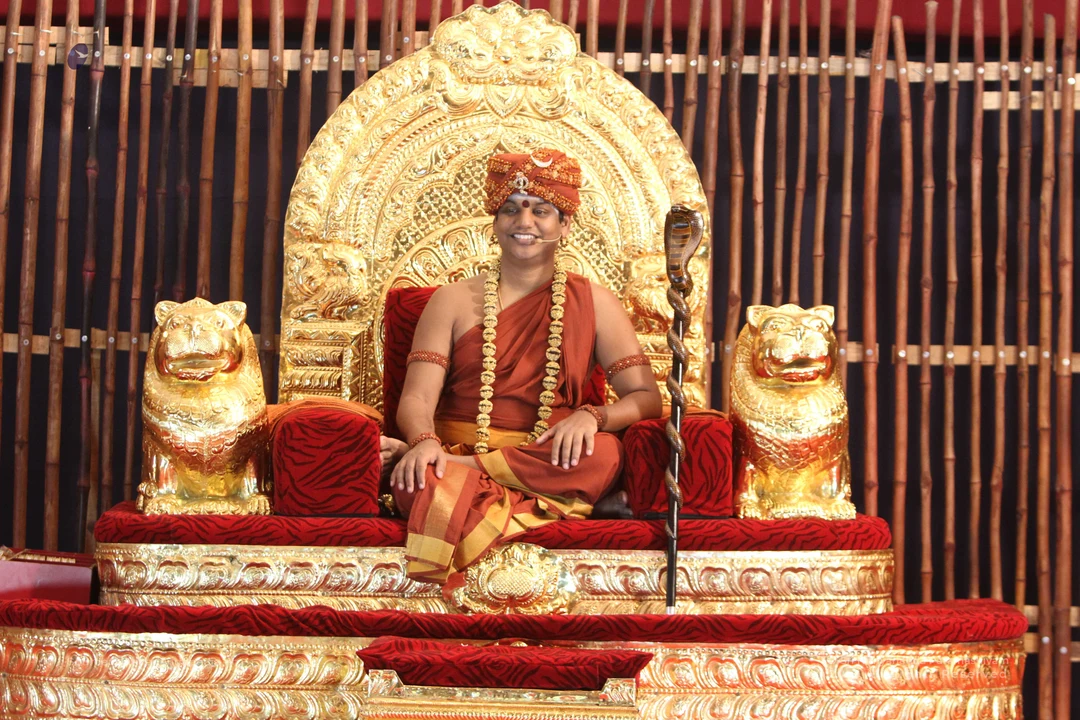
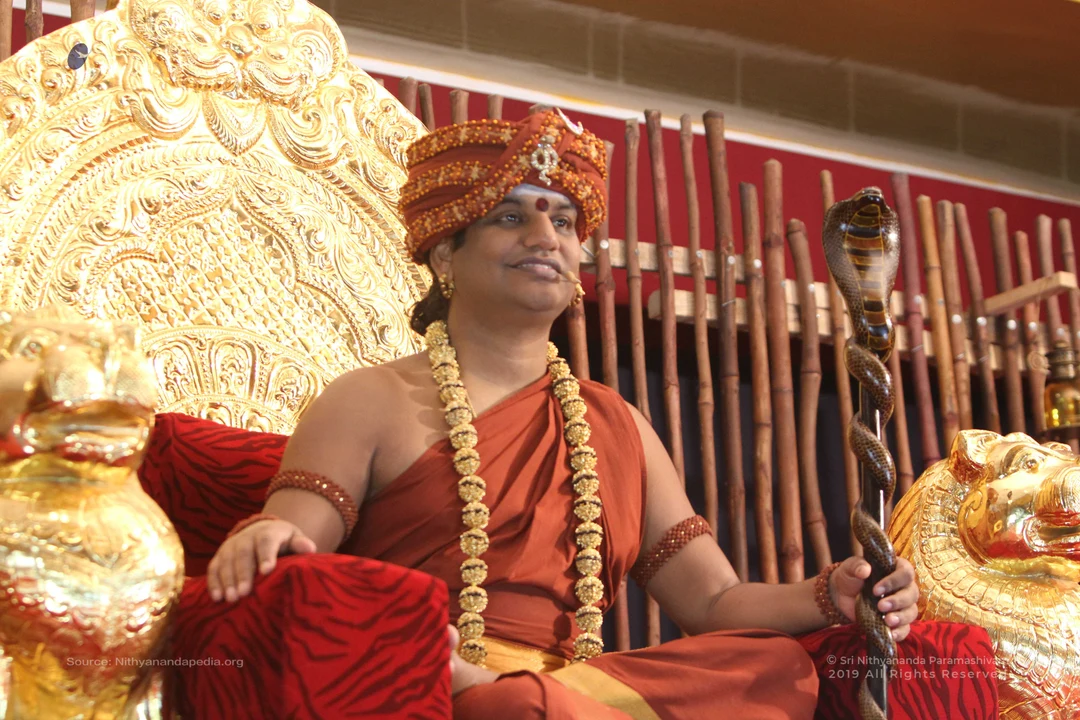
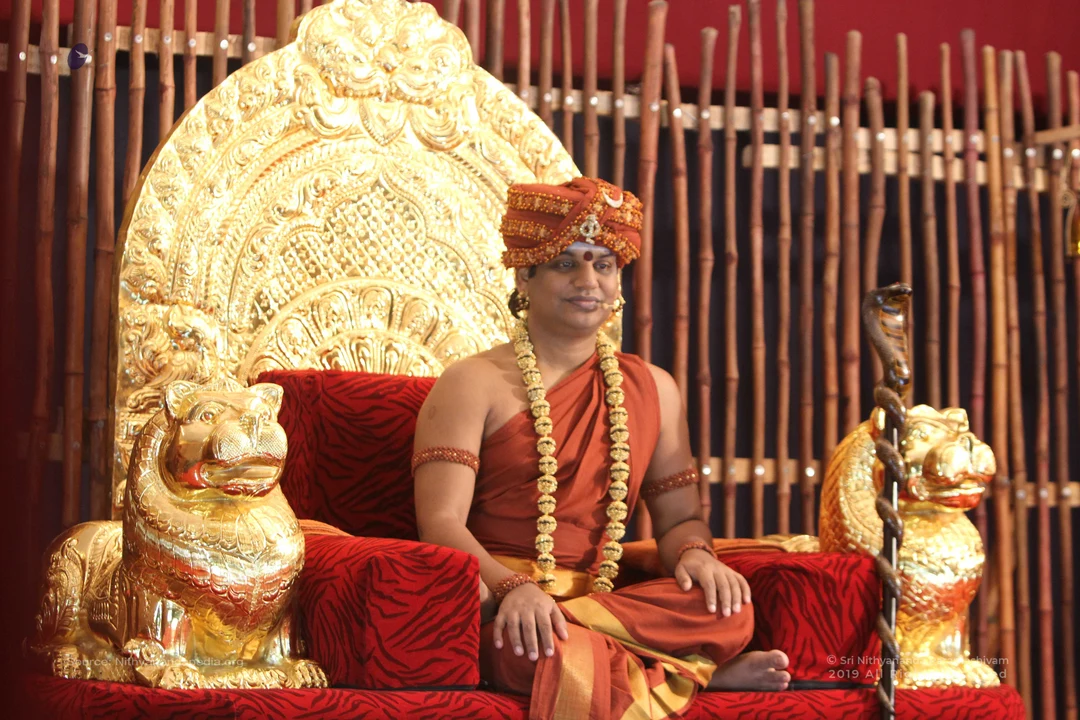
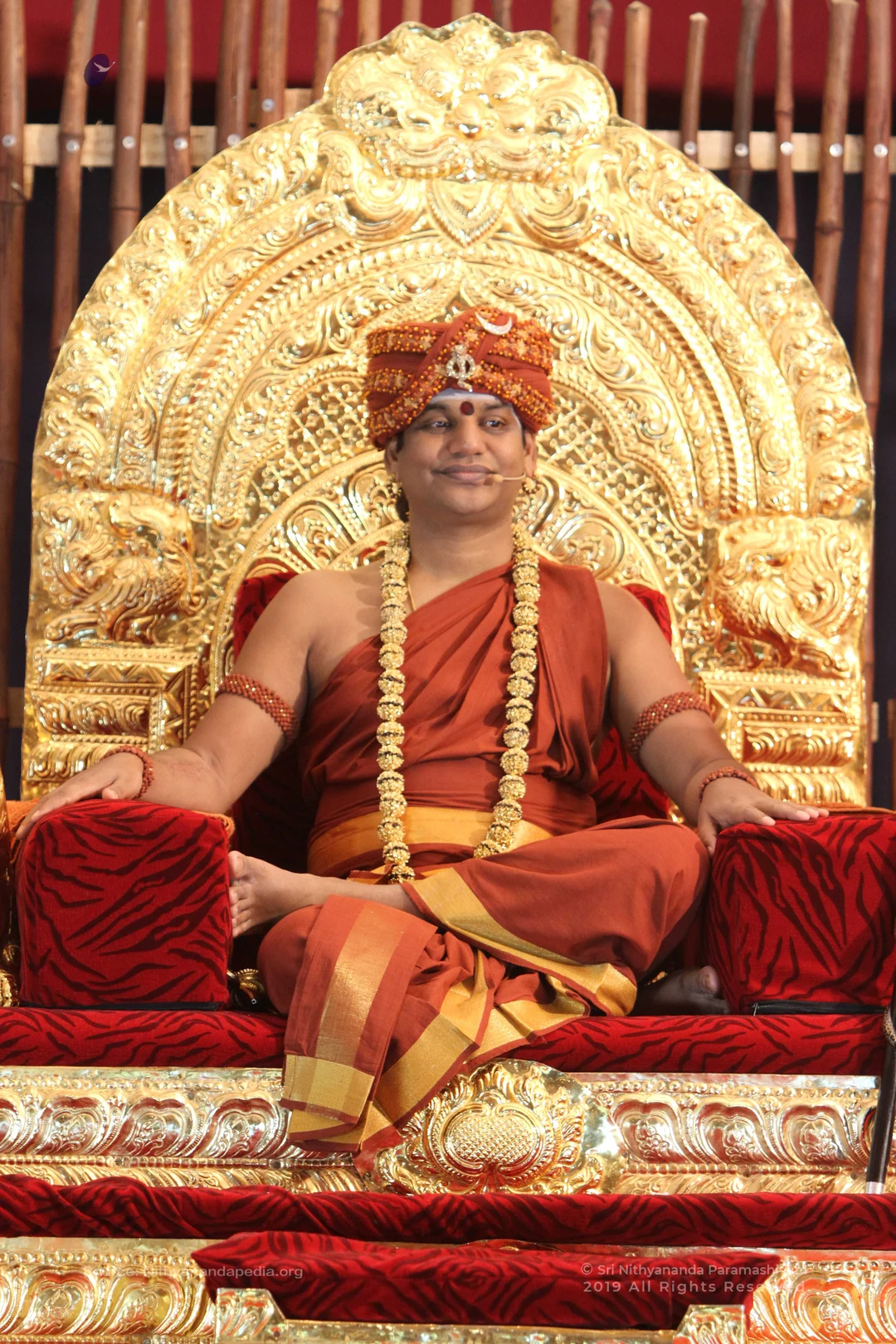
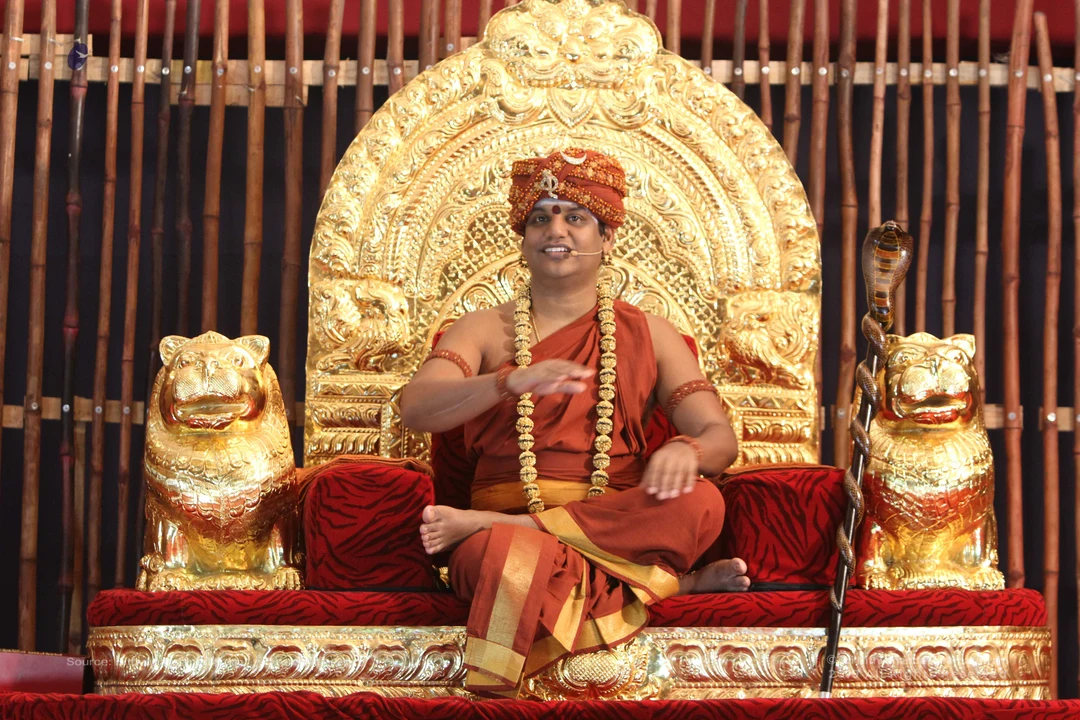
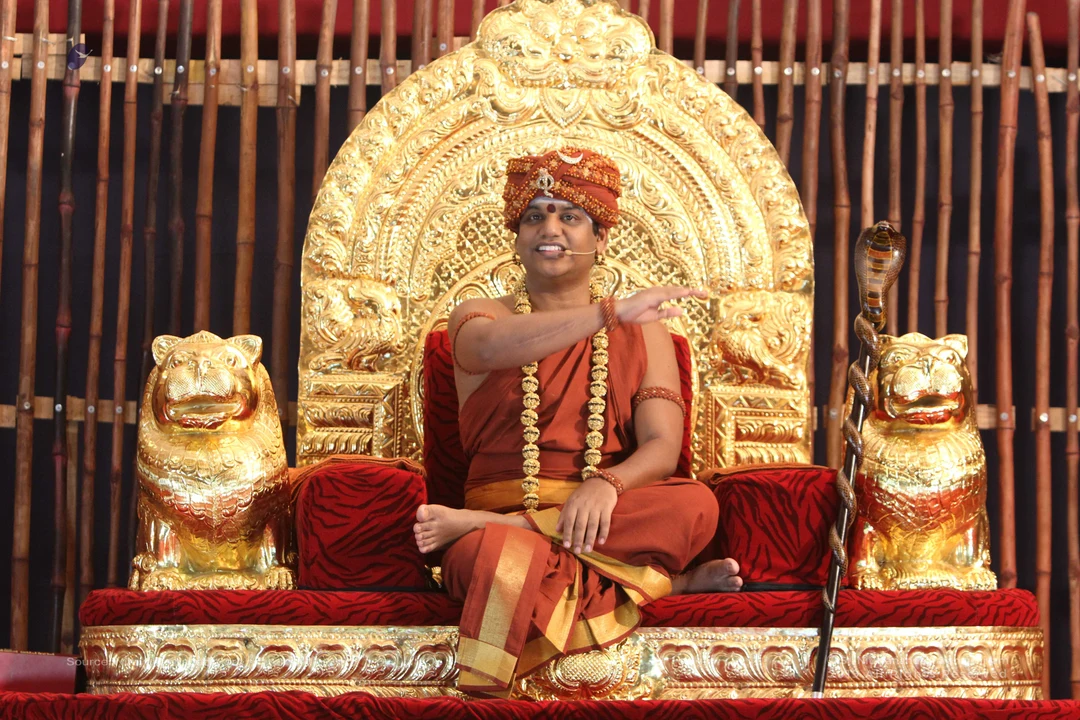
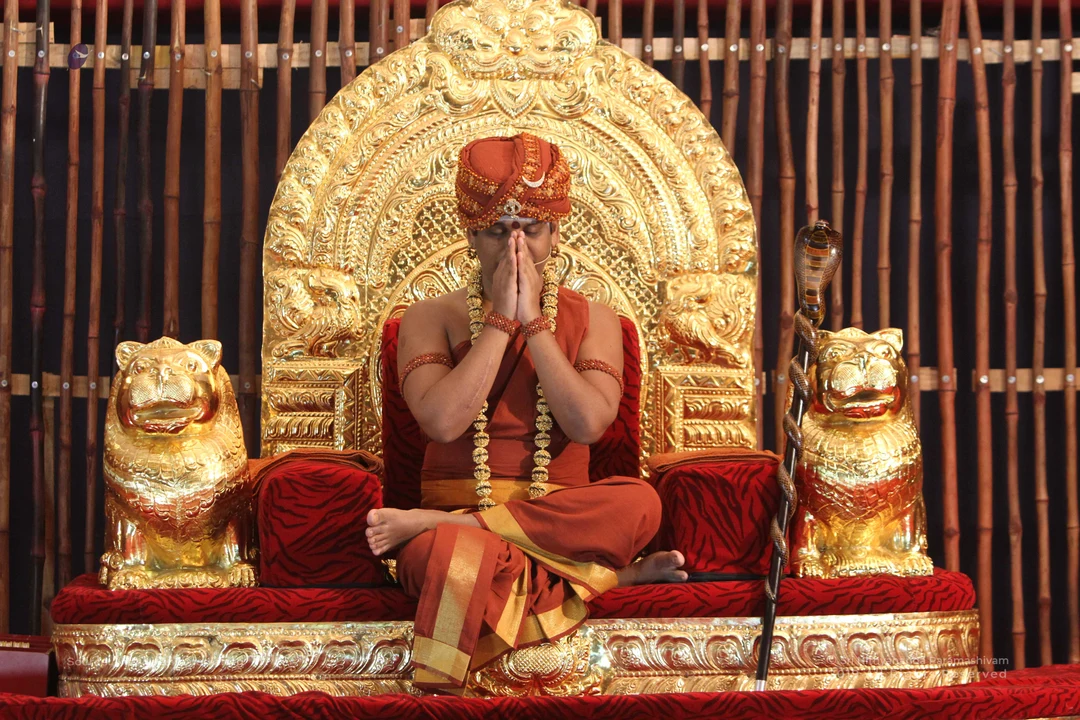
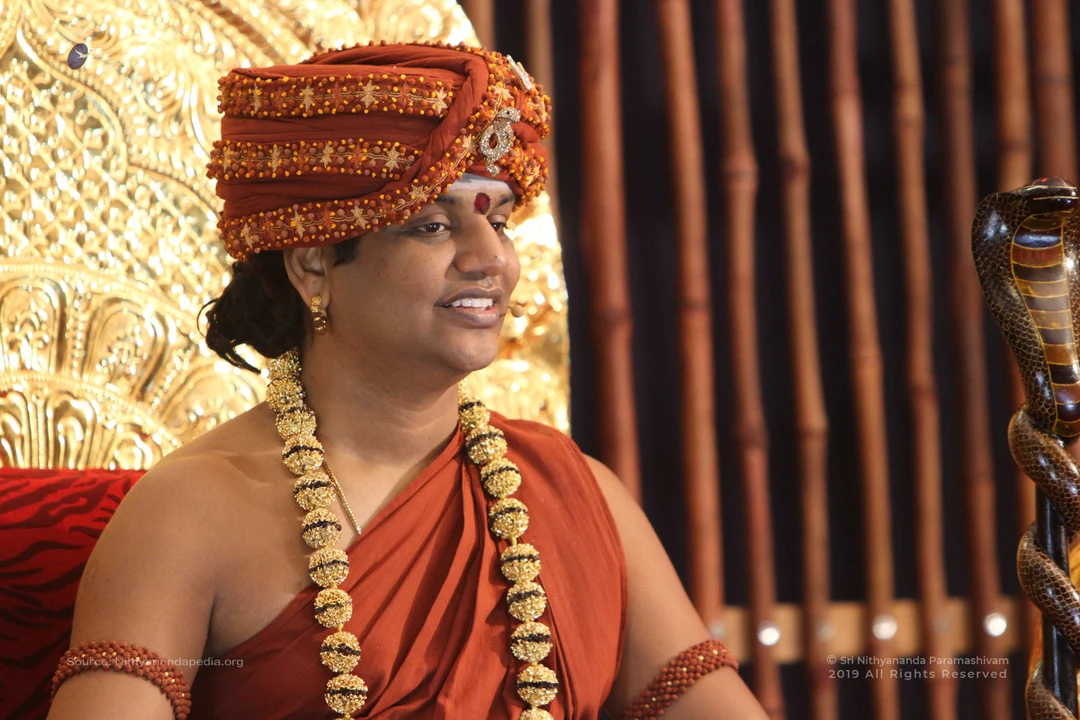
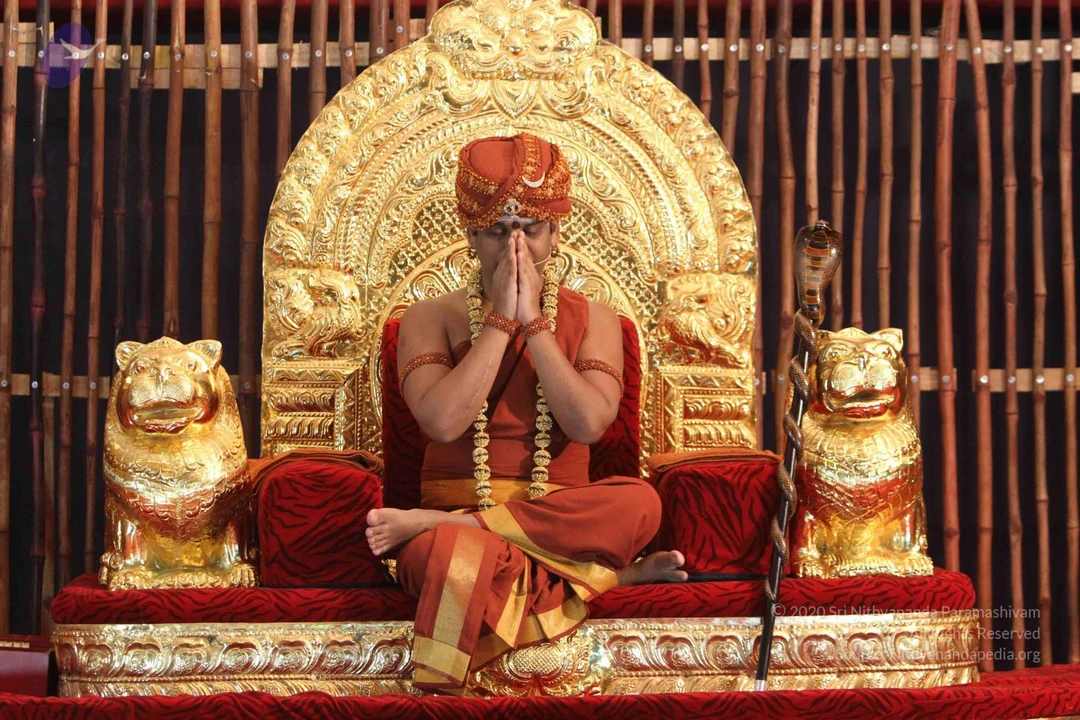
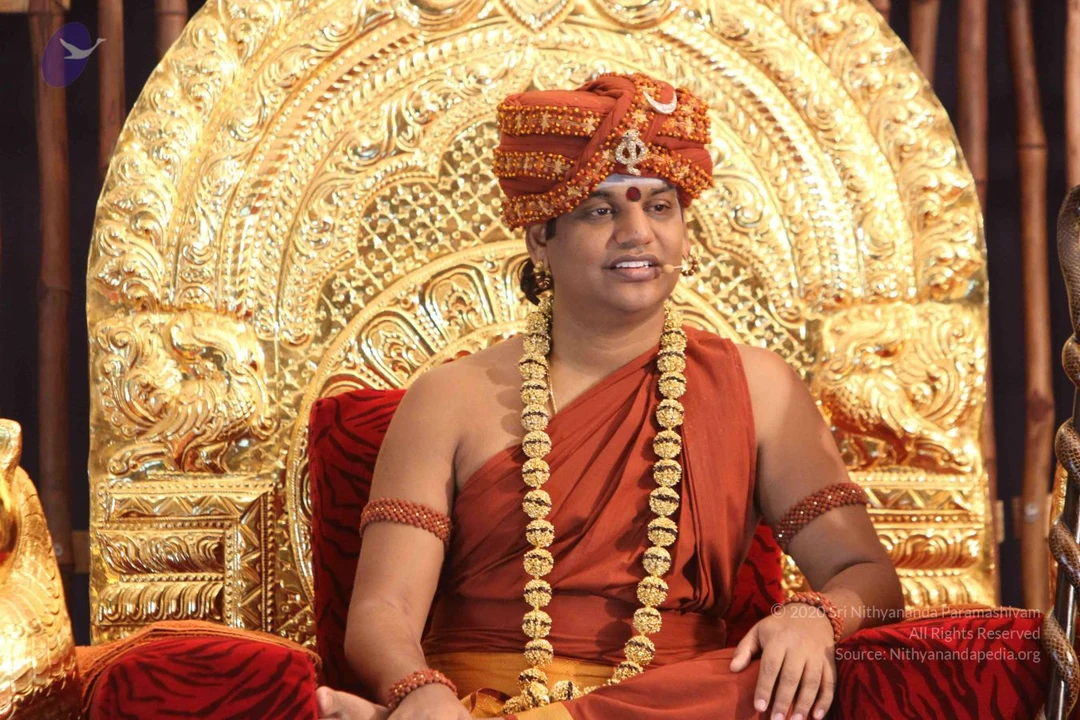
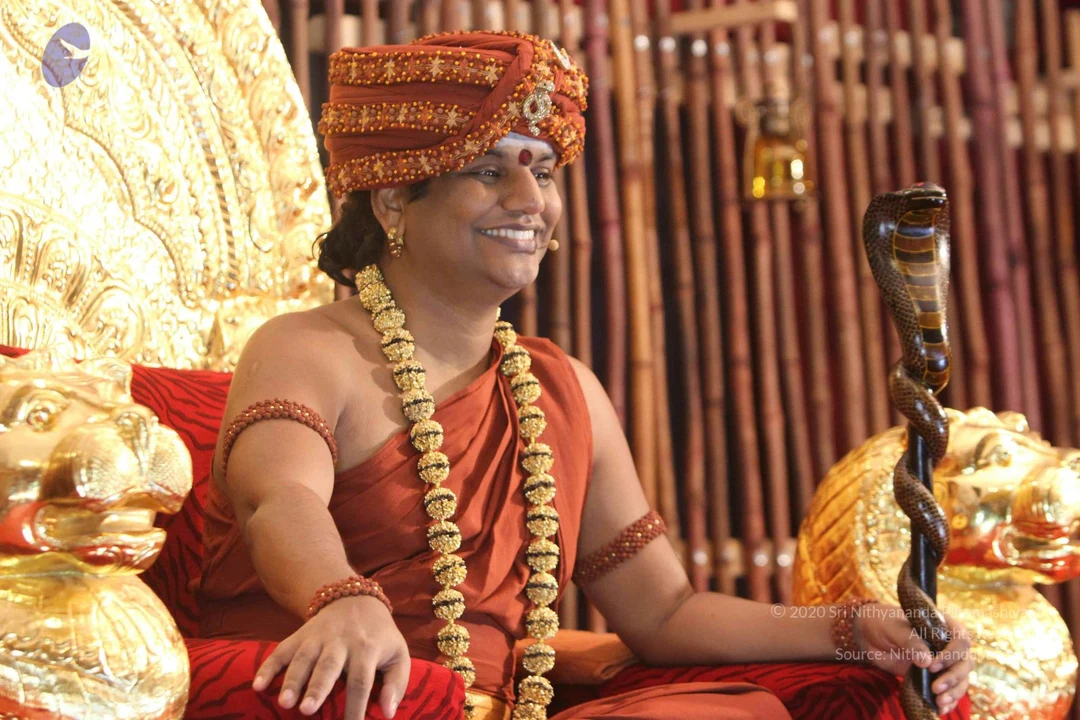
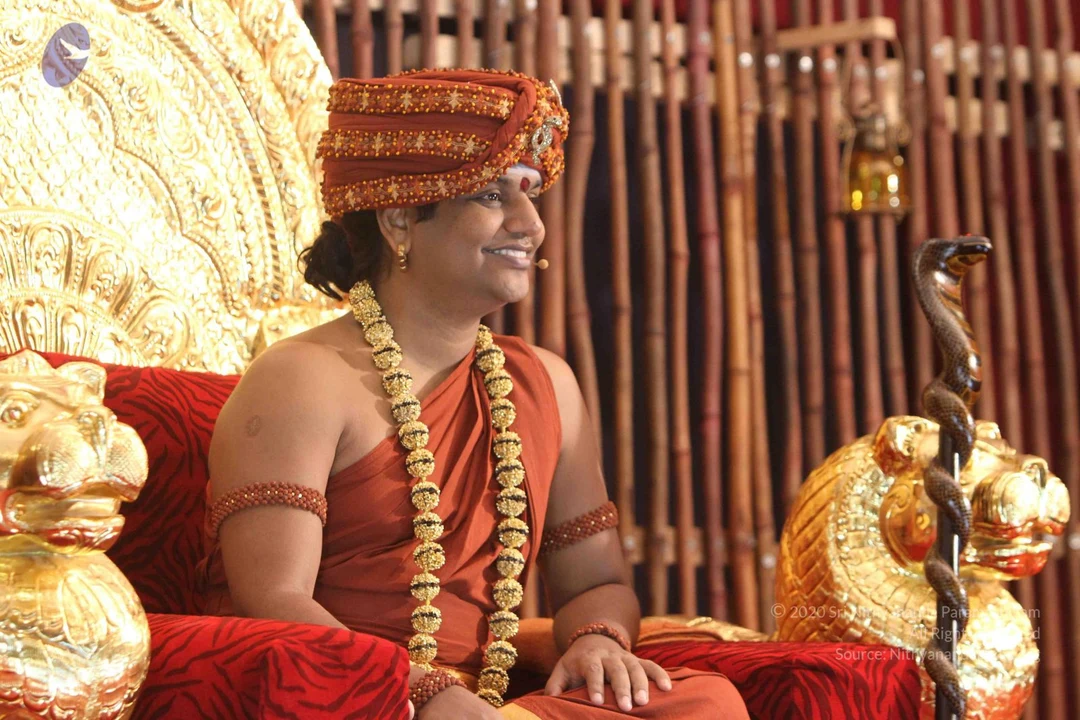
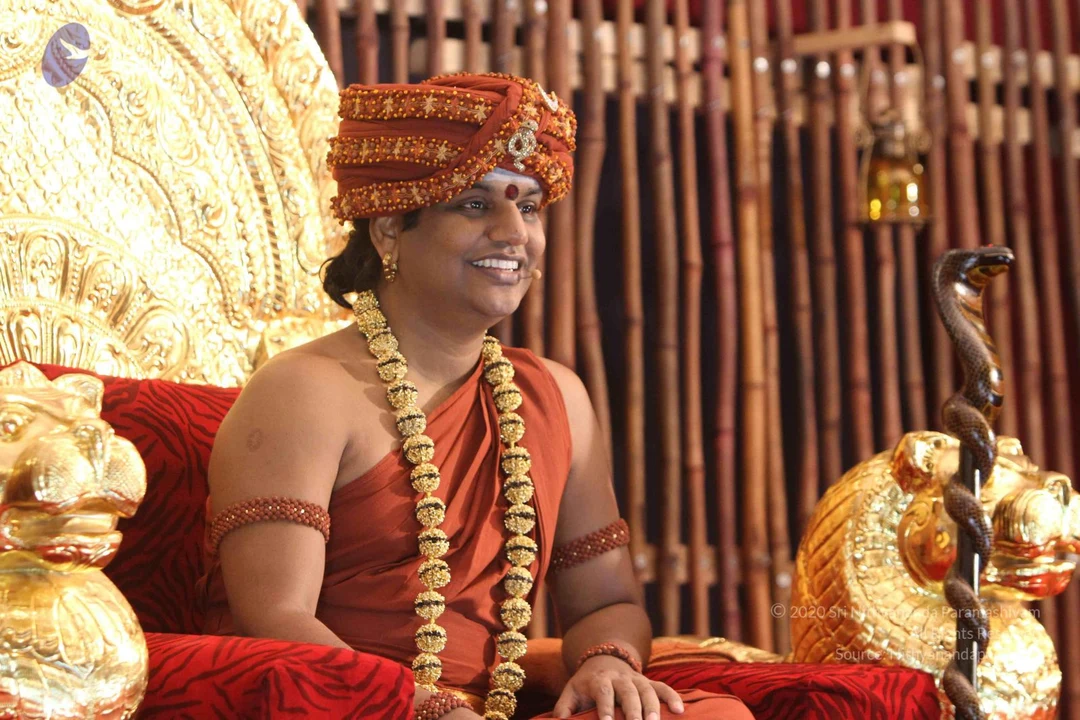
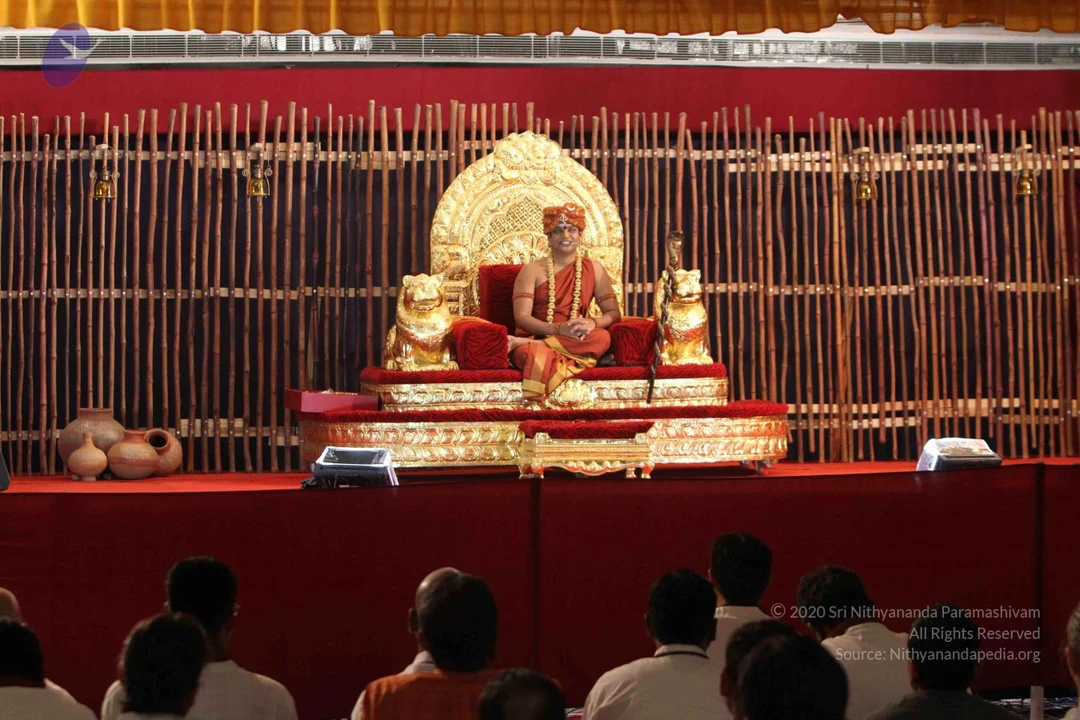
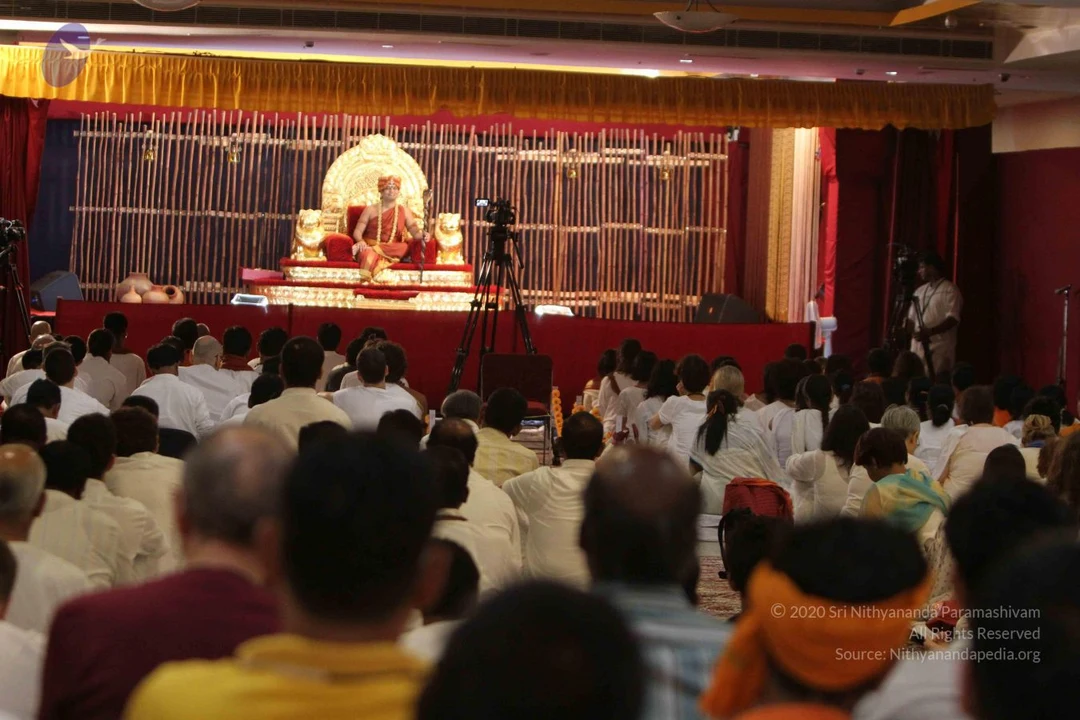
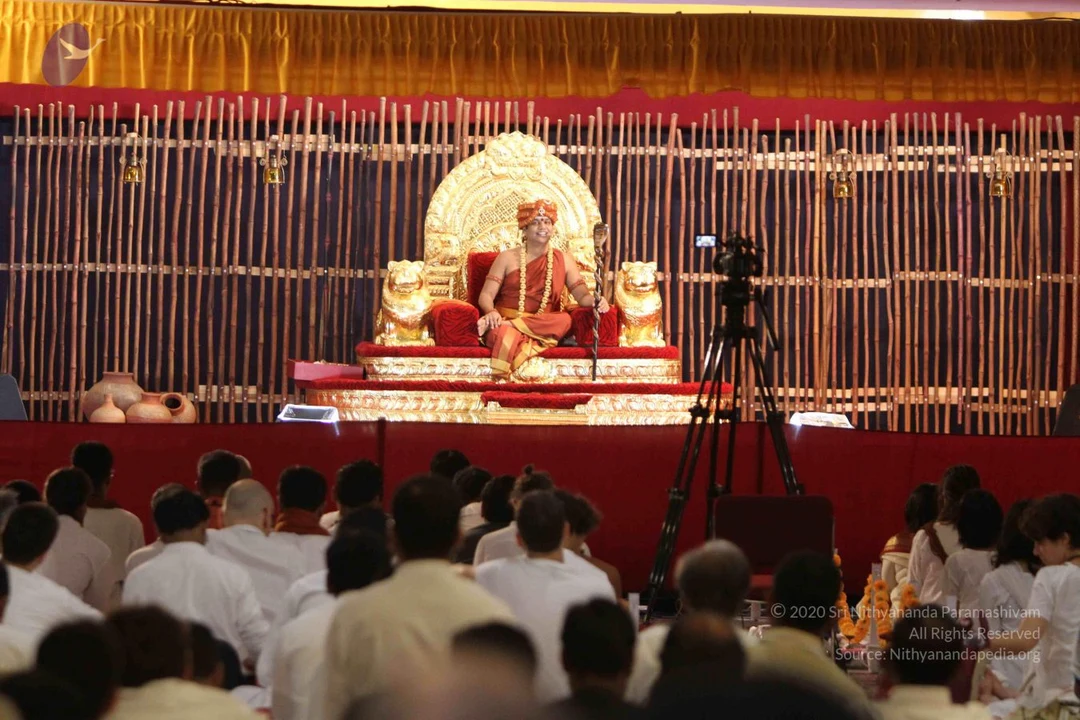
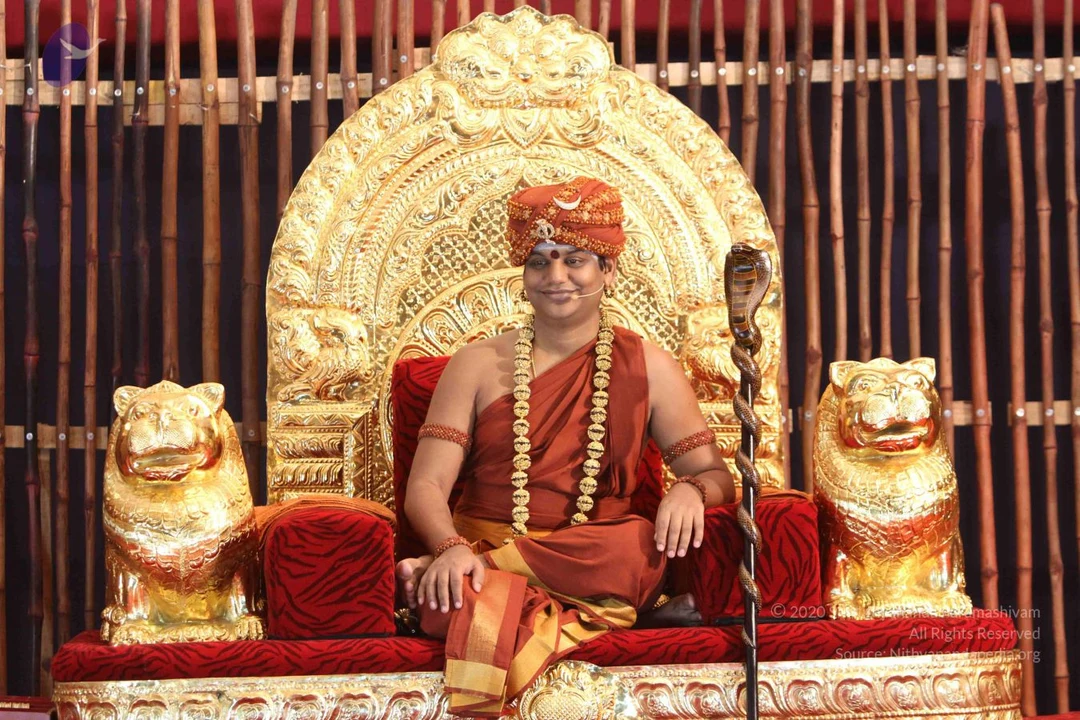
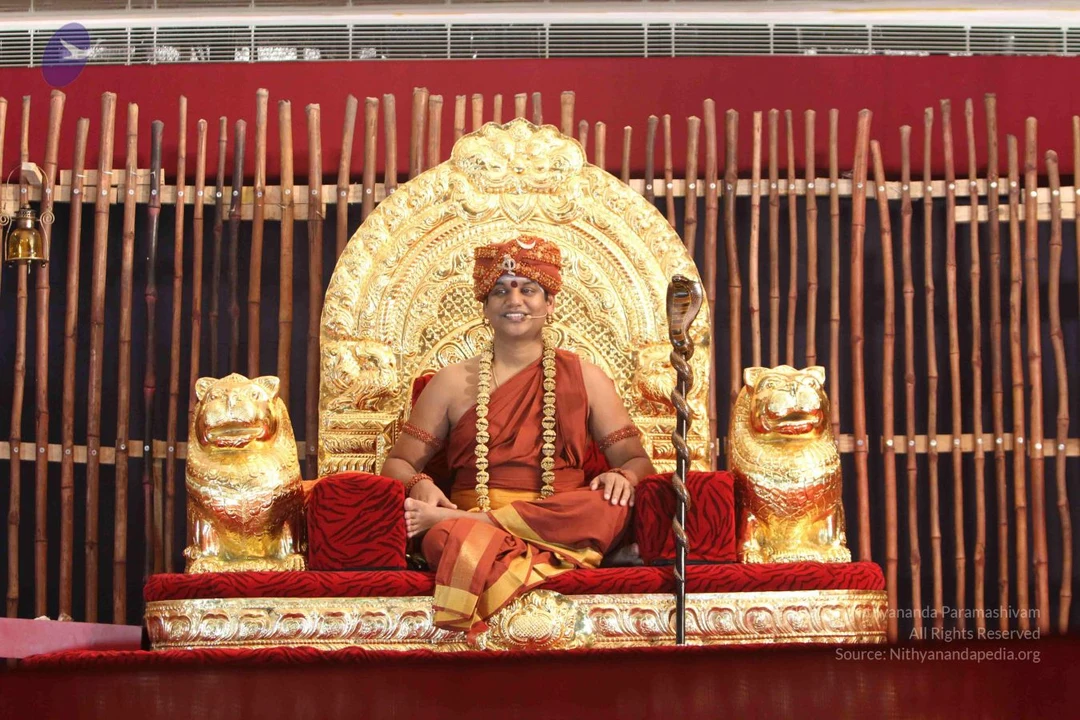
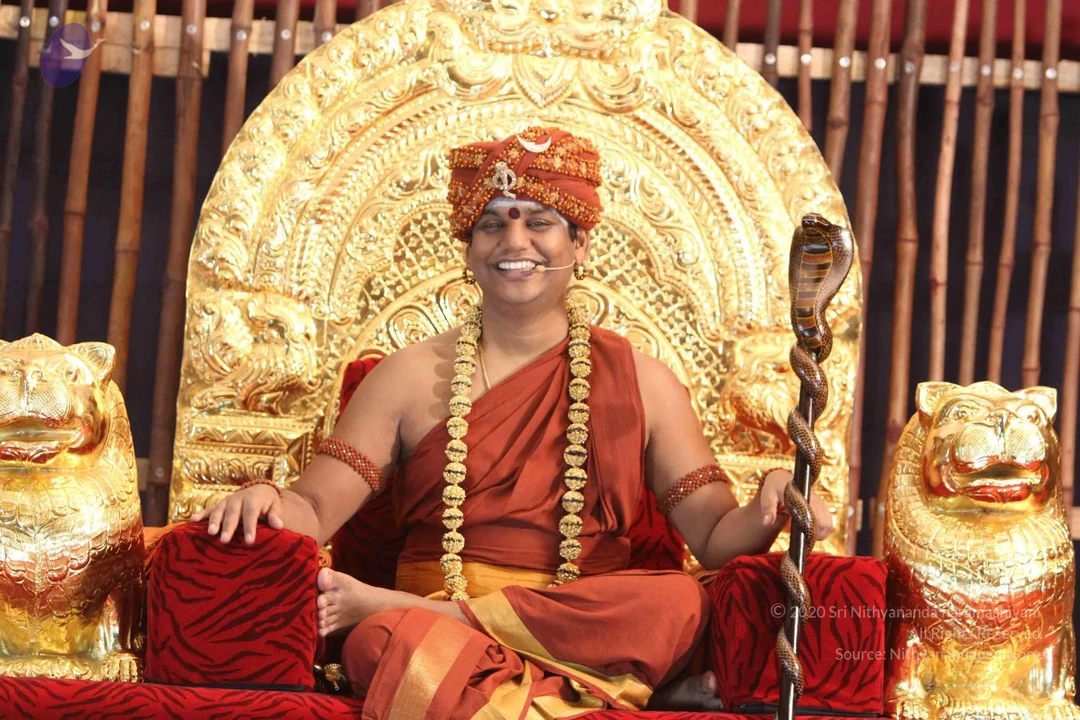
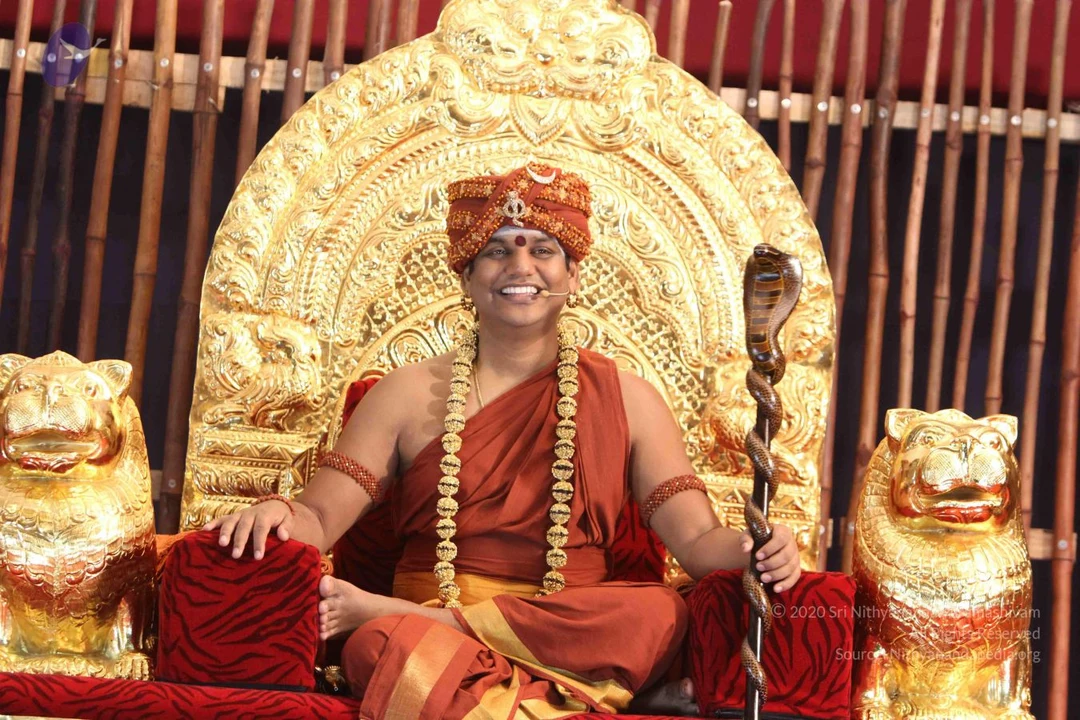
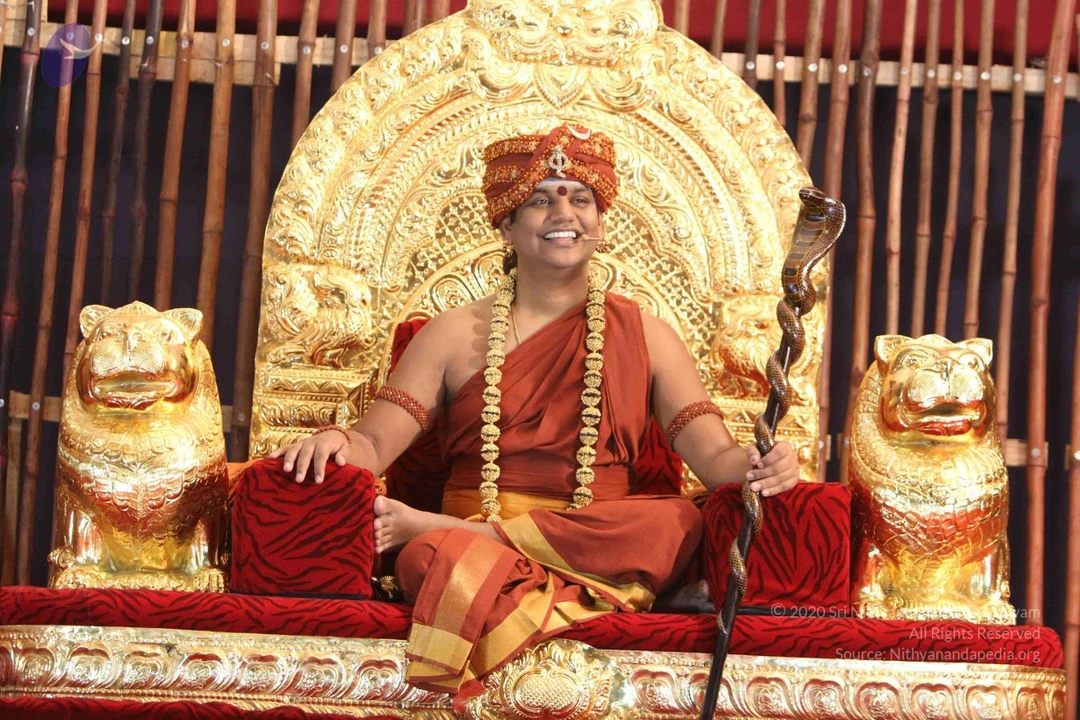
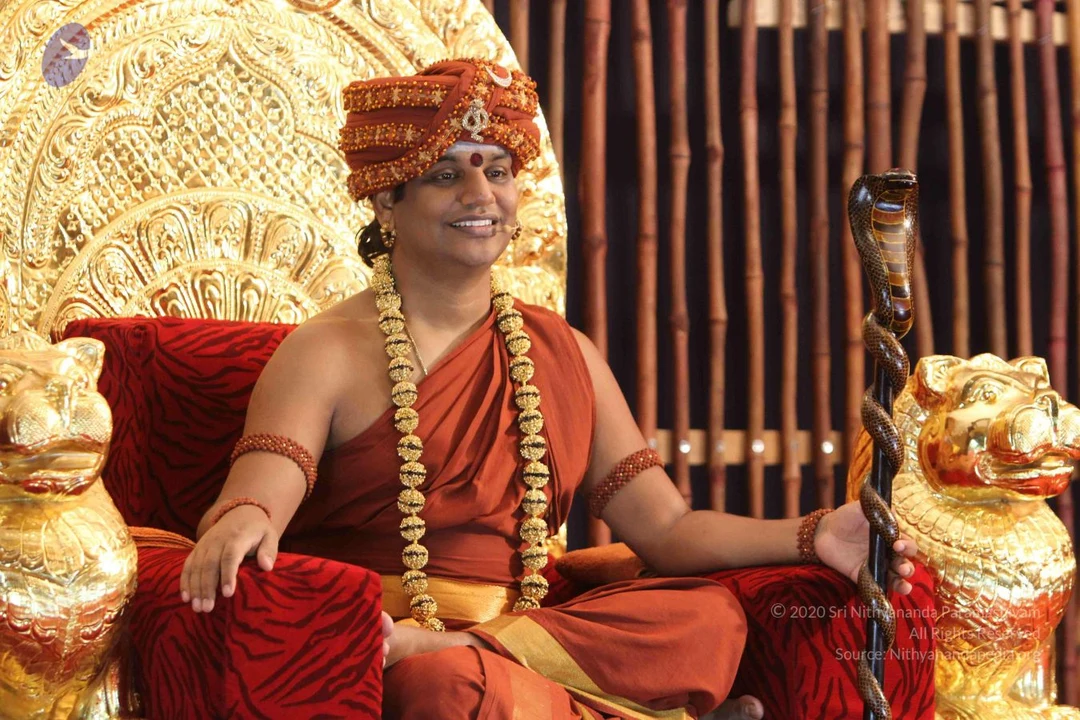
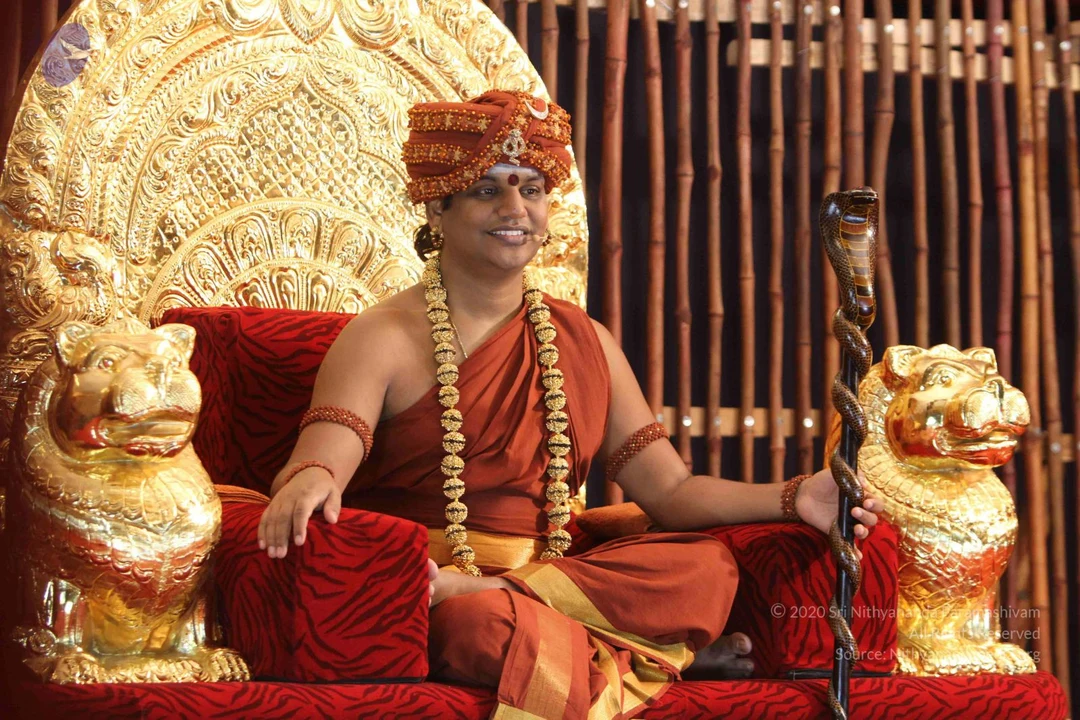
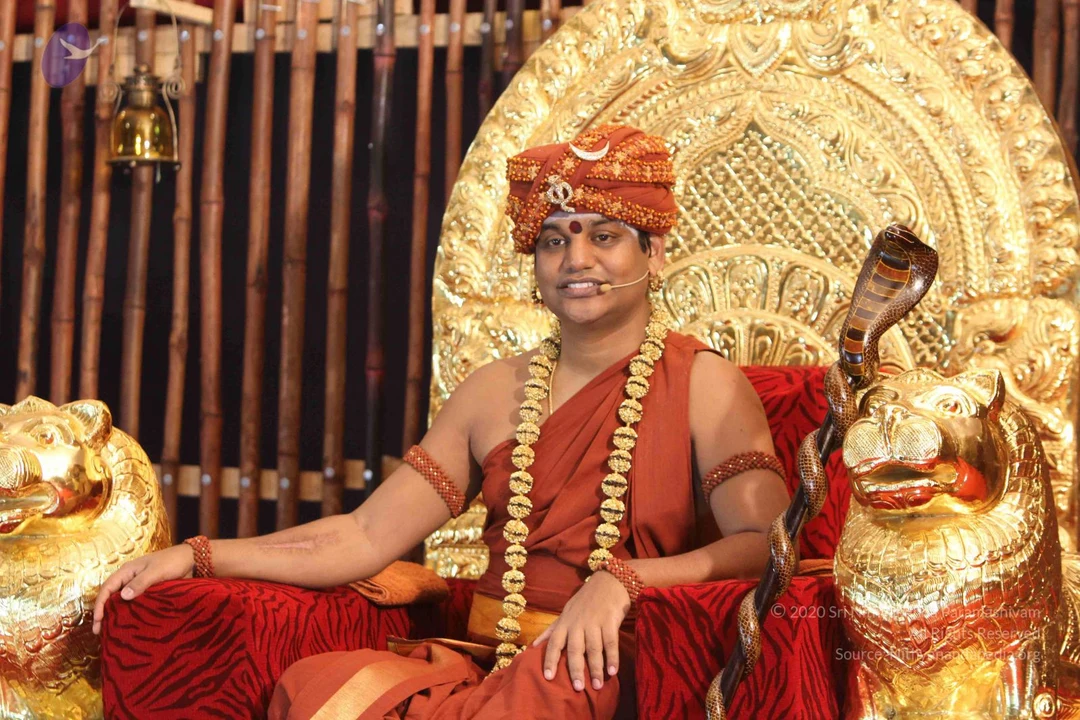
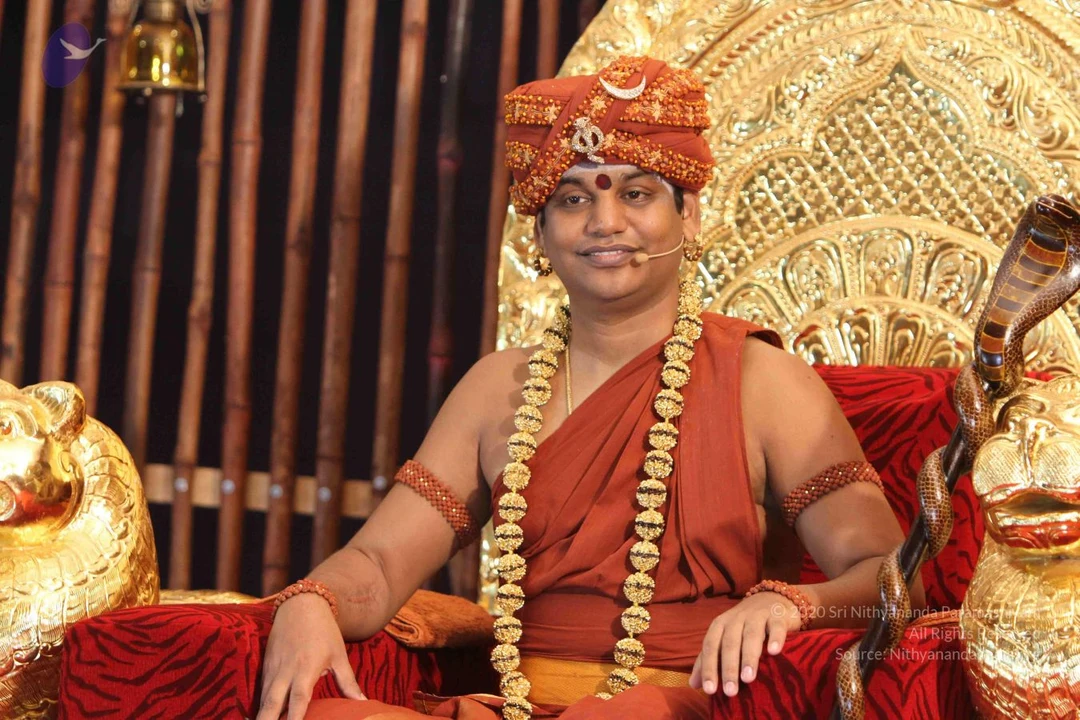
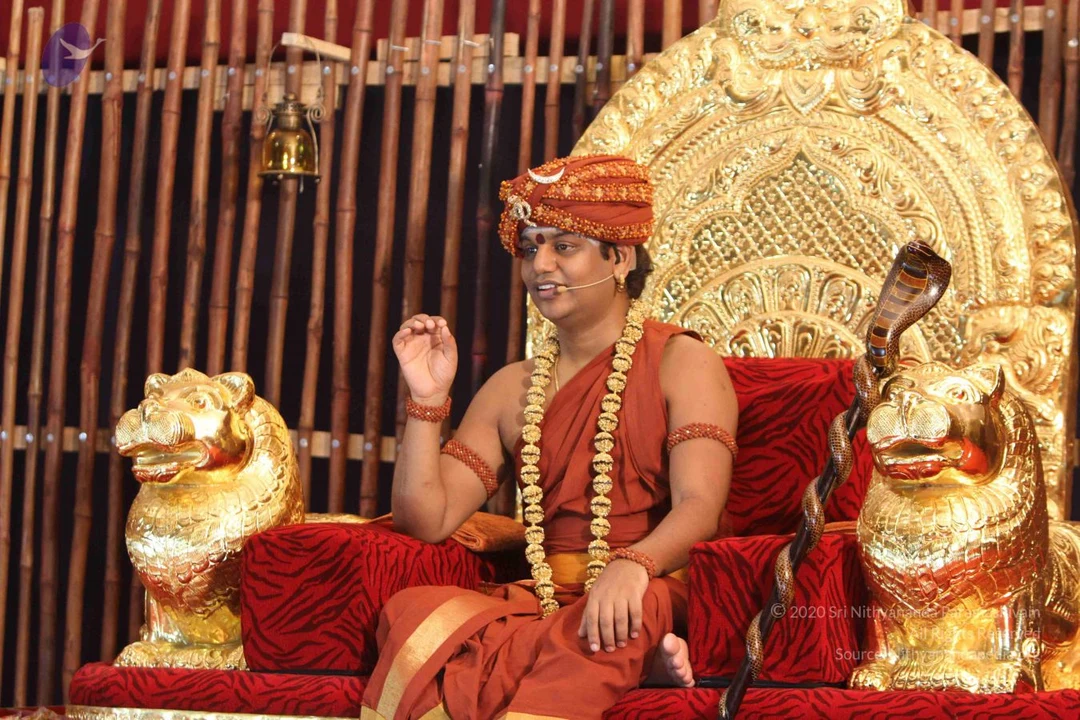
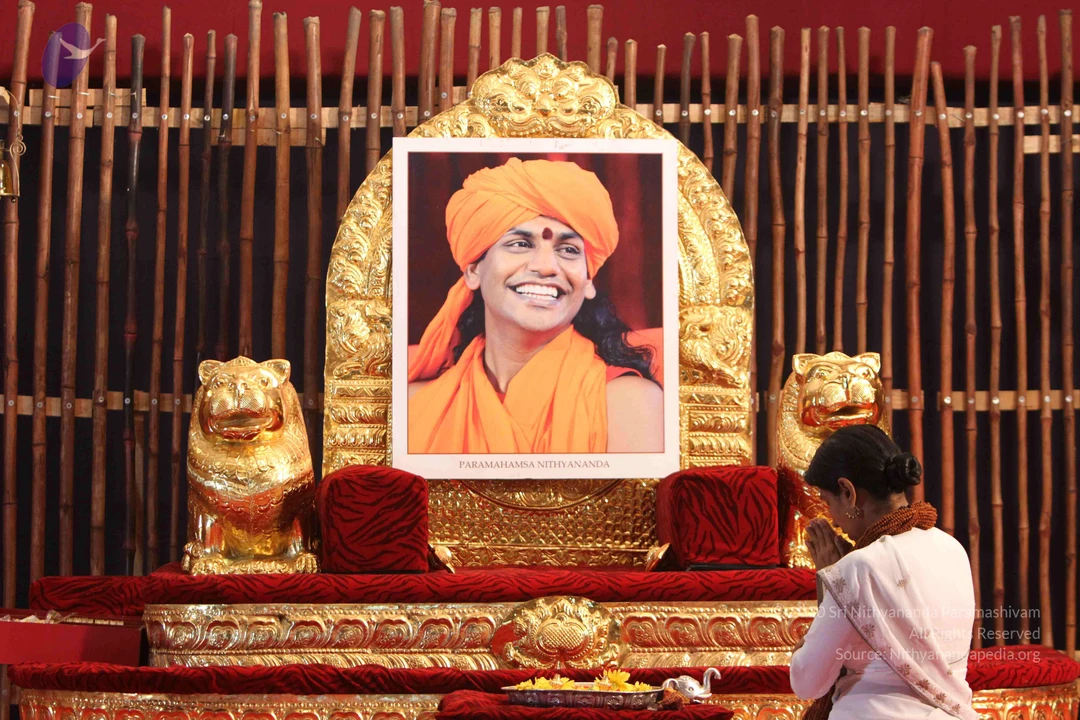
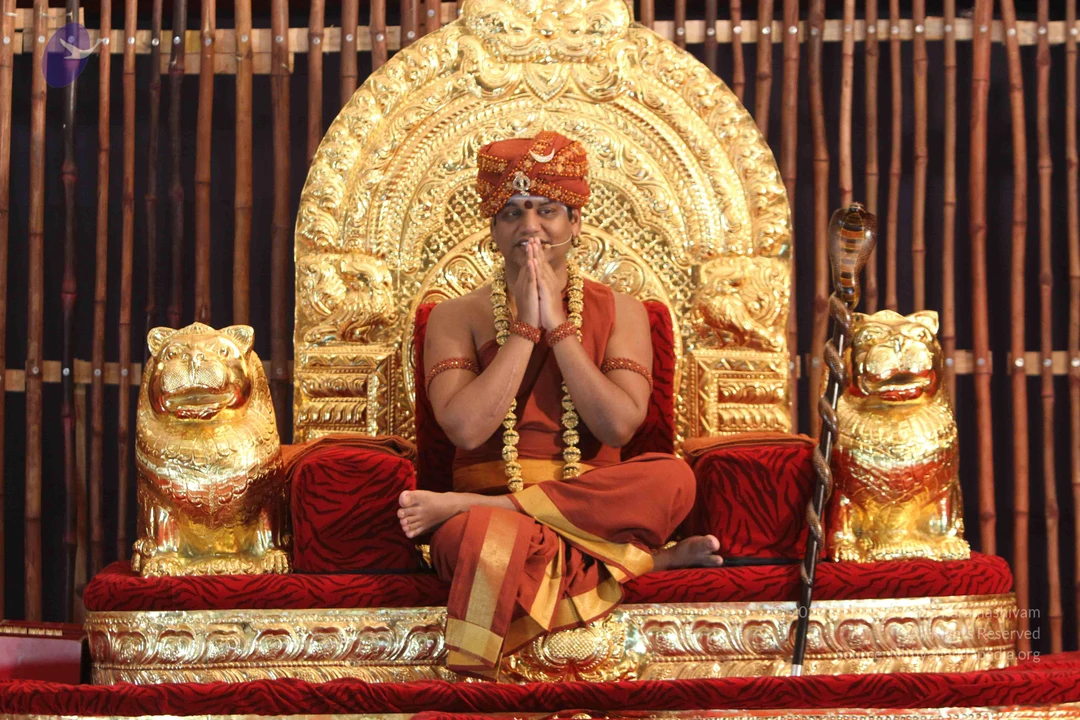
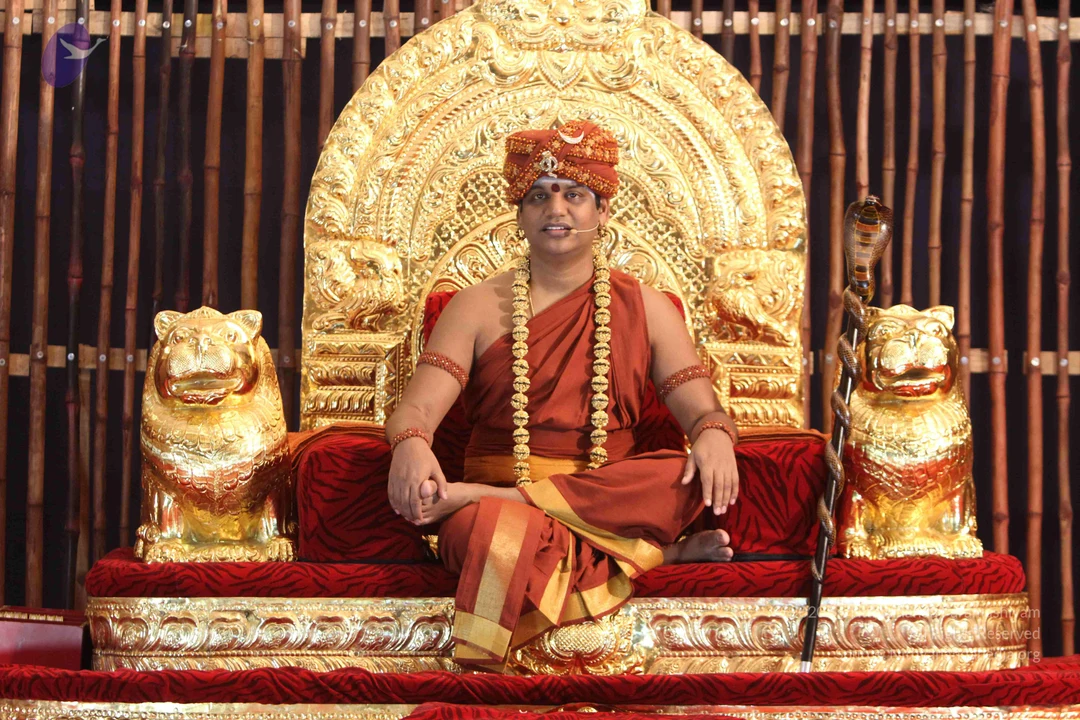
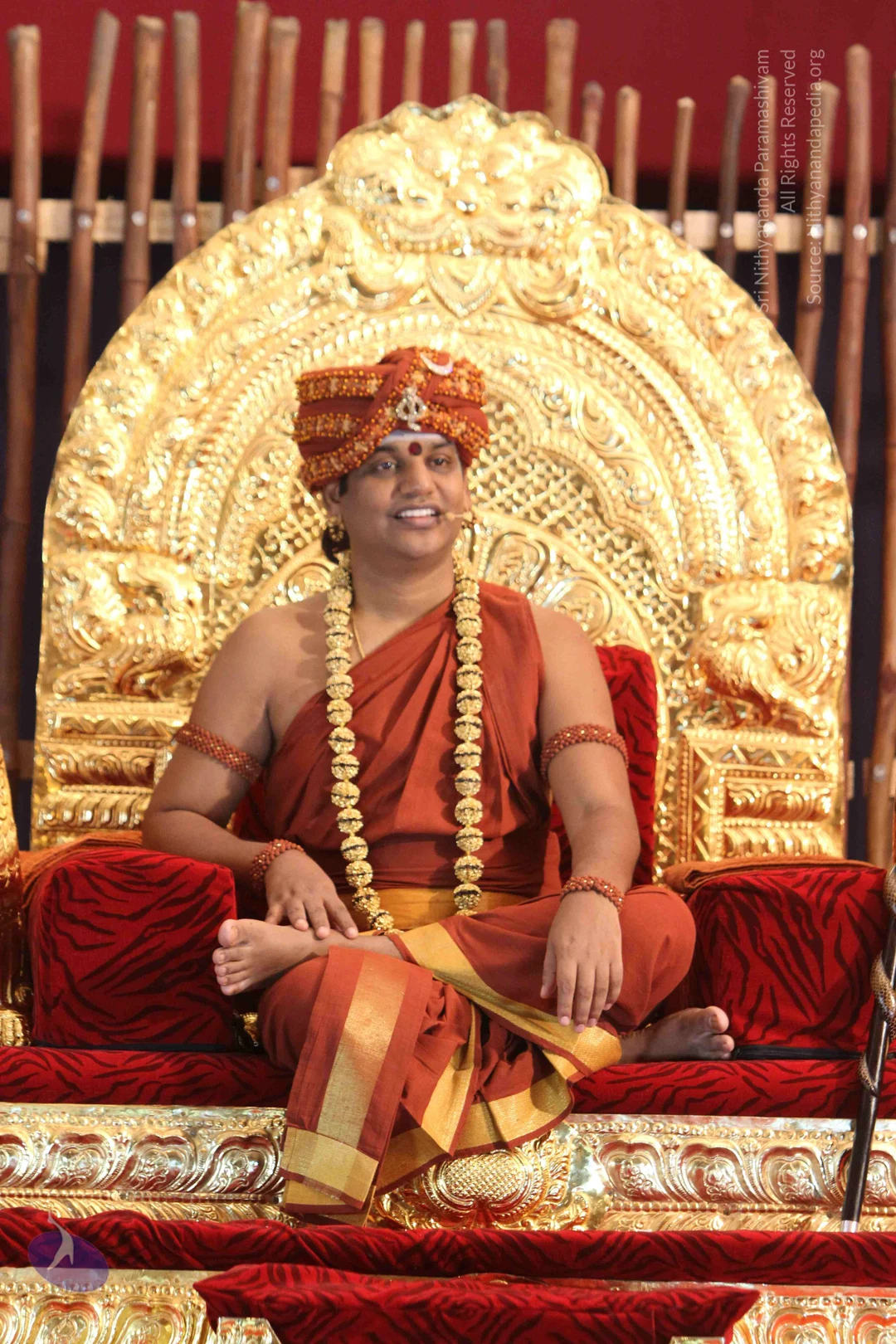
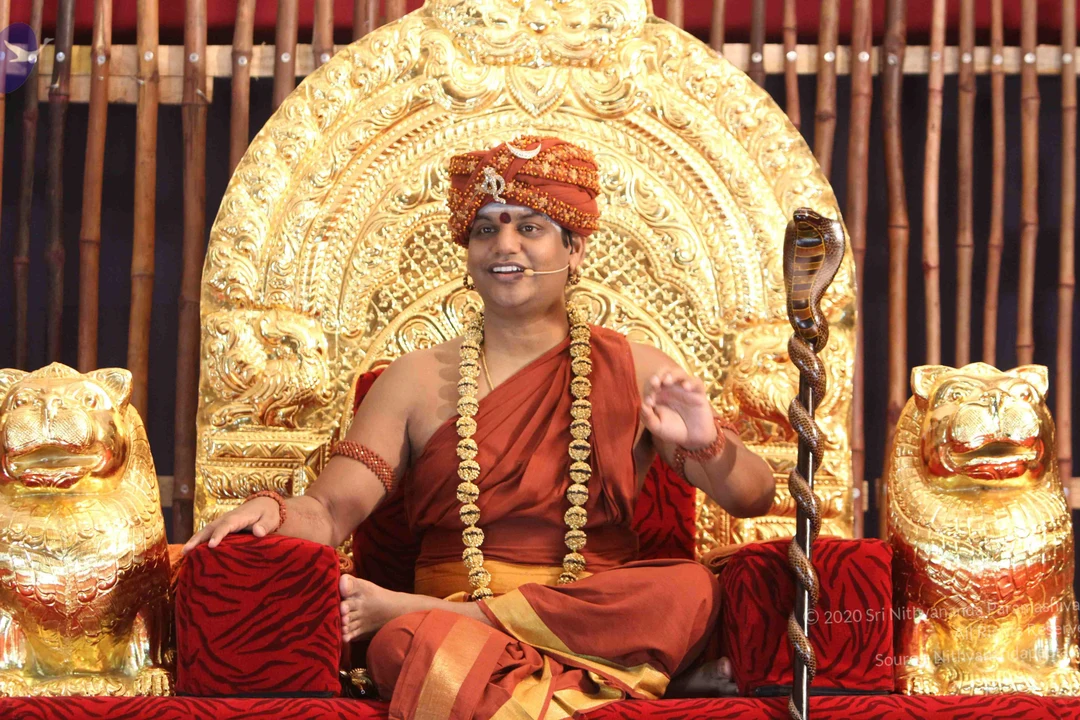
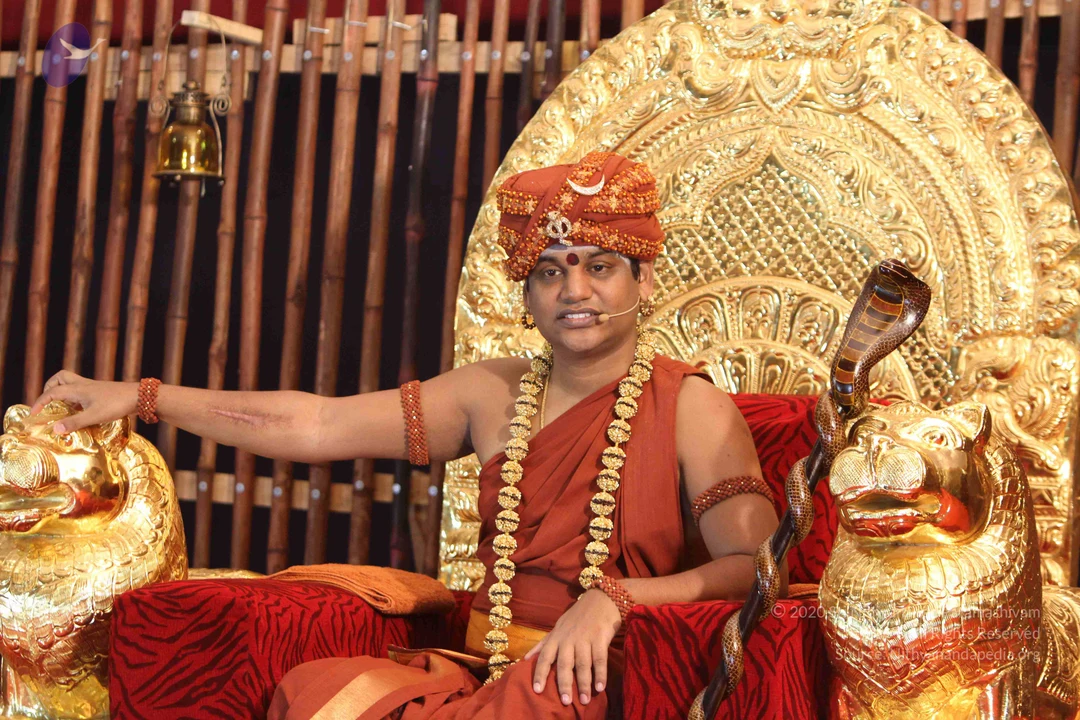
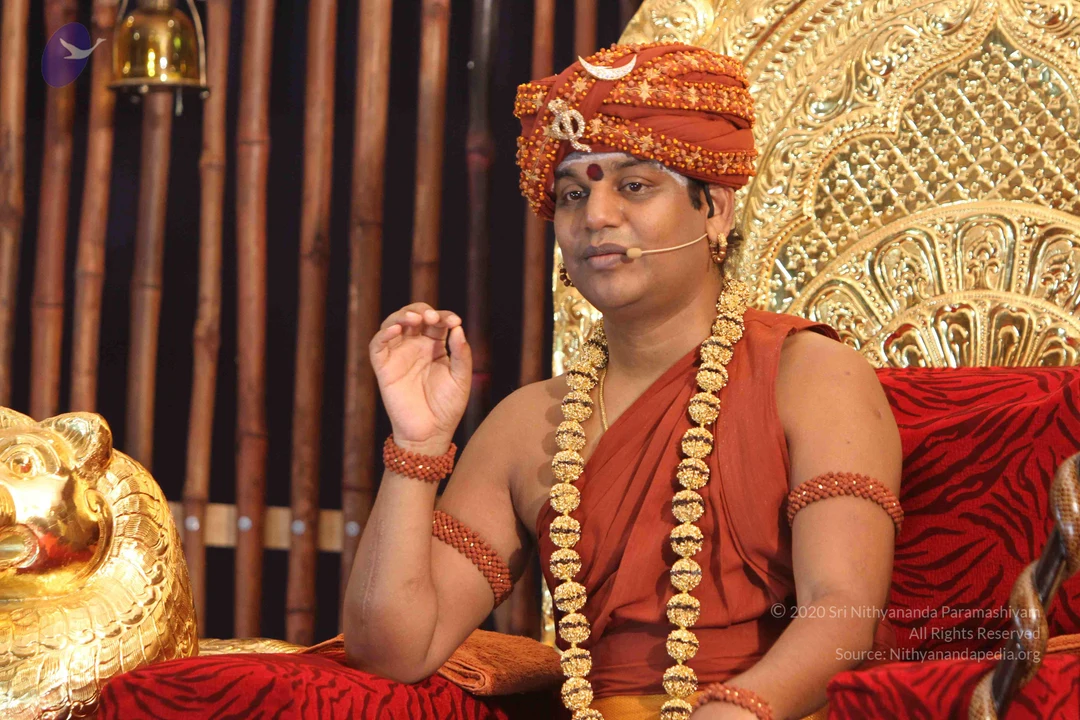
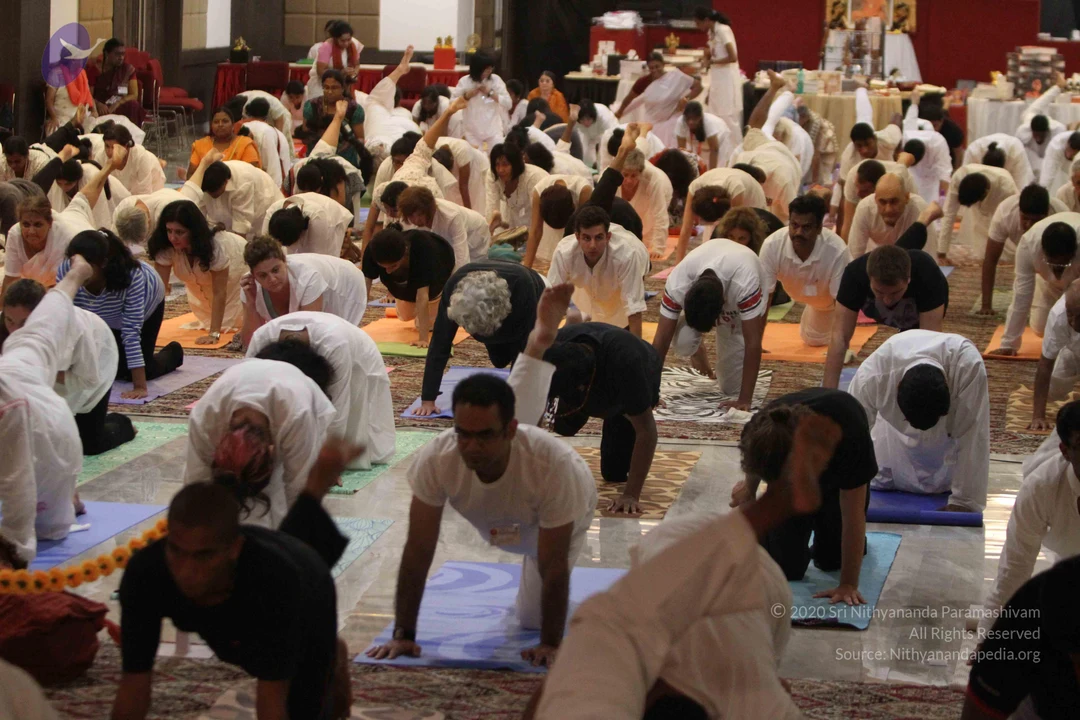
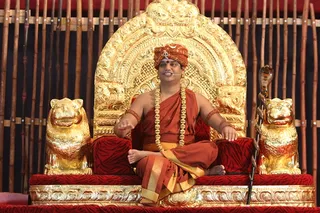
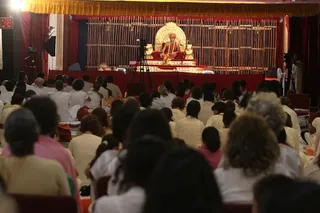
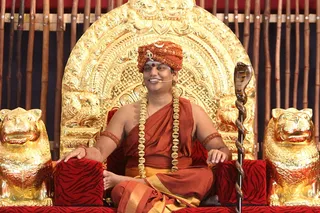
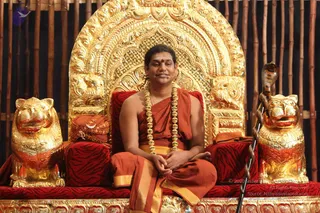
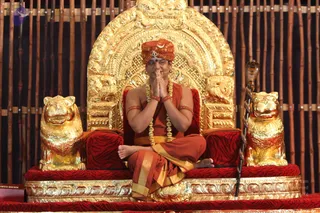
A seated man in saffron-orange robes sits cross-legged on a red velvet throne with gold trim. He wears an orange turban with a small ornament at the forehead, a long rudraksha-style mala, and gold bangles, and his bare feet are visible. Golden lion figures flank the throne, and an ornate gold arch rises behind him against a backdrop of bamboo poles and red draping. He gestures with both hands while speaking, with a headset microphone visible. A tall gold-topped staff leans at the right edge. Swamiji (probable) appears in person, seated as the central speaker of a satsang, with distinctive saffron clothing, turban and mala cues.A seated man in a rust-orange turban decorated with gold and red beadwork sits on a red upholstered throne with ornate gold carved panels. He wears a saffron-orange wrap over bare shoulders, a long necklace of gold beads, and red beaded armbands. A vertical staff with a coiled snake carving stands at his right beside a gilded lion-shaped armrest. Behind him are bamboo poles. Appearance-based candidate: Swamiji (probable), based on the ornate saffron turban, gold necklace and throne, with the page stating he is present at this event; this identification is uncertain.A photograph of a large satsang hall with a seated crowd viewed from behind, mostly in white clothing. At the far end, on a raised red-and-gold stage, a man in orange-and-red robes sits on an ornate gold throne flanked by two carved lion figures, with a bamboo-slat backdrop behind him. Camera tripods and a video camera stand at the stage edges, and a few people sit on the platform near the throne. The scene suggests a seated discourse session, though the person on the throne's identity cannot be confirmed from appearance; the page identifies the event as a person satsang.A seated figure in saffron-orange robes sits on an ornate golden throne carved with lions, flanked by two gold lion sculptures on a red and tiger-striped cushioned seat. He wears an orange-red turban, a long ceremonial gold necklace and beaded malas, and red bangles on his wrists, and holds a carved wooden staff topped with a serpent head. He smiles and wears a head microphone, with a red-and-gold backdrop of bamboo poles behind him. Presentation cues of a turban, saffron clothing, ceremonial gold necklace and malas are consistent with Swamiji (probable), seated on the throne as the satsang speaker.A smiling man in saffron-orange robes and an orange turban with a gold crescent ornament sits cross-legged on an ornate gold throne carved with lions, its back decorated with gold scrollwork. He wears long gold ceremonial necklaces, rudraksha-style beads, orange armlets, and a red-and-gold wrap over his bare upper torso. He holds a staff entwined with a cobra, and a small red tilak marks his forehead. Two red velvet-cushioned lion-head armrests flank him, and a bamboo screen stands behind. a person is seated as the speaker, with a headset microphone visible at his ear, appearing to lead a satsang session.A smiling figure in saffron-orange robes and a matching orange turban with a gold ornament sits cross-legged on a red-and-black tiger-striped cushioned seat in front of an ornate gold throne carved with lion heads. Gold lion sculptures flank the throne on either side. The seated figure wears long gold beaded necklaces, red beaded bracelets on both arms, and holds a wooden staff with a carved cobra head in the right hand. A red-striped backdrop and bamboo-like poles frame the scene. Swamiji (probable) is seated as the central figure, identified by appearance cues of orange robes, turban and ceremonial gold necklaces.

Photos

6 photosSource gallery
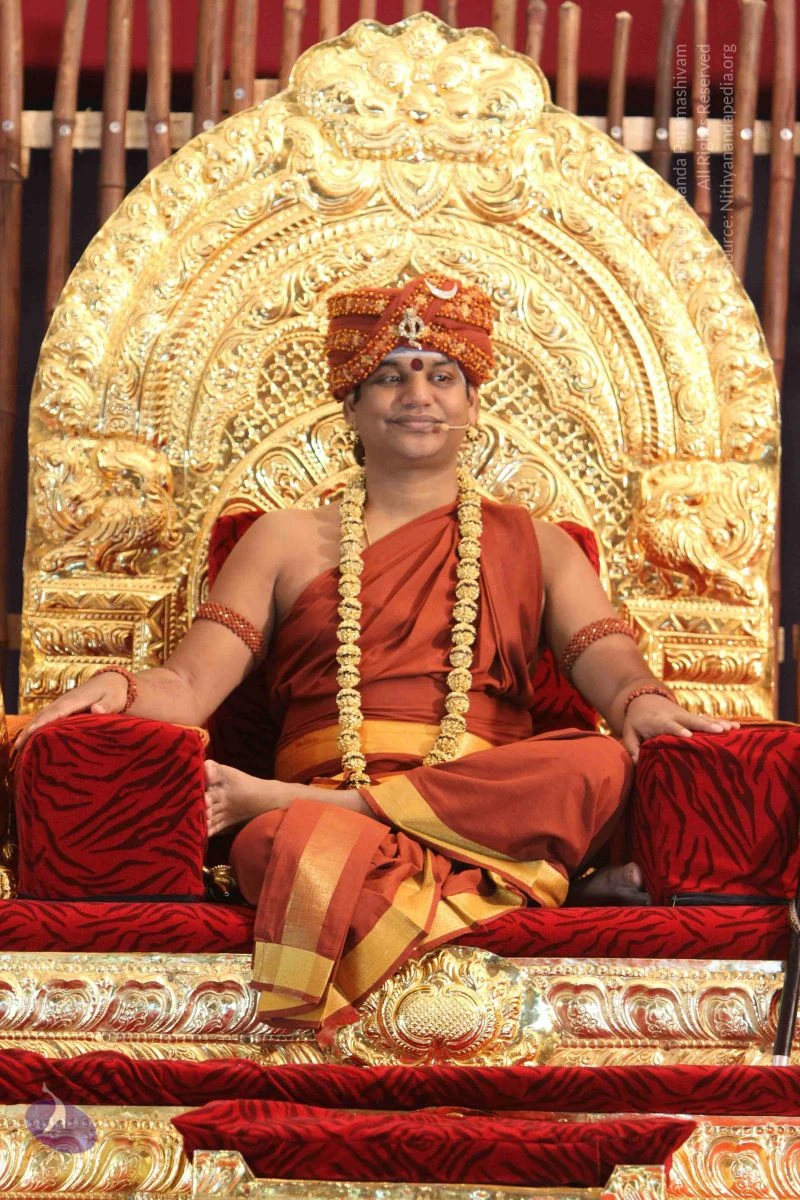
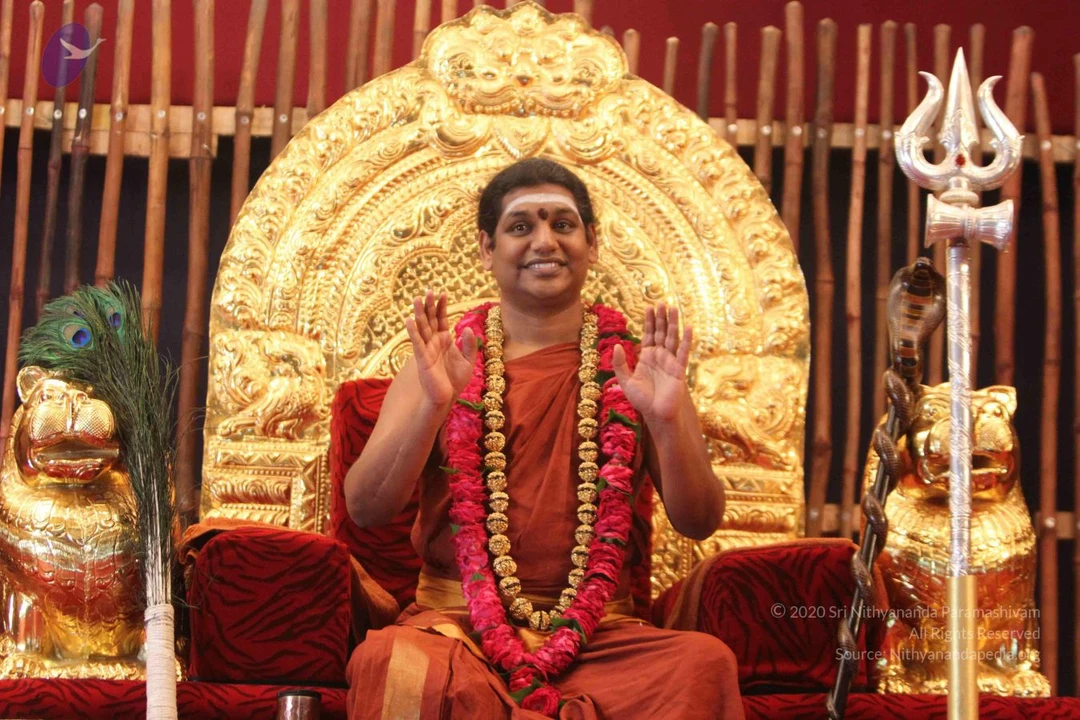
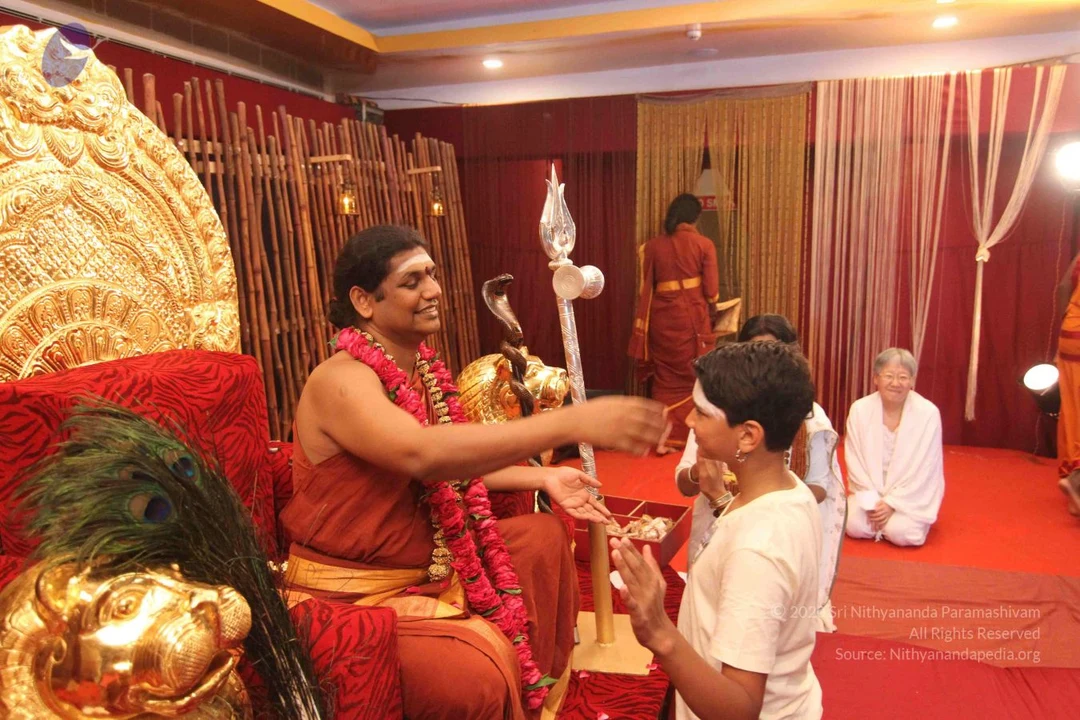
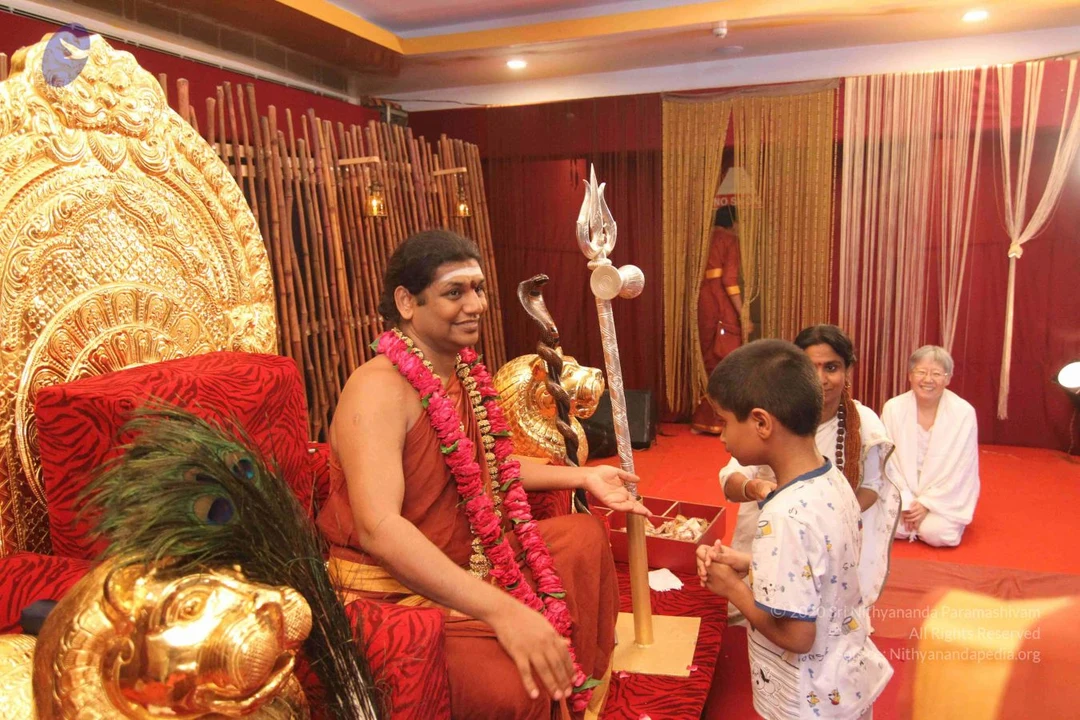
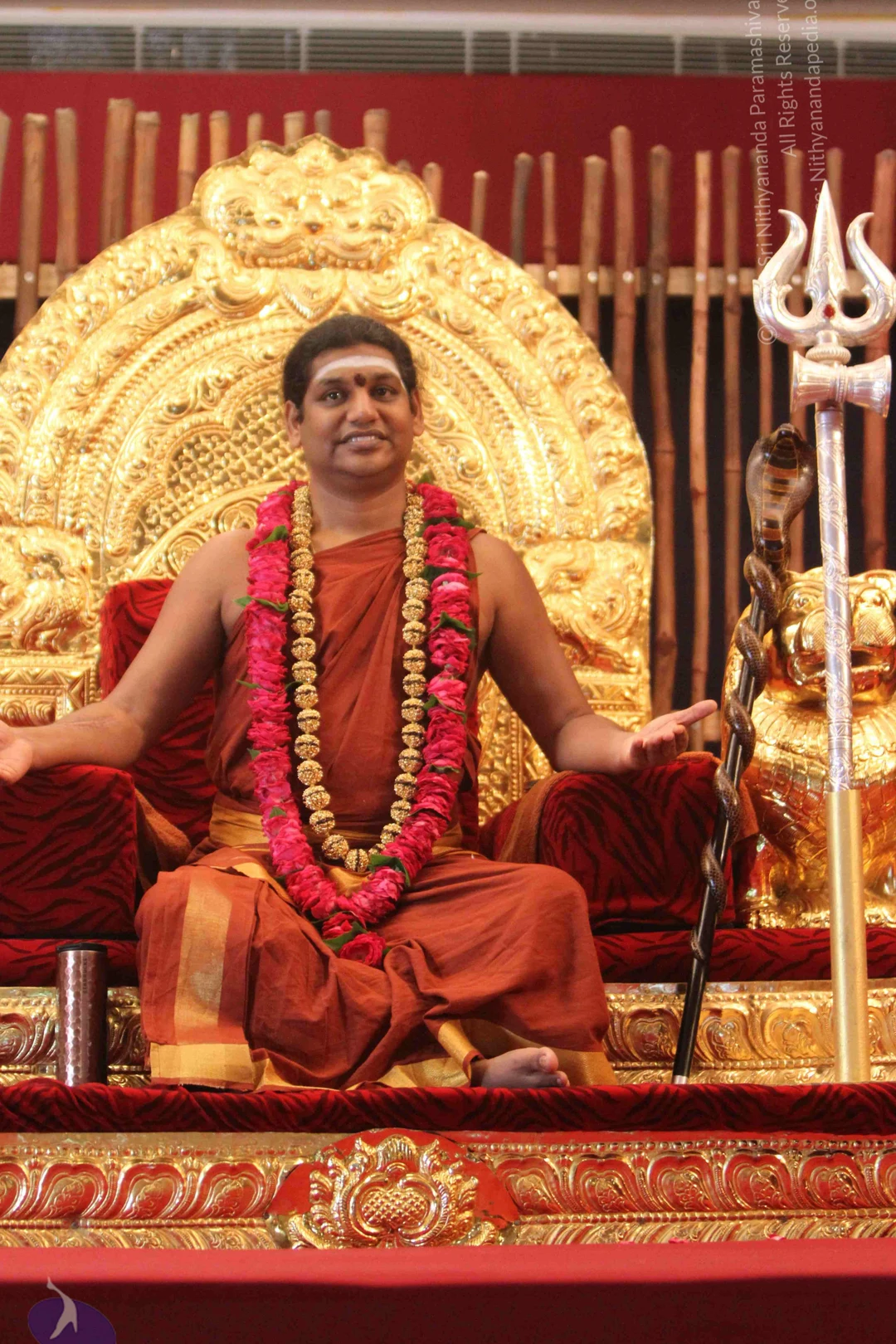
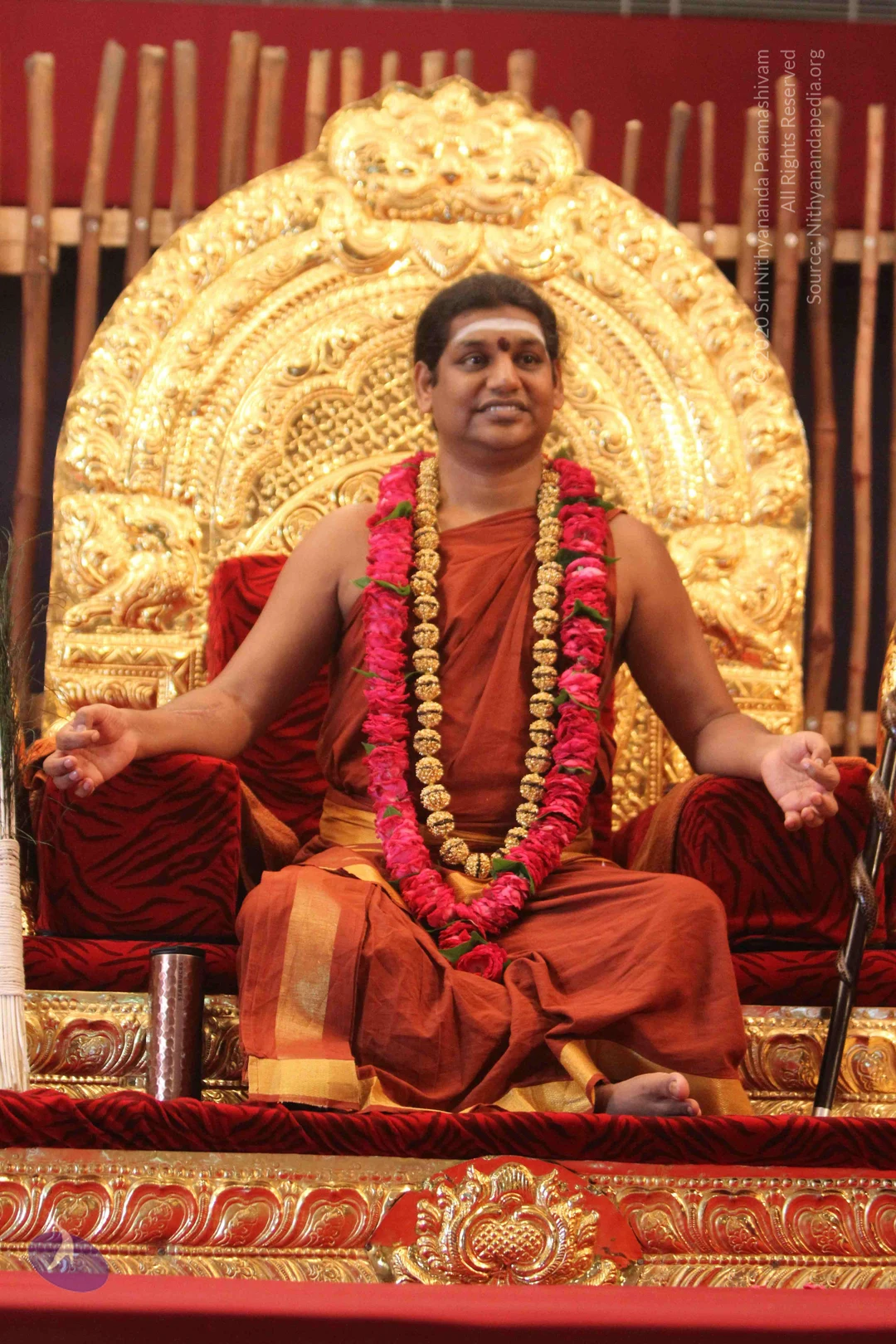
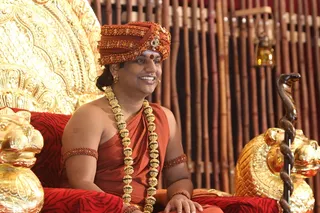
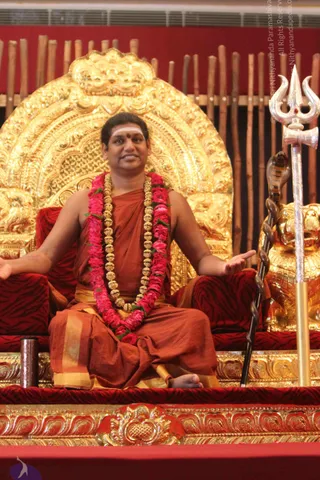
A seated man in saffron-orange robes with gold-bordered cloth sits on an ornate gilded throne with red tiger-striped cushions. He wears a long red-and-pink flower garland over a gold bead necklace, has a white vibhuti line and red bindi on his forehead, and holds his arms open. Beside him stand a silver trident and a silver-and-black staff entwined with a cobra, and a golden lion-shaped figure rests at the right. A gilded back panel and red-draped platform frame the scene.A seated man in a rust-orange dhoti and draped orange-brown shawl sits on an ornate gold throne with red tiger-striped cushions. He wears a thick garland of pink flowers with green leaves and gold beaded beads across his chest, and has a white tilak and red bindi on his forehead. Behind him stand vertical bamboo poles against a dark red wall. A metal tumbler sits at the lower left. The man smiles and gazes to the side. a person: his saffron-orange robes, flower garland and throne mark a ceremonial seat of honour; the garland and gold beads are distinctive adornments.A seated man in orange-red robes sits on an ornate gold throne with a gilded backrest and carved gold lion-form armrests, upholstered in red with black tiger-stripe pattern. He wears a red and gold turban with a small emblem, a red forehead mark, a long gold-bead garland, and red beaded bands on his upper arms and wrists, with his hands resting on his lap. A bamboo-pole backdrop in red and brown surrounds him, and a carved wooden staff with a serpent-like head stands at the right. Probable Swamiji: the turban, saffron-orange robes, ornate gold garland and throne are the qualifying cues, presented as a seated guru in a formal satsang setting.A seated man in saffron-orange robes and a matching orange turban sits cross-legged on an ornate gold throne with a red tiger-striped cushion. He wears a long gold garland and a small headset microphone, gesturing with both hands while speaking. Two gilded lion sculptures flank the throne, and a gold cobra-shaped staff stands to the right. Bamboo poles form the backdrop. One seated person is visible.A man seated cross-legged on an ornate gold throne with red tiger-striped cushions, flanked by two gold lion sculptures. He wears a rust-orange turban with a small gold ornament, orange-saffron robes with gold borders, a long gold-bead garland, rudraksha-style beads, red bangles and a small forehead mark, and holds a microphone near his face while gesturing with one arm. A black cobra-headed staff stands at right. Bamboo poles form the backdrop. The man is clothed in saffron and orange with distinctive ornamentation, consistent with the a person appearance cues, presiding in a satsang setting.A photograph of a man seated in profile, facing right, wearing an ornate rust-orange turban decorated with gold embroidery, star motifs, beaded trim and a jewelled brooch. He wears a rust-orange shawl draped over one shoulder, a long gold-beaded rudraksha-style mala necklace, matching beaded armlets, gold earrings and a red tilak on his forehead, with a small microphone clipped near his mouth. Behind him is a glowing golden ornamental backdrop and wooden pillars. Only one person is visible.

Nithya-Satsang-Darshan
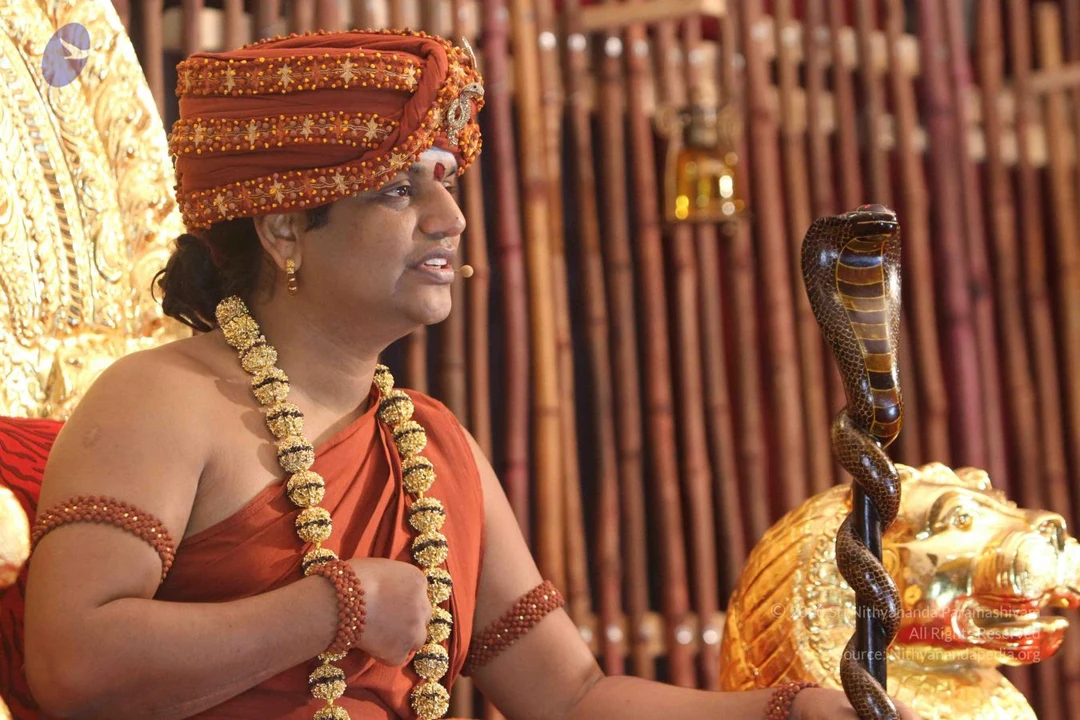
78 photosSource gallery
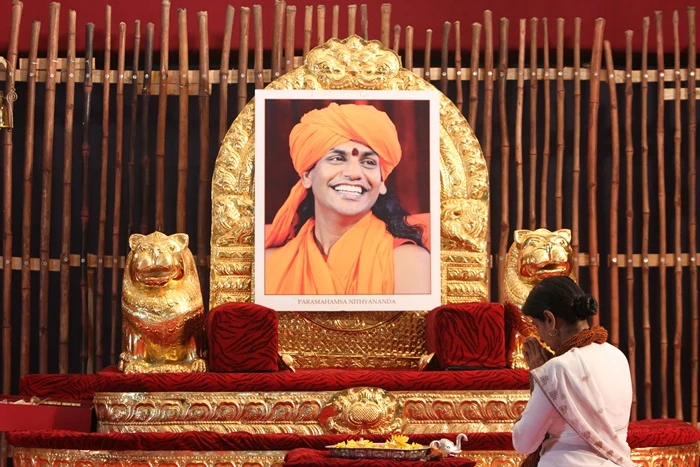
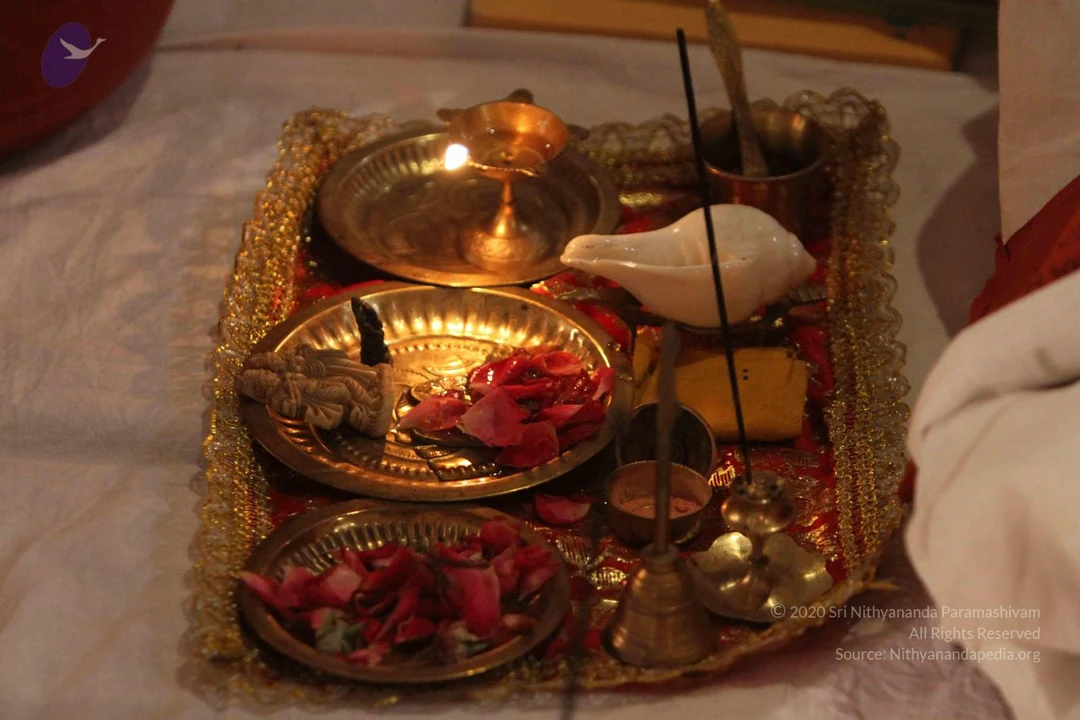
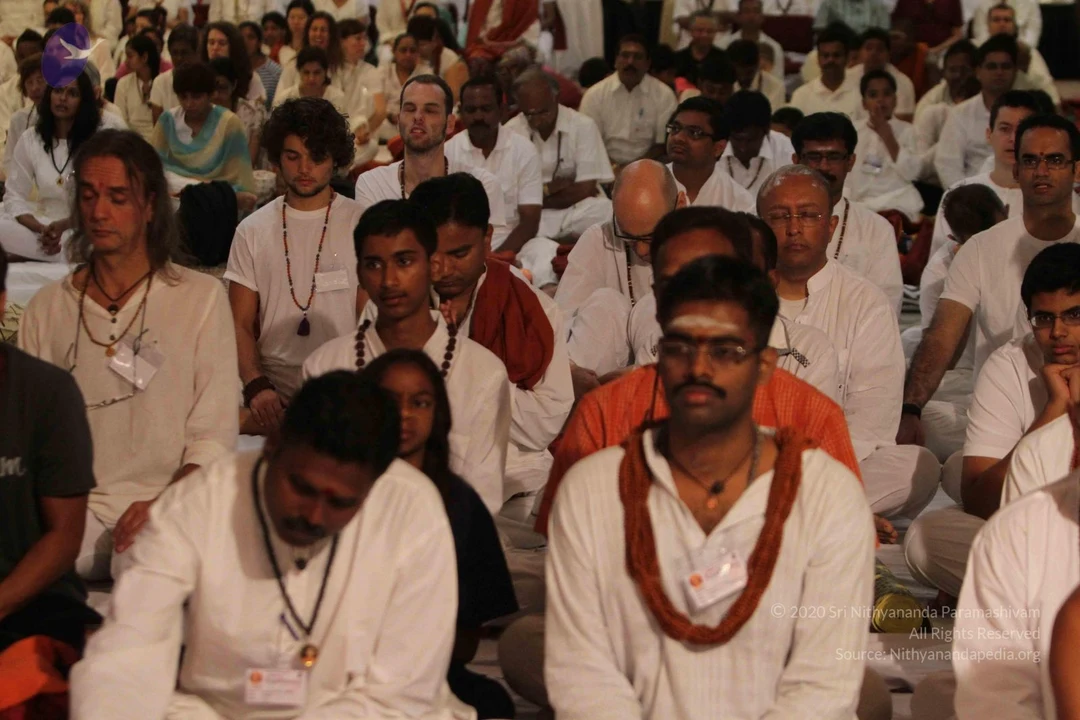
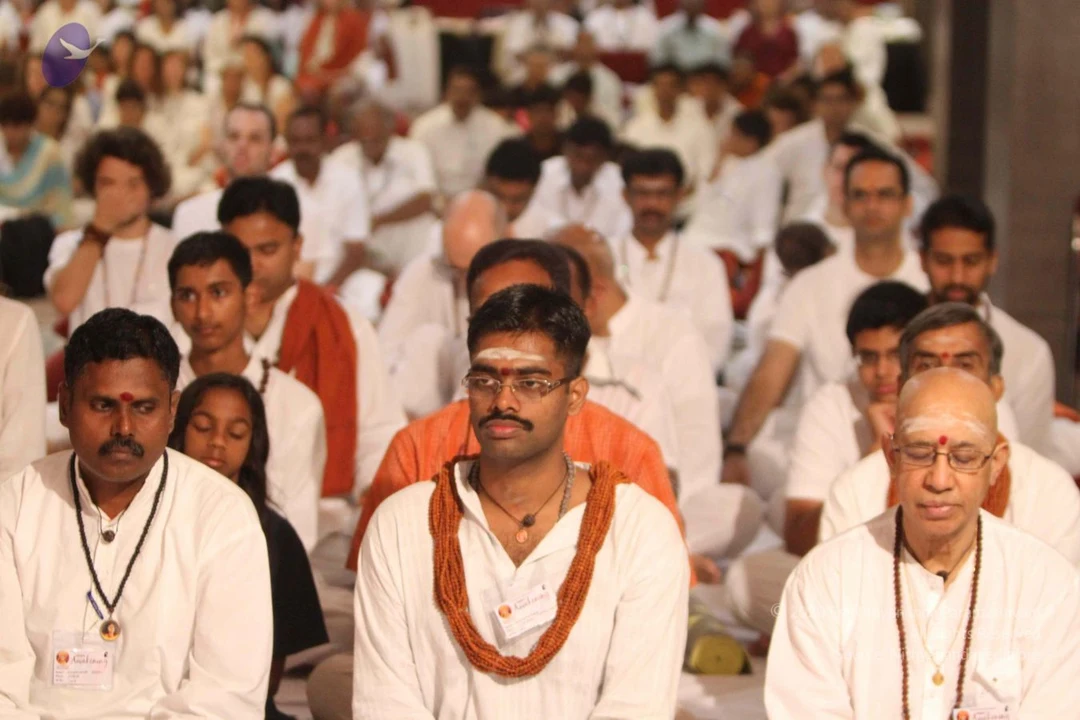
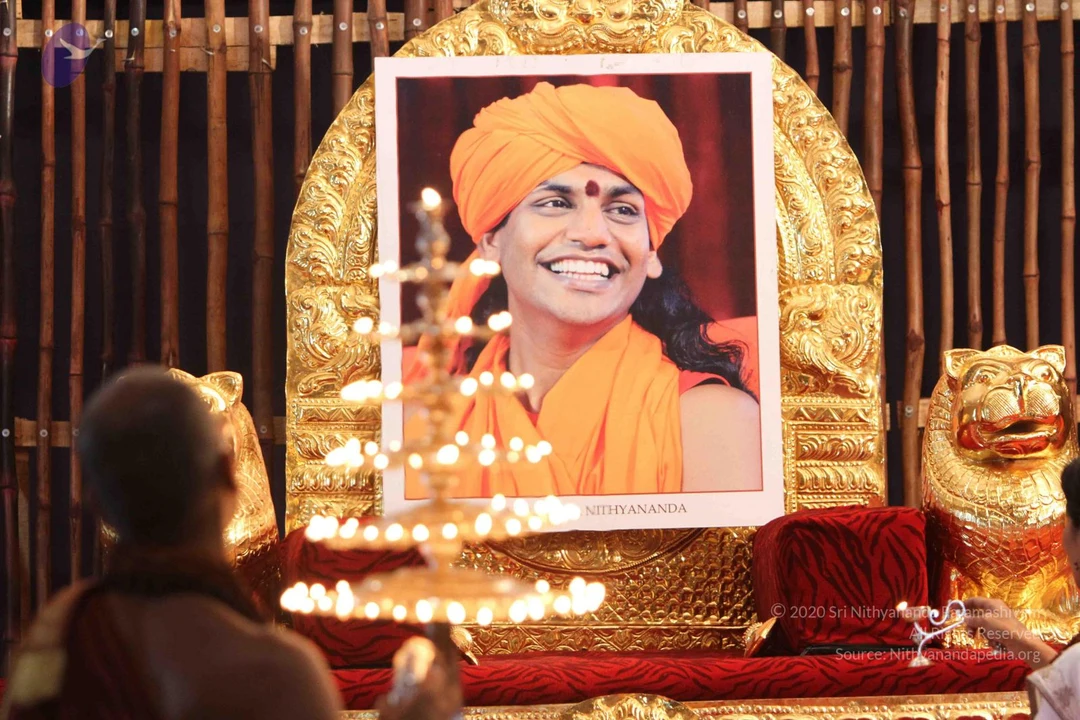
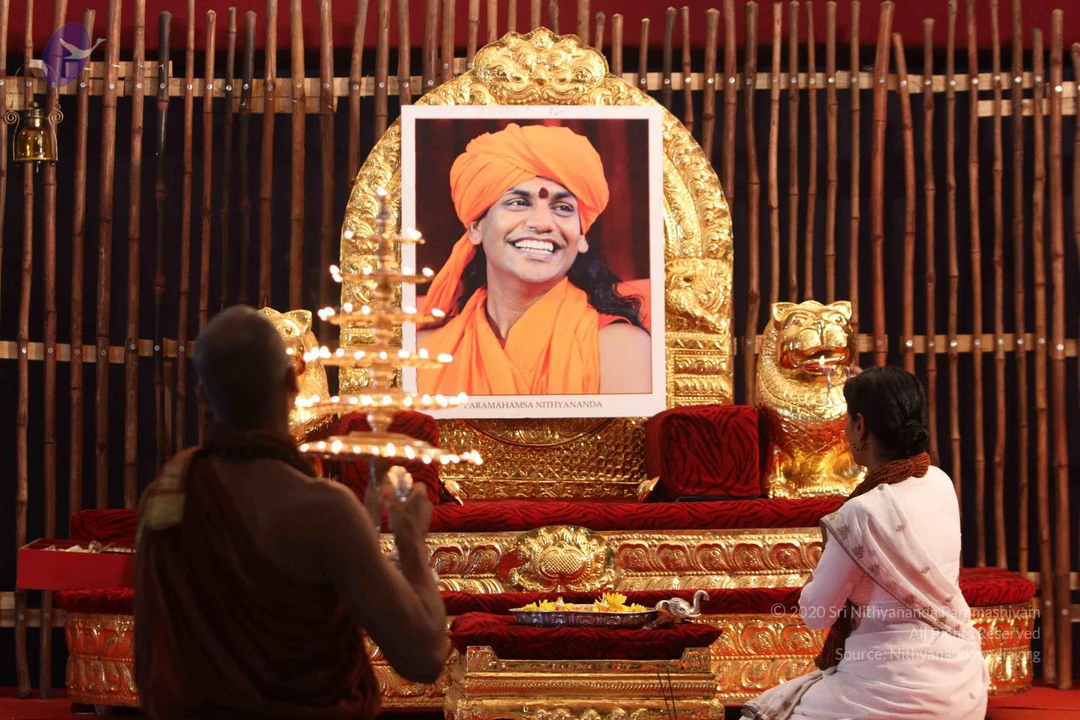
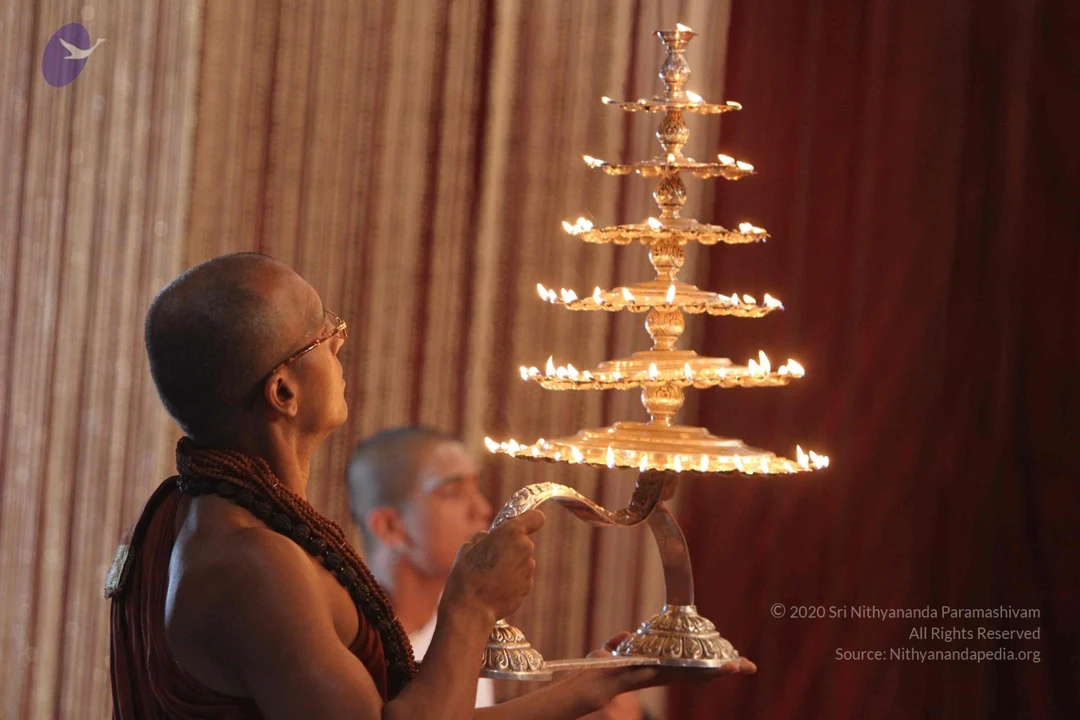
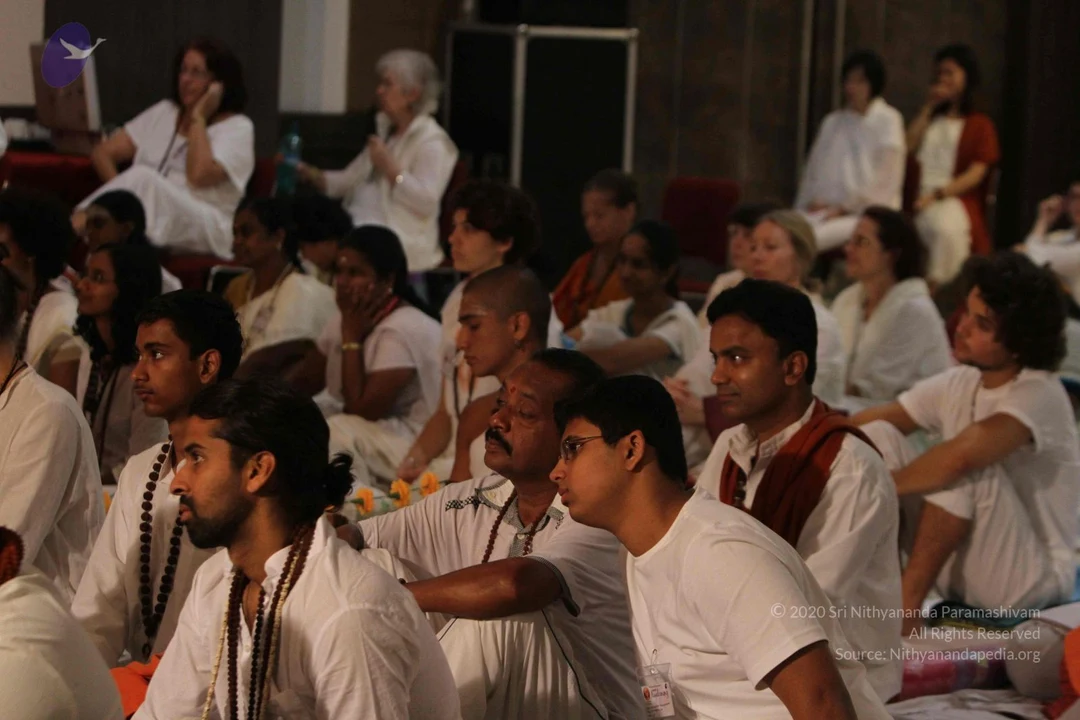
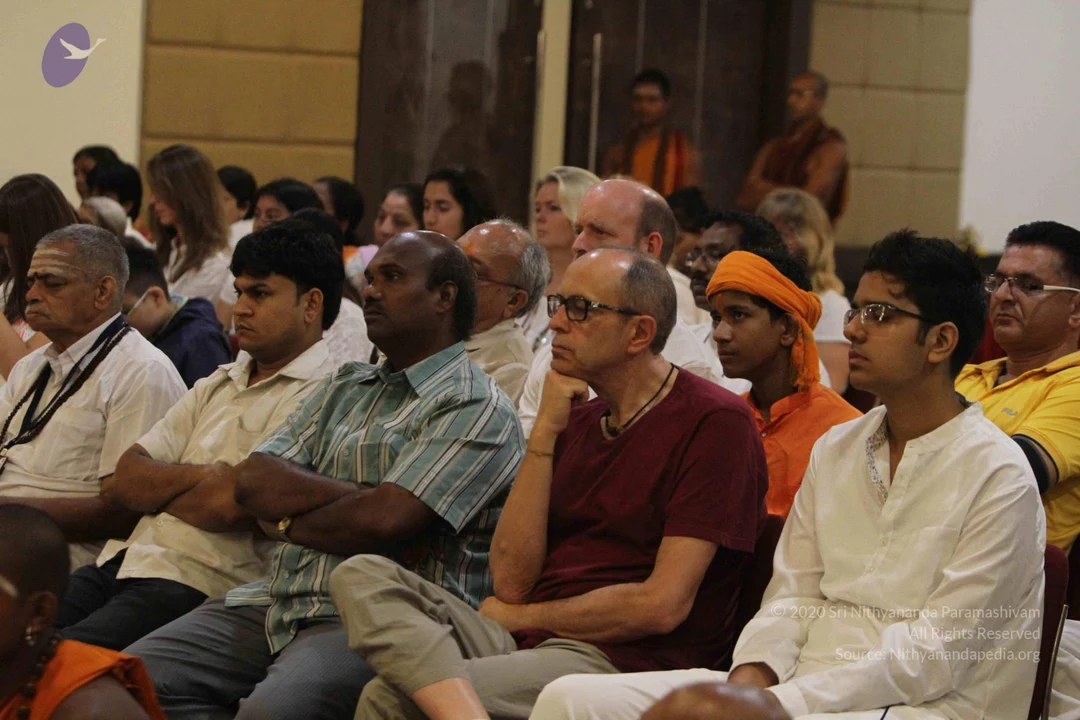
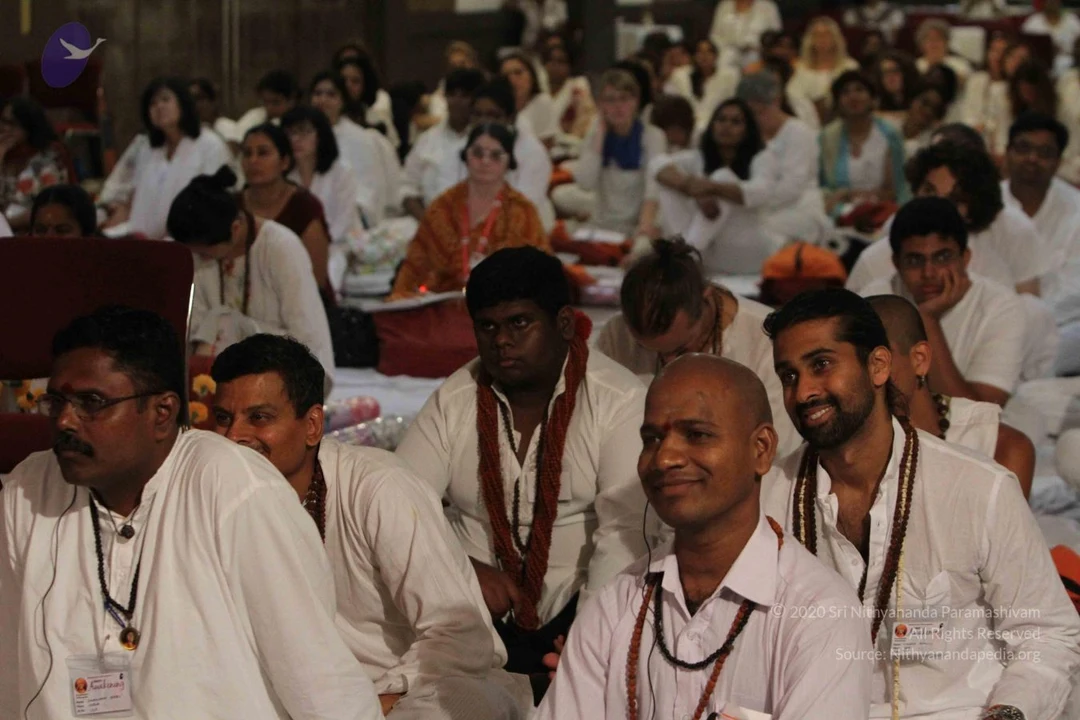
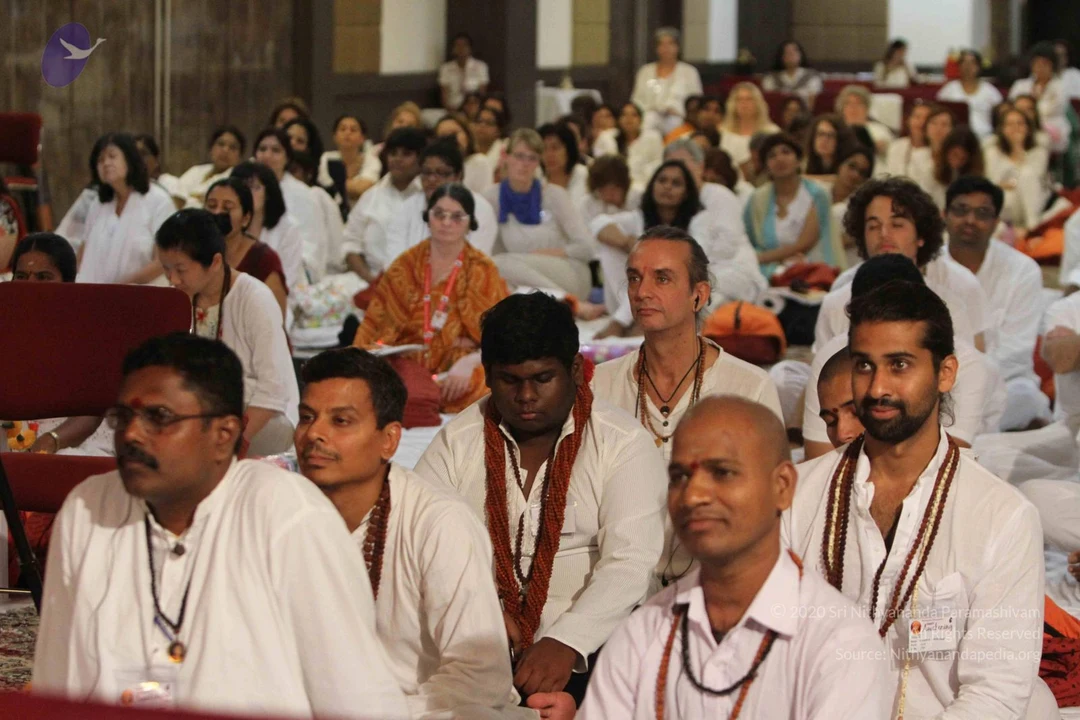
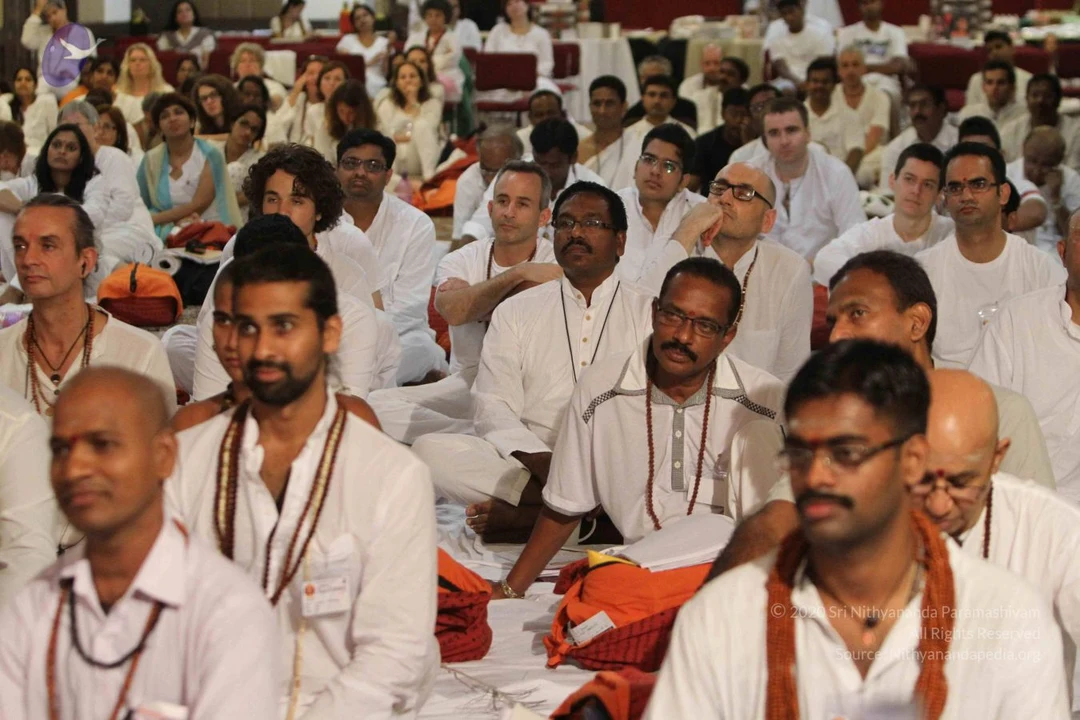
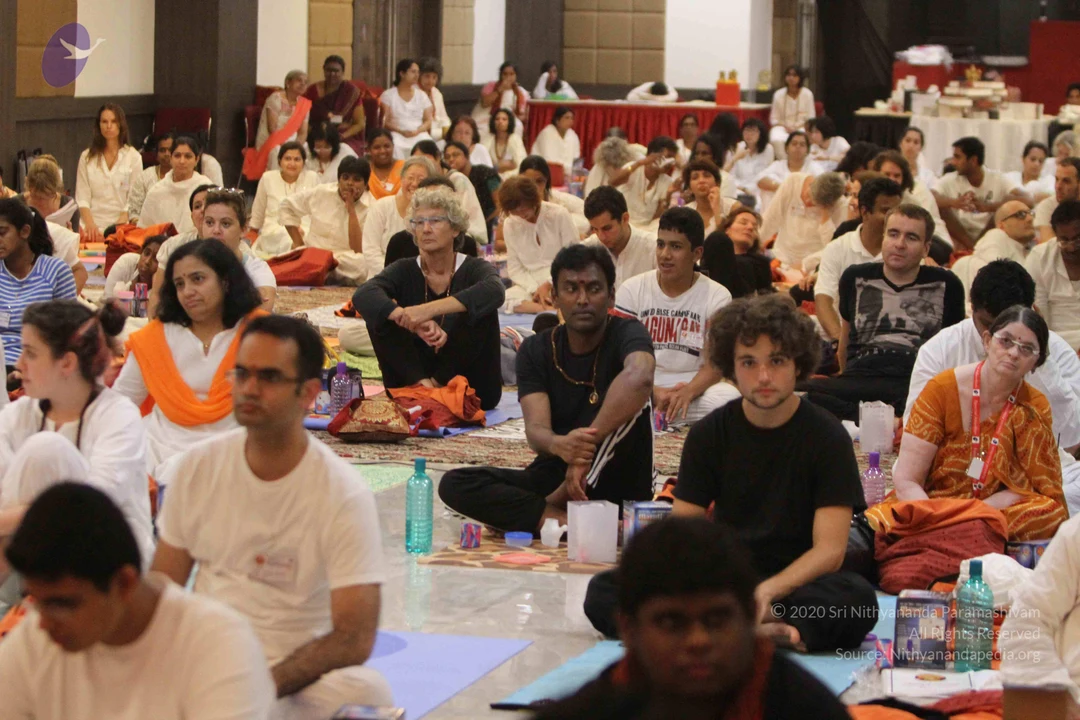
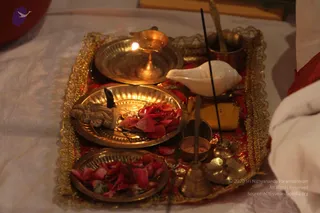
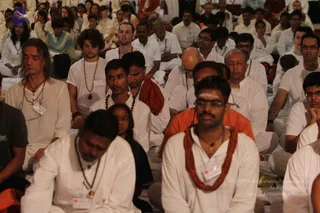
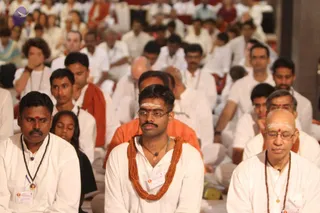
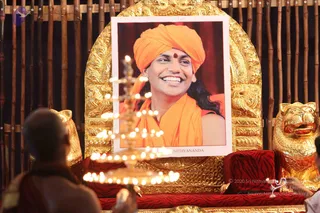
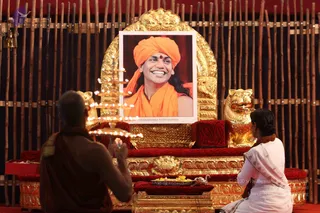
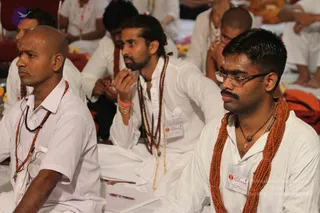
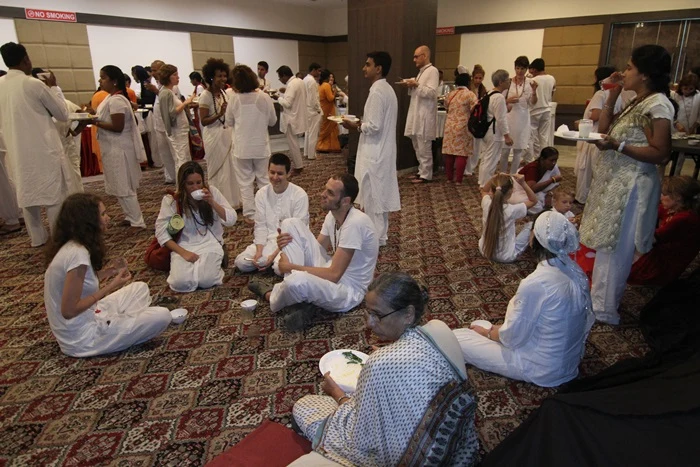
A brass puja tray arranged on a white cloth with gold-bordered red fabric. A lit brass oil lamp on a footed stand sits at the top, beside a white conch shell and a brass bell with a handle. A brass plate holds red rose petals and a small carved stone murti, with an incense stick rising from it. Another brass plate of red rose petals sits at the bottom left, a small bowl of red kumkum is nearby, and a brass incense holder stands at the right. A corner of white cloth is visible at the right edge. No people are visible.A large seated congregation in white ritual clothing sits in meditation or satsang in a hall. In the foreground a man with long brown hair wears a white kurta with rudraksha and bead necklaces and a small event badge. Beside him a younger man in white holds a rudraksha mala, and a young man in white has a red-orange shawl and bead mala. A man with a white forehead marking and red-orange shawl sits in front, and many others in white kurtas and mala necklaces fill the rows behind, some wearing name badges. No single figure is clearly identified as a person by appearance, so no candidate is marked.A large seated audience in white ritual clothing fills a hall, most wearing white kurtas and rudraksha malas. In the foreground, a man with a white forehead mark and rudraksha beads sits centrally, with an orange-saffron wrap and a long orange-red rudraksha garland. Beside him on the left, a man wears a red tilak and a dark mala, and at the far right a bald, bespectacled elder with white forehead marks and a red bindi wears a rudraksha mala. Several people behind them wear orange shawls. Many attendees wear name badges on lanyards, and a satsang-style gathering appears to be in progress with eyes closed in meditation.A large printed portrait on a gold-carved throne-like seat shows a smiling man in an orange turban and orange shawl with a red bindi, long dark hair visible at the shoulders. The printed portrait is captioned "Paramahamsa Nithyananda" at its base. Flanking the seat are gilded lion sculptures and red velvet cushions with tiger-stripe patterns. In the foreground, a brass multi-tiered oil lamp with lit wicks is burning, and the silhouetted back of a seated devotee in dark clothing is visible at the left edge. Bamboo poles form the backdrop. The portrait is a depiction on print, not a physical person present.A photograph of a golden ornate throne (peetha) set against a bamboo-pole backdrop with red cushions and two golden lion figures. A large framed portrait on the throne shows a smiling man with an orange turban, orange robe and a red bindi, labelled "PARAMAHAMSA NITHYANANDA". In the foreground, a man in a brown robe with a shaved head holds a multi-tiered brass lamp with lit wicks, performing aarti before the portrait. Beside him, a woman in a white sari kneels with folded hands, with a tray of yellow flowers and offerings placed on the throne ledge.A brass multi-tiered oil lamp with several rows of lit flames is held upright in the foreground by a hand at the bottom edge of the frame. Behind it, out of focus, a large framed photograph shows a smiling man with a shaved head wearing a saffron-orange robe and a matching orange head covering. Red draped fabric and bamboo-like vertical slats form the blurred background. Only partial hands and a head are visible at the lower left, with no clearly visible standing people.

IA-Session-Photos

15 photosSource gallery
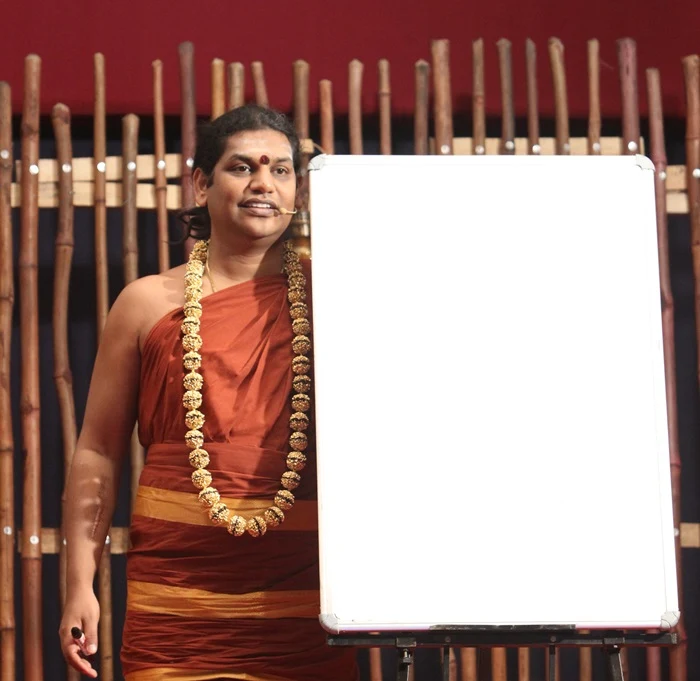
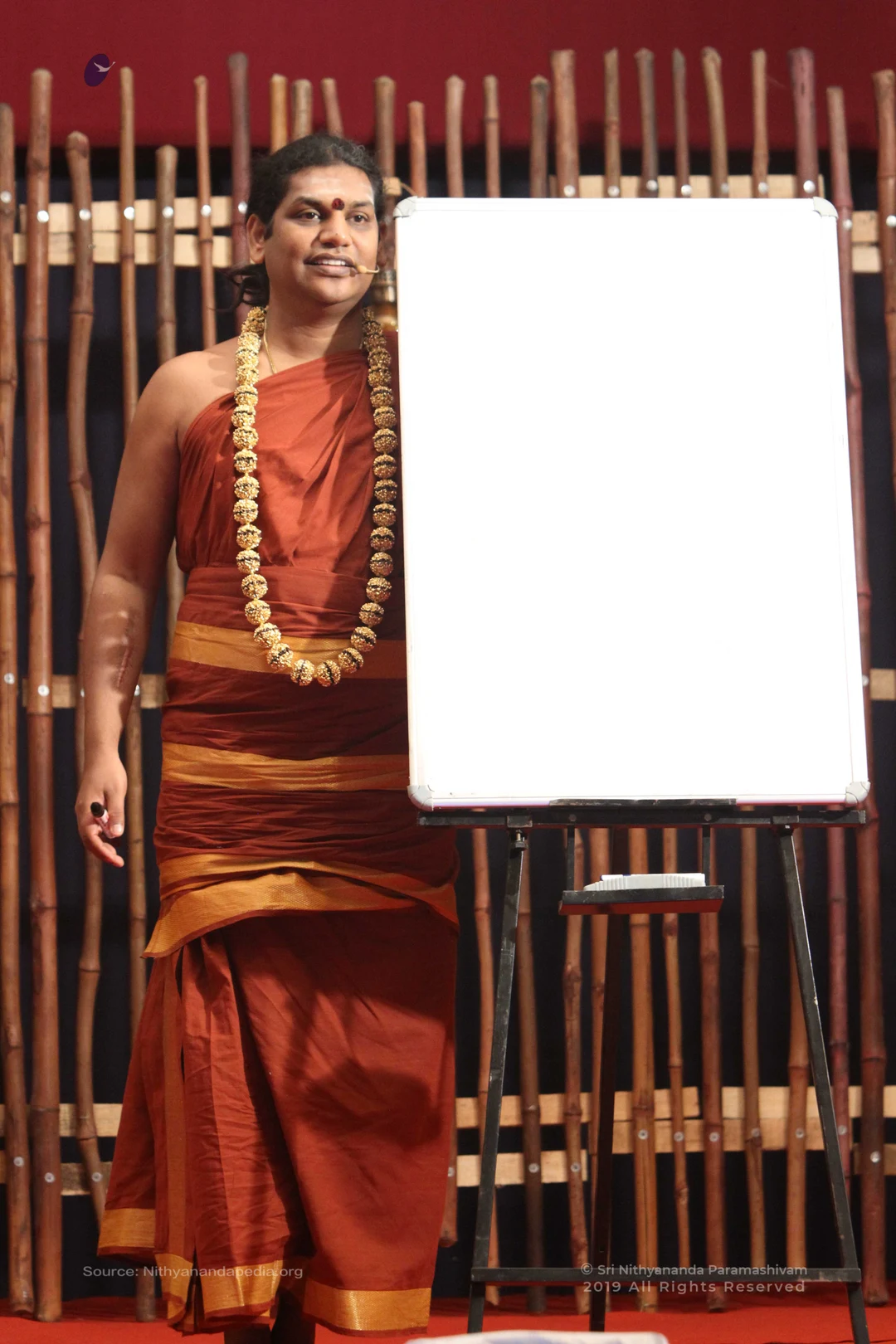
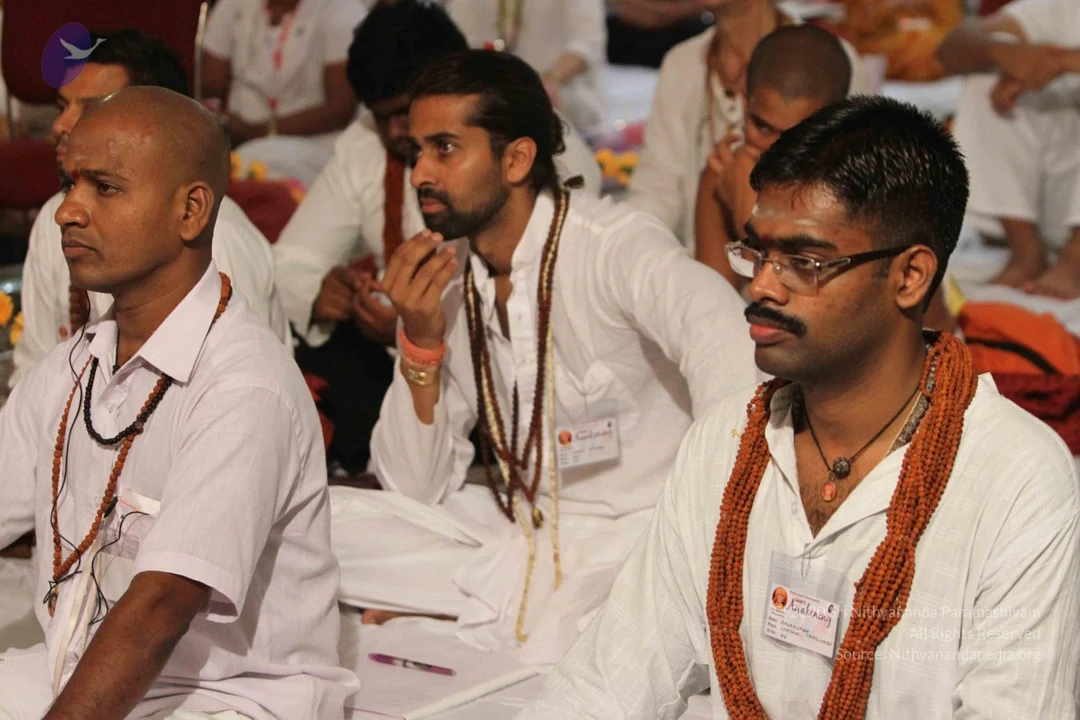
A seated man in saffron-orange robes sits on an ornate gold throne with a large arched back carved with floral and lion motifs, flanked by two gold lion statues. He wears a long gold-bead garland over a red-and-gold trimmed cloth, a red bindi on his forehead, and a small microphone at his face. His hands are folded in his lap. A red tiger-striped cushion covers the throne, a cobra-headed gold staff rests at the right, and bamboo panels form the backdrop. Swamiji (probable): long-hair-free but saffron robes, gold garland and ornate throne fit the presenter, so the candidate is physically present seated on the dais.A photograph of a single person standing on a red stage in front of a bamboo-slat backdrop with a red top band. He wears a rust-orange garment with wide gold-bordered bands, draped over one shoulder, and a long gold rudraksha-style bead garland around his neck. He has a small red dot on his forehead and a headset microphone, and he gestures with one hand. Beside him stands a blank white flip chart on a black tripod easel with a marker tray. The white board is empty. a person: saffron-orange ceremonial clothing and a gold rudraksha garland are present, with a microphone-equipped speaking role.A smiling man in a rust-orange wrap stands beside a whiteboard, holding a black marker in his lowered hand. He wears a large ornate gold necklace of beads, a red bindi on his forehead and a headset microphone. Behind him is a wall of bamboo poles with a dark red backdrop. The whiteboard shows a hand-drawn face with an eye and a curved mouth, labelled "Inner Imago".A photograph of seated devotees in white kurta-style clothing at a satsang-type gathering. In the foreground, a bald man in a white shirt wears a rudraksha mala and a black bead necklace. Beside him, a young man with long hair tied back, a beard, and a white kurta gestures with one hand, wearing rudraksha malas and a gold bracelet, with a name badge on his chest. On the right, a man in glasses and a white shirt wears a dense orange-brown rudraksha mala and a pendant necklace. Behind them, more devotees in white sit on the floor, with orange cloth and yellow flowers visible at the edges. No clearly identifiable a person is present.A smiling man in orange-red saffron robes sits on an ornate gold throne with red zebra-striped upholstery. He wears a long necklace of large gold-toned rudraksha beads and has a red tilak on his forehead. A golden cobra-headed staff rests beside him, and a gold lion-like carved figure stands at right. Bamboo poles form the backdrop.A man seated on a red velvet throne with a gold-leaf back panel speaks during a satsang. He wears a rust-orange garment draped over his shoulder, a thick gold bead necklace, and a small red bindi, with a microphone at his face. His right hand gestures at chest height. Beside him stands a gold cobra-headed staff and a gold lion figure, with bamboo poles behind. a person: long dark hair tied back, orange clothing and a gold mala suggest the presenter role, though the appearance is only partly distinctive.

Darshan

74 photosSource gallery
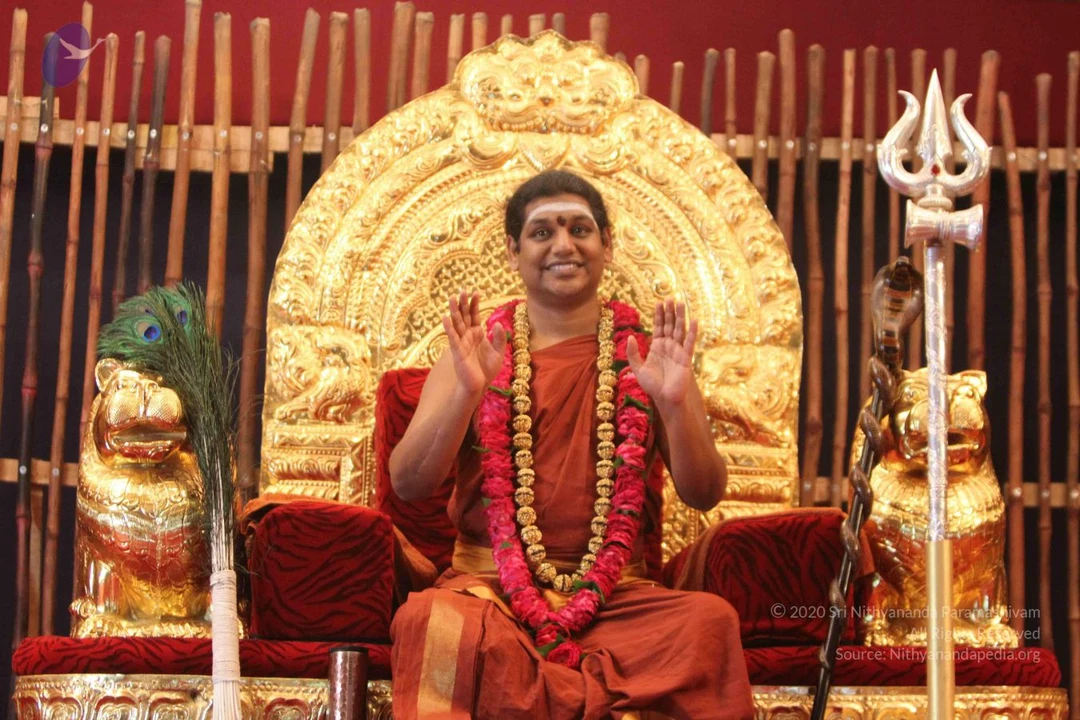
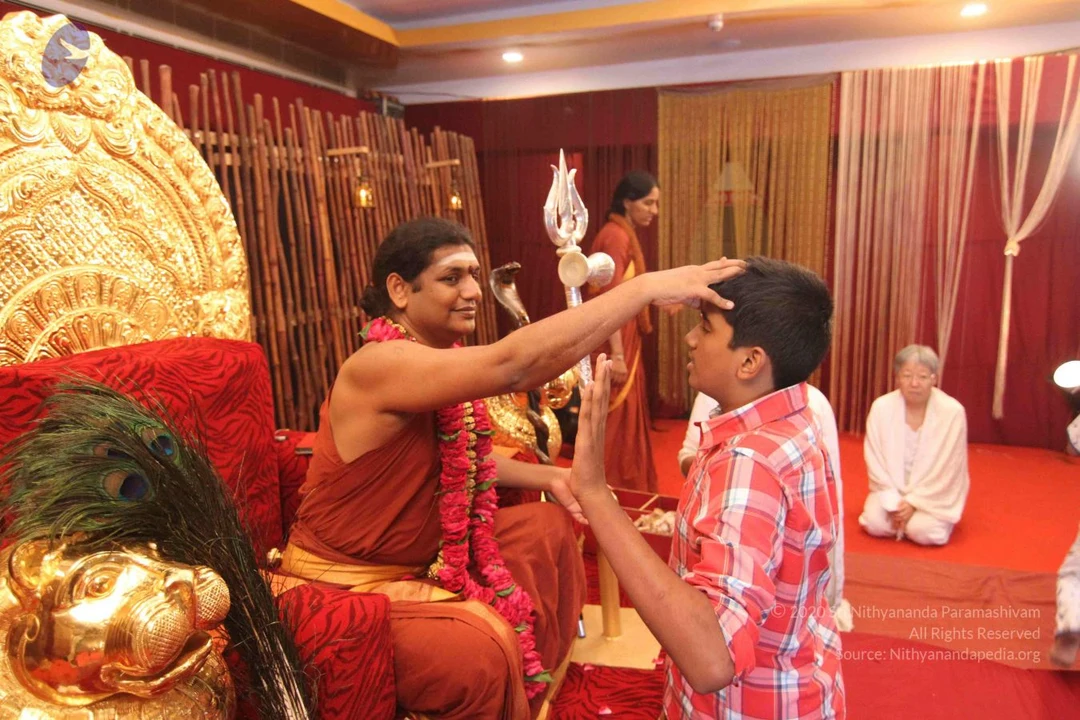
A seated man in an orange-saffron dhoti and shawl sits on an ornate gold throne with red tiger-striped cushions. He wears a long double-strand garland of pink flowers and gold-toned rudraksha beads, a white tilak on his forehead, and a small red bindi. His hands rest on the armrests as he gazes off smiling. Beside him stand a silver trident and a silver-and-brown serpent staff, and a gold lion figure and peacock feather fan are at the edges. Bamboo poles form the backdrop. a person is the seated figure, identified by the throne, saffron robes, rudraksha garland and trident.A man seated on an ornate gold throne with carved golden backrest, smiling and looking to his right. He wears an orange-saffron unstitched wrap that leaves his shoulder bare, a red-and-gold bindi, and a white vertical tilak on his forehead. He is adorned with a long pink flower garland and a gold bead necklace. Beside him stand a silver trident and a silver cobra-entwined staff, with a golden lion-head armrest and a peacock feather visible at left. Behind is a backdrop of bamboo poles. a person: the seated man has a swept-back hairstyle, saffron-orange clothing, a rudraksha-style gold bead necklace and a floral garland, consistent with the page; he is presented on a throne with ceremonial symbols.A smiling man with short dark hair and a white tilak with a red dot on his forehead sits on an ornate gilded throne with red upholstery. He wears a rust-orange shawl draped over bare shoulders and a long garland of pink roses with gold-toned rudraksha-style beads. Behind him stand dark wooden bamboo-like poles, and at the right a gold cobra-shaped ornament with a silver finial is visible. Appearance-based label: a person, seated in a satsang setting.A man in saffron-orange robes sits cross-legged on an ornate golden throne with a carved gold back panel and red-and-black striped cushions. He wears a long pink and red flower garland over a heavy gold bead necklace, with a white tilak on his forehead, and his hands rest open on his knees. Beside the throne stand a silver trident and a silver staff with a coiled serpent, a gold lion figure, and a peacock-feather fan. Bamboo poles form the background.A man seated cross-legged on an ornate gold throne in front of a red wall and a backdrop of bamboo poles. He wears an orange-red saffron cloth draped over his shoulders and body, a long multi-strand gold ceremonial necklace with a fuchsia and pink flower garland, and a white tilak mark on his forehead. His hands rest open on his knees. Golden lion figures flank the throne; a silver trident stands on the right, a peacock-feather whisk on the left, and a red-and-maroon tiger-striped cushion covers the seat.A seated man in saffron-orange robes sits on an ornate golden throne with a carved arched back, raising both palms outward in a blessing or teaching gesture. He wears a red-and-pink flower garland and a long ceremonial gold necklace, with a white and red forehead marking. Flanking the throne are golden lion sculptures, a peacock-feather fan on the left and a silver trident with a snake coiled around it on the right. Red velvet upholstery and a bamboo-slat backdrop frame the scene. Appearance cues (long-sleeved saffron robes, ornate gold necklace, throne setting) are consistent with a person presence, seated and teaching.

Photoshoot

4 photosSource gallery
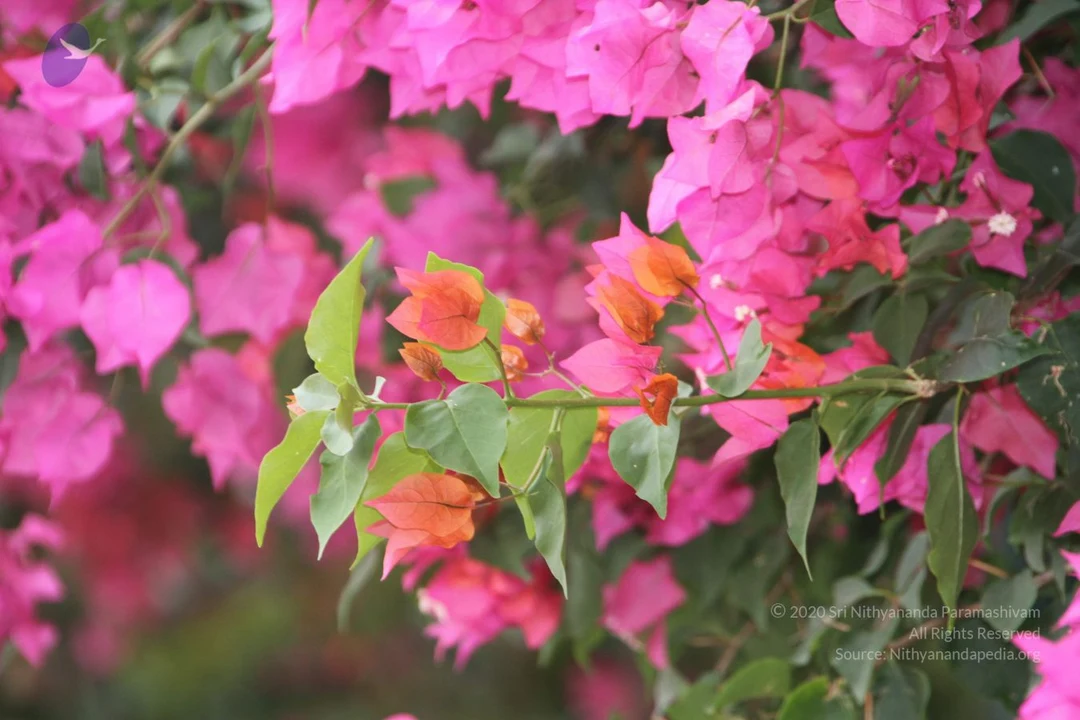
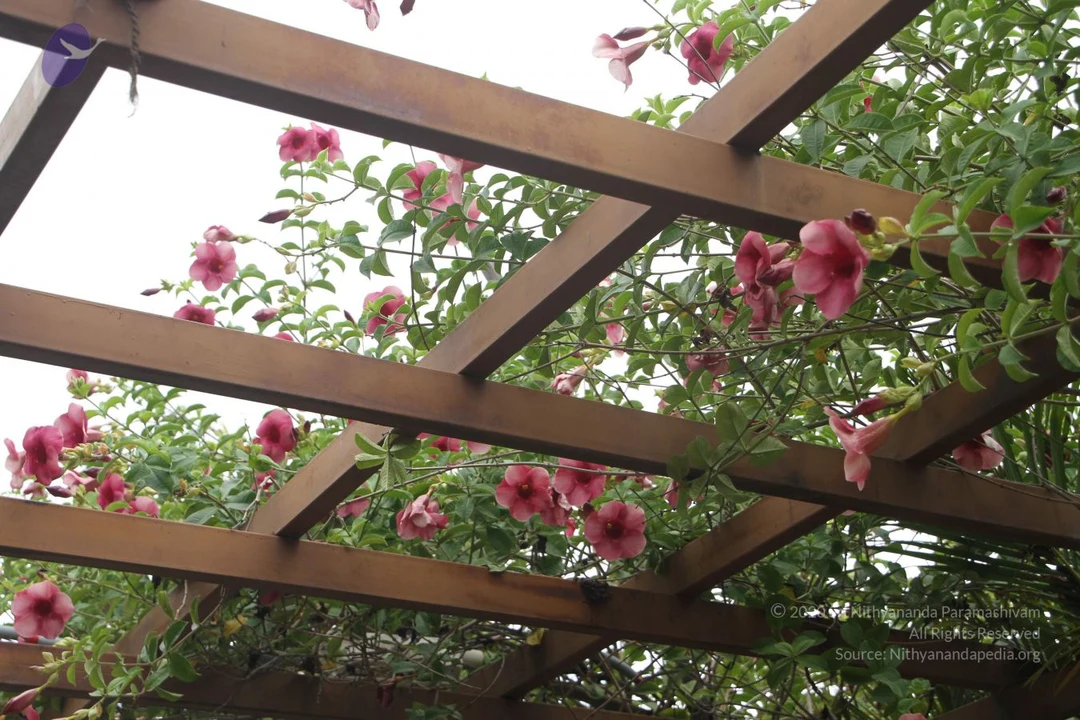
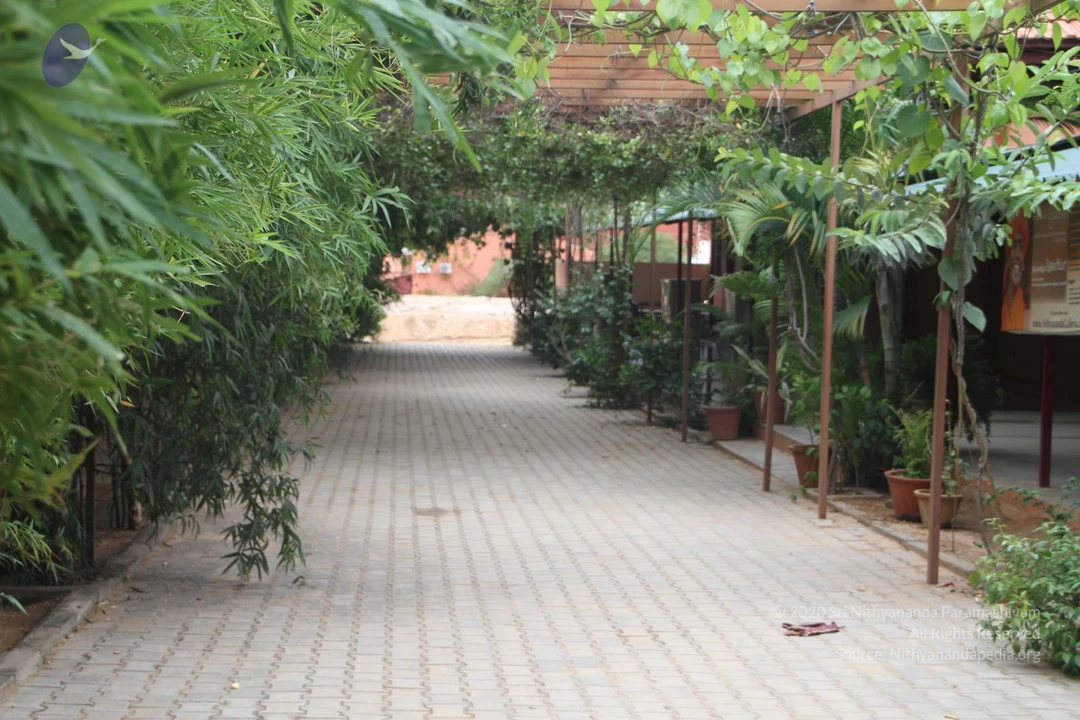
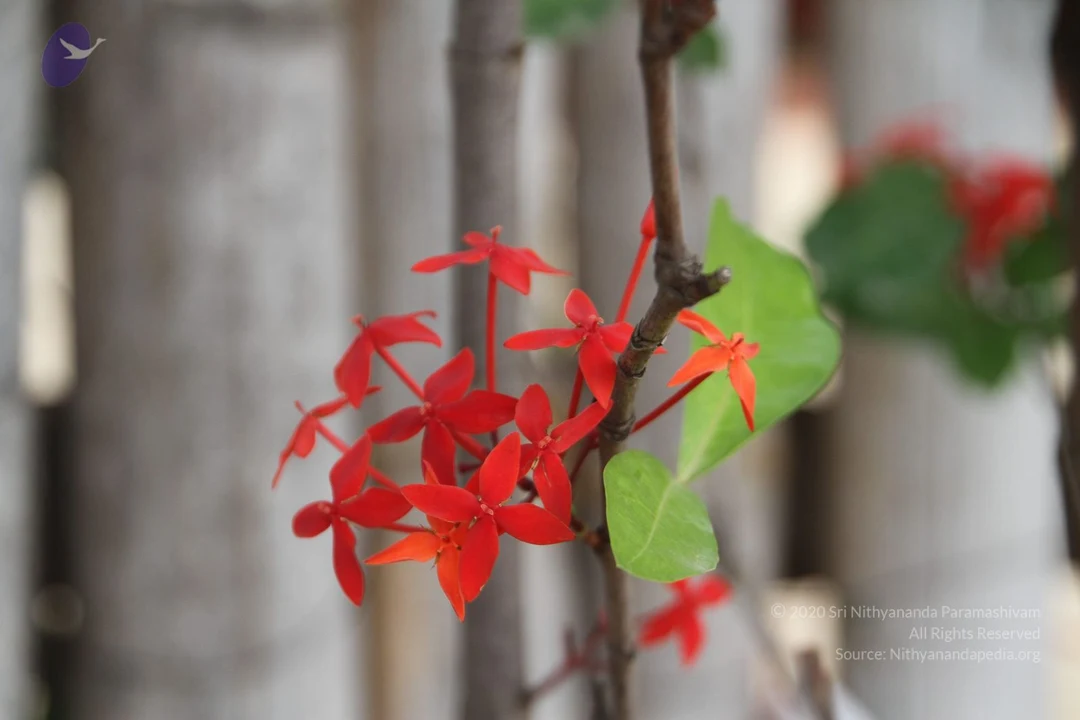
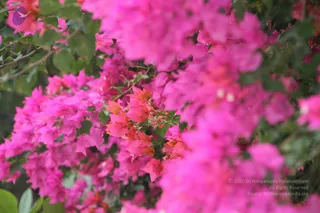
Close-up photograph of a bougainvillea bush in full bloom. Clusters of magenta and pink papery bracts surround small white flowers, with a branch of green oval leaves and orange-tinted bracts in the center. No people are visible.A photograph of a wooden pergola overhead, with a dense climbing vine bearing many pink trumpet-shaped flowers and green leaves spread across the slats against a pale sky. No people are visible; the scene is a garden trellis covered in blooming pink flowers.A photograph of an empty paved walkway in a tropical garden. Tall green bamboo lines the left side, while potted plants, palms and leafy vines climb a wooden pergola on the right. Terracotta pots sit along the path near low shrubs, and a small sign hangs on a post at the far right. A reddish-pink building and greenery are visible at the end of the walkway. No people are present.Close-up photograph of a cluster of small bright red four-petaled flowers on a thin brown woody stem, with a heart-shaped green leaf to the right and blurred grey columns and red blossoms in the background. No people are visible.

1-Morning-Satsang-Darshan
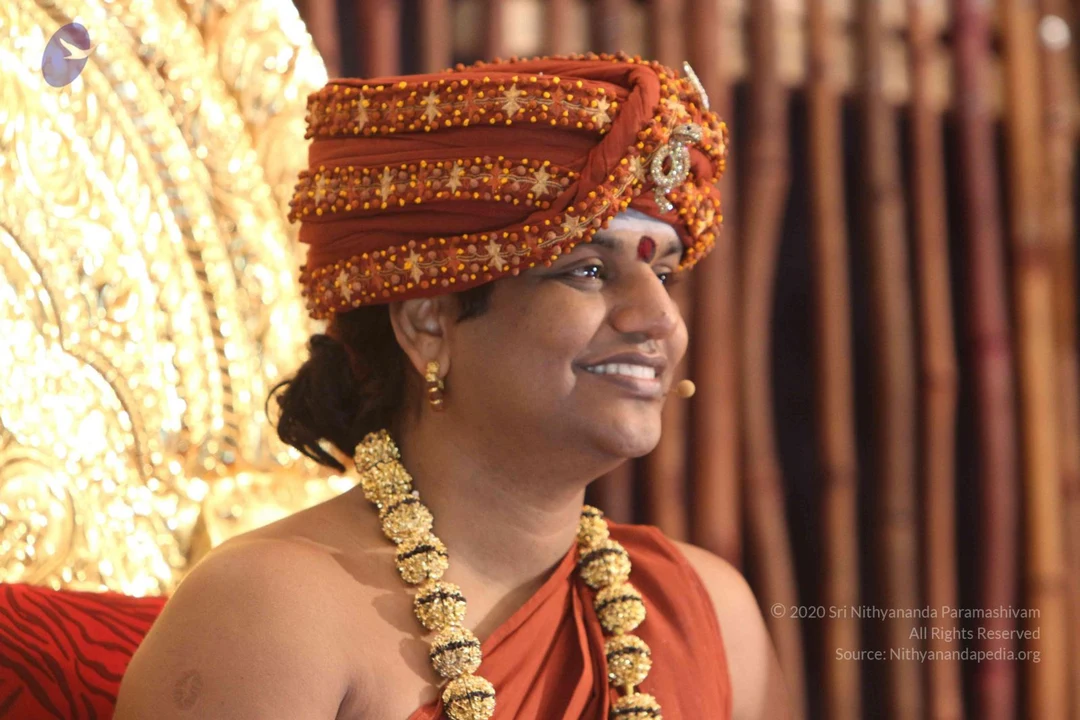
20 photosSource gallery
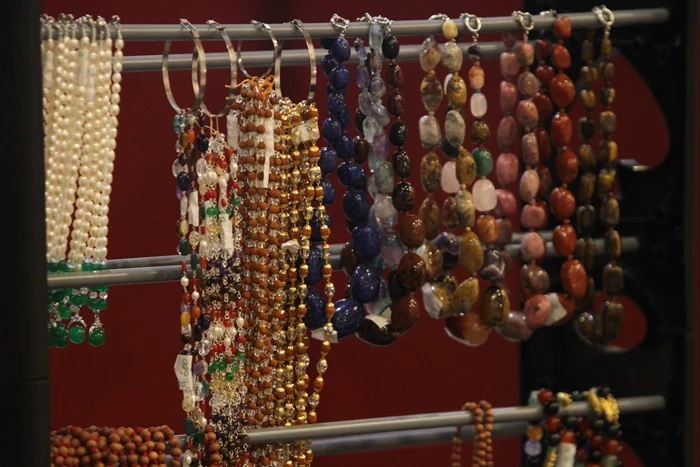
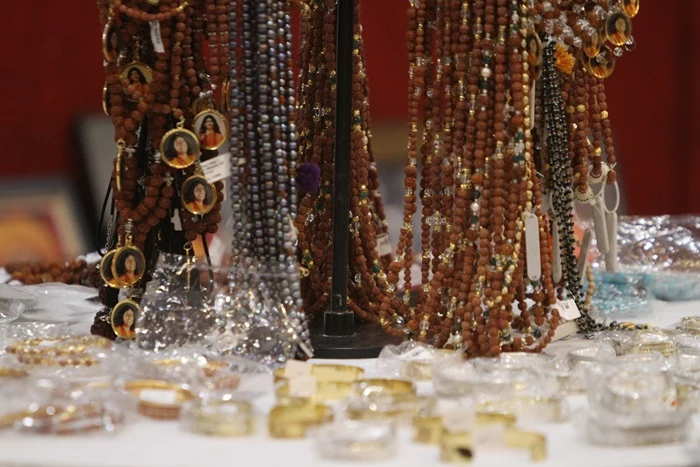
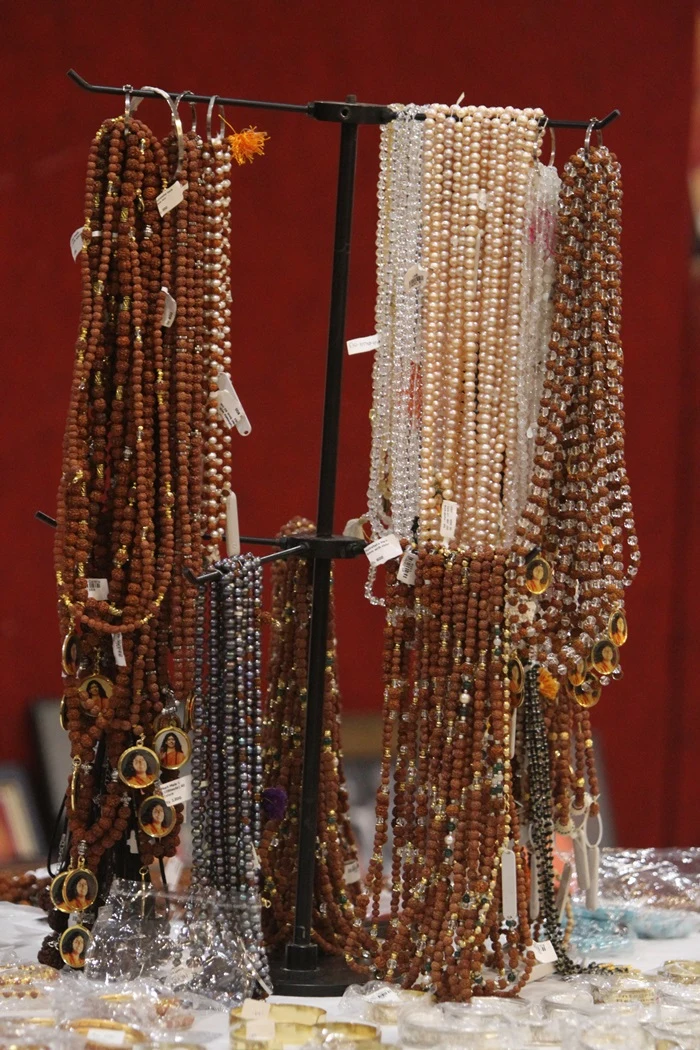
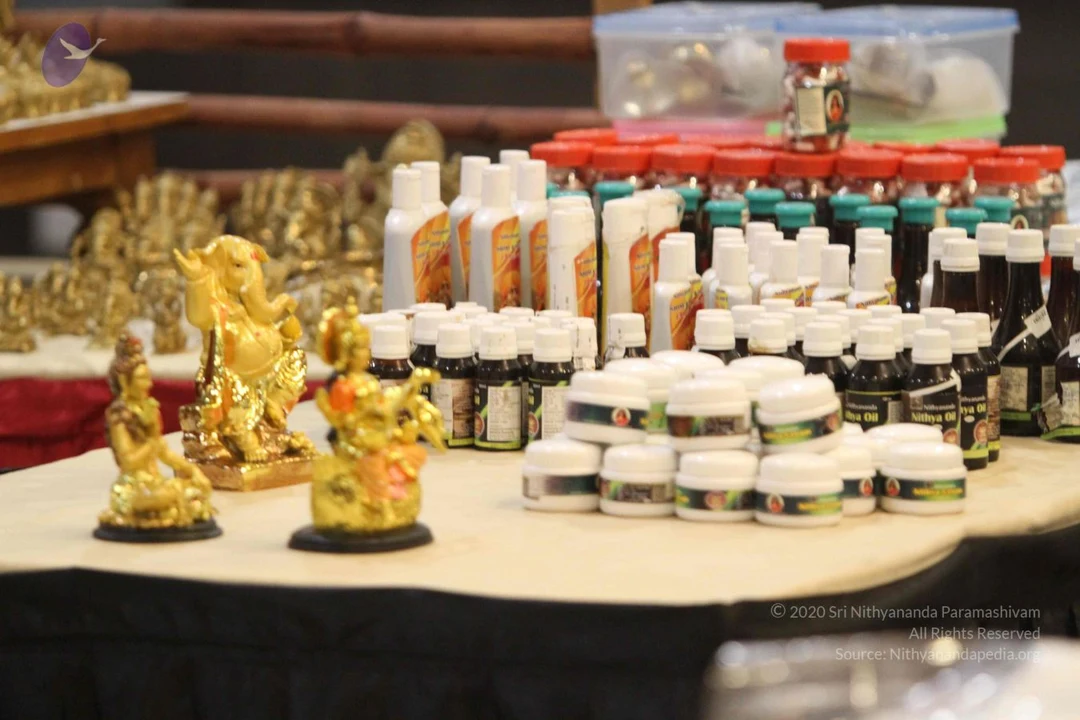
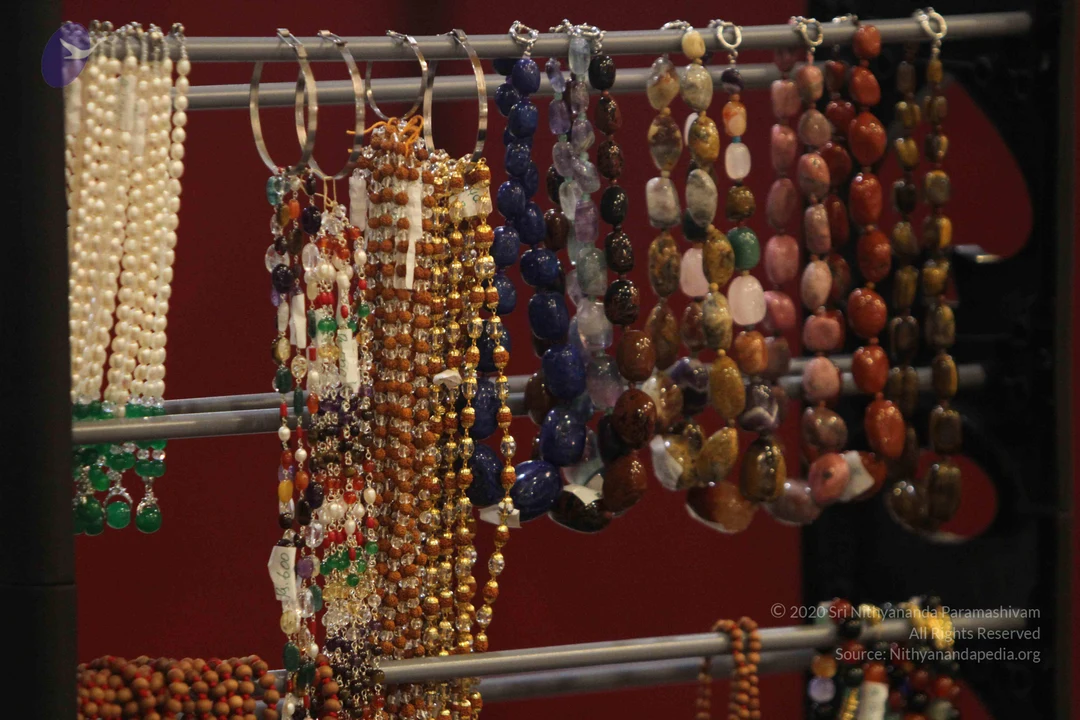
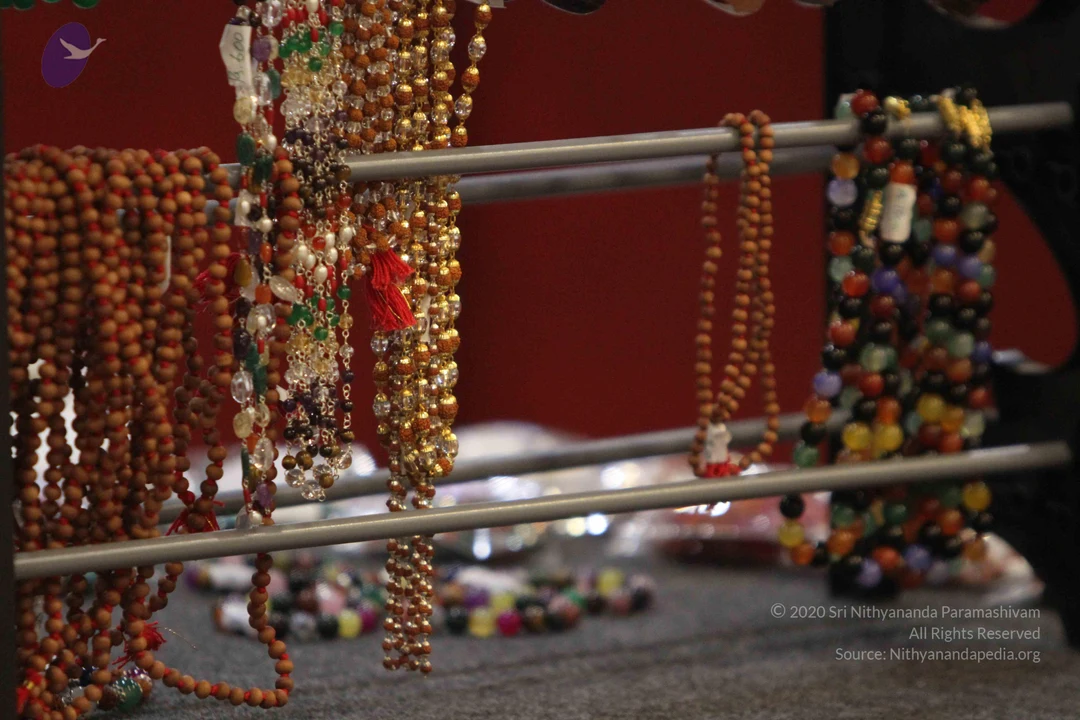
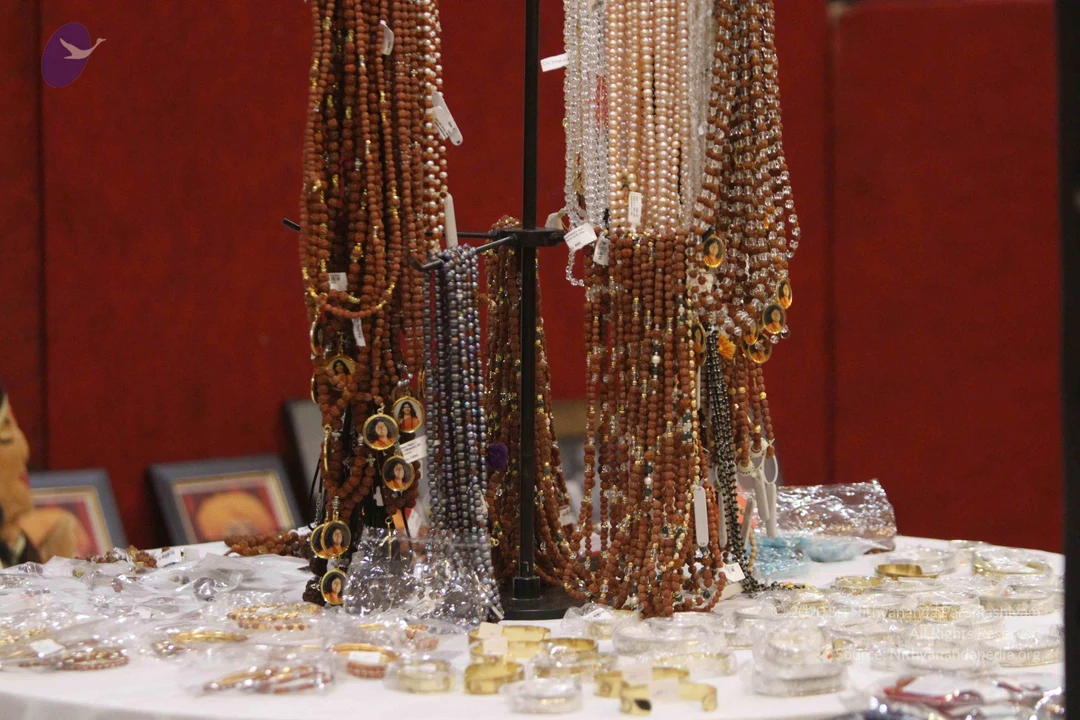
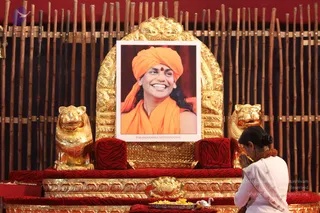
A woman in a white sari with a red-bordered edge kneels with palms joined in namaskar before a golden throne with carved lion-shaped armrests and red velvet cushions. Above the throne hangs a large printed portrait of a smiling man wearing an orange turban and orange robe with a red dot on his forehead, captioned PARAMAHAMSA NITHYANANDA. A brass tray with flowers and an oil lamp sits on the throne platform, and a bamboo wall forms the backdrop. The portrait is a depiction, not a person in the scene.A photograph of a seated figure on an ornate golden throne with red cushions, flanked by two golden lion sculptures and a golden cobra-topped staff on the right. The figure wears an orange-red turban with a crescent emblem, an orange-red robe with a gold border, multiple rudraksha-style beaded necklaces, and red bangles on the arms. He sits cross-legged with bare feet, palms pressed together in namaste, with a small headset microphone visible. A bamboo-pole backdrop and a red-and-gold textile complete the stage setting. Swamiji (probable) is seated on the throne, identified by the saffron-orange clothing, ornate gold necklaces and turban cues, with a microphone indicating a discourse setting.A man seated cross-legged on an ornate golden throne with red tiger-striped cushions, flanked by two golden lion-head sculptures and a staff with a coiled cobra. He wears an orange-red turban with a crescent emblem, an orange-red robe with a gold-bordered dhoti, a long multi-strand gold necklace, rudraksha-style beaded bracelets and a red bindi. A microphone is at his face and he appears to be speaking. Golden carved backdrop with bamboo-style screen behind. Swamiji (probable) appears in person, identified by the turban, ornate gold necklace, saffron-orange robes and throne setting, with a satsang-style discourse in progress.A photograph of a man seated cross-legged on an ornate gilded throne with a red tiger-stripe velvet cushion. He wears a red-orange turban with beaded trim and a gold ornament, a red-orange shawl over the torso, and a long gold bead necklace with a rudraksha-style bead mala. Red bangles adorn his wrists and upper arms, and he has a red bindi on his forehead. He is smiling and appears to be speaking into a small headset microphone. Behind the throne is a red backdrop with bamboo-like rods. a person seated in a ceremonial position, consistent with a satsang discourse.A photograph of a display stand holding many strands of beads for sale against a deep red backdrop. Strands include white pearl necklaces with green jade-like drops, rudraksha beads in brown, gold-toned beaded malas, blue lapis-like stones, banded agate and tiger's-eye beads in brown and amber, pink rose-quartz style beads, and orange-red carnelian pieces. Small paper tags hang from some strands. No people are visible; the scene is a merchandise display of prayer beads and gemstone jewellery.Photograph of beaded malas hanging from silver metal rods against a deep red backdrop. On the left are brown rudraksha-style wooden beads strung with red thread; the centre shows gold-toned and clear crystal beaded strands with red tassels; the right holds multicoloured bead necklaces in red, orange, yellow, green and black. Loose beads lie on a grey surface in the foreground. No people are visible.

3-IA-session-photos

37 photosSource gallery
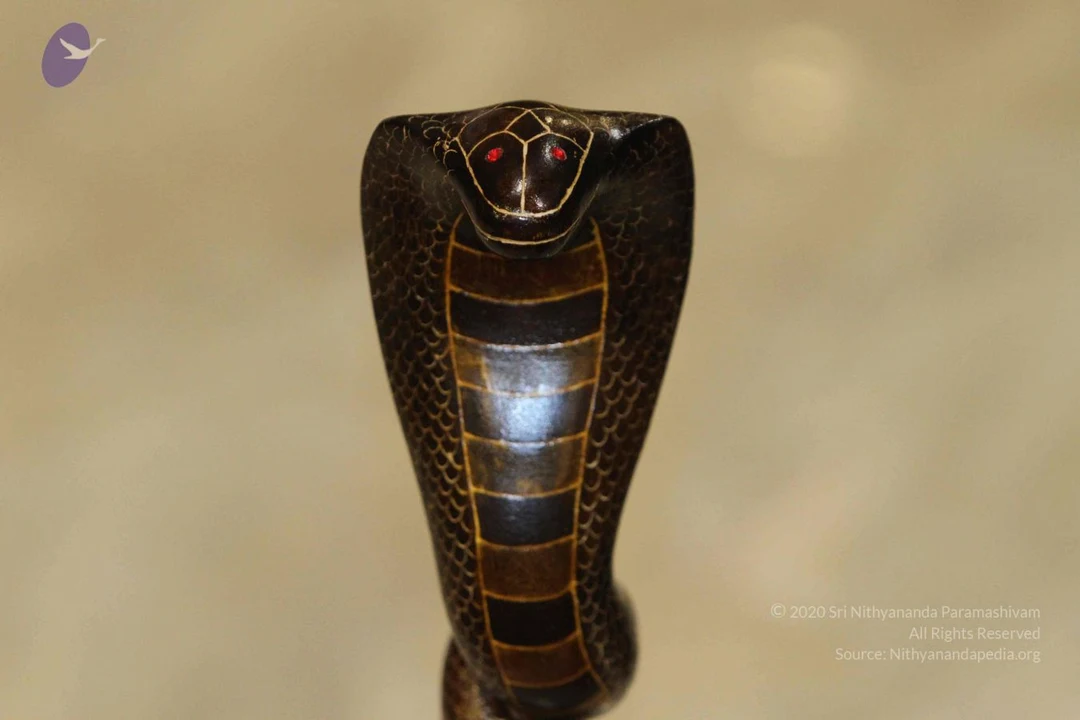
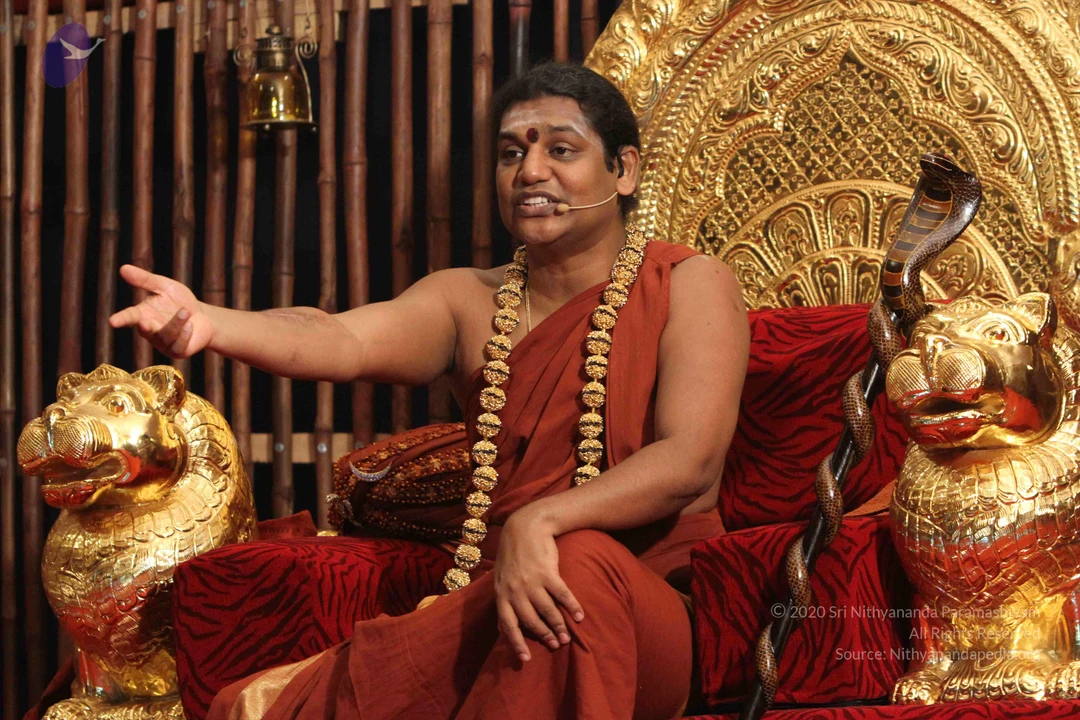
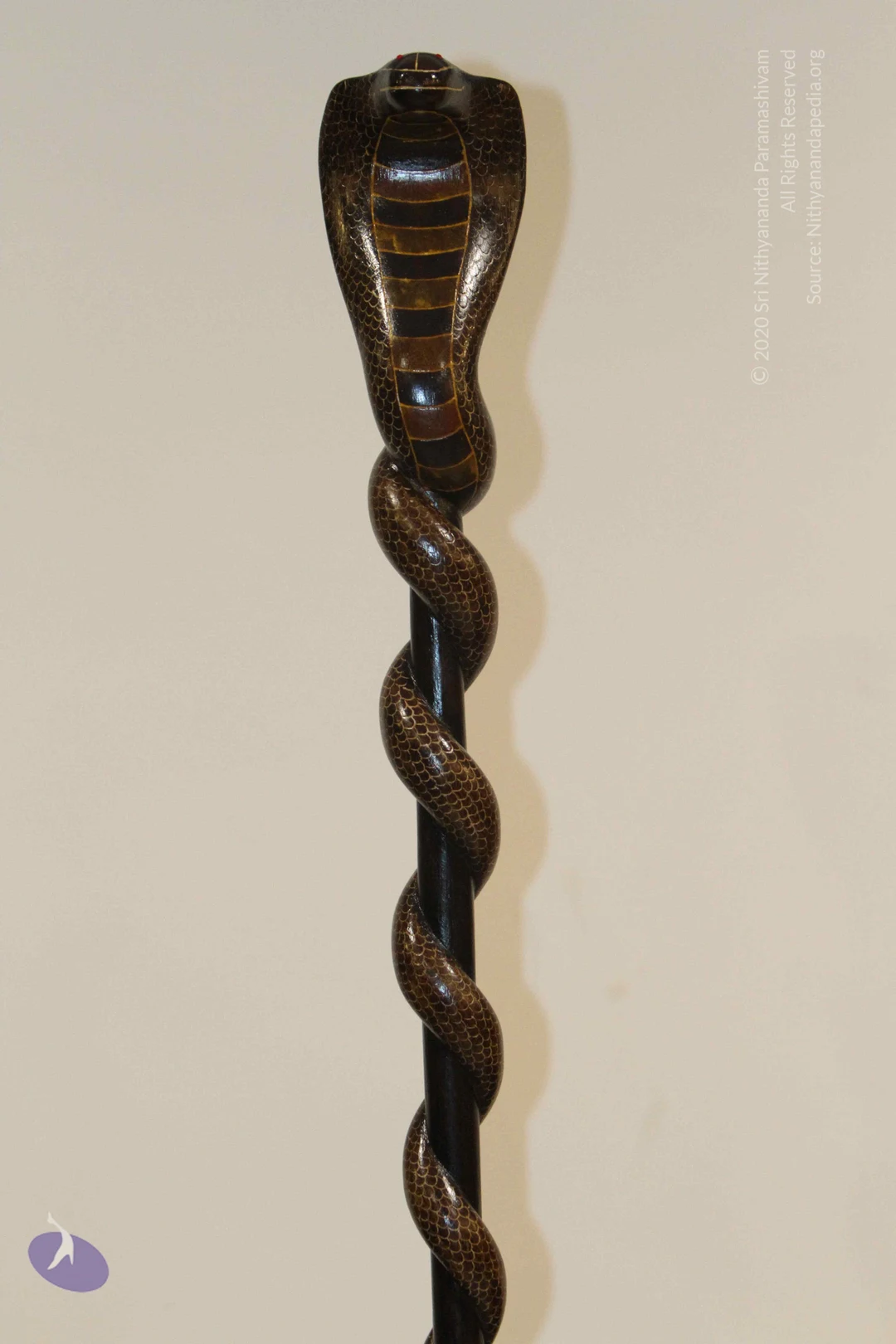
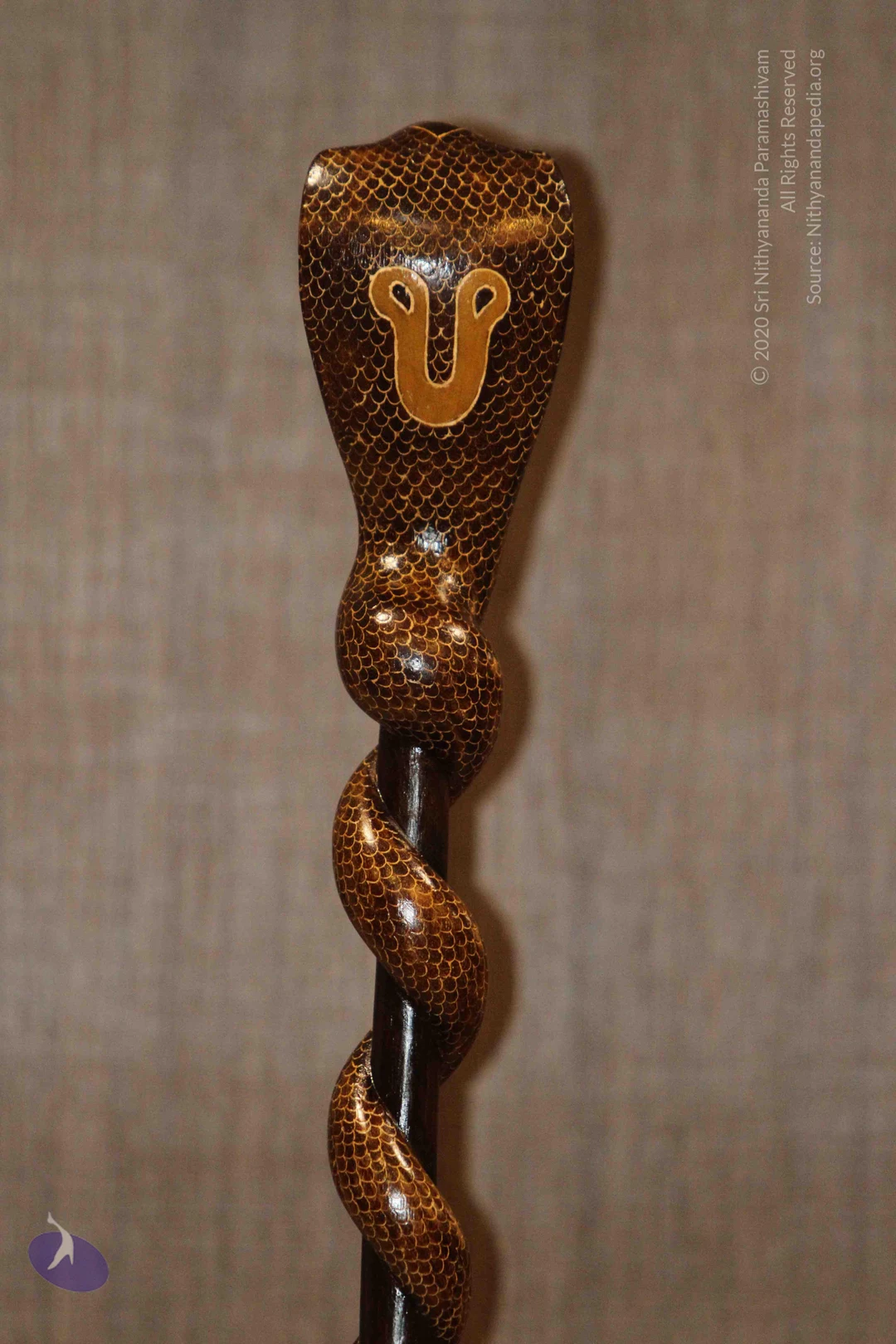
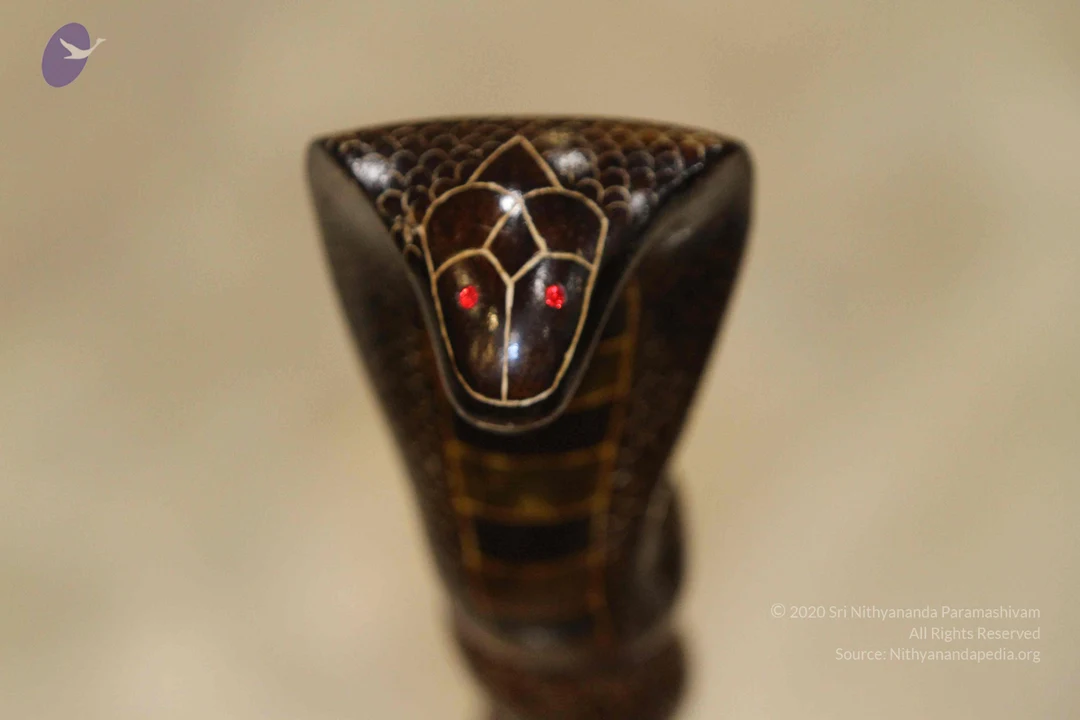
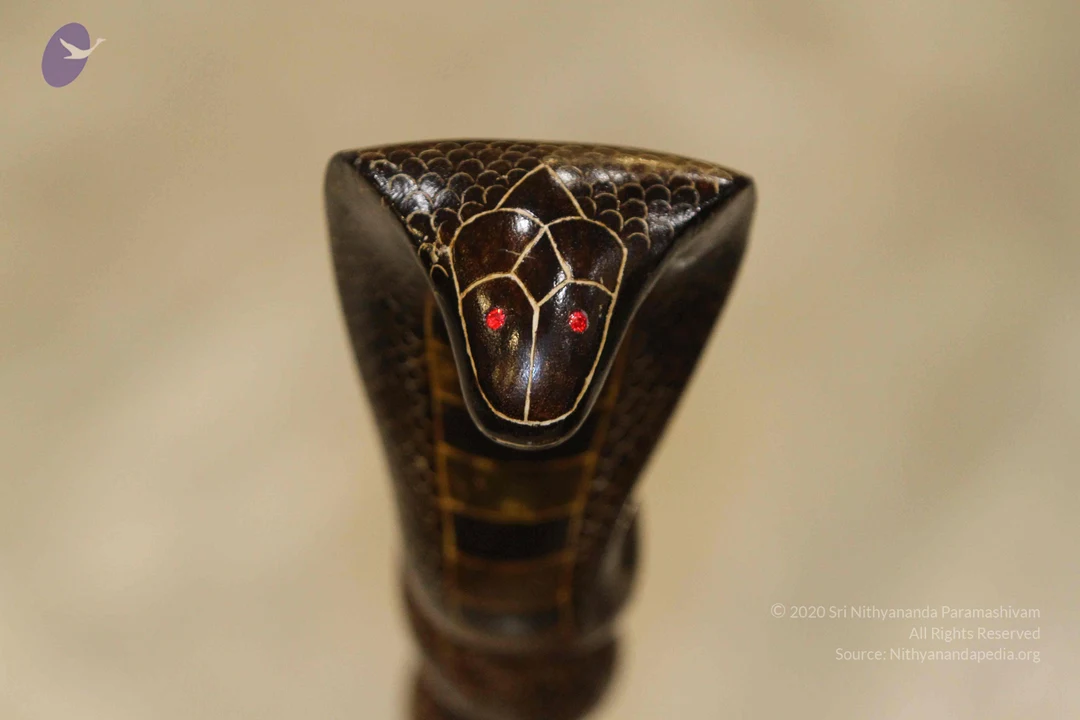
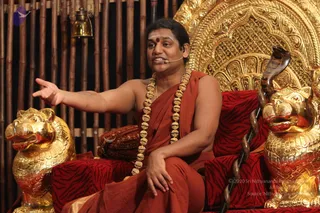
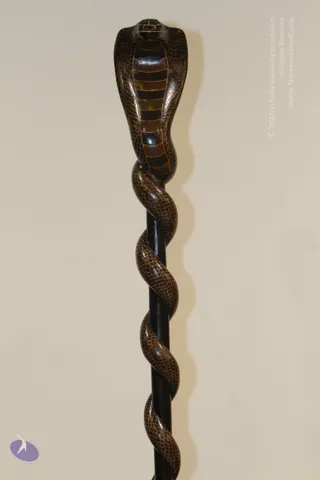
A seated man in saffron-orange robes and a gold-toned ceremonial necklace of beads sits cross-legged on a red and black tiger-striped cushioned throne. Behind him rises an ornate gold-leaf arched backrest with lion motifs, flanked by two golden lion statues. A cobra-headed staff rests on the right, and a bamboo backdrop stands behind. He wears a red bindi, a small headset microphone, and holds his hands together in his lap. a person: the seated man is the a person, identified by a throne seat, saffron robes, and a ceremonial bead garland. Setting suggests a satsang session.A man in an orange-red shawl and wrap with a gold-bead necklace stands beside a whiteboard, speaking into a headset microphone. He wears a red bindi and gestures with one hand. The whiteboard shows a hand-drawn diagram with labels reading "Inner Image", "Outer Image" and "Other Image", with arrows and empty ovals. Behind him is a wall of vertical wooden poles and a dark red backdrop. The scene looks like a satsang or teaching session.A man in rust-orange draped clothing and a long gold-bead rudraksha-style necklace stands beside a whiteboard on an easel, holding a black marker and speaking into a headset microphone. He has a red bindi on his forehead. The whiteboard shows a hand-drawn face with an eye and labels reading Outer Image, Inner Image and Other Image, with arrows and a column of ovals on the right. Behind him is a red wall with vertical bamboo poles. One person is visible.A man in a saffron-orange robe sits on a gilded throne with a red-and-black striped cushion, flanked by golden lion figures. He wears a long ornate gold necklace of large beads, a small red dot on his forehead, and a headset microphone, and gestures with his right arm outstretched while speaking. A golden cobra with a raised hood coils along the right armrest, and bamboo-style panels with a hanging brass bell form the backdrop. Photo credit overlay reads '' and copyright text in the lower right, which are not reproduced here. A seated man in saffron robes teaching, one person visibleA man seated on an ornate gold throne with carved golden lion-head armrests and red tiger-stripe upholstery, speaking with both arms spread wide. He wears a rust-orange saffron wrap draped over one shoulder, a long necklace of gold-toned beads, a red bindi, and his dark hair is tied back. Behind him stand vertical bamboo poles against a red wall, and a small lamp hangs near the bamboo. Swamiji (probable) seated in a discourse setting, with a long hair knot, saffron wrap and gold bead necklace as cues.A photograph of a carved dark wooden staff topped with a cobra hood, its shaft wrapped by a spiralling snake with scale-like carving and gold-toned bands. The hooded cobra head with small red-painted eyes rises at the top against a plain cream wall. No people are visible.

4-Darshan
6 photosSource gallery
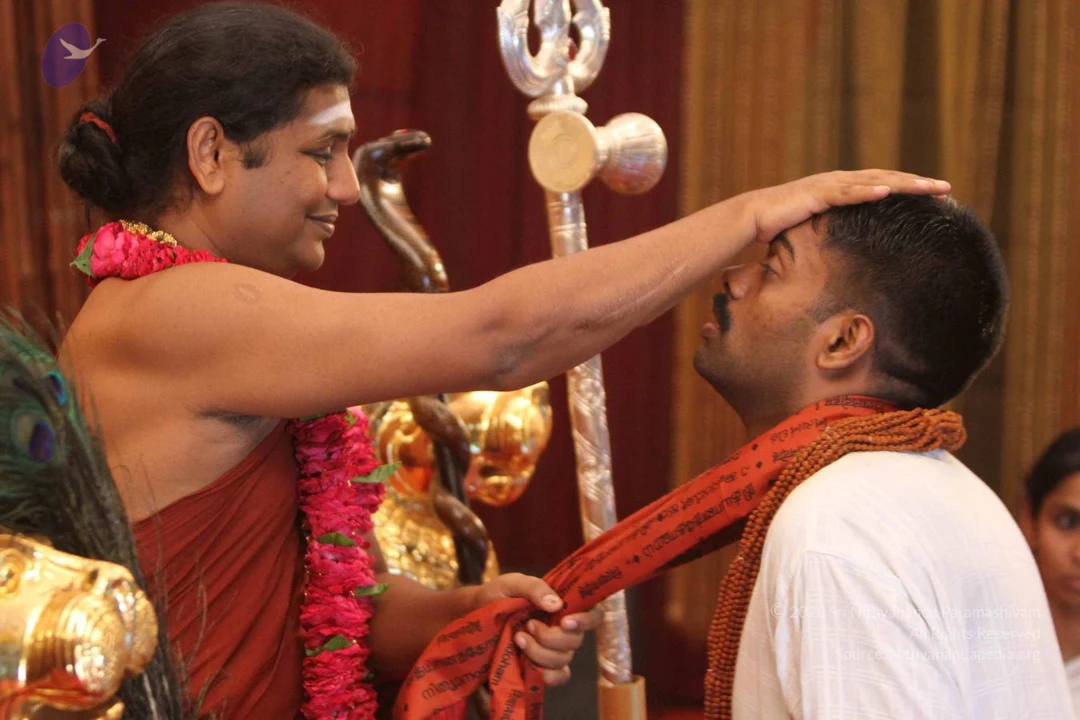
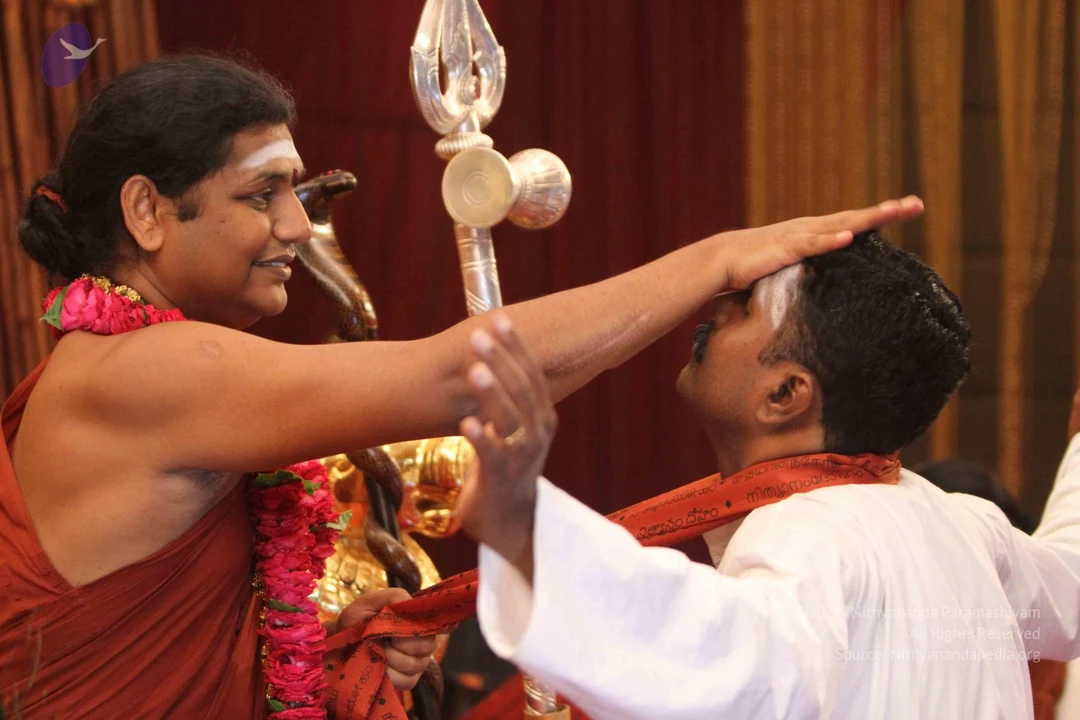
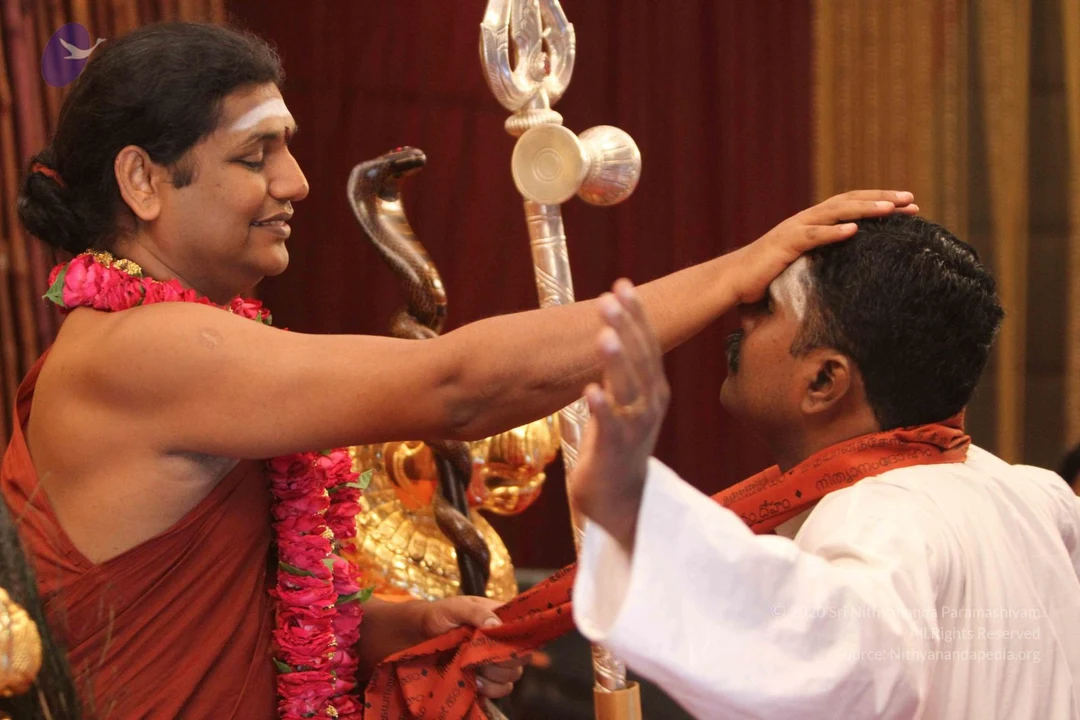
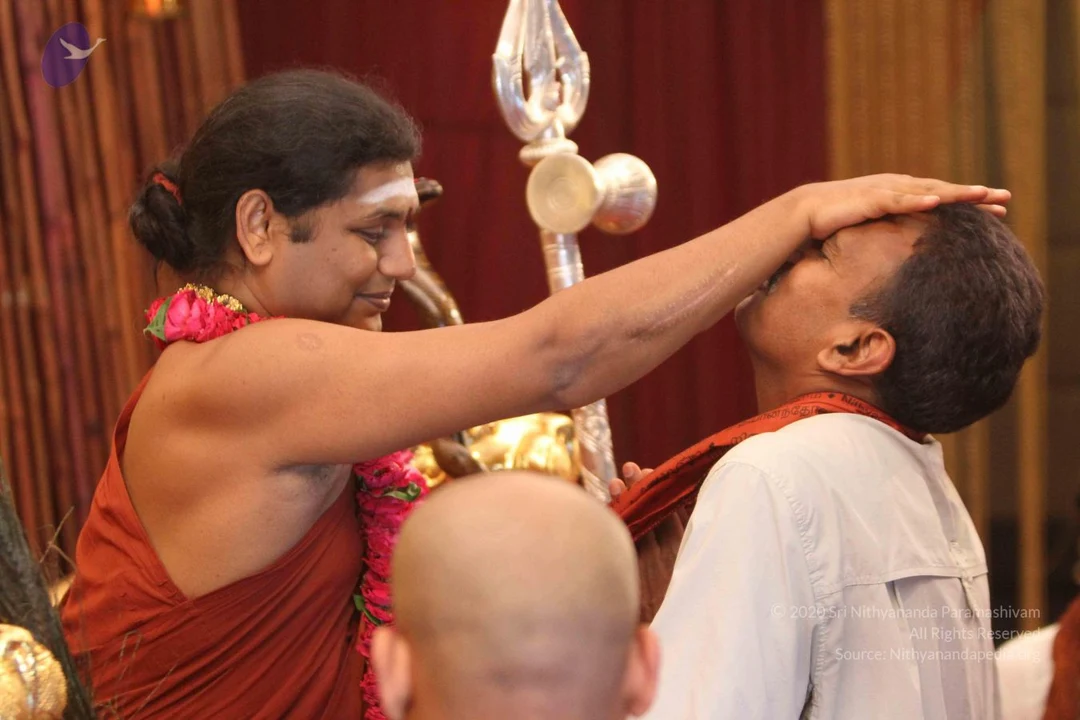
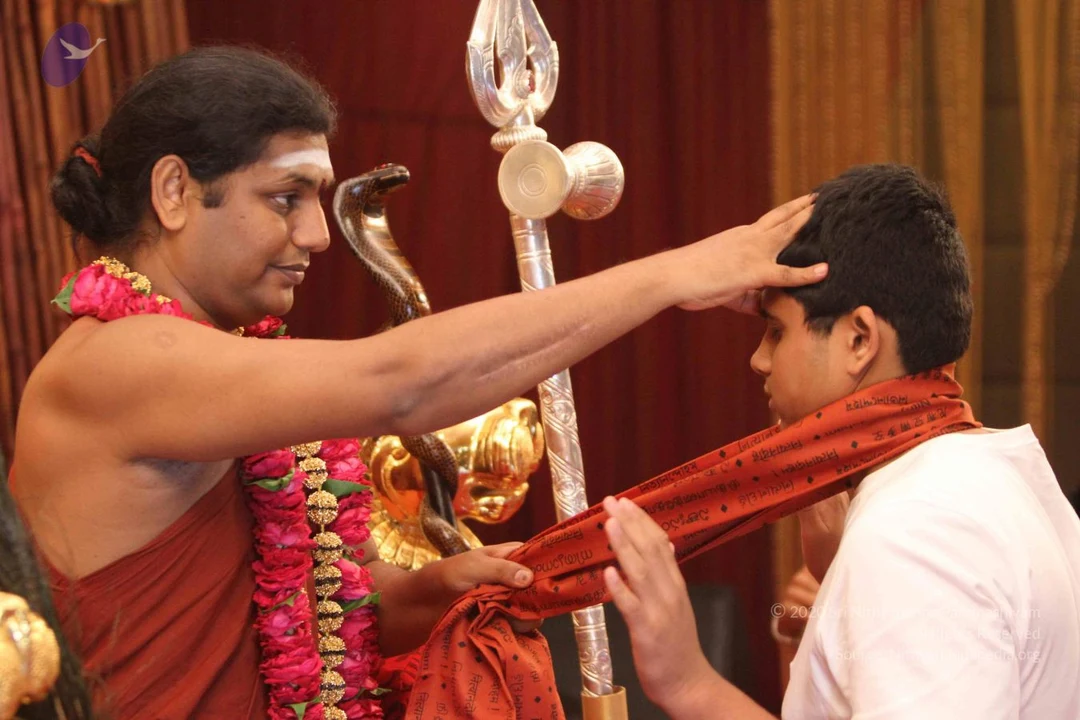
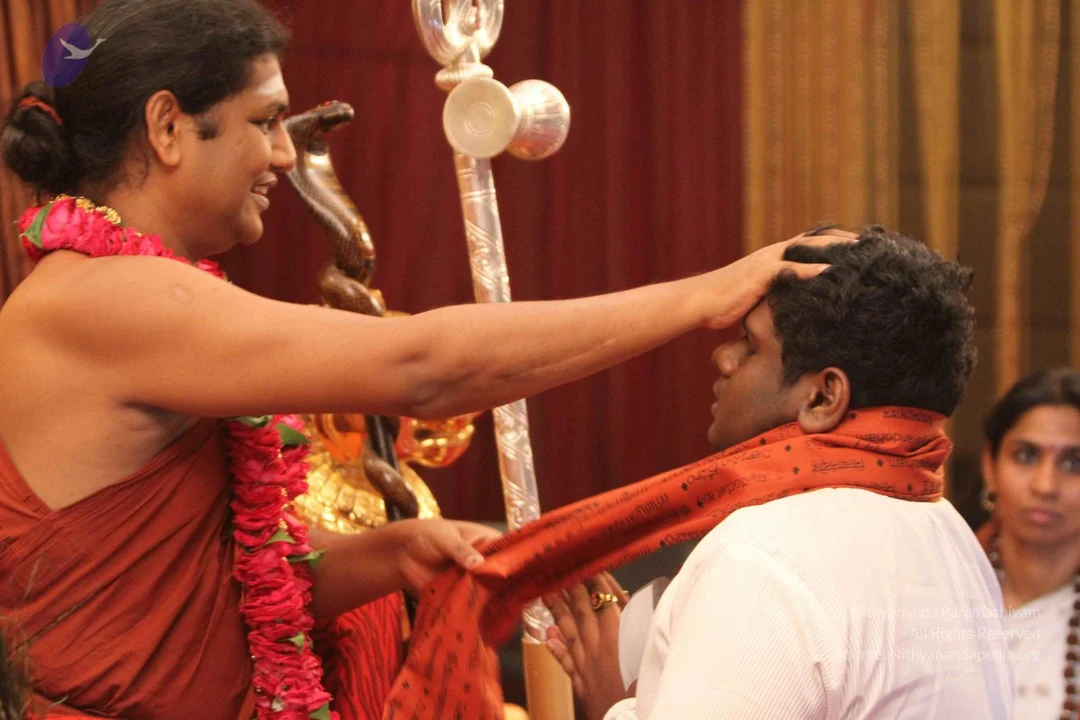
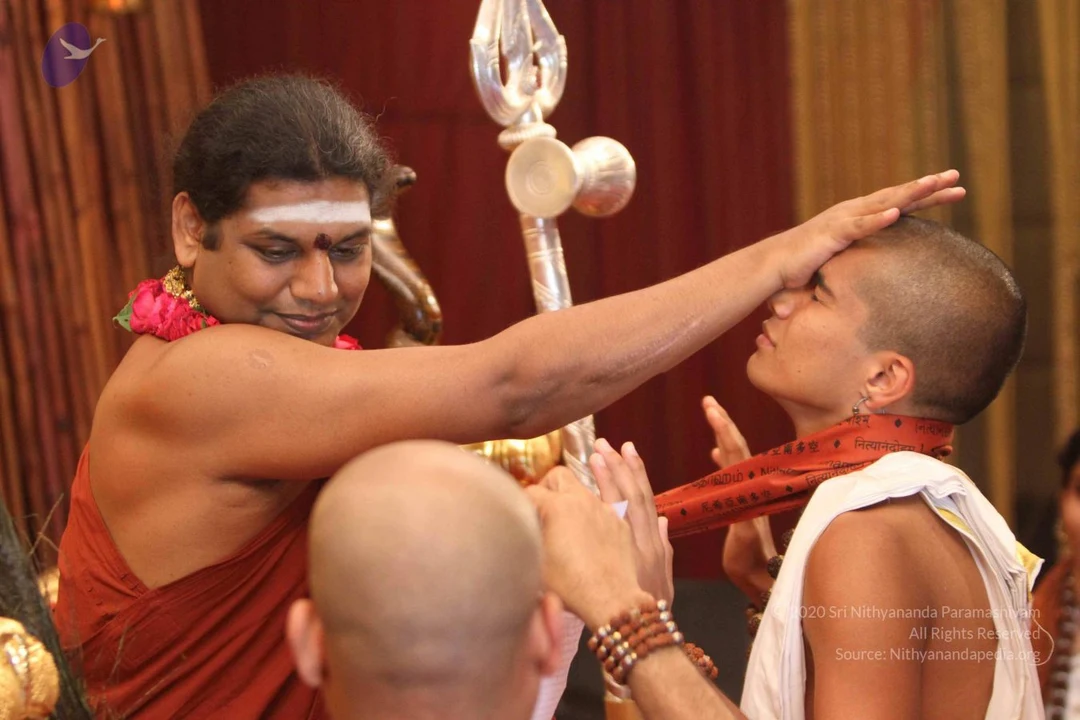
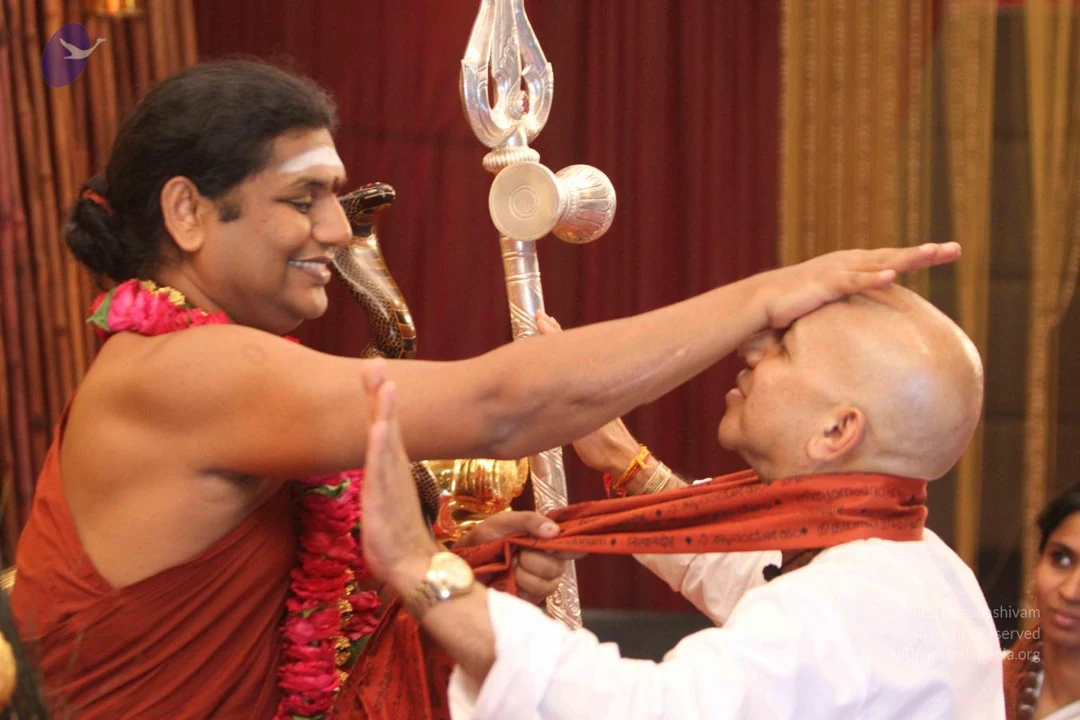
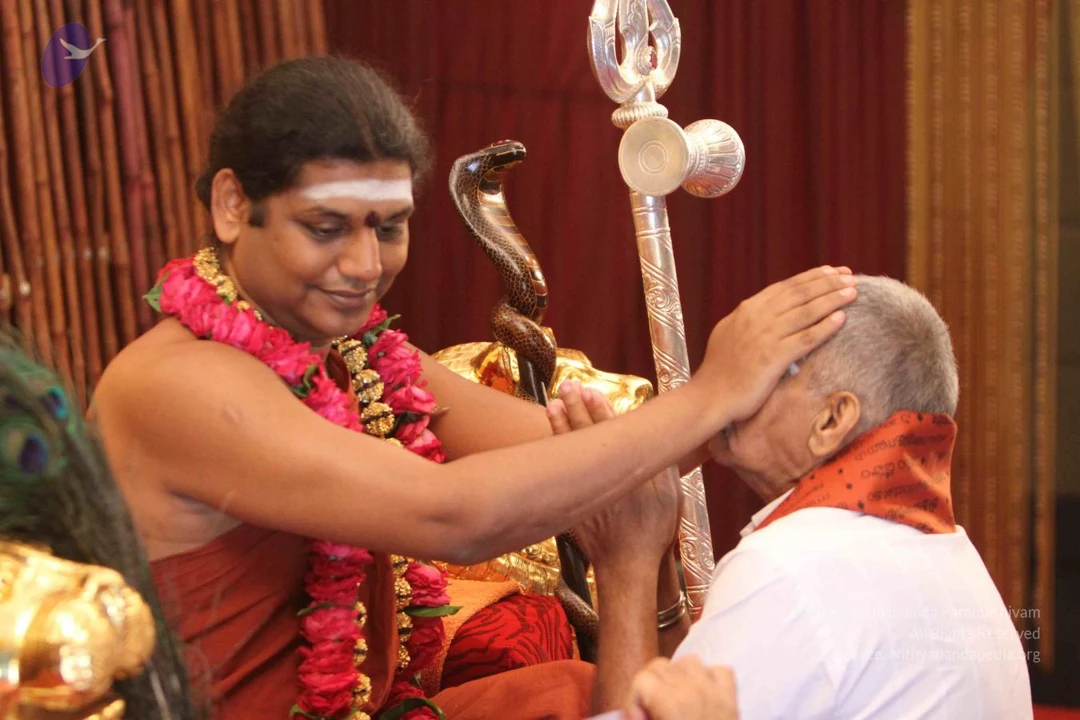
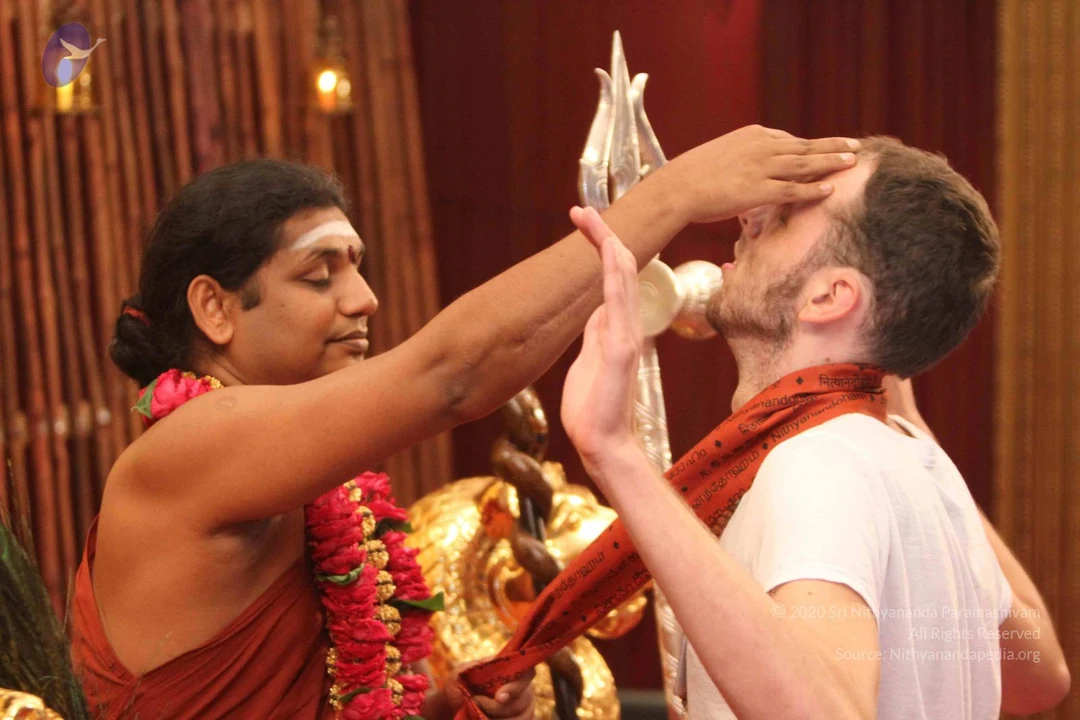
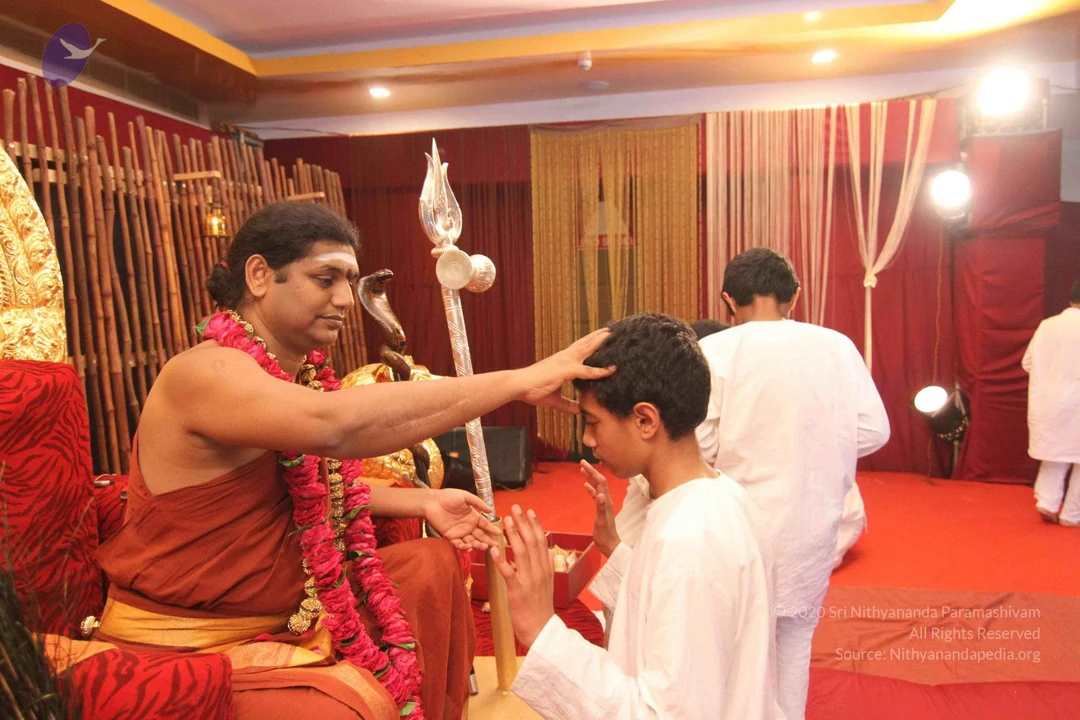
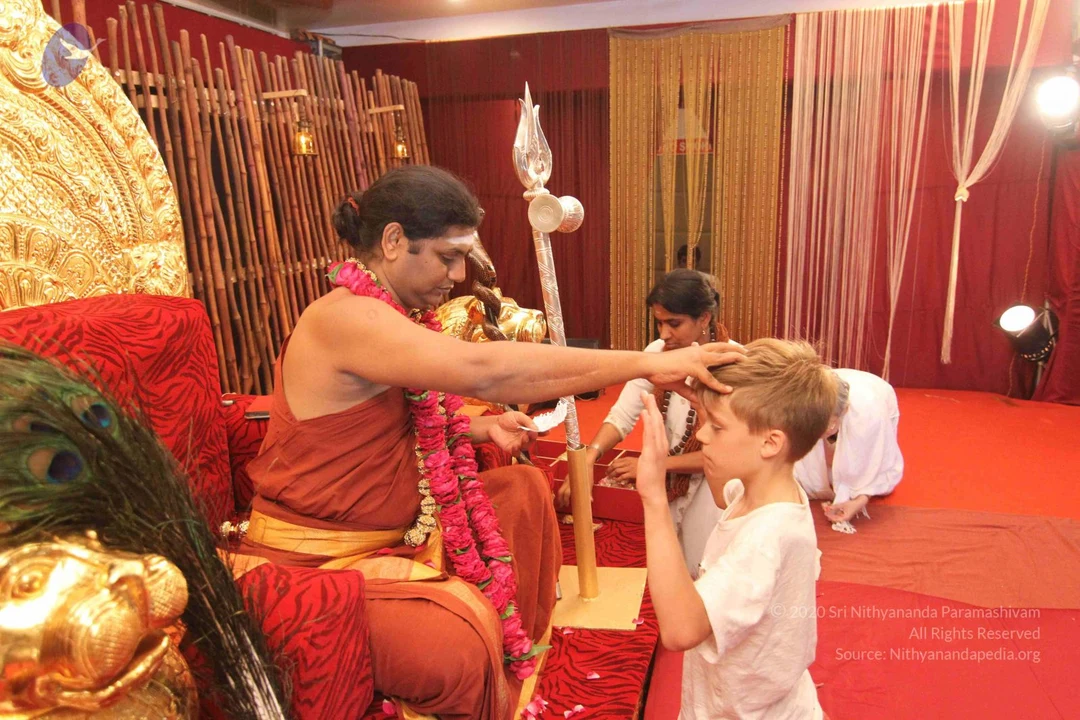
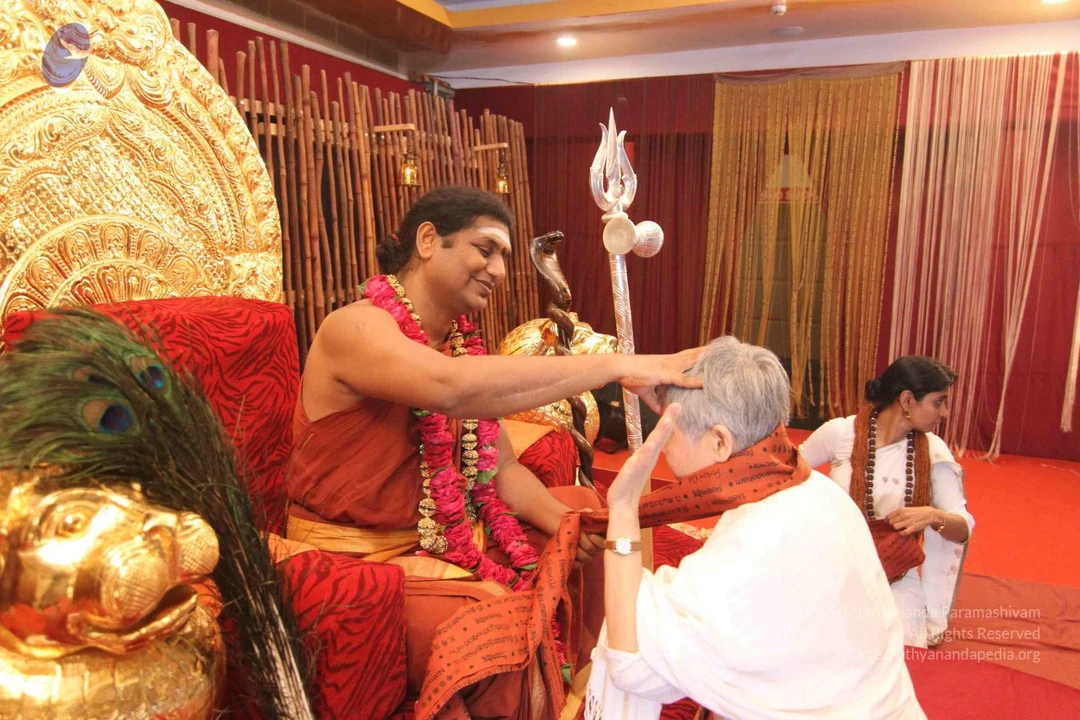
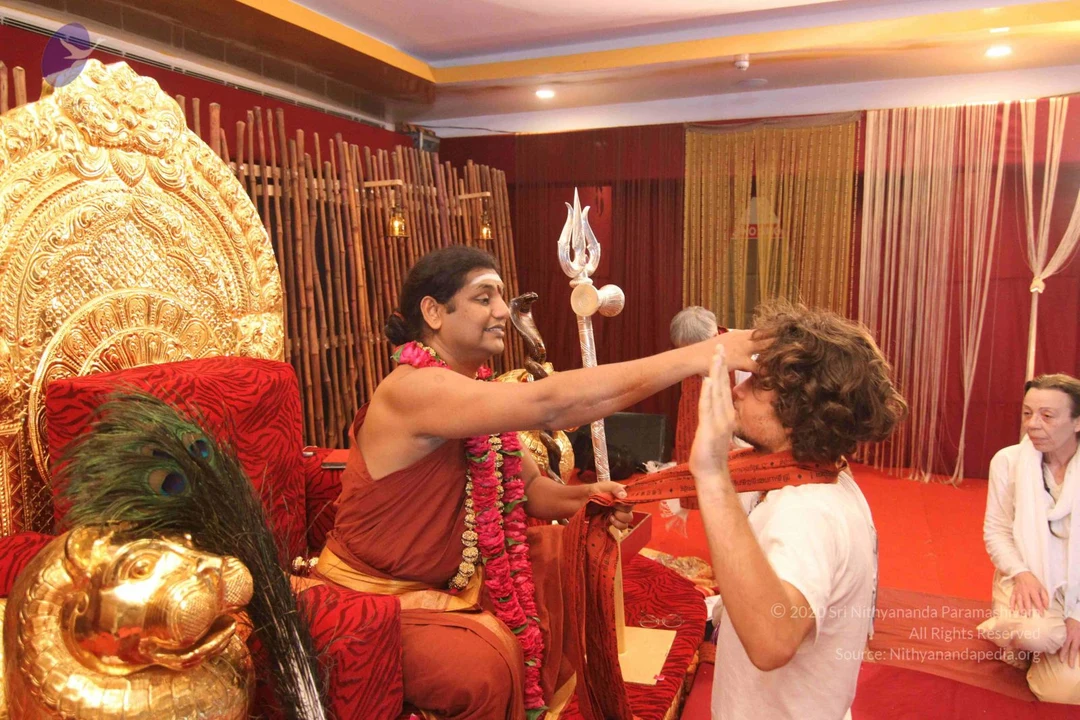
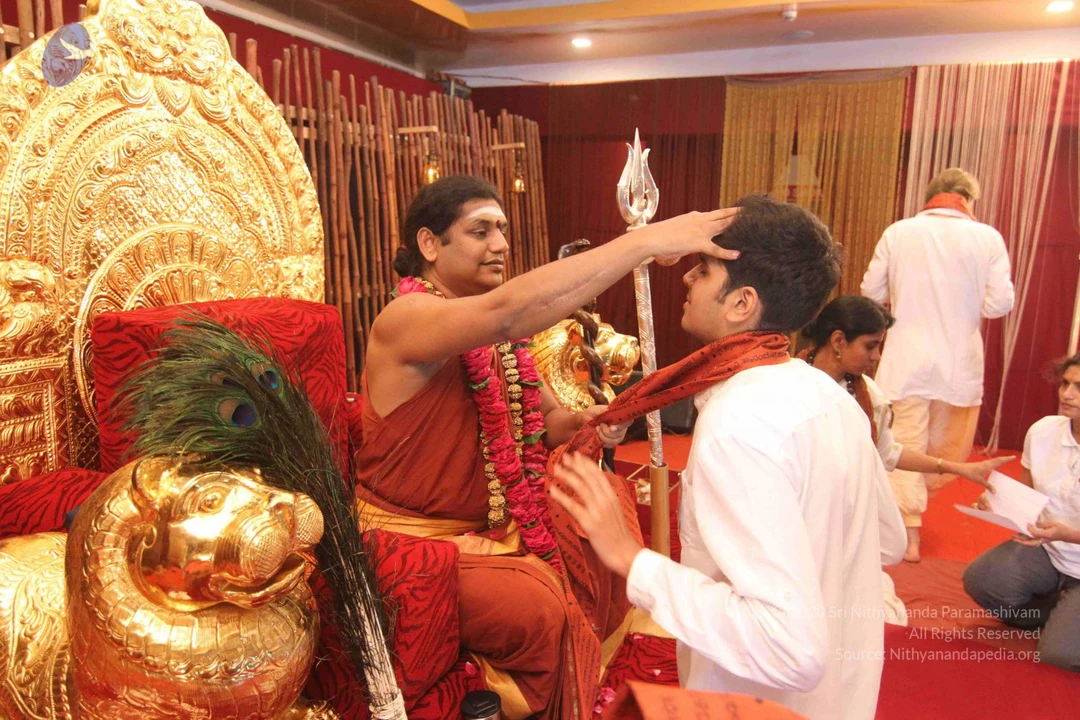
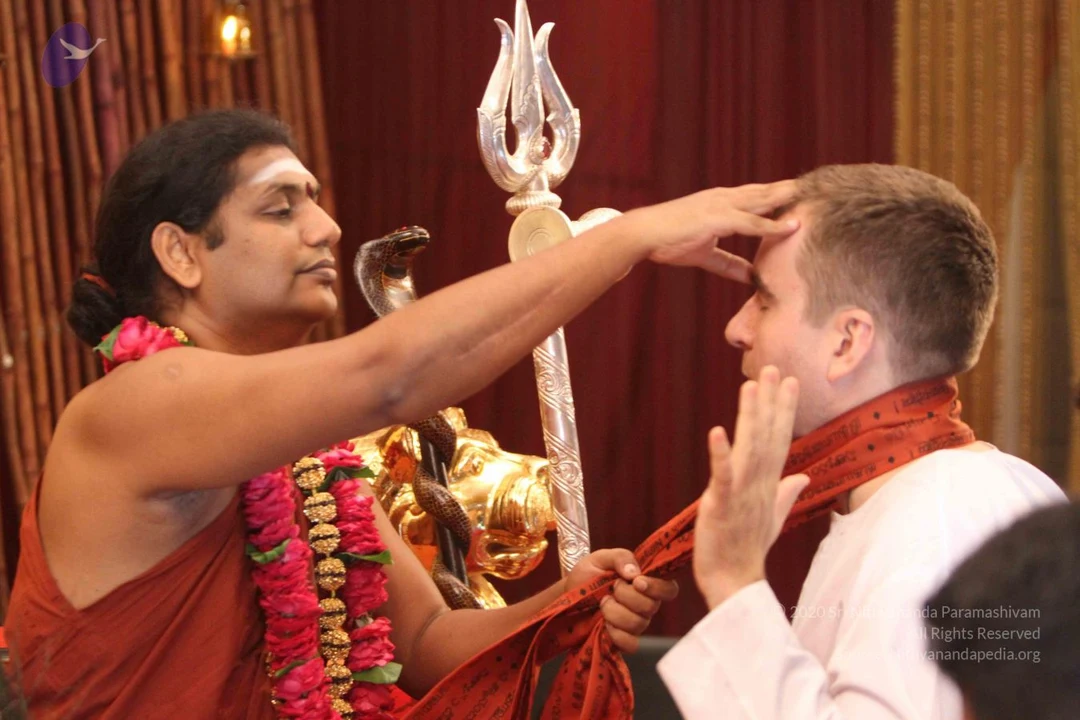
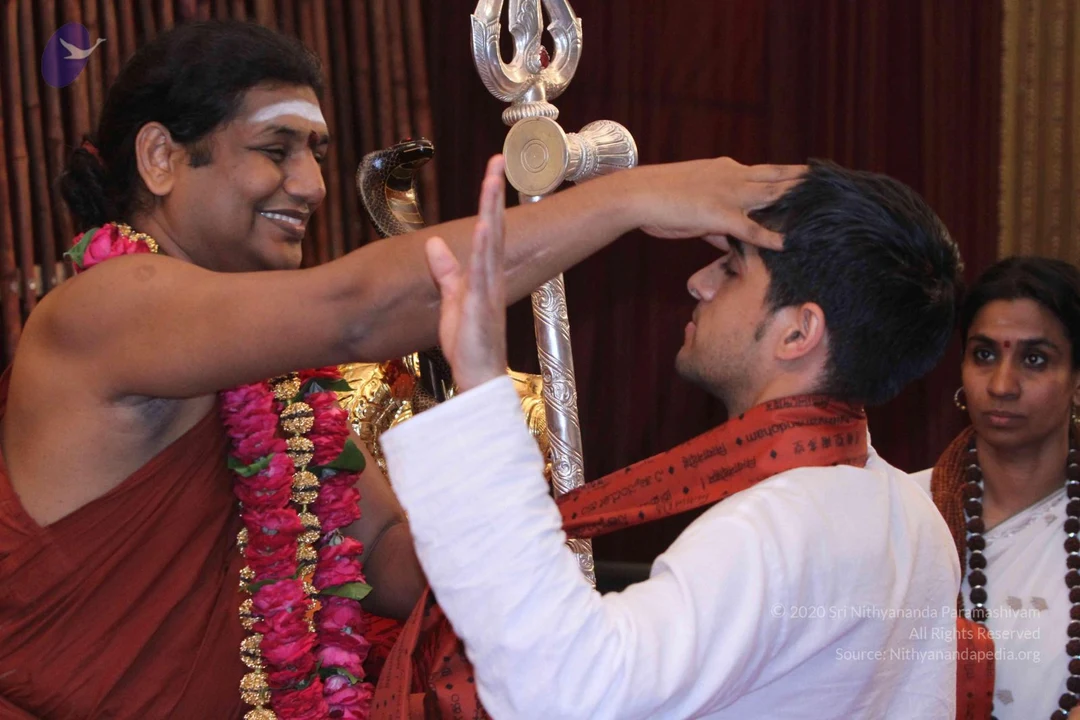
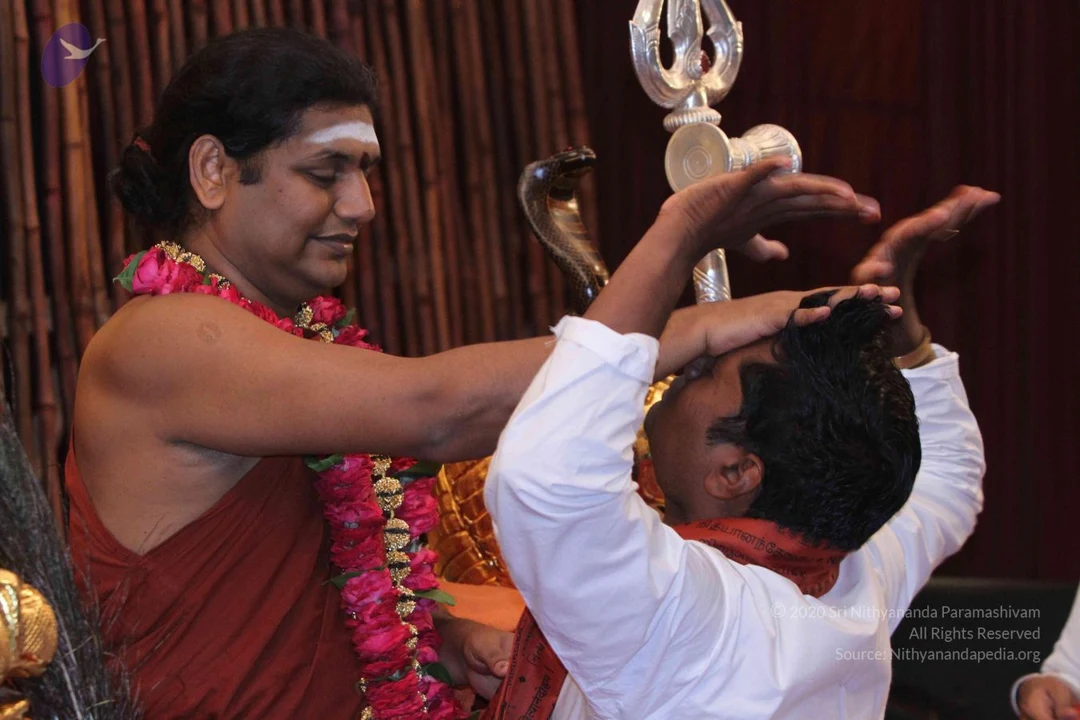
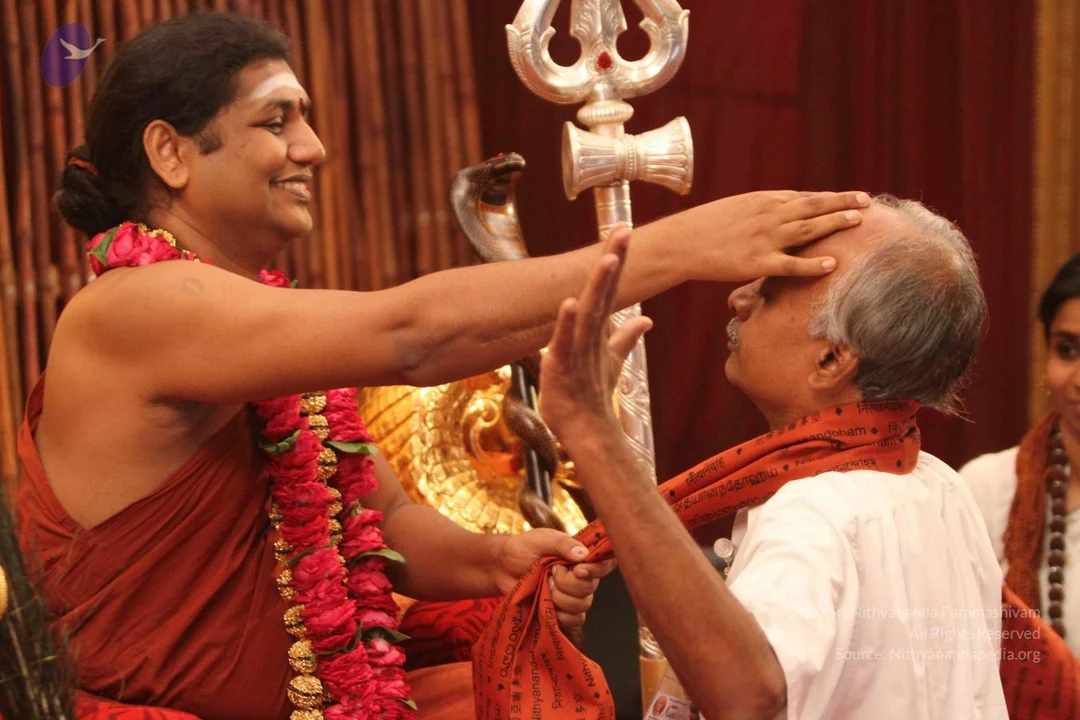
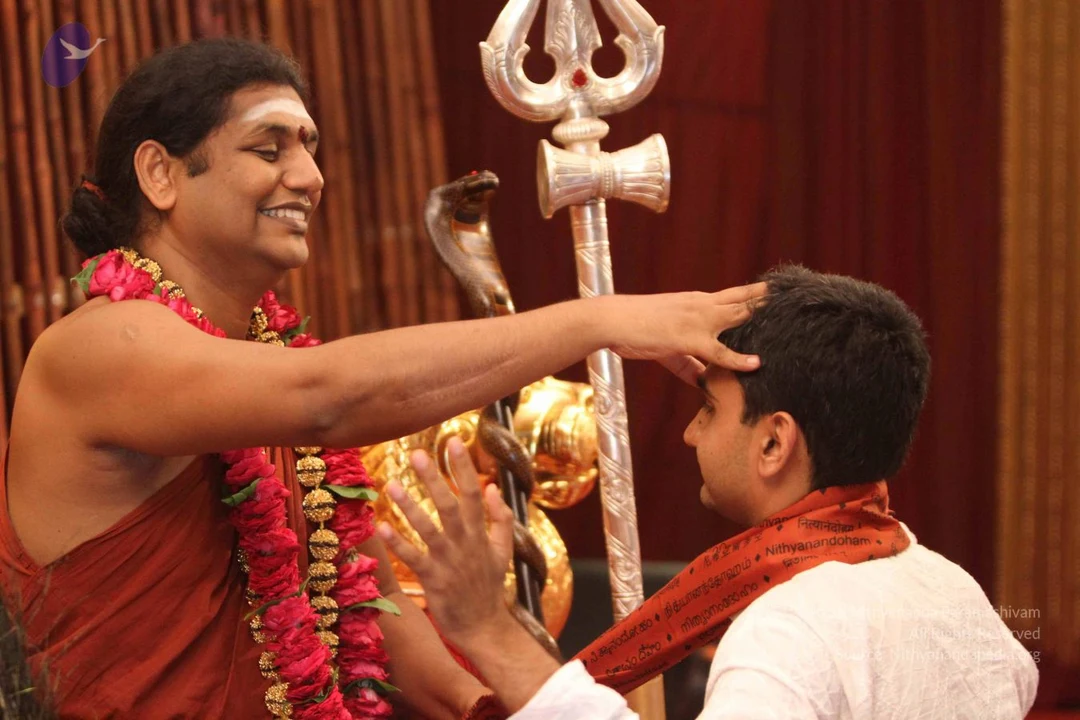
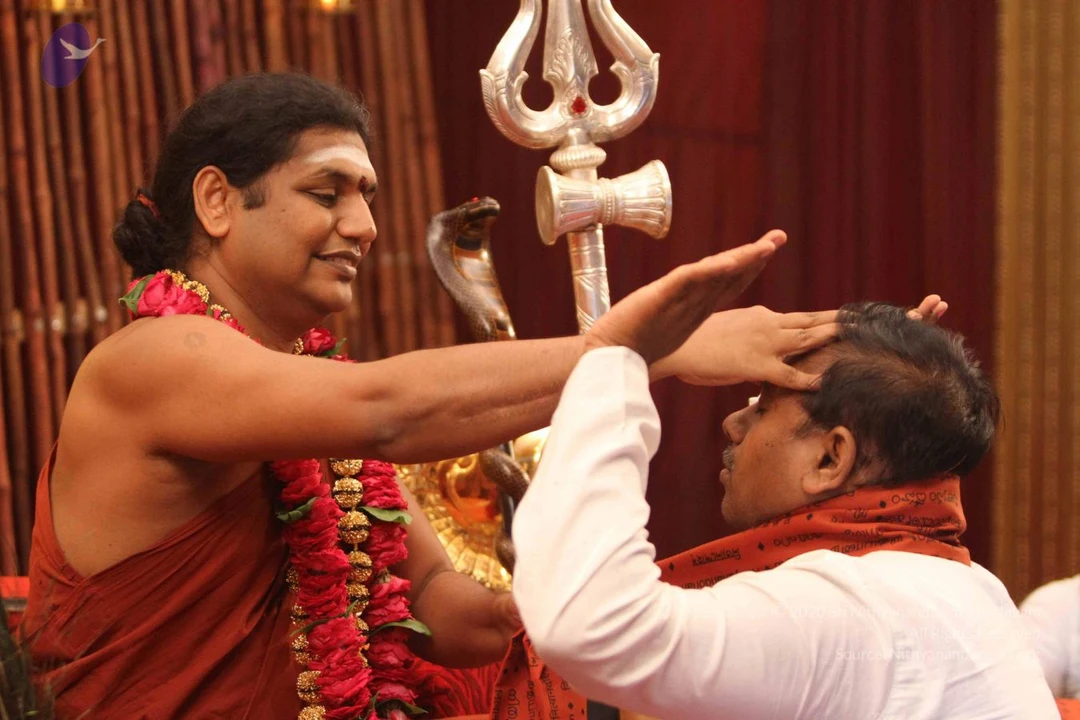
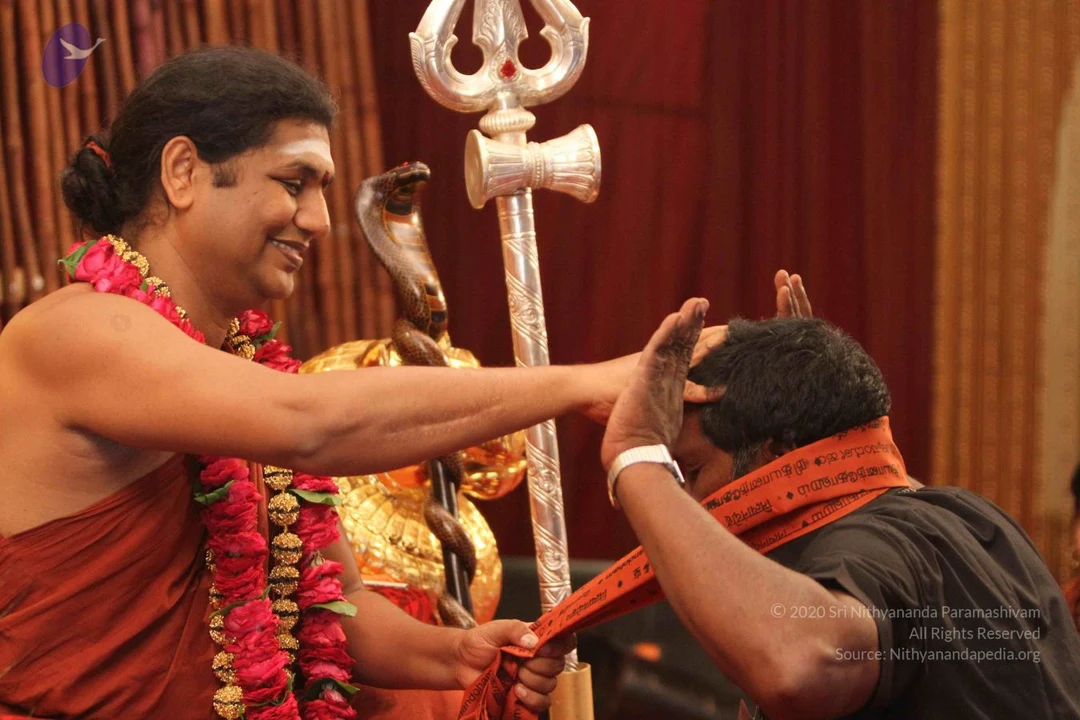
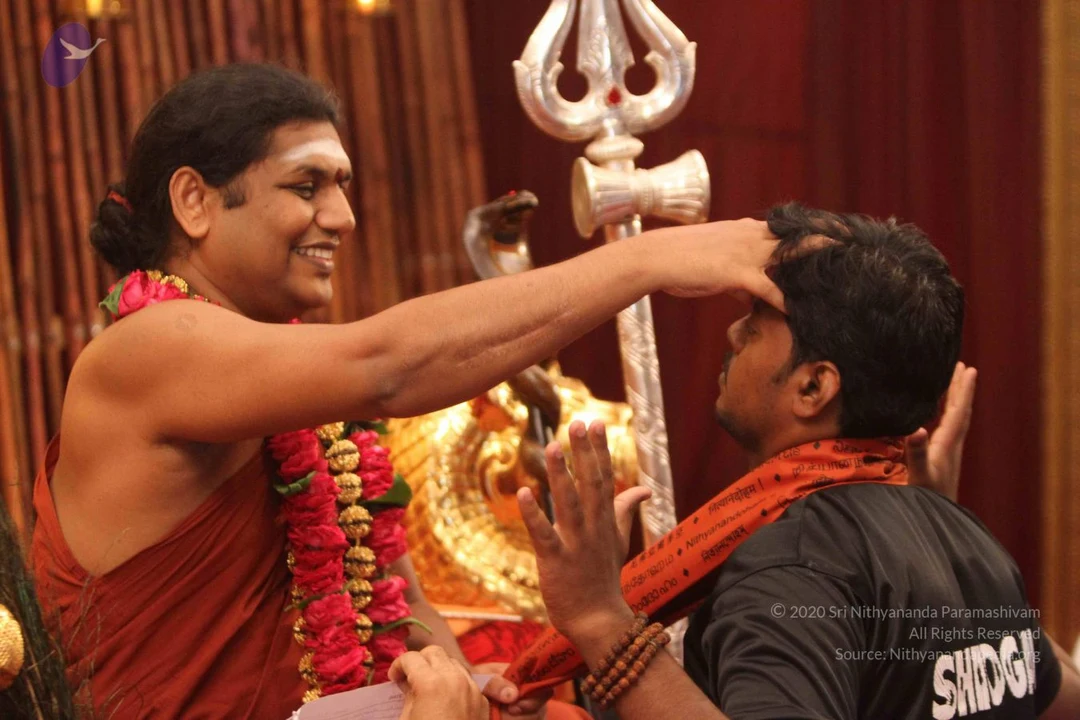
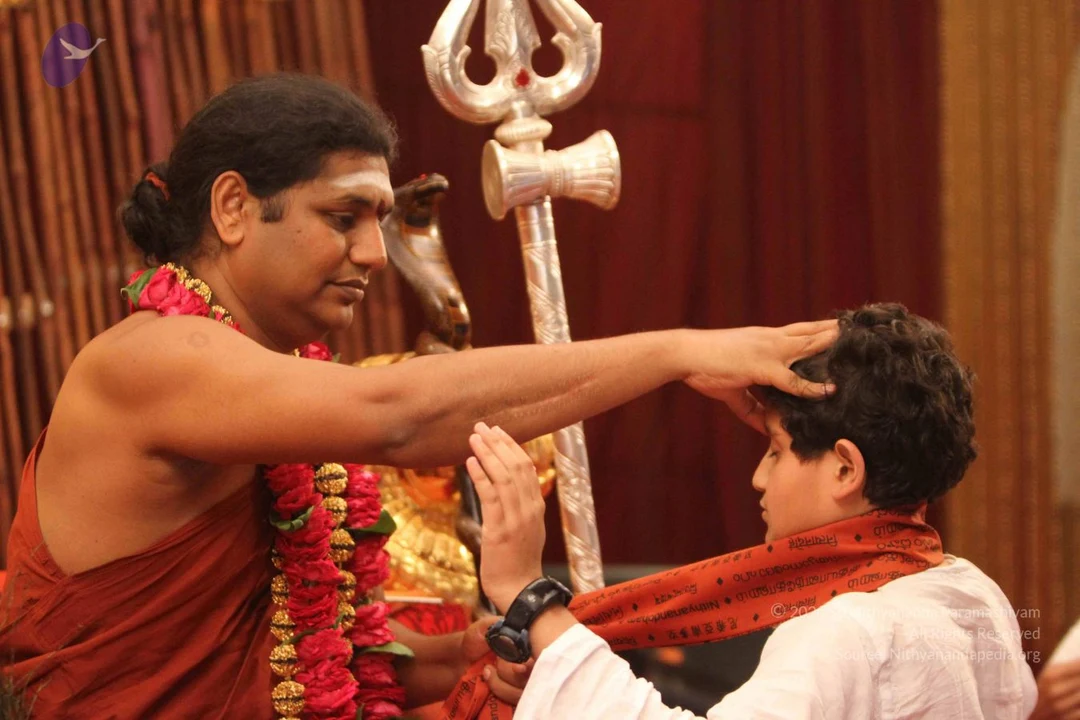
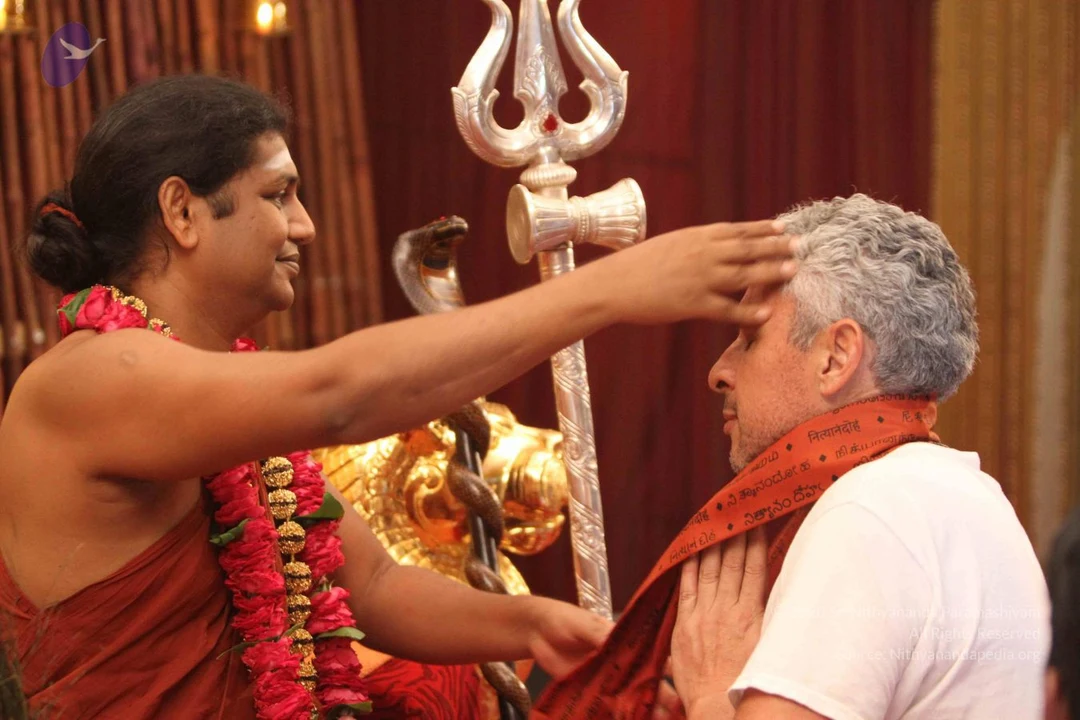
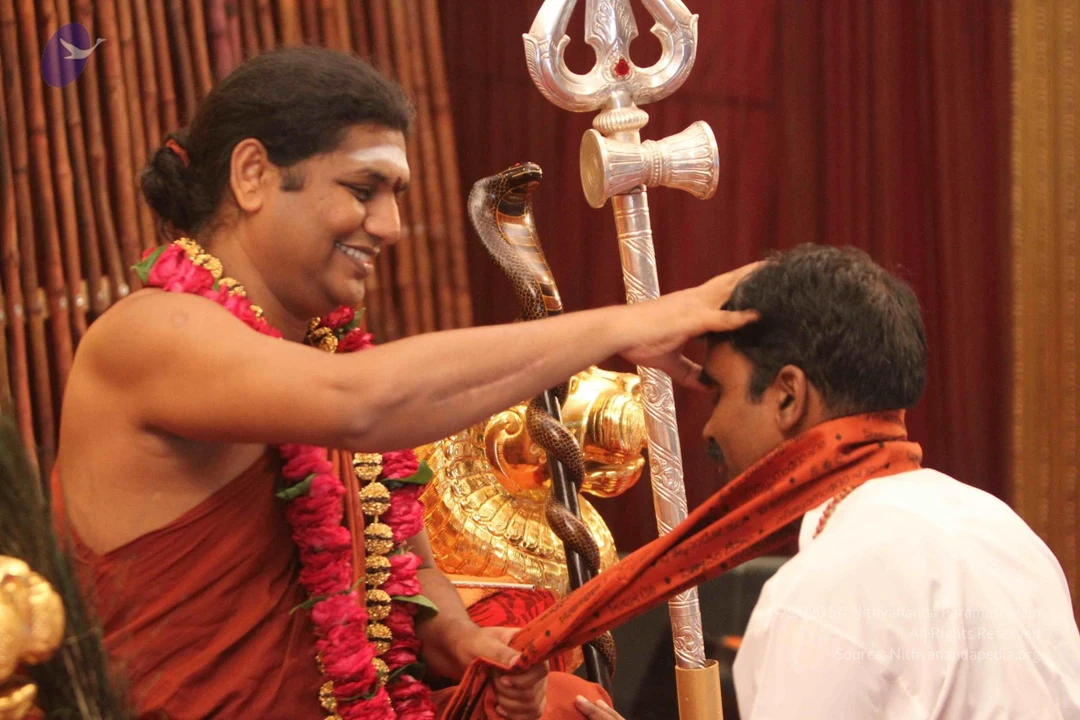
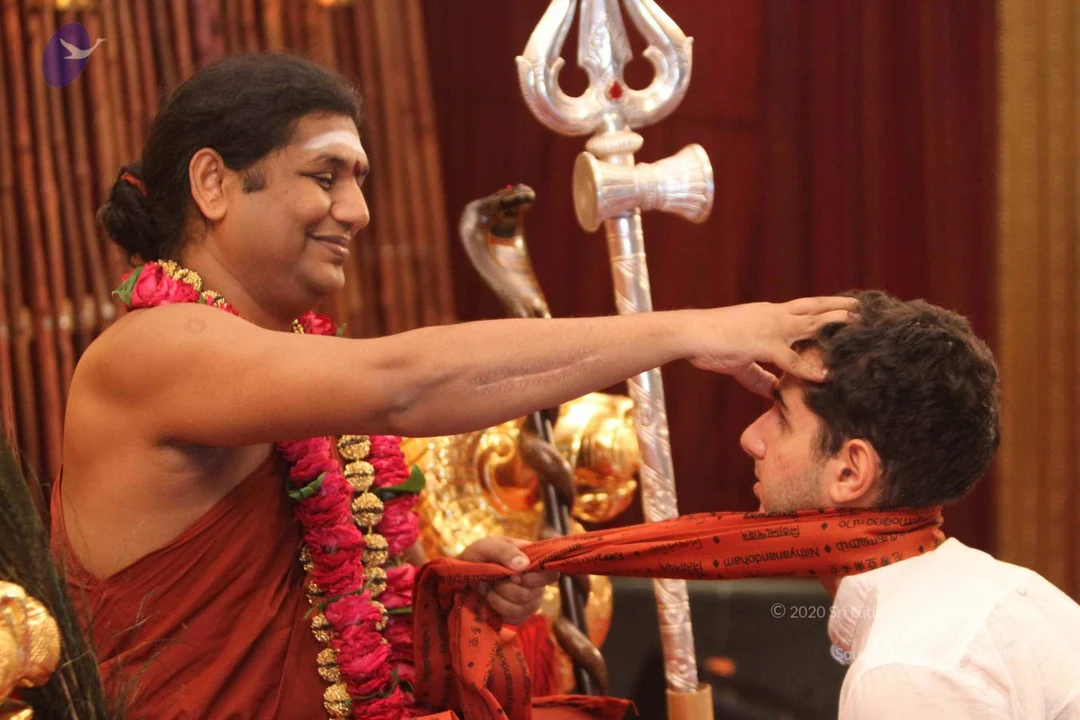
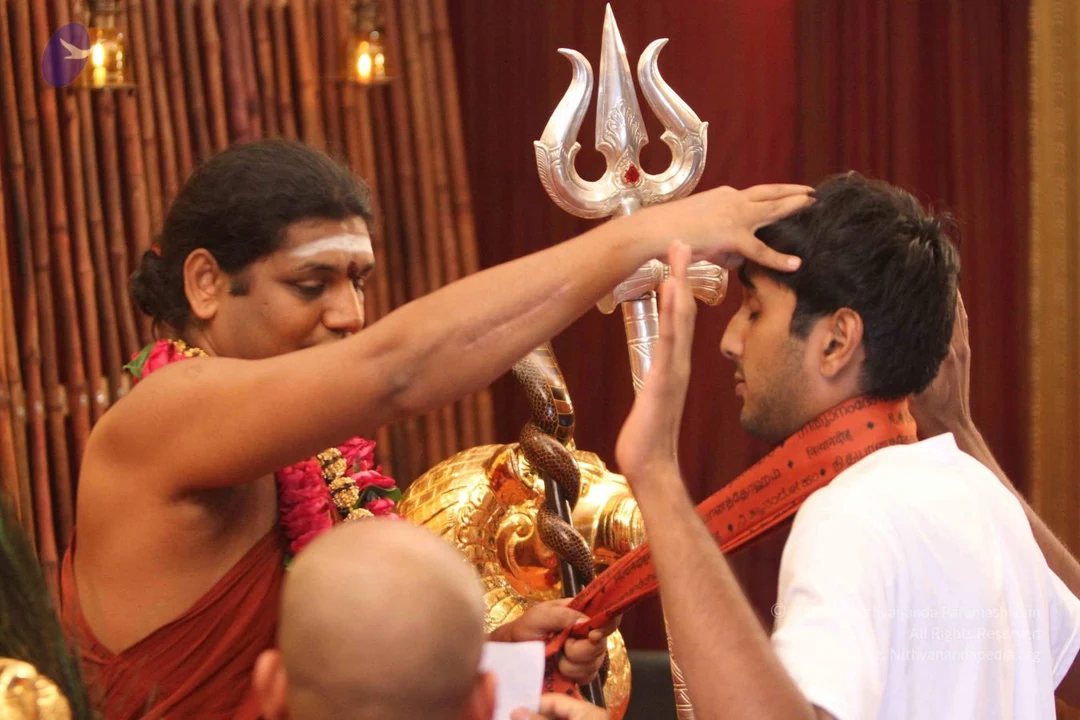
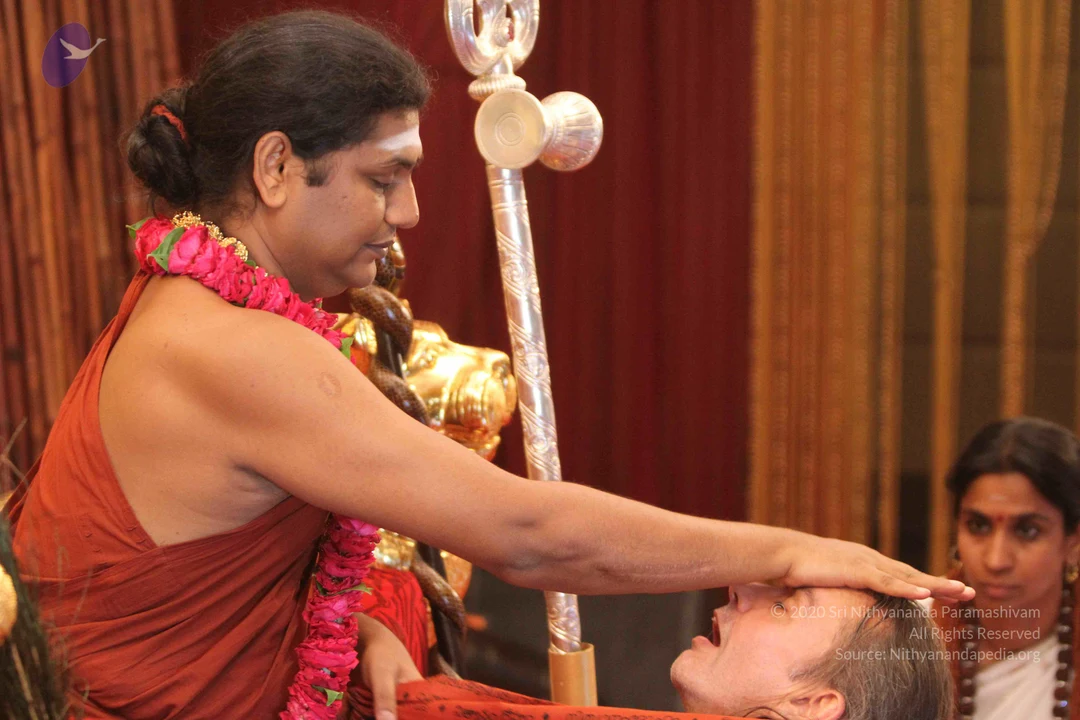
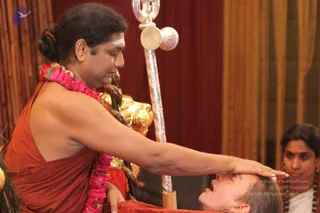
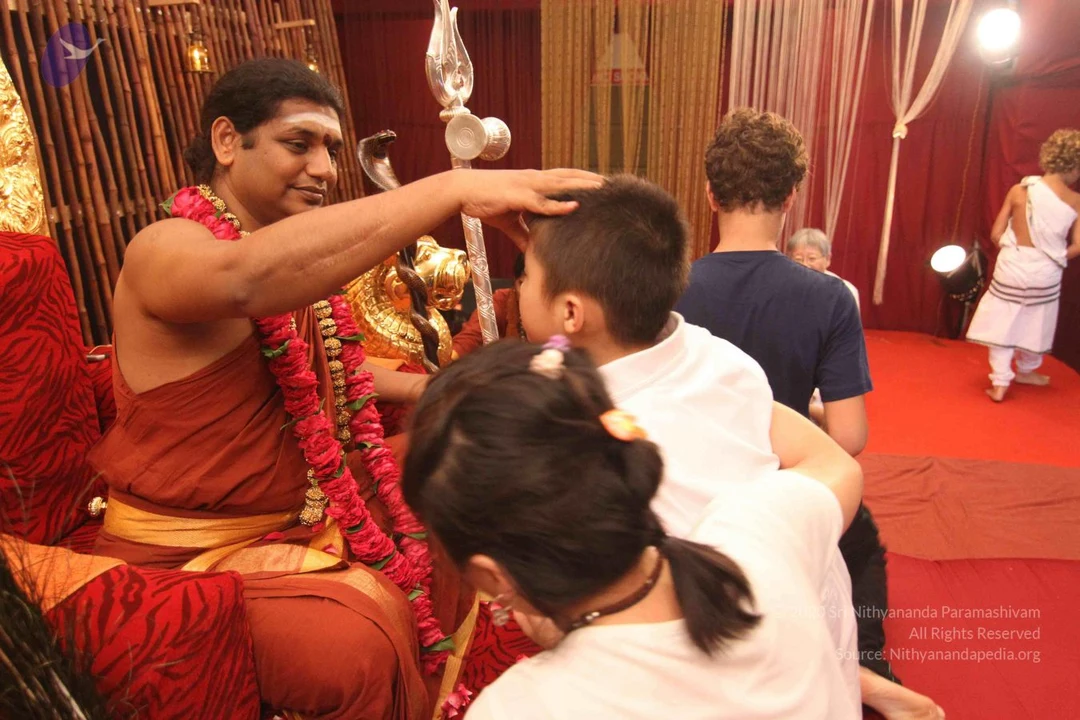
A photograph of a man with short dark hair and a white sandalwood tilak with a red kumkum dot on his forehead, seated on an ornate gold throne with red tiger-striped cushions. He wears an orange-brown saffron cloth wrapped over his shoulders and a long multi-strand necklace of pink flower garlands and gold beads. A gold lion-form armrest sits beside him, and a silver trident stands at right with a black cobra-like snake coiled on a staff. A peacock feather fan is at left, and bamboo poles form the backdrop. The man is smiling and looking to his right.A photograph of a seated man in a saffron-orange robe with a gold-bordered dhoti, wearing a long pink-and-red flower garland and a gold bead necklace. He sits on an ornate gold throne with a carved arched back and red tiger-striped cushions, arms opened outward, with a white-and-red forehead mark. Beside him stands a silver trident with a snake coiled around its shaft, and a golden lion sculpture rests to the right. A bamboo-slat backdrop and red stage platform complete the setting. The seated man is described by appearance as Swamiji (probable): long hair is not visible, but the throne, saffron robes, rudraksha-style gold beads and garland are distinctive ceremonial cues, so he is treated as present.A seated man in rust-orange saffron-toned robes and a gold-bordered dhoti sits on an ornate gold throne with a red and black zebra-striped cushion. He wears a long necklace of pink flower garlands over gold beaded mala strands, and a white vertical tilak with a red bindi on his forehead. His arms are open with palms turned upward in a teaching gesture, and he is smiling. Behind him is a carved gold arched backrest and red and gold fabric. Beside him stand a brass cylindrical vessel and a staff.A seated man in a saffron-orange robe sits on an ornate gilded throne with carved floral and lion-like motifs, a red upholstered cushion beneath him. He wears a long garland of red roses and gold beads across his chest, and a white and red forehead mark. His palms are raised toward the audience in a teaching gesture while he smiles. Behind the throne are bamboo poles against a red wall. A steel water flask stands at the left edge.A seated man in an ornate gilded throne with arched carved backrest, wearing a saffron-orange robe with gold-bordered dhoti and a long garland of red roses interspersed with large gold beads. He has a white vertical tilak and red bindi on his forehead, and raises both palms outward in a blessing or teaching gesture. Behind him are bamboo poles against a red wall. A red zebra-striped cushion lines the throne sides. A copper vessel sits at the lower left. The man has long swept-back hair and bare feet, consistent with the page's a person reference, so the appearance-based candidate is a person, seated on the throne in a satsang setting.A man with his hair tied in a bun and a white forehead mark wears an orange-red shawl over bare shoulders and a pink-and-green flower garland. He leans forward, placing his right hand on the forehead of a person lying back with eyes closed and mouth open, in a blessing gesture. Behind him stand a silver staff topped with a finial and a golden figure, with a red curtain. On the right, a woman in a red-bordered sari with a red bindi watches. a person appears to be the blessing figure given the orange shawl, flower garland and forehead mark, but the identification is uncertain.
1-Photoshoot

5 photosSource gallery
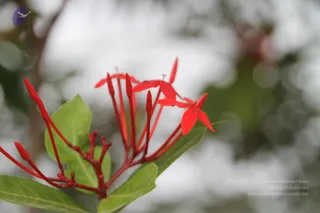
Close-up photograph of a plant stem with a pink-red bud at the left and thin, spiky, pale green filaments and small green leaves. The background is a blurred dark brown and green. No people are visible. A small droplet hangs near the stem.A small greenish-yellow songbird perches on a thin bare branch amid a dense canopy of green leaves. Slender brown branches cross the frame diagonally against a pale overcast sky. No people are visible in this outdoor nature photograph.Close-up photograph of a cluster of bright red tubular flowers with slender red stems and buds, growing from green oval leaves. The background is a soft blur of white and green bokeh. No people are visible.A photograph of a tree branch with green leaves and thin reddish-brown twigs. A small pale grey-brown songbird perches on a branch near the centre. No people are visible; the background is blurred foliage and pale sky.A close photograph of a dense bougainvillea shrub with vivid magenta and pink bracts clustered across green leaves. Small orange-tinged bracts sit near the center, and a few tiny white flowers appear among the pink blooms. Soft blurred foliage fills the background. No people, deities or ritual objects are visible.