Skip to content
Friday

15 July 2016

Manifest Your Four Powers

Dated photos
508
Source pages
1
Media
3
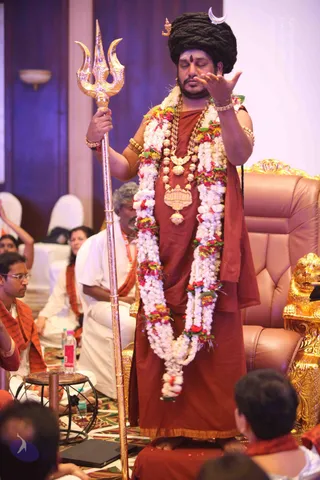
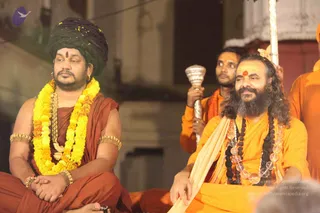
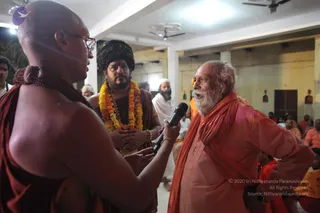
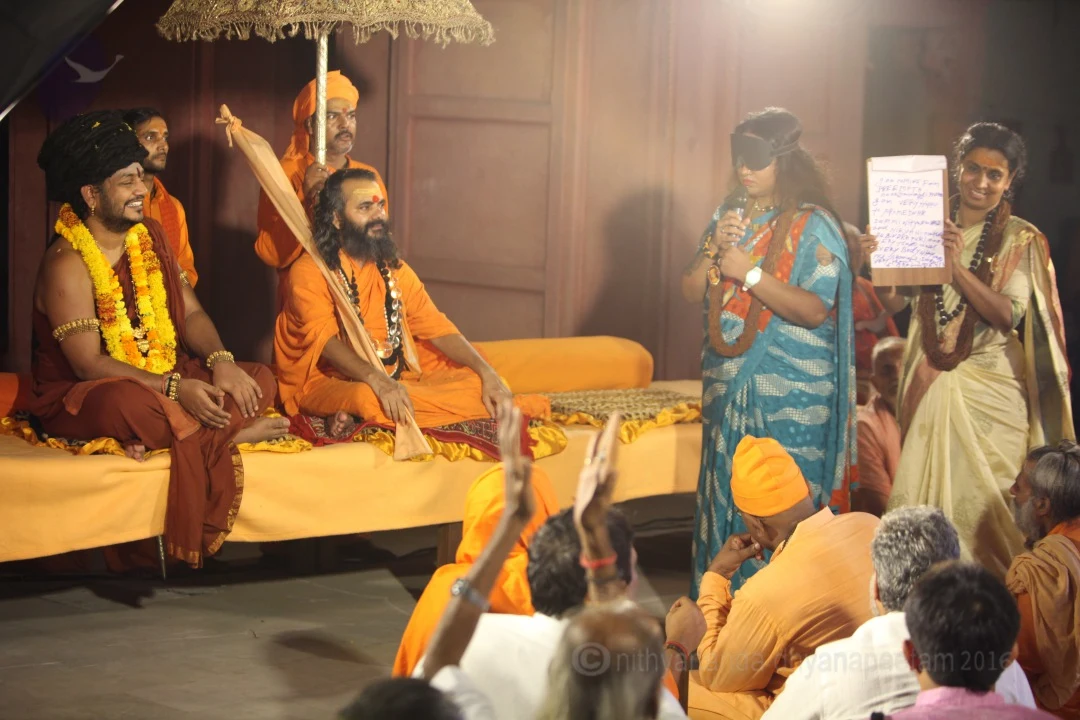
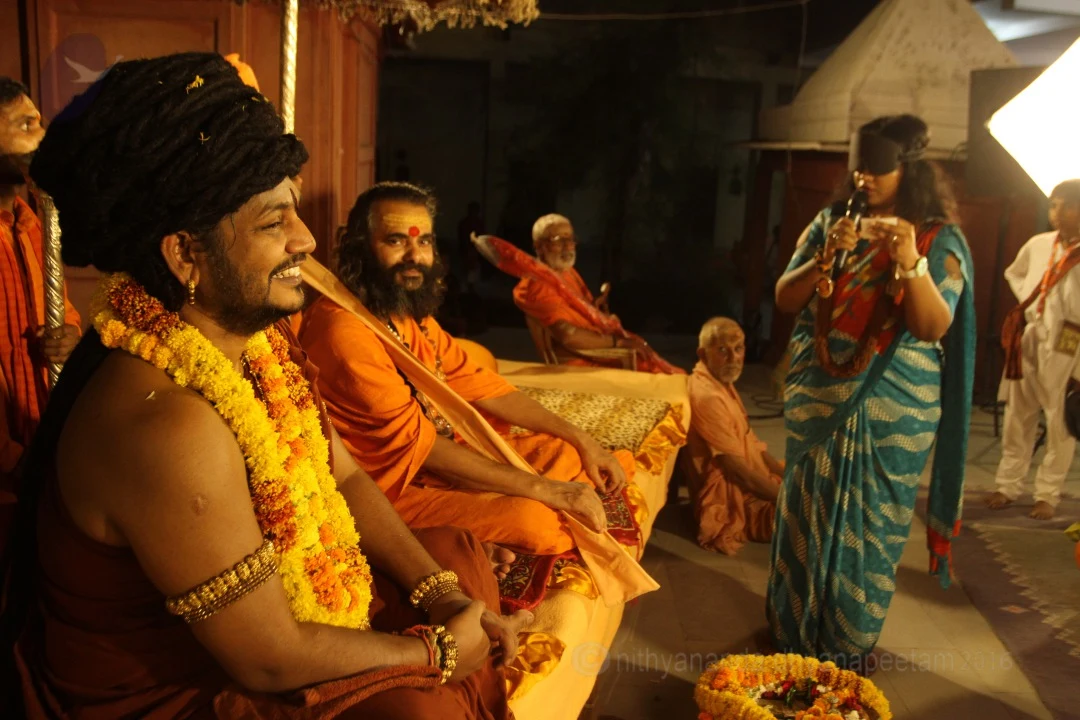
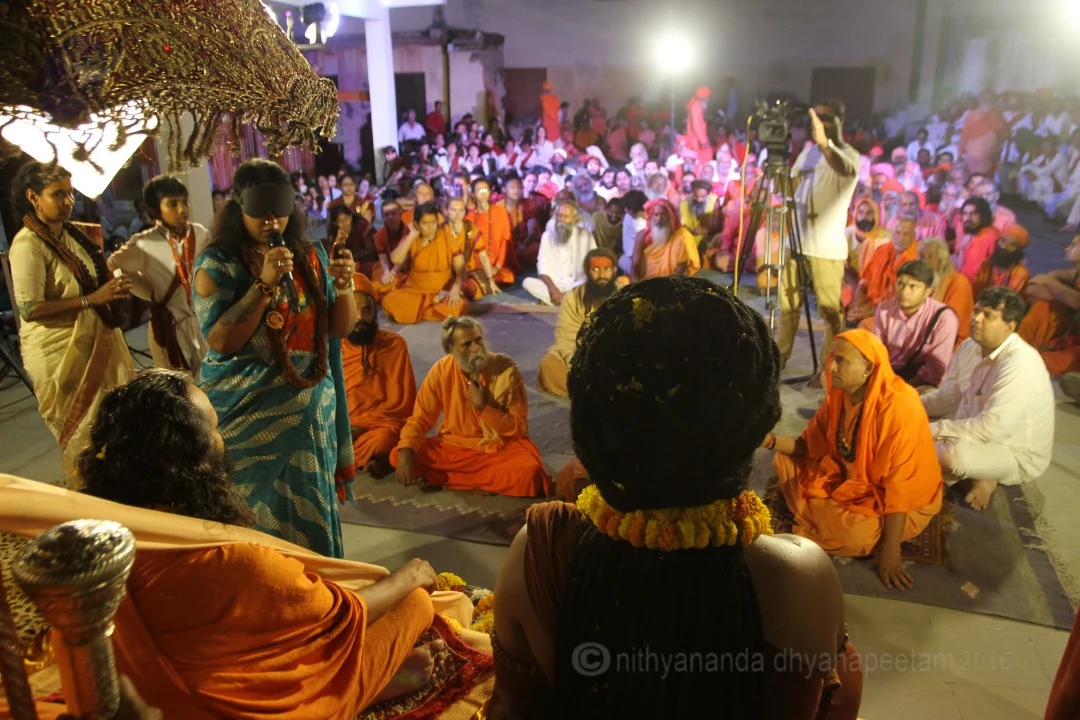
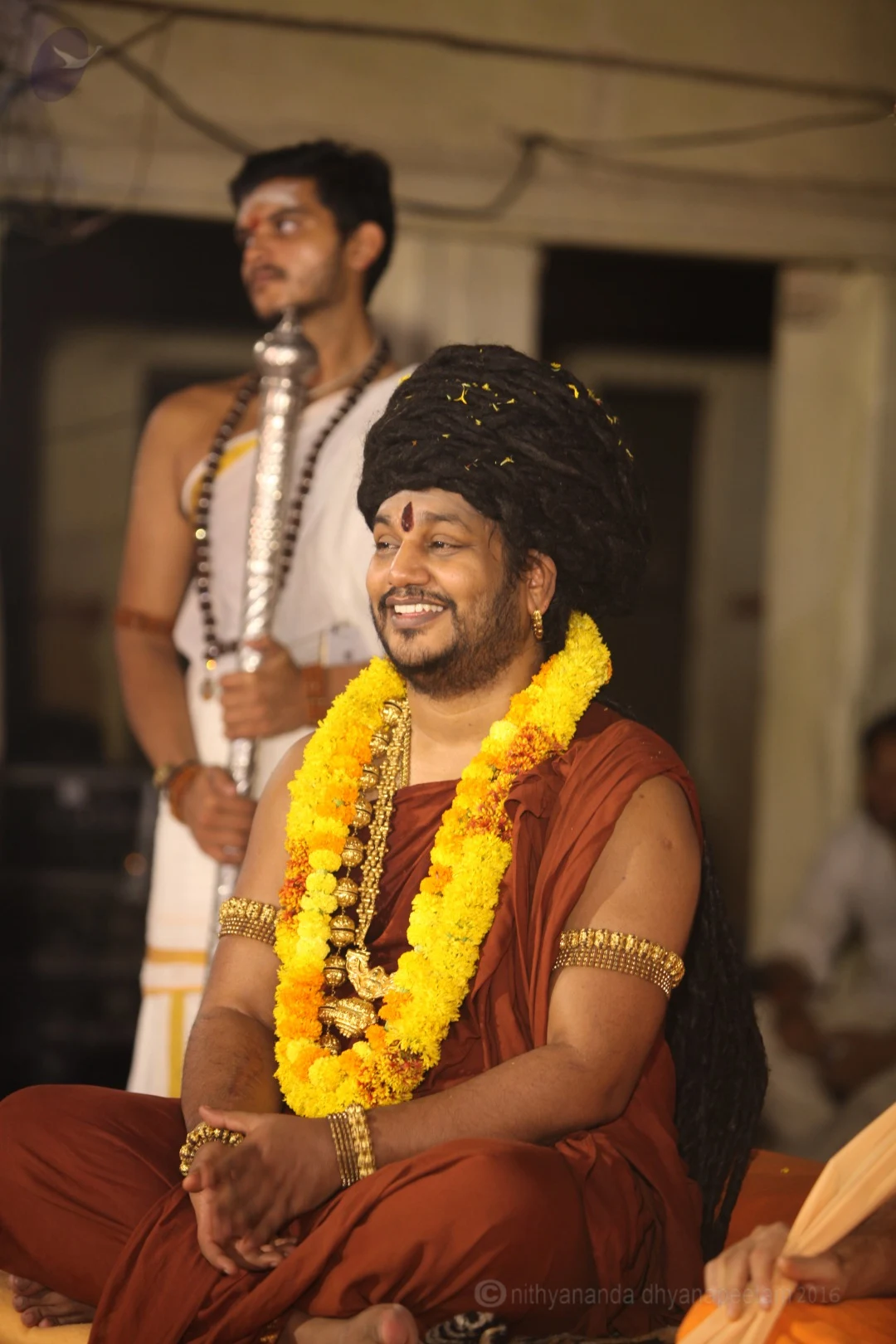
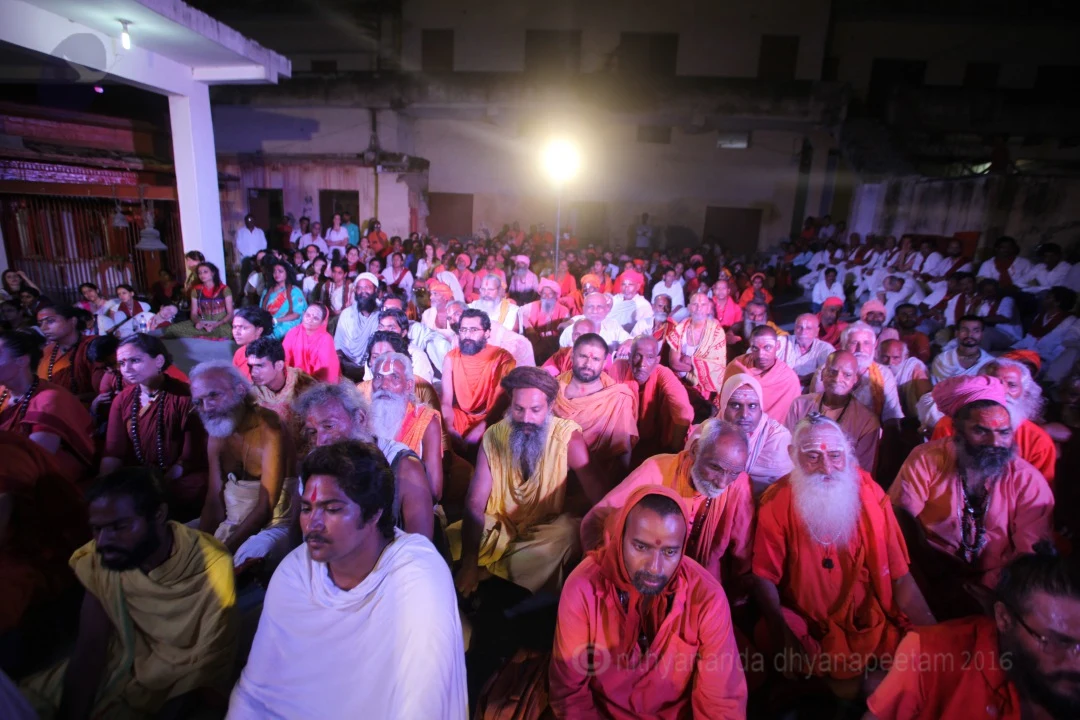
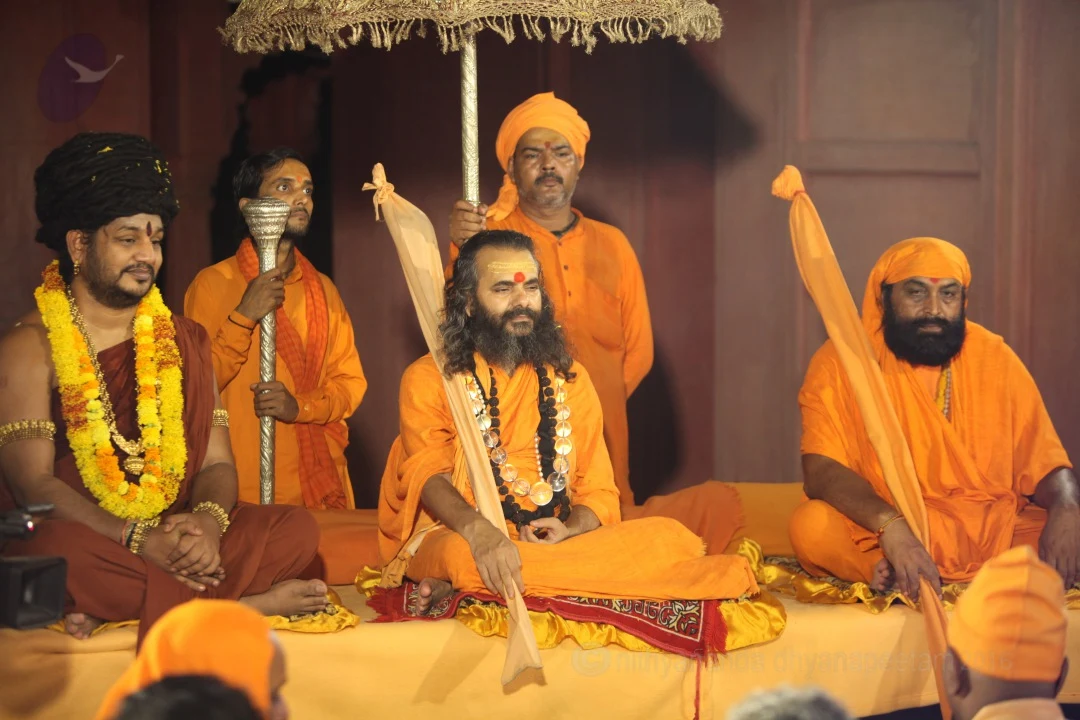
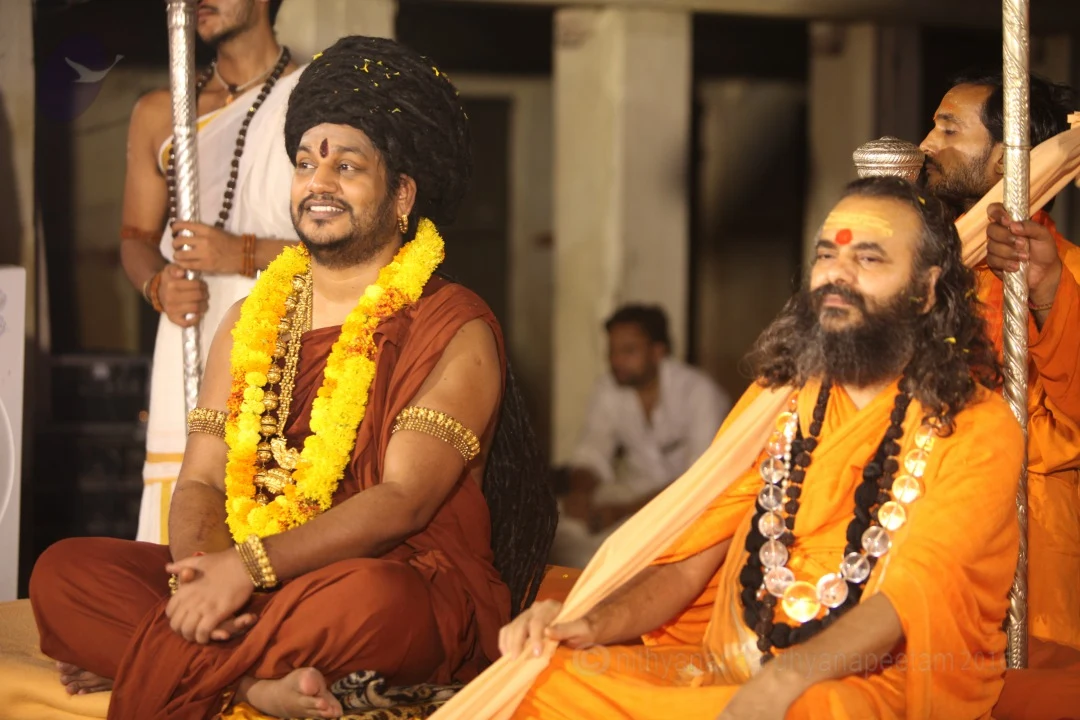
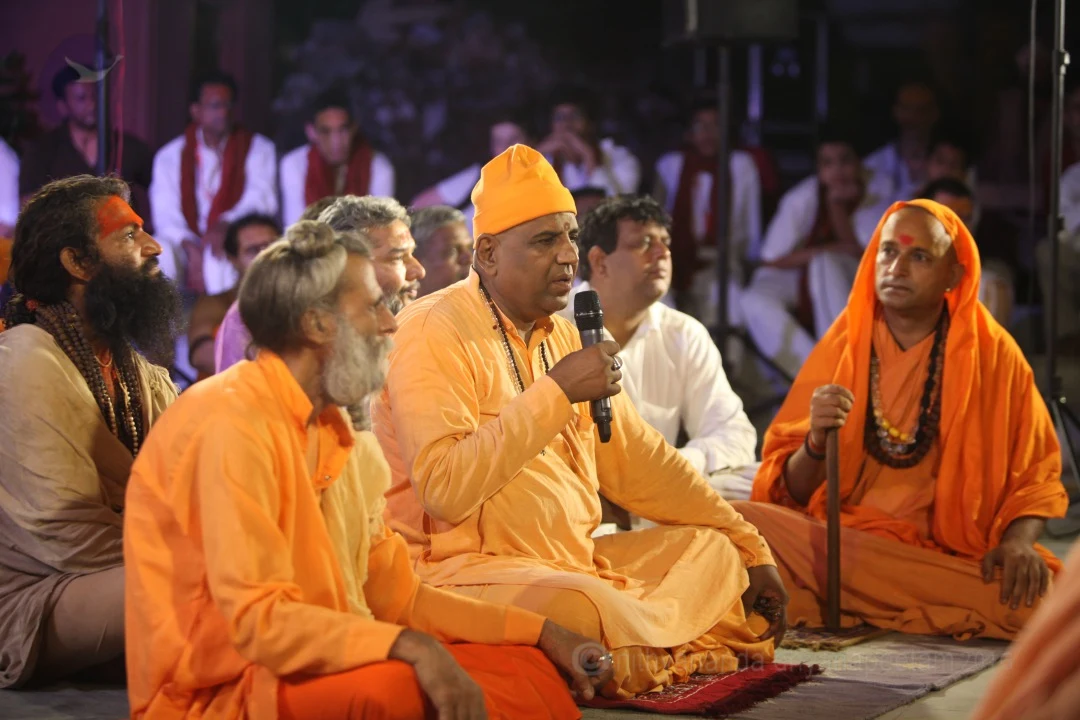
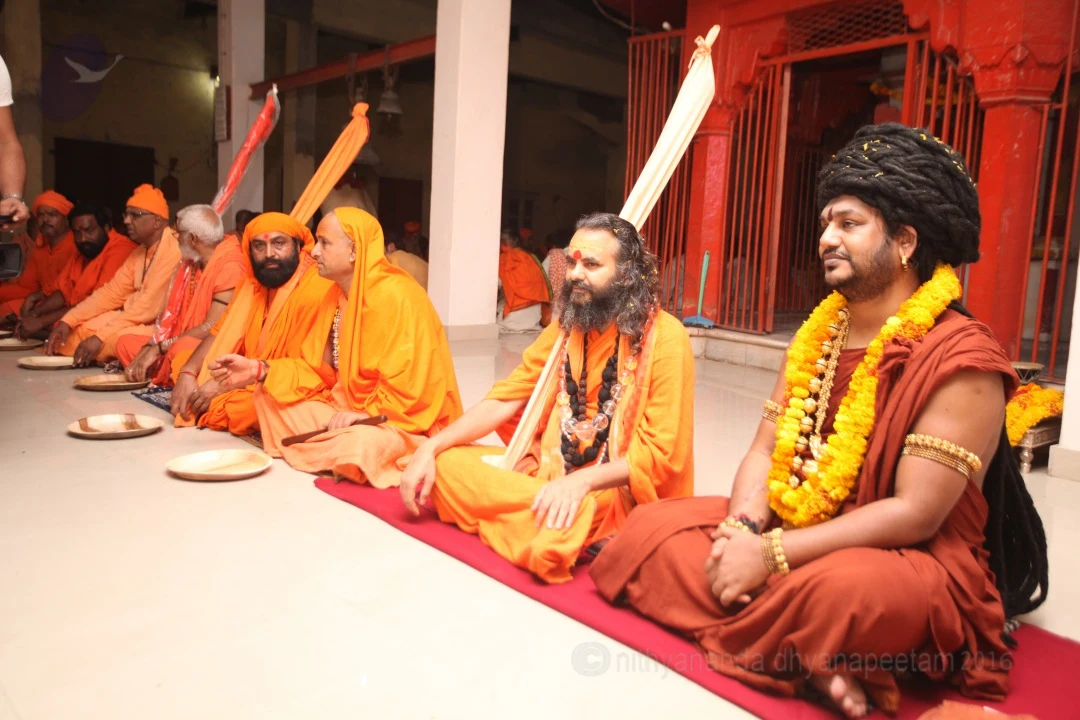
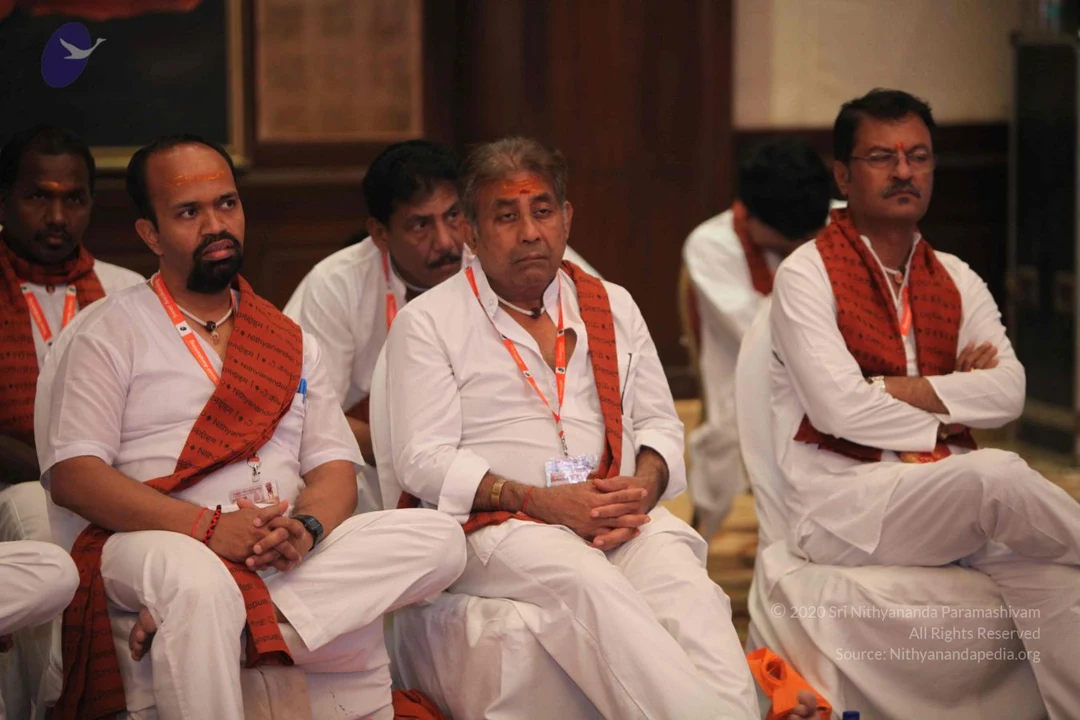
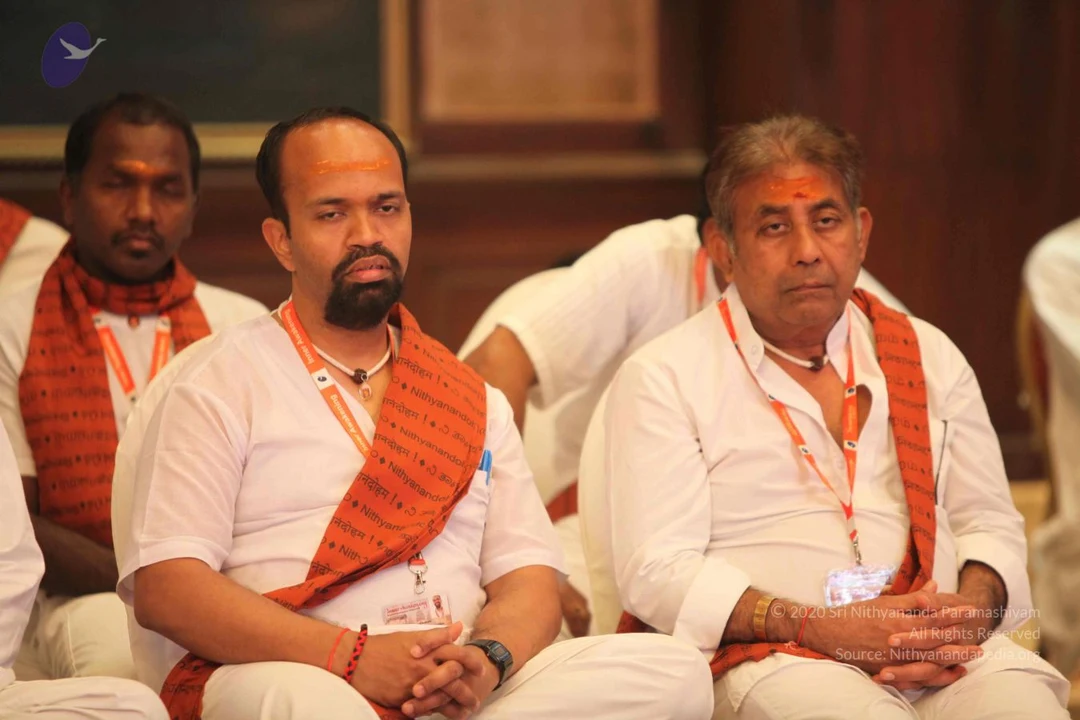
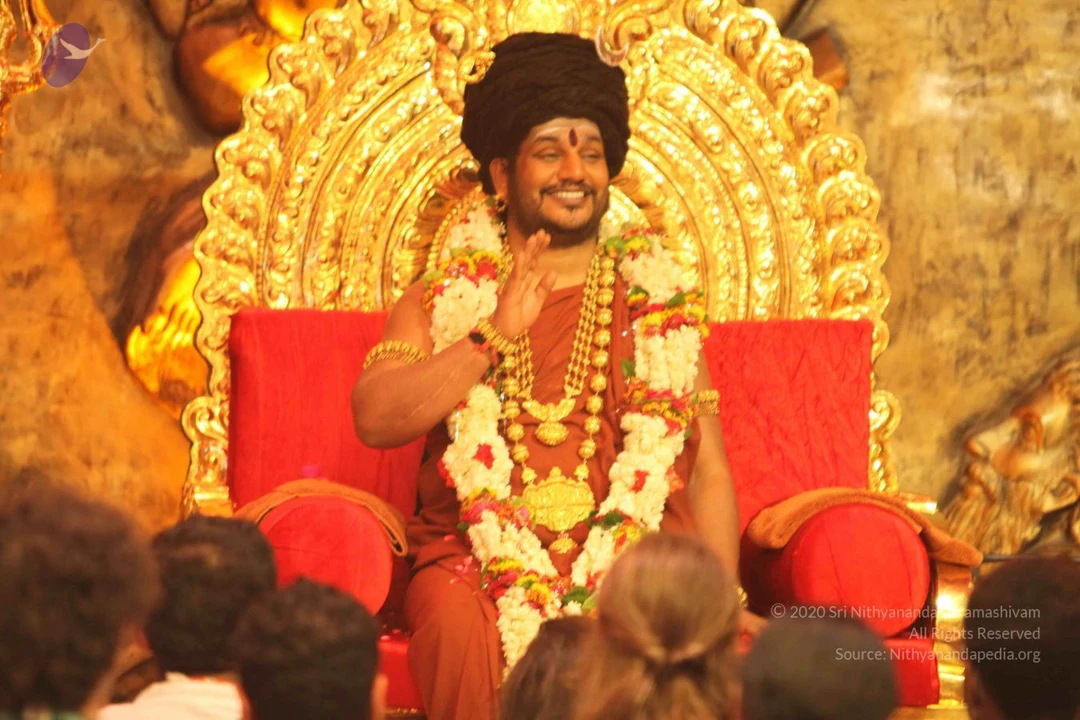
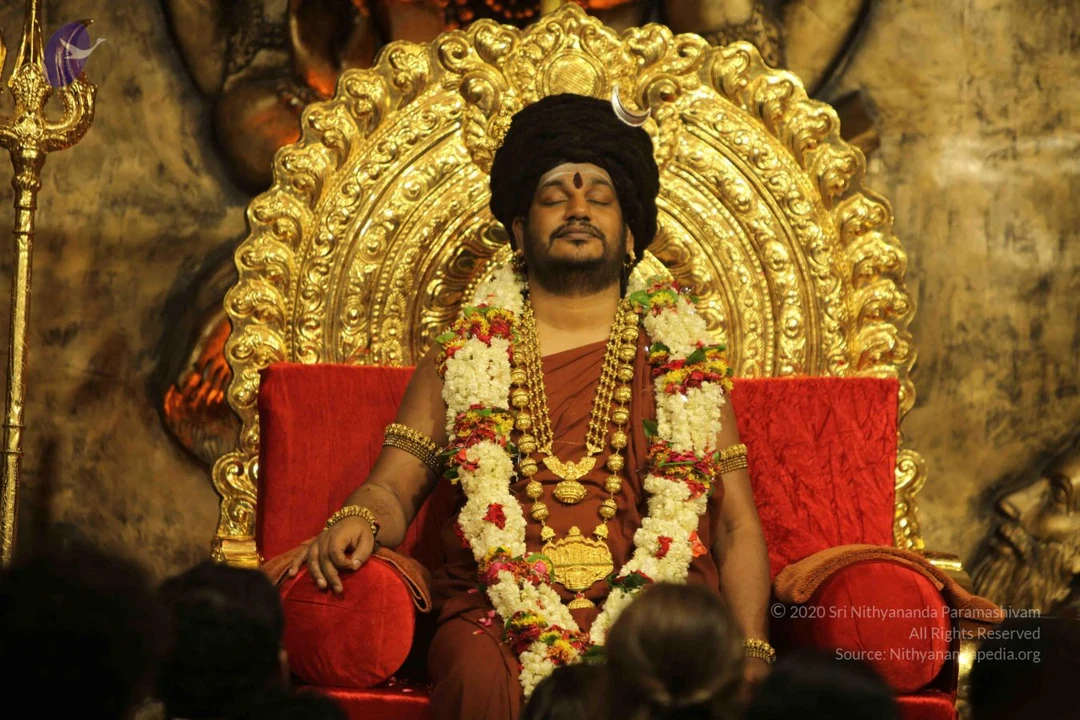
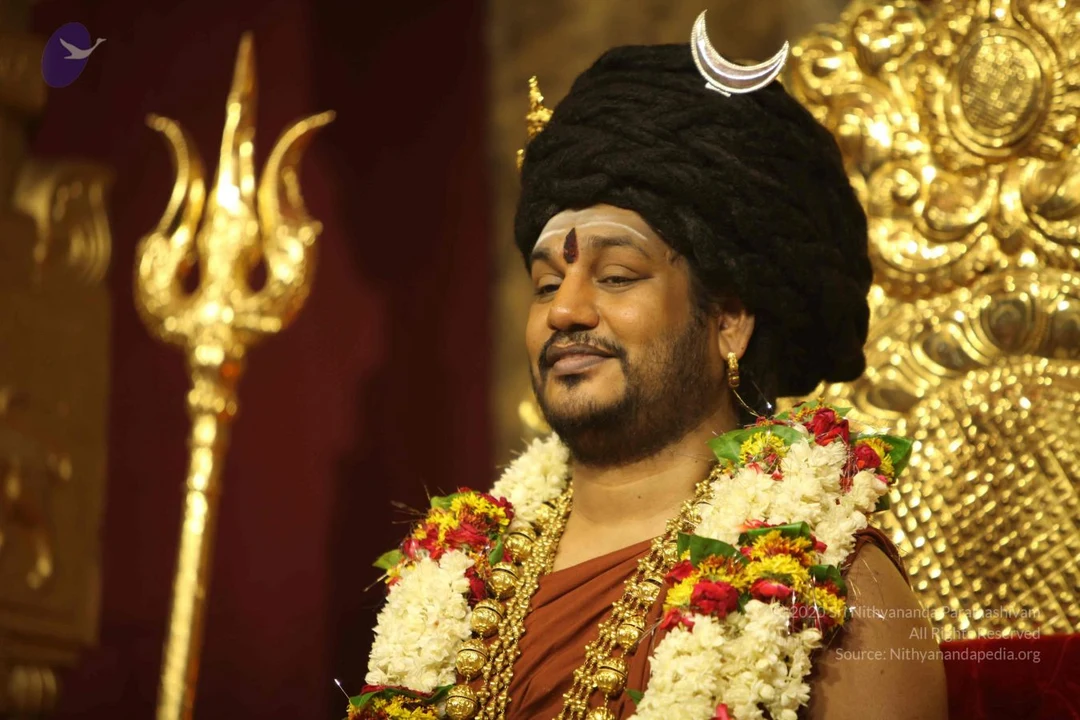
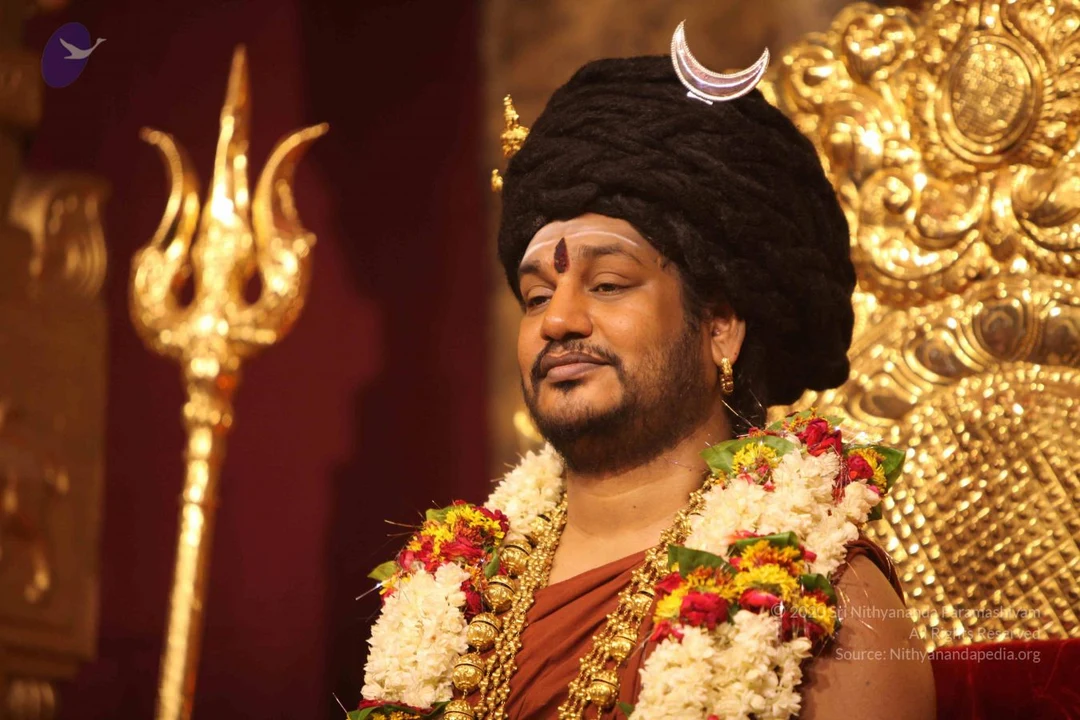
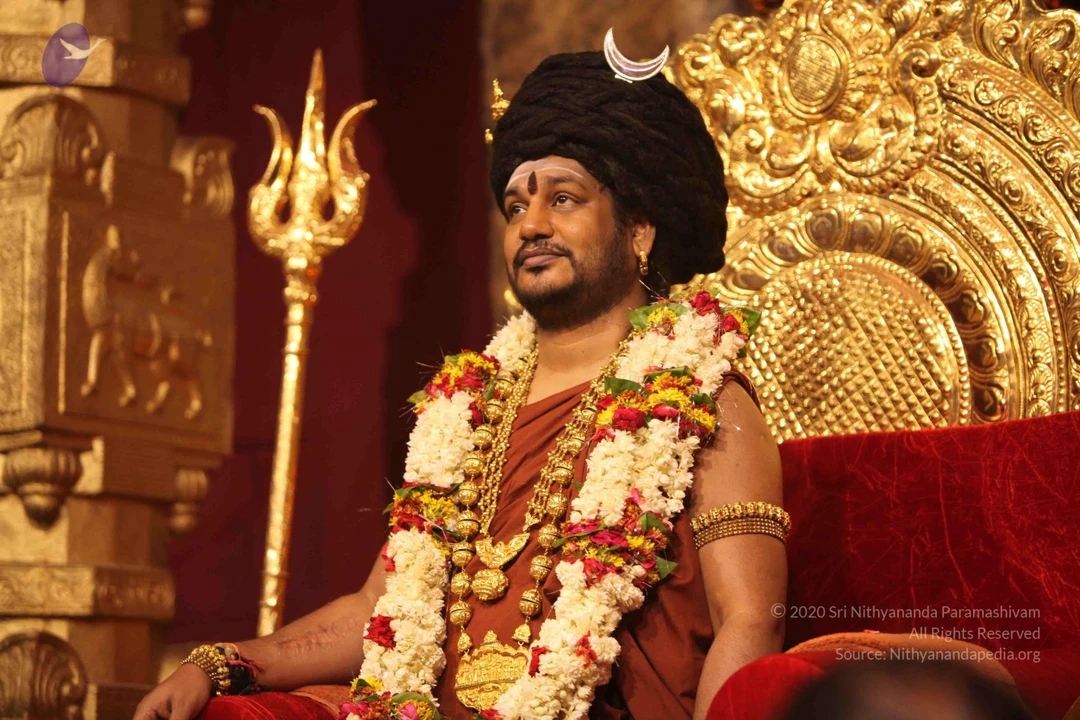
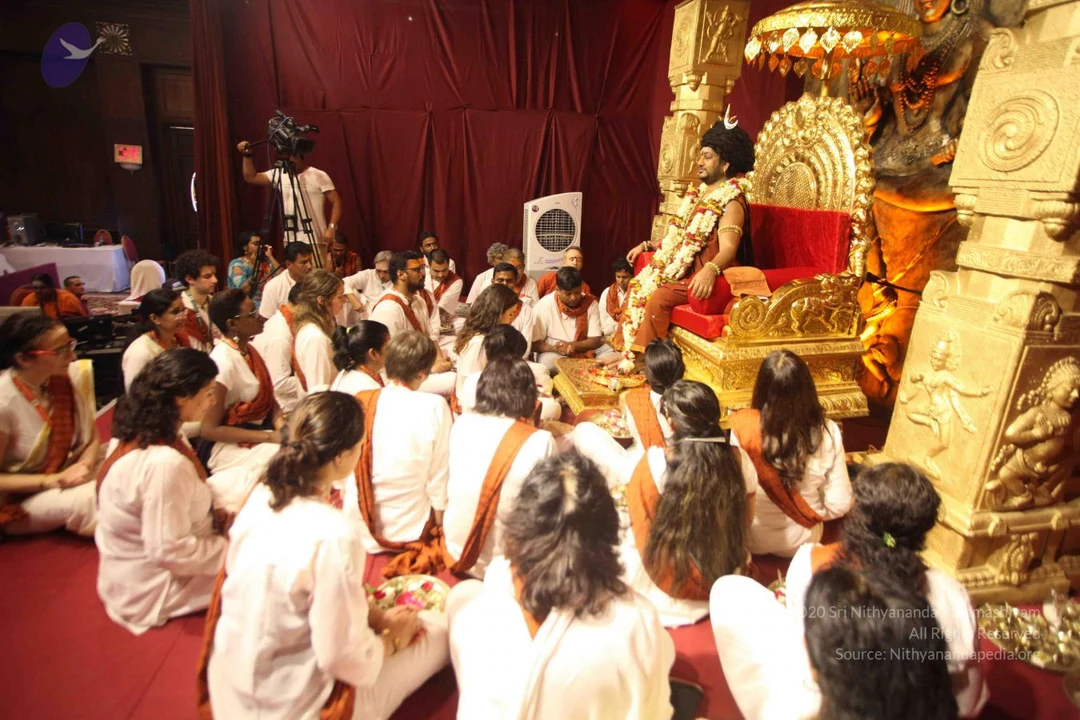
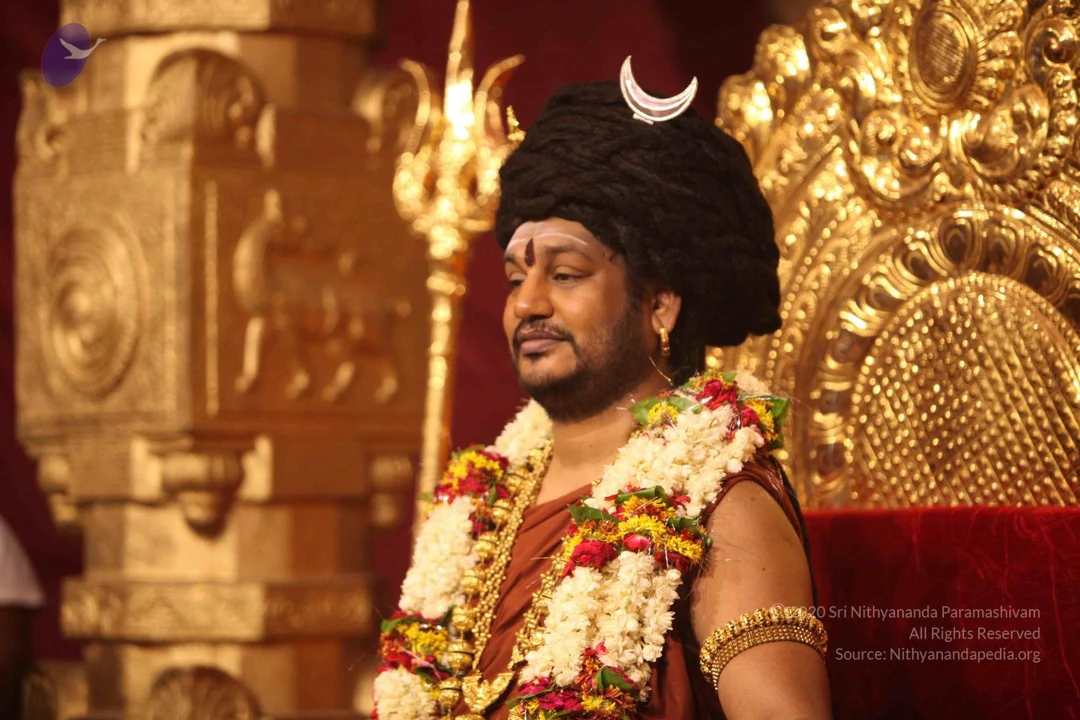
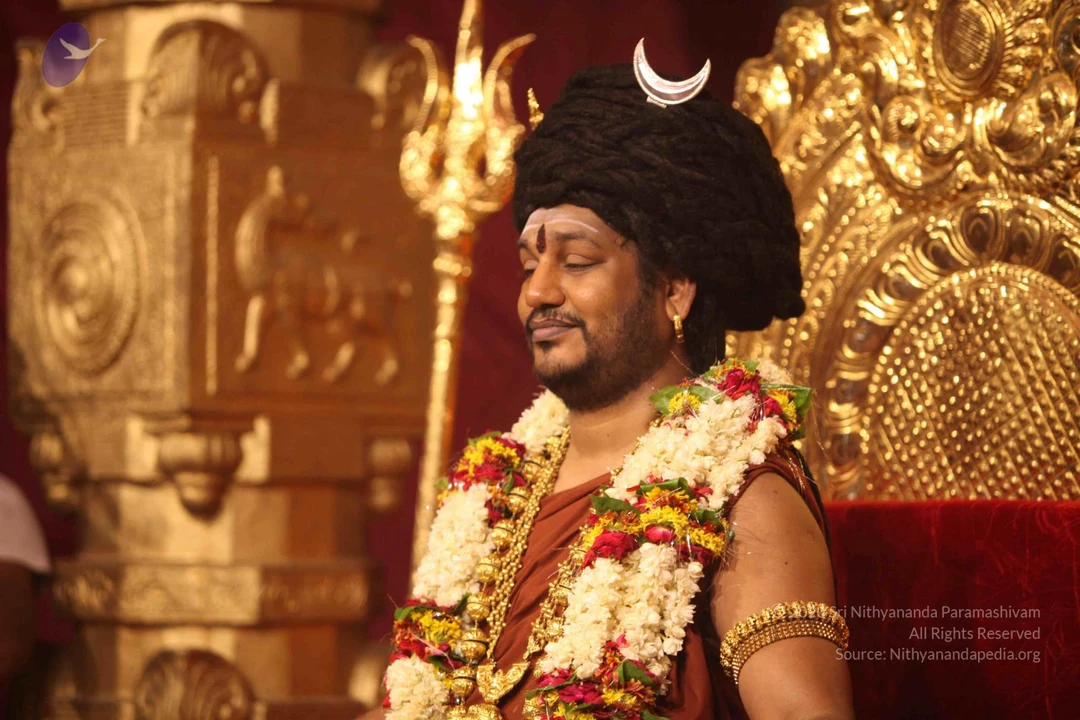
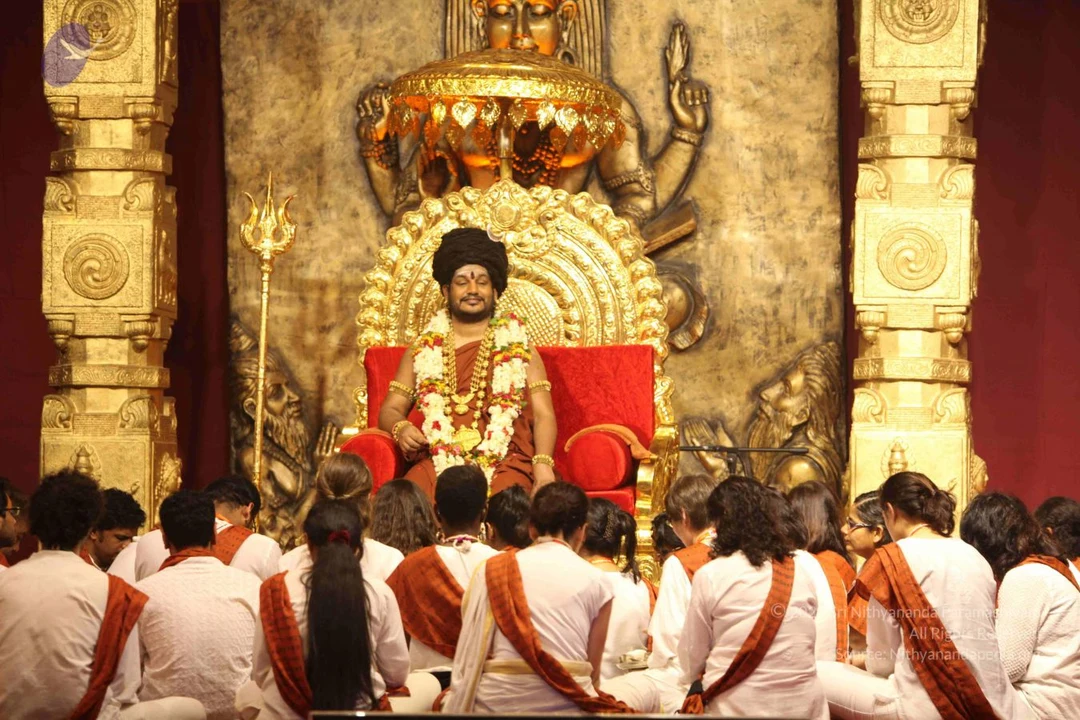
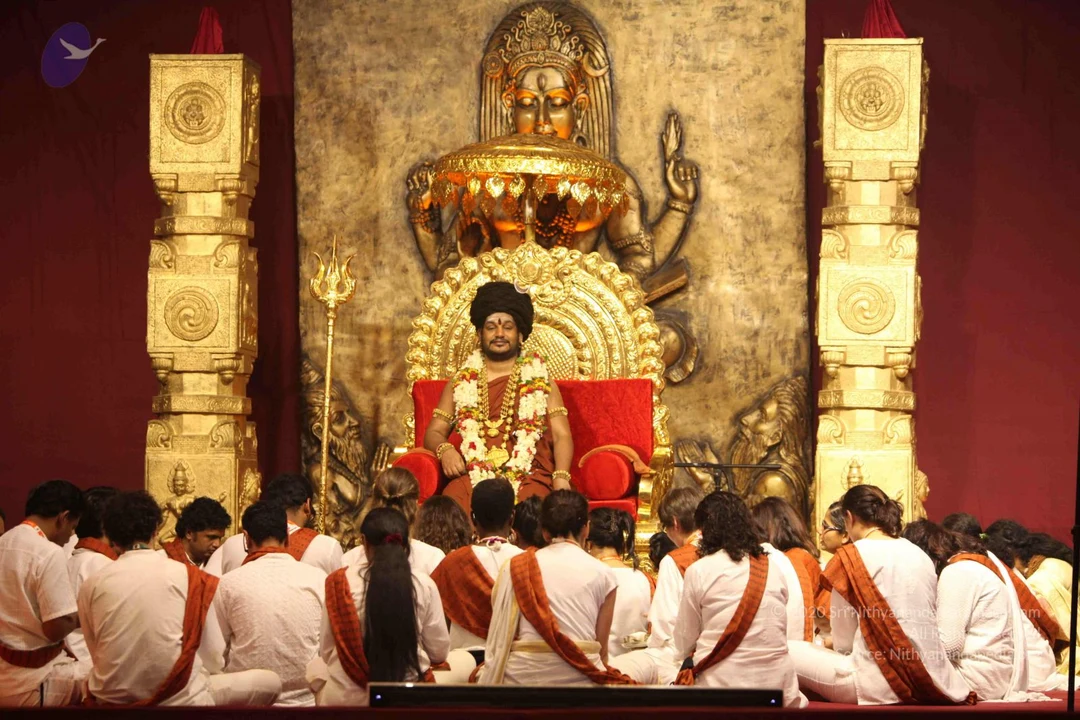
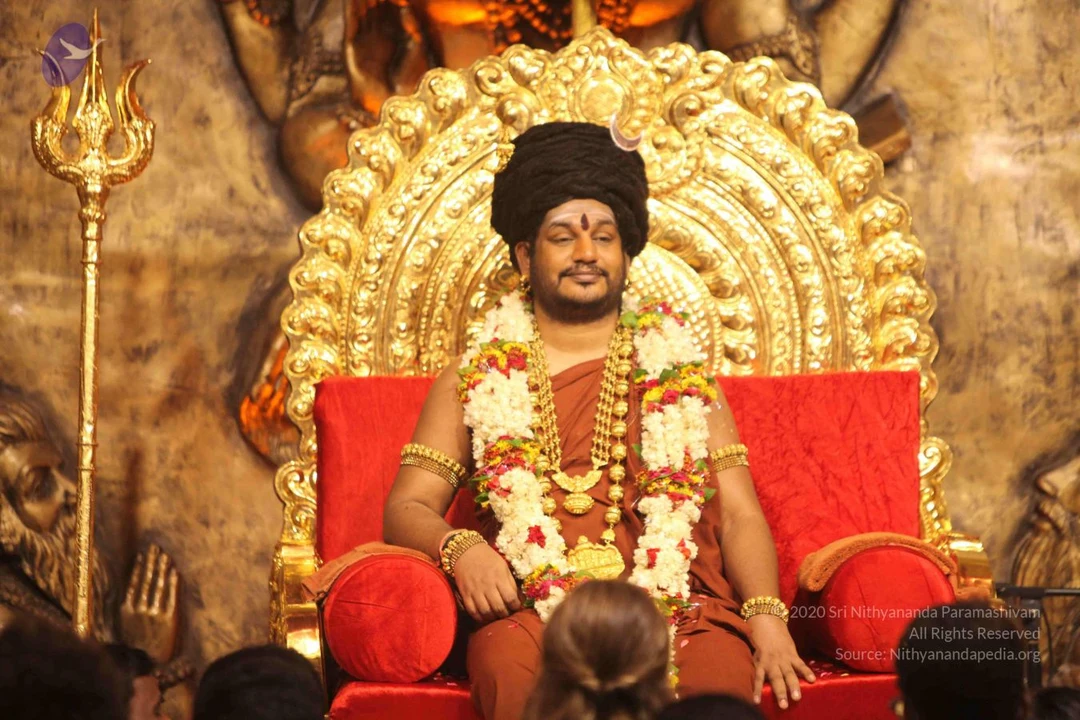
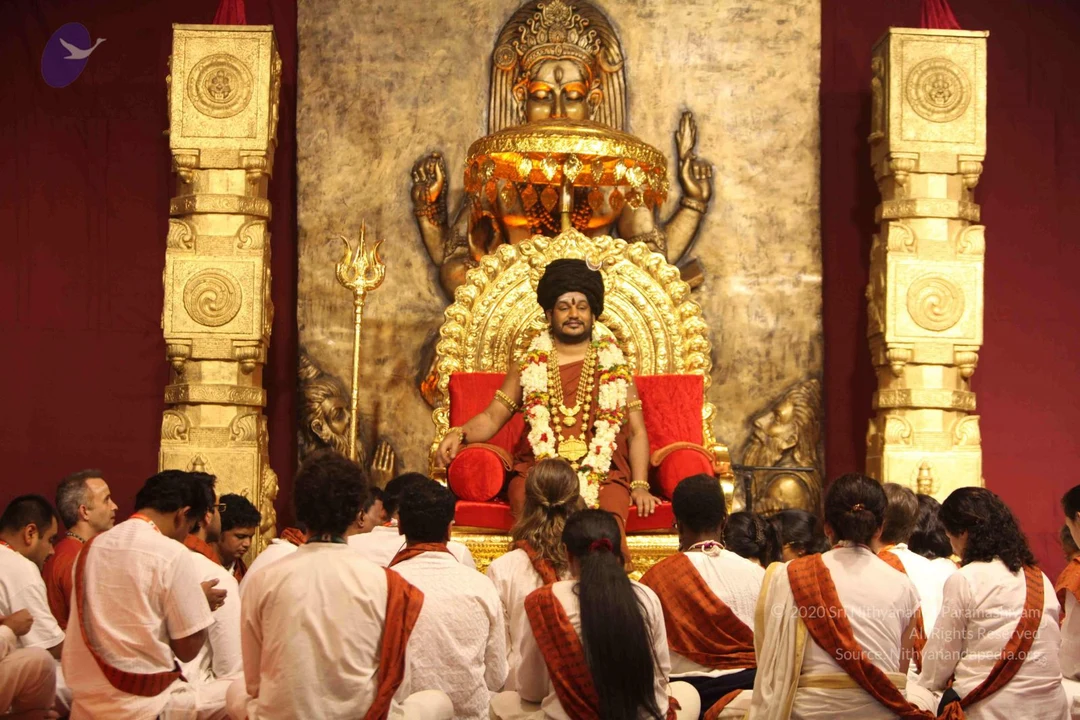
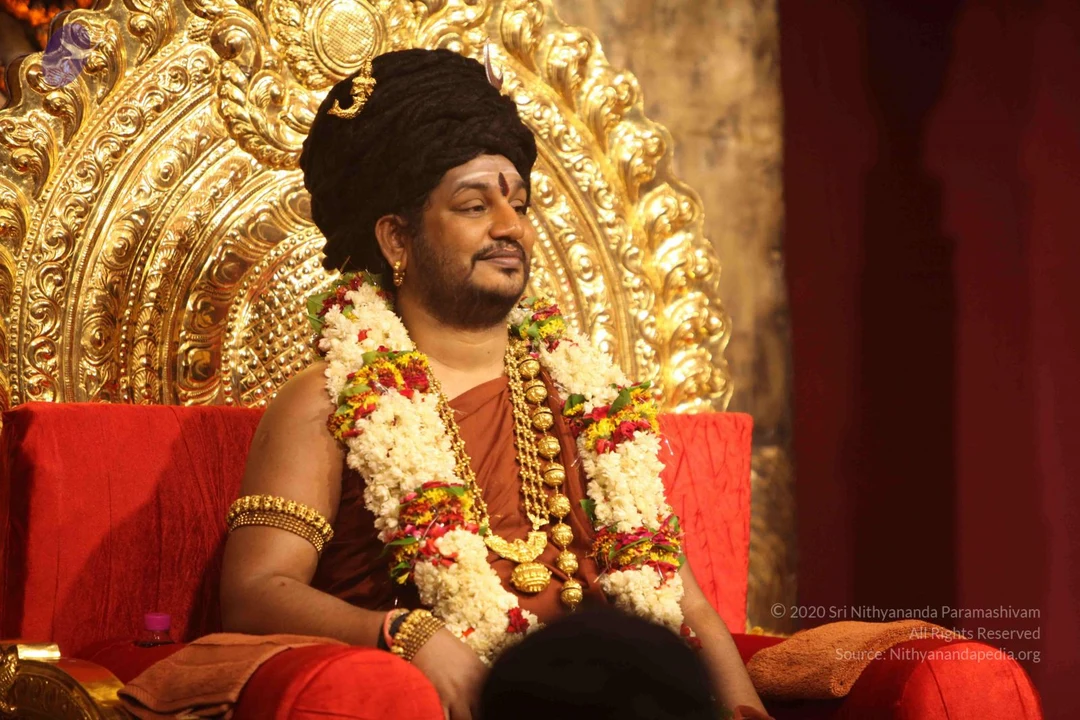
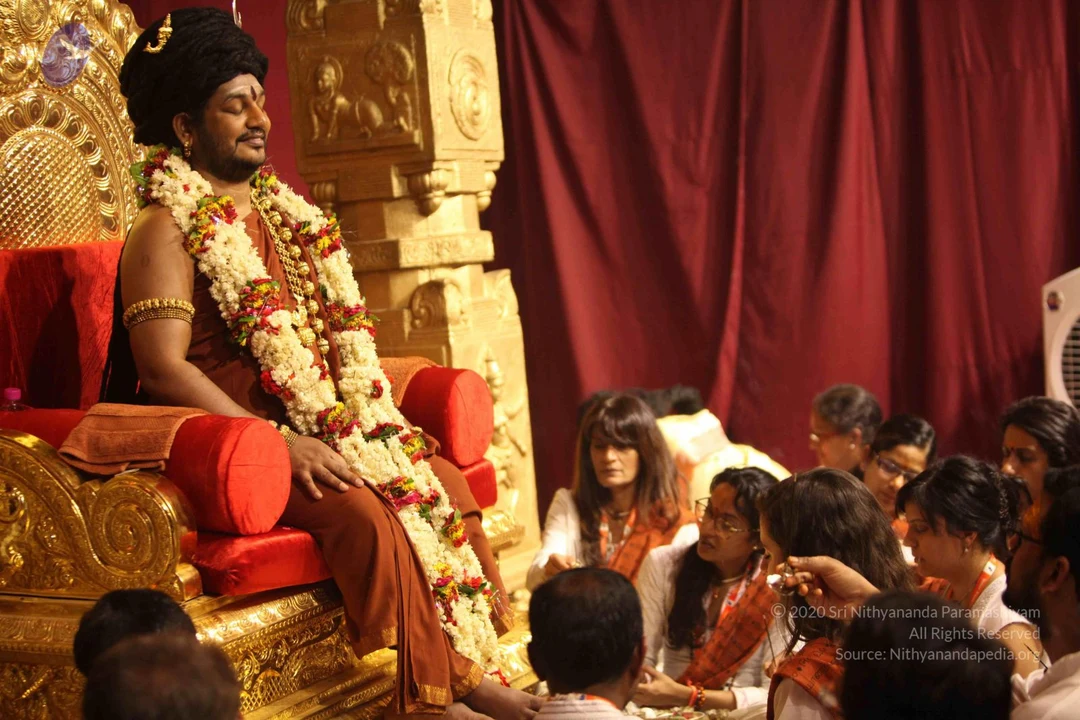
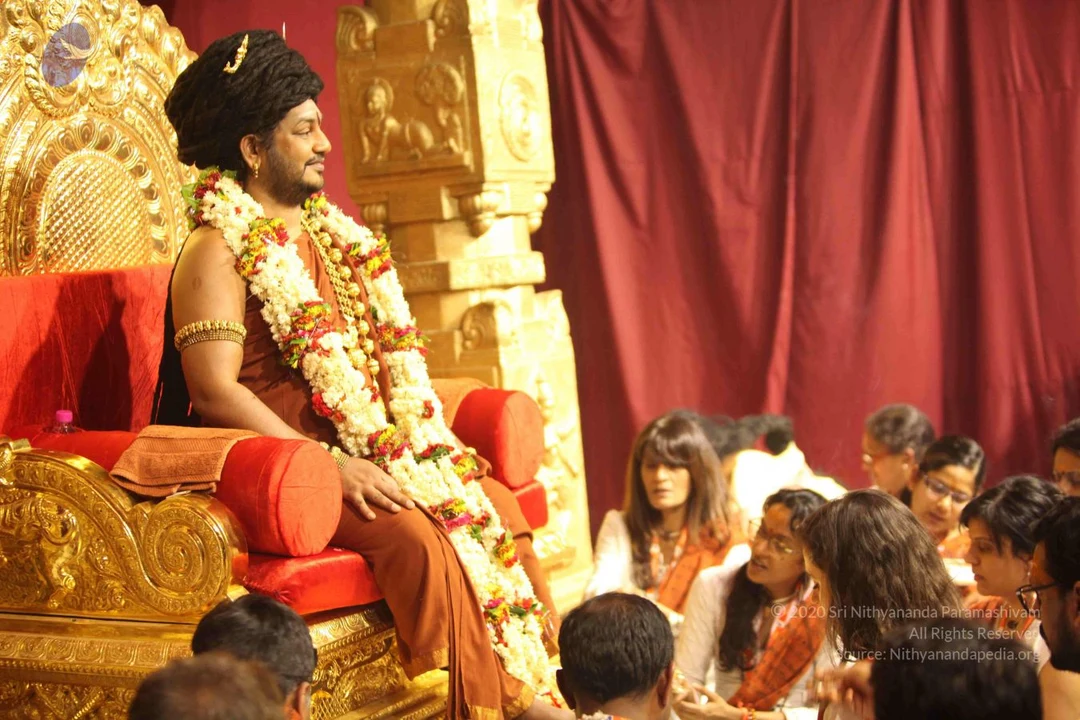
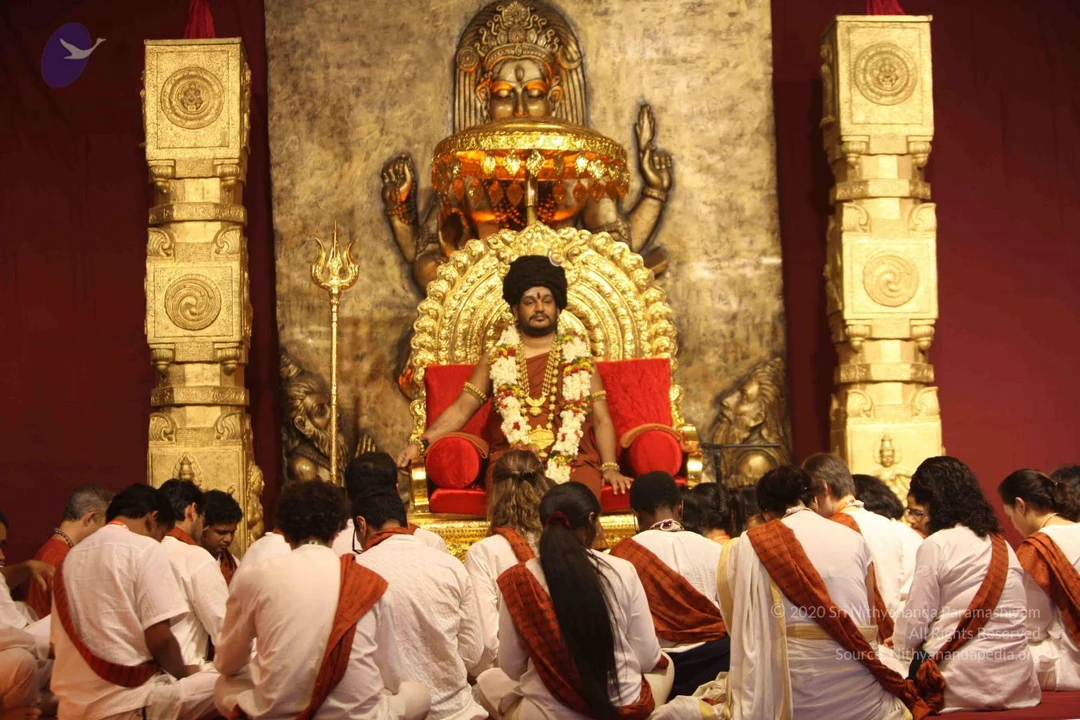
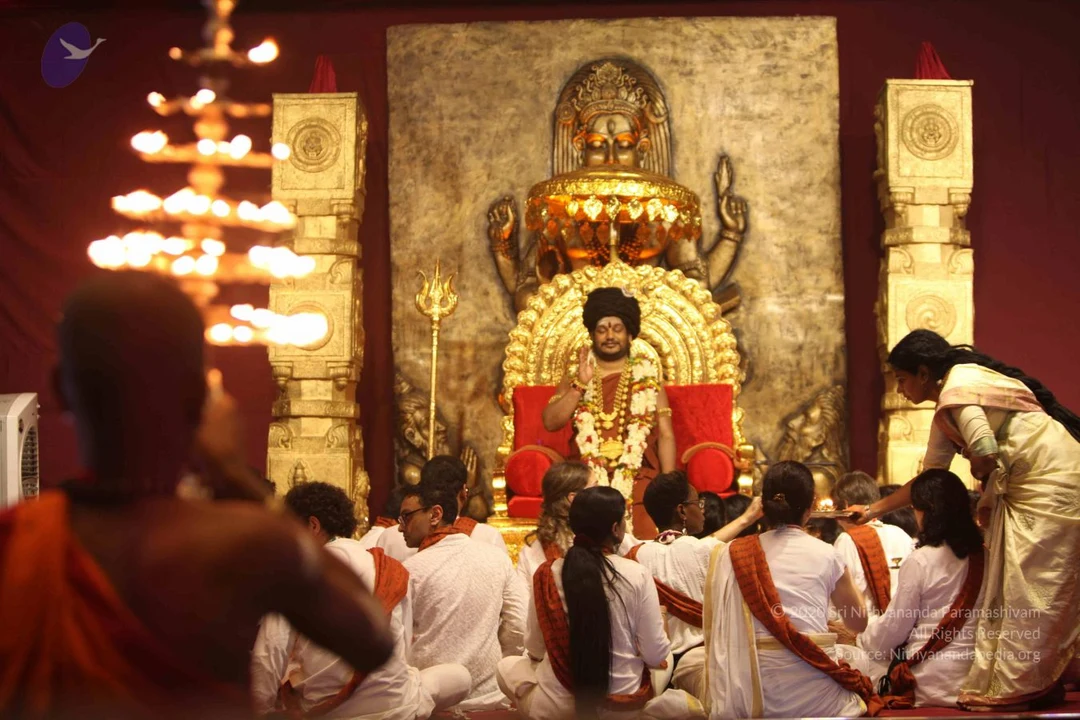
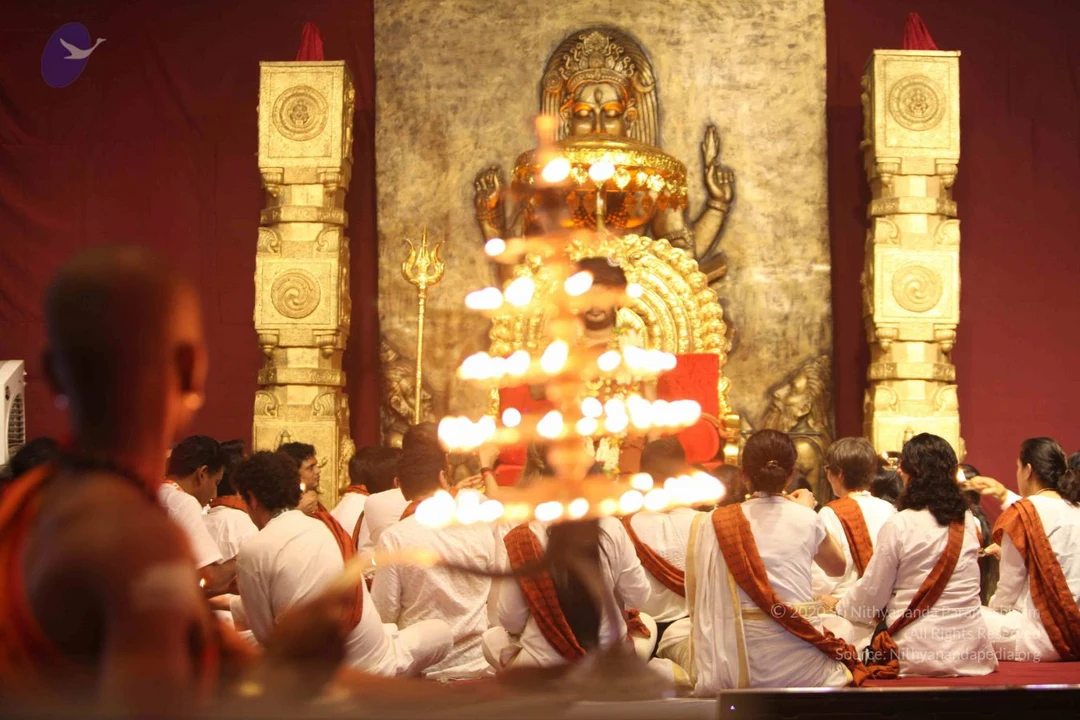
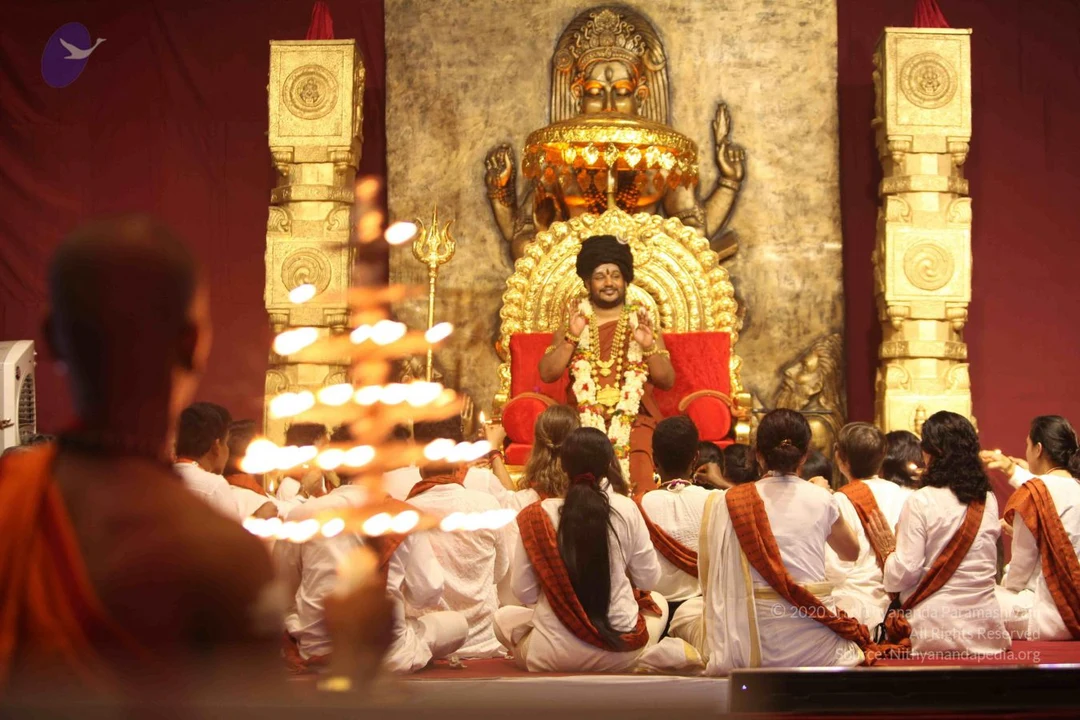
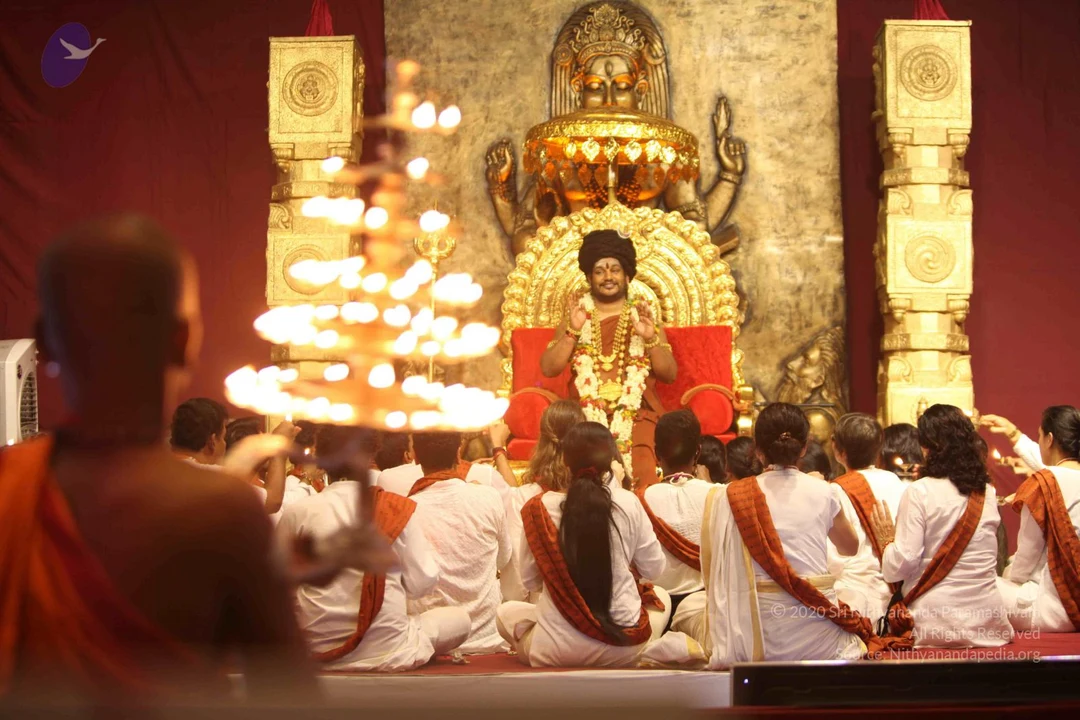
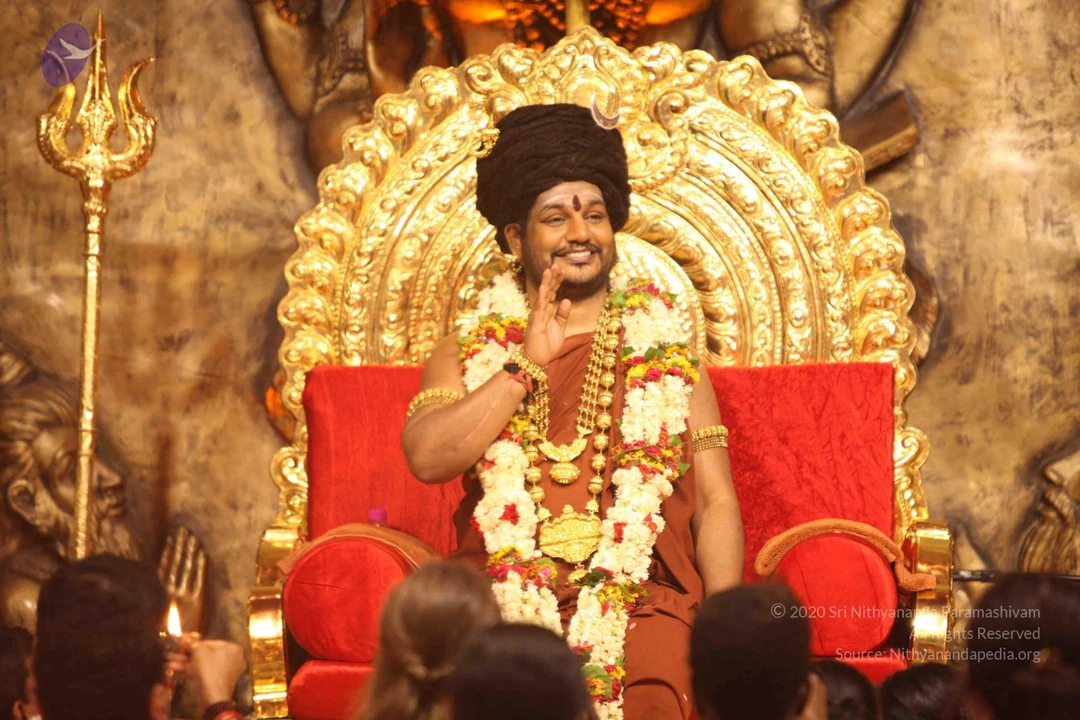
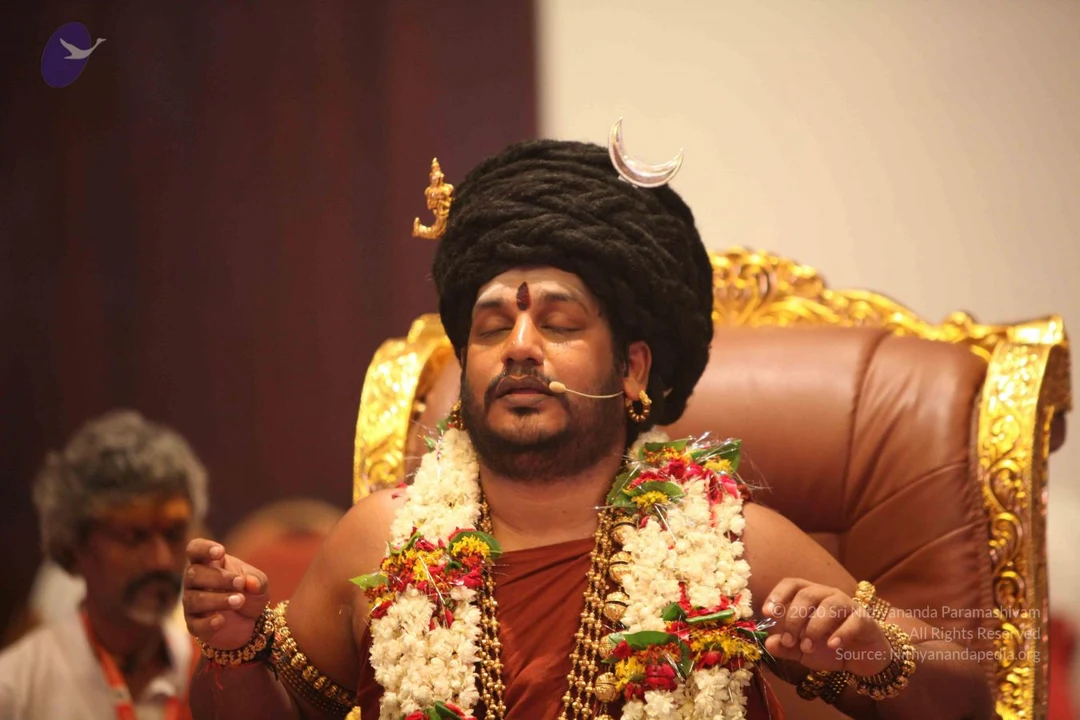
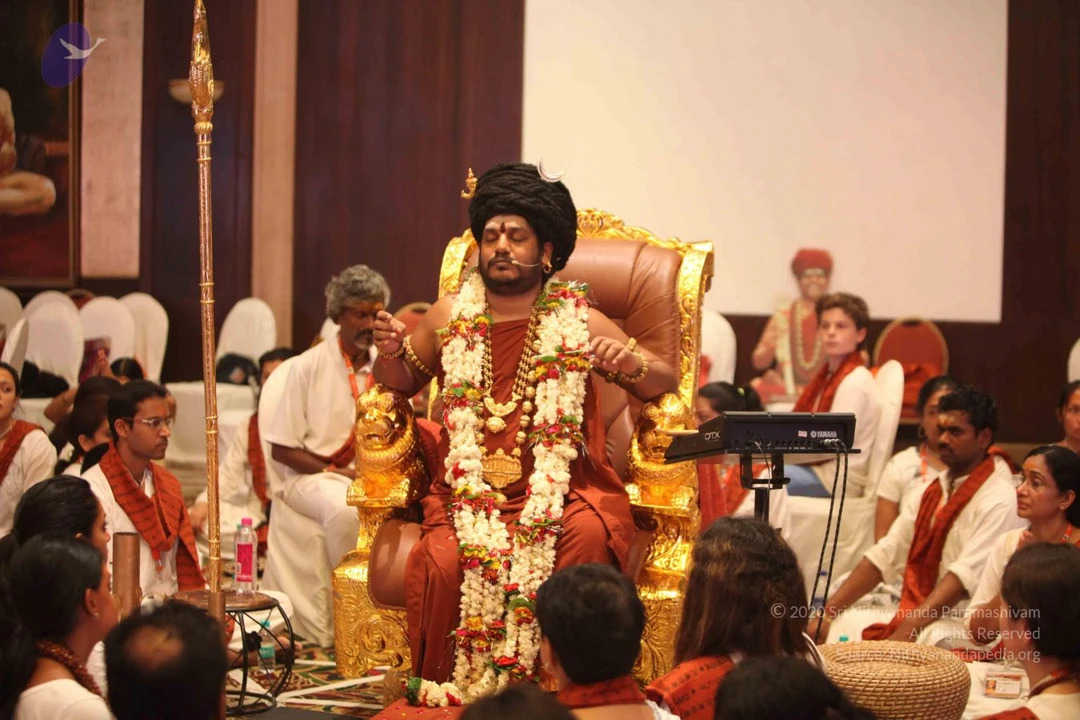
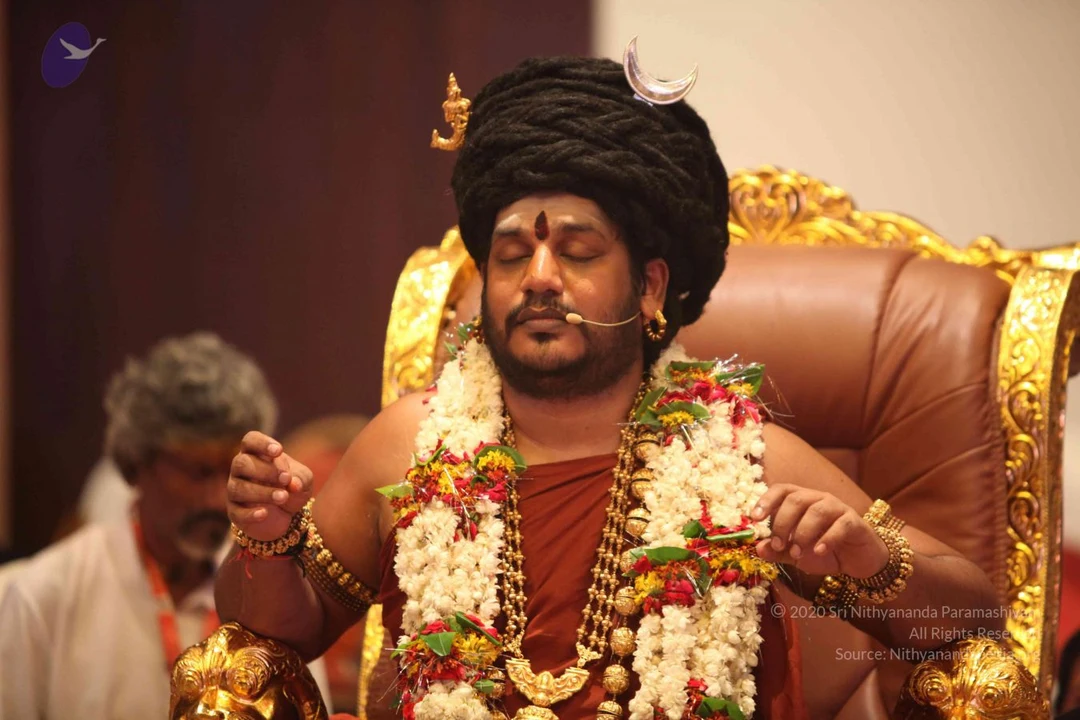
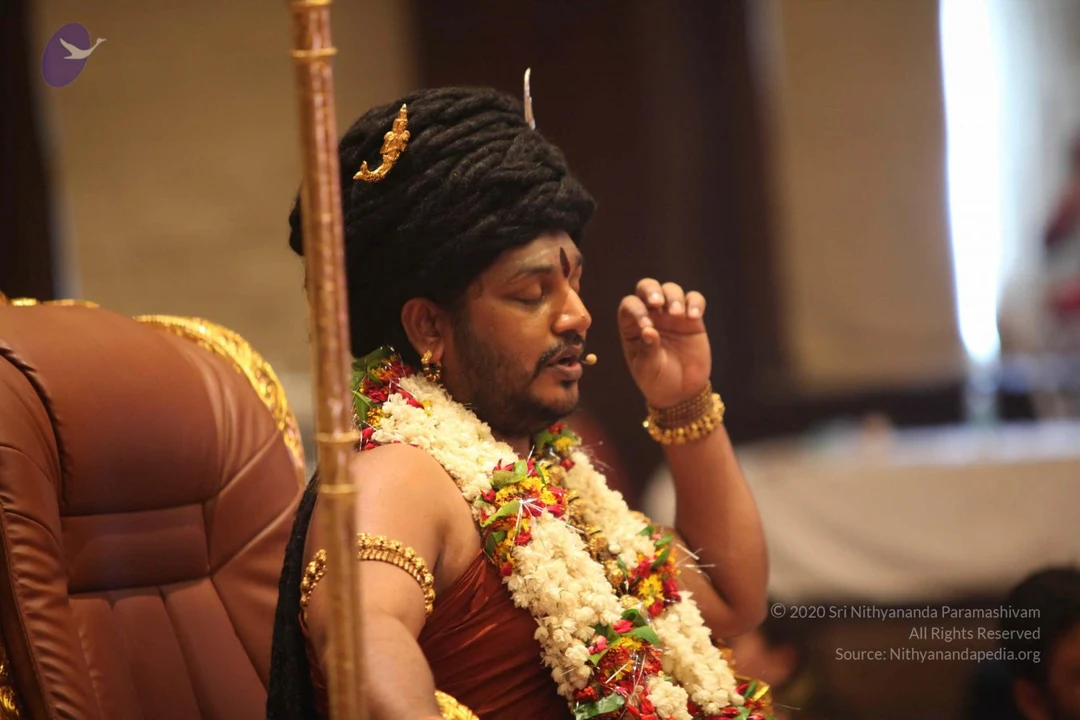
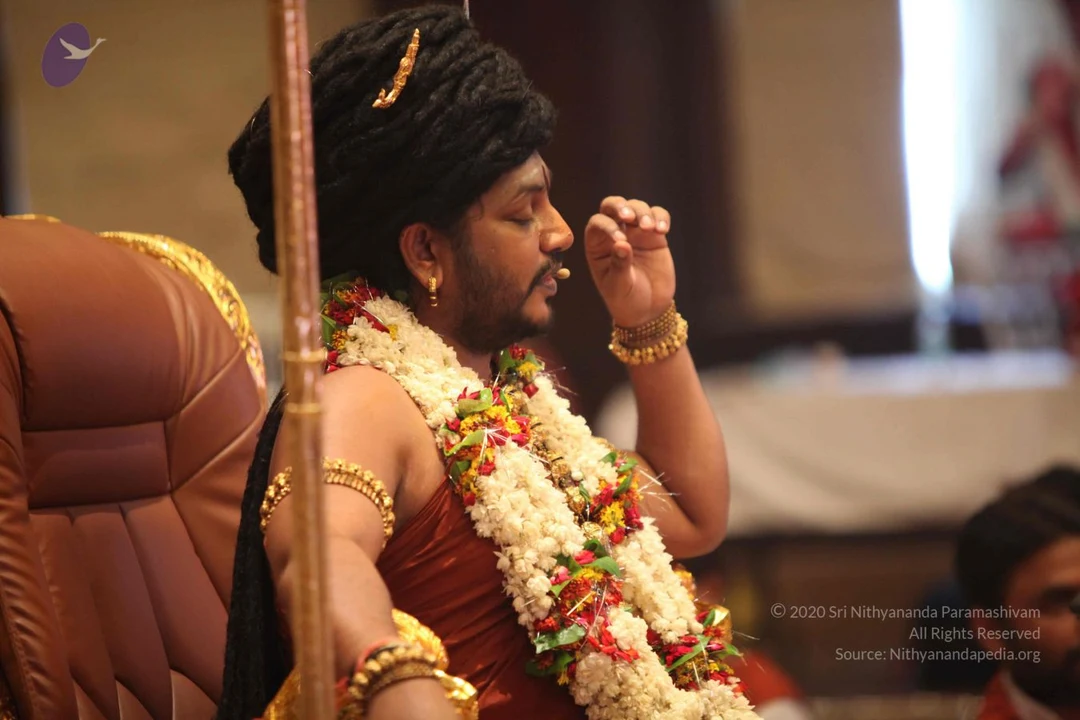
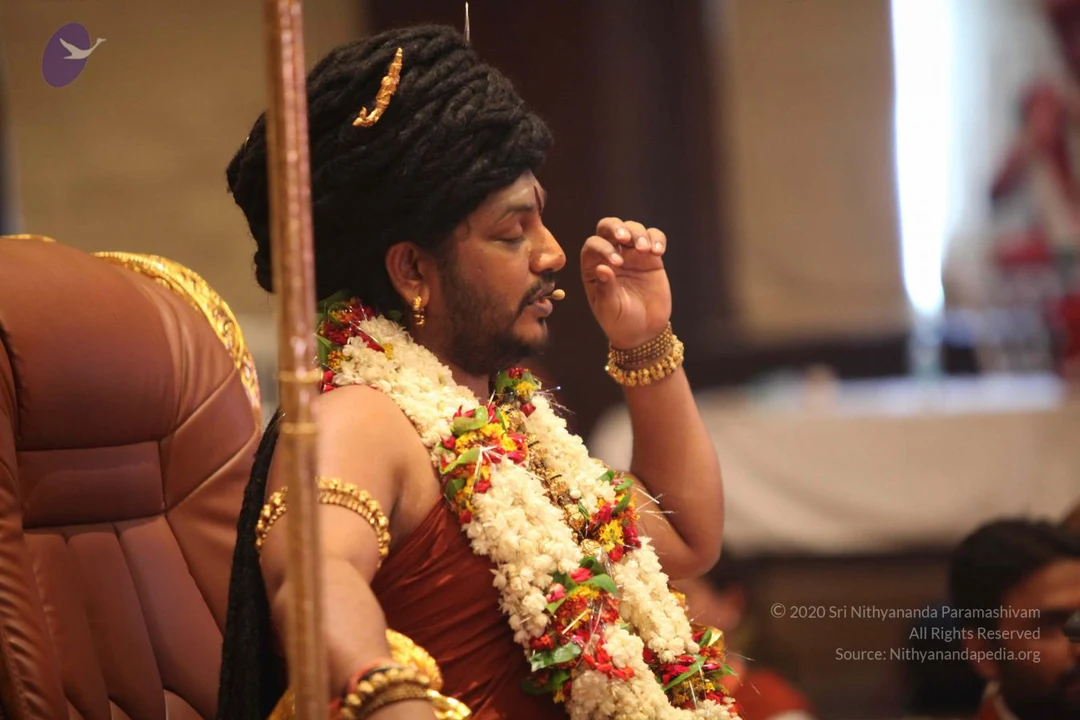
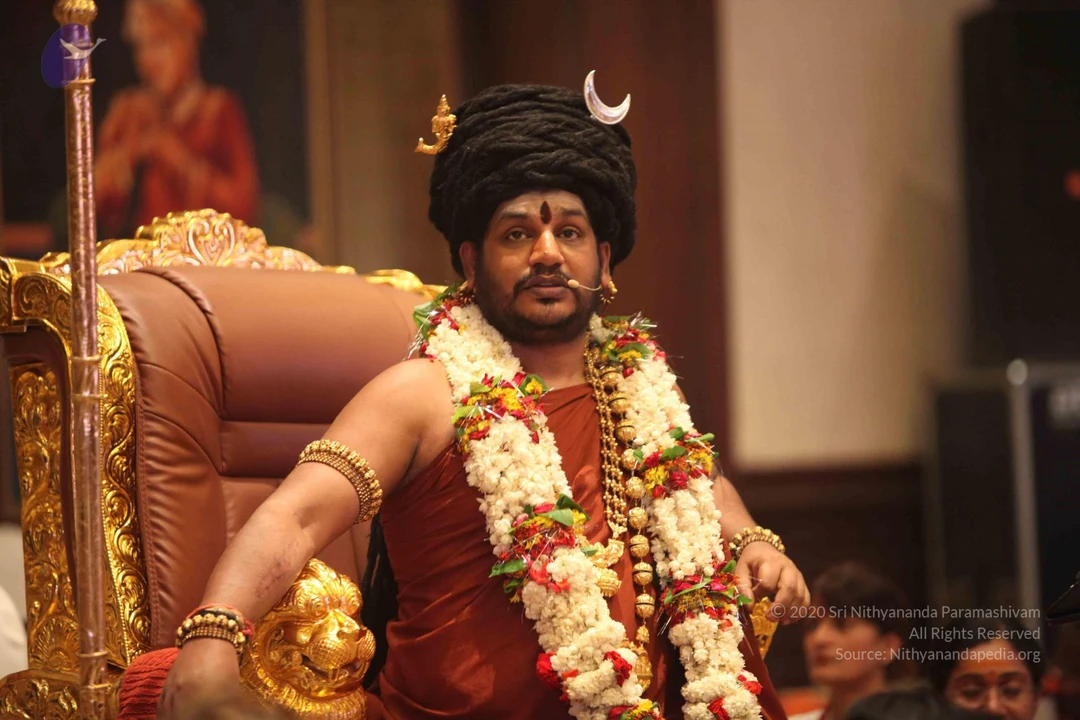
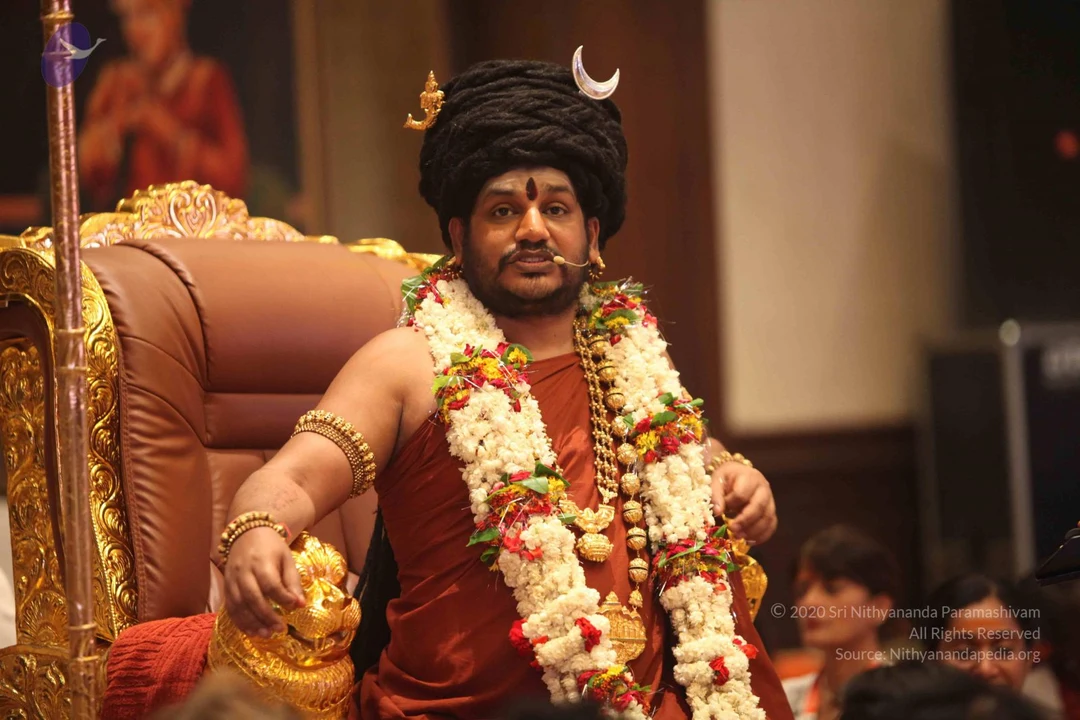
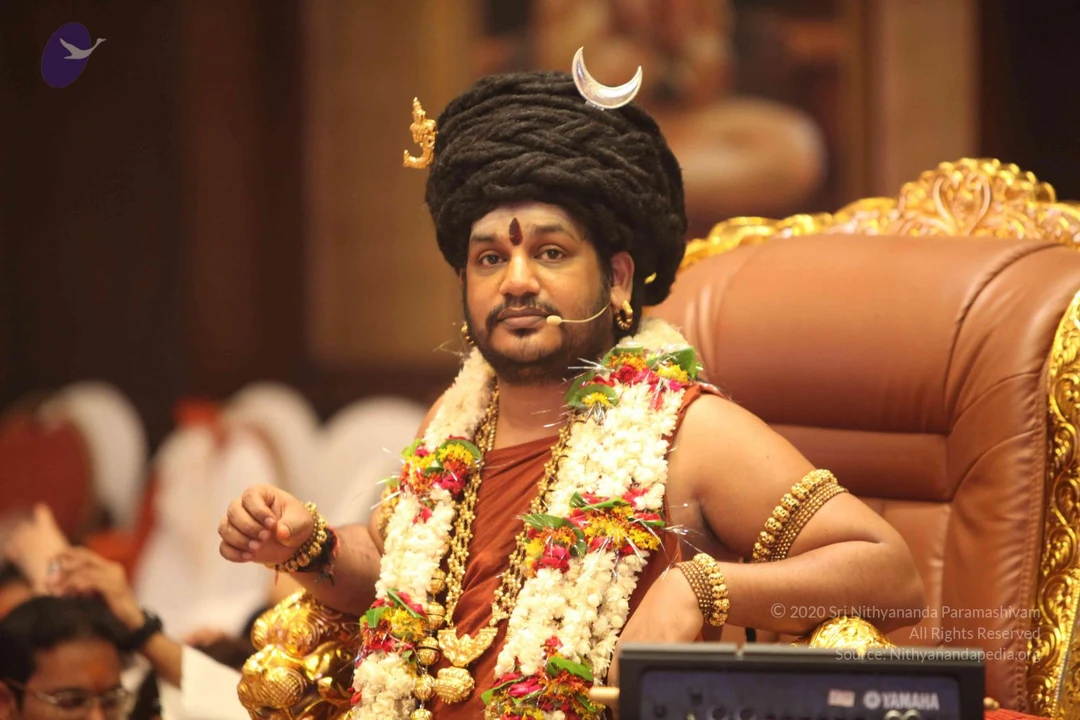
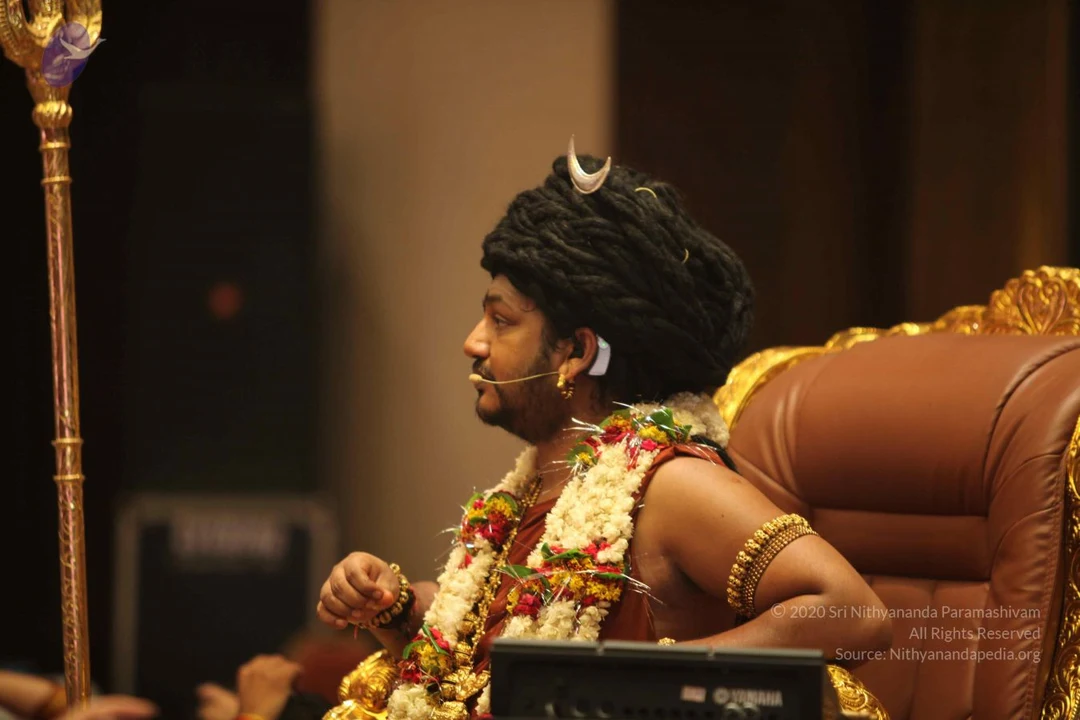
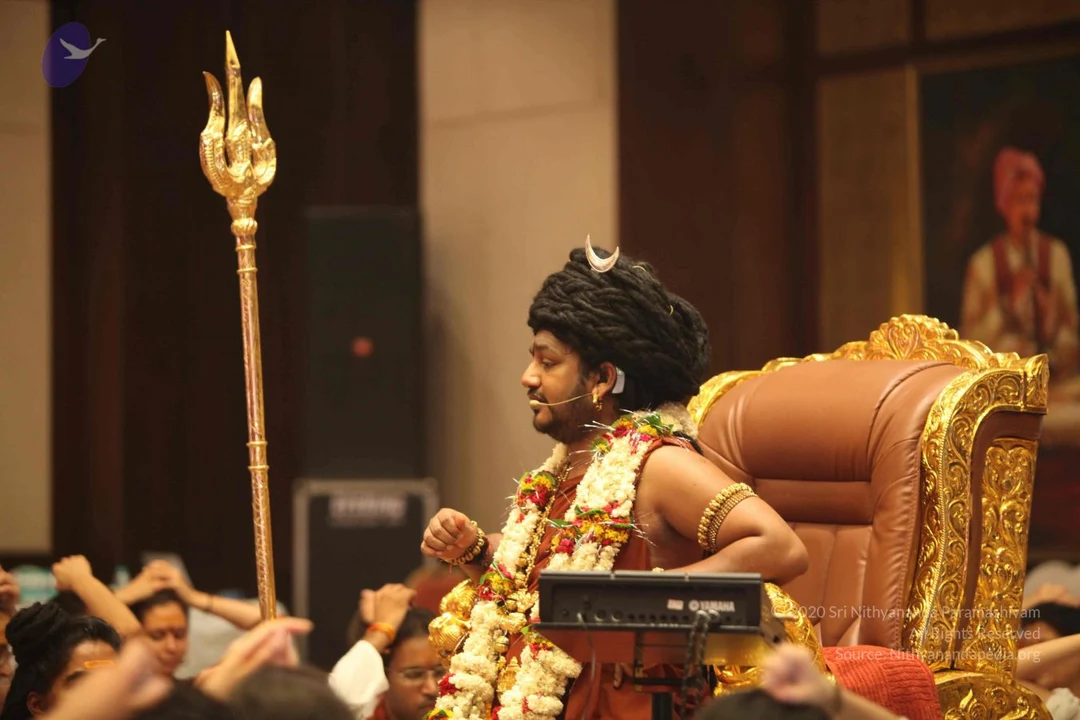
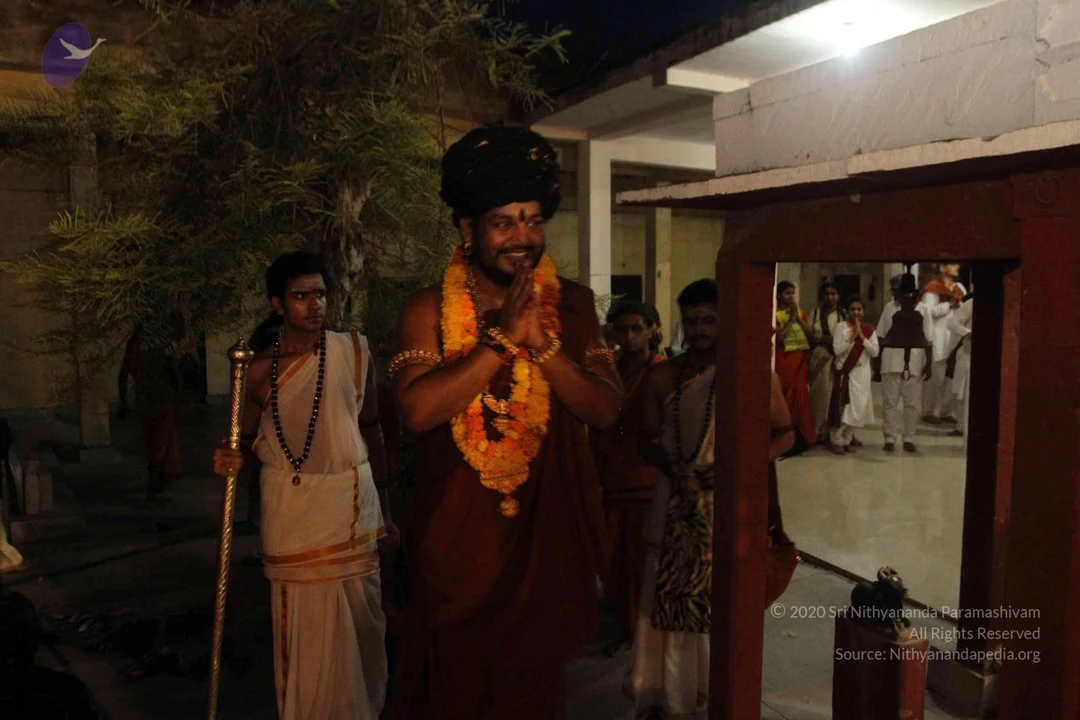
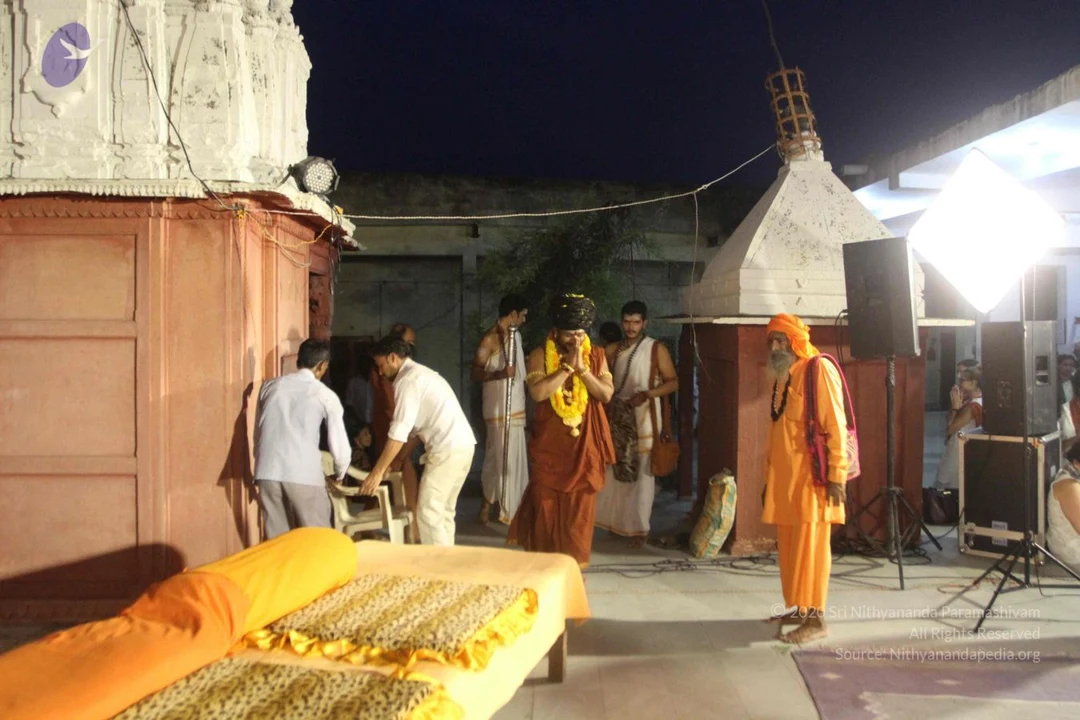
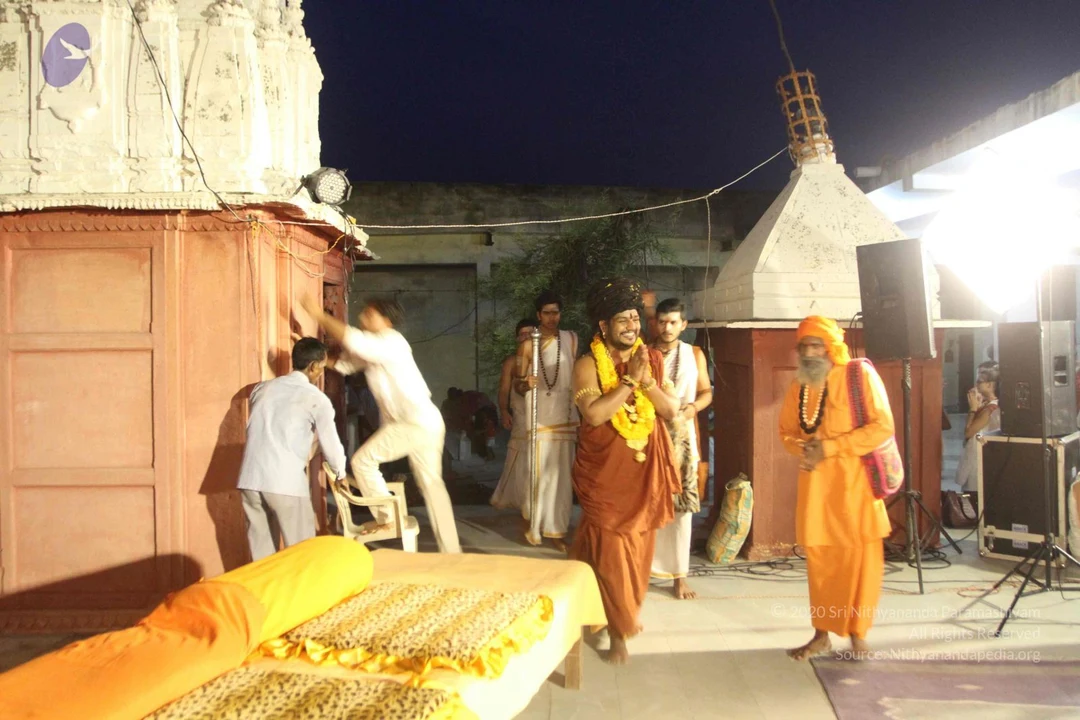
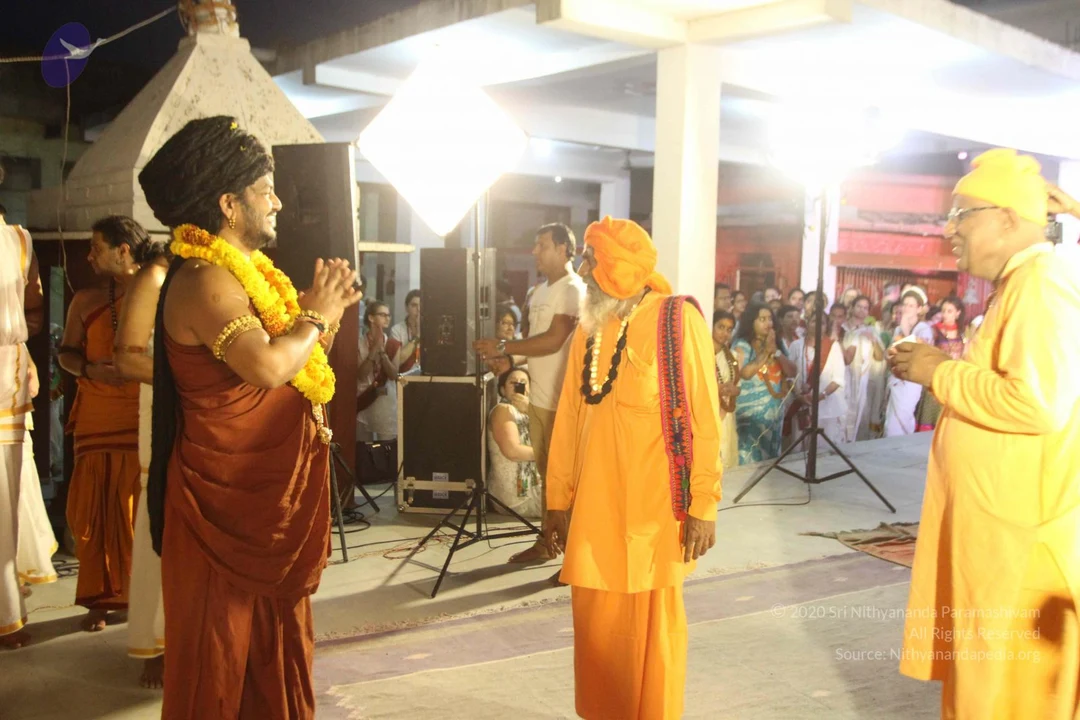
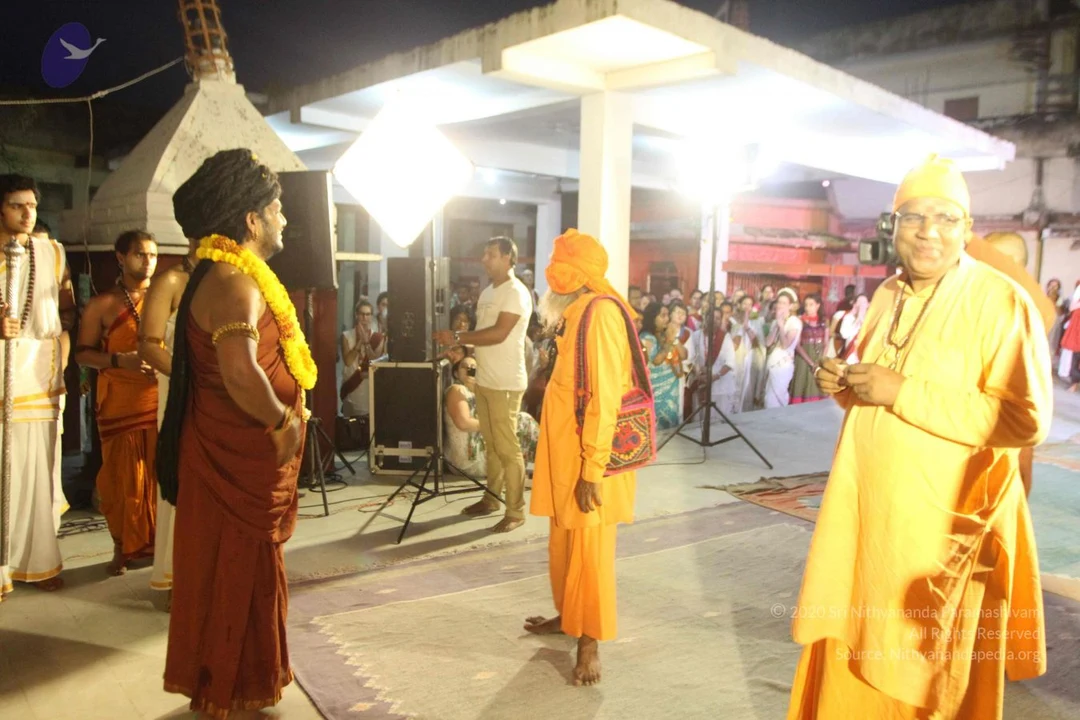
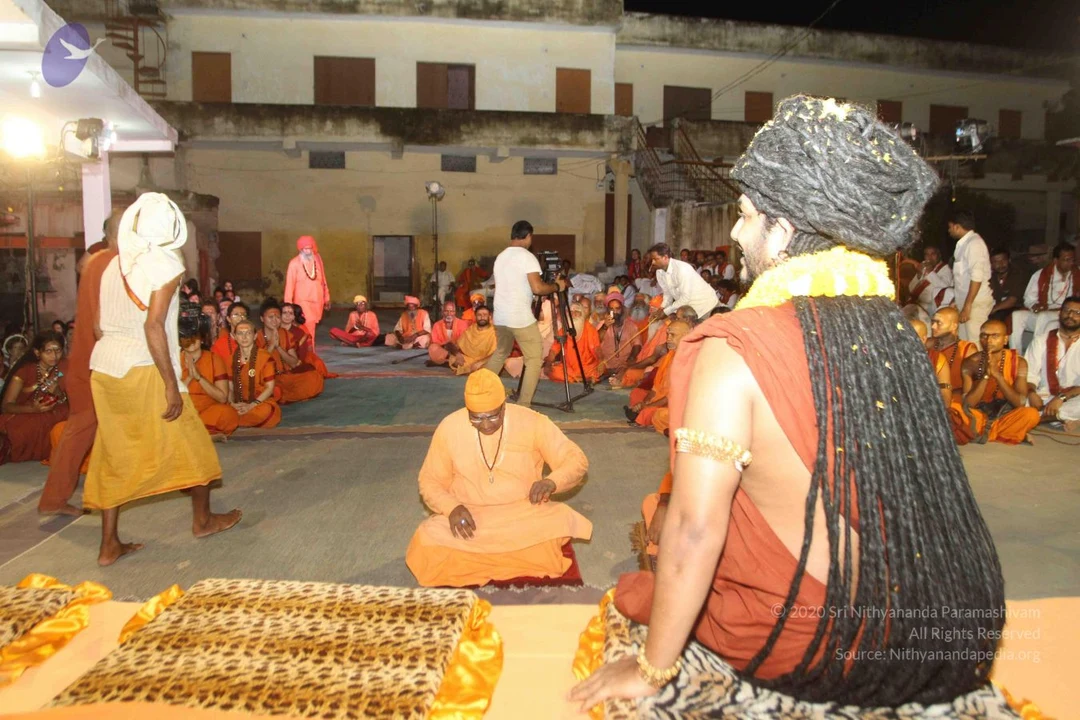
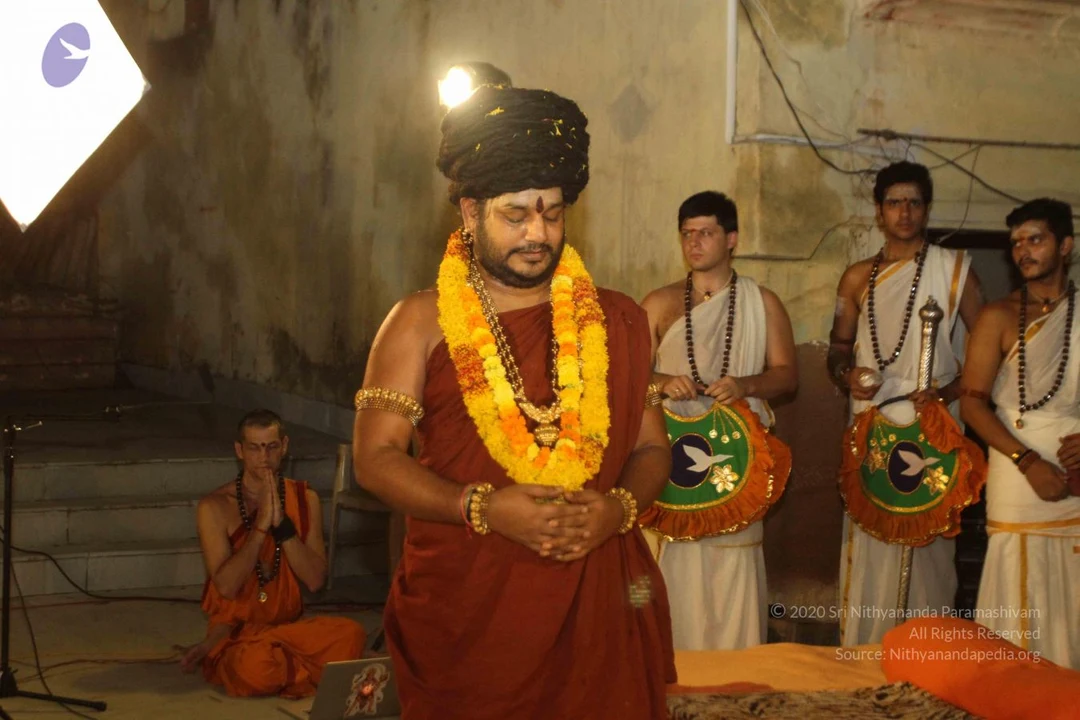
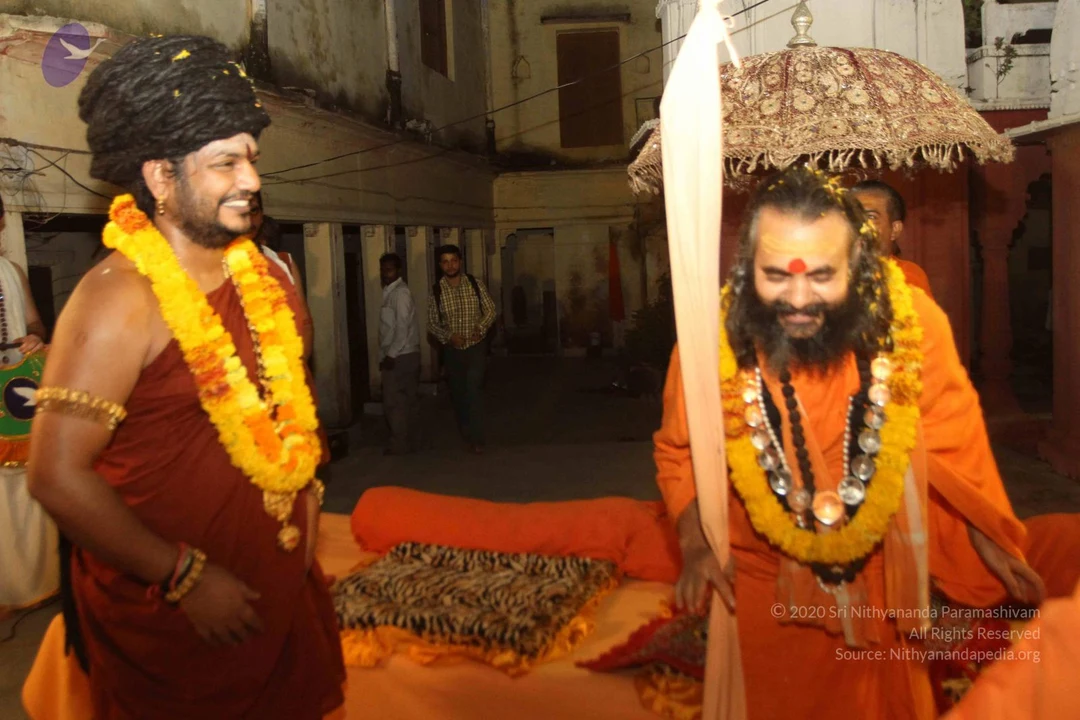
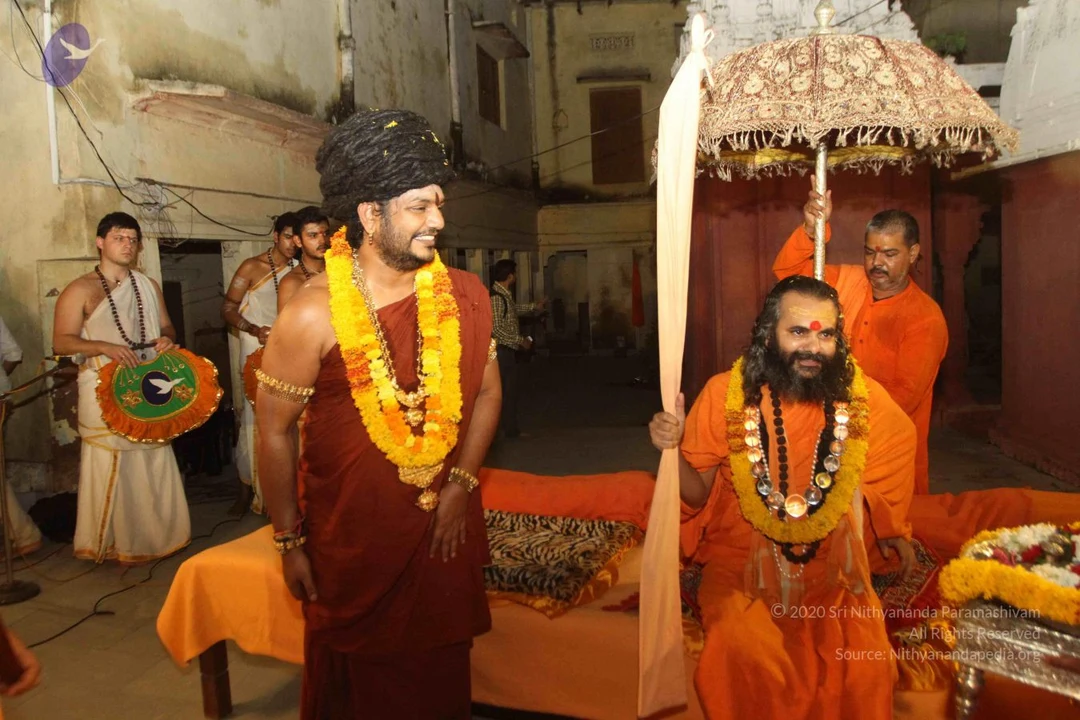
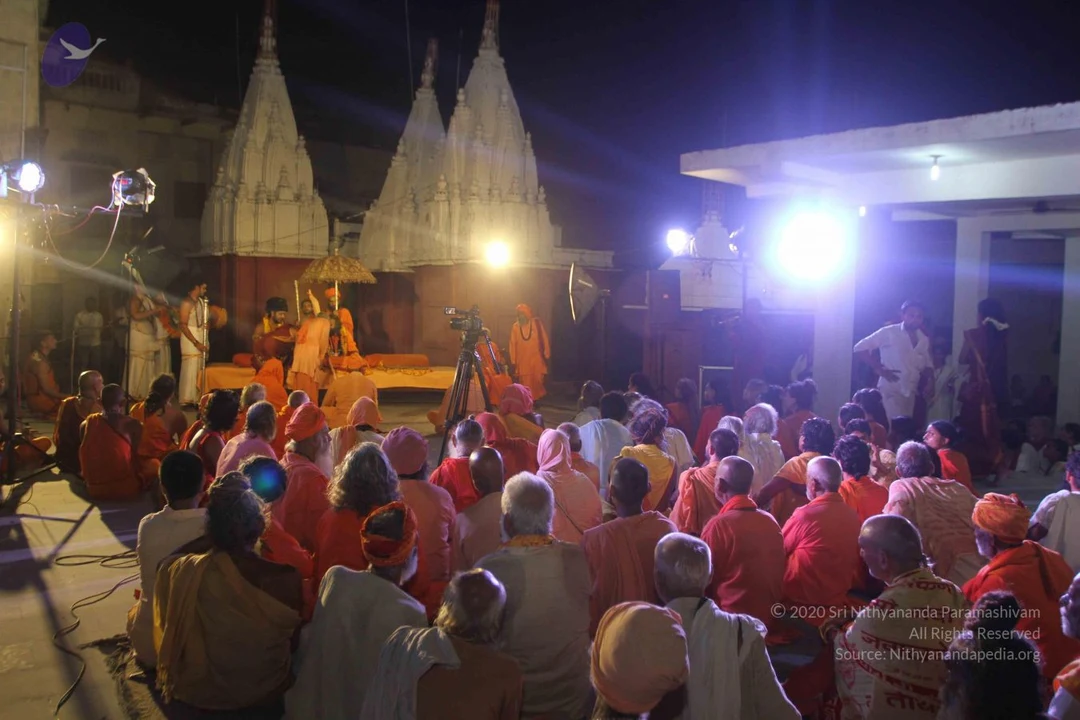
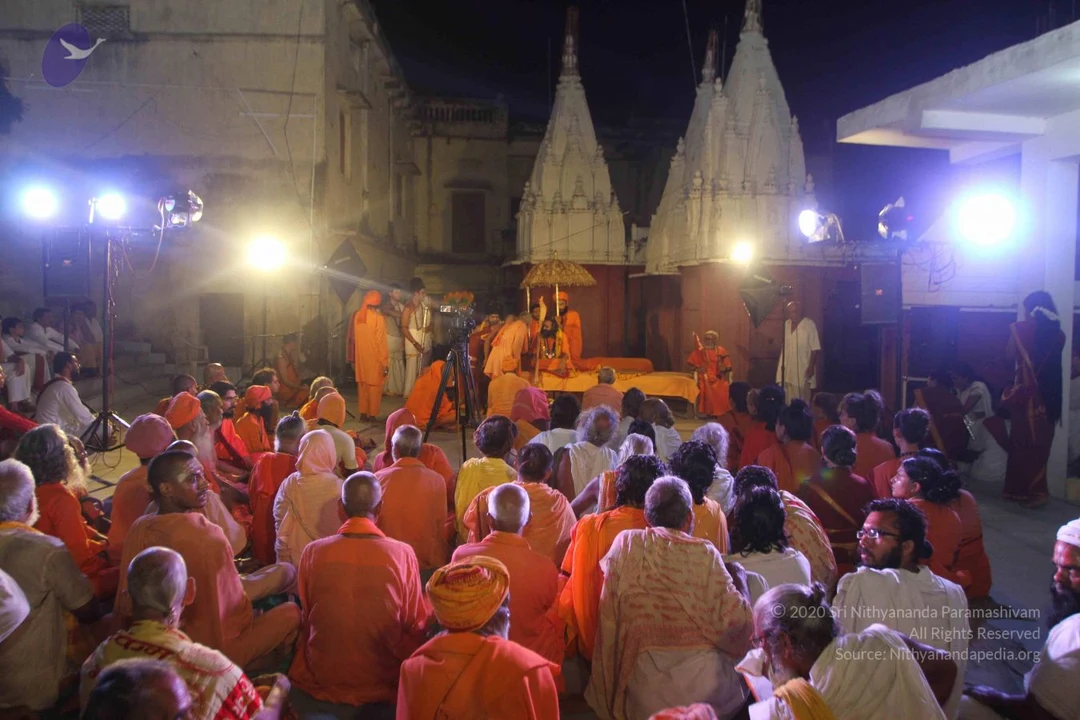
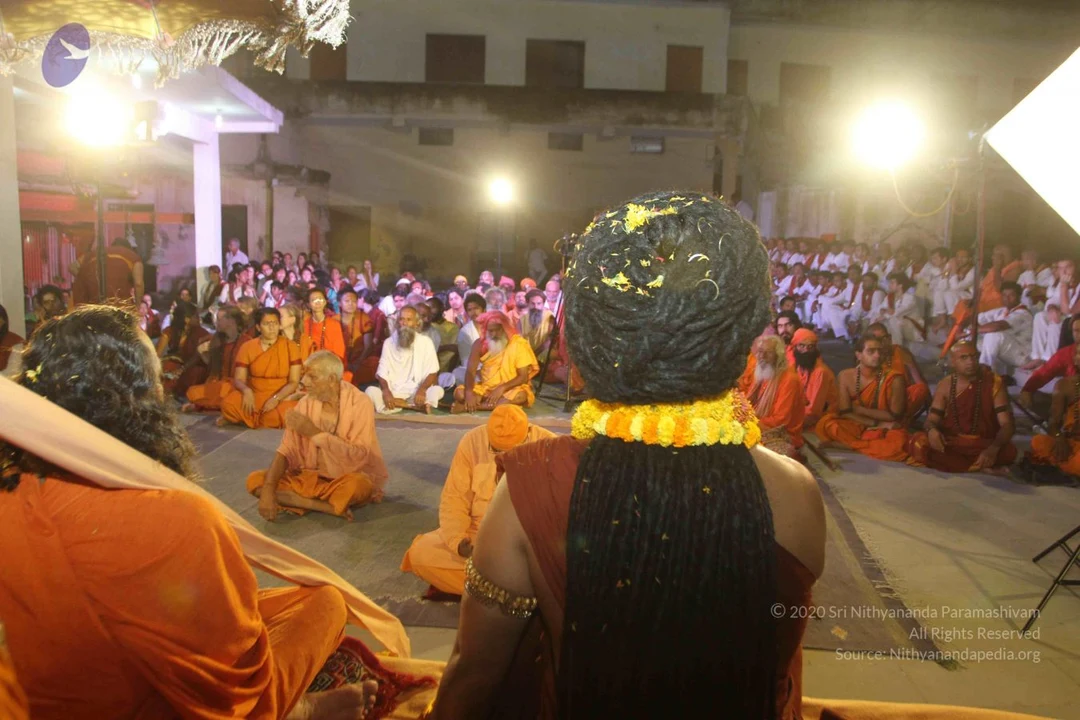
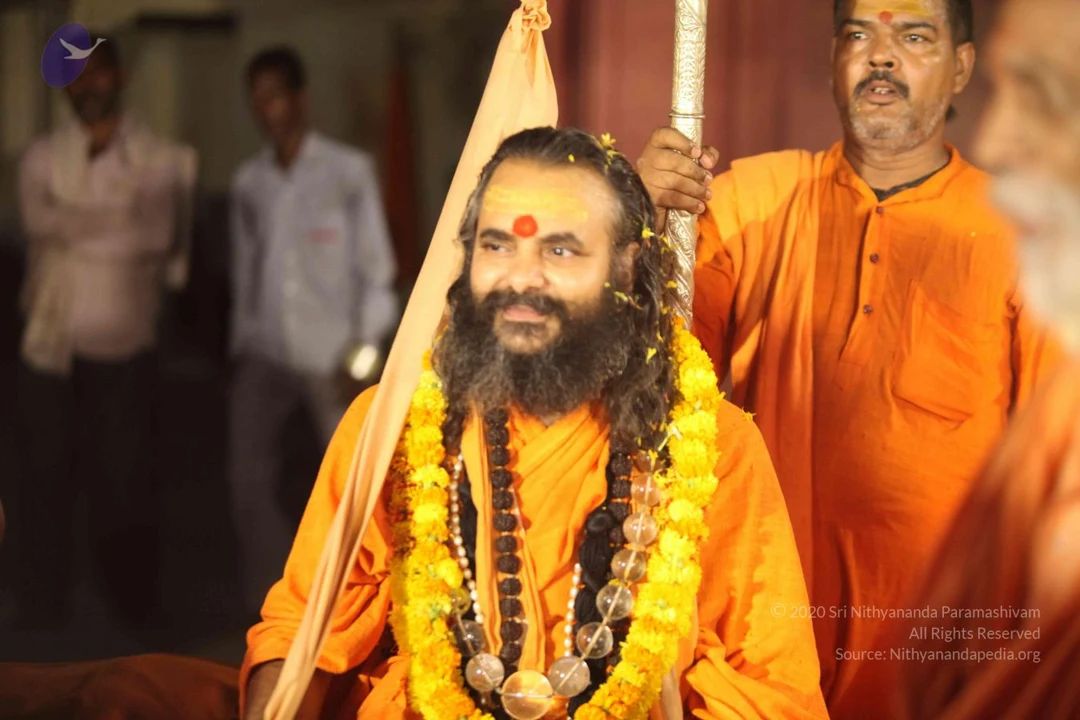
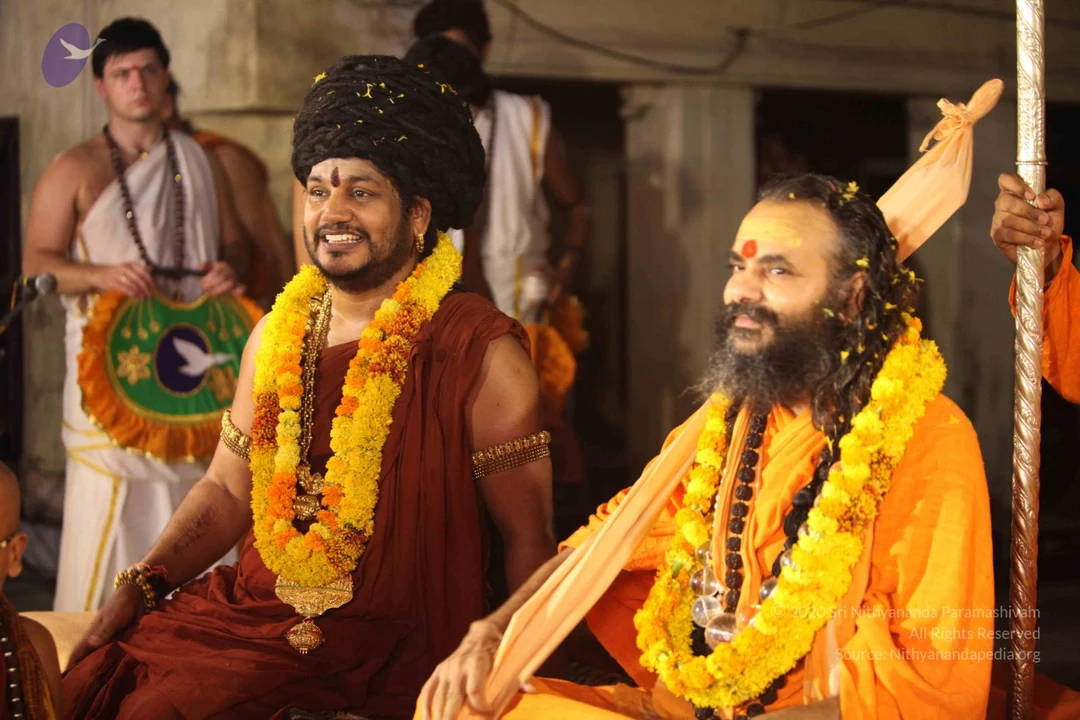
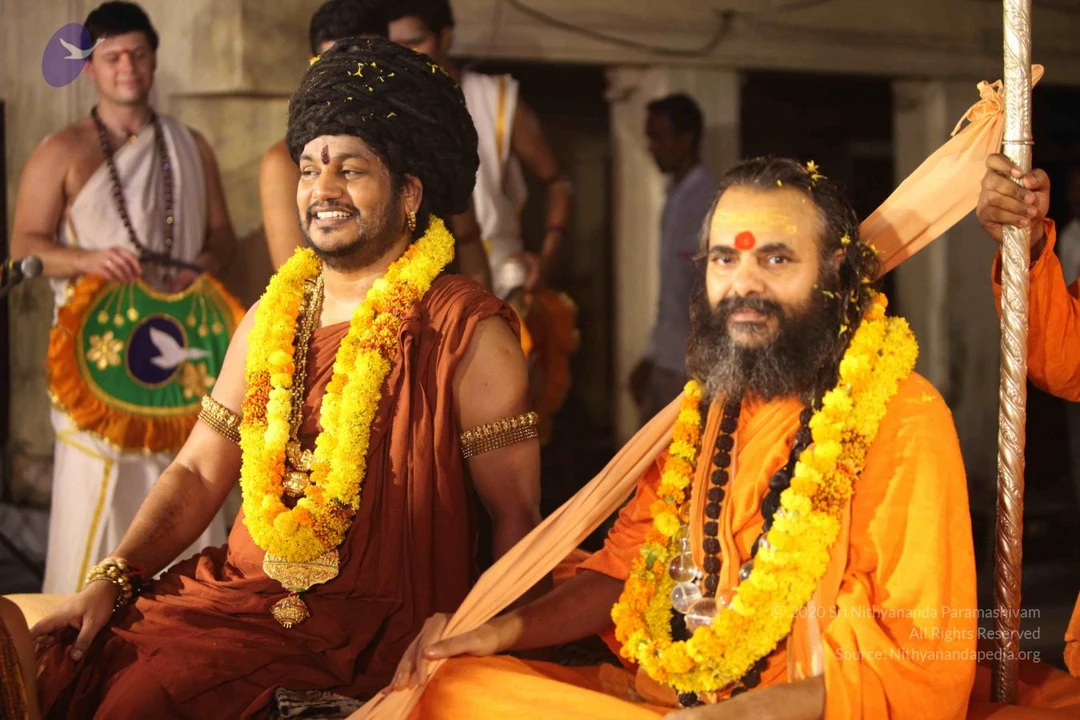
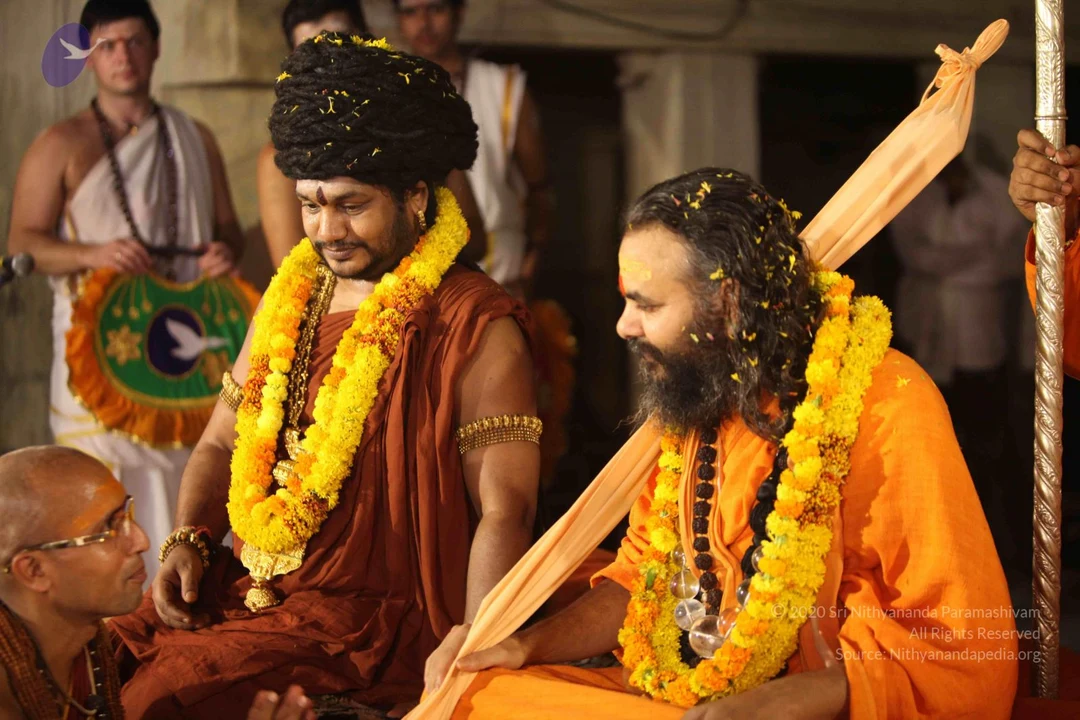
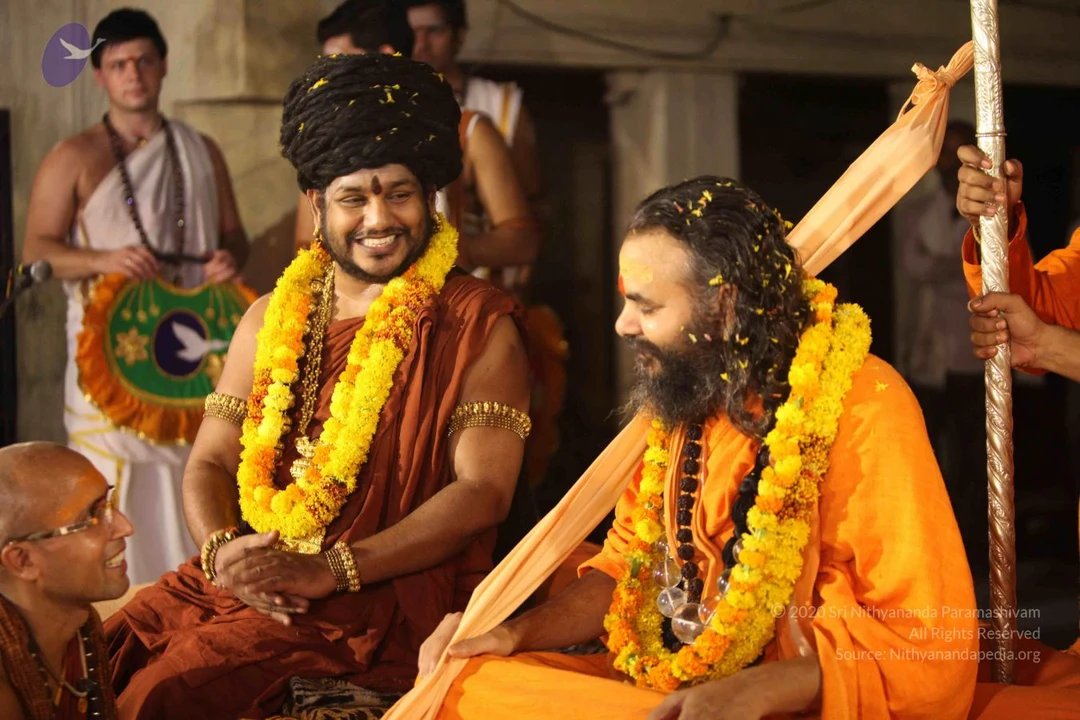
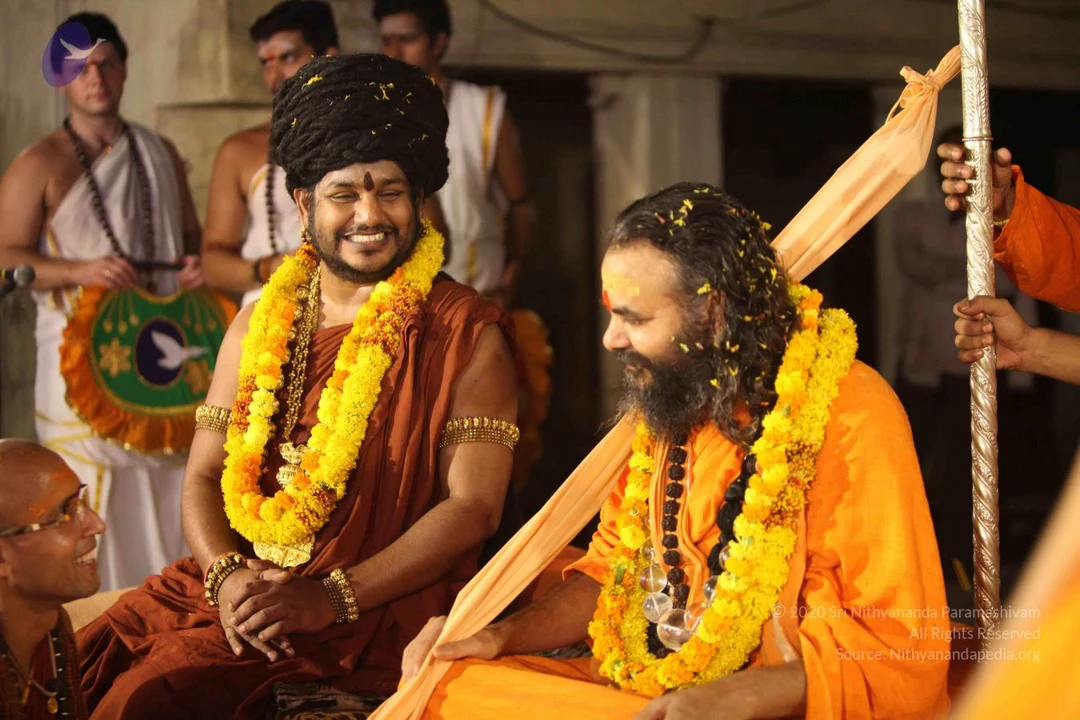
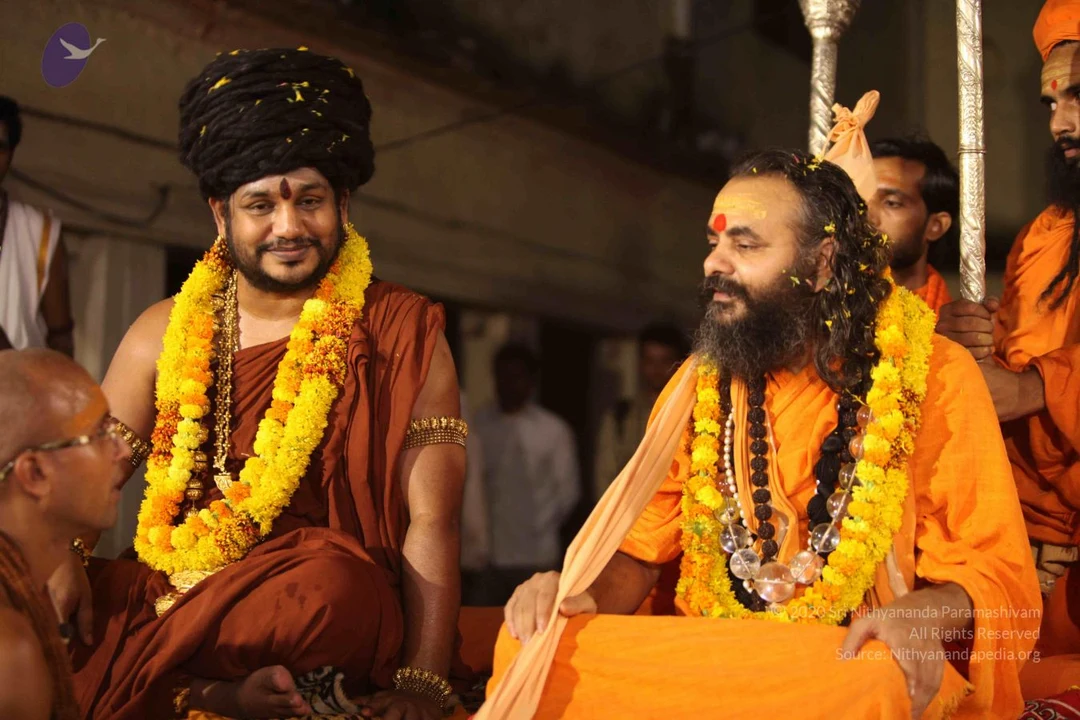
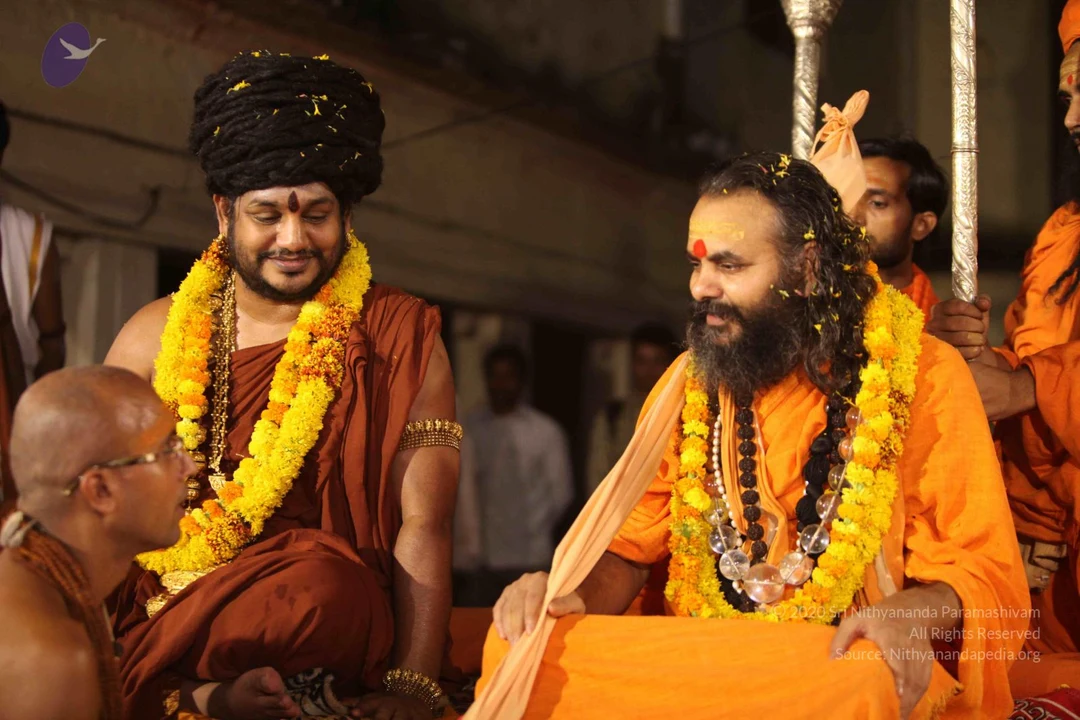
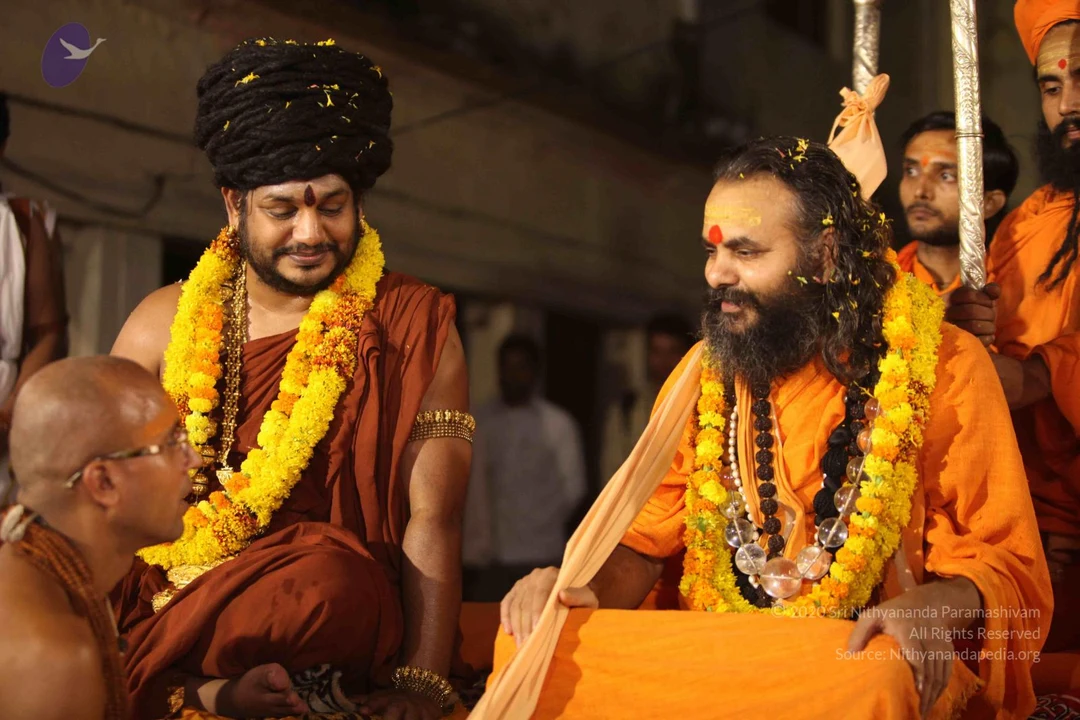
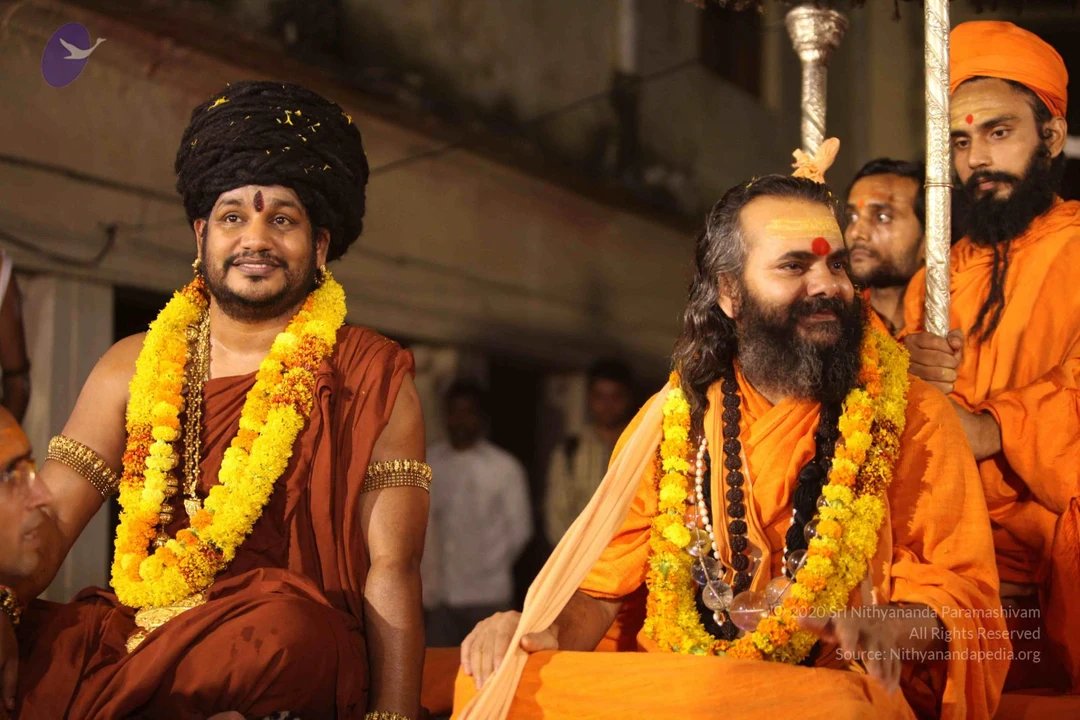
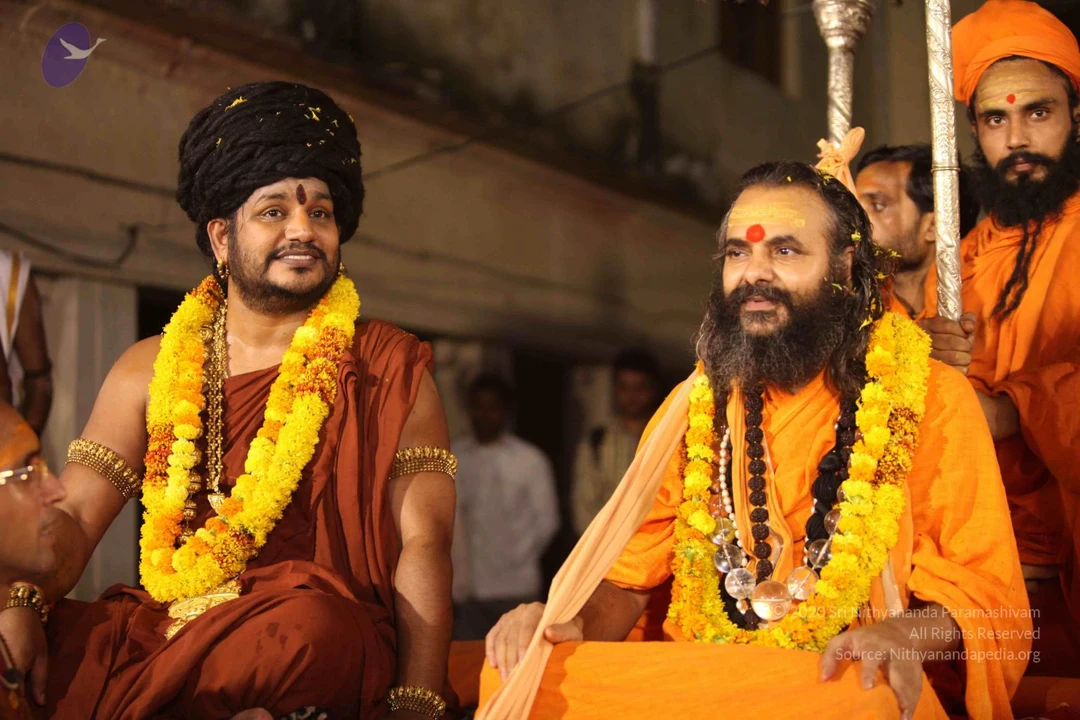
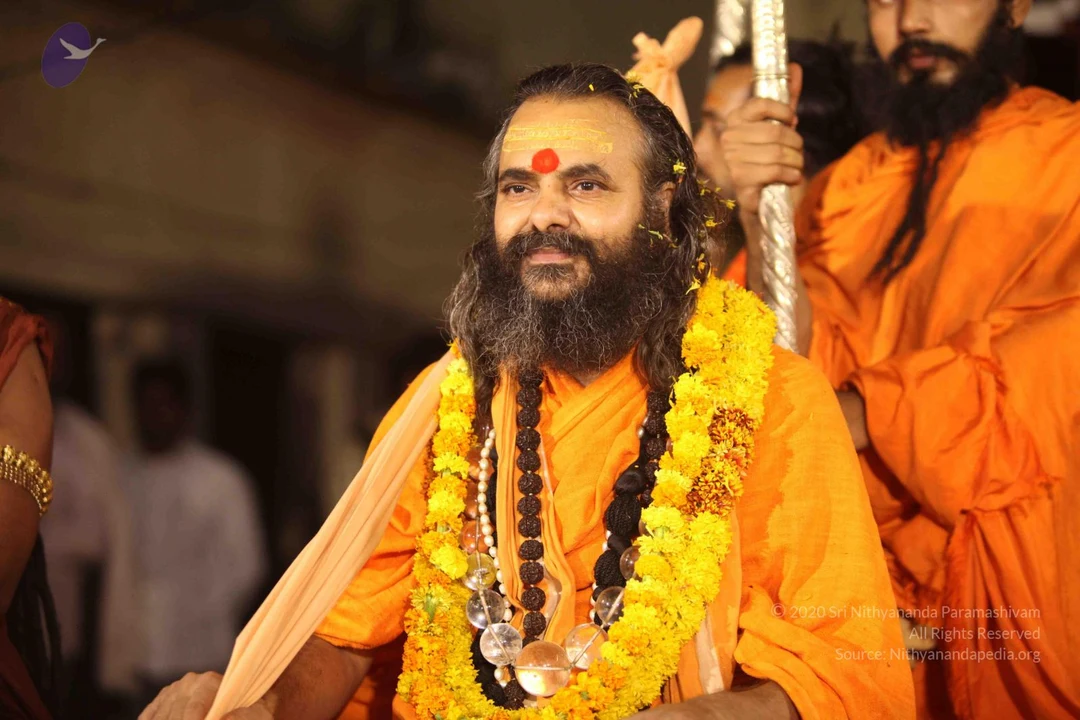
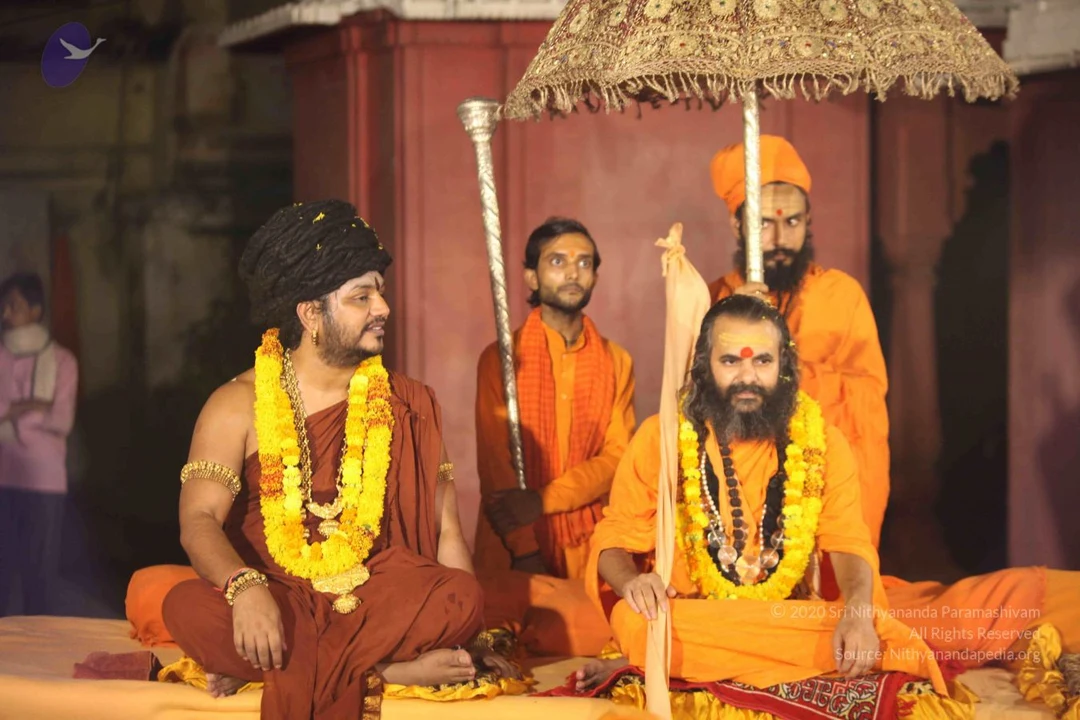
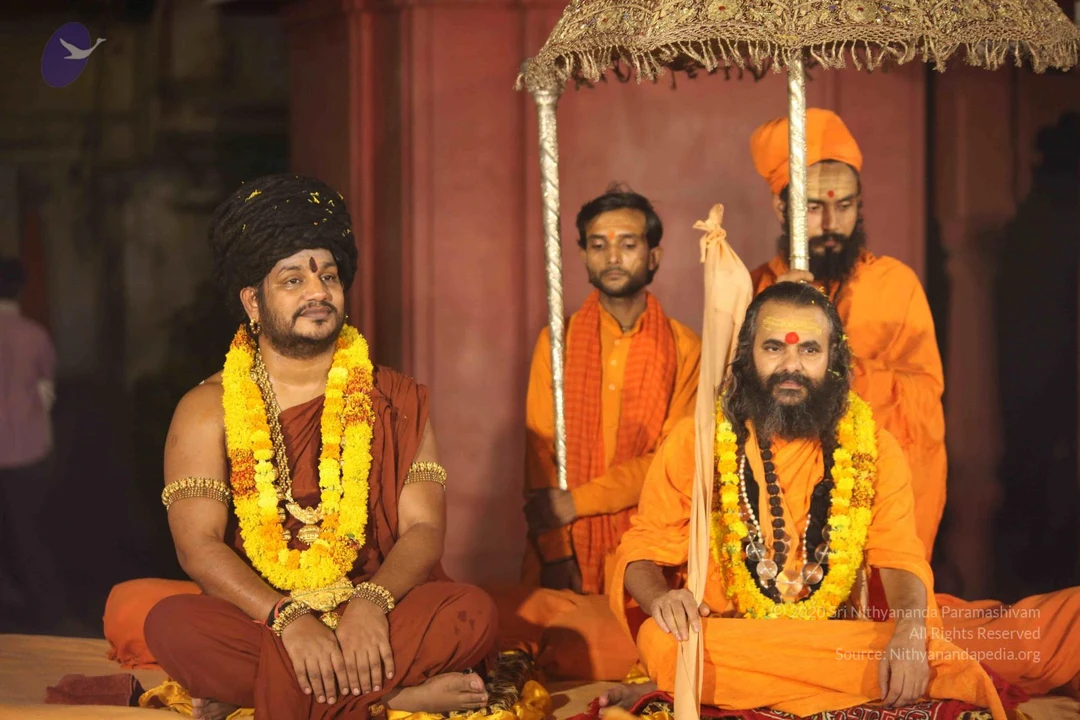
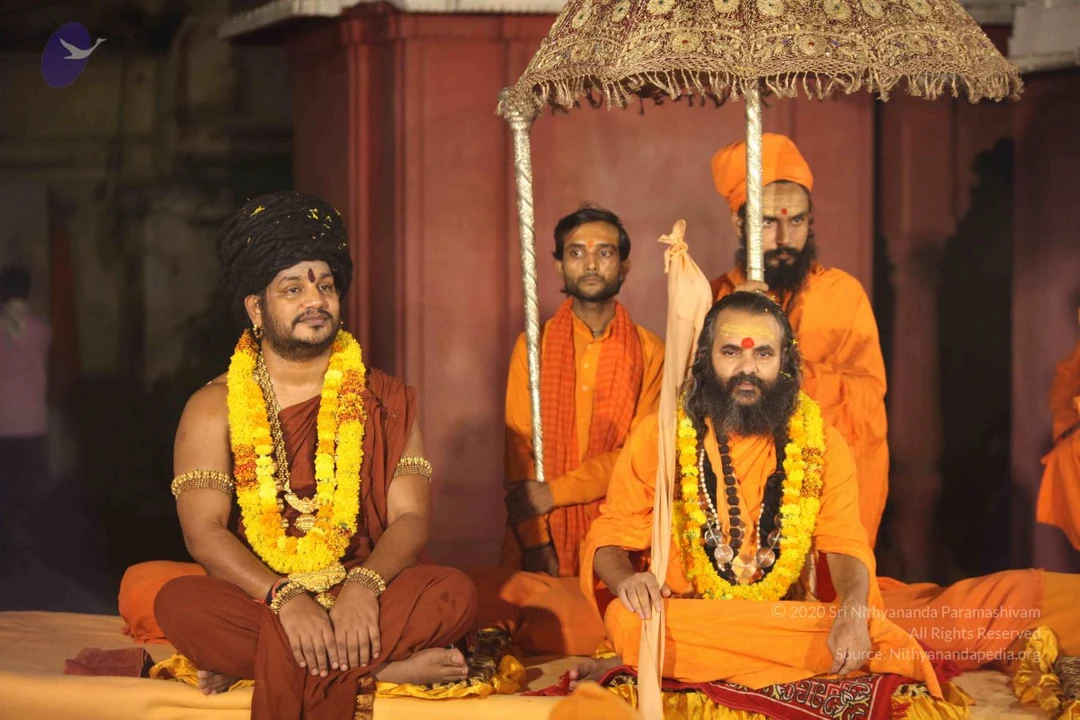
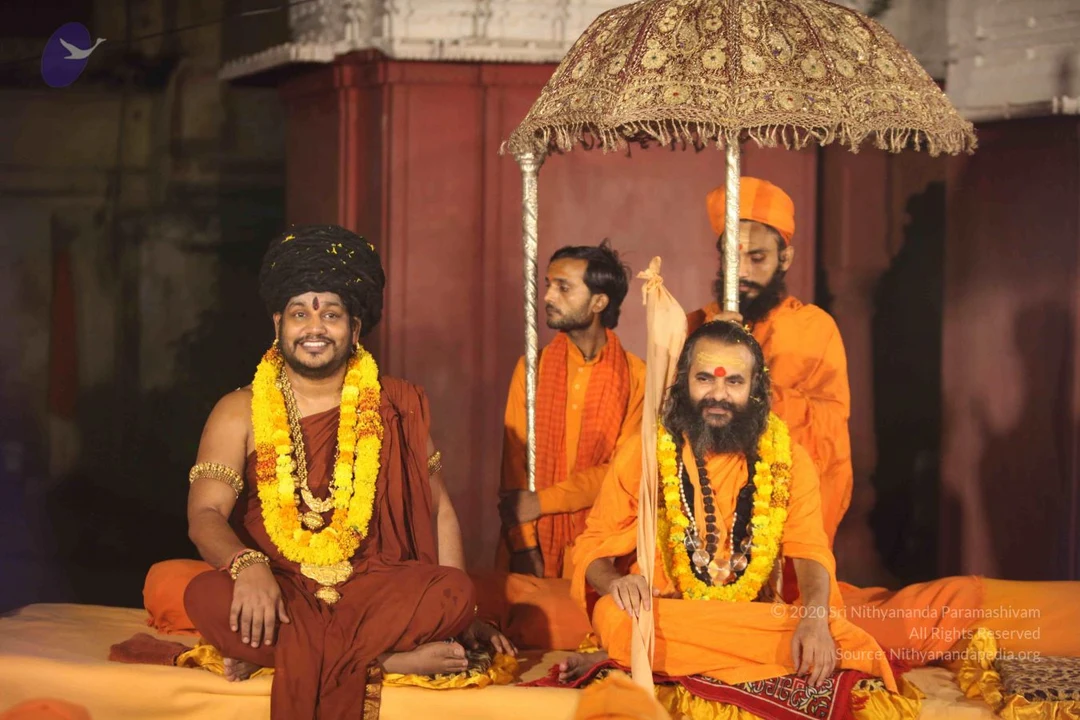
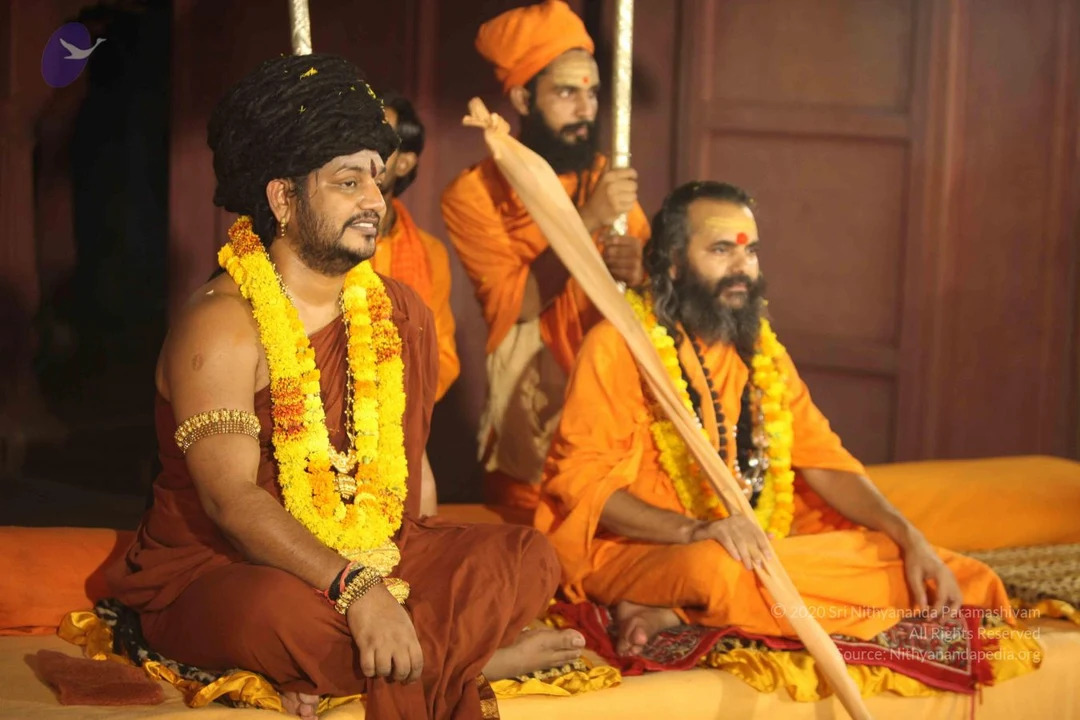
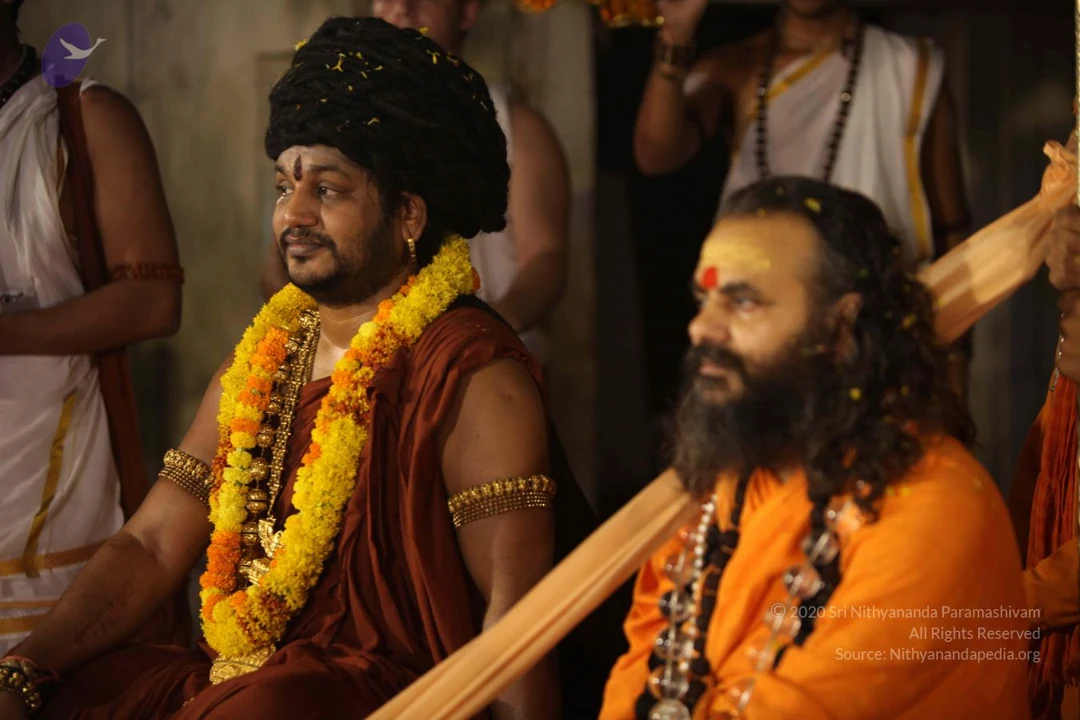
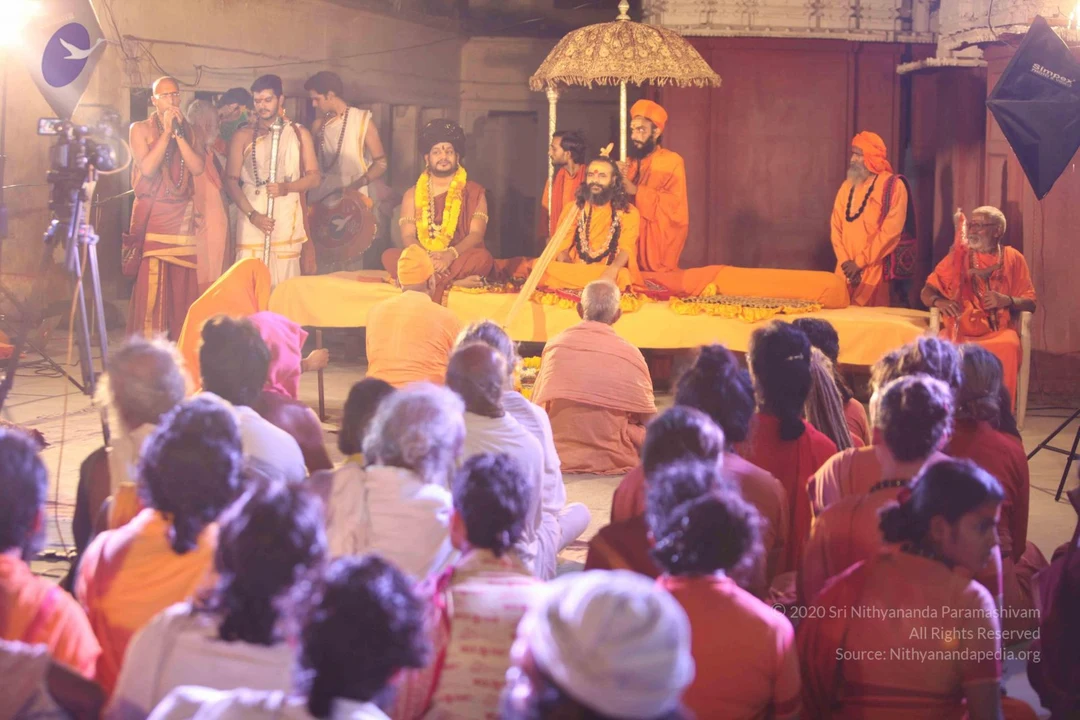
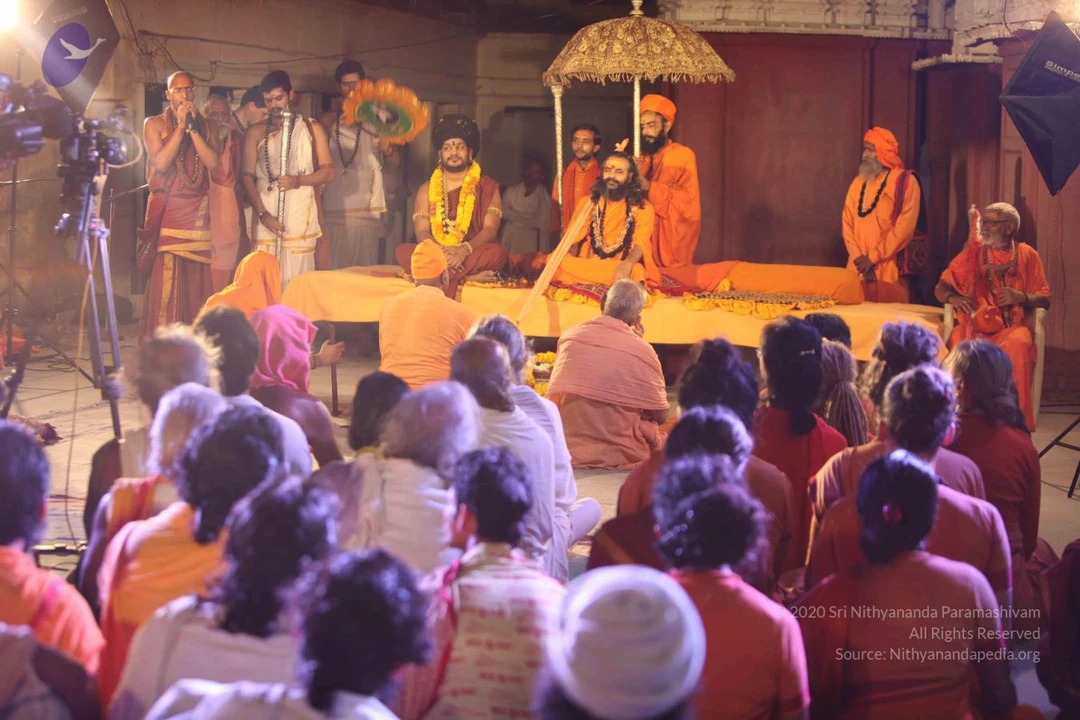
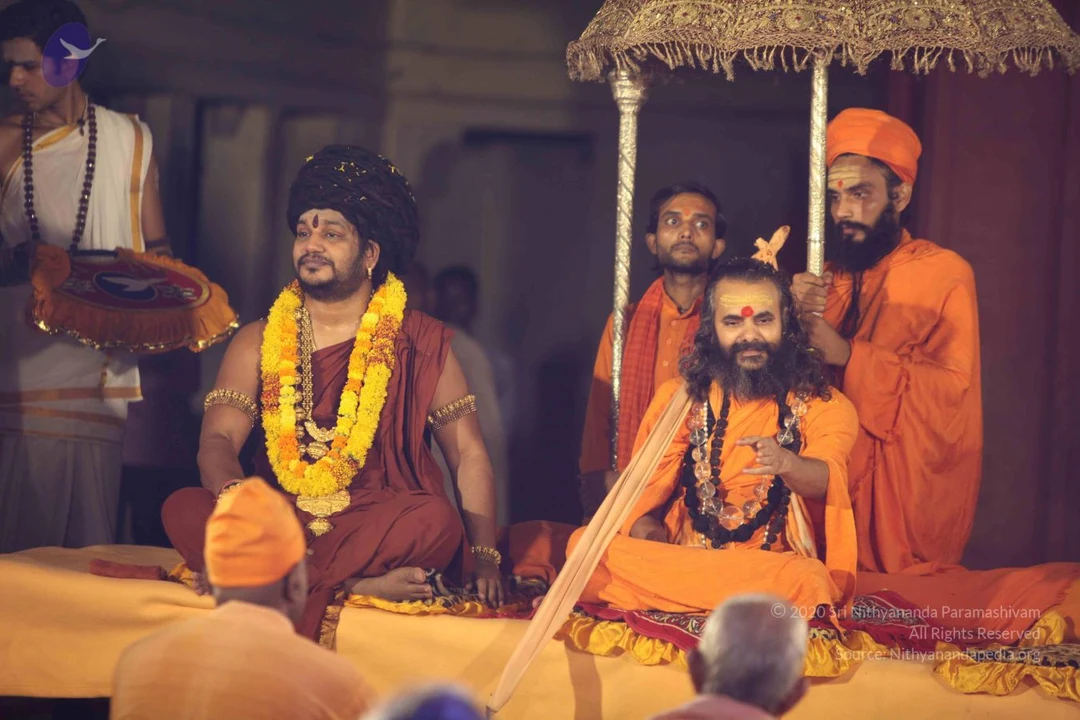
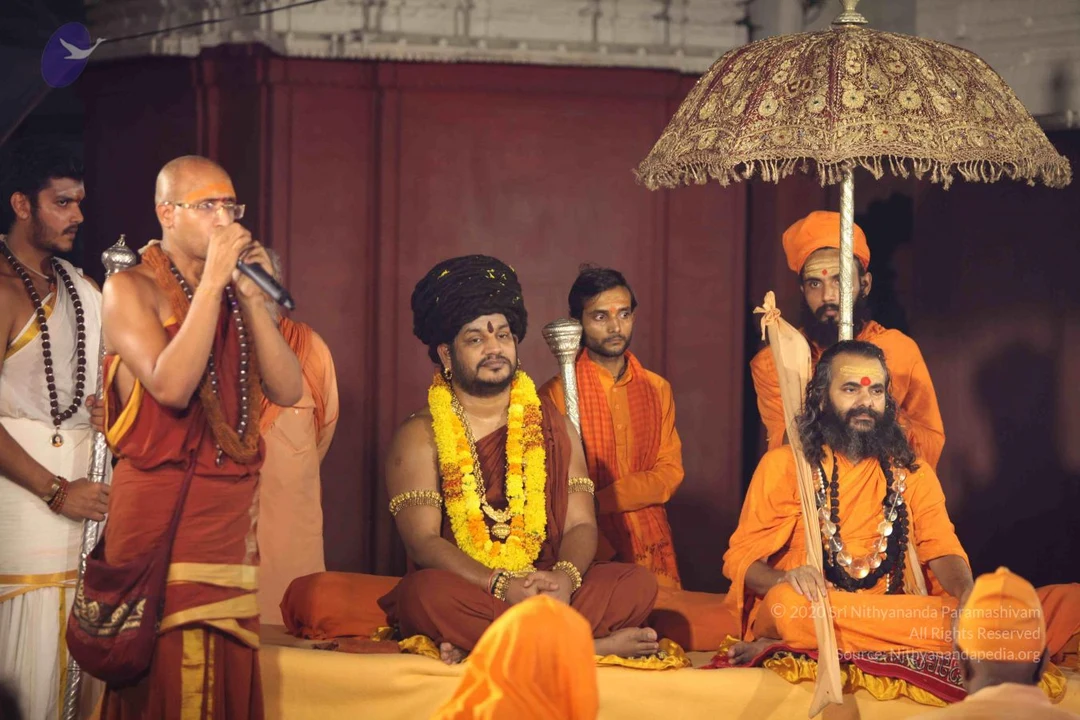
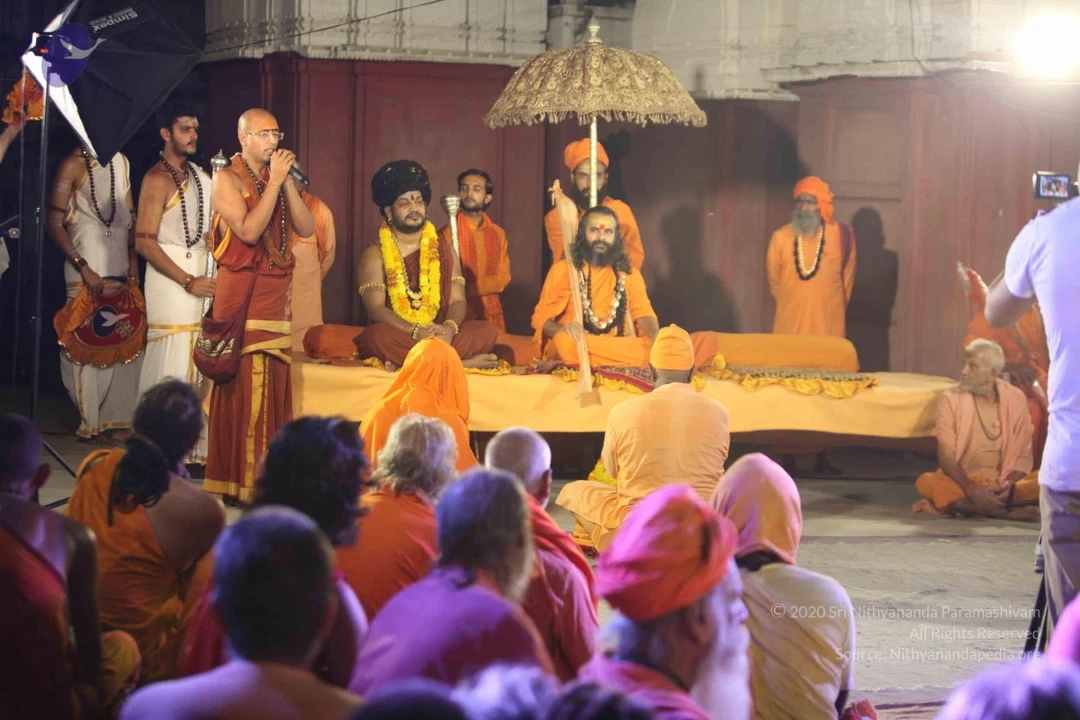
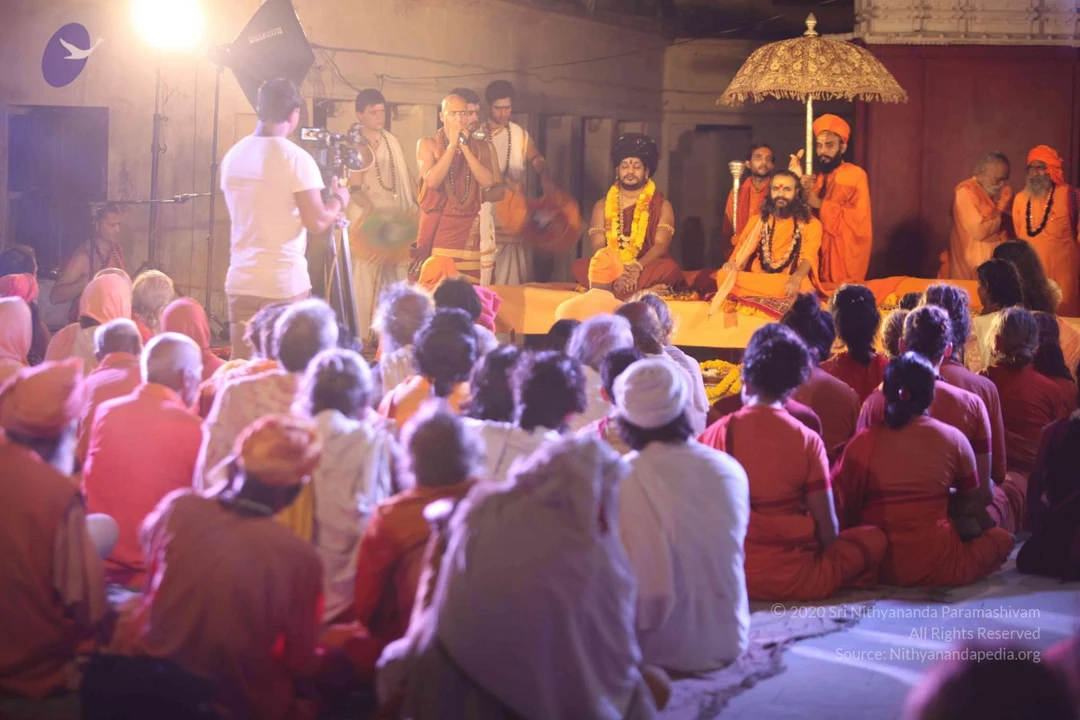
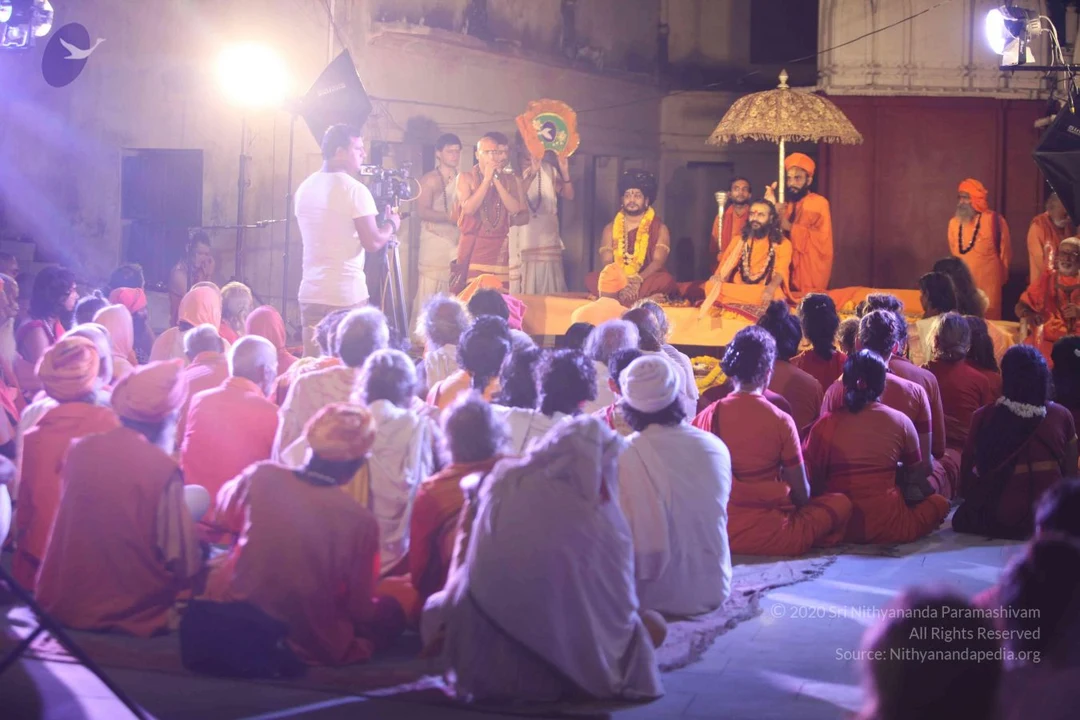
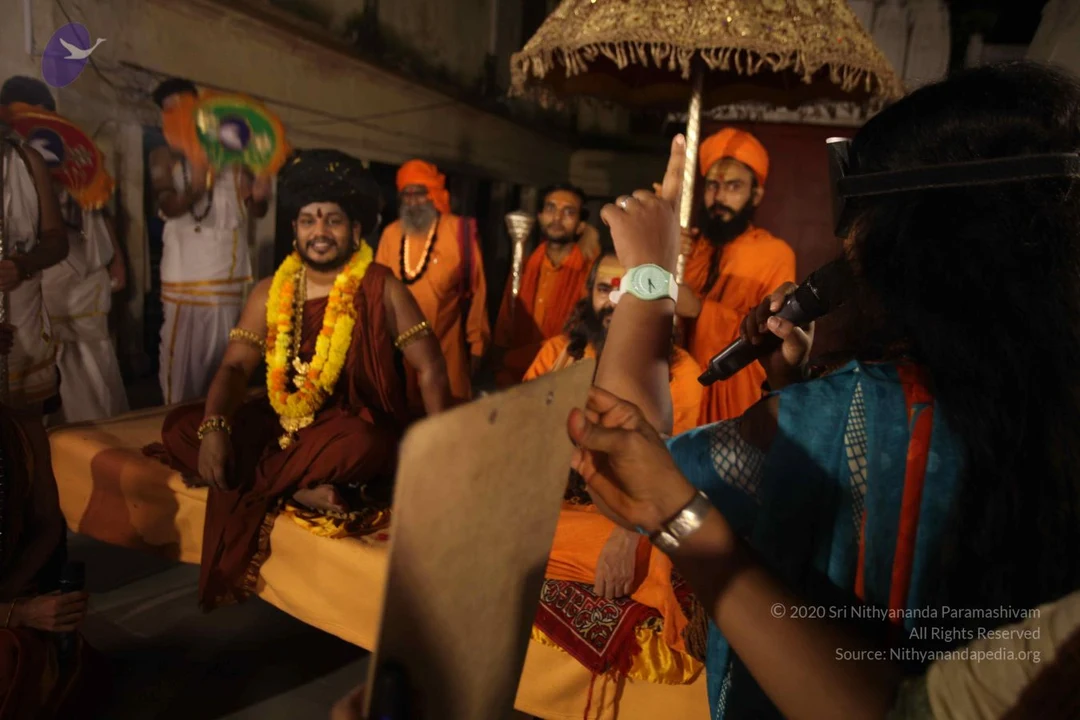
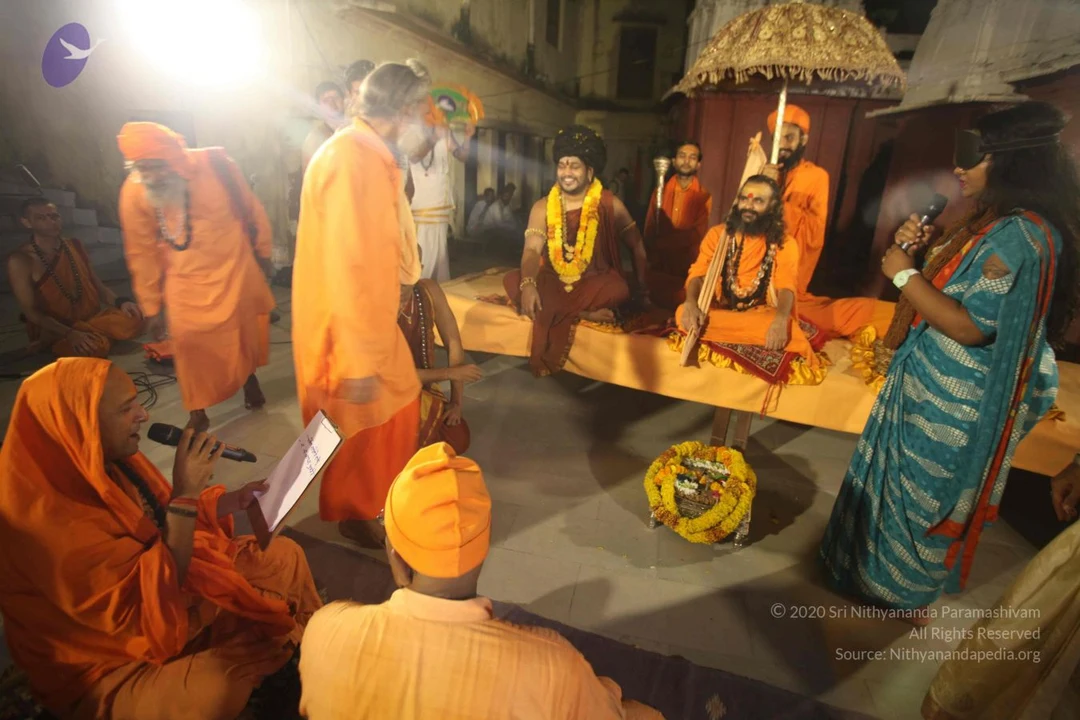
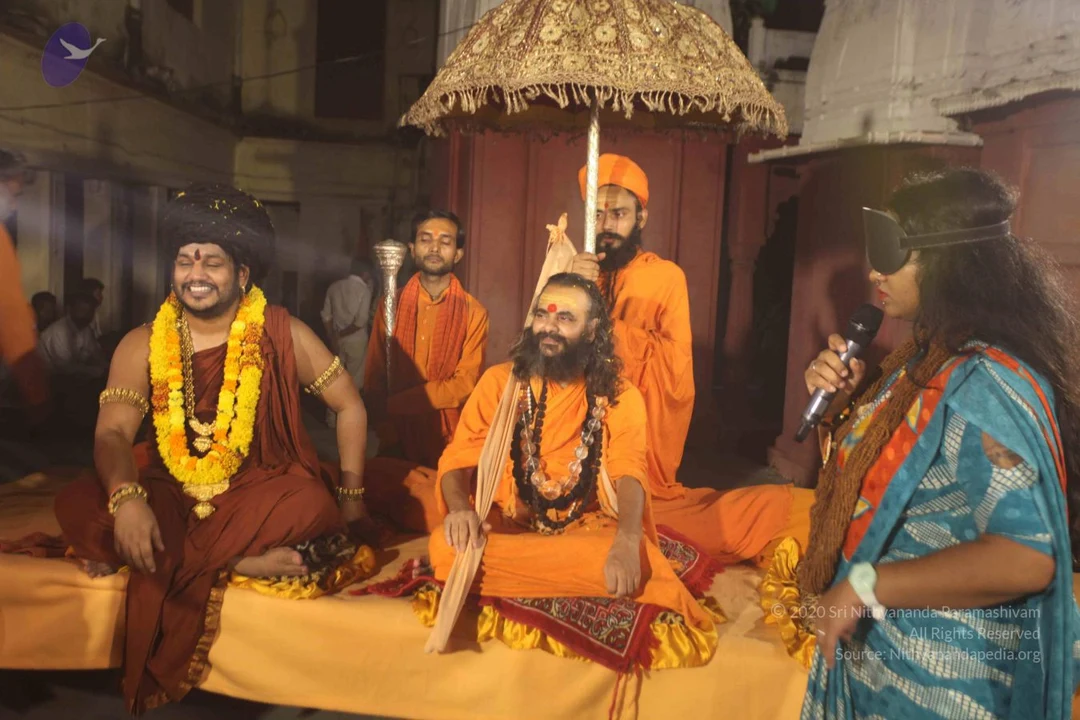
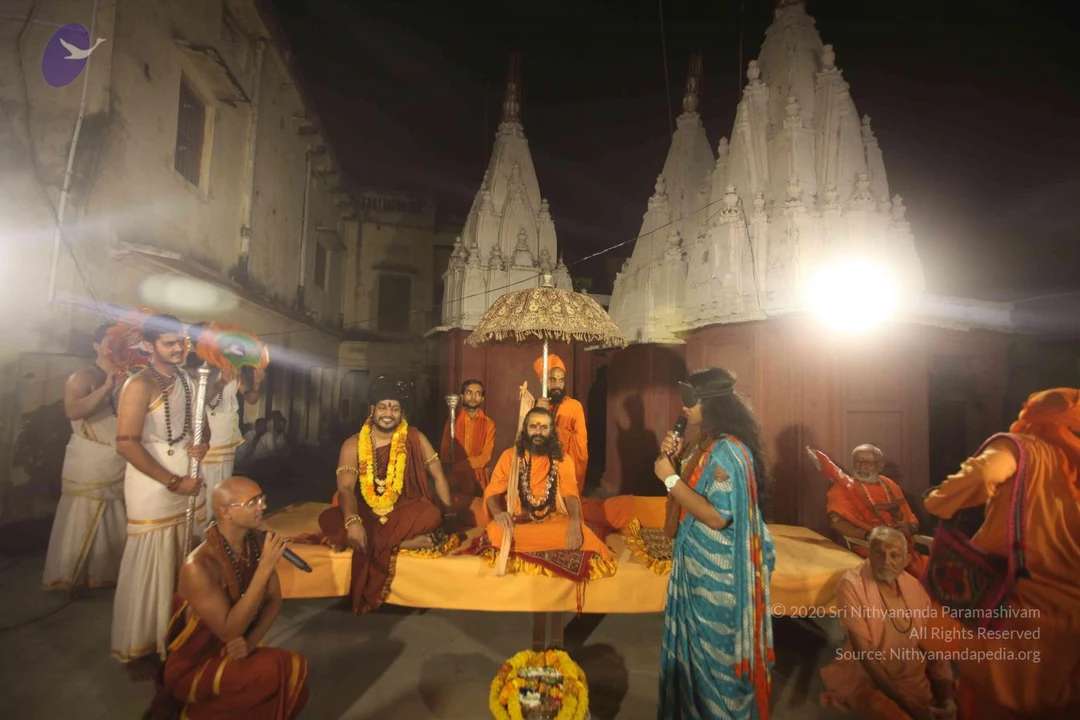
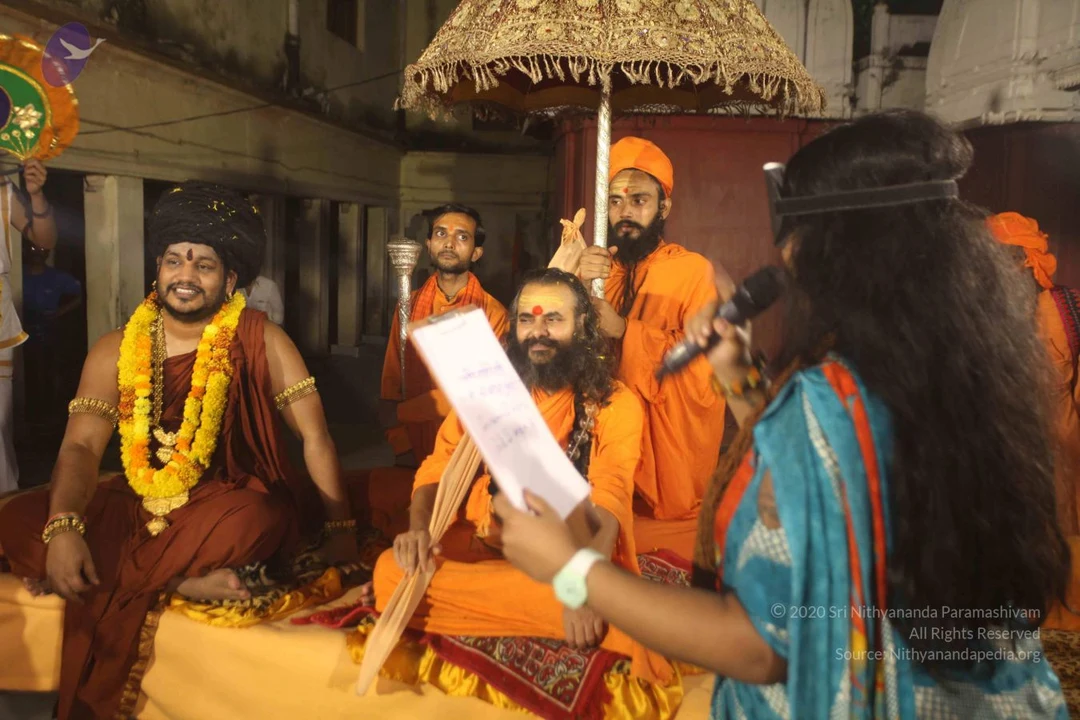
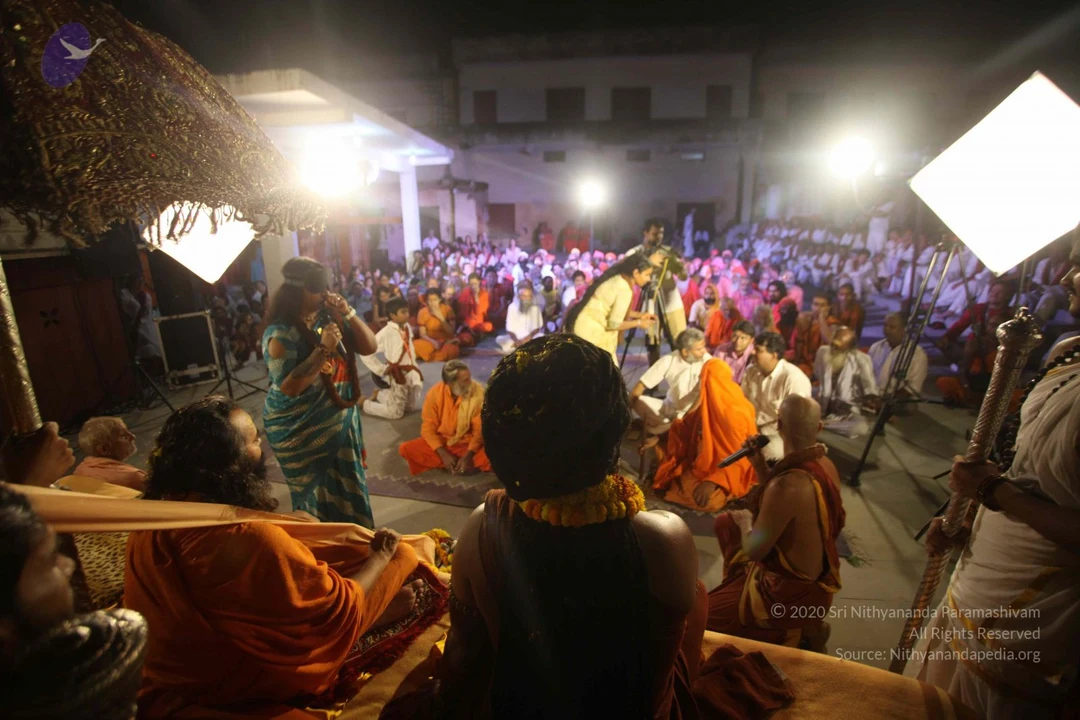
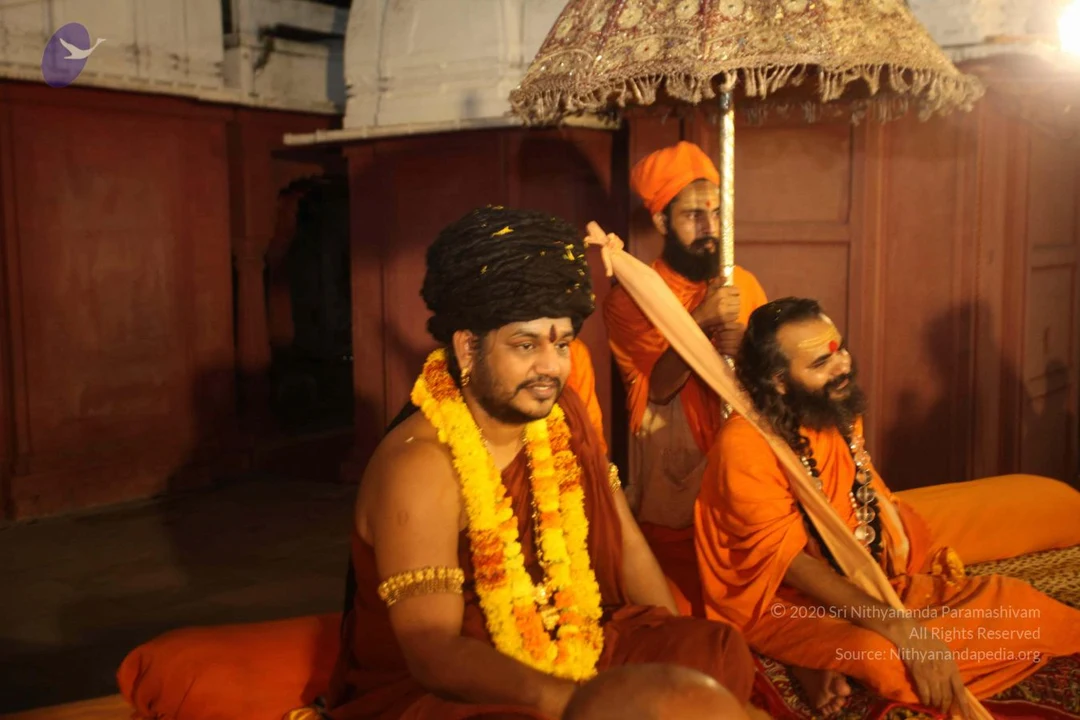
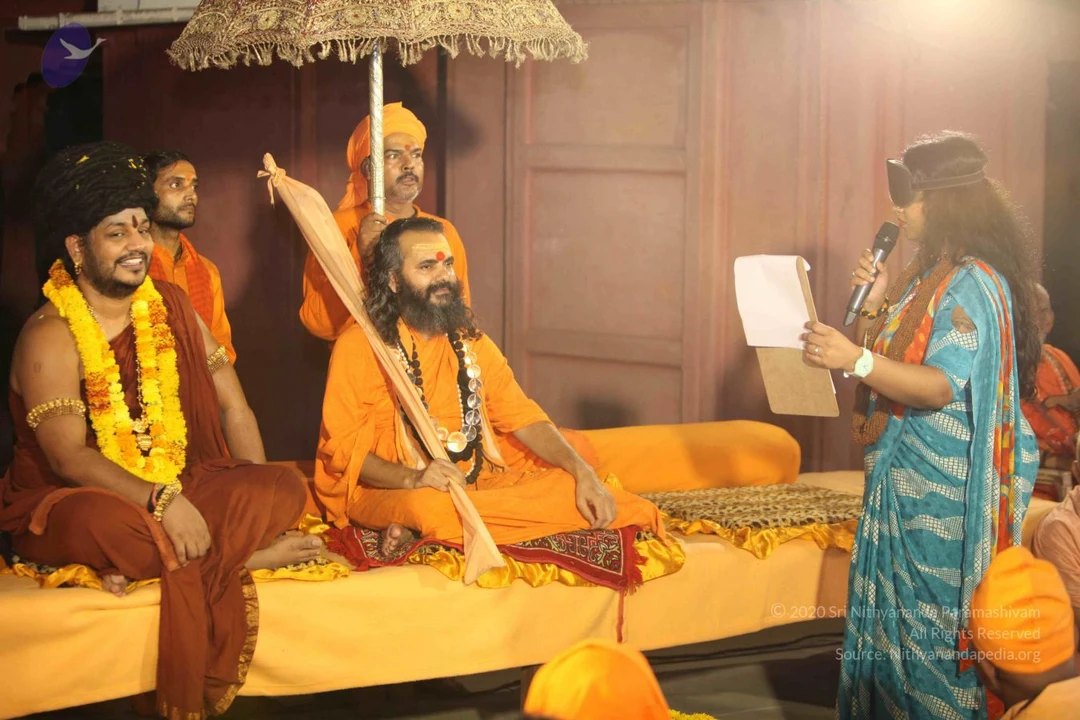
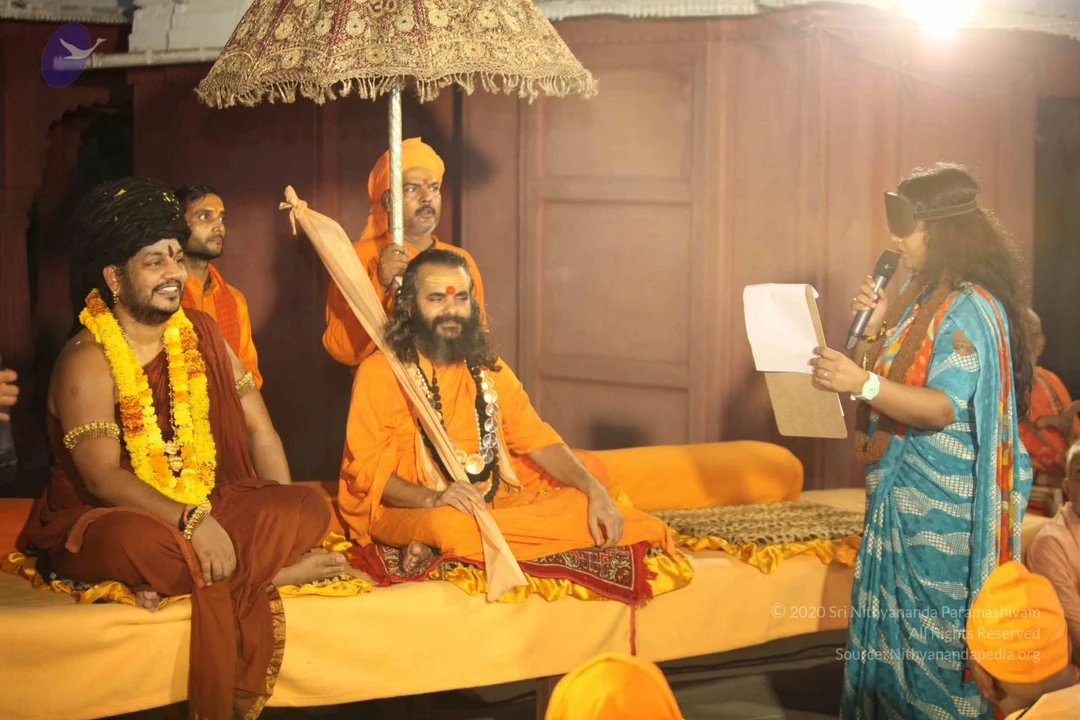
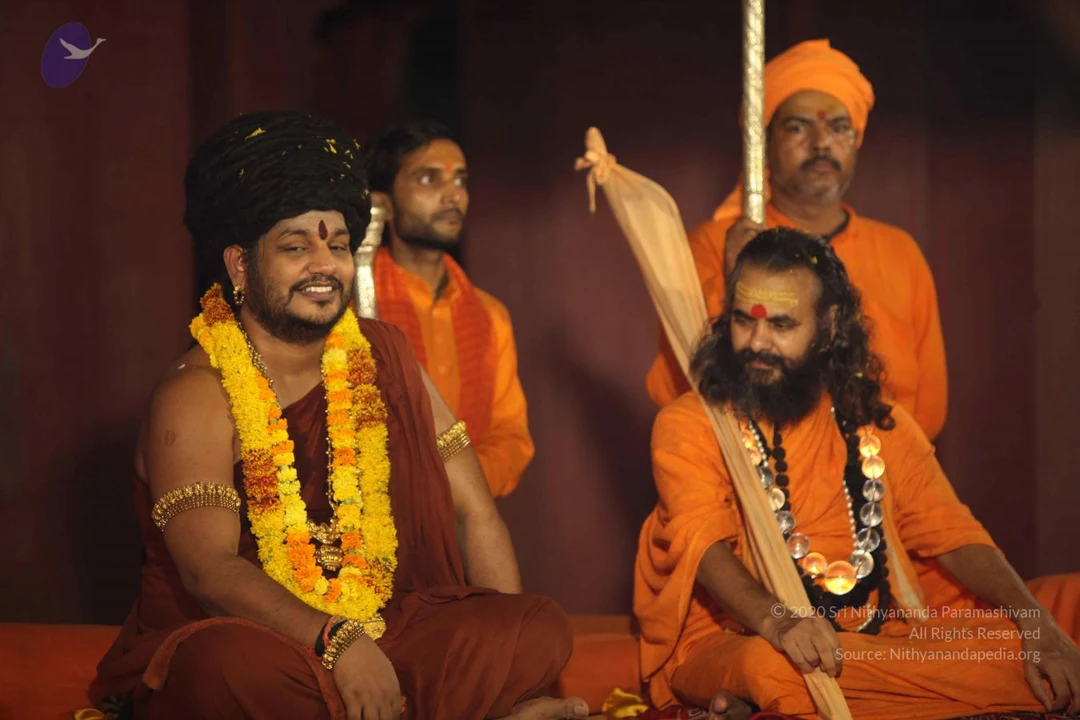
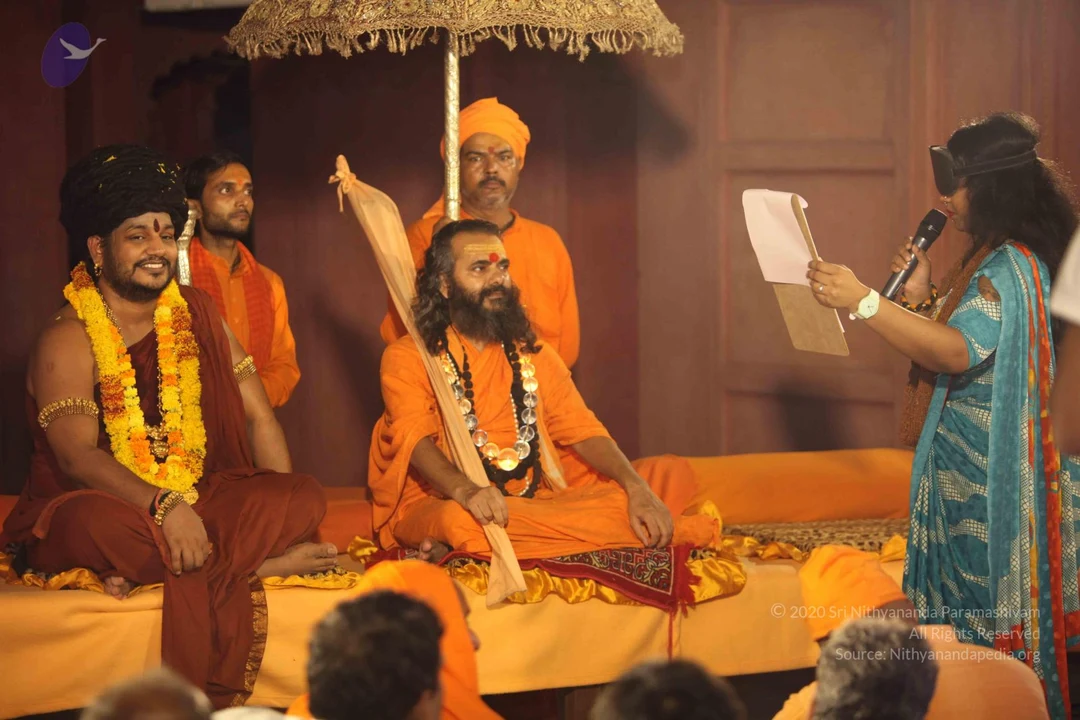
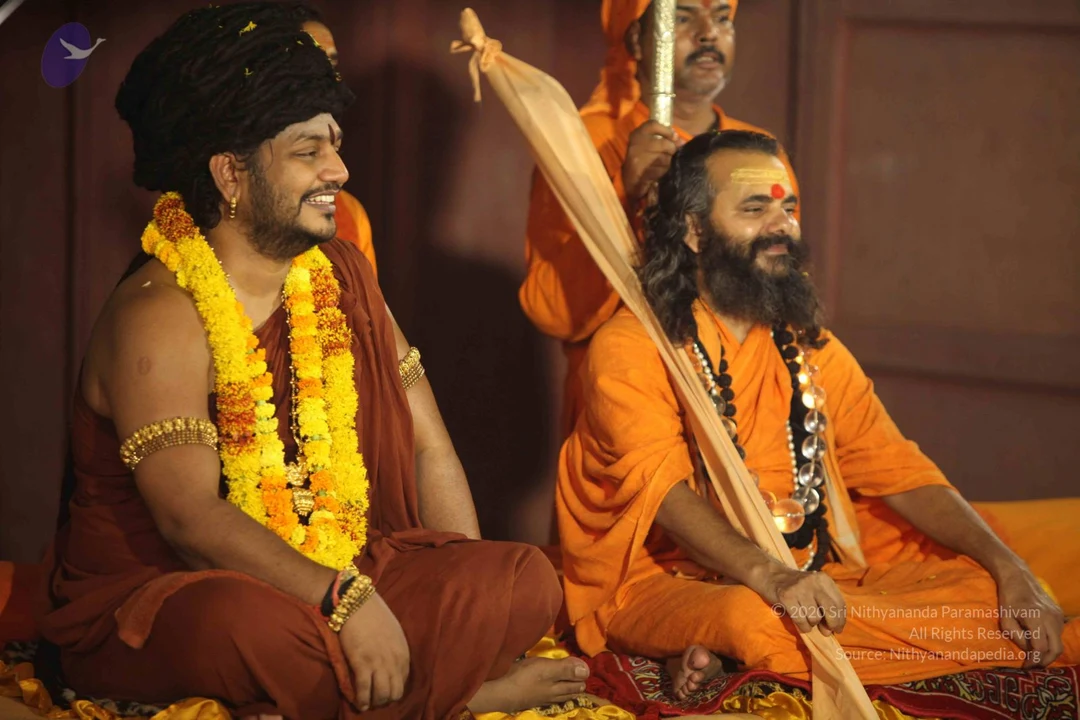
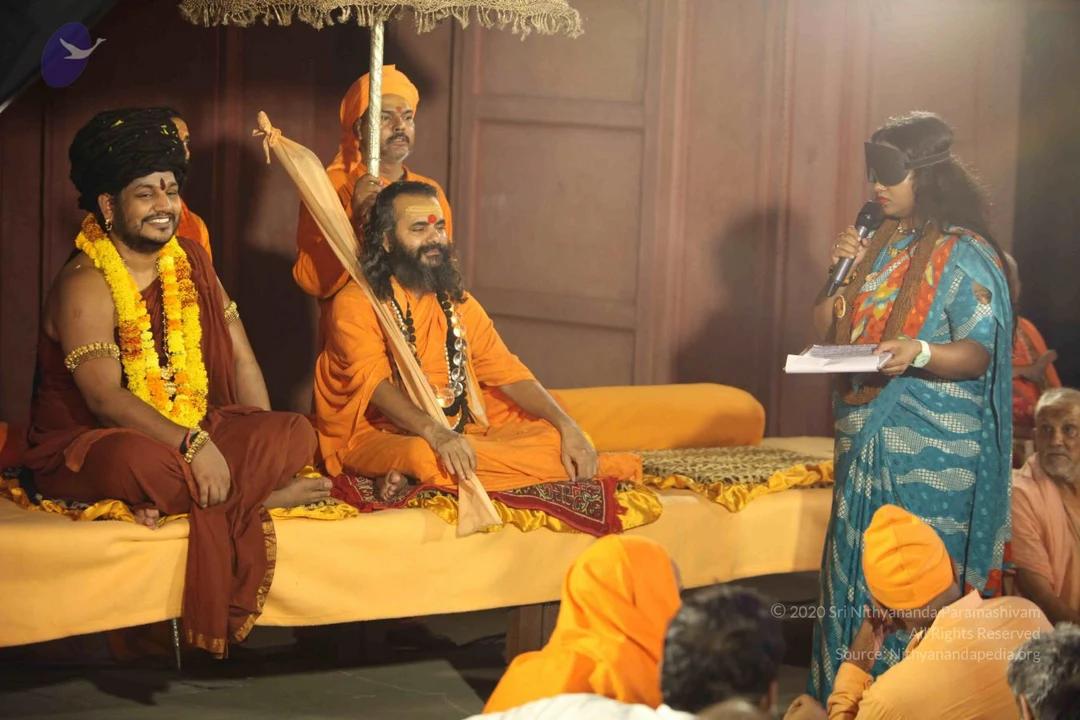
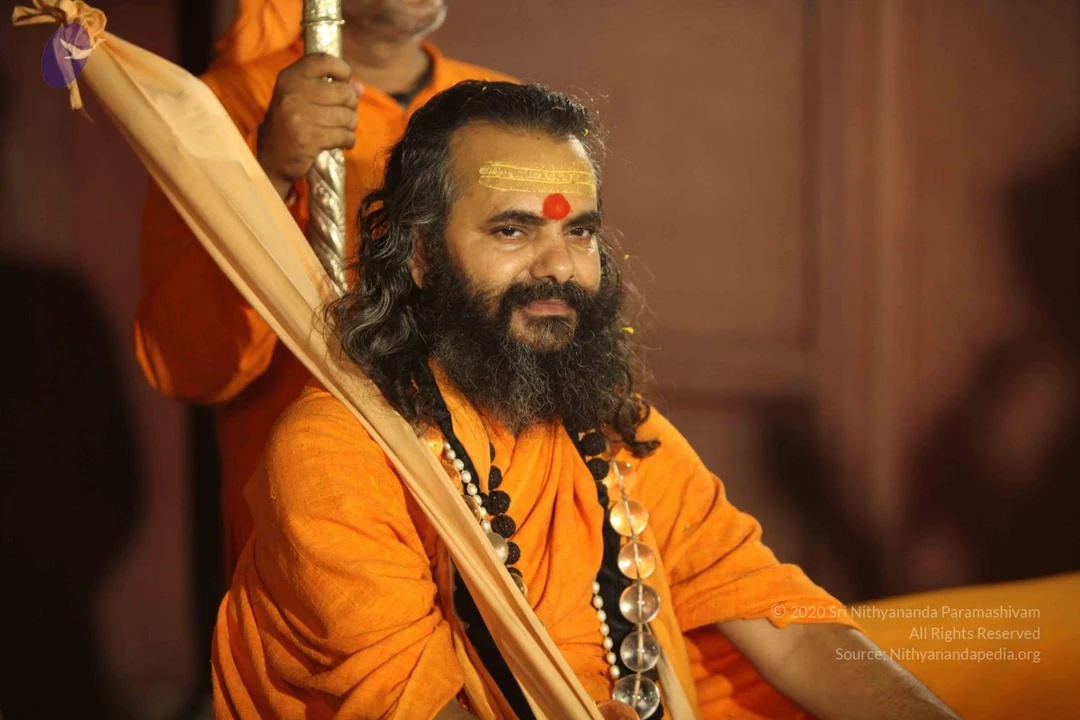
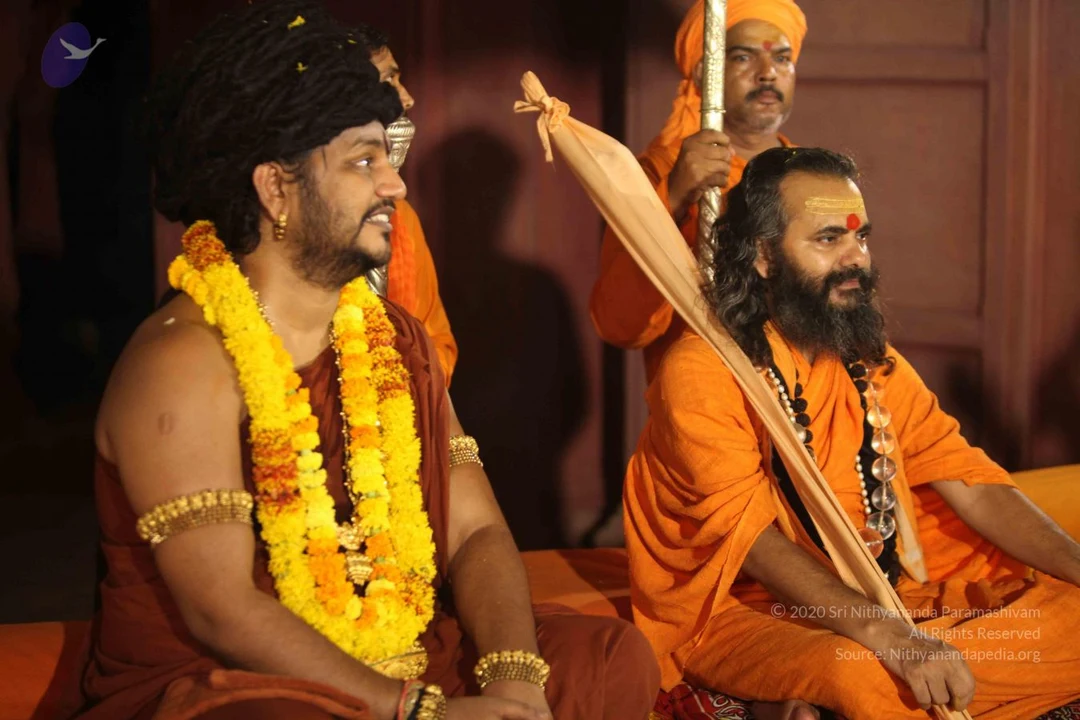
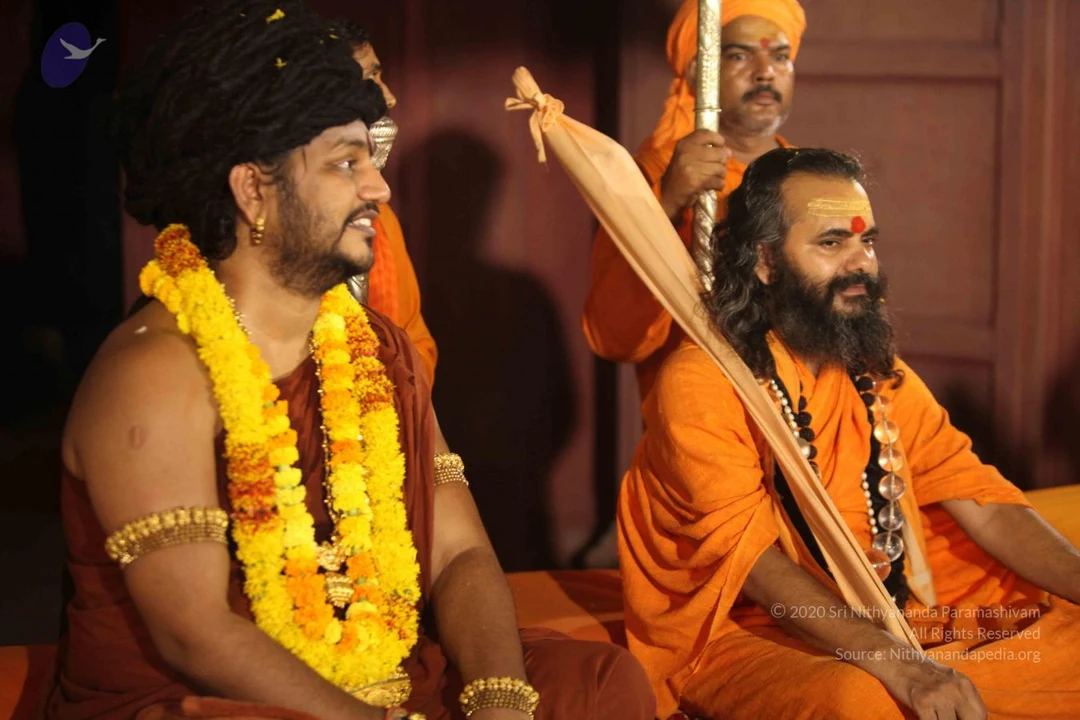
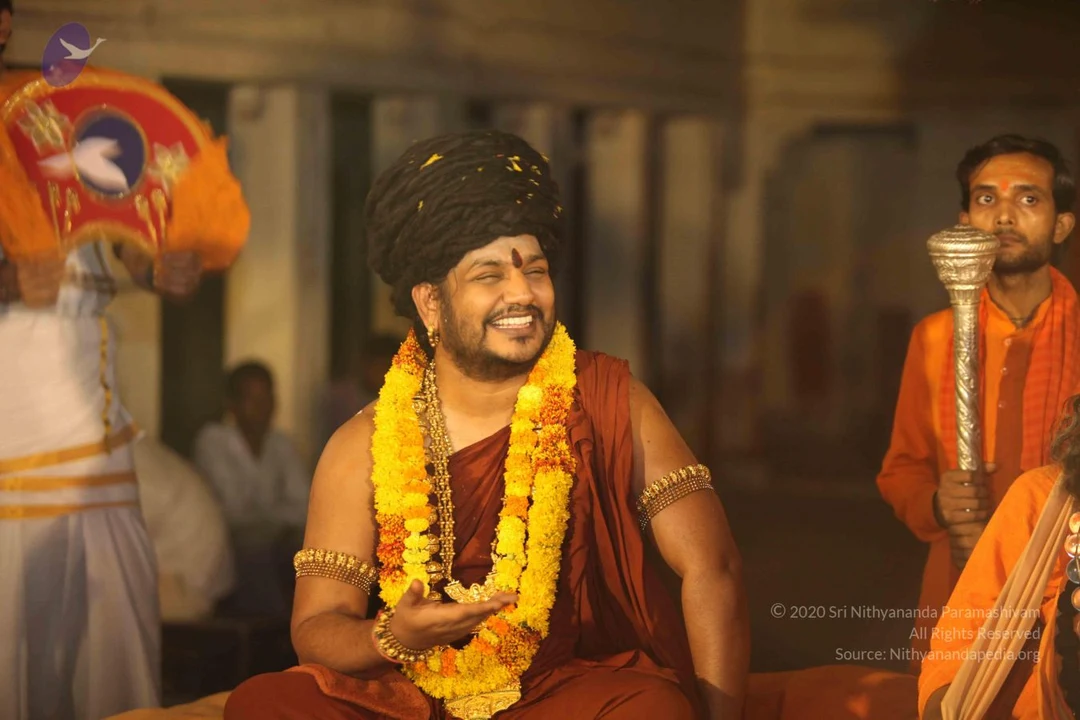
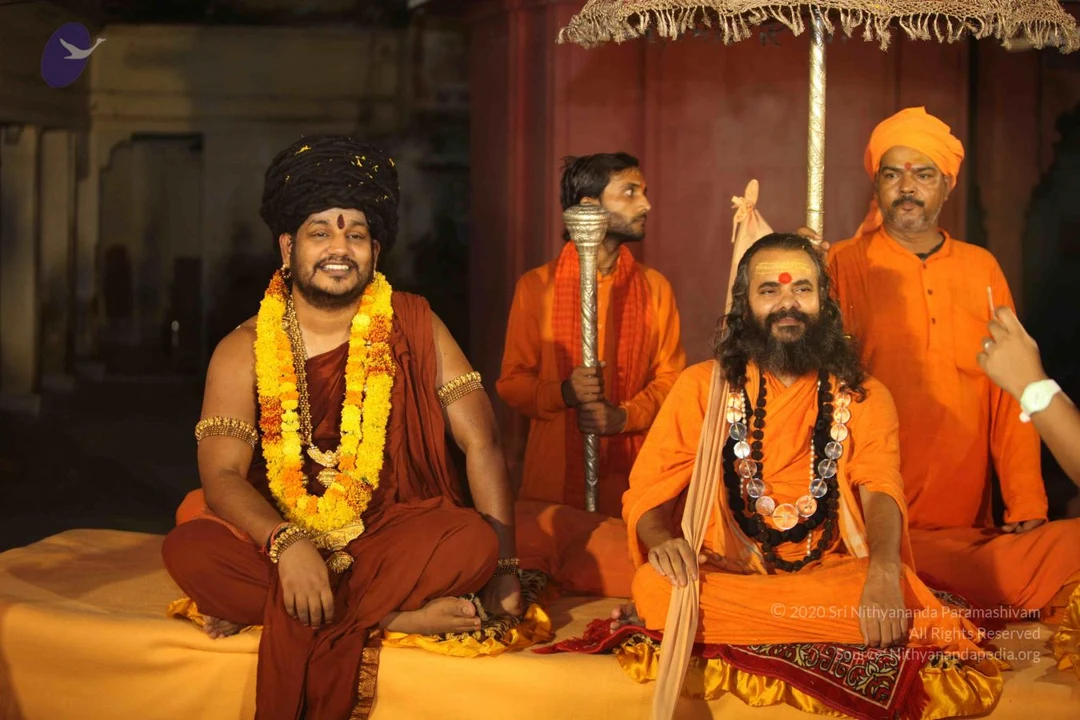
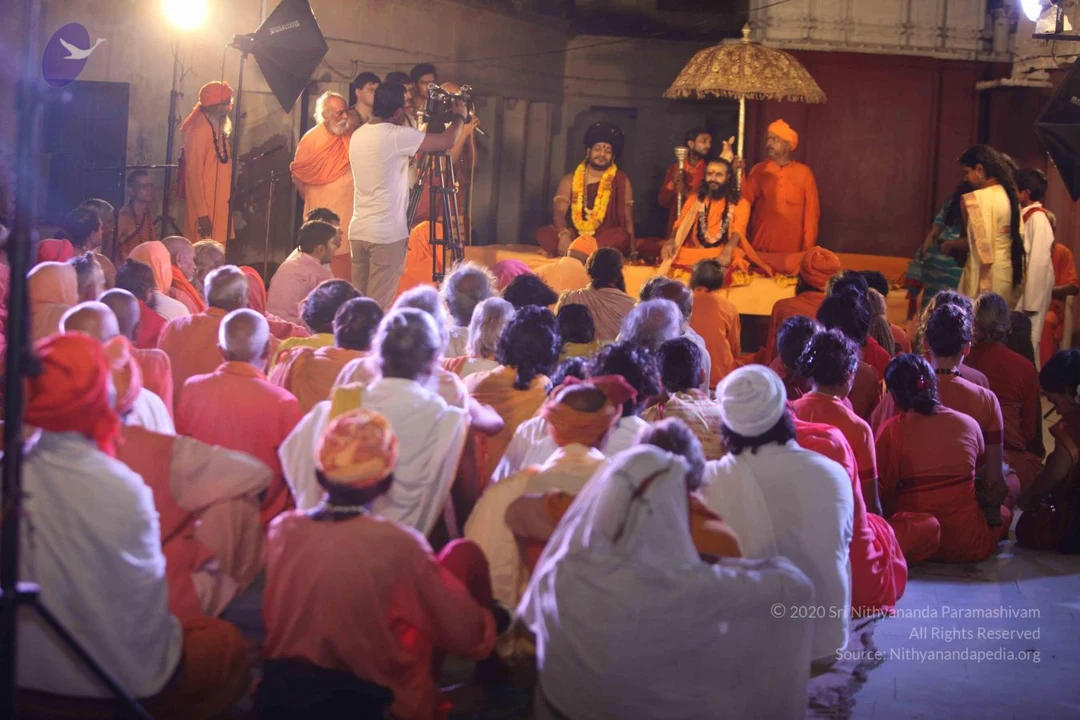
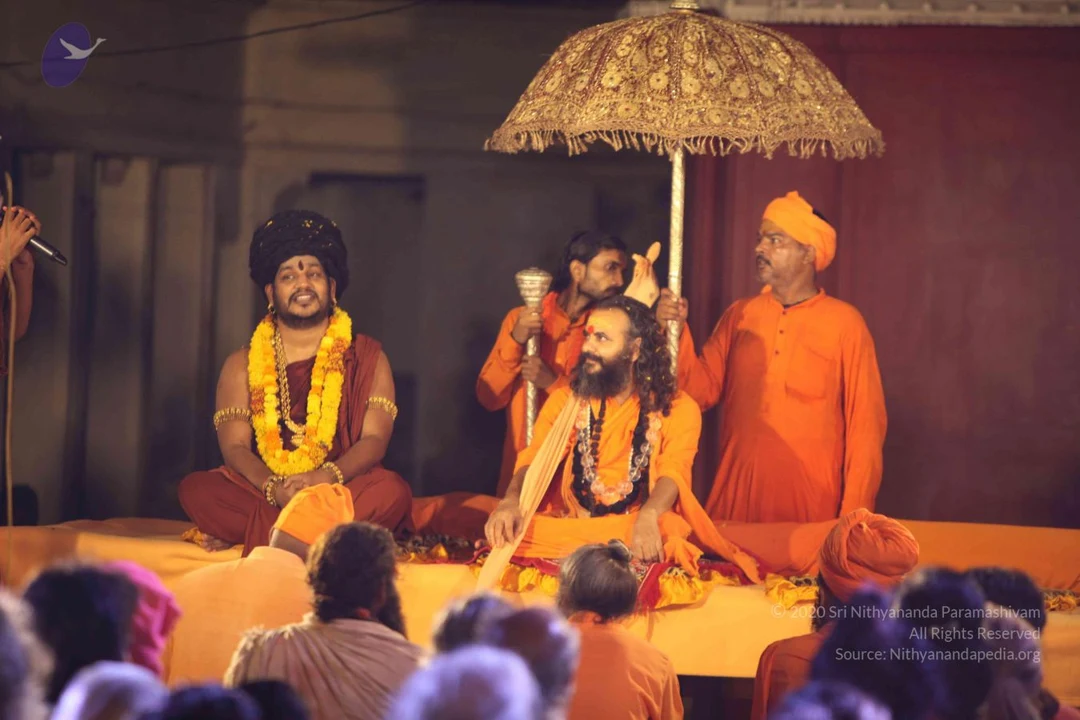
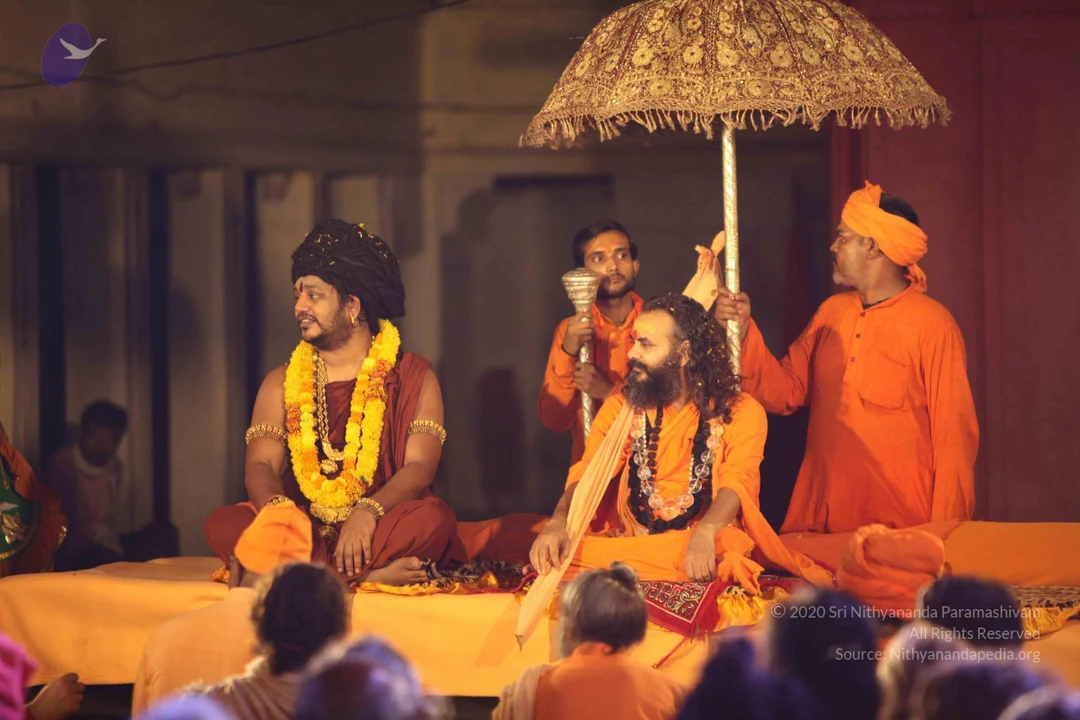
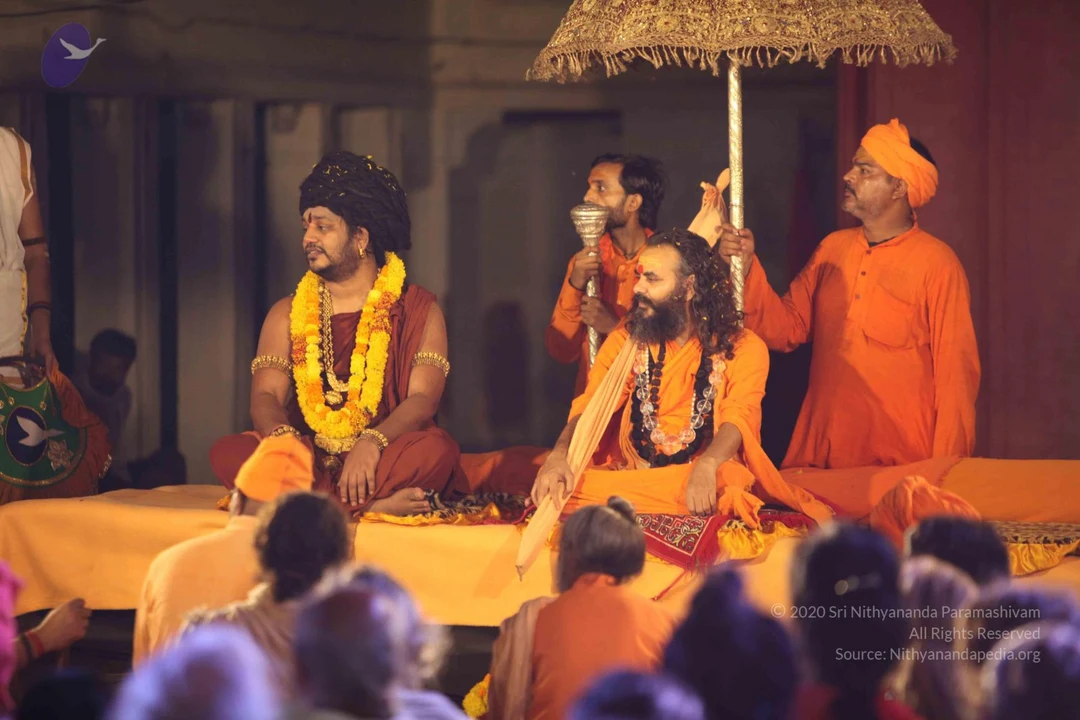
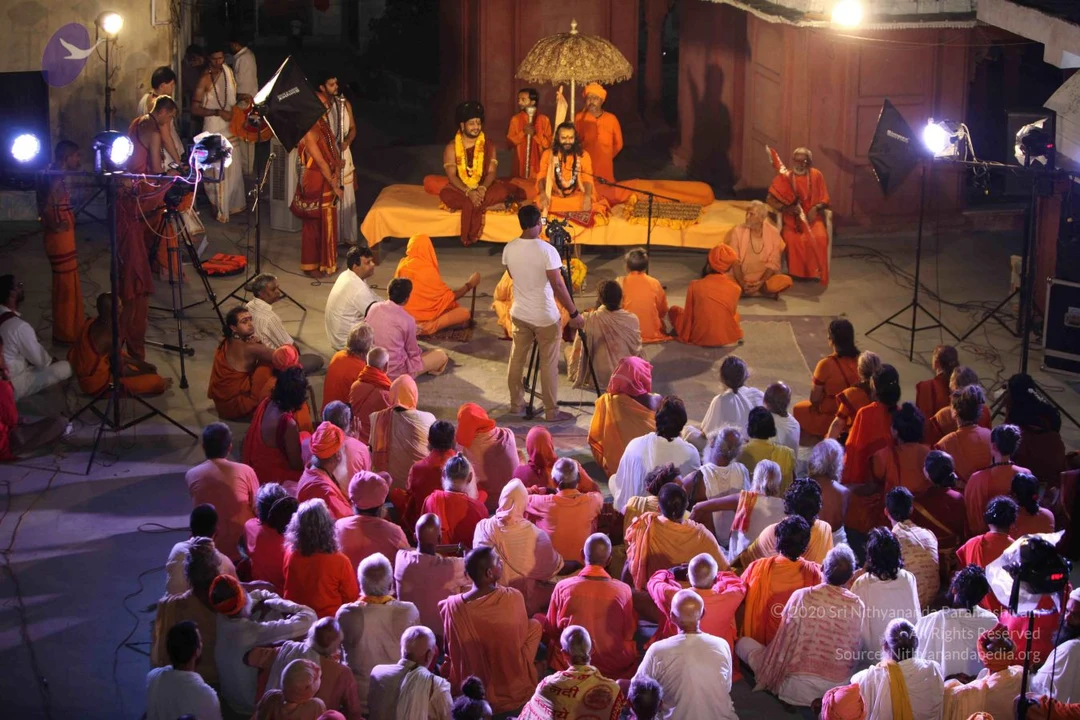
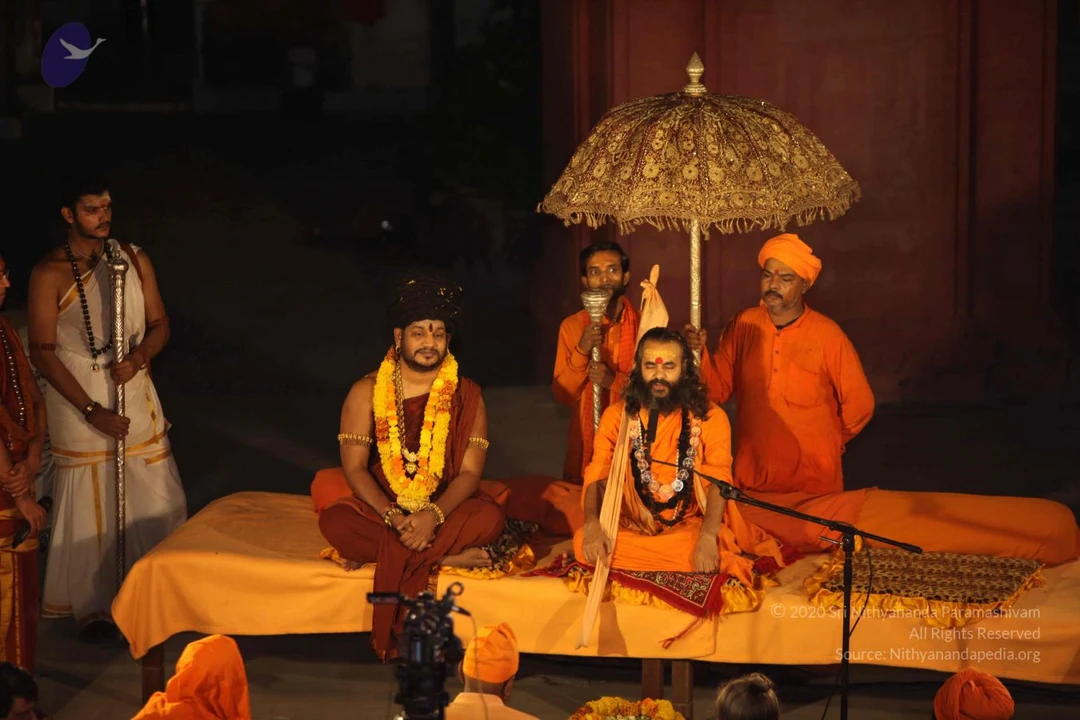
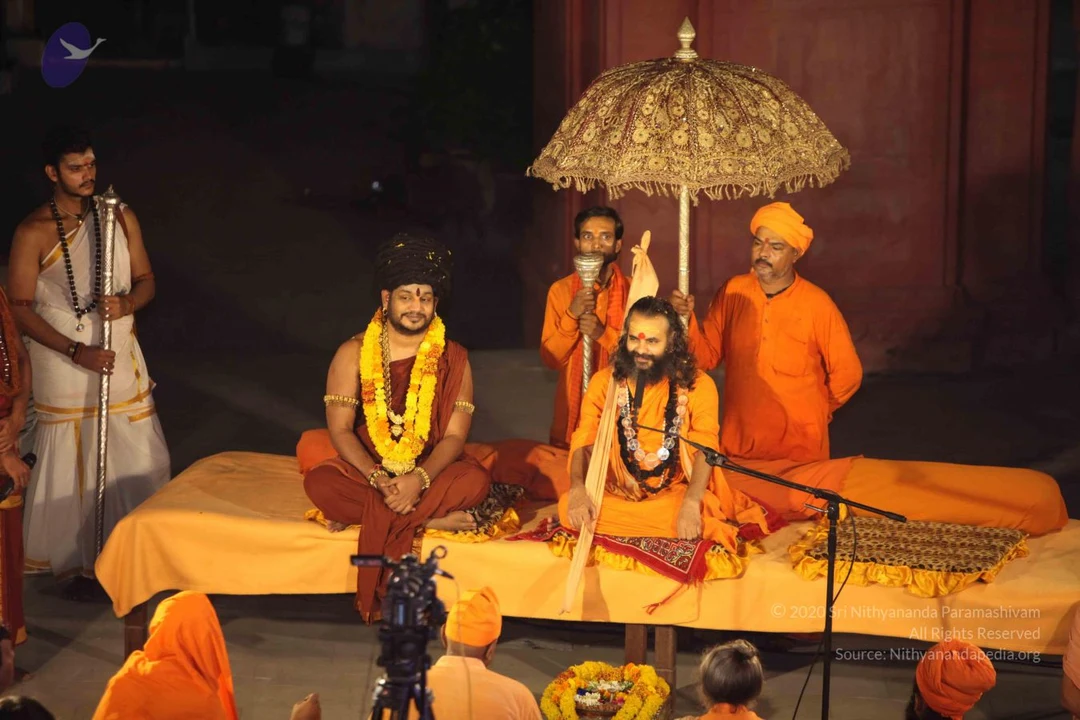
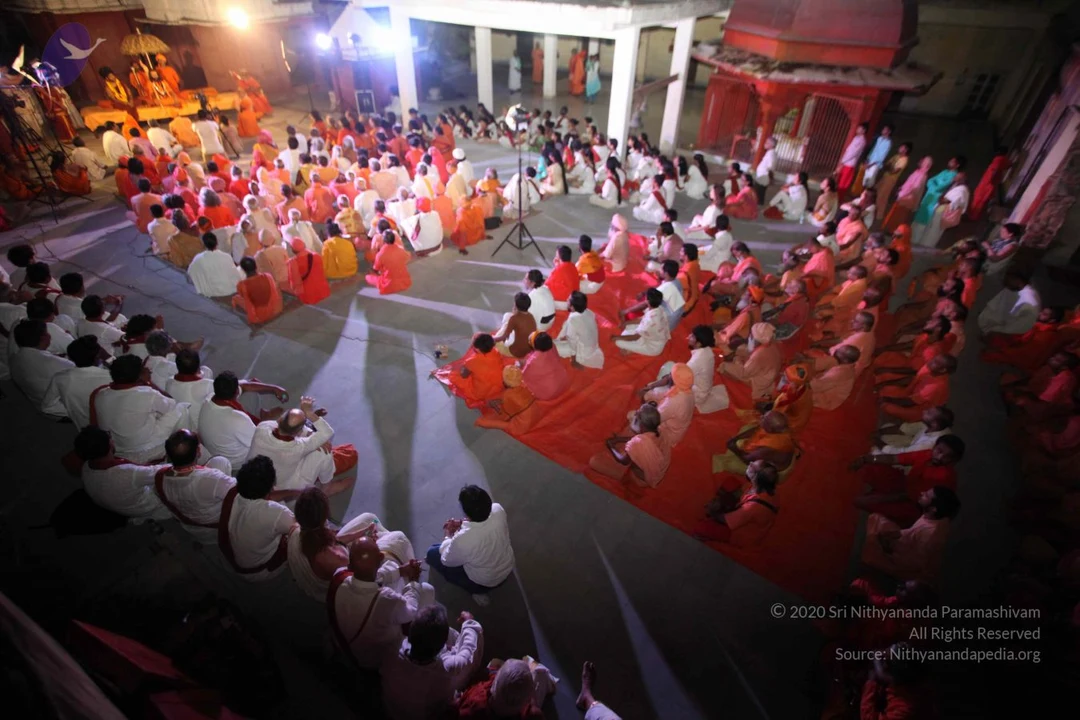
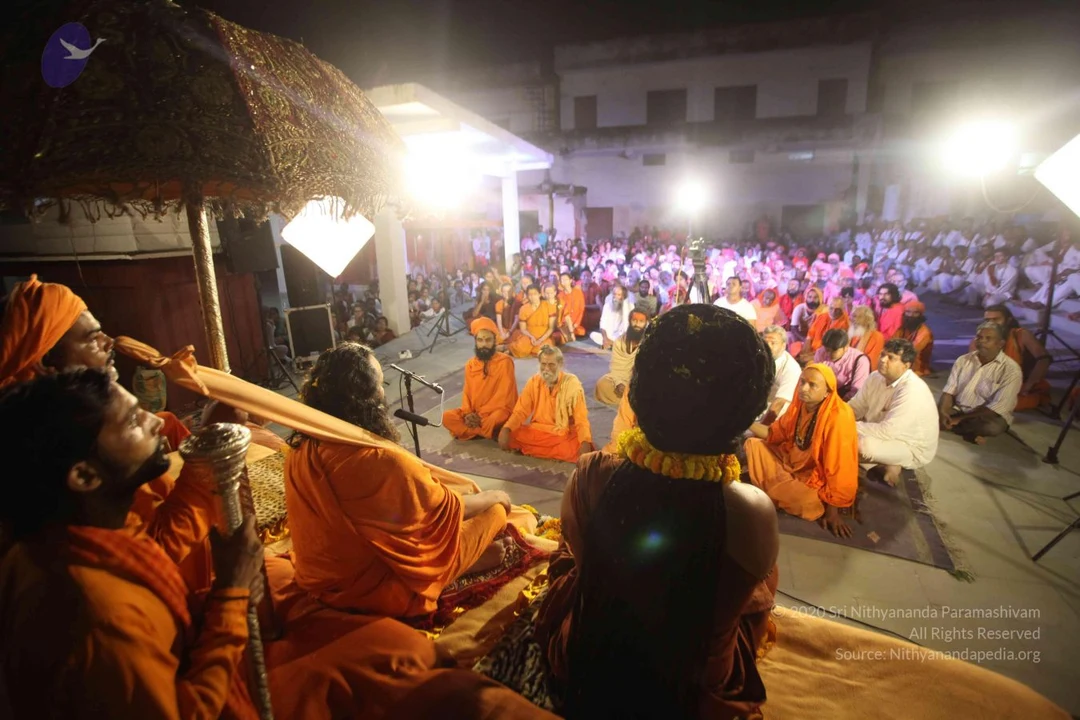
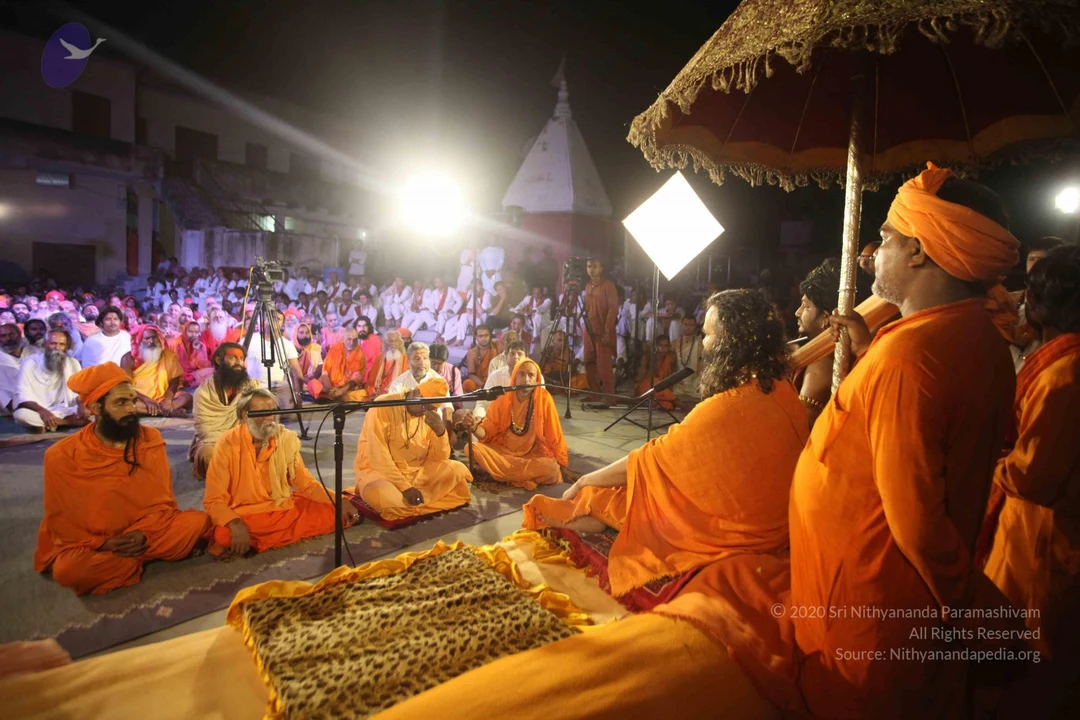
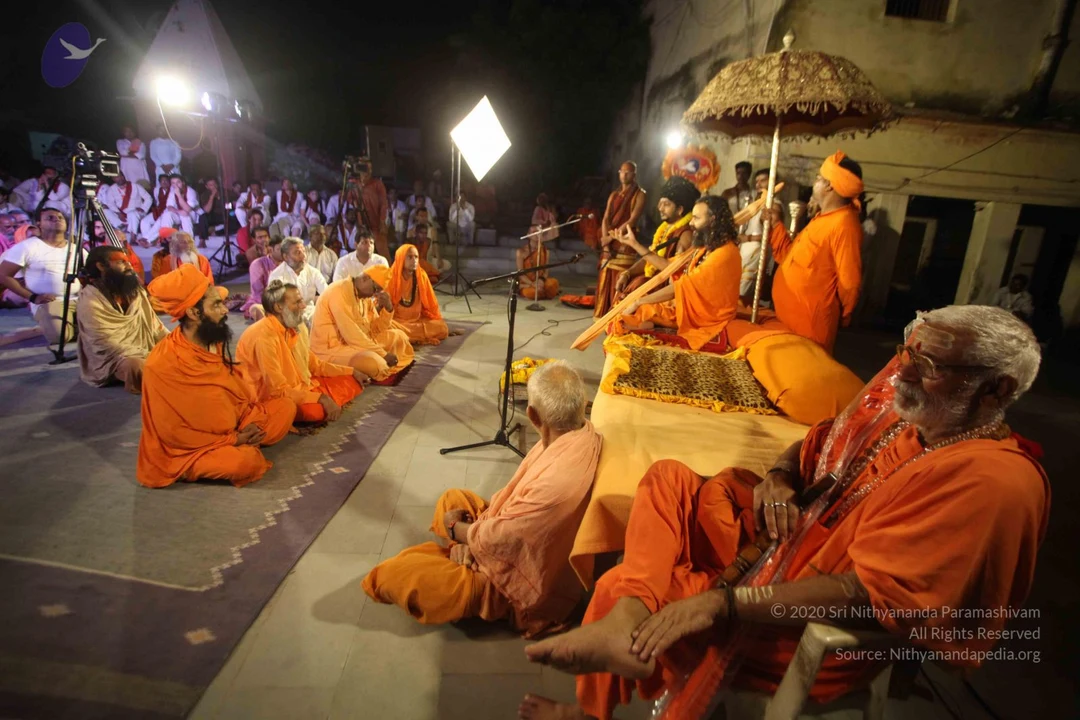
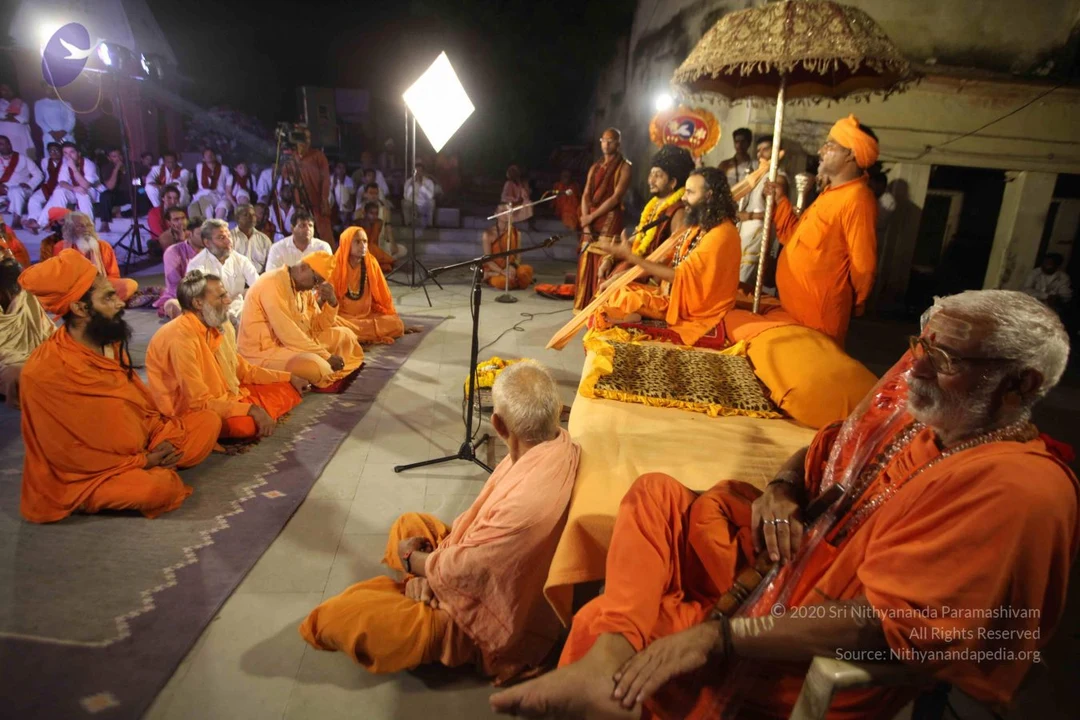
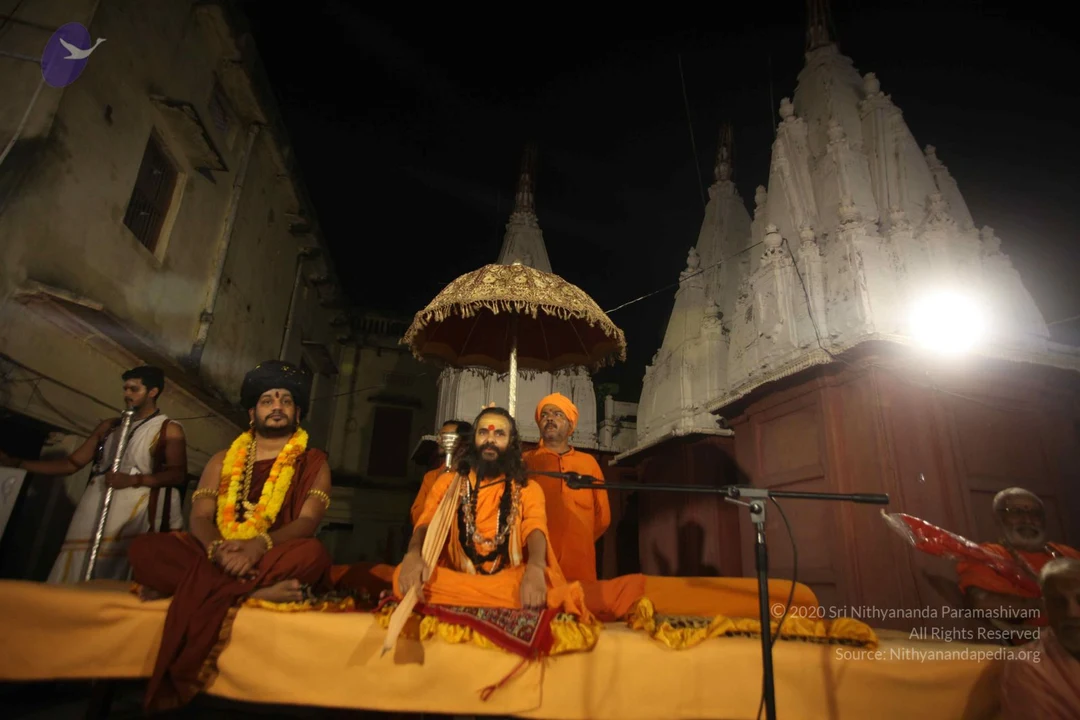
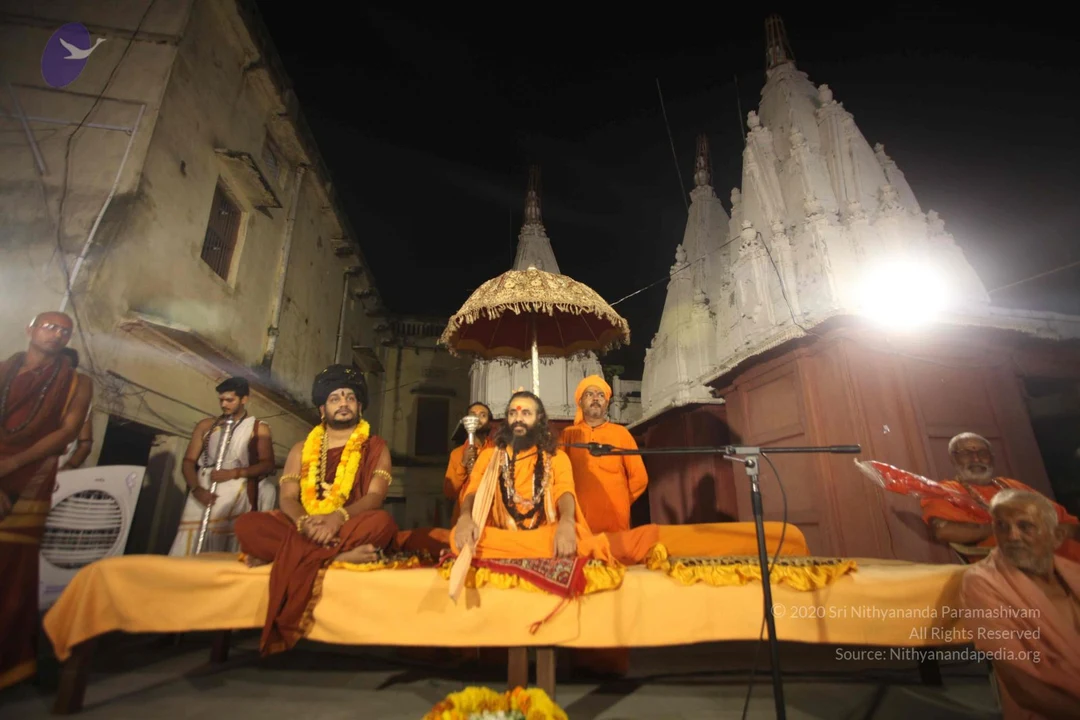
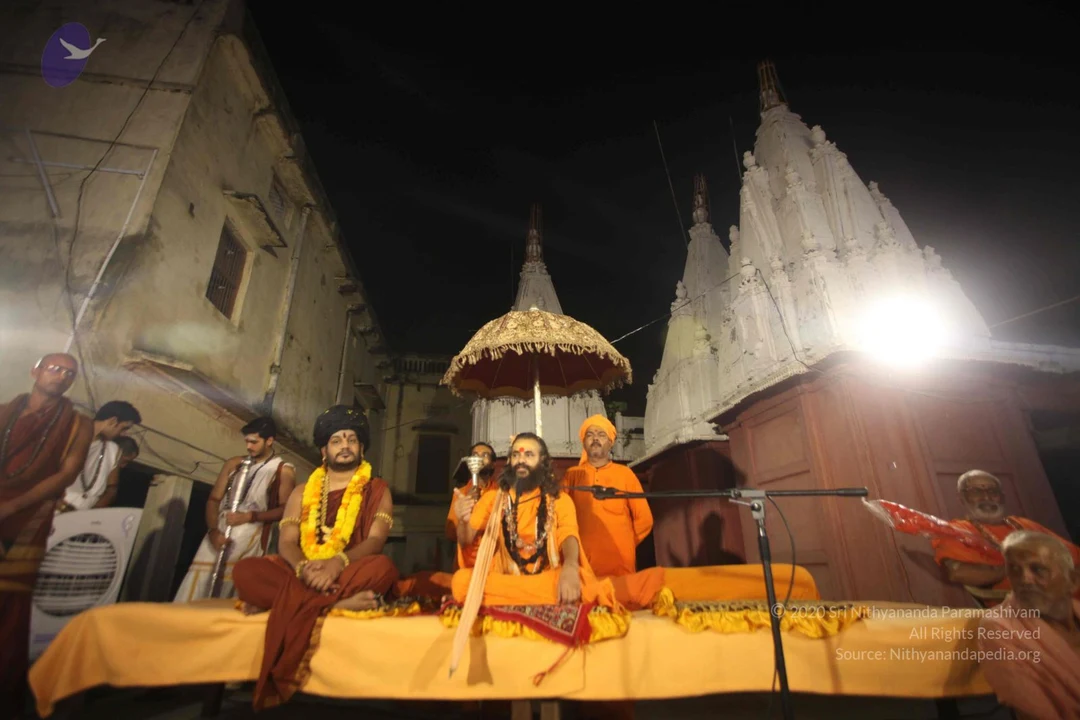
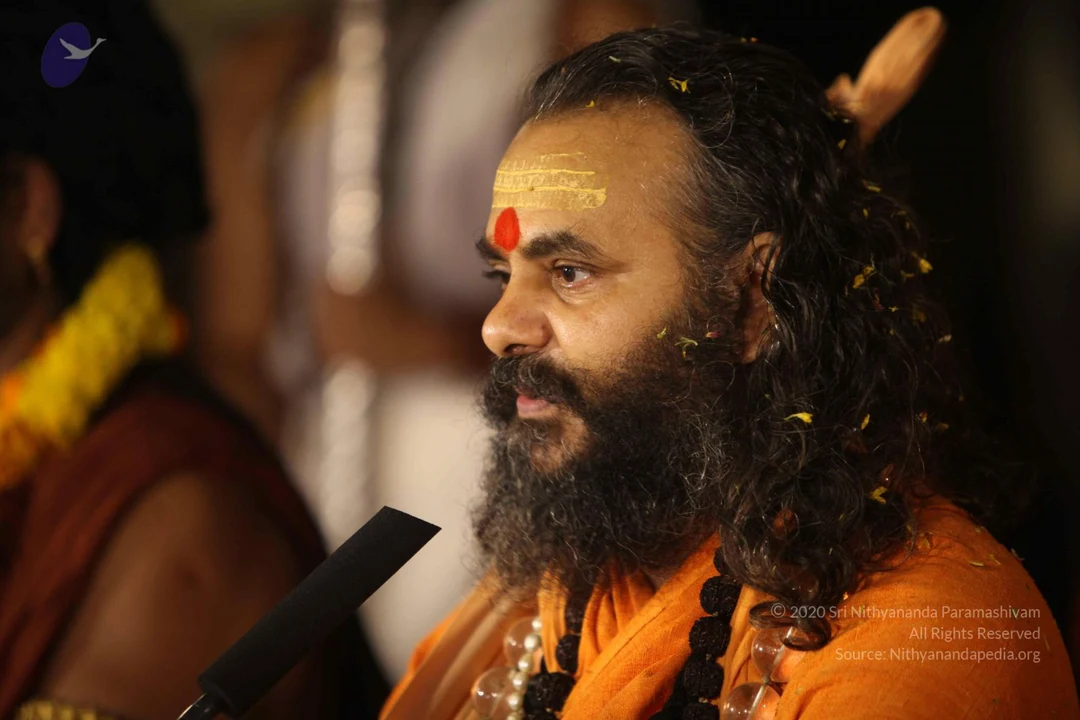
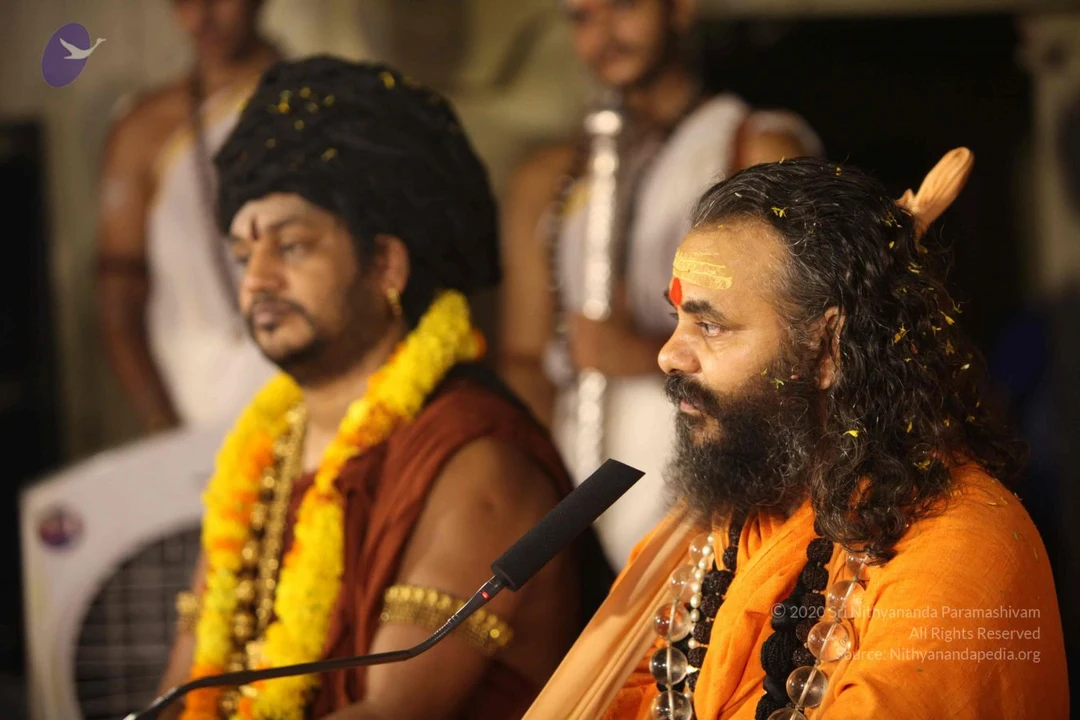
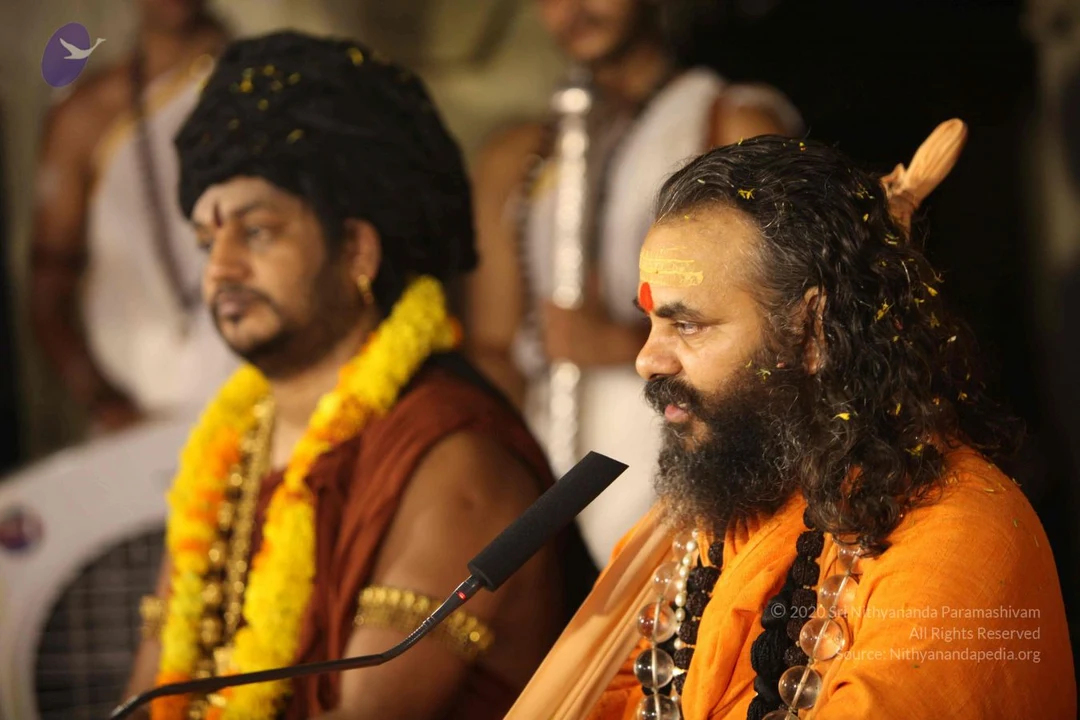
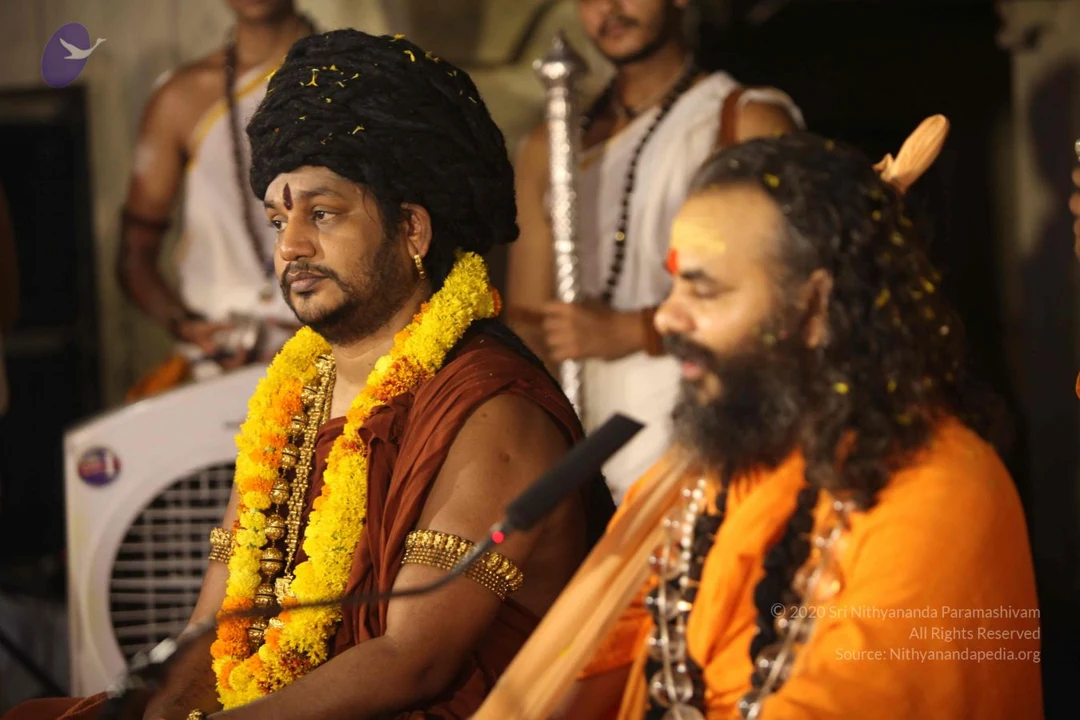
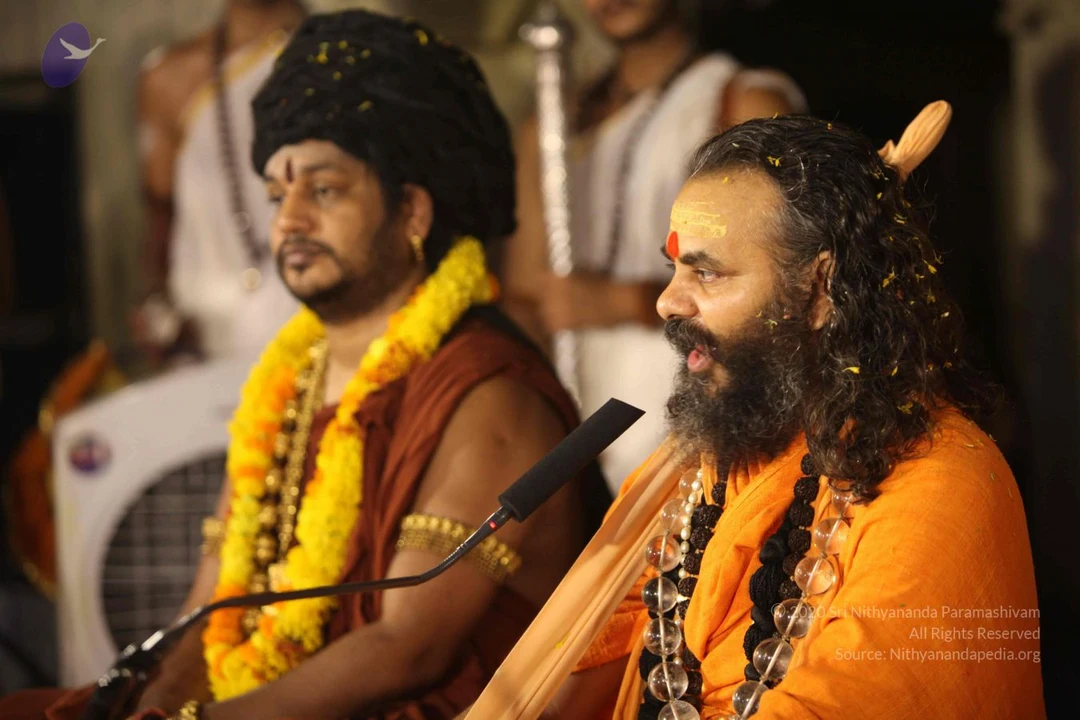
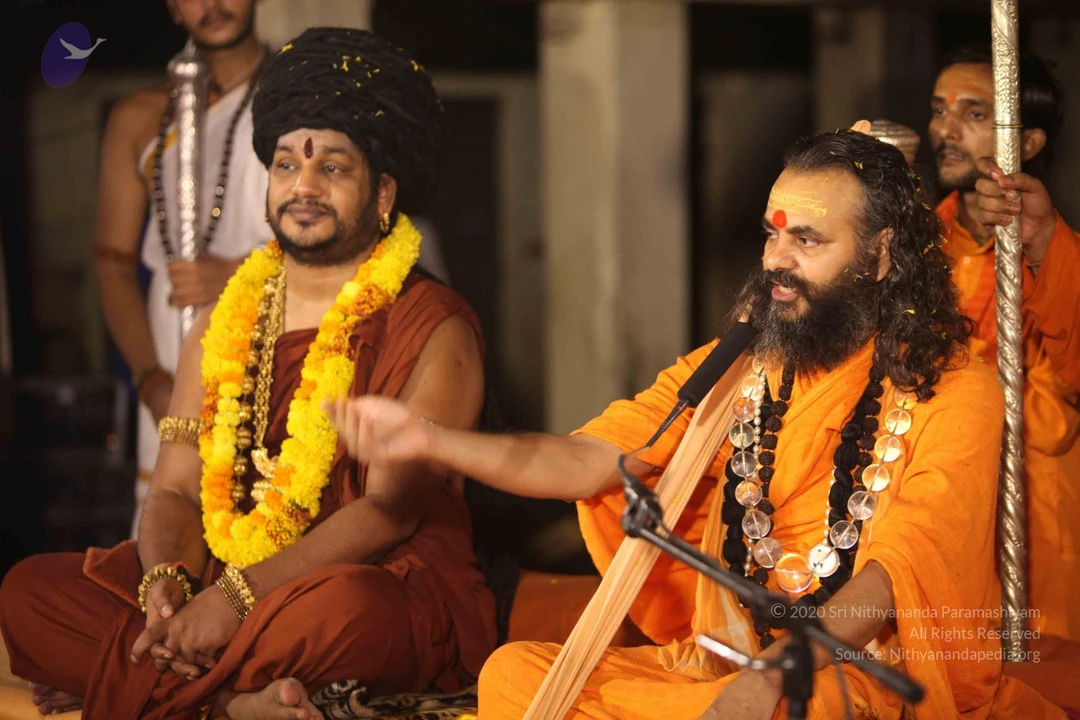
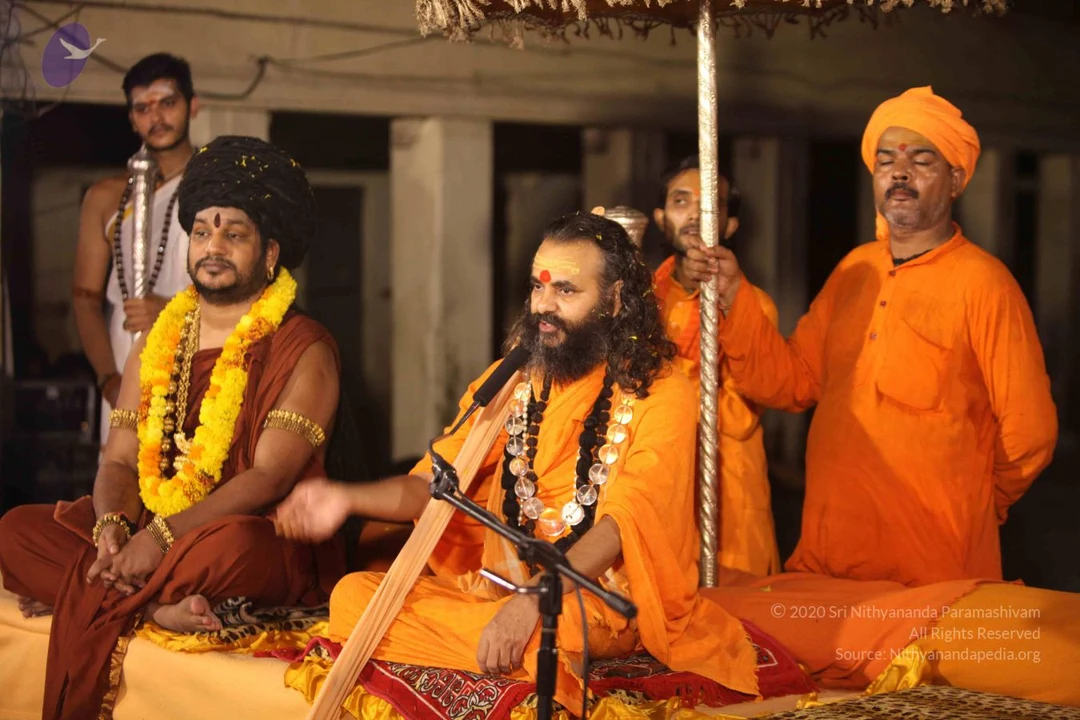
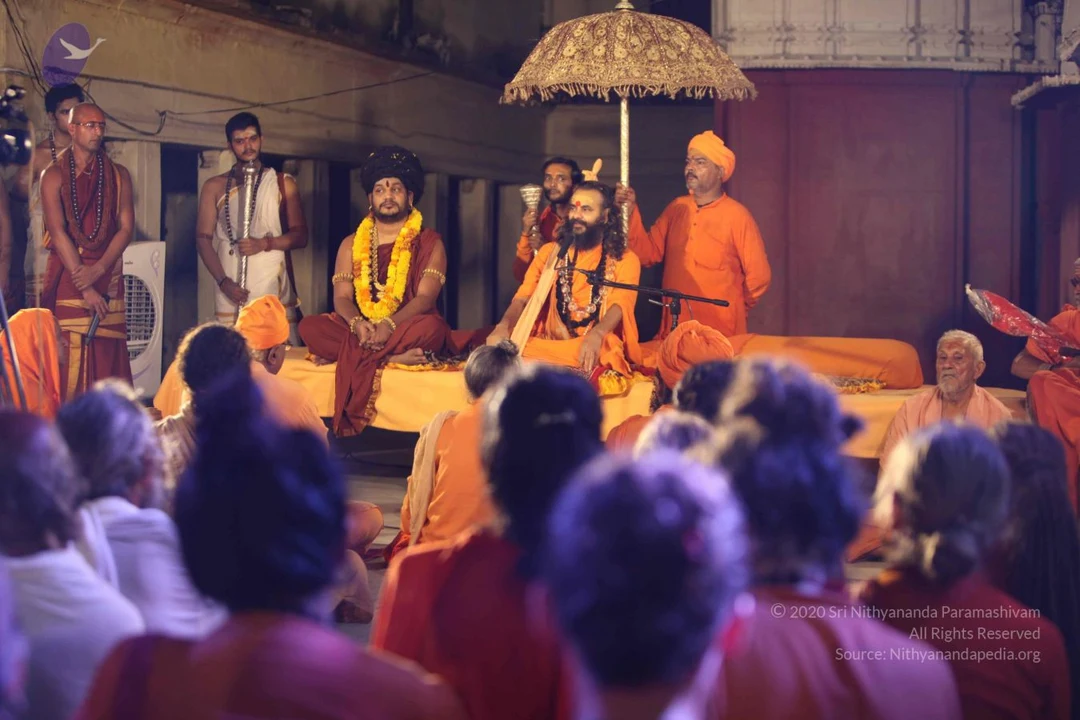
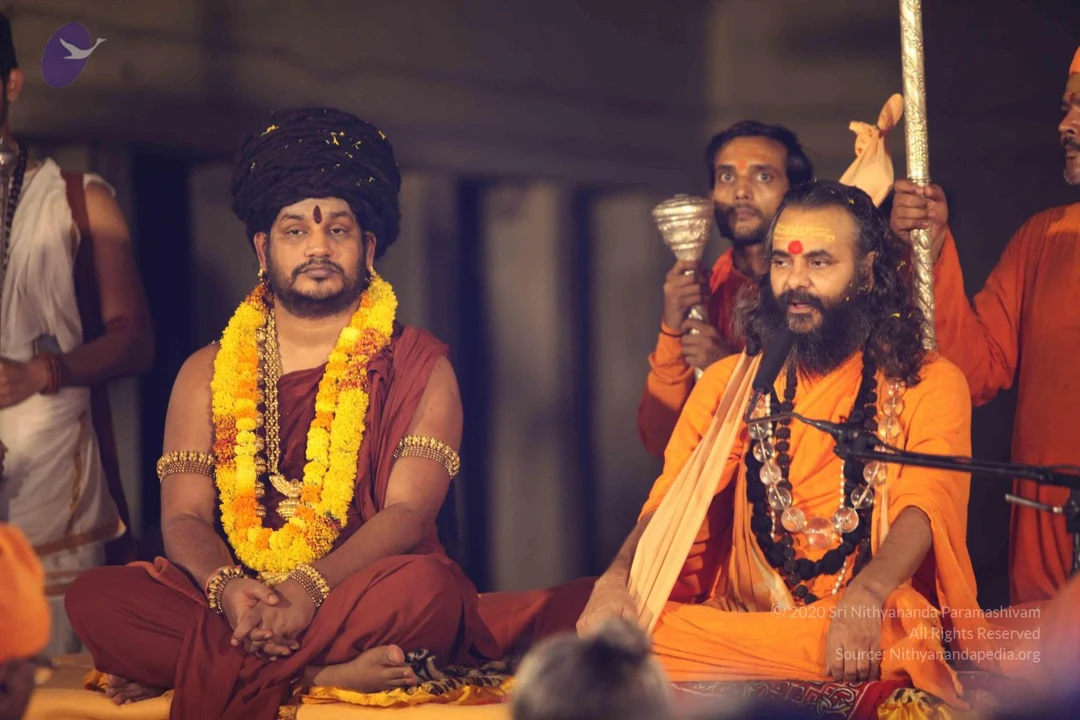
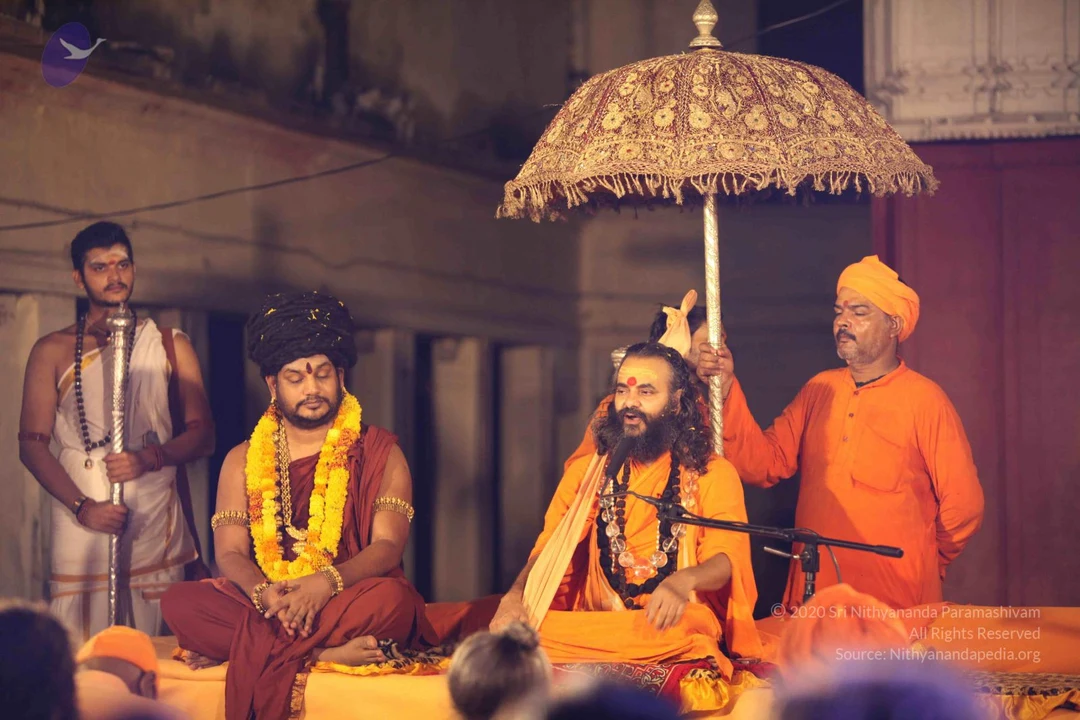
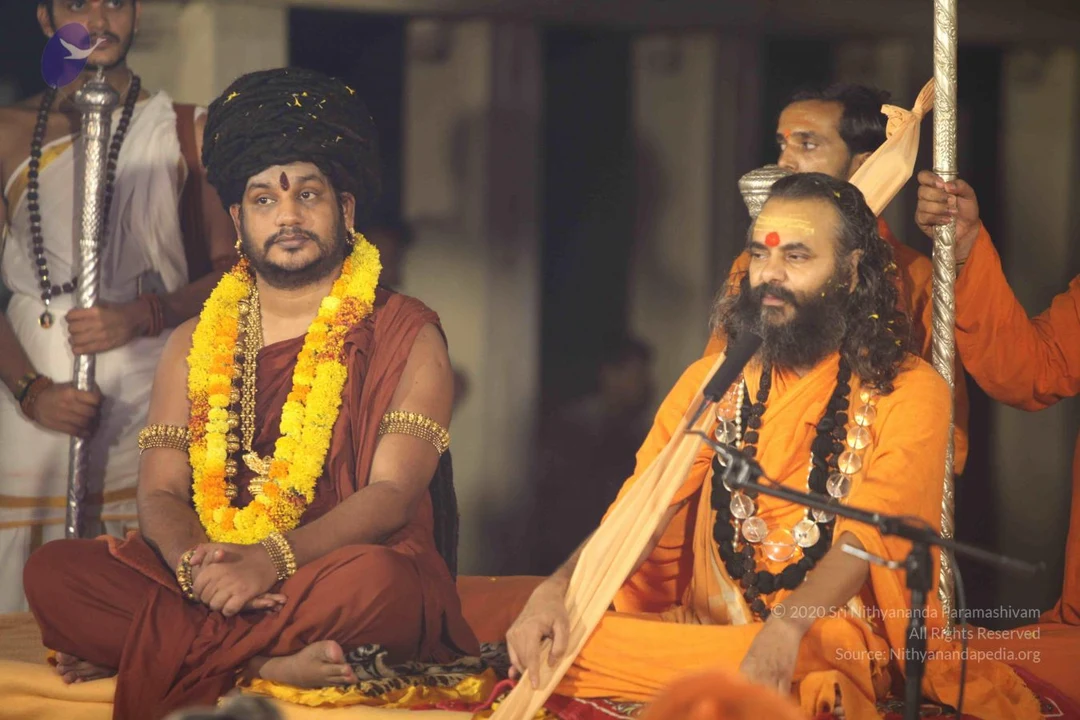
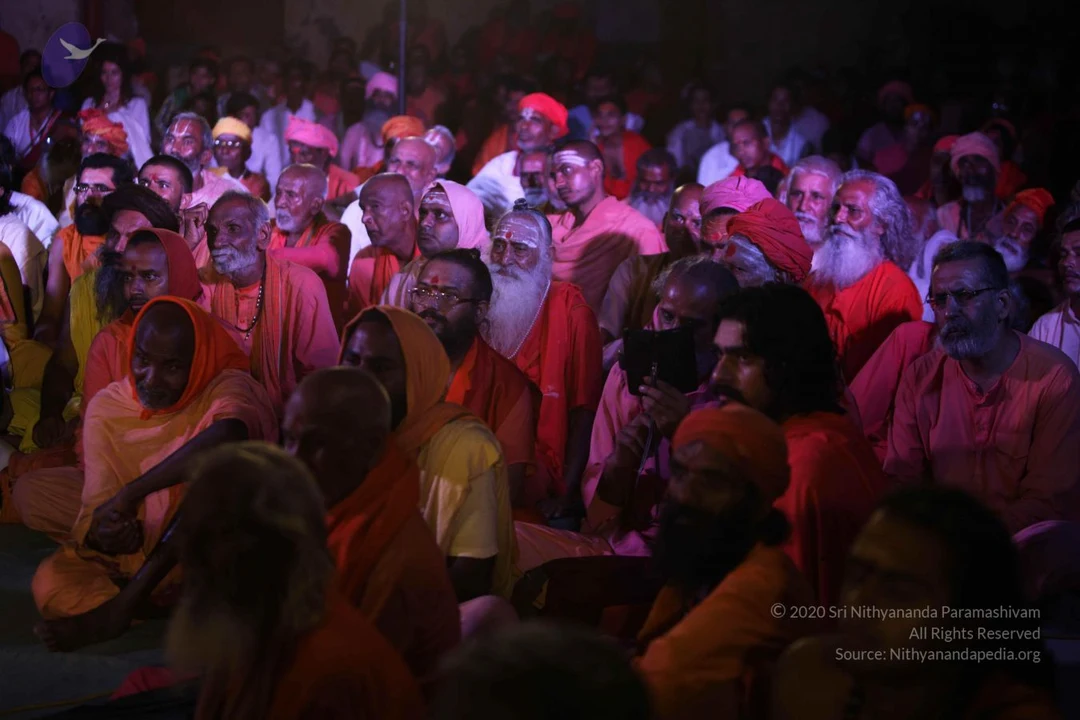
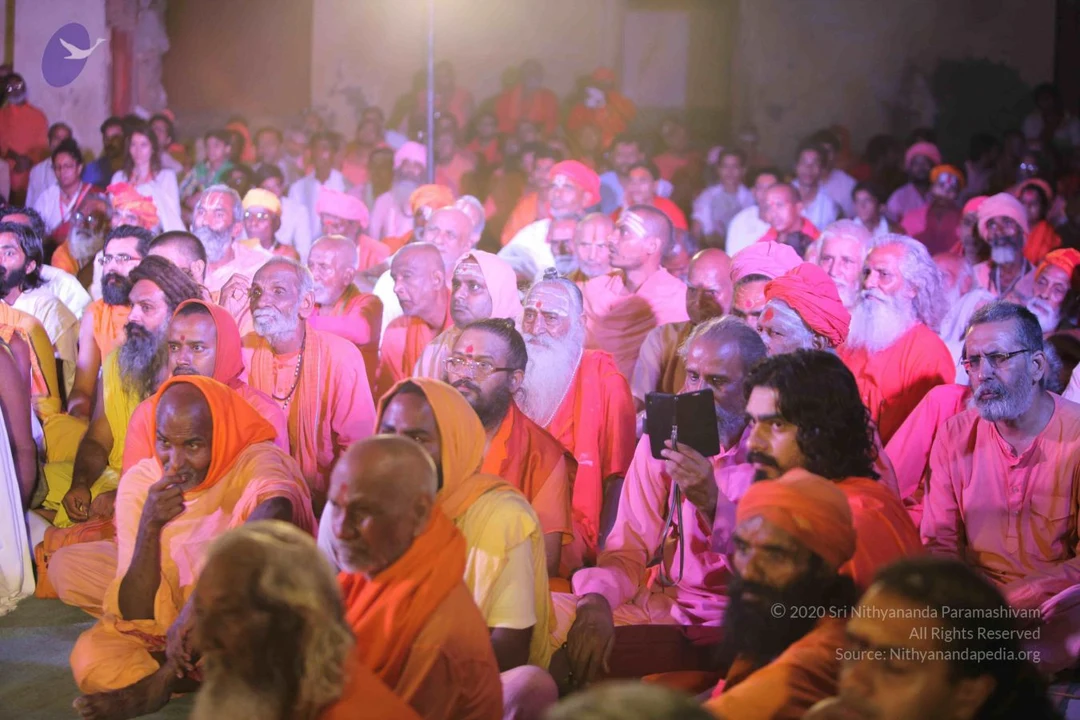
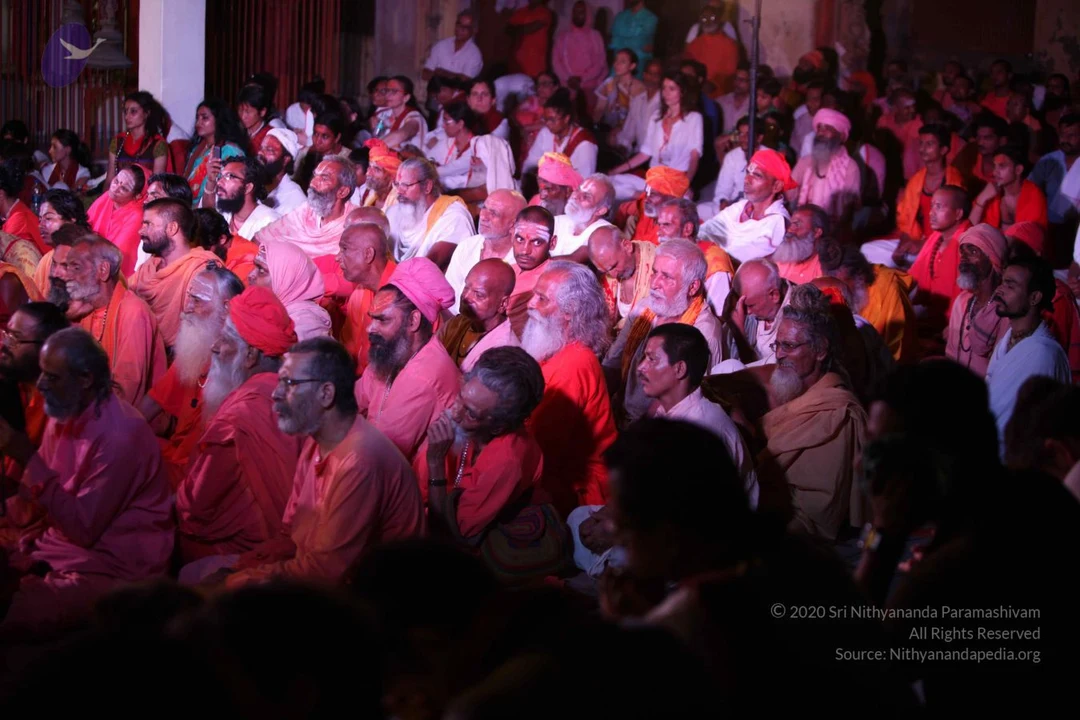
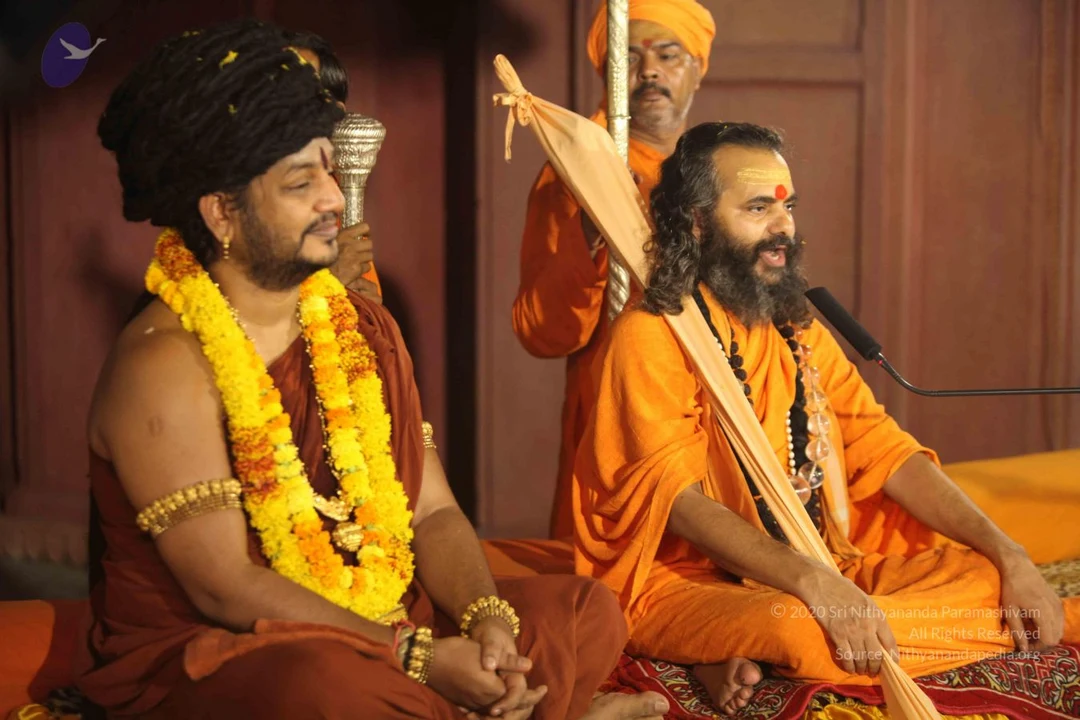
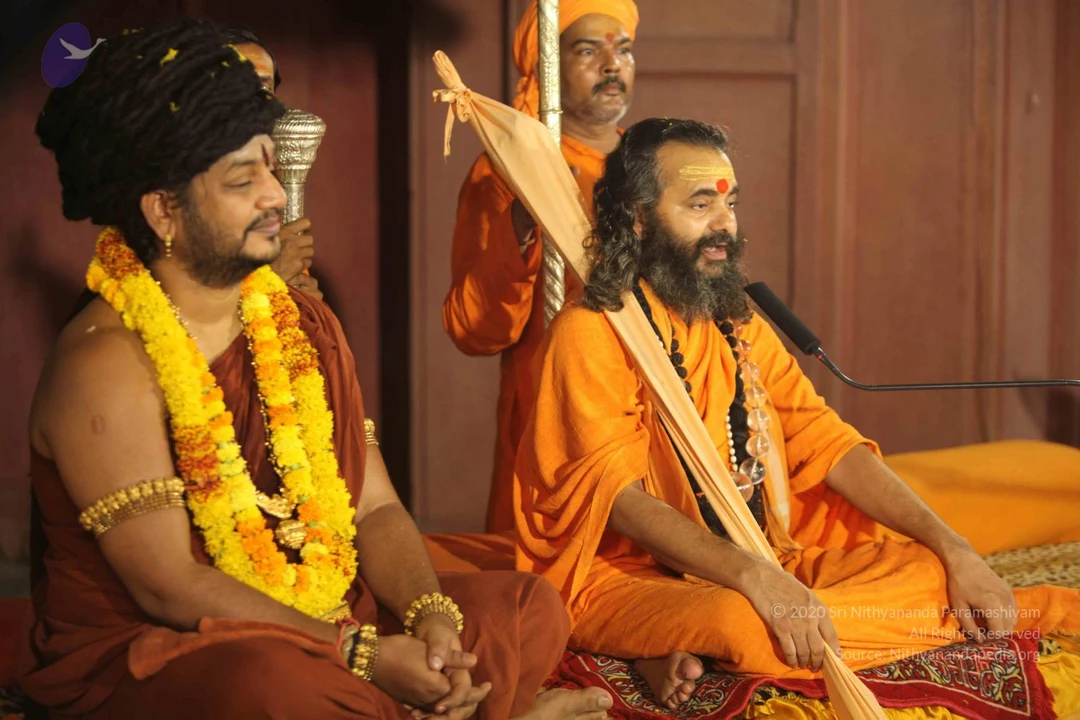
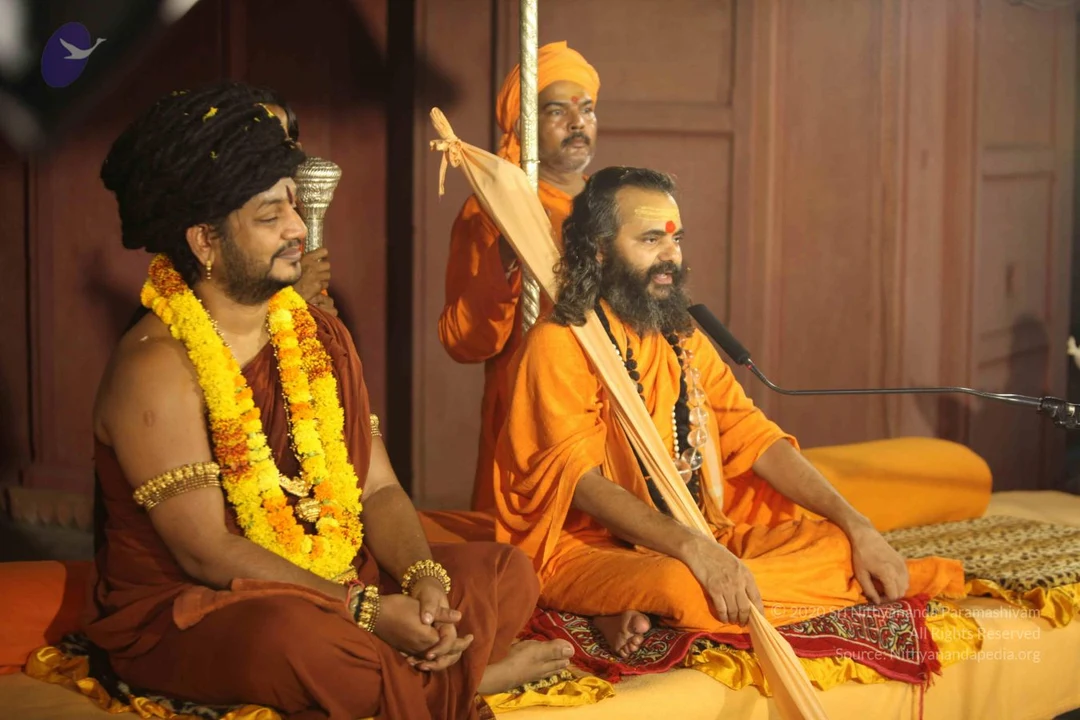
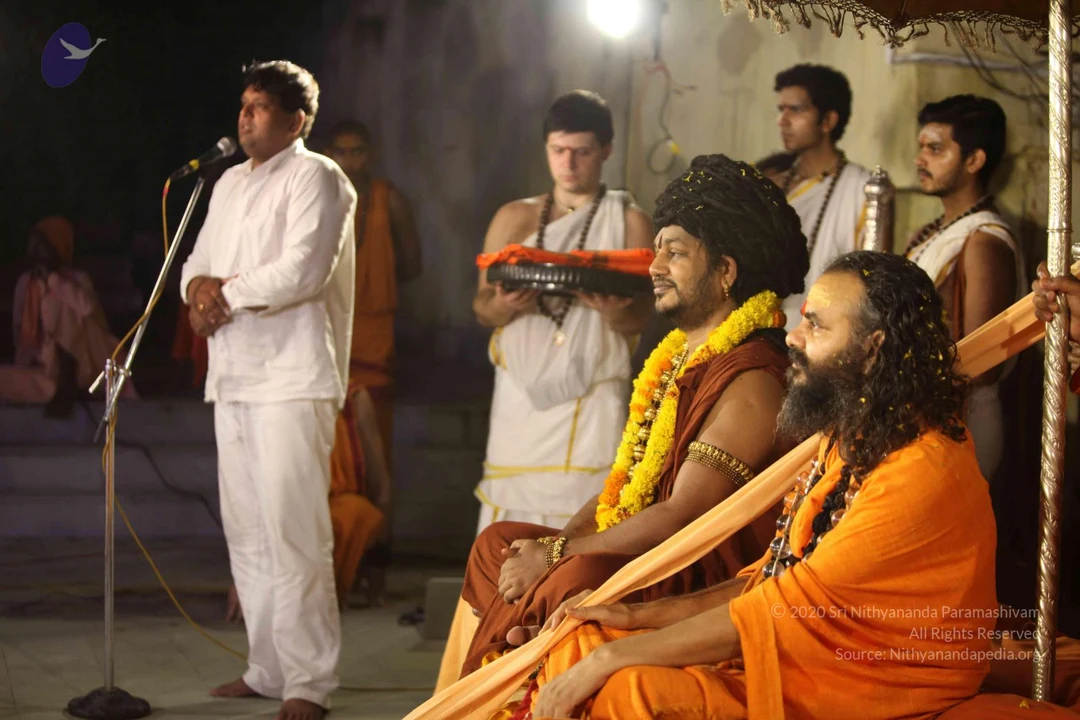
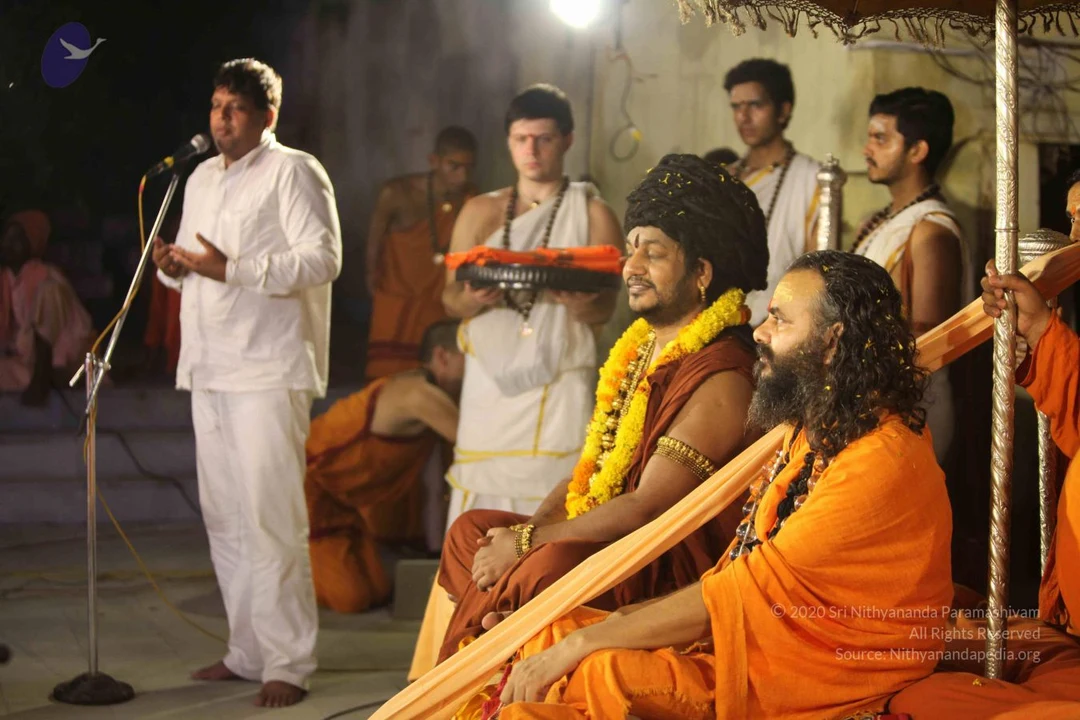
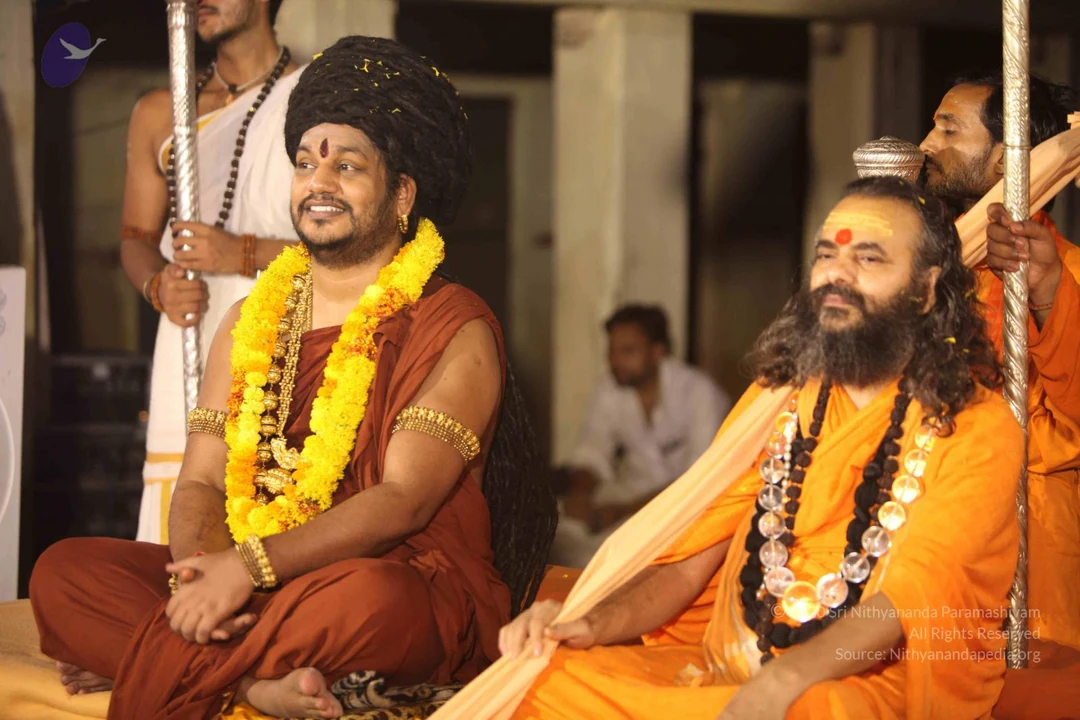
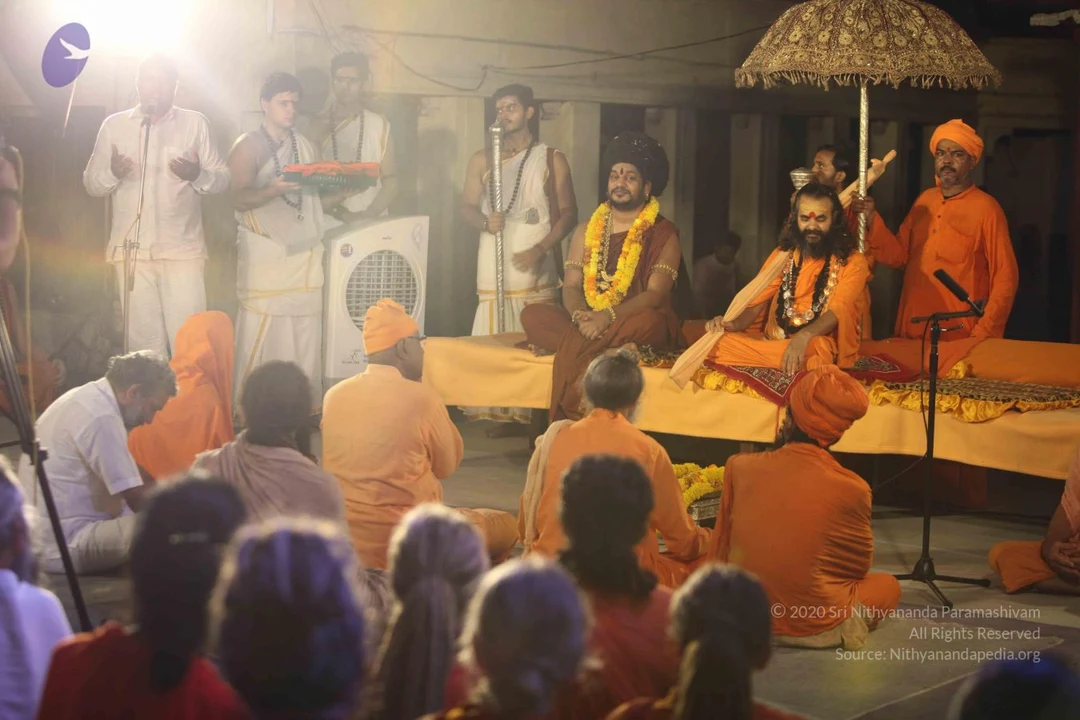
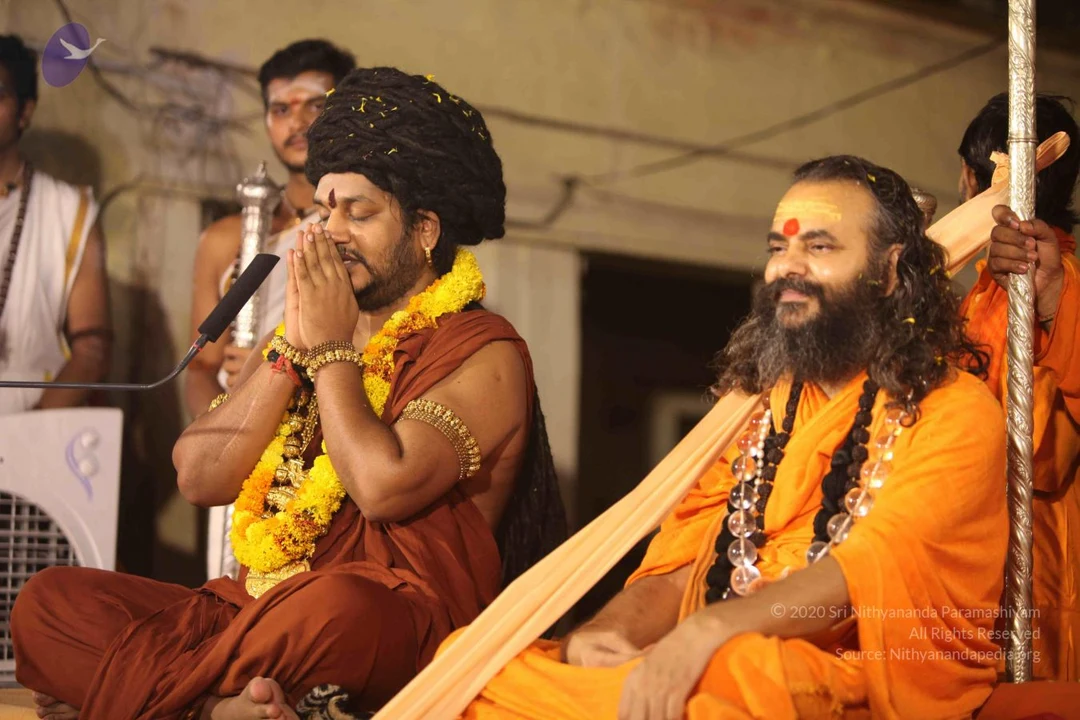
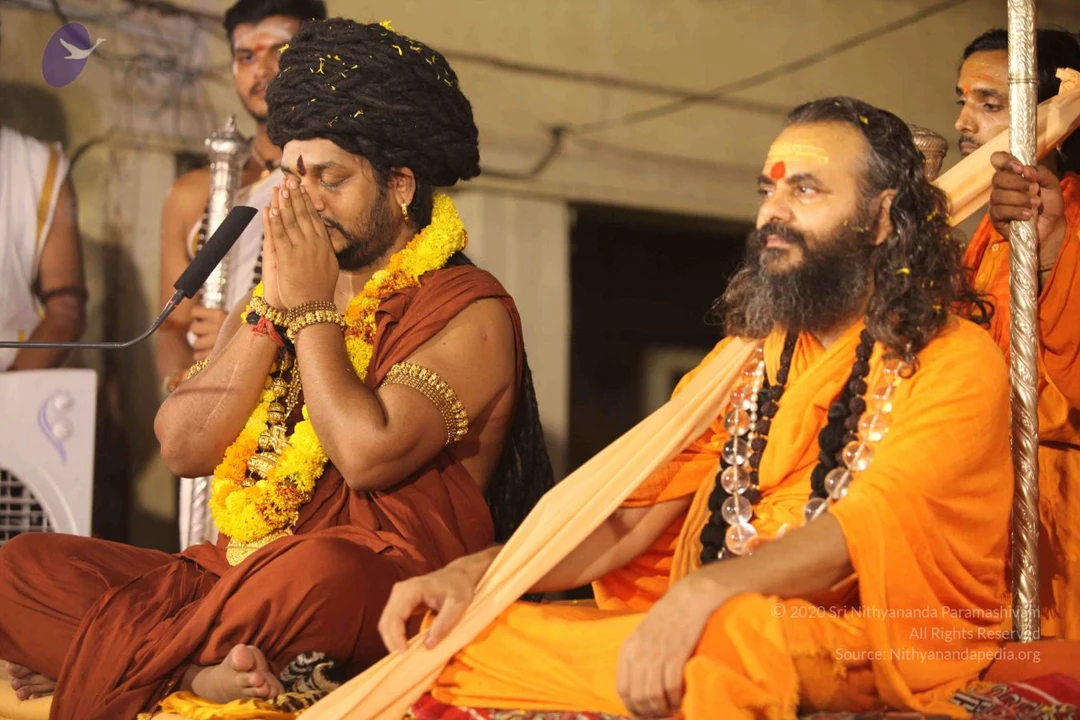
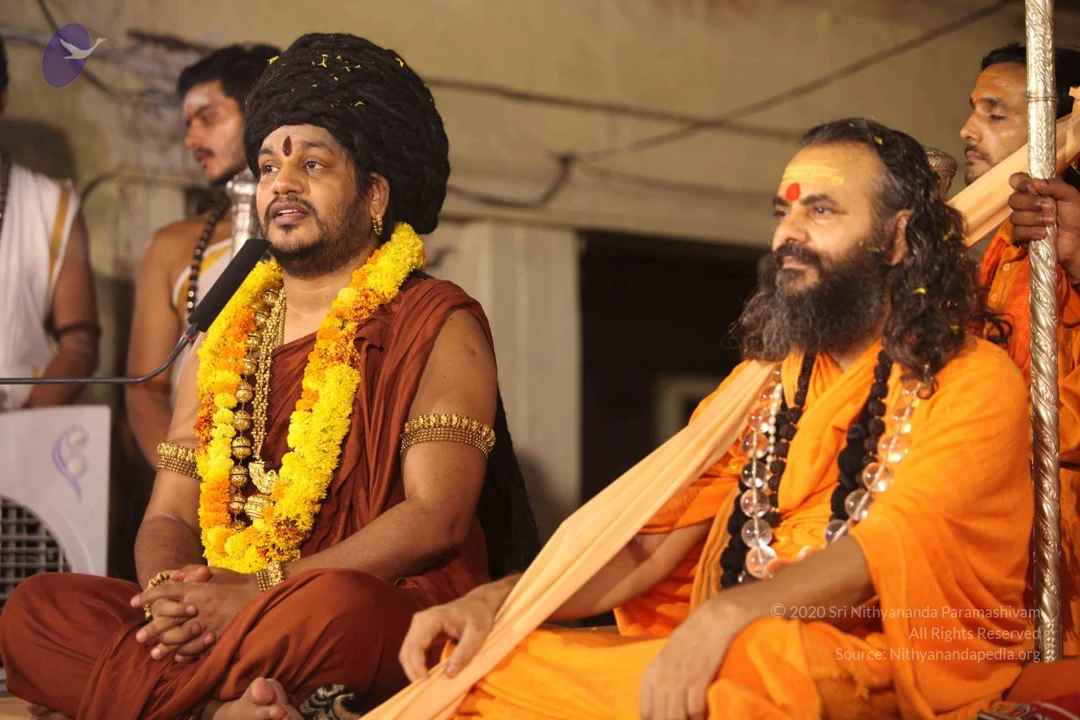
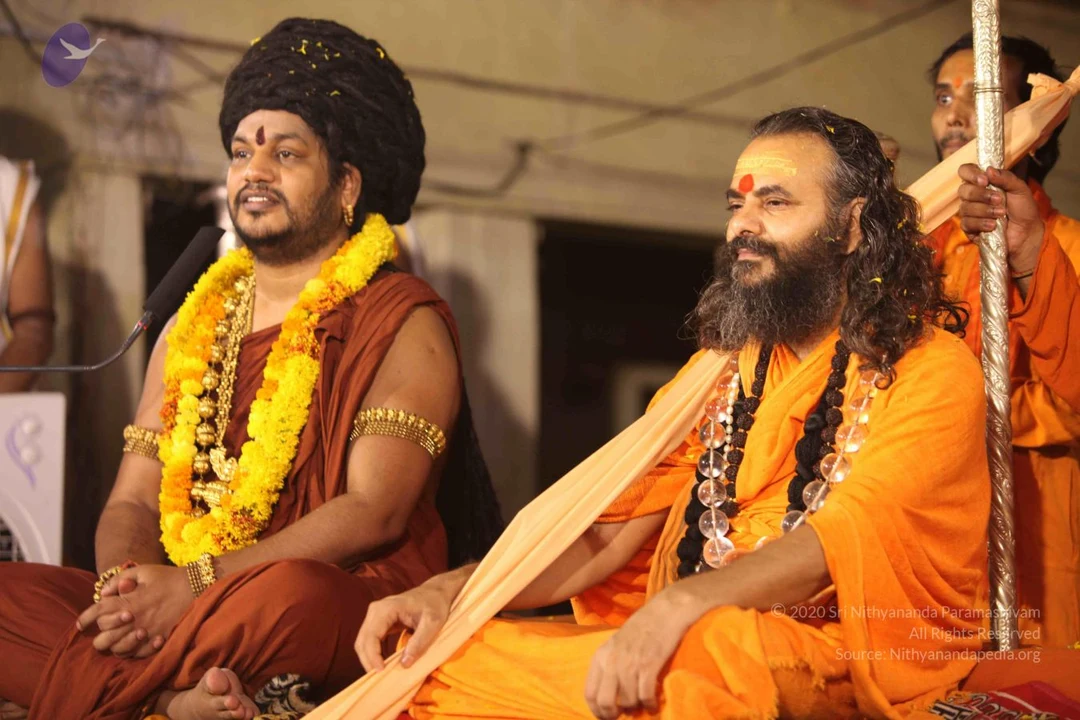
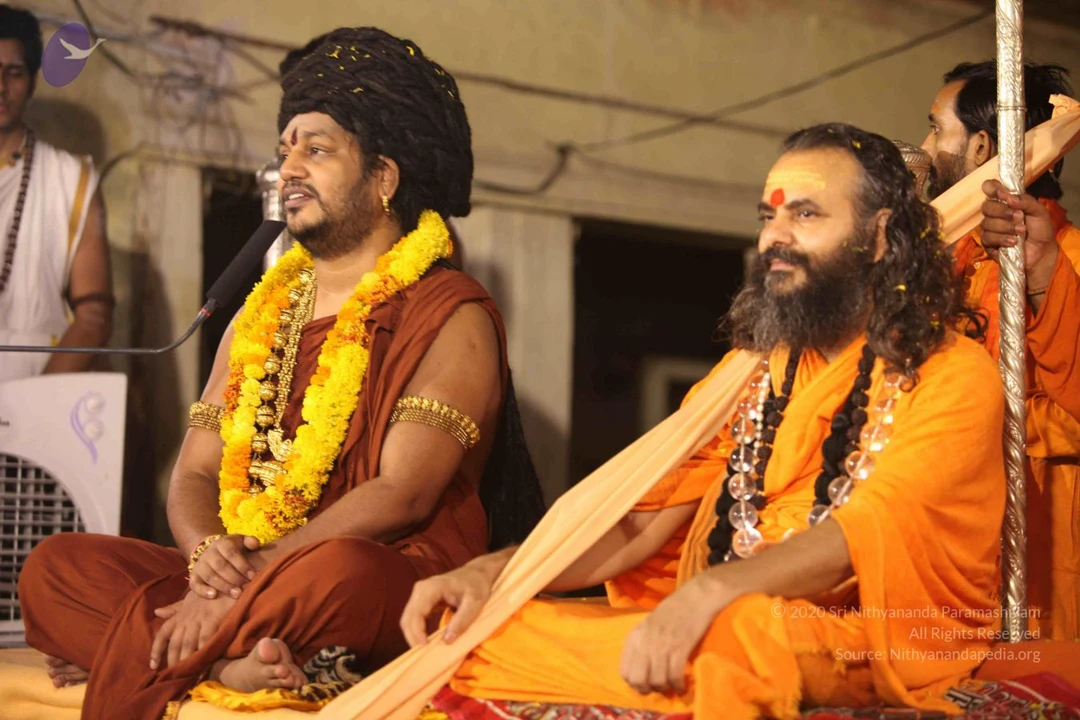
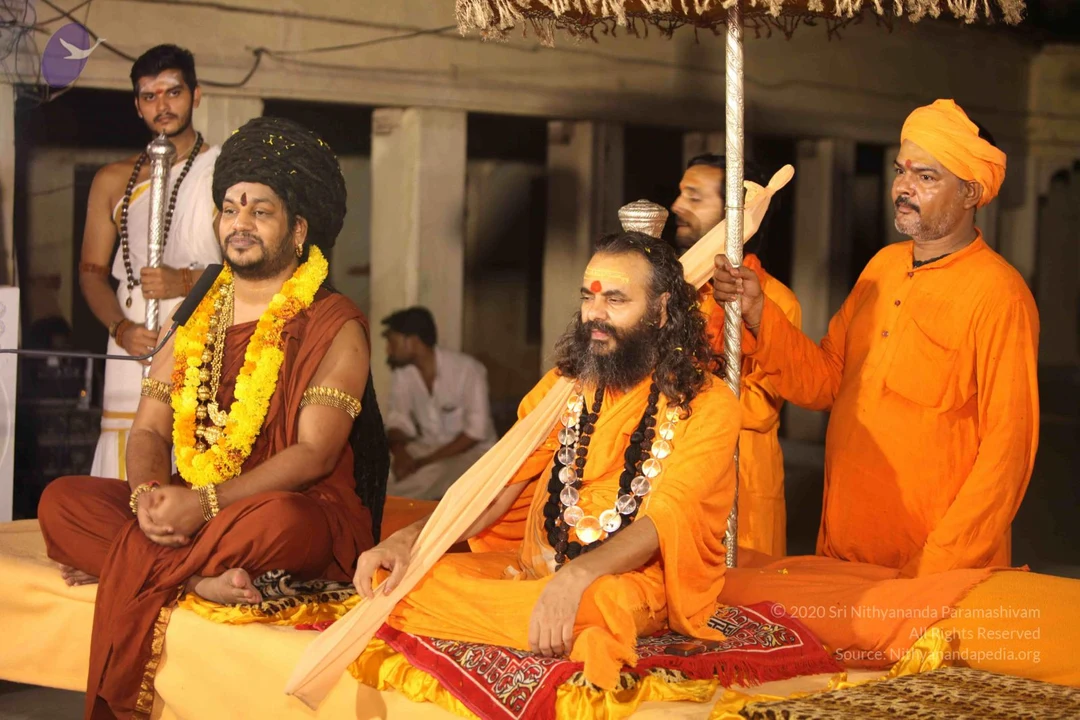
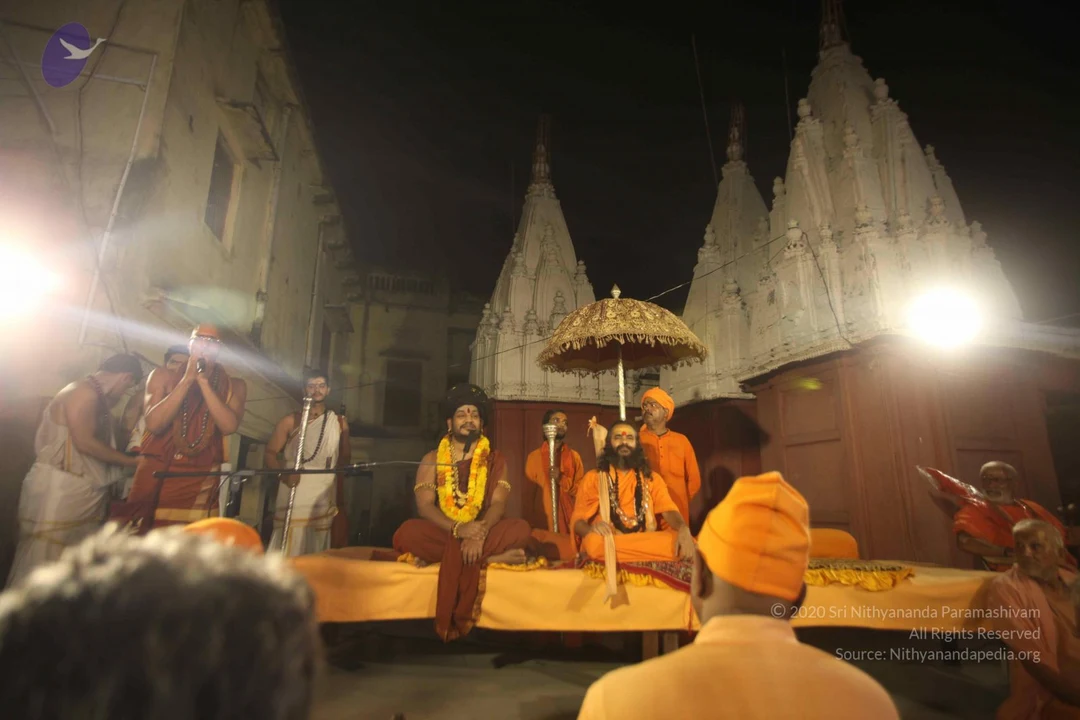
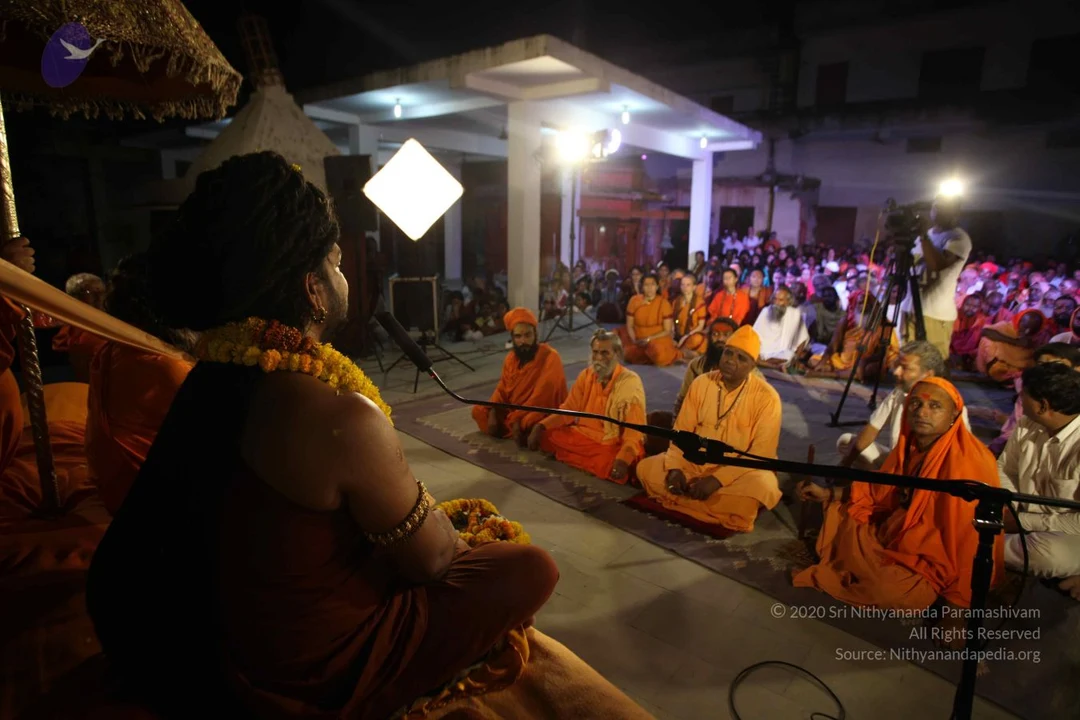
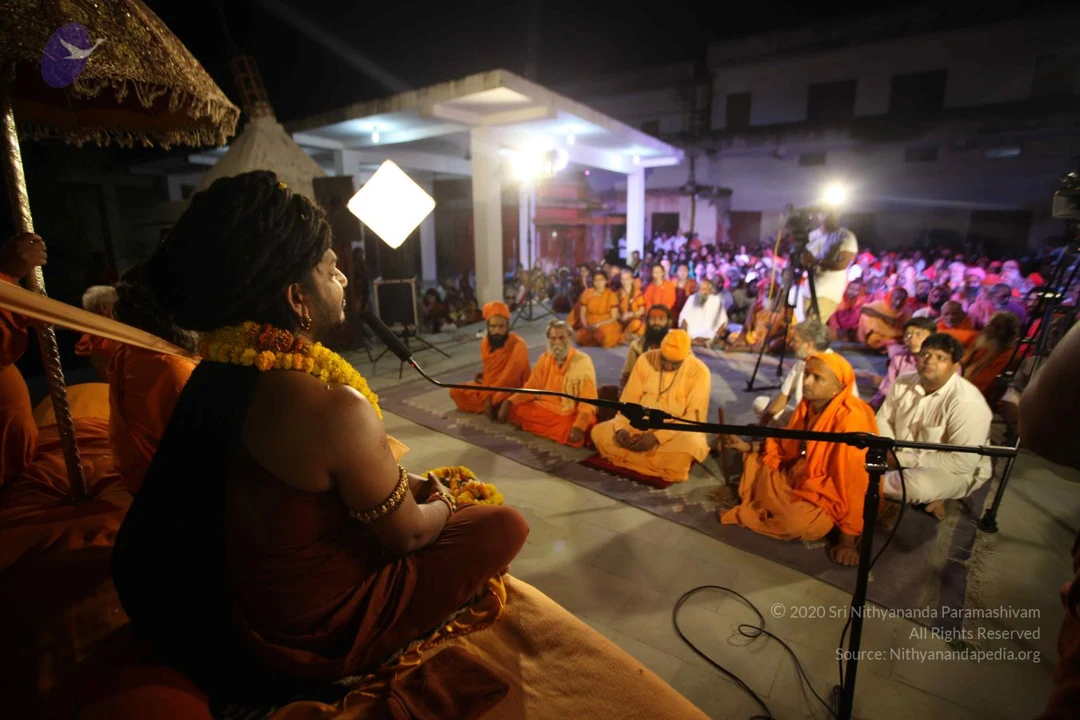
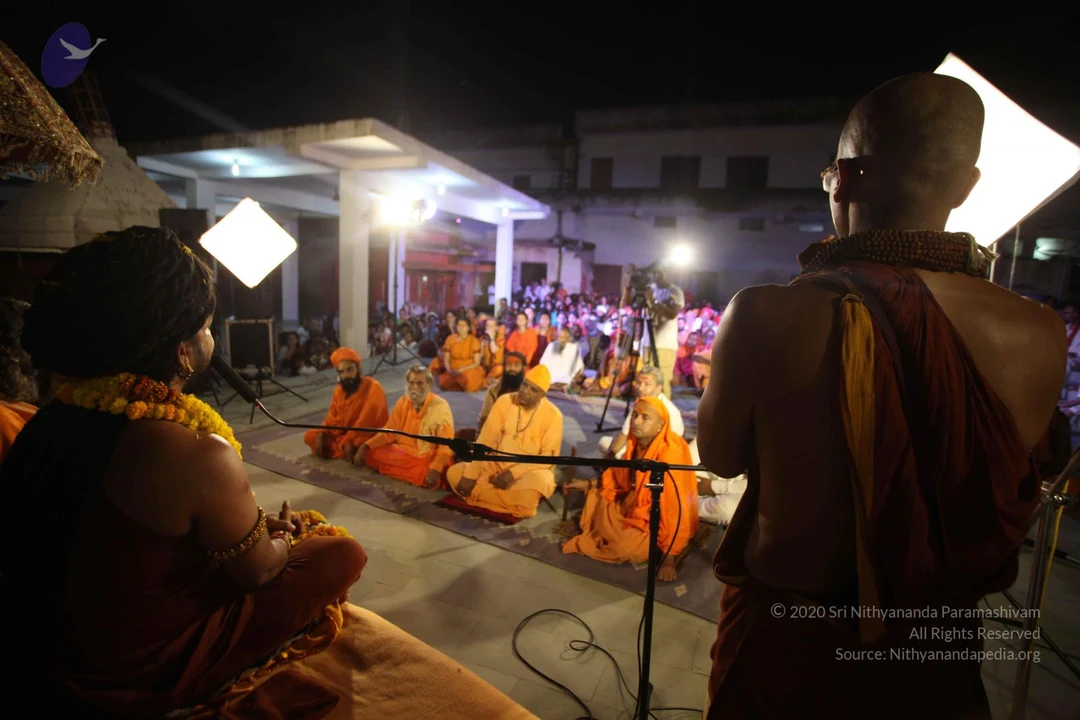
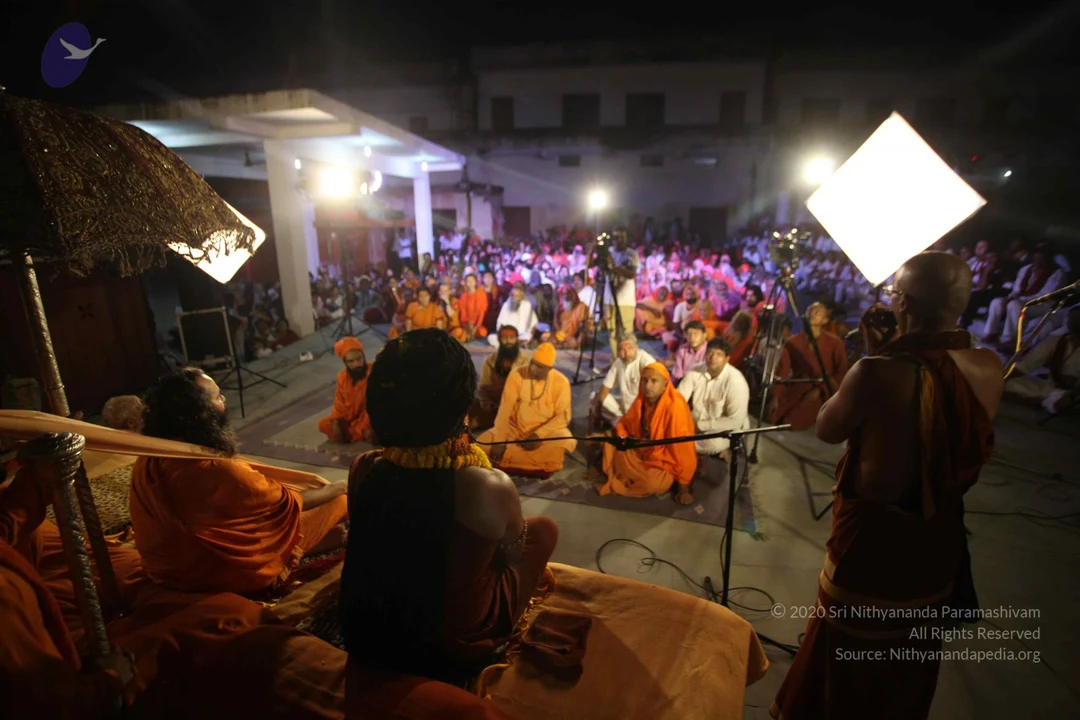
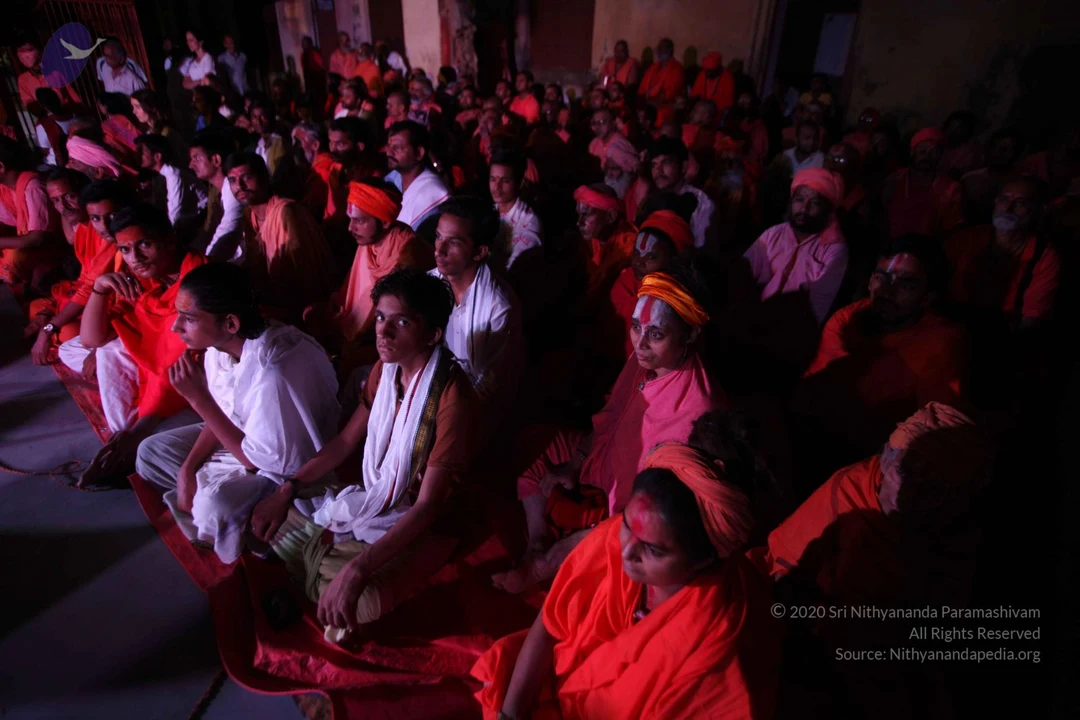
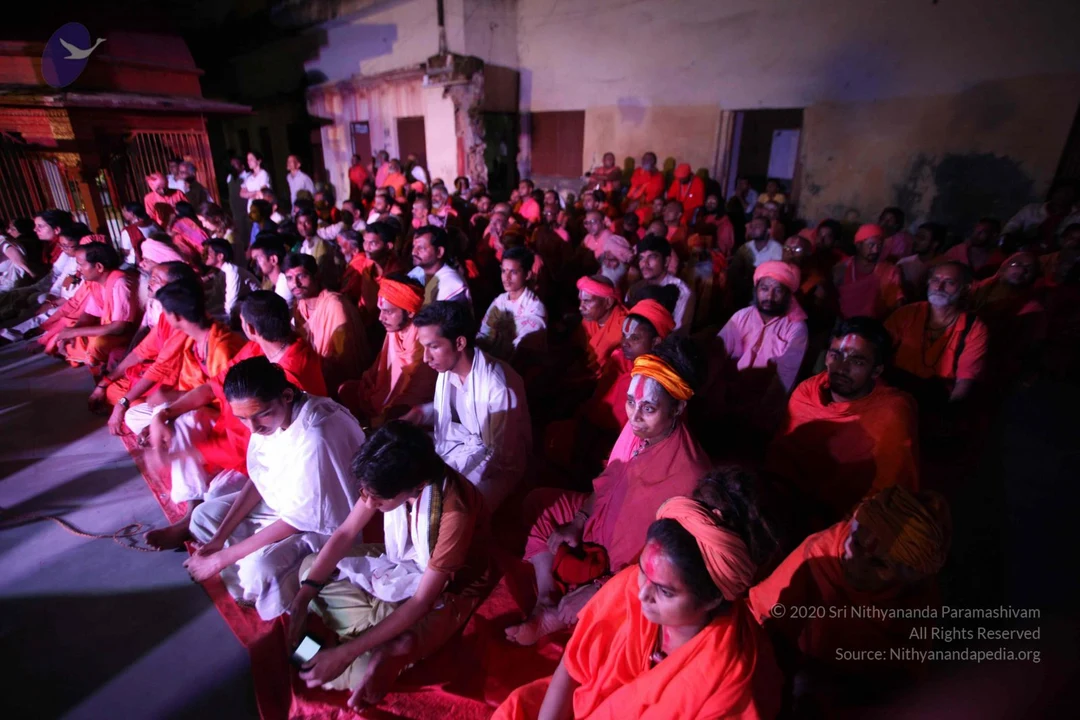
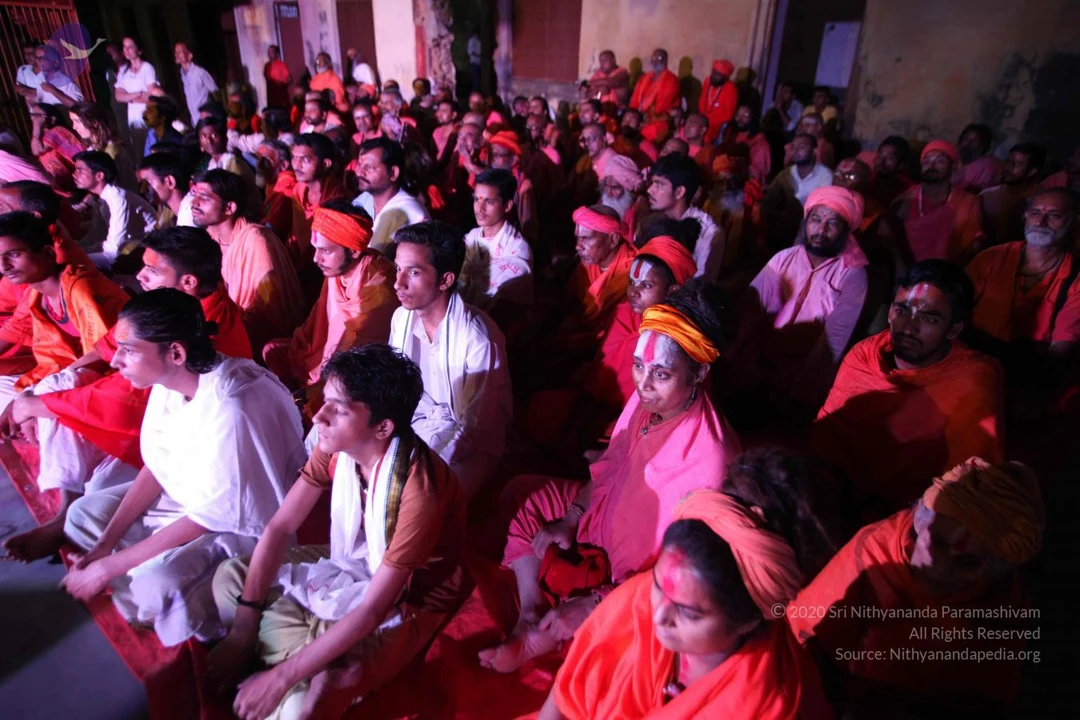
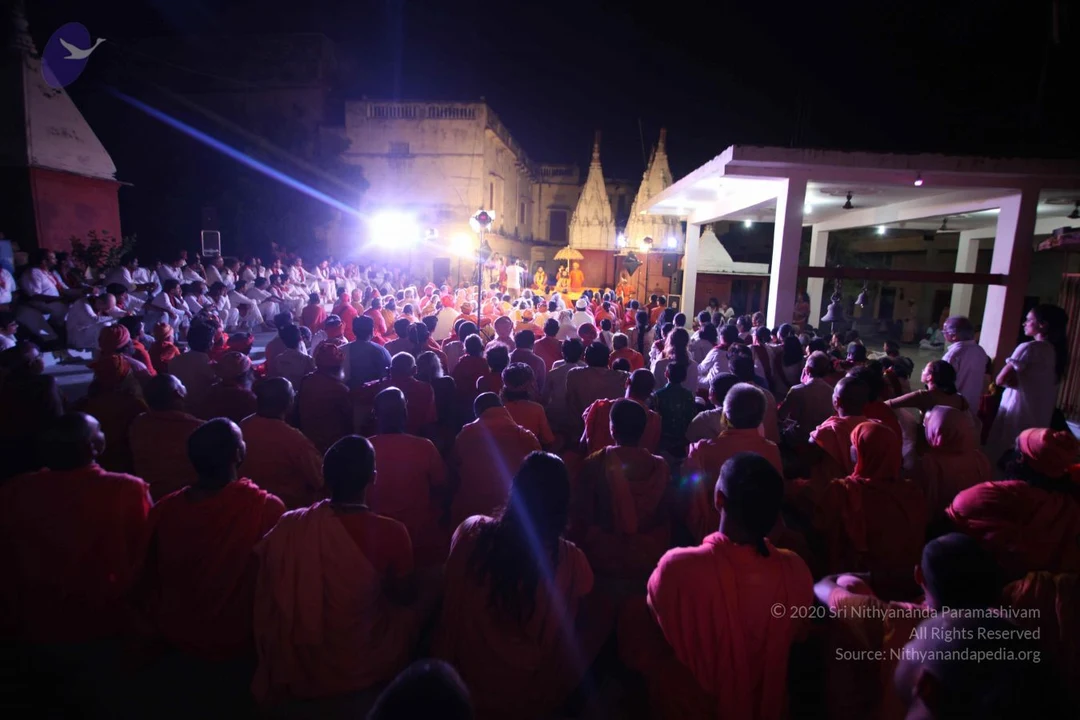
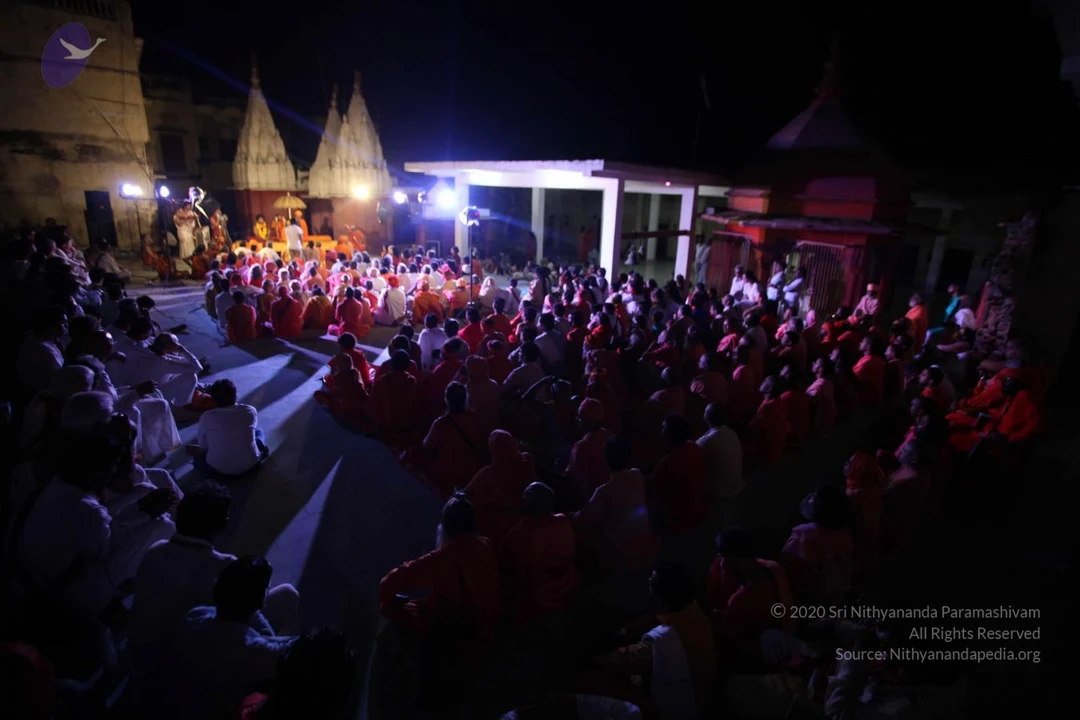
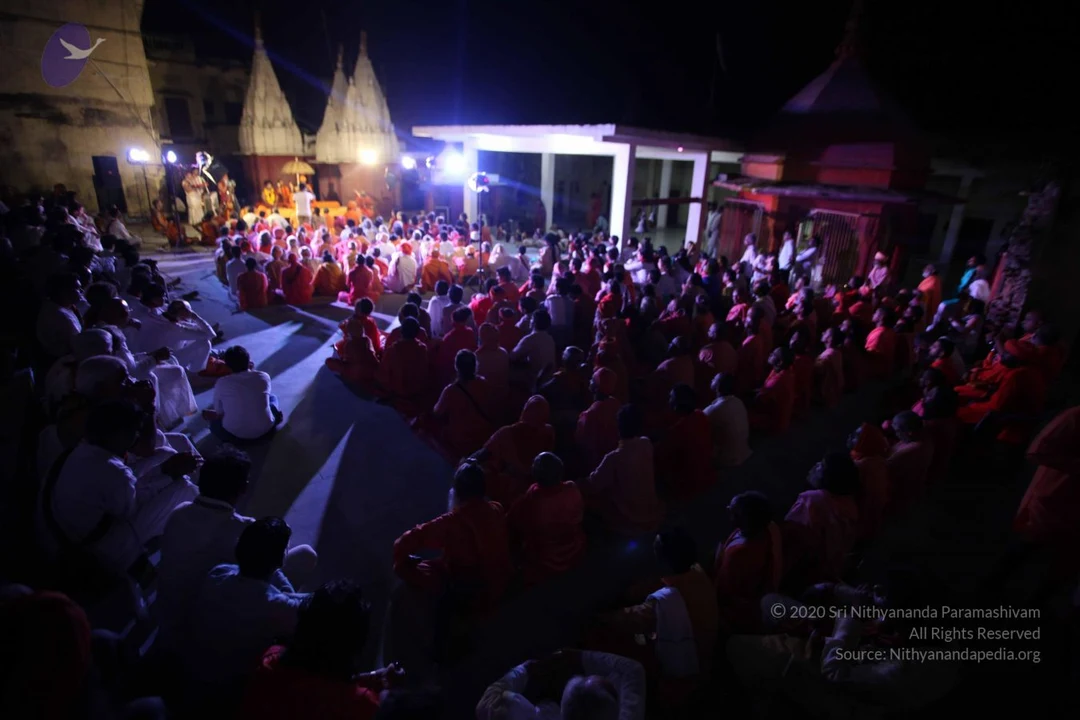
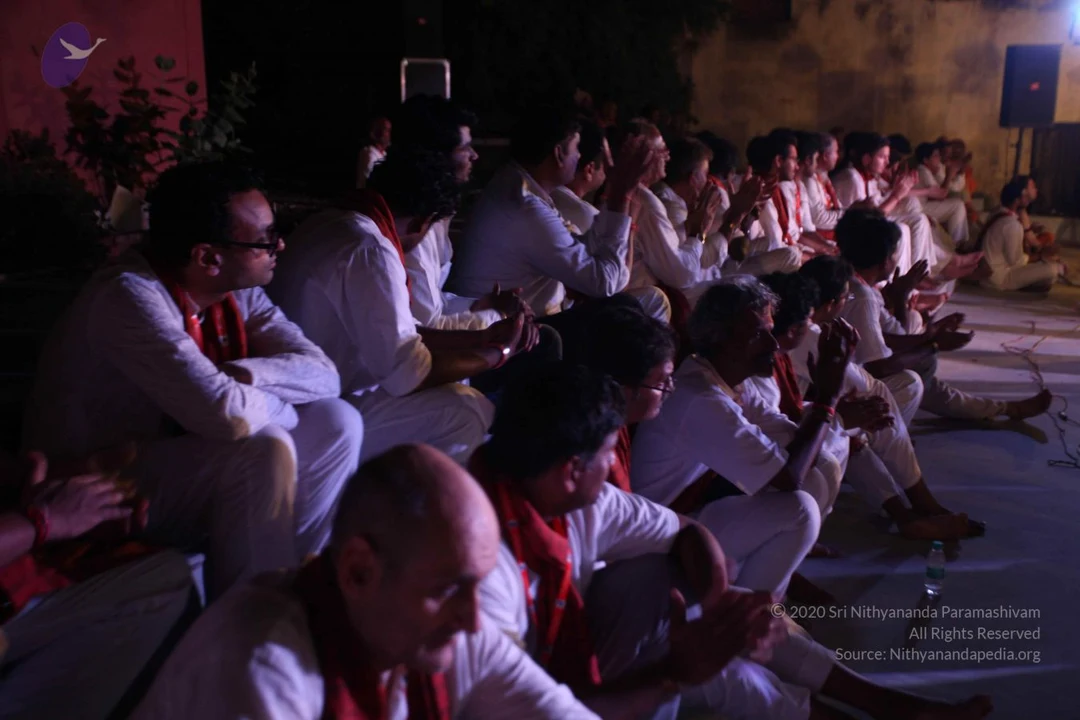
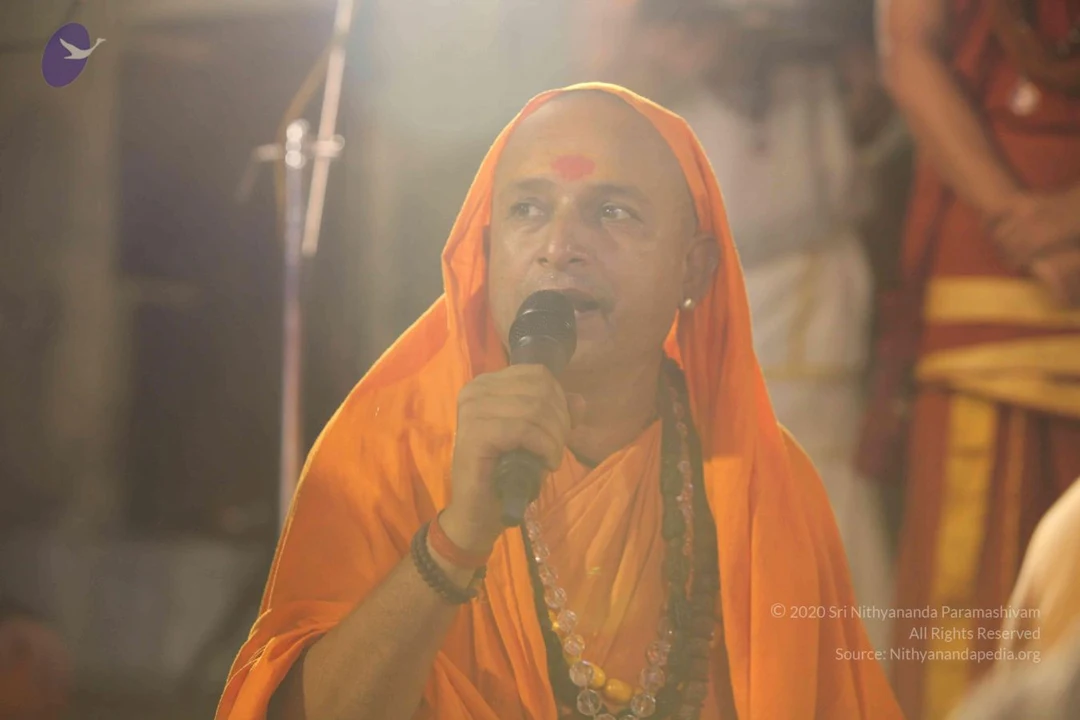
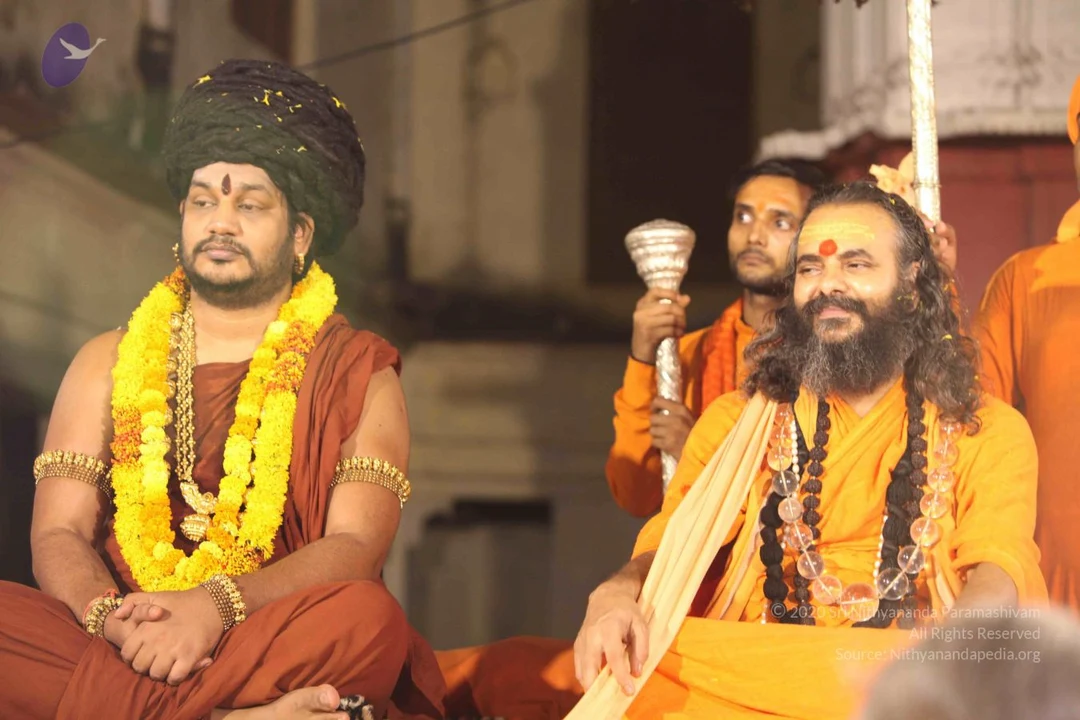
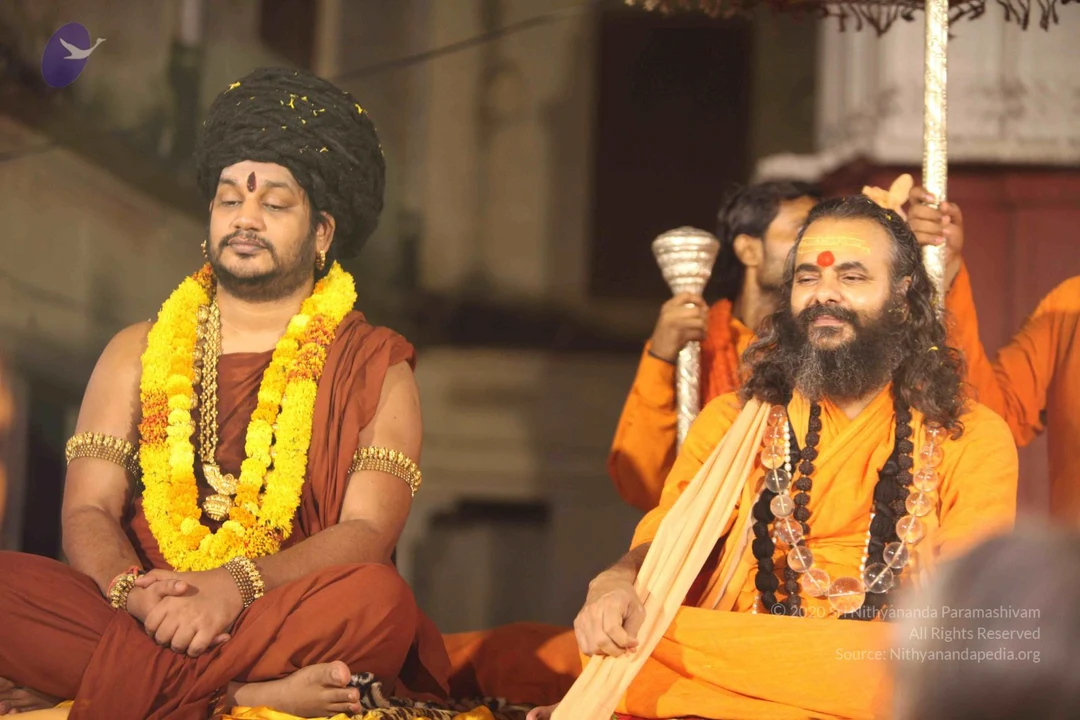
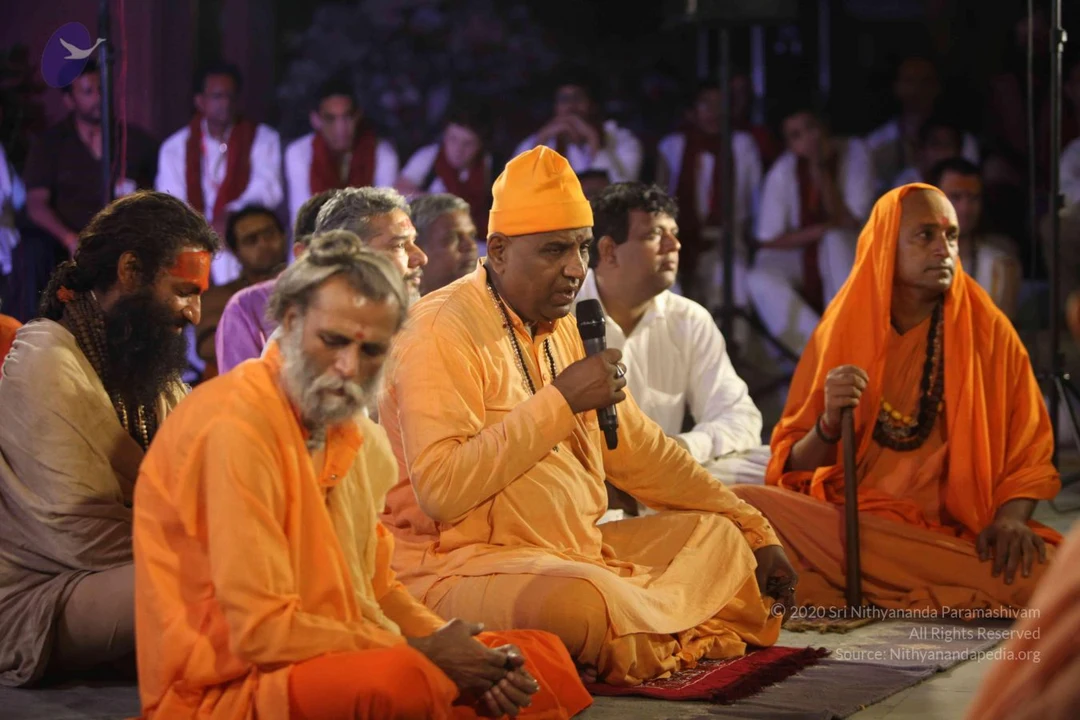
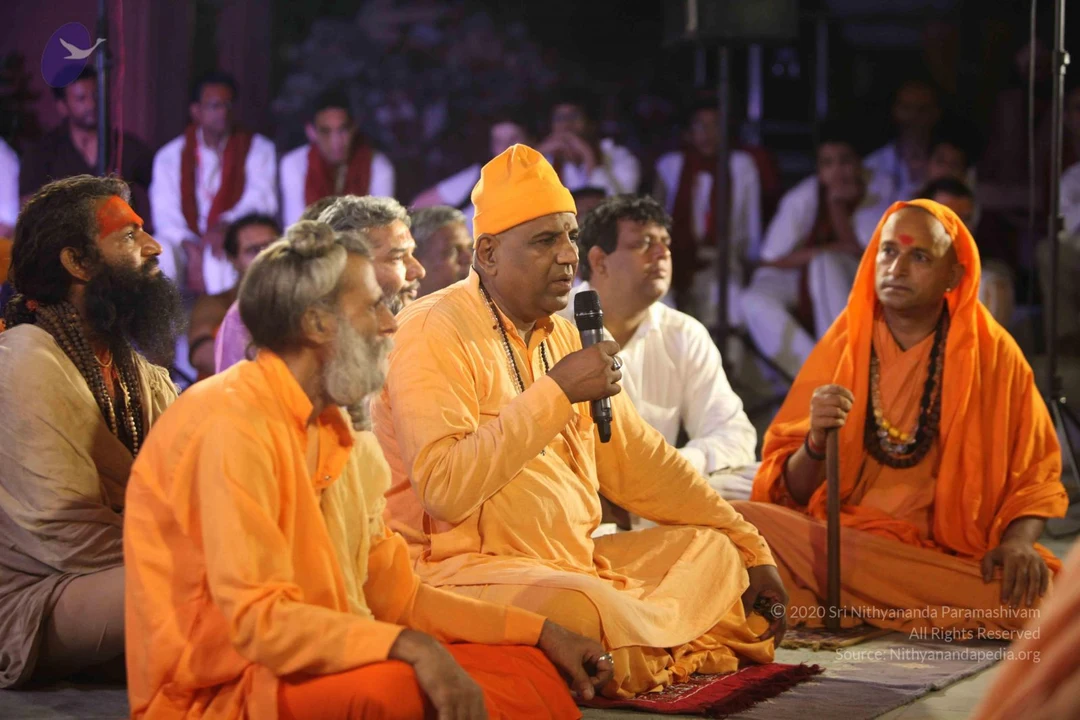
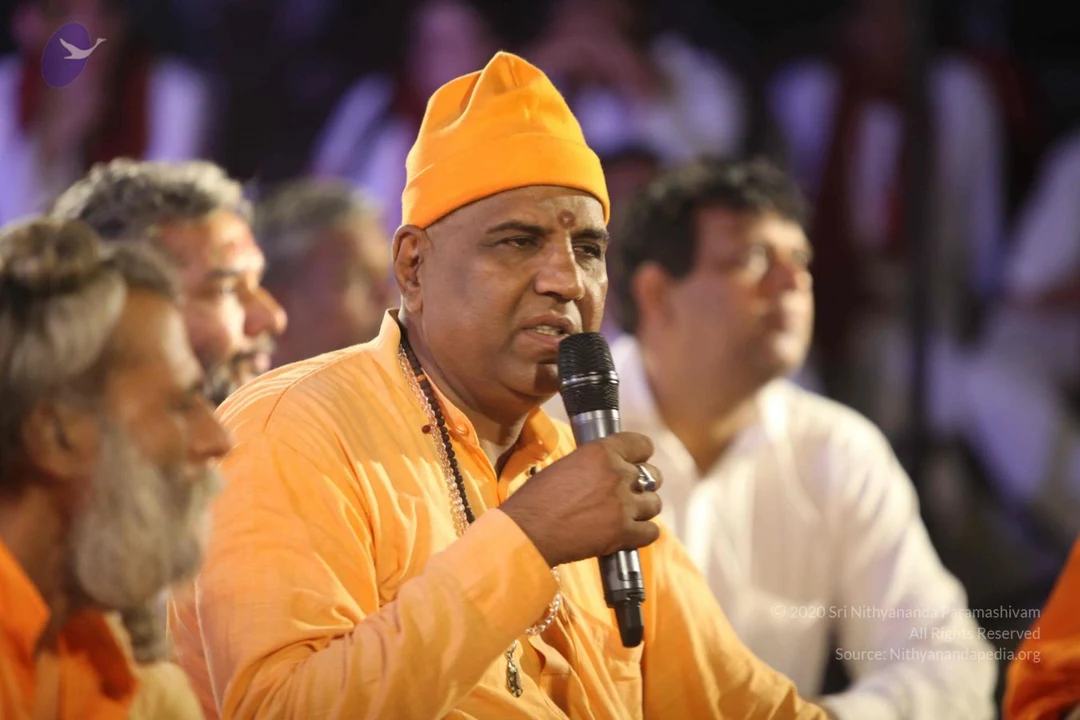
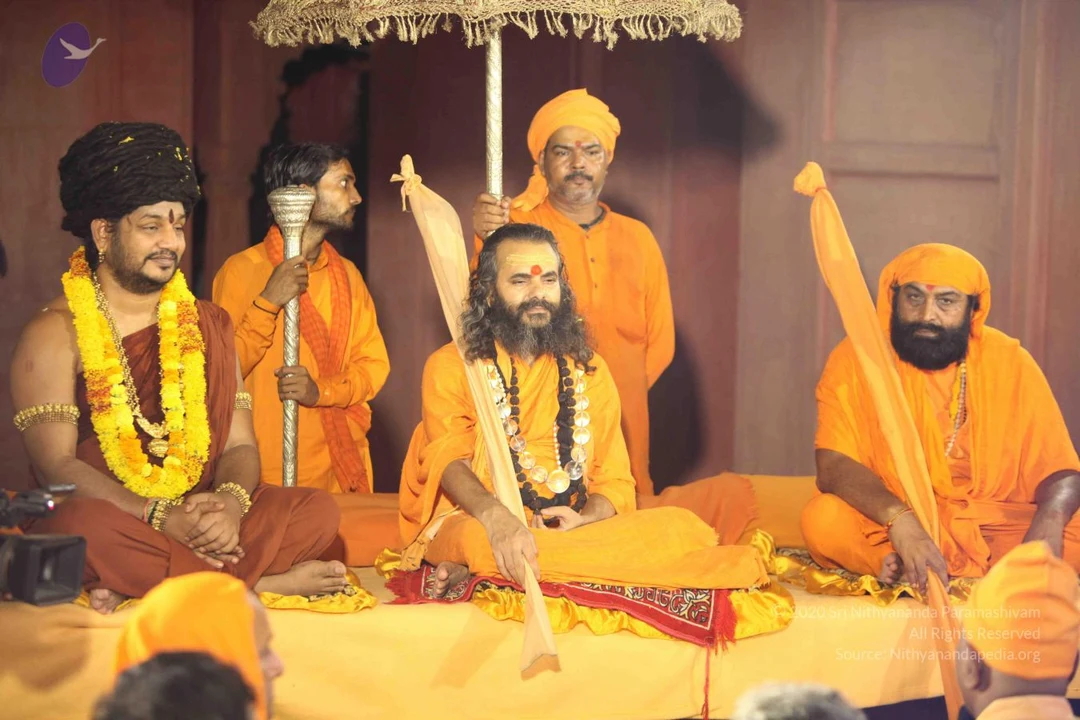
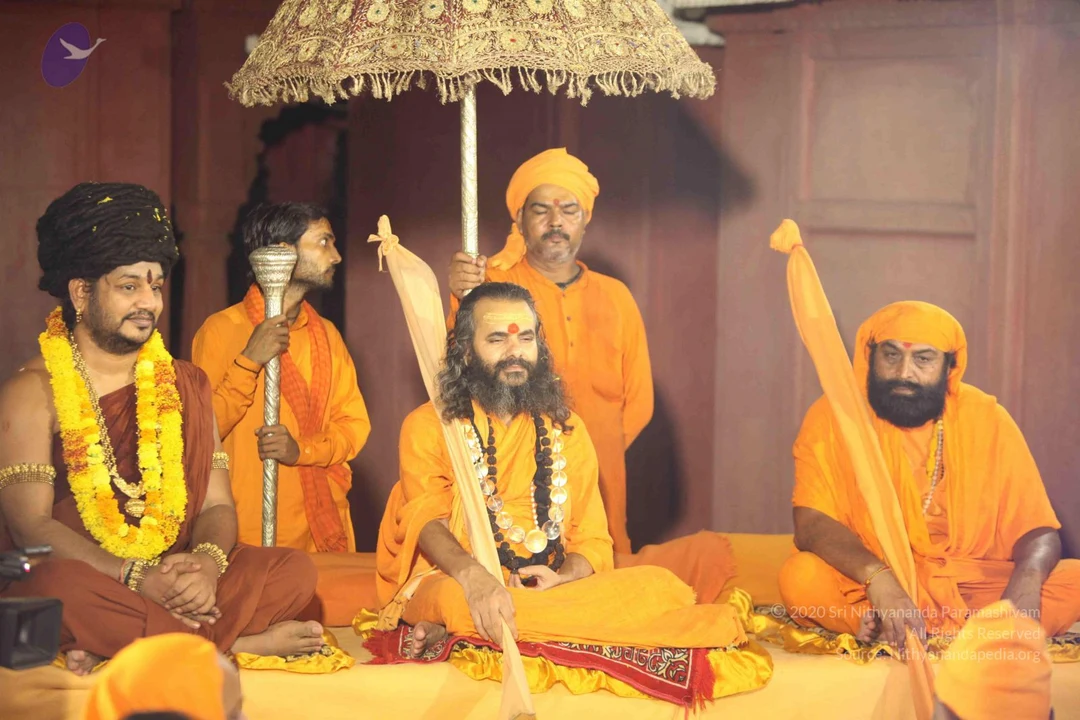
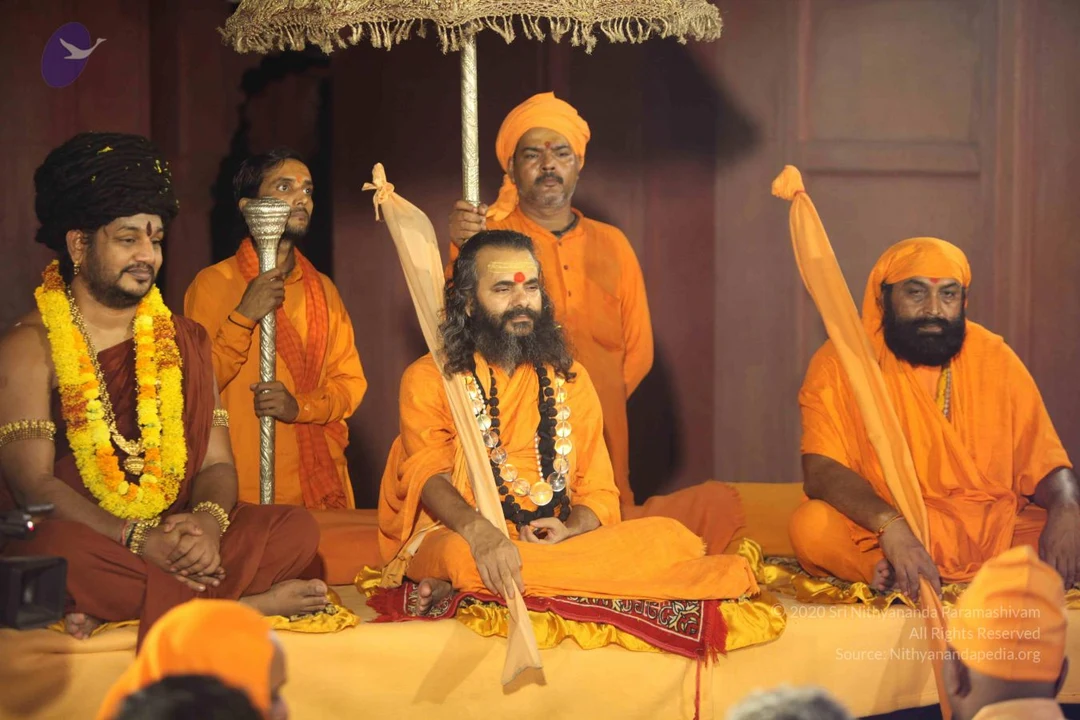
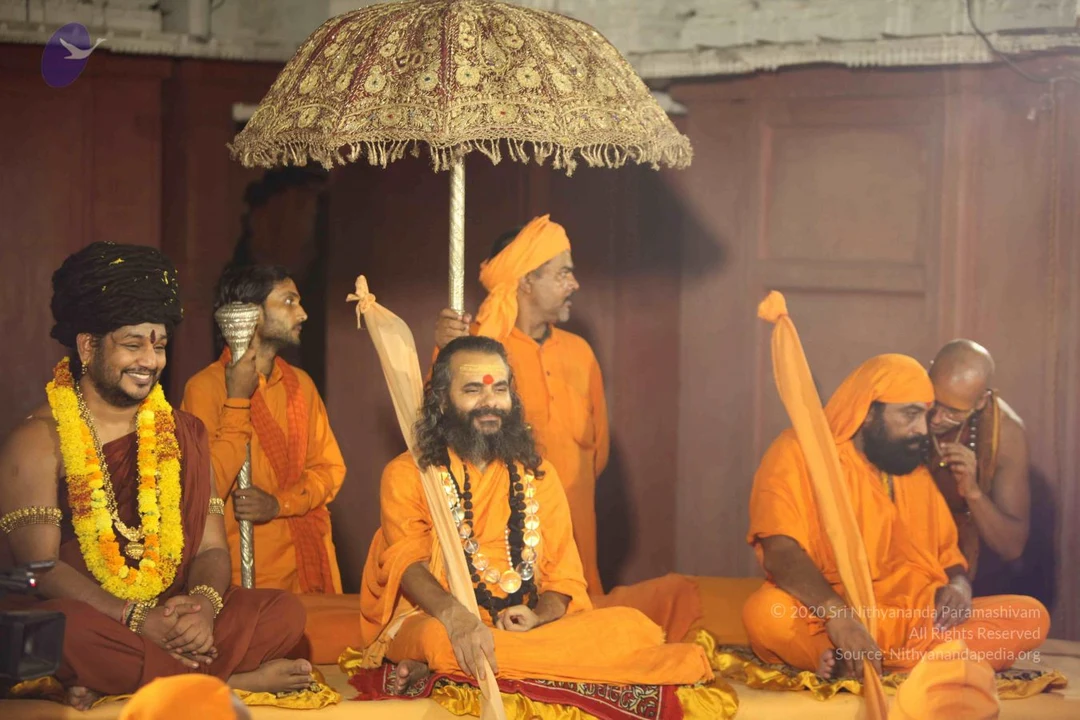
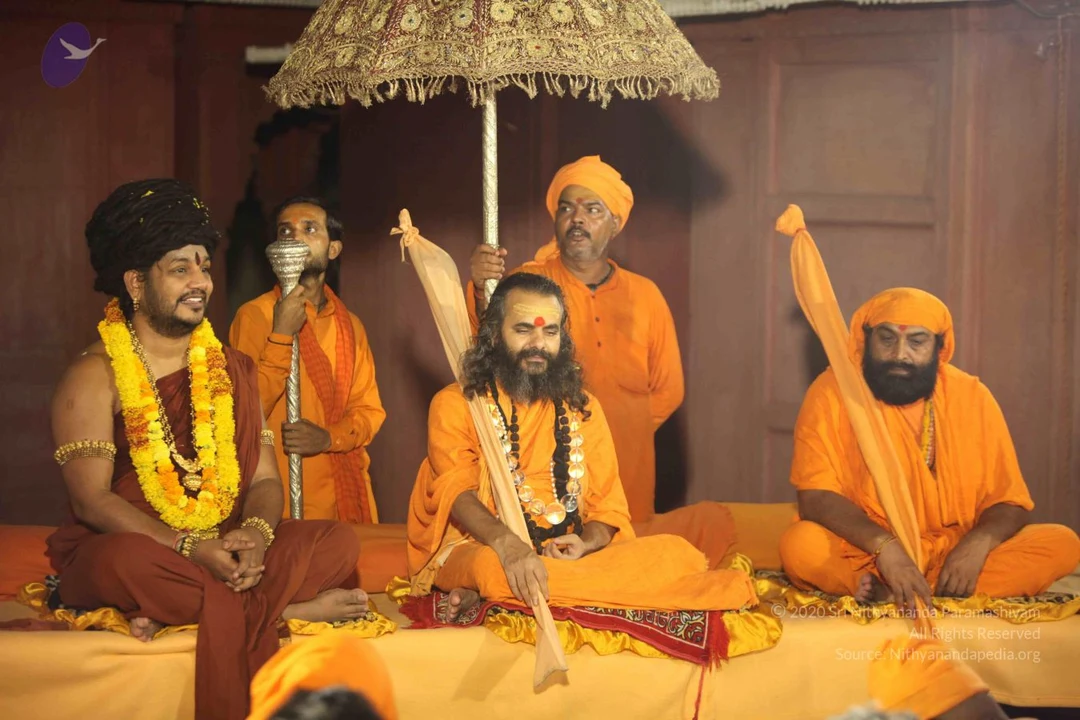
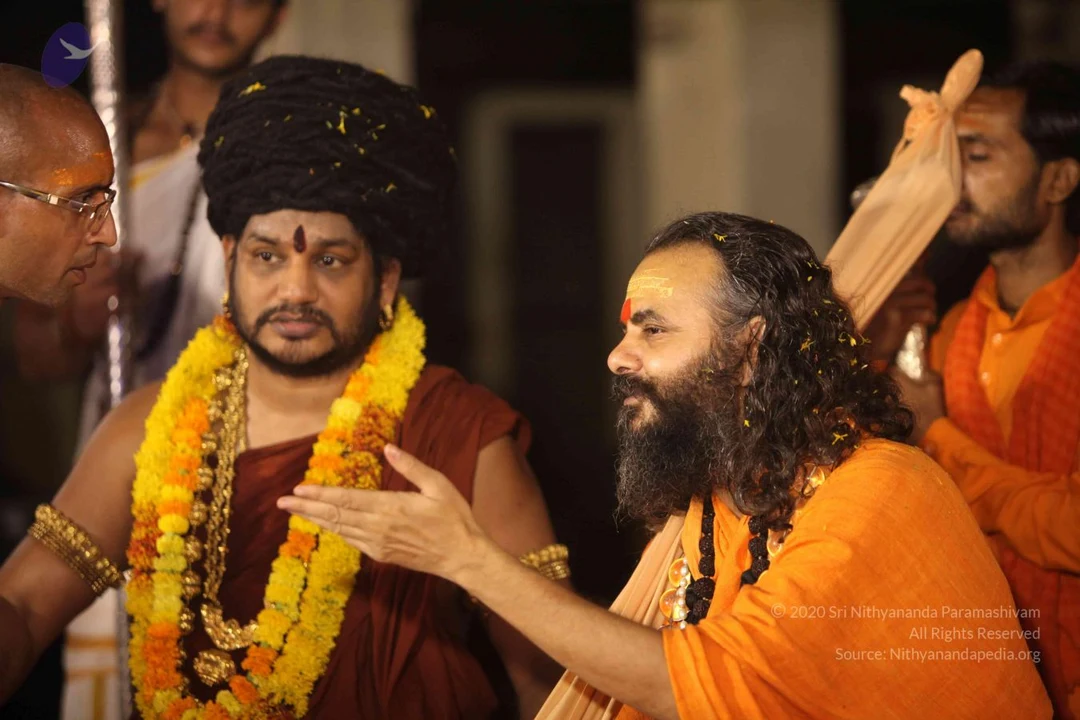
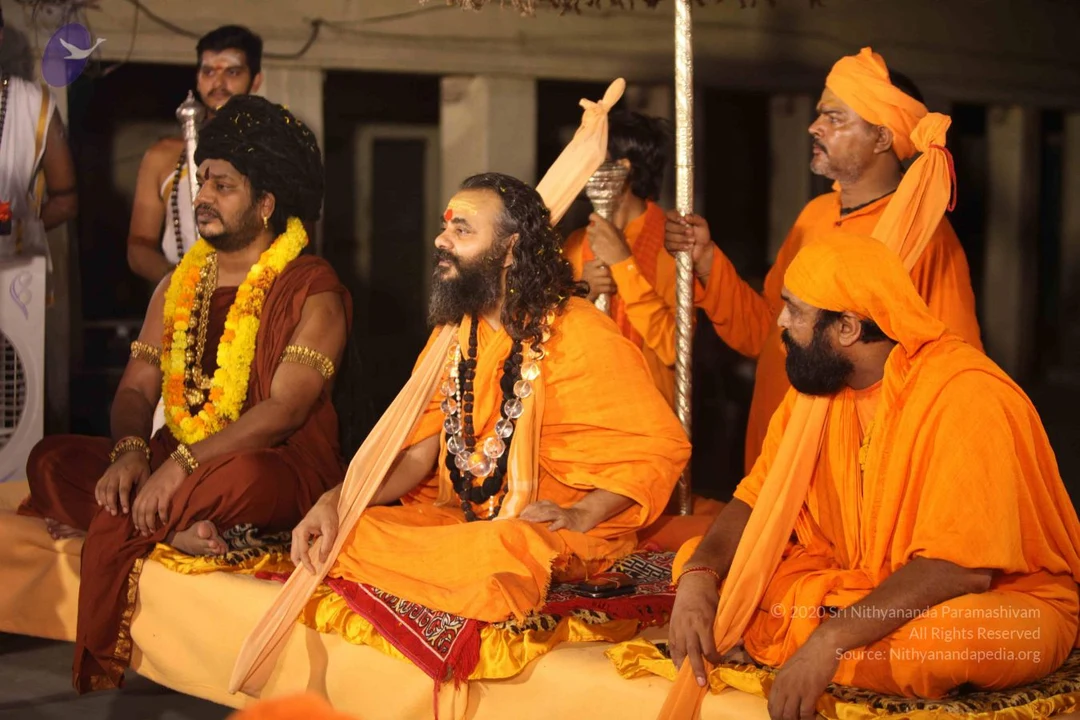
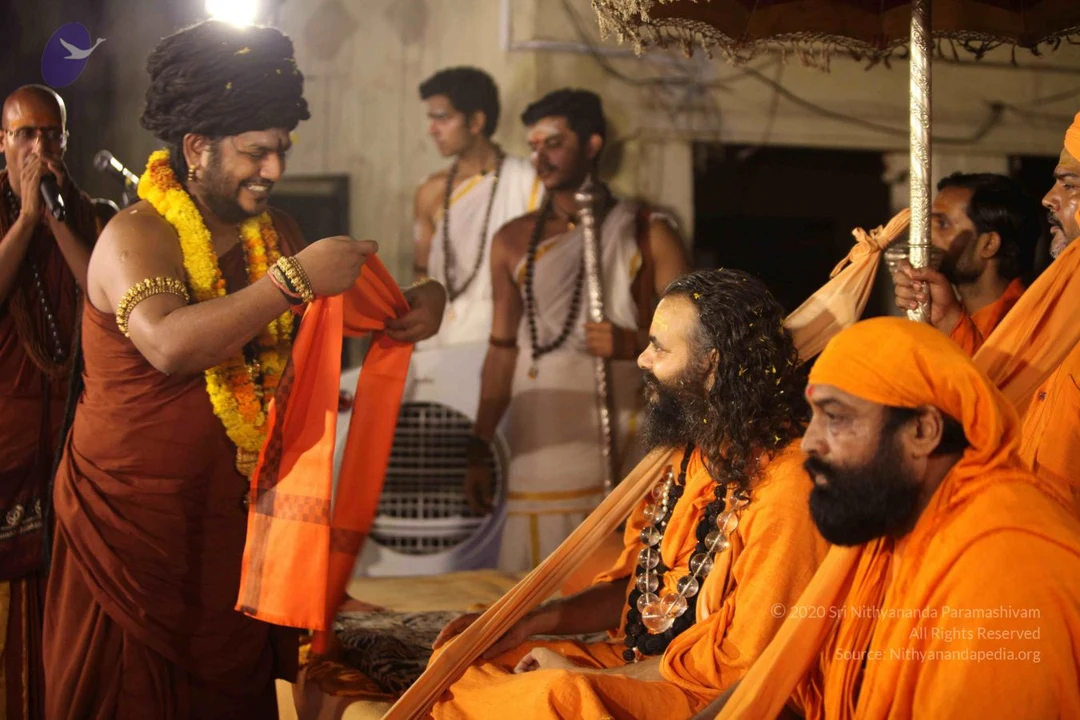
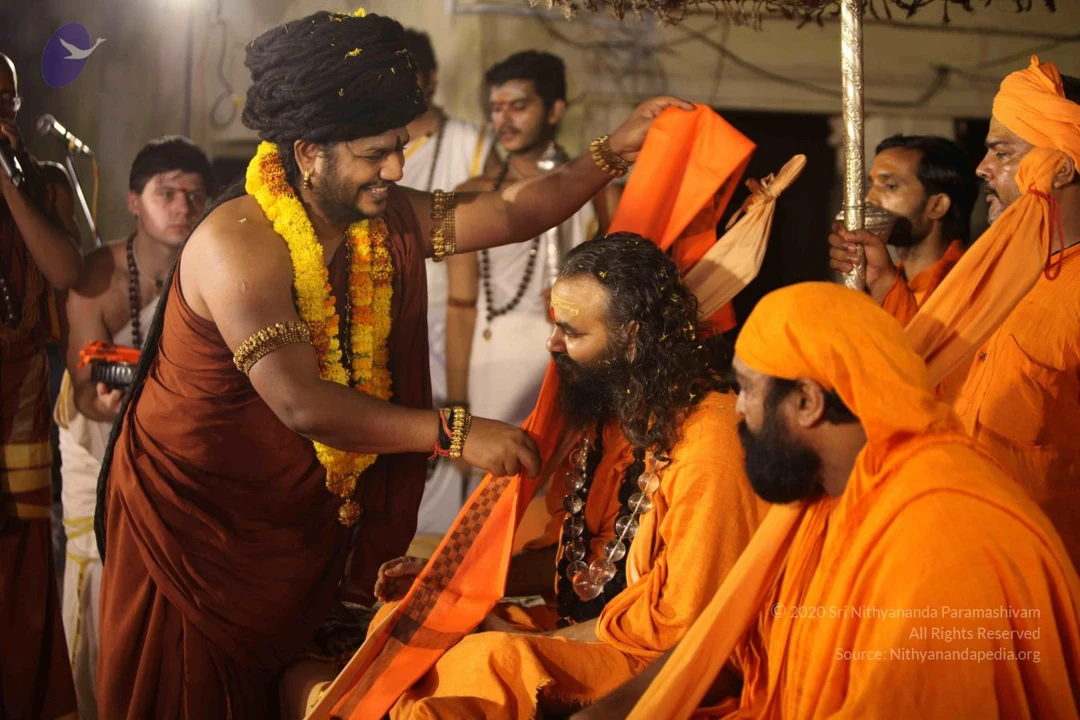
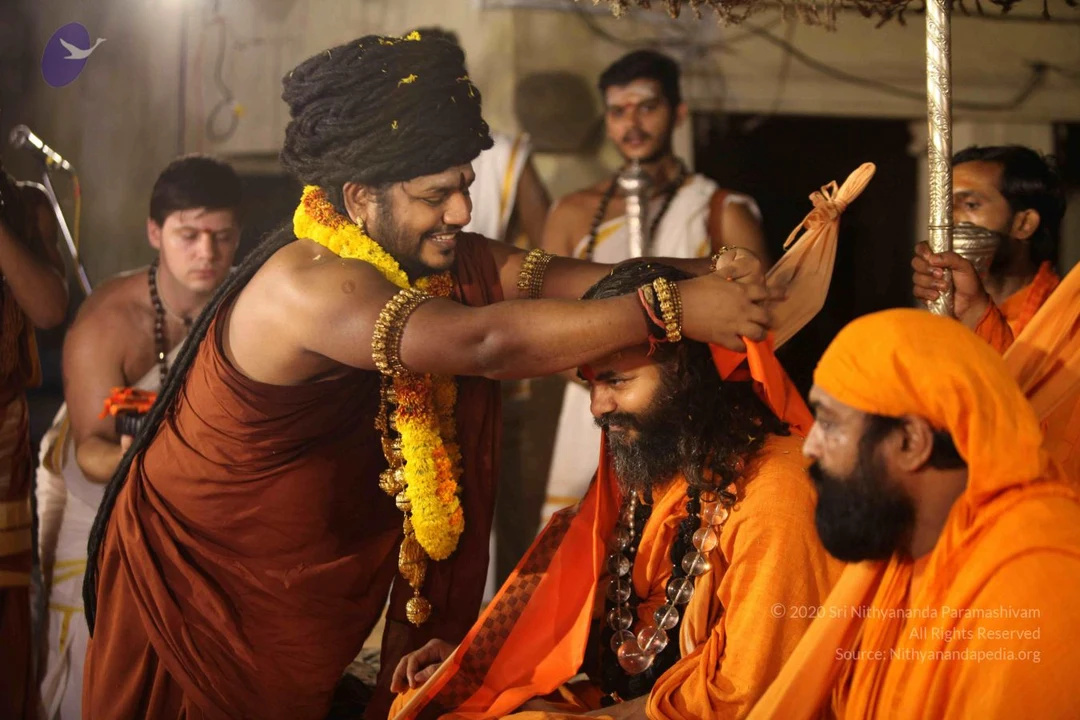
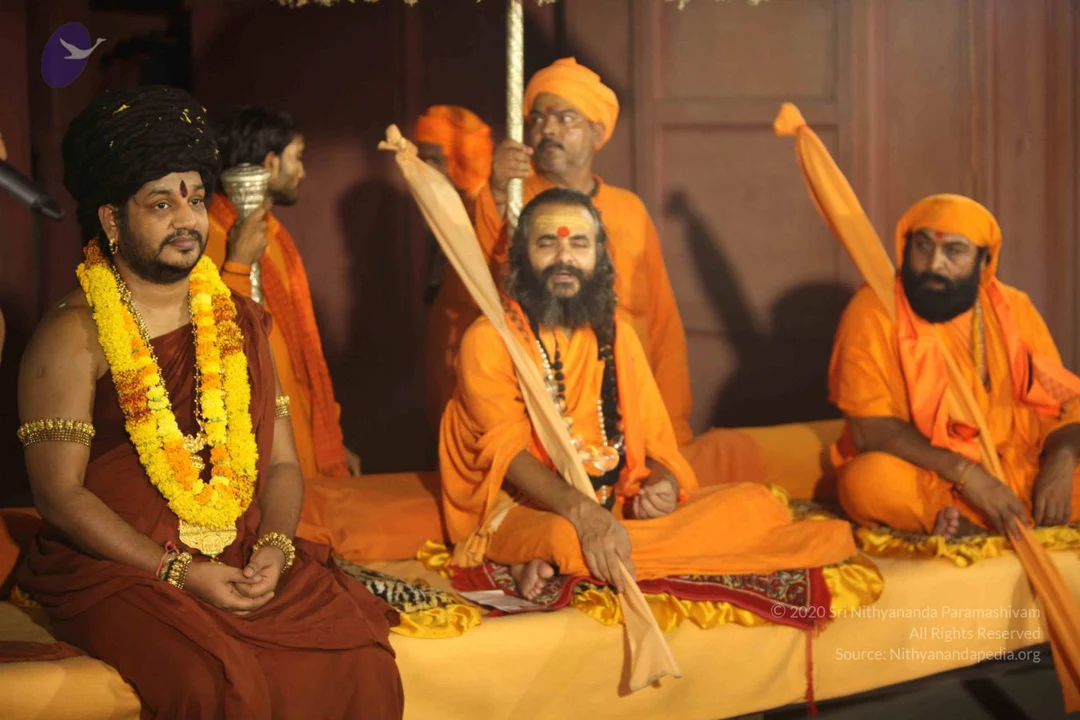
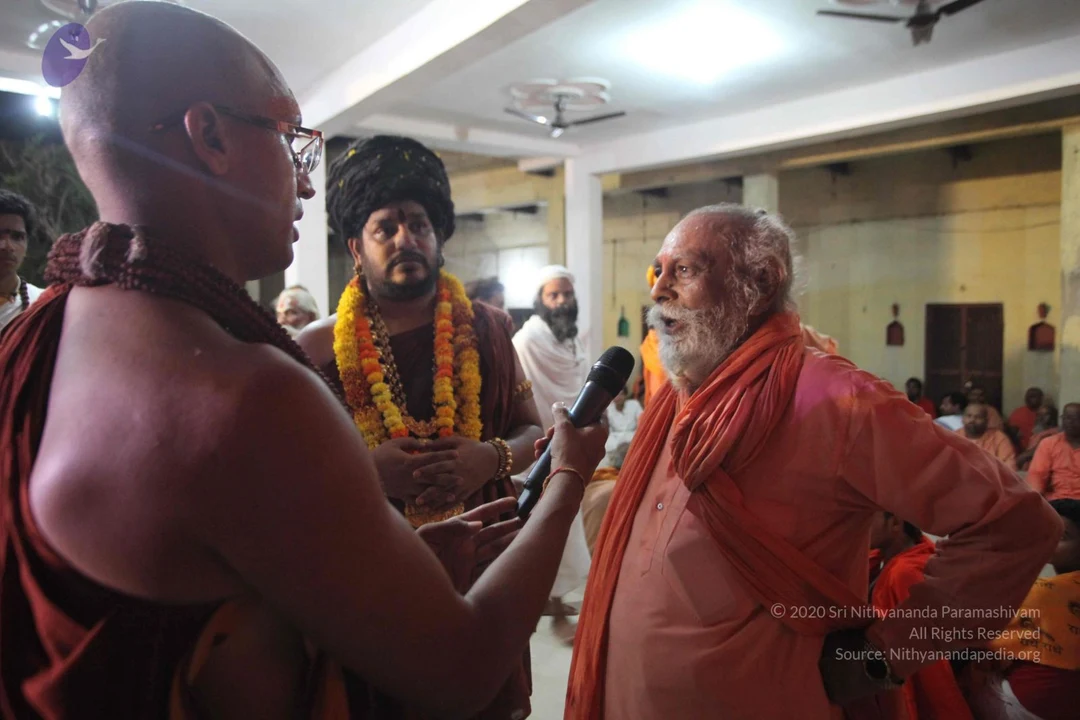
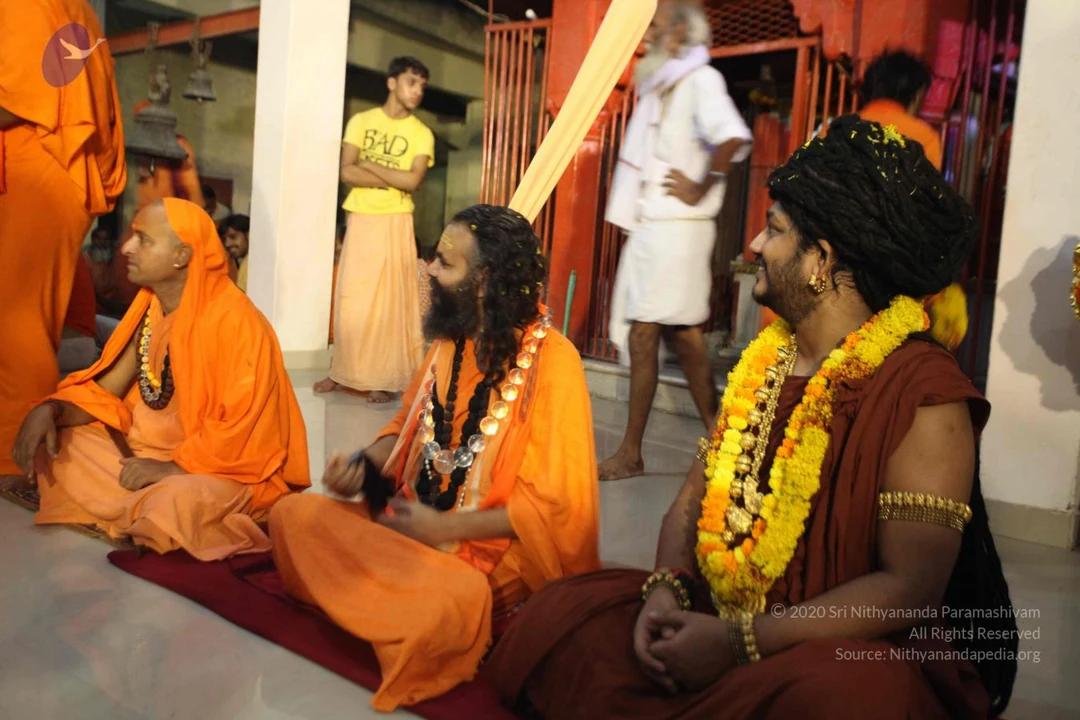
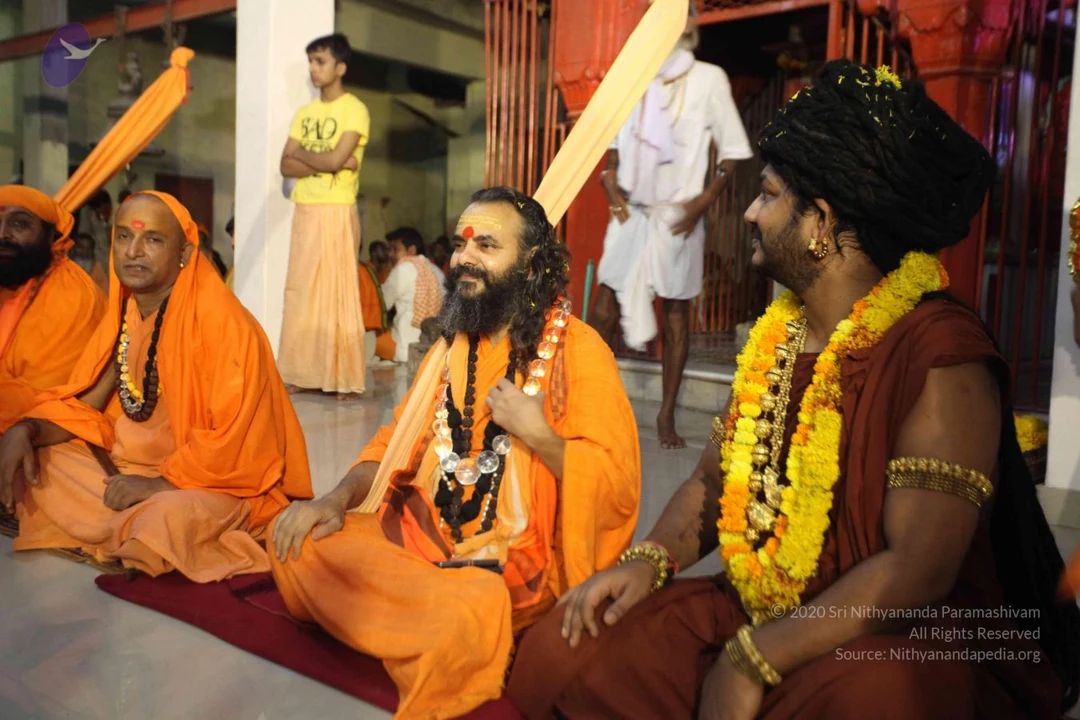
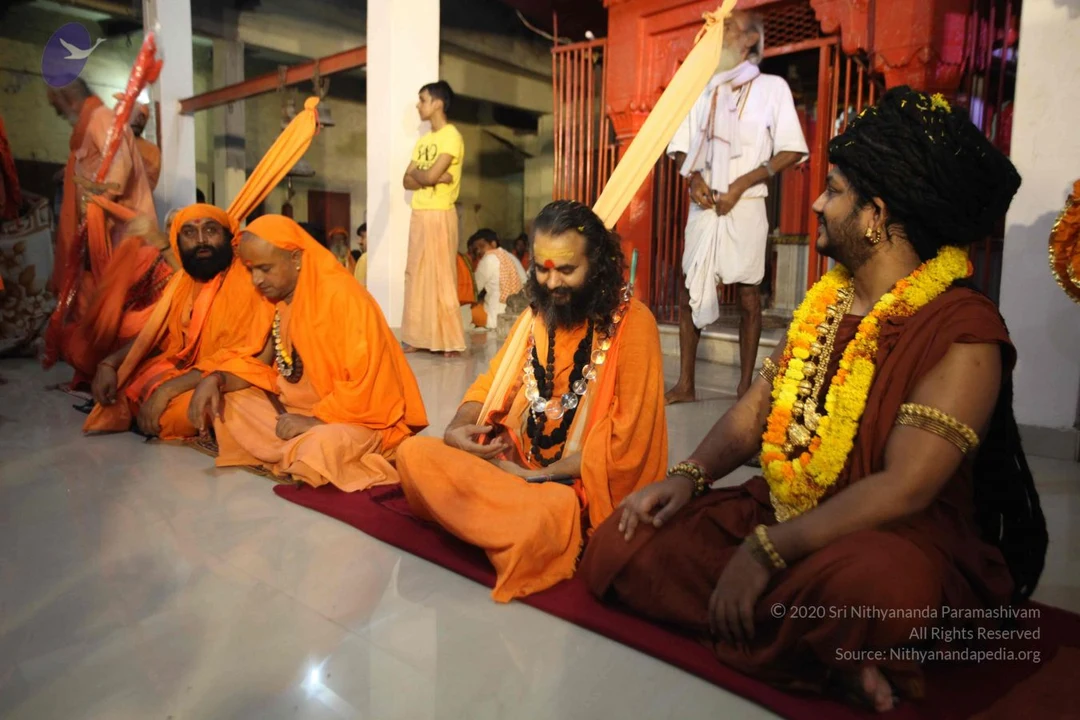
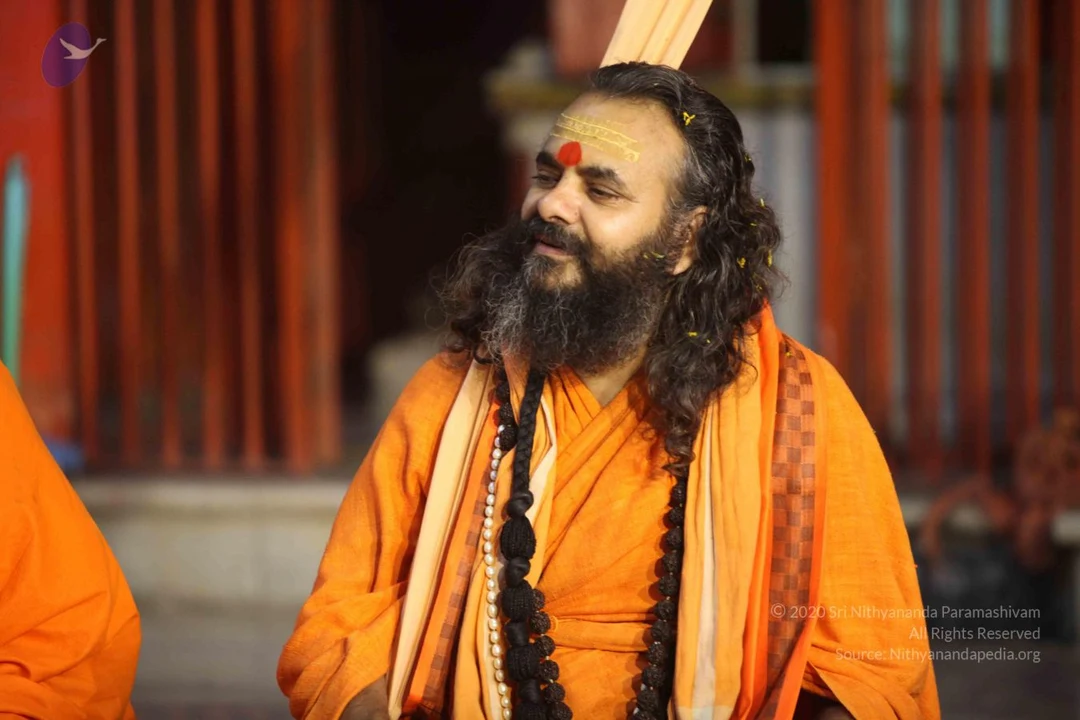
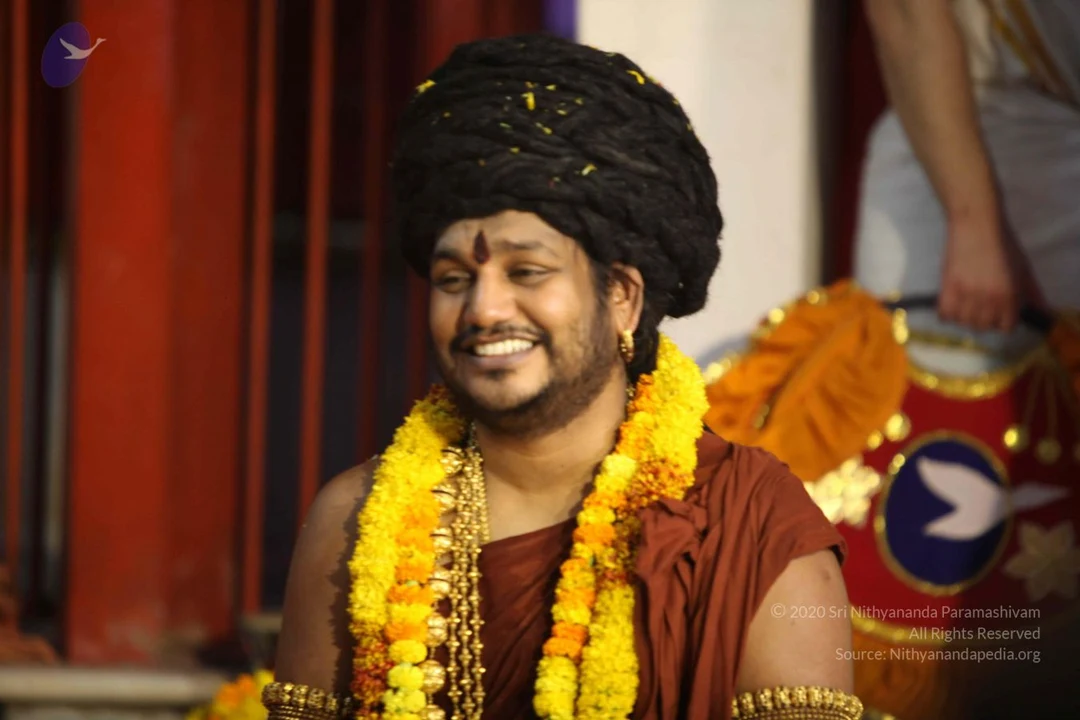
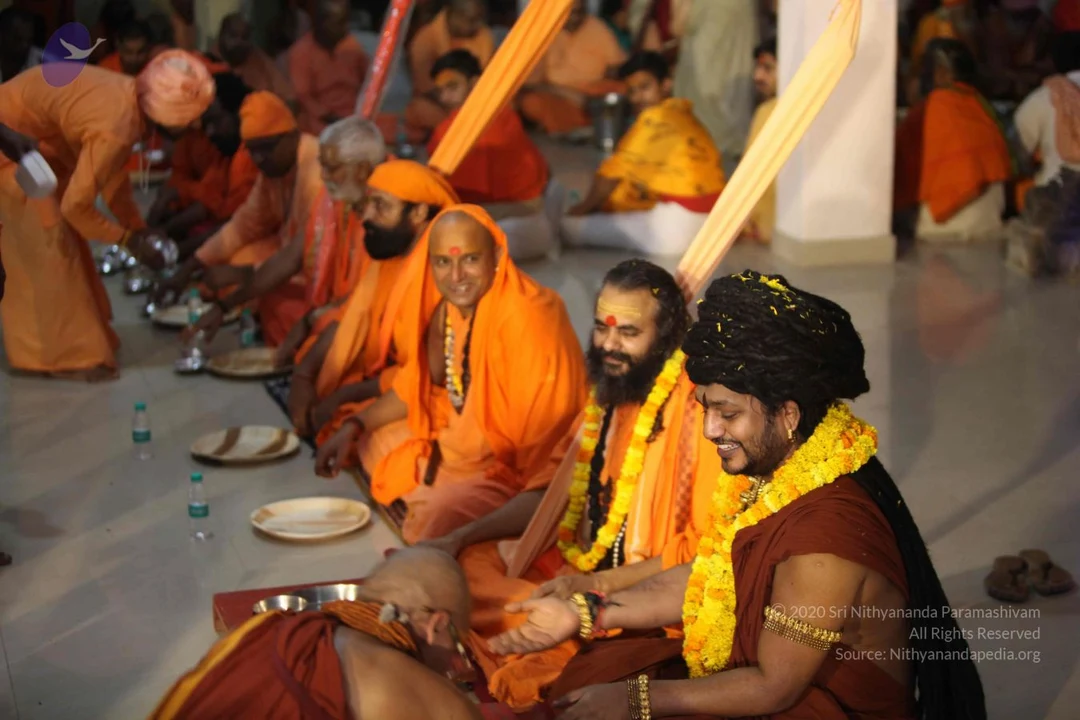
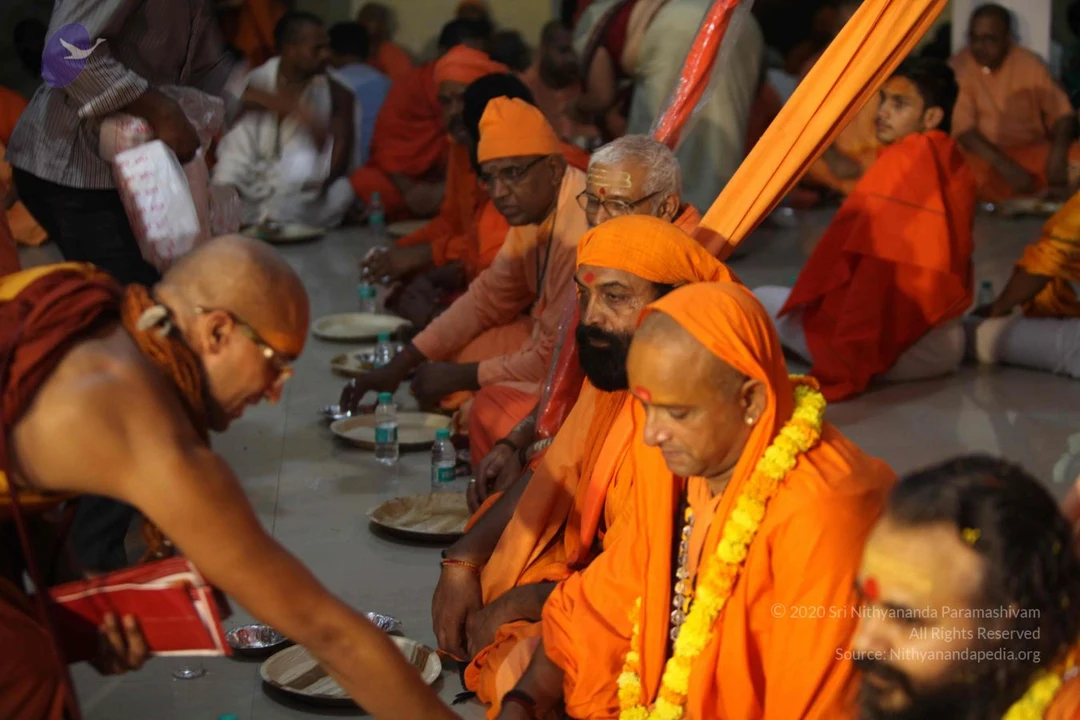
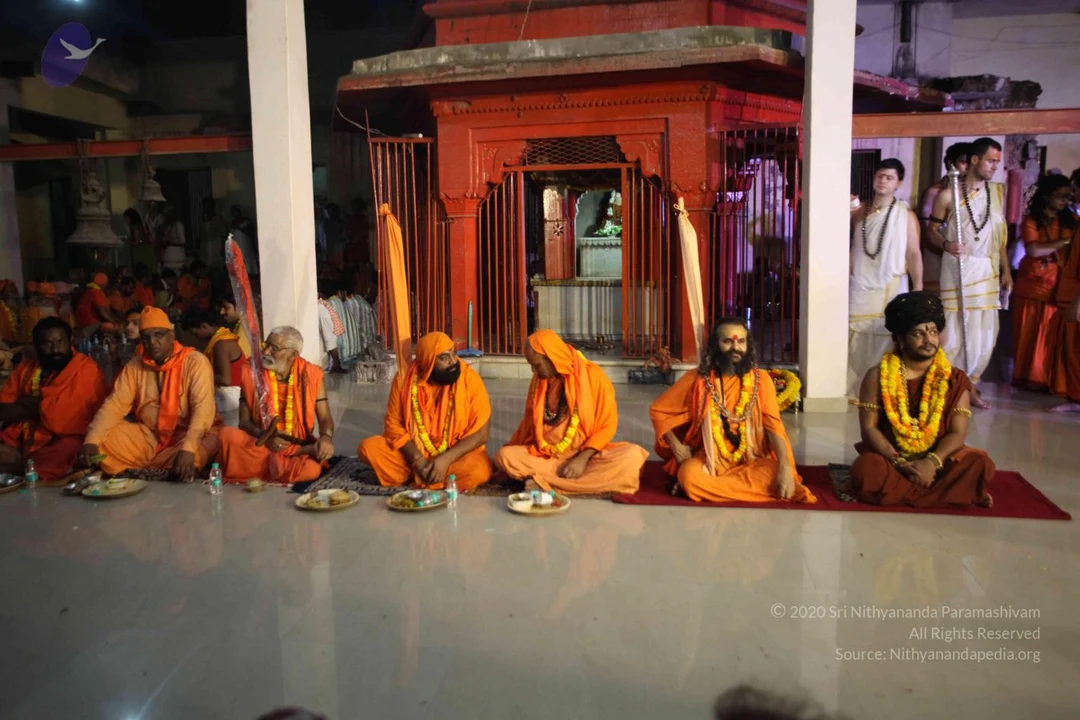
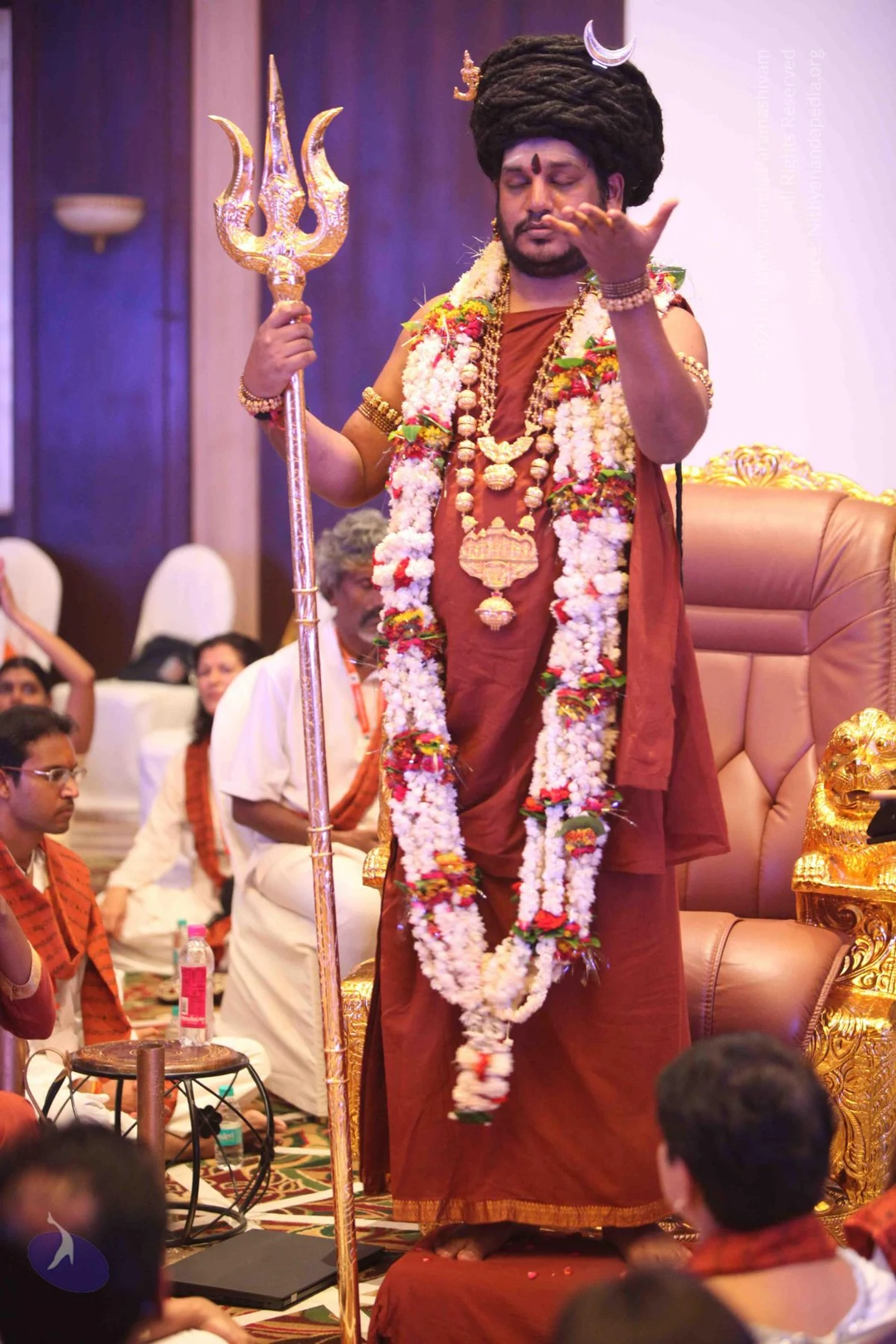
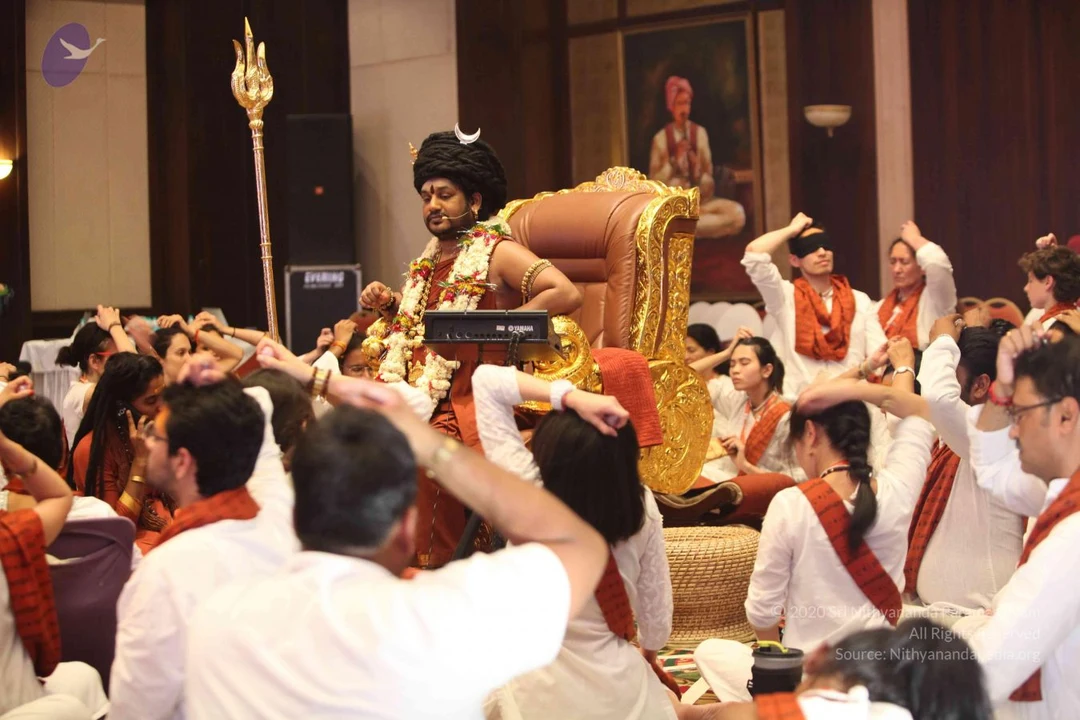
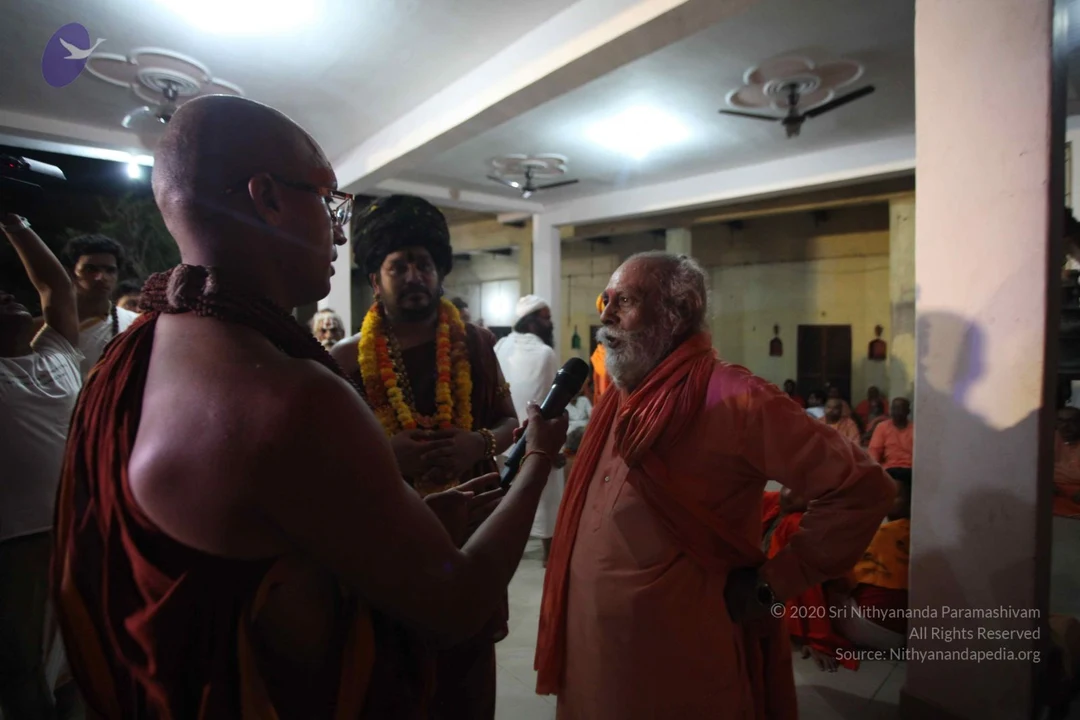
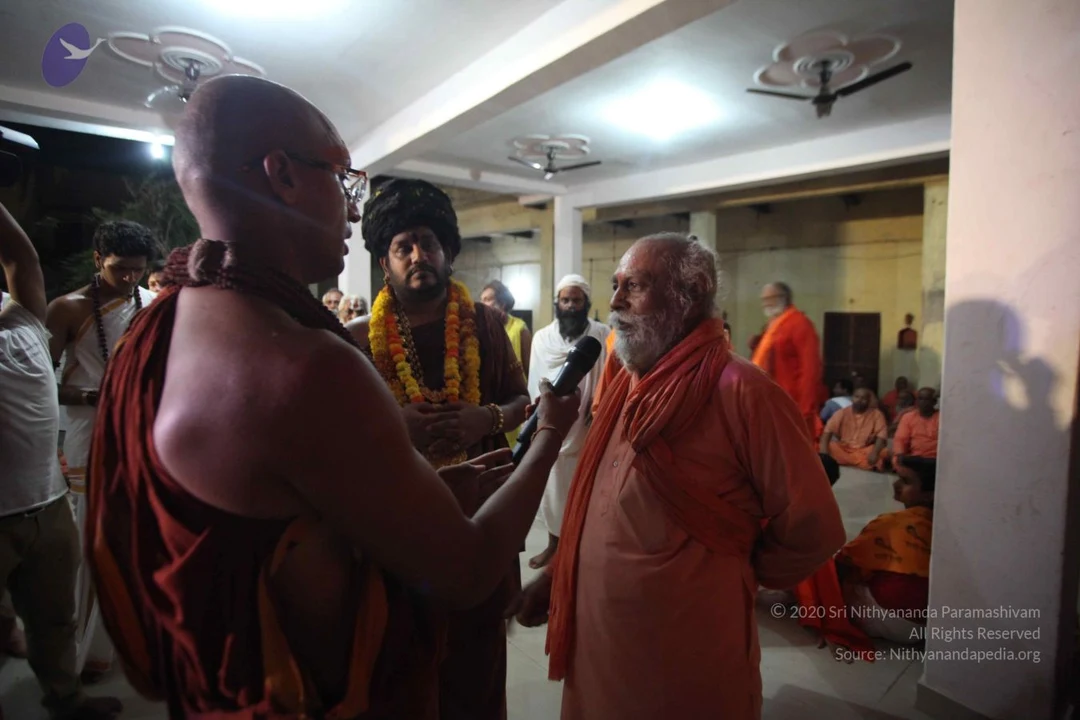
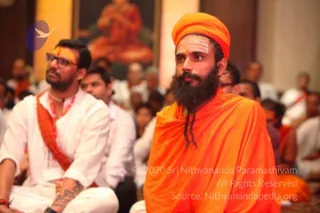
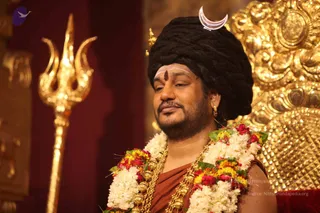
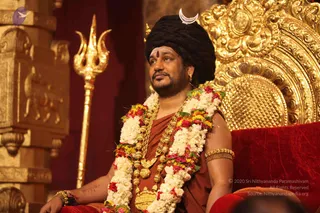
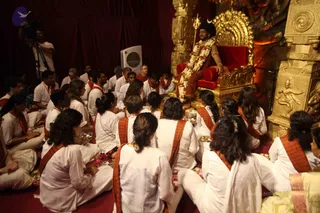
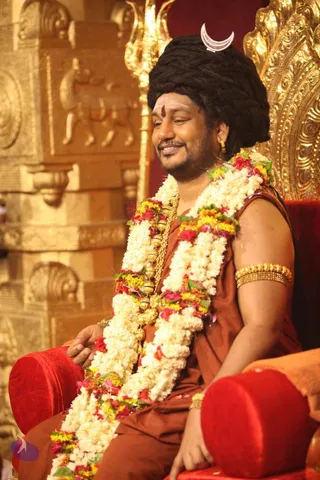
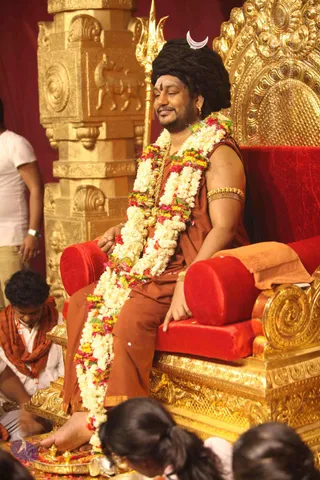
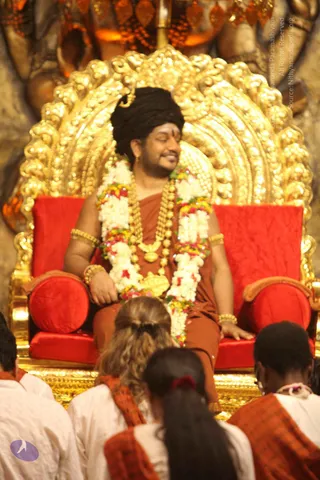
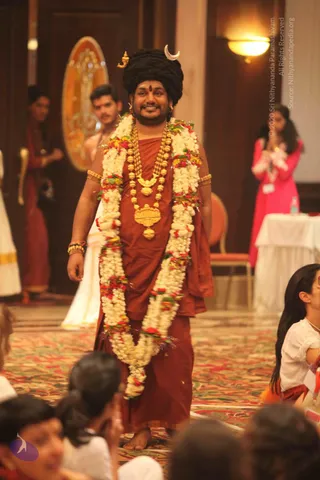
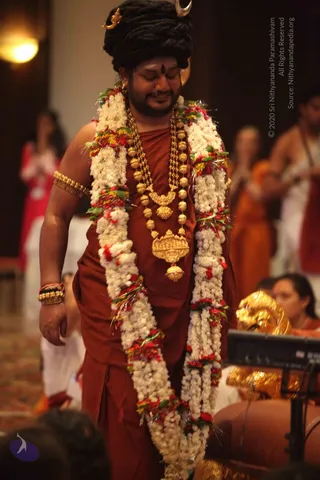
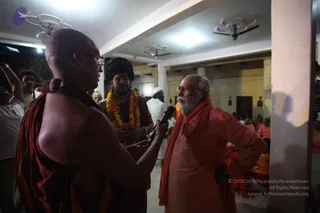
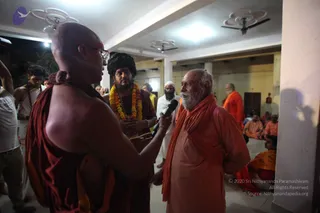
A man with a tall dreadlocked coiled crown topped by a silver crescent stands on a gilded brown leather throne, holding a large golden trident in his left hand. He wears a rust-orange robe, a heavy gold ceremonial necklace with a medallion, layered white and multicoloured flower garlands, and gold bangles. His eyes are closed and his right hand is raised in a gesture. Seated devotees in white and orange clothing, one with hands folded in namaskar, sit on the floor below, with water bottles and a small stool with brass items nearby.Outdoor evening photograph of two seated men in saffron and rust-coloured robes. On the left, a man in a dark green turban wears a yellow marigold garland, gold ornate necklace and gold armlets, sitting cross-legged with hands clasped. On the right, a bearded man with long hair and a red tilak on his forehead wears orange robes, a clear beaded crystal and rudraksha mala, and a cream shawl draped over his lap. Behind them a standing attendant in orange holds a silver staff, and another orange-clad figure stands at the right edge.A photo of a discussion inside a hall with plain pale walls and ceiling fans. On the left, a bald man in rust-red robes with a red rudraksha mala holds a handheld microphone toward an elderly white-bearded man in a pale orange kurta with an orange shawl, hands on his hips, who is speaking. Between them stands a man in a black turban wearing a yellow and orange marigold garland, a rudraksha mala and gold beads, hands clasped. Behind them, a man in white robes and other people in orange clothing are visible, along with a few seated attendees in the background.

July 15 2016

Original wiki page
Contents

Title:

Manifest Your Four Powers

Description:

“First time in your body when the mind moves towards some object it creates inner image….” explains Paramahamsa Nithyananda entering into the first verse of the Kena Upanishad, which asks us to enter into pure questioning in Nithya Satsang of 15th July 2016 from Varanasi. The first line of the verse sets us on the action of creating the Inner Image (the idea we carry about ourselves).

Link to Video:

Manifest Your Four Powers

VideoAudio

Transcript

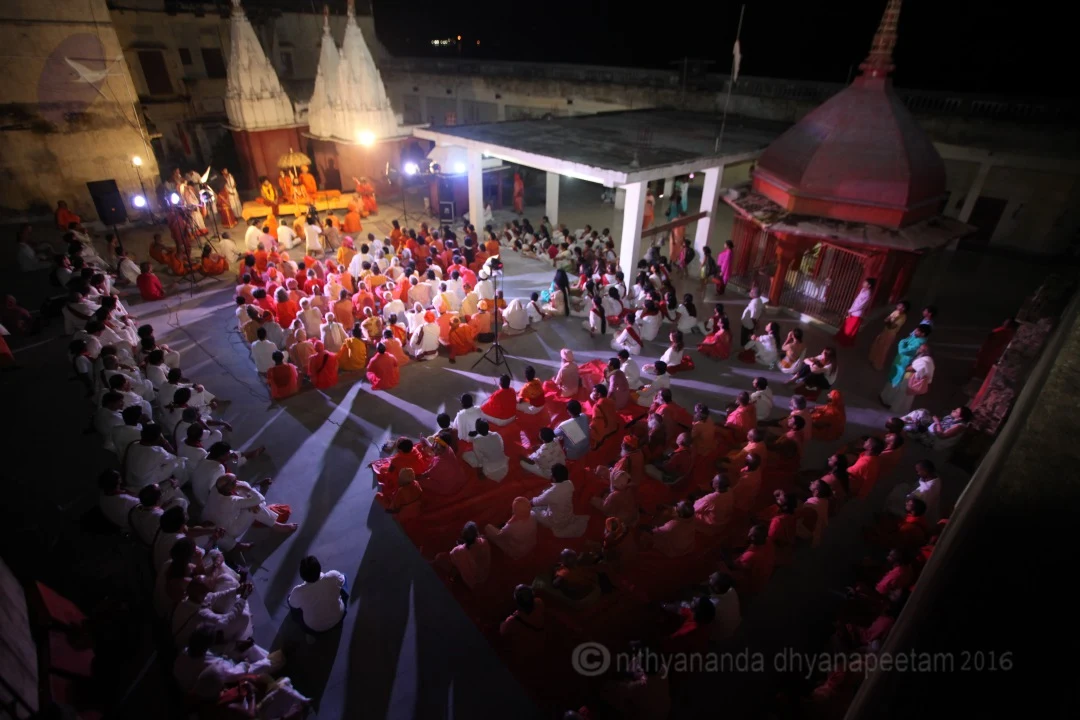
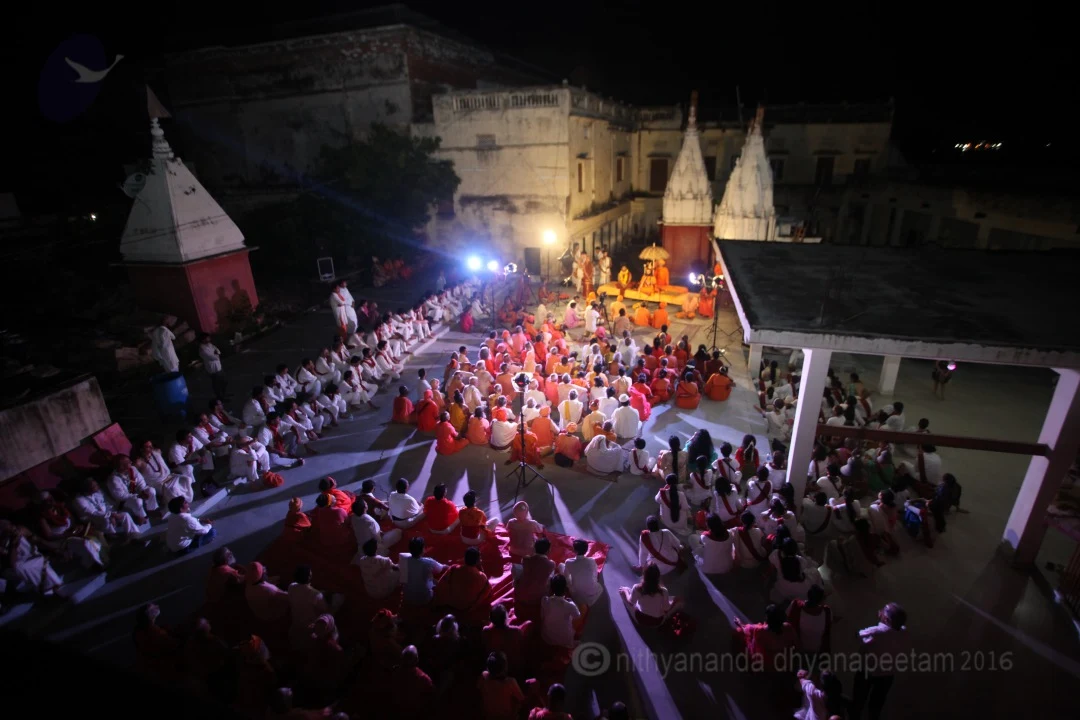
nithyānandeśvara samārambhām nithyānandeśvari madhyamām | asmat āchārya paryantām vande guru paramparām || [Welcome] (1:20) I will enter into Kenopanishad. Please recite the first verse along with me. Keneshitm patati preshitam manaha kena pranaha prathamaha praiti yuktaha It is not that only Gurukul kids should chant. You can also recite Keneshitam patati preshitam manaha kena prānaha prathamaha praiti yuktaha Keneshitām vāchamimām vadanti chakshuhu shrotram ka u devo yunakti Listen, reciting this, sacred verses intensely makes this sacred truths part of your bio memory. That is the reason the recitations play such an important powerful role. The sacred truths revealed in this verse “By whom willed and caused does the mind go towards its object” It means even before cognising illusory you, you question even the parts of illusory you. Listen even the question ‘who am I’ has certain level of presumptions, assumptions. You assumed you are a whole and you need to find out who you are. Here before even that assumption... Upanishad asks you to enter into pure questioning. Understand, first time when you start experiencing inner image, outer image, life image... first time when you start experiencing the root pattern, the root incident, root image... listen carefully root pattern, root incident, root image... if you have false presumption you are a whole entity, you will allow the root pattern to happen. If you have pure questioning you will allow the enlightenment to happen. I know this generation may feel pure questioning at the age of 4-5, before 7 is not possible. How is it going to be useful for us? No. Understand because for last few generations pure questioning was not possible throughout the life. They lost pure questioning throughout the life. That is why now it feels pure questioning before 7 is very difficult. Now, this generation, when you guys start pure questioning even during some time of your life, your next generation, your DNA, your extension, will feel pure questioning before 7. (6:37) Pure Questioning is all about the level of Kundalini Shakti, the level of Mitochondria cell energy, which comes to baby from father and mother. If the father and mother are seekers, that DNA gets into the baby; baby will never have, child will never have root pattern. Even the first time he is put into powerlessness he will not assume he exists, he will not create the inner image, outer image, life image based on his illusory false ‘I’, he will only start looking into “by whom willed and caused does the mind go towards its object.” Means – ‘who is creating inner image in me, by whom directed and united with which does the first vital life energy and chief cause comes forth towards its activities’. Means - who is creating my outer image? Understand each line, the first line is the action of creating inner image. If you don't ask the first line, your inner image will be created. If you ask the first line, you know what is the action creating the inner image. Listen carefully, inner image is willed and caused by something which empowers the mind to go towards its object. Listen carefully. First time in your body when mind moves towards some object, that movement is called inner image; it will create an inner image in you. If you allow that movement without being awareness, without being aware of it, you will create inner image. In that very root if you question Keneshitam patati preshitam manaha kena prānaha prathamaha praiti yuktaha You caught the inner image before it gets formed. You caught the outer image before it gets formed. Understand, when your mind moves towards its first object, it creates inner image. Inner image is the first object your mind holds on. That is the first object your mind holds. When you do not understand it is the first object unfortunately you think it is subject. Object being misconstrued as subject and whole life spent on protecting that object which you misconstrued as subject is life. For a normal man life goes in the delusion of protecting a misconstrued subject. (10:58) Inner image is actually, inner image is actually object but poses as subject... ghost. He is not part of you but he makes you believe he is source of you and you go on living to protect that stupid fellow. It is like you sell all your wealth, you sell all your time, you sell all your energy, you sell everything; your inner image is an object not subject. The first inner image is your minds movements to its first object. Because it happens so quickly in such an overwhelming moment of your life, before you even become aware of the various spare parts you brought with you.... It is like all the kids in India will start their life play trying to repair the old alarm clock. I don't know whether it is a standard rule. At least in My village I have seen ☺ all the kids they will somehow pickup one old repaired alarm clock, they will open and finally they will put it in a plastic carry bag ☺ after opening they will not know how to assemble, then they will put it in a plastic carry bag, take it to the shop to assemble it. I have done that. I know many middle class Indian kids have done it. When you open it and throw it only then you know, now you don't even have a count of all the spare parts you have. (13:29) After birth, before even you know all the spare parts you have, when powerlessness attacks you, the first movement of your mind to first object - inner image, is misconstrued as subject. See the speed with which you approach the inner image and the powerlessness which you show to inner image, please understand, with anybody you show powerlessness, he will try to take over you. Understand, everyone will want you to show your powerlessness to them, only Guru want to see always powerful; Guru want to see you always powerful. He neither wants you to have powerlessness nor wants you to show your powerlessness to him. Other than Guru everyone wants you to show yourself powerless to them; because only when you show yourself powerless to them, only when you are powerless in front of them they can take over you. But with Guru only when you are powerful I can take over you. Only when you are powerful I can manifest through you; there is no taking over in Guru-Disciple relationship; there is only manifestation. (15:30) Do not have anybody around you who entertains your powerlessness, who all the time wants to see you powerless. Understand even though you enjoy their attention, love, care, all the stupidity...It is like giving Coca-Cola to a diabetic patient. Yes it will be very tasty but poison. Even if you are given neem juice which is bitter, go to a person who gives you medicine. If you are diabetic, even if it is bitter like Neem juice go to a person who gives you medicine not to a fellow who gives you very tasty but poison. Understand, in the life if you decide not to entertain anybody who wants you to be powerless or who supports your powerlessness, who directly or indirectly enjoys your powerlessness... if you cut all those relationships and throw them out, that itself will solve 90% of your problems; because they again and again engage the powerless part of you. Understand, a vegetarian guy, will engage only with the milk of cow and he will be engaging only milking the cow. A non-veg guy will be engaged with the blood of the cow, with the muscles of the cow, with the meat of the cow. People who are engaged with your powerlessness directly indirectly interested in your powerlessness, are meat eaters, life eaters, human meat eaters; they will eat you. Even if they are too sweet for behaviour, and they will usually be, they will be very sweet, that is the way they destroy people. (18:42) How Shakuni was so sweet to Kauravas, the Shakuni sweetness to Kauravas... I don't know how many of you know, Shakuni actually is dead against Kauravas. He took a vow to destroy whole Kaurava vamsha. Because his sister was kidnapped and married to a blind man and whole life she has to live blindfolded, he decided to take revenge. He destroyed the whole Kauravas but everyone from Duryodhana to the last... actually they are not hundred, hundred and one, there was one daughter... one daughter and hundred sons. All the hundred and one believed he is the most sweetest Mama Shree, Mama Shree. In your life also you will have lot of Mama Shrees who engage only with your powerlessness and who expect you constantly to be powerless. Because more you are powerless more they can support you, more you are powerless more they will be overpowering you, more you are powerless they will occupy you. During the powerlessness, the speed with which you approached your inner image, he overpowered you and declared himself as you. The misconstrued subject... object is being misconstrued as subject and that being believed as your identity. Listen. That being believed as your identity, the mind when it approaches the inner image with tremendous powerlessness, inner image says, "don't worry, I will take care of you." Then suddenly he says " I am you, I am everything, come on". Sad part of this whole thing is throughout the life you never discover it. You go on serving this fool who occupied you illegally... cosmic illegally... and declaring his authority over you illegitimately as your inner image. Understand the earlier you discover your inner image is not you, better for you. (22:29) Keneshitam patati preshitam manaha kena prānaha prathamaha praiti yuktaha Keneshitām vāchamimām vadanti chakshuhu shrotram ka u devo yunakti

If you ask the question “By whom willed and caused does the mind go towards its object” you will not create another image. “By whom directed and united with which does the first vital life energy chief cause comes forth towards its activities” means that's the first outer image you declare. If you don't ask this question and being in slumber during satsang ... whole life is a satsang. If you don't ask this question you will create outer image. If you ask this question you will create graceful being. I tell you the inner image is the root cause of all your pains. Outer image is root cause of all your sufferings and failures. All your sufferings... listen carefully, pain is when you are failing IN [gestures inwards], failure is when you are paining with everything else outside. If you experience suffocation within you it is pain, if you experience around you it is failure, it is suffering.

Inner image generates pain outer image generates suffering. If you ask this question Keneshitām vāchamimām vadanti - at whose will does this speech gets activated and speaks, understand, the first inner image, outer image, life image is the time speech gets activated, the verbalization gets activated. This verse is all about the root pattern. When you catch it when the root pattern develops, you will raise as an enlightened being. At least now bring yourself to pure questioning. You can manifest Sadashiva instead of Sada shava. Instead of always being dead you can manifest always being Shiva.

Keneshitam patati preshitam manaha kena prānaha prathamaha praiti yuktaha Keneshitām vāchamimām vadanti

At whose will does this speech gets activated and speaks, enlivened and directed by what luminous divine power, indeed do the eyes and ears engage in their functions. It means how the life image manifests. Actually outer image only when it starts manifesting it is life image.

(27:24) If these questions are asked at right time, you are an incarnation. At least if you ask these questions now you will be an Enlightened Being. If you asked these questions at right time you will be an incarnation, if you ask now, time will be made to be right and you will become enlightened. Understand a good news is once the root pattern is created you always function, you always function only based on the root pattern. Don't ever think some other suffering is added to you after that. No. If you think, “Oh, the biggest suffering I am going through in my life started at the age of 11”, no you are wrong. Root pattern is the biggest suffering. The root pattern is the biggest suffering.

Anybody understands this verse completely, internalizes it, you will have the power to complete your root pattern and you can help anybody to complete their root pattern. This should be the introduction to Hinduism; completing the root pattern is the first initiation should be given from the Hindu tradition... because Hindus attend first things first. Completing with the root pattern, understand, this question is actually asking, “Who am I who is asking who am I”. It is not just, “Who am I”, it is asking, “Who am I who is asking who am I”. naanar ena ketkum naanaar “Who am I who is asking who am I”. Keneshitam patati preshitam Even before you assume the ‘I’ asking, “Who is that ‘I’ who even assumes ‘I’”

Keneshitam patati preshitam manaha kena prānaha prathamaha praiti yuktaha Keneshitām vāchamimām vadanti

At whose will does this speech gets activated and speaks, enlivened and directed by what luminous divine power, indeed do the eyes and the ears engage in their functions. Means, the life image - who forms the life image, who allows the inner verbalization, first verbalization to start. A man who is caught in his inner image lives his whole life in prison; that's a life imprisonment! I tell you, no other punishment can be worse than getting caught in the inner image.

(32:05)

Men always think lust is the biggest suffering; even a womaniser knows lust is the biggest suffering. But I tell you, it is not lust, it is the ideas of male-female and the suppression you carry in your muscle - that is the real suffering... even the idea ‘if you are a male you have to conquer’. Most of the womanizers not even have so many women in their life for pleasure; because after sometime they realise the pleasure does not come, get generated by constantly changing the external partners... every womanizer realises. But it is like a conquering. That stupid idea ‘if you are a male you have to conquer’ goes on torturing you, goes on punishing you, goes on putting your life in deeper and deeper hells.

Exactly when you ask this question like “how my mind is moving towards its object”, the inner image, the root pattern you generated will start losing power over you; it will start losing power over your thinking. This verse if you internalise and start the pure questioning... don't do it like a technique but do it like a decision making. This should be like your board room meeting; boardroom meeting is not technique, ritual. The decisions you take you are going to execute it. Let your seeking be strategy meeting... not ritual. Most of you think whatever we discuss in board meeting stays in board meeting. What? Then why board meeting? ☺ Board meeting is not Las Vegas trip. Whatever is done in Las Vegas stays in Las Vegas...but board meeting, whatever is done in board meeting becomes the reality. All your seeking is most of the time like Las Vegas trip... never becomes part of your real life. But seeking should be like a board meeting, strategy meeting. Once you conclude you are going to execute it... time bound decisions, do's and don'ts, Right wrong.

(36:00)

Listen, I tell you, take this pure questioning as a sincere strategy board meeting. So whatever conclusions you arrive start executing. Do not have the fear you may forget your strategies and collapse. If you can discover it once, you can always re invent it again. If you forget let's re invent again, let's have board meeting once more. Let's develop the strategies, let's start living. If you ask this questions, right strategies for life will evolve. Pure questioning evolves right strategy.

Whenever people ask me, “Swamiji what should we do after the Inner Awakening”, come on bring more and more completion into you. Take next six months as a Completion Project. Every person involved in your life you will complete with them. Every situation you will handle it with completion; yourself or others more and more and more completion.... more and more and more completion.... more and more and more completion. Fill your life with more and more completion. Attend everyday satsang, because that will bring not only completion, again, again you will be reminded – you do not need to remind yourself I am here to remind you. ☺ Satsang is nothing but continuous support by me after Inner Awakening for all of you. After Inner Awakening continuous support from me. Continuous support from me for you is satsang.

Keneshitam patati preshitam manaha kena prānaha prathamaha praiti yuktaha Keneshitām vāchamimām vadanti chakshuhu shrotram ka u devo yunakti

This should be today's vakyartha sadas subject... subject for today's tarka, vakyartha sadas; Pure questioning as life strategy meeting. End of the Vakyartha sadas conclusions you all arrived you should note down and start applying that as a life strategy. Your vakyartha sadas is not Las Vegas trip you try to forget it, hide it as quickly as possible as much as possible. No. It is strategy board meeting; it should be executed till the end.

(40:37)

With this for all the Inner Awakening participants take this as a message - Infuse completion in your every action, thinking, words. Make this as a next 6 months project - More and more and more completion - completion with others, completion with yourself. In every step bring completion. Completion will bring integrity. Completion will bring authenticity. Completion will bring responsibility.

My own ashram land... just because the mango trees were leased I did not pick up a mango and eat. No, it is leased. Call the person who got the lease and ask his permission and get one. The fellow who took the lease literally cried, he literally fell at My feet and cried, “What is this Swamiji, it is Yours and You leased it, You have all the right to have one.” I said, “No that is not integrity”. I learnt this lesson from Ramakrishna. When somebody brought mango from the roadside tree which actually belongs to that house owner, Ramakrishna says, “No I can't touch this, there is stealing in it.” The fellow goes and finds out; actually that tree is in his property. Even though it is outside the compound, the land belongs to the owner, so the tree belongs to the owner, so he plucked from the tree without asking the owner. Not only Ramakrishna did not touch it, he said there is stealing in it, give it back.

(42:59)

Completion will bring you tremendous integrity. It will bring you tremendous authenticity. It will bring you tremendous responsibility. All this are powers. Life with a responsible feeling is a power. There are tons of donkeys living in the human body. They don't feel responsible. If you want to be like that then you can also be without responsibility. Responsibility is a power... not just work, it's a power. Enriching is a power not a sacrifice. Understand enriching is a power... not sacrifice, not service, it’s a power.

All the four powers will be brought to you - Vaak Shakti, Mano Shakti. Vaak Shakti is experienced through integrity. Mano Shakti is experienced by authenticity. Buddhi Shakti means tremendous strength in your intelligence is experienced by responsibility. Jiva Shakti Power of life, Jiva is experienced by Enriching.

Vaak Shakti Mano Shakti, Buddhi Shakti and Jiva Shakti.

Vaak Shakti is experienced through integrity. Mano Shakti is experienced by authenticity. Buddhi Shakti is experienced by responsibility. Jiva Shakti is experienced by Enriching.

From now onwards talk all these as four powers not just four tattvas. Somehow Integrity-Authenticity means it is like a rules you have to follow; it always comes with that understanding and connotation. No. It's a power you need to manifest. Vaak Shakti, Mano Shakt, Buddhi Shakti, Jiva Shakti, it’s a four powers you have to manifest. Learn how to manifest it by pure questioning.

With this I bless you all. Let you all radiate with Integrity, Authenticity, Responsibility, Enriching, Causing, Living Shuddhadvita Saivam the eternal bliss Nithyananda.

Thank you. Be blissful.

Photos From The Day:

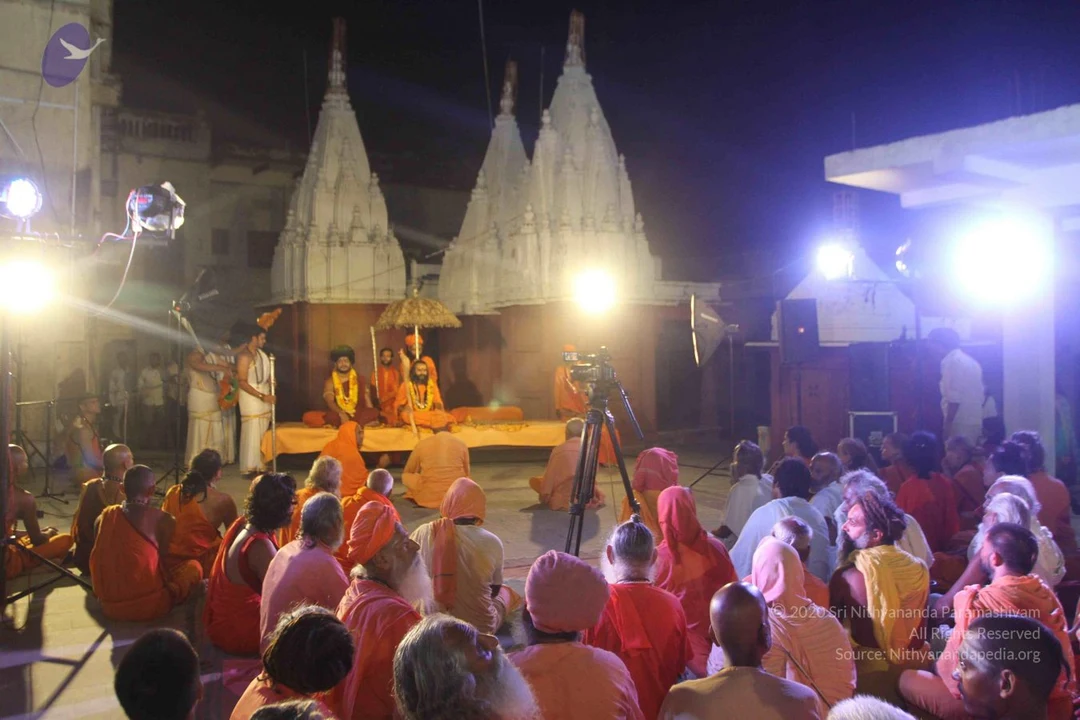
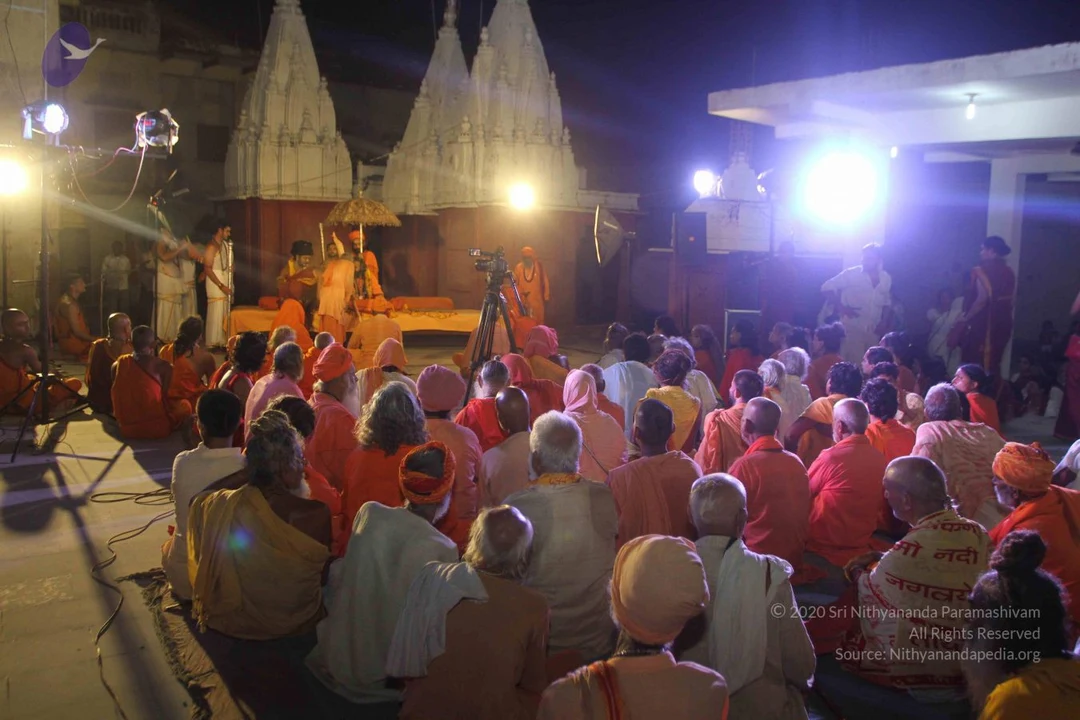
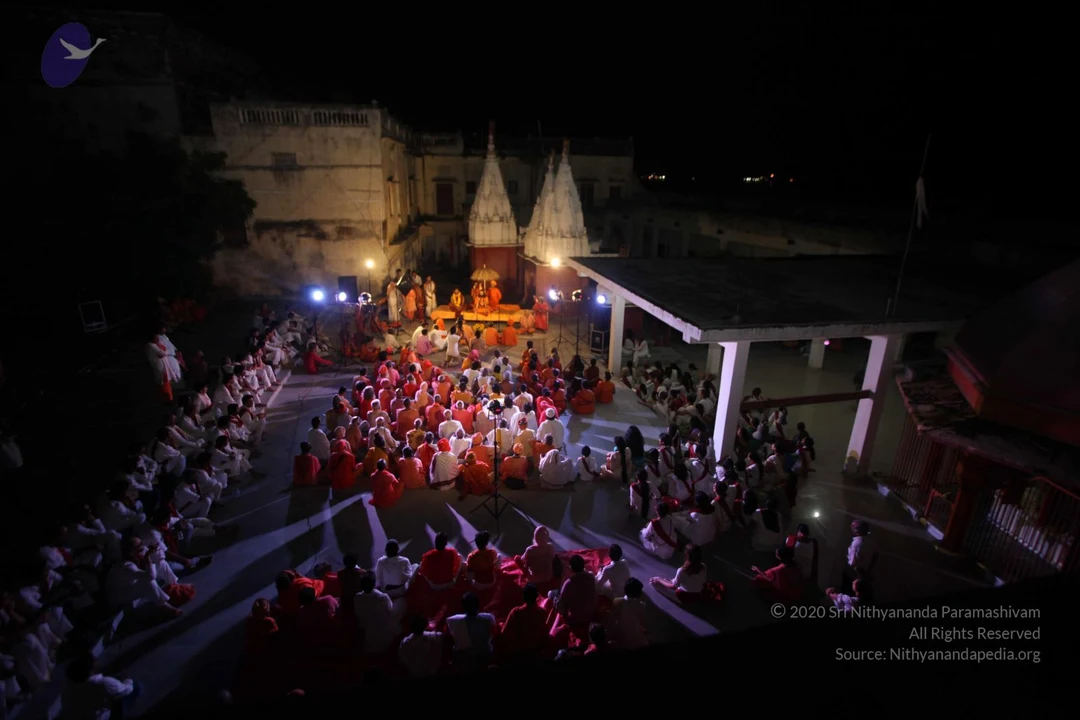
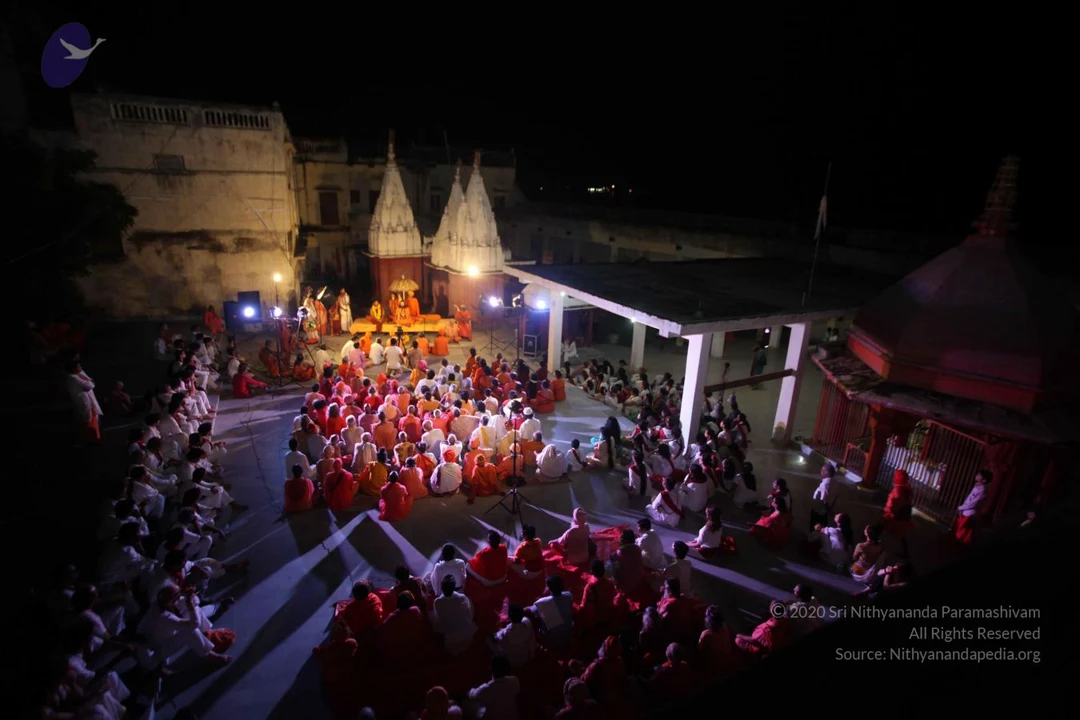
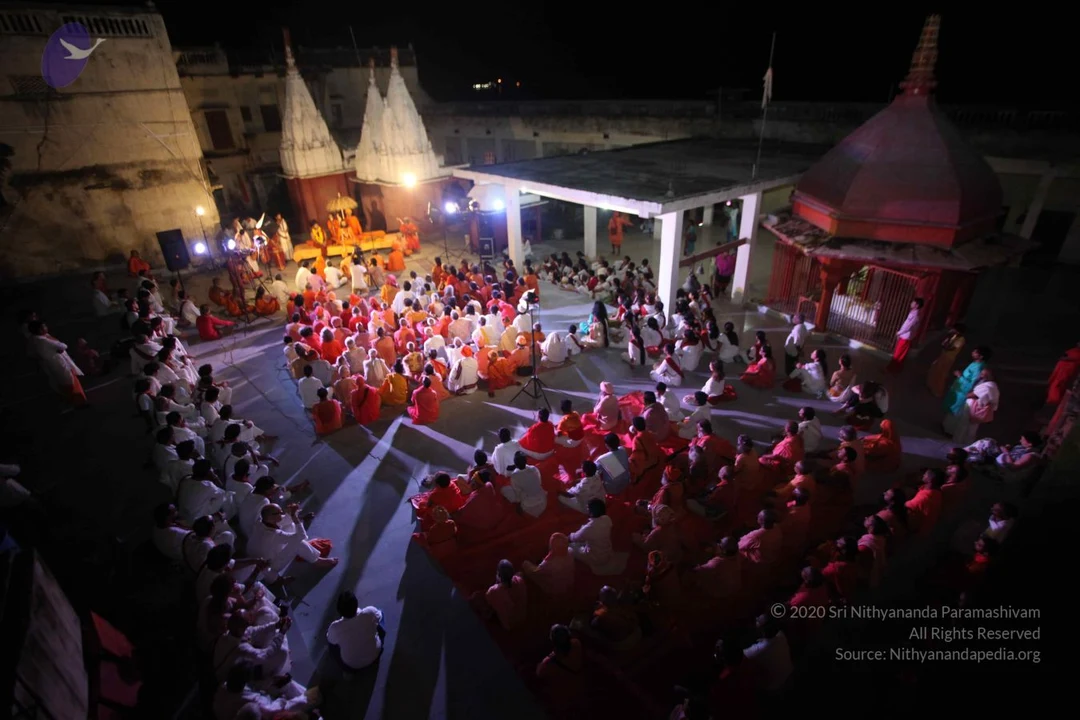
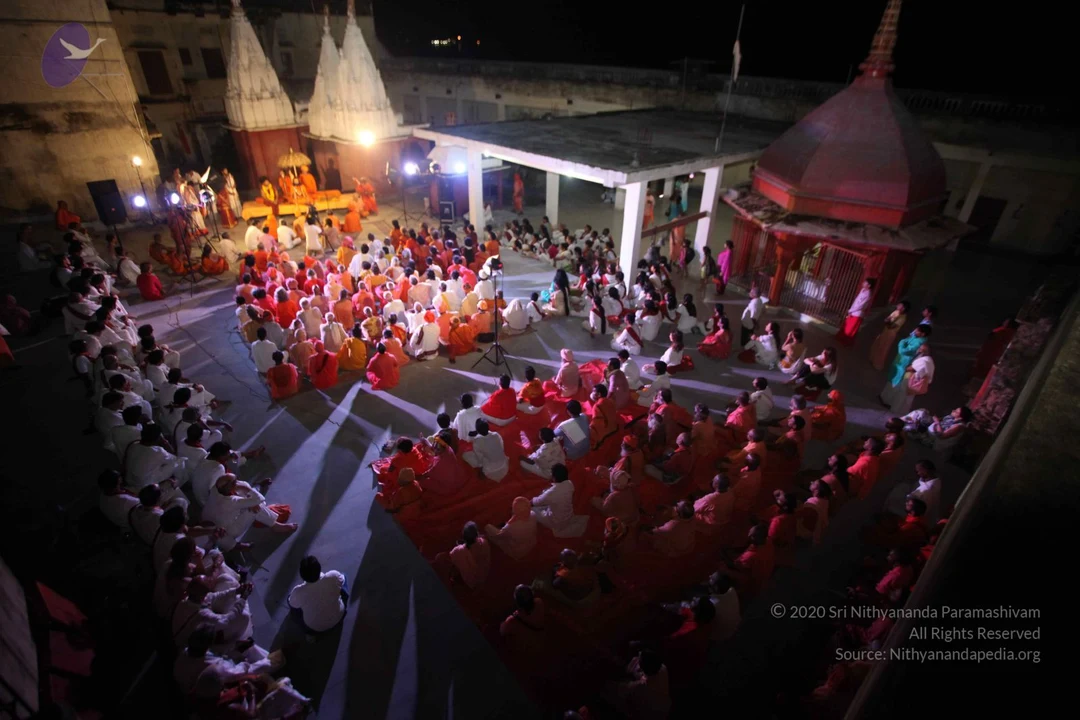
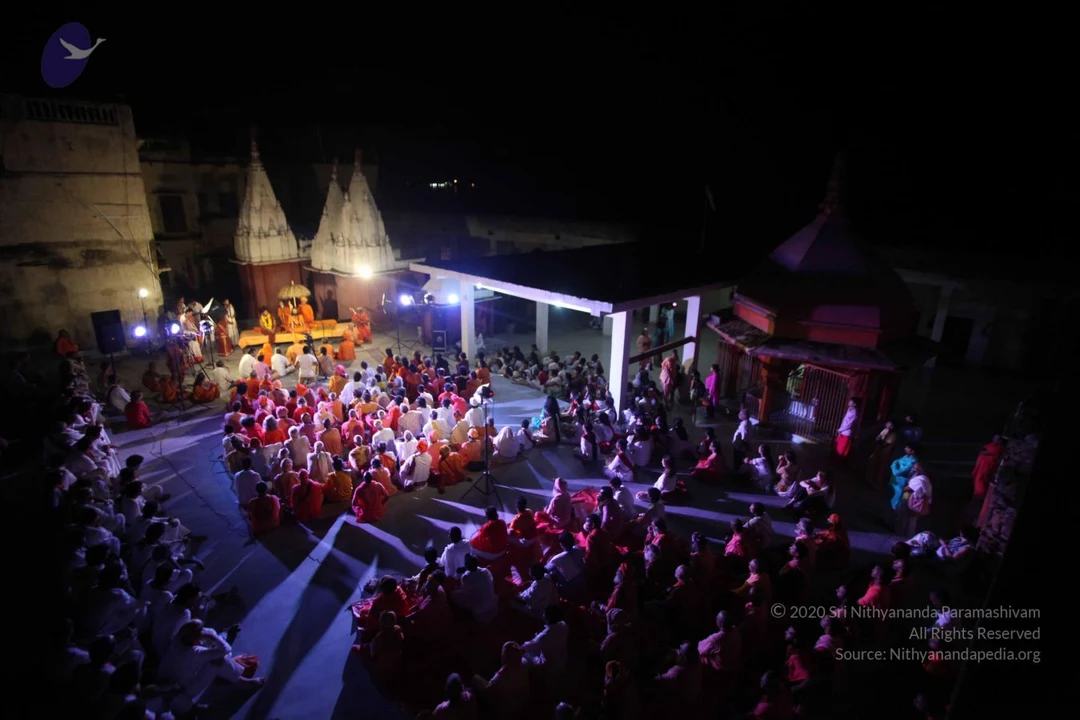
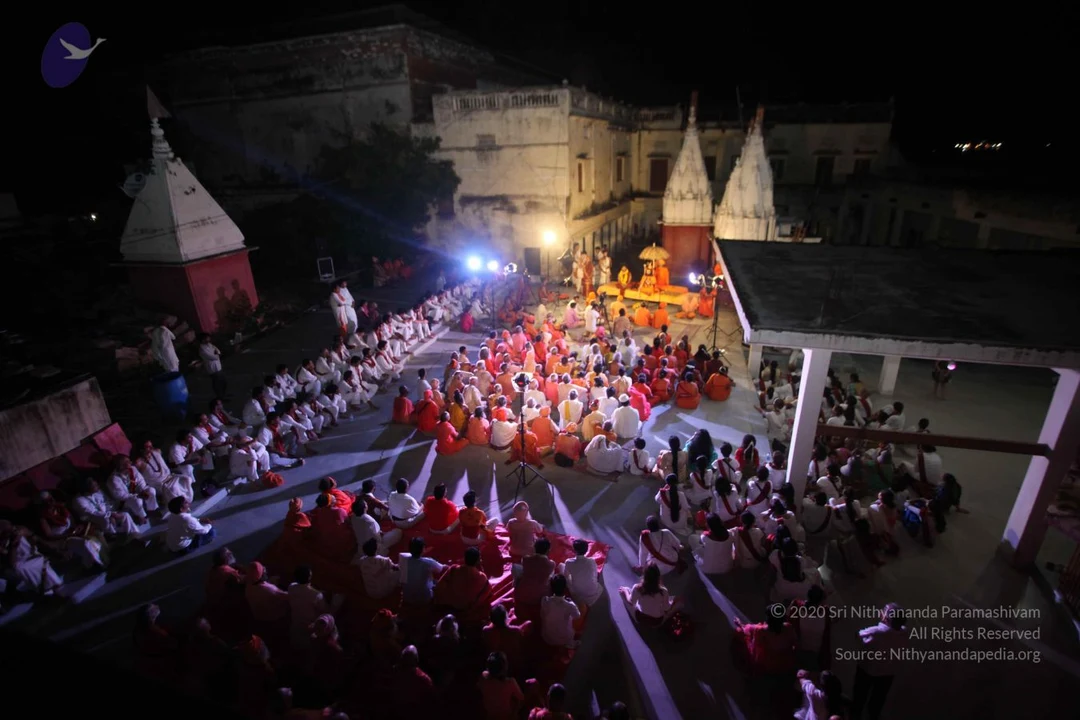
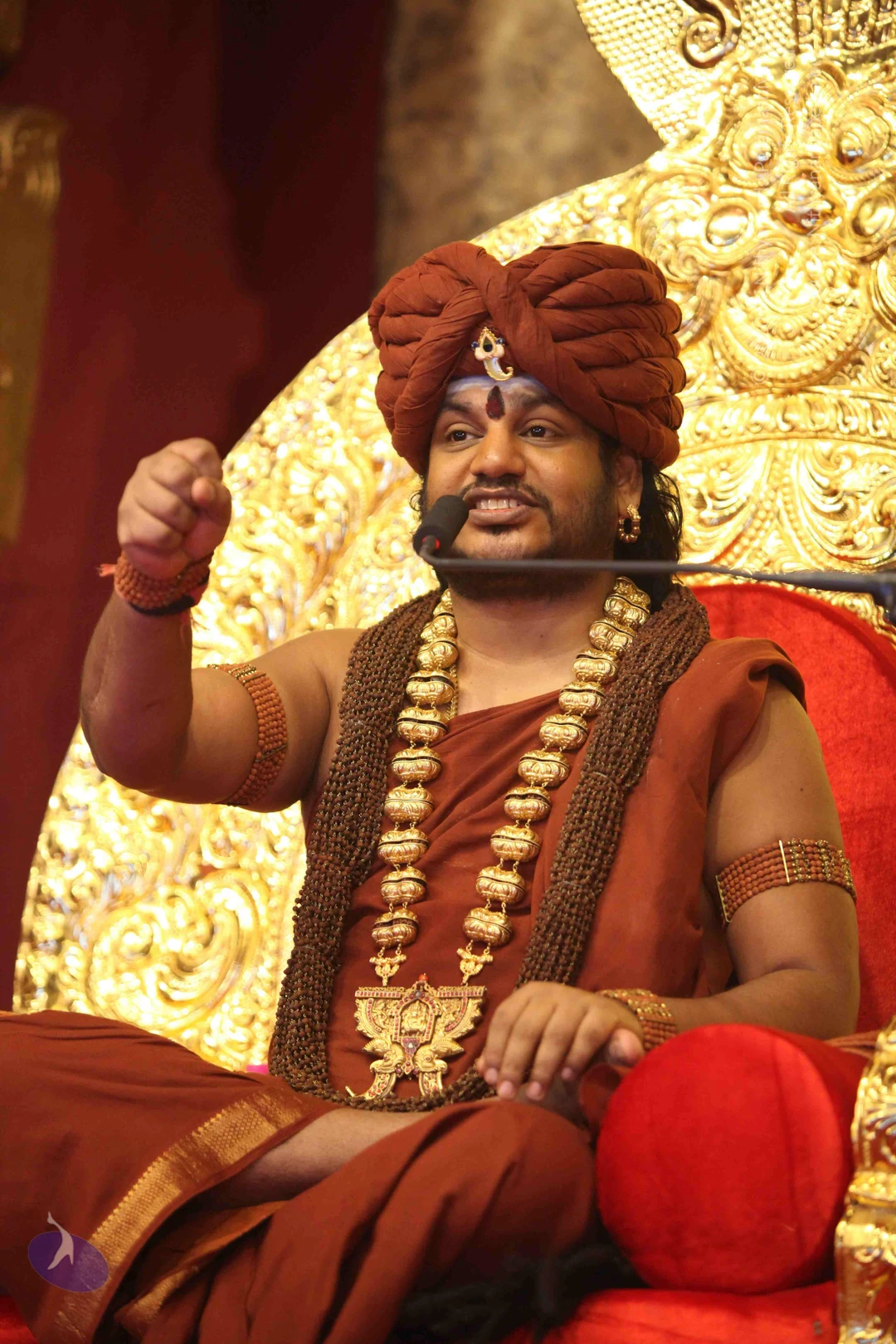
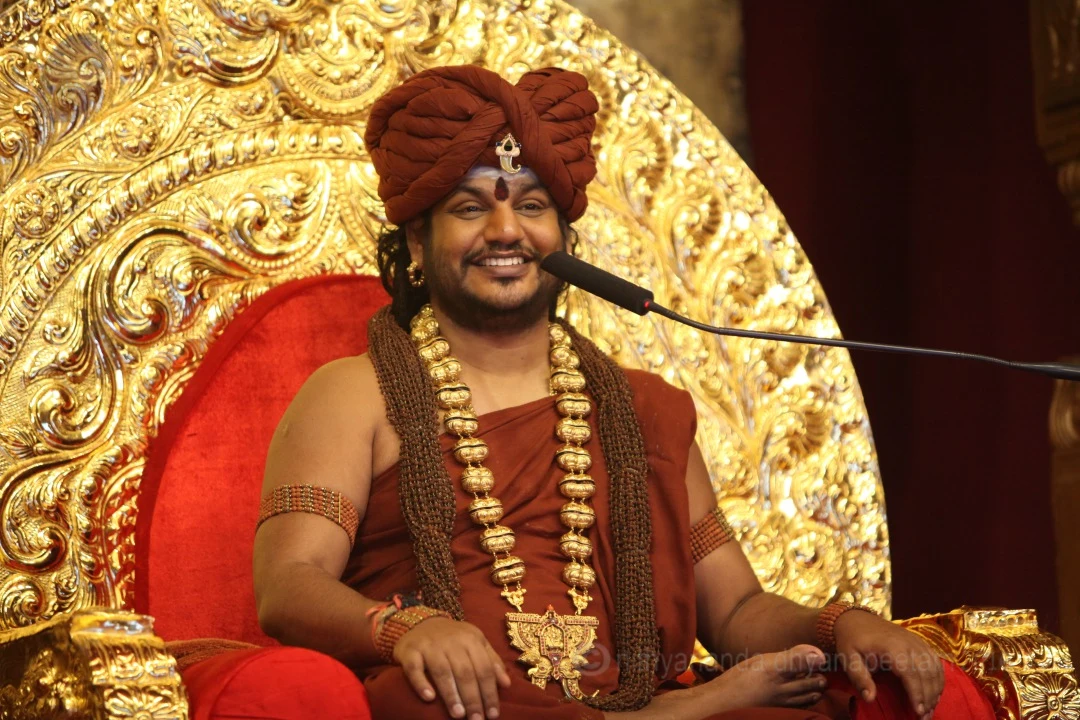
Nithya Satsang
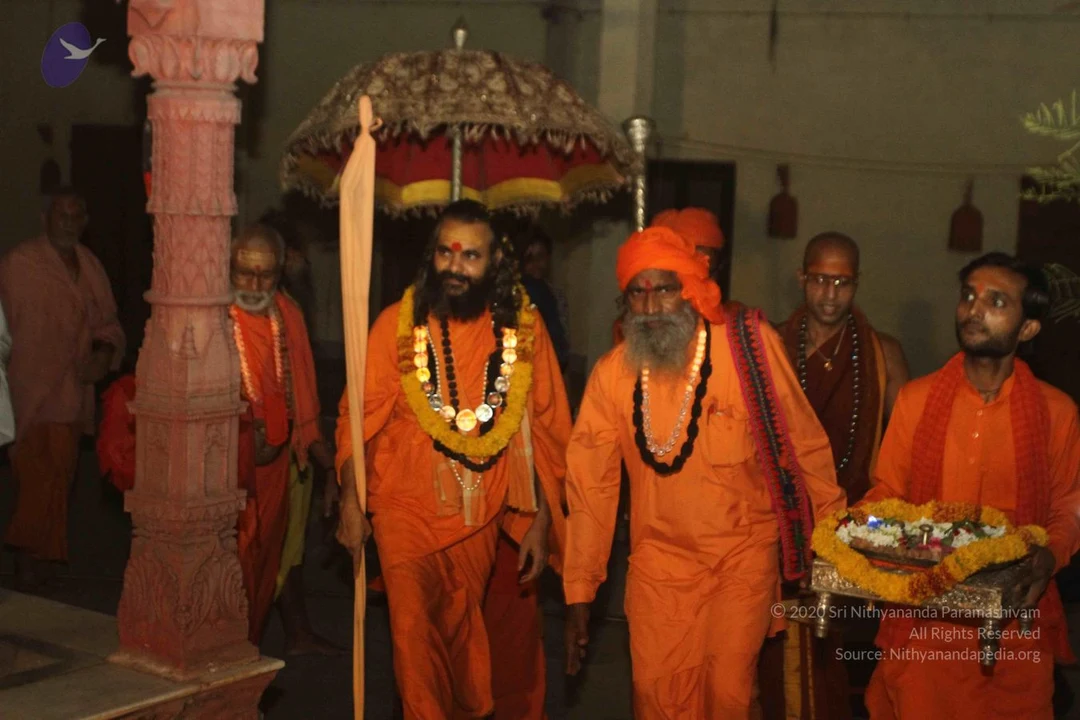
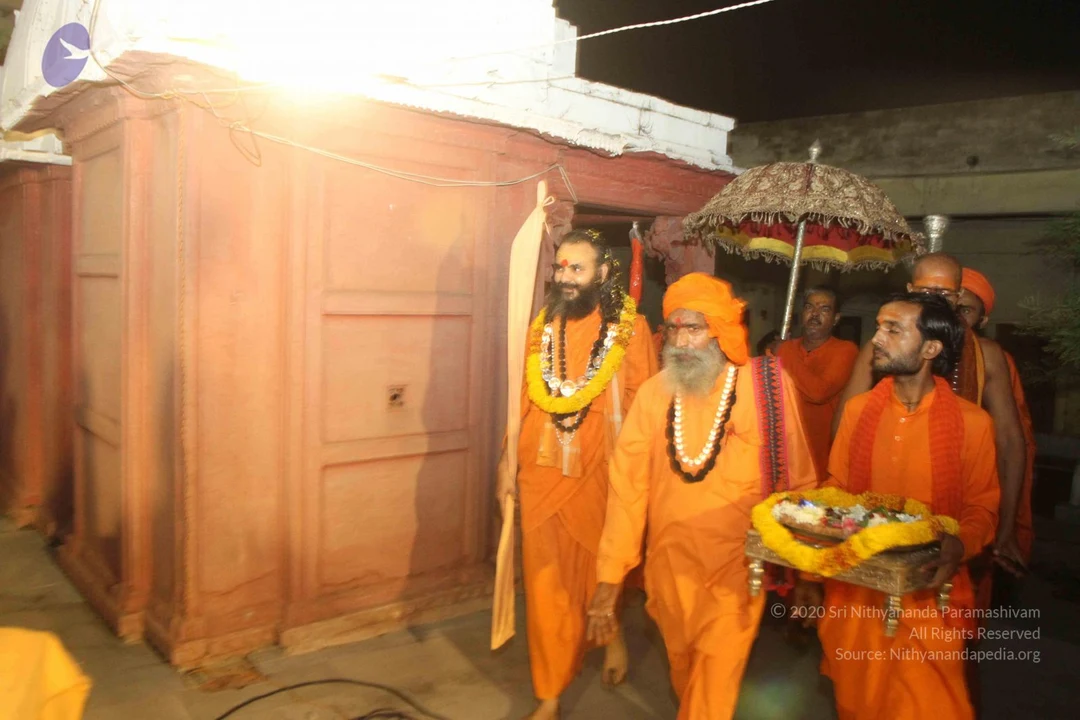
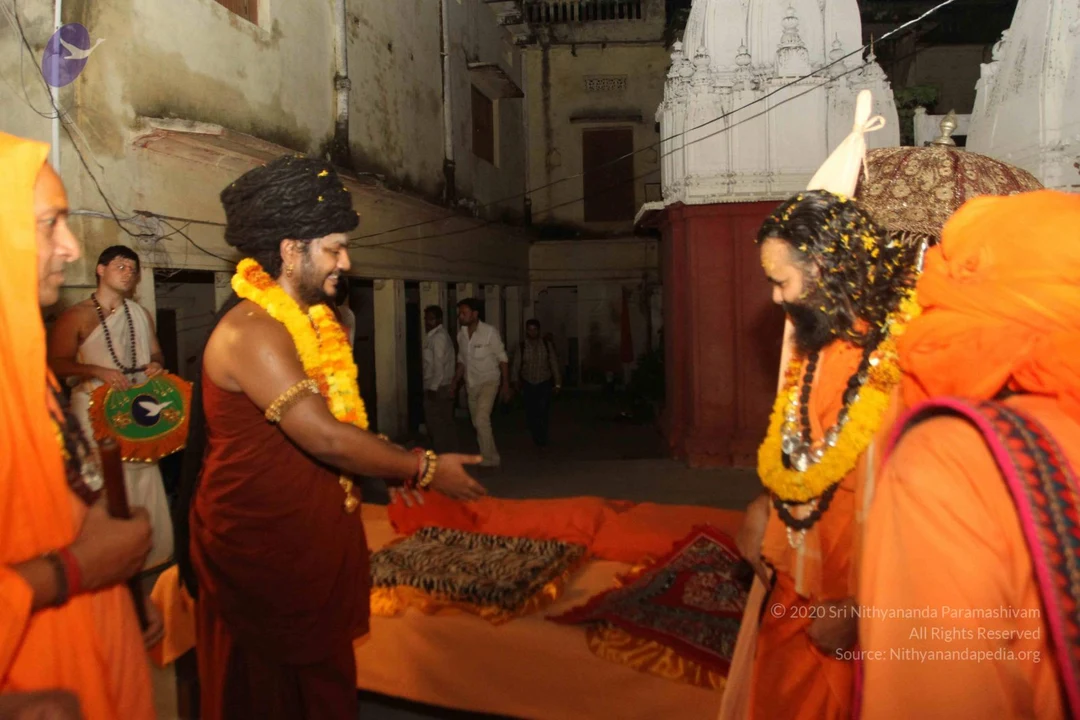
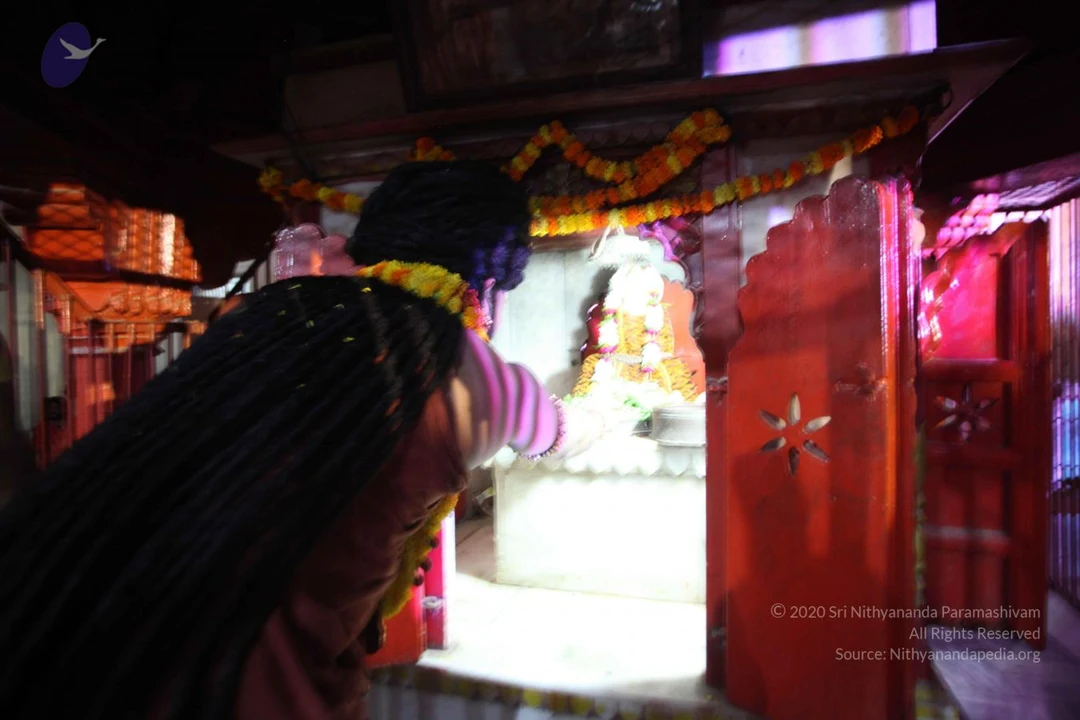
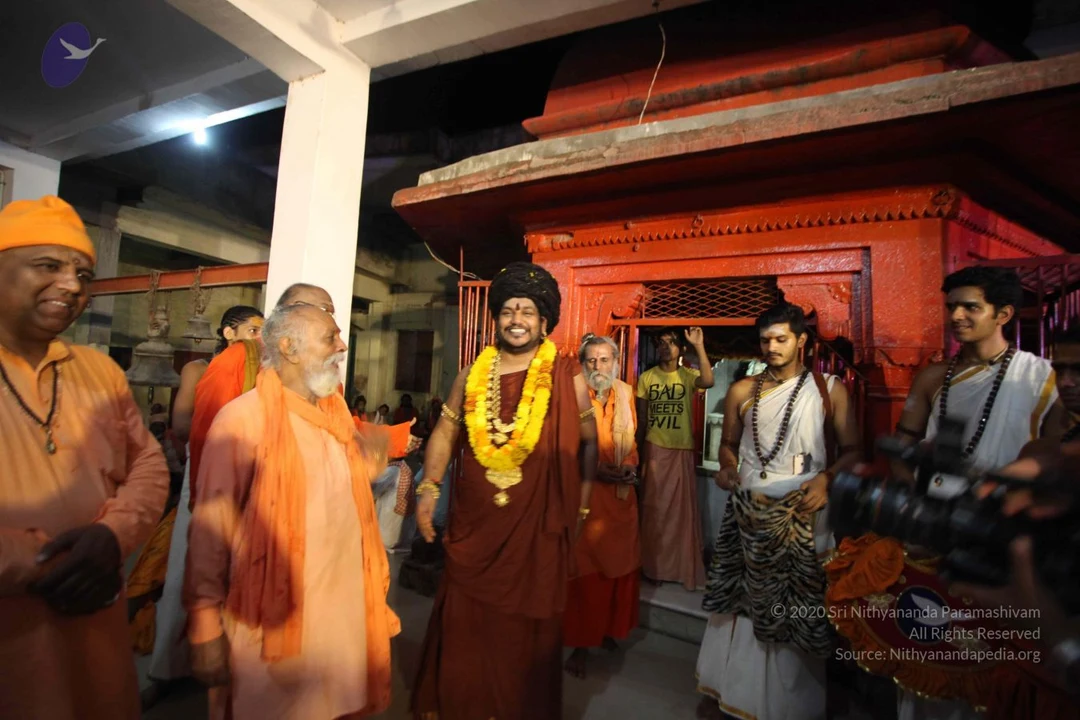
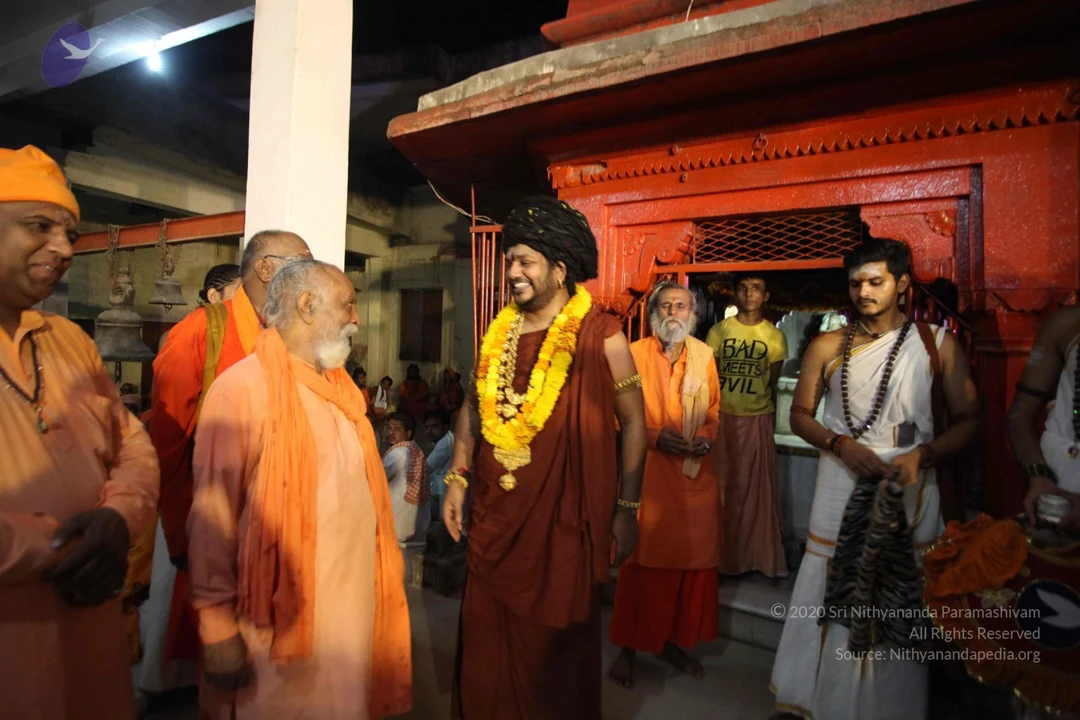
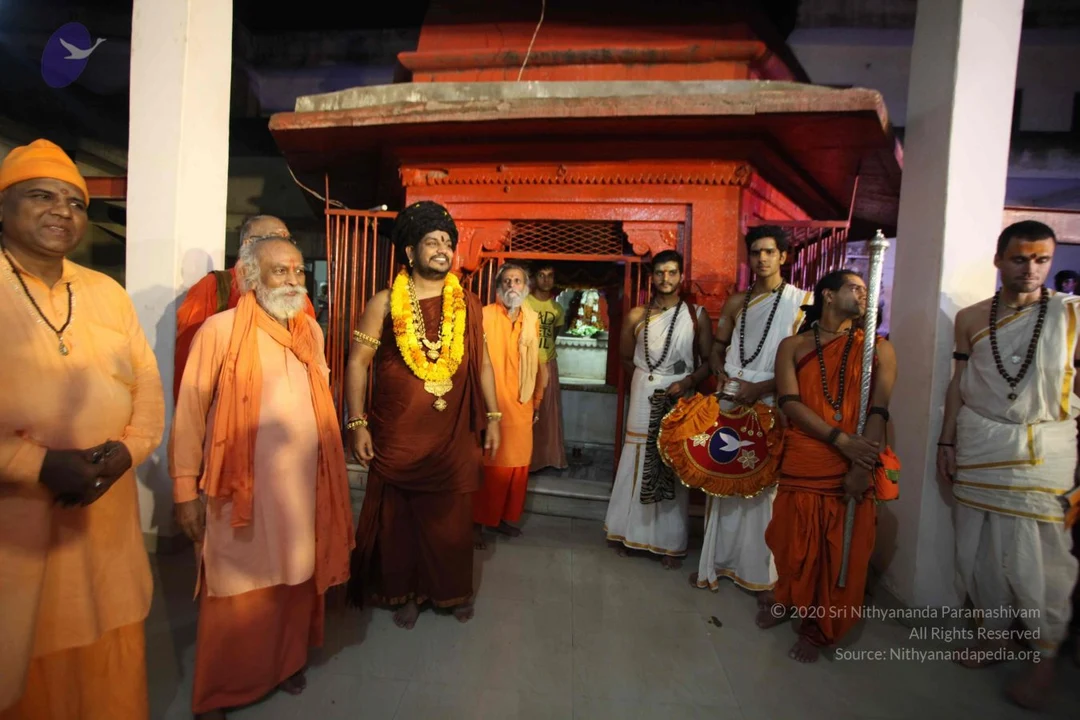
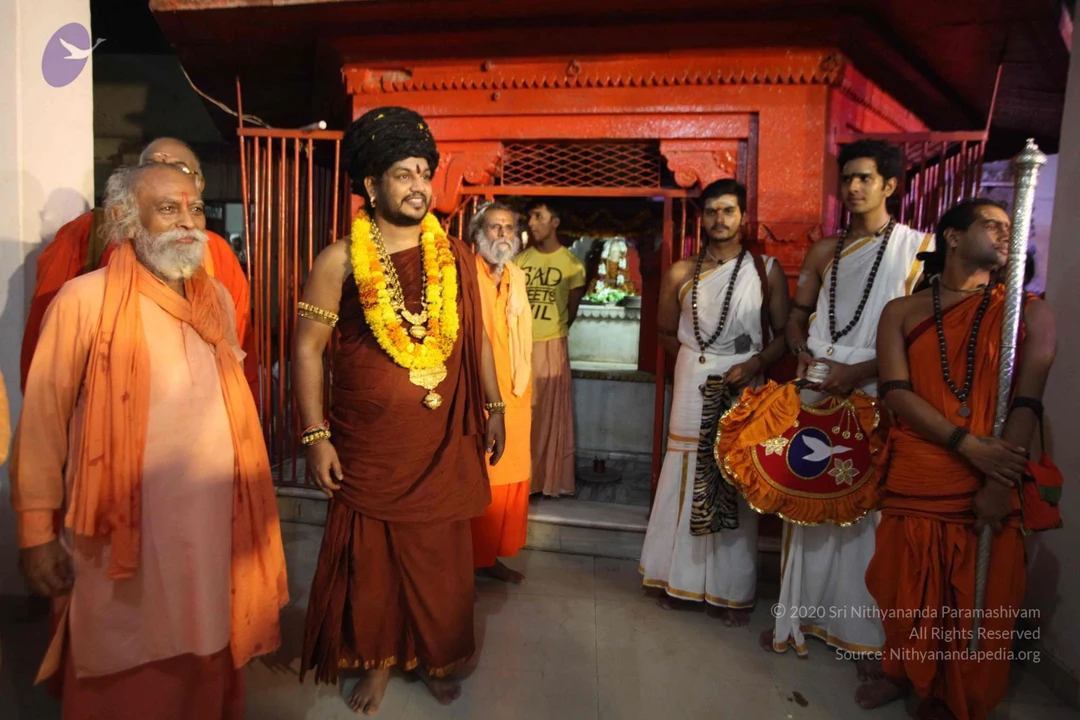
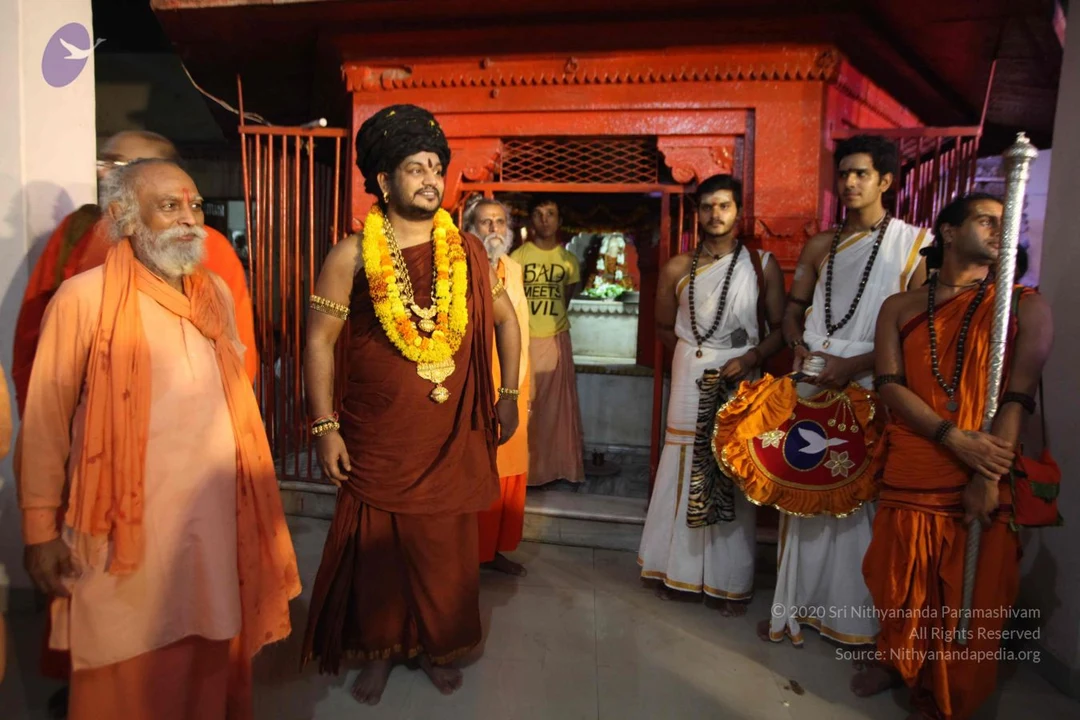
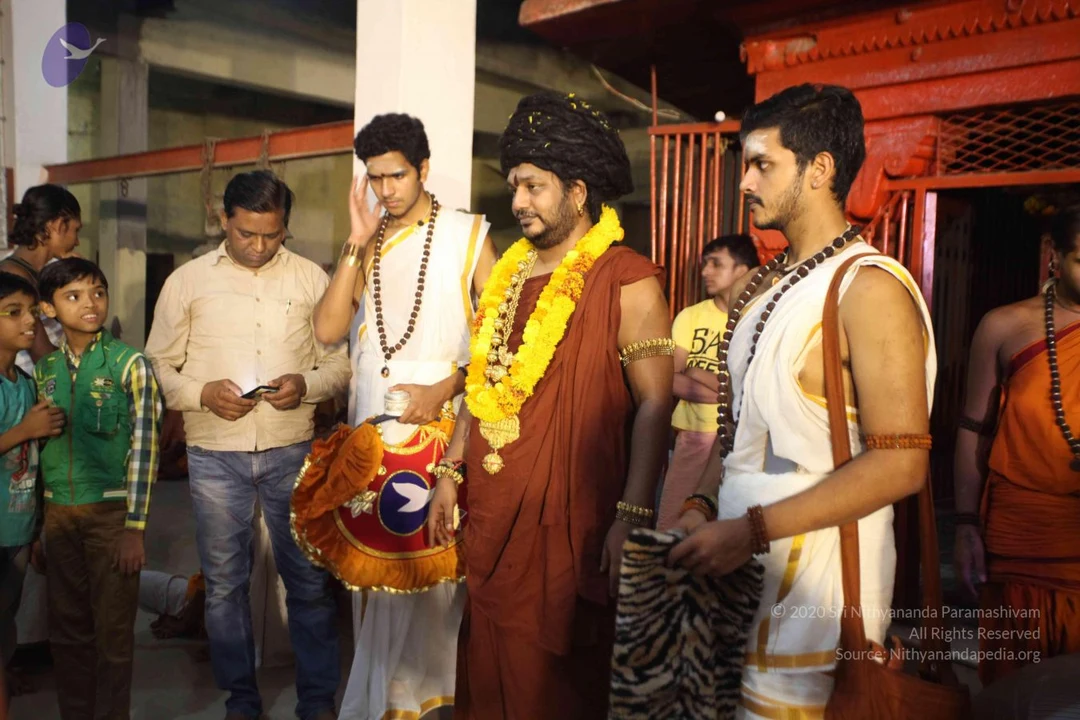
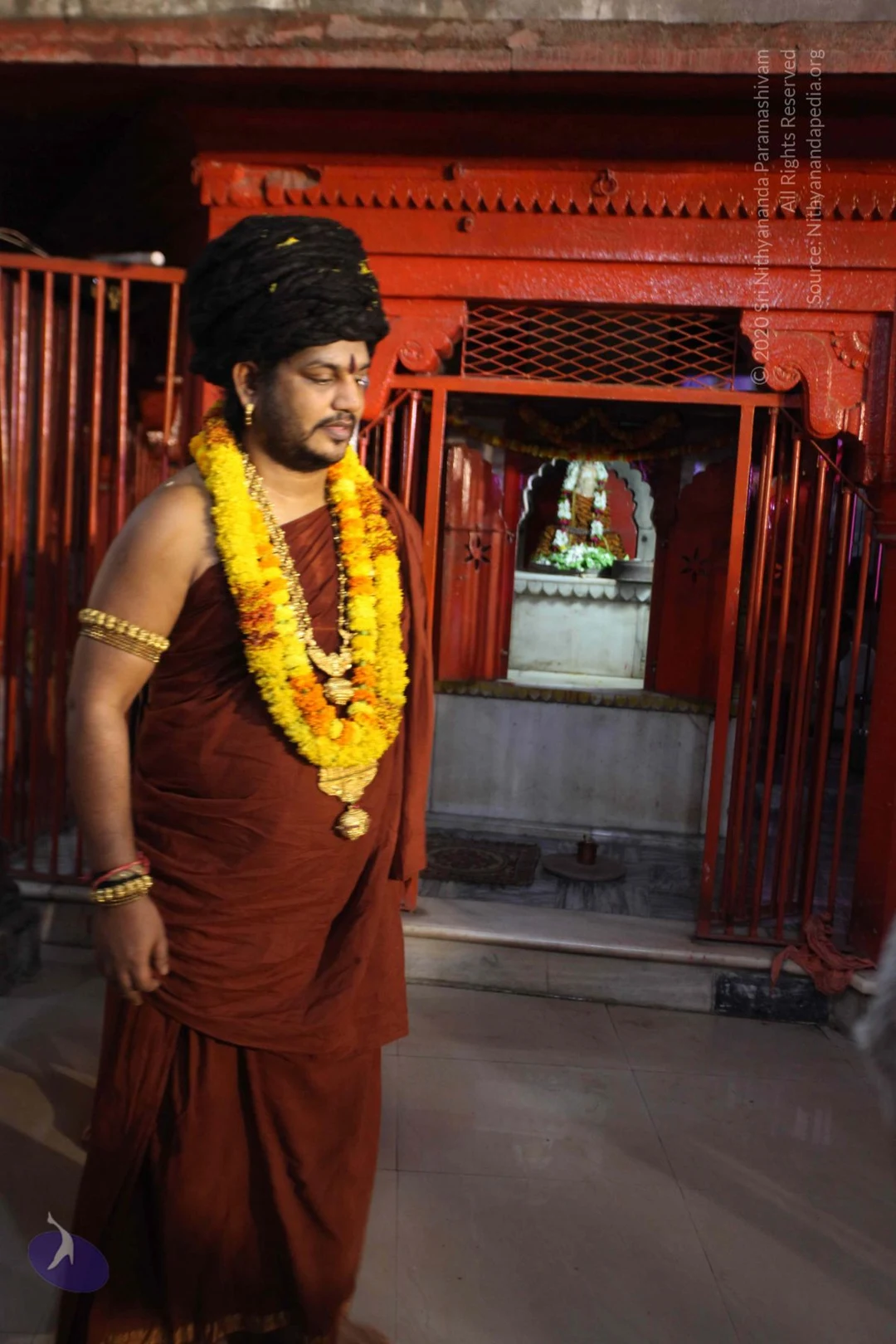
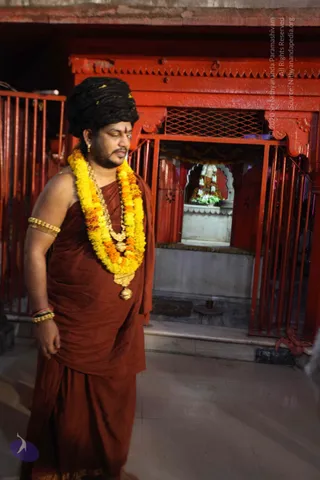
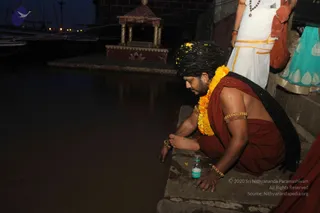
His Holiness Visited Ganga Devi
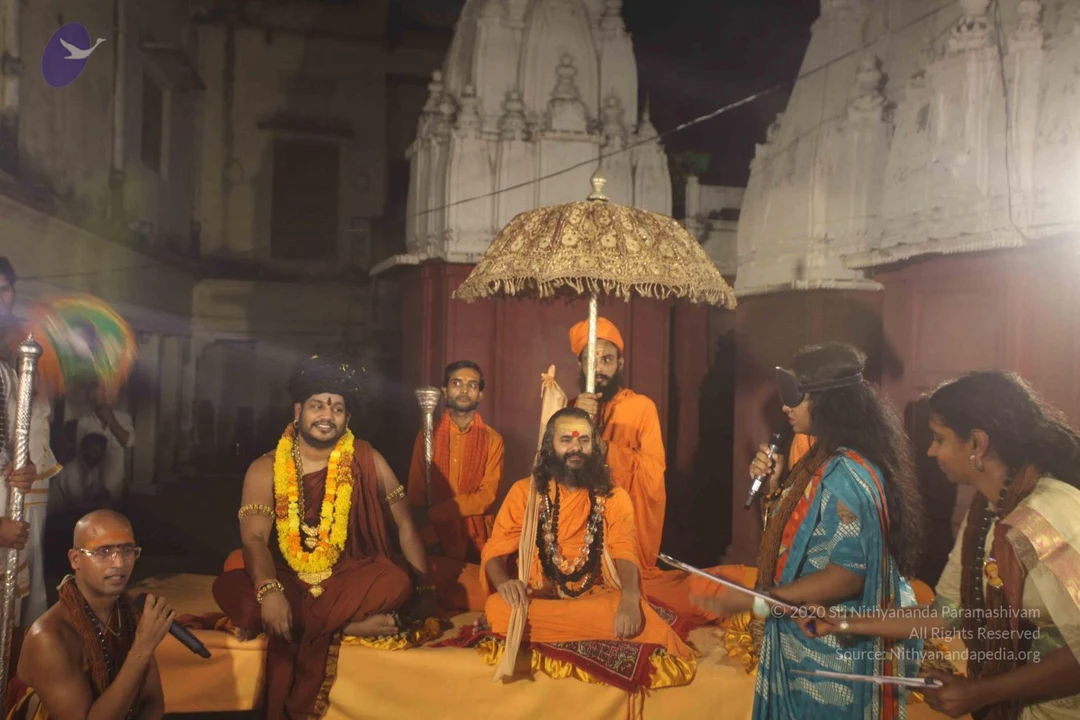
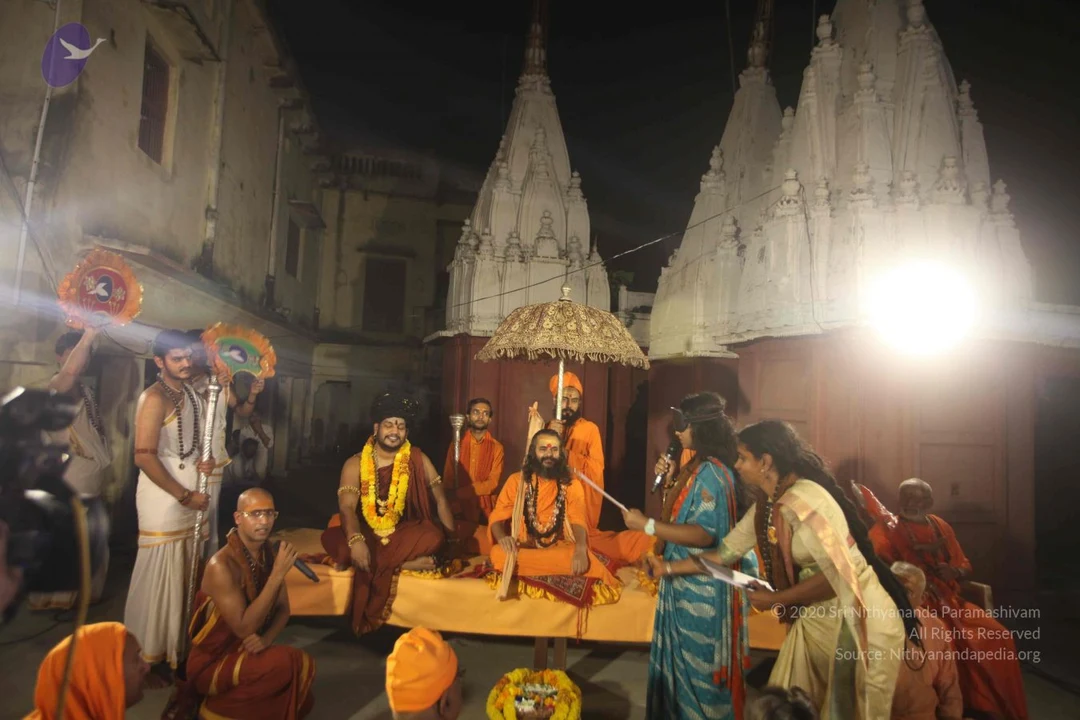
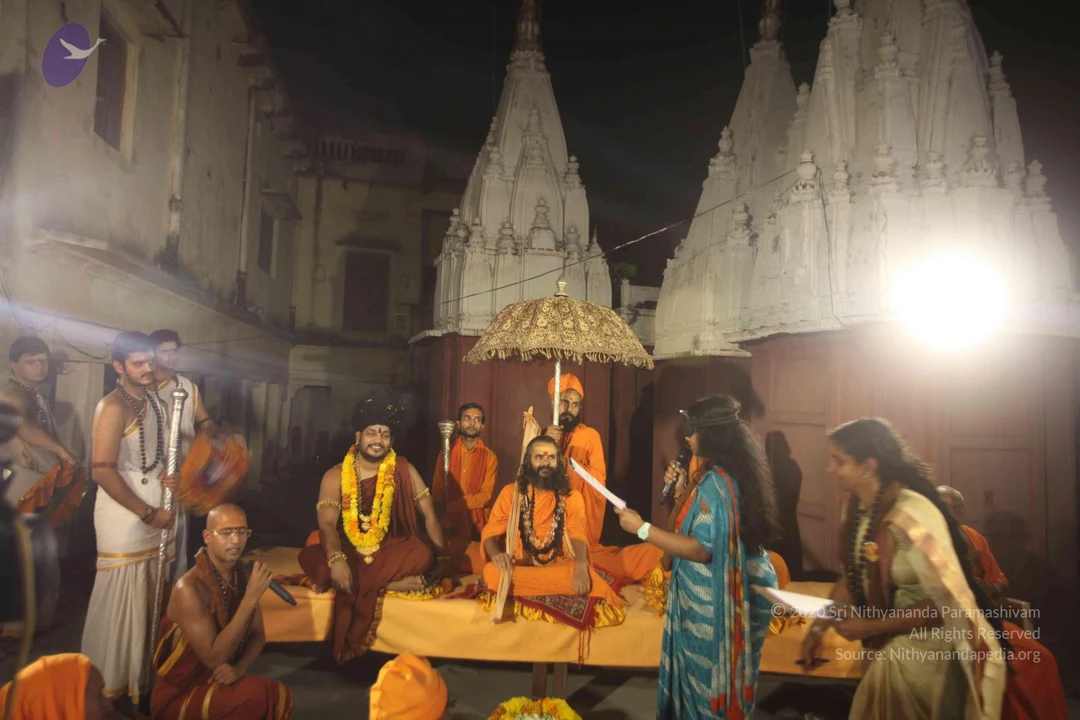
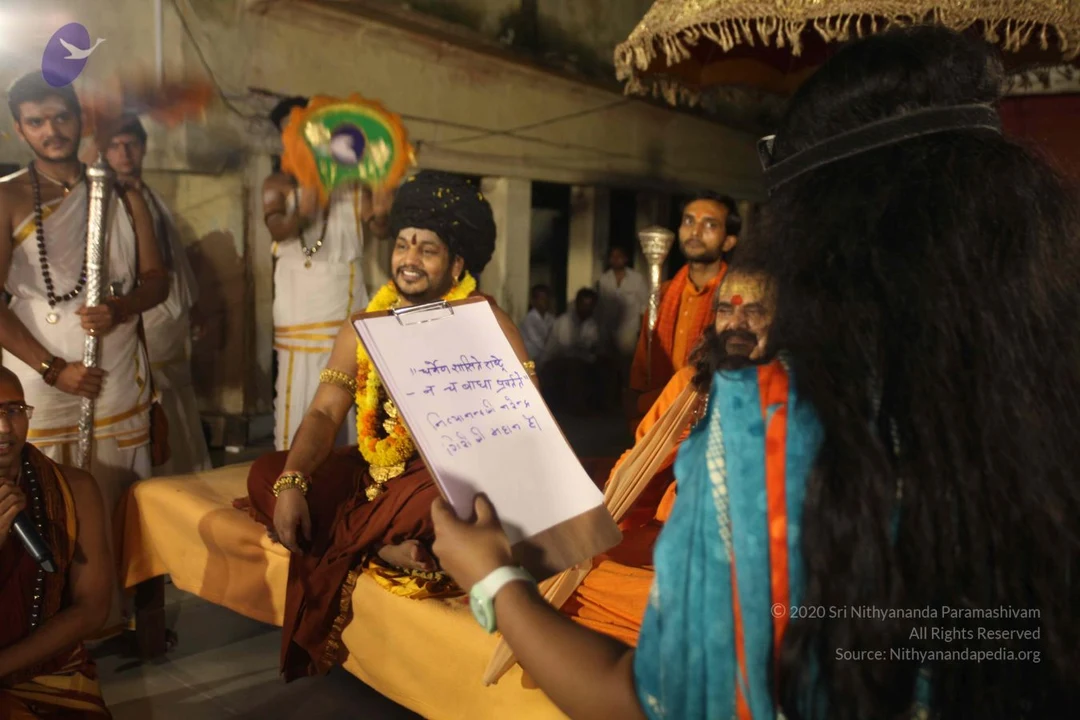
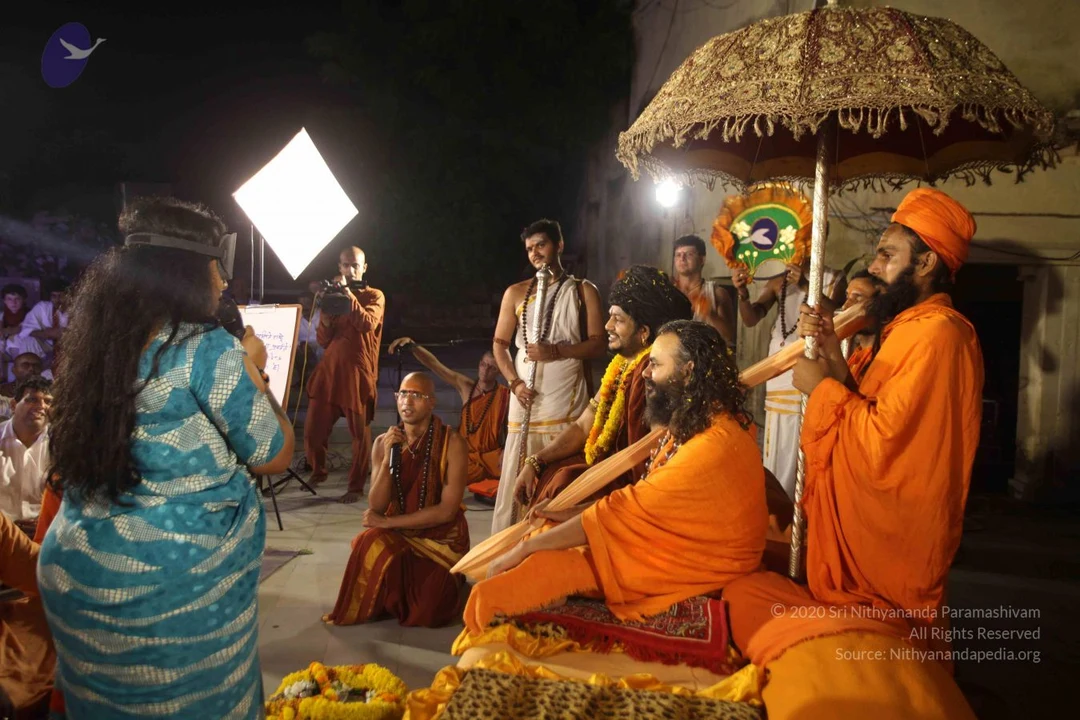
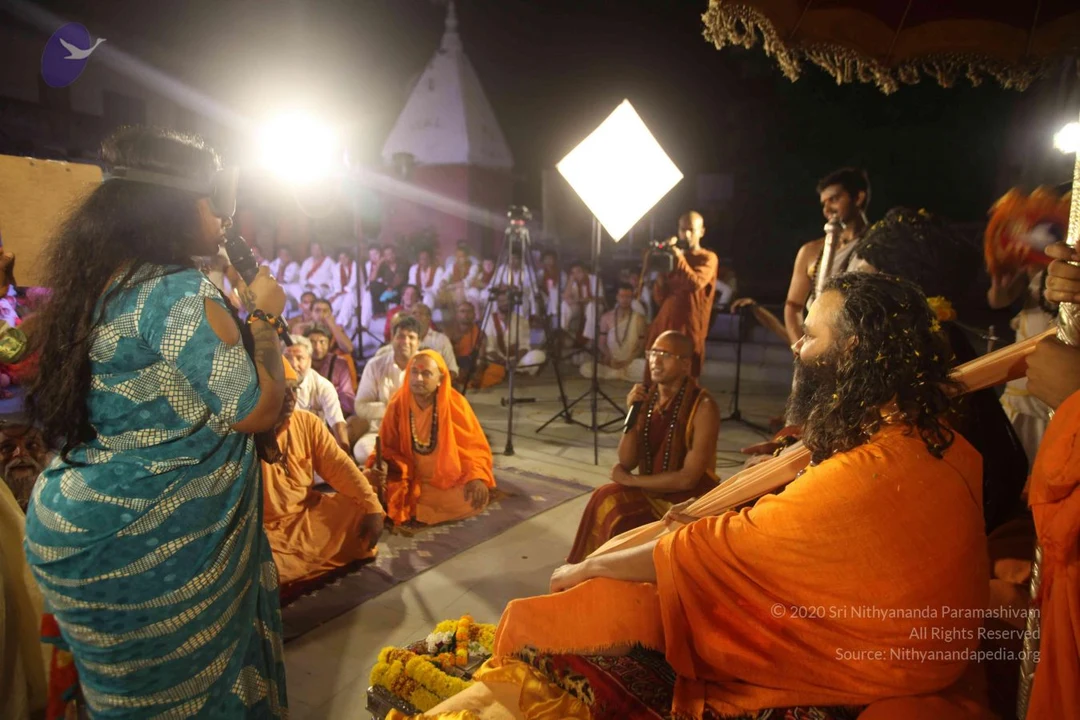
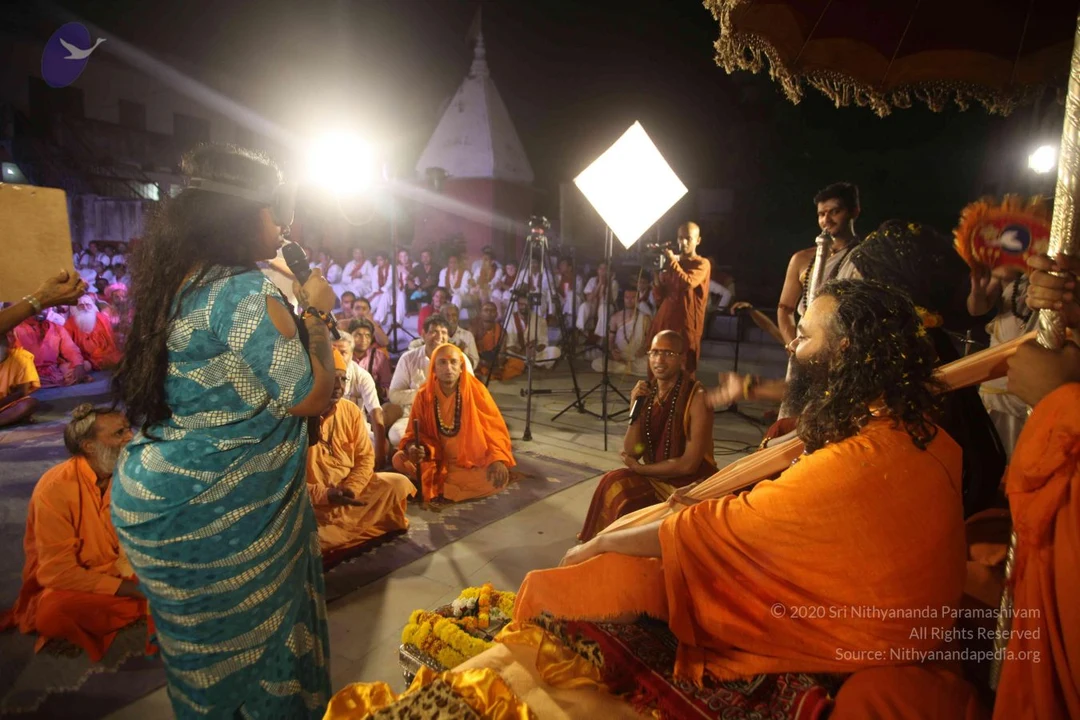
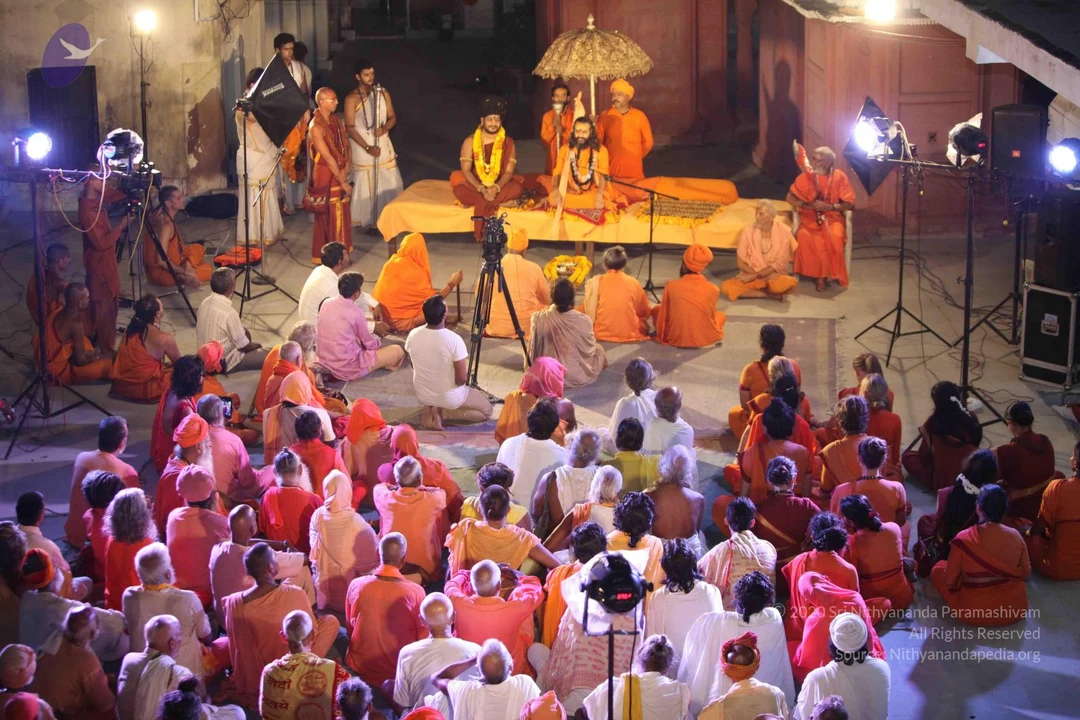
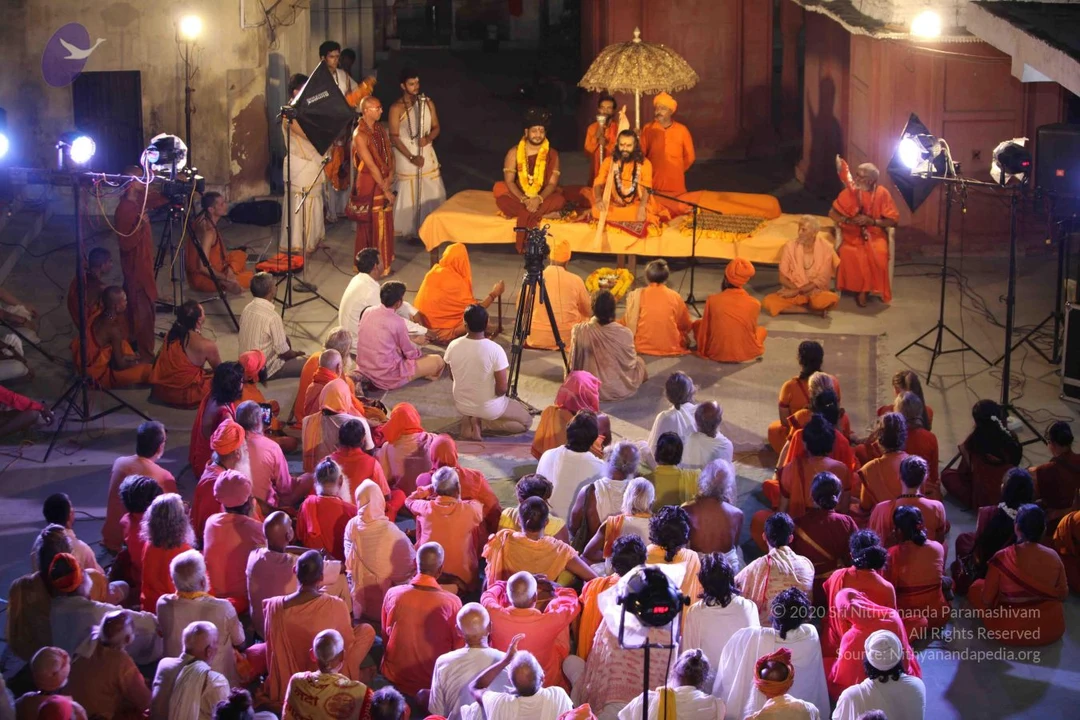
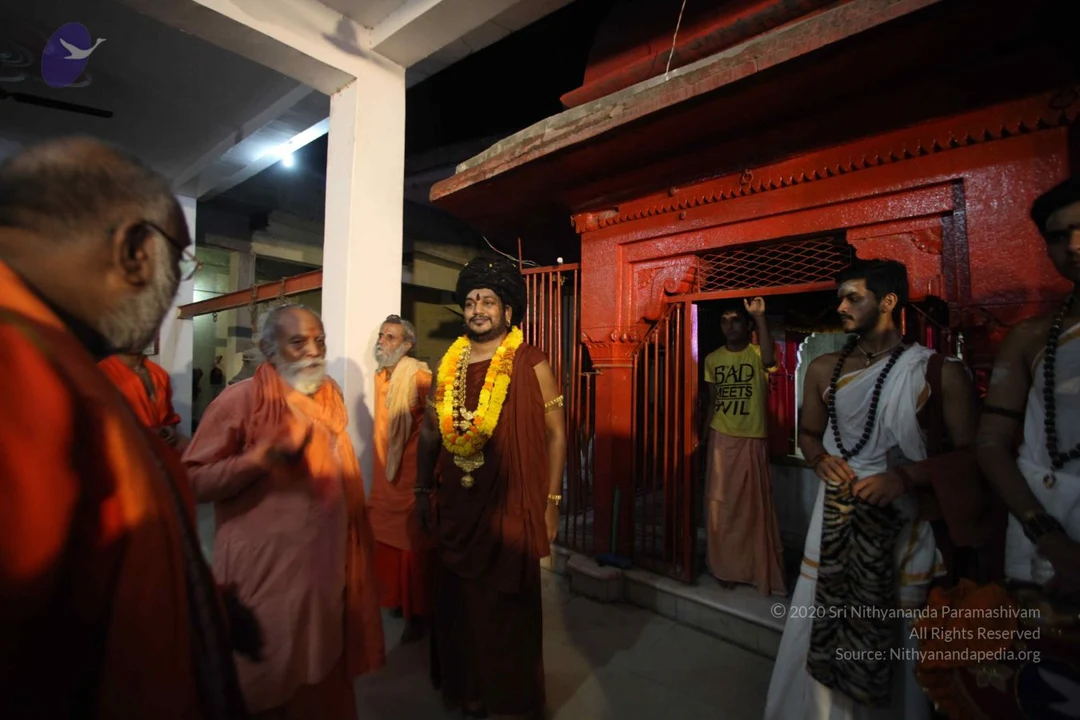
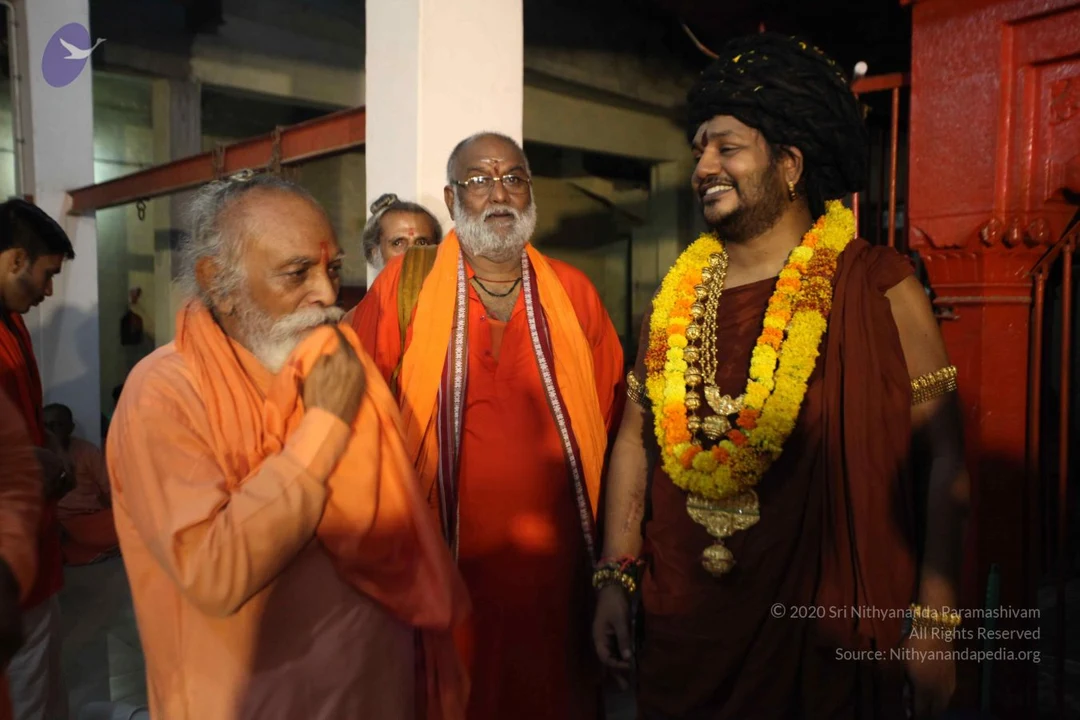
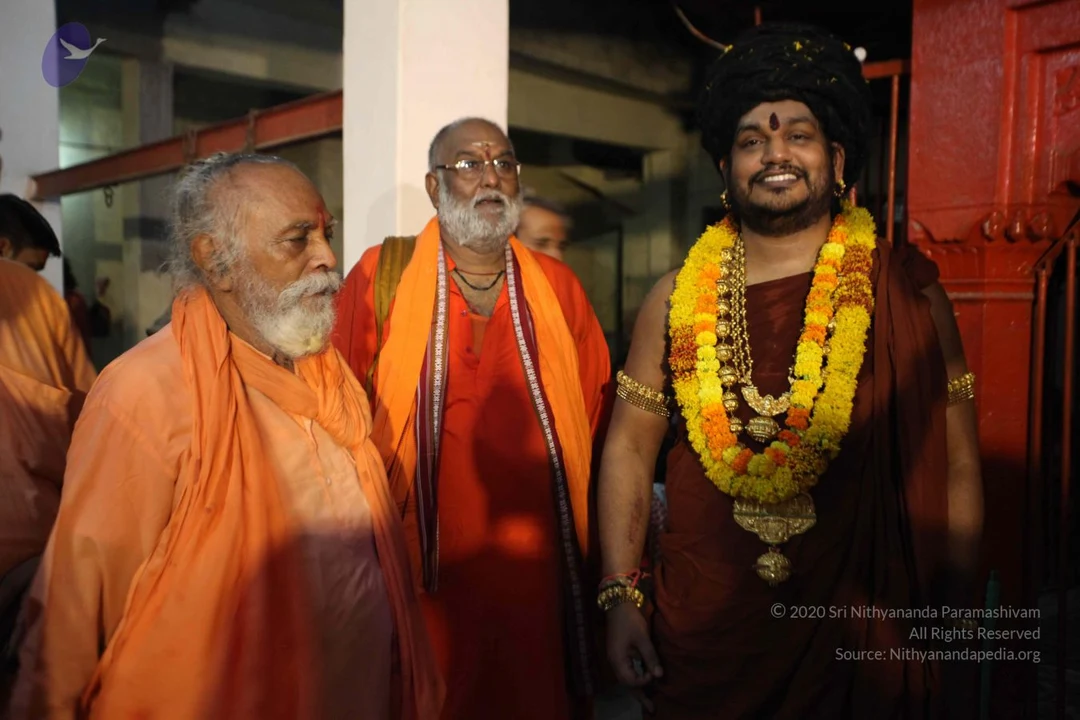
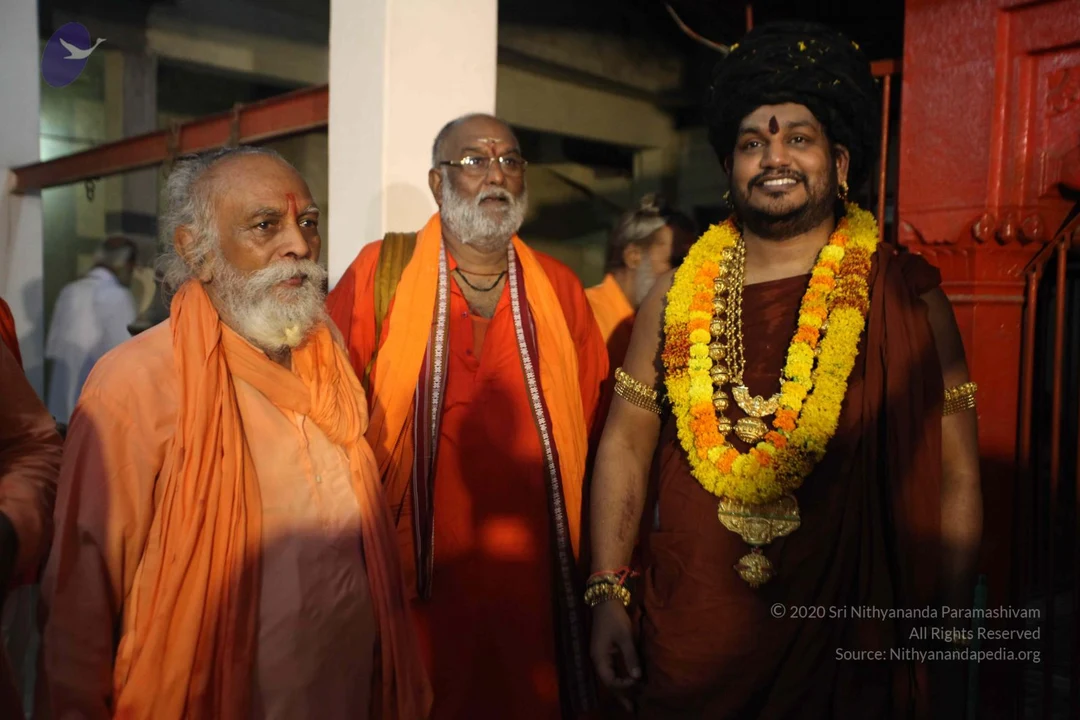
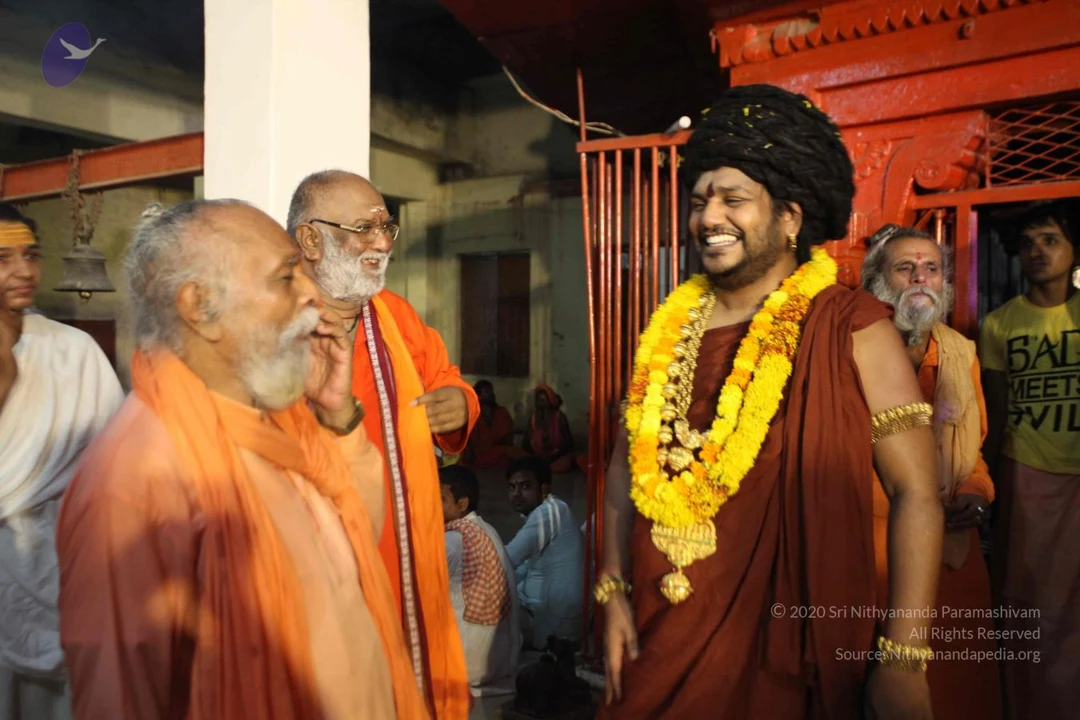
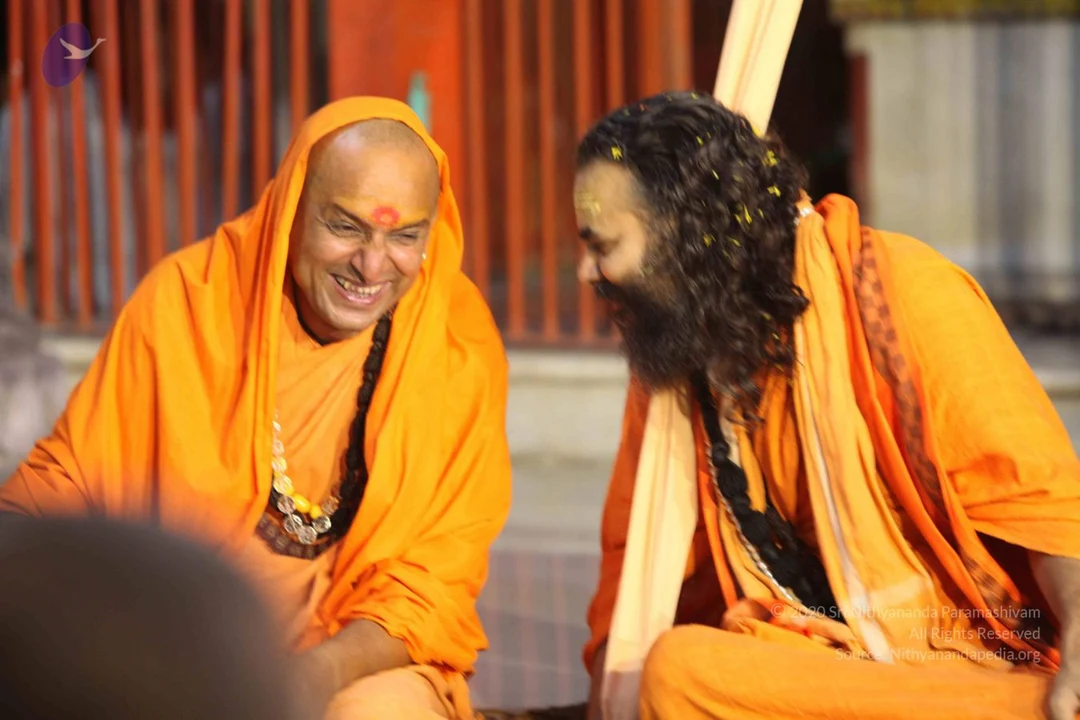
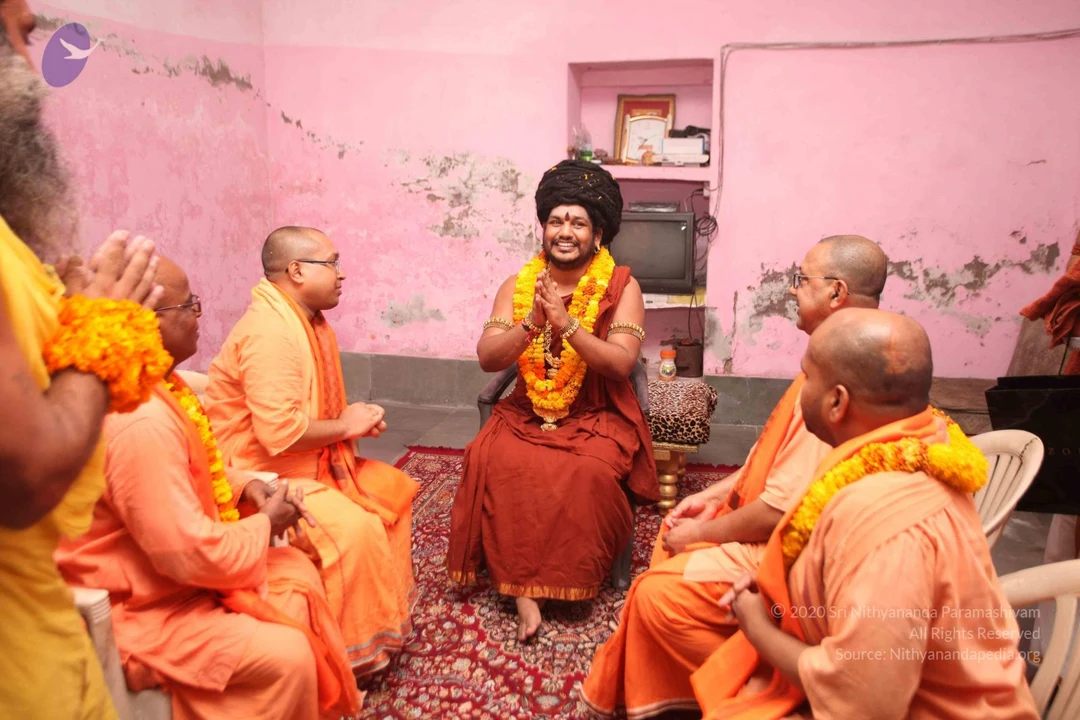
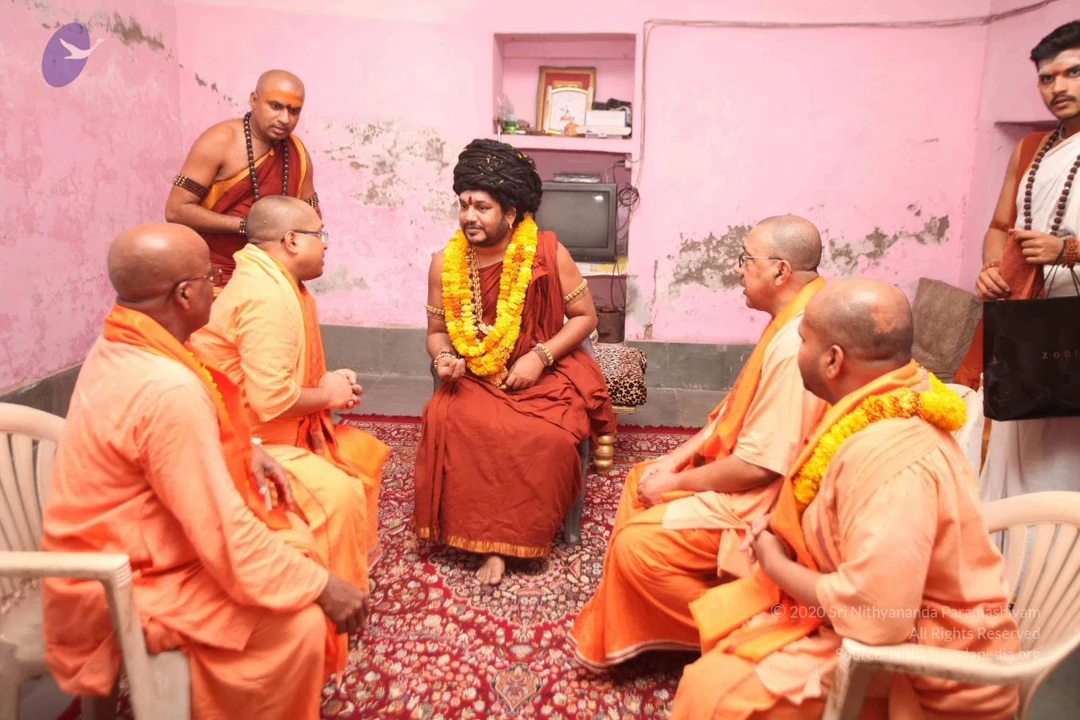
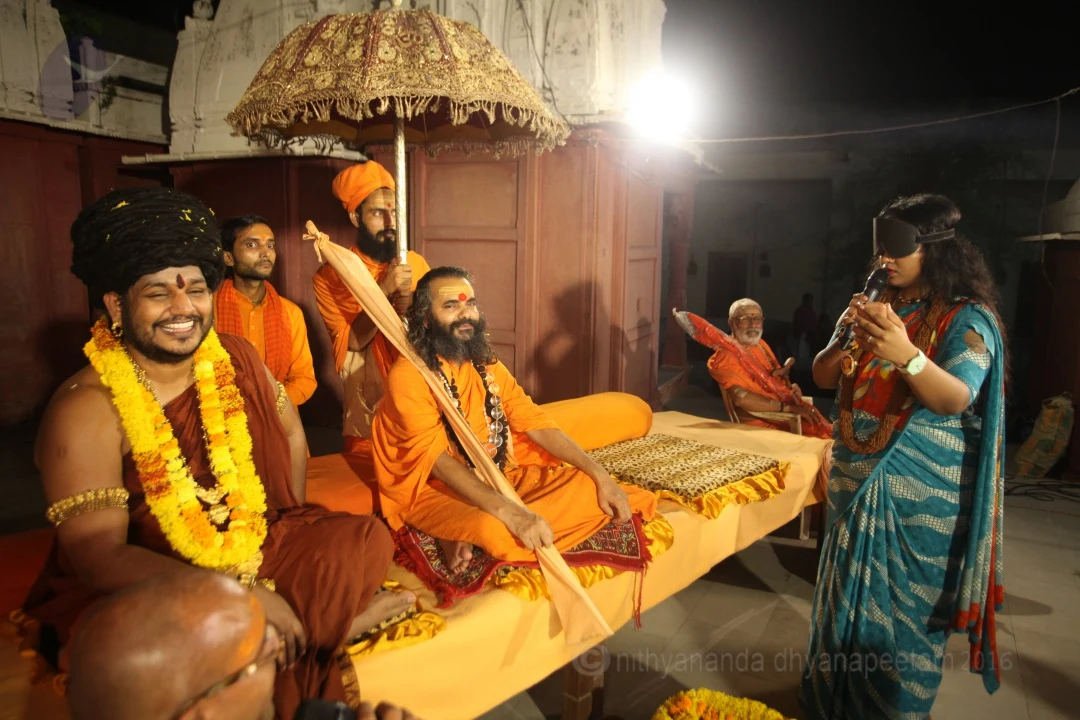
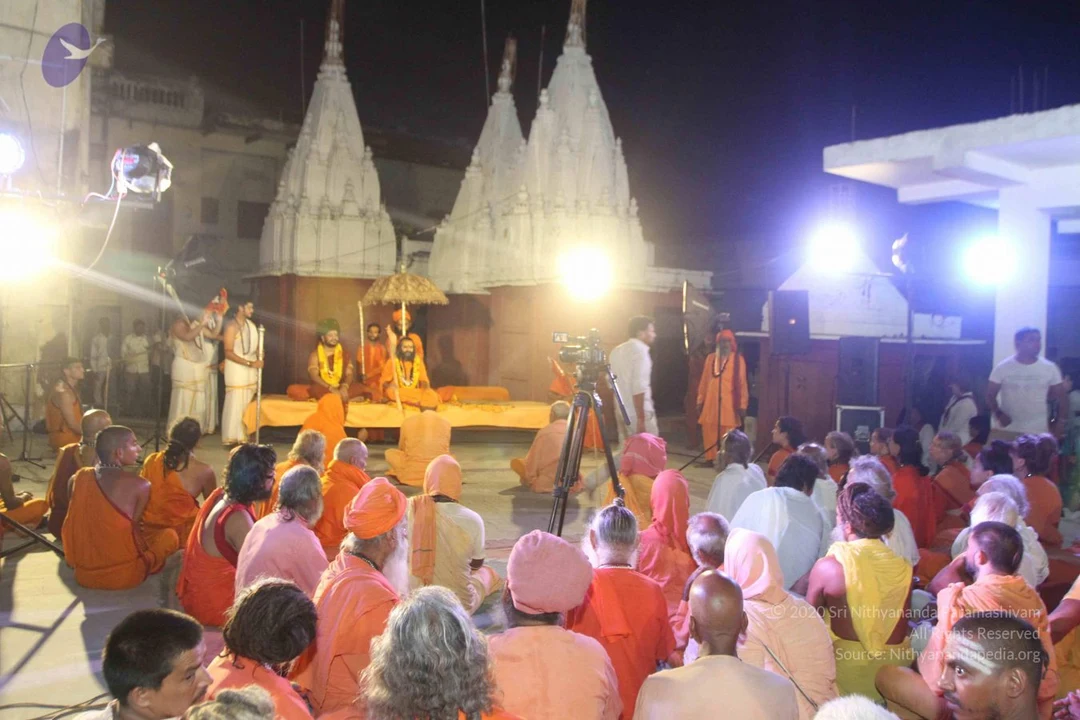
His Divine Holiness Spoke with important leaders of Hinduism
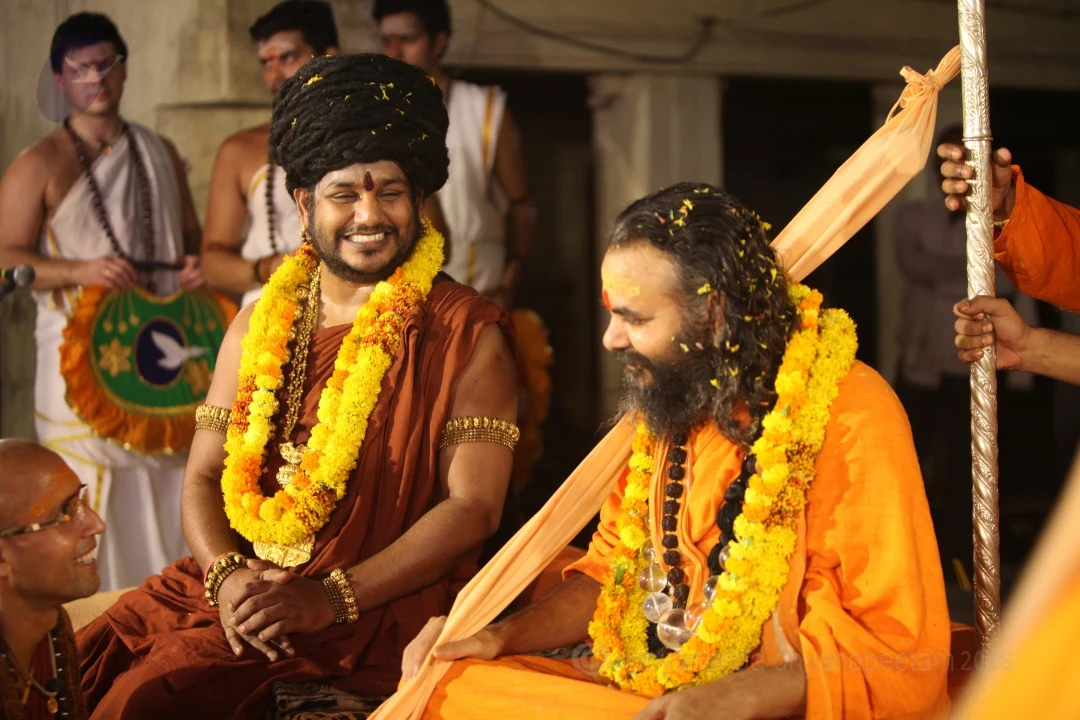
His Holiness speaks with important leaders of Hinduism

Third Eye Demonstrations
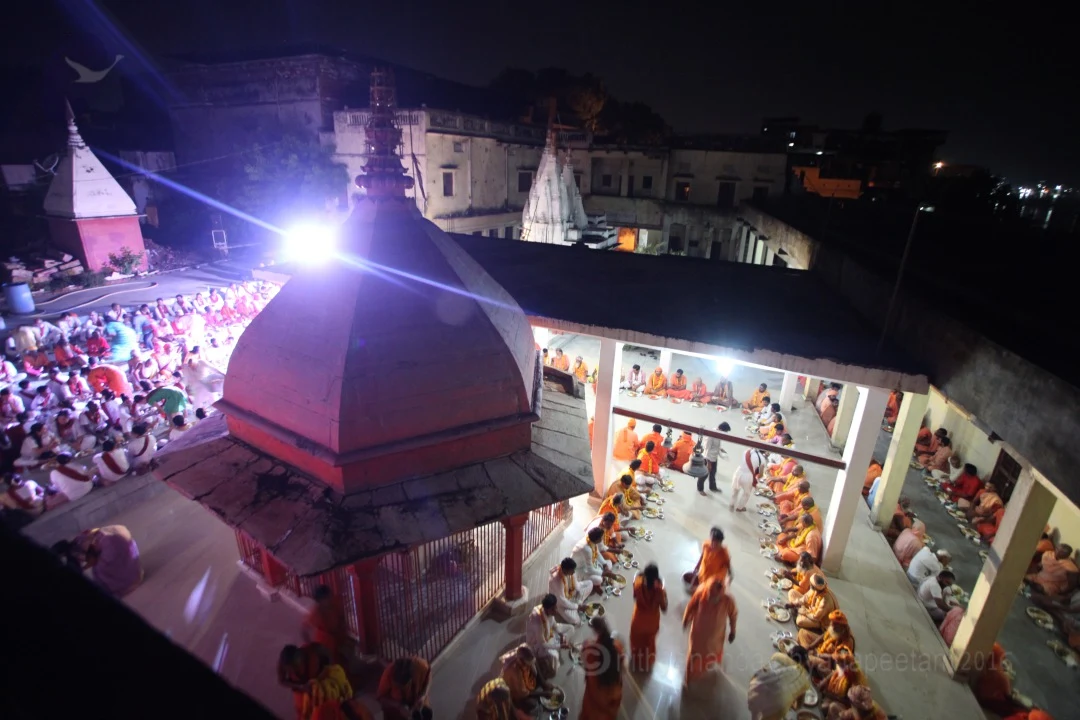
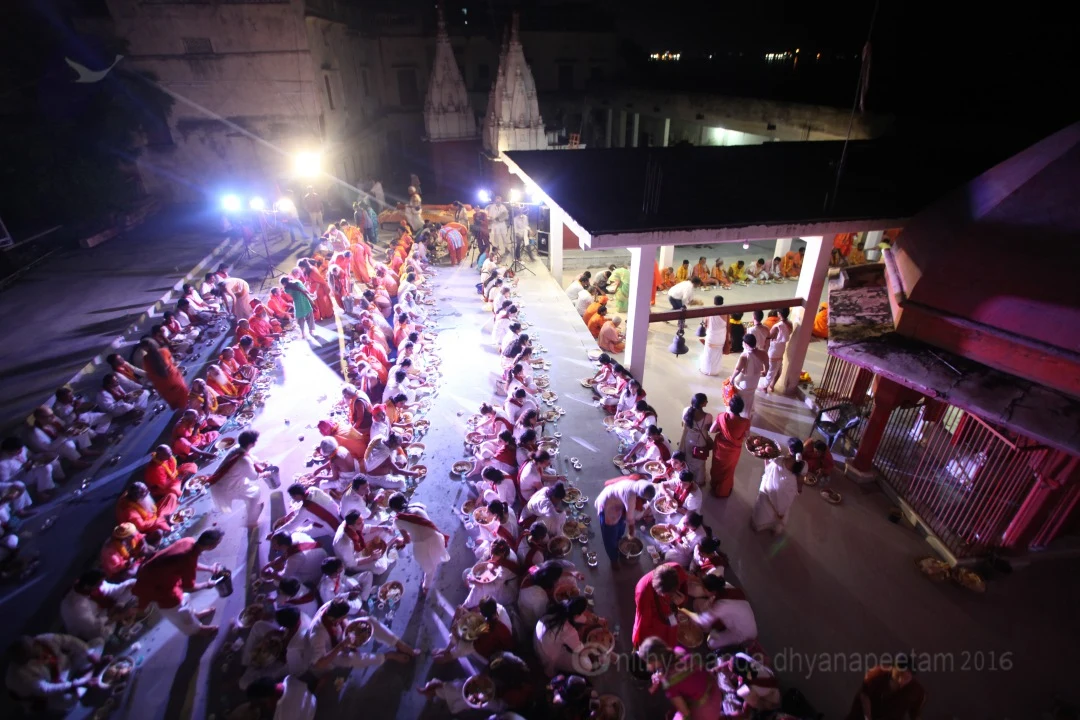
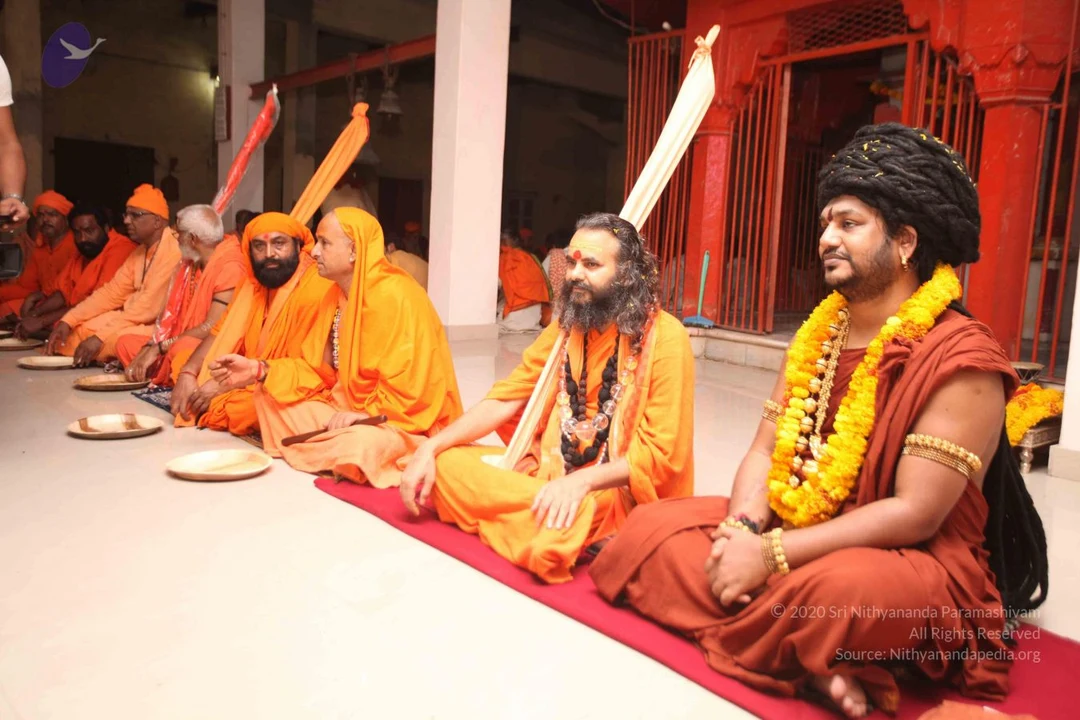
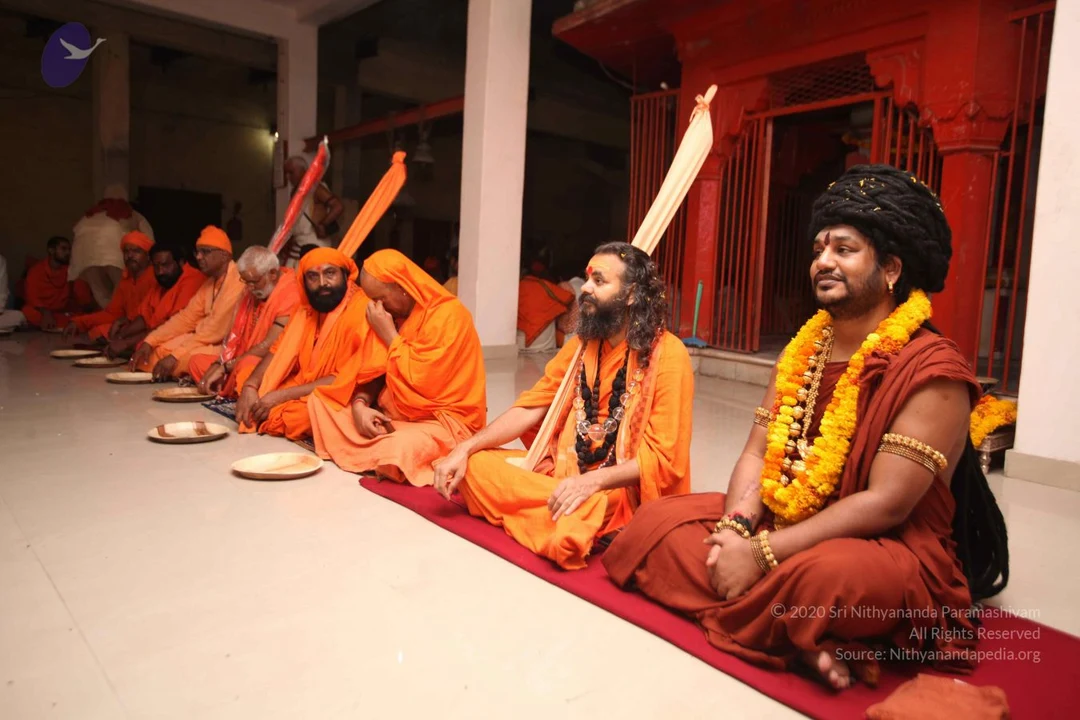
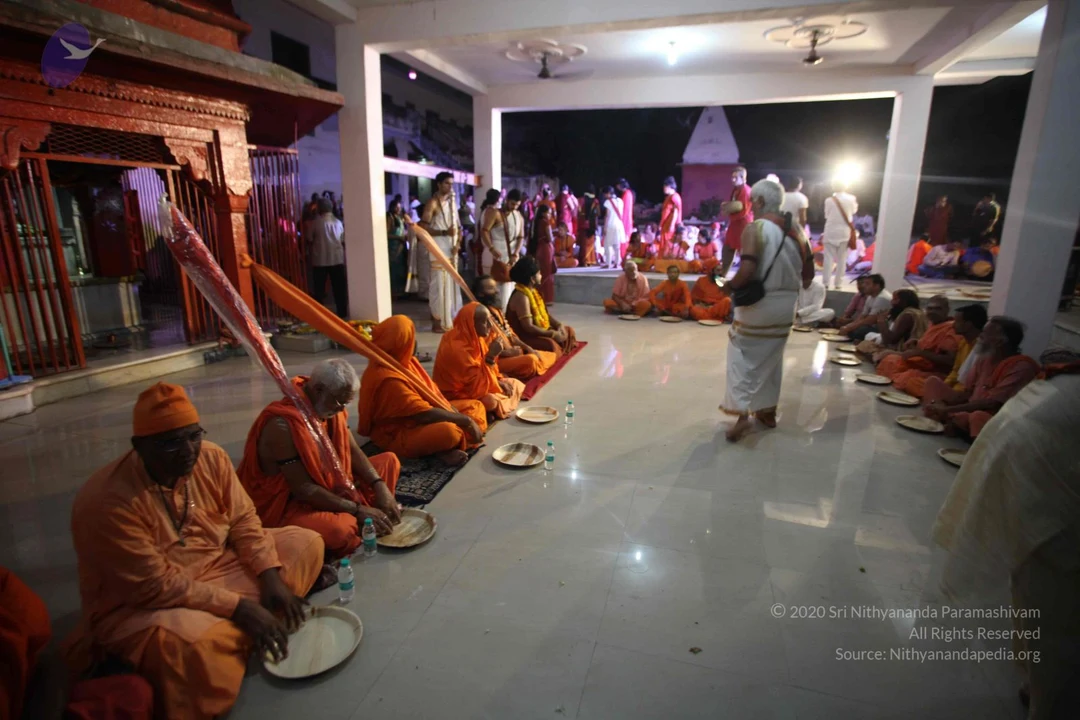
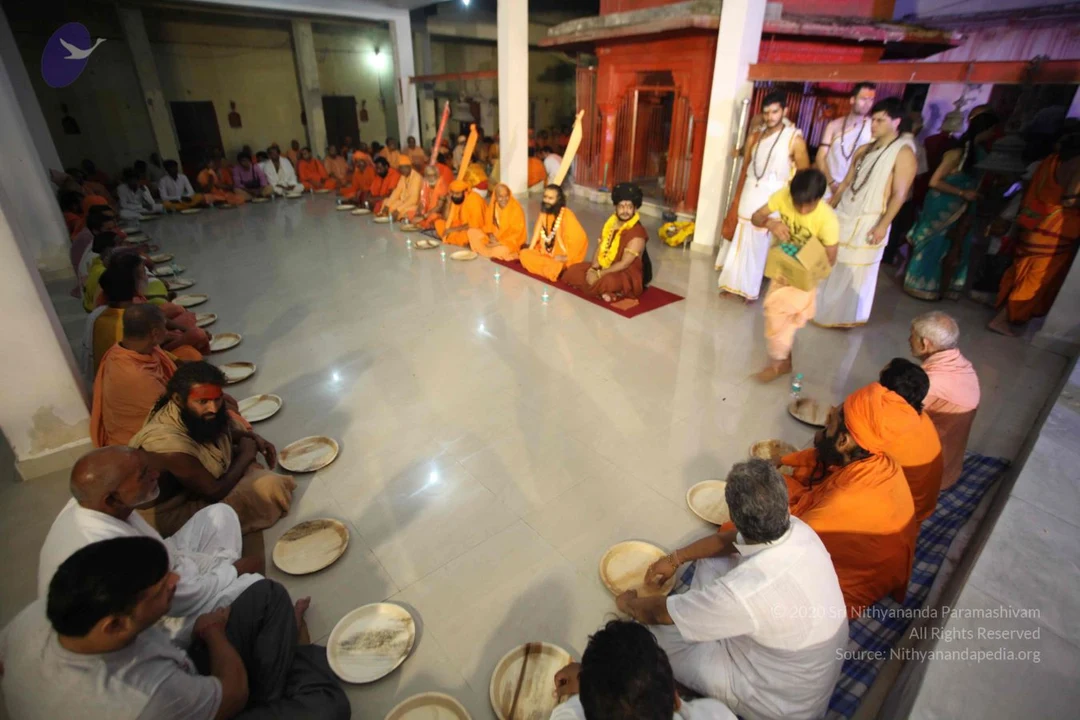
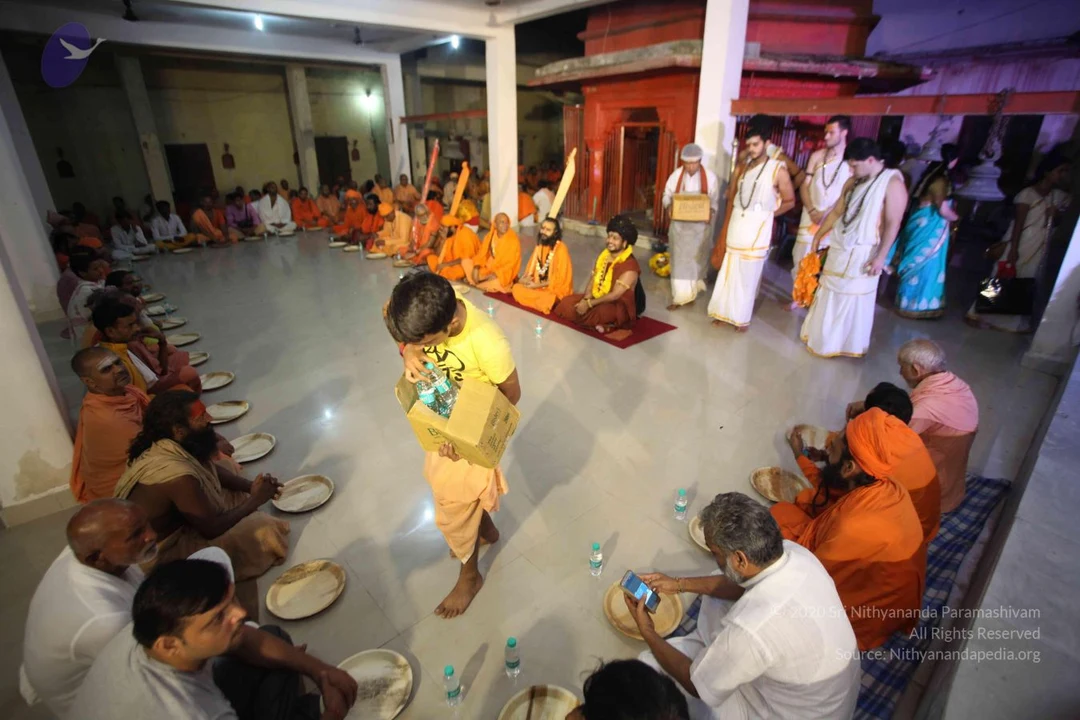
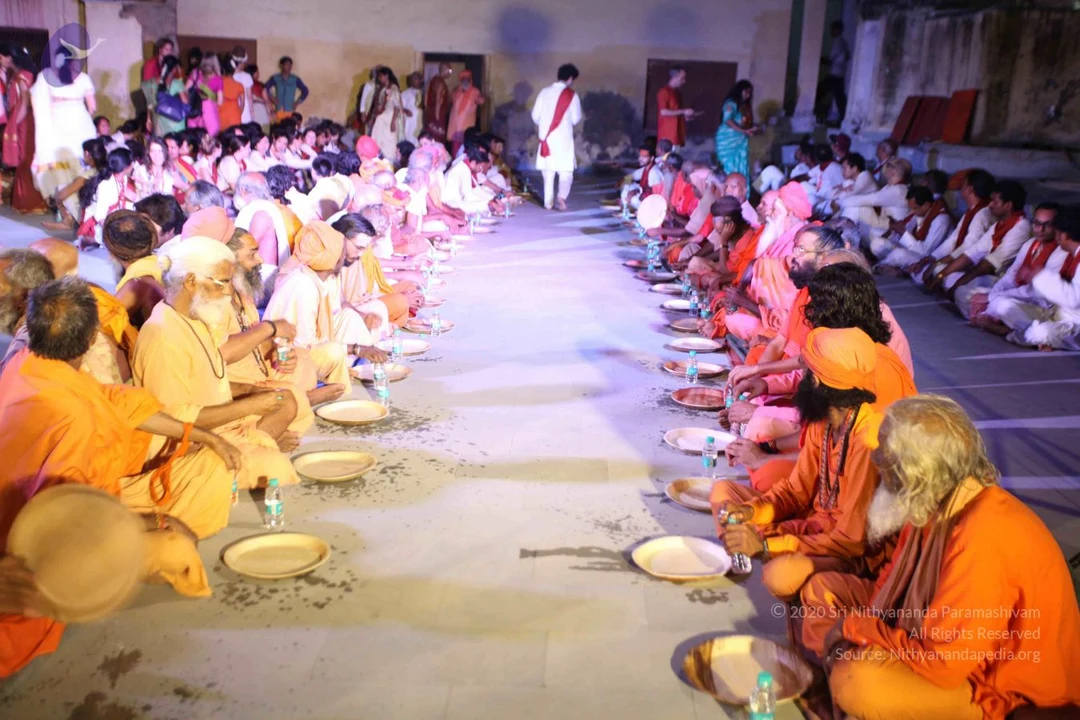
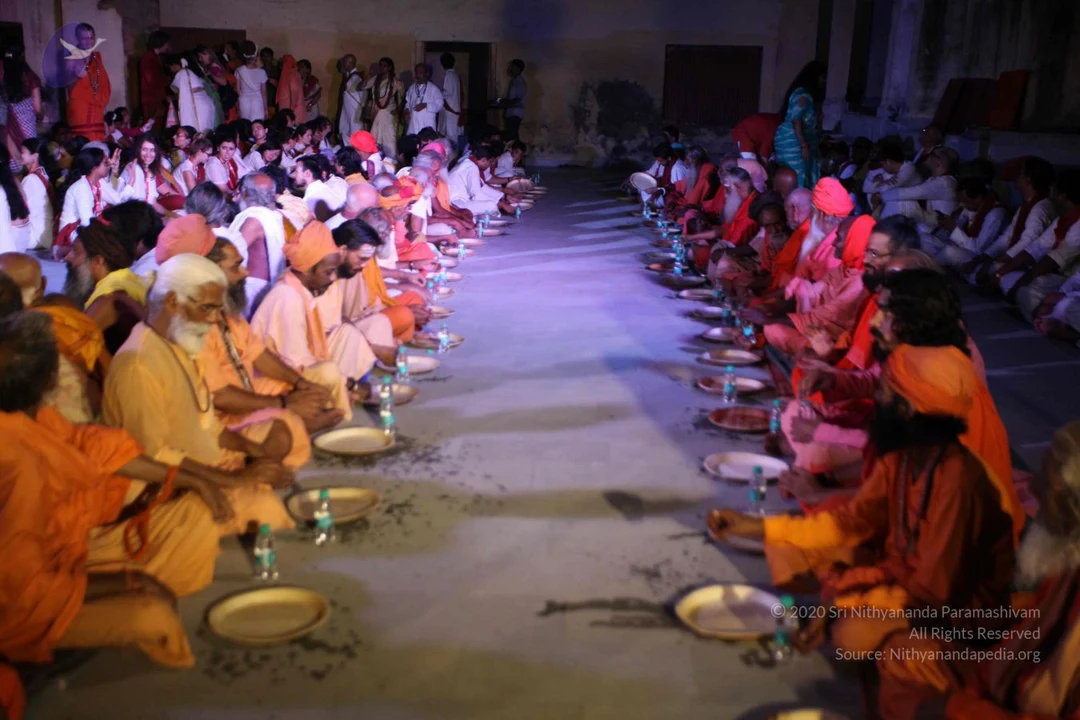
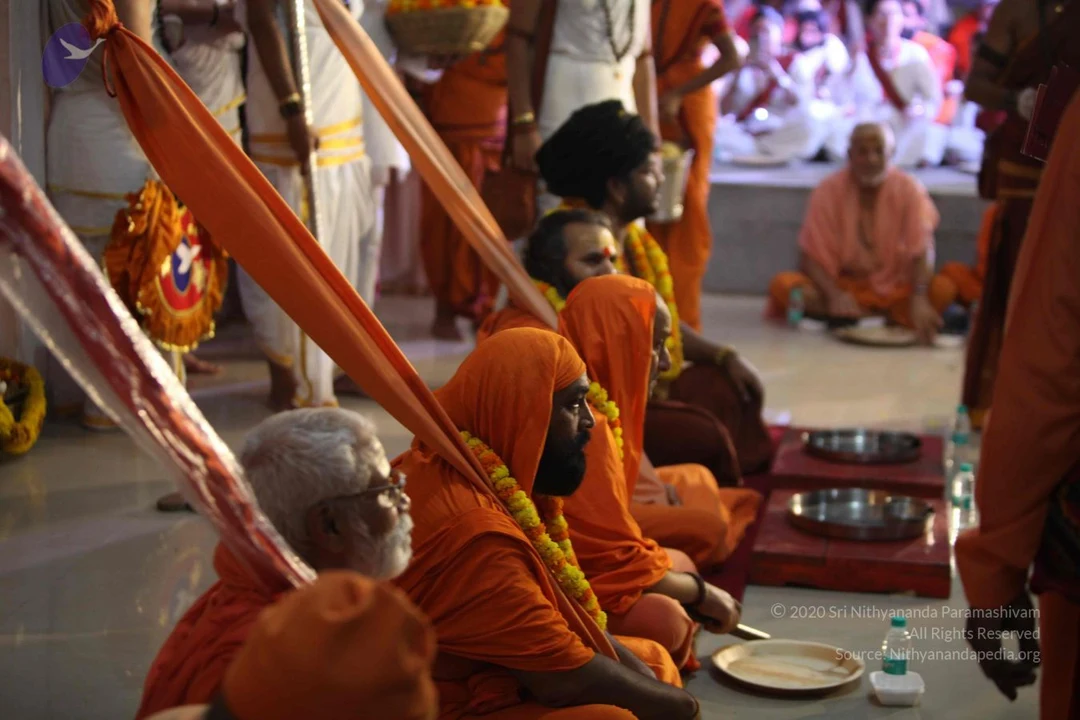
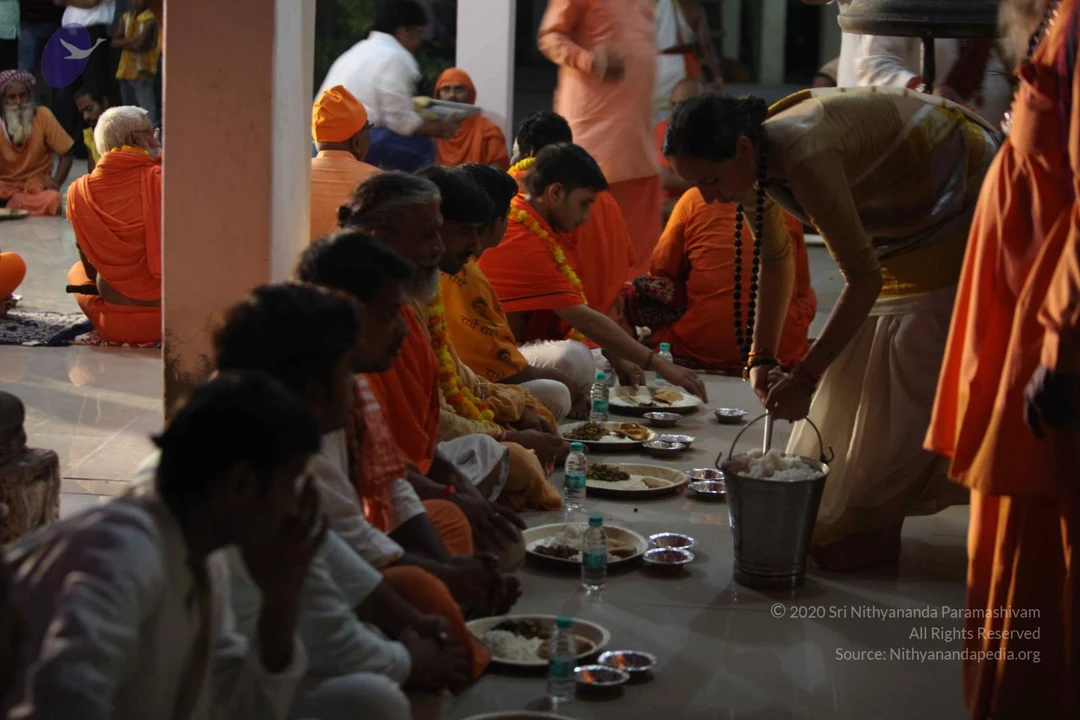
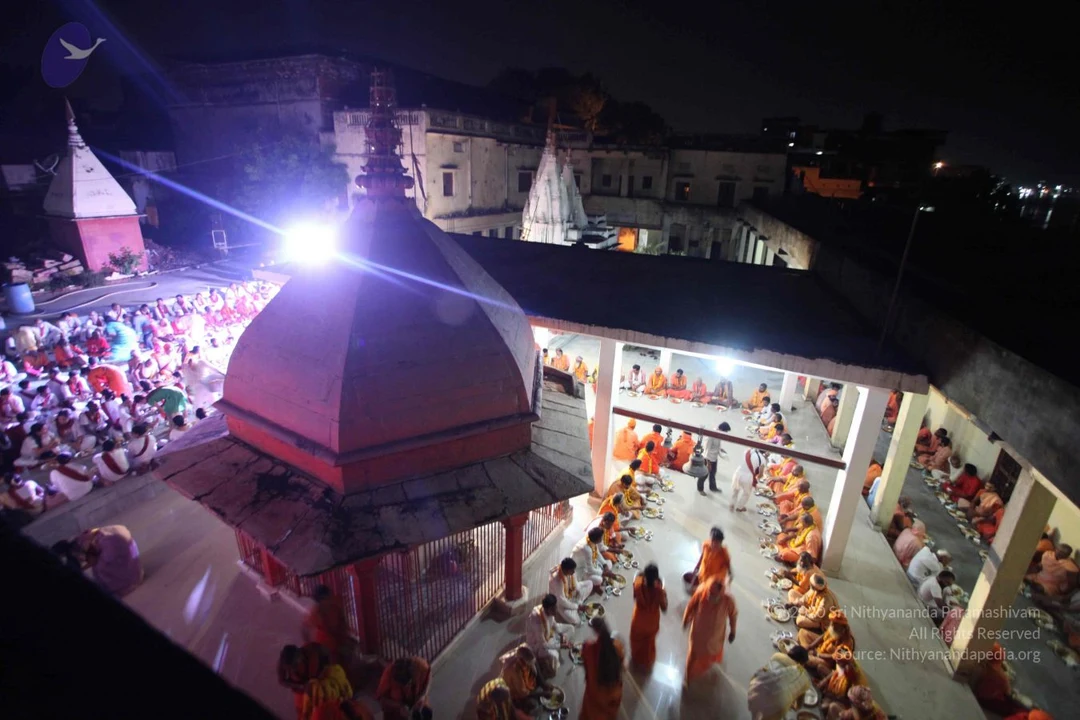
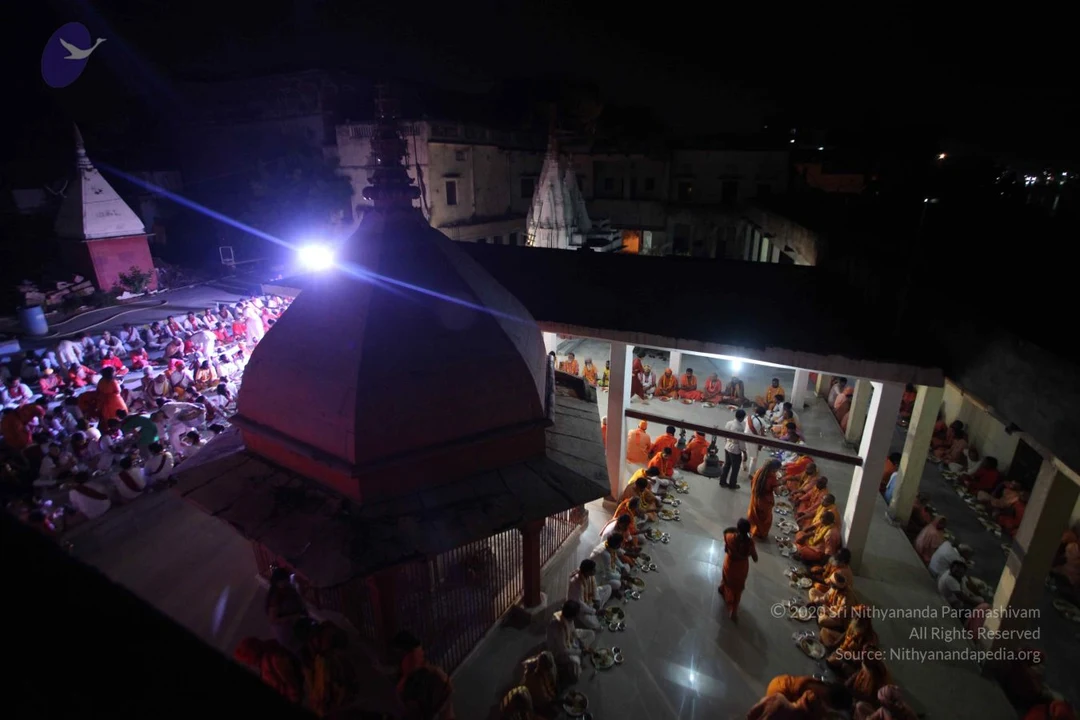
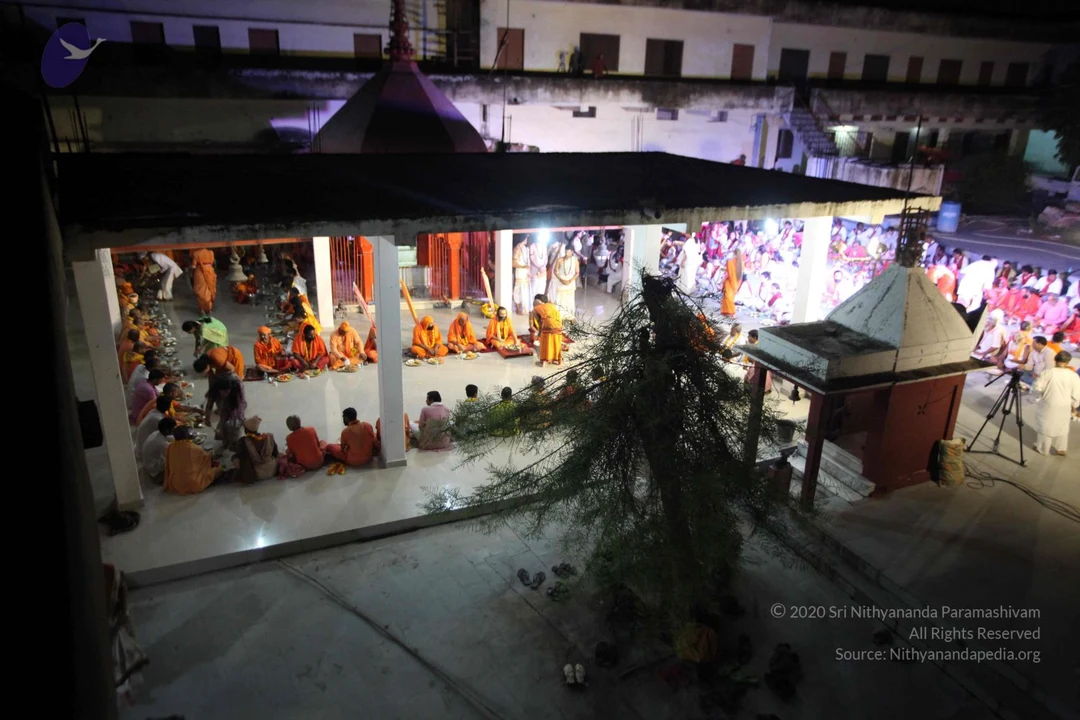
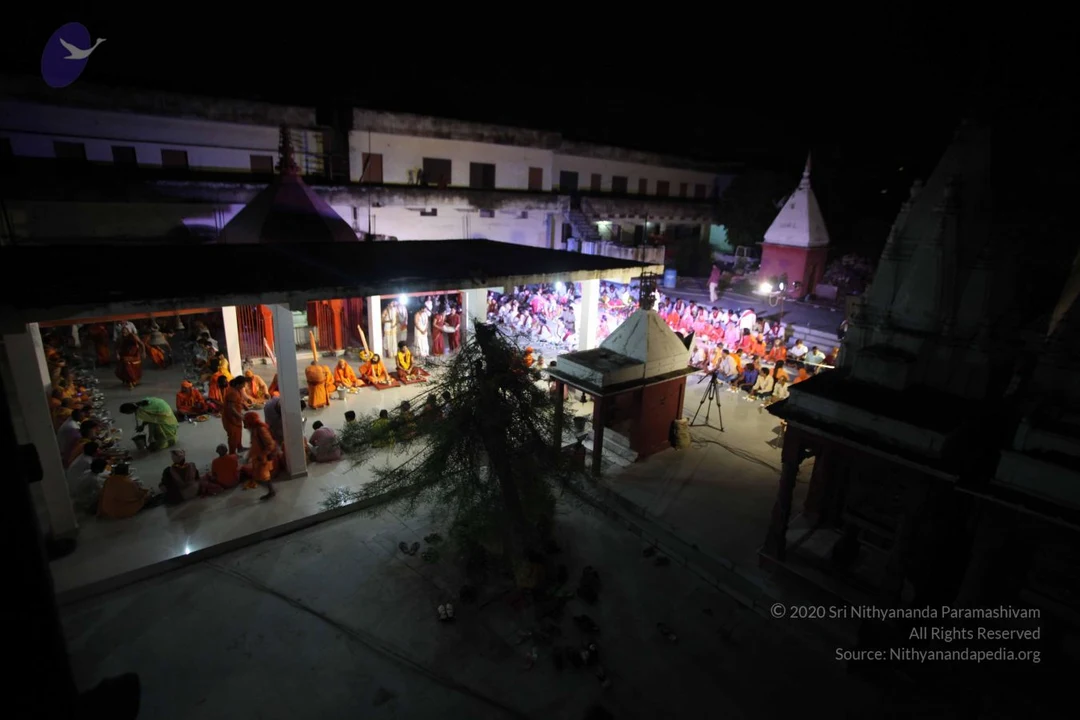
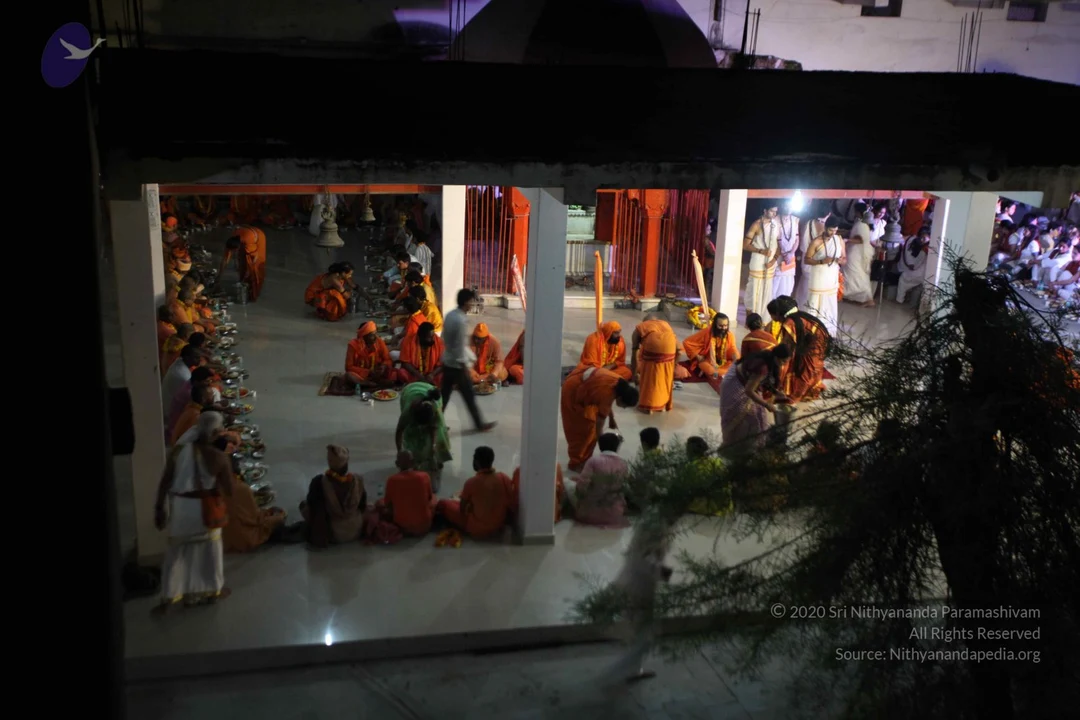
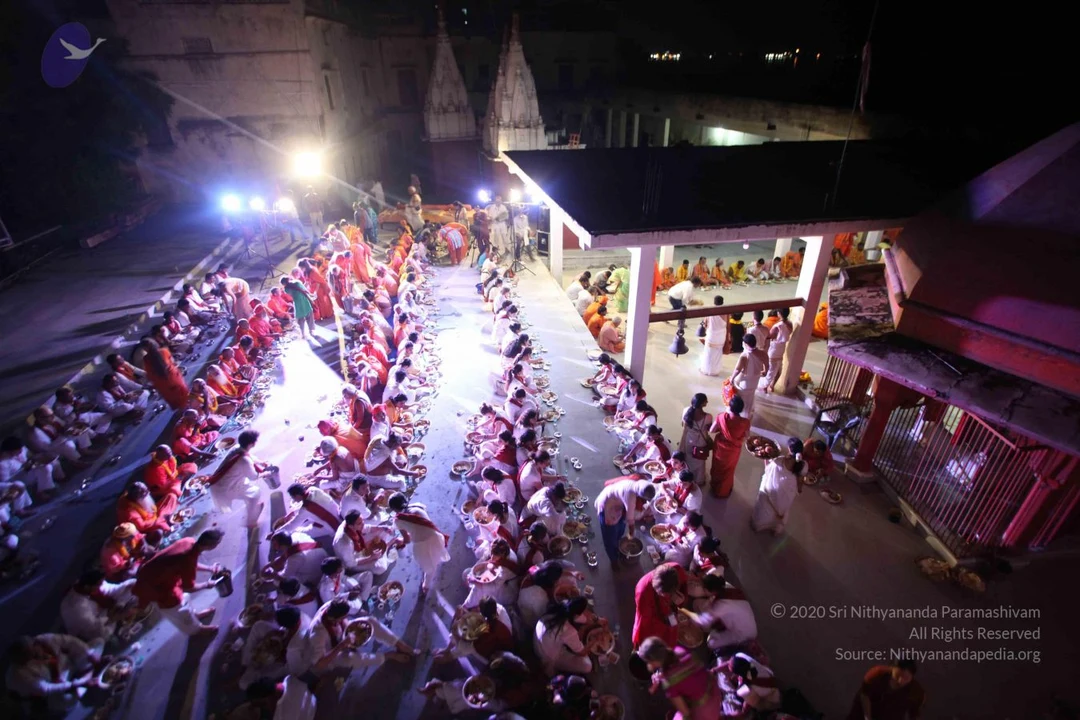
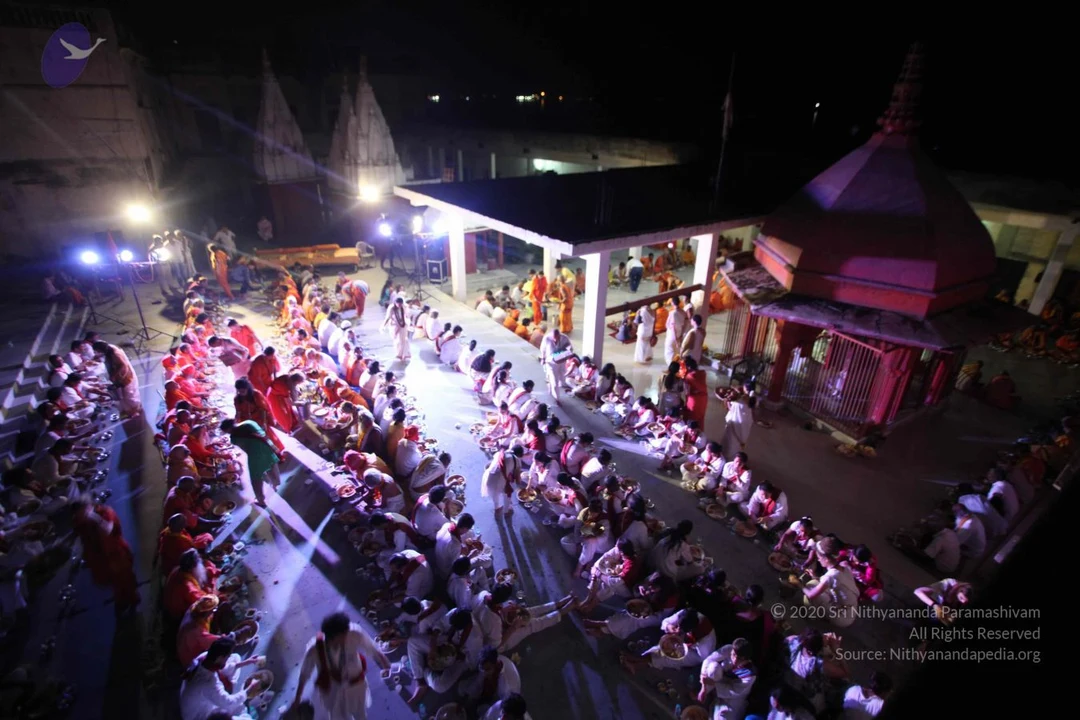
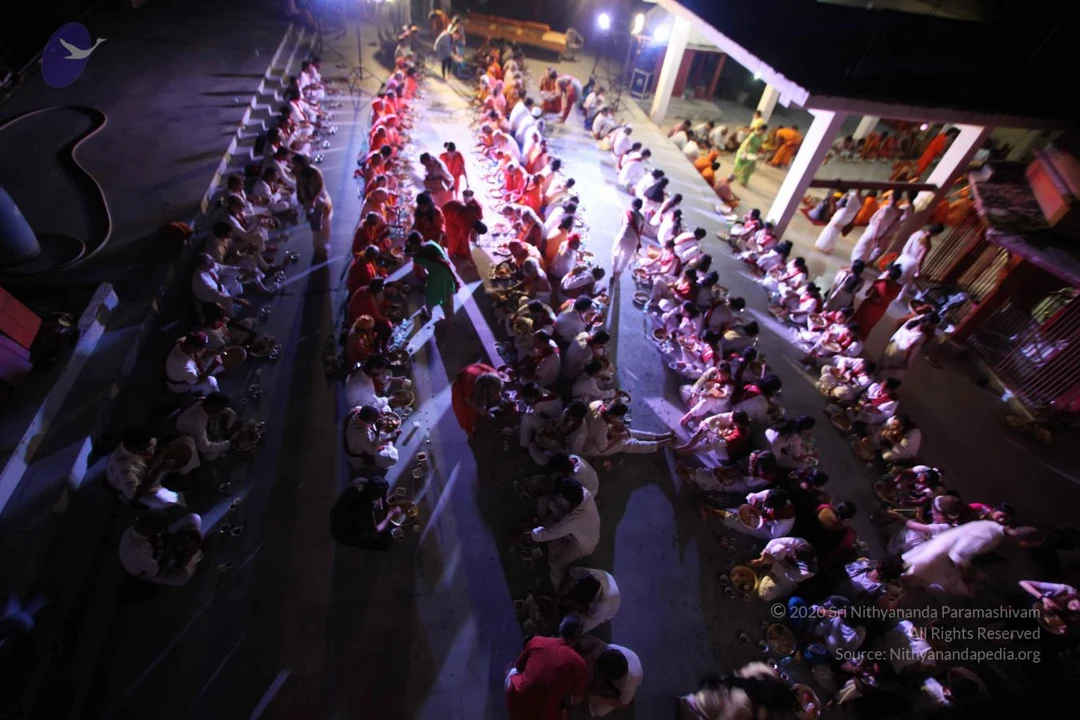
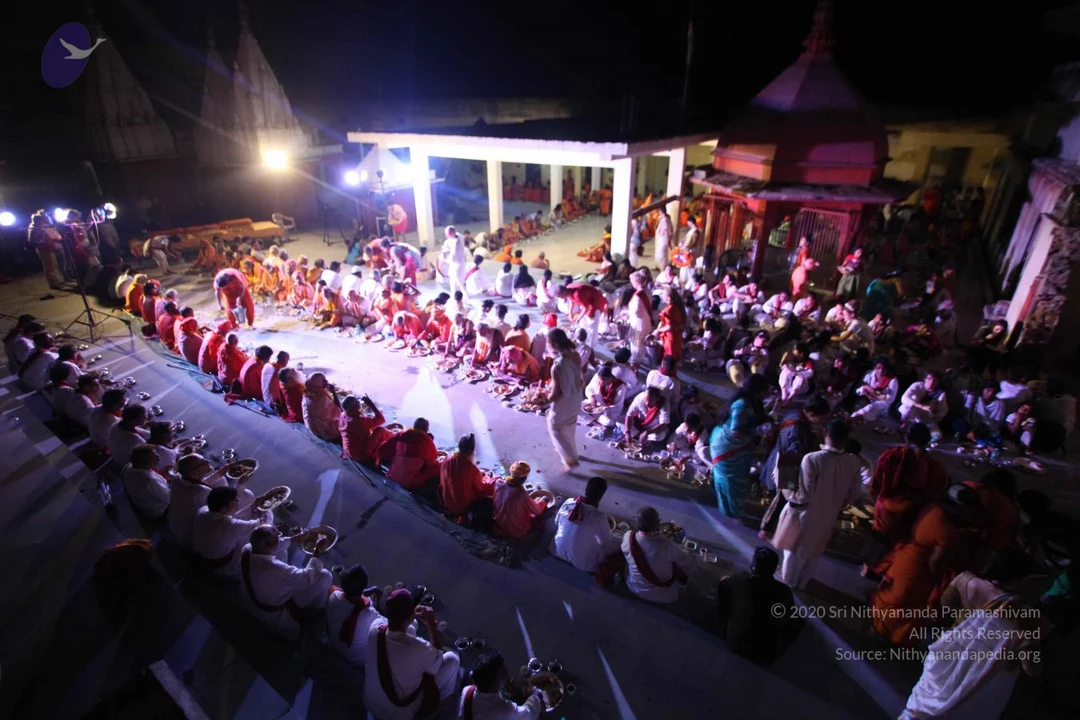
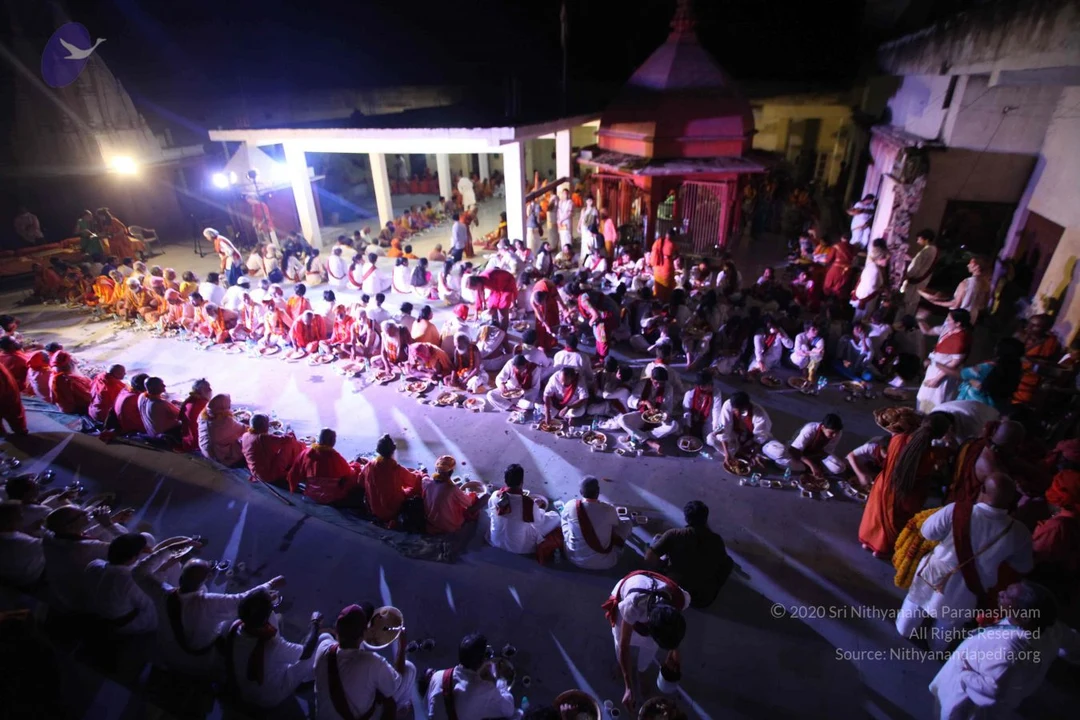
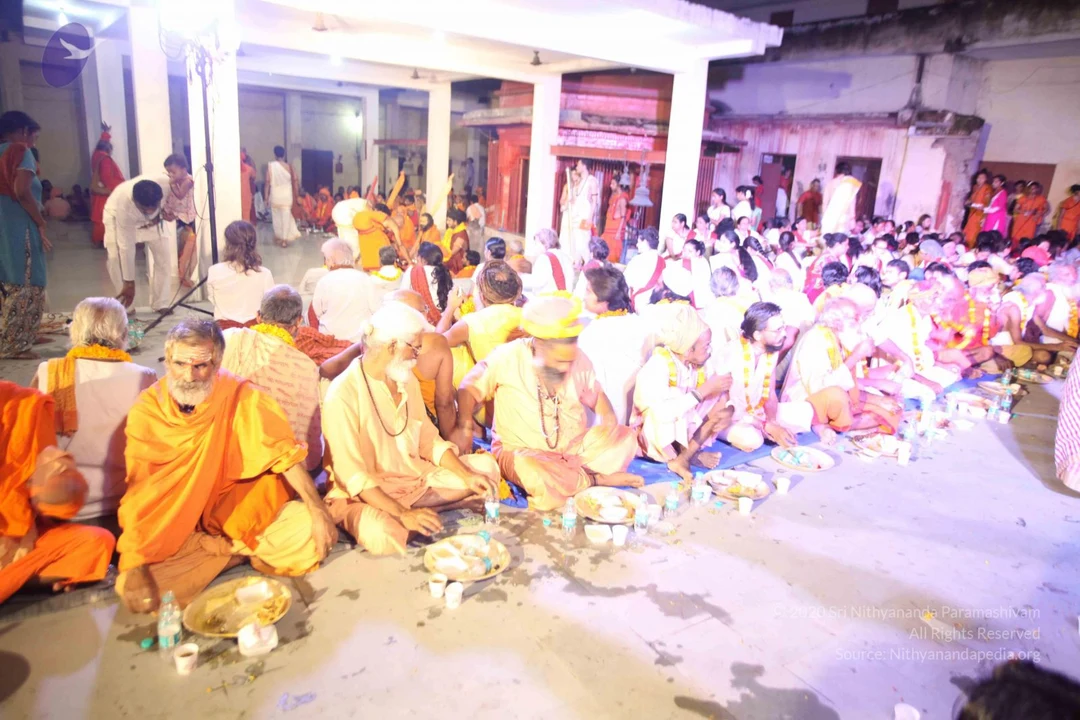
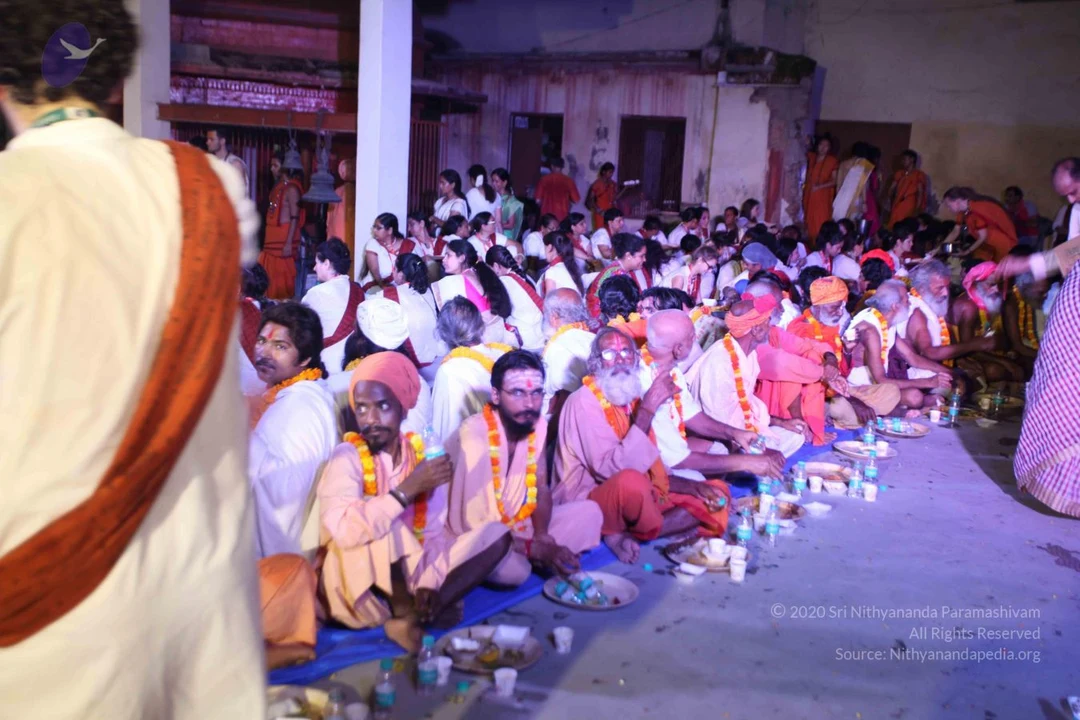
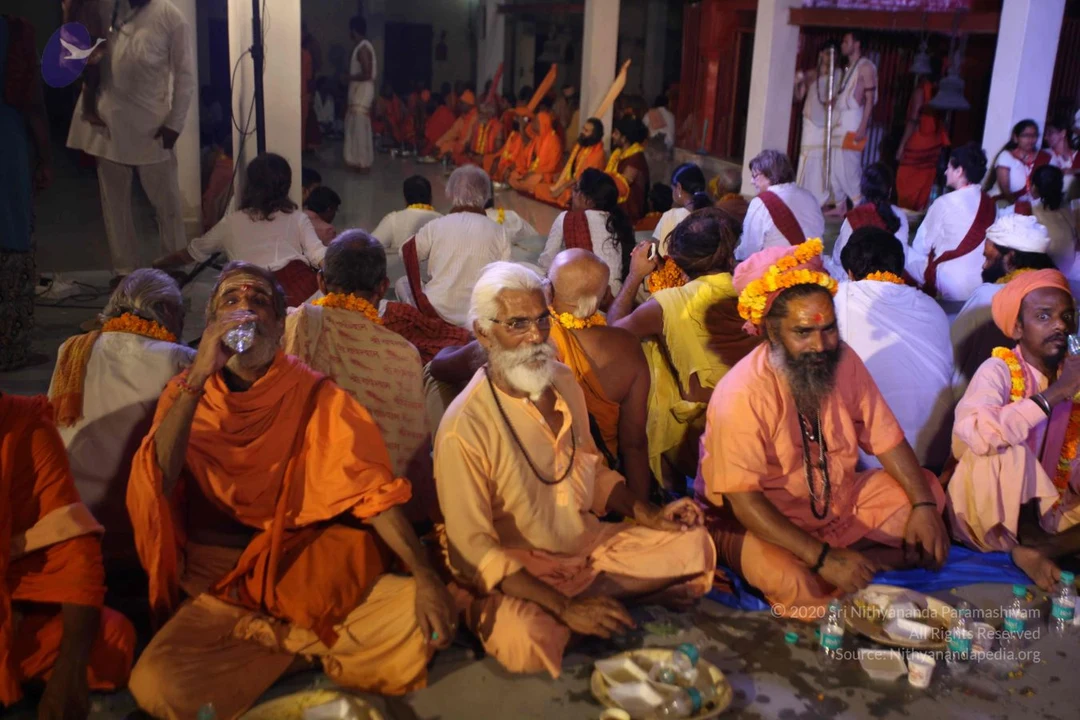
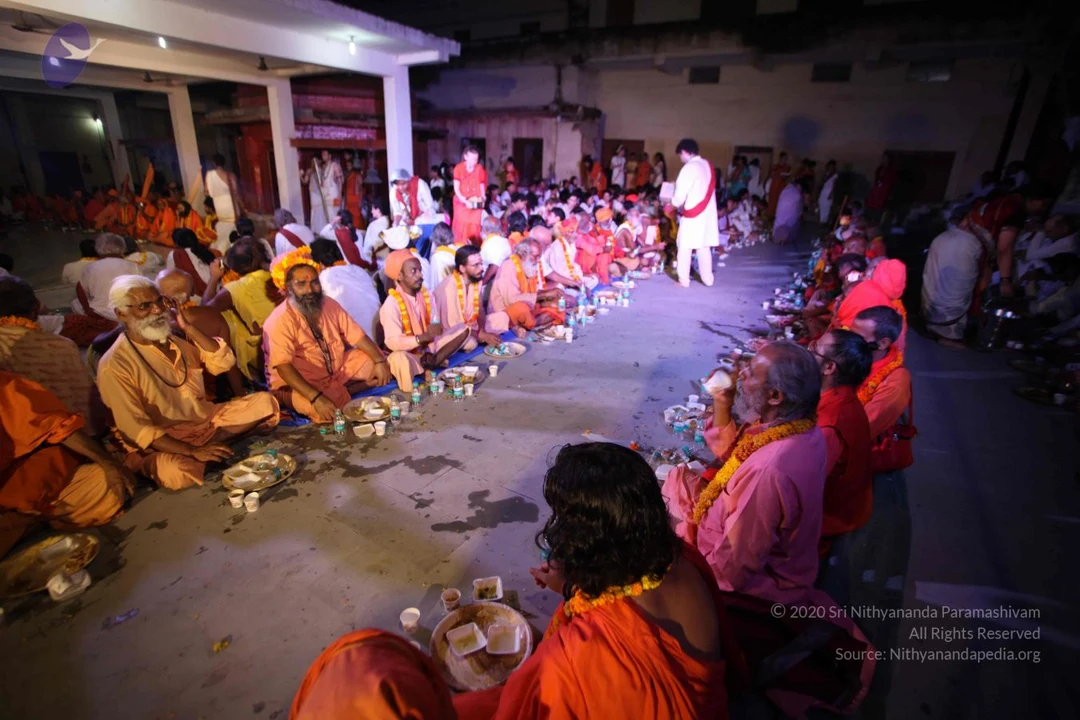
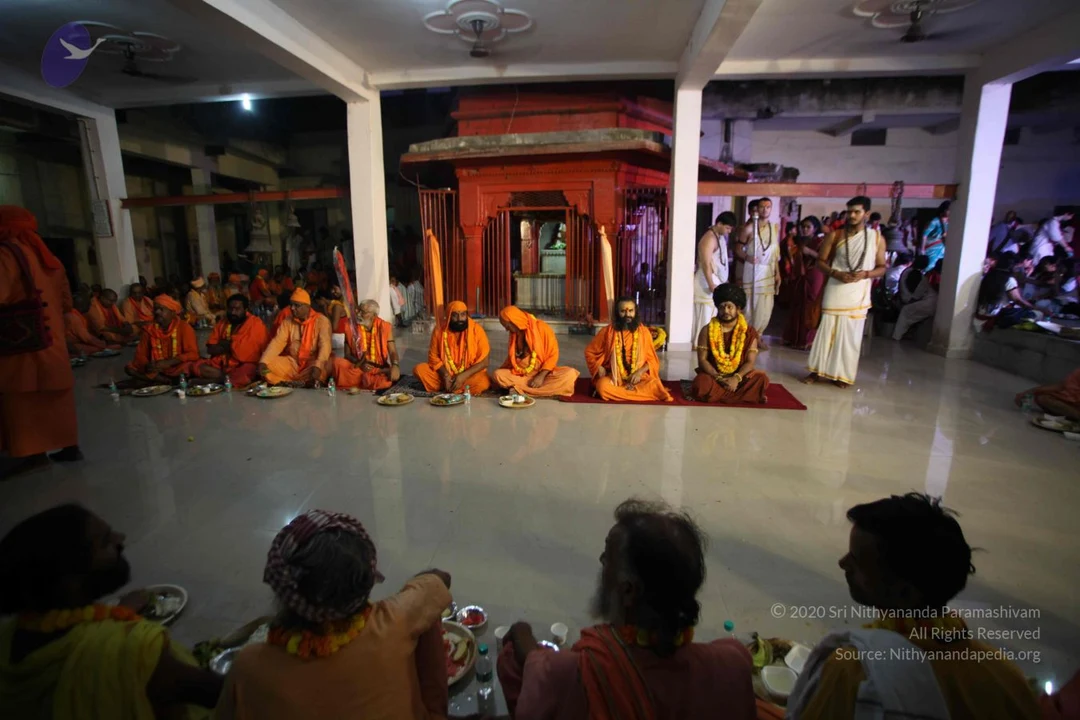
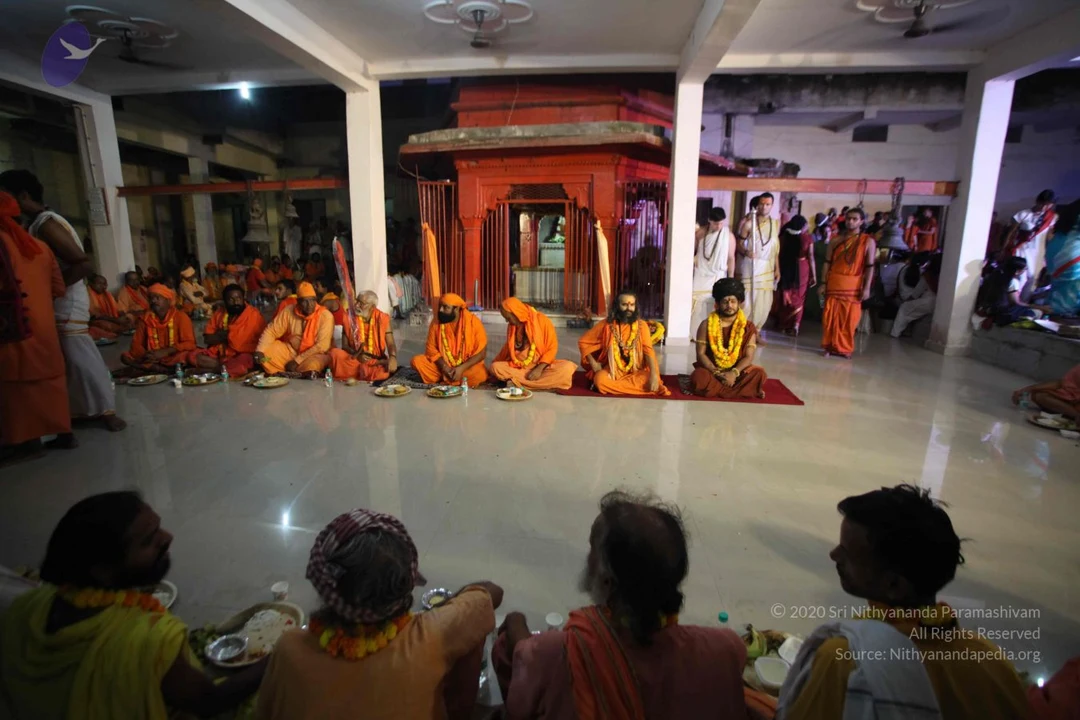
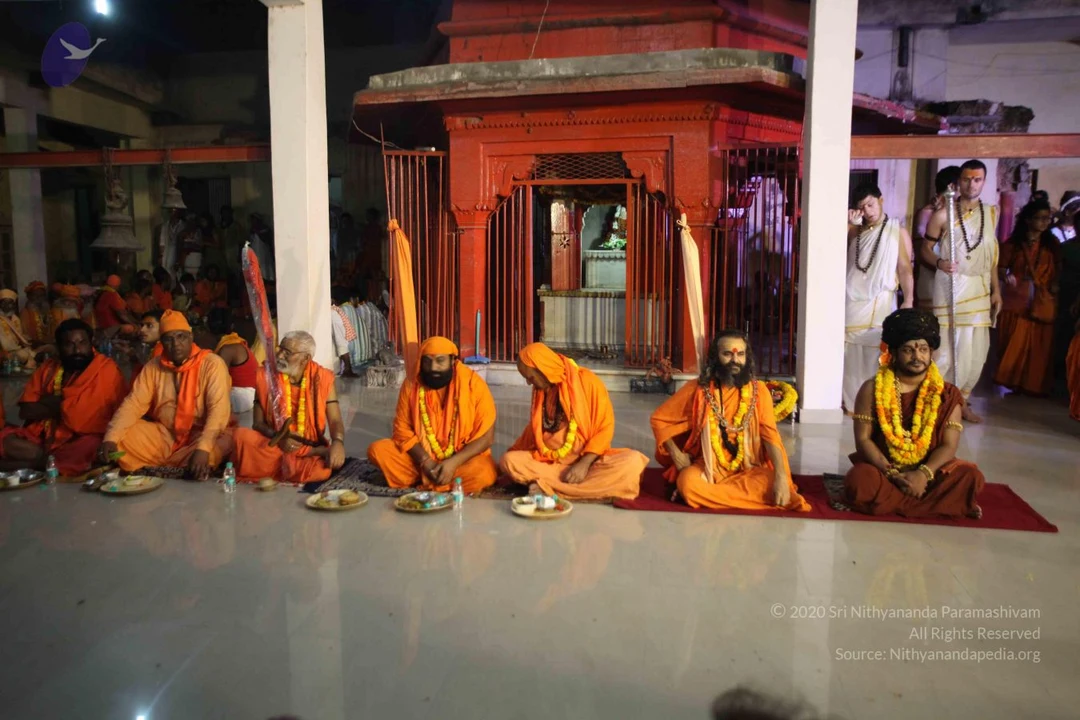
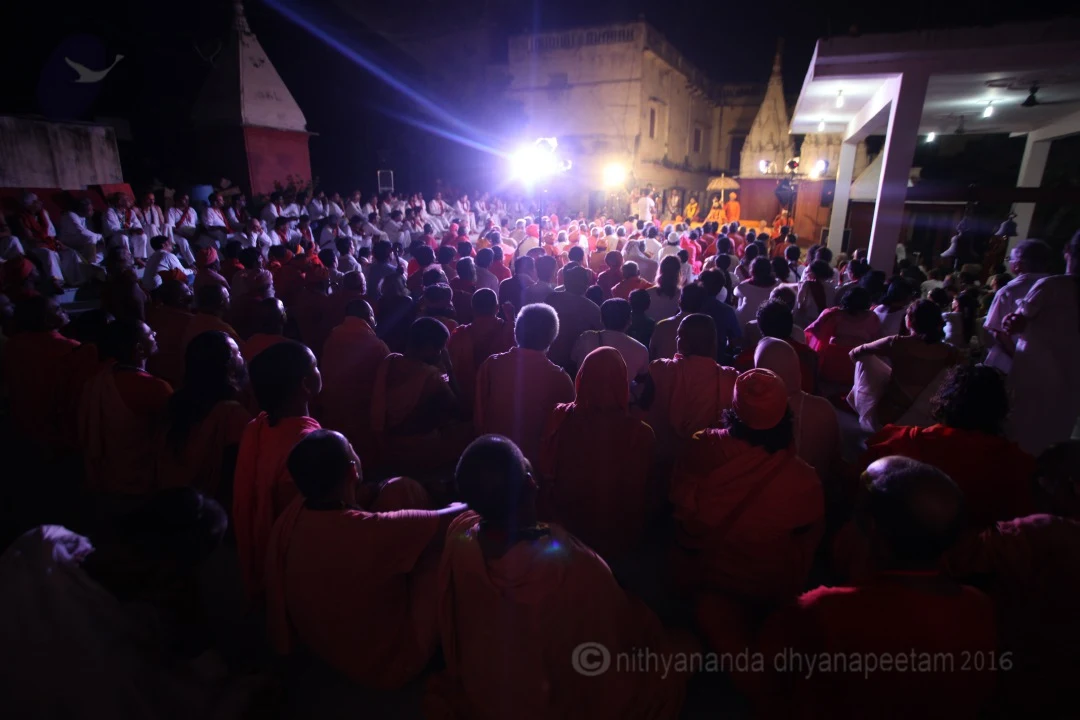
Bhandara
Paramashivoham Oneness Capsule 103 (His Divine Holiness & Ganga Mata in Varanasi, 15Jul2016)

Photos Of The Day:

FB-Photos-of-the-Day
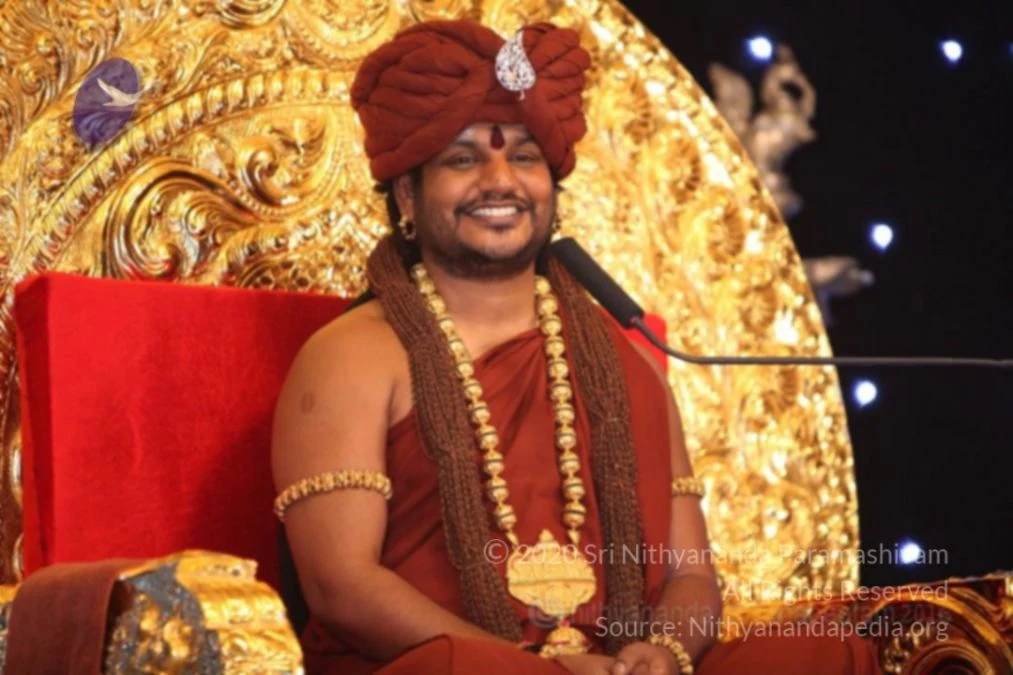
Photos Of The Day:

Morning-Satsang
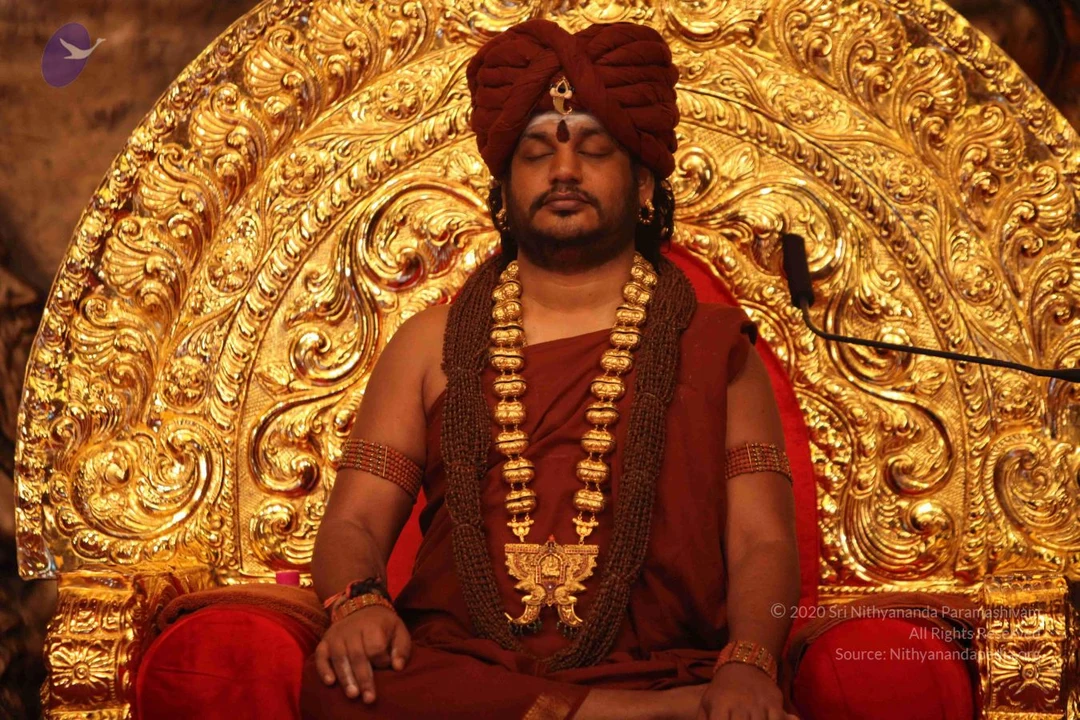
Darshan

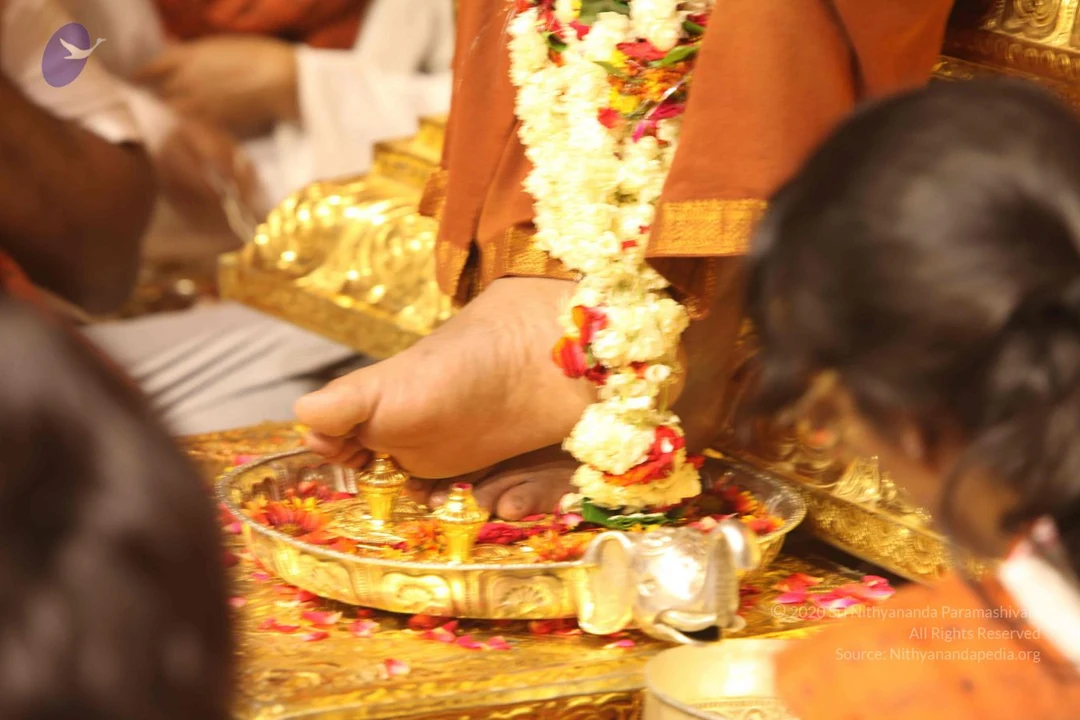
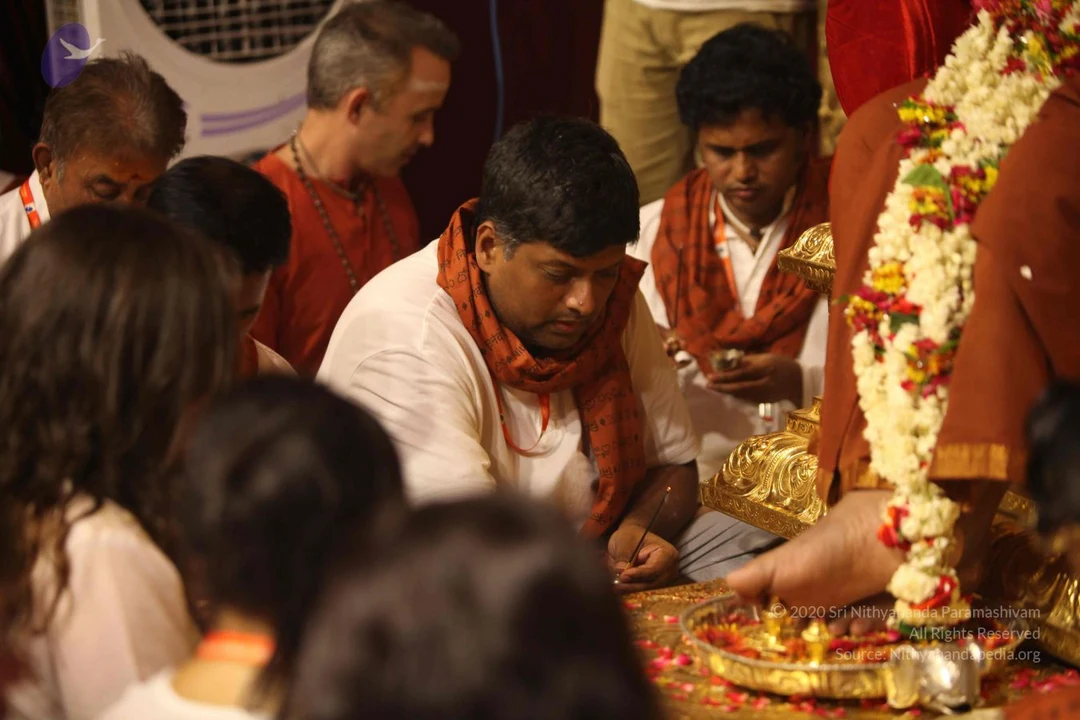
Pada-Puja

Shivoham-Process

Ganga-Ghat-Session

Photos Of The Day:

Morning-Satsang
Pada-Puja

Shivoham-Process

Ganga-Ghat

Photos from this day

View all 508 photos

FB-Photos-of-the-Day

4 photosSource gallery
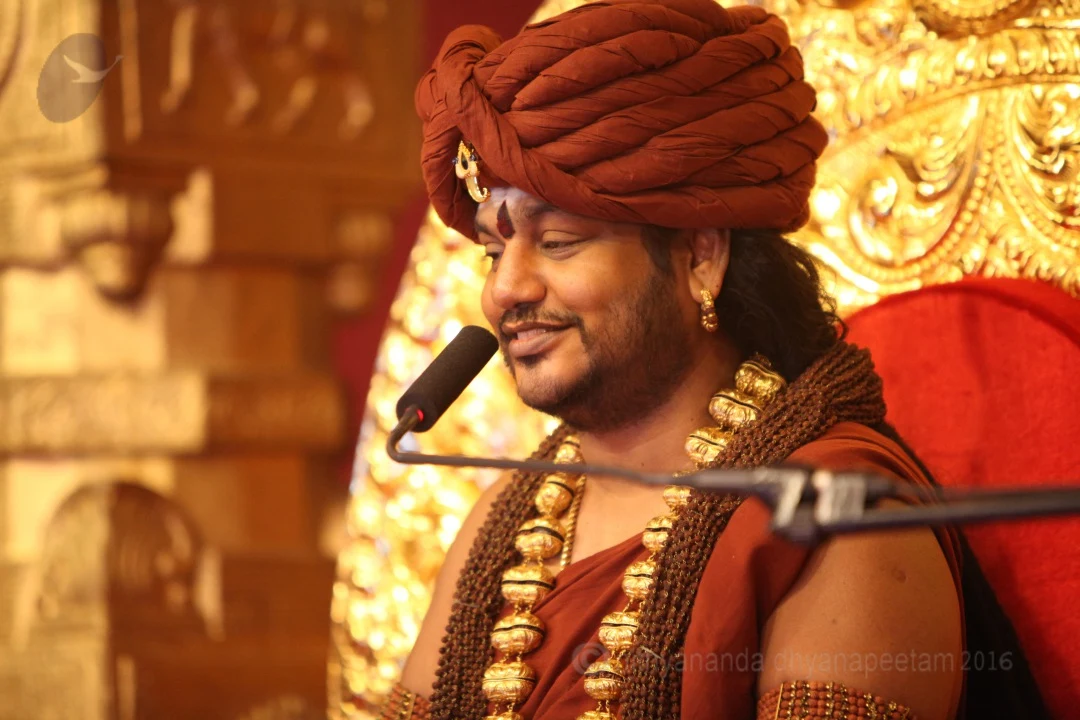
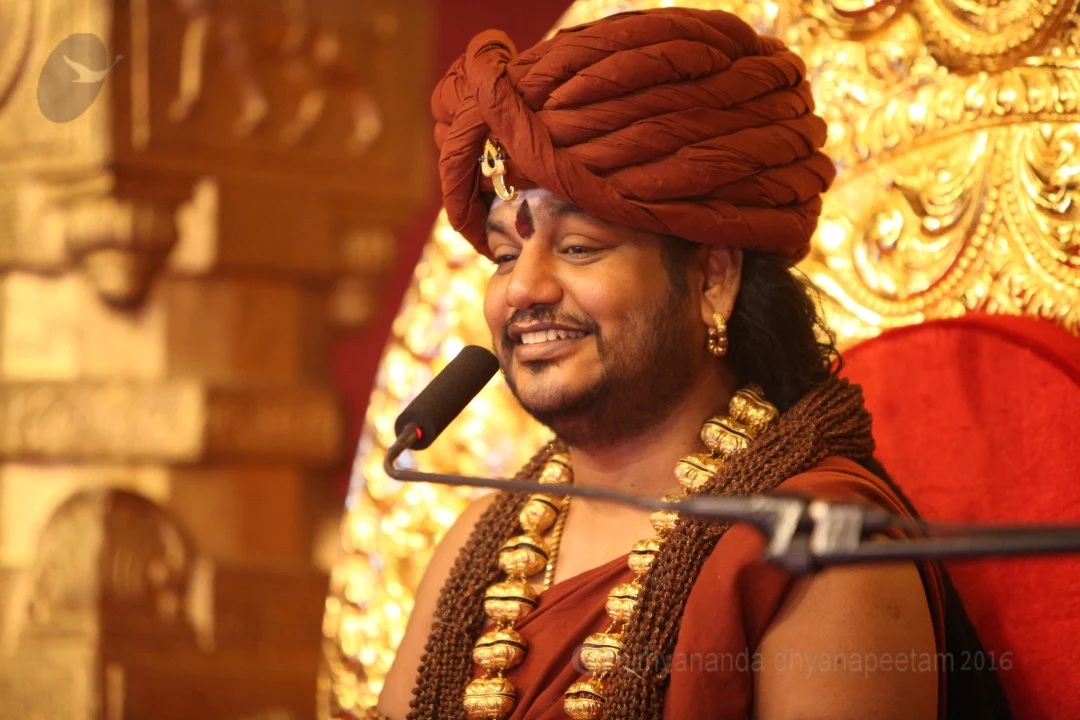
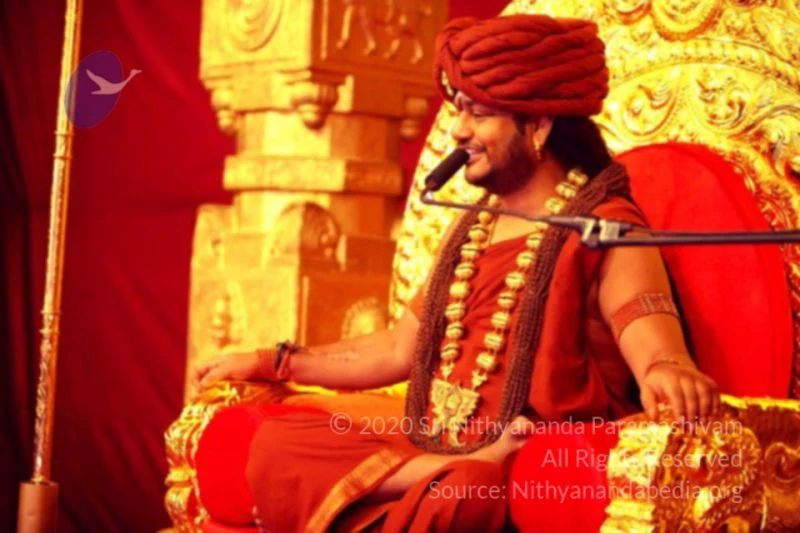
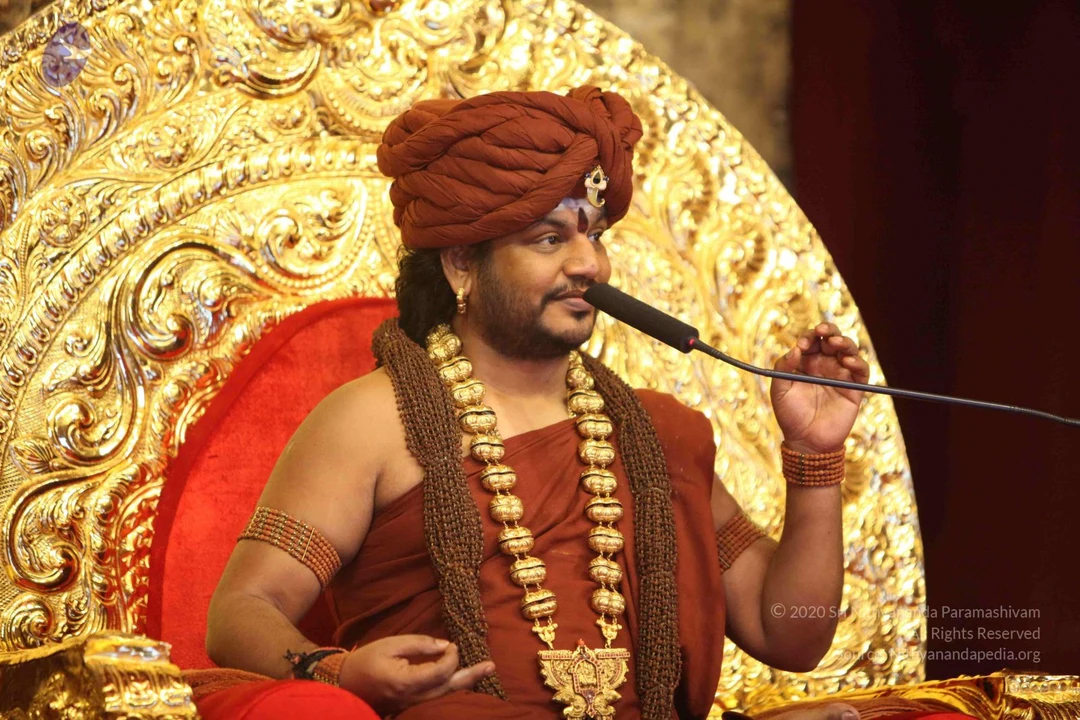
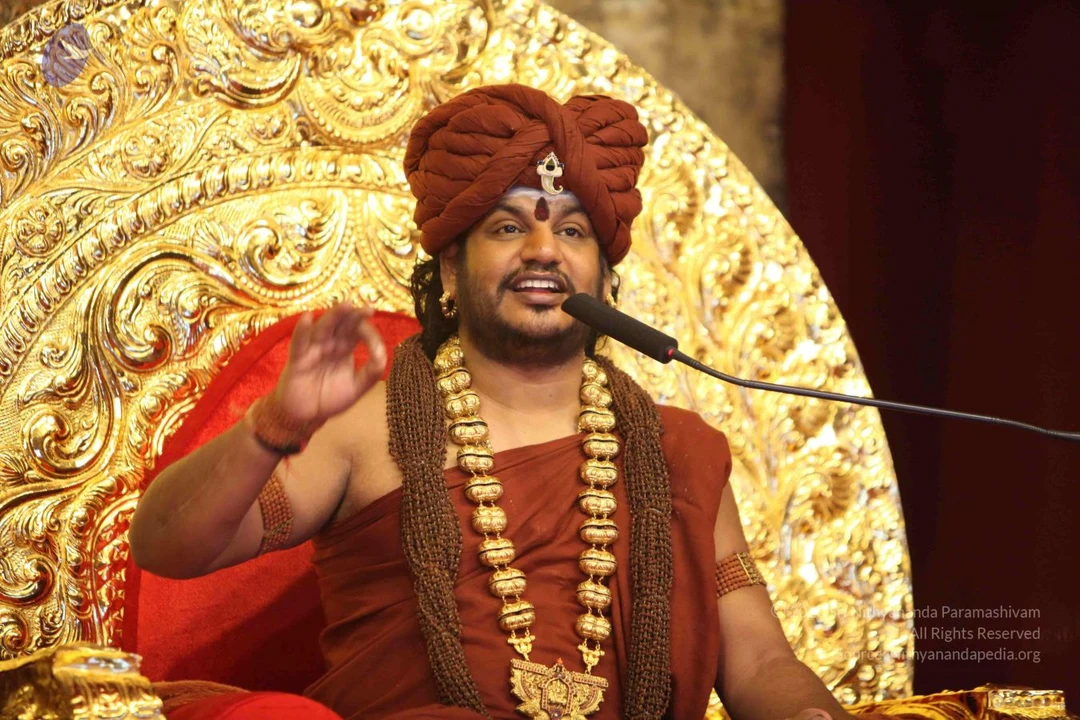
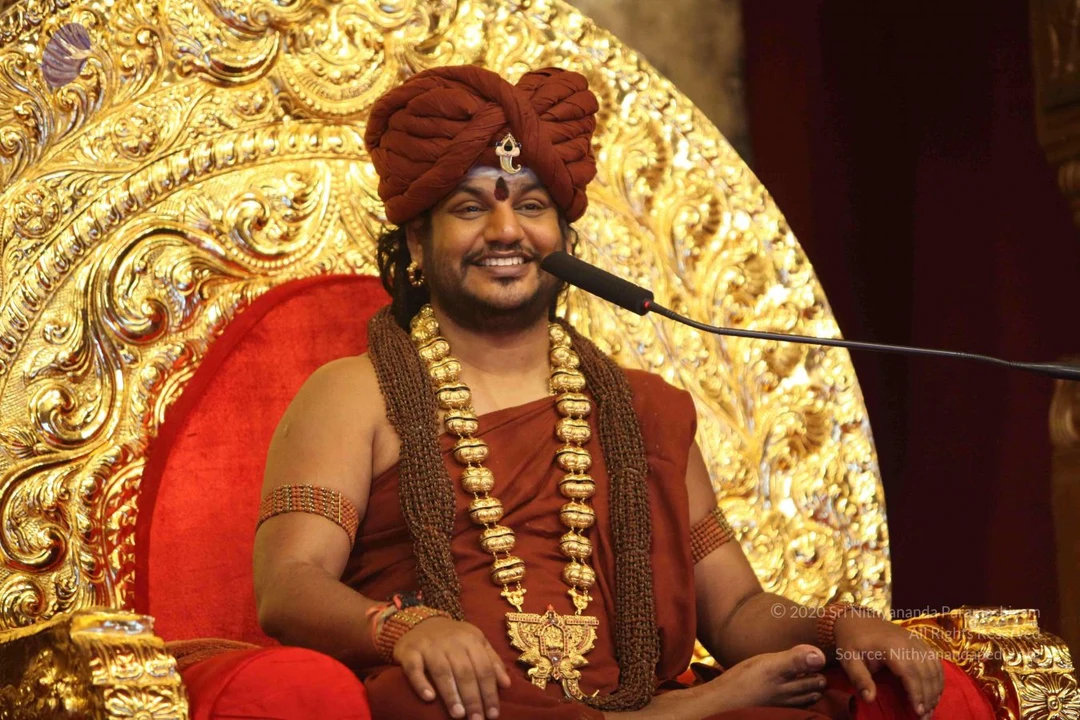
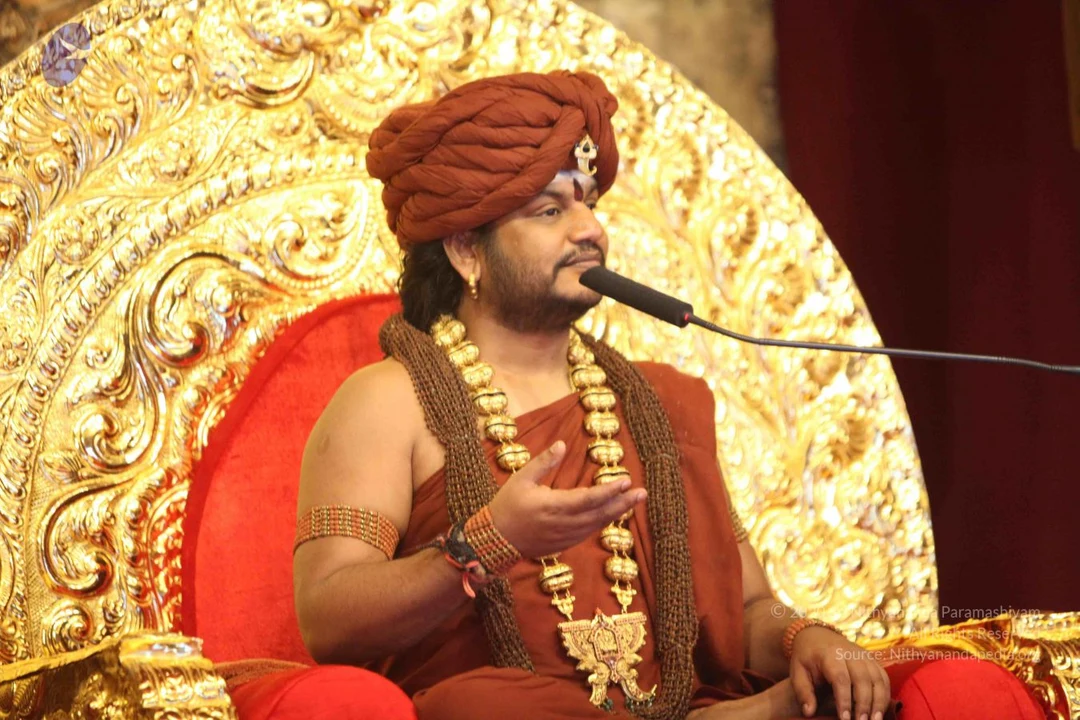
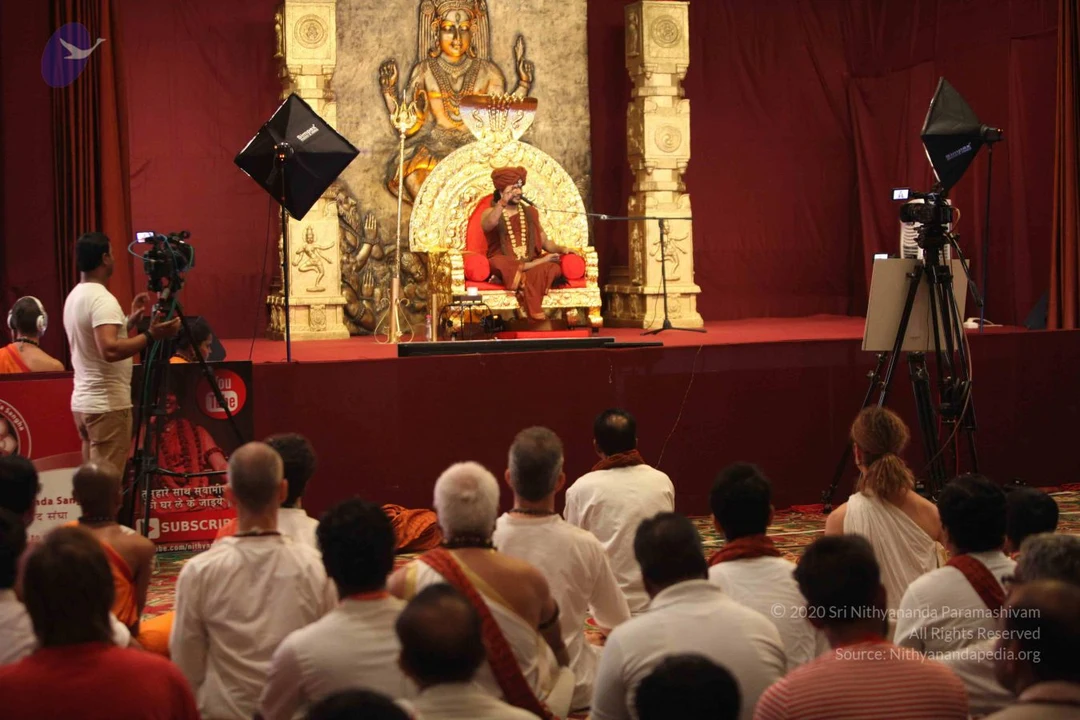
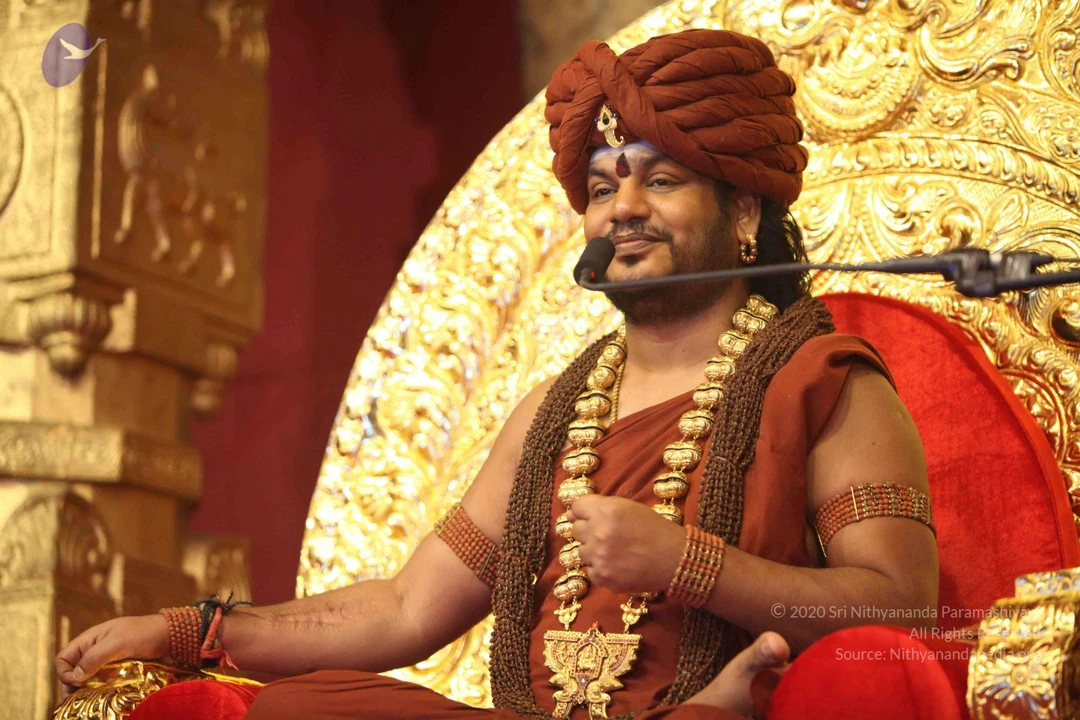
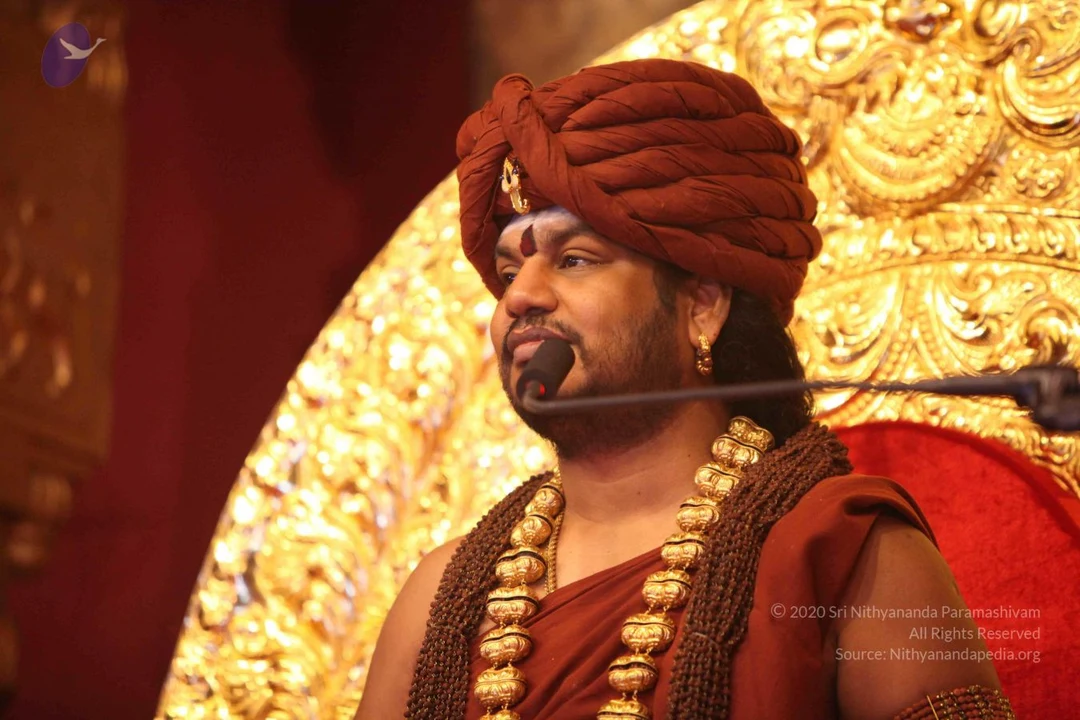
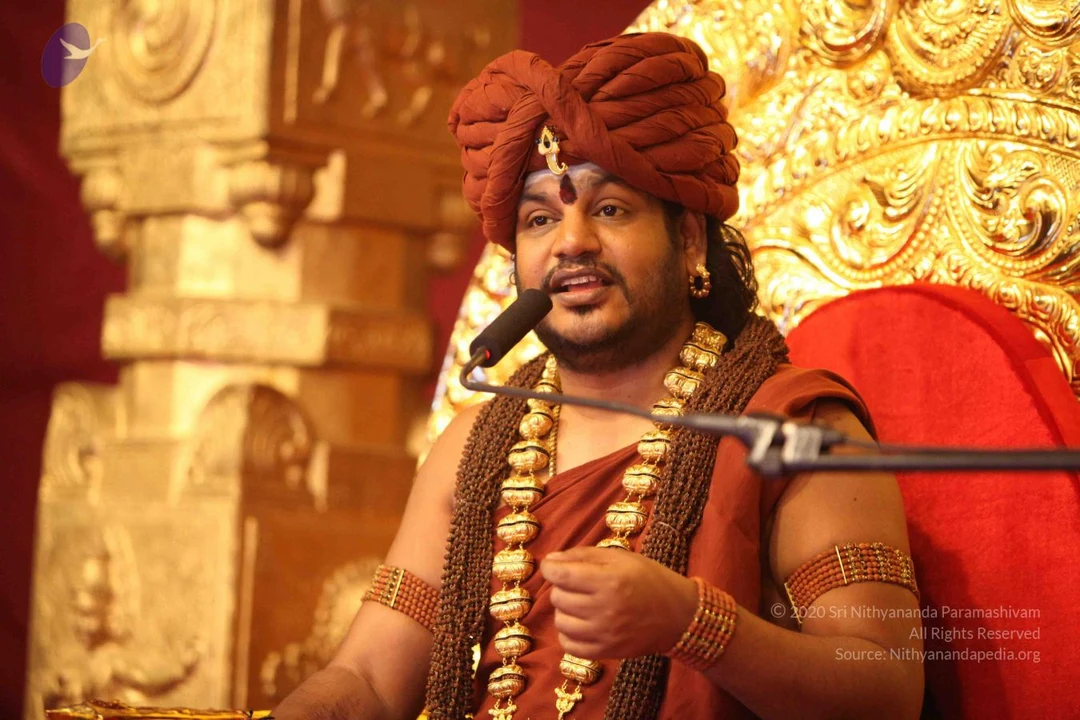
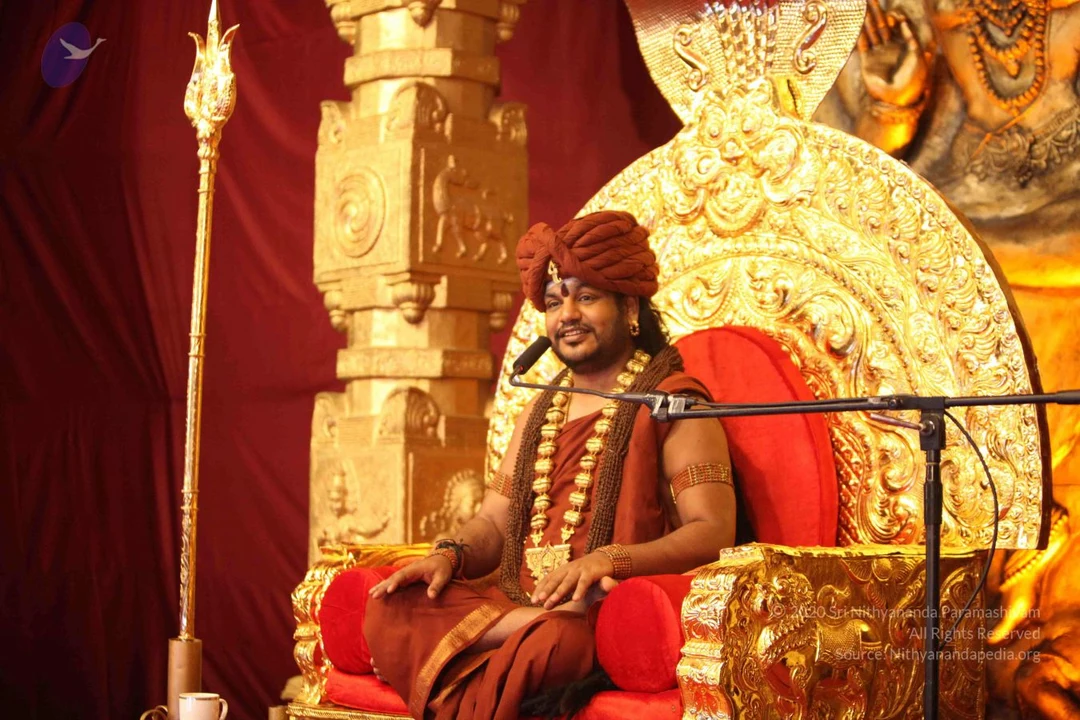
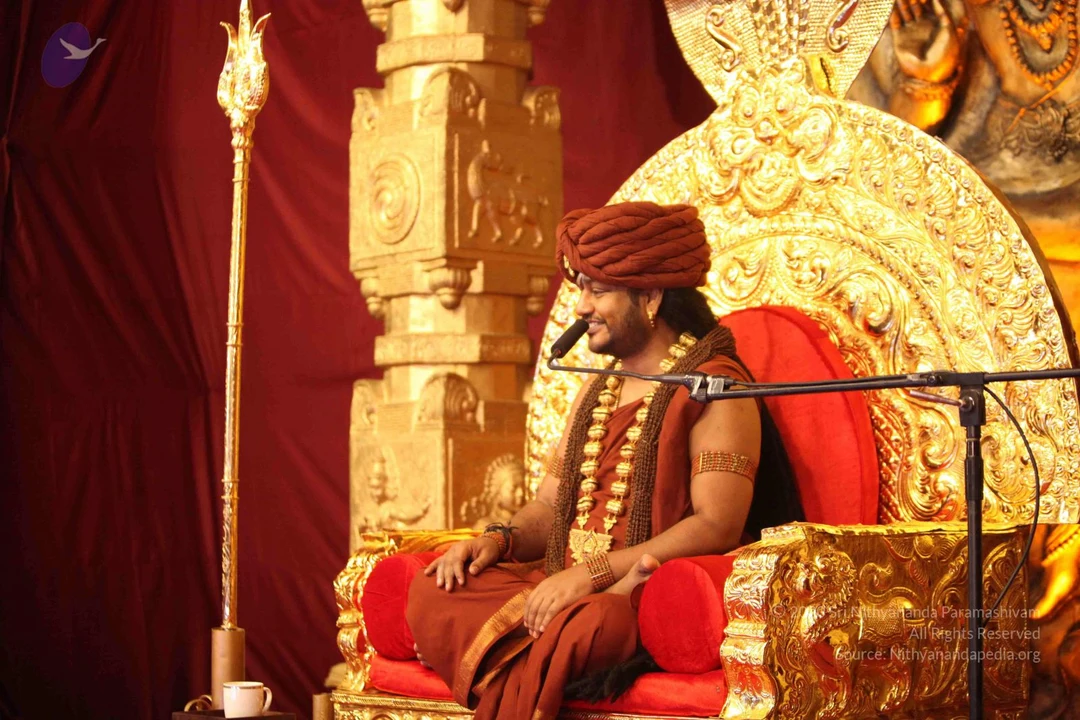
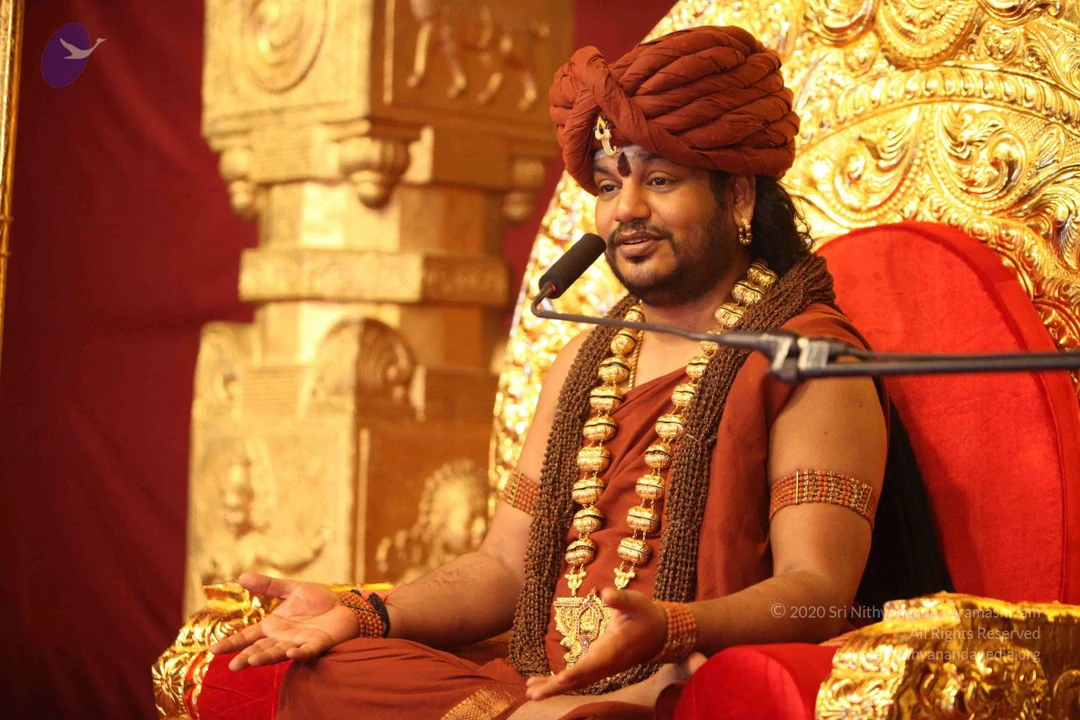
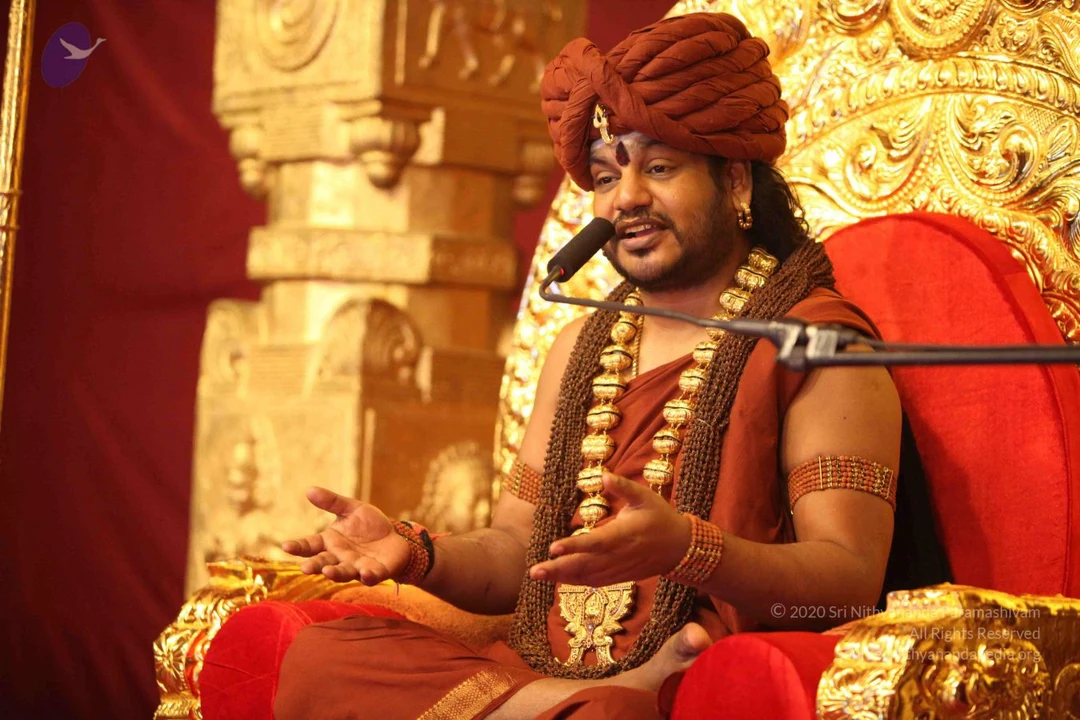
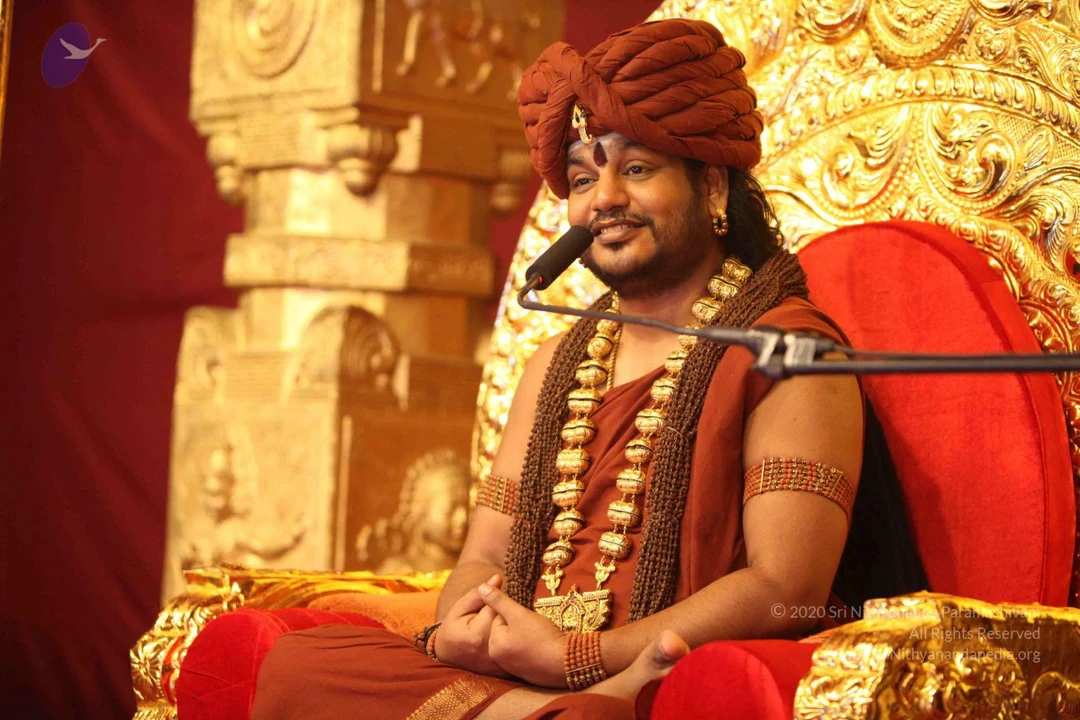
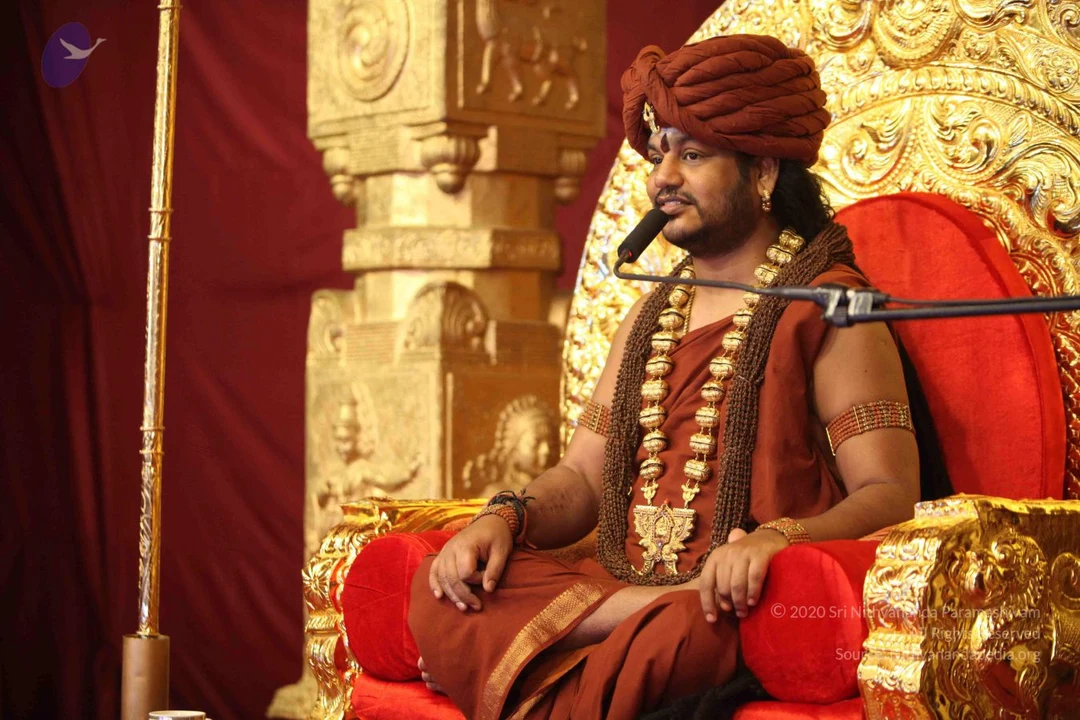
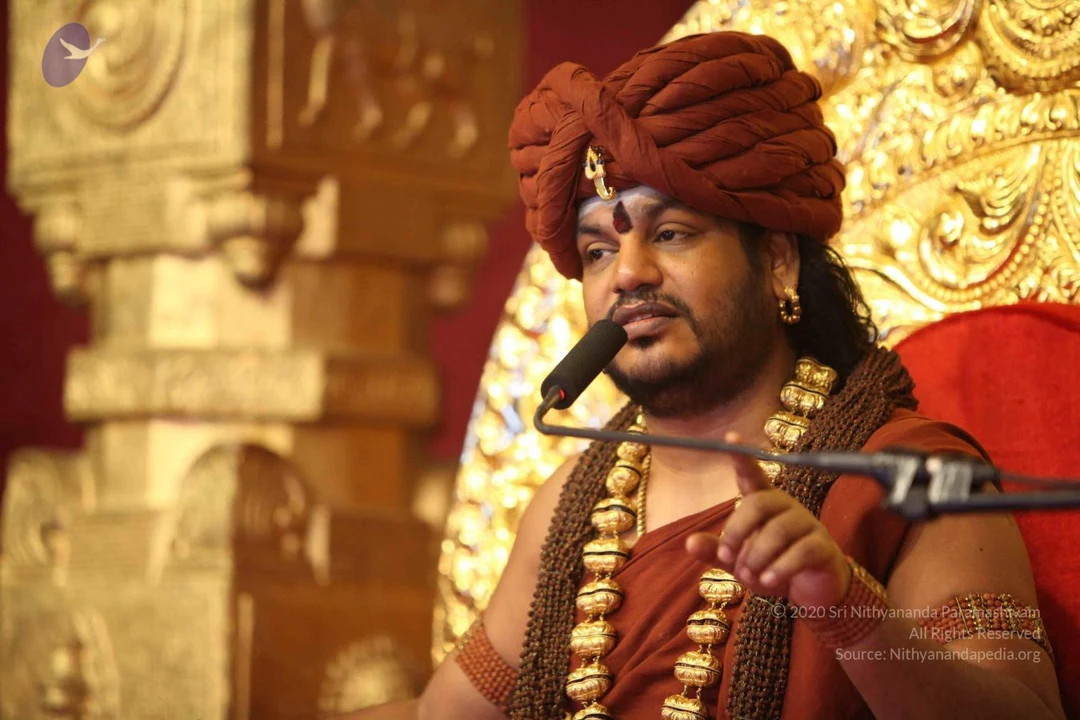
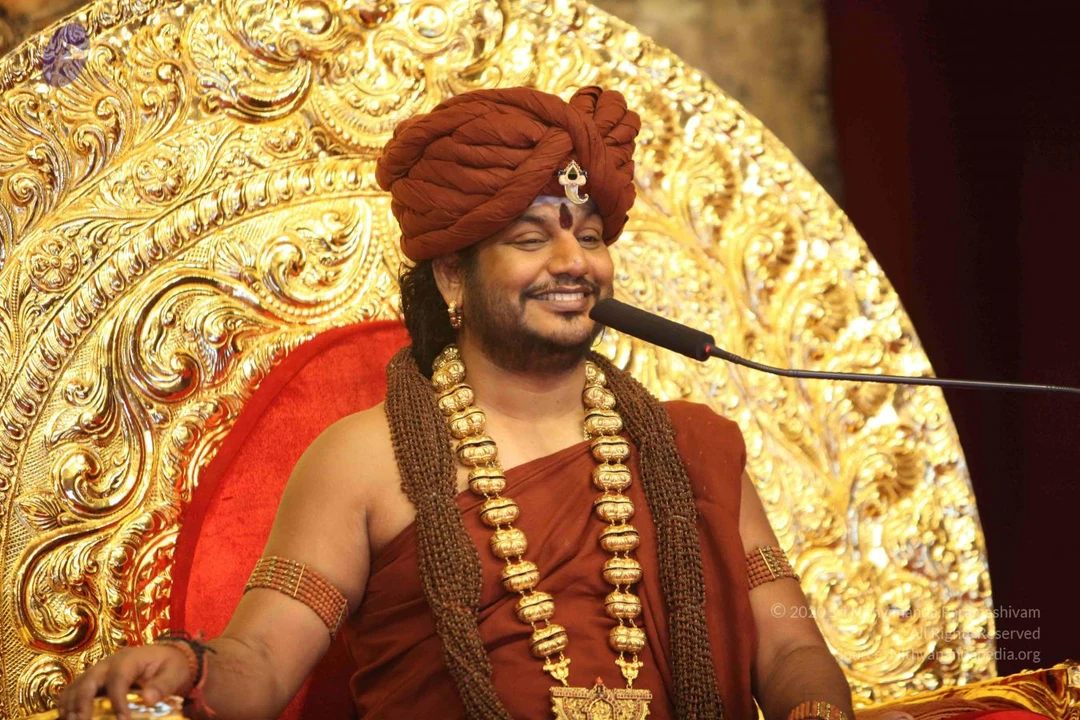
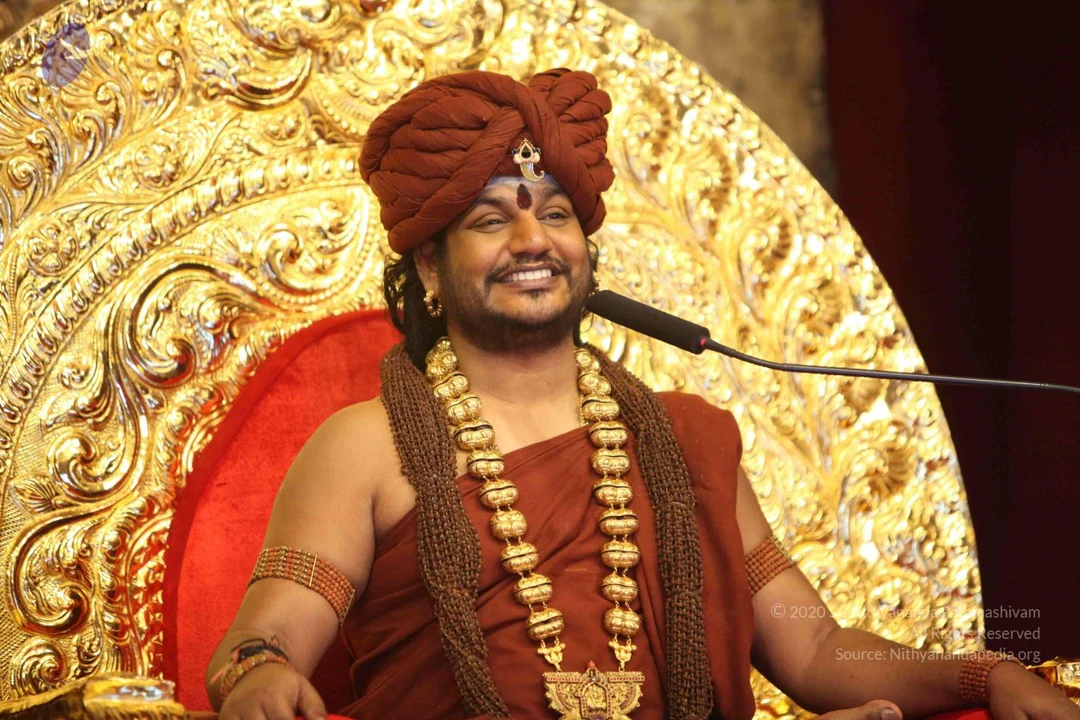
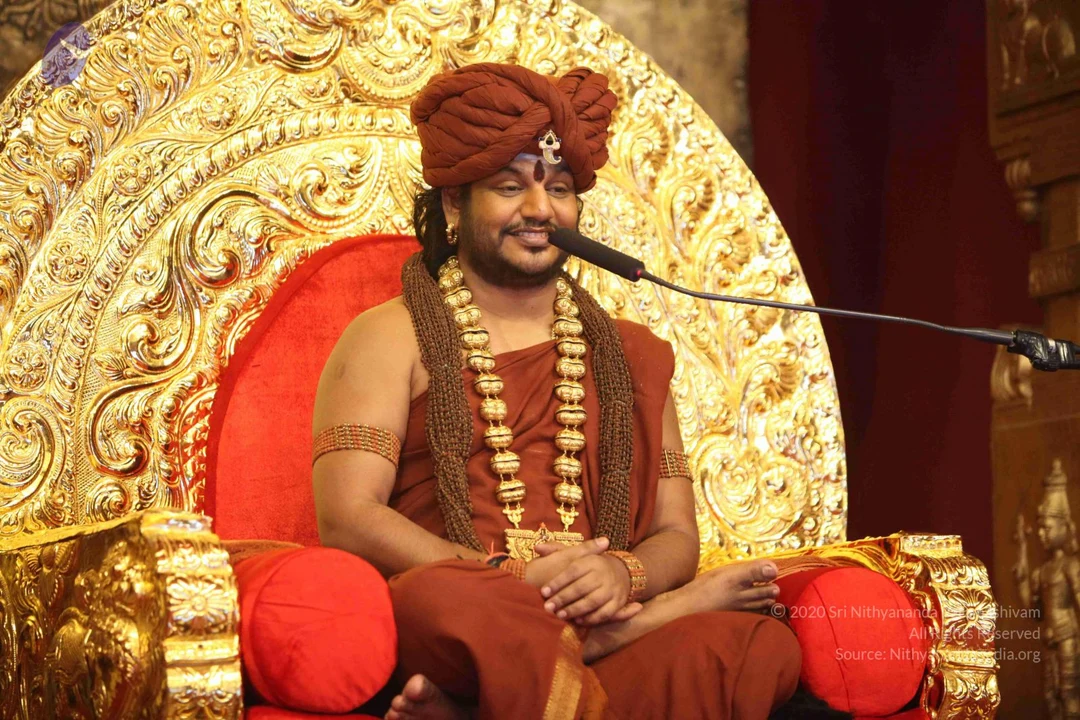
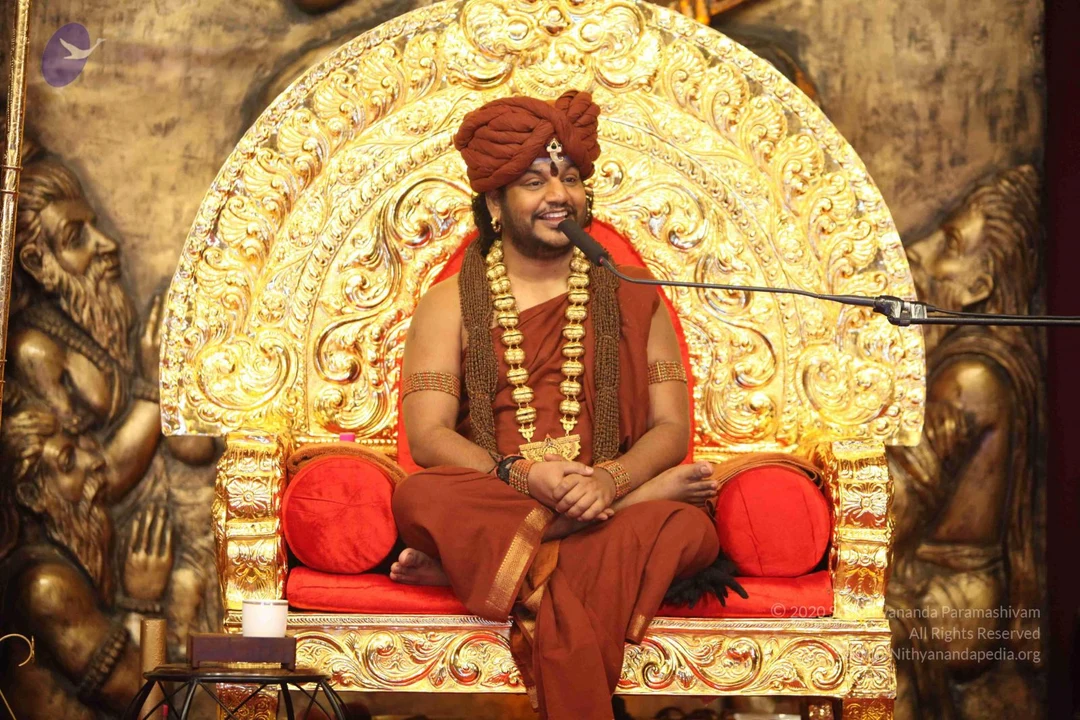
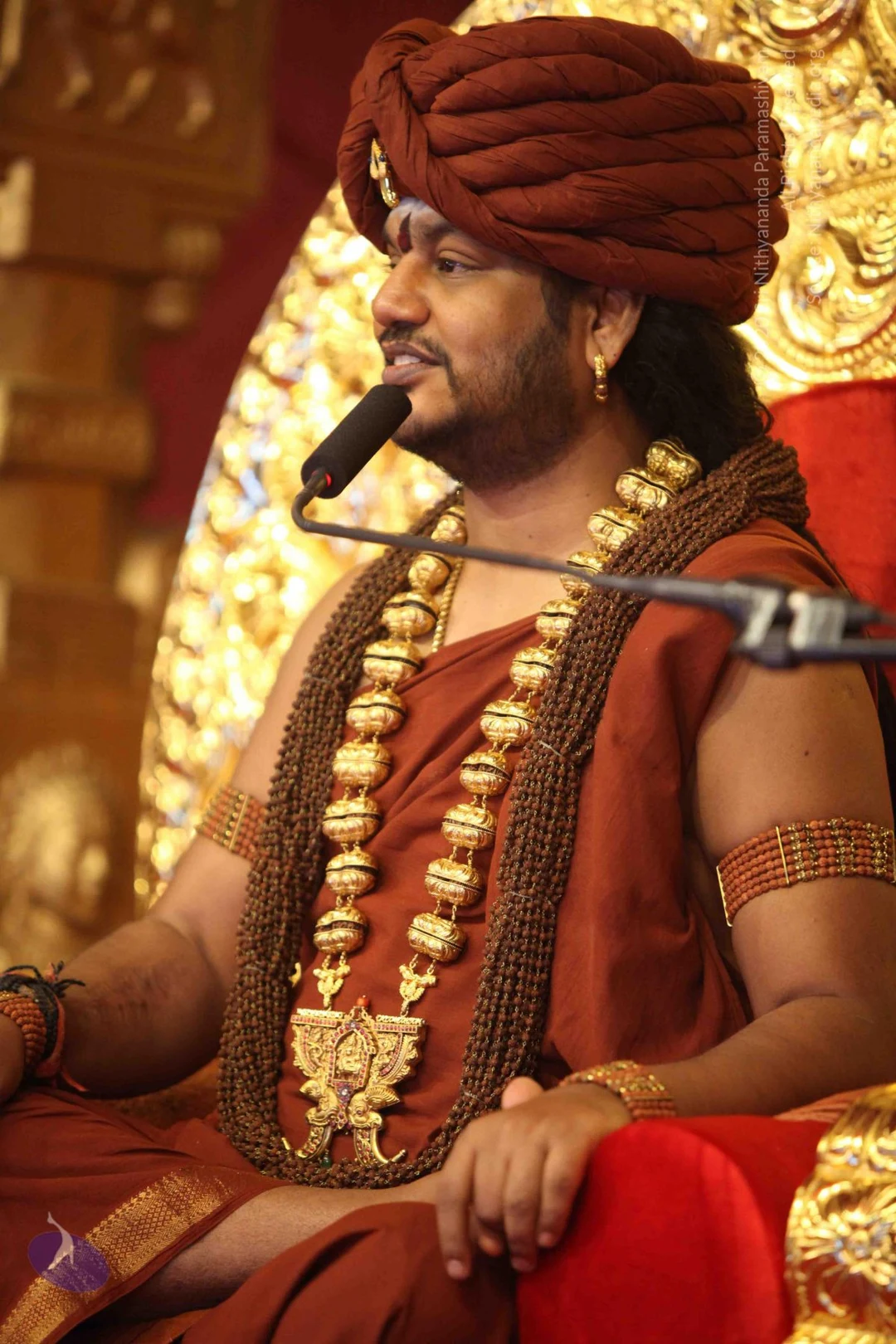
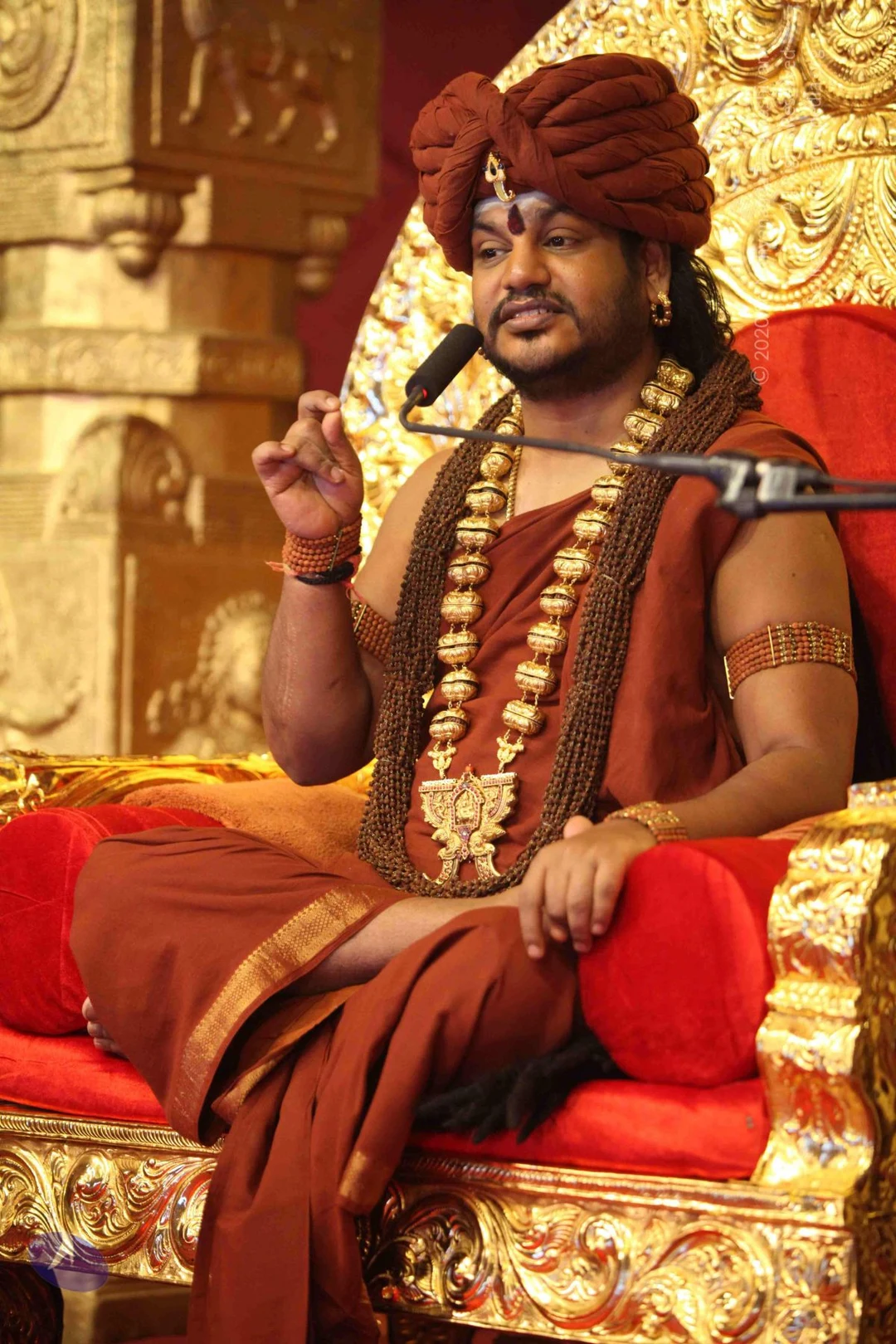
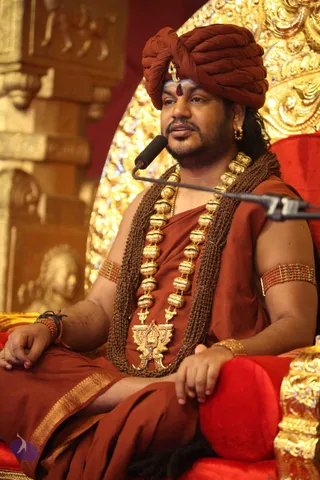
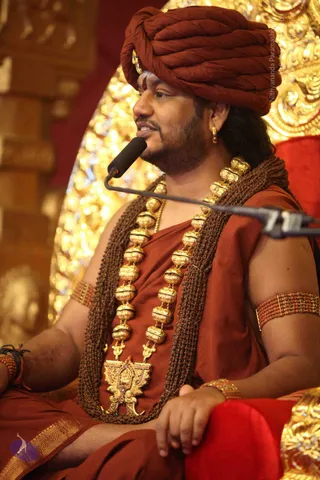
A man seated on an ornate gold-and-red throne with carved gilt panels, smiling and speaking into a microphone on a stand. He wears a deep red-orange turban, a saffron-orange robe with a long rudraksha mala and a gold ceremonial necklace, and gold bangles on his right arm. A tall gilt pillar and red drapery frame the stage. Swamiji (probable): the seated speaker wears a red turban, saffron robes, rudraksha beads and gold ornaments, matching the page's discourse context. A purple bird logo appears at upper left.

Morning-Satsang
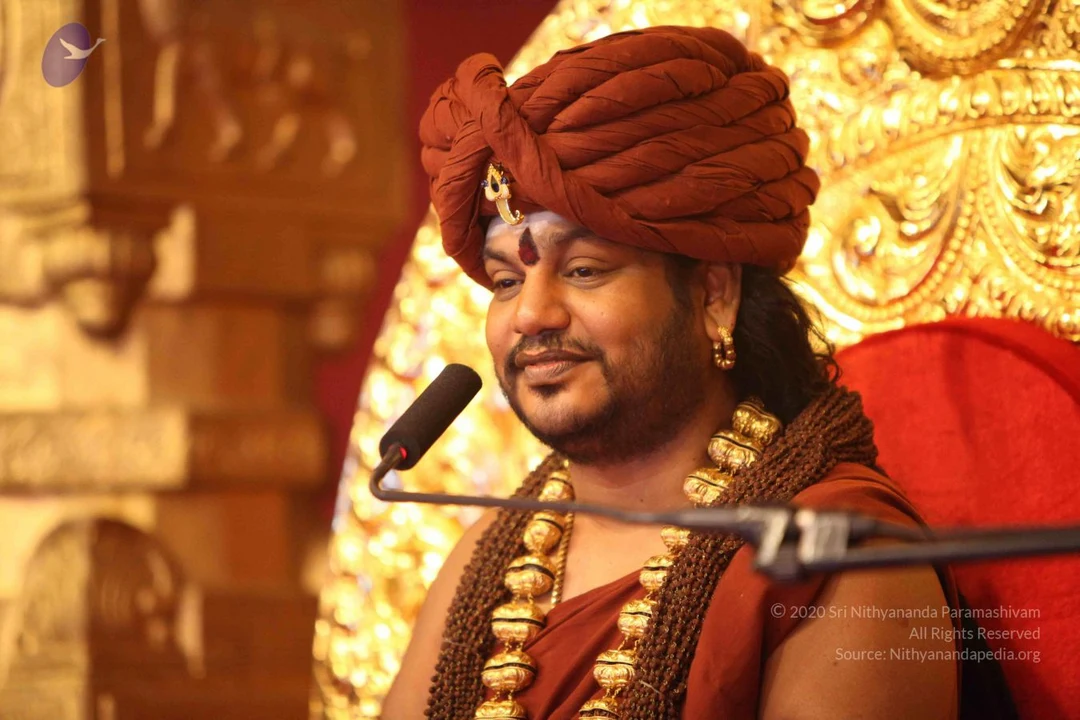
51 photosSource gallery
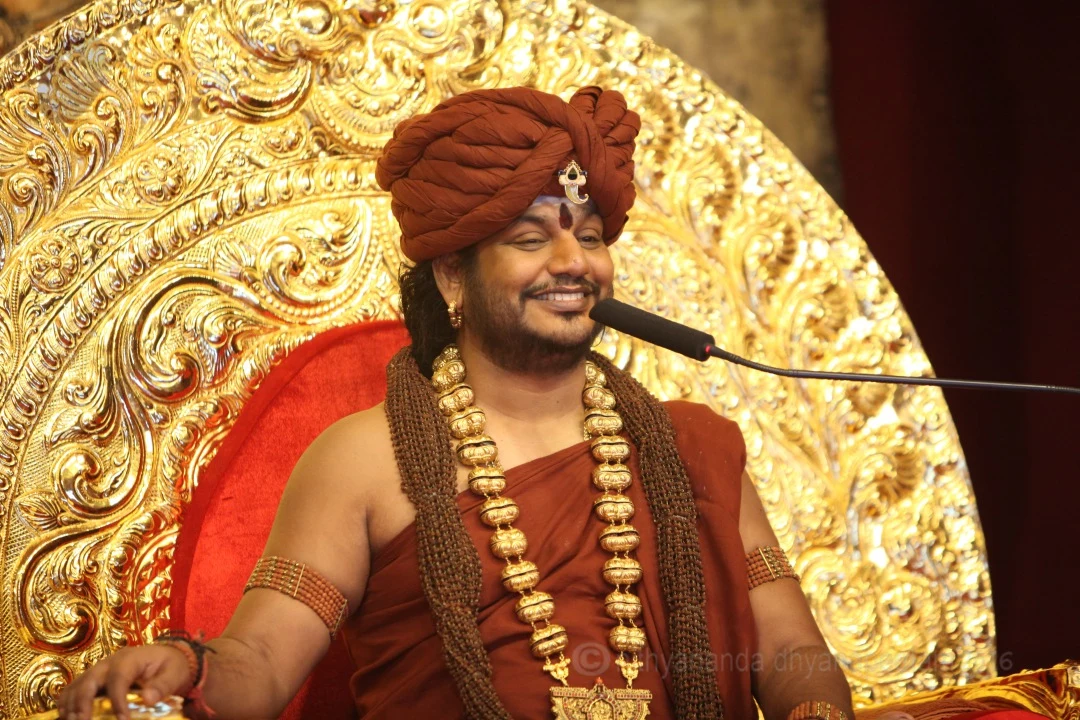
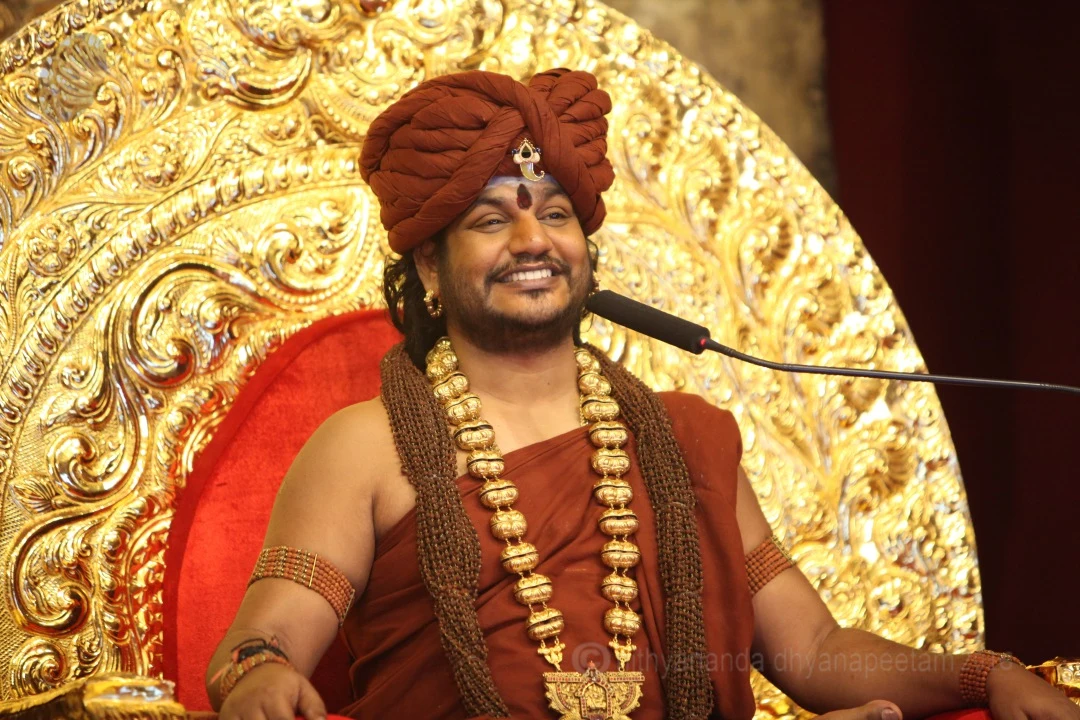
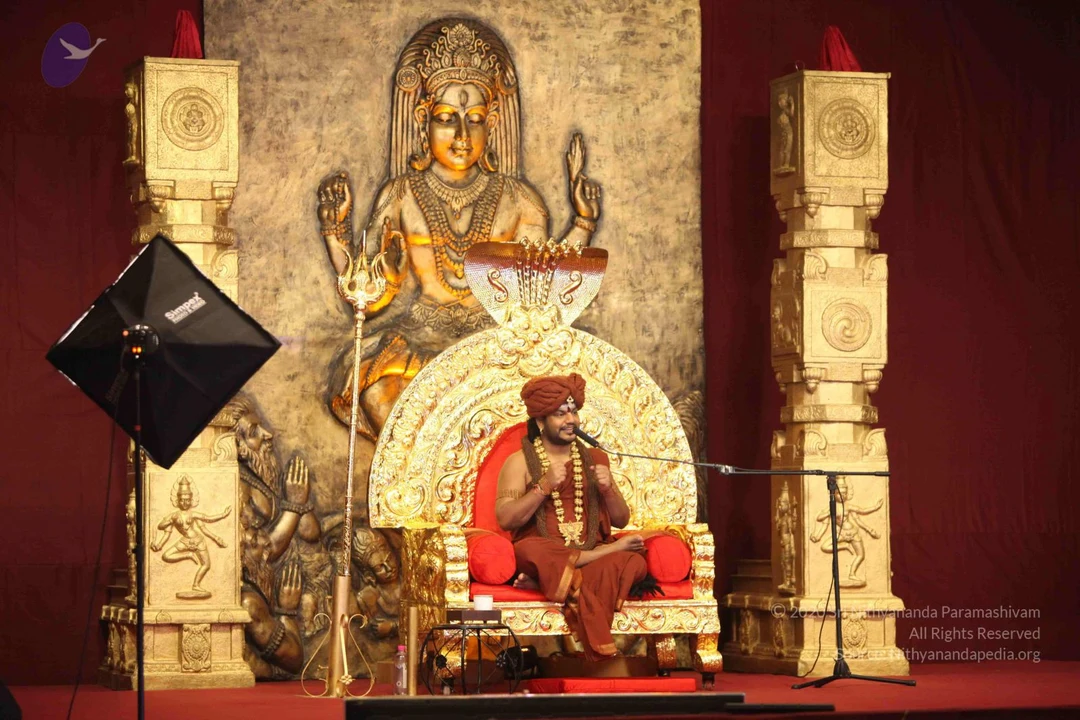
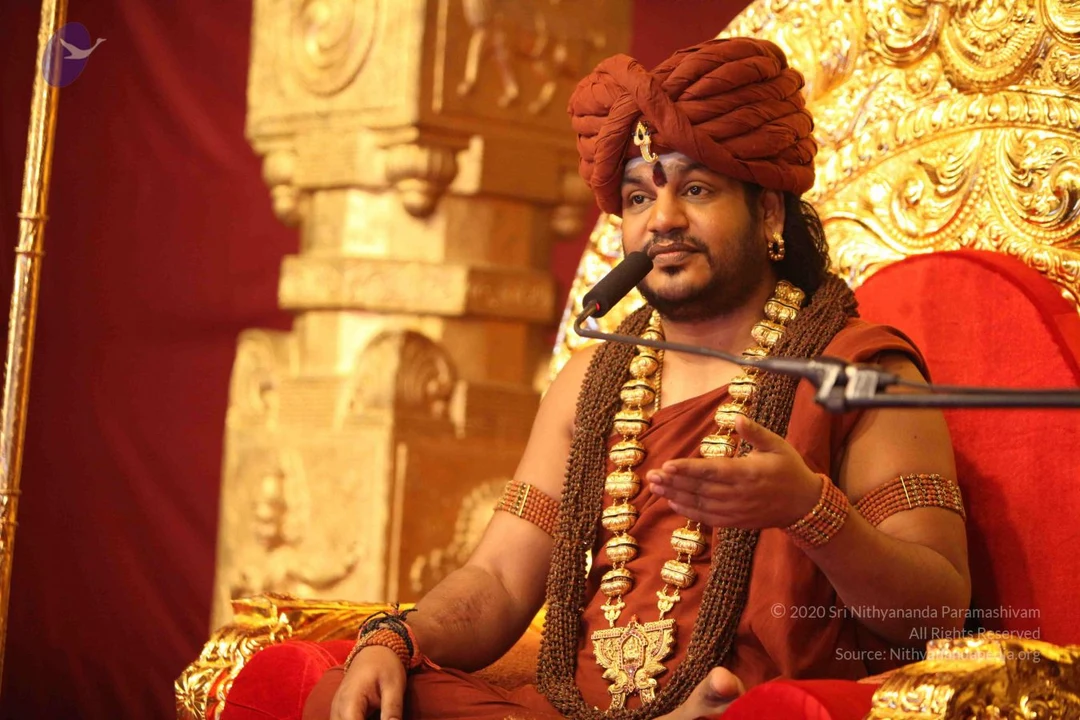
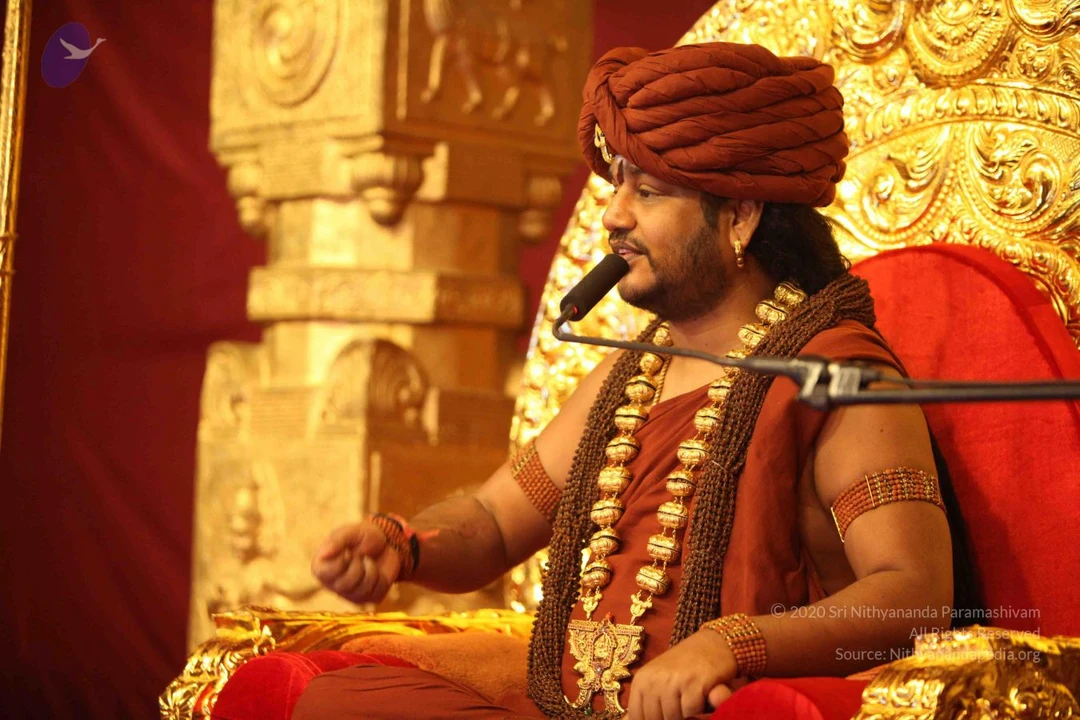
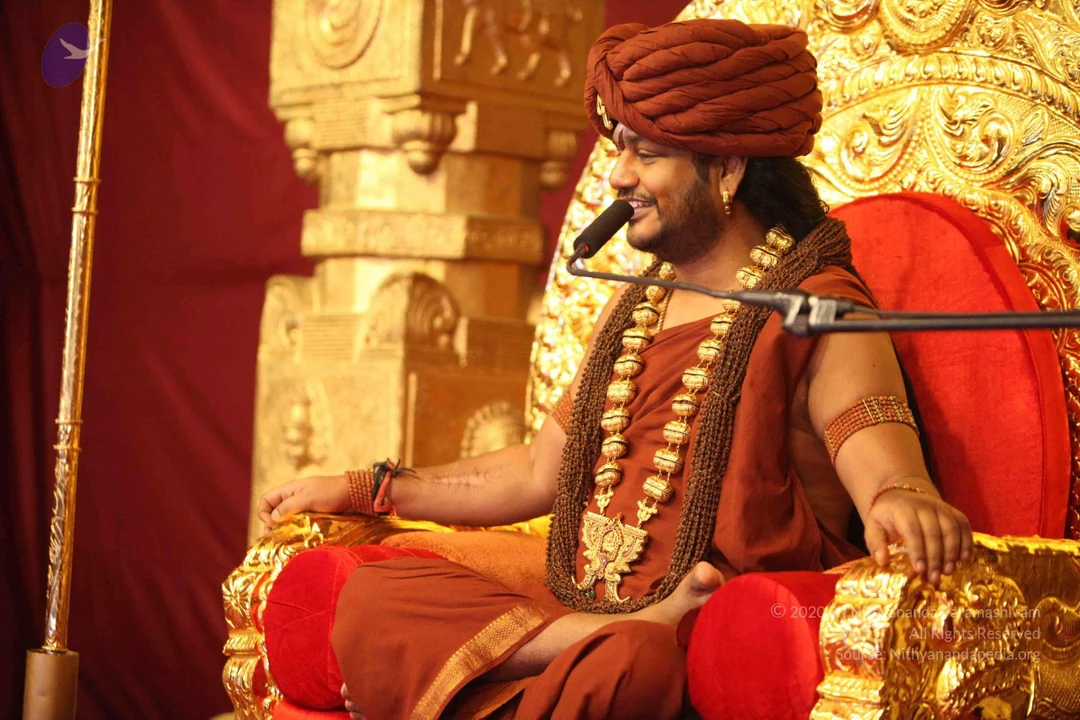
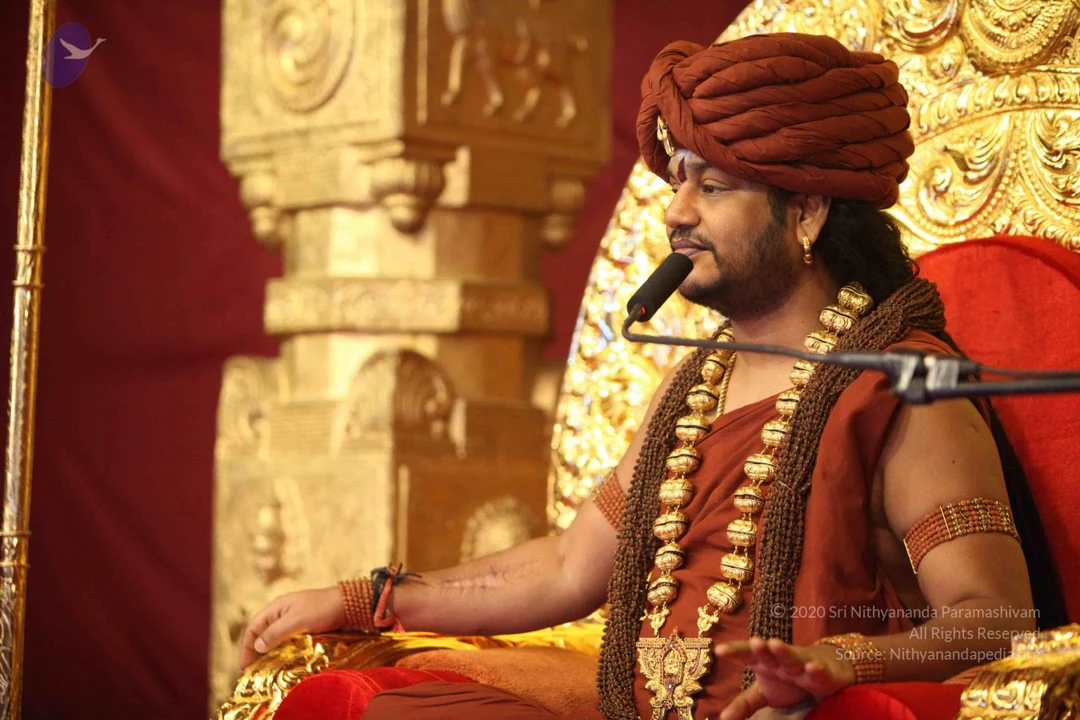
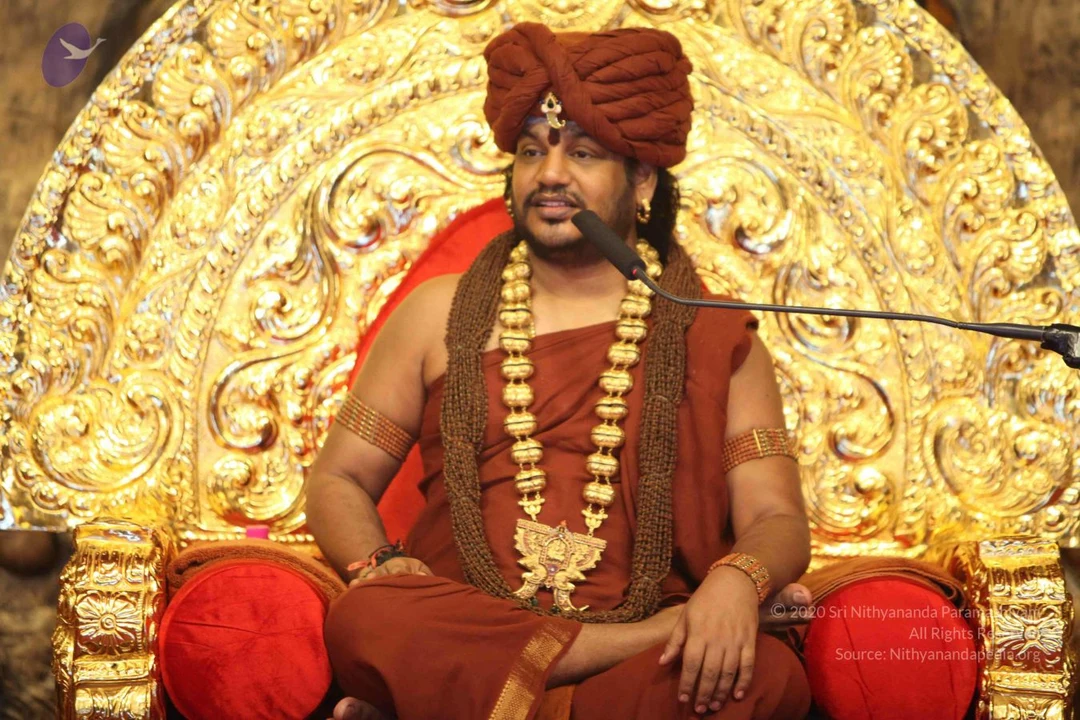
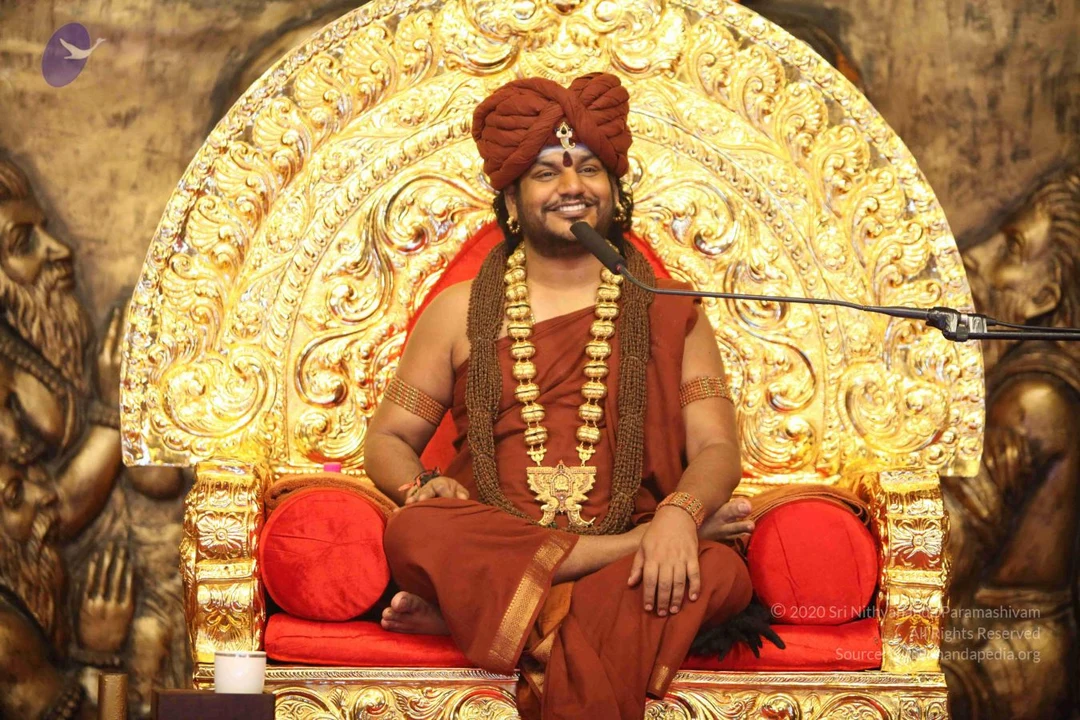
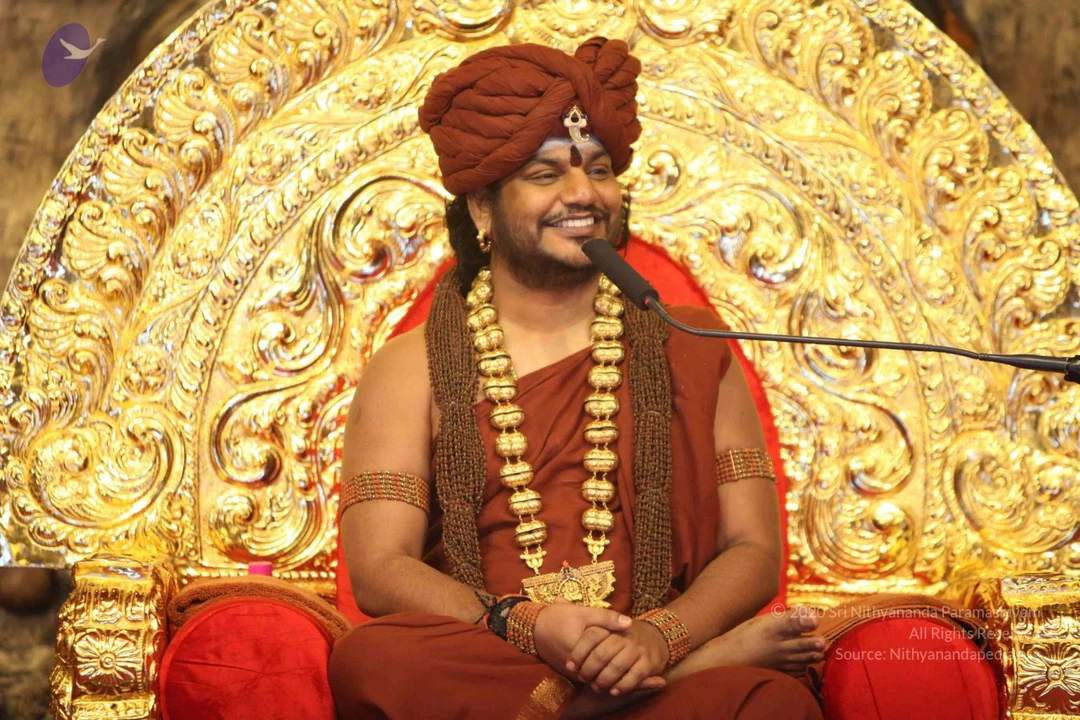
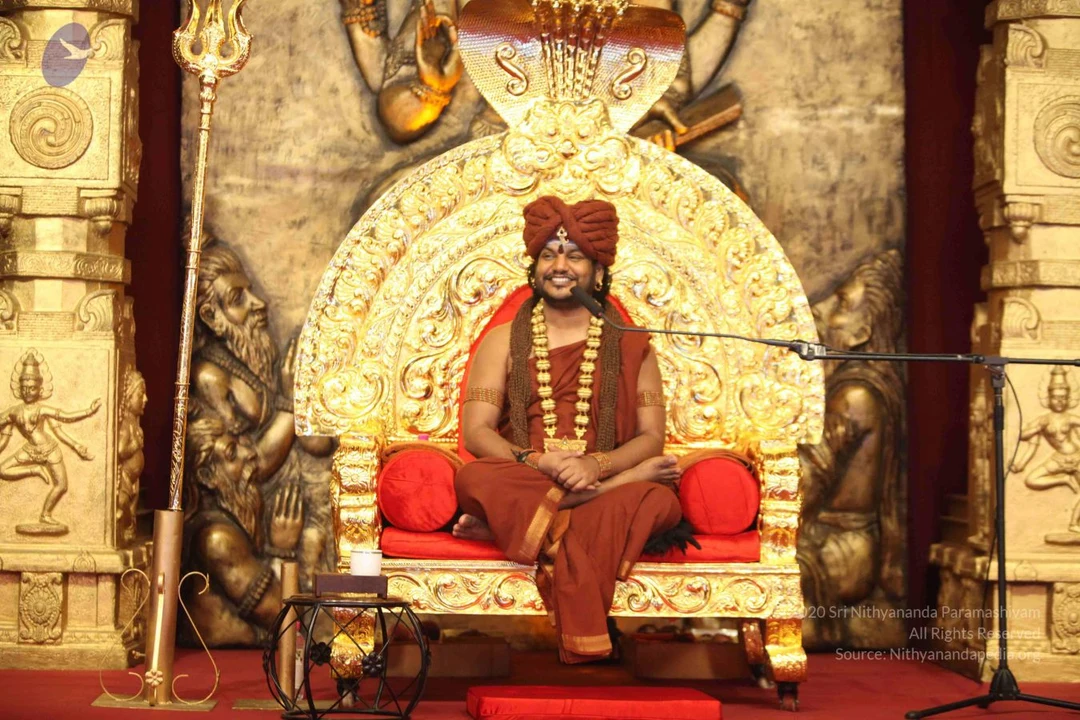
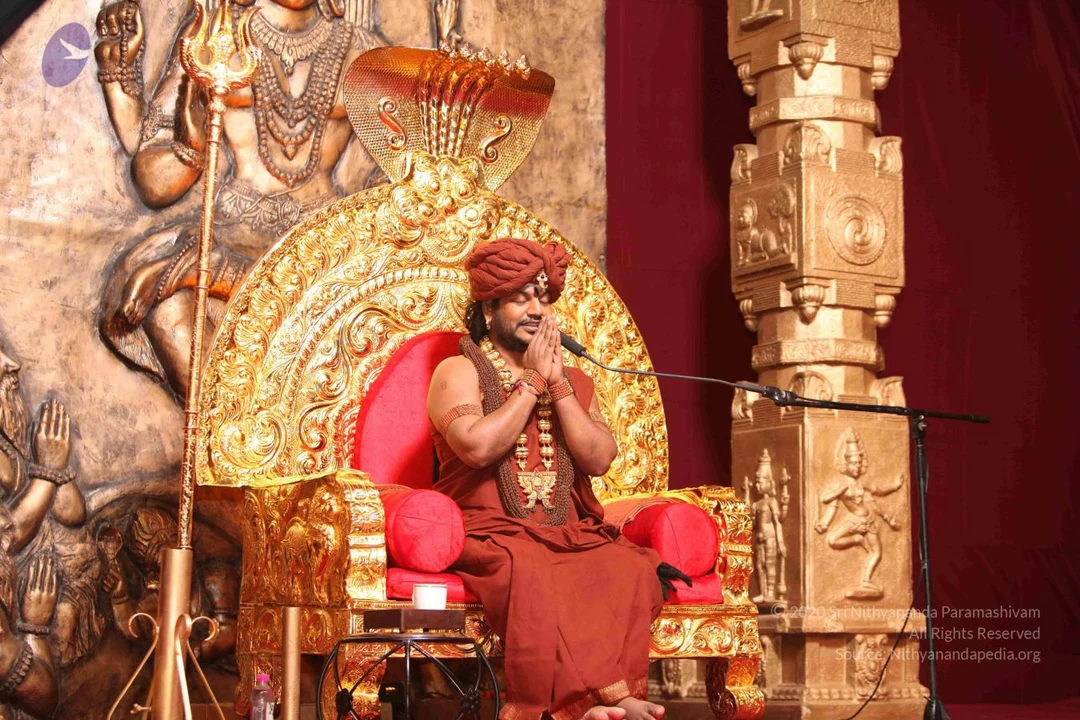
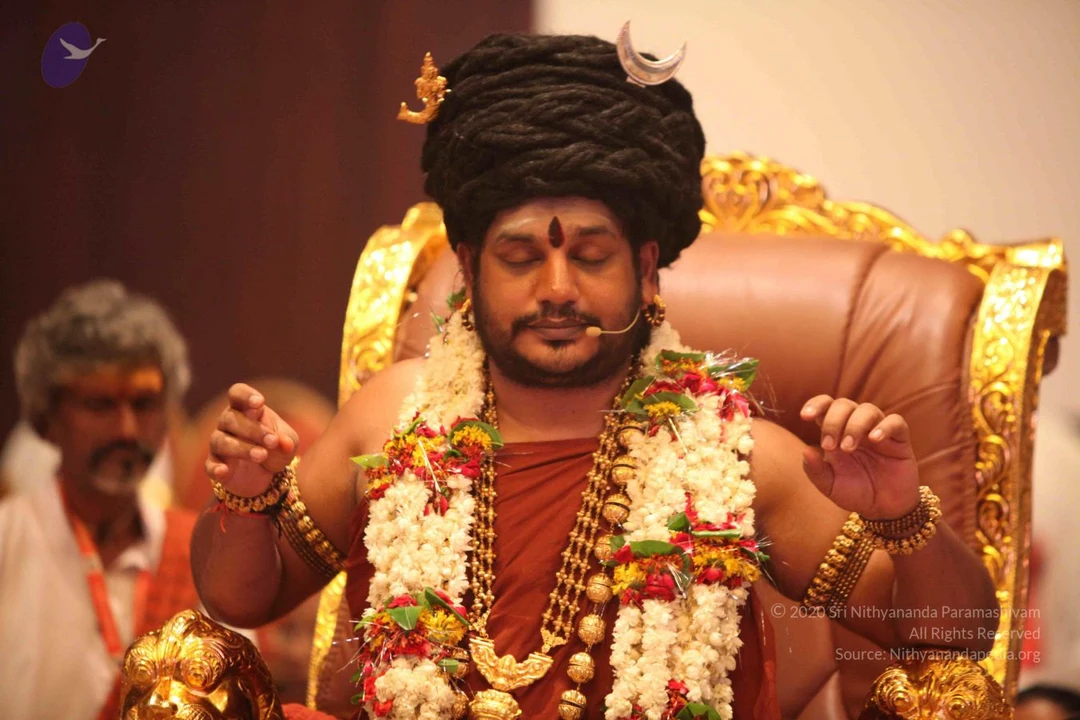
A seated man with closed eyes sits on an ornate gold-leaf throne with carved scrollwork and a red cushion. He wears a deep red-maroon turban with a gold ornament at the front, a red-maroon robe and a long necklace of gold beads with a gold pendant, plus a rudraksha-style mala and gold bangles on his arms. A white and red forehead mark is visible. A small microphone on a stand sits beside the throne. Probable Swamiji (probable): the appearance cues are a red-maroon turban, ornate gold ceremonial necklace and rudraksha mala, seated on a throne, with the page indicating his presence at this satsang.A seated man with closed eyes sits on an ornate gold throne with a red cushioned seat and red armrests. He wears a deep red turban with a small gold emblem at the front, a red-orange saffron robe draped over the shoulder, and a dark rudraksha mala across his chest. A heavy gold necklace with a gold bird-shaped pendant hangs over the robe, and gold bangles are on both arms. A microphone stand is visible at right. The gold throne back has elaborate scrollwork. Swamiji (probable) is seated in meditation, with the appearance cues of saffron/orange clothing, a turban, rudraksha mala and ceremonial gold necklace, placed in a throne setting during a satsang or discourse.A seated man sits cross-legged on an ornate golden throne with intricate floral and scroll carvings and red cushions. He wears a red-maroon turban with a small ornament at the forehead, a rudraksha mala and a heavy gold ceremonial necklace with a pendant, gold armlets, and a maroon-red robe. His hands rest folded in his lap with eyes closed, as in meditation. A microphone on a stand is visible at the right edge of the frame.A seated man in saffron-orange robes and a matching orange turban sits cross-legged on an ornate gold throne with a cobra-hooded canopy and red cushions. He wears a long beaded necklace and rudraksha-style mala, with bangles on his wrists, and speaks into a microphone on a stand. Behind him, a large carved relief shows multi-armed deity figures holding a trident and other implements, flanked by golden temple pillars with dancing figures. A tall gold trident stands at left and a small brass lamp sits on a side table. The stage is carpeted in red.A man seated on an ornate gilded throne with a red cushion speaks into a microphone on a stand. He wears a rust-orange turban with a small gold emblem, a vertical tilak mark and a red dot on his forehead, an orange-red robe draped over one shoulder, a heavy gold necklace with large beads and a pendant, rudraksha-style brown beaded cords, and orange-red armbands. Hands rest on his lap. Behind him are red drapes and a carved wooden pillar.A man seated on an ornate gold throne with a red velvet cushion, speaking into a microphone. He wears a rust-orange turban with a small gold ornament at the front, orange-red robes, a heavy gold necklace of large beads with a gold pendant, rudraksha-style brown beaded shawl over the shoulders, orange-red wrist bands and gold armbands. His right hand is raised in a gesture while the left rests in his lap. a person (long hair under the turban, ornate gold throne, saffron robes and ceremonial gold necklace) giving a discourse.

Darshan

23 photosSource gallery
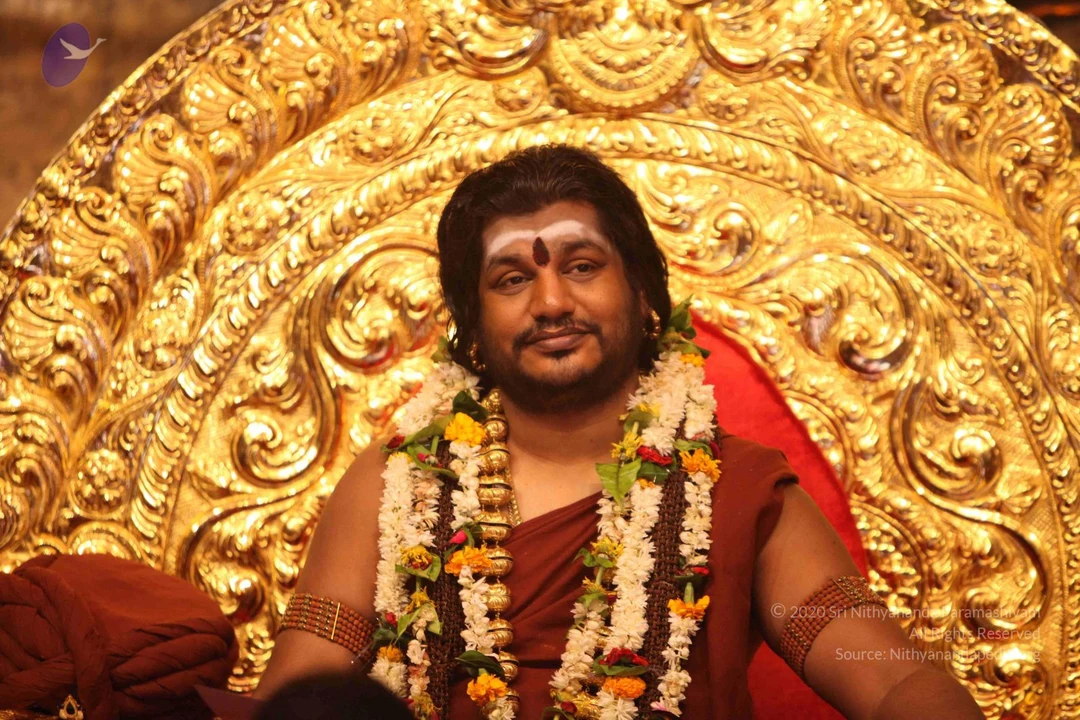
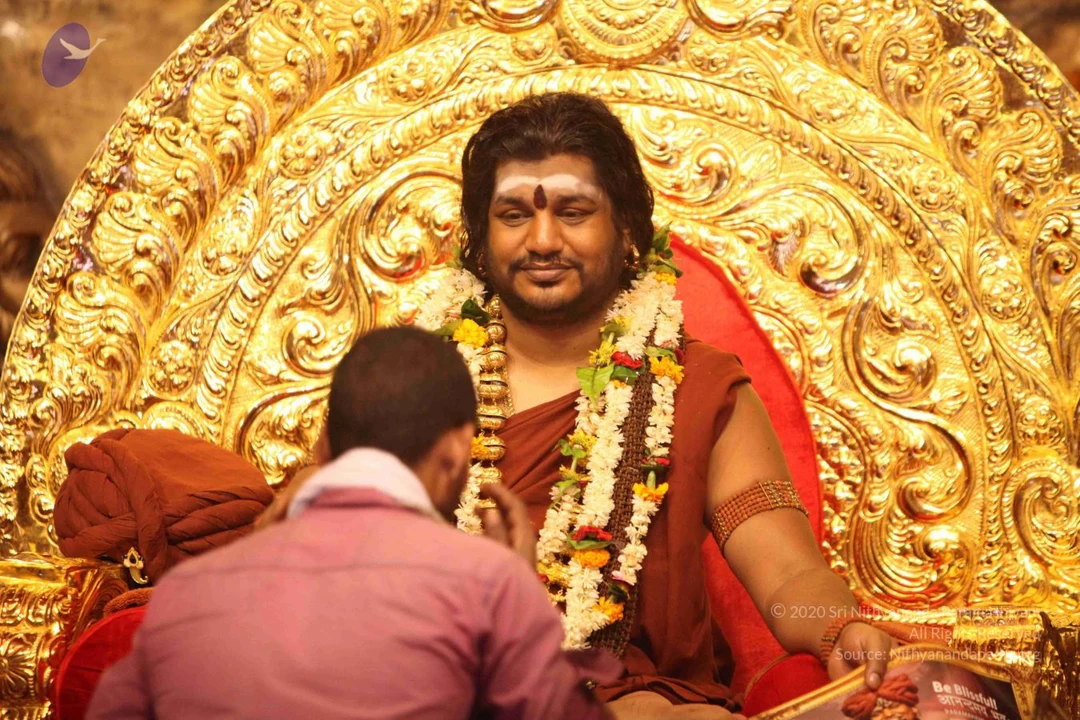
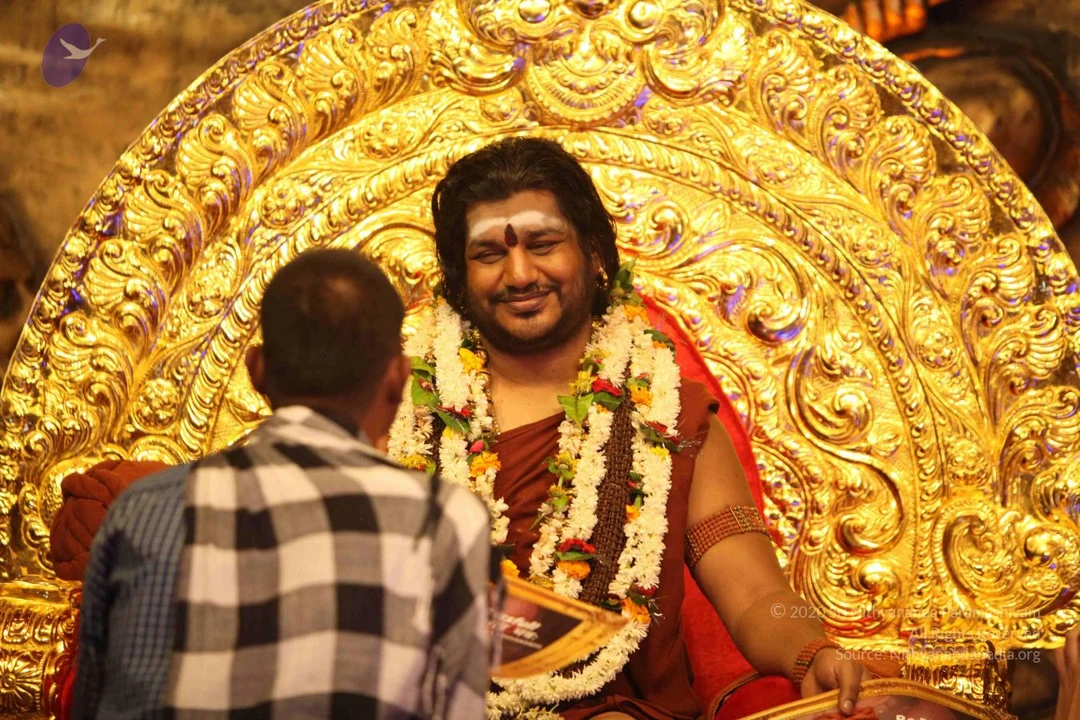
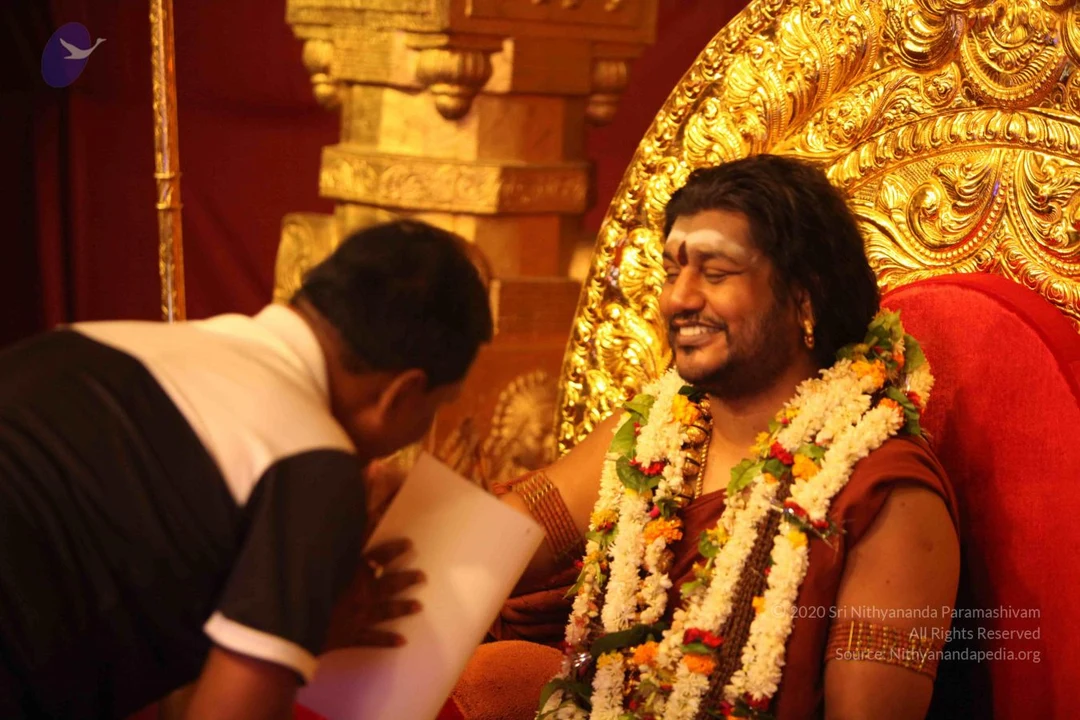
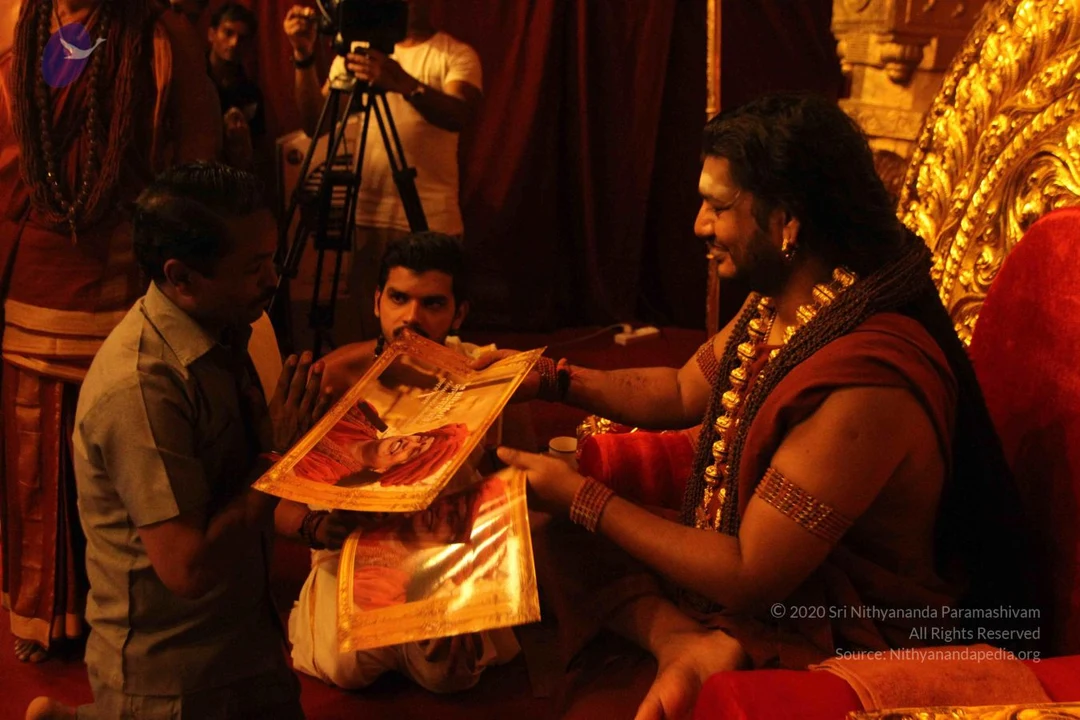
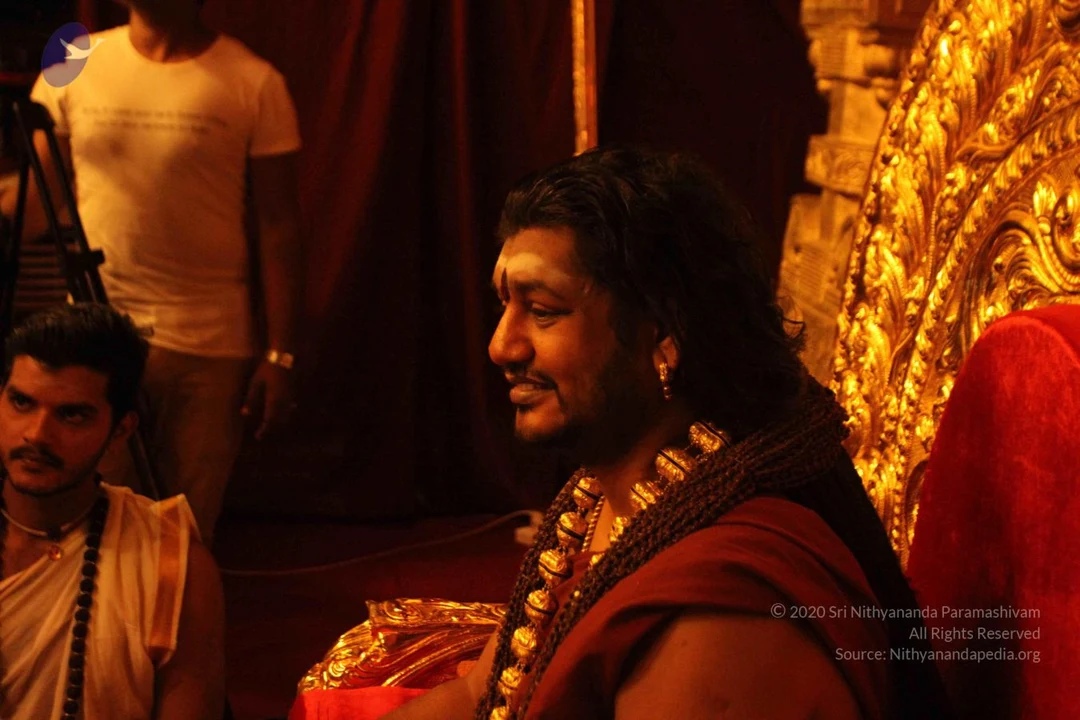
A photograph of a red cloth printed with repeated multi-script text in dark ink, spread out with a tangled heap of red threads and dark beads at its centre, lit by warm light. A small yellow-gold object is partly visible among the beads. No people are visible in the frame, only the cloth and its contents. The cloth carries script lines and the word a person is legible in places.A photograph of several young men standing close together indoors in a warm-lit hall with a pale wall and a dark curtain behind them. The man at left wears a black-and-white checked shawl over a green checked shirt and has a shaved head with a small tuft. The man in the centre wears a cream button-up shirt with a red wrist thread and looks straight ahead. Two men behind him wear dark grey and blue-grey shirts, and a partially visible man at right wears a striped shirt. Their attention appears directed toward something off-frame.Indoor photo of a line of men and boys standing and looking forward in a hall with dark wooden doors and a decorative stained-glass panel. A young boy in front wears white kurta with an orange-saffron shawl and a red rudraksha-style mala, standing with hands clasped. Men beside him wear white shirts, striped polos, checked shawls and a blue denim shirt. A younger boy at right wears a striped blue-and-white shirt. A woman in white with an orange-saffron shawl stands at right with her head bowed. No figure is clearly identifiable as a person.A man seated before an ornate gilded backrest of golden scrollwork with a red cushion behind him. He wears a rust-red saffron-toned cloth over his shoulder, a long garland of white jasmine strands interspersed with orange marigolds and red flowers, a multi-strand rudraksha-style bead necklace with a gold-toned bead, and beaded armlets on both upper arms. He has long dark hair swept back, a white ash band with a red kumkum dot on his forehead, and a smile. A saffron-toned shawl is draped over the bottom left corner of the frame.A seated man on an ornate gold throne with a red cushion, wearing a saffron-orange robe, a thick white floral garland with yellow and red blossoms, a gold bracelet on his upper arm, and a white vibhuti line with a red tilak on his forehead. In the foreground, a man in a pink shirt with a white cloth over his shoulder leans forward toward him. A dark red cloth bundle sits at left.A man seated on an ornate gold throne with a carved gilded backrest, smiling broadly. He wears a white vertical tilak with a red bindi, long swept-back dark hair, a red-brown saffron-toned robe, multiple white and orange flower garlands with a rudraksha mala, and gold bangles on his wrist. In the foreground, a person with a short haircut in a black-and-white checked shirt sits with his back to the camera, facing the throne. Behind the seated figure a red cloth drapes over the chair. The setting appears to be a devotional gathering.

Pada-Puja

85 photosSource gallery
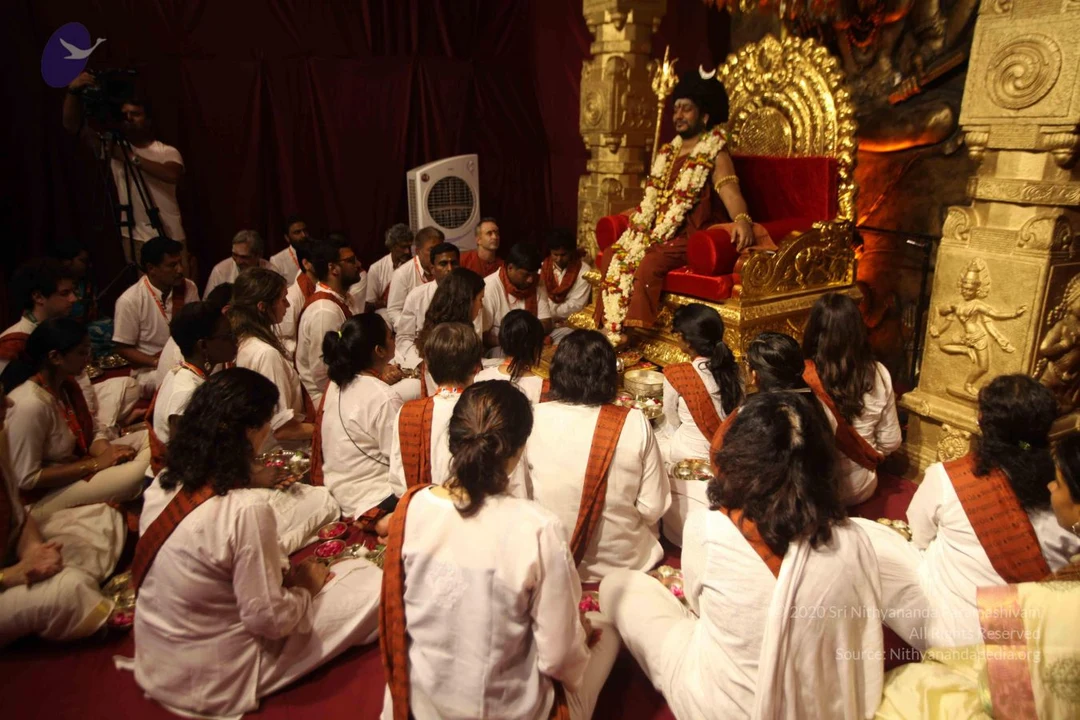
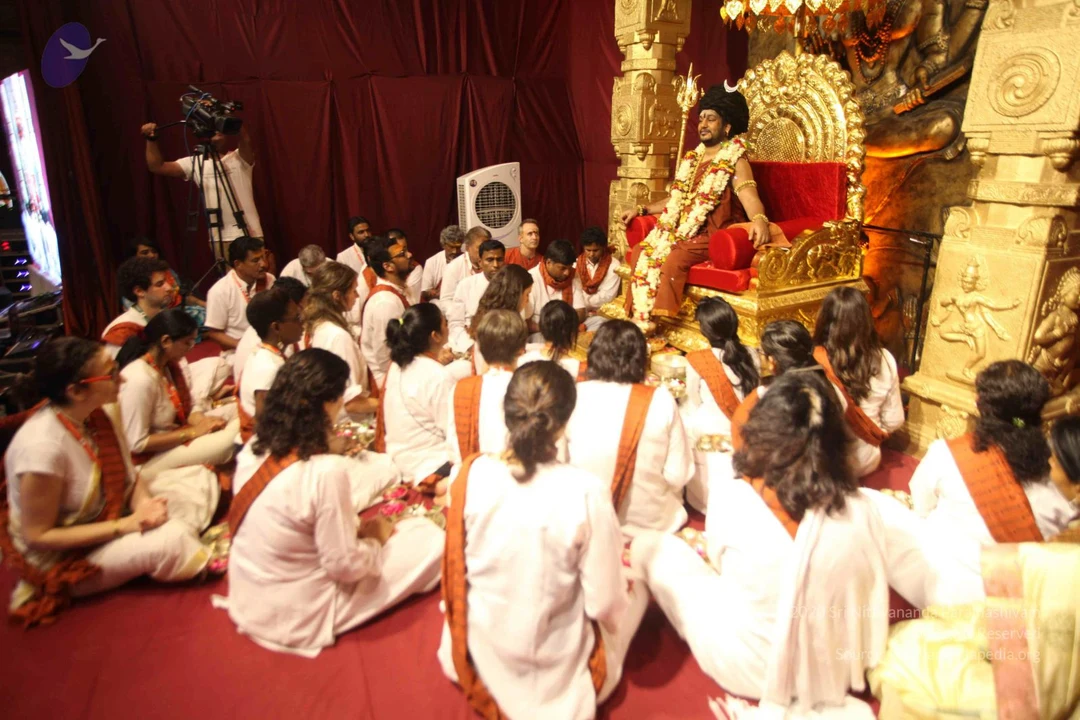
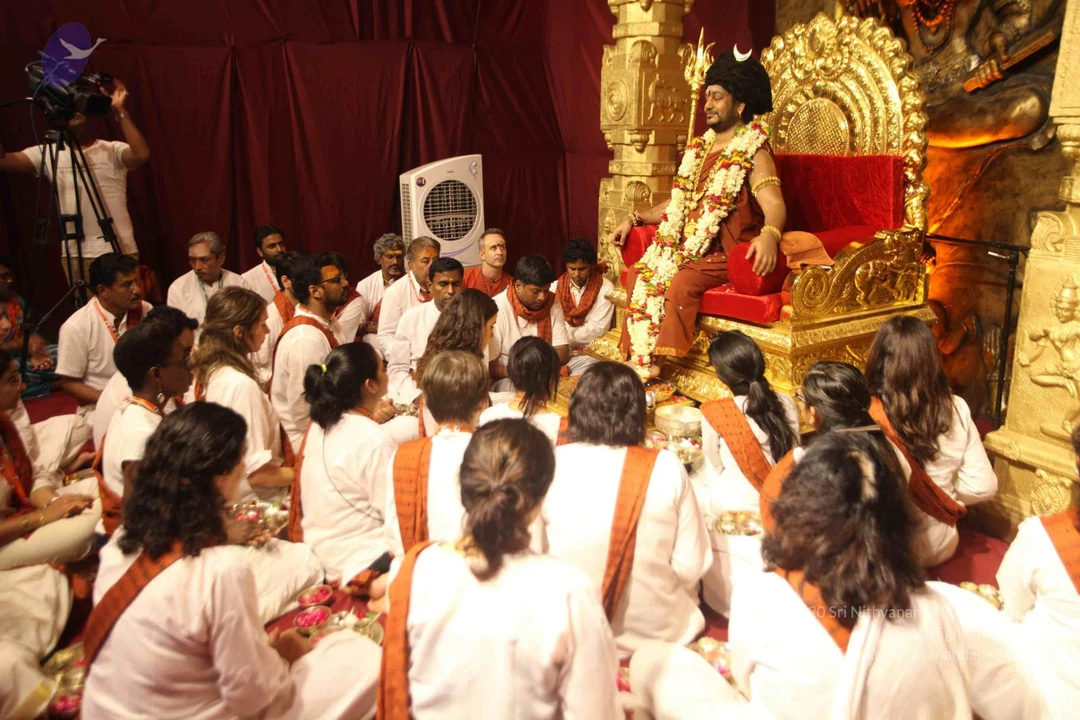
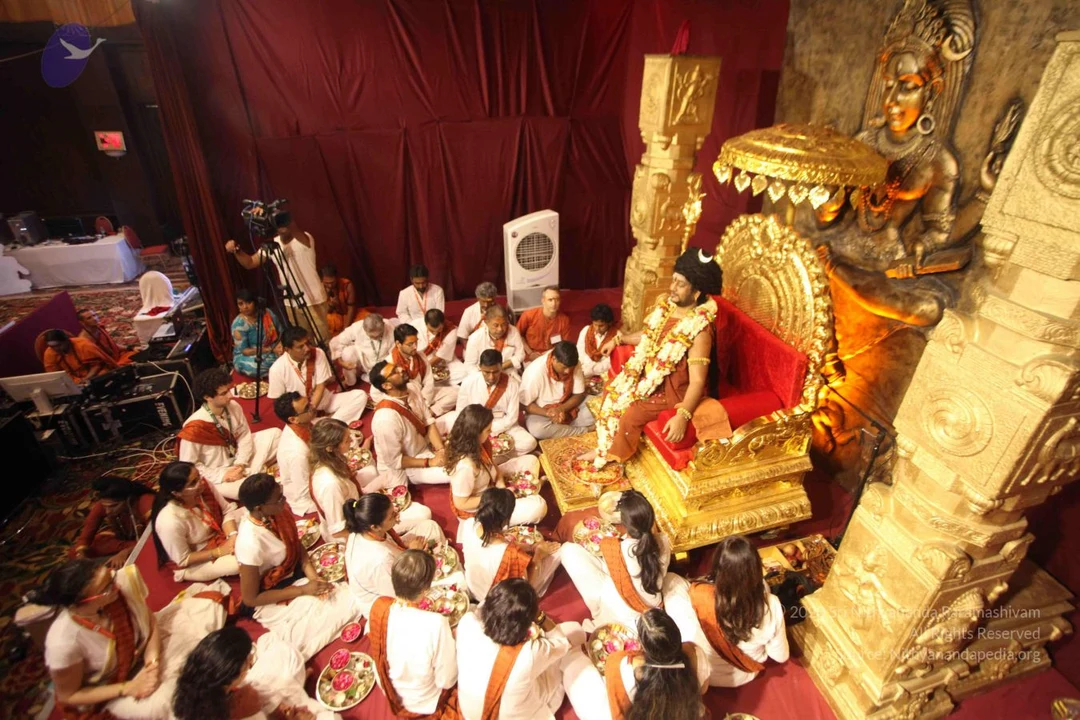
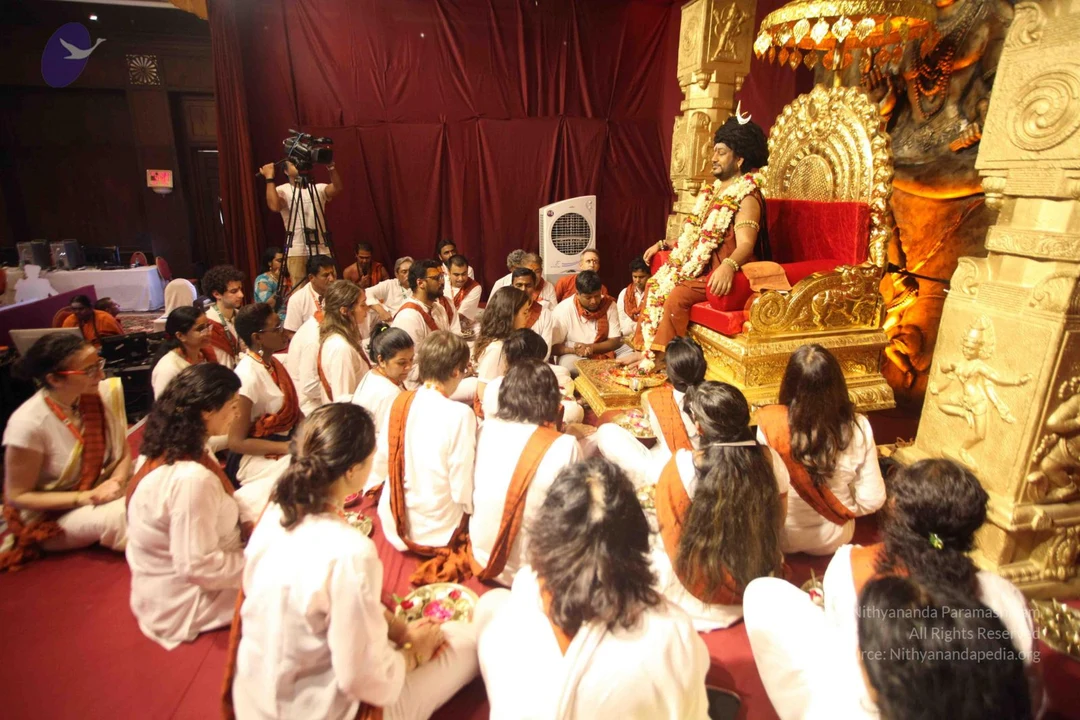
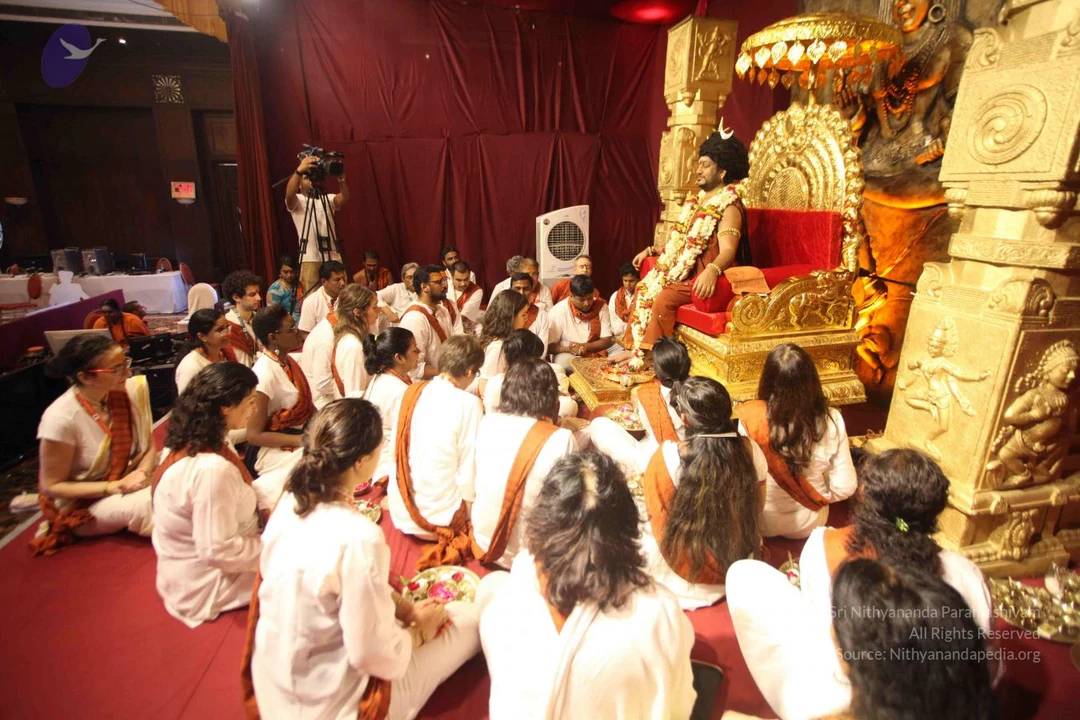
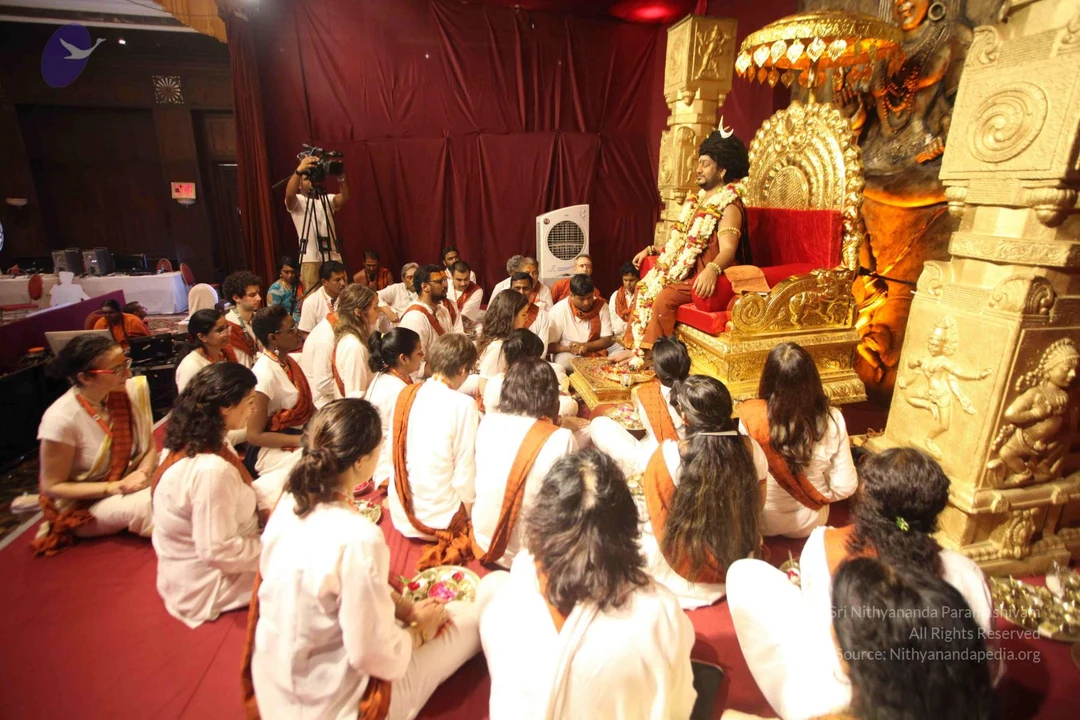
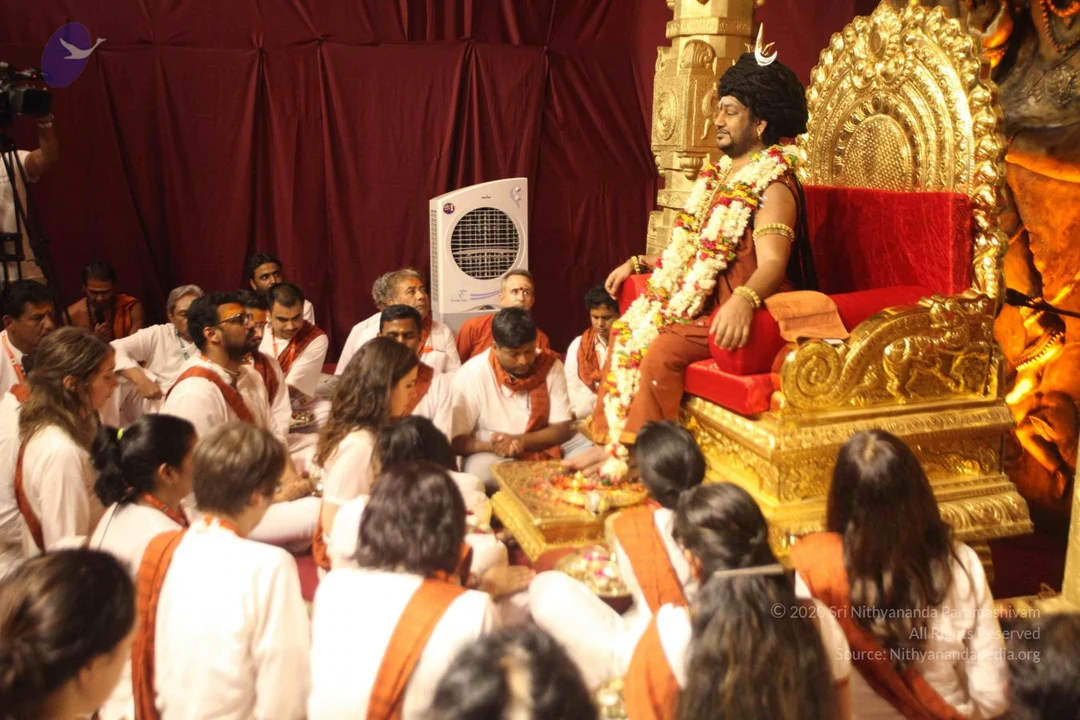
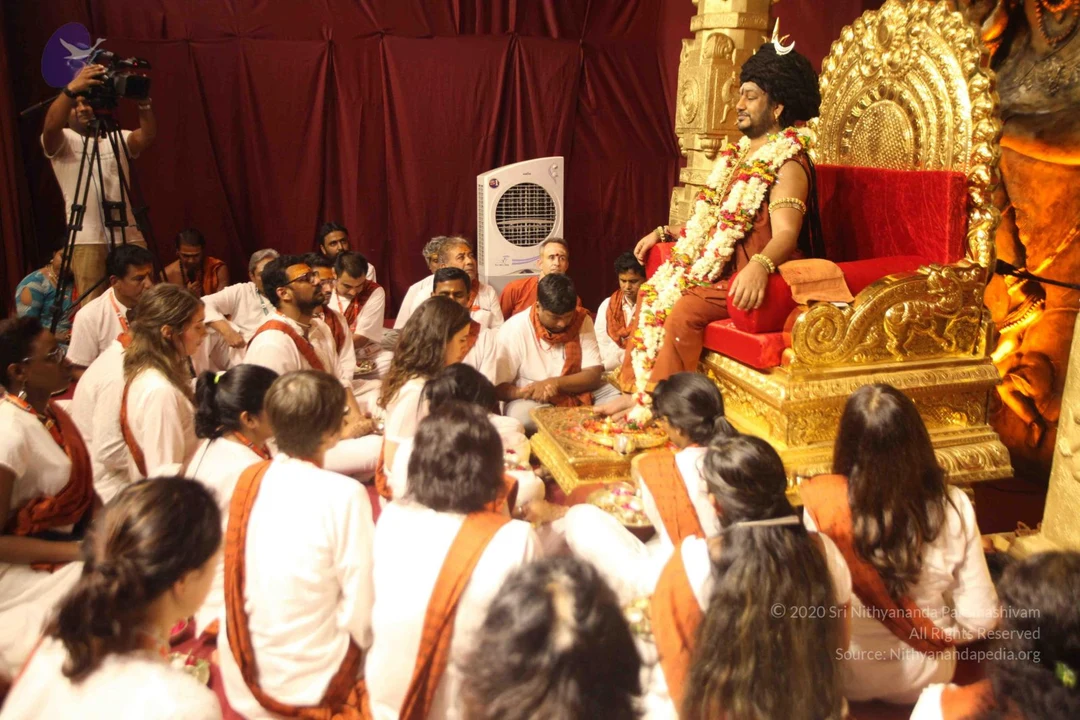
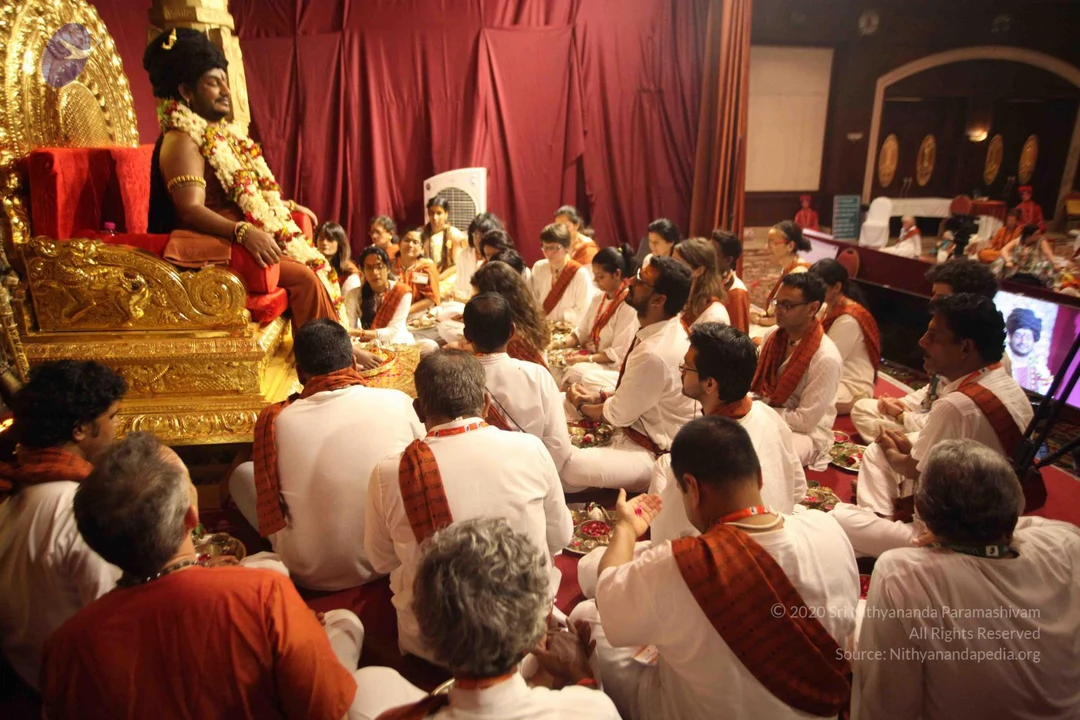
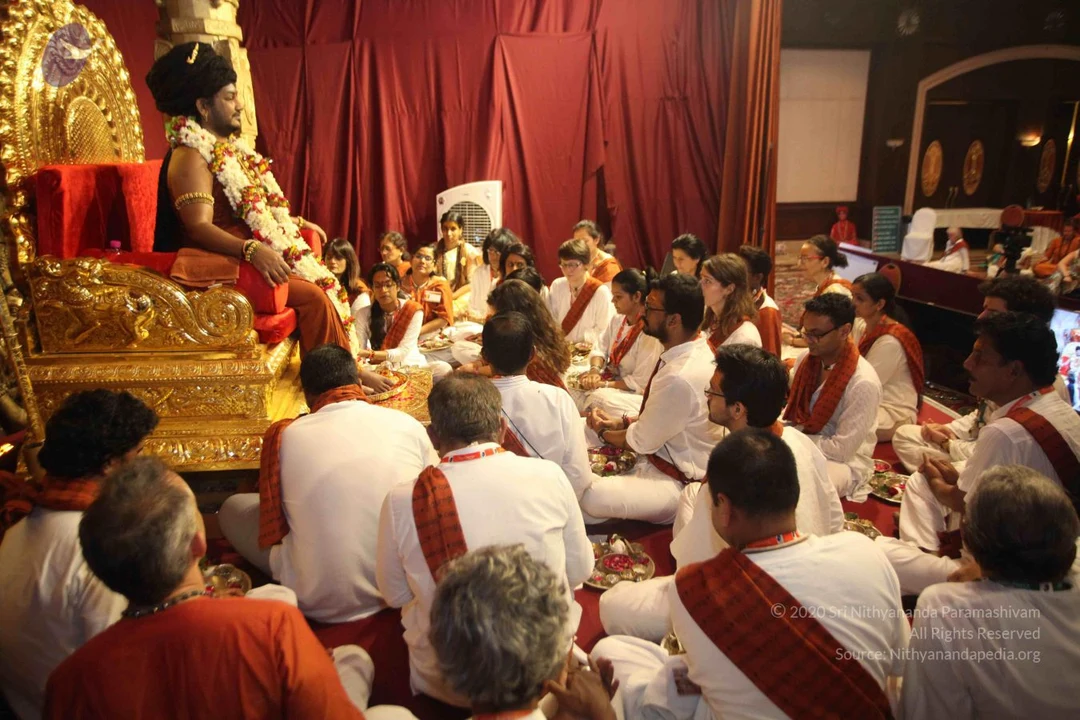
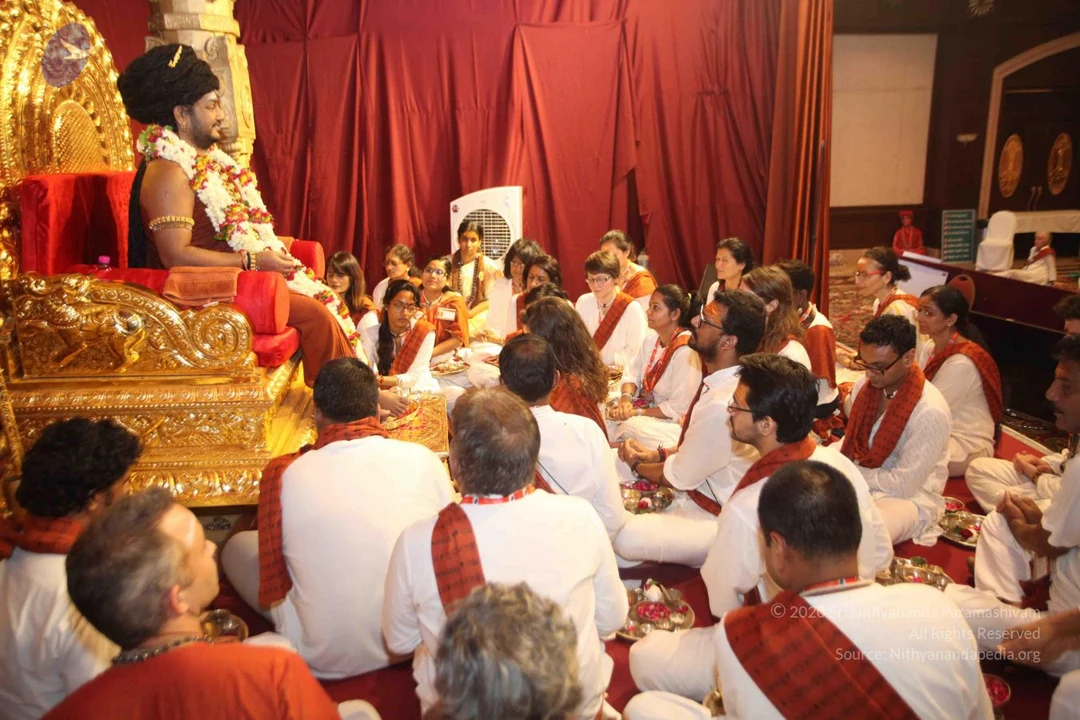
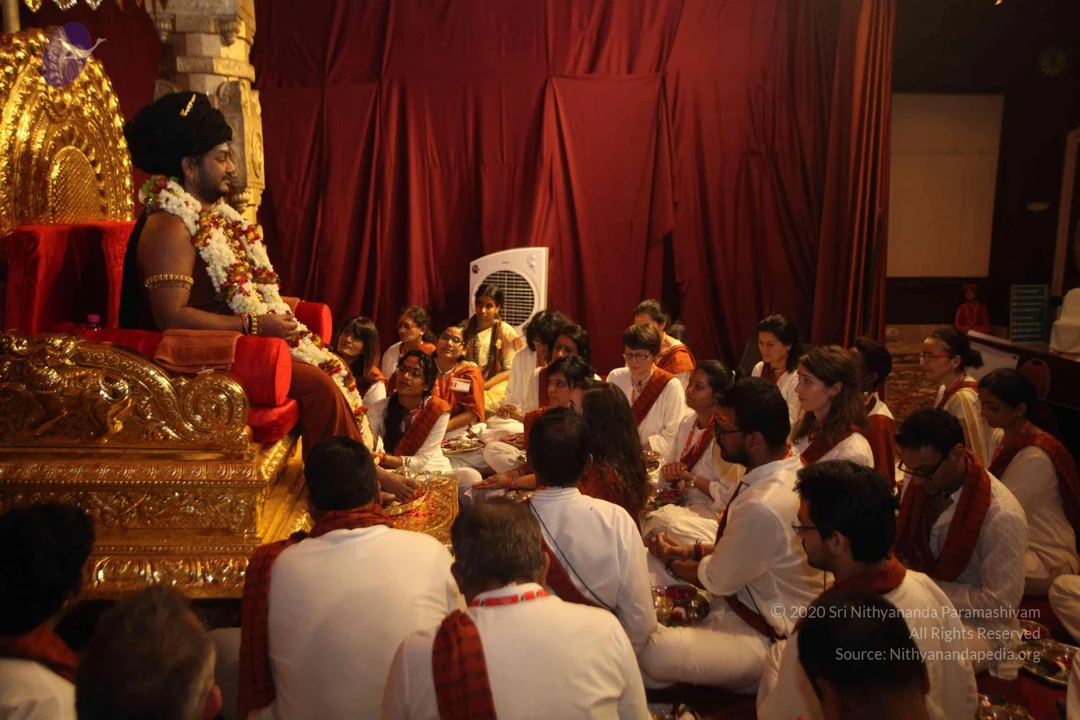
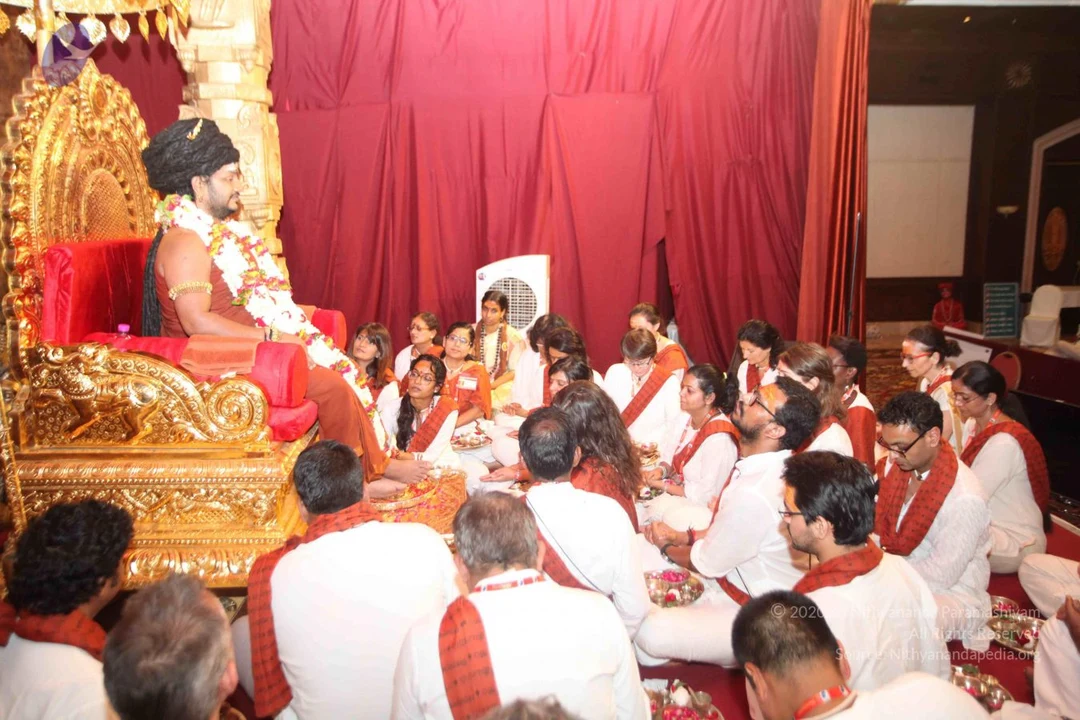
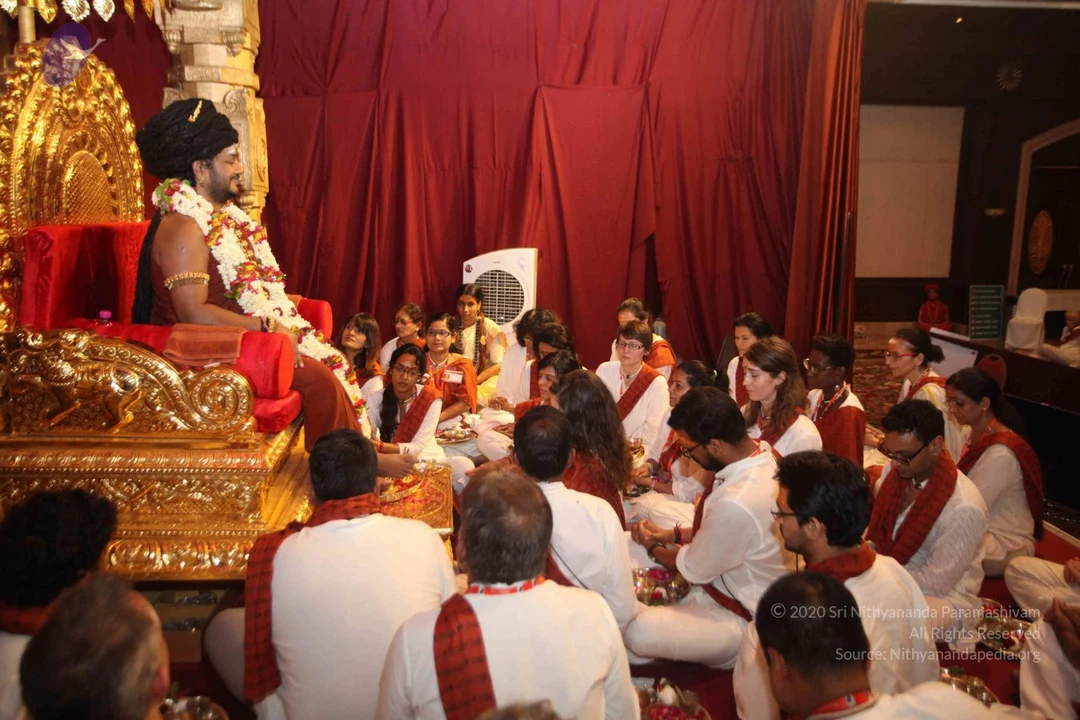
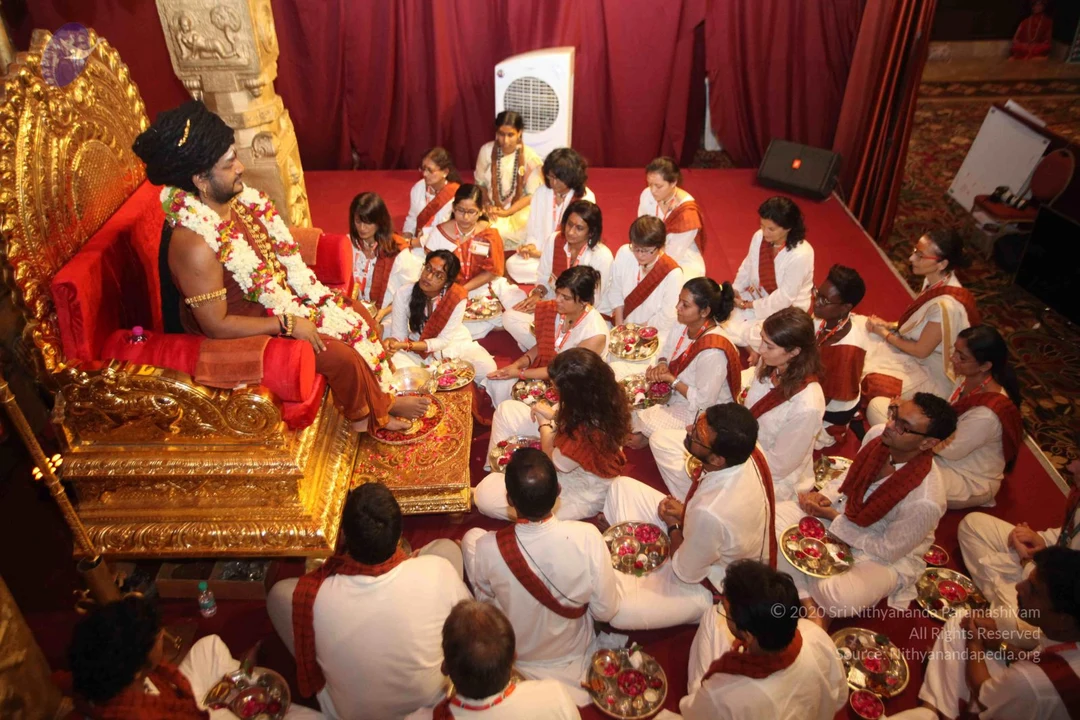
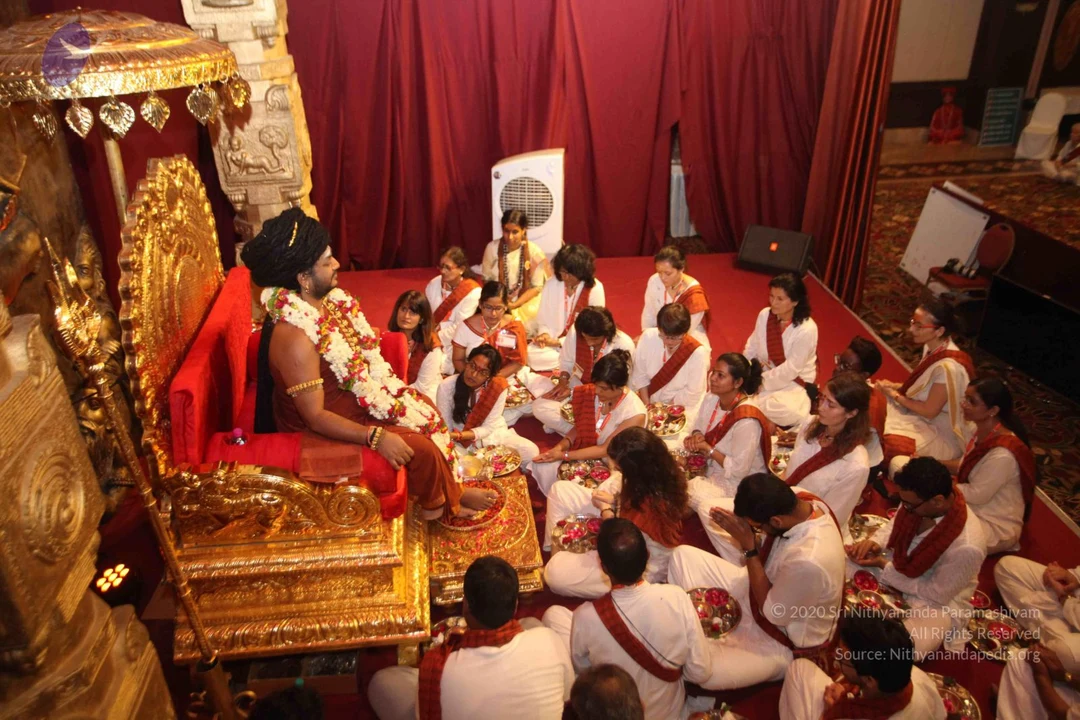
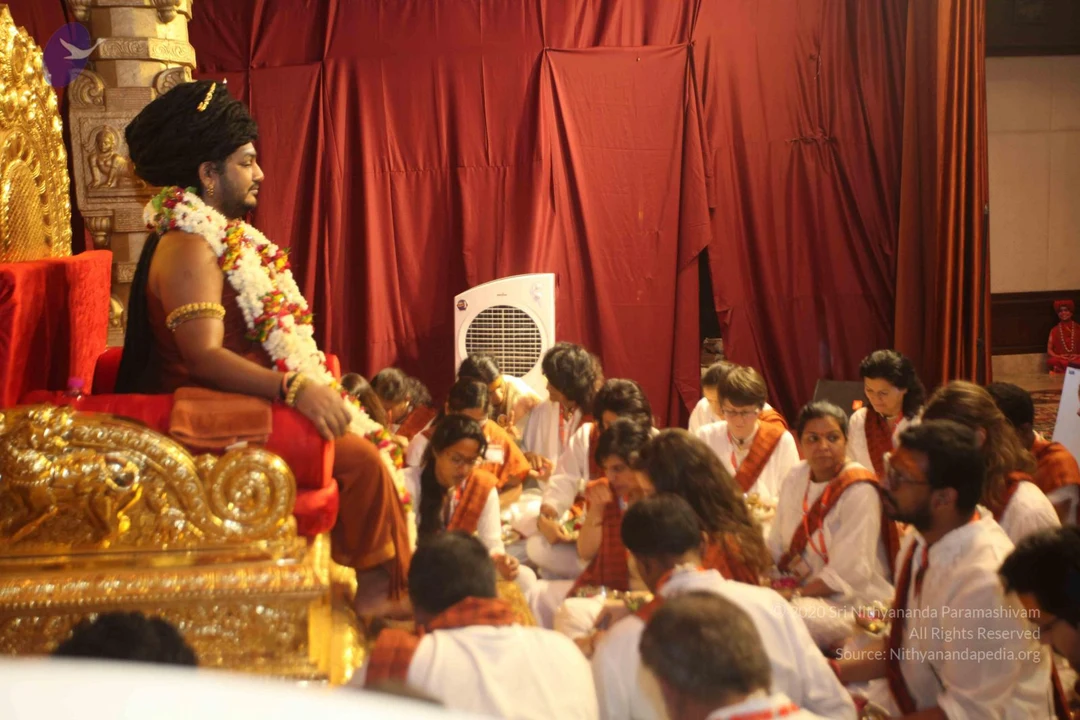
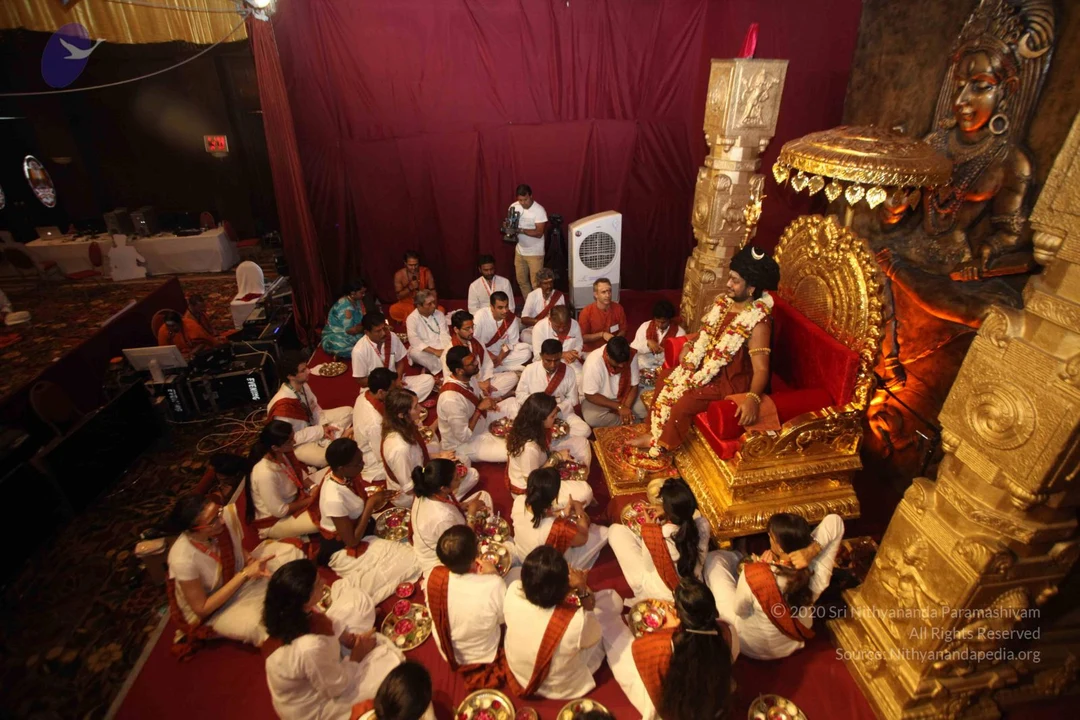
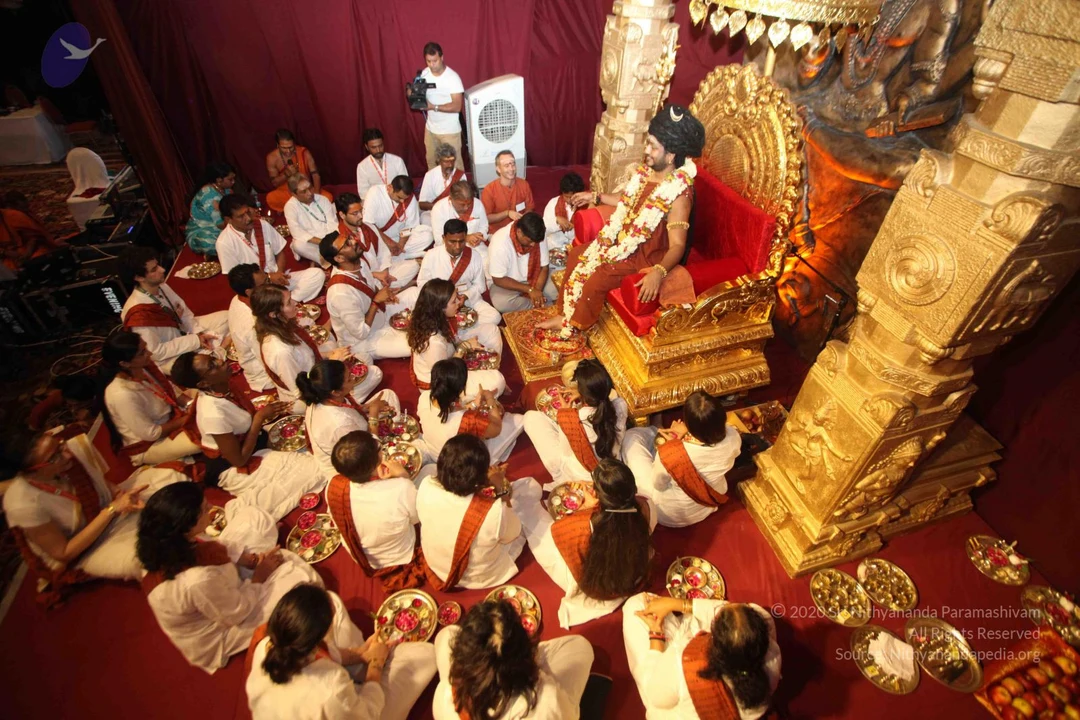
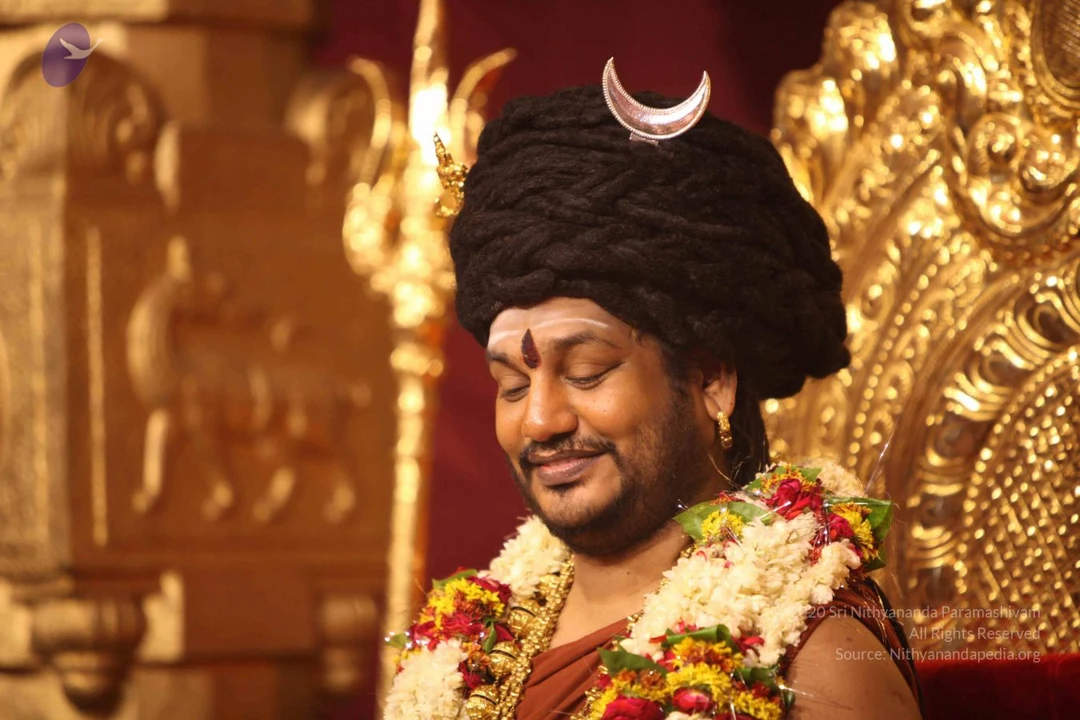
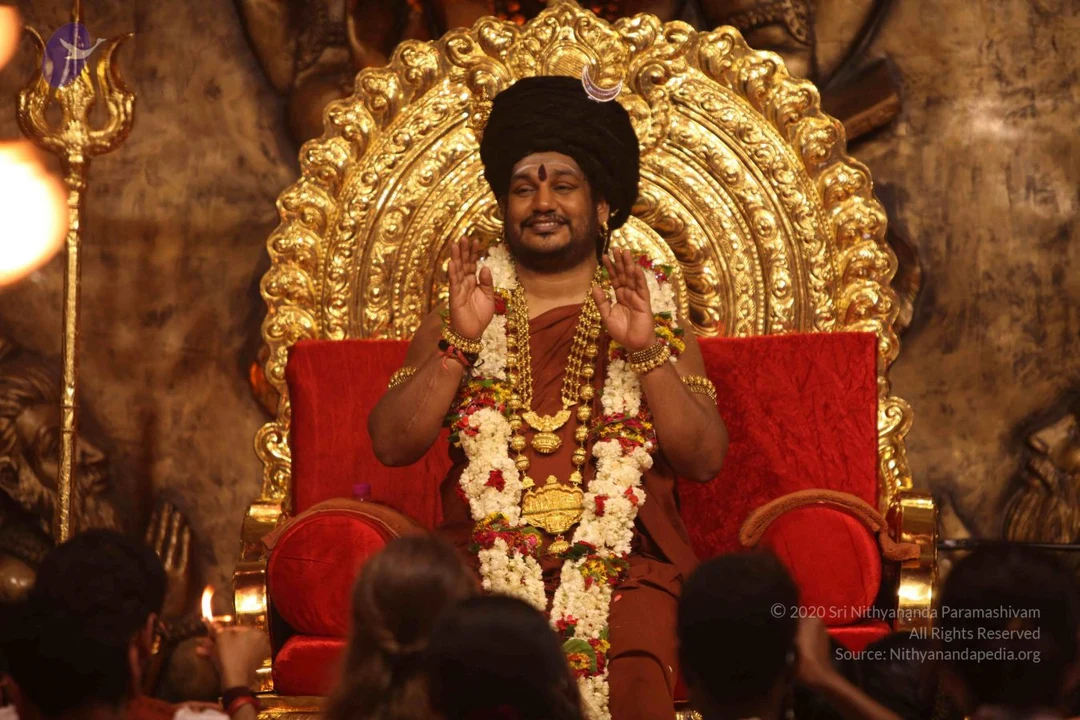
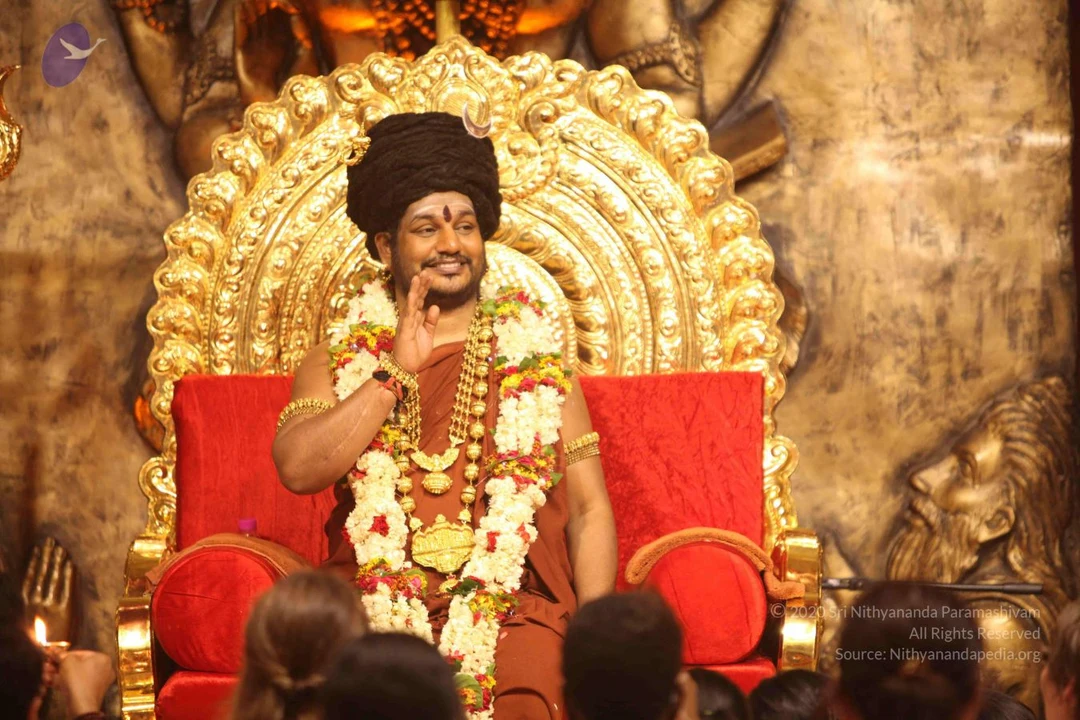
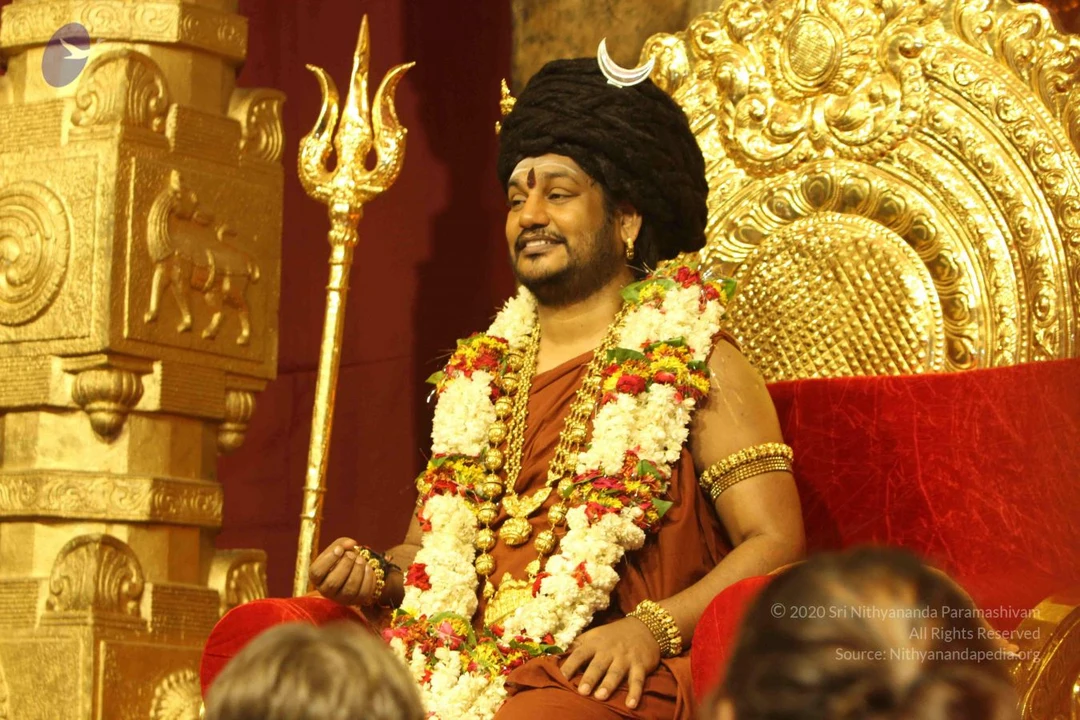
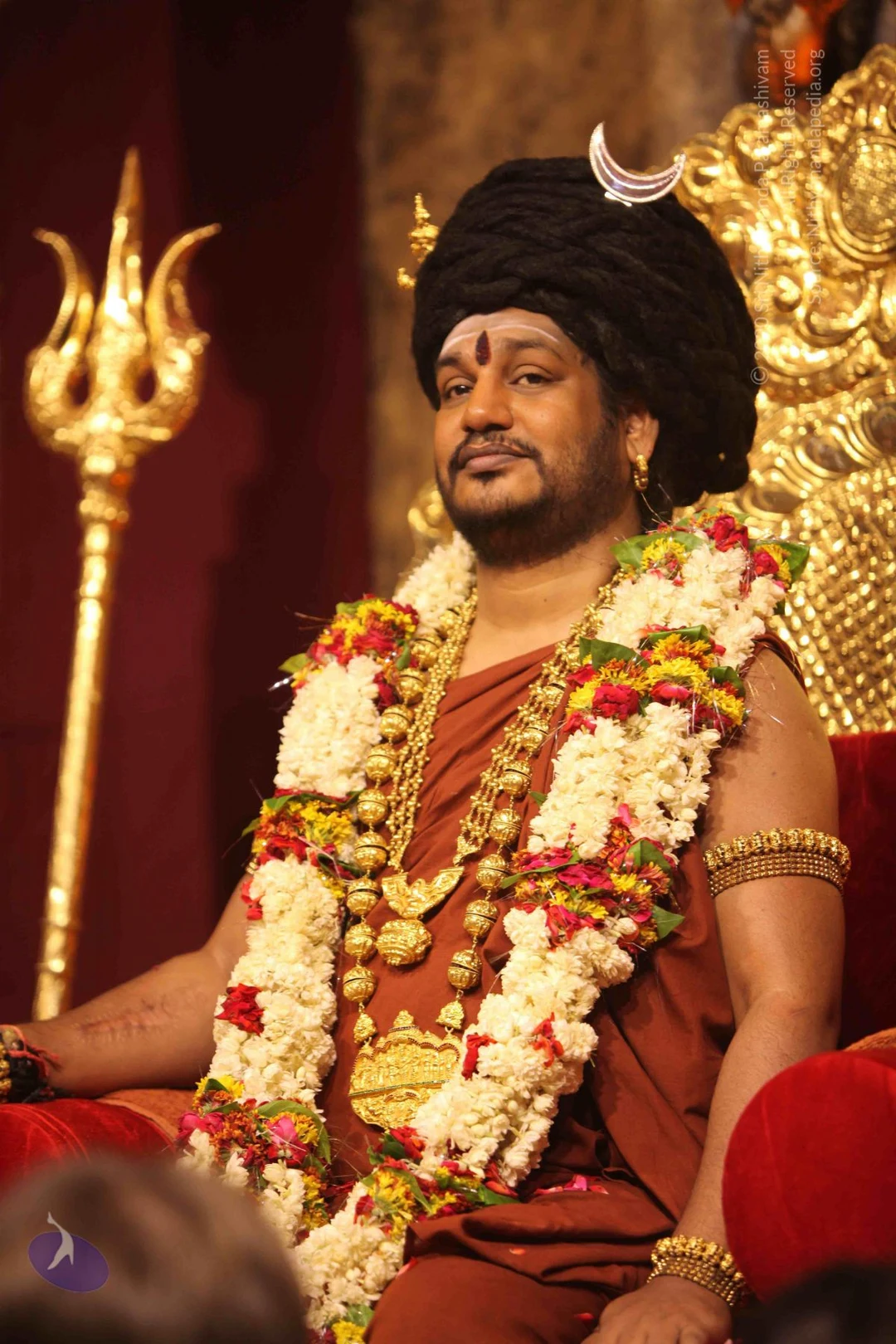
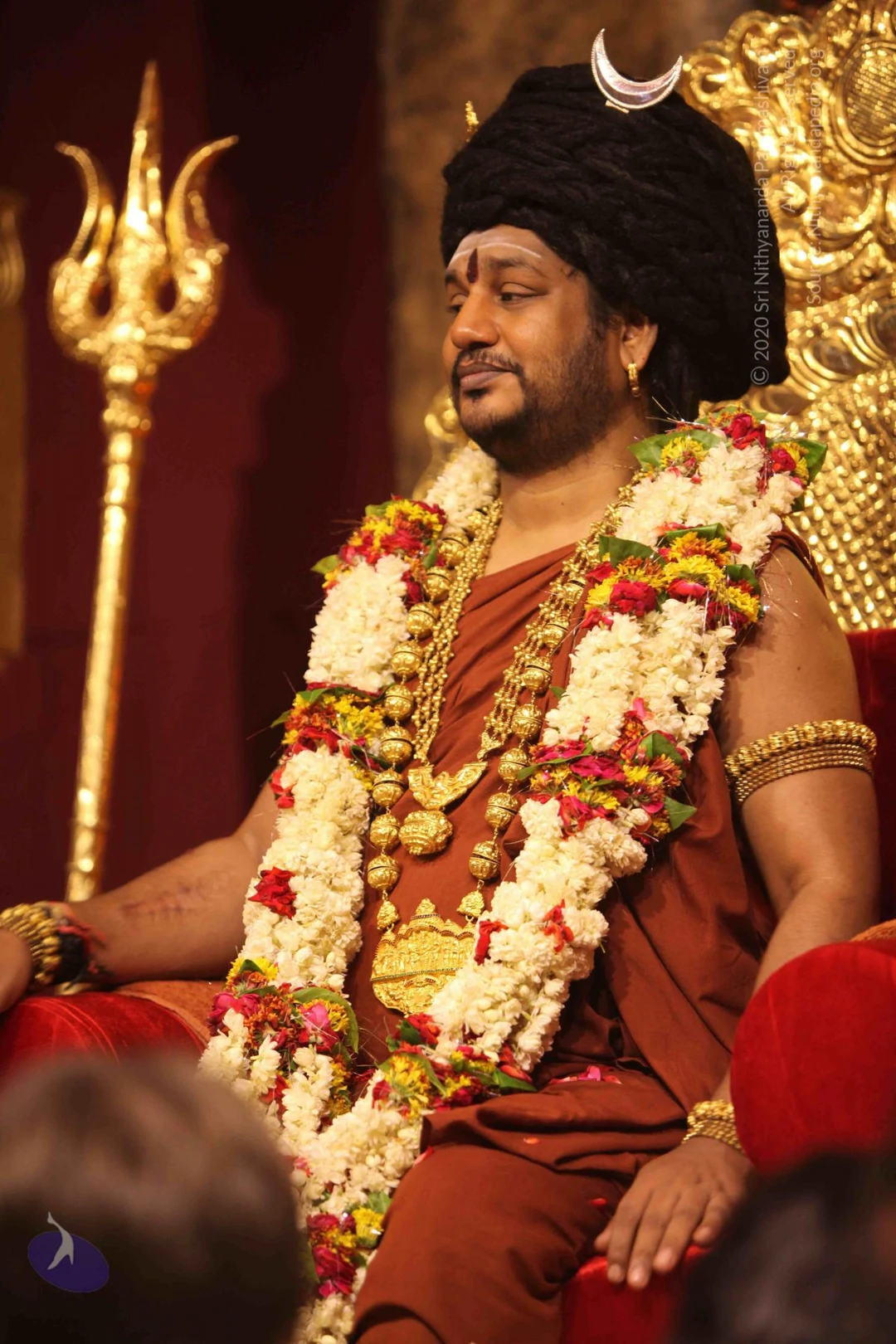
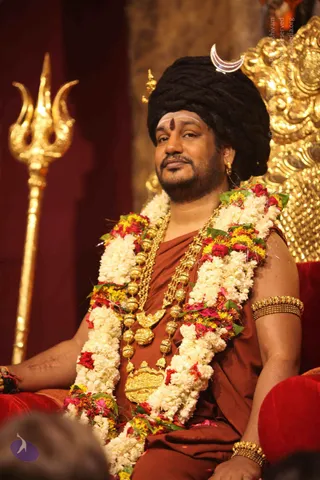
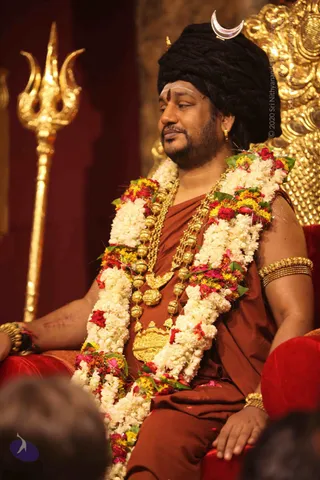
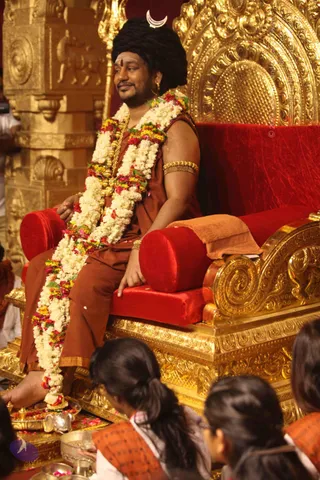
A man in saffron-orange robes sits on an ornate gold throne with red cushioned armrests and a gilded arched backrest. He wears a tall black turban, a red tilak on his forehead, layered gold necklaces and a thick garland of white and multicoloured flowers. He smiles and raises his right hand in a wave toward a seated audience, with the backs of several heads visible in the foreground. The walls behind are golden with carved relief figures. Appearance-based label: Swamiji (probable), seated in a satsang setting, identified by the saffron robe, turban, ornate gold throne and gold ceremonial necklaces.A photograph of a bearded man seated in meditation on an ornate gilded throne with a red velvet seat cushion and red armrest pads. He wears a tall dark turban-style head covering with a small crescent ornament, a saffron-orange robe, multiple layers of gold beaded necklaces and a gold pendant, gold bangles, and garlands of white jasmine and red-and-green flowers. His eyes are closed and his right hand rests on the armrest. A golden trident stands at the left edge, and the blurred silhouettes of several seated devotees fill the lower foreground. Swamiji (probable) is shown in the seated teaching position with distinctive turban, saffron clothing and rudraksha-style gold adornments, in a satsang setting.A man with a large black turban and a crescent moon ornament sits before a gilded background beside a golden trident. He wears a saffron-orange robe, a heavy gold necklace and multiple garlands of white jasmine and red and yellow flowers. He has a white forehead mark with a red bindi, gold earrings, and his eyes are lowered in a calm, smiling expression. a person by appearance cues: long dark turban, crescent crown ornament, saffron clothing and ornate gold necklace. A golden trident stands at left and an ornate gold relief panel fills the right background.A photograph of a bearded man seated before an ornate gold throne, wearing a tall black turban decorated with a silver crescent ornament and a gold fitting at the front. He has a red bindi and white tilak on his forehead, gold earrings, and a saffron-orange cloth draped over his shoulders. Several garlands of white jasmine and red-yellow flowers hang across his chest over a heavy gold necklace of round bells. A large gold trident stands to the left against a deep red curtain. The man's eyes are lowered and his expression is calm. Visual cues consistent with the page's Swamiji reference include the crescent-topped turban, saffron cloth, rudraksha-style gold necklace and ceremonial setting, so the candidate is Swamiji (probable), seated in person.A man seated on a red velvet throne with an ornate gold carved back, gazing upward. He wears a tall black turban with a small crescent ornament, an orange-brown saffron-toned robe, layered gold necklaces with round gold beads, a gold armlet, and thick garlands of white jasmine and red-orange flowers. A tripod-like golden trident stands behind him beside a carved stone pillar.A photograph of a satsang in a temple hall with red draped walls and ornate gold carved pillars. A man with long dark hair, a crown-like head covering, a red-orange cloth wrap and a white flower garland sits on a gold and red throne at right, holding a trident-like staff, a person. Around him, about two dozen devotees sit on red cloth in white kurtas and white clothing with orange-red shawls, many holding small brass plates. A camera operator on a tripod stands at upper left. Golden deity sculptures decorate the pillars.

Shivoham-Process

37 photosSource gallery
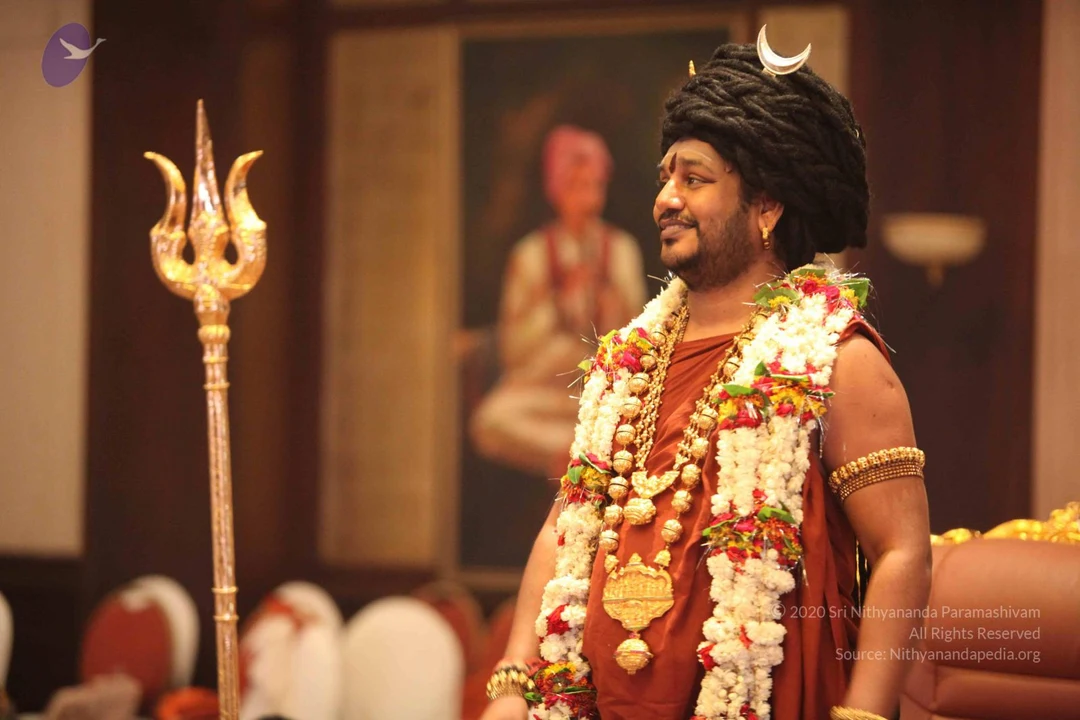
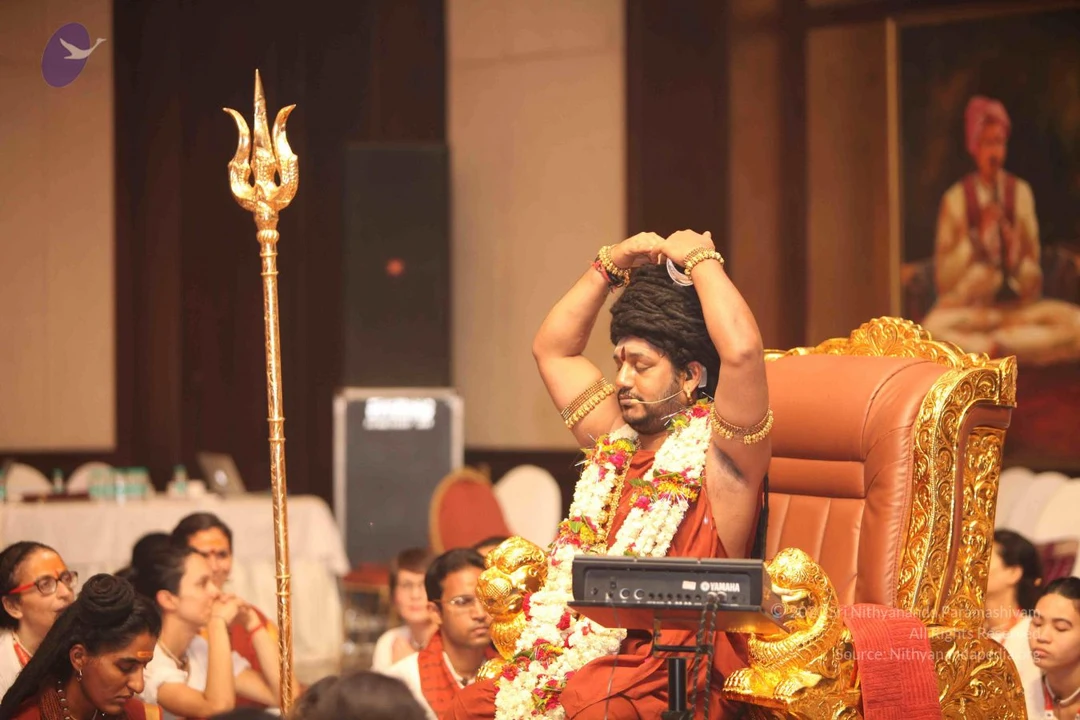
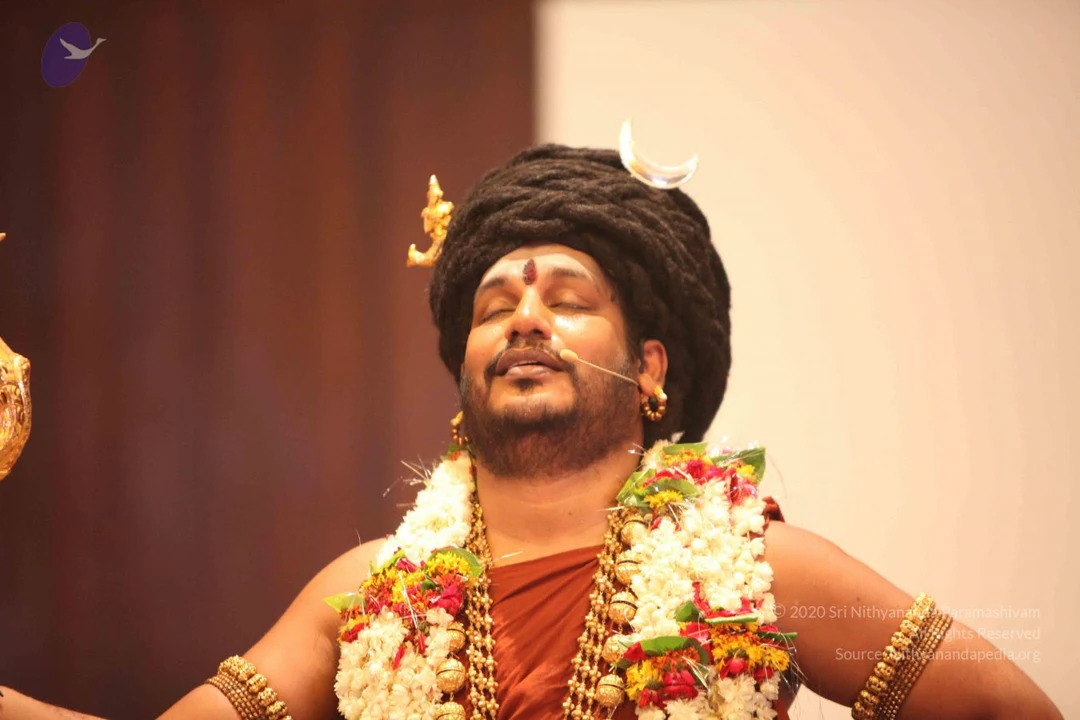
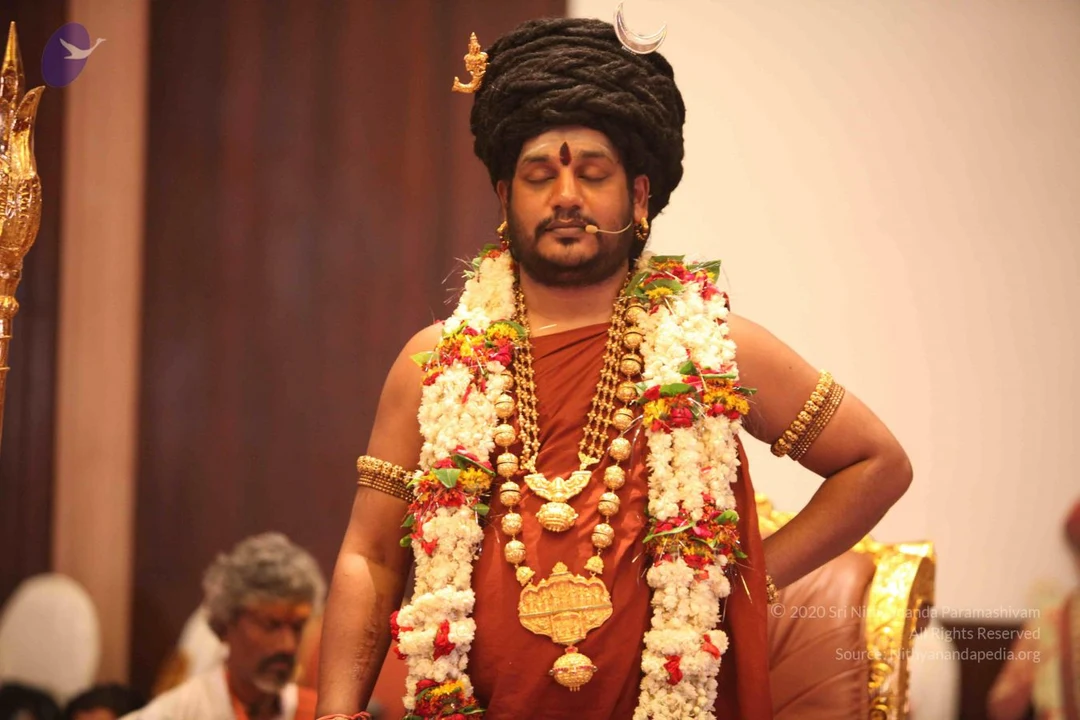
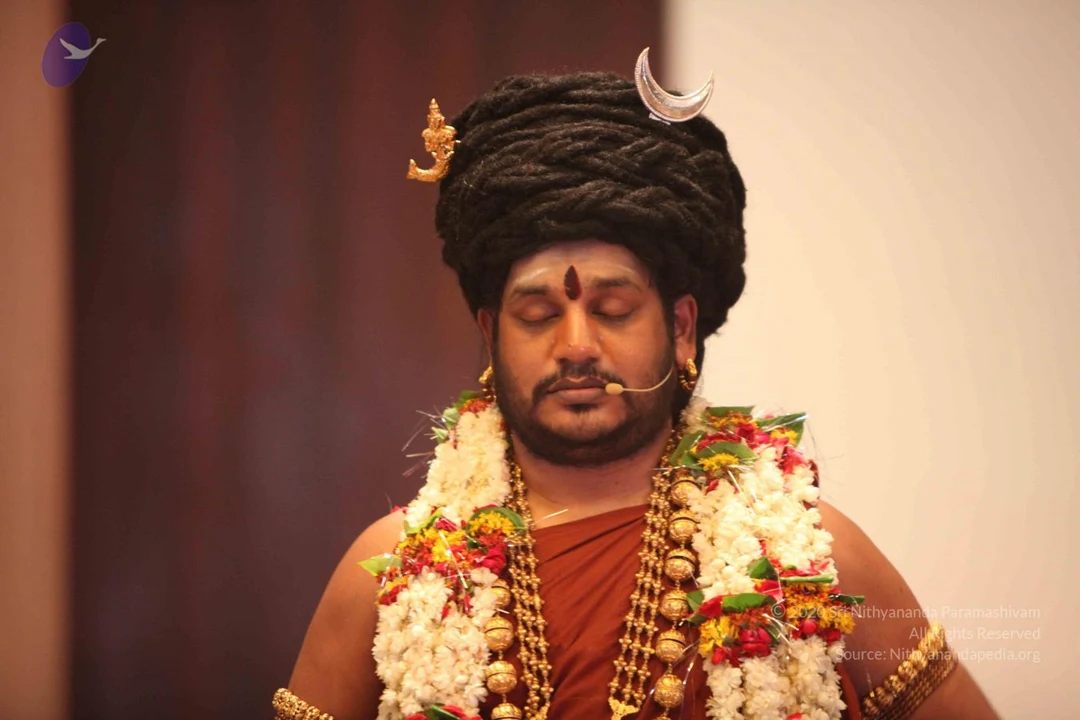
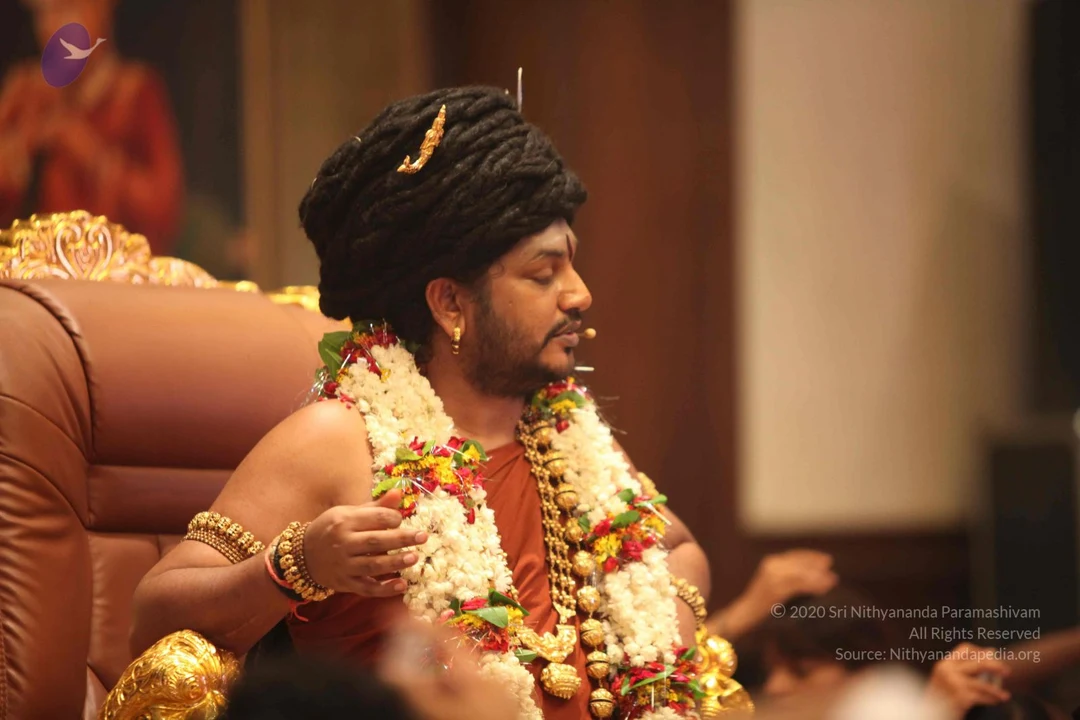
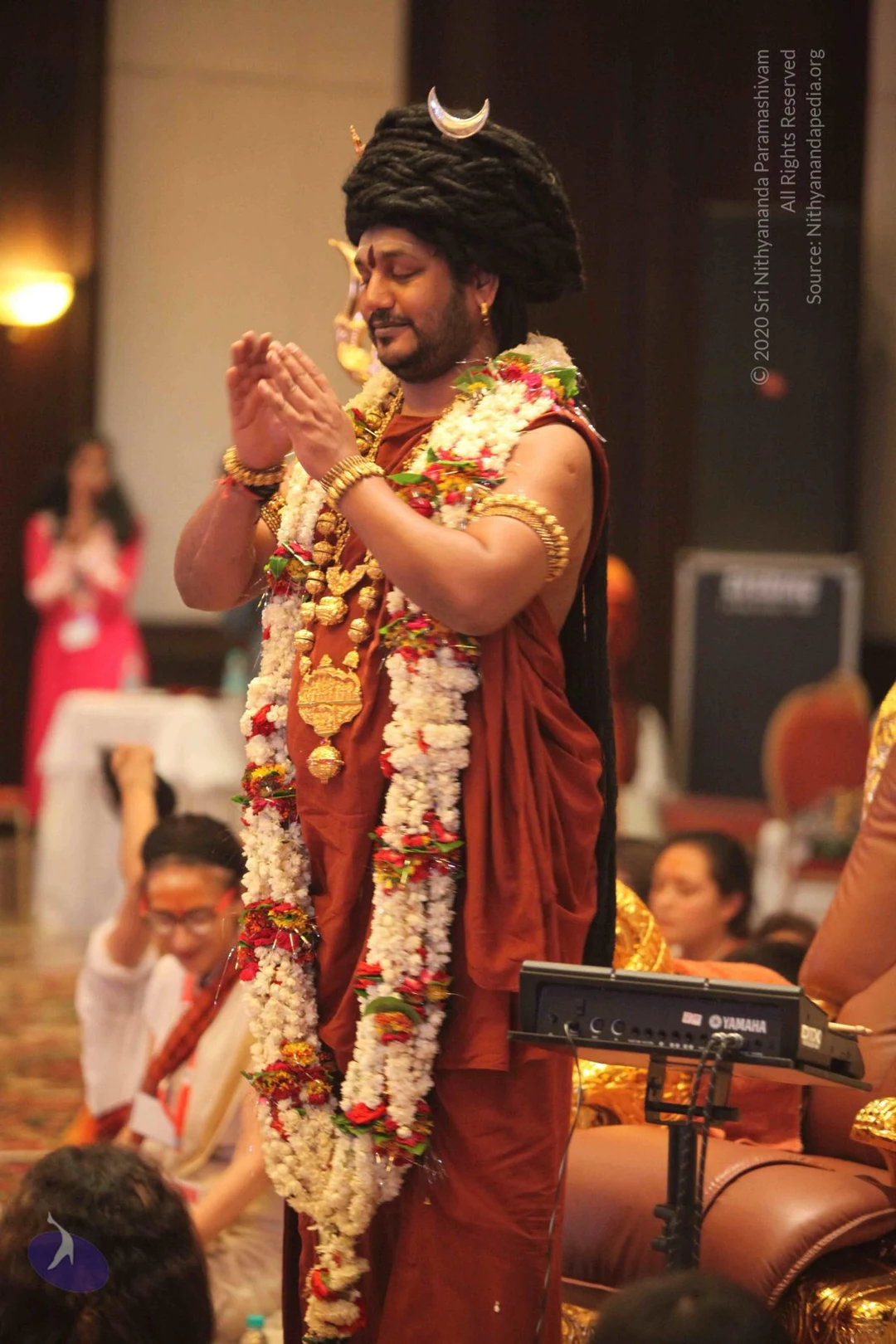
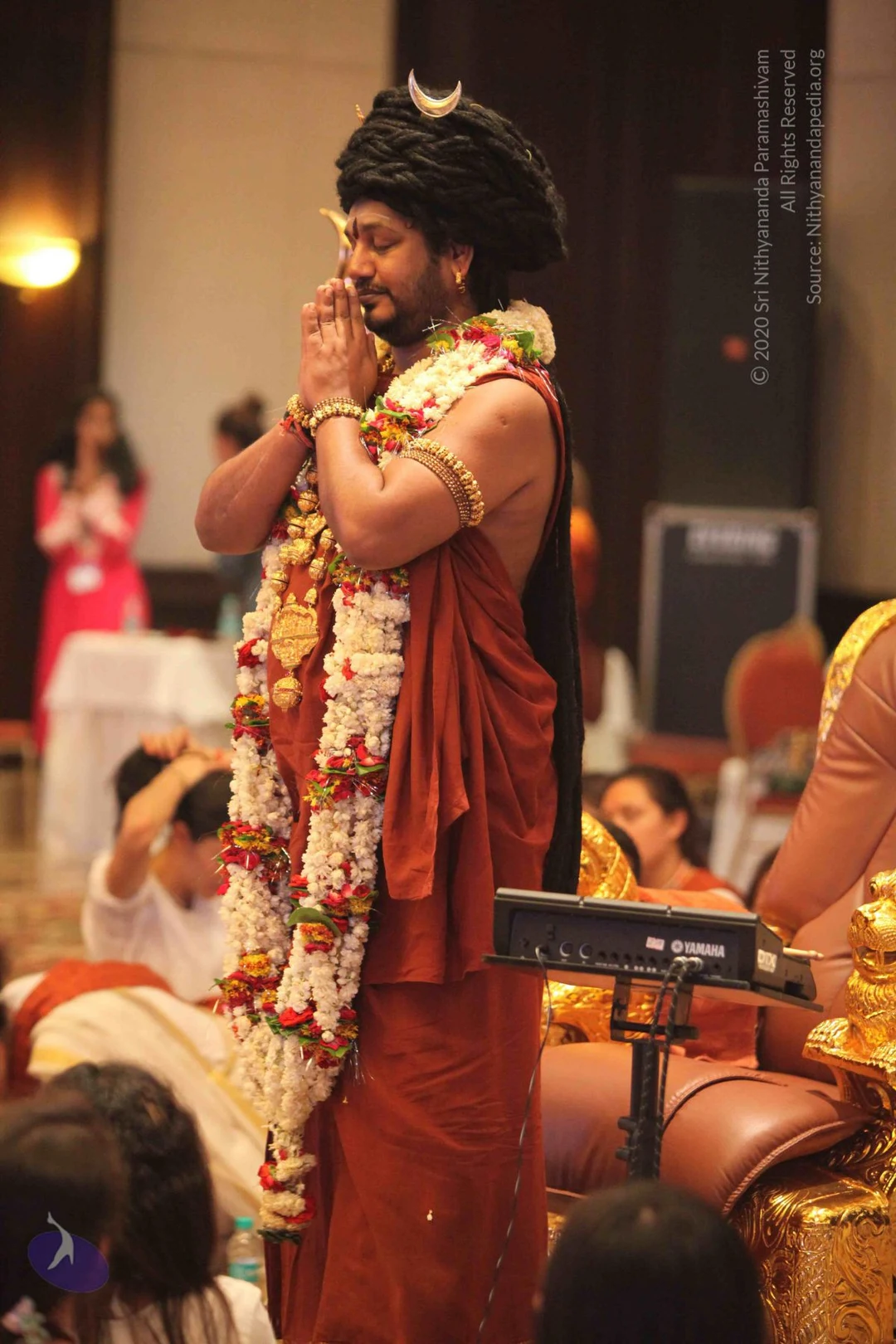
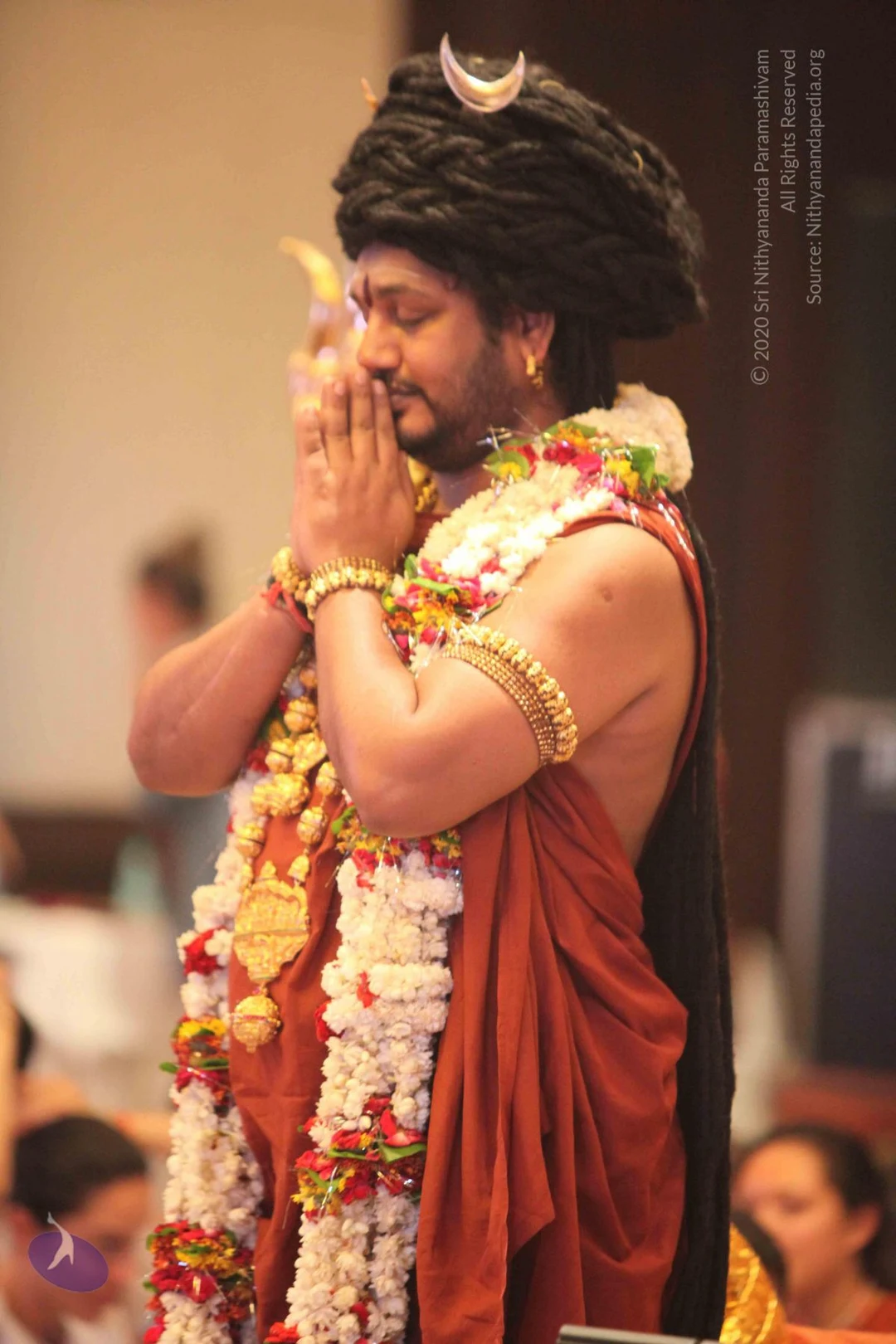
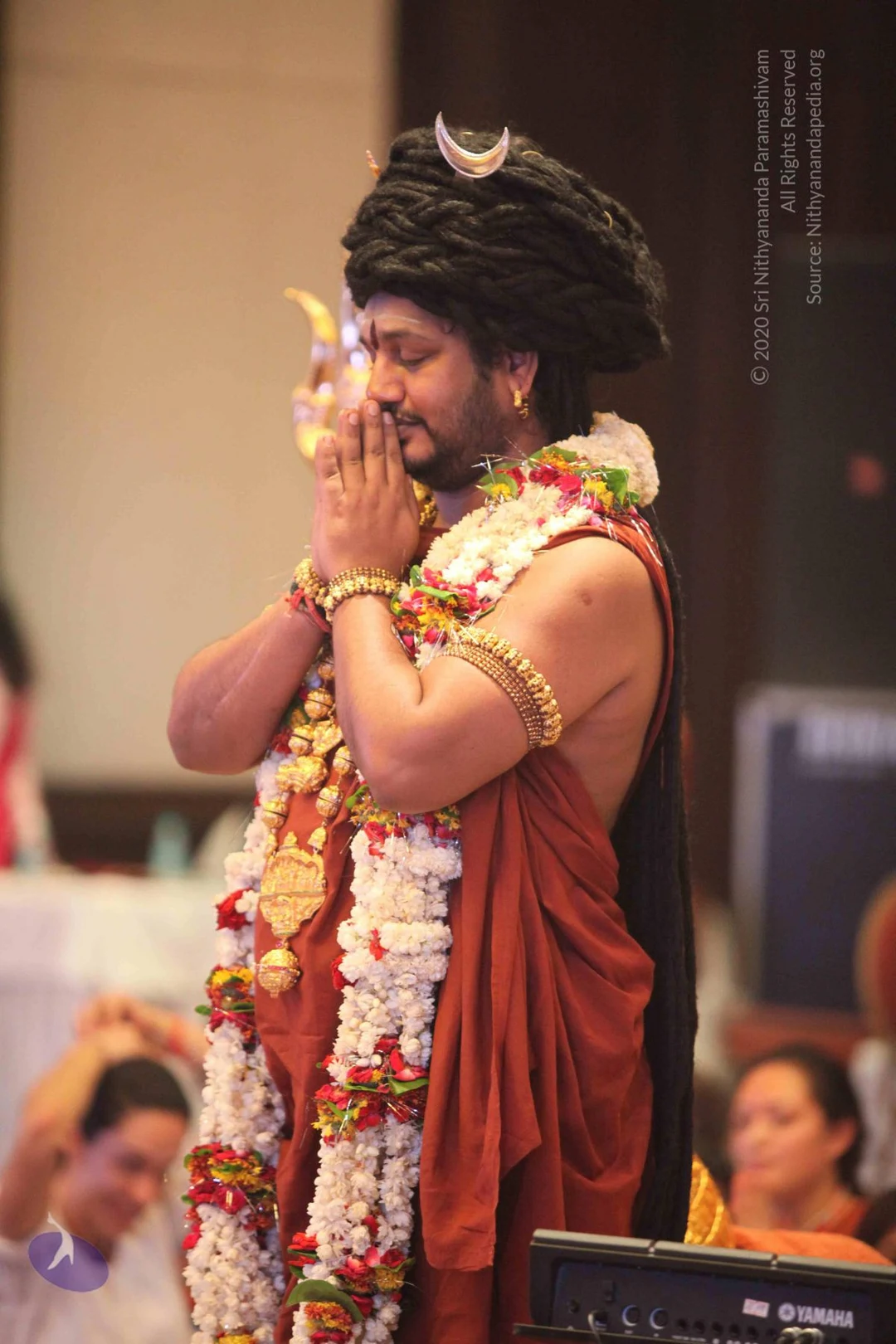
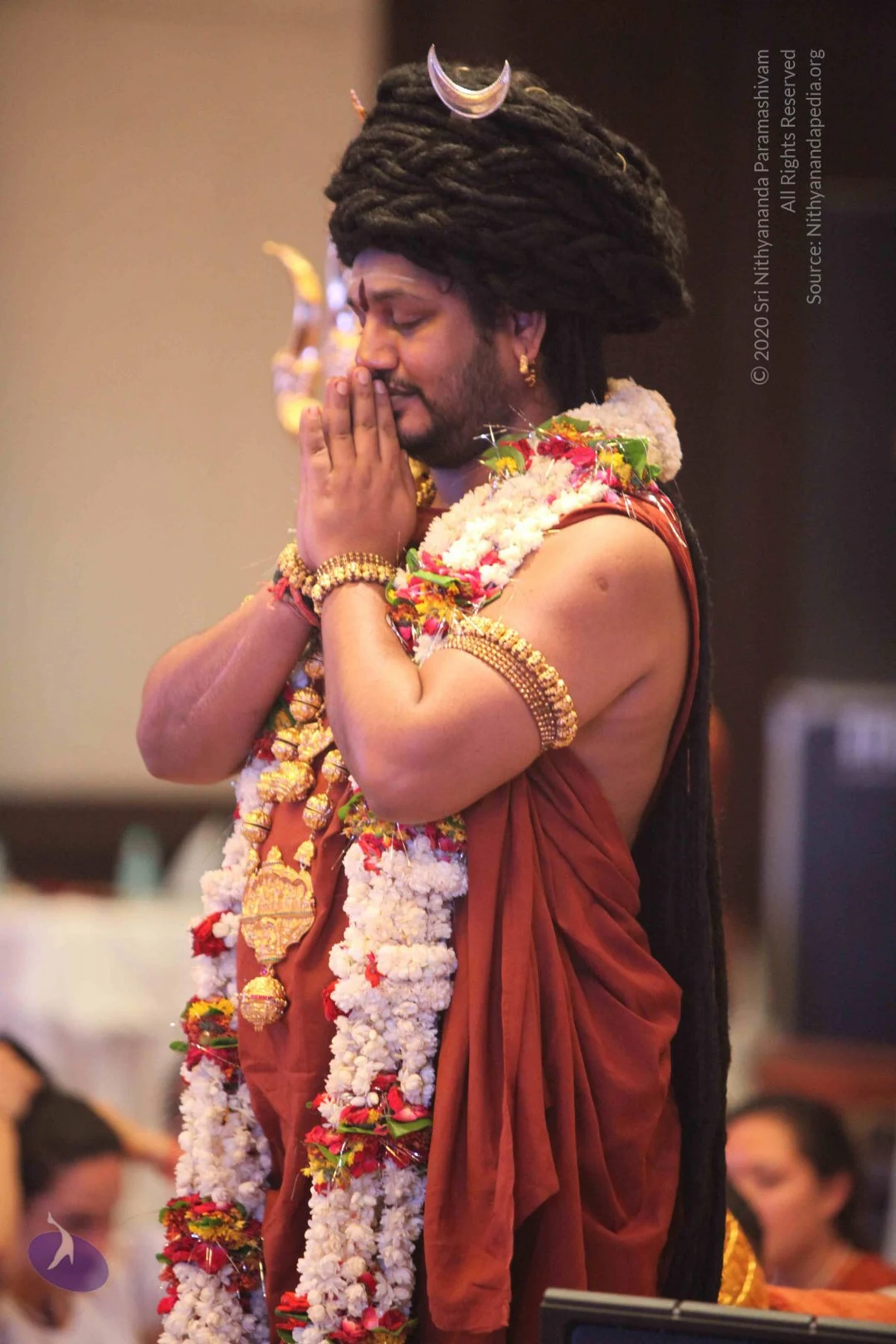
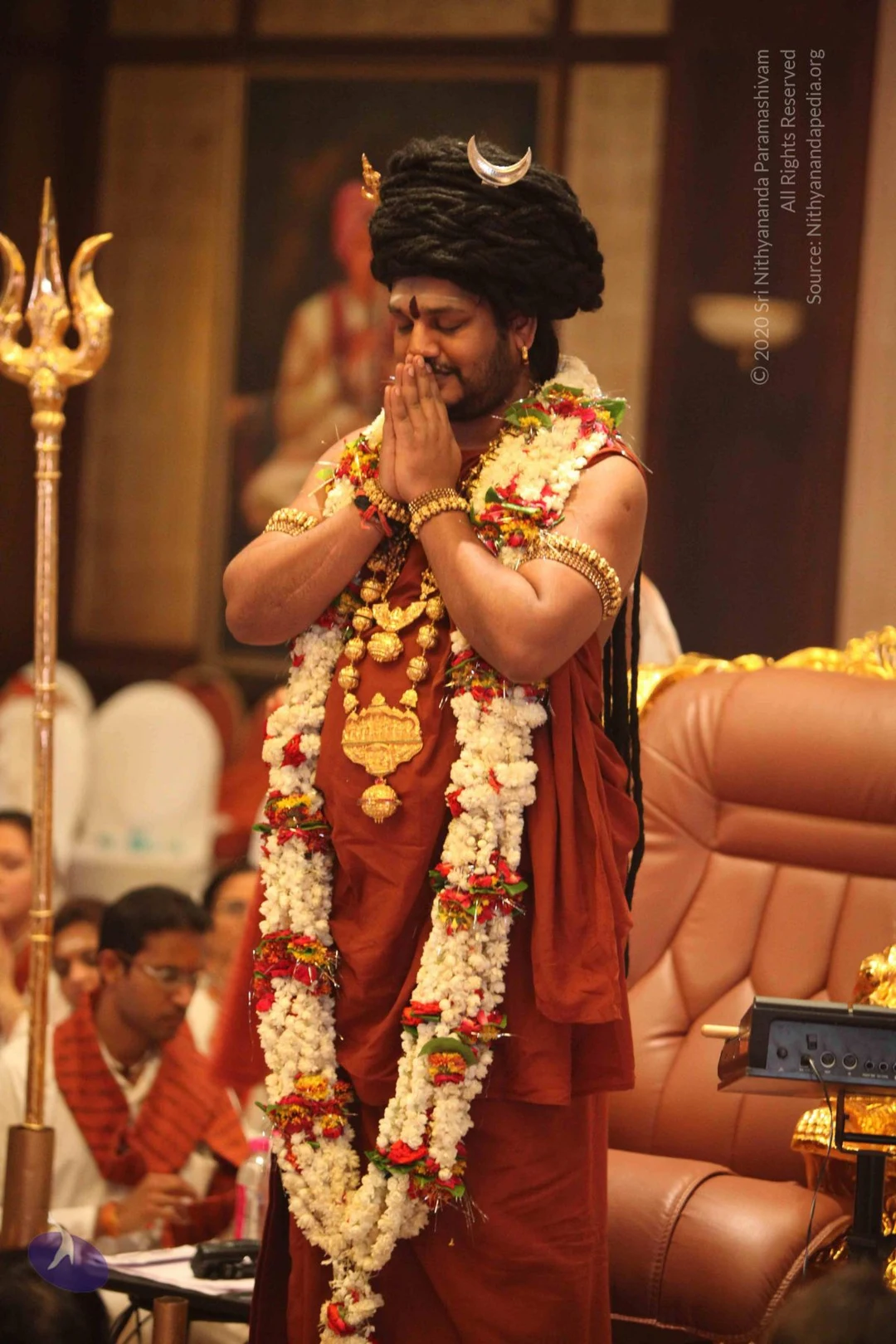
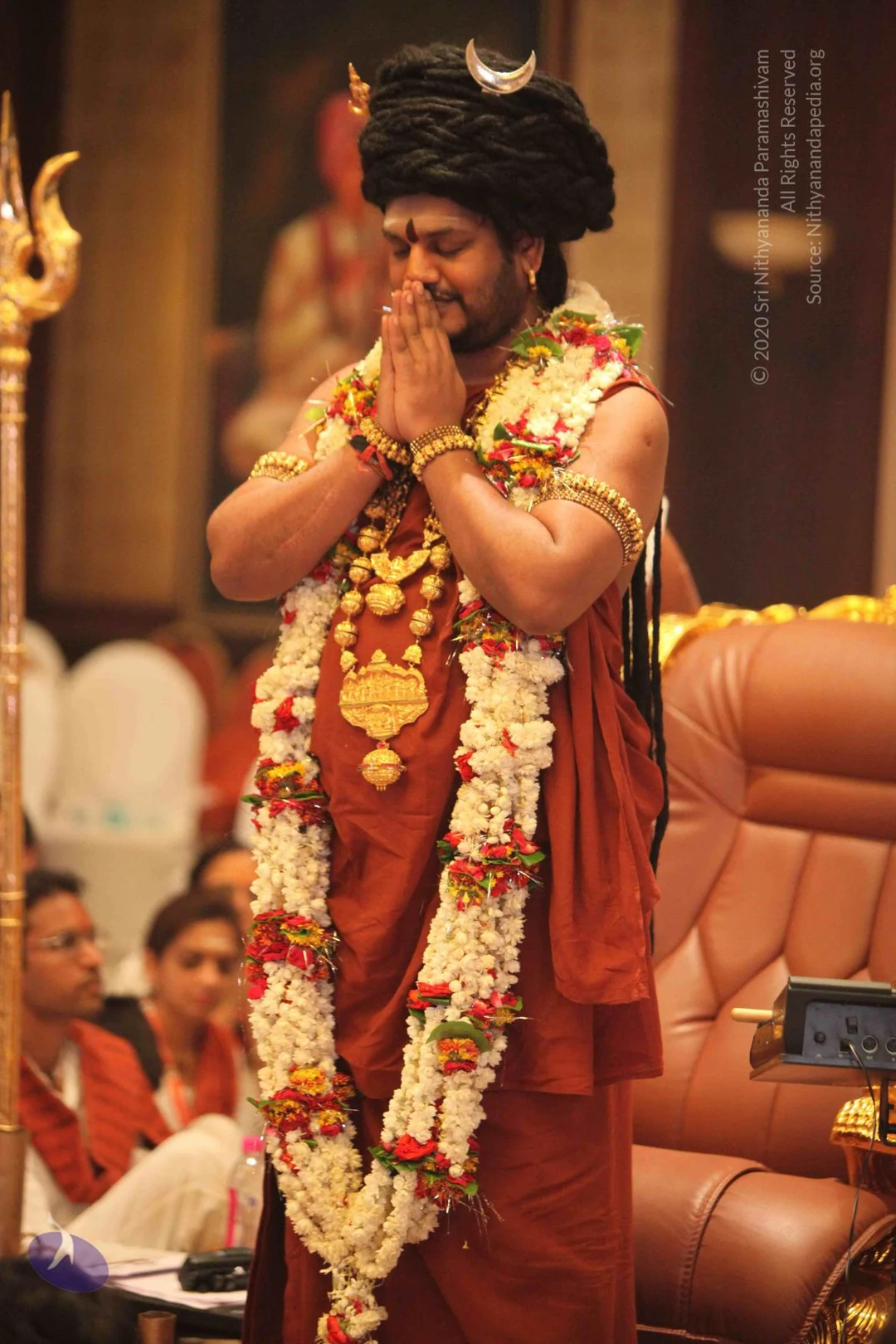
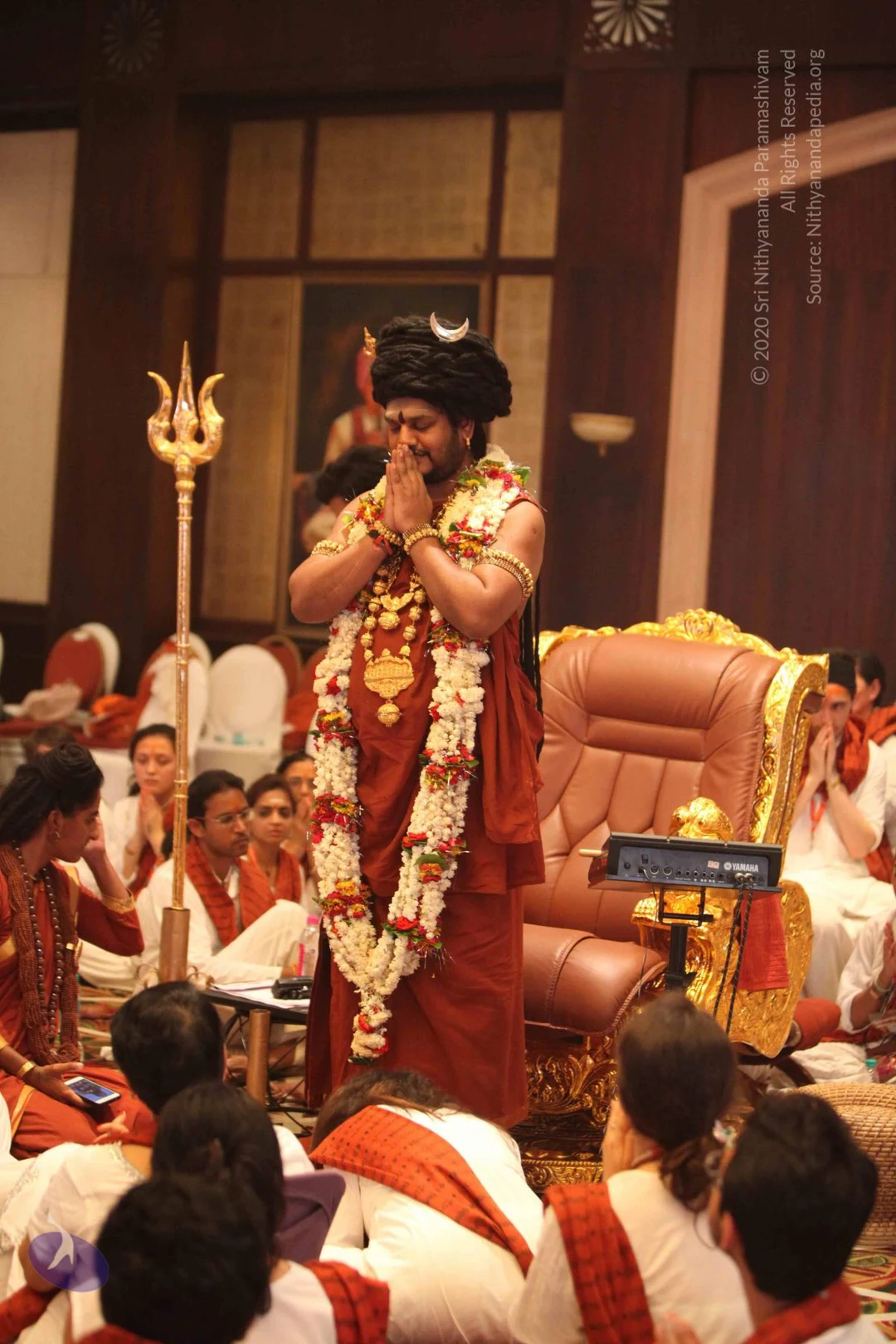
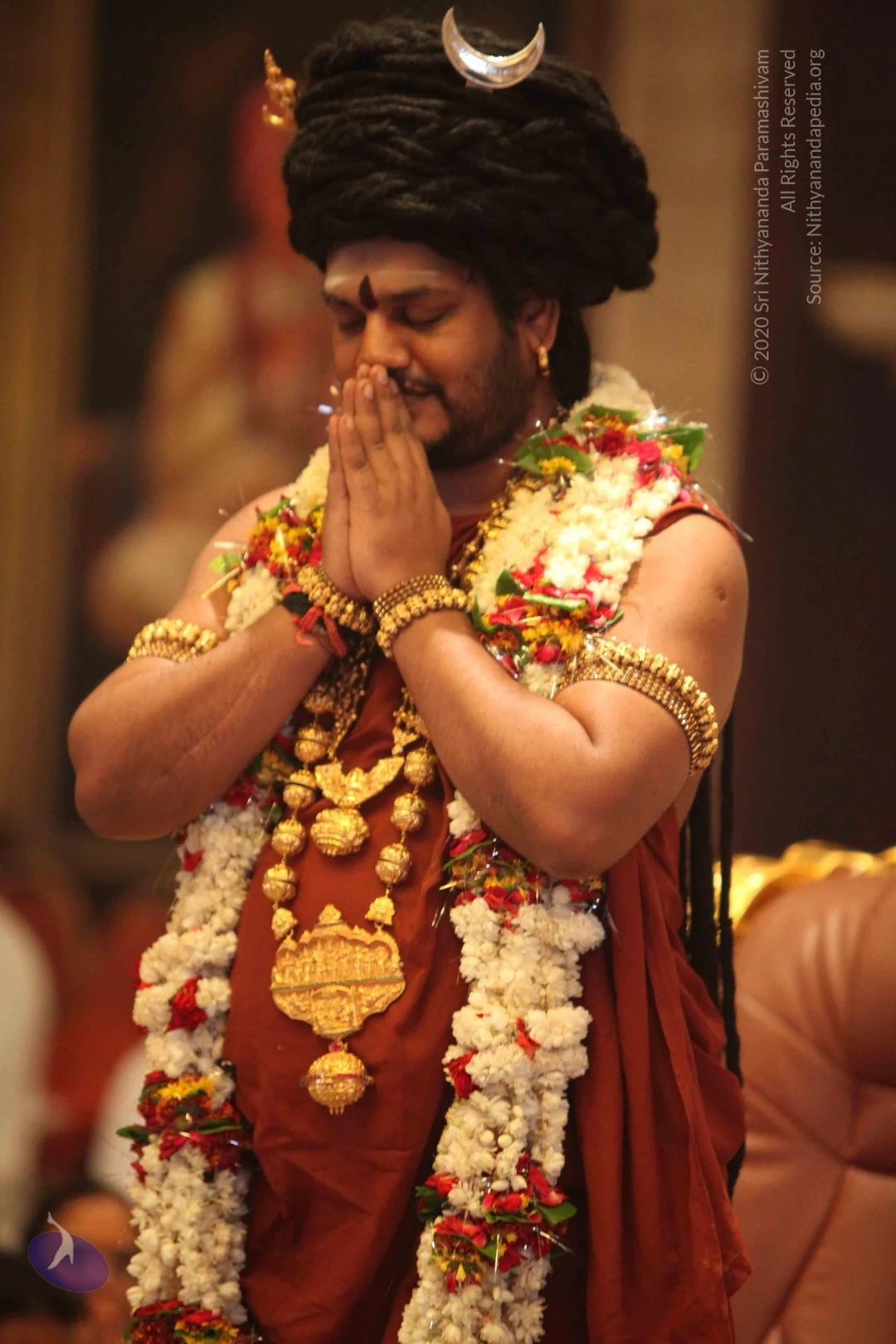
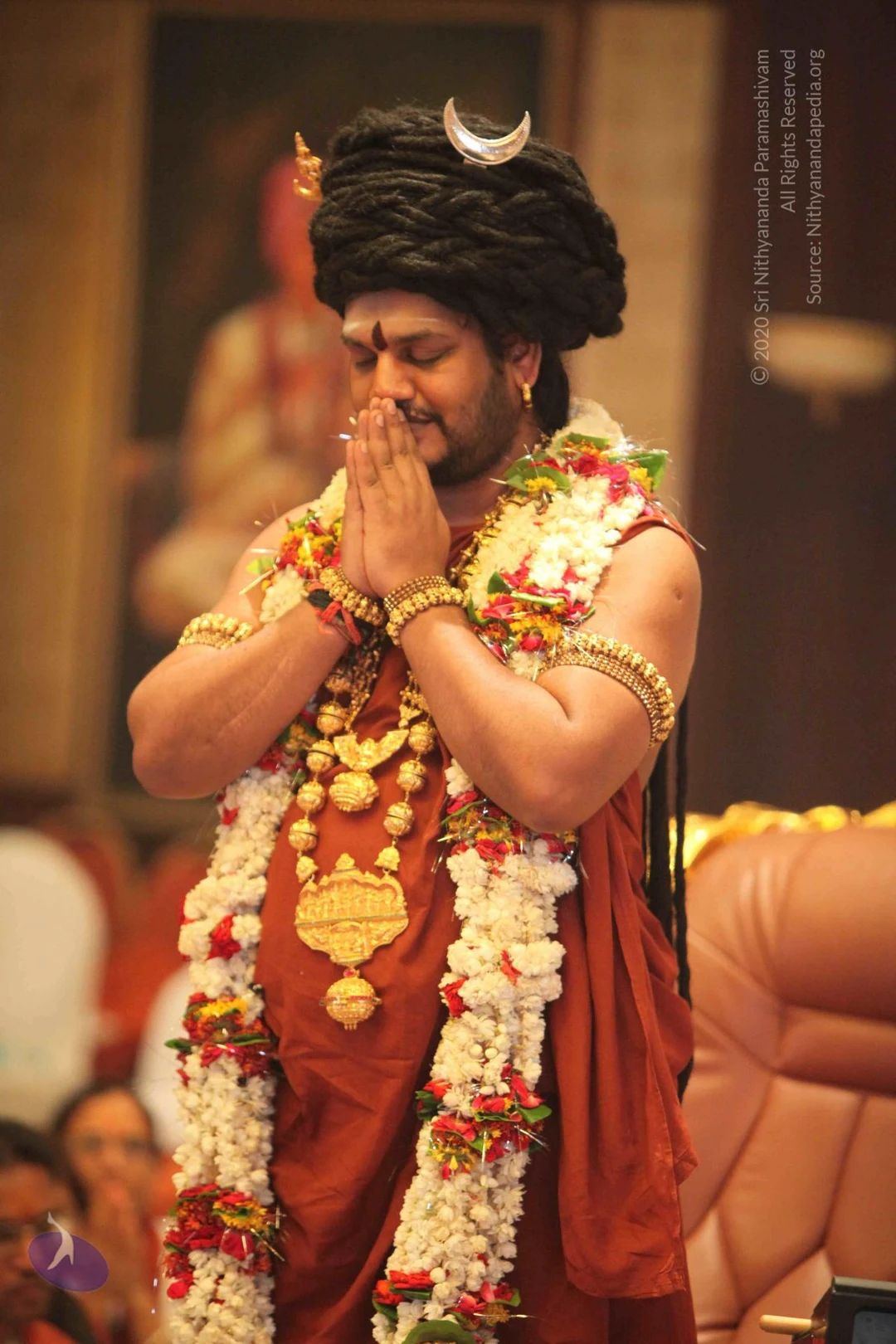
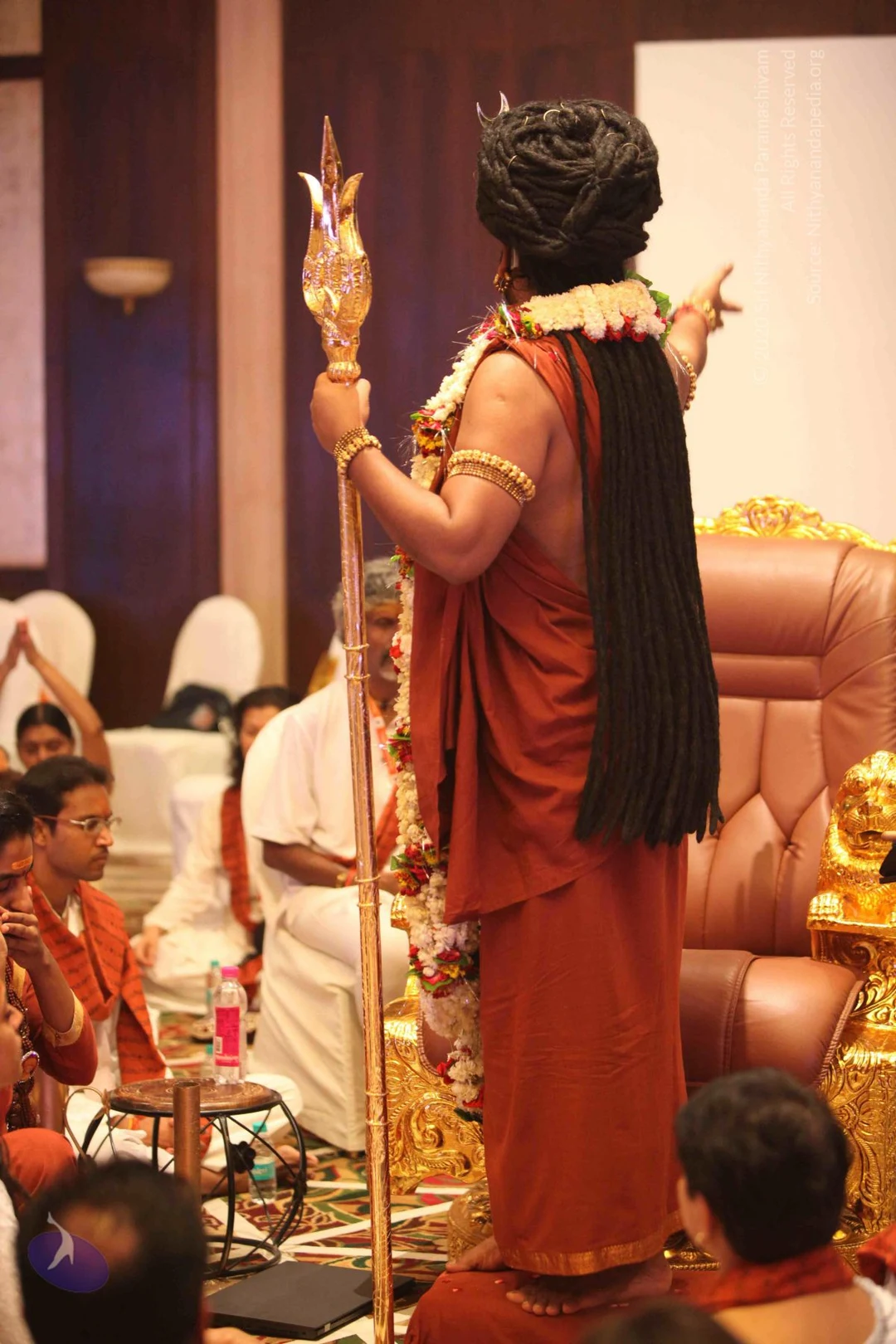
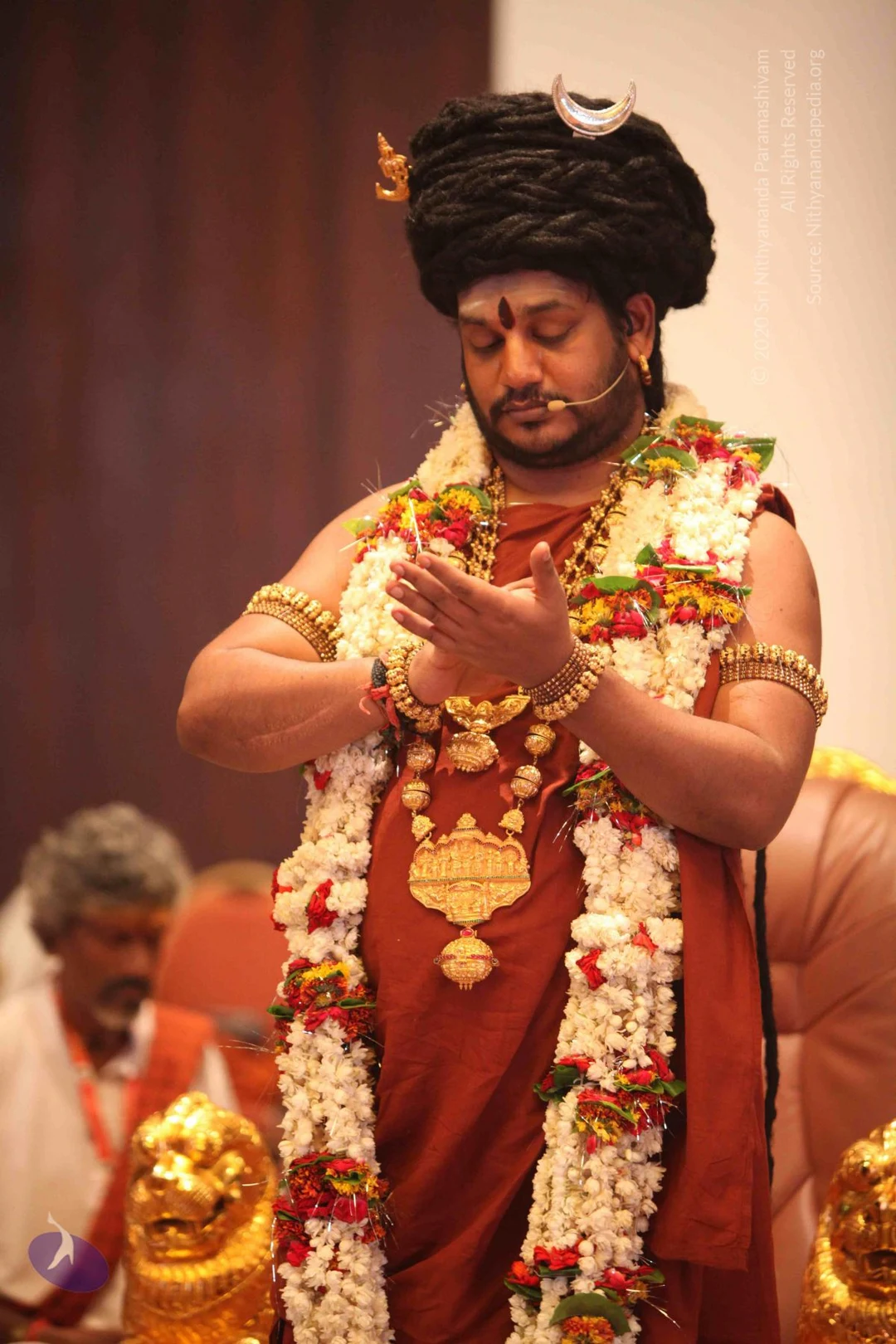
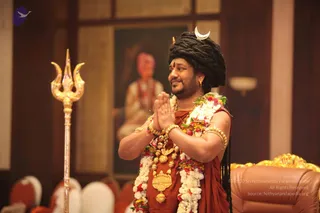
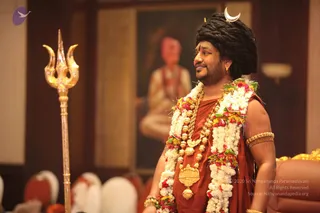
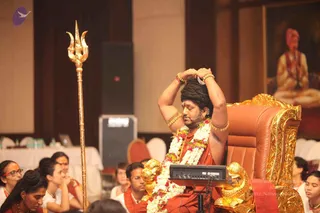
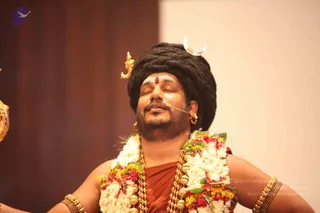
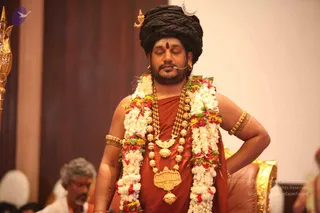
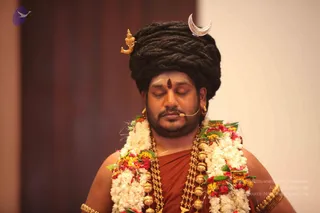
A man stands at the right of the frame in a saffron-orange draped garment with a long dark matted hairstyle topped by a silver crescent ornament, hands joined in namaskar, wearing layered white and red flower garlands, rudraksha beads and gold ornaments including a large gold pendant and gold armbands. Beside him stands a tall gold trishula trident. Behind is a framed portrait of an older robed man, and a brown leather chair with gold trim sits at the right edge, with rows of white chairs at the left. Swamiji (probable) cues: long swept-back dark hair with crescent, saffron garment, rudraksha and ceremonial gold necklaces, here shown greeting the room in a hall setting.A standing man wearing an ochre-orange wrap and a long dark matted hairpiece topped with a small silver crescent ornament. He wears layered white and red flower garlands, a heavy gold-toned pendant necklace, a gold armlet and bangles, and a gold tilak on his forehead. A tall gold trident stands at left, and a blurred painted portrait of a seated robed figure hangs in the background beside white chairs.A man seated on an ornate gold-trimmed brown leather throne on a stage raises both arms and clasps his hands atop his head, eyes closed. He wears a saffron-orange robe, a white and orange flower garland, gold bangles and a headset microphone, and has long dark hair. A golden trident stands to the left. Behind him a framed portrait shows a figure in a pink turban and orange garment. Seated audience members in white and orange clothing, including women with orange tilak marks, sit in the foreground. A yamaha keyboard and a small speaker stand on the stage.A close photograph of a man seated with eyes closed in meditative absorption, wearing a dark matted-hair crown topped with a silver crescent and a small gold trident ornament at the side. He has a red bindi and white vertical tilak on his forehead, a small wired microphone near his mouth, and a long layered garland of white jasmine and red-yellow flowers. Heavy gold rudraksha-style beaded necklaces hang over an orange-red cloth, with gold bangles on the wrists and gold earrings. The background is a plain warm wall with a dark curtain edge at left.A photograph of a man standing with eyes closed, wearing a tall dark braided turban-style headdress with a gold crown ornament and crescent at the top, a red bindi and white-and-red floral garlands over an orange-red robe. He wears multiple gold necklaces with round beads and a gold pendant, gold armlets and earrings, and a small microphone at his mouth. His right hand rests on his hip. Behind him is a gold-framed throne chair and a gold trident at the left edge. A seated older man in white stands at the lower left in the background. Swamiji (probable): the figure has long dark swept-up hair in a crown style, a saffron-orange robe, rudraksha-style beaded gold necklaces and ceremonial garlands, matching the presentation cues of the Swamiji candidate.A man with eyes closed sits in meditative stillness, wearing a tall coiled dark hair crown topped with a silver crescent and a gold ornament at the side, a red bindi-like mark on his forehead, and a microphone headset. He wears a rust-orange robe and layered garlands of white jasmine and red and yellow flowers, with gold bead necklaces and gold bangles on his wrist. The soft background is a dark maroon curtain and pale wall. Swamiji (probable) is shown here with his distinctive crown and saffron-orange robe, seated as a discourse speaker during a satsang.

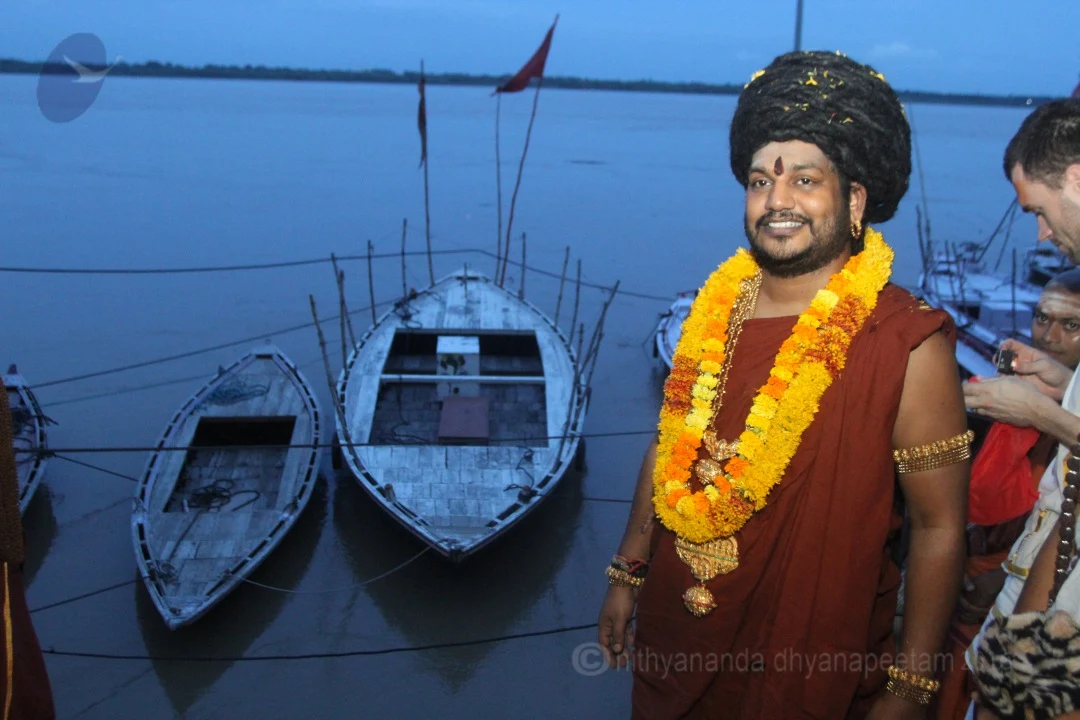
Ganga-Ghat-Session

254 photosSource gallery
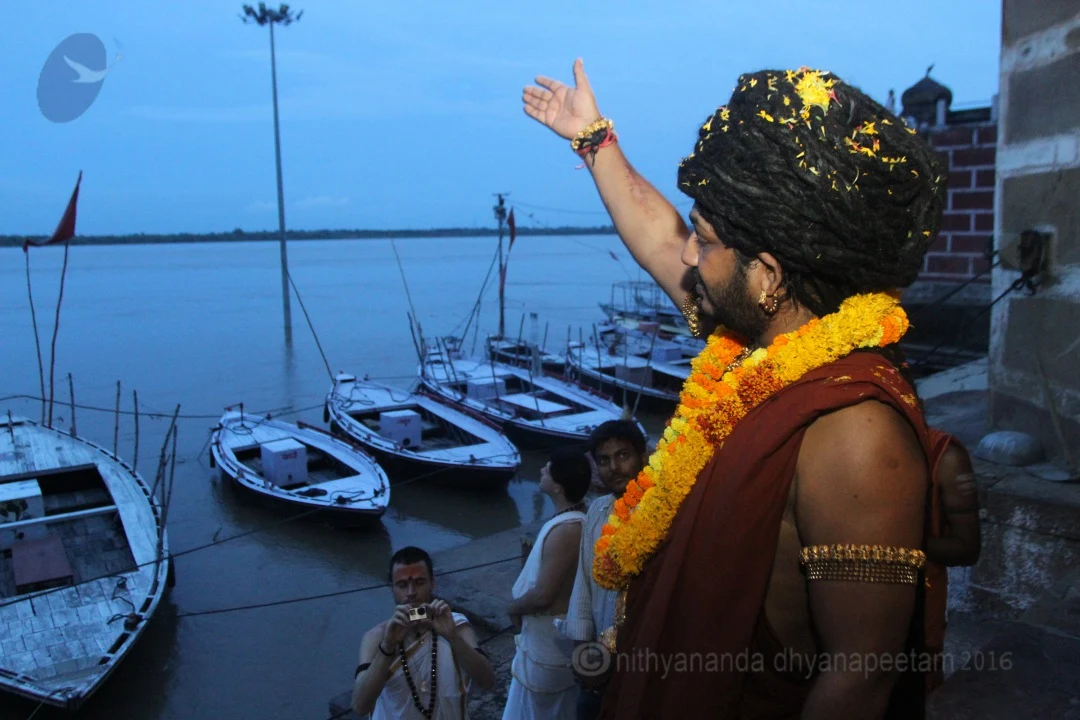
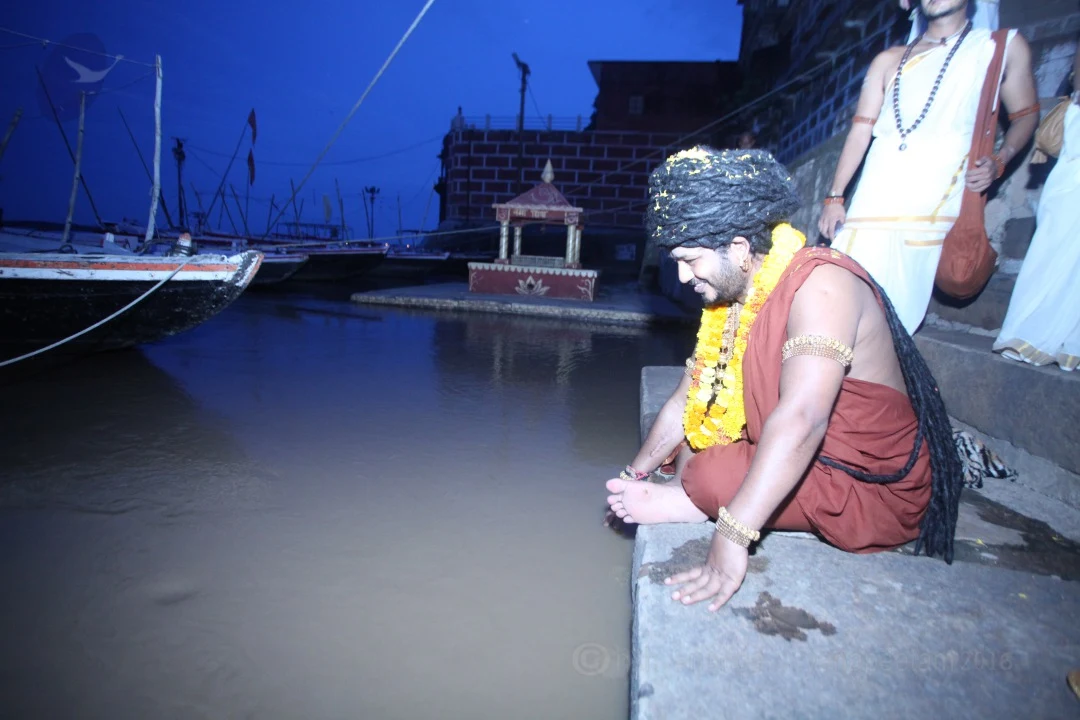
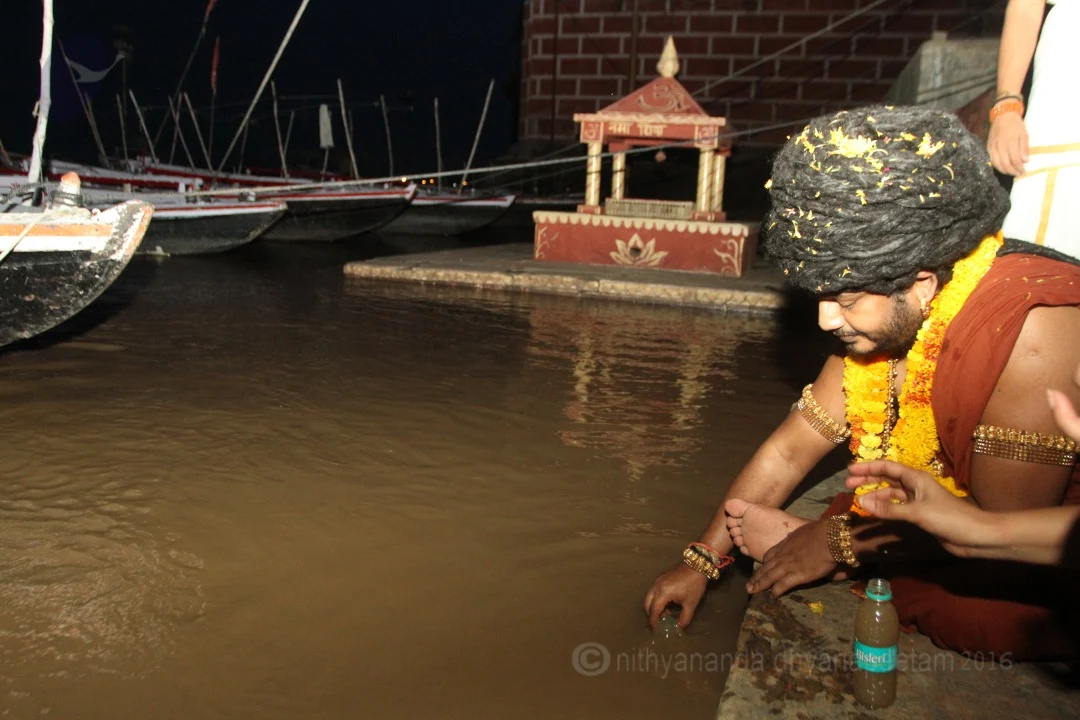
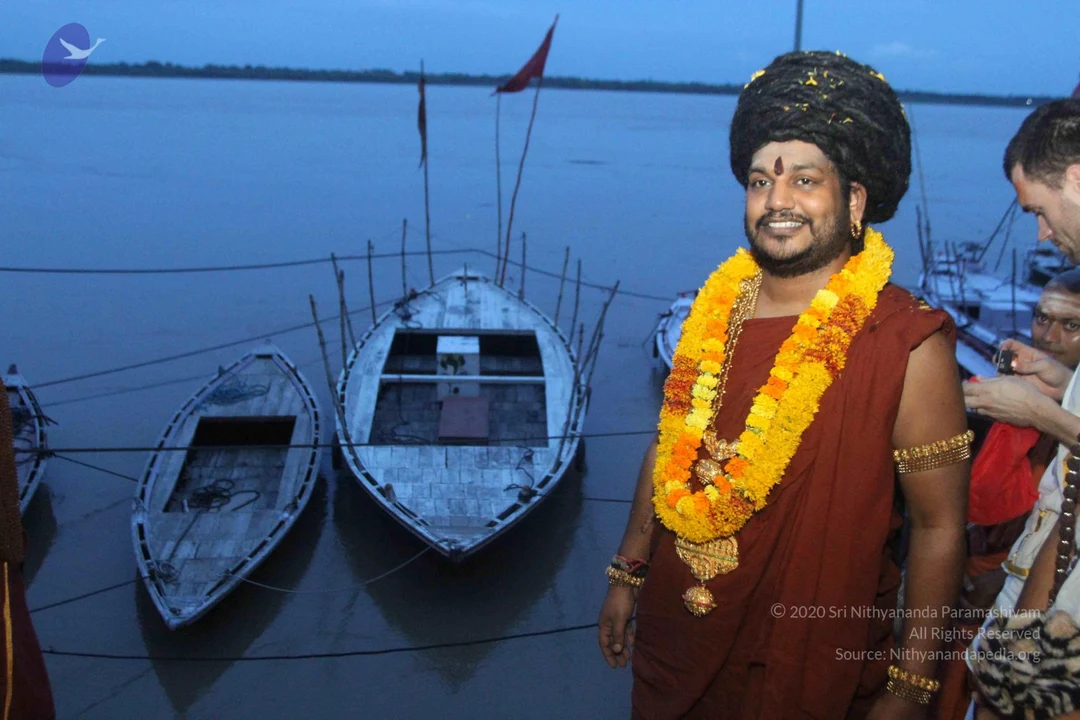
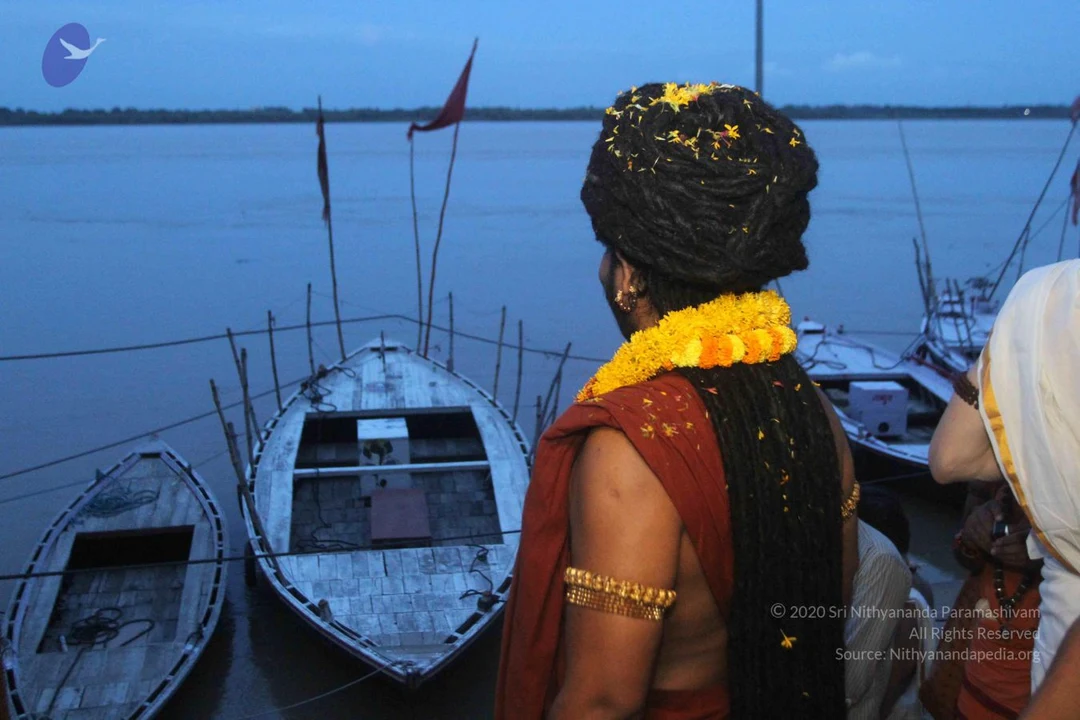
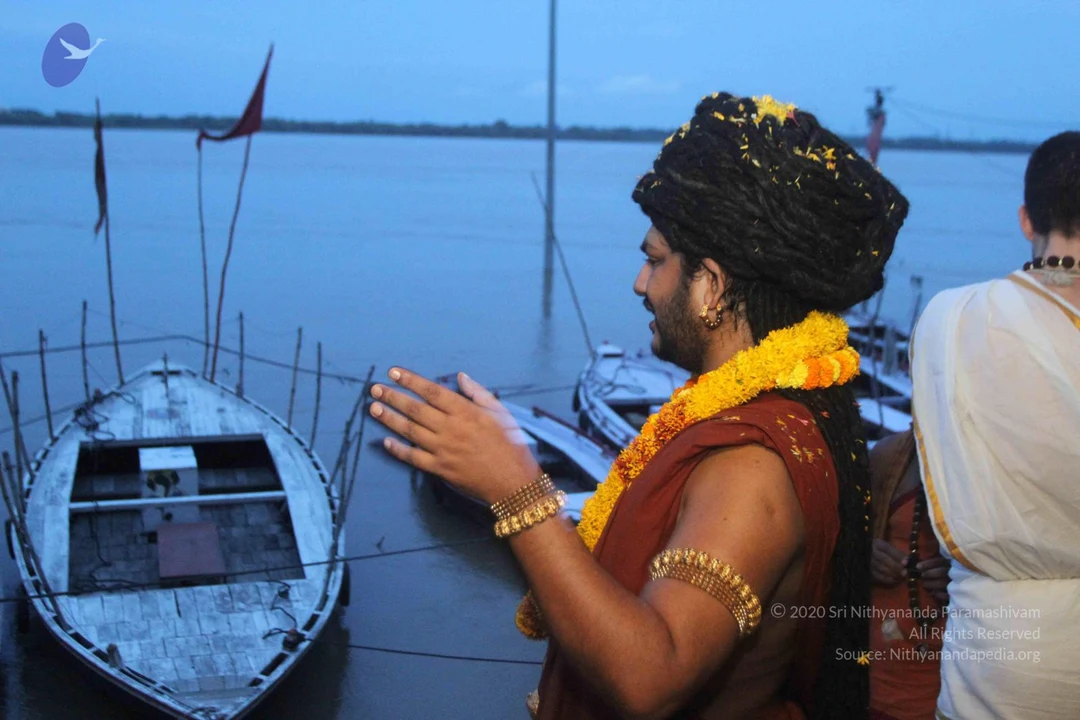
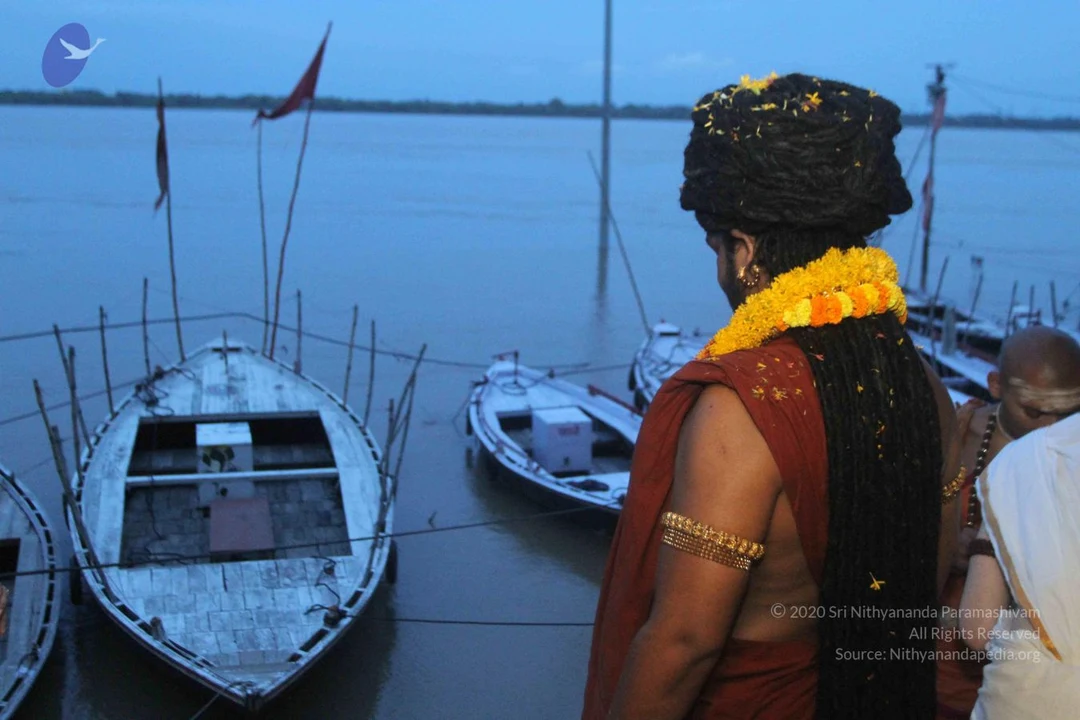
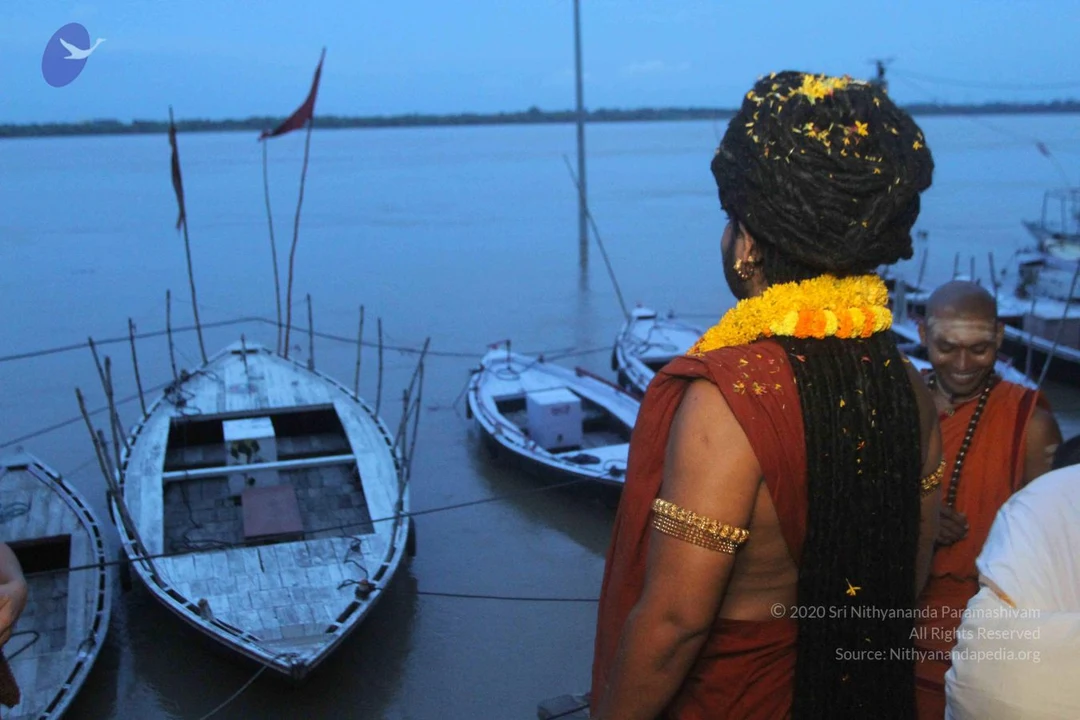
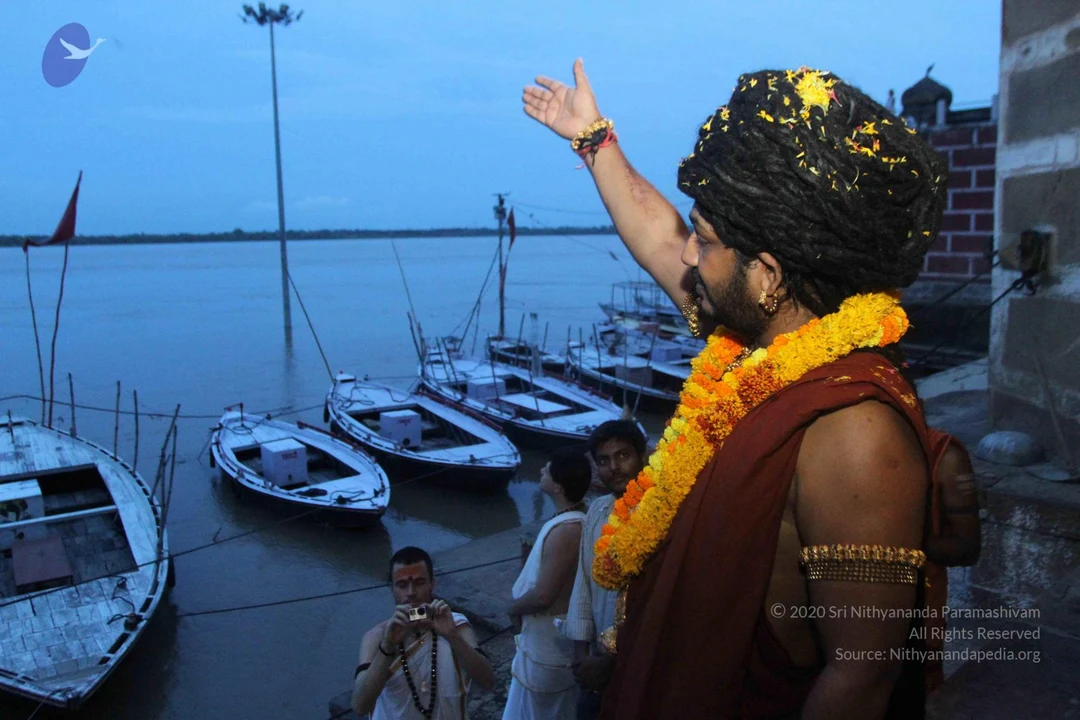
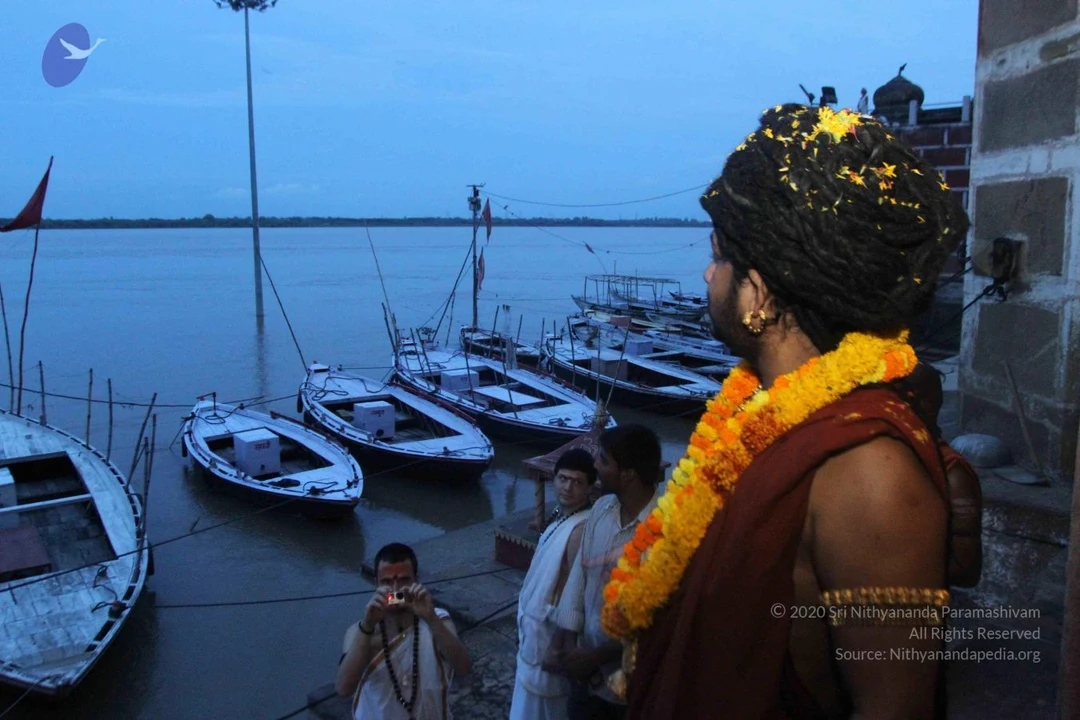
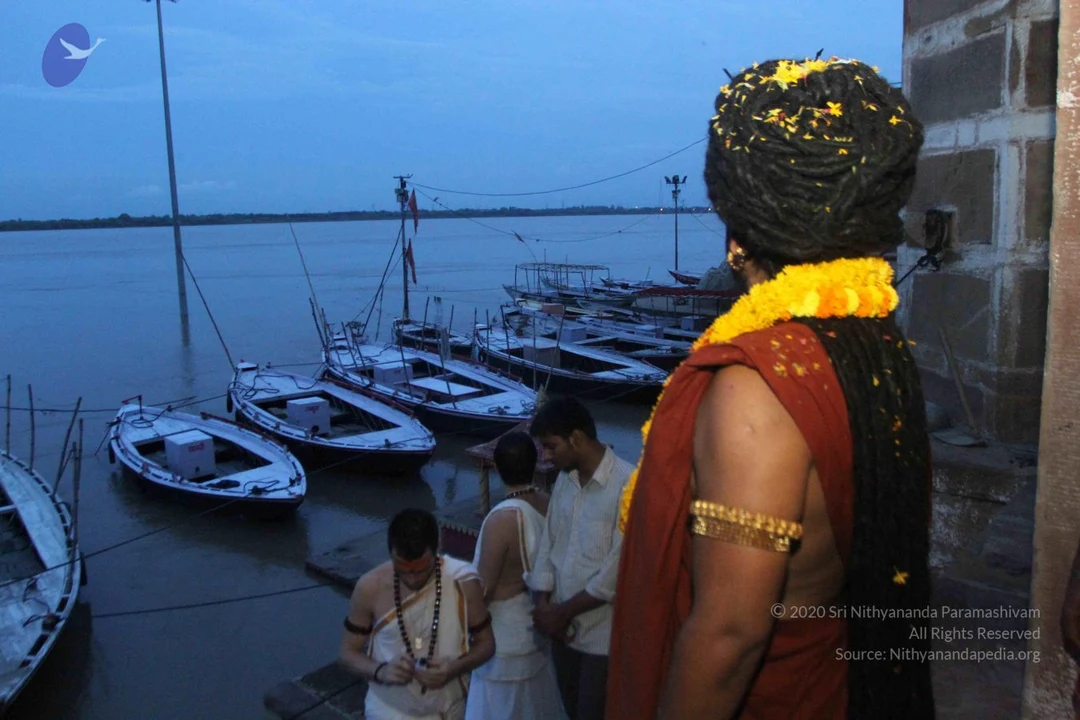
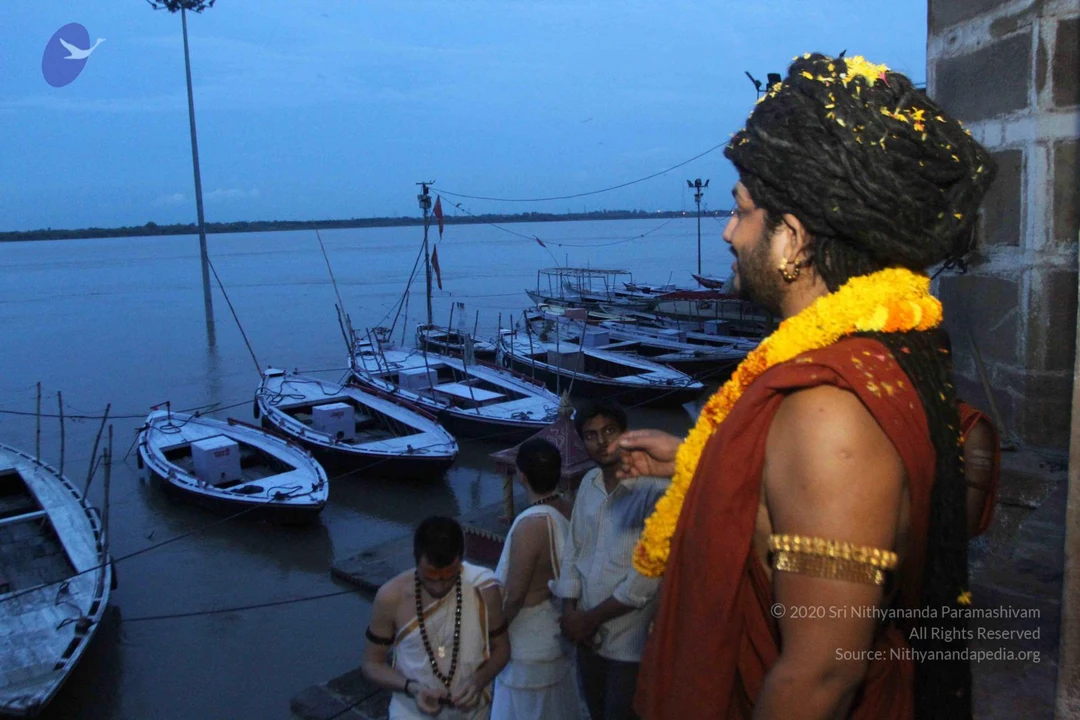
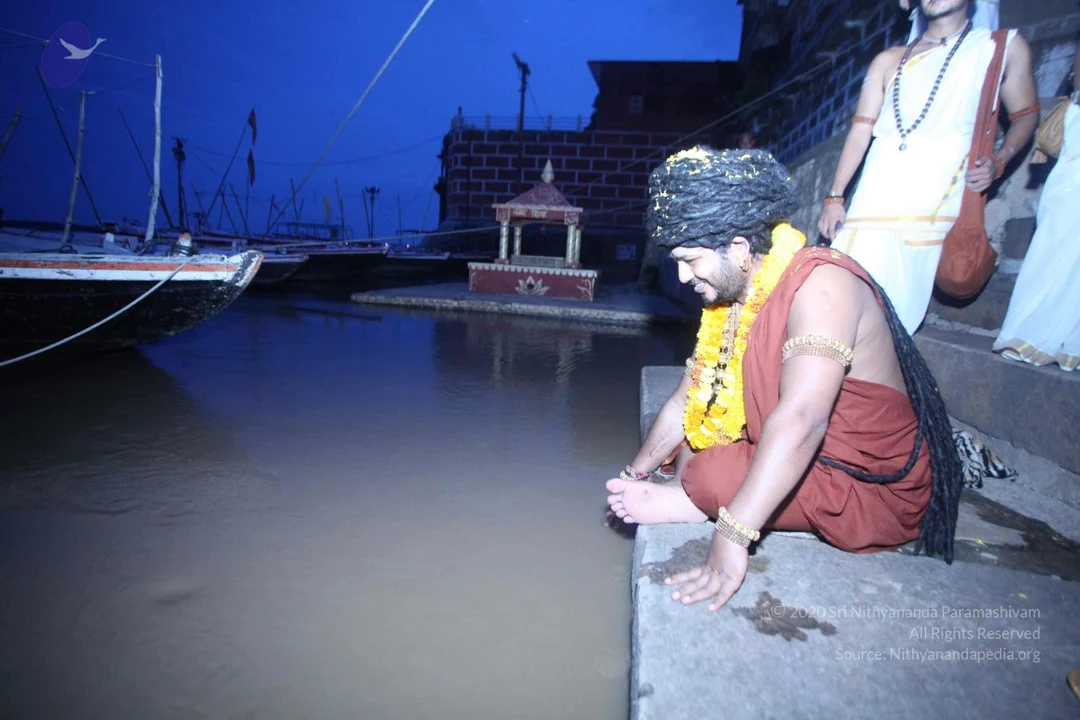
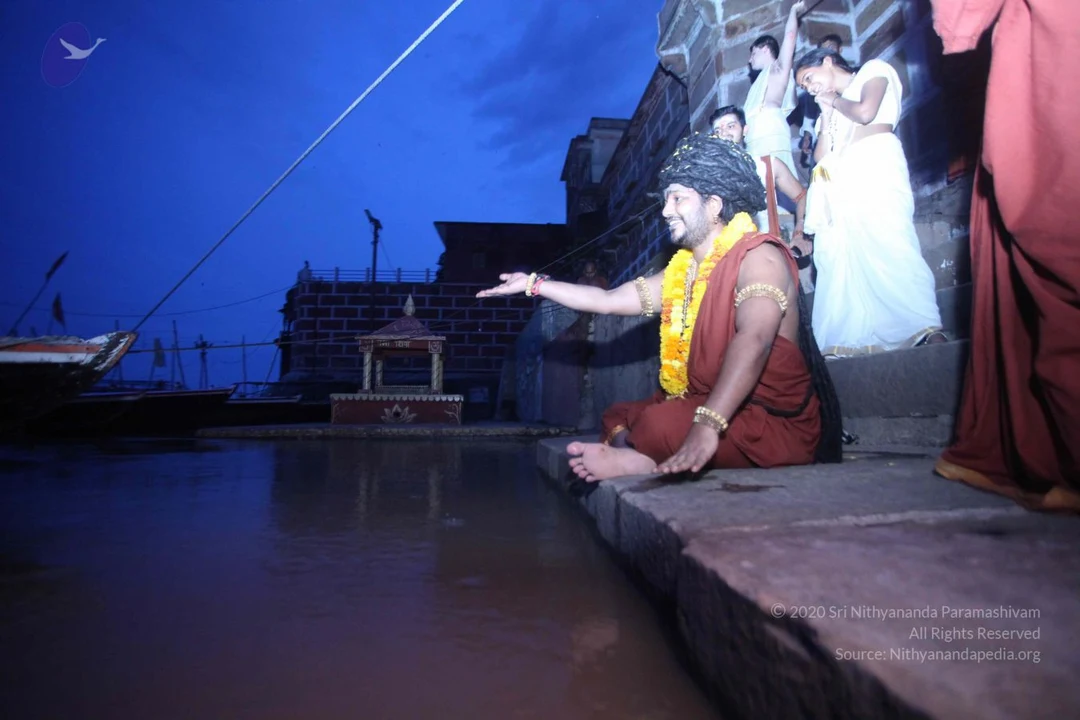
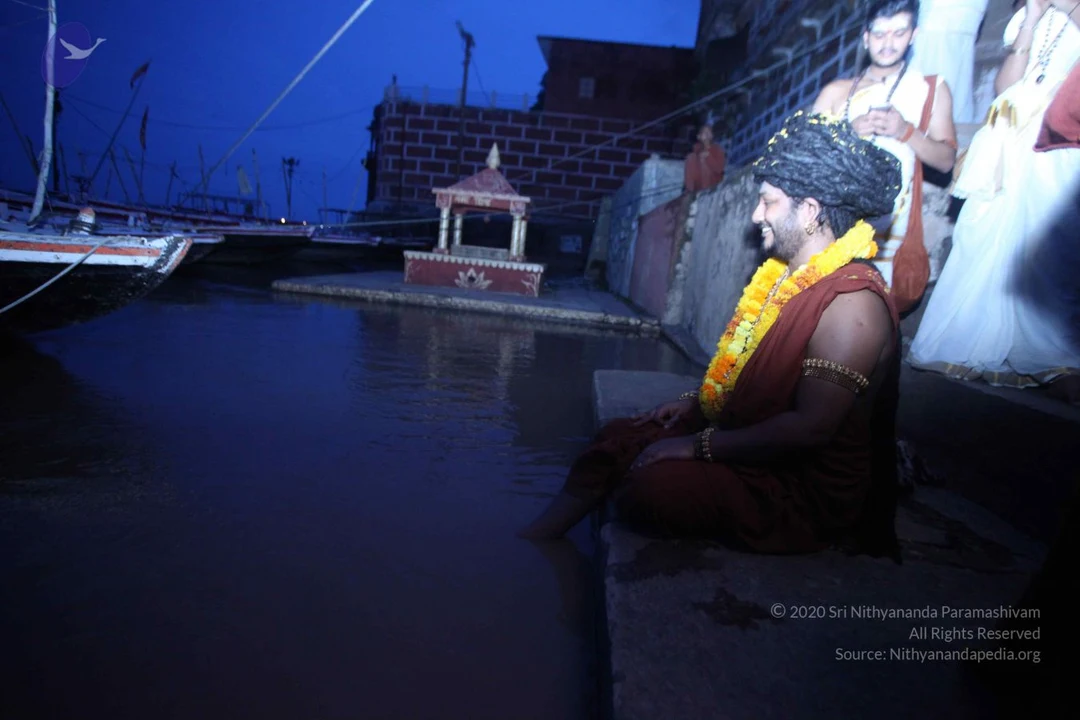
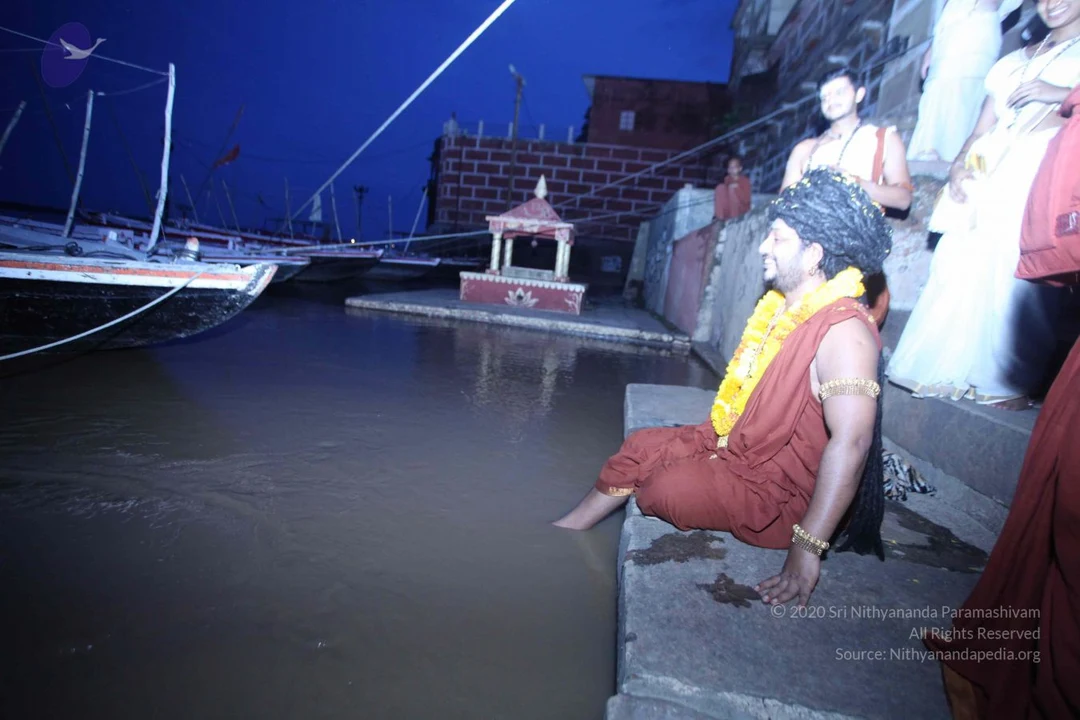
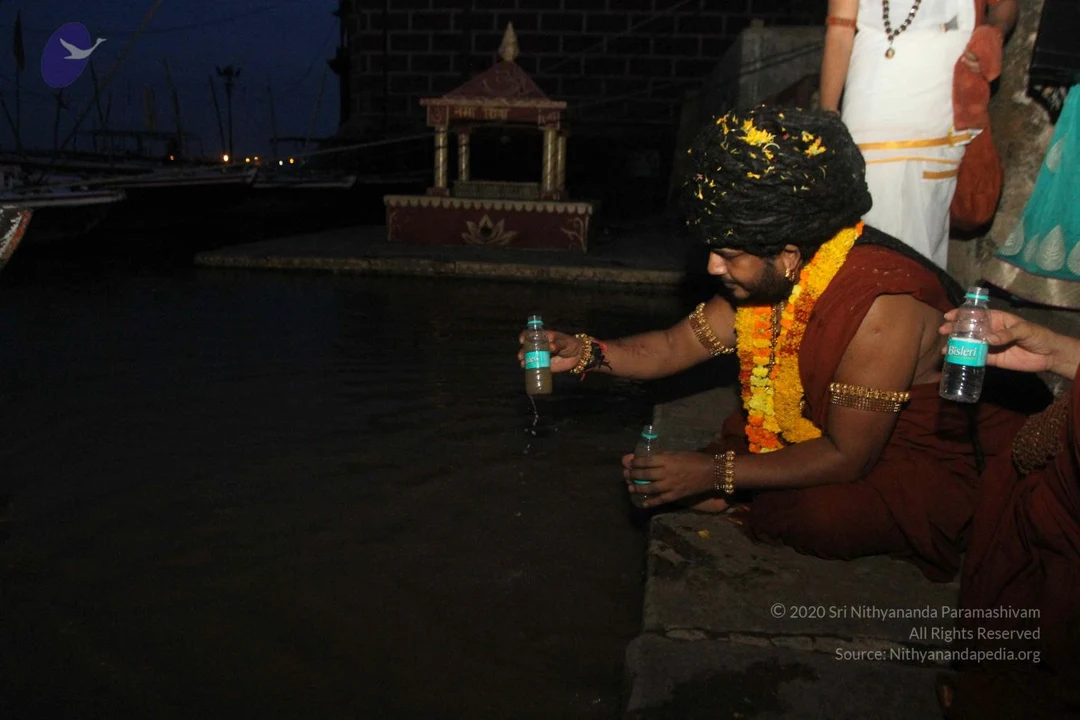
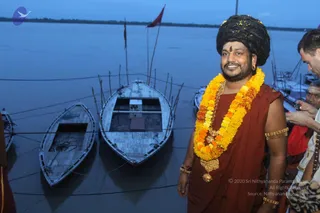
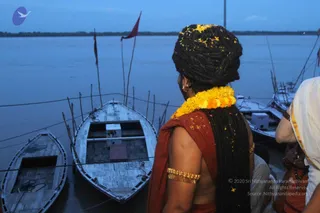
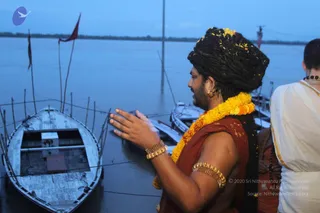
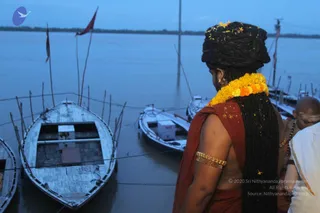
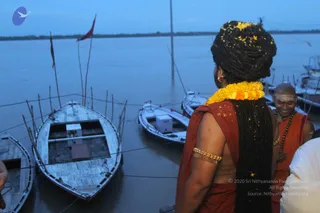
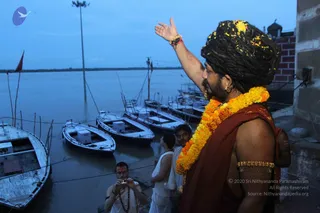
A man with a tall, dark, twisted turban-style hairdo stands smiling on a riverside ghat at dusk, wearing a rust-orange shawl over an orange robe, a long marigold and yellow flower garland, gold necklaces, gold armlets and a red tilak on his forehead. Behind him moored wooden boats sit on calm blue water with a red flag on a pole. Another man in white and a person with a phone stand at the right edge. Swamiji (probable) is the central figure, identified by his distinctive turban hairstyle, saffron-orange robes, marigold garland and gold ornaments.Photograph taken from behind of a bare-shouldered figure with long matted dreadlocks wound into a high topknot decorated with scattered yellow flower petals, wearing a yellow-orange marigold garland and a rust-red wrap over the shoulder. Gold armlets adorn the upper arm. The figure stands on a riverside ghat at dusk facing a wide river, with several wooden boats tied with ropes and bamboo poles beside them, a red flag on a pole, and a white-clad person and a sari-clad devotee visible at the right edge. Calm blue water and a distant tree line complete the scene.A photograph taken at dusk beside a river, with calm water and moored wooden boats in the foreground. A man in a saffron-orange cloth draped over his shoulder and bare arms stands with his palms pressed together in a gesture of greeting or prayer. He wears a long, dark, dreadlocked hair style wrapped high on his head, a yellow and orange marigold garland, gold armlets and gold bangles, and a gold earring. A second person stands partly visible at the right edge in white ritual cloth with a gold border, and another figure in orange stands behind. Two red-tipped flags rise from the boats.A figure seen from behind stands at a riverbank at dusk, facing moored wooden boats with bamboo poles and small red flags along the water. He wears a tall dark braided hair crown dotted with yellow flower petals, a yellow and orange marigold garland, a rust-orange shawl over the shoulders, a gold armlet, and gold earrings. Beside him, a bald man in a white dhoti and gold necklace stands in the background. The calm brown river stretches to a distant tree line under a blue evening sky. Swamiji (probable) is the central figure, identified by the long dark hair crown, saffron-orange shawl, and gold ornaments.Photograph taken at dusk on a wide river ghat, with moored wooden boats and red pennant flags on bamboo poles in the foreground. A figure with long dark dreadlocked hair wrapped in a bun, adorned with scattered yellow petals, wears a marigold garland and an orange-red wrap over bare shoulders, with a gold armlet on the upper arm. Beside him, a smiling bald man in an orange-red garment wears a rudraksha mala. Another person in white clothing stands at the right edge. Calm grey-blue water stretches behind them.Outdoor photo at a riverside ghat at dusk, with moored wooden boats and a few flag poles along the water. A bare-chested man in a dark-hair turban adorned with yellow petals and a yellow-orange marigold garland, wearing a rust-red wrap, gold bracelet and ornate earrings, raises one arm toward the river. Probable Swamiji (long hair under a turban, ornate gold jewellery, garland and red wrap); in_person candidate. Behind him a man in white with a rudraksha mala holds a small camera and photographs, and two more people in white and light clothing stand nearby, a total of four visible people.

Morning-Satsang
10 photosSource gallery
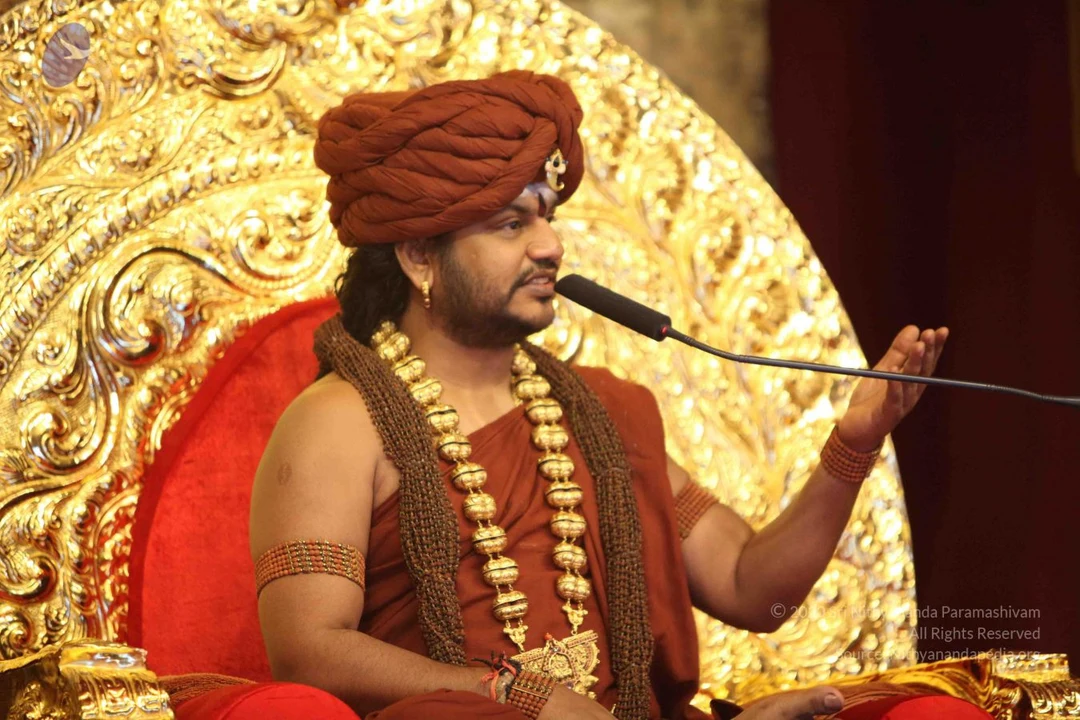
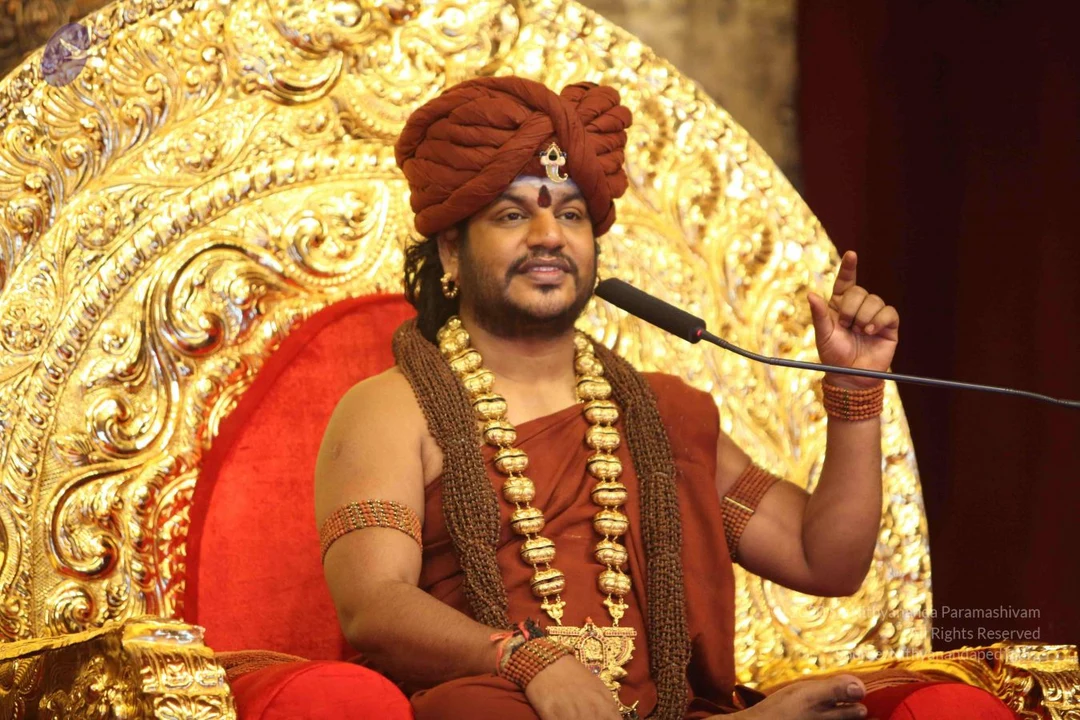
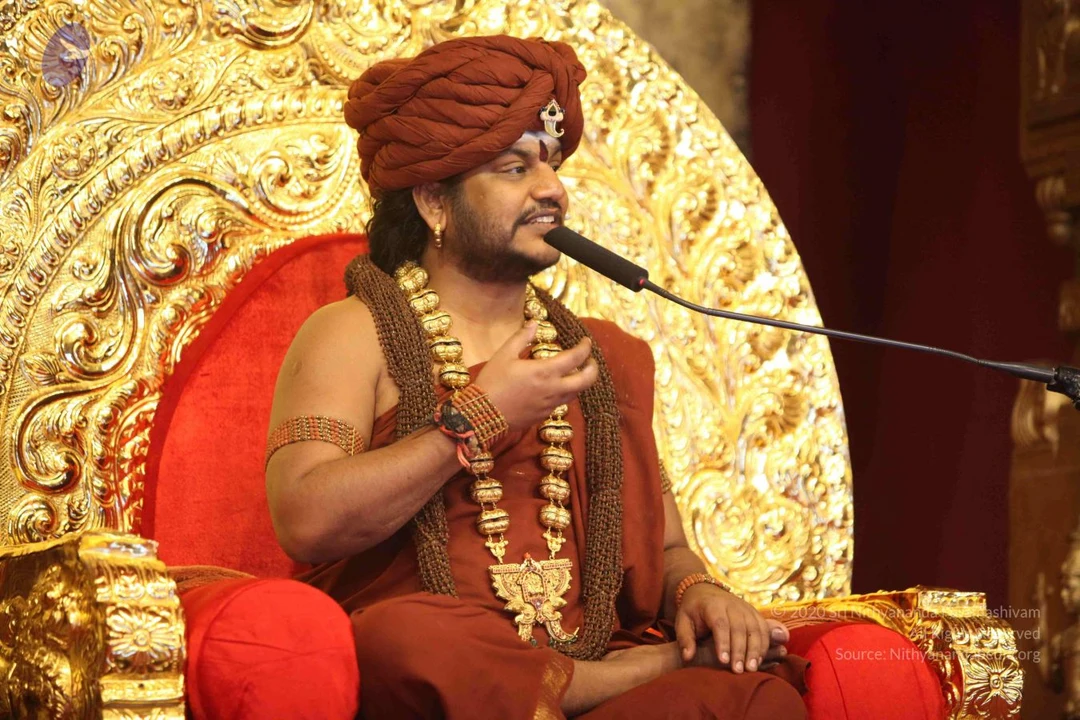
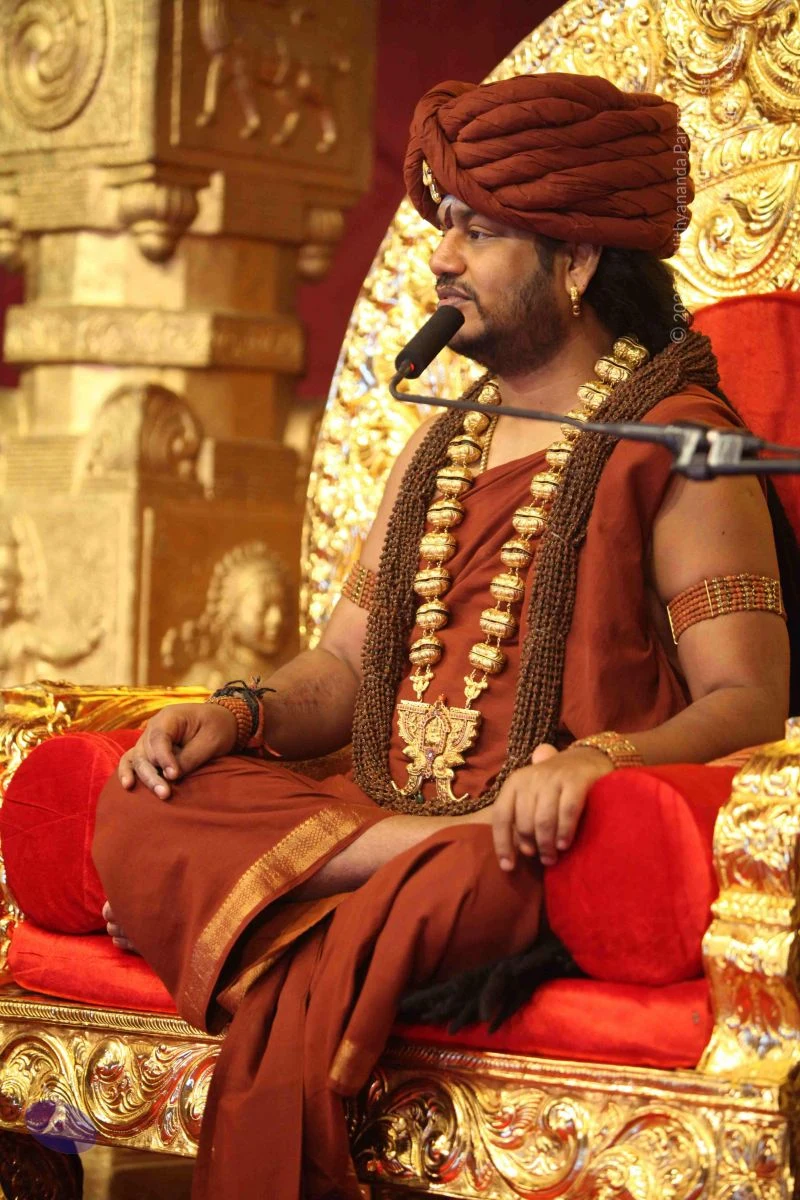
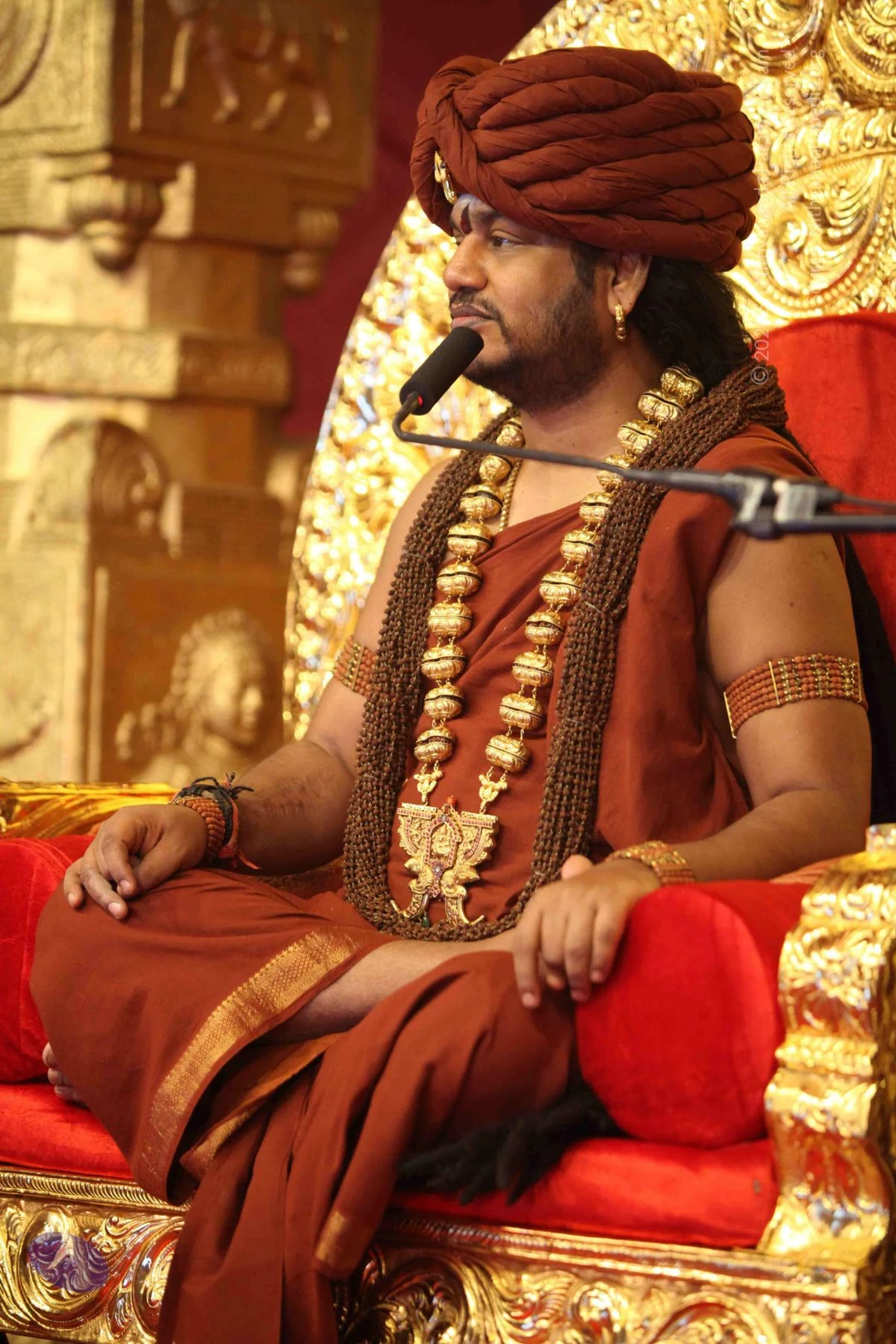
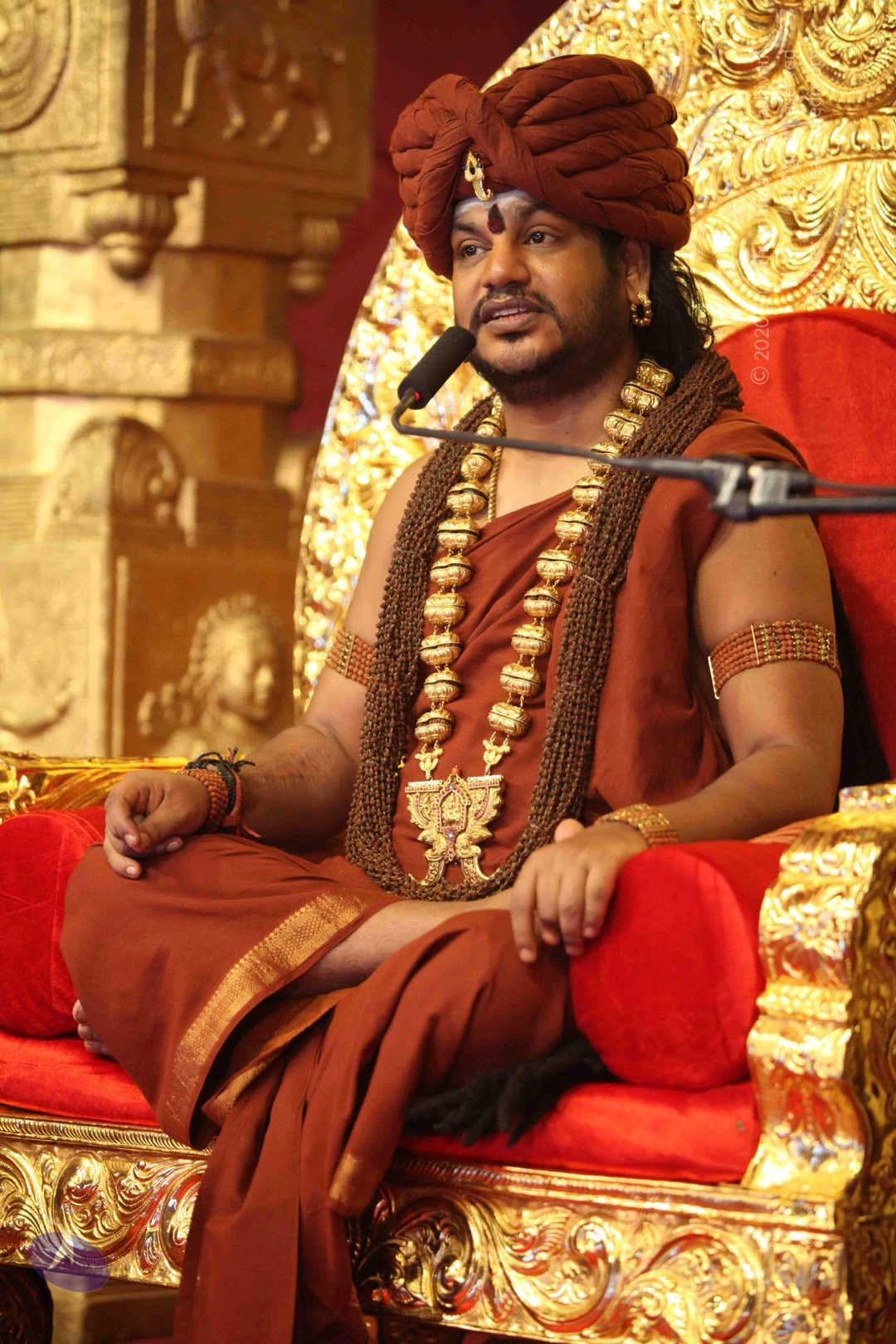
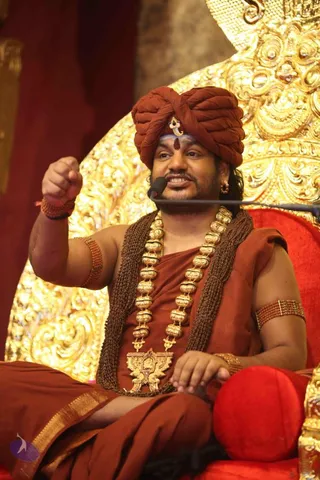
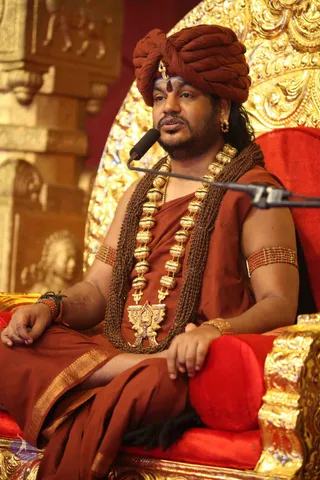
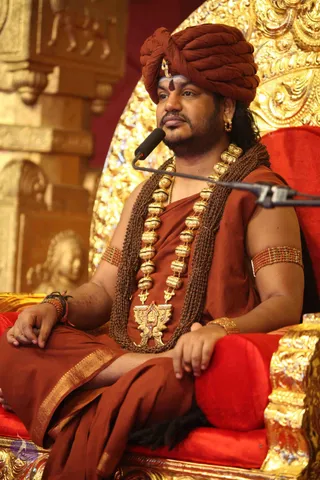
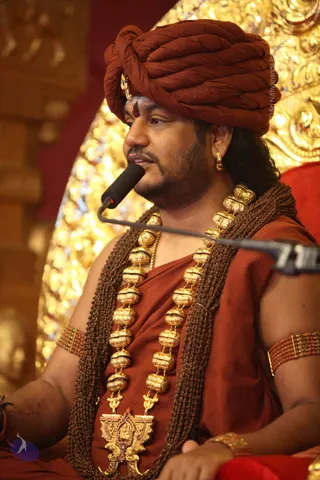
A man seated on an ornate gold-carved throne with red cushions, speaking into a microphone while raising a clenched right fist. He wears a rust-red turban with a small gold emblem at the front, red-orange robes, a gold multi-strand necklace with a large ornate pendant, and a brown-beaded rudraksha mala draped over his shoulders. Red-beaded bands are on his wrists and upper arm. A red bolster rests beside him. The setting suggests a satsang discourse. Swamiji (probable): long hair, crown-like turban, saffron-toned robes and ornate gold ornaments fit the appearance cues.A man seated on an ornate golden throne with red velvet cushioning speaks into a microphone during a satsang. He wears a rust-orange turban with a small gold ornament, an orange-saffron robe, a long brown rudraksha mala, and a heavy ceremonial gold necklace with a pendant. Red beaded armlets adorn his upper arms and he holds his hands on the armrest. The gilded backdrop and carved stone pillar suggest a temple-style hall. Swamiji (probable) is seated as the discourse speaker, with cues of turban, saffron clothing, rudraksha mala and gold necklace.A seated man in a rust-red turban with a small gold ornament at the forehead, wearing rust-orange robes with a gold-bordered dhoti and a long brown rudraksha mala draped over a heavy multi-strand gold bead necklace with a gold pendant. He wears rust-red beaded armlets and bracelets, a gold earring, and a red tilak mark. He sits on an ornate gold and red throne, speaking into a microphone on a stand, with carved gold pillars and a gilded backdrop behind him. Swamiji (probable): a saffron-robed figure in a turban, rudraksha mala and ceremonial gold necklace seated on a throne, speaking at a satsang setting.A seated man in rust-orange robes and a matching rust turban with a gold ornament sits on a red cushioned throne with ornate gold carved backrest. He wears a multi-strand brown rudraksha mala with a large ceremonial gold bead necklace and a gold pendant, plus beaded armlets and bracelets, and a red tilak on his forehead. A microphone on a boom stand is in front of him. Behind him stands a carved stone pillar with figures. Probable Swamiji (appearance cues: rust turban, rudraksha mala, gold necklace, ornate throne) seated in a discourse setting.A man seated on an ornate golden throne speaks into a microphone during a discourse. He wears a rust-orange turban with a gold ornament at the front and a red-orange robe draped over his shoulders. He has a gold necklace of large ornate beads over multiple strands of brown rudraksha malas, red-beaded armbands, and gold earrings. A gold pendant with a deity relief hangs at his chest. A gold-embossed background fills the scene.A man seated on an ornate golden throne speaks into a black microphone during a satsang. He wears a rust-red turban, a rust-red shawl over a rust-red robe, multiple strands of brown rudraksha beads, a heavy gold necklace with a large gold pendant, a rudraksha armlet and red-brown bangles. A gold-embossed backdrop and red velvet armrest surround him. Appearance-based candidate: a person, seated and teaching in an in-person satsang setting.
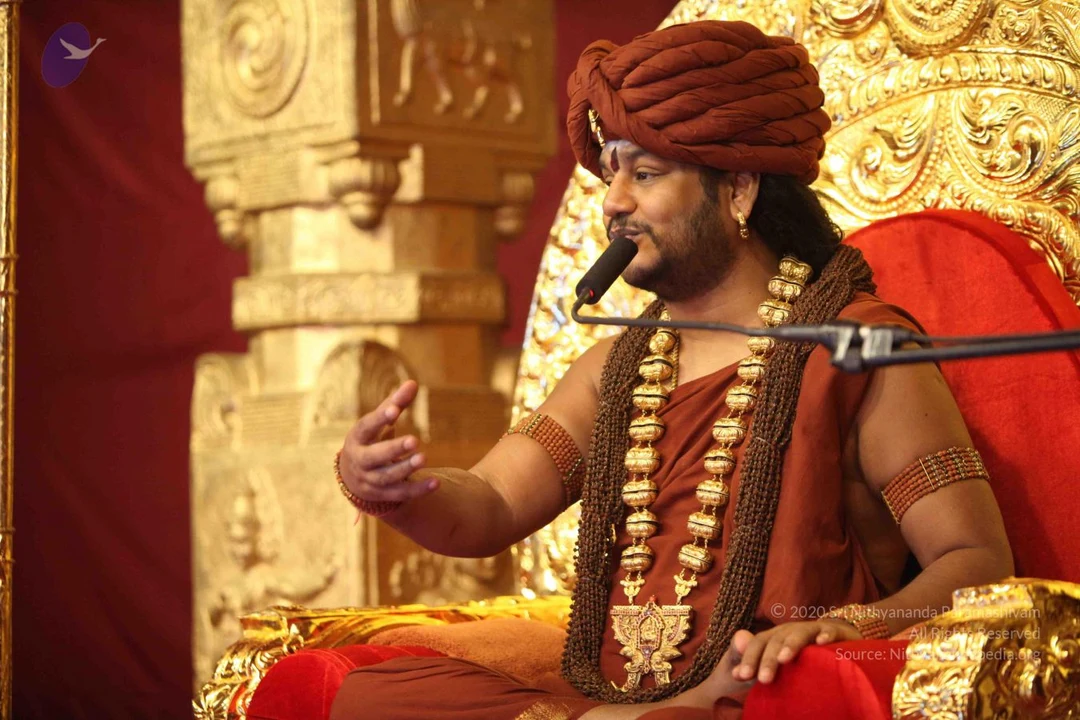
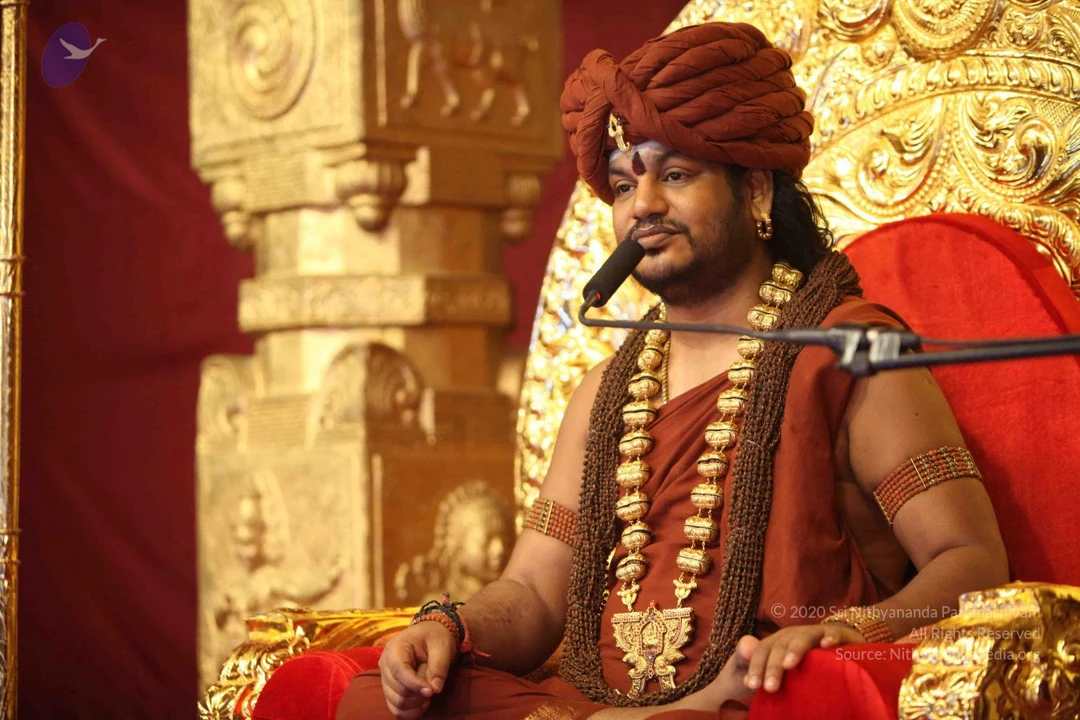
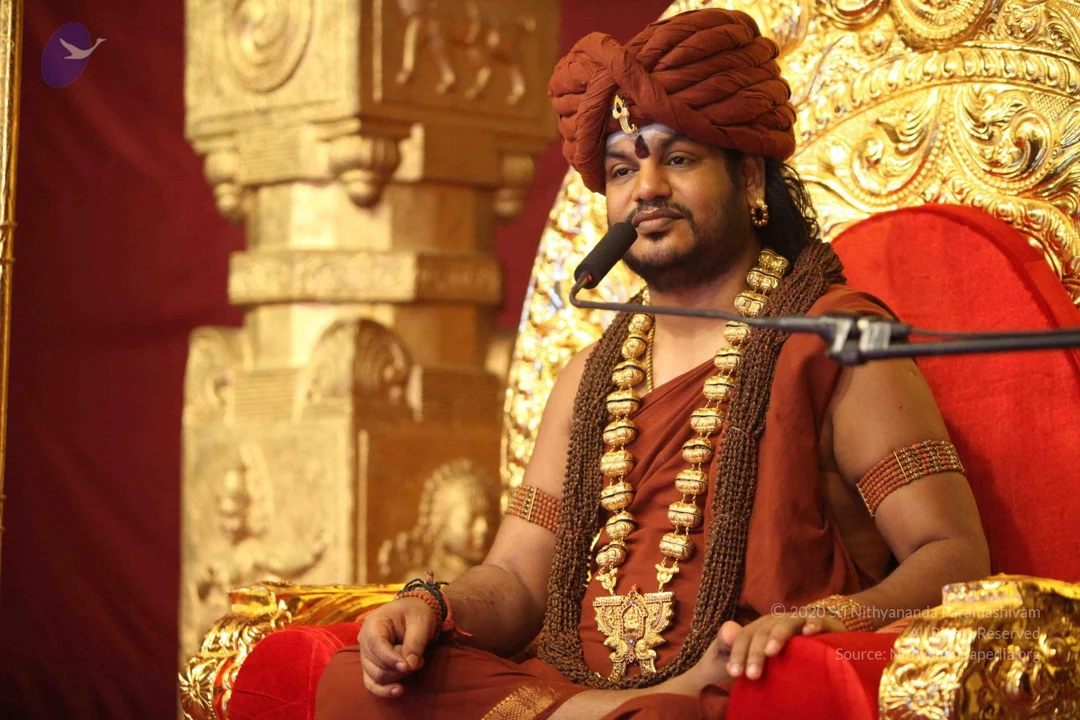
Pada-Puja

8 photosSource gallery
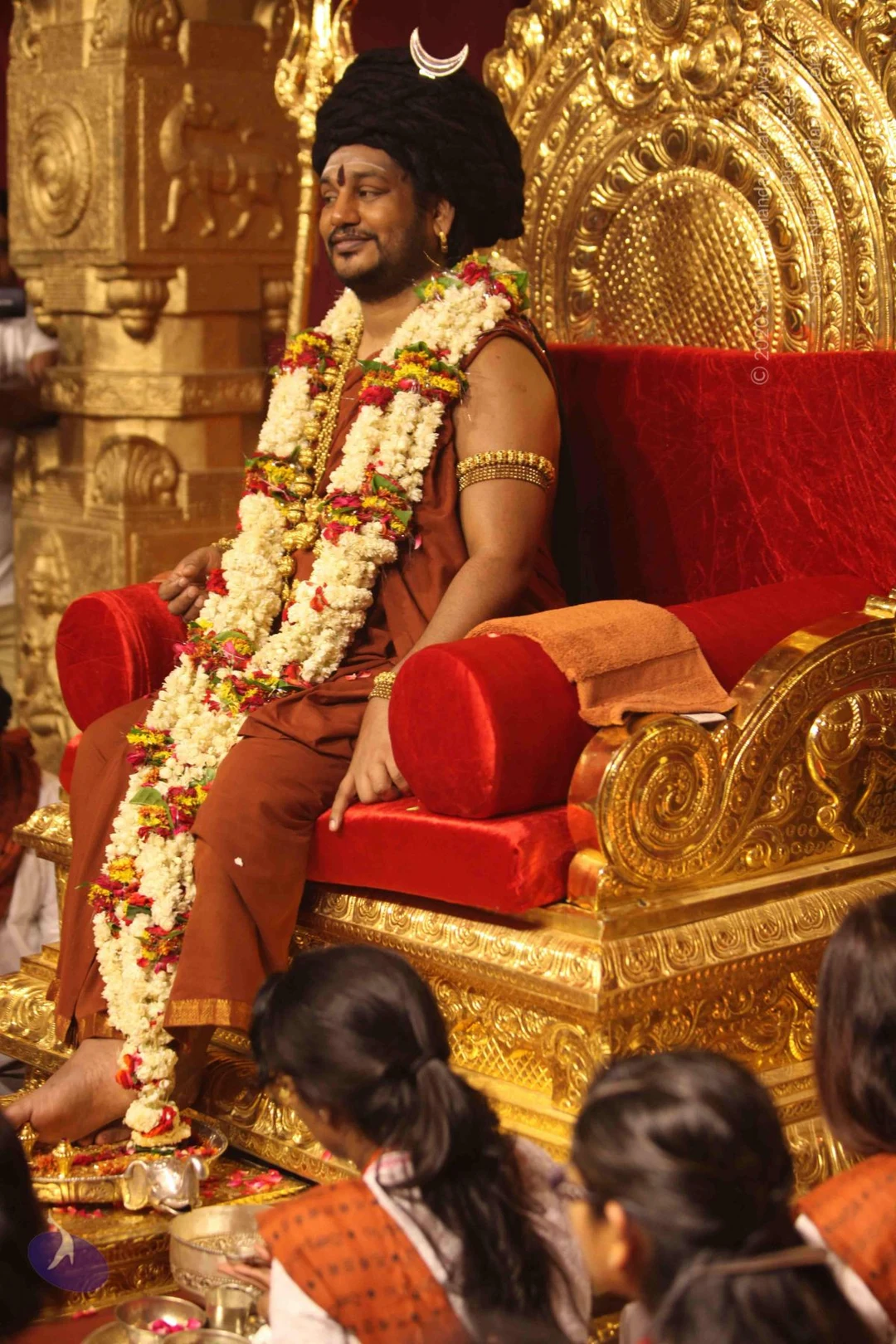
A man seated on an ornate gold-and-red throne, wearing a large black turban with a silver crescent ornament and a red bindi on a white-marked forehead. He wears a rust-orange shawl draped over one shoulder, layered gold bead and ceremonial necklaces, a gold armlet, and garlands of white jasmine and red-and-yellow flowers. A golden trident stands to the left against a deep red curtain, and a blurred figure is at the bottom edge. Appearance-based candidate: Swamiji (probable), given the crescent, turban, saffron-toned shawl and ceremonial gold necklaces; the seated figure is the candidate.A seated man in a dark braided turban with a silver crescent ornament sits on a red velvet throne with ornate gilded carved back. He wears an orange-brown robe, layered white and yellow-red flower garlands, a heavy gold necklace with bell-shaped beads and a large gold pendant, and gold bangles. A vertical white tilak with red centre mark is on his forehead. A tall gold trident stands at left against a deep red curtain. Probable Swamiji seated in satsang setting, with cues including the turban, crescent ornament, ornate gold necklace and garlands. Blurred heads of audience appear in the lower foreground.A seated man in a rust-brown robe and black turban with a crescent ornament sits on an ornate gold-and-red throne, wearing a white and multicoloured flower garland, a gold armlet and a forehead tilak. Children in orange clothing sit below, with a silver plate of flowers and a bowl at the foot of the throne. The ornate gold throne carvings and red cushions surround him. Probable Swamiji seated on the peetha with cues including black turban and crescent, ceremonial garland and gold armlet. Children in orange kneel in front, appearing to attend the seated figure.A photograph of a smiling man seated on an ornate gilded throne with red velvet armrests. He wears a rust-orange sleeveless robe, a long dark braided turban-style hair bun topped with a silver crescent ornament, and a red bindi with white tilak on his forehead. He is draped in long garlands of white jasmine and marigolds with red flowers, and wears gold bangles on his upper arm and a gold earring. Behind him stands a carved golden pillar with a relief of a bull and a gilded ceremonial backdrop. Swamiji (probable): the long dark hair with a crescent ornament, saffron-orange robe and garlands match the appearance cues, seated on a throne in a satsang setting.A man with long dark matted hair topped by a small silver crescent ornament sits on an ornate gold throne with red velvet cushions and armrests. He wears a rust-brown sleeveless robe, a gold armlet, and a long multicoloured garland of white jasmine, marigold and red flowers draped to his feet. A gold trident stands behind the throne beside a carved golden pillar with animal relief. In the foreground, a devotee in white kneels at his feet, which rest on a brass tray of flower petals, and two women's heads with dark hair are visible at the bottom edge. Another man in white stands at the left edge. The seated figure is an appearance-based a person, identified by his swept hair, crescent ornament, ornate throne and rudraksha-style regalia, and is shown in person.A man with a tall dark turban and a red-brown saffron-coloured robe sits on an ornate gold throne with red cushions, wearing layered gold necklaces, gold armbands and a large white and multicoloured flower garland. A vertical red vibhuti or kumkum mark is on his forehead. In the foreground, three people seen from behind sit closer to the throne: one with a long braid in an orange and white outfit, one with a dark ponytail in a saffron-trimmed white garment, and one with short hair in a white top and saffron wrap. Behind the throne are large gold-coloured deity figures. The man on the throne appears to be the a person, seated in a throne position as the honoured guru, with the attendant devotees seated in front of him.
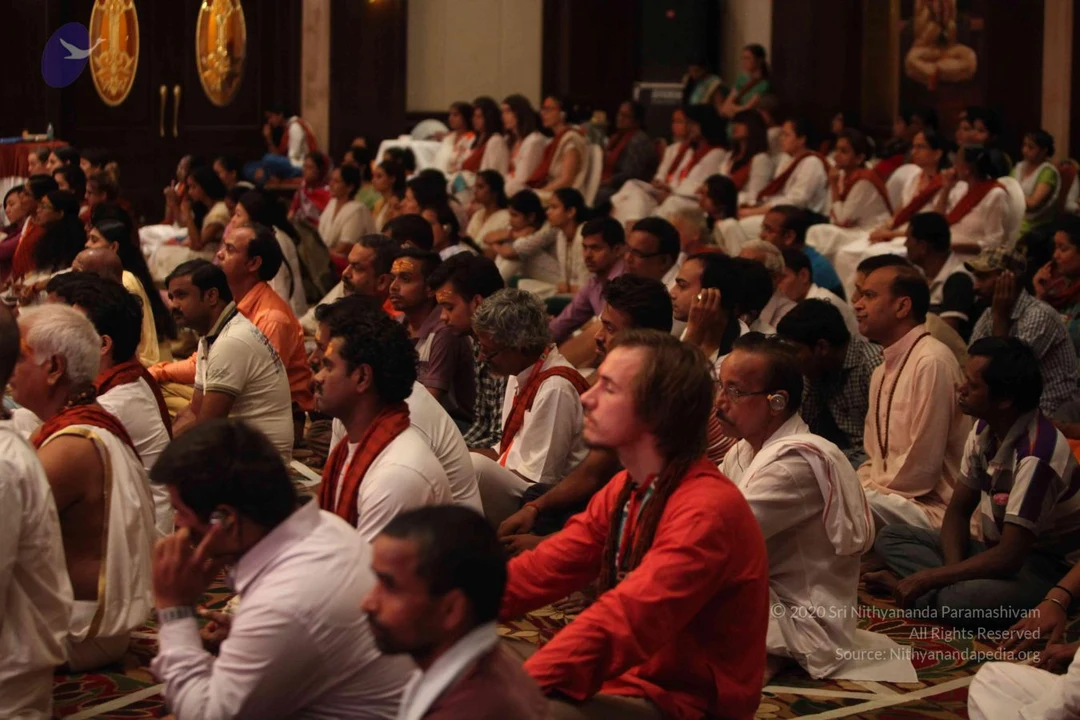
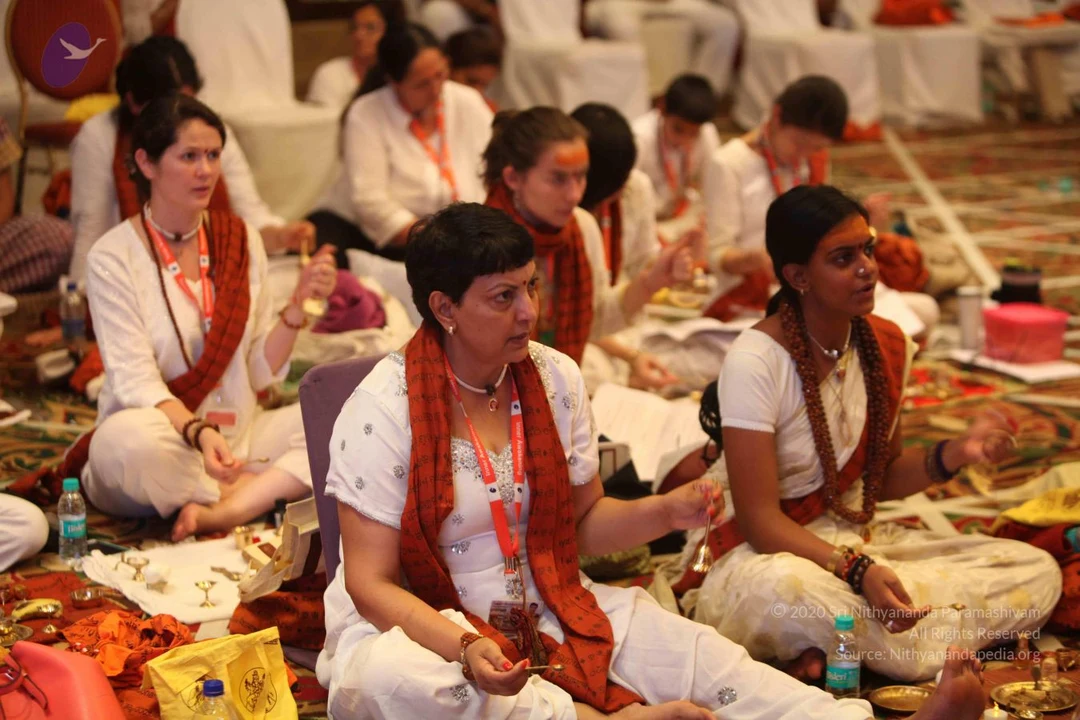
Shivoham-Process
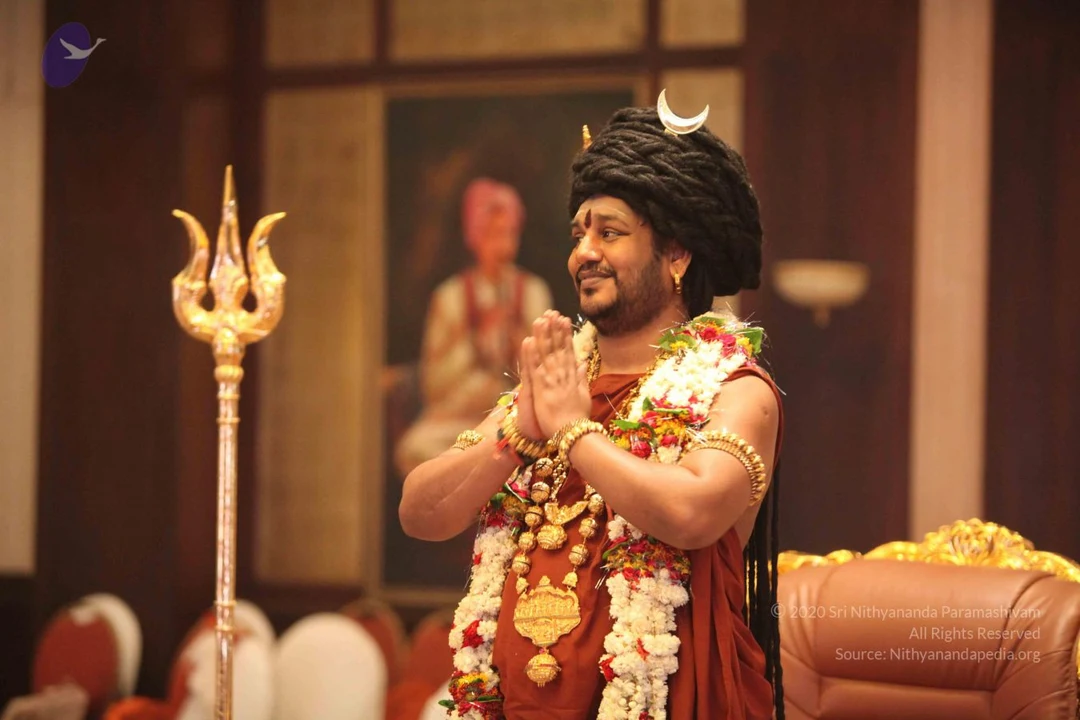
20 photosSource gallery
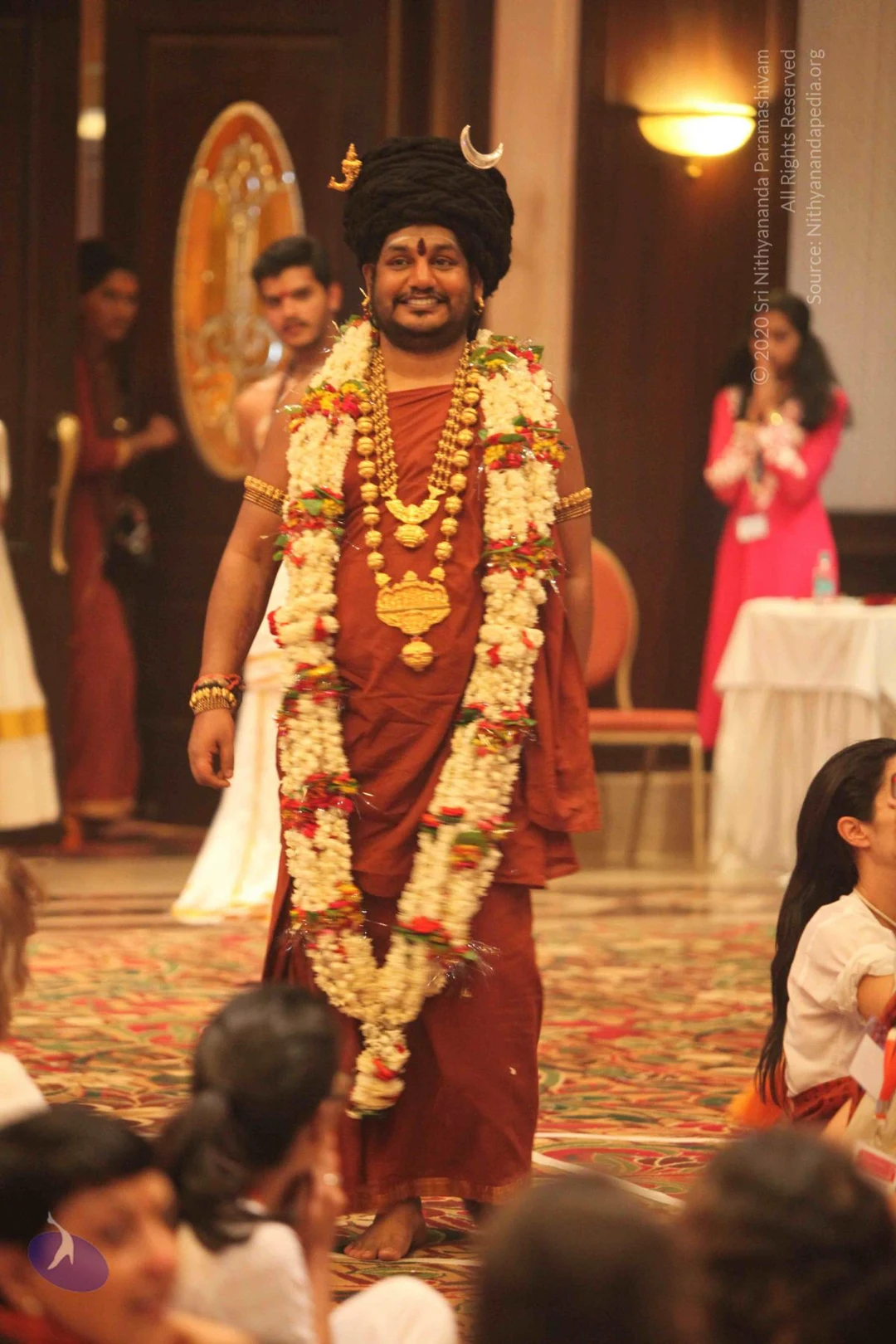
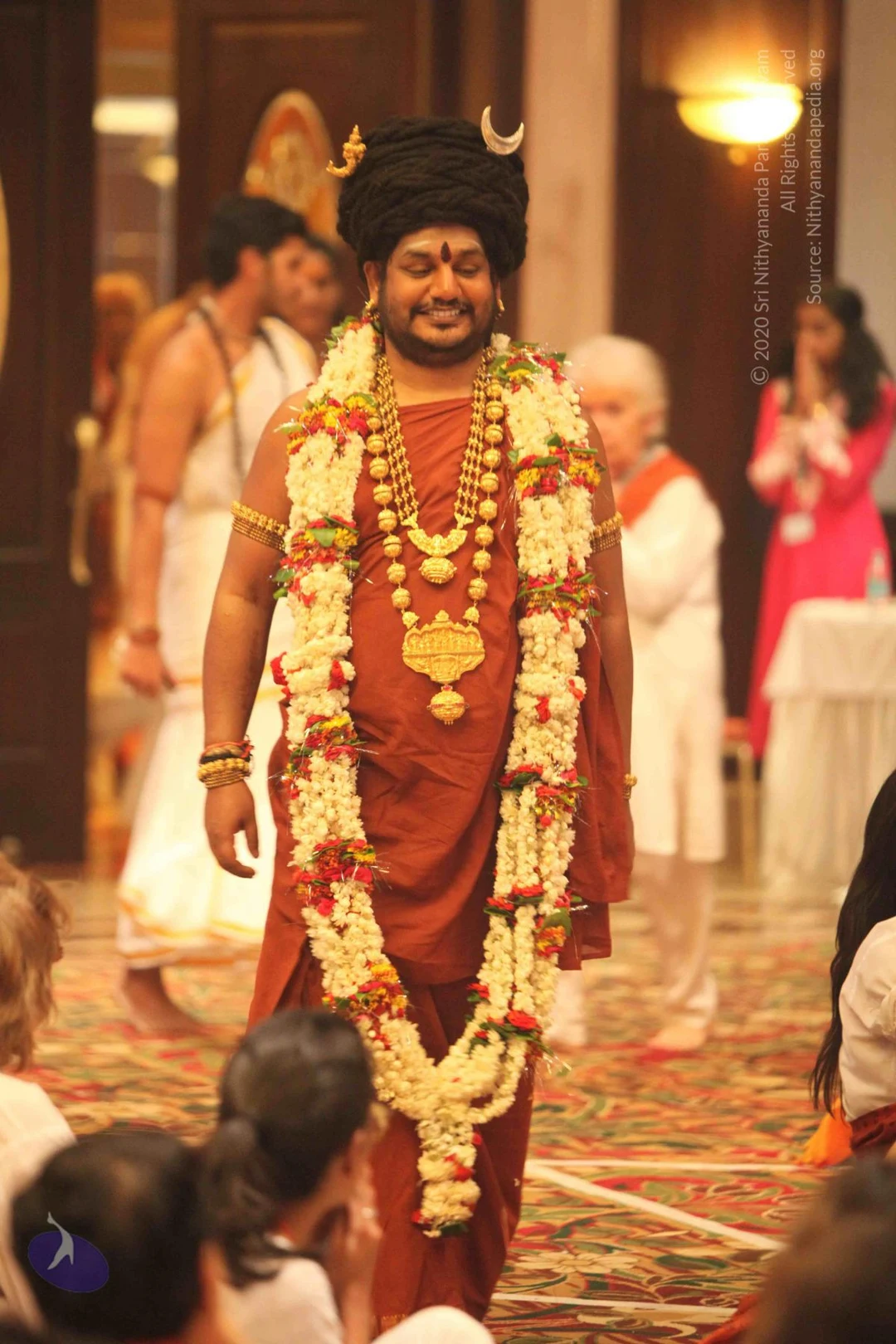
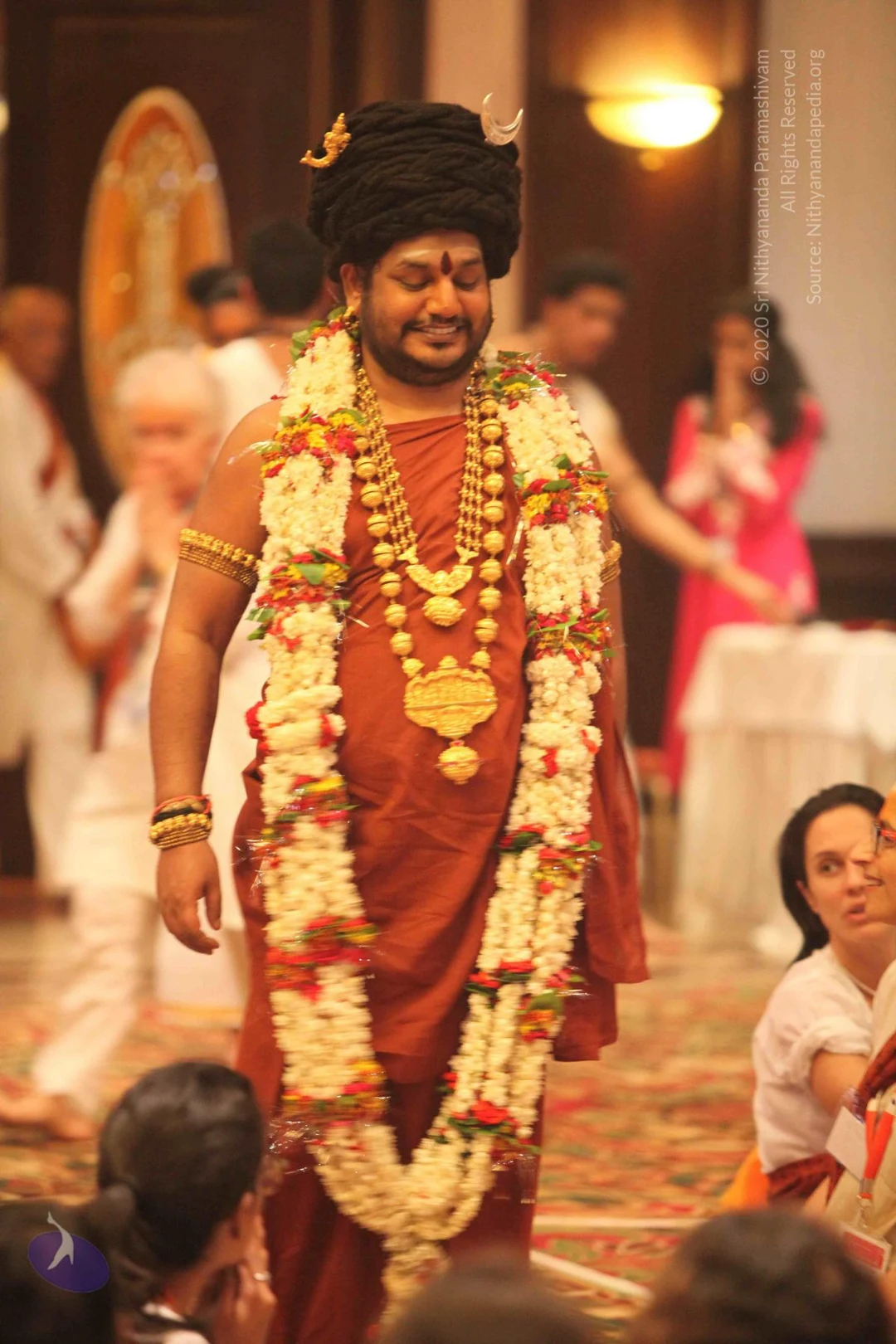
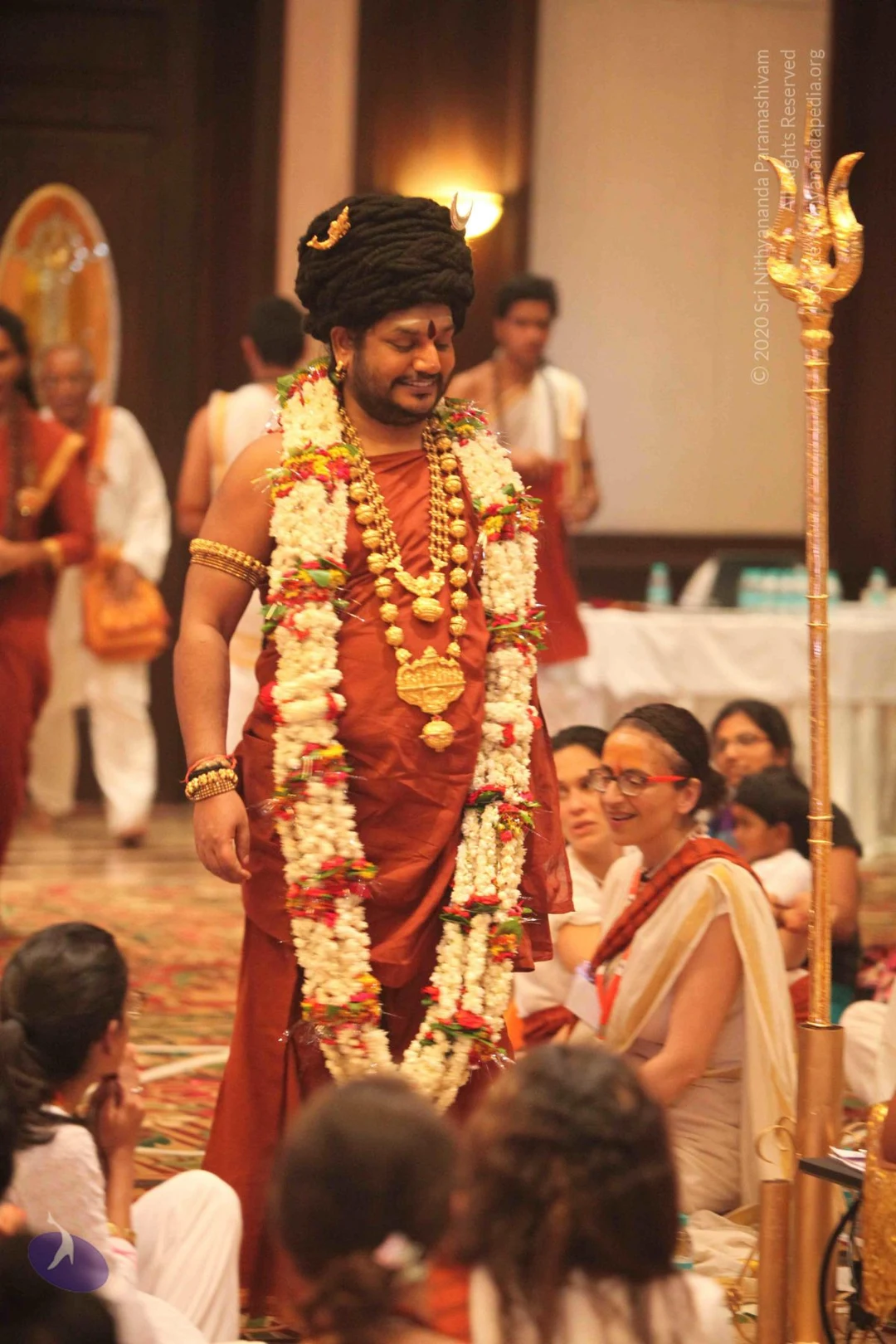
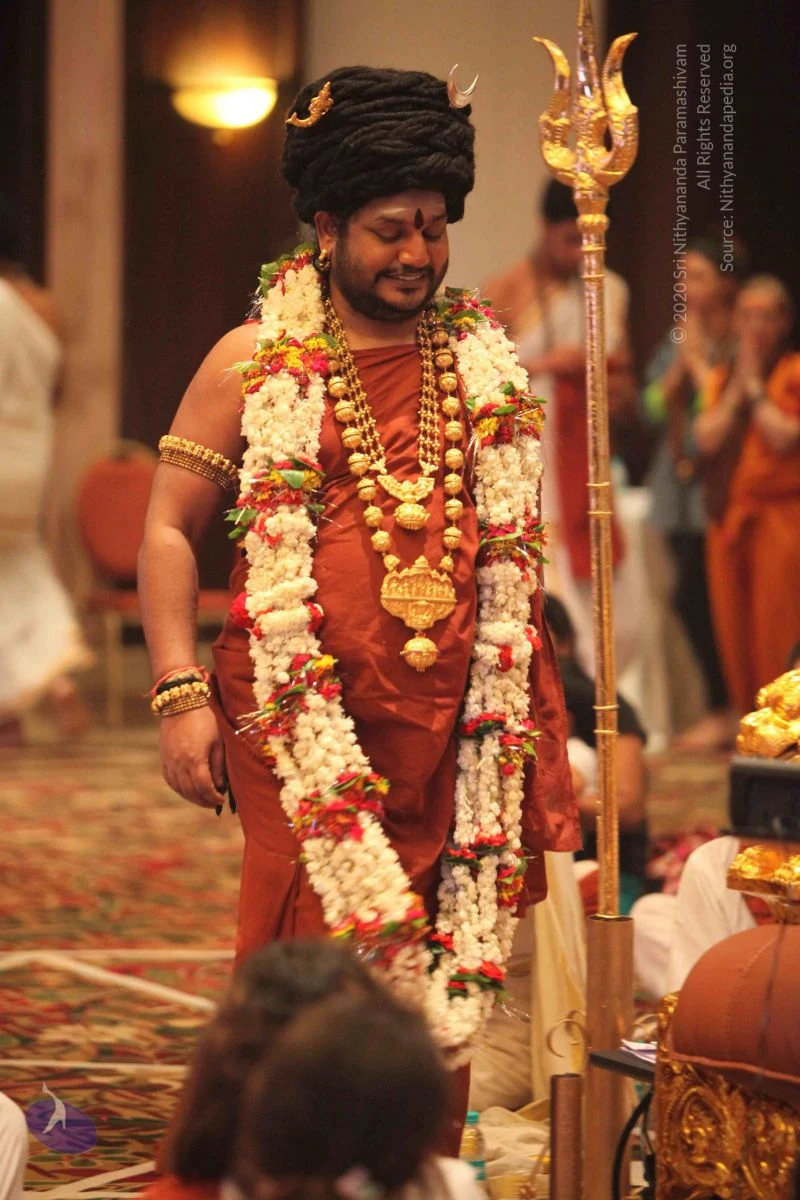
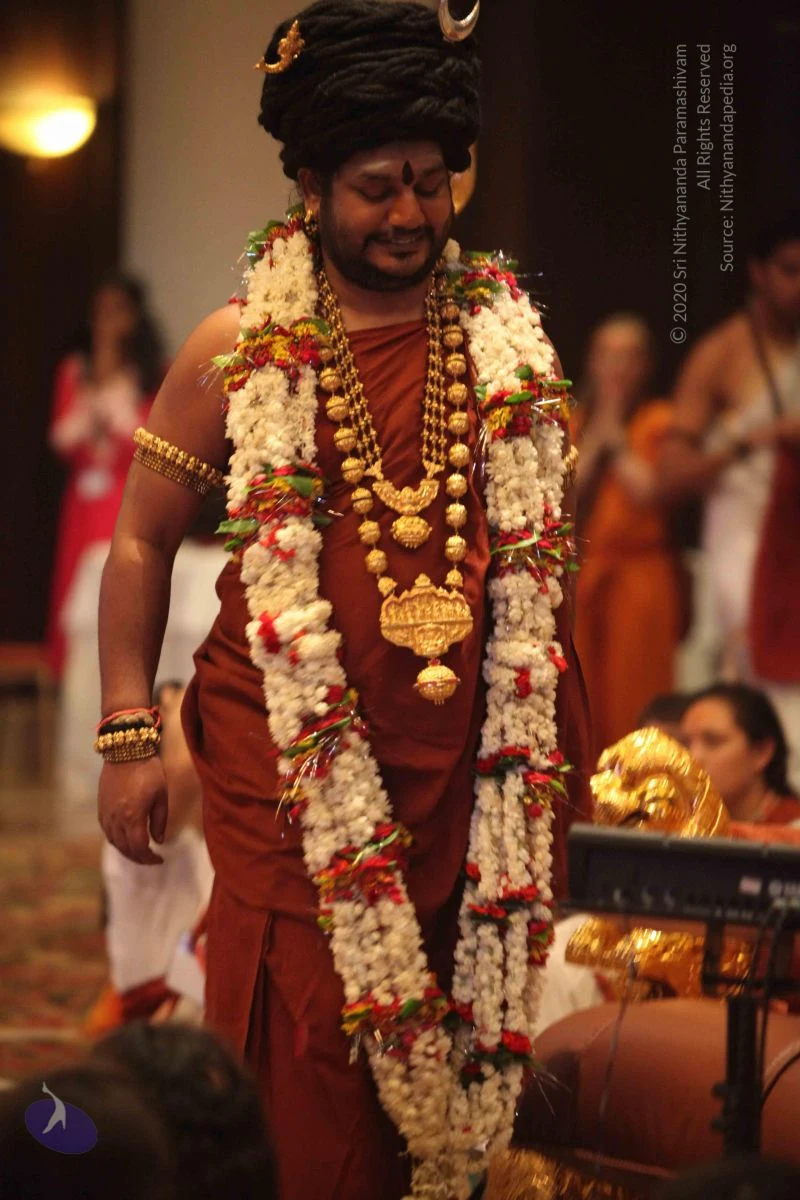
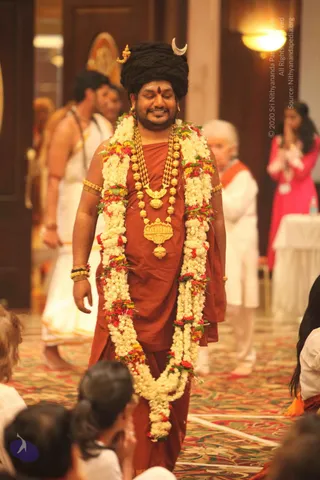
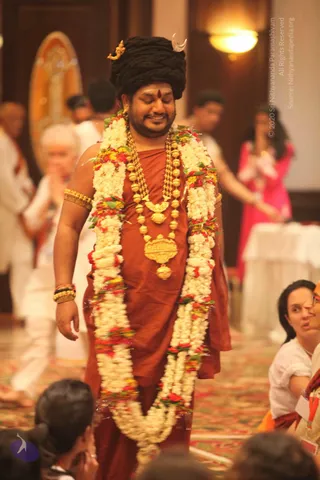
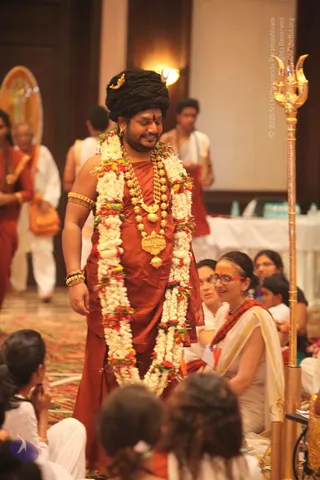
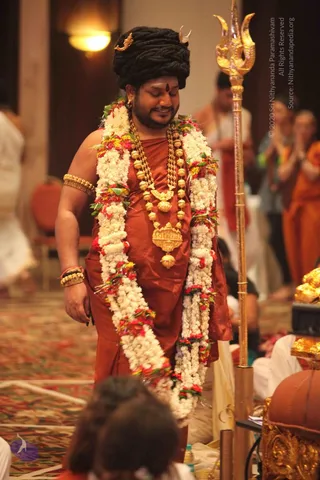
A smiling man in a rust-orange sannyasi robe walks barefoot across an ornate patterned carpet in a hotel hall. He wears a tall dark turban-style head covering with a silver crescent and a small gold ornament, a long white and red marigold garland, layered gold beaded necklaces with a large gold pendant, gold armbands and a red-and-gold wrist band. A red tilak marks his forehead. Behind him, a woman in pink stands with hands folded, and a man in white stands at the back; seated people in white clothing and the blurred backs of heads occupy the foreground. a person: the flowing long hair under the turban, saffron-orange robe, rudraksha-style gold necklaces and garland are visible cues, but his face is not used for identification.A man in an orange-red saffron robe walks down a carpeted hall, eyes closed and smiling, wearing a tall dark matted topknot with a crescent moon ornament and a small golden accessory. He wears a long white and red flower garland, heavy gold beaded necklaces, a large gold pendant, gold armbands and bangles, and a red tilak on his forehead. Seated devotees in the foreground watch him, and white-clad attendants and a woman in pink stand in the background near a white-draped table.A man walks down a hall carpeted in a multicoloured floral pattern, wearing a rust-orange cloth over one shoulder and wrapped around his body, with eyes closed and a gentle smile. He is wrapped in long white and red-tipped jasmine and marigold garlands and wears heavy gold beaded necklaces, a gold pendant, a gold armlet and gold bangles. His dark hair is piled high in a matted topknot ornamented with a gold crescent and a small gold ornament, and a red mark is on his forehead. Seated guests in the foreground, including a woman in a white top, watch him. Behind him, a woman in pink and an older man in white stand near a white-draped table. a person is walking in a procession style, with the crescent and garland cues indicating a ceremonial presence.A photograph of a man with a tall dark turban-style hairstyle, a red-orange shawl over an orange-red garment, and a long multi-strand white and orange flower garland draped around his neck, walking through a hall. He wears heavy gold beaded necklaces with a gold pendant, gold bangles, and a red-brown tilak on his forehead. A tall gold trident stands at right. Seated women and girls in white and cream sarees and salwar sit on the floor in the foreground, one older woman in red-rimmed glasses smiling. Two more people in red and white ritual clothing stand in the background near a table with water bottles.A man with long swept-back dark hair under a crown-like ornament and a crescent-shaped headpiece walks through a hall, eyes lowered and smiling slightly. He wears a rust-orange saffron-toned robe draped over one shoulder, a long gold-bead necklace with a large gold pendant, a thick white and red flower garland, and a gold armband. A tall gold trident stands beside him, and a gold-trimmed object appears at right. Behind him, people in white and orange clothing stand with hands pressed together, and blurred figures sit on the carpet at the bottom edge.A man in a rust-orange dhoti-style garment walks forward, eyes lowered, wearing a long double garland of white jasmine and red flowers draped from shoulders to waist. He has long black dreadlocks wrapped high on his head with a gold ornament, a red tilak on his forehead, a heavy gold necklace with a large gold pendant, gold bangles and a gold armlet. Behind him, devotees in saffron and white clothing stand with hands folded, and a large gold-coloured object sits at the right edge. The setting appears to be an indoor hall with carpeted floor.
Ganga-Ghat

8 photosSource gallery
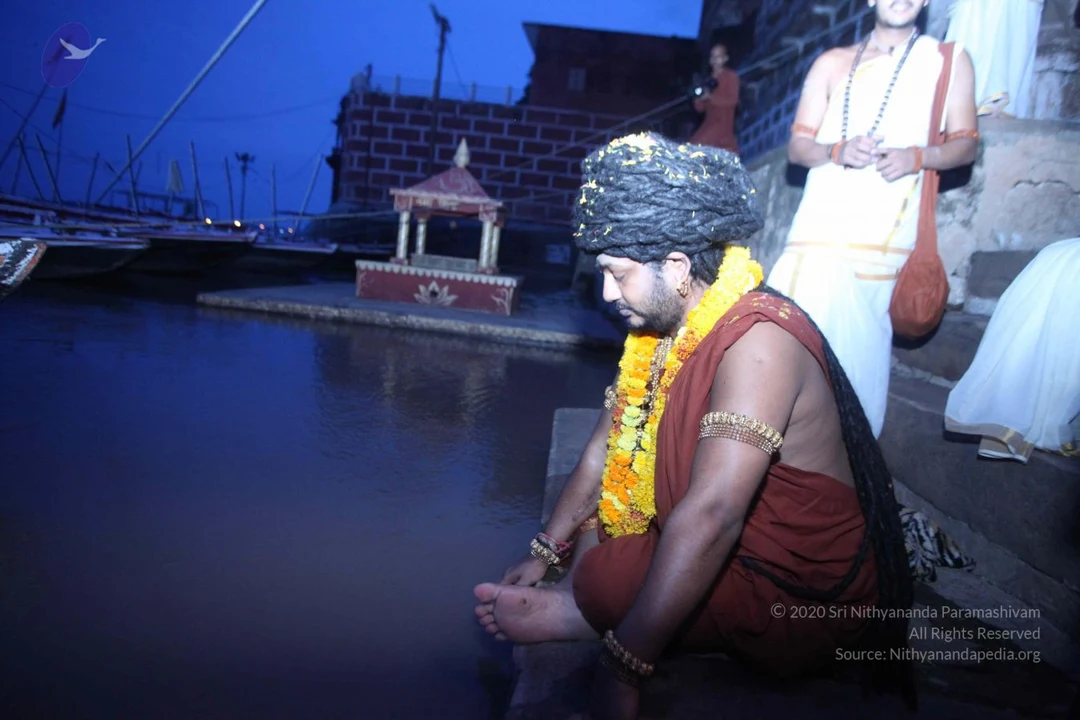
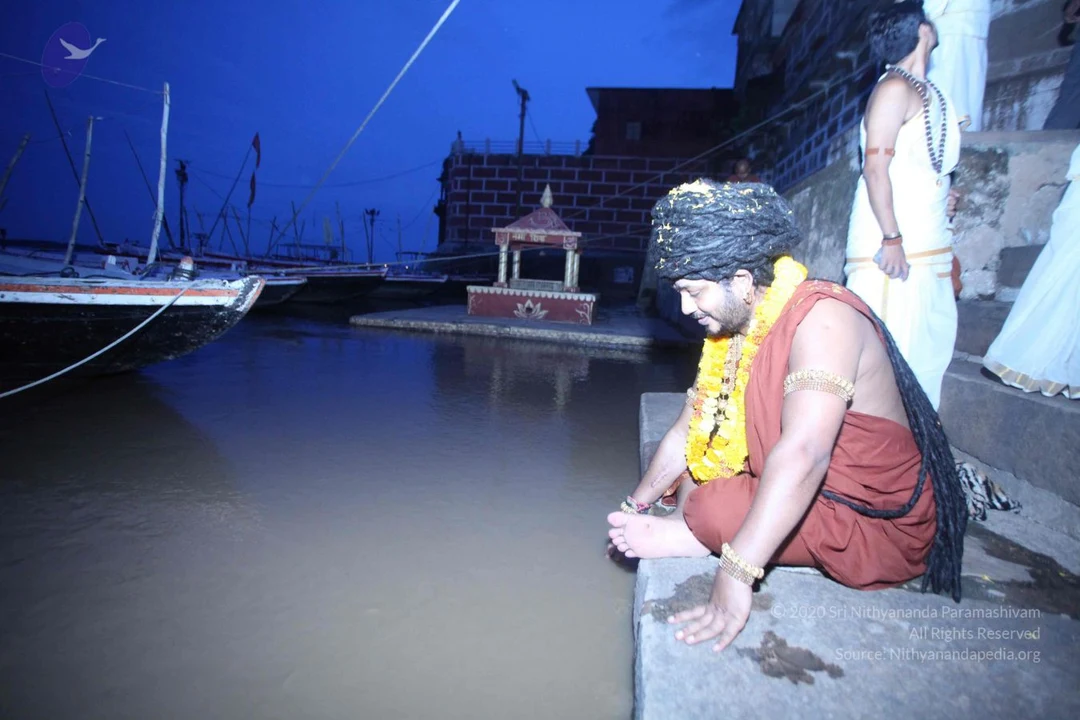
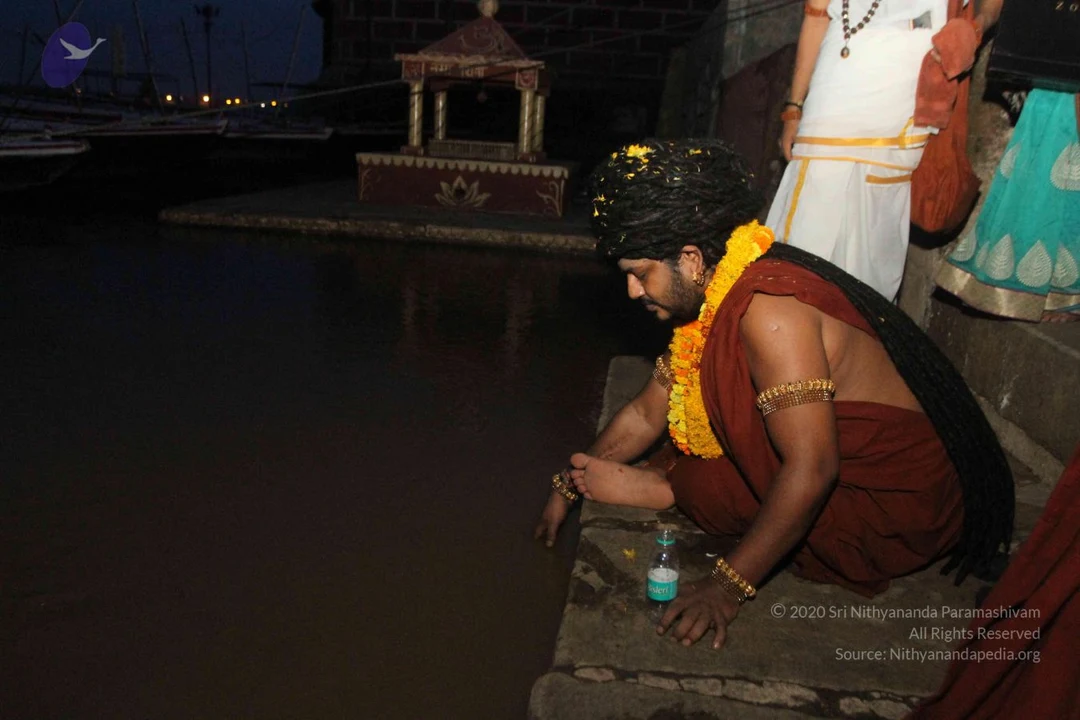
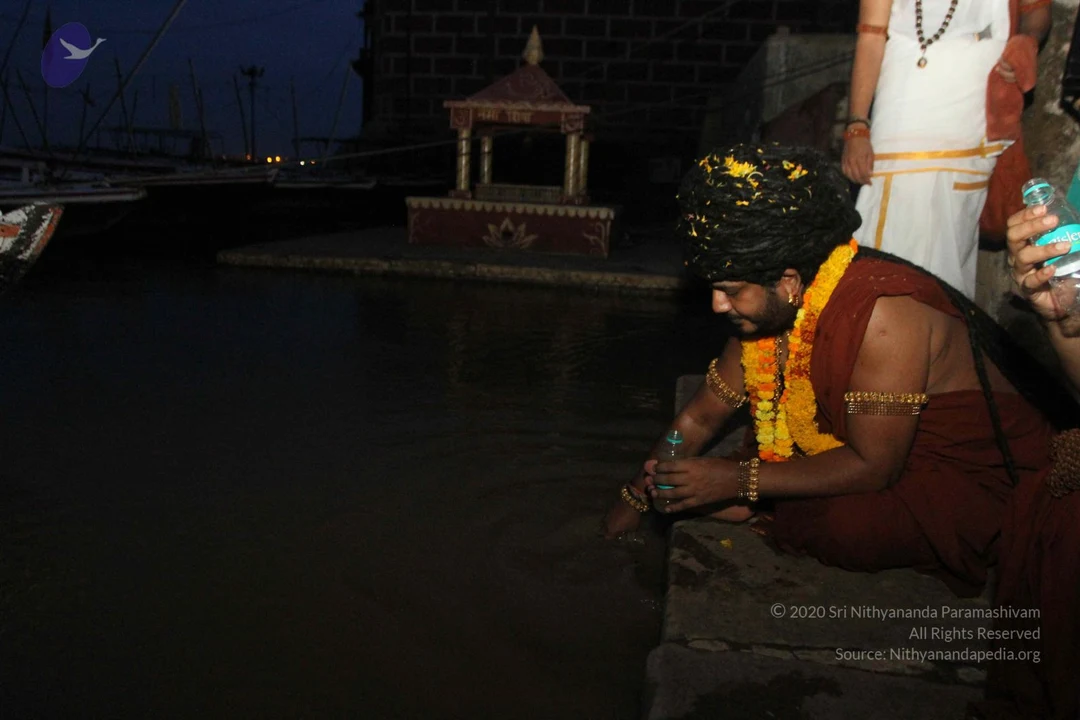
A photograph of an indoor hall with white walls, ceiling fans and a white pillar on the right. In the centre, a bald man in a rust-orange robe and glasses holds a black microphone toward an older man with white hair and a white beard who wears a light orange kurta and a red-orange shawl, with one hand on his hip. Beside them stands a man in a black turban with a marigold and orange garland, hands folded at his chest, and a man in white on the left edge. Behind them, seated devotees in orange and saffron clothing fill the room, with a few standing figures.A photograph taken indoors in an evening hall with white ceiling fans and pillars. A bald man in red-orange robes and rudraksha beads holds a microphone toward an older bearded man in pale orange-pink robes with an orange shawl. Beside them stands a man with a black turban, marigold garland and orange robe, hands joined in greeting. A man in white with a skullcap stands nearby, and other robed people in orange sit or stand in the background. The scene resembles an interview or satsang exchange.A photograph taken in a dimly lit temple interior with a red pillar and red metal grille behind. In the foreground, a bald, bearded older man in an orange-red robe with a sash and a beaded necklace faces right, smiling. To the right, a figure with long dark hair, a yellow-and-orange flower garland, gold bangles and a dark maroon wrap stands facing him, with a gold earring visible. Behind them, an older bearded man in a pink-orange robe and a man in an orange turban stand among other devotees in white and orange clothing.A man in a maroon-brown sannyasi wrap walks through a red-painted temple interior, his head covered by a tall dark twisted turban-like hairstyle with yellow flecks. He wears a long yellow and orange marigold garland, a gold necklace with a large pendant, and gold armbands and bangles on his right arm and wrist. A small red mark is on his forehead. Behind him, red iron gates and railings frame a white shrine niche holding a deity murti decorated with white flowers and a garland. A small brass lamp stands on the floor near the threshold. The figure has a candidate appearance for a person based on the swept-up hair, saffron-toned clothing, rudraksha-style gold ornaments and garland cues, presented as a person walking in a temple setting.A dimly lit hall at night where a row of saffron-robed sannyasis sit cross-legged on the floor in front of a red carved wooden shrine with ornate gold details. Several seated figures hold small brass or metal plates on the floor before them, and some wear orange turbans. Long wooden staffs or instruments lean against the pillars beside them. Behind the group, more people in orange and white stand and sit in the background near the shrine doorway. The scene suggests a satsang or recitation session, but the low light makes details hard to make out.A man with long dark hair wrapped in a turban-like head covering decorated with yellow flowers sits on a stone ghat step beside a dark river at night, dipping his hand into the water. He wears a saffron-red wrap draped over his bare upper body, a long orange-yellow marigold garland, gold armbands and bangles, and a rudraksha-style necklace. A plastic water bottle rests on the step beside him. Behind him stands a second person in a white dhoti with an orange-gold border and an orange shawl. A small shrine with a lotus motif and boats are visible in the background. The man's appearance with long hair, saffron wrap, ornate gold adornments and garland matches several cues associated with Swamiji, so this is a probable identification.