Skip to content
Monday

2 June 2014

Science of space creation

Dated photos
108
Source pages
1
Media
2
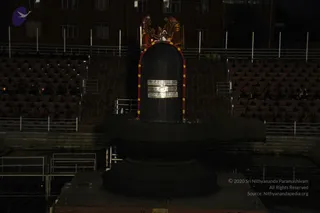
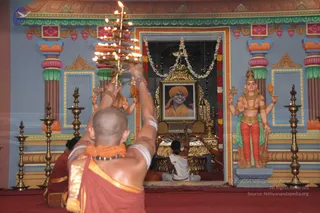
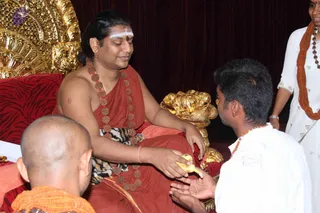
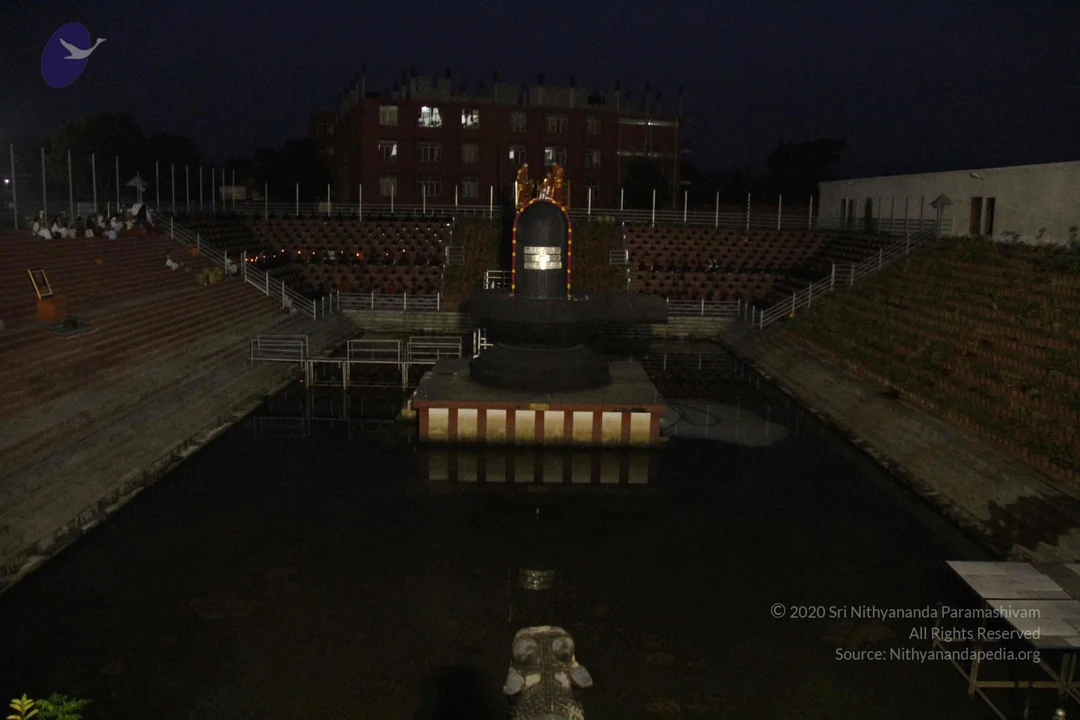
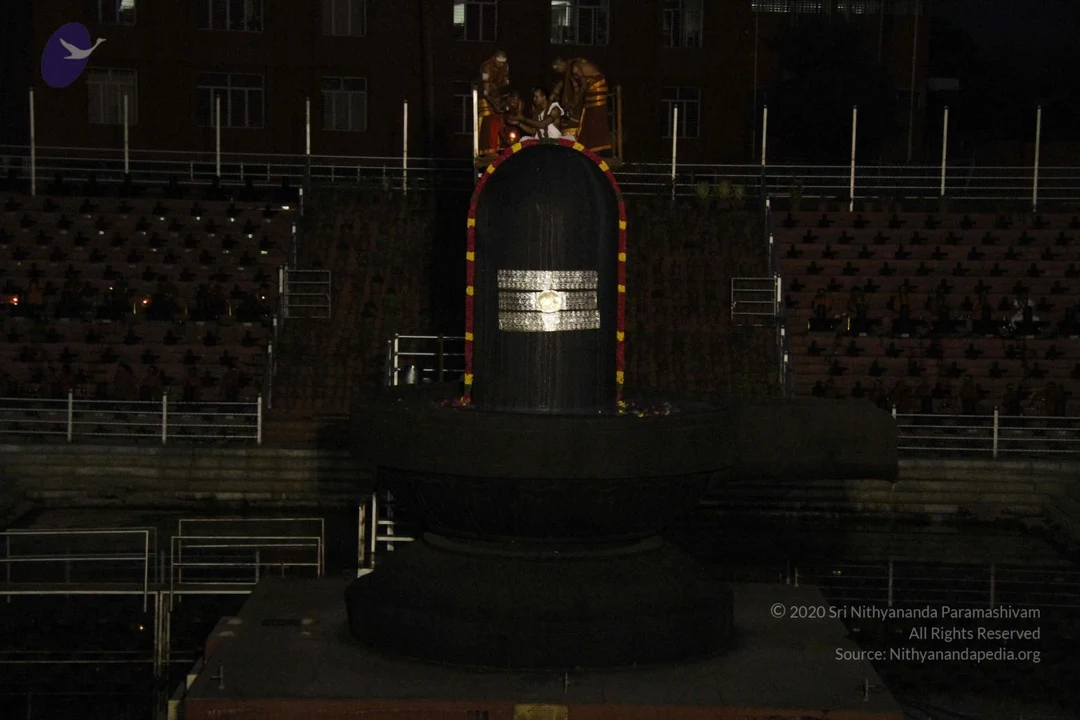
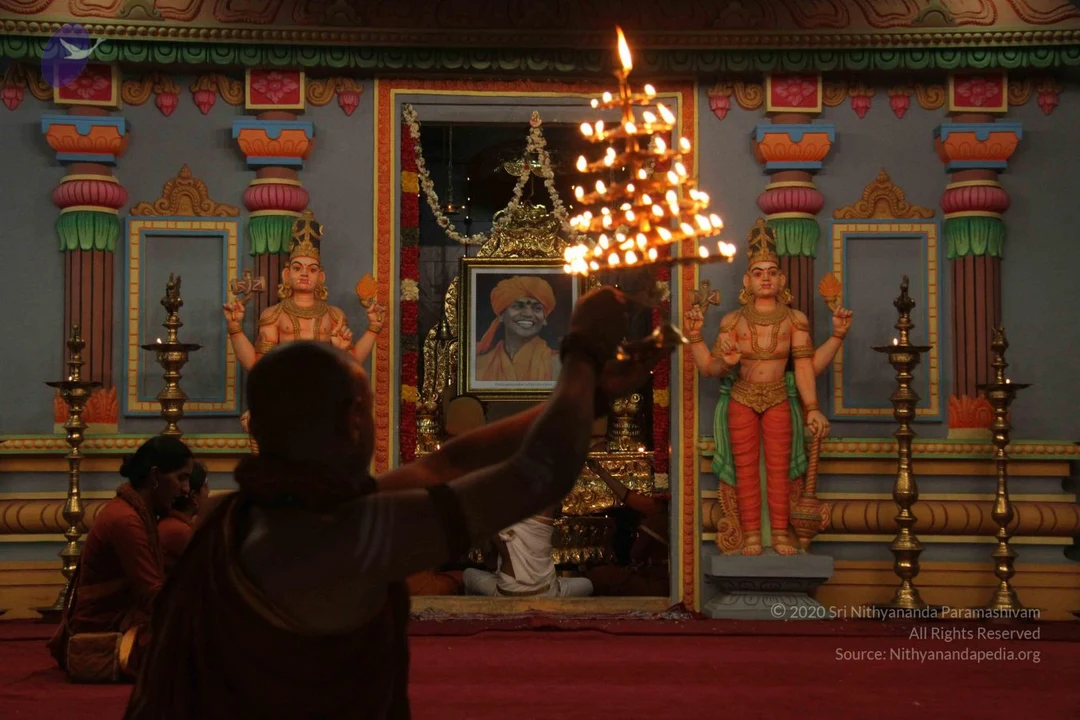
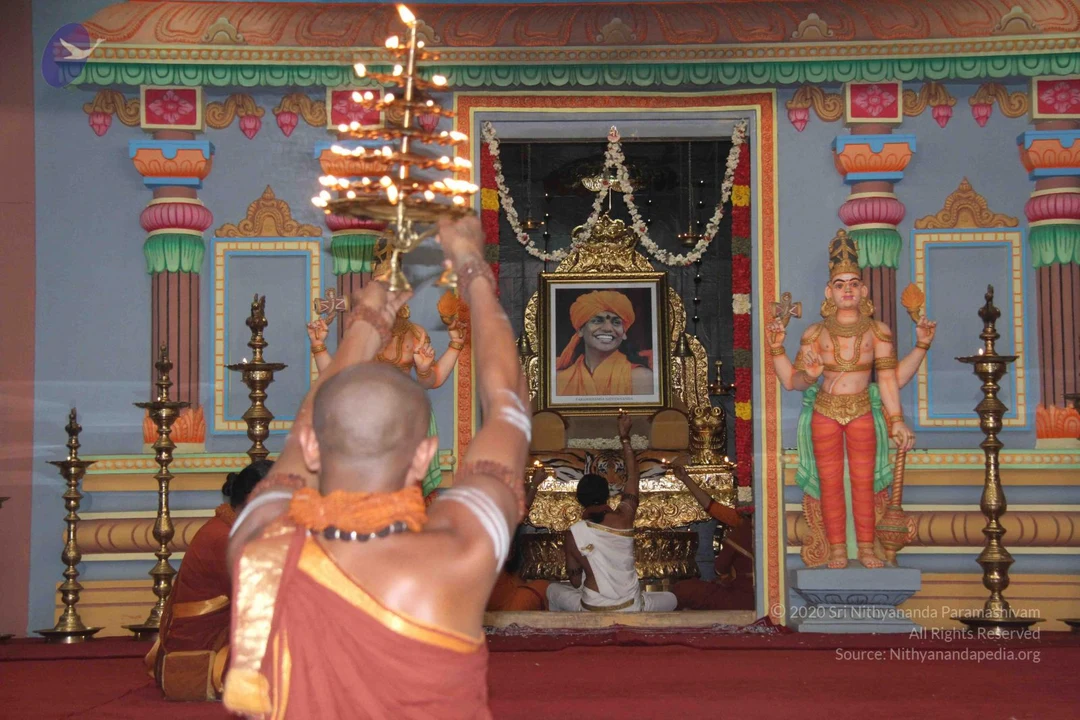
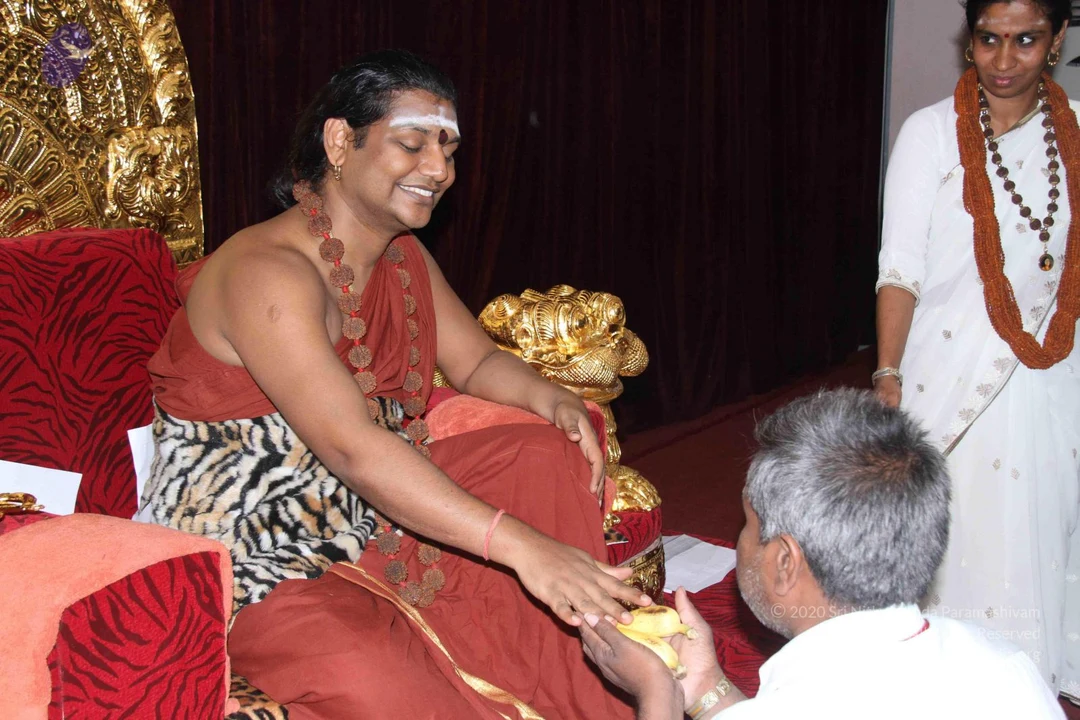
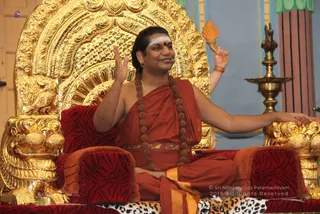
Night photograph of a large black stone Shiva lingam on a tiered black yoni-pitha base, decorated with a red and yellow flower garland arching over its top. Silver plated bands and a silver face are fixed to the lingam's front. Behind it, empty tiered seating rows stretch on both sides, and a multistorey building is lit at the top. On a raised ledge above the lingam, a few robed figures in saffron and orange clothing stand near a white-clothed person, seen from a distance. Fencing and metal railings surround the platform. Purple and white logo appears at upper left.A priest with a shaved head, wearing an orange-saffron shawl over a red-orange dhoti and a rudraksha mala, lifts a tiered brass aarti lamp with flames toward a shrine. Behind him stands a framed portrait on a gold throne-like peetha, decorated with white and red flower garlands, showing a smiling figure in a saffron-orange turban and robe; the portrait is not a physical person. Two gilded deity figures flank the shrine, one in green cloth holding a club and one with orange-red dhoti and gold jewellery. Brass oil lamps stand on the red carpeted floor, and a seated attendant in white is visible near the throne. Partially visible people in orange cloth kneel at the sides.A photograph of a seated man in a red-orange robe and a shawl with a black-and-white tiger-stripe pattern, wearing a long rudraksha mala and a gold-toned ceremonial chain. He has a white and red tilak on his forehead and long swept-back hair, seated on an ornate gold throne with red cushions. He extends a small yellow object. A shaved-headed person in orange beads is partly visible in the foreground at lower left, and a woman in white with an orange shawl stands at the right edge. The setting has deep red drapes behind the throne. Appearance cues are consistent with Swamiji (probable): long swept-back hair, rudraksha malas and saffron-toned robes, seated on a throne, in a satsang-style setting.

June 02 2014

Original wiki page
Contents

Title:

Science of space creation

Description:

In today’s morning satsang, Paramahamsa Nithyananda, spoke on Living Advaitha and Recreating Your Reality. He advised us that when you create a space for something and then have an incompletion; the whole thing collapses. You need to complete the incompletion and then re-create the space again becaue the incompletion caused the space to collapse. Learning the state to be in is the science of creating space. Watch, Share and Subscribe to our channel to be notified of the next upload click http://www.youtube.com/subscription_center?add_user=lifeblissfoundation to subscribe.

Link to Video:

Link to Audio

'Description: Science of space creation by HDH Bhagavan Nithyananda Paramashivam on 02 june 2014'

Transcript:

Nithyanandeshwara Samaarambhaam

Nithyanandeshwari Madhyamaam |

Asmath Aachaarya Paryanthaam

Vandhey Guru Paramparaam ||

I welcome all the devotees, disciples, samajis, satsanghis, Shrimahants, Mahants, Kotharis, Thanedars sitting with us through Nithyananda TV, Sadhna TV, and two-way video-conferencing all over the world.

Cities sitting with us in two-way video-conferencing having Nayana Deeksha: Seattle-Chidambaram, Toronto-Kailasam, Singapore-Singapuram, Houston-Kalahasti, Ohio-Prayag, Nithyananda University-Los Angeles, Nithyananda University-Paris, San Jose-Madurai, Washington DC-Sripuram, Nithyananda Nagaramu-Hyderabad, Tiruvanmiyur-Chennai, Oklahoma-Somanatham, Seattle-Chidambaram, Seremban-Sivakasi, Nithyananda University Paris, Calgary-Amarnath, High Point-North Carolina, Dubai-Vaidyanatham, Scottsdale-Arizona, Belgium, Dakota Dunes, Kuala Lumpur-Palani, Warrington-UK, New York-Varanasi, Calgary-Amarnath, Surrey-Canada, Hyderabad-Gupta Kashi, Gyaneshwor-Nepal, Hong Kong-Sirkazhi, Tuen Mun-Hong Kong, High Point-North Carolina, and Guadeloupe-Rameshwaram...........

I welcome all of you with my love and respects.

2:14

Today I will expand on LIVING ADVAITHA and RECREATING OUR REALITY.

Please understand, every time you visualize and make it into reality, it is called ‘Creation’. But you visualized, you did not make it into reality, you failed, means, it is only ‘Recreation’, it cannot be direct creation.

Please understand, every time you hold a space for something, if there is an incompletion, the reality you created collapses. So, again you will have to complete this incompletion and hold that reality back. So listen, so it cannot be called as ‘Creation’.

I wanted everyone of you to provide intense listening, because one of the major mistakes we are doing in the Science of Creating Space and why we go on losing confidence over our space or blaming ourself, ‘Oh, this space creation and all works sometimes and doesn’t work sometime; many times it doesn’t work.’

Listen. I want you to learn these nitty gritties of space creation. Once you create a space, if there is an incompletion, the whole space collapses. Don’t think if you just complete that incompletion, that space runs. No. You have to recreate again. So, whenever you find an incompletion, complete that incompletion and drop and recreate the whole space again. Only then it gets its own individual energy, intelligence, inspiration.

I will give you exact example. For example, I wanted health or some things to happen as I want. It is an example I am giving. Let me give you an example of, better ‘you’ because I don’t want anything that is the problem. So I cannot give experientially that example! If you want wealth, you create the space for attracting may be hundred million dollars. After you created the space, after two-three minutes – ‘Aaah, who is going to get fooled by this space creation idea and all? May be by teaching this space creation idea, he might have become what he wanted to achieve, but we have not got anything.’ Some foolish stupid thing! The moment that incompletion comes you are so intelligent, you catch that. You catch your SDHD and complete with that and drop. After you complete and drop, you think that space you created earlier is by itself powerful. No. Once you complete the incompletion, again you will have to visualize step-by-step and create the space, because when you complete the incompletions and drop them, along with that, the visualizations you created earlier also goes away.

6:46

See, next few days I really wanted to teach you the science of space creation. The science of space creation is, it’s a self-Kundalini-awakening process, understand? The science of space creation is a self-Kundalini-awakening process. You can awaken your Kundalini on your own right, on your own energy, on your own intelligence. You can awaken your Kundalini on your own. This science of space creation, the science of creating the space can awaken your Kundalini on your own and keep your Kundalini in right direction.

Vivekananda says, ‘Unless you complete deep incompletions, even if your Kundalini awakens, there is a possibility you can send your Kundalini energy in that incompletions.’ See, Kundalini energy is like a lottery given to you. You can use it for whatever you want. Kundalini is like a lottery given to you. You can either use it for some good purposes or for bad purposes; means, self-destructive. That is why I always insist on, ‘First do Completion, Completion, Completion, then the Kundalini be awakened.’ Poornathwa Kriya, Poornathwa Kriya, Poornathwa Kriya. Completion, Completion, Completion! Then the Kundalini should be awakened.

High level depression! ‘Tipression’ is very cheap, low level. Even in the depression, there is a category based on the pronunciation: ‘Depression’, ‘Tipression’. ‘Dep’, ‘Tip’. Understand, a cheap level tepression, what it means you know? Really, really, for the things which is unworthy, stupid, useless, bogus, literally like seeing a rope as a snake and frightened, and in that, getting heart attack and dying. Seeing a rope as a snake and getting frightened and running away is ‘Depression’. Seeing a rope as a snake getting heart attack and collapsing there and dying is ‘Tipression’ – cheap, bogus.

Means, even for you to be depressed there should be a logical reason. Without even a logical reason you beating yourself is ‘Tipression’ – cheapest type of suffering. Please understand, even depression can be tolerated – logically coming to a conclusion and depressed. ‘Tipression’ cannot be tolerated; even logically you are not convinced you should be depressed; that is ‘Tipression’. ‘Why are you depressed?’ ‘I also don’t know. Because there is no other state to be, so I am depressed. Because I do not know any other state, I am depressed.’

10:55

Understand, learning the state to be in is the science of creating space. One of the biggest gift I am giving it to our kids, even they do not know, is this science of space. When I make them grow the rose plants without thorn, or Rudrabhishekam with rain, without even their knowledge the science of space is becoming their reality. Only after seeing yesterday’s arangetram I understood, ‘Oh, God. Dance has so many things.’ I was thinking dance means what, put the music and jump! Only after yesterday’s arangetram I understood there is so many things to be learnt. Every hand movement; I was talking with my Mahants and Shrimahants. I said, ‘Just that one Thevaram verse they exhibited......’

Yesterday we had a Bharatanatyam arangetram in the ashram. I am talking about that. Two of my disciples, Ananda Poorani, Nithya Supriya.... Actually, I was planning I will sit for ten minutes, because I will have to go for the next meeting. But I sat for more than an hour almost! It was such a wonderful performance. Yesterday I could not get time to praise them. So today, I wanted to acknowledge and bless both the kids. What an amazing performance! And I really wanted to acknowledge, bless both the kids and the parents and the teachers who trained. What an amazing performance! There is so much in the dance has to be learnt – the thaala, rhythm, and the way the mudras, the body moves.....

I can tell you guys, the Bharatanatyam will make you completely healthy; your breathing system, your whole body, stamina, everything. After seeing that yesterday, I really wanted to make Bharatanatyam compulsory for all the women. All the gurukul kids and brahmacharinis HAVE to learn Bharatanatyam. I can tell you, it is equivalent to so many kriyas, because when you bend your body such a way, your breathing naturally forms the pranayamic cycles. And just through the Bharatam they kept the health and the mental health, physical health, and everything.

15:25

I was talking to my Mahants and Shrimahants, that time I was telling, ‘Only after seeing the professional Bharatanatyam performance we understand the intricacies of dance. If not, we think, ‘Oh, what is there, dance? Put the music and jump.’ Monkey also jumps. Put the music and jump like monkey. And, only when see the professional Bharatanatyam dancers we understand. I could not yesterday praise them and bless them. After seeing the performance I was just....it is too good. Too good! That’s what I will have to tell; especially to the acharya, Ranjani, Ranjani Ganeshan. She is also a disciple. I just wanted to bless both the kids performed, and the acharya. What an amazing presentation! God! The moment I saw yesterday, I decided we will give Honorary Doctorate to Ranjani Ganeshan for her seva to the Bharatanatyam. This year Jayanthi we will give an Honorary Doctorate through the Nithyananda University to her for her extraordinary capabilities.

Usually I don’t praise my disciples directly, because it is the dharma of the teacher, you should not praise the disciples; you should only demand more and more authenticity from them. So, I never praise. But these people are really, both the kids and the teacher; they are really much, much more worthy than the words I am uttering towards them now. They are more worthy than the praise I am giving for them. That is why I am praising. Anyhow, let me come to the point I wanted to explain through this.

Only after seeing the dance yesterday I understood there is so much of intricacies, there is so much to be learnt. Then one of my Mahant was telling, ‘Swamiji, only after we listened to you we understood speaking is not an ordinary thing; there is so much to be known. But you speak so fluently without any effort, without any effort, spontaneously the efficiency expressing.’ Please listen. Without any effort if you speak, the science of speaking has become your basic cognition. Yesterday also, when I saw the dance, they were dancing without any effort. Means, the science of dancing has become their cognition. Same way, the science of space, when it becomes your cognition, you become Mano Siddha, understand? This is what I was trying to convey. I went to Bharatanatyam and everything and came back.

20:05

Listen. When the science of dance becomes effortless act in you, cognition in you, you become master of Bharata. Same way, when the science of speaking becomes effortless cognition in you, you become master orator. When the science of space creation becomes effortless cognition in you, you become Mano Siddha. Listen. That is why I wanted to teach you the science of space creation.

When you create a space, if there is a incompletion found in it and you complete it and drop it, the space you created also goes away. Again you have to create a space. Again you will have to hold the space for what you want to create. Go on completing. Go on holding the space. Go on completing. Go on holding the space.

For example, if you want to become Shiva, you create the space ‘Shiva’. If an incompletion comes up – ‘No, no, I have fear ...this...that. How can I be Shiva?’ – Then complete and drop it - ‘Namaha’. Then again ‘Shiva’! If incompletion comes up, complete and drop it - ‘Namaha’. Again - ‘Shiva’! If an incompletion comes up, complete and drop it - ‘Namaha’. When ‘Namaha’, you don’t need to repeat ‘Namaha’, you become Shiva. That’s all. Shiva – Namaha - Shiva – Namaha - Shiva. You don’t need to say ‘Namaha’. That’s all is the science of creating a space.

There is another one brilliant method: First itself put ‘Namaha’. Means do all the incompletions, complete all of them and drop it - ‘Namaha’ ‘Shivaya’ ‘Namaha’ ‘Shivaya’. If incompletion comes up, then - ‘Namaha, Complete and drop it - ‘Shivaya’. But you HAVE to create a space after you complete the incompletions and drop it. Your space creation becoming your basic cognition is ‘Mano Siddhi’. With authenticity, you will always achieve Mano Siddhi.

I tell you, the space creation can be achieved in three ways:

· One, if you continuously live around the Master, you will see how he holds that space. You will pick it up.

· Or, if you are directly doing the Guru Seva, again you will pick it up.

· Or, listen; continuously doing the Perpetual Completion, again you will get it.

Either living in Guru’s saanidhya, or Guru Seva, or Perpetual Completion, continuous Completion, tirelessly completing; If the tiredness comes up, complete that also, because that is one more incompletion. Perpetual Completion; Perpetual Completion leads to Living Advaitha, Perpetual Completion leads to enlightenment, Perpetual Completion leads to the life of the Ultimate.

So, understand.....

(After a pause, a gap of a few moments ......)

25:40

Whenever I give this gap, look in. In those gaps are you grinding in your mind the words I uttered? Or have you already fallen into your incompletion, the old stupid thinking style? Just look in. Then you will understand whether you are in the Perpetual Completion or Perpetual incompletion. Whenever I give this gap, understand, are you grinding the words I uttered, or is your mind fallen into the trap of your old thinking? Then you will understand whether you are growing in the line of Perpetual Completion or Perpetual incompletion.

The essence of today’s satsangh is: science of creating the space.

For next few days I wanted to continue to explain, because the science of creating the space cannot be taken for granted. The science of creating the space does not come by itself. Only after seeing the dance yesterday I understood dance does not come by itself; you have to build it and make it as your basic cognition. So science of completion also, science of creating the space also should be created in you and made into a basic cognition.

So, understand, the space creation really works. You need to understand that first. Whatever you think can become reality. Creating the space works. Creating the space works. If it is not working, something is wrong with the way you are creating and the system and the science. Complete that. That is all is the essence of today’s satsangh.

I bless you all. Let you all radiate with Integrity, Authenticity, Responsibility, Enriching and Causing eternal bliss, Nithyananda. Thank you.

Photos

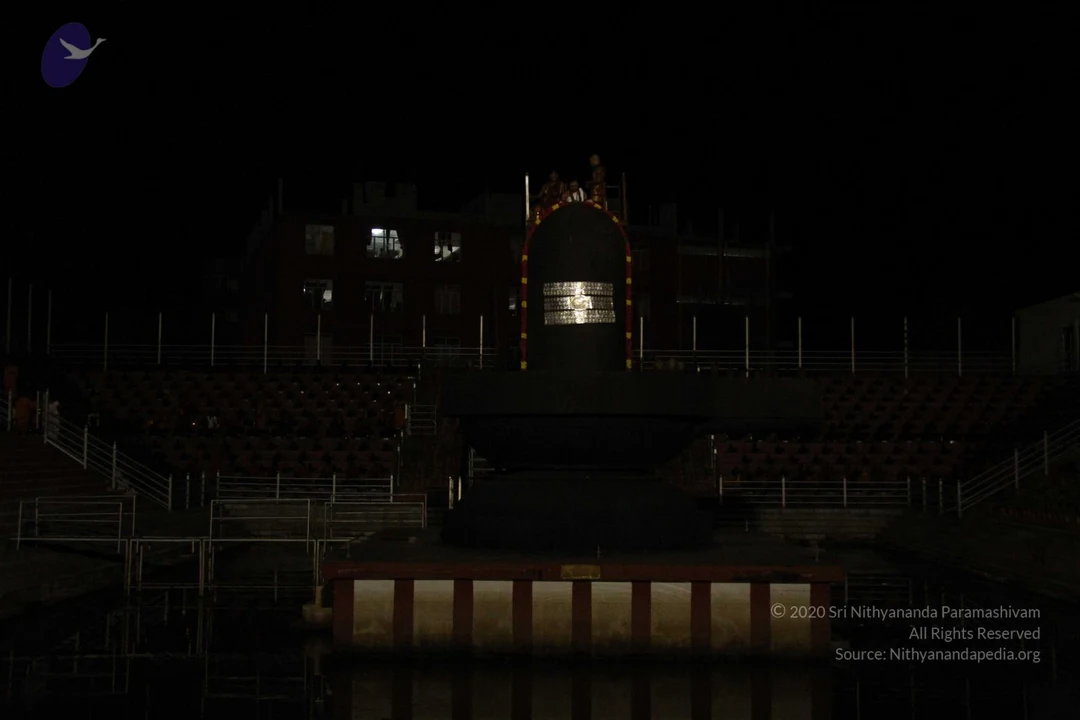
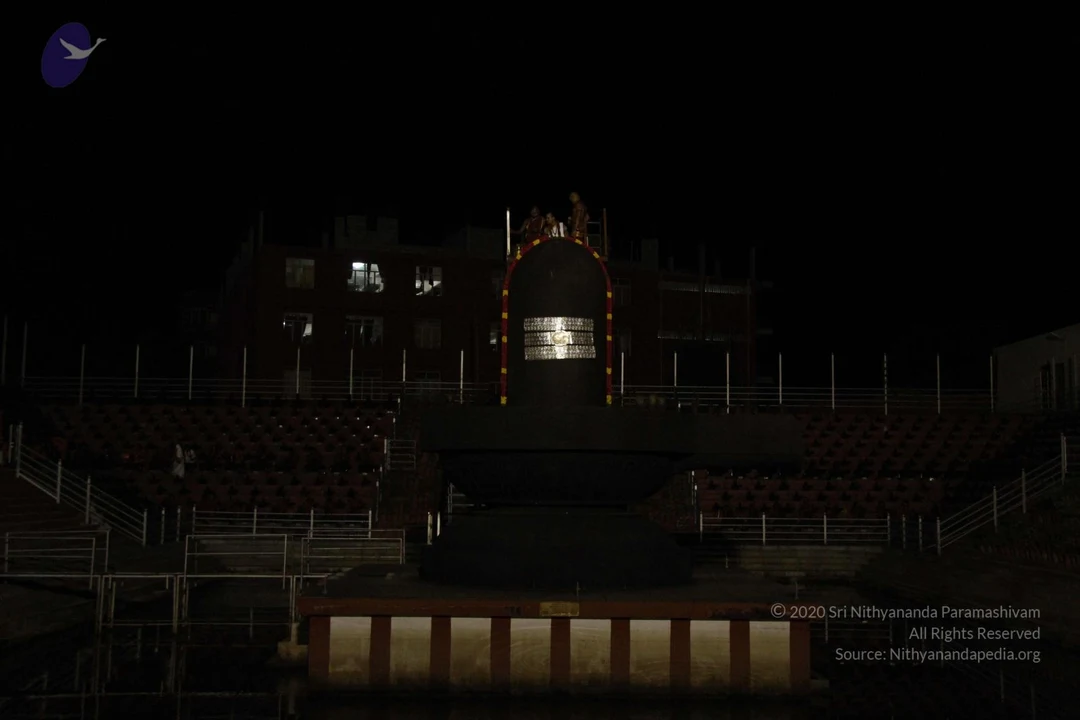
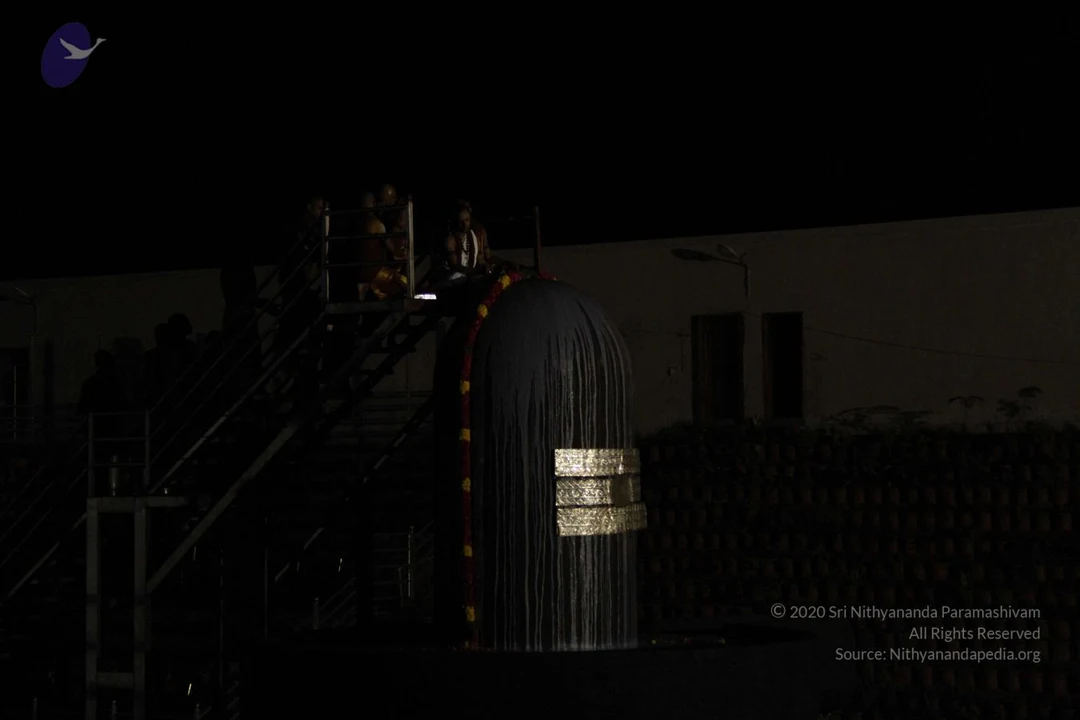
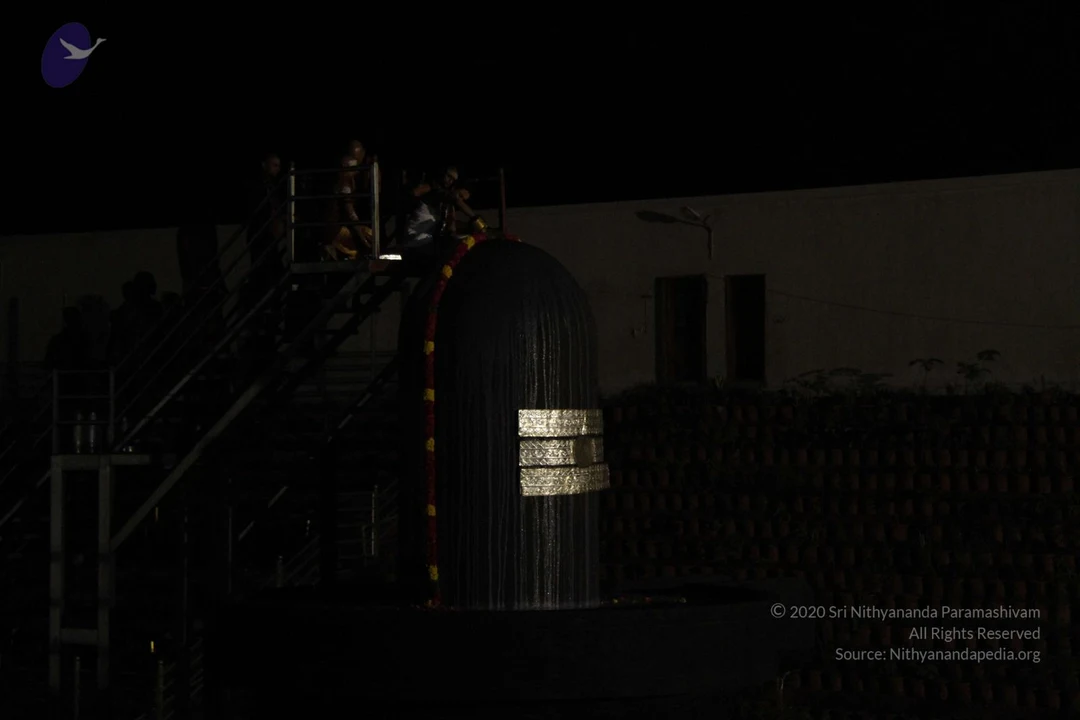
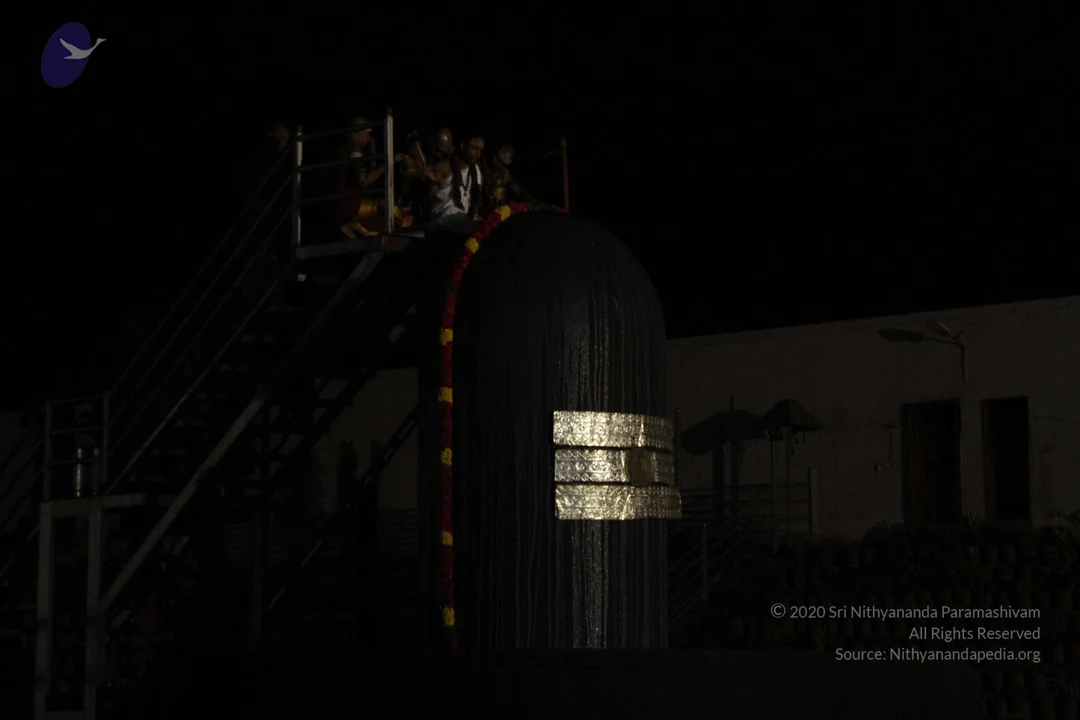
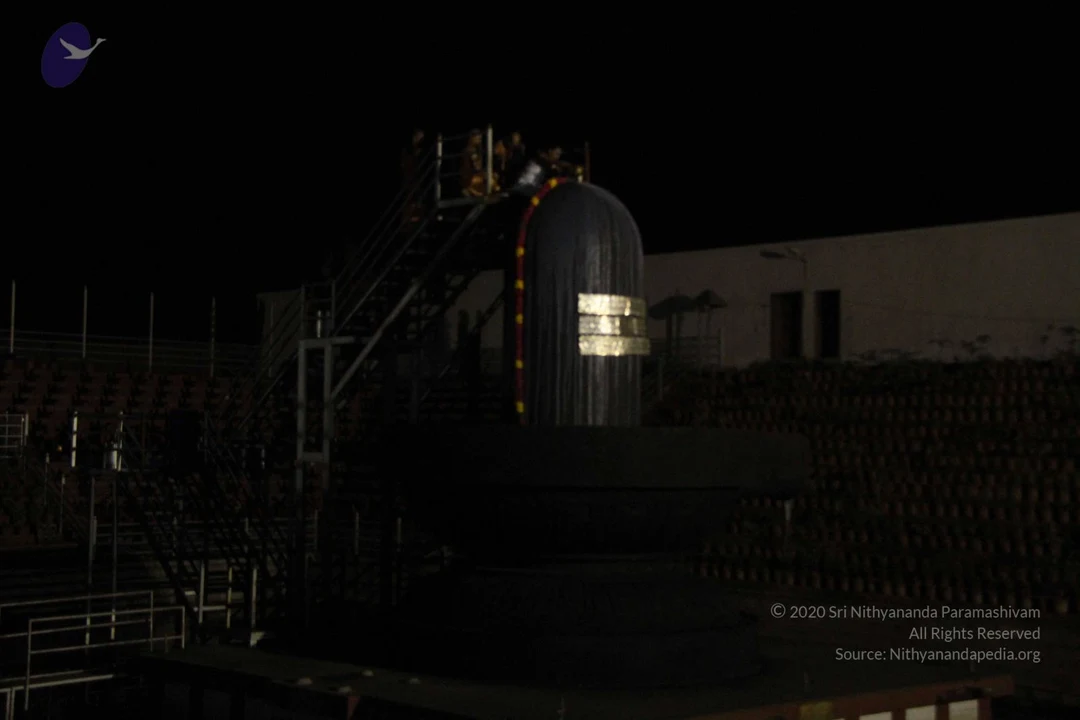
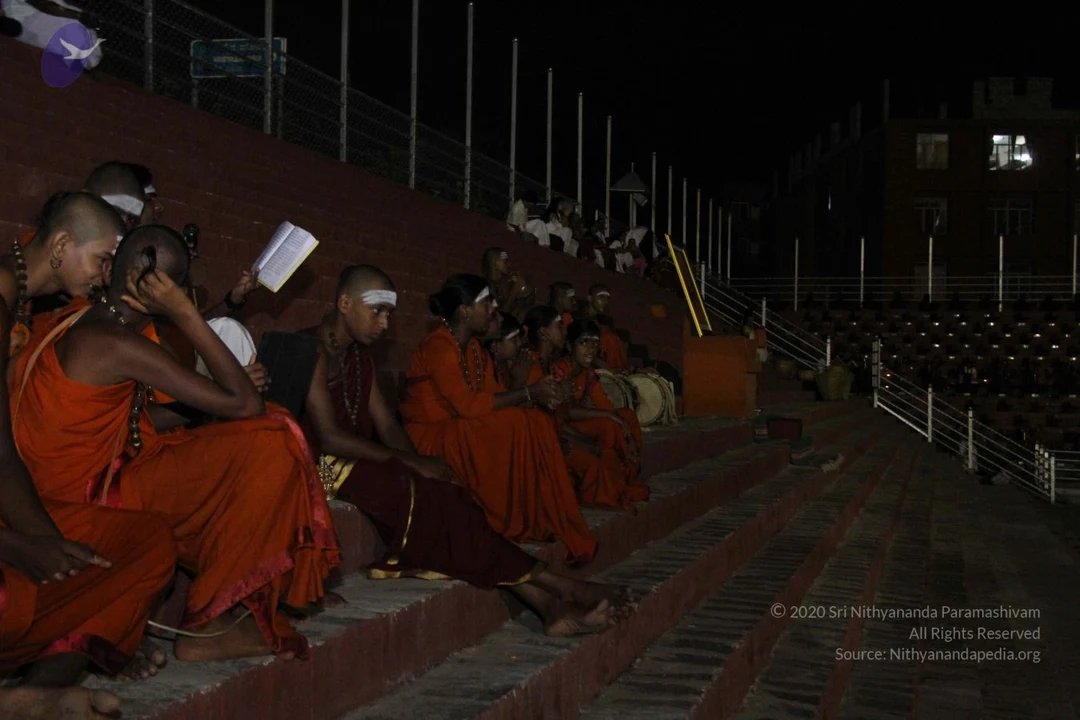
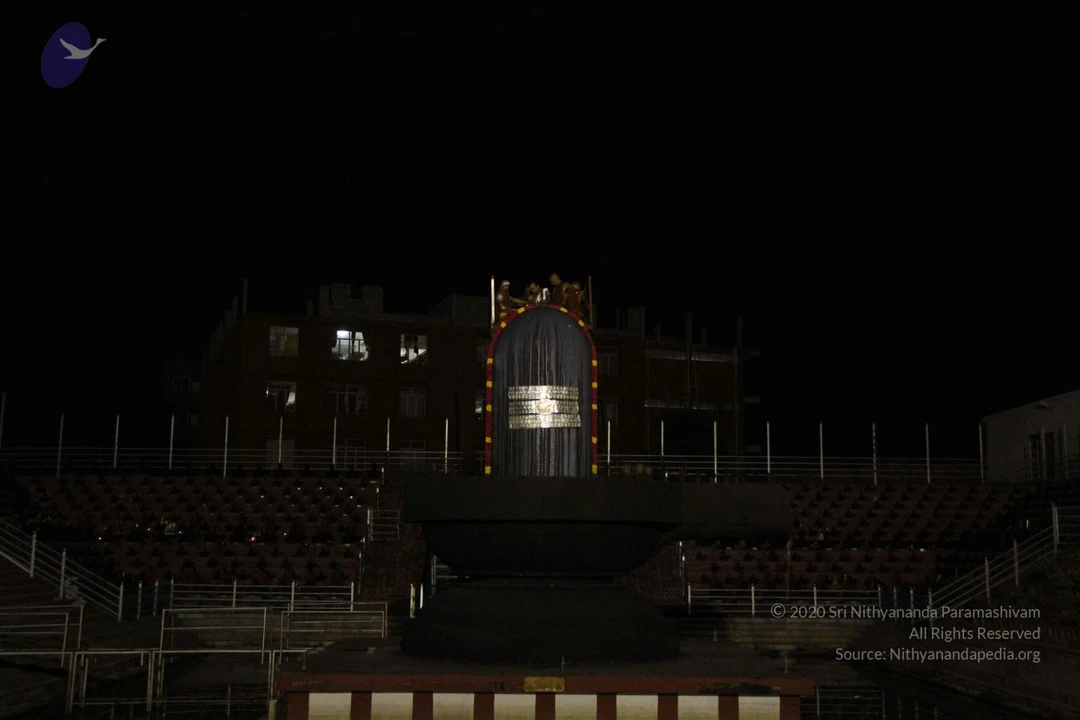
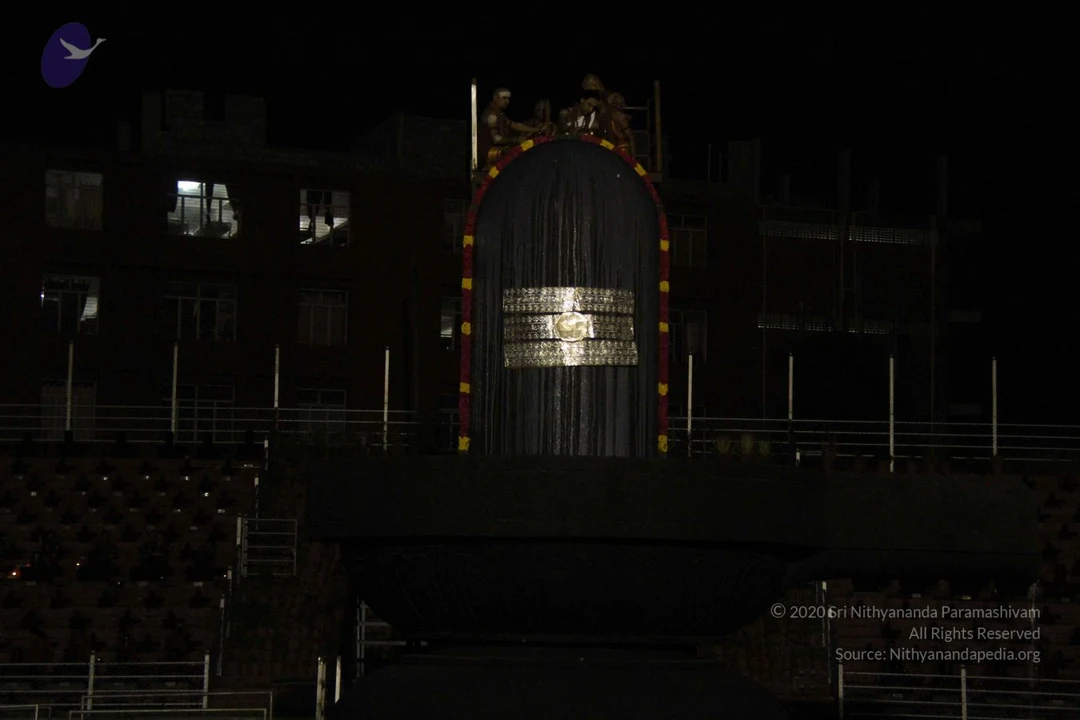
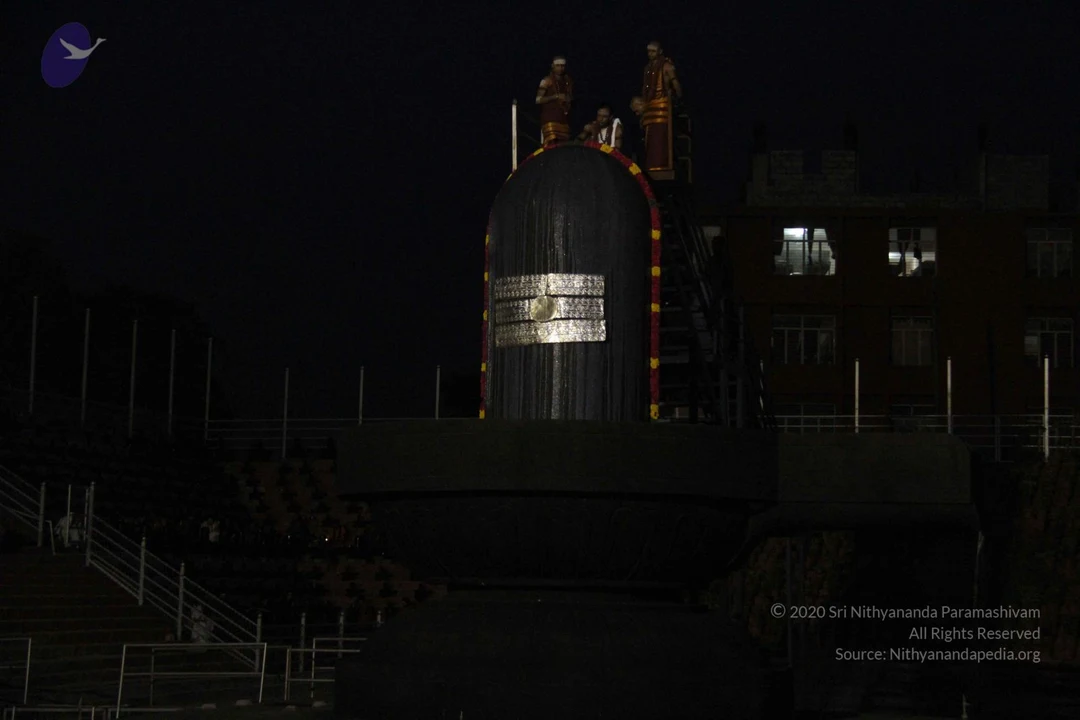
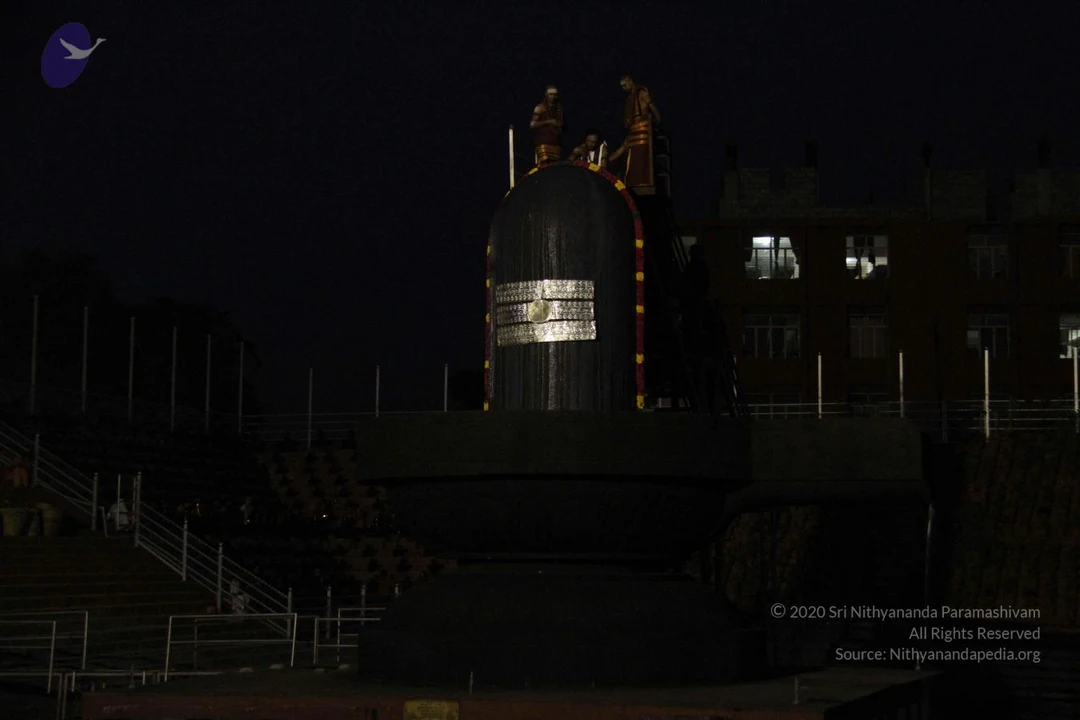
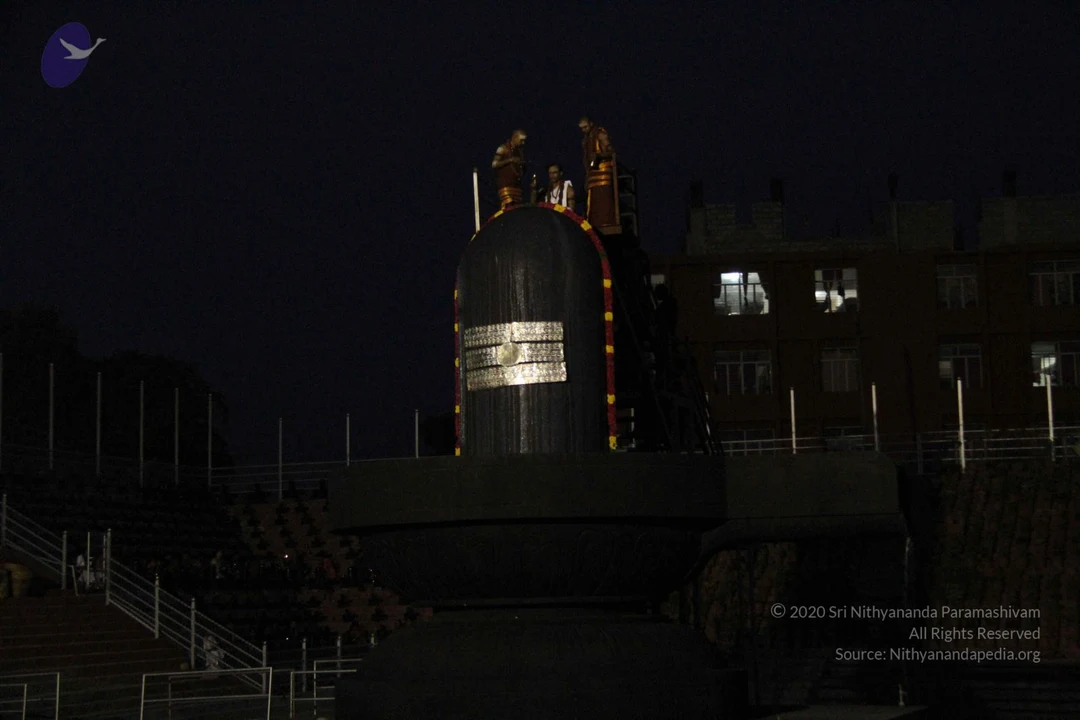
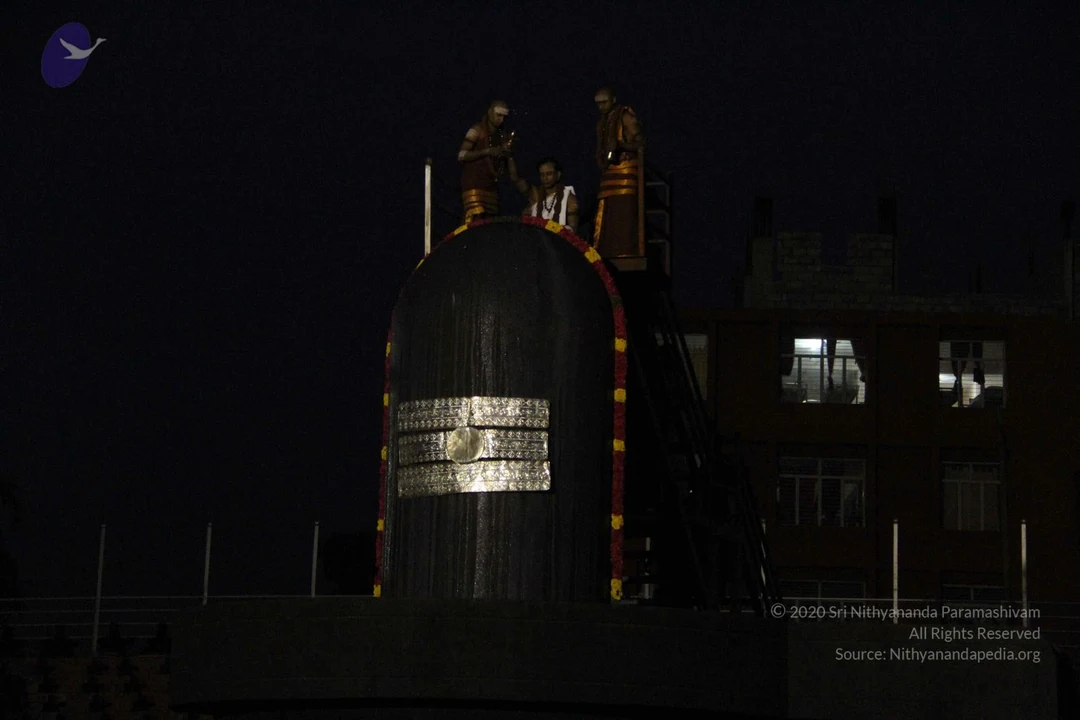
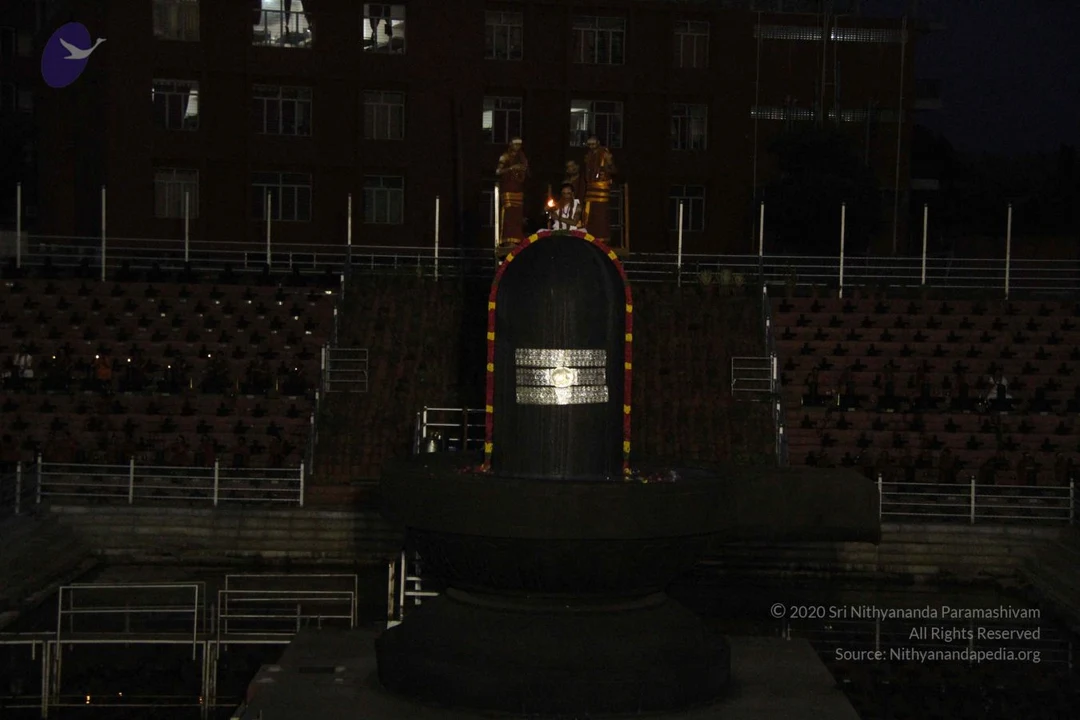
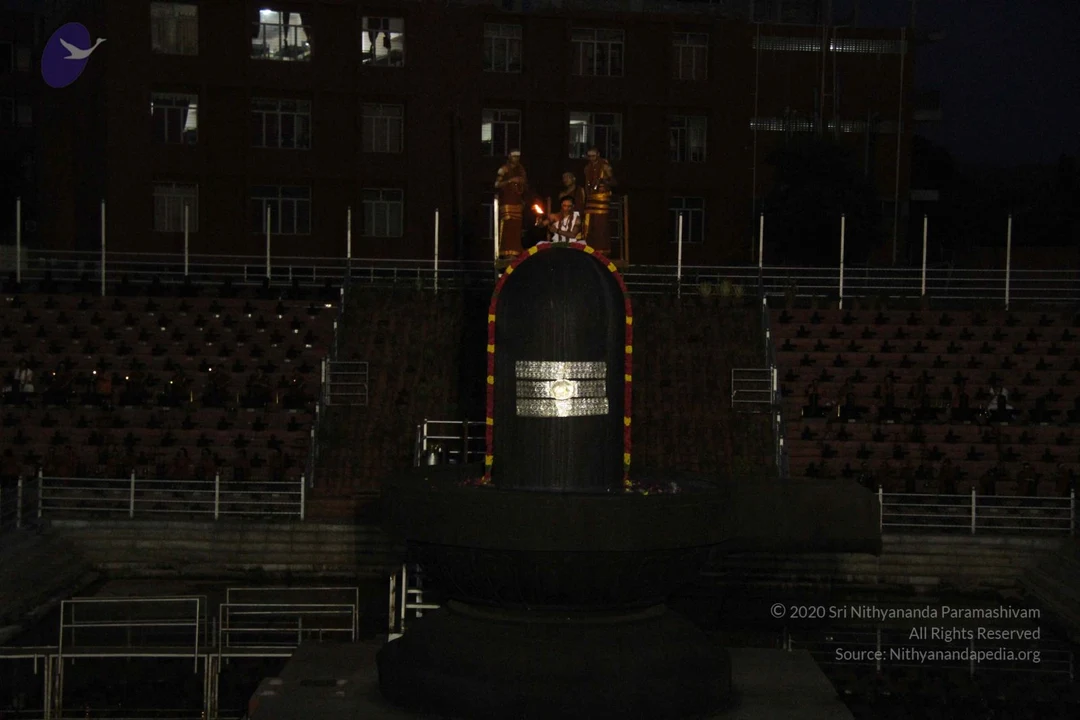
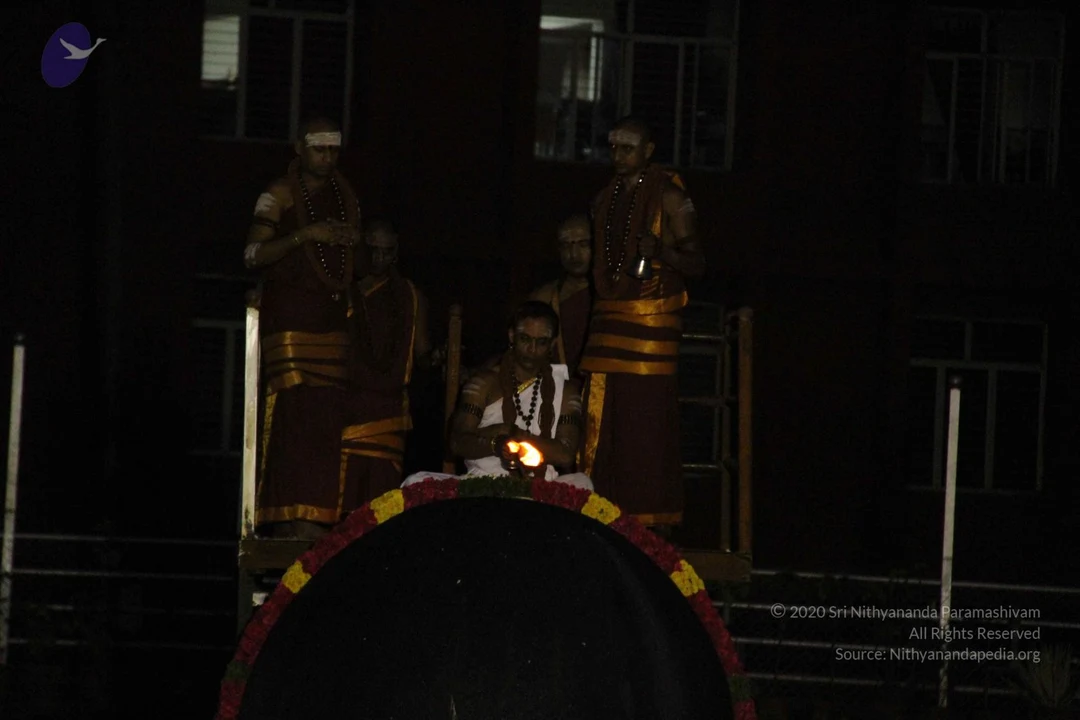
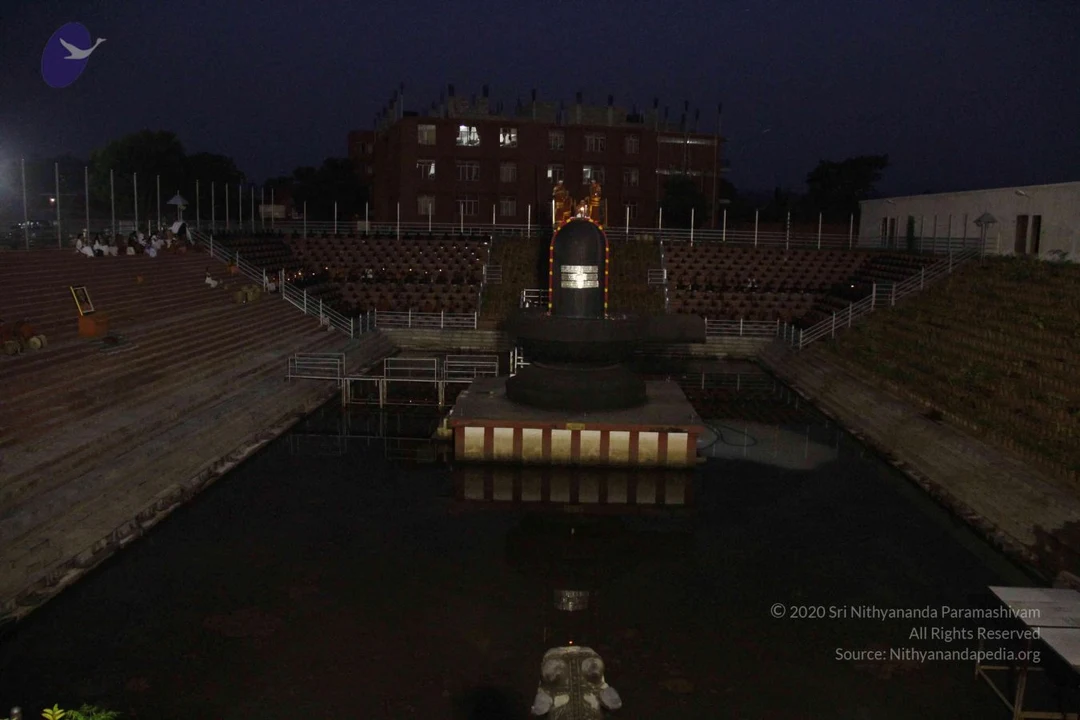
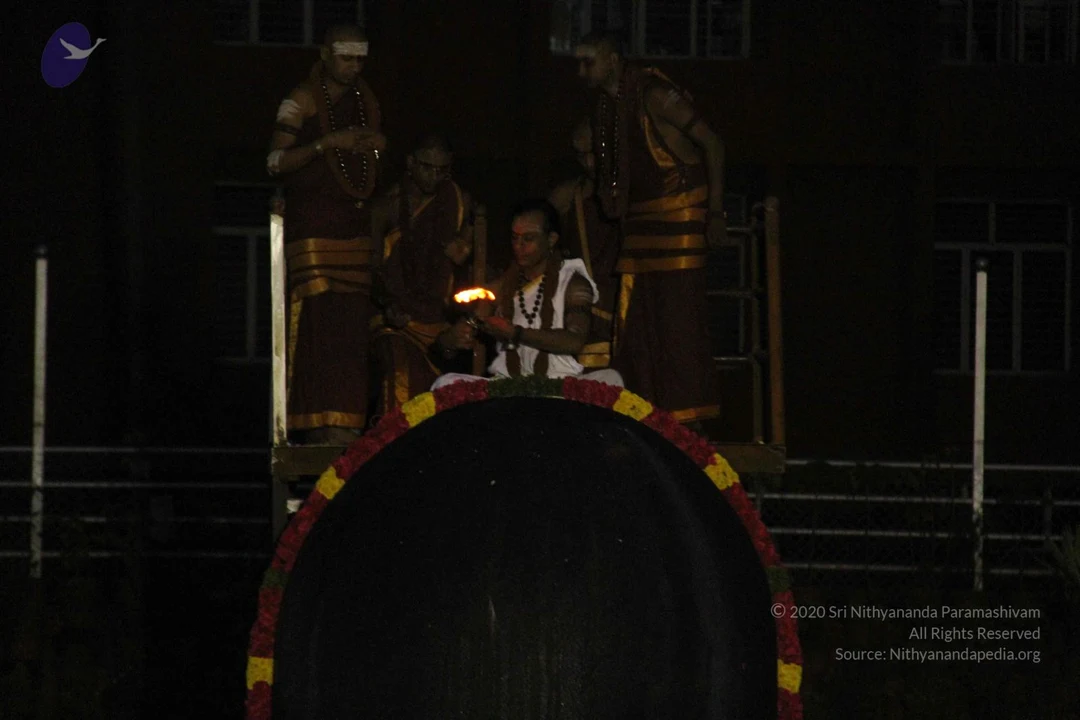
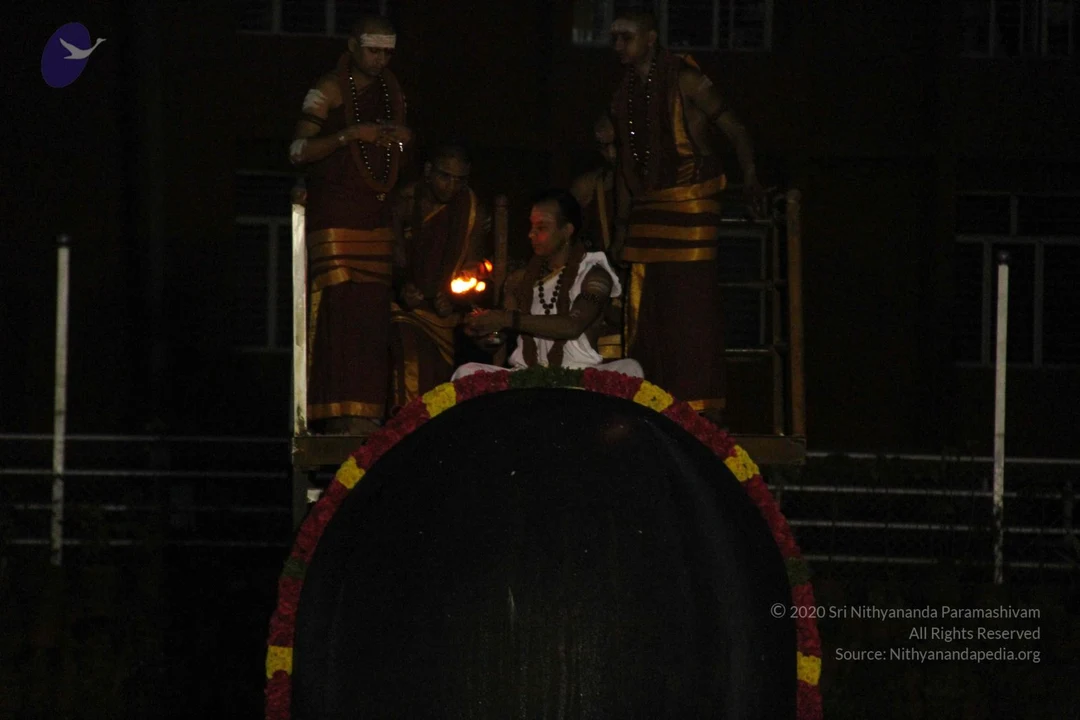
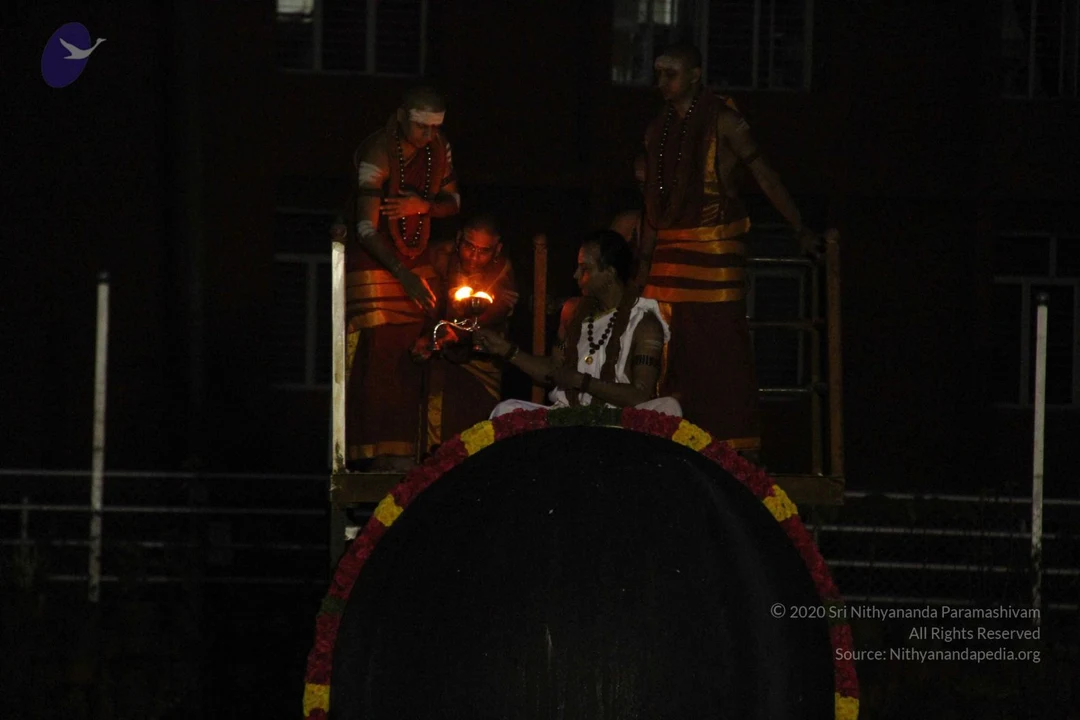
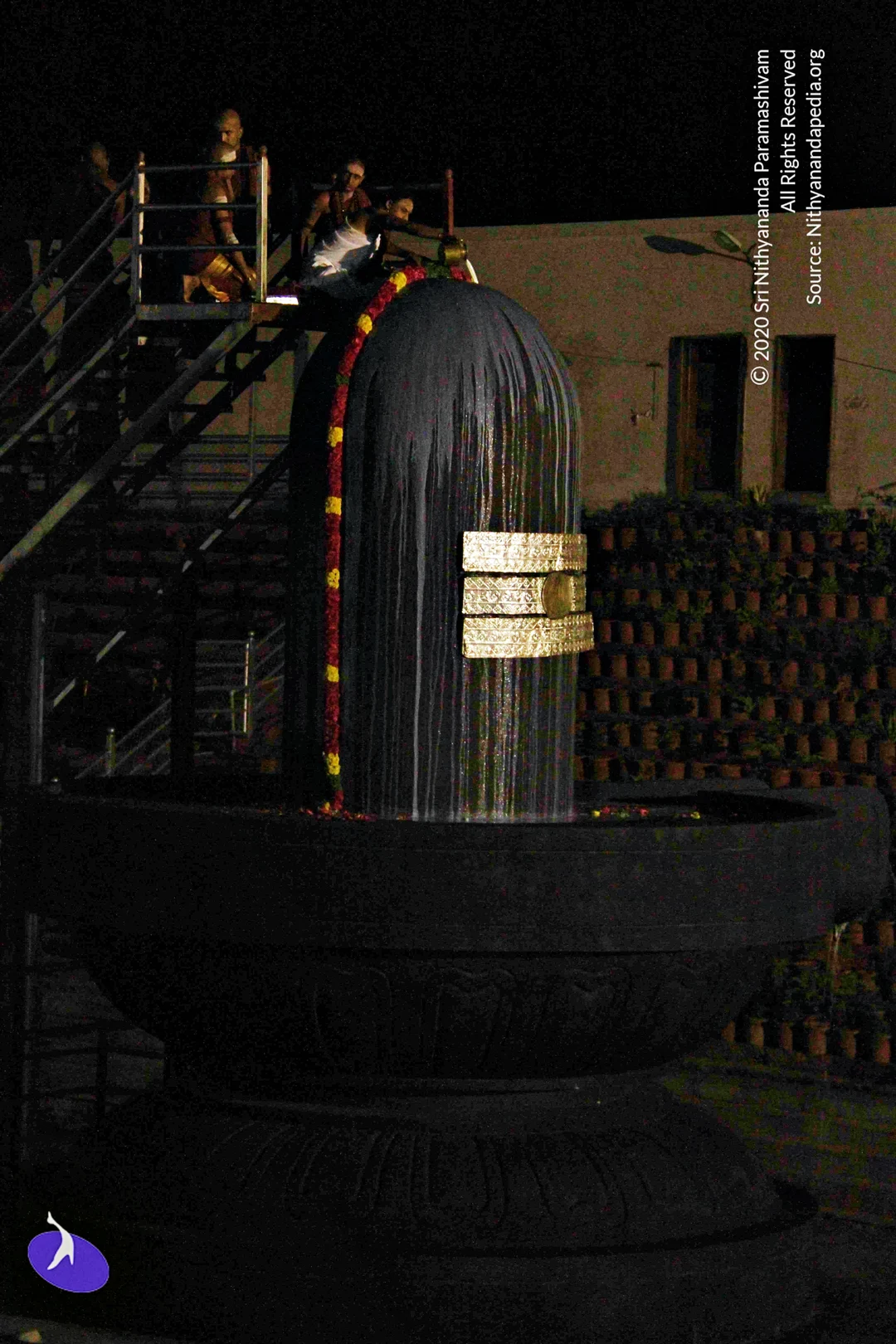
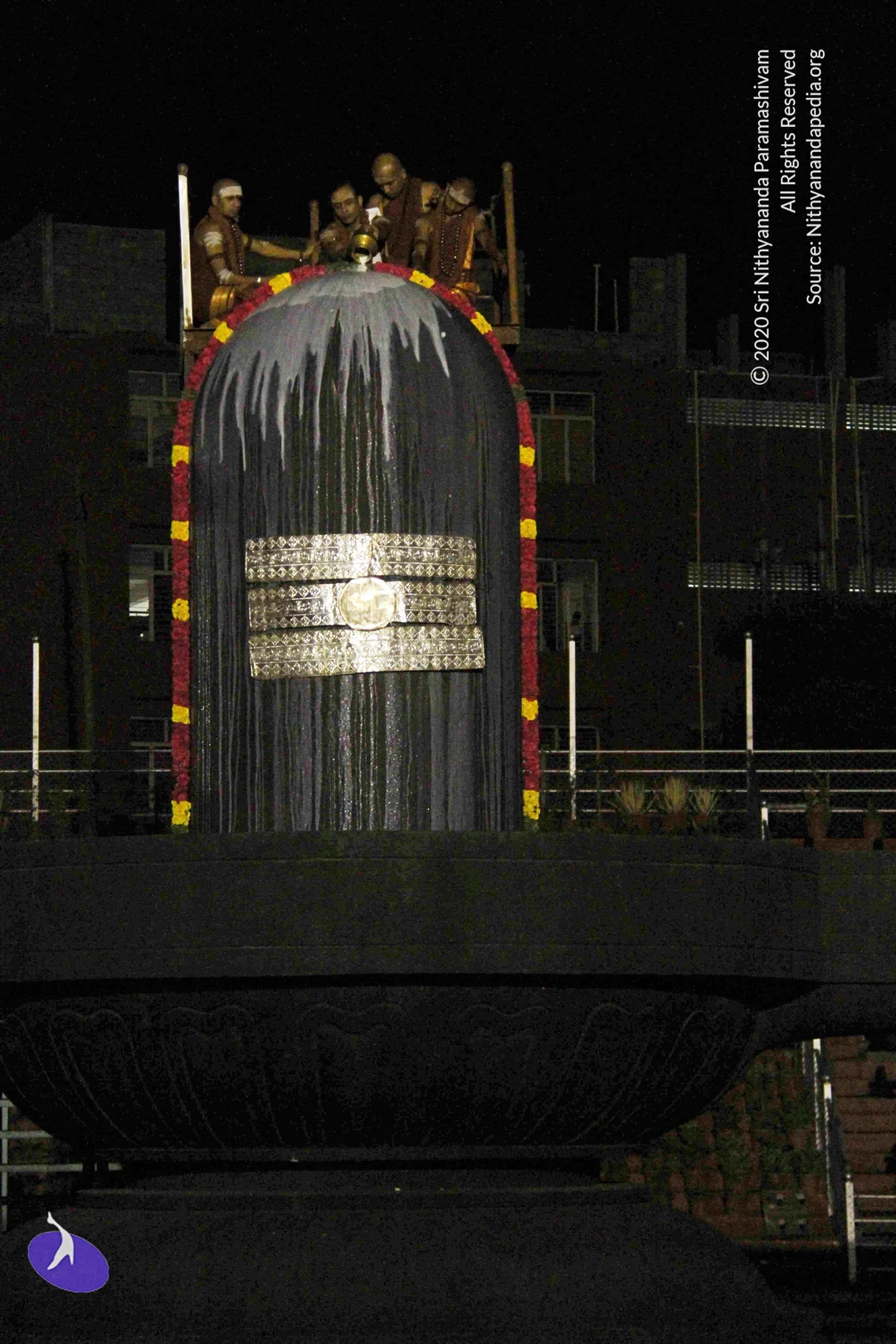
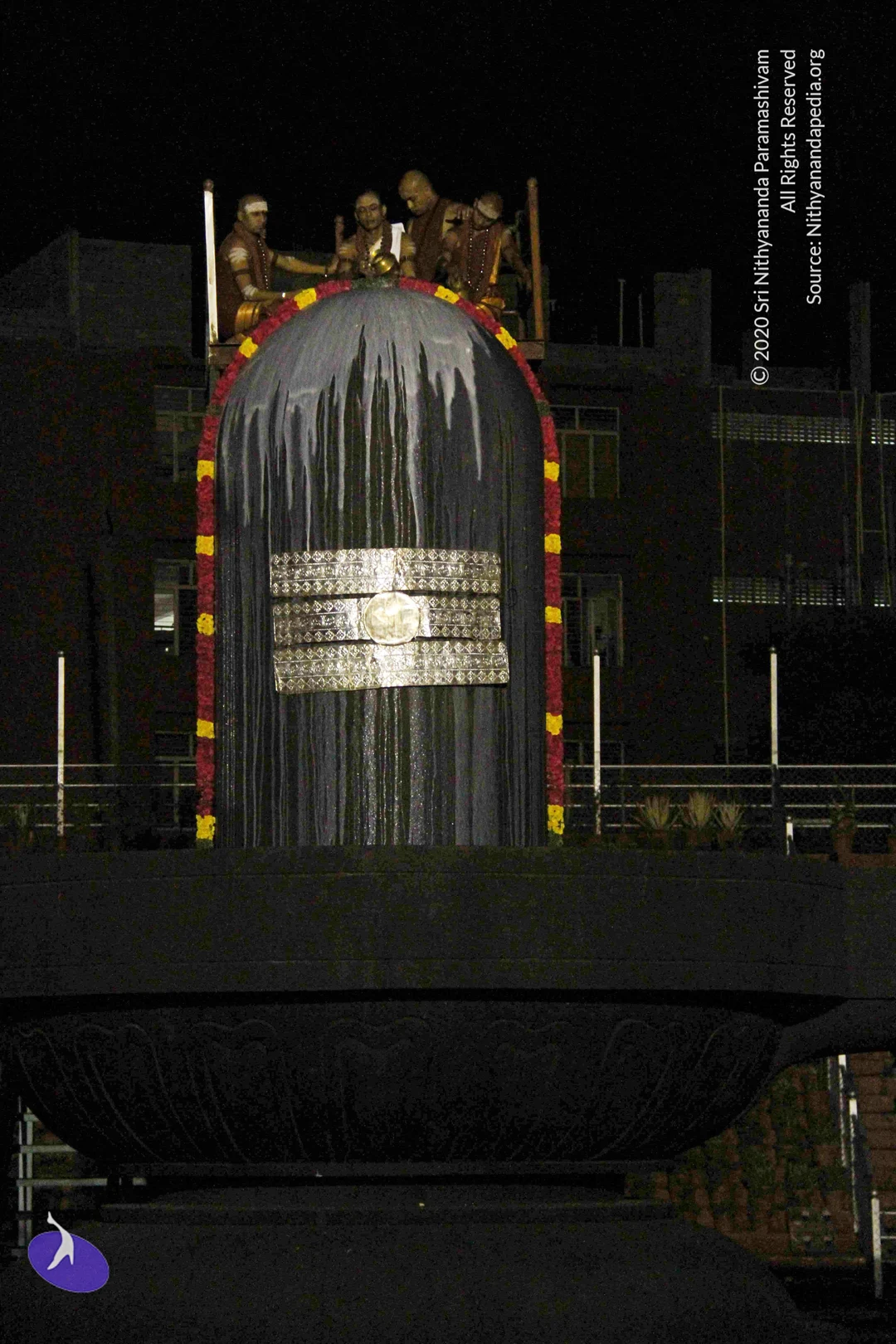
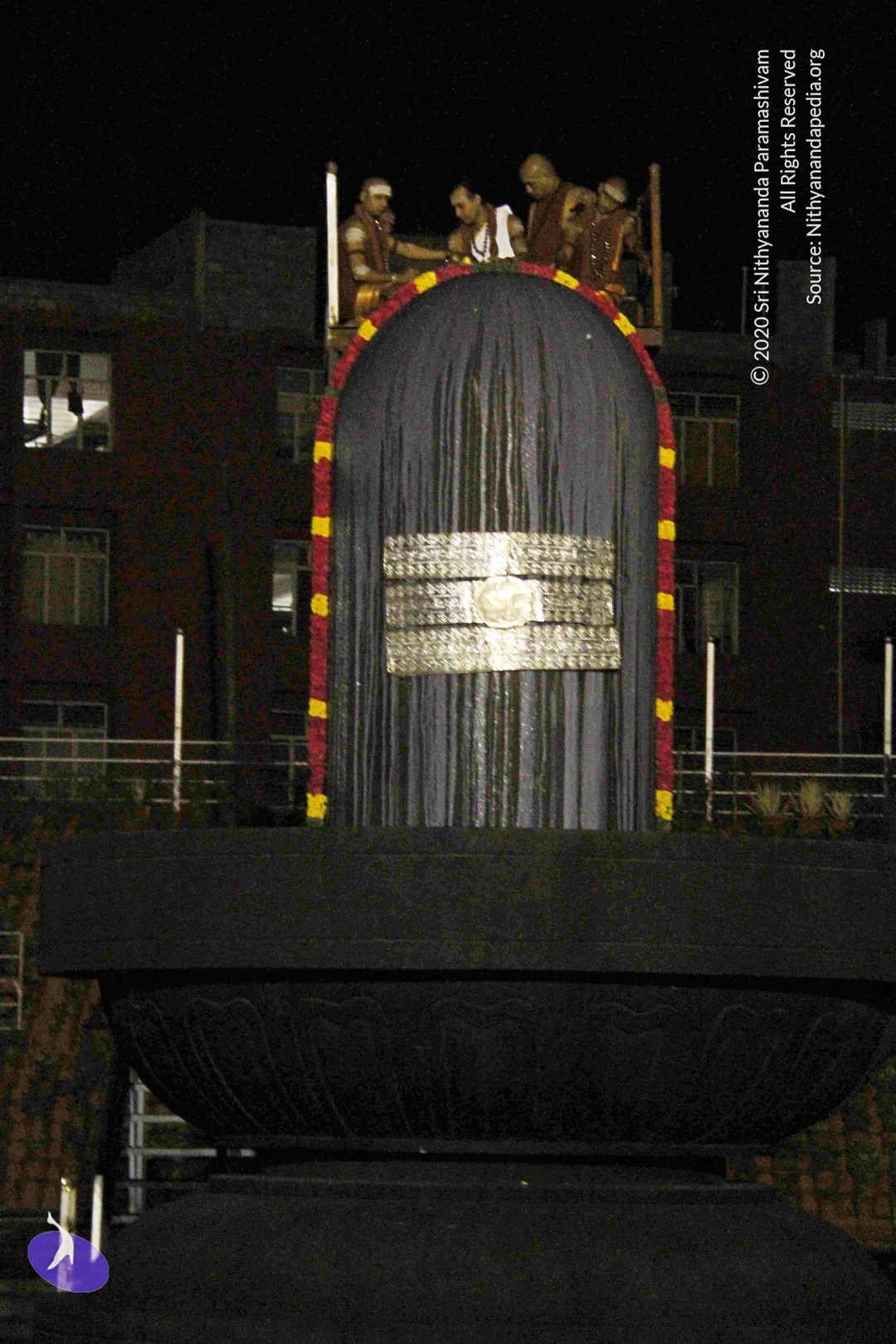
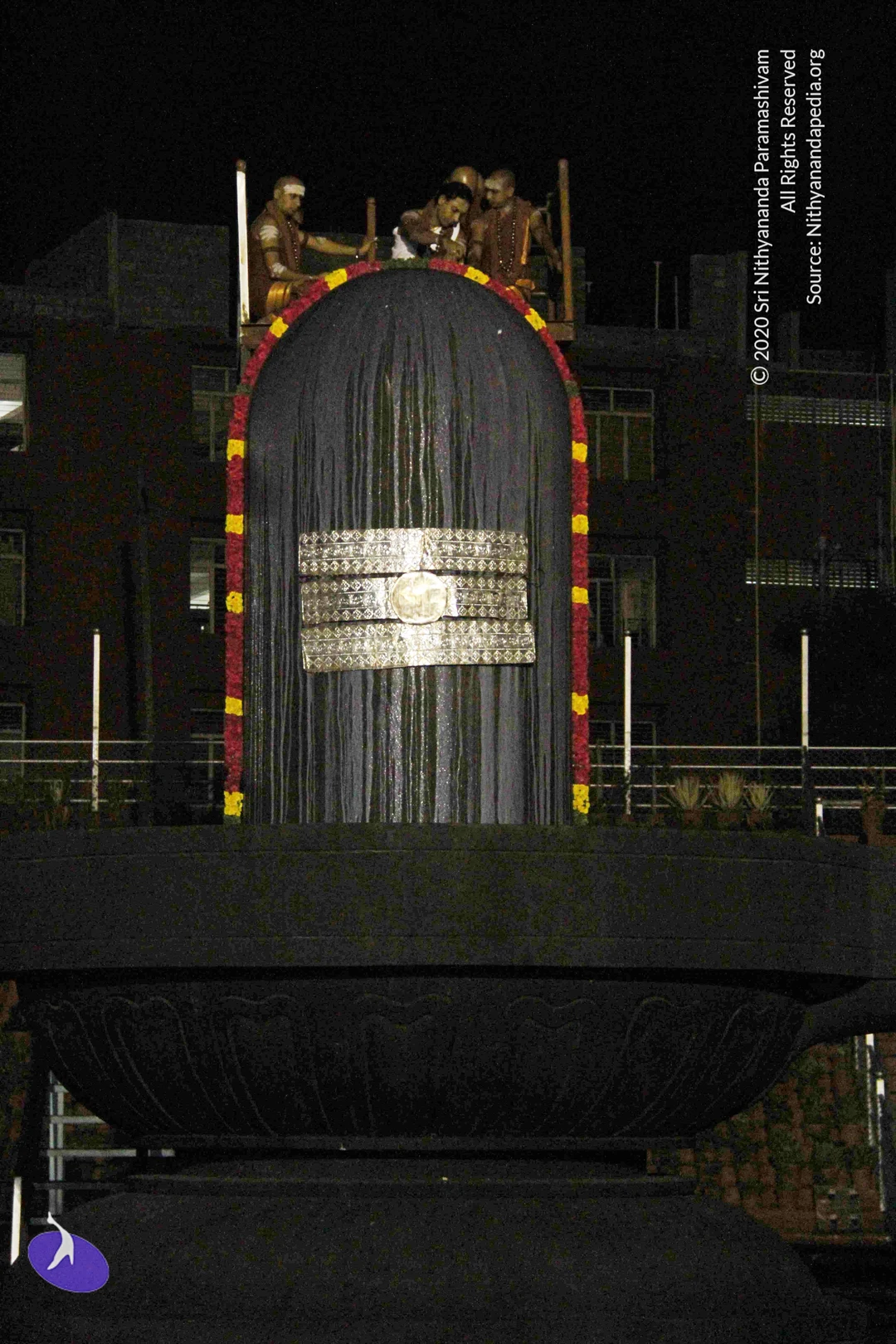
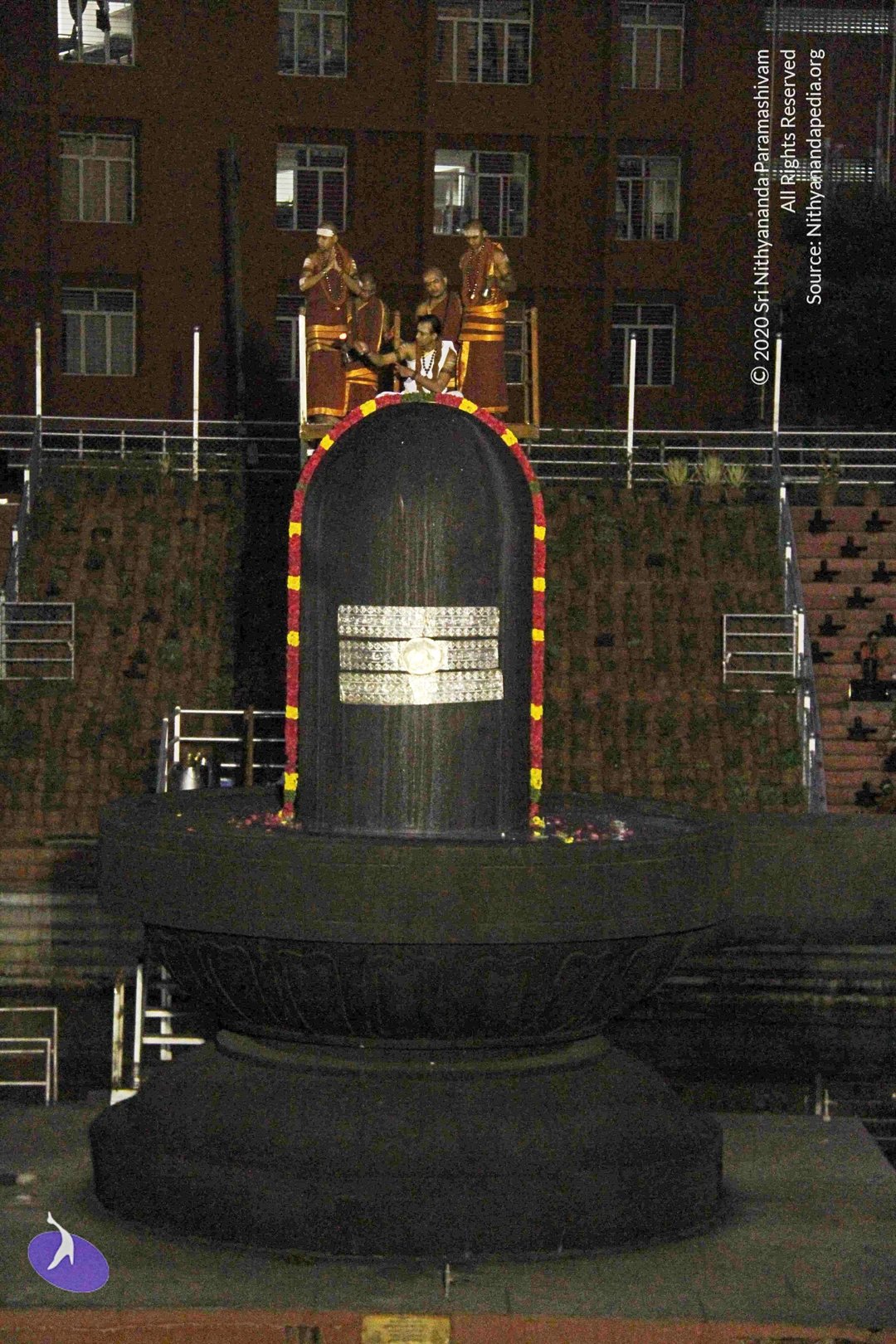
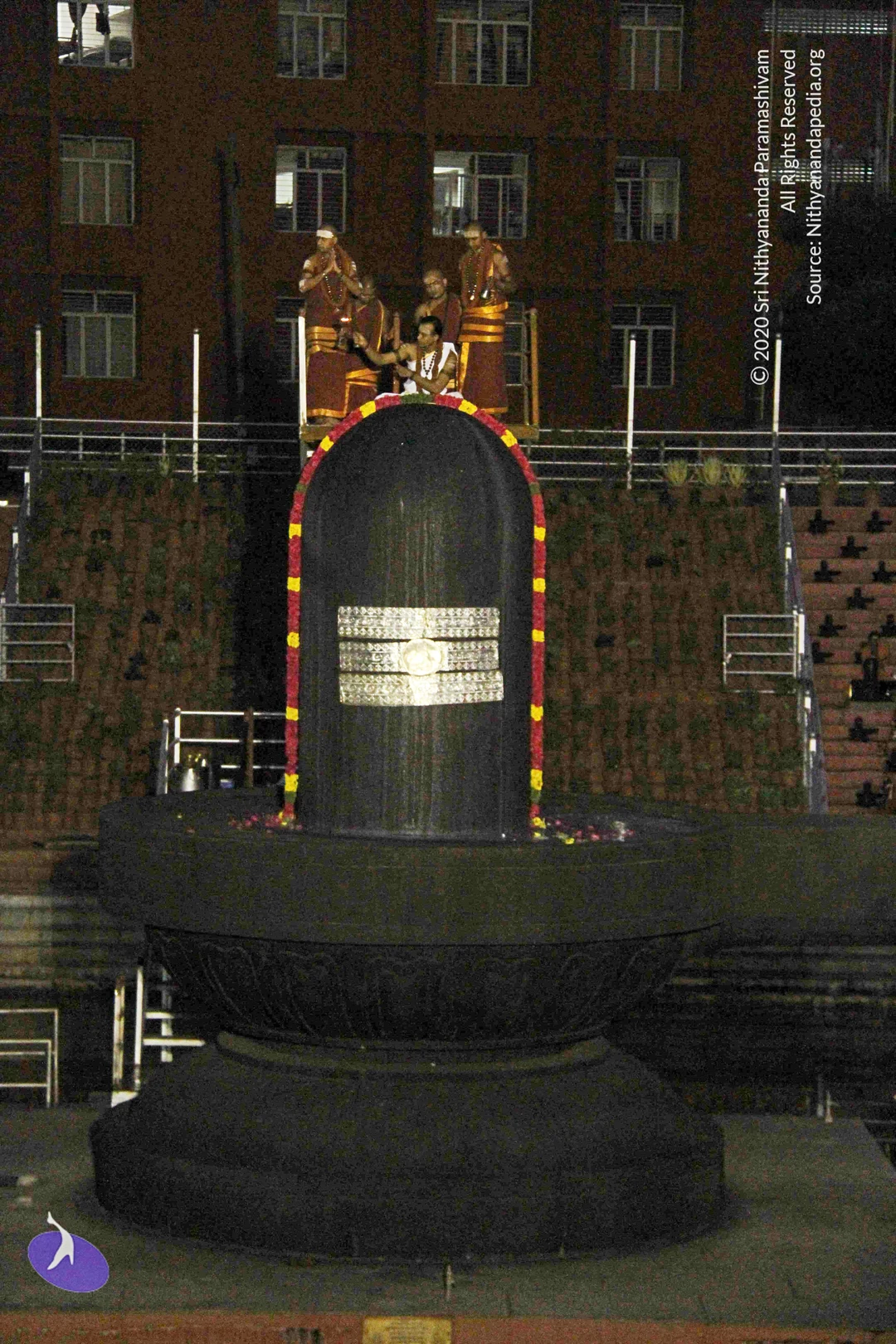
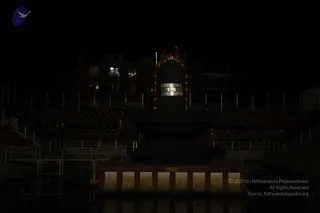
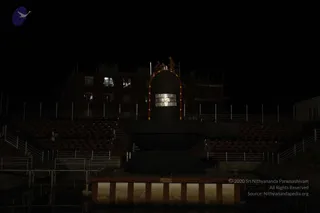
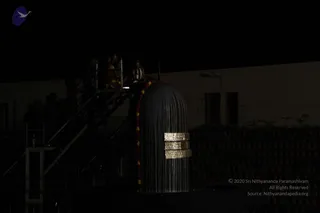
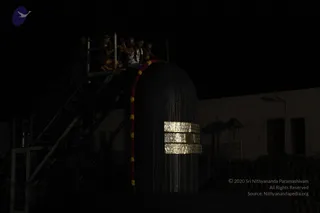
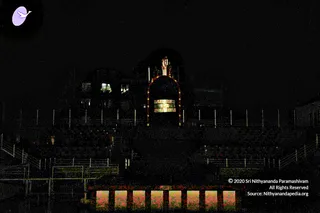
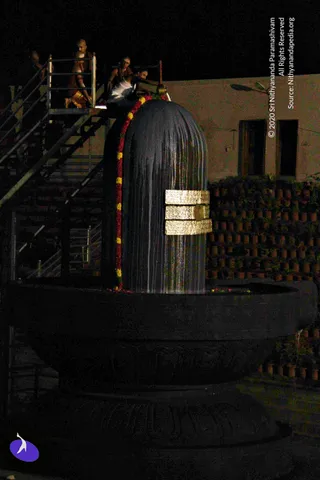
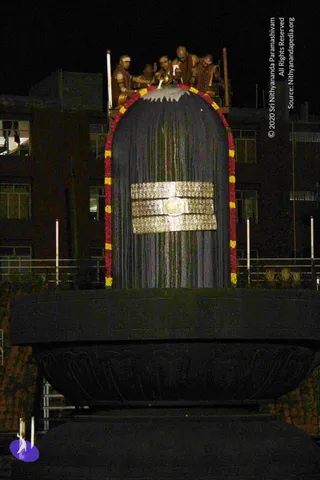
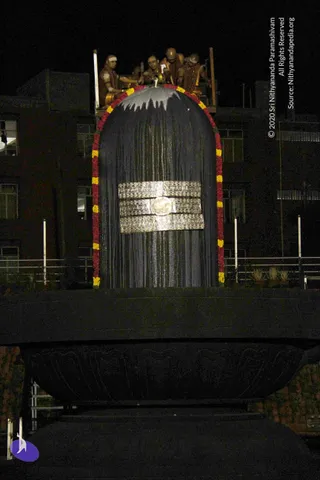
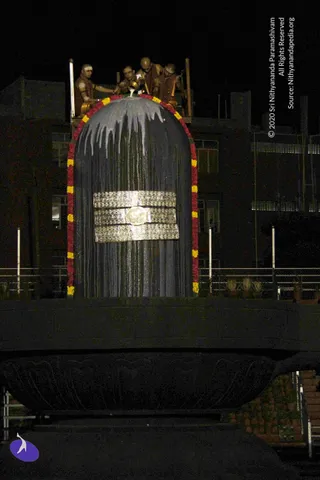
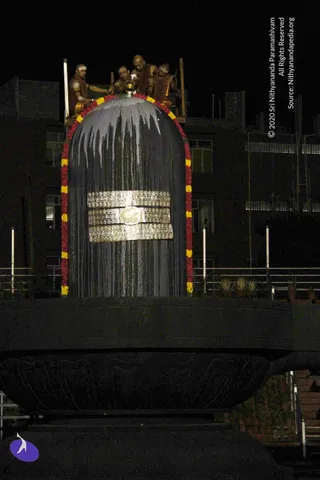
Rudrabishekam to the 21 feet Ananda Lingam in the Vaidhya Sarovar
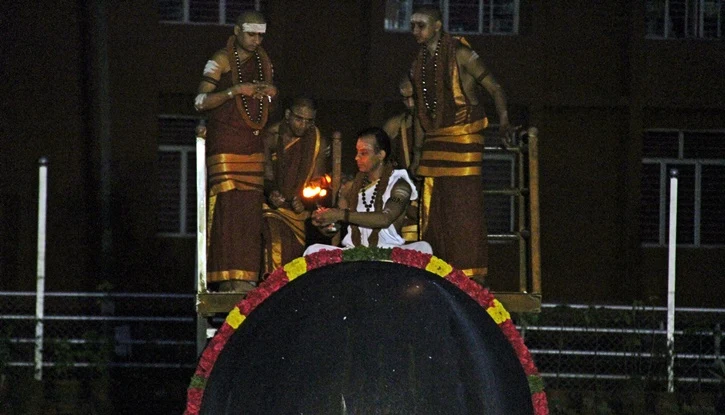
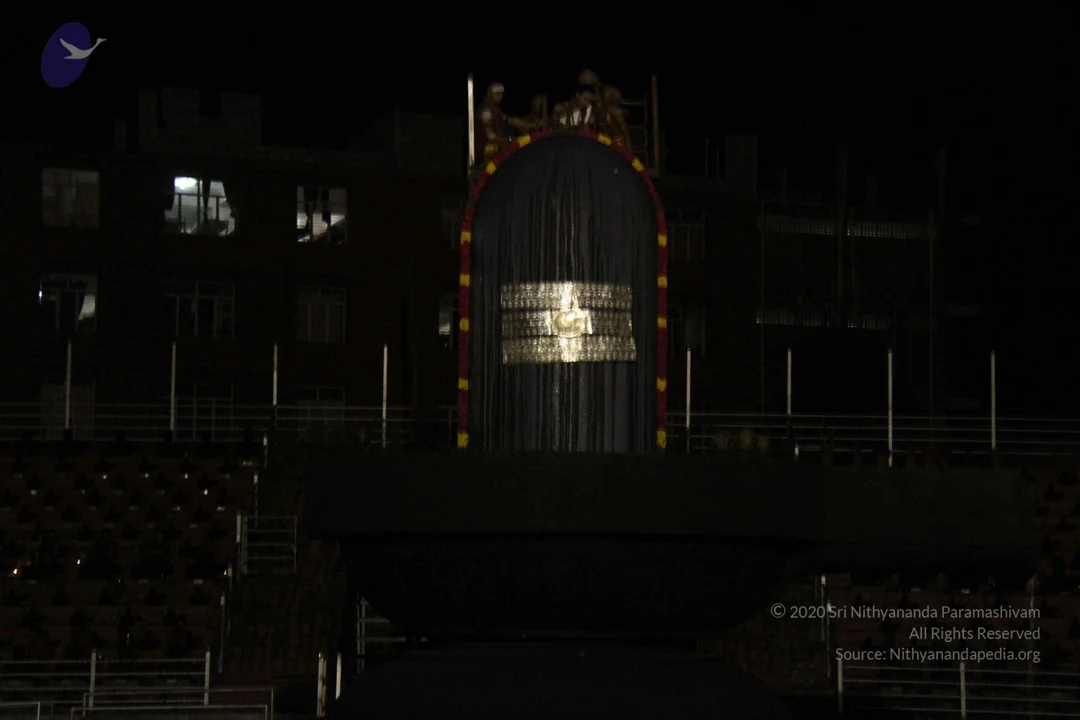
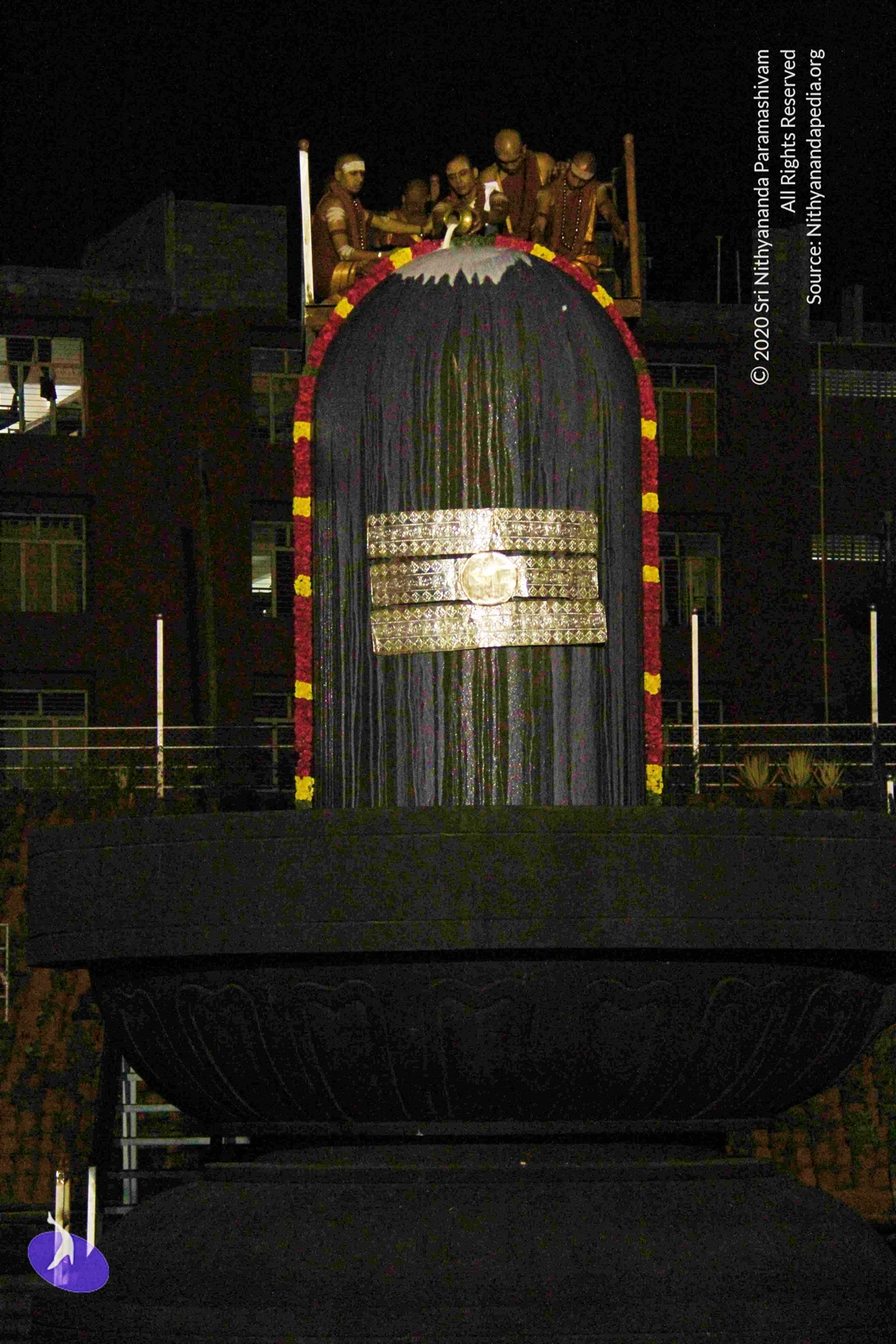
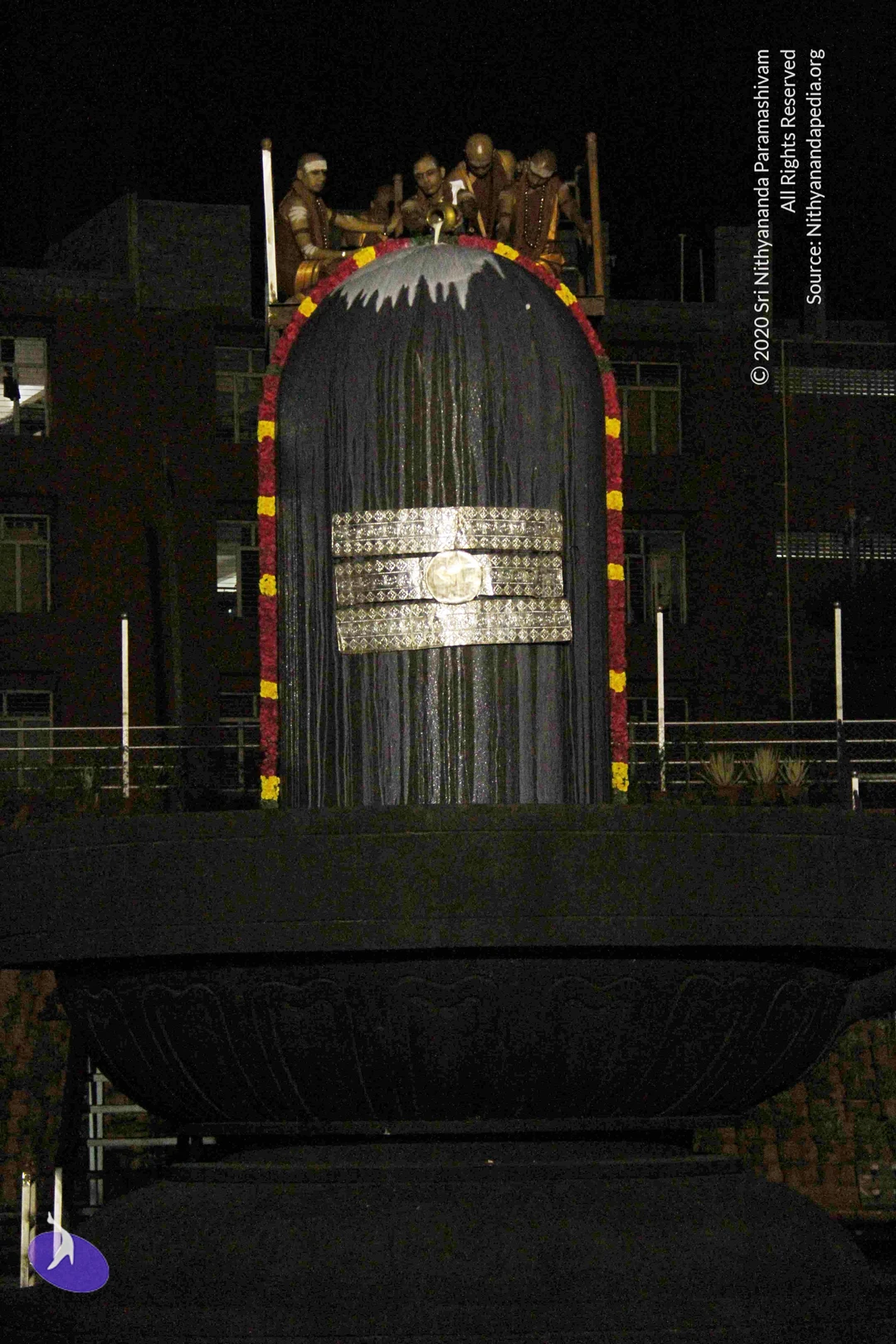
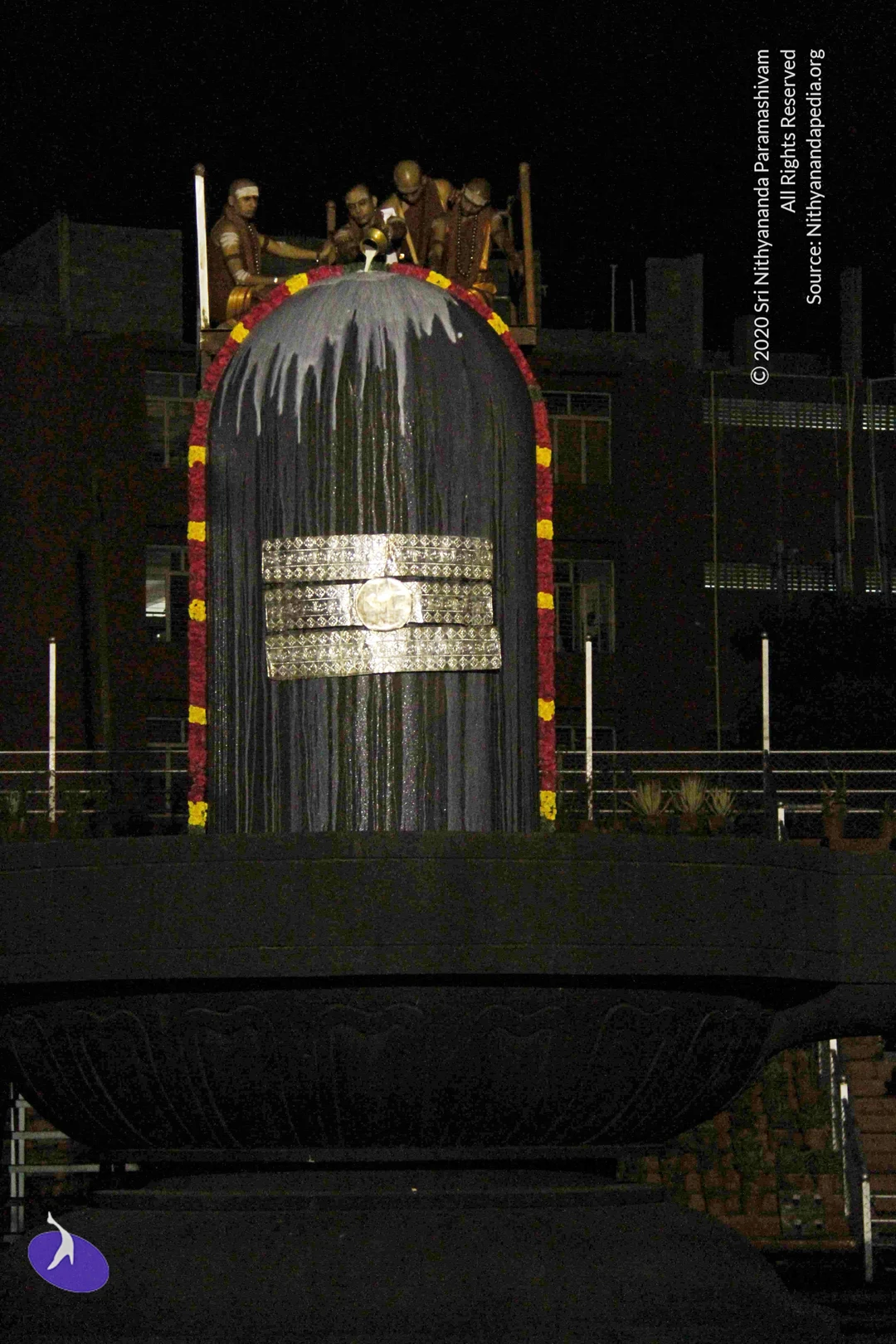
Rudrabishekam to the 21 feet Ananda Lingam in the Vaidhya Sarovar

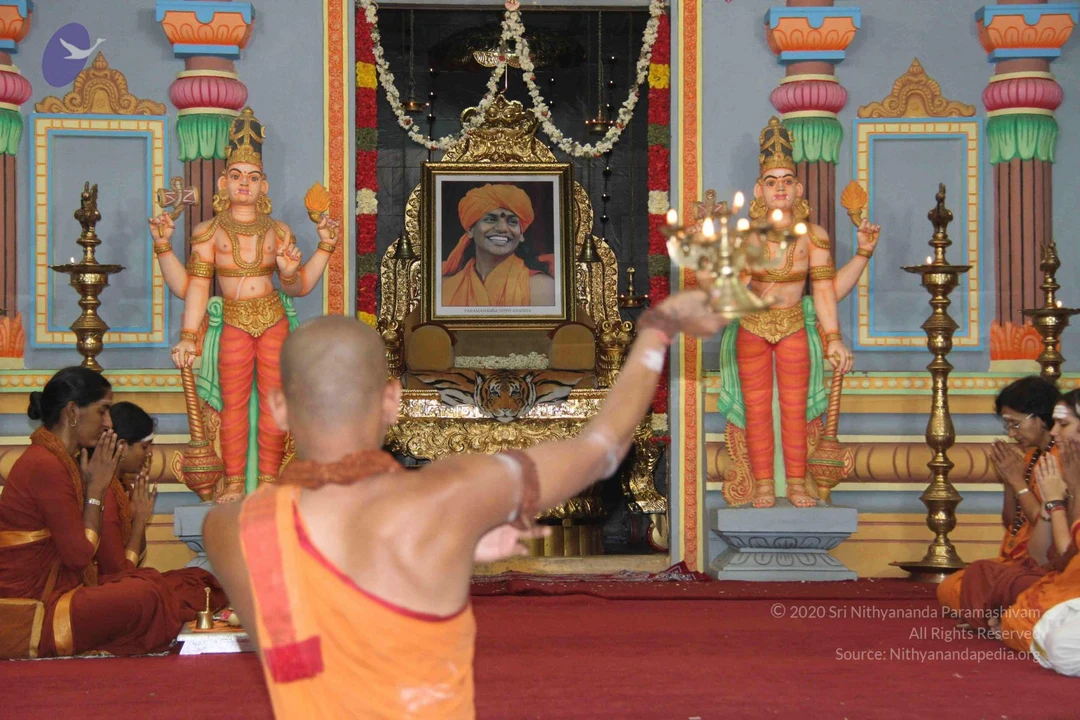
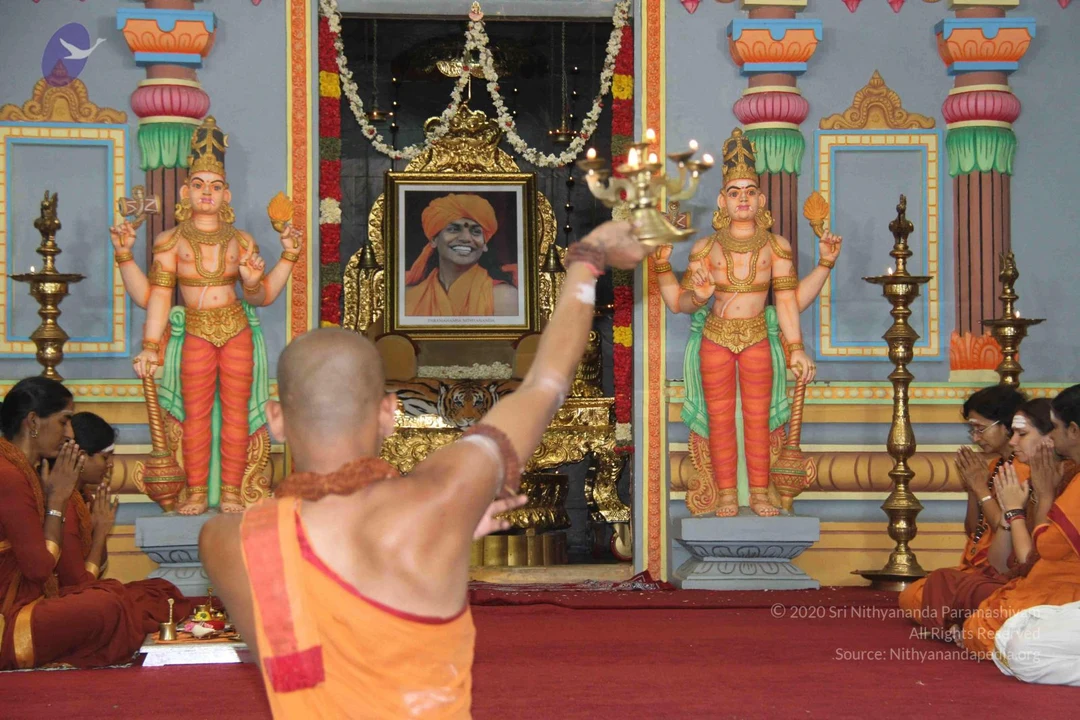
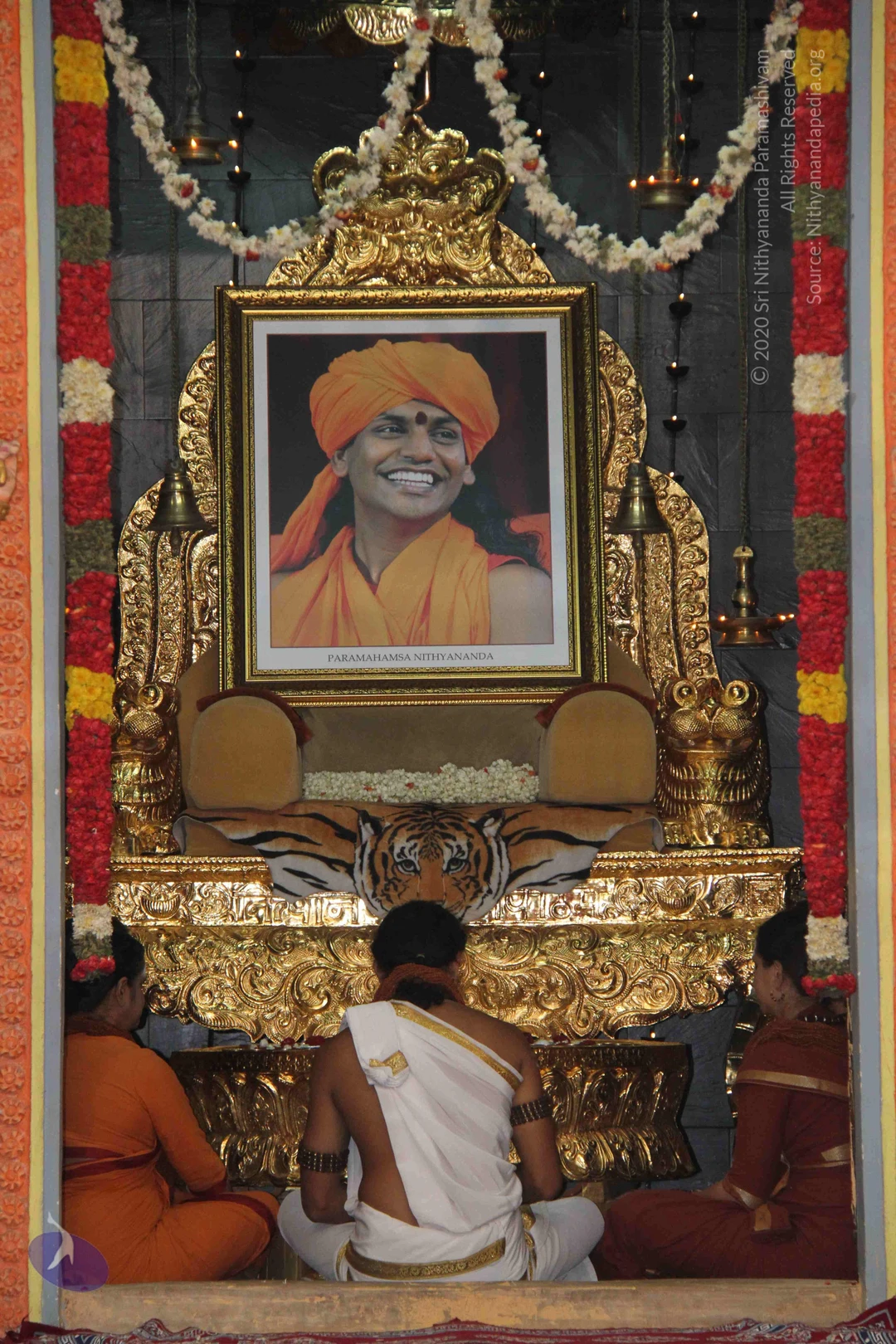
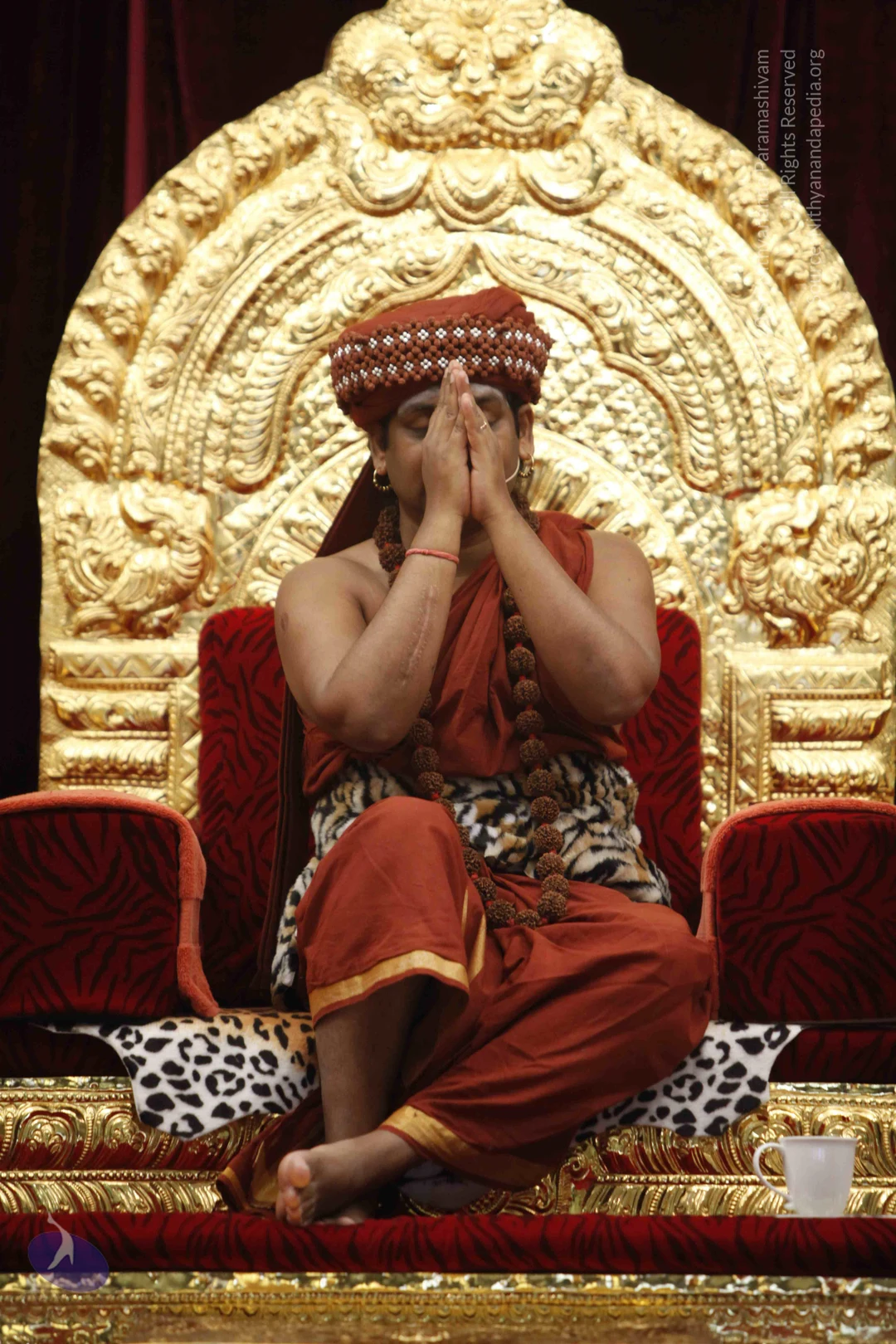
Nithya Satsang and Paduka Puja
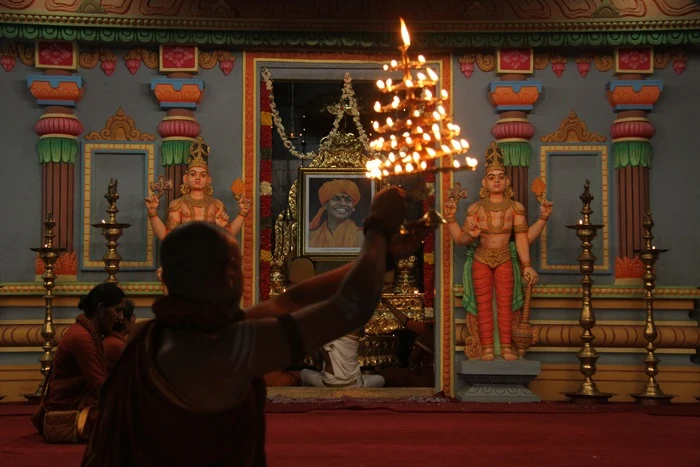
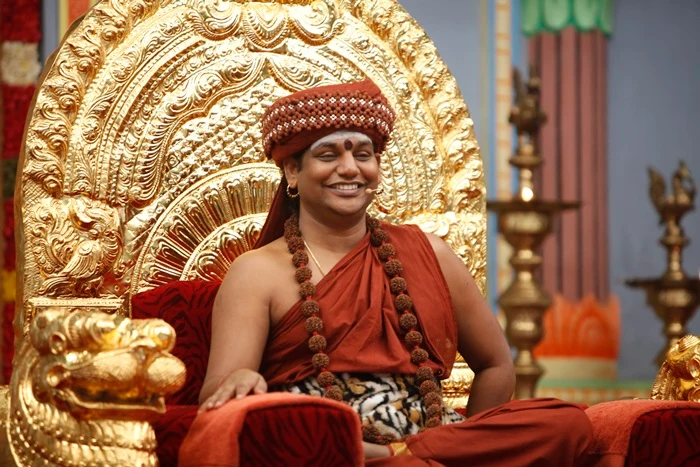
Tags:

Paramahamsa Nithyananda, Living Advaitha, recreating Your reality, learning the state to be in, Science of Creating Space.

Photos Of The Day:

FB-photo-of-the-day

Photos Of The Day:

Rudrabhishekham

Morning-Satsang-And-Paduka-Puja

Kalpataru-Darshan

1-Rudrabhishekam

2-Morning Satsang and Paduka Puja

Photos from this day

View all 108 photos

Nithya Satsang and Paduka Puja
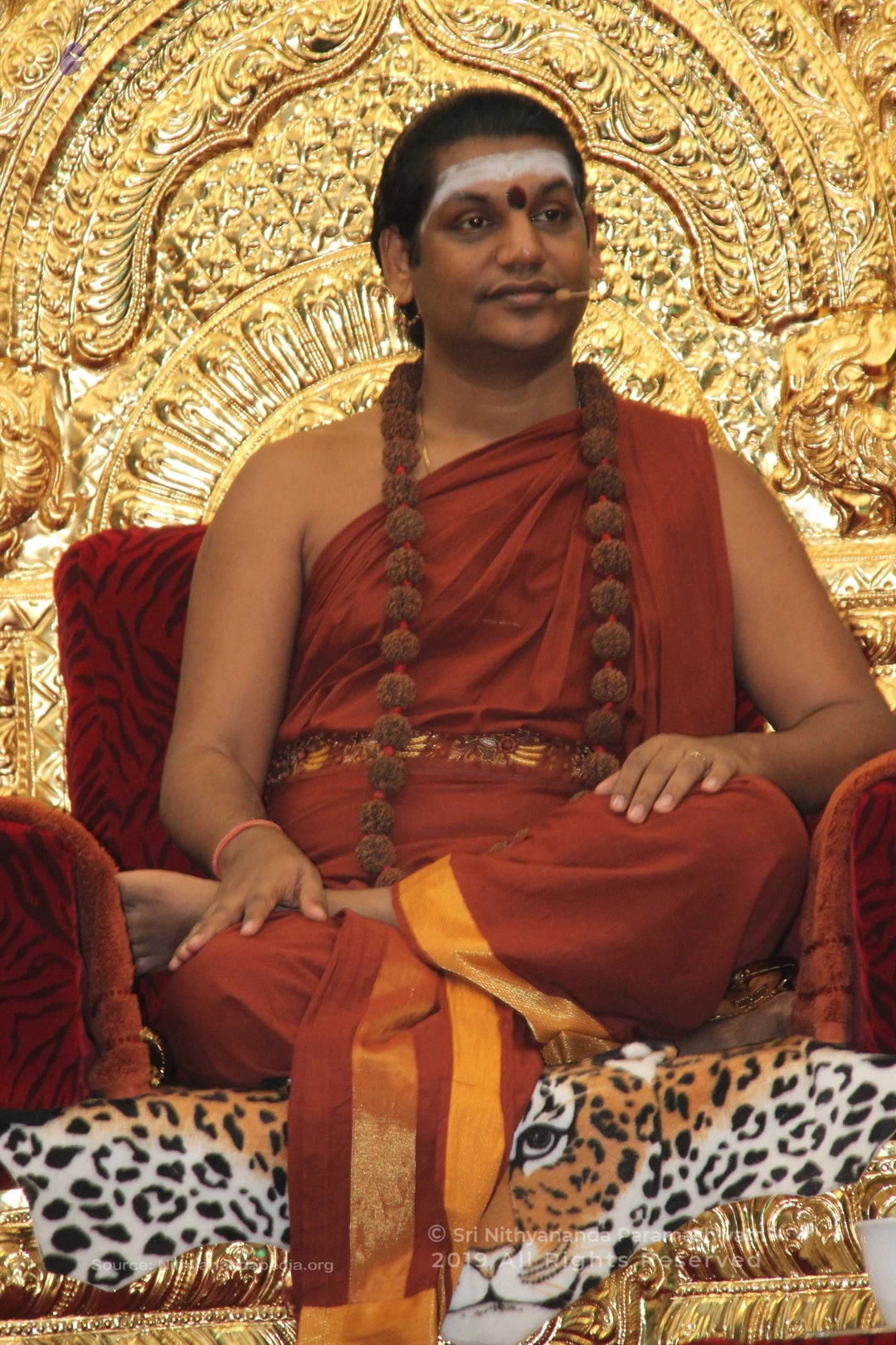
6 photosSource gallery
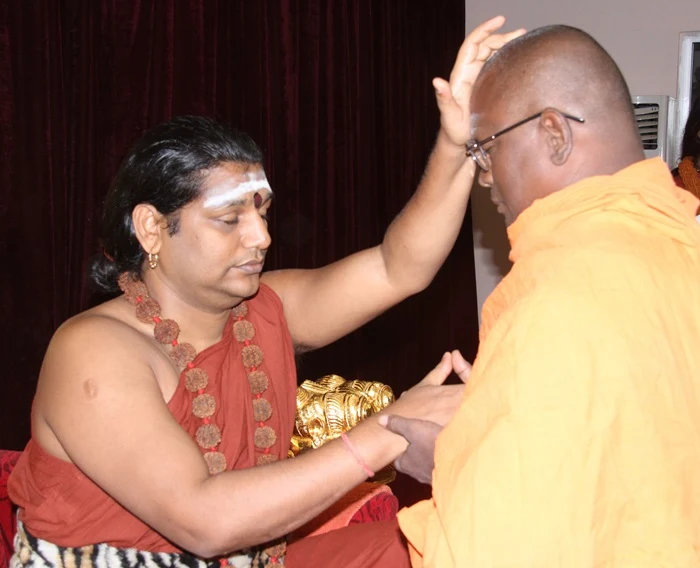
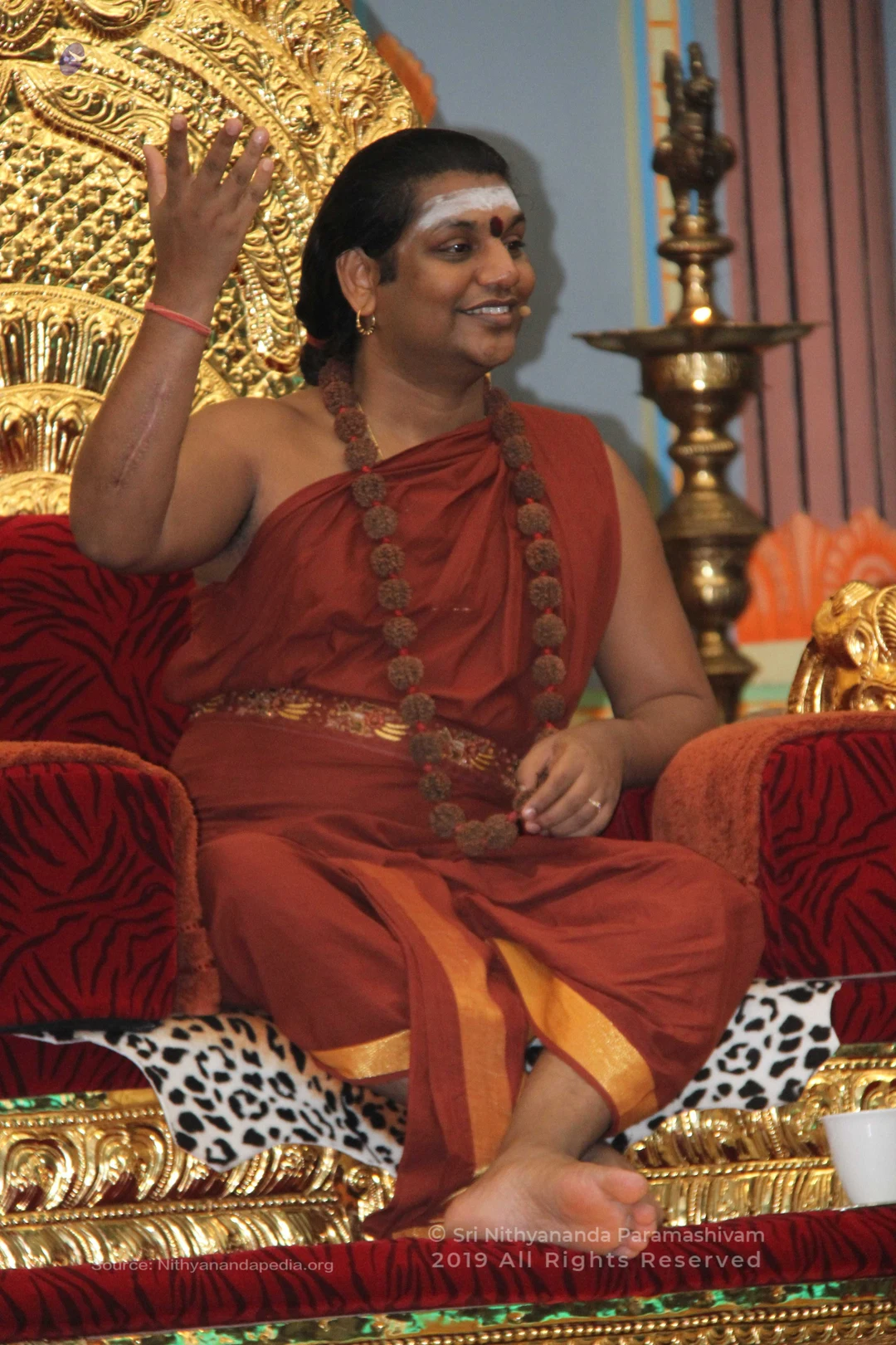
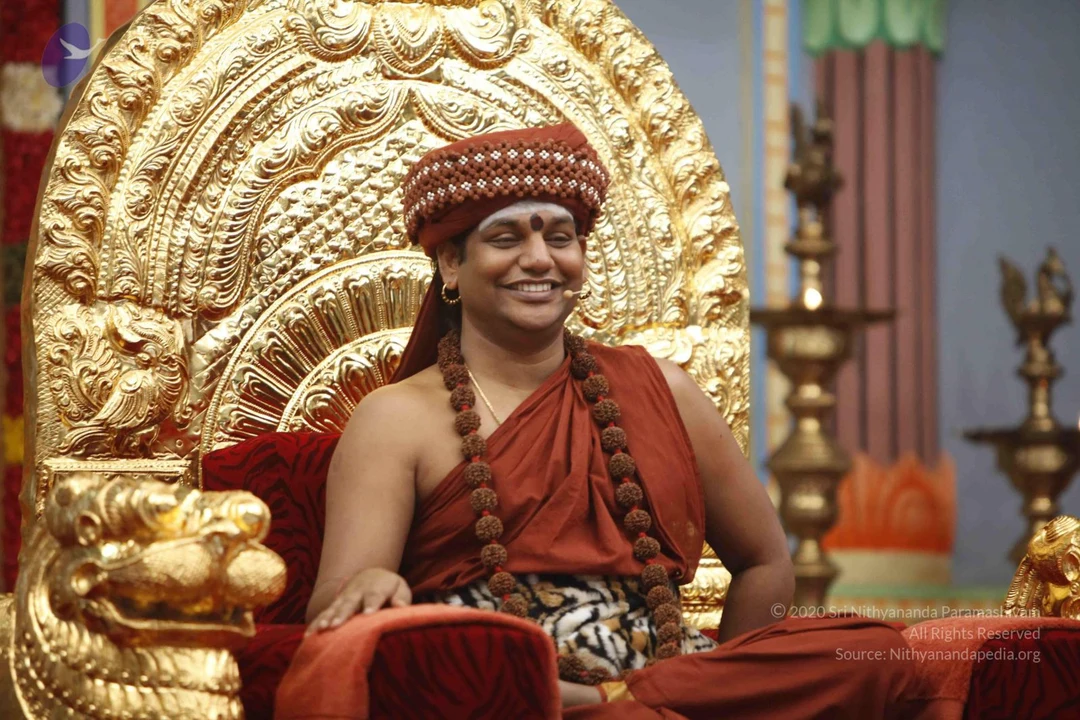
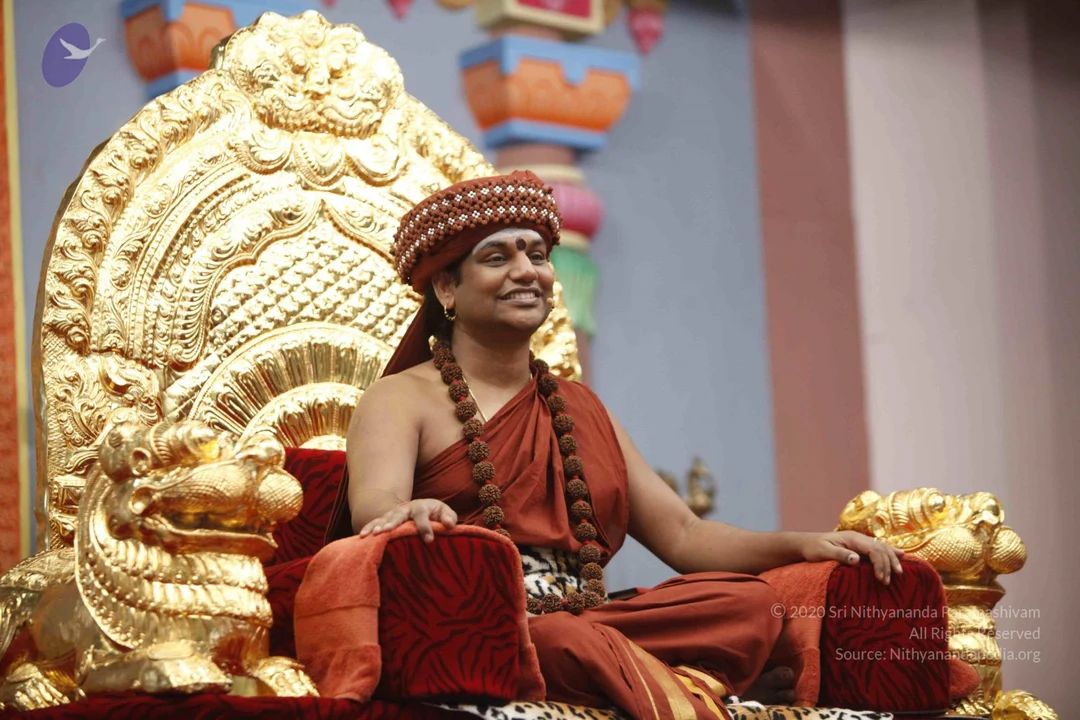
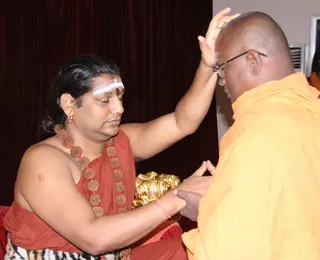
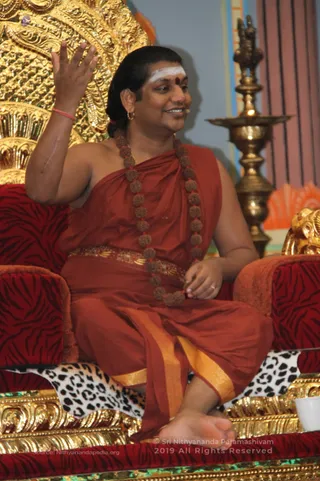
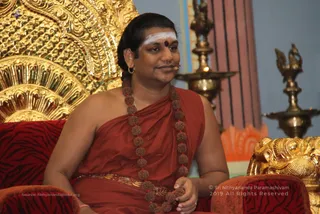
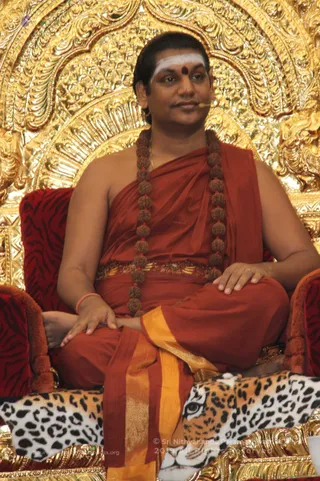
Indoor photo of a seated man in a rust-red robe with a rudraksha mala and a white vertical tilak on his forehead, his right hand raised to touch the forehead of a bald, bespectacled man in an orange-yellow robe who bows with hands joined. A dark red curtain stands behind them, and a gold-coloured object is held between them. a person is shown with rudraksha malas and a red robe, performing a blessing for a devotee. The scene shows a blessing or initiation exchange, with the seated figure in red as the giver of blessing.A man sits on an ornate golden throne with red tiger-striped cushions, wearing a rust-red saffron wrap over his shoulder and a long rudraksha mala of dark beads with red threads. He has a white horizontal tilak with a red dot on his forehead, a gold hoop earring, and holds his hands together in his lap. Behind him stand polished brass oil lamps (diyas) with a lit flame and a brass bird ornament, with a pink-and-orange wall. A small microphone is clipped near his face. The scene looks like a satsang setting. Swamiji (probable): long swept-back hair, rudraksha mala and saffron clothing mark him as a sannyasi seated on a throne at the satsang.

FB-photo-of-the-day

1 photoSource gallery
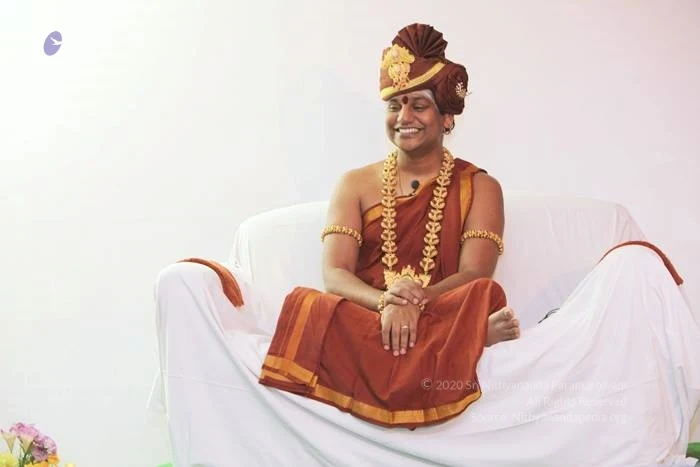
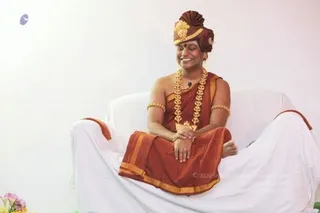
A smiling person sits cross-legged on a white-draped chair against a pale pink backdrop. They wear a rust-orange turban with a gold ornament, a rust-orange garment with gold border, a long gold-beaded necklace with gold clasp pieces, gold armbands and a small microphone clipped to the chest. Hands rest folded in the lap and bare feet are visible. Pink and white flowers appear at the lower left. Appearance-based cues of a turban, saffron-orange clothing and ornate gold adornments match the Swamiji (probable) profile, so the person is seated in the photo as a candidate.

Rudrabhishekham
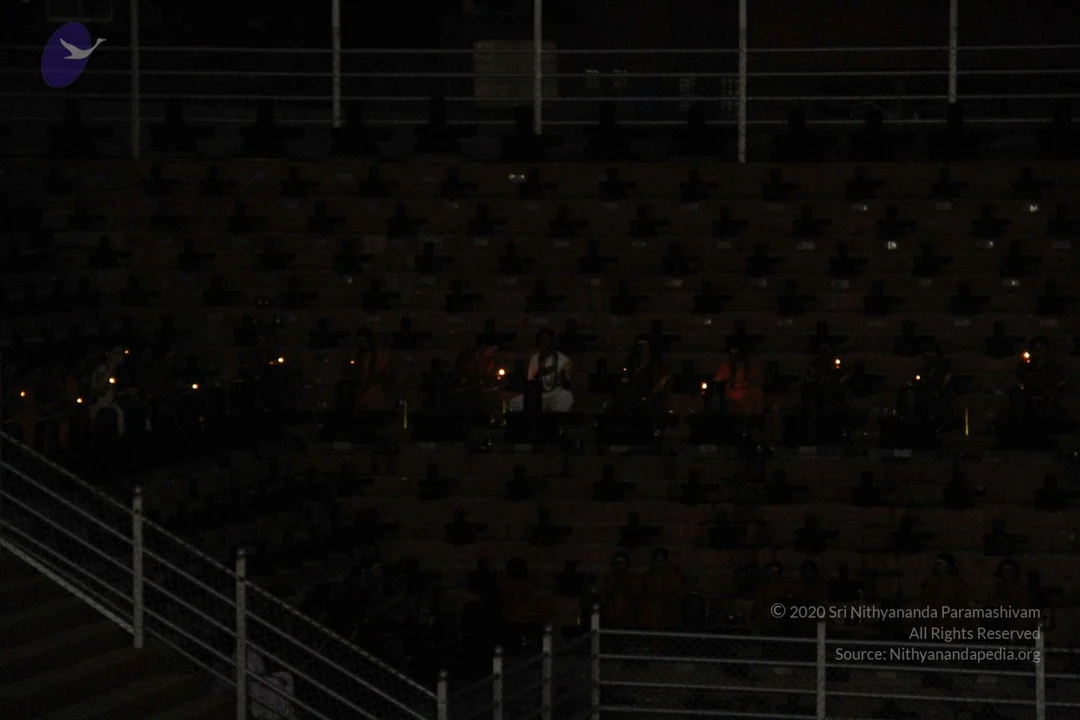
26 photosSource gallery
A night photograph of a large dark stone Shivalinga on a raised platform in an open-air arena with rows of empty red seats on either side. The lingam is wrapped with a garland of red and white flowers, and a shining silver band or yantra panel is set in its midsection. A few small figures stand on top of the platform near the lingam. A low stone base with red and white pillars sits in front, reflected in water below. The surroundings are dark, with a multi-storey building behind.A night photograph of a large black Shivalinga-style lingam on a raised stone base, framed by a red and yellow garland of flowers draped over its top, with a lit brass or silver yoni-like panel at its centre. Three figures in pale or orange clothing stand on the platform at the top of the lingam, partially visible in the darkness. Empty red-cushioned tiered seating and metal railings surround the lingam in a dark outdoor arena, with a multi-storey building lit by windows behind it.Night photograph of a large dark Shiva lingam with gold bands and a red-and-orange marigold garland wrapped around its base, with water or abhishekam streaming down its surface. On a metal scaffold platform beside it, a few people in yellow and orange clothing stand near the top, and a figure in white stands at the far side. Dark silhouettes of people stand at the left edge of the frame. The background is a plain whitewashed building wall and a dark sky.A night photograph of a large dark black stone Shiva lingam with gold-coloured bands wrapped around its base, draped with a red and yellow flower garland. Several people in orange and saffron clothing stand on a metal scaffold platform and staircase beside the lingam, some seen only partially in the dark. A low white wall and rows of small clay lamps line the background under a black sky.Night photograph of a large black lingam, a Shiva symbol, with a red and yellow marigold garland draped down its front and three gold bands wrapped around its middle. A metal scaffold staircase with railings rises to a platform at the top of the lingam, where several robed figures in orange and saffron clothing are seated or standing. The surrounding area is dark, with a low white building and lights visible at right.A night-time photograph of a large black cylindrical Shivalinga on a tiered black pedestal in an open stadium-like venue. Three gold bands encircle the lingam, and a red-and-gold garland or cord runs down its side. A metal staircase and railing rise beside it to a platform where a few small figures stand near the top. Empty rows of seating fill the background under a dark sky, with a white building at right. No people are clearly visible in the foreground.

Morning-Satsang-And-Paduka-Puja
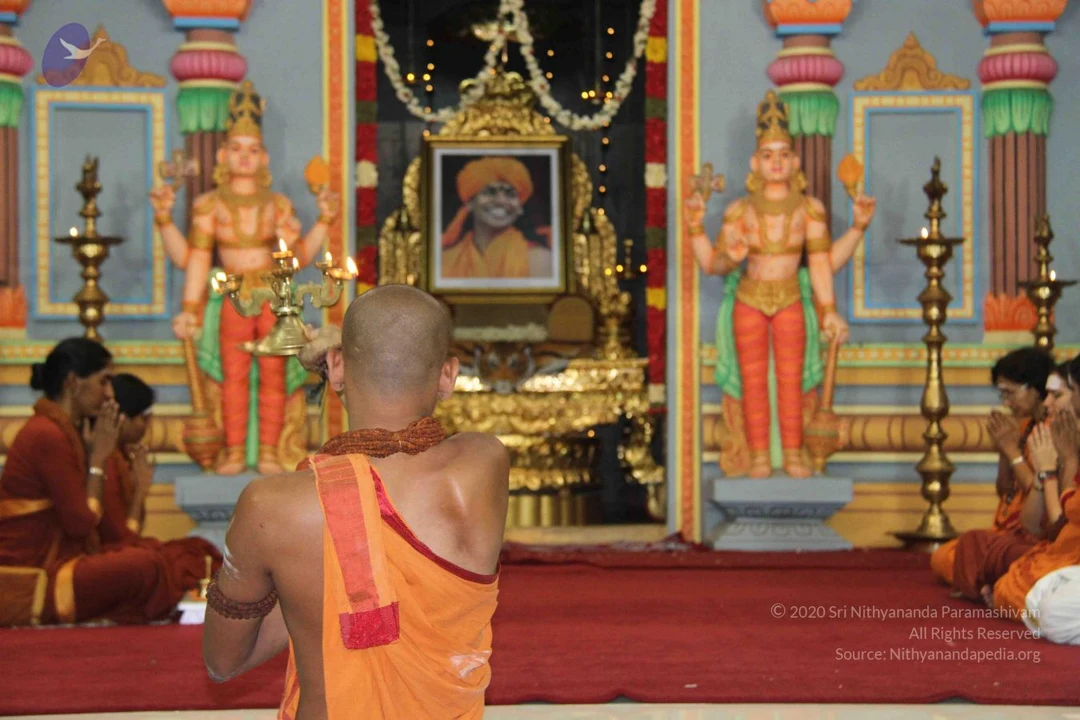
37 photosSource gallery
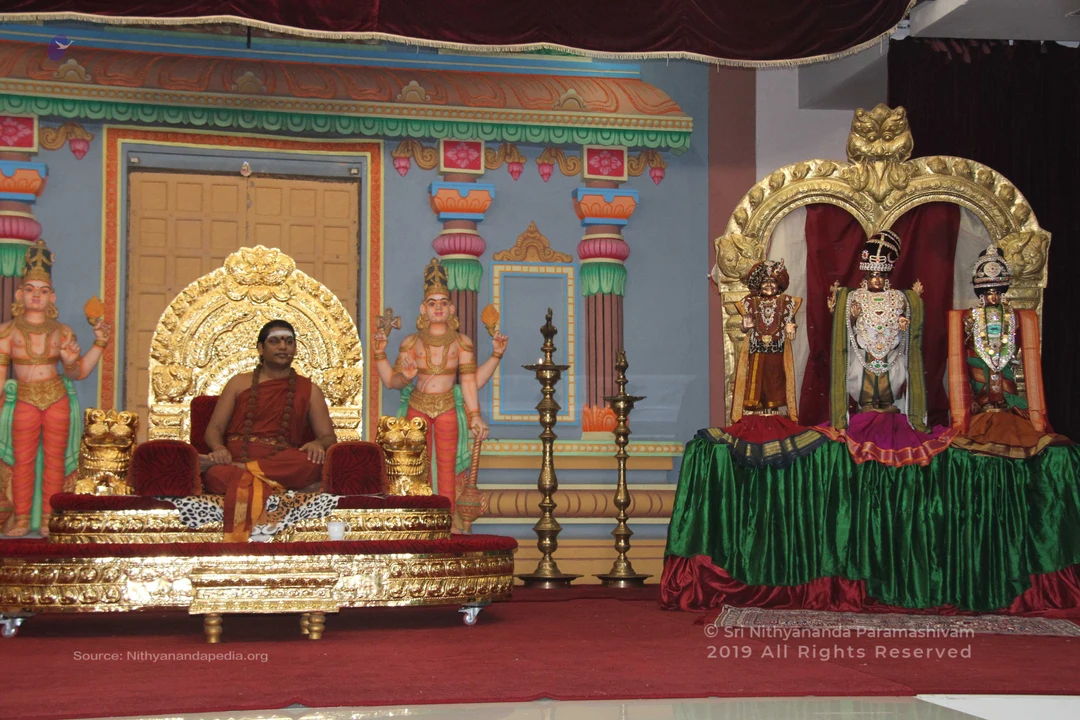
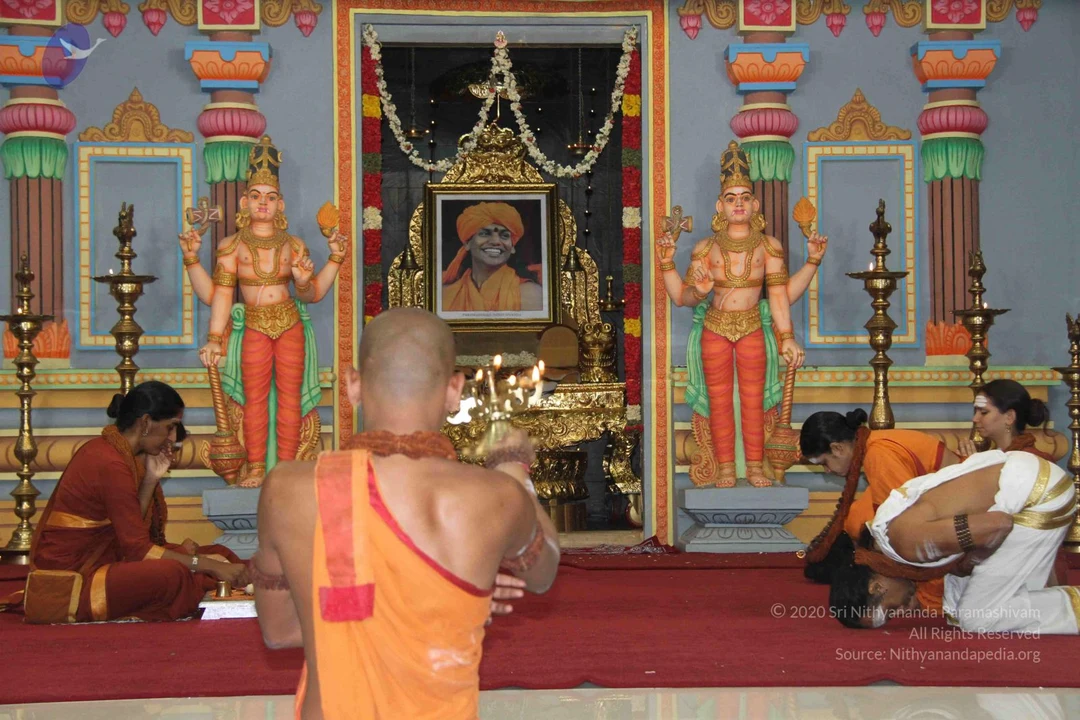
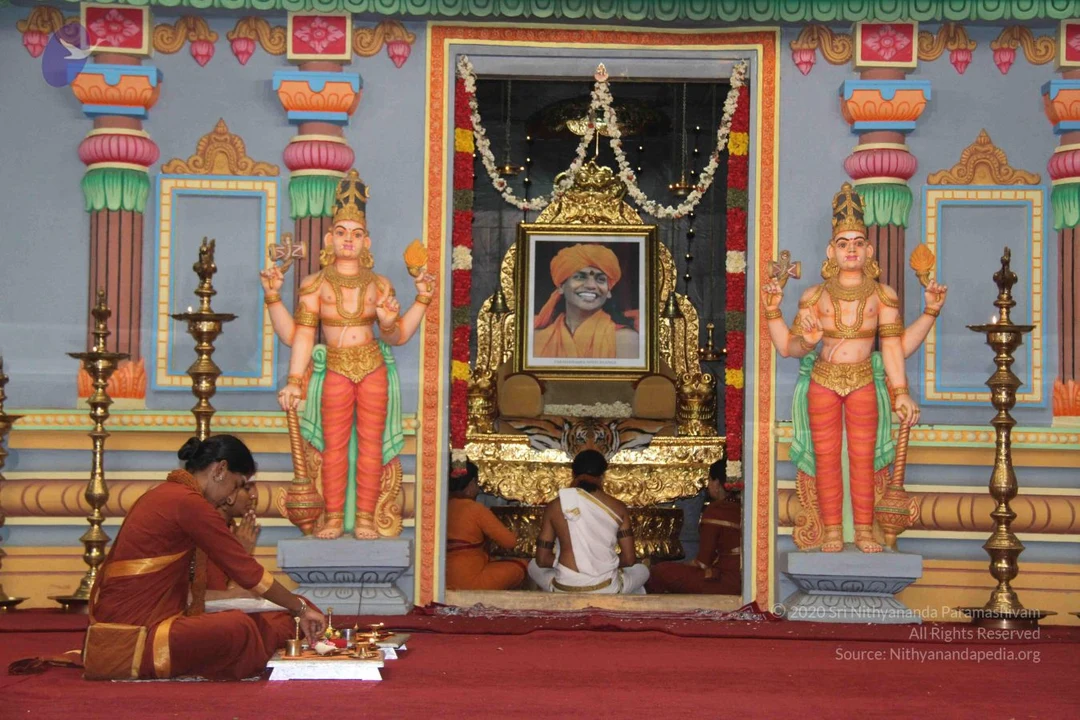
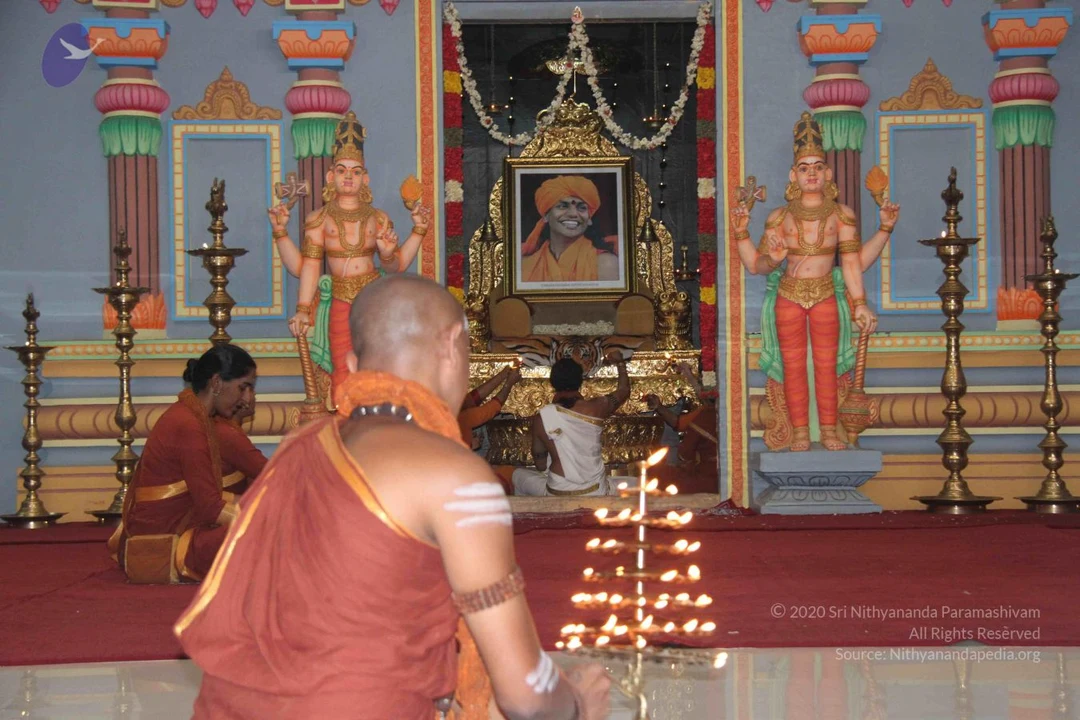
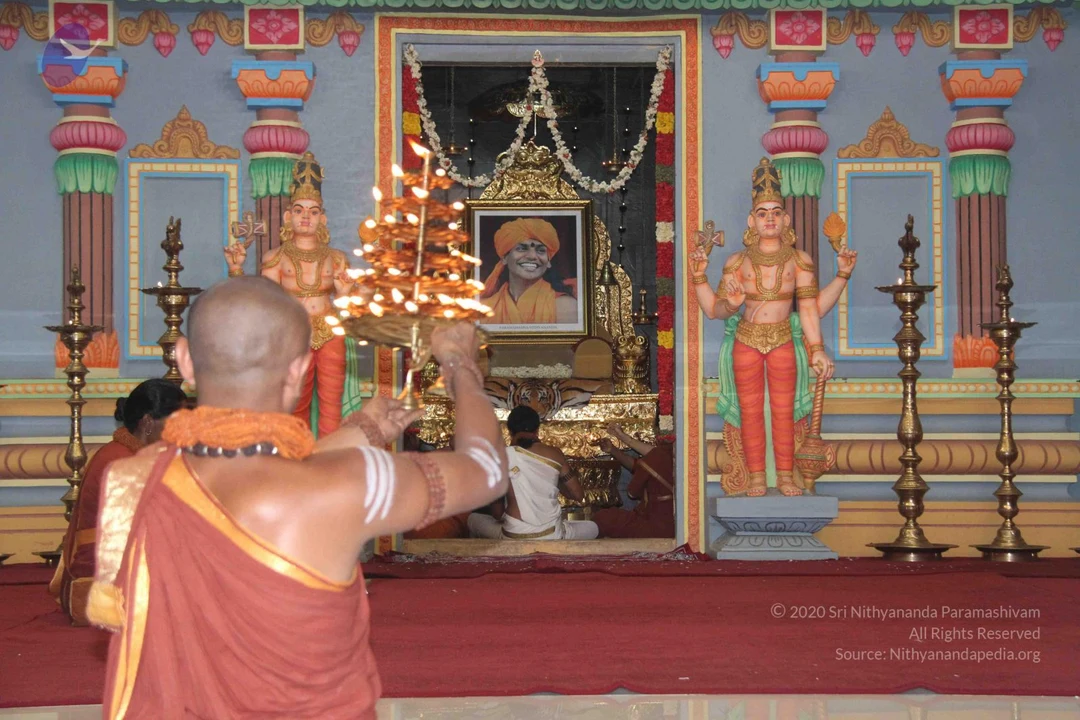
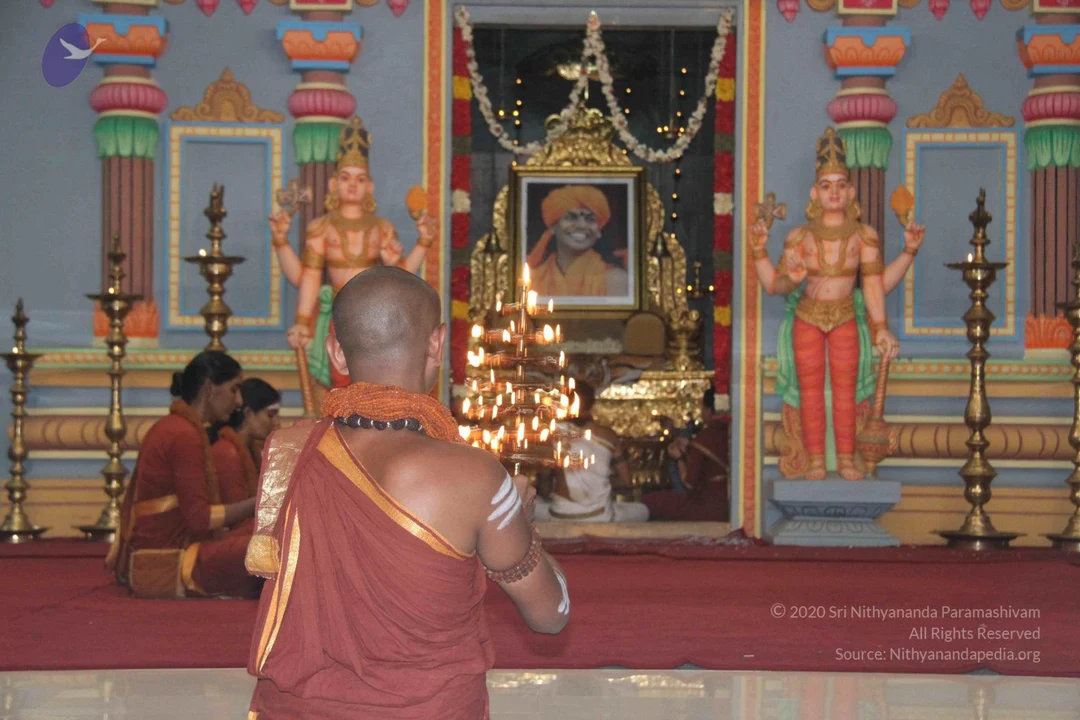
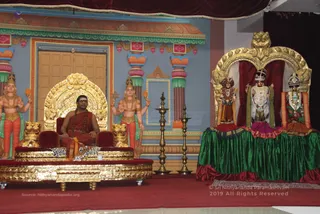
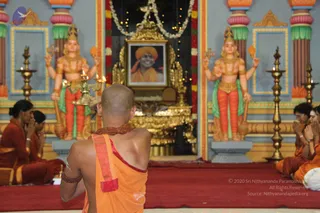
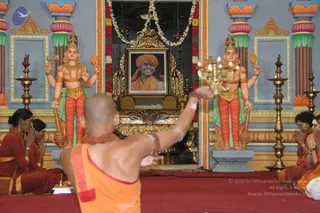
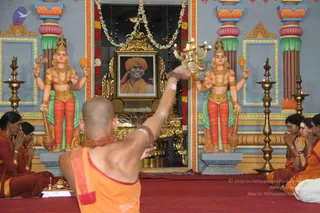
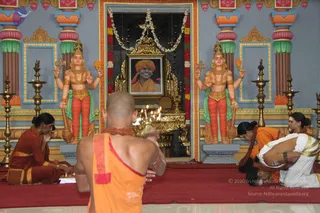
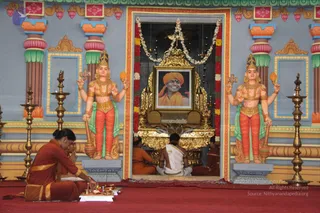
A photograph of a temple-style shrine room with blue and pink painted walls. A framed portrait of a smiling man in an orange turban and glasses sits at the centre, garlanded and set on a golden stand with lit lamps, flanked by two painted multi-armed deity murti figures in orange and green dress holding ritual implements. In the foreground a bald priest in saffron-orange robes and a rudraksha mala faces the shrine with his hands folded in prayer. Seated on red carpet to the left and right, several devotees in orange and saffron clothes sit with palms pressed together. Brass oil lamps stand beside the shrine and the central golden lamp stand is lit.A photograph inside a temple shrine during an aarti. A bald, bare-chested priest in an orange cloth and a rudraksha mala faces away from the camera, raising a multi-branched brass lamp with lit flames toward a framed portrait of a smiling man wearing an orange turban, set on a gold throne draped with a tiger skin. Two standing gold-and-orange deity murti figures with multiple arms flank the shrine, and brass lamps stand on red carpet. Three women in orange saris sit at left and right with palms pressed together in prayer. Garlands of marigolds hang above the portrait, and the portrait carries the caption 'a person'.A shaved-headed priest in an orange robe, seen from behind, raises a brass multi-wick aarti lamp with lit flames toward a shrine. Two colourful painted guardian deity statues with multiple arms, orange dhotis, green sashes and gold jewellery stand on either side. Behind them is a framed portrait labelled "Paramahamsa Nithyananda" showing a smiling man in an orange turban and robe, with a tiger skin and gold throne below and garlands above. Women in orange saris sit on the red floor with palms pressed together at left and right, and brass oil lamps stand beside the shrine.A photograph of a shrine room with painted blue and gold walls and two painted standing deity figures flanking a central altar. A bald man in orange saffron robes with a rudraksha mala stands with his back to the camera, raising a lit lamp or ritual vessel toward the altar. Five people sit on red mats at right and left, hands folded in prayer; those at right wear orange and white dhoti clothing. A framed portrait of a saffron-turbaned man sits above a gold altar with brass lamps lining the floor. Garlands hang across the altar and draped fabric frames the shrine.Inside a temple hall with blue and yellow painted walls, two tall painted dvarapala guardian statues with raised arms and gold jewellery flank a central shrine. Framed above the shrine is a portrait labelled "Paramahamsa Nithyananda" showing a smiling man in an orange turban. Garlands of white flowers and red and yellow blossoms hang around the frame, with brass oil lamps on both sides. In the foreground a man with a shaved head, wearing an orange cloth and a rudraksha mala, sits with his back to the camera holding a lit lamp. To the right, a woman in white with gold border kneels with her forehead touching the red carpet, and two women in orange saris sit nearby. A portion of the shrine features a golden throne-like seat. Three people are visible.A photograph inside a temple-style shrine hall. Two large painted standing figures with four arms, crowns and green-and-orange garments flank the central doorway. In the centre, a framed portrait of a smiling man in an orange turban and orange robe sits atop a golden throne with a tiger-motif base, garlanded with white flower strands and red-and-yellow garlands. A man in white dhoti with bare upper body kneels at the throne, and a woman in an orange sari kneels at the lower left beside brass puja items and a tray of offerings. Brass oil lamps stand on either side. Two more people in orange clothing are visible near the throne. The floor is covered with a red mat.

Kalpataru-Darshan

24 photosSource gallery
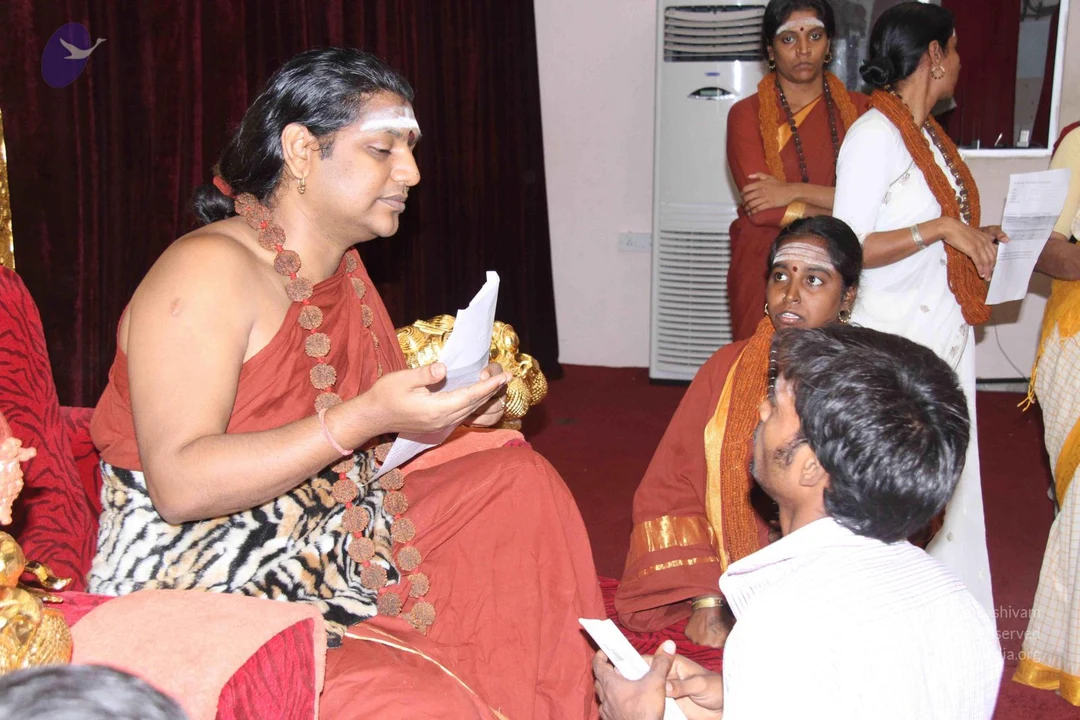
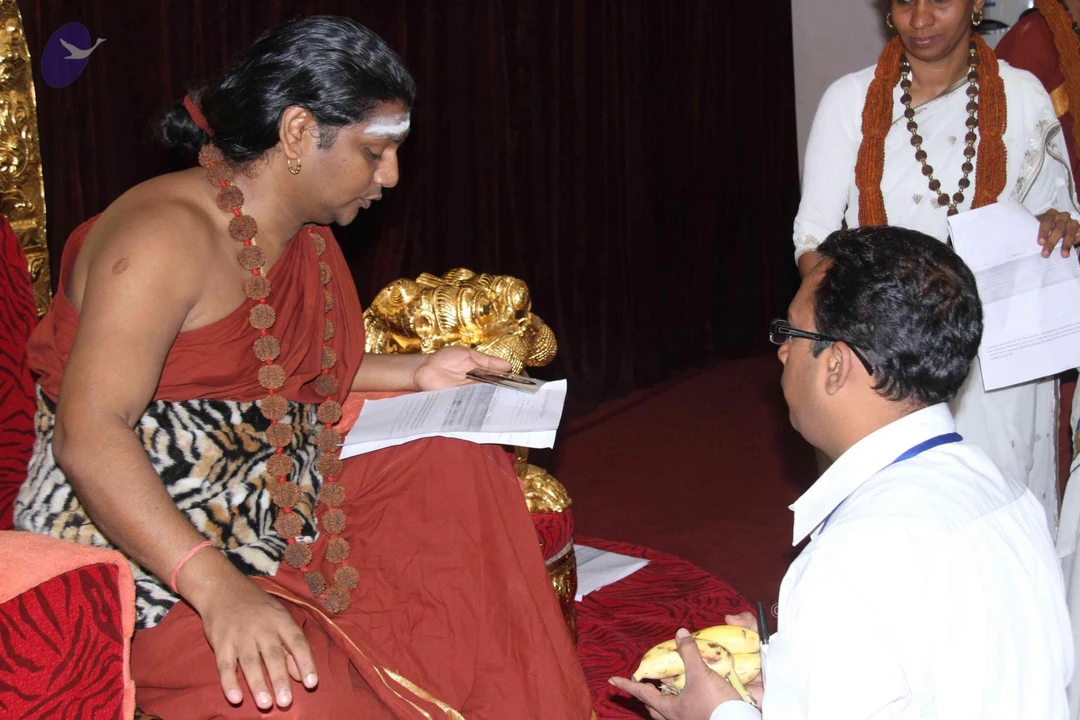
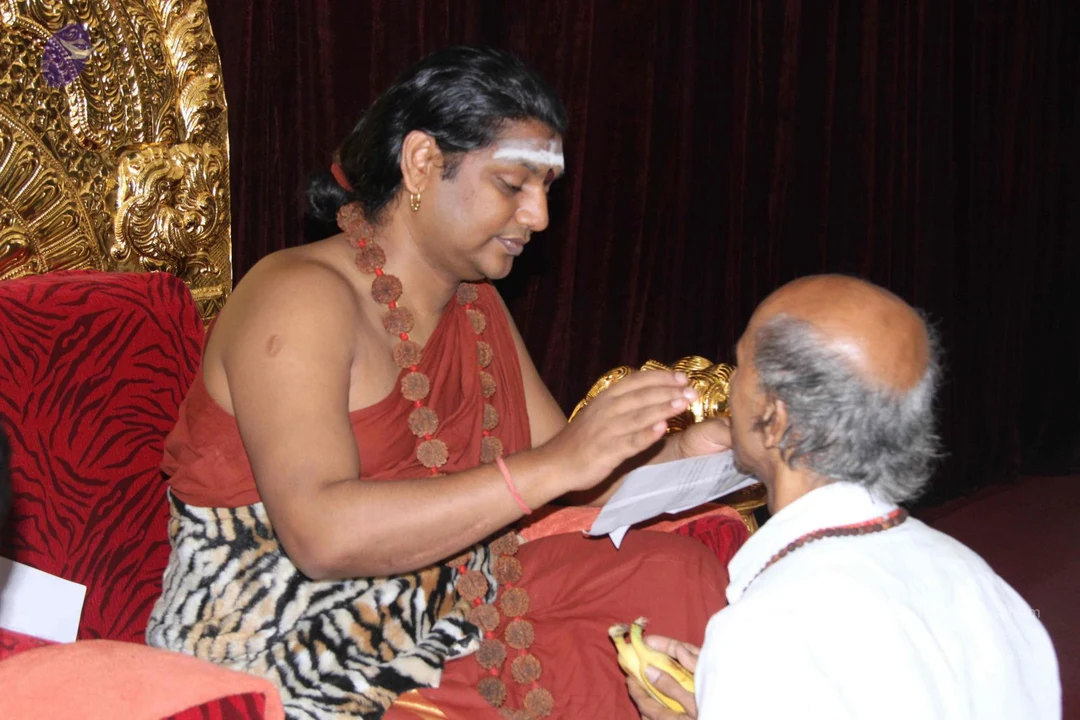
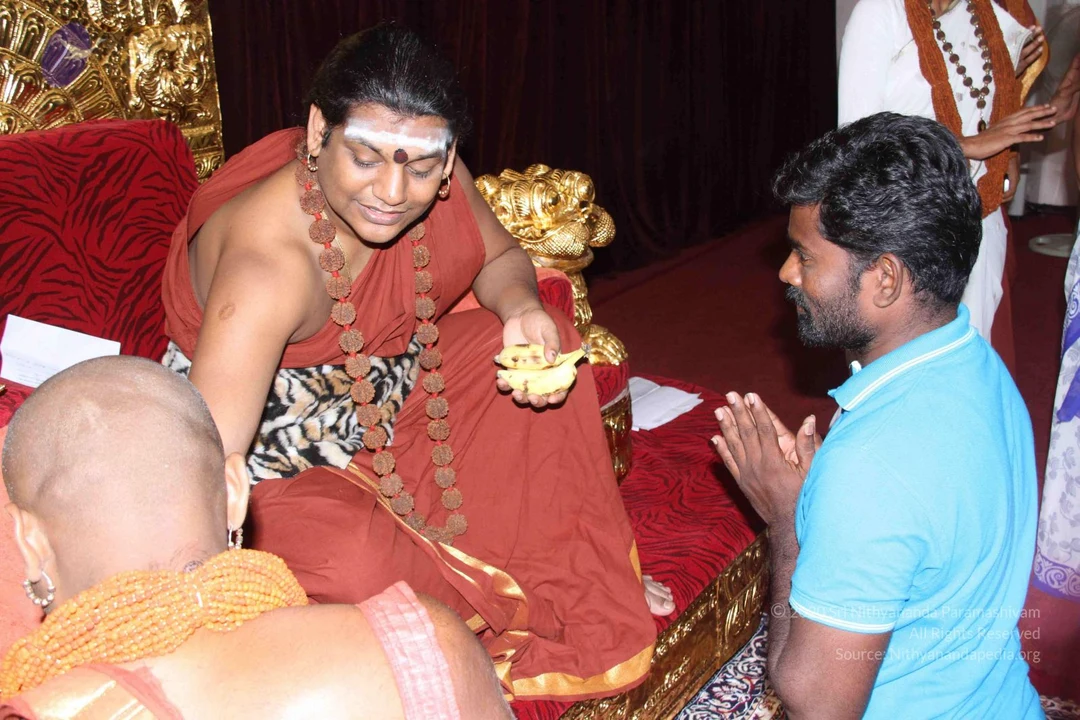
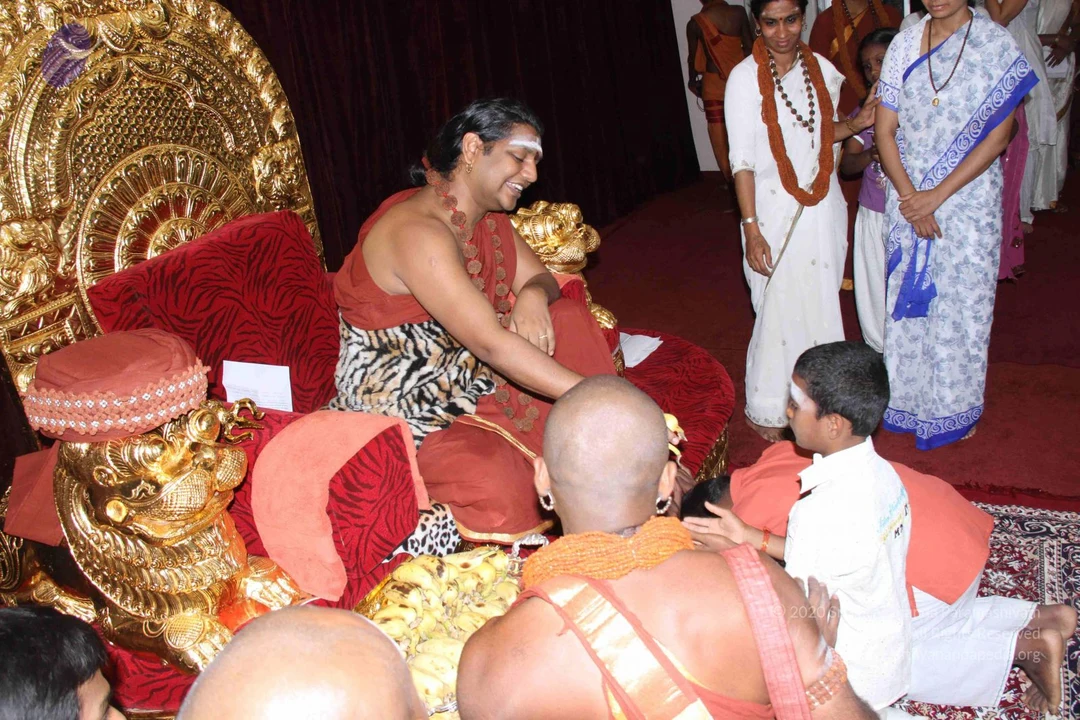
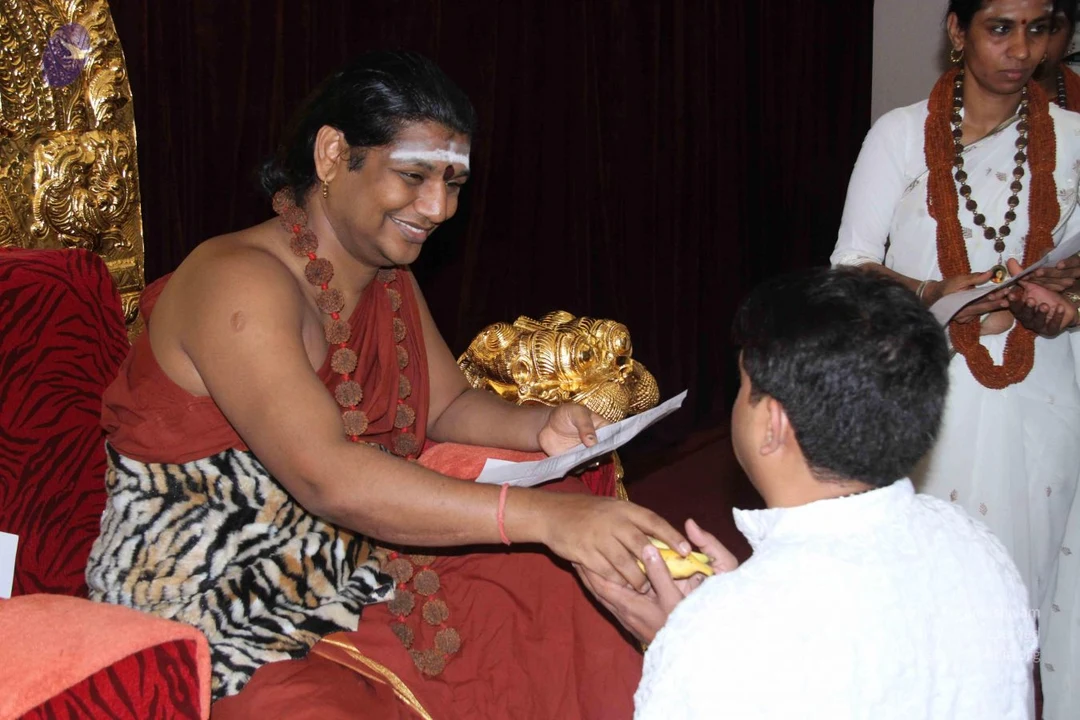
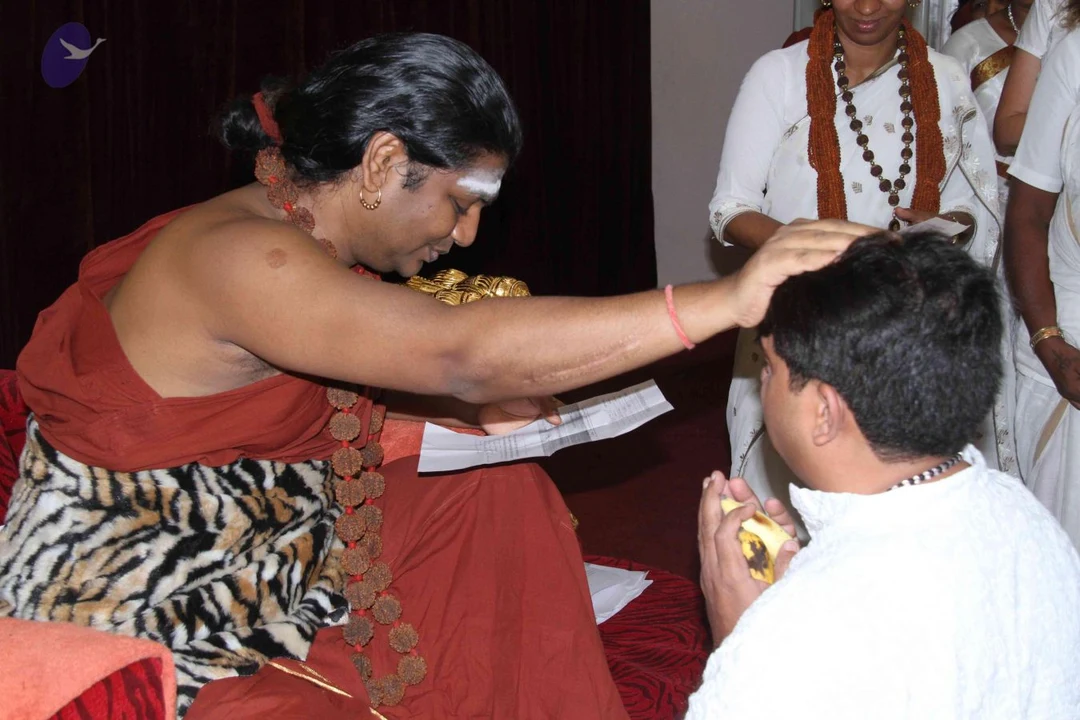
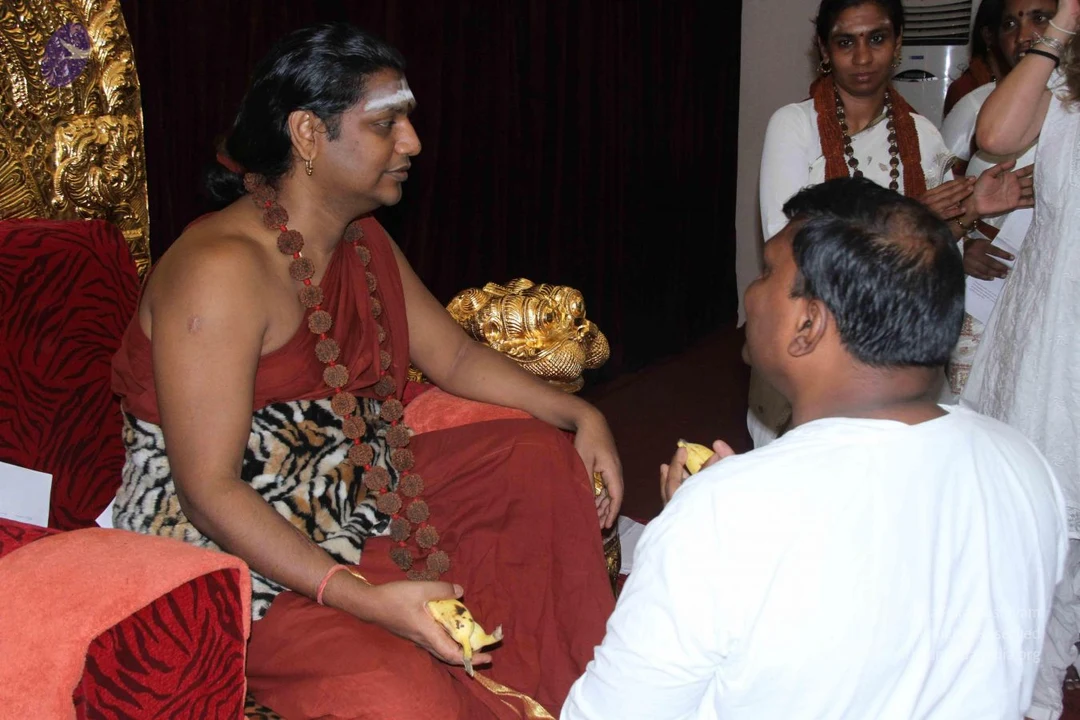
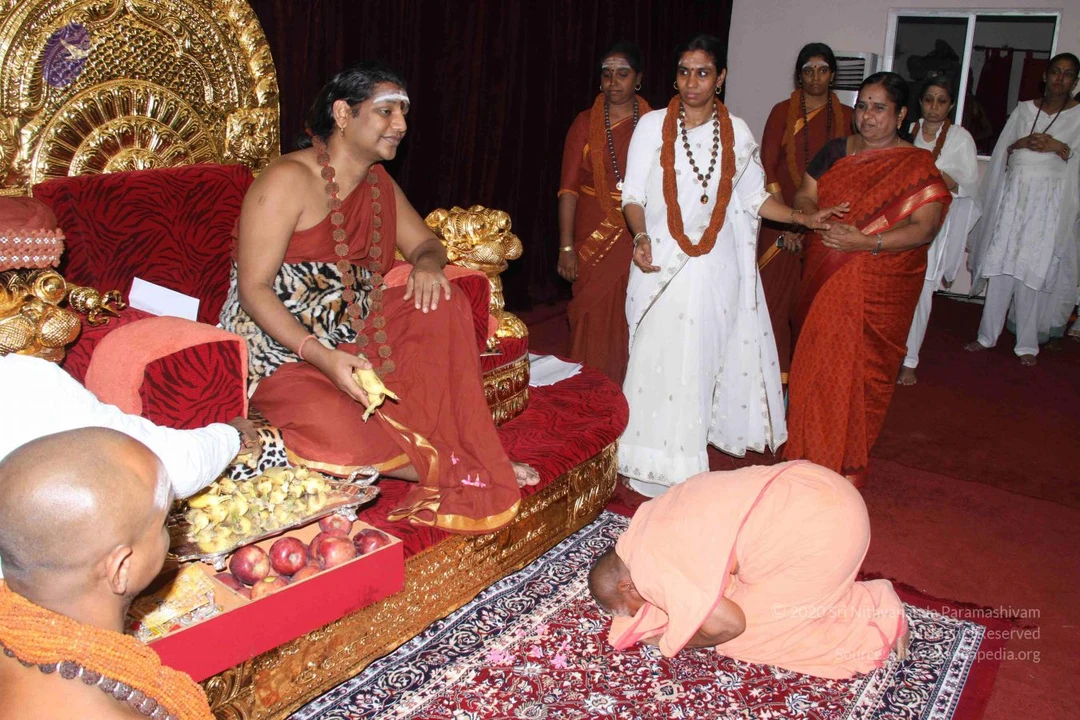
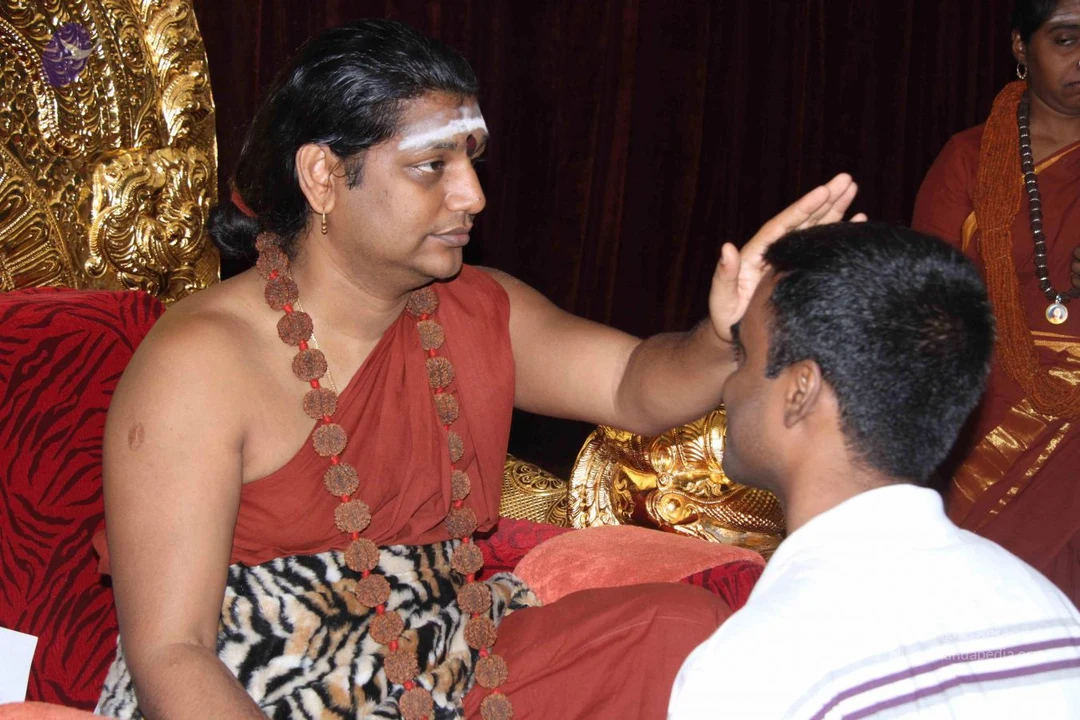
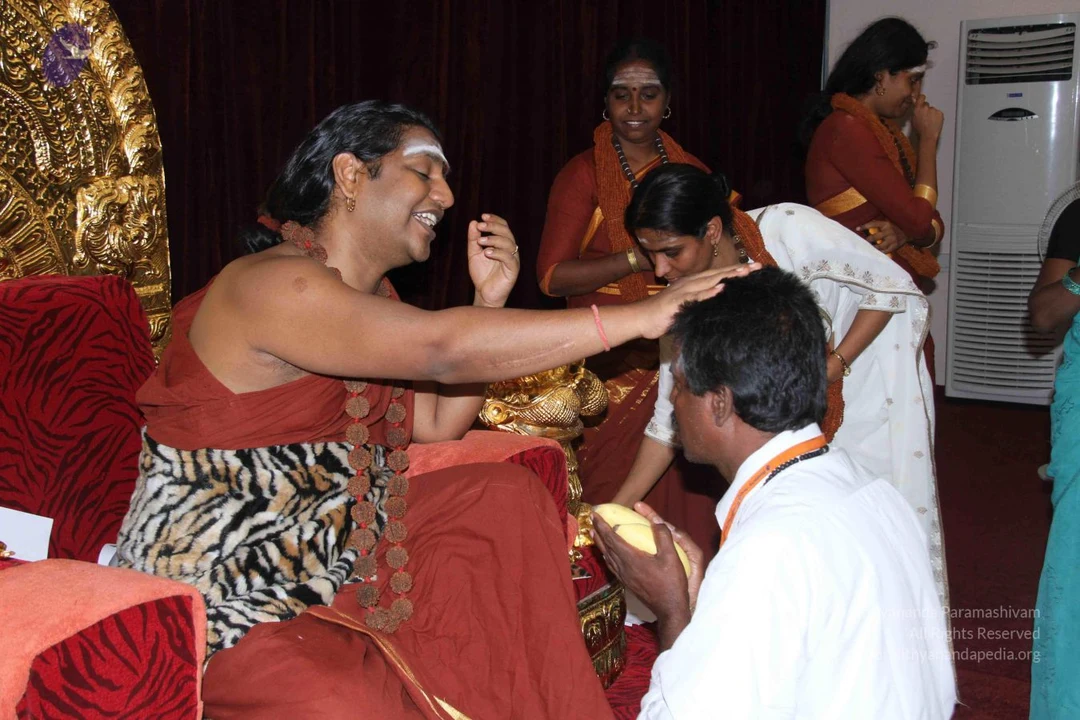
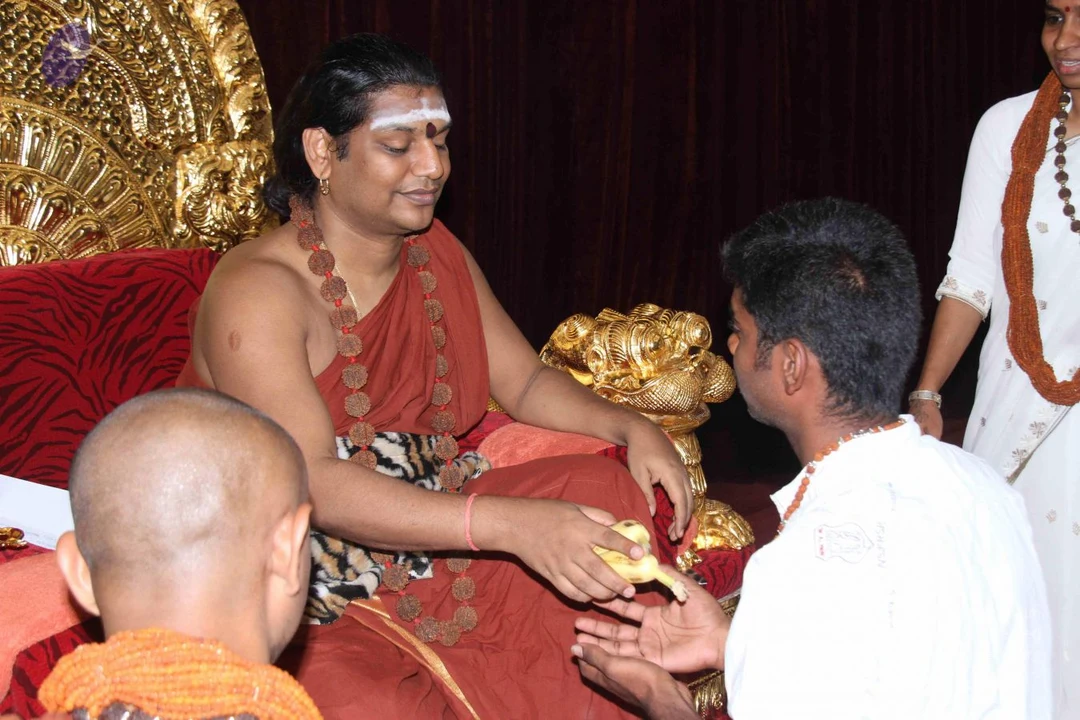
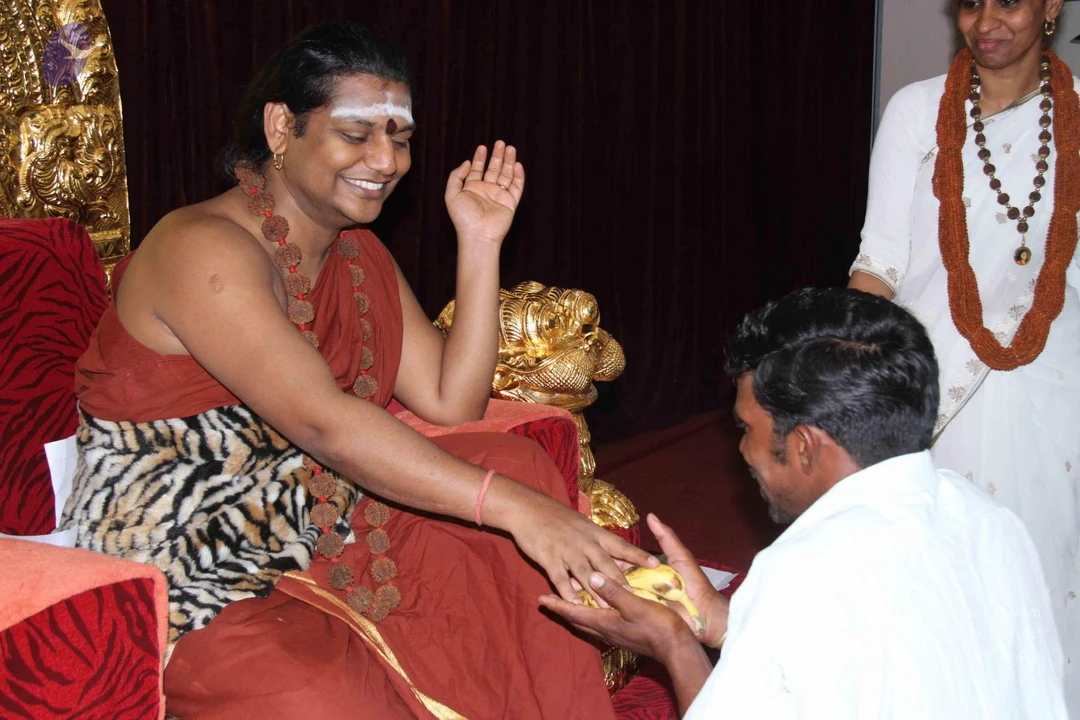
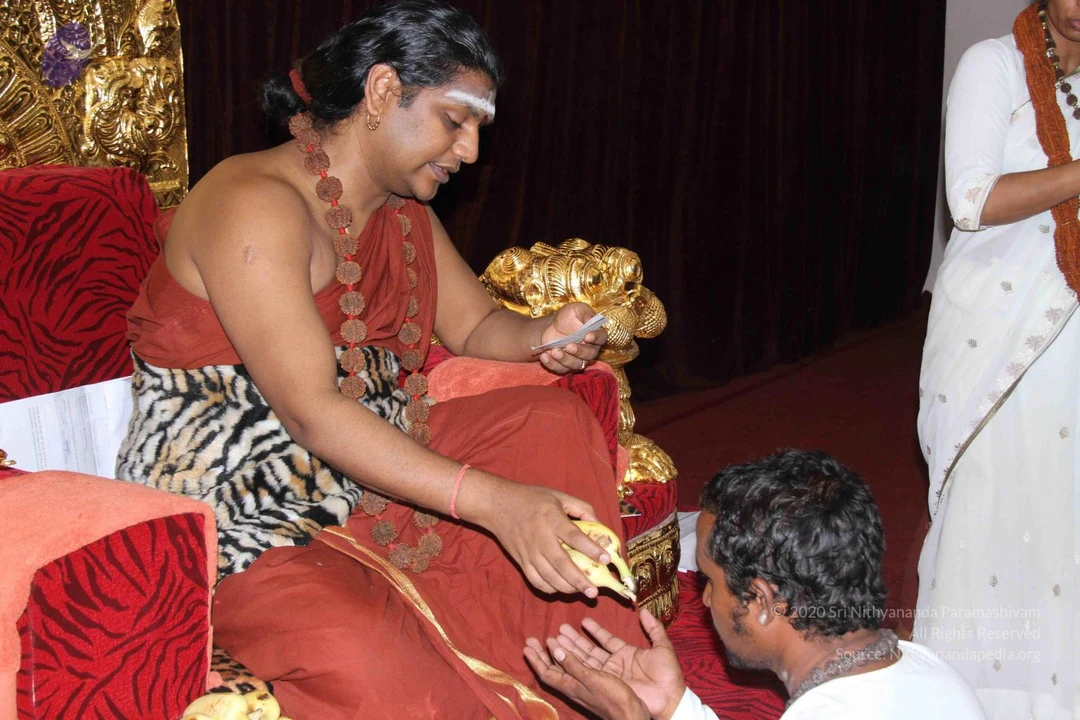
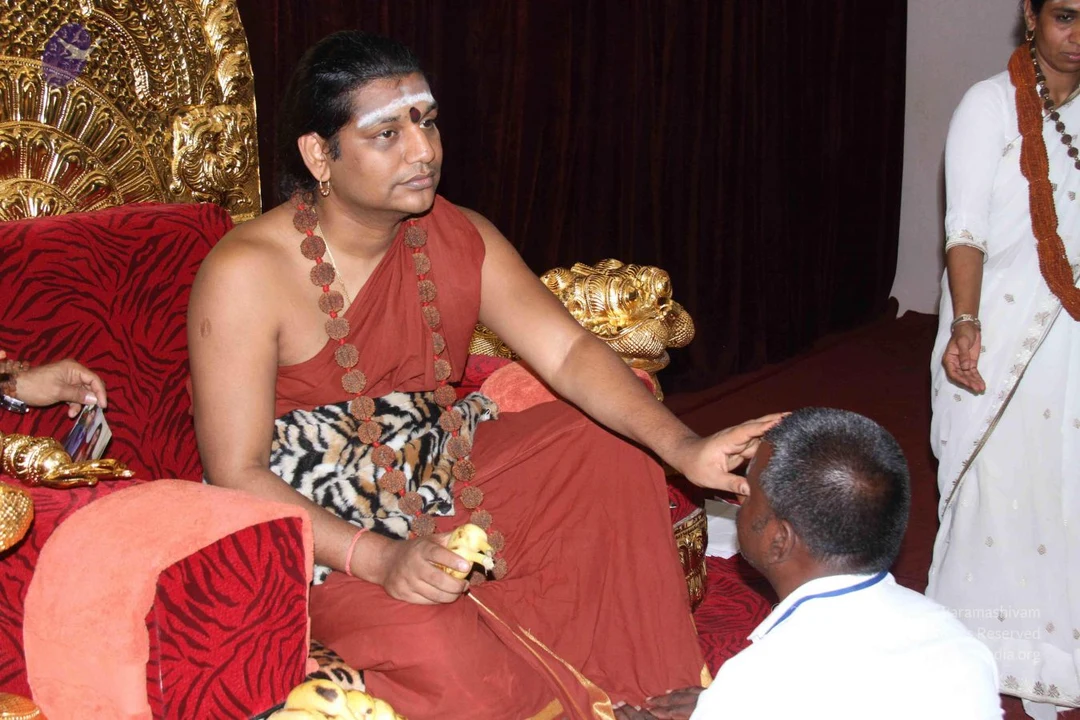
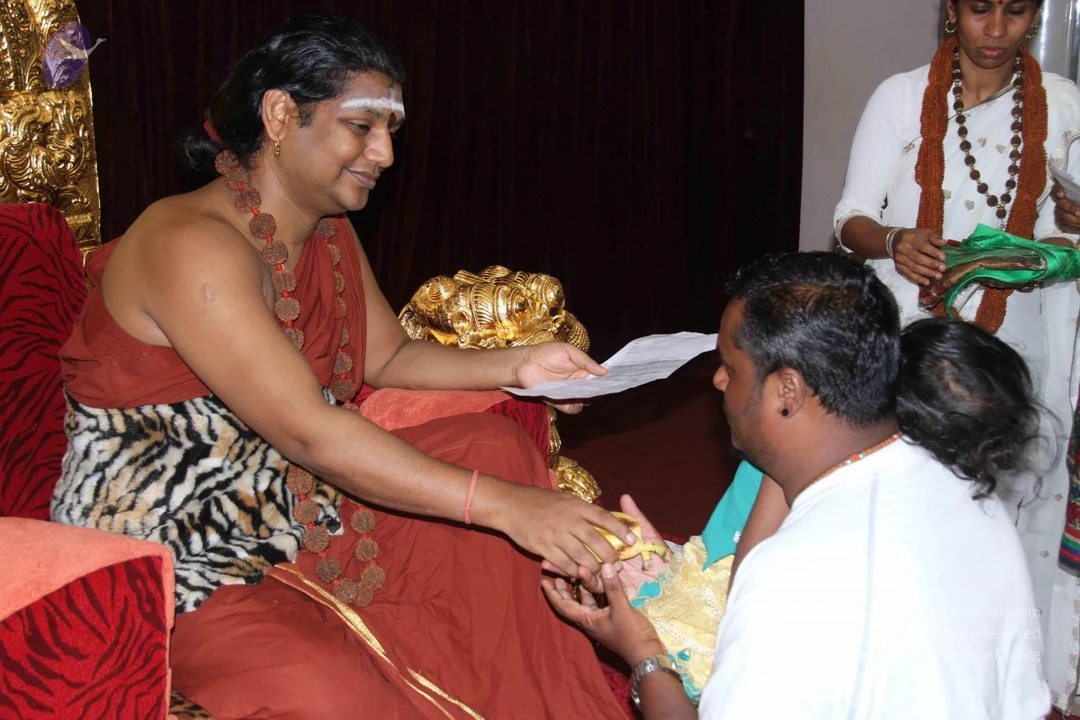
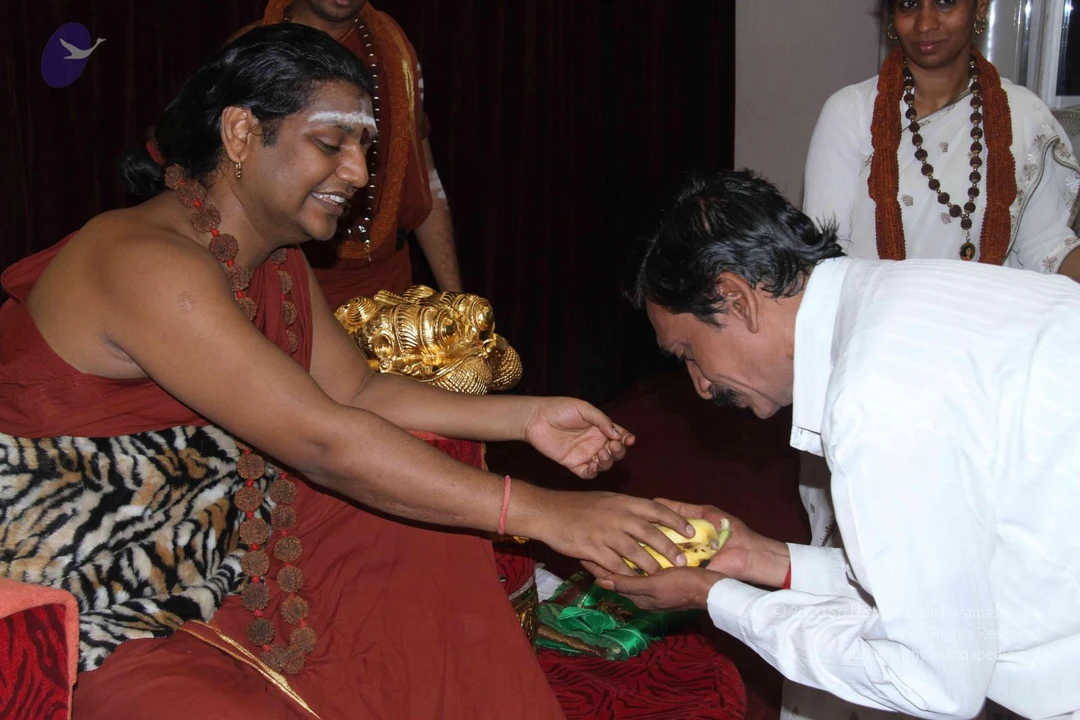
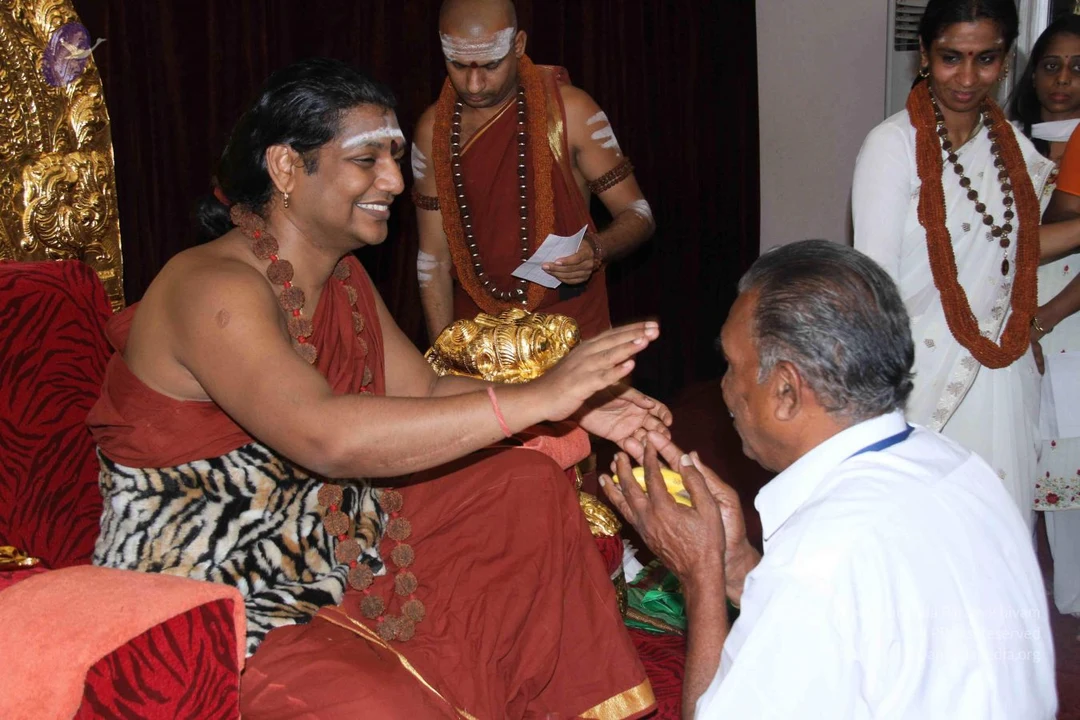
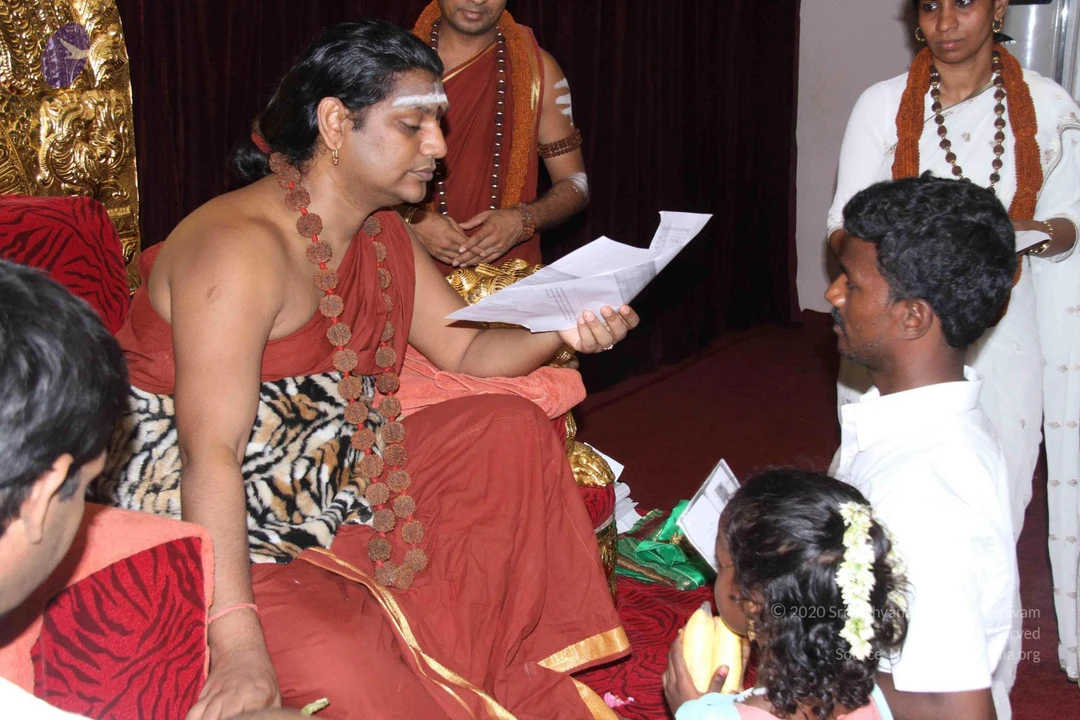
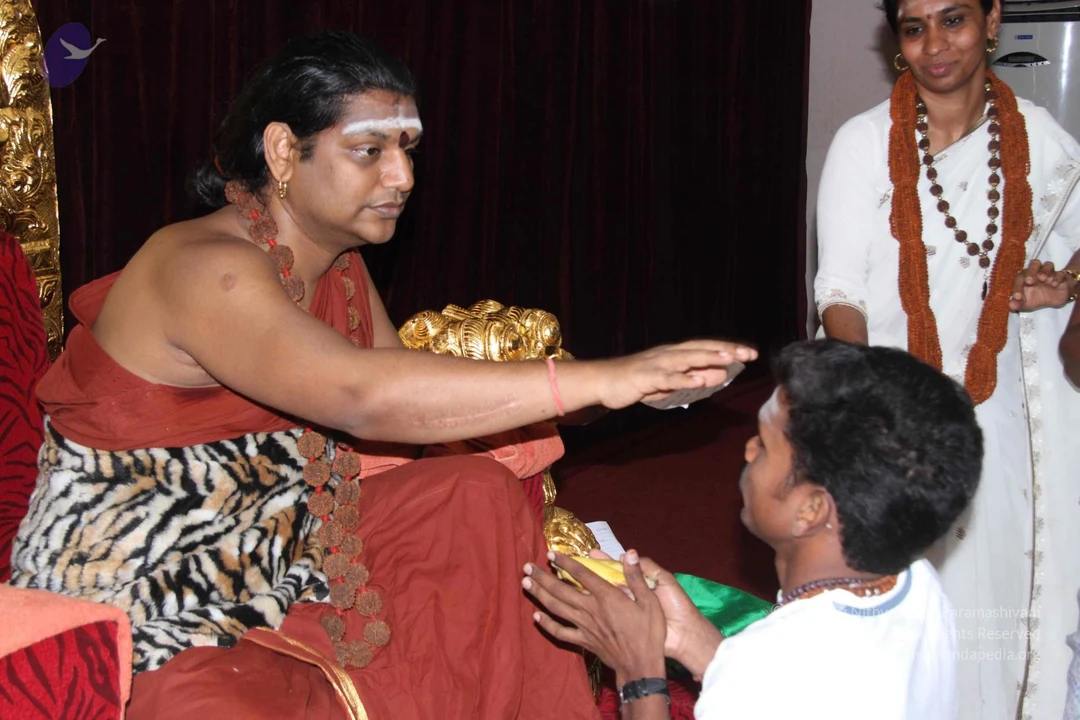
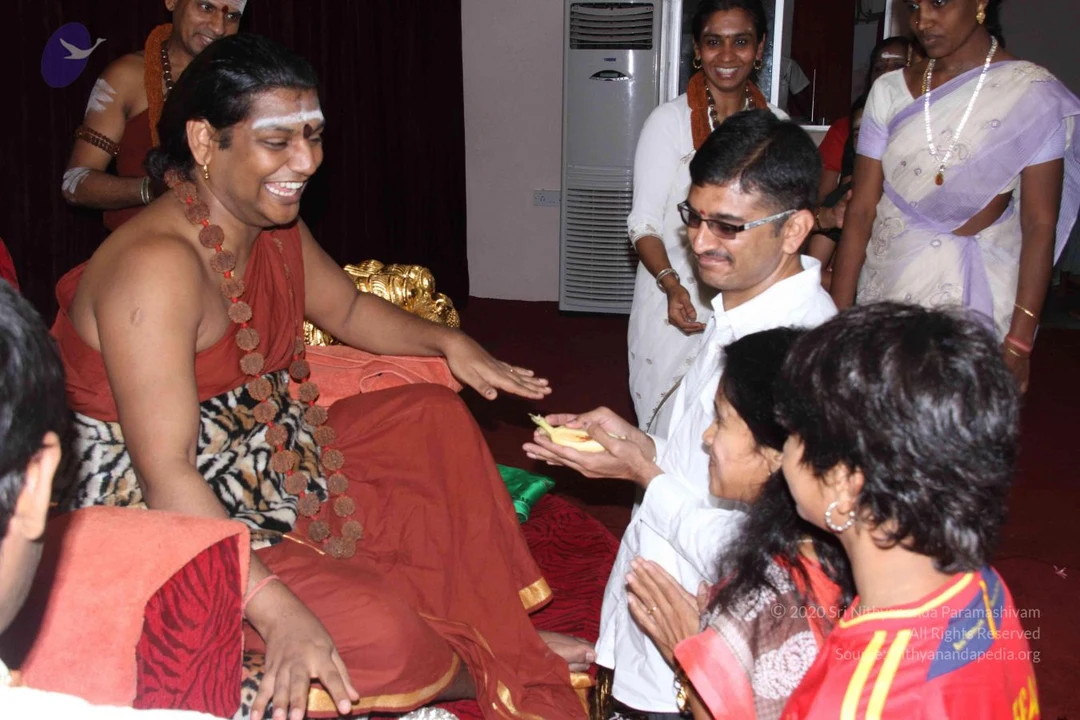
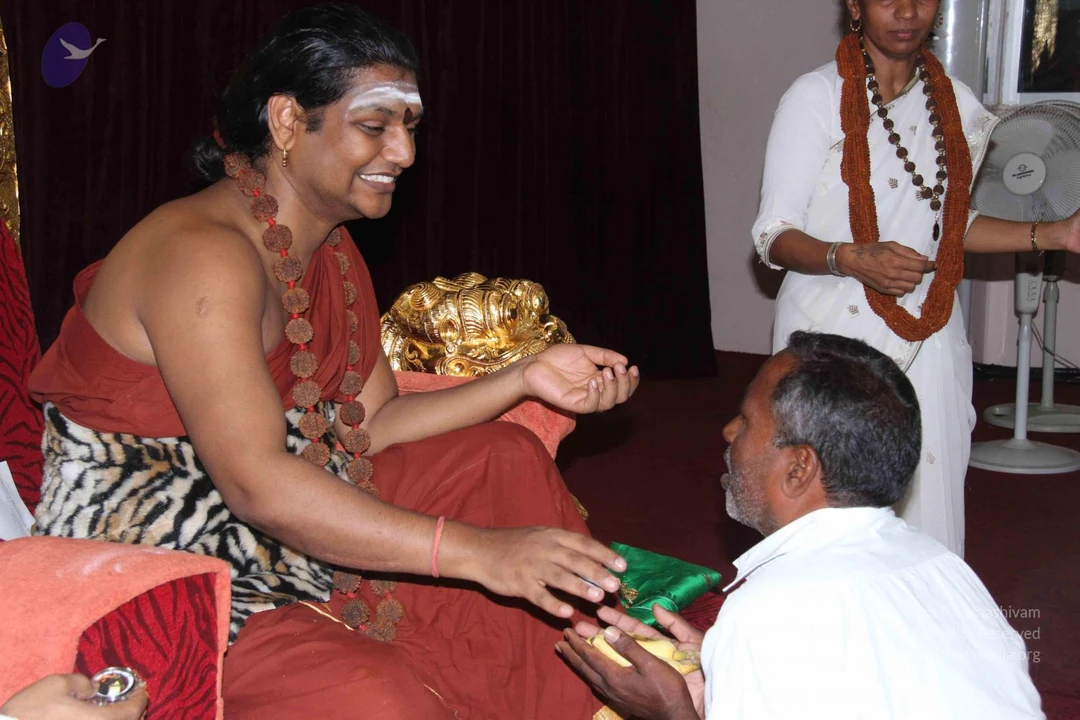
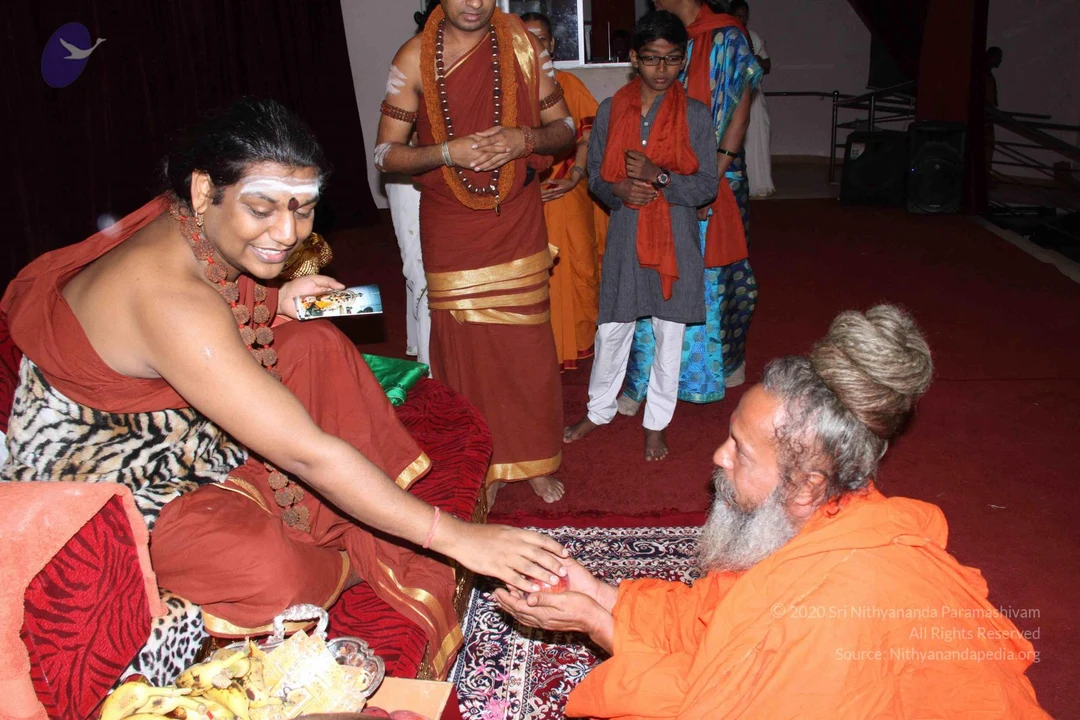
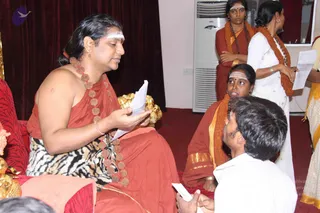
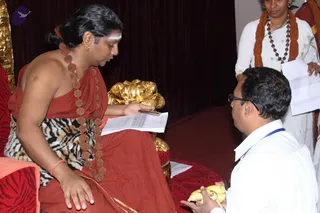
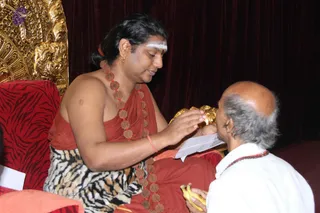
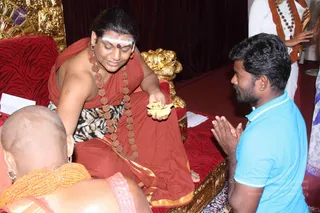
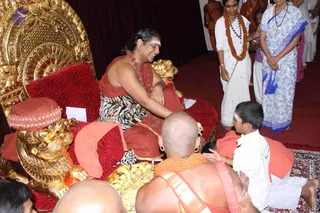
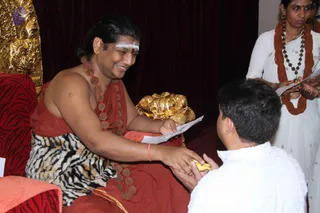
A photograph of a seated man with long dark hair swept back, wearing a rust-red robe over bare shoulders, a tiger-stripe cloth across his lap, a large rudraksha mala with gold-toned beads, and a white vertical mark on his forehead, holding a folded white paper and speaking. a person is seated on a red cushioned dais with a gold-toned ornament beside him. A younger man in a white shirt leans in close to listen while holding a paper. Behind them, a woman in a rust-red sari with orange shawl and mala stands near a tall white cooling unit, another woman in white with an orange shawl holds a paper, and a woman in an orange-bordered sari sits near the dais. Maroon curtains form the backdrop.A seated man in rust-red robes with a zebra-striped cloth at his waist, wearing a long rudraksha mala with a tilak on his forehead and a red wrist thread, leans forward reading a printed sheet while holding a small card. Beside him is an ornate gold figure of a lion-like creature on a red cloth. A kneeling man in a white shirt with glasses and a blue lanyard holds bananas and a sheet of paper, while a woman in white with a rudraksha mala and orange shawl stands behind.A seated man with long dark hair and a white tilak on his forehead wears a rust-orange wrap, a long rudraksha mala with large beads, and a zebra-striped cloth across his lap. He sits on a red tiger-print cushioned throne in front of an ornate gold carved backrest and deep red curtains. He is touching a gold ceremonial object held toward an elderly bald man with grey hair, who wears a white shirt and a rudraksha mala and holds a banana and a folded paper. The scene resembles a devotee receiving blessing at a satsang setting.A seated figure in a red-orange robe and rudraksha mala necklaces sits on a red throne with gold trim, holding out a banana to a kneeling man in a light blue polo shirt with palms pressed together in namaskar. The seated figure has white tilak on the forehead and a red dot at the centre, and wears gold earrings. In the foreground at lower left, a shaved-headed person in an orange beaded necklace sits with their back to the camera. Behind, a person in white with an orange-and-brown shawl stands near a draped red curtain. The scene suggests prasad being offered in a satsang setting.A seated man on an ornate gold and red throne is shown from the side, wearing a rust-orange cloth, a tiger-print wrap, a rudraksha-style bead necklace and a white forehead mark; he smiles as he touches the head of a shaved-headed devotee in orange robes kneeling before him. A child in white kneels beside them, and a woman in white with an orange garland and a woman in a blue-bordered sari stand behind. Bananas are heaped near the throne, and gold lion-shaped carvings decorate the chair arms. Red-and-gold drapes frame the hall.A seated man with short dark hair, a white vibhuti line on his forehead, and a red-brown shawl over bare shoulders smiles while handing a small object to a kneeling person in a white top. He wears a red-brown garment with a tiger-striped cloth at the waist and a long necklace of brown rudraksha-style beads. He sits in a red-and-black striped chair beside a gold-ornate throne frame, with a gilded lion-shaped object behind him. A woman in white with an orange-red bead garland and a folded paper stands at the right, and a red wristband is visible on the seated man. Several physical people are visible: the seated man, the kneeling person and the standing woman, with a partially visible figure at the top right edge.

1-Rudrabhishekam

10 photosSource gallery
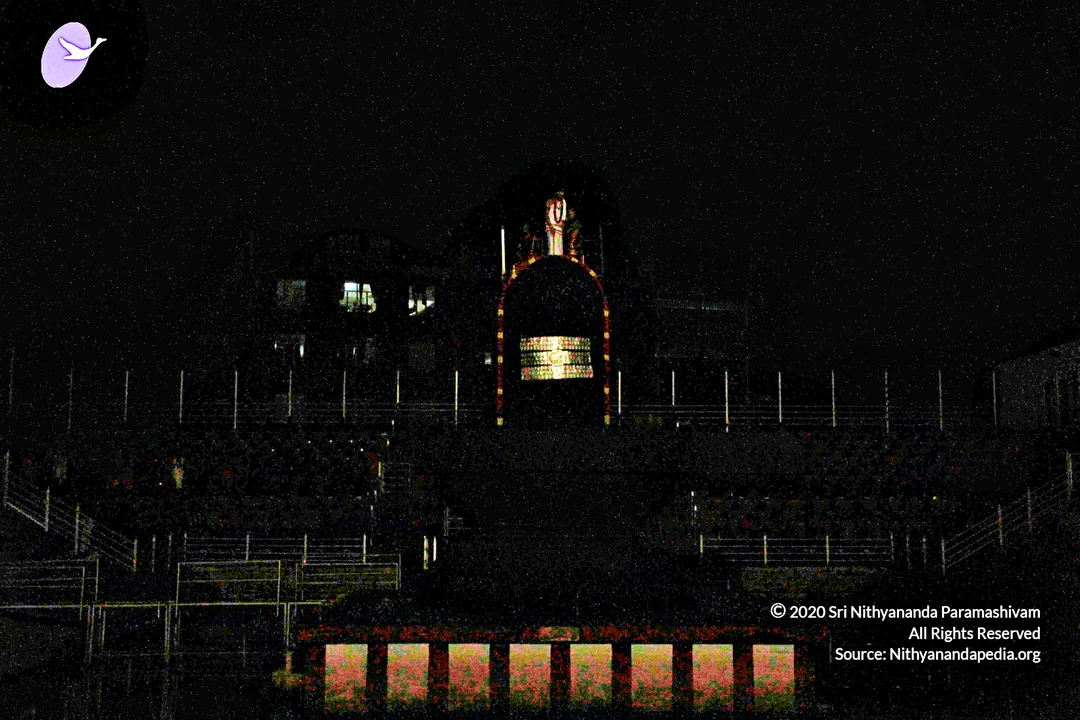
A night photograph of an illuminated outdoor stage or structure with an arched opening framed by red and gold lights. Inside the arch, a lit panel with patterned decoration is visible, and a small figure stands on top of the arch against a dark sky. Tiered steps or seating and metal railings fill the foreground in darkness, with a row of lit pink and red panels along the bottom edge. No clearly identifiable people are visible in the image, and the scene is largely dark and grainy.Night photograph of a large dark polished Shiva lingam with a gold-coloured yoni-style base and tiered stone pedestal, decorated with a garland of red and yellow flowers wrapped around it and a gold band with a round emblem on its front. Water appears to stream down the lingam's surface. Behind it, a metal staircase with railings rises to a platform where several people in light and saffron-toned clothing are gathered, one seated in white near the top, performing abhishekam. Terracotta pots with plants fill a stepped wall at right, and a pale building stands in the background.A night photograph of a large black Shiva lingam draped with a silver-and-gold patterned band, encircled by an arch of red and yellow flower garlands, set on a dark stone yoni base. Above it, on a raised platform, five men in red-and-gold ceremonial garments and white forehead markings perform abhishekam, one pouring liquid from a conch-shaped vessel. Floodlit building facades and railings form the backdrop.Night photograph of a large black Shivalinga, a tall rounded lingam with a silver-patterned band and a circular silver disc across its middle, decorated with a red and yellow marigold garland arch. Water streams down its surface. Above it on a raised platform, four priests in reddish-brown and orange ritual clothing and sacred threads perform abhishekam, one holding a vessel and pouring. The lingam sits on a large dark yoni-pitha base. A building with lit windows stands behind. The scene is a Shivalinga abhishekam ritual, with four visible priests.Night photograph of a large black stone Shivalingam being bathed with liquid that streams down its surface, with a silver yoni-patta-style band and a ring of red and yellow marigold garlands around its base. Four priests stand on a raised platform behind and above the lingam, some in white or saffron-toned ritual clothes, one holding a conch and others pouring or assisting the abhishekam. The scene is an outdoor Rudrabhishekam, with a dark building and railing in the background.Night photograph of a large dark black stone Shivalingam on a square pedestal, being bathed with liquid that streams down its surface. The lingam is wrapped with silver-and-gold patterned bands and decorated with a red and yellow marigold garland around its base. Four priests in brown-and-rust ritual clothing and white head cloths stand on a raised wooden platform above it, pouring from a vessel, consistent with a rudrabhishekam abhishekam. A dark building with scaffolding and a metal railing forms the background. No person is clearly identifiable as a person.

2-Morning Satsang and Paduka Puja
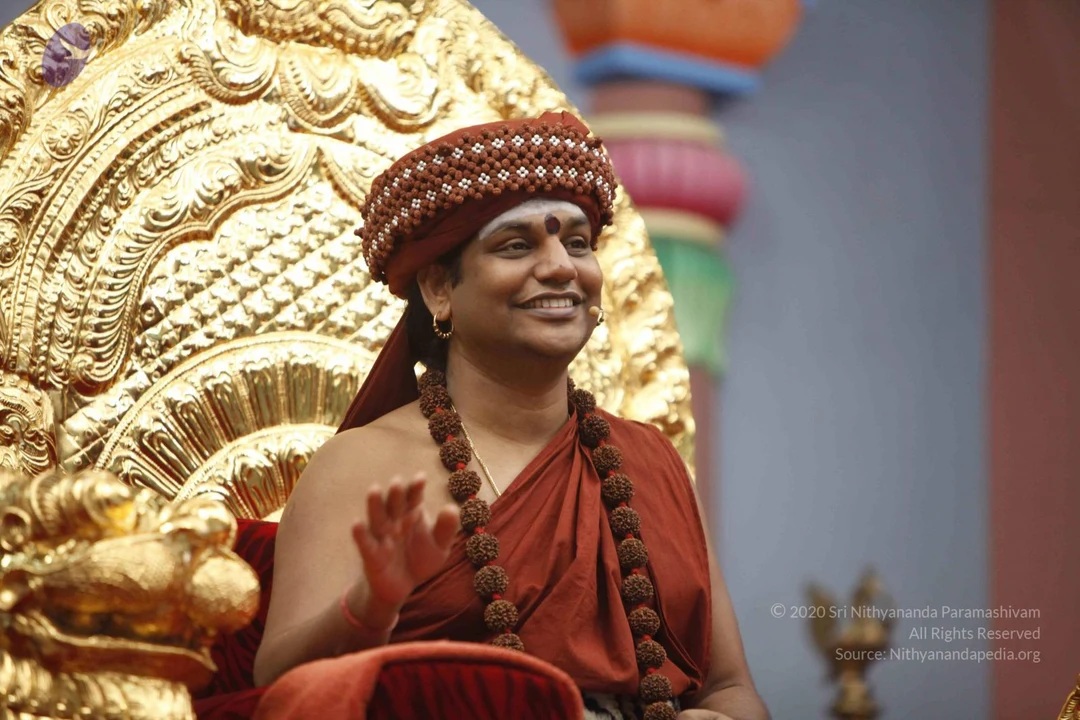
3 photosSource gallery
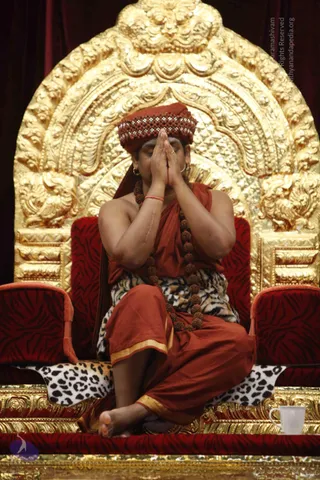
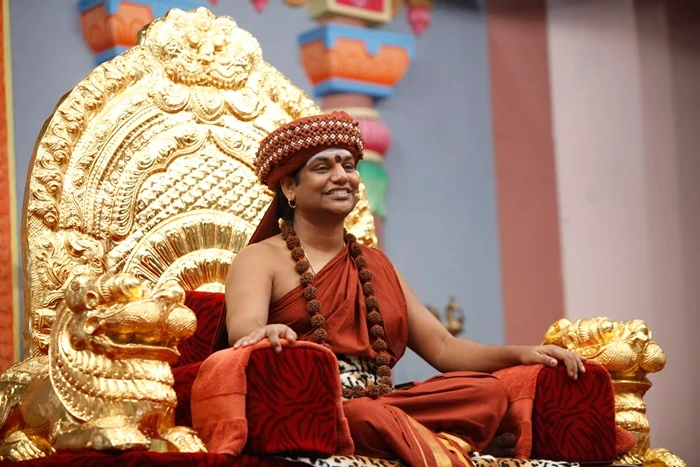
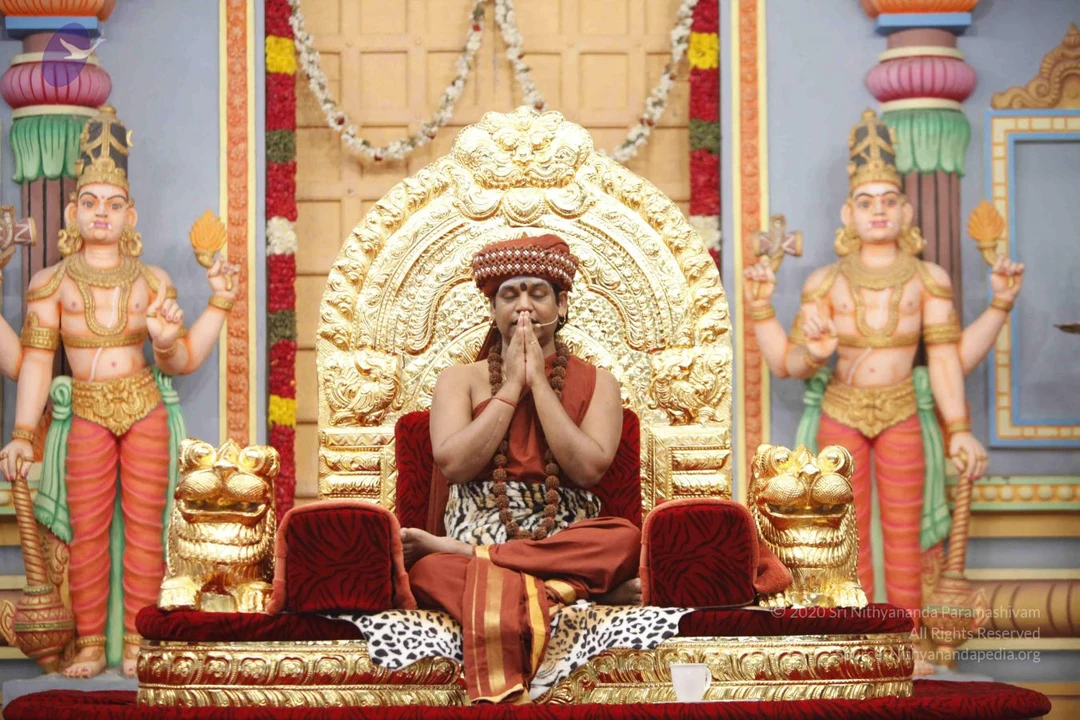
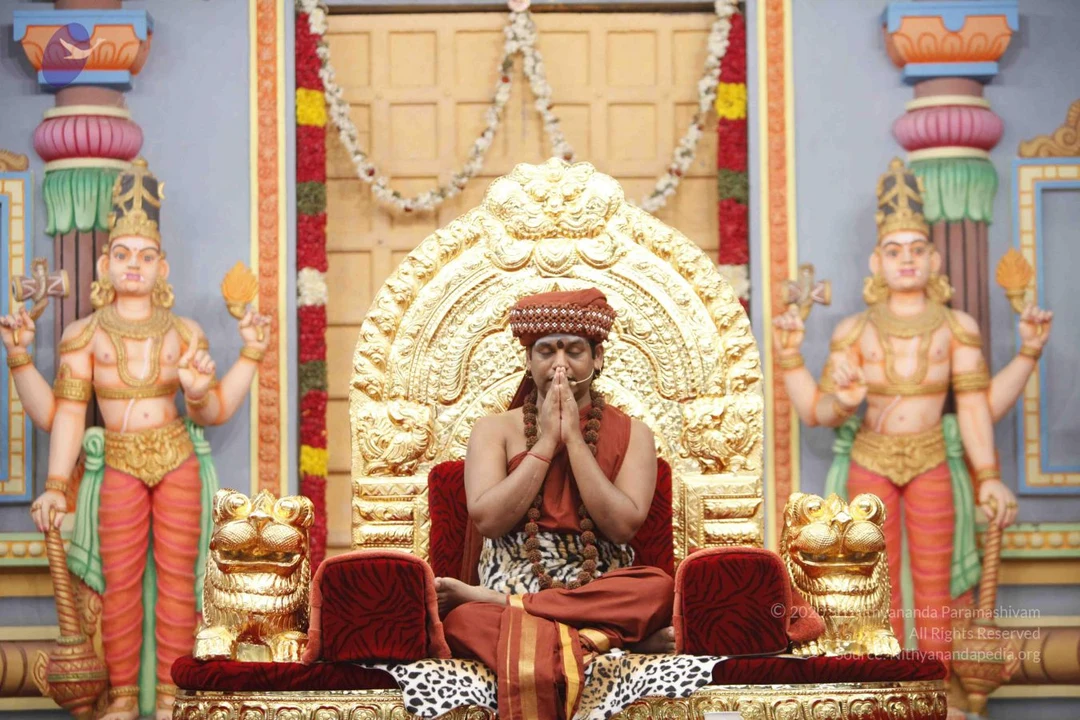
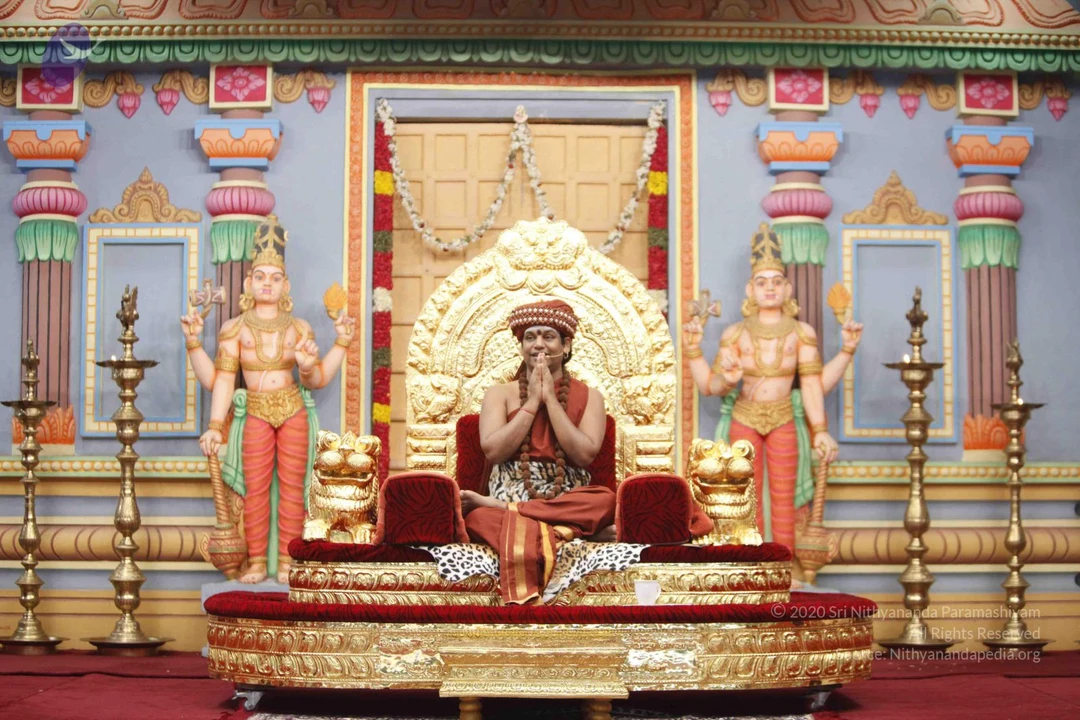
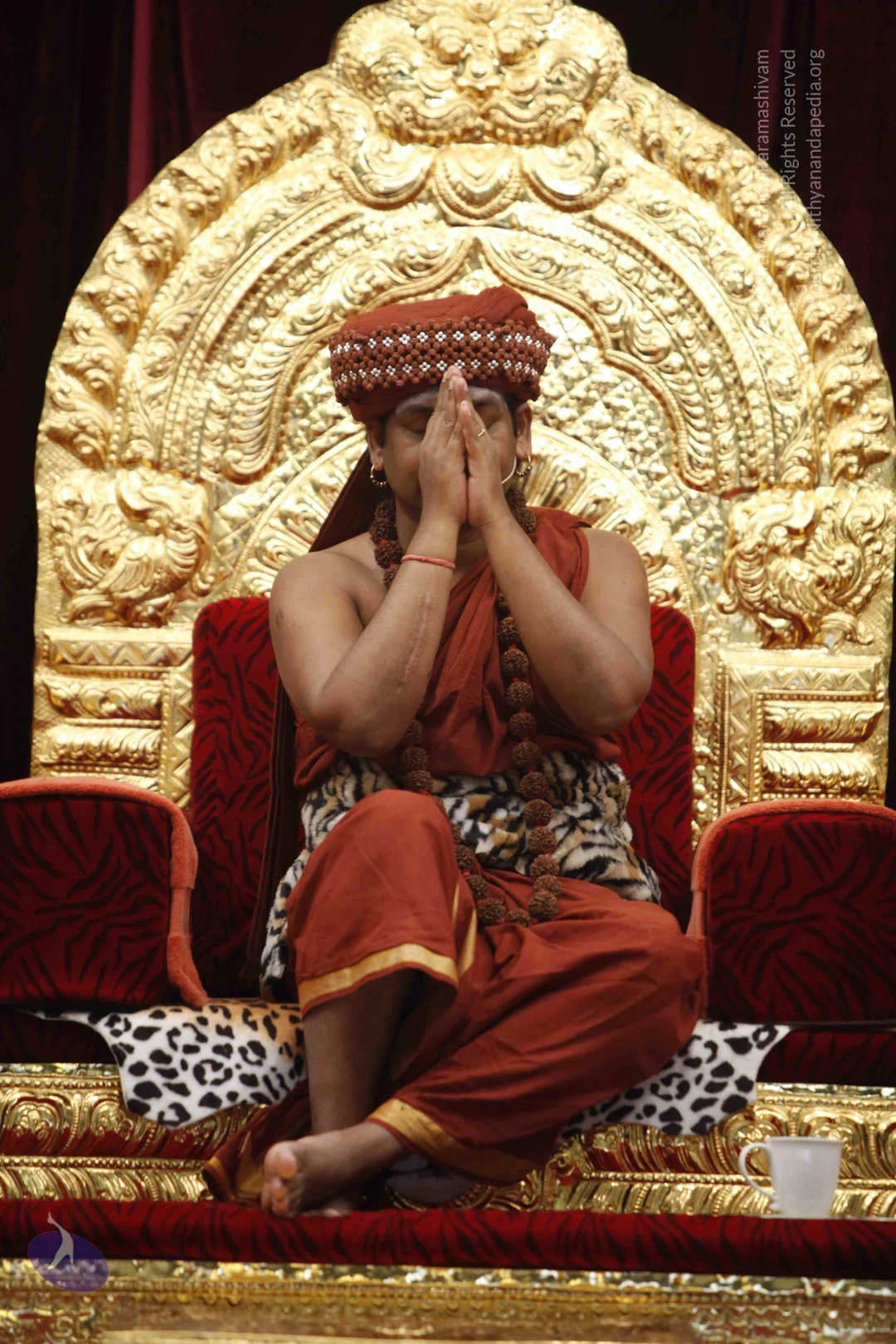
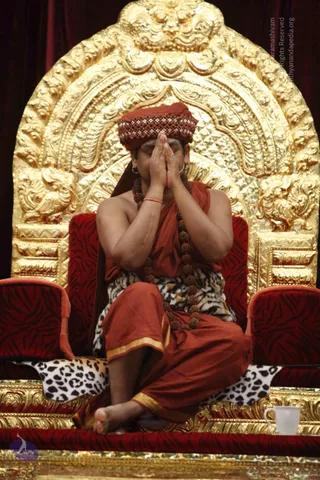
A framed portrait labelled "PARAMAHAMSA NITHYANANDA" sits on a golden throne-like seat with a tiger-skin cushion, decorated with a flower-garland arch, hanging oil lamps and a jasmine-strewn seat. The portrait shows a smiling man in an orange turban and orange robes with a red forehead mark. Three people sit in front of the throne in prayer: a central figure in white dhoti with gold border and bare back, and two women in orange and rust-red saris on either side. Marigold and white garlands frame the shrine.A seated man in a rust-orange turban wrapped with rudraksha beads and white beads, and rust-orange robes with a gold border, sits in a red-and-black zebra-striped chair before an ornate gold arched throne backdrop. His eyes are closed and his palms are pressed together in anjali mudra at his face. Rudraksha mala beads hang across his chest and a leopard-print cloth lies on the chair. A white cup sits on the gold dais at lower right. A candidate matching the page's Swamiji reference shows a turban, rudraksha malas and saffron-orange robes, so this is a probable match and the figure is present in person.A seated figure in an ornate golden throne with a carved arched back presses palms together in anjali mudra with eyes closed. He wears a rust-orange rudraksha turban, a saffron-orange shawl and dhoti with gold borders, a long rudraksha mala, a tiger-striped cloth at the waist, and a small gold earring. The red-and-black tiger-print throne cushions and a white cup sit at the base. Appearance-based candidate: Swamiji (probable), seated on the golden peetha in ceremonial saffron attire with rudraksha malas and a turban.

June 02 2014

1 photoView all
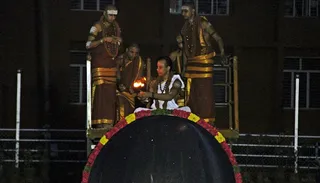
Night photograph of a ritual on a raised platform in front of a dark building with a metal railing. Four men in saffron-orange and gold-bordered dhotis with rudraksha malas stand and sit around a central figure. The central seated man wears white, is bare-chested with an upper body wrap, and holds a lit oil lamp or fire in his hands. Behind him stand men in orange dhotis, one with a white headband. Below the platform, a large dark dome-shaped object is ringed with a garland of red and yellow flowers.