Skip to content
Tuesday

2 June 2015

Nithyananda Poornima - Awaken Your Third Eye

Dated photos
129
Source pages
1
Media
2
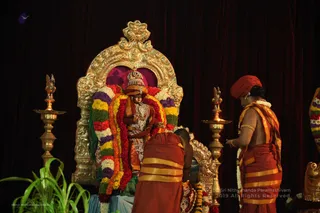
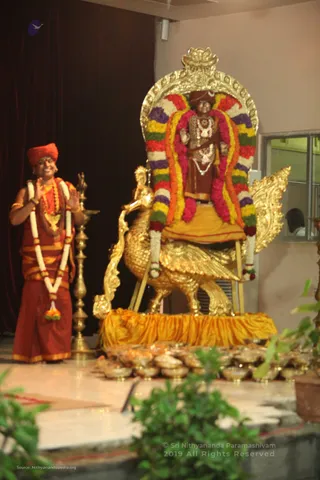
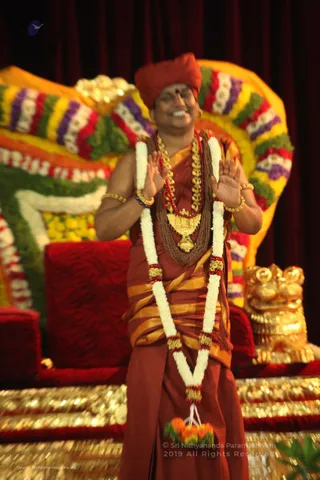
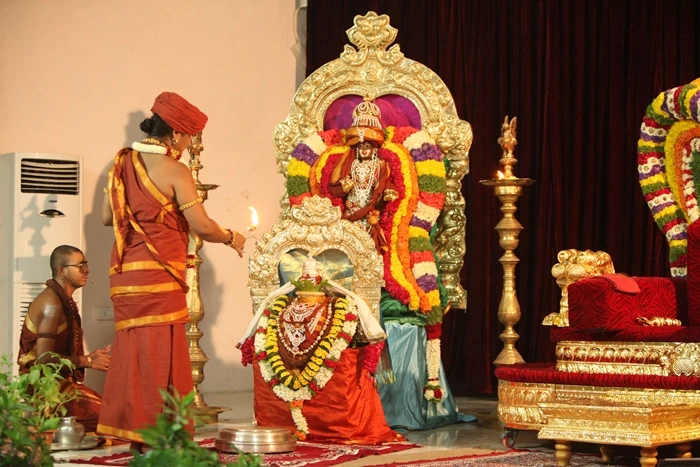
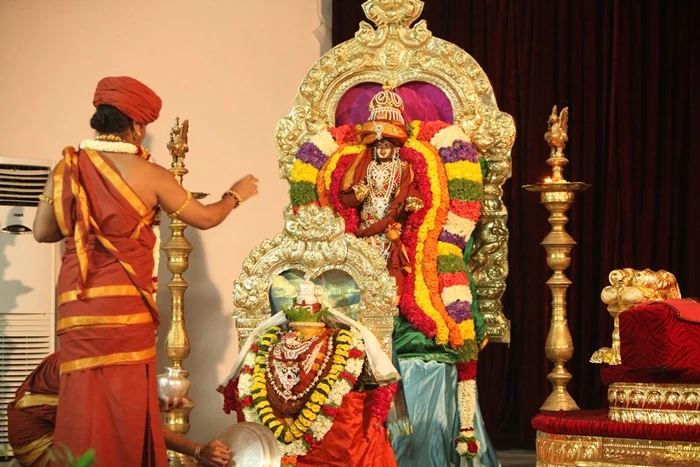
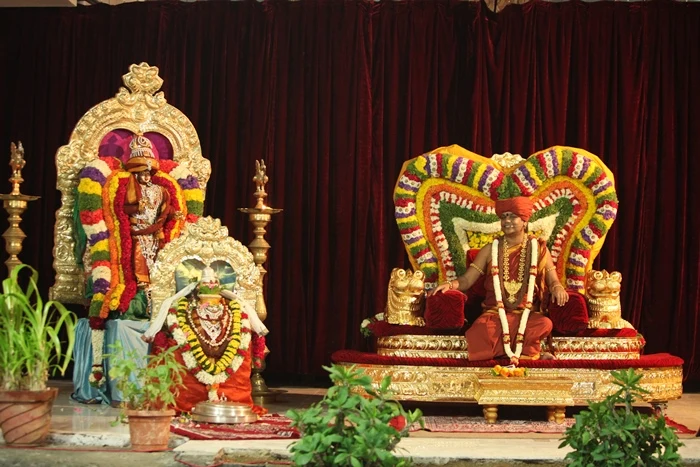
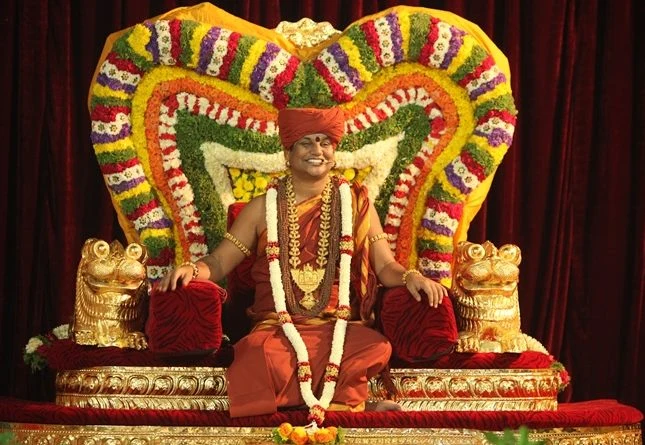
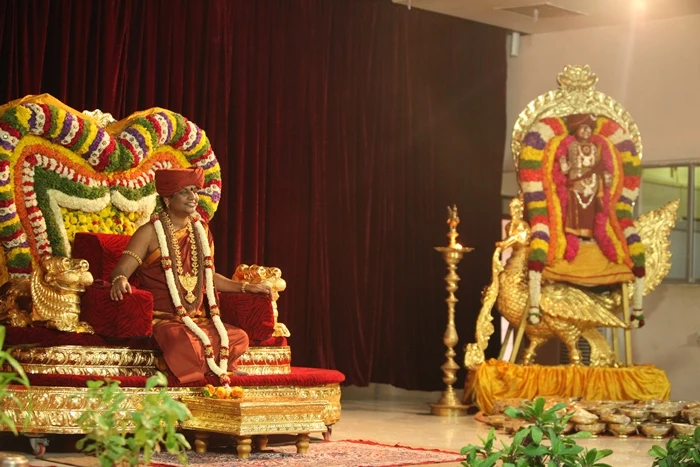
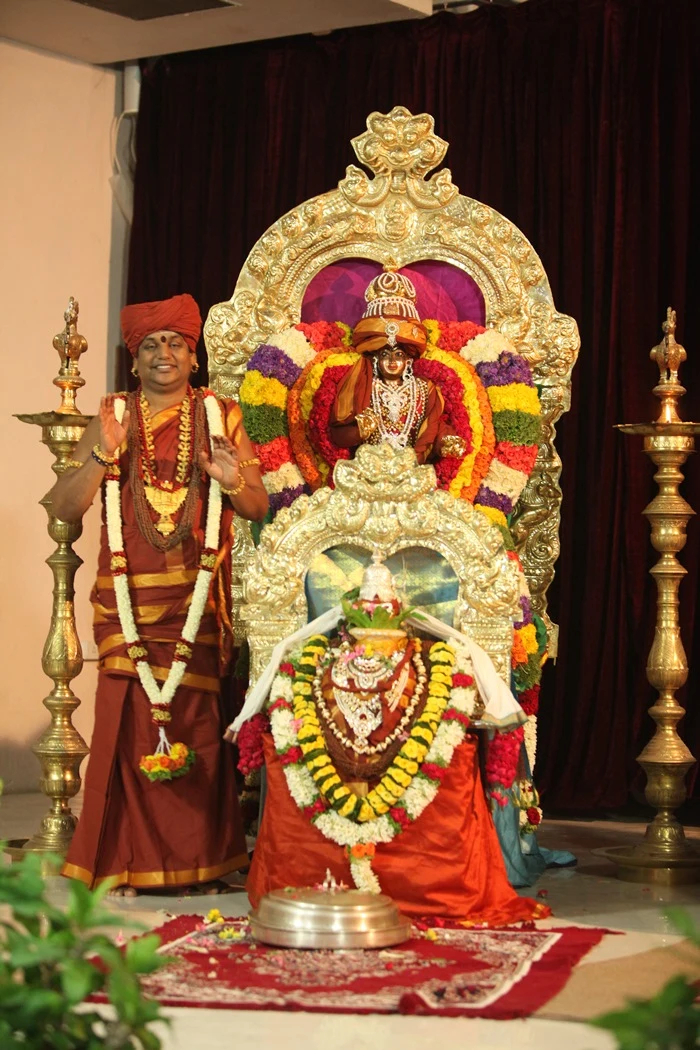
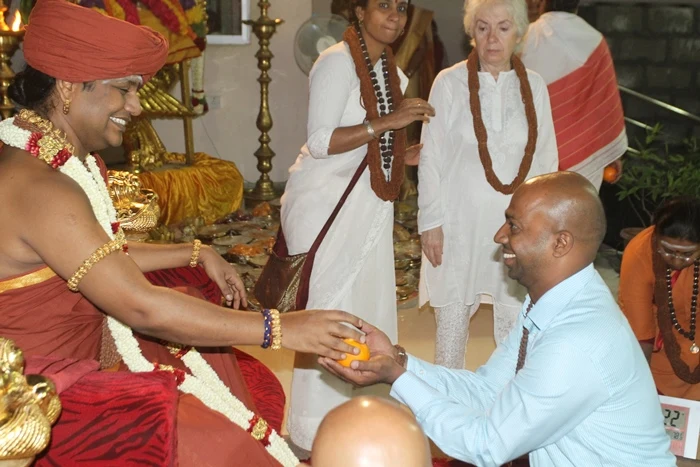
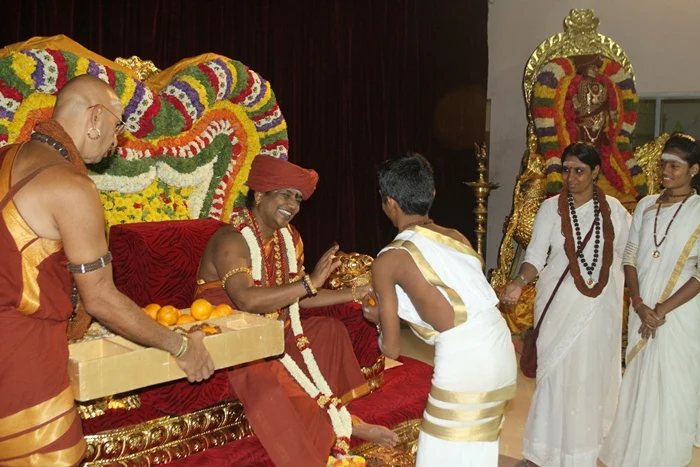
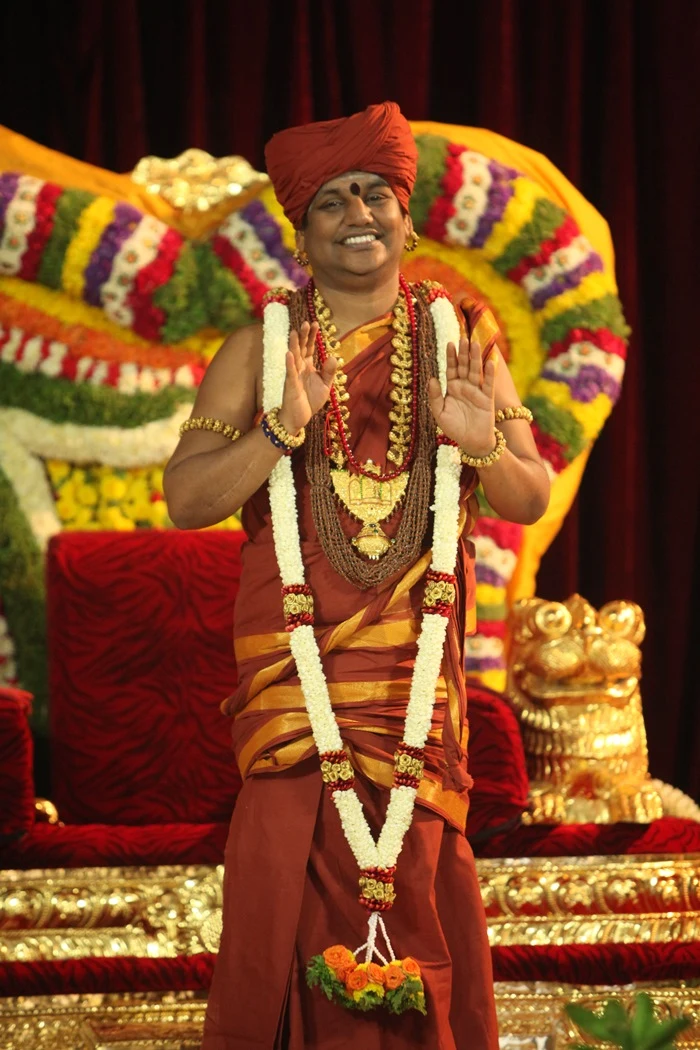
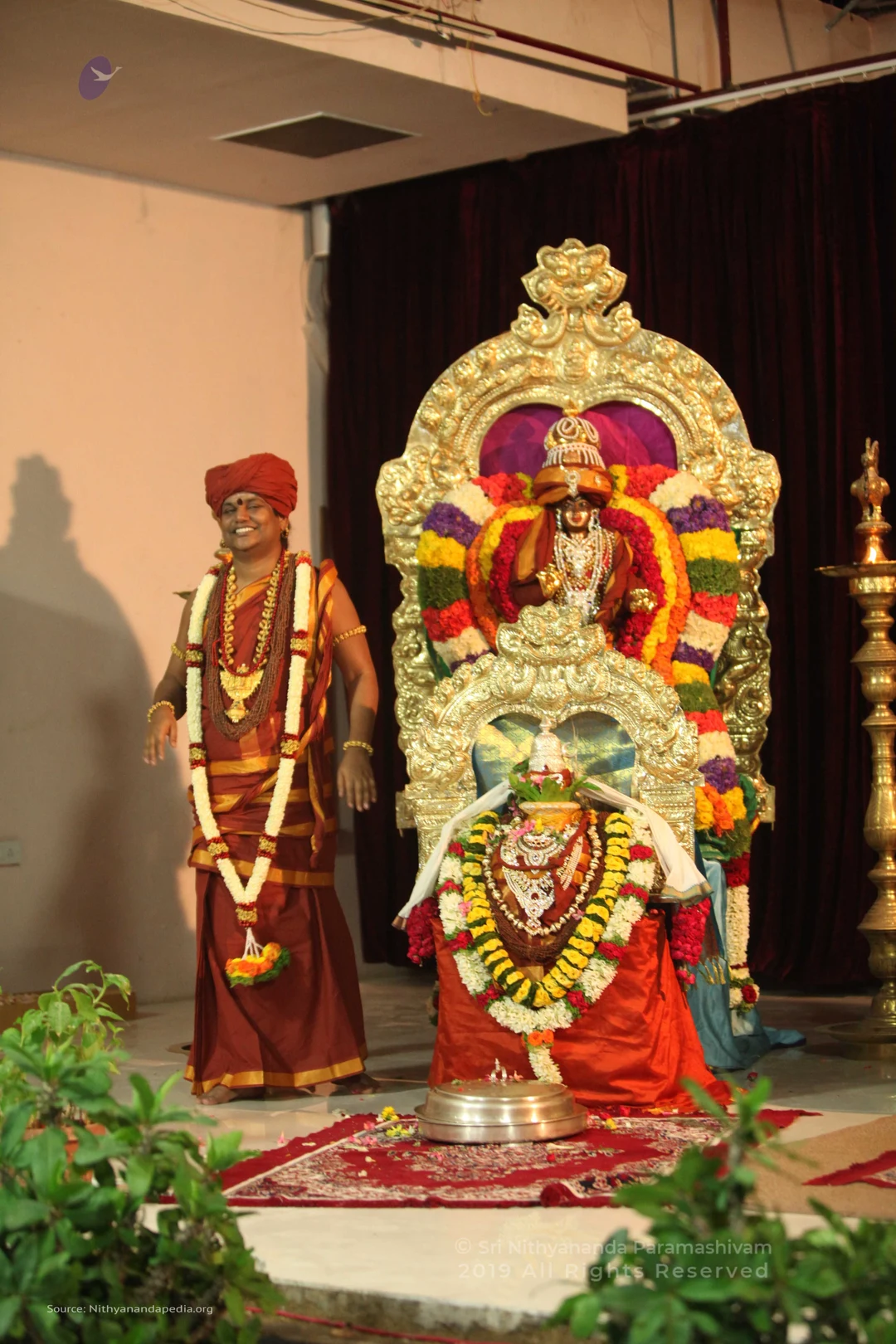
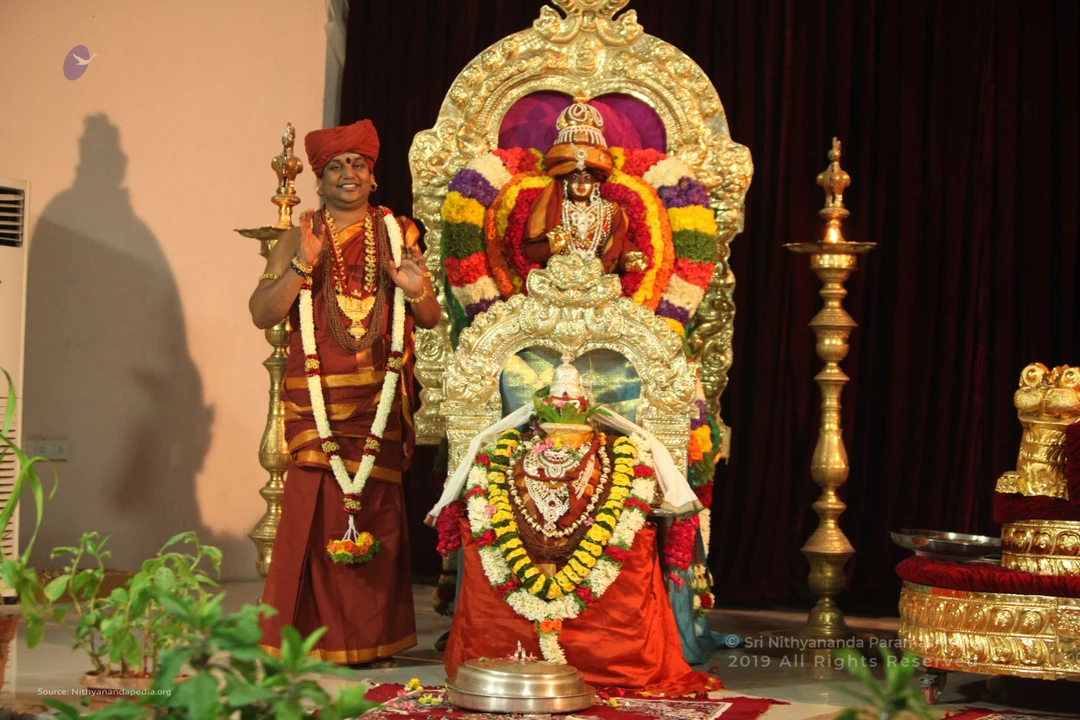
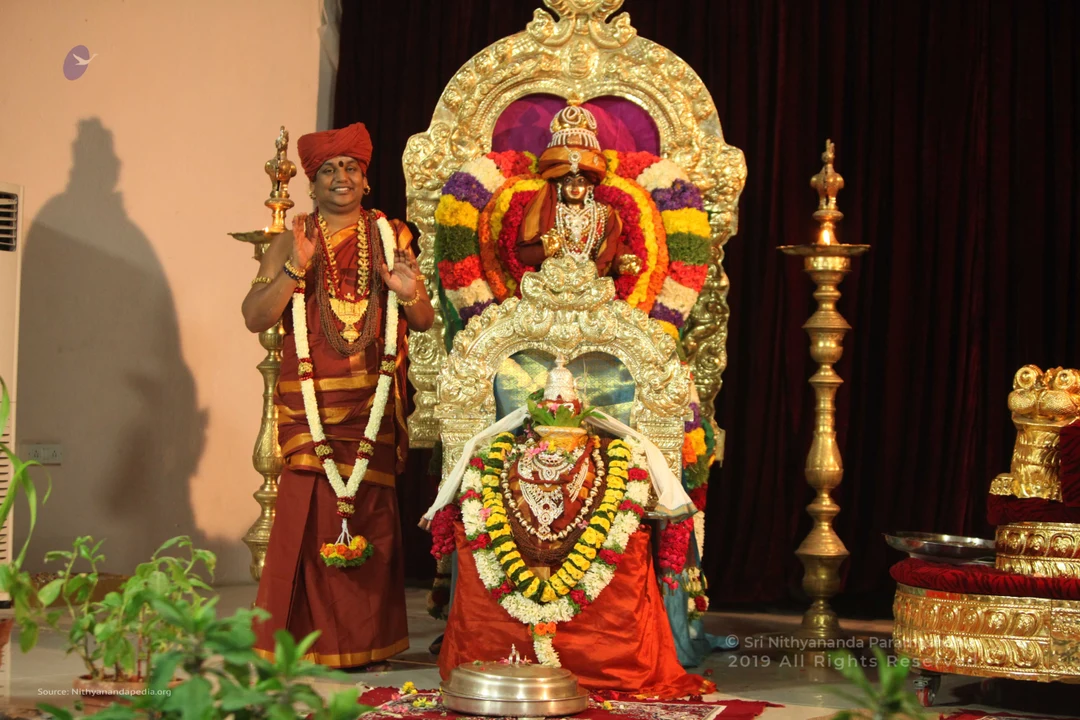
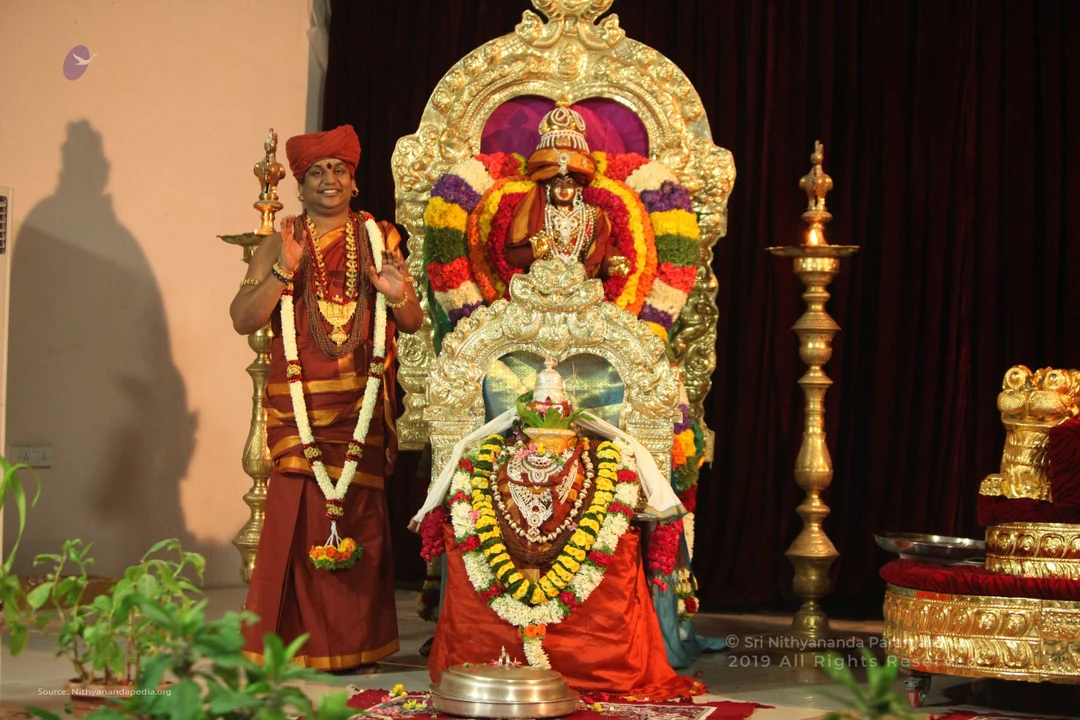
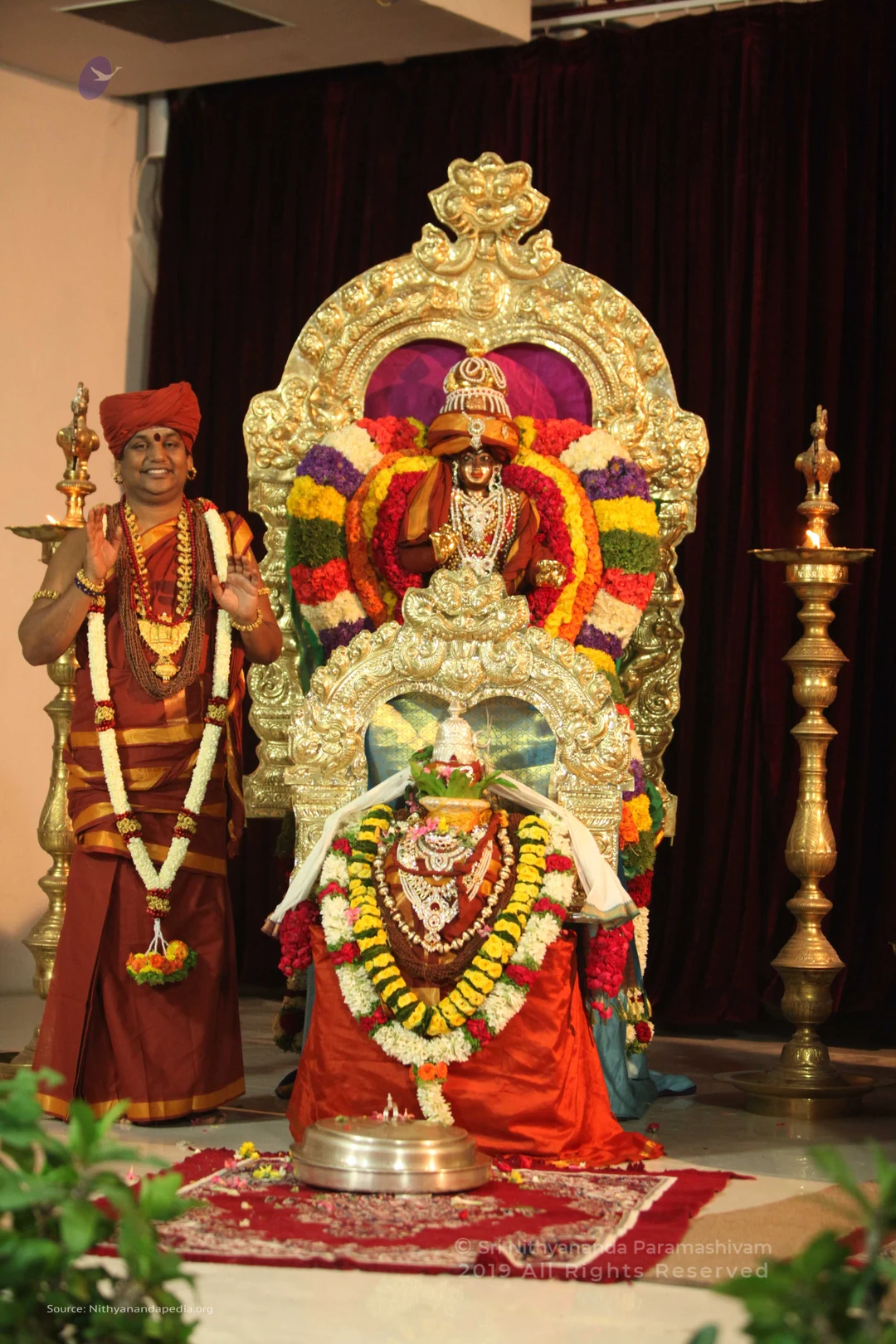
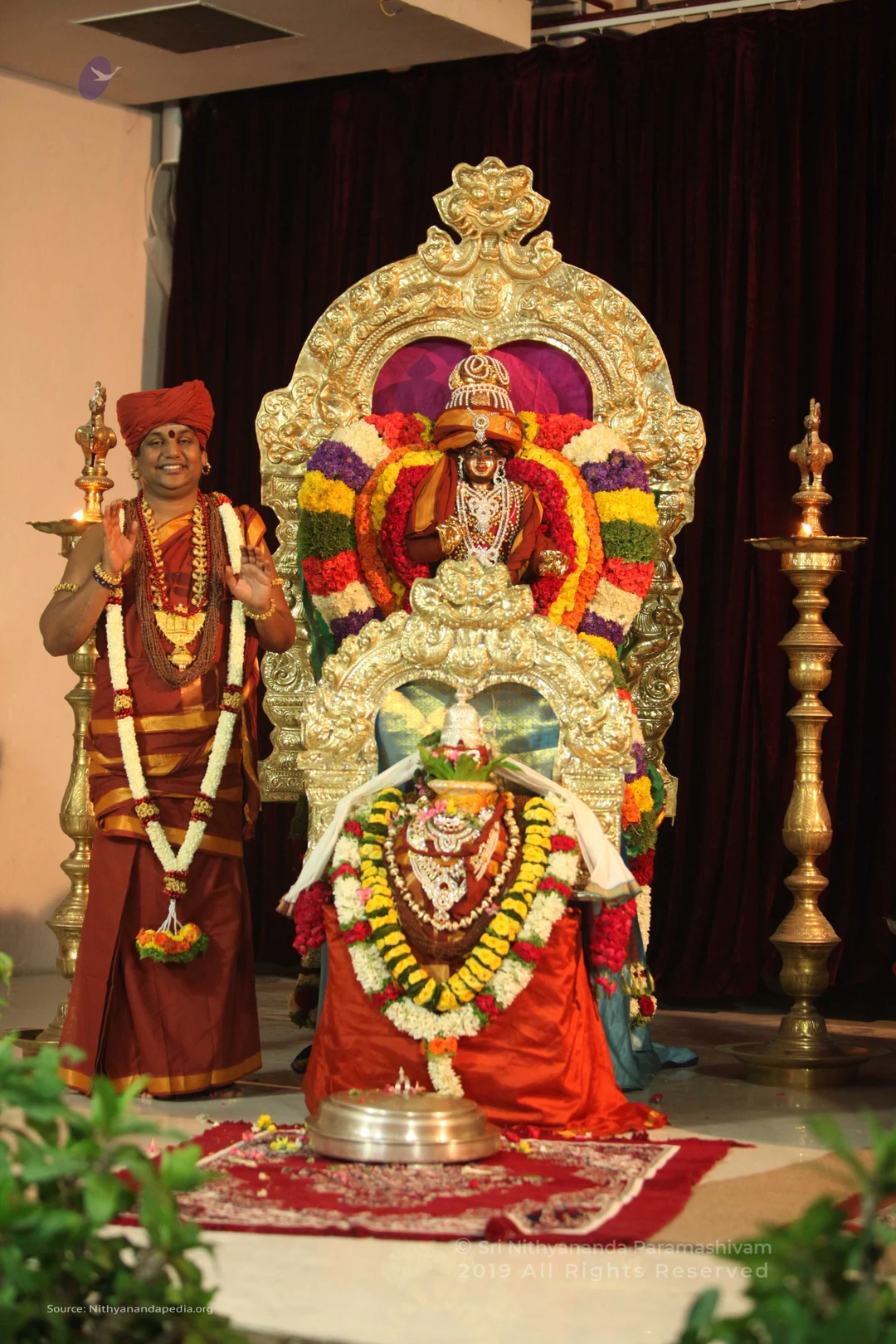
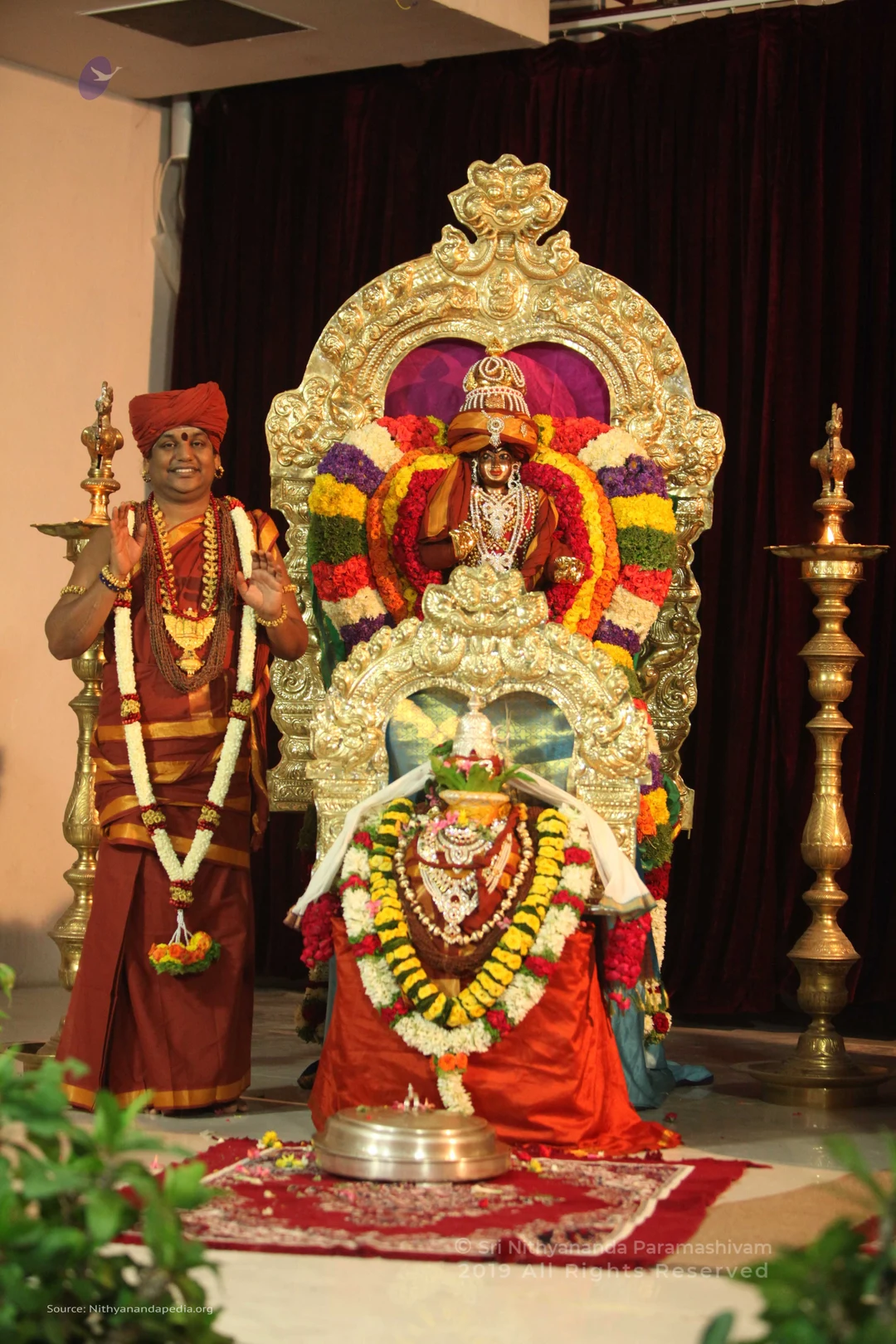
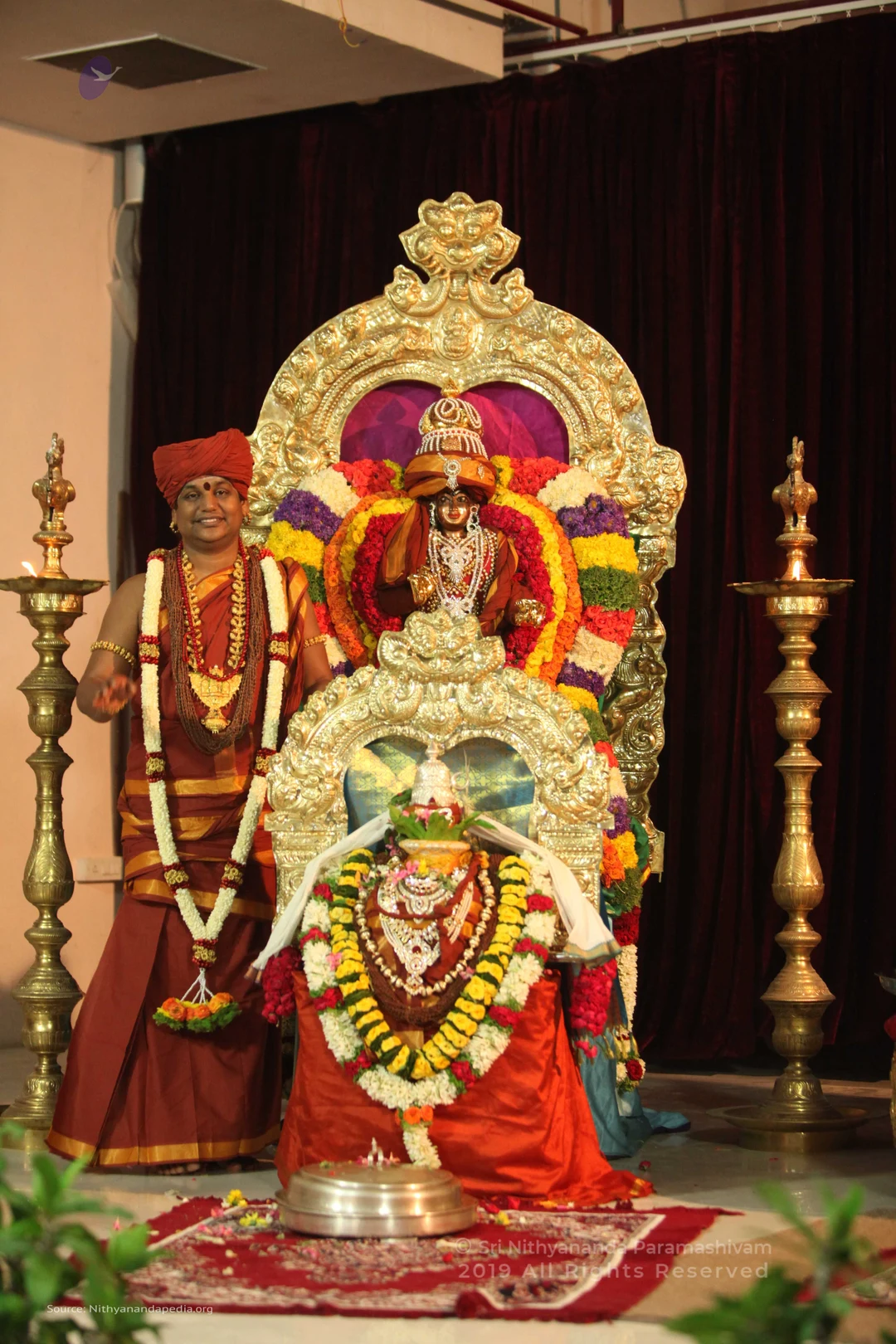
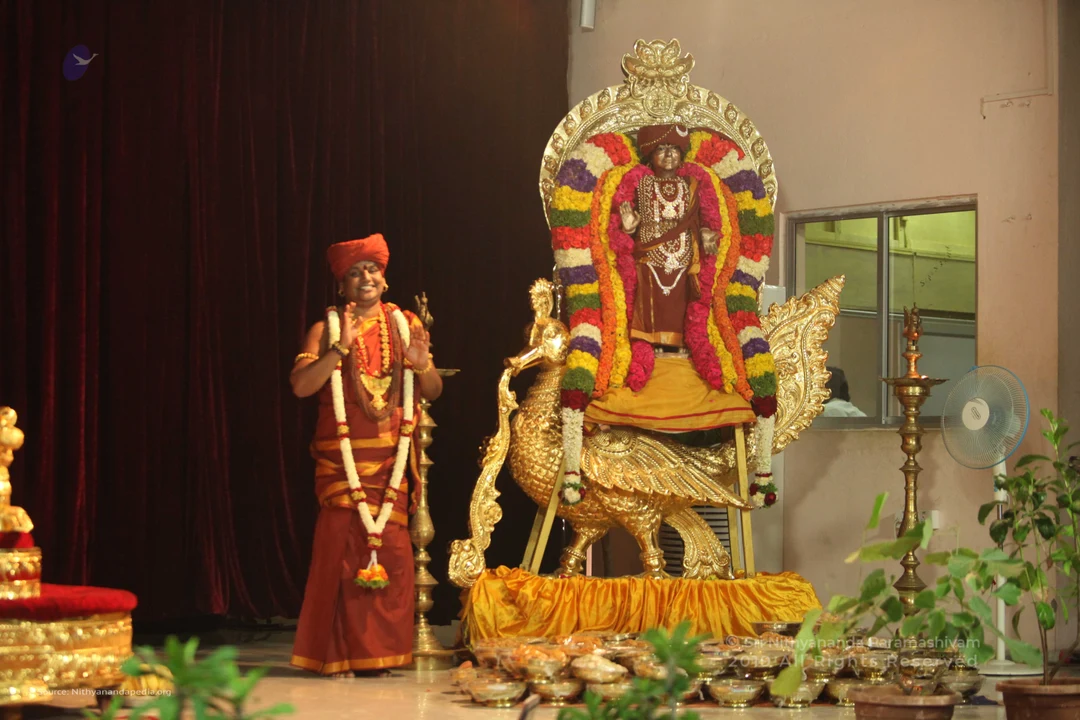
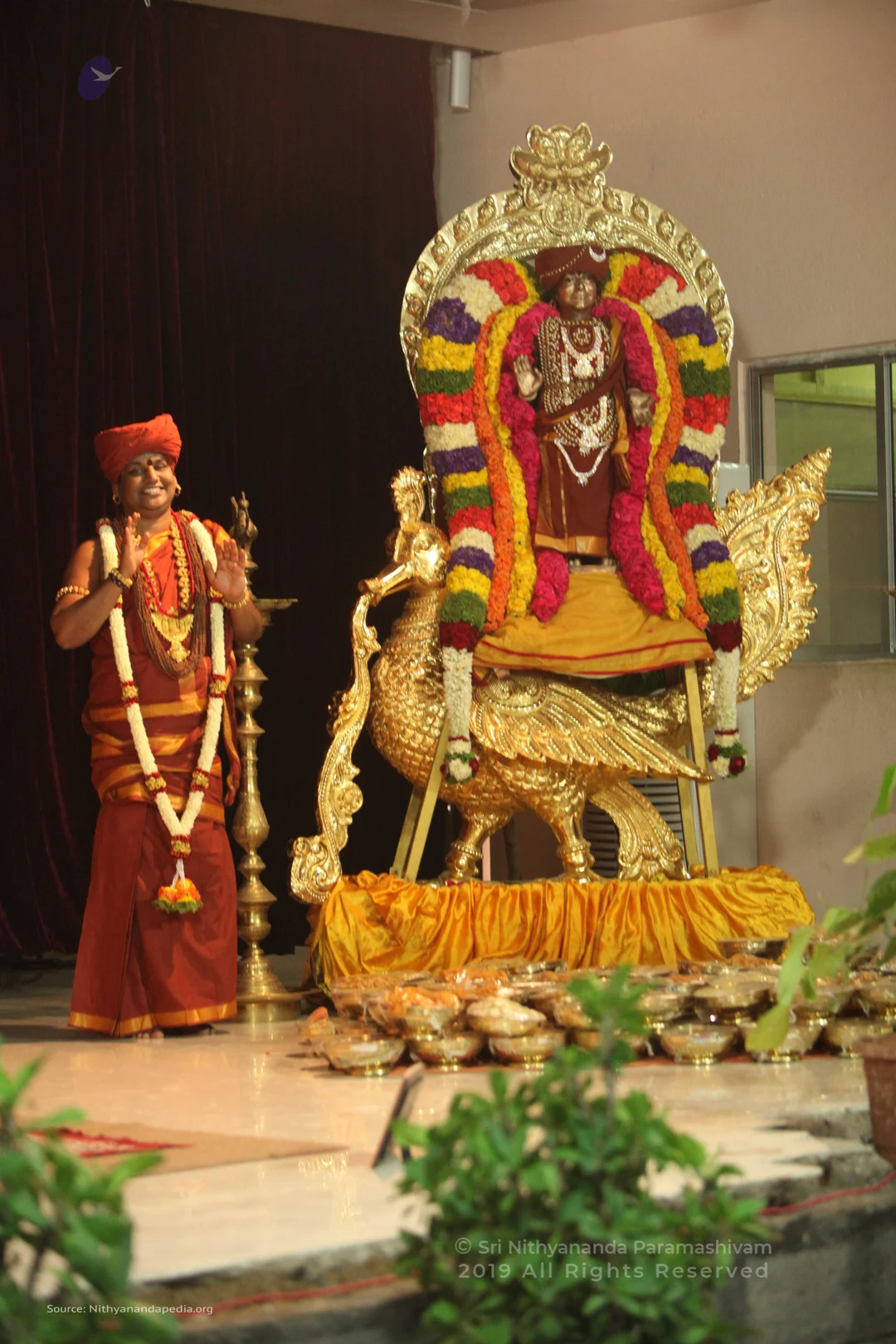
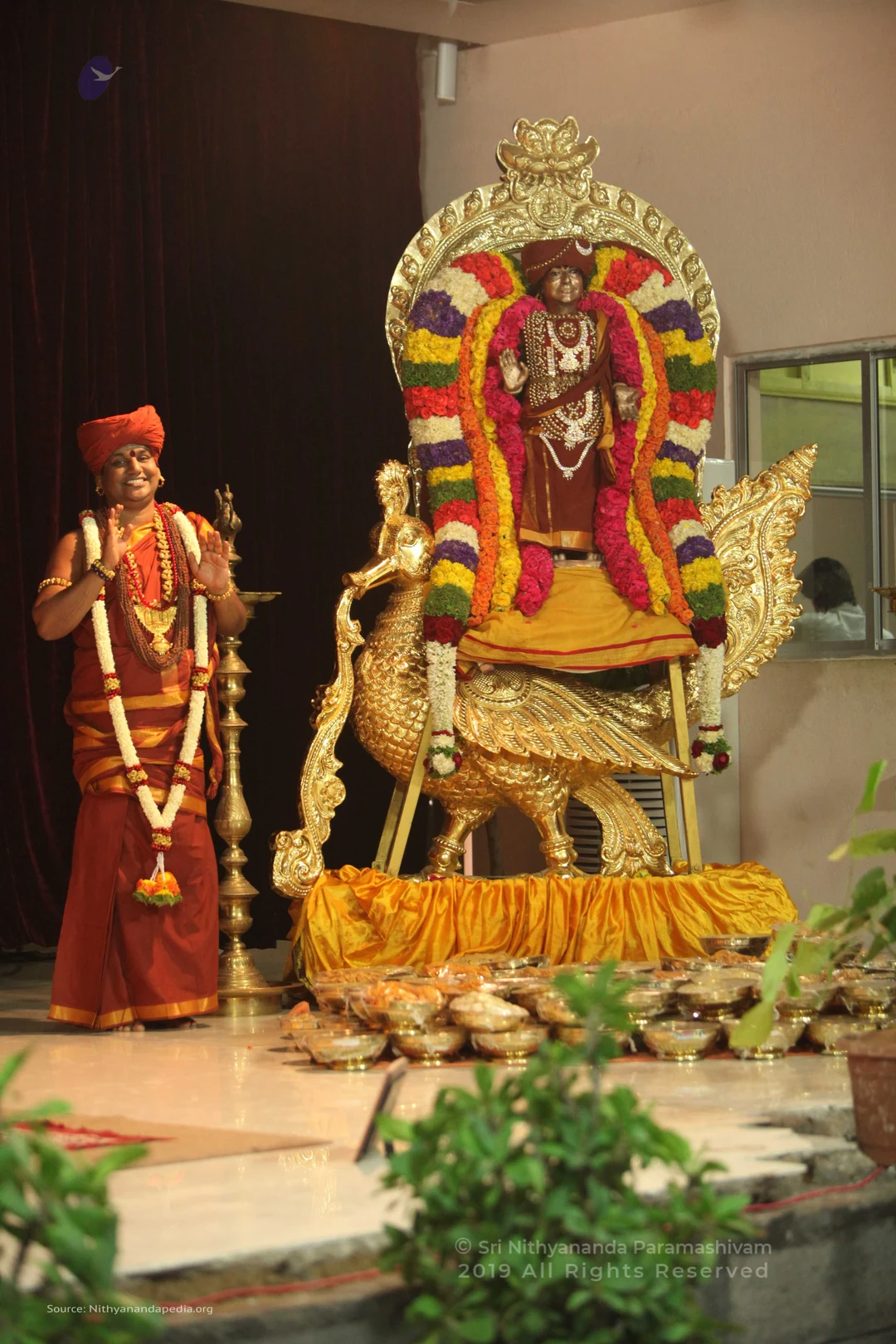
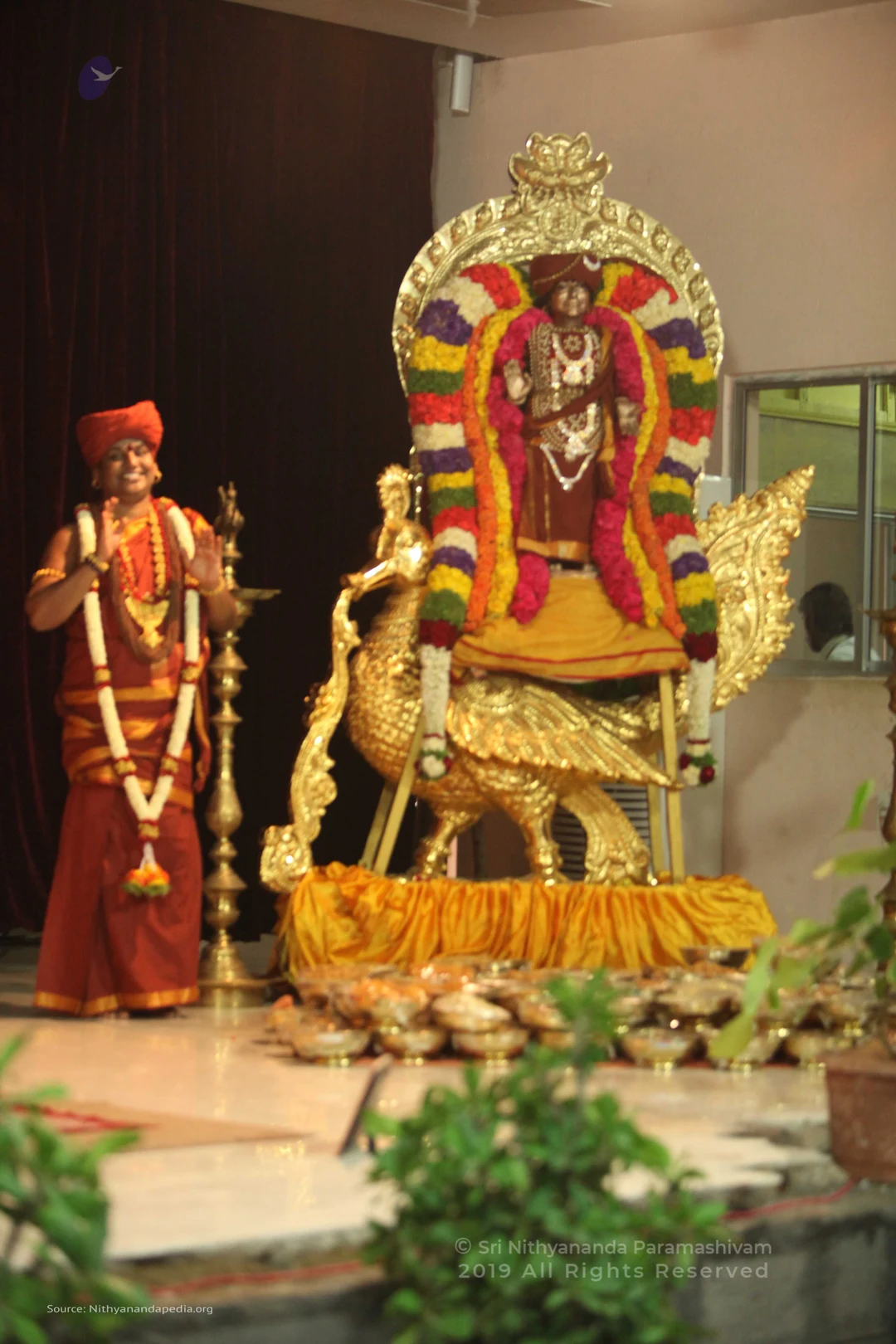
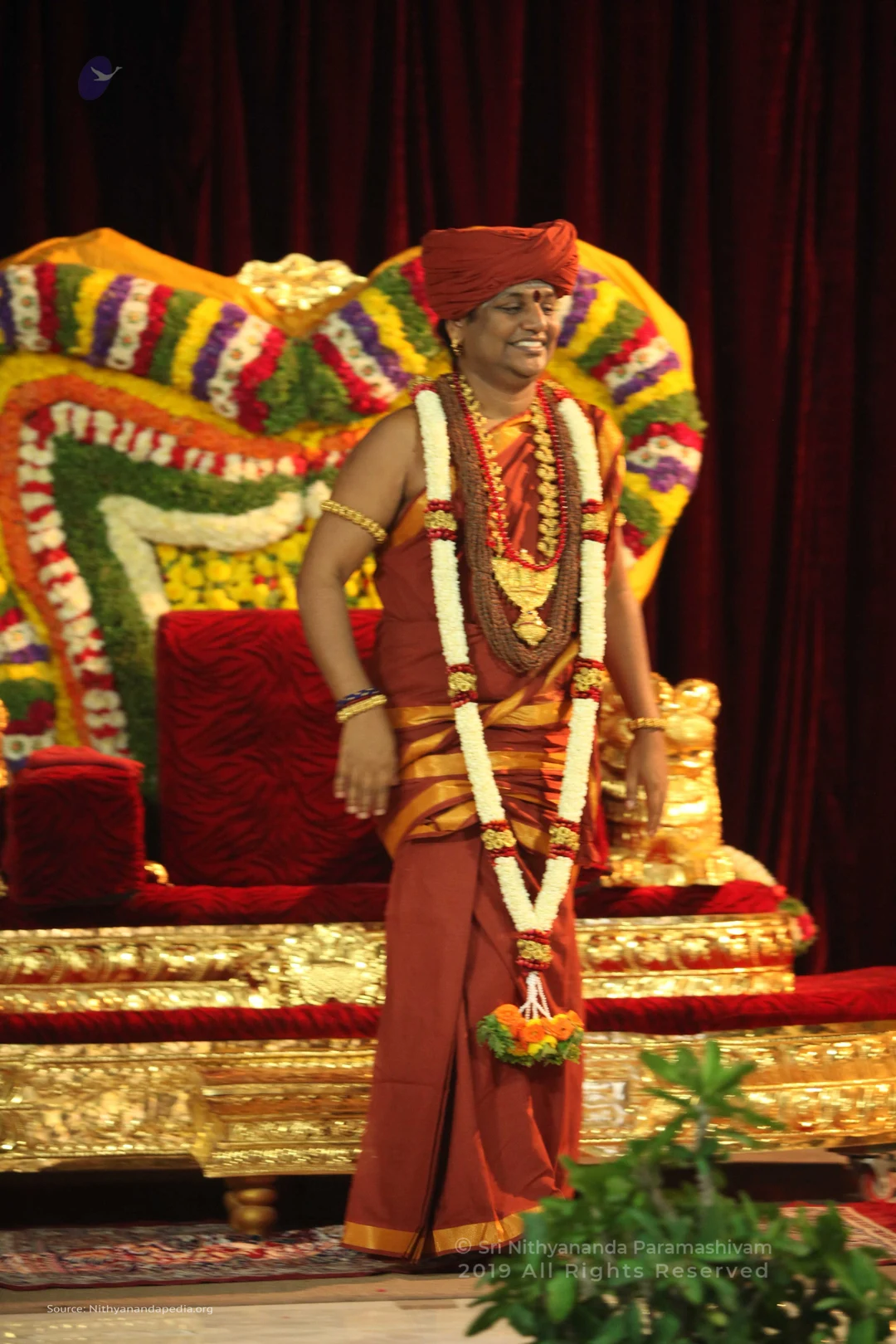
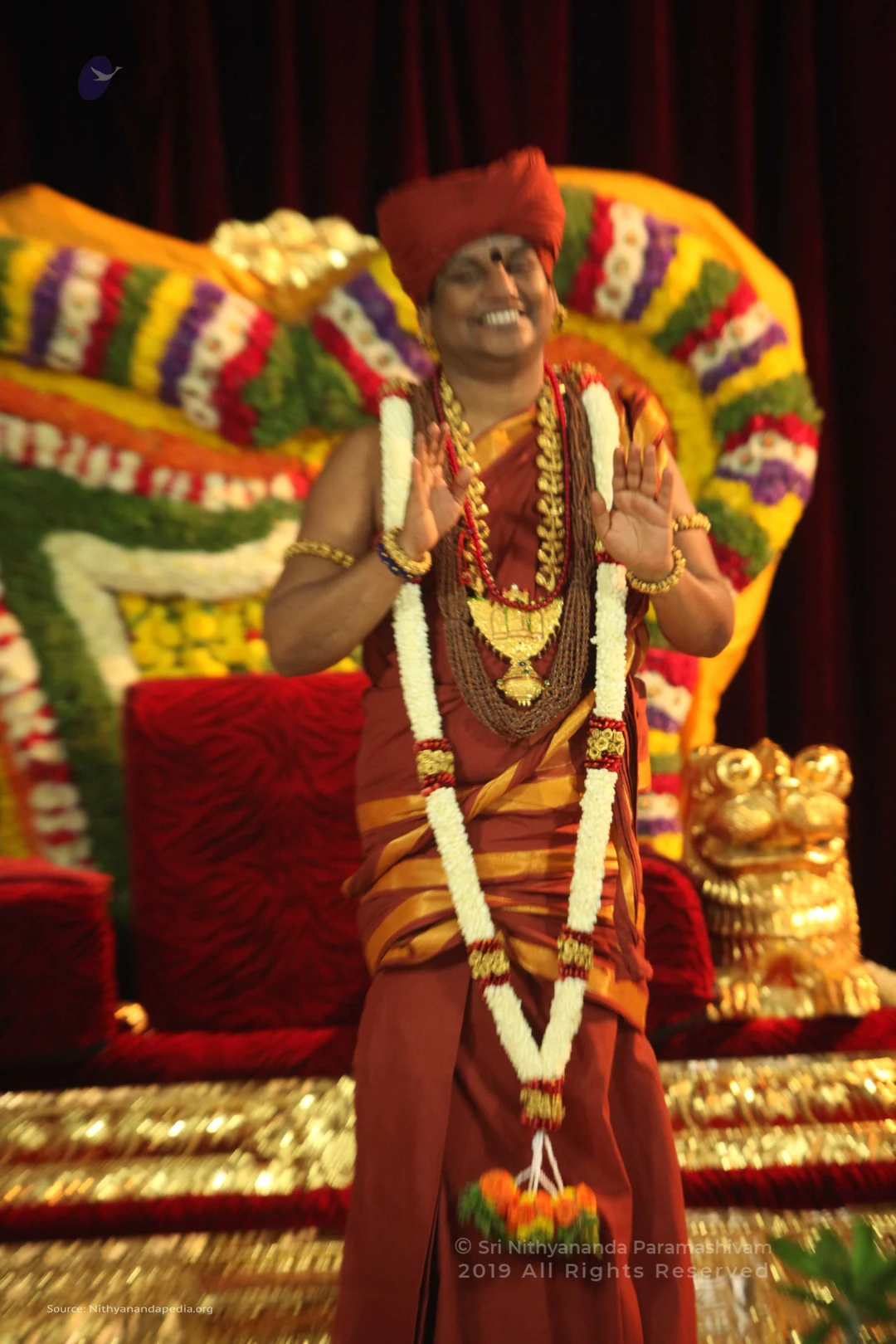
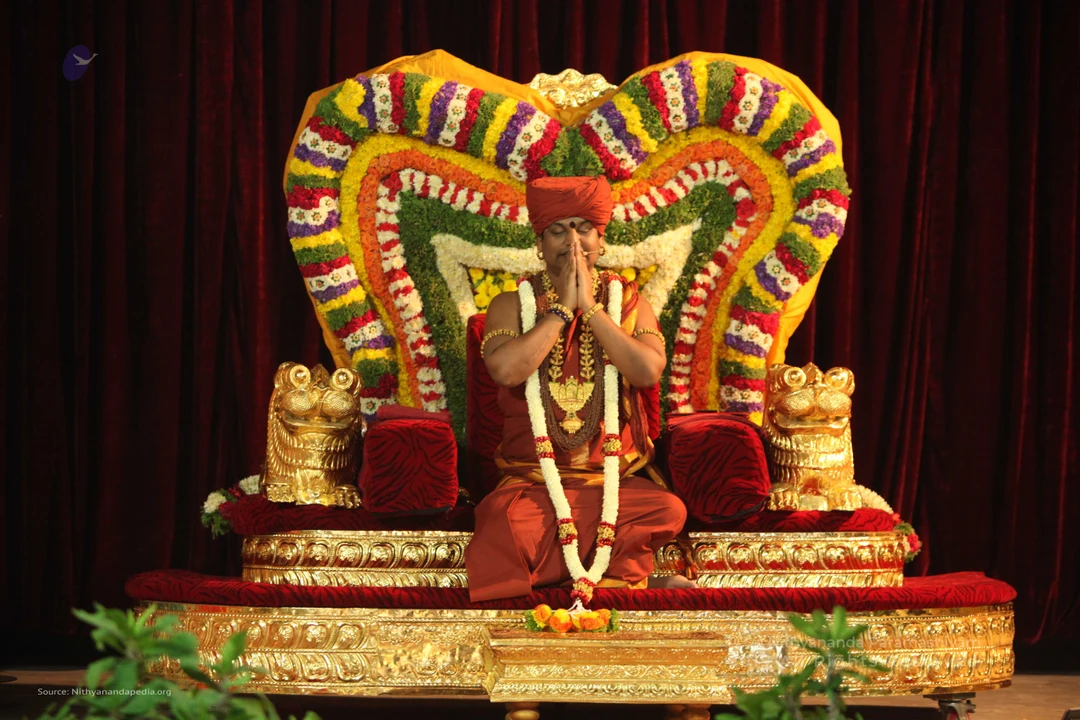
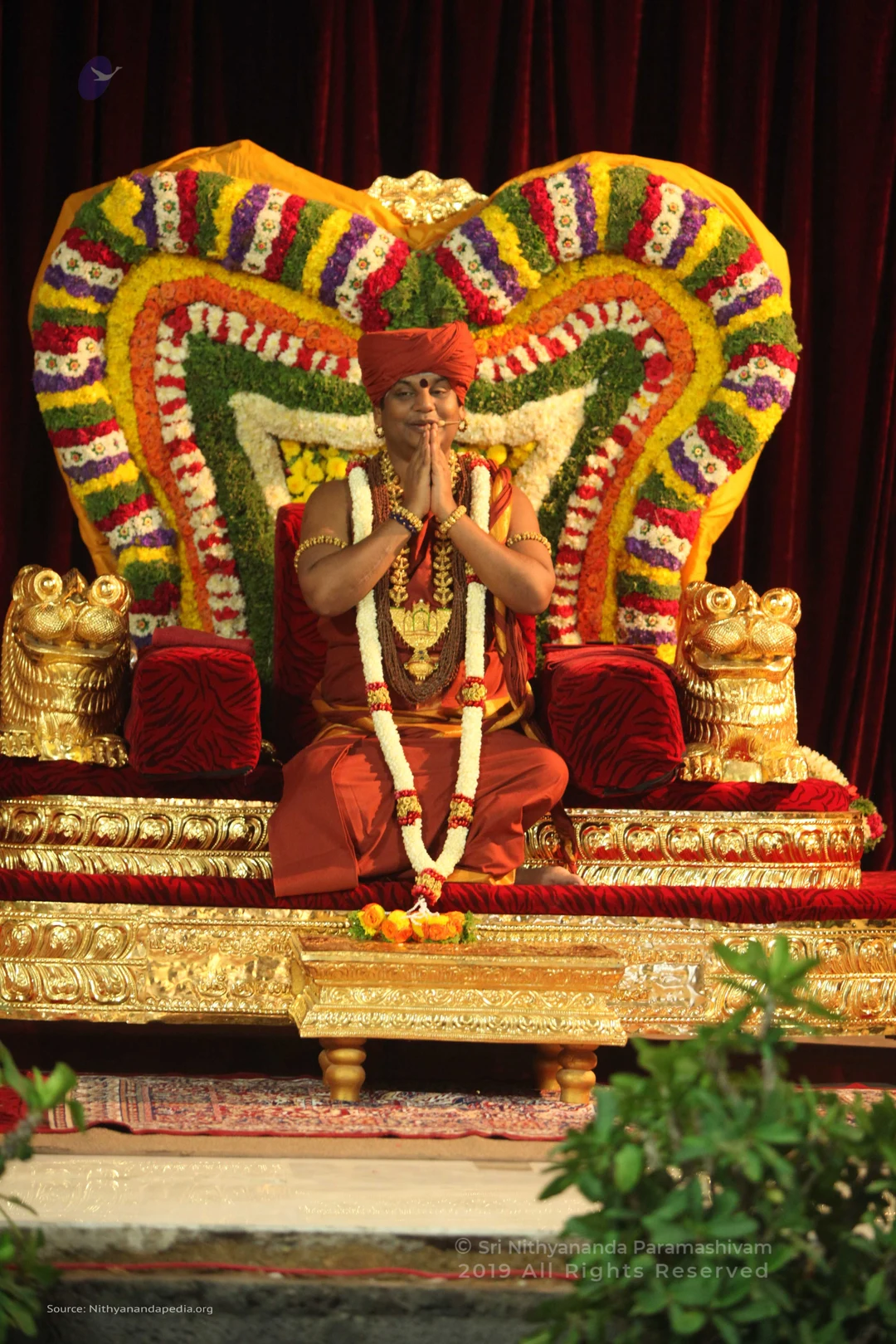
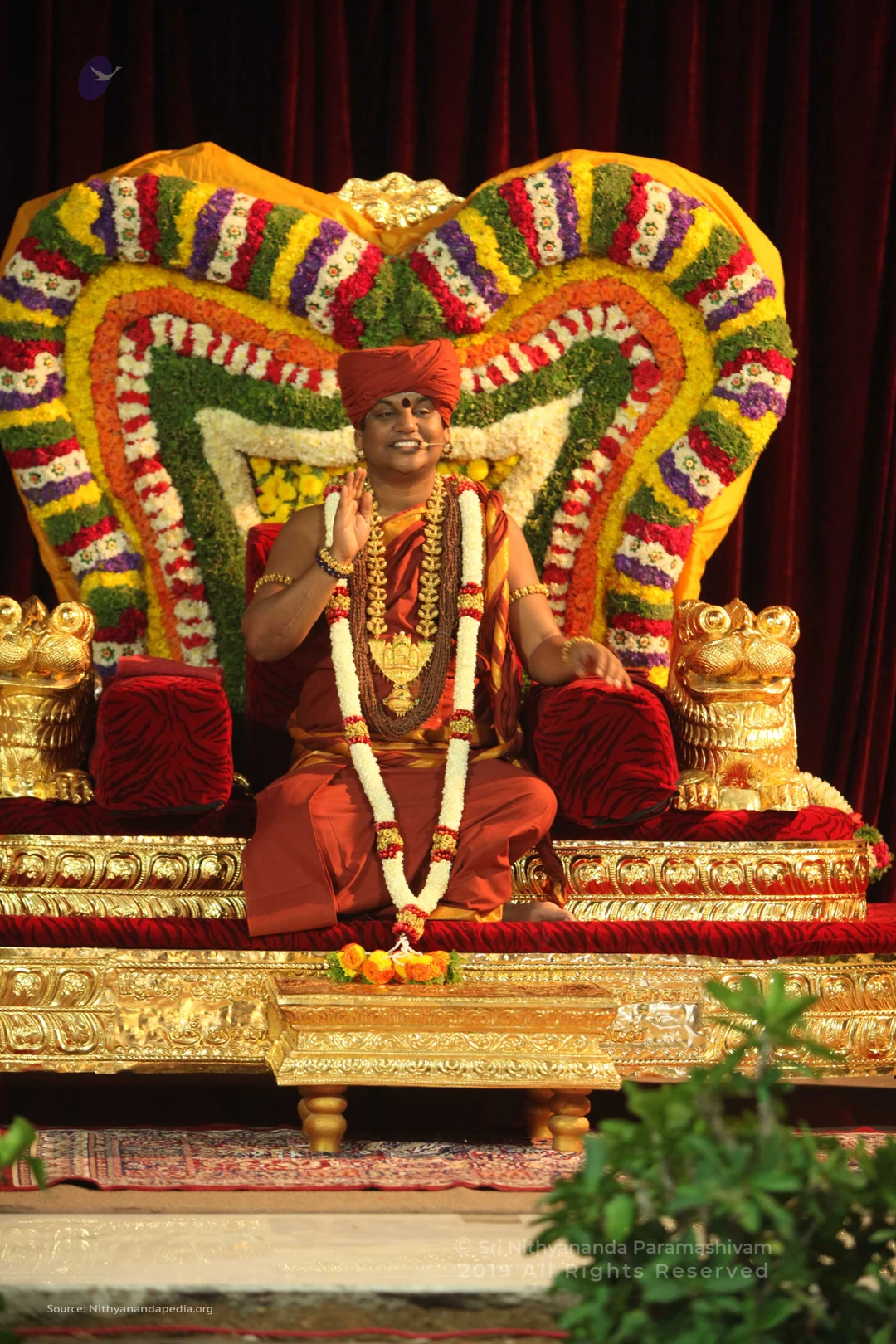
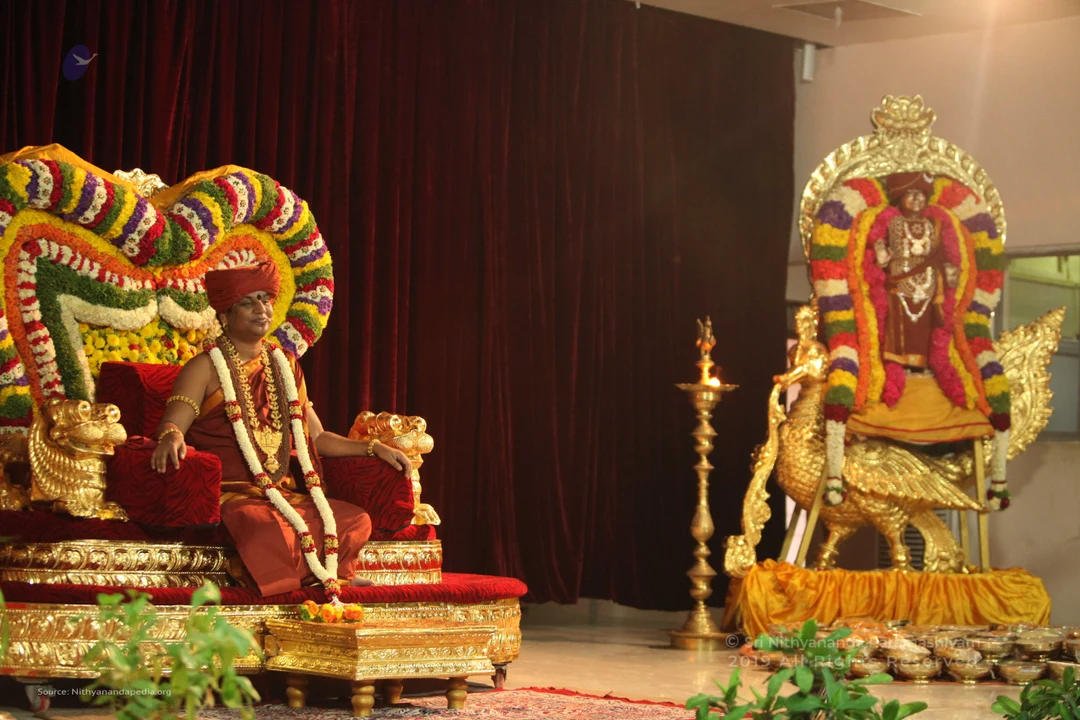
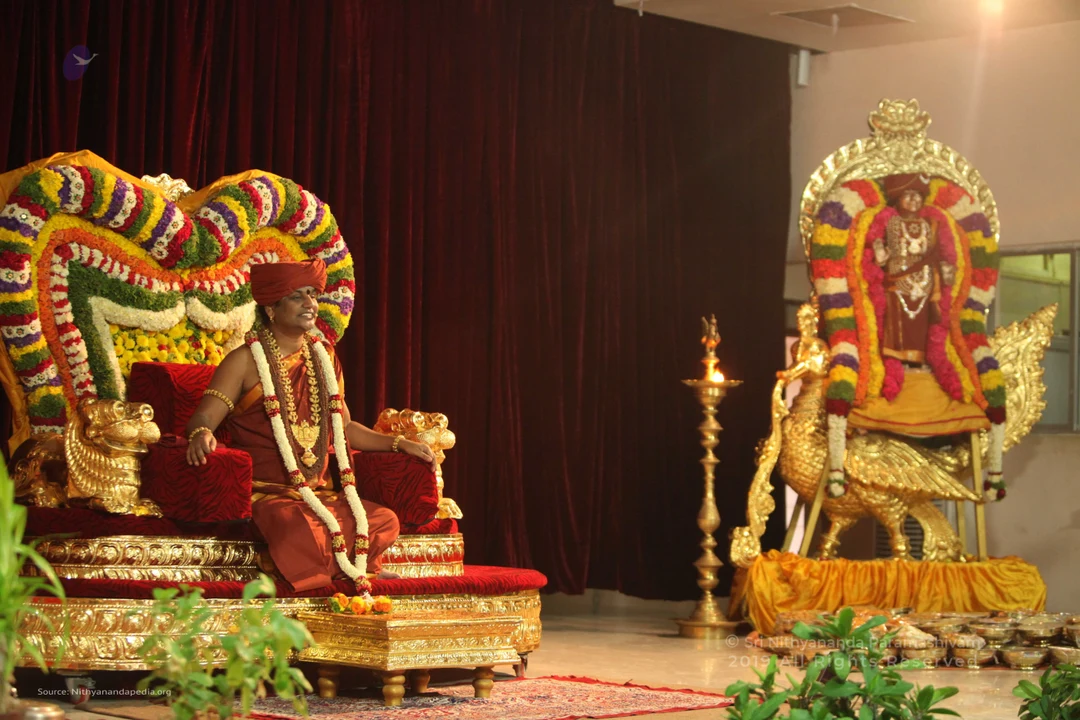
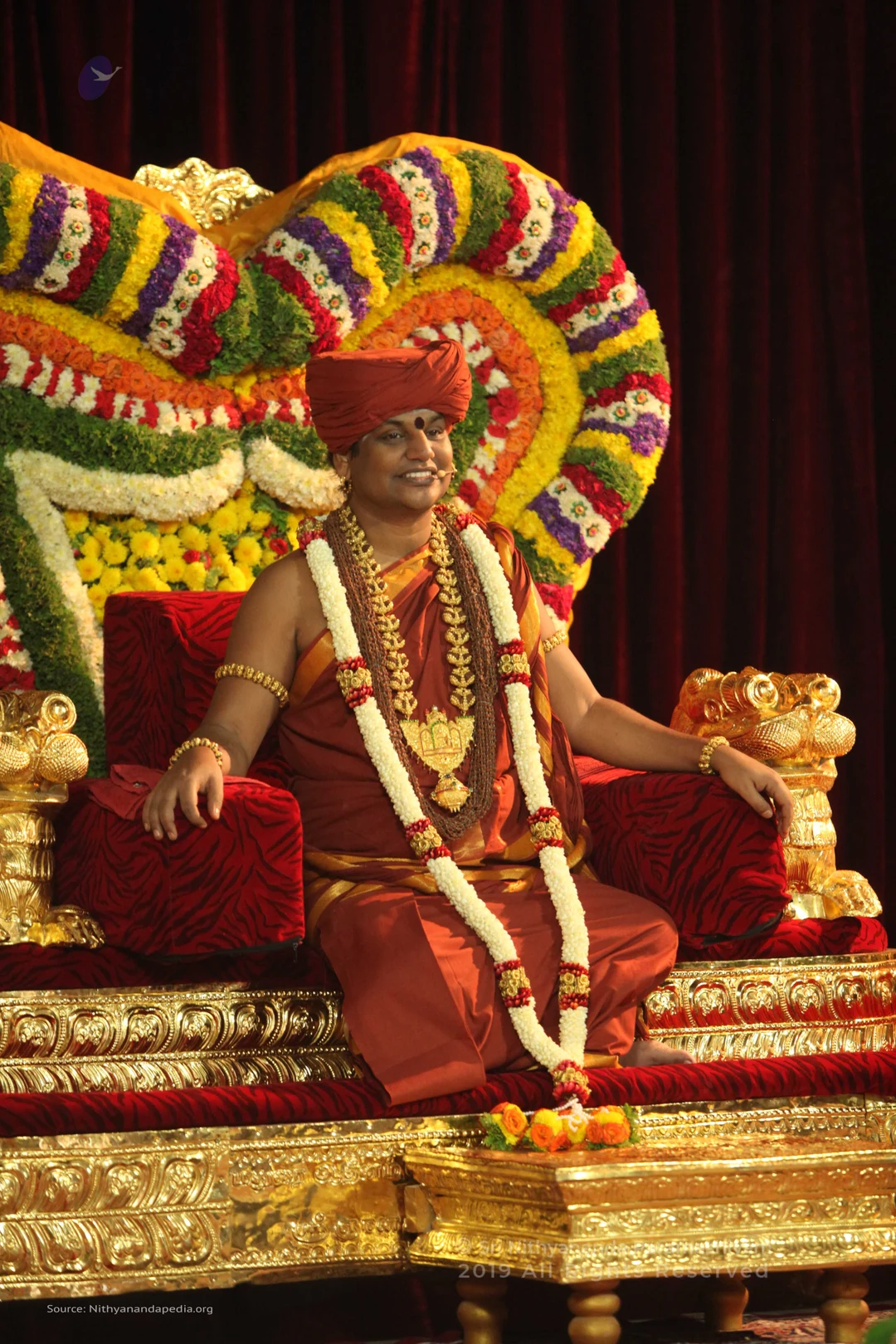
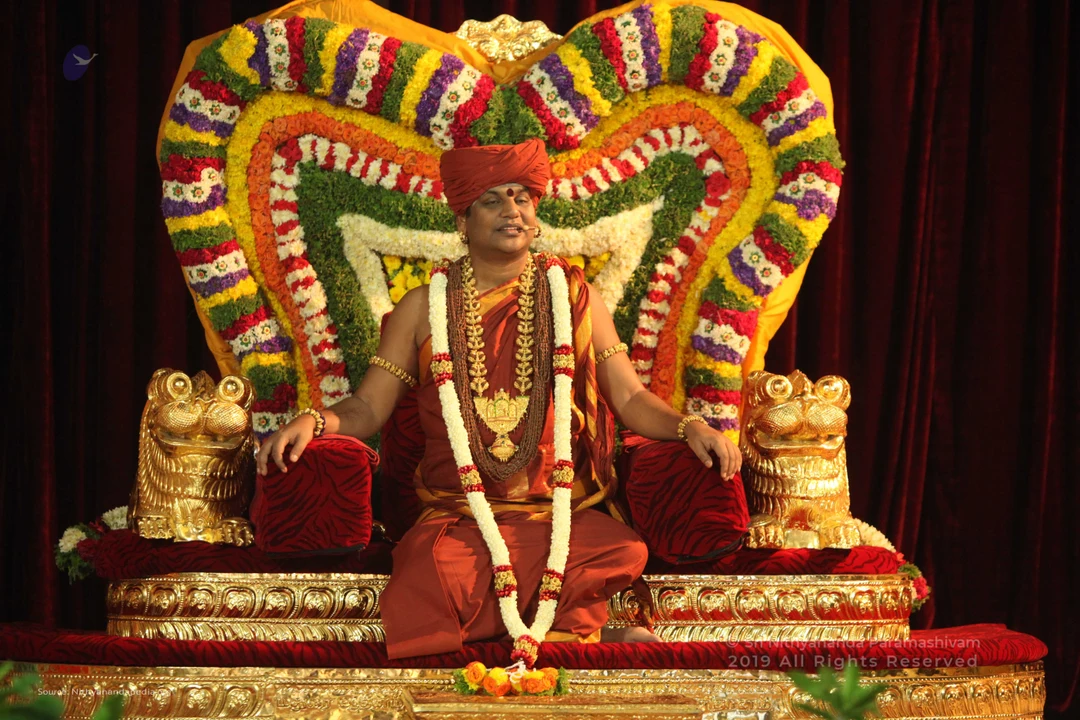
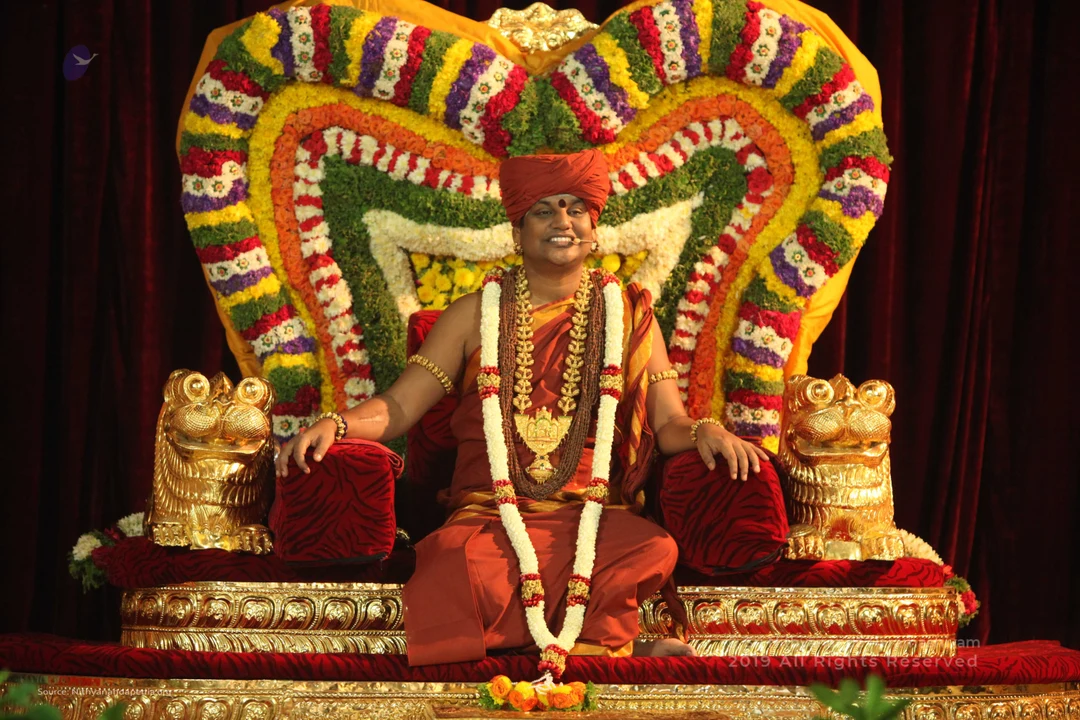
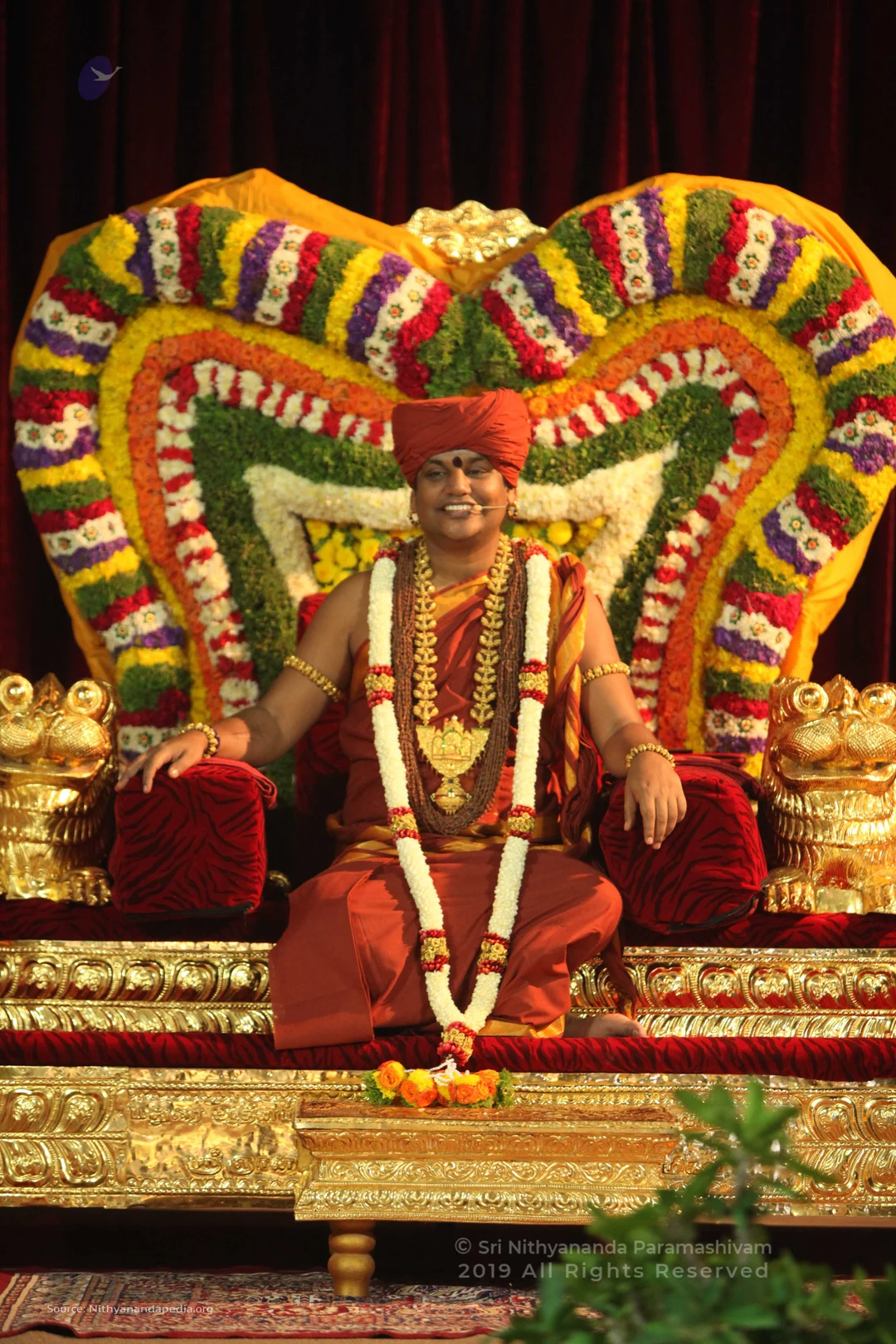
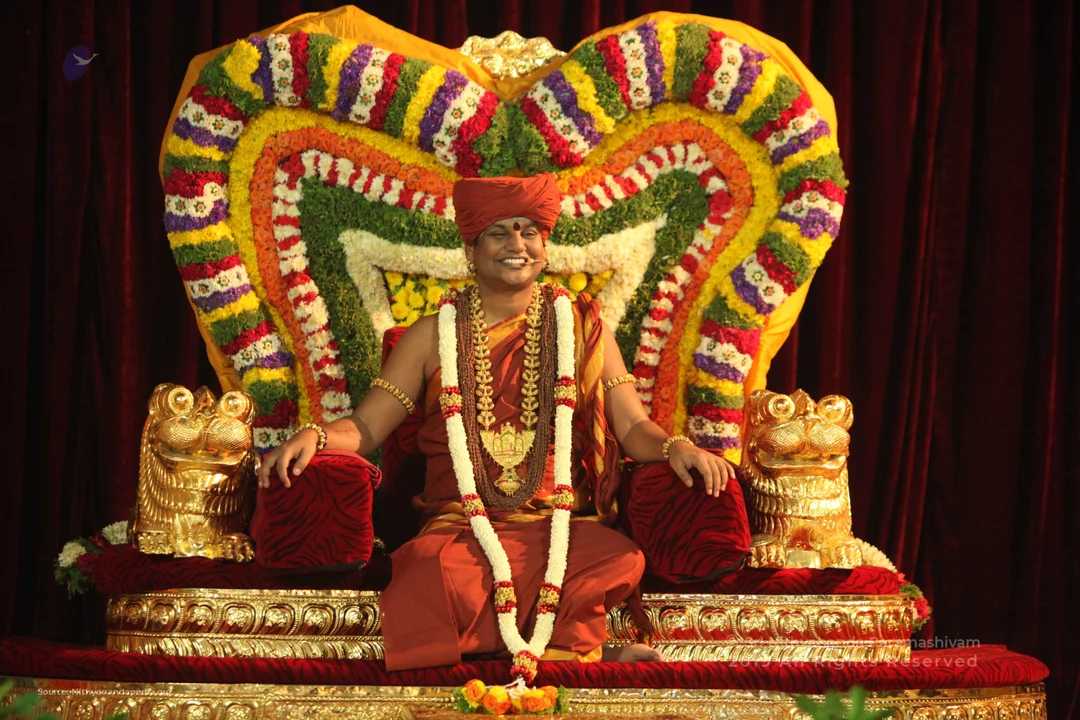
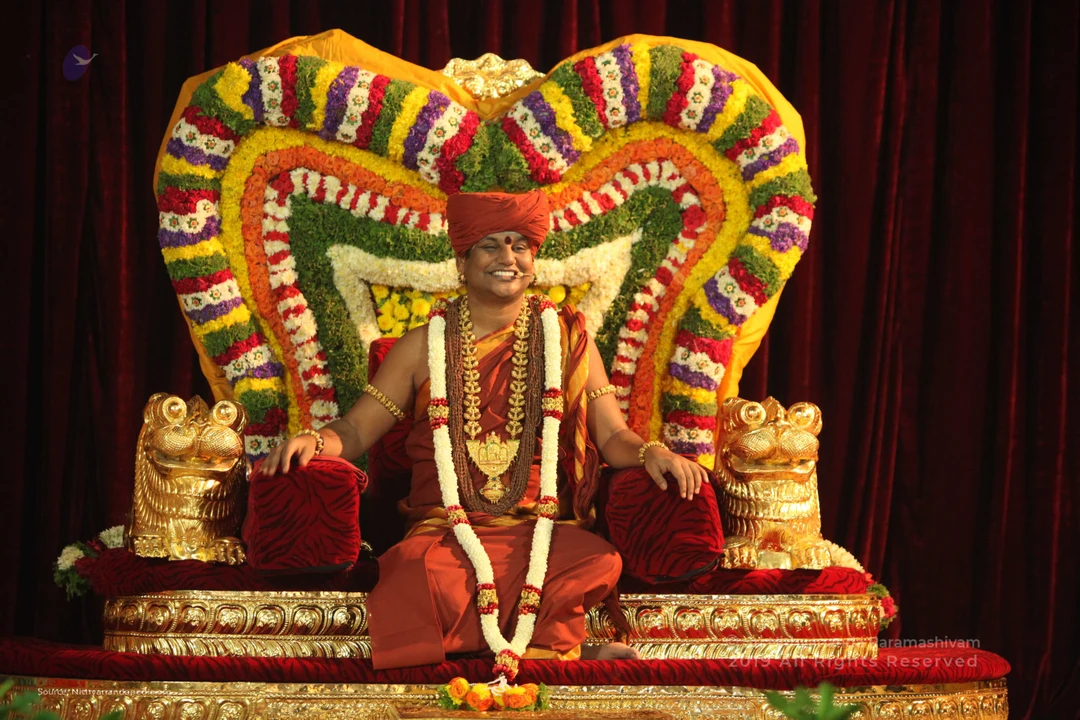
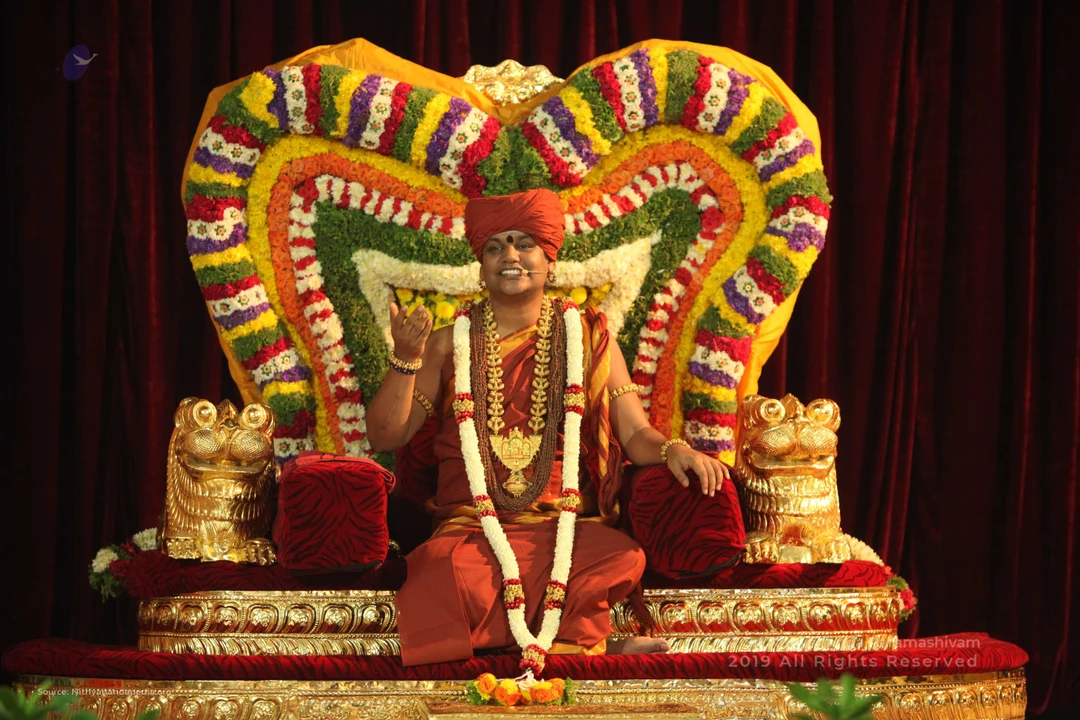
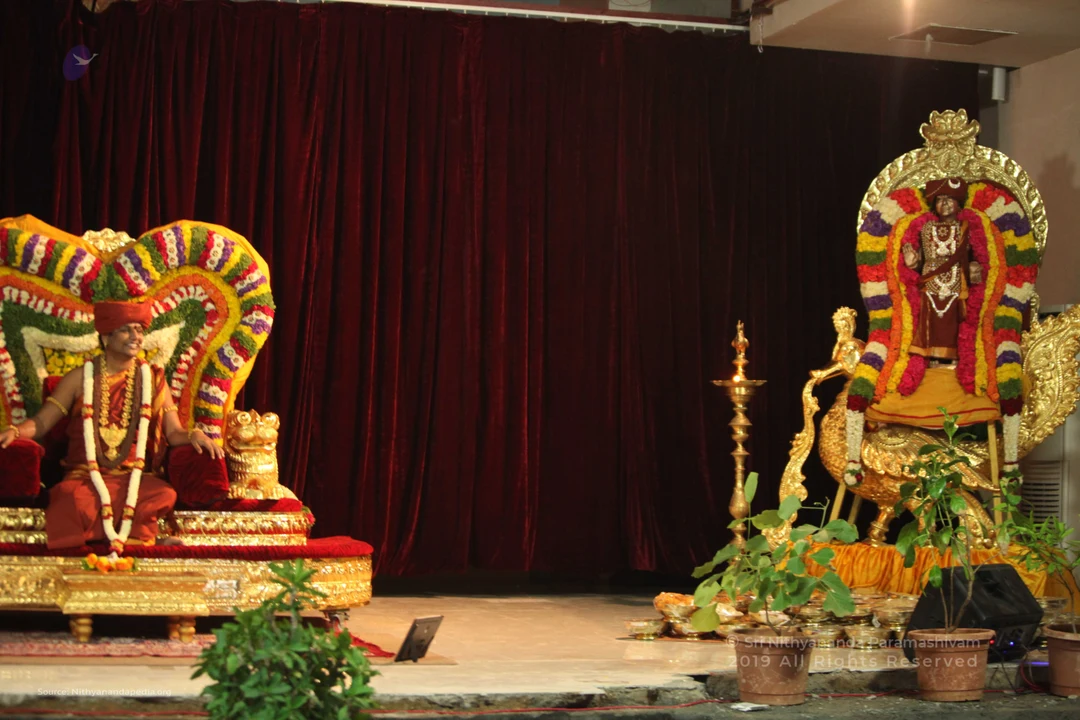
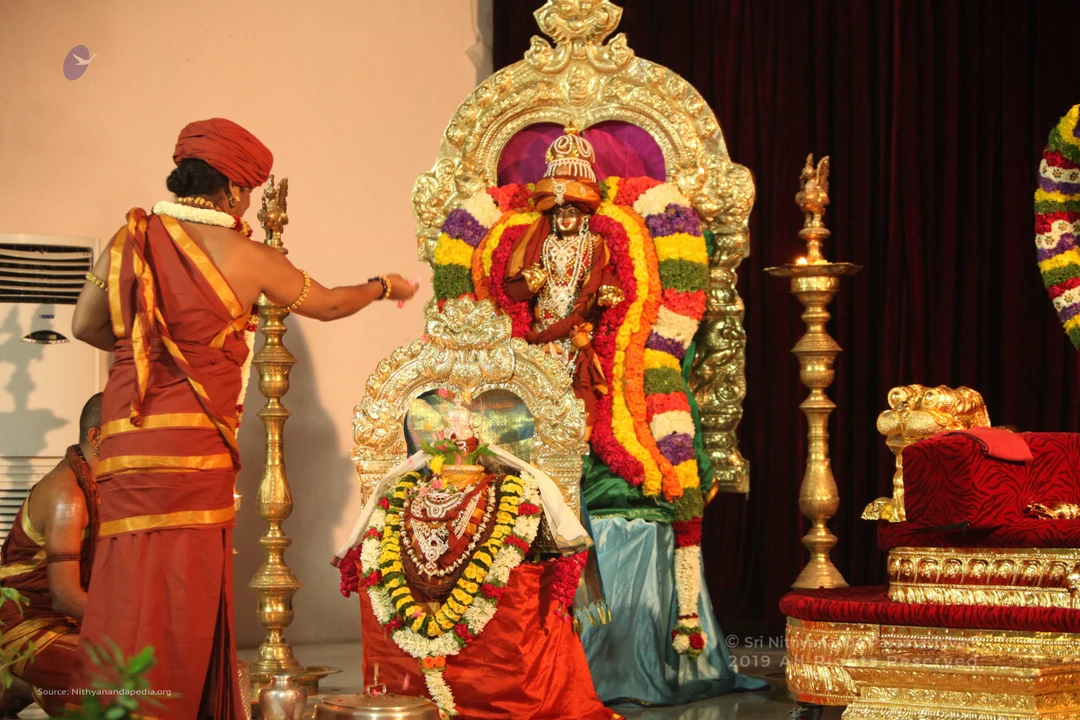
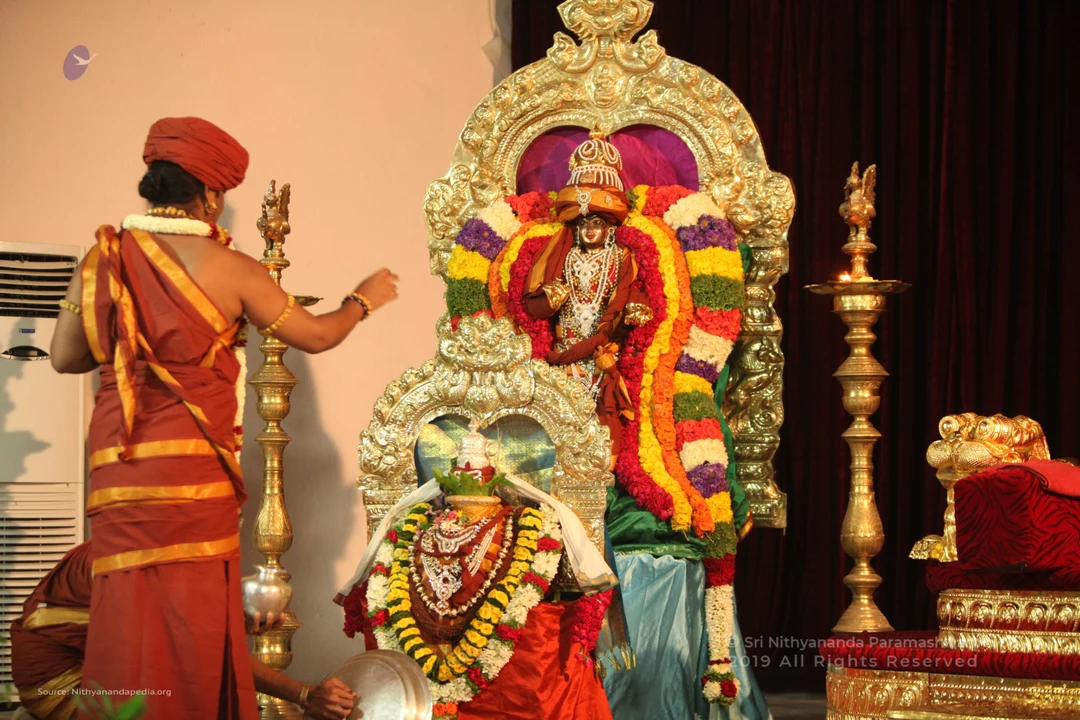
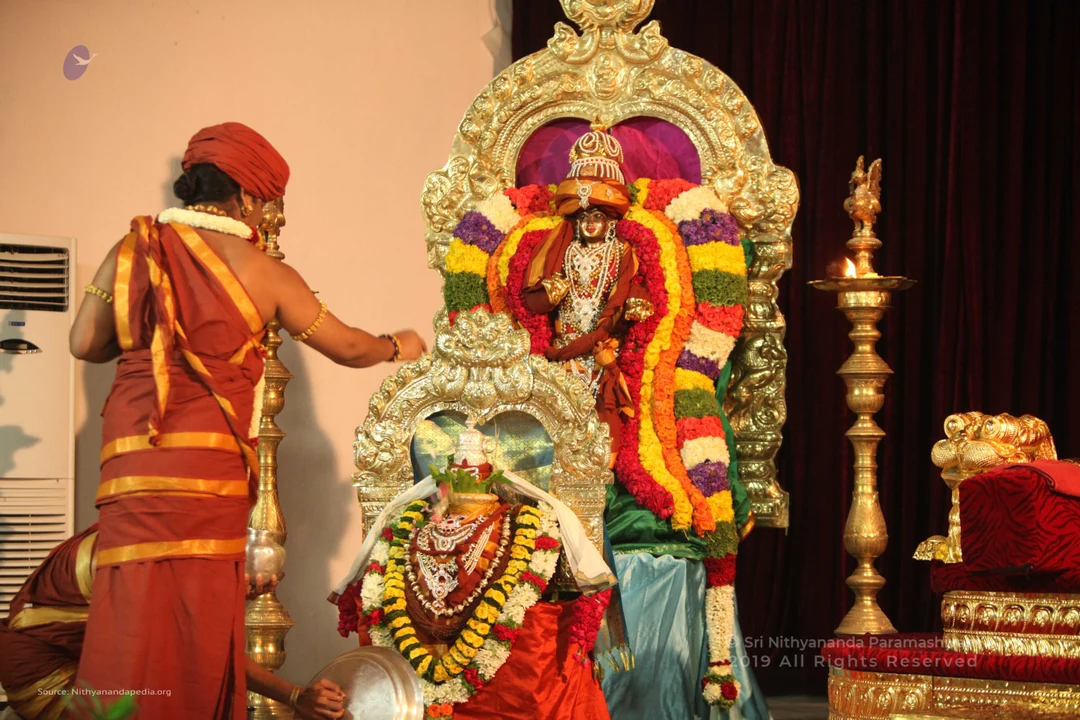
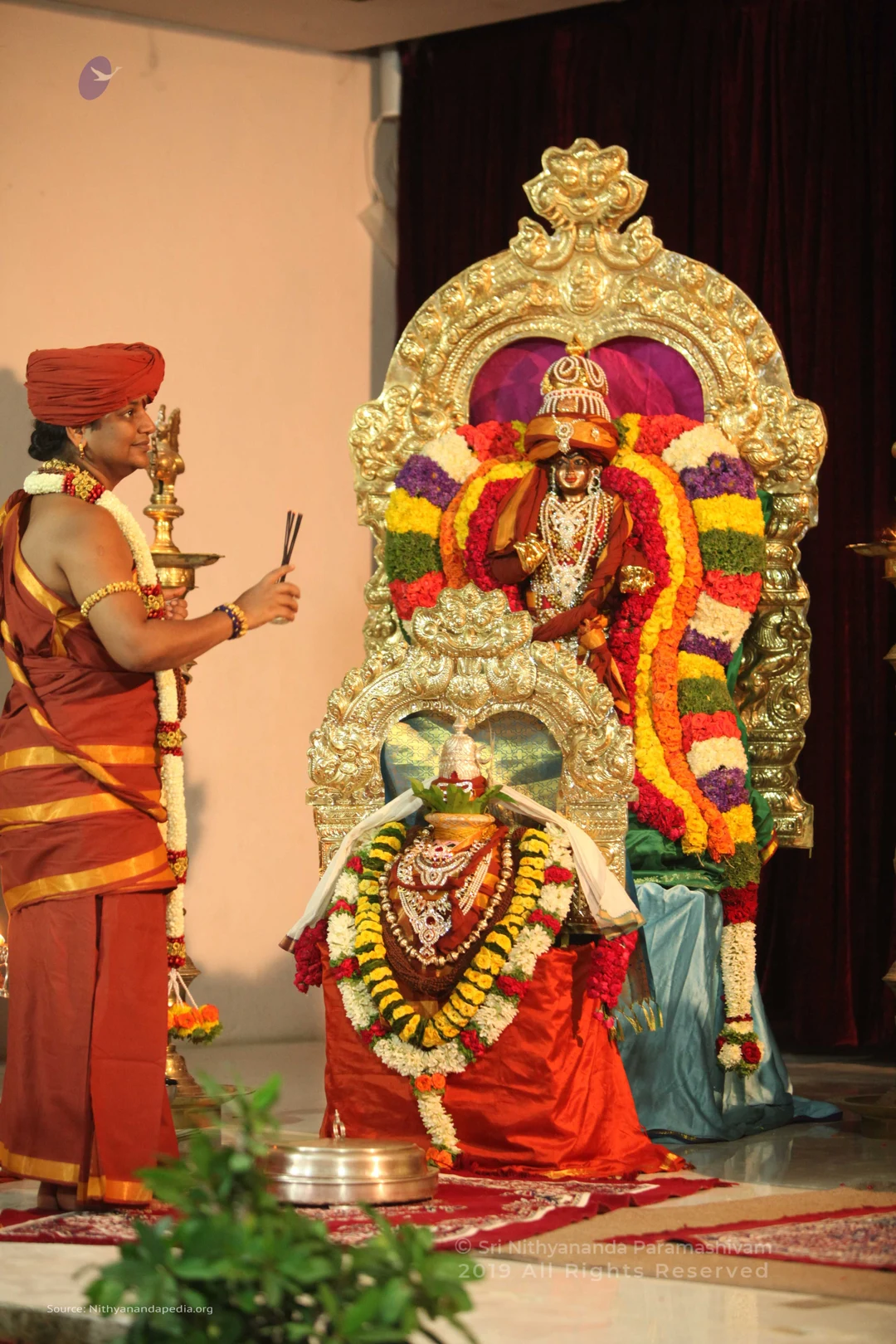
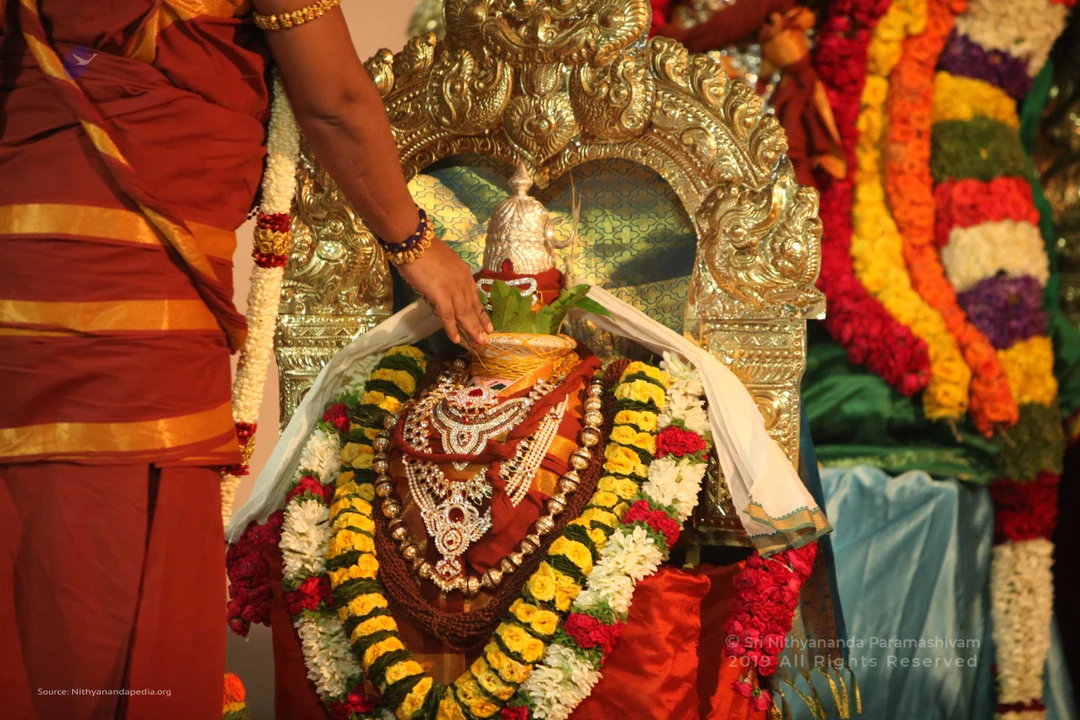
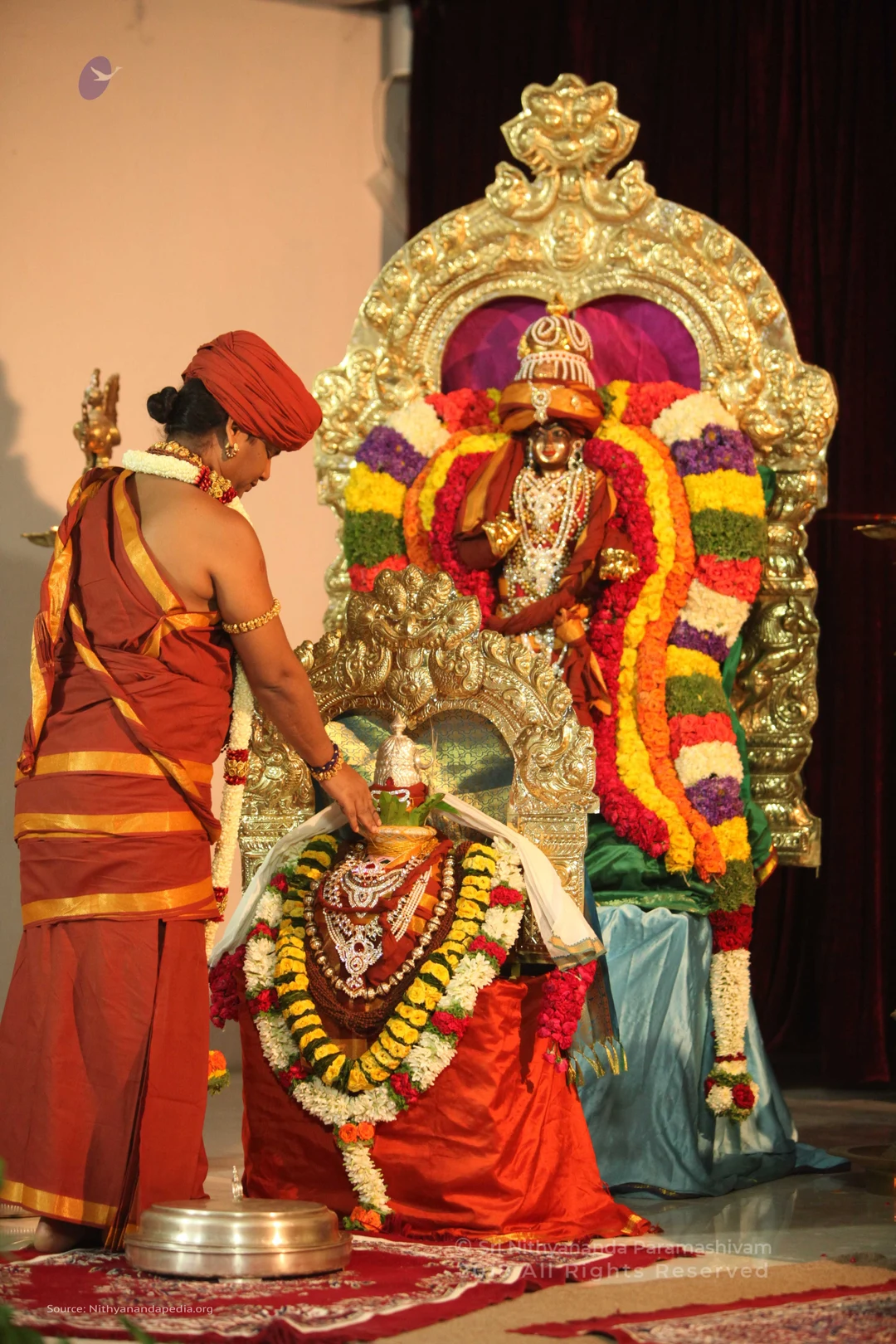
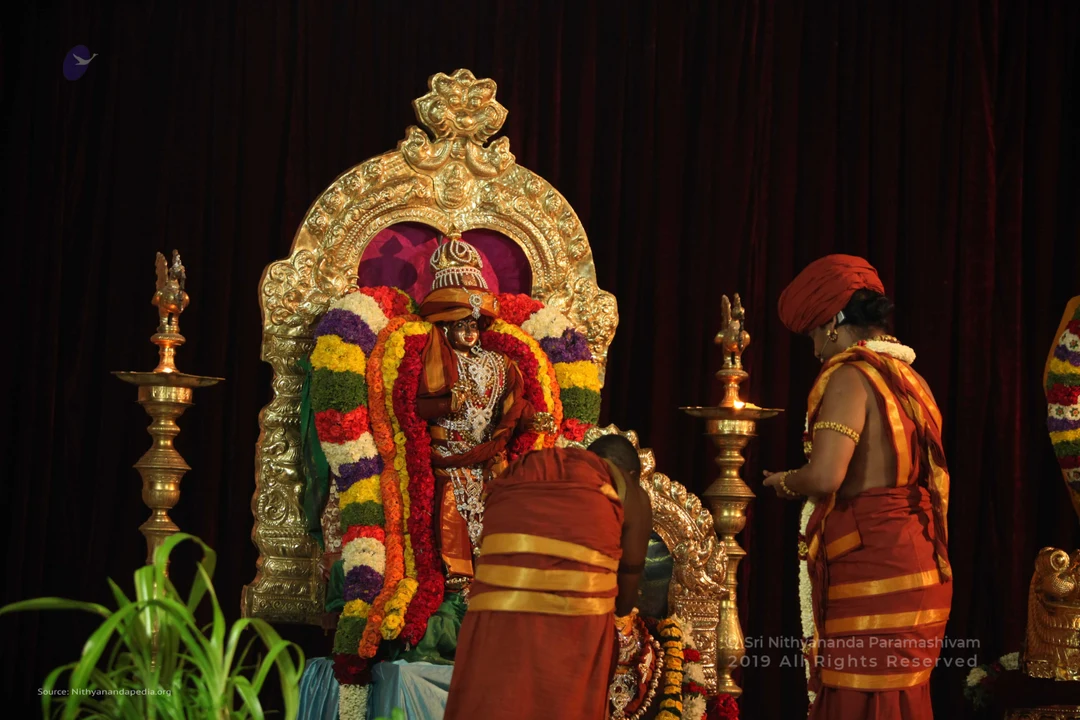
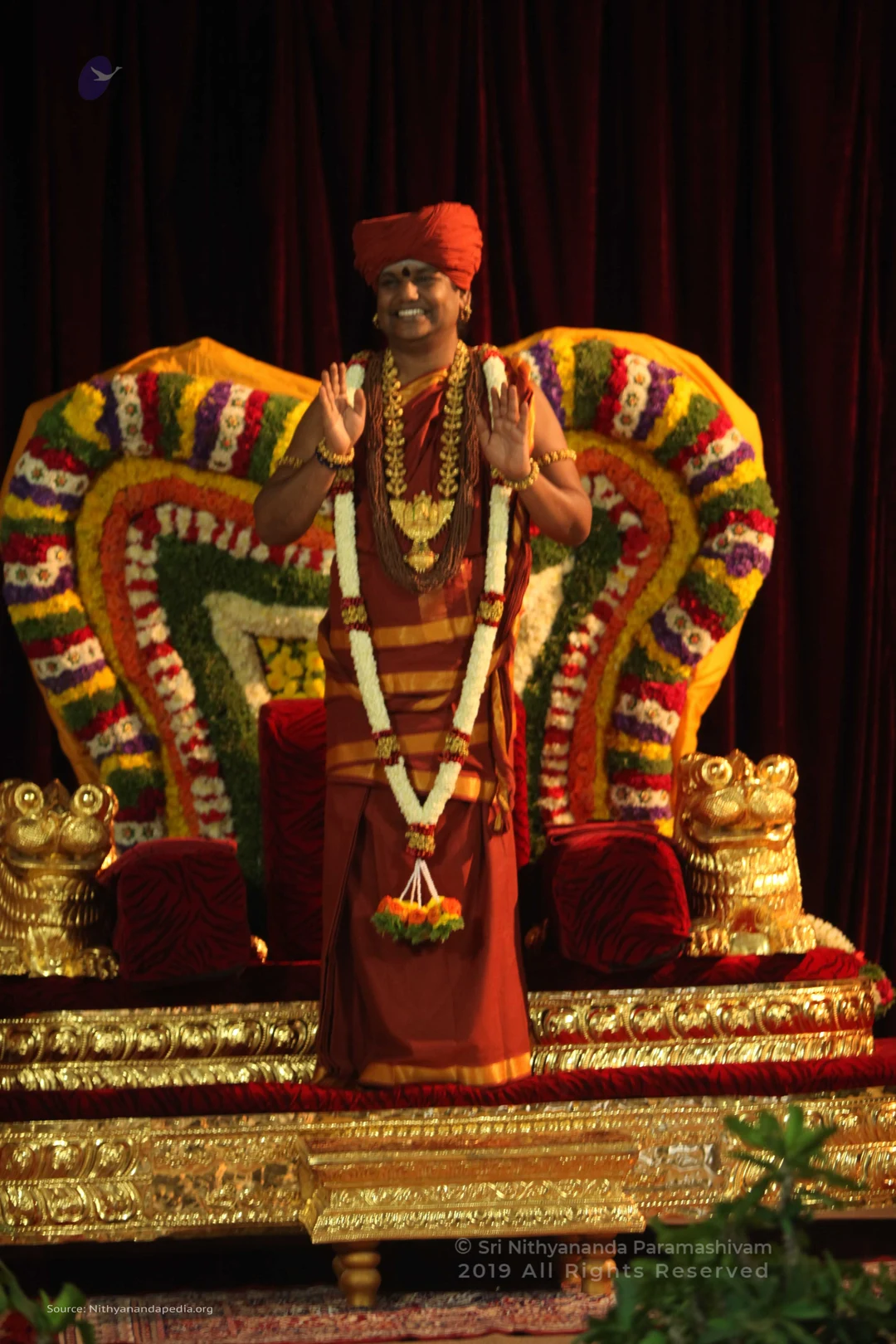
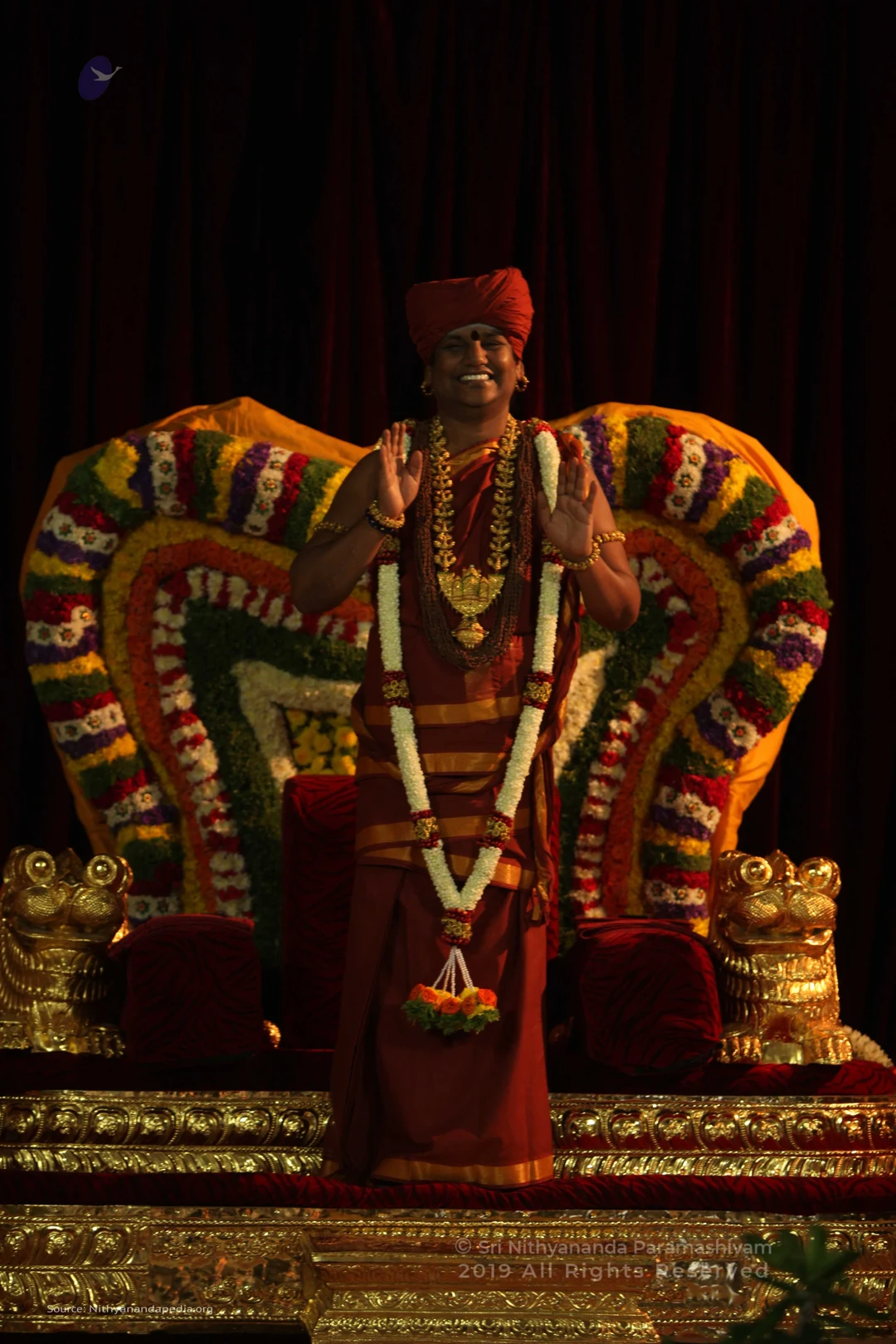
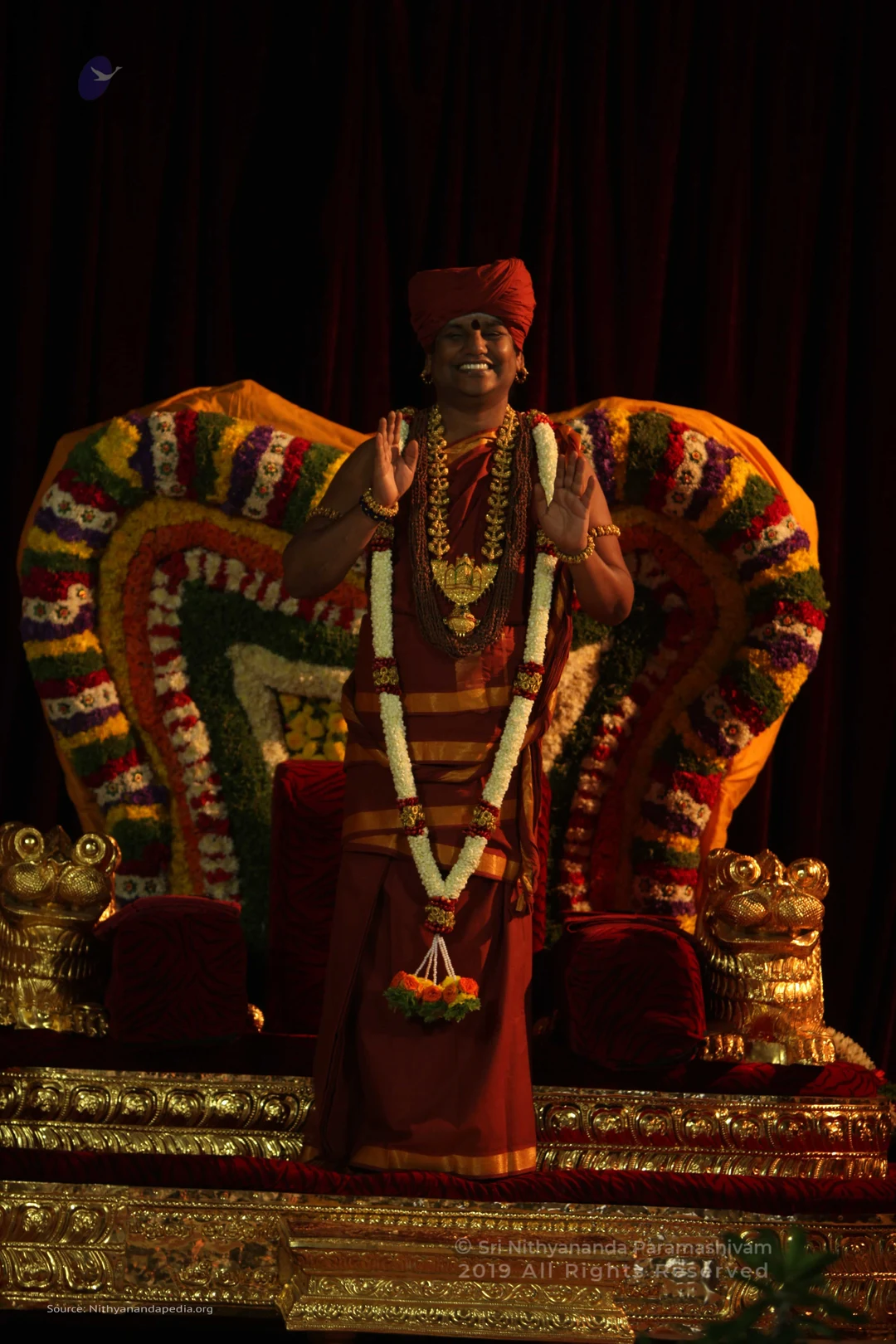
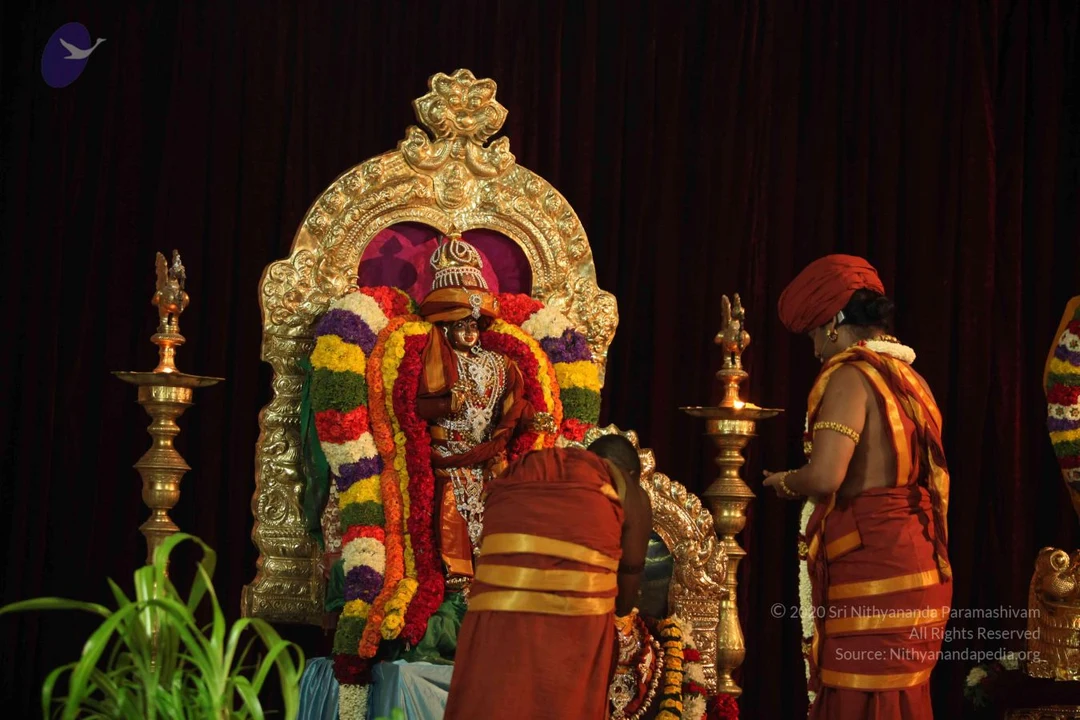
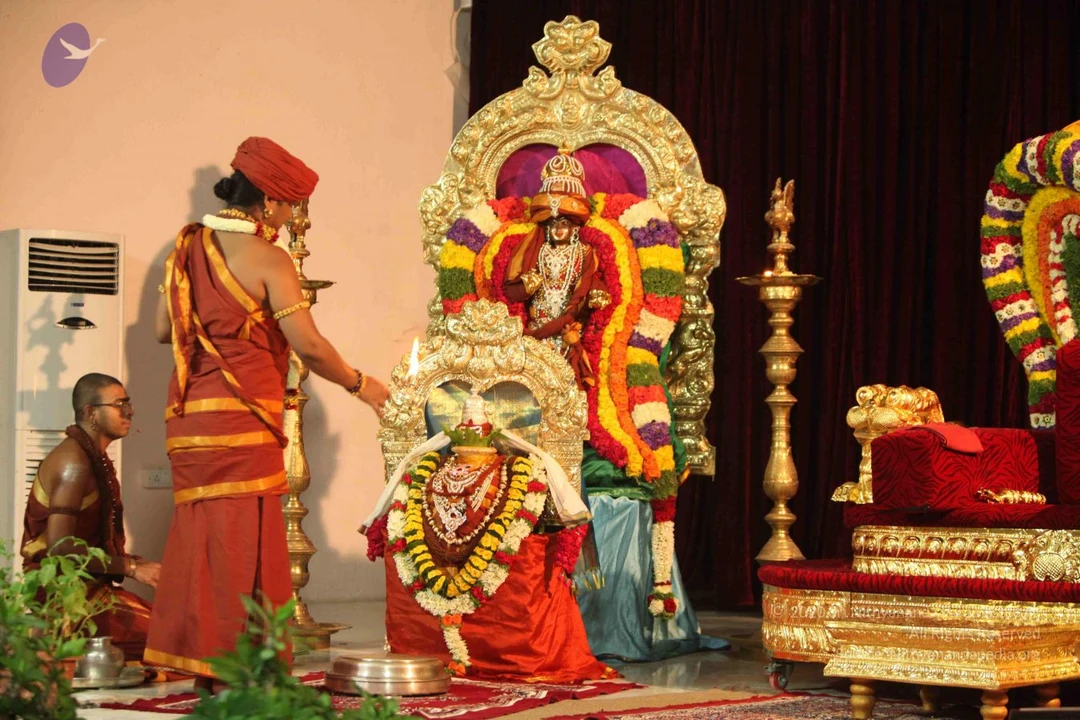
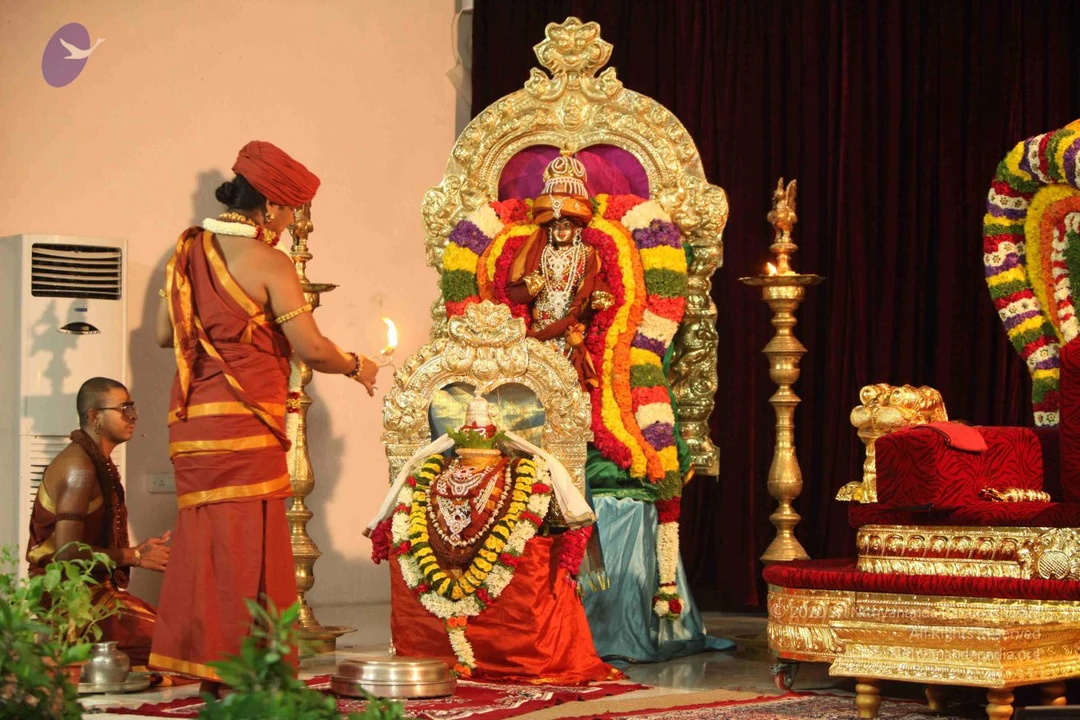
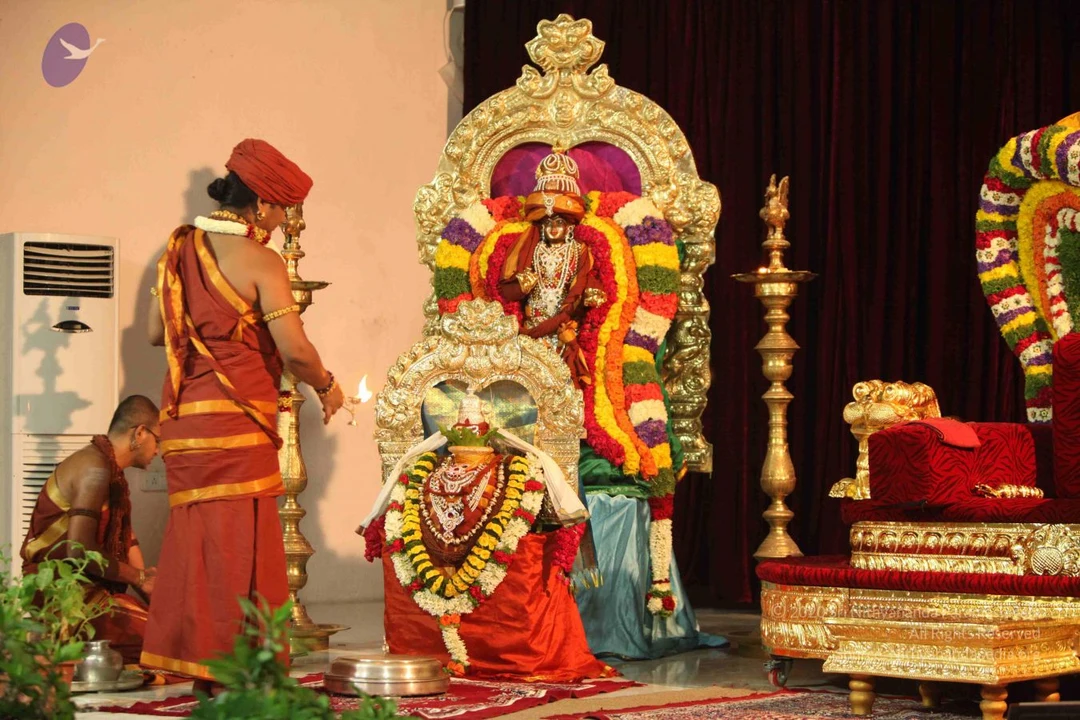
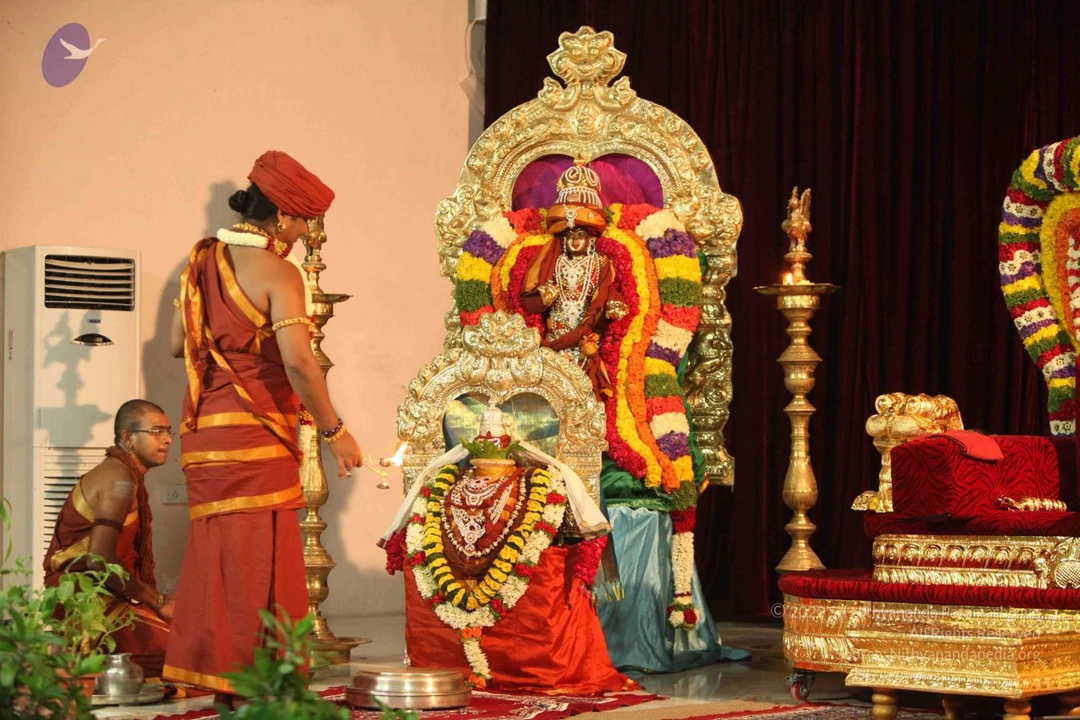
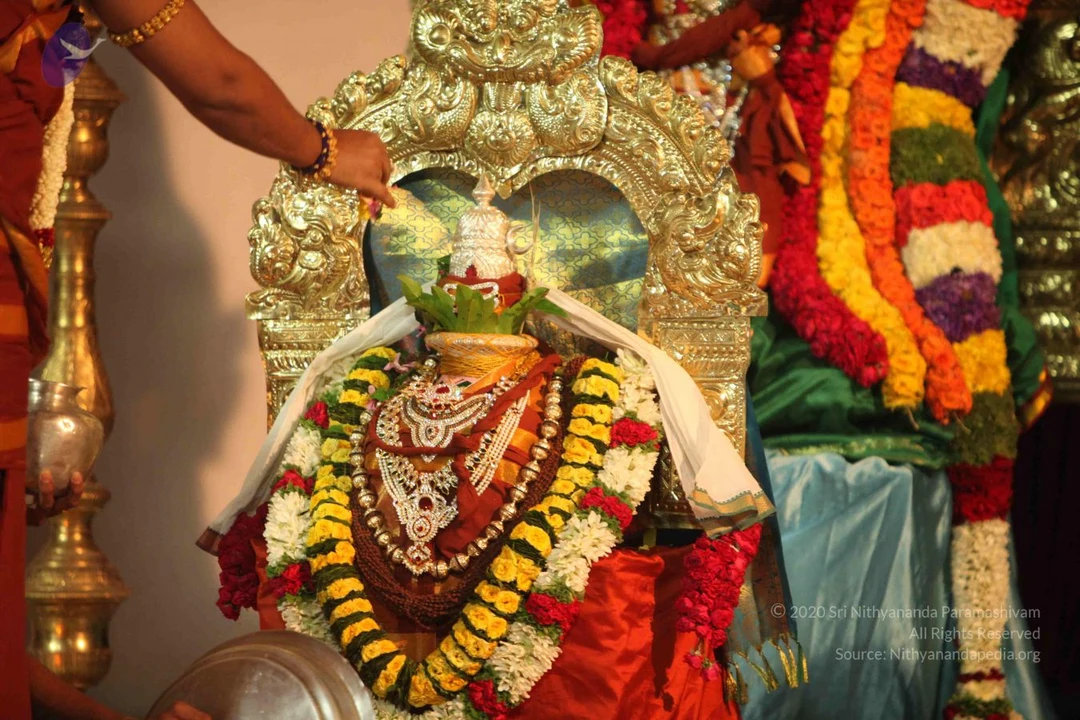
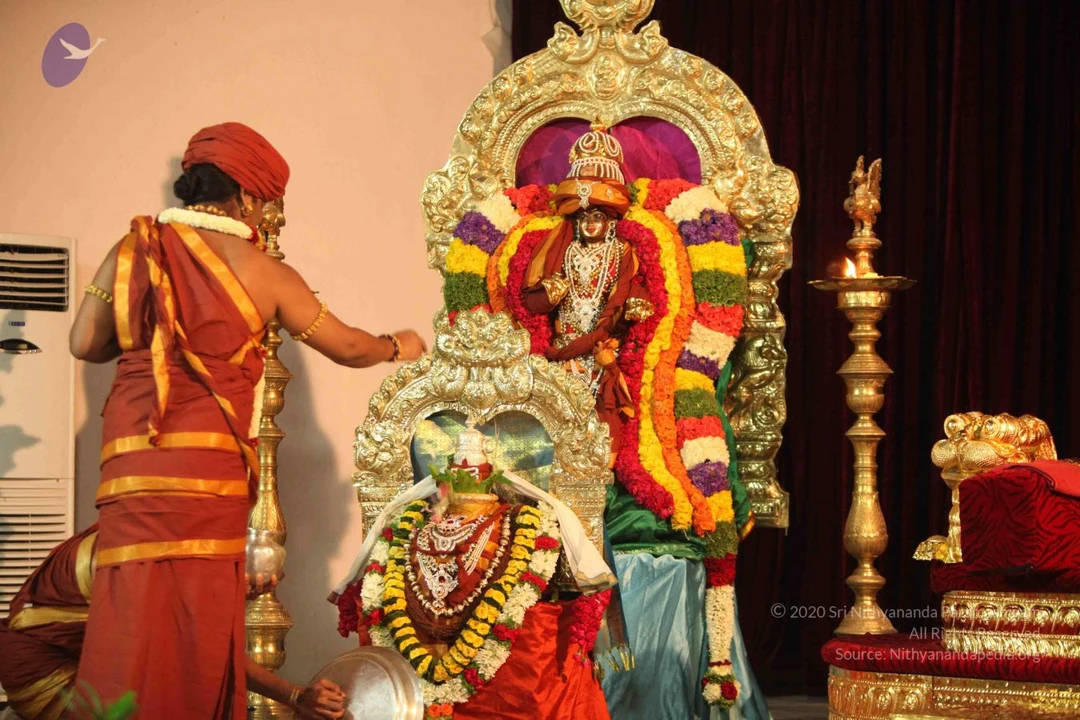
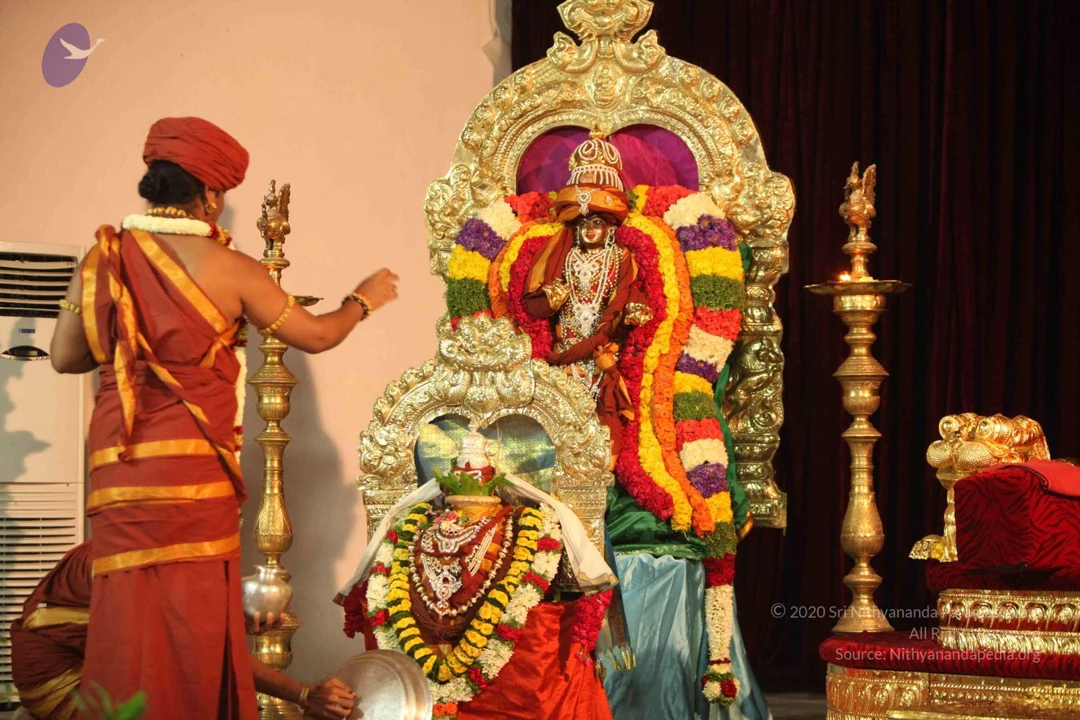
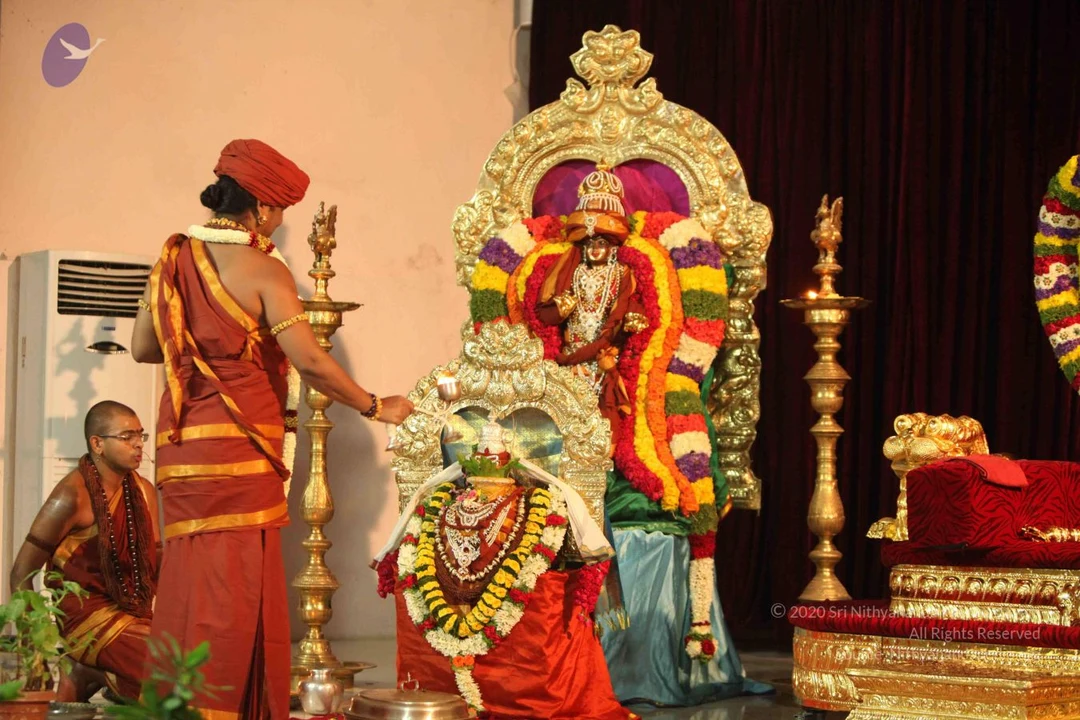
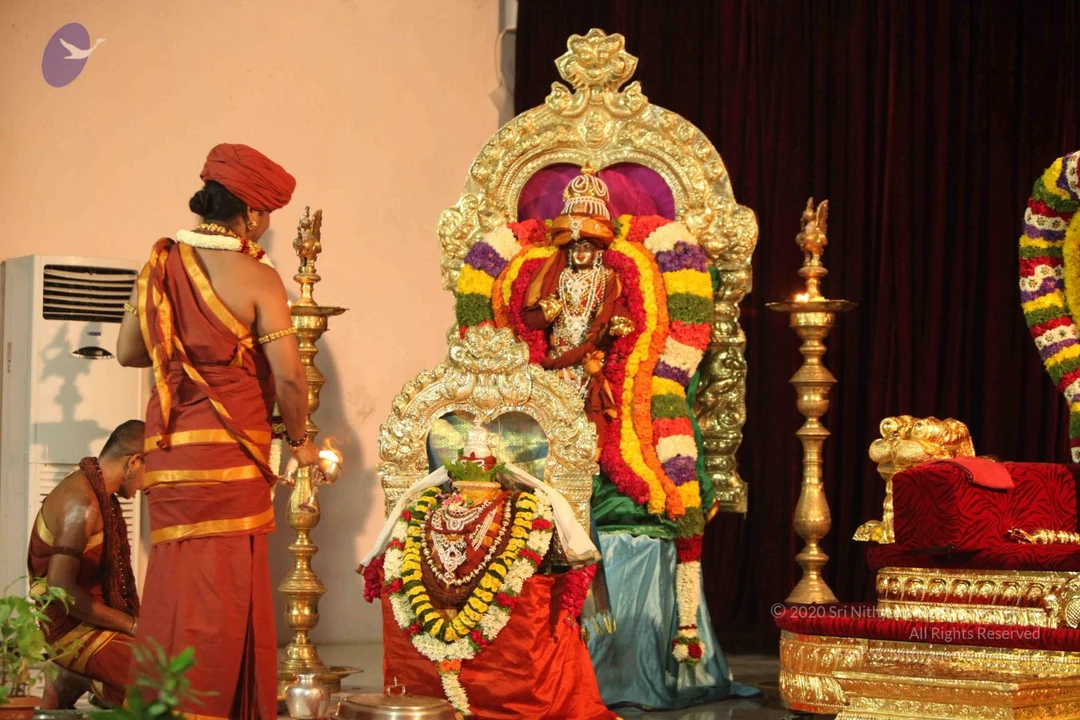
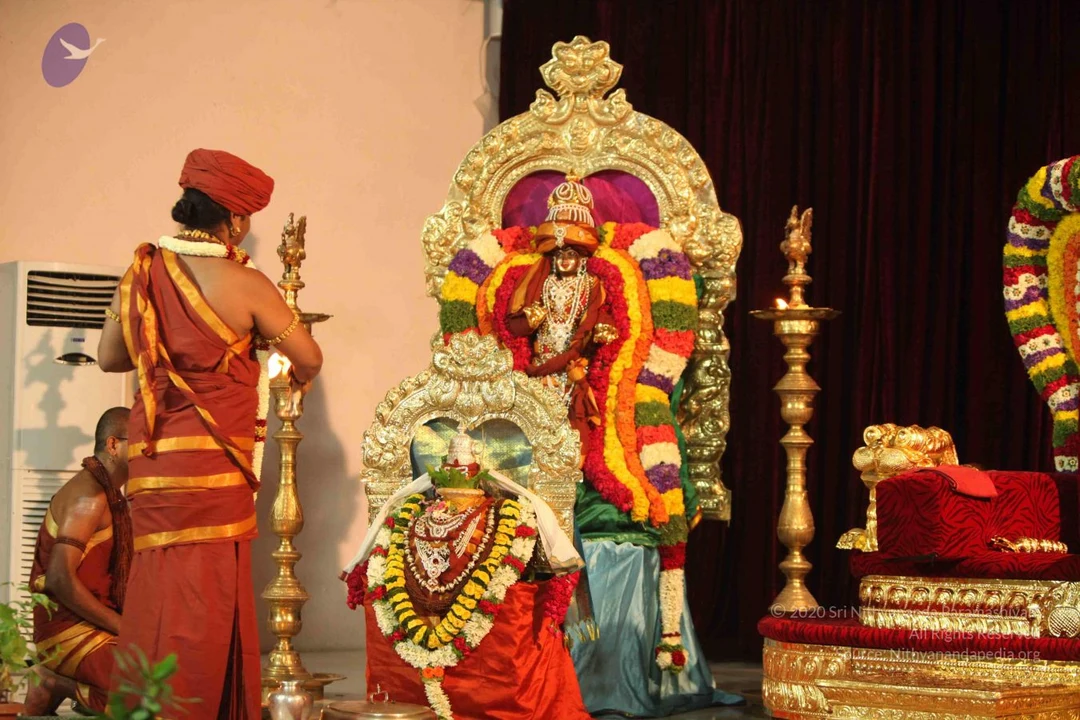
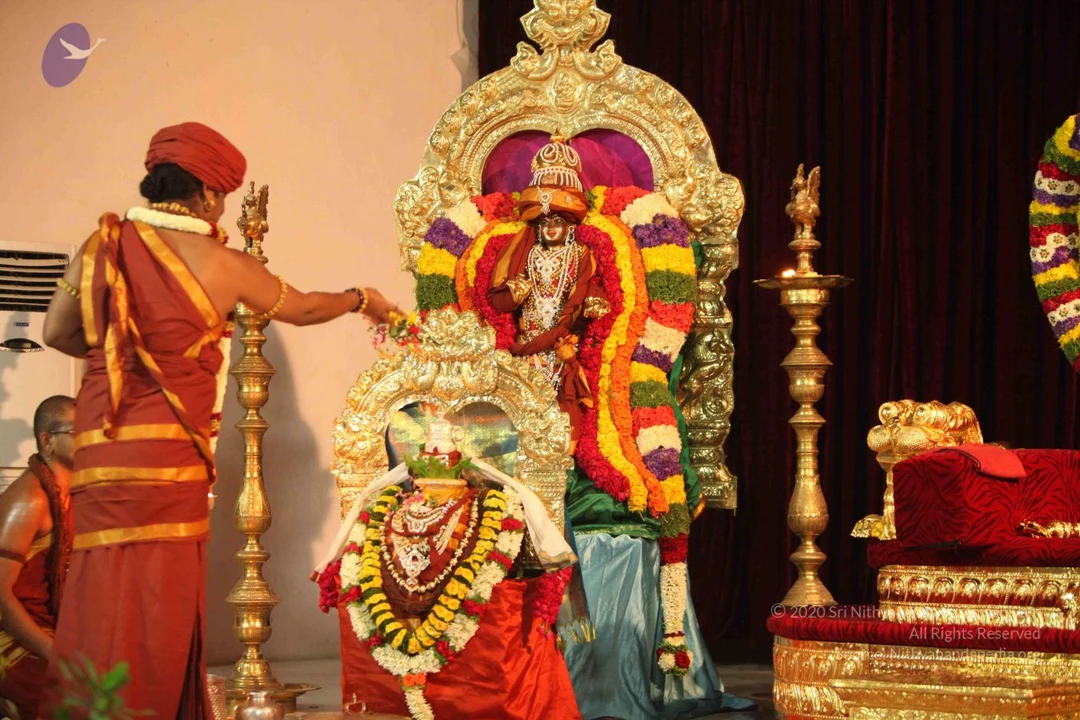
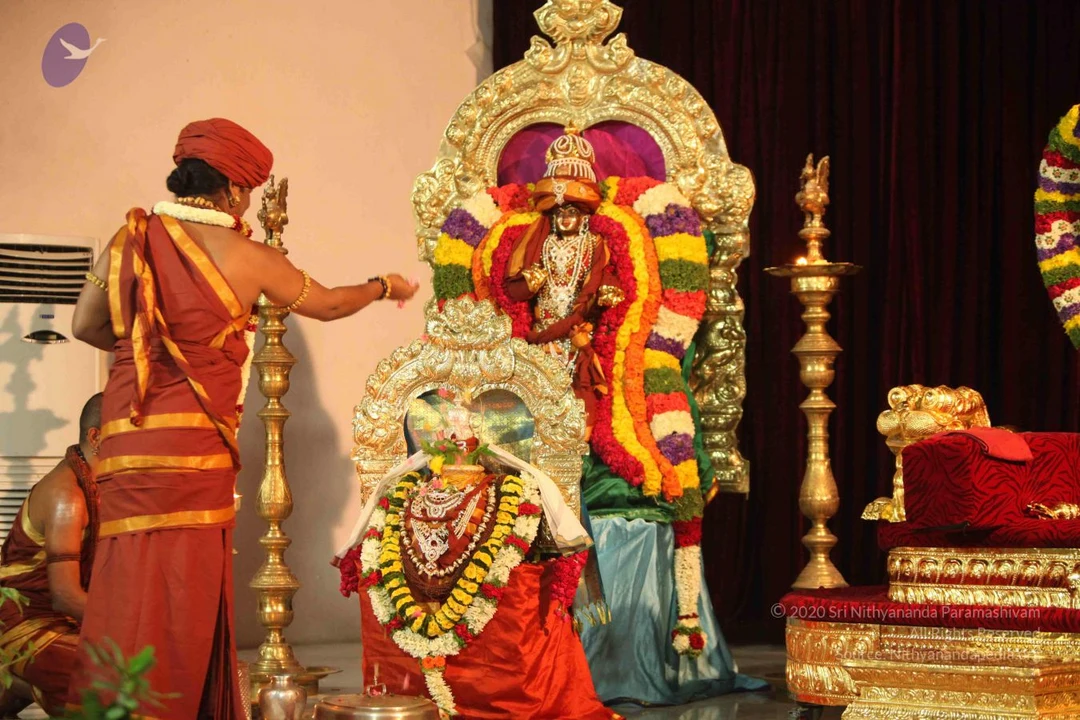
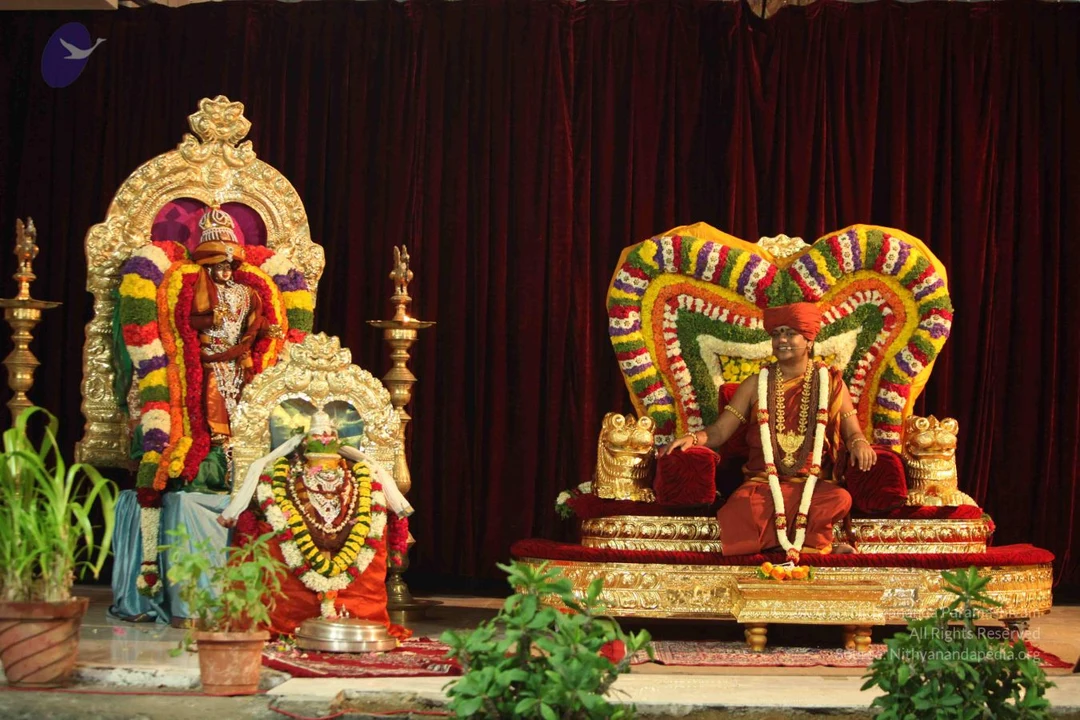
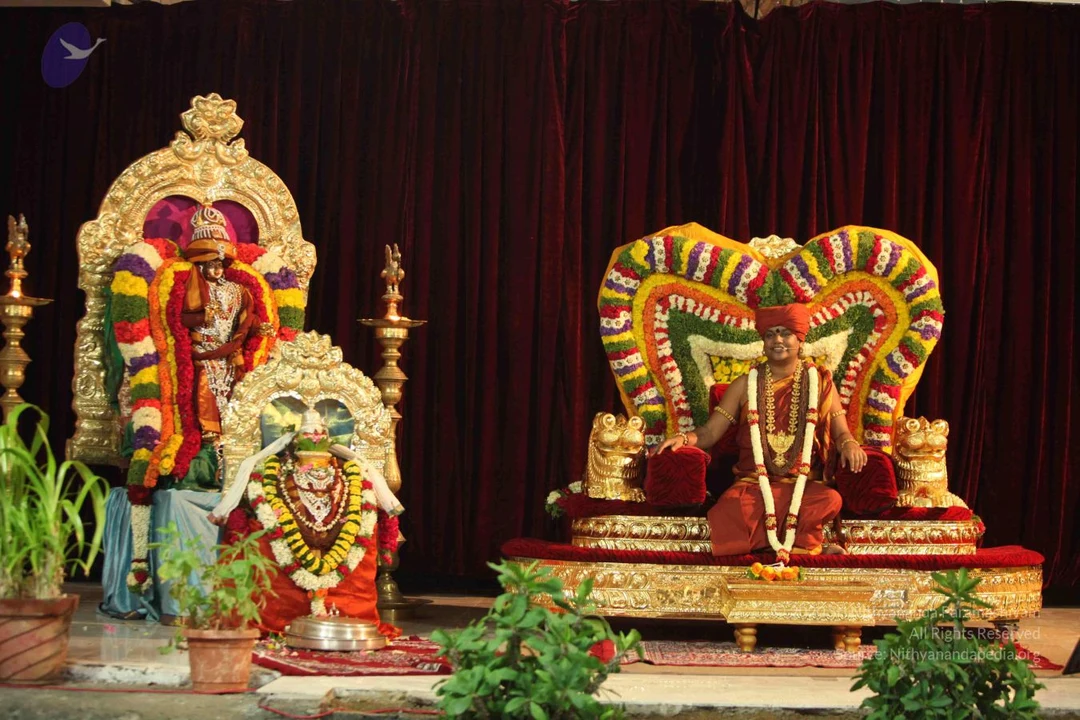
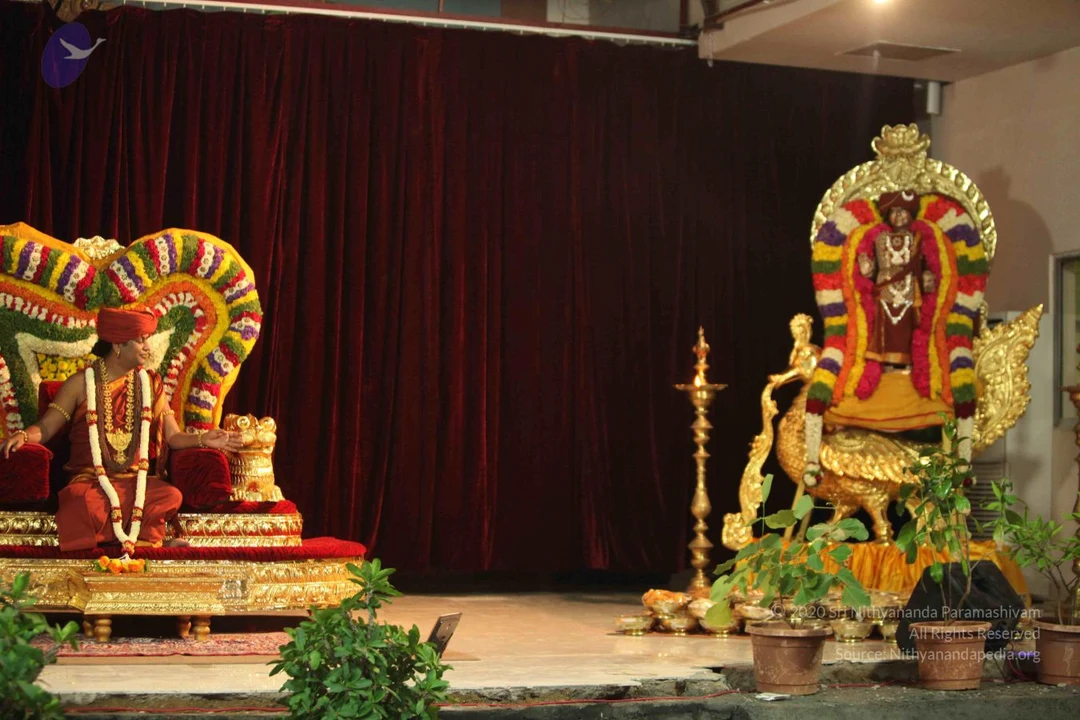
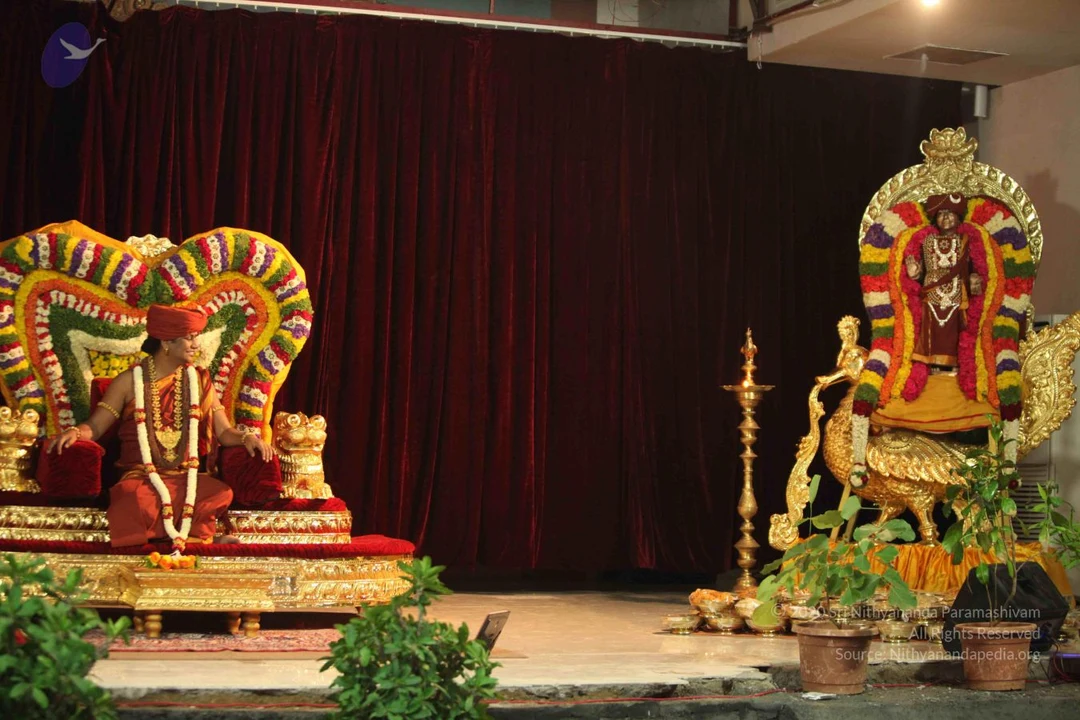
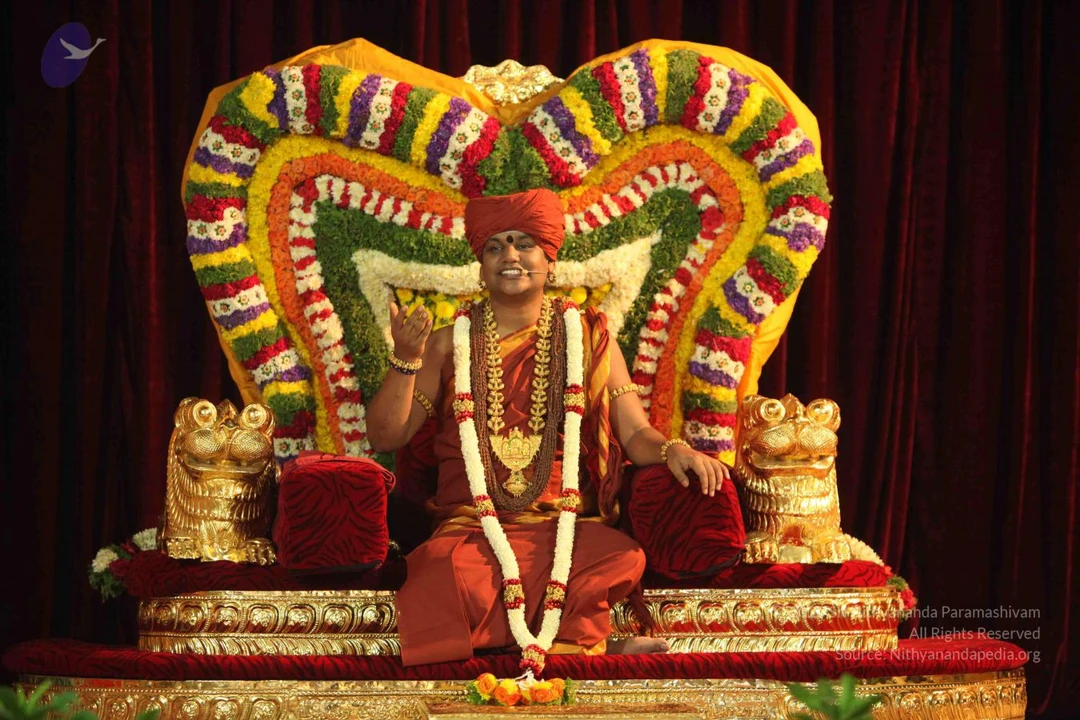
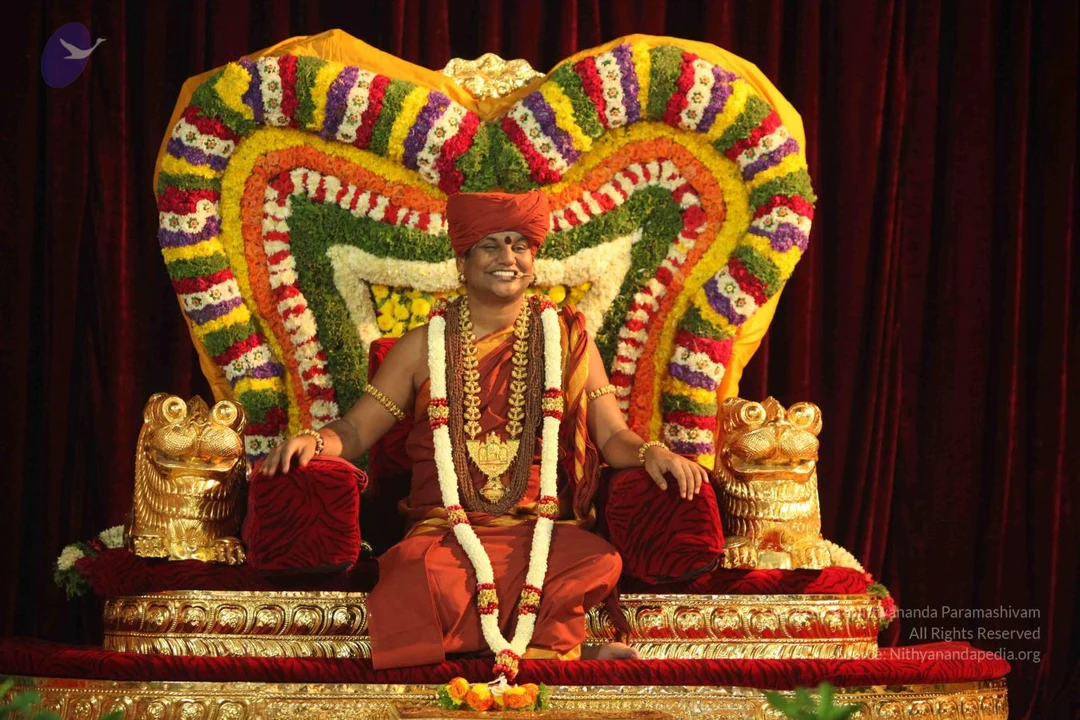
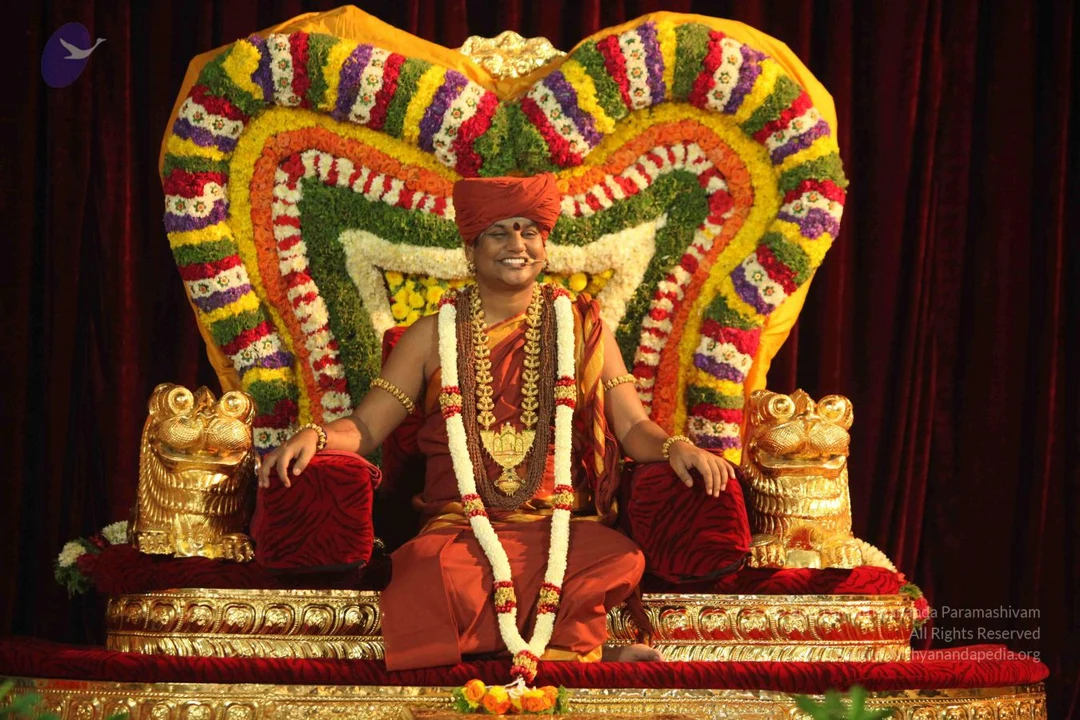
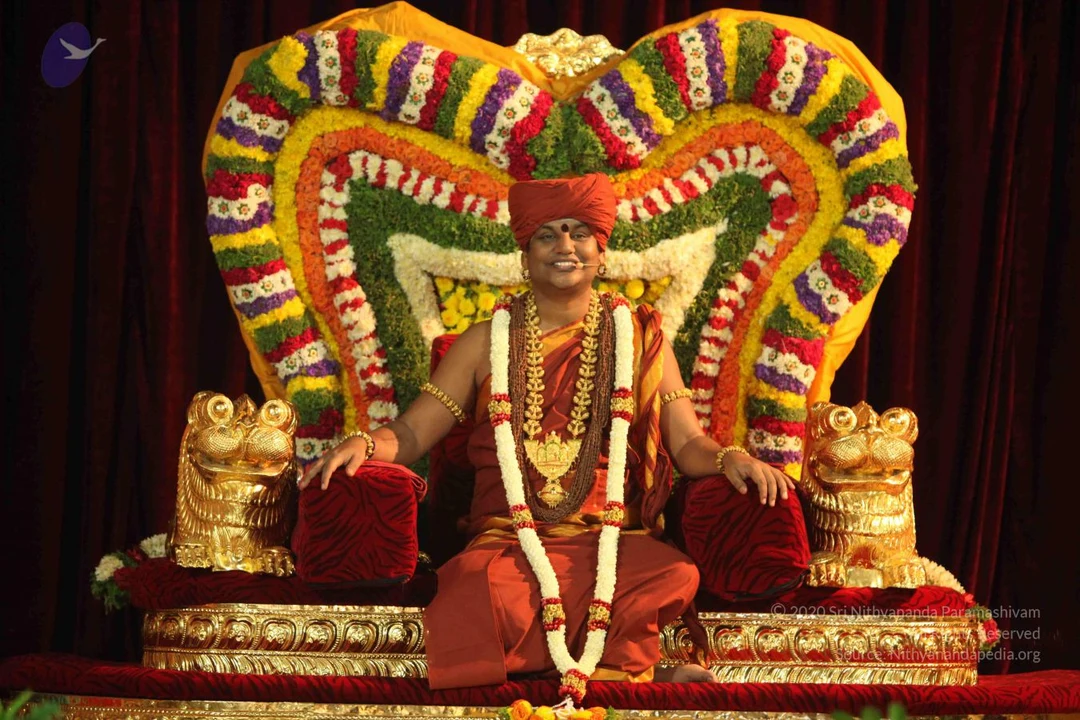
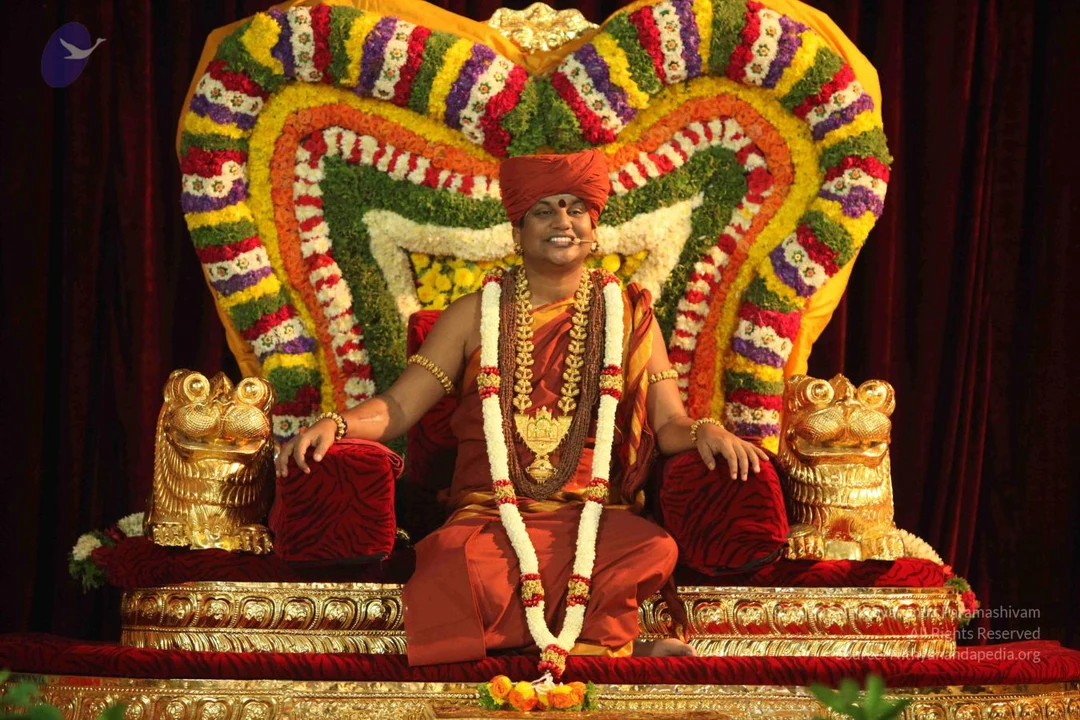
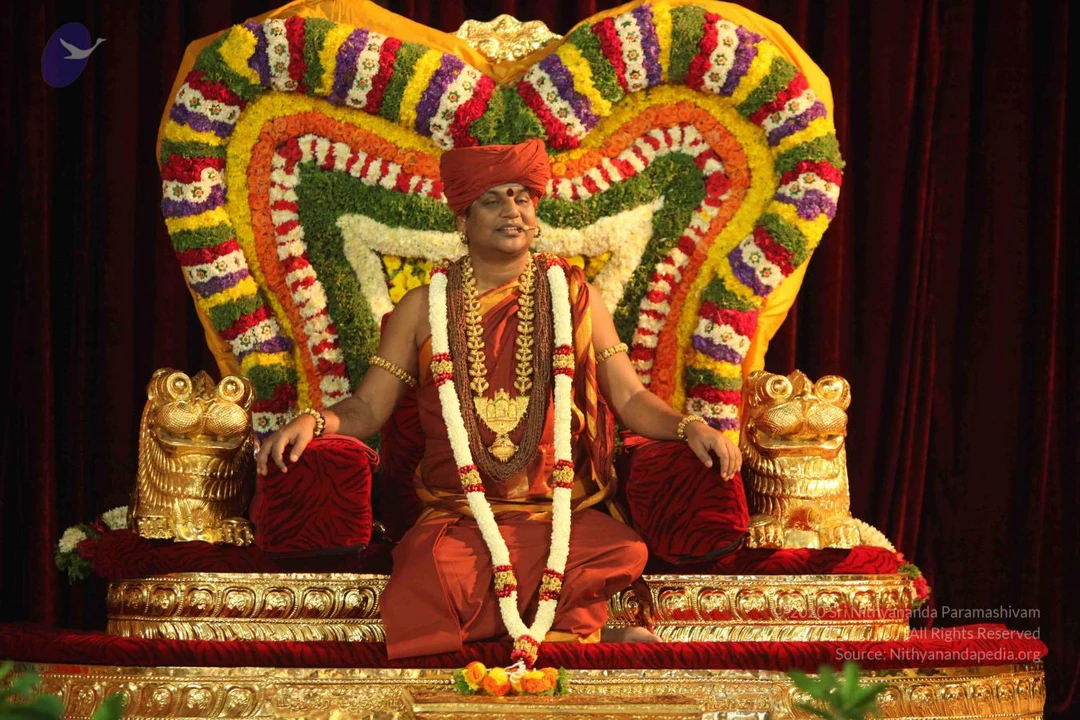
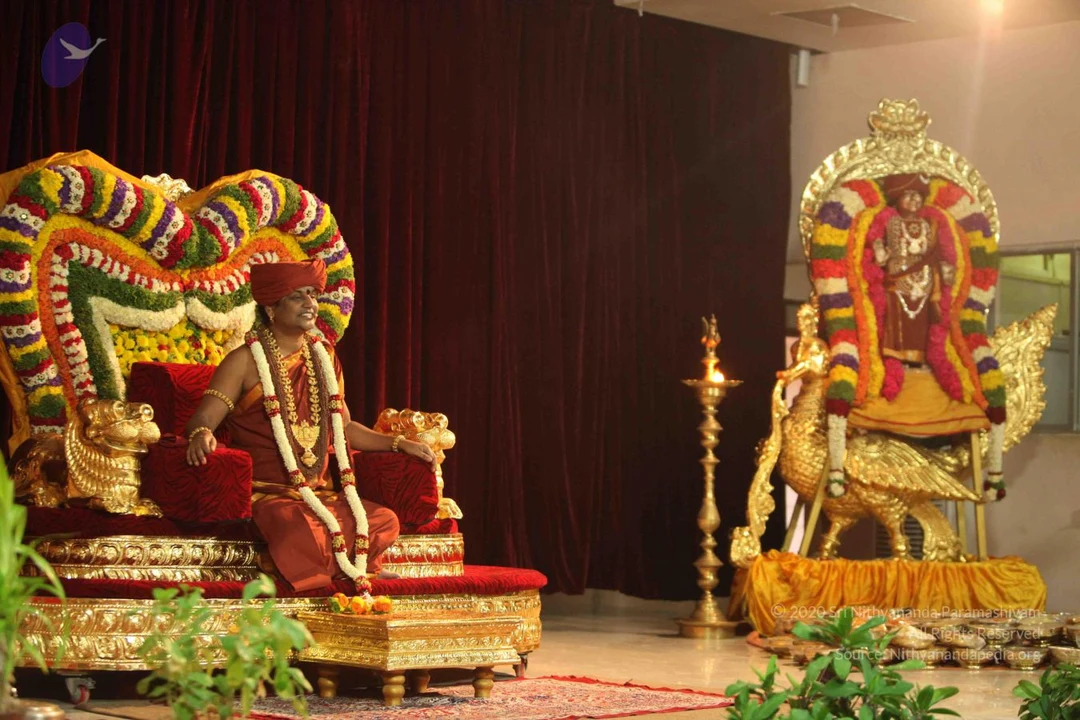
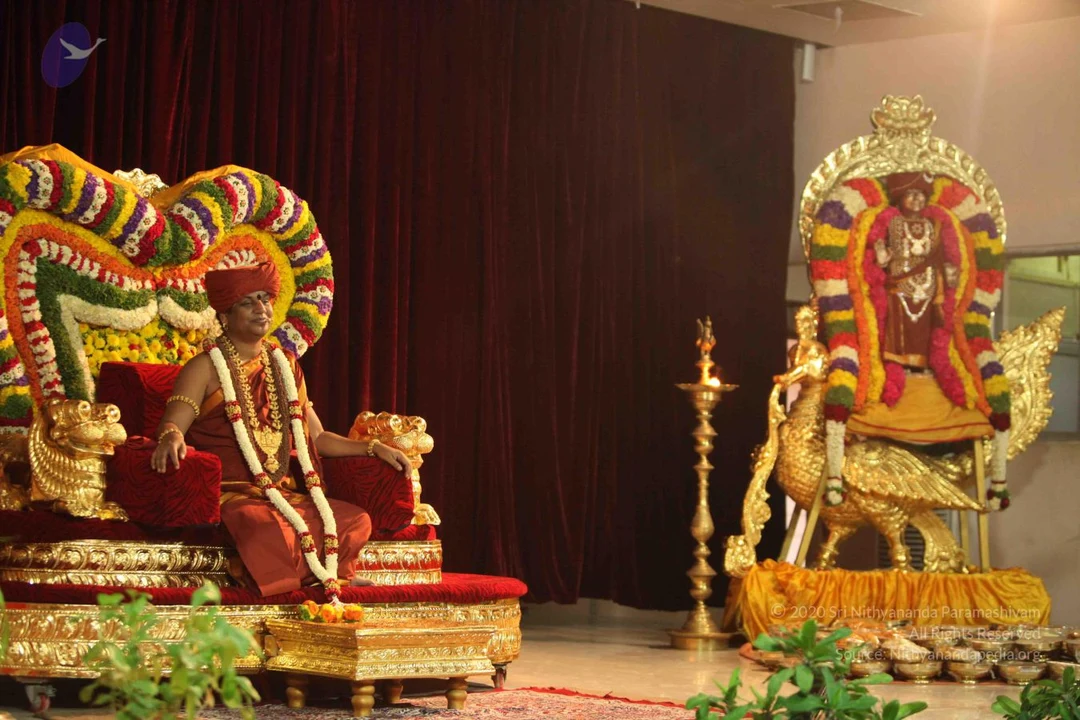
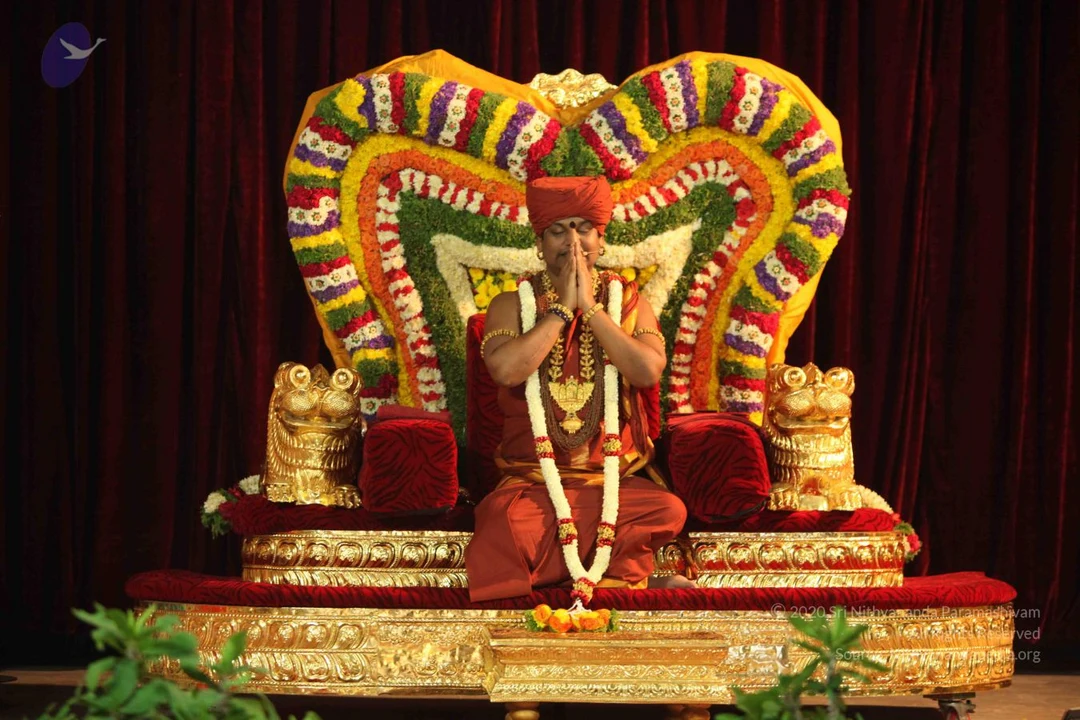
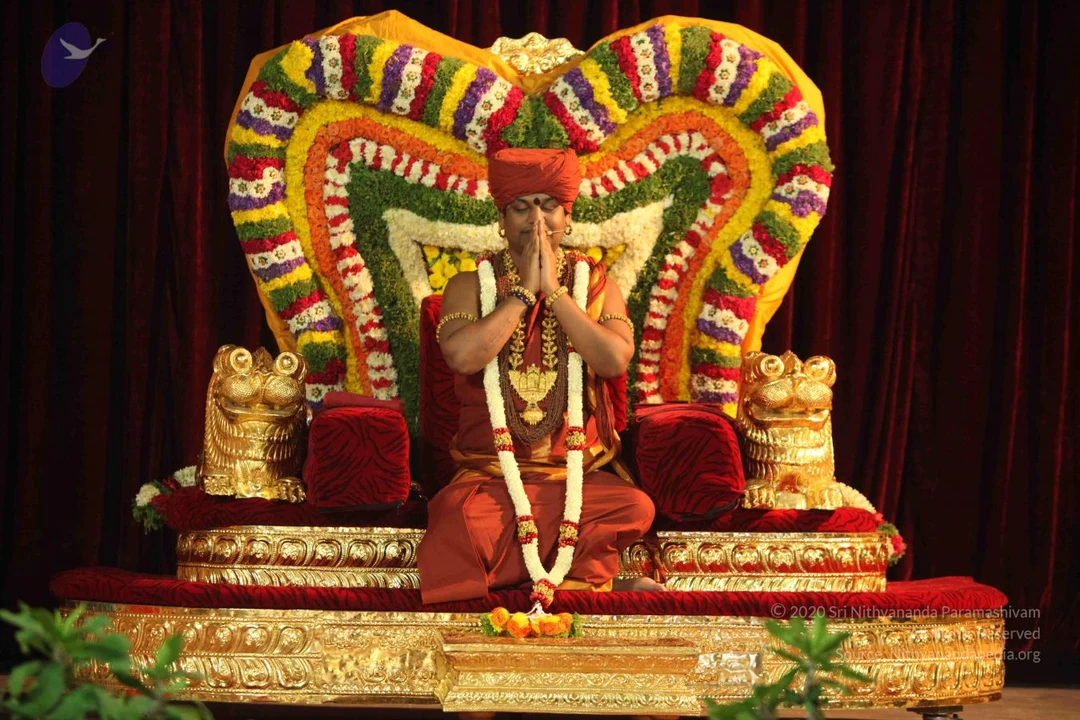
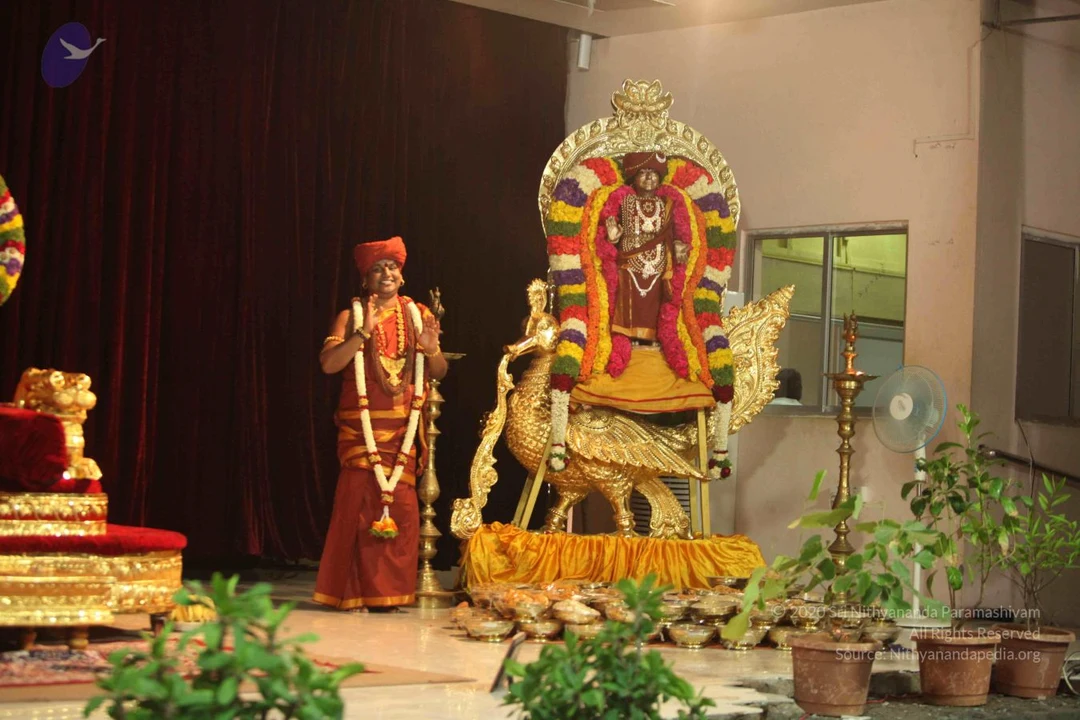
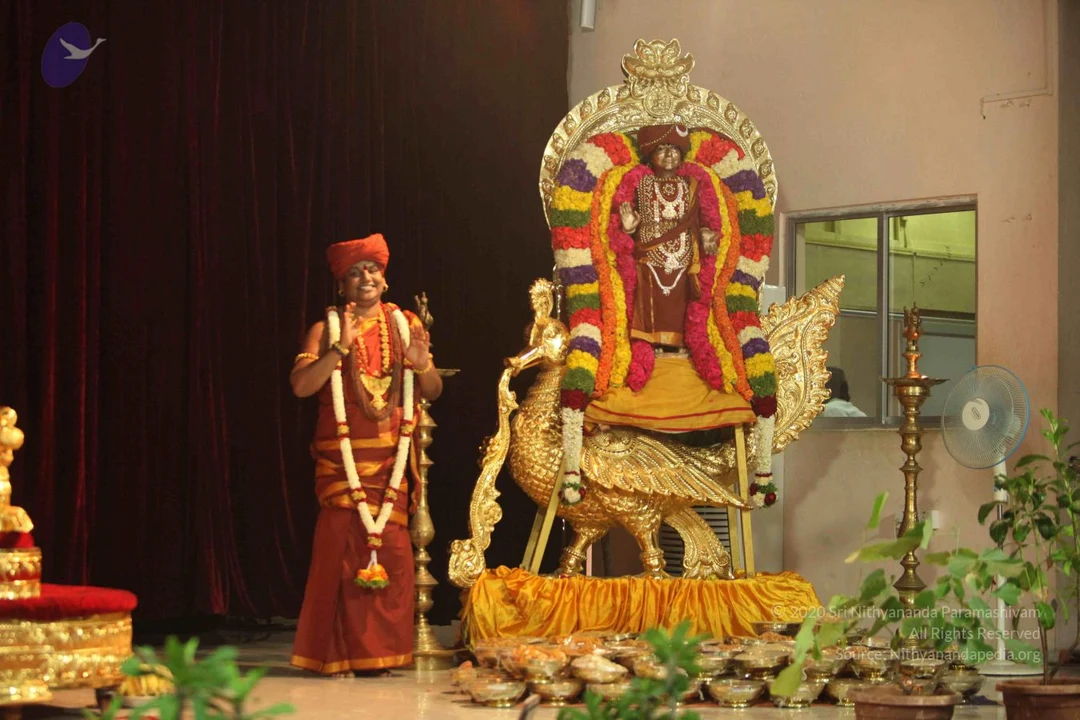
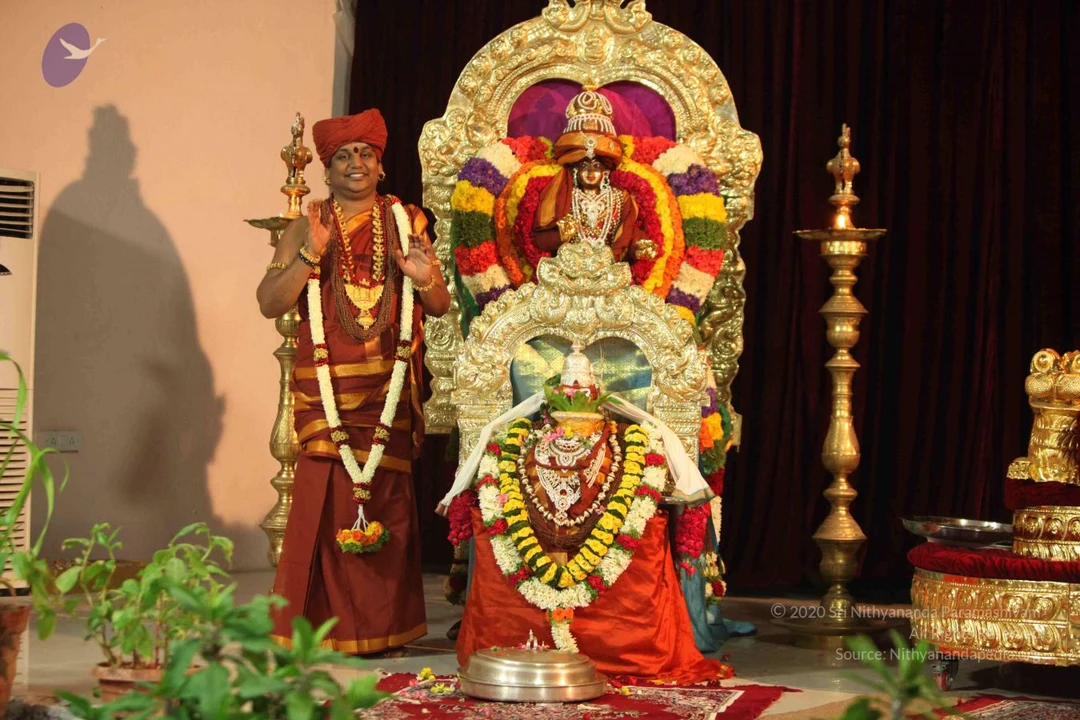
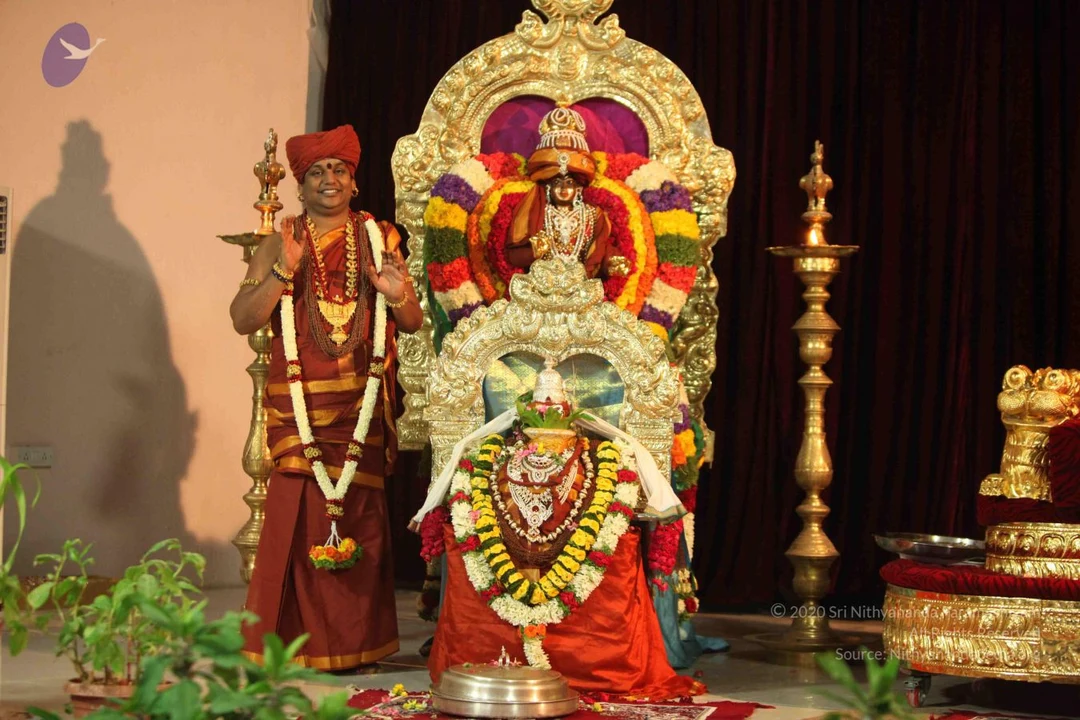
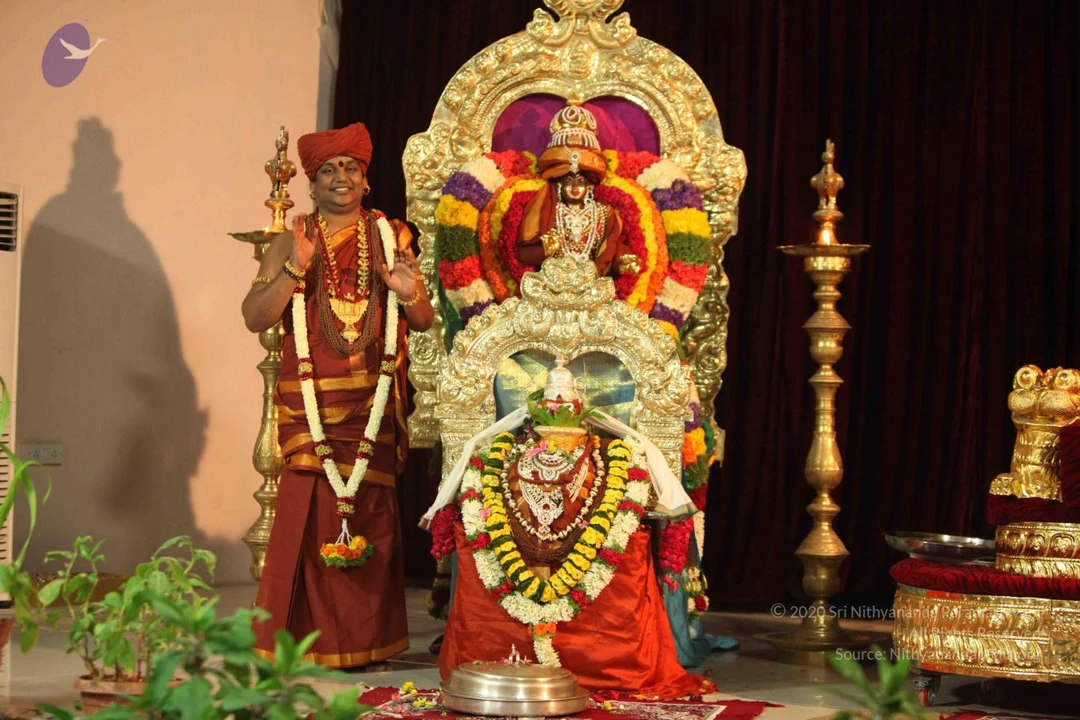
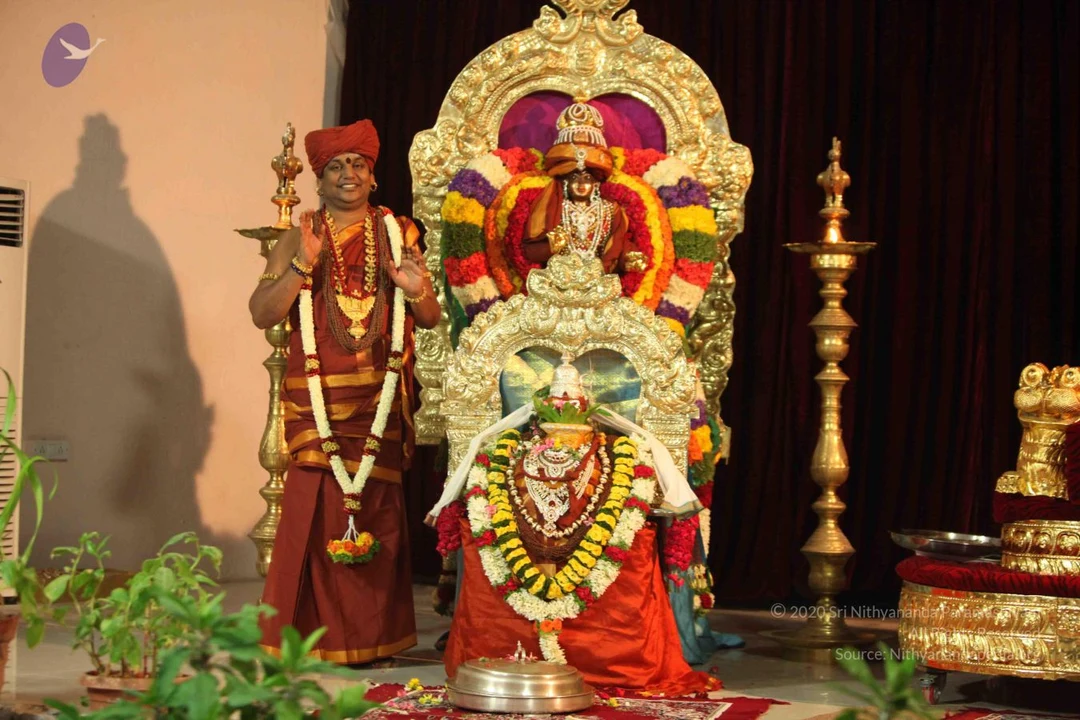
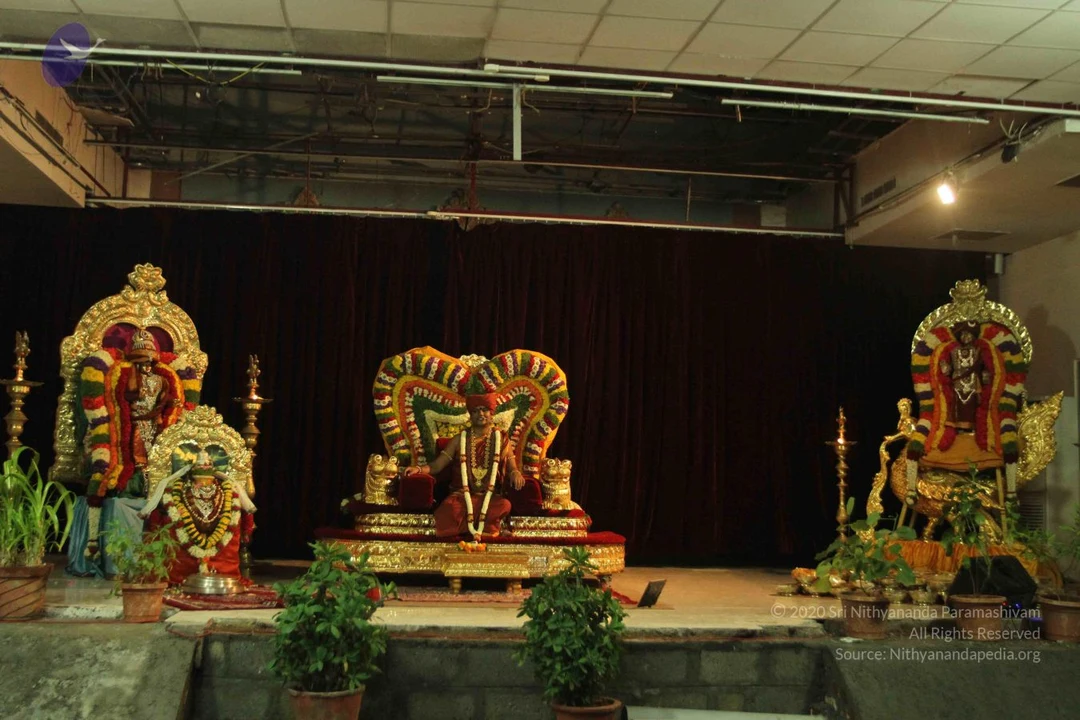
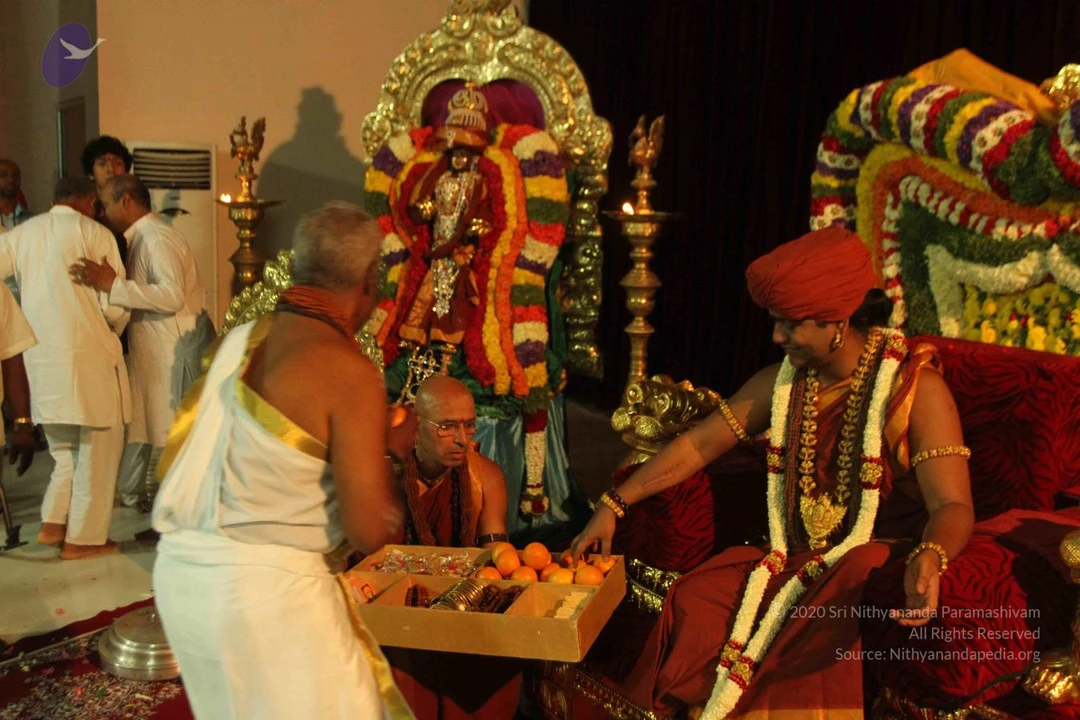
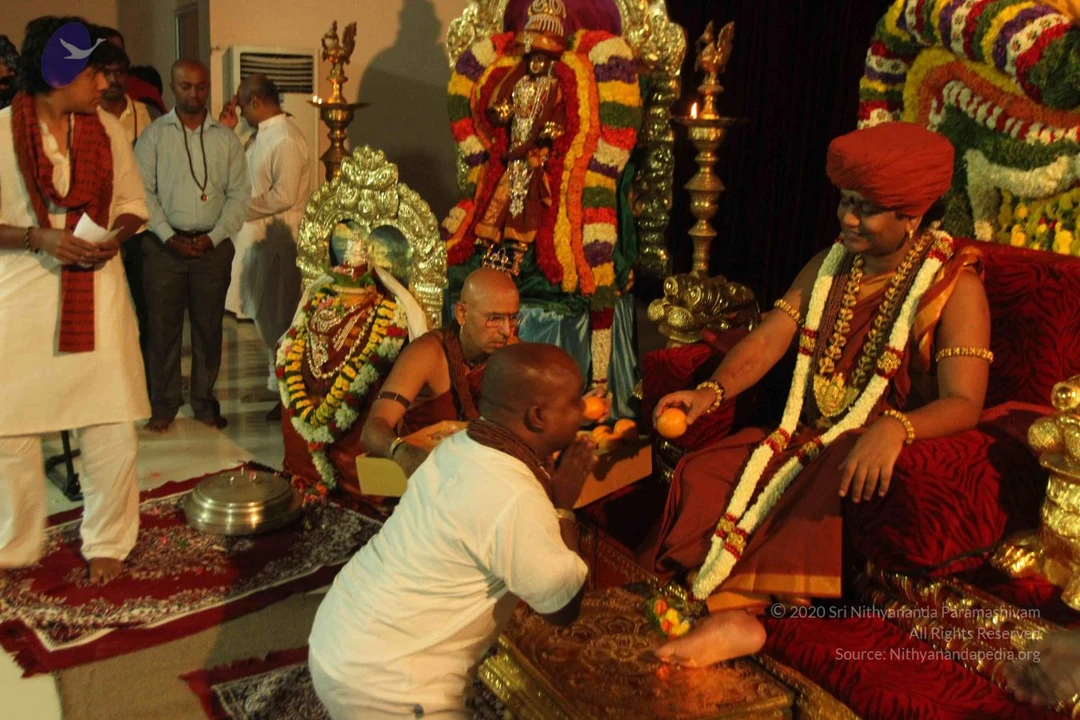
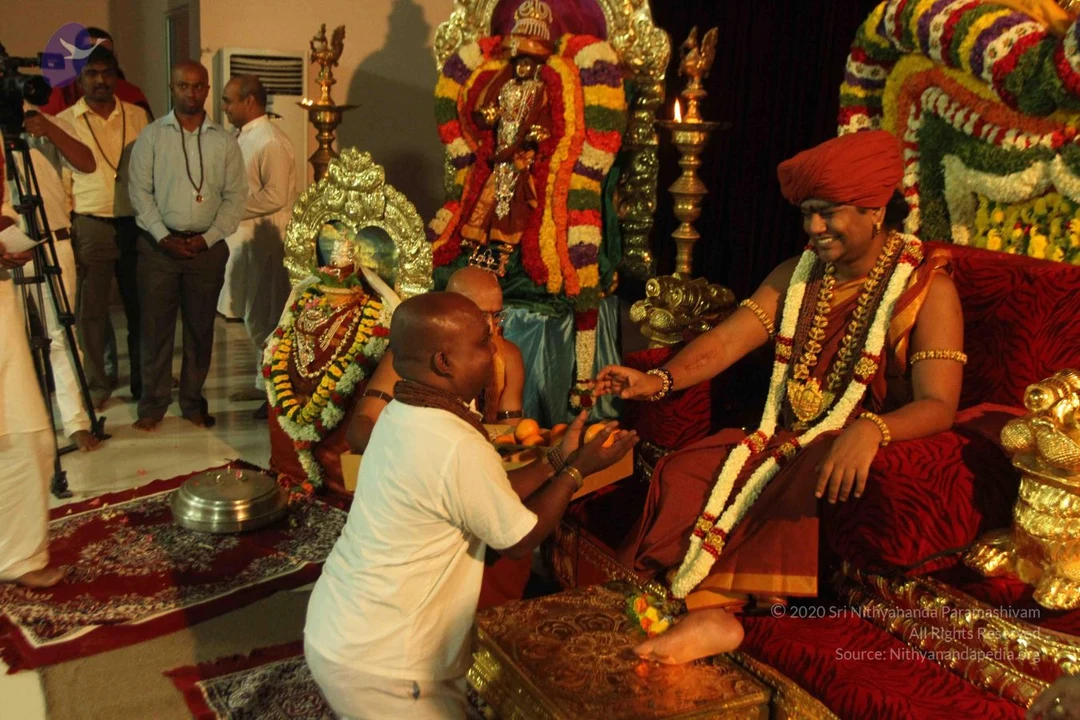
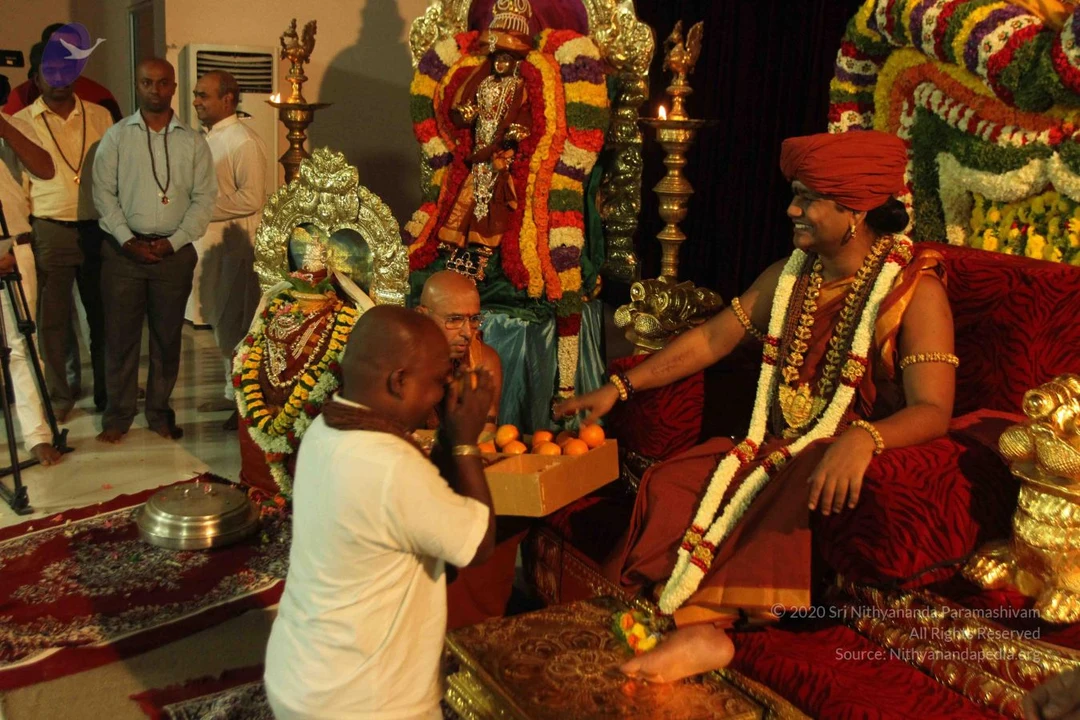
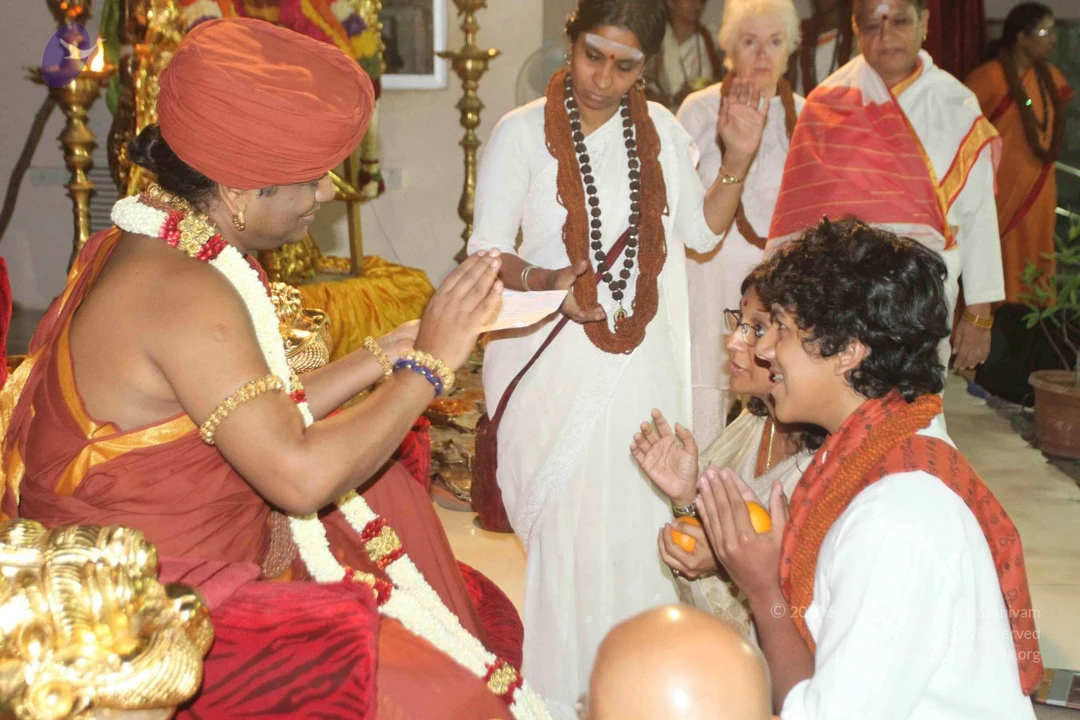
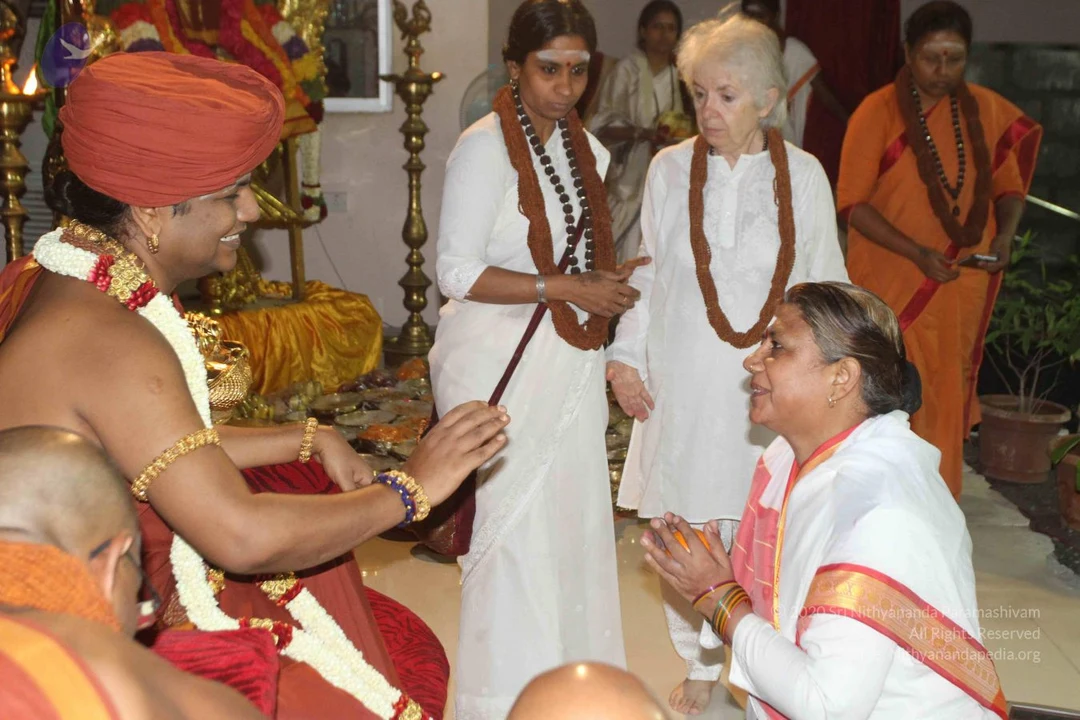
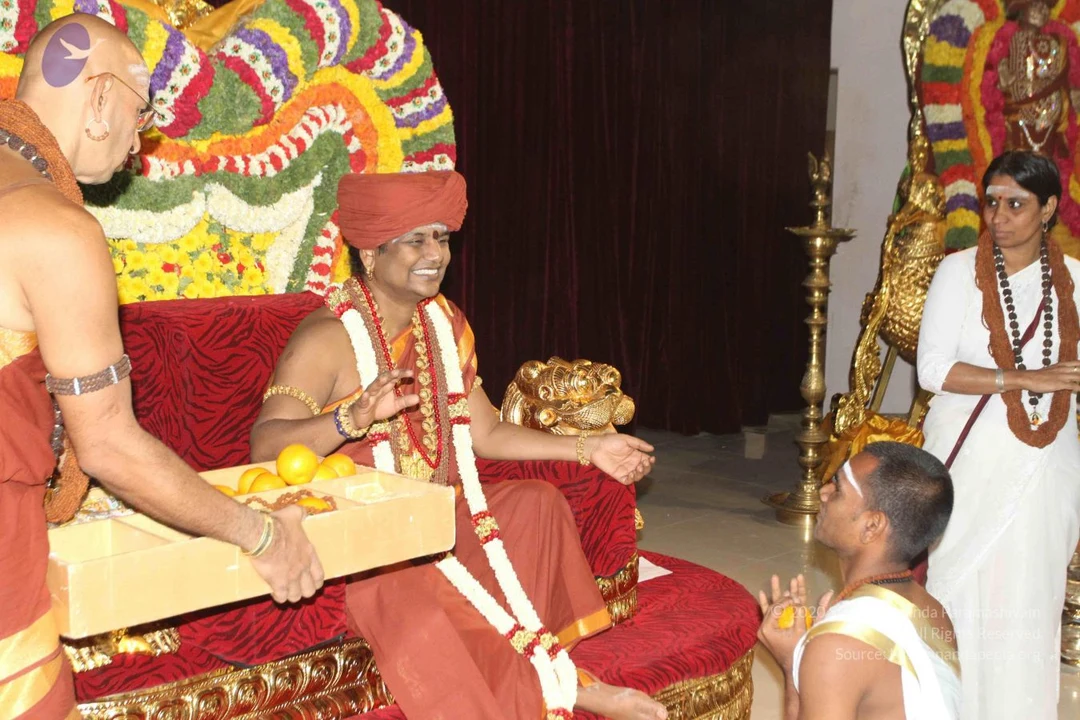
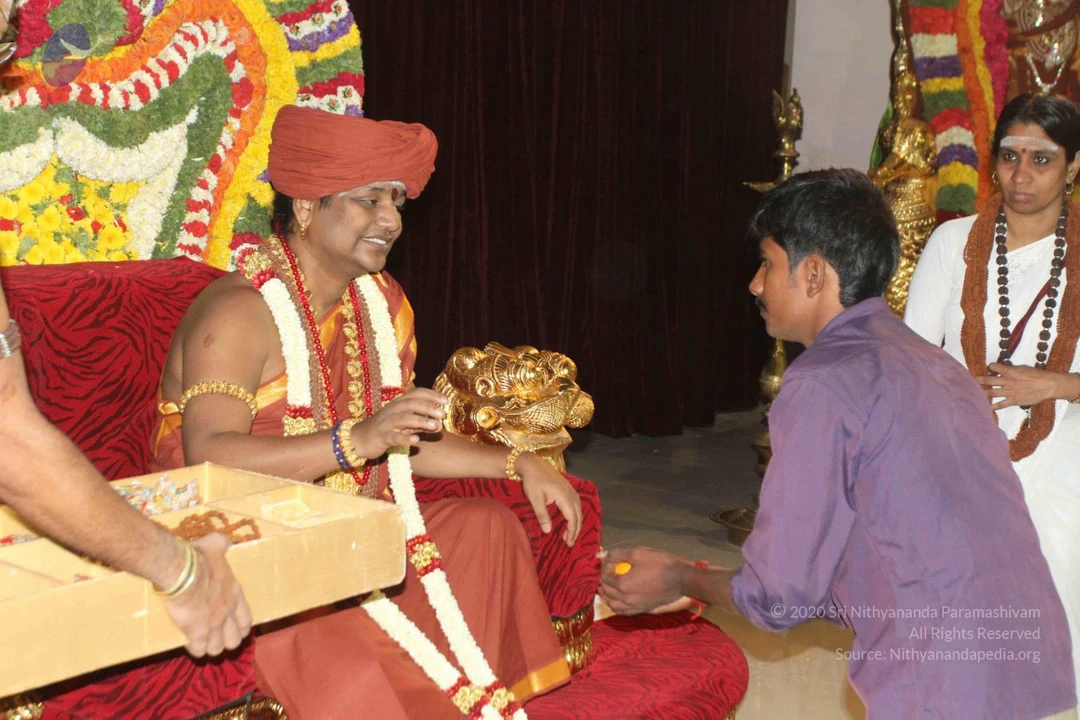
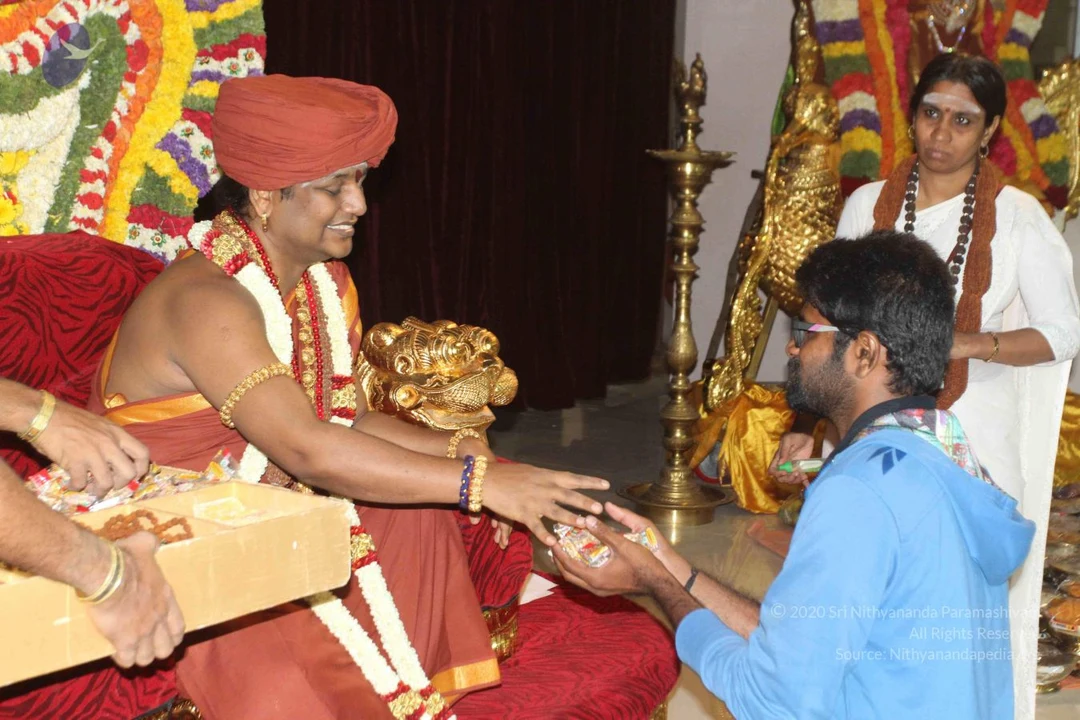
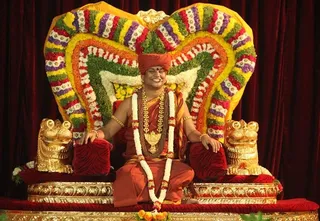
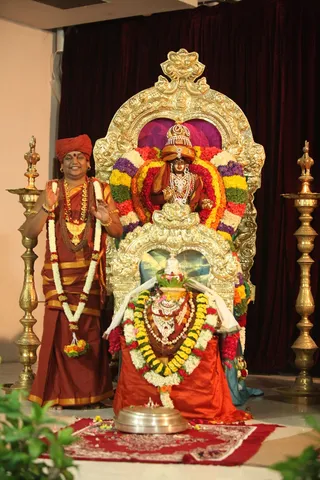
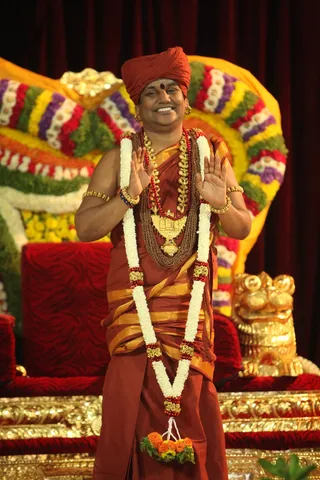
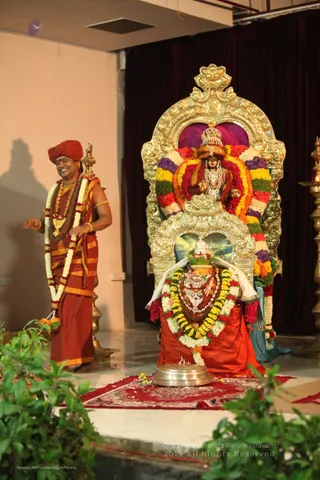
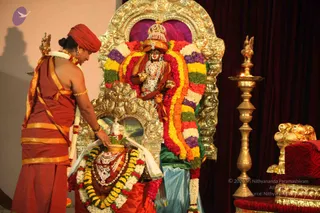
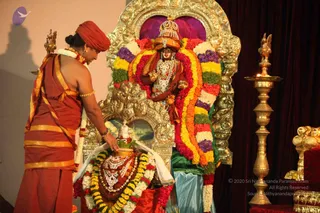
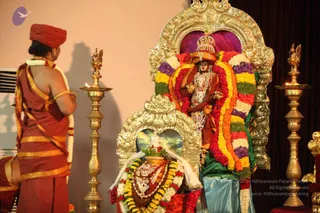
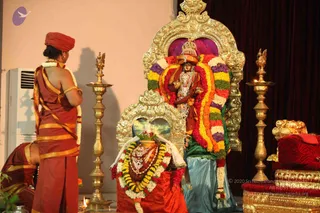
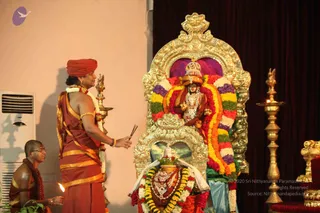
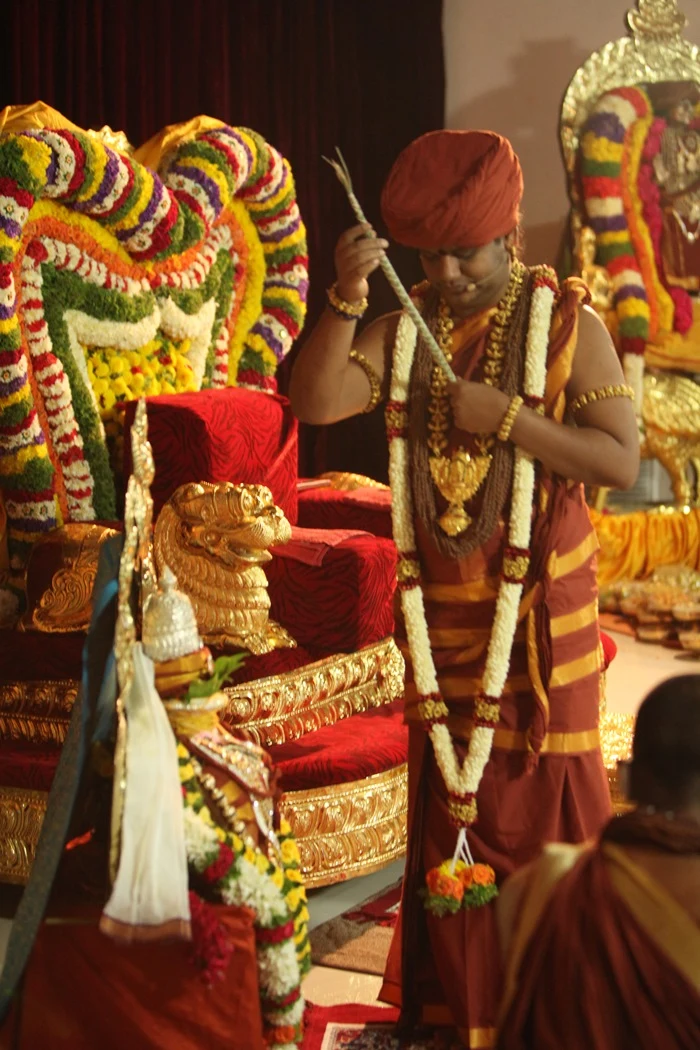
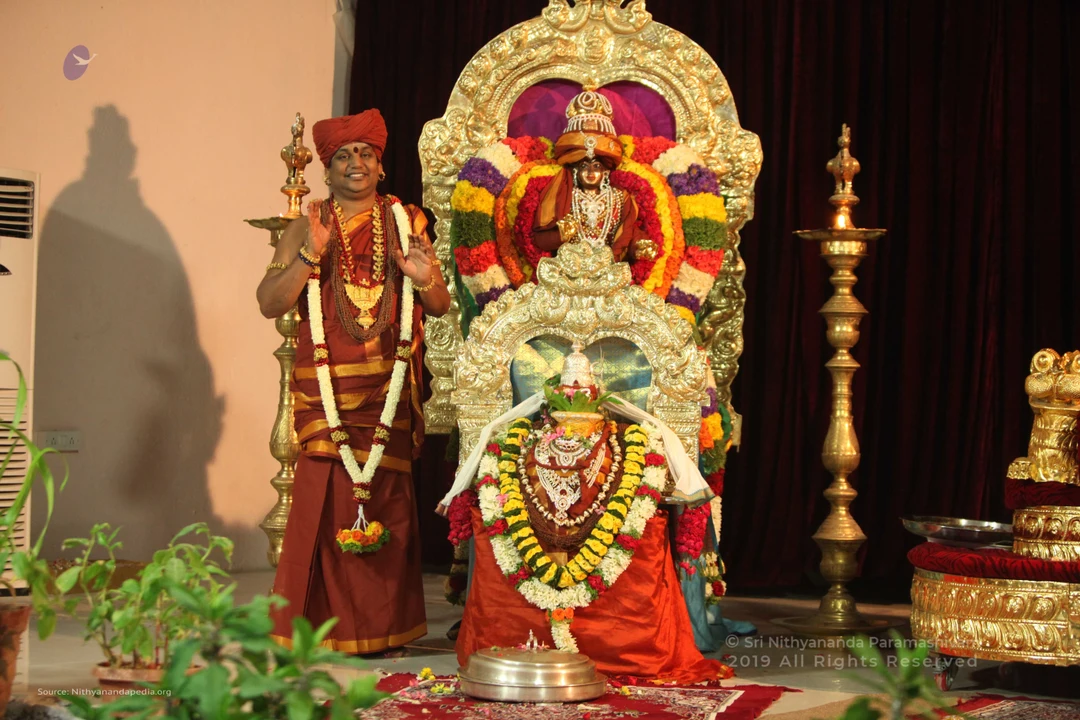
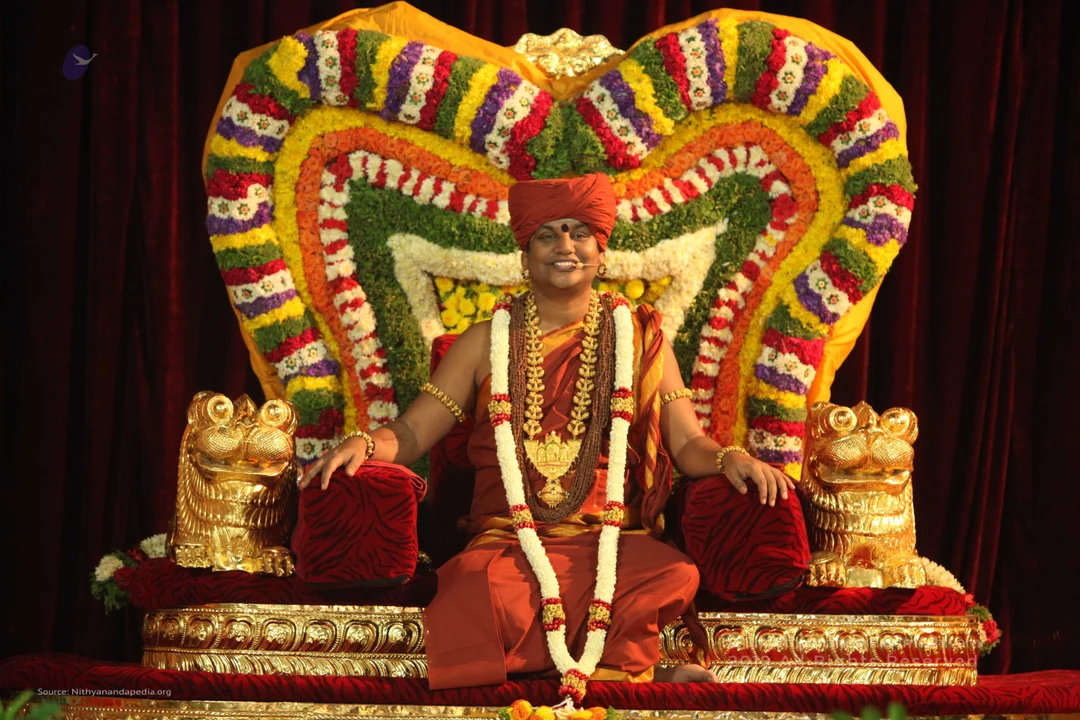
A photograph of a ceremonial stage with a dark maroon velvet backdrop and a large ornate gold throne-like seat (peetha) draped with thick garlands of marigolds and multicoloured flowers. Seated figure on the throne wears an orange-and-gold cloth, a golden crown and heavy ornamental necklaces, and is largely covered by flowers. Two tall brass oil lamps (lamps with flame) stand on either side. In the foreground a person in an orange-red robe with gold borders bends forward toward the throne, and to the right a standing figure in an orange-red robe with a gold-bordered shawl and a red turban holds their hands together in greeting. A green potted plant sits at the lower left.A photograph of a standing man in an orange-red saffron ensemble with a matching turban and a long white-and-orange flower garland, hands raised in greeting near a tall brass oil lamp (lamp stand). Beside him, a large ornate gold chair shaped like a peacock, draped with a multicoloured floral garland of red, yellow, green and white flowers, holds a figure in a brown-red robe and jewelled necklaces seated on a yellow cushion; the seated figure is a decorated statue or murti, not a living person. Shallow dishes of oil lamps line the yellow-draped dais in front. A dark maroon curtain forms the backdrop. Plants occupy the foreground.A smiling man in a red-maroon turban and maroon robes stands with both palms raised in a blessing gesture in front of a throne. He wears a white jasmine garland, layered rudraksha malas, and a large gold pendant necklace, with gold bangles on his wrists. The throne is covered in red velvet cushions and a backdrop of colourful flower arrangements in red, yellow, purple and green, with a gold lion-head ornament beside it. A gold-sequined floor covering lies at his feet. The man is shown with a distinctive appearance that matches the page's a person reference, with rudraksha malas and ceremonial gold necklaces, so he is noted as a person.

June 02 2015

Original wiki page
Contents

Title:

Nithyananda Poornima - Awaken Your Third Eye

Description:

In today’s (02June15) Nithya Satsang, Paramahamsa Nithyananda returns from Varanasi to Bidadi ashram, which is celebrating the very important, auspicious day of Nithyananda Poornima – 26th anniversary of his Enlightenment day, that happened in the lap of Arunachala hill. He shares how this Nithyananda Poornima is extra-special as he is feeling fulfilled, having reproduced dimensions of his enlightenment in others such as Third Eye Awakening. He blesses us all to experience Third Eye Awakening. Watch, Share and Subscribe to our channel to be notified of the next upload click http://www.youtube.com/subscription_center?add_user=lifeblissfoundation to subscribe. visit: http://www.nithyananda.org http://www.nithyananda.tv http://www.innerawakening.org https://www.youtube.com/user/LifeBlissFoundation https://twitter.com/SriNithyananda https://www.facebook.com/ParamahamsaNithyananda https://plus.google.com/104086565286265959836/posts

Link to Video:

VideoAudio

Transcript:

nithyānandeśvara samārambhām nithyānandeśvari madhyamām | asmat āchārya paryantām vande guru paramparām ||

I welcome all of you with my love and respects

I welcome all the devotees, disciples, samajis, satsangees, sri mahants, mahants, thanedars, kotharis, everyone sitting with us through Nithyananda TV, Sadhna TV, Arra TV, Nakshatra TV and two-way video-conferencing having Nayana Deeksha all over the world. The cities sitting with us having Nayana Deeksha – Melborne Aadeenam, Houston Aadeenam, St Louis Aadeenam, Guadaloupe Aadeenam, Kulum Lupur Aadeenam, Omkar city Oklahoma, Melborne Aadeenam, Hollywood Satsang Center, Hong Kong, Singapore Aadeenam, Beverly Hills CA, Phoenix Aadeenam, Oklahoma Aadeenam, Toronto Aadeenam, Vancouver Canada, Phoenix AZ, Los Angeles Aadeenam, Ohio Aadeenam, Seattle Aadeenam, Redmond WA, San Jose Aadeenam, Austin, China, Montclair, and some more cities are joining. I welcome all over you with my love and respects.

First, the Jnanasambandar Mahotsav starts from today, his birth, he getting mother’s milk, and he establishing Saivism, and His Videha Samadhi with Mahadeva – all that will be celebrated from today. So, first let us start the tradition ritual of His birth, Jnanasambandar’s birth, then today we have a grand celebration of Nithyananda Poornima – My Enlightenment Day Celebrations. Today, formally we started the Utsav of Jnanasambandar.

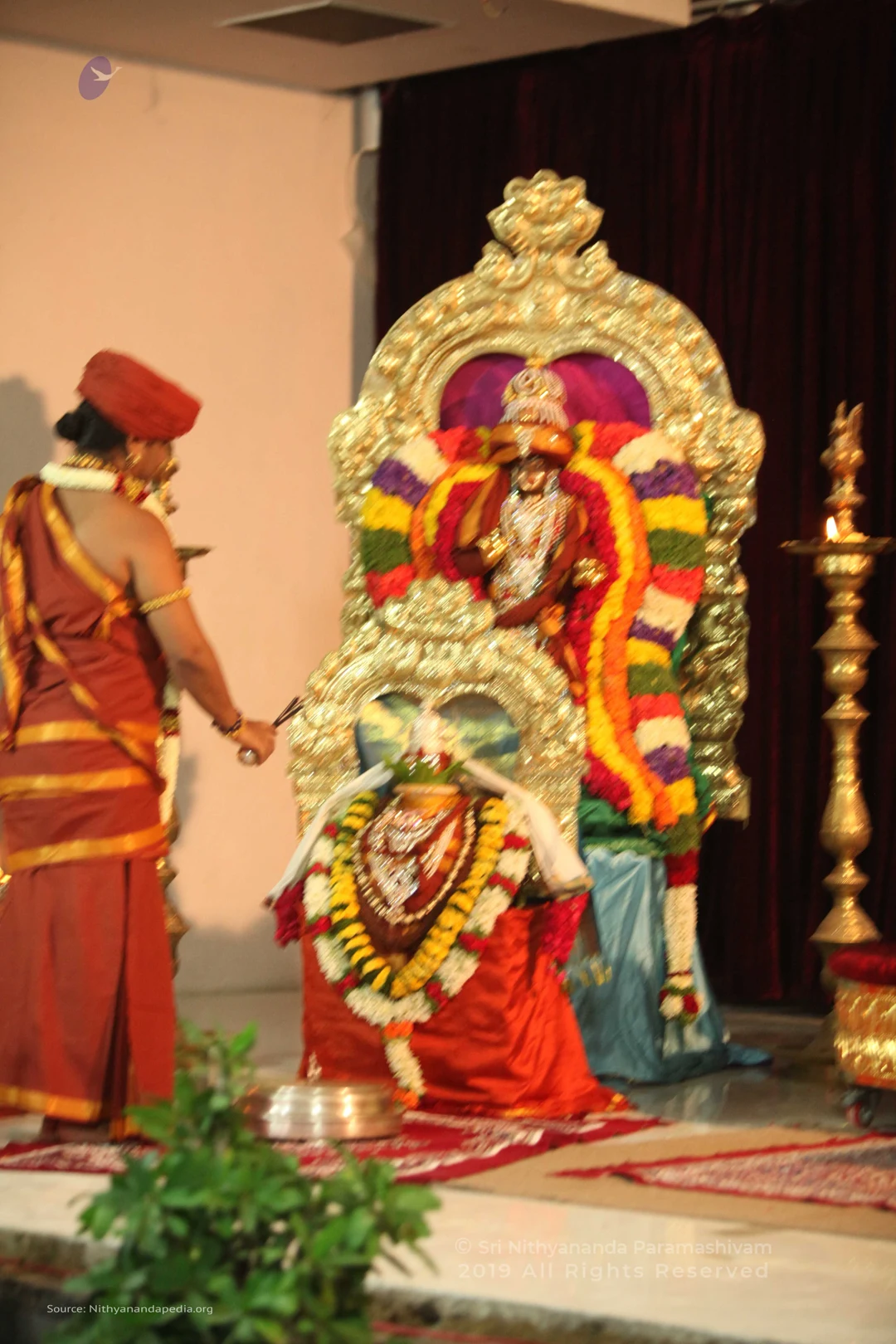
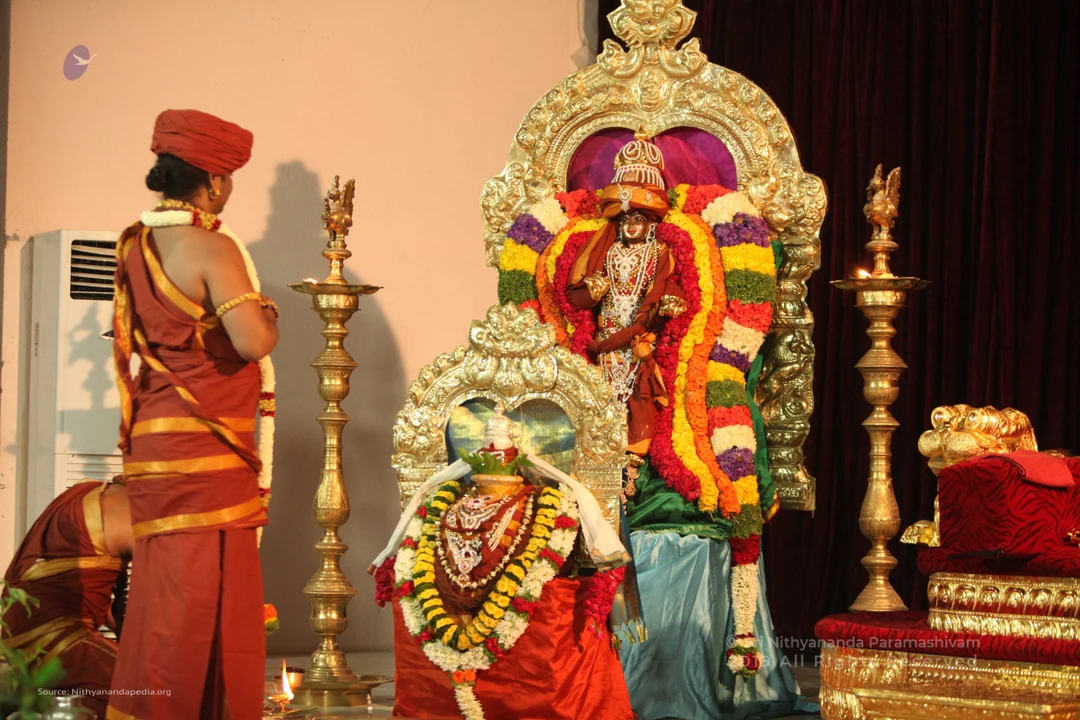
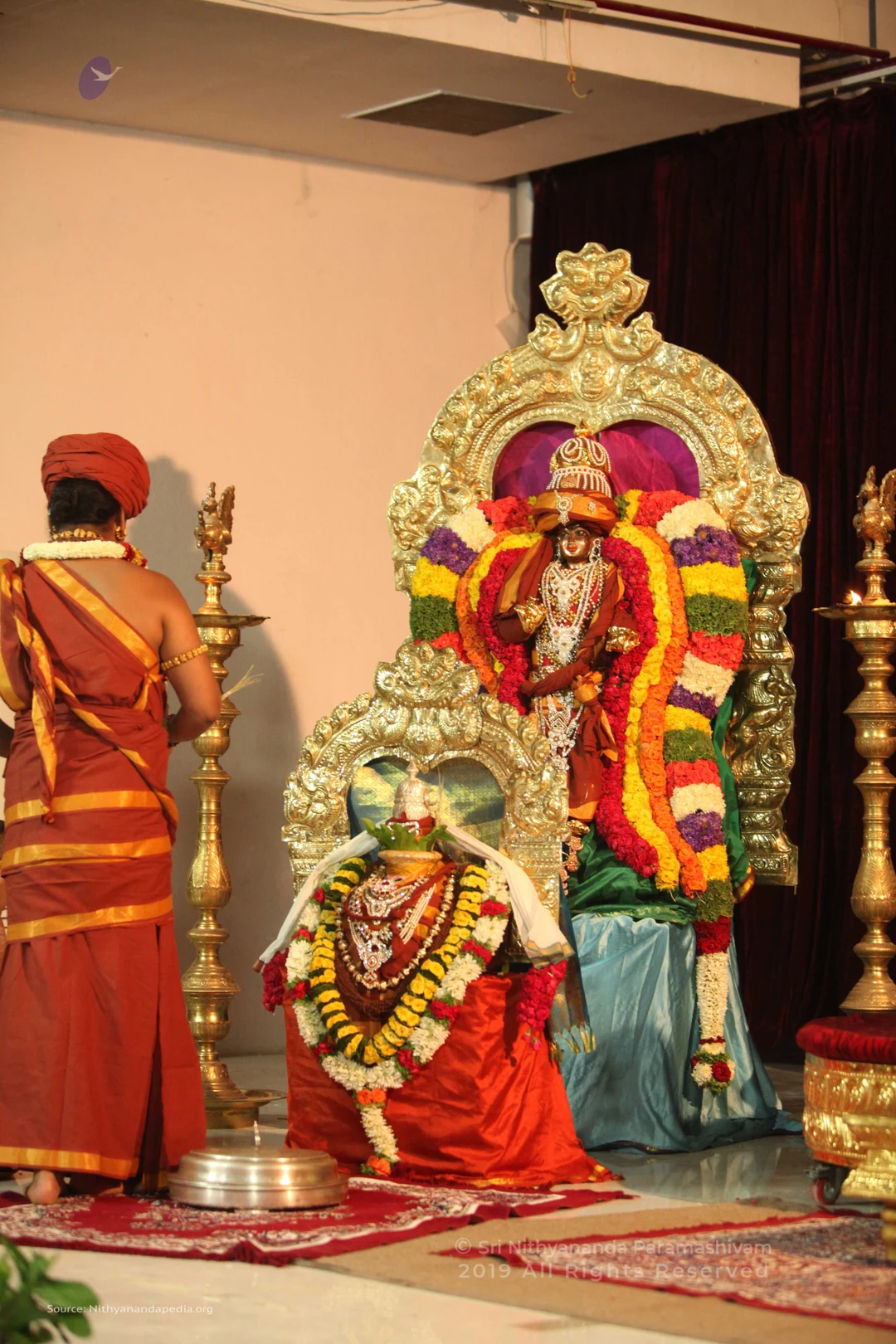
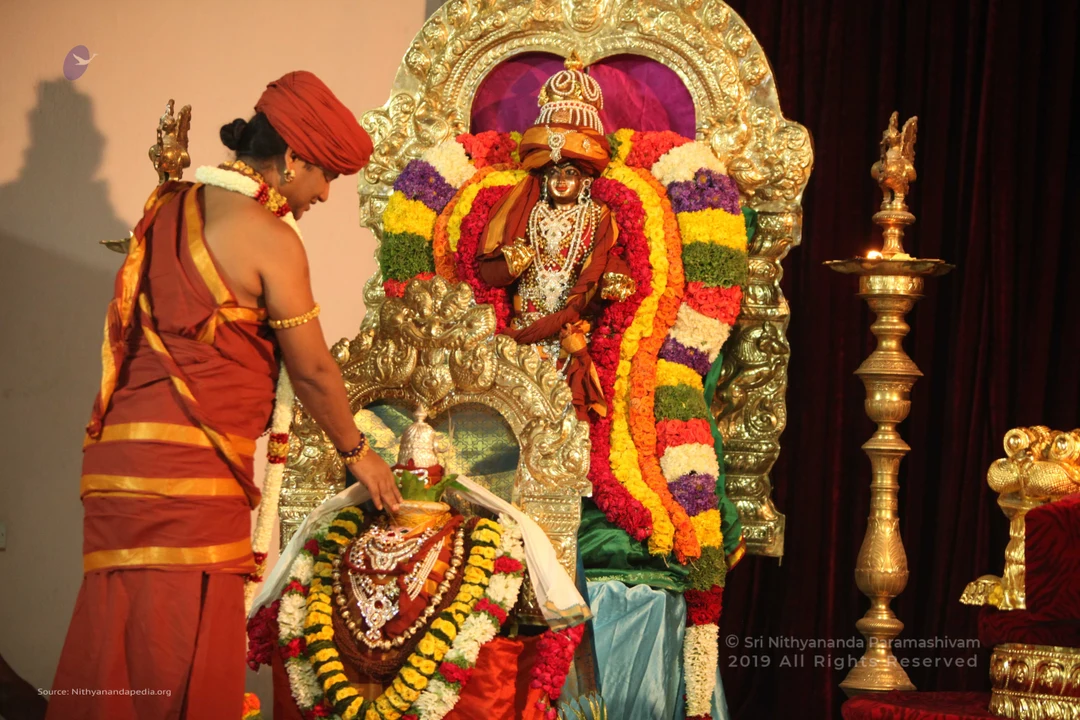
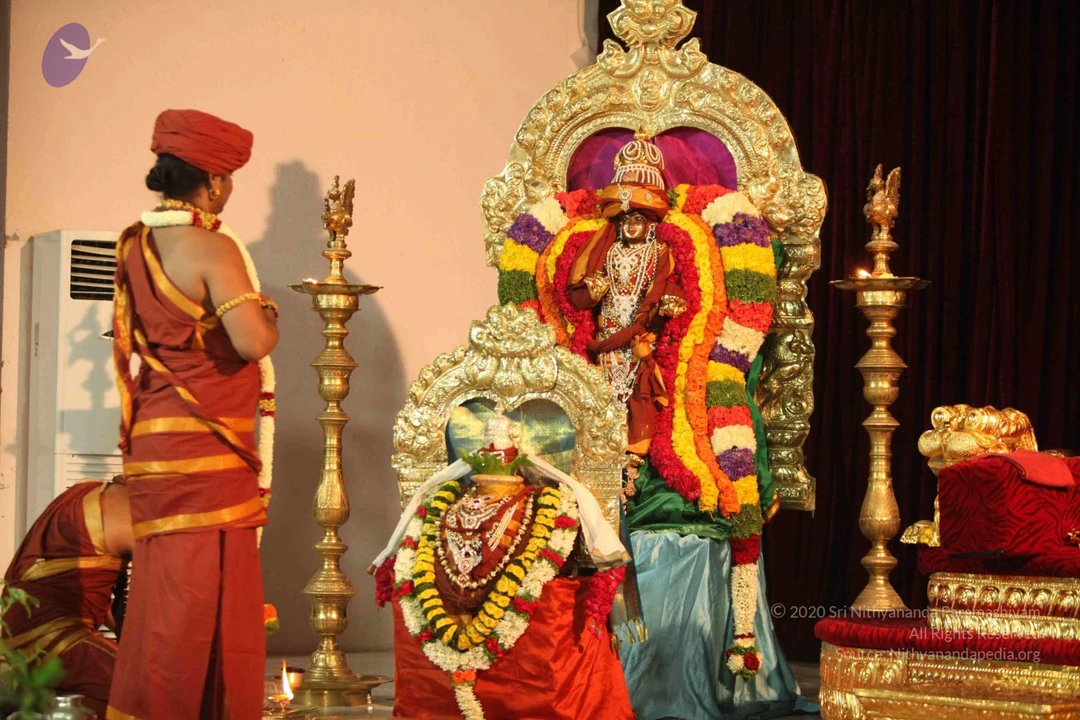
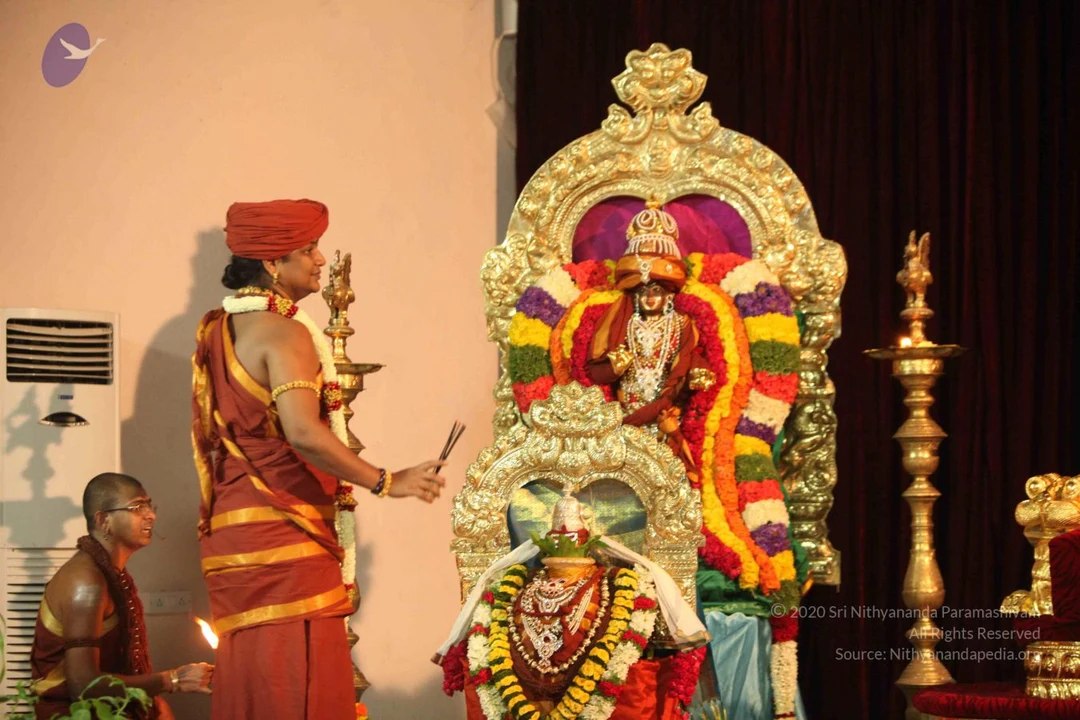
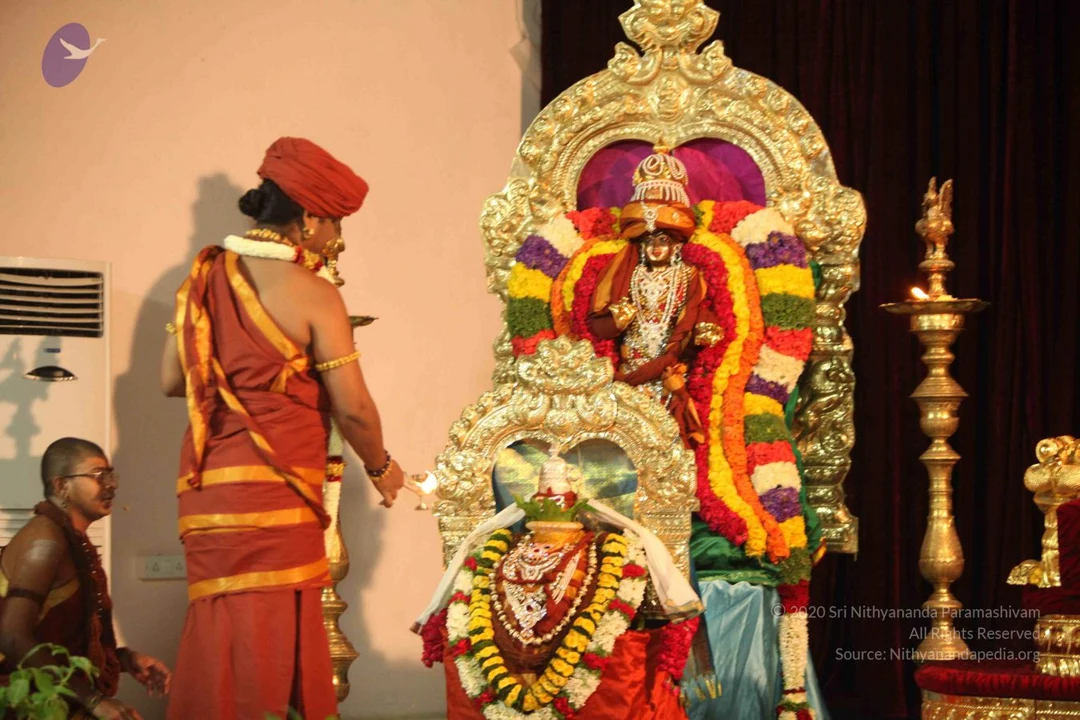
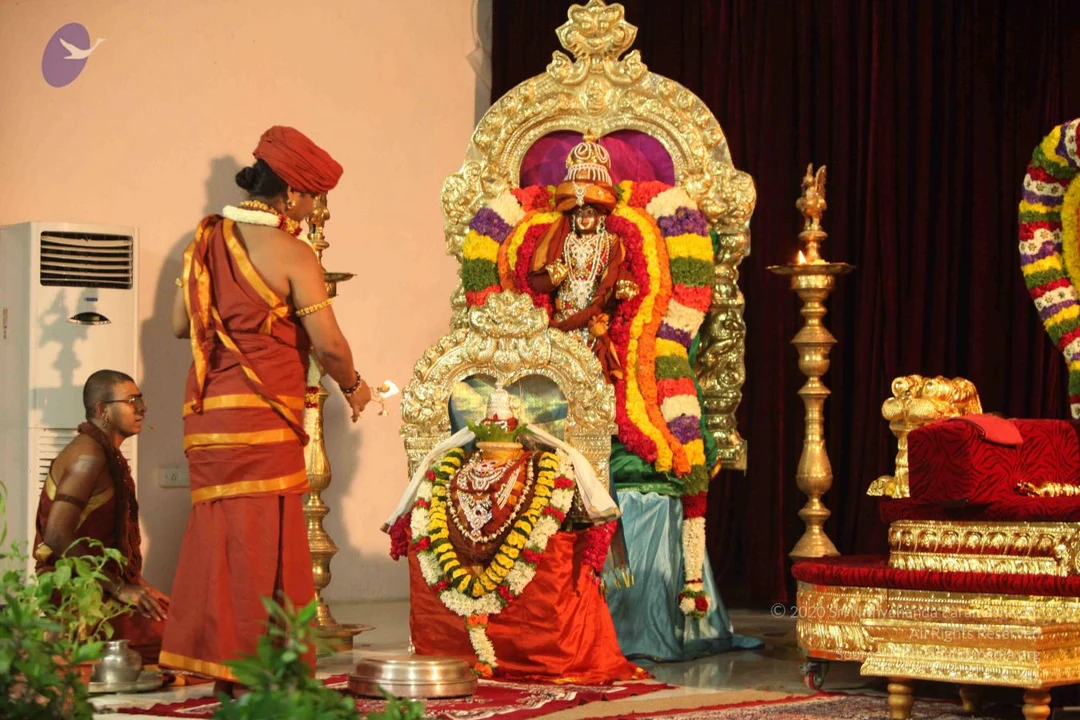
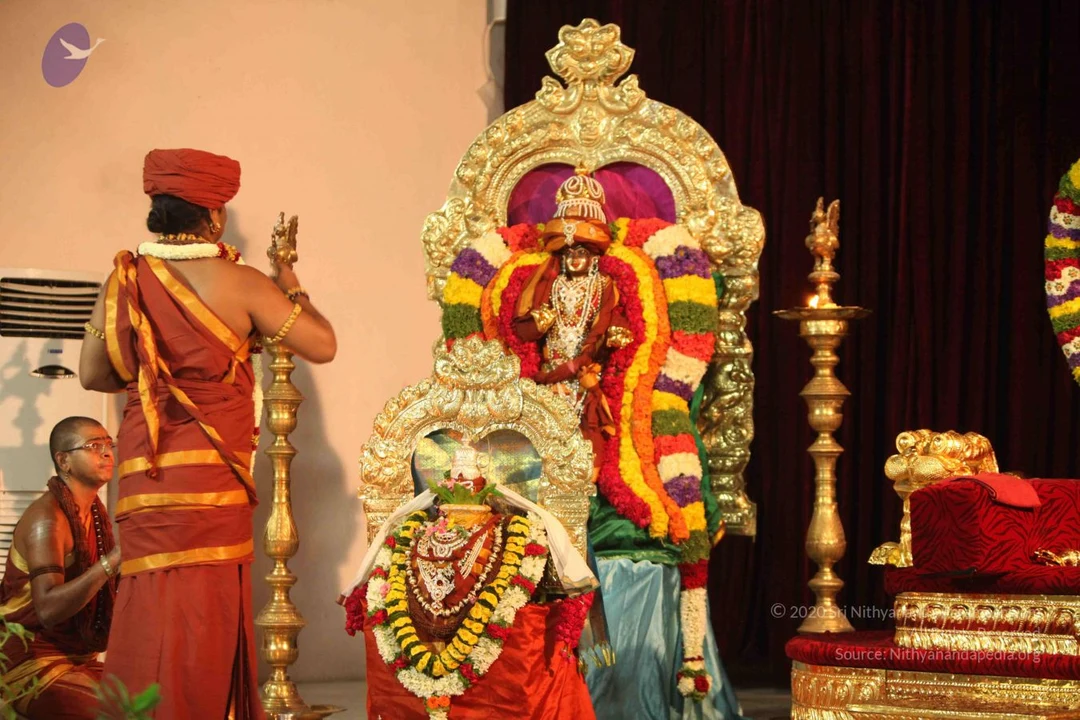
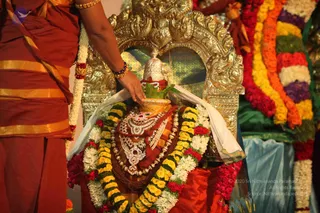
Today we will be celebrating His incarnation, means taking birth. Tomorrow, He receiving the enlightenment milk from Devi. Then next day, his Mahasamadhi, Videha Samadhi into Mahadeva. Next, today 26 years, we are entering into 27 years of My Enlightenment day. Bidadi has decorated my Murti on Svarnahamsa and offered many naivedhyams.

To celebrate the event, this Nithyanada Poornima, I have a special unique fulfillment, which I want to share with all of you. This is the first Nithyananda Poornima, I am celebrating after giving at least one glimpse of what I had at the age of 12 to all My Gurukul kids and many of our devotees. So now when I tell people, I was able to see 360 degrees. People won’t be able to denied it. No one can deny it because it is already being reproduced. Already the reproduction of that experience has started happening.

Even though it has not started happening, in that very intensity, which happened in me at the age of 12 but many of its dimension are getting replicated. Many of the experiences are getting replicated. So this establishes the fact my experience was true. It is not just the fantasy of some hyperactive kid or delusion of some ADHD kid or illusion of artistic child. Now that experience is getting reproduced properly in some many Gurukul kids, even adults. The sanctity and authenticity of that experience is getting established more and more.

So, this Nithyananda Poornima is very special for us. It’s only when we reproduce the same experience, the authenticity of the original experience is established only when the replicas are made. The authenticity of the original mode is established. It’s only with the lamps lit, the power of the original lamp is established. I can say so many kids having their eye awakened, even adults having their third eye awakened able to see everything beyond the use of senses, establishes the fact.

The experience which I described happened at the age of 12 is not a myth or a story or a fantasy, it is a proper right experience of higher reality. So first time, we are celebrating the Nithyananda Poornima after this third eye awakening so because of that this Nithyananda Poornima is highly fulfilling for me personally and for our Sangha.

My message on this Nithyananda Poornima, My message on this Nithyananda Poornima – work on your third eye, have initiation. See to it your third eye is awakened. Not having the third eye awakened, you are missing something seriously.

If that possibility has not yet happened and you are not having, then okay. But if the next level Ipad has been released and you are not having it, you are missing something seriously. Don’t miss it! Be updated. Already the Third Eye Awakening process is out available on planet earth. Make it available for you and be updated. BE updated human being – that is all is the message I have for today.

My blessings to all of you: Let everyone experience the highest enlightenment on this auspicious day. Let everyone live radiate with integrity, authenticity, responsibility, enriching, causing living advaita, the eternal bliss, Nithyananda, Thank you. Be blissful.

Photos From The Day:
Tags:

Paramahamsa Nithyananda, Nithyananda, Nithyananda Poornima, Third Eye Awakening, Enlightenment, Enlightenment Day, Incarnation, Shiva, Arunachala

Photos Of The Day:

laksharchana-guruhoma

Photos Of The Day:

photos

Photos from this day

View all 129 photos

Photos From The Day:
32 photosSource gallery
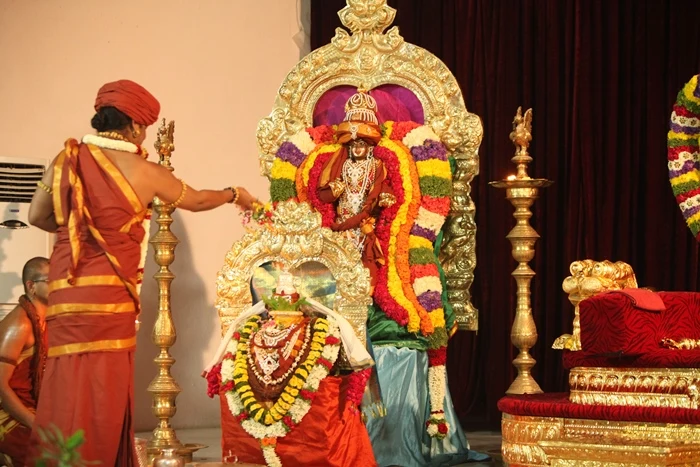
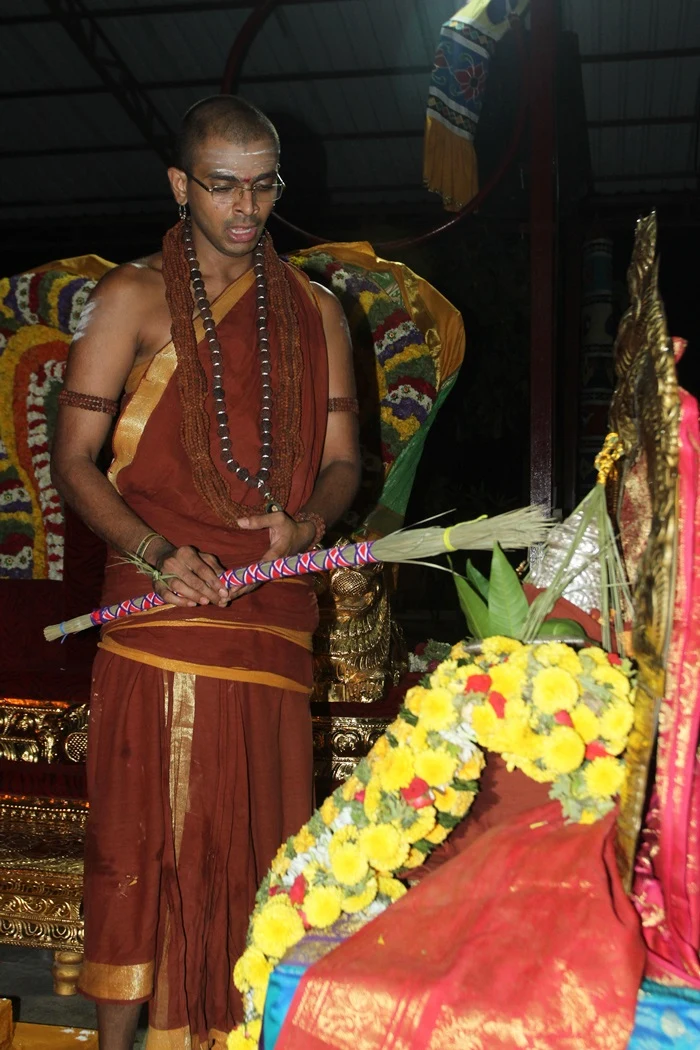
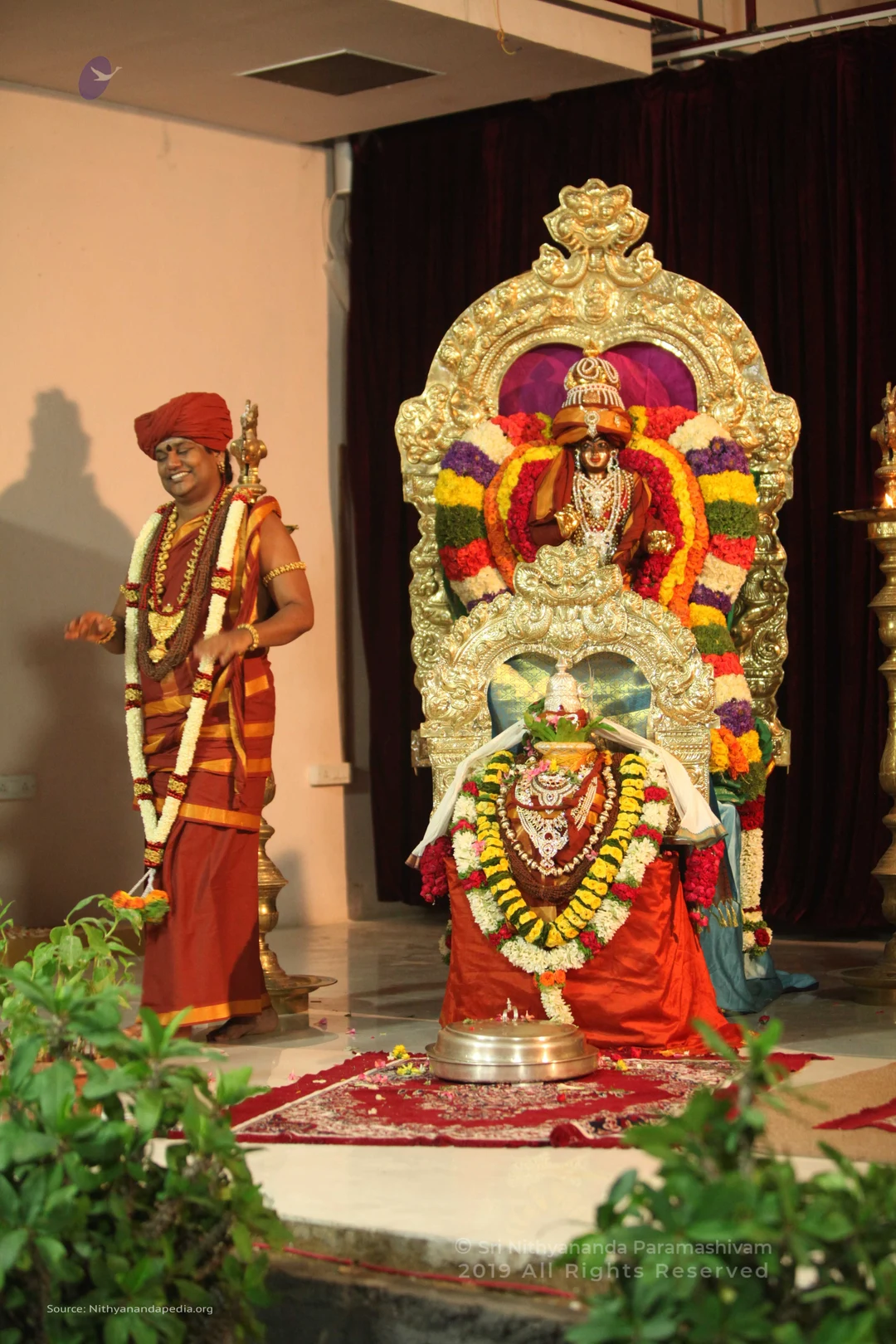
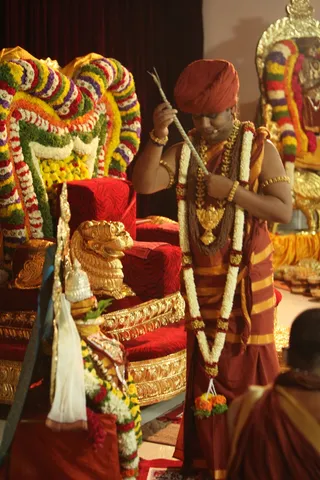
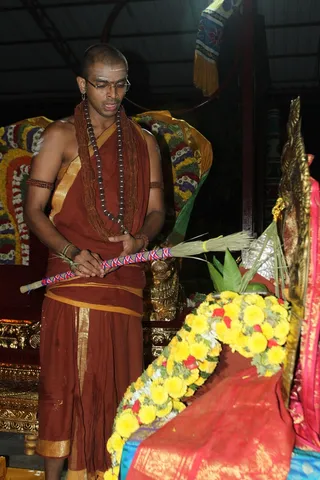
A photograph of a person standing beside an ornate golden and red throne decorated with multicoloured floral garlands and a carved golden lion-head armrest. The standing person wears a red-orange turban, a saffron-orange draped garment with gold-striped border, a long white flower garland, layered gold and beaded necklaces, gold bangles and armlets. He holds a thin white stick or wand in his raised right hand. Behind him, a gilded shrine with more floral decoration is visible, and a seated person in orange clothing is partially visible at the lower right edge.A seated man in orange-saffron robes sits on an ornate golden throne with lion-head armrests, backed by a large arch of marigold, rose and yellow garlands. He wears a red-orange turban, a white and red flower garland across his chest, multiple beaded necklaces and gold ornaments, and gold bangles. Red cushions rest on the armrests, and a dark red curtain forms the background. Swamiji (probable): the seated figure wears a saffron turban, layered rudraksha-style malas and gold ornaments on a throne, consistent with the page's reference to Swamiji at this event.Photograph of a stage shrine at an ashram event. A man in a rust-orange turban, orange-and-gold dhoti, and multiple rudraksha and beaded malas stands at left with both palms raised in greeting. A large gold-framed throne behind holds a deity murti wrapped in garlands of marigolds and roses in purple, yellow, red, and green, and a tall gold crown. In front, a Shiva lingam is adorned with yellow and white garlands and a mustard-yellow cloth, set on a brass plate over a red-and-gold mat. Two tall brass oil lamps flank the stage against a dark maroon curtain. The swamiji candidate has a compatible presentation, with his turban, rudraksha malas and ceremonial gold necklace, so this is probable Swamiji (probable) greeting devotees during a puja.A smiling man in a deep red turban and red-saffron robe stands with both palms raised in greeting in front of a red velvet throne. He wears long white and red flower garlands, multi-strand rudraksha malas, a large gold pendant necklace and gold bangles. Behind him is a floral-decorated golden arch of white, yellow, purple and red blossoms, and a gilded lion-shaped armrest stands at the right edge of the throne. The setting is a satsang stage at an ashram event. Image shows one person. Swamiji (probable) is described by his red turban, rudraksha malas and ornate gold necklace, with the throne setting consistent with a satsang dais.A photograph of a shaven-headed priest in a rust-brown dhoti and shawl with gold border, wearing rudraksha malas and glasses, holding a ceremonial broom-like bundle wrapped in a pink and blue cord while performing a ritual. Beside him are marigold and yellow flower garlands, a gold-decorated throne, and a golden deity or ceremonial object draped in red and pink silk. Tall floral arrangements frame the dim pavilion setting.A man in a red-orange turban and matching red-orange dhoti and shawl stands at left on a pale stage, smiling with eyes closed and holding a long white and orange flower garland draped over his arm. Beside him, a large gilded arched frame holds a deity murti adorned with a crown and multicolored flower garlands. In front of it stands a pot-shaped object wrapped in a white cloth, decorated with a crown, a silver-and-gold ornament, and a white and yellow flower garland, set on a red and gold rug with scattered petals. Brass oil lamps stand nearby, and a dark maroon curtain hangs behind the stage, with green plants in the foreground. The man's presentation is consistent with a ceremonial robe and rudraksha-style beads at his neck, but his identity is uncertain from appearance alone.
laksharchana-guruhoma
40 photosSource gallery
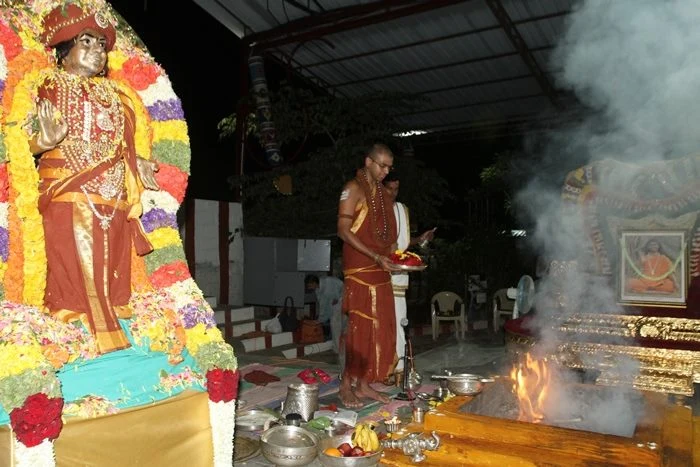
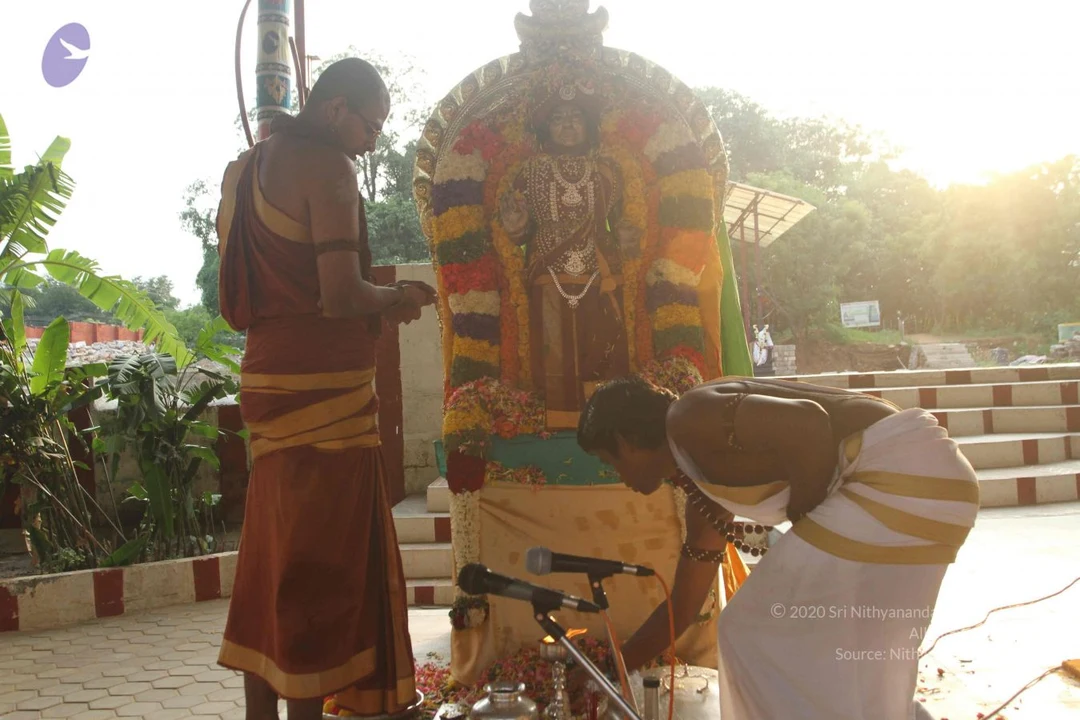
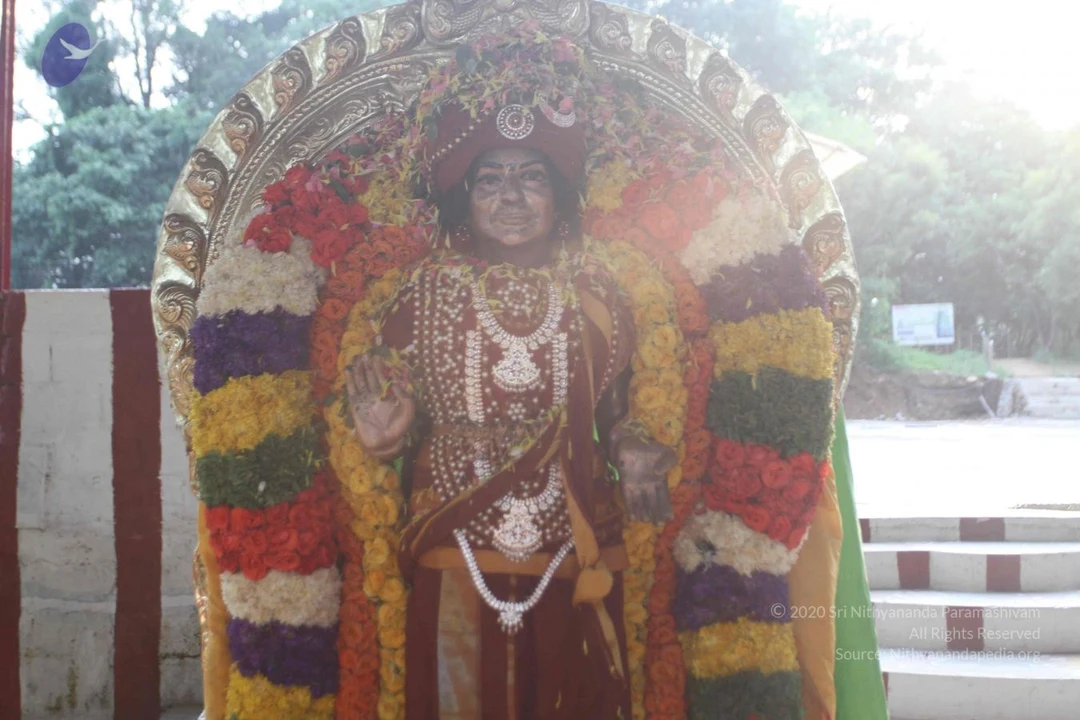
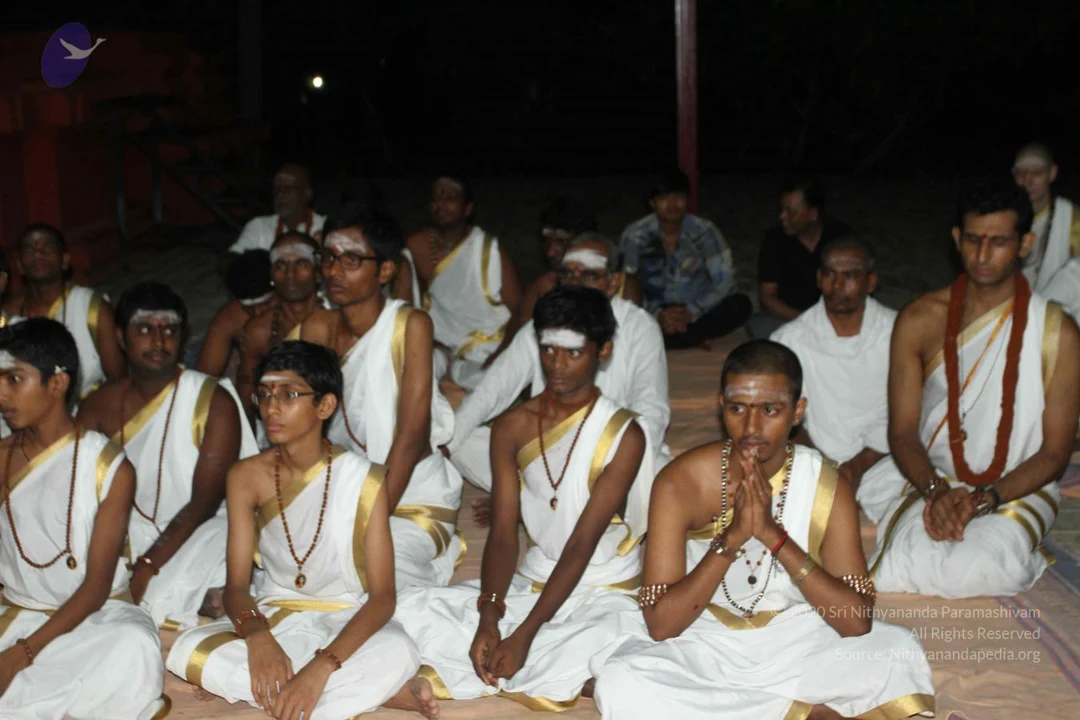
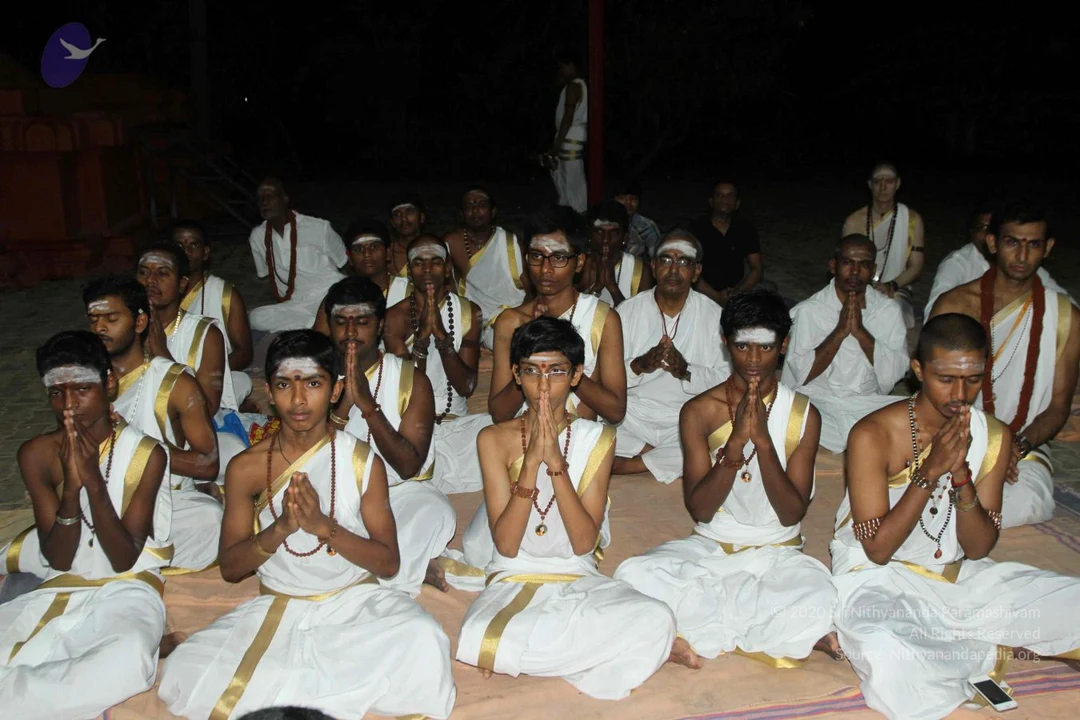
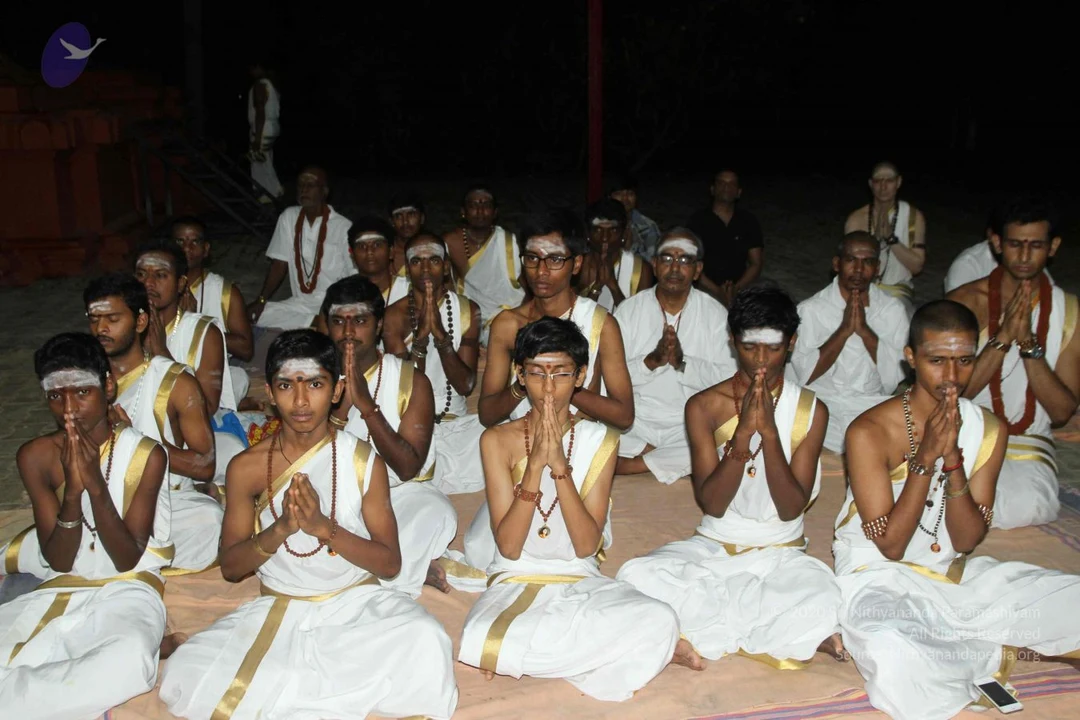
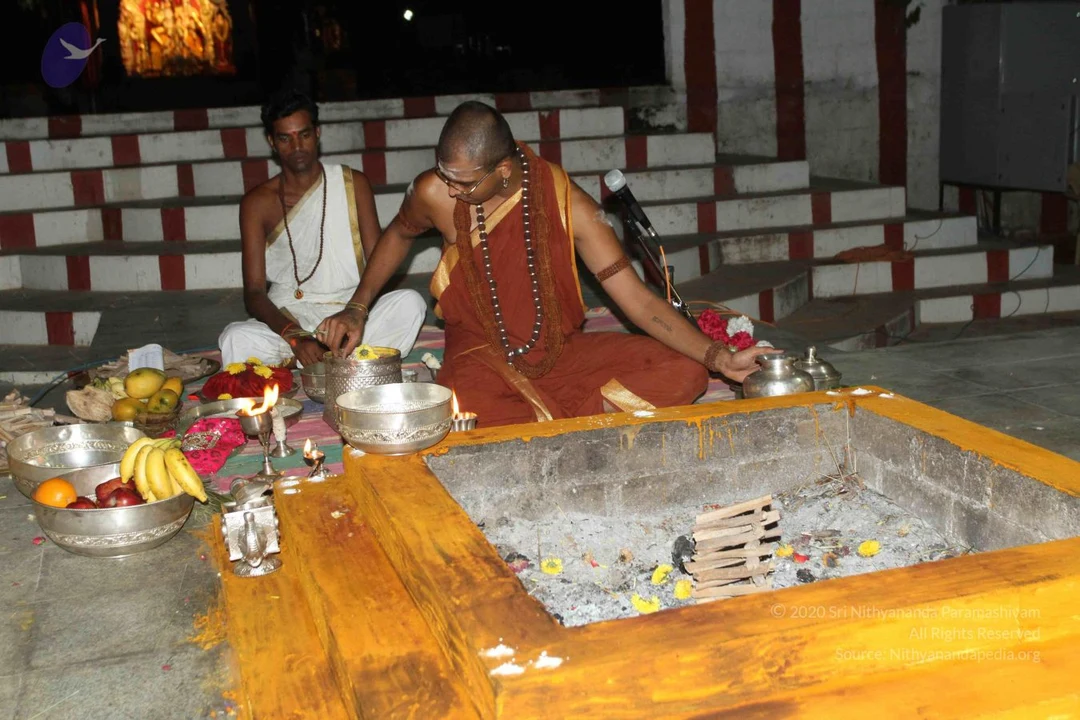
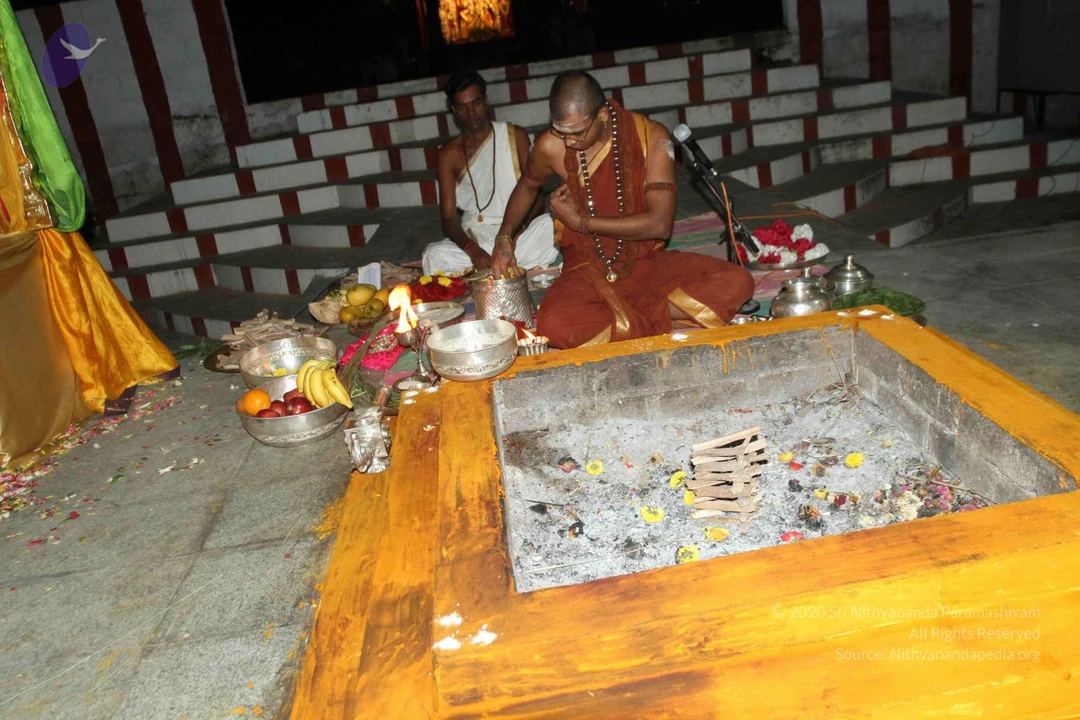
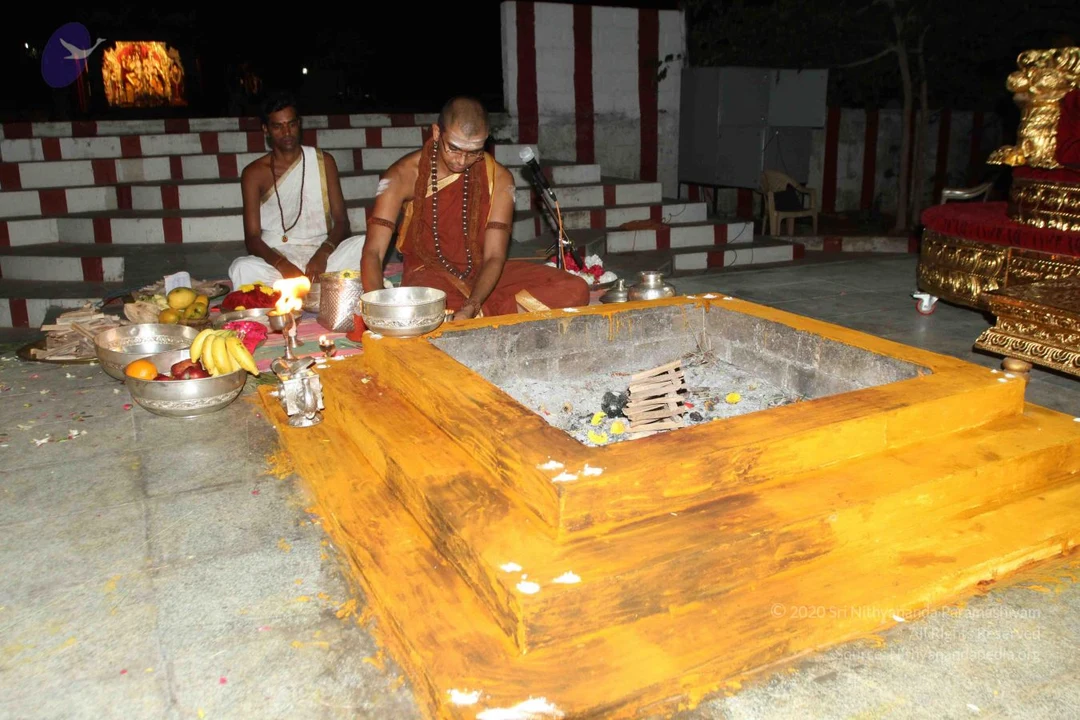
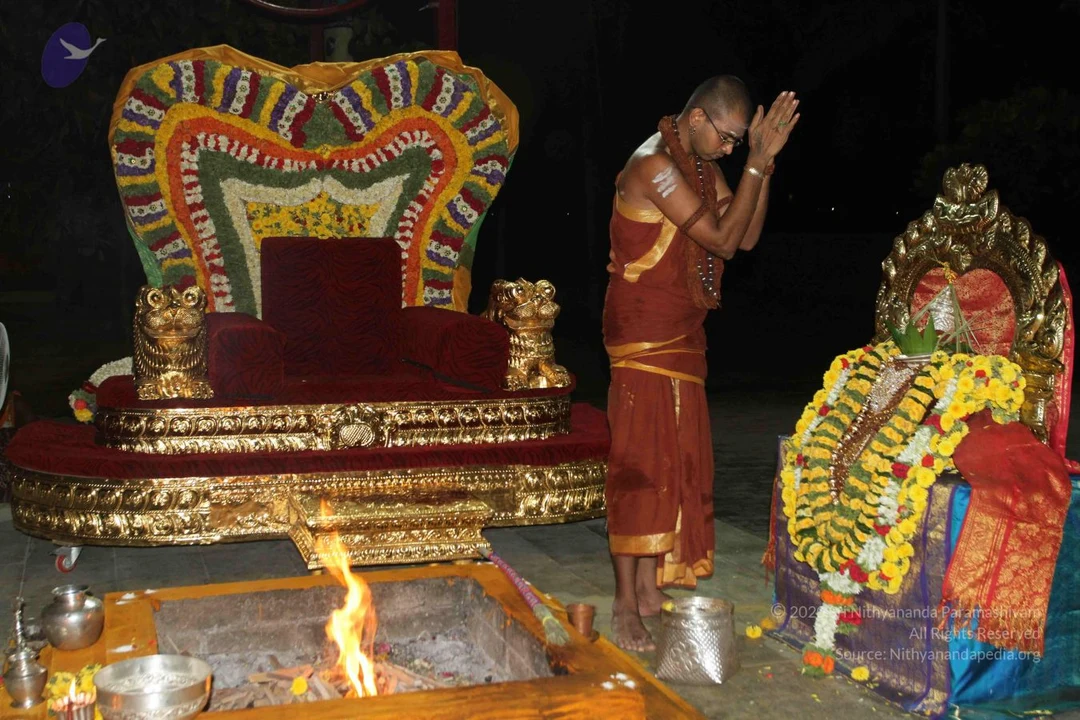
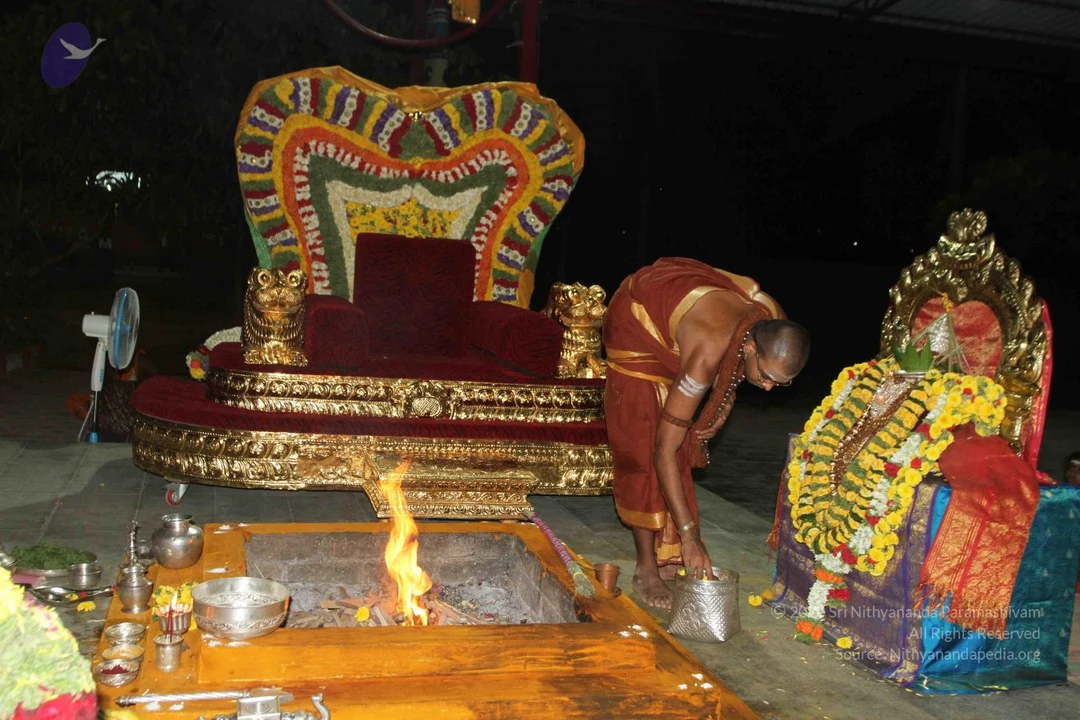
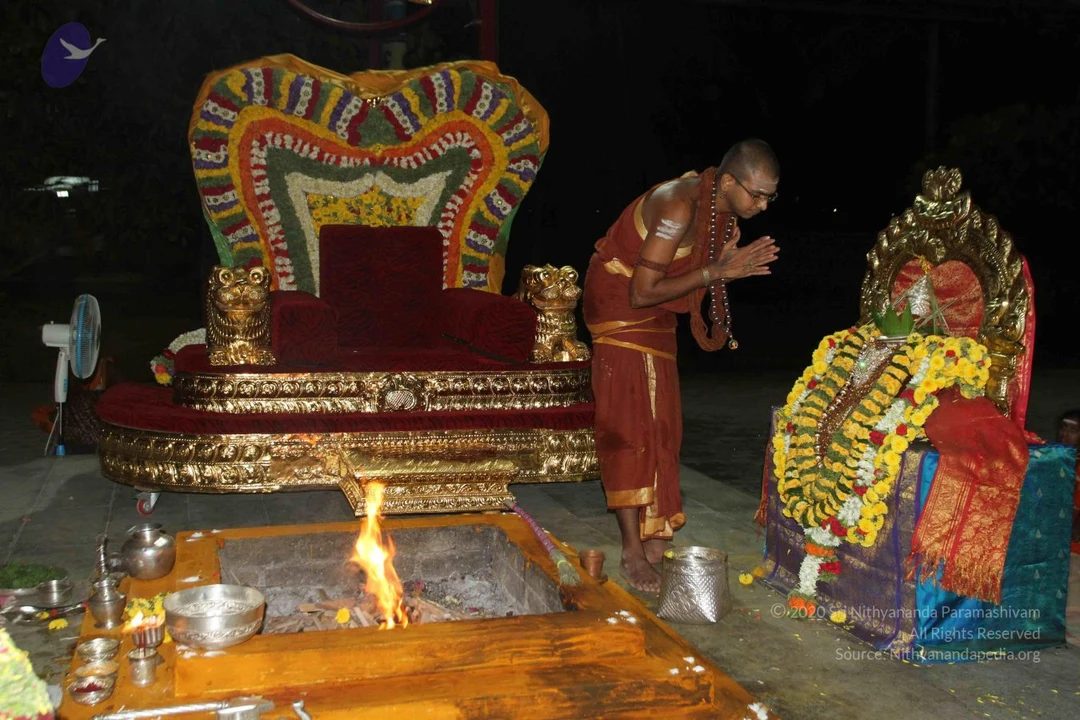
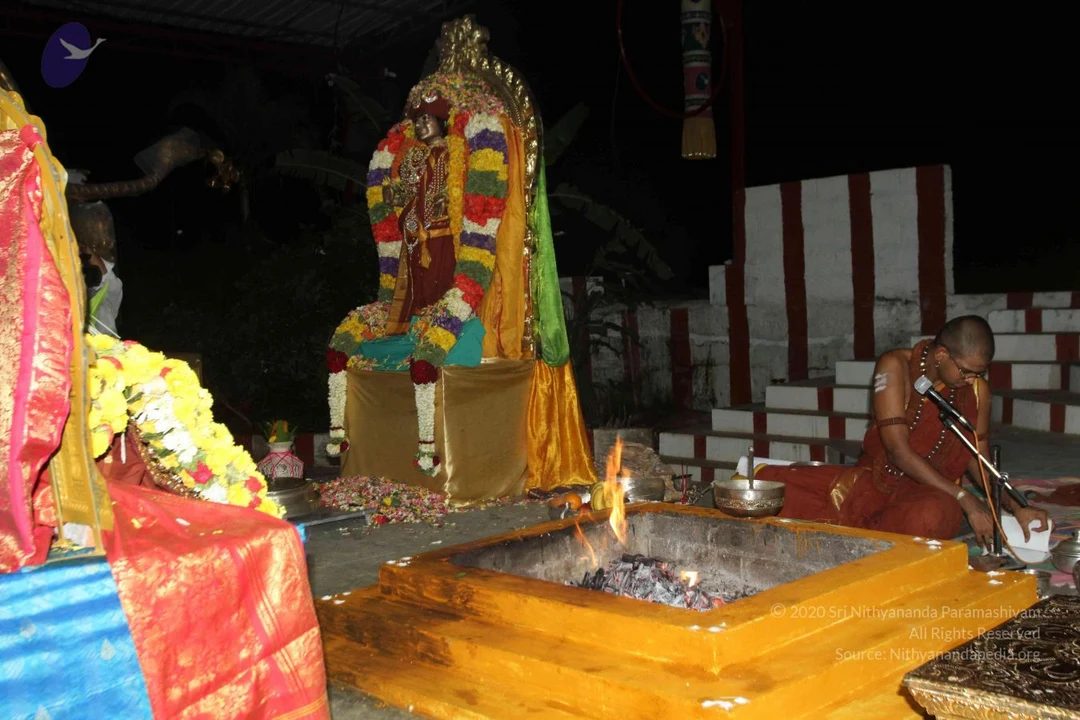
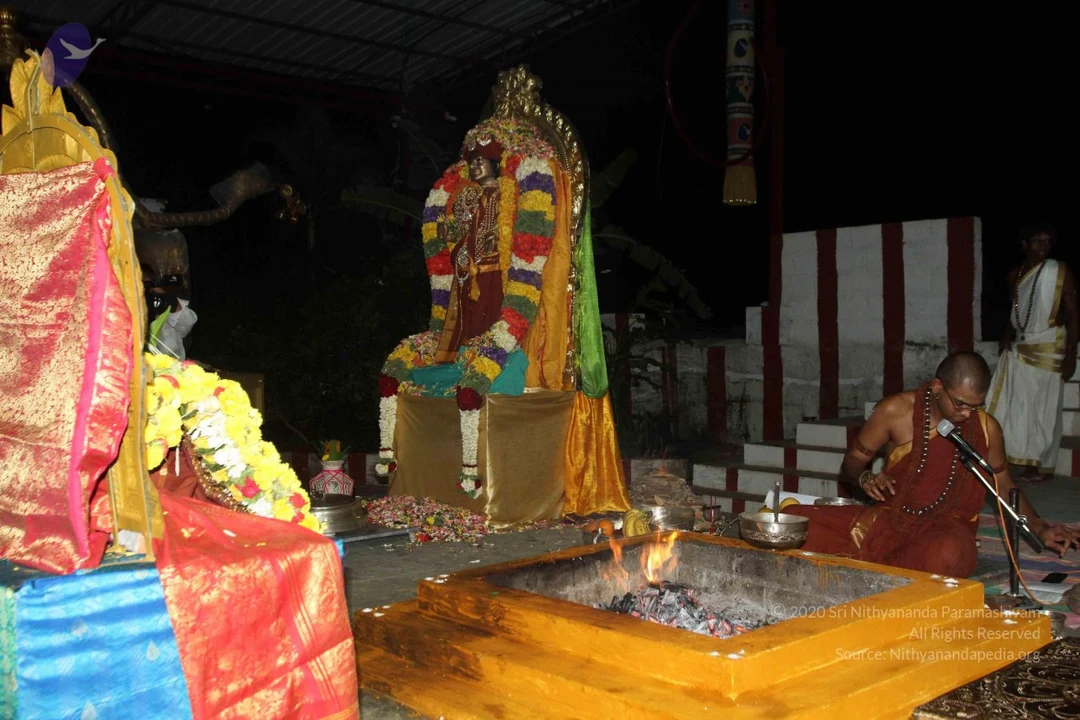
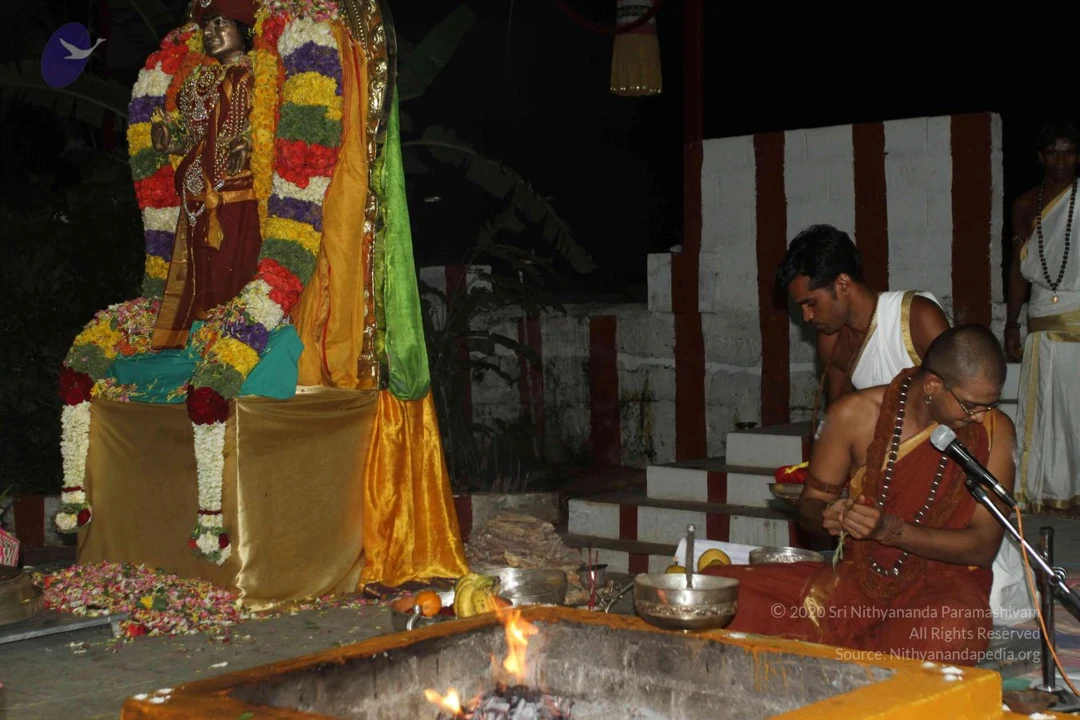
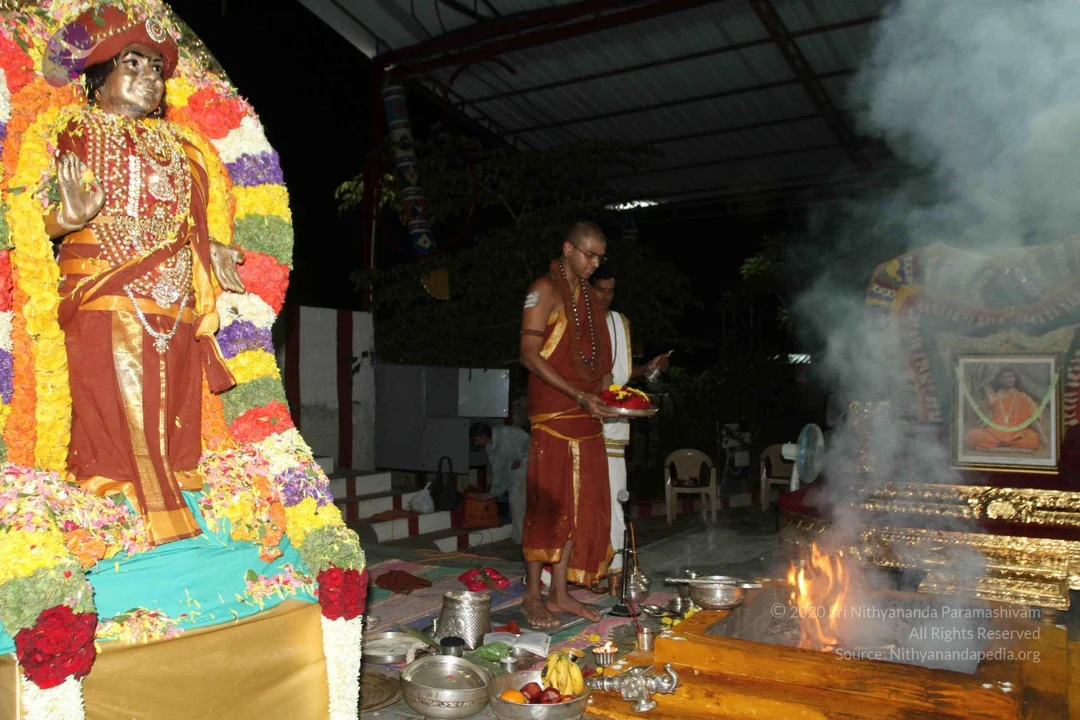
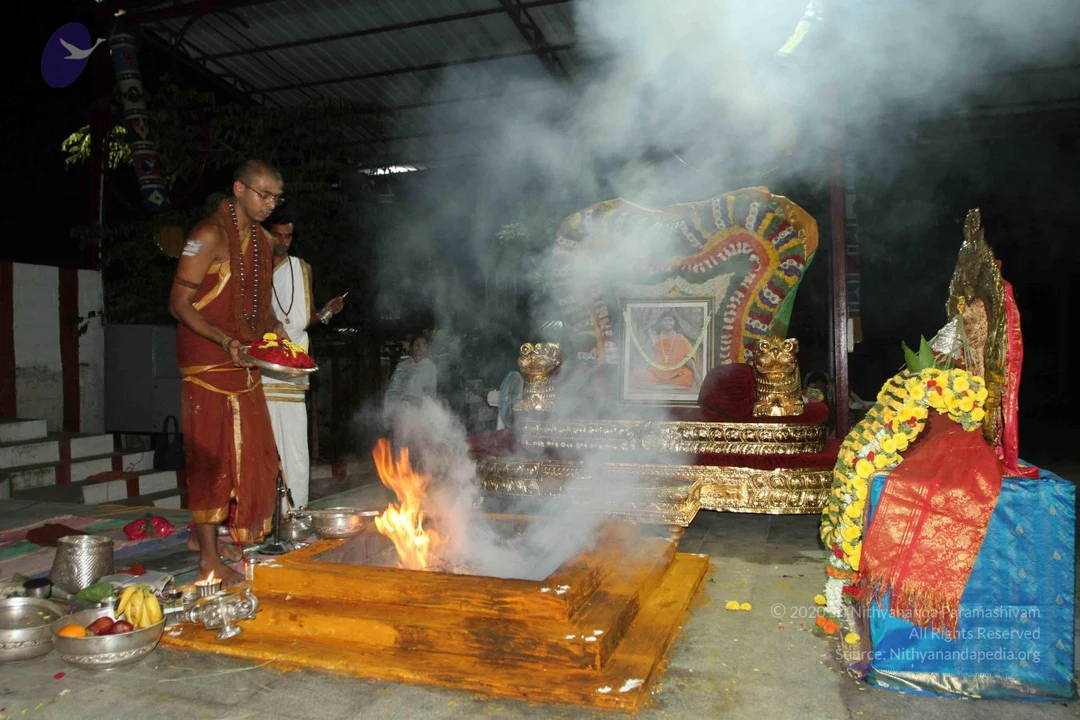
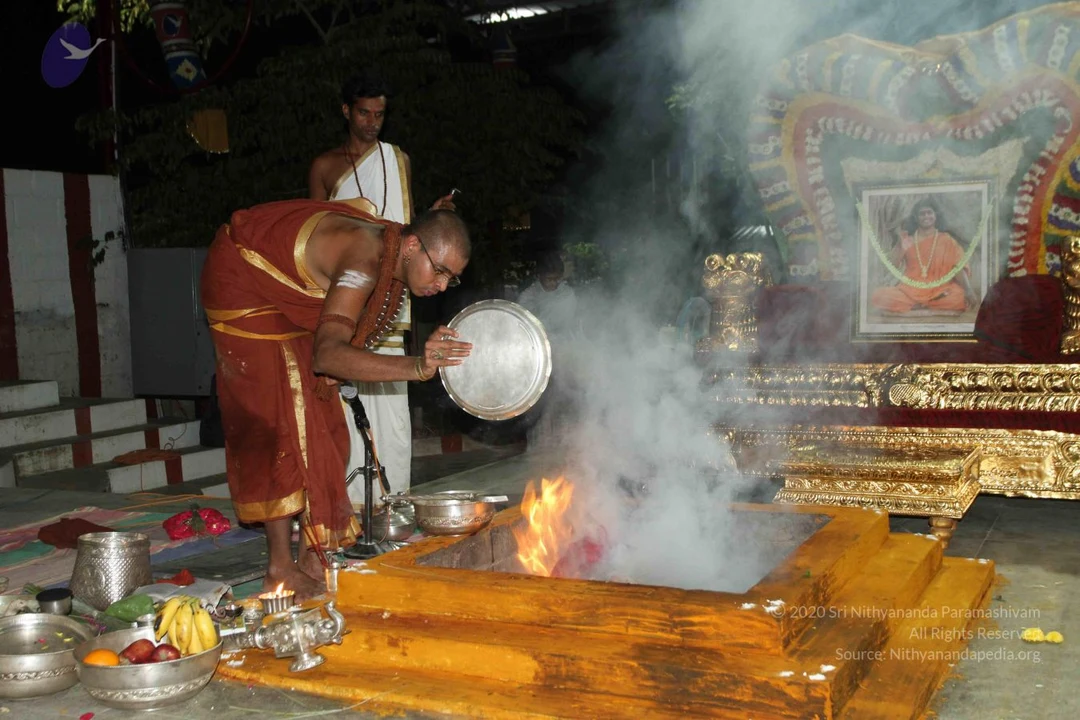
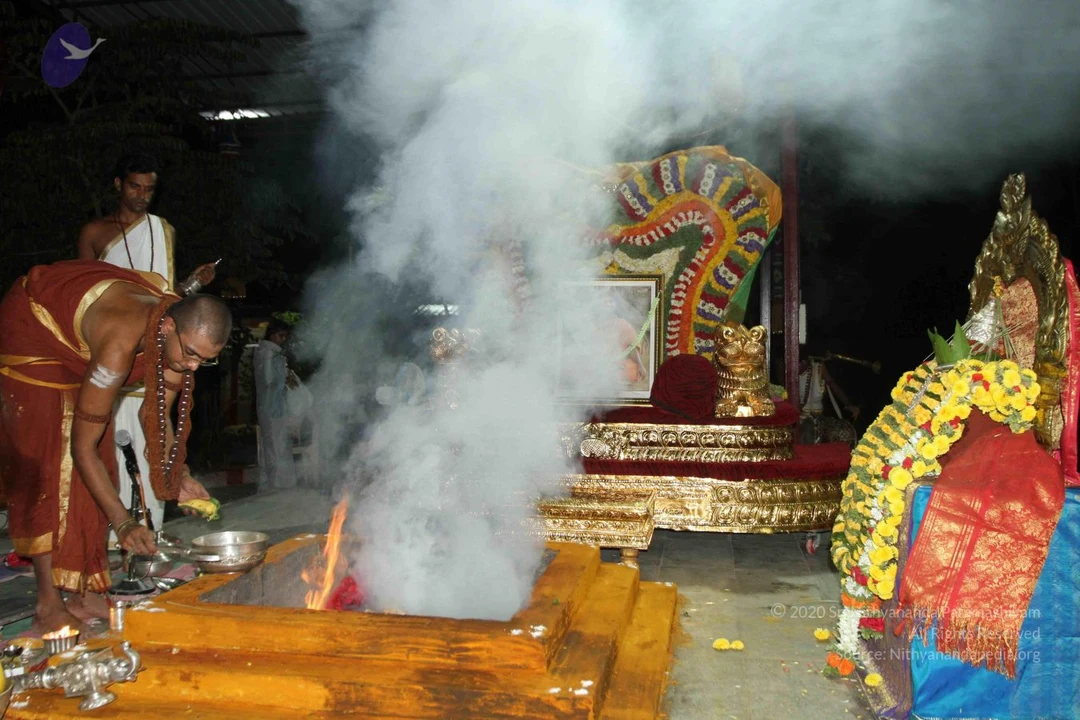
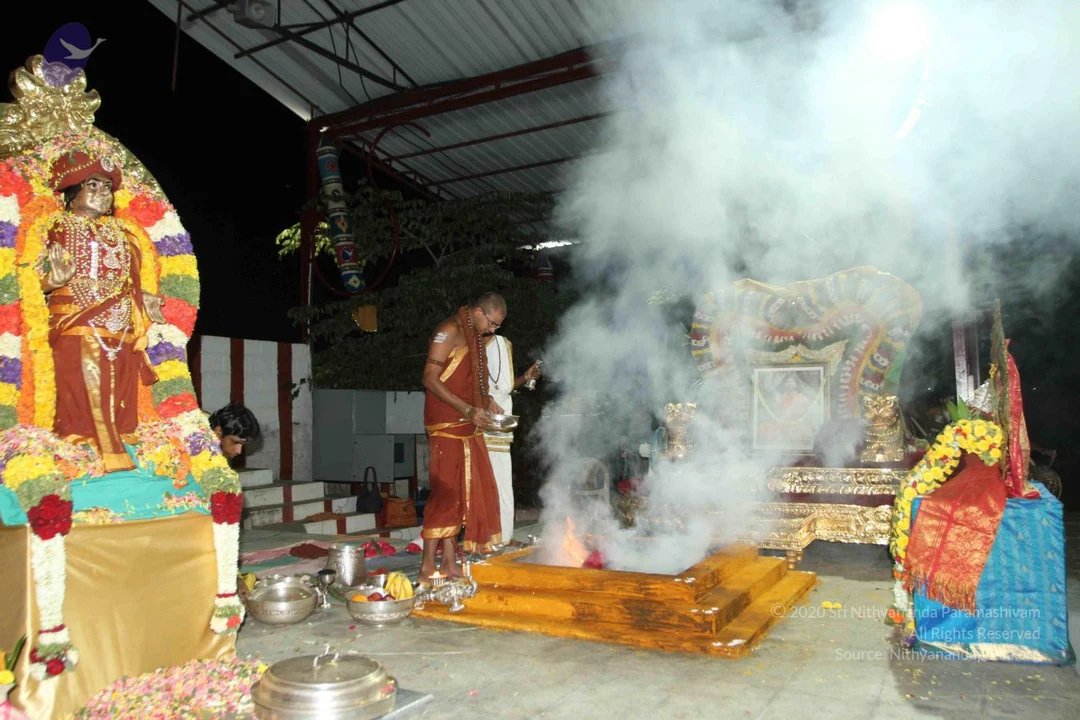
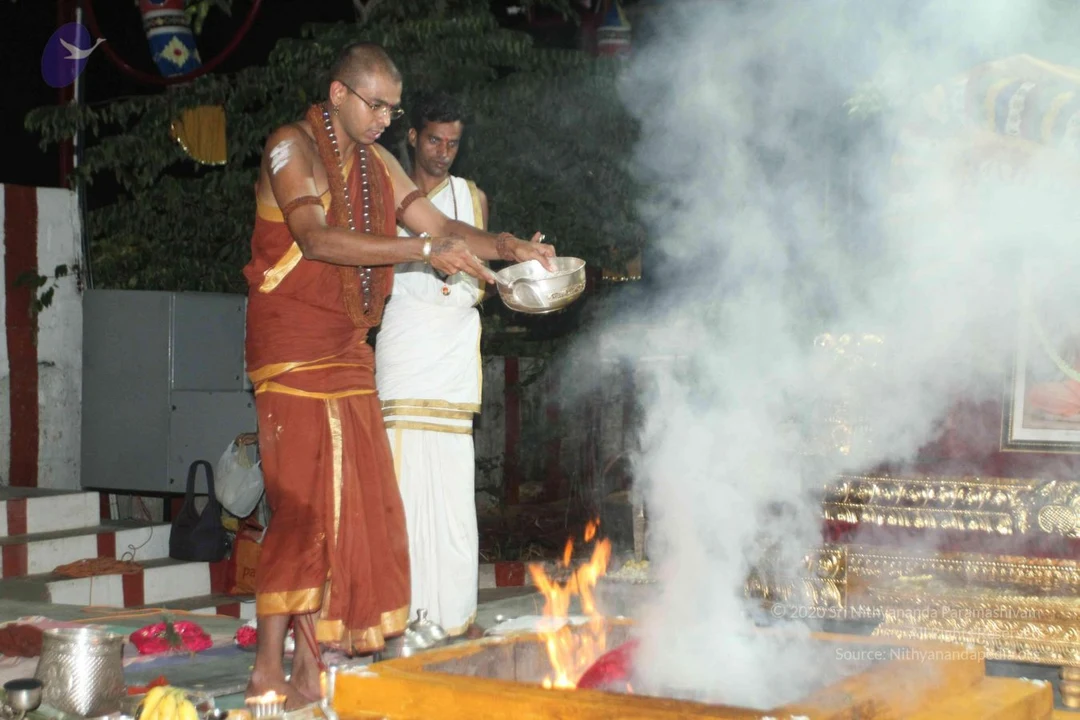
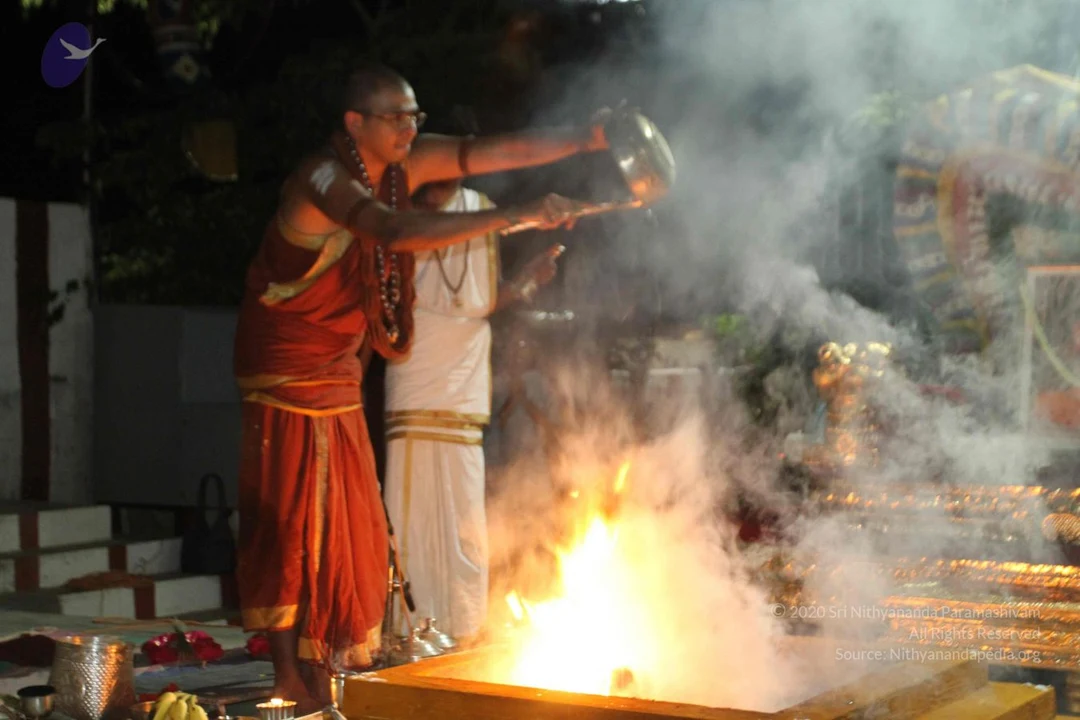
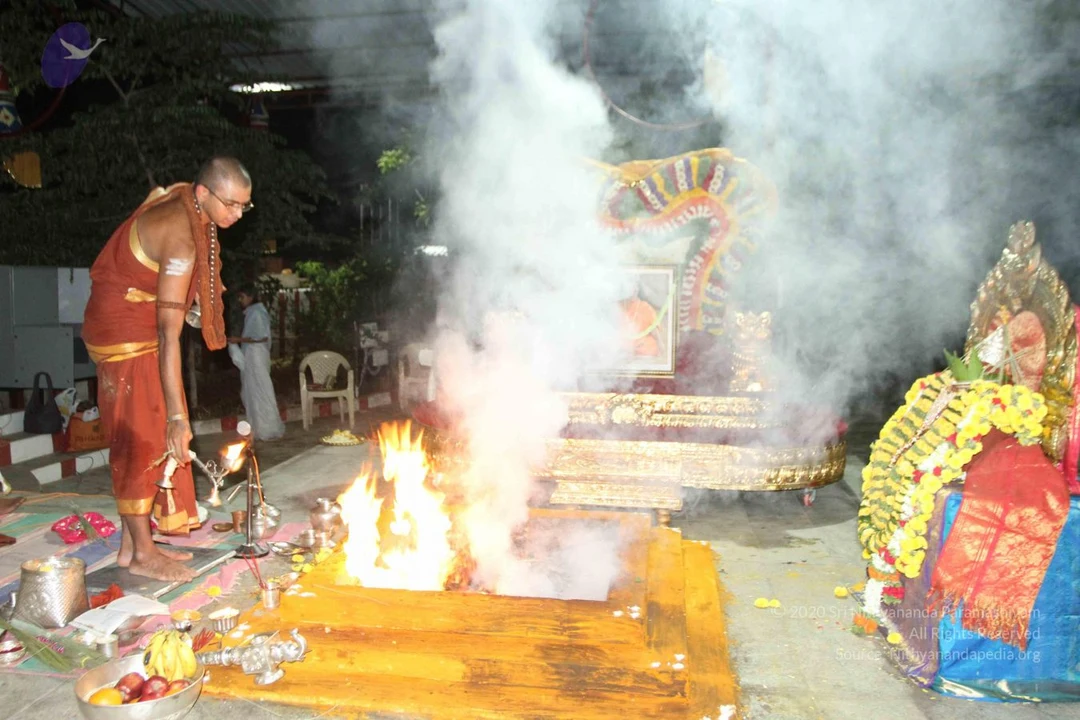
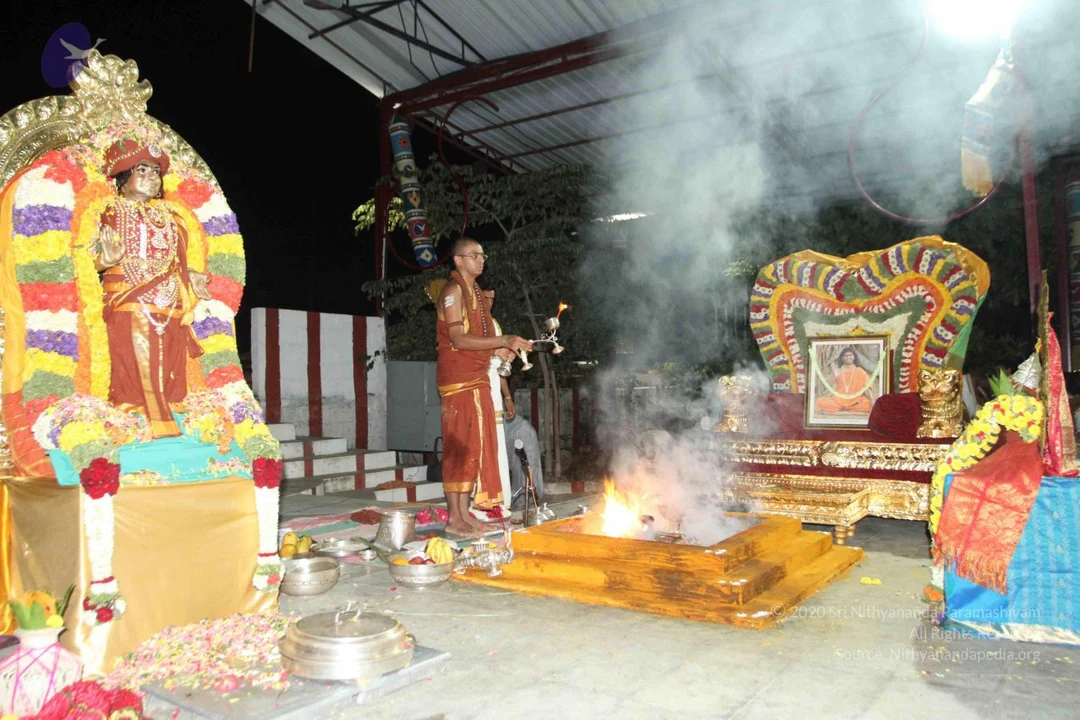
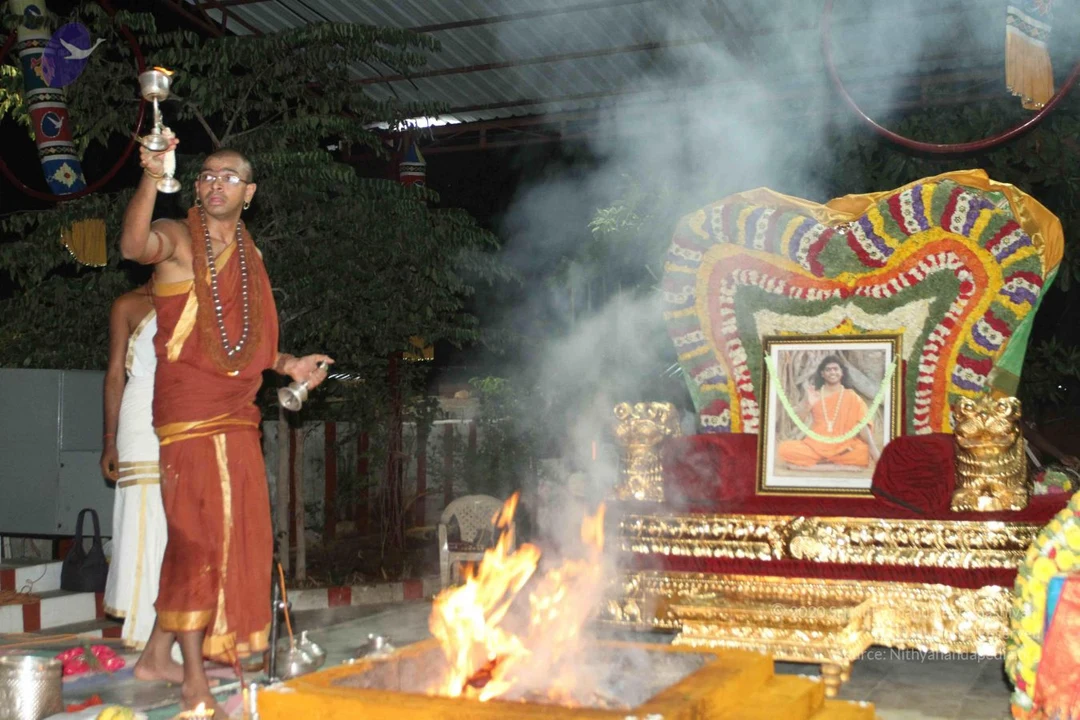
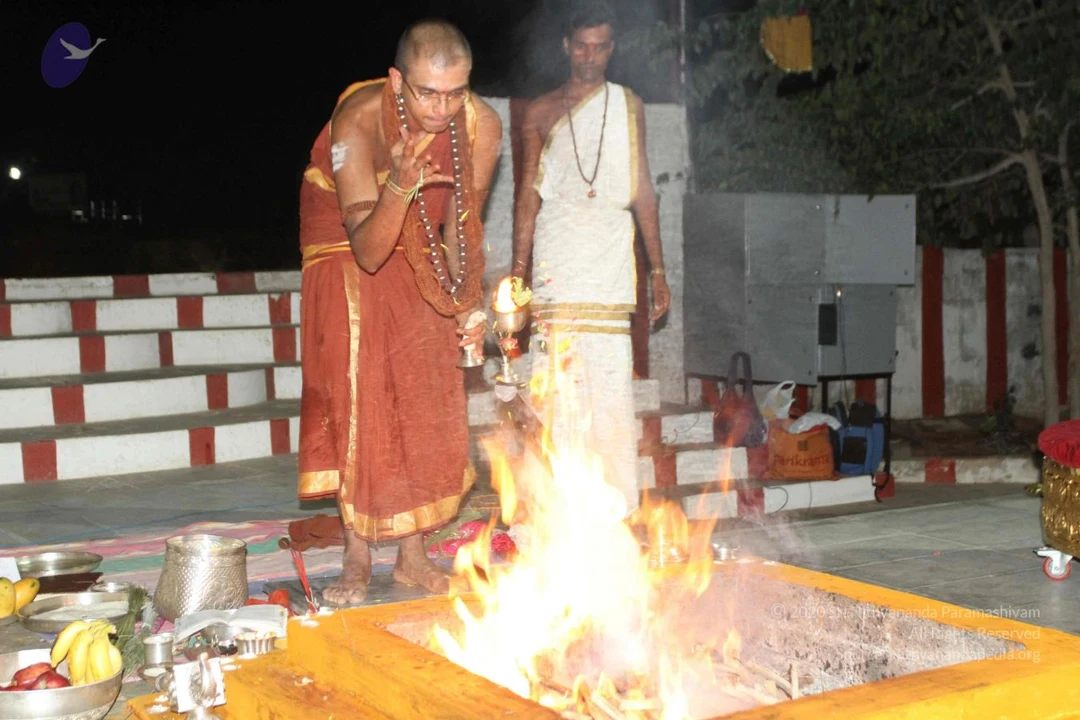
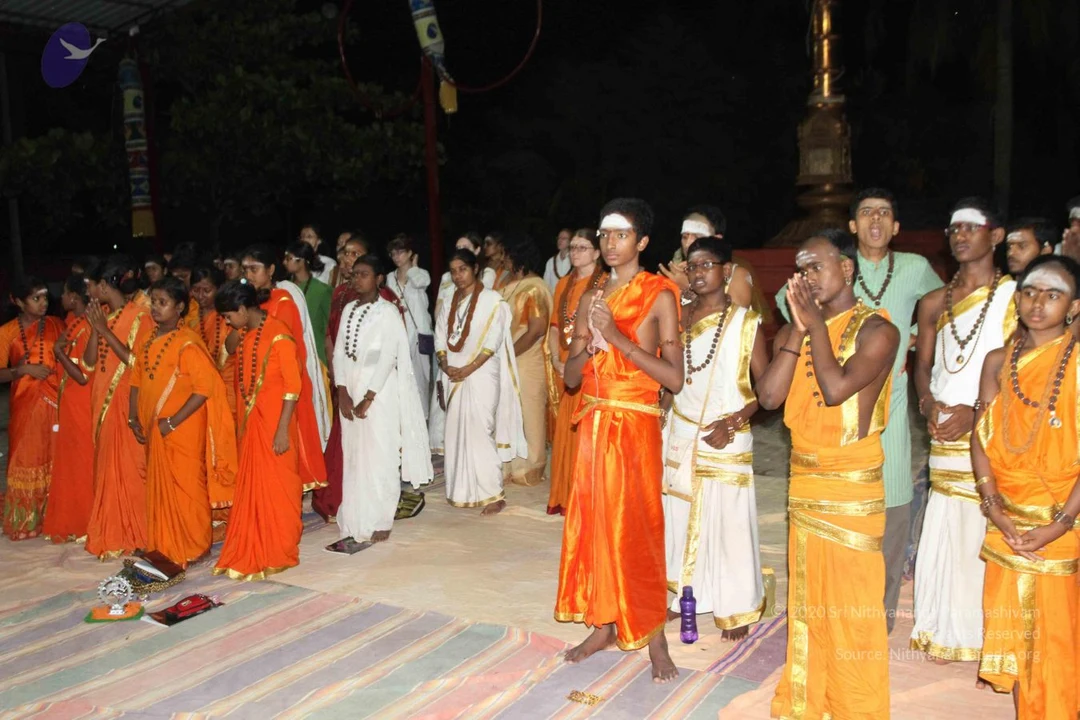
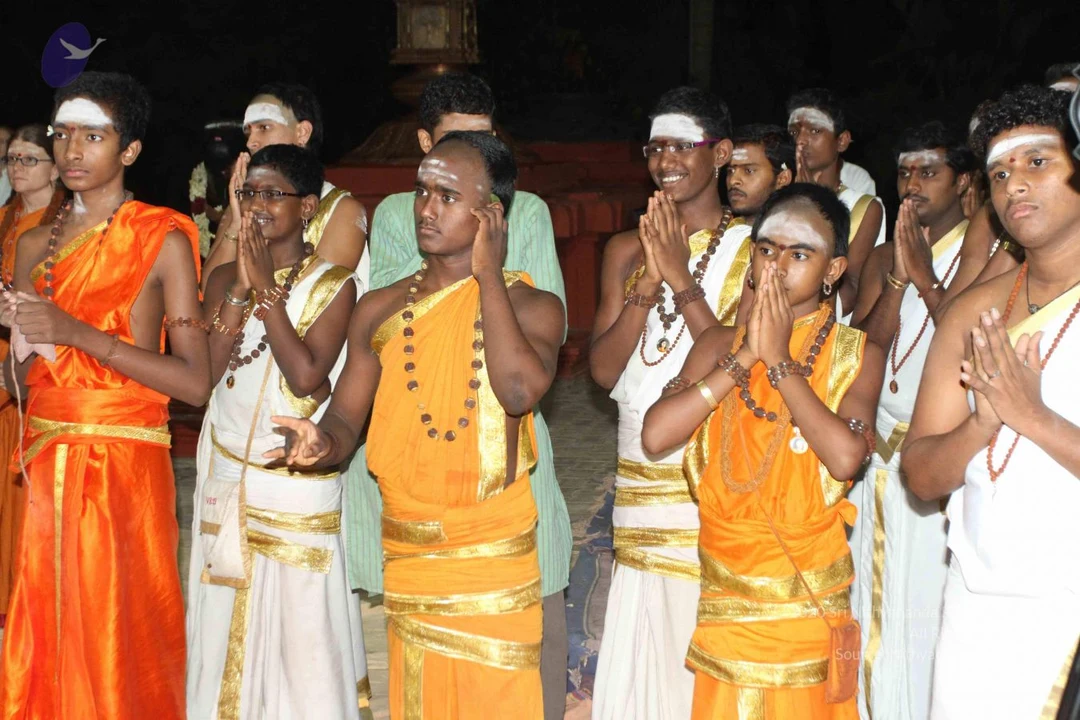
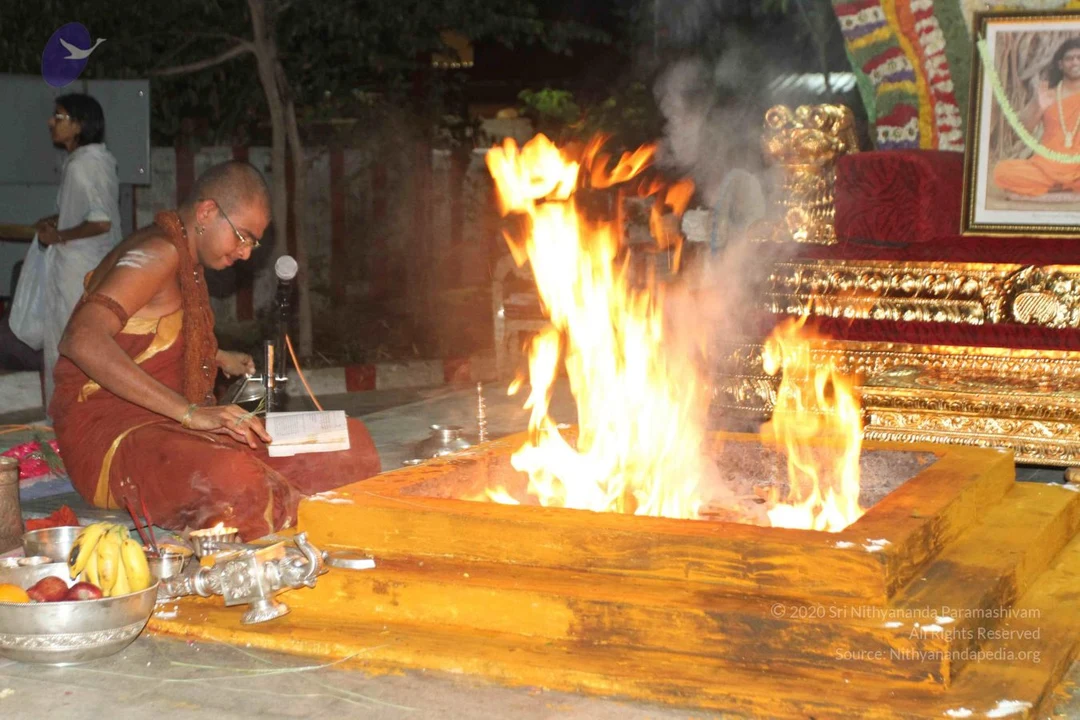
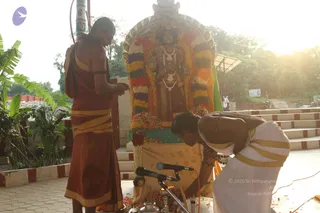
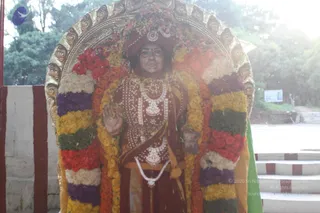
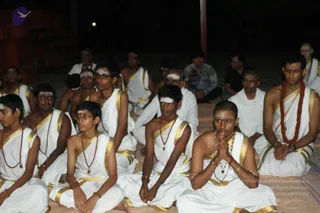
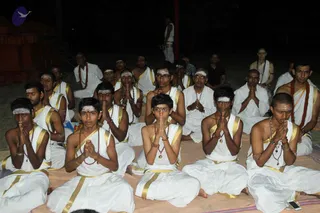
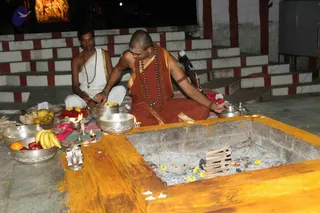
Outdoor ritual at a temple shrine in warm low sunlight. A priest in a rust-orange dhoti with an orange shawl stands at left, hands together, with a rudraksha-like bracelet on his arm. At right a devotee in a white dhoti with gold borders bends forward at the base of a shrine, offering flowers. Behind them a tall deity murti is adorned with a white pearl necklace, garlands of marigolds and red, yellow and purple flowers, and an arched kirtimukha-style canopy. Steps, potted plants and trees surround the shrine, with microphones on stands in front and brass pots and offerings at the base.A life-size statue of a seated or standing ascetic figure is decorated with a dense arch of marigold and rose garlands in red, orange, yellow, purple and white. The figure wears a reddish-brown sari-style garment, a crown-like headpiece with a circular emblem, and layered white pearl and bead necklaces with a large pendant. The right hand is raised in a blessing gesture. The statue stands before a gilded arched backdrop with a green cloth behind, striped red-and-white steps and a tree-lined outdoor setting. The figure is a statue, not a physical person, and there is a small printed photo placard nearby.Night-time outdoor gathering of young male devotees seated cross-legged on a cloth-covered floor, dressed in white dhotis and shawls with gold borders. Many wear rudraksha malas and have white or sandal forehead markings. The front-right devotee, with a shaved head and stacked beaded necklaces, holds his palms together in anjali. Behind them, older men in white and a man in a patterned shirt sit in the dark. Oil lamps or lights glow faintly in the background, and a pillar stands at the left. No a person candidate is clearly identifiable among the seated devotees.A night-time group of young men and older men in white dhotis and shawls with gold borders sits on a mat in prayer posture, palms pressed together at chest level. Many wear white vibhuti or sandal marks on their foreheads, and several wear rudraksha malas and gold-edged shawls. The setting is outdoors with a dark background and a red pillar at left. A mobile phone lies on the mat at lower right. The scene resembles an evening satsang or prayer gathering.A night-time group of young men and older devotees sits cross-legged on a pink-and-orange mat in an outdoor setting, all with palms pressed together in anjali. The foreground students wear white dhotis with gold borders and white sacred ash lines across their foreheads, with rudraksha malas and beaded bracelets; one wears round glasses. Older men in plain white garments and red-beaded malas sit behind them, and a few standing figures appear in the dim background near an orange-red structure. The scene looks like satsang or prayer. No single figure is clearly identifiable as the a person.Night homa ritual at an outdoor fire pit lined with yellow-painted wood. A shaved-headed priest in an orange-brown robe, rudraksha mala and gold-toned sacred thread sits cross-legged beside the pit, pouring from a metal vessel, with a microphone stand nearby. A second man in white dhoti and white shawl with a gold border sits beside him, wearing a rudraksha mala. Brass bowls hold bananas, mangoes, apples and flowers, with lit oil lamps and a small brass kalasha on the mat. Marigold petals lie in the ash, and striped white and red steps rise behind them.
photos
57 photosSource gallery
A photograph of a deity murti seated on a golden throne (peetha) in a temple-style setting. The murti wears a red-orange cloth, a heavy beaded white and red jewelled necklace, and is draped in long garlands of yellow, white and red flowers, with a rudraksha-style beaded chain. A silver kalasha with green mango leaves sits on the murti's head. A person in a red-orange sari with gold border, wearing gold bangles and a beaded bracelet, stands at left, pouring or offering water from a brass vessel over the murti in abhishekam. Ornate gold throne carvings and colourful flower garlands fill the background.A photograph of a temple-style ritual in a hall. A priest in a rust-red turban, red garment with gold border, and a garland around the neck stands at left, bending to pour or offer liquid over a silver-ornamented kalasha-like vessel decorated with garlands of yellow and white flowers. Behind is a large deity murti in gold-toned throne framing, wearing a crown, pearl necklaces, and draped in a garland of multicoloured flowers in orange, red, purple, yellow and green. A brass lamp with a lit flame stands at right beside a red velvet and gold seat. This appears to be an abhishekam with a figure of a deity murti, not a living person.A devotee in a red-orange turban and draped red-and-gold dhoti stands at left, bare-backed, leaning forward to touch a ceremonial object draped in white cloth and heaped with yellow, orange and white marigold garlands. Behind it, a deity murti sits on a gilded throne-like seat framed by an ornate gold arch, wearing a crown, layered pearl and bead necklaces, a saffron shawl and draped in multicolour flower garlands of purple, red, yellow, orange and white. A tall brass oil lamp with a lit flame stands to the right beside a gold chair with red upholstery, against a dark red curtain.A ceremonial worship scene with a priest in a red-orange turban and reddish-brown dhoti with gold borders standing with his back to the camera at left, wearing a white garland. Centre right, a seated deity murti in a gilded peetha throne is draped in red and orange cloth and heavily garlanded with multicoloured flower strings in red, yellow, purple and white, adorned with a crown and jewellery. Tall brass oil lamps with lit flames flank the altar, and a smaller decorated murti sits in front, garlanded with marigolds and white flowers. A blue-draped table and a dark curtain complete the setting. No one in the scene is clearly identifiable as a person, so no appearance-based candidate is claimed.A ceremonial worship scene on a stage with a gold-framed shrine holding a deity murti draped in a heavy garland of red, orange, yellow, and purple flowers, wearing a crown and necklaces, with a blue cloth beneath. In front, a small kalasha-like vessel with flower garlands sits before a lamp. A standing priest in a red turban and maroon-and-gold dhoti or shawl, seen from behind, faces the shrine beside a tall brass oil lamp with a flame. An empty red velvet throne with gold trim is at the right edge. A kneeling attendant in red clothing is partly visible at the lower left. Brass lamps stand on both sides, and a white air conditioner unit is on the left wall.A ritual worship scene in an indoor hall with a pale pink wall and a dark red curtain. A man in a saffron-red turban, red-orange dhoti and shawl with gold borders, wearing a white flower garland and gold armband, holds incense sticks toward a decorated deity murti. The murti is seated on a gold-framed throne adorned with multicolored flower garlands in yellow, orange, purple and green, and wears a crown and jewelled necklaces. In front, a brass kalasha with a coconut and leaves sits on a platform with a white cloth and marigold garland. A shaved-headed man in a red garment kneels at left holding a lit oil lamp, and tall brass lamps stand beside the throne. The setting suggests a puja or aarti.