Skip to content
Tuesday

18 June 2013

Dated photos
216
Source pages
1
Media
4
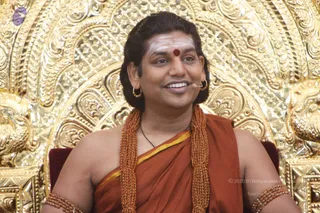
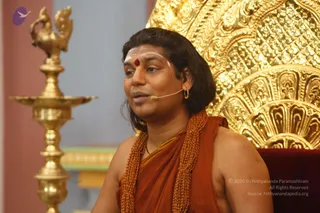
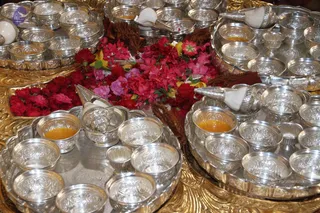
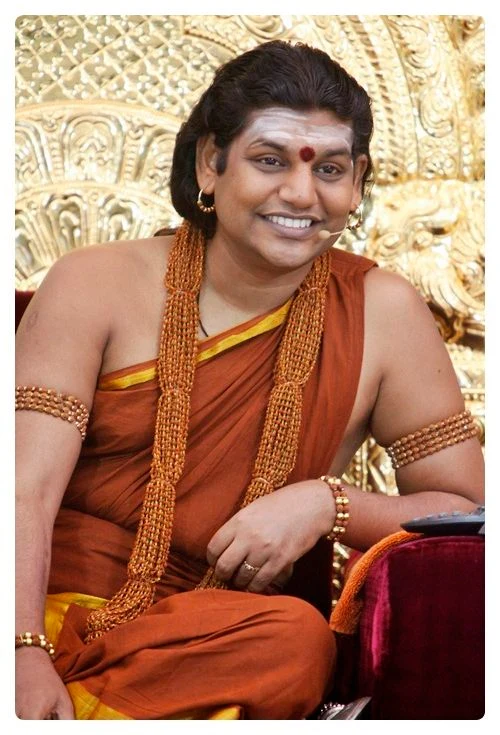
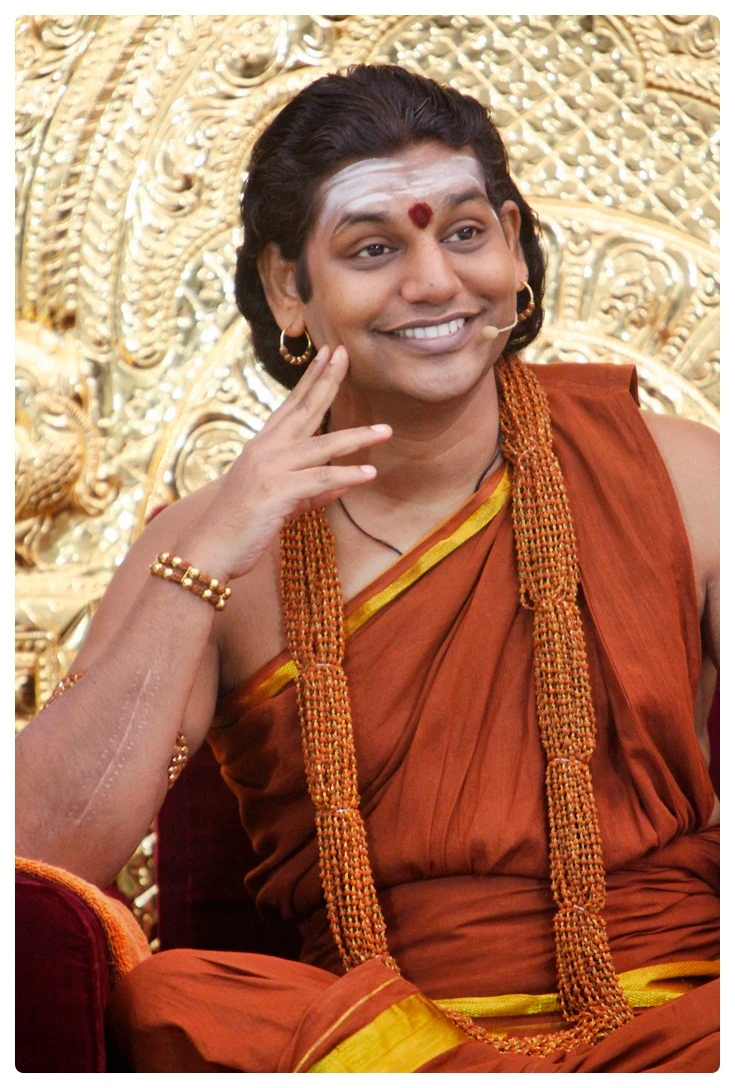
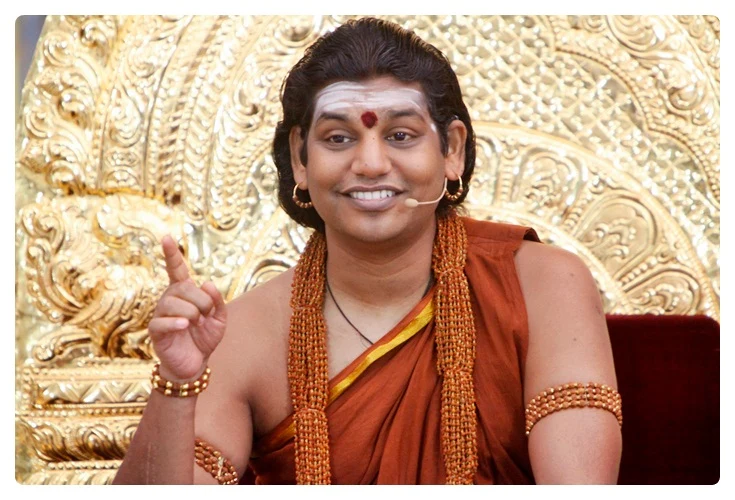
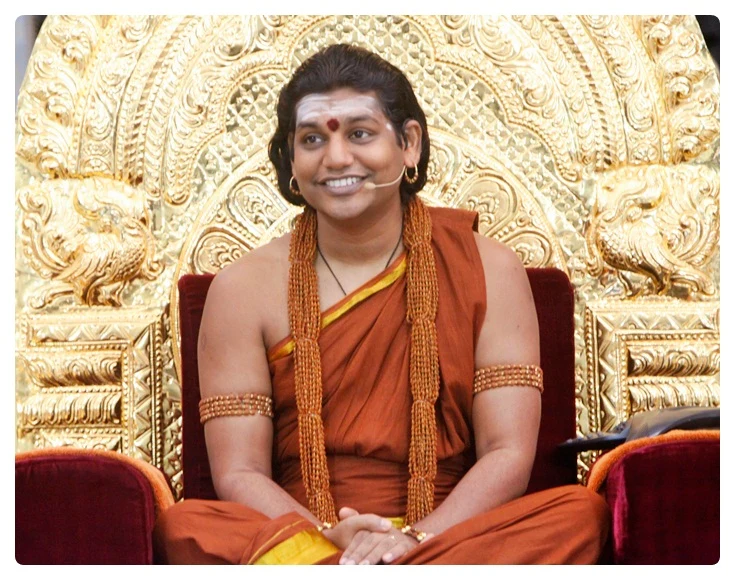
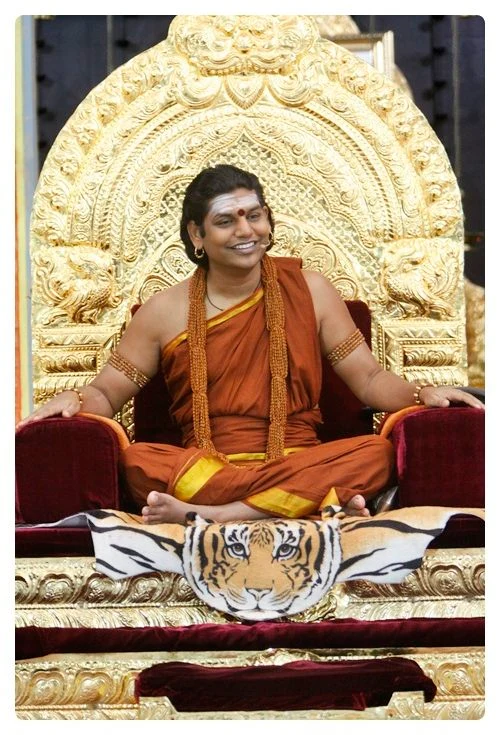
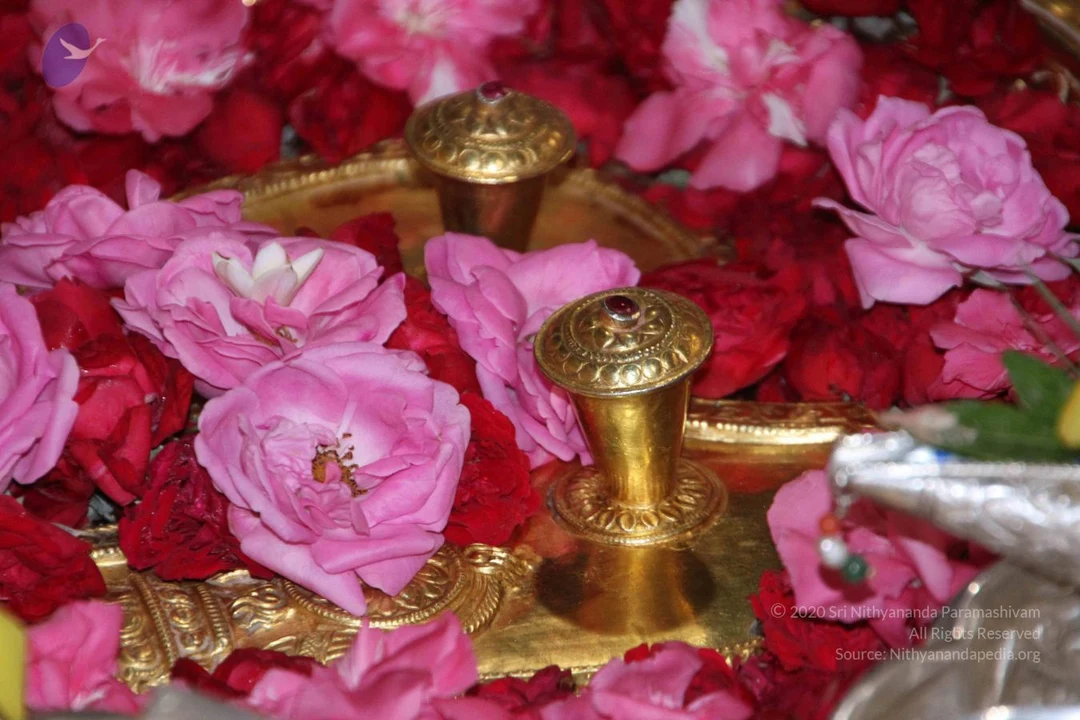
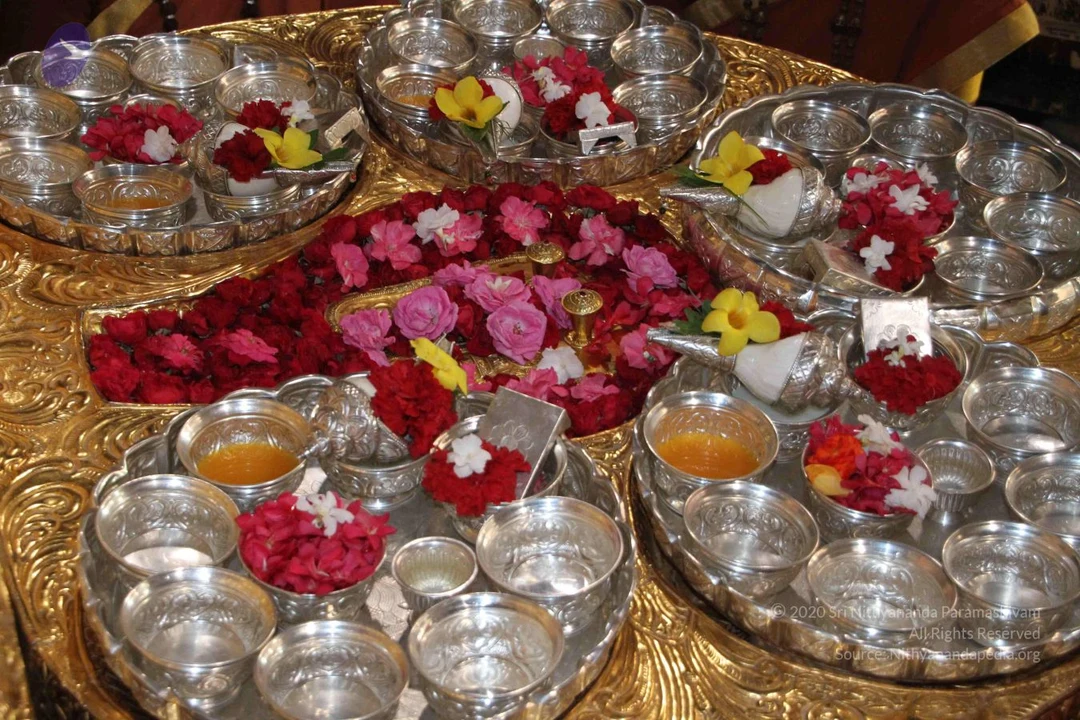
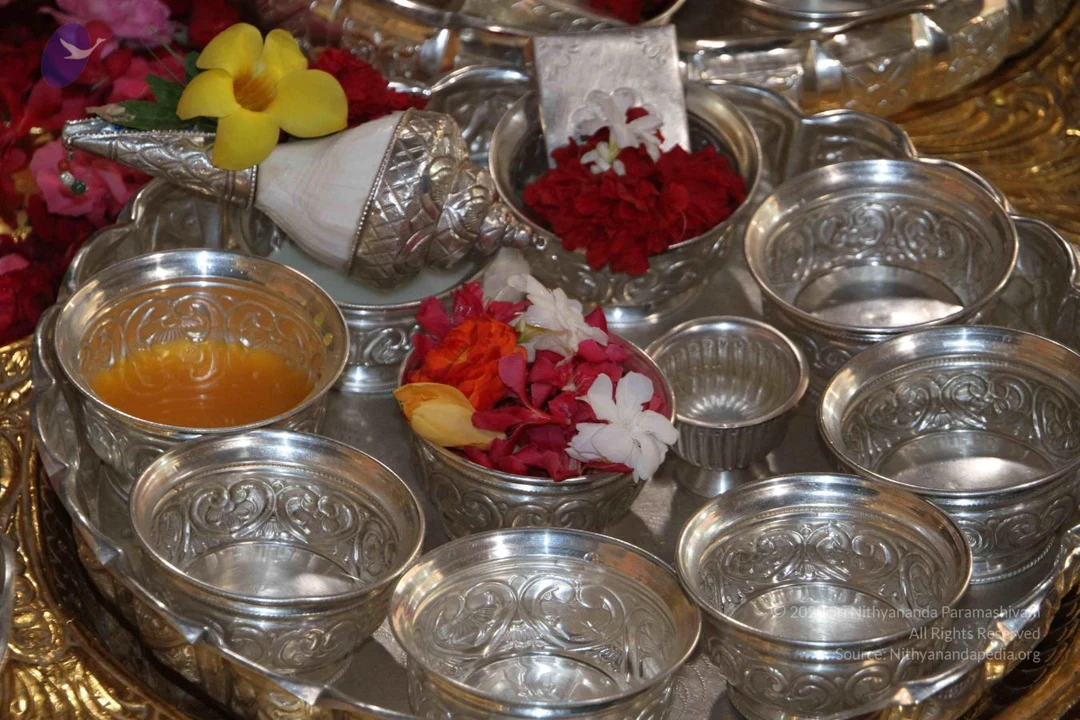
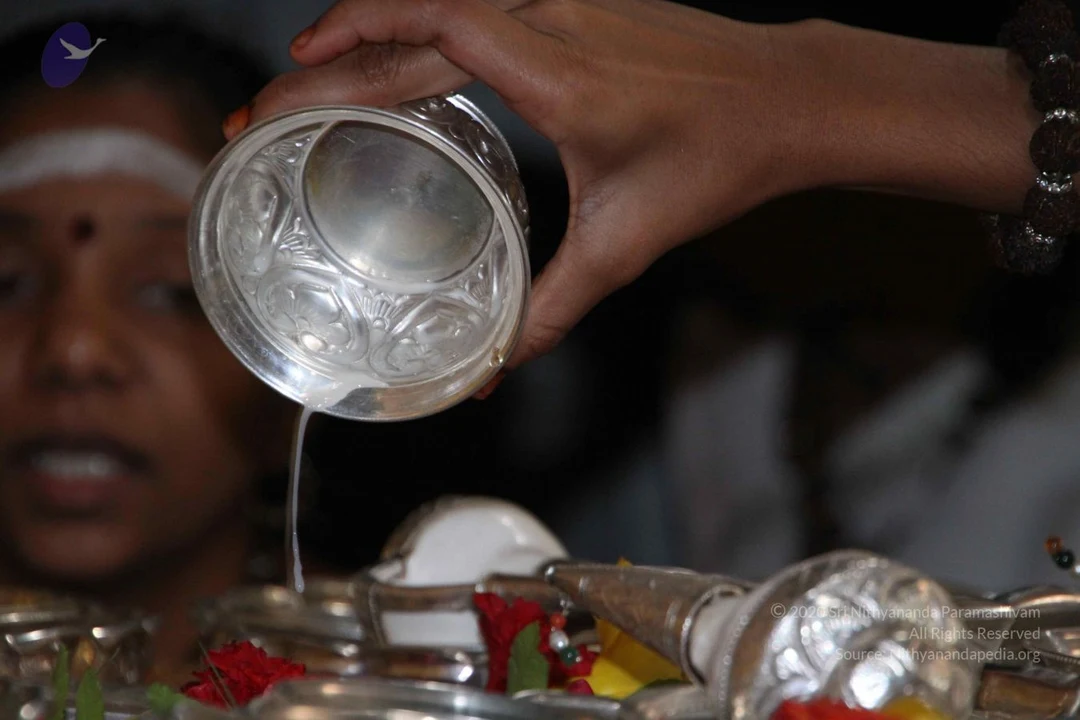
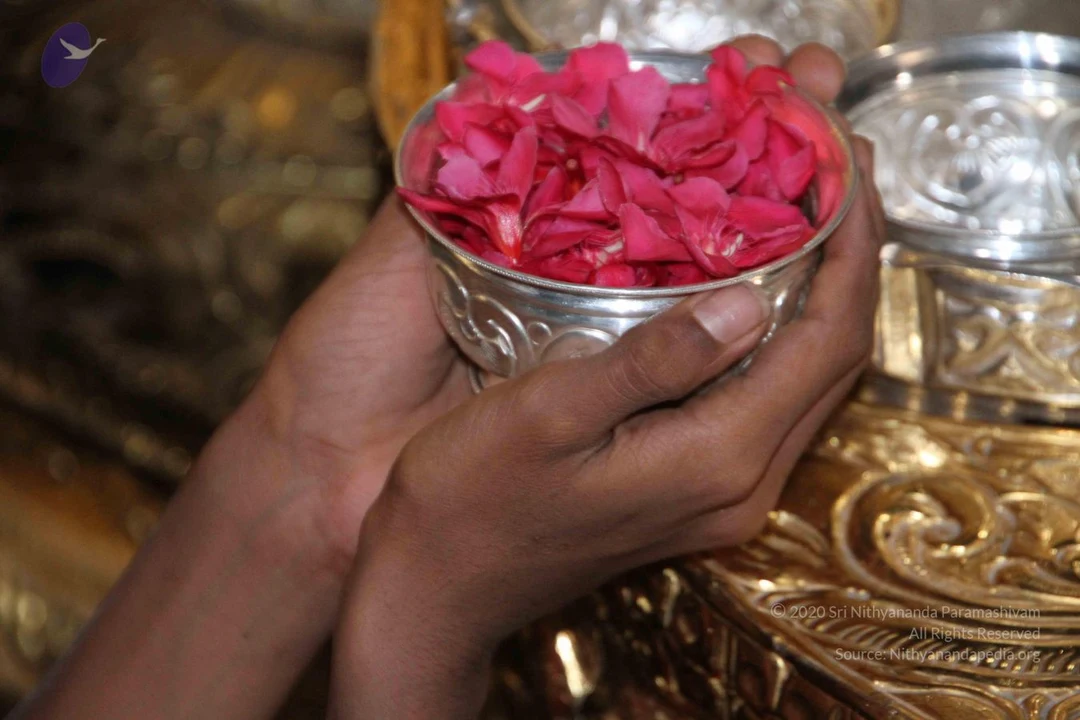
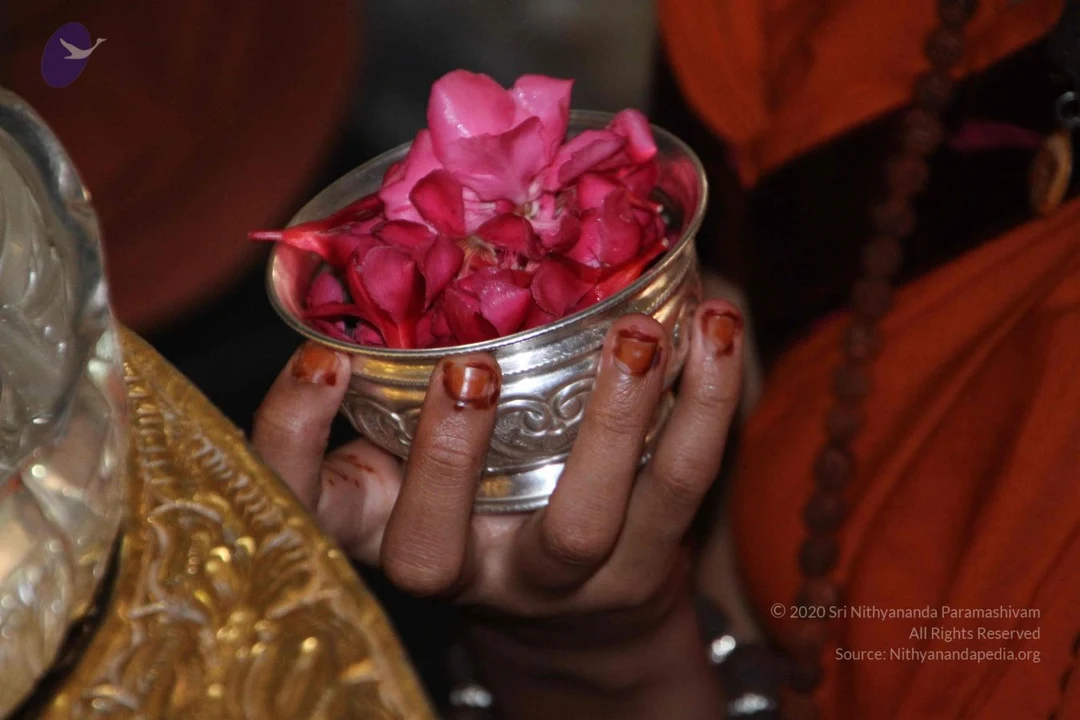
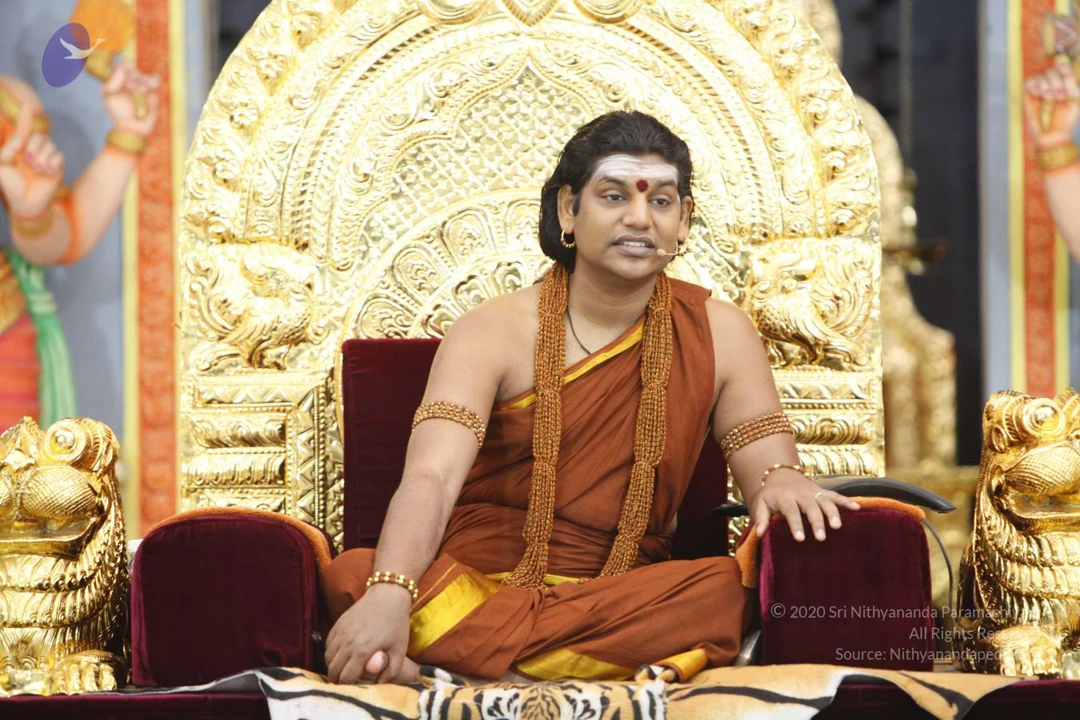
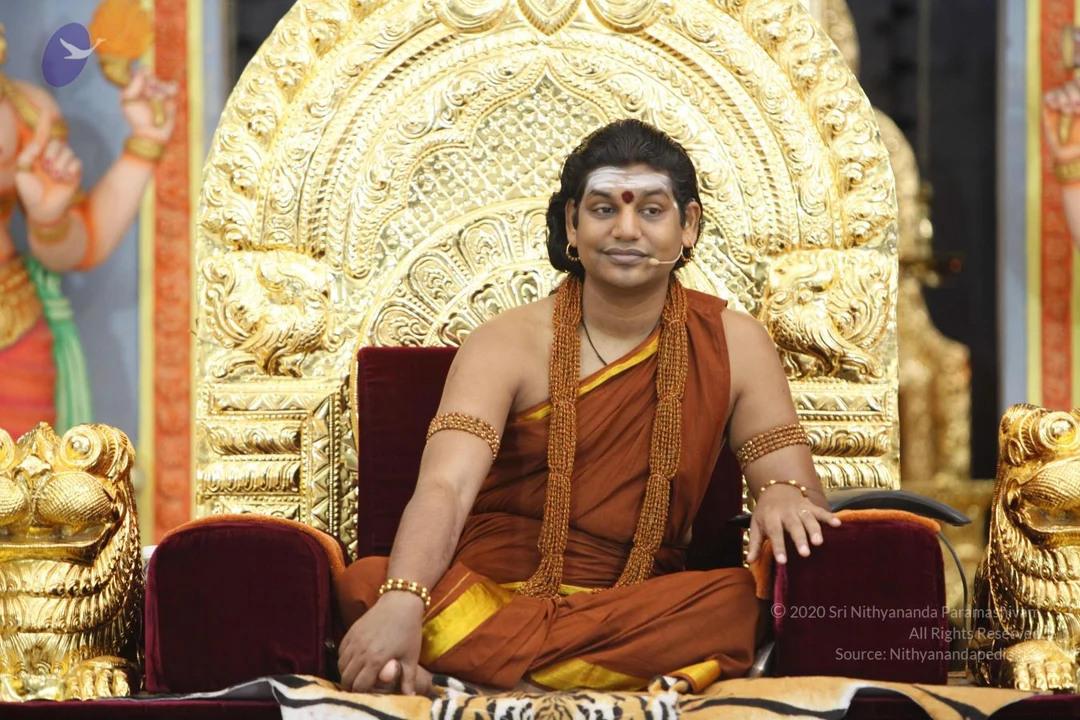
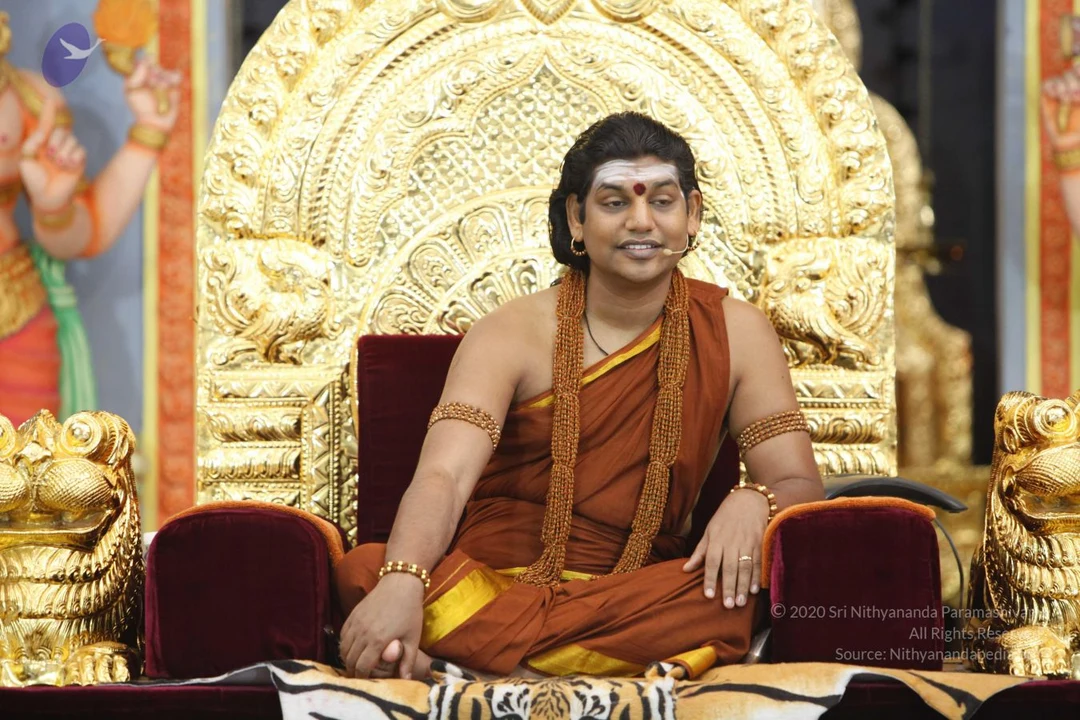
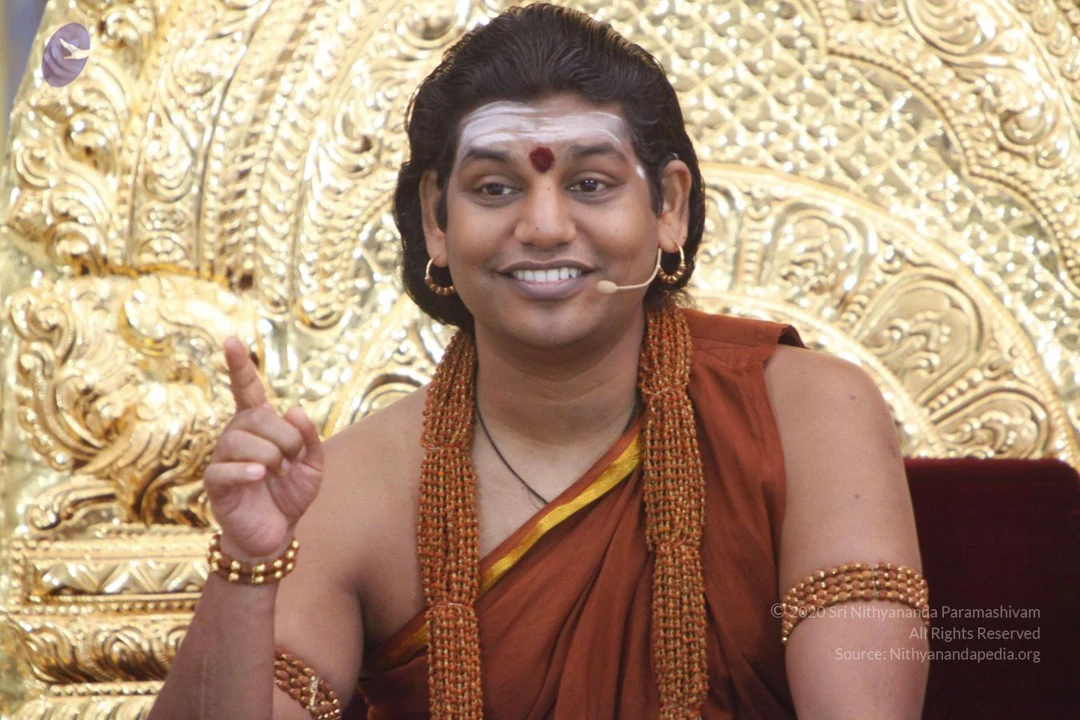
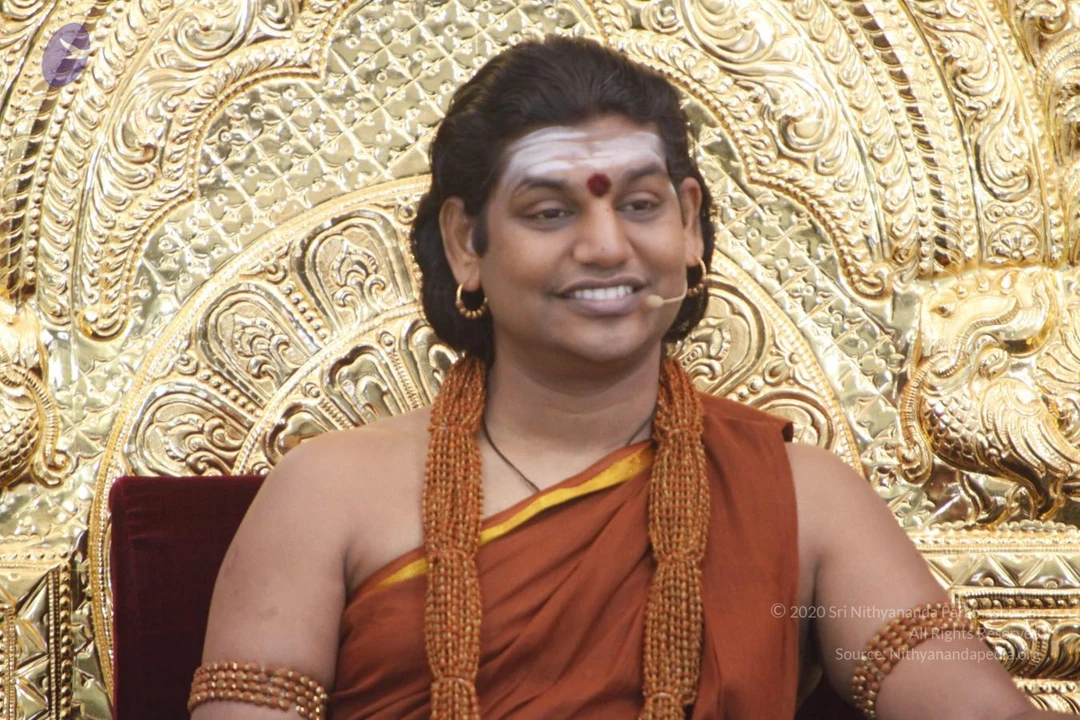
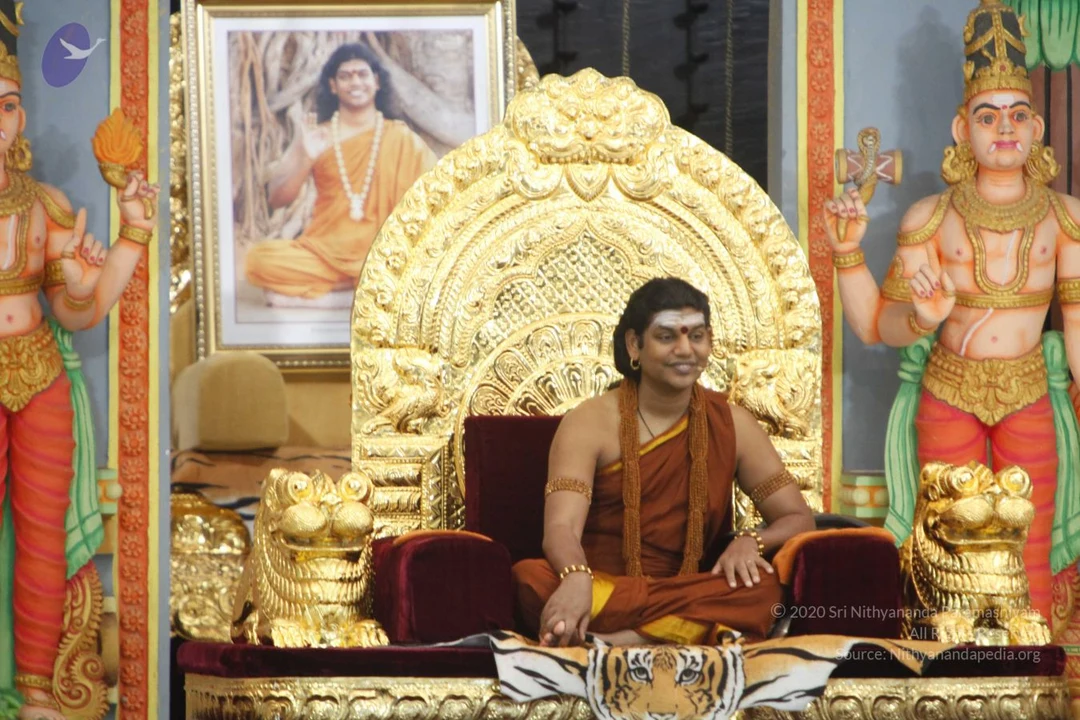
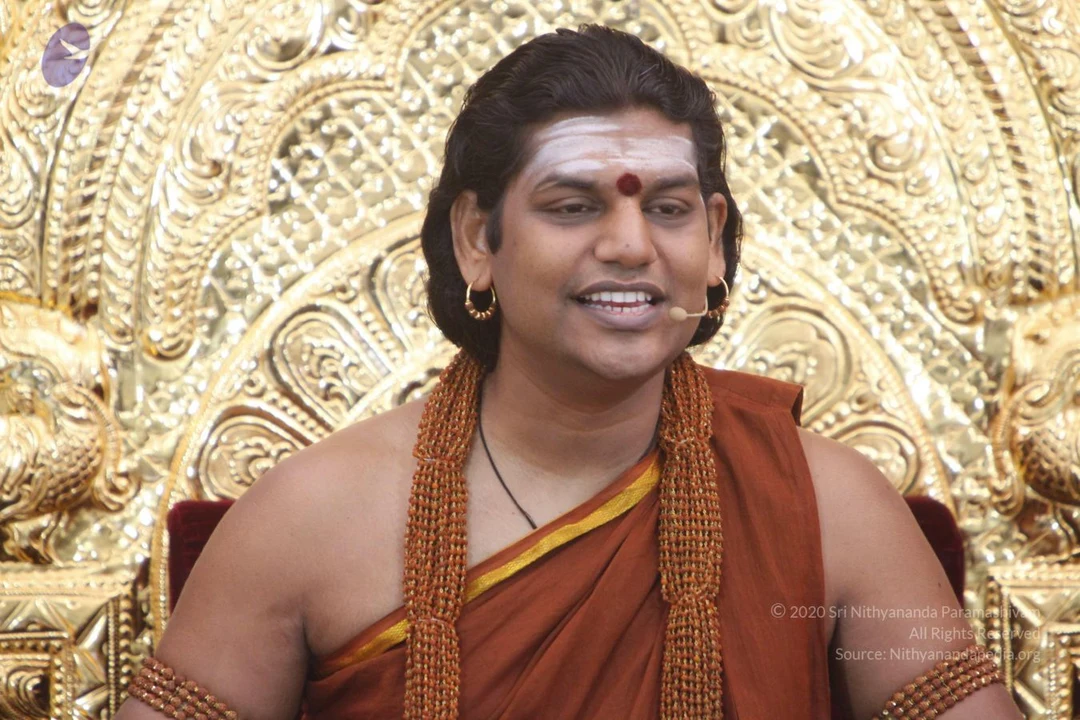
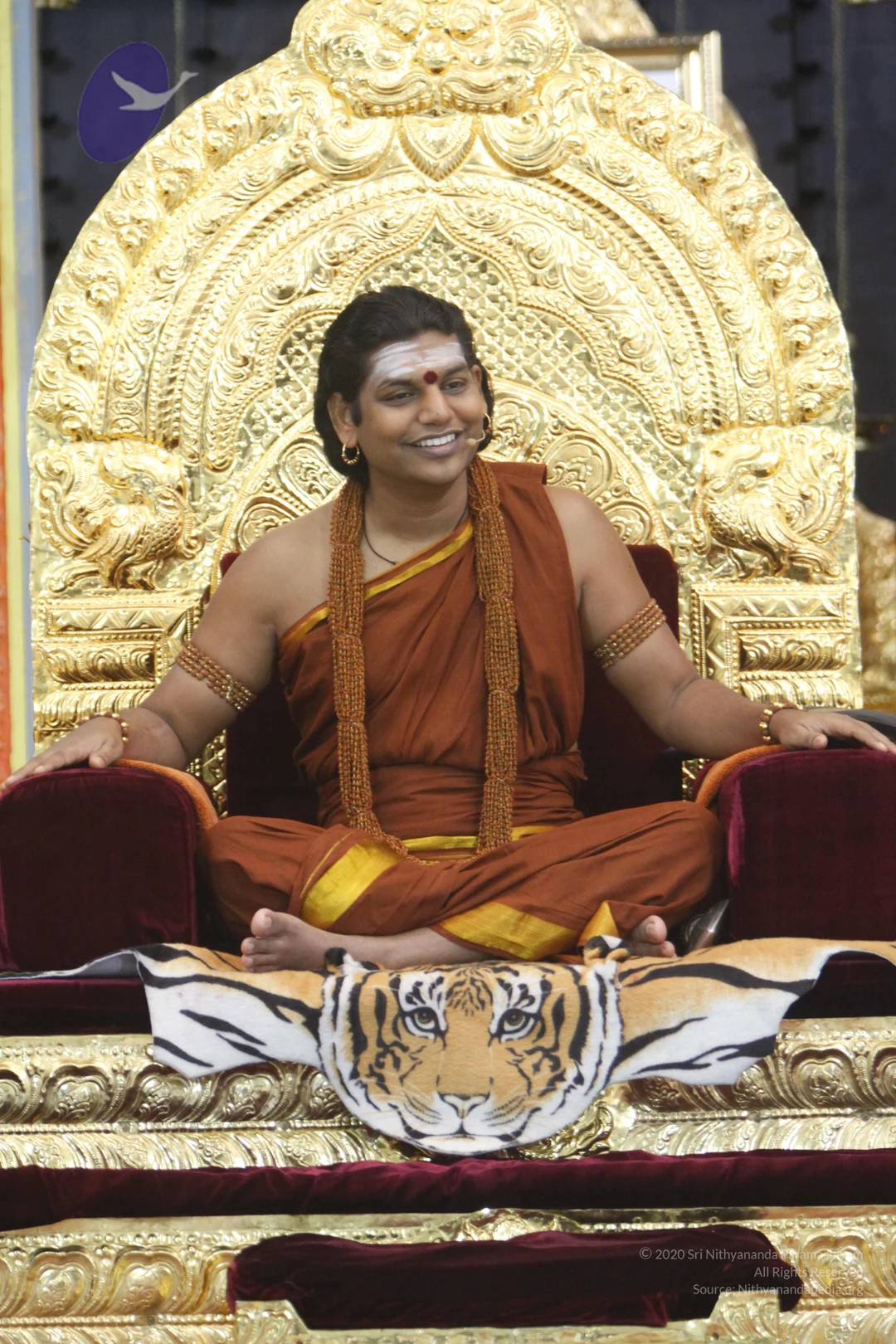
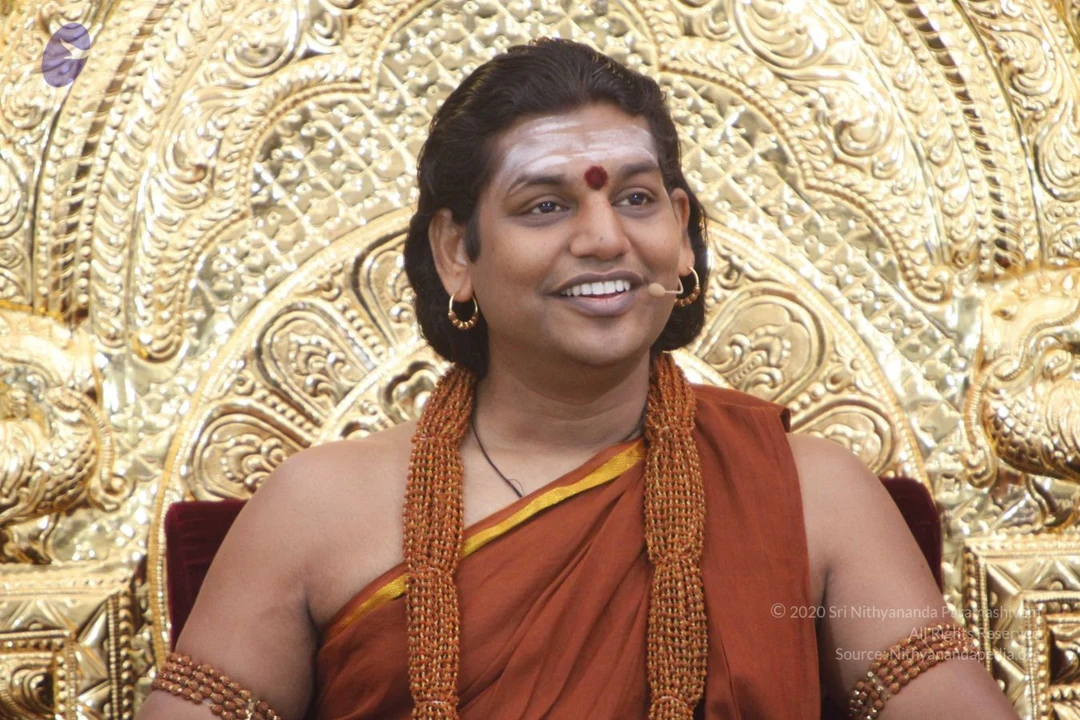
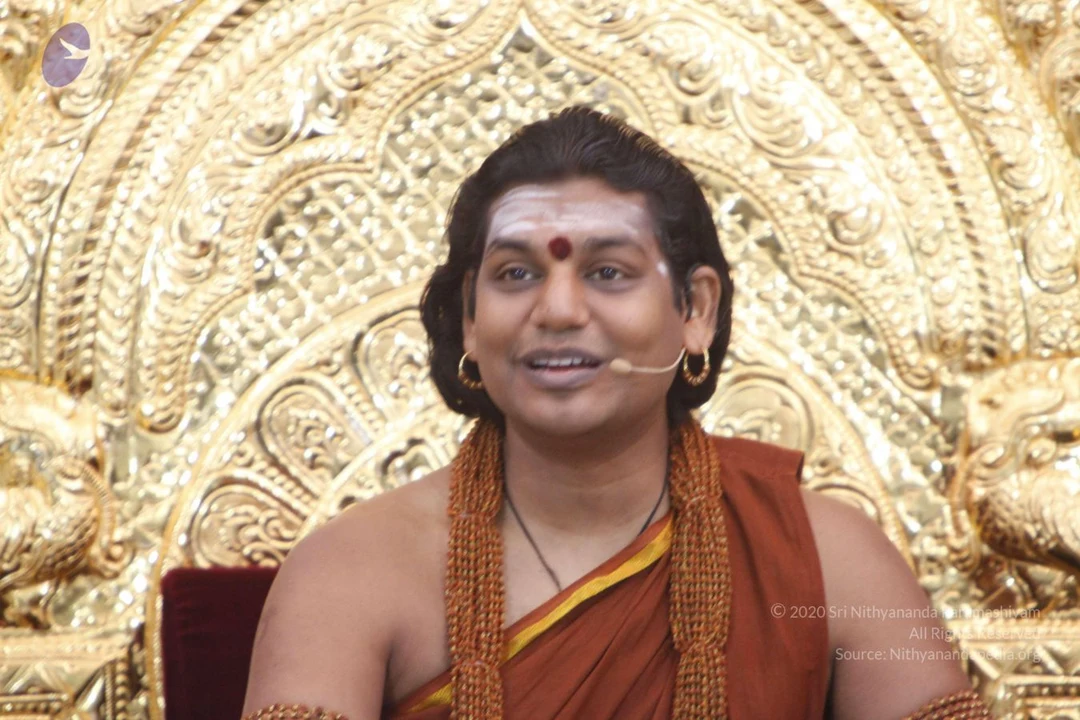
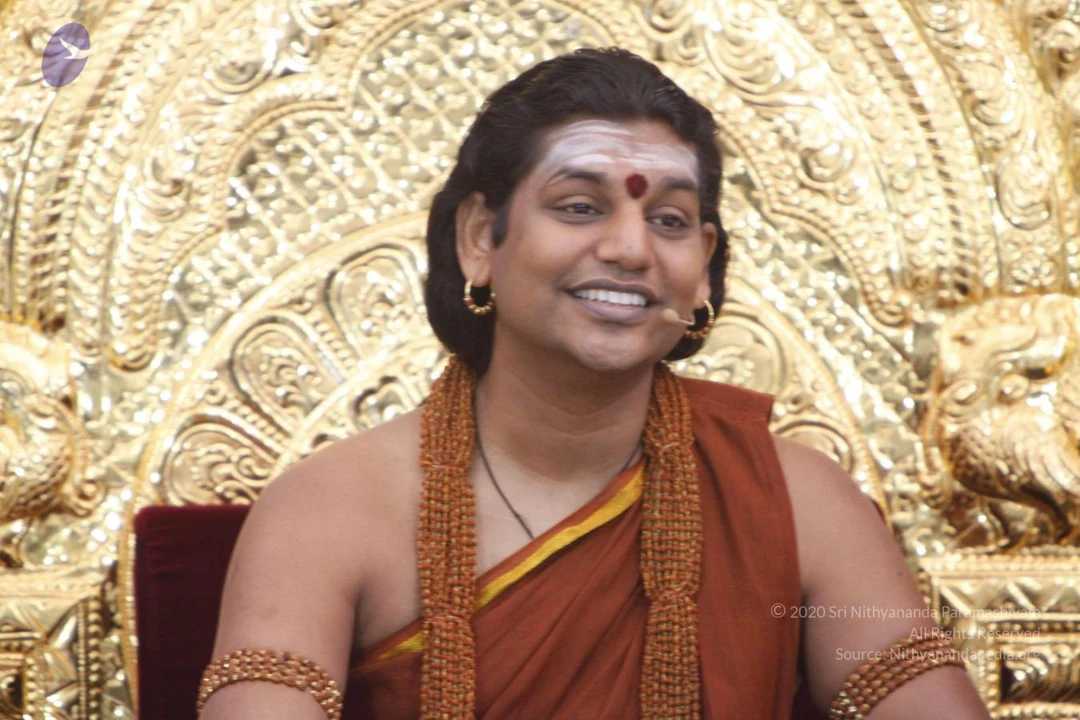
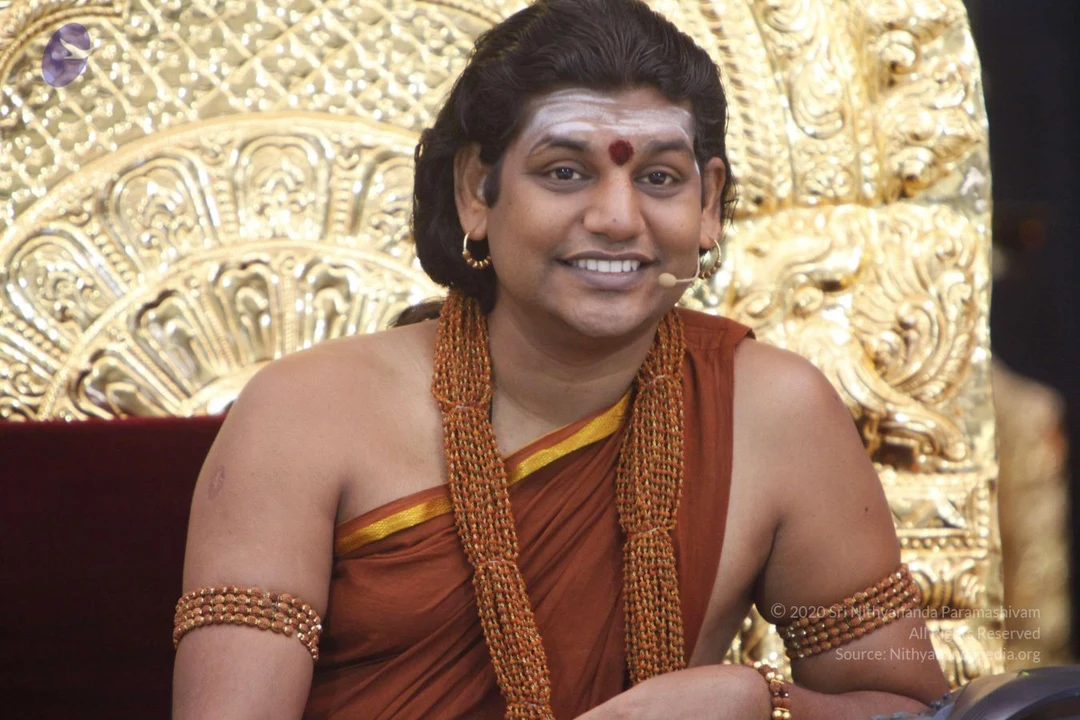
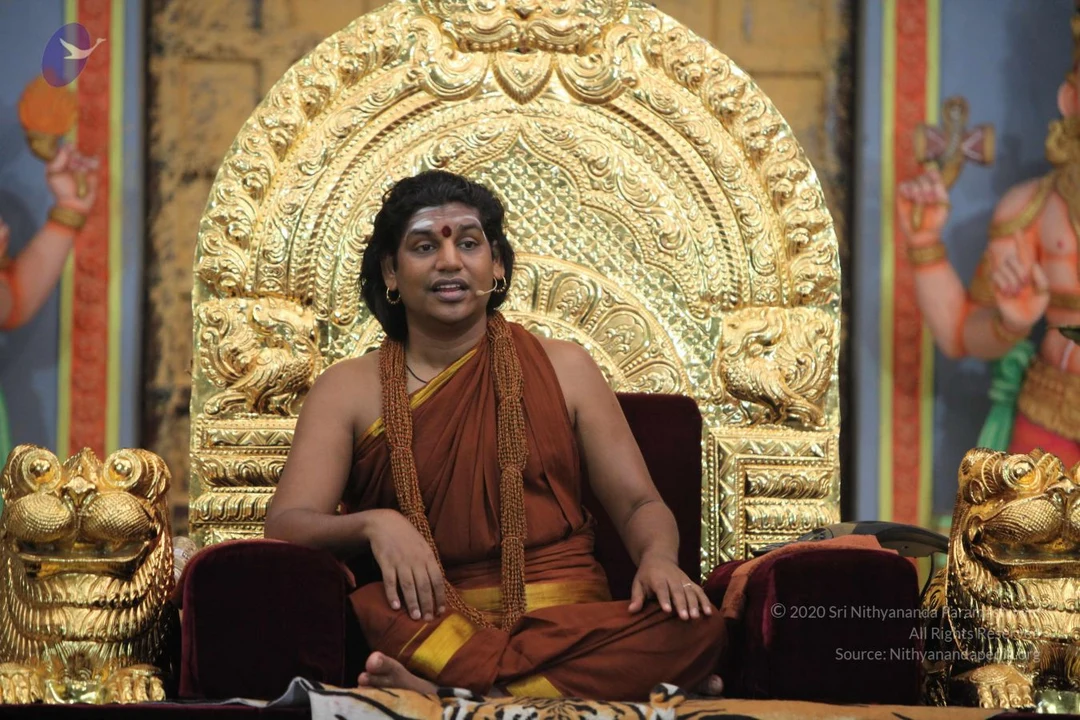
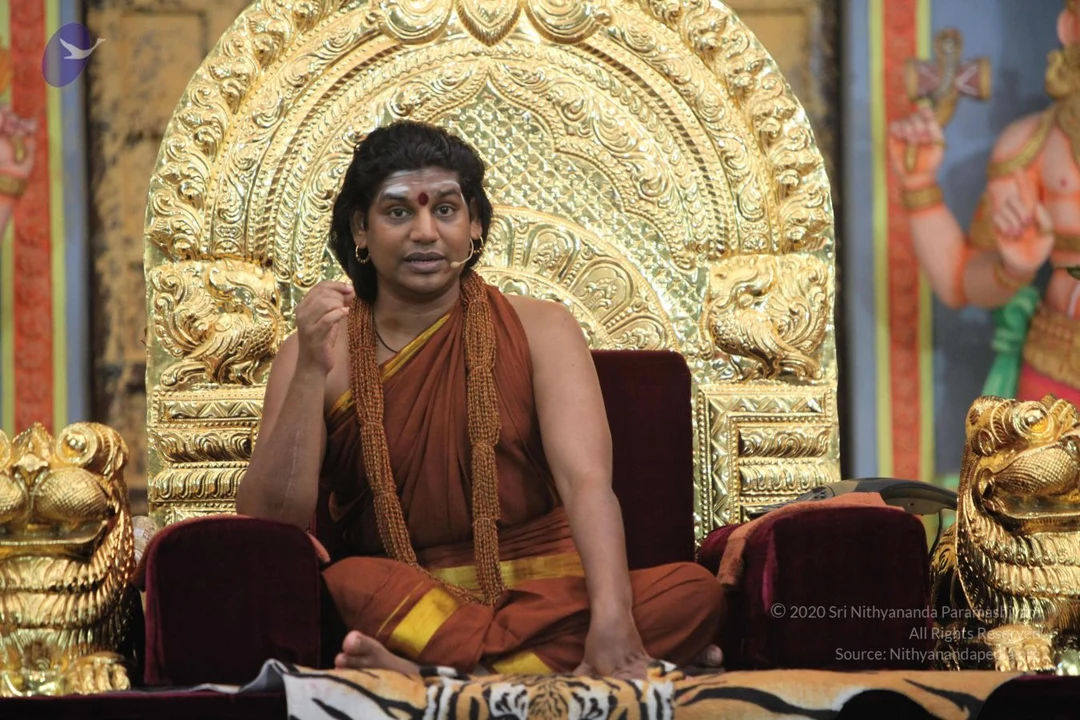
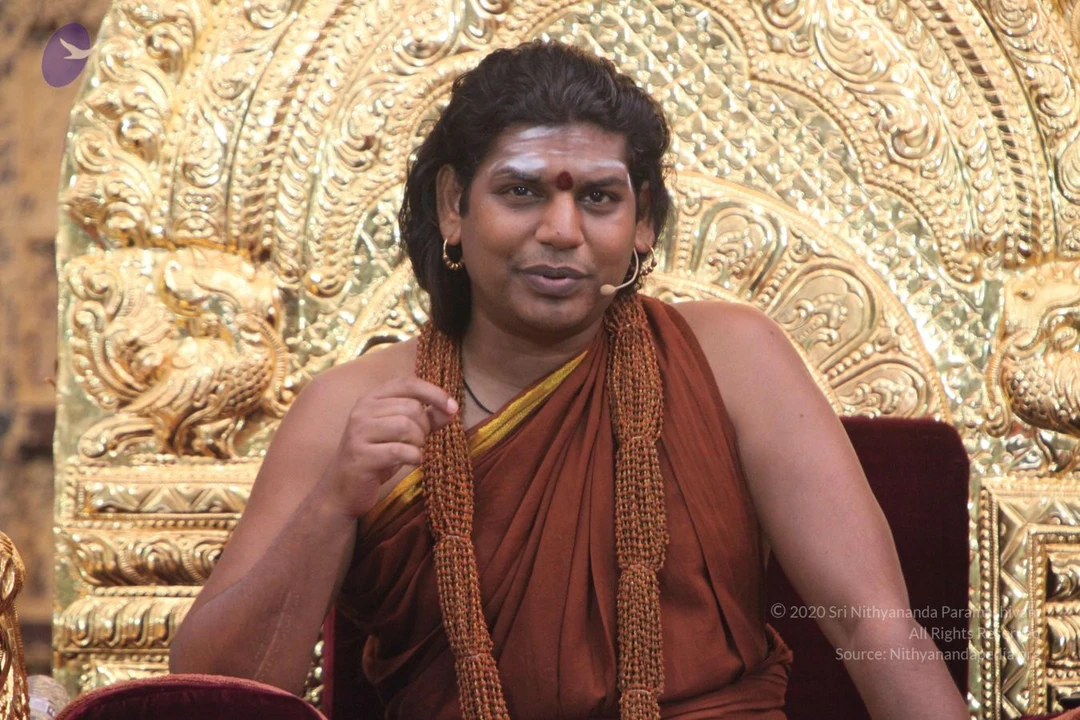
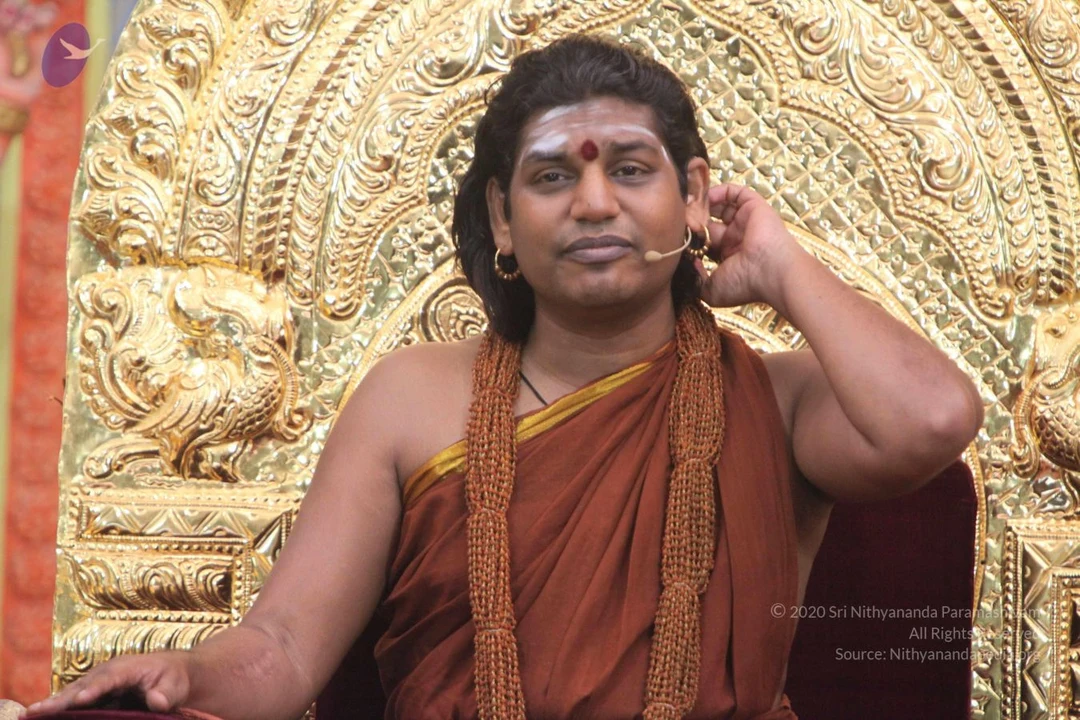
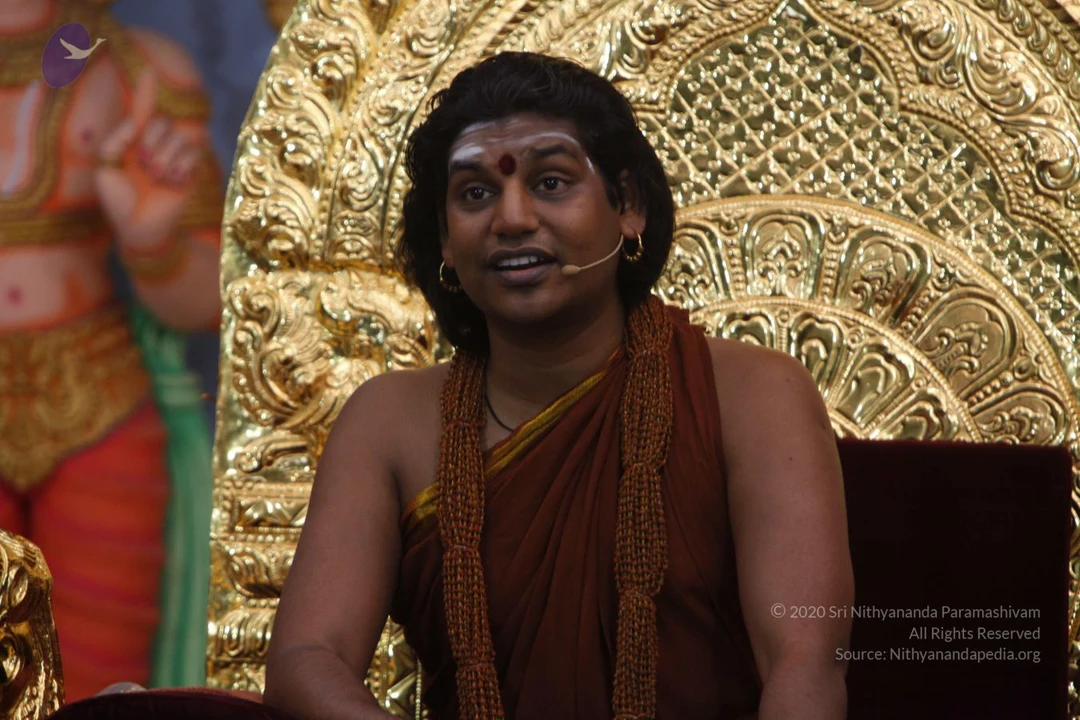
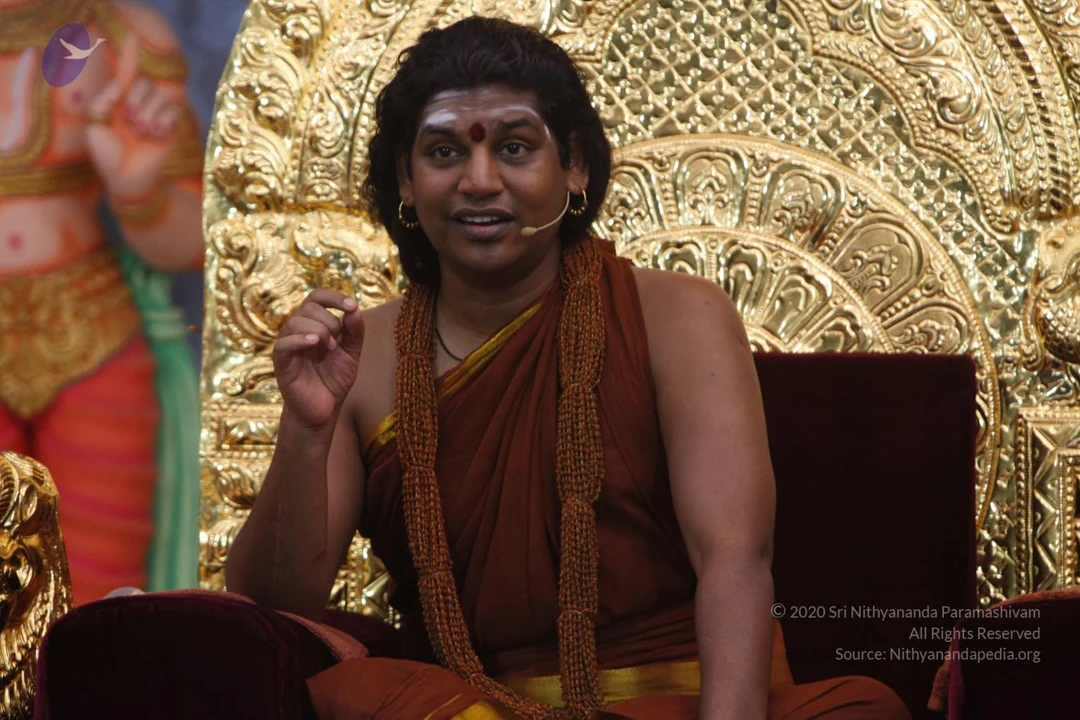
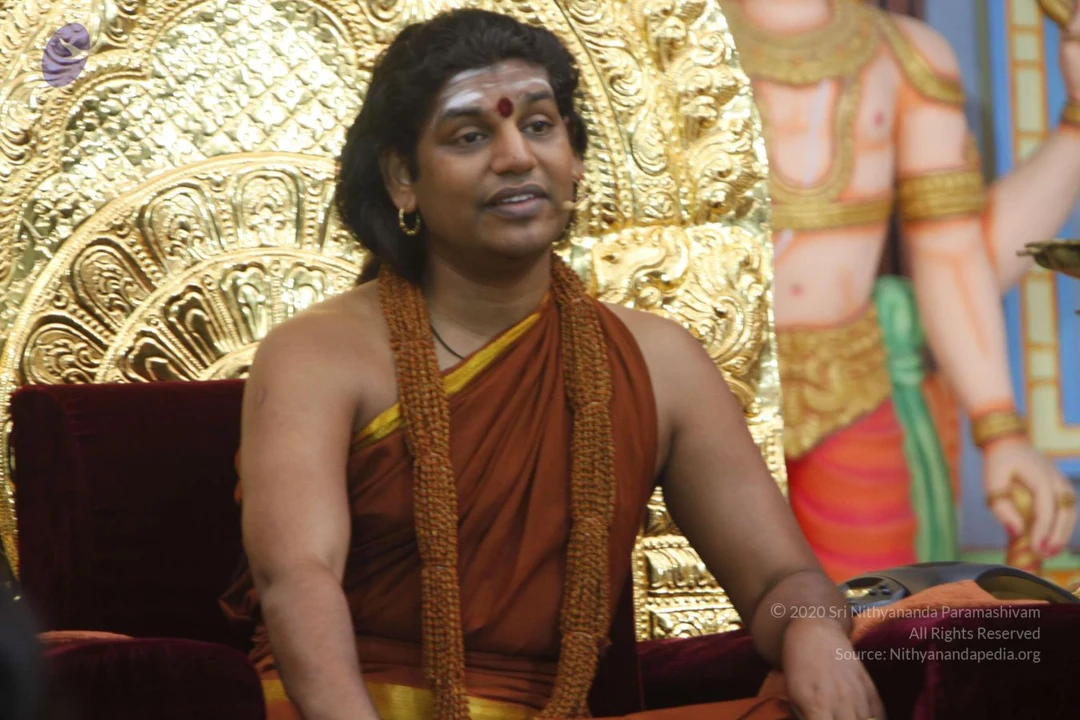
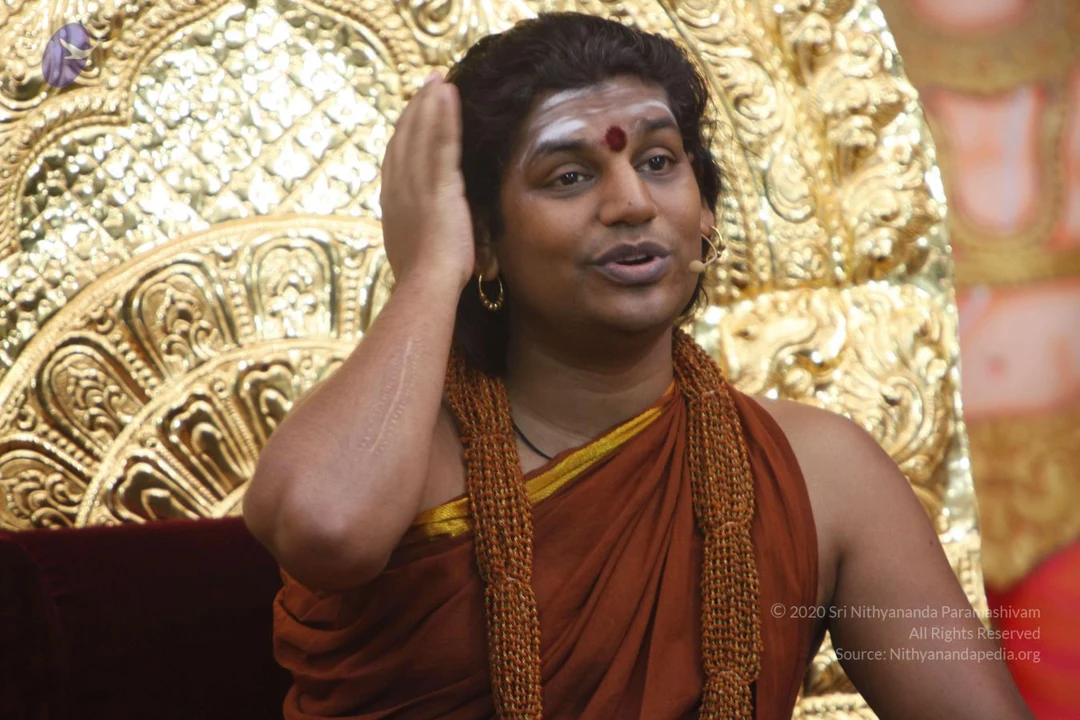
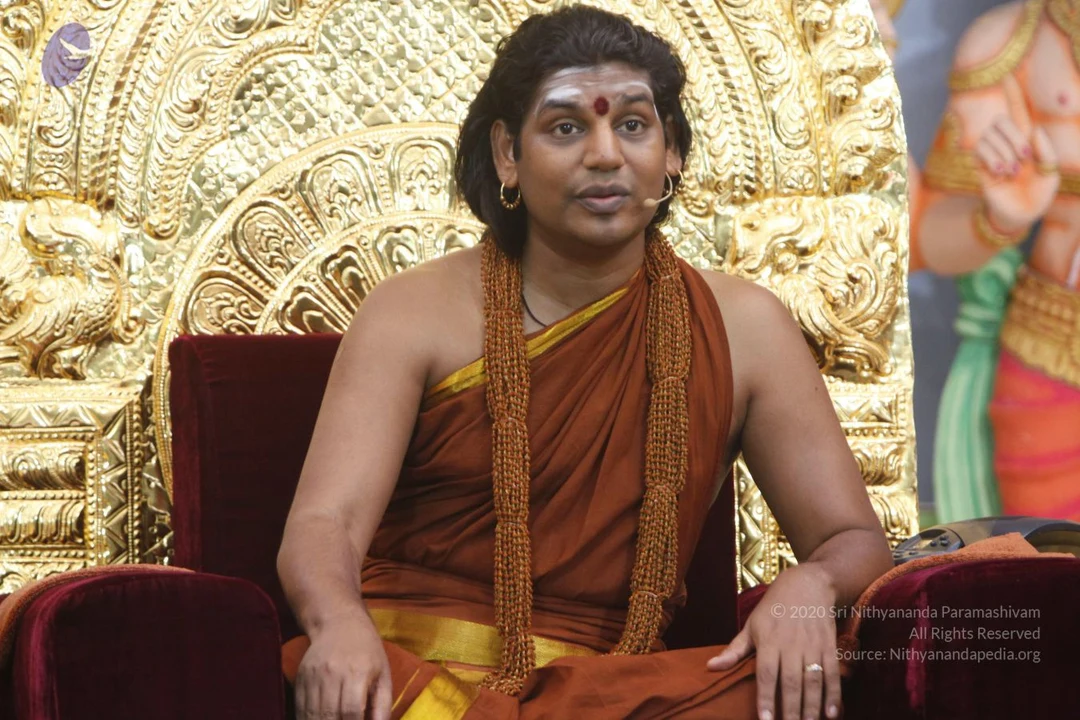
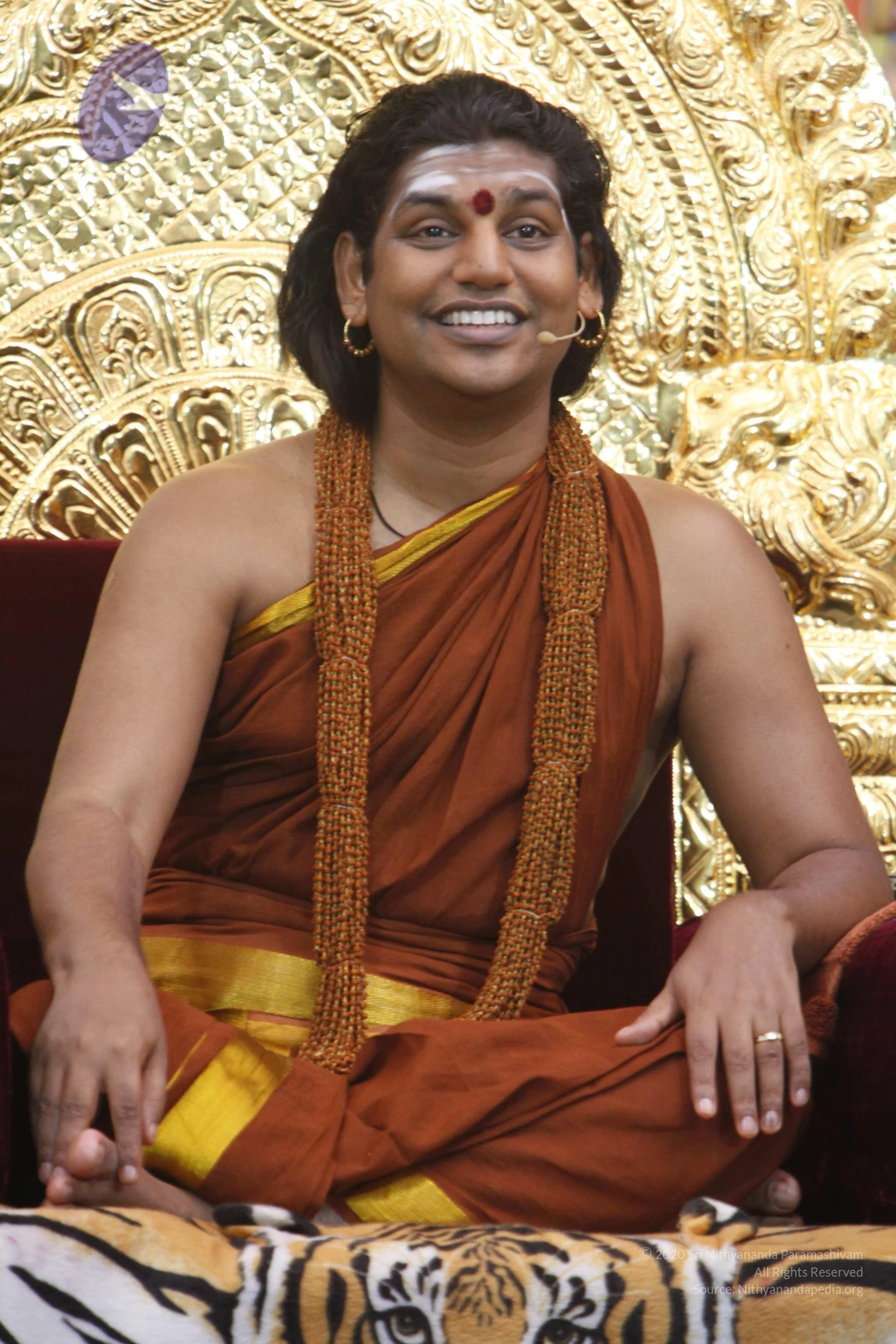
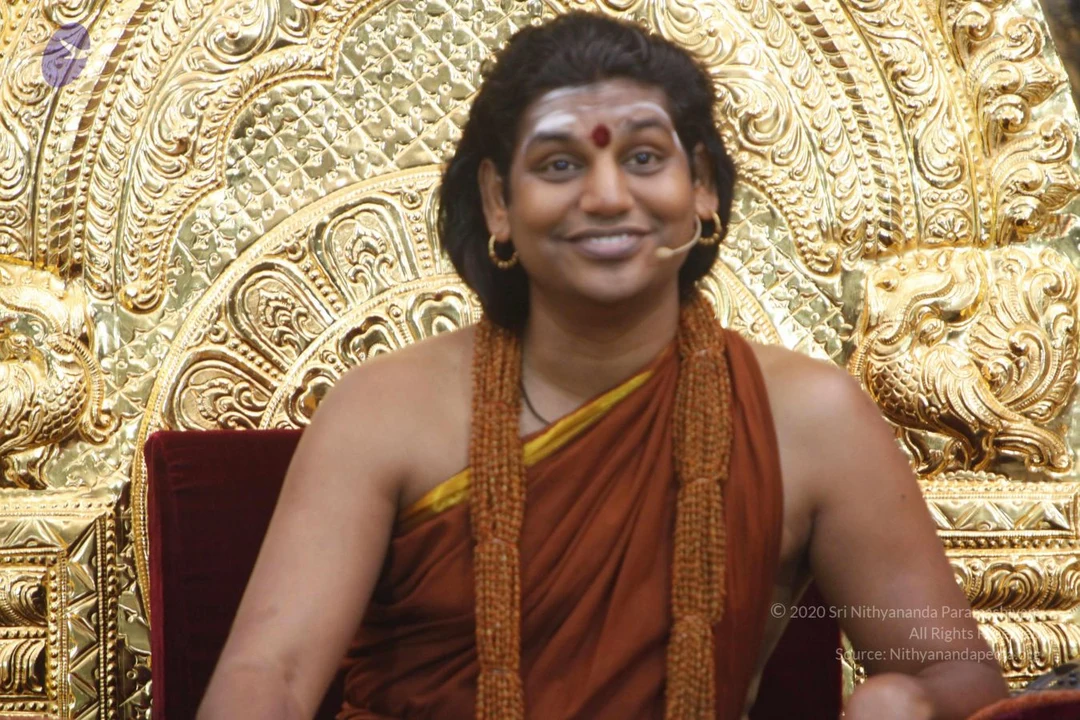
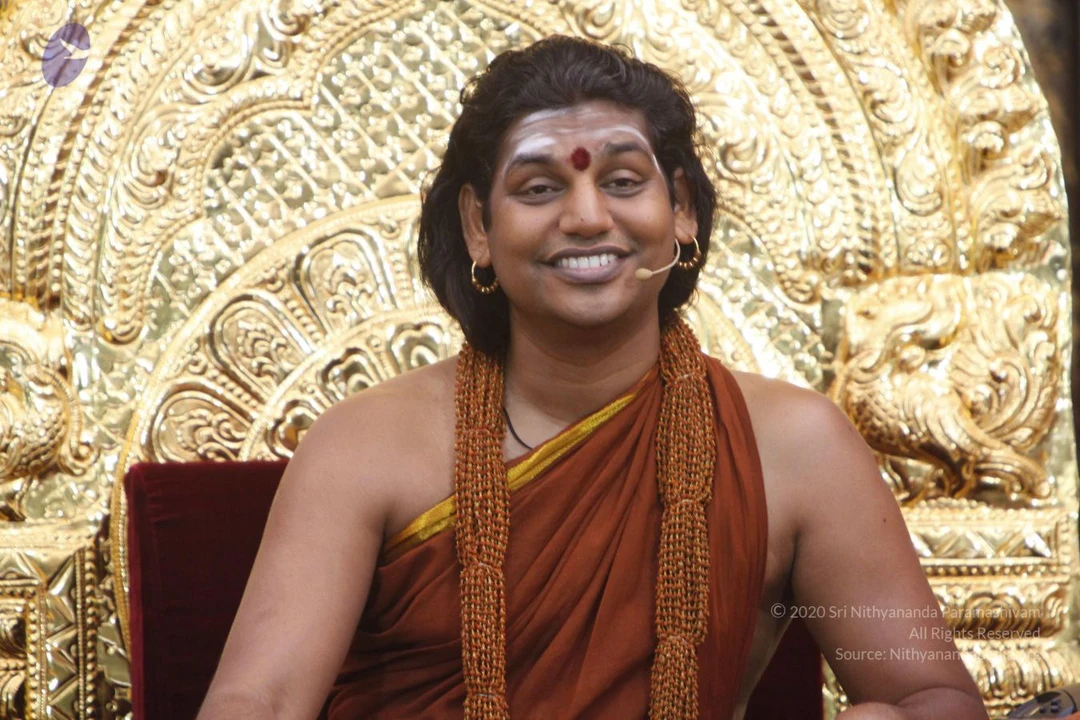
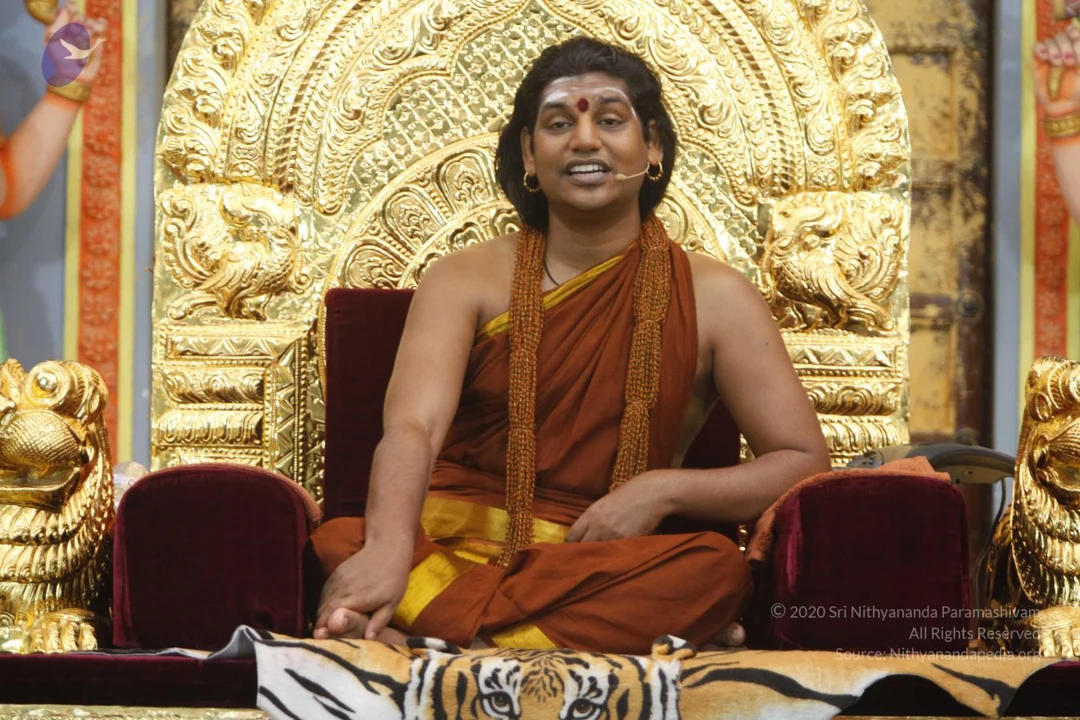
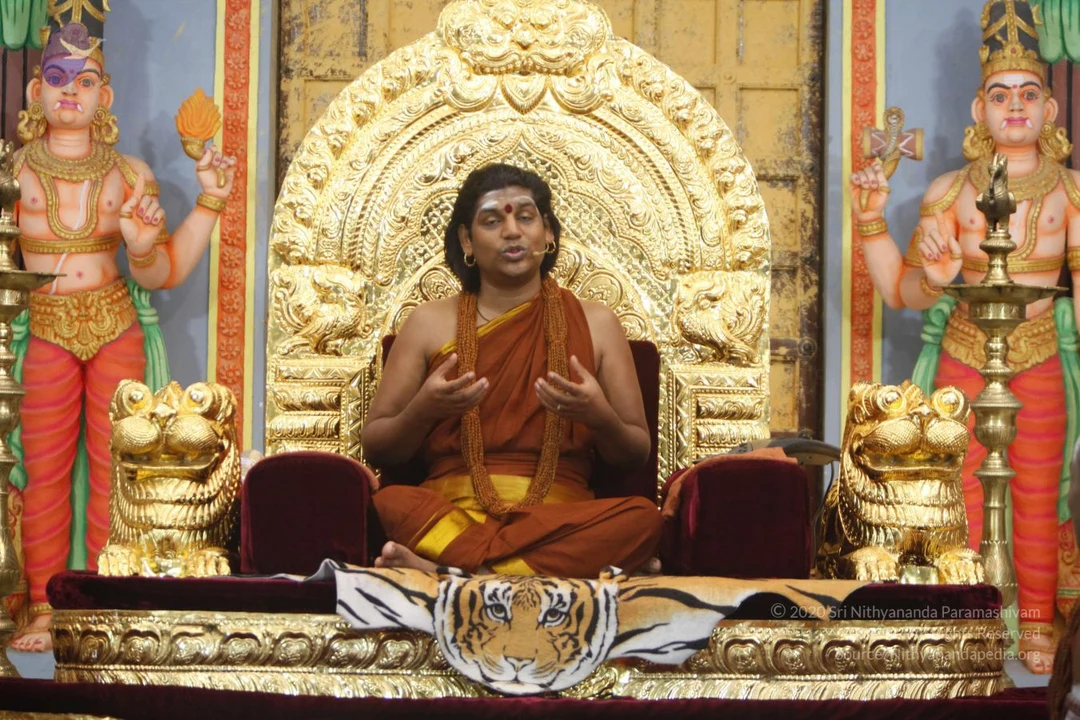
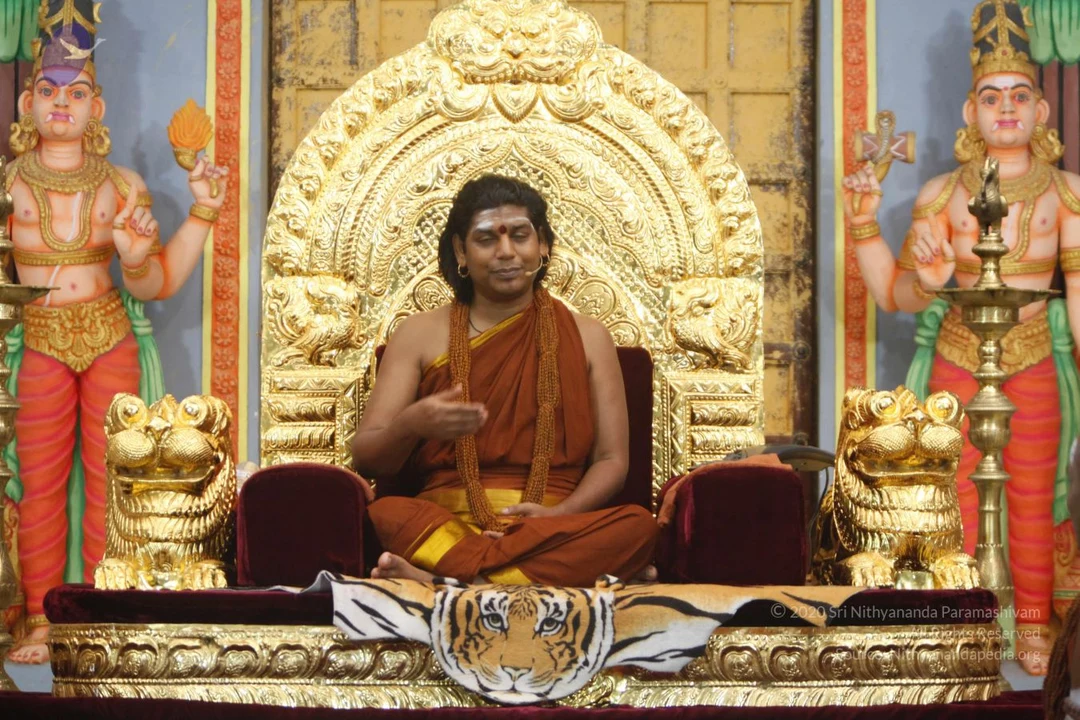
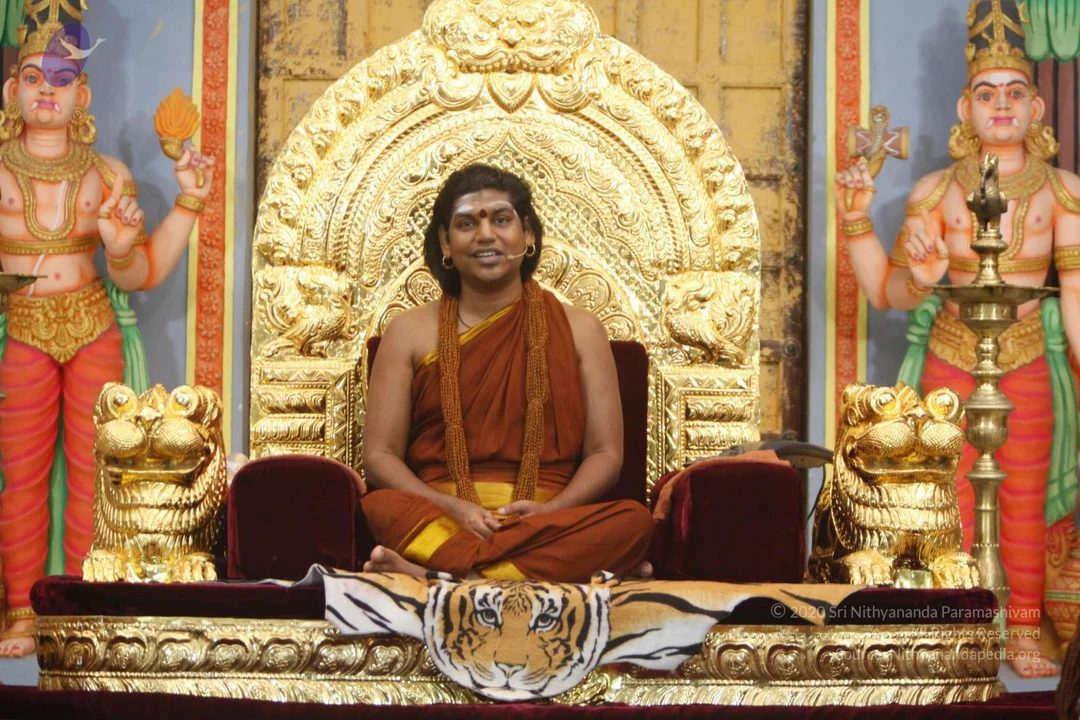
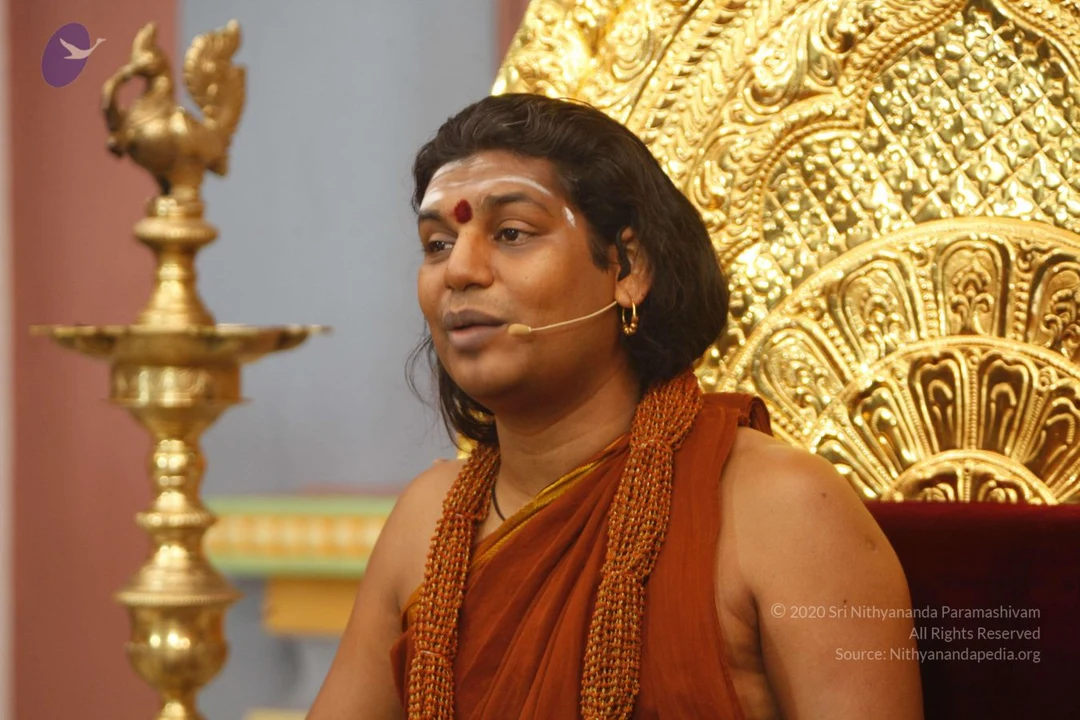
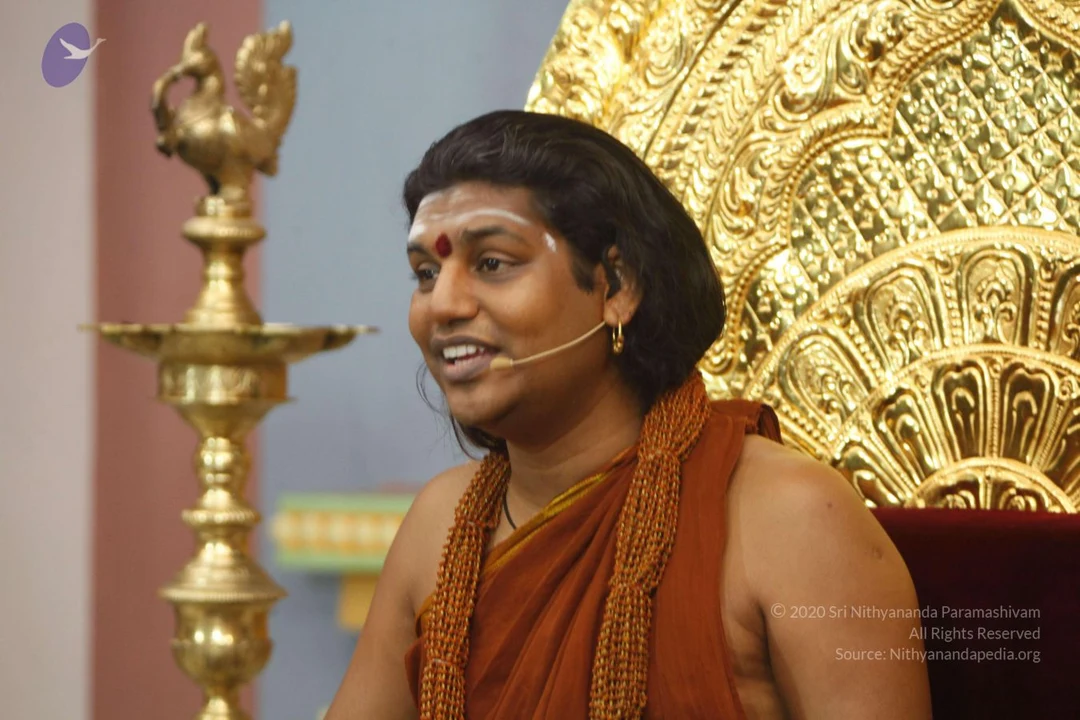
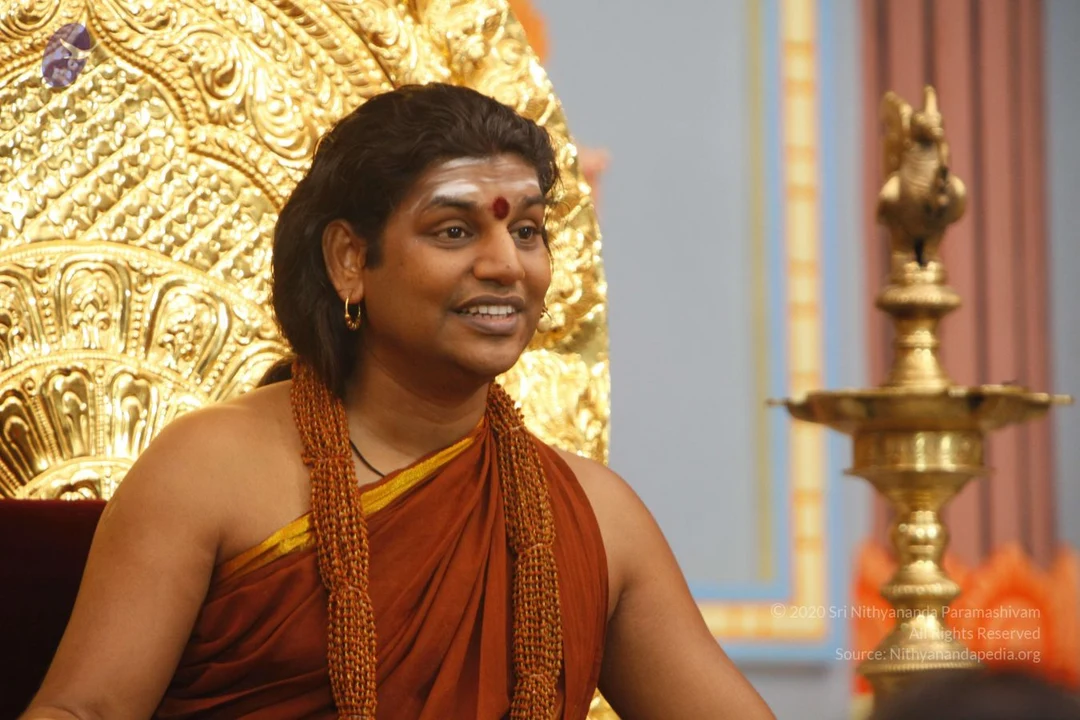
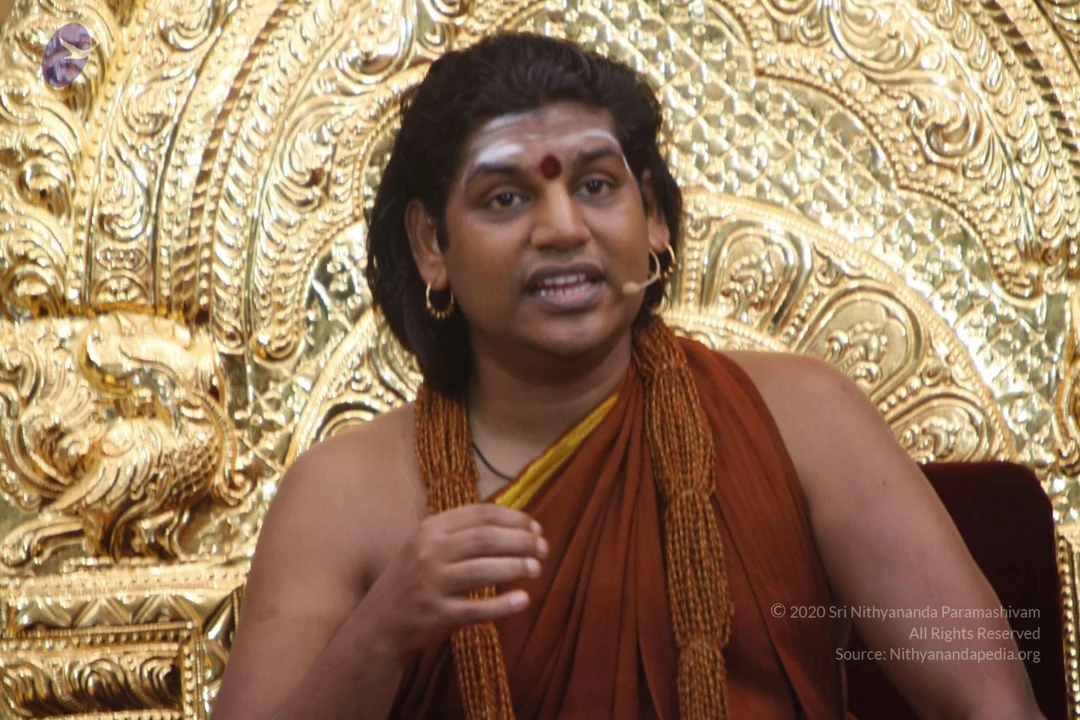
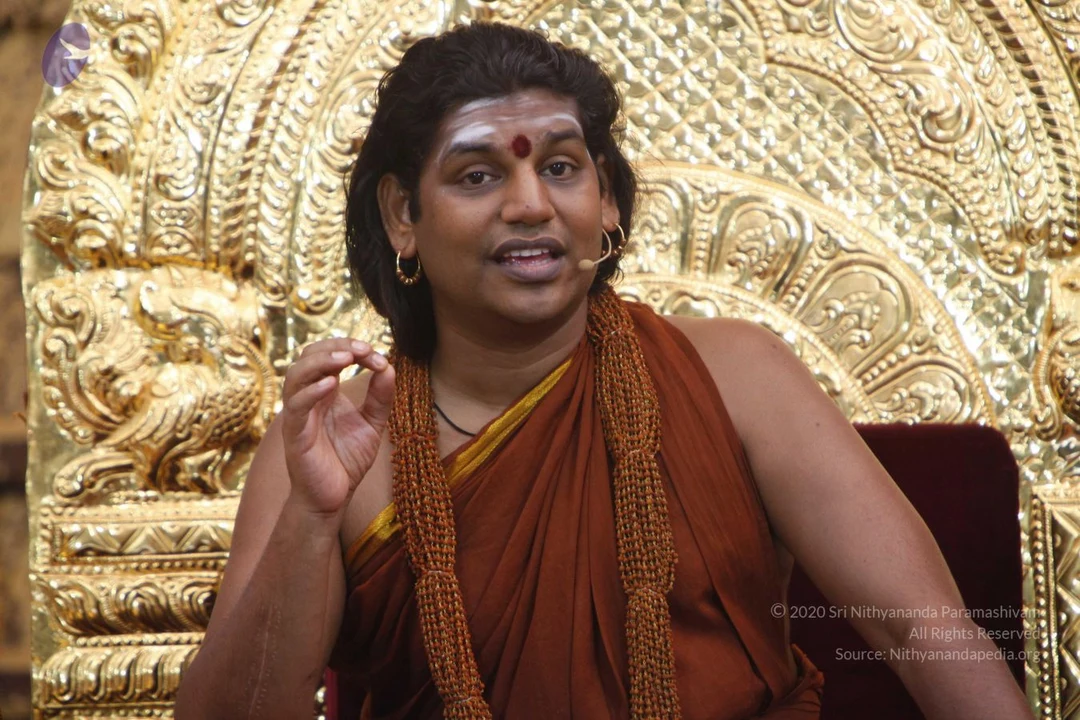
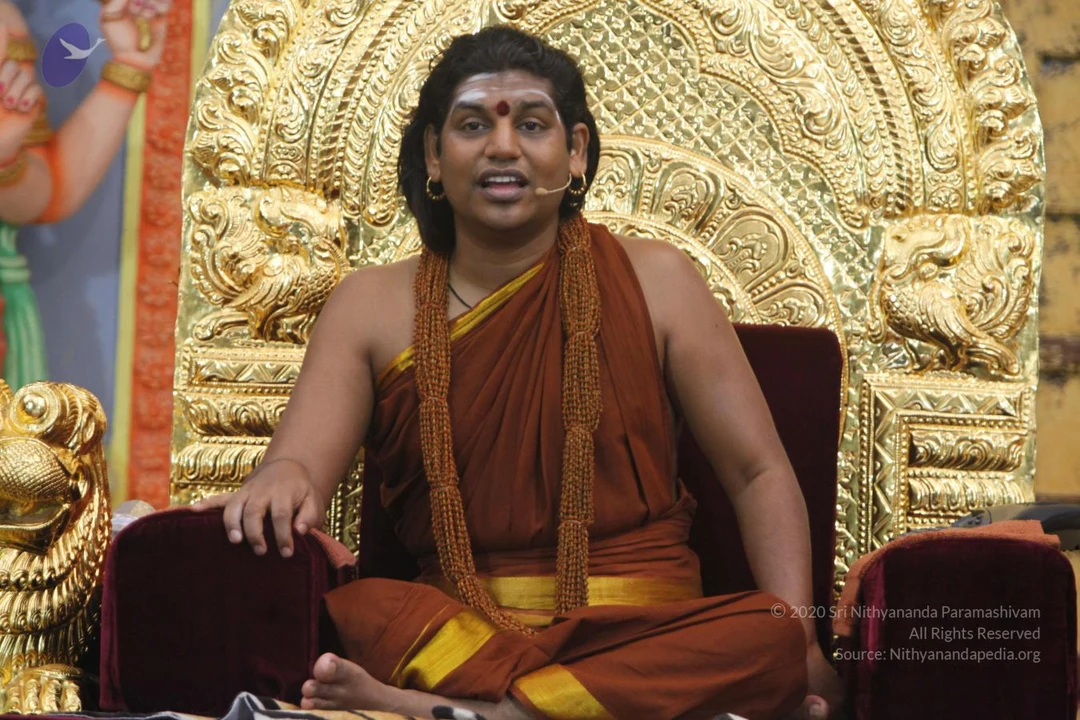
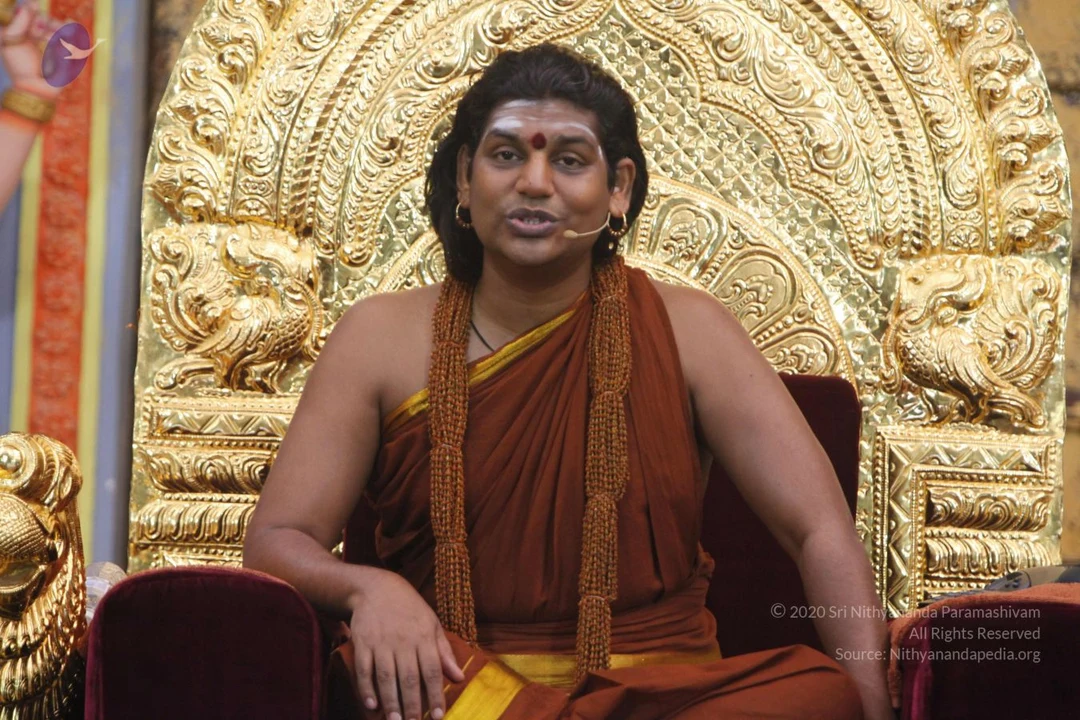
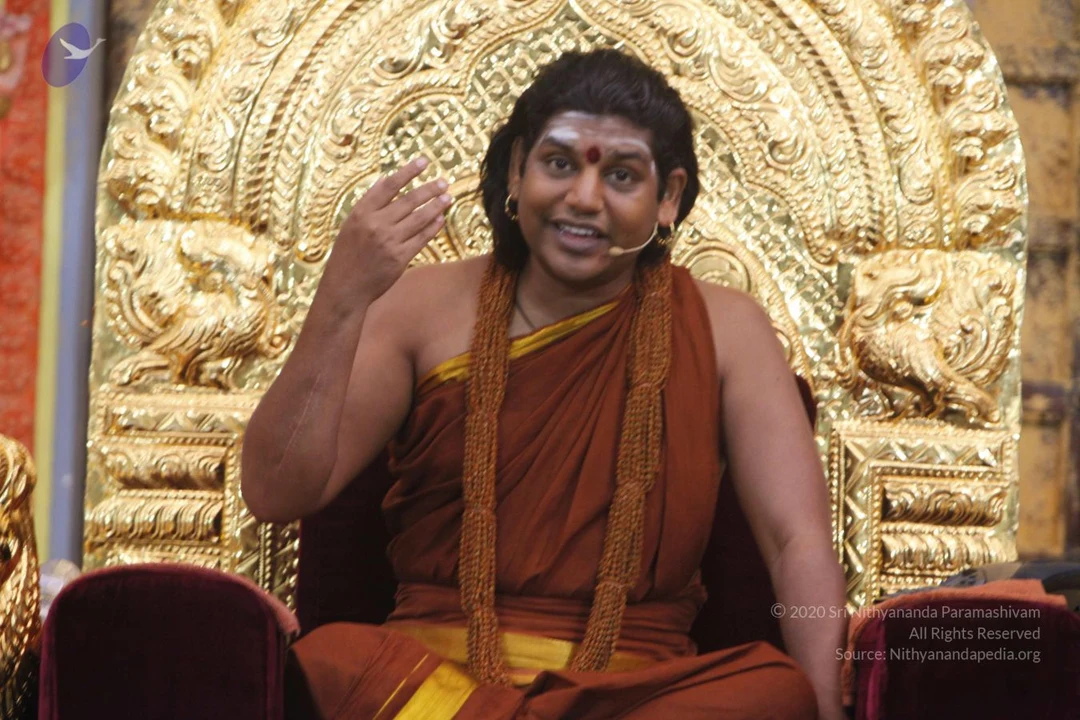
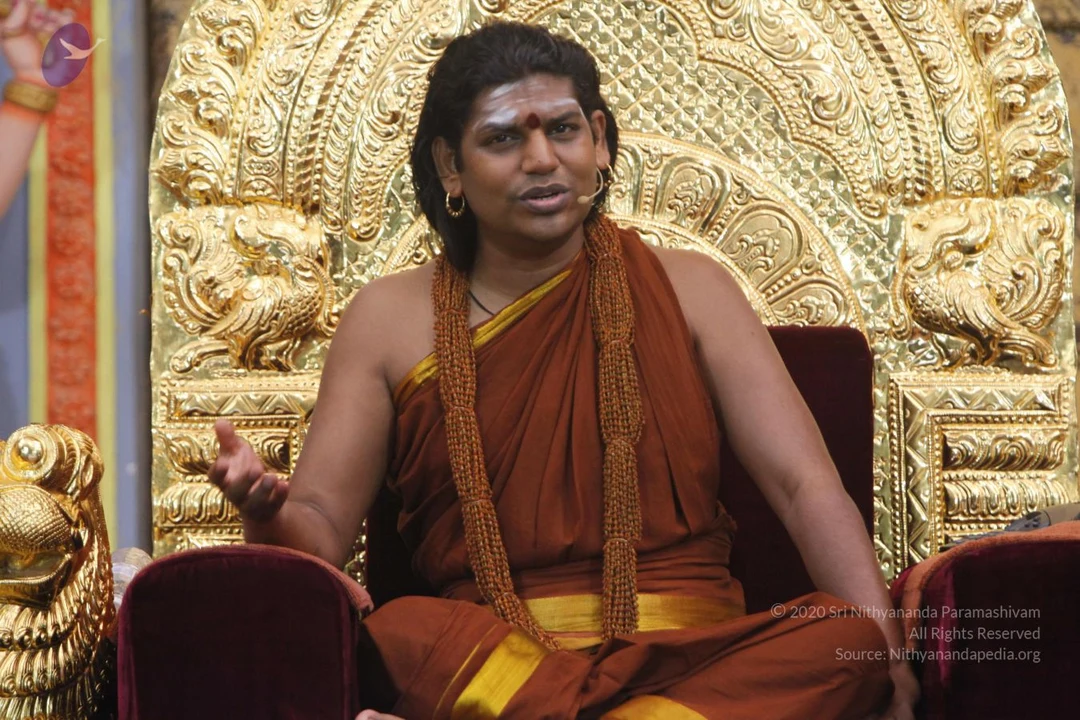
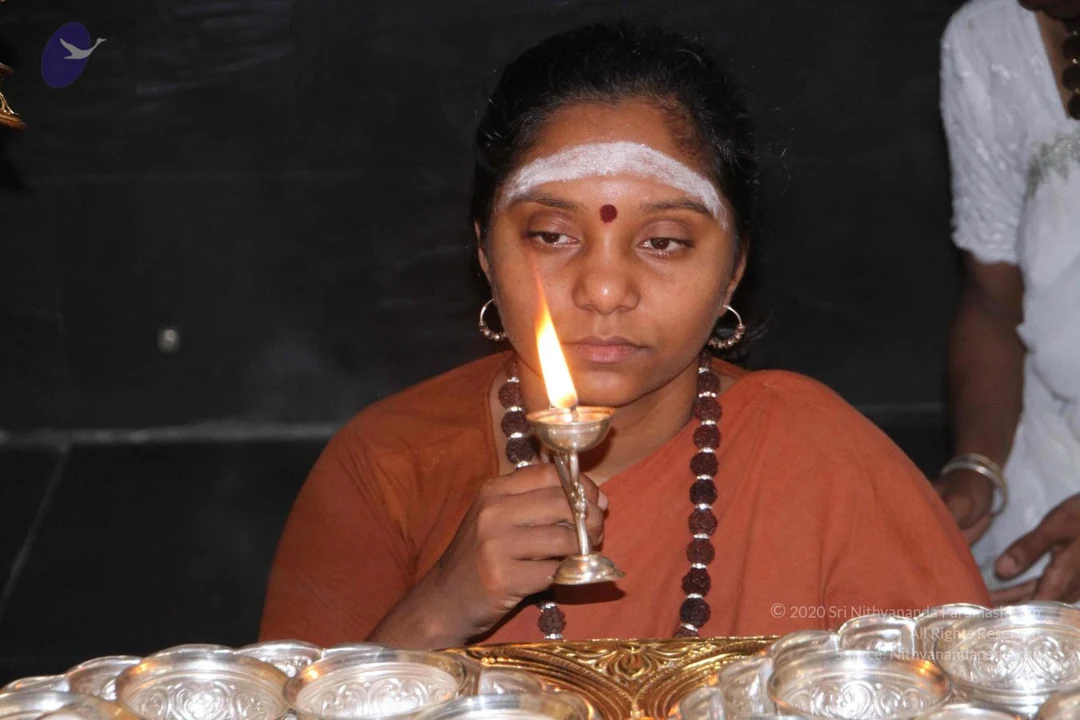
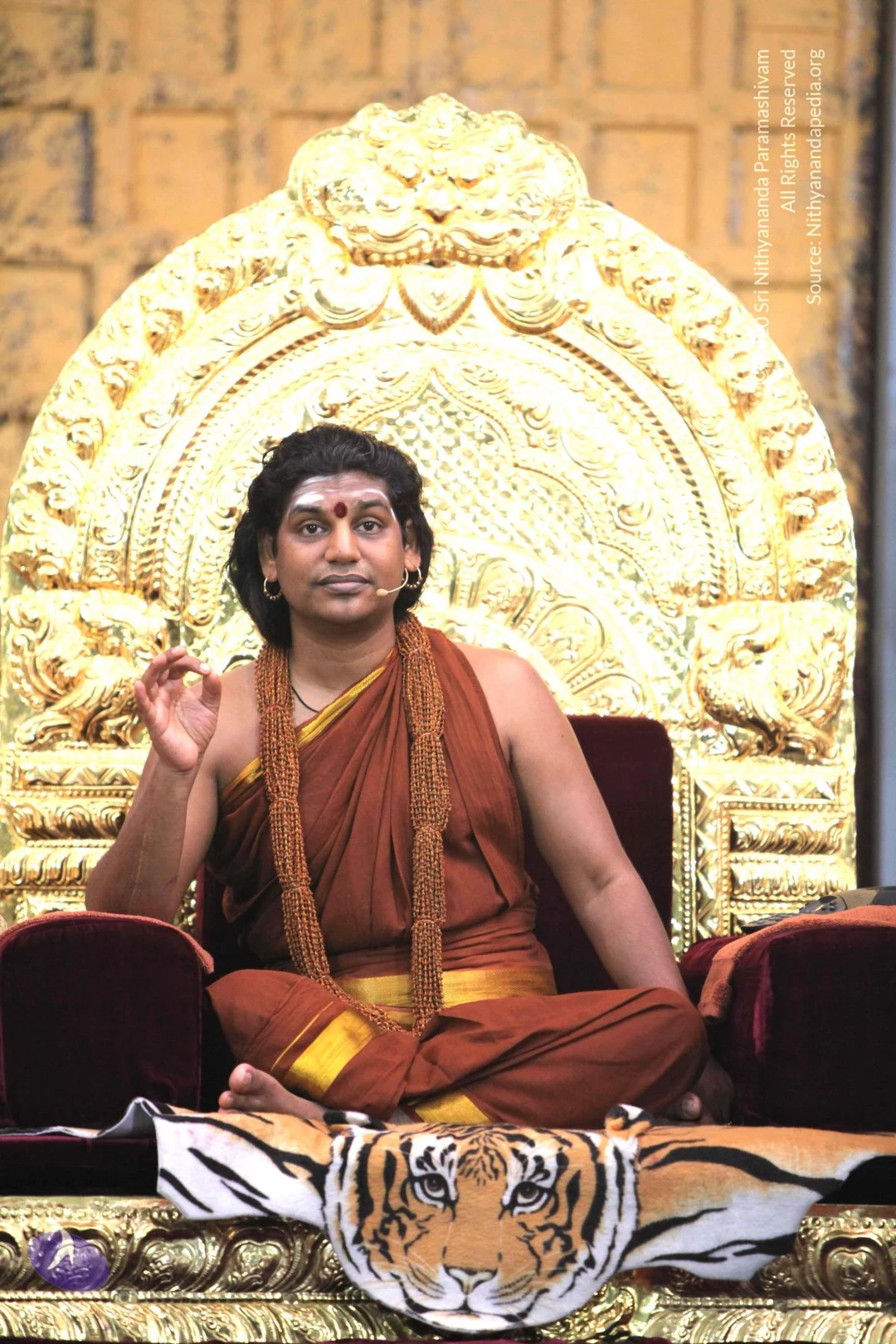
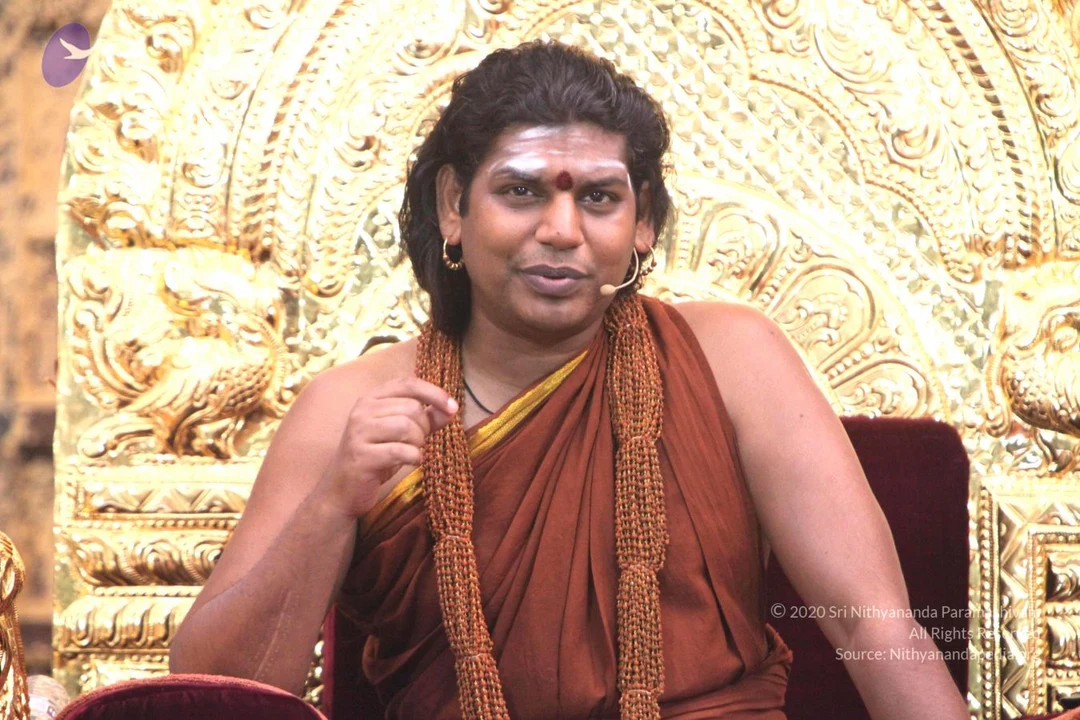
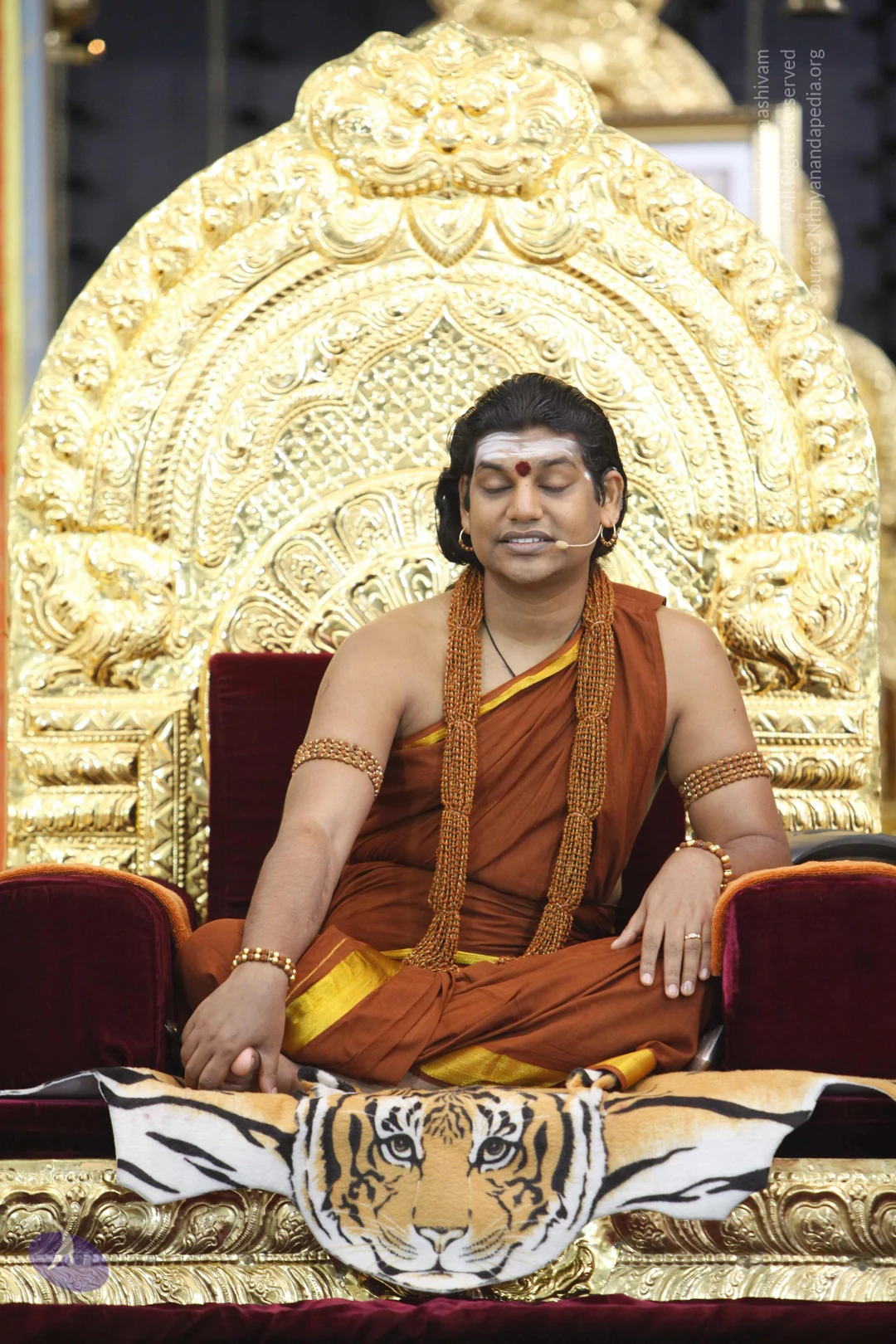
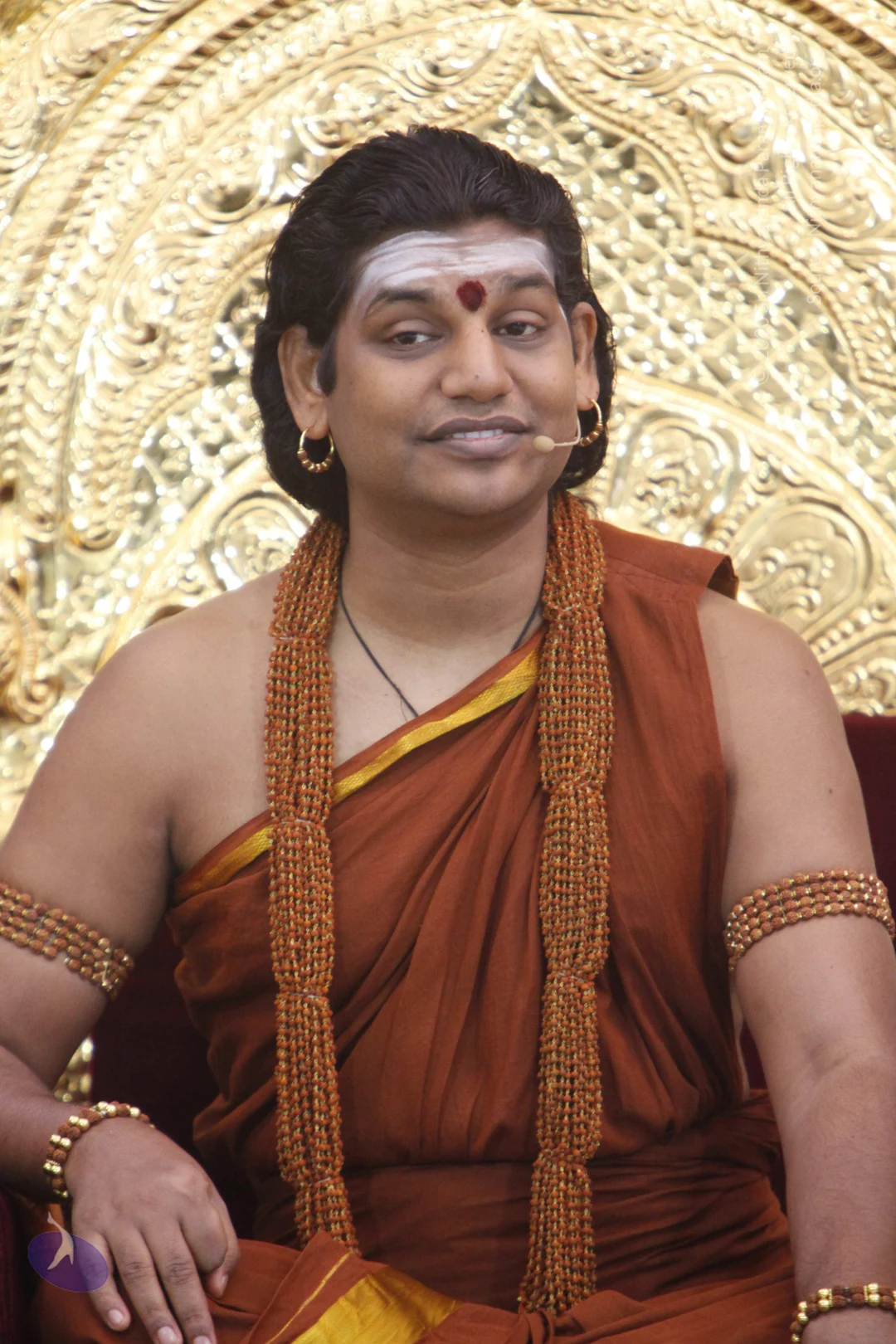
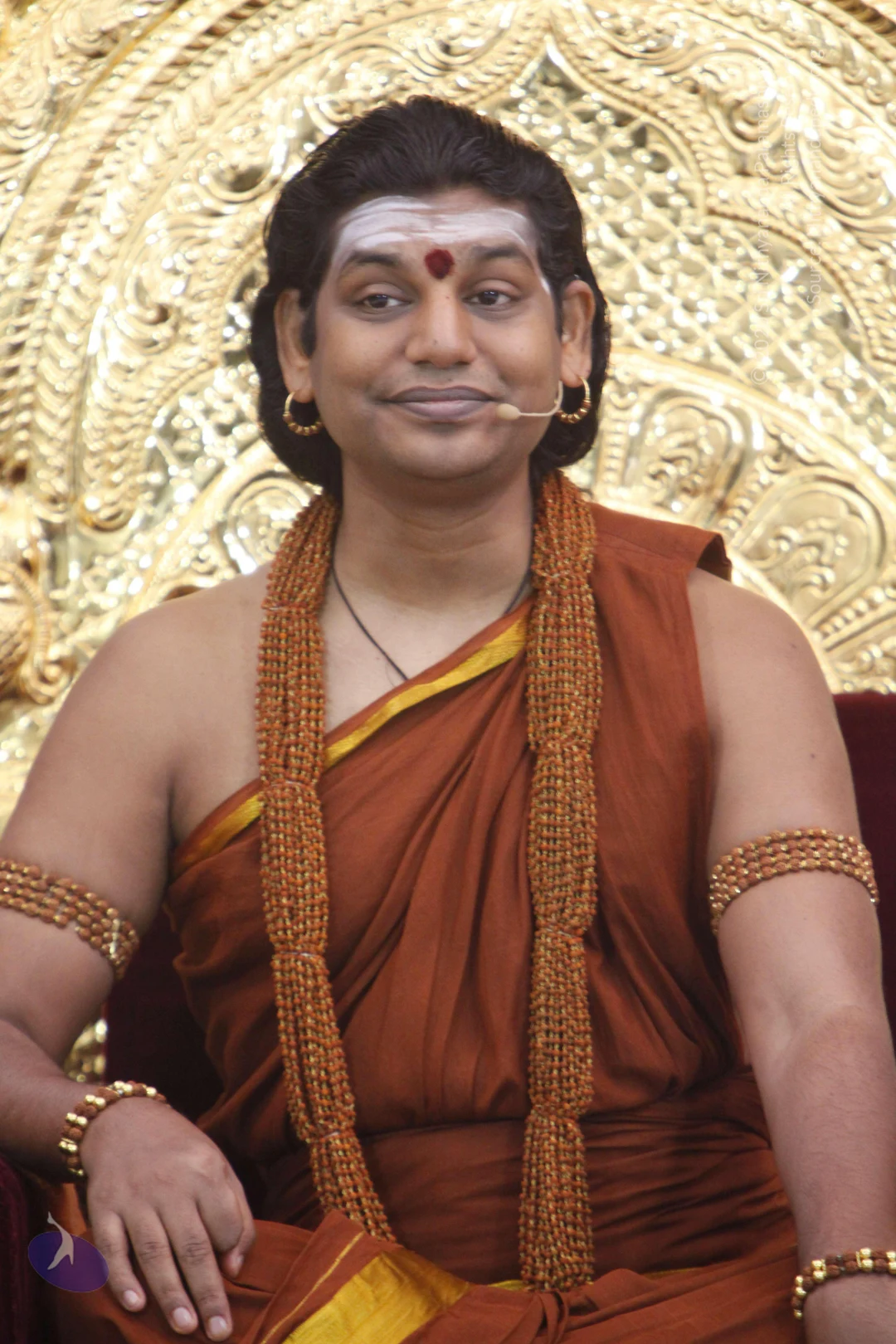
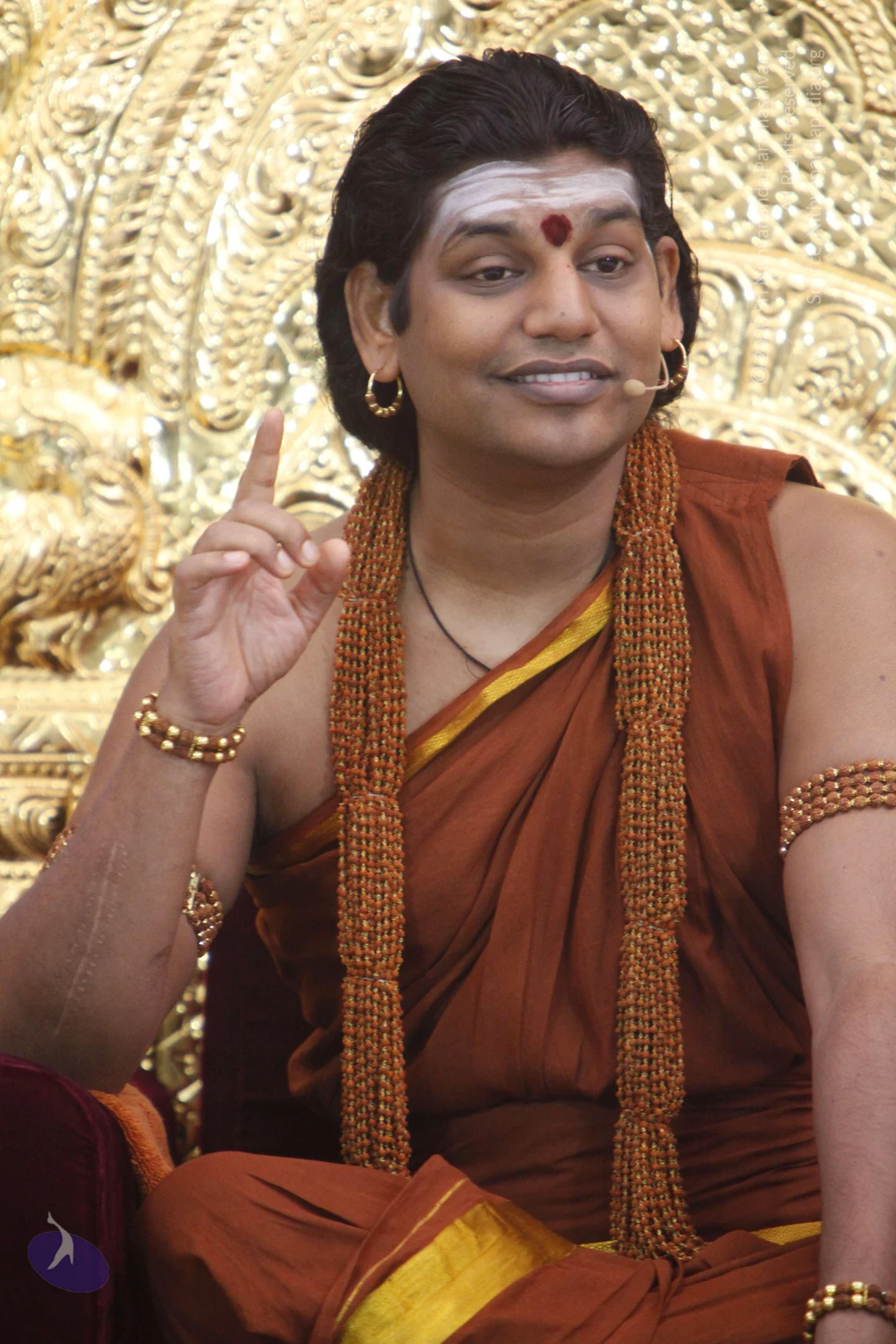
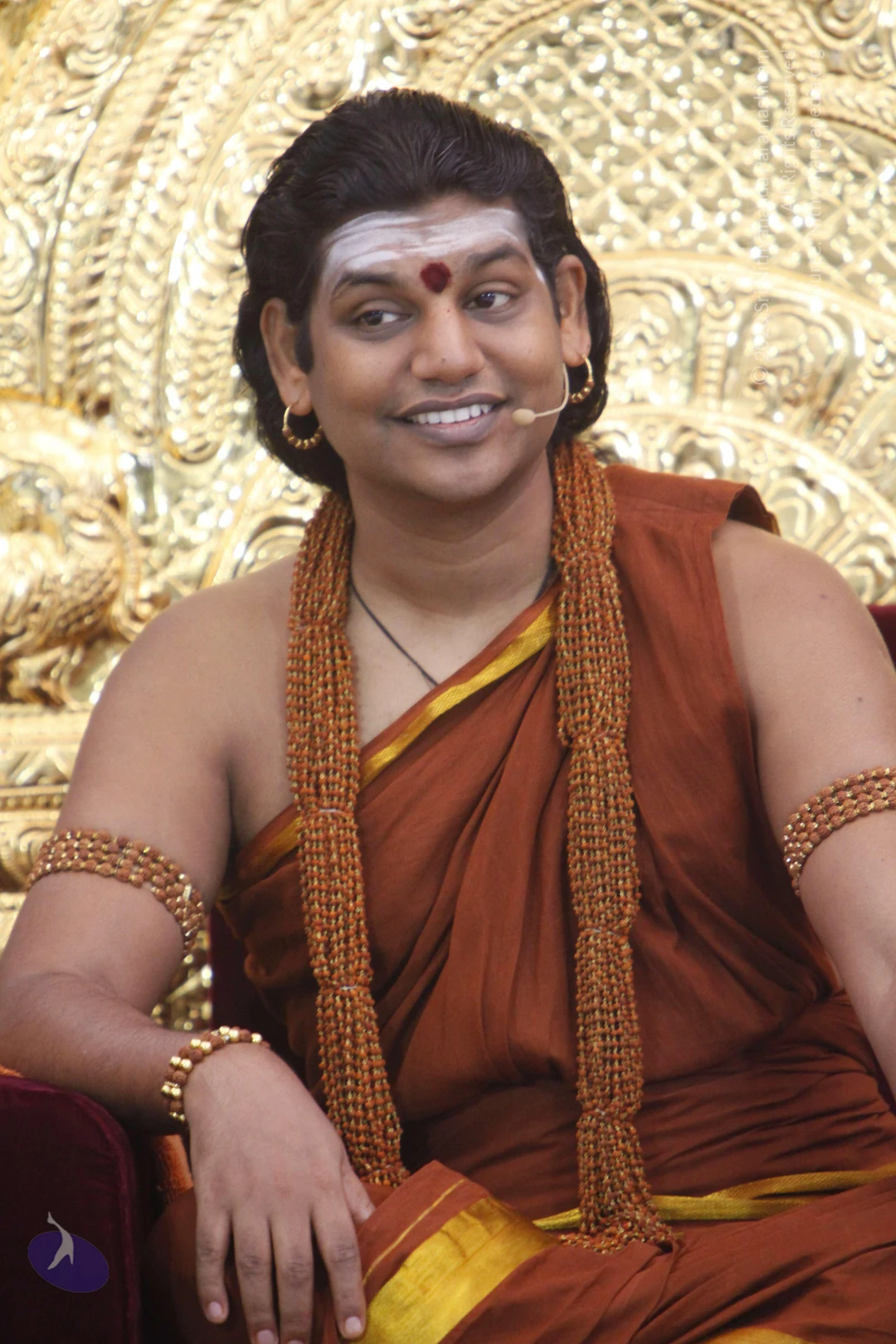
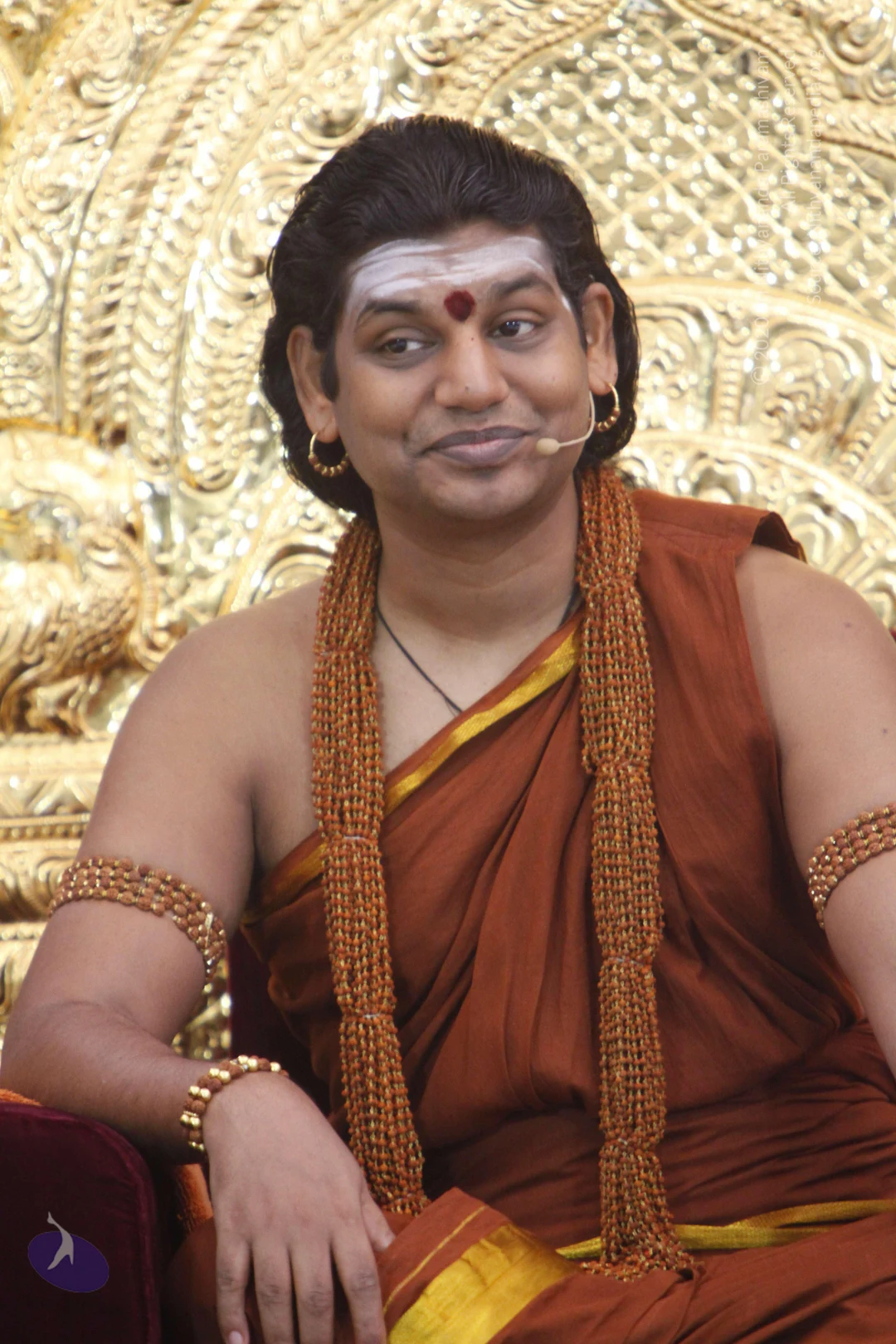
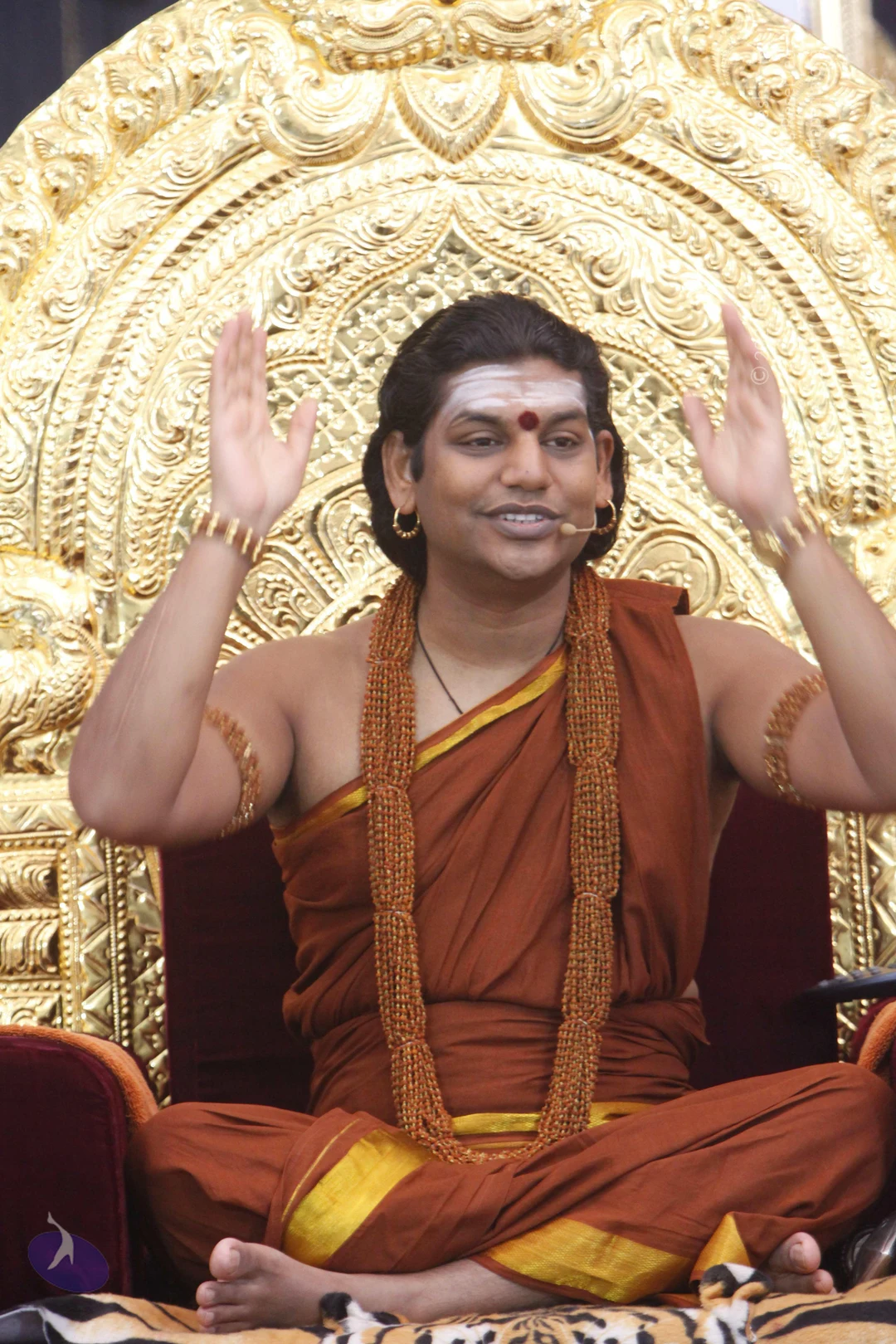
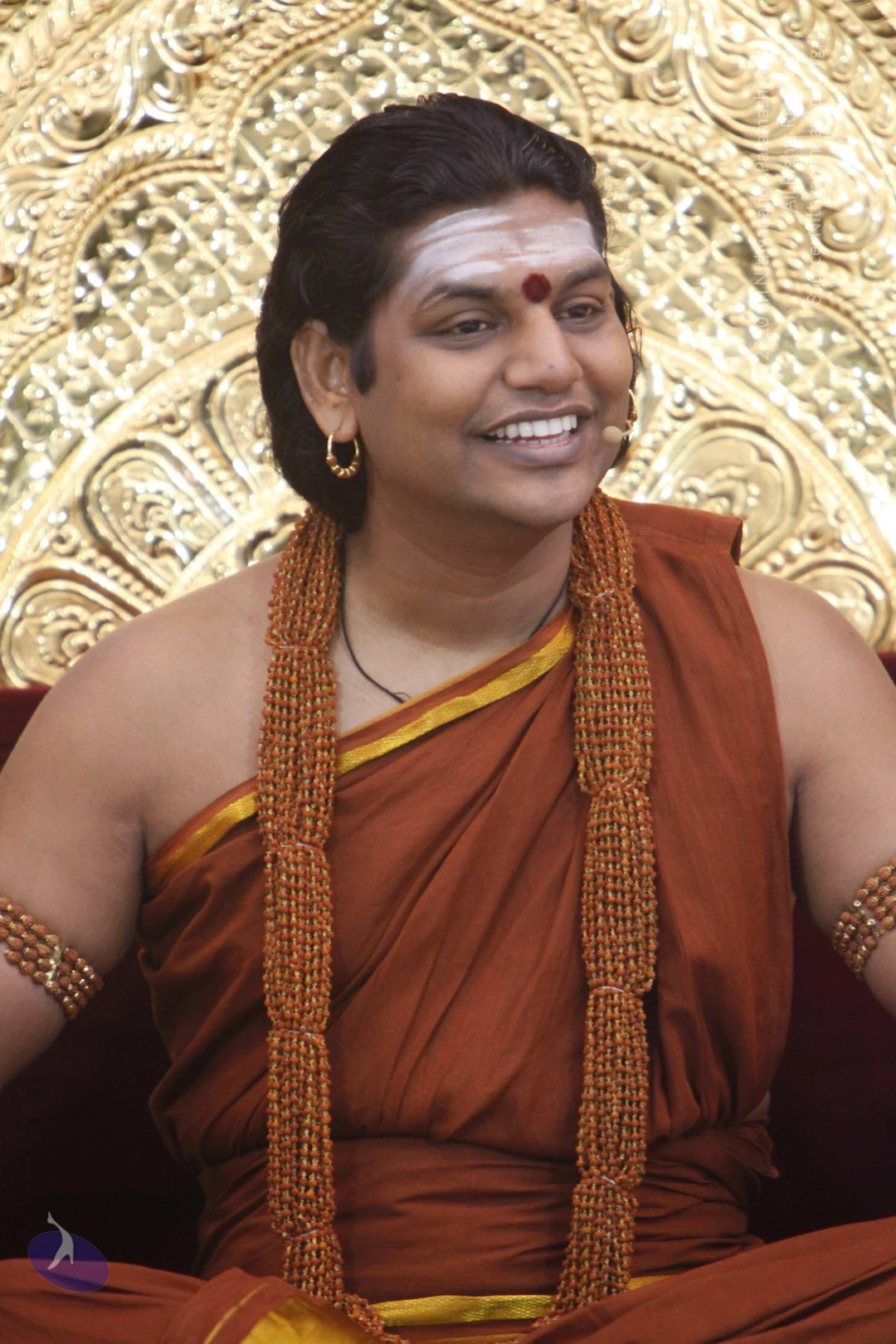
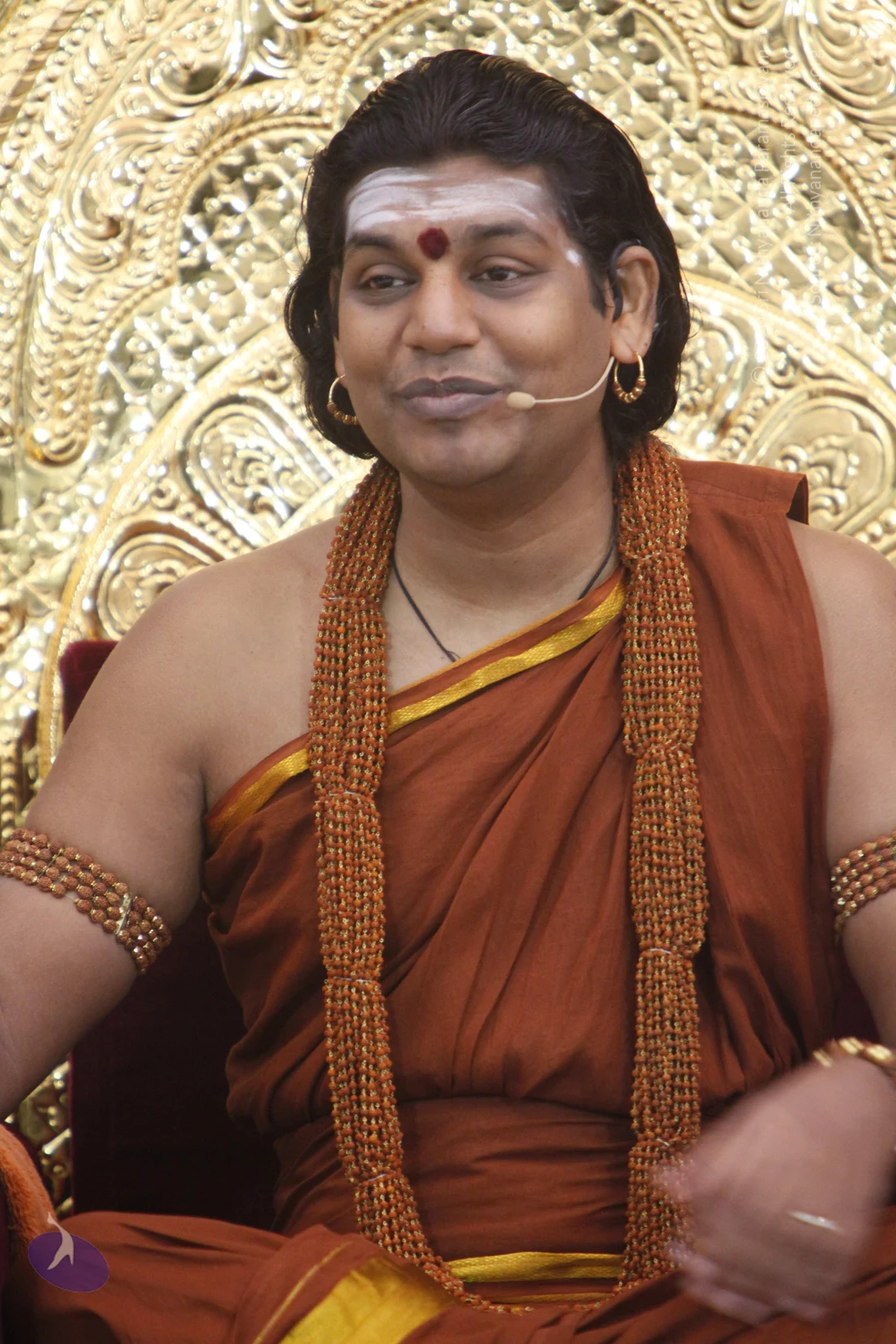
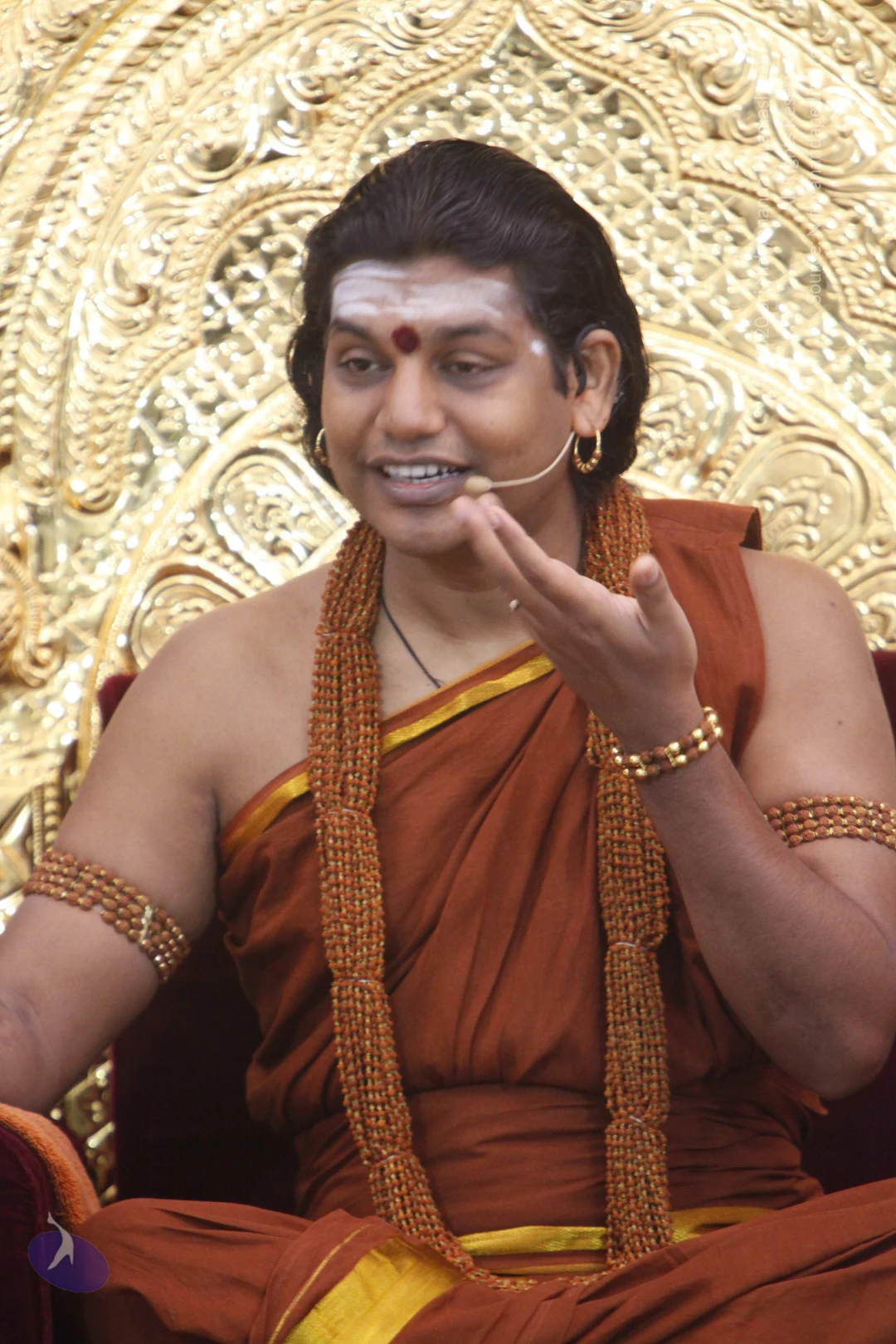
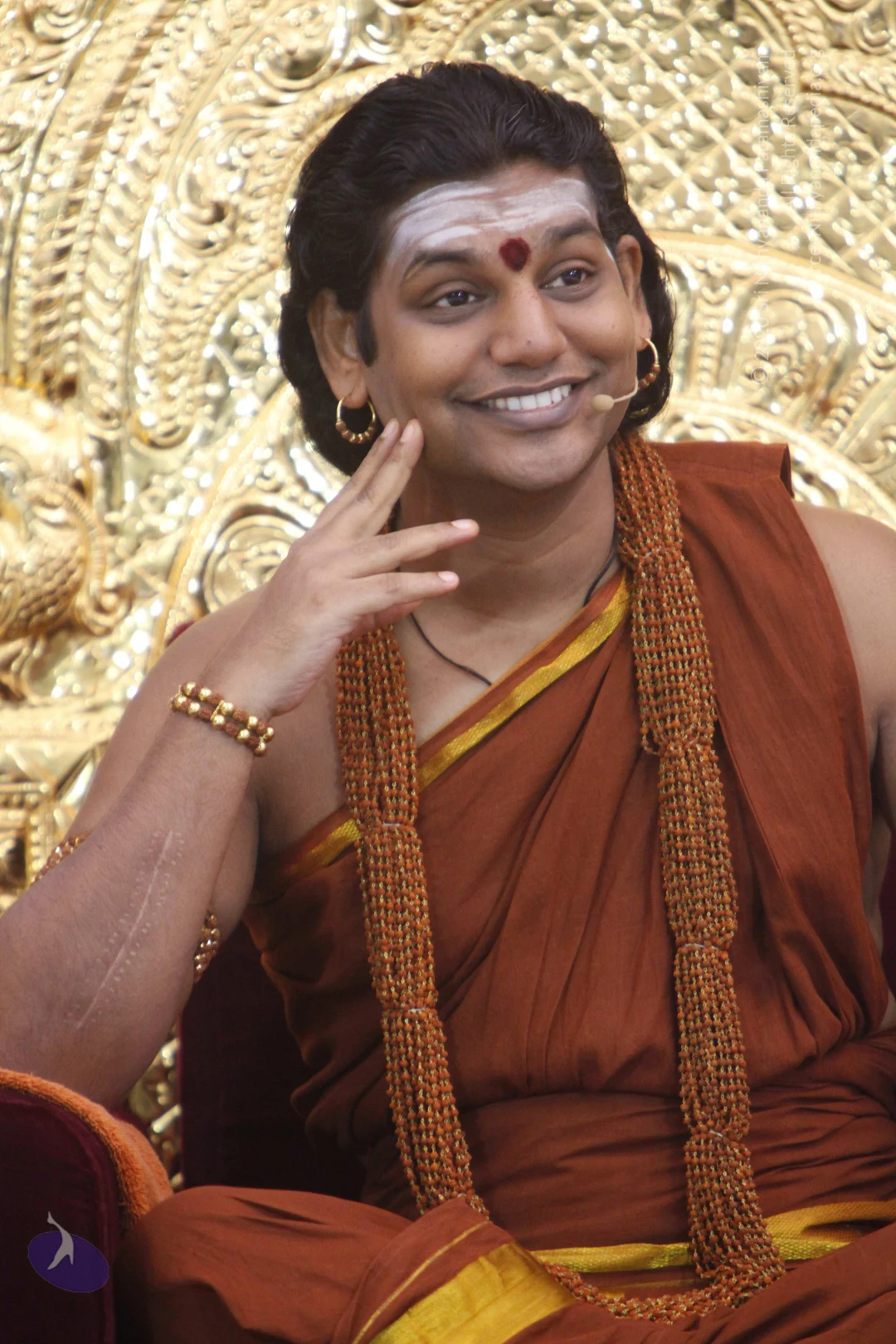
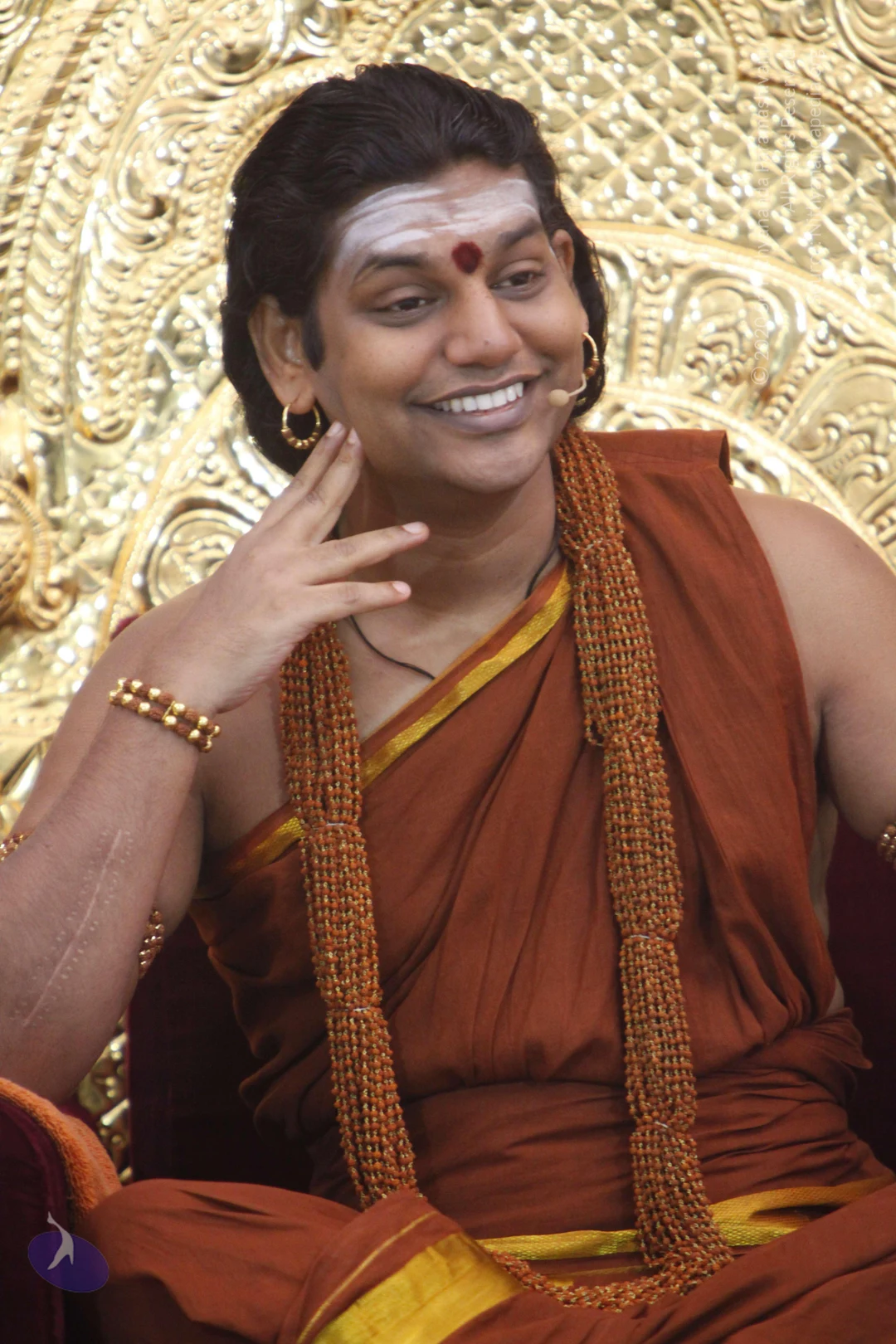
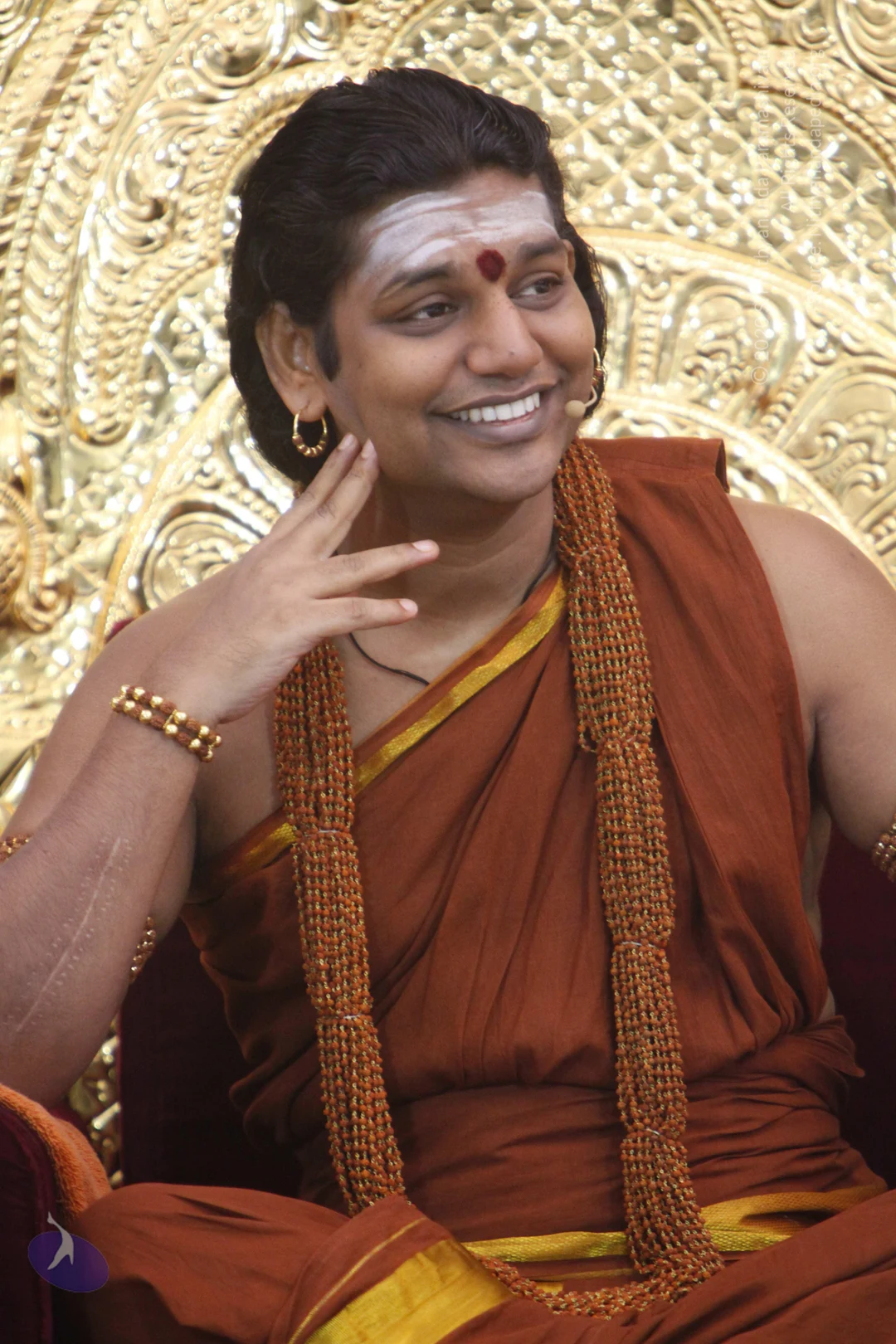
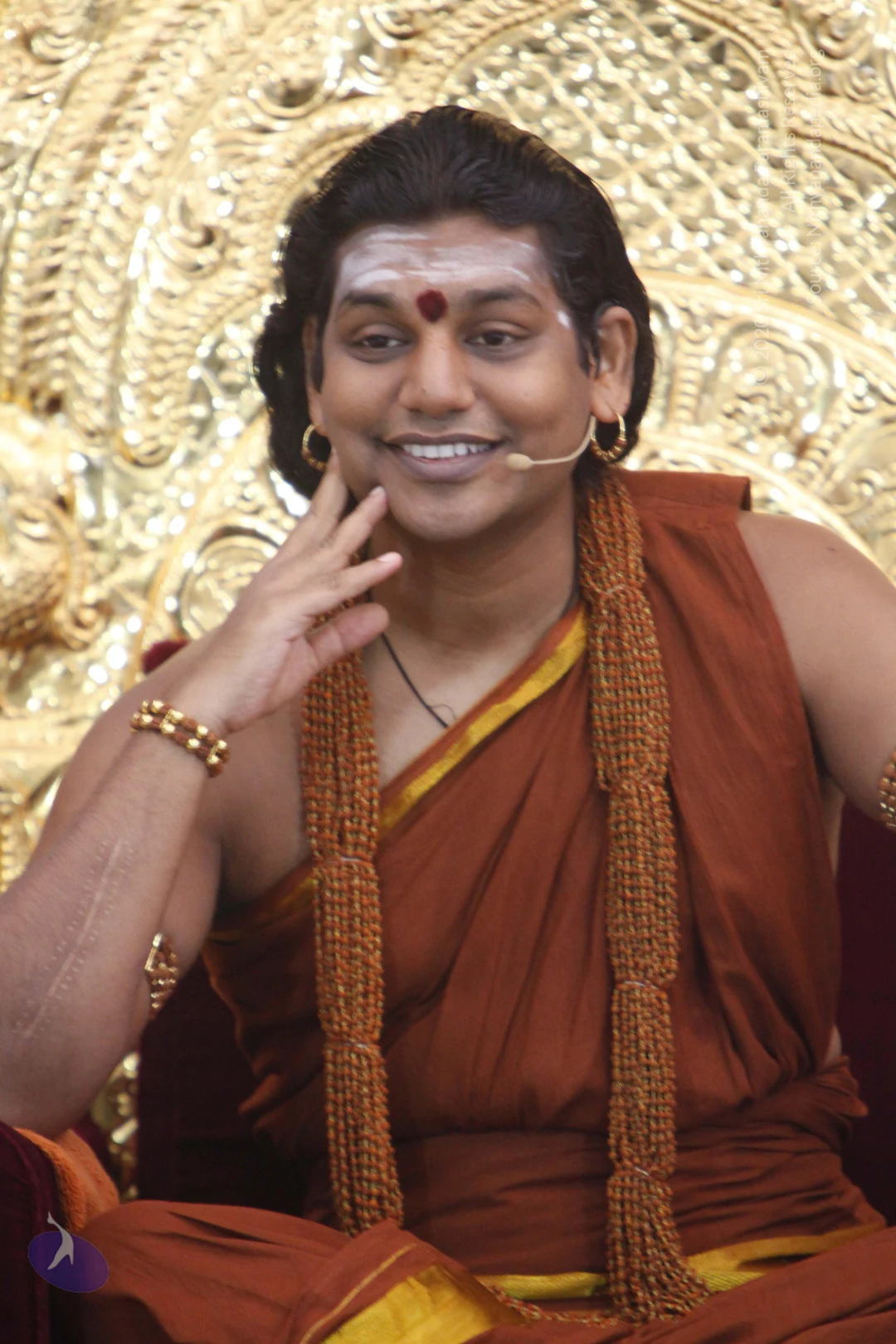
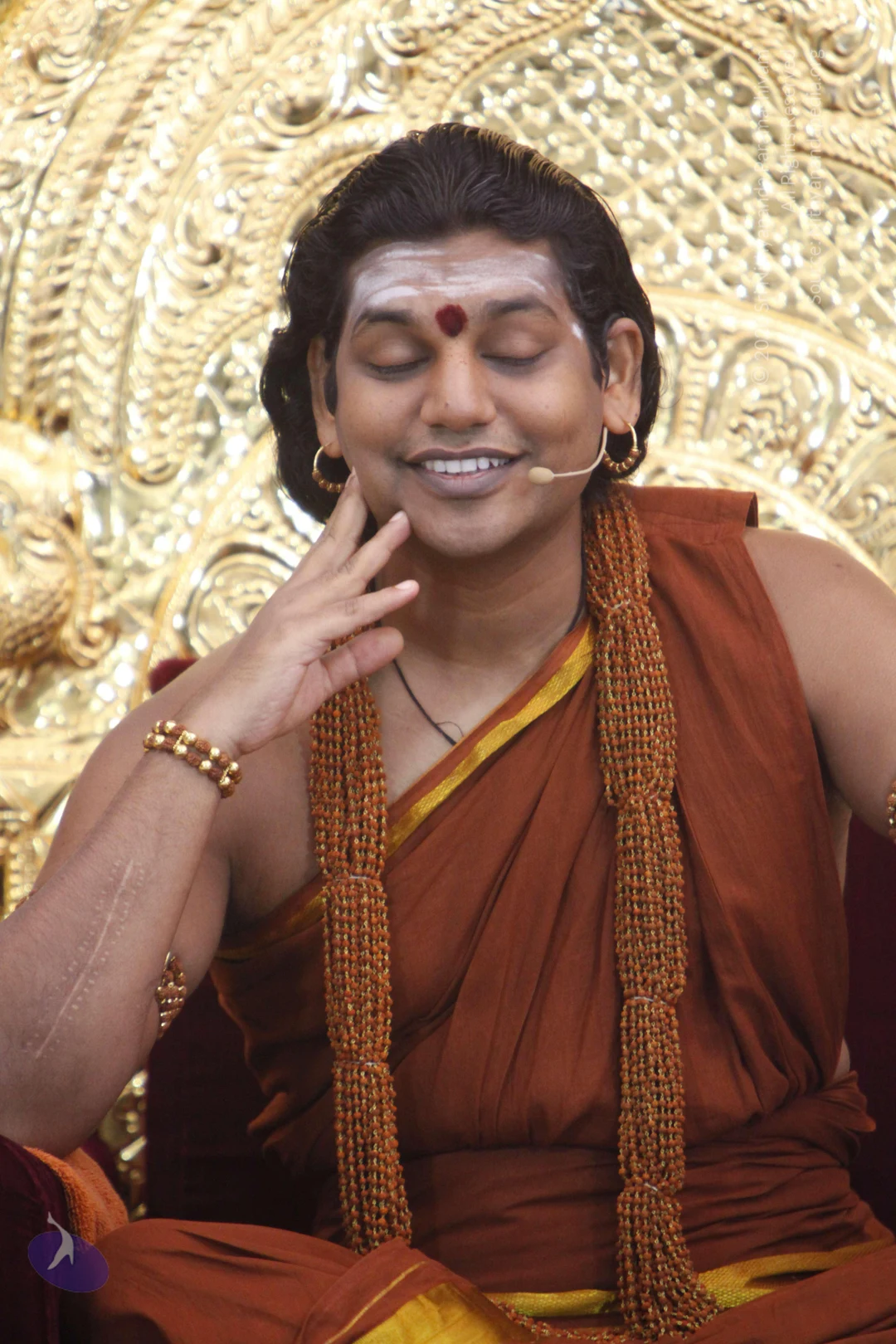
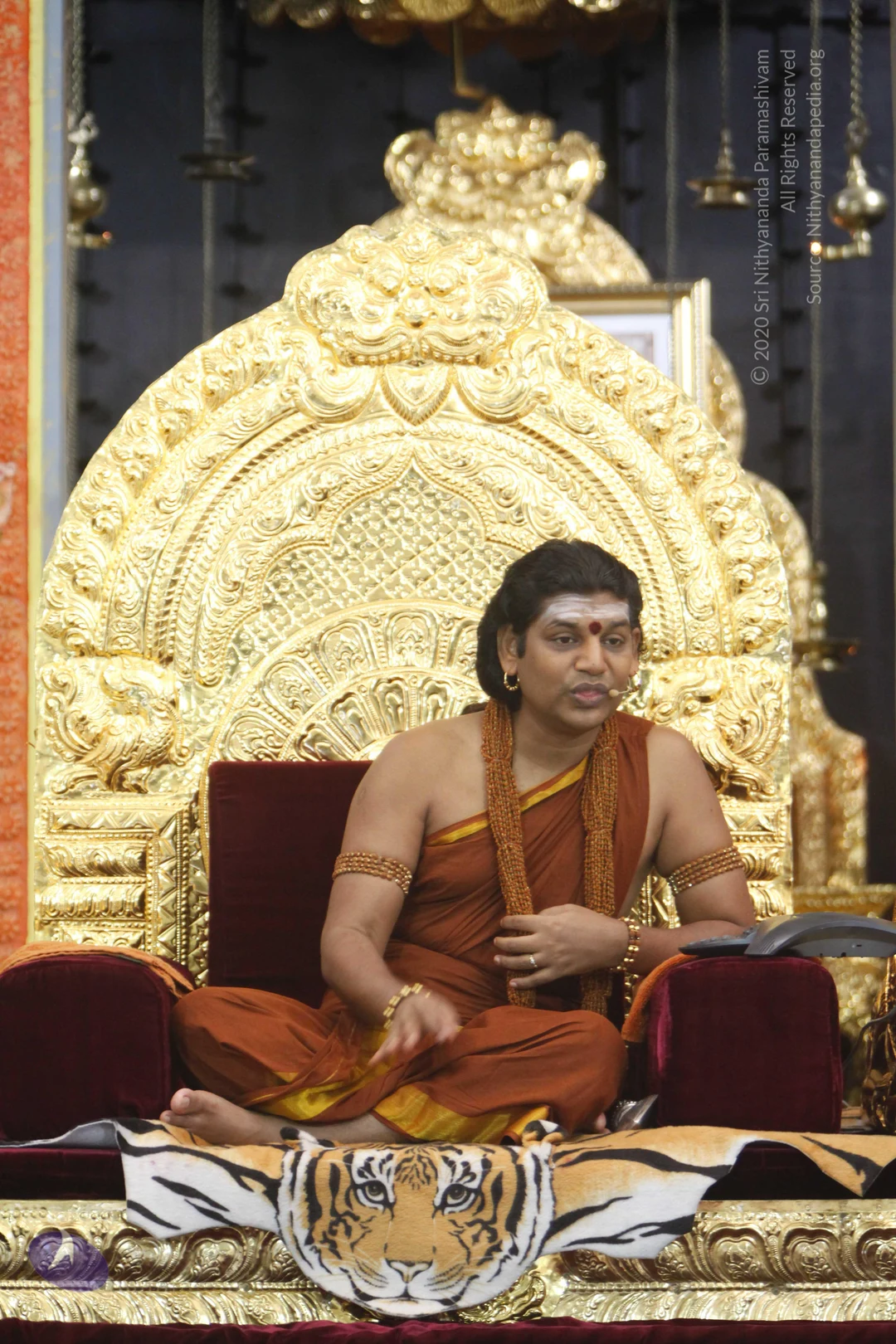
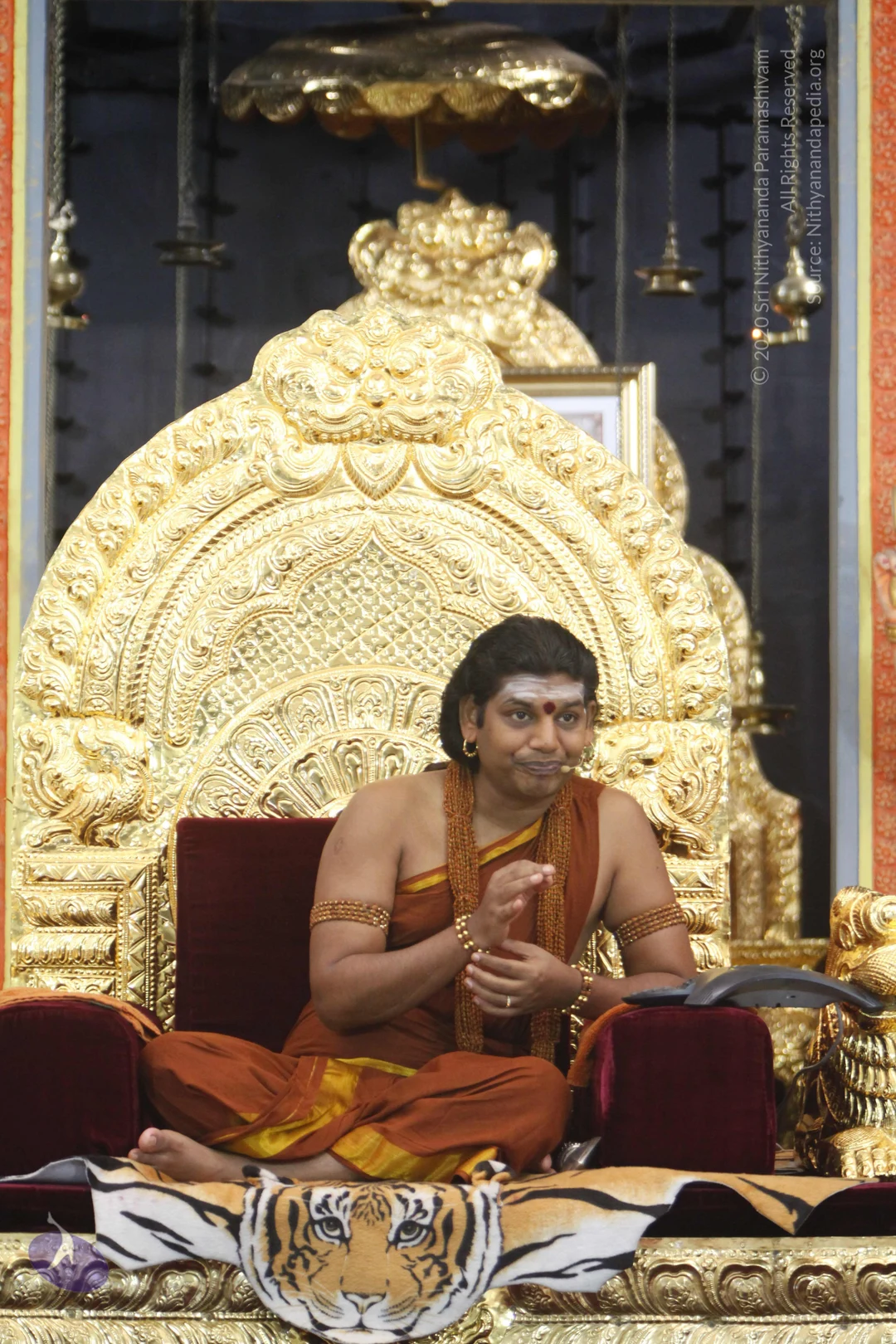
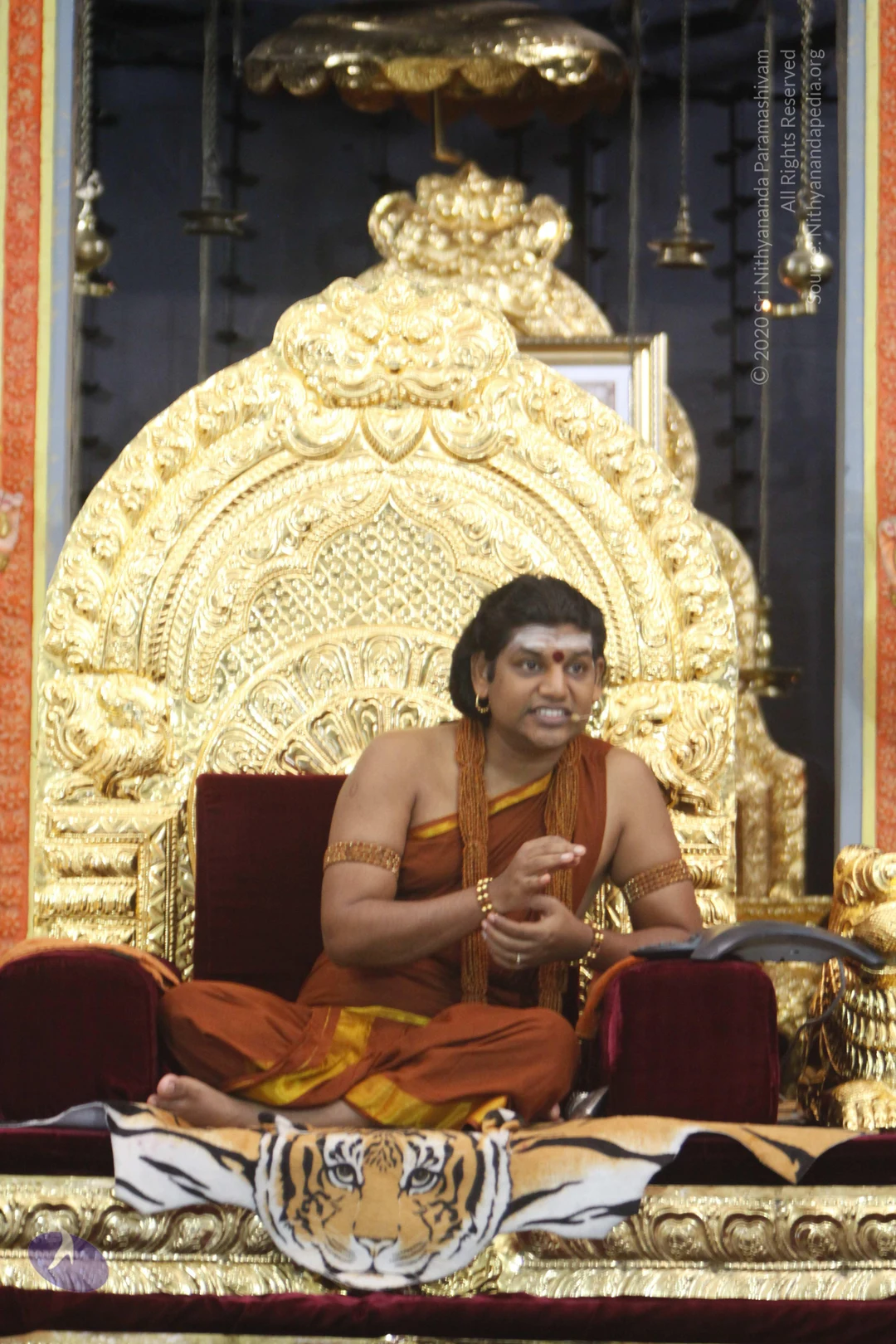
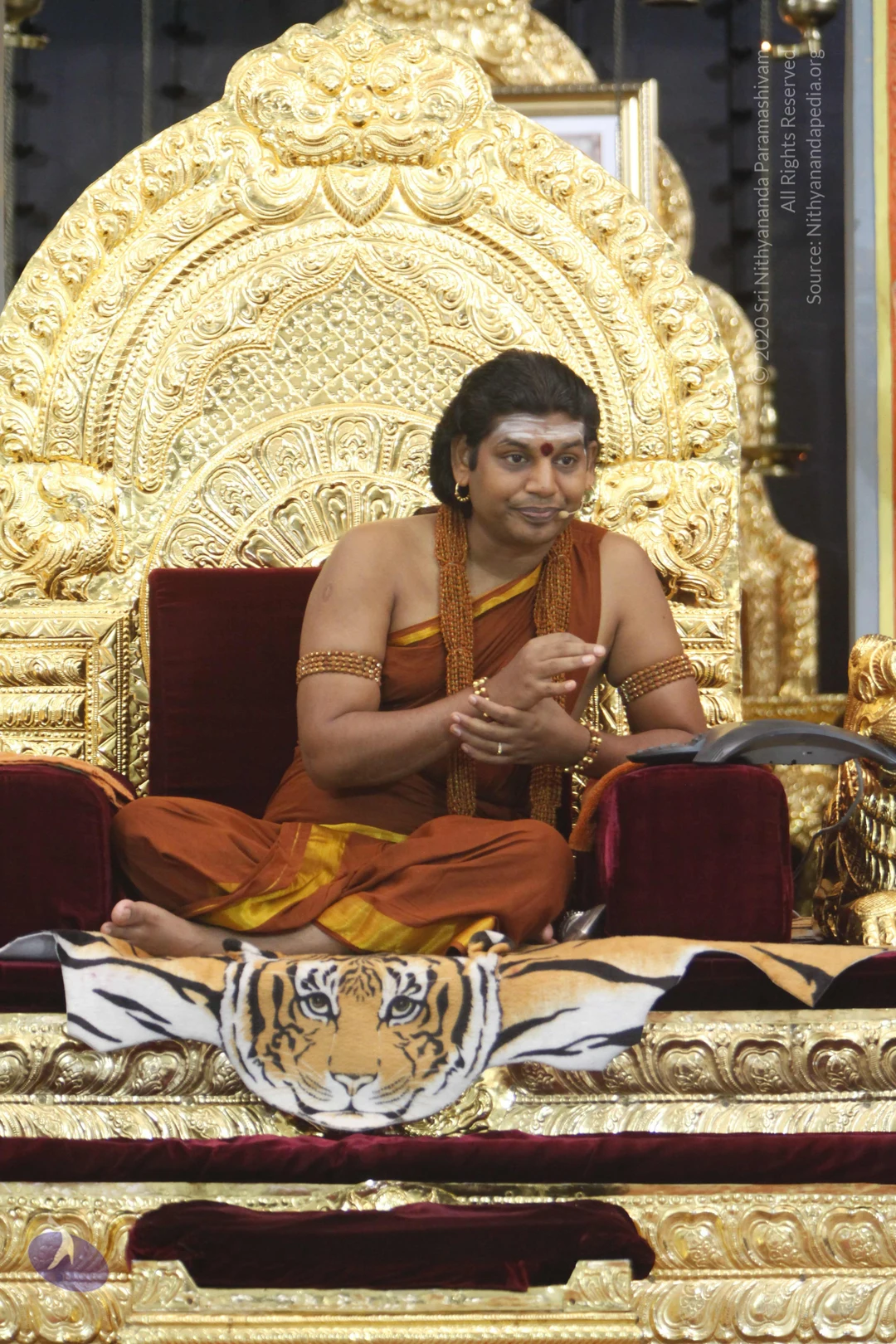
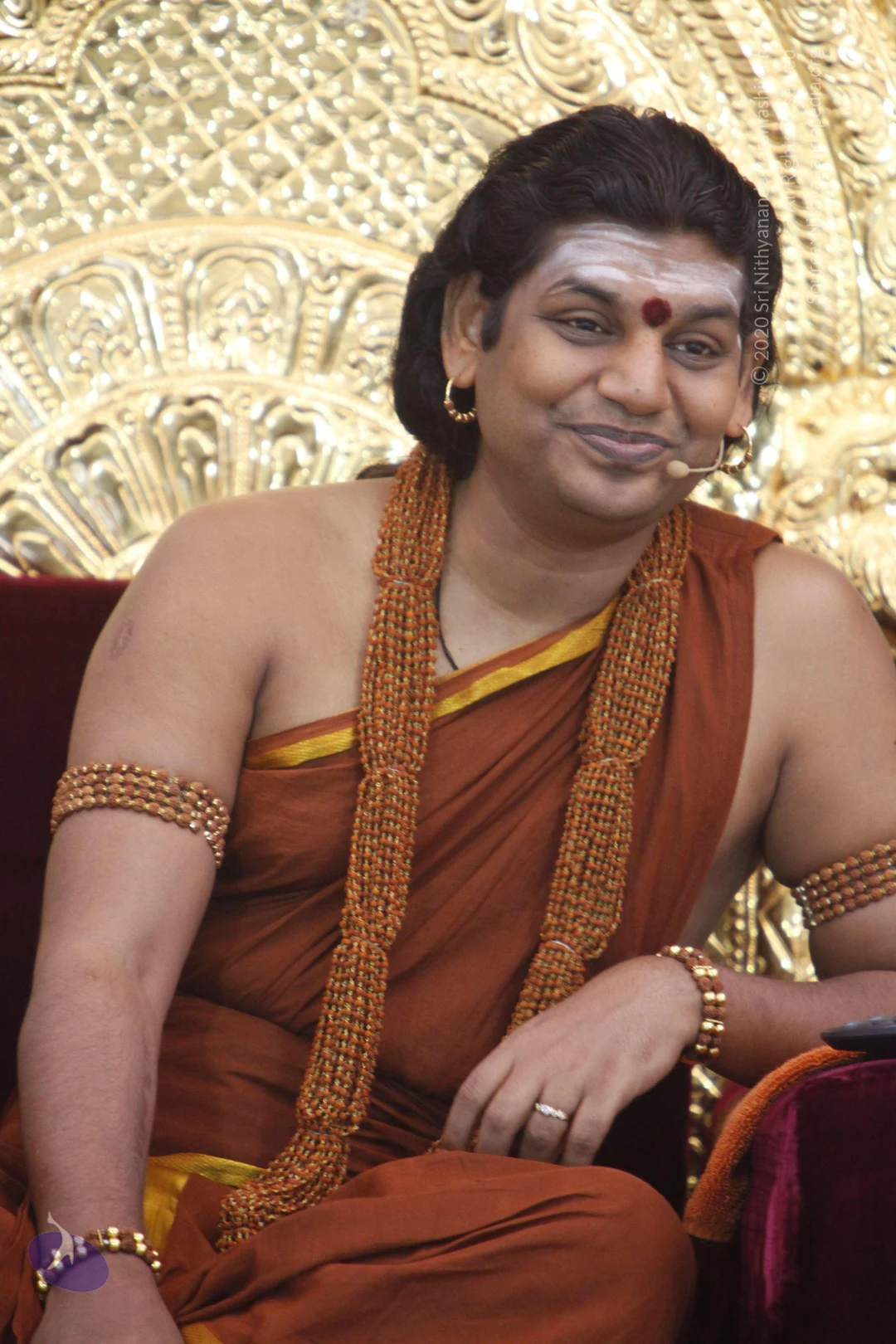
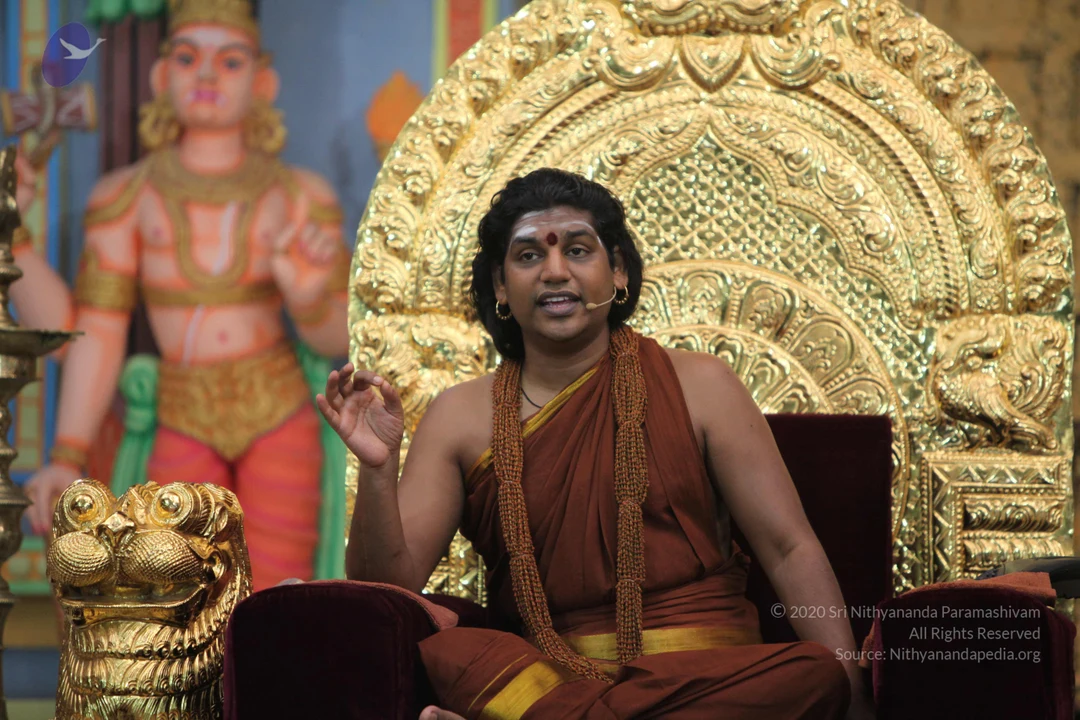
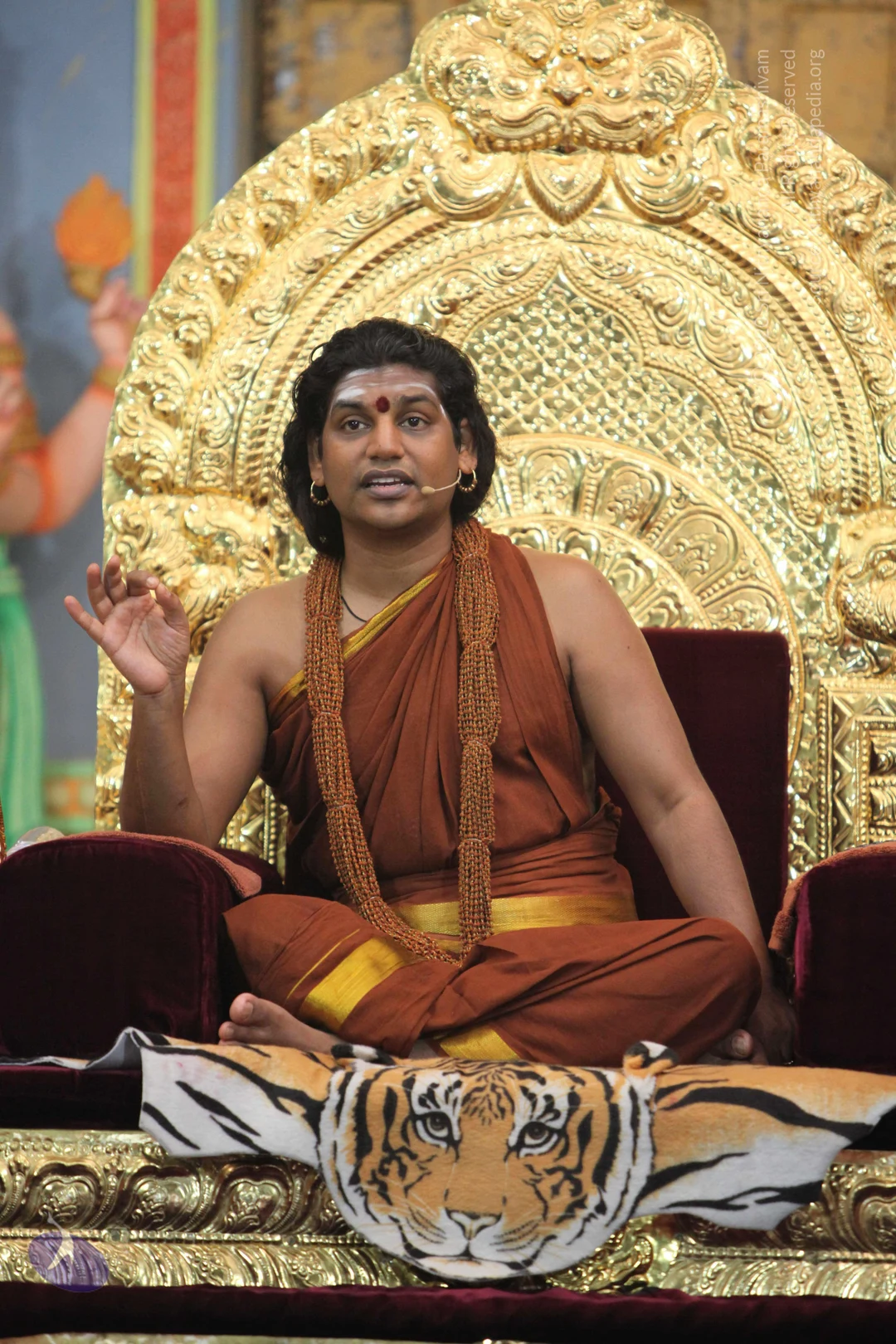
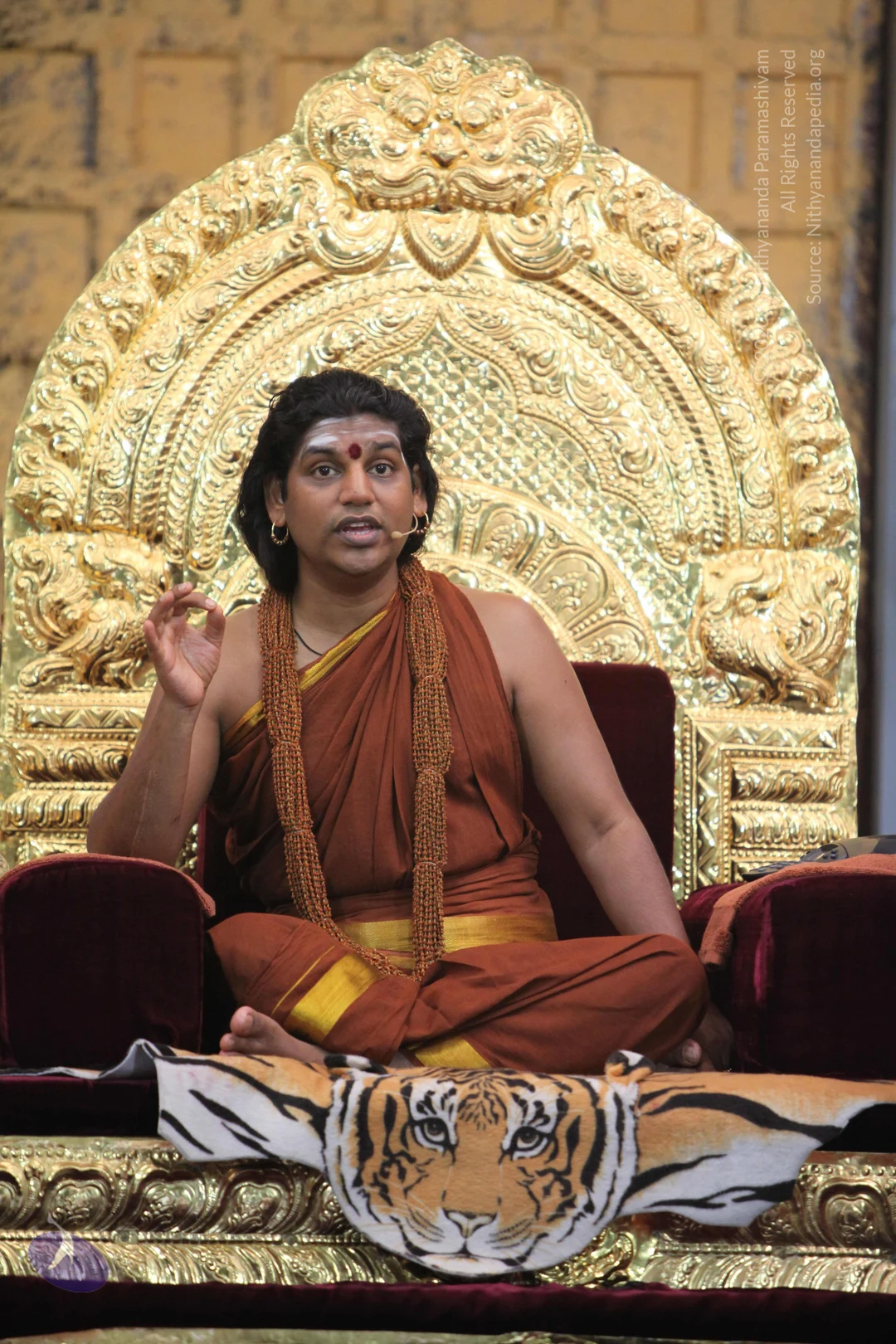
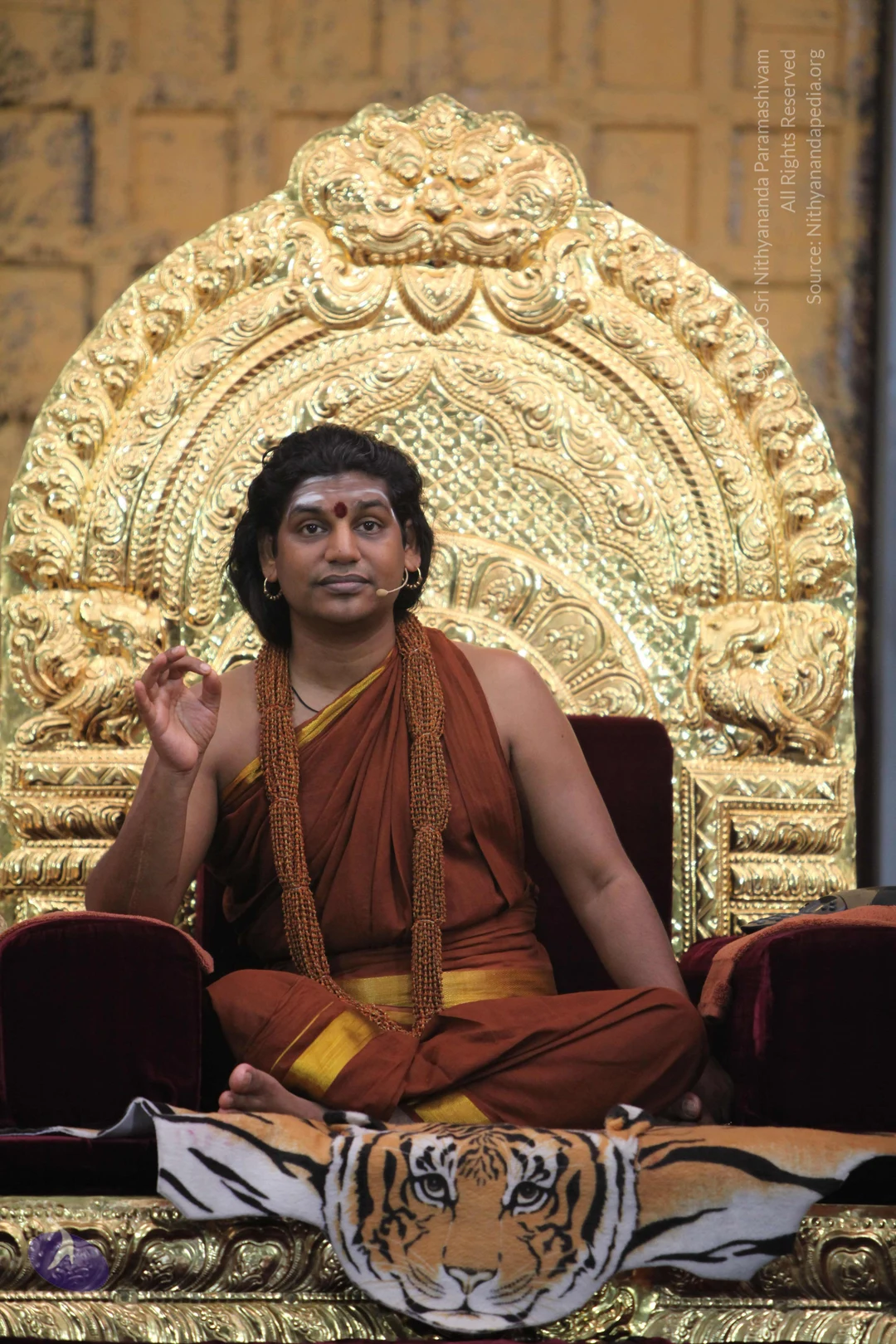
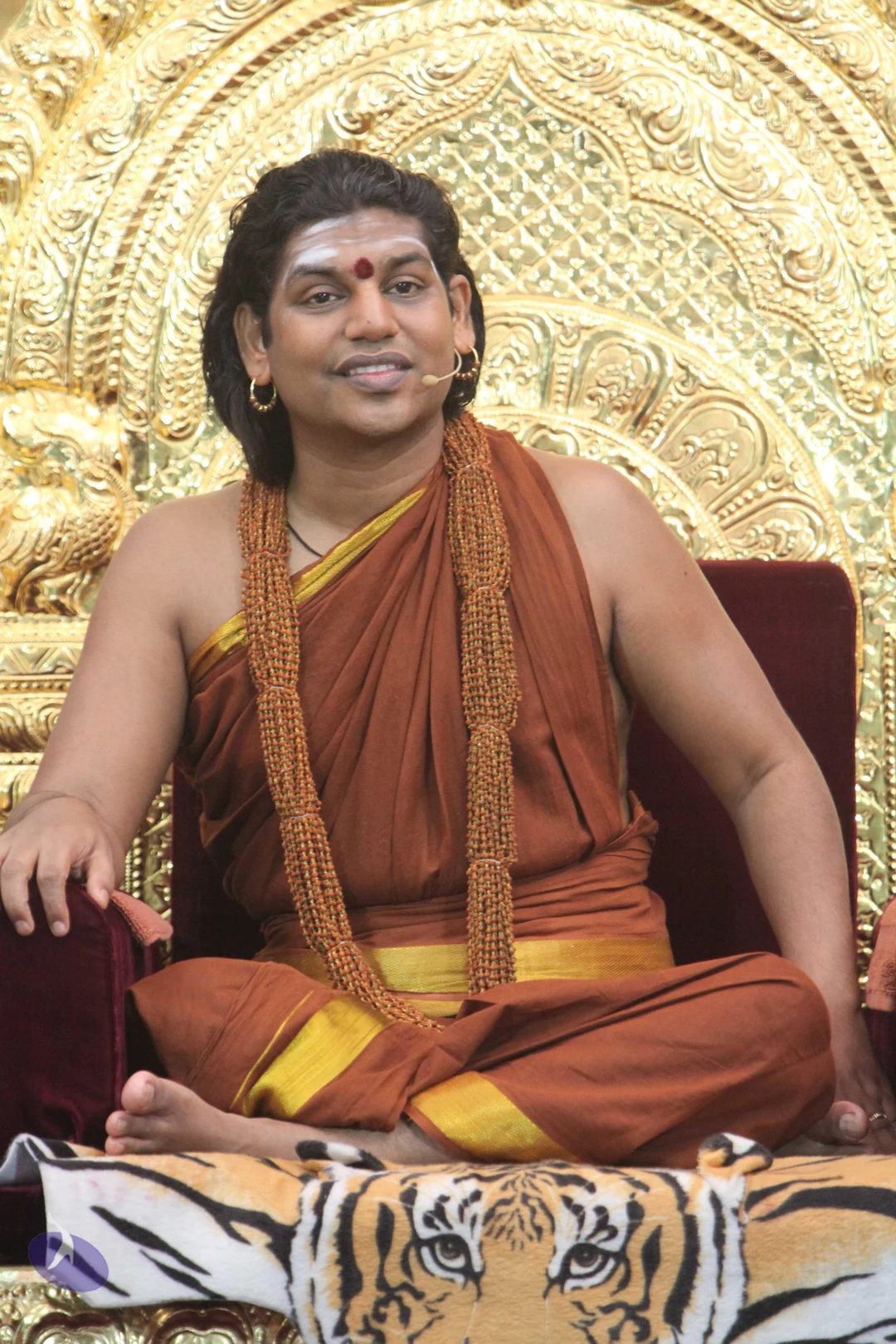
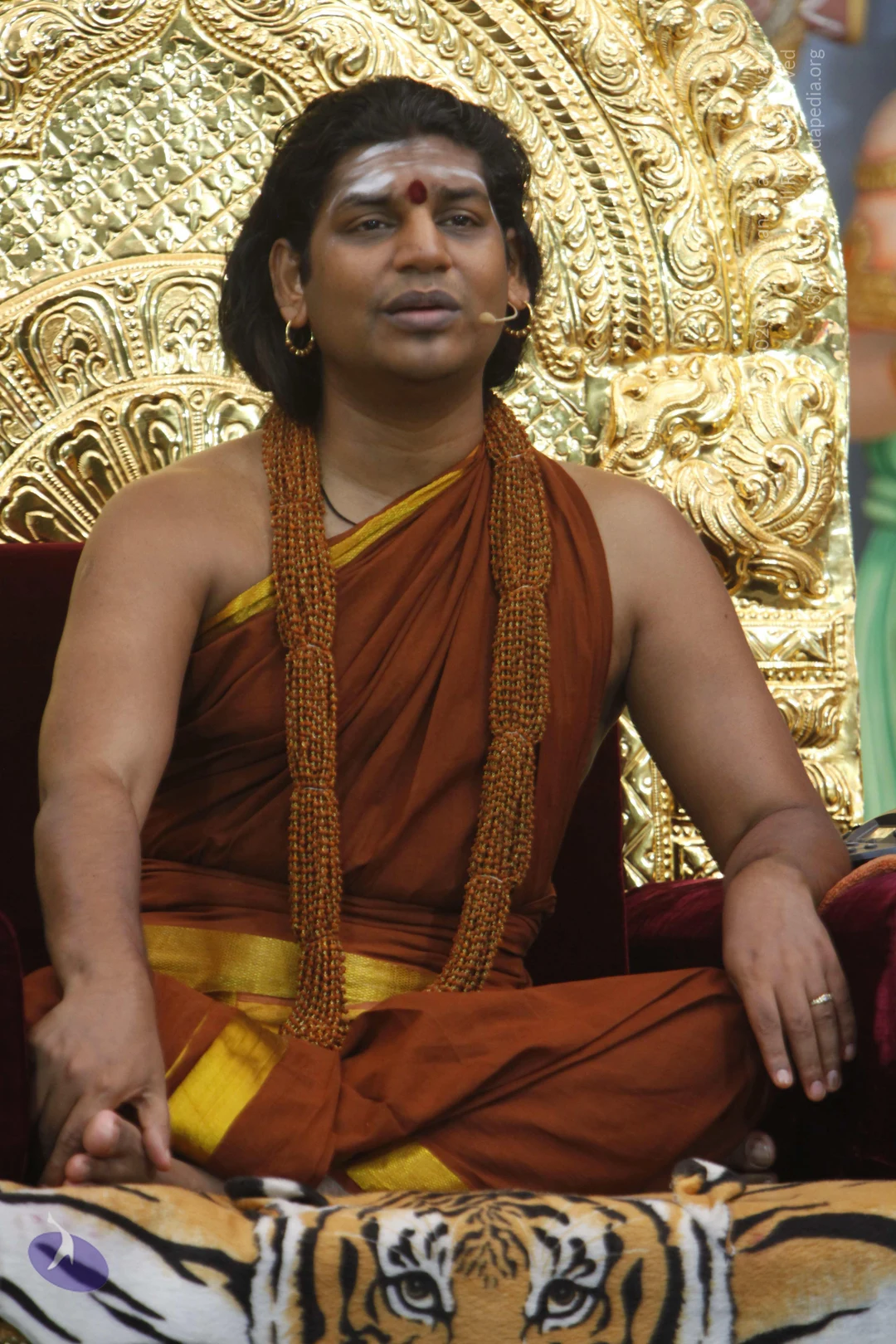
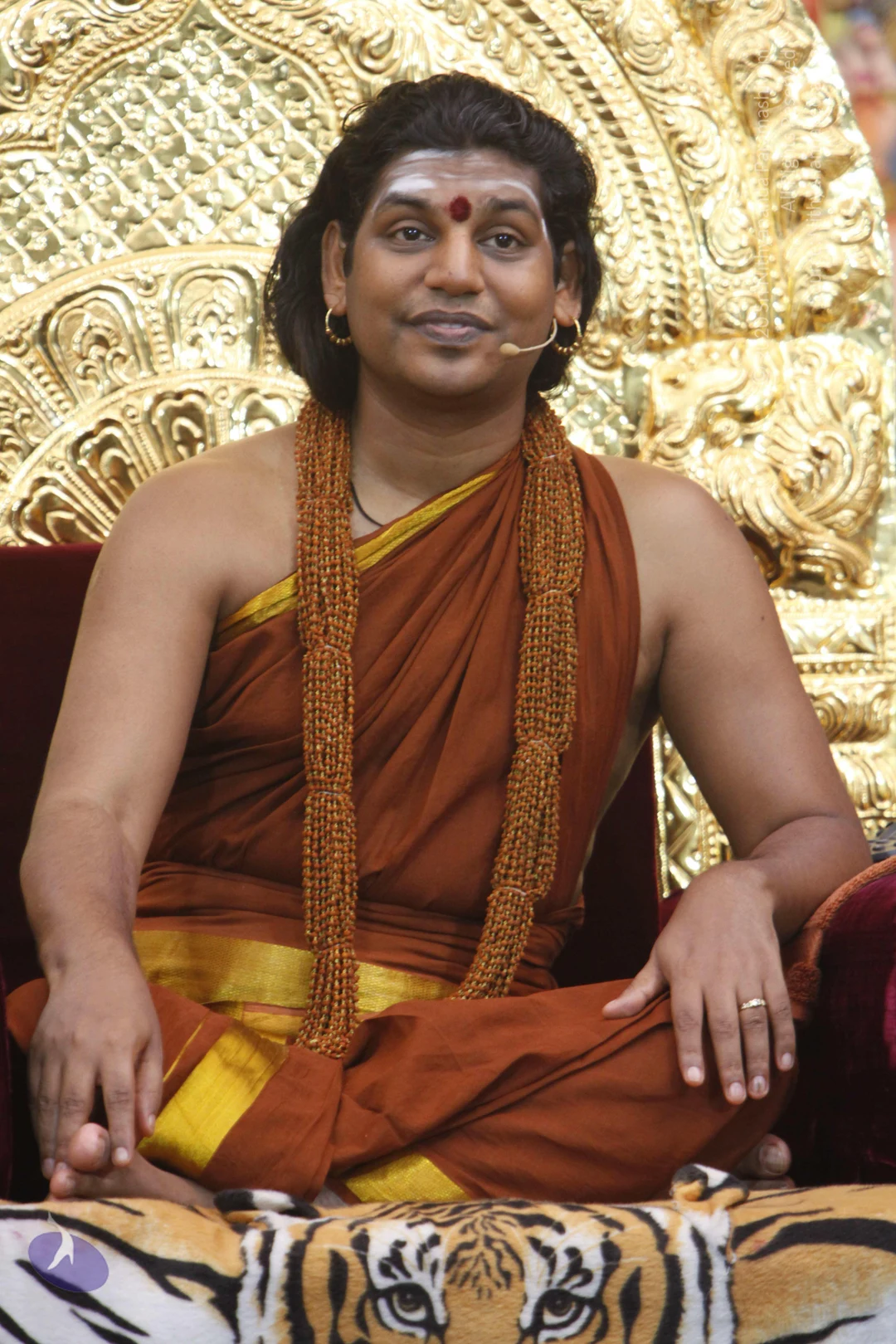
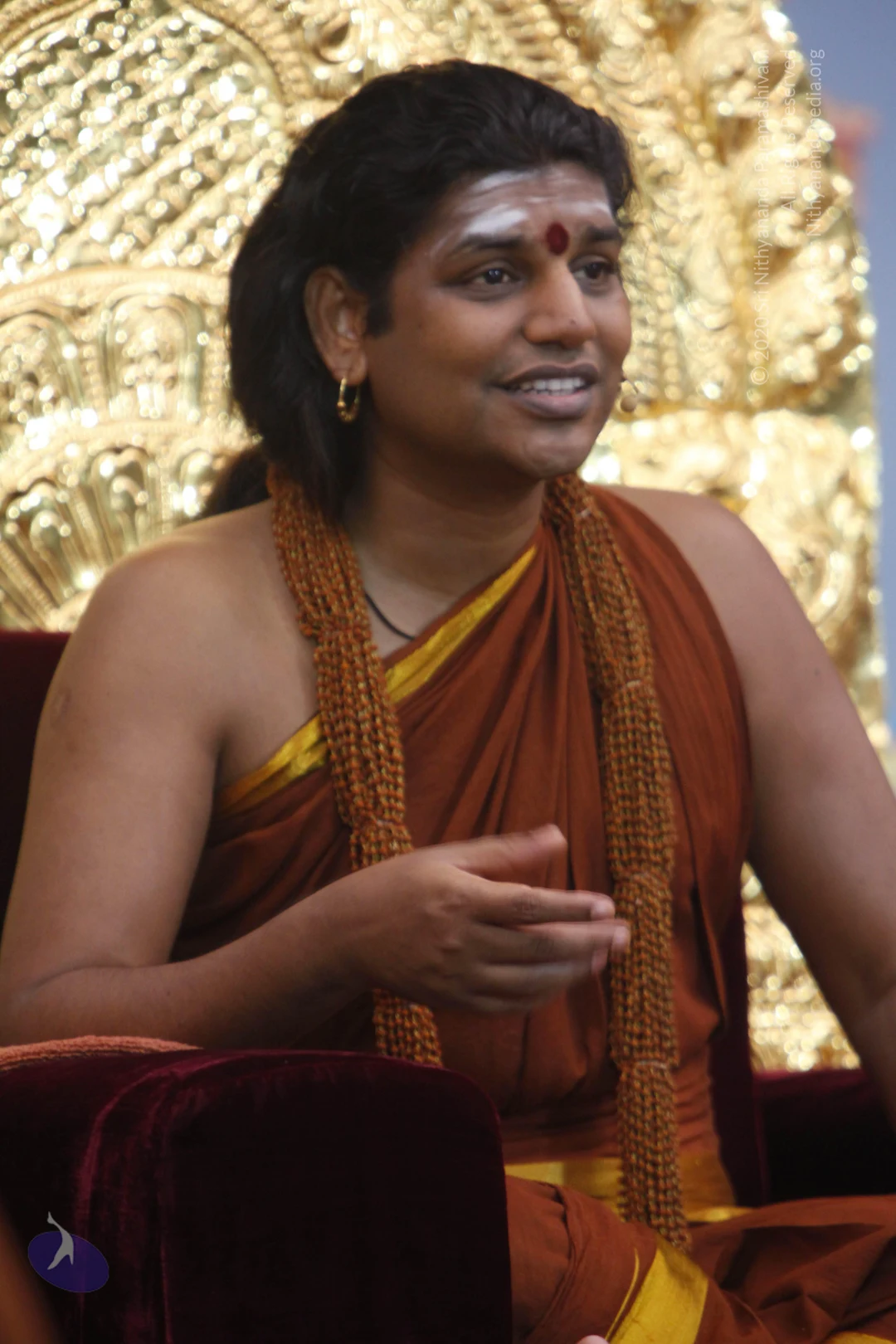
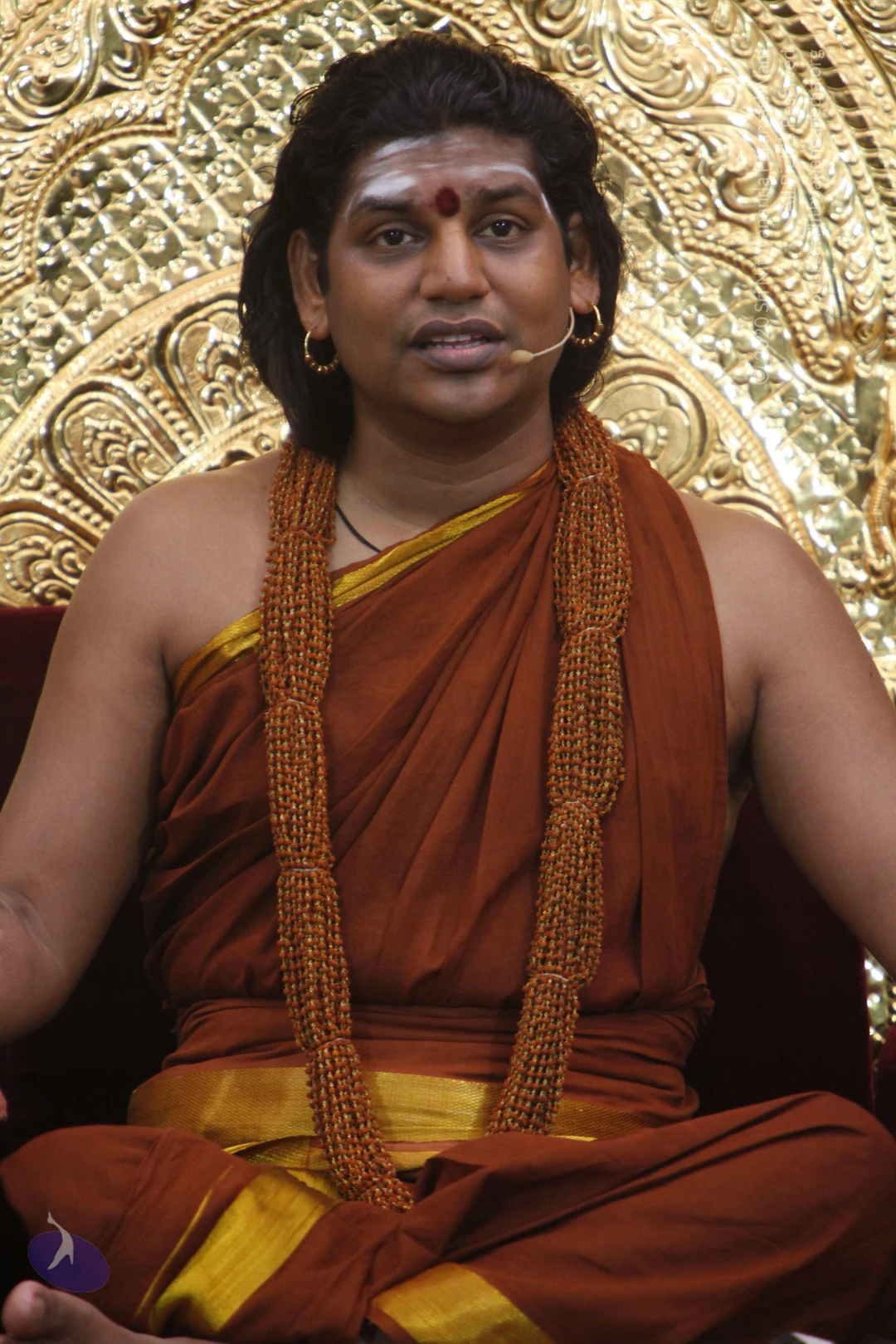
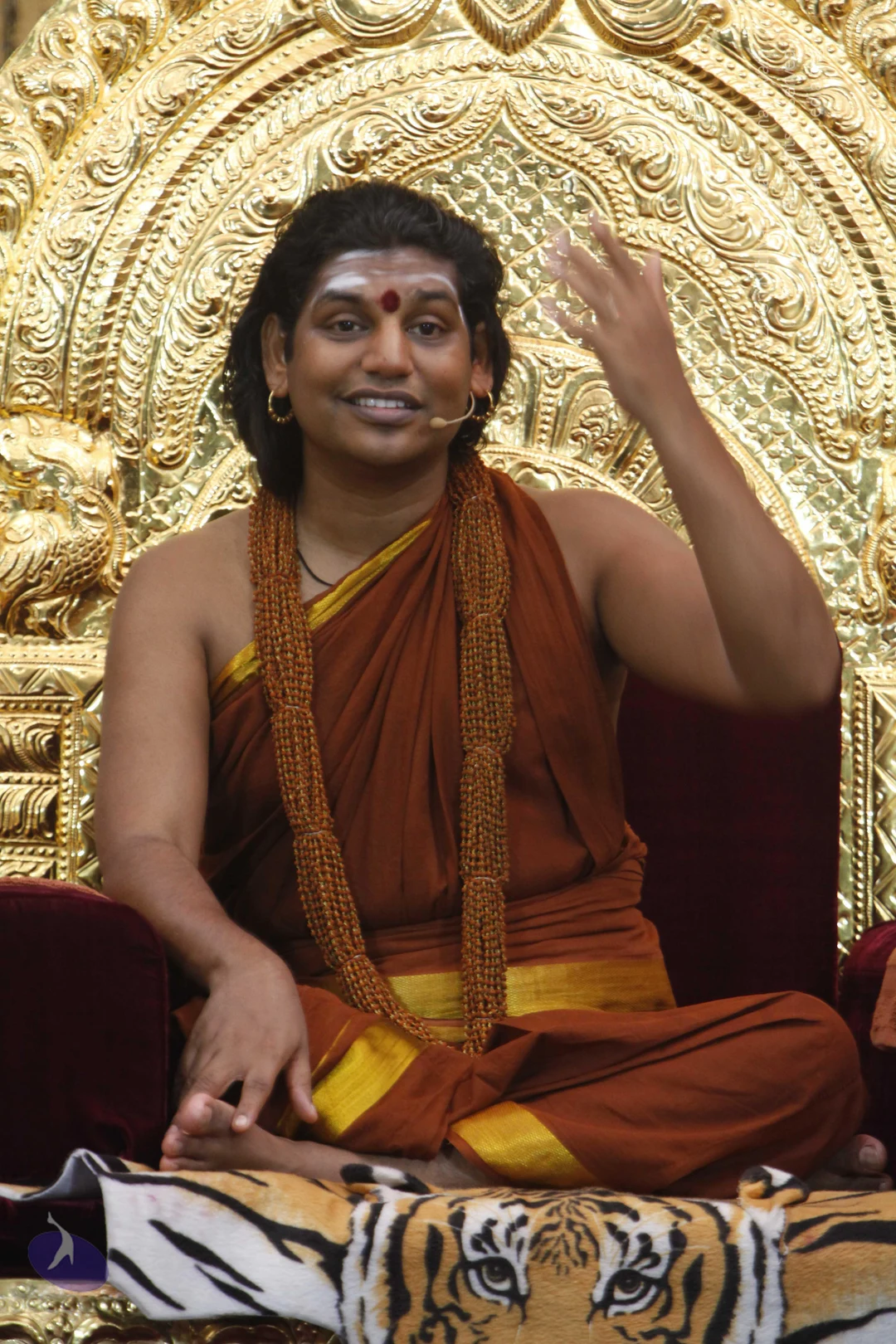
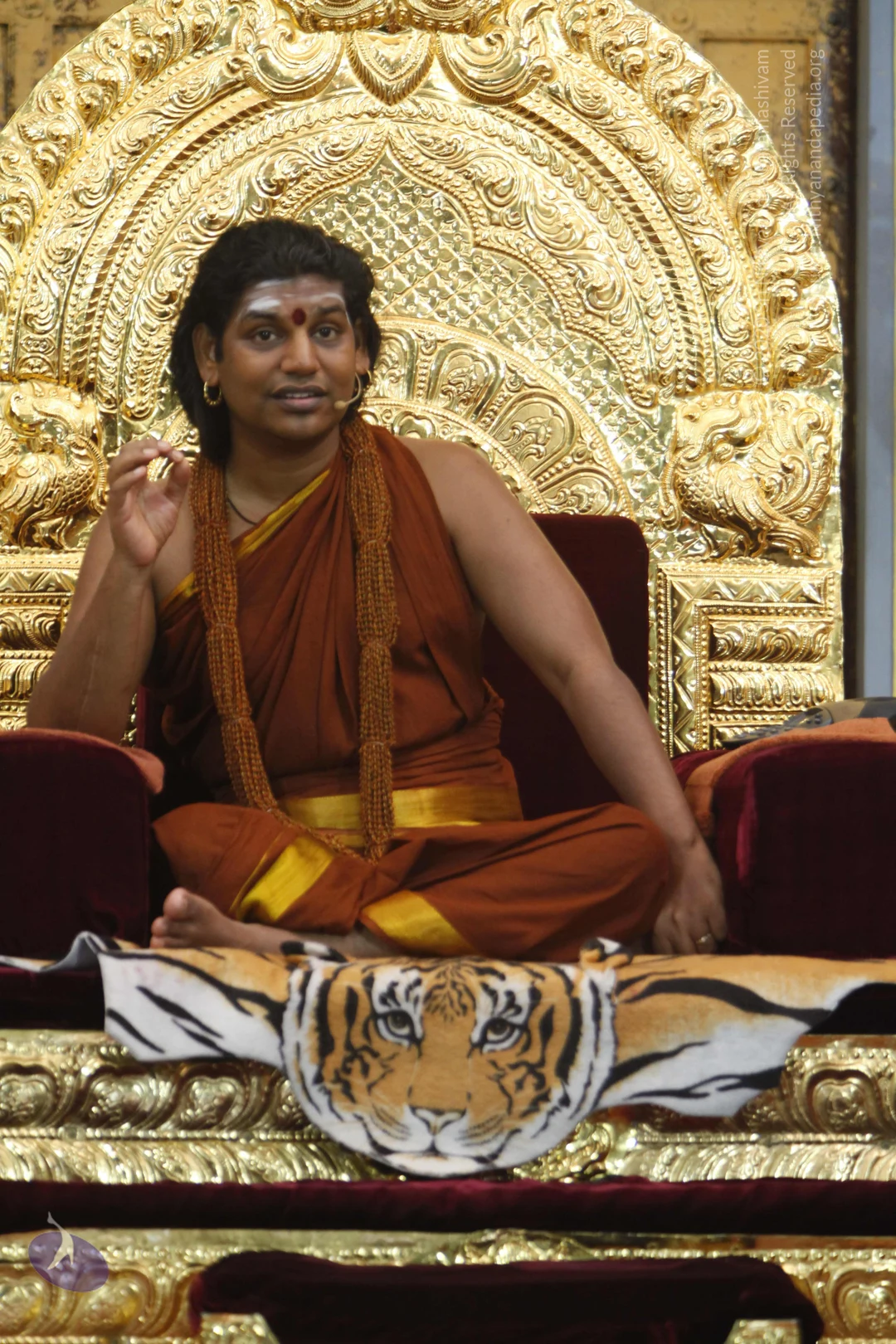
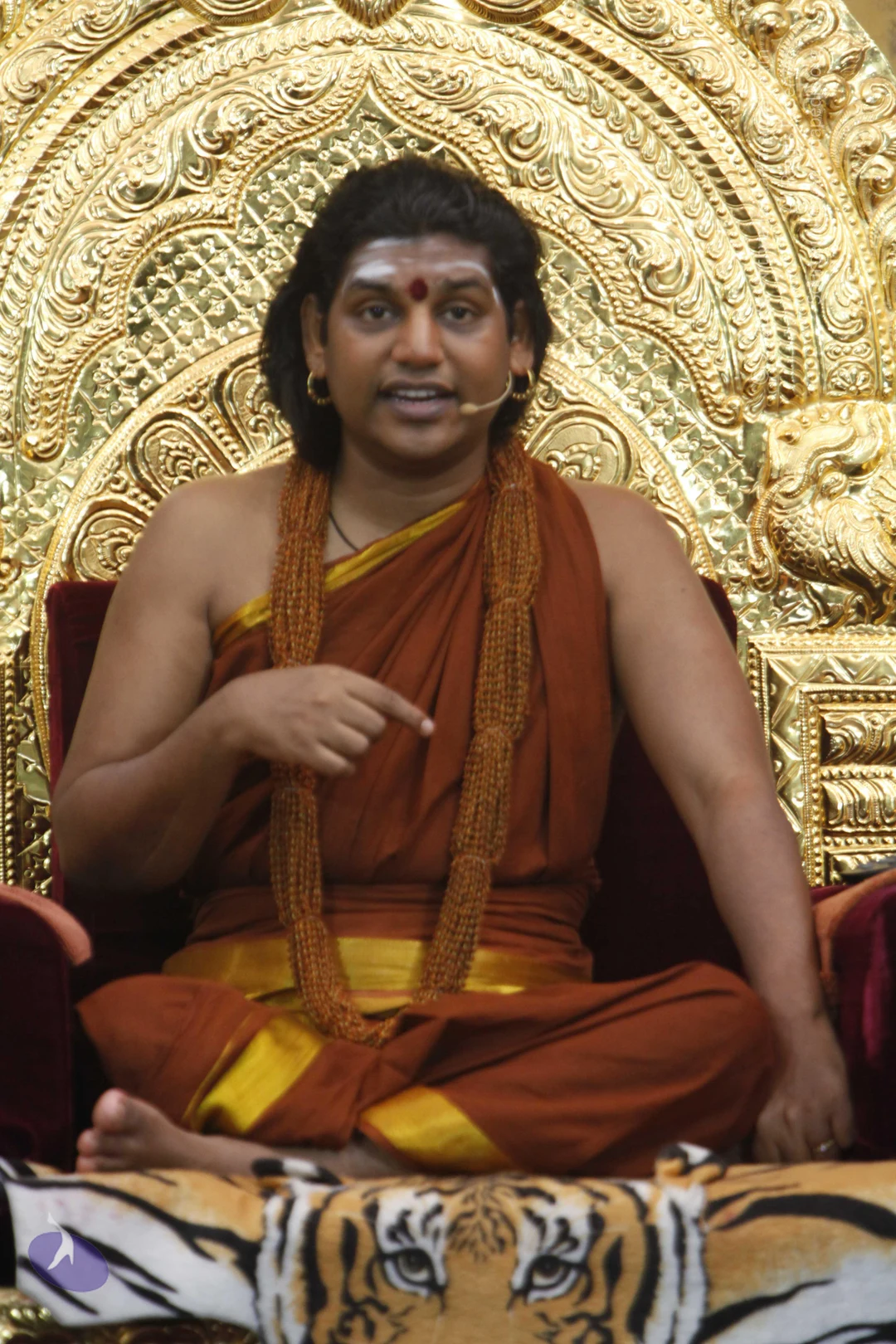
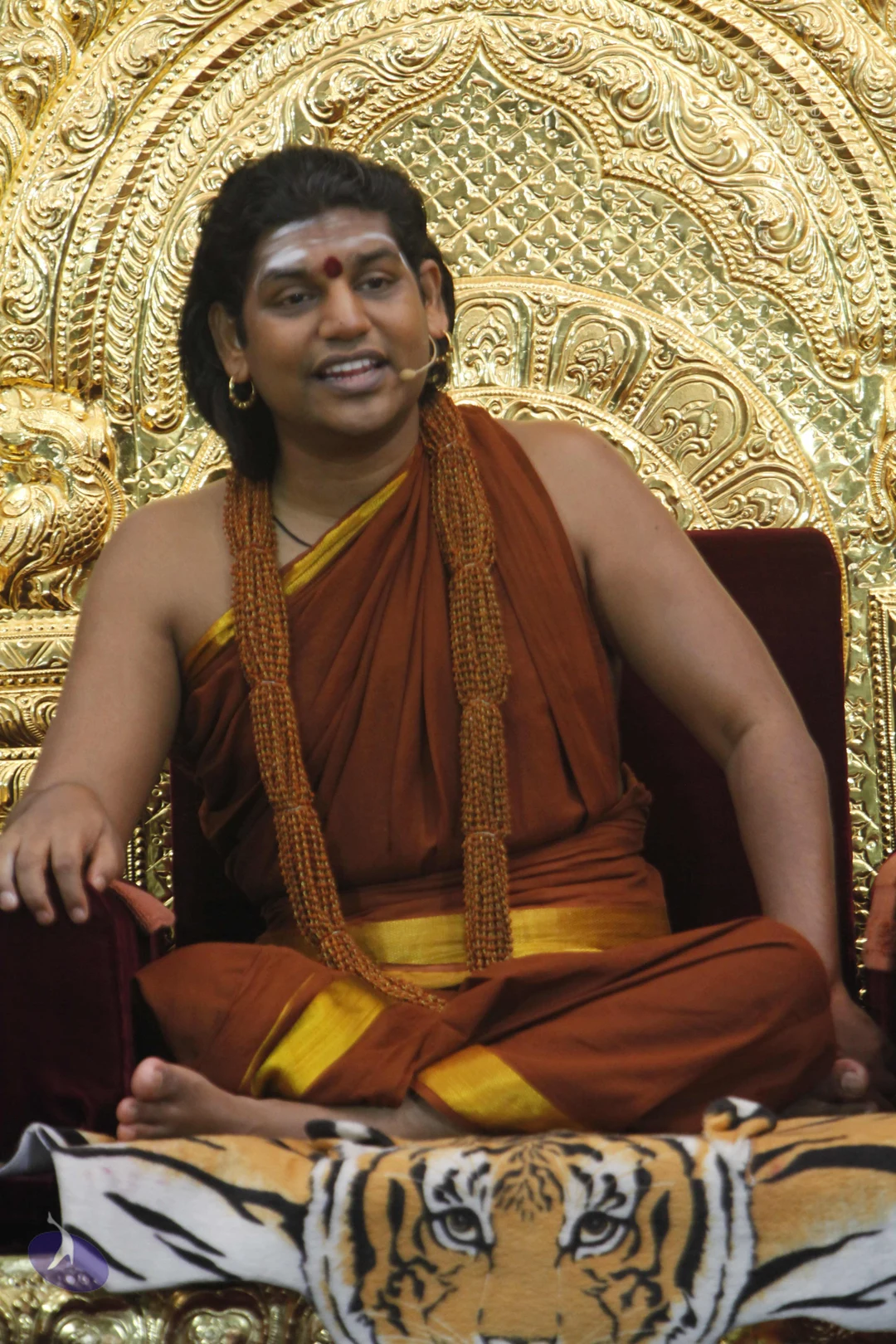
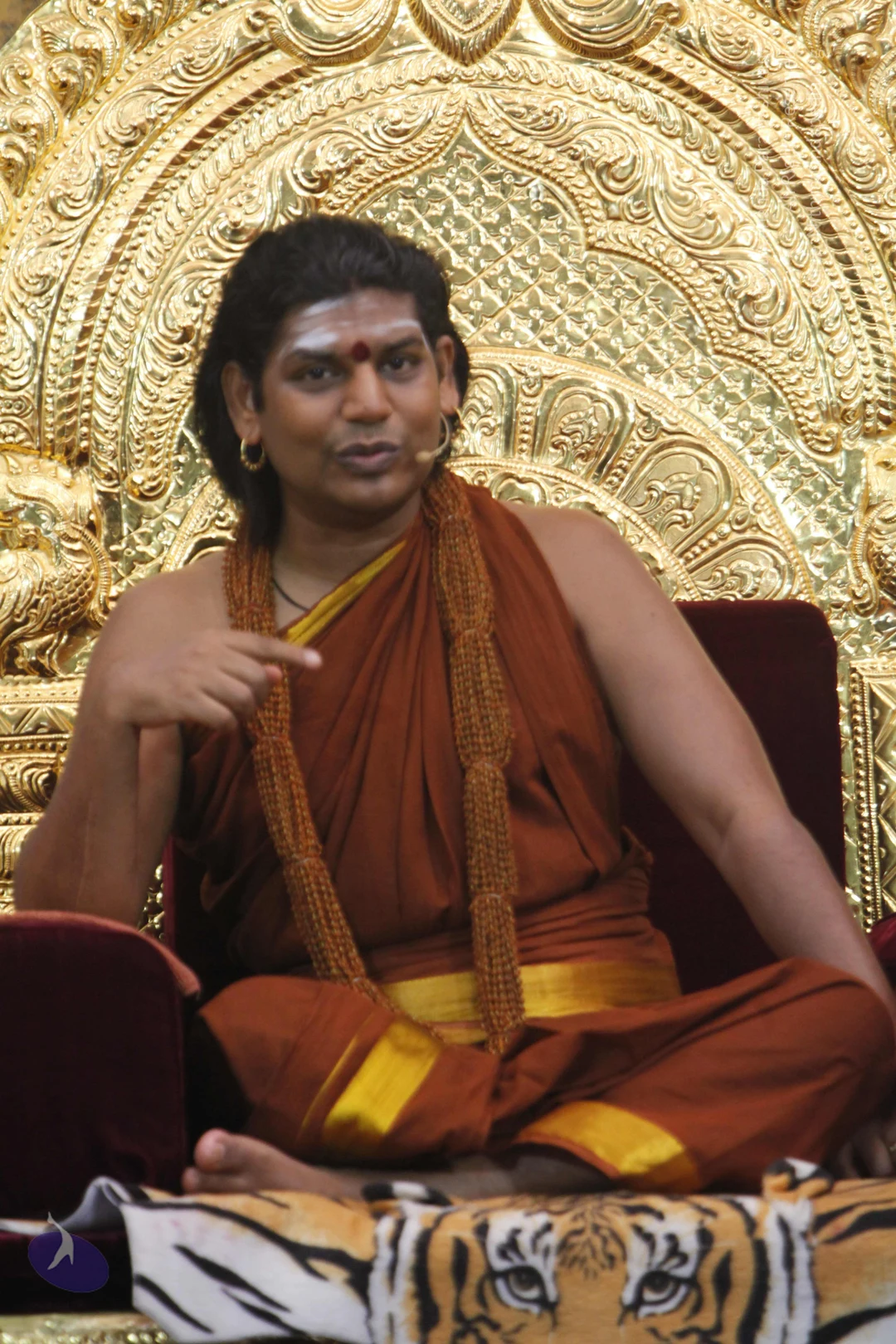
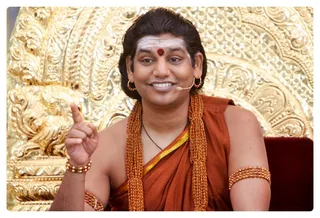
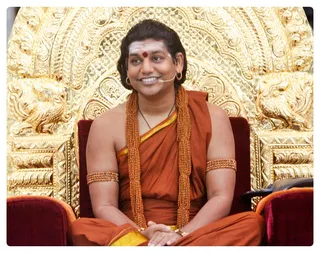
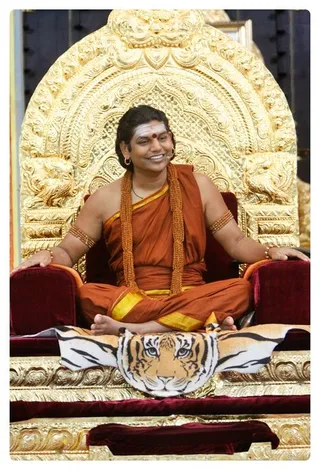
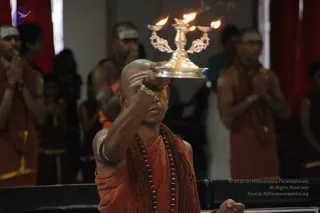
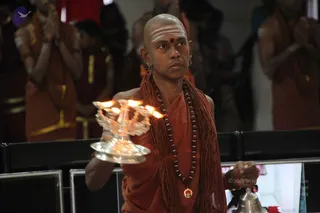
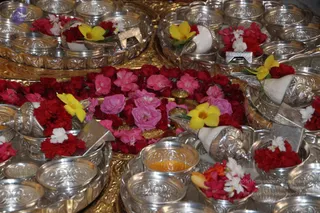
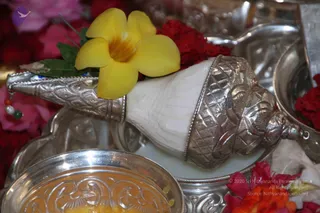
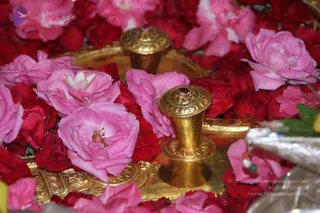
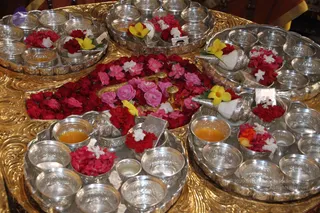
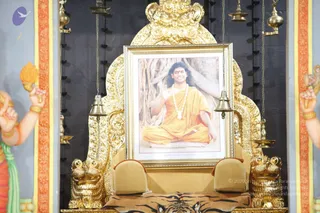
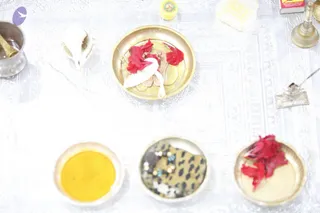
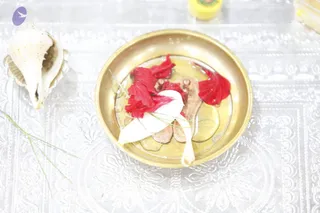
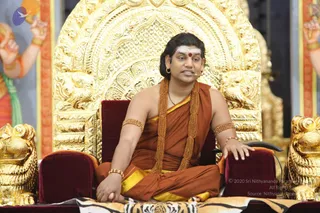
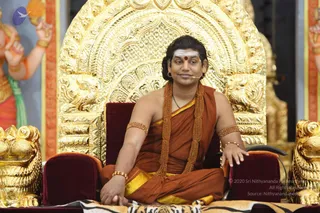
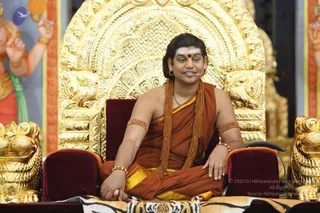
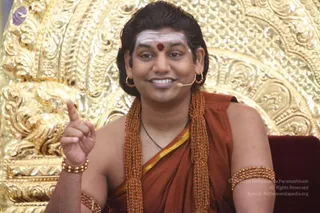
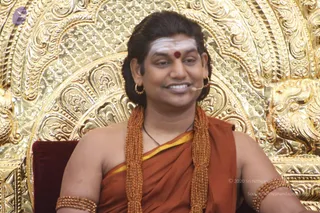
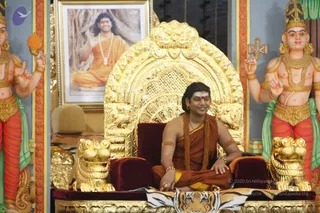
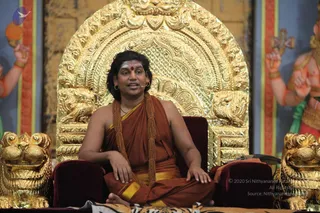
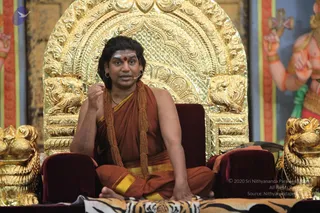
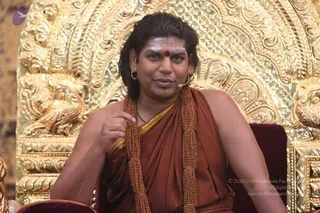
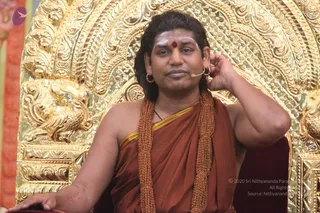
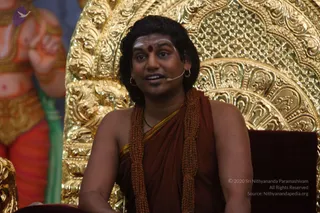
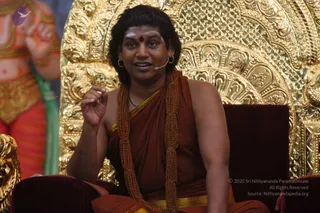
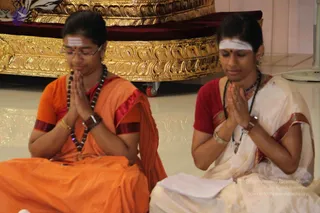
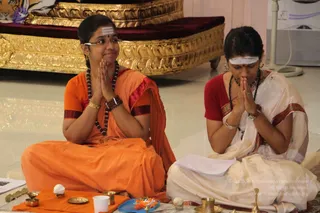
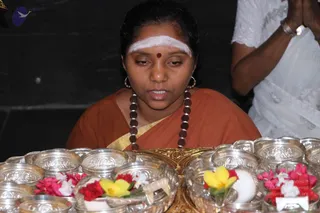
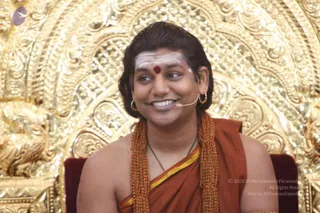
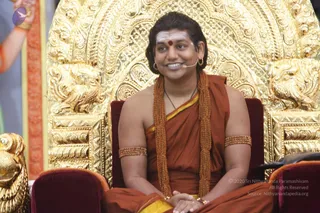
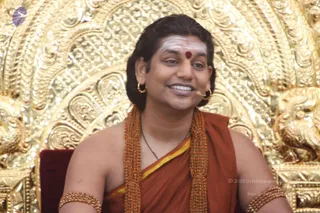
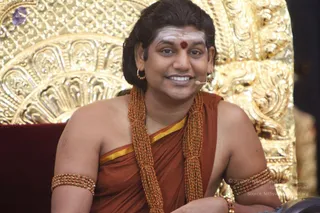
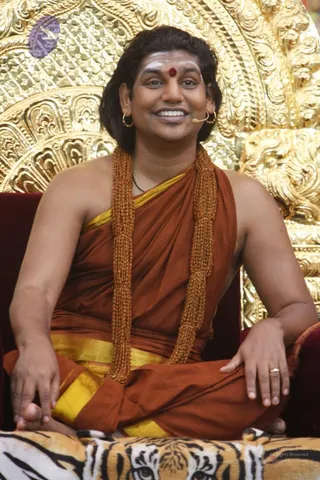
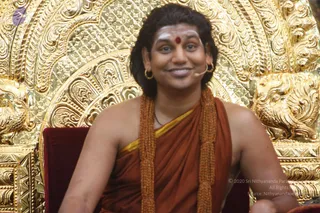
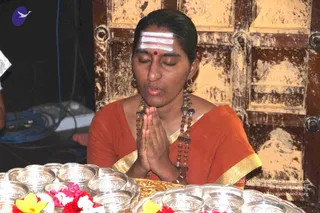
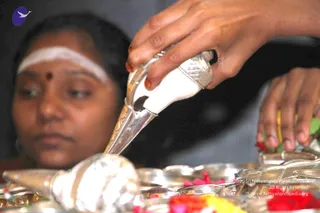
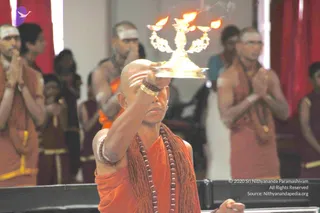
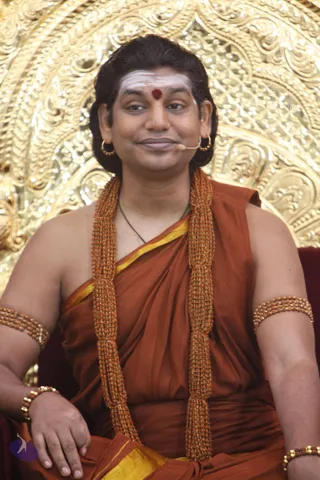
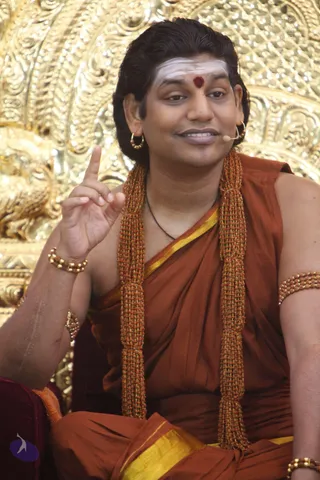
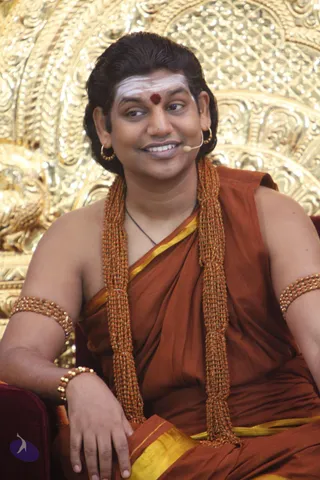
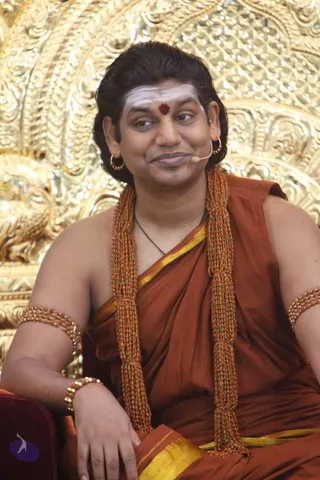
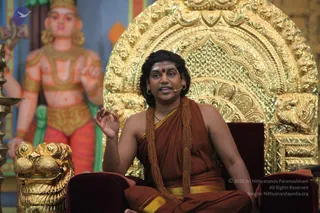
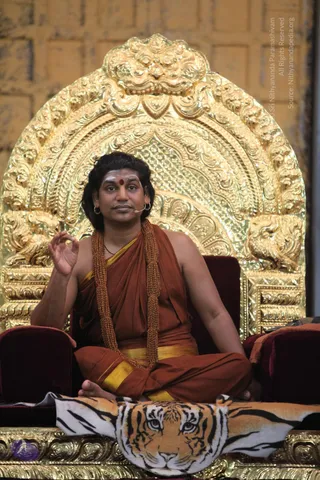
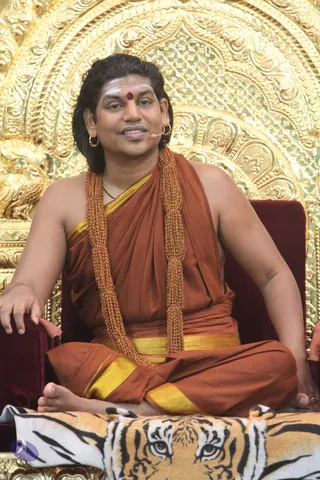
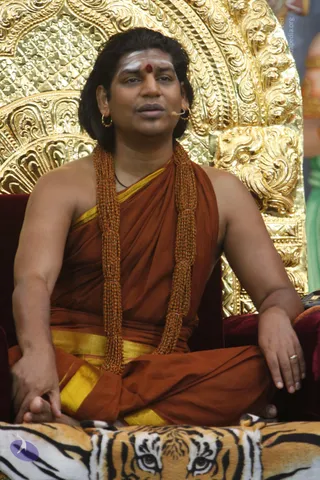
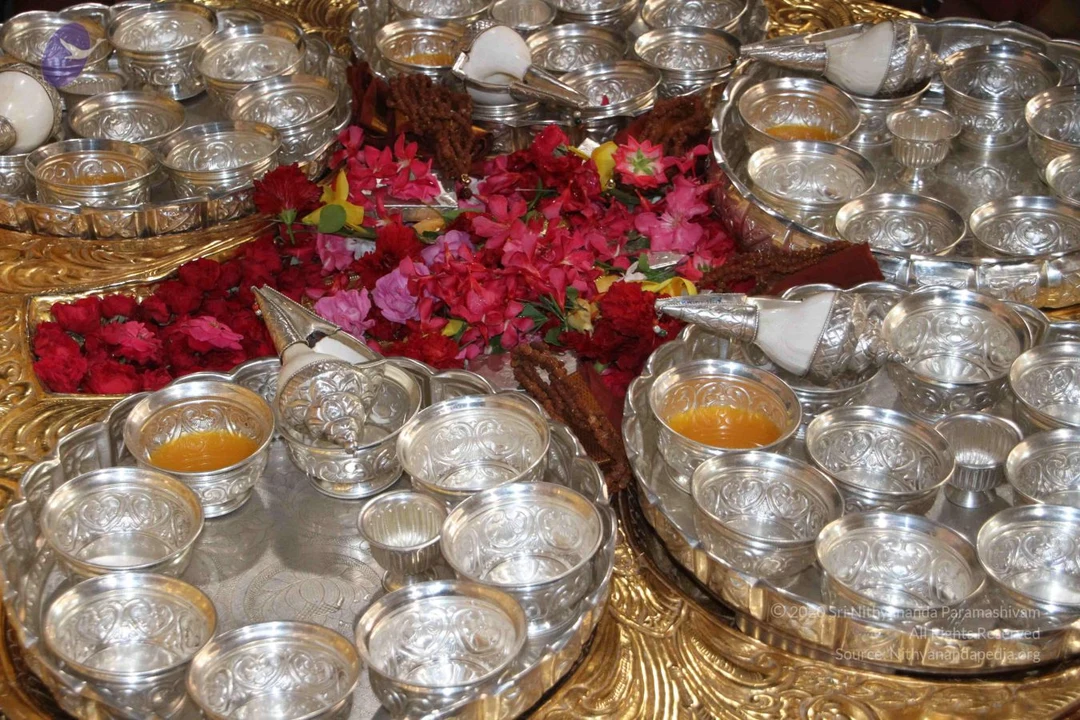
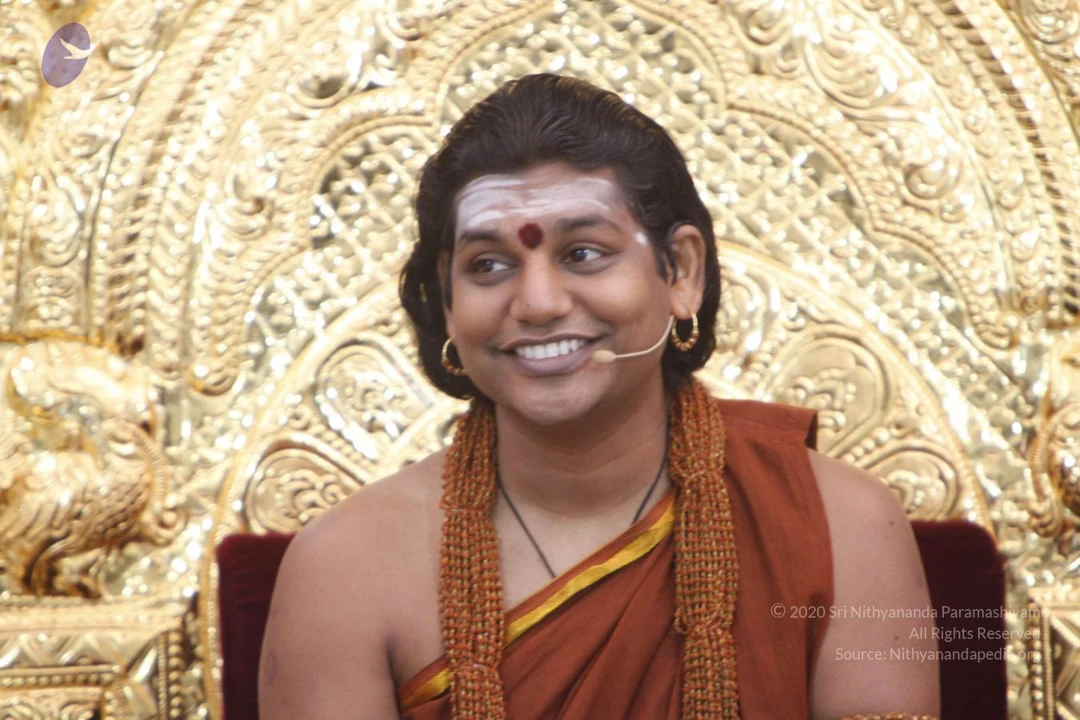
A smiling man sits on an ornate gilded throne with elaborate repoussé floral and scrollwork carvings behind him. He wears a headset microphone, white vertical tilak lines and a red dot of kumkum on his forehead, hoop earrings, and a saffron-orange sannyasi-style cloth with a yellow border draped over his shoulders. Long strands of orange rudraksha-style beads hang across his chest and he wears matching beaded armbands. a person is shown in this scene based on the saffron robes, beaded malas and long swept hair, seated in a discourse setting.A photograph of a single seated man speaking into a small headset microphone during a discourse. He has long dark hair swept back, a white vertical tilak with a red bindi on his forehead, small gold hoop earrings, and a rust-orange cloth wrapped over his shoulder with a thick orange-and-gold beaded mala draped across his chest. He sits before an ornate golden throne with a fan-shaped carved back, and a tall gold oil lamp with a bird-shaped top stands at the left. Probable Swamiji is seated on the throne, identified by long swept-back hair, orange ornate clothing and rudraksha-style beaded mala cues, giving a discourse in a satsang setting.A photograph of an offering arrangement on a gold-patterned tray. Many ornately engraved silver bowls and cups hold orange-yellow liquid. Red and pink flower petals and blossoms fill the centre, with dark brown rudraksha-like beads scattered among them. Silver spouted vessels with white handles sit on the tray, and a silver kalasha-style pot is at lower left. No people are visible; the scene shows ritual offerings set out in a temple or puja setting.

June 18 2013

Original wiki page
Contents

Description:

In today’s morning Satsang, Paramahamsa Nithyananda defines karma as anything which is left inside us incomplete, asking us for attention, for completion, and forcing us to go through that again and again. Paramahamsa Nithyananda details how karma is nothing but incomplete patterns brought from previous births as well as new patterns accumulated from this birth. Once we complete the root patterns accumulated in this birth, the past life patterns will automatically get released through completion. Once we get out of root patterns, we will be out of all karmas.

On this Day Supreme Pontiff of Hinduism HDH Bhagavan Nithyananda Paramashivam Also Delivered a Tamil Satsang Discourse on Lotus TV

Link to Video:

VideoAudio
VideoAudio

Transcript:

0 - 18 min

I welcome you all with my love and respects.

Today I will expand on a very important subject: “KARMA AND COMPLETION”.

Listen! Please come to the space of listening!

Anything which you left inside you incomplete, which is asking for your attention for completion, forcing through that again and again, is “Karma”.

Listen! Anything which is left in you incomplete and expecting your attention or action to go through it again and again for its completion, is “Karma”.

Listen! For example, anything you left incomplete, whether your food or a cup of tea or alcohol or an action, anything which you left incomplete will naturally draw your attention to complete it.

I will give you this one example:

Somebody goes to a Zen master saying, ‘I am addicted to smoking, Master. Help me to come out of it.’

Master says, ‘Take this cigarette pack.’

He was having it. Zen masters have all sorts of things!

He gave a pack of cigarettes and told that guy, ‘Smoke these cigarettes completely. Means, when you pick them up, be aware, feel the touch. When you put them in your mouth, feel the touch in the lips. Don’t put your attention on something else. Attend to this cigarette as if this the last cigarette you are going to smoke; after it you are going to die! Attend to it with that depth.’

After two days, the smoker who is supposed to be a smoker, came to the Master and said, ‘Master, now I am not able to put the cigarette in my mouth. Not that I dropped the cigarette, the cigarette dropped me!’

Understand, anything when you do complete, the cigarette disappears! I am not saying go and do whatever you want completely! All I am trying to tell you is, anything you do completely, it drops you!

Krishnamurthy says beautifully, ‘Anything you go through completely, leaves you complete.’

All you need to do in your life, anything you do, do out of completion, do it completely, so that, that leaves you in completion!

Listen! The incompletions you create in this life is Prarabdha Karma. And the root-pattern which goes on creating incompletions is Agamya Karma. Bio-memory which supports multiple root-patterns is Sanchita Karma.

Understand, Agamya Karma means, accumulated karmas. Prarabdha Karma means, brought karmas. Sanchita Karma means, gathered from the beginning of Time through all the births.

The incompletions you accumulate every day is Prarabdha Karma. Root-pattern which goes on creating incompletions is Agamya Karma. Bio-memory which supports these root-patterns is Sanchita Karma.

Listen! Dhyaan se suniye! Listen!

Prarabdha, Agamya, Sanchita! Each day if you complete without any incompletions, you will be left with no Prarabdha Karma. Person who is complete with the Prarabdha Karma, even though you are complete with the Prarabdha Karma, because the root is there, the pattern is there which can go on creating incompletions, the Agamya is there.

Listen! Dhyaan se suniye!

If you understand these three levels of Karma, you will have lot of clarity about life, how the completion is such a powerful process to get out of incompletions, get out of karmas. All karmas are nothing but incompletions.

People come and tell me, ‘I have Naga Dosha, Chevva Dosha, this dosha, that dosha.’

Naga Dosha is nothing but incompletions about snake, fear of snakes! All doshas are nothing but the incompletions you carry. If you find the root-pattern from where the snake fear started in you and complete that root-pattern, you will be free from Naga Dosha. All doshas, all doshas are nothing but our incompletions.

Sometimes people will ask me, ‘Can I have doshas based on my past life incompletions also? Yes you can have.

How can I complete past life incompletions?’

When you find all the root-patterns of this life and complete, you will see the past life patterns are getting released through your system, getting expressed through your system. When you complete this life’s root-patterns, automatically past life root-patterns will start getting expressed. When they are expressing, listen, when they are expressing, look into those past life patterns, find their root and complete. You will be relieved from the doshas, the karmas based on the past life incompletions also. No, I tell you, I can tell you very clearly…completion of past life karmas is not something too big. It is not that difficult. It is very easy actually. Just needs little maturity. Nothing else. Just needs little maturity! Decision, maturity and decision will. That’s all. Sometimes, some of our patterns will be past life based. Especially when you have the maturity to take up sannyas, all your root-patterns will be past life based, because when you even decide to take sannyas, all the root-patterns of this life you cross it just by will! Just by will you cross it! Even if you have the will, courage for decision of sannyas, all the present life, this life incompletions wither away on you. They will not have power over you. Now all the incompletions you carry is about past life. Especially after sannyas initiation, if you are carrying some incompletions, it is surely from past life! You need to look in and complete even with those patterns. When you complete with those patterns, one nice thing, you will have lot of past life memories coming up, erupting! See, it is just the level of maturity.

Many a time, some of my disciples – some of my disciples are producers and directors – they bring me the movies and say, ‘Swamiji, Swamiji, just see this and bless us Swamiji! Or give your few words about this movie…’

I tell you, at least one hundred of this kind of requests I have received. ‘This movie is going to be released in ten days, Swamiji. Just see this and give us your compliments.’

I tell you, just I am not able to watch a single movie more than ten minutes because I could not relate with the subject they are showing, all the romance they are showing, school-time romance, college-time romance, work-place romance! I just could not understand, I just could not relate with any of them. I feel, still in Planet Earth, still all this goes on? Sometimes it is so boring! What is there? Like a neck pain that heroine will turn three times…..and the hero (gaping at her)…..and then background music “tontontwine”…! I am not able to relate with the whole thing at all! Only one movie I was able to sit and watch completely. There is a movie called “Tamil Cinema” tearing all the cinemas to pieces. Means, it is a comedy movie, making fun of all Tamil Cinema sentiments! Only that I was able to relate with. Because they are describing exactly the way I feel about the movies! No! All heroes look for me as comedians! All villains I look at them as comedy villains! I thought, may be, these Tamil movies only I am not able to relate with. I tried to see even one or two Hollywood movies. That also the same! I could not watch even a few minutes!

Understand, it is the level in which only the entertainment also either entertains you or you get bored. Only thing my entertainment is all the leelas I did and I am doing! That is all! I only have a few books of all sixty-four Shiva Leelas, these kind of books, some few kind of cartoons. If you see those books, you will see it is all cartoons done by amateur artists. Even my Gurukul kids will do better than that! That kind of cartoons! But when I open those books and see those cartoons, my eyes pour, my whole being melts, my whole being is moved! I will tell my ashramites to scan those books and put it in the website. You can see. You can see each page will have the effect as if water drops have fallen. See, if the water falls on the paper, it will have some ups and downs on that part. It will have many pages like that. Because you will see the tears of my ecstasy! But those drawings are all very amateur. It will be just a small scene of Shiva carrying that mud pot, that leela; or Shiva selling that wood. It in no way relates with the grace of Shiva. Even that could create so much of joy, ecstasy in me! That is my entertainment!

17.57 min to END.

It will be just a small scene of Shiva carrying that mud pot in the head, that leela; or Shiva selling that wood. The painting will no way relate with the grace of Shiva. Even that could create so much of joy, ecstasy in me! That is my entertainment!

But, these great movies which are spent, sometime some of these which get presented to me, which are brought in front of me, sometimes they spend hundreds of crores, means, billion rupees. But they are not able to entertain me even for ten minutes! No! Sometimes the level people are in, I tell you, this is a great suffering and incompletion for some people, for you, you will not even relate with it.

Two days before, there was a big discussion. It’s a very funny discussion! My elder brother is getting married. Literally my whole hometown is getting prepared for it! I think tomorrow or day-after-tomorrow, I don’t know when the engagement is, tomorrow?. I don’t even know the date! And these fellows are running here, there, here there! There was a great meeting of all the elders in the town. No, really! What for you know? To discuss how many plates of items you should give! One group is arguing we should give twenty-one items, twenty-one plates, for engagement. And one group fifty-four. One group fifty-eight. One group fifty-one. Lot of arguments, debate! Finally, they could not find the solution, and the issue is brought to me.

I asked only one question: ‘Whatever number of plates you are, you guys are going to give – the other side (bride’s family) is from Malaysia – are they going to carry the whole thing from here to Malaysia?’

These fellows said, ‘No, they will not be able to carry, because it is all some banana, papaya, pineapple, some sweet, fruit, some dry fruit.’

I asked, ‘Are they going to carry everything in the flight?’

They said, ‘No, no, no! They may not be able to carry, it is our prestige issue!’

I said, ‘If it is prestige, forget all your numbers. Give one-hundred-and-eight plates.’

Finally, the whole issue is settled as if it is a big relief!

Then, later on, I asked, ‘What is there in this? Such a big issue? Such a big meeting!’

They said, ‘No, no, no, Swamiji!’

To come to this decision I heard some twenty people have given the input. “No no! For my son’s marriage I gave twenty-eight plates. For your standard, you should give more than that.”

And the other on comes up and says, “my daughter’s wedding, I received 54 plates. What do you mean by giving only 21?”

Actually, at the end of the conversation what happened you know? I had a little bit of respect for some of the elders in the village. I lost everything! These foolish fellows, for such a simple thing they have a meeting and discuss! Even for Inner Awakening, we don’t have such a meeting where so many hundreds of people are going to come and stay here and going to stay for so many days and learn so many things!

Finally, I asked, ‘For engagement what all you people will do? Will it be an elaborate ritual? How many hours I should make myself available? And all that…’

They said, ‘No, no, we will write a letter that this engagement is happening….and put yellow turmeric power on all the corners (of the letter) and exchange….that’s all.’

‘Ada paavigala! Idhukaava iththana meeting poattenga..????’ (A humorous, sarcastic Tamil expression, meaning: You sinners! Is it for this you held so many meetings?)

For that only the whole village has gathered! And the meeting time is five times more than the engagement time! What an innovative way to waste time!

No, I could not relate with the whole thing. Then, finally, I thought, alright, let me not interfere with all these.

And then one funny thing is, for the meeting about the engagement, they want my presence.

I asked, ‘What for you want my presence?’

They said, ‘No, no, no, like this if there is a problem where we are not able to come to the decision, you have to sort it out!’

I thought, Oh, God, still even marriage has not started, it is only engagement!

No, I have seen, I have seen in those local villages, people will sit and talk for ten-fifteen days about engagement! After that, two months they will talk for marriage! From where the banana tree has to come, from where the coconut leaves have to come, from where that betel nut branches have to come, from where nadhaswaram has to come! Many things!

The level from which you relate changes when your will gets strengthened.

When they called me I said, ‘Arrey, it is not even both sides – the bride and bridegroom’s side – are going to sit and discuss so that if there is a conflict I need to get involved and settle it. It is only one side is going to sit and discuss. For that, why will you guys have a conflict?’

They said, ‘No, no, no……’

Then, finally, I had to send my mother to represent me. She has gone all the way from here to there. It seems all the relatives have to agree about the saree color and border color! And one hour discussion specially for that: what color saree and what will be the border! No! Then finally, the whole issue was brought to me.

‘Swamiji, this is my father’s side people are saying one color saree and one side border, and my mother’s side people are saying one color saree and one color border.’

Unfortunately, neither my father is alive, and now my mother is a sannyasini! So my father’s elder brother only is going to represent my brother’s side. So, their side they are giving another one opinion. I was wondering what all innovative ways people waste time! And do you know the funny thing? Neither the guy who is going to get married, nor the girl who is going to wear the saree is consulted! See this whole fun! In this whole fun they two are immaterial! Actually I am going to write a book about it, about this whole fun of Indian marriage system! No, actually those who are going to get married, they are not consulted at all!

The level your will grows, the level your consciousness expands, same level only things entertain you or engage you, or enrich you. Bring completion in all the levels of karmas you carry, whether everyday incompletions you accumulate, or the root–patterns you carry, or the bio-memory on which the root-patterns are established.

It is like, one family decided to celebrate Mother’s Day. They decided to go for a picnic. Early morning, 2 o’clock, mother got up, she cooked and prepared everything for the picnic. A small tent, feeding bottle for the last kid, everything she prepared. All of them got into the van, but one seat was less in the van. Means, one person has to be dropped. Nobody wants to get down, miss the trip. Finally, mother sacrificed and she got down. All of them went for the picnic. Only after reaching the picnic place they realized it is Mother’s Day picnic and they left the mother at home! That is the way exactly the way Indian marriages happen! Other than the persons concerned, everybody else have all their involvement!

Finally, when the saree issue was brought to me, I was given a great brief – who said what – so for me to give a judgment.

I just made only one statement, ‘Call her who is going to wear and take her to the shop and let her choose.’

They said, ‘No, no, no, no! As per the tradition we cannot take her!’

Oh, god! Now I have to ask Kalabhairava only what to do about it! I don’t even know whether Kalabhairava can answer this! Finally, I could not answer the problem. I could see the whole situation. Everyone is trying to relive incompletions of their marriages. No, I could see very clearly, everyone is trying to relive, complete the incompletions of their marriage! What they wanted to do in their marriage and could not do, they are trying to relive now!

Please understand, the incompletions you carry only comes as Karma. The root-patterns you carry only comes as Karma. And bio-memory which carries the root-patterns only comes as Karma.

The essence of today’s satsangh is:

How the incompletions you carry about your day-to-day life, or the root-patterns, or the bio-memory on which the root-patterns are established, based on that the levels you relate with the world you feel entertained, engaged, enriched with the world, and these day-to-day incompletions and root-patterns which create incompletions, and bio-memory which carries root-patterns are only karmas in your life. All doshas, all karmas are only this. Get out of these root-patterns. You will be out of karma. You will be out of all karmas.

(31.58 MIN)

(NOT INCLUDED IN YOUTUBE VIDEO HENCE NOT ABLE TO TRANSCRIBE DIAL THE AVATAR)

With this, I will move to the next segment of the morning satsangh – Dial-the-Avatar.

DIAL-THE-AVATAR….

Caller: What is Purusha and what is Prakriti?

Swamiji: Purusha is Pure Consciousness. Prakriti is Nature which came out of Pure Consciousness.

It is like, Purusha is the base material, Prakriti is the finished product. Got it? Purusha is the base material, Prakriti is the finished product.

It is like, Purusha is the clay, Prakriti is the mud pot made out of clay.

Purusha is Consciousness, Prakriti is Nature.

Purusha is the Source, Prakriti is the Effect. Purusha is the Cause, Prakriti is the Effect.

Let us move to the next segment of the morning segment – Nirahara Samyama.

NIRAHARA SAMYAMA IN PROGRESS………..

Relax! Open your eyes! I bless you all to become Niraharis.

I bless you all. With my blessings, let you all radiate with Integrity, Authenticity, Responsibility and Enriching with eternal bliss, Nithyananda! Thank you!

Photos From The Day:
Tags:

Paramahamsa Nithyananda, karma, incomplete, attention, completion, births, root patterns, past life.

Photos Of The Day:

GarbhaMandir-PadukaPooja

PadukaPooja-Crowd

Satsang-Swamiji

SarvaDarshan

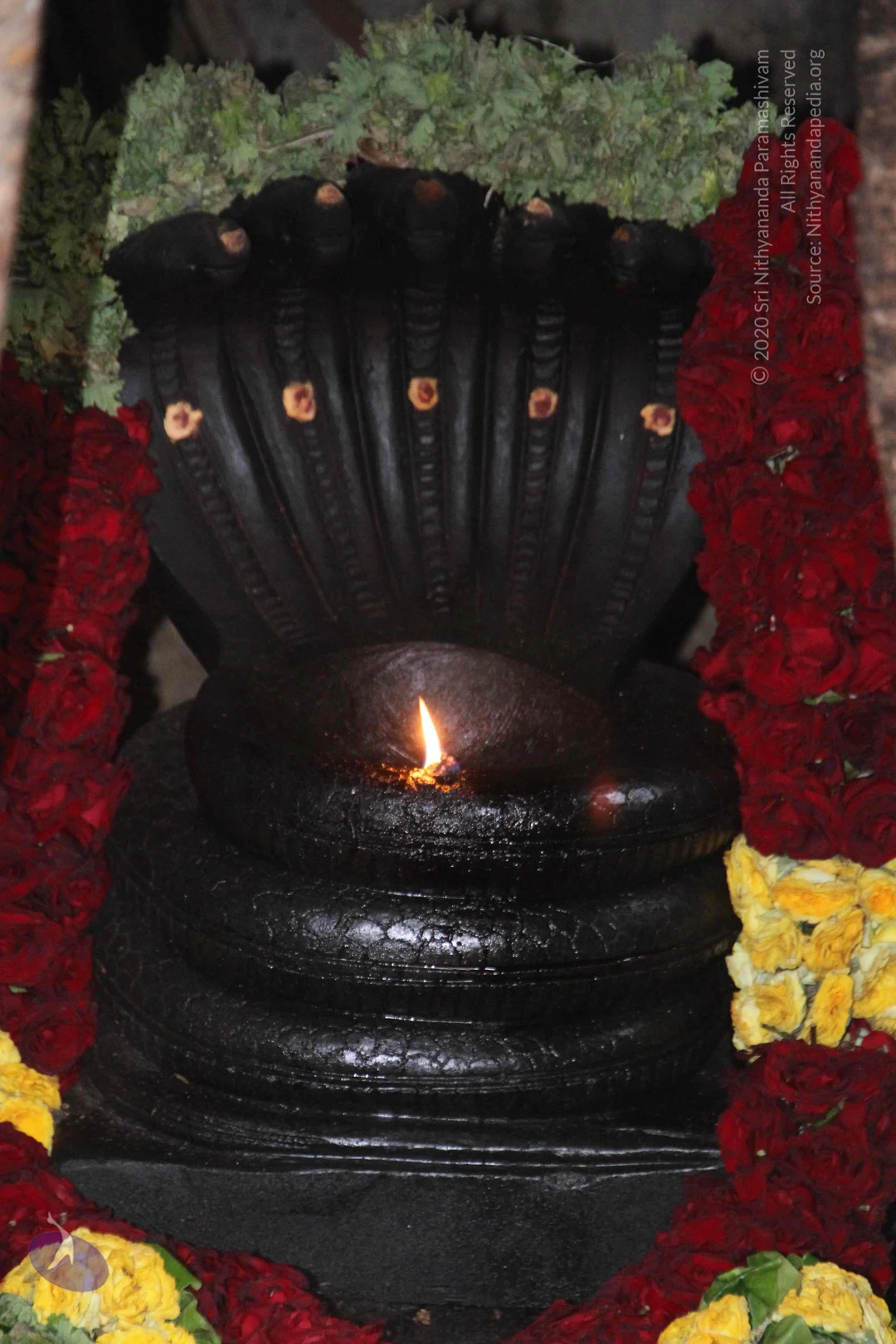
Temple

Construction

satsang

Photos Of The Day:

Garbh Mandir

Paduka-Puja-Crowds

Satsang-Swamiji

Sarva-Darshan

Temple

Construction

LotusLive

Photos Of The Day:

Edited Photos for Automation

01-ADIKAILASA-TEMPLE

02-PADA-PUJA

03-SATSANG

04-SARVA-DARSHAN

05-LOTUS-TELEVISION-PROGRAMME

Photos from this day

View all 216 photos

Photos From The Day:
19 photosSource gallery
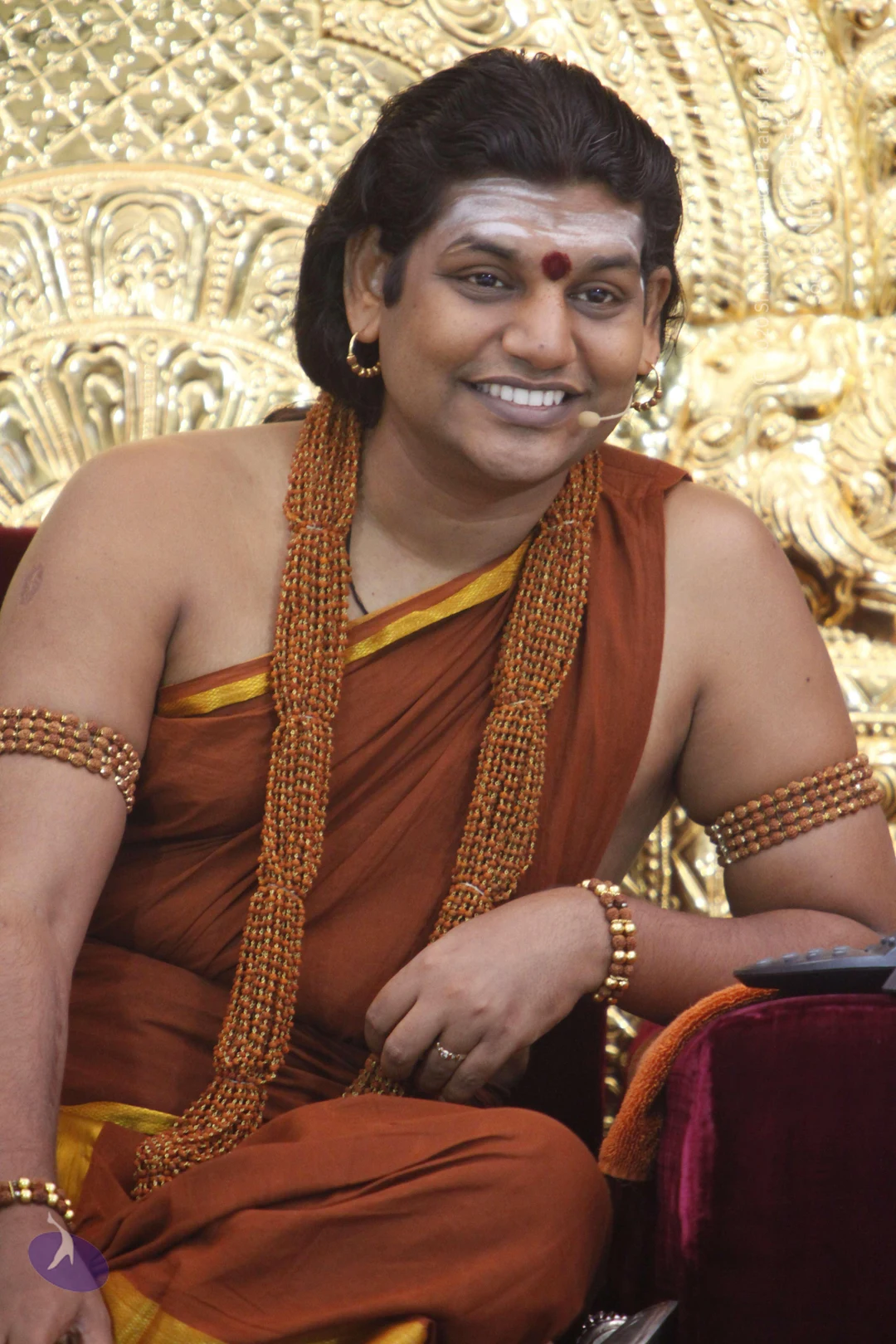
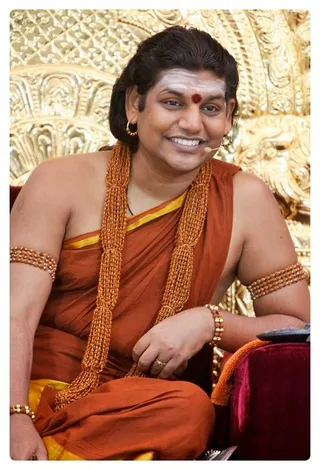
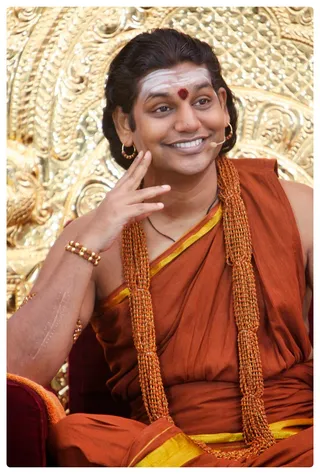
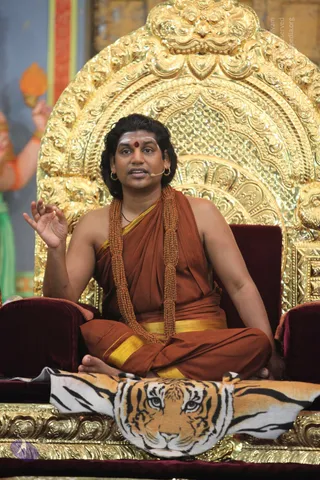
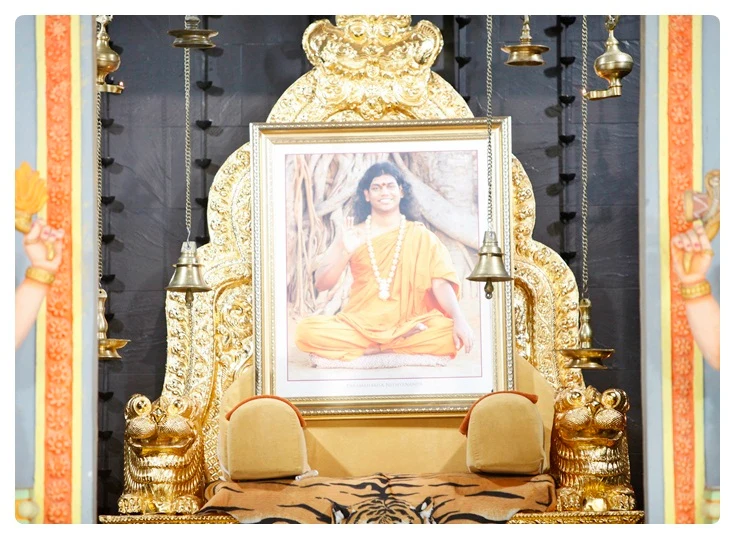
A framed photograph is displayed on an ornate gold throne with carved lion heads and a tiger-striped cushion, set within a dark stone shrine with hanging brass oil lamps and bells. The framed portrait shows a man with long dark hair, a red tilak mark, an orange robe and a white rudraksha-style mala, seated in meditation mudra before a banyan tree. The portrait is a printed picture rather than a physical person in the scene, and no people are present in the photograph. Painted figures with raised arms flank the shrine on the left and right edges.A smiling man seated on a red velvet cushioned chair in front of an ornate gold-leaf backdrop. He wears an orange-brown robe with a yellow border, layered gold beaded necklaces, gold armlets and beaded bracelets, a gold ring, and gold hoop earrings. He has a white vibhuti marking on his forehead with a red kumkum dot, and a small headset microphone is clipped near his face. His right hand rests on his knee with an orange cloth draped over the armrest. This appears to be a candid portrait of a seated speaker during a discourse.A smiling man sits against an ornate gold repoussé backdrop, raising one hand near his cheek. He wears a rust-orange sleeveless robe with a gold border, a long rust-orange beaded mala draped over his shoulders, a gold-and-beaded bracelet, small gold hoop earrings, and a lapel microphone. He has a white vertical tilak with a red bindi and swept-back dark hair.A man seated on an ornate gold throne with a carved, filigreed backrest, wearing an orange-red saffron cloth draped over the body with a yellow border. He has a white vibhuti line across the forehead with a red kumkum dot, gold hoop earrings, a headset microphone, and heavy gold-coloured beaded necklaces and armlets. He smiles and raises his right index finger while speaking, as in a satsang discourse. a person seated in the discourse setting, with saffron clothing, gold ornaments and a throne as cues. The image is a photograph and shows one person.A seated man in saffron-orange robes sits on a red velvet chair in front of an ornate gold throne carved with lion-like figures. He wears thick orange rudraksha-style beaded malas across his chest, gold armlets, a gold-rimmed earring, a tilak with a red bindi, and a small headset microphone, smiling as he rests his hands in his lap.A seated man in saffron-orange robes sits cross-legged on an ornate gilded throne with a red velvet cushion. He wears a long beaded rudraksha-style mala, gold bangles on both upper arms, a white vibhuti line with a red kumkum dot on his forehead, and a sheer gold-edged wrap draped over his shoulder. A tiger-face rug lies before him on the throne platform, and he smiles while his hands rest on the armrests. The carved gold backdrop is elaborate.

GarbhaMandir-PadukaPooja
15 photosSource gallery
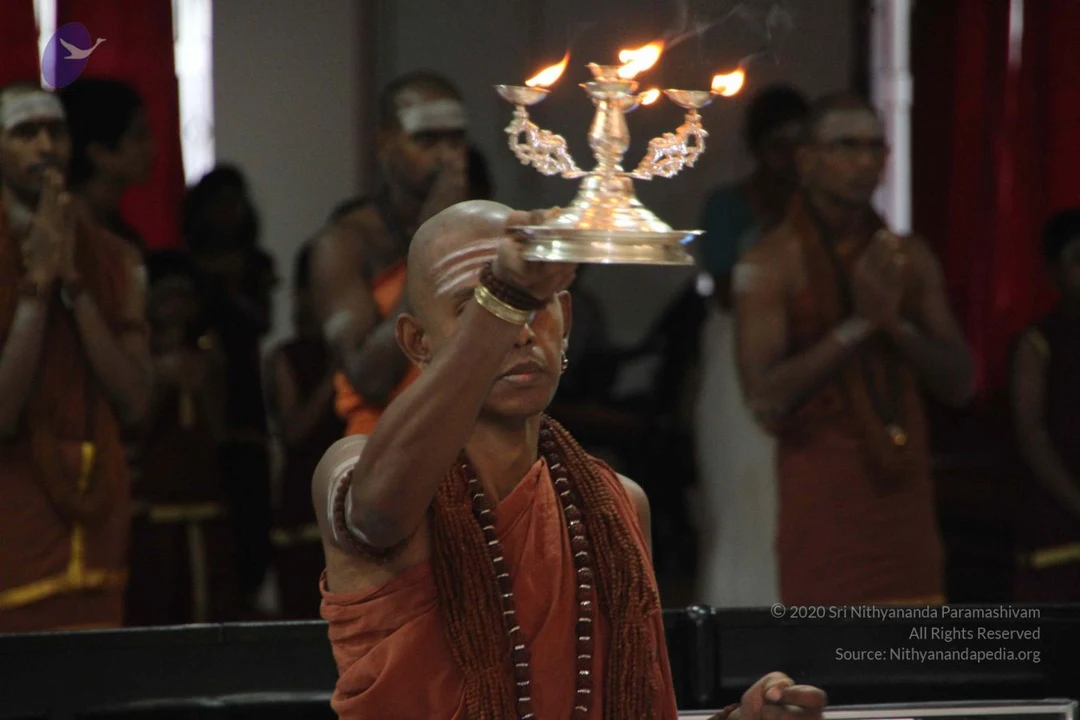
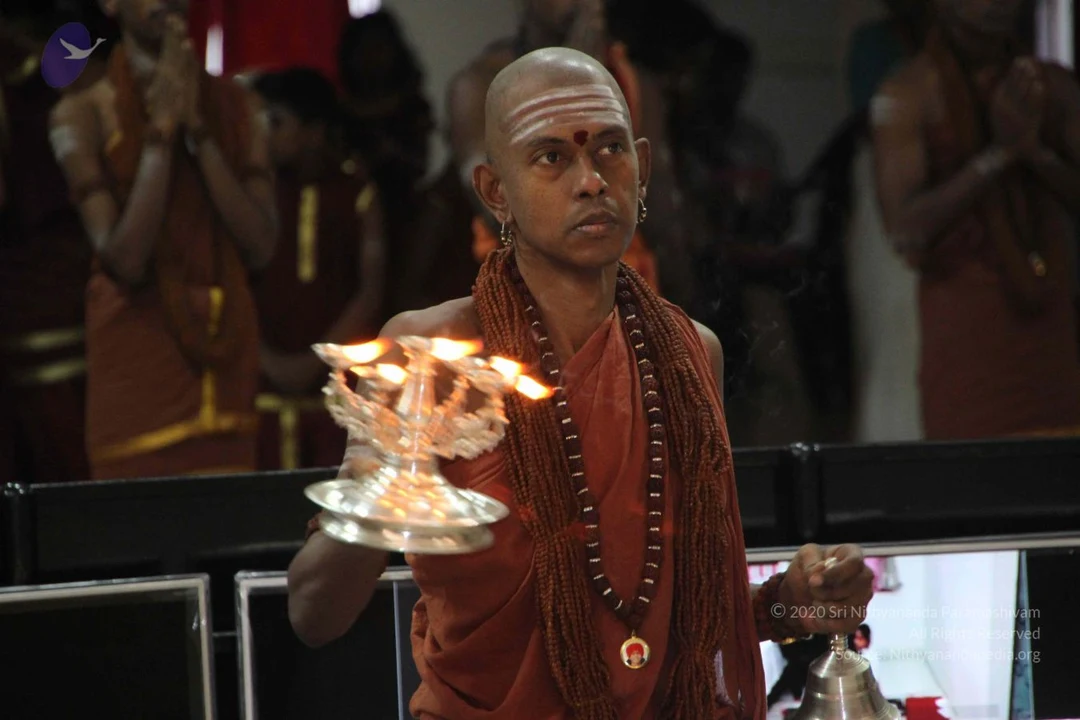
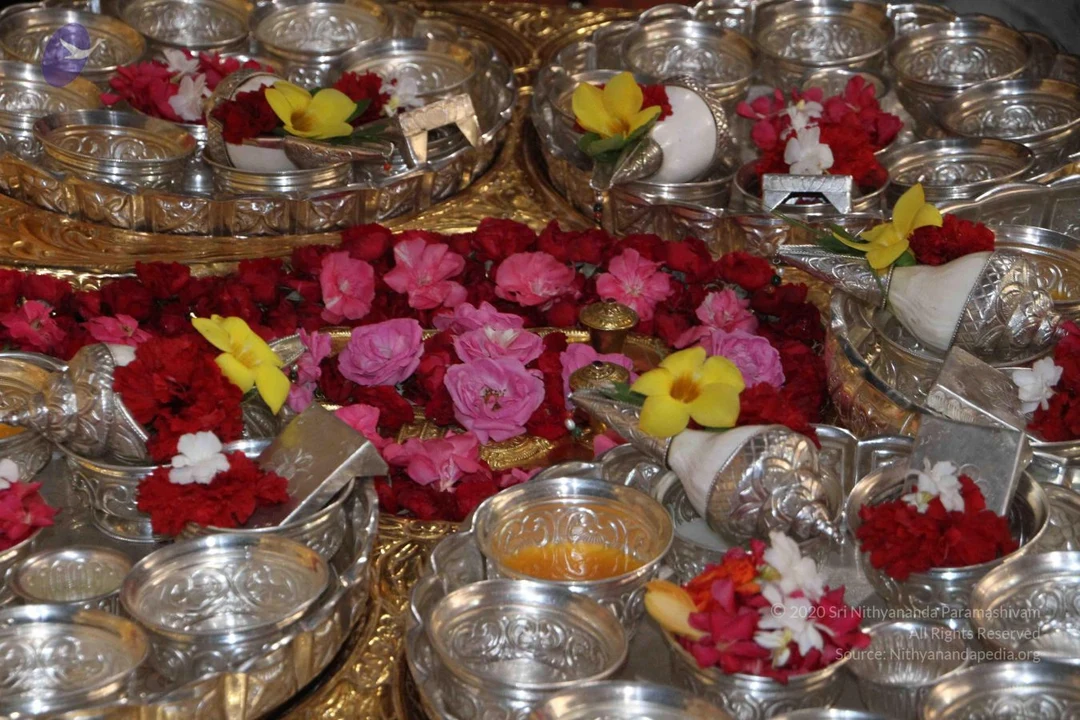
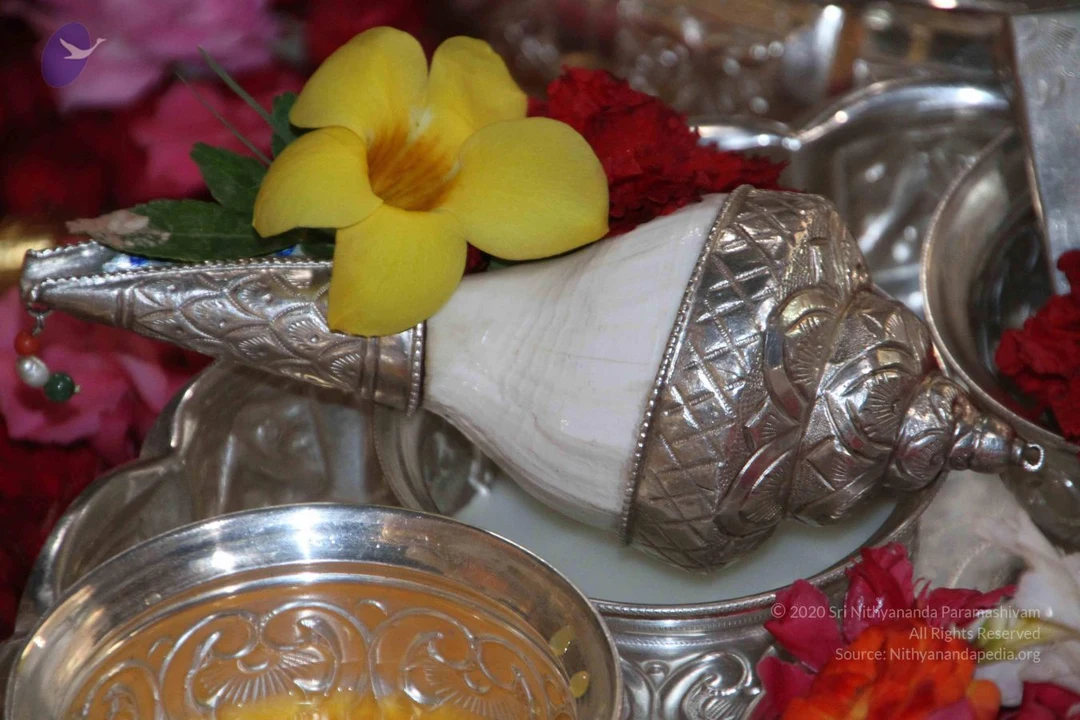
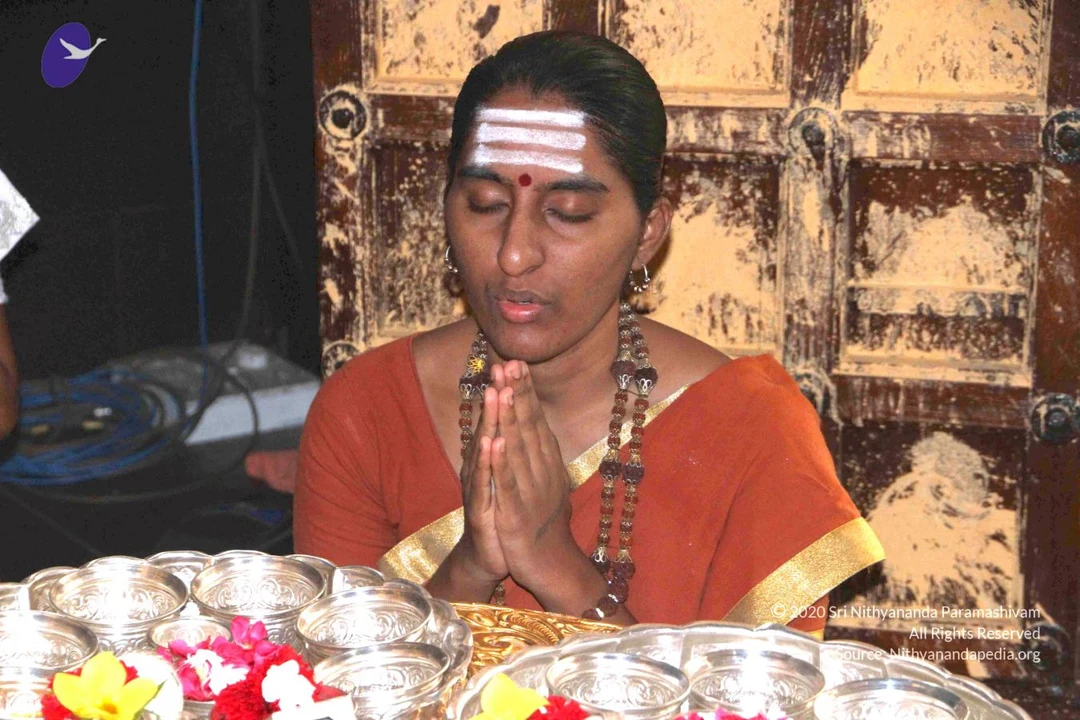
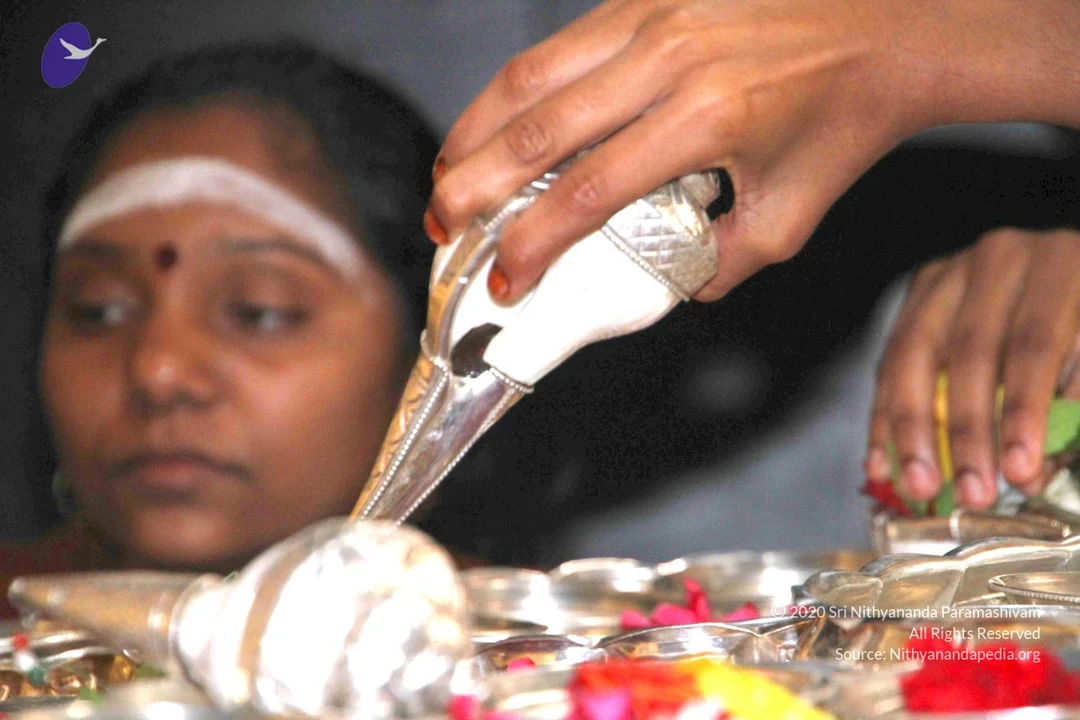
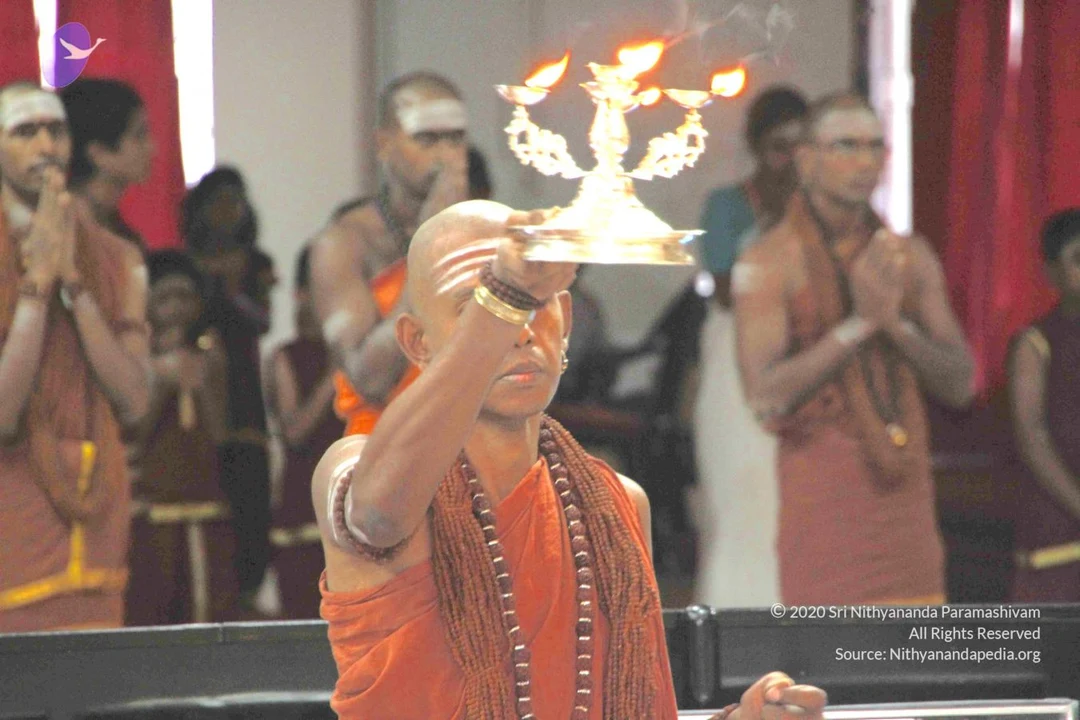
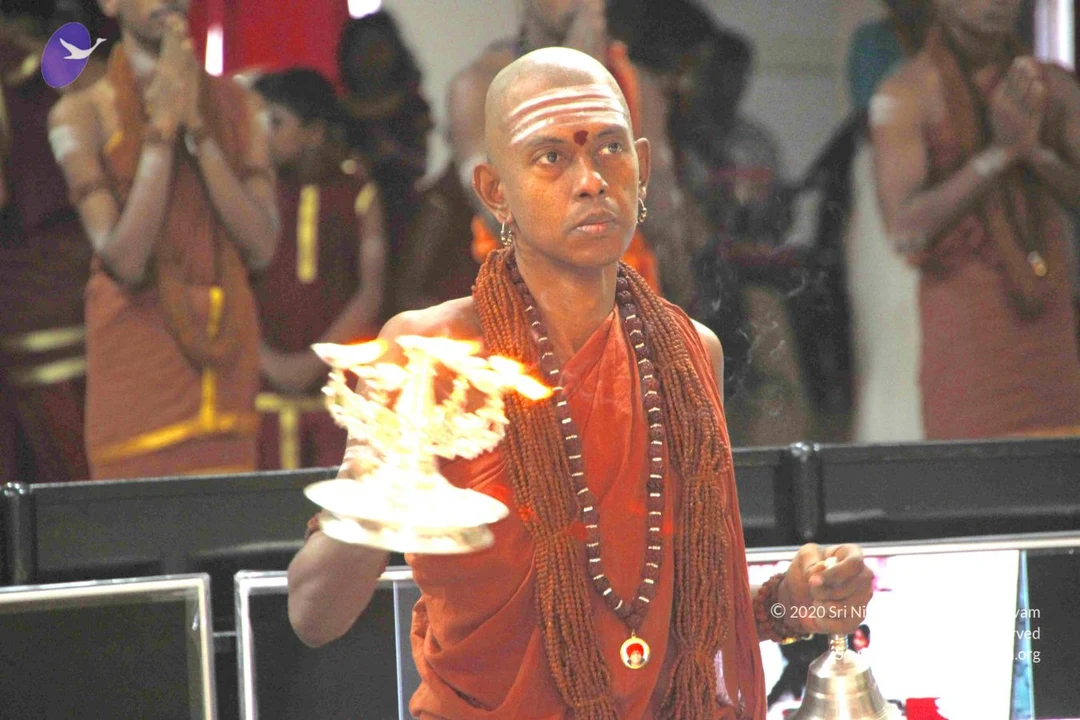
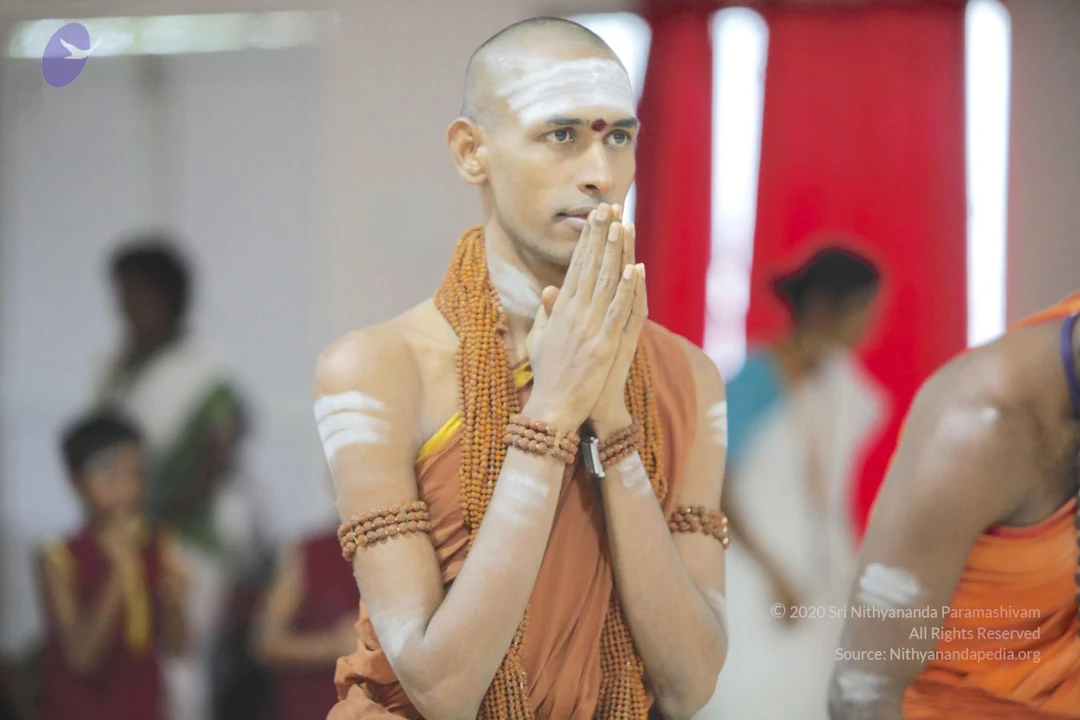
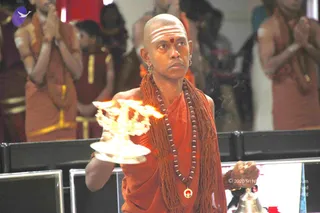
A shaved-headed man in orange-saffron robes and a rudraksha mala holds a silver multi-wick aarti lamp with flames rising above his head, performing an aarti at a ceremony. He has white tilak markings on his forehead and arm. Behind him, several men in orange and white attire stand with palms pressed together in namaskar, and red drapes hang in the background. The man performing the aarti does not show the distinctive long hair or crown cues needed to identify him as a person, so he is described only by role as a priest or sannyasi.A shaved-headed man in an orange-saffron robe stands in front of a row of devotees with hands pressed in prayer. He wears long rudraksha mala beads, a small red pendant, earrings and white sacred markings on his forehead, with a red dot between his brows. He holds a silver aarti lamp with multiple lit flame wicks in one hand and a silver bell in the other. Behind him, saffron-robed devotees stand with palms together, and a black barrier and screens are visible in the background.A close overhead view of a puja arrangement on a gold-coloured tray. Many small ornate silver bowls and cups hold red and white flowers, with pink roses scattered over the centre and yellow flowers placed in silver conch-shaped vessels. A small amount of orange liquid sits in one bowl. Silver ladles lie among the offerings. No people are visible; the scene shows ritual offering items arranged for worship.Close-up photograph of a white conch shell (shankha) with silver-embossed fittings at both ends, resting on a silver ritual tray. A yellow flower with green leaves is tucked into the narrow end of the conch. Red and pink flower petals fill the background, and a silver bowl containing yellow liquid or offering sits at the lower left. The scene is a puja-style arrangement of ritual objects with no people visible.Close-up photo of two small gold vessels with rounded lids, one topped by a red gemstone, sitting on an ornate gold-rimmed tray. The tray and surrounding area are densely covered with pink and red rose petals and whole roses. A silver vessel edge appears at the lower right. No people are visible; the scene looks like a ritual offering arrangement.A close overhead view of a ritual arrangement on a gold-patterned tray. Silver bowls and small silver vessels hold red and pink rose petals, white flowers, and yellow orange-blossom flowers, with orange-yellow liquid in two bowls. A golden lamp or incense-stand and conch-shaped silver vessels with yellow flowers sit among the petals. No people are visible; the image shows puja offerings set out for worship.

PadukaPooja-Crowd
13 photosSource gallery
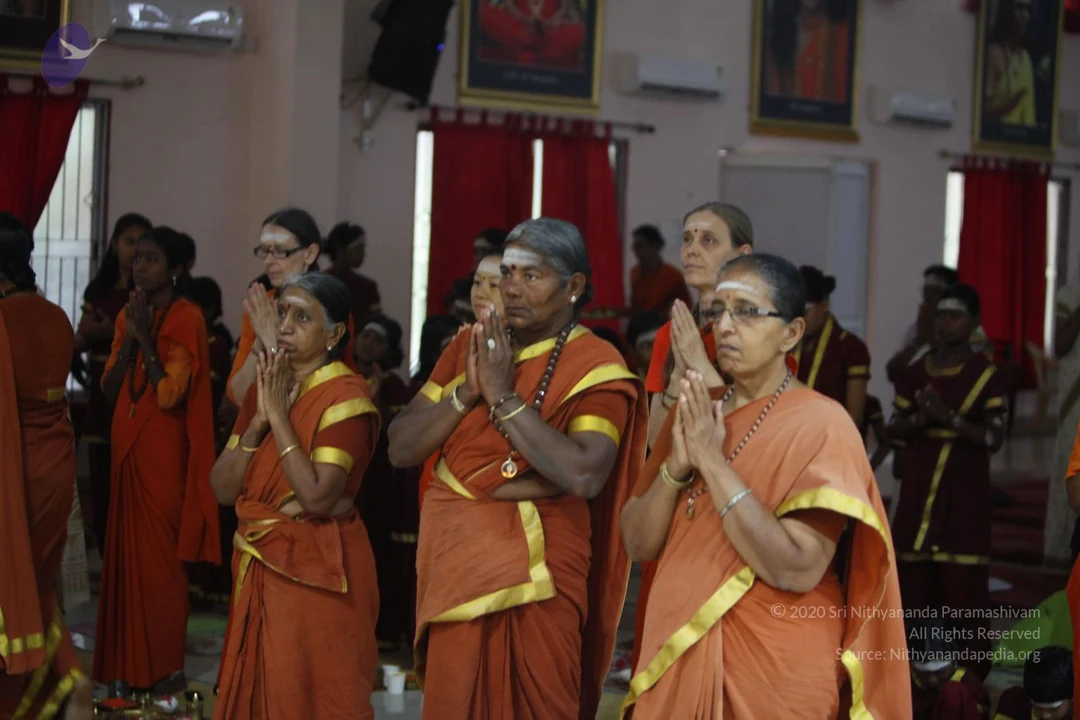
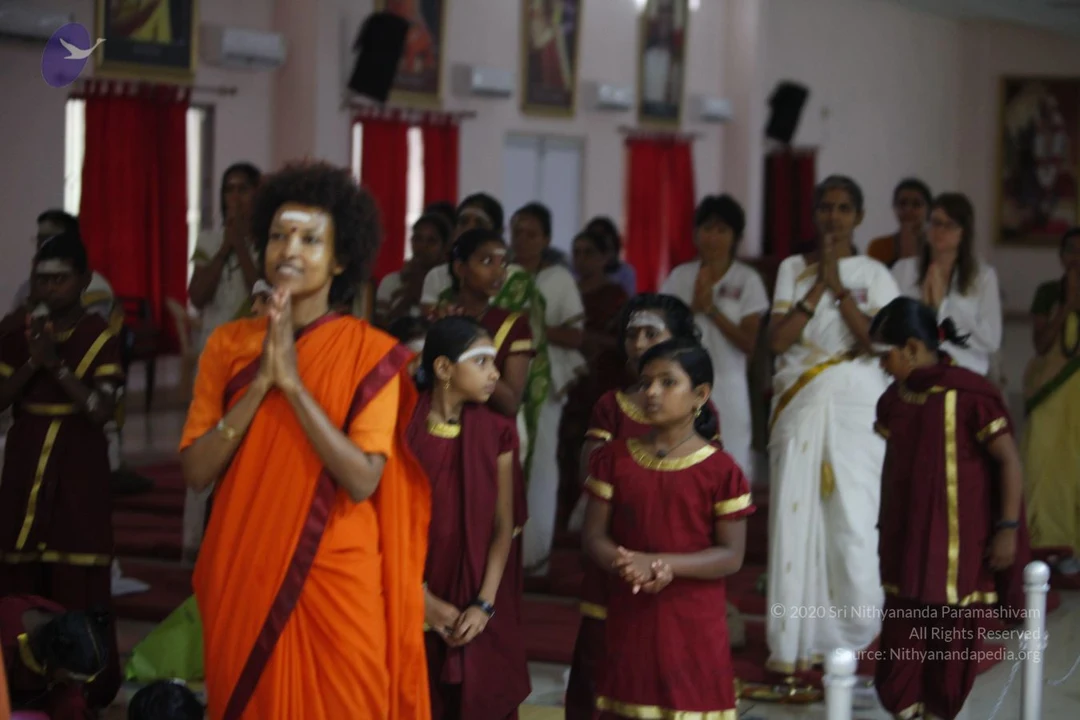
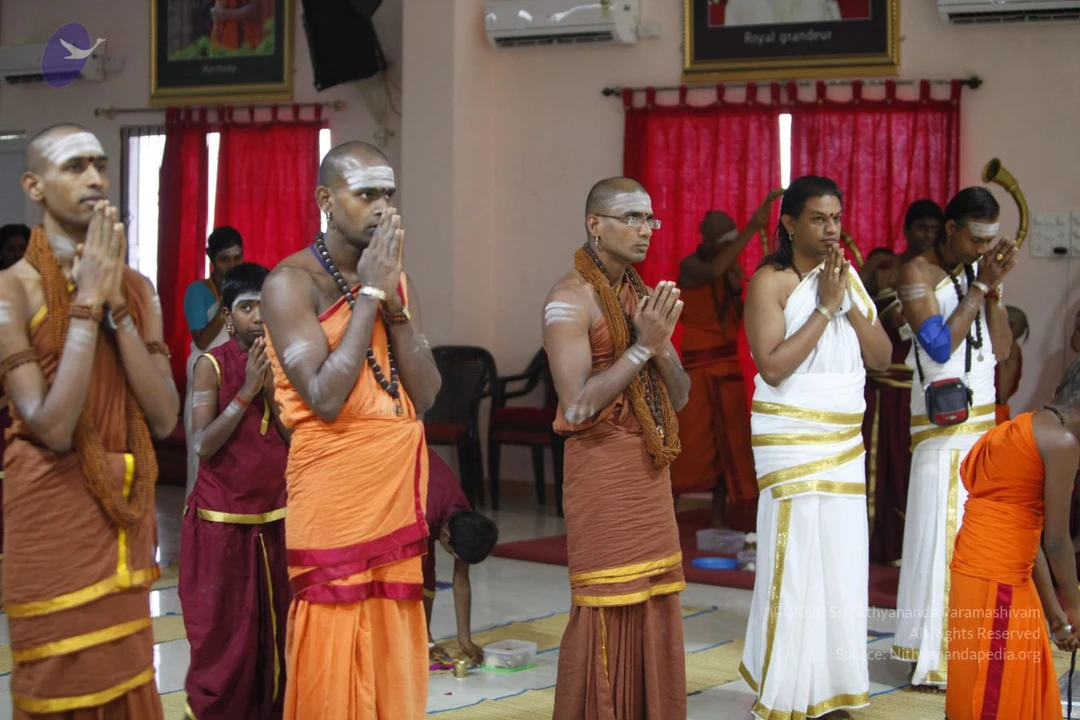
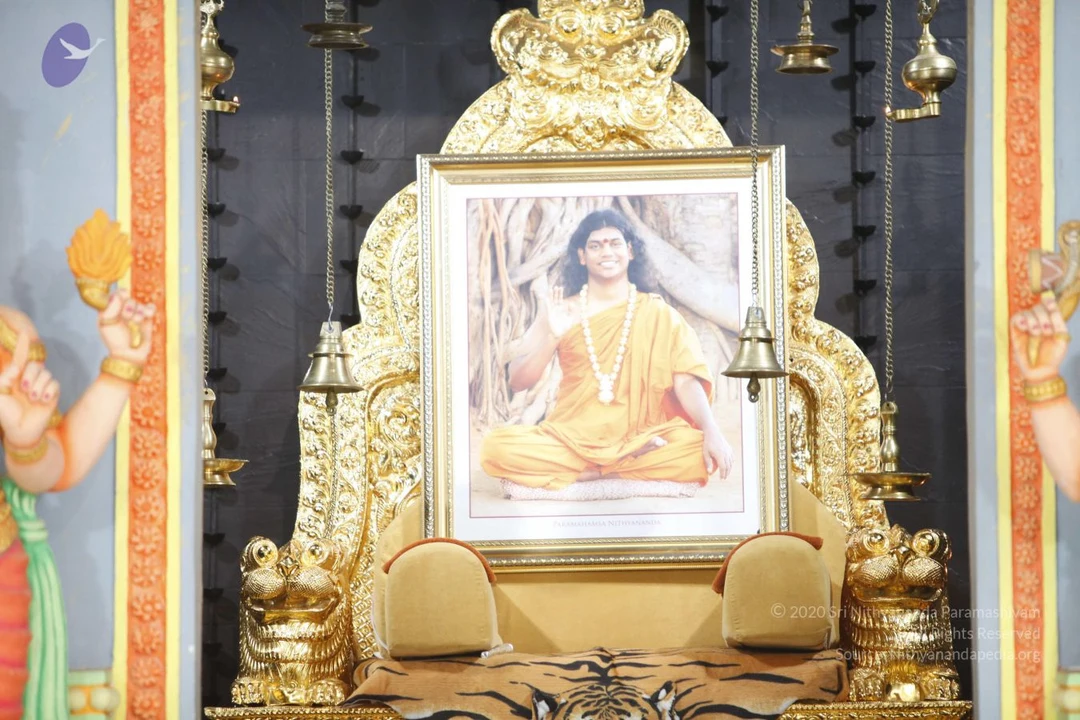
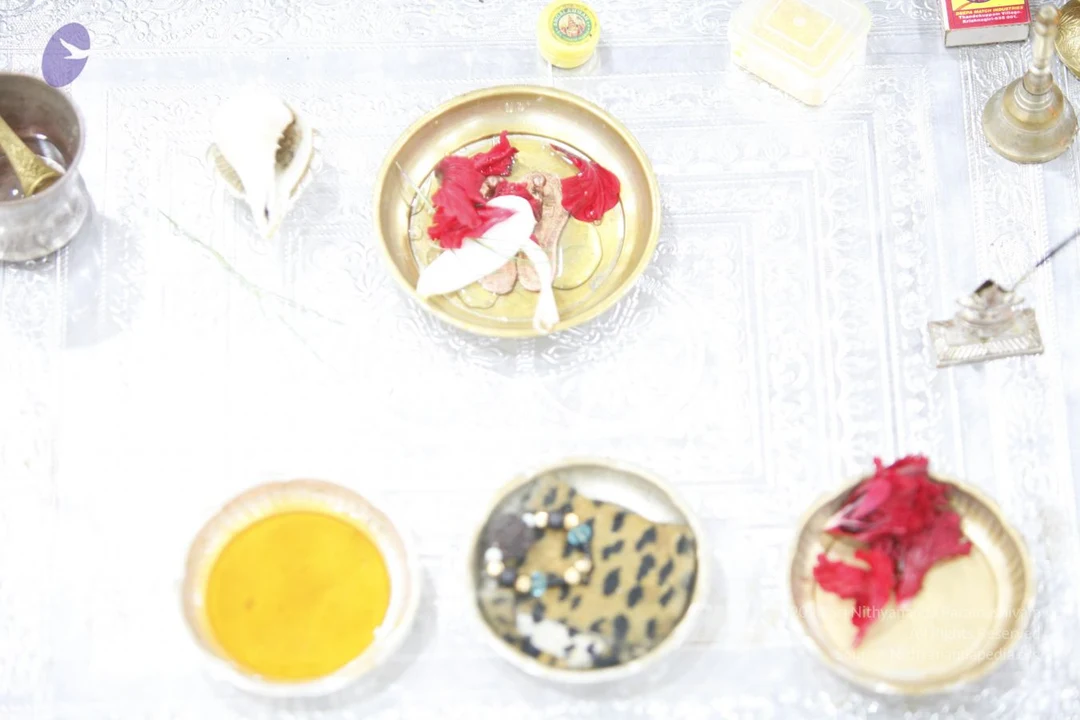
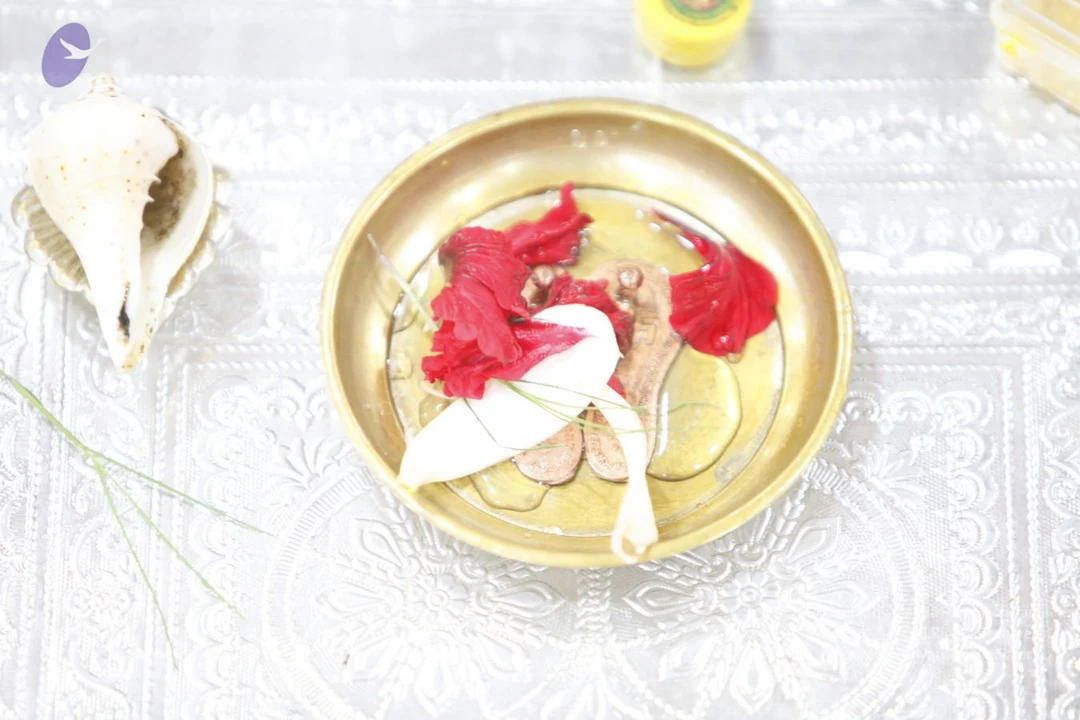
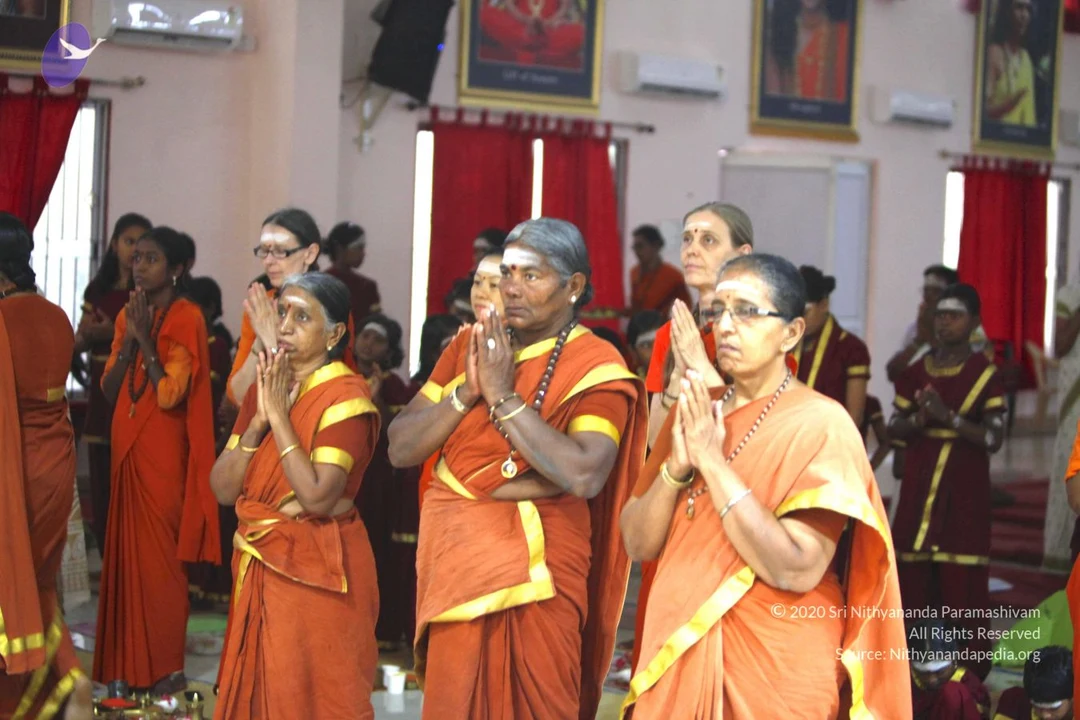
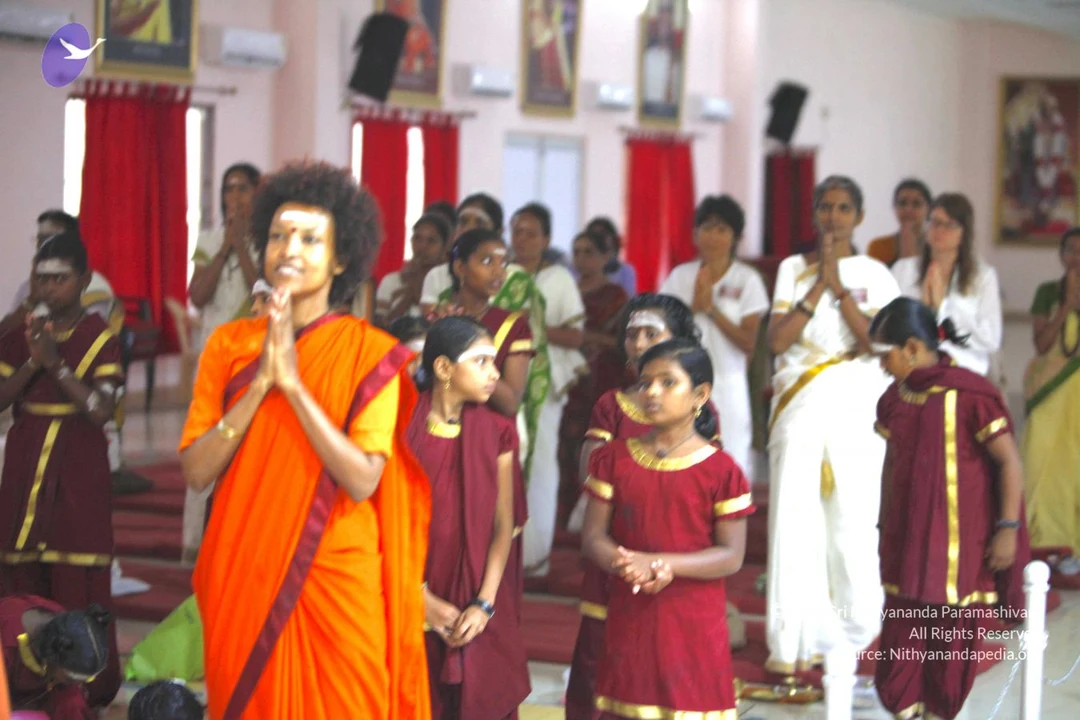
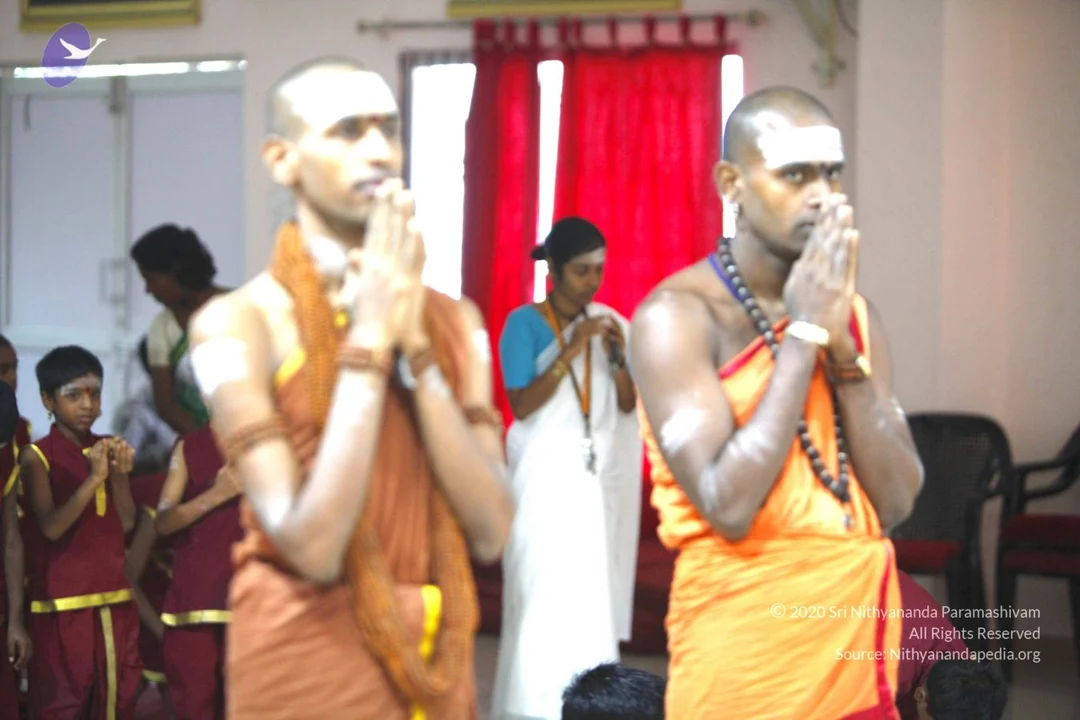
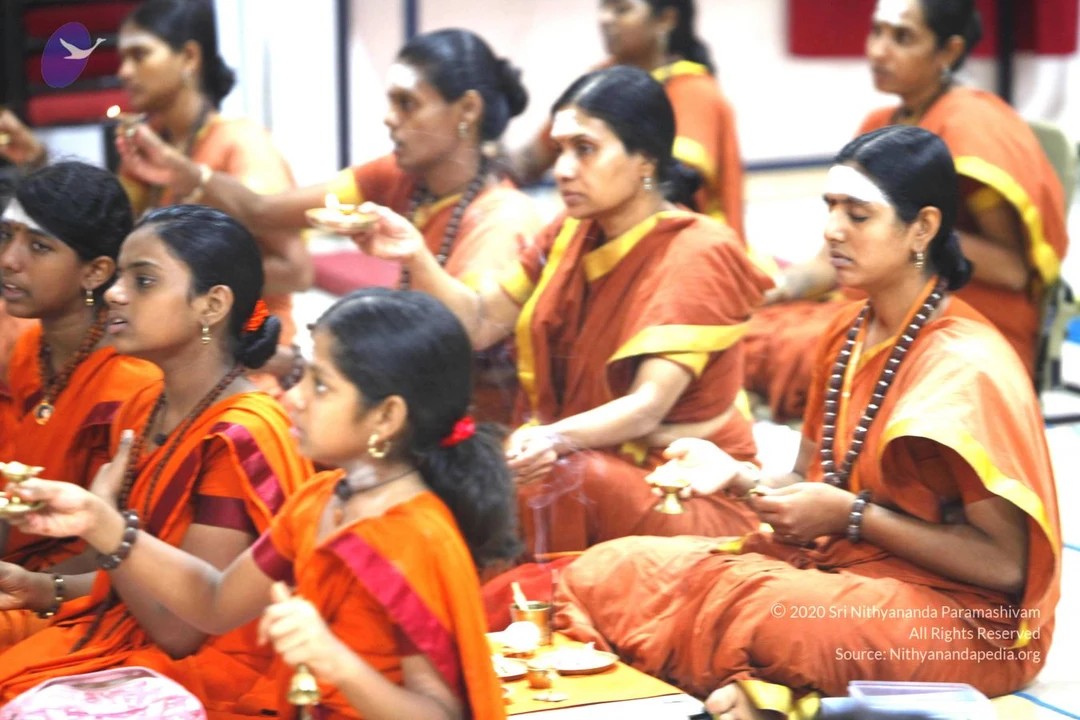
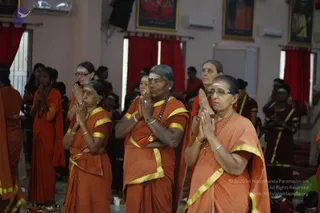
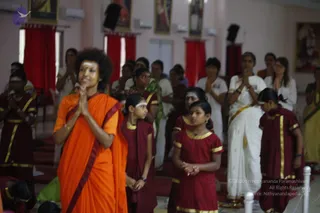
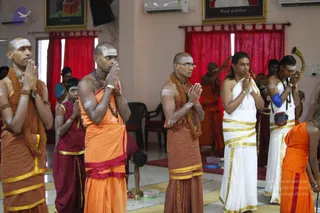
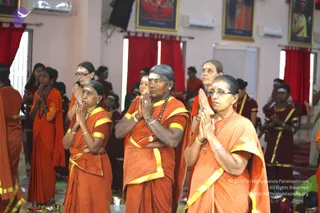
Indoor photograph of a group of women devotees standing with palms pressed together in namaste at a satsang gathering. Most wear orange-saffron sarees with yellow borders, and some wear rudraksha malas and forehead tilak markings. Behind them, more people in orange and maroon clothing stand in a hall with red curtains, framed deity paintings hang on the wall, and a few oil lamps are visible near the floor.A photograph of a satsang or devotional gathering in a hall with pink walls, red curtains and framed religious pictures. In the foreground a woman in an orange saffron garment with a maroon border stands with palms pressed together in namaste, with white tilak markings on her forehead and nose and curly hair. Around her, girls in maroon tunics with gold trim stand with hands folded, and behind them devotees in white and cream saris and white tops also stand with palms joined.A photo inside a hall with red curtains and framed pictures on the walls. Several men with shaved heads and white forehead markings stand with palms pressed together in anjali. The man at centre-left wears a saffron-orange wrap and a rudraksha mala with orange beads; the man beside him wears orange and a rudraksha mala. The men at right wear white dhotis with gold borders and white shawls. A person in an orange robe bows at far right, and a child in maroon-and-gold cloth stands at left. Figures in the background hold a long brass horn. Yellow mats cover the floor, and a small bowl of offerings sits near the front. Light blue cloth is wrapped on one arm of a man at right.A framed photograph of a seated man in saffron-orange robes and a white flower garland sits on a golden throne with lion-head armrests, draped with a tiger-skin cloth. The portrait shows him with long dark hair, a red forehead mark, and one hand raised in blessing, set against a banyan-root background. Brass hanging oil lamps and bells hang from chains above the throne, and painted deity figures with raised hands stand on either side. The printed caption beneath the portrait reads "PARAMAHAMSA NITHYANANDA". No physical people are present; the seated figure is a printed portrait. a person depicted in the portrait, with saffron robes, long swept hair, rudraksha-style garland and a red forehead mark.Overhead view of a ritual offering table draped in white embroidered cloth. Four brass bowls hold offerings: a bowl of red flowers and white cloth in water at top centre, a bowl of yellow turmeric or kumkum paste at bottom left, a bowl of black and gold leopard-patterned fabric with beads at bottom centre, and a bowl of red petals at bottom right. A conch shell, a small brass bell, a brass vessel with a spoon, a small camphor or incense holder, and a yellow tin of vibhuti sit on the cloth. No people are visible.Overhead photo of a brass bowl on a white lace-patterned cloth holding water with red hibiscus flowers, white petals, and small pieces of turmeric or ginger root, with a white conch shell at the left edge and a dried grass blade across the bowl. No people are visible, and the page's a person reference does not show him in this image.

Satsang-Swamiji
14 photosSource gallery
A man seated cross-legged on an ornate gold throne with a red velvet seat, speaking into a small headset microphone. He wears a saffron-orange robe with a yellow-gold border draped over one shoulder, a long rudraksha mala with thick beads, gold bangles on his upper arms and wrists, and a horizontal white tilak with a red dot on his forehead. Golden lion-shaped armrest finials flank the throne, and a striped tiger-skin cloth covers the dais edge. Behind him, painted deity figures with multiple raised hands appear on the side panels. Probable Swamiji, delivering a satsang discourse, identified by the long swept-back hair, saffron robe, rudraksha mala and gold ornaments.A seated man in a saffron-orange robe with a gold-yellow border sits on a large ornate gold throne with carved lion-head armrests and a fan-shaped backrest. He wears a long multi-strand rudraksha-style mala and gold-toned bangles on his upper arms and wrists, with a white tripundra and red bindi on his forehead. A small clip-on microphone is attached near his mouth. Behind him stands a painted deity figure with raised hands in orange and green, and a gold-patterned panel. A tiger-striped cloth covers the seat edge. Probable Swamiji by appearance cues: long swept-back hair, saffron robe, ceremonial mala and ornate gold throne, seated in a discourse setting.A man with a white vibhuti line and red kumkum bindi, dark hair swept back, wears a saffron-orange robe with a gold border, a long ornate gold-beaded necklace, gold armlets and bracelets, and a small headset microphone. He sits cross-legged on a red velvet-cushioned seat before an elaborate gold-embossed throne backdrop flanked by golden lion heads, with a striped tiger-skin cloth beneath him. Appearance-based a person in an orange robe and beaded necklace seated on a throne while speaking to an audience.A smiling man with swept-back dark hair sits on an ornate gold throne in front of a gold-embossed backdrop. He wears a saffron-orange draped garment with a gold border, multiple rudraksha mala necklaces, rudraksha armlets, and gold hoop earrings. A white vibhuti tilak and a red kumkum dot mark his forehead, and a small headset microphone is clipped near his mouth. He raises one index finger as if making a point during a discourse. a person is seated in the centre, identified by the flowing hair, rudraksha malas and ornate saffron clothing, with the throne and microphone indicating a satsang setting.A photograph of a smiling man seated on a red velvet chair before an ornate gold repoussé backdrop with lion-like carved figures. He wears an orange-saffron shawl with a yellow border, layered orange rudraksha-style beaded necklaces, matching beaded armlets, a small red bindi, white vertical tilak marks on the forehead, and small gold hoop earrings. A lapel microphone is clipped near his face. Probable Swamiji by appearance cues: long swept-back hair, saffron clothing and rudraksha malas, seated as a speaker at a satsang. Single person visible.A man seated on an ornate gold throne with a deep red cushioned seat and gold lion armrests, draped with a striped tiger-skin cloth. He wears an orange-saffron robe, a long wooden-bead mala around his neck, gold bangles and a white tilak on his forehead. Two large painted deity statues in orange, green and red stand on either side, one holding a flaming torch-like object and a trident-like staff. Above him hangs a framed photograph of a seated figure in orange robes with a white bead necklace in front of a banyan tree trunk. a person is the seated man on the throne, identified by his orange robe, bead mala and ceremonial setting; he is presiding over a satsang. Gold-coloured lion sculptures and a gold-embossed backdrop frame the scene.

SarvaDarshan

7 photosSource gallery
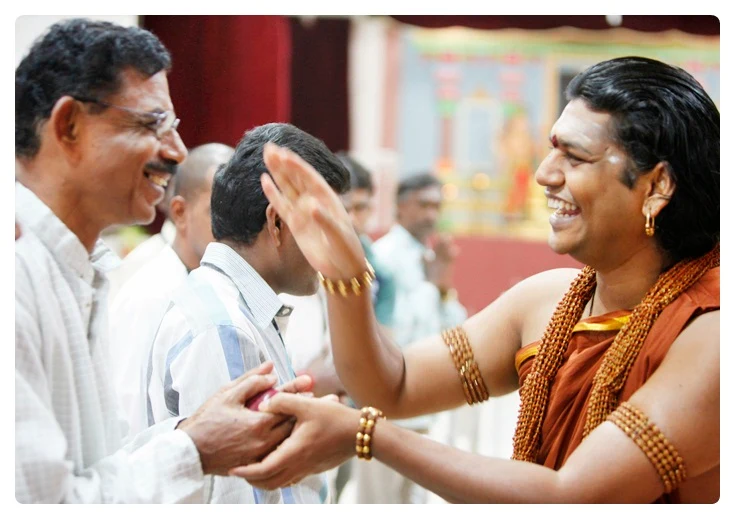
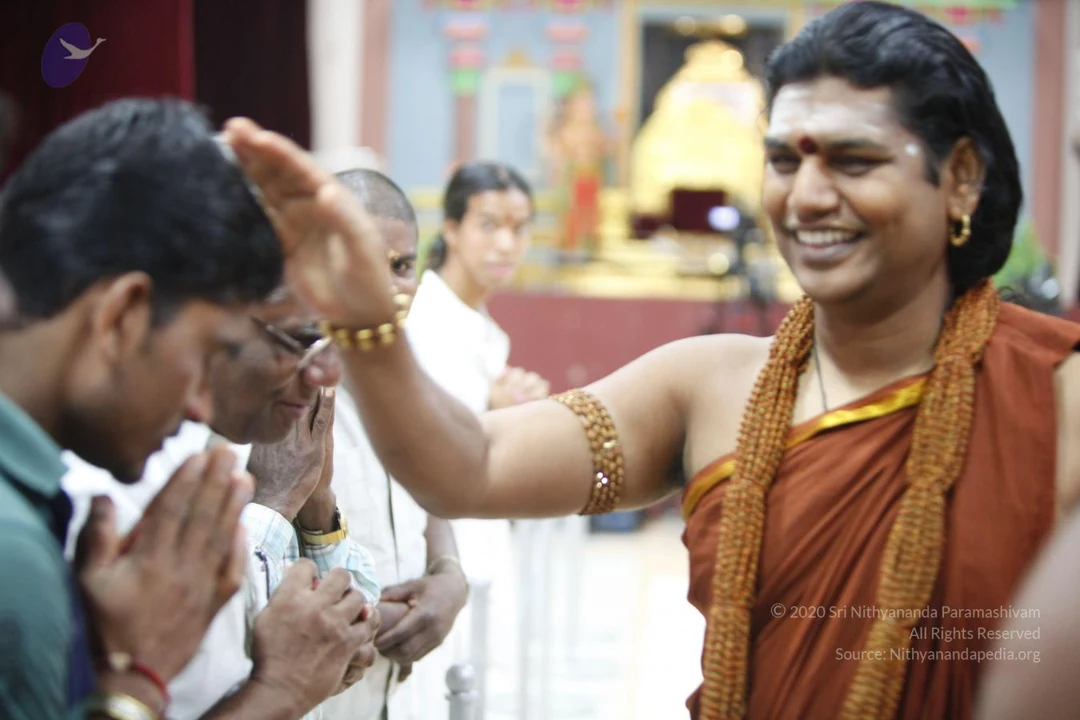
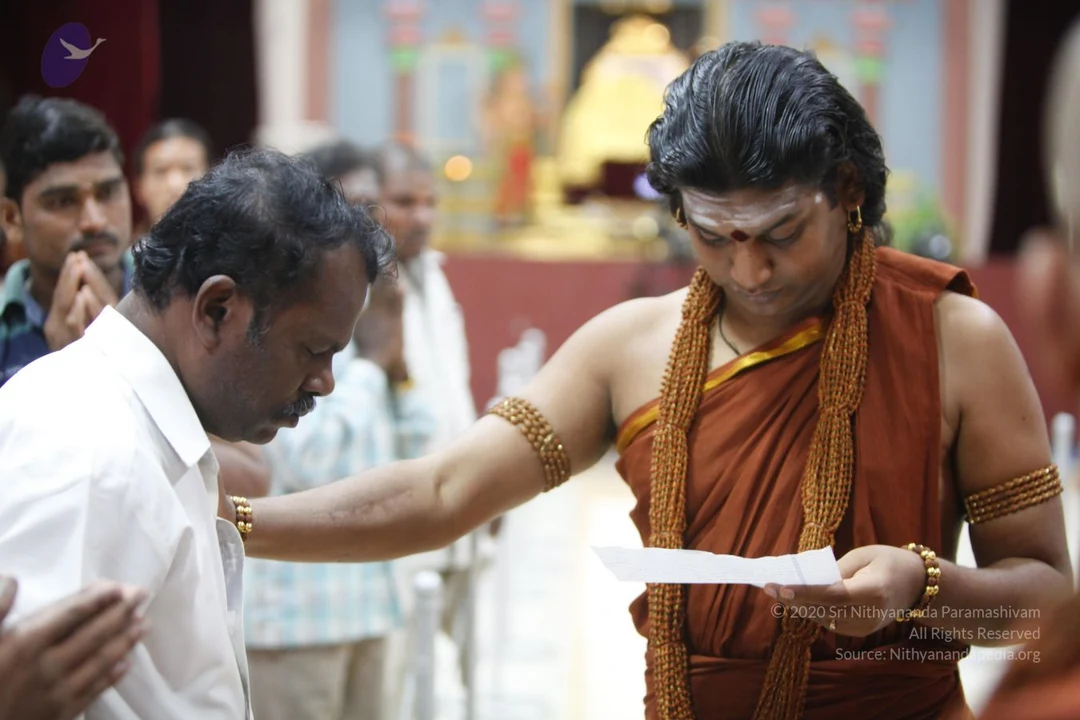
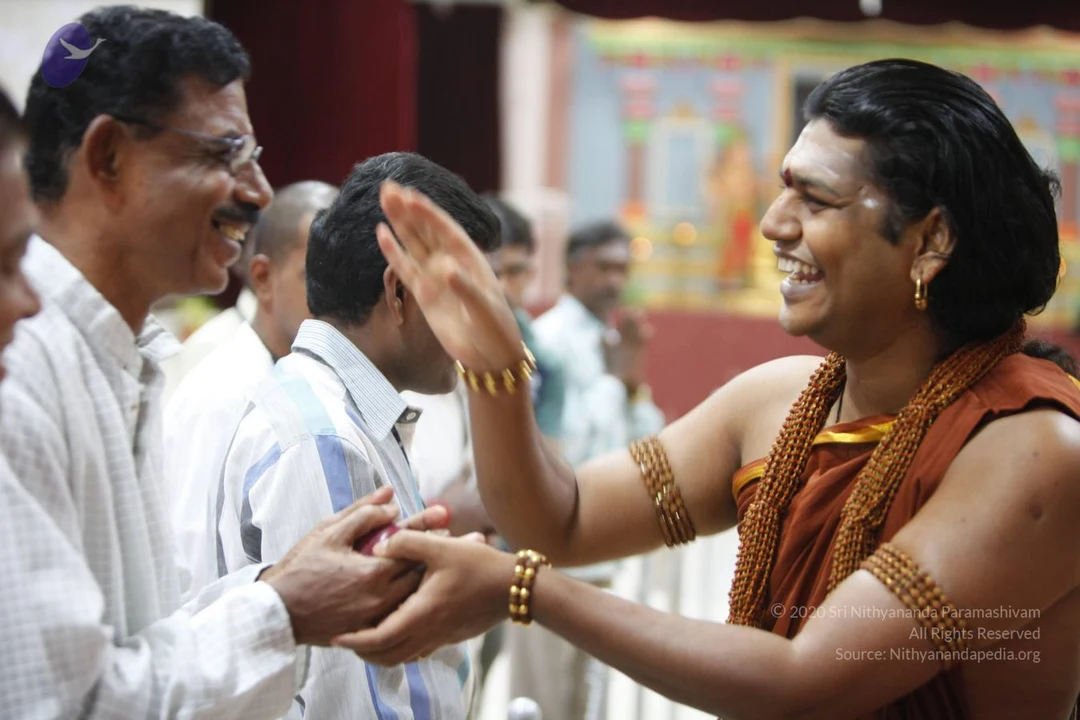
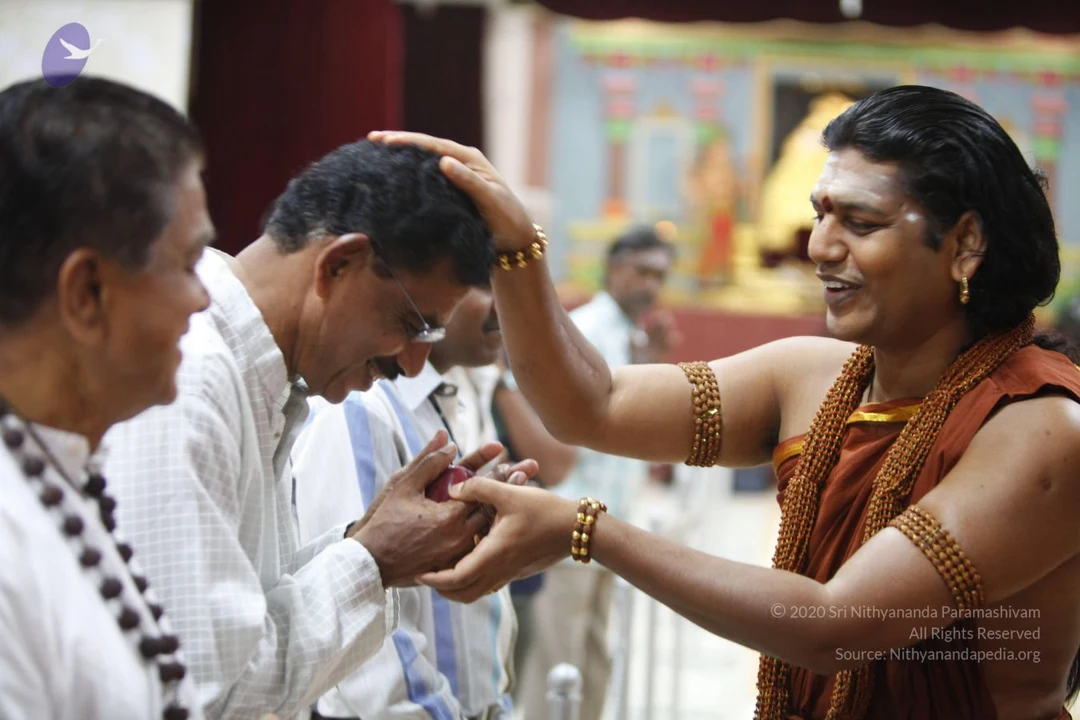
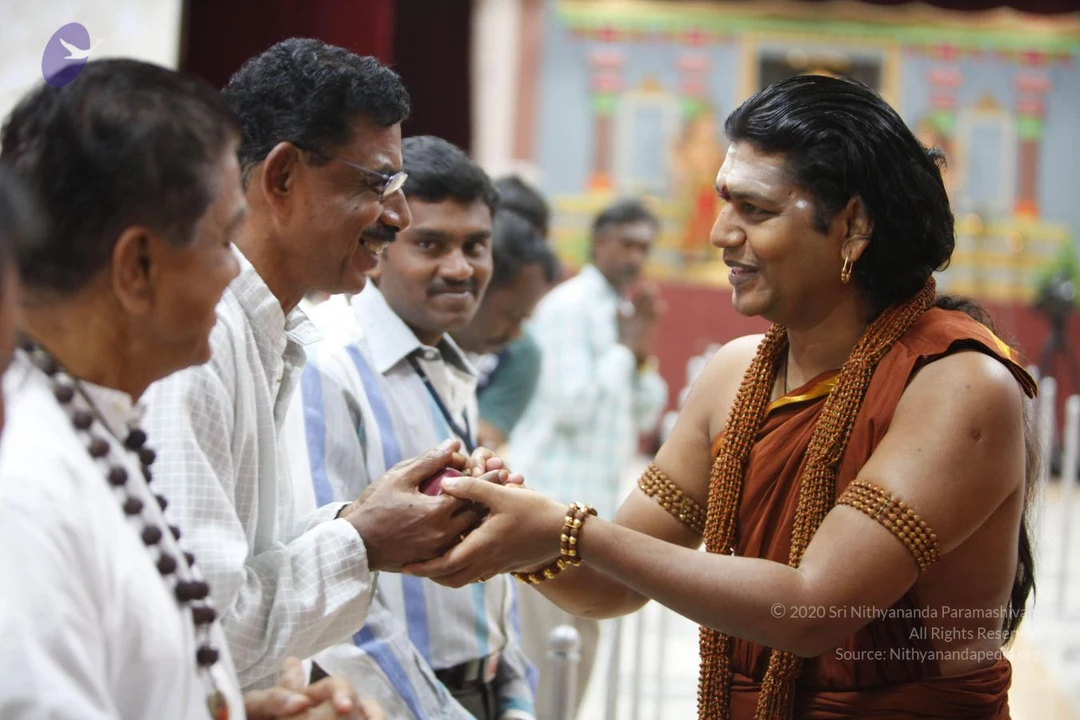
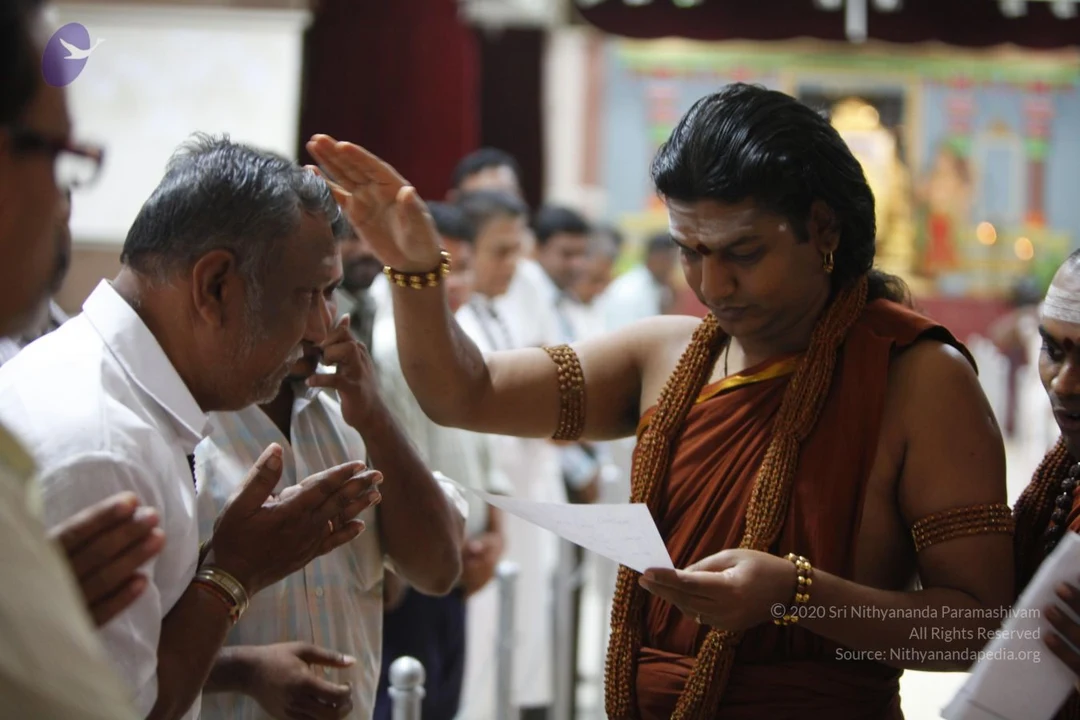
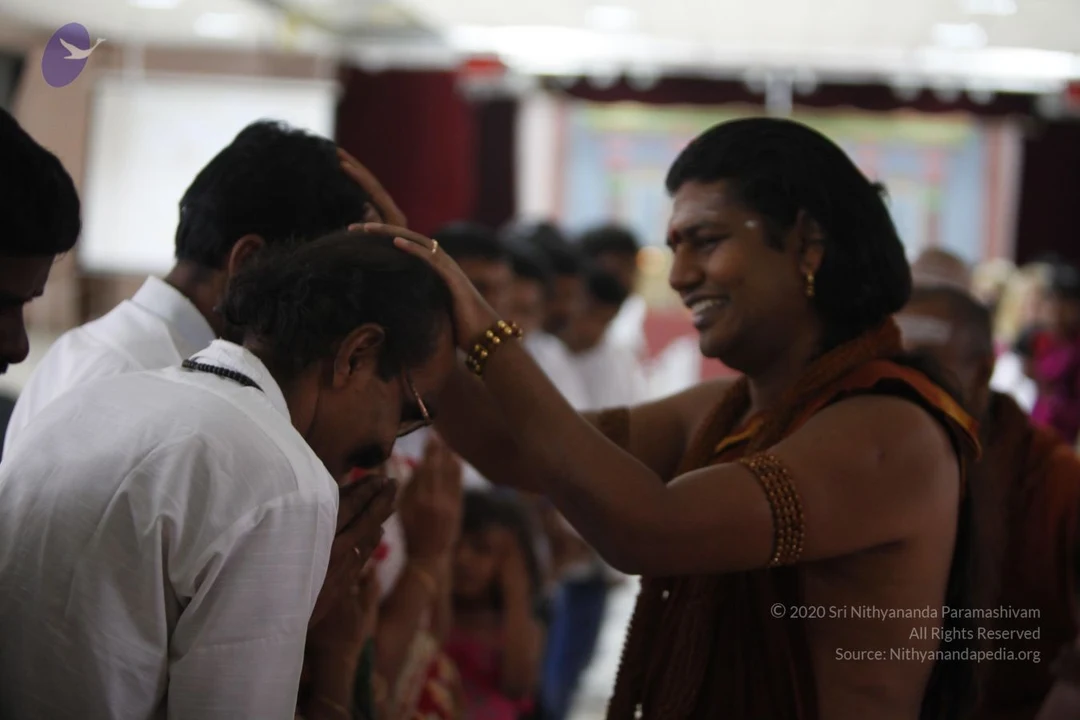
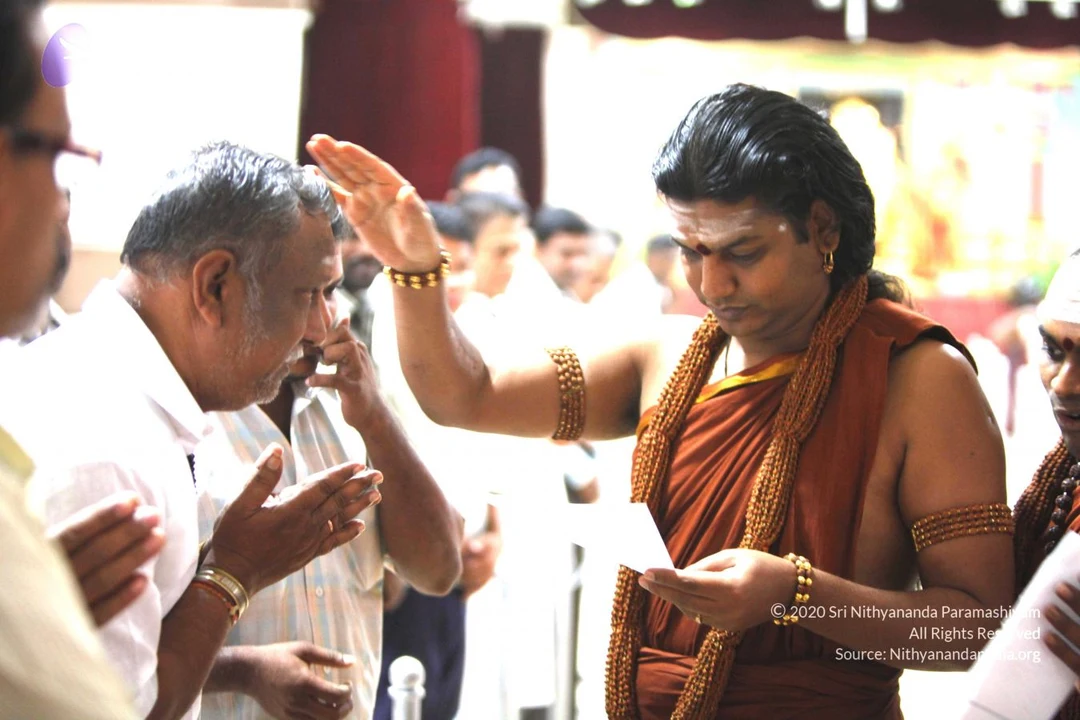
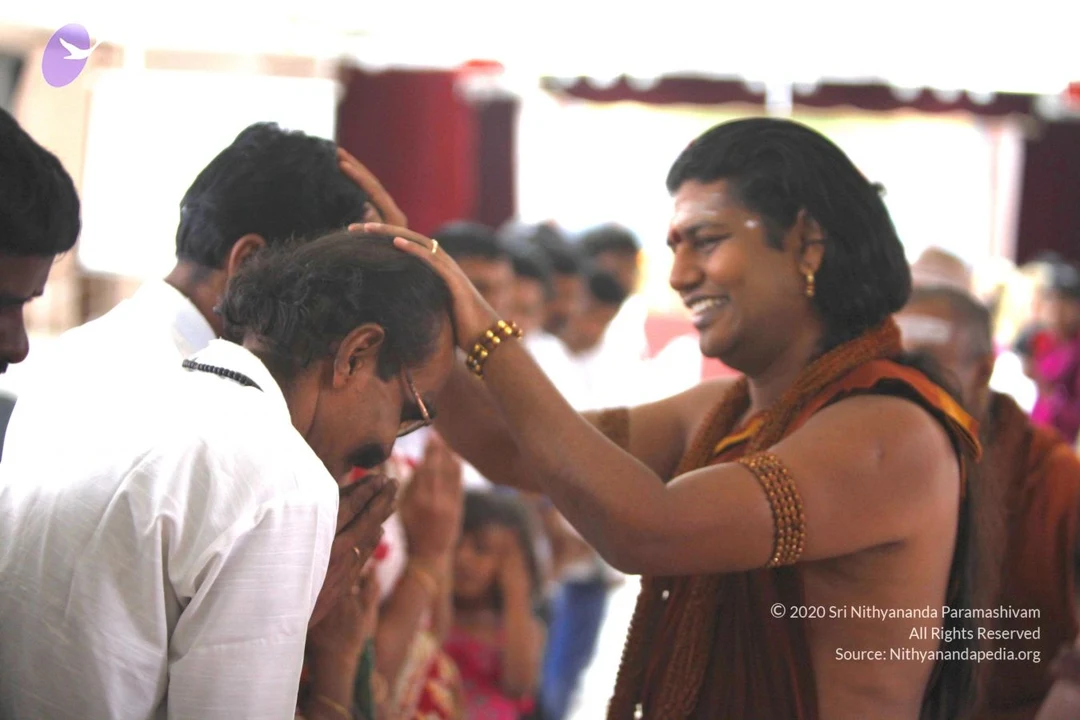
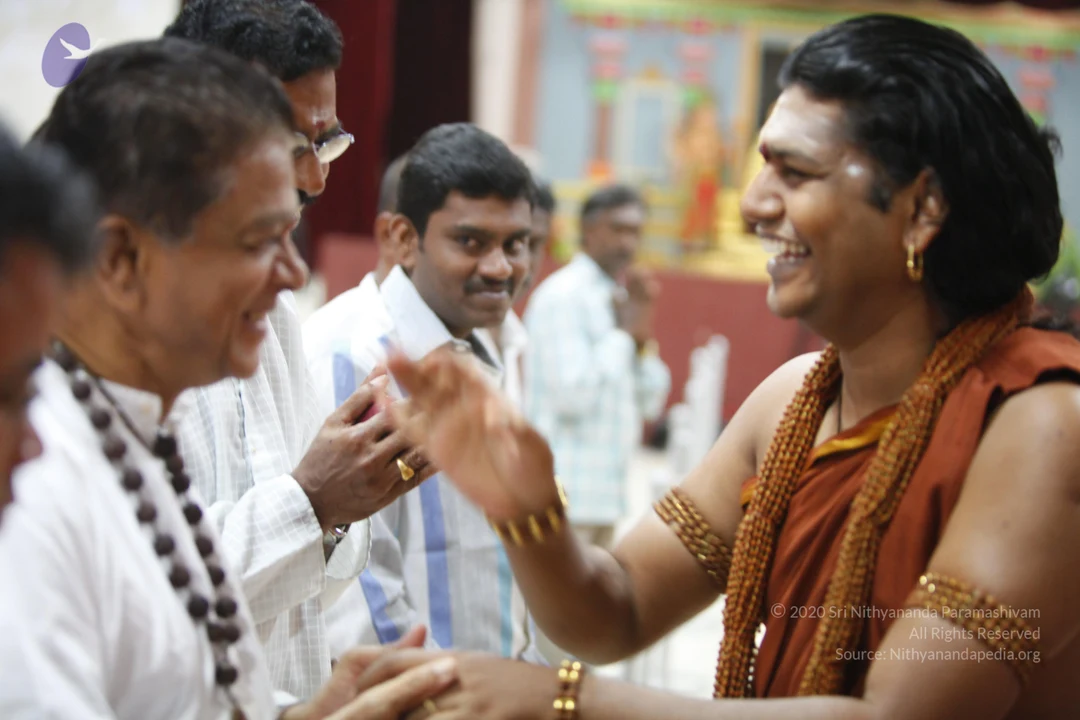
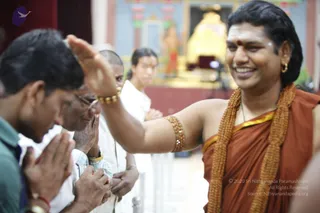
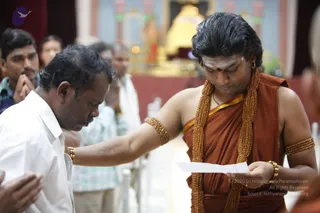
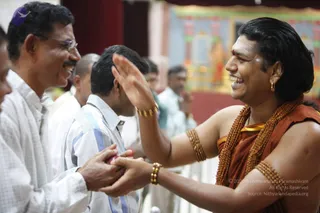
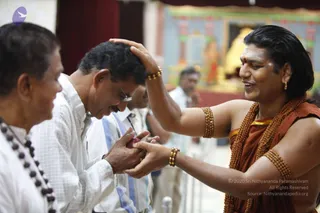
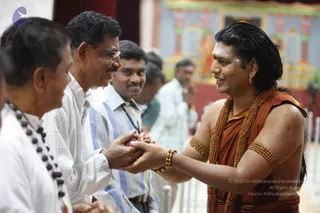
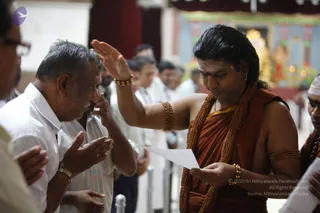
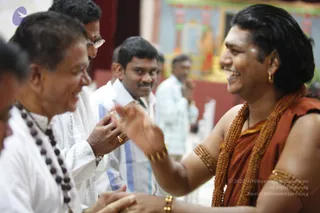
Photograph of a smiling man in an orange-brown saffron-toned robe and a multi-strand rudraksha mala, with a gold armlet, extending his raised right hand in a blessing gesture toward devotees. He has a red bindi and white tilak markings and wears a gold earring. In the left foreground, a devotee in a green shirt and another older man with glasses have their palms pressed together in namaskar. Behind them a woman in white clothing stands with hands folded, and in the background a golden deity murti and a shrine decorated with colourful festoons are visible. The man appears as a probable Swamiji by his saffron robe, long swept-back hair and multi-strand rudraksha mala, but this is appearance-based only.A photograph of a shaved-headed... wait, the figure has long swept-back hair, a red tilak on the forehead, and gold bangles. A man in a saffron-orange dhoti and shawl, with long gold-and-rudraksha style beaded necklaces and gold armlets, stands at the centre reading a small white slip of paper held in his right hand while looking down. Beside him a man in a white shirt bows with his head lowered and his hands folded, his left arm extended toward the figure. Several other men stand behind in the background, some with palms pressed together in namaskar. Behind them a gold deity murti and red-and-gold altar decorations are visible in a temple-like hall.A photograph of a smiling man with long swept-back dark hair, rudraksha malas and gold bangles, wearing a rust-orange wrap over bare shoulders, raising one hand in greeting while clasping another man's hands. Behind him, a smiling bespectacled man in a white checked shirt and another man in a blue-striped shirt stand close, with more people blurred in the background and a painted panel on the wall. The appearance matches the a person cues of swept-back hair, rudraksha malas, orange clothing and gold adornments, but identity is uncertain from appearance alone. Four or so people are clearly visible.A photograph of a man in an orange-brown robe with a long gold-and-bead necklace and gold armbands places his right hand on the head of a bespectacled older man in a white checked shirt, who bows with eyes closed and hands cupped beneath a small red object. A third man in white with a rudraksha mala stands at left, and a blurred figure in a white shirt with blue-striped lungi is behind. The orange-robed man has long swept-back hair, a red bindi and earrings. Behind them is a colourful temple backdrop with a gold figure and red pillars.Photograph of an indoor satsang event. On the right, a man with long swept-back dark hair, a red tilak on his forehead, rudraksha mala necklaces and bracelets, wearing an orange-saffron shawl over his bare shoulder, smiles while extending his hands to receive a small reddish offering from a bespectacled older man in a white checked shirt. Two men in white and striped shirts stand beside and behind them, along with a man in a white shirt at the left edge wearing a dark rudraksha mala. A few other people are visible in the background near an ornately painted temple-style backdrop.A photograph of a long-haired man in saffron-orange robes and multiple rudraksha malas raises his right hand in blessing over a grey-haired man in a white shirt, whose hands are pressed together in respectful greeting. The robed man holds a sheet of paper in his left hand and wears gold bangles and armlets, a gold earring, and a forehead tilak. Several people in white clothing stand in the background near a stage with a colourful decorated backdrop and a golden deity murti. The robed figure's appearance with long swept-back hair, saffron clothing and rudraksha malas is consistent with Swamiji (probable), shown giving blessings to a devotee.

Temple

22 photosSource gallery
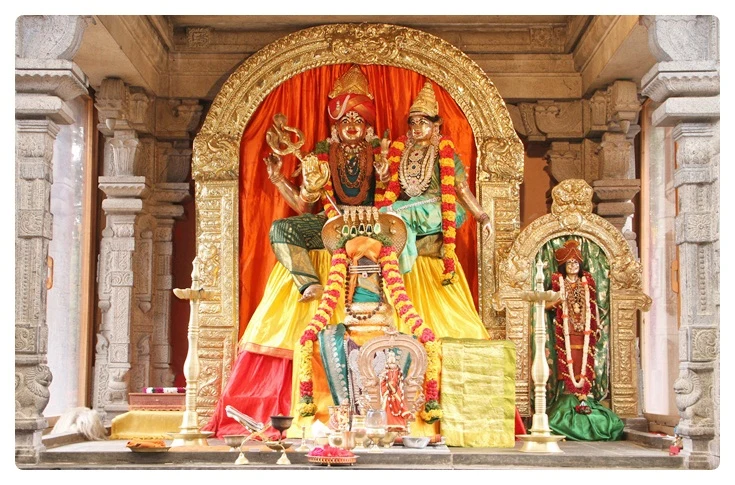
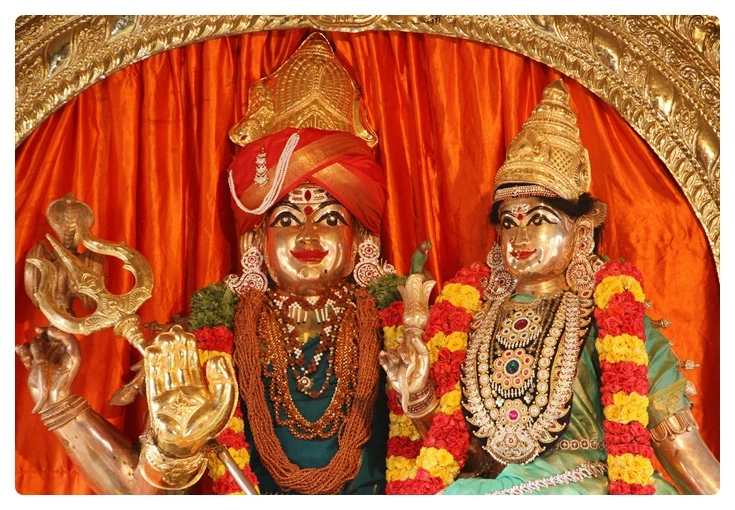
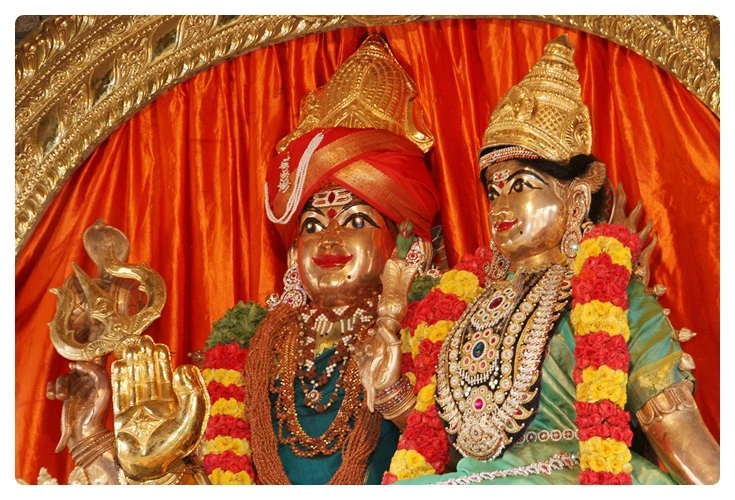
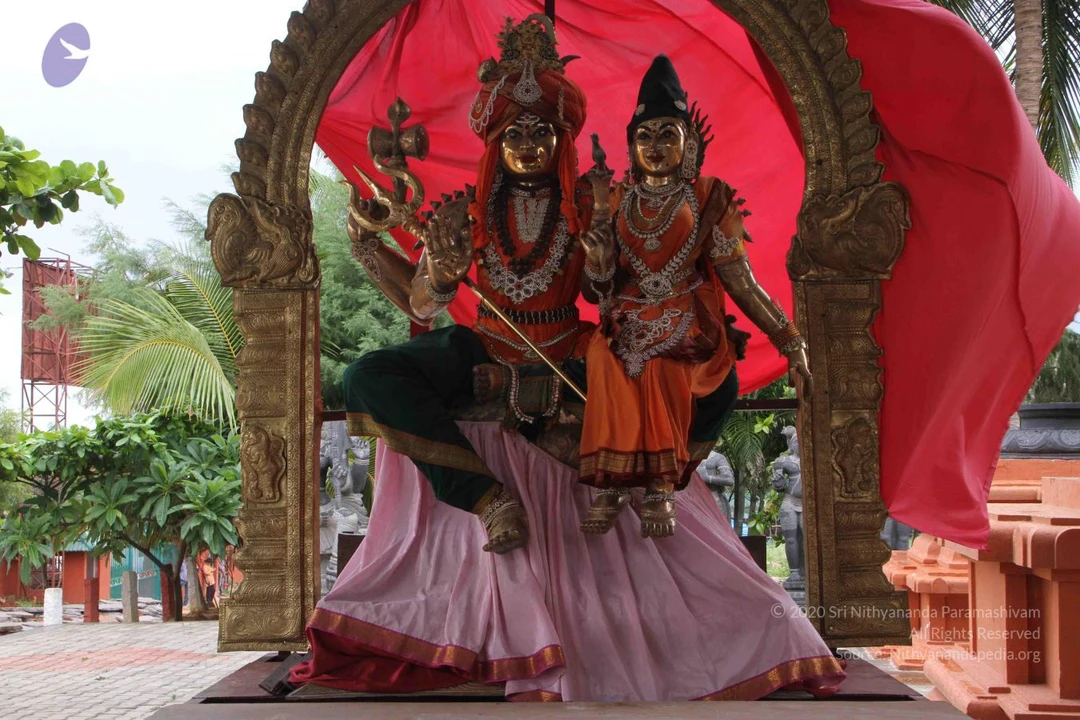
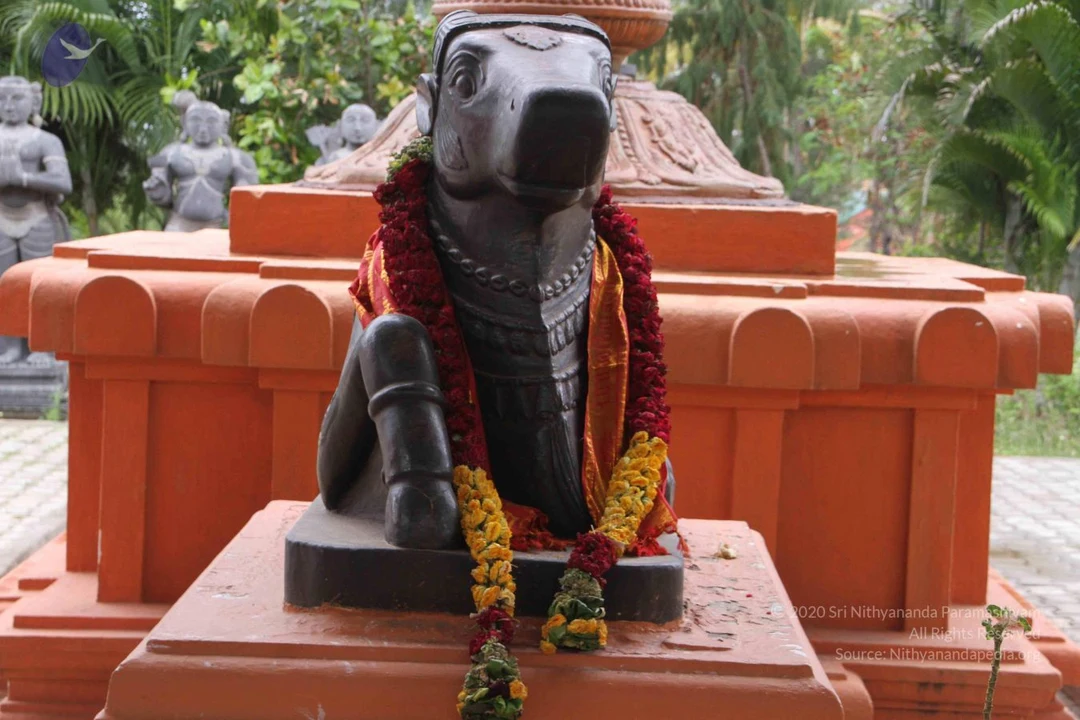
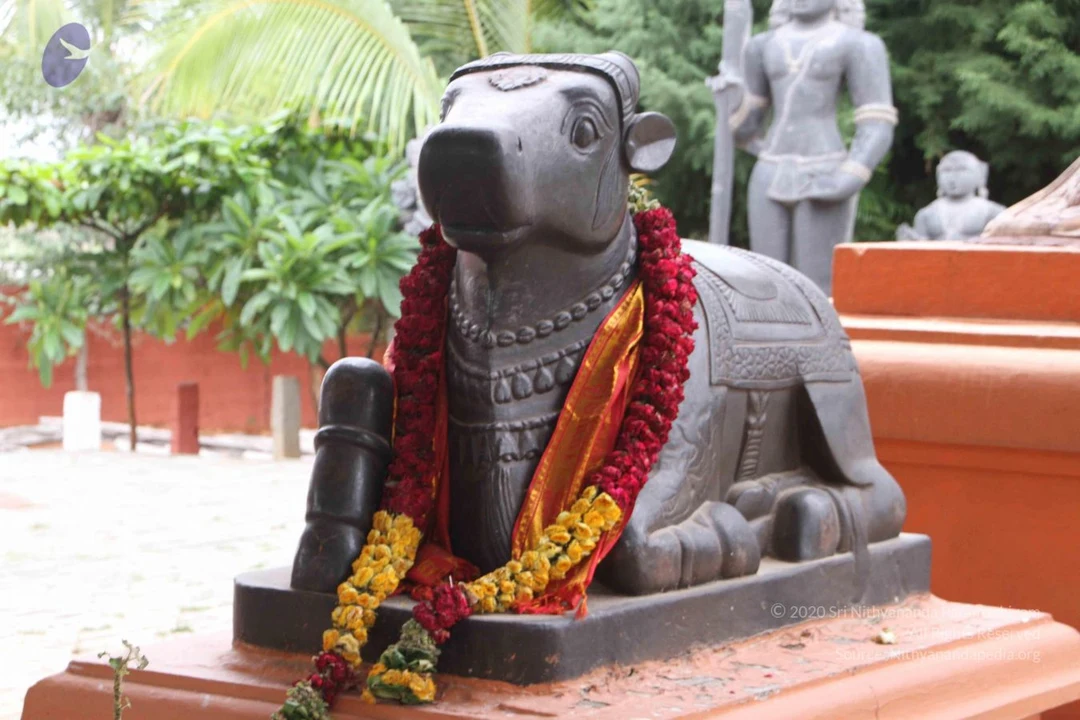
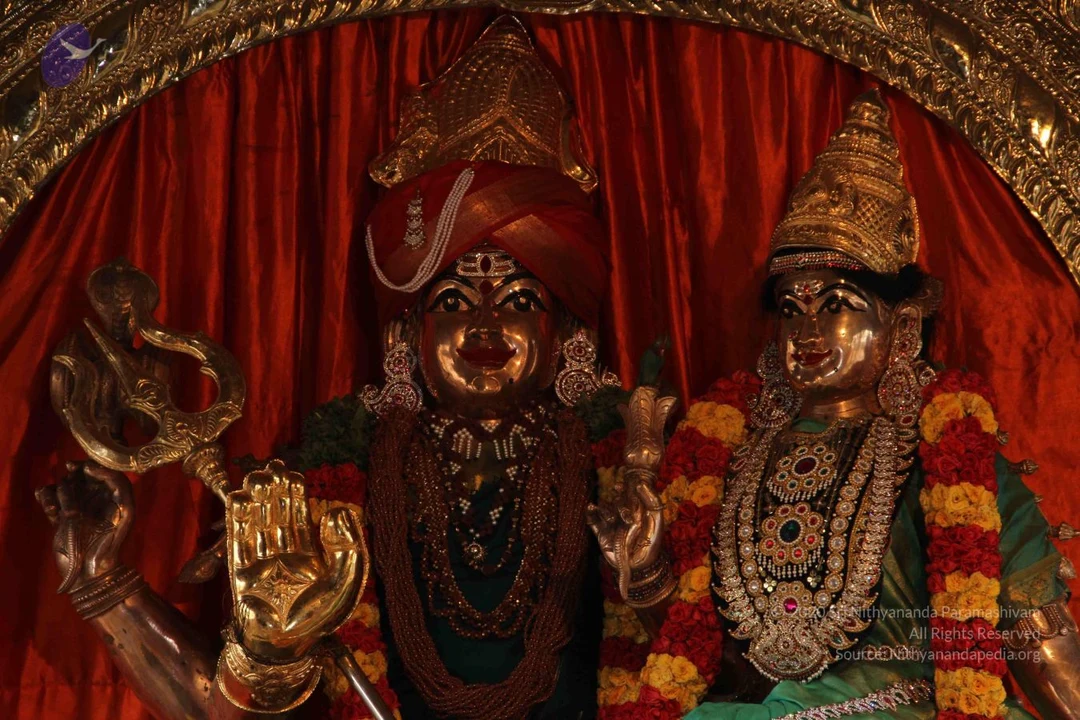
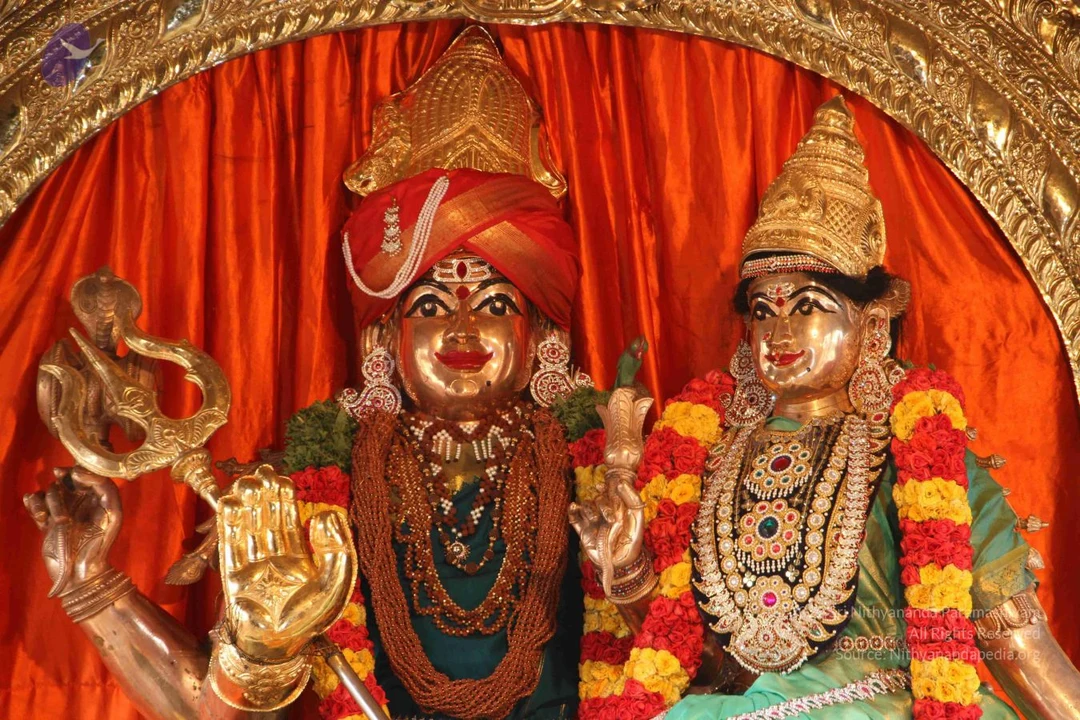
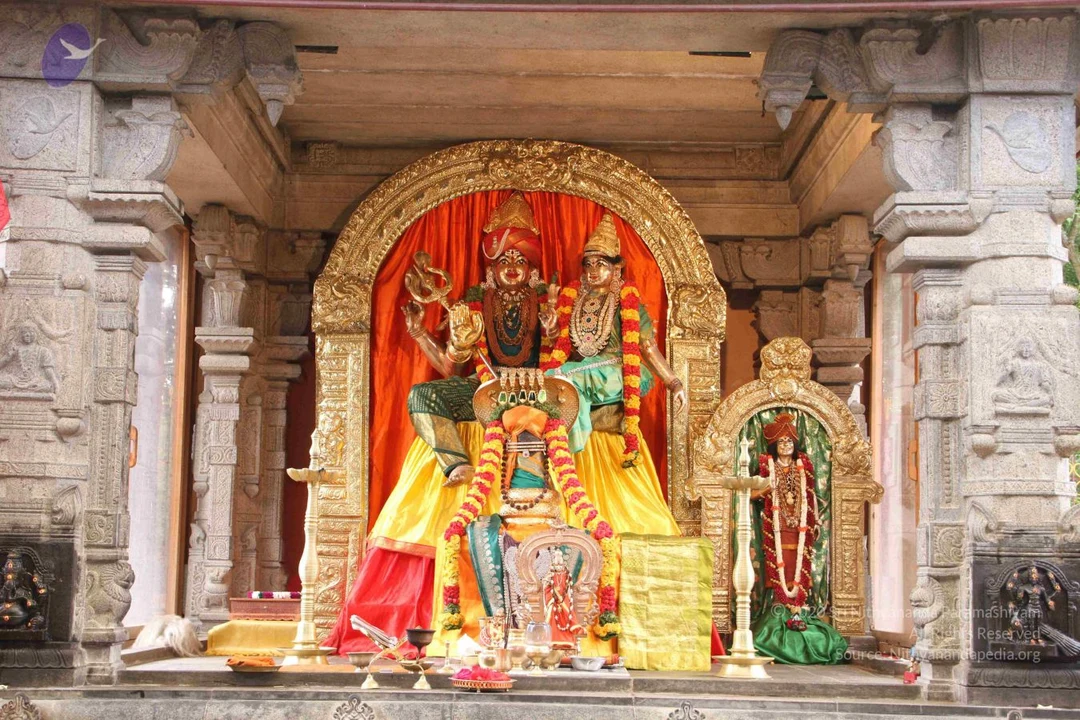
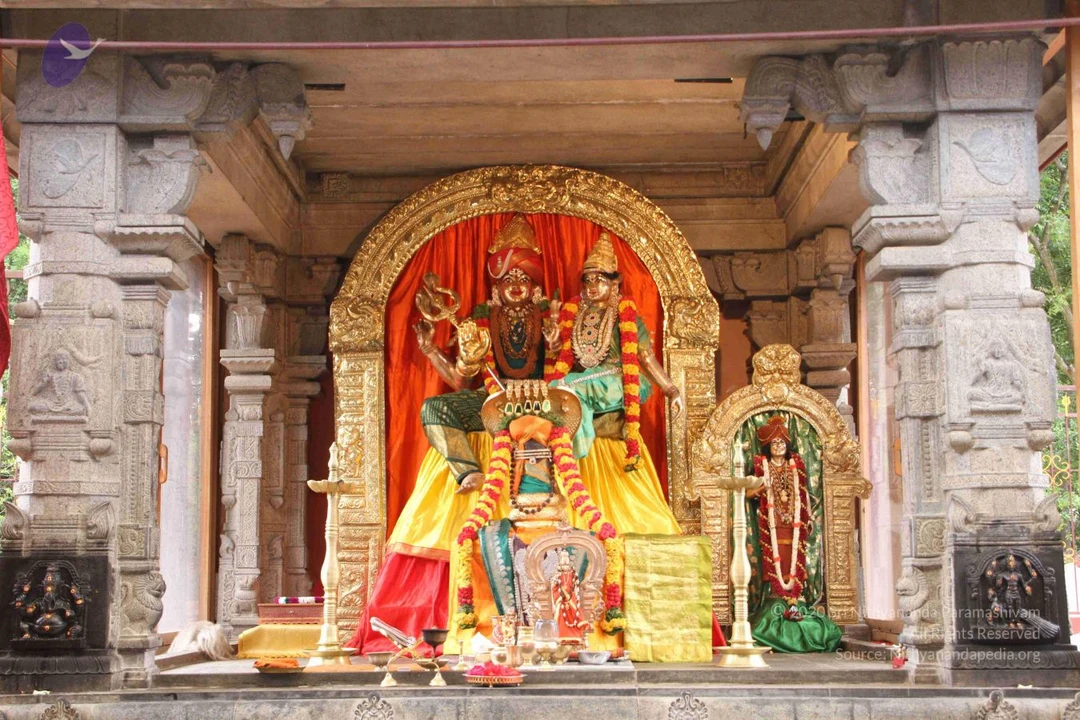
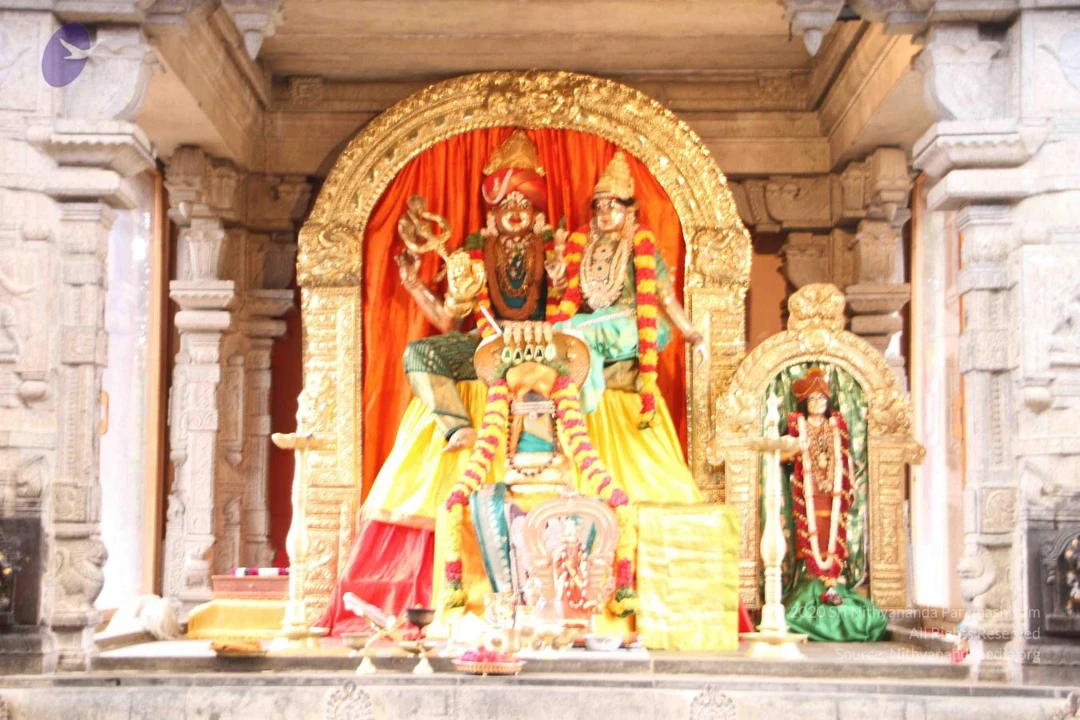
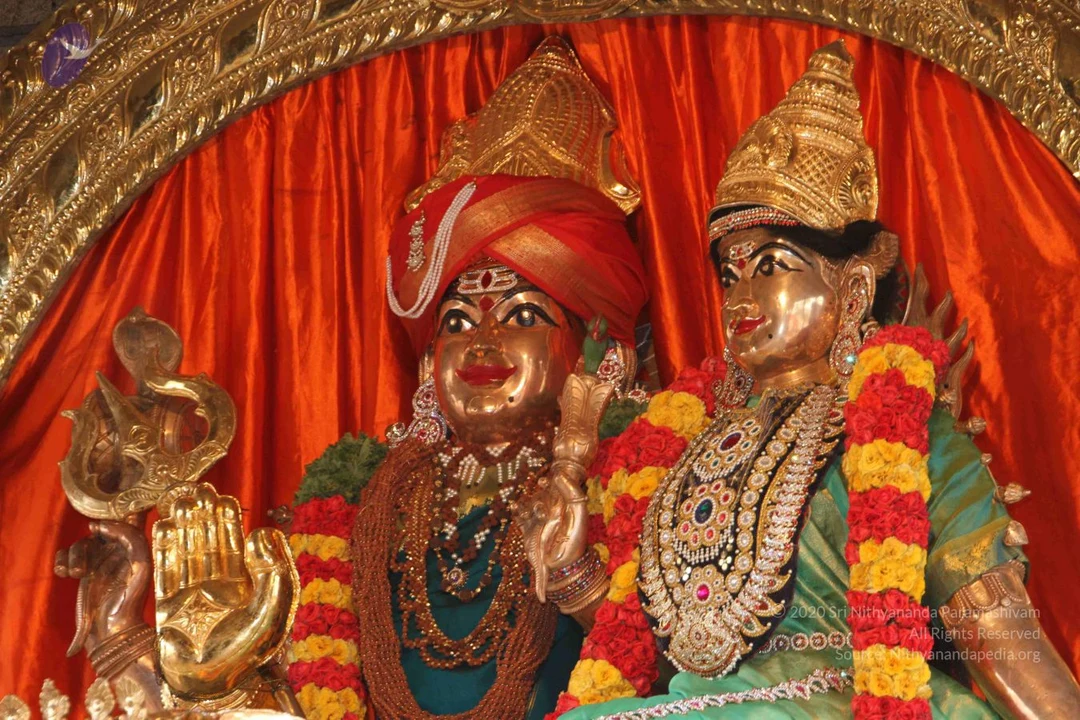
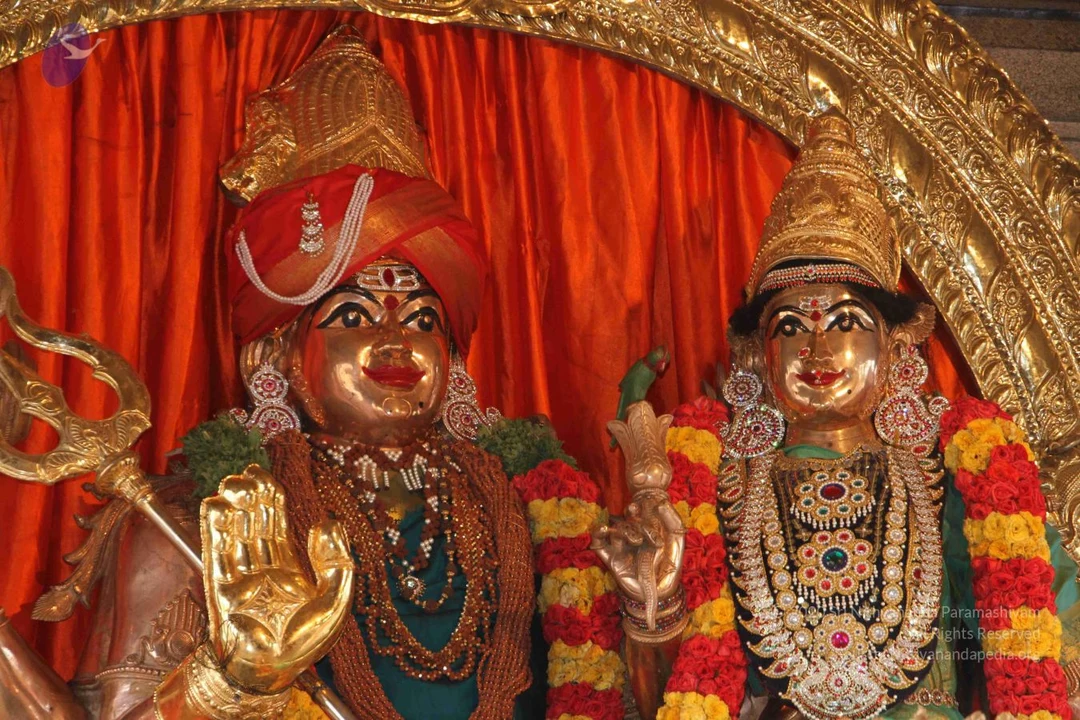
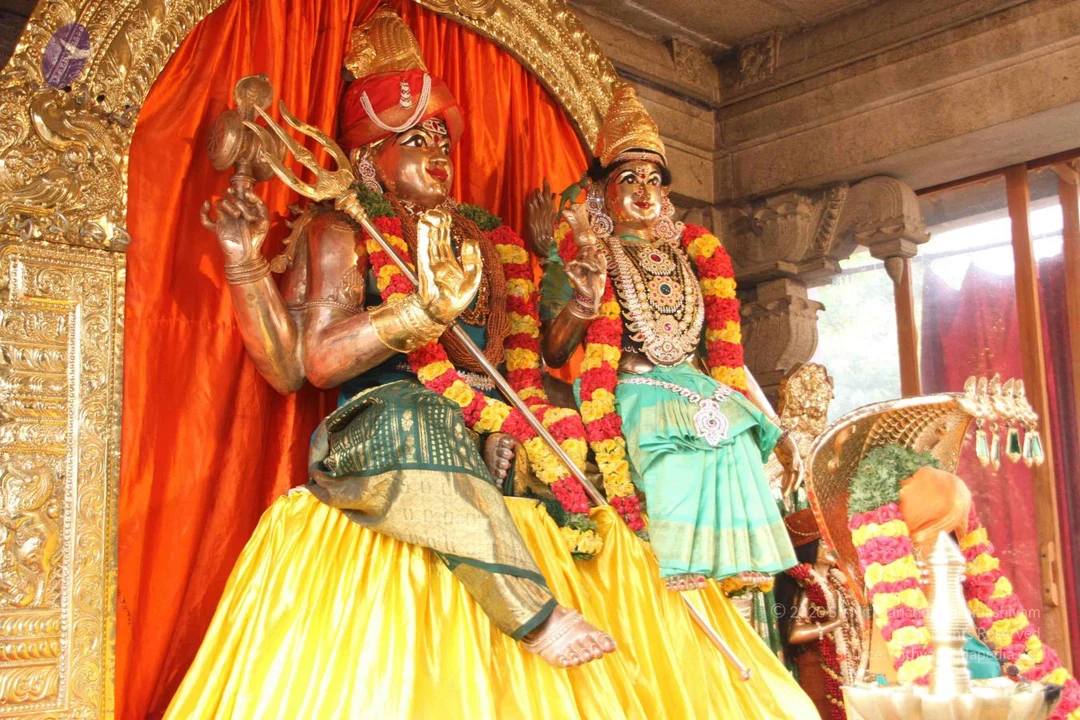
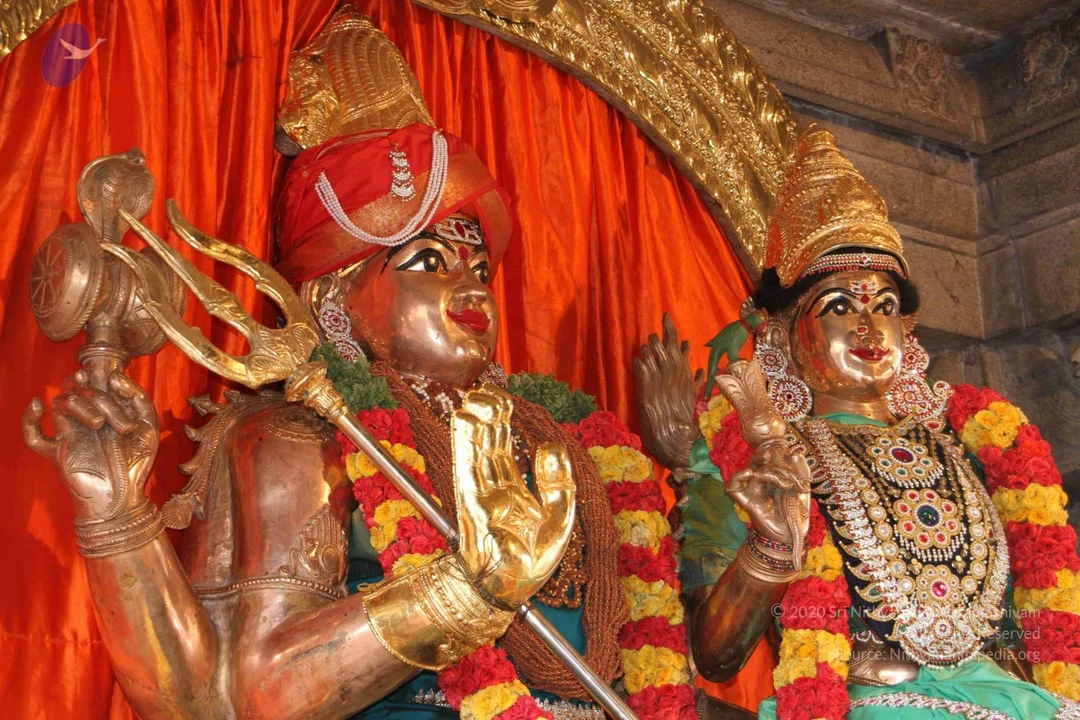
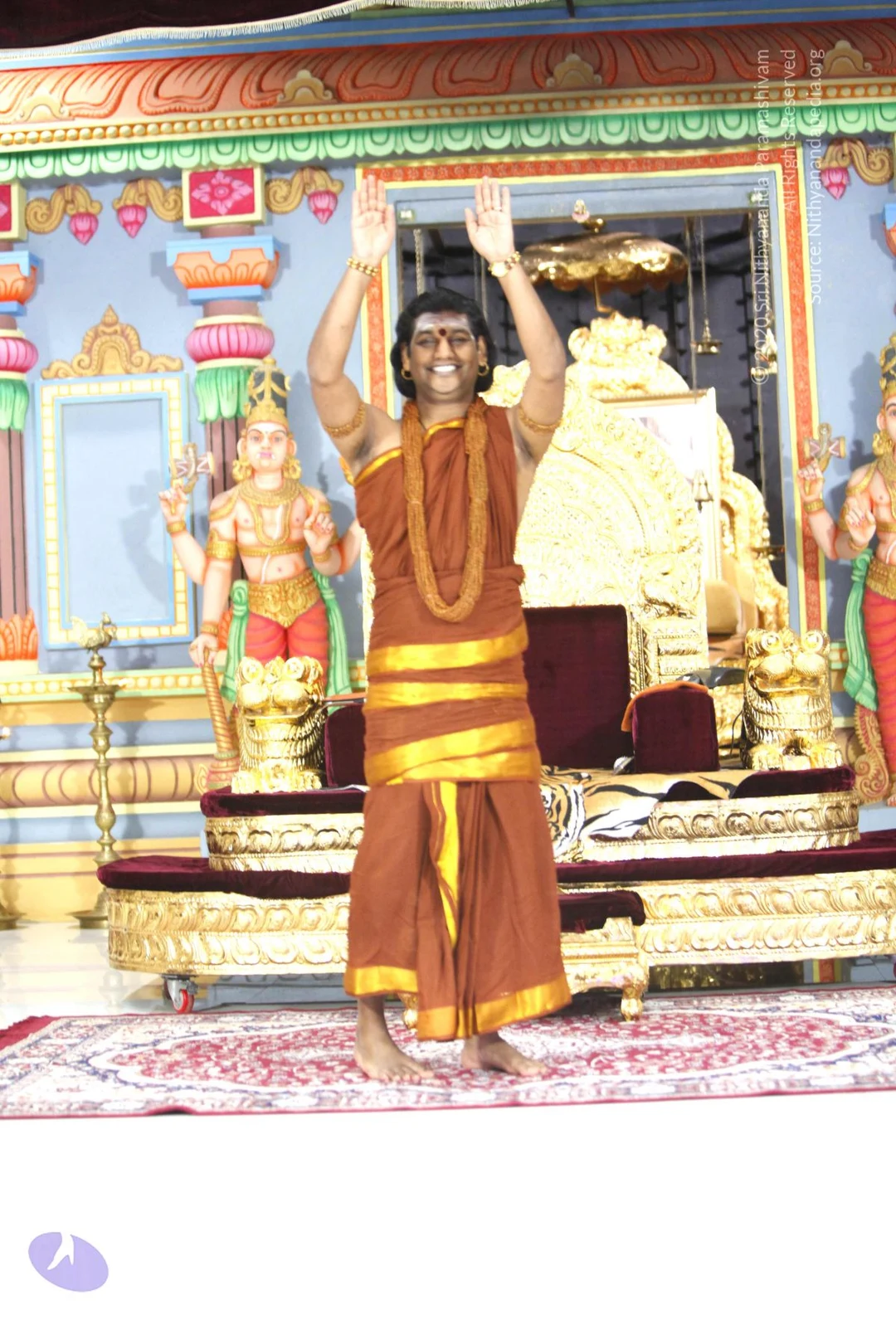
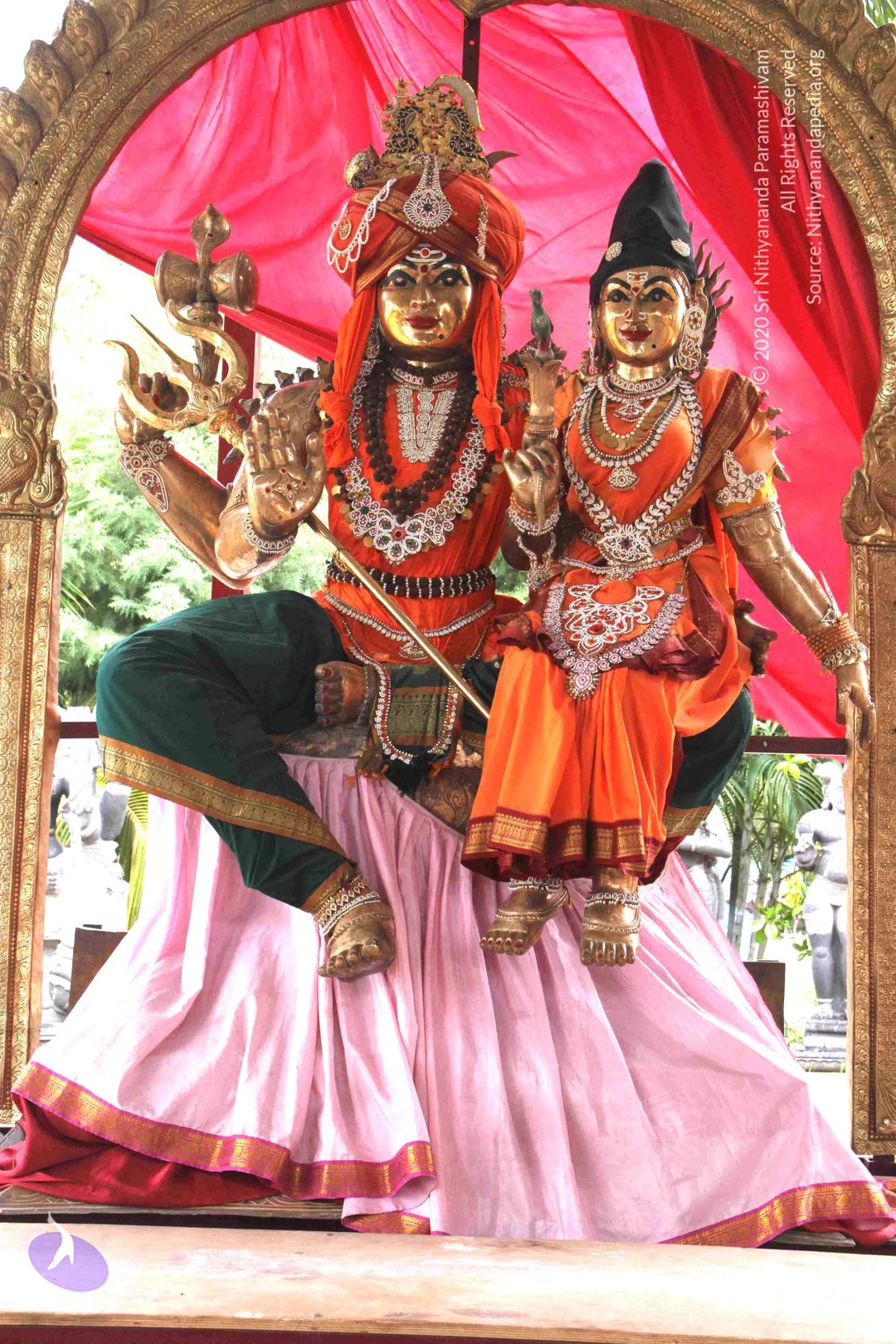
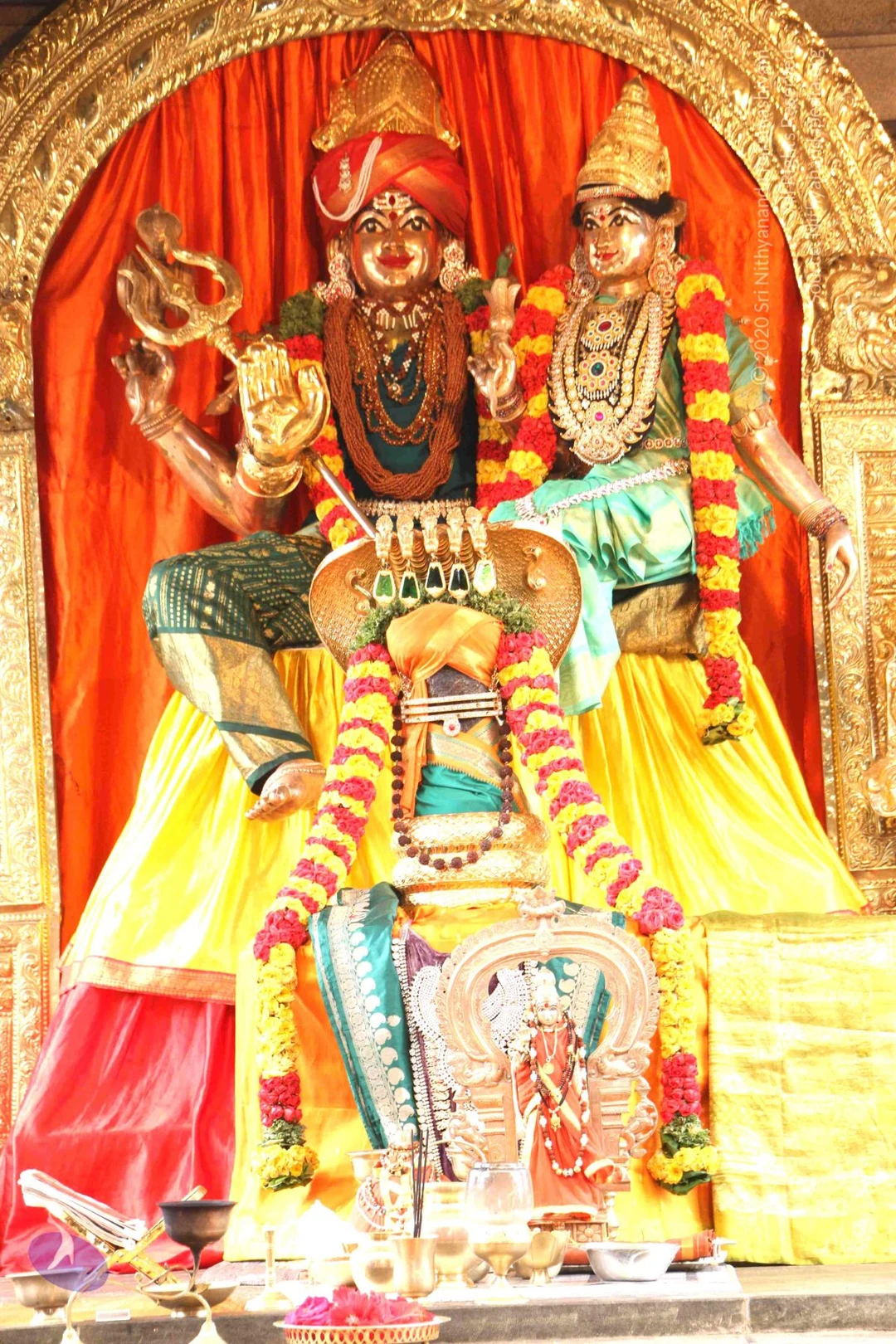
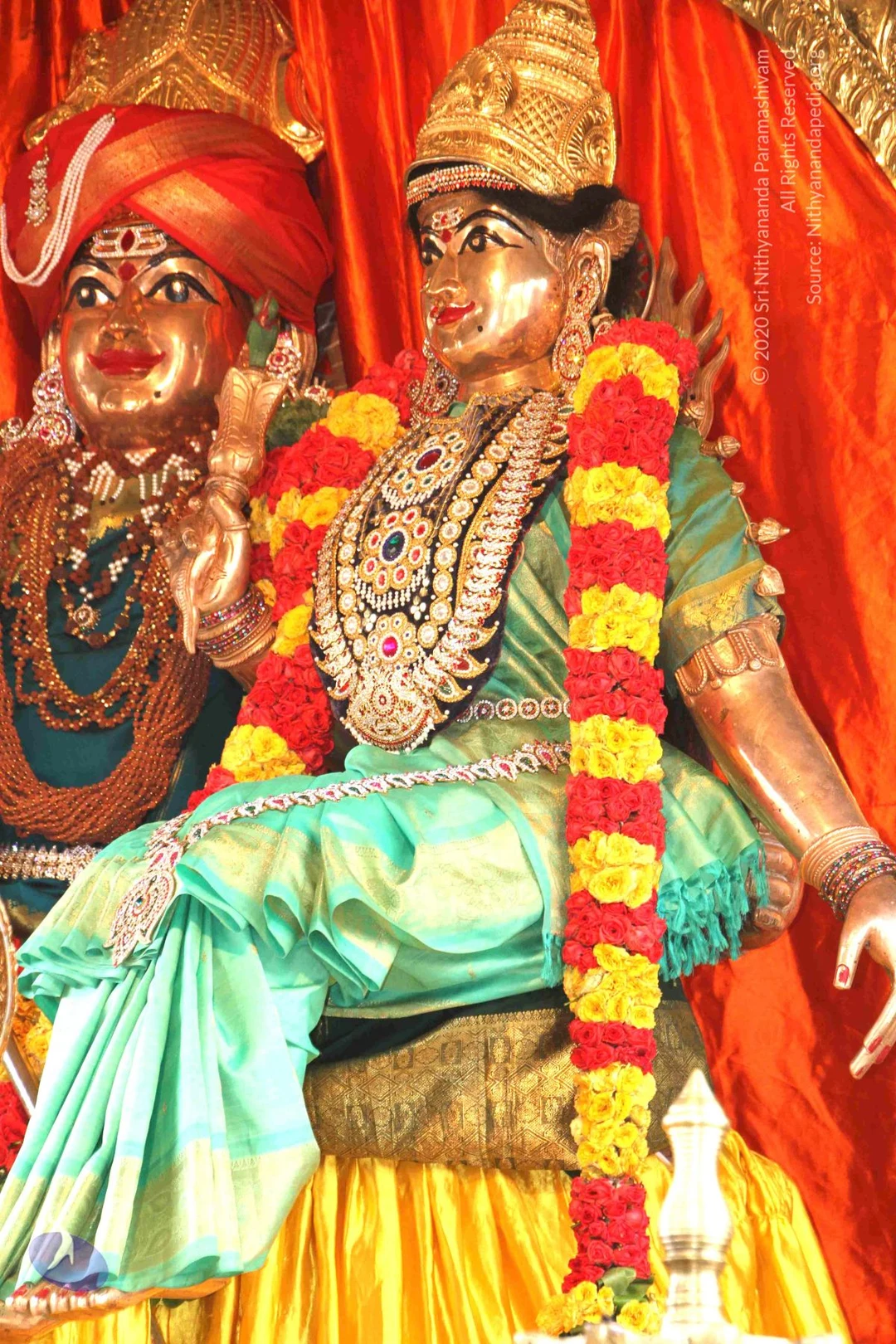
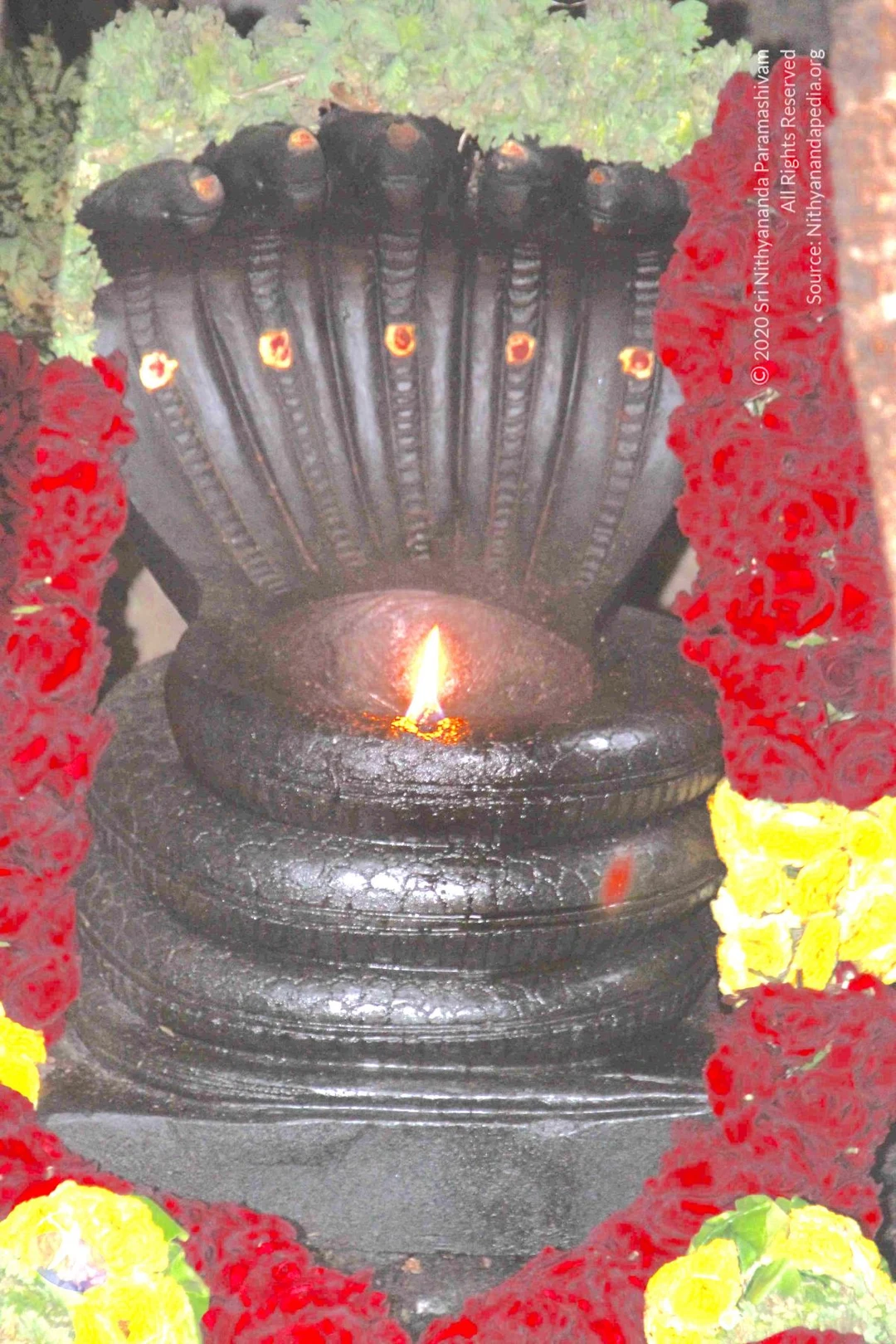
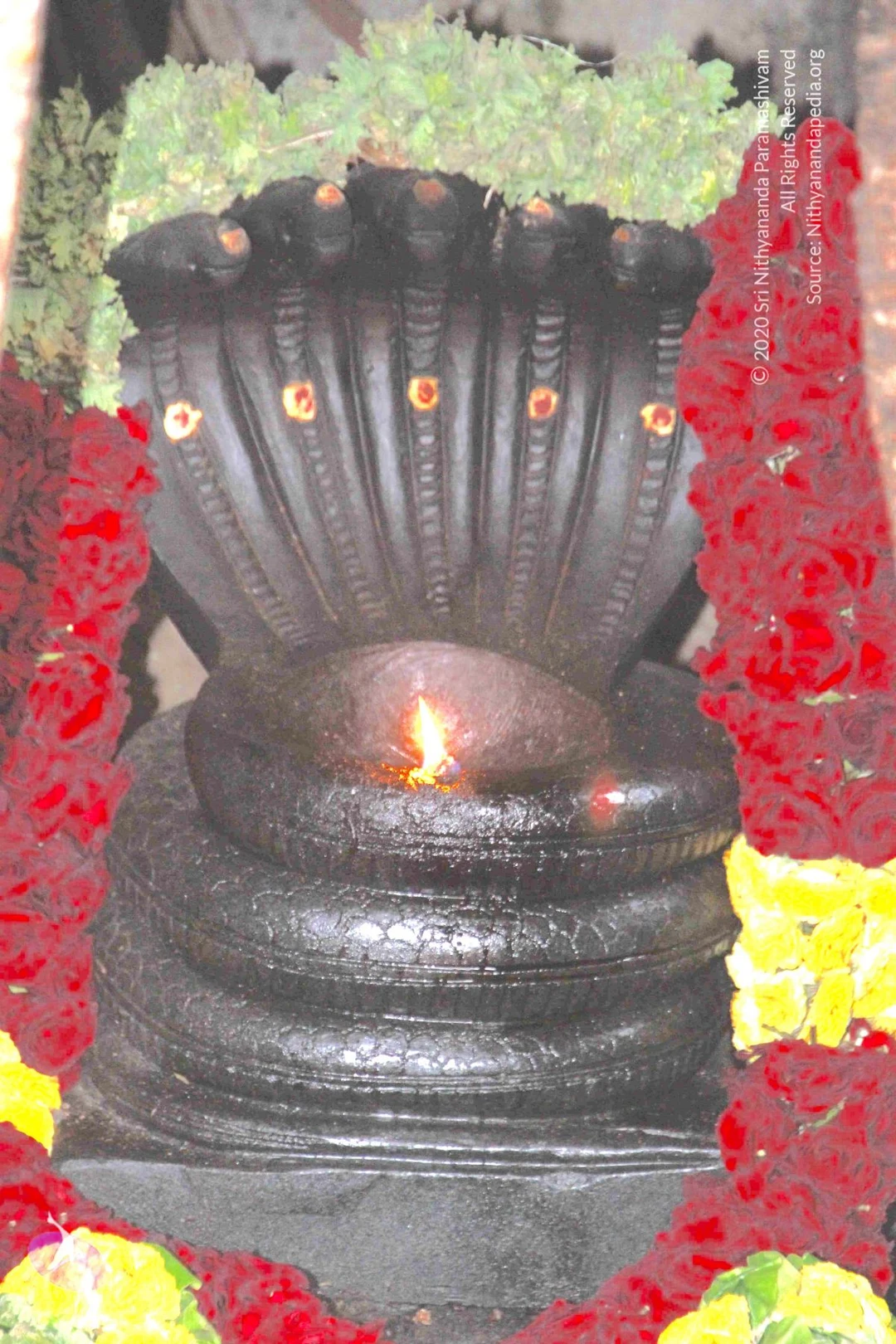
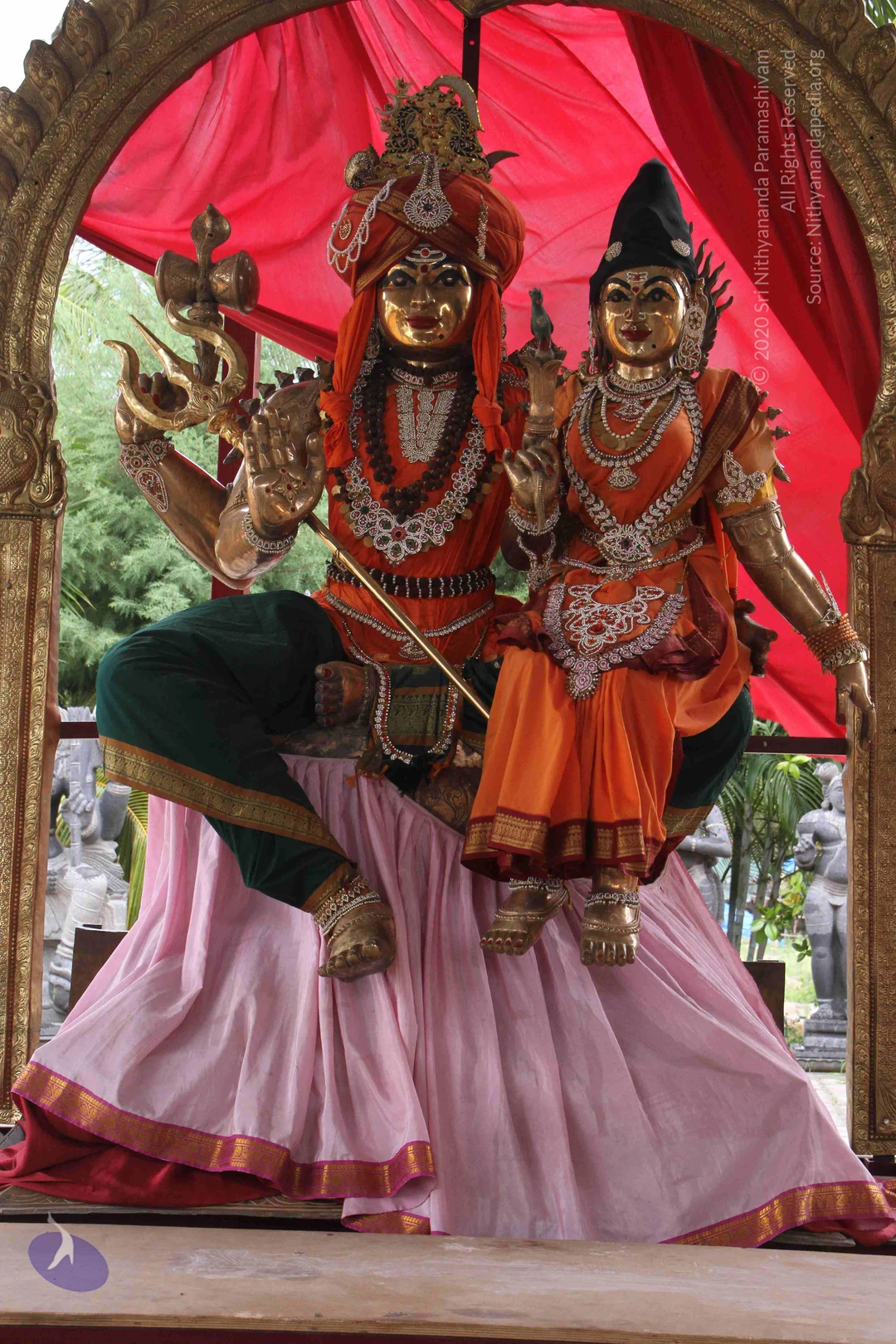
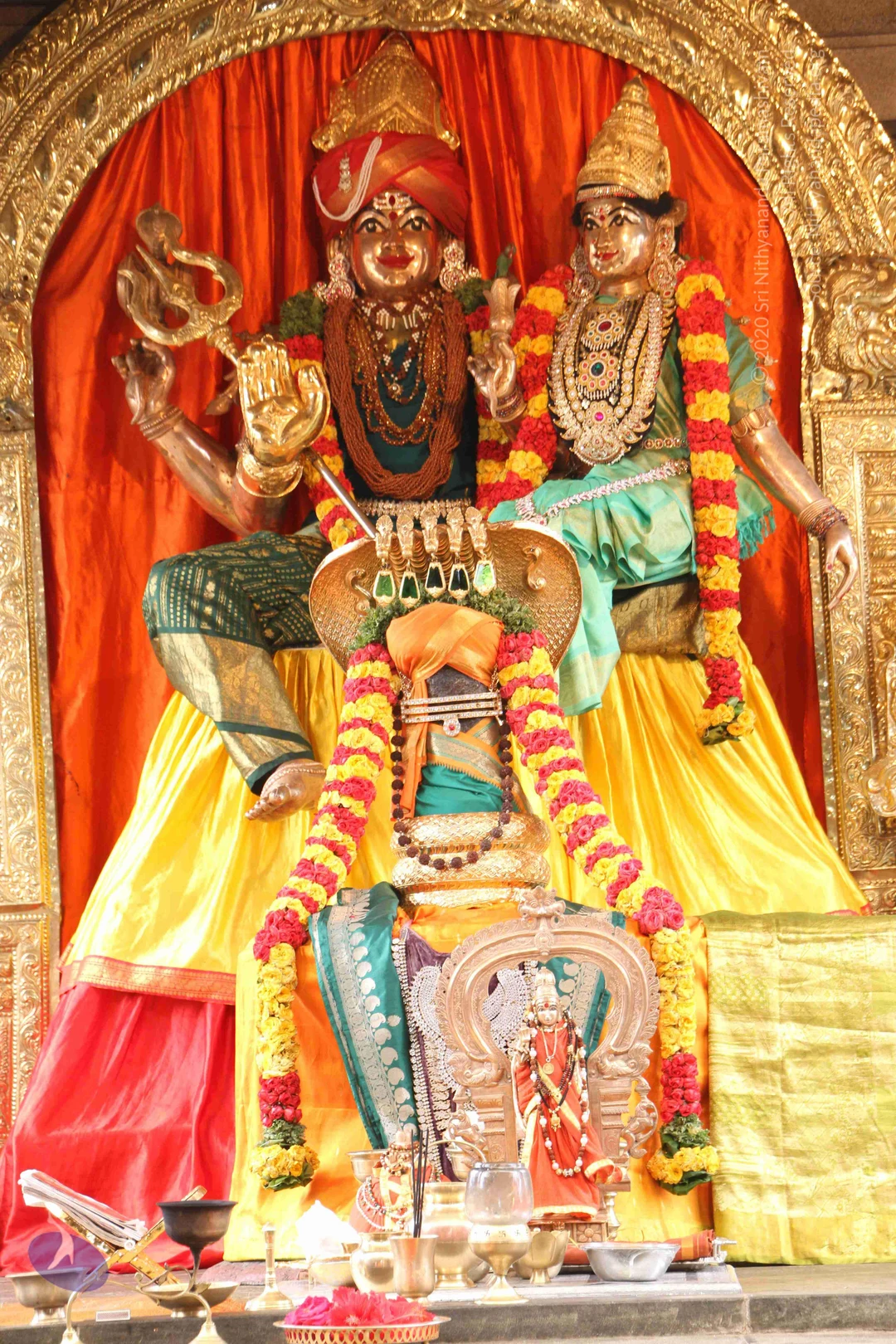
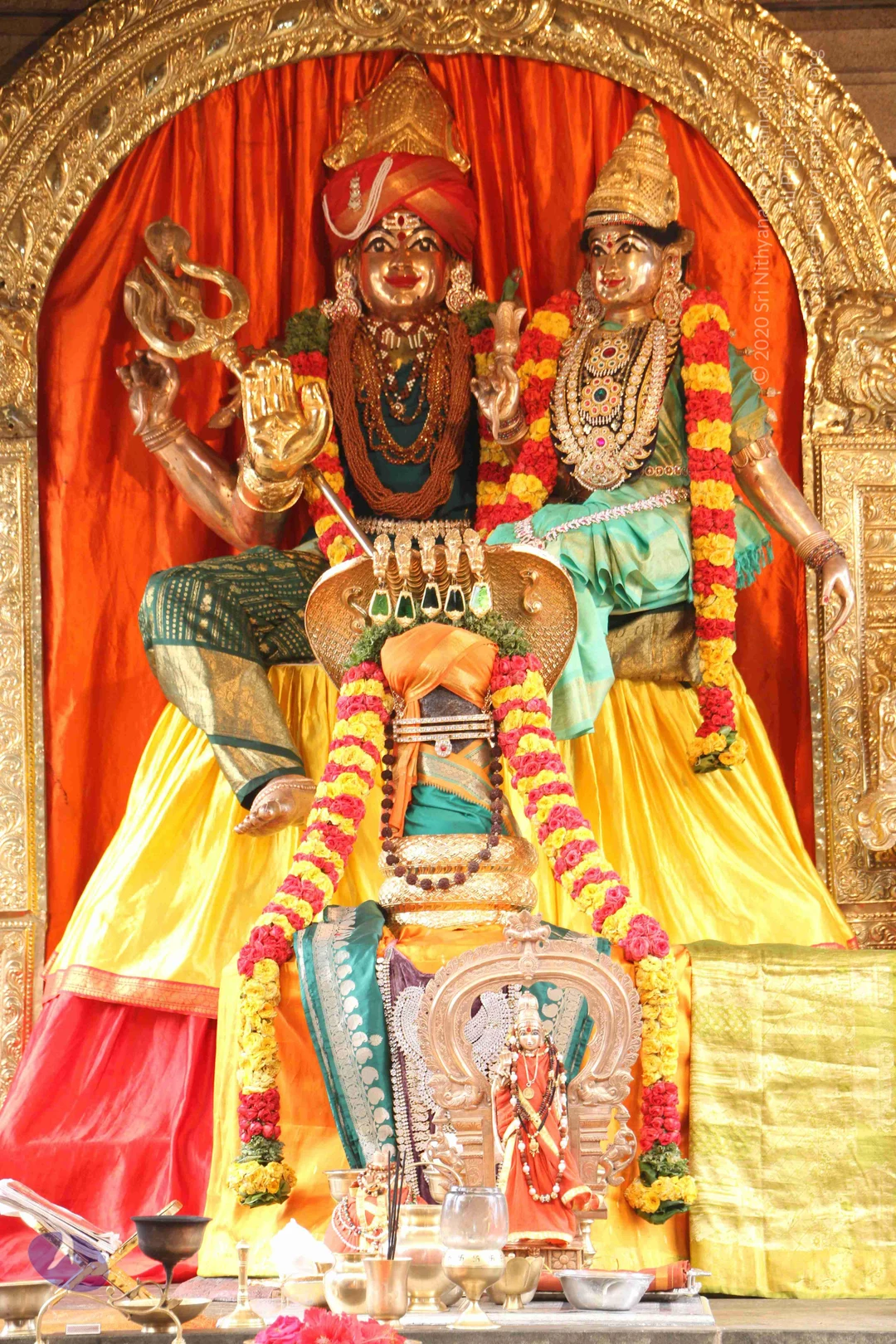
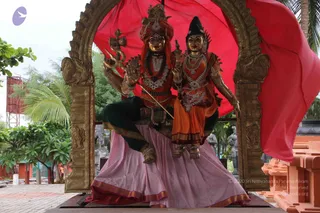
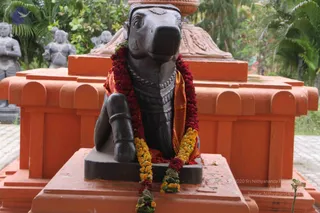
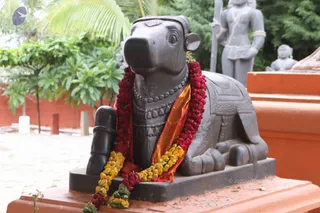
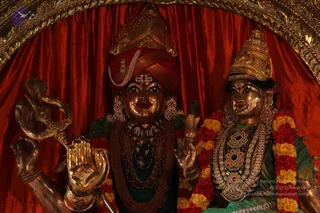
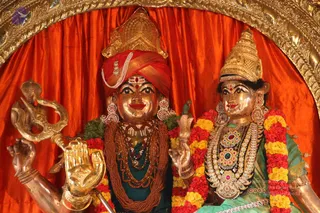
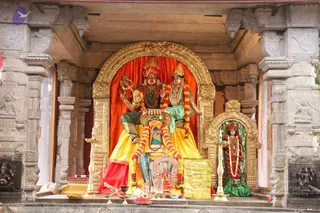
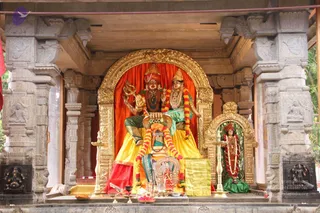
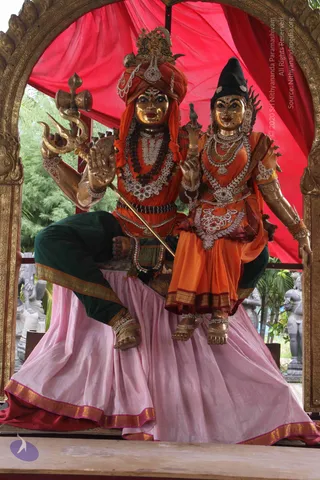
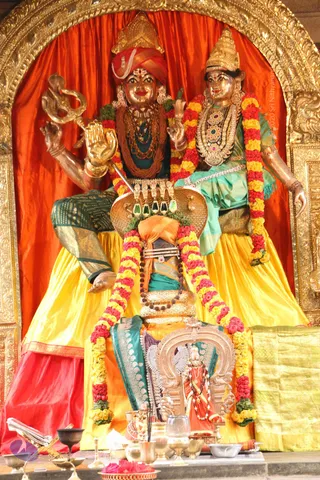
Outdoor view of a large golden-hued statue pair seated on a raised platform under an ornate gold arch draped with a red fabric backdrop. The figure on the left wears a red-orange turban, a crown-like headdress, a rudraksha mala, and a white-and-gold ceremonial necklace, and holds a trident. Beside it, a figure in an orange-and-gold sari with a dark conical headpiece and layered jewelled necklaces holds a small staff. Both wear green and pink lower draping with red borders. Palm trees and gardens surround the scene, with stone sculptures visible behind. These are statues, not living people; the figures appear to be deity murti.A photograph of a dark stone Nandi bull statue seated on an orange-painted stepped pedestal outdoors. The Nandi is garlanded with red and yellow marigold flower garlands and draped with an orange cloth, with a bead necklace carved on its chest. Behind it stand an orange temple structure and grey statues of figures with raised hands, surrounded by green palm and tropical foliage. The statue is a deity murti, with no physical people present.A black stone Nandi bull statue sits on an orange plinth, draped with red and yellow marigold garlands and an orange-gold cloth across its chest. The bull has a carved necklace and a decorated saddle cloth. Behind it stand a grey stone statue of a standing deity holding a staff and a smaller seated figure, surrounded by green palm and shrub foliage. A photograph of a statue, with no living people visible.Two golden metal murti statues of deities stand before a red silk drape within an ornate gold-framed niche. The left figure wears a red turban, a rudraksha-style brown bead necklace, dark green garment, and holds a trident (trishul) and a raised hand. The right figure wears a tall gold crown, ornate jewelled necklaces with red and green stones, a green sari-like garment, and is adorned with red, yellow and orange flower garlands. Statues only, no physical people visible.Two golden metal murti statues of deities stand side by side against a backdrop of orange satin draped in front of an ornate gilded arch. The figure on the left has a red turban topped with a golden crown, a trident held in one raised hand, a rudraksha mala and beaded necklaces, and a deep green garment. The figure on the right wears a tall gold crown, ornate jewelled necklaces with red and green stones, and a green saree; both are garlanded with red and yellow flowers. Their faces show red painted lips and tilak marks. The statues are not people and are depicted as murti images, not physical persons present.A photograph of a temple shrine with two large painted deity murti seated side by side in front of an orange-red curtain within a gold-framed arch. The central figure wears a red turban-like crown and holds a trident-like weapon, while the figure to the right wears a tall gold crown and a teal-and-yellow garment. Both are adorned with garlands of marigolds and rudraksha-style necklaces. Brass oil lamps stand on either side, with kalasha-style offerings and a small seated figure in a niche to the right draped in a green cloth and red-and-white garlands. No physical people are visible in the scene.

Construction

7 photosSource gallery
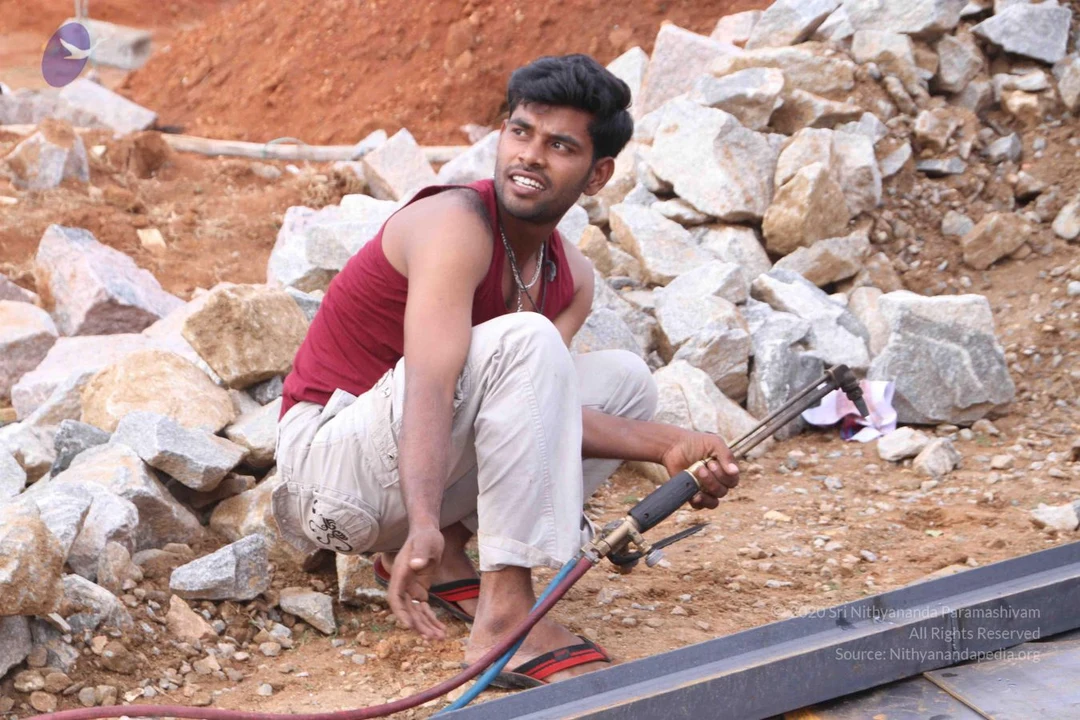
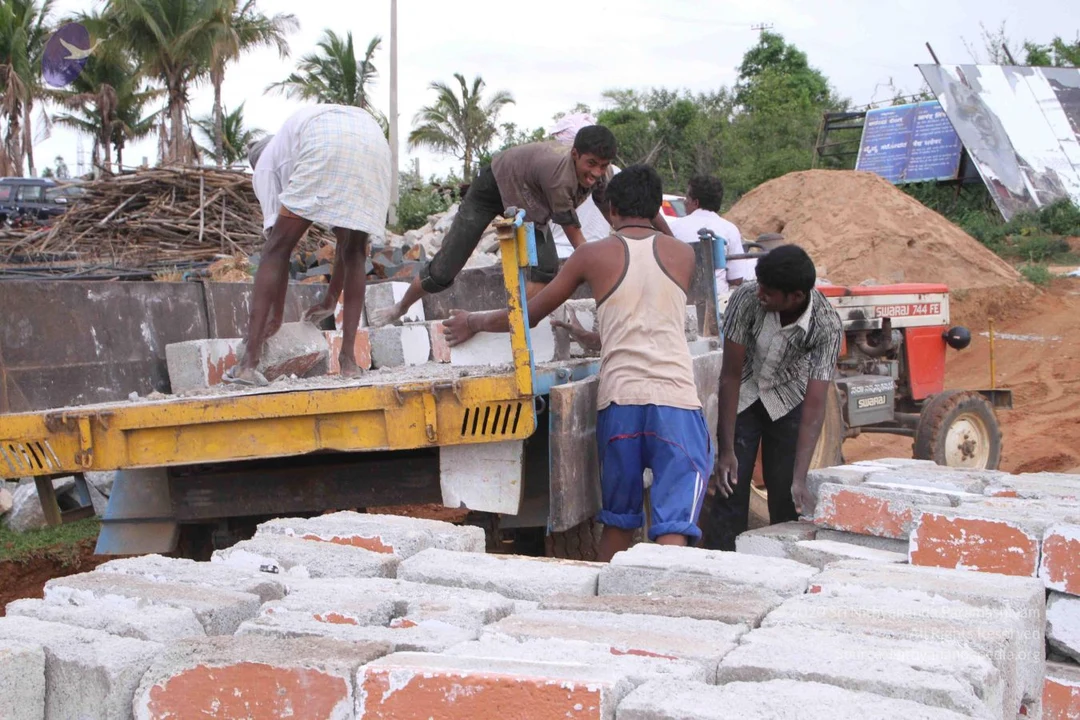
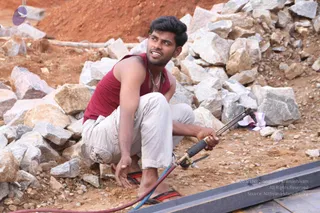
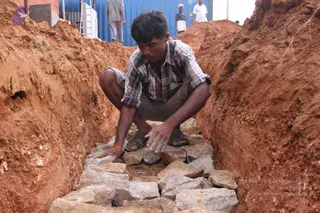
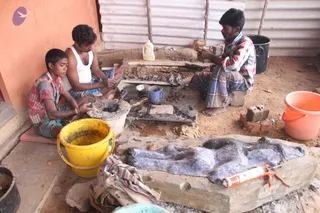
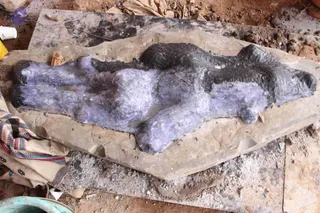
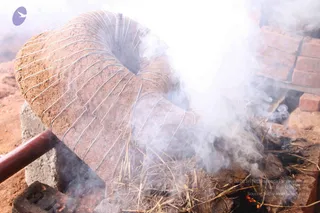
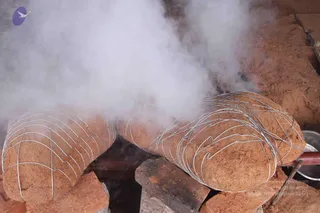
A young man in a red sleeveless vest and light grey trousers crouches on a rocky dirt site, holding a gas cutting torch with a blue and red hose connected to it. He sits among piles of large grey and tan stones, with red earth behind him and a steel beam lying at the bottom edge. He wears a thin chain necklace and worn red-and-black flip-flops, and looks off to one side while working.A man in a checked short-sleeved shirt and brown trousers crouches in a deep trench cut into red-brown earth, arranging large grey rubble stones with both hands along the trench floor. An orange wristband is visible on his wrist and he wears dark sandals. Behind him, two or three onlookers stand near a blue shipping container and a white wall, one in a white shirt and one in a checked shirt. The scene looks like ground preparation work at a construction site.Three men and a boy work seated on the ground in an open-sided shed with corrugated metal walls and an orange plastered wall. The man on the left in a white vest and blue lungi works a tool, a boy in a checked shirt and shorts sits at the left edge, and a man in a checked shirt and lungi on the right works at a low bench. Around them are buckets, a blue mug, clay pieces and a half-finished grey statue of a reclining figure lying on a stone slab in the foreground, along with a tube of adhesive. The scene suggests stone or clay sculpture work in progress.A photograph of a reclining figure sculpture lying on a flat stone slab on bare dusty ground. The sculpture is a rough, unfinished form in grey-blue and dark charcoal-black tones with a pale powdery surface, showing a human-like torso, arm and leg shapes. Scattered grey stone dust and grit lie around the slab. Beside it are a folded woven textile with red, blue and white geometric patterns, a pale cloth scrap, and a turquoise plastic basin at the bottom edge. No people are visible; the figure is a statue, not a person, and no candidate for a person appears in the image.A photograph of a clay and wire-mesh stove or furnace outdoors, a curved coiled clay tube rising over a bed of straw and glowing embers, with thick white smoke pouring from its top. A dark metal pipe runs along the lower left and brick blocks sit at the right, with red soil on the ground. No people are visible; the scene shows a smoking fire setup, with no ritual or person identifiable.Two cylindrical clay-covered forms wrapped in thin wire lie on a bed of red-brown earth and bricks, with thick white steam or smoke rising from them. A metal pipe runs along the right side and a small metal bowl sits at the lower right edge. No people are visible. The setting appears to be an outdoor cooking or heating area.

satsang

25 photosSource gallery
A seated man in an orange-red robe with a gold-bordered cloth sits cross-legged on a richly carved gold throne flanked by golden lion-face armrests. He wears rudraksha beads draped over his chest, a red bindi and vertical tilak on his forehead, and a small microphone at his ear, and his hands rest on the cushioned armrest as he speaks. Behind him are large painted deity figures with raised hands and a gold-patterned backdrop. Swamiji (probable): the figure has long swept-back hair, saffron clothing, rudraksha malas and a throne, consistent with the page's identification of the speaker as Paramahamsa Nithyananda delivering satsang.A man sits cross-legged on a tiger-striped cloth in front of an ornate gold throne with carved lion-head armrests and a gold arched backrest. He wears a rust-orange shawl and a long rudraksha-style mala, with gold-hooped earrings and a red bindi with white tilak on his forehead. He gestures with his right hand while speaking into a lapel microphone. Behind him are painted panels of a deity figure in orange and red.A man seated on a dark red cushioned chair in front of an ornate gold repoussé throne with carved lion-like motifs. He wears an ochre-orange saffron robe with a yellow-gold border draped over one shoulder, and long ropes of rudraksha-style beads hang on his chest. He has a white vertical forehead mark and a red bindi, gold hoop earrings, and a small microphone clipped near his face. His right hand is raised in a gesture while he speaks.A man sits on an ornate gold throne with carved repoussé floral and animal motifs, speaking into a small headset microphone while touching his right ear with his hand. He wears a rust-orange wrap over his shoulders with a golden trim, layered beaded rudraksha-style necklaces, a tilak of white and a red bindi on his forehead, and small gold hoop earrings. His left hand rests on the armrest. Probable Swamiji (in_person cues: long swept-back hair, saffron-orange wrap, ornate gold necklaces and throne setting), seated in a discourse pose.A man seated on an ornate golden throne with a gilded arched backdrop speaks into a small clip-on headset microphone during a discourse. He wears a rust-brown draped robe with a yellow-gold edge and a long rust-coloured beaded mala necklace, has white sacred ash lines and a red kumkum dot on his forehead, and gold hoop earrings. Behind him, part of a painted deity figure in orange and red garments is visible at the left edge.A man seated on an ornate golden throne with a carved gold backrest, speaking into a clip-on headset microphone during a discourse. He wears a rust-brown saffron-toned robe draped over his shoulder with a gold-edged sash, a long rudraksha-style mala of brown beads around his neck, and a small red bindi with white vertical tilak on his forehead; he gestures with his raised right hand. Behind him on the left, a partly visible deity figure in orange and red garments with a green cloth stands against a blue backdrop.

Garbh Mandir

20 photosSource gallery
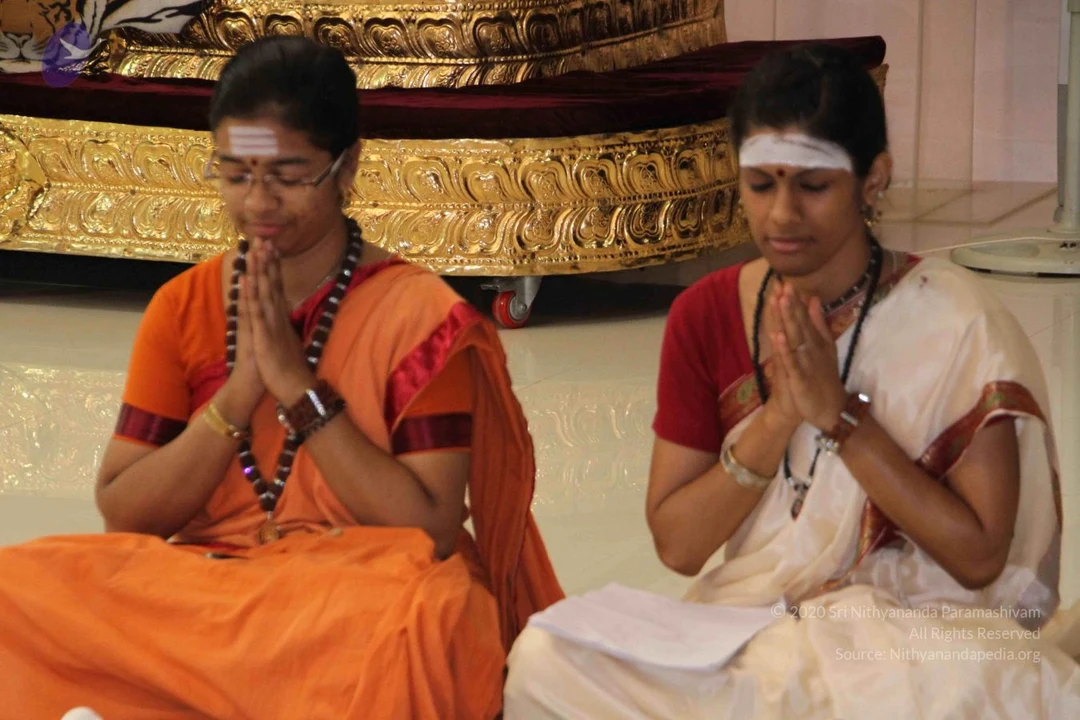
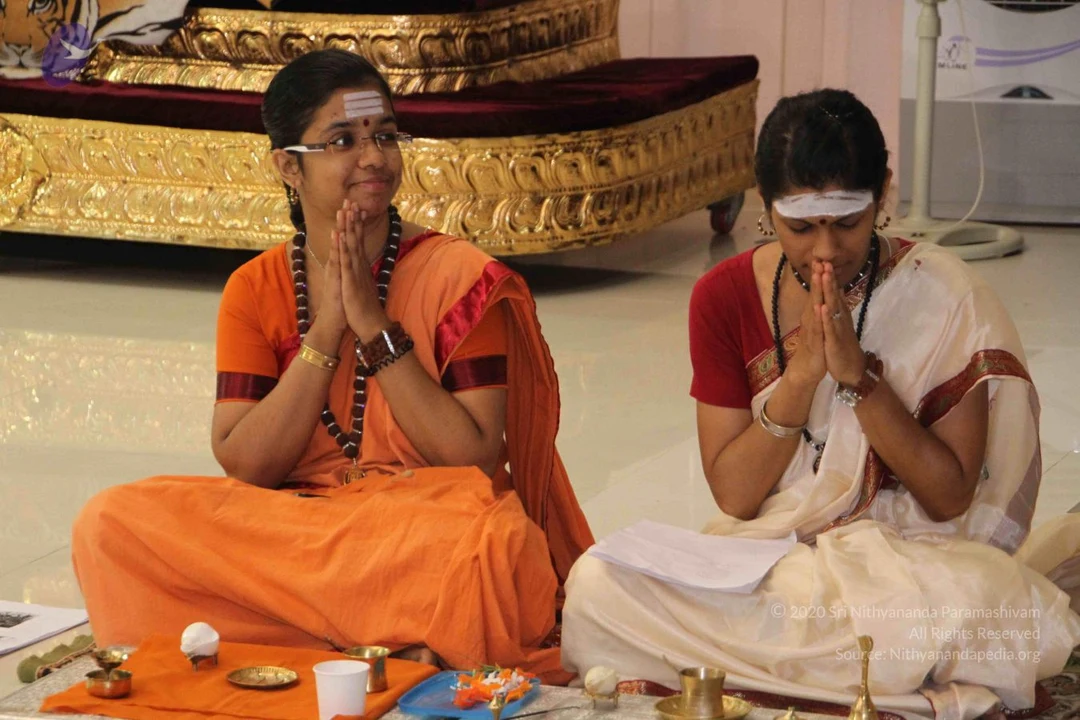
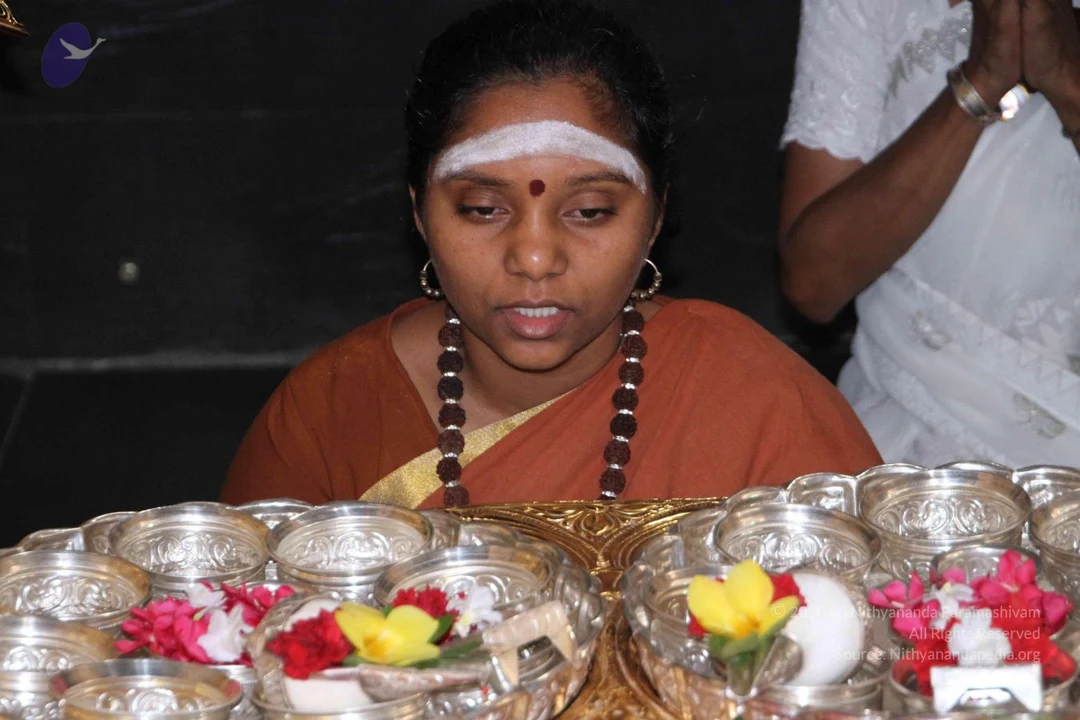
Two women sit cross-legged on a white floor with palms pressed together in anjali mudra, eyes closed, in front of a golden ornate pedestal with a red cushioned top. The woman on the left wears an orange saffron sari with a red border, rudraksha mala beads, a gold bangle and a small gold pendant, with a white vertical tilak on her forehead and round glasses. The woman on the right wears a white sari with a red blouse and red-bordered pallu, a black beaded mala, a white horizontal band on her forehead with a red bindi, and silver bangles. A white sheet of paper lies on the floor before her. Two people visible, seated in satsang.Two women sit cross-legged on a floor in prayer, palms pressed together in anjali mudra, in front of a large gold-carved throne-like seat with red cushion. The woman on the left wears an orange saree and orange blouse with red border, rudraksha mala beads, glasses, and a white tilak on her forehead. The woman on the right wears a cream saree with red border, red blouse, rudraksha mala, bangles, and a white tilak. Before them on an orange cloth are brass bowls, a brass kalasha-style vessel, a plate of flower petals and offerings, and a paper sheet.A close overhead view of a puja arrangement on a gold-coloured tray. Many small ornate silver bowls and cups hold red and white flowers, with pink roses scattered over the centre and yellow flowers placed in silver conch-shaped vessels. A small amount of orange liquid sits in one bowl. Silver ladles lie among the offerings. No people are visible; the scene shows ritual offering items arranged for worship.Close-up photograph of a white conch shell (shankha) with silver-embossed fittings at both ends, resting on a silver ritual tray. A yellow flower with green leaves is tucked into the narrow end of the conch. Red and pink flower petals fill the background, and a silver bowl containing yellow liquid or offering sits at the lower left. The scene is a puja-style arrangement of ritual objects with no people visible.Close-up photo of two small gold vessels with rounded lids, one topped by a red gemstone, sitting on an ornate gold-rimmed tray. The tray and surrounding area are densely covered with pink and red rose petals and whole roses. A silver vessel edge appears at the lower right. No people are visible; the scene looks like a ritual offering arrangement.A close photograph of a woman in an orange saffron sari with a gold border, wearing a long rudraksha mala and a white vibhuti line with a red kumkum dot on her forehead, seated before a row of silver bowls. The bowls are filled with red, pink and white flowers, a yellow flower and white offerings, arranged on a golden tray. Behind her a person in a white sari stands with palms pressed together in namaste. The dark background is plain.

Paduka-Puja-Crowds

13 photosSource gallery
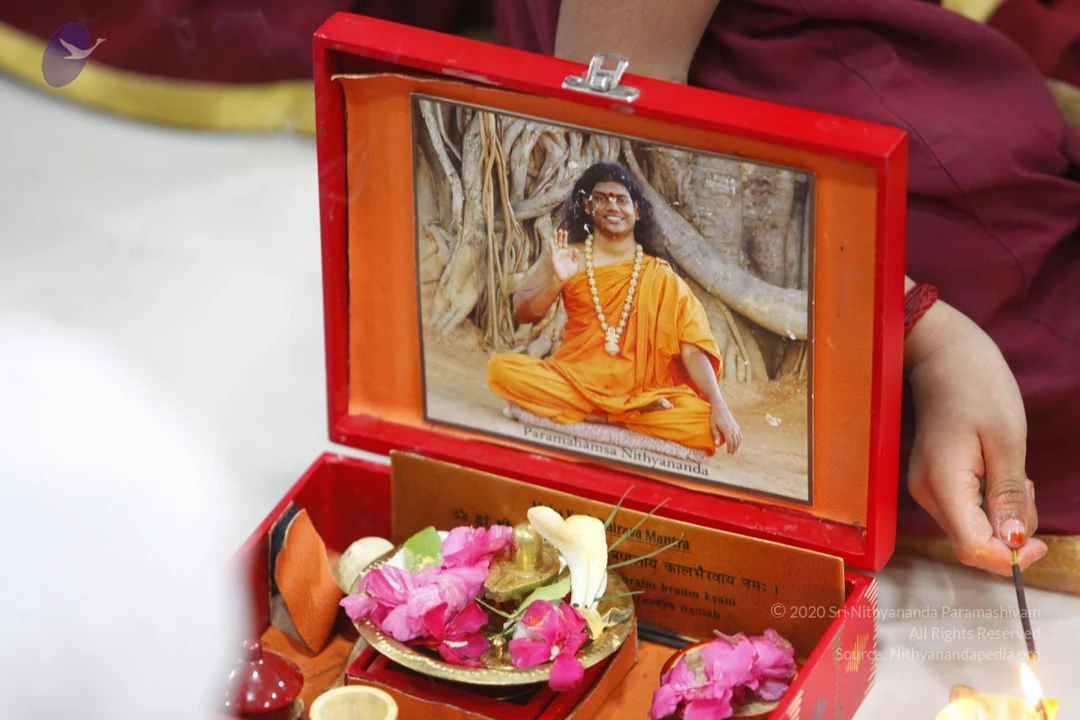
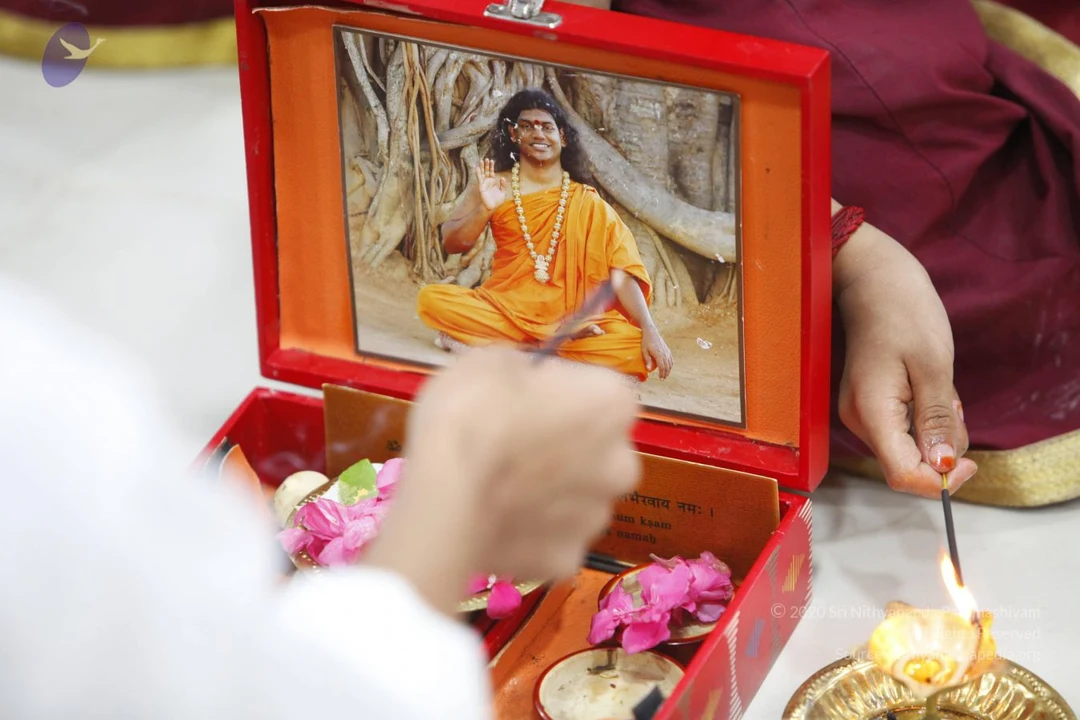
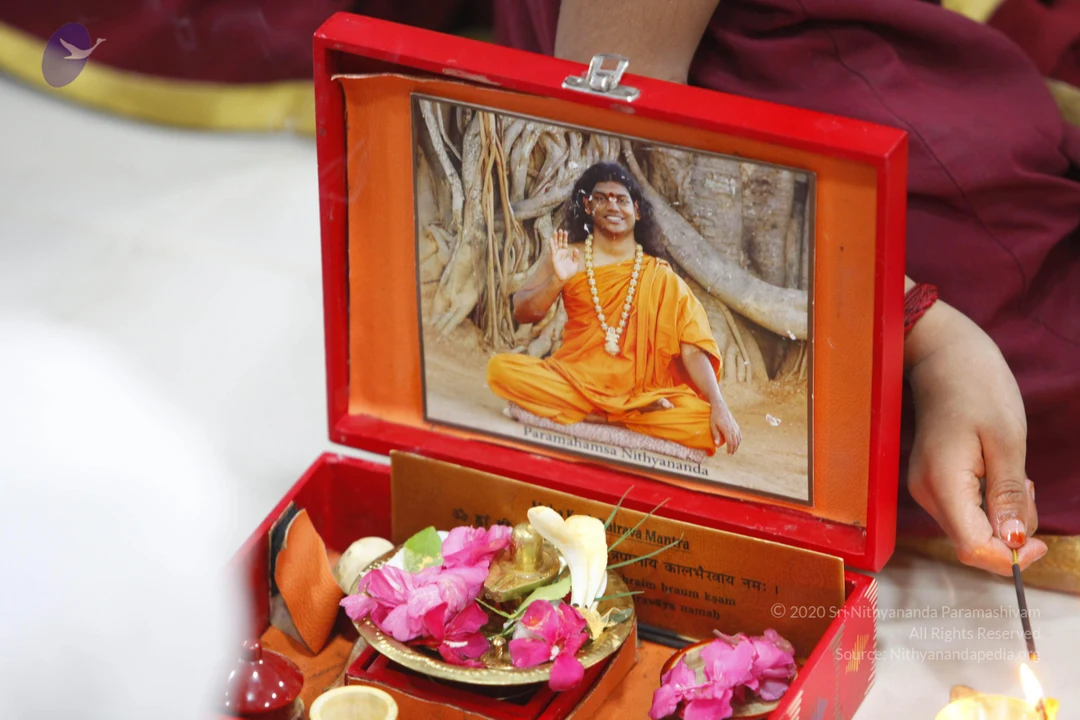
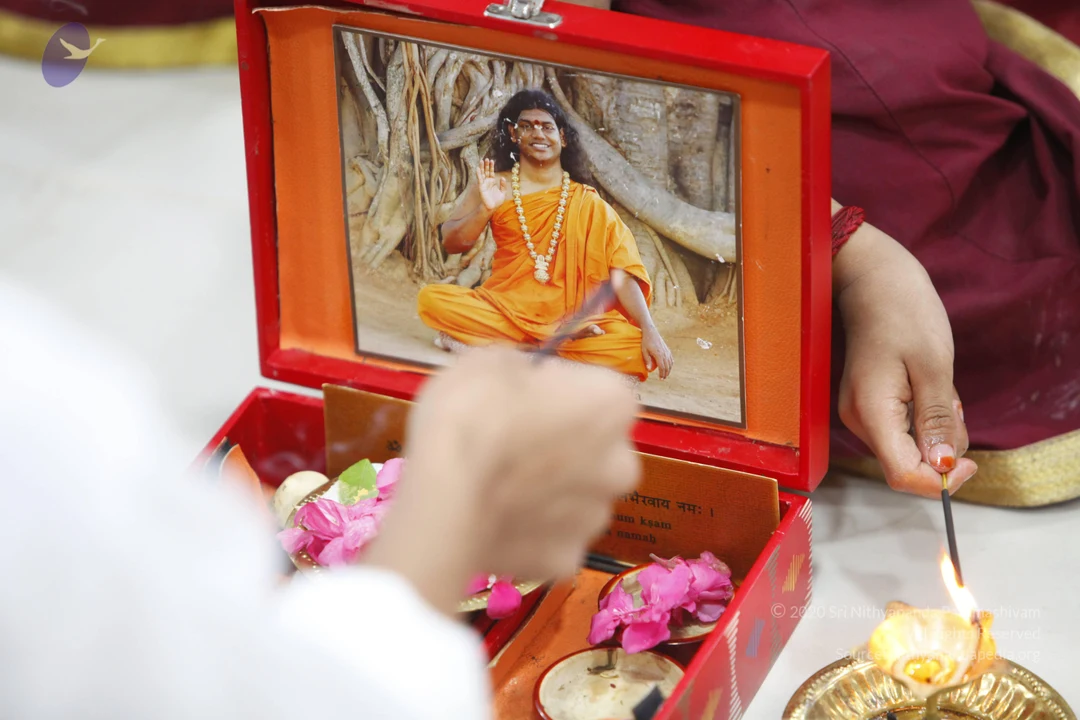
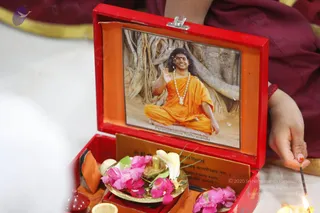
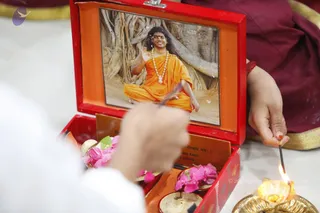
A photo inside a hall with red curtains and framed pictures on the walls. Several men with shaved heads and white forehead markings stand with palms pressed together in anjali. The man at centre-left wears a saffron-orange wrap and a rudraksha mala with orange beads; the man beside him wears orange and a rudraksha mala. The men at right wear white dhotis with gold borders and white shawls. A person in an orange robe bows at far right, and a child in maroon-and-gold cloth stands at left. Figures in the background hold a long brass horn. Yellow mats cover the floor, and a small bowl of offerings sits near the front. Light blue cloth is wrapped on one arm of a man at right.A framed photograph of a seated man in saffron-orange robes and a white flower garland sits on a golden throne with lion-head armrests, draped with a tiger-skin cloth. The portrait shows him with long dark hair, a red forehead mark, and one hand raised in blessing, set against a banyan-root background. Brass hanging oil lamps and bells hang from chains above the throne, and painted deity figures with raised hands stand on either side. The printed caption beneath the portrait reads "PARAMAHAMSA NITHYANANDA". No physical people are present; the seated figure is a printed portrait. a person depicted in the portrait, with saffron robes, long swept hair, rudraksha-style garland and a red forehead mark.Overhead view of a ritual offering table draped in white embroidered cloth. Four brass bowls hold offerings: a bowl of red flowers and white cloth in water at top centre, a bowl of yellow turmeric or kumkum paste at bottom left, a bowl of black and gold leopard-patterned fabric with beads at bottom centre, and a bowl of red petals at bottom right. A conch shell, a small brass bell, a brass vessel with a spoon, a small camphor or incense holder, and a yellow tin of vibhuti sit on the cloth. No people are visible.Overhead photo of a brass bowl on a white lace-patterned cloth holding water with red hibiscus flowers, white petals, and small pieces of turmeric or ginger root, with a white conch shell at the left edge and a dried grass blade across the bowl. No people are visible, and the page's a person reference does not show him in this image.A red wooden box with its lid open holds a framed photograph of a seated man in orange robes with a white bead necklace, raising one hand in greeting before a banyan tree, labelled "Paramahamsa Nithyananda" on the print. Below, a brass plate holds pink flowers and a white flower, with a small oil lamp and a yellow lemon-like offering nearby. A hand in a maroon sleeve holds a lit incense stick at the right edge. The sign-like card below reads a mantra in Sanskrit script. The photograph shows only a printed portrait and no physical person in this scene is clearly identified.A photograph of an open red wooden box with an orange interior, containing a printed photo of a smiling man with long dark hair, wearing an orange robe and a white flower garland, seated cross-legged before a large tree with aerial roots, raising one hand in greeting. Below the photo, pink flower petals and a small brass dish sit inside the box. A hand in white sleeve holds a lit incense stick over the box, while another hand in a maroon garment with gold border holds an incense stick near a brass plate with a lit oil lamp in the foreground. The scene shows a puja offering to the printed portrait.

Satsang-Swamiji
4 photosSource gallery
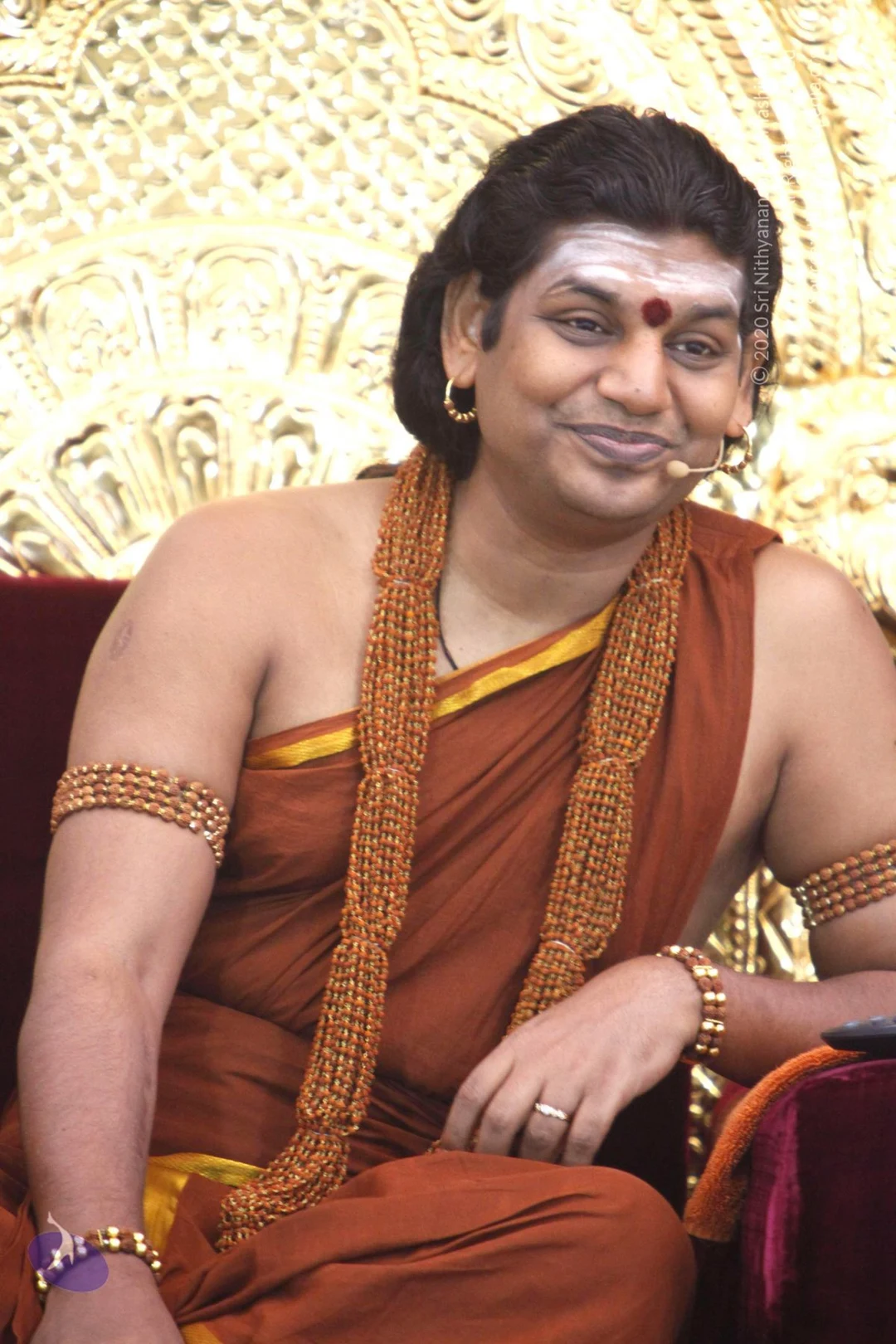
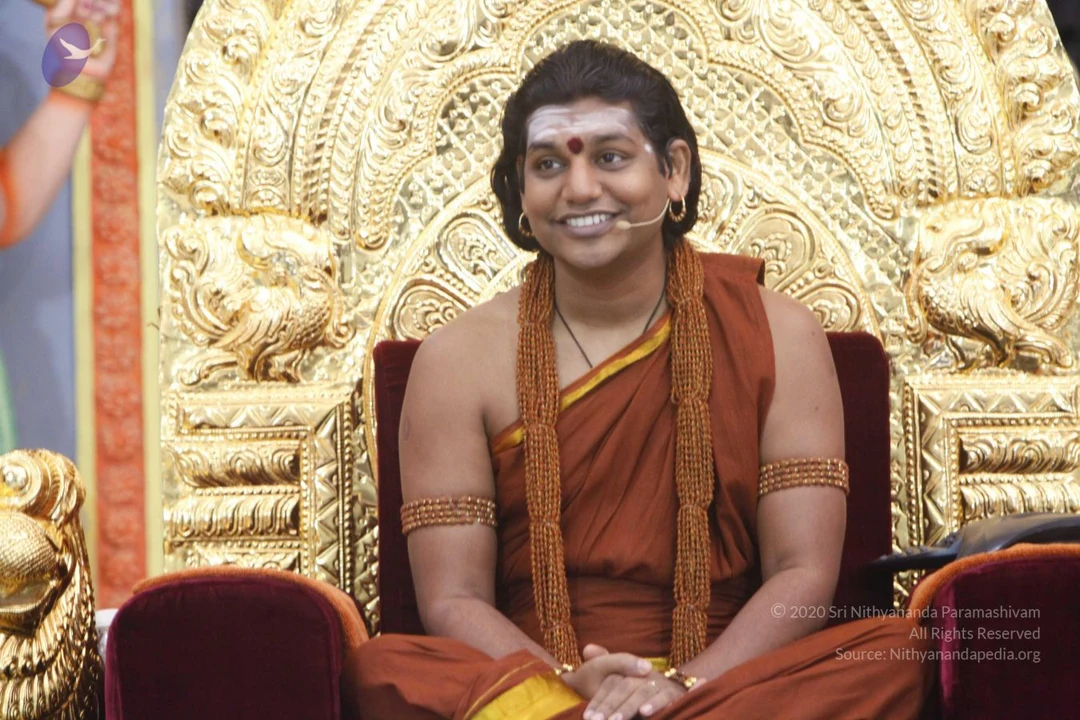
A man seated on a red-cushioned chair before an ornate gold-leaf backdrop with carved floral and scrollwork patterns. He wears an orange-red saffron-toned robe with a gold-yellow border, and long orange-brown beaded rudraksha-style malas draped over his shoulders. He has a white vibhuti line across the forehead with a red kumkum dot, gold hoop earrings, and a small clip-on headset microphone. He is smiling and looking to his side during a discourse.A smiling man with swept-back dark hair sits on a red velvet chair in front of an ornate gold throne with carved lion figures. He wears a saffron-orange robe with a yellow border, a long rudraksha mala and gold bangles on his upper arms, and has a white vibhuti marking with a red kumkum dot on his forehead. A small microphone is clipped near his face. a person: the saffron robe, rudraksha mala, gold bangles and forehead markings are visible cues, and he is seated on a throne.A man seated on a red velvet cushioned chair in front of an ornate gold repoussé backdrop with lion-like carvings. He wears a saffron-orange shawl over the shoulder, a saffron-orange garment, multiple rudraksha-style beaded malas across the chest, and bangle-style beaded armbands. He has a white sandalwood band across the forehead with a red bindi, gold hoop earrings, and a small lapel microphone clipped near his cheek. He is smiling and appears to be speaking. The setting suggests a seated satsang discourse.A smiling man sits in front of an ornate gold throne with repoussé floral and scrollwork panels. He wears an orange-saffron dhoti-style wrap with a gold border, a long orange-beaded mala necklace, matching beaded armlets, and hoop earrings. He has a white vibhuti marking and a red kumkum bindi on his forehead, and a small clip-on microphone is attached near his cheek. His hair is swept back to his shoulders. The orange and gold tones dominate the frame.

Sarva-Darshan

3 photosSource gallery
A photograph of a shaved-headed... wait, the figure has long swept-back hair, a red tilak on the forehead, and gold bangles. A man in a saffron-orange dhoti and shawl, with long gold-and-rudraksha style beaded necklaces and gold armlets, stands at the centre reading a small white slip of paper held in his right hand while looking down. Beside him a man in a white shirt bows with his head lowered and his hands folded, his left arm extended toward the figure. Several other men stand behind in the background, some with palms pressed together in namaskar. Behind them a gold deity murti and red-and-gold altar decorations are visible in a temple-like hall.A photograph of a man in an orange-brown robe with a long gold-and-bead necklace and gold armbands places his right hand on the head of a bespectacled older man in a white checked shirt, who bows with eyes closed and hands cupped beneath a small red object. A third man in white with a rudraksha mala stands at left, and a blurred figure in a white shirt with blue-striped lungi is behind. The orange-robed man has long swept-back hair, a red bindi and earrings. Behind them is a colourful temple backdrop with a gold figure and red pillars.Photograph of an indoor satsang event. On the right, a man with long swept-back dark hair, a red tilak on his forehead, rudraksha mala necklaces and bracelets, wearing an orange-saffron shawl over his bare shoulder, smiles while extending his hands to receive a small reddish offering from a bespectacled older man in a white checked shirt. Two men in white and striped shirts stand beside and behind them, along with a man in a white shirt at the left edge wearing a dark rudraksha mala. A few other people are visible in the background near an ornately painted temple-style backdrop.

Temple

21 photosSource gallery
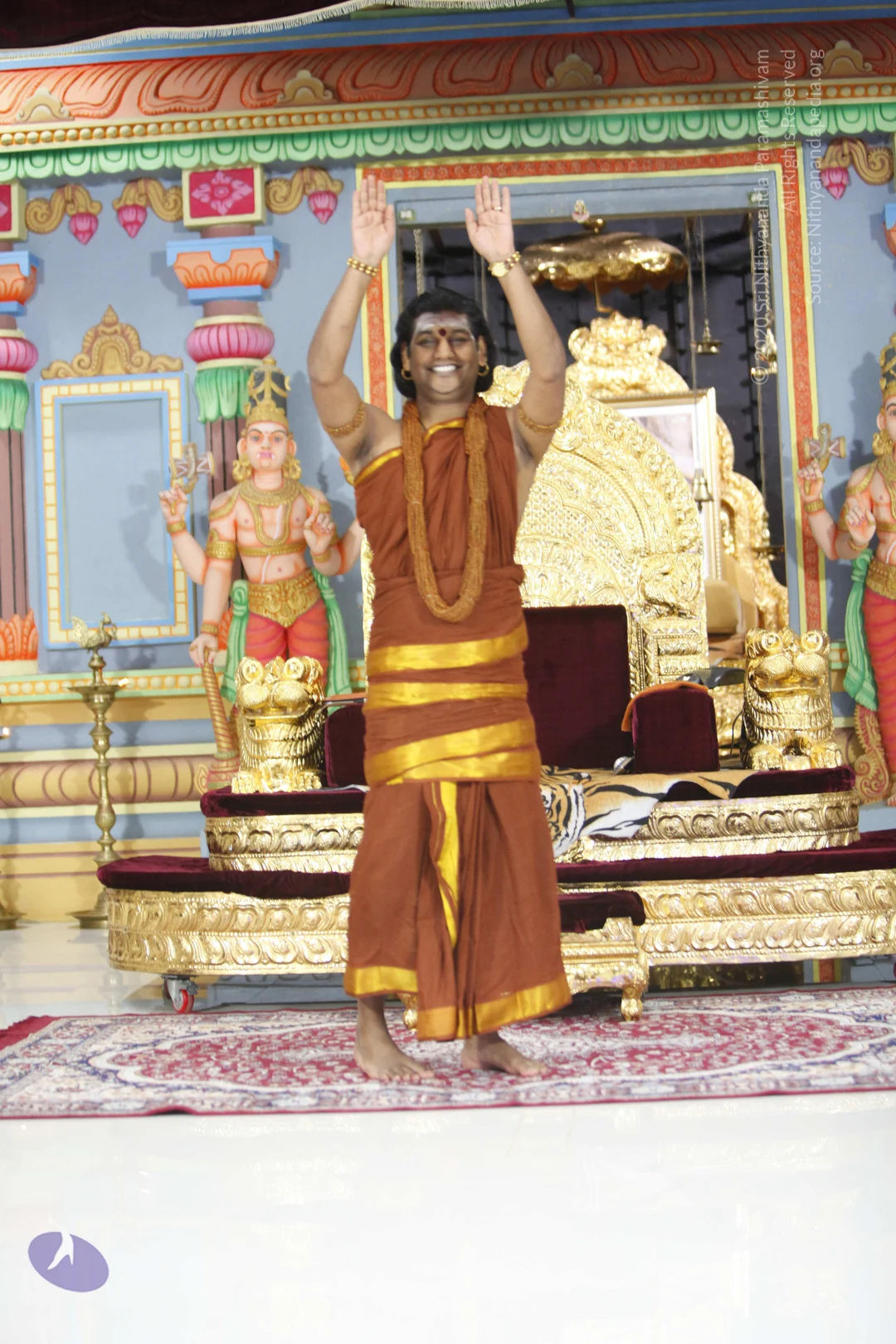
Outdoor view of a large golden-hued statue pair seated on a raised platform under an ornate gold arch draped with a red fabric backdrop. The figure on the left wears a red-orange turban, a crown-like headdress, a rudraksha mala, and a white-and-gold ceremonial necklace, and holds a trident. Beside it, a figure in an orange-and-gold sari with a dark conical headpiece and layered jewelled necklaces holds a small staff. Both wear green and pink lower draping with red borders. Palm trees and gardens surround the scene, with stone sculptures visible behind. These are statues, not living people; the figures appear to be deity murti.A photograph of a dark stone Nandi bull statue seated on an orange-painted stepped pedestal outdoors. The Nandi is garlanded with red and yellow marigold flower garlands and draped with an orange cloth, with a bead necklace carved on its chest. Behind it stand an orange temple structure and grey statues of figures with raised hands, surrounded by green palm and tropical foliage. The statue is a deity murti, with no physical people present.A black stone Nandi bull statue sits on an orange plinth, draped with red and yellow marigold garlands and an orange-gold cloth across its chest. The bull has a carved necklace and a decorated saddle cloth. Behind it stand a grey stone statue of a standing deity holding a staff and a smaller seated figure, surrounded by green palm and shrub foliage. A photograph of a statue, with no living people visible.Two golden metal murti statues of deities stand side by side against a backdrop of orange satin draped in front of an ornate gilded arch. The figure on the left has a red turban topped with a golden crown, a trident held in one raised hand, a rudraksha mala and beaded necklaces, and a deep green garment. The figure on the right wears a tall gold crown, ornate jewelled necklaces with red and green stones, and a green saree; both are garlanded with red and yellow flowers. Their faces show red painted lips and tilak marks. The statues are not people and are depicted as murti images, not physical persons present.A photograph of a temple shrine with two large painted deity murti seated side by side in front of an orange-red curtain within a gold-framed arch. The central figure wears a red turban-like crown and holds a trident-like weapon, while the figure to the right wears a tall gold crown and a teal-and-yellow garment. Both are adorned with garlands of marigolds and rudraksha-style necklaces. Brass oil lamps stand on either side, with kalasha-style offerings and a small seated figure in a niche to the right draped in a green cloth and red-and-white garlands. No physical people are visible in the scene.A shrine with a pair of seated deity murtis, a male figure with a red crown and a female figure with a gold crown, both adorned with red and orange marigold garlands and ornaments, set before a red-orange cloth backdrop framed by an ornate gold arch. Brass oil lamps, a kalasha-like offering pot, and a tray of flowers and puja items sit on the platform. Carved stone pillars with figures frame the shrine, with a smaller decorated niche to the right holding another garlanded figure. No living people are visible.

Construction
7 photosSource gallery
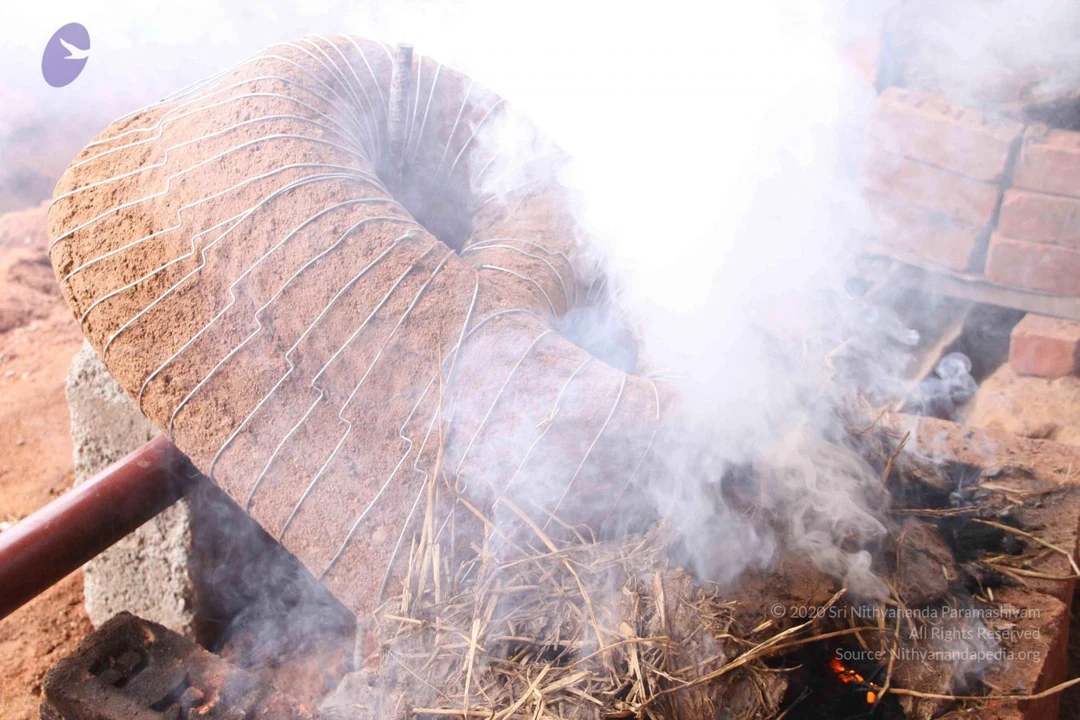
A young man in a red sleeveless vest and light grey trousers crouches on a rocky dirt site, holding a gas cutting torch with a blue and red hose connected to it. He sits among piles of large grey and tan stones, with red earth behind him and a steel beam lying at the bottom edge. He wears a thin chain necklace and worn red-and-black flip-flops, and looks off to one side while working.A man in a checked short-sleeved shirt and brown trousers crouches in a deep trench cut into red-brown earth, arranging large grey rubble stones with both hands along the trench floor. An orange wristband is visible on his wrist and he wears dark sandals. Behind him, two or three onlookers stand near a blue shipping container and a white wall, one in a white shirt and one in a checked shirt. The scene looks like ground preparation work at a construction site.Three men and a boy work seated on the ground in an open-sided shed with corrugated metal walls and an orange plastered wall. The man on the left in a white vest and blue lungi works a tool, a boy in a checked shirt and shorts sits at the left edge, and a man in a checked shirt and lungi on the right works at a low bench. Around them are buckets, a blue mug, clay pieces and a half-finished grey statue of a reclining figure lying on a stone slab in the foreground, along with a tube of adhesive. The scene suggests stone or clay sculpture work in progress.A photograph of a reclining figure sculpture lying on a flat stone slab on bare dusty ground. The sculpture is a rough, unfinished form in grey-blue and dark charcoal-black tones with a pale powdery surface, showing a human-like torso, arm and leg shapes. Scattered grey stone dust and grit lie around the slab. Beside it are a folded woven textile with red, blue and white geometric patterns, a pale cloth scrap, and a turquoise plastic basin at the bottom edge. No people are visible; the figure is a statue, not a person, and no candidate for a person appears in the image.A photograph of a clay and wire-mesh stove or furnace outdoors, a curved coiled clay tube rising over a bed of straw and glowing embers, with thick white smoke pouring from its top. A dark metal pipe runs along the lower left and brick blocks sit at the right, with red soil on the ground. No people are visible; the scene shows a smoking fire setup, with no ritual or person identifiable.Two cylindrical clay-covered forms wrapped in thin wire lie on a bed of red-brown earth and bricks, with thick white steam or smoke rising from them. A metal pipe runs along the right side and a small metal bowl sits at the lower right edge. No people are visible. The setting appears to be an outdoor cooking or heating area.

LotusLive

2 photosSource gallery
A smiling man with swept-back dark hair sits cross-legged on an ornate gold throne with repoussé floral and scroll carving, wearing a rust-orange draped garment edged with gold border and a long orange-and-green rudraksha mala draped over both shoulders. He has white vertical tilak marks and a red bindi on his forehead, small gold hoop earrings, and a wired headset microphone. He rests one hand on his knee and the other on a tiger-striped cushion. Swamiji (probable) is seated in the central role, shown with a long hair style, ceremonial gold, and rudraksha mala cues, speaking to the satsang audience.A smiling man seated on a red velvet chair in front of an ornate gold-leaf throne backdrop with floral and bird carvings. He wears a saffron-orange robe with a gold-yellow edge, multiple rudraksha mala strands hanging to his chest, gold hoop earrings, a small red bindi, white tilak lines on his forehead, and a clip-on lapel microphone. The image is a photograph of a single seated speaker during a discourse. a person: the saffron robe, long swept hair, rudraksha malas and ornate gold backdrop match the appearance cues associated with a person.

Edited Photos for Automation

32 photosSource gallery
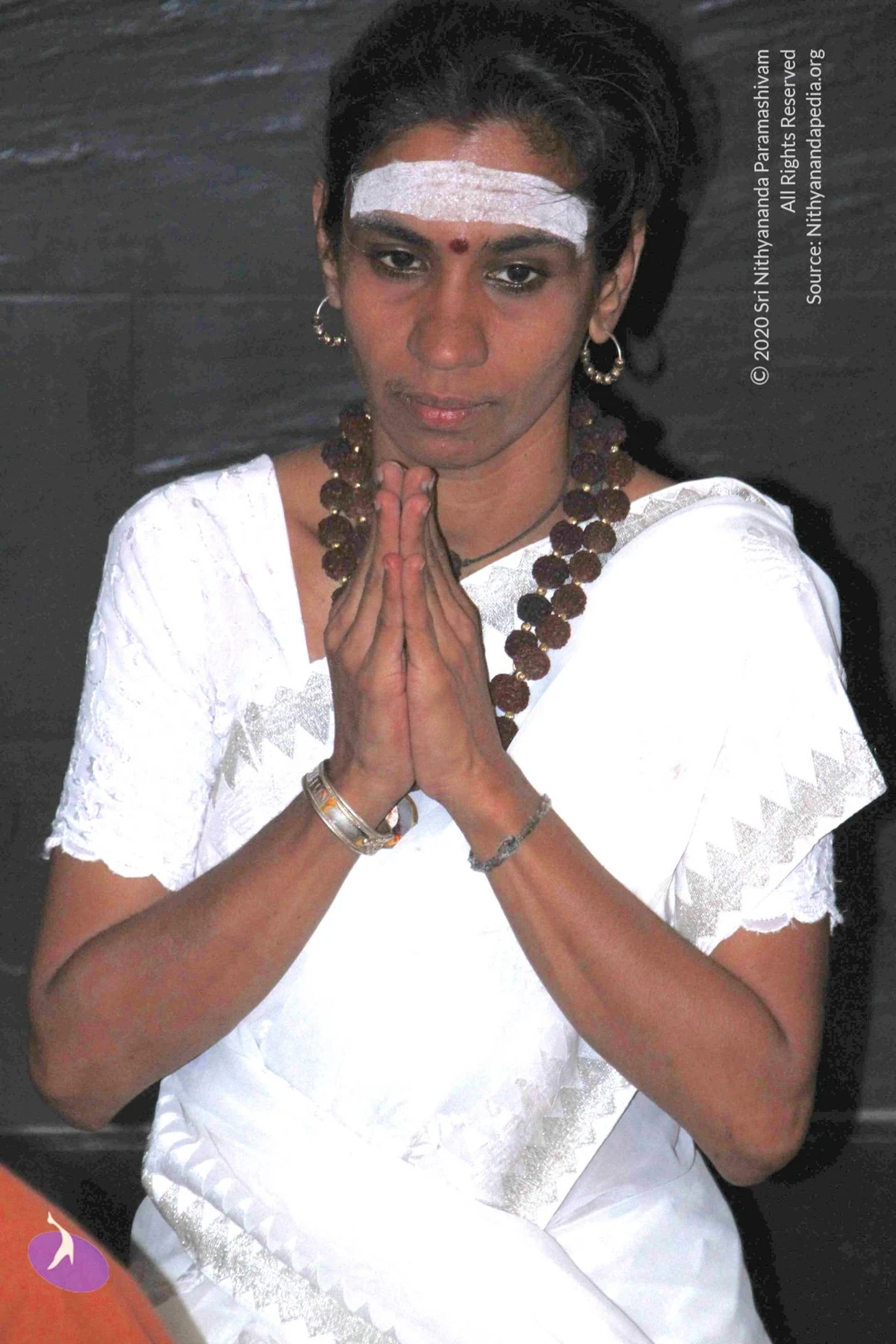
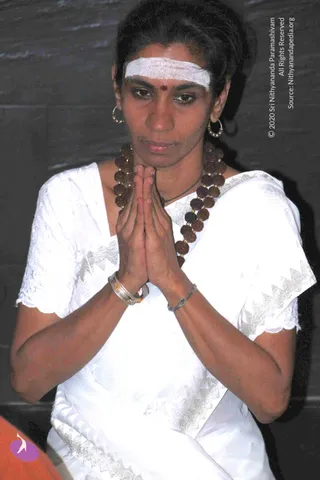
A woman with her hands pressed together in namaste sits behind a row of silver bowls and flower offerings. She wears an orange-red sari with a gold border, a brown rudraksha-style bead mala with gold-capped beads, and drop earrings. A white horizontal tilak with a red dot marks her forehead, and her eyes are closed in prayer. Pink, red and yellow flowers lie on a brass tray in front, with a carved wooden door behind her.A close-up photo of a woman with a white vertical tilak and red bindi on her forehead, looking down, her hair covered by a dark head covering. In the foreground a hand holds a polished silver ritual spoon or ladle over a silver plate, with a white conch-shaped vessel and other silver bowls, pink flower petals and a bright orange-yellow floral garland in the lower part of the frame. A second hand rests at the right edge near green leaves. The scene suggests a puja offering being prepared.A photograph of a shaved-headed man in orange robes and a rudraksha mala holding a brass multi-flame aarti lamp aloft with both hands, flames rising before his face. Behind him several people in orange and white ritual clothes stand with palms pressed together in anjali, some with white tripundra markings on their foreheads, and a red curtain forms the backdrop. The lamp is an aarti performed as worship. The man's appearance does not clearly match the description of a distinctive presenter with several qualifying cues, so his identity is not established.A shaved-headed man in an orange-red robe stands before a crowd, holding a lit aarti lamp with a flame in his right hand and a silver bell in his left. He wears a long rudraksha mala with a large central bead, a small pendant, and vertical white and red tilak marks on his forehead. Behind him, several people in orange-red robes with gold borders stand with palms pressed together in namaste. The setting appears to be a temple or ashram hall with black barriers and a white floor.A woman with her hair pulled back stands in profile-facing pose with palms pressed together in anjali mudra at chest height. She wears a white sari-style garment with silver zigzag border, a broad white vertical forehead mark with a small red bindi, a rudraksha mala necklace, silver bangles and hoop earrings. Her eyes are lowered in a respectful, prayerful expression against a dark grey wall. A partially visible orange cloth appears at the lower left edge. No a person appearance cues such as long swept hair, crown, saffron robes or ornate gold necklaces are present; she is a devotee in white ritual dress.Indoor group of devotees in a hall with pink walls and framed pictures above, standing with palms pressed together in anjali. Several women in front wear orange-saffron saris with yellow borders and rudraksha malas; a woman in the centre has grey hair and a red-white forehead mark. Others in the background wear maroon and red garments with yellow trim. Red curtains hang at windows and a brass lamp sits near the floor. Air conditioners are mounted on the walls. Mid-body framing of the women in the front row.

01-ADIKAILASA-TEMPLE

16 photosSource gallery
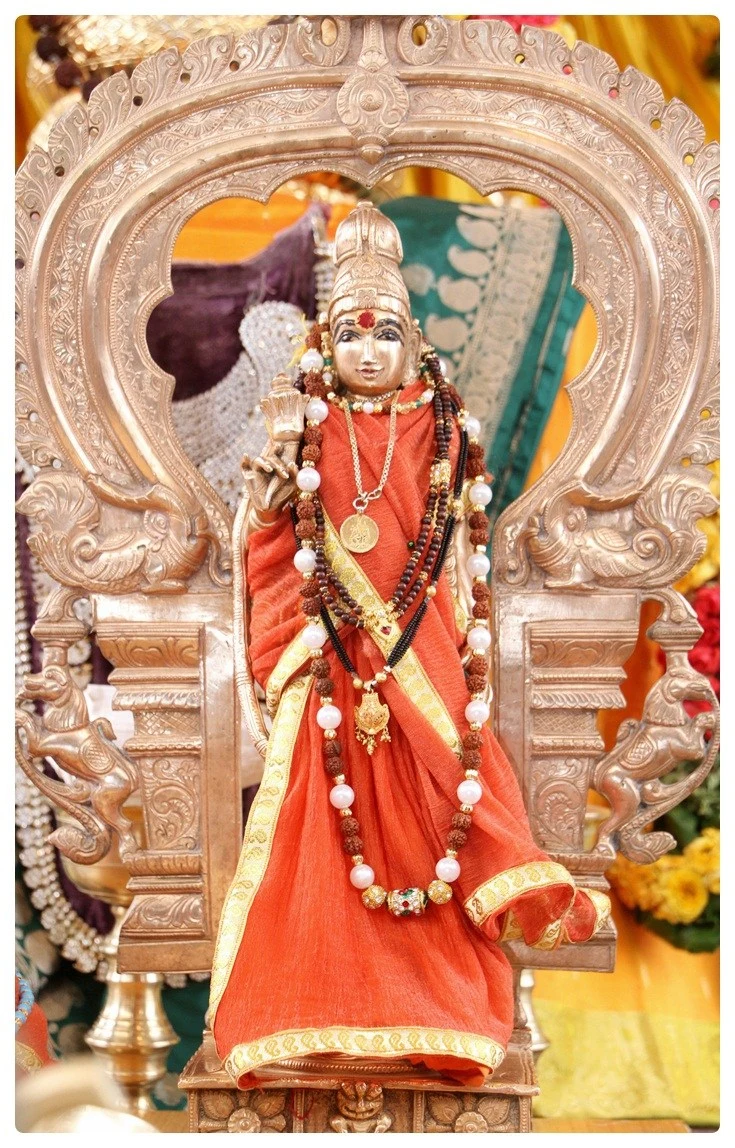
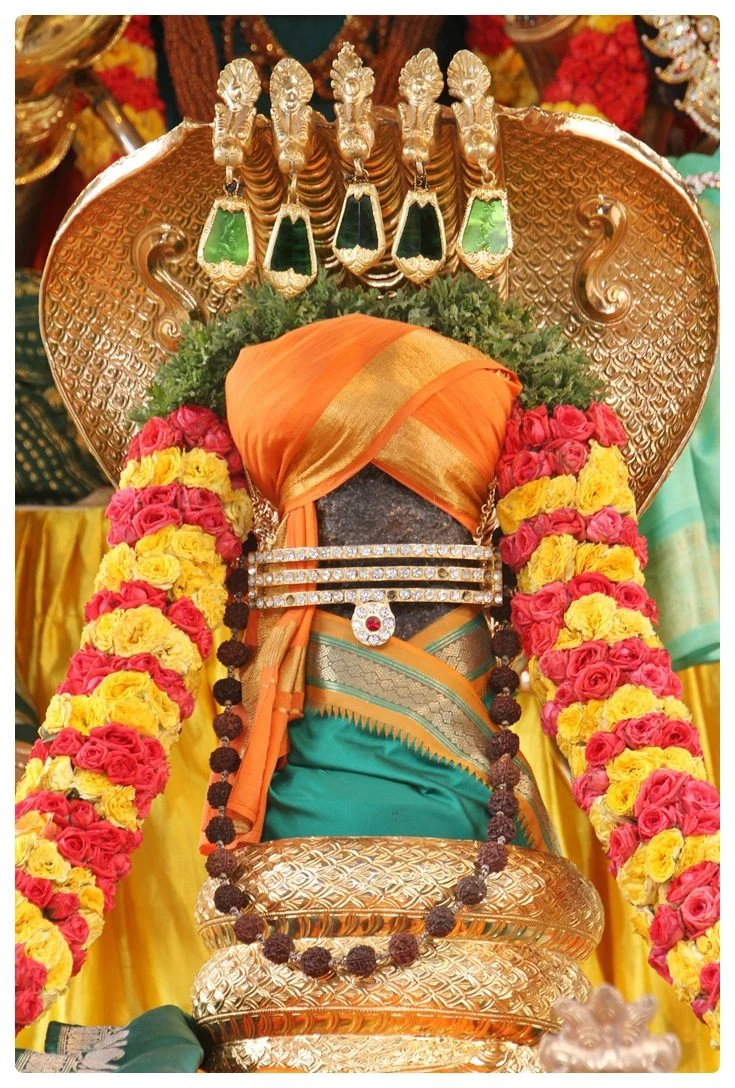
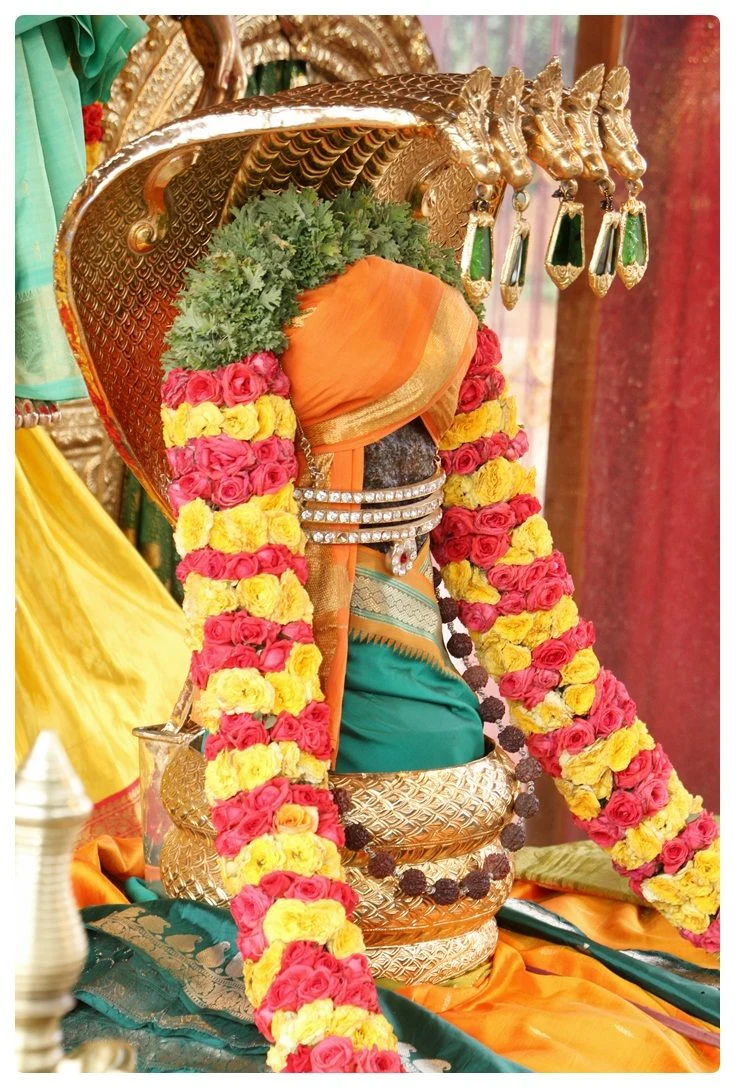
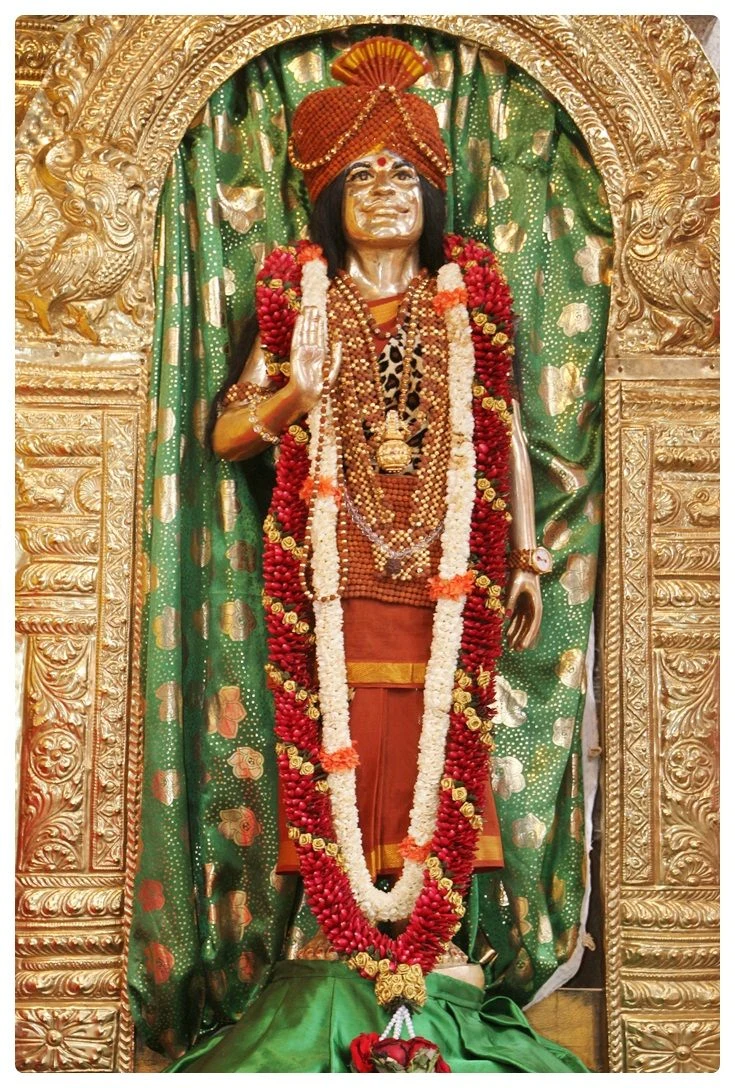
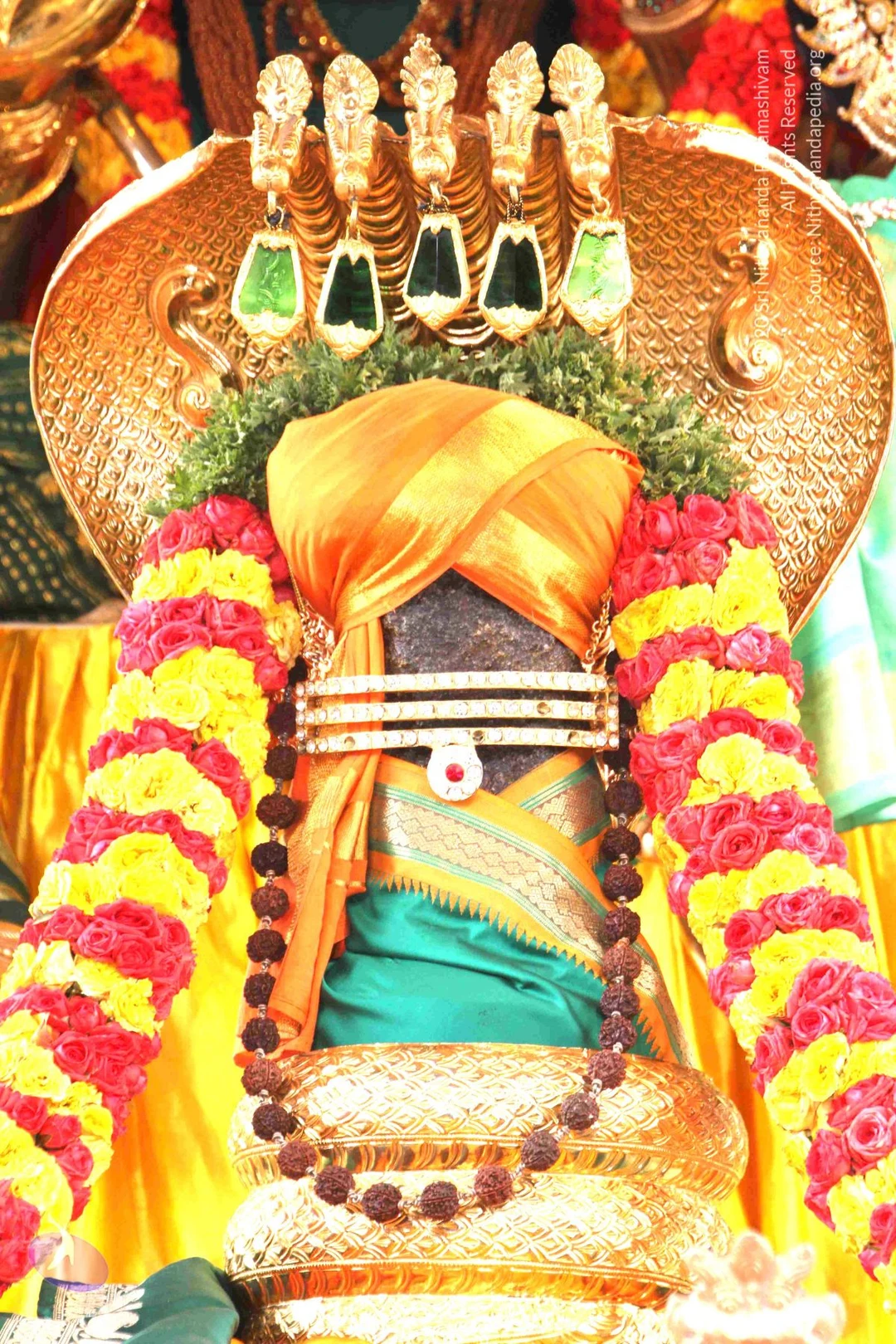
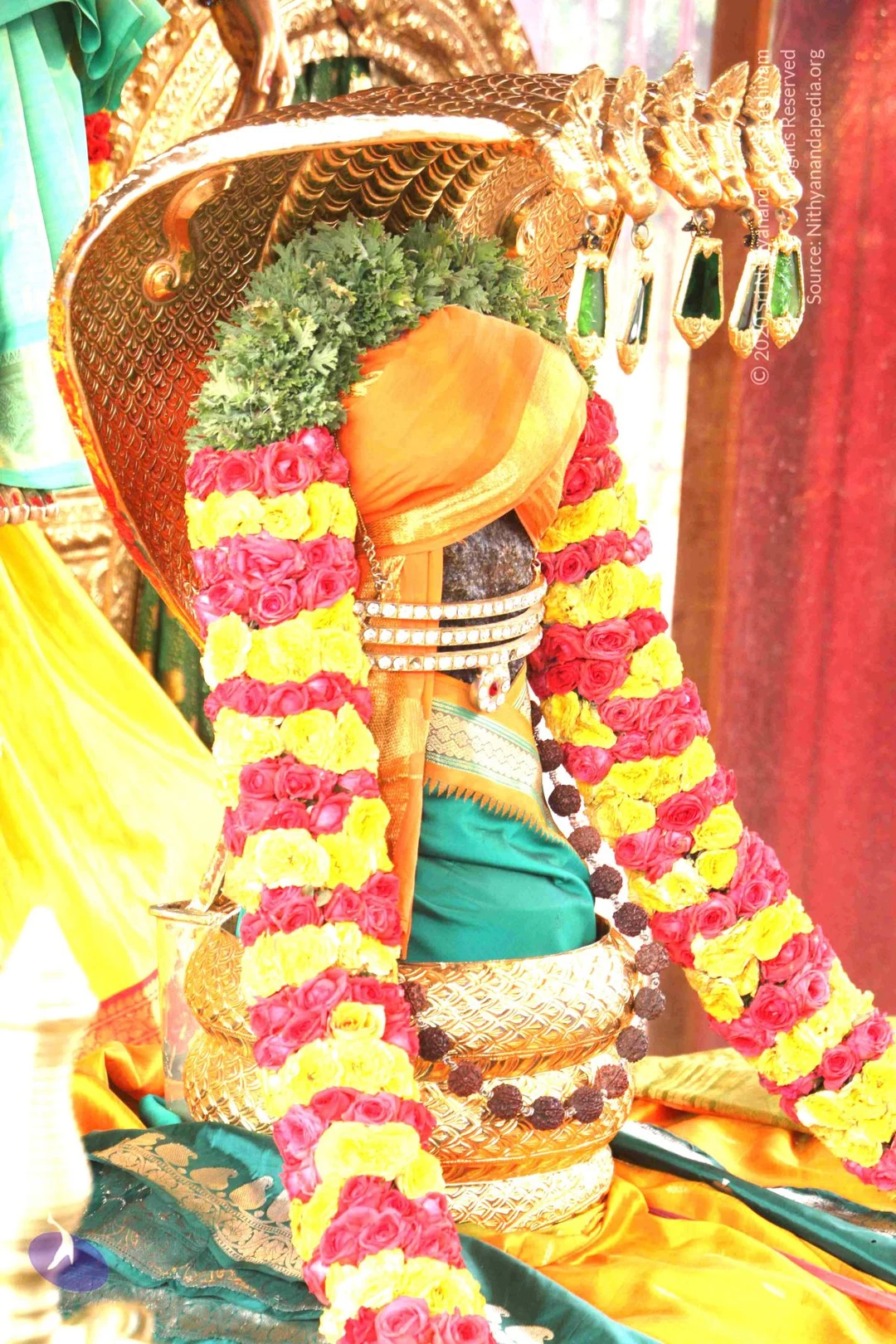
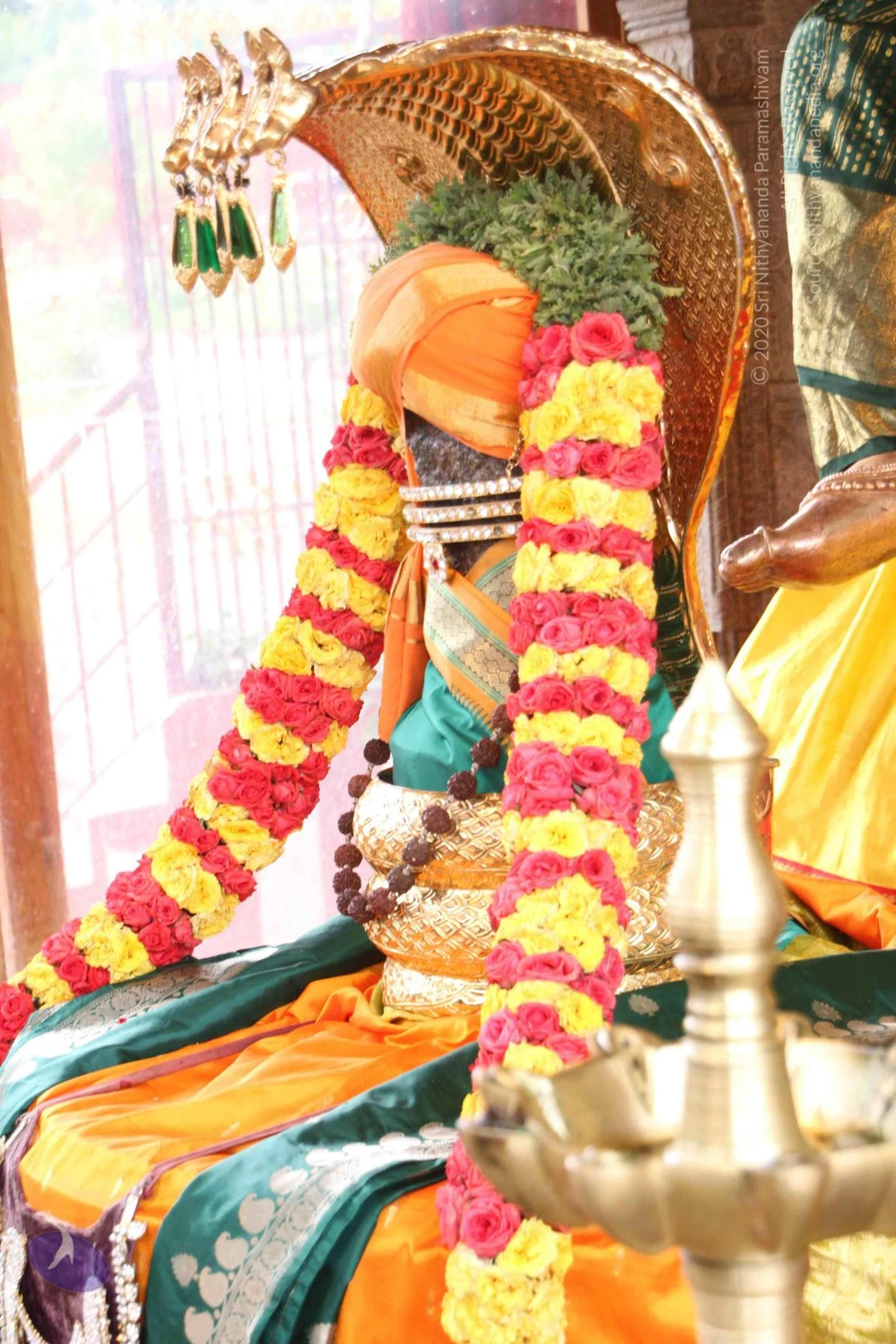
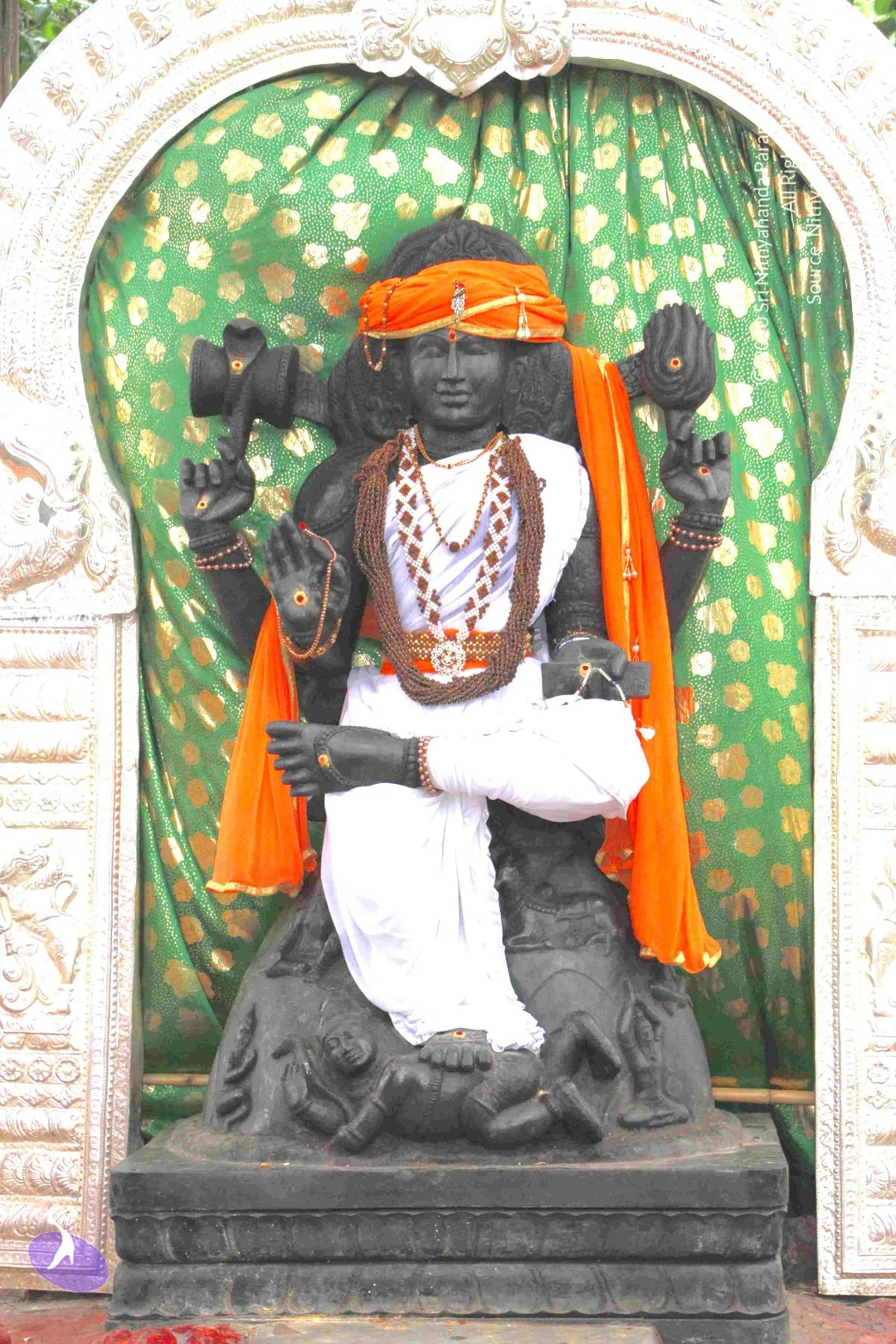
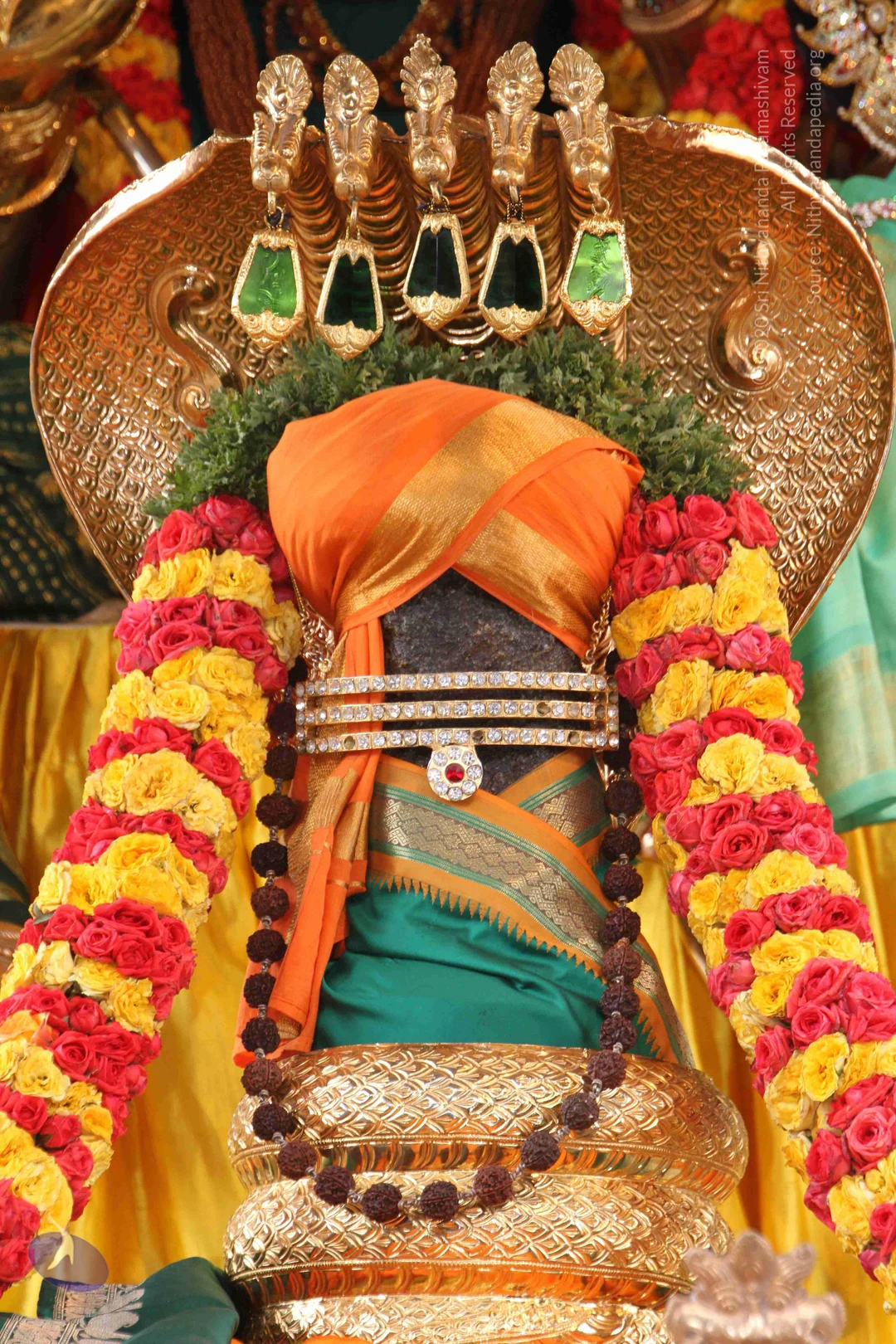
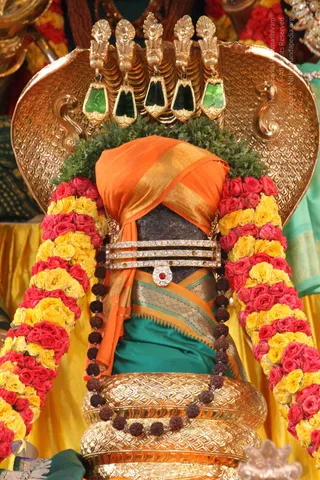
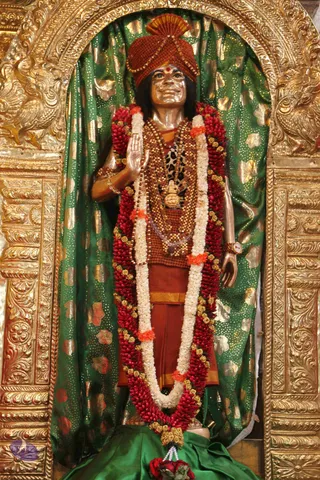
Golden statues of a deity pair seated together under a gold arched frame with a red fabric canopy. The male figure wears an orange turban, a dark rudraksha mala, layered silver-toned necklaces and a green lower garment, holding a trident in one hand. The female figure wears an orange sari with gold border, layered silver necklaces and a black crown, holding a small ornamental object. Both have gold-tone faces and bangled arms, seated on a pink draped platform with stone sculptures visible in the background greenery. These are statues, not living people; deity murti with trident iconography.A photograph of a gilded deity murti pair seated on a raised dais before a red-orange draped backdrop framed by ornate gold arch. The male figure wears a red turban, holds a trident in one hand, and has a rudraksha mala and layered gold necklaces; the female figure wears a crown, jewelled necklace and teal sari with a red-yellow marigold garland. Both are draped in red-yellow and garlands of marigolds and roses. Below, a shivalinga-like form is adorned with garlands and a rudraksha mala, with a small figure standing before a silver arch. Brass lamps, a kalasha-style vessel, flowers and offering bowls sit on the altar in front. The scene is a temple shrine display, with no physical people visible.A golden deity murti pair sits in a gilded arched shrine against a deep orange drape. The left figure, with a red turban and gold crown, holds a trident and wears a rudraksha mala and gold ornaments, dressed in teal and green. The right figure, crowned and wearing a jewelled necklace and a teal blouse, is adorned with red-yellow marigold garlands draped across both. A shared linga-like form and a small figure in an arched alcove sit before them, with brass lamps, a kalasha-style vessel and offering dishes in the foreground. No physical people are present.A golden deity murti of Shiva and Parvati seated together on a raised golden throne against a red-orange drape within an ornate gold arch. The male figure wears a red turban and a teal-green garment, holds a trident, and is adorned with rudraksha malas and beaded necklaces; the female figure wears a teal sari, a jewelled necklace and a gold crown. Both are garlanded with marigolds and red roses. Before the murti sit brass lamps, a glass of water, bowls and an offering tray, with a small figurine in front. No people are visible.Close photograph of a decorated Shiva lingam, dressed rather than a human figure. A dark stone lingam is wrapped in a saffron-orange cloth with gold border and draped in a green silk garment with gold patterned band. A diamond-studded silver band encircles it with a red stone at the centre, and a garland of red and yellow roses hangs on both sides. Rudraksha beads hang down the front, and a gold five-hooded serpent hood with green stone drops rises behind. Gold patterned bowls sit at the base on a yellow silk cloth. No people are visible.A metallic statue of a sage-like figure stands in a gilded, ornately carved arch framed by green silk drapery with gold floral motifs. The statue wears a rust-red turban with a fan-shaped crest, a red bindi, a dense rudraksha bead garment over a rust-orange dhoti with gold border, and a pendant necklace. The right hand is raised in blessing. Red and white flower garlands with gold rose accents hang from the shoulders to the feet, and a green cloth covers the base below.

02-PADA-PUJA

1 photoSource gallery
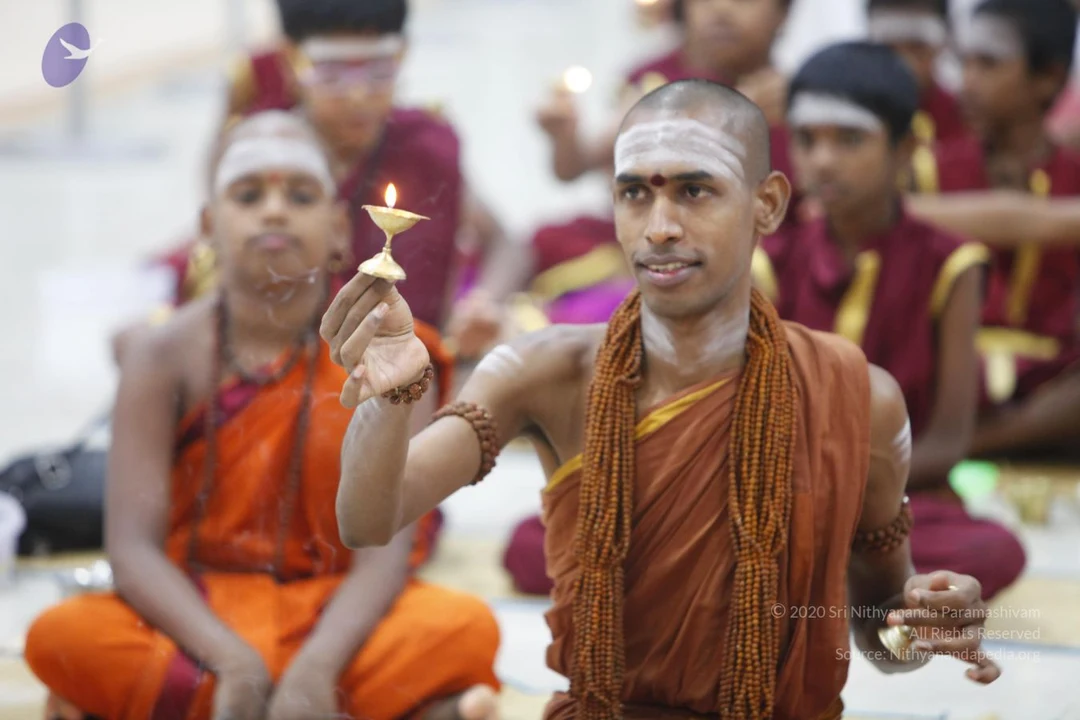
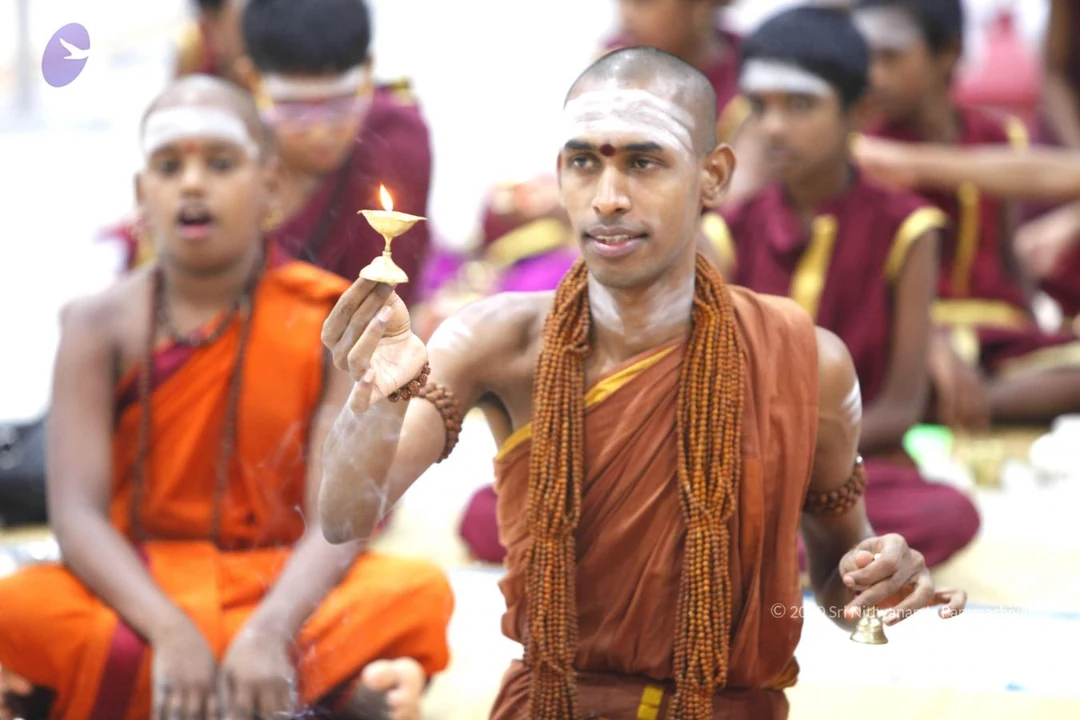
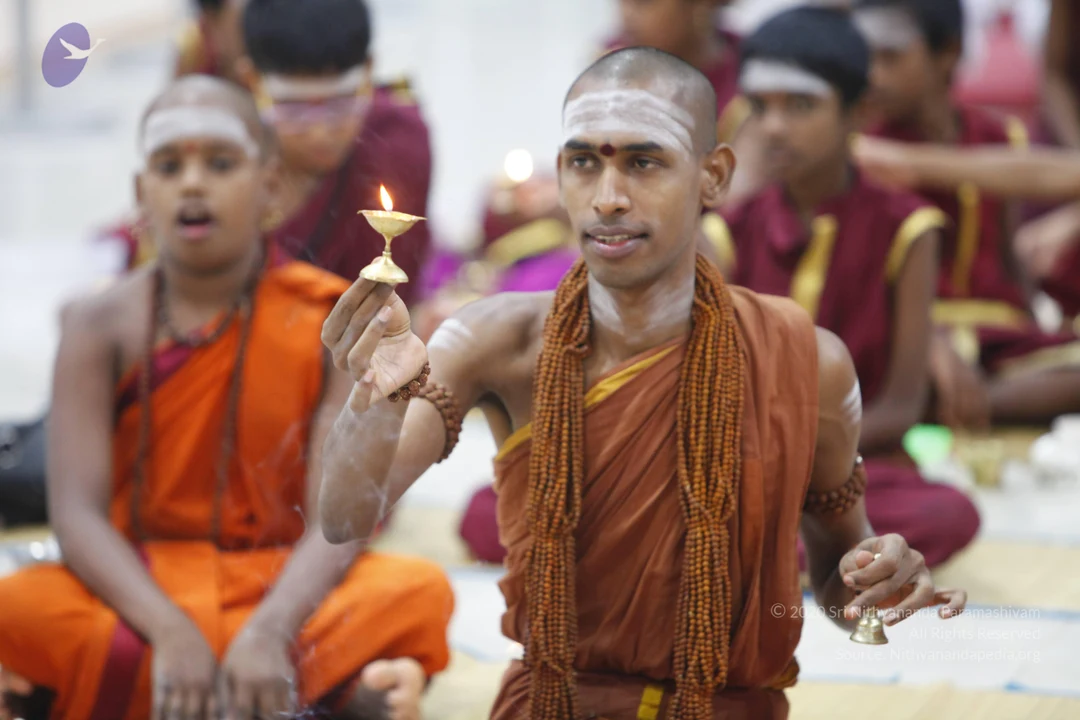
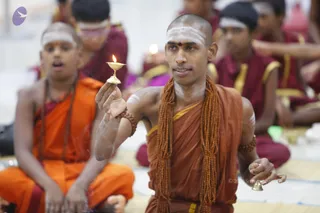
A young shaved-headed priest in an orange-brown robe with a long rudraksha mala draped over his shoulders holds a lit brass oil lamp aloft in his right hand while ringing a small brass bell in his left. White sacred ash marks his forehead and arms and a red bindi sits on his brow. Behind and beside him, several boys in maroon and orange robes sit cross-legged on a mat, one in the foreground with an orange robe and rudraksha beads and a white band on his head. The setting is an indoor hall with a light background.

03-SATSANG

20 photosSource gallery
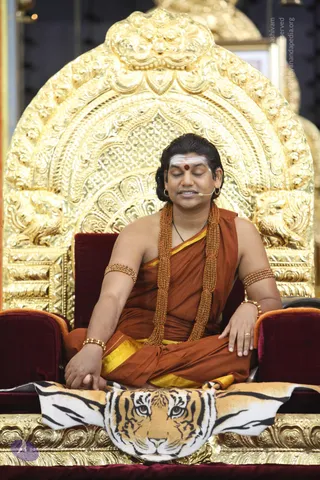
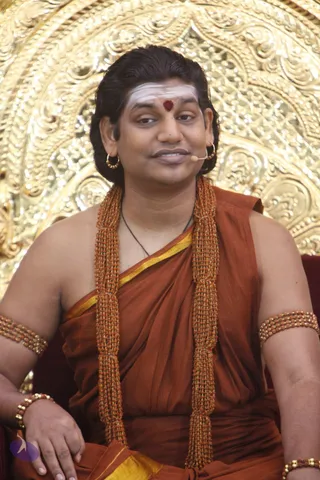
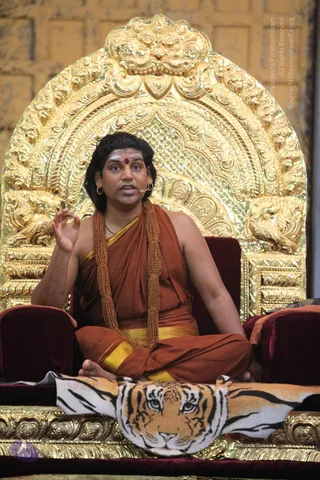
A seated man with closed eyes sits cross-legged on a red velvet seat before an ornate gold throne with carved lion figures, draped with a tiger-face rug. He wears an orange-brown robe with gold borders, long amber beaded necklaces, beaded armbands and bangles, and a white vertical forehead mark with a red dot. A small microphone is attached near his face. Gold throne seat and microphone indicate a discourse.A man seated before an ornate gold repoussé backdrop, wearing a rust-orange sleeveless robe with a gold border, long layered orange-and-gold beaded necklaces, rudraksha armlets and a bracelet. He has swept-back dark hair, white sacred ash on the forehead with a red kumkum dot, gold hoop earrings and a small wireless microphone clipped near his mouth. He sits with one hand resting on his knee and speaks to an audience.A seated man in an orange-saffron dhoti-style wrap with a gold-bordered edge sits before an ornate gold repoussé backdrop. He wears a long orange-and-gold rudraksha-style mala draped across the chest, matching beaded armlets and wrist bands, a black cord necklace, gold hoop earrings, a white tripundra with a red bindi on the forehead, and a small lapel microphone clipped near his face. His hands rest on his knee. Appearance-based candidate: a person, given the page's satsang context, his saffron robes, rudraksha mala and gold ornaments; the description is in the same photo.A man seated in front of an ornate gold-embossed backdrop, wearing a saffron-orange sleeveless robe with a gold border and long orange-and-gold rudraksha malas draped over both shoulders. He has a white tripundra on the forehead with a red bindi, gold hoop earrings, a wireless headset microphone, and gold-and-rudraksha bracelets and armband. He raises one index finger mid-speech while smiling, appearing to teach. The swami identity is not visually confirmed from appearance alone, so only the role is described.A man seated on a cushioned chair before an ornate gold-embossed backdrop, smiling and turned to his side. He wears an orange-brown ochre robe with gold border, layered orange-and-gold beaded necklaces, matching beaded armlets and a gold bead bracelet, plus gold hoop earrings and a small lapel microphone. He has white vertical tilak lines and a red kumkum dot on his forehead.A man seated in a saffron-orange robe with gold-bordered edges sits before an ornate gold-embossed backdrop. He wears a white vertical forehead marking with a red dot, hoop earrings, a microphone clip near his cheek, and multiple strands of rudraksha malas draped across his chest, plus rudraksha armlets and a beaded bracelet. The setting appears to be a satsang or discourse seat with a decorative golden throne-like background. Swamiji (probable): long swept-back hair, saffron robes, and rudraksha adornments are visible on the person seated.

04-SARVA-DARSHAN

1 photoSource gallery
A candid photograph of a smiling man with long swept-back dark hair, rudraksha mala beads, gold earrings, a saffron-orange shawl over the shoulder, and gold armbands, reaching out with one hand toward an older man in white kurta with a rudraksha mala who is laughing. Two other men stand behind them, one in a white shirt with blue stripes and one in a light checked shirt with spectacles, and a few more people appear in the background before a small shrine with a colourful deity image and festoons.

05-LOTUS-TELEVISION-PROGRAMME

14 photosSource gallery
A man seated on an ornate gold-and-velvet throne with a golden lion-headed armrest in the foreground, gesturing with his right hand while speaking into a headset microphone. He wears a rust-orange robe with a gold-striped waistcloth, a long rudraksha mala draped over his shoulder, gold hoop earrings, a white tripundra and a red bindi. Behind him stands a painted deity murti in orange and red with a gold crown, gold necklace and green cloth, beside a brass oil lamp. Probable Swamiji: the long swept-back hair, saffron robe, rudraksha mala and throne seating match the page's identification of the speaker, so this is an in-person satsang setting.A man sits cross-legged on an ornate gold throne with a tiger-print cloth draped over the seat front, speaking with one hand raised in a mudra gesture. He wears a rust-orange unstitched robe with a gold border, a rust-orange rudraksha-style mala around his neck, a white vibhuti marking and red bindi on his forehead, and a headset microphone. Behind him stands a painted deity figure with orange and green garments. The scene is a satsang discourse setting. A probable Swamiji (appearance-based label: long swept-back hair, rudraksha mala and saffron-orange robes) is seated in the teaching position.A seated man in an ornate gilded throne, wearing a rust-orange robe with gold borders, a long rudraksha-style beaded mala draped over his shoulder, and a red bindi with white tilak on his forehead. He sits cross-legged on red velvet cushions with a tiger-print cloth draped in front of him, gesturing with one hand while speaking into a small headset microphone during a seated discourse. The large gold arched backdrop with carved floral and lion motifs fills the background. Swamiji (probable) is seated centrally, with long swept-back hair, saffron-orange robes and rudraksha beads as qualifying cues.A seated man in an orange-rust draped robe with gold border and a long rope-like beaded necklace sits cross-legged on a red velvet seat before an ornate gold-leafed throne with carved arch and lion motifs. He wears a white tilak with a red dot, small gold earrings and a lapel microphone, and raises his right hand in a mudra while speaking. A tiger-skin cloth covers the dais edge in the foreground. The scene appears to be a satsang discourse with one visible person; whether the seated man is a person cannot be confirmed from appearance cues alone, so he is described by role as a speaker on a throne.A man with swept-back dark hair sits cross-legged on a plush maroon throne in front of an ornate gold-embossed backdrop. He wears an orange-brown saffron-style robe with gold borders, a long rudraksha mala draped over his shoulders, gold hoop earrings, a small headset microphone, white tripundra markings and a red bindi on his forehead. A tiger-striped cloth covers the platform in front of him. The scene suggests a seated discourse setting.A man with long swept-back dark hair sits cross-legged on a red-cushioned seat before an ornate gold throne-back, wearing a rust-orange unstitched robe with gold borders, a long orange-and-gold rudraksha mala draped to his waist, gold hoop earrings and a headset microphone. He has white tripundra ash and a red bindi on his forehead, and his hands rest in his lap and on the armrest. A tiger-striped cloth covers the seat edge in front of him. Dress and cues match the a person description, so the candidate is in person and the appearance is a probable match. A green-clad figure is visible at the right edge.