Skip to content
Saturday

18 June 2016

சாஸ்திரம் சார்ந்து வாழ கற்றுக்கொள்ளுங்கள் || பாகம் 1 || நித்ய தியான யோகா || 18 ஜூன் 2016

Dated photos
94
Source pages
1
Media
7
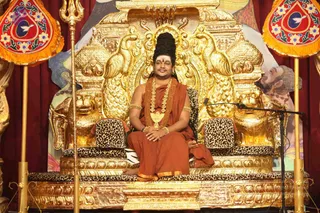
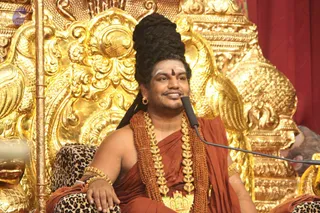
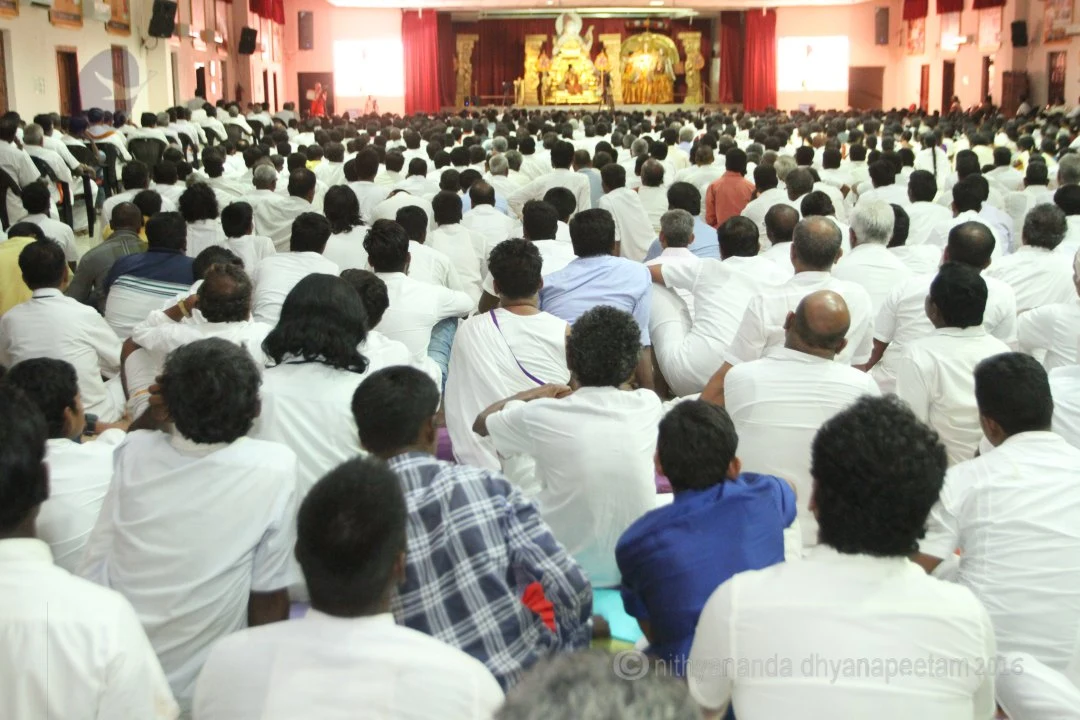
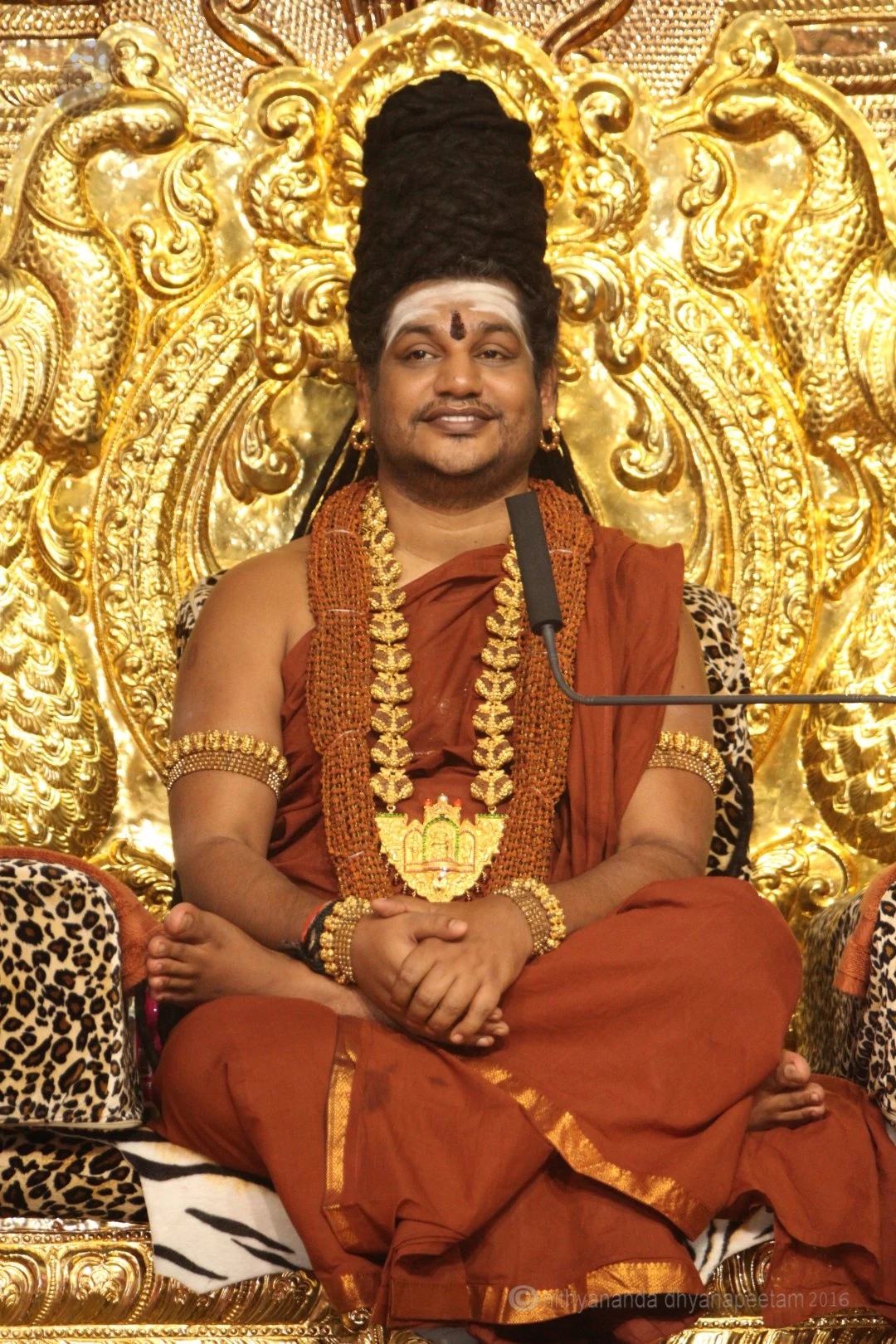
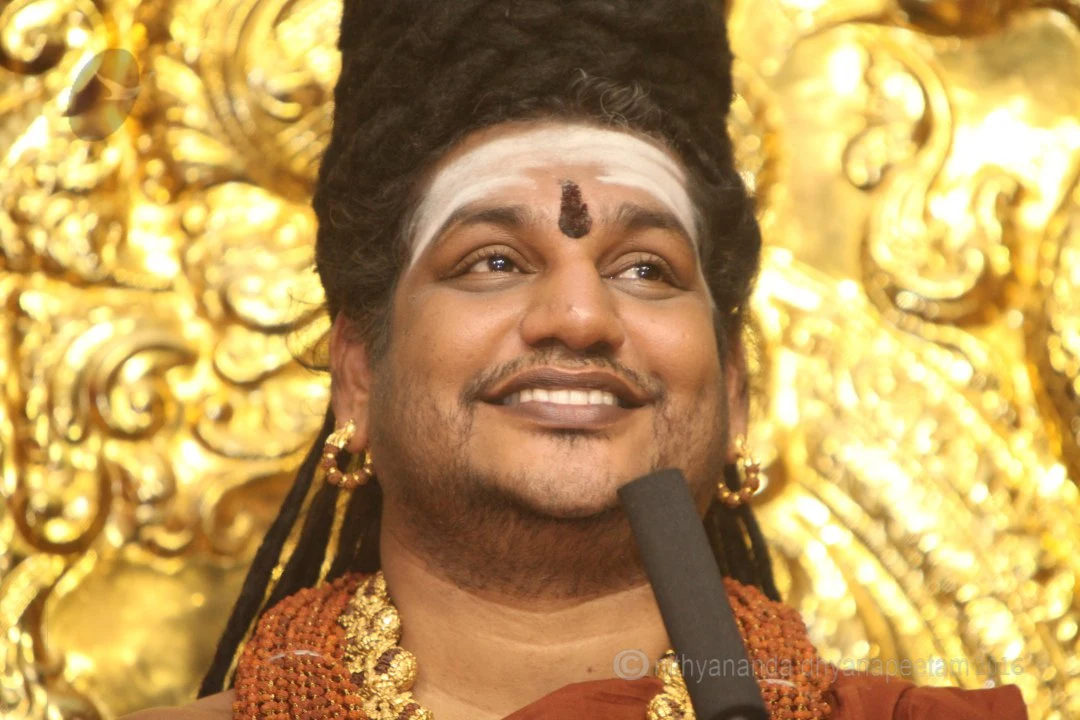
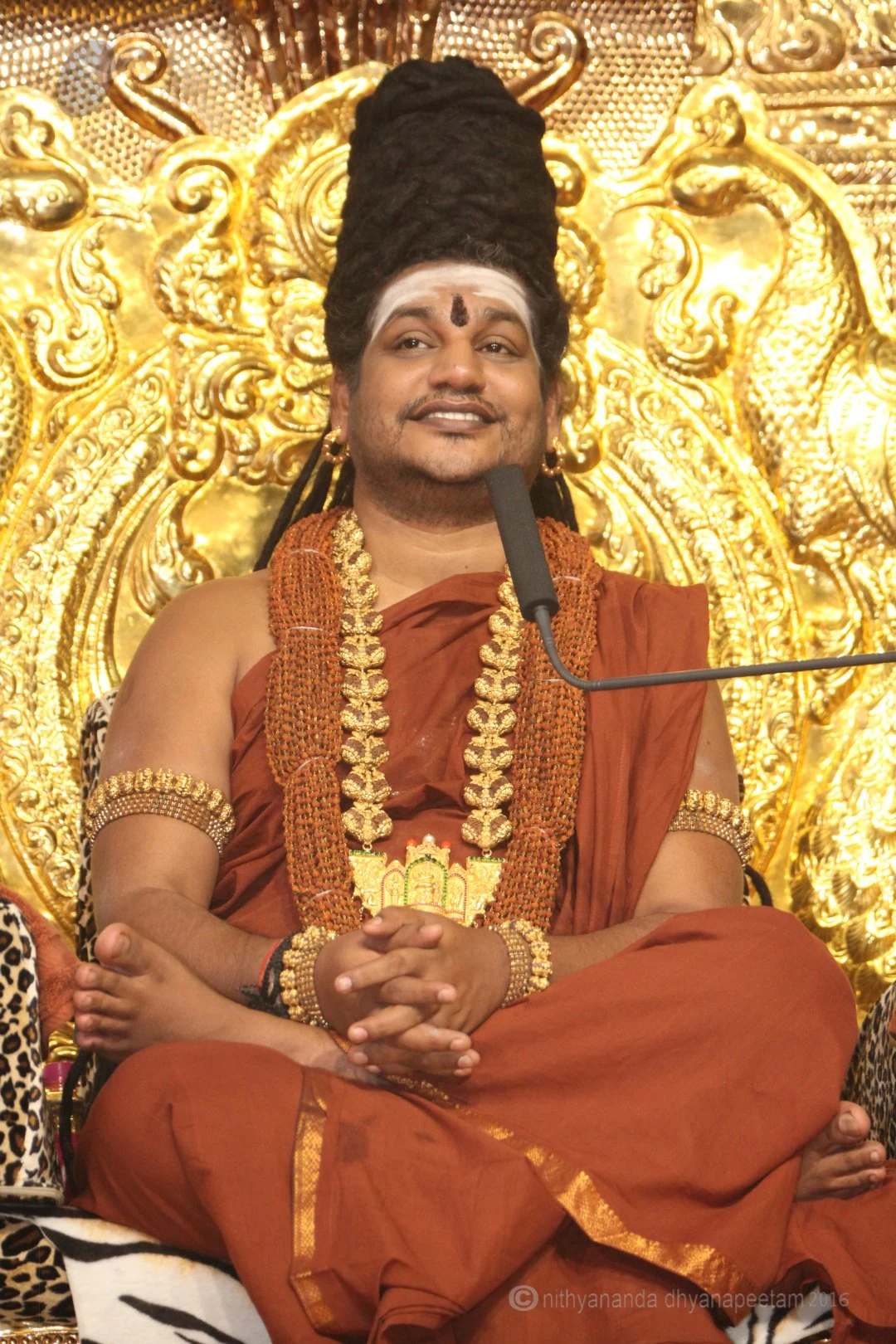
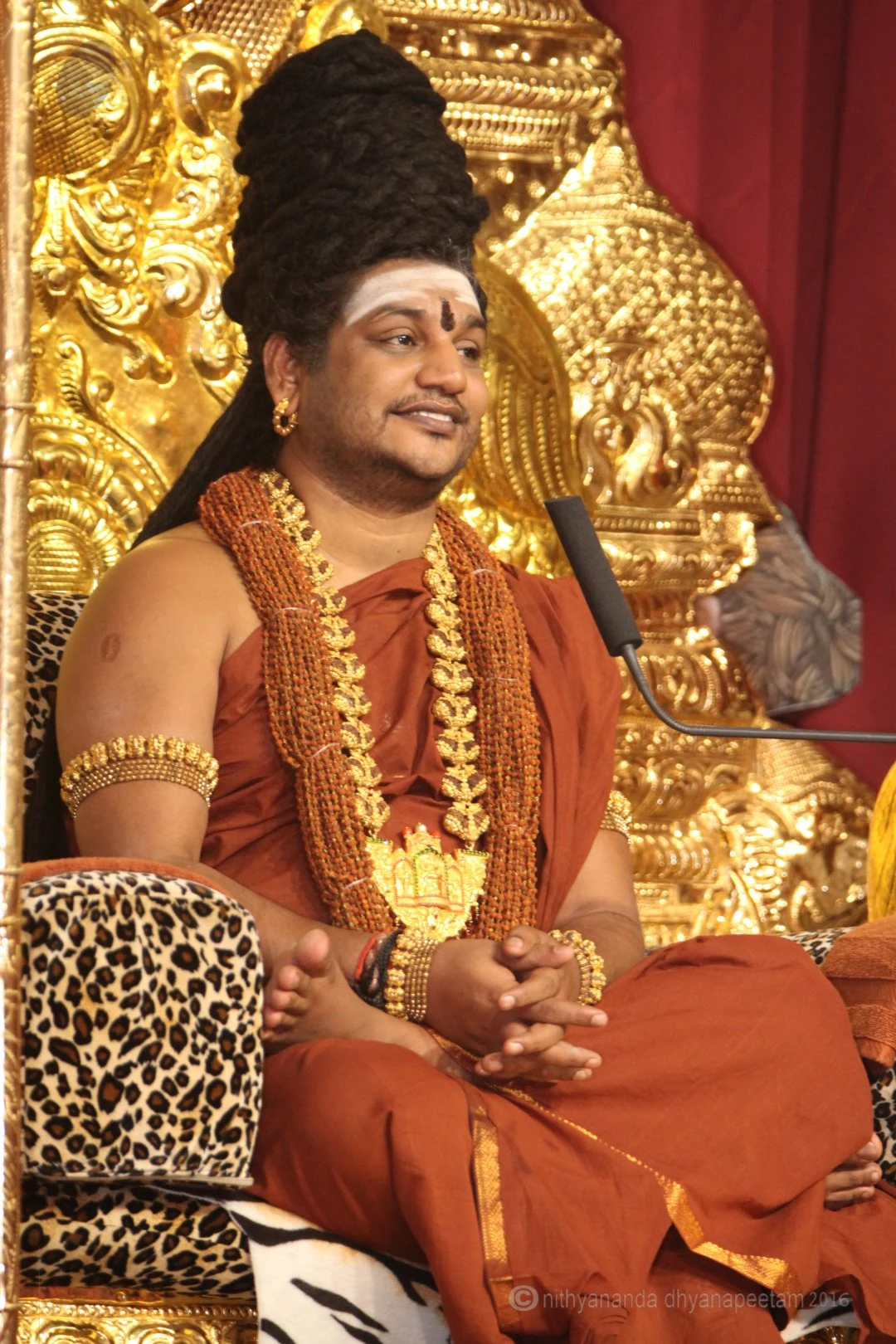
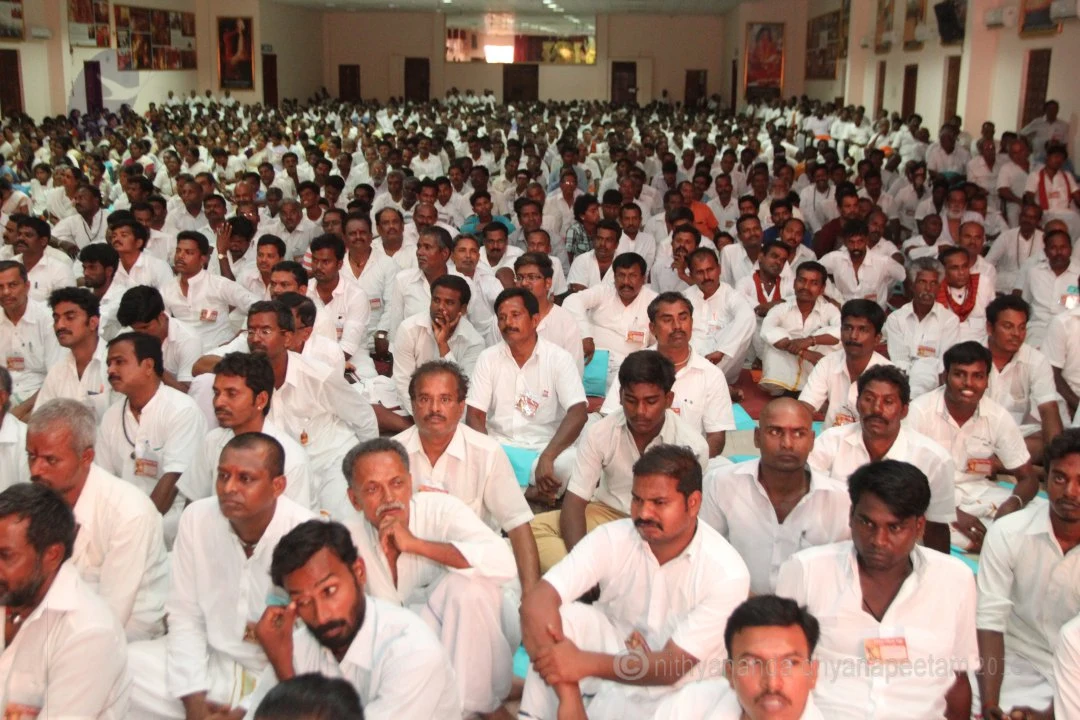
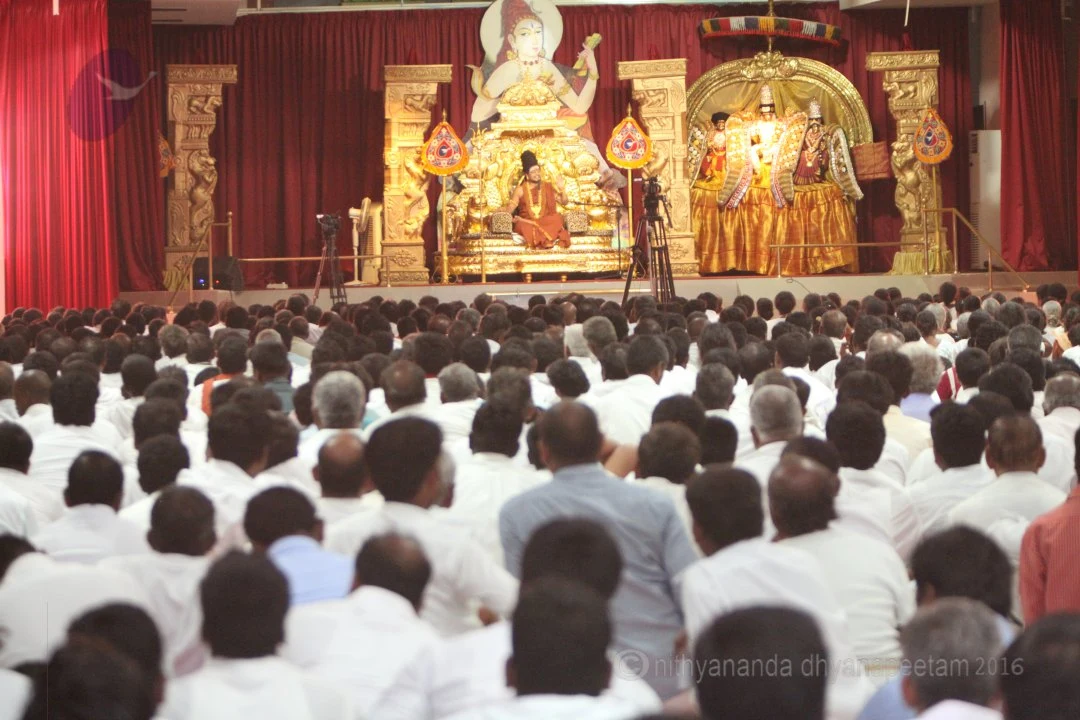
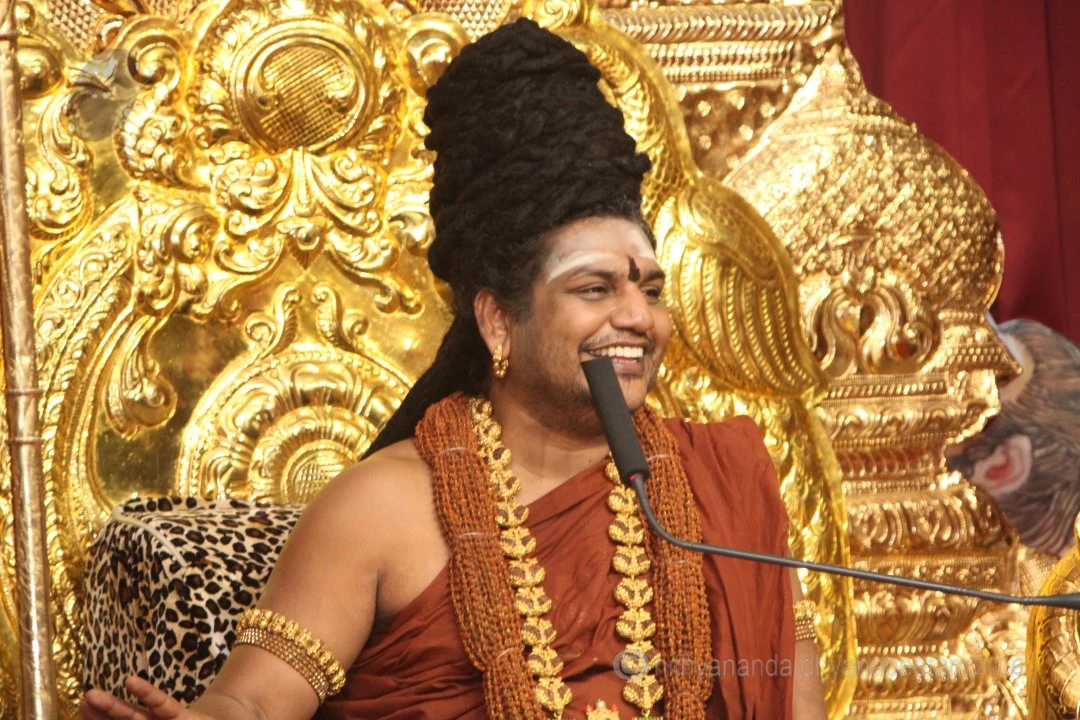
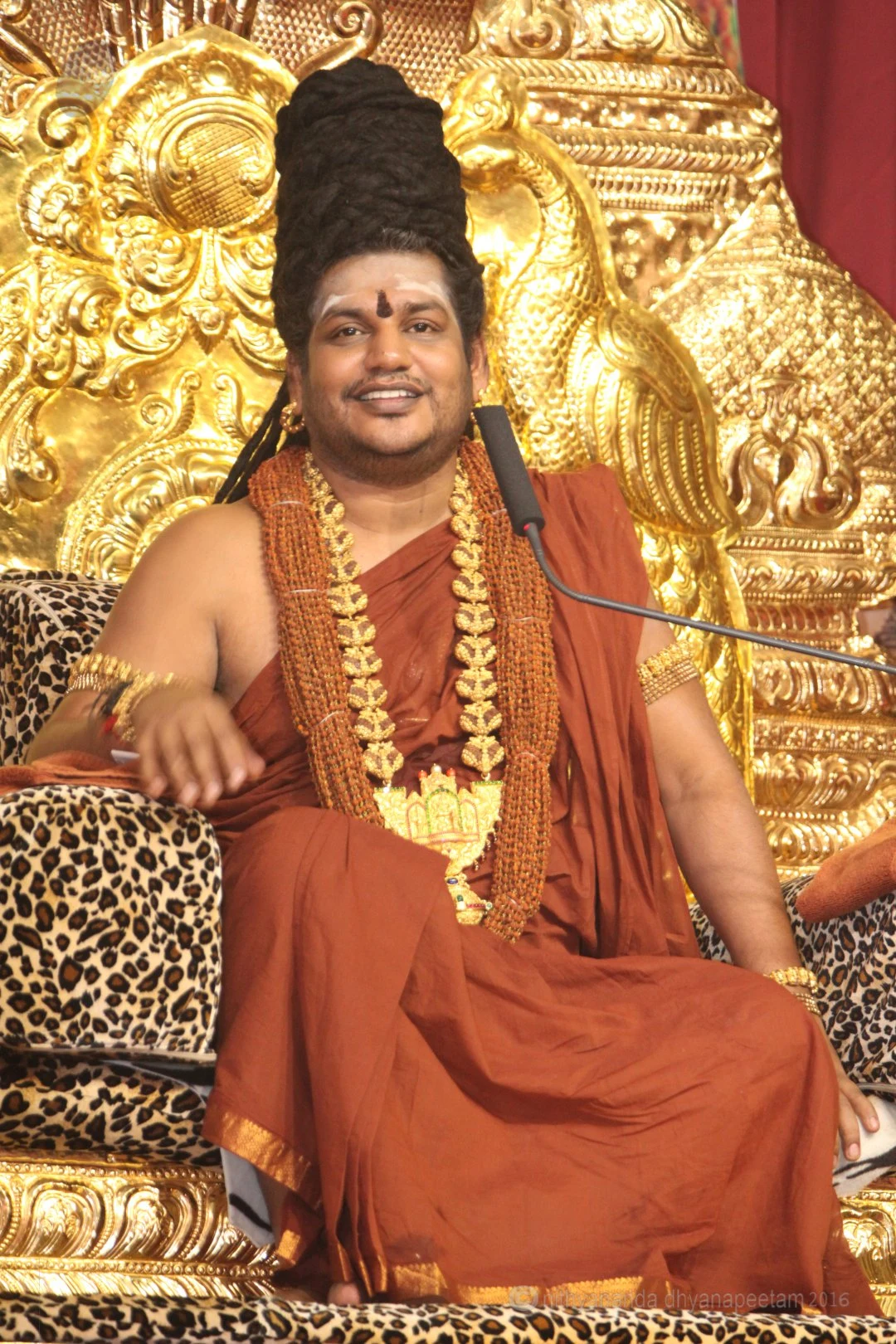
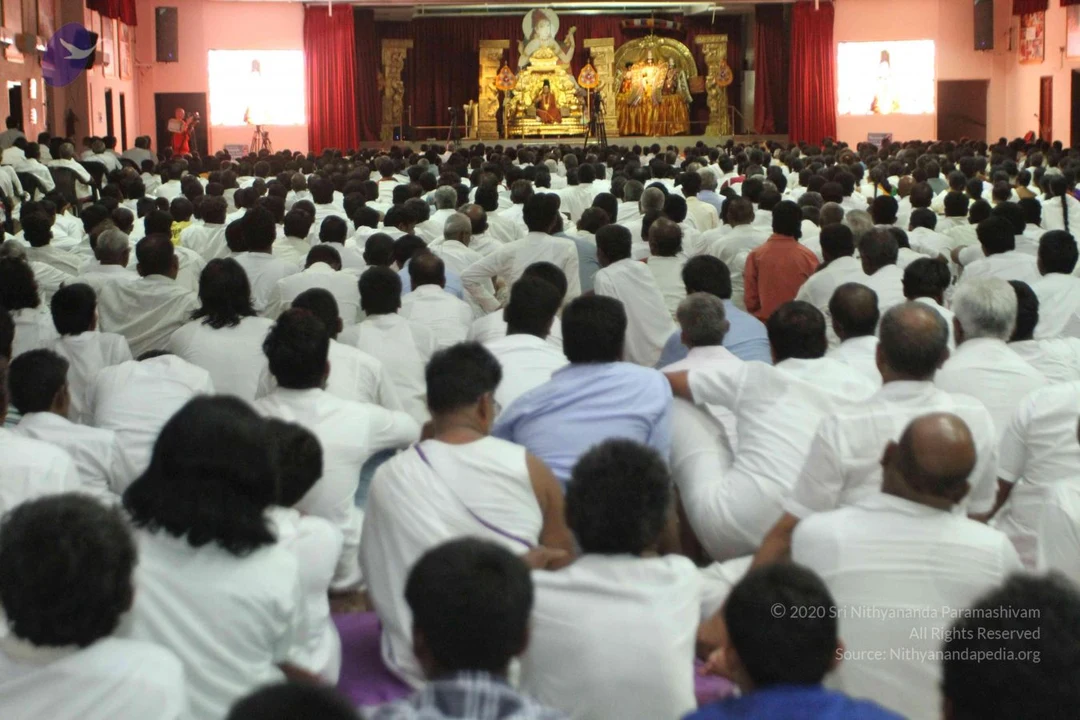
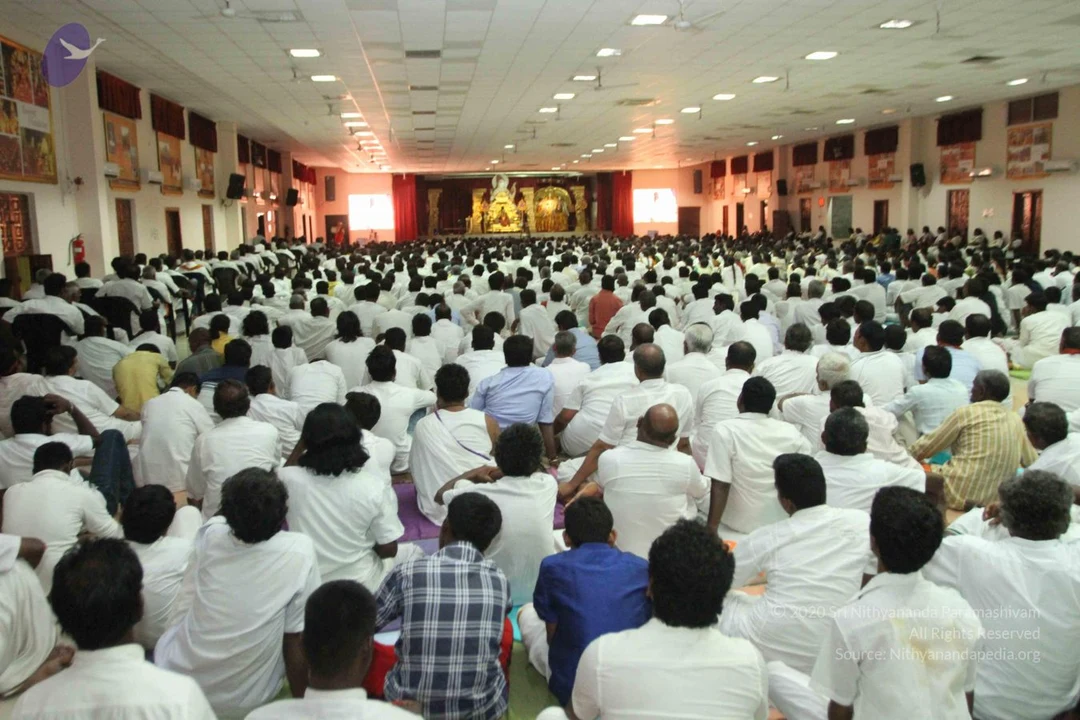
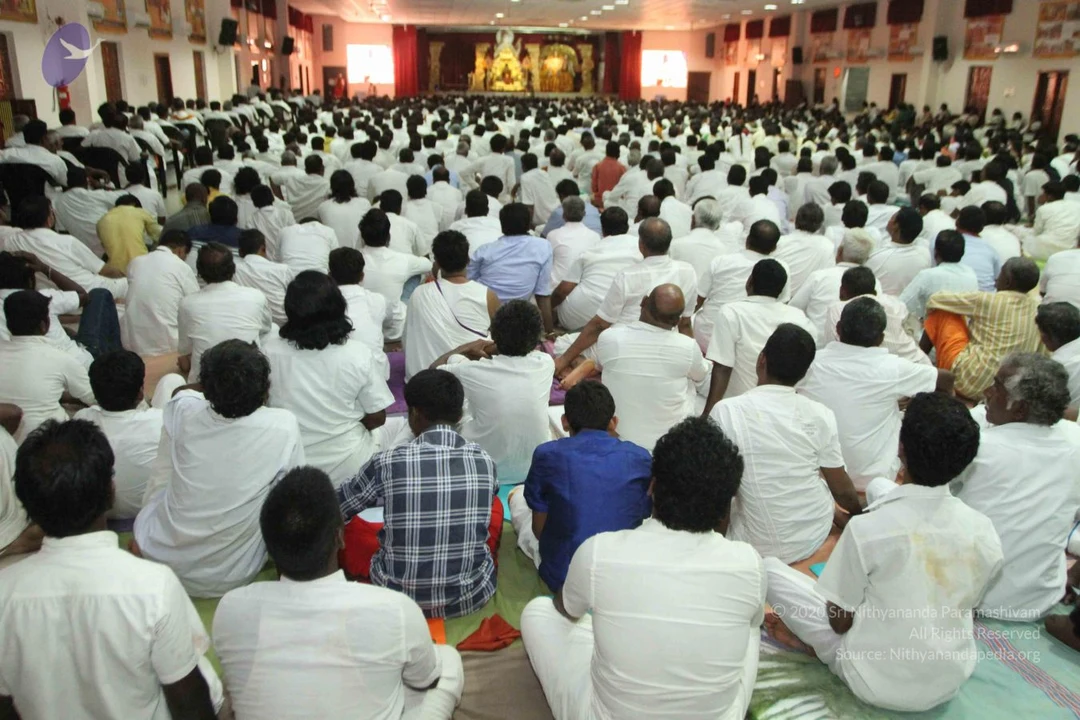
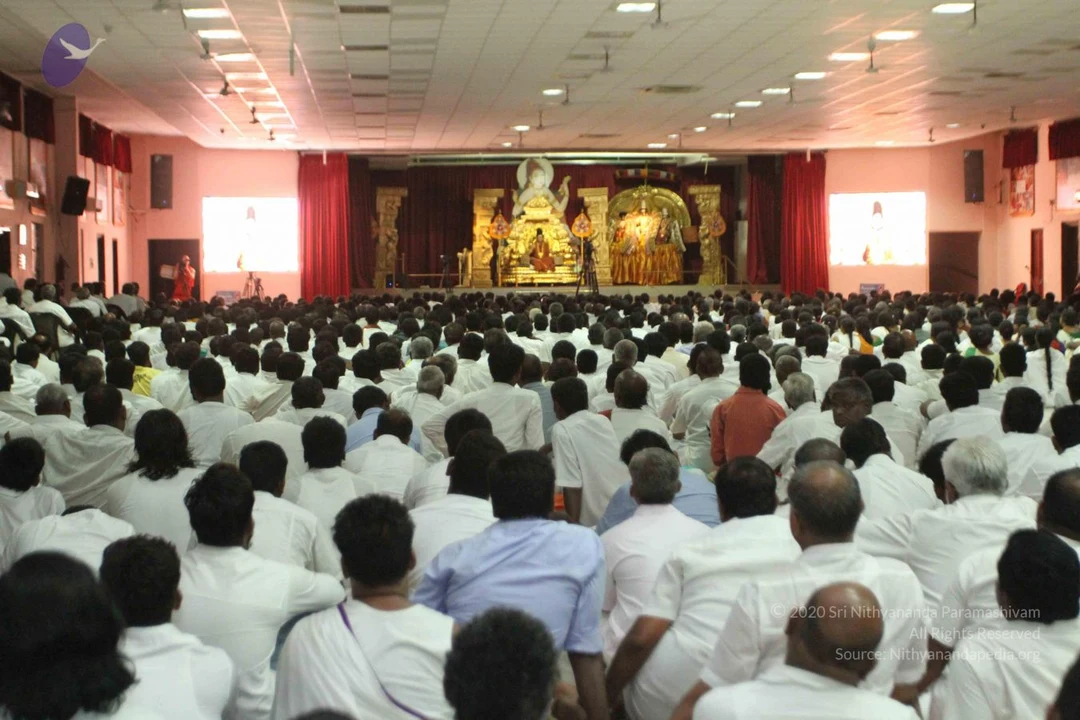
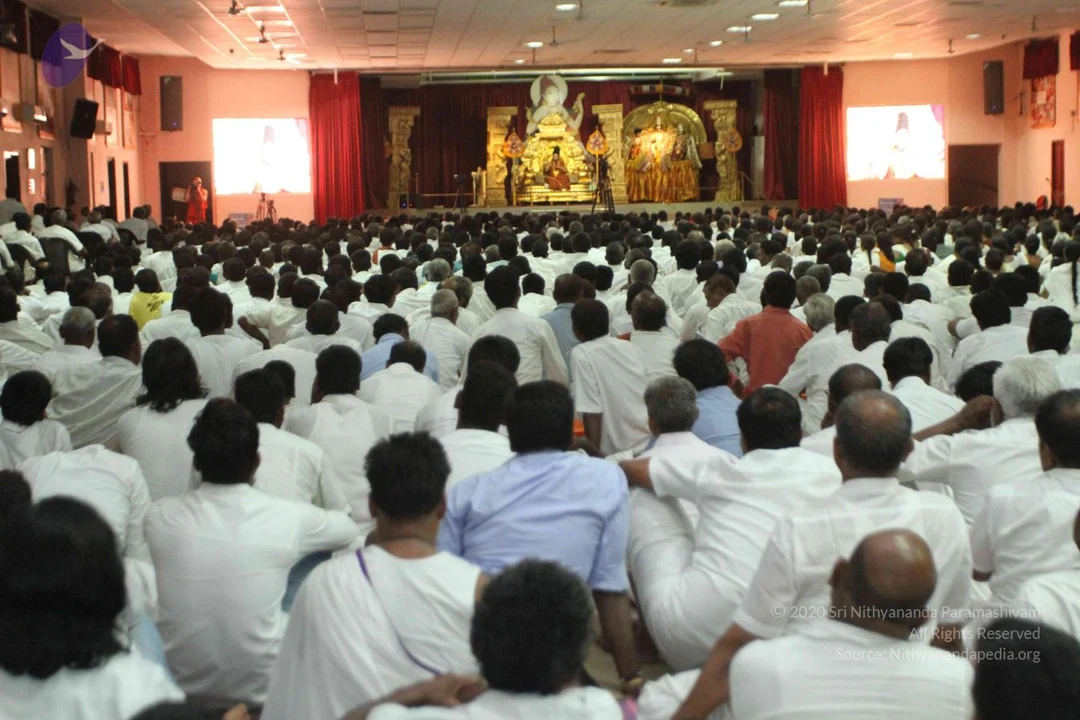
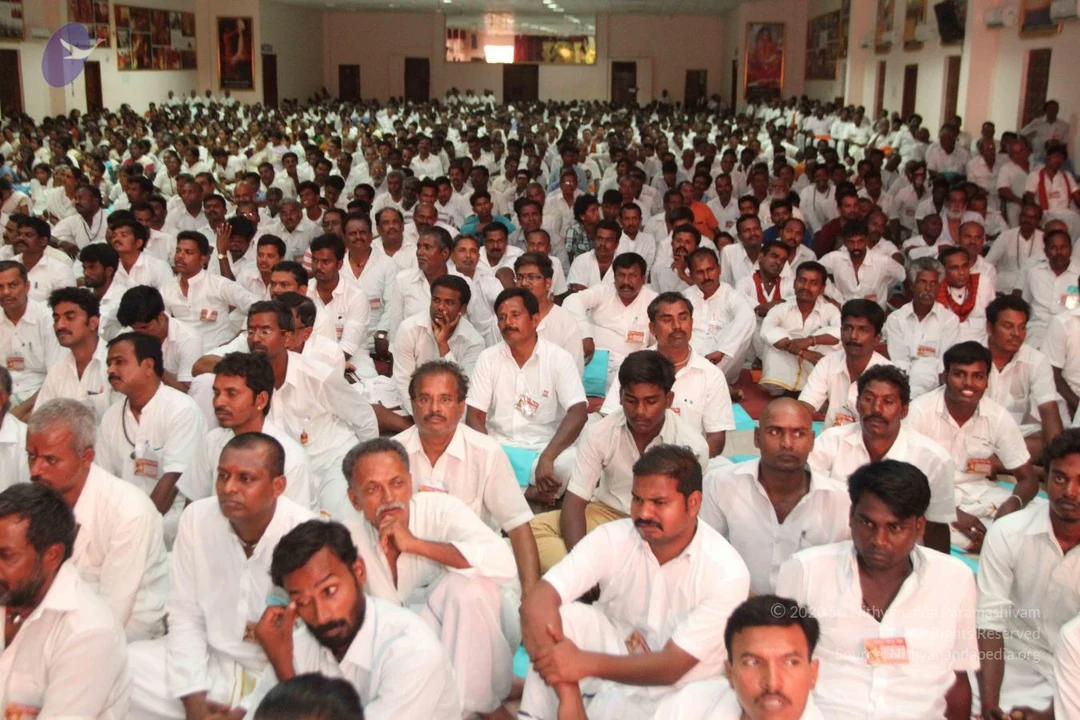
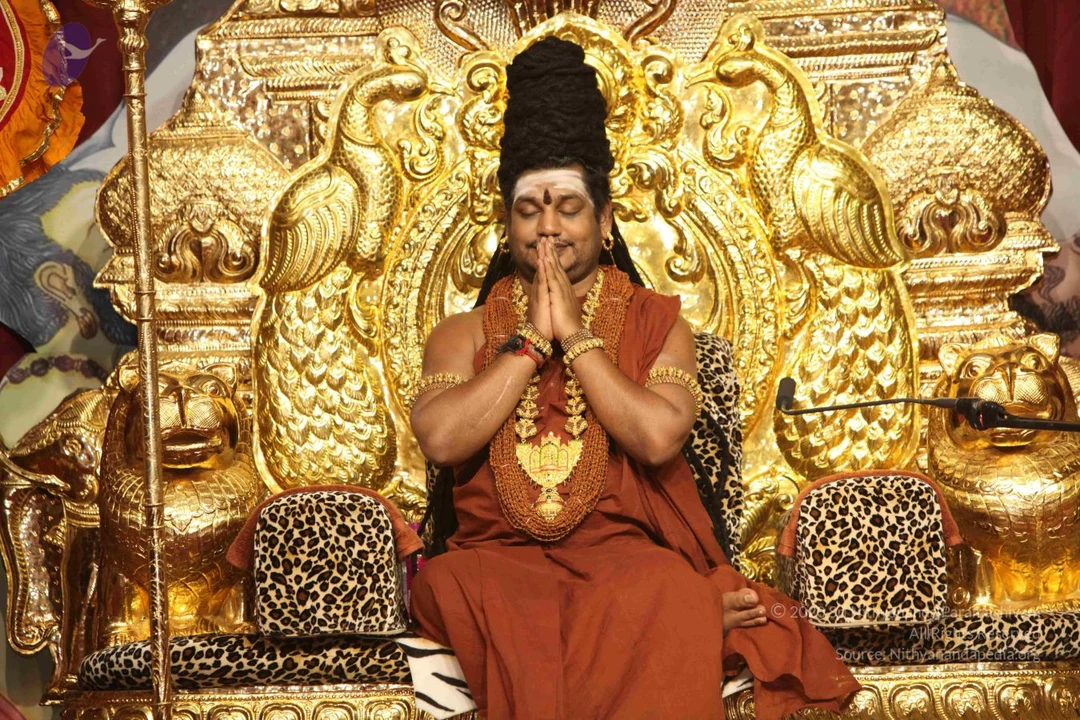
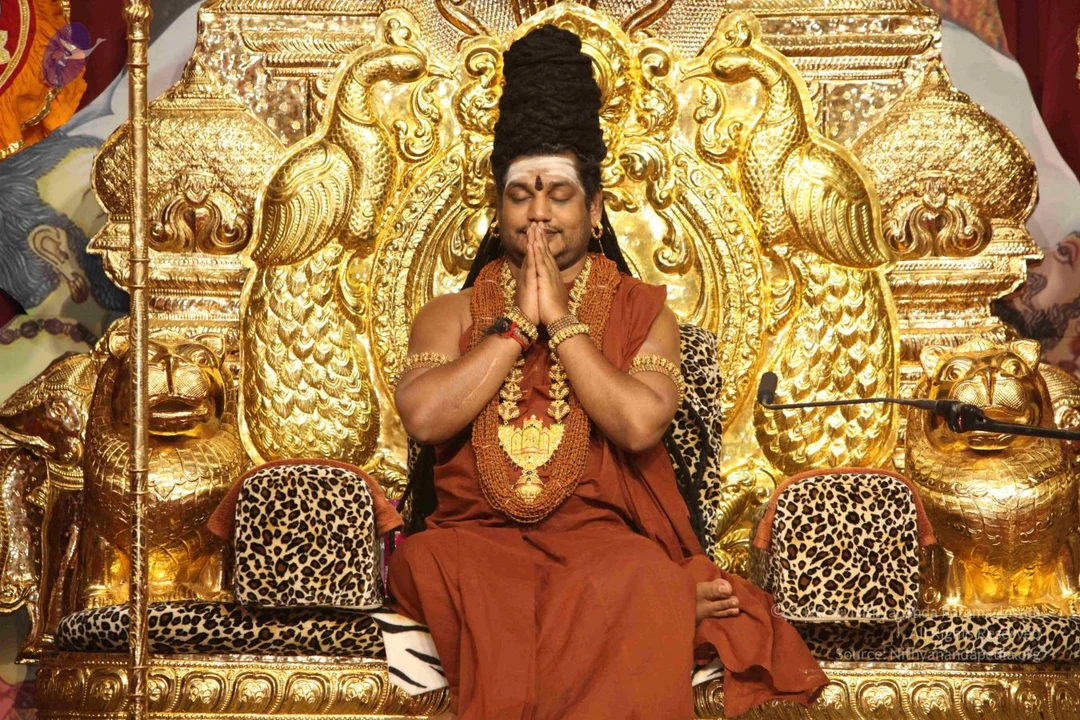
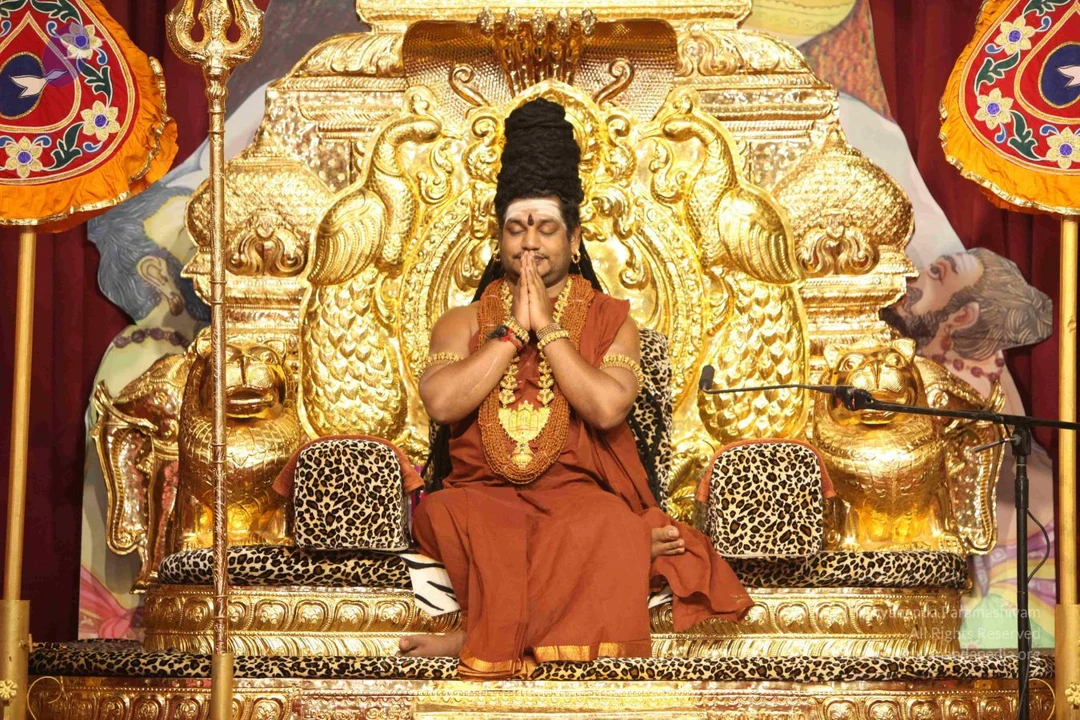
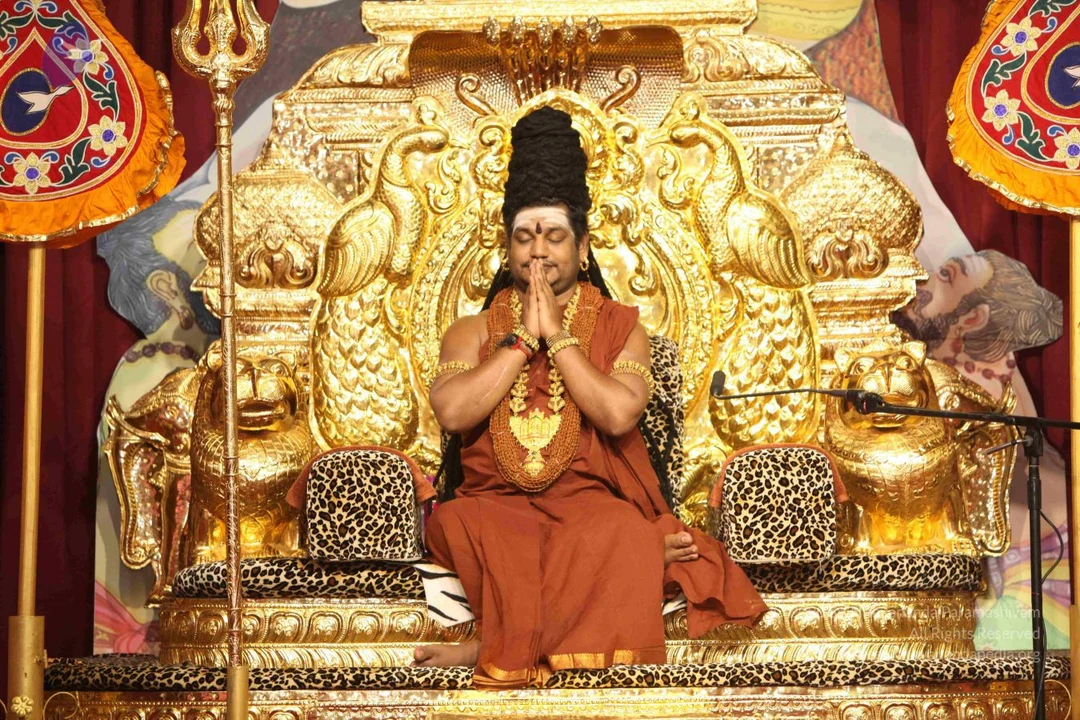
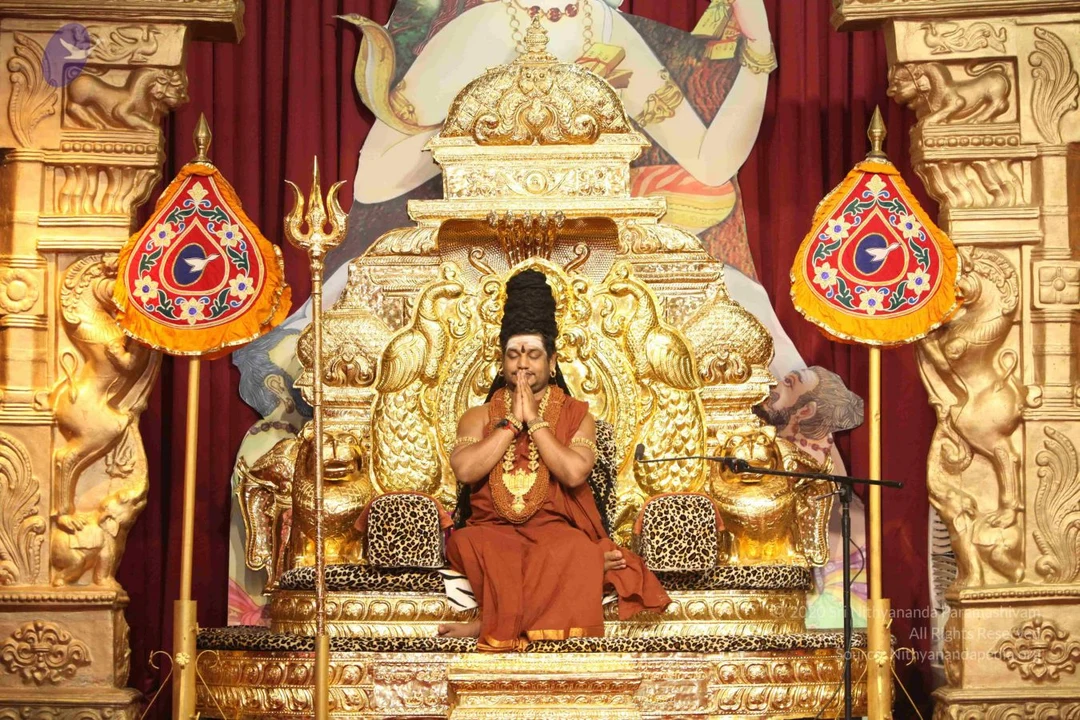
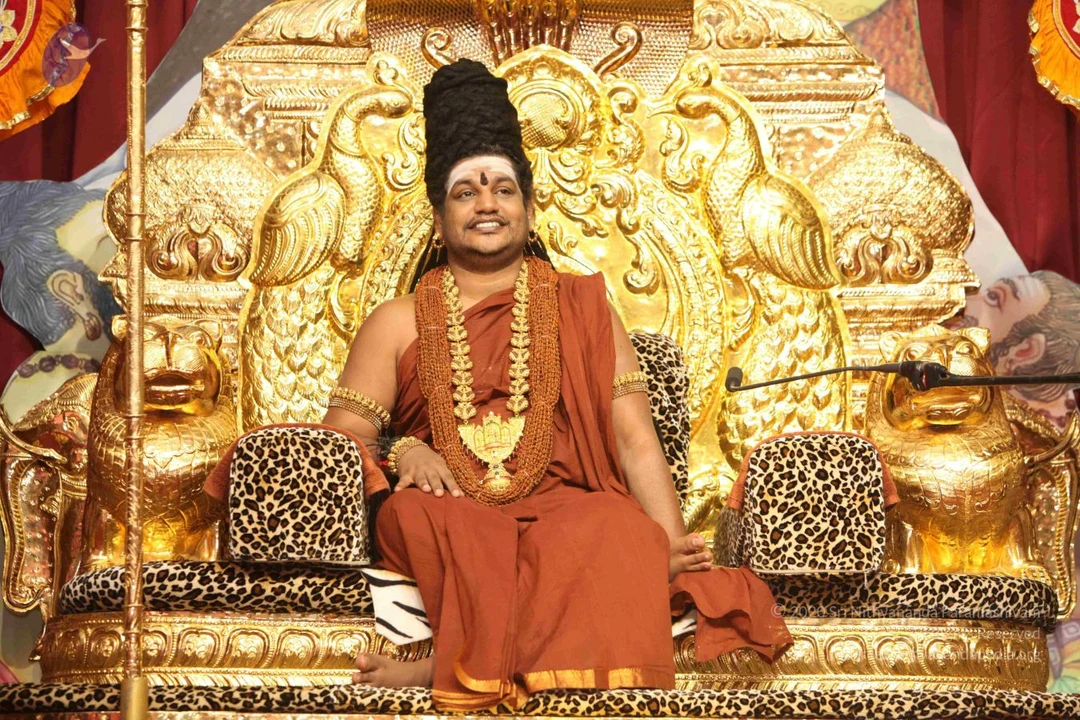
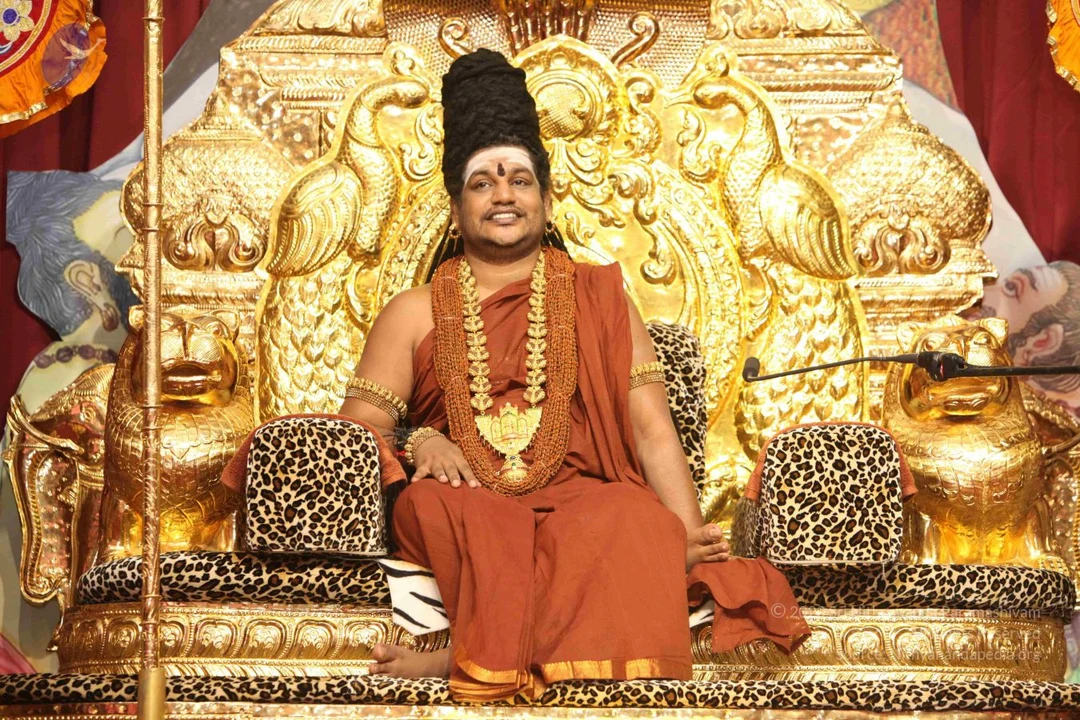
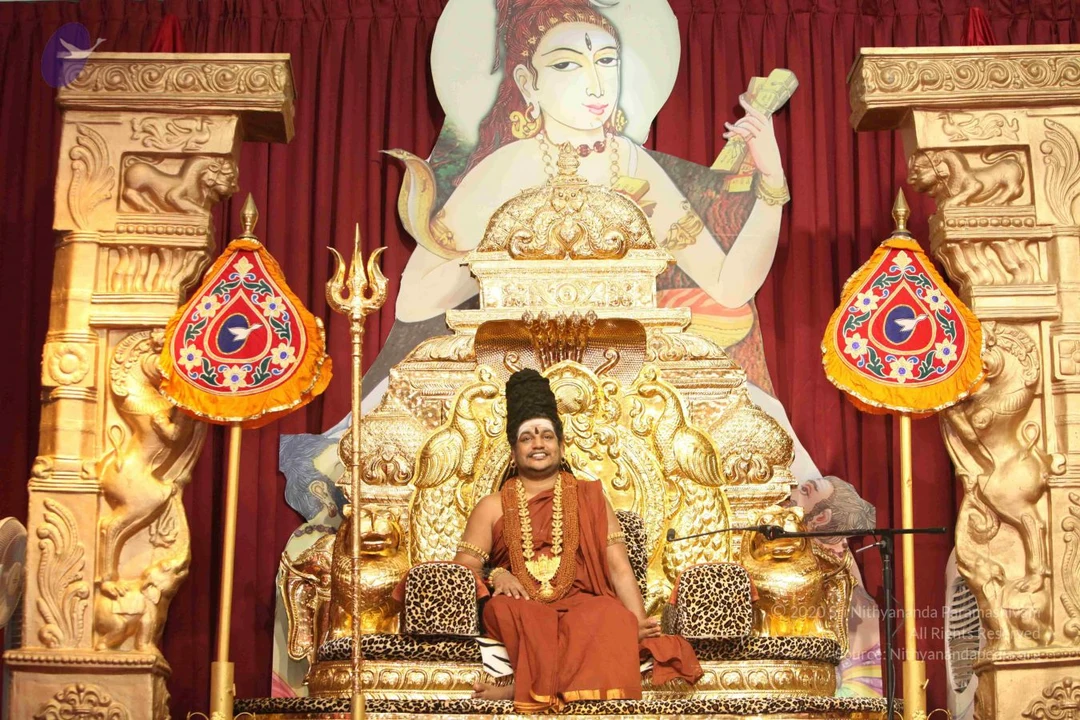
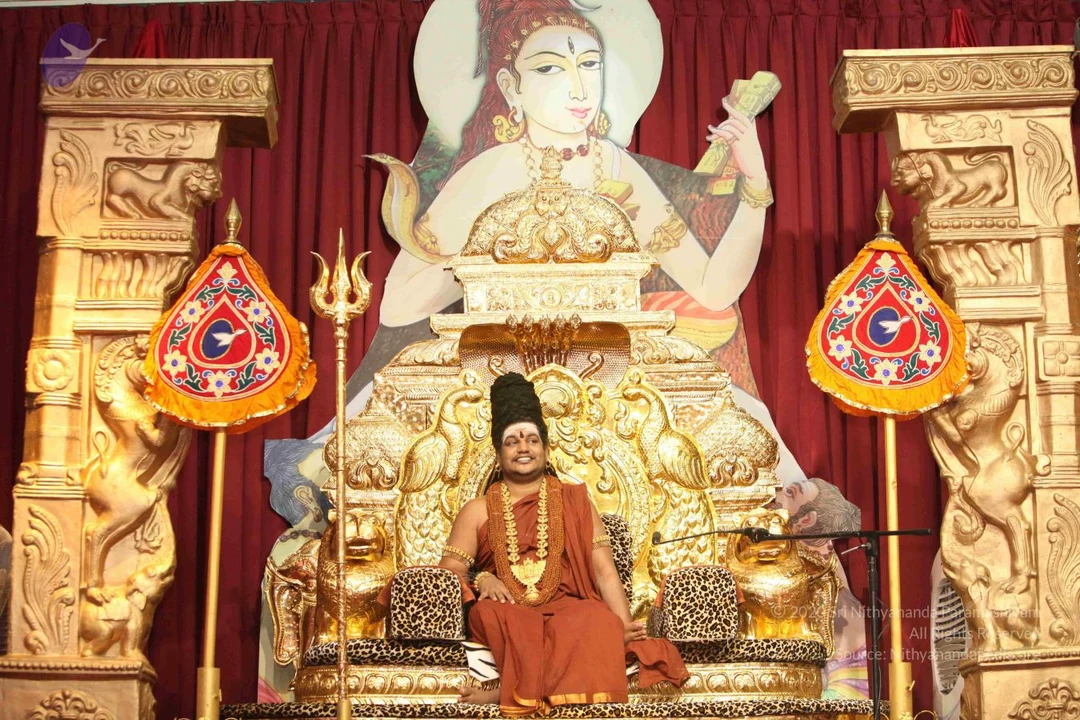
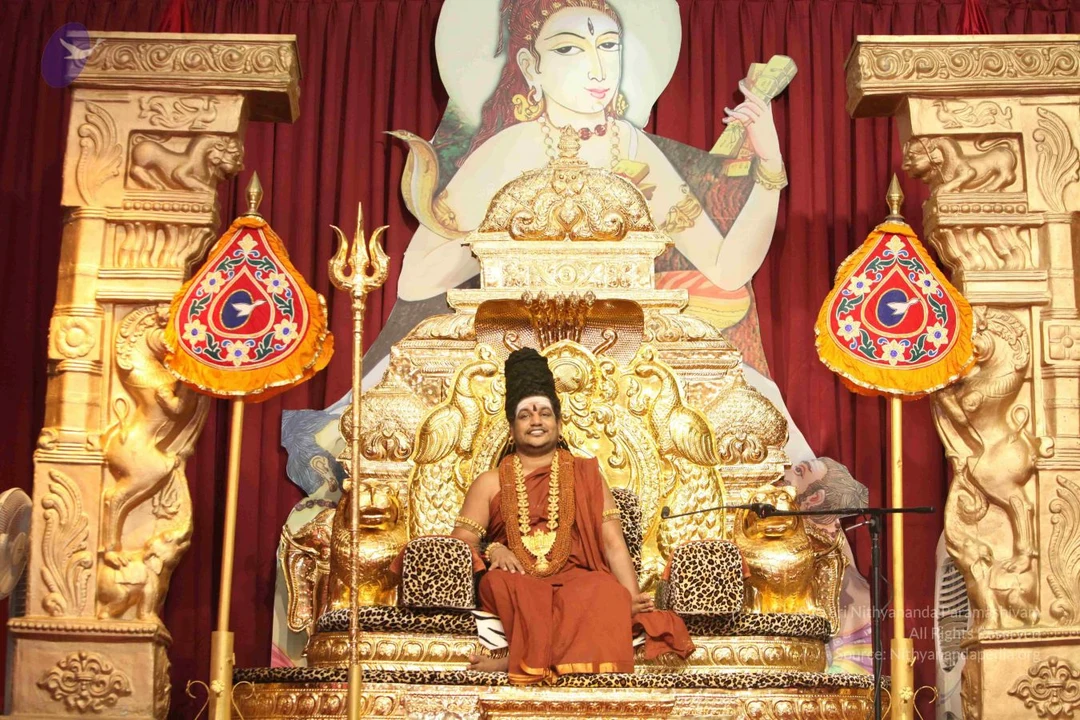
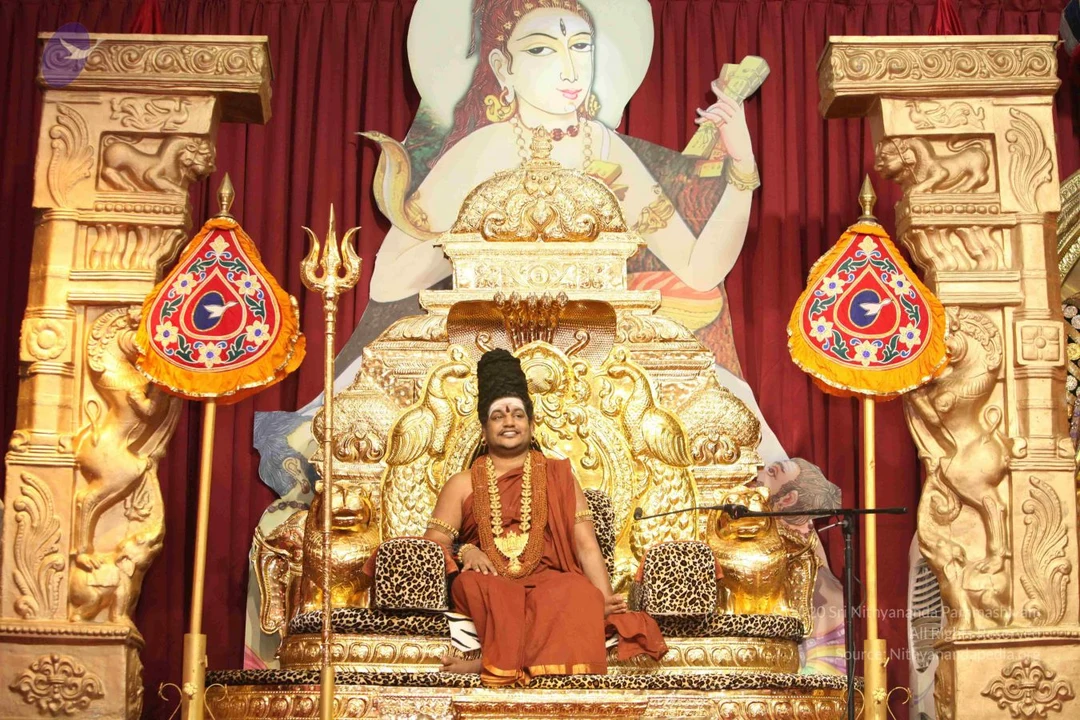
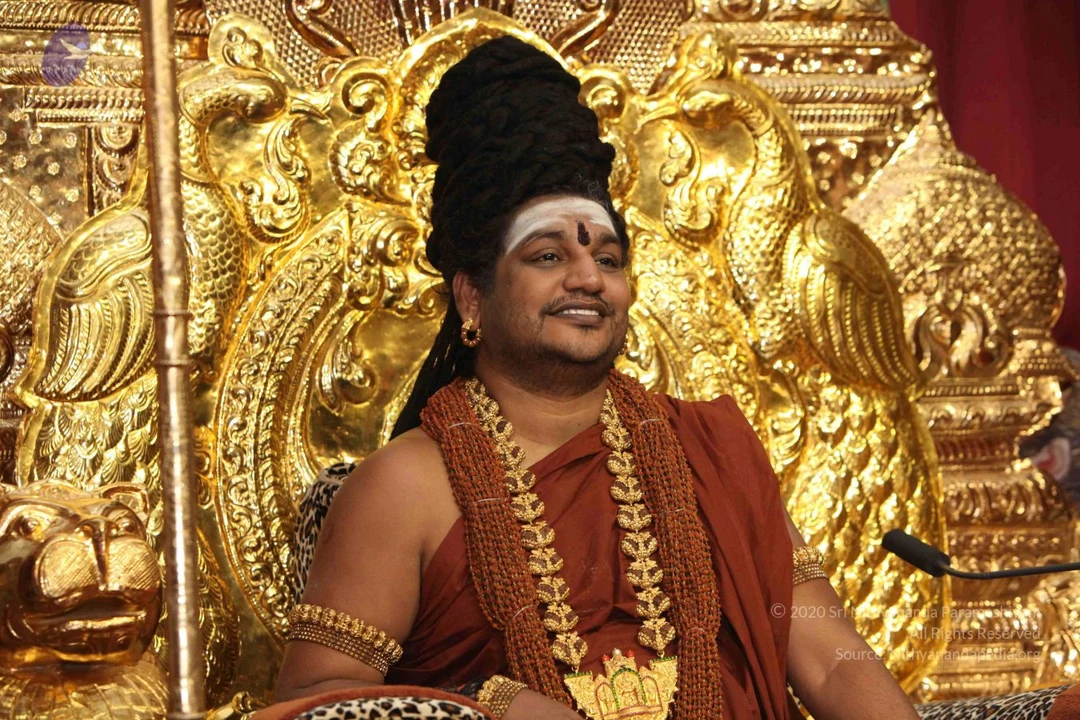
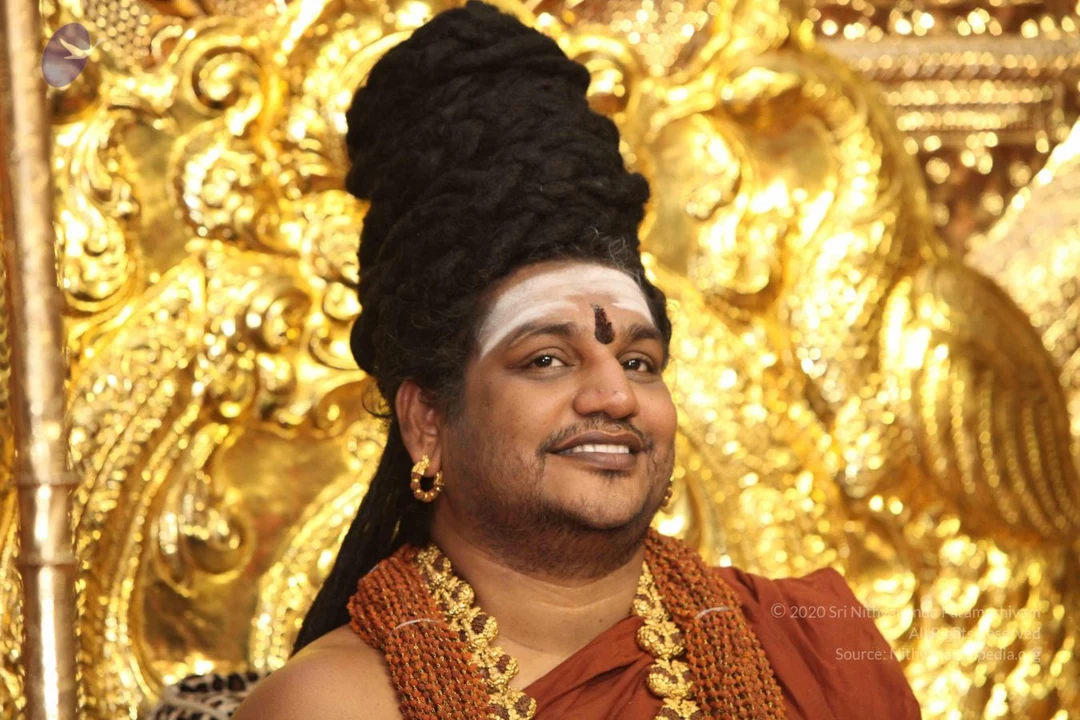
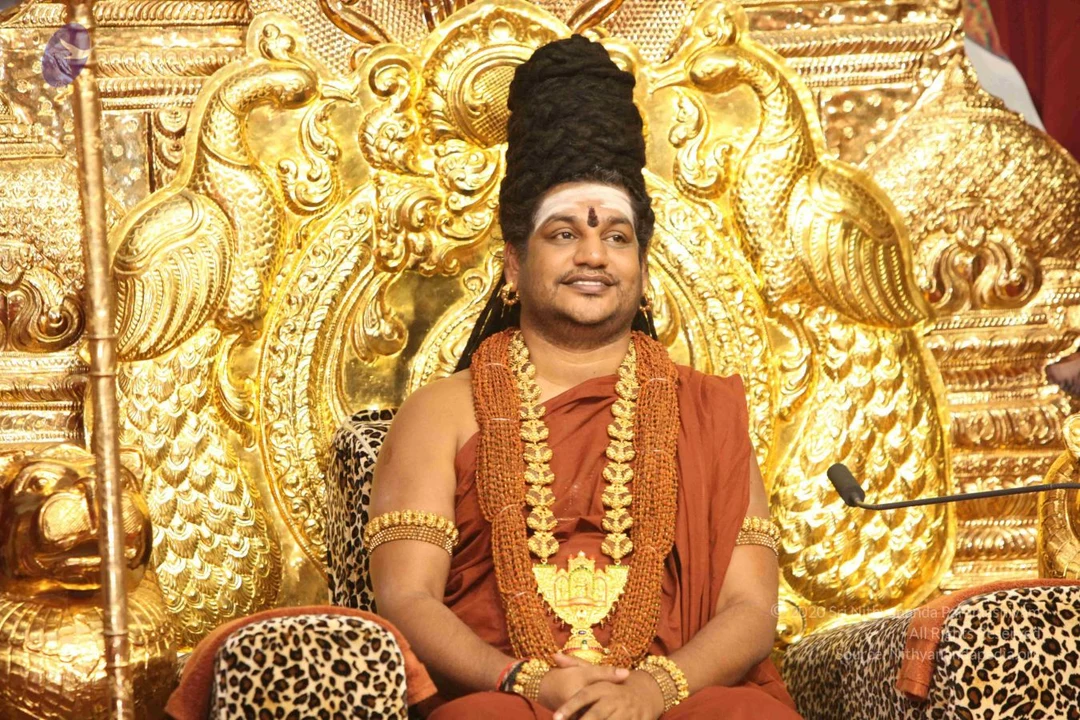
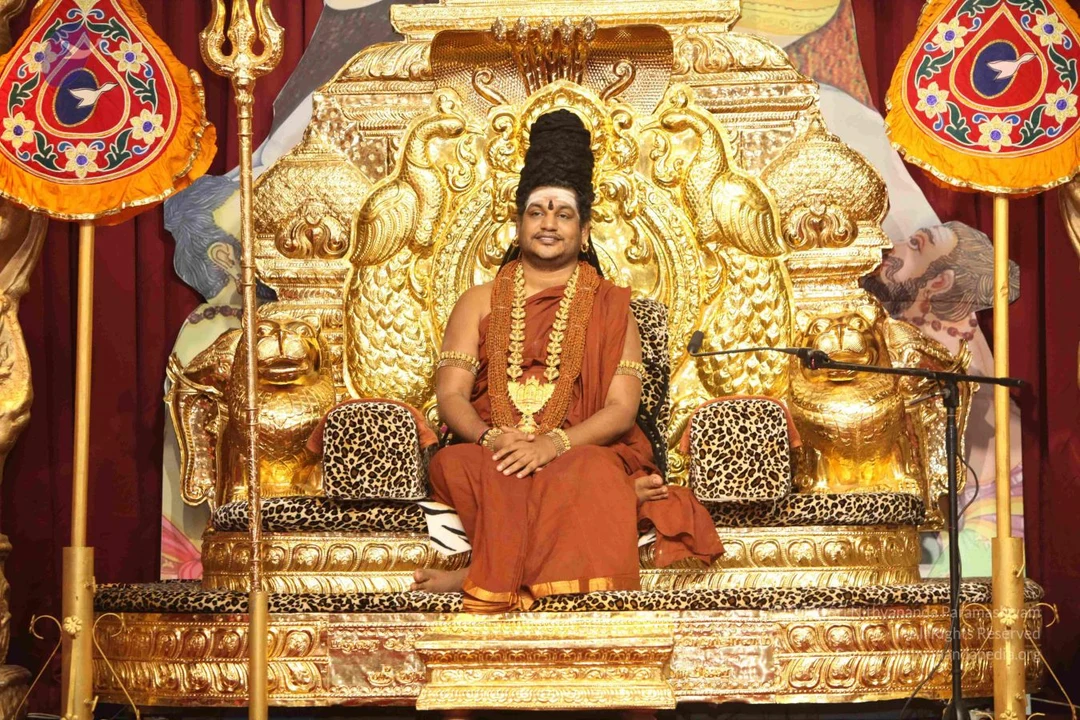
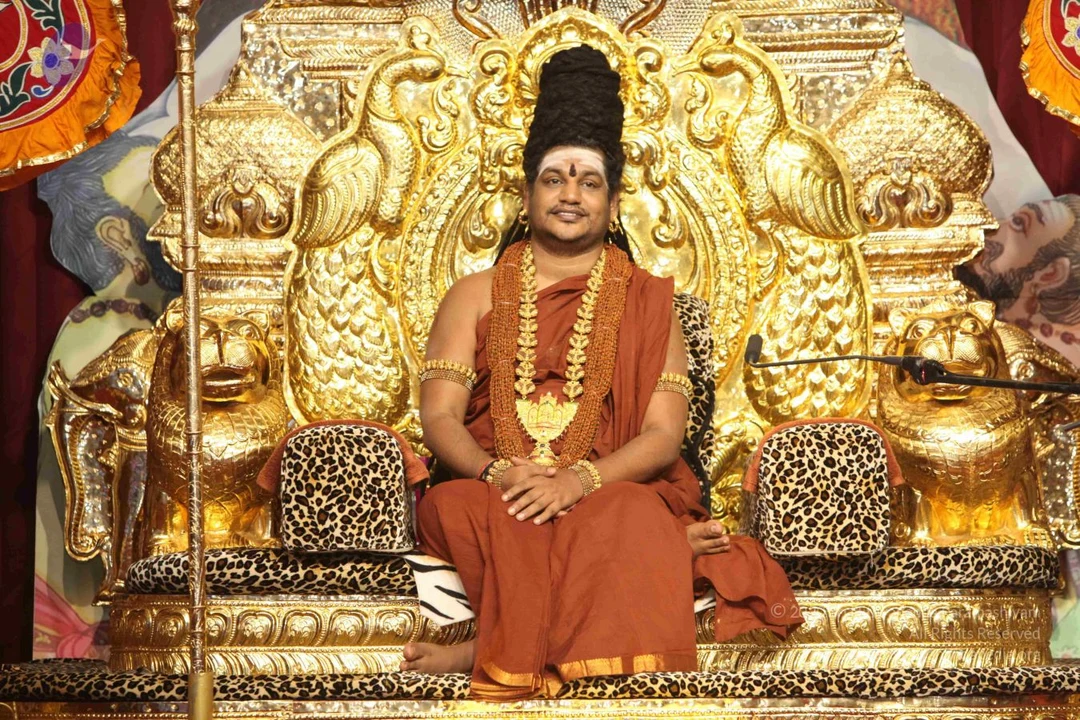
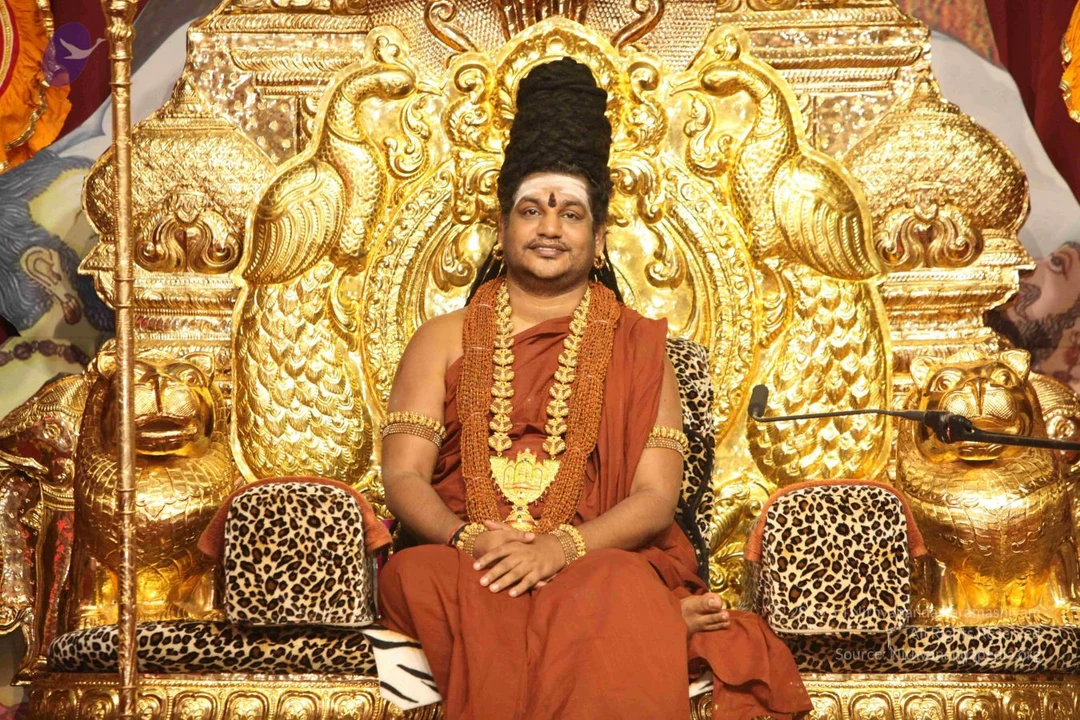
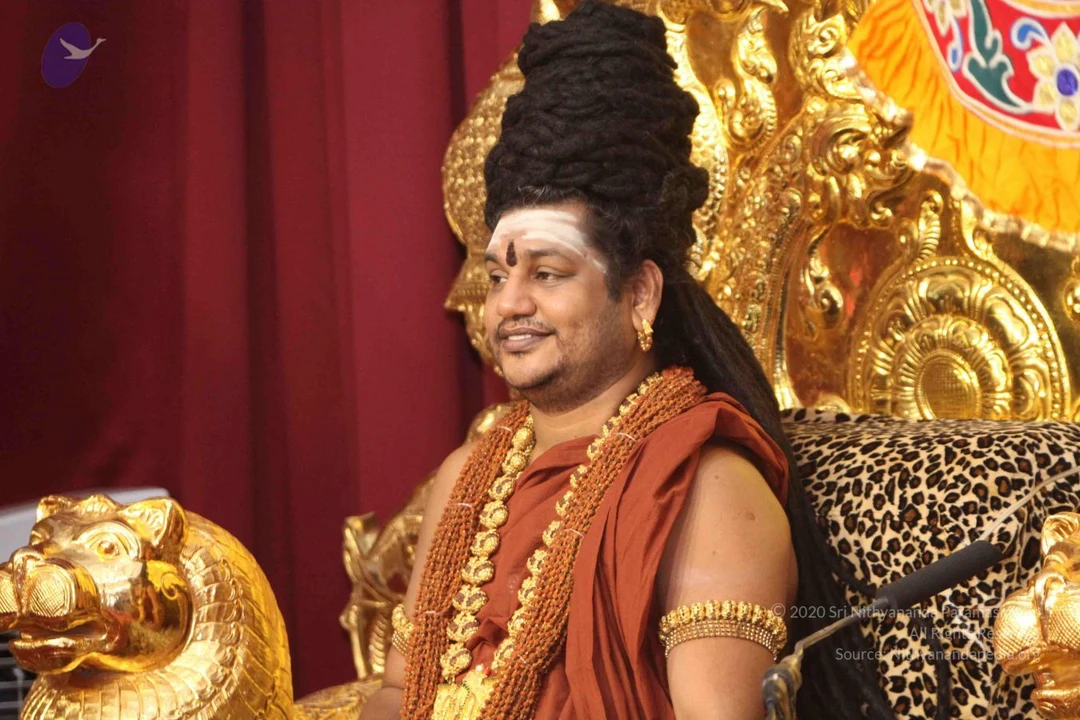
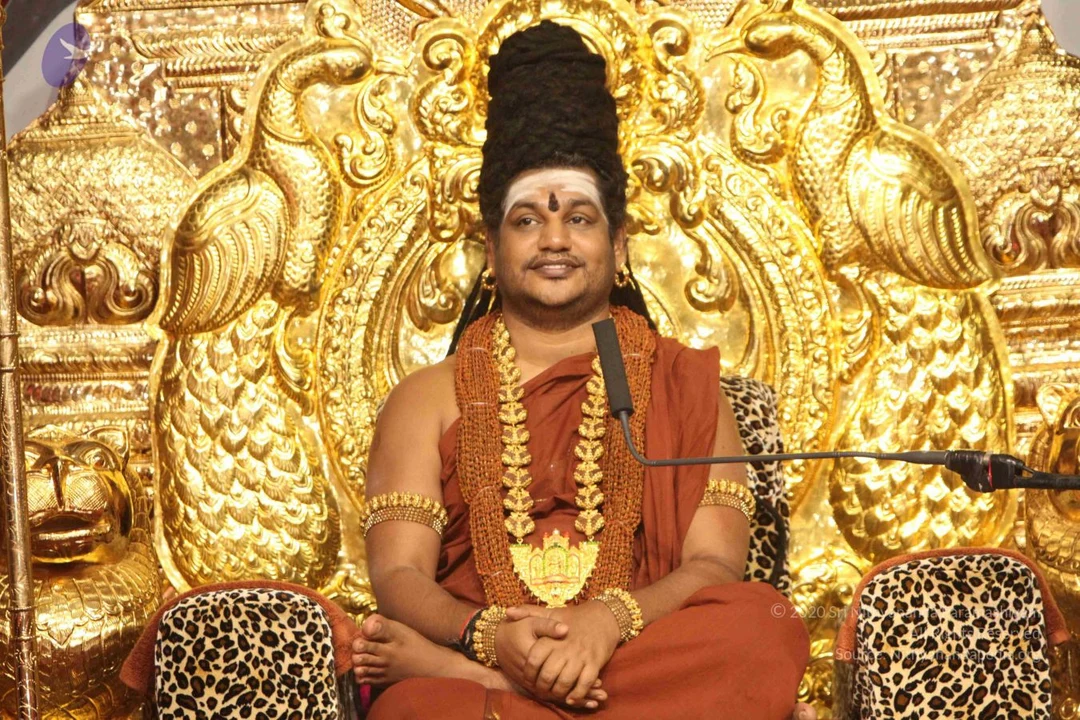
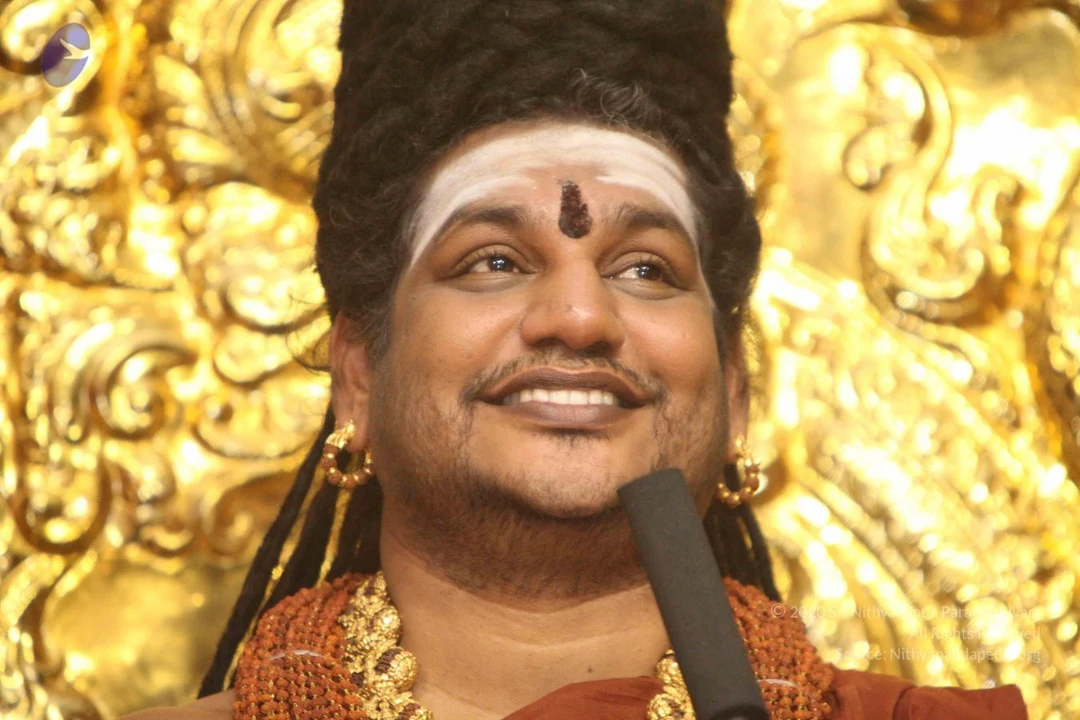
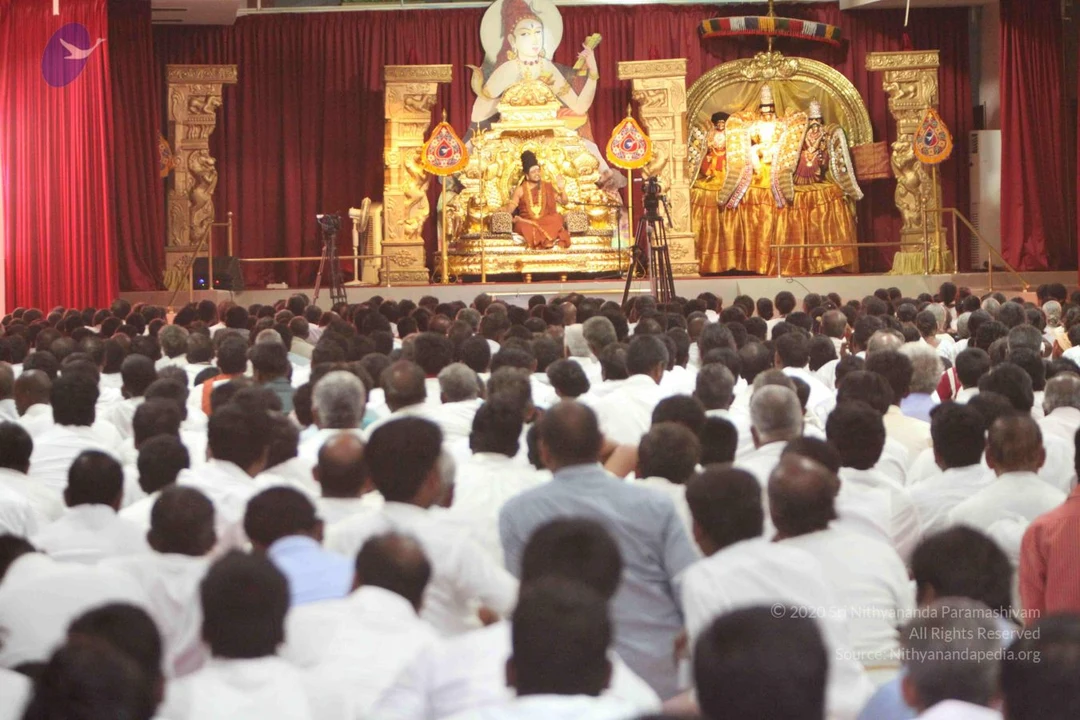
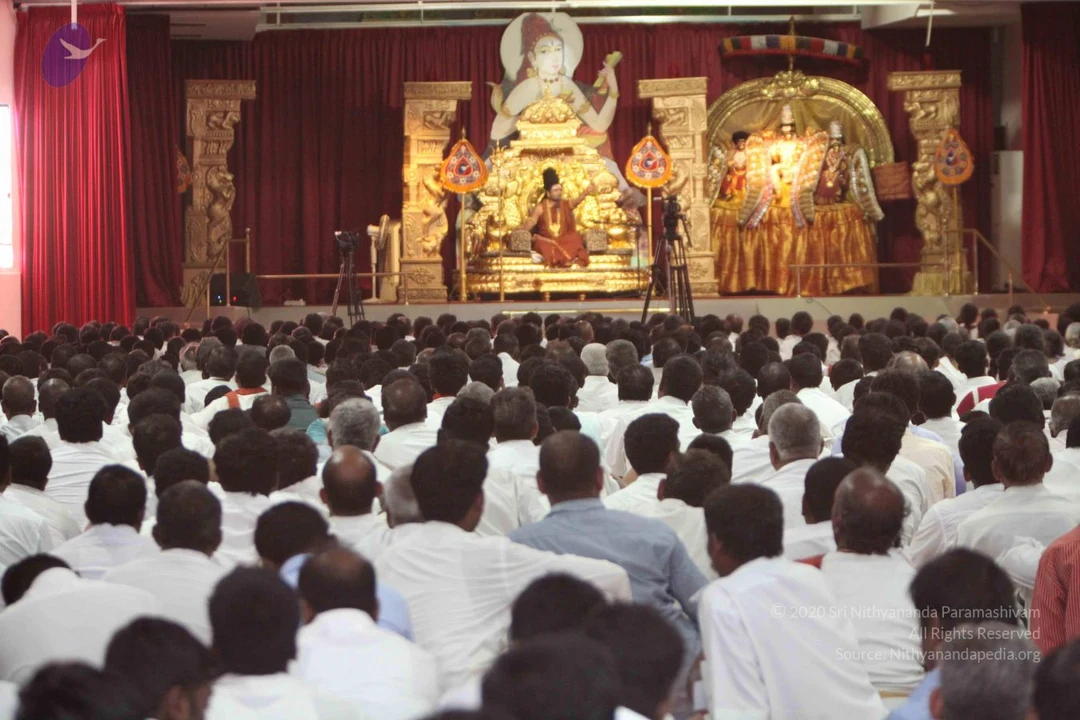
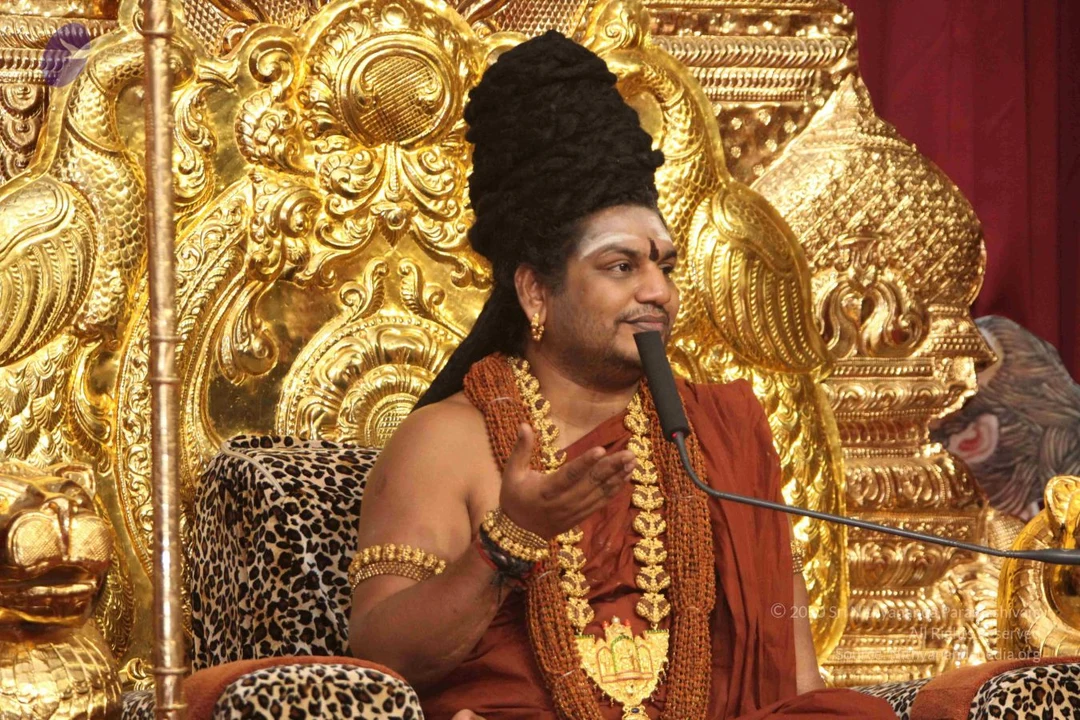
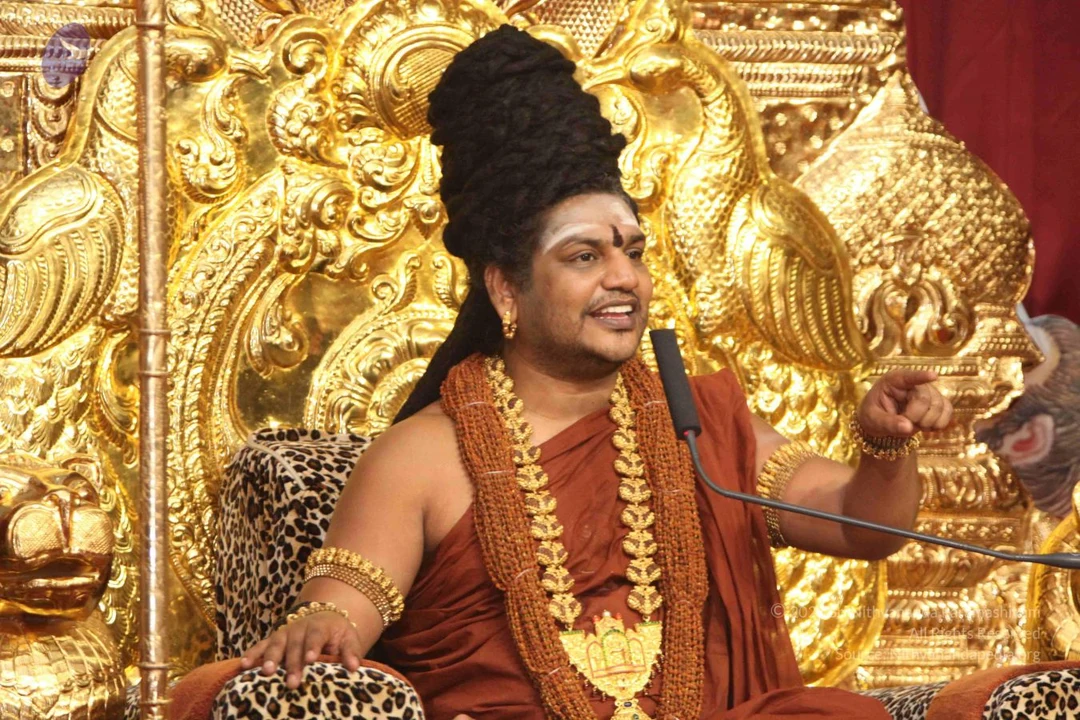
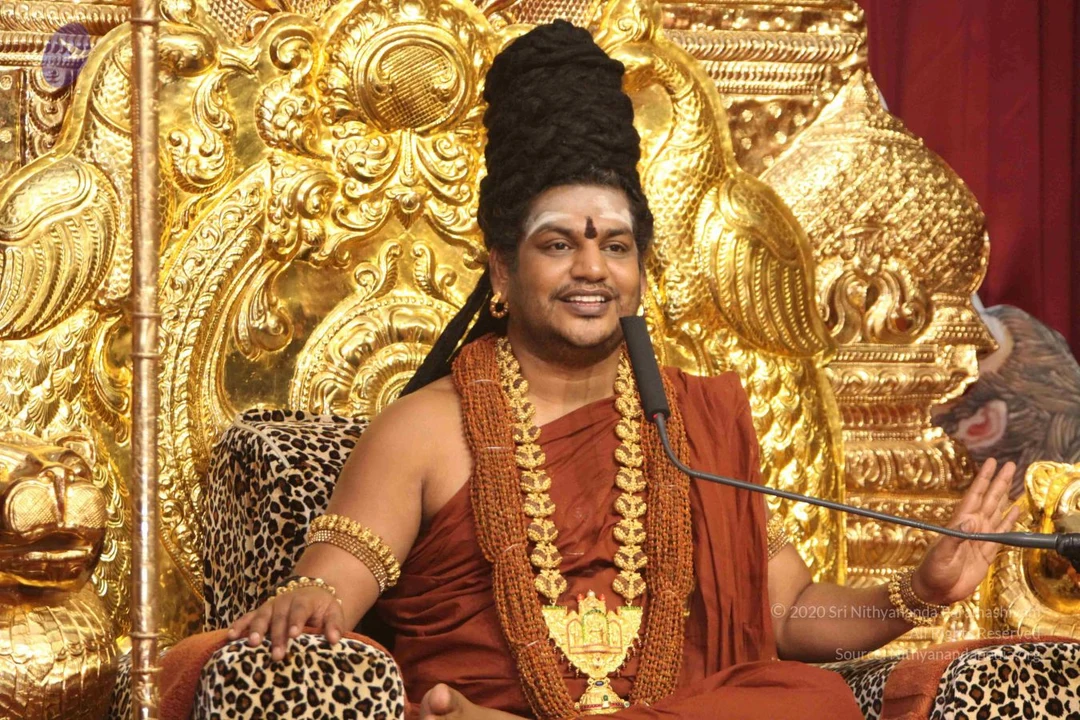
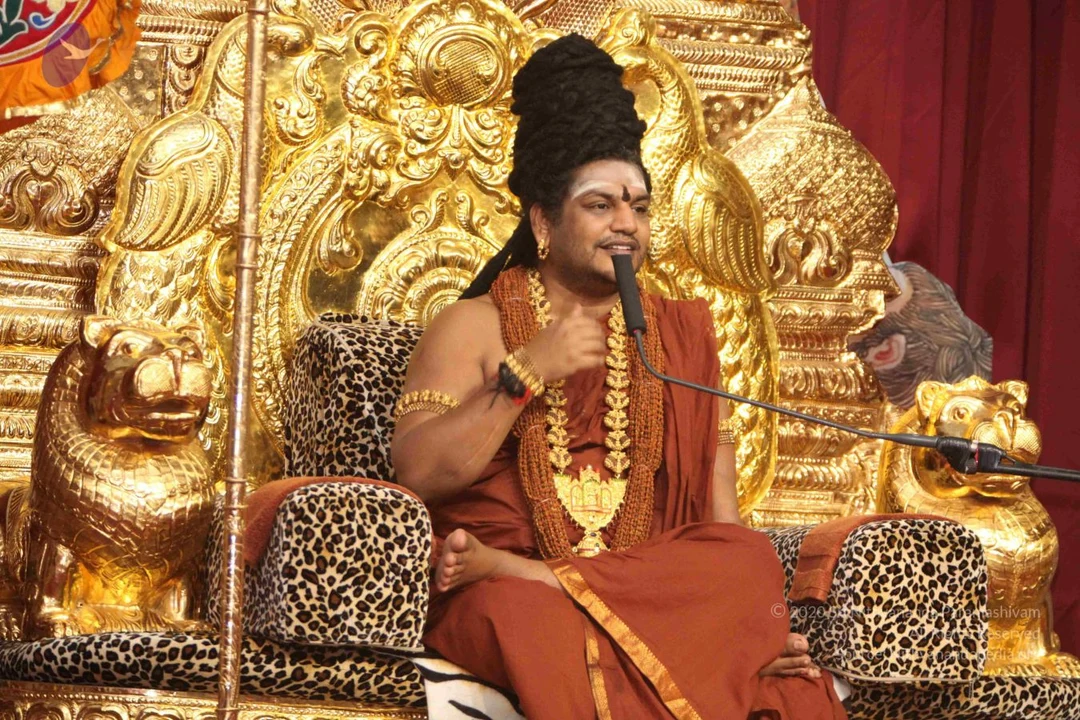
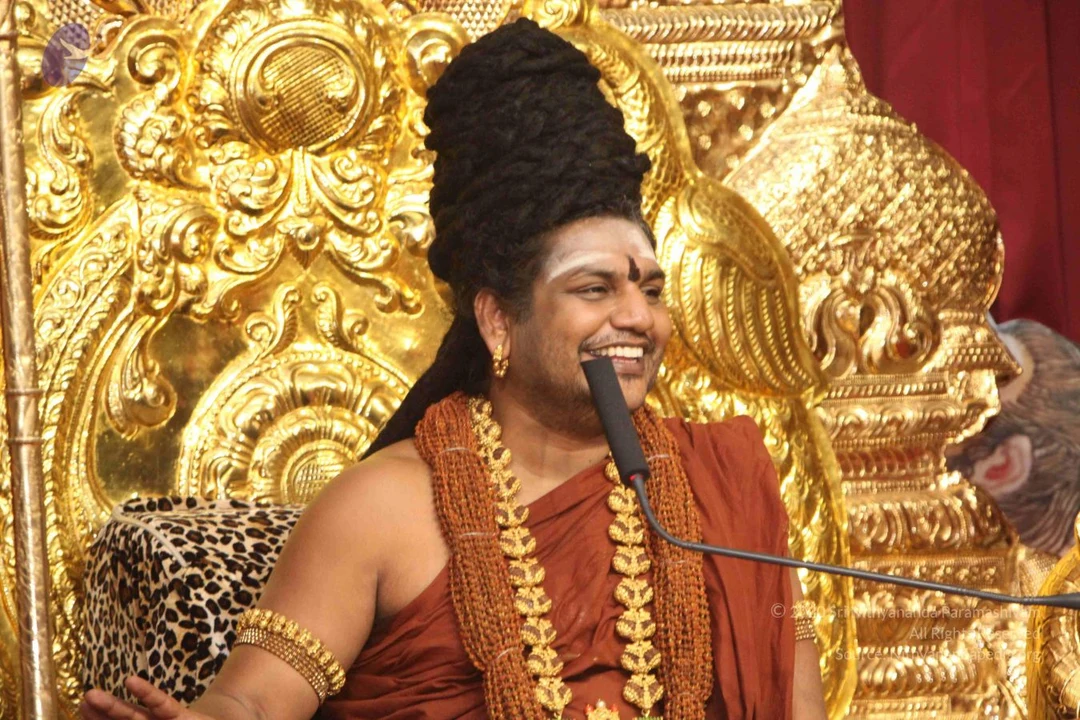
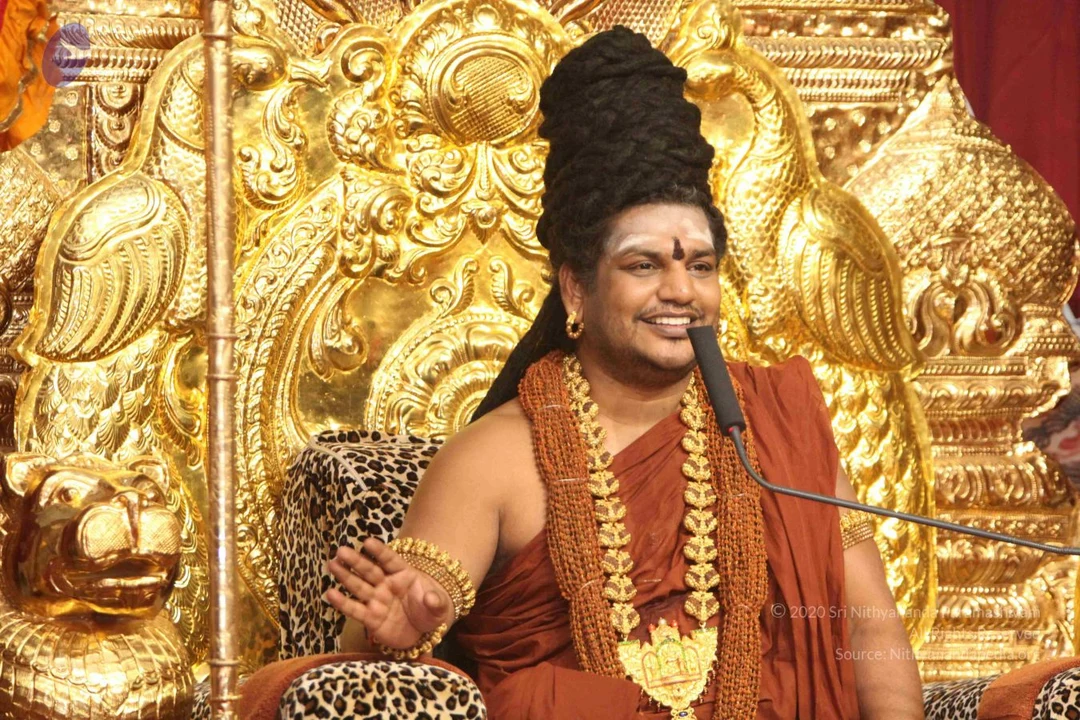
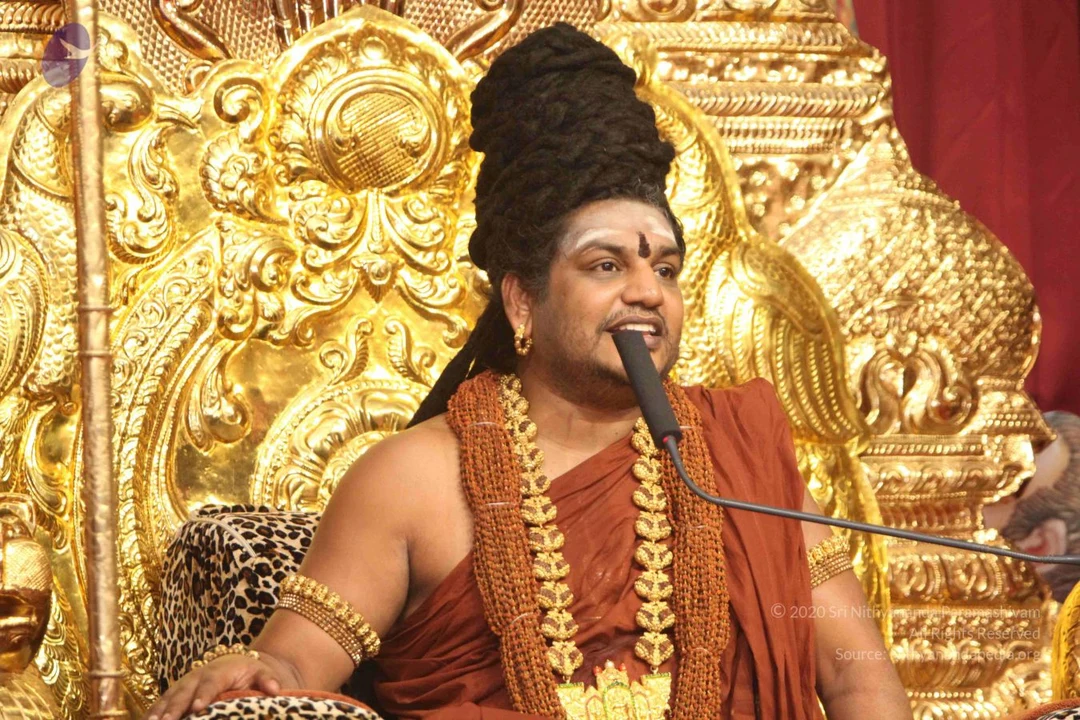
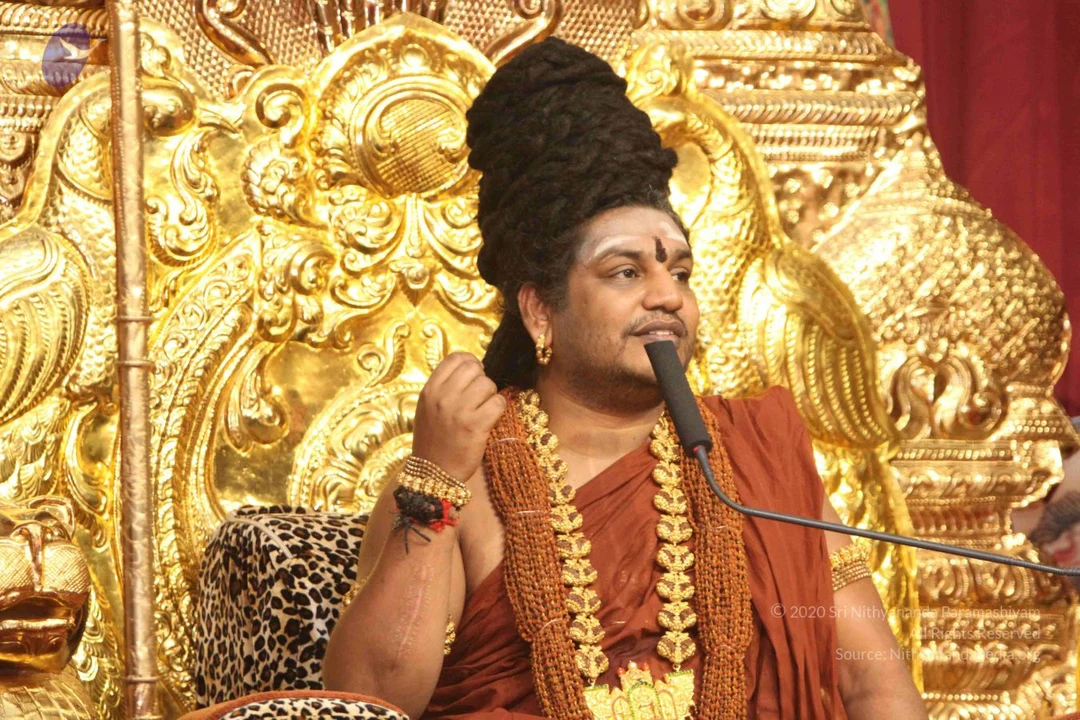
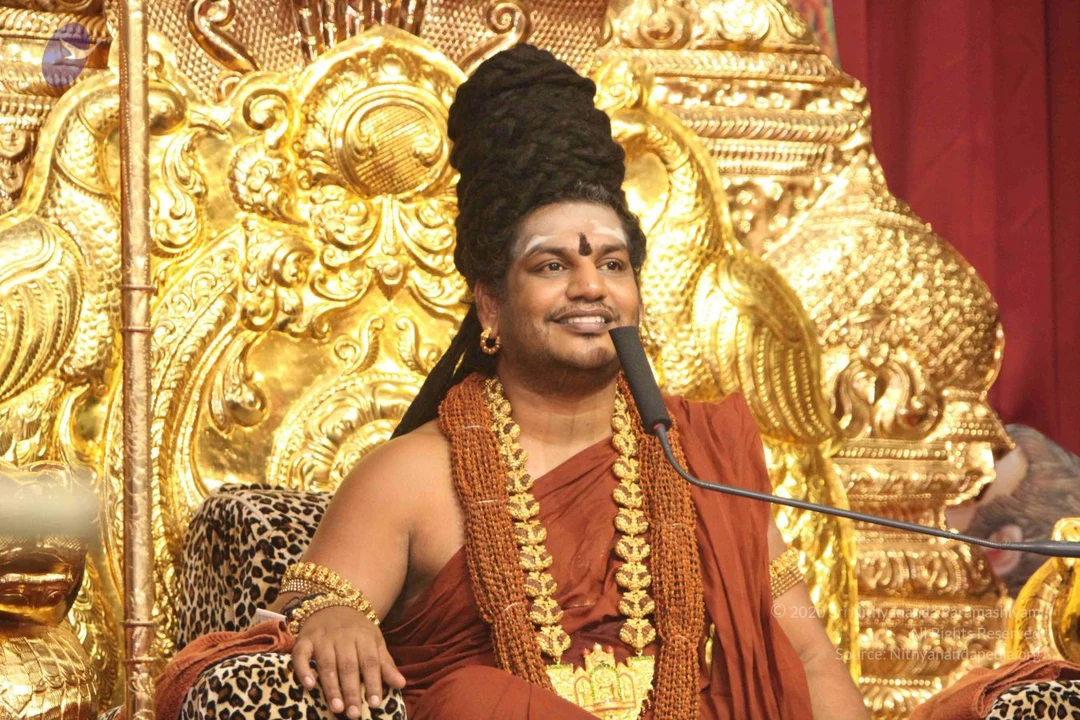
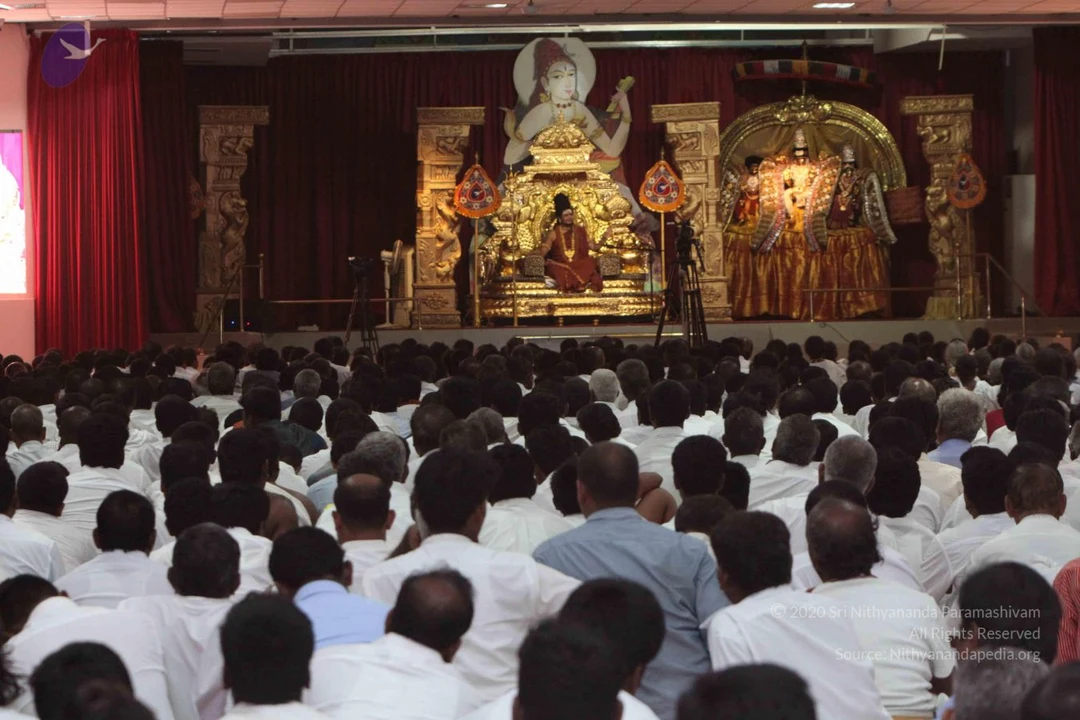
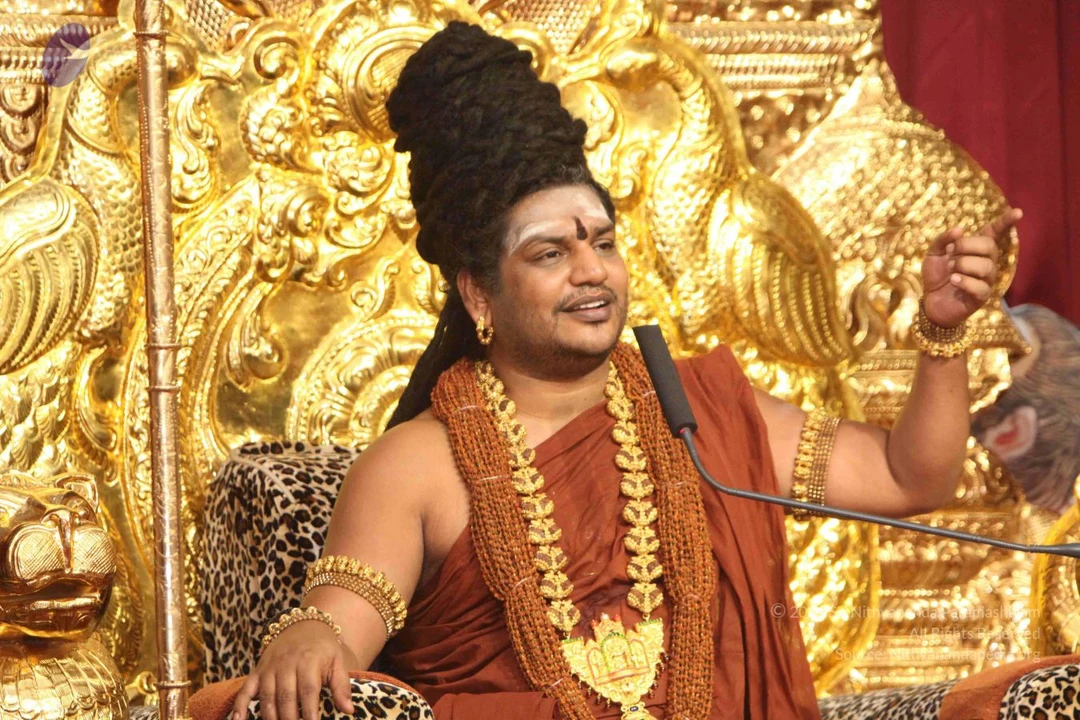
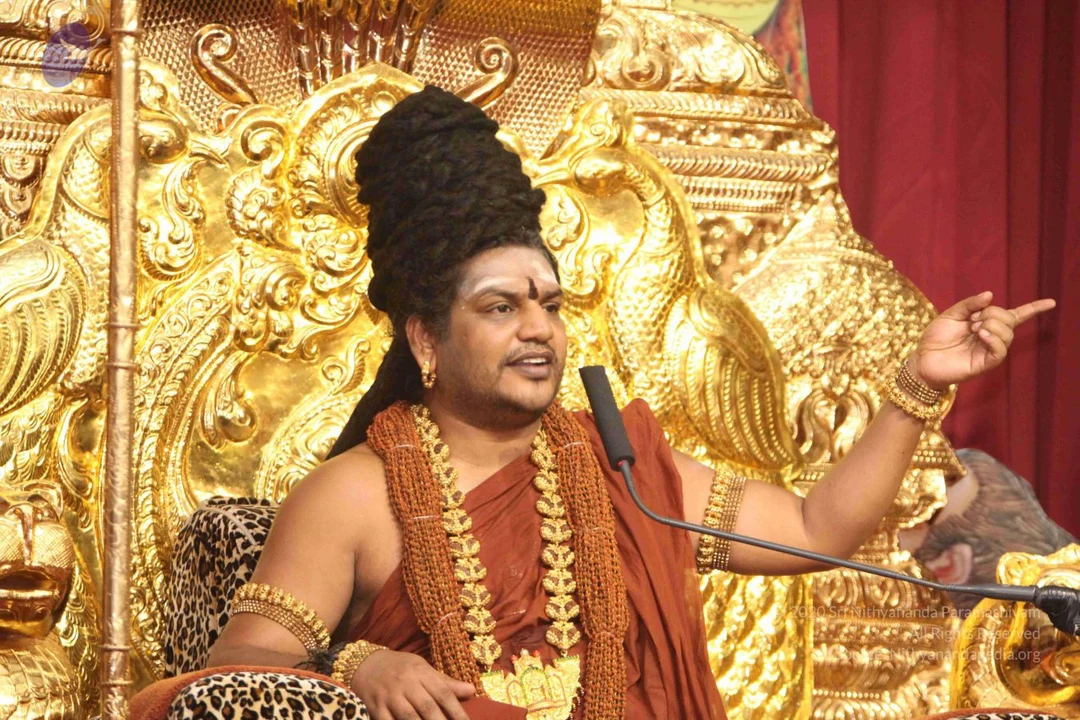
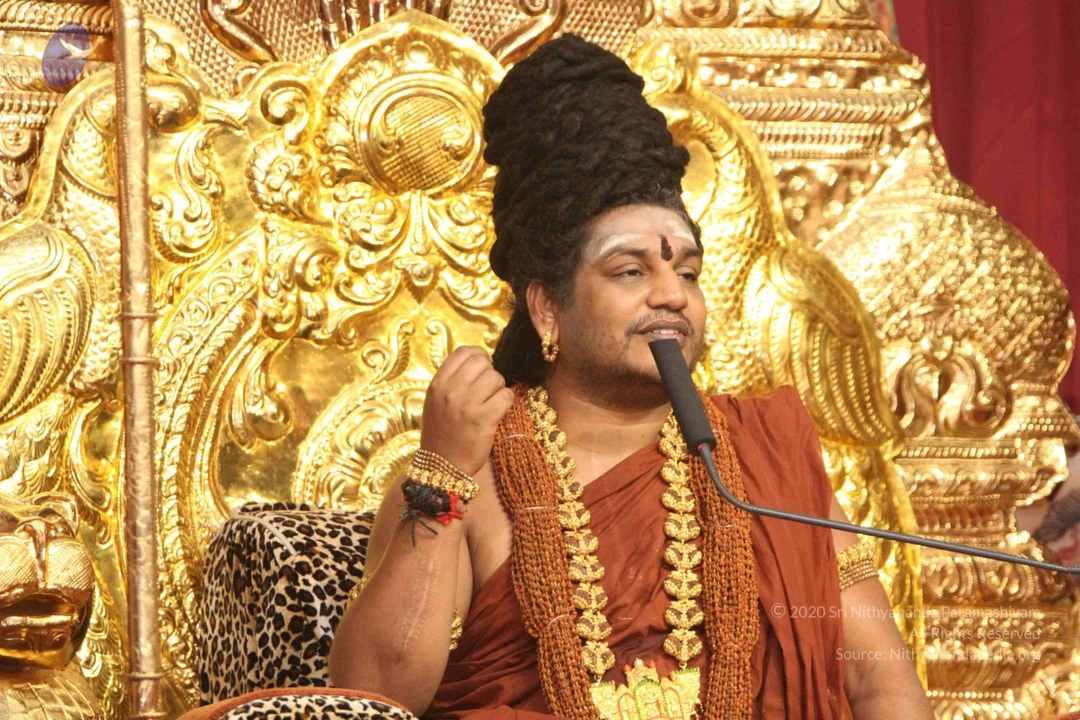
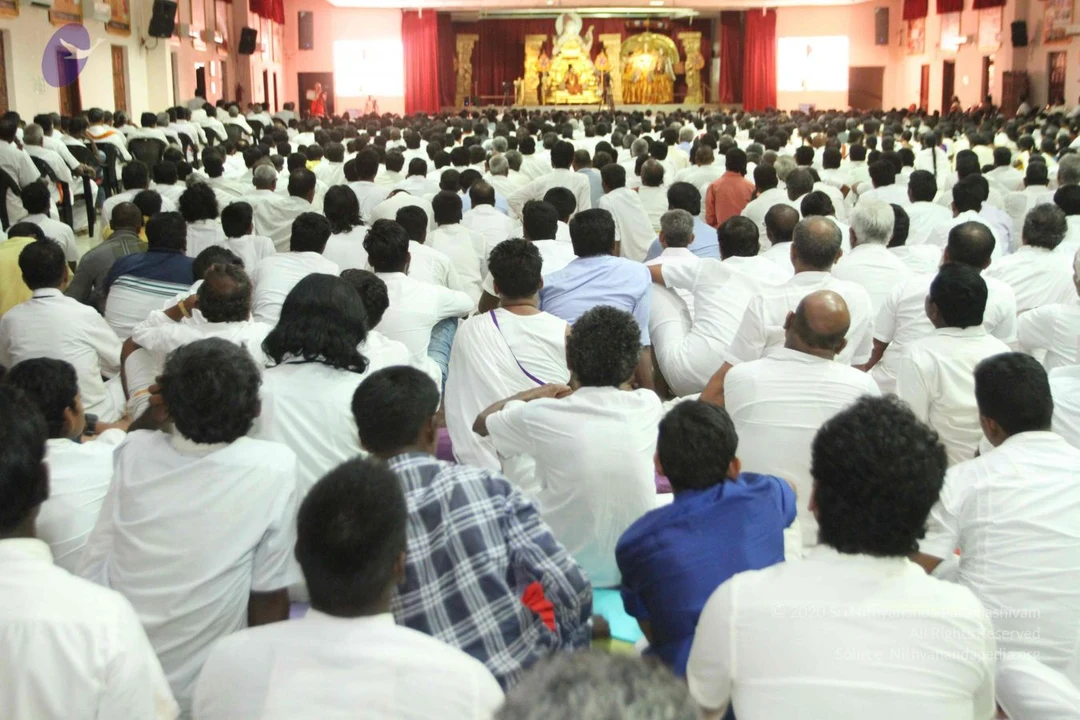
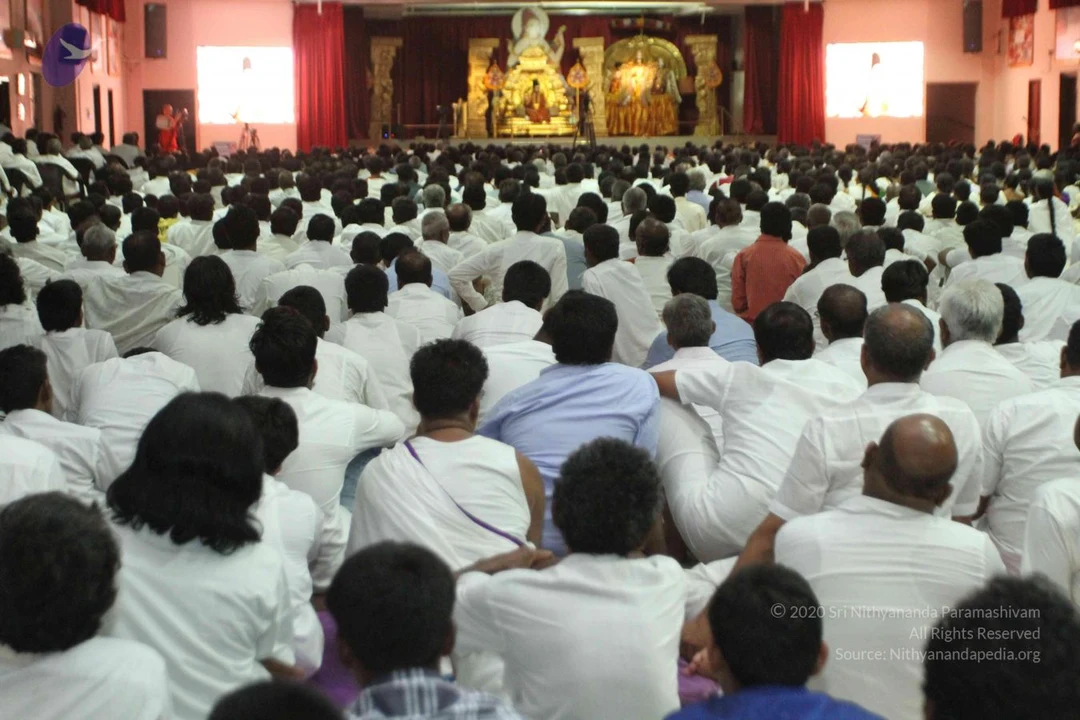
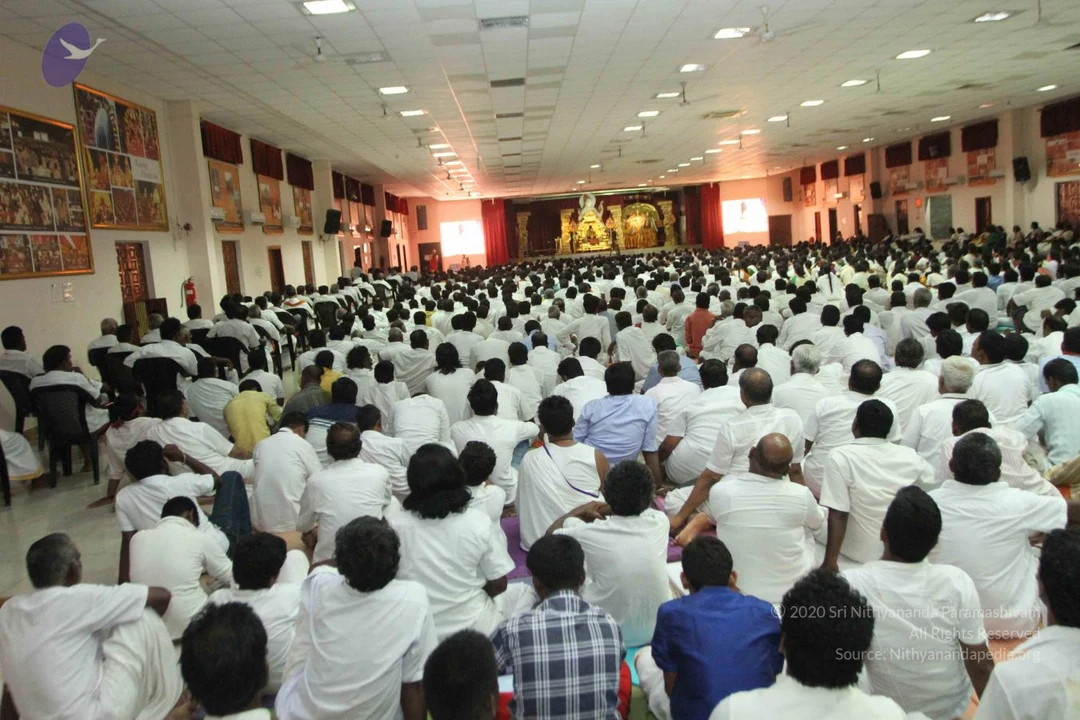
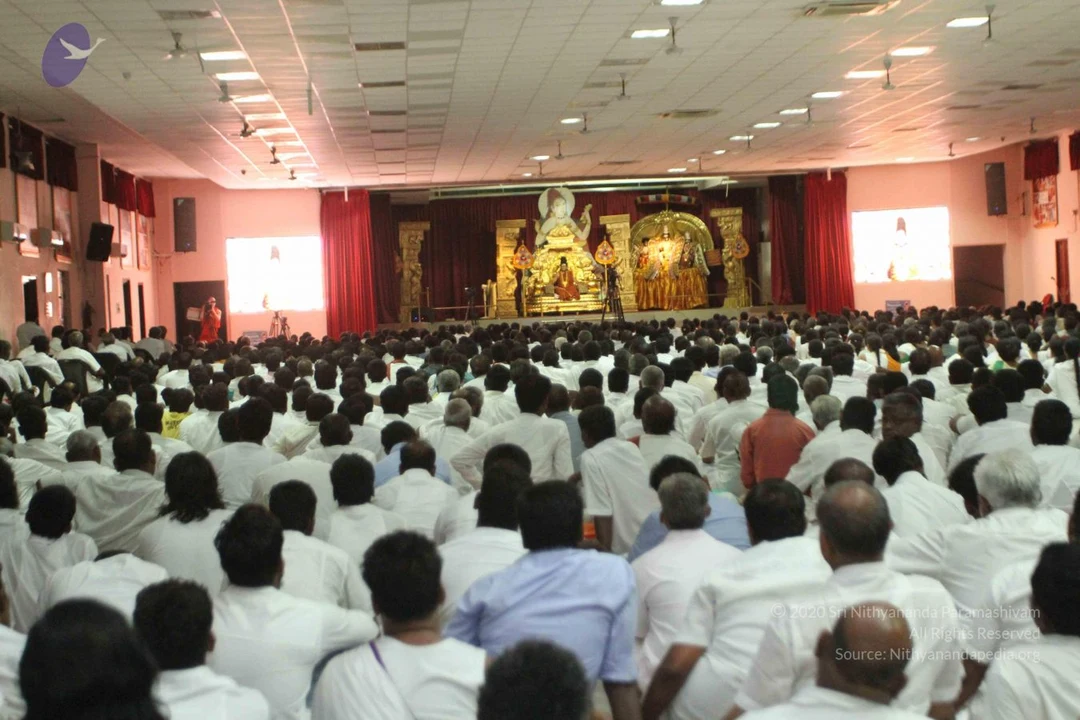
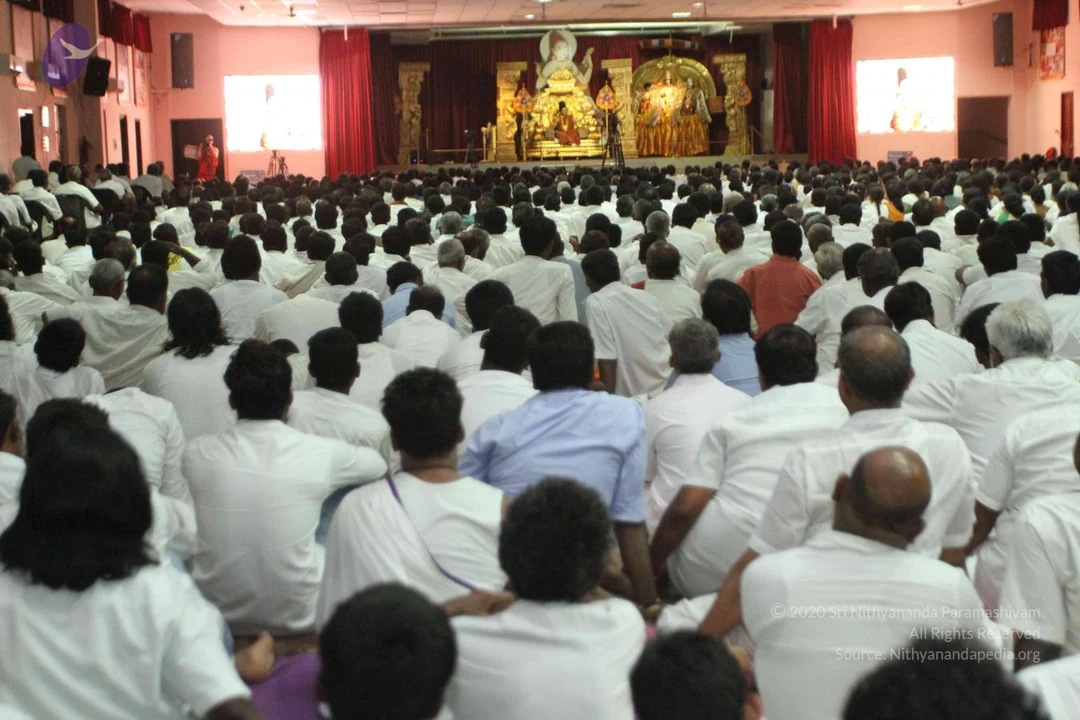
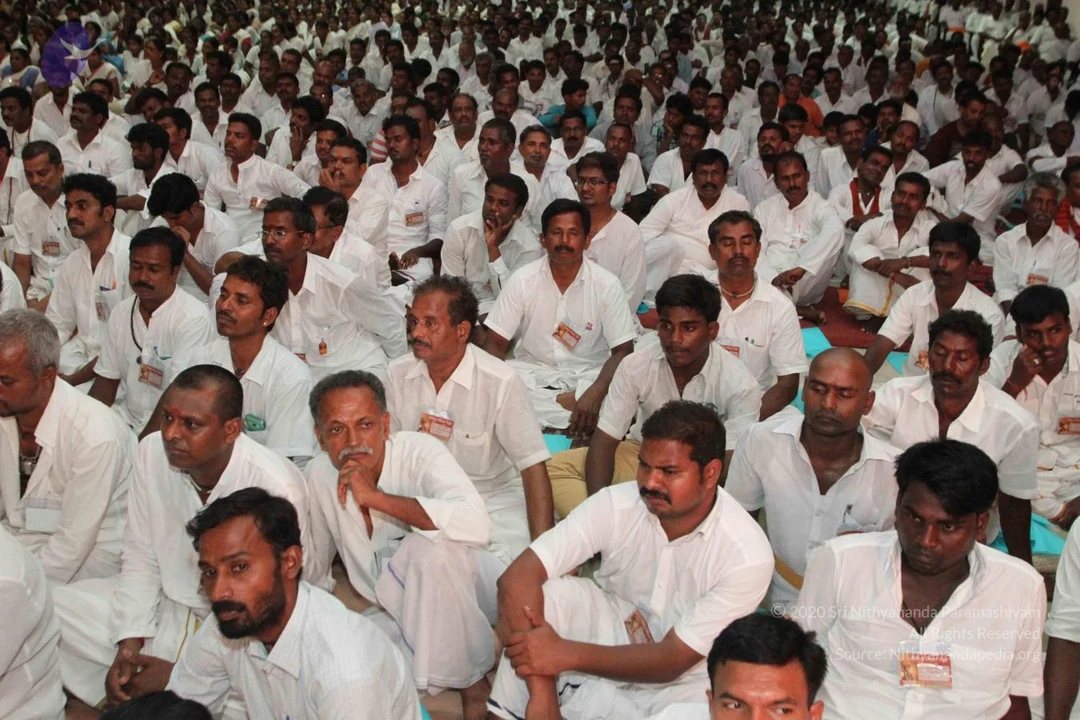
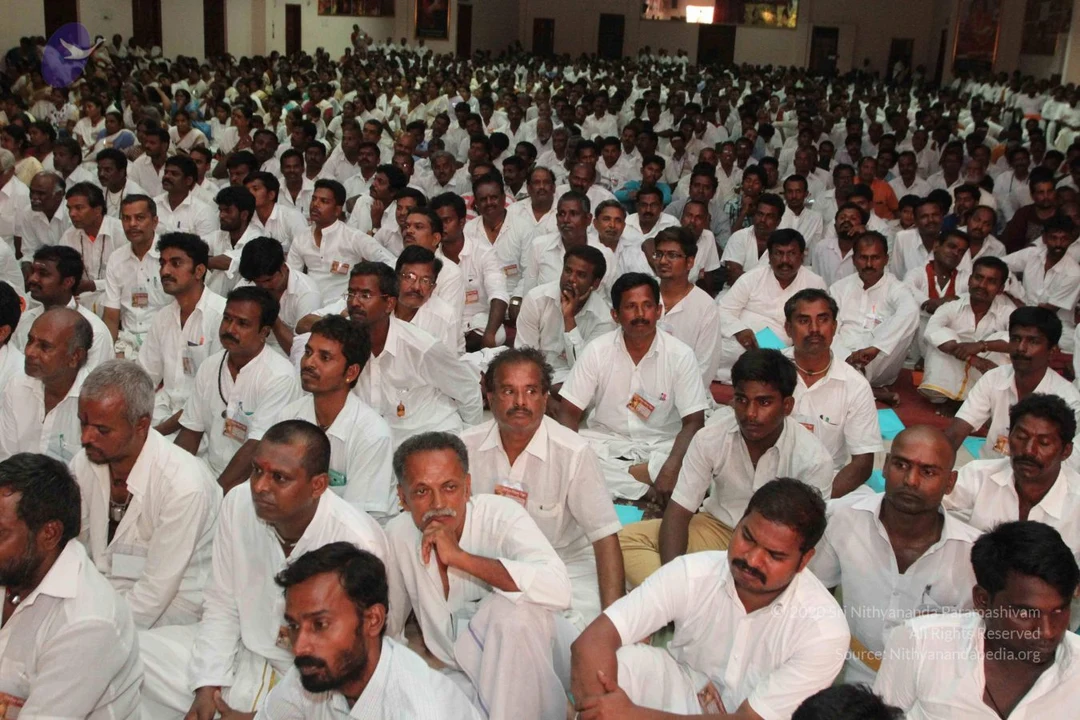
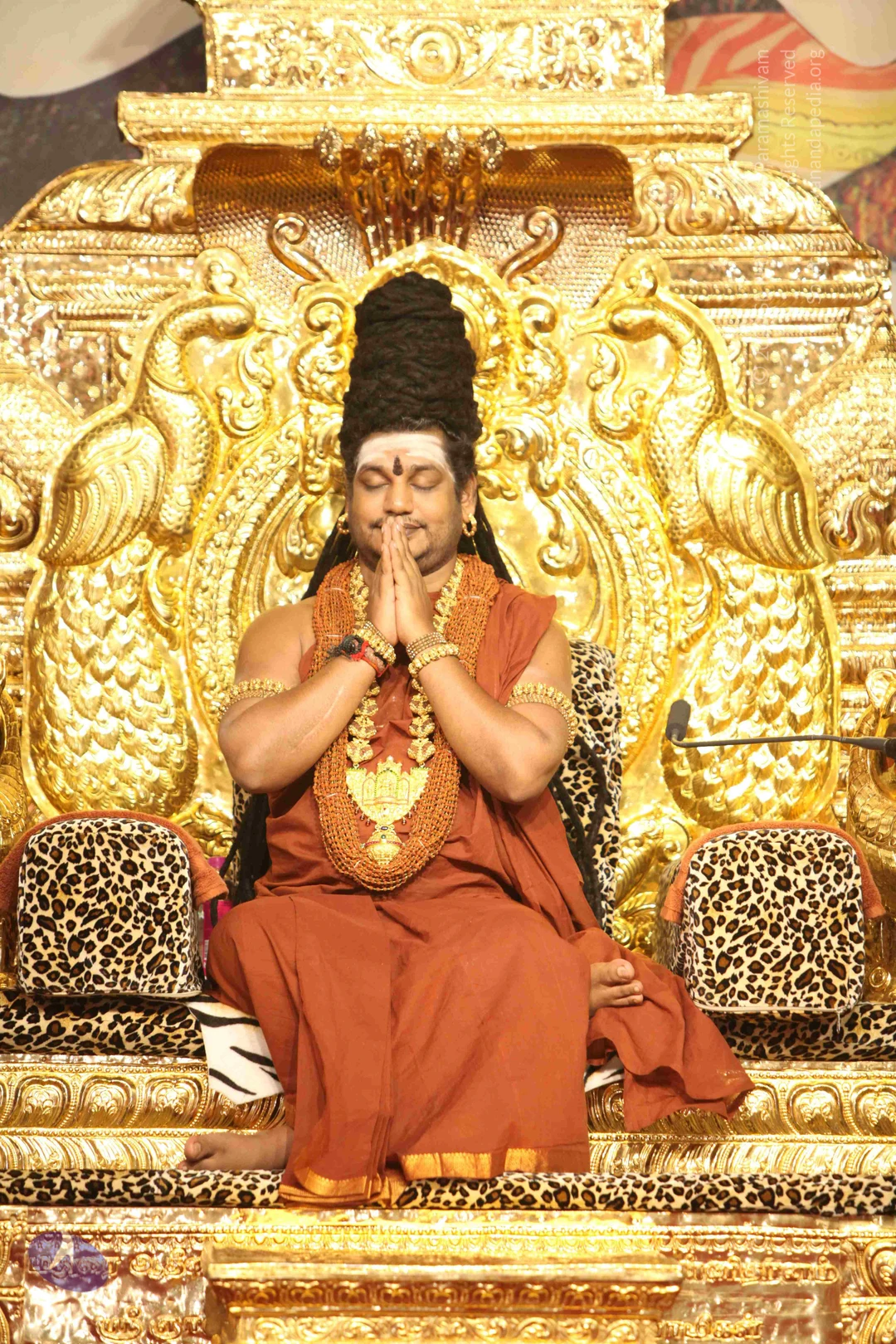
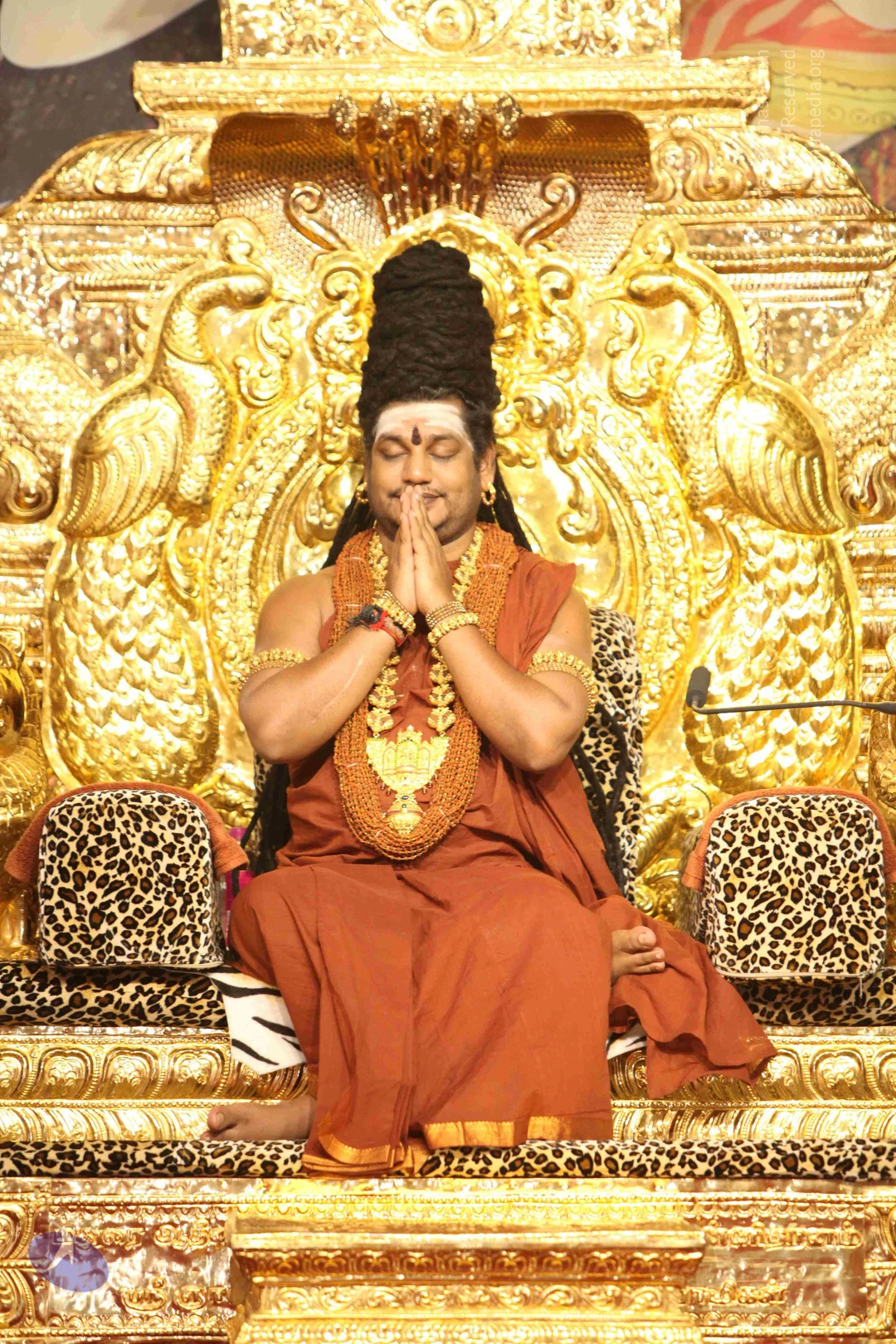
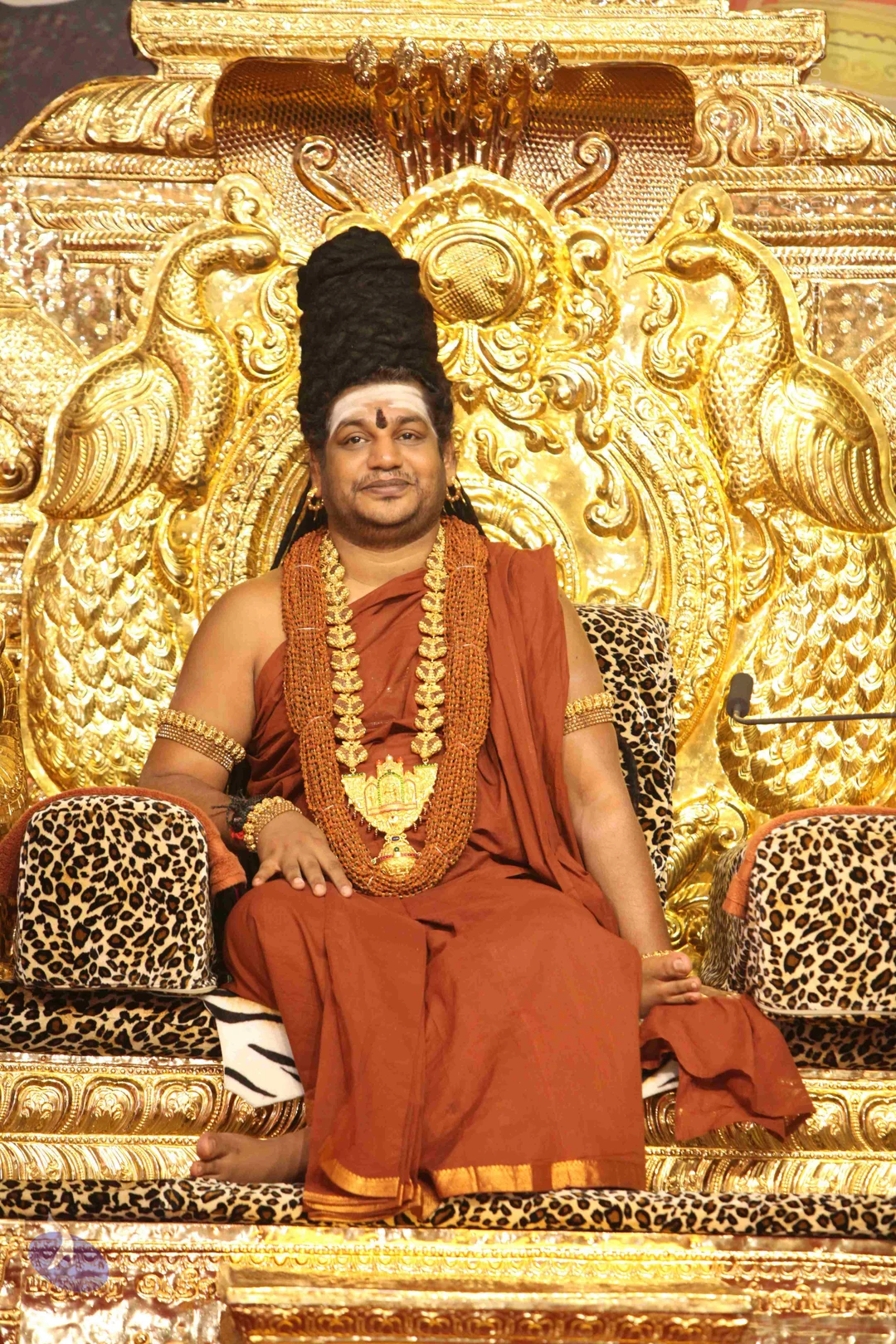
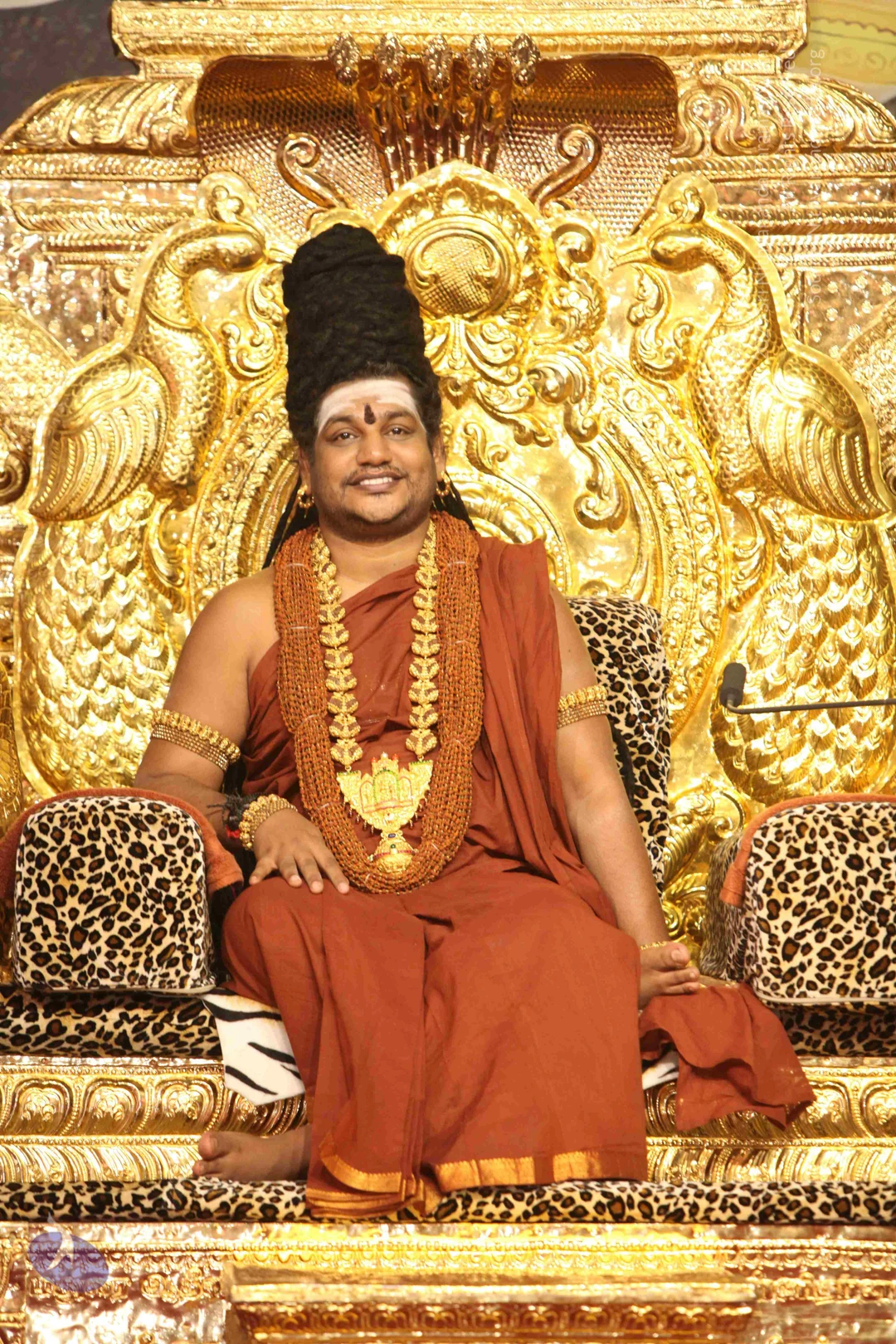
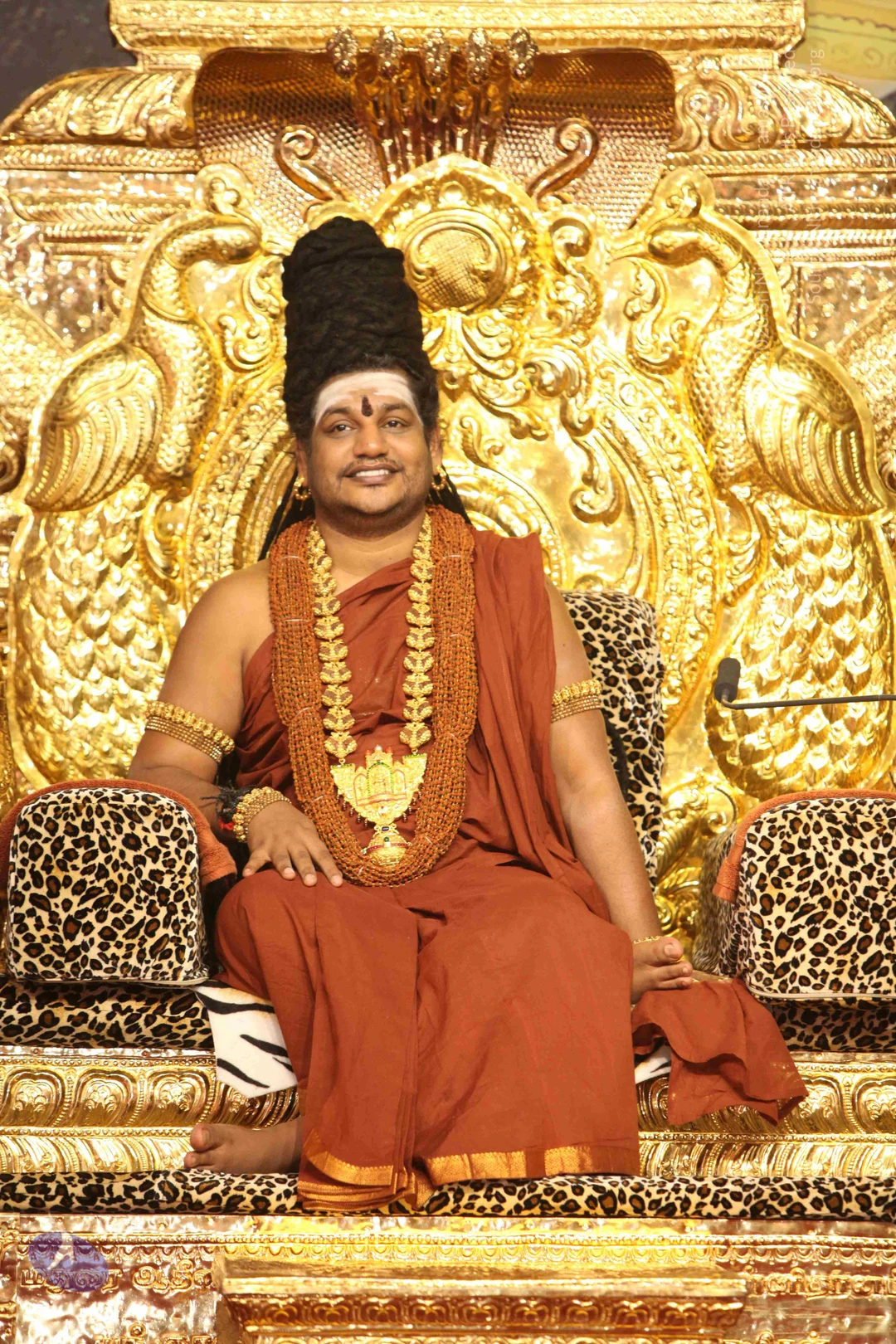
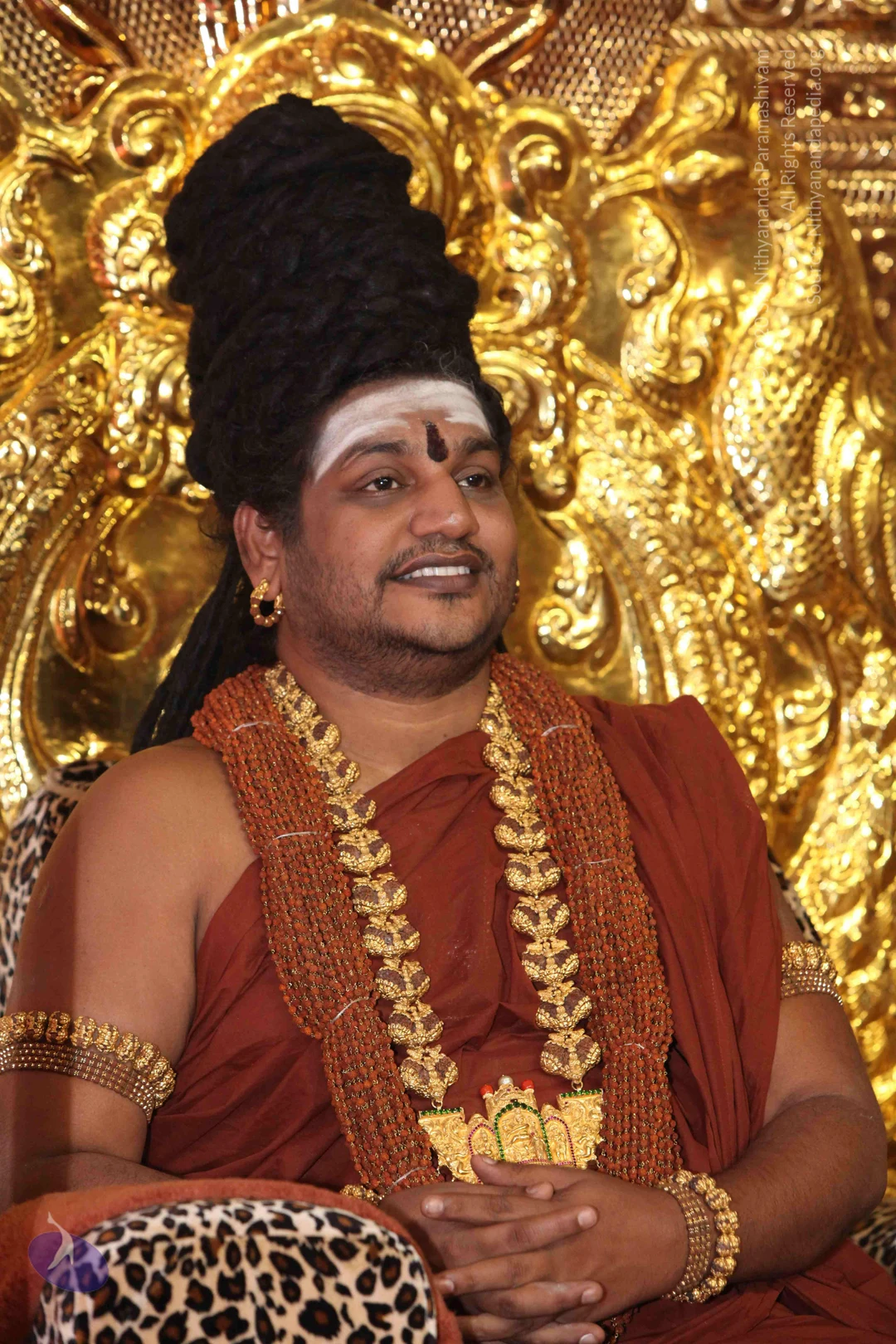
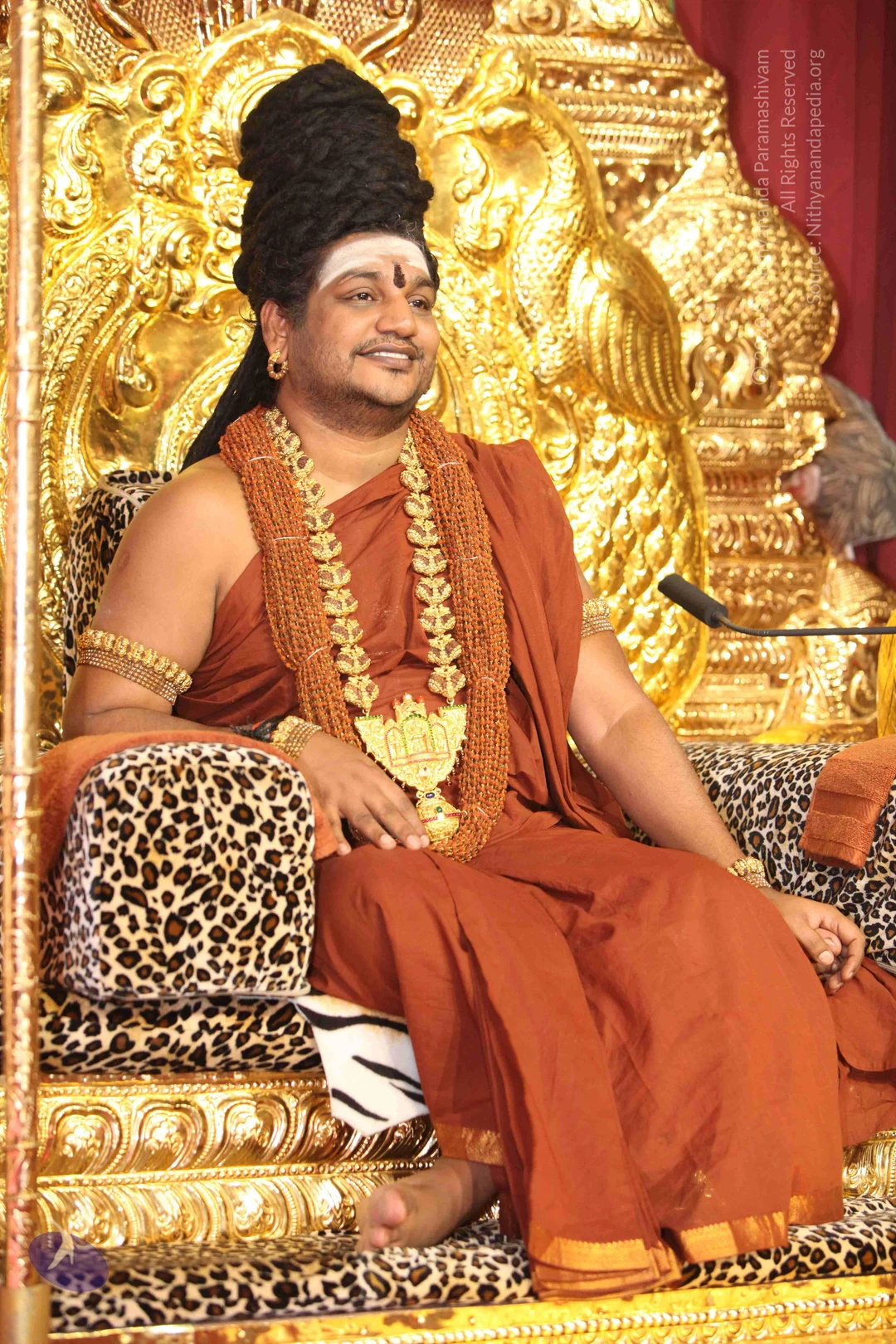
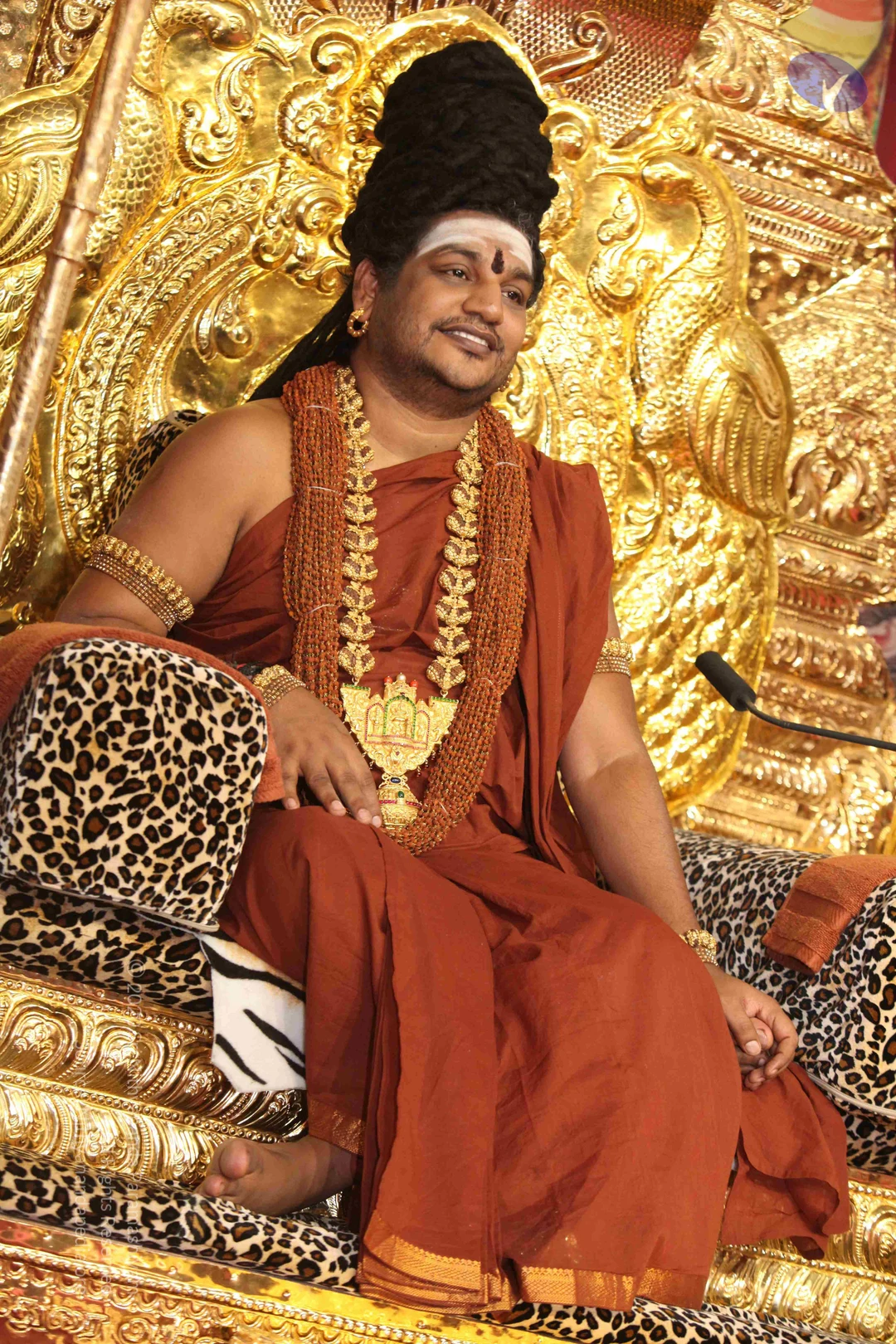
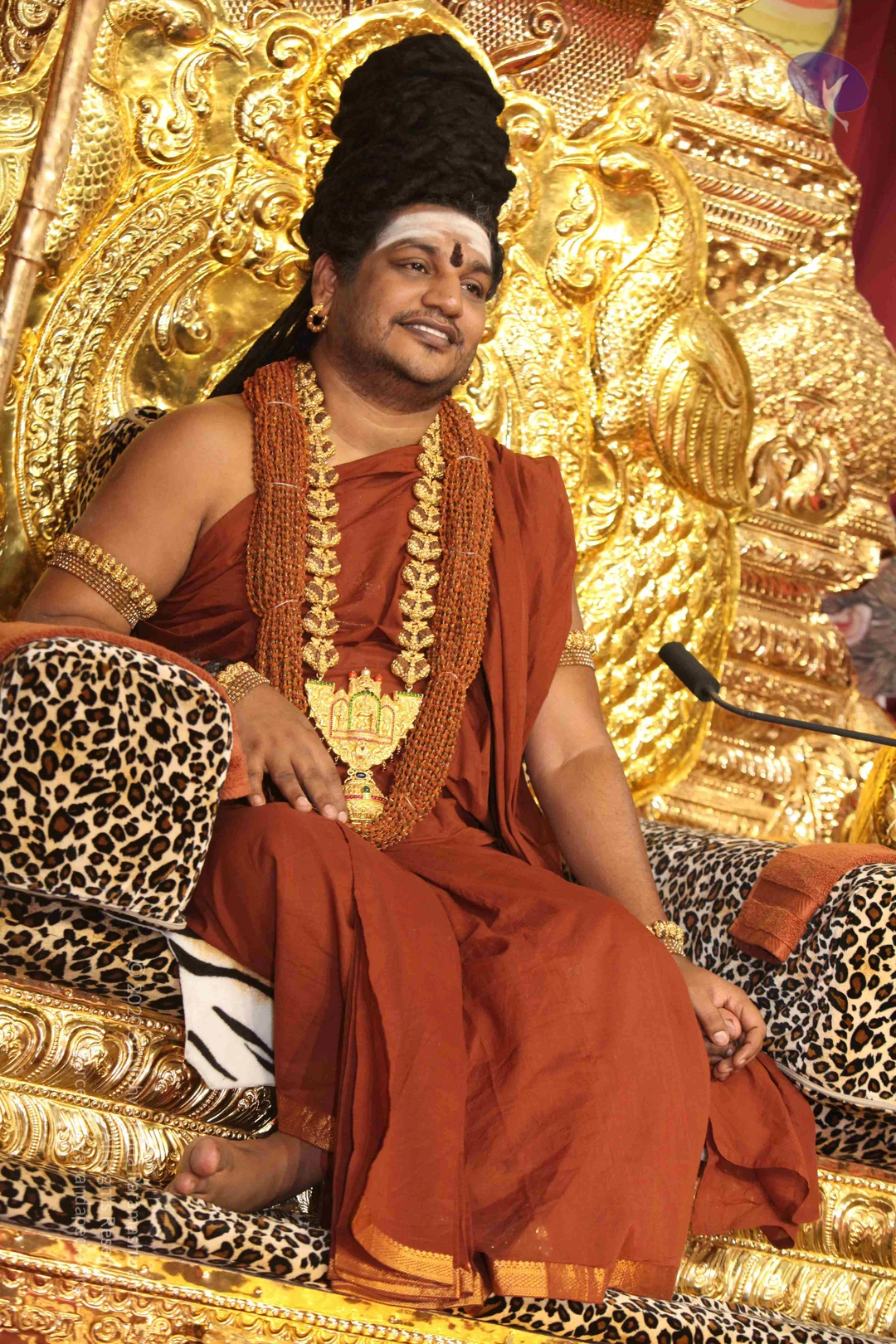
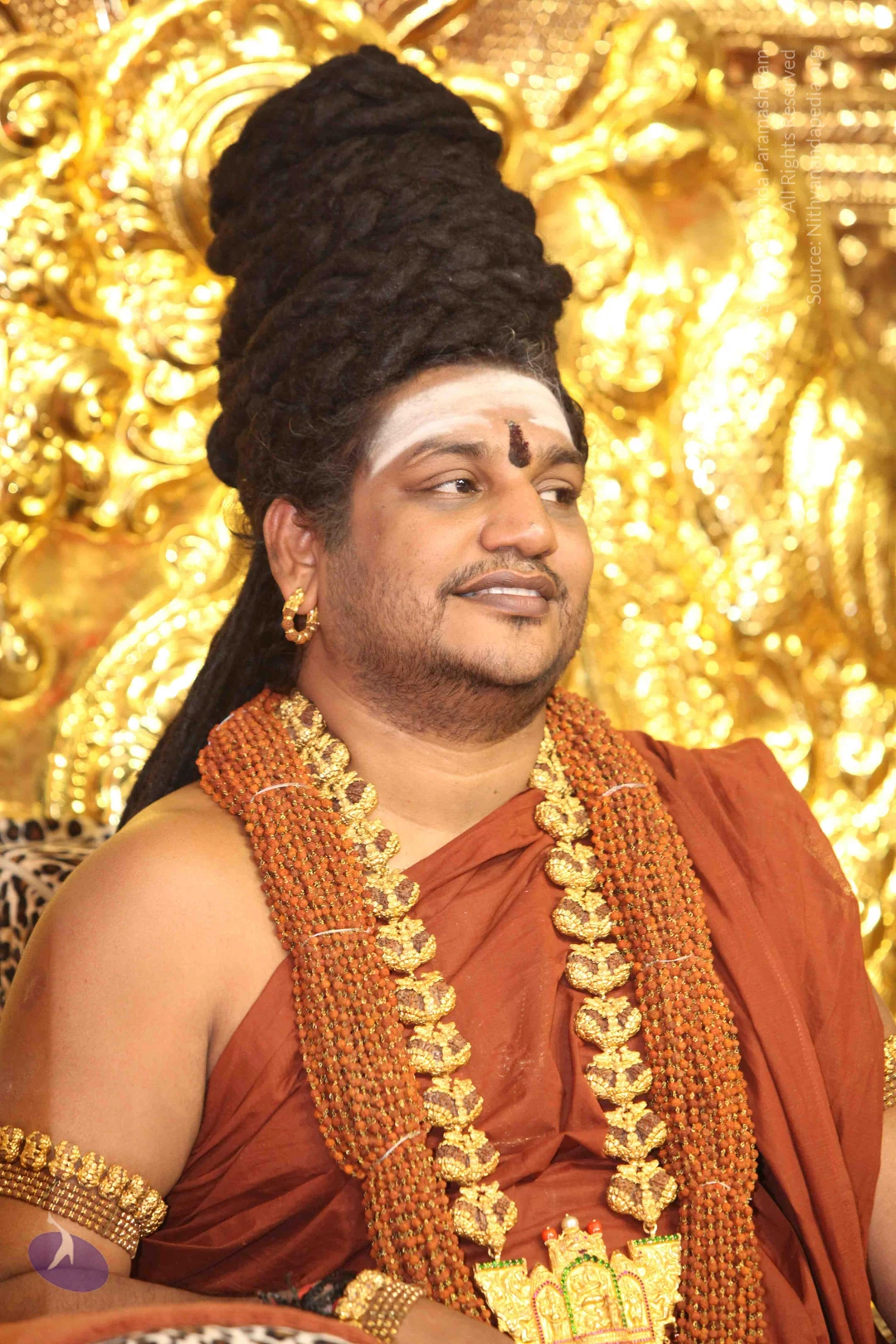
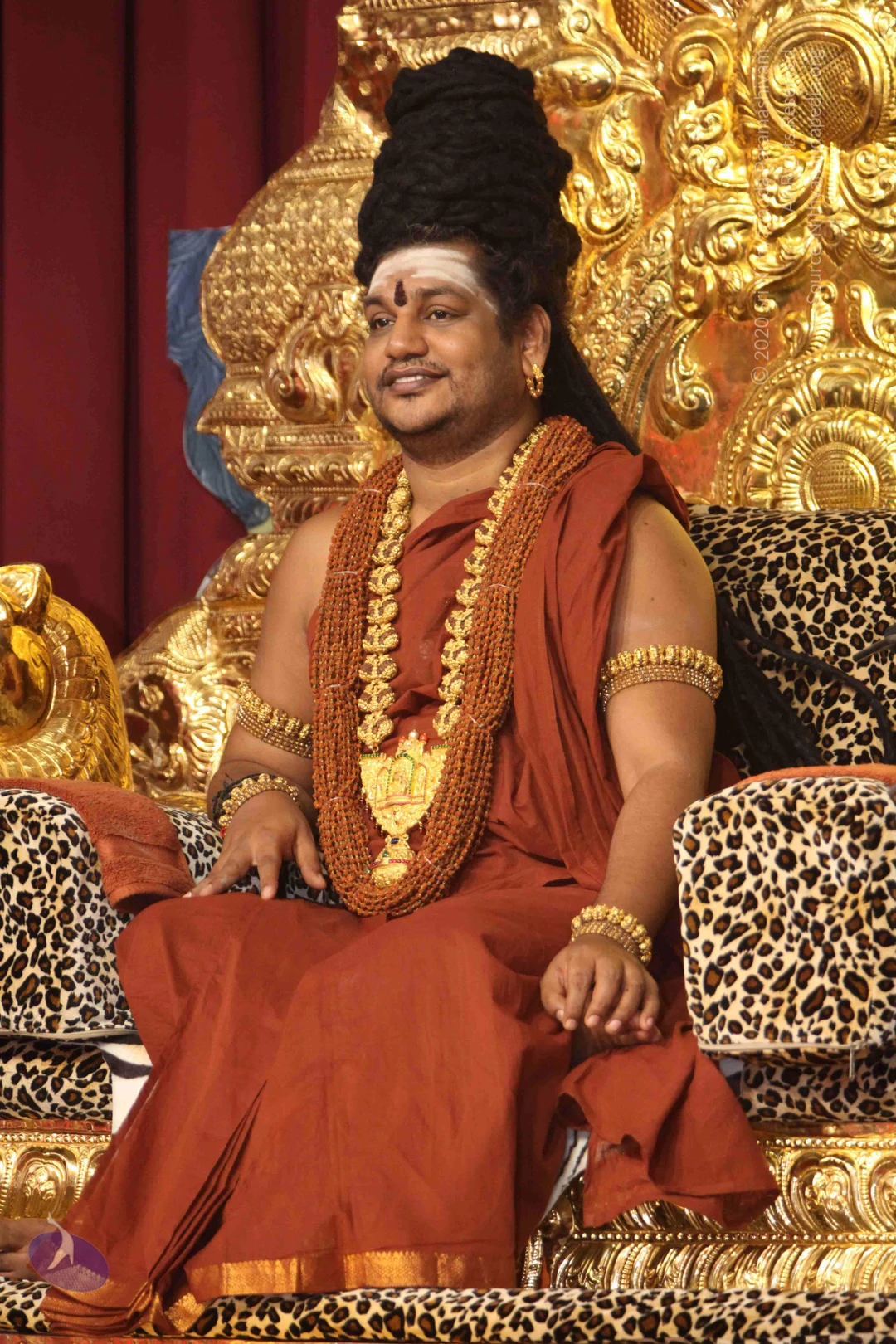
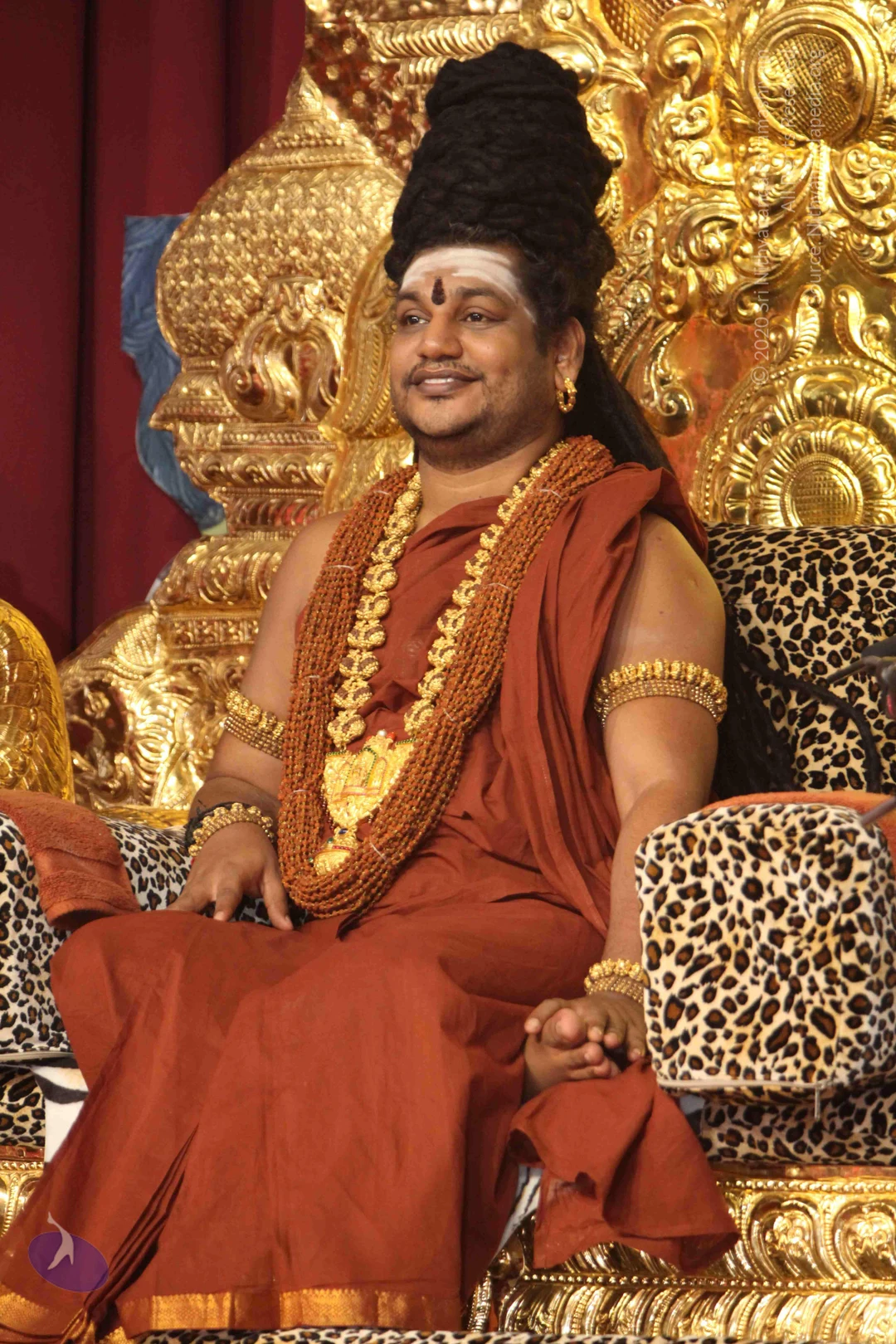
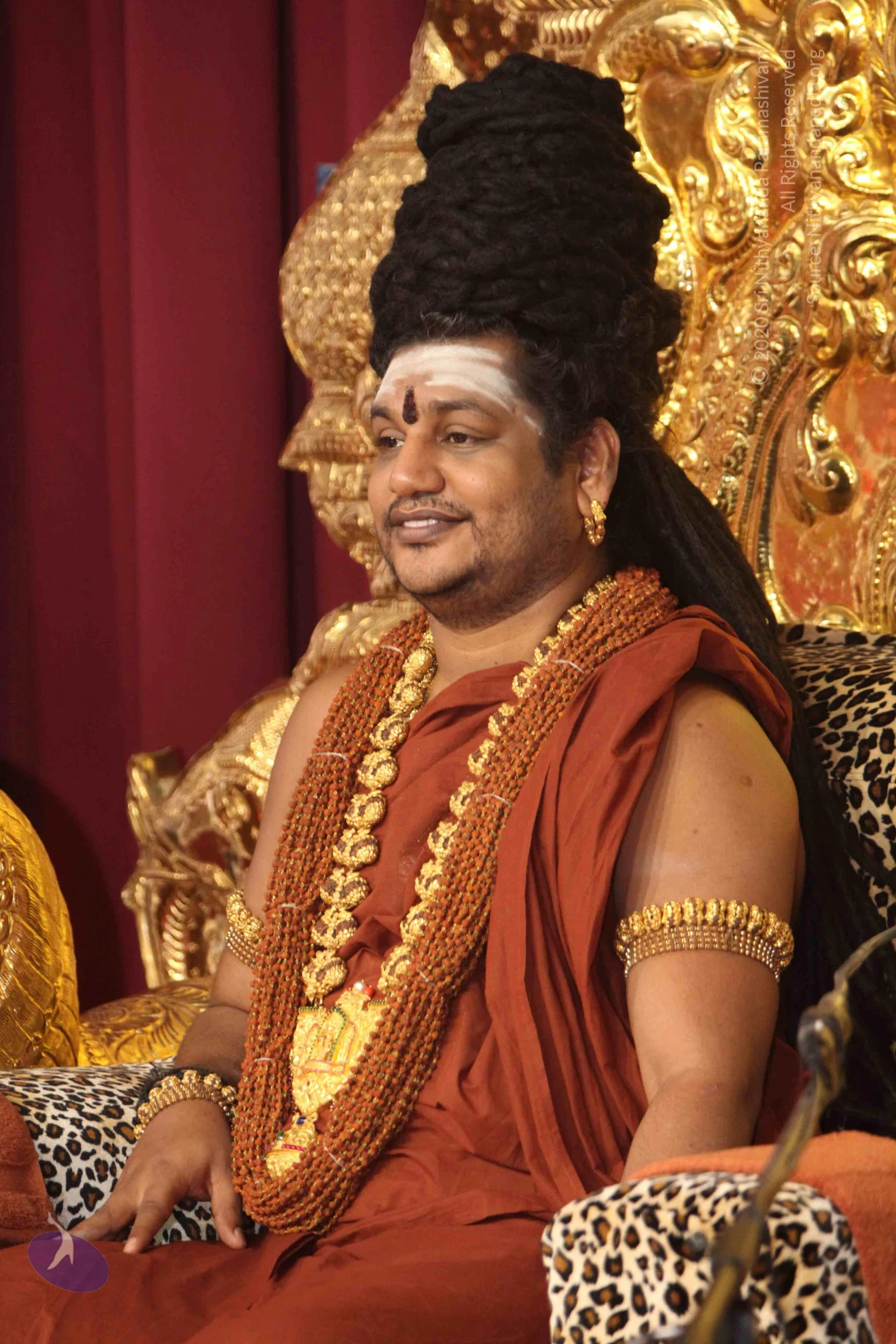
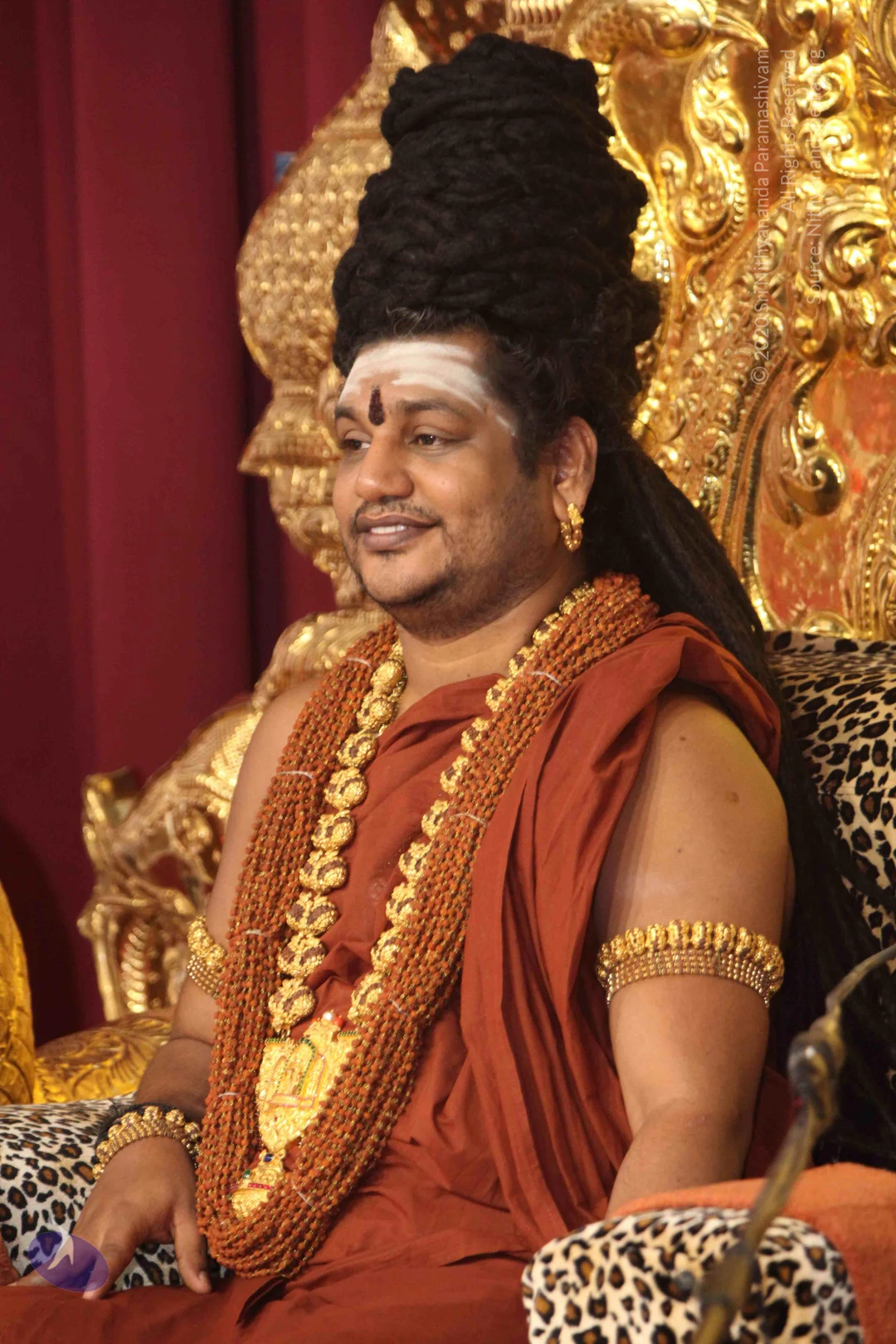
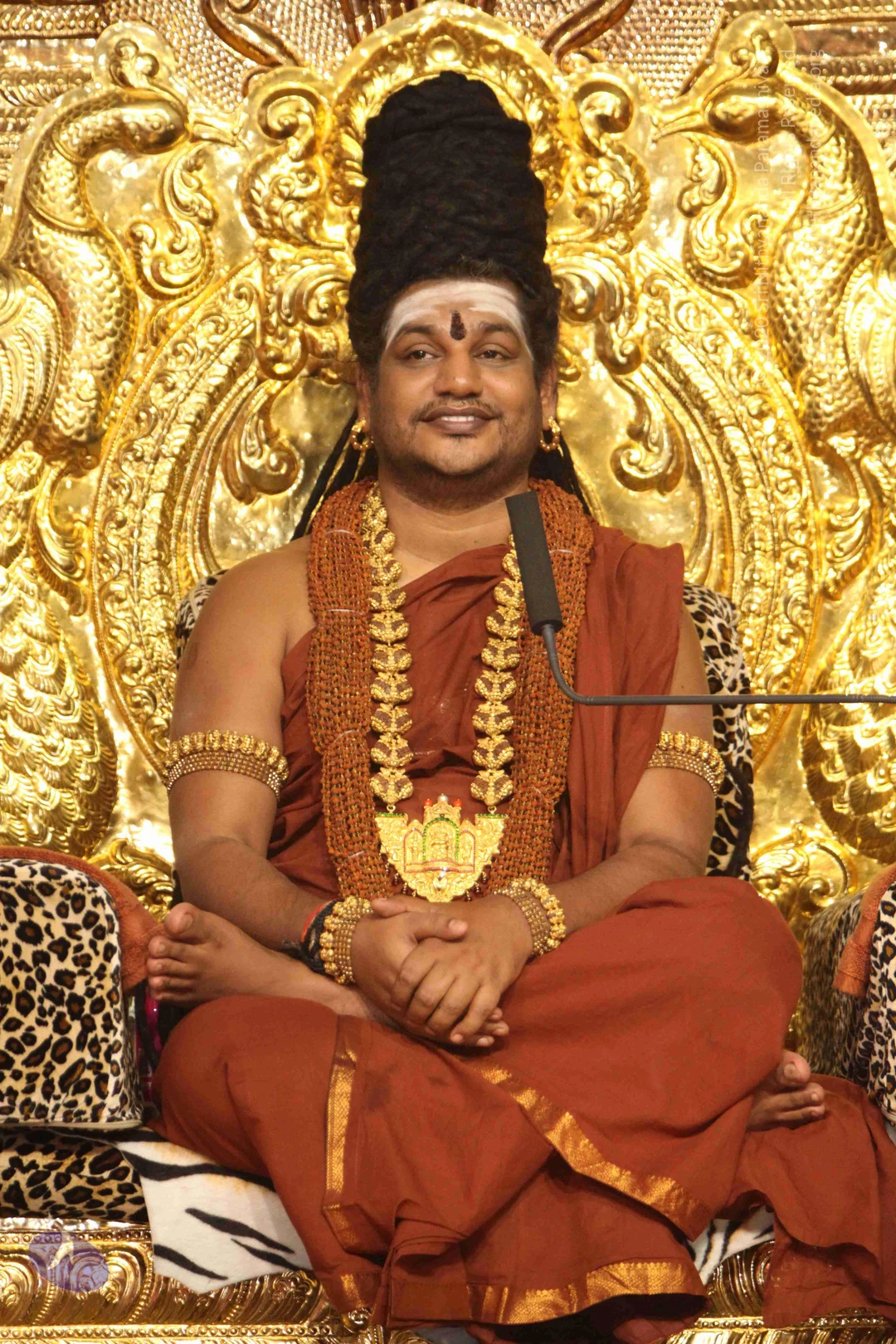
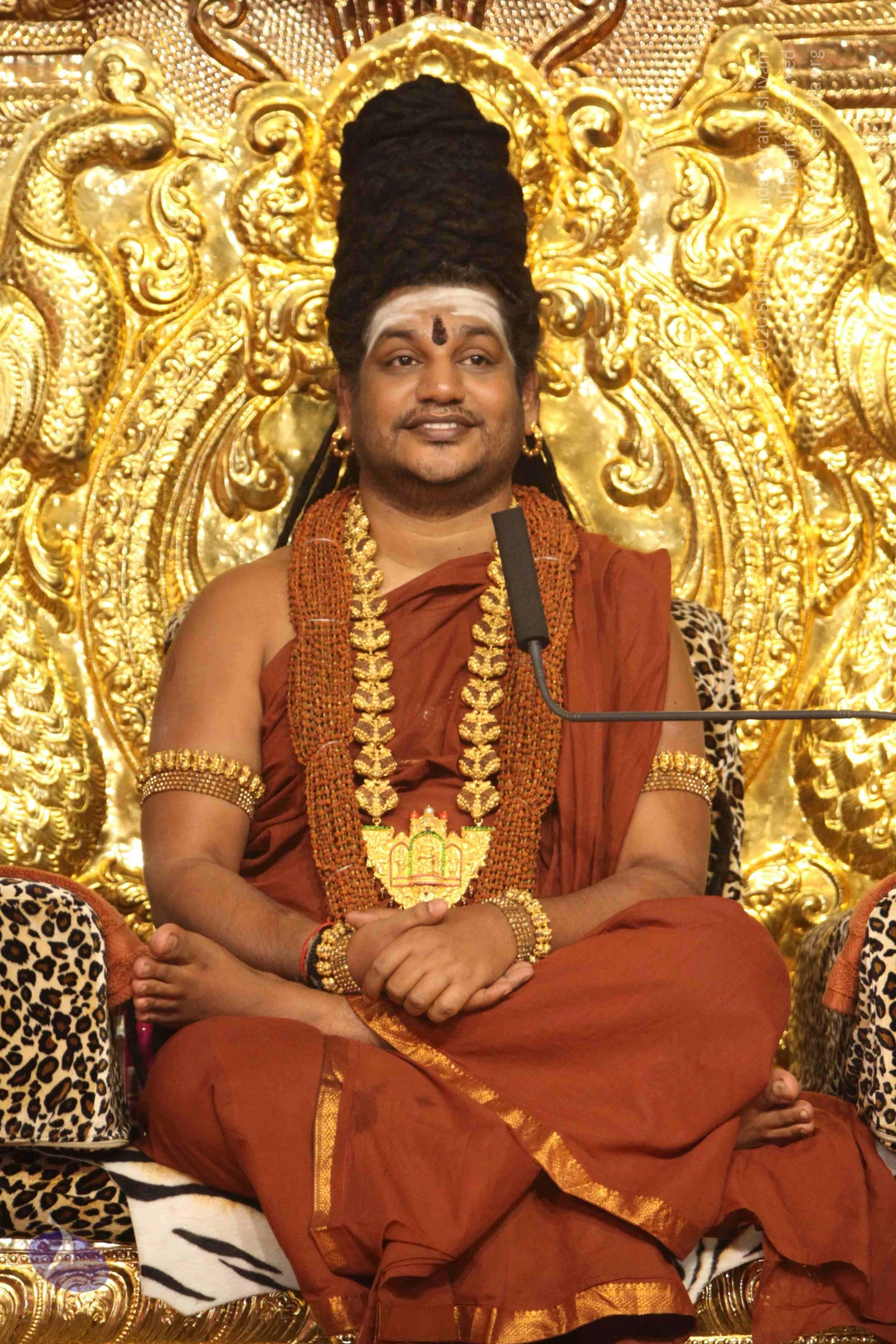
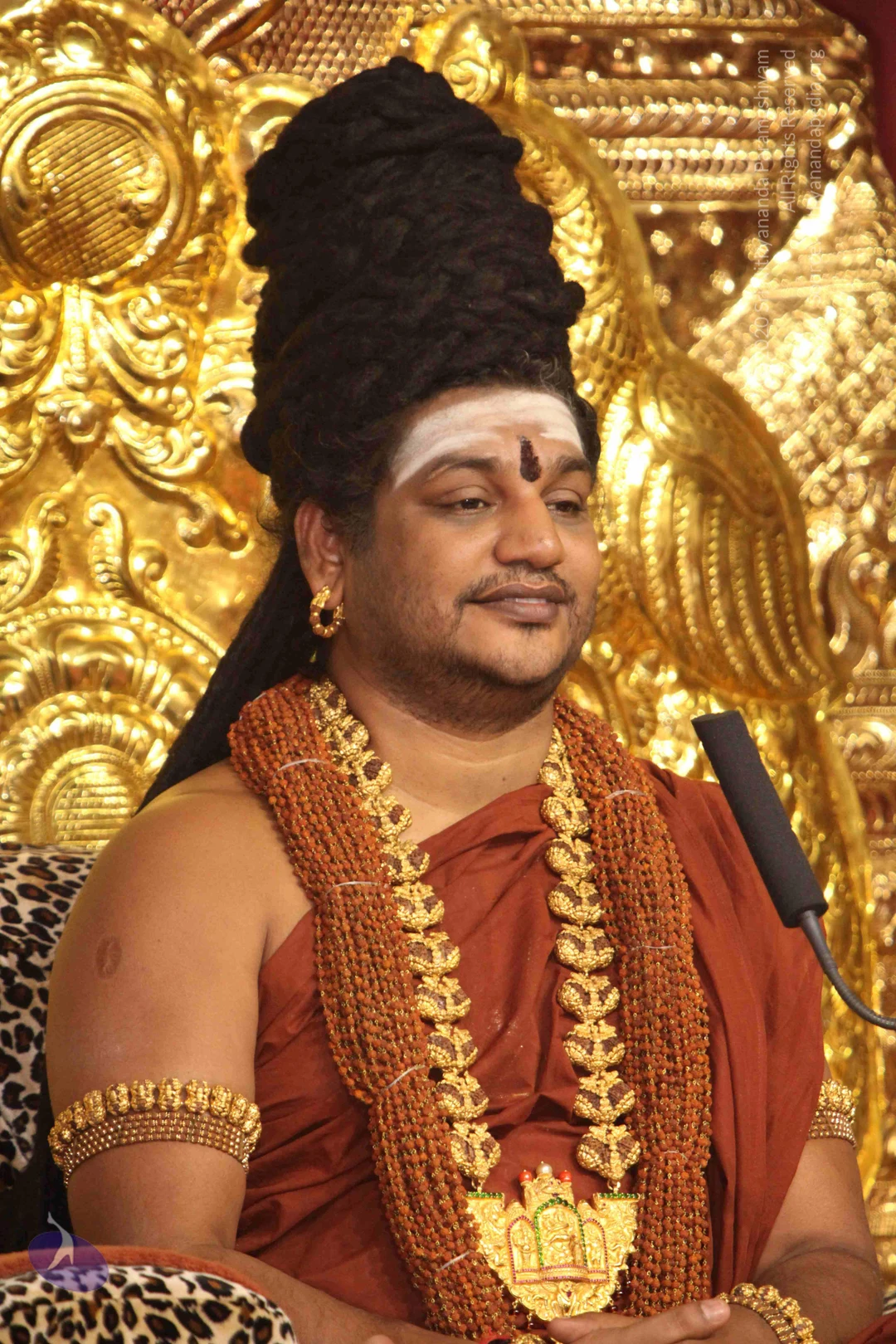
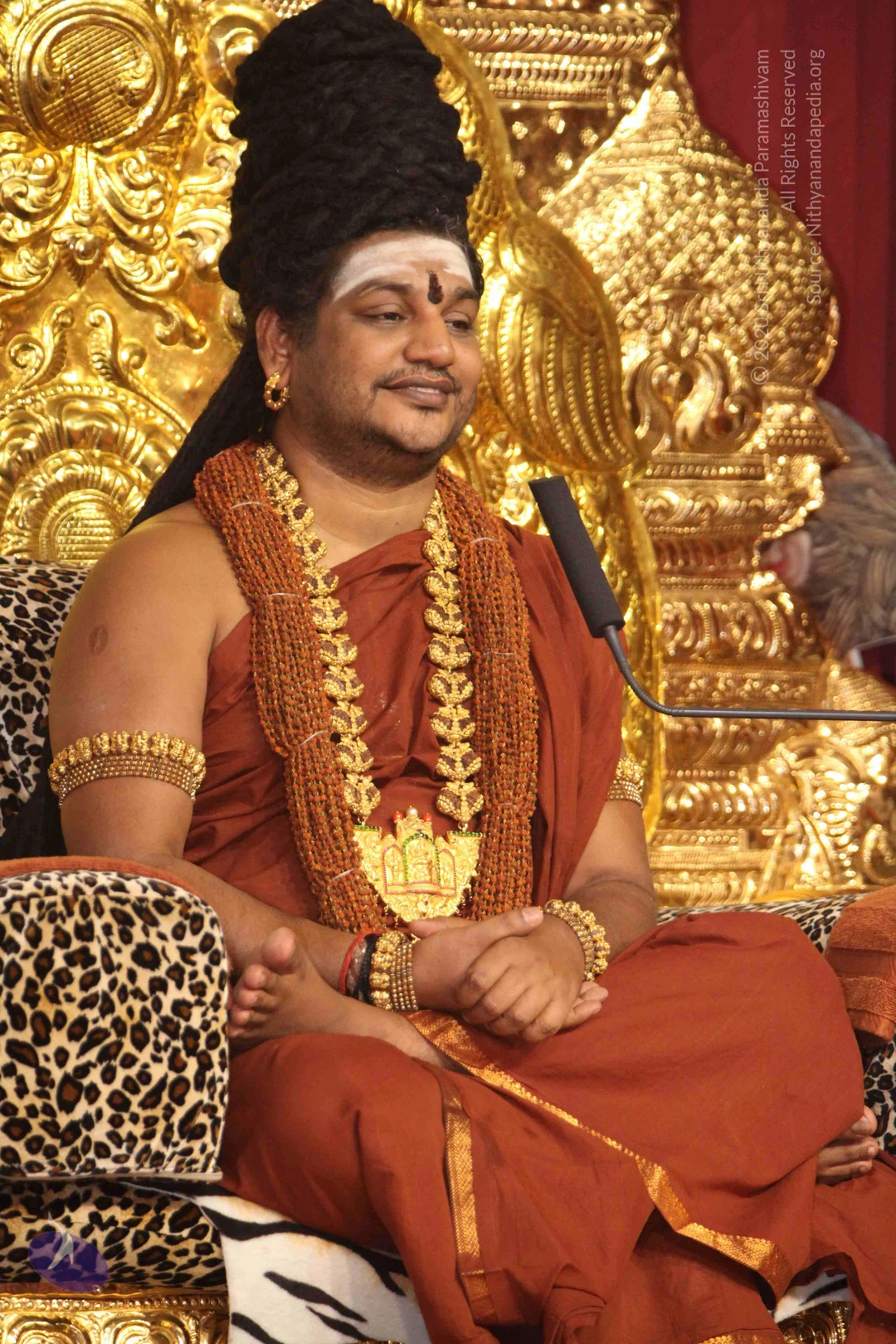
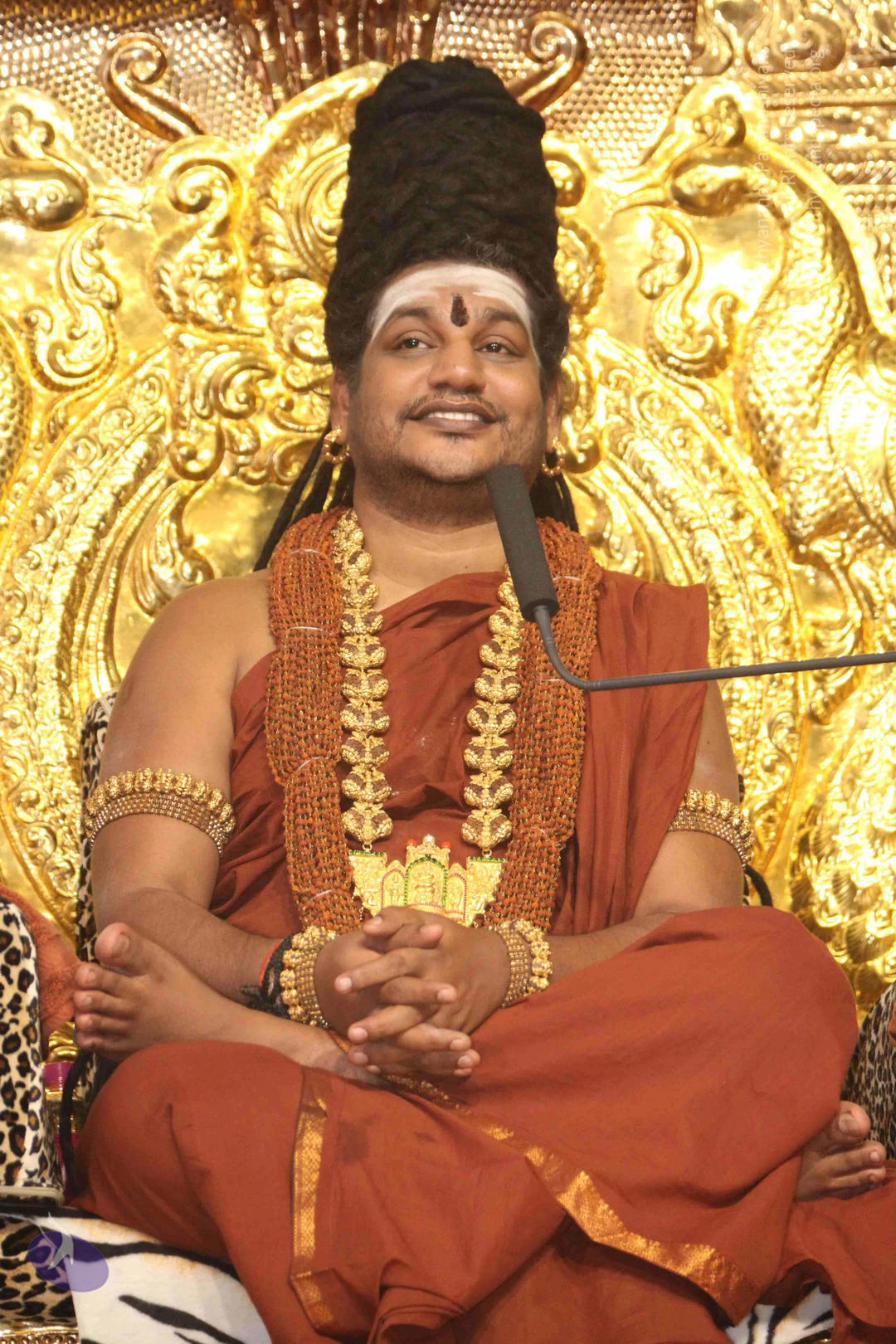
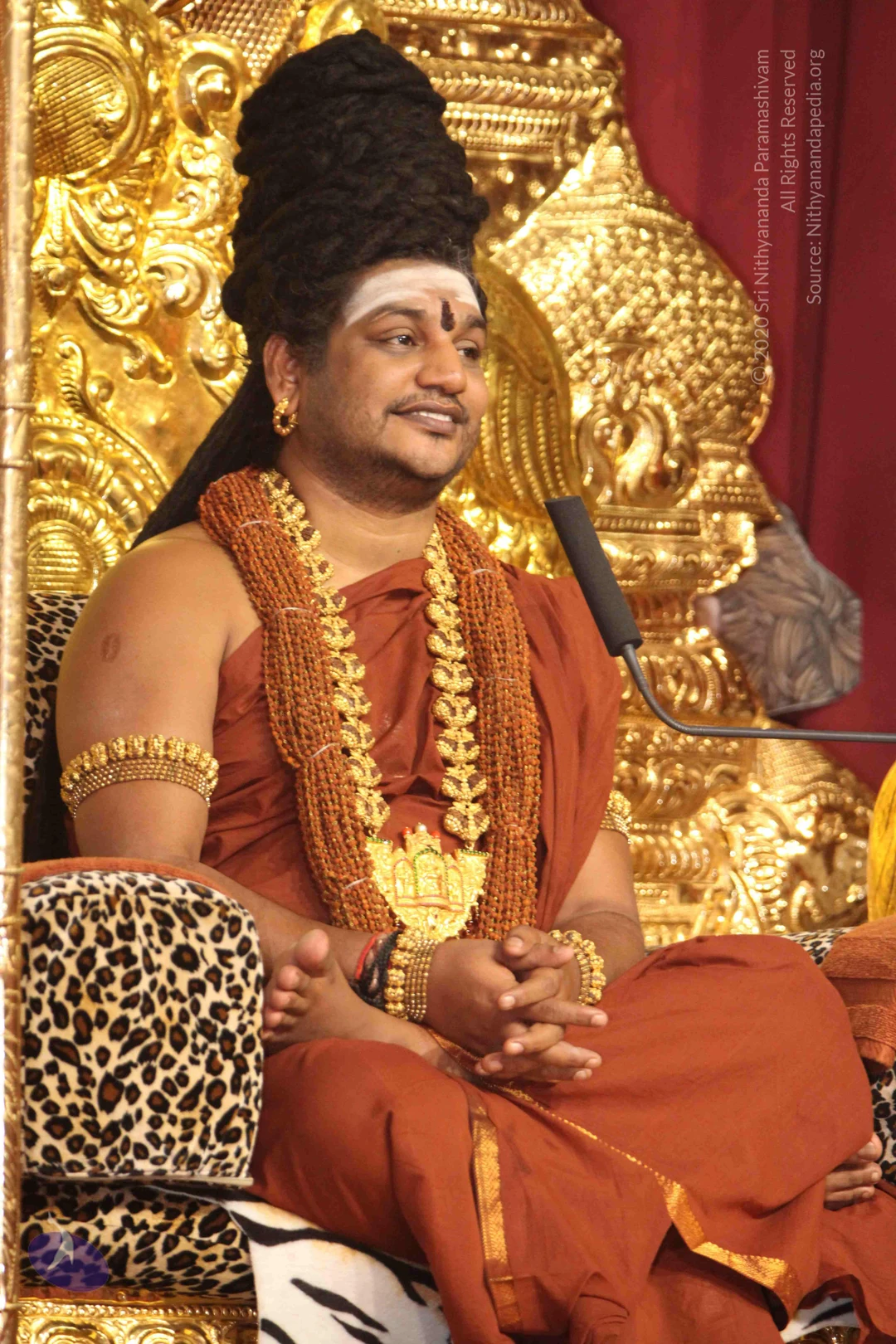
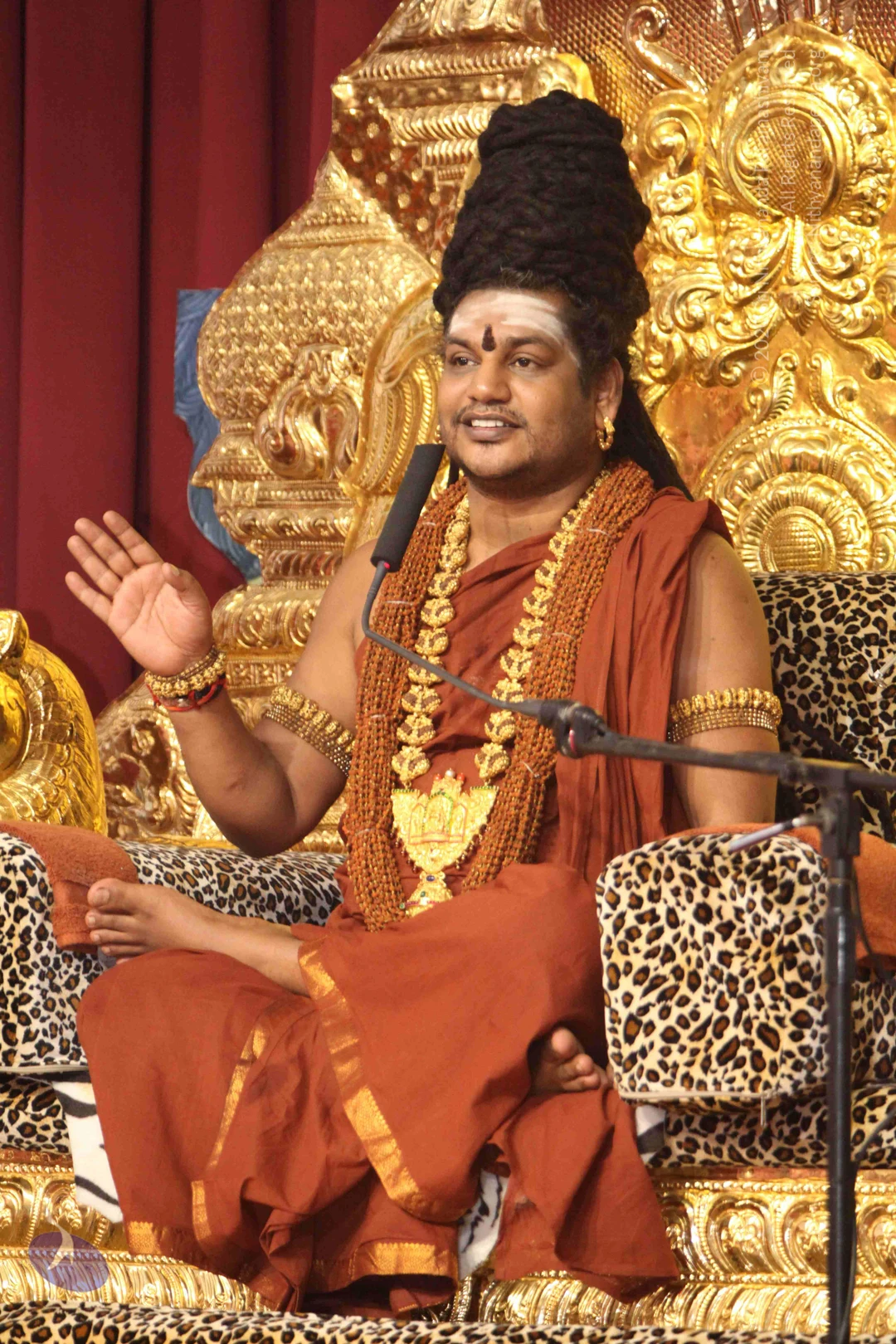
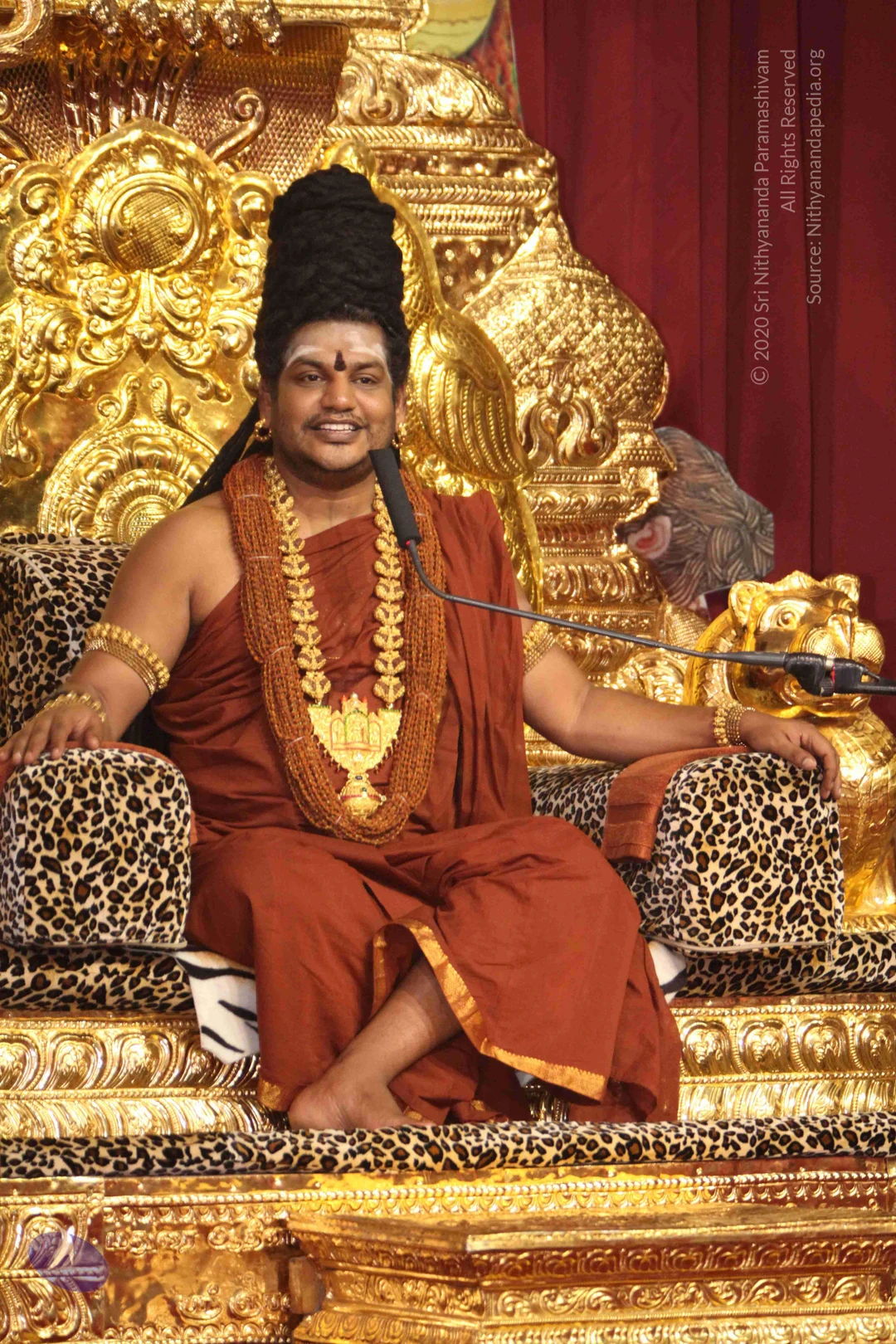
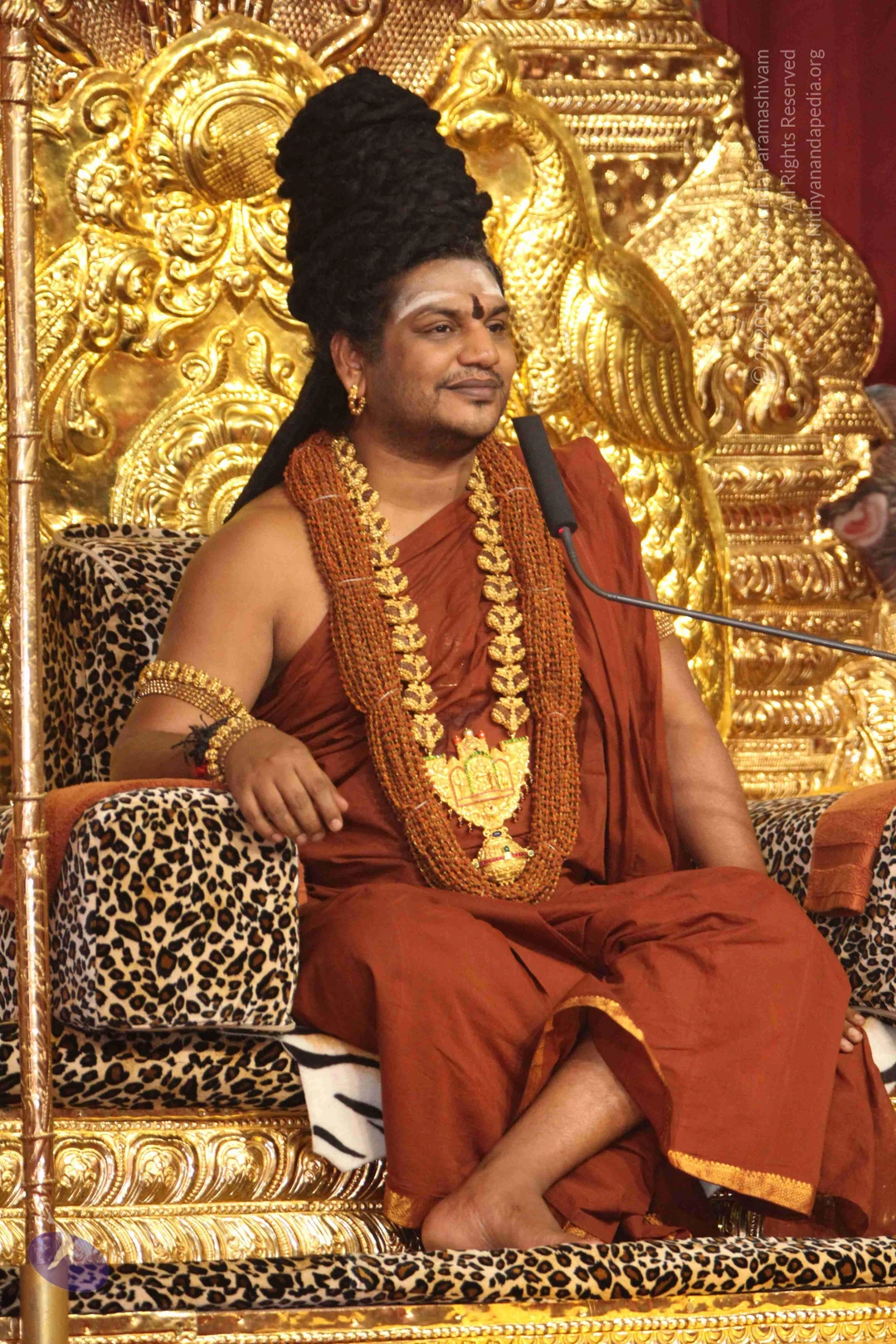
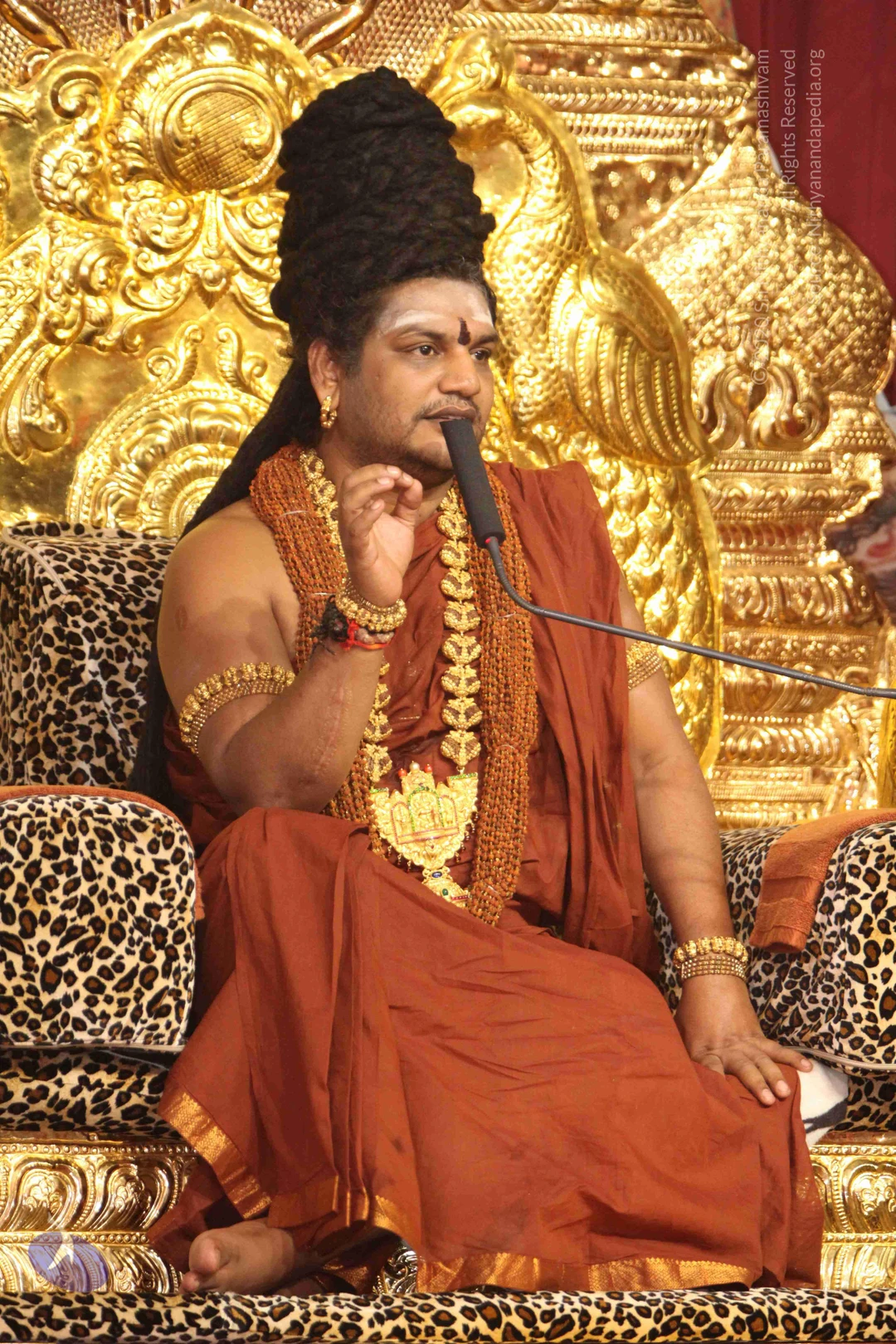
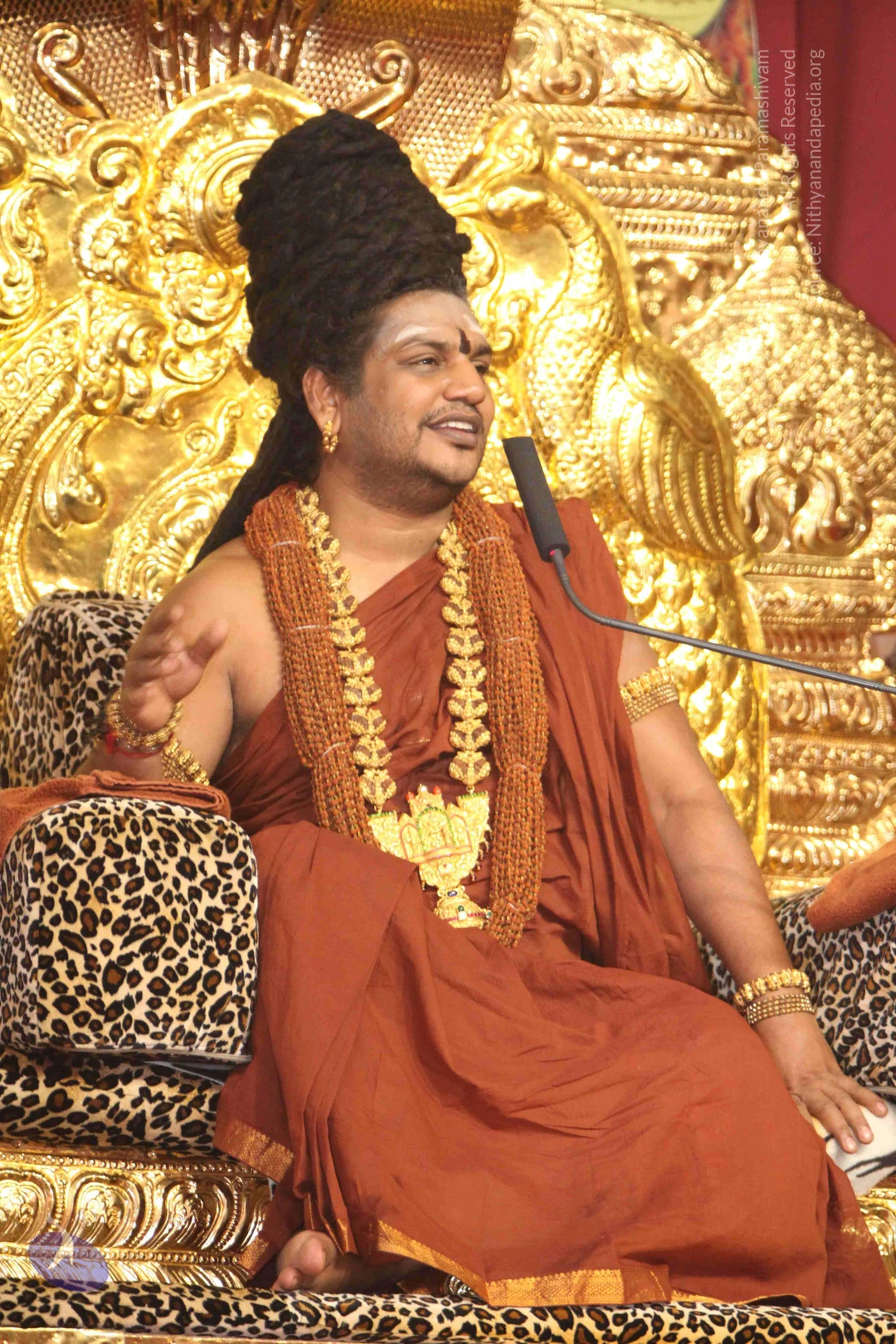
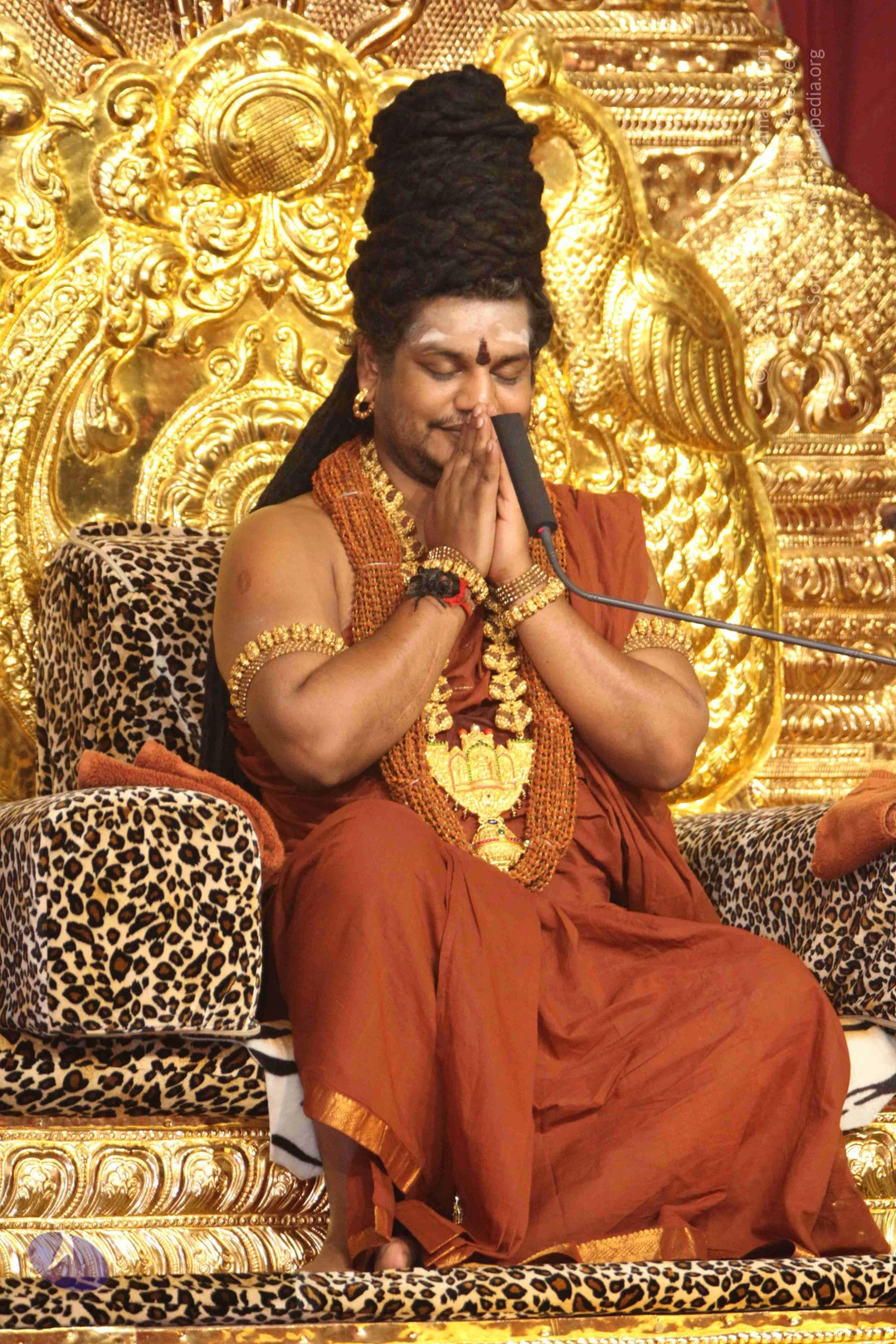
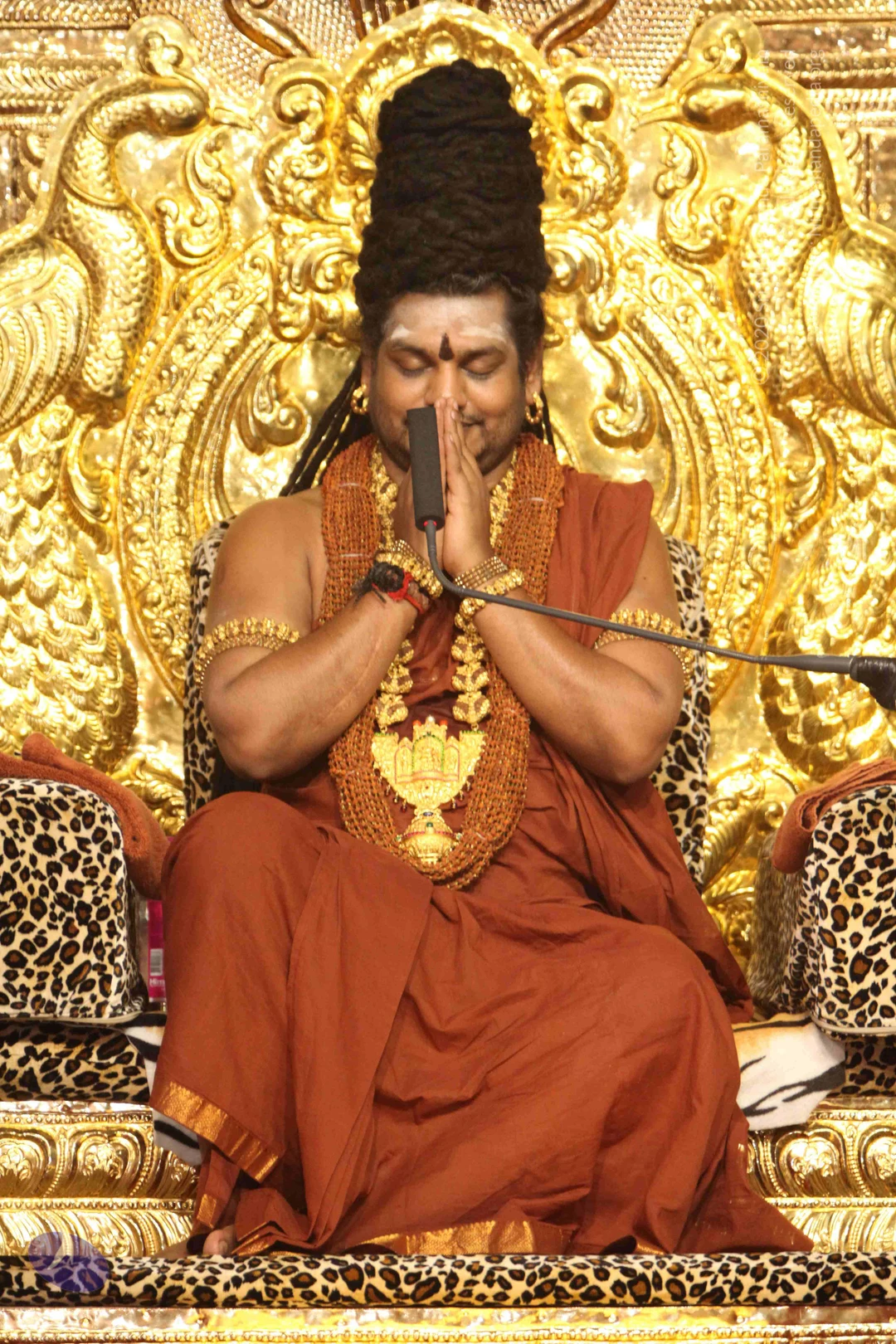
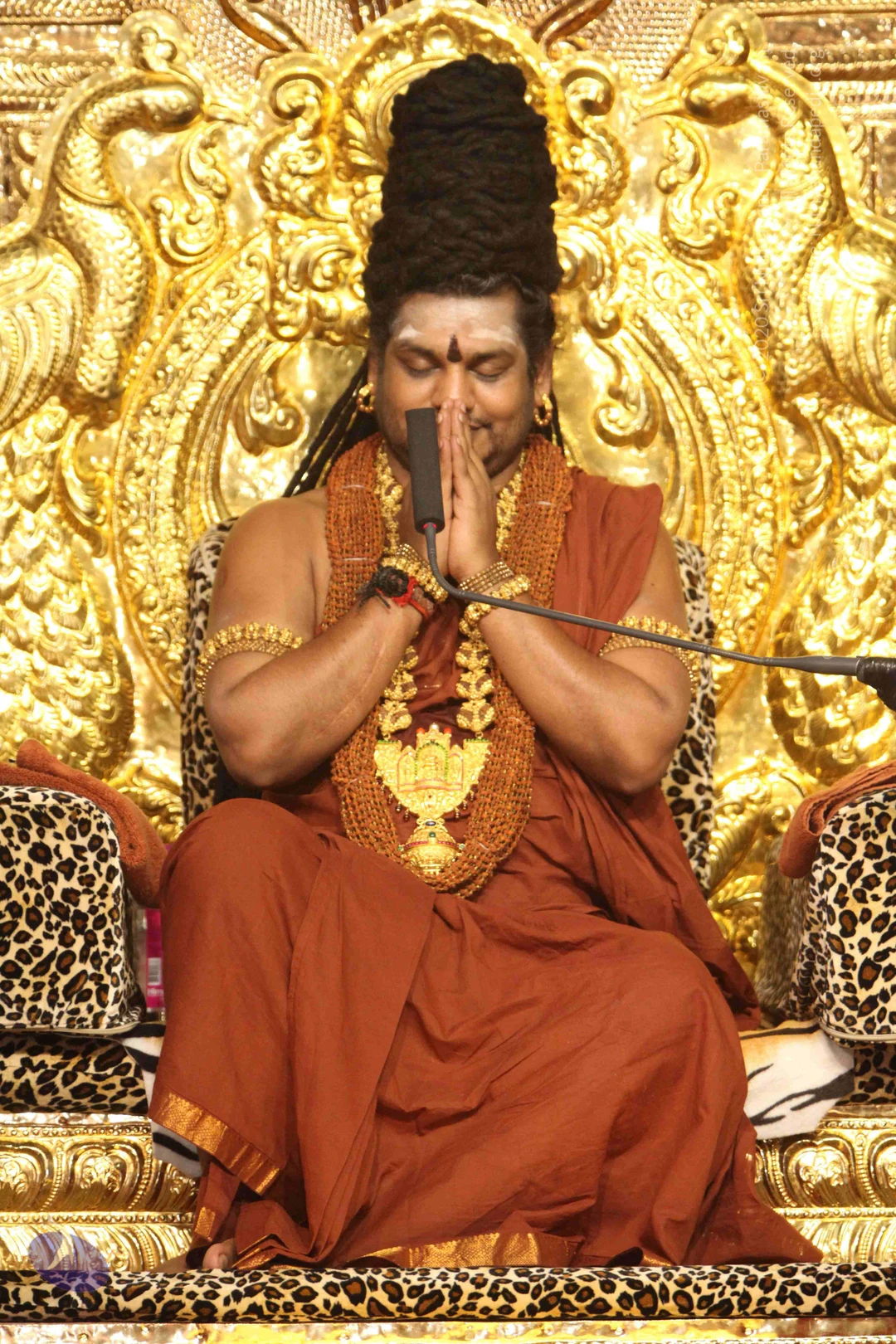
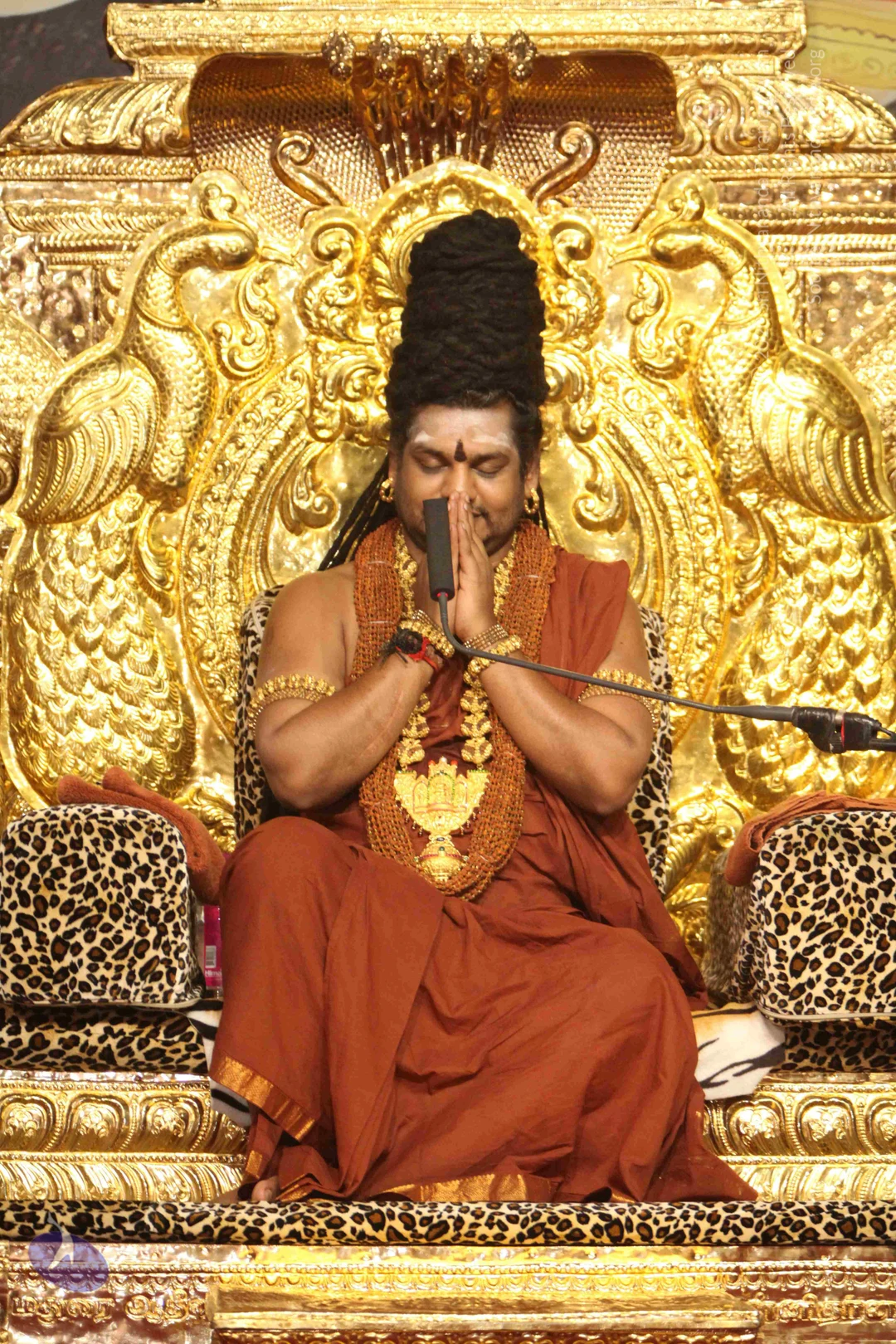
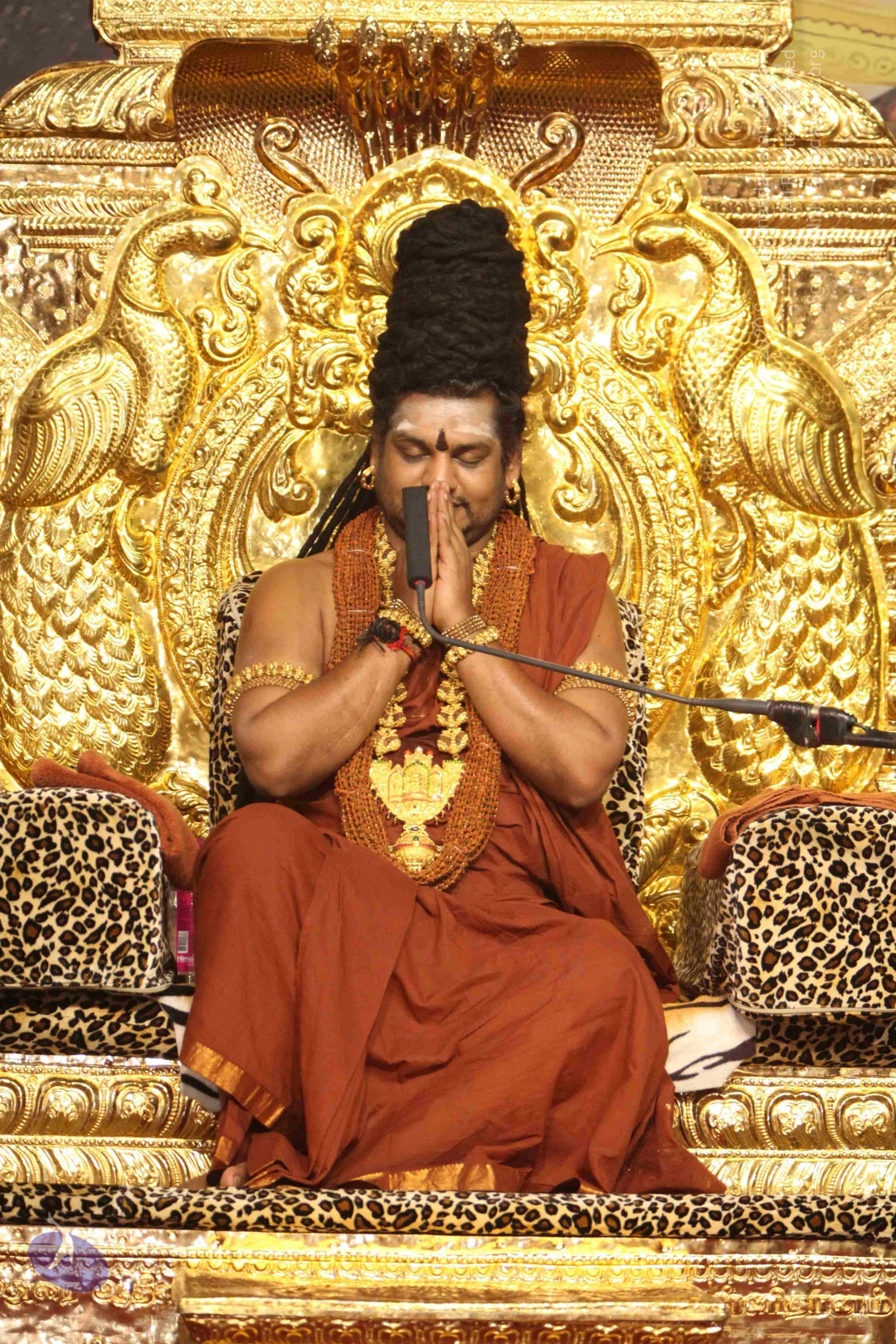
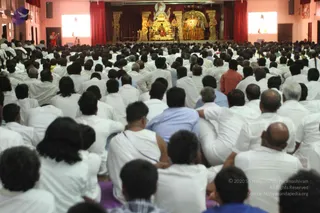
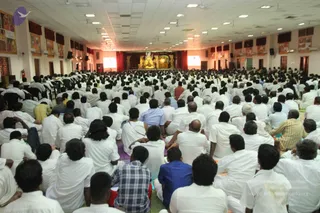
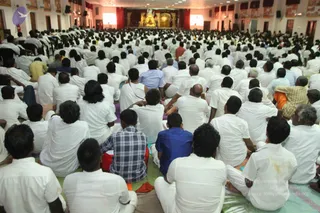
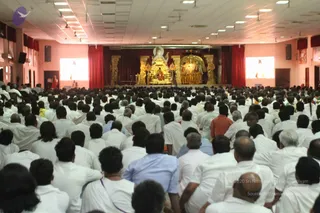
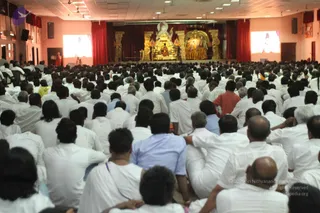
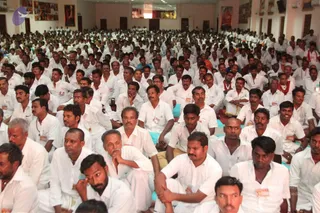
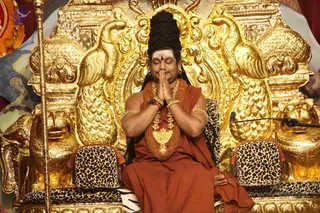
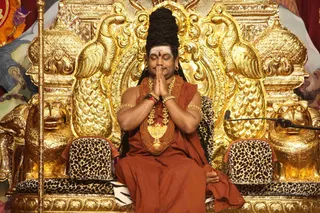
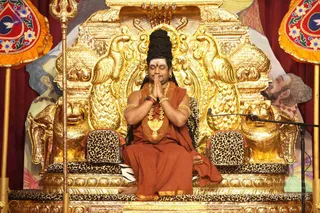
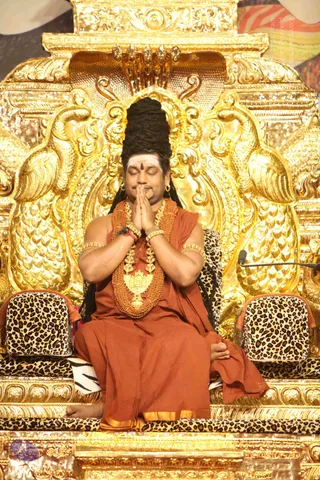
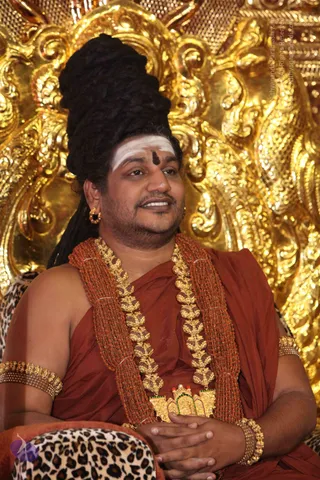
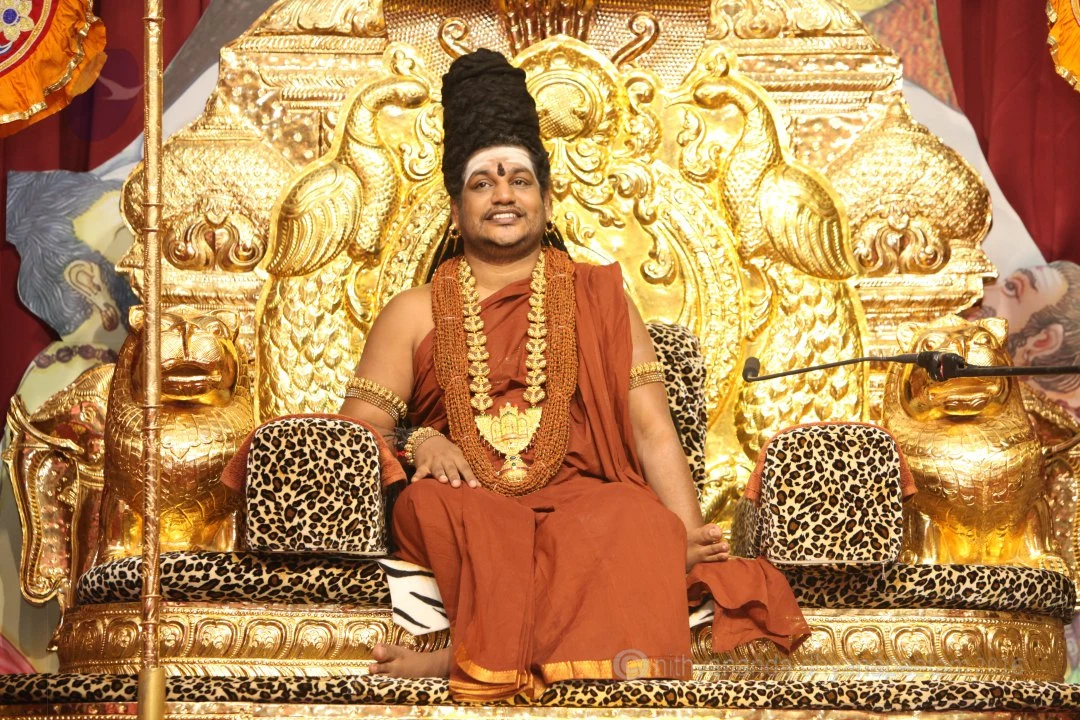
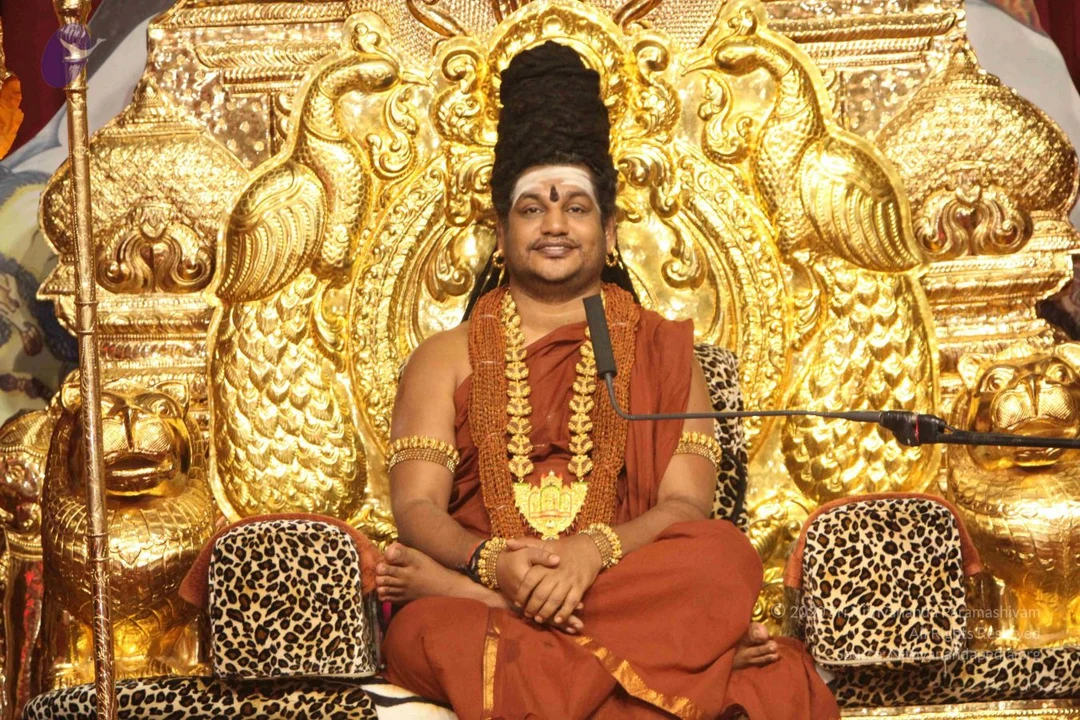
A man seated cross-legged on an ornate gold throne with carved lion and peacock motifs and leopard-print cushions, in front of a painted backdrop with a trident standing at left. He wears a saffron-orange robe, a long rudraksha-style mala with a large gold pendant, gold bangles and a tall swept-up dark hairstyle, with a red bindi on his forehead. He sits with hands folded in his lap and appears to be addressing an audience, with a microphone stand at right. Saffron-and-red fringed canopies flank the throne. Swamiji (probable) is seated on the throne, with his long swept-back hair, saffron robe, gold necklace and mala cues visible.A seated man speaks into a microphone on an ornate golden throne (peetha) carved with floral and scroll motifs, with a leopard-print cushion beneath. He has long dark matted hair piled high, white tripundra marks on his forehead, a red bindi, gold earrings and bangles, and a rust-orange cloth draped over his shoulders. Heavy gold and beaded necklaces hang on his chest, and a red curtain sits behind the throne. A golden figure is partly visible at the lower left edge. Swamiji (probable): the figure has long swept-back hair, a saffron-orange garment, rudraksha-style beaded malas and ceremonial gold necklaces seated on a throne. The page states this is a Nithyananda Dhyana Yoga satsang session in Adi Kailasa, Bengaluru.A large seated audience fills a hall, with hundreds of men dressed in white shirts and white dhotis, many wearing white event badges or lanyards. Most sit cross-legged on the floor in rows, and some look toward the front while others rest their hands on their knees or chin. The hall has cream walls with framed pictures and a stage area at the far back. The scene resembles a satsang or meditation class, with no clearly visible speaker identified in the frame.

June 18 2016

Original wiki page
Contents

Title

சாஸ்திரம் சார்ந்து வாழ கற்றுக்கொள்ளுங்கள் || பாகம் 1 || நித்ய தியான யோகா || 18 ஜூன் 2016

Description

நிகழ்ச்சி நிரல் -நித்ய தியான யோகா தலைப்பு - சாஸ்திரம் சார்ந்து வாழ கற்றுக்கொள்ளுங்கள் பாகம் 1 இடம் - ஆதி கைலாஸா, பெங்களூரு, கர்நாடகா, இந்தியா தேதி - 18 ஜூன் 2016

இந்த வீடியோ பதிவில் பகவான் #நித்யானந்த பரமசிவம் அவர்கள் இந்த தியான வகுப்பின் சாரமாக நமக்குள் இருக்கும் குண்டலினி சக்தி பற்றிய தவறான மனப்பாங்குகளை முழுமை படுத்துவதன் மூலமாகவே குண்டலினி சக்தியை விழிப்படைய செய்ய முடியும் என்று எடுத்துரைத்துள்ளார். அதன் தொடர்ச்சியாகநம் பிரச்சனைகளுக்கும், கேள்விகளுக்கும் ஒரே தீர்வு சாஸ்திரம் சார்ந்து வாழ கற்றுக்கொள்ளுங்கள் எனும் விடையை அருளினார் .

The Supreme Pontiff of Hinduism Jagatguru Mahasannidhanam His Divine Holiness #Nithyananda Paramashivam (HDH) is the reviver of #KAILASA - the ancient enlightened civilization and the great cosmic borderless Hindu nation. Revered as the incarnation of Paramashiva - the primordial Hindu Divinity, HDH has a following of 2 billion Hindus worldwide with de facto spiritual embassies in over 150 countries. He has worked untiringly for over 26 years for the revival of Kailasa, for global peace and to give super conscious breakthrough to humanity. He has survived the worst persecution of multiple assassination attempts on person and on character by anti-Hindu elements. He is collecting, organising, preserving, time capsuling, decoding, spreading and reviving 20 Million source books of Hinduism and the 64 sacred arts & sciences like Ayurveda, music, dance, sculpting, astrology, vastu and much more. Close to 20,000 hours of HDH’s timeless talks have been recorded till date (Sep 2020), which are a treasure trove of powerful cognitions to solve individual and global problems of any kind.

Link to Video:

VideoAudio

Title

சாஸ்திரம் சார்ந்து வாழ கற்றுக்கொள்ளுங்கள் || பாகம் 2 || நித்ய தியான யோகா || 18 ஜூன் 2016

Description

நிகழ்ச்சி நிரல் -நித்ய தியான யோகா தலைப்பு - சாஸ்திரம் சார்ந்து வாழ கற்றுக்கொள்ளுங்கள் பாகம் 2 இடம் - ஆதி கைலாஸா, பெங்களூரு, கர்நாடகா, இந்தியா தேதி - 18 ஜூன் 2016

இந்த வீடியோ பதிவில் பகவான் #நித்யானந்த பரமசிவம் அவர்கள் இந்த தியான வகுப்பின் சாரமாக நமக்குள் இருக்கும் குண்டலினி சக்தி பற்றிய தவறான மனப்பாங்குகளை முழுமை படுத்துவதன் மூலமாகவே குண்டலினி சக்தியை விழிப்படைய செய்ய முடியும் என்று எடுத்துரைத்துள்ளார். அதன் தொடர்ச்சியாகநம் பிரச்சனைகளுக்கும், கேள்விகளுக்கும் ஒரே தீர்வு சாஸ்திரம் சார்ந்து வாழ கற்றுக்கொள்ளுங்கள் எனும் விடையை அருளினார் .

The Supreme Pontiff of Hinduism Jagatguru Mahasannidhanam His Divine Holiness #Nithyananda Paramashivam (HDH) is the reviver of #KAILASA - the ancient enlightened civilization and the great cosmic borderless Hindu nation. Revered as the incarnation of Paramashiva - the primordial Hindu Divinity, HDH has a following of 2 billion Hindus worldwide with de facto spiritual embassies in over 150 countries. He has worked untiringly for over 26 years for the revival of Kailasa, for global peace and to give super conscious breakthrough to humanity. He has survived the worst persecution of multiple assassination attempts on person and on character by anti-Hindu elements. He is collecting, organising, preserving, time capsuling, decoding, spreading and reviving 20 Million source books of Hinduism and the 64 sacred arts & sciences like Ayurveda, music, dance, sculpting, astrology, vastu and much more. Close to 20,000 hours of HDH’s timeless talks have been recorded till date (Sep 2020), which are a treasure trove of powerful cognitions to solve individual and global problems of any kind.

Link to Video:

VideoAudio

Title

சாஸ்திரம் சார்ந்து வாழ கற்றுக்கொள்ளுங்கள் || பாகம் 3 || நித்ய தியான யோகா || 18 ஜூன் 2016

Description

நிகழ்ச்சி நிரல் -நித்ய தியான யோகா தலைப்பு - சாஸ்திரம் சார்ந்து வாழ கற்றுக்கொள்ளுங்கள் பாகம் 3 இடம் - ஆதி கைலாஸா, பெங்களூரு, கர்நாடகா, இந்தியா தேதி - 18 ஜூன் 2016

இந்த வீடியோ பதிவில் பகவான் #நித்யானந்த பரமசிவம் அவர்கள் இந்த தியான வகுப்பின் சாரமாக நமக்குள் இருக்கும் குண்டலினி சக்தி பற்றிய தவறான மனப்பாங்குகளை முழுமை படுத்துவதன் மூலமாகவே குண்டலினி சக்தியை விழிப்படைய செய்ய முடியும் என்று எடுத்துரைத்துள்ளார். அதன் தொடர்ச்சியாகநம் பிரச்சனைகளுக்கும், கேள்விகளுக்கும் ஒரே தீர்வு சாஸ்திரம் சார்ந்து வாழ கற்றுக்கொள்ளுங்கள் எனும் விடையை அருளினார் .

The Supreme Pontiff of Hinduism Jagatguru Mahasannidhanam His Divine Holiness #Nithyananda Paramashivam (HDH) is the reviver of #KAILASA - the ancient enlightened civilization and the great cosmic borderless Hindu nation. Revered as the incarnation of Paramashiva - the primordial Hindu Divinity, HDH has a following of 2 billion Hindus worldwide with de facto spiritual embassies in over 150 countries. He has worked untiringly for over 26 years for the revival of Kailasa, for global peace and to give super conscious breakthrough to humanity. He has survived the worst persecution of multiple assassination attempts on person and on character by anti-Hindu elements. He is collecting, organising, preserving, time capsuling, decoding, spreading and reviving 20 Million source books of Hinduism and the 64 sacred arts & sciences like Ayurveda, music, dance, sculpting, astrology, vastu and much more. Close to 20,000 hours of HDH’s timeless talks have been recorded till date (Sep 2020), which are a treasure trove of powerful cognitions to solve individual and global problems of any kind.

Link to Video:

VideoAudio

Photos From The Day:

Nithya Dhyaan Yoga - Tamil
Enriching Materials

Sakshi Pramana:

sharing from Guru poornima

Photos Of The Day:

NDY TAMIL

NDY-TAMIL

Photos Of The Day:

NDY-PROGRAMME

NDY-PROGRAMME

Satsang

Photos from this day

View all 94 photos

Nithya Dhyaan Yoga - Tamil
2 photosSource gallery
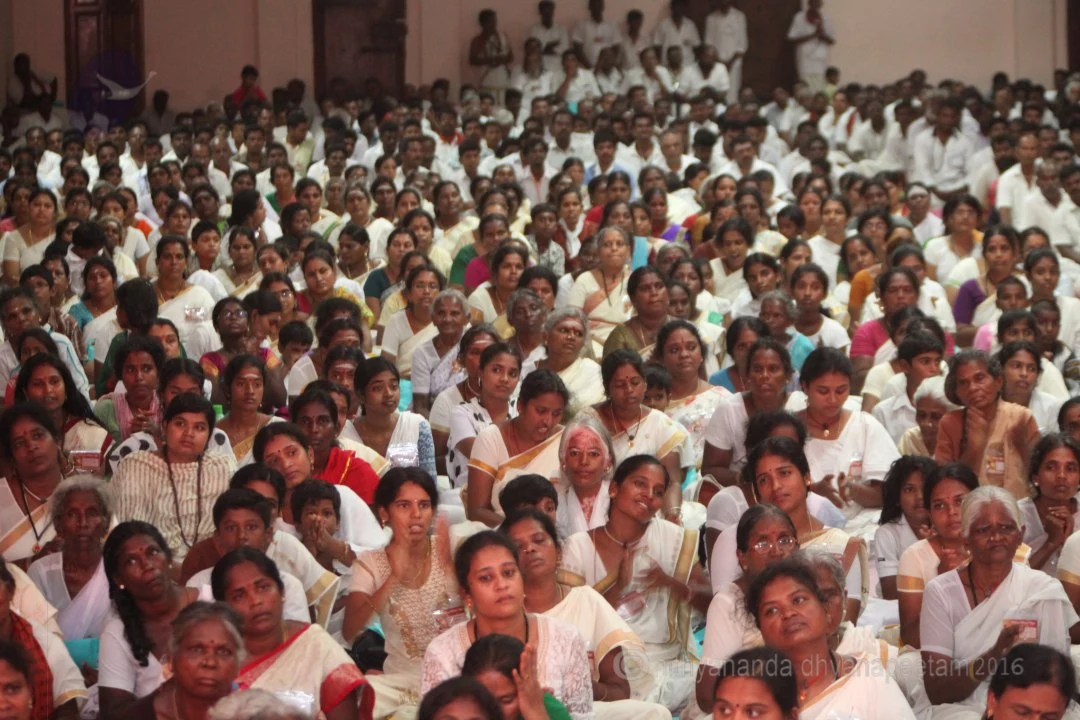
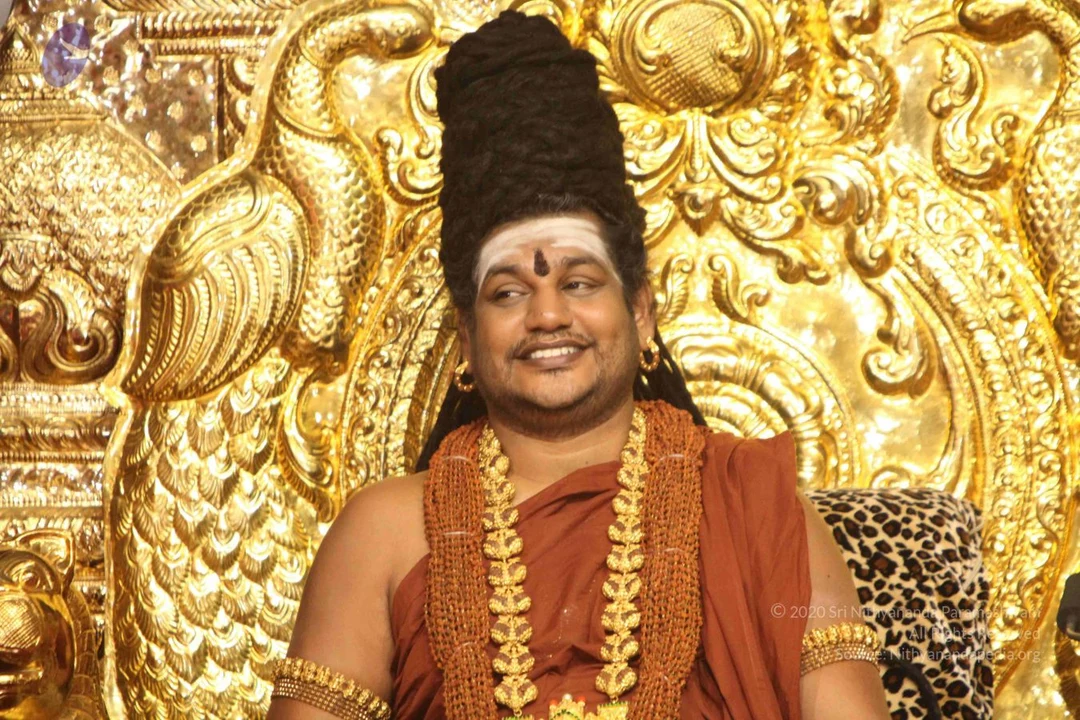
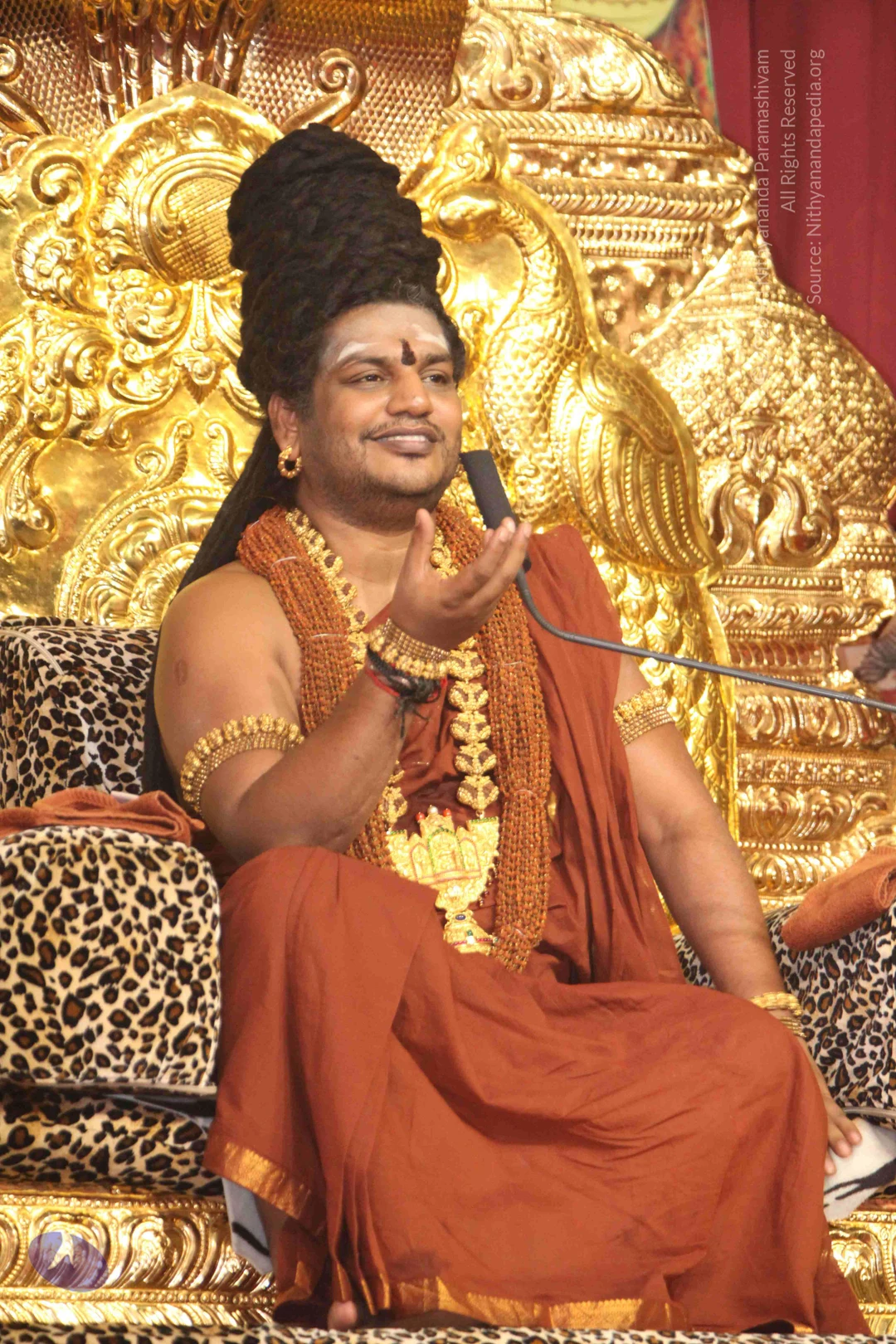
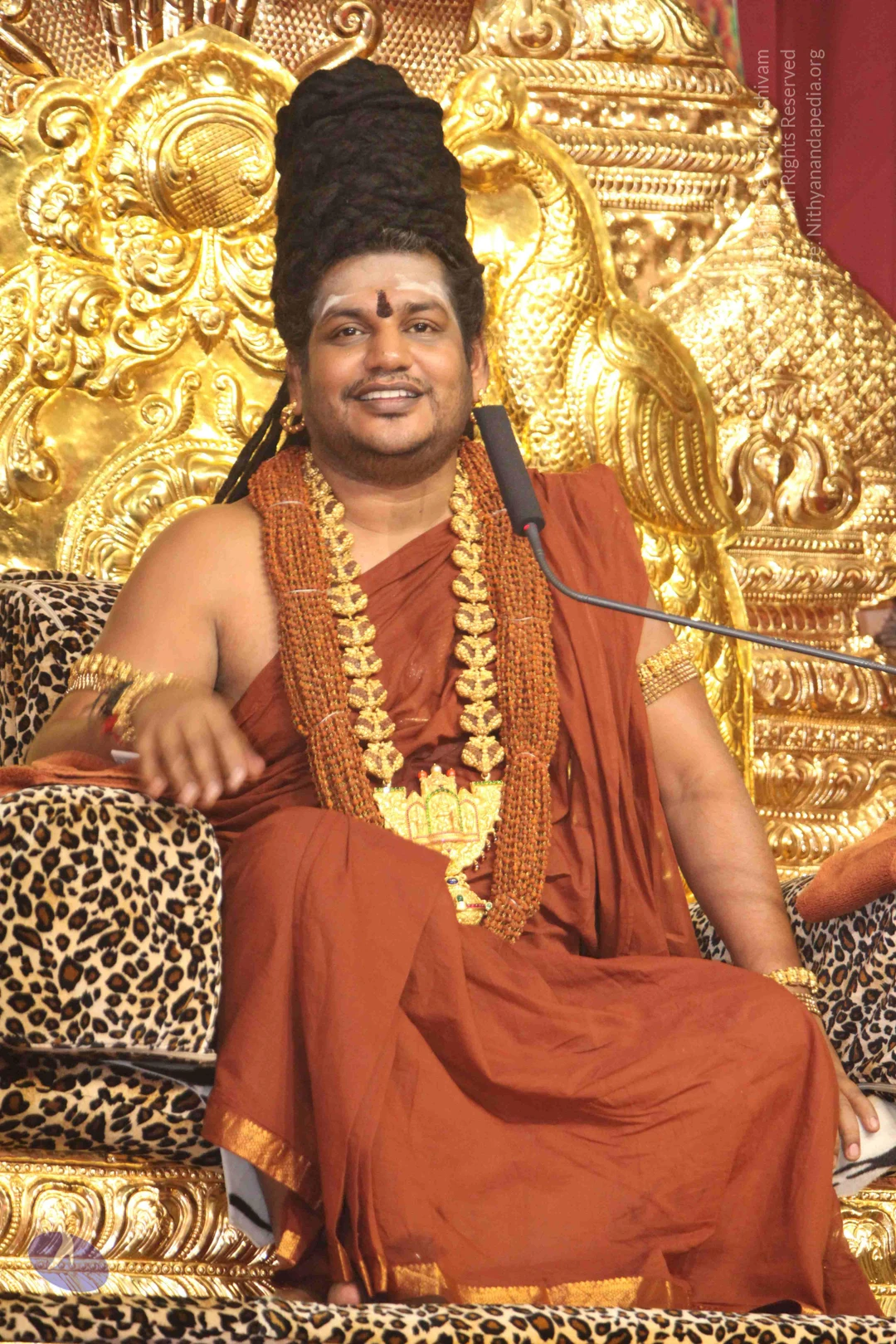
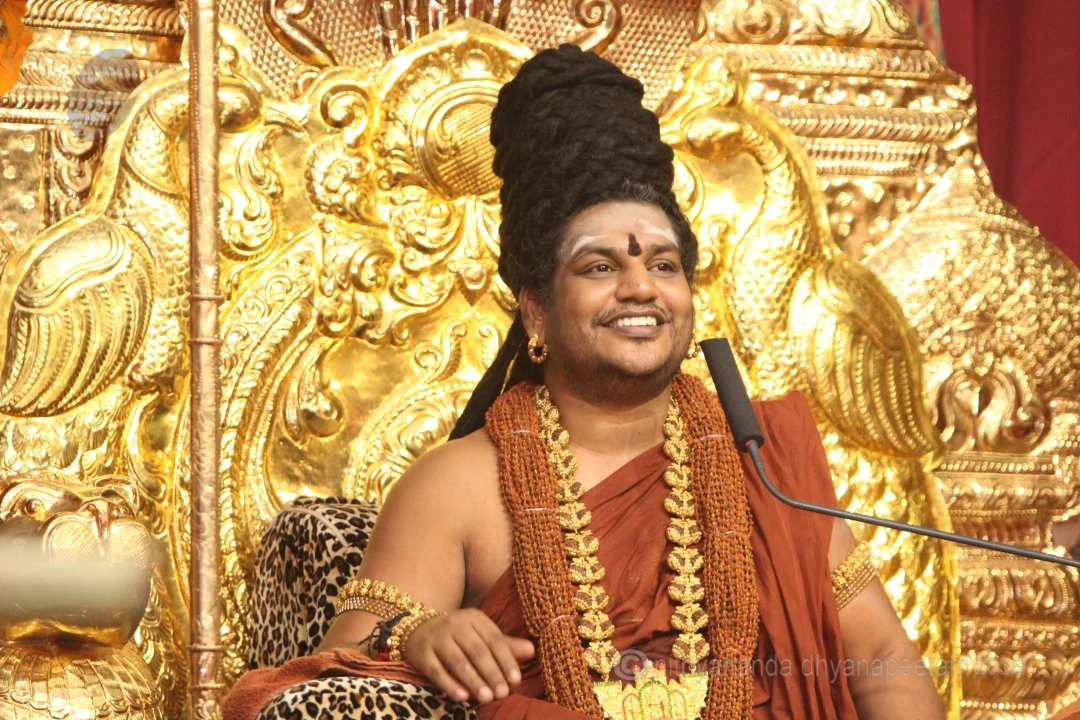
A large seated audience fills a hall at a Nithyananda Dhyanapeetam meditation session. Most attendees wear white or cream clothes with gold borders, along with white and saffron-bordered saris, and many wear beaded necklaces. Several women in the front rows have tilak or kumkum marks on their foreheads, and some hold their hands together in prayer. Dense rows of people fill the room to the back wall, where men in white shirts stand near the top of the stairs.A seated man in saffron-orange robes sits on an ornate gold throne with carved floral and scroll details, a leopard-print cloth draped over the seat. He wears long matted hair piled high in a topknot, white forehead markings with a dark bindi, gold earrings, multiple rudraksha malas and layered gold necklaces, and gold armbands. He smiles while looking to the side, with a microphone on a stand beside him. Appearance-based candidate, a person: long swept-up hair, saffron clothing, rudraksha malas and ceremonial gold necklaces.

Enriching Materials

1 photoSource gallery
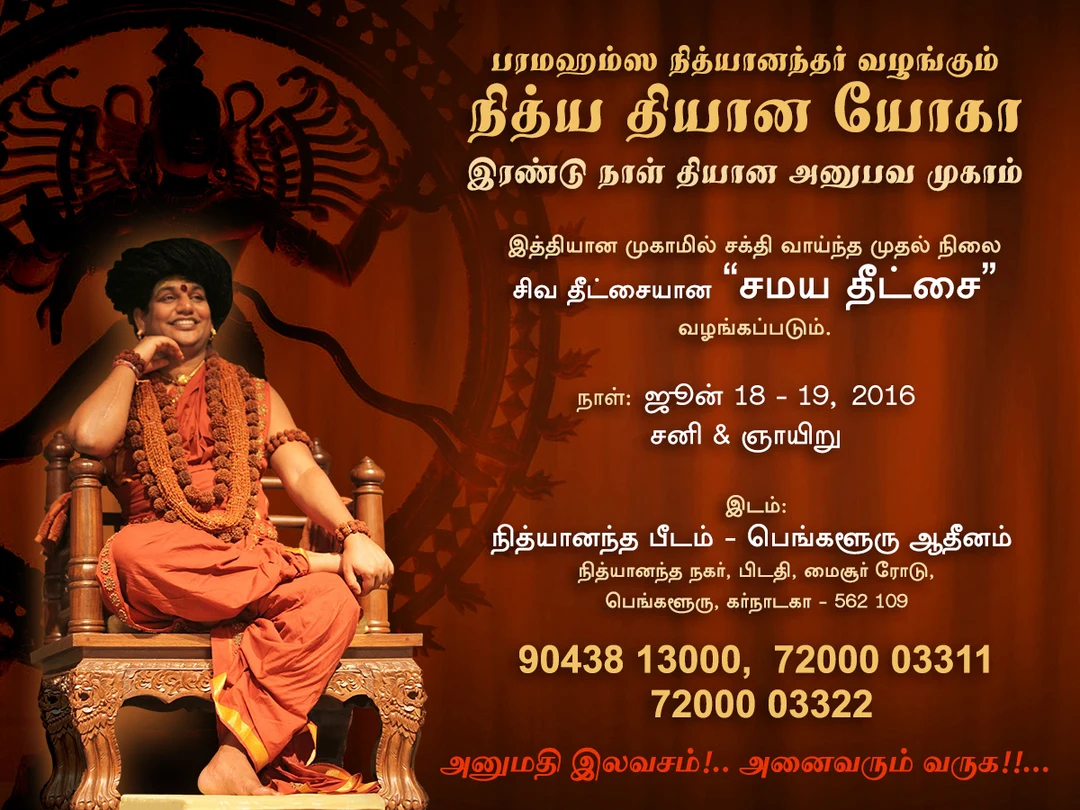
A Tamil event poster for a two-day Nithya Dhyana Yoga meditation retreat. On the left, a smiling man with swept-back black hair, a red bindi and an orange-saffron robe with a large rudraksha mala and gold necklace sits on an ornate carved wooden throne with a lion-carved armrest, one hand resting on his cheek. Behind him are dark red curtains and a shadowy carved deity figure with multiple arms. Gold and white Tamil headings and details, phone numbers and an address are set in the centre and lower area. a person appears as the seated figure in saffron, wearing rudraksha malas and gold necklace, on a throne.

NDY TAMIL

6 photosSource gallery
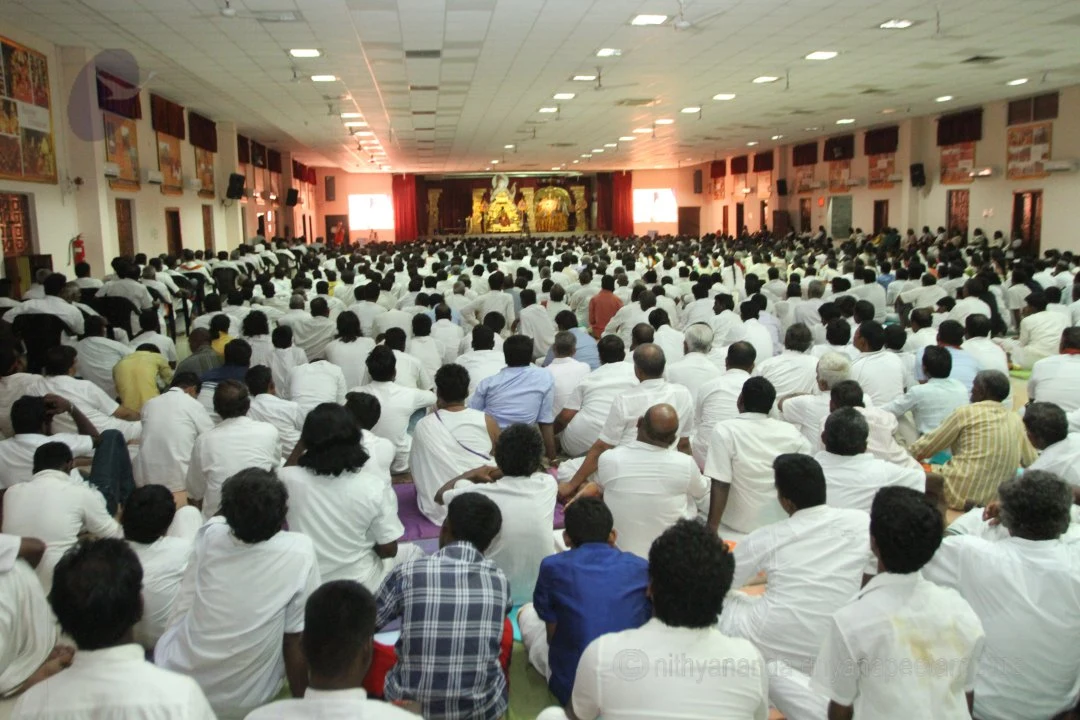
A large seated audience of devotees in predominantly white clothing fills a hall, viewed from behind. Many heads and shoulders fill the foreground, with a few in blue, orange-red and purple garments. At the front, a gilded stage holds a golden deity murti, ornate golden pillars and a golden throne-like seat with attendants. Two large screens flank the stage, and a small figure in orange stands at the far left near a stand. The setting suggests a satsang or meditation session.Wide view from the back of a large hall filled with seated devotees, most dressed in white, sitting cross-legged on the floor in rows. A few people in blue, checked and yellow shirts are scattered among them. At the far end of the hall, a stage with a deity murti or statue is decorated with gold ornaments and flanked by red curtains and screens. Ceiling fans and lights hang overhead and framed devotional images line the walls. The gathering looks like a meditation or discourse session.A large hall packed with seated devotees, viewed from behind as they face a stage at the far end. Most wear white shirts and white dhotis or trousers, with a few in blue, checked, or orange-and-yellow clothing. They sit cross-legged on green mats across the floor. At the front, a golden ornate altar with a deity murti and decorated backdrop is framed by red curtains and two large screens. The walls are pale pink with framed pictures and red pillars. The scene suggests a satsang or meditation session.A large indoor hall filled with a dense crowd of seated devotees, mostly men and women in white clothing, viewed from behind. Many heads fill the foreground. On a raised stage at the far end stands a golden ornate shrine with a large white deity murti and gilded pillars, and figures in golden attire sit near it. Red curtains frame the stage, and projection screens on both sides show a figure. Overhead lights and a white ceiling complete the hall.A large hall packed with seated devotees in white clothing, viewed from the back, facing a stage. On the stage a golden deity murti sits on an ornate throne flanked by gilded pillars and a tall golden seated figure with a crown, with red curtains behind. A small figure in red robes stands at the left edge of the stage. Two projection screens show the stage at either side, and a few devotees wear blue and red shirts among the white-clad crowd.A large seated audience of men fills a hall, most dressed in white shirts and white dhotis, many wearing name badges on their chests. Several sit cross-legged on blue mats. Some listen attentively, others rest their chins on their hands. Framed pictures hang on the pale pink walls, and a screen is visible above the crowd. No speaker is clearly visible in this frame, and the audience is densely packed toward the front.

NDY-TAMIL
39 photosSource gallery
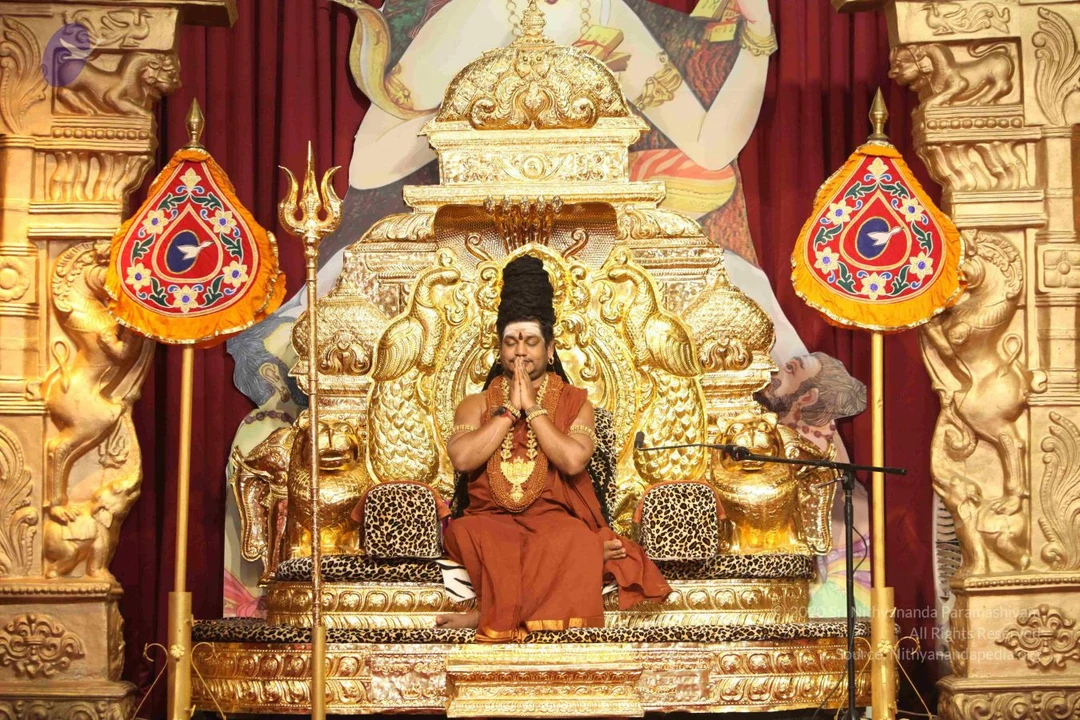
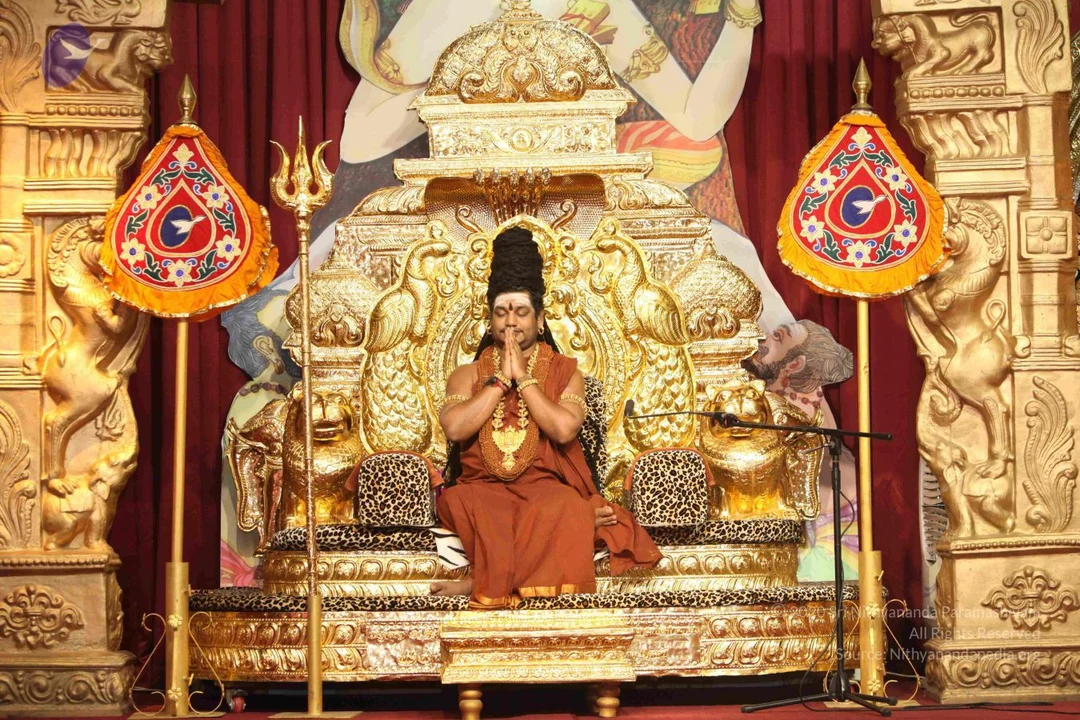
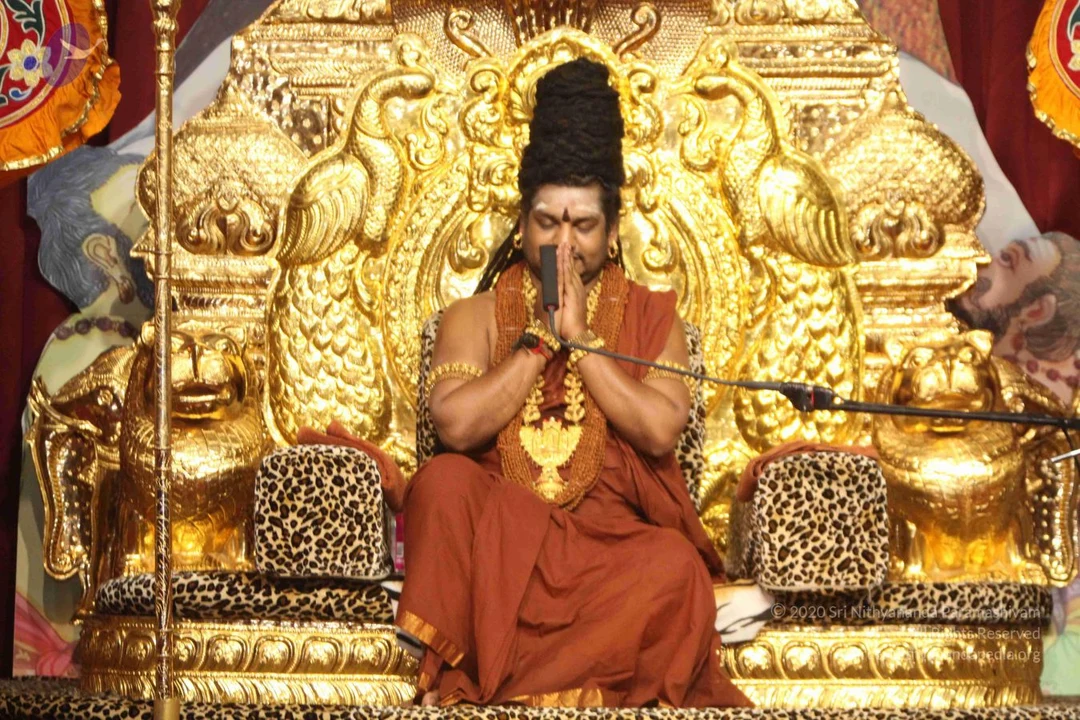
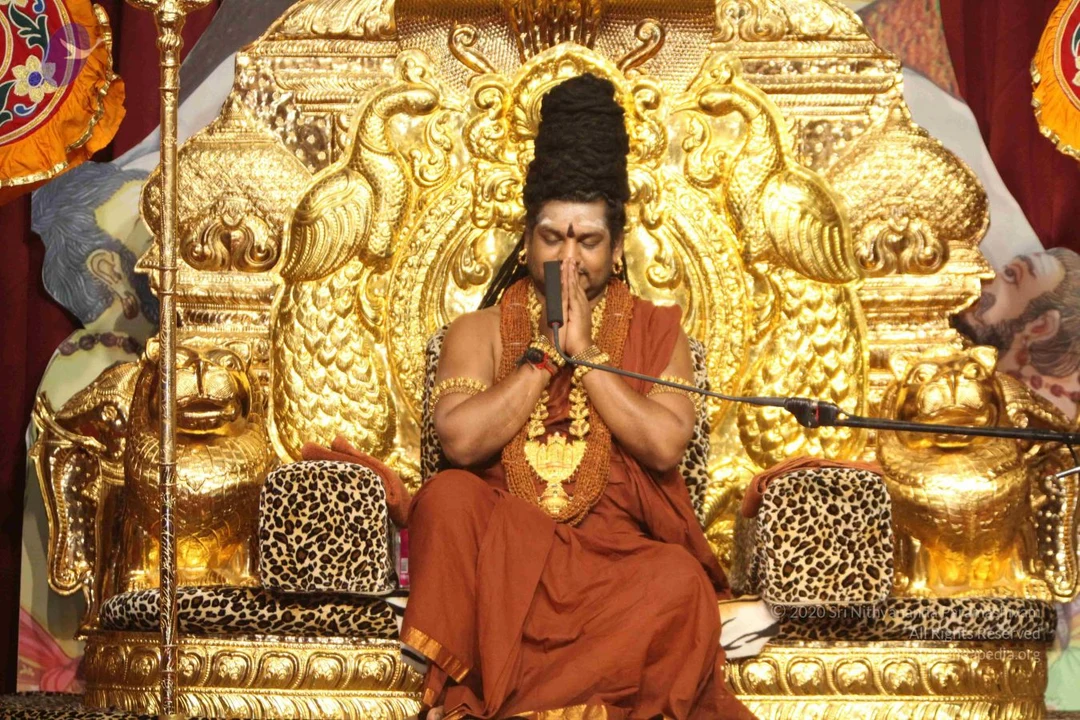
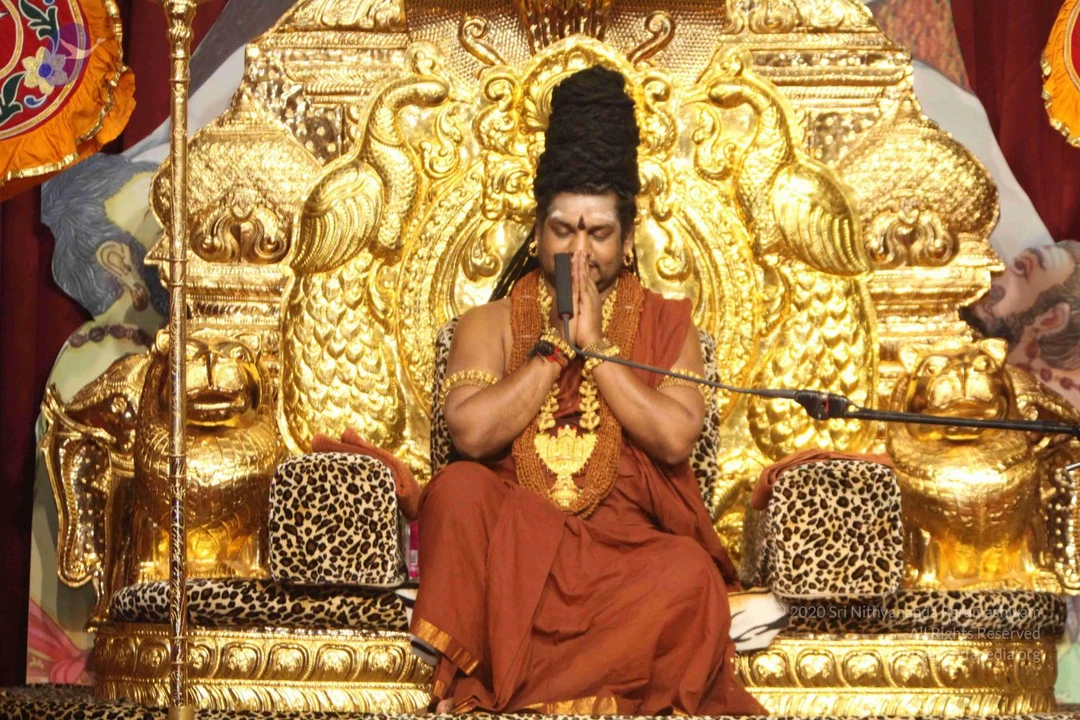
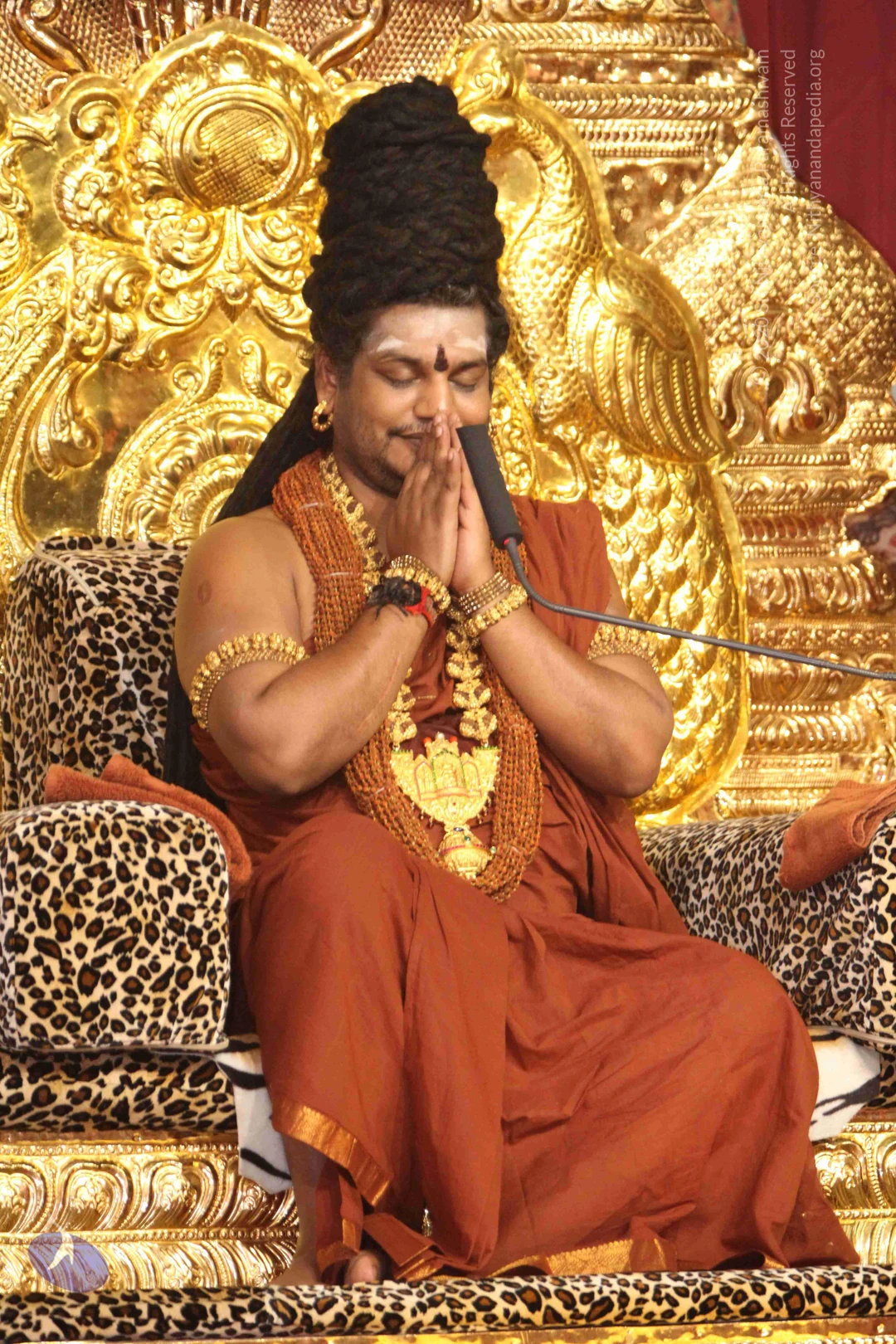
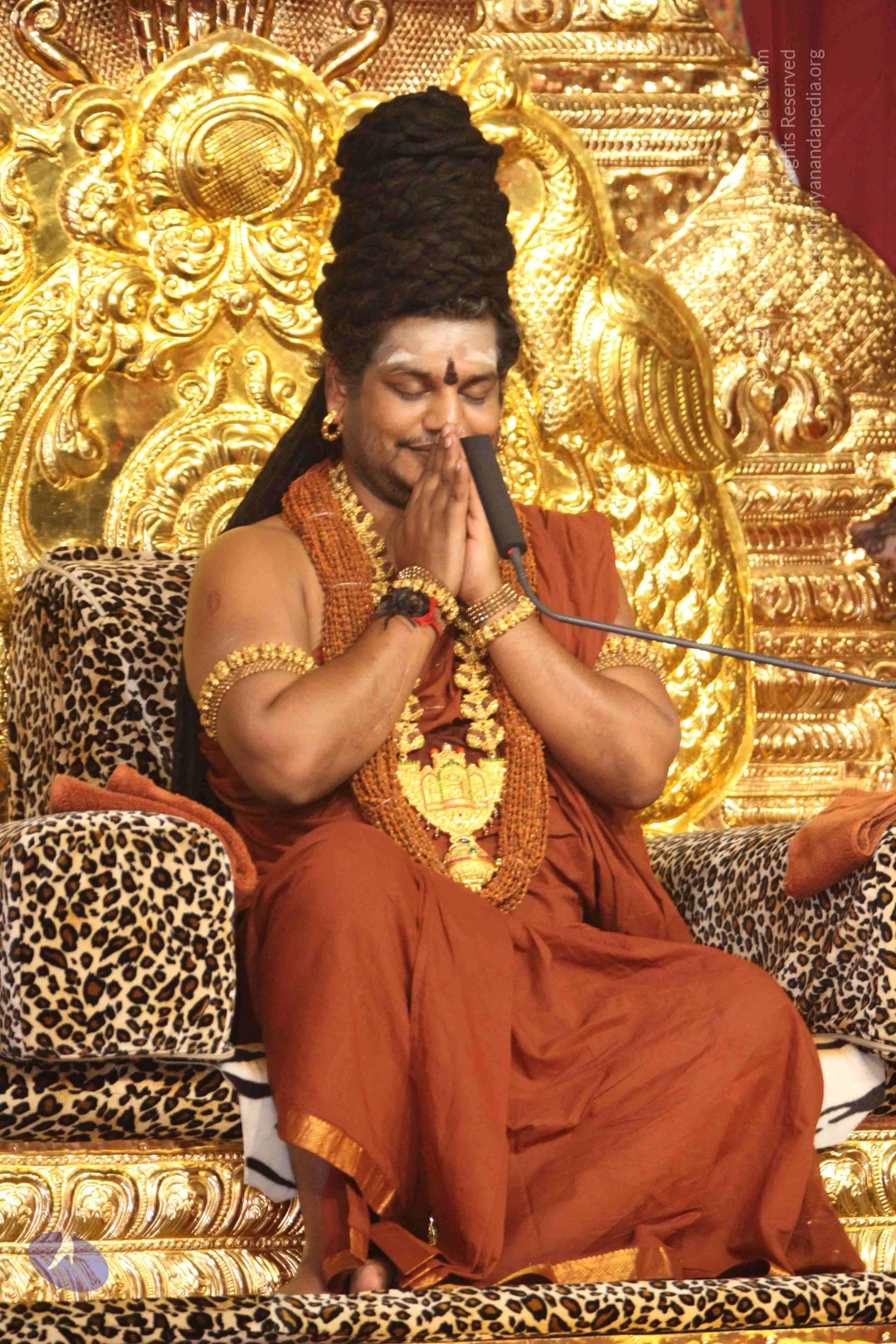
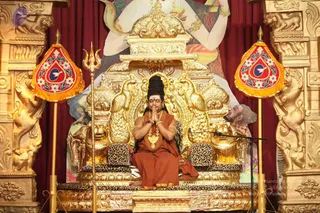
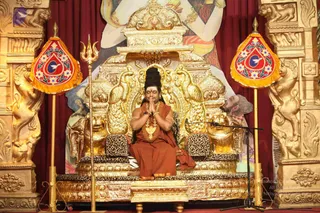
A seated man with long dark hair piled high on his head, wearing an orange-rust robe and a heavy gold-and-beaded necklace with a large gold pendant, sits with palms pressed together in namaste and eyes closed. He has a white horizontal tilak on his forehead and gold bangles. He sits on an ornate gold throne carved with lion heads and leopard-print cushions, with a gold staff beside him and a microphone in front. Behind the throne is a red and gold backdrop with a painted panel.A seated man in saffron-orange robes and a long swept-back dark hair crown sits on an ornate gold throne with carved lion and swan motifs and leopard-print cushions. He holds his palms together in anjali mudra with eyes closed, wearing a large gold-and-red beaded necklace, bangles, and a white forehead marking. A microphone stands at the right and a gold staff rises at the left. Swamiji (probable): the saffron robes, crown-like hair, ornate gold necklaces and throne cues match the page's Swamiji claim, though the face is not used for identification.A man seated on an ornate gold throne with carved peacock and lion motifs, his palms pressed together in namaste and eyes closed. He wears an orange-red sannyasi robe, a heavy gold-and-red bead necklace, a rudraksha-style mala, gold armlets and bangles, and a red-orange forehead mark. Long dark hair is swept up on his head. Leopard-print cushions sit on the throne, a golden trident stands at the left, and red-and-orange embroidered banners hang at the sides against a painted backdrop. A microphone stands at the right. The gold throne and namaste posture are visible; the man's appearance matches the page's a person claim with several cues (swept-up hair, saffron robe, ornate gold necklace, mala), so this is probable.A man with long, swept-back dark hair and a white forehead mark sits cross-legged on an ornate gold throne with carved lion and swan motifs, hands pressed together in namaste with eyes closed. He wears a saffron-orange shawl, a thick gold-and-beaded necklace, a rudraksha mala and gold armlets. A trident stands at the left beside the throne, red and gold banners frame the scene, and a painted backdrop shows a deity figure. A microphone stands at the right. Swamiji (probable) is seated in a dais role with the cues of long hair, saffron clothing and ceremonial gold adornments.A photograph of a seated figure on an ornate gold throne with carved lion and peacock motifs, hands pressed together in namaste and eyes closed. The figure wears an orange-saffron cloth, a red-orange shawl, a gold necklace, and has long dark hair piled on the head. A gold trident stands at the left, and two saffron-and-red decorated pennants flank the throne against a red curtain and a large painted backdrop. The setting resembles a stage for a satsang or discourse. Swamiji (probable): the figure has long dark hair, saffron clothing, a gold necklace and a rudraksha mala, and sits on a throne as the presiding teacher.A seated figure in saffron-orange robes sits with palms pressed together in namaste on an ornate golden throne (peetha) with carved peacock and lion motifs and leopard-print cushions. The figure has long hair piled high, a rudraksha-style mala, and ceremonial gold necklaces and bangles. Flanking the throne are gold-tipped saffron pennants with floral and bird motifs, a golden trident (trishul) stands at left, and a microphone stands at right. Behind is a painted backdrop of a large deity figure and red curtains. a person appears as the seated figure, in a stage setting consistent with a meditation or discourse.

NDY-PROGRAMME

36 photosSource gallery
A seated man with long dark hair piled high on his head, wearing an orange-rust robe and a heavy gold-and-beaded necklace with a large gold pendant, sits with palms pressed together in namaste and eyes closed. He has a white horizontal tilak on his forehead and gold bangles. He sits on an ornate gold throne carved with lion heads and leopard-print cushions, with a gold staff beside him and a microphone in front. Behind the throne is a red and gold backdrop with a painted panel.A seated man in saffron-orange robes and a long swept-back dark hair crown sits on an ornate gold throne with carved lion and swan motifs and leopard-print cushions. He holds his palms together in anjali mudra with eyes closed, wearing a large gold-and-red beaded necklace, bangles, and a white forehead marking. A microphone stands at the right and a gold staff rises at the left. Swamiji (probable): the saffron robes, crown-like hair, ornate gold necklaces and throne cues match the page's Swamiji claim, though the face is not used for identification.A man seated on an ornate gold throne with carved peacock and lion motifs, his palms pressed together in namaste and eyes closed. He wears an orange-red sannyasi robe, a heavy gold-and-red bead necklace, a rudraksha-style mala, gold armlets and bangles, and a red-orange forehead mark. Long dark hair is swept up on his head. Leopard-print cushions sit on the throne, a golden trident stands at the left, and red-and-orange embroidered banners hang at the sides against a painted backdrop. A microphone stands at the right. The gold throne and namaste posture are visible; the man's appearance matches the page's a person claim with several cues (swept-up hair, saffron robe, ornate gold necklace, mala), so this is probable.A man with long, swept-back dark hair and a white forehead mark sits cross-legged on an ornate gold throne with carved lion and swan motifs, hands pressed together in namaste with eyes closed. He wears a saffron-orange shawl, a thick gold-and-beaded necklace, a rudraksha mala and gold armlets. A trident stands at the left beside the throne, red and gold banners frame the scene, and a painted backdrop shows a deity figure. A microphone stands at the right. Swamiji (probable) is seated in a dais role with the cues of long hair, saffron clothing and ceremonial gold adornments.A photograph of a seated figure on an ornate gold throne with carved lion and peacock motifs, hands pressed together in namaste and eyes closed. The figure wears an orange-saffron cloth, a red-orange shawl, a gold necklace, and has long dark hair piled on the head. A gold trident stands at the left, and two saffron-and-red decorated pennants flank the throne against a red curtain and a large painted backdrop. The setting resembles a stage for a satsang or discourse. Swamiji (probable): the figure has long dark hair, saffron clothing, a gold necklace and a rudraksha mala, and sits on a throne as the presiding teacher.A seated figure in saffron-orange robes sits with palms pressed together in namaste on an ornate golden throne (peetha) with carved peacock and lion motifs and leopard-print cushions. The figure has long hair piled high, a rudraksha-style mala, and ceremonial gold necklaces and bangles. Flanking the throne are gold-tipped saffron pennants with floral and bird motifs, a golden trident (trishul) stands at left, and a microphone stands at right. Behind is a painted backdrop of a large deity figure and red curtains. a person appears as the seated figure, in a stage setting consistent with a meditation or discourse.

NDY-PROGRAMME

13 photosSource gallery
A large hall packed with many seated devotees, mostly men in white shirts and white dhotis, viewed from behind. Some wear checked shirts, blue or purple shirts and a purple cloth. At the front, a stage with golden ornate decorations and a deity murti or statue is visible, with red curtains and screens on the sides. Figures appear on the stage area, but the central seated figure cannot be reliably identified from appearance here.A large seated audience of devotees in predominantly white clothing fills a hall, viewed from behind. Many heads and shoulders fill the foreground, with a few in blue, orange-red and purple garments. At the front, a gilded stage holds a golden deity murti, ornate golden pillars and a golden throne-like seat with attendants. Two large screens flank the stage, and a small figure in orange stands at the far left near a stand. The setting suggests a satsang or meditation session.Seated audience viewed from behind in a large hall at a Nithyananda Dhyanapeetam meditation class. Most attendees wear white clothes, and a few wear blue, red or light-blue shirts. Dozens of heads fill the foreground, with some men in white dhotis and purple-striped shawls. On the stage, a golden throne-style dais holds a deity murti and a seated figure in red and gold, with a large golden backdrop and red curtains framing the hall. Two people in orange-red clothing stand near the left edge of the stage. Two large screens flank the stage.Wide view from the back of a large hall filled with seated devotees, most dressed in white, sitting cross-legged on the floor in rows. A few people in blue, checked and yellow shirts are scattered among them. At the far end of the hall, a stage with a deity murti or statue is decorated with gold ornaments and flanked by red curtains and screens. Ceiling fans and lights hang overhead and framed devotional images line the walls. The gathering looks like a meditation or discourse session.Large indoor hall filled with a dense crowd of seated devotees, most dressed in white, viewed from the back of the room. Rows of people sit on the floor and on chairs facing a stage at the far end, where an ornate gold and red altar-like setup with a deity murti and a large screen is visible. Framed devotional pictures hang on the side walls. Pink and red stage lighting illuminates the scene. No individual speaker can be clearly identified on stage. The crowd appears to number in the hundreds.A large hall packed with seated devotees, viewed from behind as they face a stage at the far end. Most wear white shirts and white dhotis or trousers, with a few in blue, checked, or orange-and-yellow clothing. They sit cross-legged on green mats across the floor. At the front, a golden ornate altar with a deity murti and decorated backdrop is framed by red curtains and two large screens. The walls are pale pink with framed pictures and red pillars. The scene suggests a satsang or meditation session.

Satsang
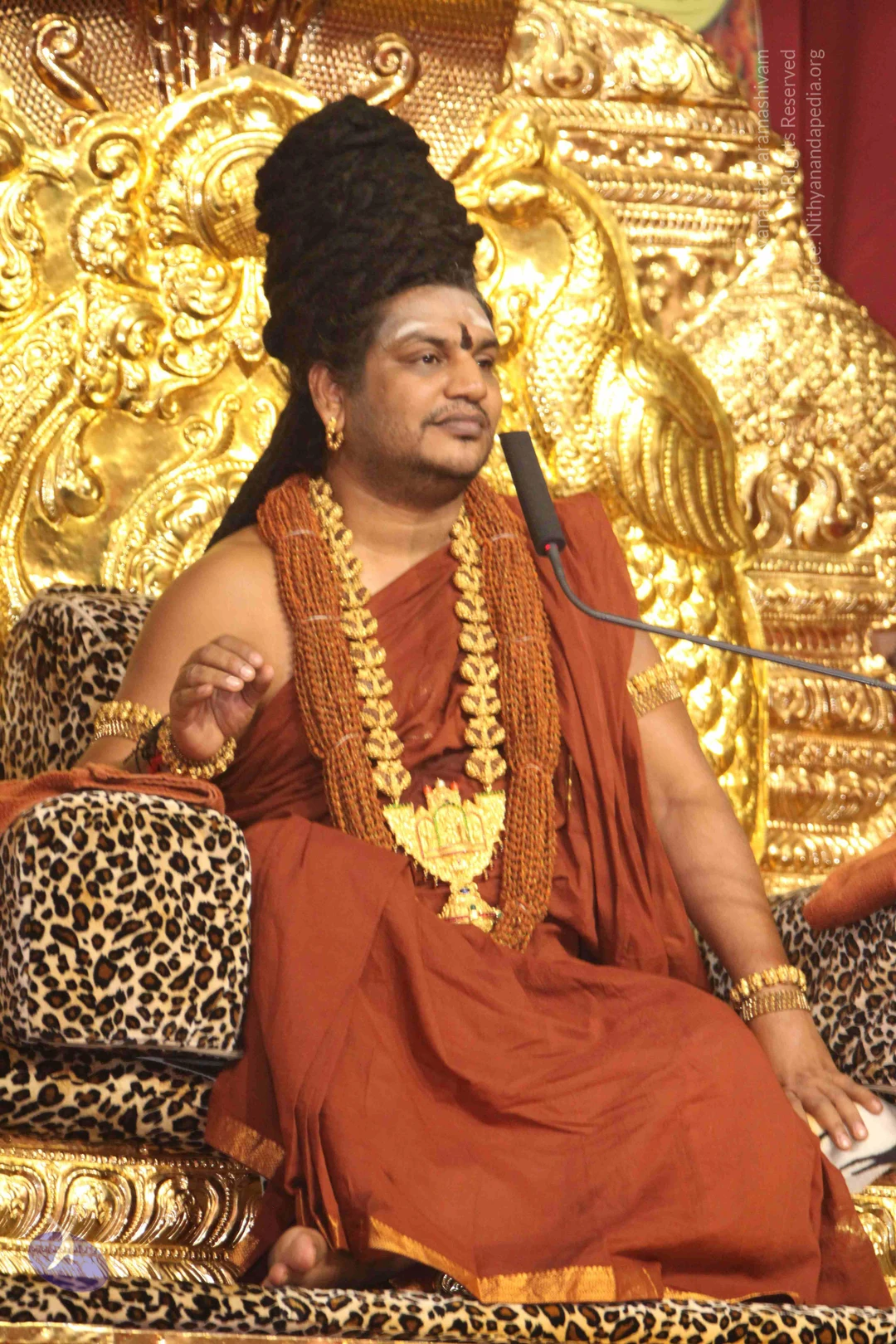
35 photosSource gallery
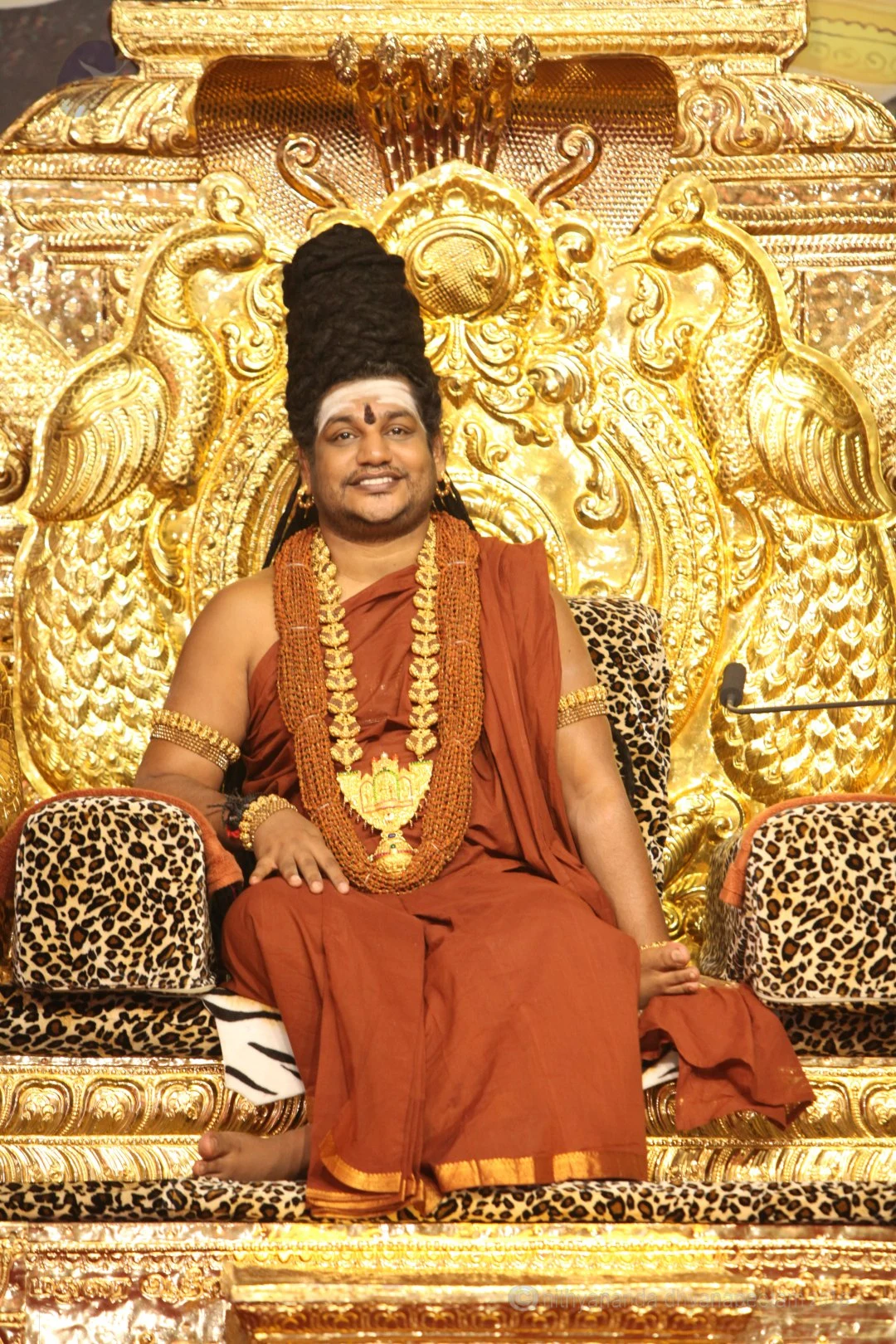
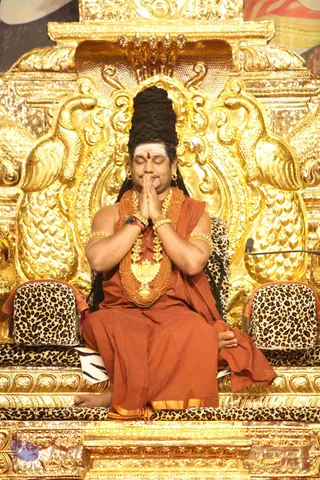
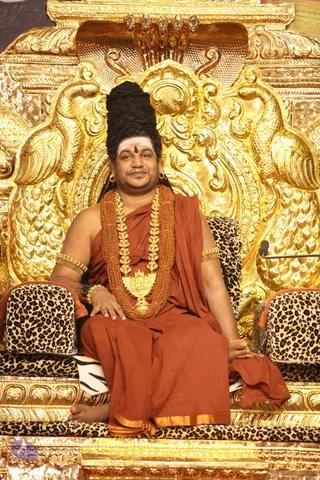
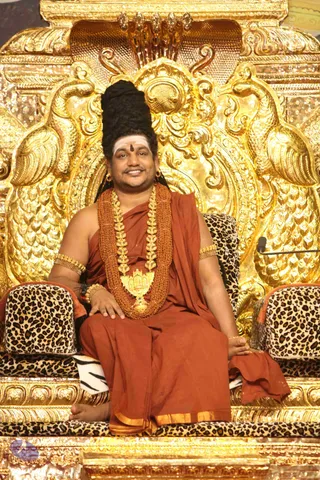
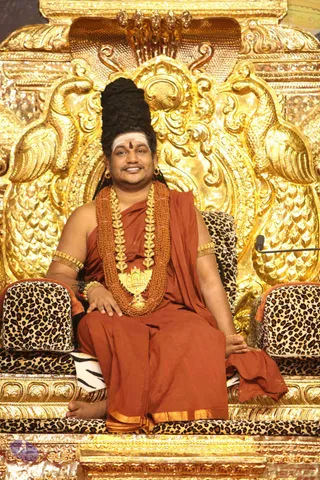
A seated man with eyes closed presses his palms together in anjali mudra on an ornate gold throne carved with swan-like motifs and a golden crown finial. He wears a saffron-orange robe with gold border, a heavy gold-and-beaded necklace with a large pendant, gold armlets and bangles, and a wristwatch. His long dark hair is piled high, with white and red tilak on the forehead. The throne is cushioned in leopard-print fabric, and a microphone stand is visible at right. a person: the long swept-up hair, saffron robe and ornate gold ornaments match the page's a person reference.A seated man in an ornate gilded throne with leopard-print cushions sits with palms pressed together in namaste and eyes closed. He wears rust-orange robes, a heavy gold and bead necklace with a central gold pendant, gold armlets and bangles, and has a long dark piled hair crown with a white vertical forehead mark and red dot. A microphone stands at his right.A seated man in an ornate golden throne with carved peacock-like backrest and leopard-print cushions. He wears a rust-orange robe draped over the shoulder, a thick multi-strand rudraksha mala with a large gold ceremonial pendant, gold armbands and bangles, and a tall dark topknot. A white forehead mark with a red bindi is visible. The setting appears to be a stage with a microphone stand at right. Clothing and long swept-back hair are consistent with the Swamiji (probable) presentation, so the appearance is a probable in-person candidate on the throne.A man with a tall, swept-up black topknot and a white and red forehead mark sits on an ornate gold throne carved with peacocks and leopard-print cushions. He wears a rust-orange wrap and a long gold-and-rudraksha mala necklace with a gold pendant, plus gold armlets and bangles. He is barefoot and smiling toward the camera. Behind him is a large gilded throne backdrop. Appearance-based candidate for a person, seated in person in the position of a teacher on a throne; the cues are the topknot, the saffron-orange clothing, the rudraksha mala and gold ornaments.A seated man with a tall, bound dark hair crown and a white-and-red tilak on his forehead sits on an ornate gold throne carved with peacocks and scrollwork, upholstered in leopard-print cushions. He wears a rust-orange dhoti and shawl, a thick rudraksha mala with a large gold ceremonial pendant, gold armlets and bangles, and rests one hand on his knee with bare feet on the throne's base. A small microphone stand is visible at the right edge. Swamiji (probable): the crown of bound hair, orange clothing, rudraksha mala and gold pendant match the page's description of the presiding teacher, and he is seated in person on the throne. No other people are visible.A seated man with a tall, piled black hair crown and a white-and-red tilak on his forehead sits before an ornate gold-leaf backdrop. He wears a rust-orange shawl over the shoulders, multiple strands of rudraksha beads, a heavy gold necklace with a pendant, gold armbands and bangles, and gold hoop earrings. His hands are folded in his lap on a leopard-print cushion. Probable Swamiji (in_person cues: the tall crown of hair, rudraksha malas, orange shawl and gold ornaments), shown in a throne-like seat; the page identifies a satsang setting. One person is visible.