Skip to content
Thursday

6 March 2014

Dated photos
251
Source pages
1
Media
2
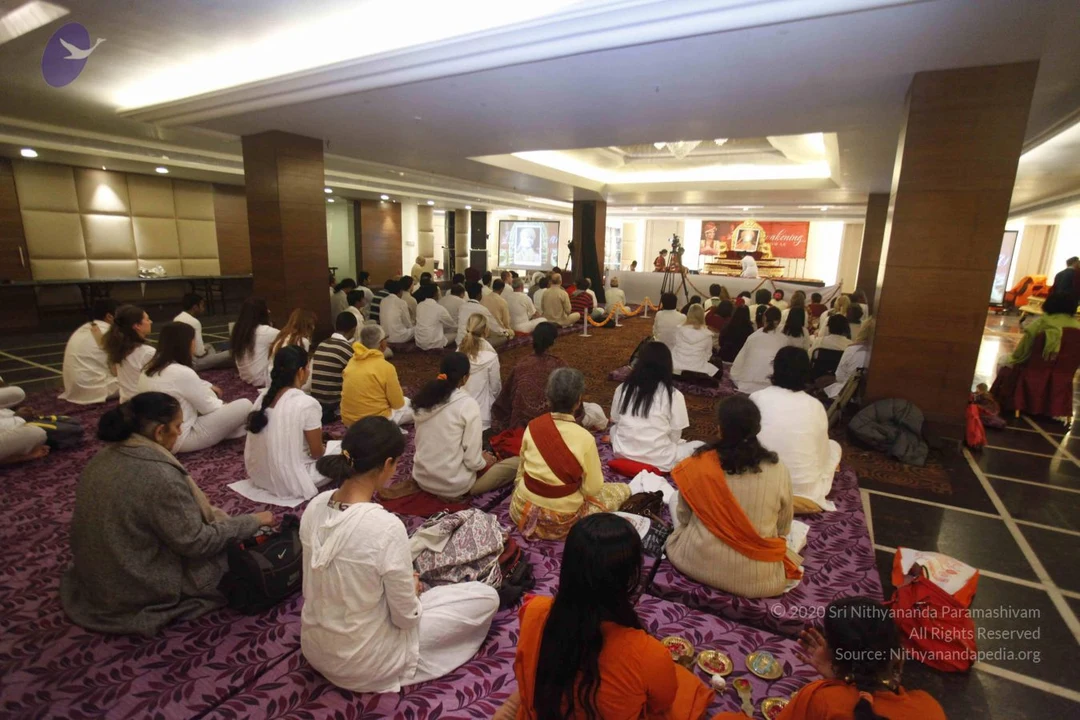
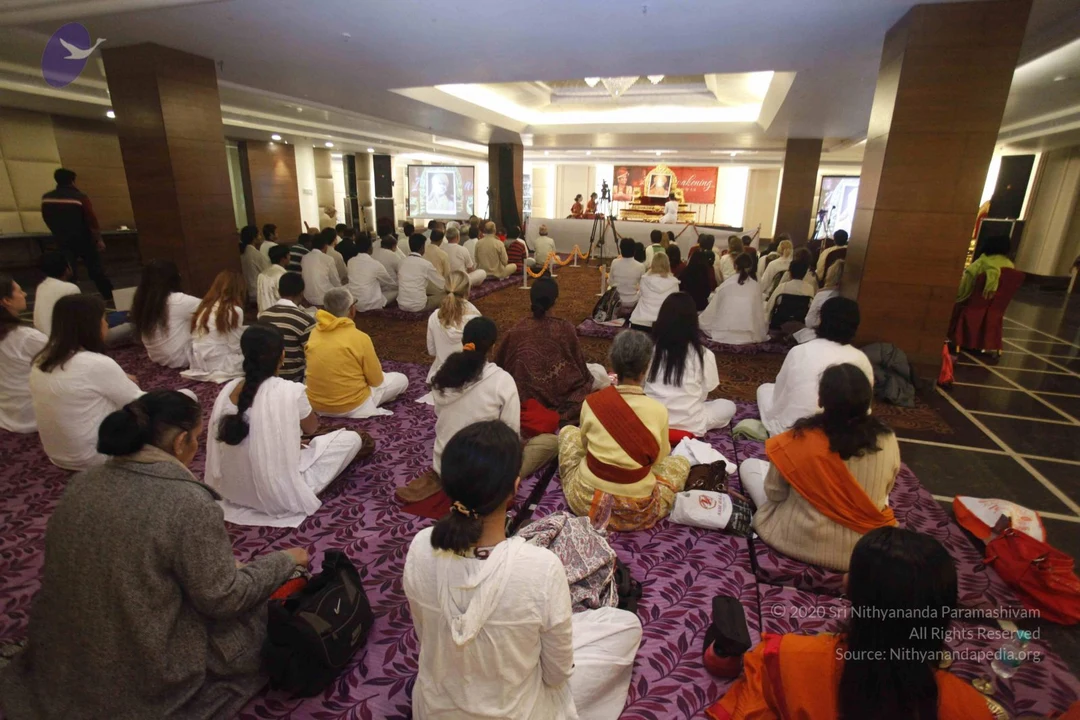
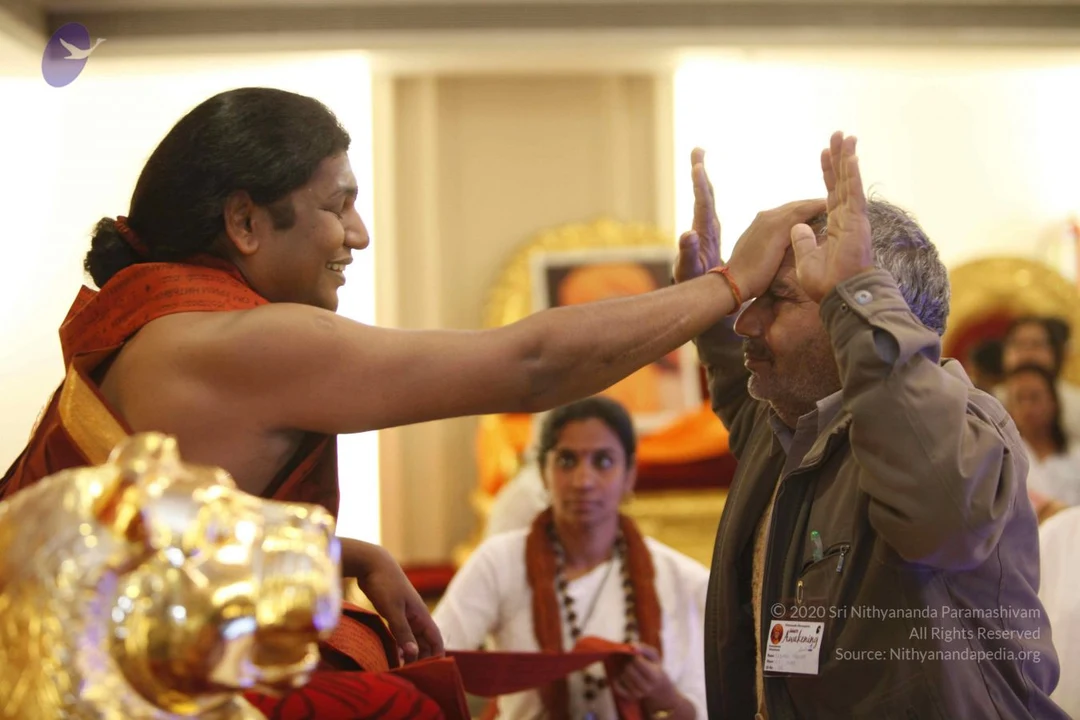
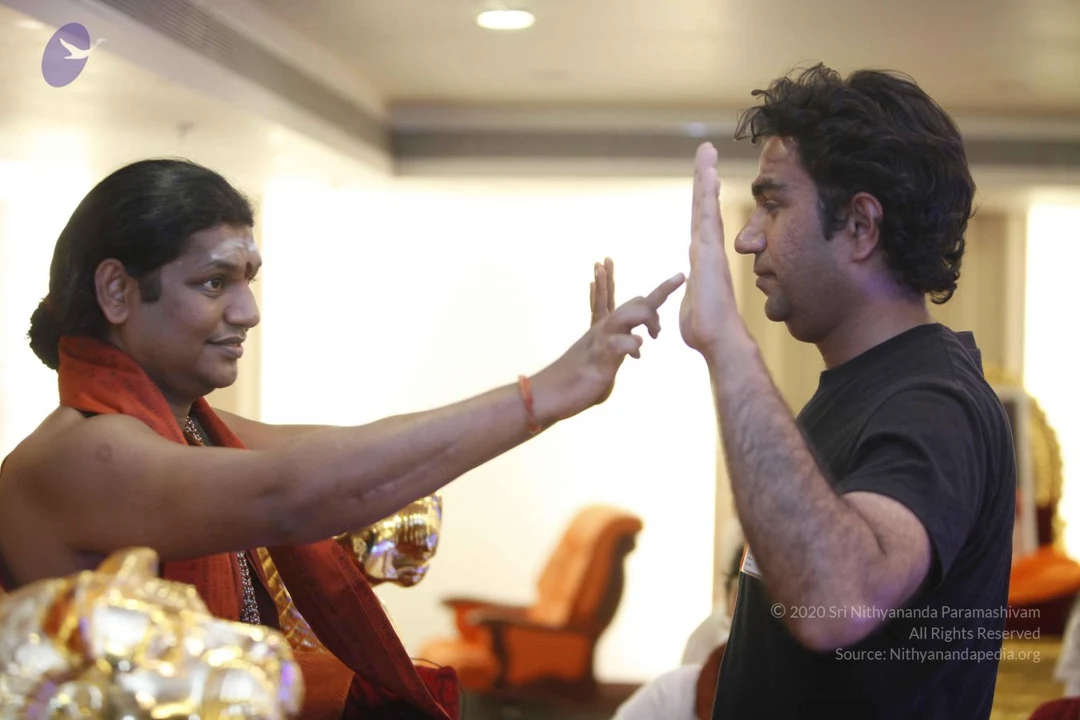
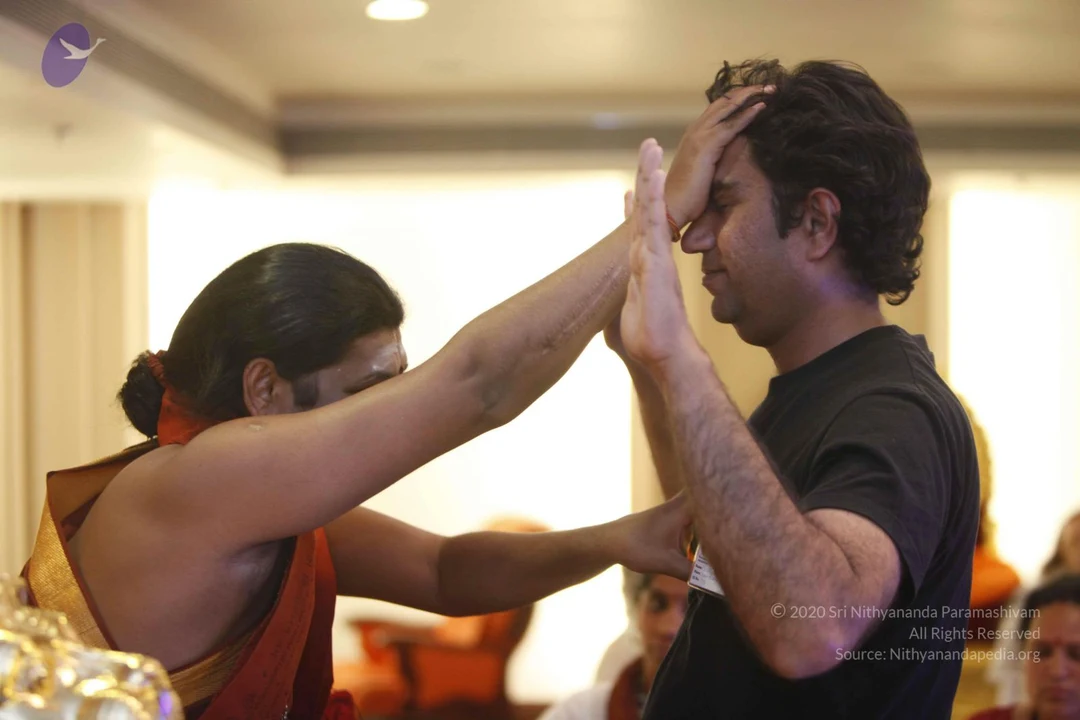
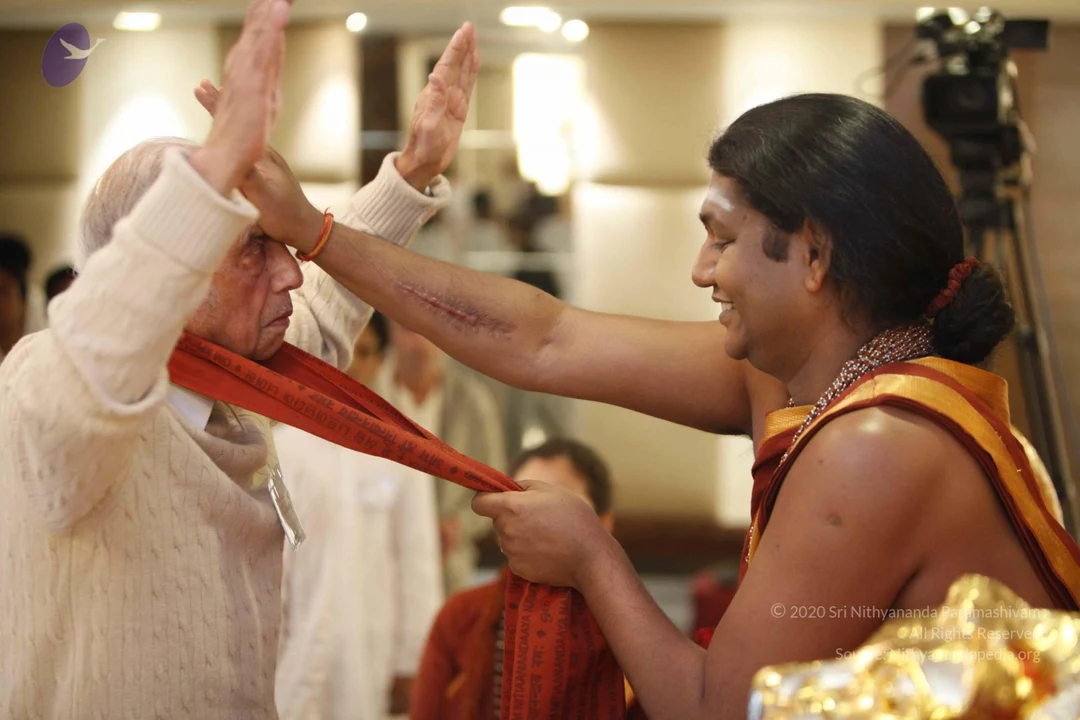
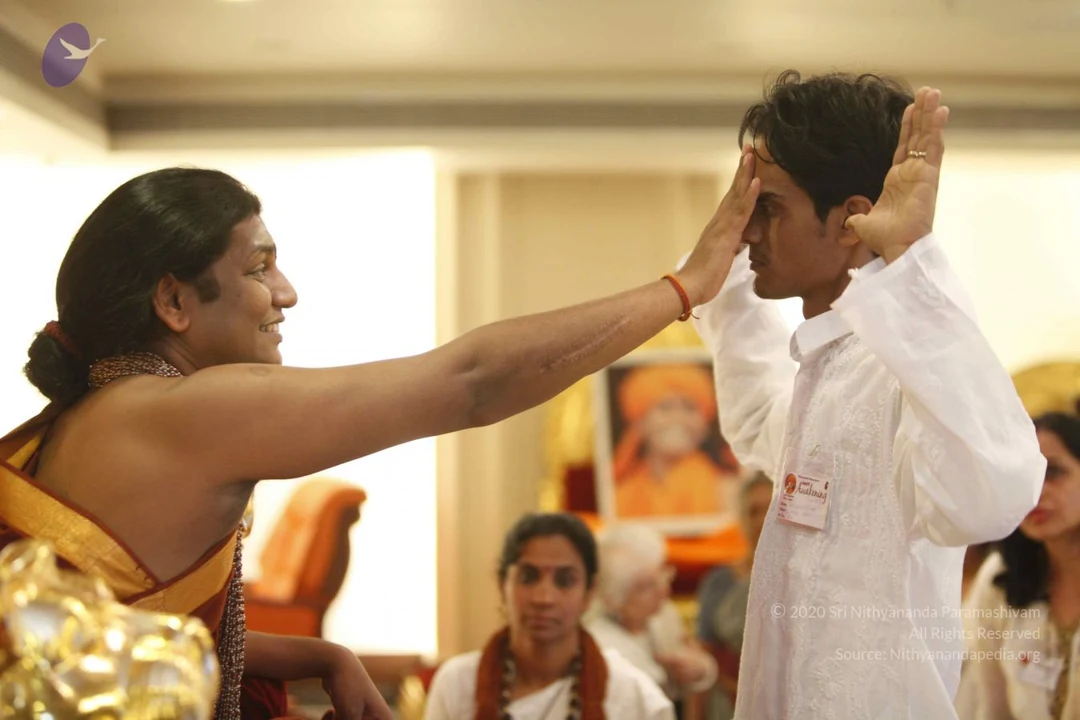
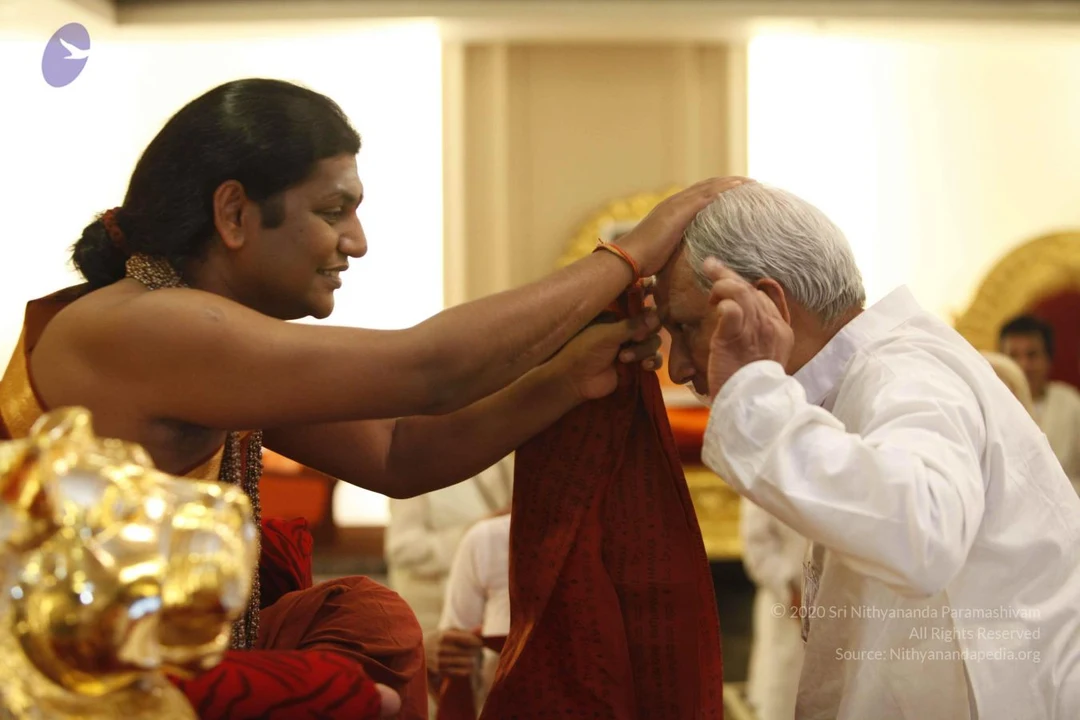
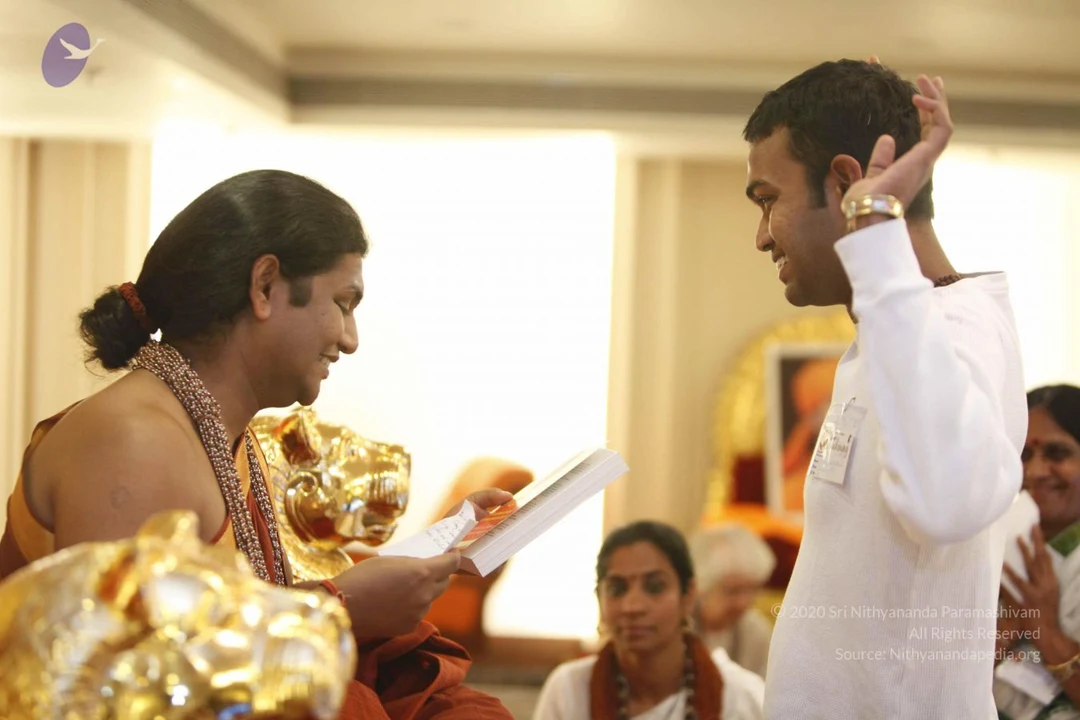
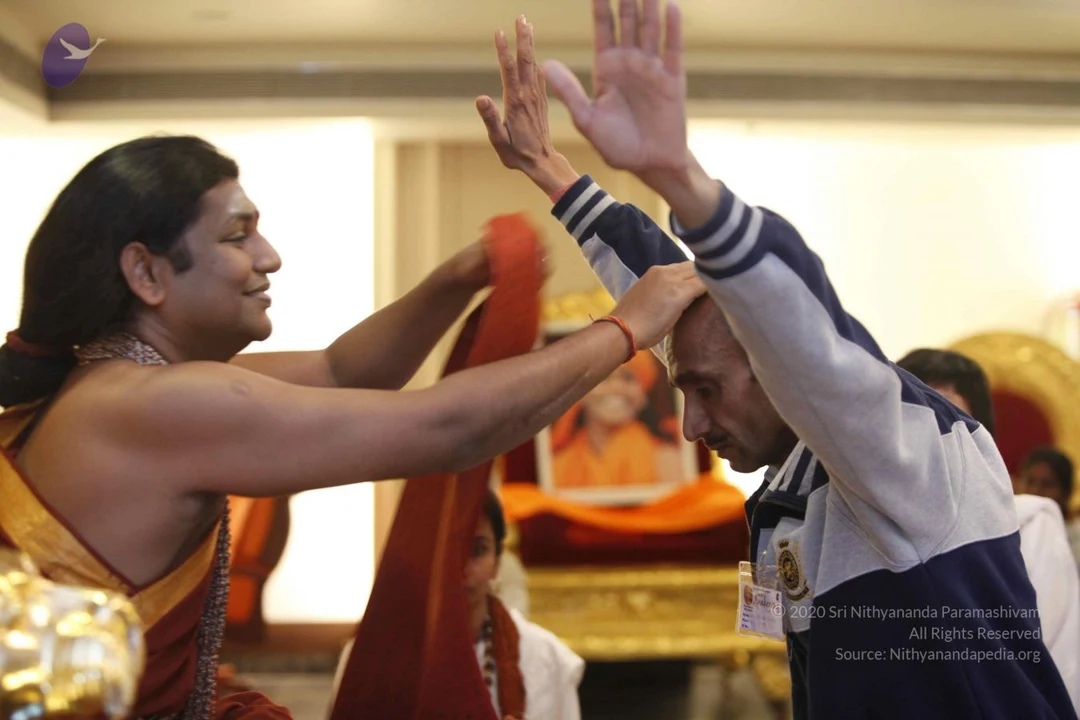
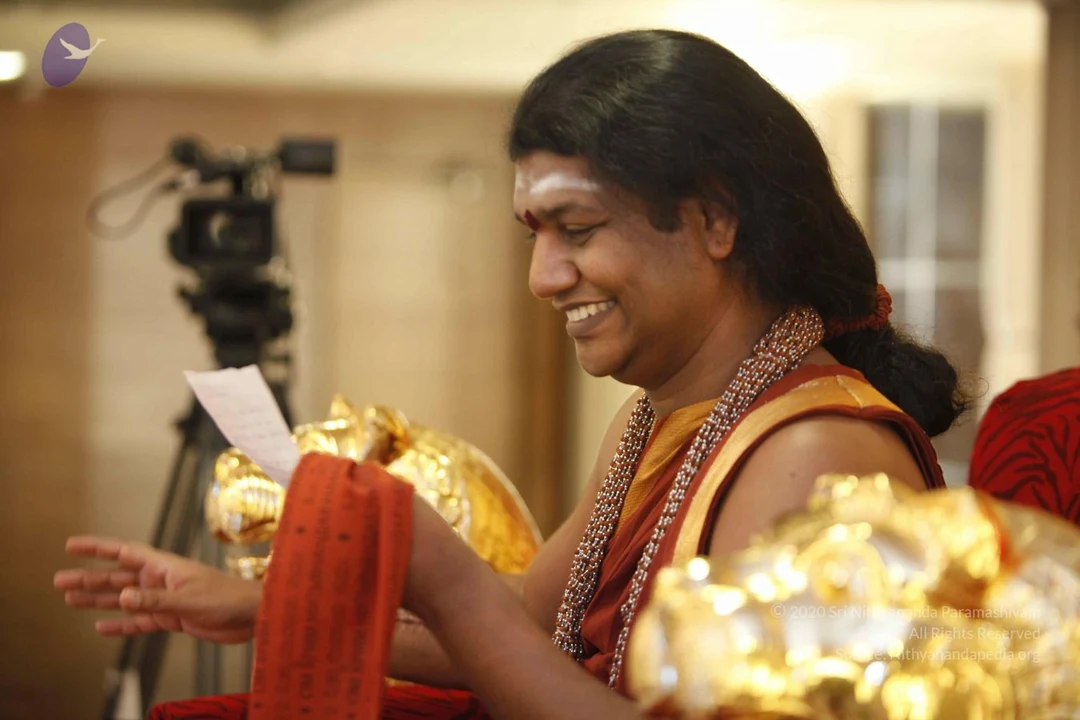
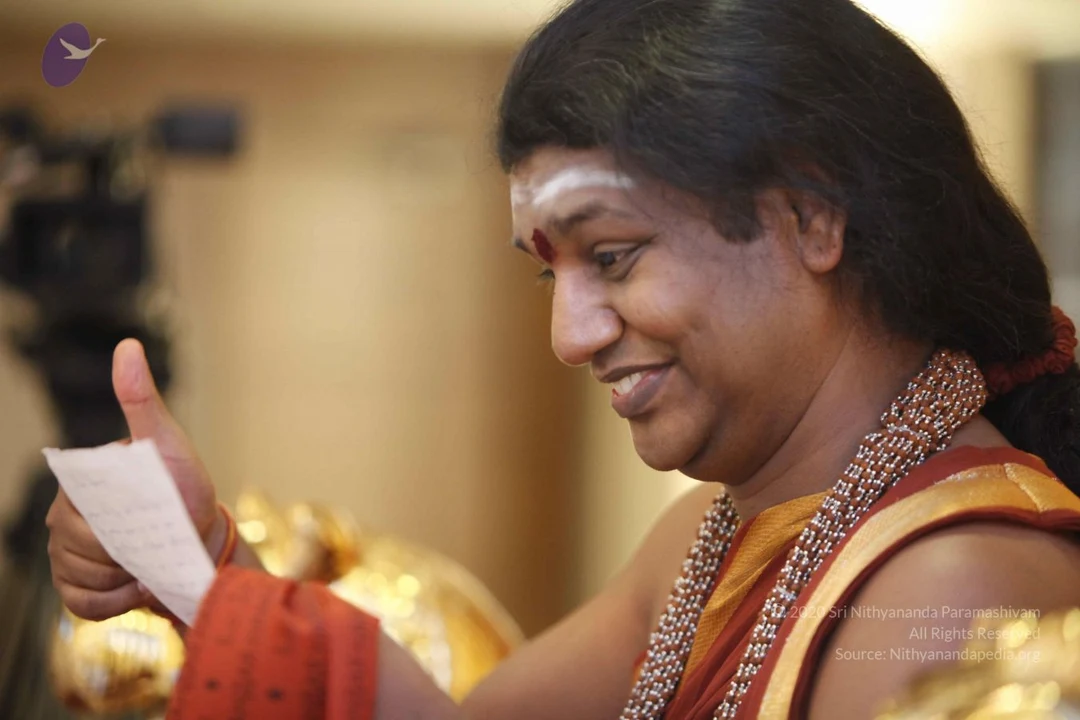
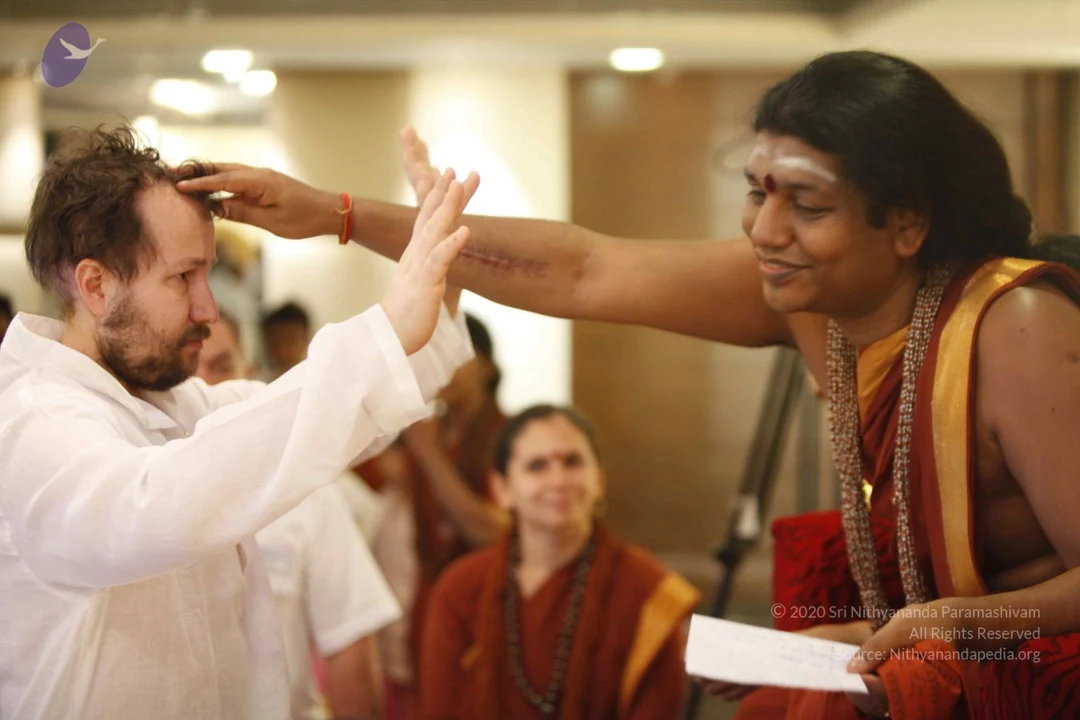
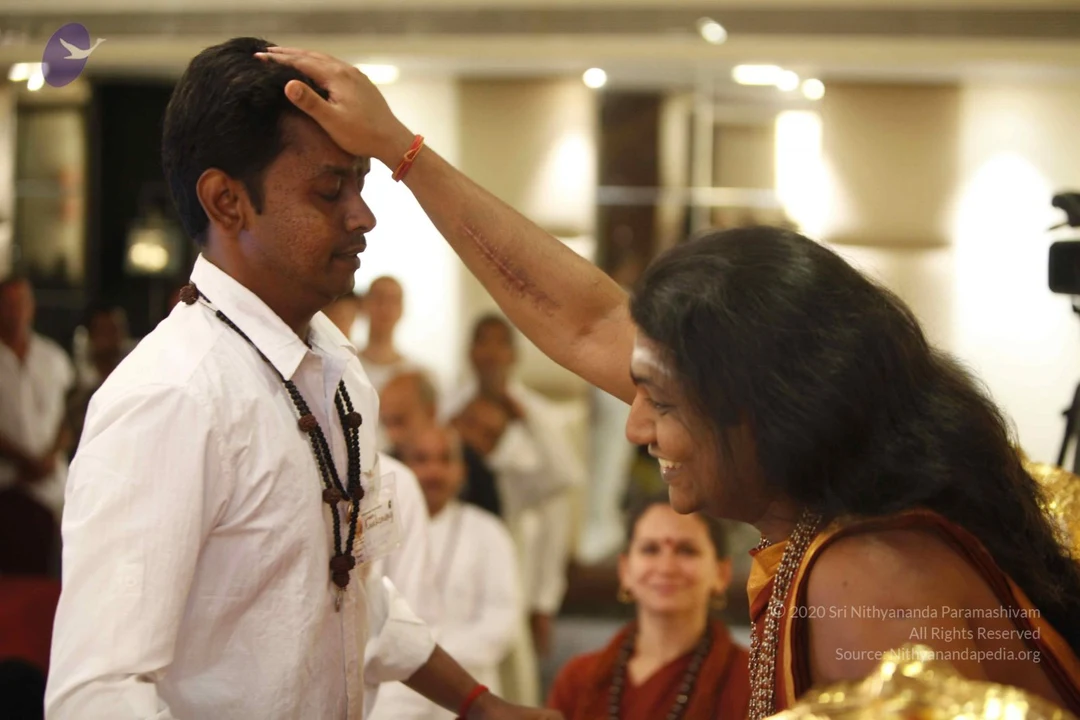
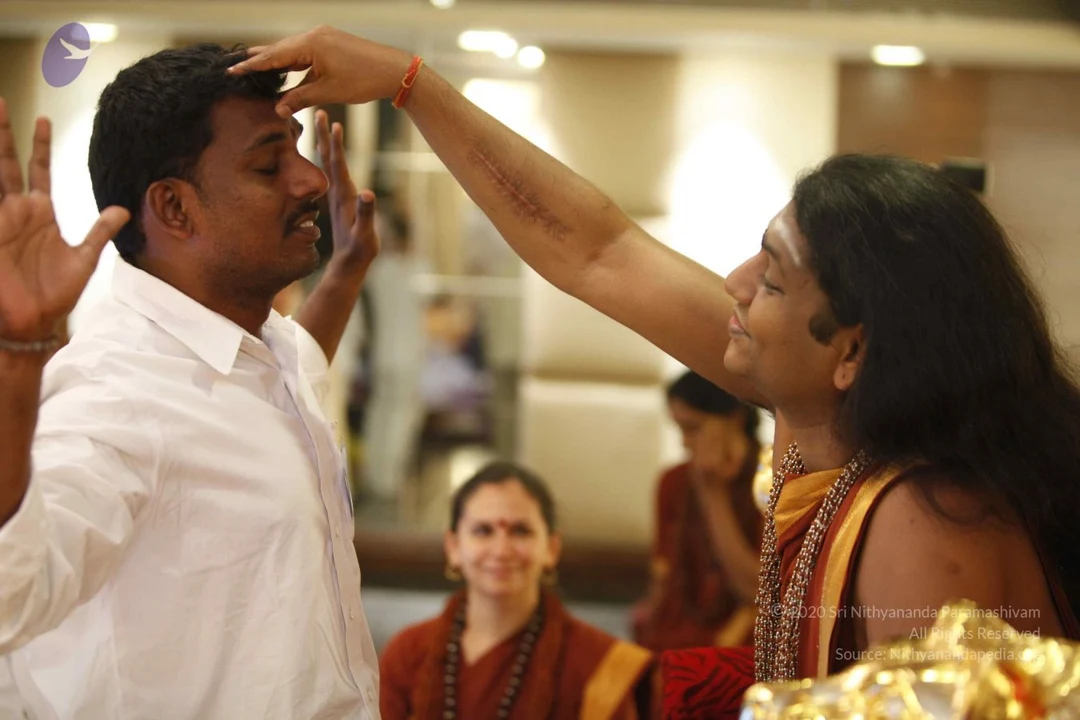
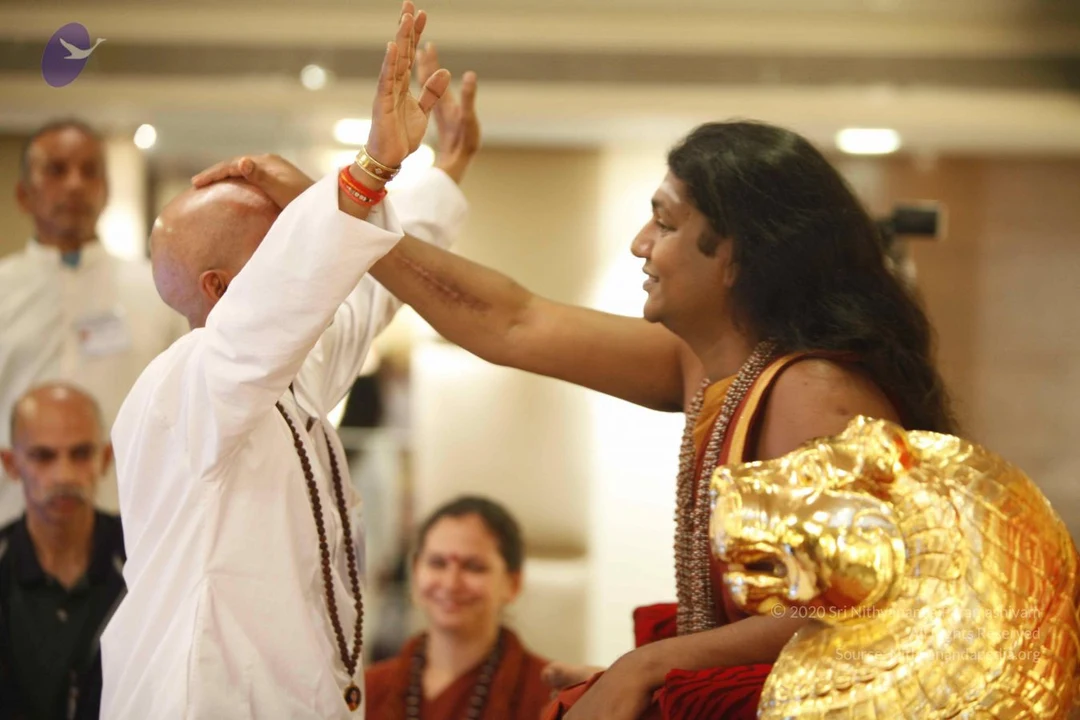
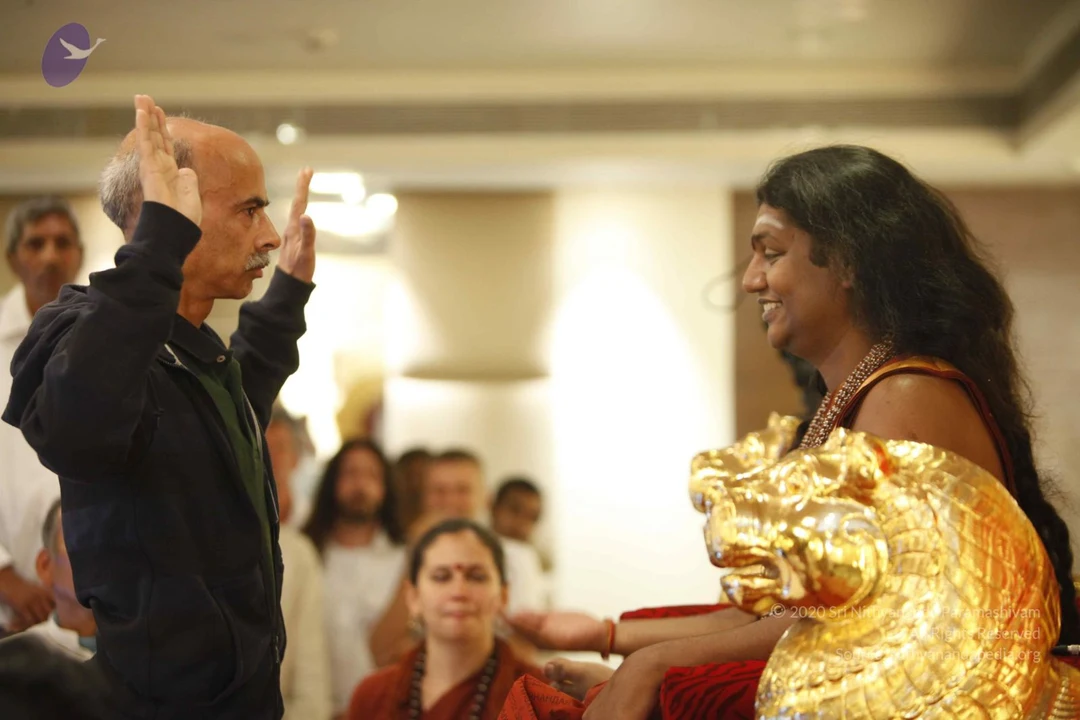
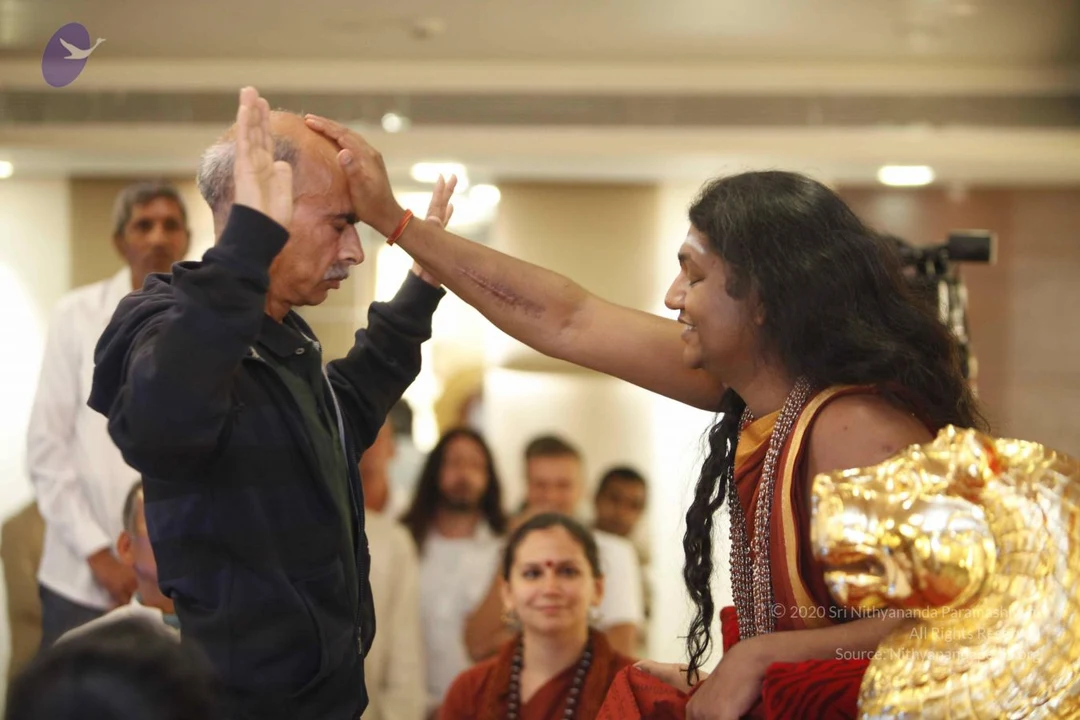
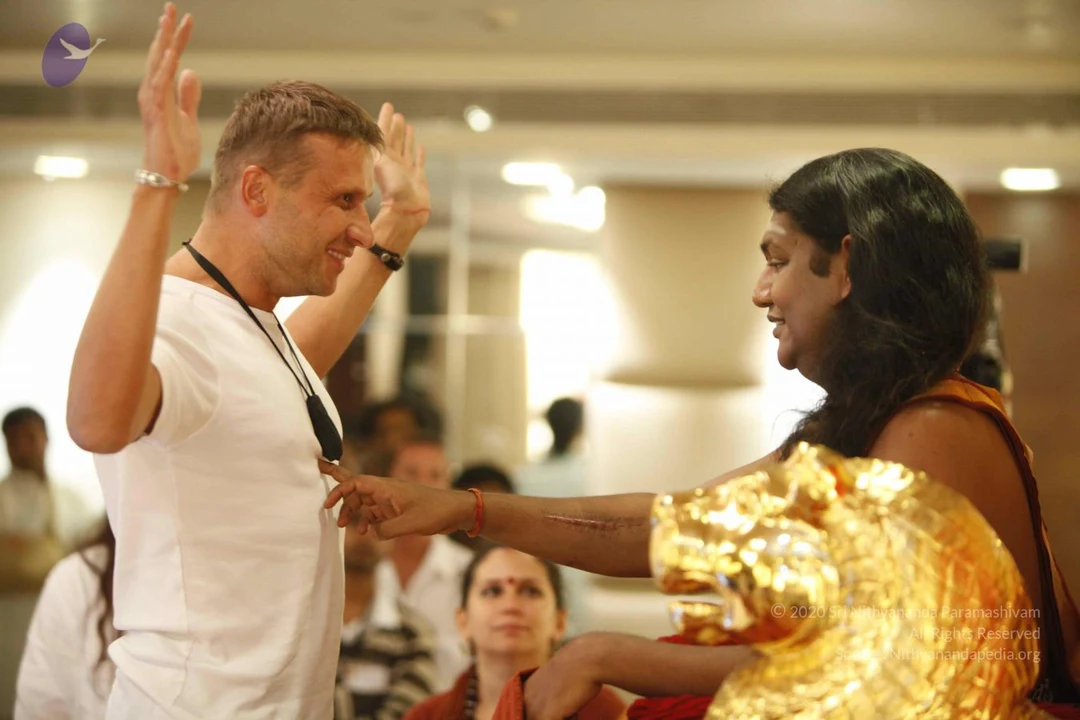
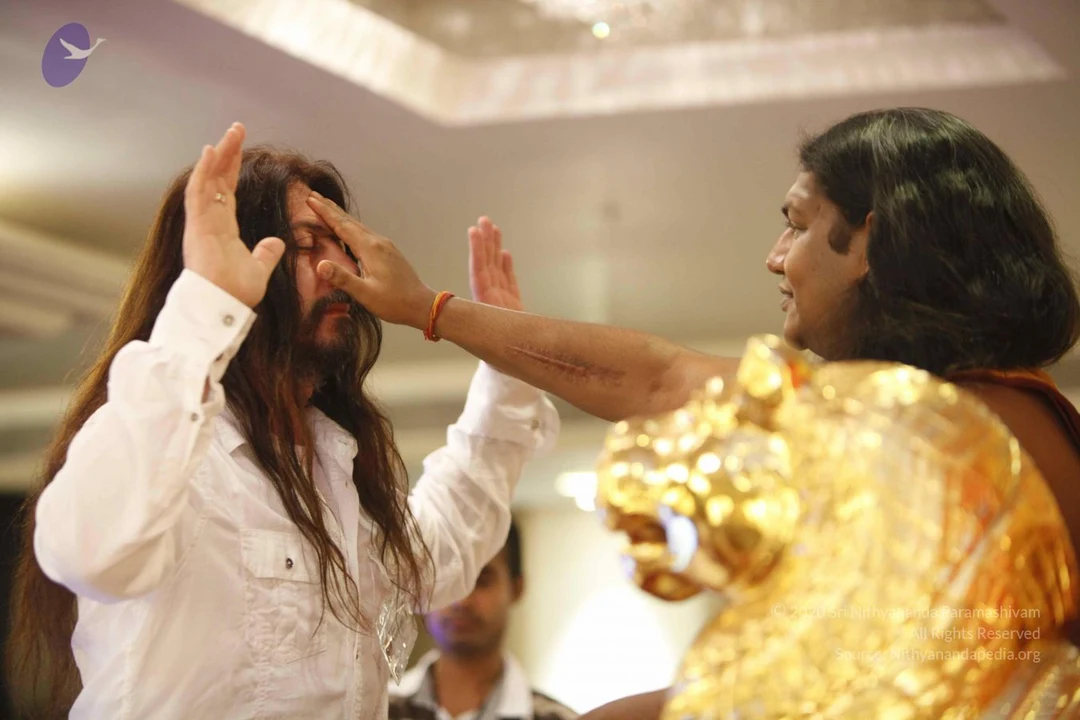
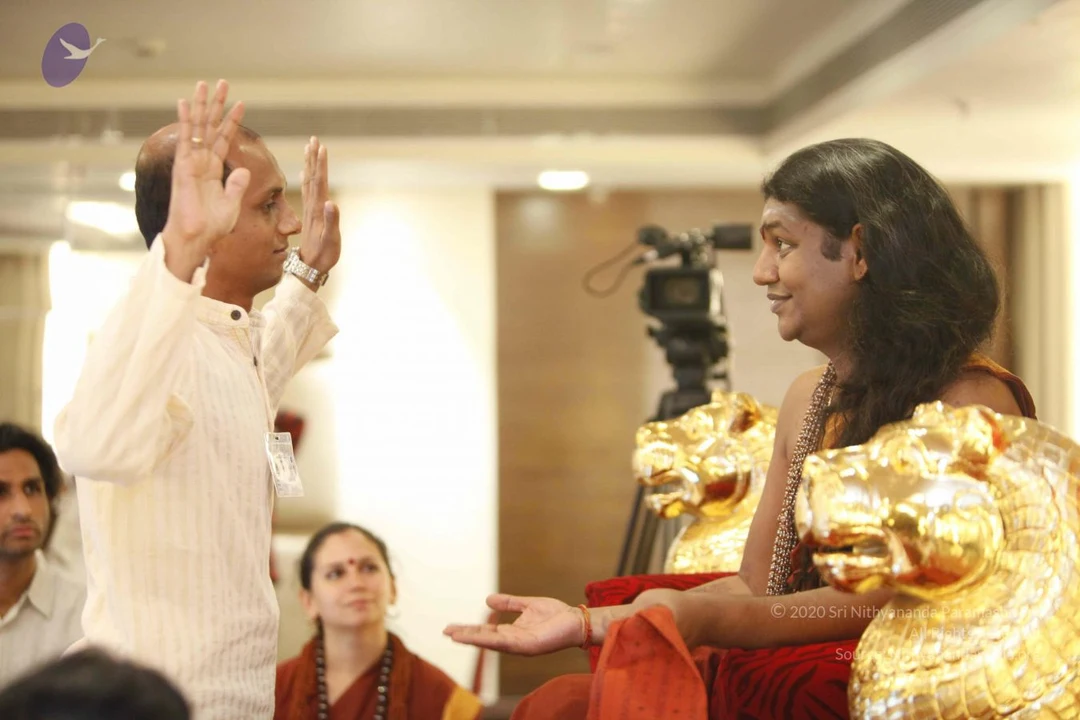
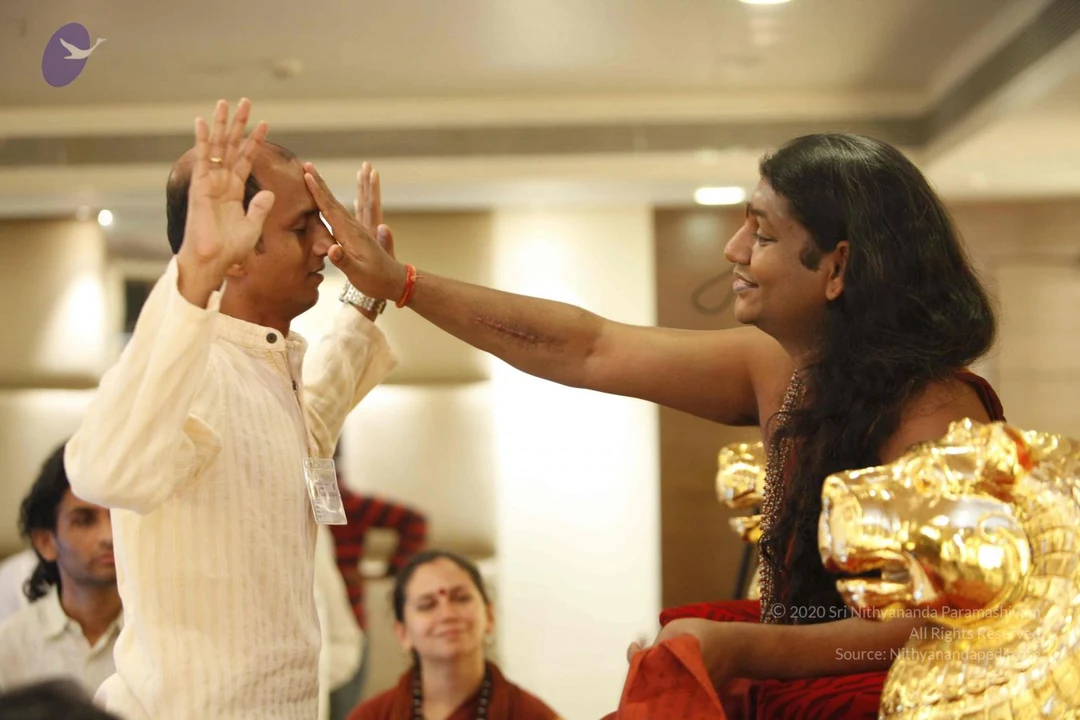
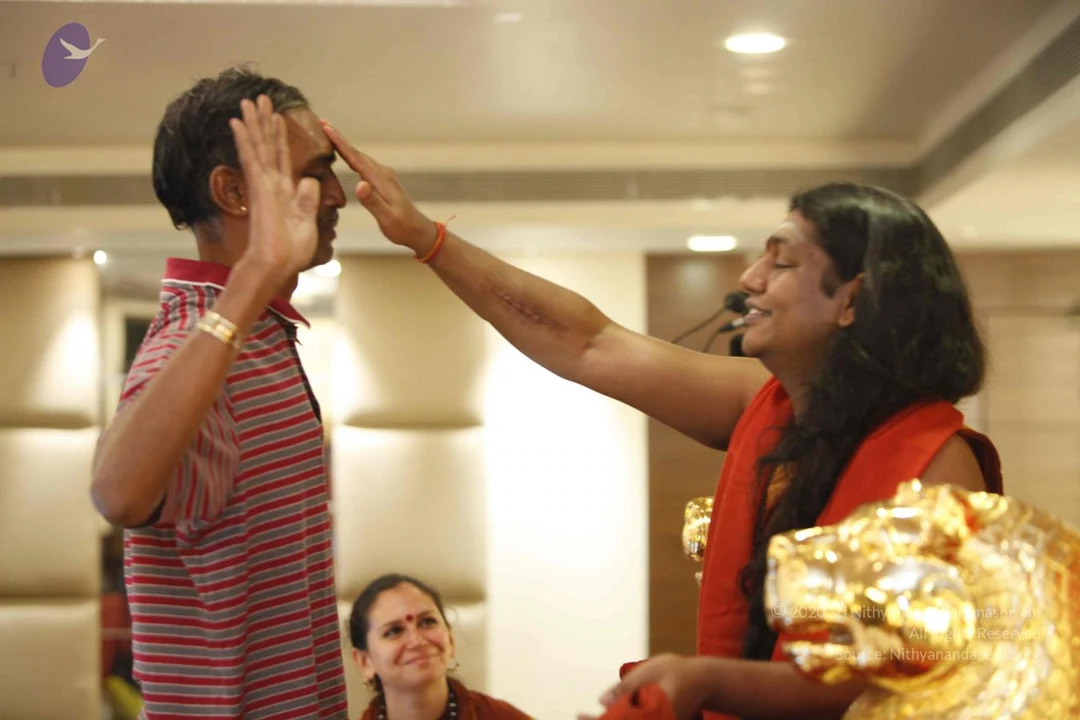
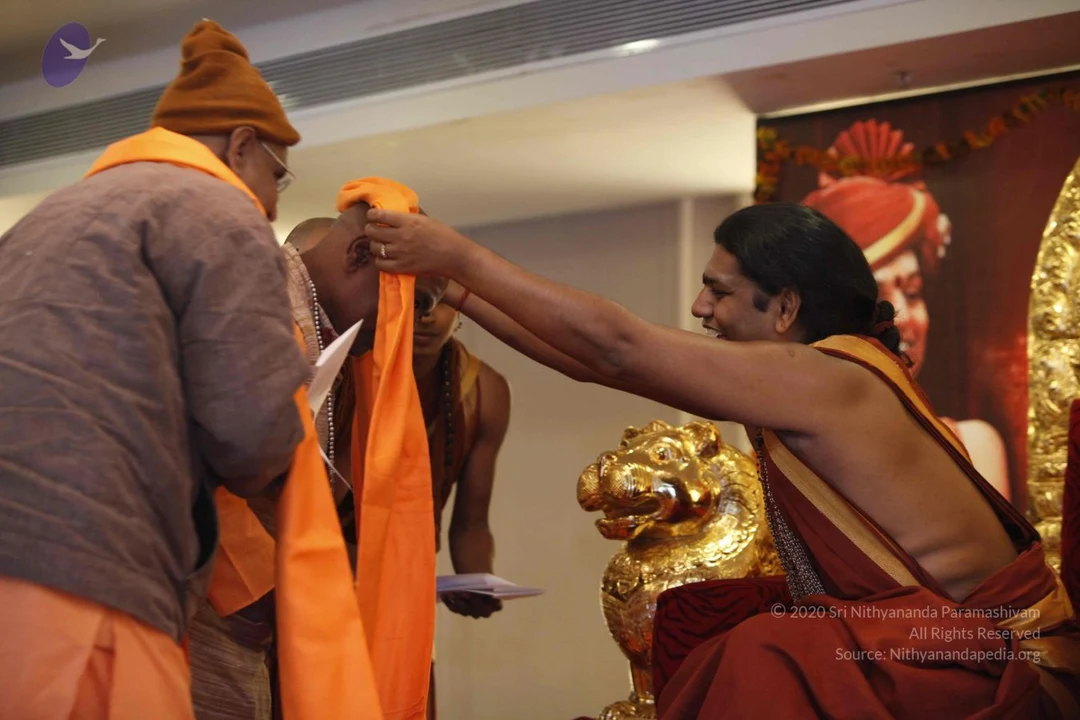
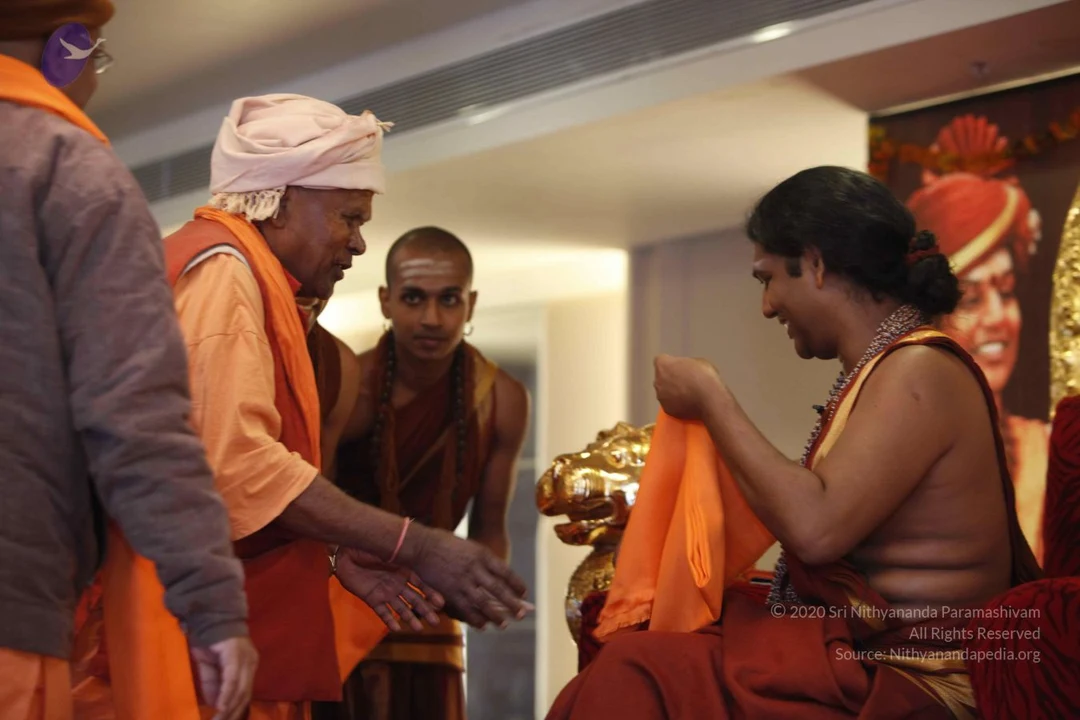
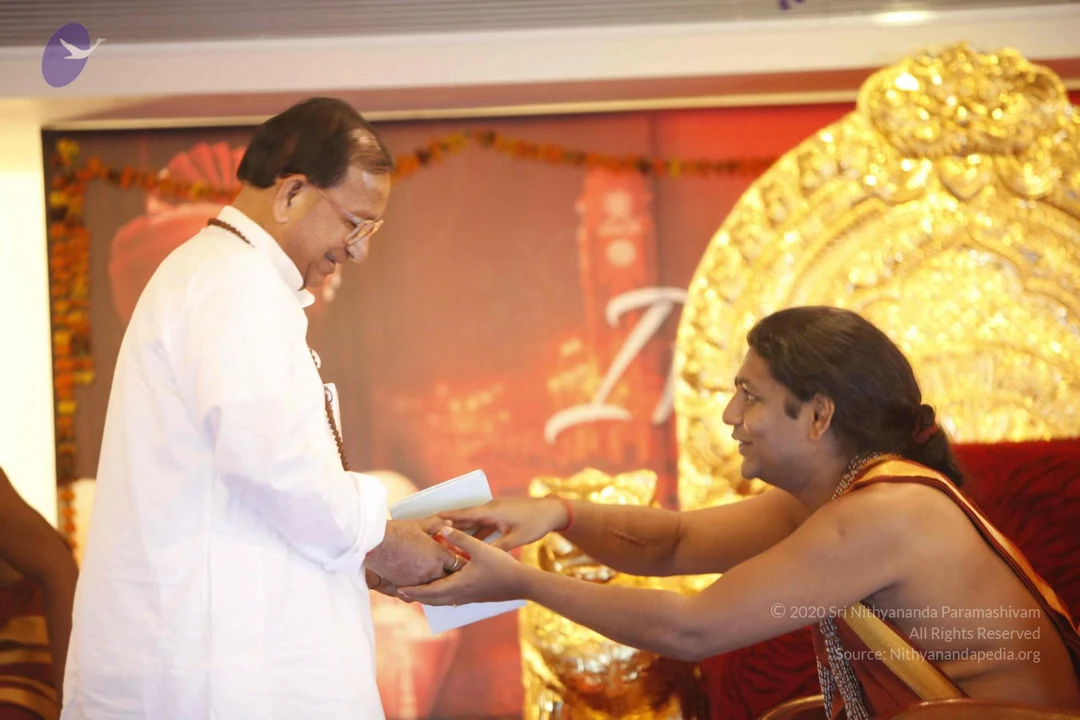
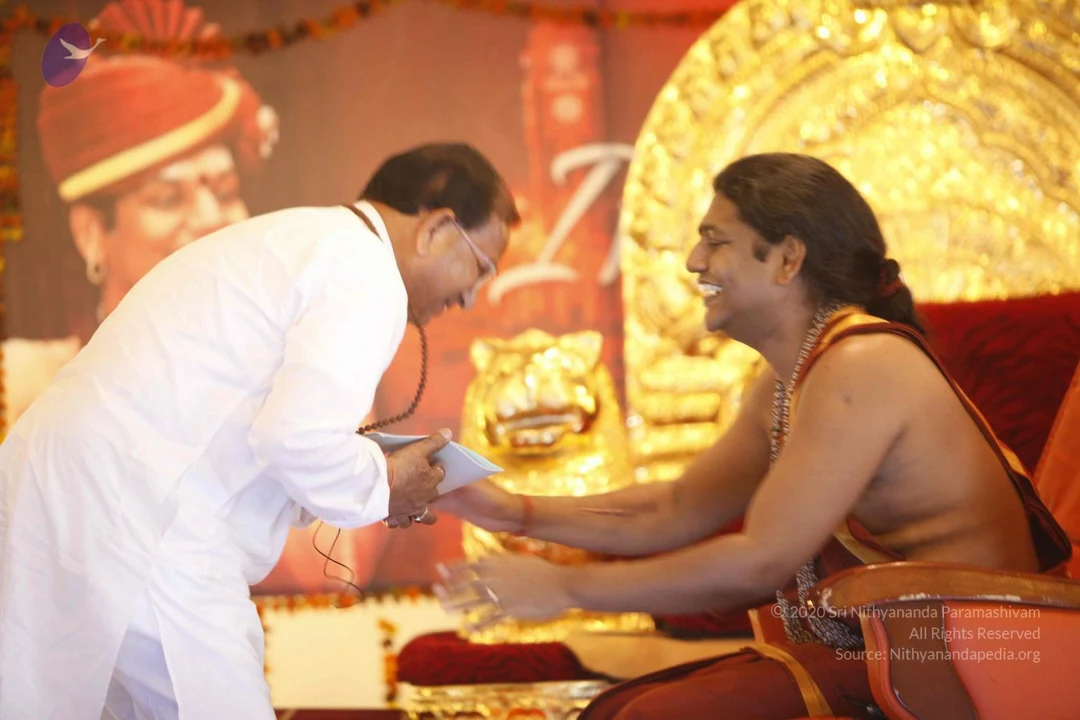
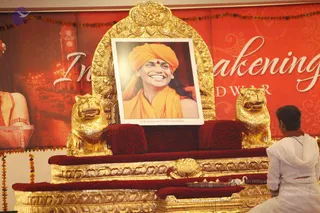
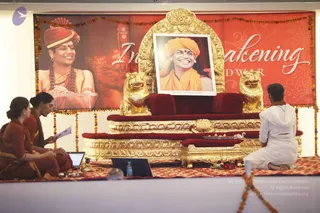
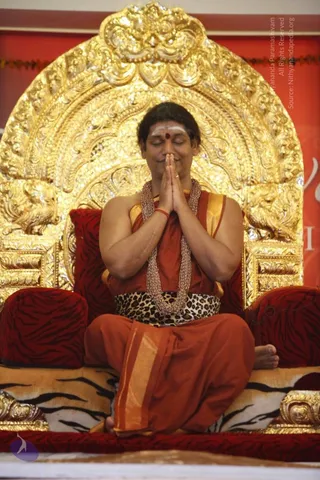
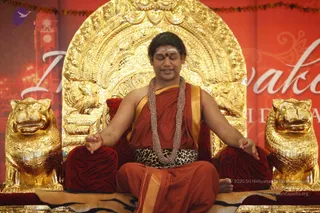
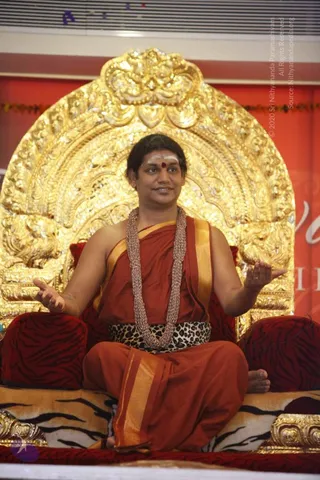
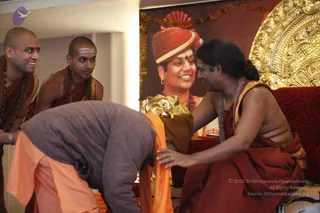
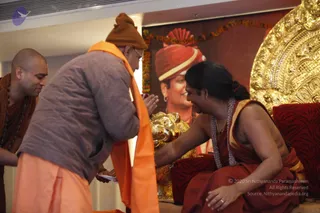
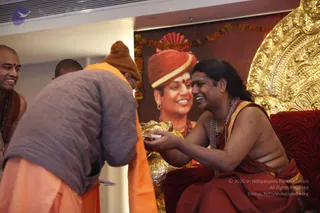
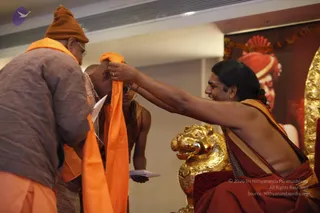
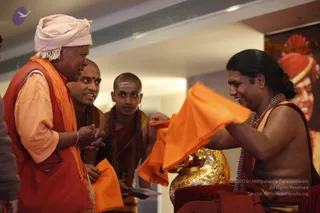
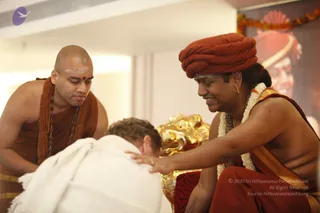
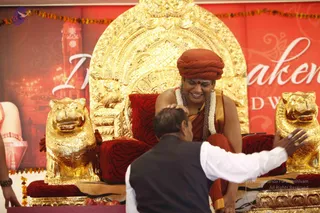
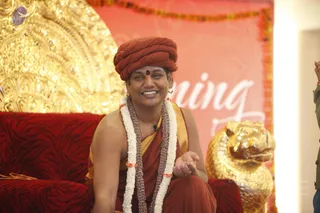
A close crop of a seated person in plain white ritual clothing, kneeling on a polished brass or gold-toned platform with embossed ornamental border patterns. The person's head and upper body are cut off by the frame. To the right, a red and black patterned cloth covers the edge of the platform, with a rolled orange-yellow cloth or scroll lying across it. The white floor surrounds the platform.A photograph of an indoor satsang-style gathering with cream padded wall panels and recessed ceiling lights. A long-haired figure in a red-orange shawl and red-orange garment stands at right, holding a hand to the forehead of a man in a red-and-grey striped polo shirt, who raises his palm outward. The man wears a gold bracelet and an orange wrist thread. Beside them a woman with a red bindi and dark hair smiles from the lower centre. A gold-coloured object is visible at lower right beside the figure, and a microphone stands near the speaker.A photograph in an interior room with a ceramic-tile ceiling and recessed lighting. On the right, a bare-chested man with long dark hair tied in a bun, wearing a rudraksha mala and ornate maroon-and-gold cloth, sits on a red-cushioned seat with a golden lion-head armrest, holding out an orange cloth. Before him stands an older man in a pink turban and orange garment with an orange shawl, extending his hands toward the seated man. Behind them, a younger man with a shaved head and white tilak and a brown-and-orange robe looks on. A framed portrait of a smiling figure in an orange turban hangs on the wall behind.

March 06 2014

Original wiki page
Contents

Description:

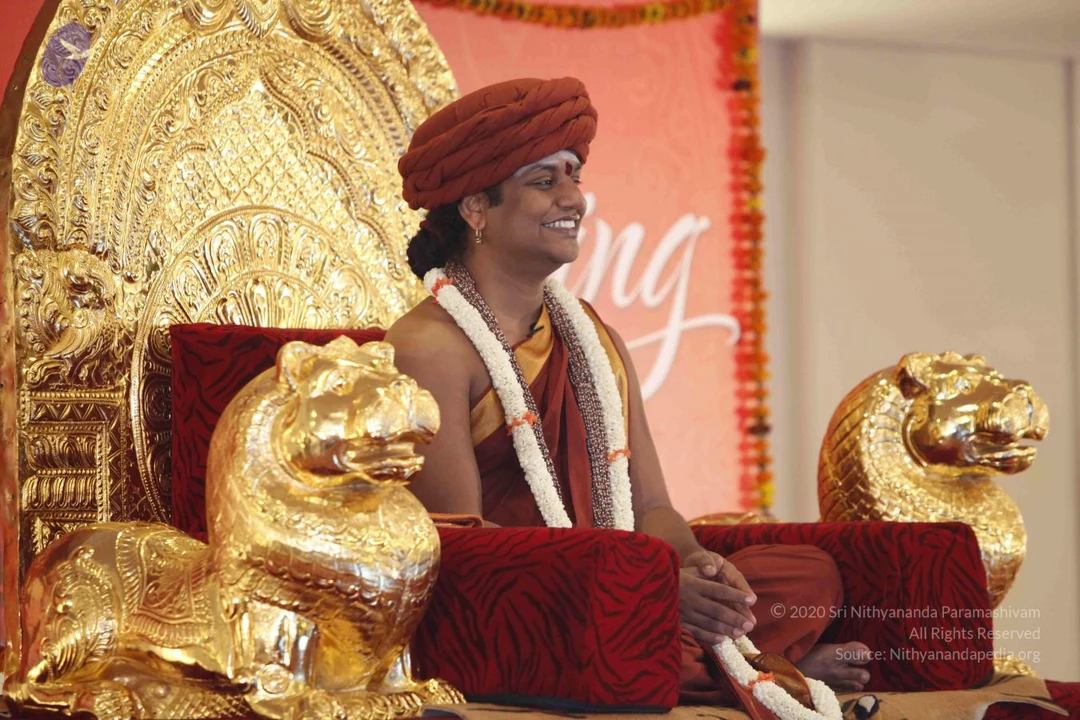
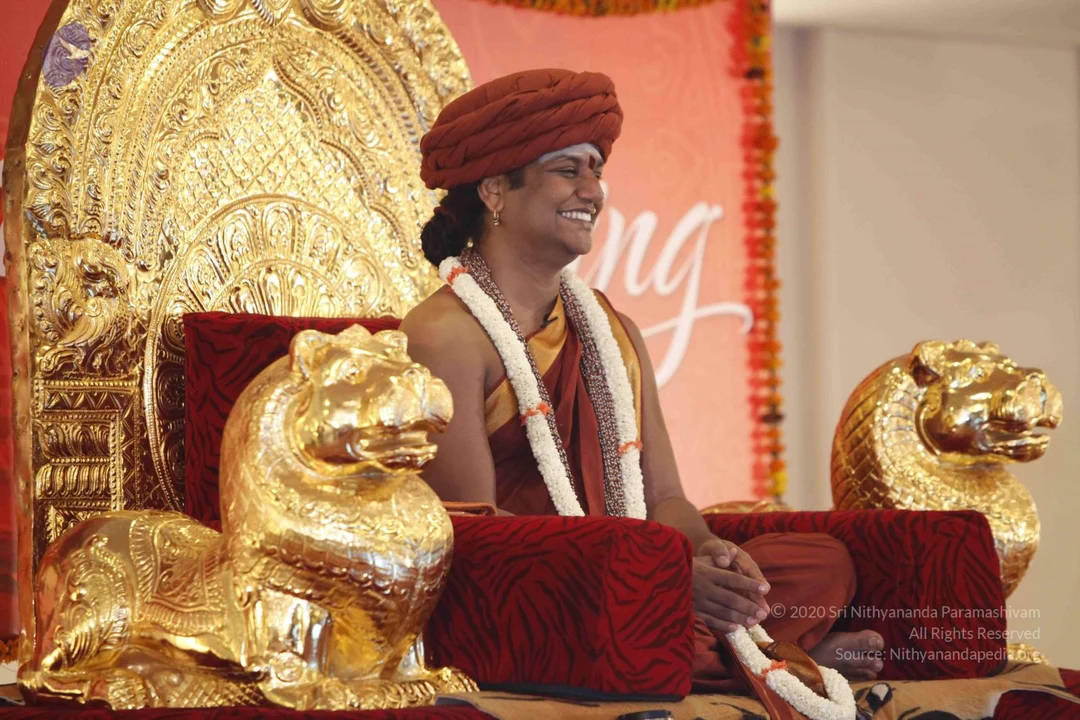
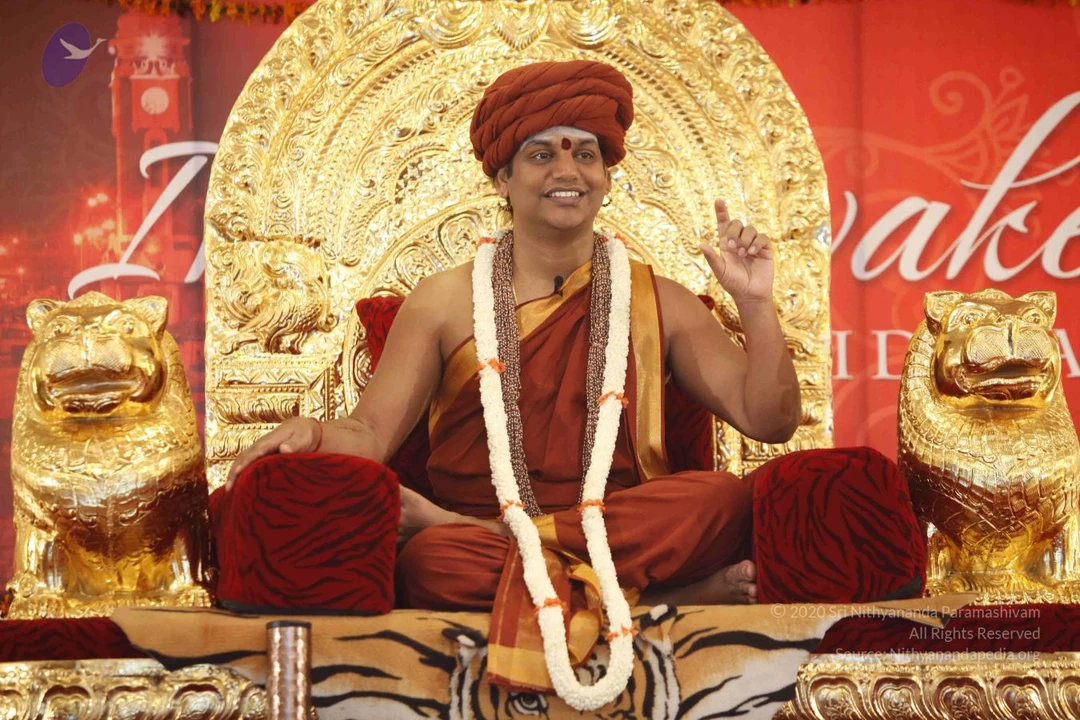
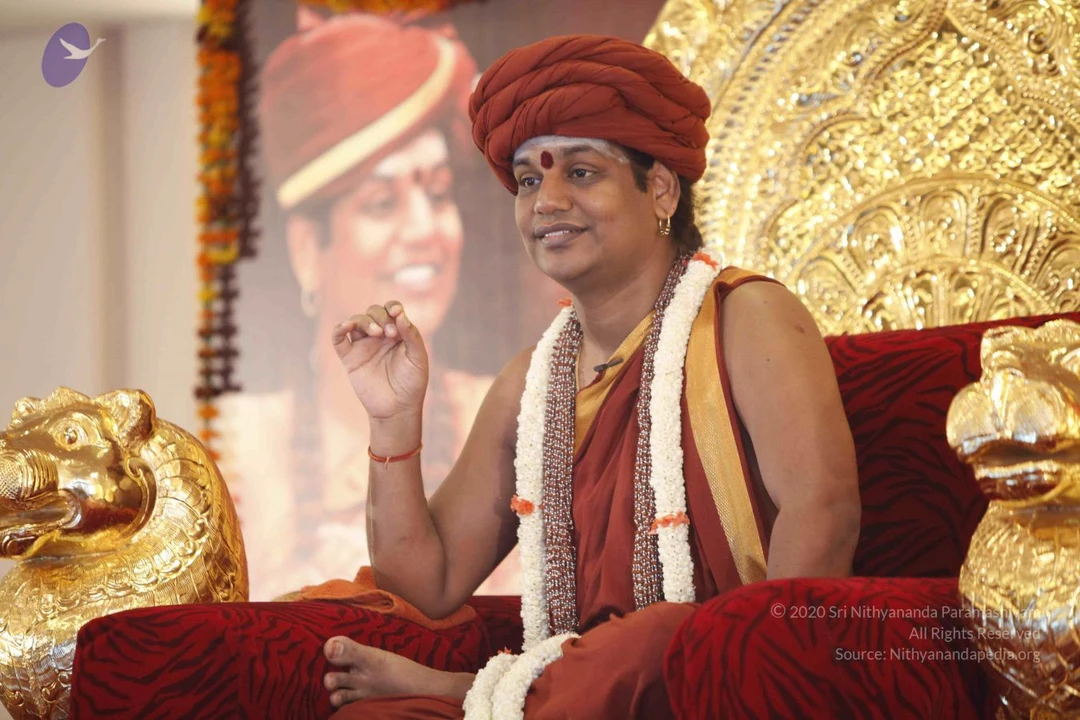
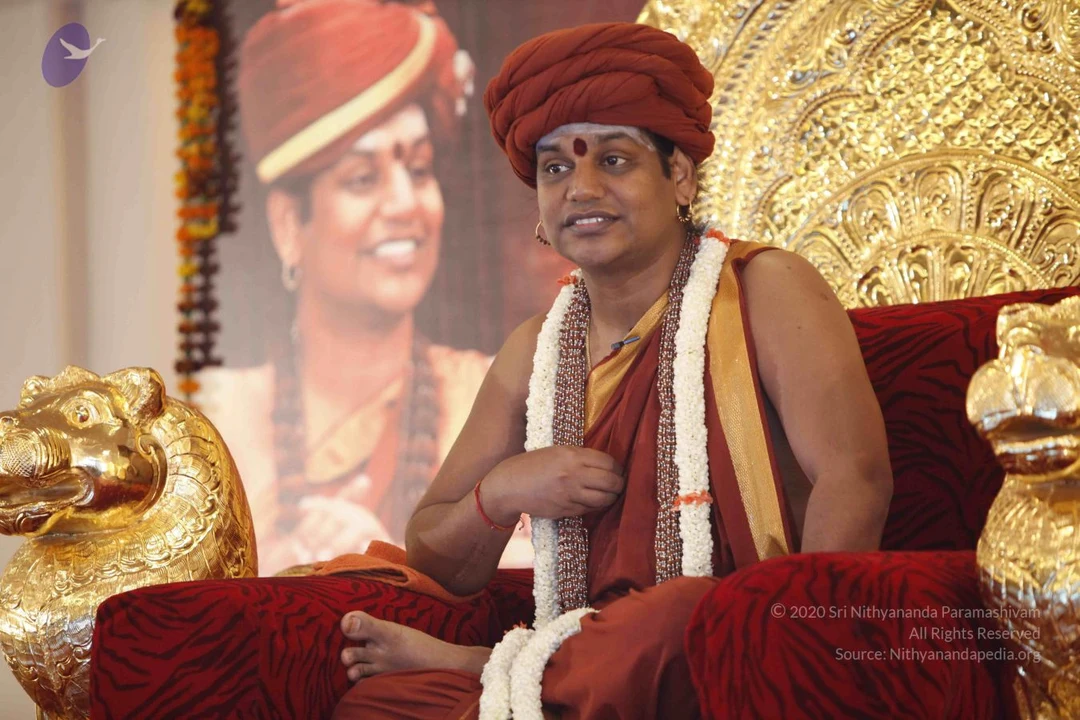
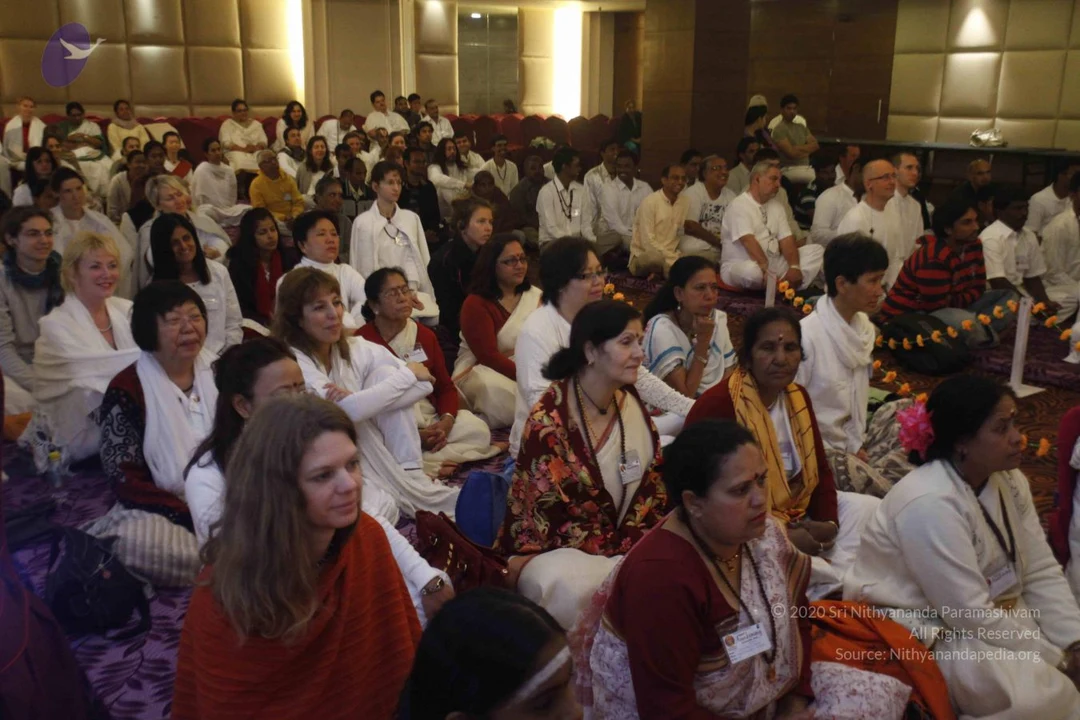
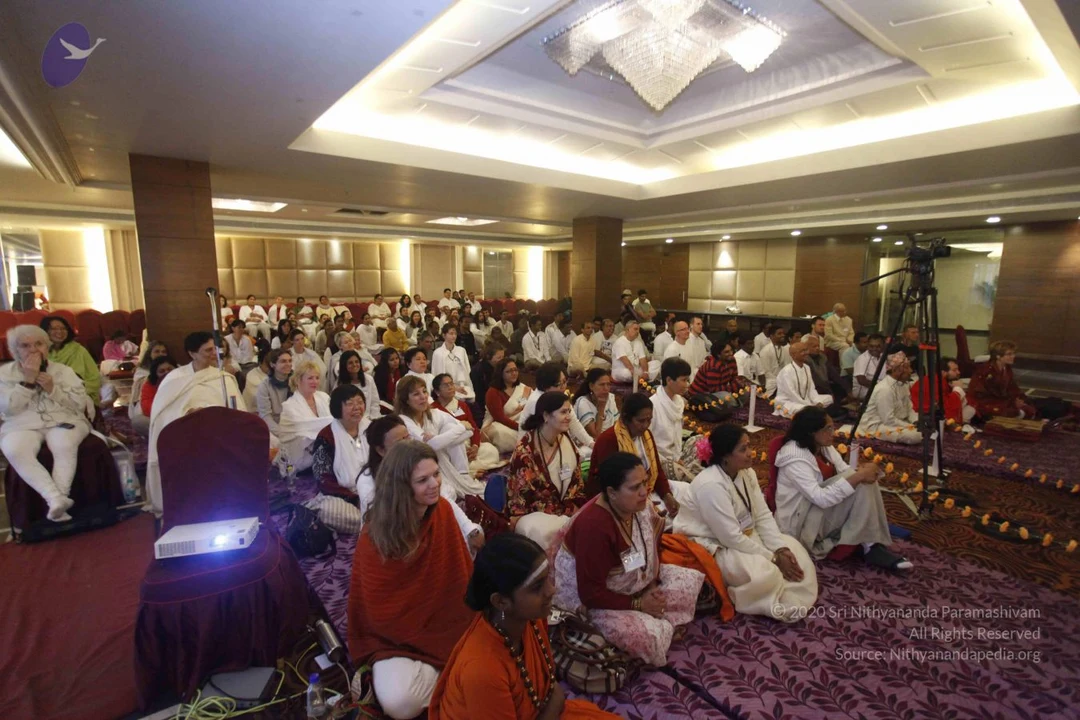
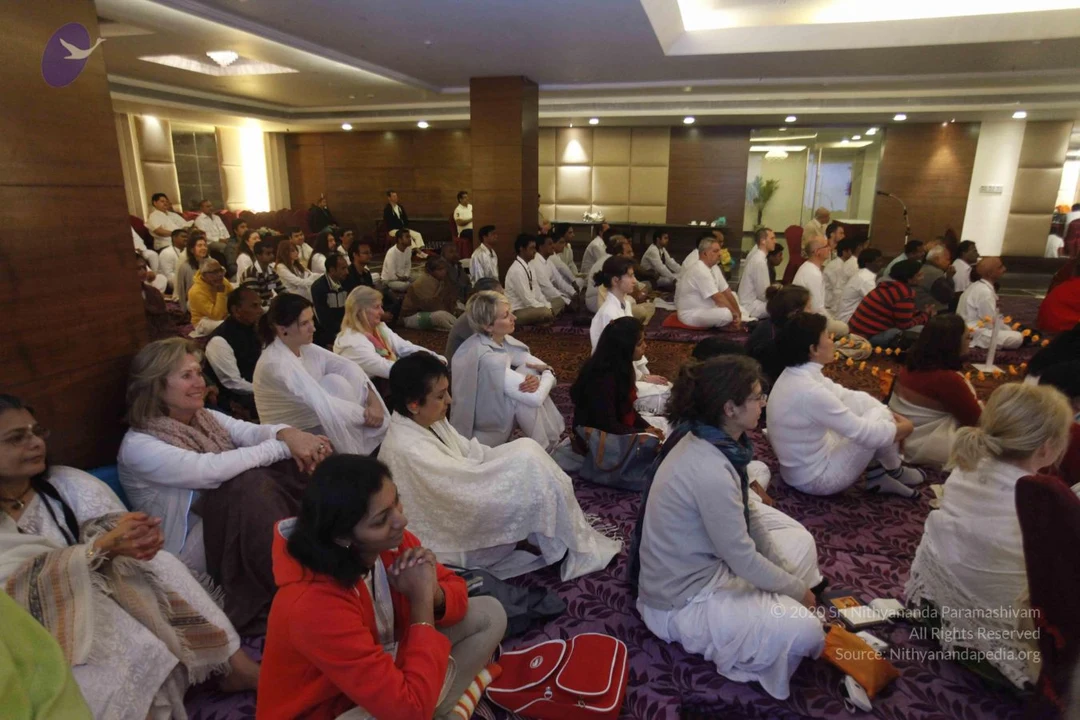
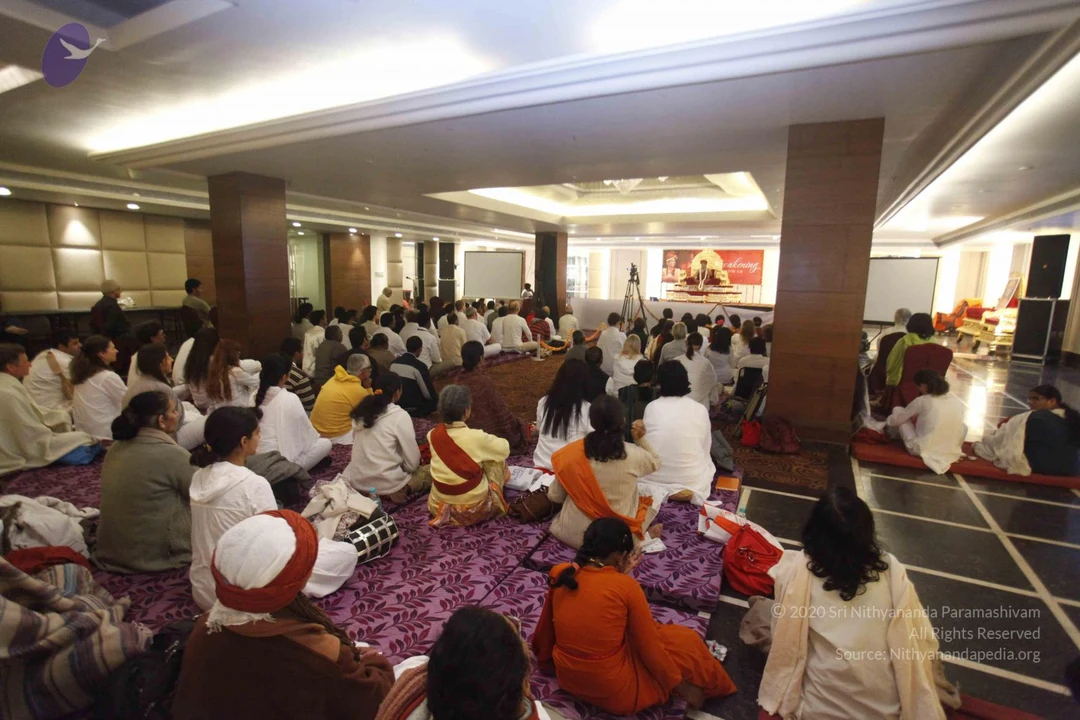
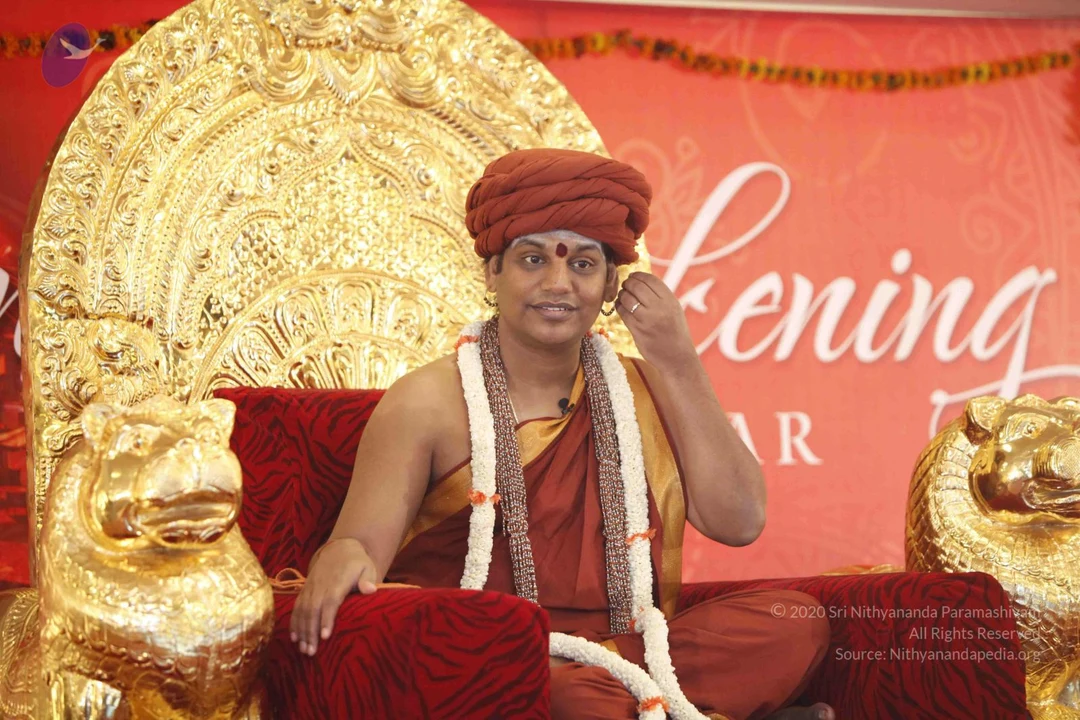
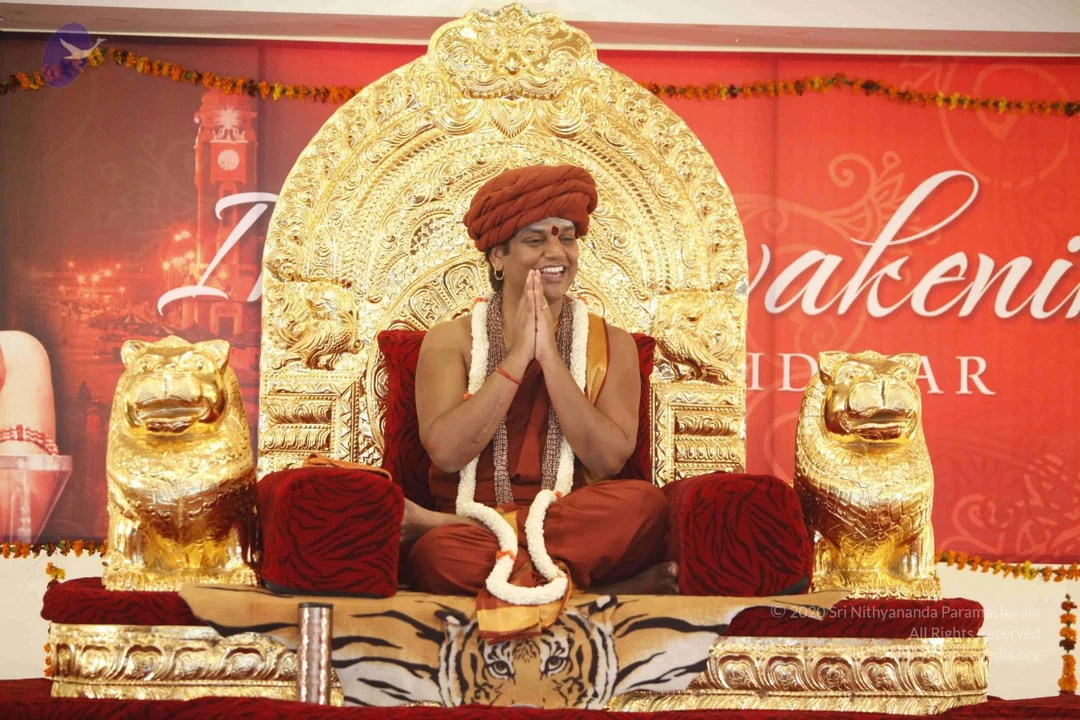
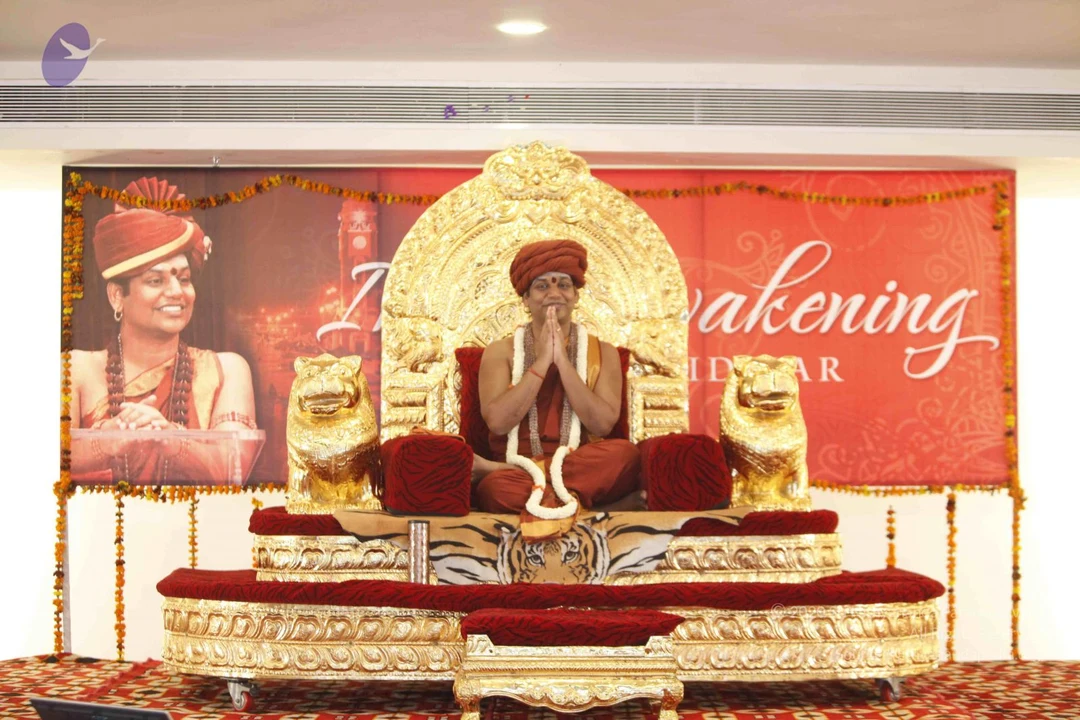
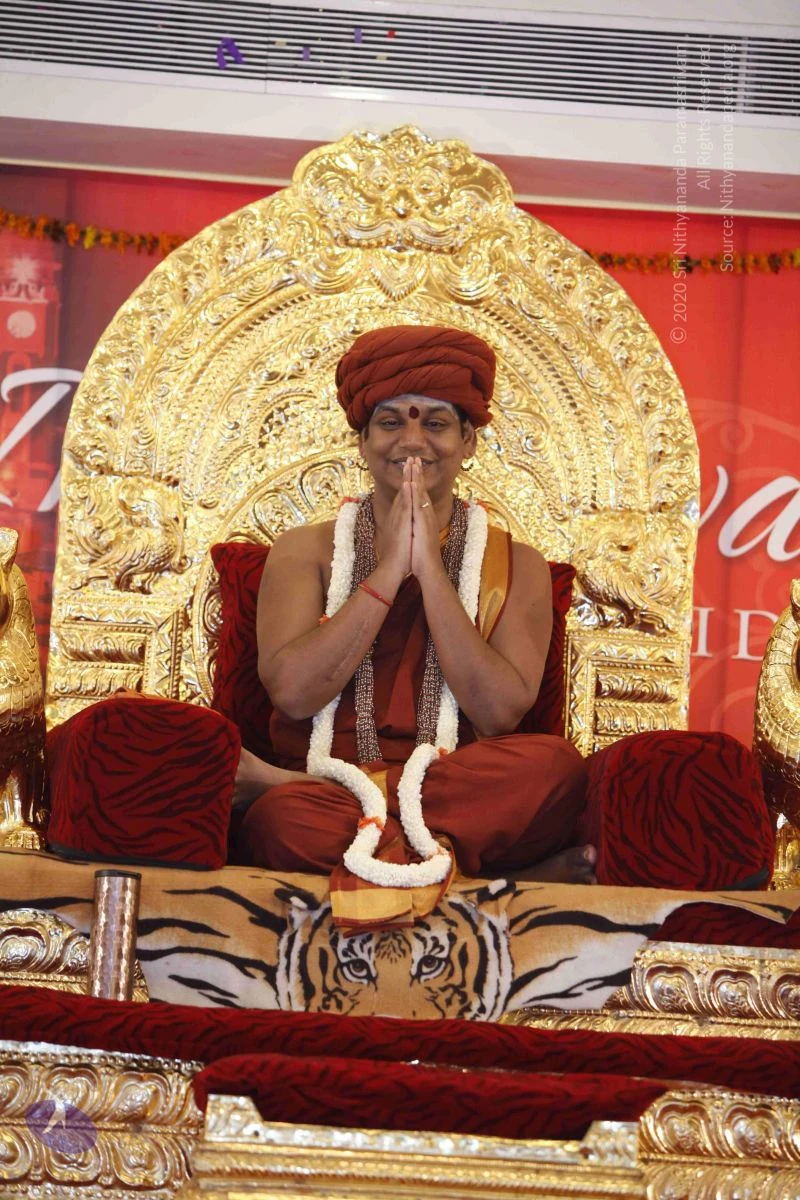
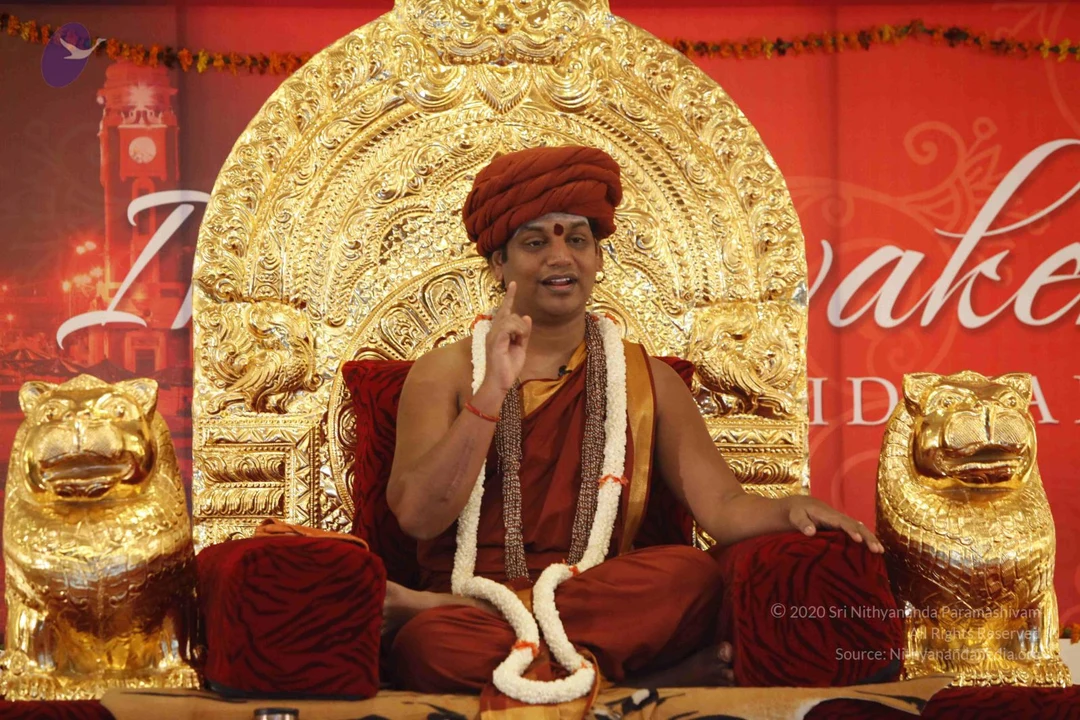
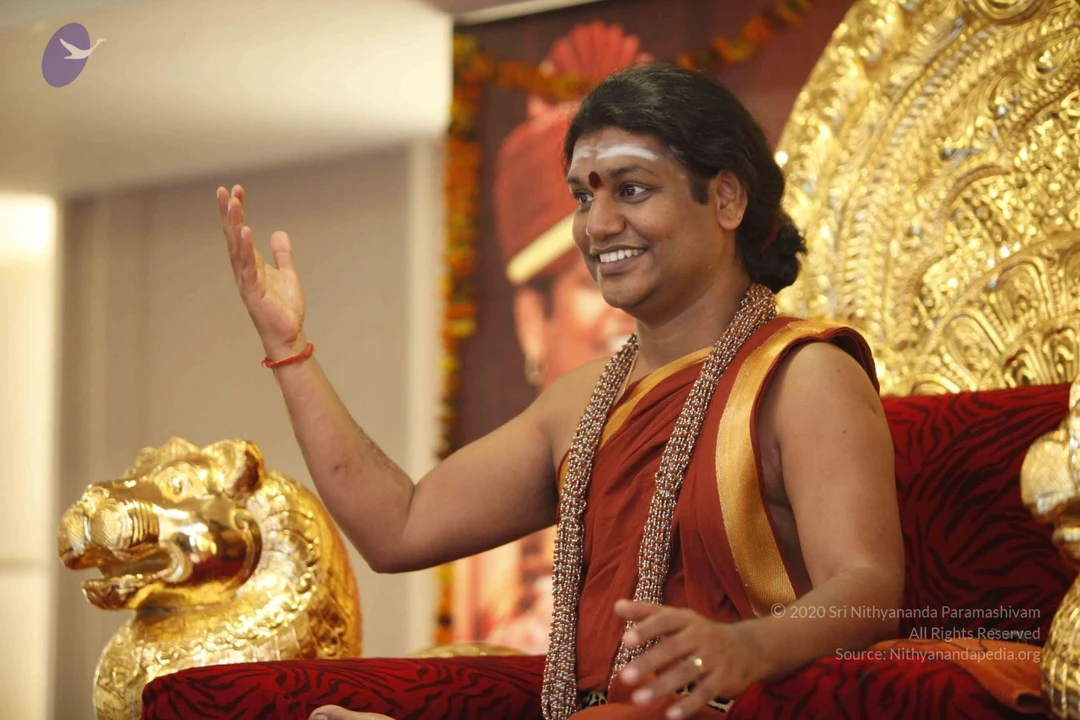
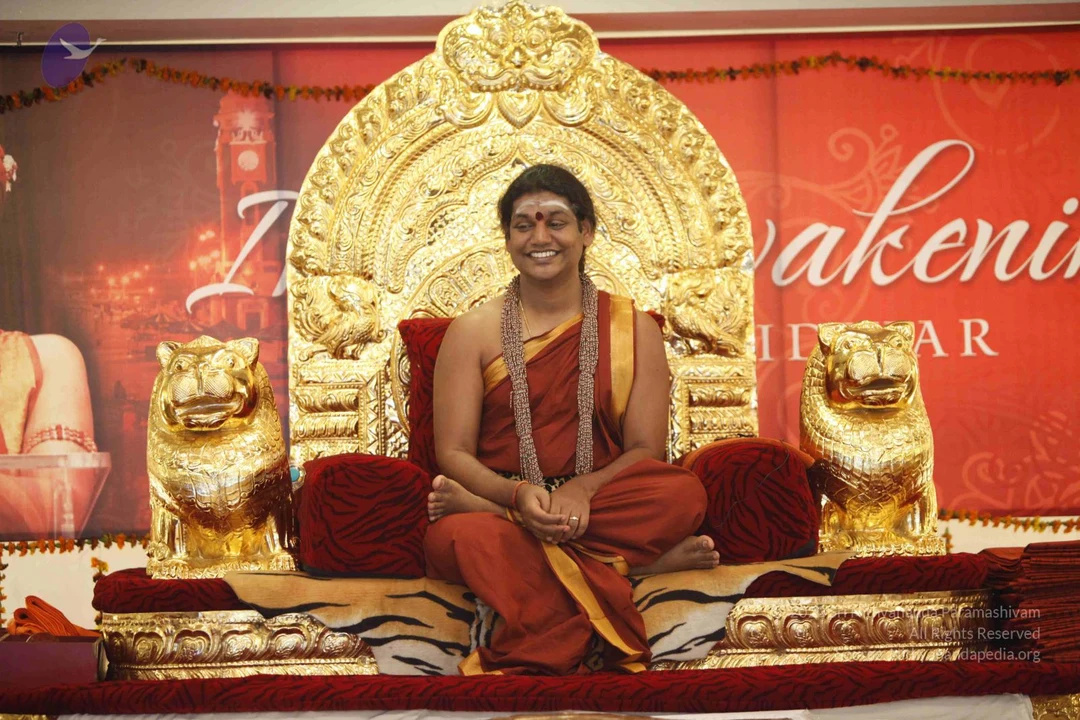
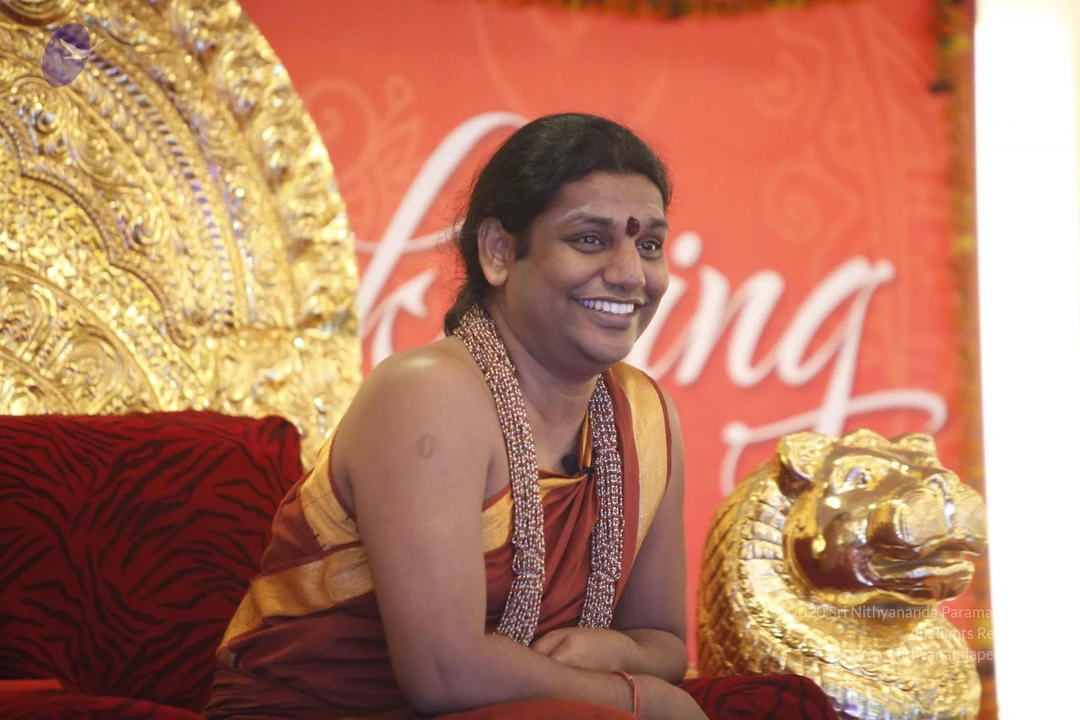
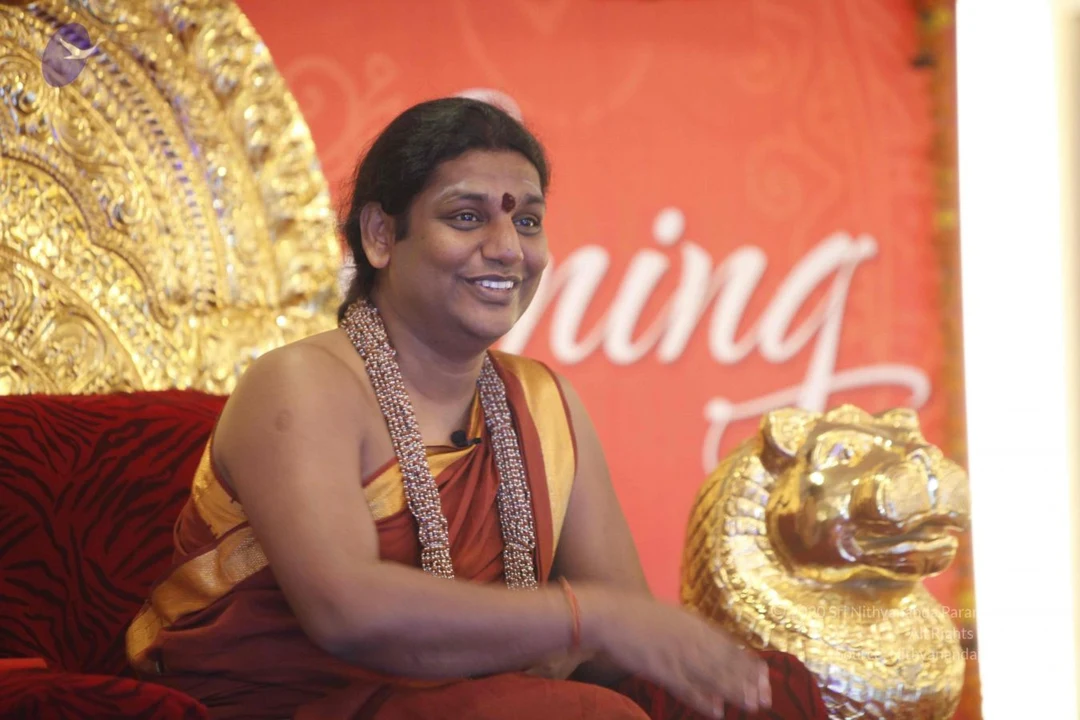
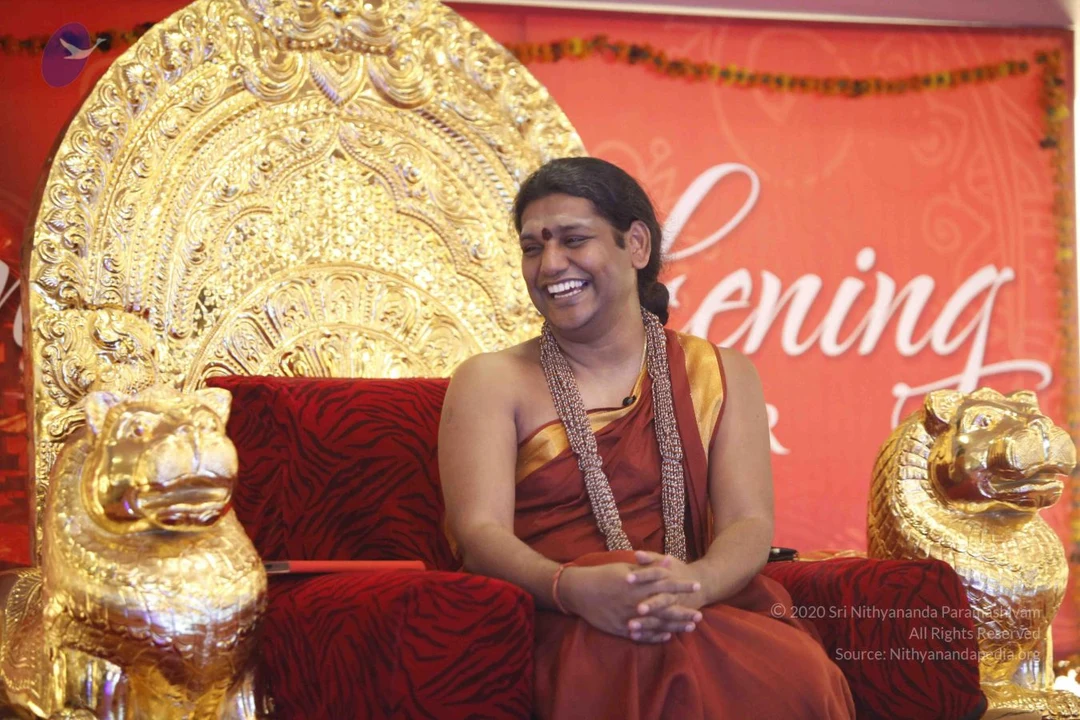
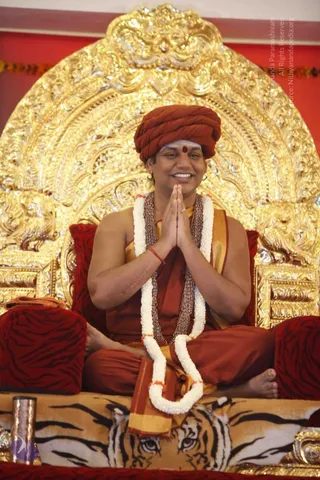
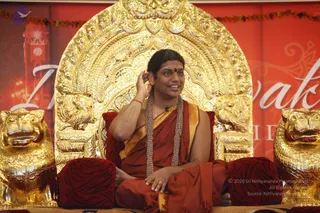
In today’s Morning Satsang, Paramahamsa Nithyananda encourages us to wear the Master’s words like diamonds! Listening is one of the most important spiritual practices and therefore gives the words we utter inside and outside so much power. The words we receive from the Master are the most powerful and can immediately provide us with an Inner Awakening. His words are not rocks to build a house but like diamonds that give us the strength to realize and discover our Self!

Link to Video:

VideoAudio

Transcript:

Nithyanandeshwara Samaarambhaam

Nithyanandeshwari Madhyamaam |

Asmath Aachaarya Paryanthaam

Vandhey Guru Paramparaam ||

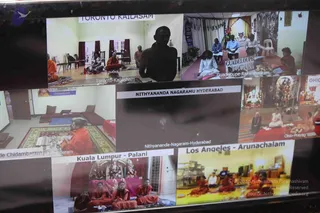
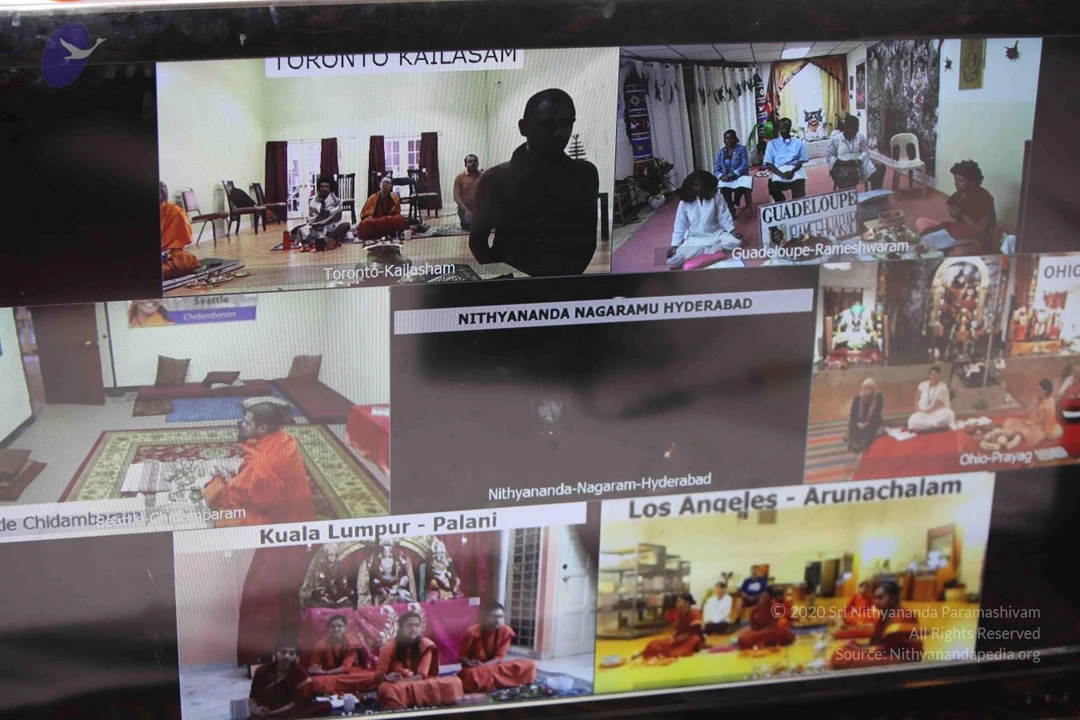
I welcome all the devotees, disciples, samajis, satsanghis, Kotharis, Thanedars Mahants, Shrimahants, sitting with us all over the world at this moment through Nithyananda TV, Lotus TV, Janasri TV, Eshwar TV, Sadhna TV and through two-way video-conferencing having Nayana Deeksha all over the world, in many countries. Cities sitting with us in two-way video-conferencing having nayana deeksha: Toronto Kailasam, Seattle Chidambaram, Kuala Lumpur-Palani, Ohio-Prayag, Nithyananda Nagaramu-Hyderabad, Los Angeles-Arunachalam, Tiruvanmiyur-Chennai, Charlotte-Srisailam, Singapore-Singapuram, Jorpati-Nepal, Dakota Dunes, Allison California, San Hose Madurai, Paris-Home Temple, Bogota Columbia, Santa Fe-New Mexico, Hong Kong Tyun Mun, Dubai Vaidyananthan, Bangalore North, Talahassee Florida, Hyderabad-Gupta Kashi, Nithyananda Nagara Bidadi, High Point North Carolina, Jorpati-Nepal, London-Kashi, Houston-Kalahasti, Talahassee Florida, El Passo Texas.

2:38

I welcome all of you with my love and blessings.

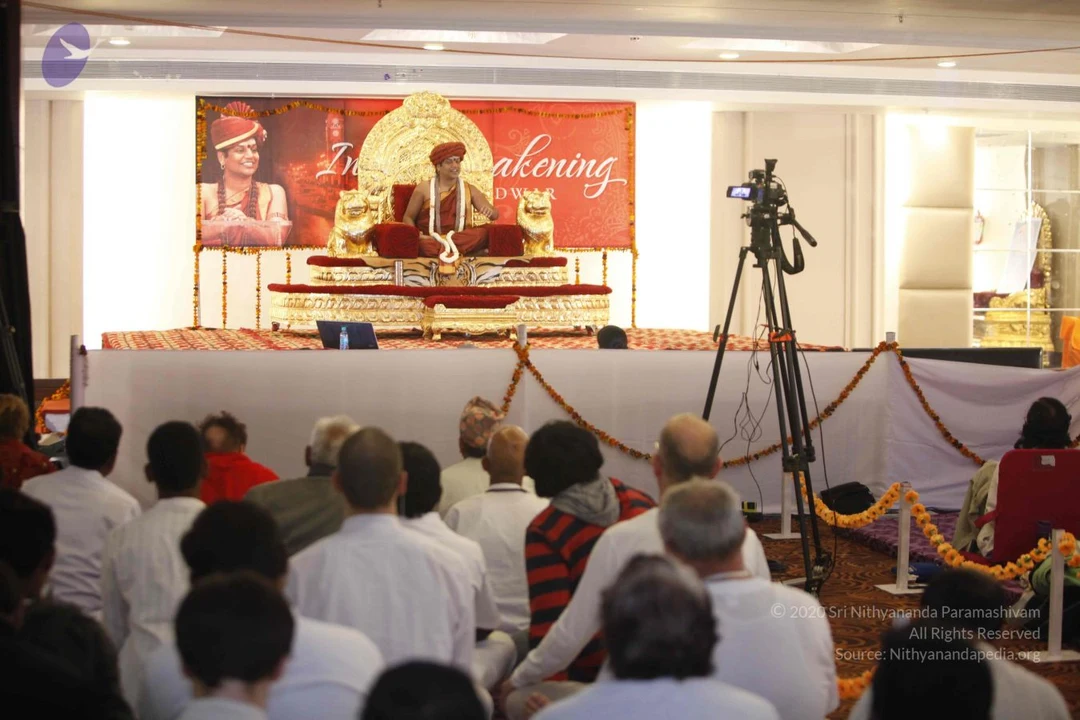
So today again we are back to the headquarters of Hinduism; capital city of Hinduism. So nice to be here with Himaraja and Ganga matha; Parvatha raja - the Himaraja, Himalayas, the mother of the water source - Ganga matha, I welcome all the participants who are here for 25th Inner Awakening and eN Genius. So nice to be in the breathing space of Ganga and Himalayas once again 25th inner Awakening; so many of our devotees, so many of you have gathered; I think many 2nd Inner Awakening 3rd Inner Awakening.

With a lot of expectation and hope about Inner Awakening in Haridwar, you all have gathered. I won’t disappoint you guys. I will deliver more than you expect. This time it is going to be a real, real, something new, experiential, because we are in the breathing space of Ganga and Parvatha Raja, Hima Raja.

Today I am going to expand on ‘LISTENING’, because, with listening, the Inner Awakening starts. And from today, next twenty-one days, the morning satsangh will be part of the Inner Awakening. So I will answer your questions, clarify your doubts related to Inner Awakening. In this way, all the Inner Awakening participants, you will also feel this satsangh time is not wasted, it is part of your program; and the devotees, disciples all over the world who are watching the satsangh, they will also get the essence of the Inner Awakening. So, the both purpose will be solved. One, you won’t feel this time is separated from your routine, that it is not fitting with your program; you will feel it is part of the program. I will be attending to the same Inner Awakening subjects in this morning satsangh. That is one. Second, the devotees, disciples, satsanghis, visitors, viewers who are watching the satsangh every day will also feel the essence of the Inner Awakening session they receive it through this morning satsangh.

6:42

Today I will start with ‘LISTENING’. Please listen.

Whether you understand or not, experience or not, believe or not, you are nothing but ‘word’. Understand. Please listen. You are nothing but ‘word’. You are just nothing but a word you create inside you about you, about world, about everything. The word you create inside you about you, about others, about everything - you are just that, please understand.

Vivekananda says very beautifully, when he was speaking in the West he says very jovially, “In our country, even if we want to become rich, we don’t go to market and work. We don’t go to market-place. We just go and sit under the tree or inside a cave and start chanting some words, and we become rich!”

Please understand, how much ever you logically analyze, it will not fit. You may think, ‘If I go and sit in the Himalayas, one cave, and just start chanting, chanting, chanting, chanting, will I become rich?’ Please understand, I am not the guy who will spread superstitious things and I don’t speak illogical things. I am not an atheist to speak superstitious things. I am not a so-called irrational rationalist. India is full of them. India has more number of so-called irrational rationalists than the number of rats.

9:25

No, I am not the irrational rationalist, and I am not atheist. I am talking the truth to you. Please listen, even if you sit in a remote cave under a tree, tune yourself to some idea some word, simply you get that. Because cosmos listens to your word you are forced to listen to your own word. Please listen, you are nothing but the word you create about you and the word you create about others. You are nothing but the word you create about you and the word you create about others. Understand, when Vivekananda says ‘anything we want we just go and sit under the tree or in a interior cave in a remote village, remote forest, just utter few words and we achieve it’, he his right.

I am not spreading superstitious things. I am not talking illogically. I will prove this science to you. I will prove this science to you. Just by changing the word inside you will see the amount of miracles happening outside; how you can boss over the reality. Please understand this is exact word I am using. I am using this word very consciously. You can boss over the reality. That is what I call in Sanskrit ‘EESHWARATVA’; means bossing over the reality.

Understand, everything starts with the word you create inside. How you create the word inside? Only by listening from outside! All the word you create inside is the different permutation combination of the words you heard from outside; that’s all. You can’t create anything new which you have not heard from outside. Even if you try to create a word it is from the source which you heard from outside. I have created few words intranalysing, unclutching. But even those words - the base materials is from what I heard. Internalising, analysing, both put together I made it as intranalysing. Clutching and un, both put together I made it as unclutching. So anything you create inside is also heard from outside.

13:41

Listen, source of everything - good or bad, life or death, richness or poverty, joy or suffering, pain or bliss, disease or health, source of everything, chaos or confusion, everything, is the word you utter inside. And, the source of the word you utter inside is the word, words you hear, you listen. I wanted to correct - not the words you hear, but the words you listen.

The modern day psychologists, researchers in the field of mind and psychology, they are saying you observe, internalise only 2% of what is happening around you. If there are 100 information’s - means visual, sound, if the 100 information’s are happening around you, you internalise only two. So please listen, the source of you is not what you hear but what you listen.

Please listen, step by step I am leading you to the next, next, next principles. The first principle I want you to listen and internalise – whatever you are, good or bad, health or disease, richness or poverty, whatever you are, the word you utter internally and outside, the words you utter internally about you, externally towards others, the words you utter, the good news in this is, any mess you created about you can be corrected. That’s the good news; because you just need to correct the word.

Second principle I want you to know - what is the source of the words you utter inside about you and others? The words you listened! In this principle the good news is, in this principle the good news is, now you have got the opportunity to listen to right words from the source of Nada Brahma for next 21 days. Understand 21 days amazing opportunity to listen to the words. I am not interested in being arrogant, pride, proud or humble. Please be very clear. I am not interested in being egoistic. That is a delusion and I am not interested in being humble. That’s a illusion. This being humble is the amazing methodology through which you are cheated. All this humble people are the most cunning; really. Because this humbleness is the best way they can impress you, then shave your head. See in your life, all these so called humble people are the most manipulative people. I am neither interested in being egoistic; actually egoistic people are more ignorant. They are stupid. They are not manipulators. But humble people are very manipulative. They know how to present themself to get what they want to get. At least with egoistic guy you can be very straight forward, ‘Ehh come to fight, you fight we fight’. But with this so called humble people, they are such manipulators, don’t even go near them.

19:52

I am neither egoistic nor humble. I am not interested in manipulating you and you have nothing which I can get and you have nothing which I don’t have; I am very clear, understand . You don’t have anything which I don’t have. So I have no reason to manipulate. I am very clear and straight forward. I am telling you the truth as it is, not with arrogance or with any manipulative humbleness. The words which comes out of me is capable of materialising something; not just giving you the spiritual experience or the spiritual strength. It is already proved thousands of times. People ask me “Swamiji how do you materialise wherever you want, whatever you want and how do you awaken our kundalini even if we are sitting thousands of miles away?” It is just word, the power of word; just the power of word.

When you are completely listening to your source, the words you utter naturally creates a powerful impact on the reality. So next 21 days you have the amazing opportunity to listen to somebody’s words who is established in the source, who is in the eternal listening with himself. NITHYA SHRAVANA IS NITHYA ANANDA. Eternal listening is eternal bliss. Listening to your source, eternal listening, listening to your source is being in the bliss. NITHYA SHRAVANA IS NITHYA ANANDA. Please understand any one day whether 2014 or 2015 or 2016 or 2020 or 2050 or in the next janma 20200 or 20500 you have to align yourself to this eternal listening; because that is your original space. Why do you want to do in 20200? Why don’t you do in 2014, March 6th? That’s all I am asking.

You have to come back to your original space. You have to come back to your original space. I tell you, listening, listening is such a beautiful way of involving yourself with life; participating with life without tiredness or boredom. The best way to participate with the life without tiredness or boredom is ‘listening’. I tell you, other than listening, any other participation will tire you and make you feel bored. Whether it is seeing or smelling or tasting or the touch pleasure; other than listening, everything, everything can tire you and lead you to boredom. All the other senses can be closed. Ears can never be closed because god does not want you to stop listening even for a moment. That is why the system is created such a way, it is always open and available.

24:58

Listen; listen, any one day you have to come to the space of listening. Listening is like eternal romance, where you are not tired of getting involved with the life. Understand, this involvement with life, participating with life, participation with the life starts with listening. Nothing in the life can be achieved unless you participate. Listening is a amazing way to participate in the life. Especially when you get the opportunity to sit with the source for next 21 days, don’t miss the great possibility of listening. Don’t miss the great possibility of listening. Because, the words you listen becomes the part of the words you utter towards you and others. The words you listen from an enlightened being, a living master, becomes the words you are going to use about you and others in your life. I will give you the essence of the satsangh in Hindi.

32:14

Understand, the words you listen becomes the source of the words you utter towards you and others. And, especially the words you listen from the source of the source becomes the source of the words you utter towards you and others. You have the opportunity for next twenty-one days to listen from the source. As I said, these words are so powerful, it has caused so many auspicious things to so many people. It has caused Kundalini awakening to so many people, materialized so many things for so many people. You have a amazing opportunity to listen to that source.

Nothing, just the word, when they listen, see the power of those words. Let the Kundalini Shakthi in you all be intensely awakened. Let your body and mind experience the Kundalini Shakthi and respond to this listening. See the power of these words. What is happening in North Carolina, in London, in Dubai, in New Mexico, in Singapore, in Tiruvanmiyur, in Seattle.

Understand, the word, the word, the word is not just the word as you think. It is the power which can change your reality. And when you listen, can become the source material of your reality. Let all of you respond to this listening and let the Kundalini energy in you all be intensely awakened, and let your body and mind respond to this power of listening and Kundalini Shakthi.

Understand, the word is not just the word; it can create intense awakening in you. And the words you utter inside you about you should be best. And when you listen to the Master’s words, you will collect those best words.

In the life you can get stones and diamonds. Use the stones to build your house, but wear only diamonds. You get words from your teacher, from your parents, from your family, from your boss; all that is a stone. Use it for those comforts and luxuries.

The words you get from your boss - use it to make money.

The words you get from your MBA teacher - use it to learn how to manage.

The words you get from your employee, employer - use that for your business.

But the words you get from your Master - use it to identify you, use them to realize you. So, please understand, the words you receive from the Master, use them to discover you.

As I said, stones, I am not saying throw away the stones. Use them to build your house. Diamonds, wear them on you. The words you receive from the Master are diamonds; take it and wear them beautifully on you. Use the words you listen from the Master to identify you, to discover you, to realize you.

So, today, we start ‘shravana’ in the presence of Mother Ganga, Jaganmatha, Ganga. She is the mother of the Pitamaha of this country. Please understand, she is the mother of the Bhishma Pitamaha. And she is the mother of everything good you see in the Bharat. In her presence, with her blessings, in the breathing space of Himalayas, let us start the ‘shravana’. Today we will start the ‘shravana’.

I bless you all. Let you all radiate with Integrity, Authenticity, Responsibility, Enriching and Causing eternal bliss, Nithyananda. Thank you.

Tags:

Paramahamsa Nithyananda, spiritual practices, power, Master, Inner Awakening, house, diamonds, strength, discover, Self.

Photos Of The Day:

Paduka-Puja
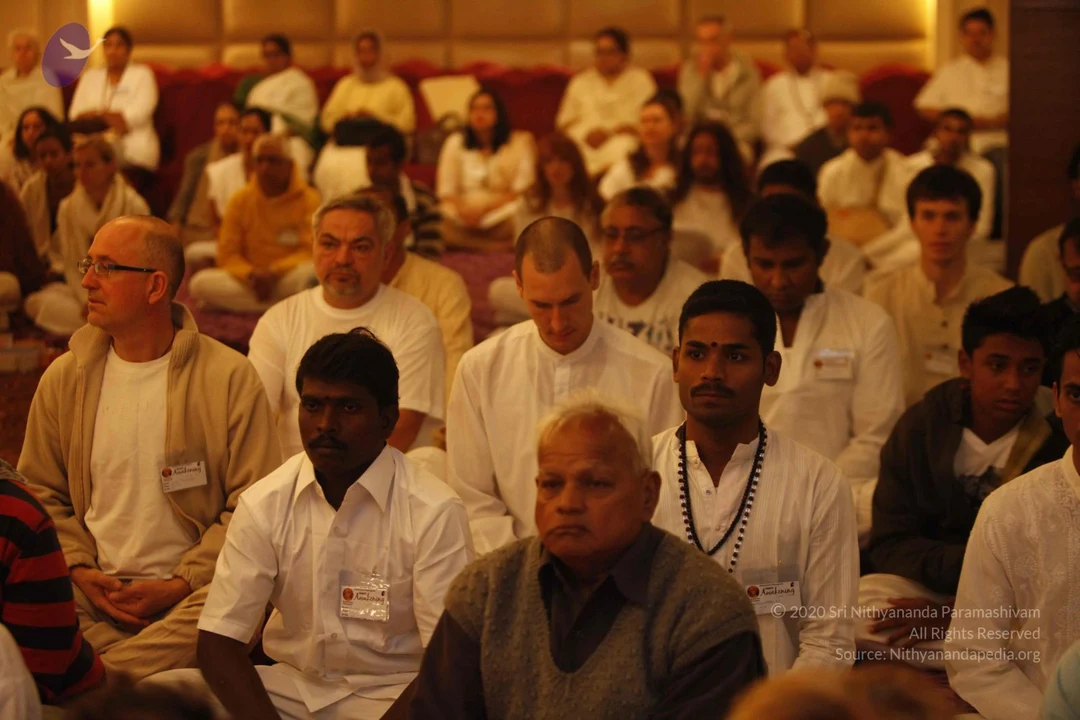
Nithya-Satsang
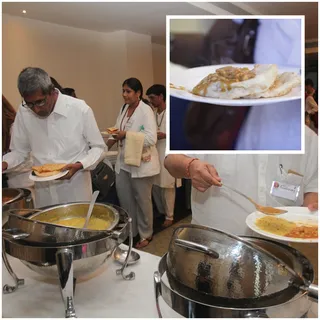
Inner Awakening-Breakfast

Darshan

Felicitation-to-Sadhus

Inner Awakening-Session

Kalpataru-Darshan

Photos Of The Day:

FB-Photos-of-the-Day

Photos from this day

View all 251 photos

Paduka-Puja

22 photosSource gallery
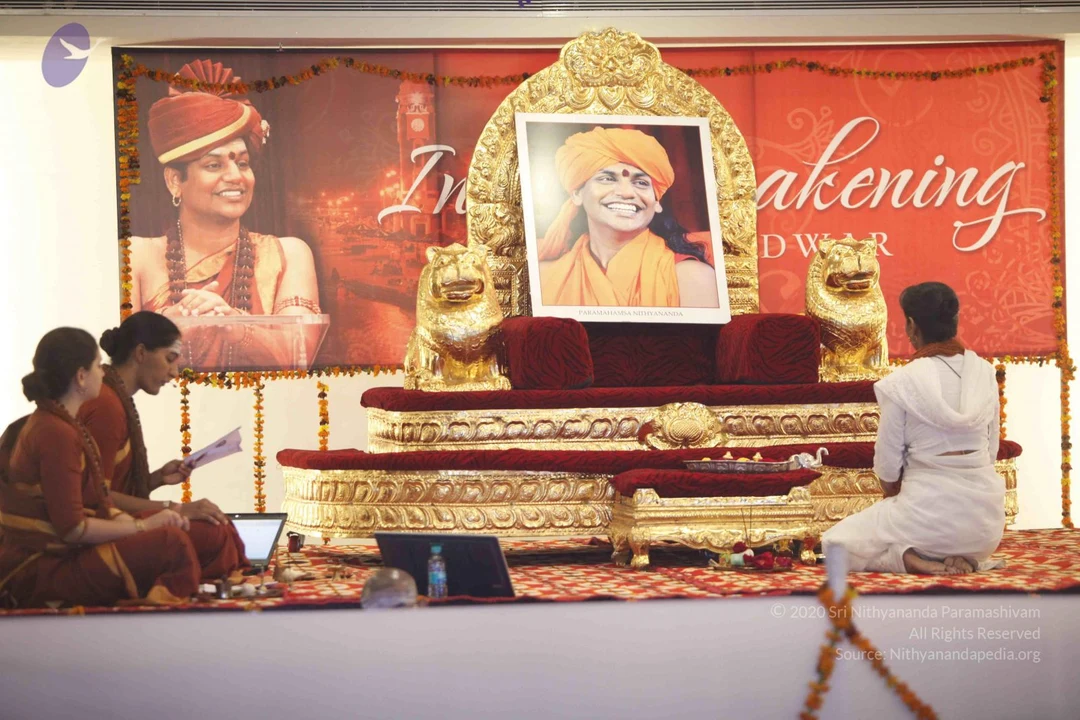
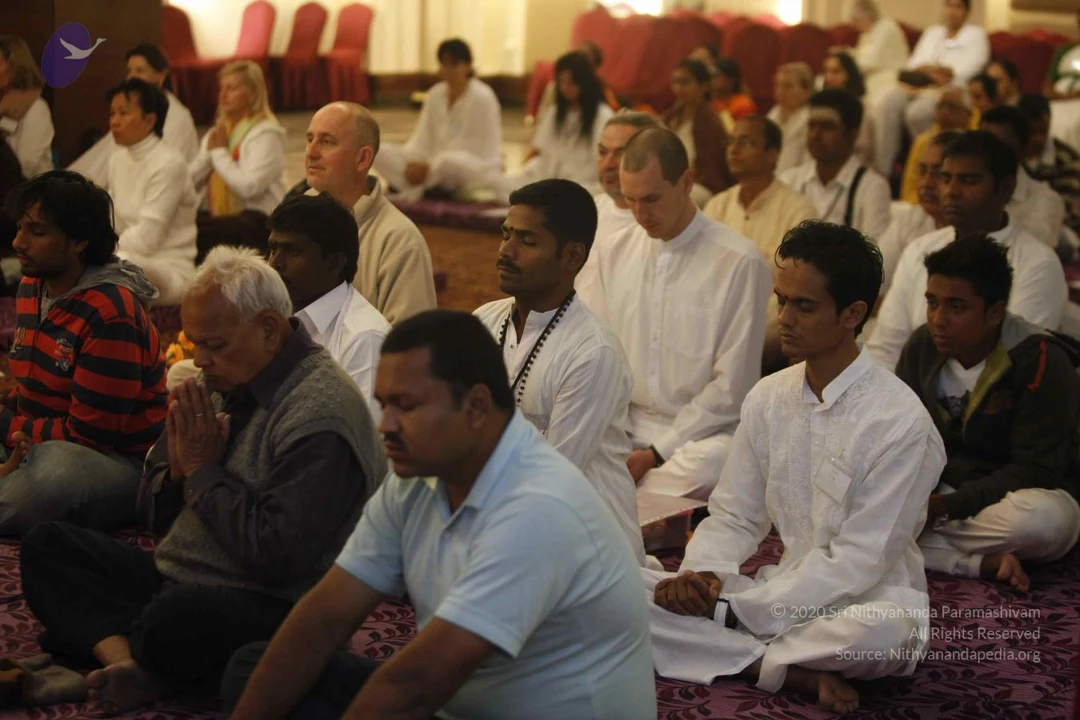
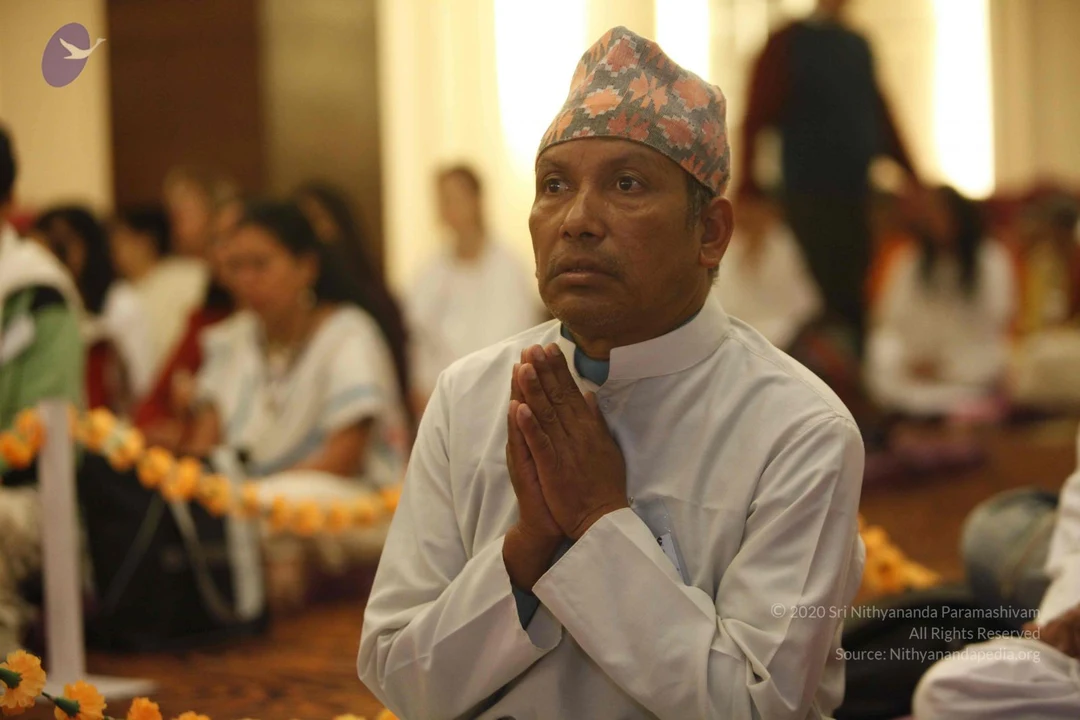
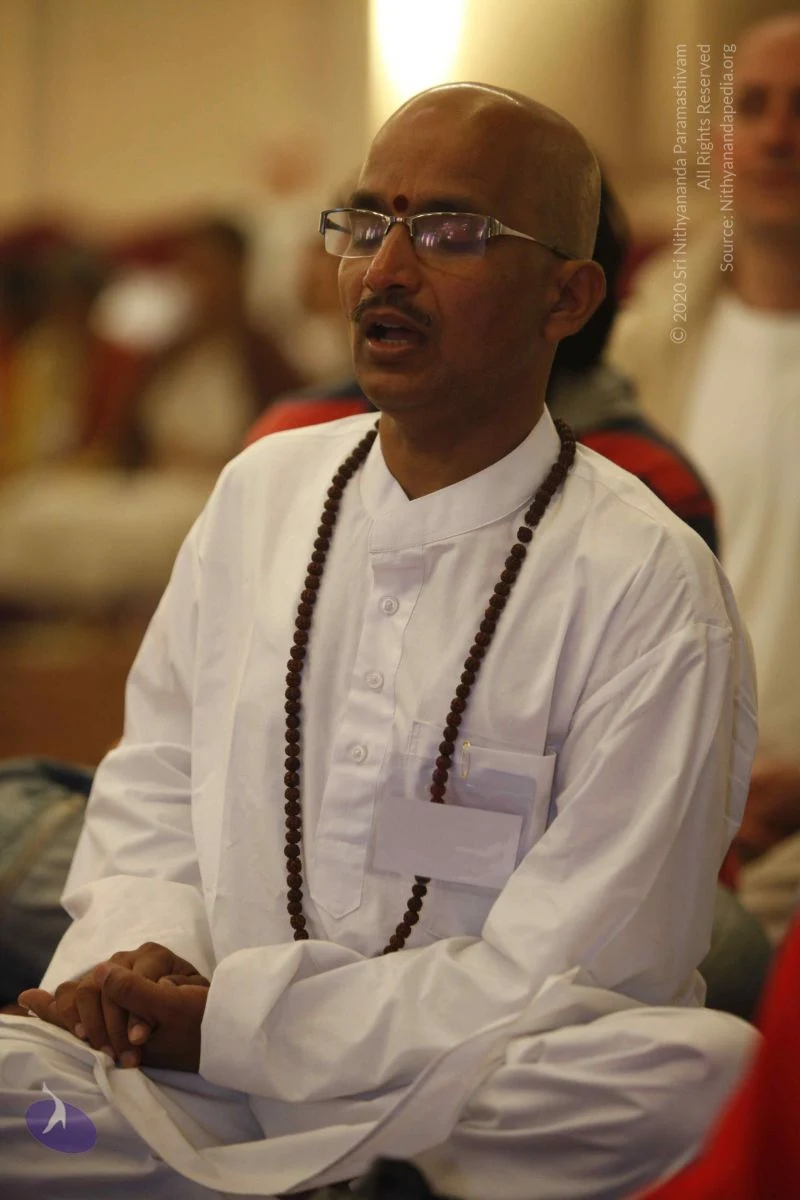
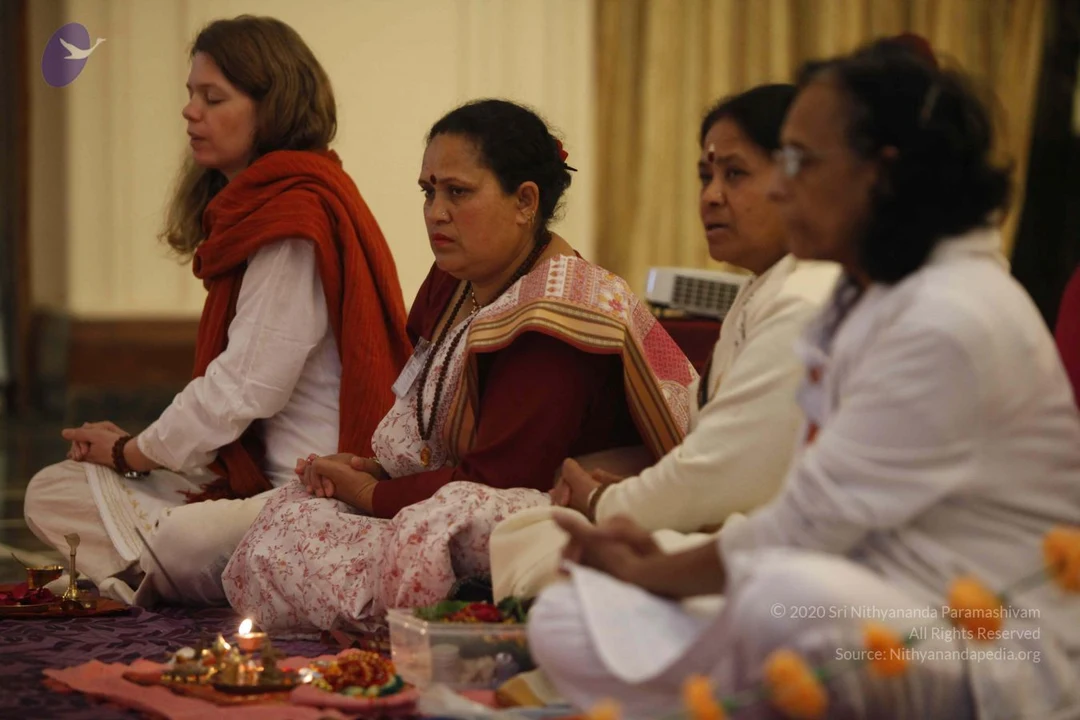
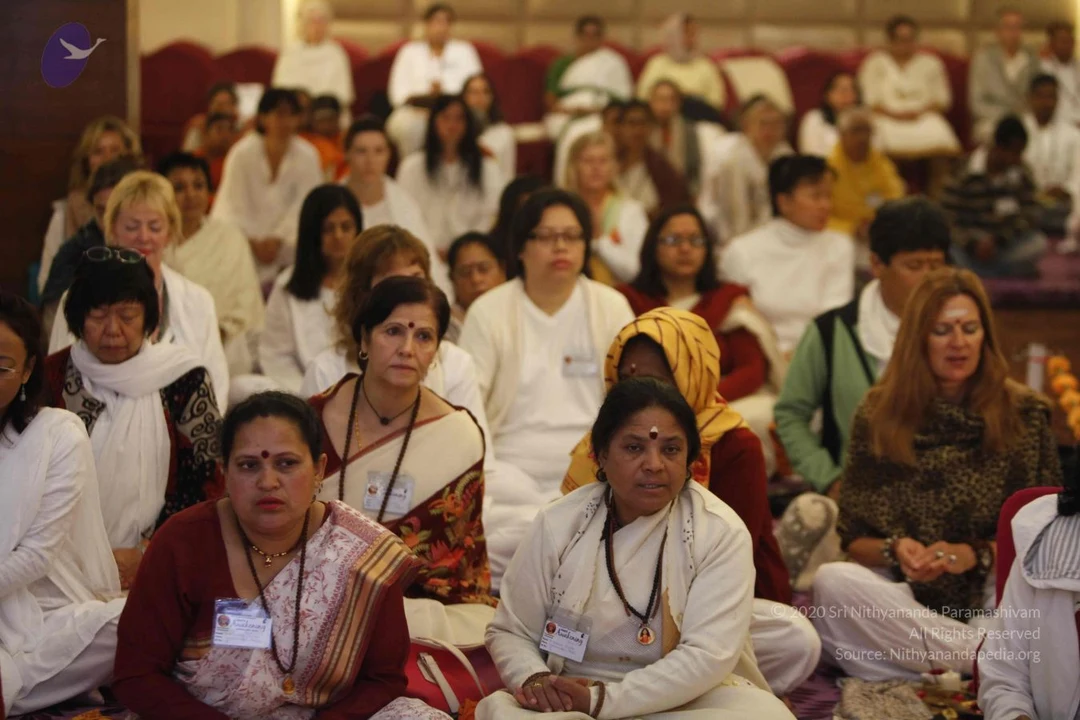
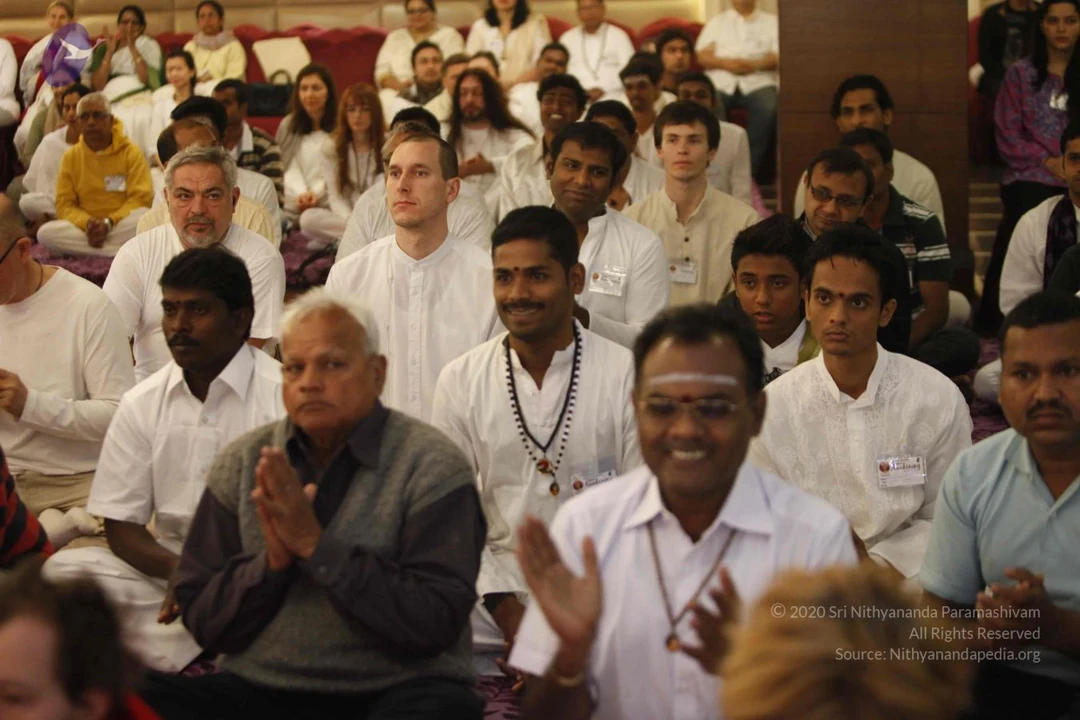
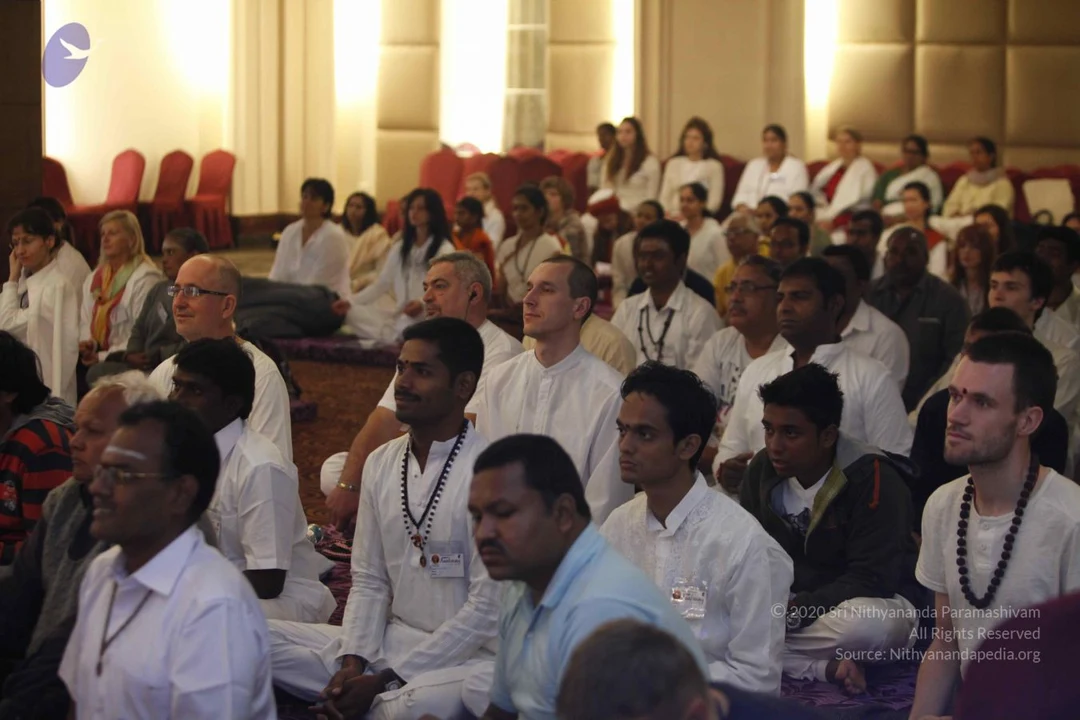
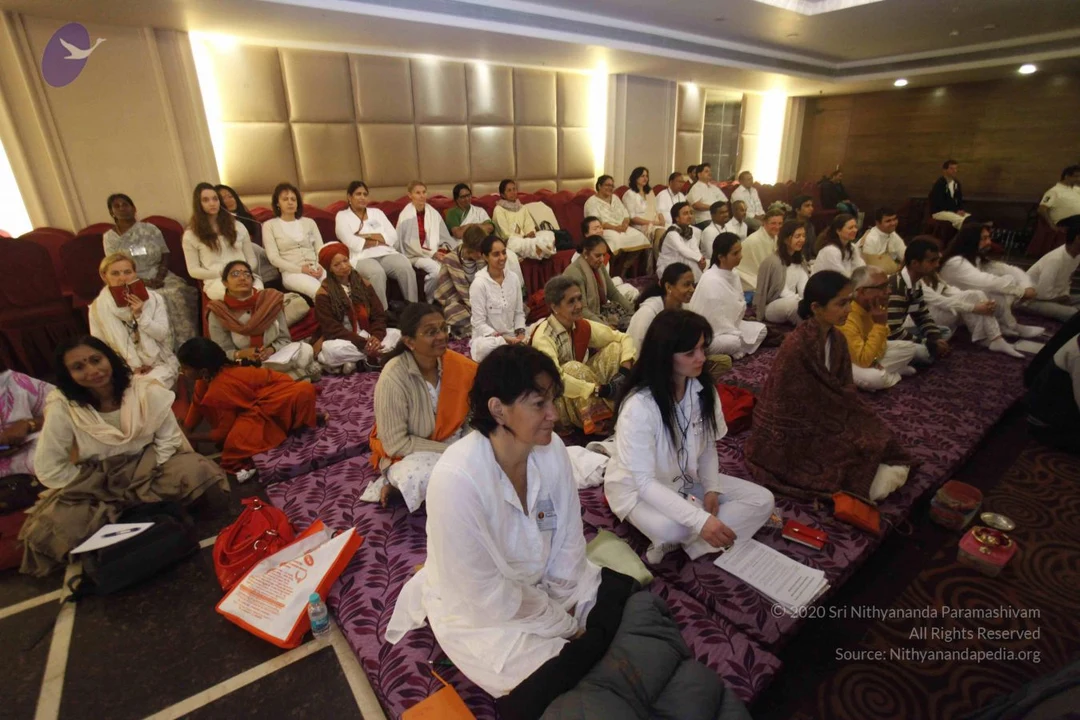
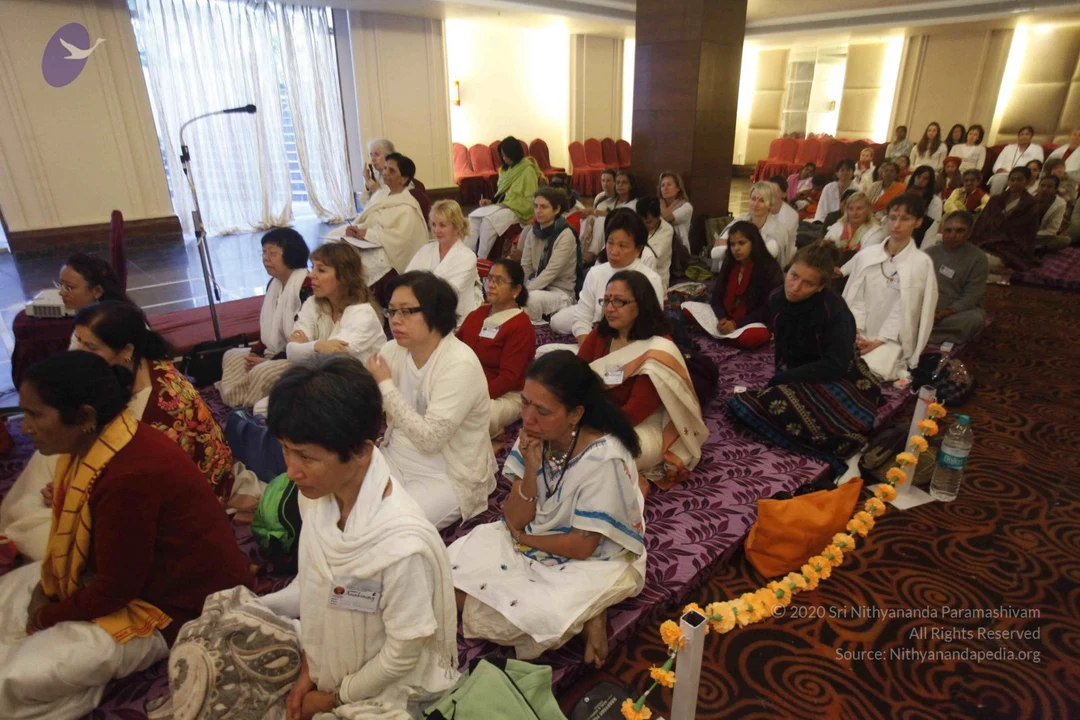
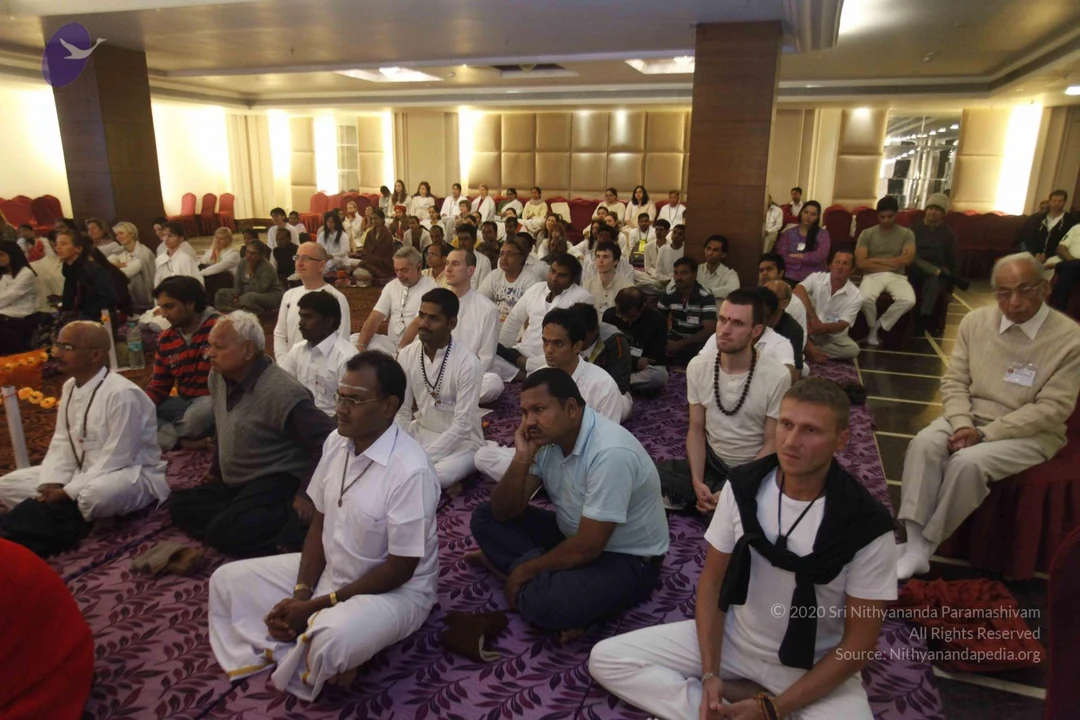
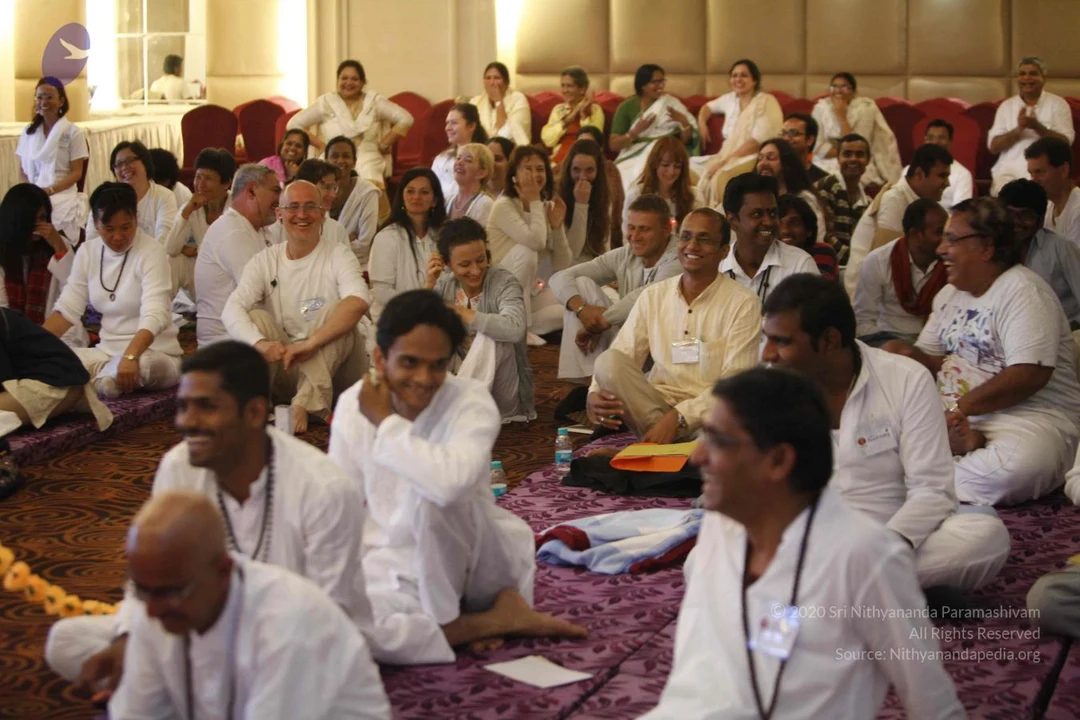
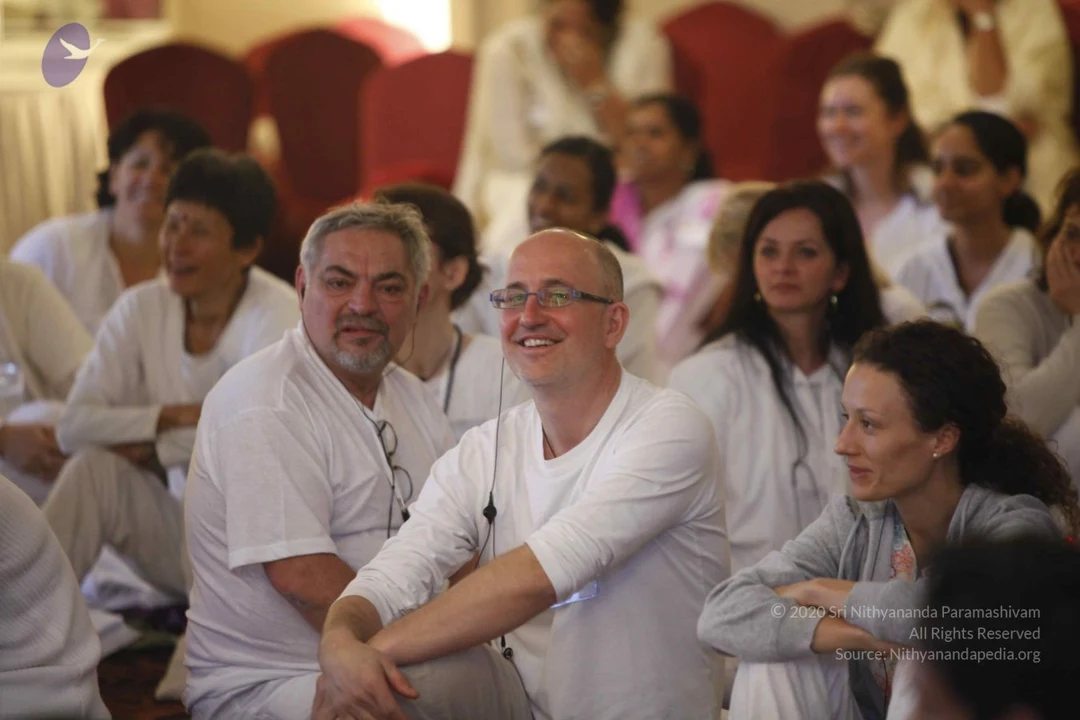
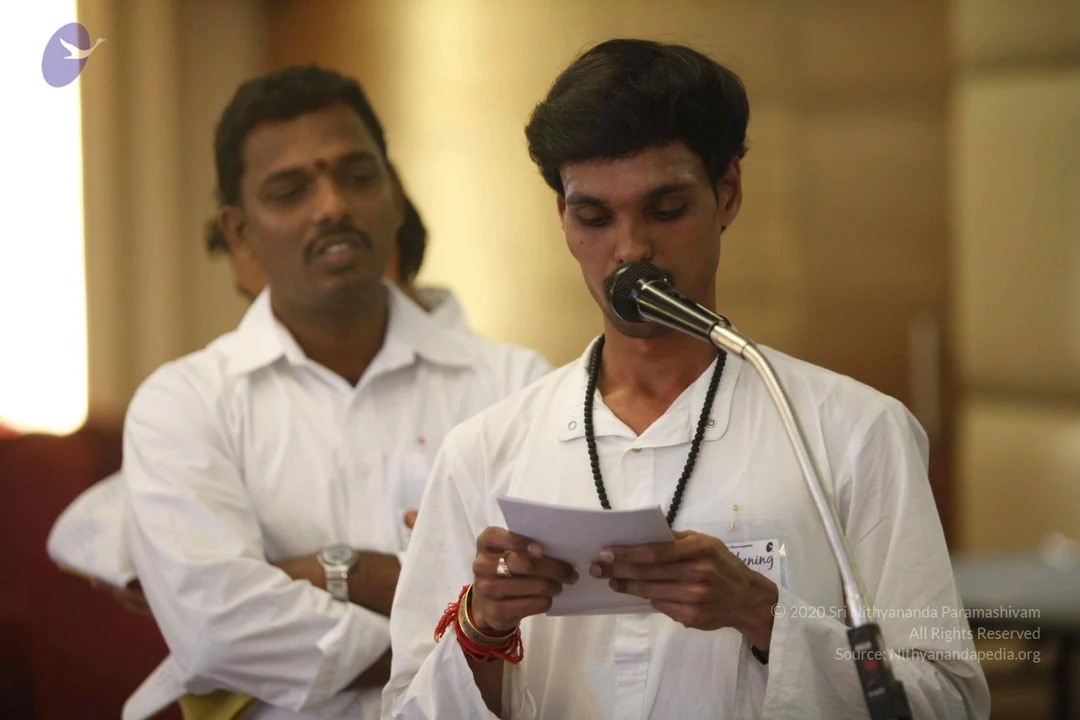
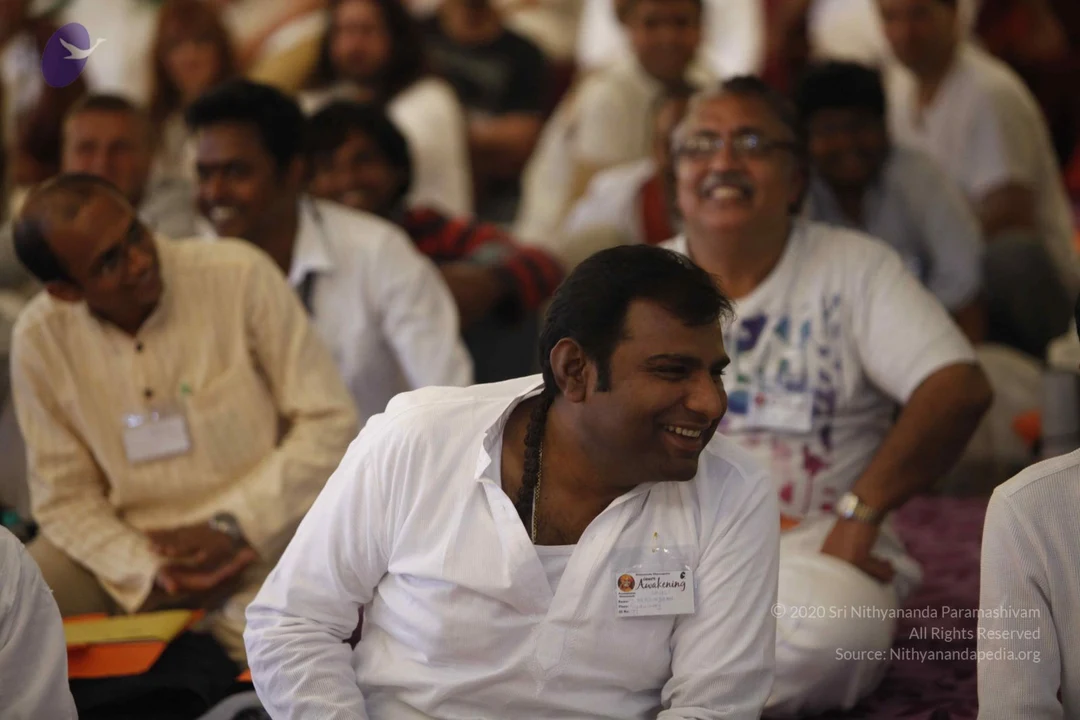
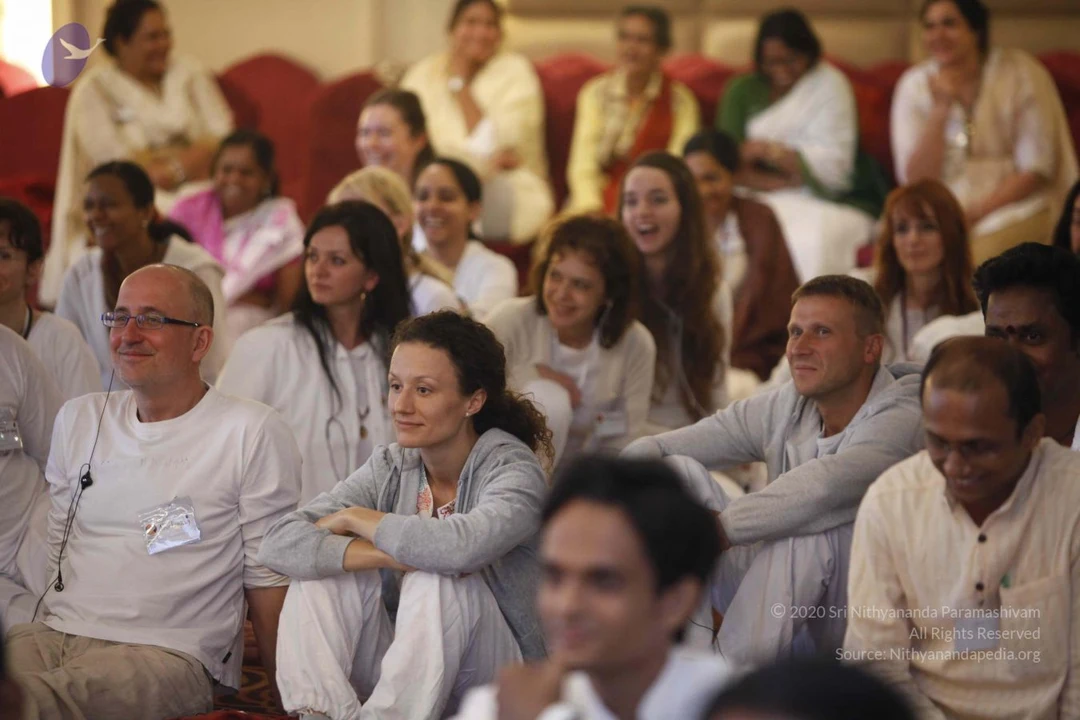
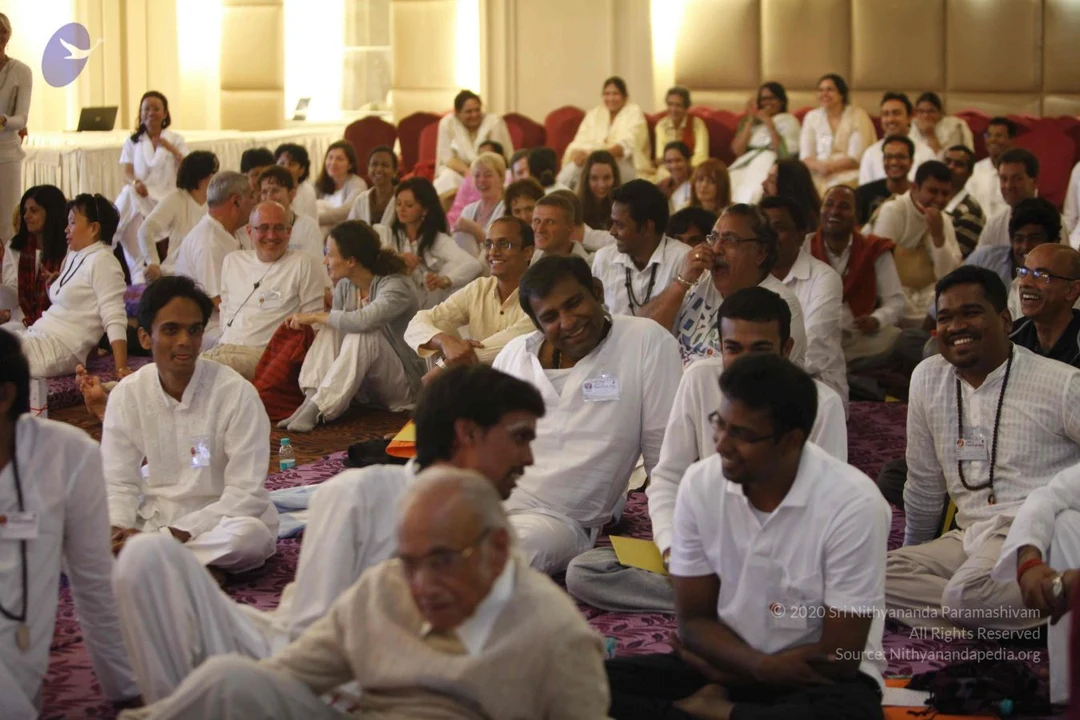
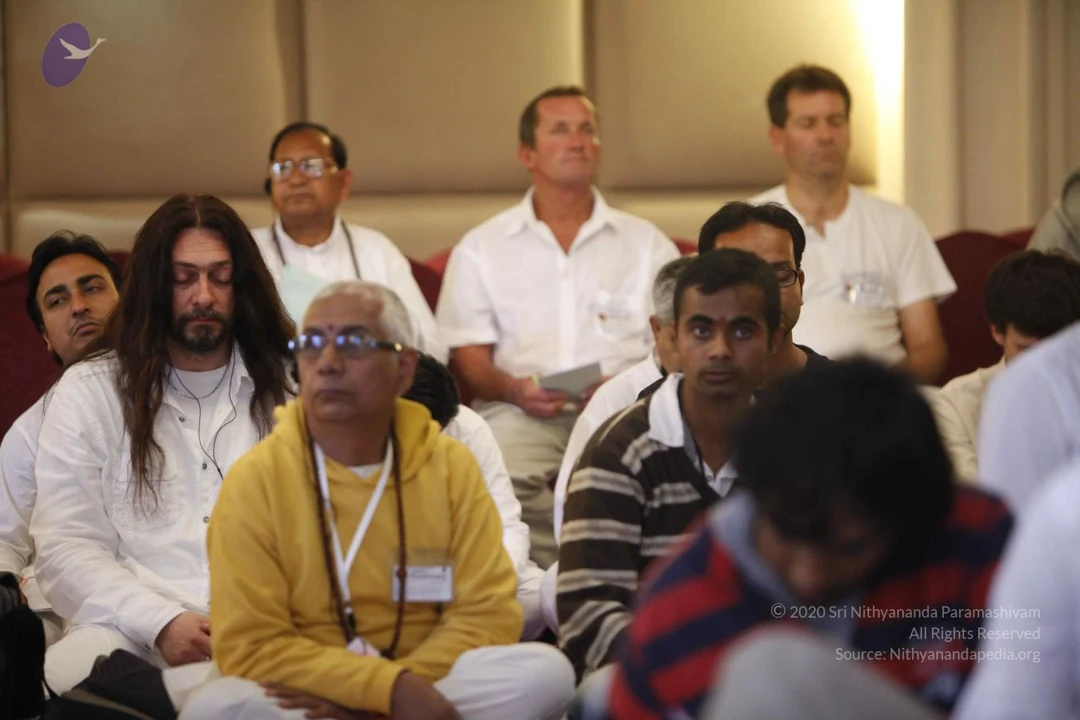
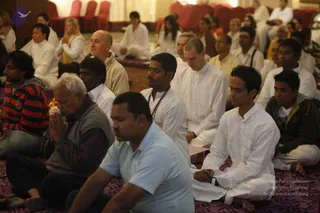
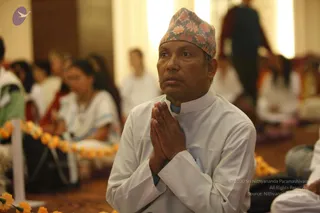
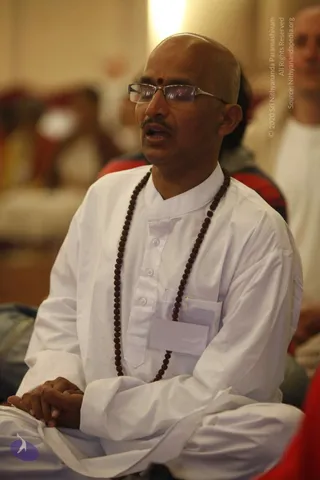
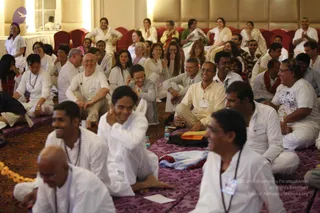
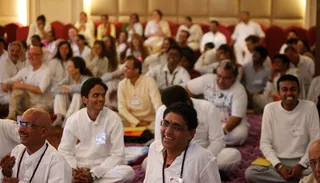
Photograph of a large seated satsang audience in a warm-lit hall, with rows of devotees on cushions and carpet. In the foreground a bald man in a beige jacket and white shirt sits with hands clasped, next to a man in a white shirt with a dark vest-style layer, and a younger man in white with a rudraksha mala and tilak. Behind them, people in white and yellow robes sit attentively, some wearing name badges. No clearly identifiable a person figure is visible, so no candidate is marked.A golden throne with lion-face armrests and deep red cushions is set before a red banner reading "Inner Awakening". On the backrest hangs a framed portrait labelled "PARAMAHAMSA NITHYANANDA", showing a smiling man in an orange turban, orange shawl and red tilak. A single woman in white clothes with a white shawl kneels at the right edge, facing the throne. Marigold garlands hang along the top and bottom of the banner.A photograph of a stage set for a satsang with a large orange and red banner reading "Inner Awakening" behind it, bordered with marigold garlands. A central ornate gold throne with red velvet cushions and two gold lion figures sits empty, with a framed portrait labelled "PARAMAHAMSA NITHYANANDA" mounted above it. Three women sit on the floor at the front: two in orange saris with rudraksha malas, one holding papers and seated beside a laptop, and one at the right in white clothing with her back to the camera facing the throne. A water bottle and laptops rest on the stage. Banner and portrait figures are depictions, not physical people.Rows of seated devotees fill a hall during a satsang or meditation session, sitting on a purple patterned floor mat. Many wear white kurtas or white clothing, while others wear casual shirts. A grey-haired man in a grey sweater and dark trousers presses his palms together in prayer in the left foreground. A young man in a white kurta with a rudraksha mala stands out at centre, eyes closed in meditation. Red chairs and a light wall are visible in the background.A man seated in the foreground with palms pressed together in anjali mudra, wearing a white collarless kurta with a blue inner collar and a patterned pink-and-grey Nepali topi cap. Behind him, rows of seated devotees in white and pale clothing sit on the floor of a hall, with a strand of orange marigold garlands along the lower left. The setting is a satsang with attentive participants; the man is not claimed to be a person.A seated man in plain white kurta-style clothing with a high band collar and a row of white buttons sits cross-legged with his hands folded in his lap. He wears a long rudraksha mala of dark brown beads draped over his shoulders, a small red tilak on his forehead, and clear-framed glasses. His mouth is open as if speaking or chanting. Blurred figures in white and red clothing sit behind him in a bright hall, and a partially visible bald man in white is at the right edge. The appearance cues are only partly distinctive and this is not a clear match, so the identity of the central man is uncertain.

Nithya-Satsang
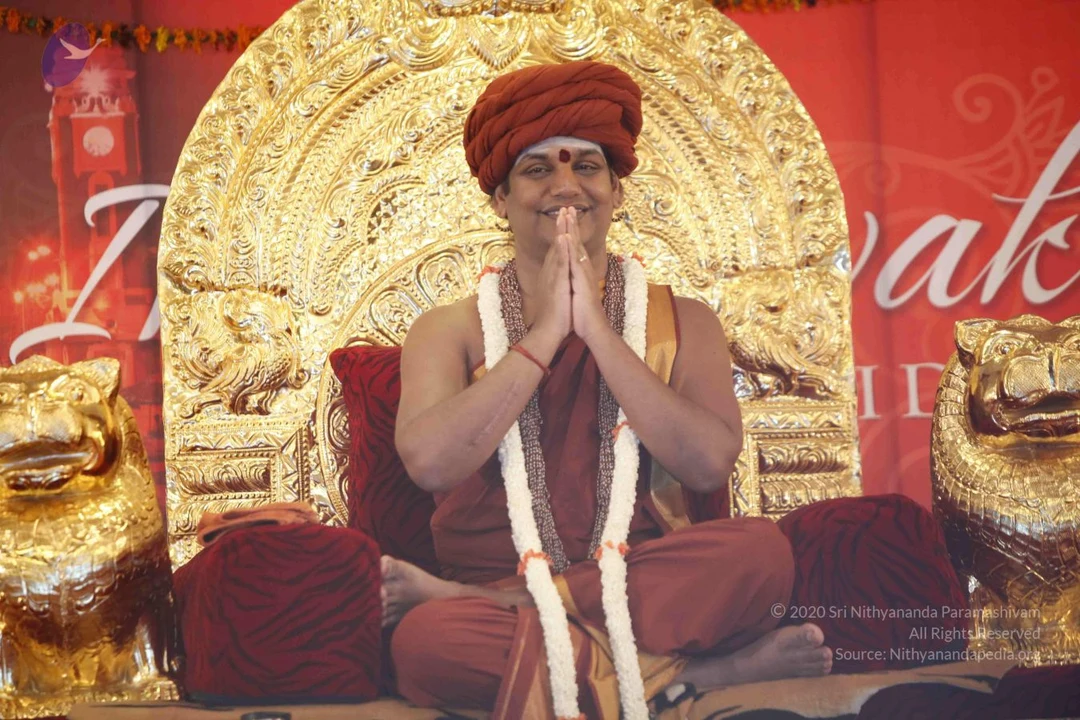
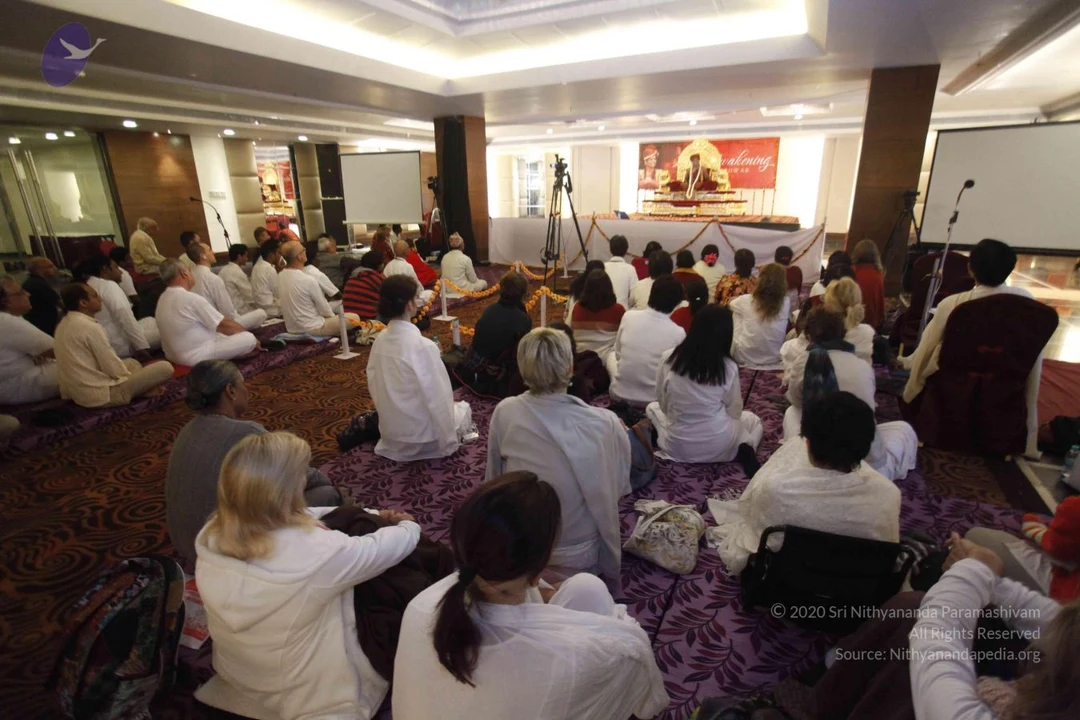
54 photosSource gallery
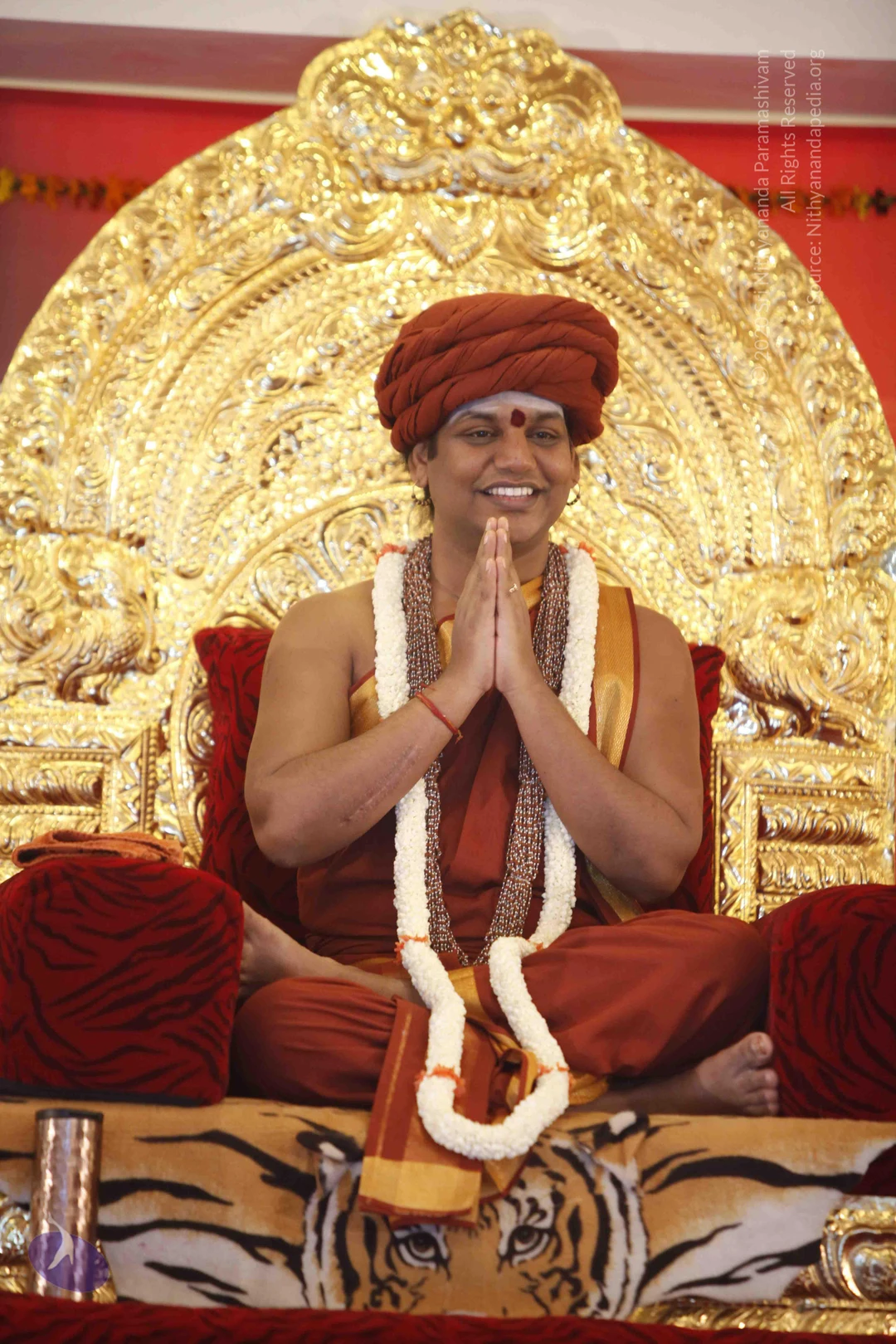
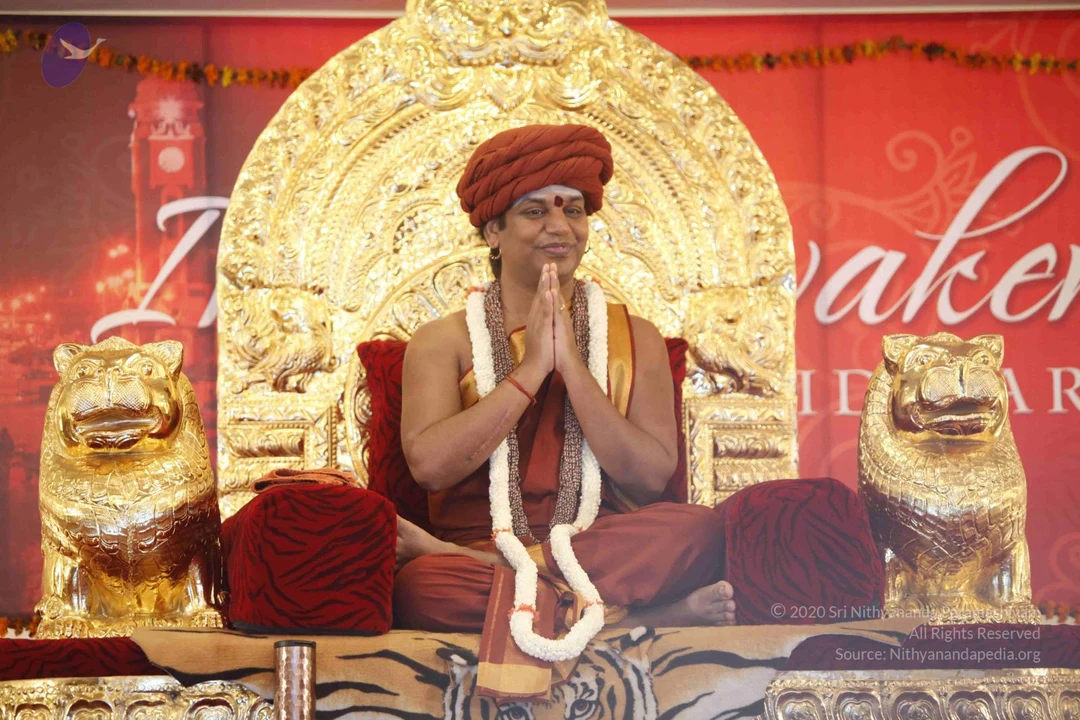
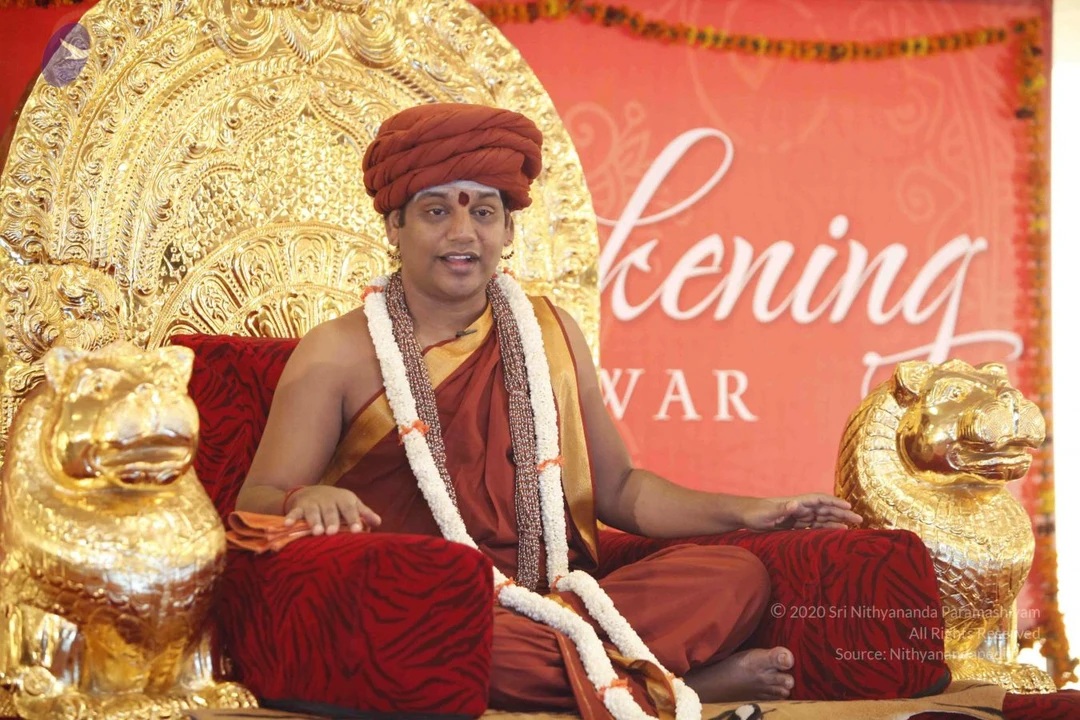
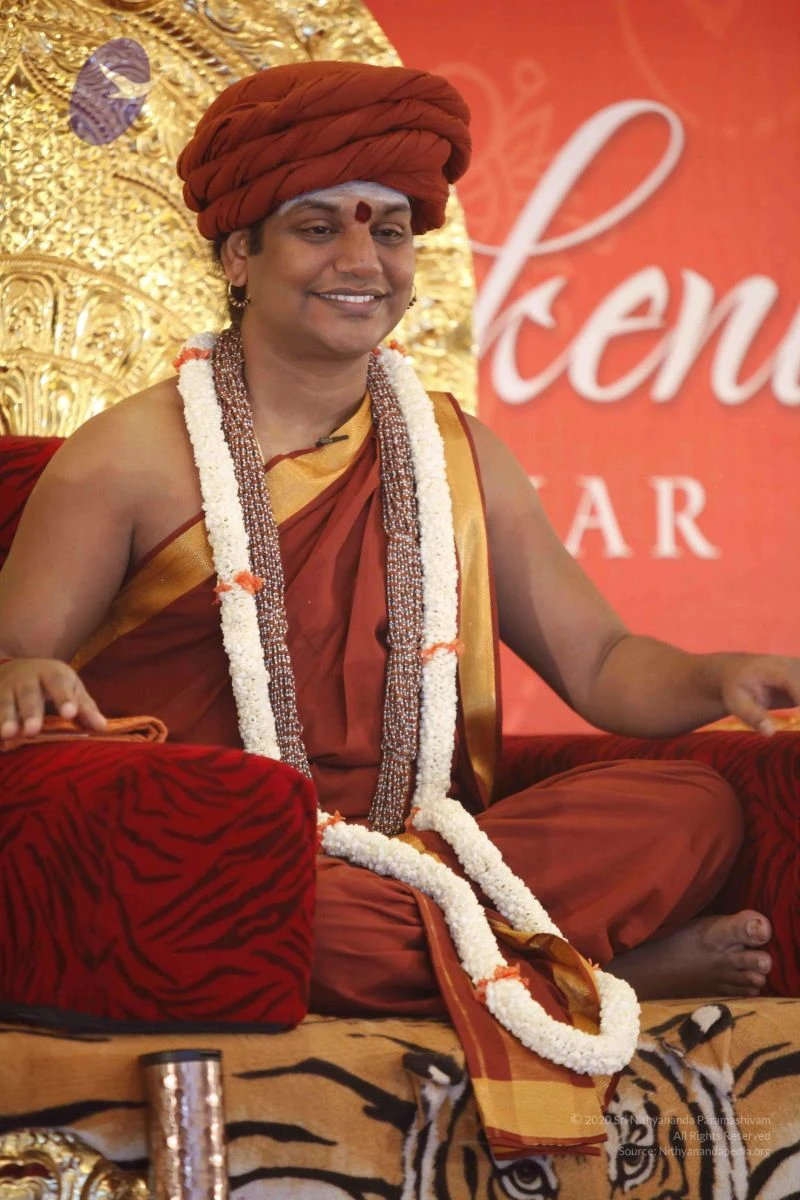
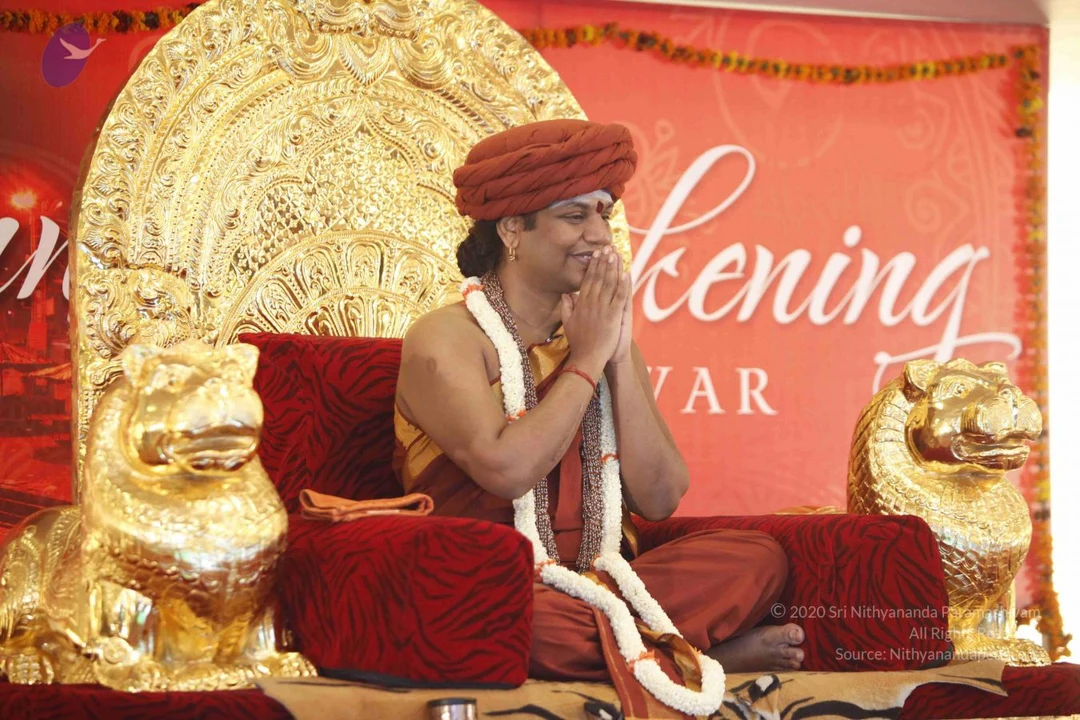
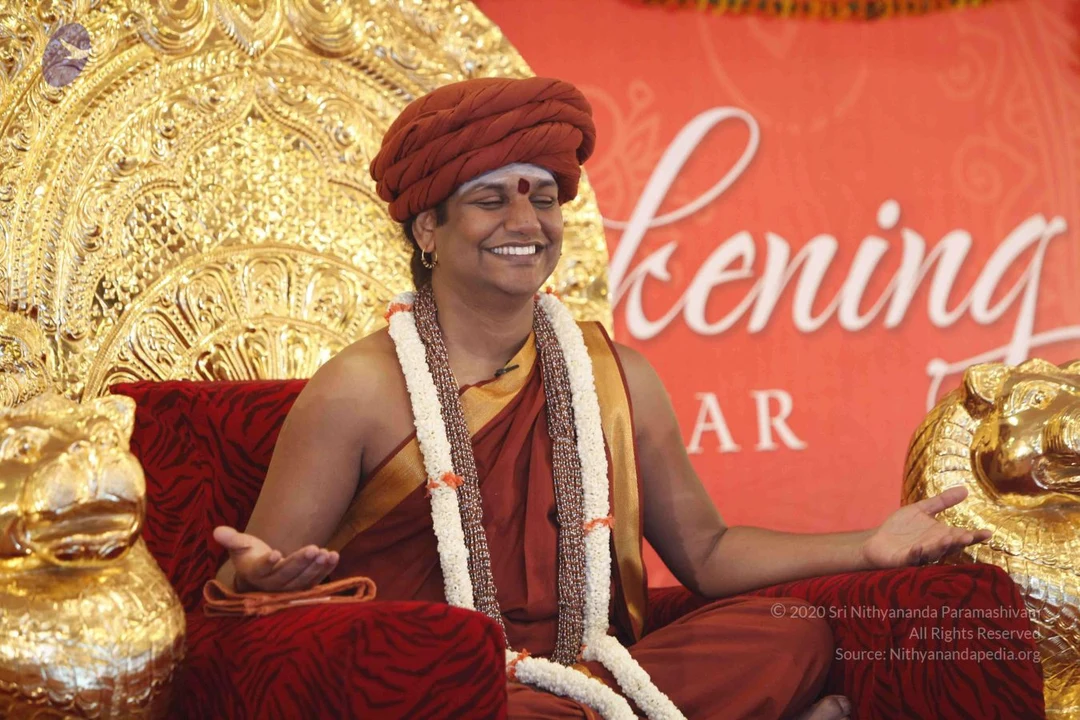
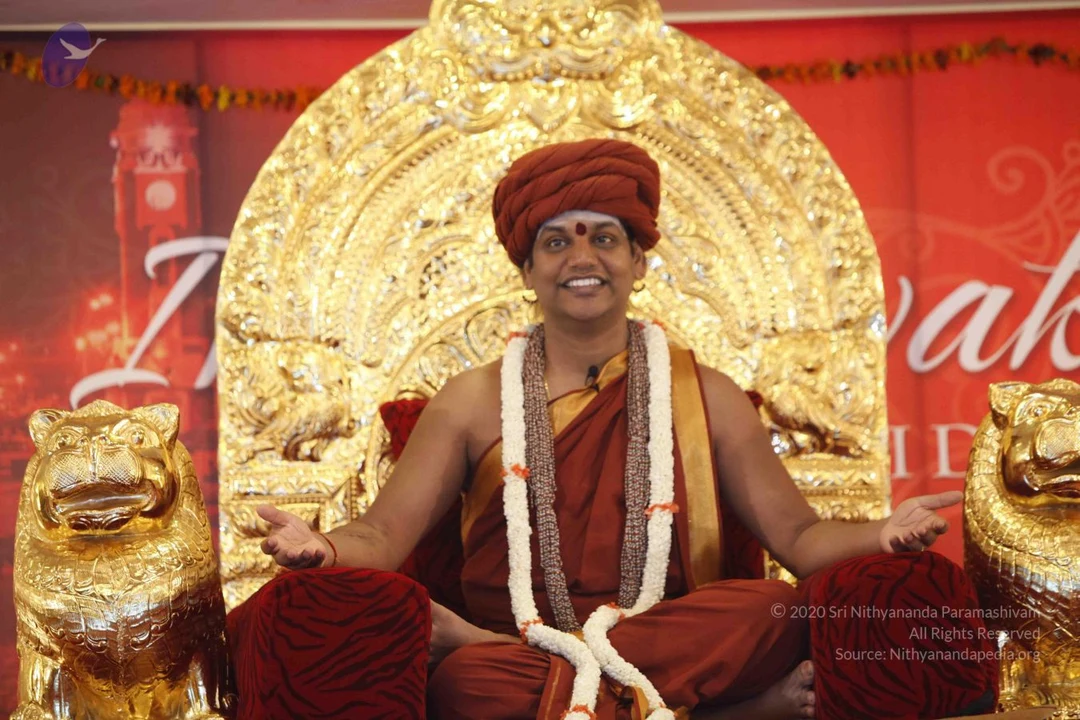
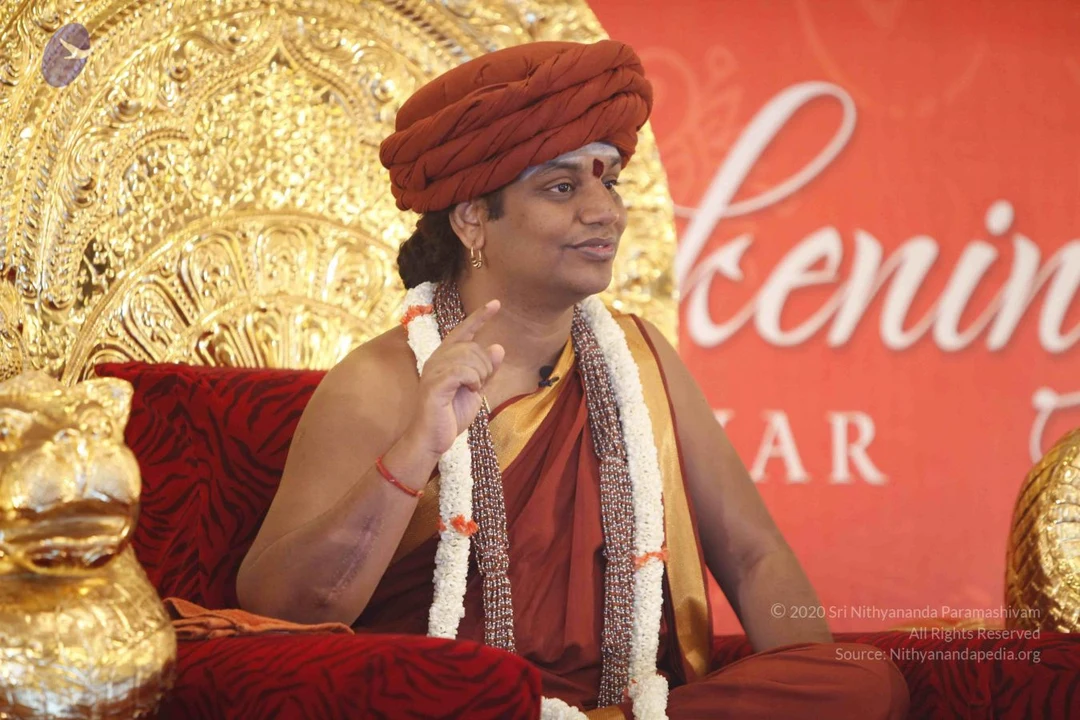
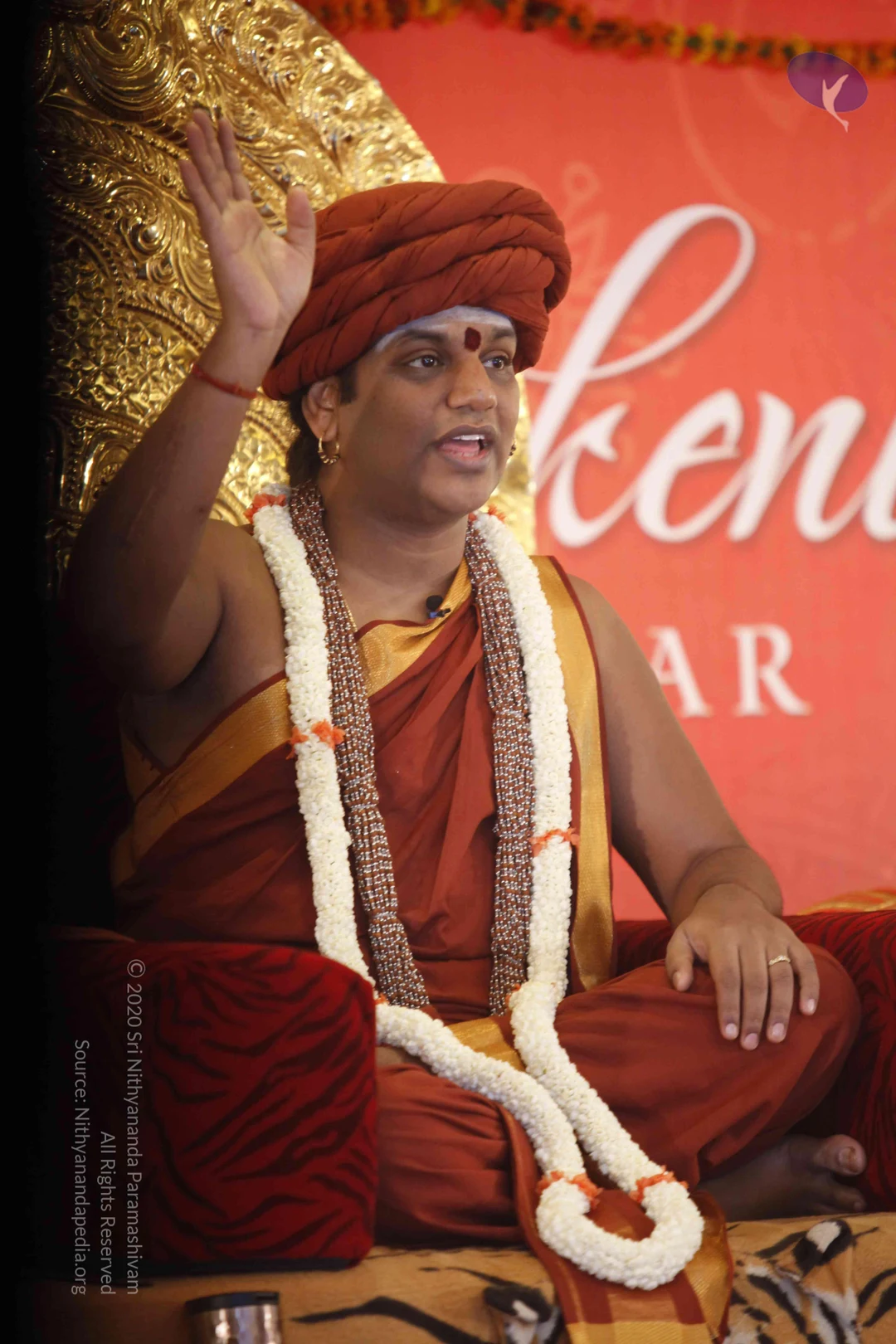
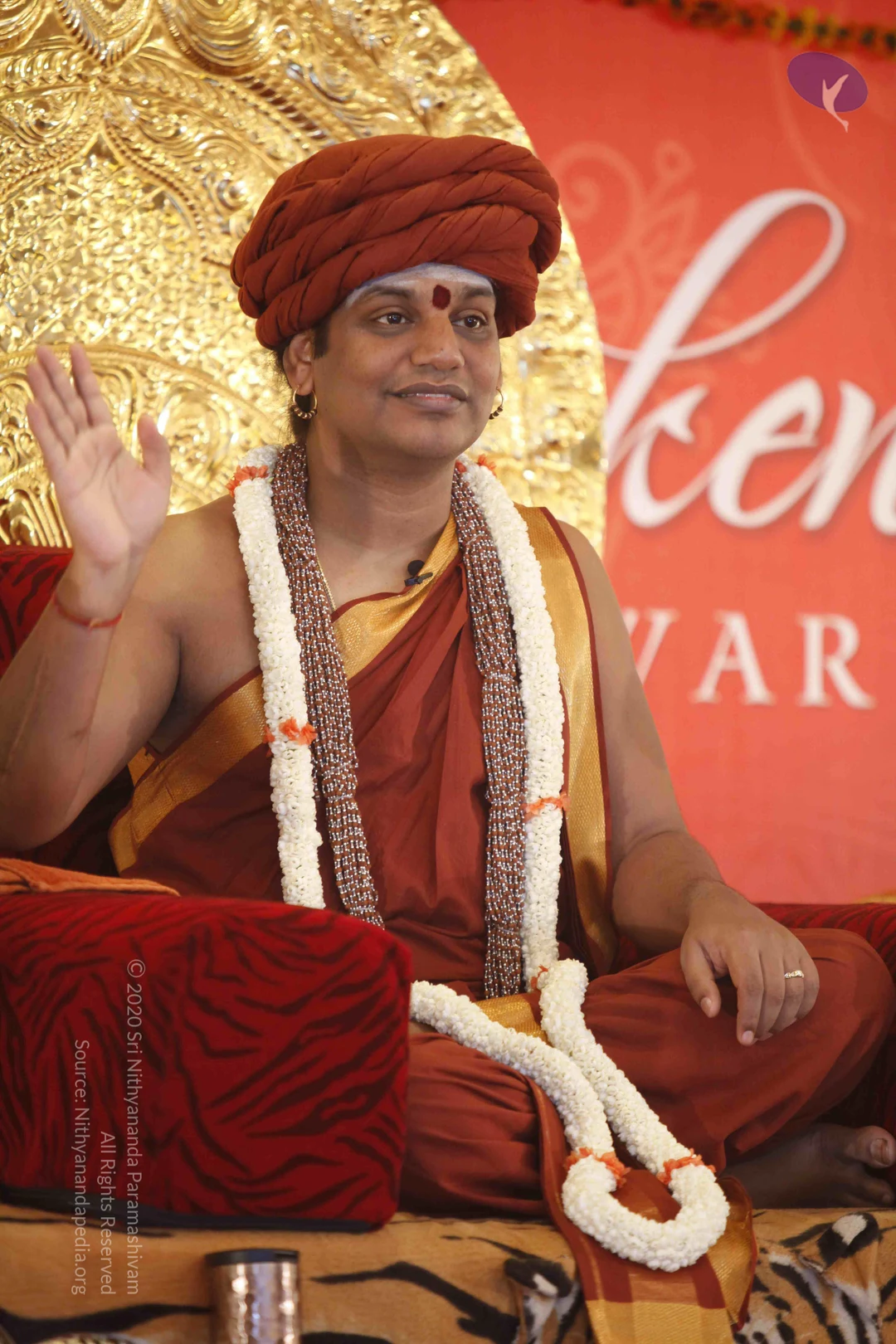
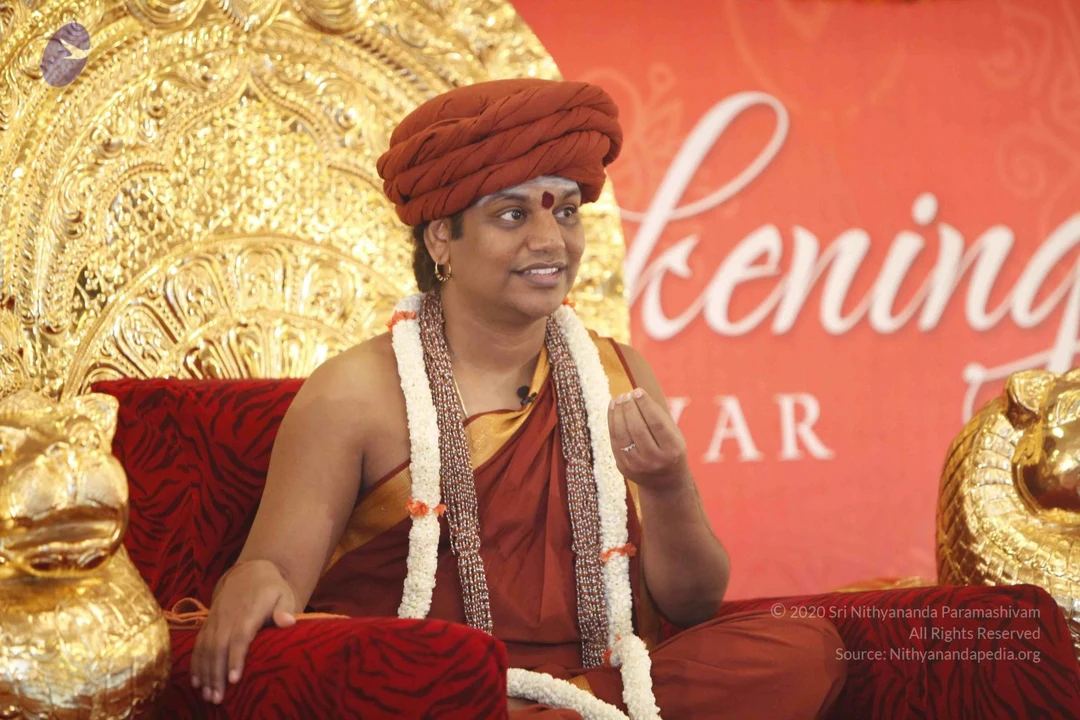
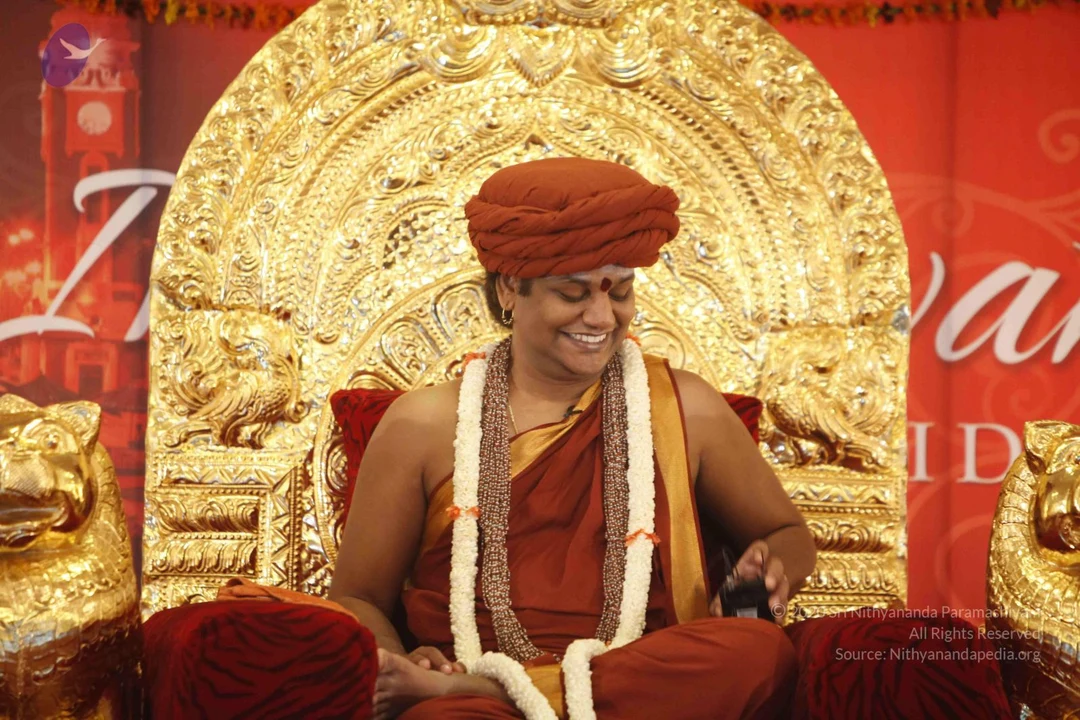
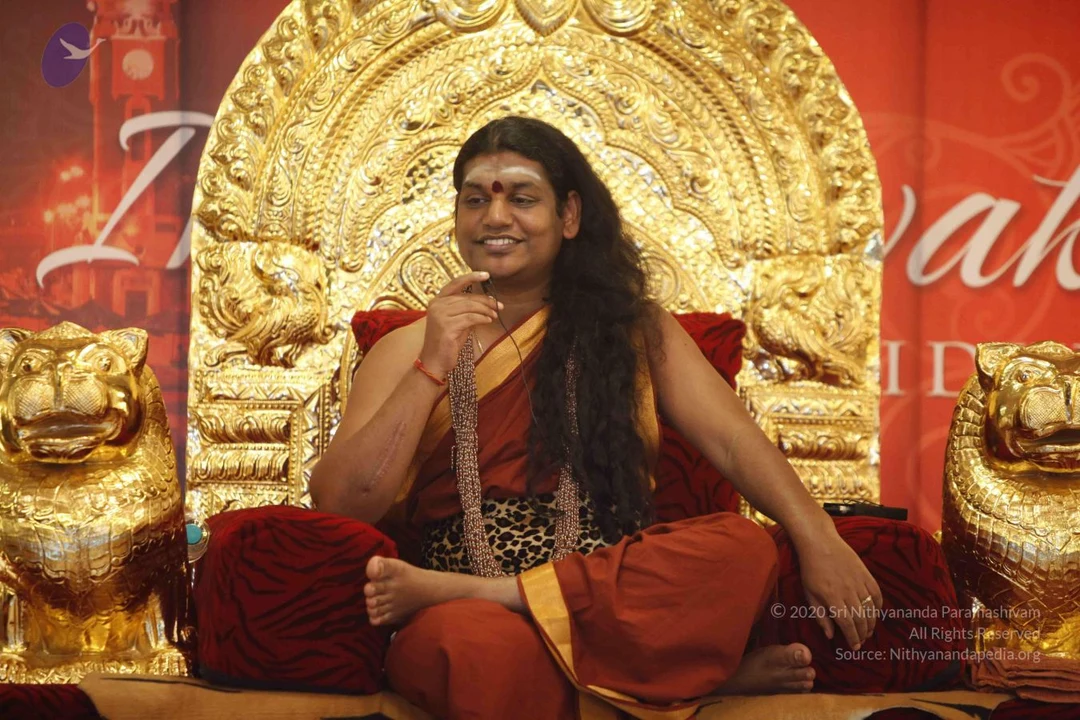
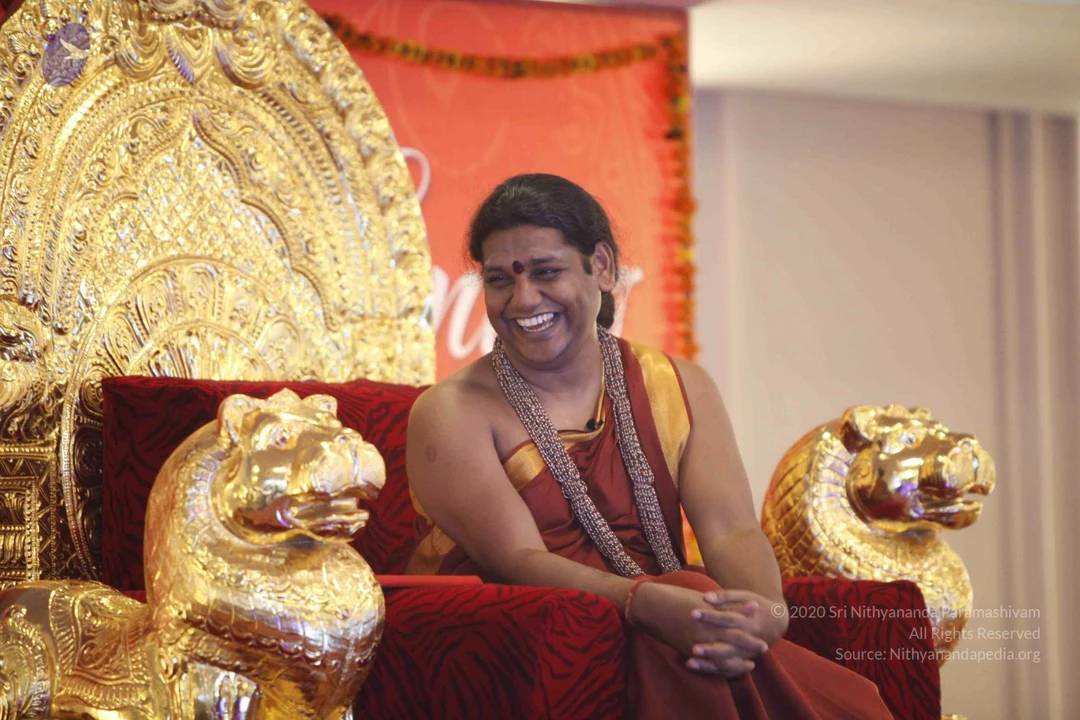
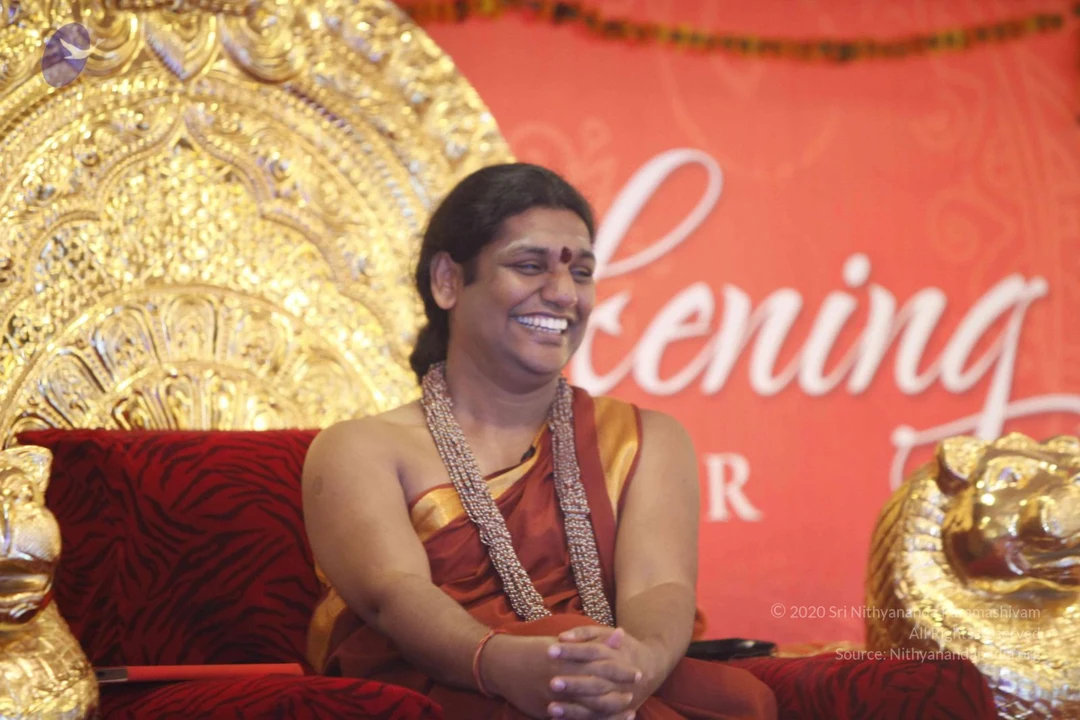
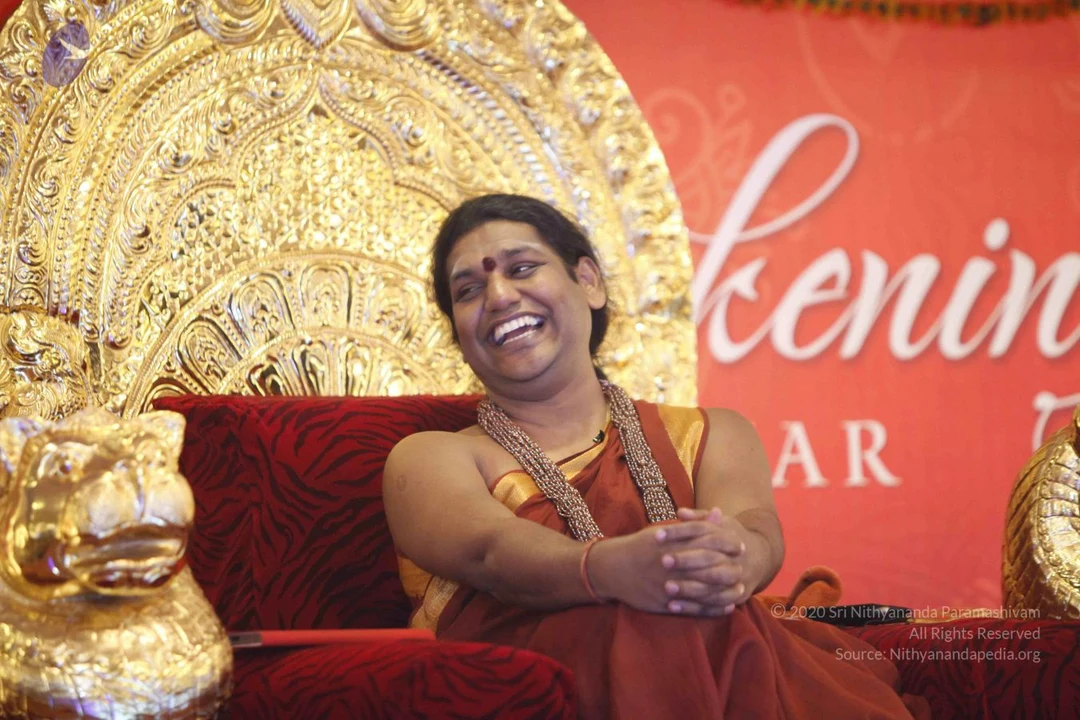
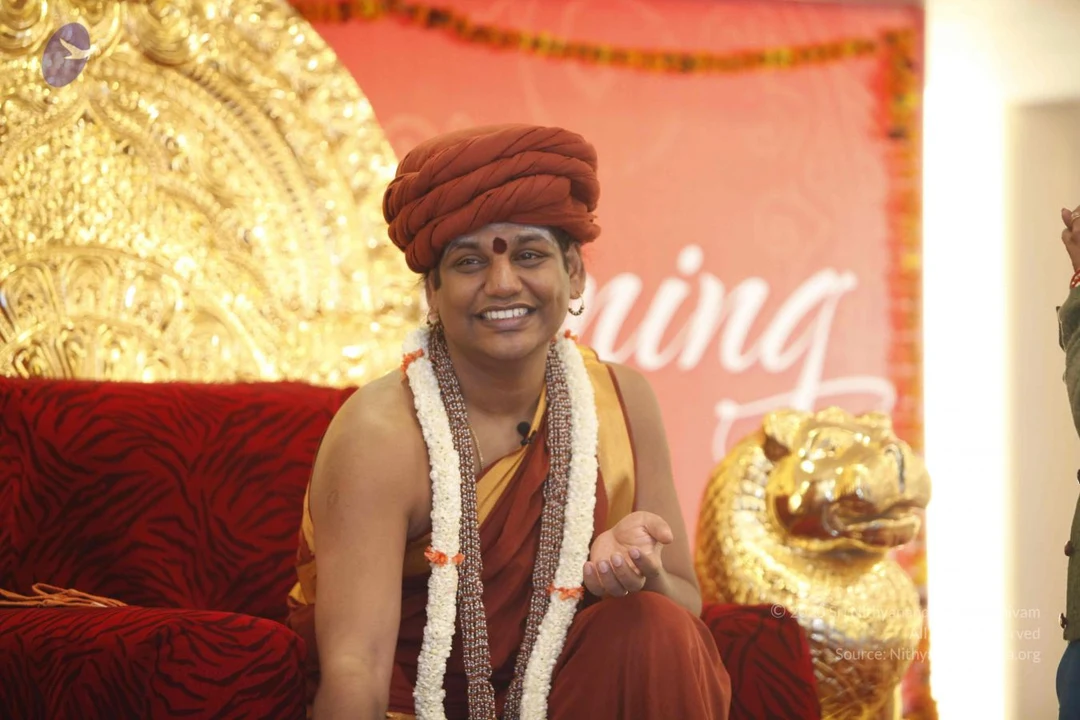
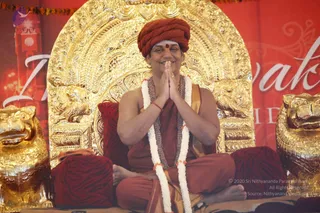
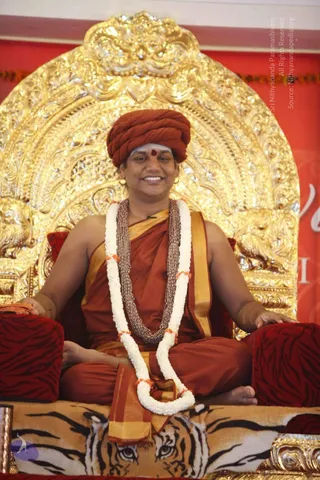
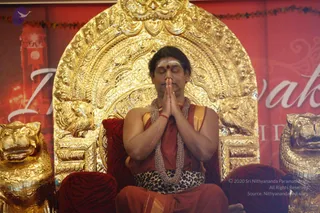
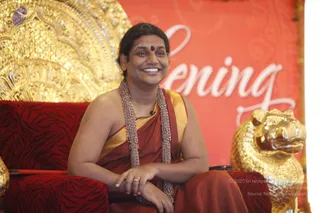
A photograph of a screen showing a grid of live video-conference feeds from several satsang locations. Labelled tiles include Toronto Kailasam, Guadeloupe Rameshwaram, Seattle Chidambaram, Nithyananda Nagaram Hyderabad, Ohio Prayag, Kuala Lumpur Palani and Los Angeles Arunachalam. Several people sit cross-legged on the floor in orange and white clothing, some with shaved heads. In the Toronto tile a shirtless man stands in front of a seated group, while in the Palani tile people in orange robes sit before a shrine with deity murtis and a pink cloth. A portrait-like figure on screen is not counted. The Ohio tile shows altars and framed deity images behind seated devotees.A seated man in a red-orange turban and matching red-orange robes sits cross-legged on a large ornate gold throne with carved lion heads on either side, palms pressed together in namaskar and smiling. A white flower garland and a rudraksha mala hang around his neck, and a red tilak marks his forehead. Red cushions with dark striped covers support him, and a red backdrop with a partially visible word behind the throne completes the stage setting.A seated man smiles at the camera on an ornate gilded throne with a carved arched back. He wears a rust-orange turban with a small red bindi on the forehead, an orange and gold-bordered robe, a brown beaded rudraksha mala, and a long white flower garland with orange accents. His legs are crossed on a red and black tiger-striped cushion draped over a tiger-skin rug. Behind him is a red wall with floral decorations. Swamiji (probable): the rust turban, orange robe, rudraksha mala and ceremonial throne are the qualifying cues.A smiling man seated cross-legged on an ornate gold throne with a carved gold backrest, pressing his palms together in anjali namaskar. He wears a rust-red turban with a red bindi, a rust-red dhoti and upper cloth edged with gold, a white flower garland, and multiple strands of rudraksha mala. Red tiger-striped cushions and a tiger-print cloth cover the seat, and a copper vessel stands at the lower left. Red walls with marigold garlands frame the scene.A seated man in an orange-red turban and red-orange robes sits cross-legged on a tiger-skin draped platform before an ornate gold throne flanked by two gold lion-like figures. He holds his palms together in namaskar, wears a white flower garland with a brown rudraksha mala, and has a red tilak and white forehead markings. Red tiger-striped cushions line the platform. Behind him a red banner shows a clock tower and decorative script reading 'Awakening', with partial text 'IDA' visible. Swamiji (probable): the seated man wears a red turban, a rudraksha mala and a garland, cues that fit the appearance of the Nithyananda Paramashivam candidate, seated as the teacher on the throne.A photograph of a seated man in a golden ornate throne with red velvet cushions flanked by gilded lion-like guardian figures. He wears an orange-red turban, a red-orange and gold-edged robe, a long multi-strand rudraksha-style mala and a white flower garland, with a red bindi on his forehead. He sits cross-legged with his hands resting open, speaking. Behind him a red banner with decorative floral motifs and large white script reads partial words including 'kening' and 'WAR'. Swamiji (probable): the seated man wears a turban, saffron-red robes, rudraksha beads and a garland on a throne, consistent with the page's reference to a Nithyananda satsang.
Inner Awakening-Breakfast

11 photosSource gallery
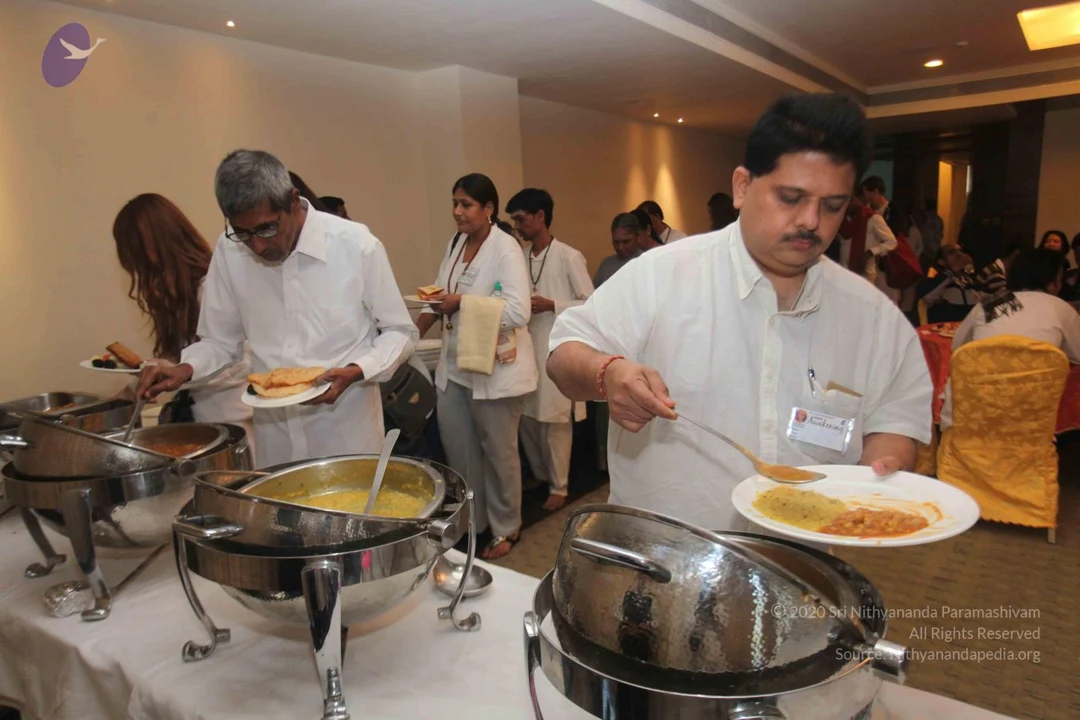
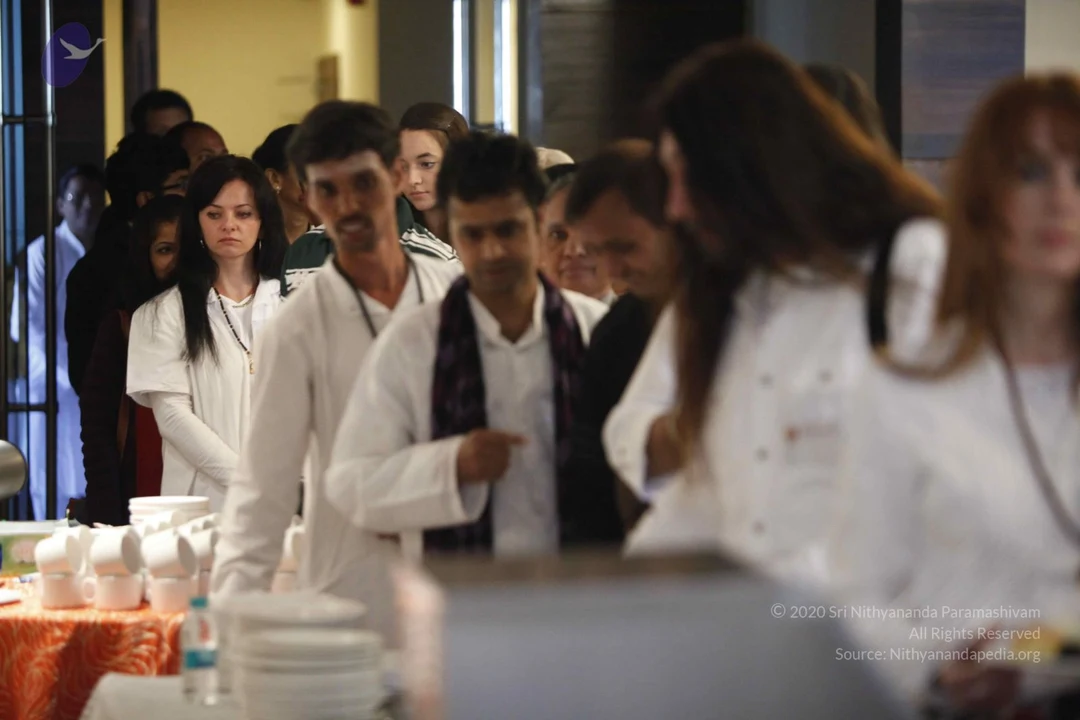
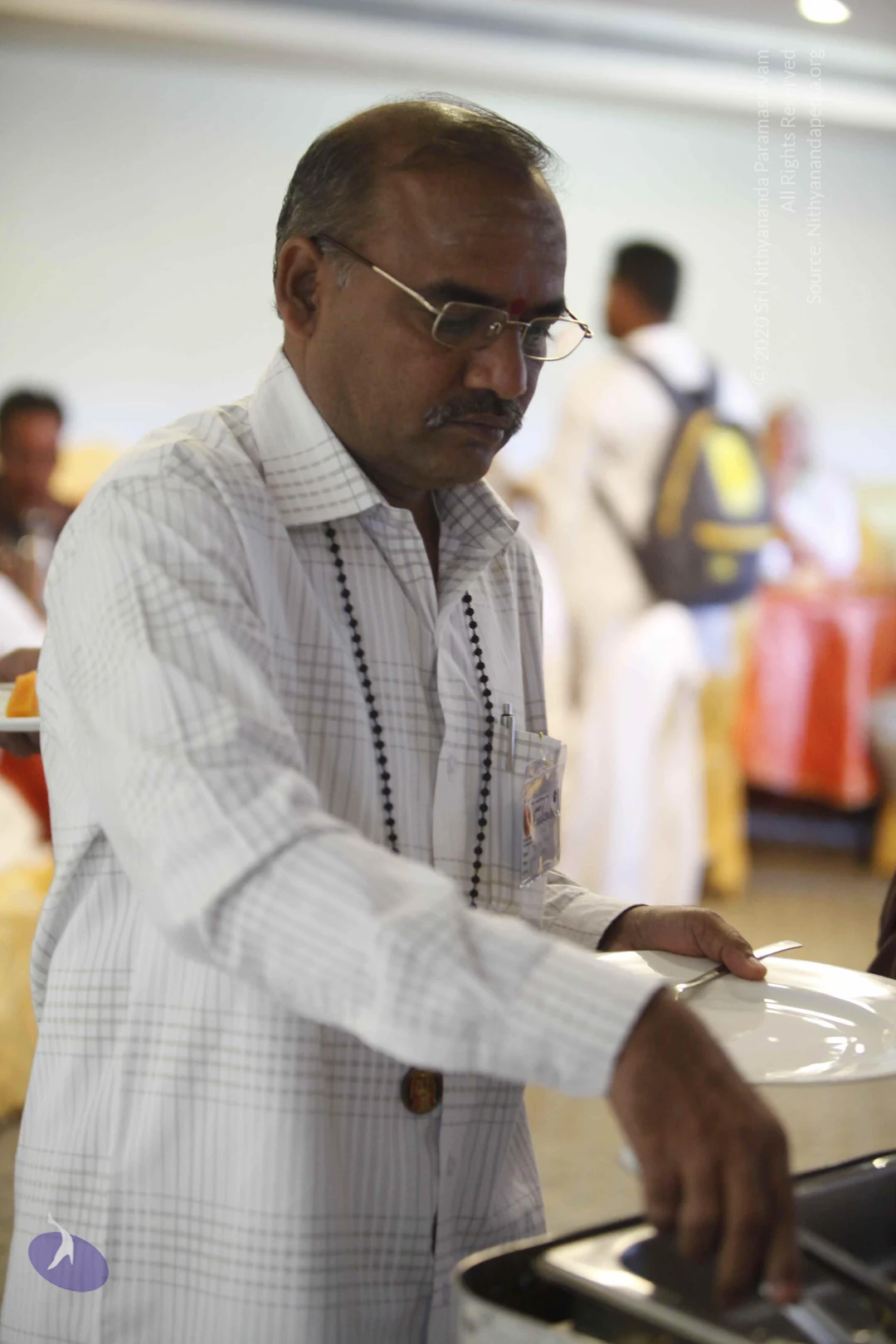
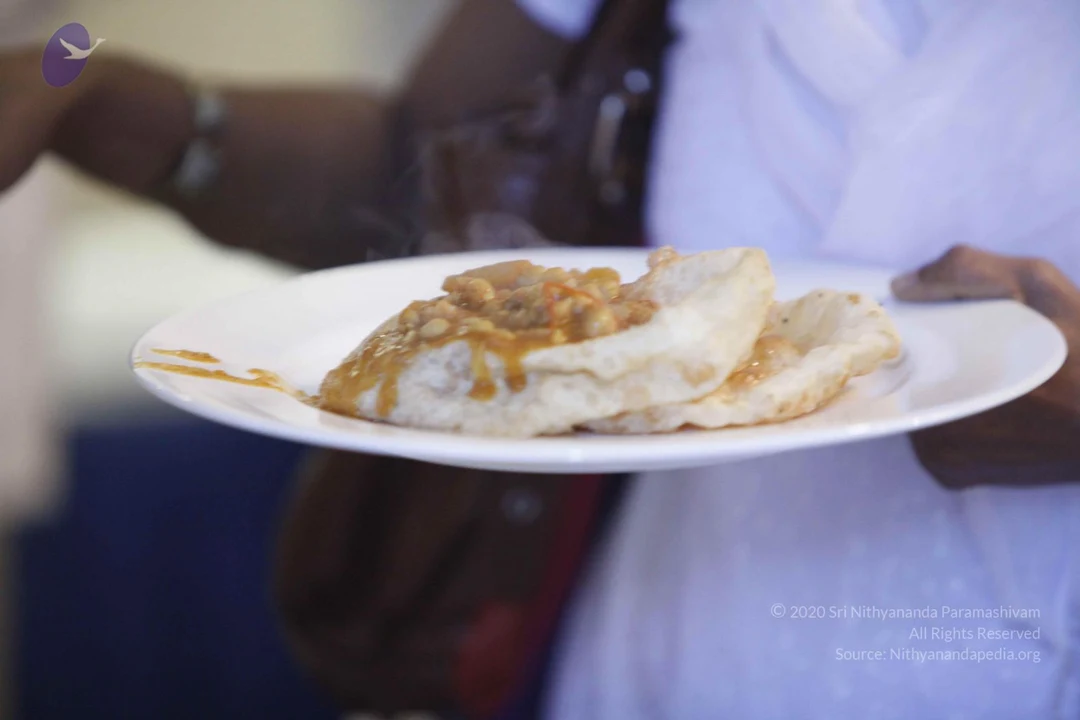
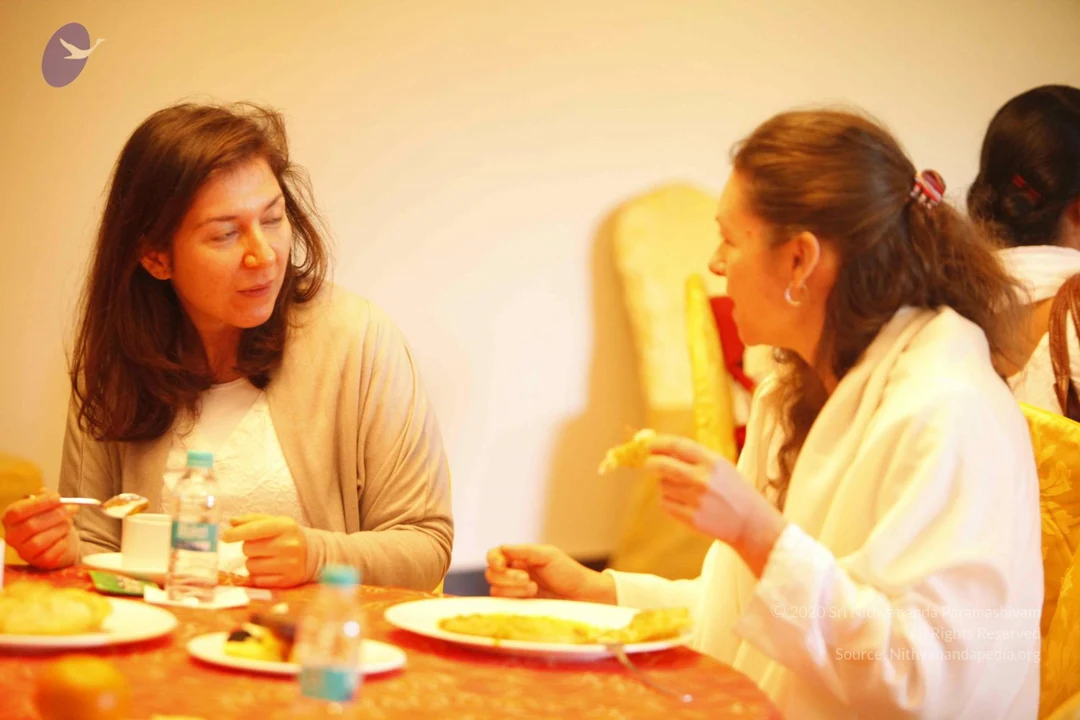
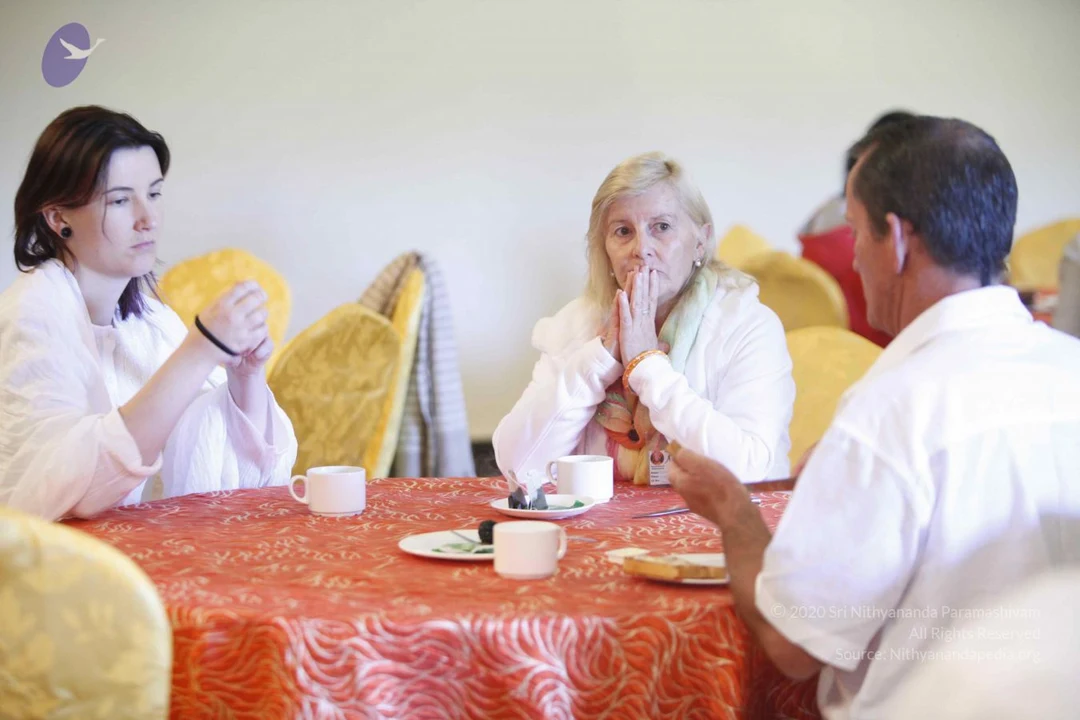
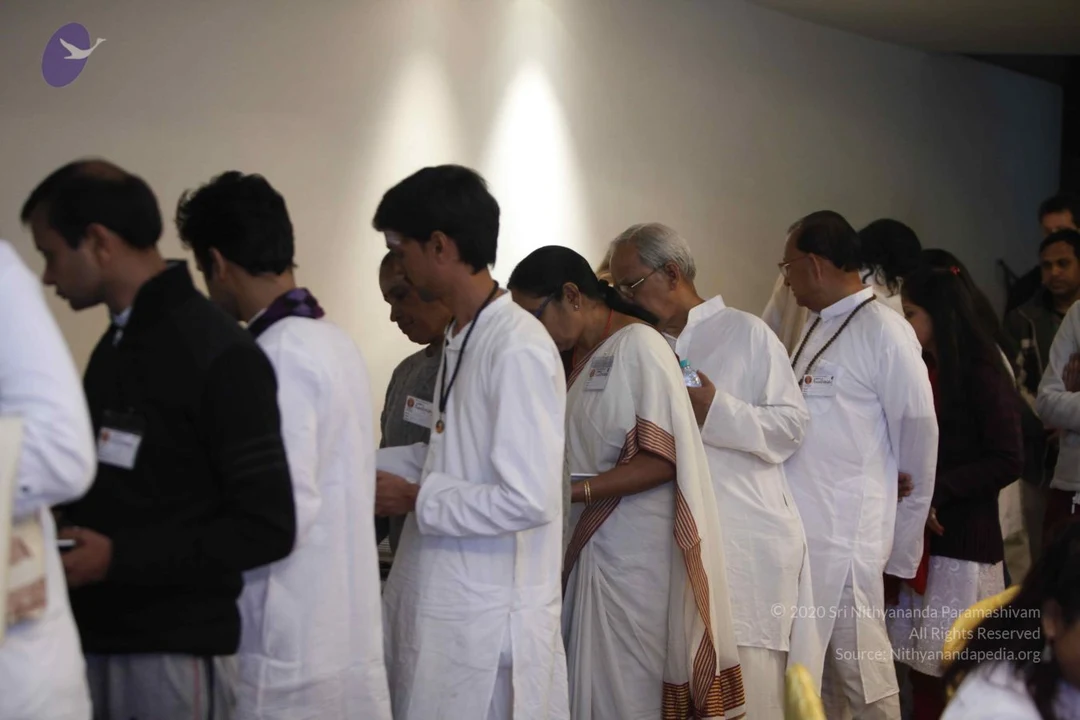
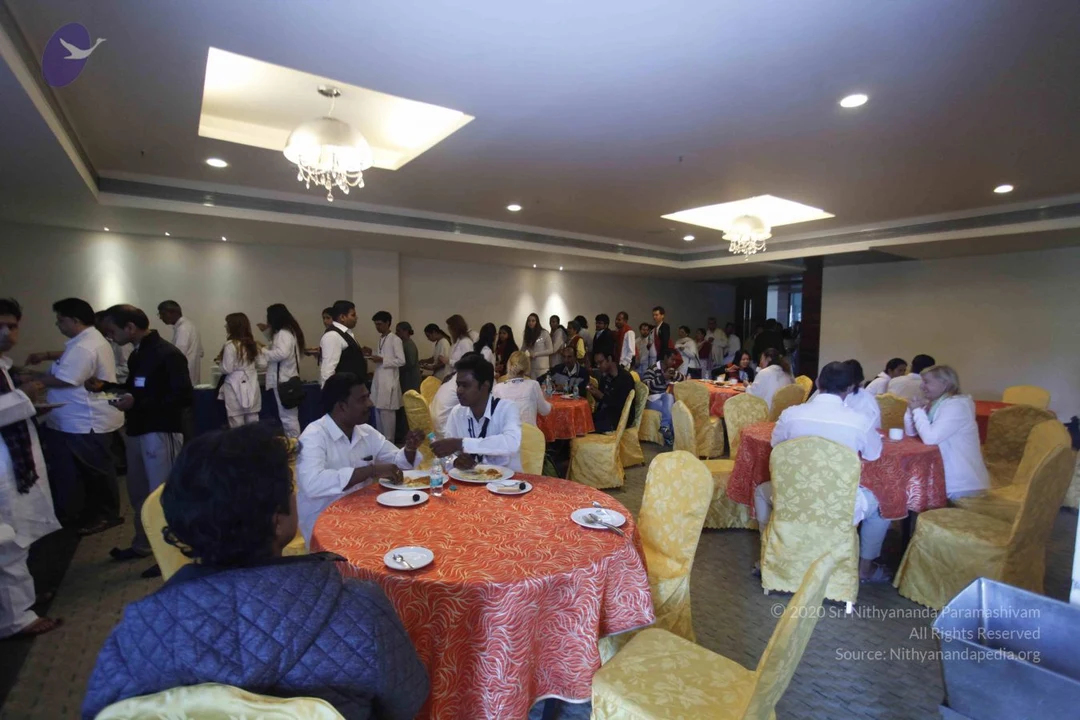
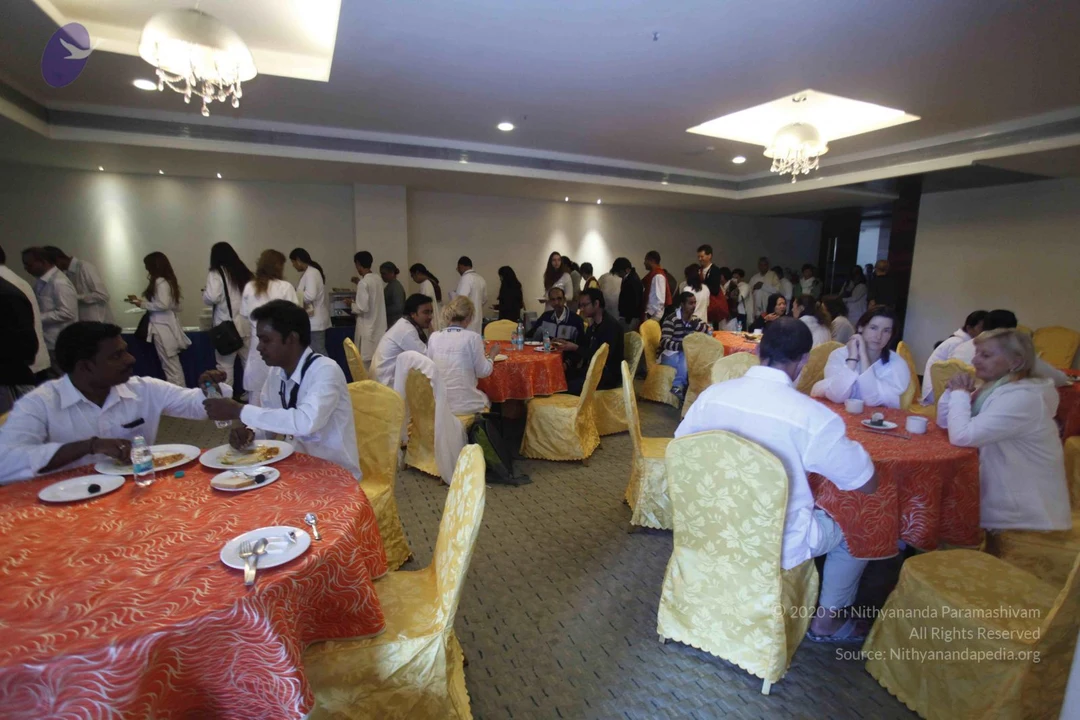
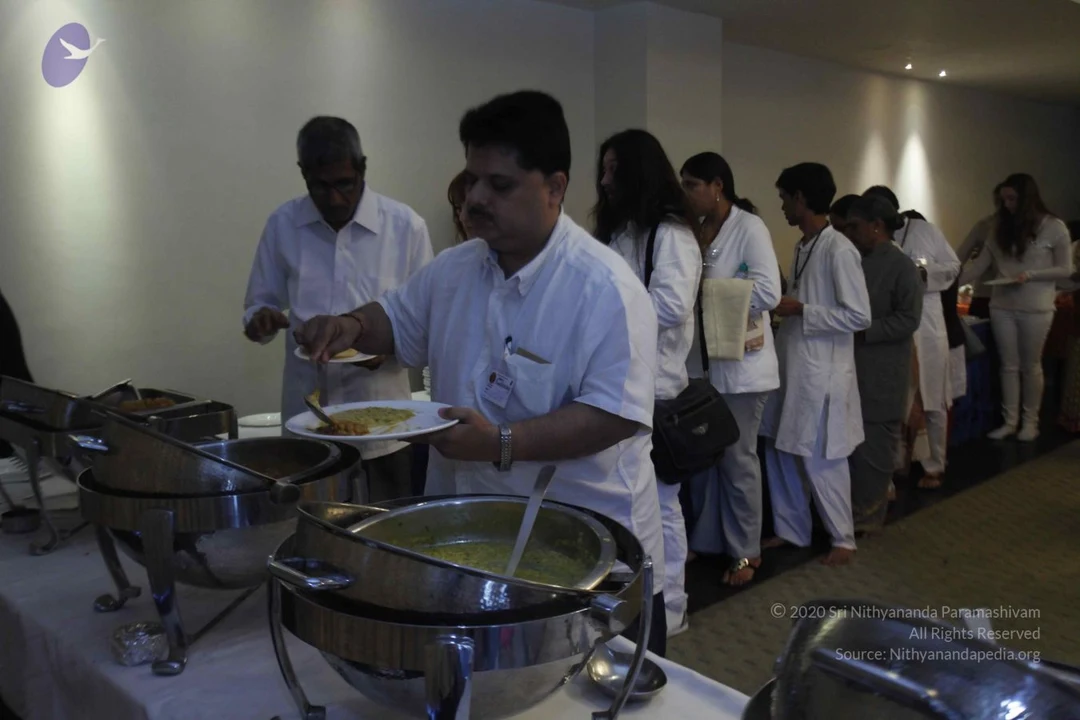
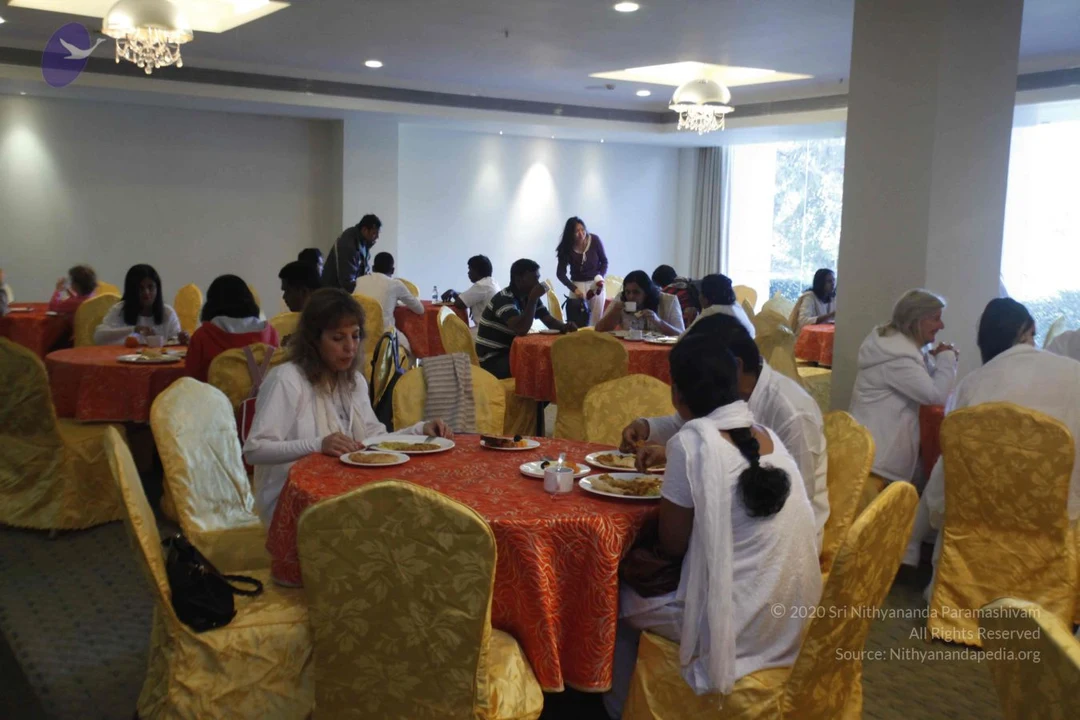
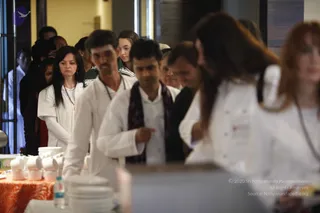
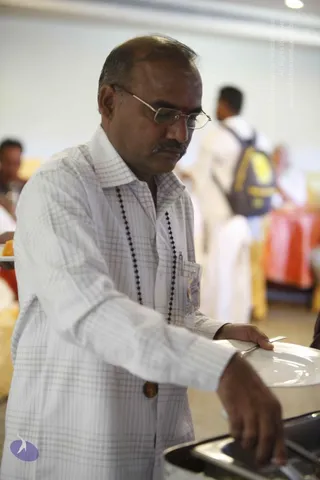
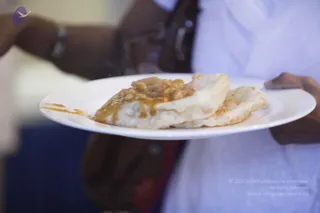
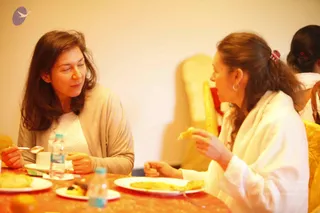
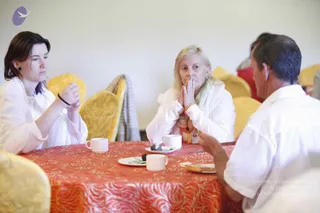
A buffet serving line in a hotel function room with warm wall lighting. Three men and a woman in white clothes serve themselves from silver chafing dishes of yellow dal and other curries on white tables. The foreground man in a white shirt and a name badge spoons food onto a white plate, and an older man in glasses holds a plate with a flatbread. Behind them, a woman in a white top with a lanyard and a towel over her shoulder stands near other guests seated at tables with gold chair covers. No a person candidate is visible.A photograph of a queue of people in an indoor hallway with warm yellow walls, moving toward a serving counter. In the foreground, a woman with long dark hair and a white top stands near the front, and a man in a white shirt with a dark scarf stands beside her. Behind them, several people in white clothing and a man in a white-collared shirt wait in line. On the right, blurred figures in white chef-style coats and a woman with long auburn hair are at the counter. A table covered with an orange cloth holds stacks of white cups and plates, and a water bottle stands nearby. The scene suggests a communal food service, with no visible deity, puja or ritual setting.A middle-aged man with glasses, a red tilak on his forehead and a grey-white checked shirt with a black rudraksha-style bead necklace serves himself from a buffet at a hall. He holds a white plate in one hand and uses tongs or a server at a steel food tray. An ID badge hangs on his chest. Behind him a man in white carries a yellow-and-grey backpack, and a red-and-orange tablecloth is visible at a food station. No ceremonial gold necklace, saffron robe or crown is visible, and the man's appearance does not match a person candidate.Close-up photo of a white ceramic plate held by a person in a white garment, with the hand visible at the right edge. The plate holds two puffed fried breads (puris) topped with a spiced chickpea or lentil curry, dotted with orange and yellow garnish and drizzled with gravy. Steam rises faintly in the background, and a blurred brown bag and a dark blue surface sit behind. No a person candidate is visible.Two women sit across a table draped with a red-orange cloth, sharing a meal in a warm-toned room. The woman on the left wears a beige cardigan over a white top and holds a spoon with food, looking toward the other. The woman on the right wears a white robe, has her hair tied back with a patterned scrunchie, and holds a piece of flatbread or pancake. Plates of food, water bottles and a cup sit on the table, with a yellow chair and another person partly visible behind them.A photo of three people seated at a round table draped in a red and white patterned cloth, with yellow upholstered chairs and cups and saucers on the table. A woman on the left with dark hair and a white top rests her hands on the table. In the centre, an older woman with light blond hair in a white top and a pastel scarf presses her palms together in anjali mudra. On the right, a man with short dark hair in a white shirt, seen from behind, gestures with his hand toward her.

Darshan

110 photosSource gallery
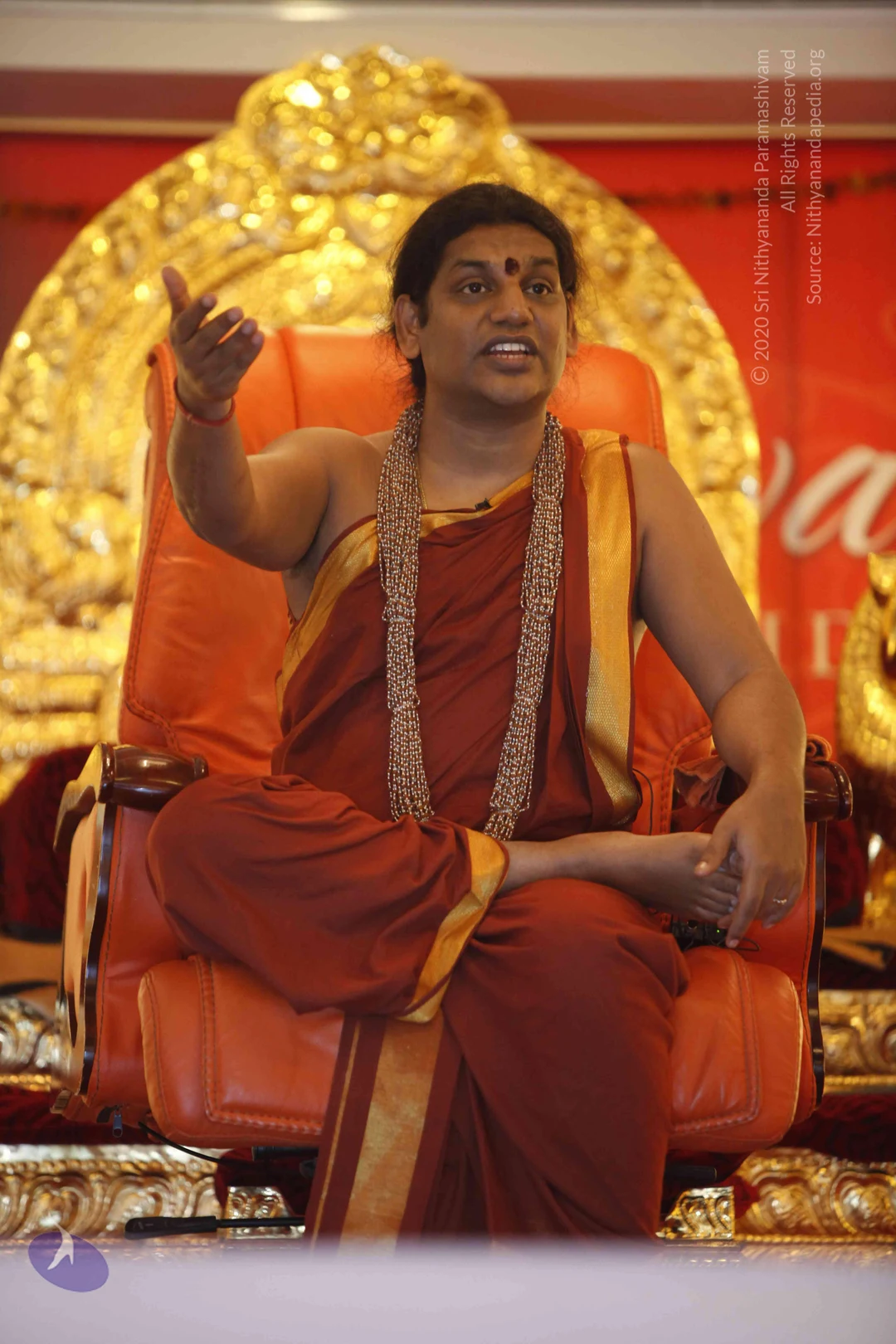
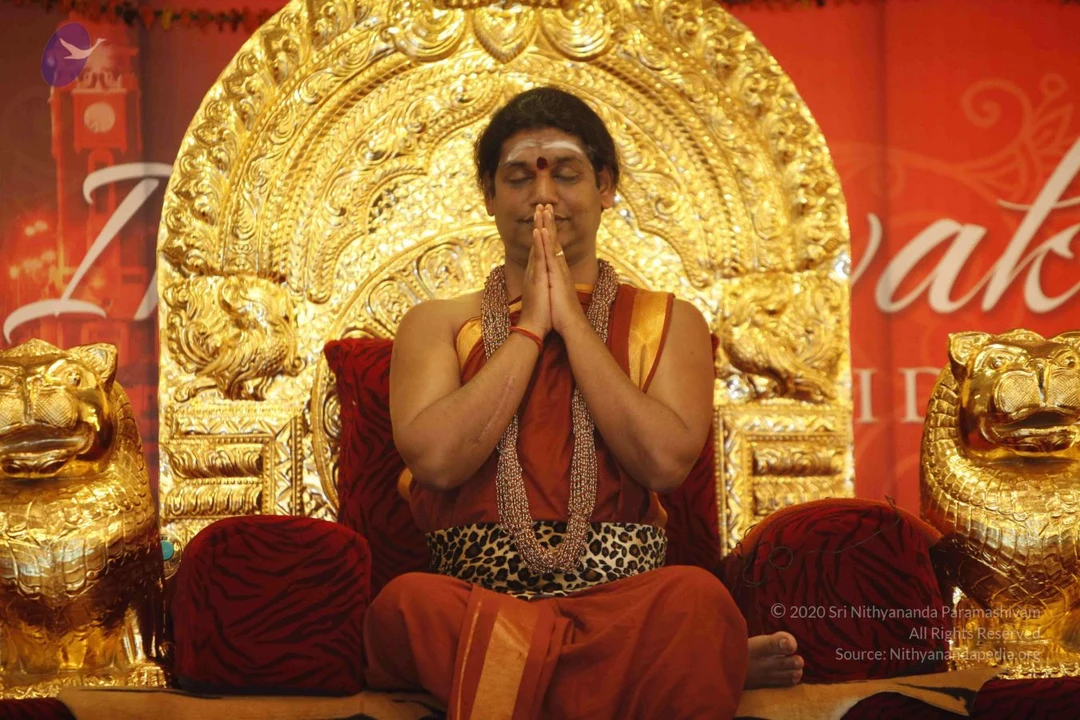
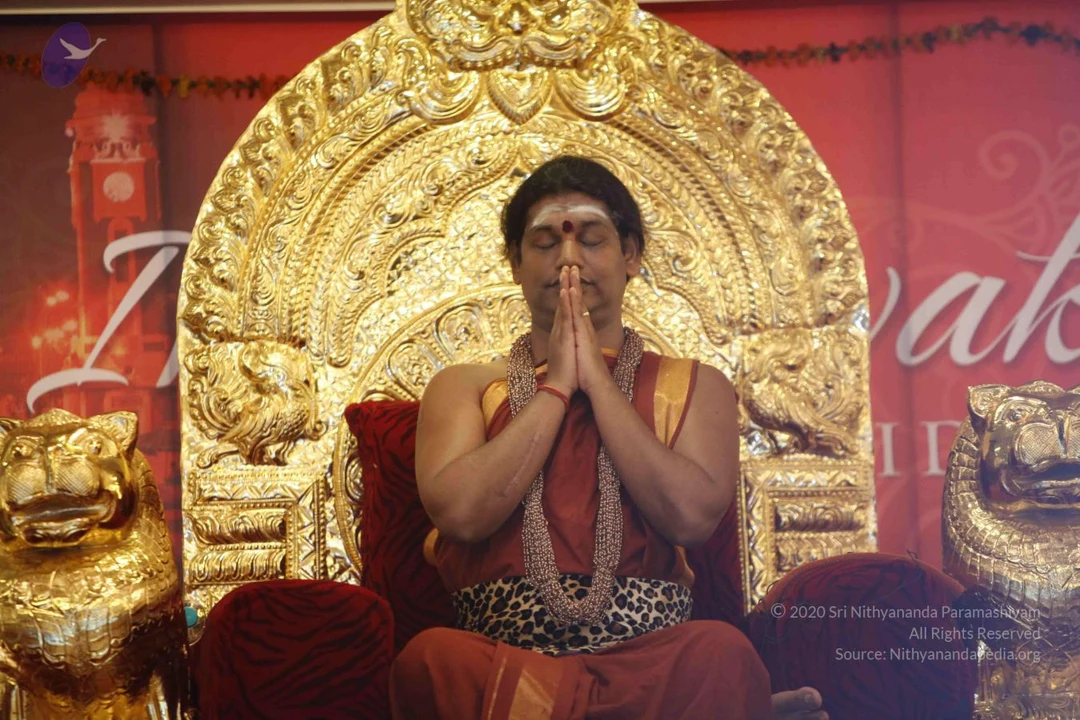
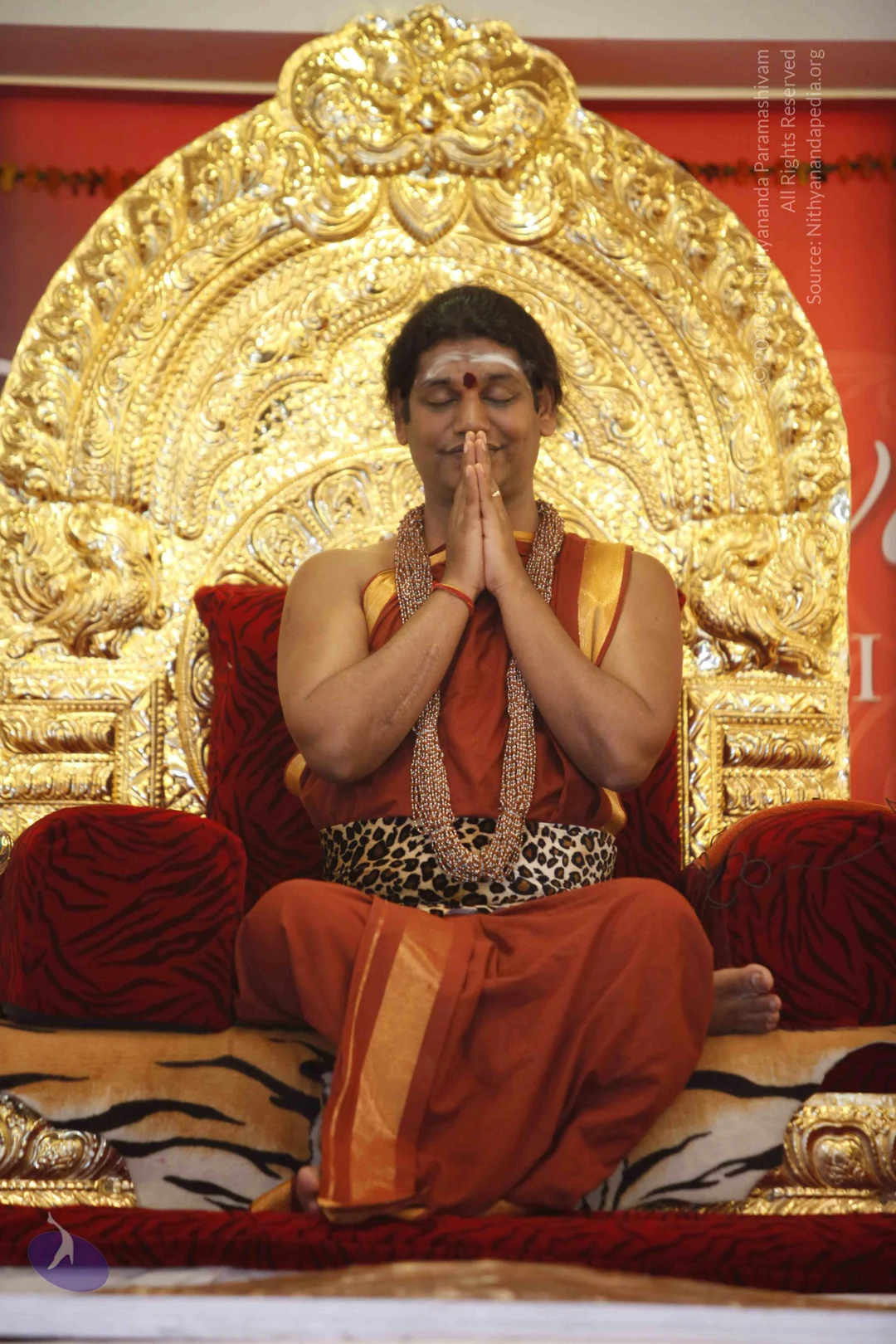
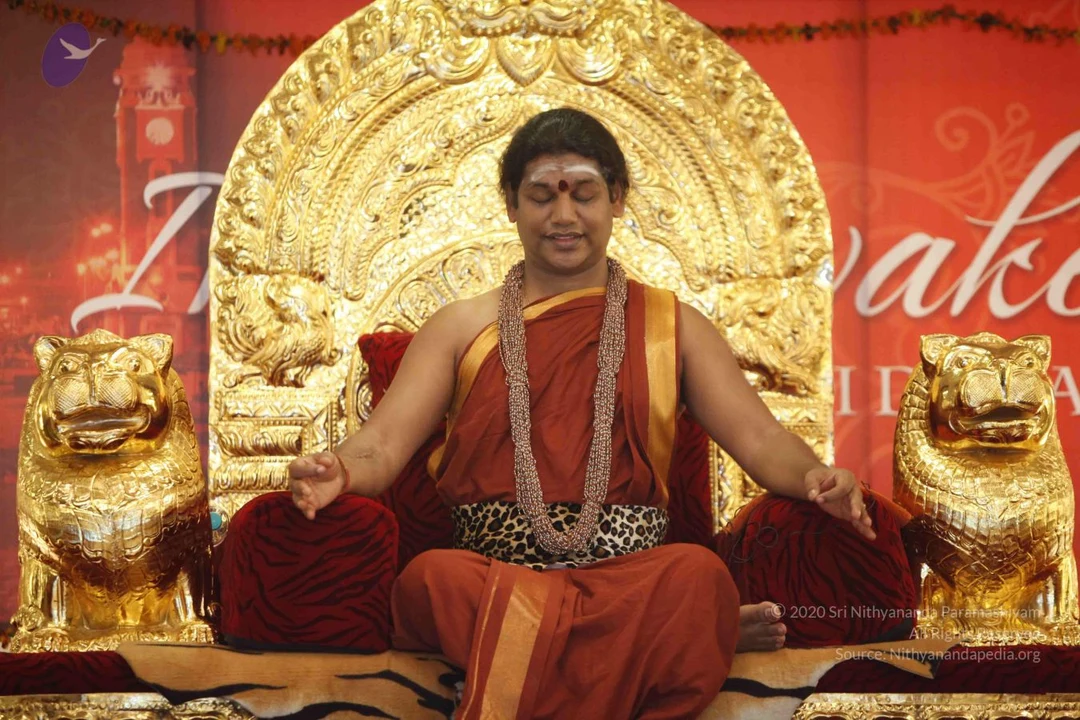
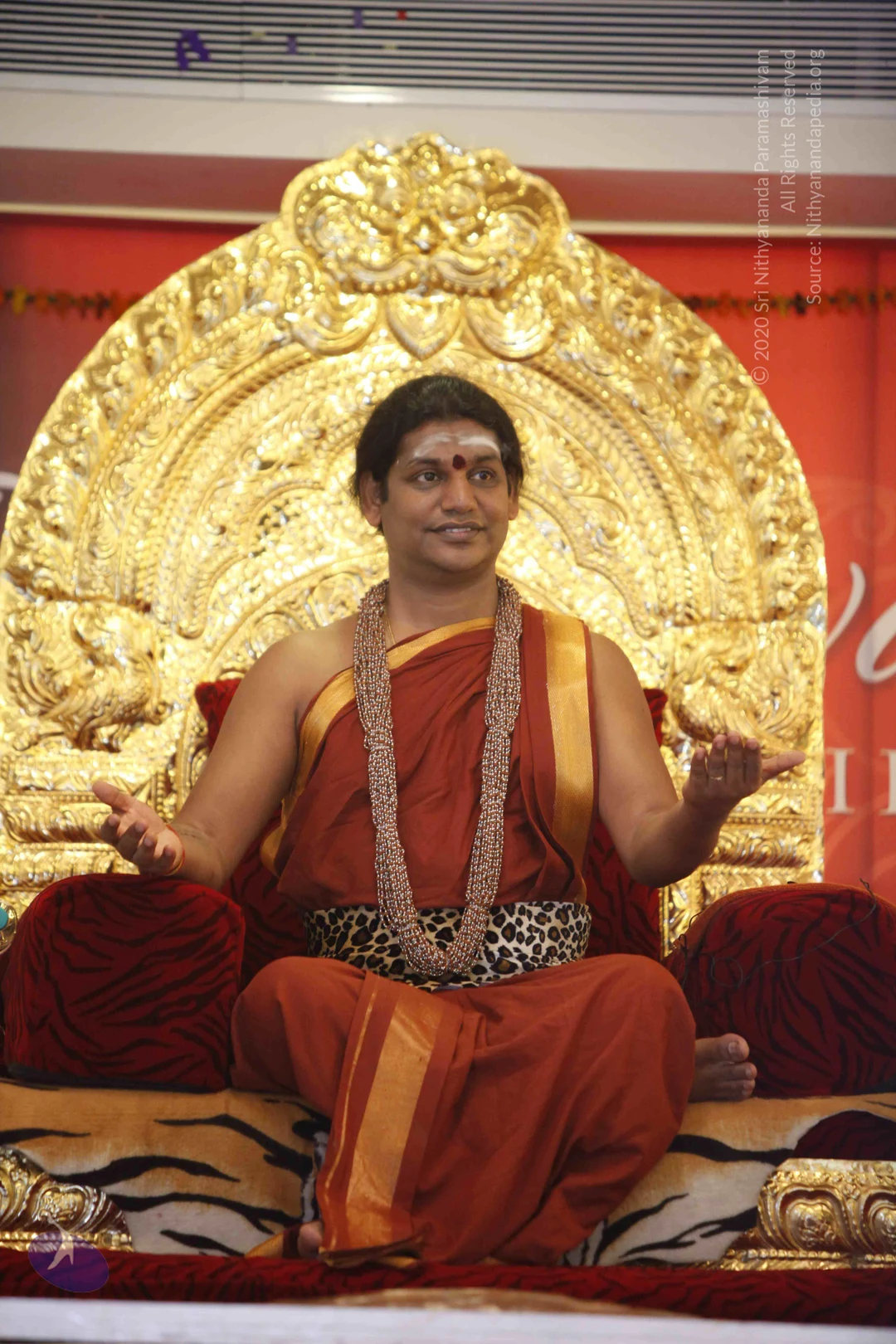
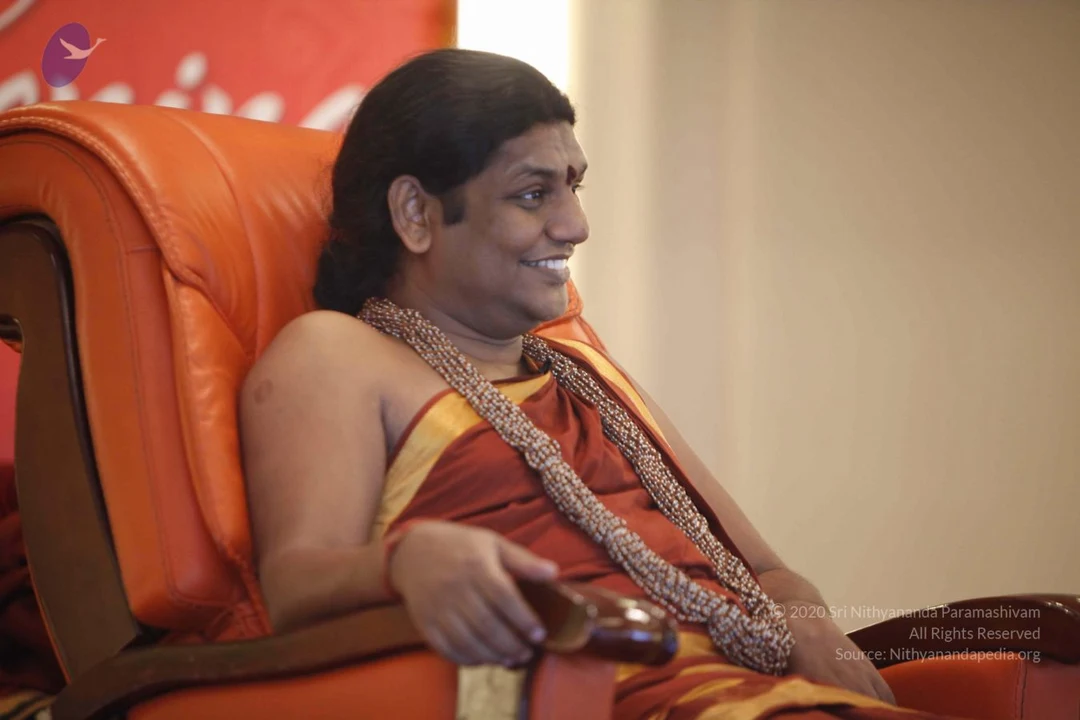
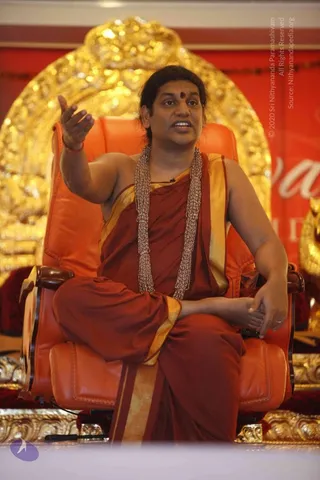
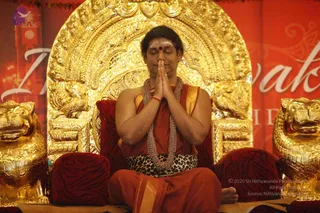
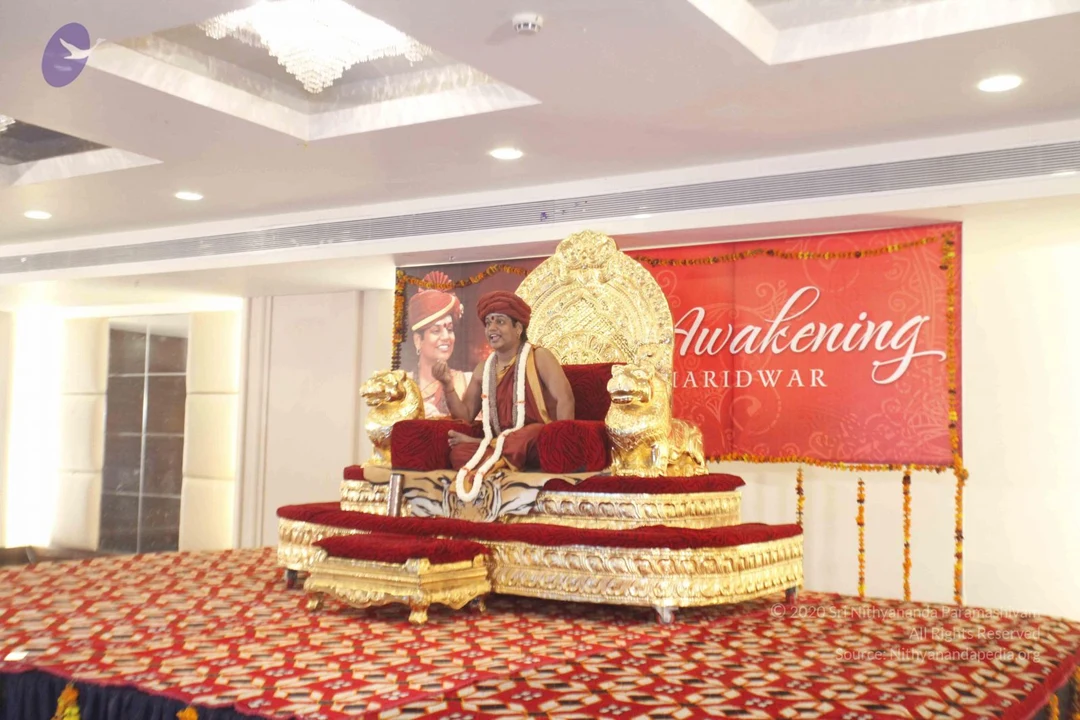
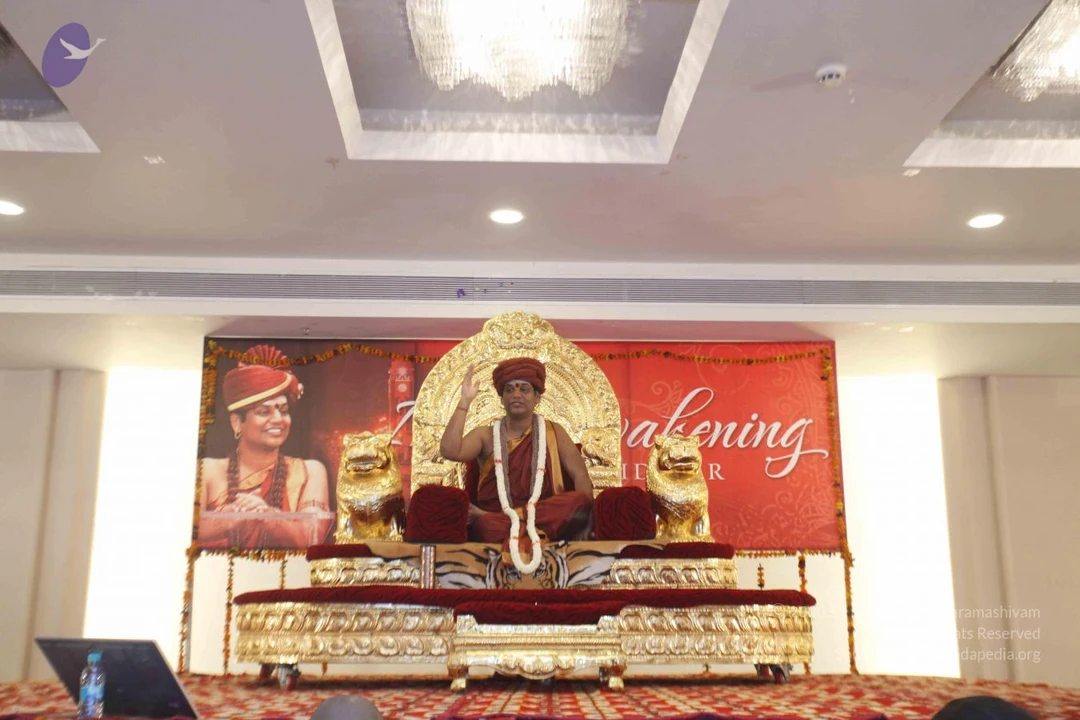
A man in a rust-red dhoti and draped wrap with gold-bordered edges sits on an orange leather throne in front of an ornate gold-leaf backrest. He wears a long multi-strand silver bead necklace and a red tilak on his forehead, and raises one hand mid-gesture while speaking. Behind him is a red banner with partial gold lettering. Swamiji (probable): long dark hair swept back, rudraksha-style silver mala, and saffron-toned ceremonial clothing match the page's Swamiji reference, so this is a discourse setting.A seated man with closed eyes and palms pressed together in namaste sits on an ornate gold throne carved with lion heads, flanked by two gold lion statues. He wears an orange-red robe with a gold-bordered sash, a leopard-print waist cloth, a multi-strand beaded mala around his neck, and a red thread on his wrist, with a white tilak and red bindi on his forehead. Red velvet cushions with tiger-stripe patterns surround him against a red backdrop with decorative lettering. The scene suggests a satsang or darshan setting.A man seated on an ornate gold throne with a carved arched back and carved golden lion-head armrests, against a red backdrop with large gold lettering partly visible. He sits cross-legged with his eyes closed and palms pressed together in namaste. He wears a red-orange dhoti and a red-orange shawl over a leopard-print waistband, a long beaded white rudraksha-style mala around his neck, a white vibhuti line and red kumkum dot on his forehead, and a red thread on his wrist. a person is the seated teacher giving darshan, shown in a satsang setting.A man seated cross-legged on an ornate gold throne with a tall carved arched back, cushioned with red and black tiger-striped upholstery, performs anjali mudra with palms pressed together at his chest and eyes closed. He wears a saffron-orange dhoti and shawl with gold borders, a leopard-print waistband, a multi-strand rudraksha mala, a white urdhva-pundra with a red bindi on his forehead, and a red thread on his wrist. Red and orange backdrop with garlands. Appearance-based label: a person, seated in the throne-and-saffron-robe role of a satsang speaker.A seated man in saffron-orange robes with a cream-and-gold border sits cross-legged in meditation on an ornate gold throne with a tall carved gold arch behind him. His eyes are closed and he wears a white-and-red forehead mark, a long beaded rudraksha-style mala, and a leopard-print waist cloth, with his hands resting open on red cushions. Two gold lion statues flank the throne, and a red backdrop with a red-and-white banner stands behind. A tiger-striped cloth covers the platform. The man has long swept-back hair and distinctive ceremonial clothing; he is.A seated man in a rust-red dhoti and wrap with gold borders sits cross-legged on a red and black tiger-striped cushioned seat in front of an ornate gold throne-back with carved floral and scroll patterns. He wears a long multi-strand silver bead mala and a leopard-print waist band, has white vibhuti and a red bindi on his forehead, and gestures with both open hands while speaking. a person: the seated speaker wears saffron-orange clothing and a long beaded mala, though the appearance cues are moderate; he sits on a throne in a discourse setting.
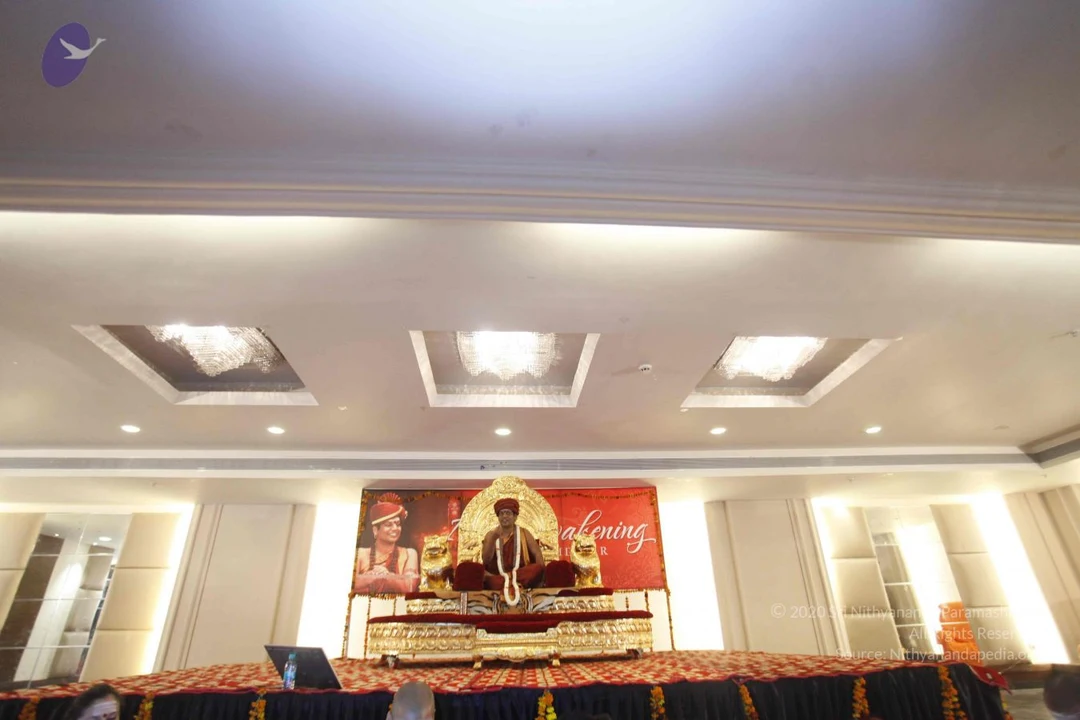
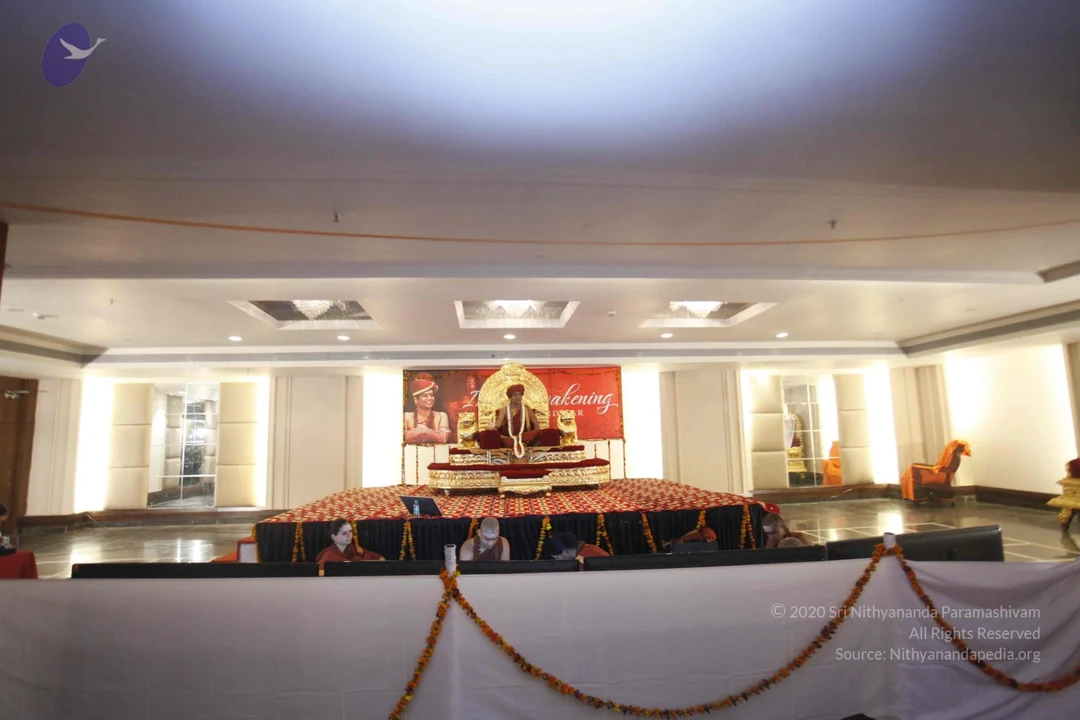
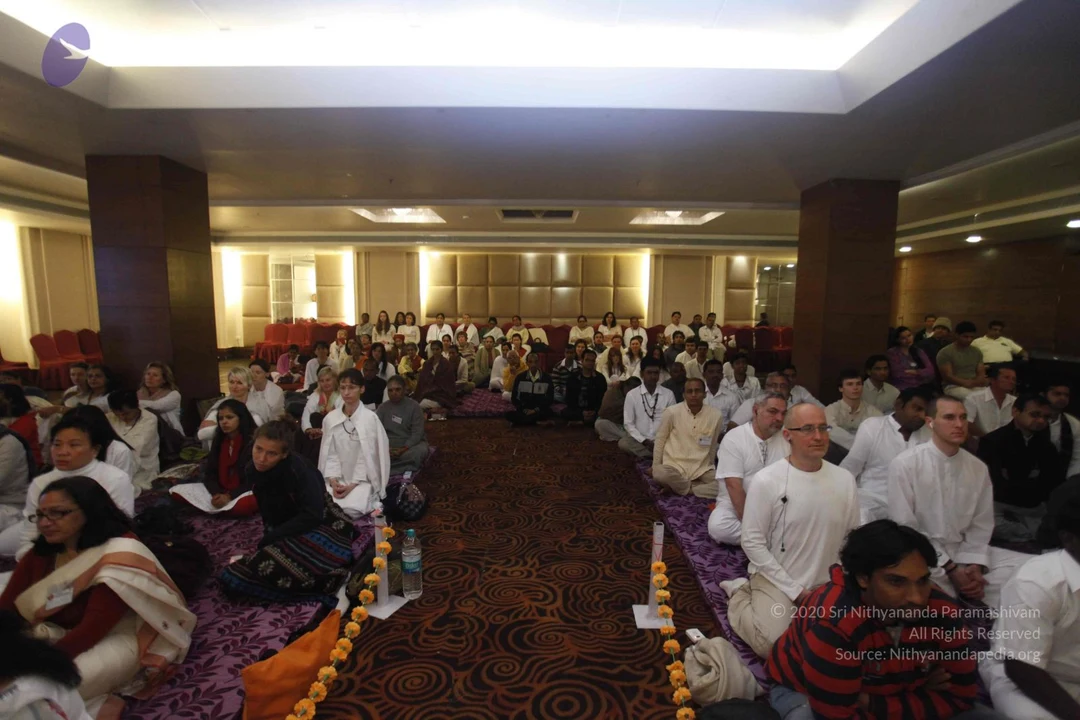
Felicitation-to-Sadhus

11 photosSource gallery
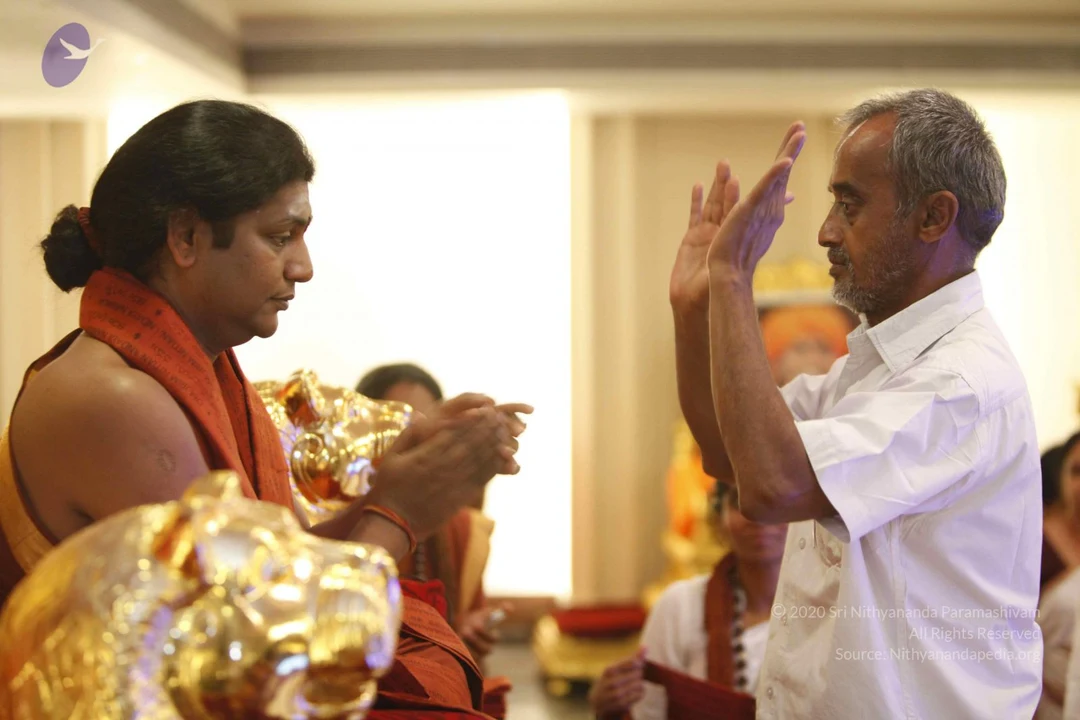
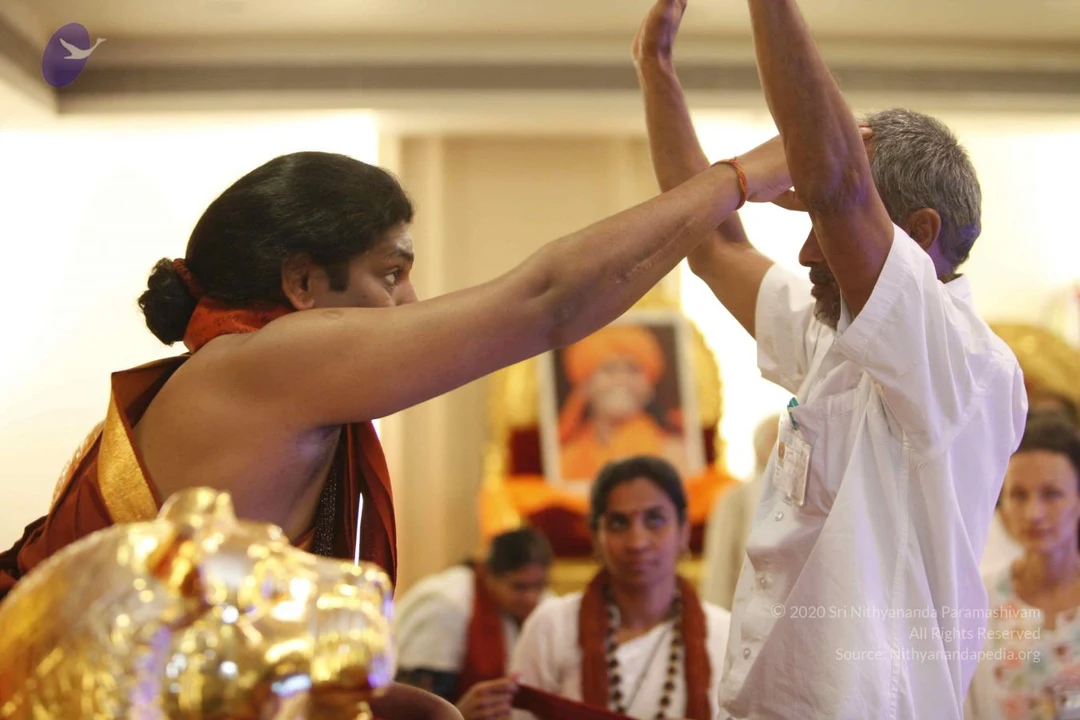
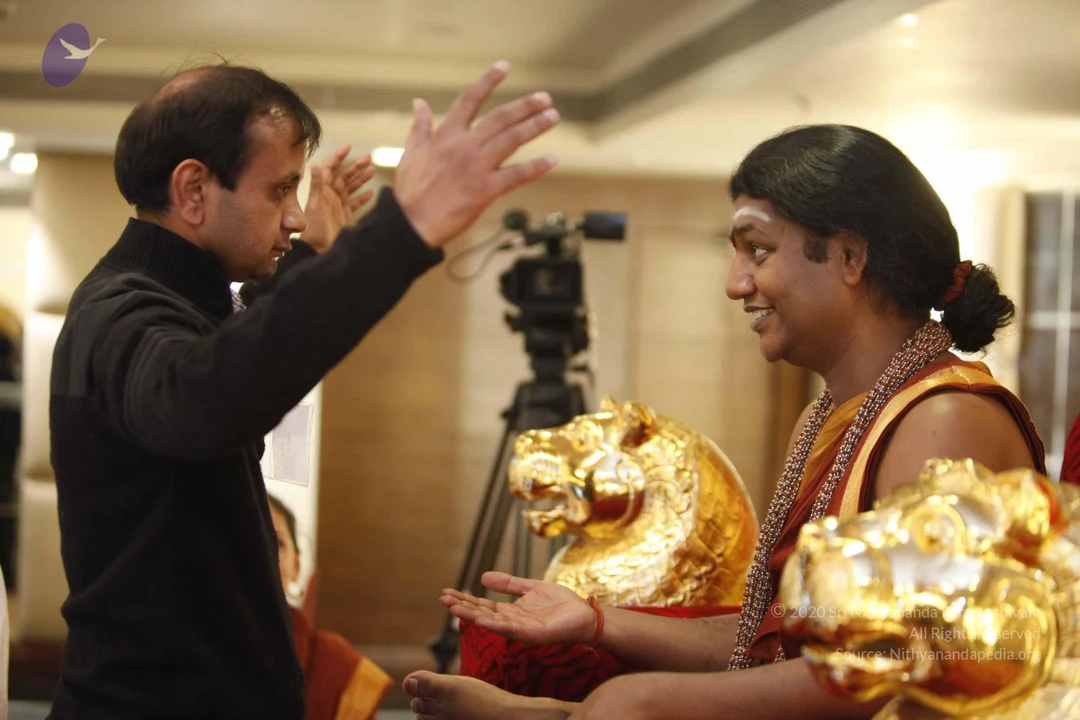
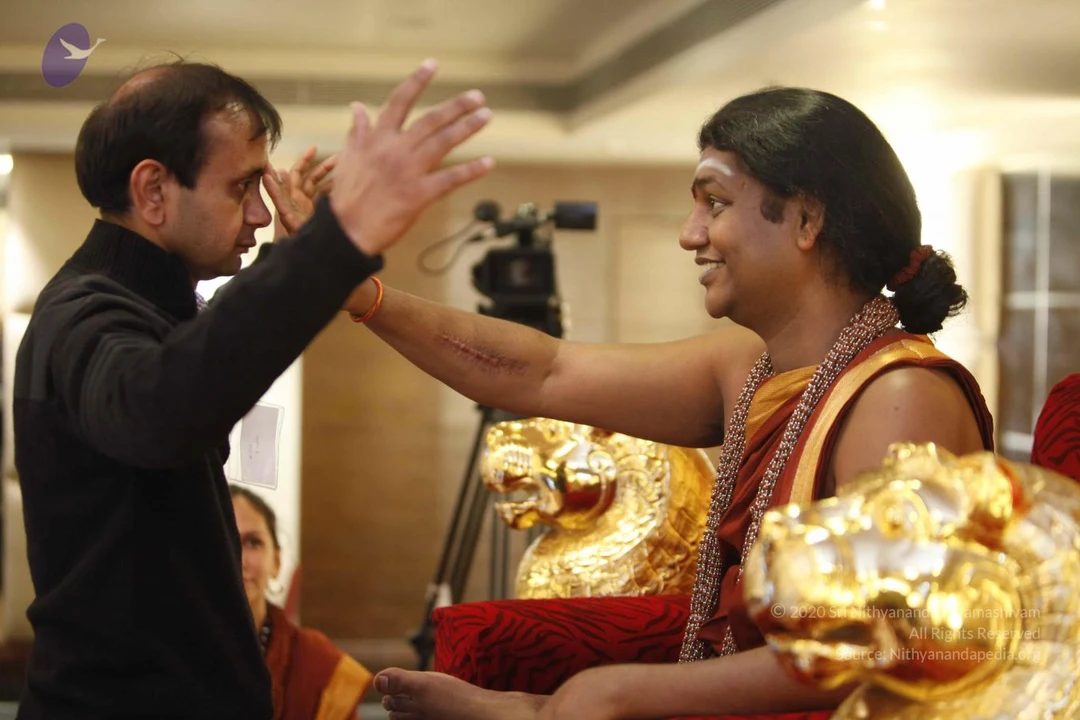
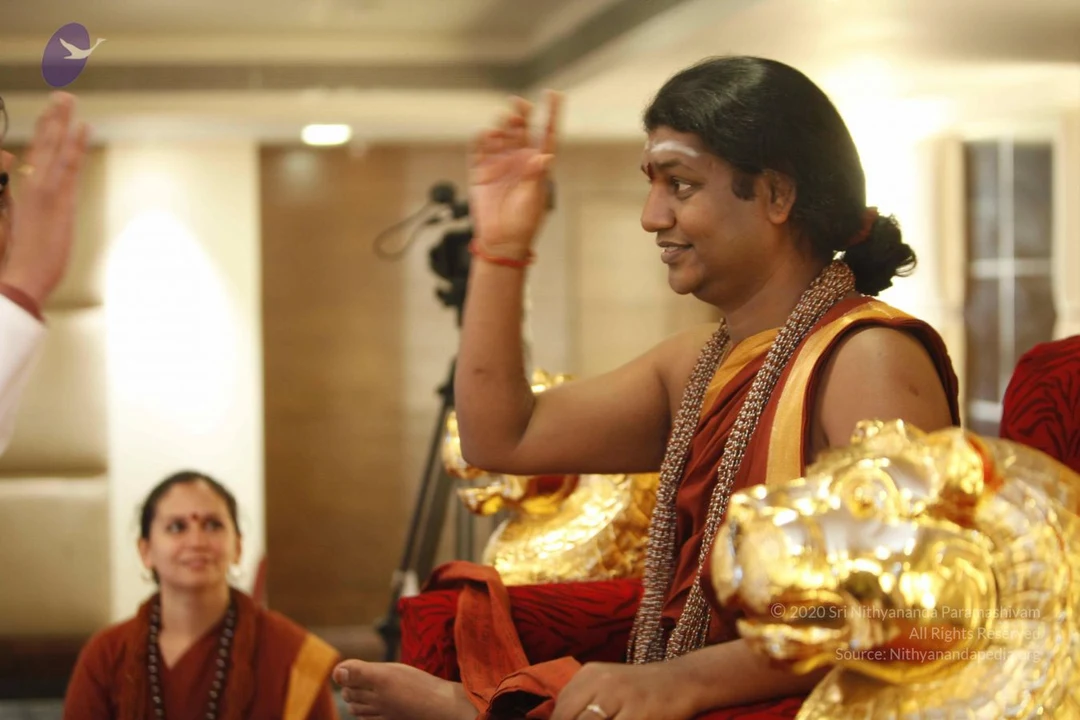
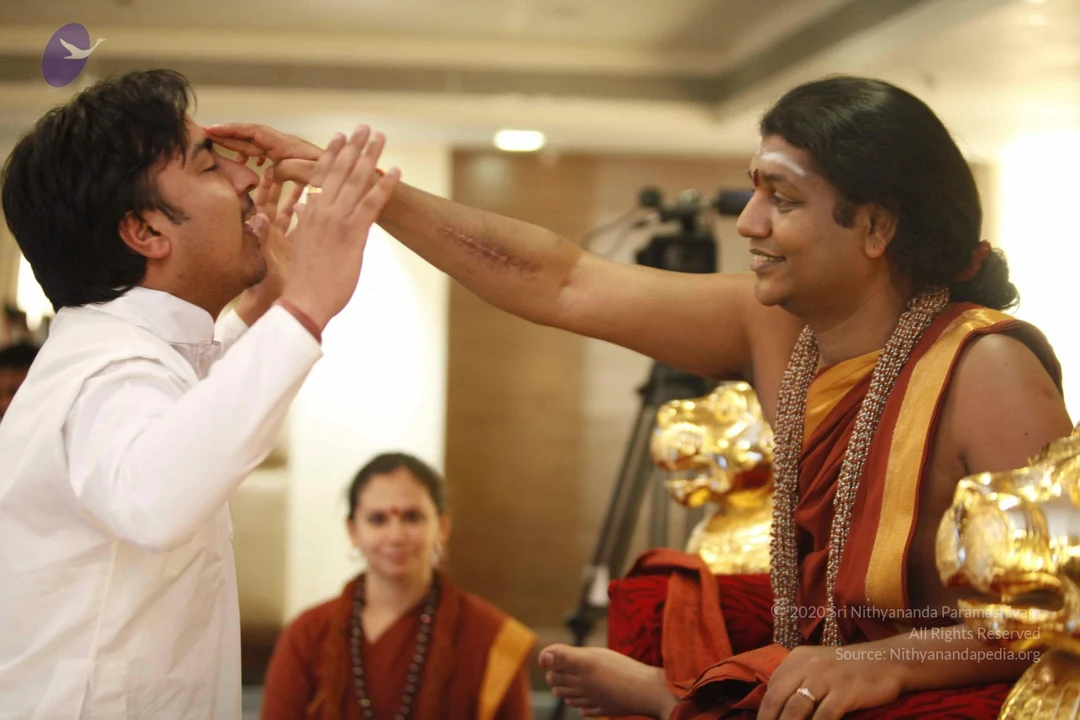
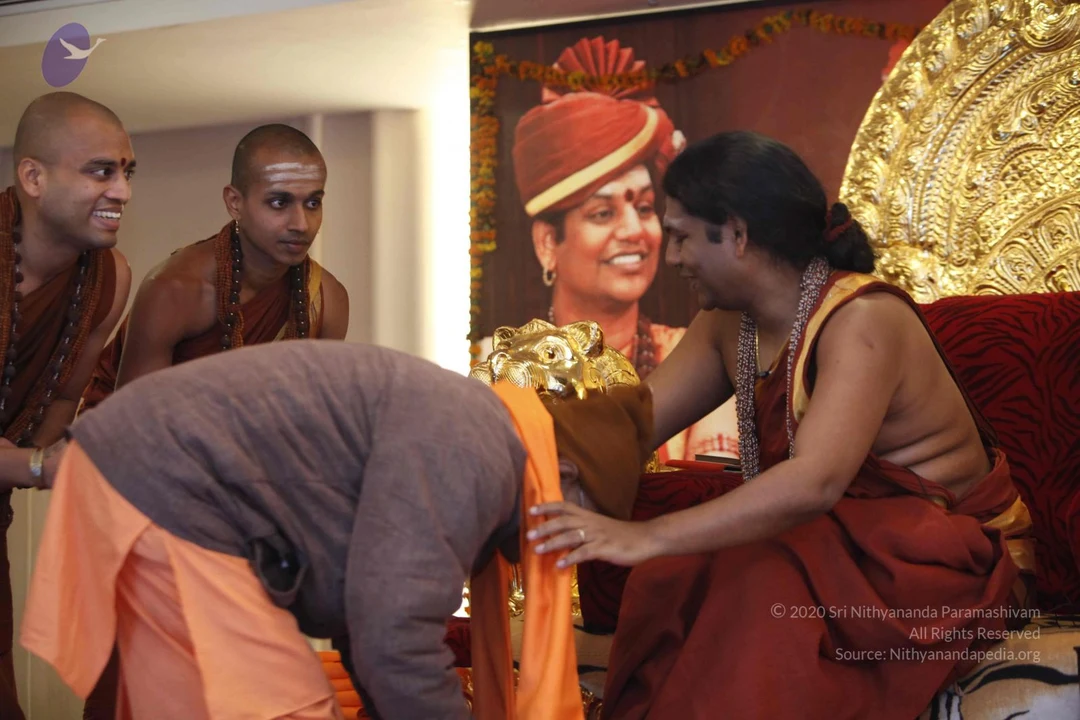
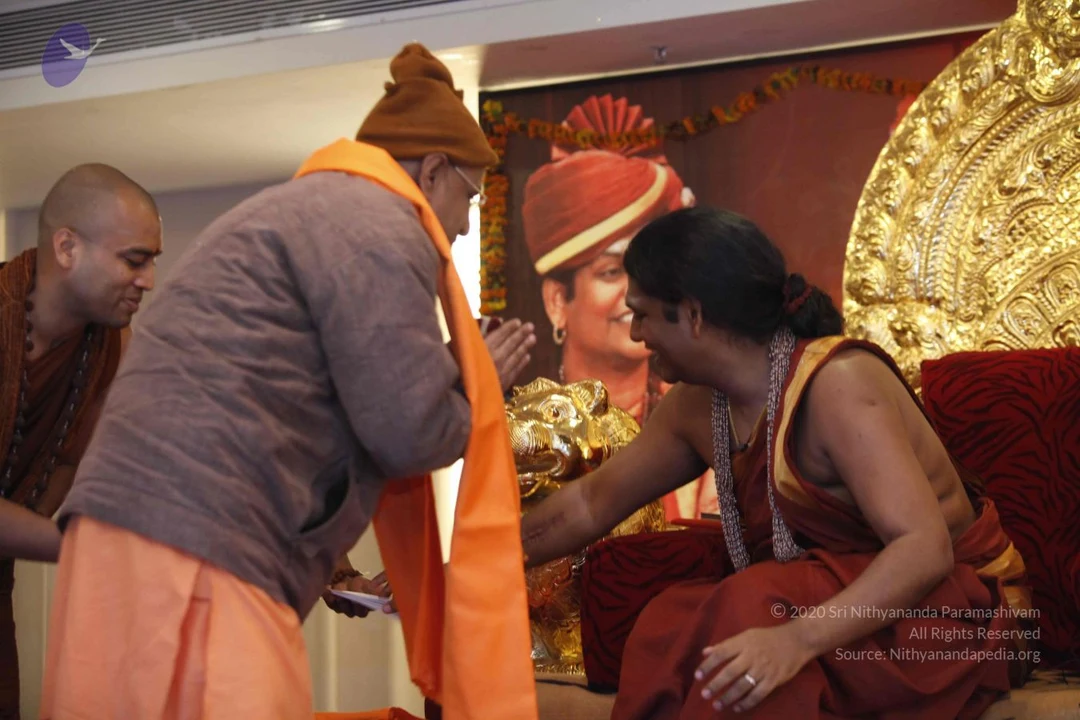
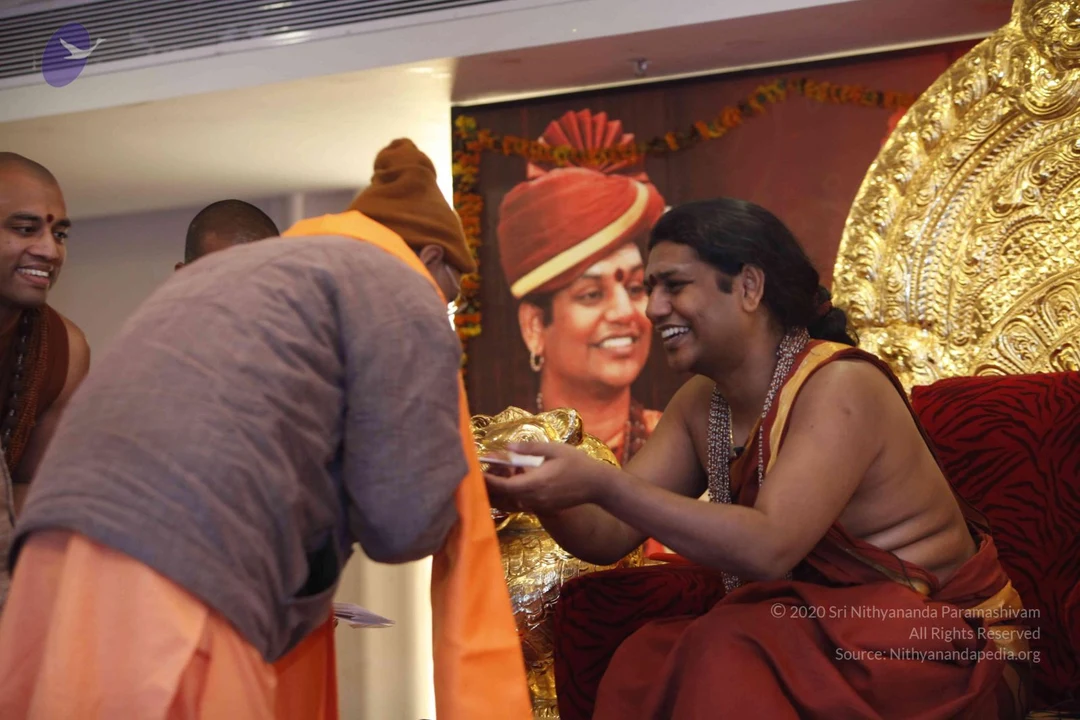
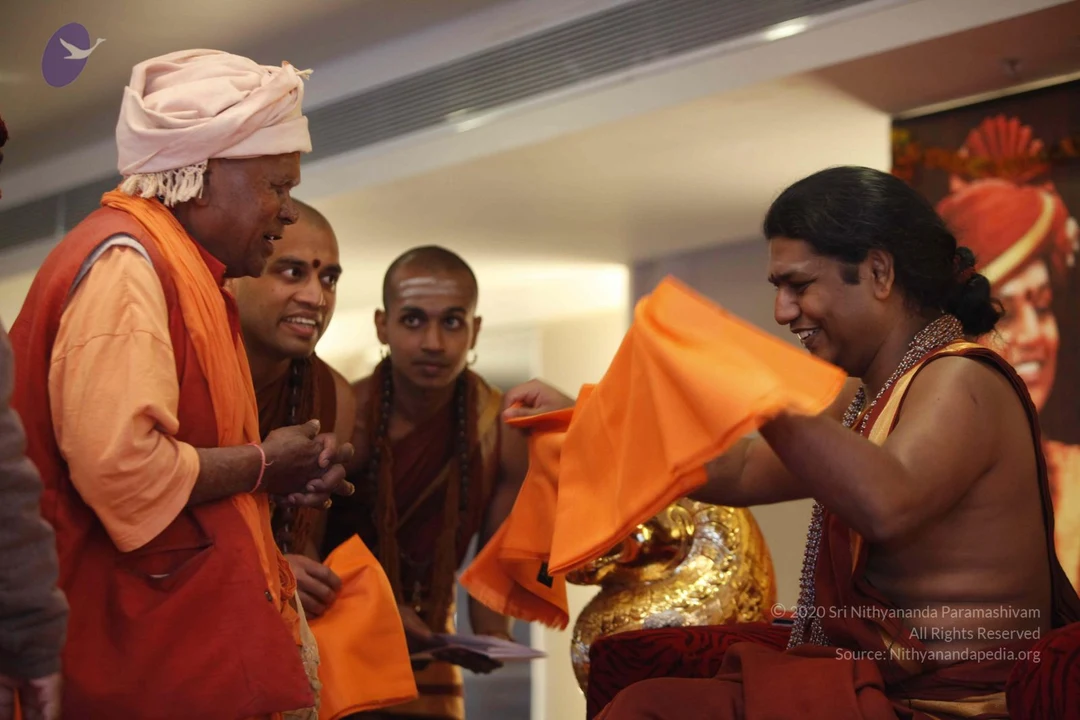
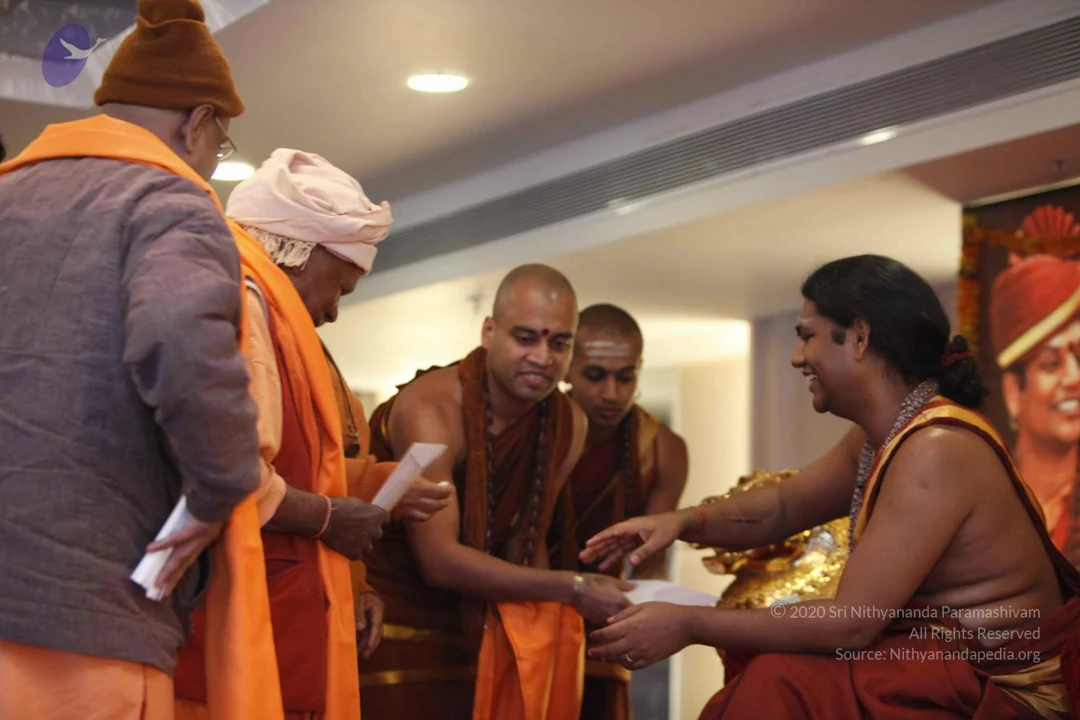
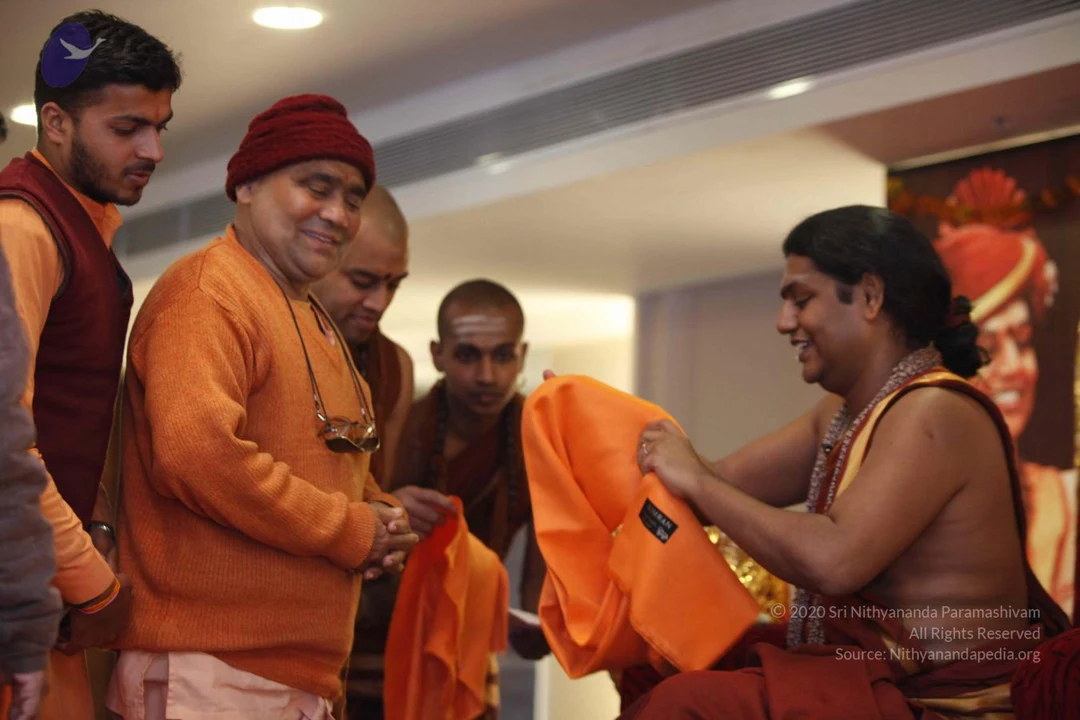
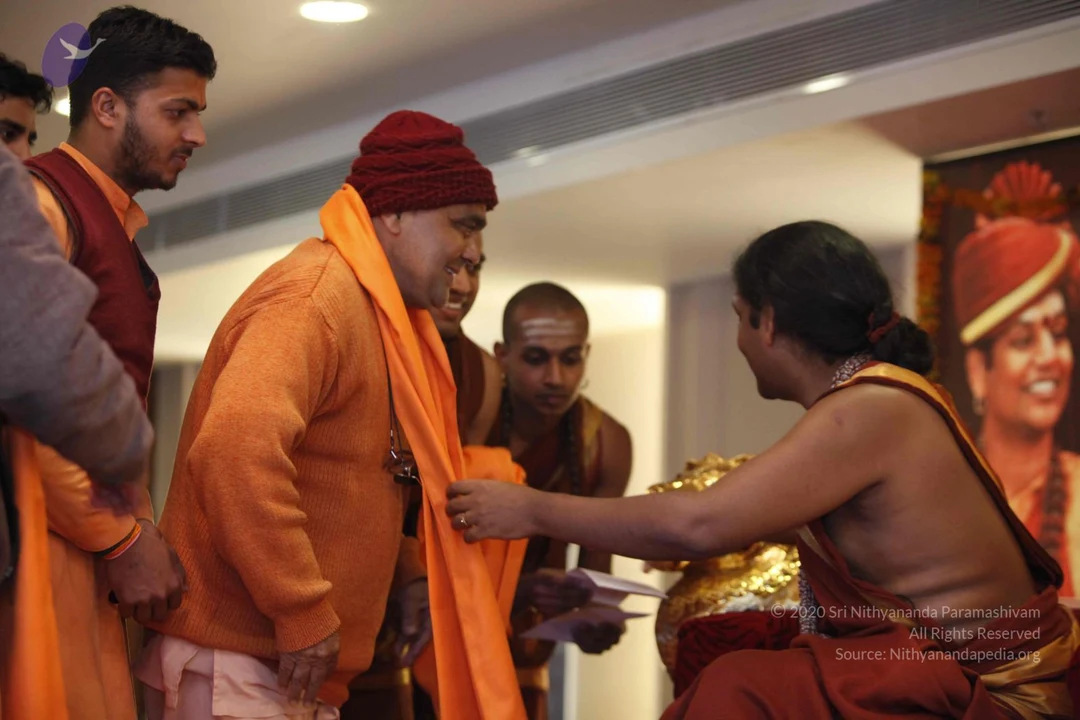
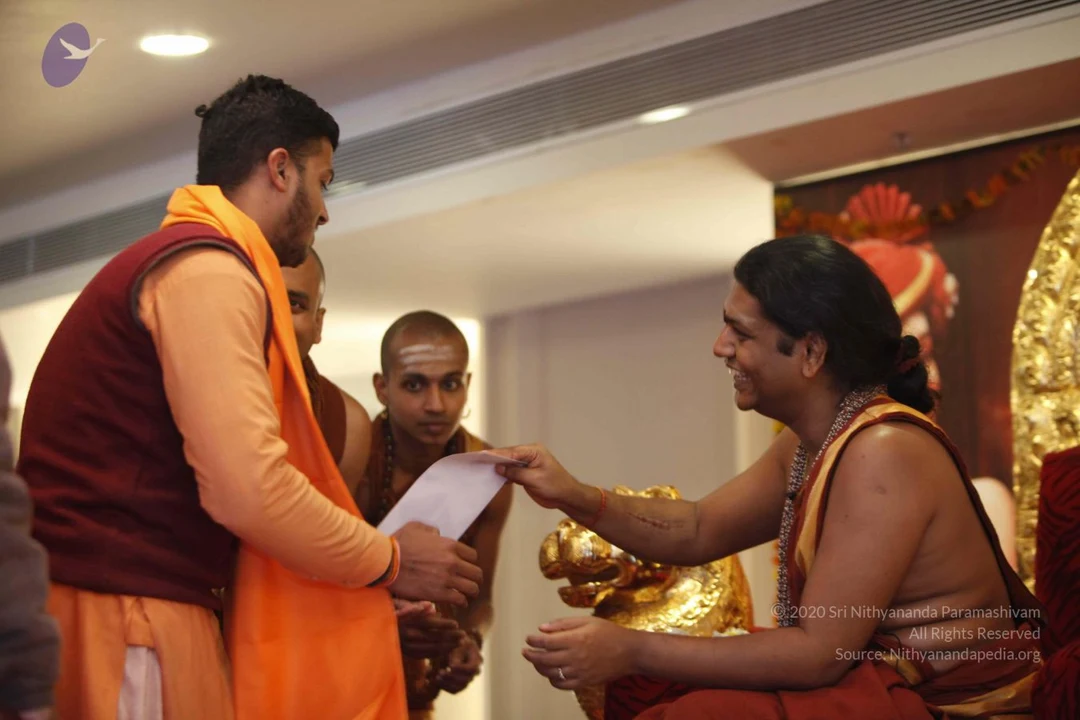
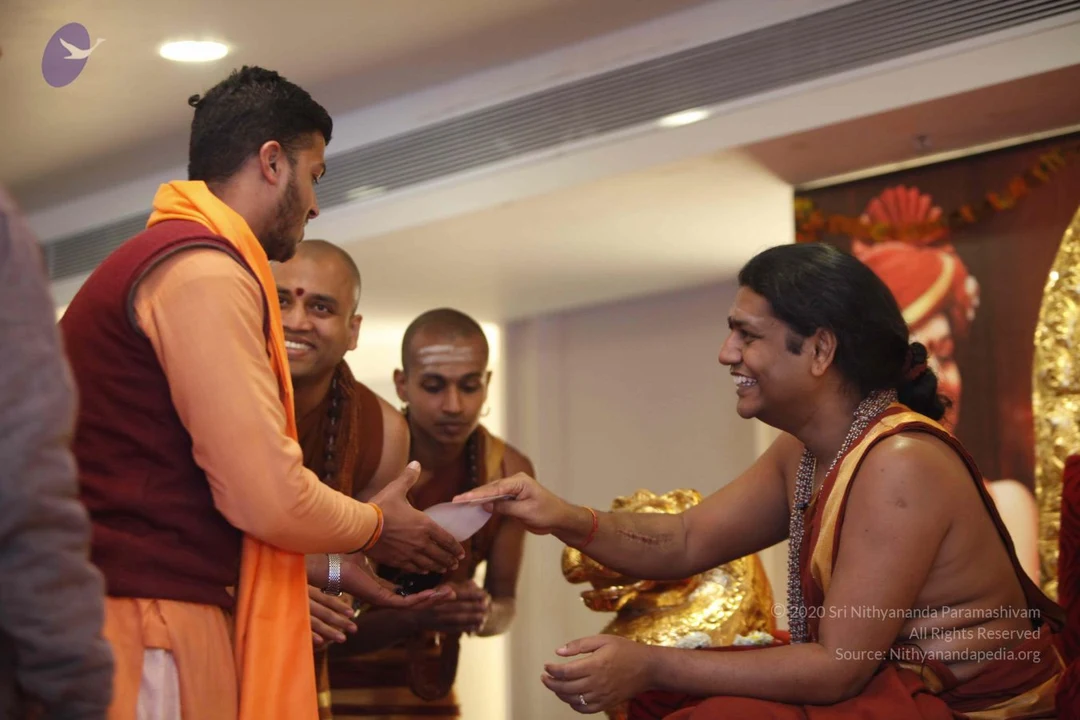
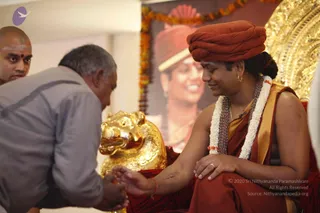
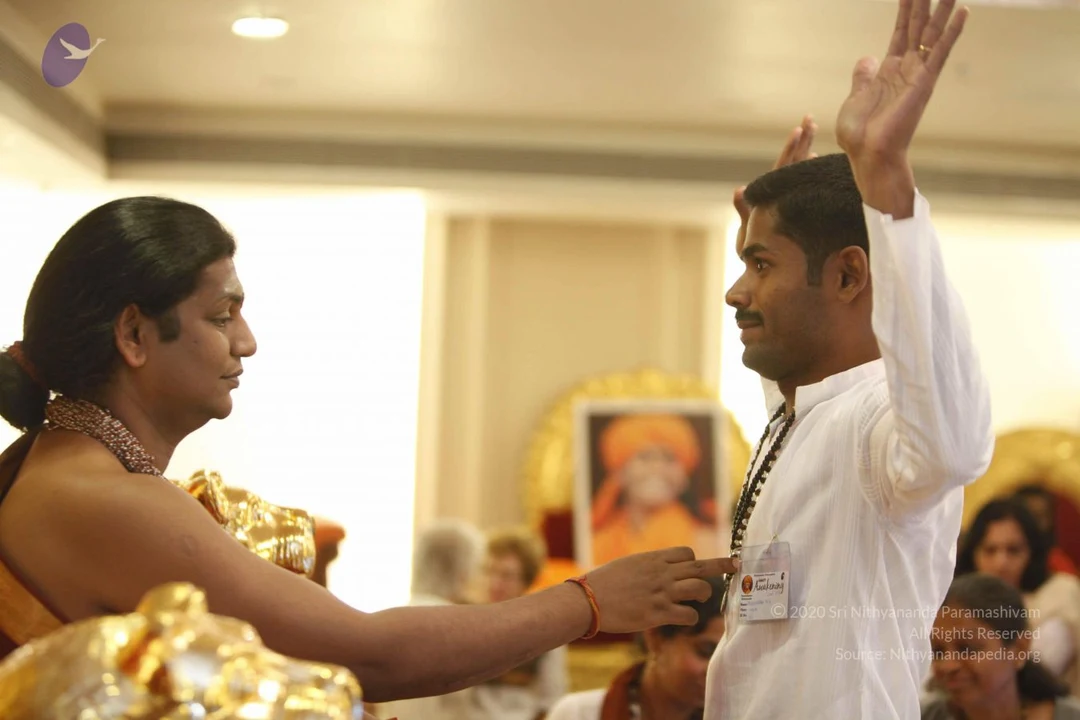
Photograph of a seated man in rust-red and ochre robes with a dark rudraksha-style mala and a long pale beaded necklace, smiling as a man in a grey jacket and orange dhoti bows deeply to touch his feet. Two shaven-headed young men in saffron robes with white tilak on their foreheads and rudraksha malas stand behind, smiling. A large gold ornate throne back with red cushions sits to the right, and a golden decorative object rests on the seat. Behind them a banner shows a smiling woman in a red-orange turban and red-orange sari with flower garlands.A photograph of an indoor satsang setting. An elderly man in a grey shawl over an orange wrap, with a brown knitted cap, stands bowing with palms joined toward a seated person in a maroon and gold-bordered garment with a long silver-beaded necklace and hair pulled back. A bald man in orange robes and a beaded mala stands at left. Behind them a portrait labelled "Paramahamsa Nithyananda" shows a figure in an orange-red turban, and a gold golden peetha/throne with ornate carving stands at right on red cushioned seating; a gold ganesha-like metal figure sits near the seated person. Marigold garlands hang across the backdrop. The seated person is not clearly identifiable by appearance, so the identity is uncertain.A photograph of a seated man with long dark hair and a bare upper torso, wearing rudraksha malas and a red-orange wrap, smiling as he receives an item from a standing devotee in grey top and orange dhoti with a brown cap. He sits on a red velvet seat before an ornate gold throne back. Behind him hangs a large printed portrait of a smiling man in a red turban with a red bindi and a garland of orange flowers. Two other smiling men in orange cloth stand at the left edge. The seated man appears to be Swamiji (probable), identified by the rudraksha malas, long hair and red-orange wrap, seated and receiving offerings in a satsang setting.A photograph of a ceremonial honouring in an indoor hall. A seated man with long swept-back dark hair, bare-chested with a dark red-brown wrap and a long rudraksha-style mala, stretches his arm up to drape an orange cloth over the head of a bald devotee bending forward. The devotee wears a grey-brown jacket and an orange cloth around the shoulders. Another man in an orange-brown wrap and a mala stands beside him, holding a small paper. A brown knitted cap is worn by the older man at left. Behind them a golden lion-shaped armrest, a golden chair edge, marigold garlands and a large framed portrait of a man in red turban and saffron robes are visible. Two physical people hold the central action and a third stands at the edge.A photograph in an interior room with a ceramic-tile ceiling and recessed lighting. On the right, a bare-chested man with long dark hair tied in a bun, wearing a rudraksha mala and ornate maroon-and-gold cloth, sits on a red-cushioned seat with a golden lion-head armrest, holding out an orange cloth. Before him stands an older man in a pink turban and orange garment with an orange shawl, extending his hands toward the seated man. Behind them, a younger man with a shaved head and white tilak and a brown-and-orange robe looks on. A framed portrait of a smiling figure in an orange turban hangs on the wall behind.A photograph of an indoor gathering where a bare-chested man with long dark hair tied back, wearing rudraksha malas and a ceremonial bead necklace over a maroon-and-orange cloth, sits on a red seat and smiles while unfolding a bright saffron cloth. Facing him, an older man in a pink turban and orange-and-red sleeveless vest holds his hands together in greeting. Two younger men with shaved heads, tilak marks and saffron robes stand nearby, one holding papers. A golden kalasha-like vessel and a large framed portrait of a smiling man in a red turban appear in the background. Probable Swamiji (probable) is the bare-chested man, identified by his long hair, rudraksha malas and ceremonial beads, seated and receiving the saffron cloth.

Inner Awakening-Session

32 photosSource gallery
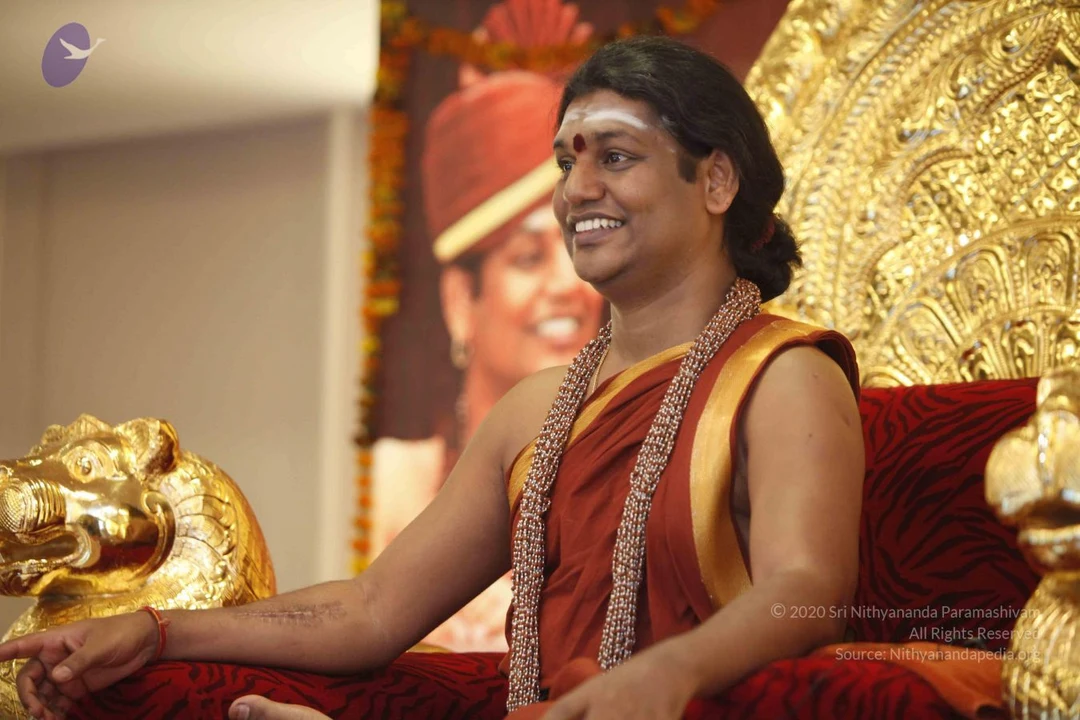
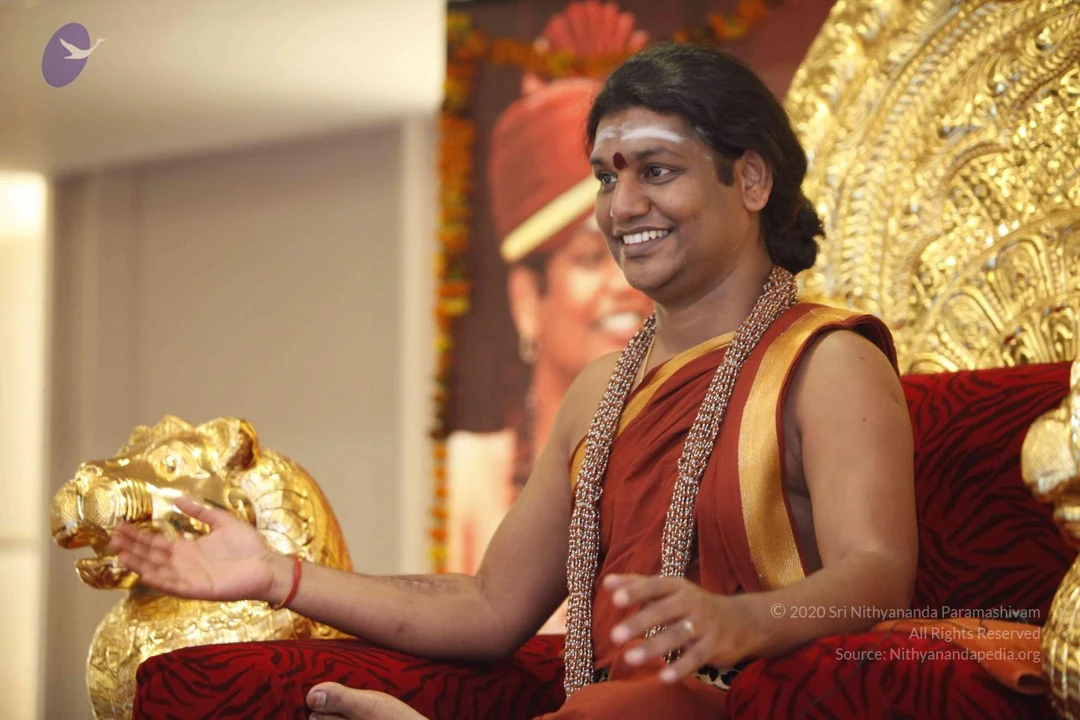
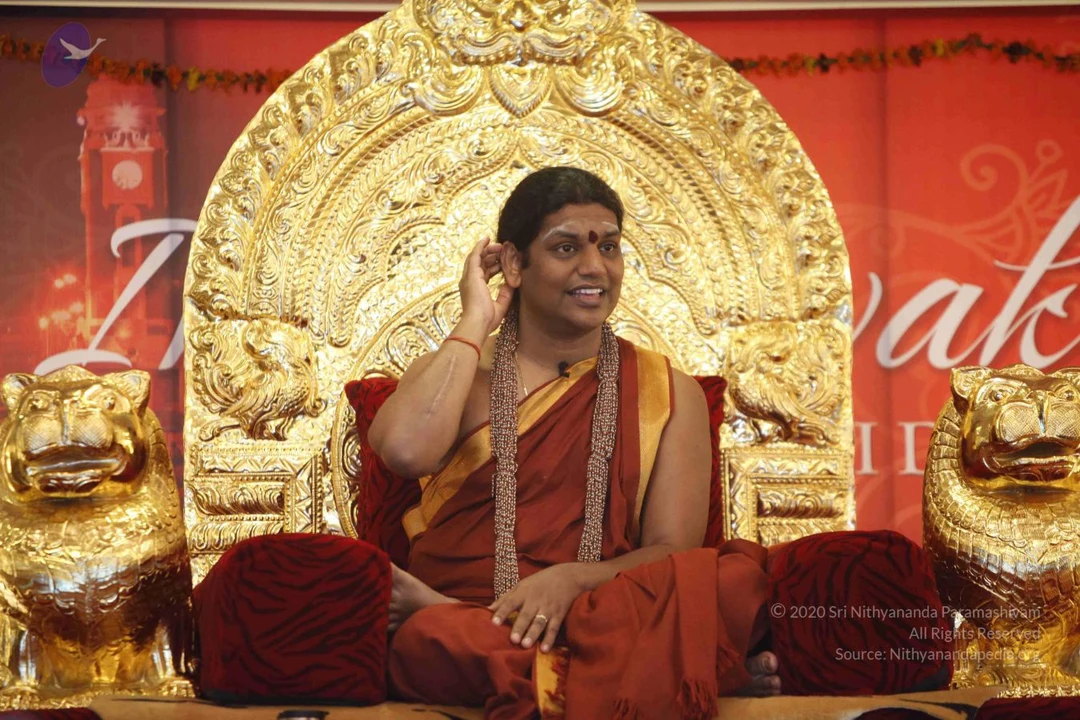
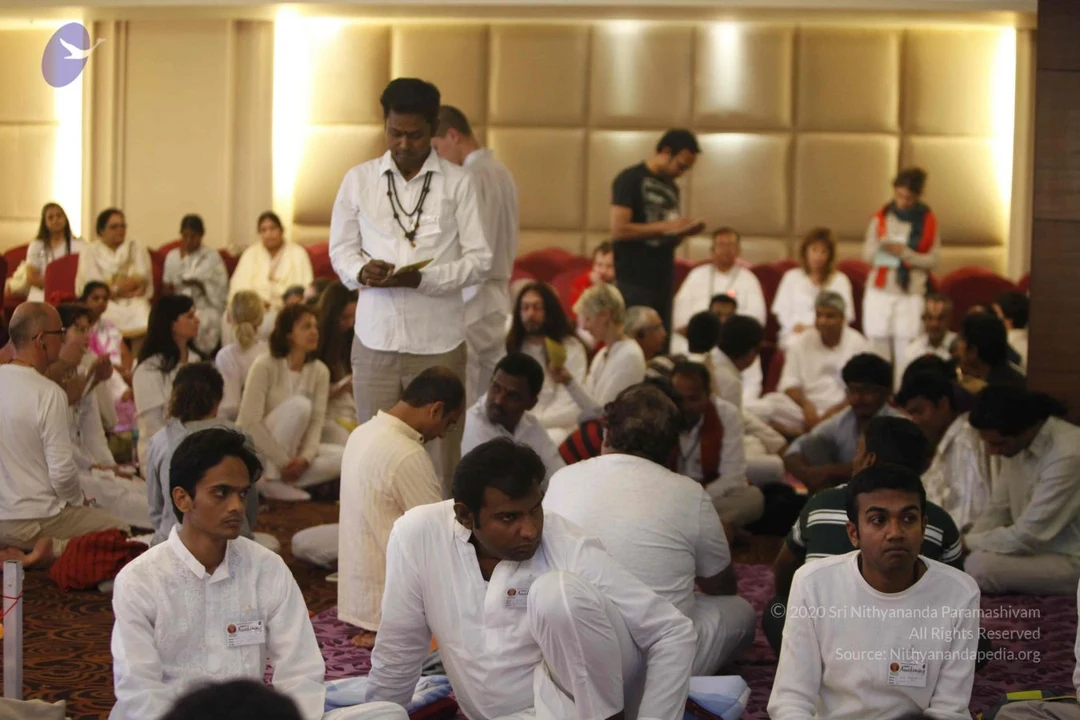
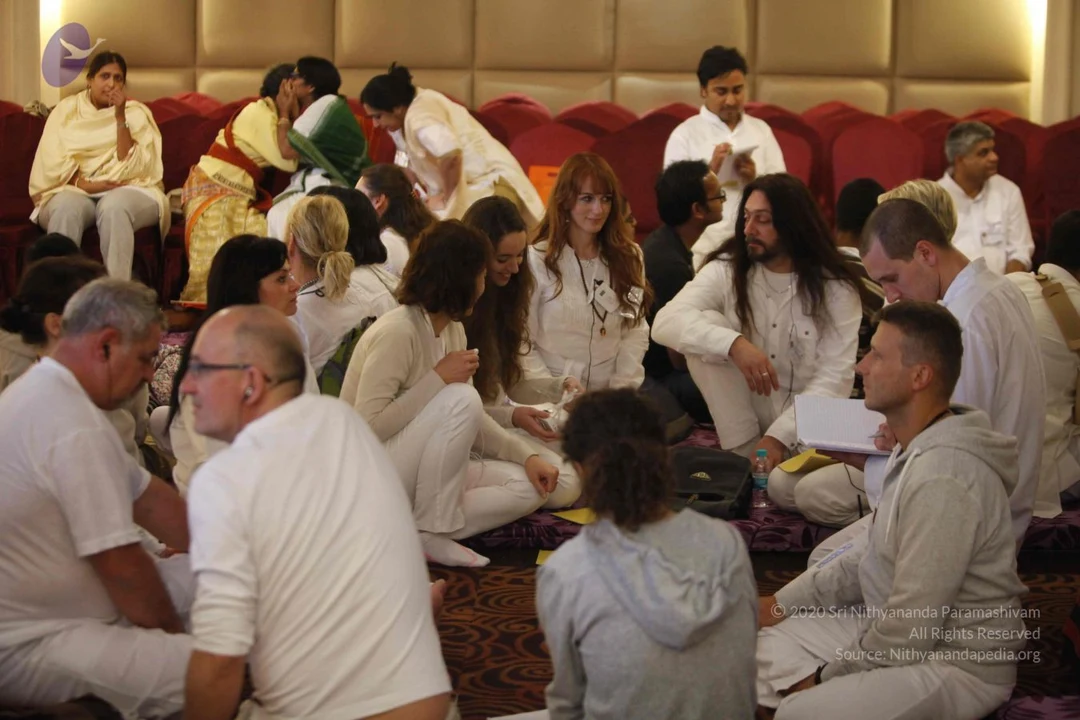
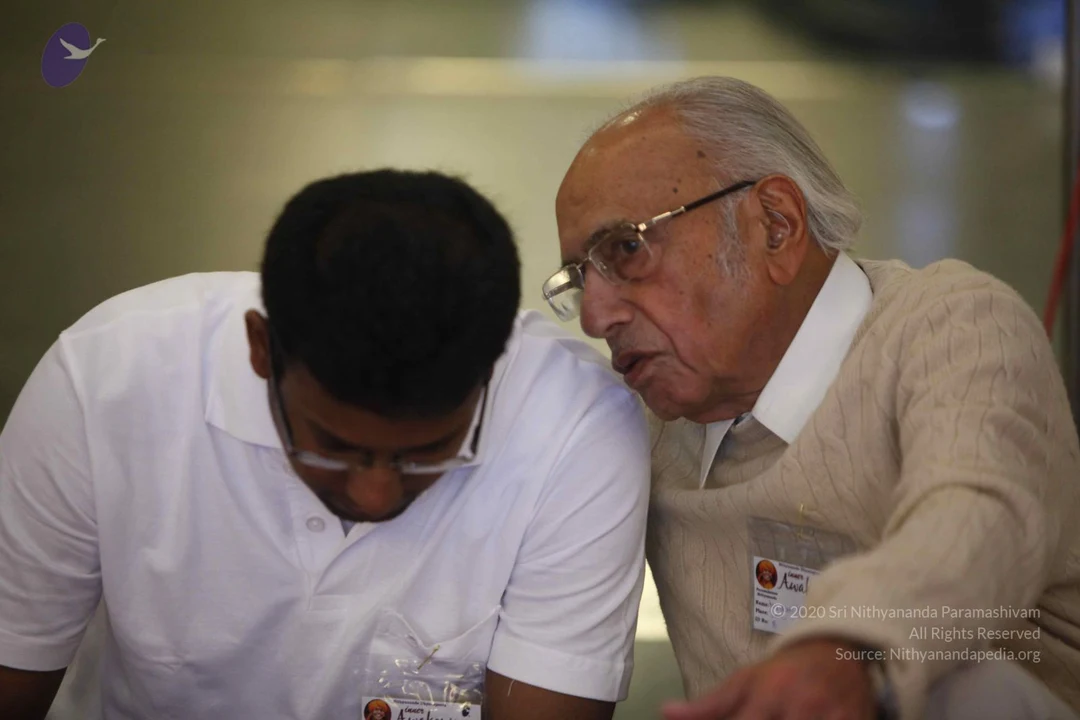
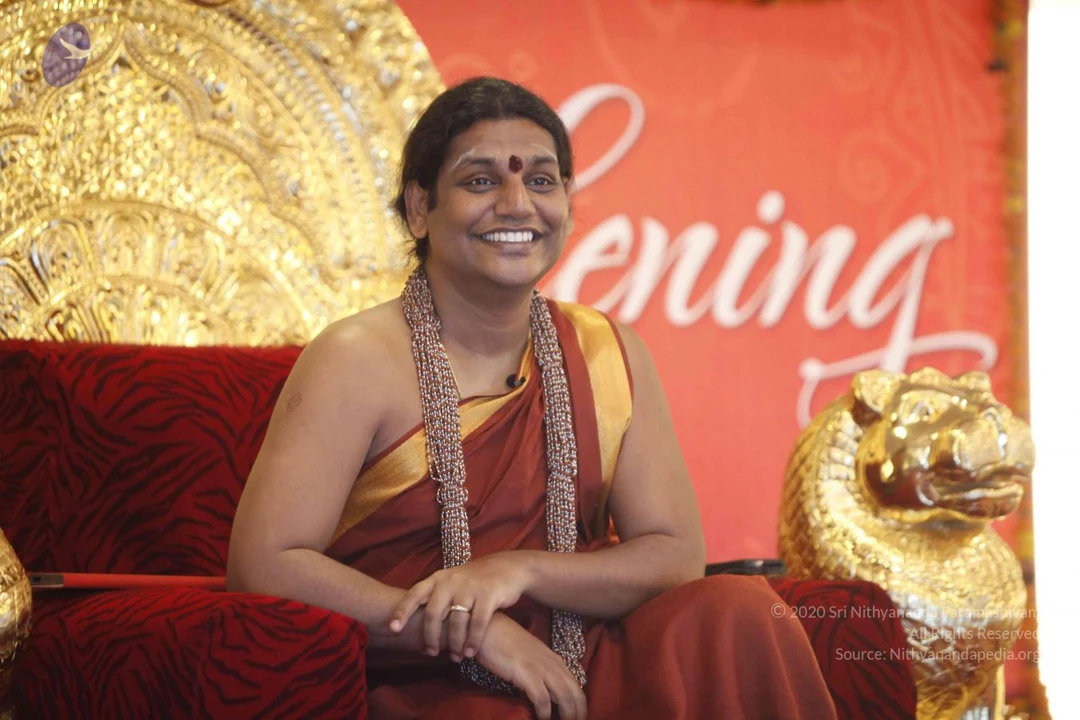
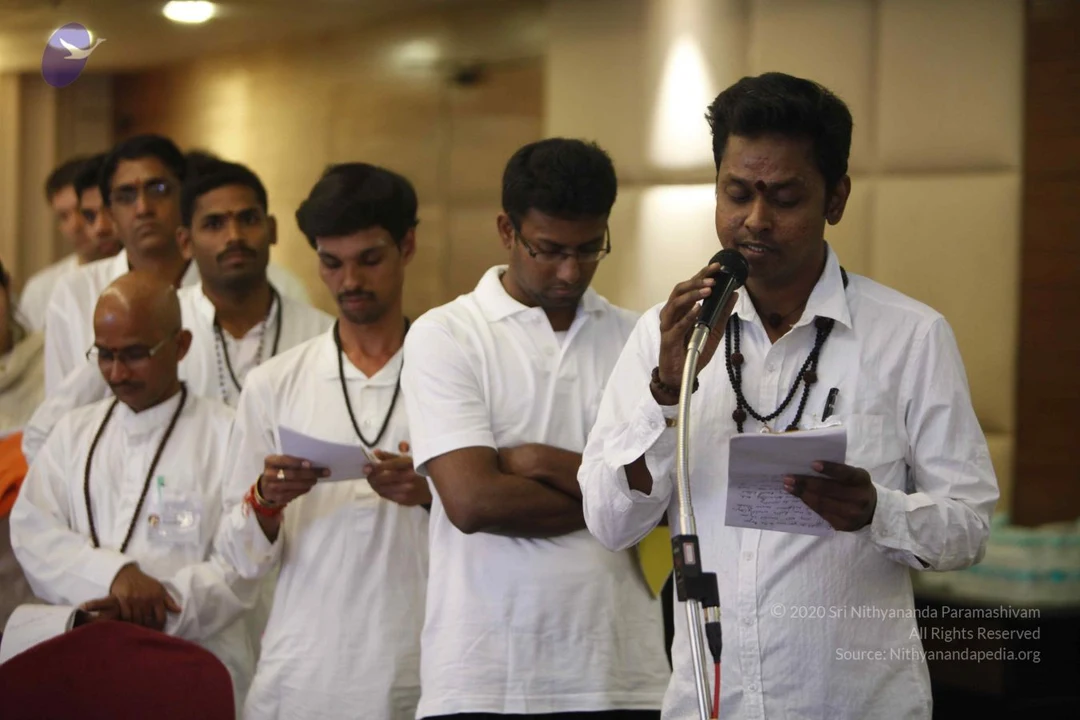
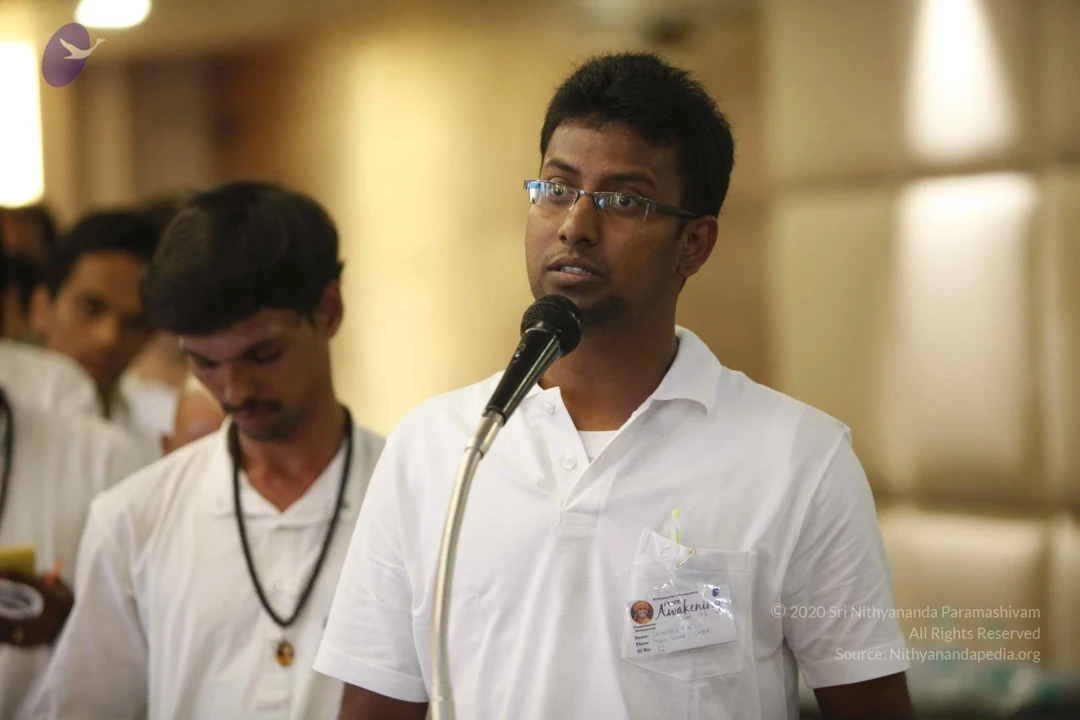
A man with swept-back dark hair and a red bindi sits cross-legged on an ornate gilded throne with lion-head armrests and red tiger-striped cushions. He wears an orange-red robe with a gold border and a long beaded rudraksha-style mala necklace, speaking with one hand raised to his ear. Behind him is a red backdrop with gold script and a gold-framed arch. The figure is an appearance-based a person (in person), seated as a teacher giving satsang discourse. Two gilded lion sculptures flank the throne.A seated satsang gathering in a carpeted hall with beige padded wall panels and warm lighting. In the foreground, a man in white kurta sits on a purple mat, and another young man in a white shirt with a name badge looks ahead. Behind them, many devotees sit in white clothing on cushions and red chairs. A standing man in a white shirt with a rudraksha mala holds a notebook and pen, while another man in a dark t-shirt stands near the back. No candidate for a person is visible; the people are devotees and attendees, with no throne or dais shown.A seated group of devotees in white clothing gathers on a patterned purple-and-gold carpet in a hall with cream padded wall panels and rows of red chairs behind them. In the foreground a man in a white shirt sits with his back partly to the camera, and a bald man in glasses wears a white top and earpiece. A long-haired man in white kurta-style clothes sits cross-legged in the centre-right, holding a notebook, and a woman in white beside him takes notes. A man in a grey hooded top sits at right with a notebook. A woman in a yellow sari sits at upper left, and a man in white sits at upper right with a notepad. Yellow cards lie on the carpet. Overlaid andA candid photograph of two men seated close together at an indoor event. On the left, a younger man in a white polo shirt and clear-framed glasses leans forward with head bowed, looking down at something out of frame. On the right, an older man with swept-back grey hair, wire-rimmed glasses and a cream cable-knit sweater over a white collar leans in toward him, speaking. Both wear lanyard name badges with small portrait logos. The background is a pale blurred wall with a red cable at the edge. No a person candidate is clearly identifiable by appearance.A photograph of a seated group of devotees in a carpeted hall with maroon cushioned chairs and tall gold-panelled walls, most wearing white clothing. In the foreground, a man in a white shirt and a rudraksha mala smiles and sits on a purple patterned carpet beside a folded orange cloth. Several men in white kurtas and white dhotis laugh and talk; one bald man in white sits at left with a mala. Behind them, rows of women in white and pastel saris and kurtas sit on chairs, several clapping. Small water bottles and a yellow flower garland lie on the floor.A smiling man with swept-back dark hair sits on a red tiger-striped chair beside a gold lion-head armrest and an ornate gold throne back. He wears a rust-red and gold-bordered robe, multiple strands of wooden rudraksha beads, and a red bindi on his forehead, with a small lapel microphone clipped to his robe. His hands rest folded in his lap. Behind him a large orange banner shows the partial word "ening" in white script. Swamiji (probable): the swept-back hair, rudraksha malas, red robe with gold border and ornate throne cues match the page's Swamiji reference, though his face is not used for identification. The image shows a satsang-style setting with a single seated speaker.

Kalpataru-Darshan
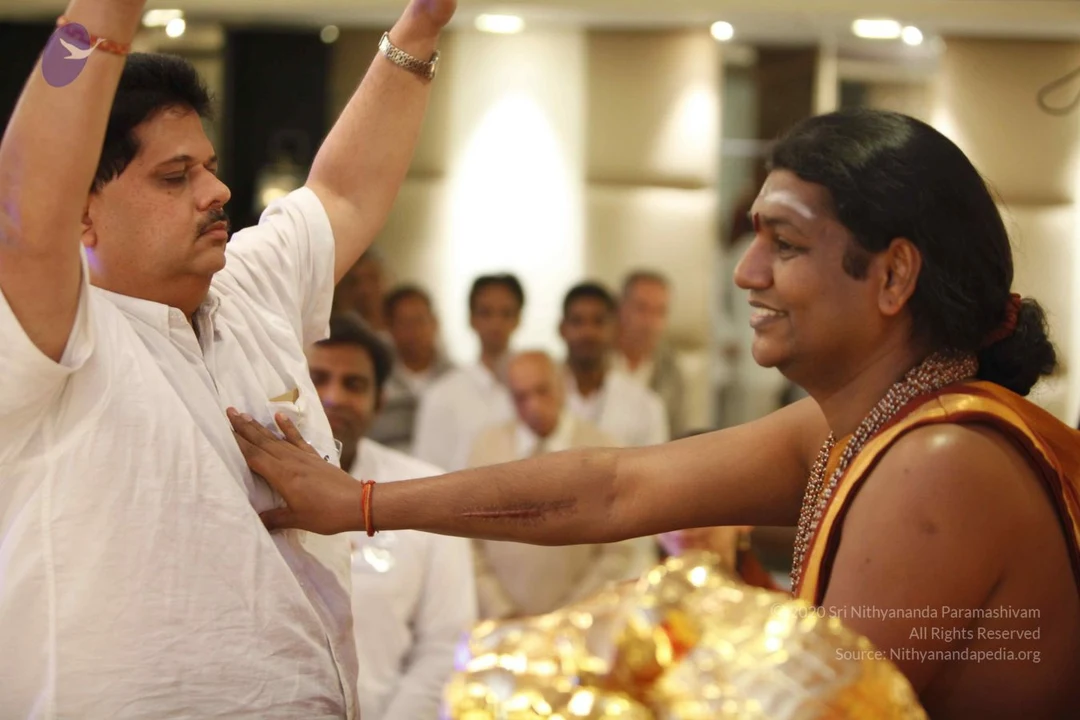
5 photosSource gallery
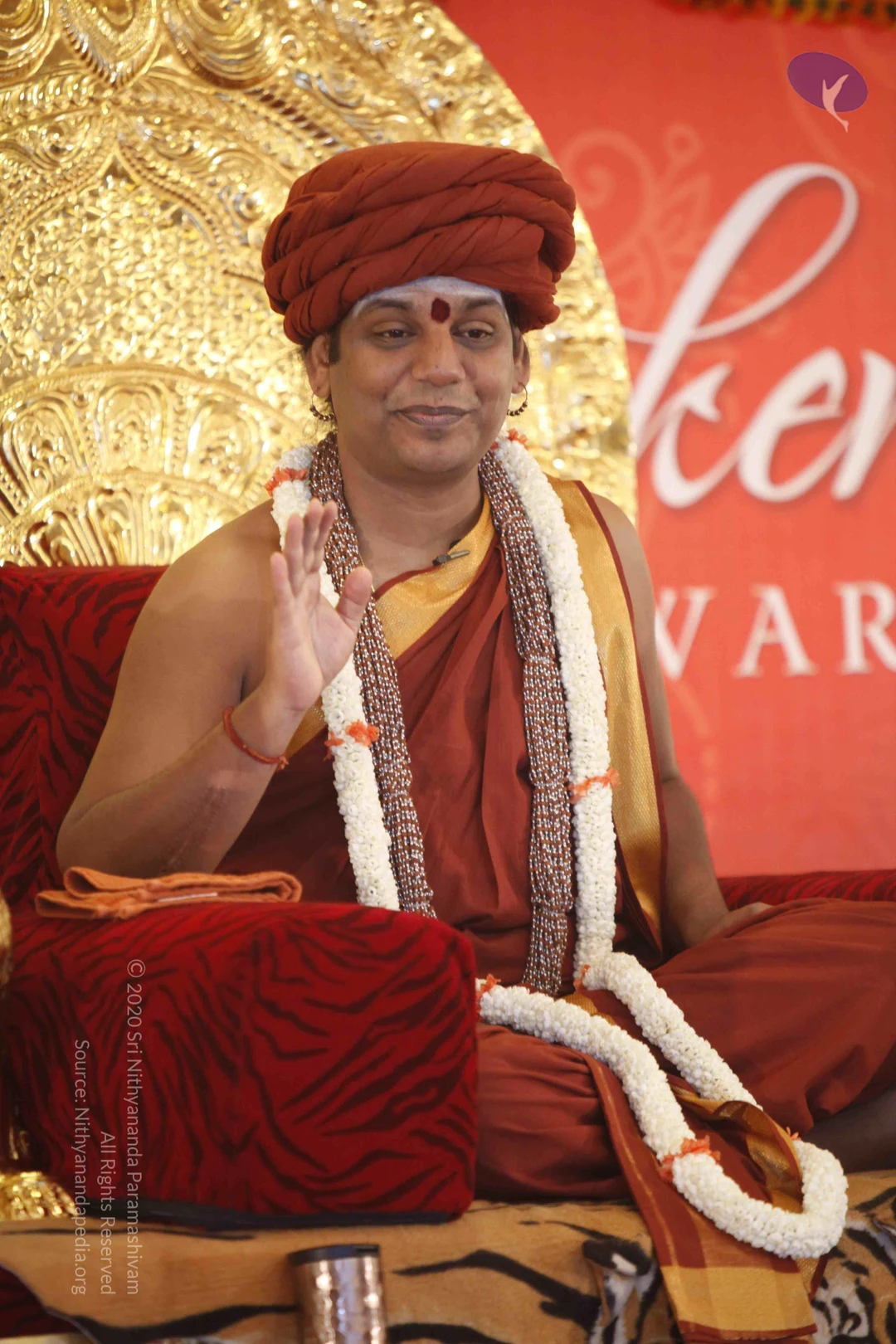
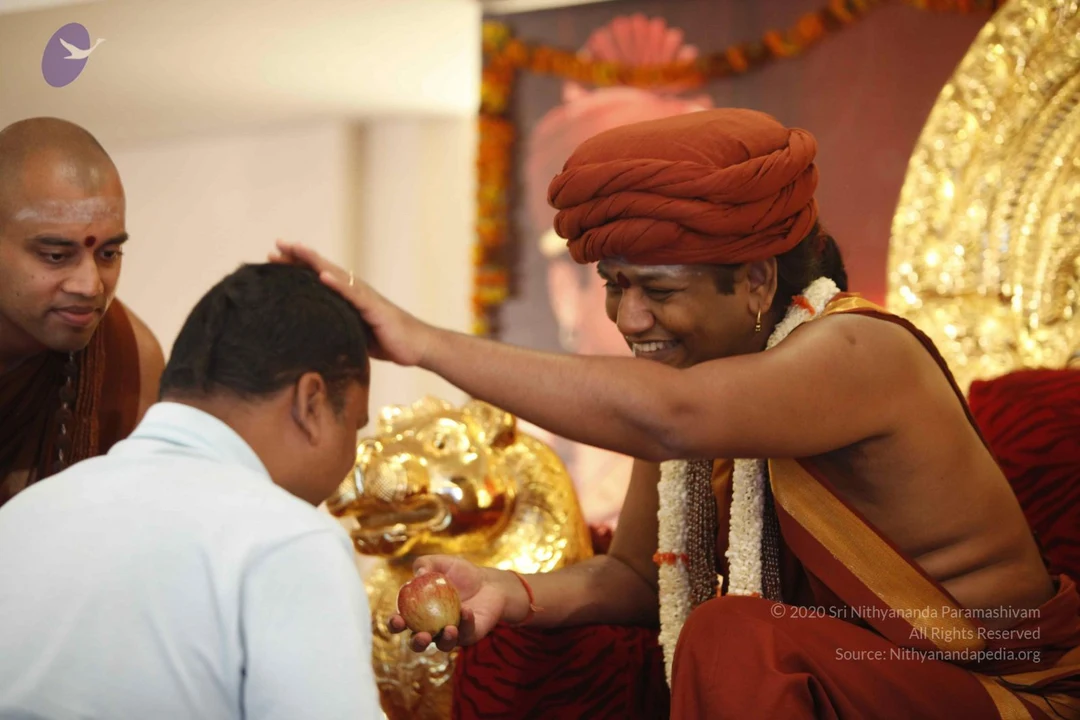
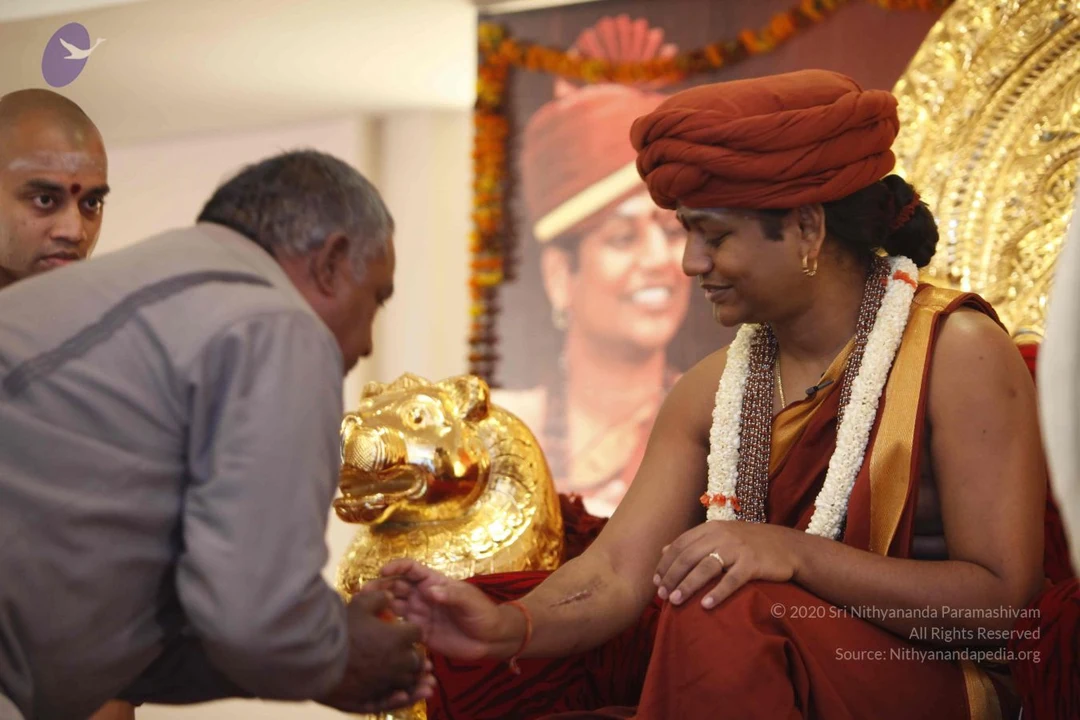
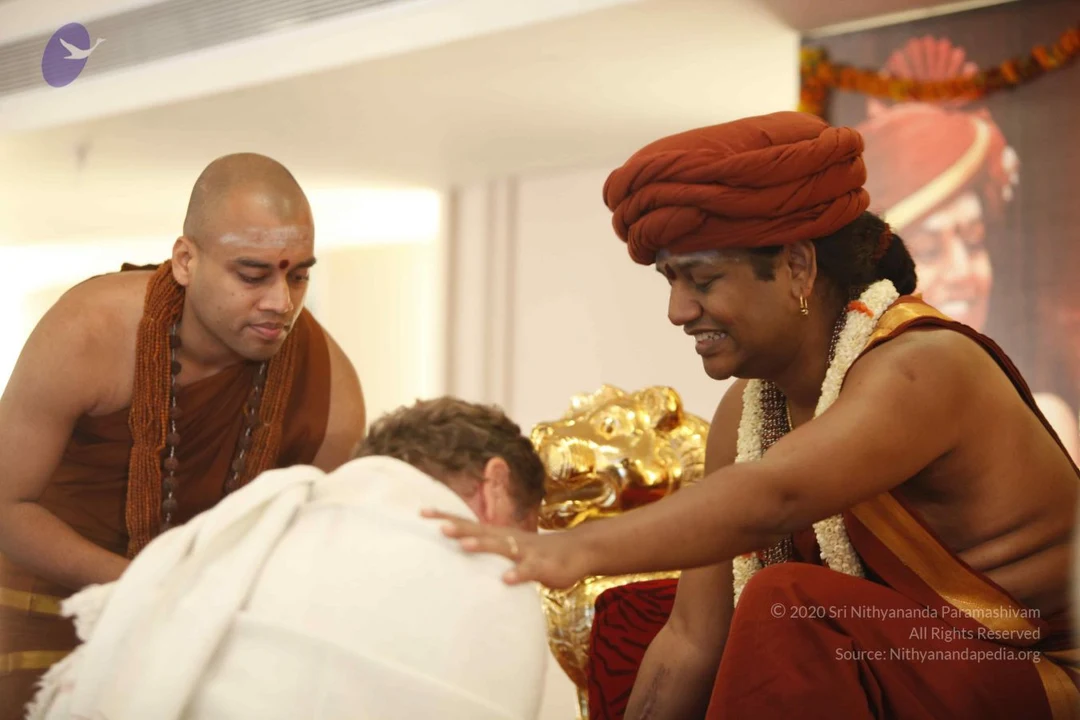
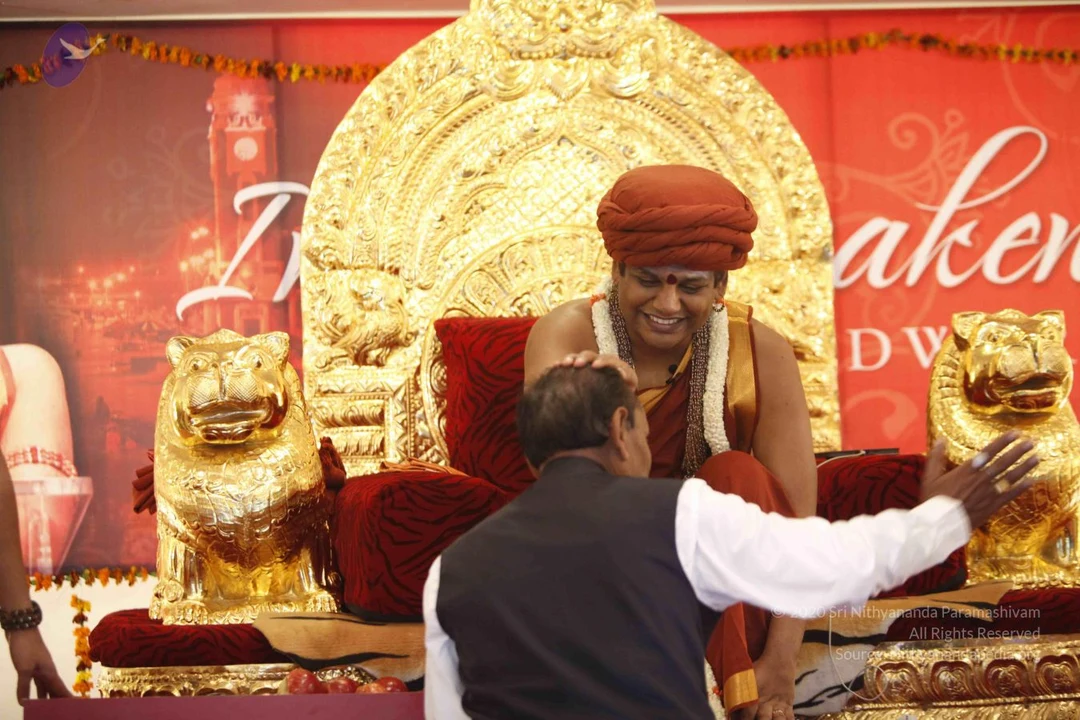
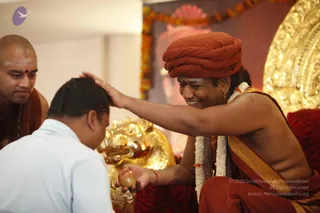
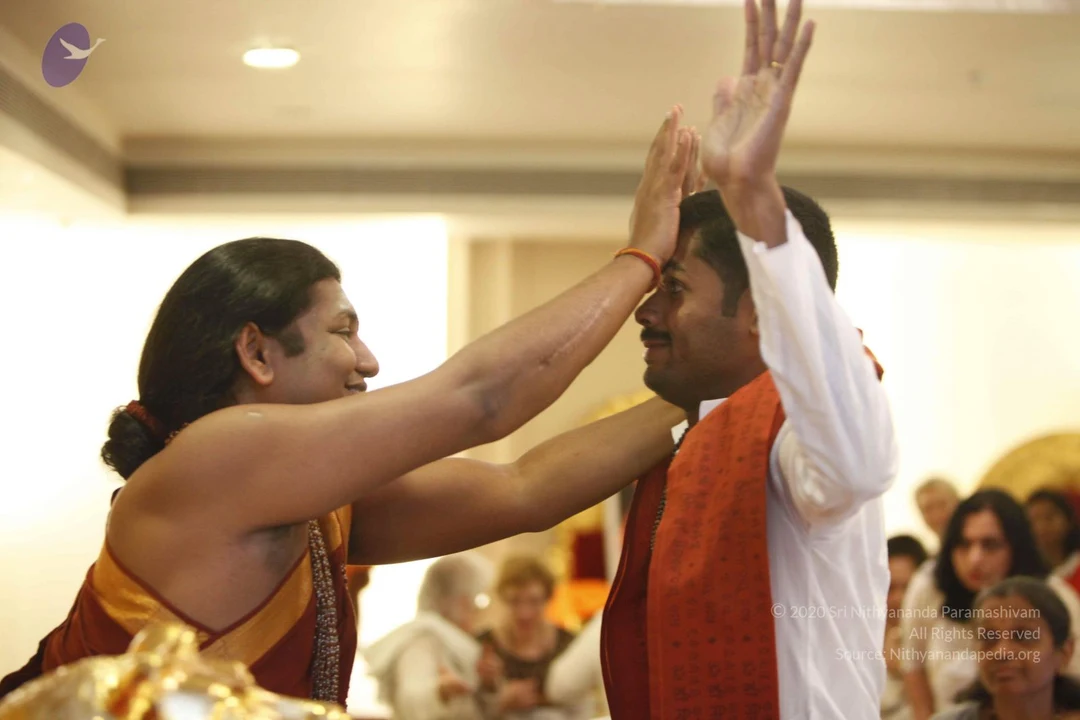
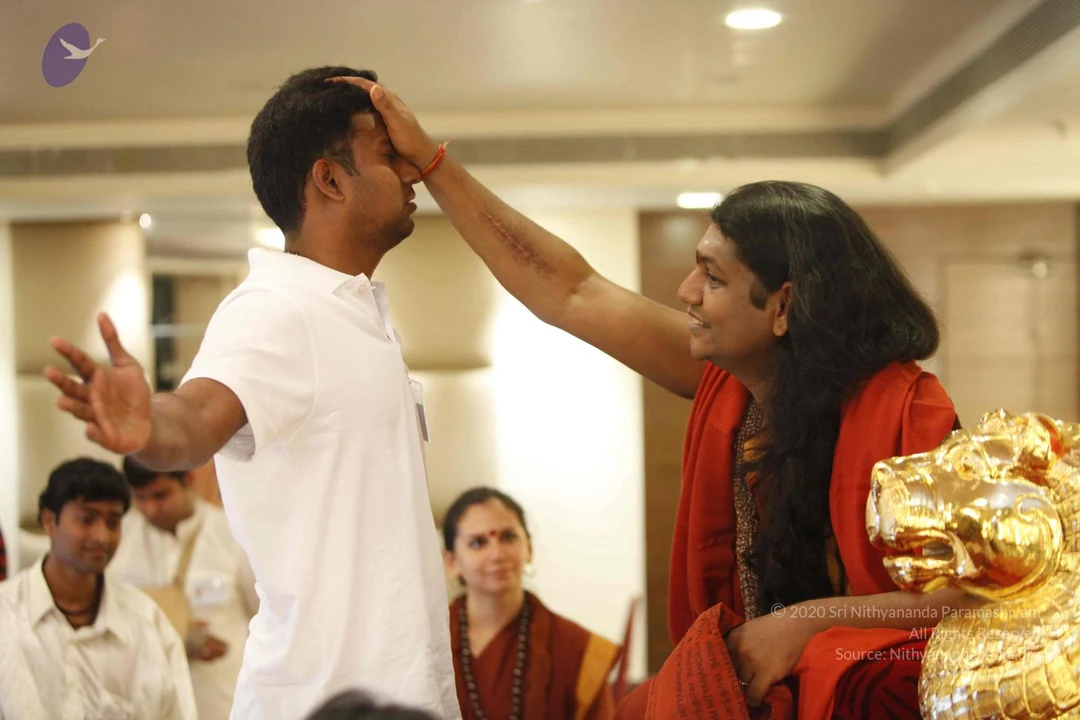
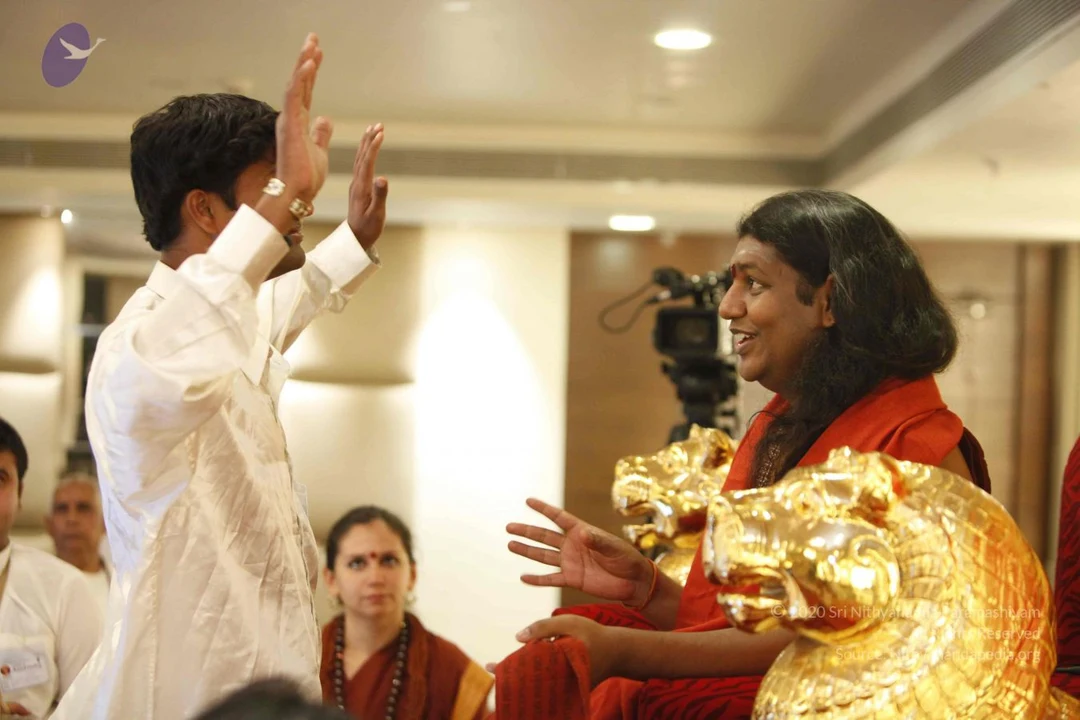
A seated man in an orange-red turban, bare-chested with a saffron shawl and white flower garland, smiles while placing his right hand on the head of a kneeling devotee in a light blue shirt. In his left hand he holds a small reddish fruit. Behind him are golden ornaments, a golden lion-form figure, and marigold garlands. A second man in orange robes with a red tilak and white forehead marks sits at left, watching.A seated figure in an orange-red turban and saffron-orange robe wears a white flower garland over a rudraksha mala and gold chain, with a gold earring and a small red-orange thread on the wrist. Their right hand rests on a knee while a man in a grey shirt, leaning forward, touches their extended hand near a large gold lion-headed seat arm. Behind them a framed portrait of a smiling figure in a red turban is decorated with orange marigold garlands, and a gold throne backrest is visible. A bald man in white with a sandalwood and kumkum forehead mark stands at left, partly visible. The turbaned figure is in a probable Swamiji (probable) appearance, shown with long swept-back hair under a turban, rudraksha mala and ceremonial gold necklace, in a seated ritual setting.A photograph of a seated figure in a red-orange turban, orange-red robes with a gold border, white flower garland and beaded mala, placing one hand on the head of a kneeling devotee in white clothing. A shaved-headed man in saffron-orange robes with a rudraksha mala and a red tilak stands to the left, looking down. A golden lion-shaped throne or seat is behind the kneeling devotee, and a framed portrait with orange marigold garlands hangs on the wall at right. a person: the seated figure in the turban wears a white garland and ornate gold-bordered orange robes, and is in the position of honour as the blessing giver.A seated figure in a red-orange turban, orange-saffron cloth and a white flower garland with rudraksha beads sits on an ornate gold throne with a carved arched back, flanked by two gold lion sculptures and red velvet cushions. A man in a dark vest over a white shirt bends forward and rests his hand on the seated figure's head, as if giving blessing or receiving darshan. Behind them a red banner shows a lit city ghat and the partial word 'Awaken'. Fruits sit on the gold base at the bottom. The seated figure matches Swamiji's appearance cues (turban, garland, rudraksha, saffron clothing), so it is probable Swamiji in person.A smiling person seated on a red velvet throne-like sofa with a gold lion-head armrest, wearing a rust-red turban with a red tilak on the forehead, a saffron-orange and rust-red robe, a white jasmine garland and a rudraksha mala with beads. A gold ornate backrest stands behind, with a pink-and-gold banner reading "...ning" behind him, and a lapel microphone is clipped to the robe. Swamiji (probable): the rudraksha mala, white garland, turban and saffron-red robe match the appearance of the page's subject, seated in a satsang setting. He gestures with one open hand. A partially visible person stands at the right edge.
FB-Photos-of-the-Day

3 photosSource gallery
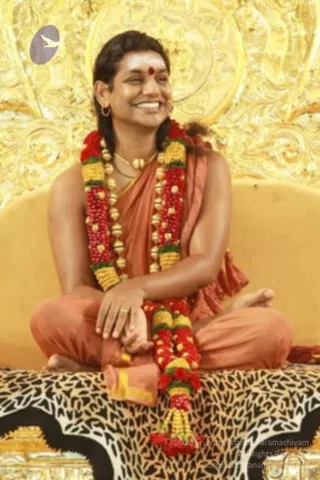
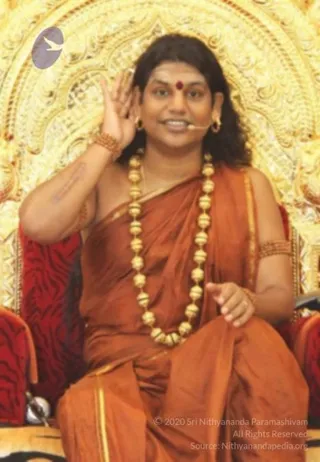
A smiling man with short dark hair sits cross-legged on a golden throne against an ornate gold relief backdrop. He wears an orange-saffron shawl draped over one shoulder and orange dhoti-style garments, with a red bindi on his forehead and a gold necklace. He is adorned with long garlands of red and yellow flowers with green leaves, and holds one hand in his lap. The throne is covered with a black and gold patterned cloth.A seated figure in saffron-orange robes sits before an ornate gold throne with red cushions, raising one hand near the ear in a listening gesture while the other rests on the lap. Long dark hair falls past the shoulders, with a red bindi on the forehead, a headset microphone at the cheek, and a long necklace of large gold beads. Gold bangles and earrings complete the look, and a rudraksha-style bead necklace is absent.A smiling man sits on a stage in front of a gold-toned backdrop with a dark red curtain. He wears an orange-saffron garment draped over his shoulder and upper arm, layered rudraksha malas, a large ceremonial gold pendant and necklaces, and a red-brown bindi-style mark on his forehead. His hands rest together in his lap. a person: the saffron clothing, layered rudraksha malas and ceremonial gold ornaments are cues consistent with the page's reference to a person at this satsang. A small blue bird logo appears at the upper left corner.

More photos

3 photosView all
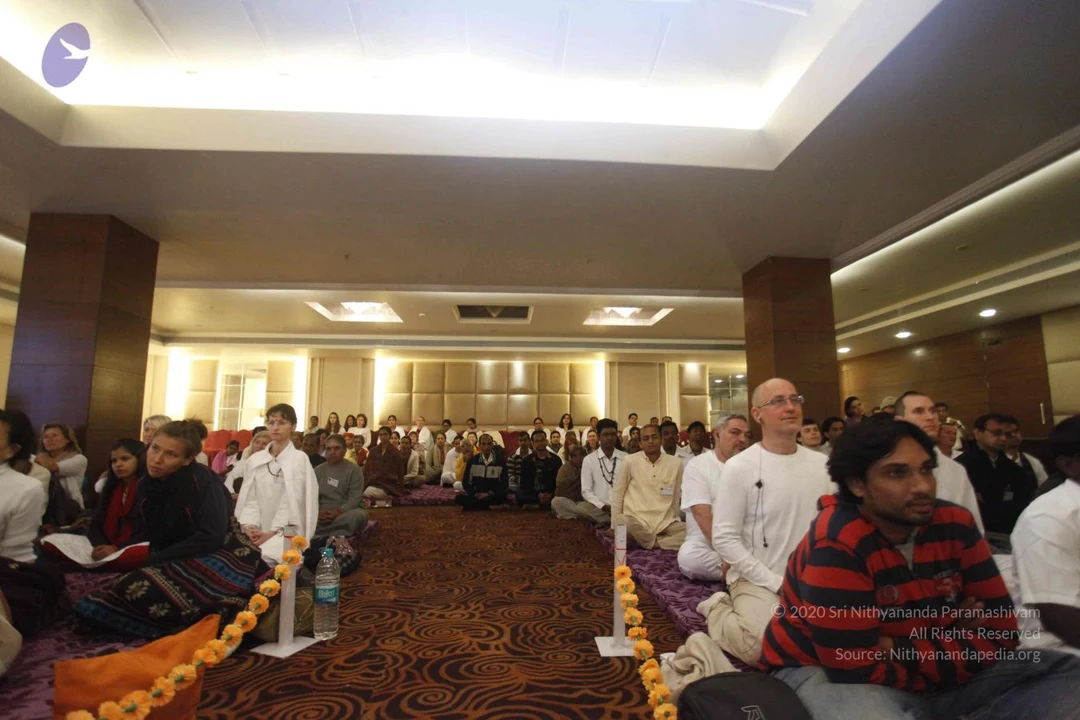
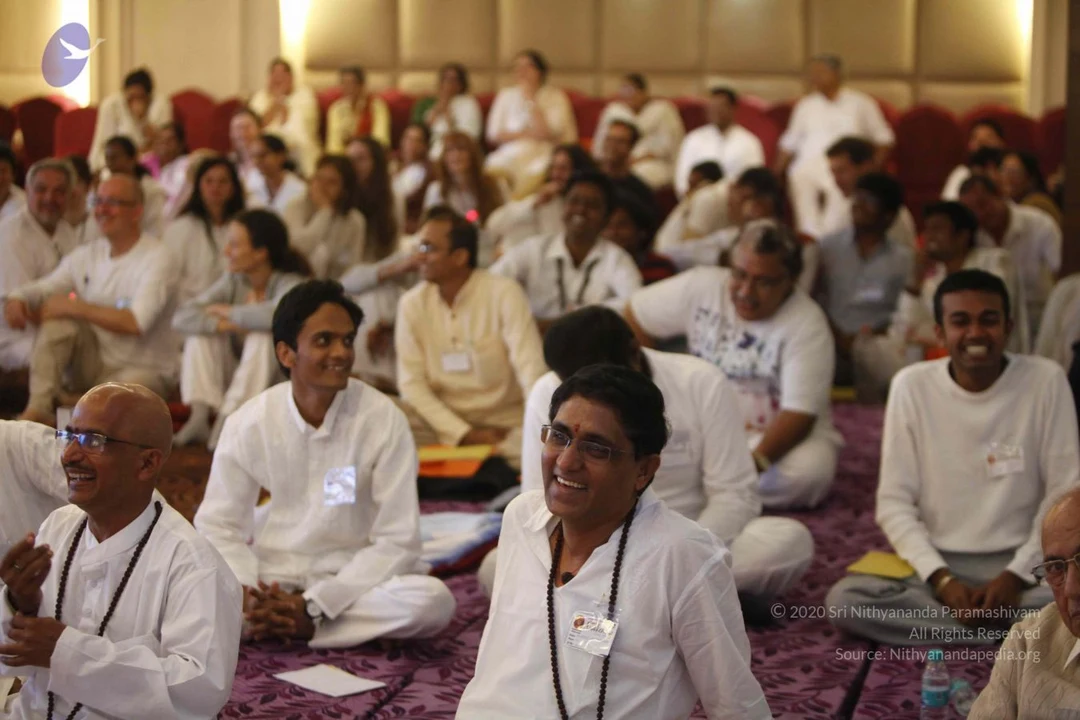
A collage of a buffet breakfast at a hotel-style dining room with cream walls. In the main panel, an older man with grey hair and glasses, wearing a white shirt and white trousers, holds a plate of fried puris at a silver chafing dish of yellow curry. Behind him a woman in white with a lanyard and a white cloth over her arm waits in line, and another man in white stands further back. Lower right, a hand in white sleeves with a red thread on the wrist ladles yellow curry onto a white plate. A smaller inset shows close-up of puris with a brown gravy on a white plate.A seated audience inside a hall with cream walls, warm lighting and rows of red upholstered chairs behind them. Many participants in white and cream clothing sit on a purple carpet, several wearing name badges on lanyards. In the foreground a smiling man in white with rudraksha mala beads and glasses sits near a bald smiling man in white with beads, and a young man in a white shirt smiles nearby. Behind them rows of attendees in white and grey clothing listen attentively.A seated satsang audience fills a hall with dark carpeting and tall pillars. Many devotees sit cross-legged on purple floor mats, wearing white, saffron and orange clothing; a woman in a red-and-orange sari sits in the foreground and a man in an orange turban is at the lower left. At the far end, a raised stage with a red backdrop displays a seated figure beside a tall lamp. The people appear to be listening to a teaching. A large projection screen stands on the left, next to a wooden seat cushion area at the right.