Skip to content
Thursday

12 September 2013

What is Dharma?

Dated photos
300
Source pages
1
Media
26
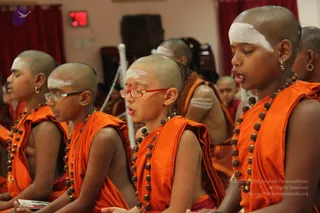
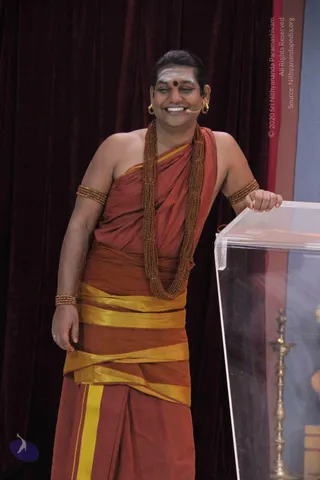
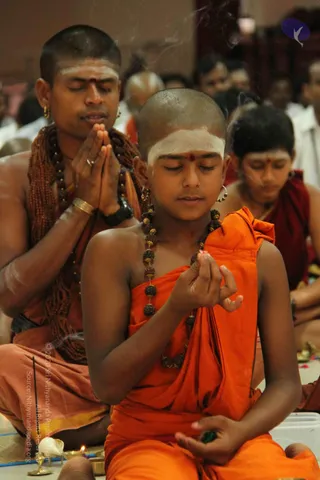
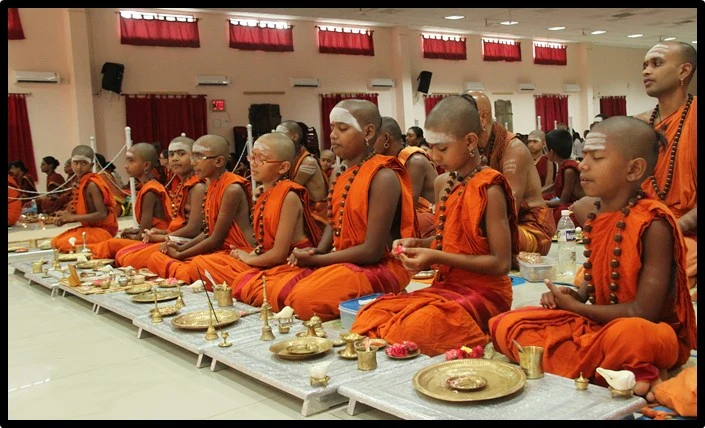
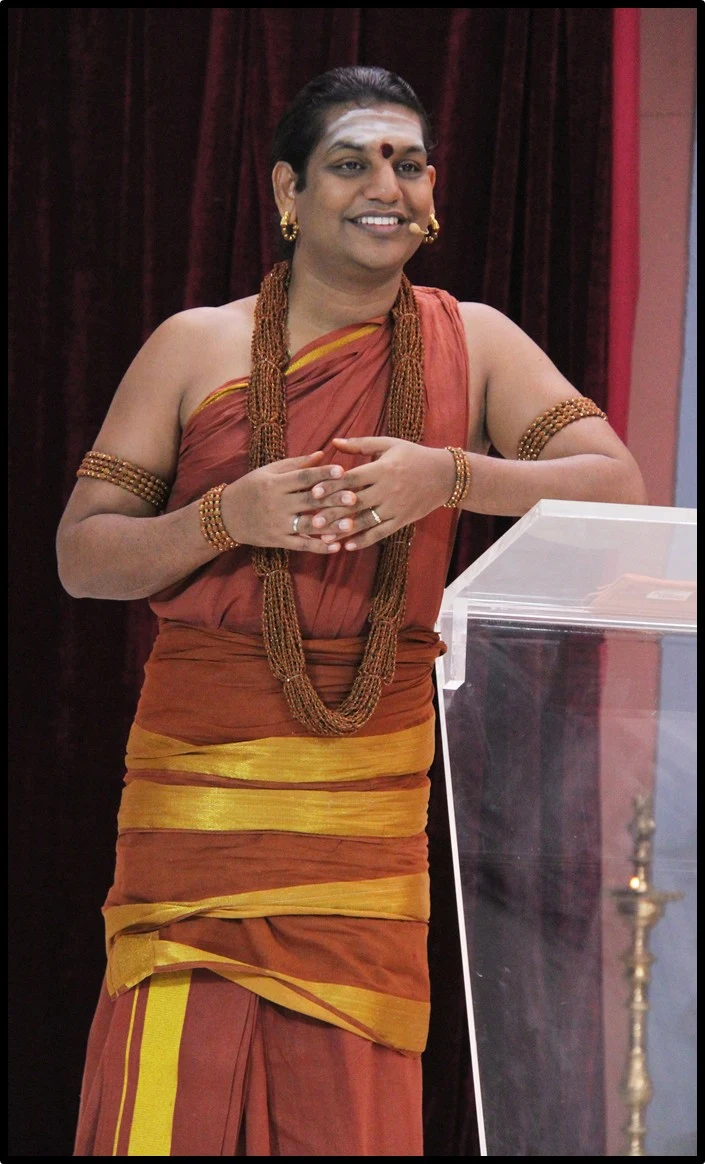
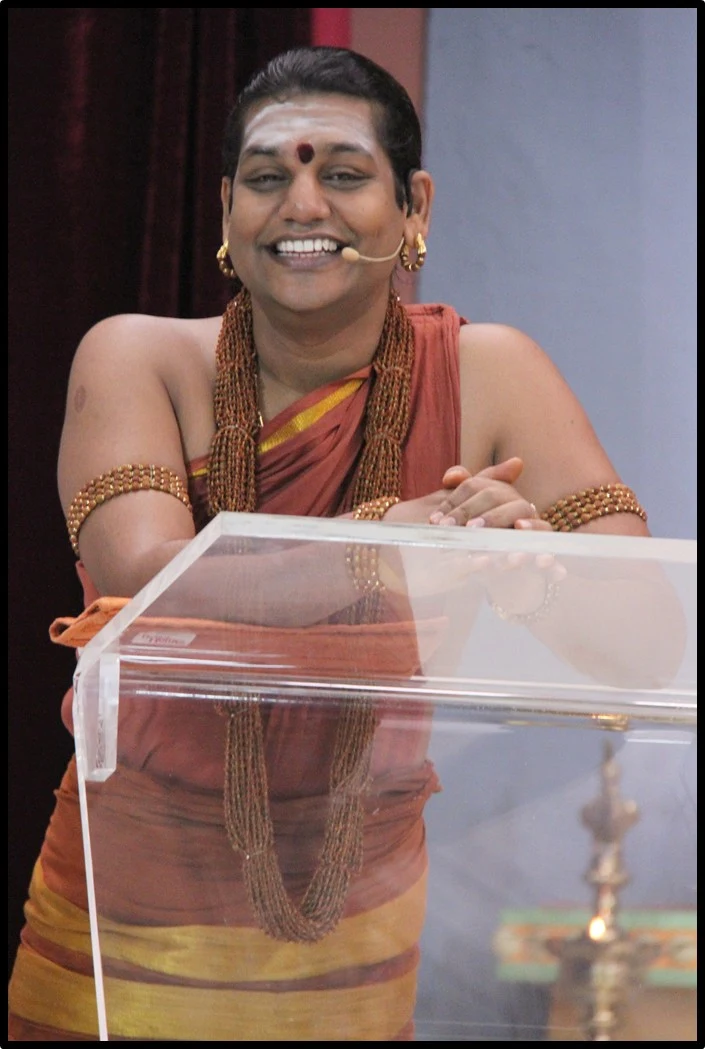
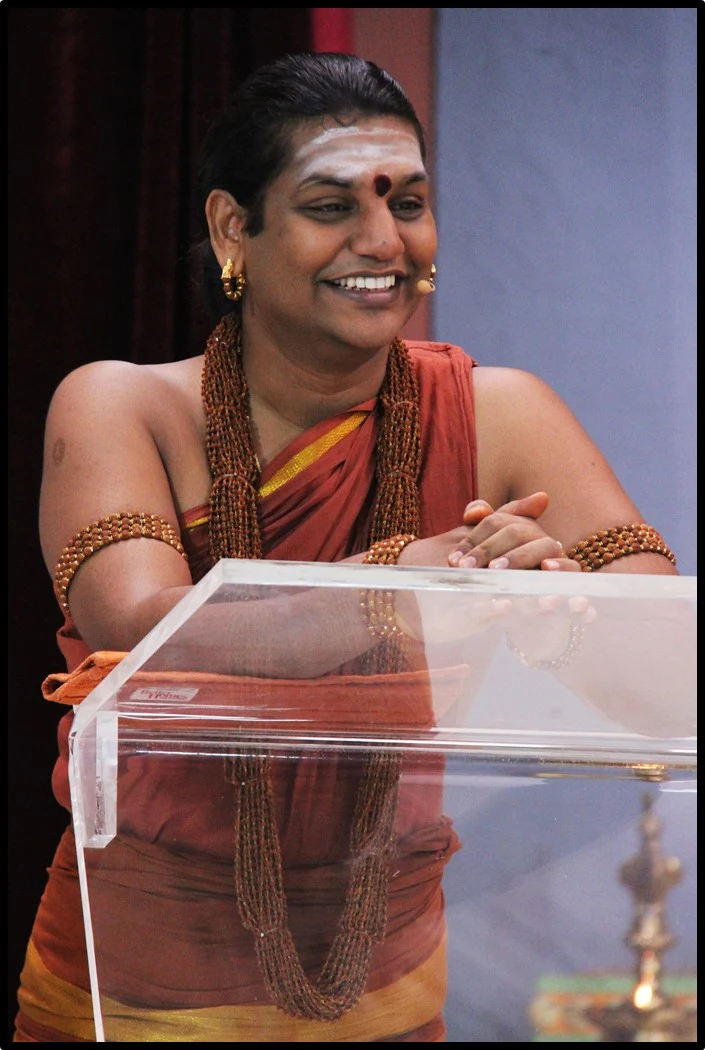
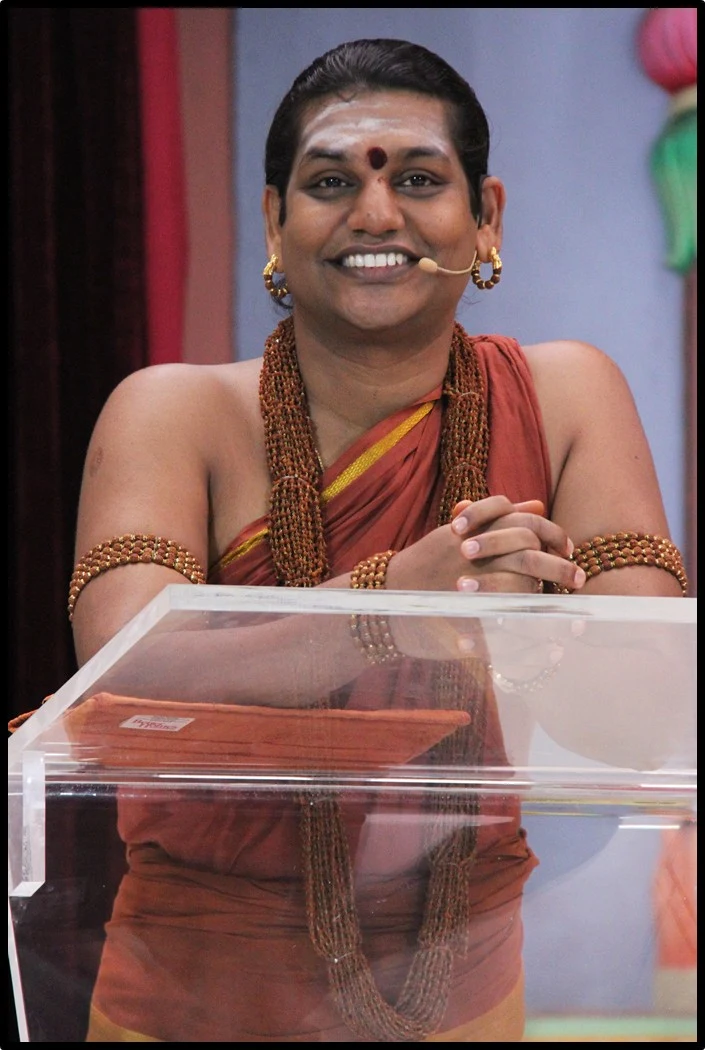
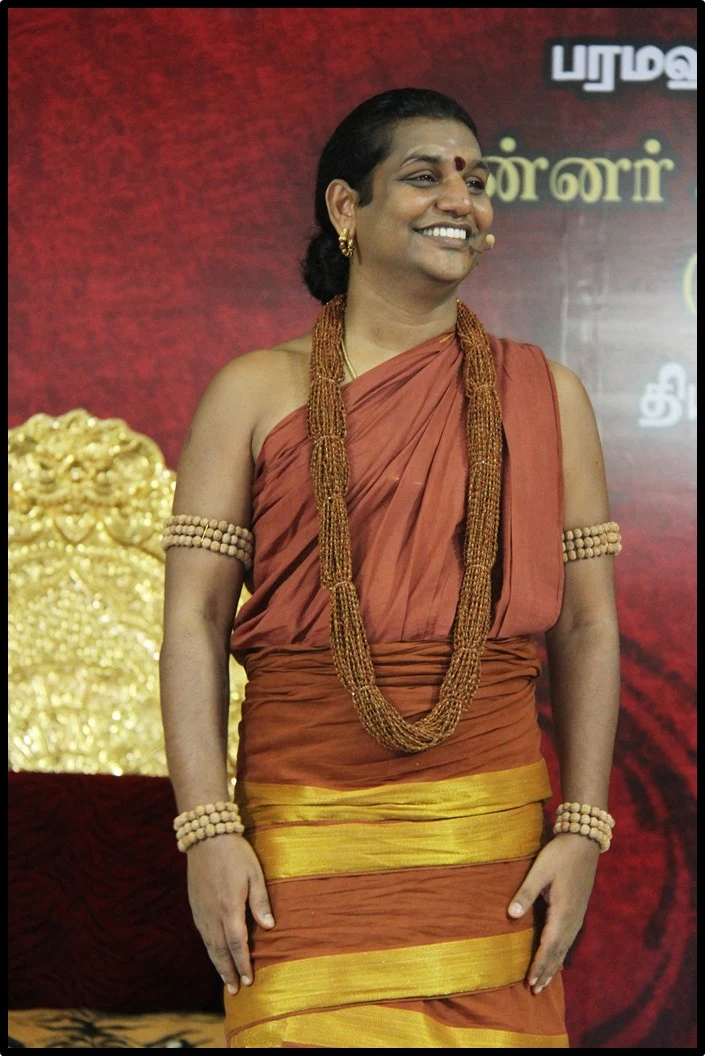
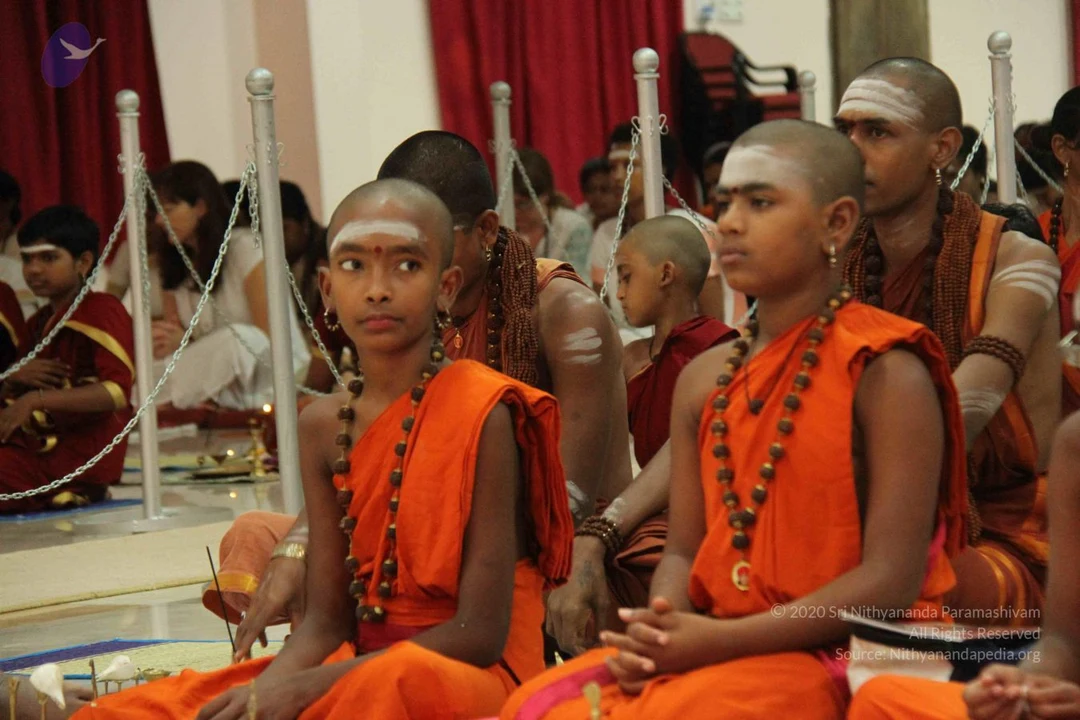
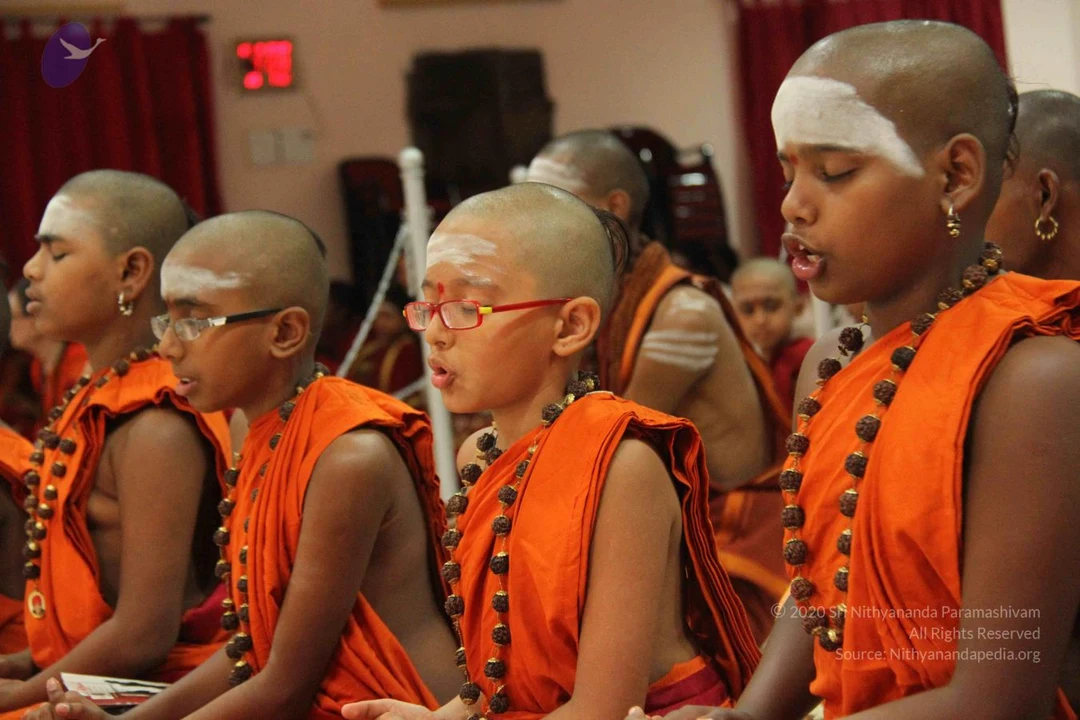
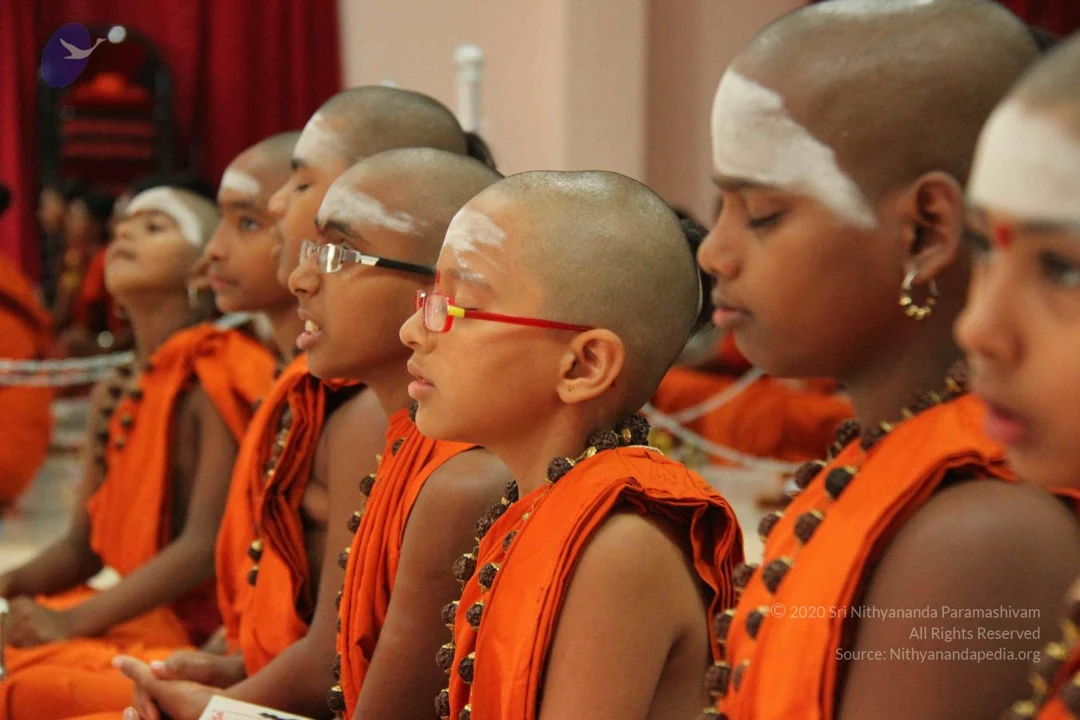
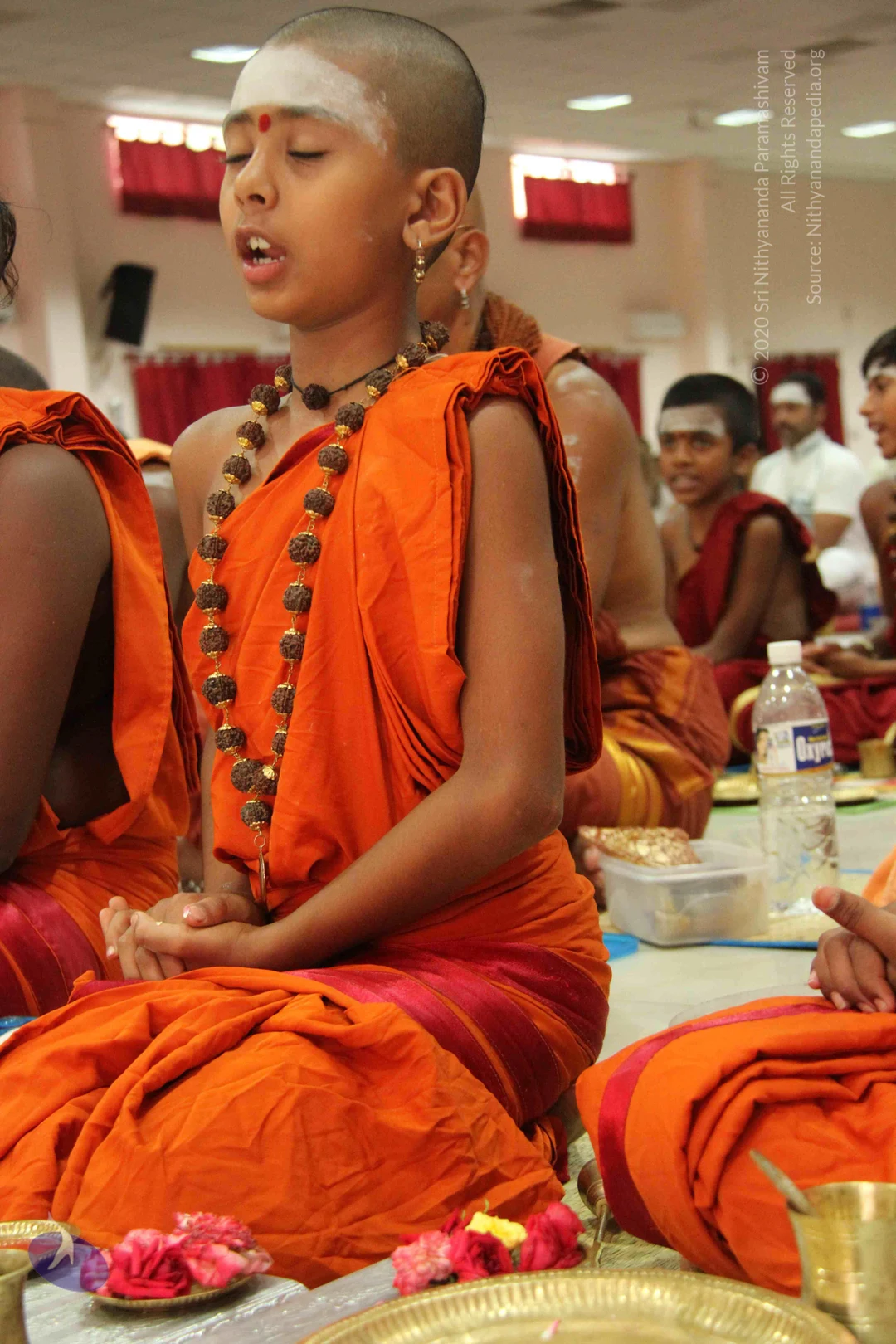
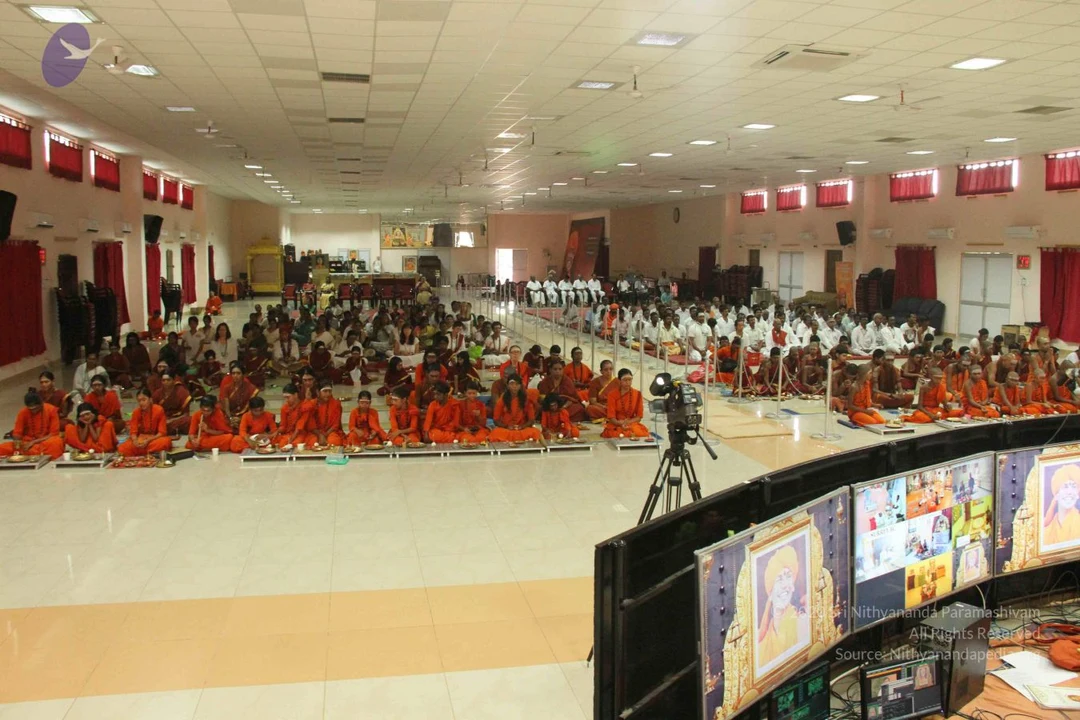
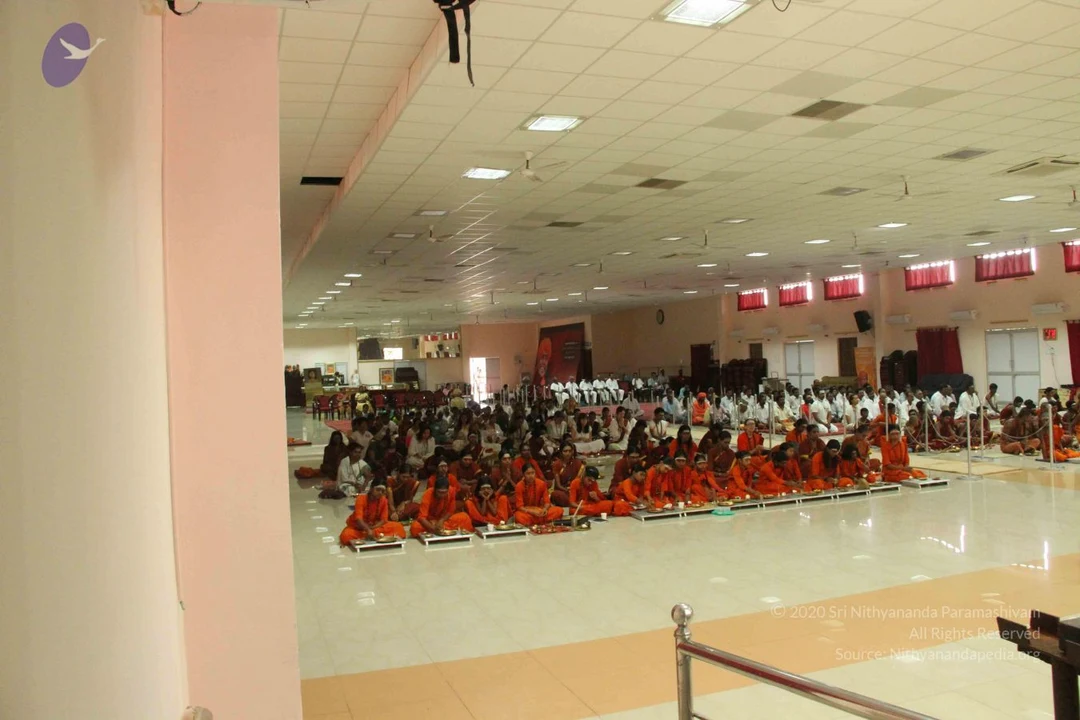
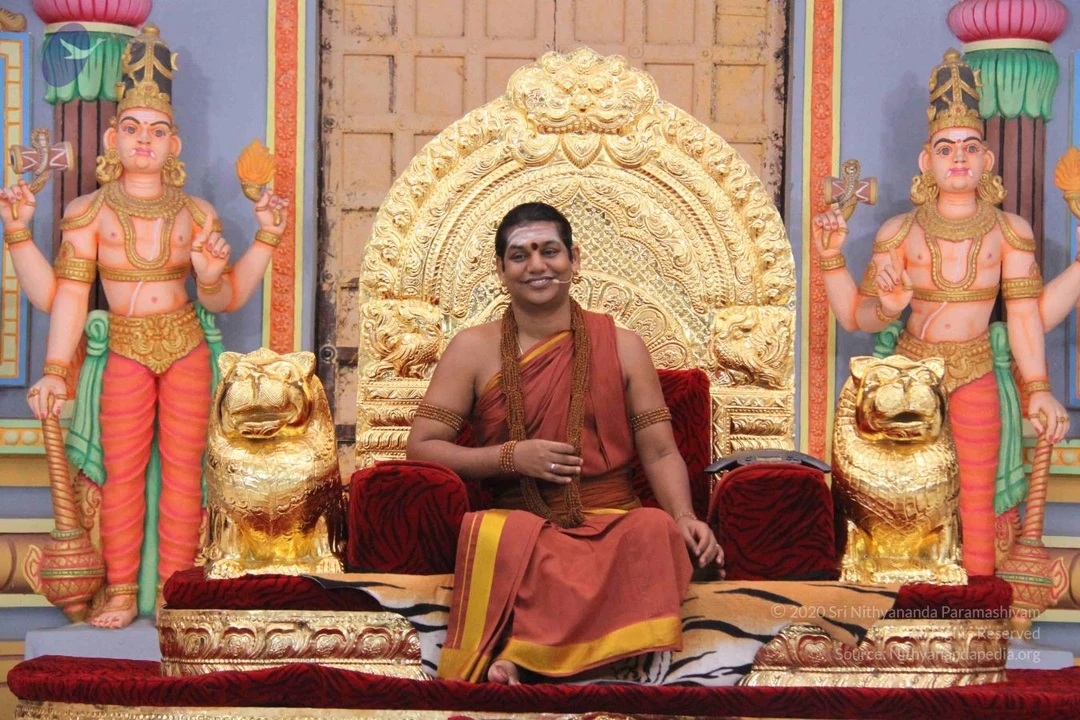
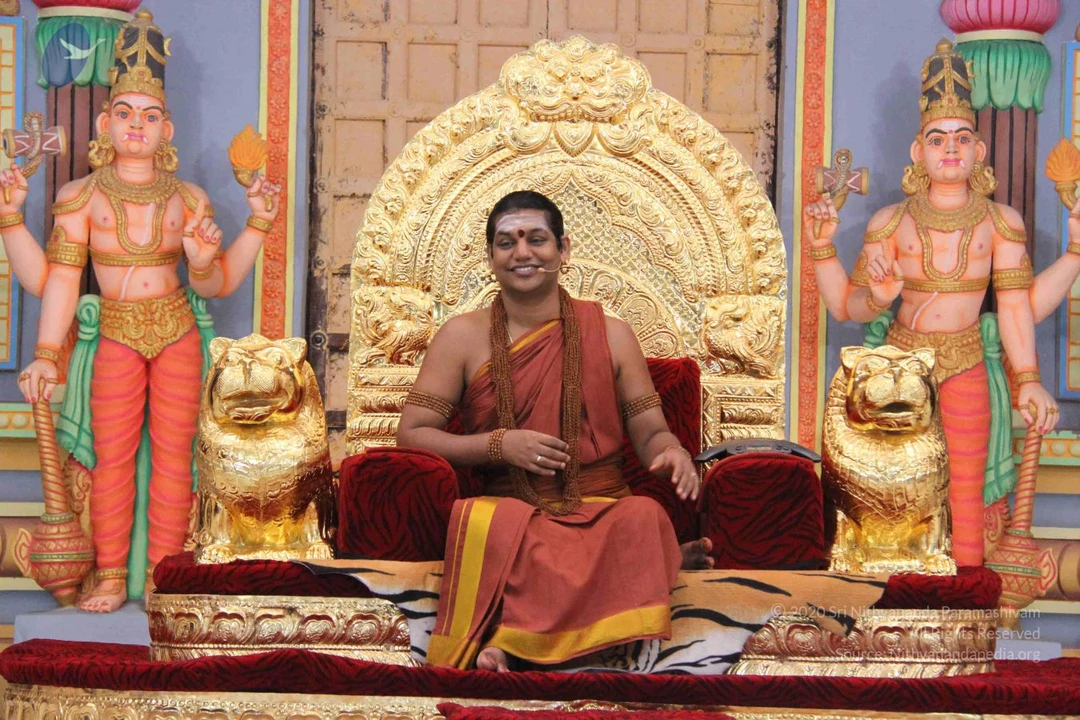
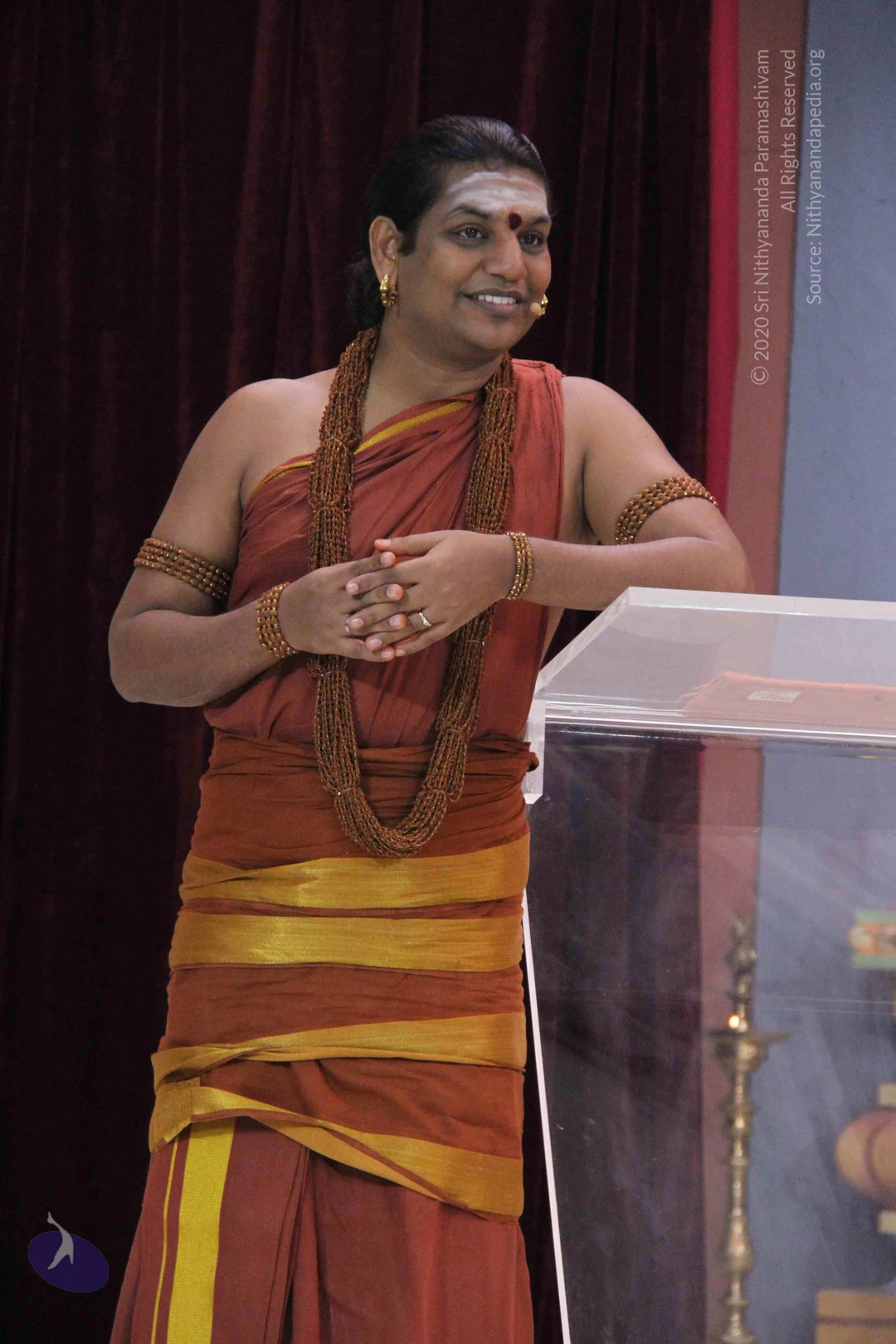
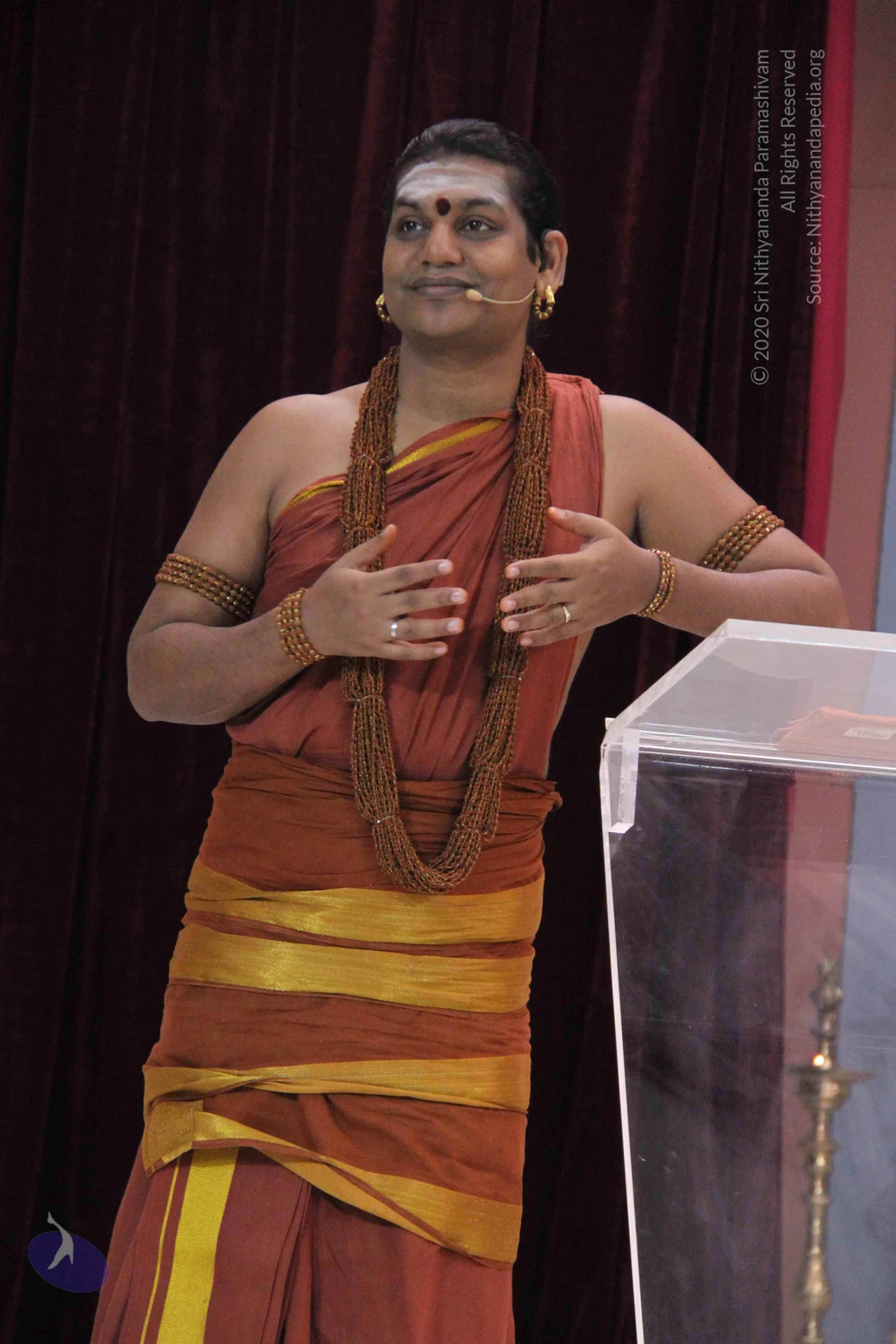
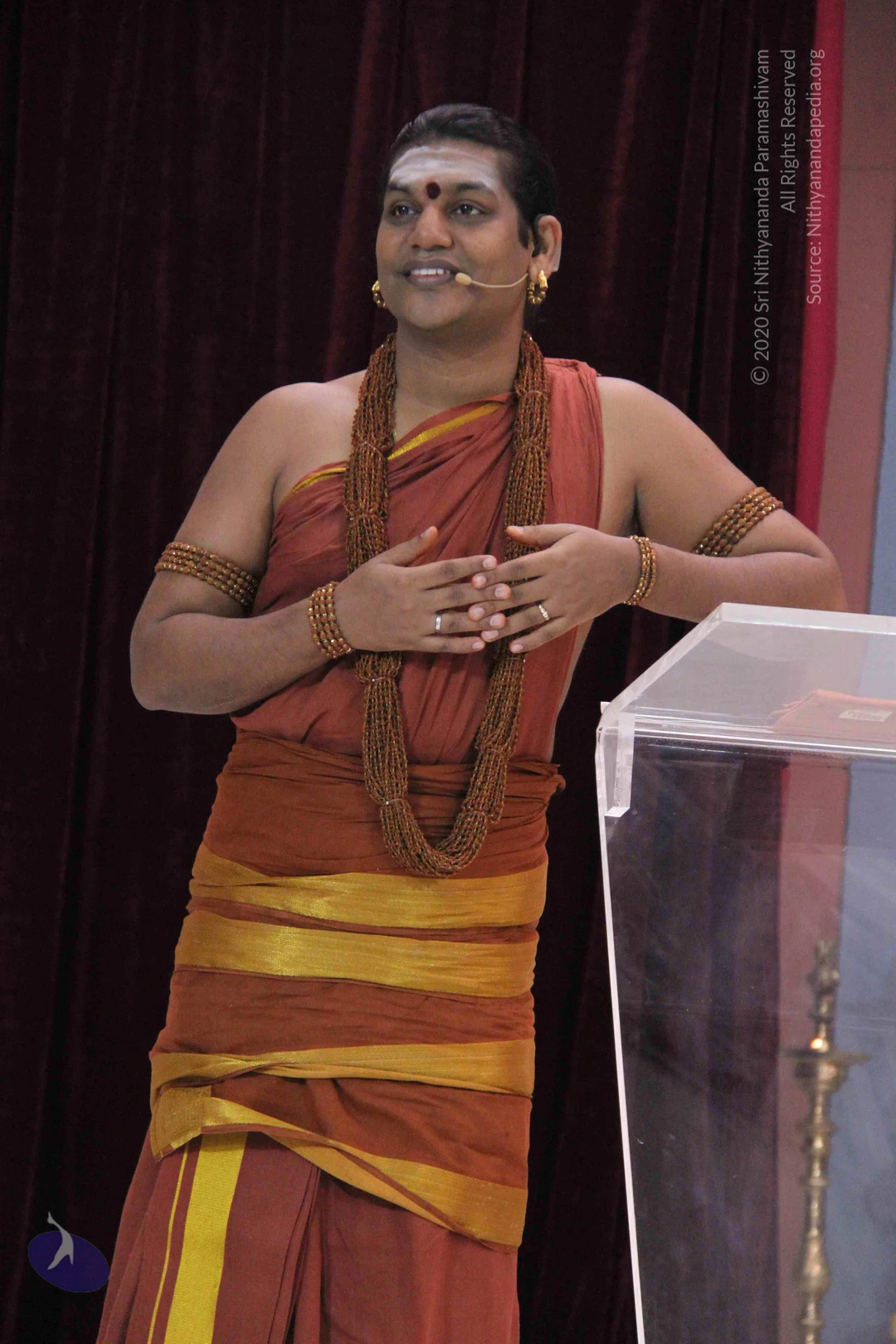
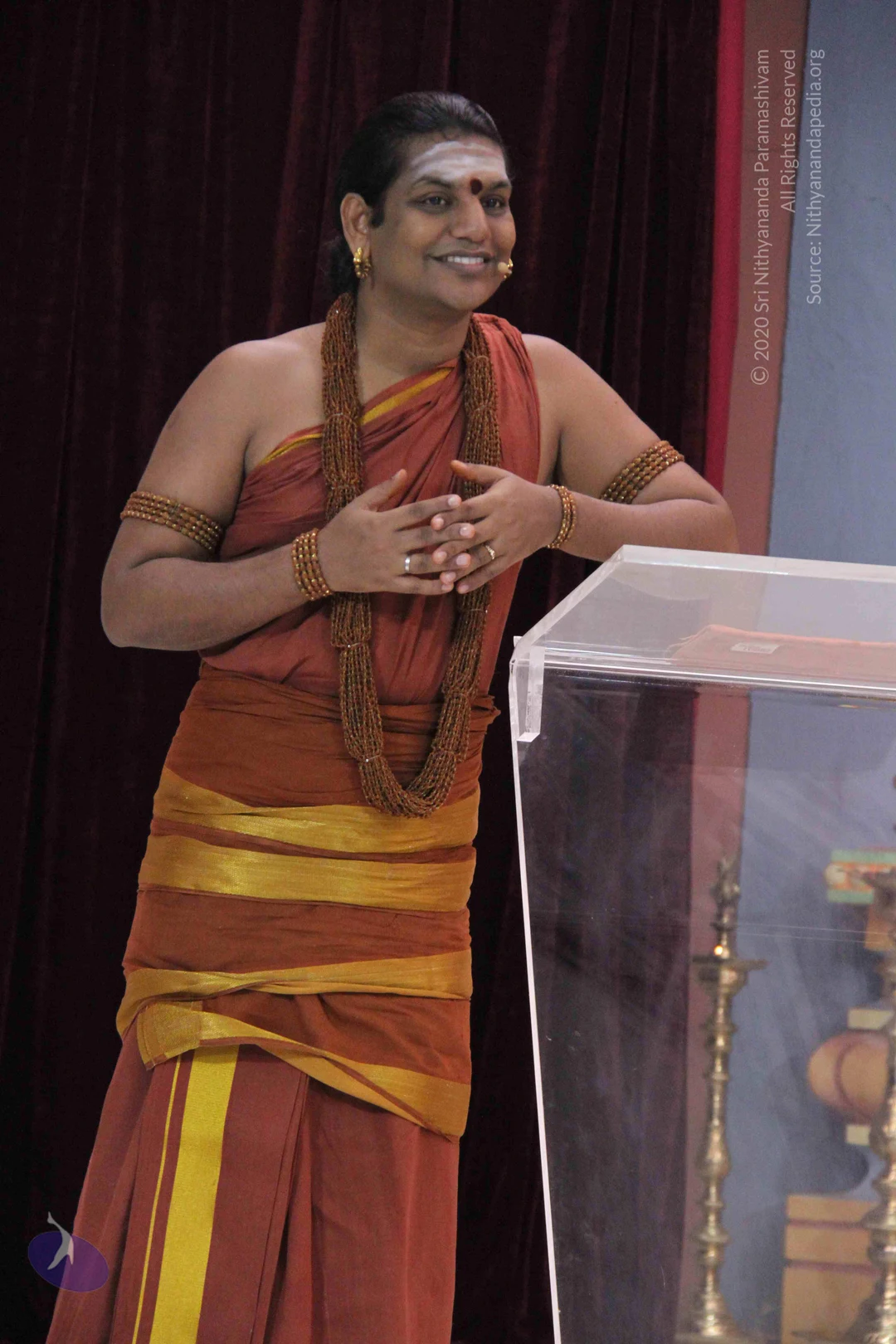
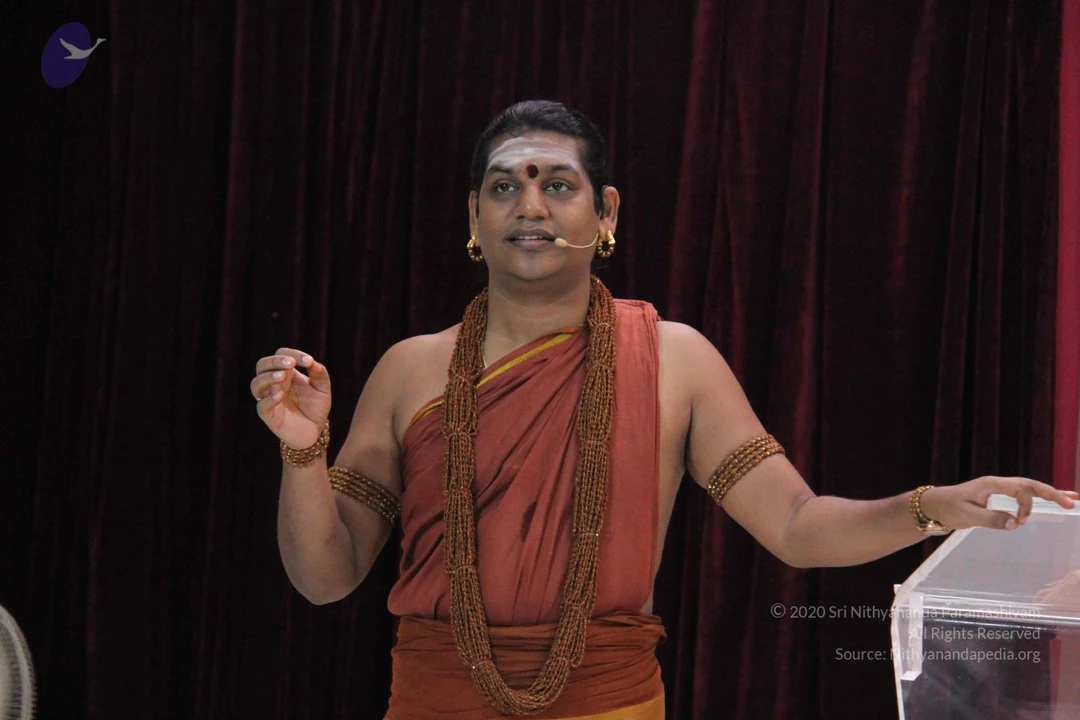
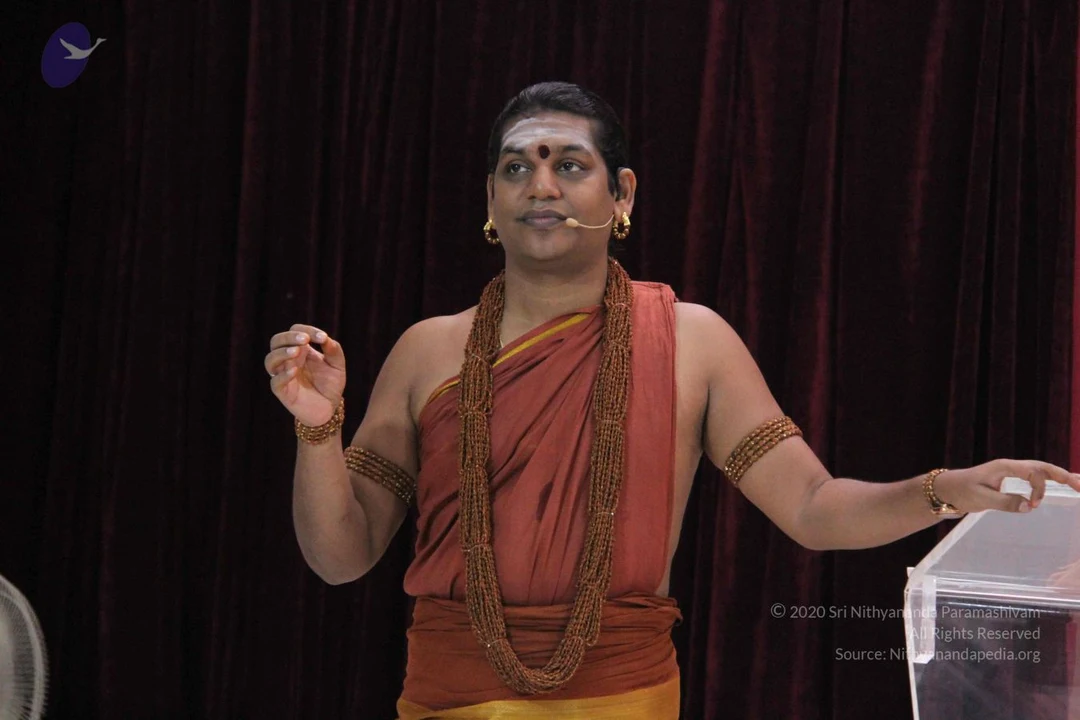
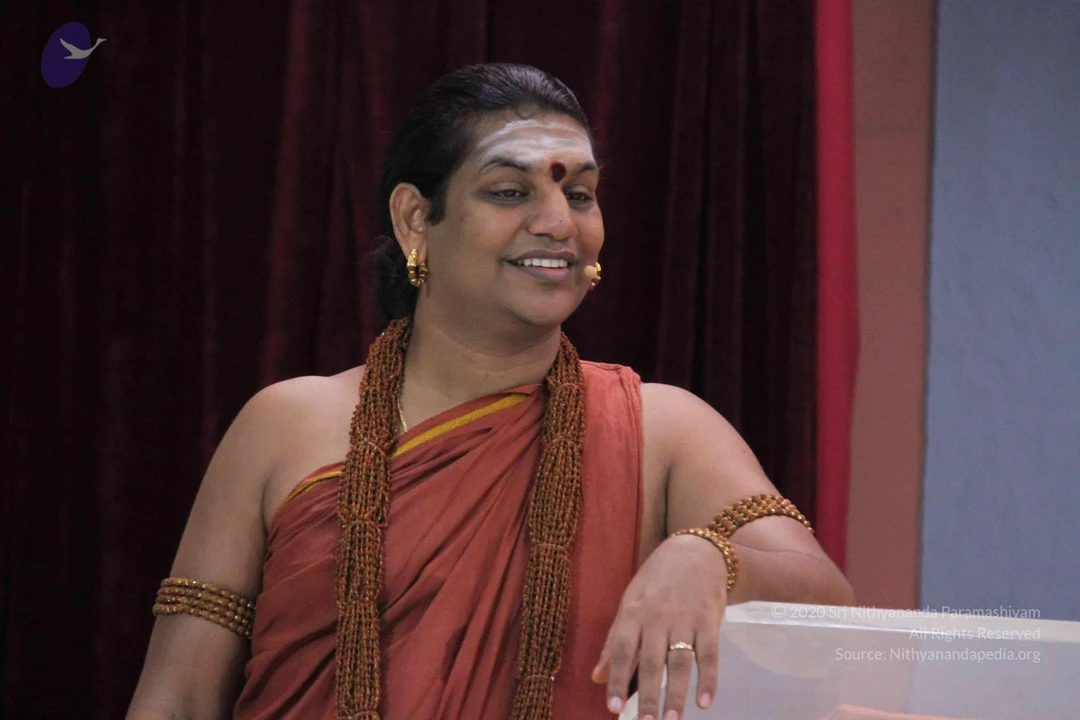
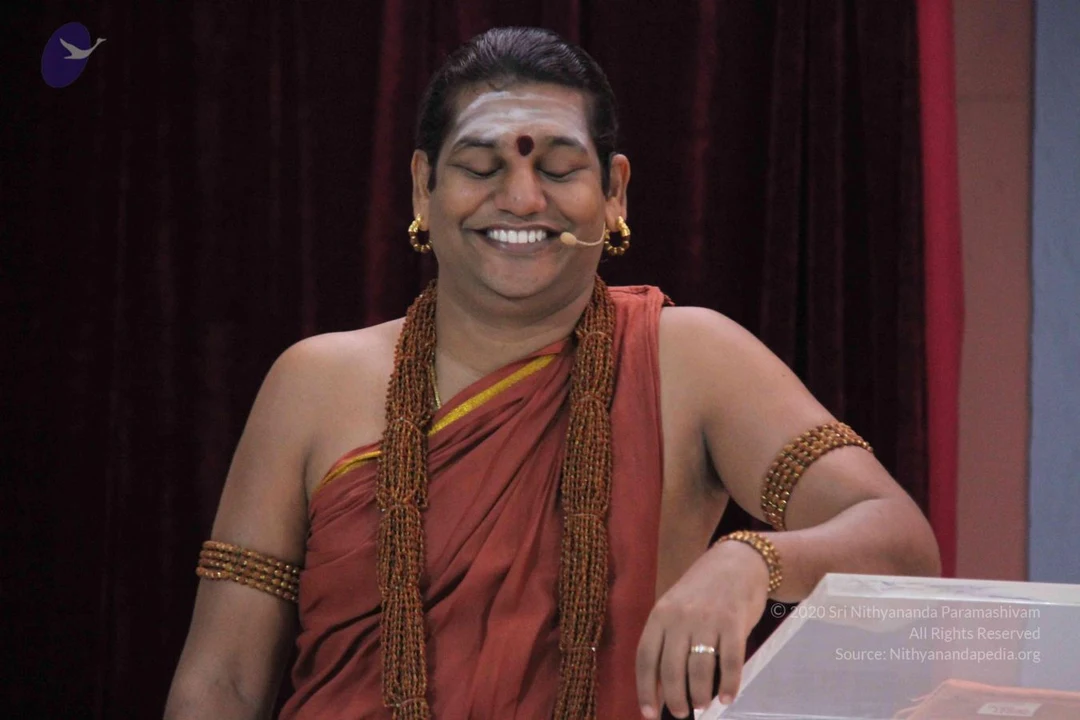
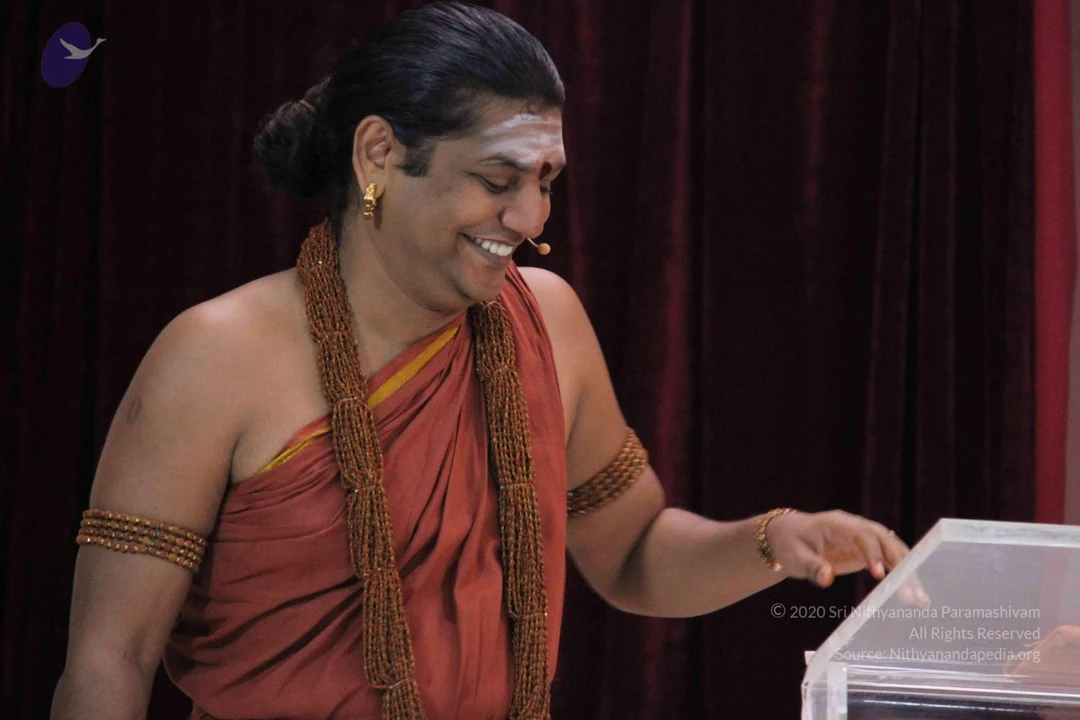
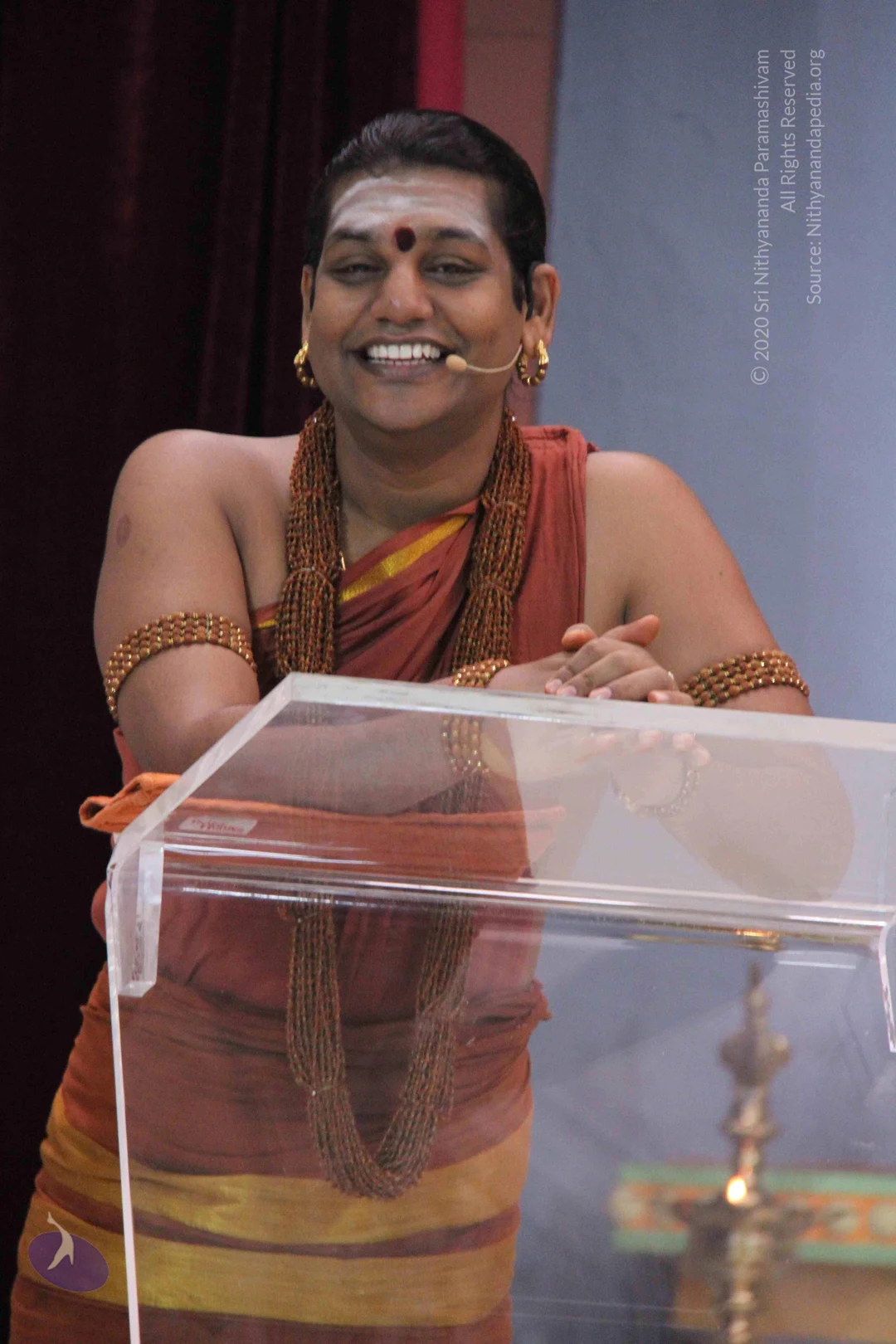
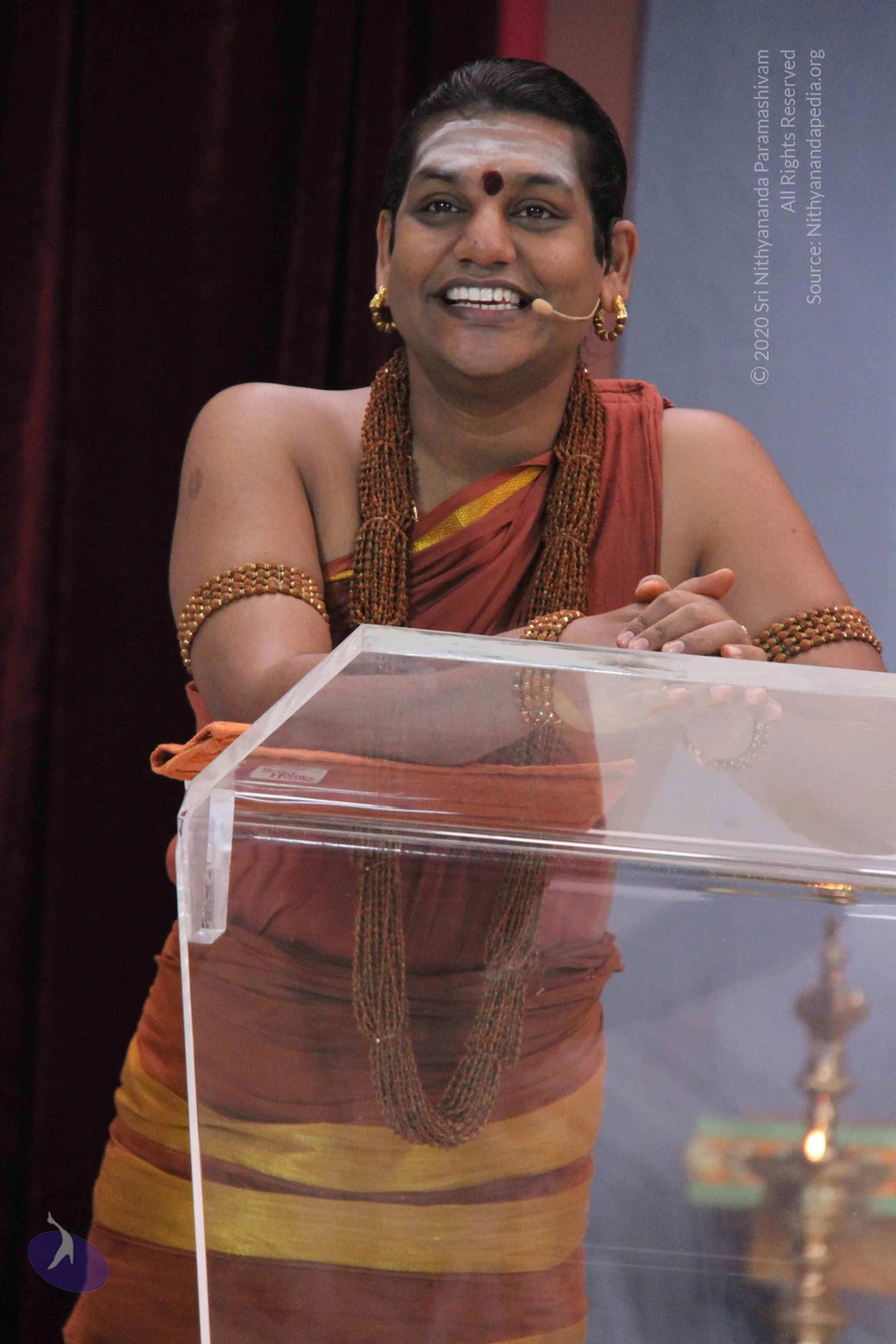
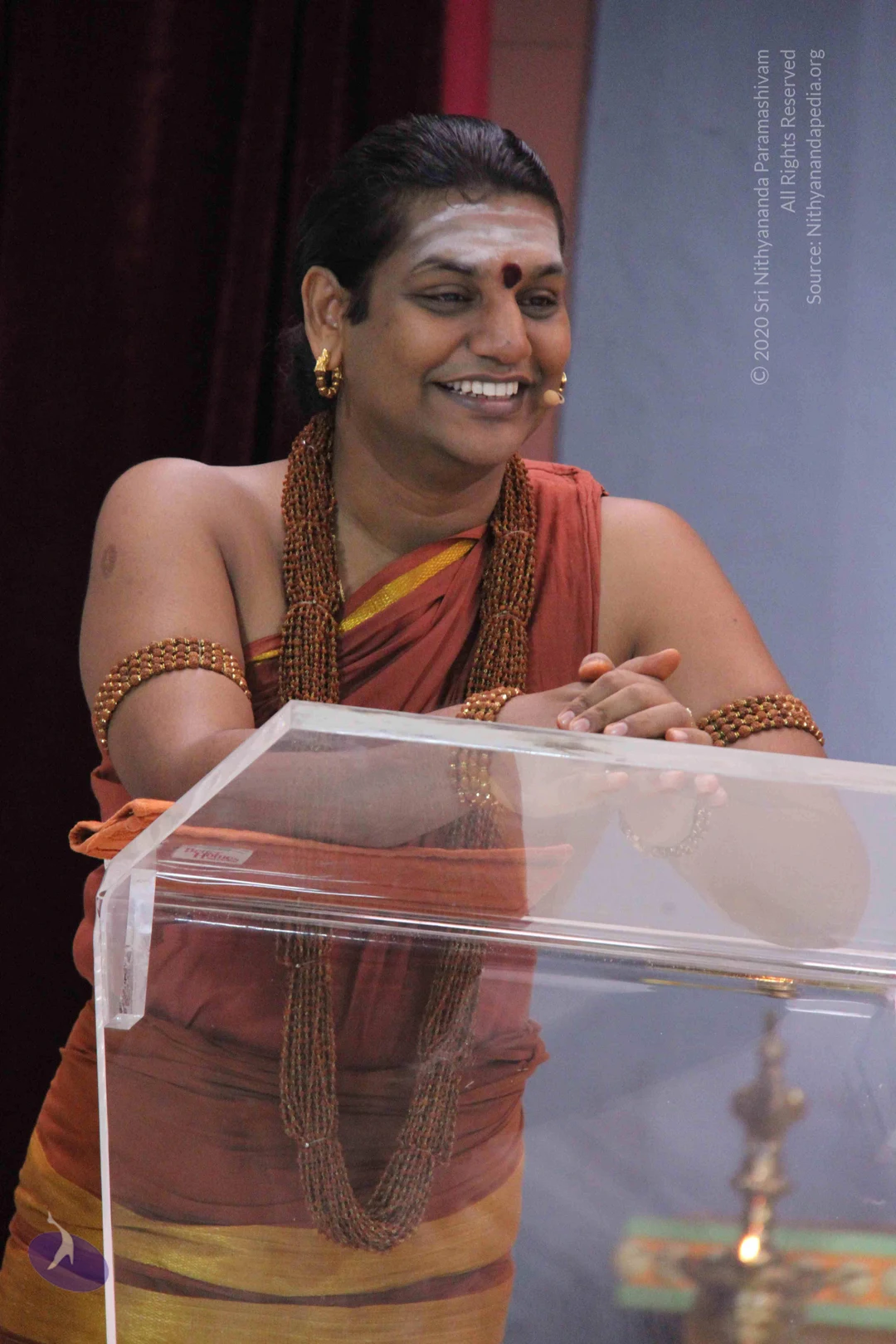
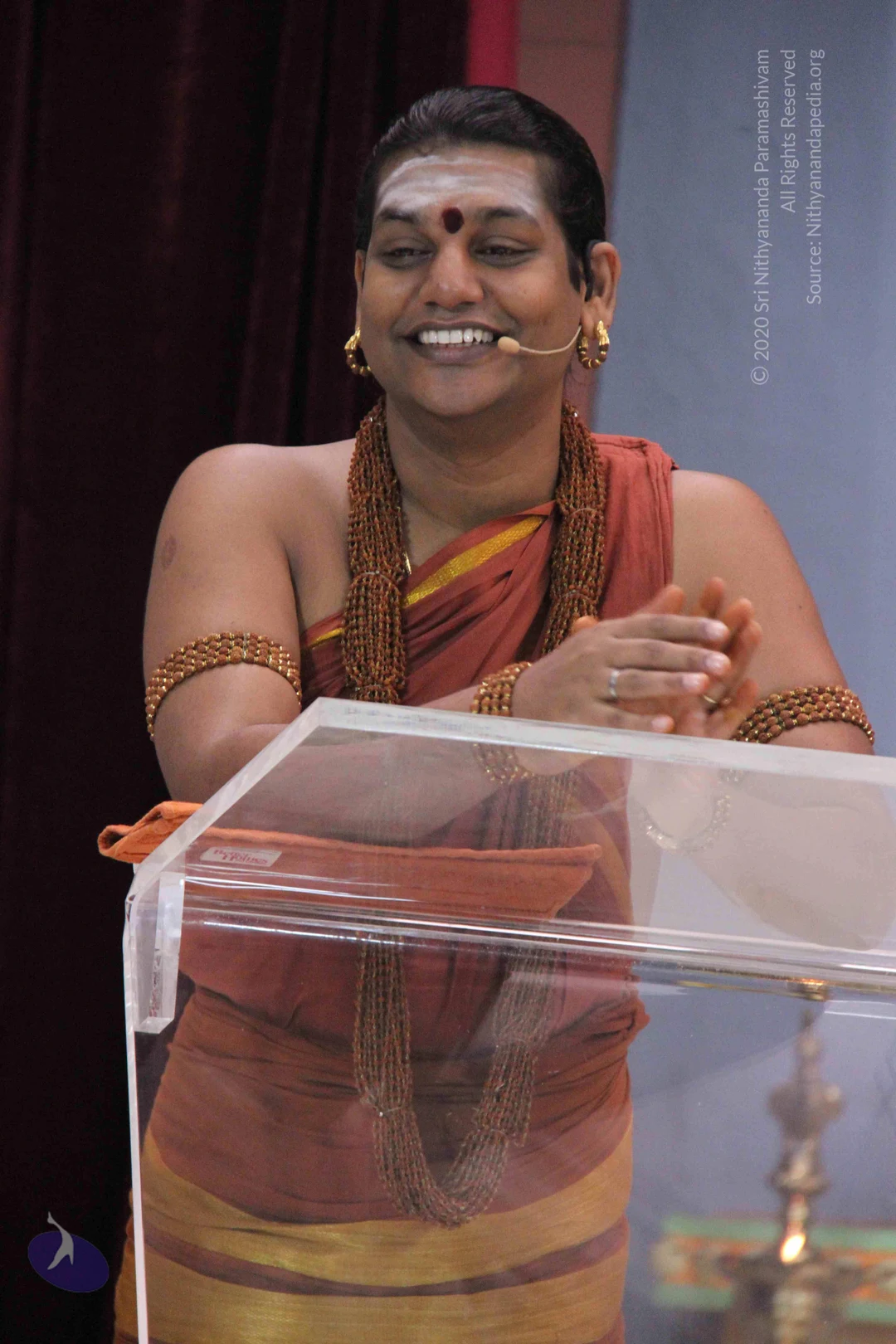
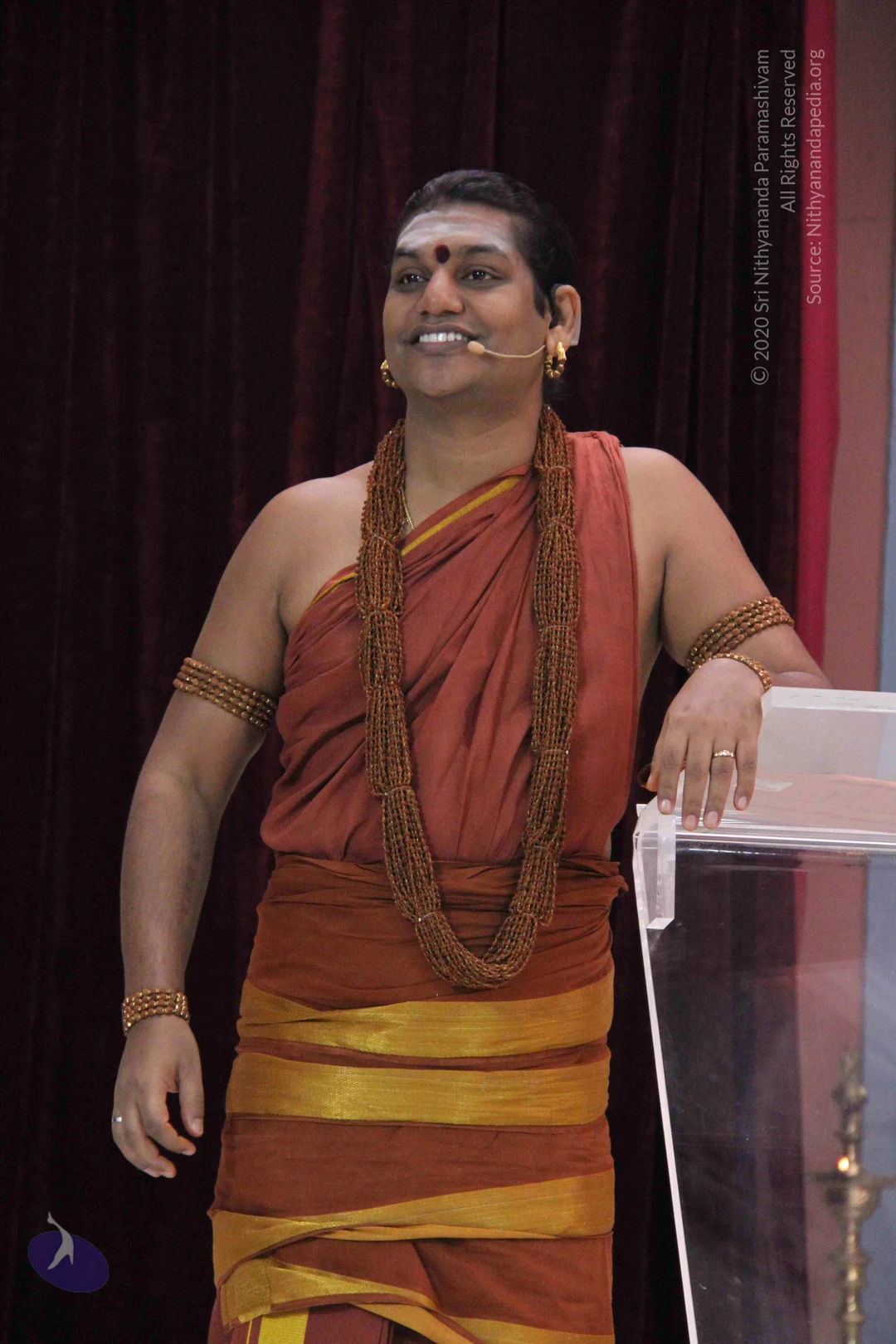
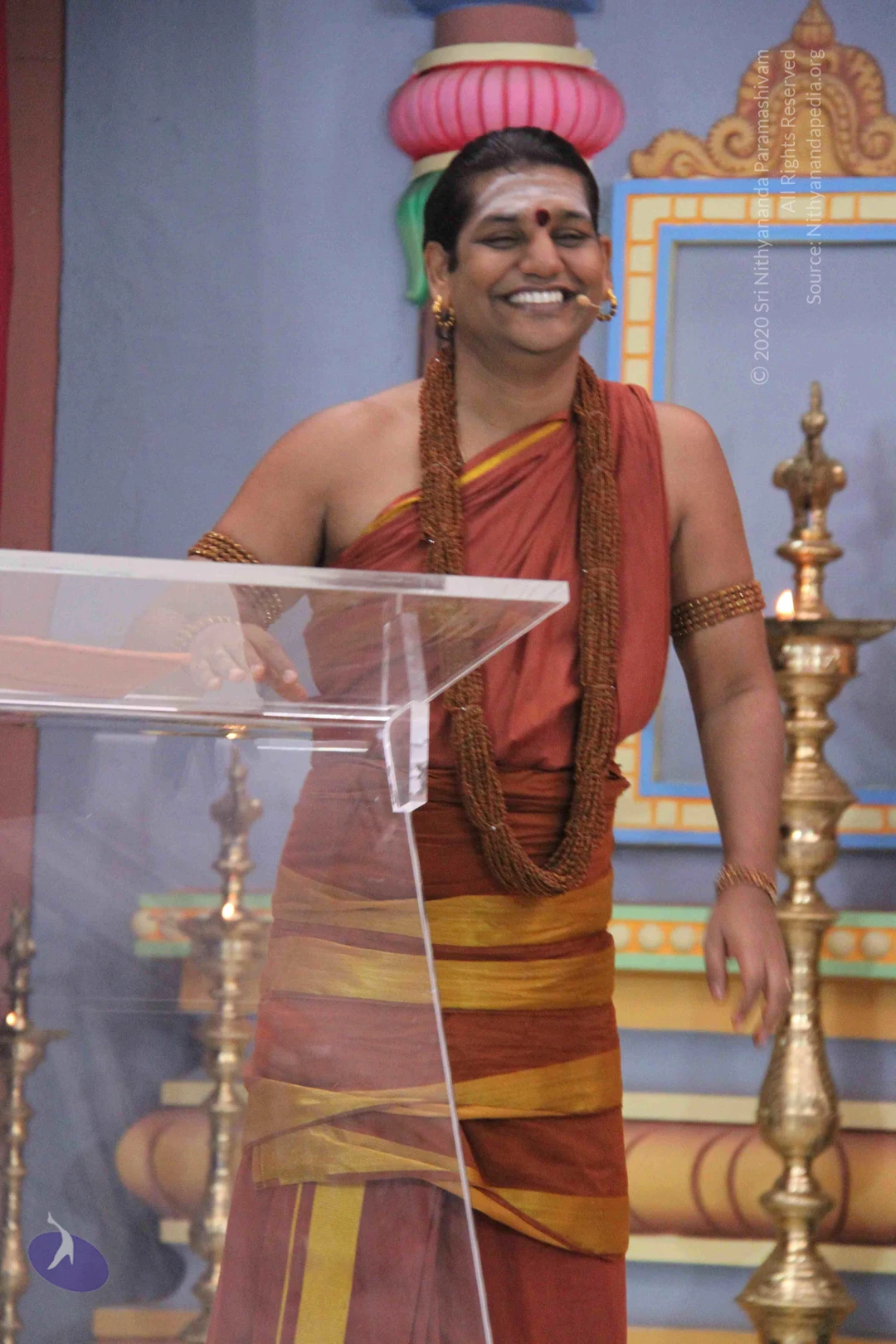
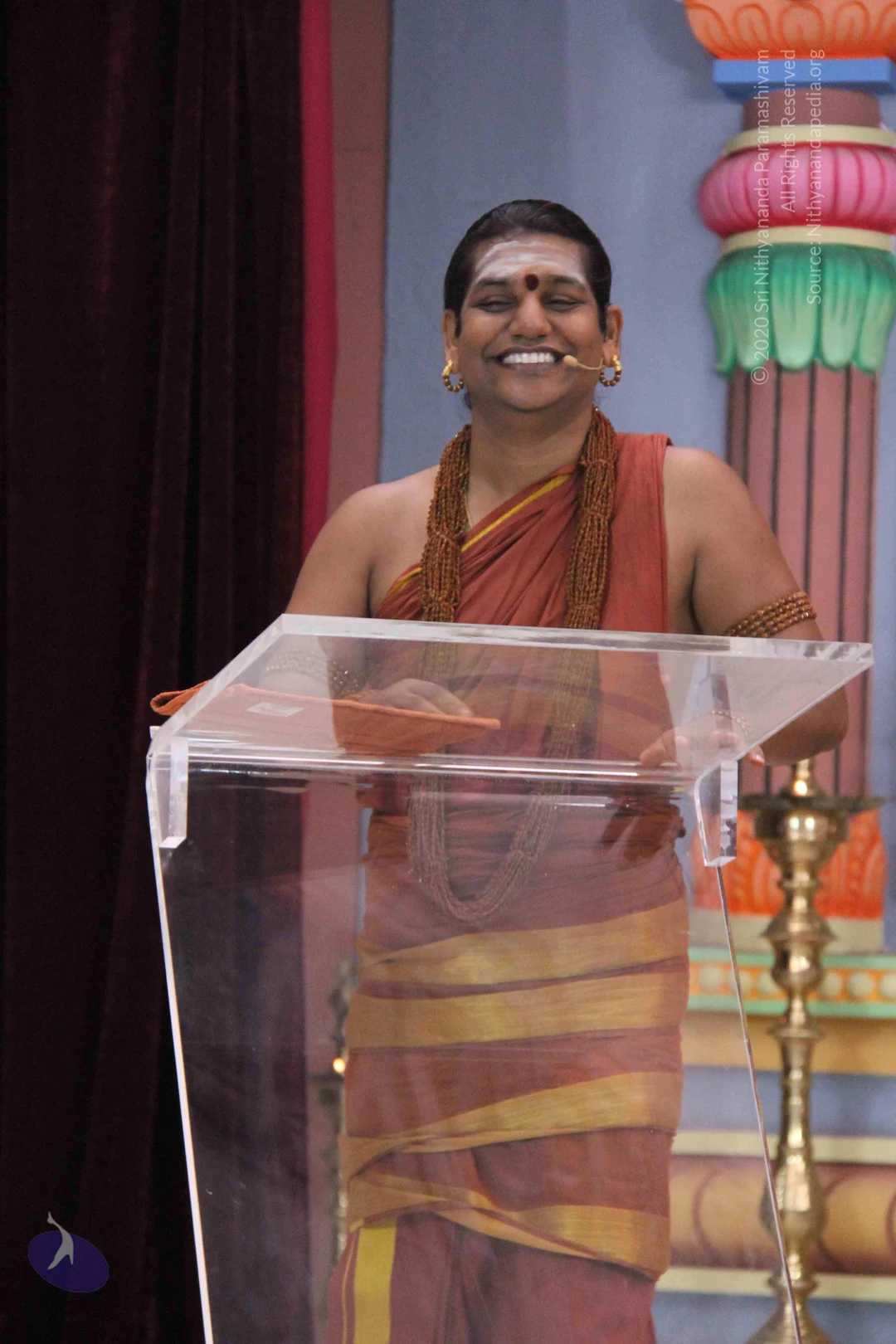
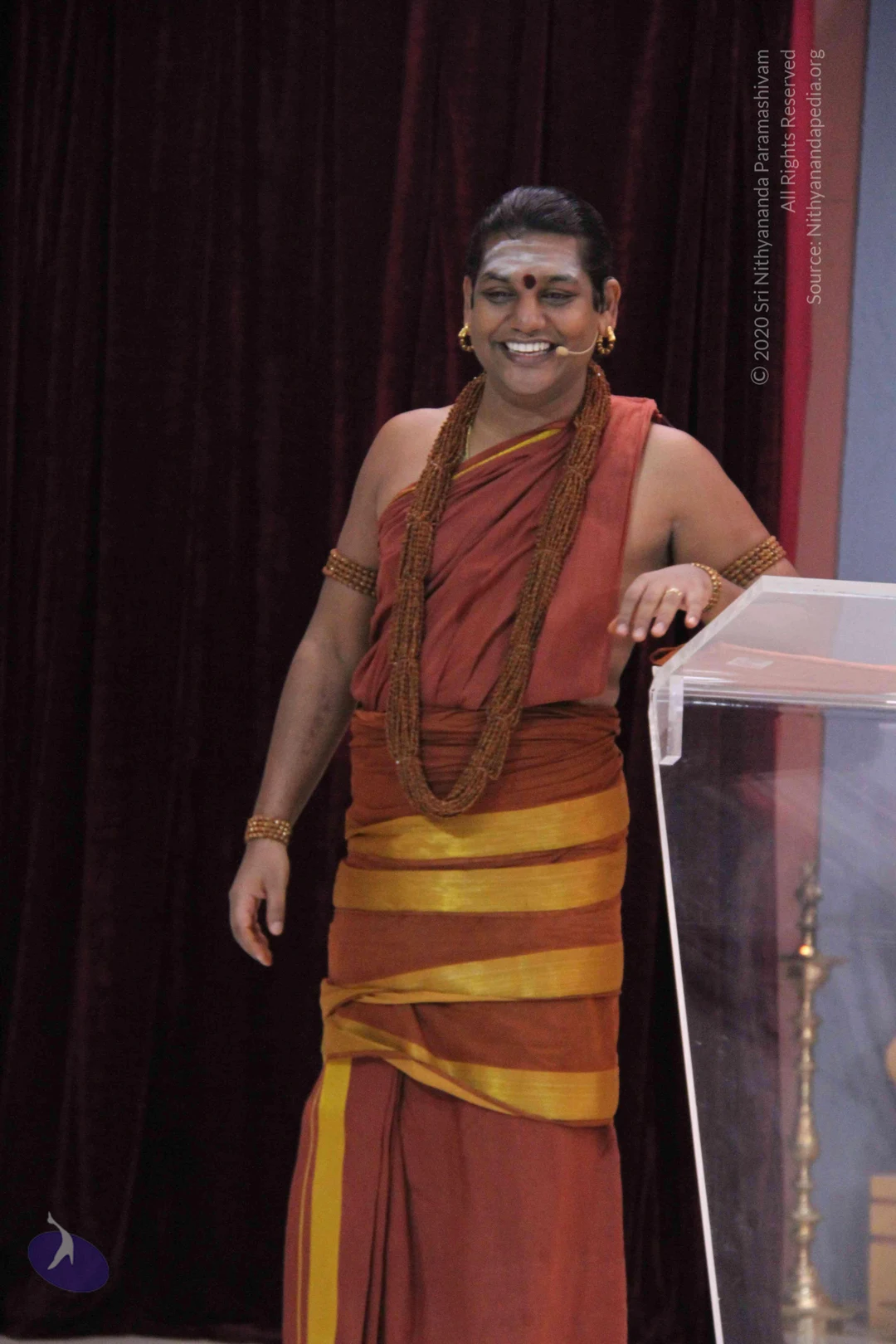
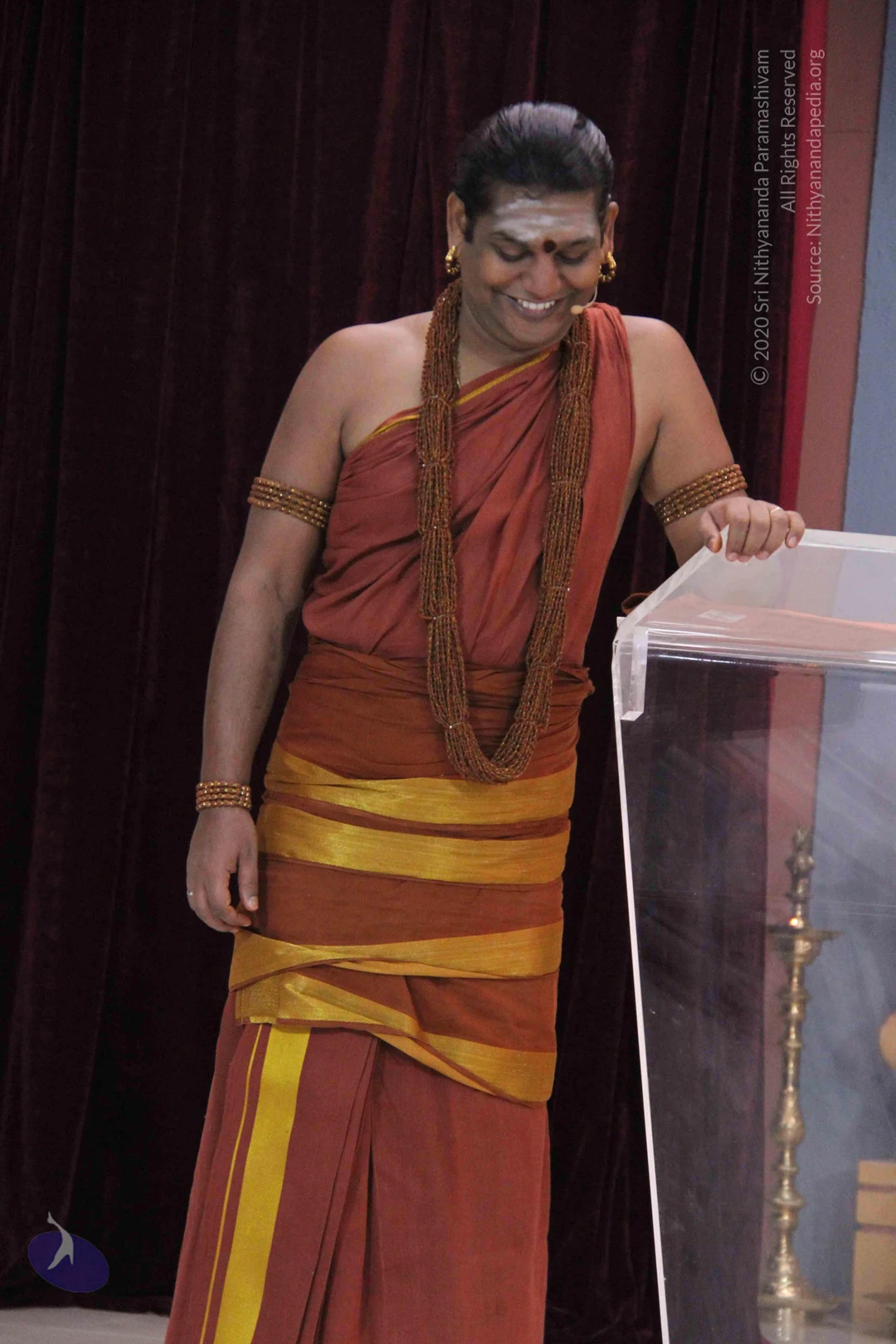
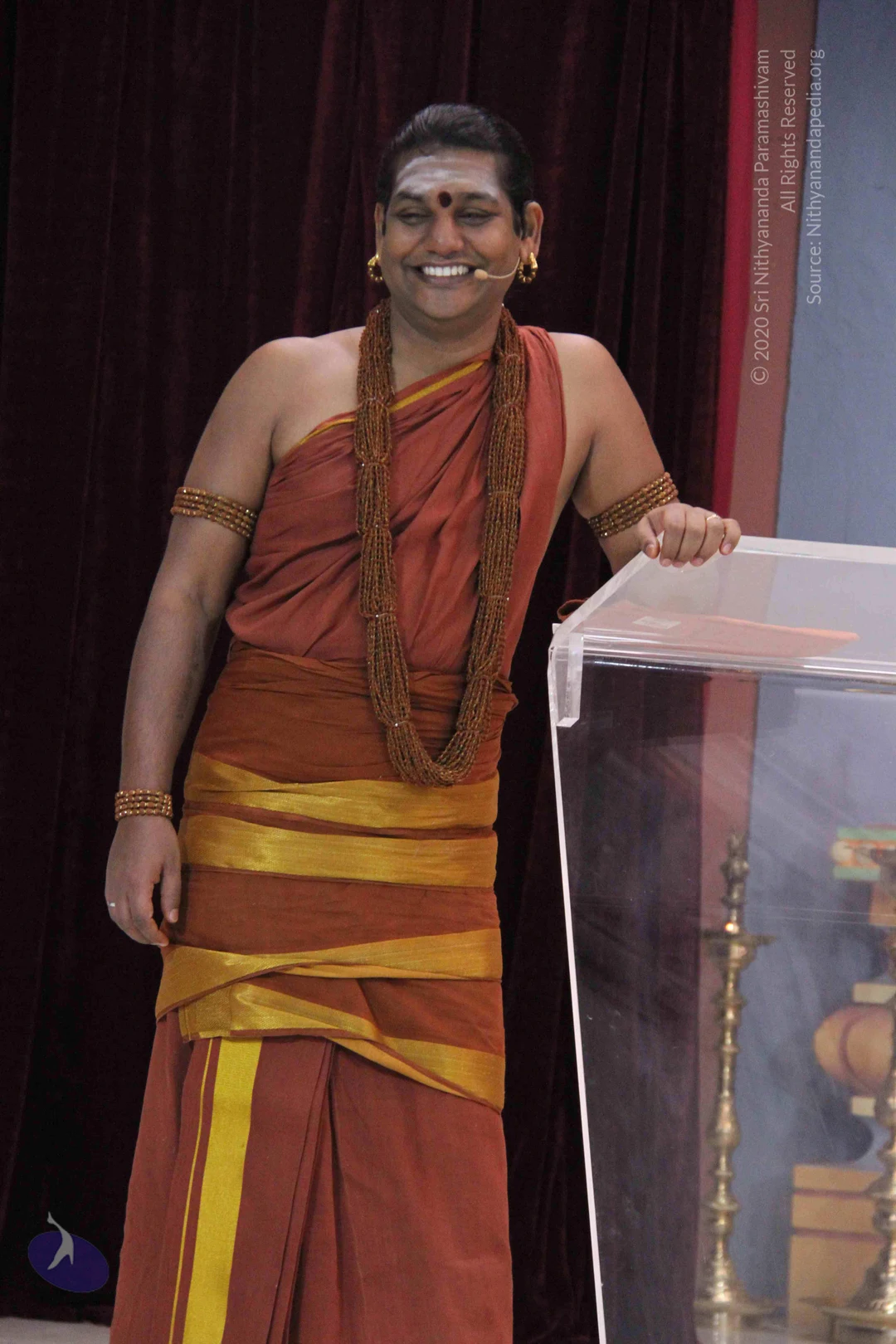
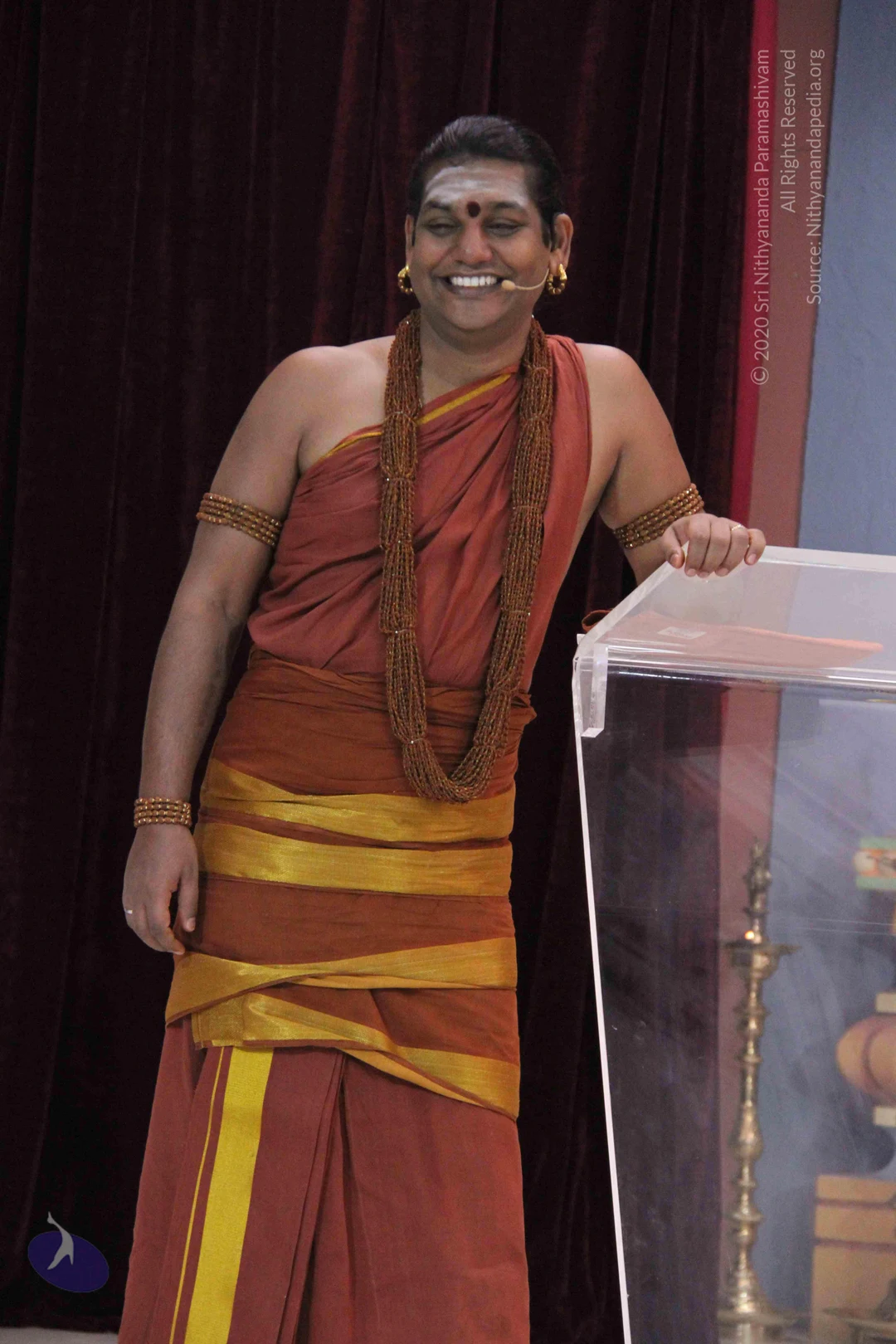
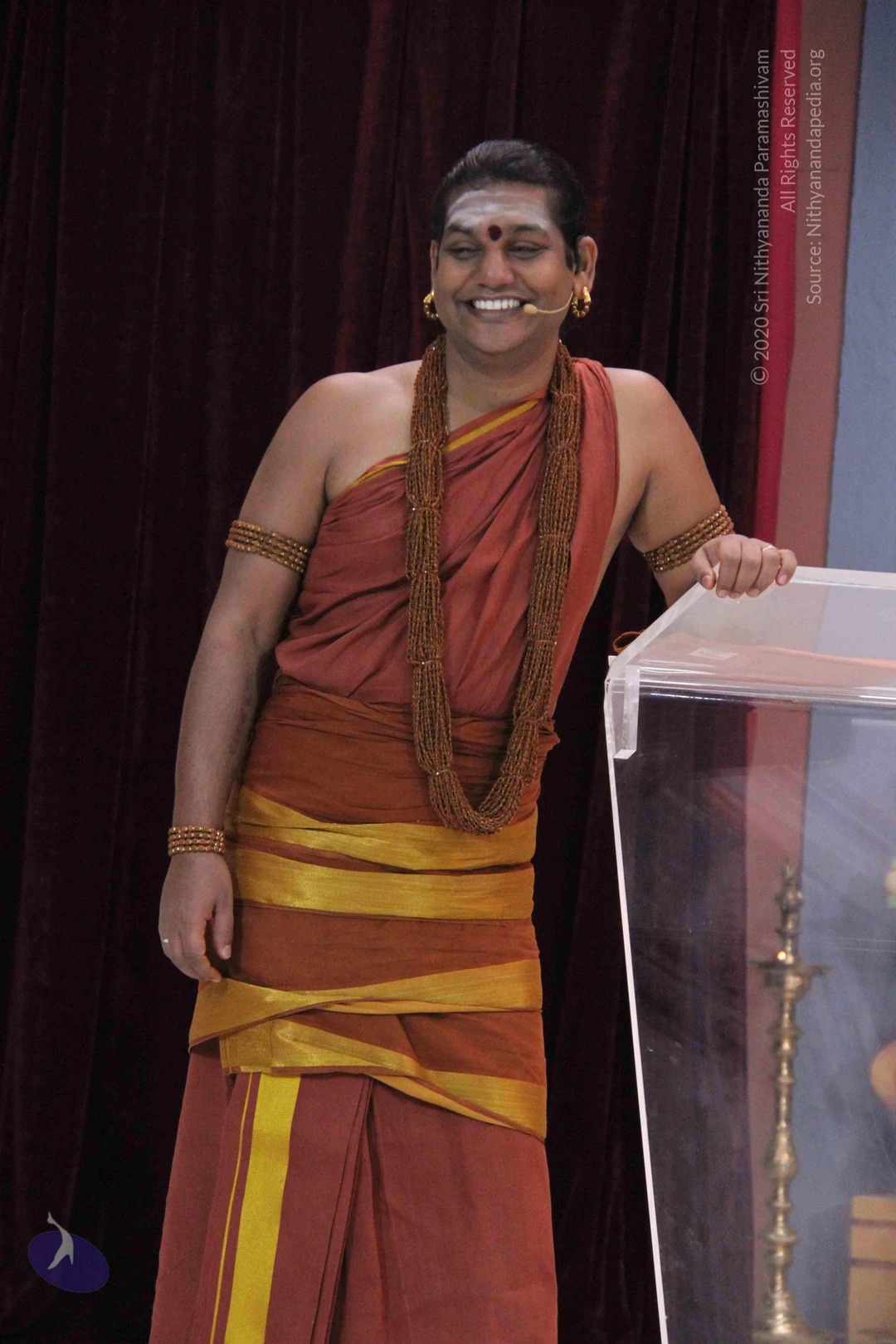
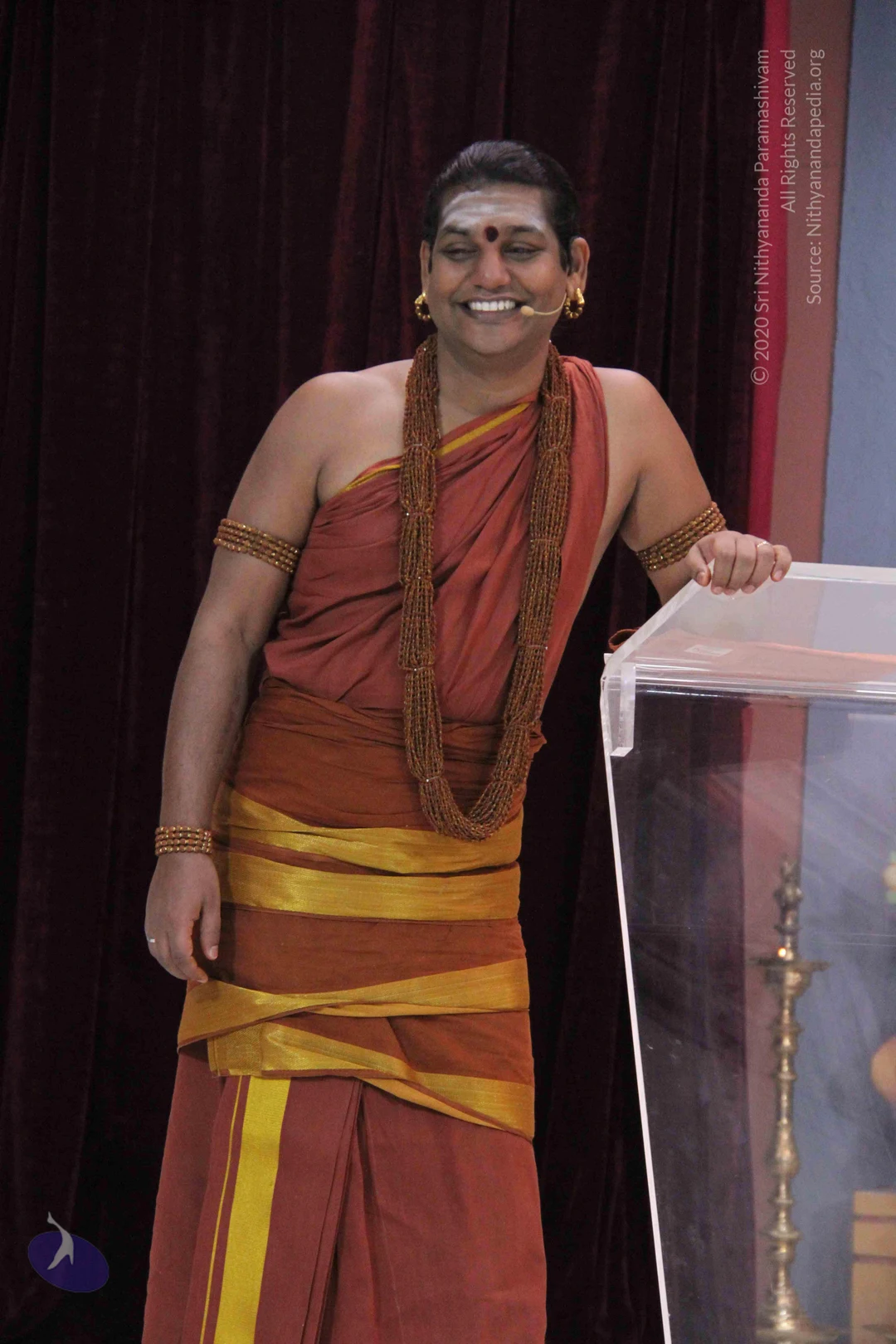
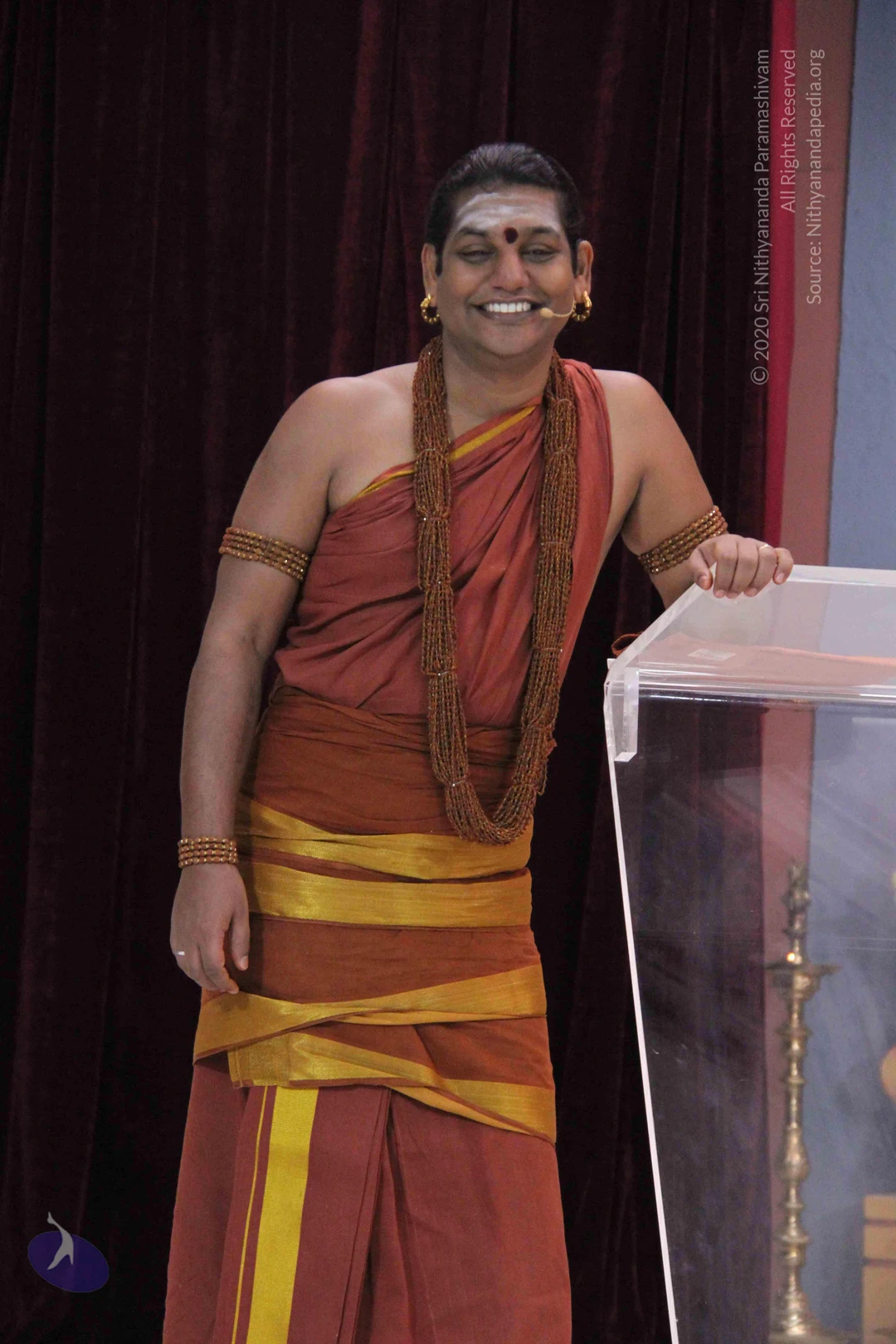
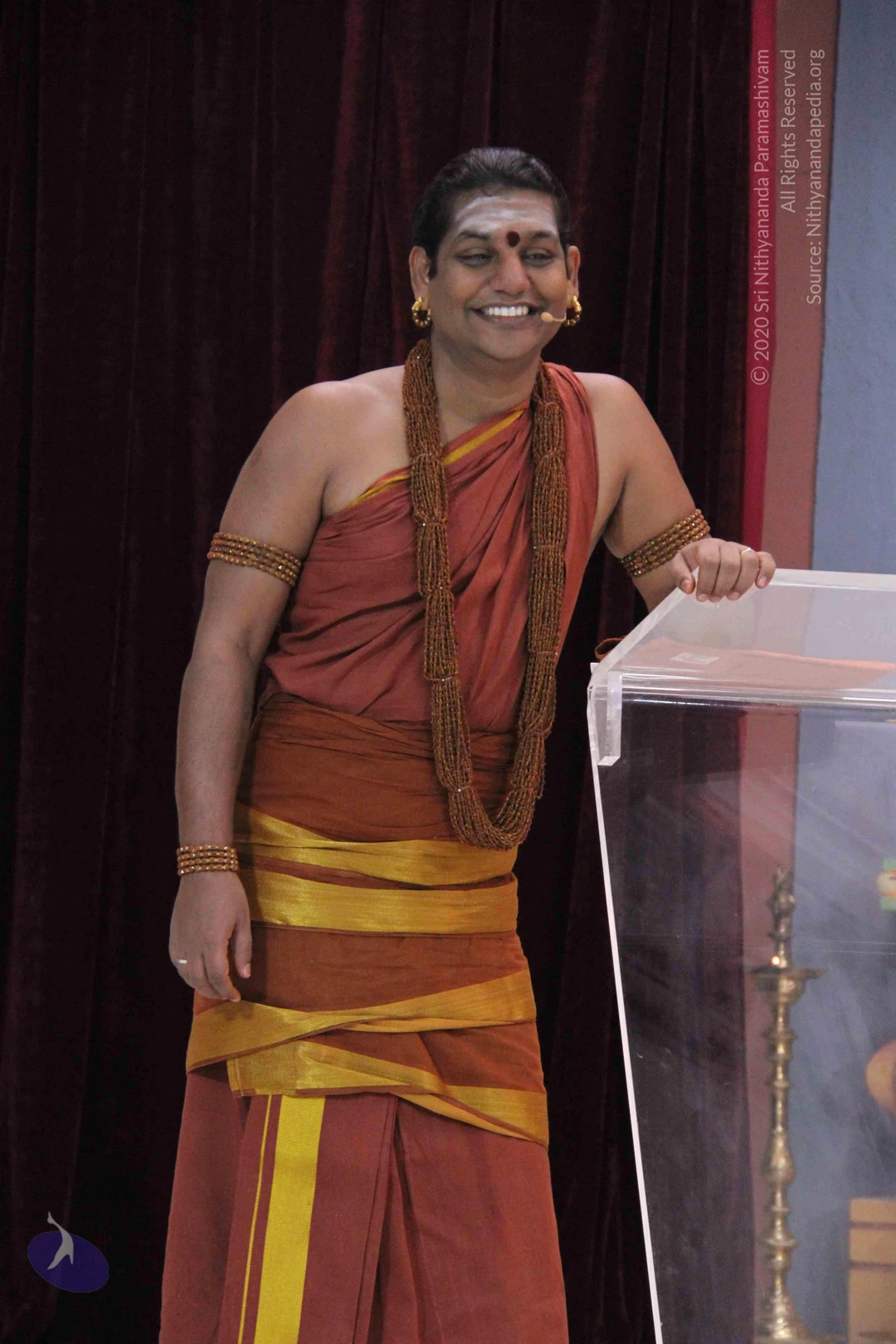
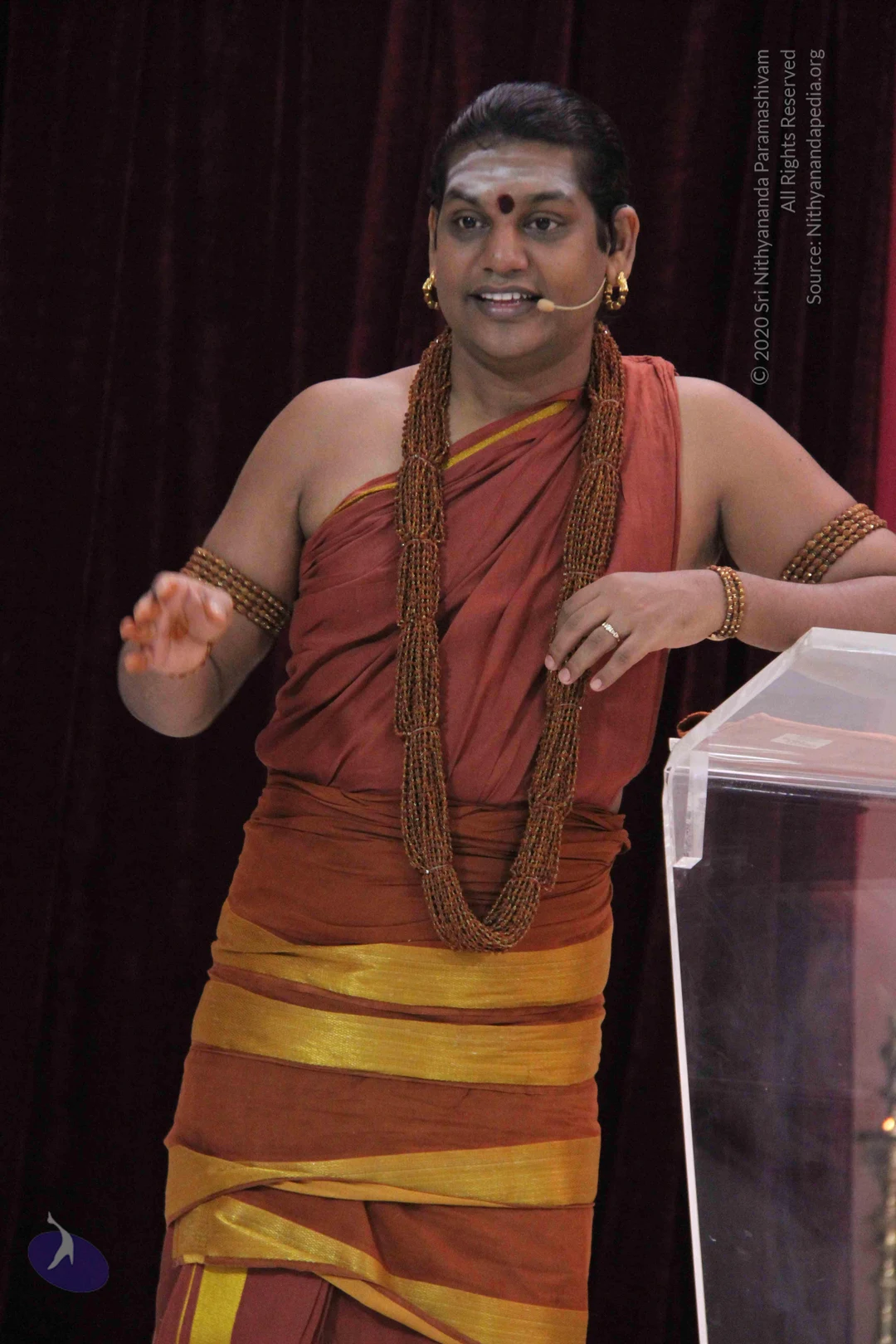
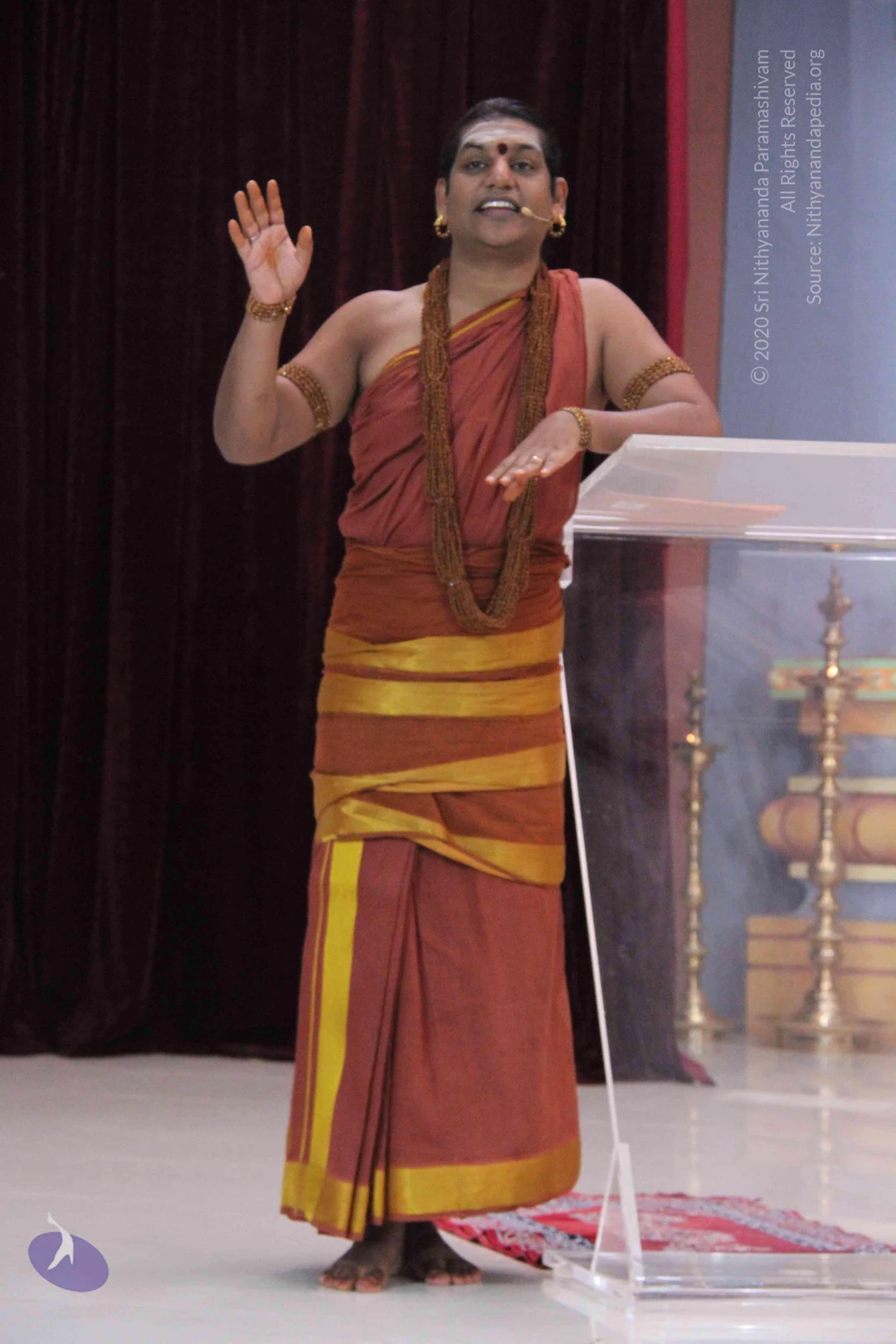
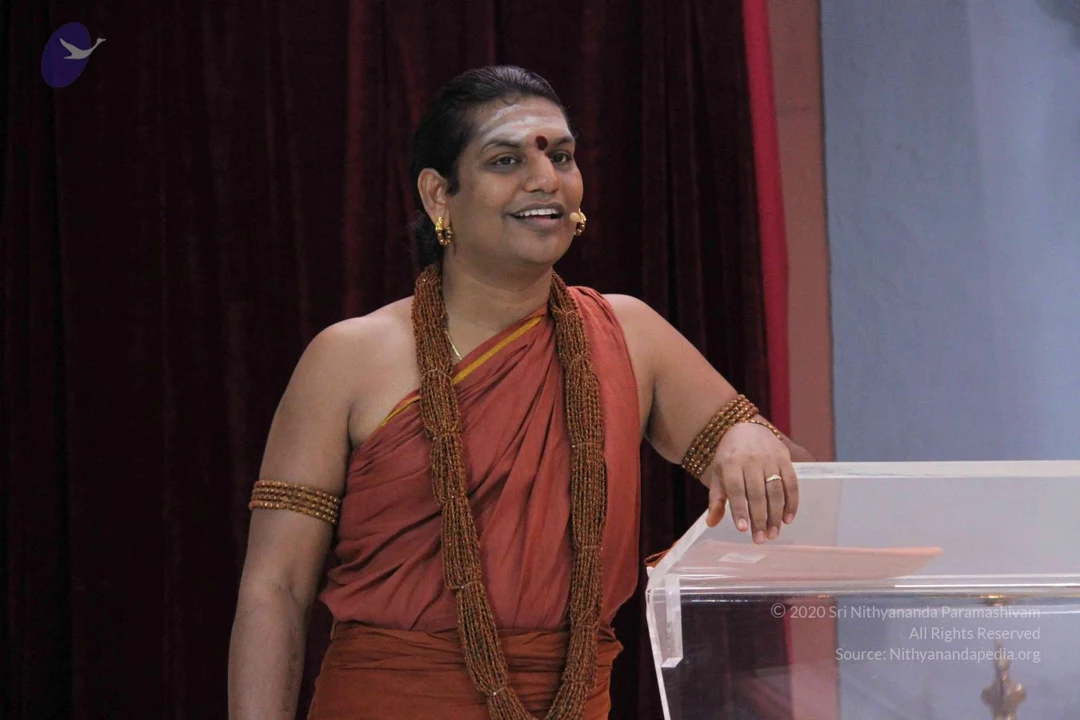
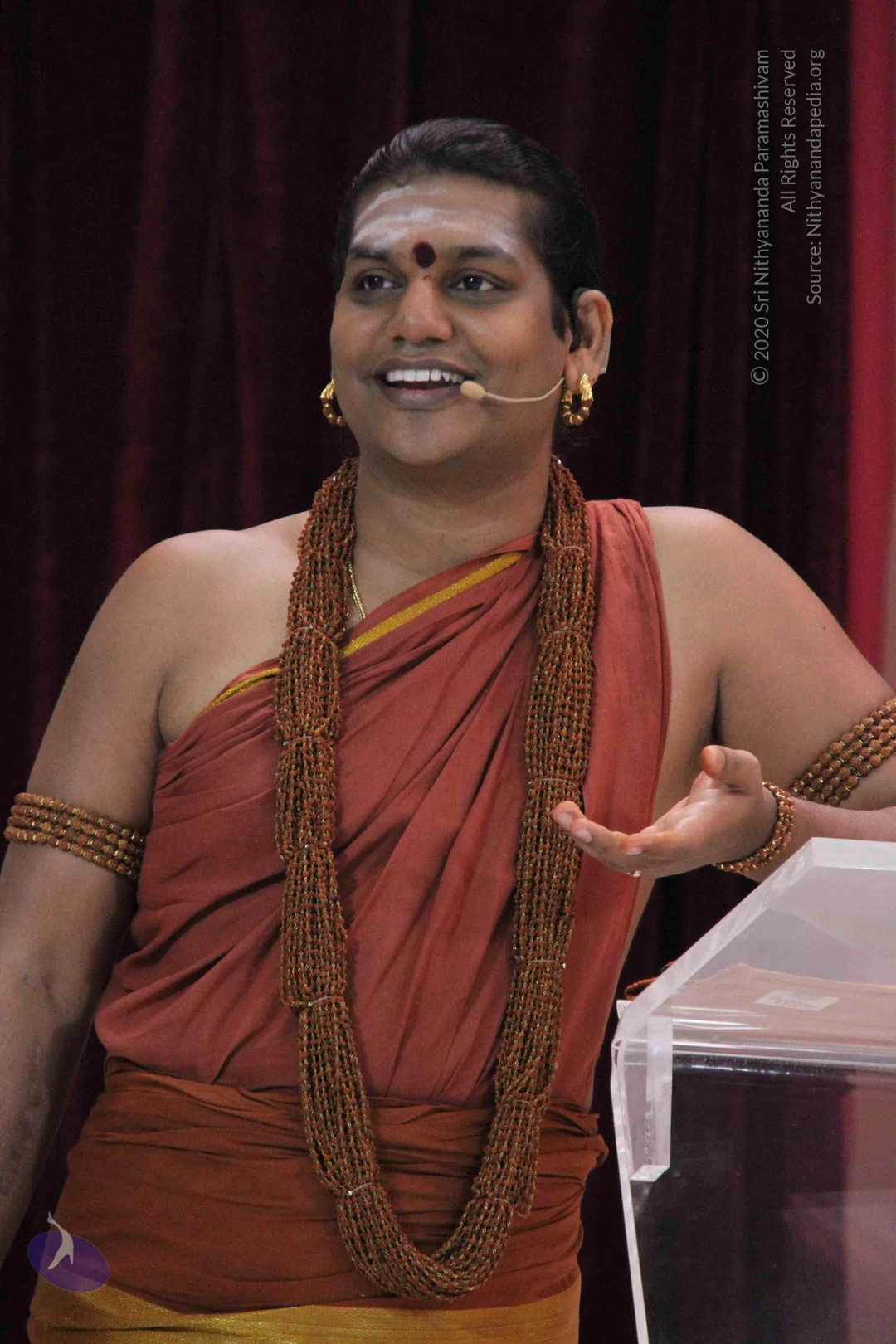
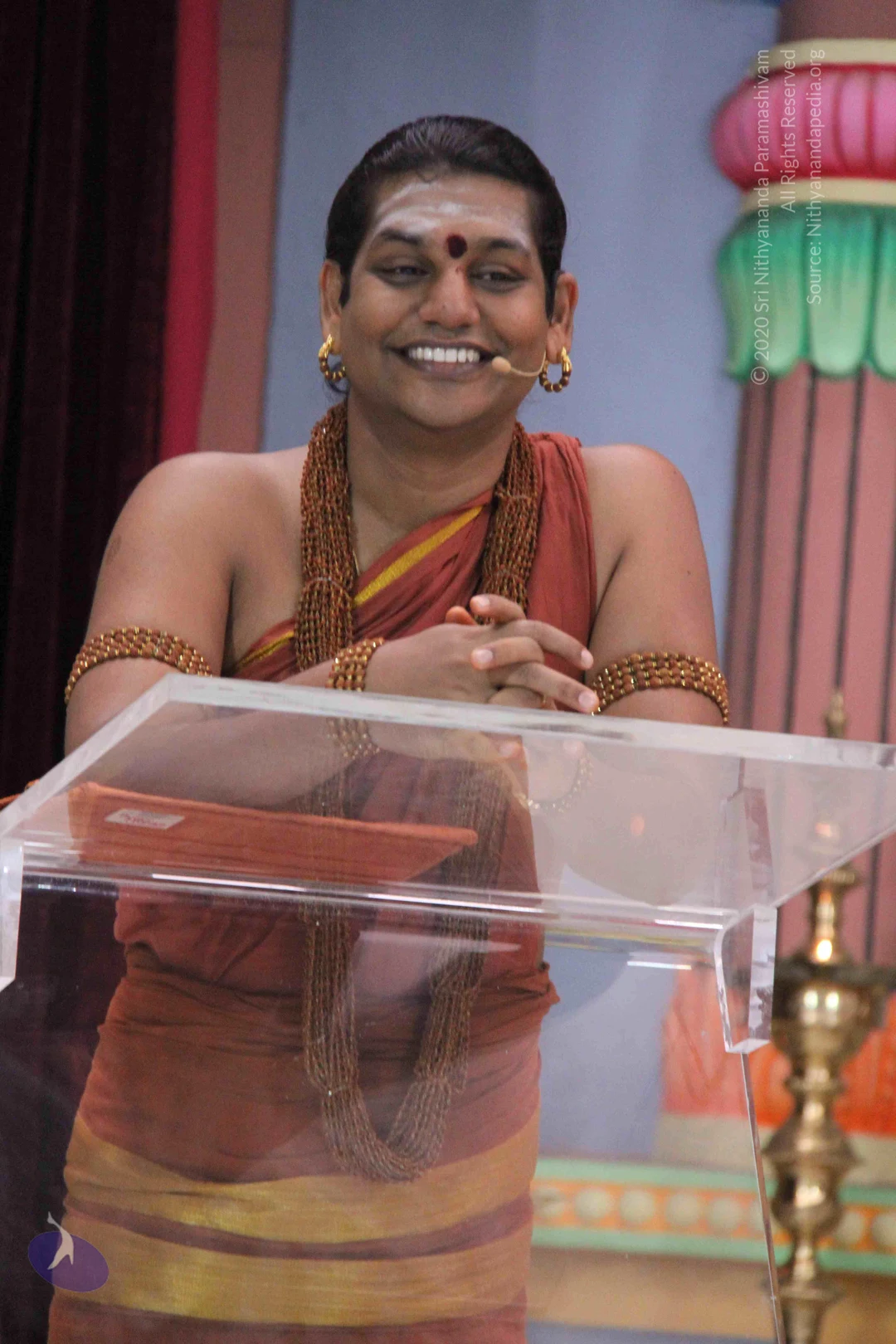
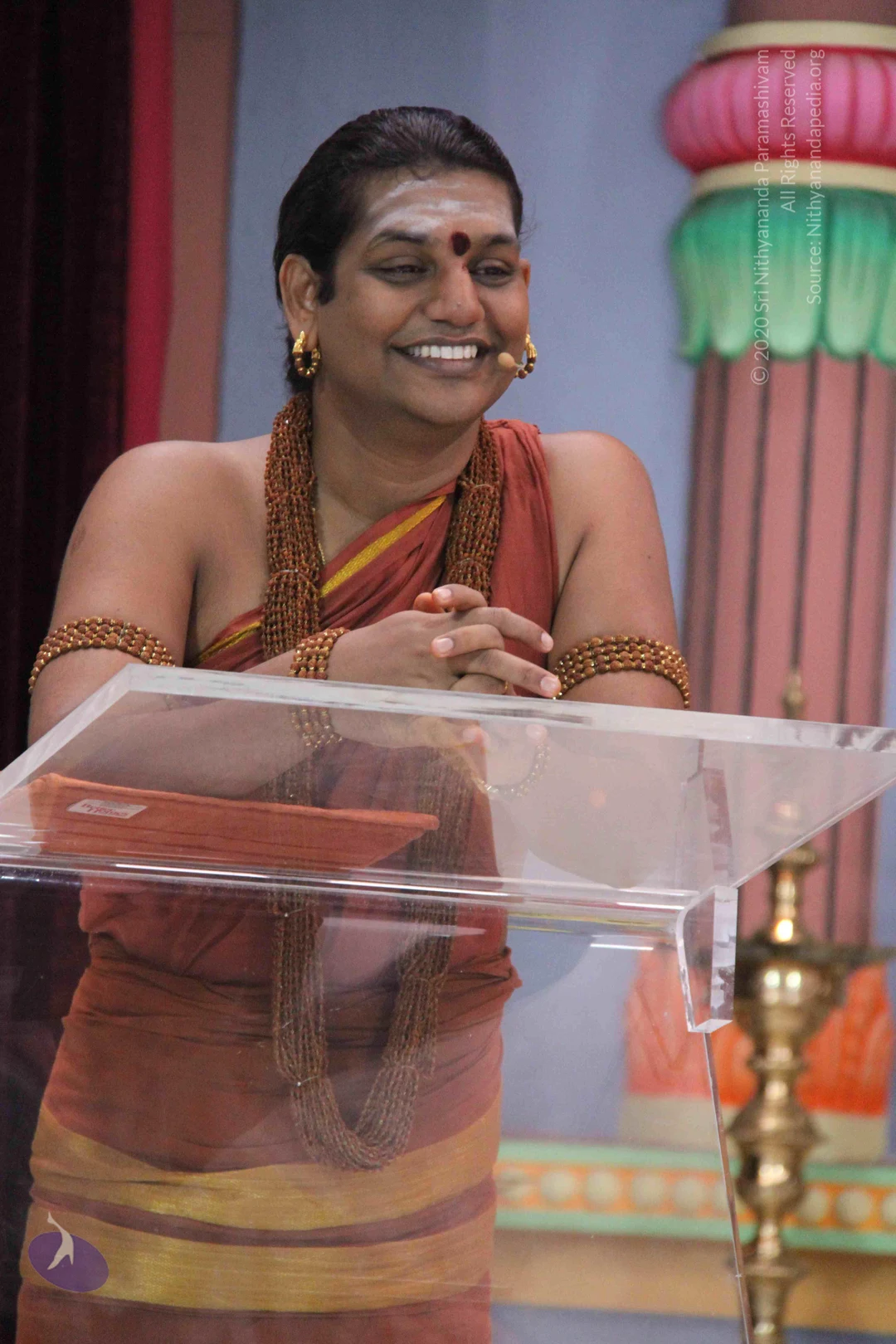
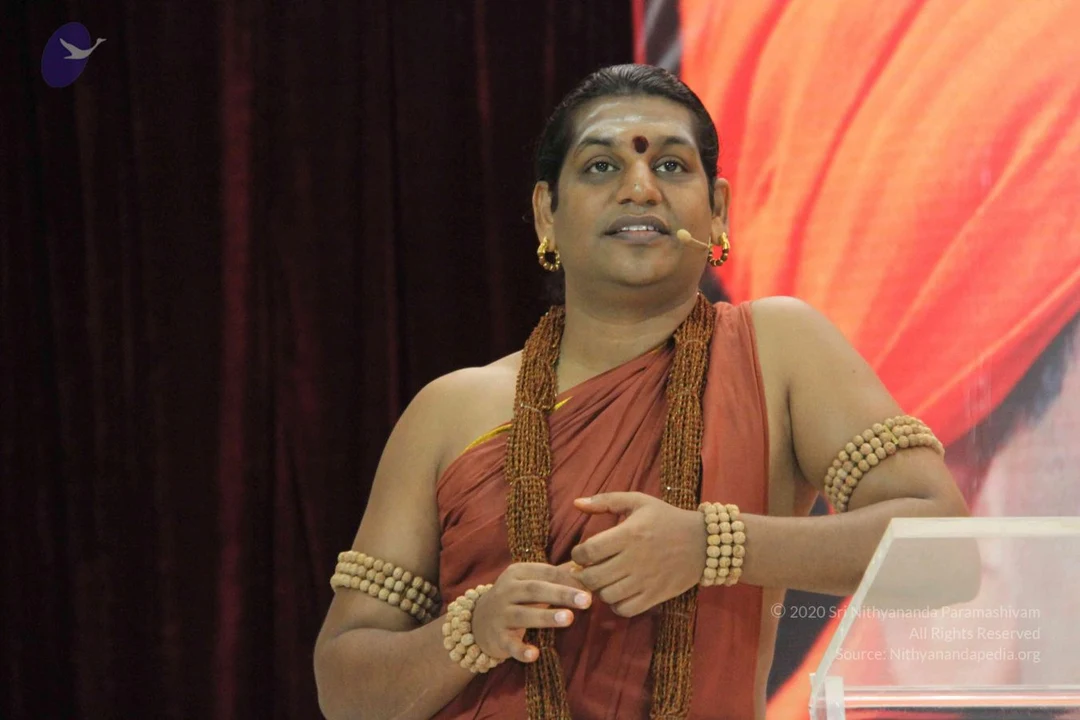
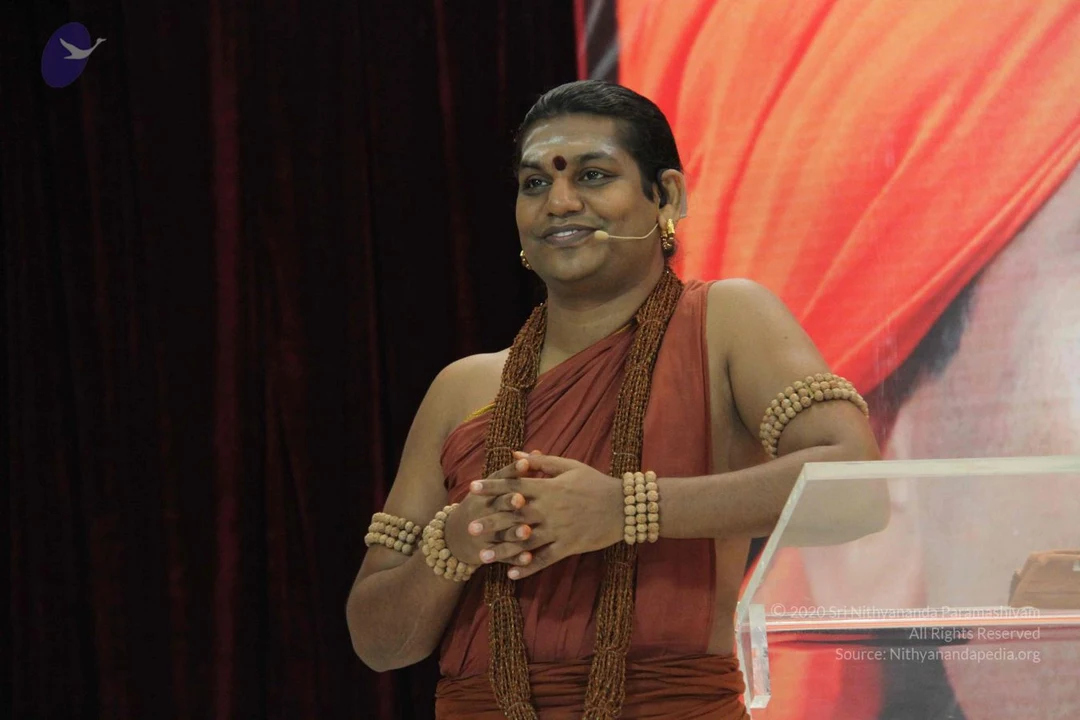
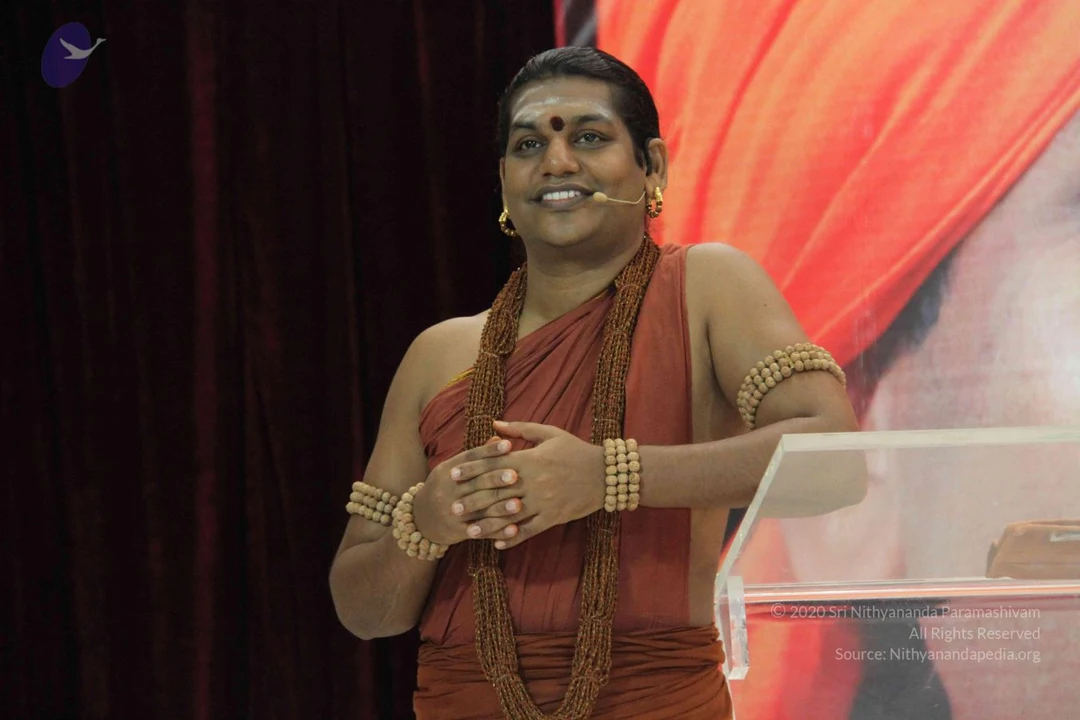
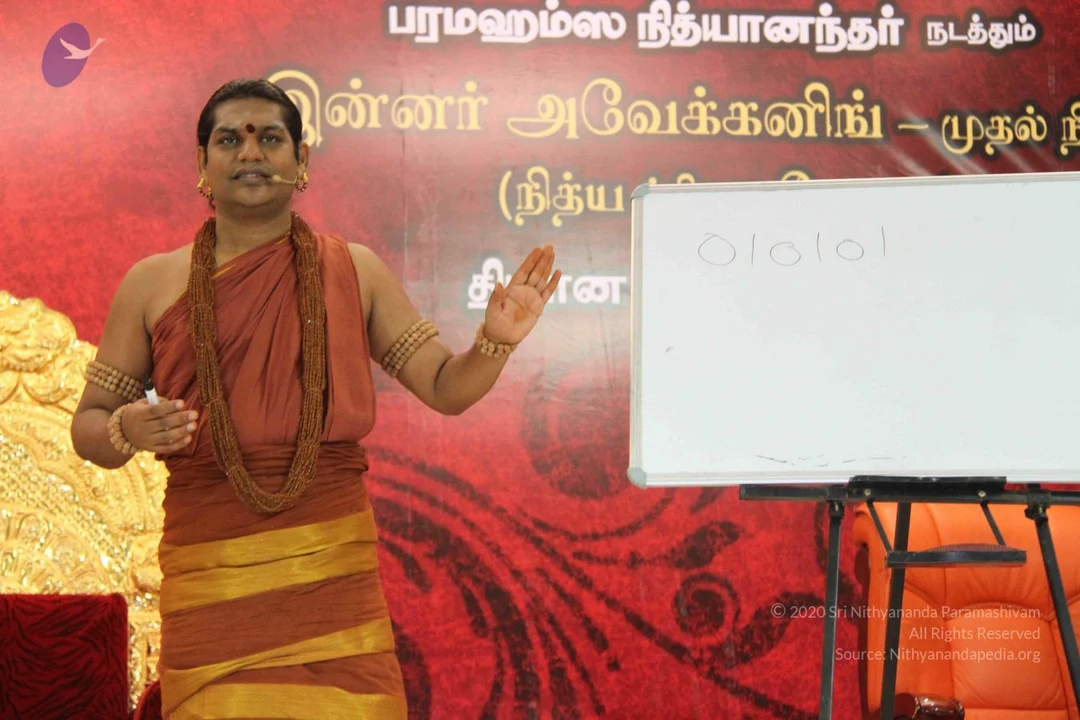
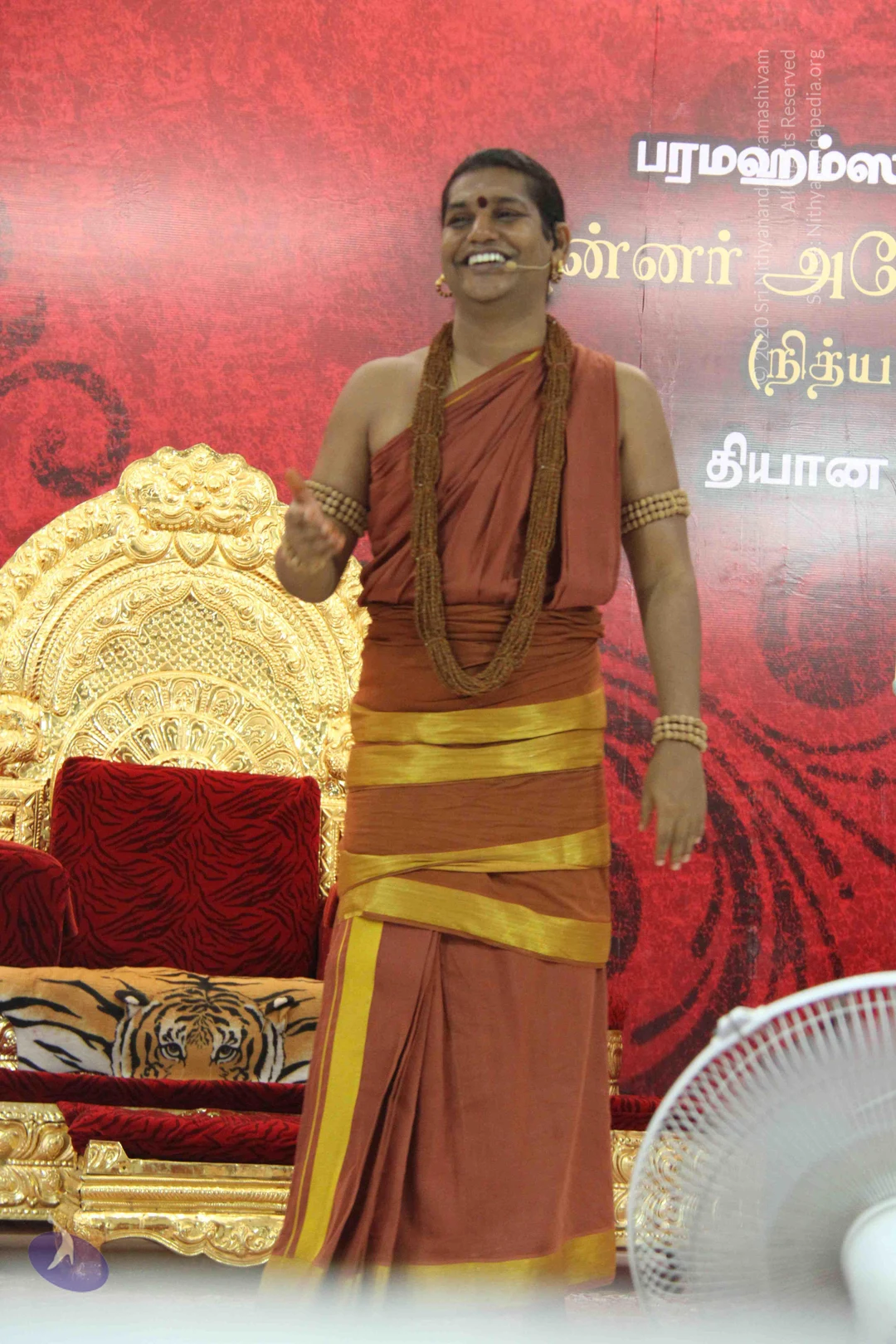
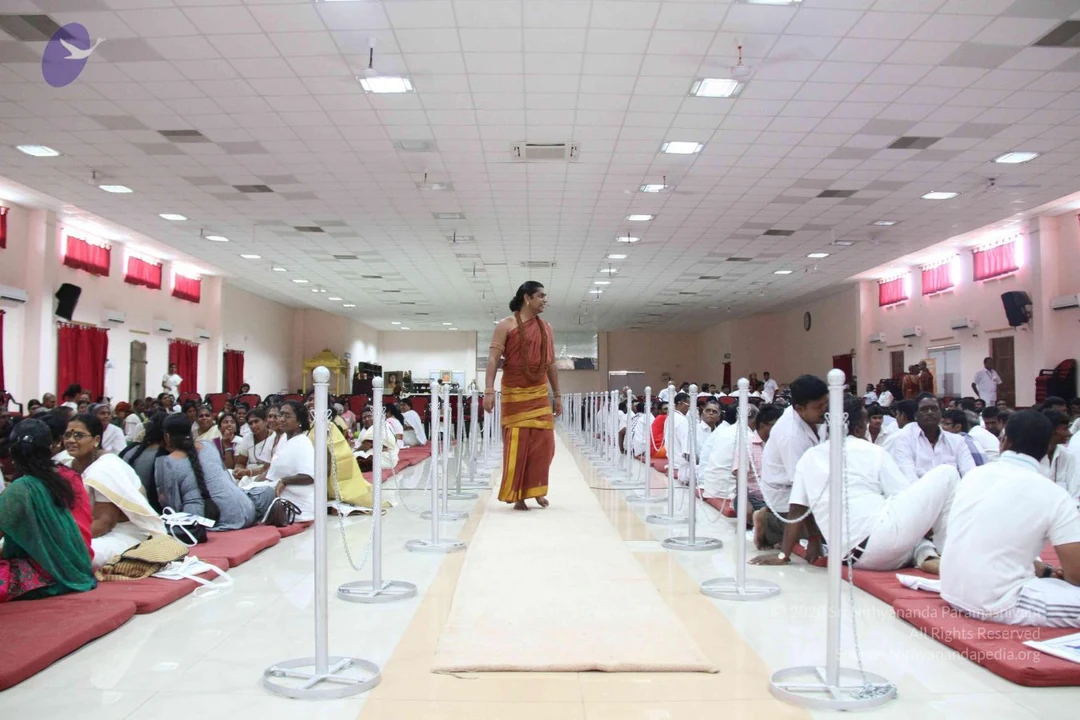
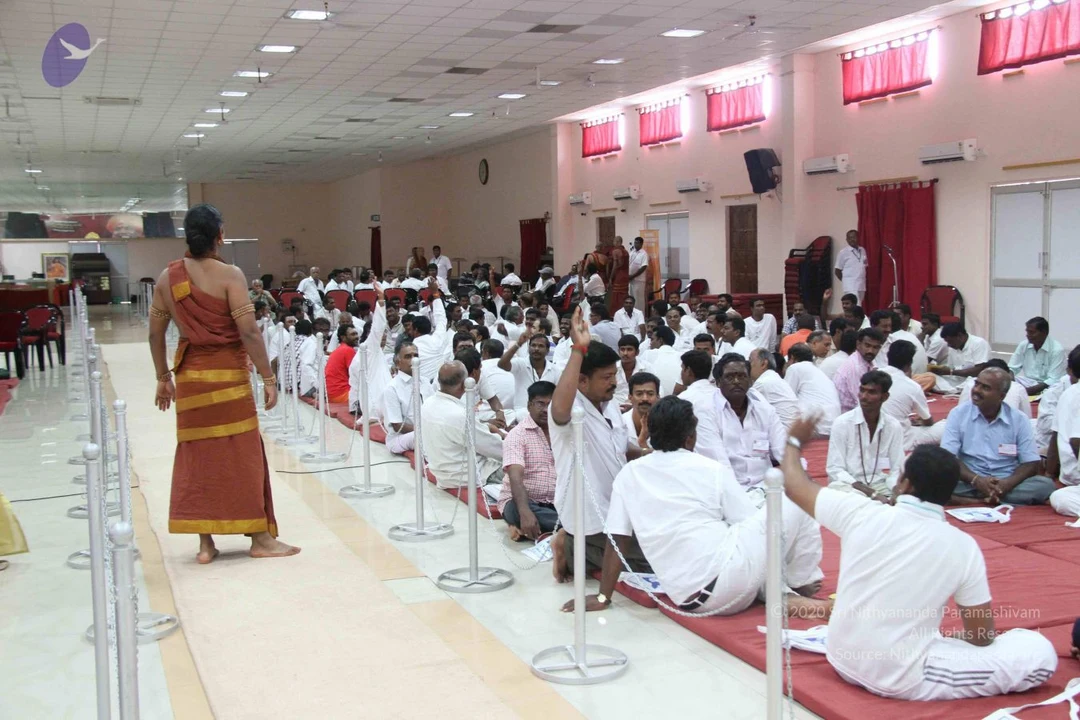
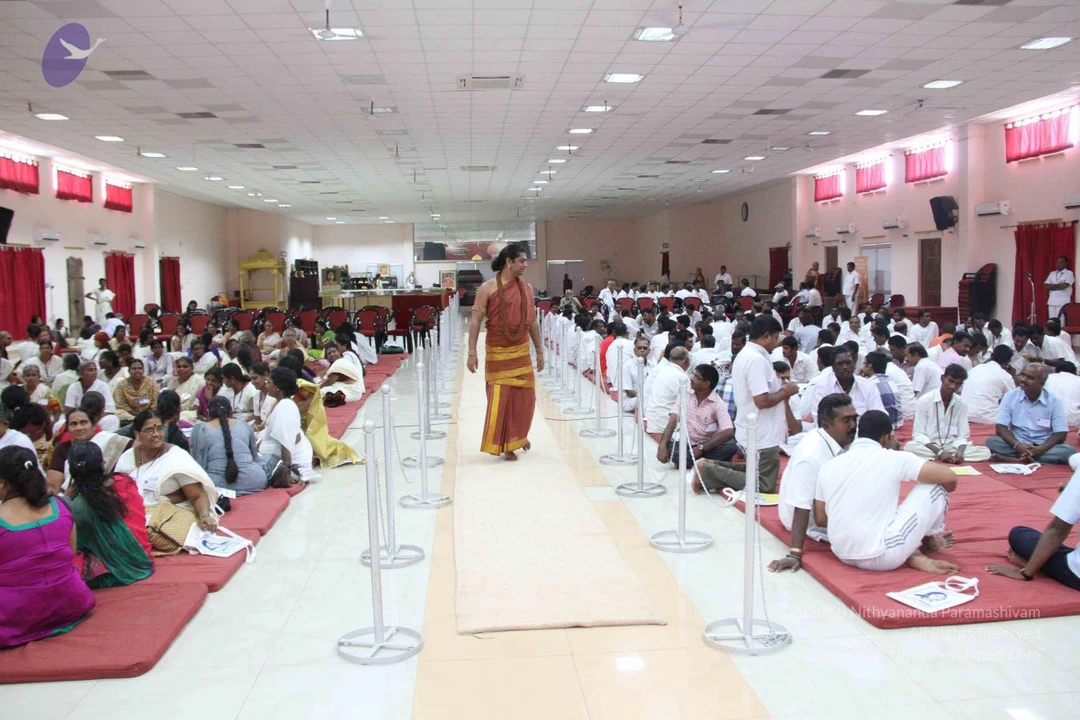
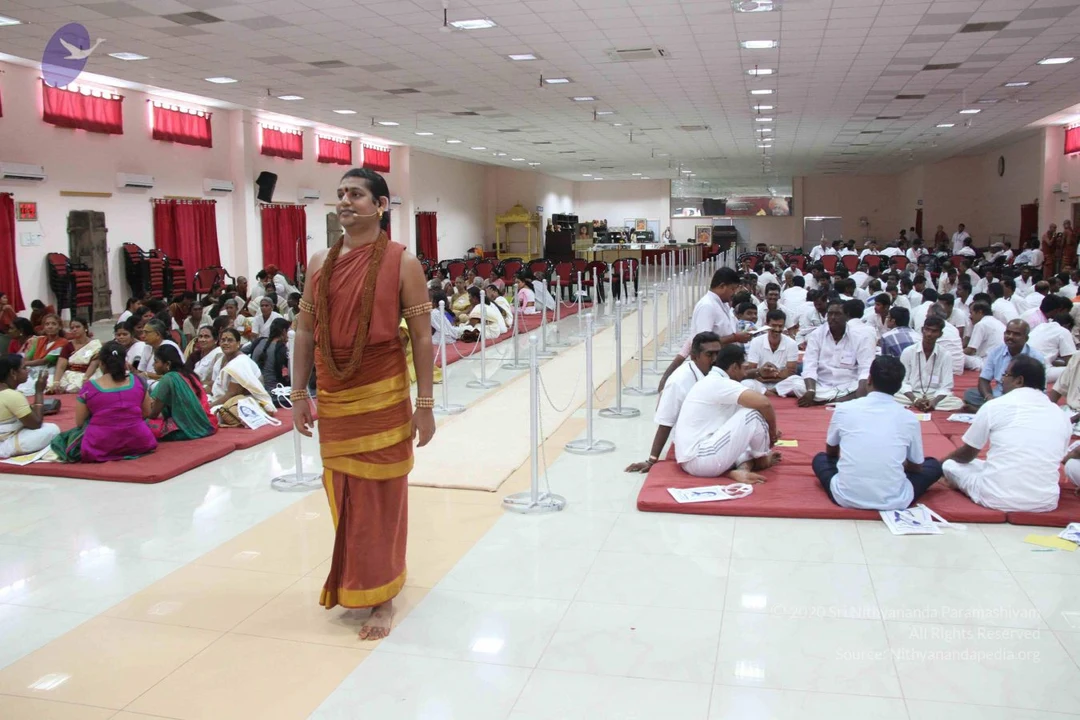
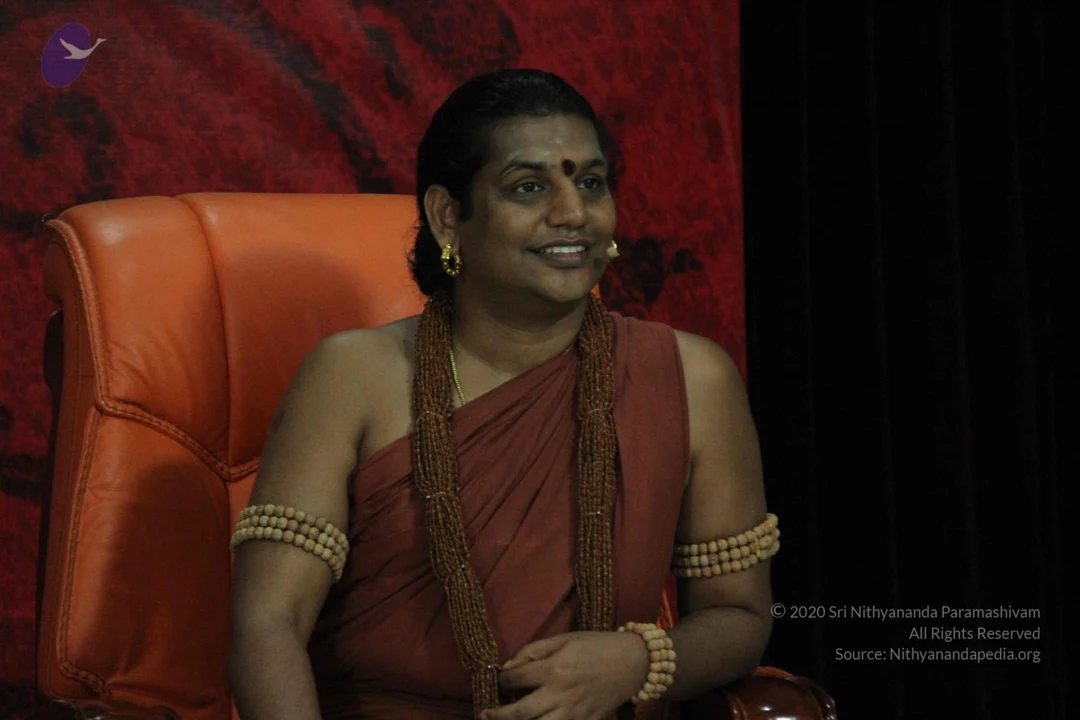
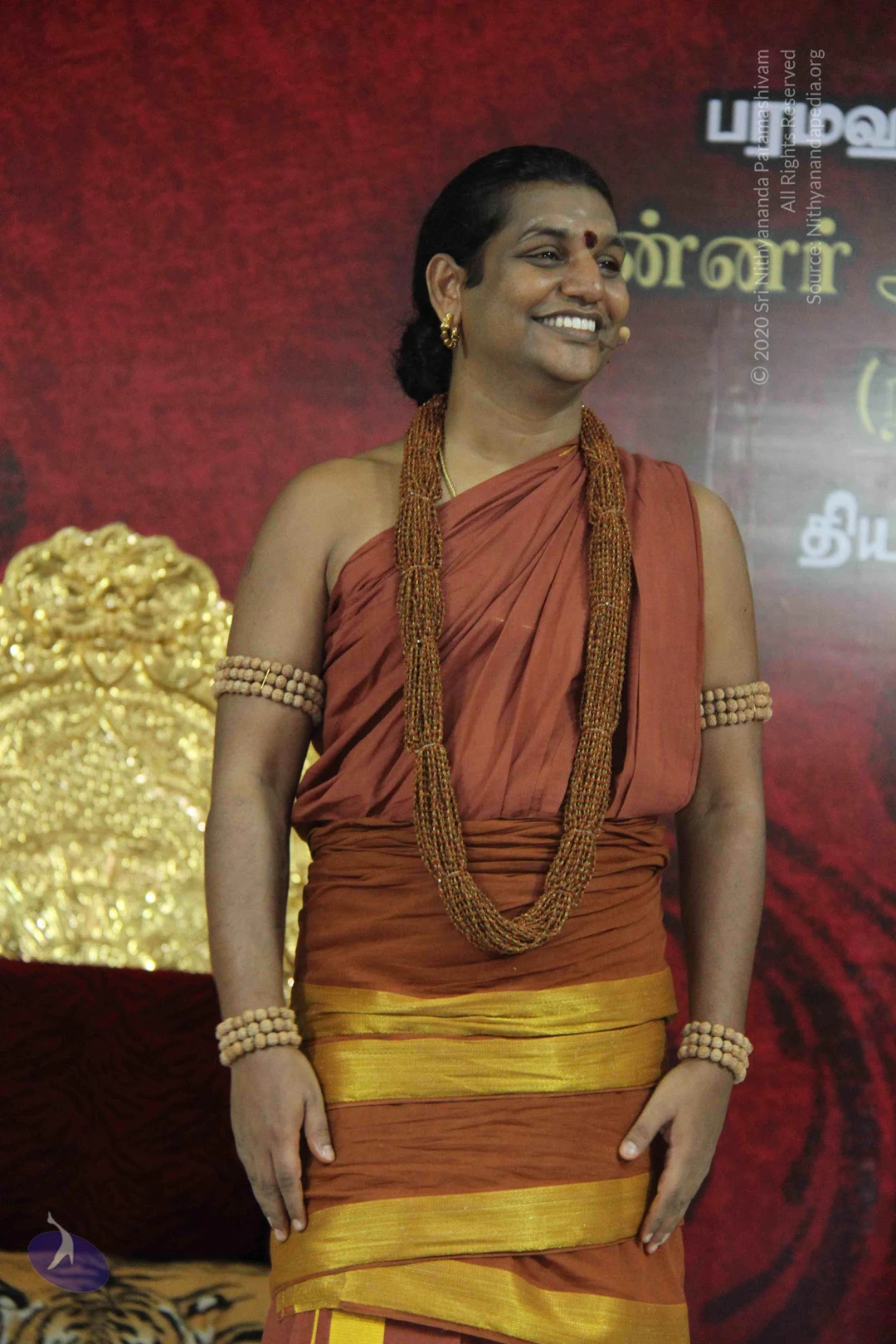
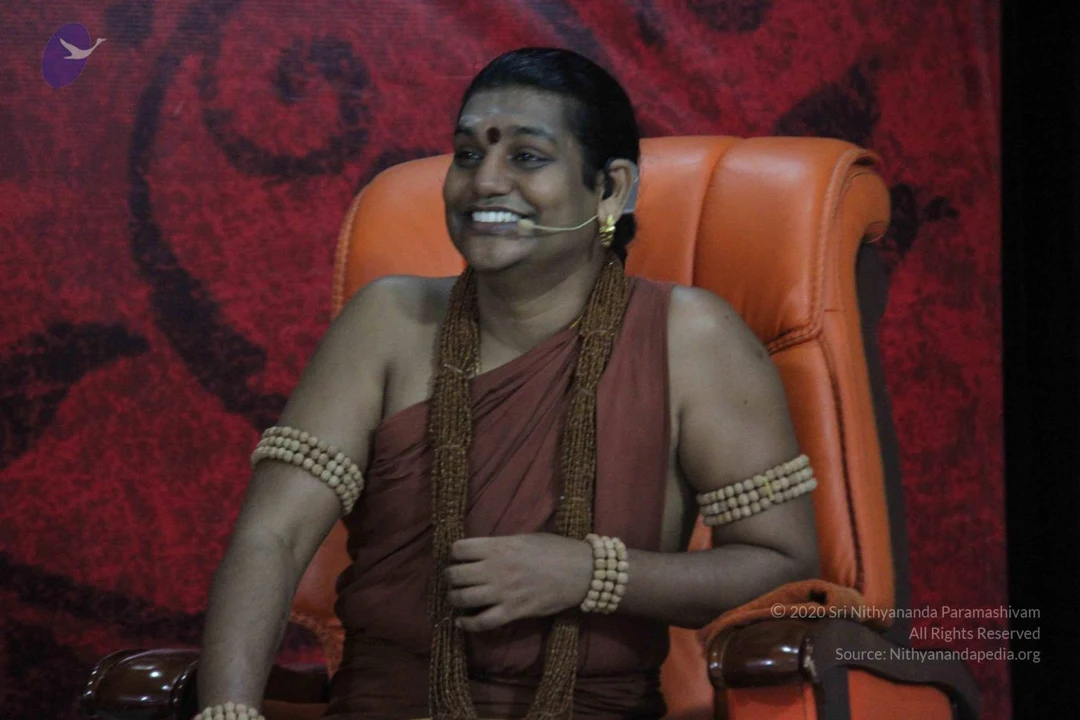
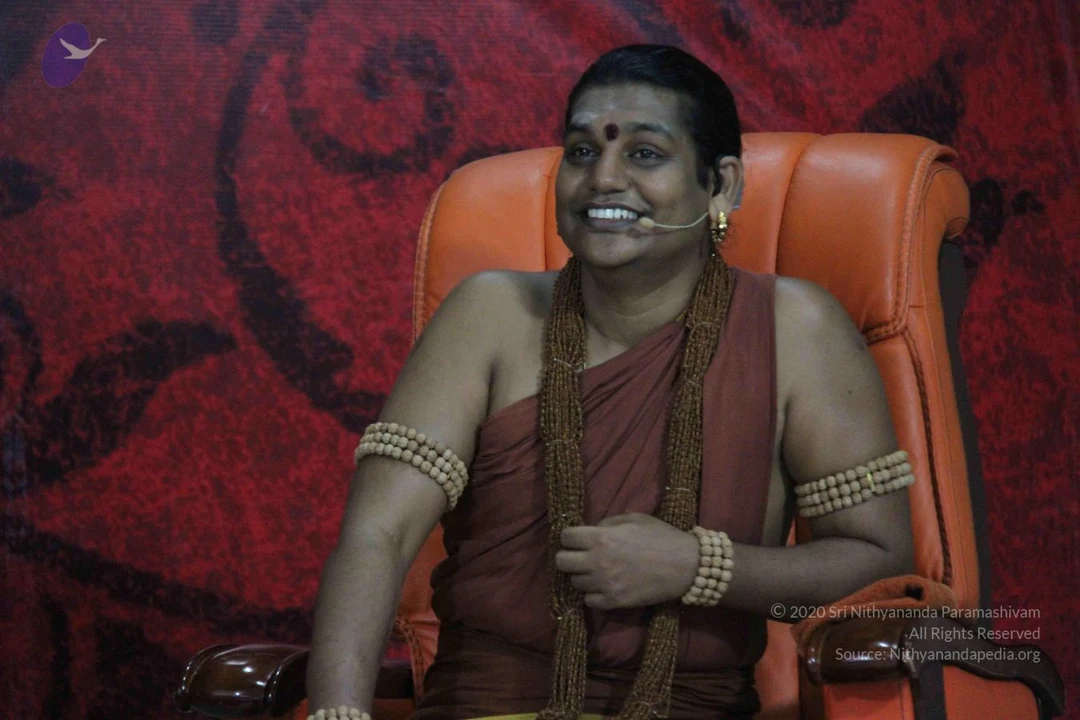
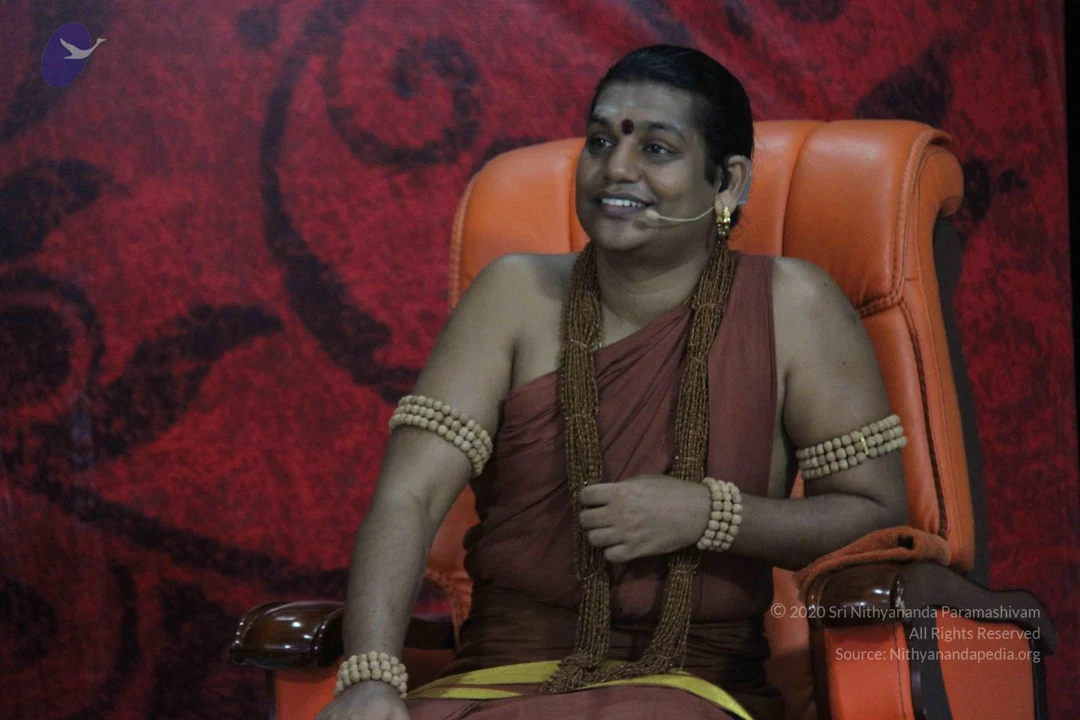
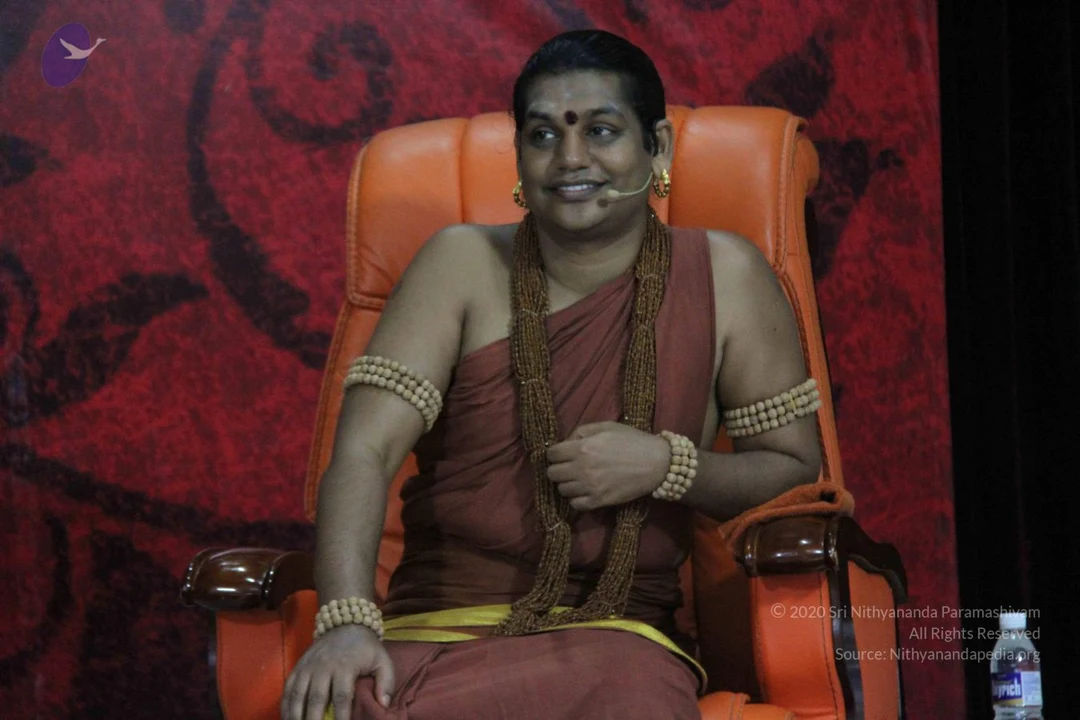
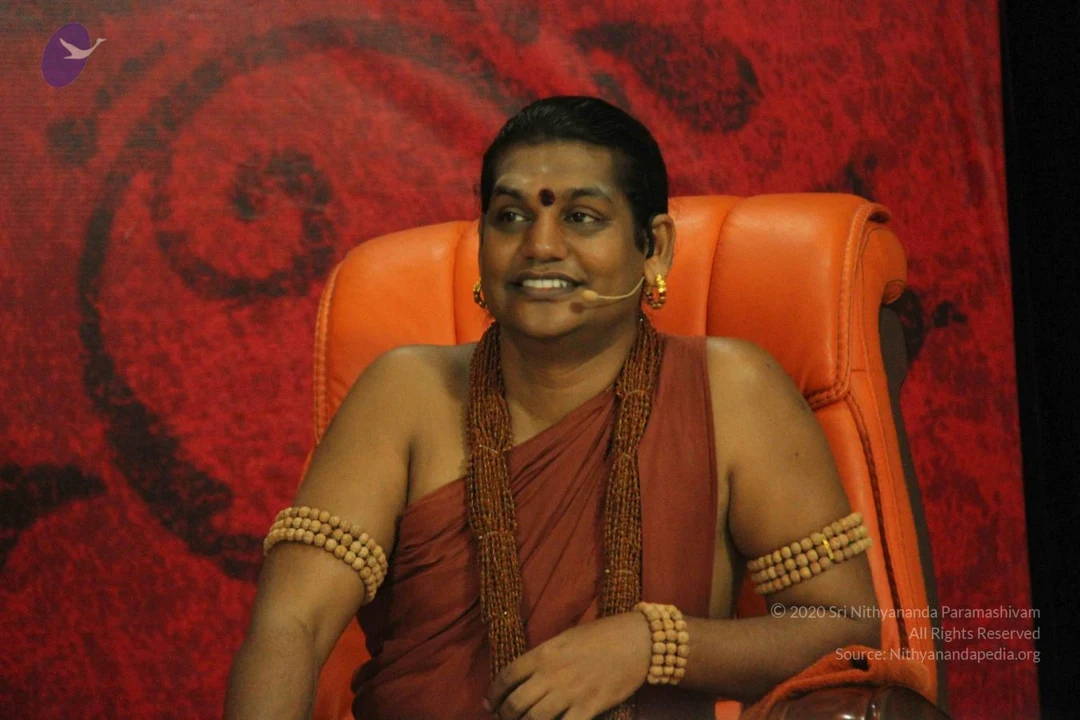
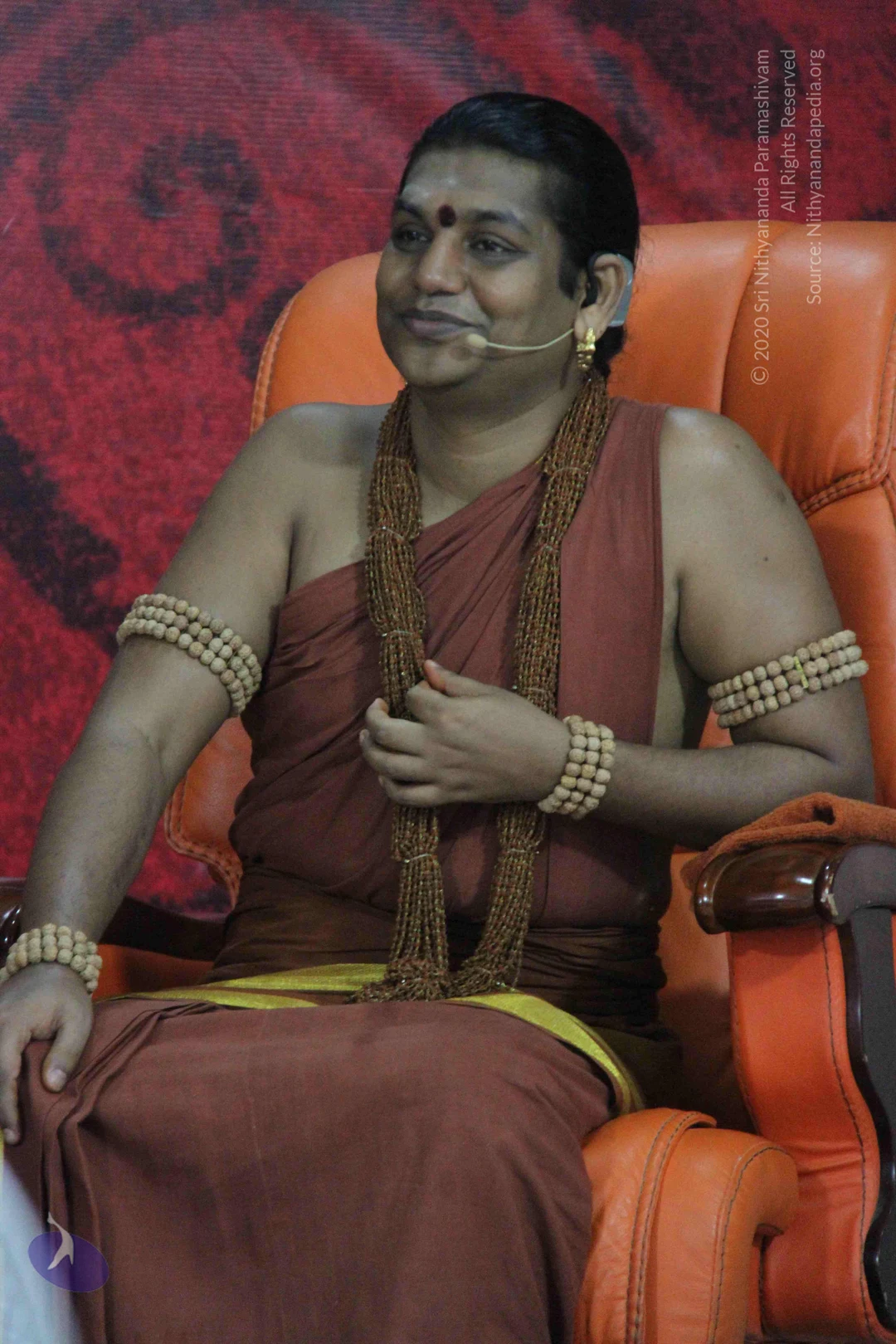
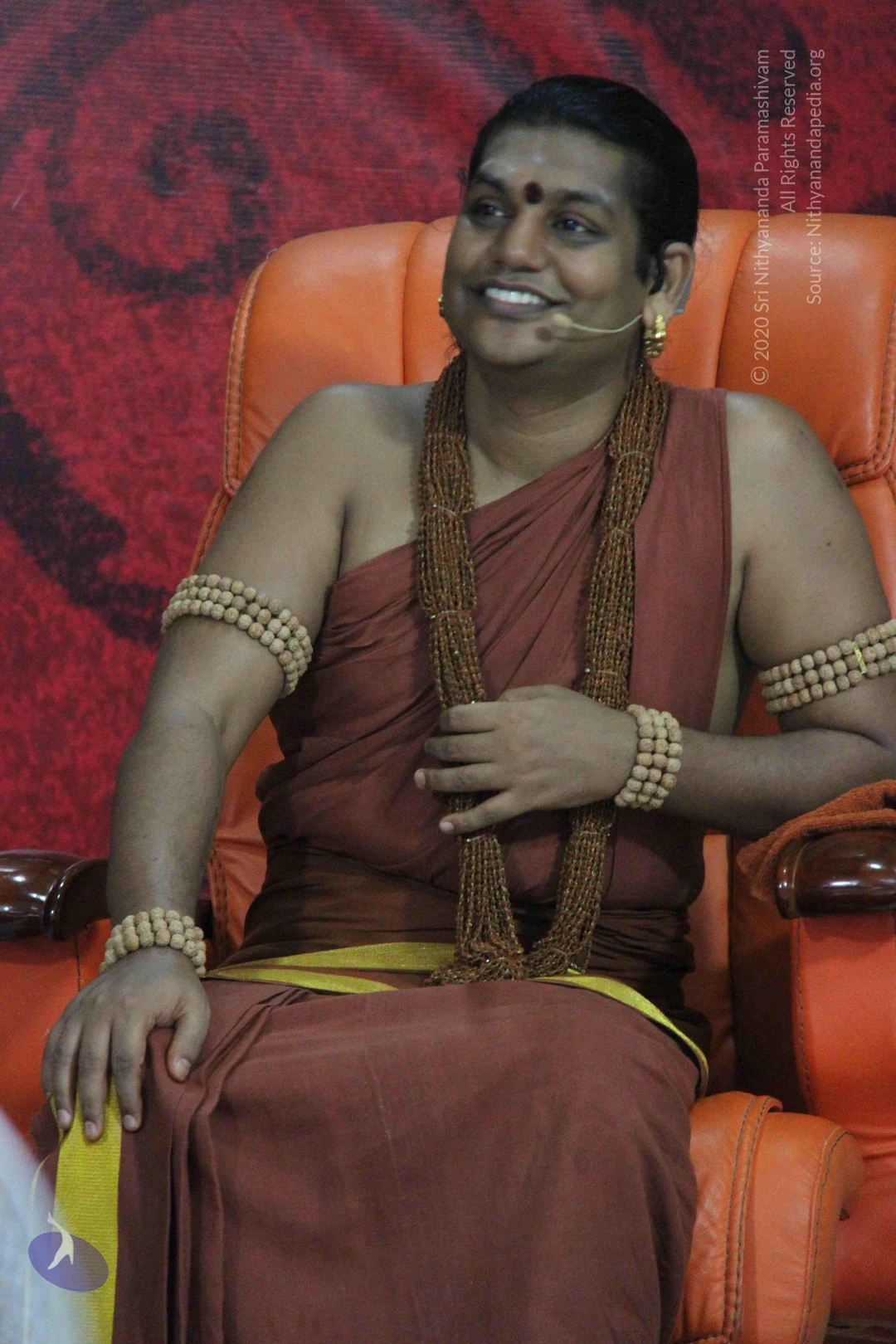
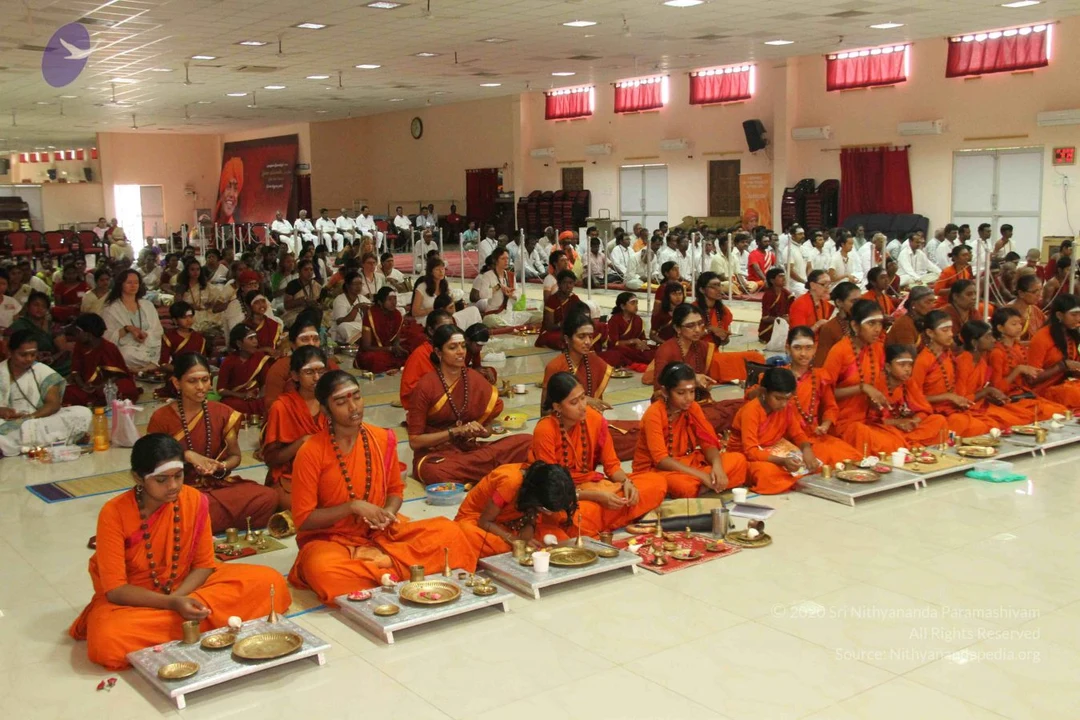
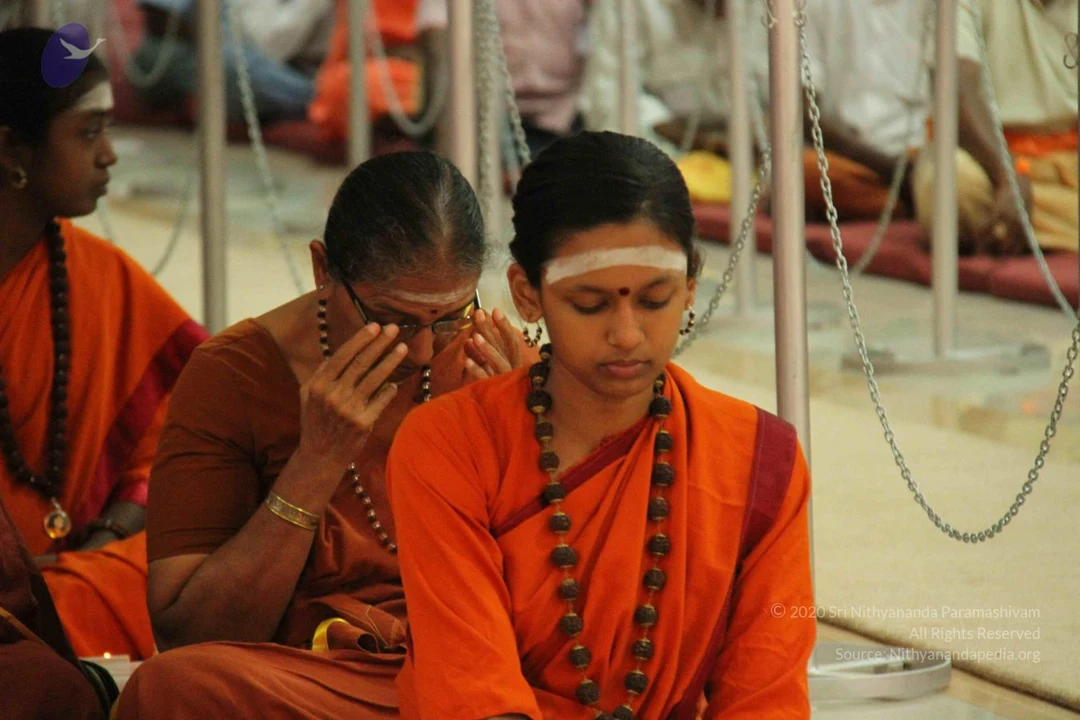
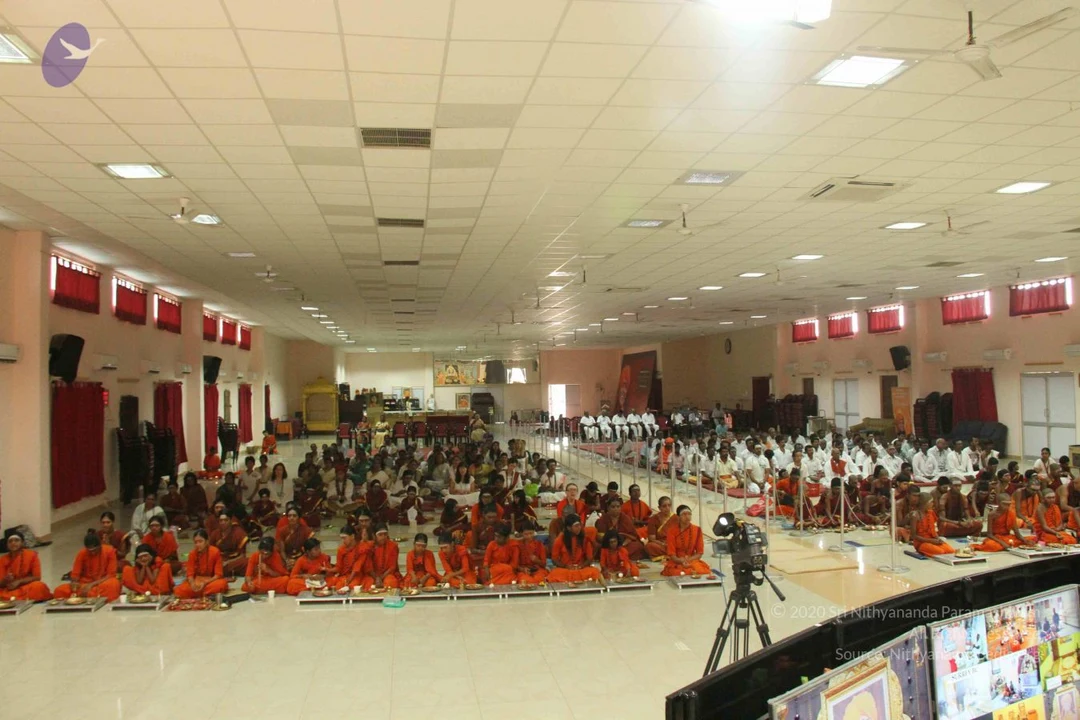
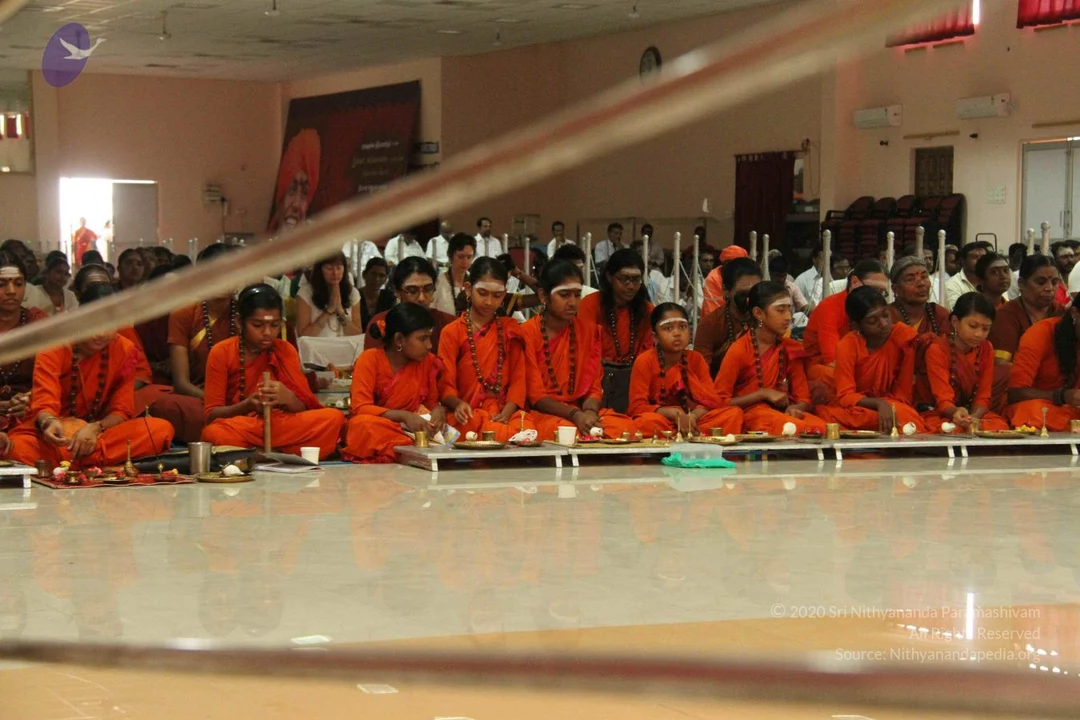
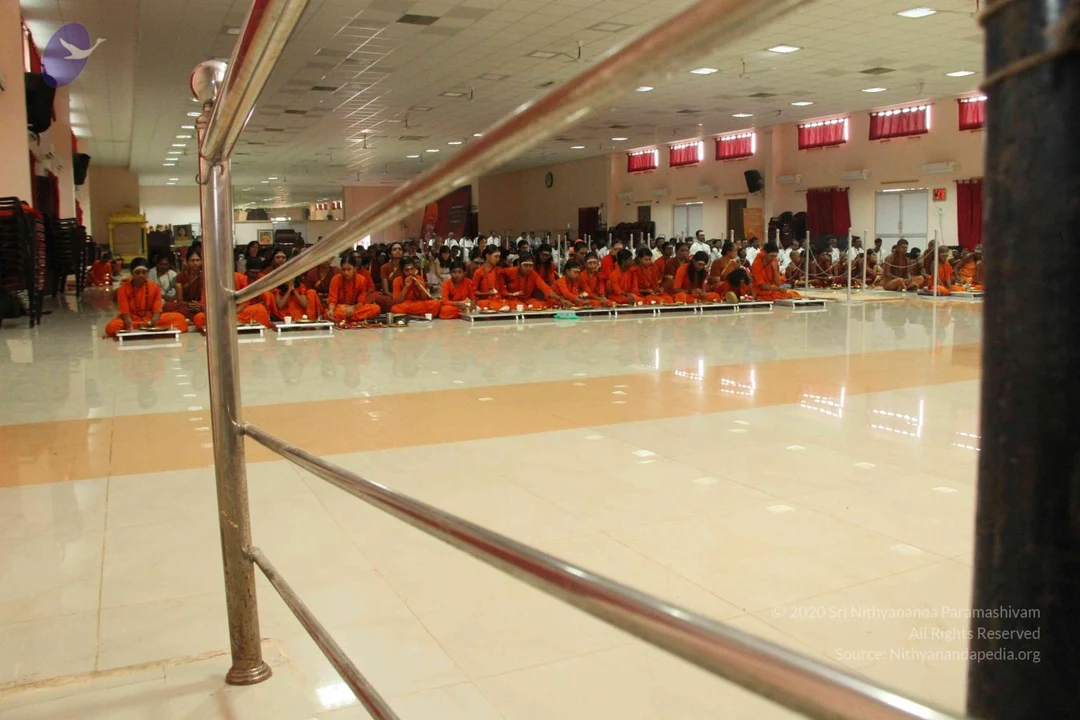
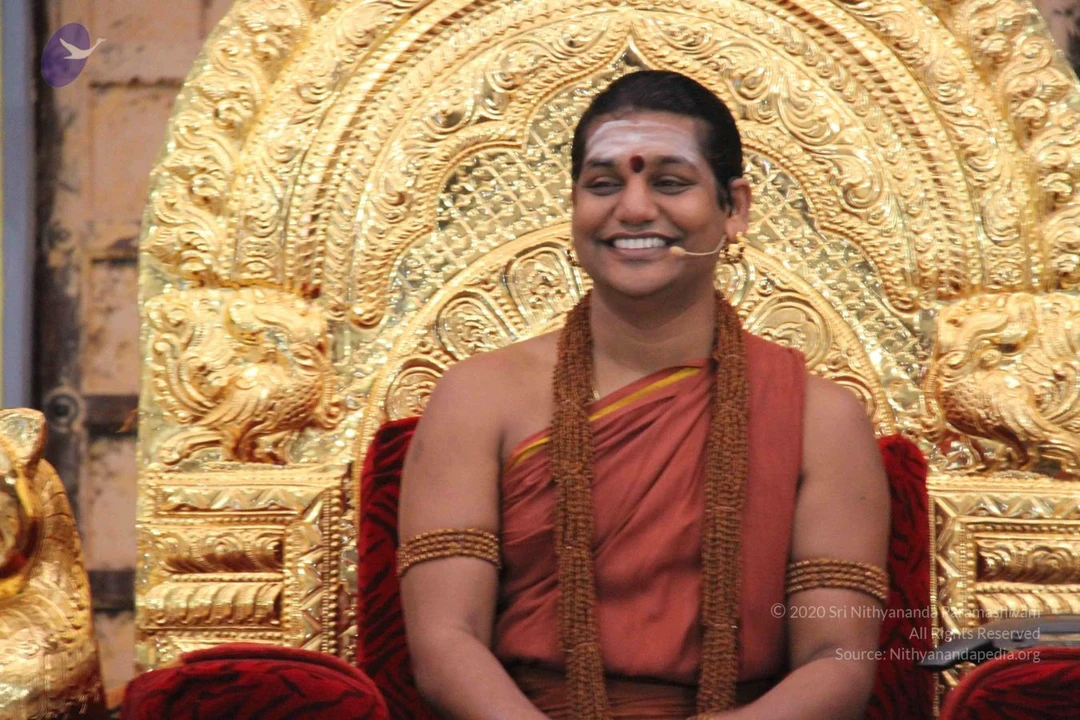
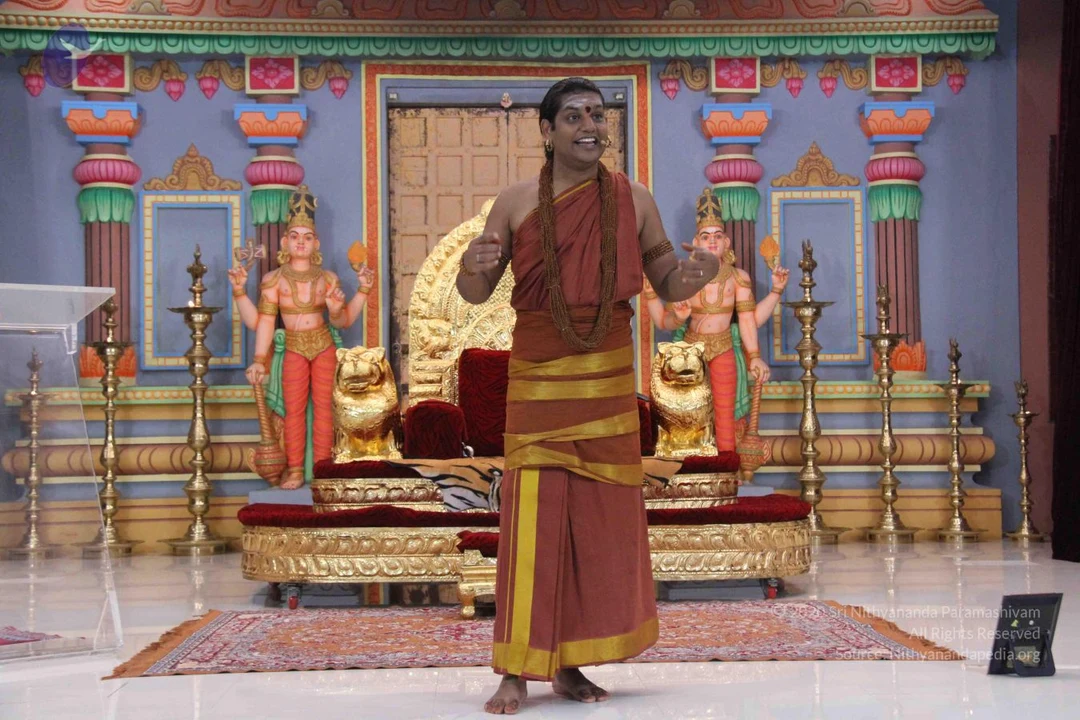
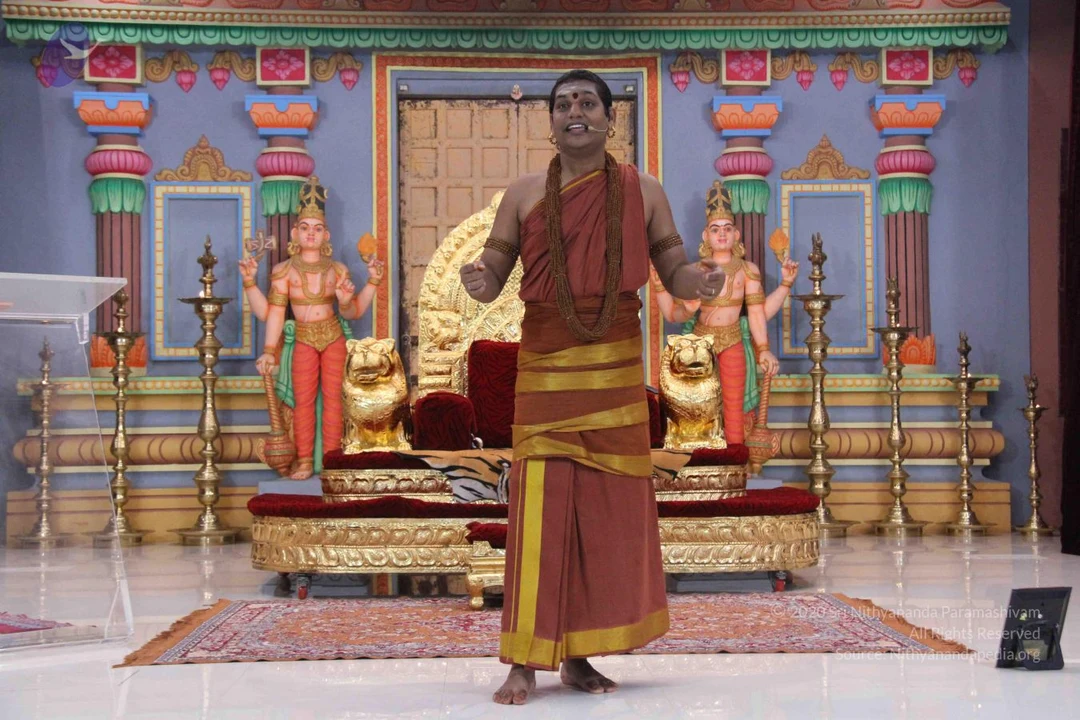
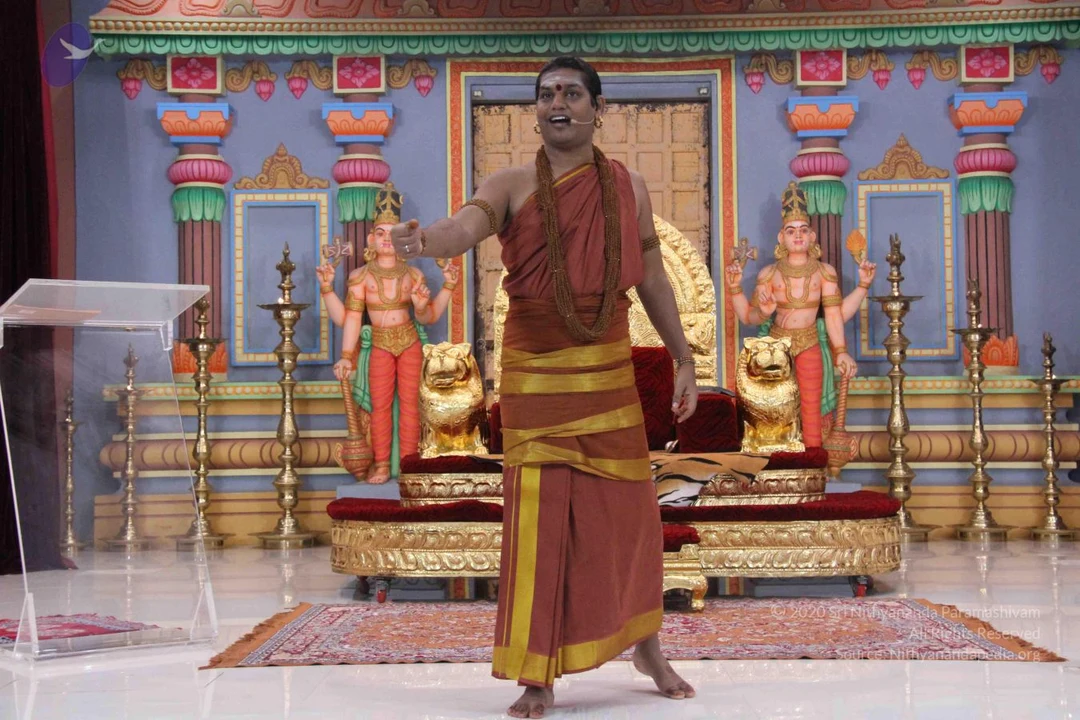
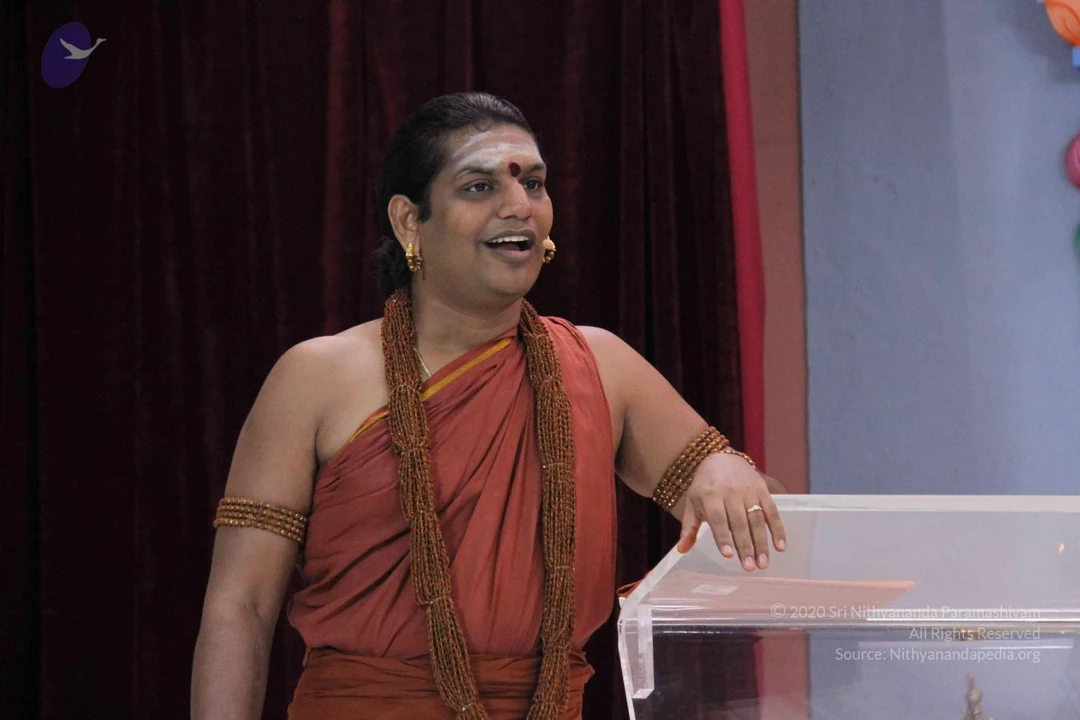
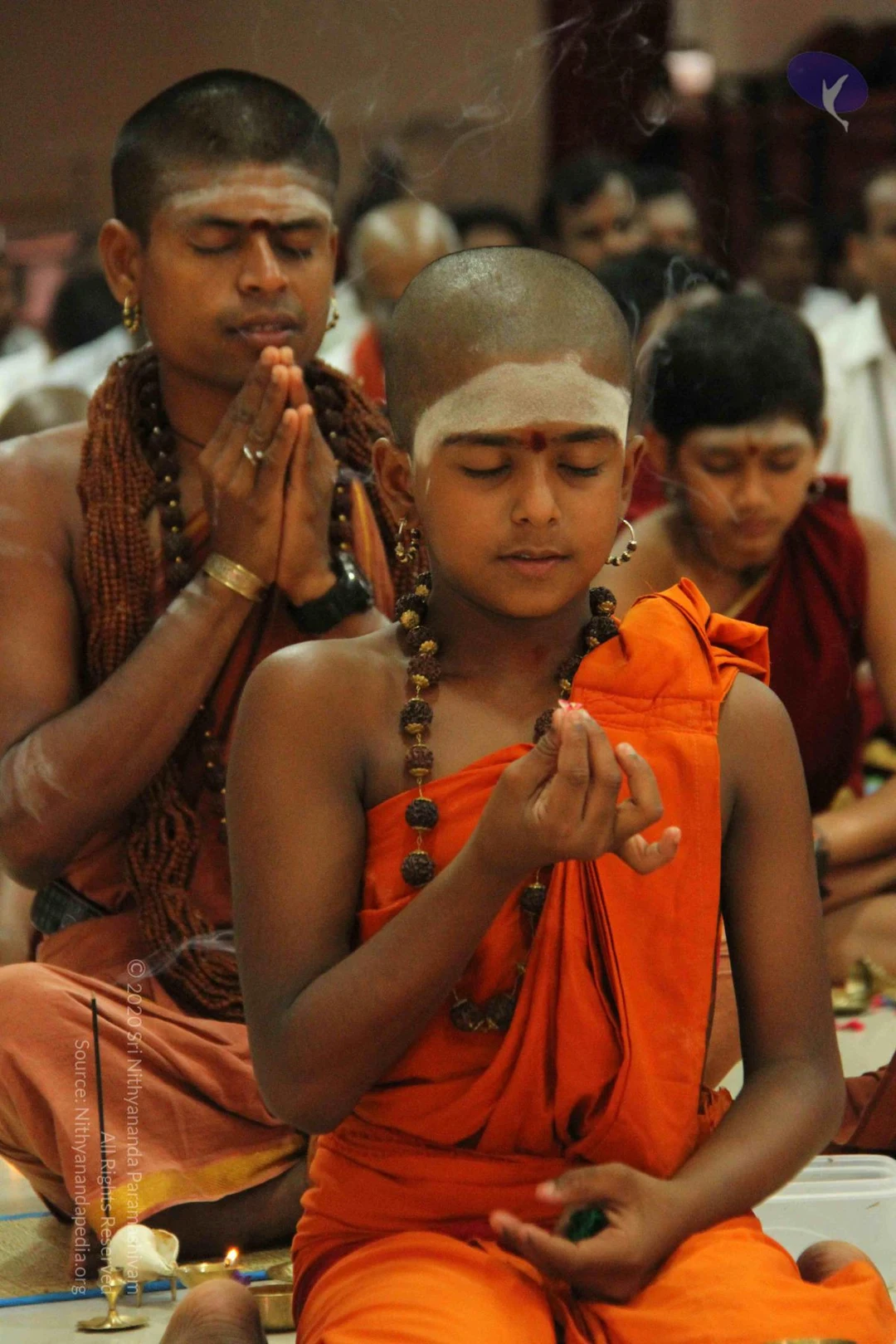
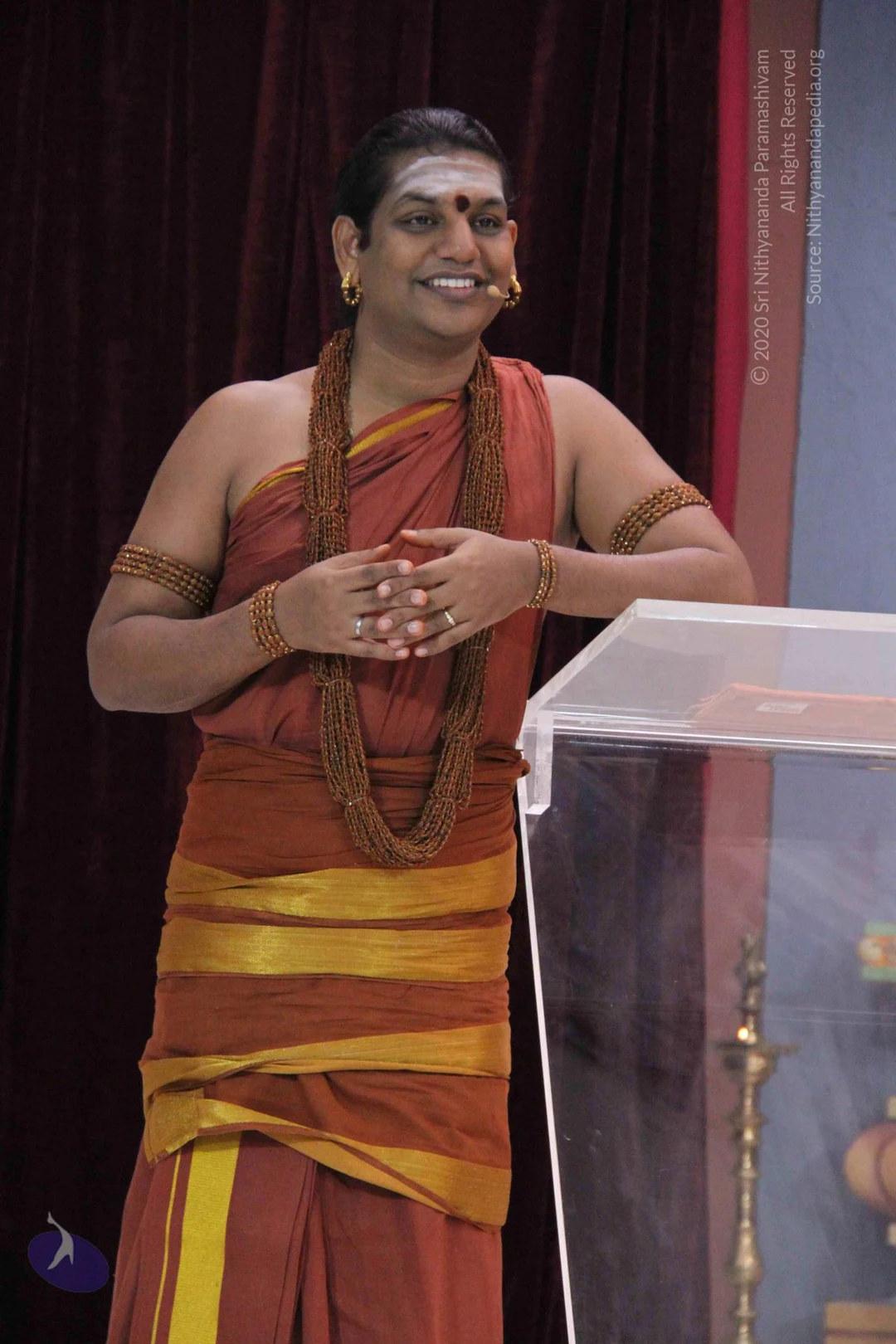
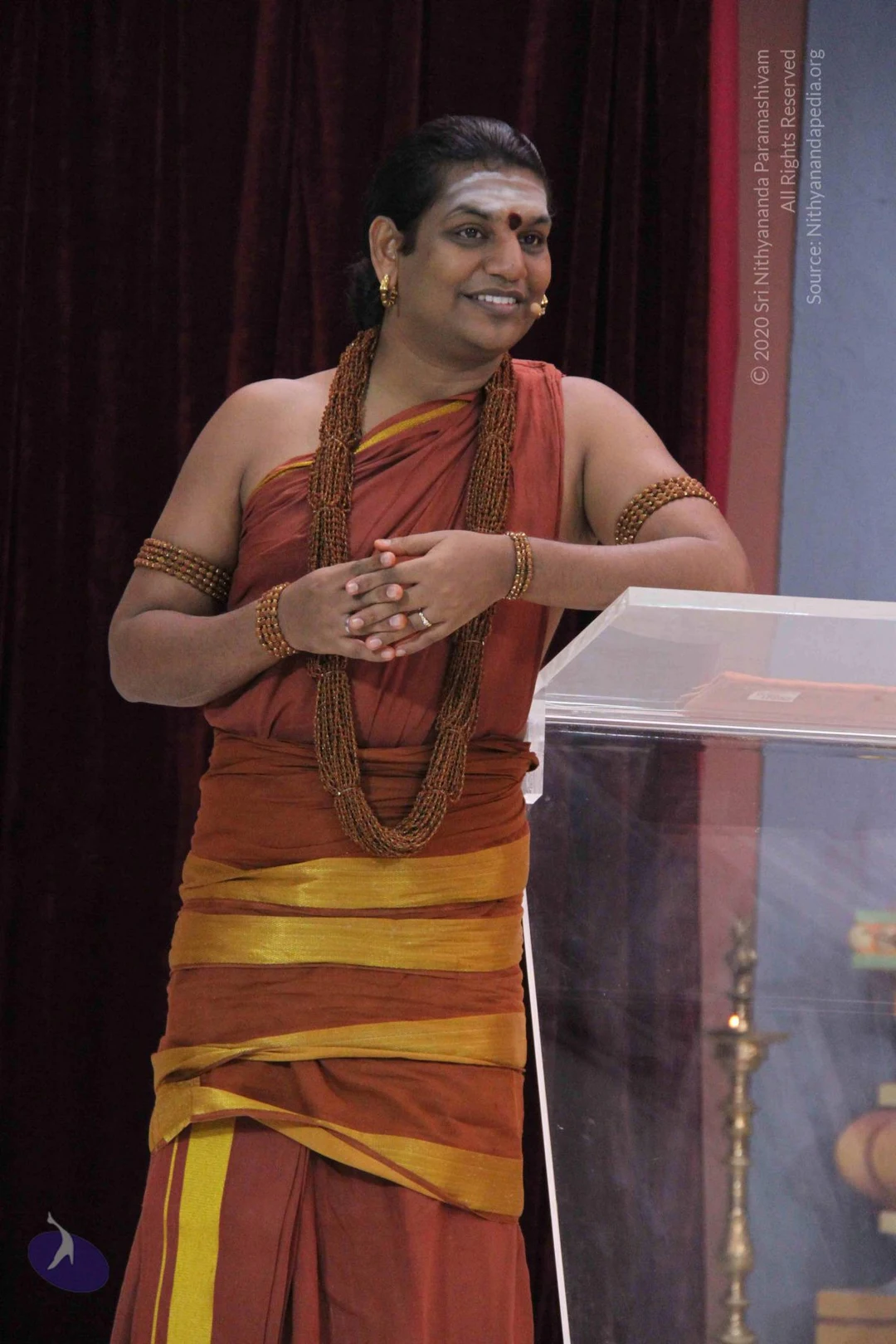
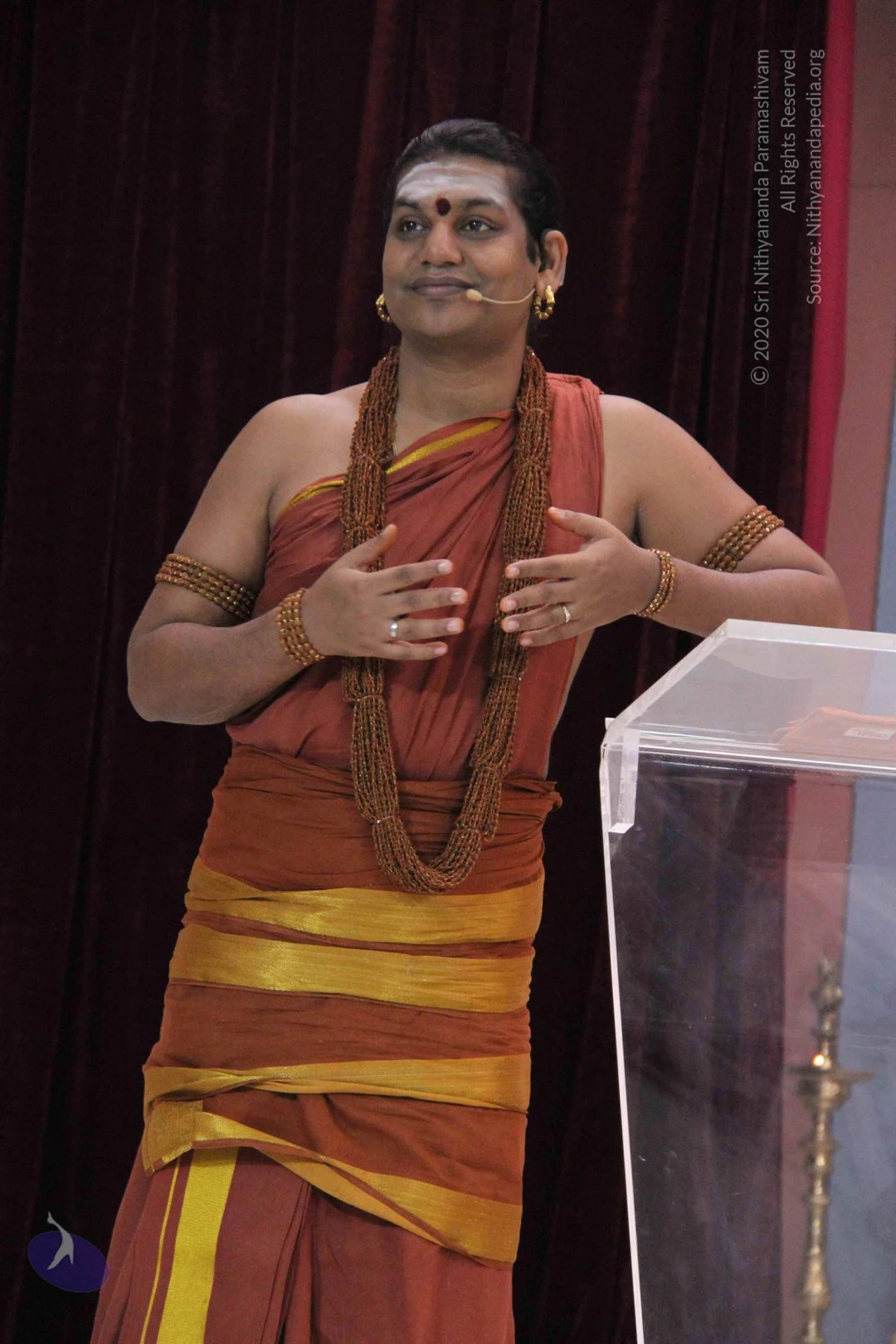
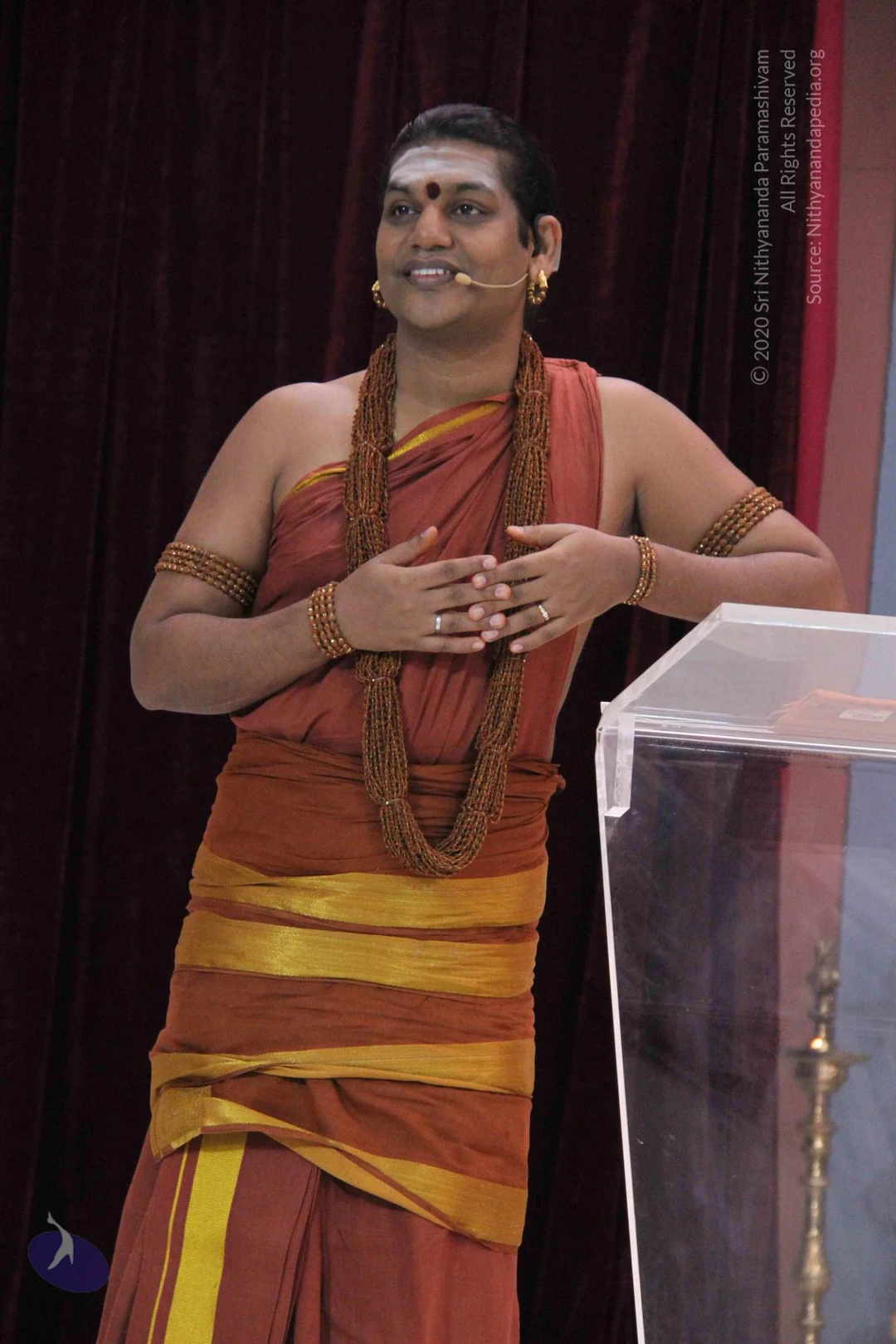
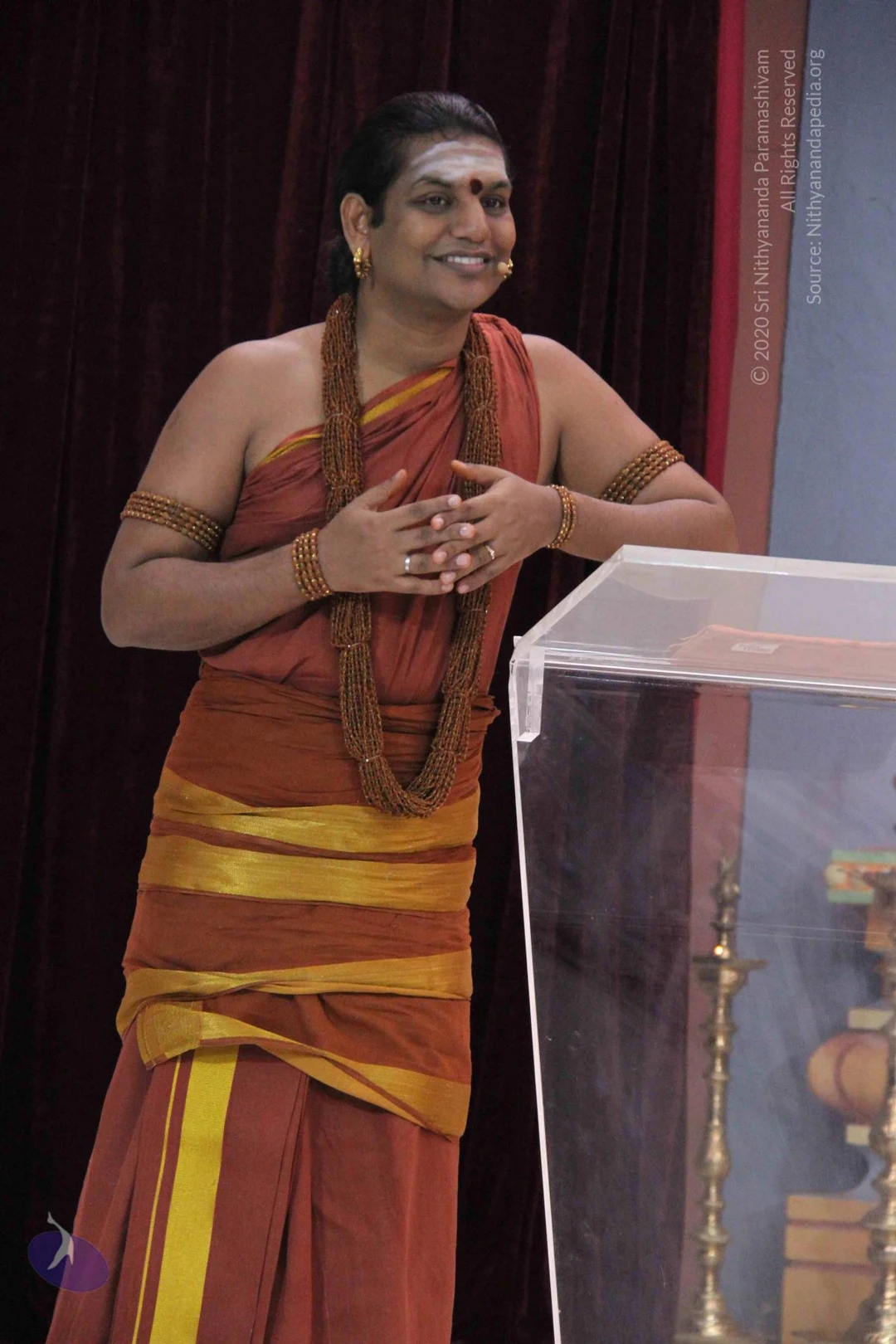
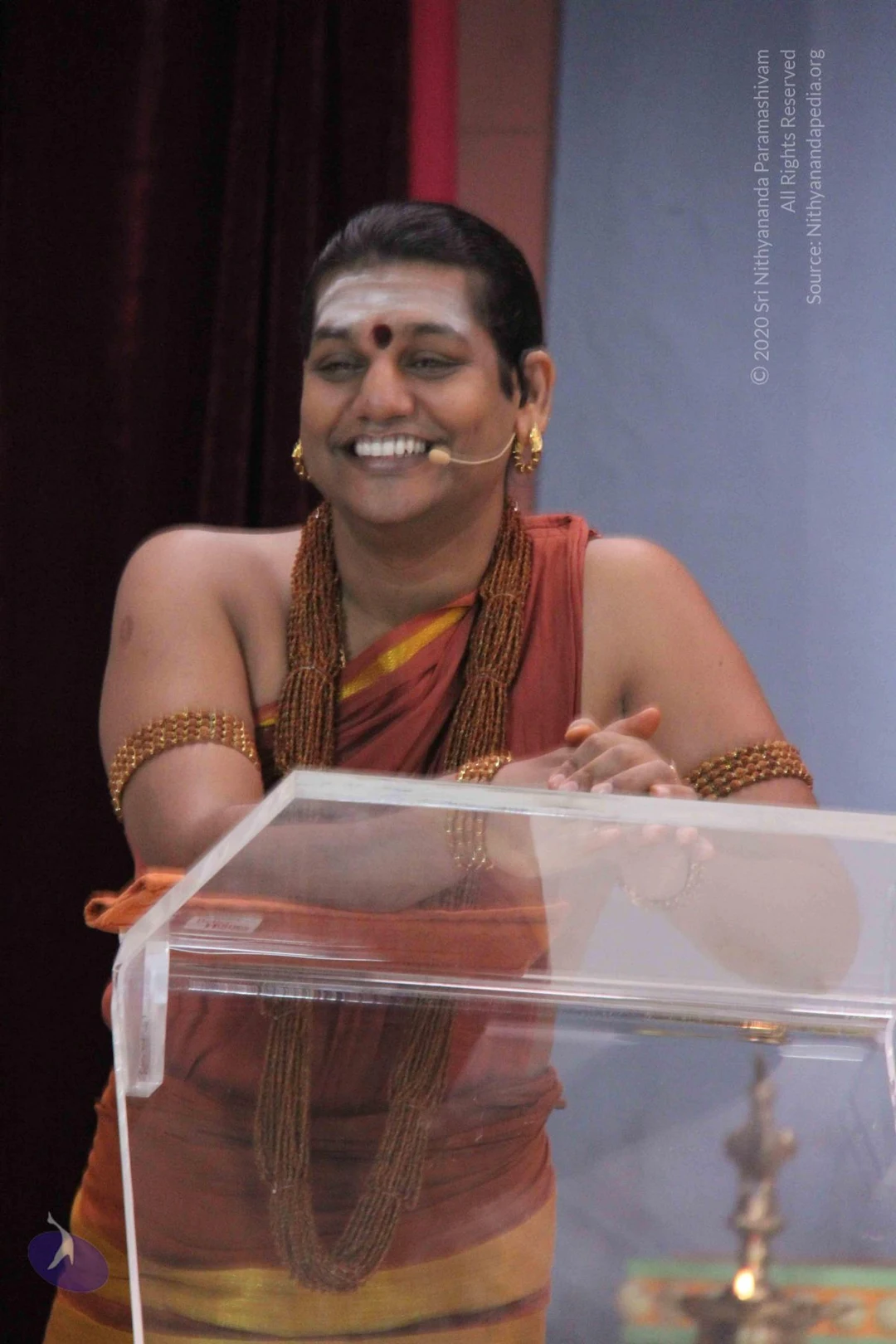
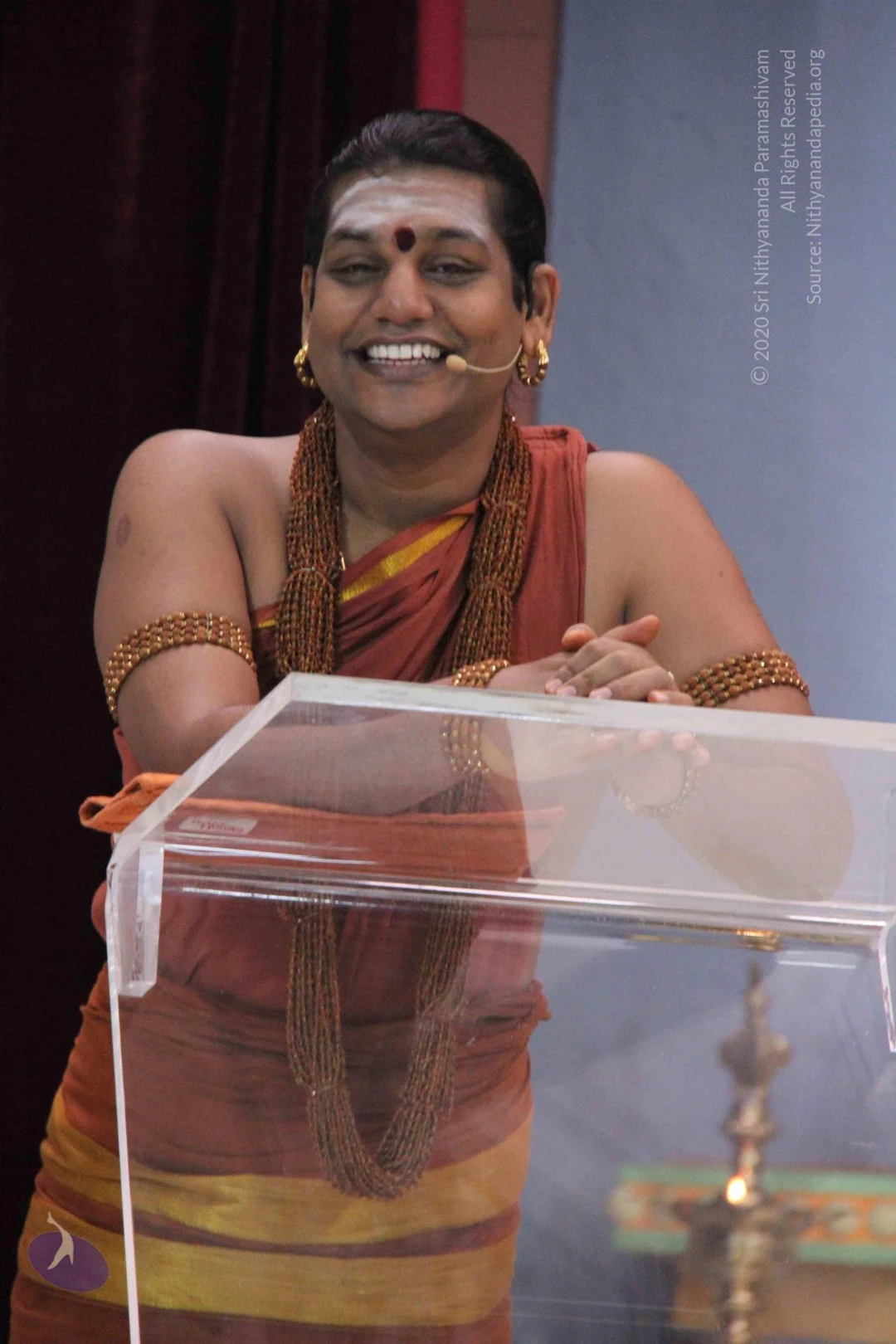
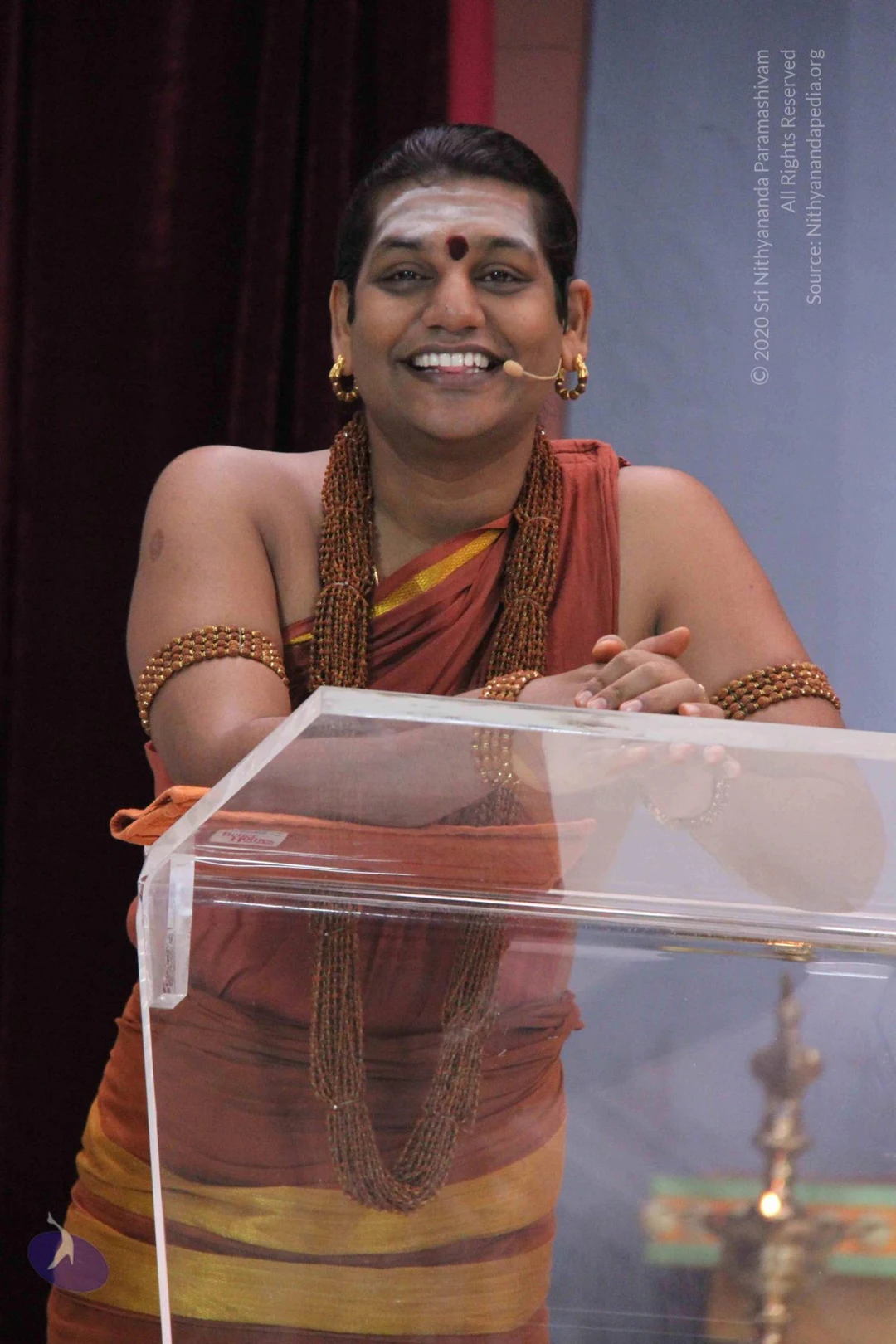
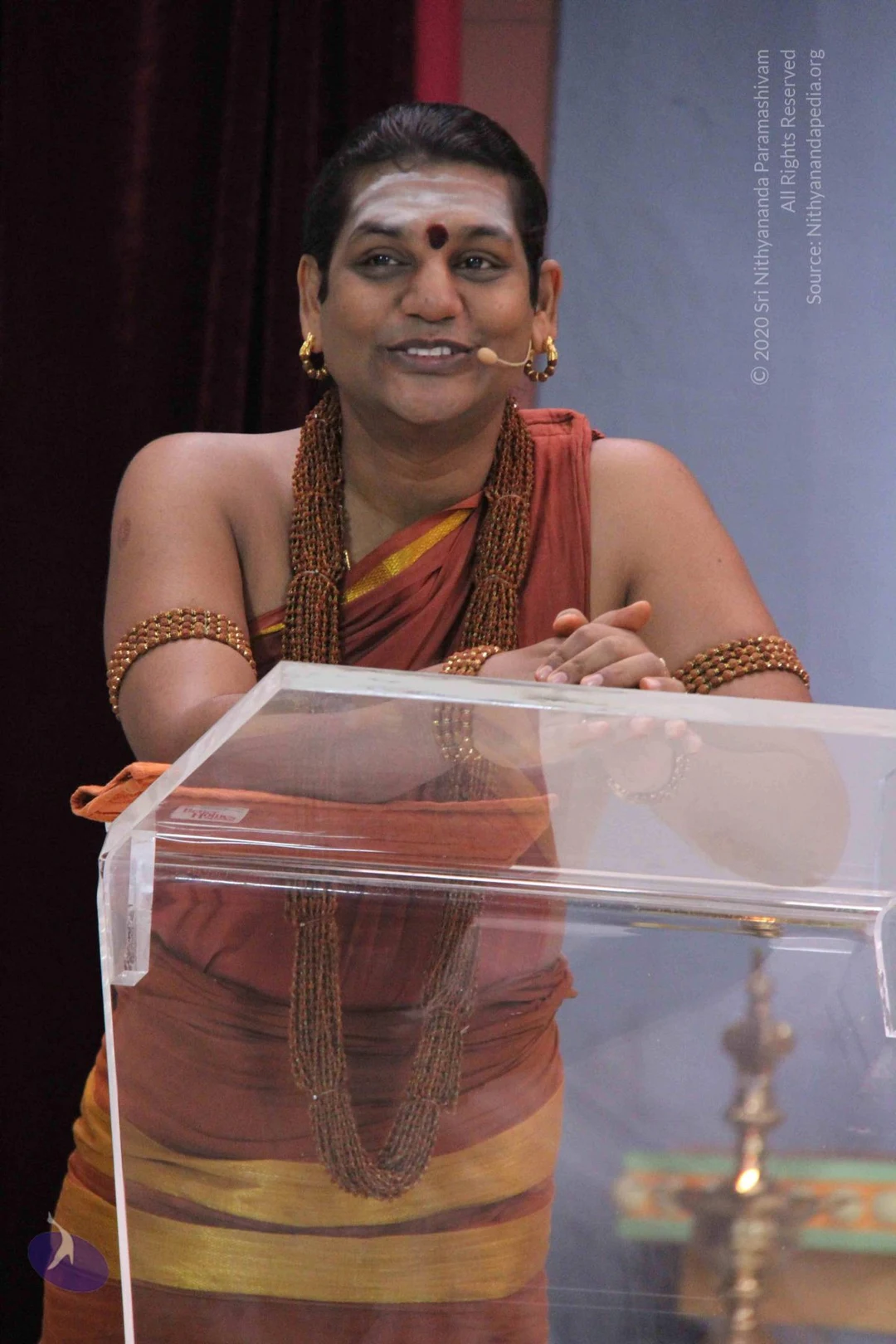
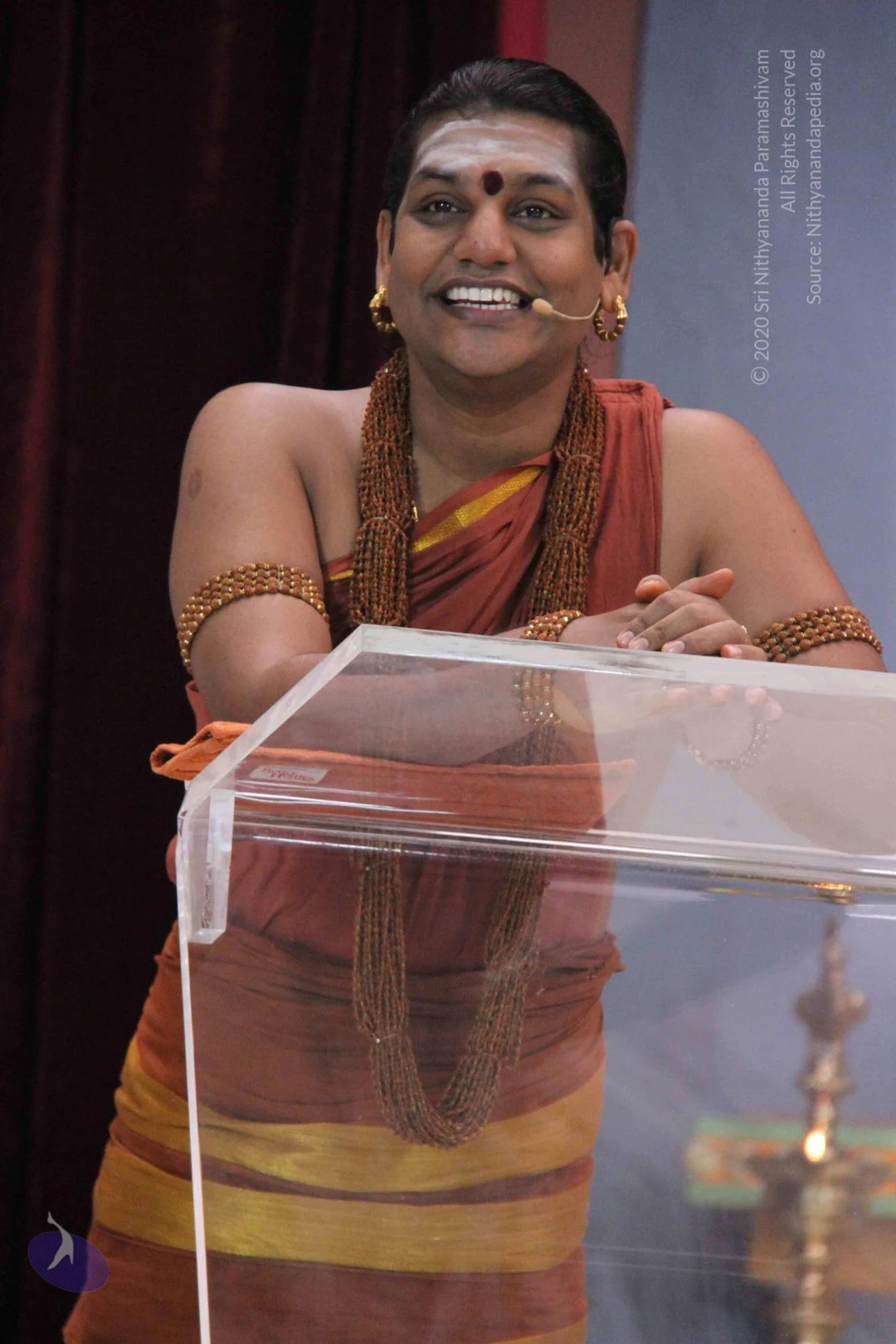
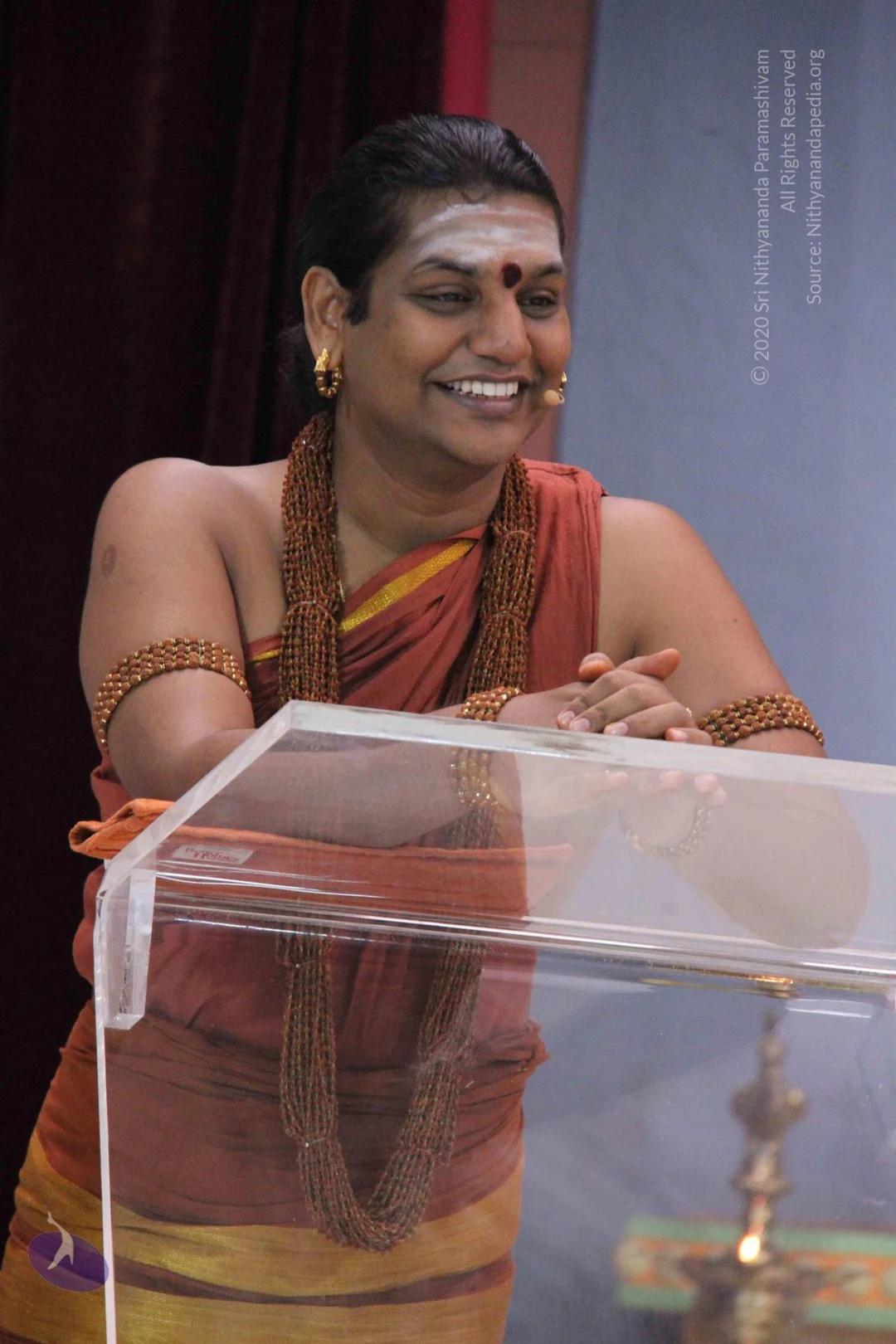
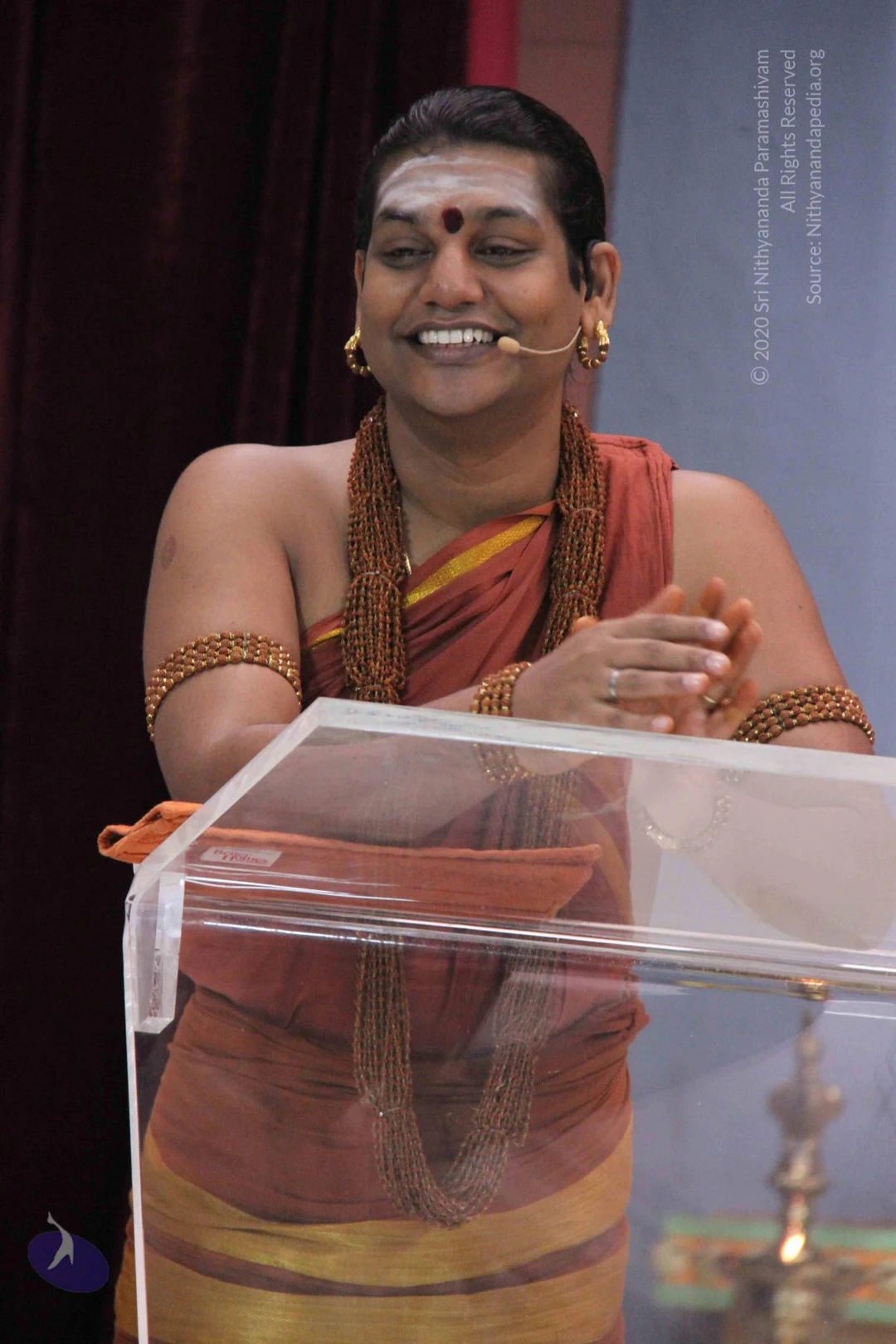
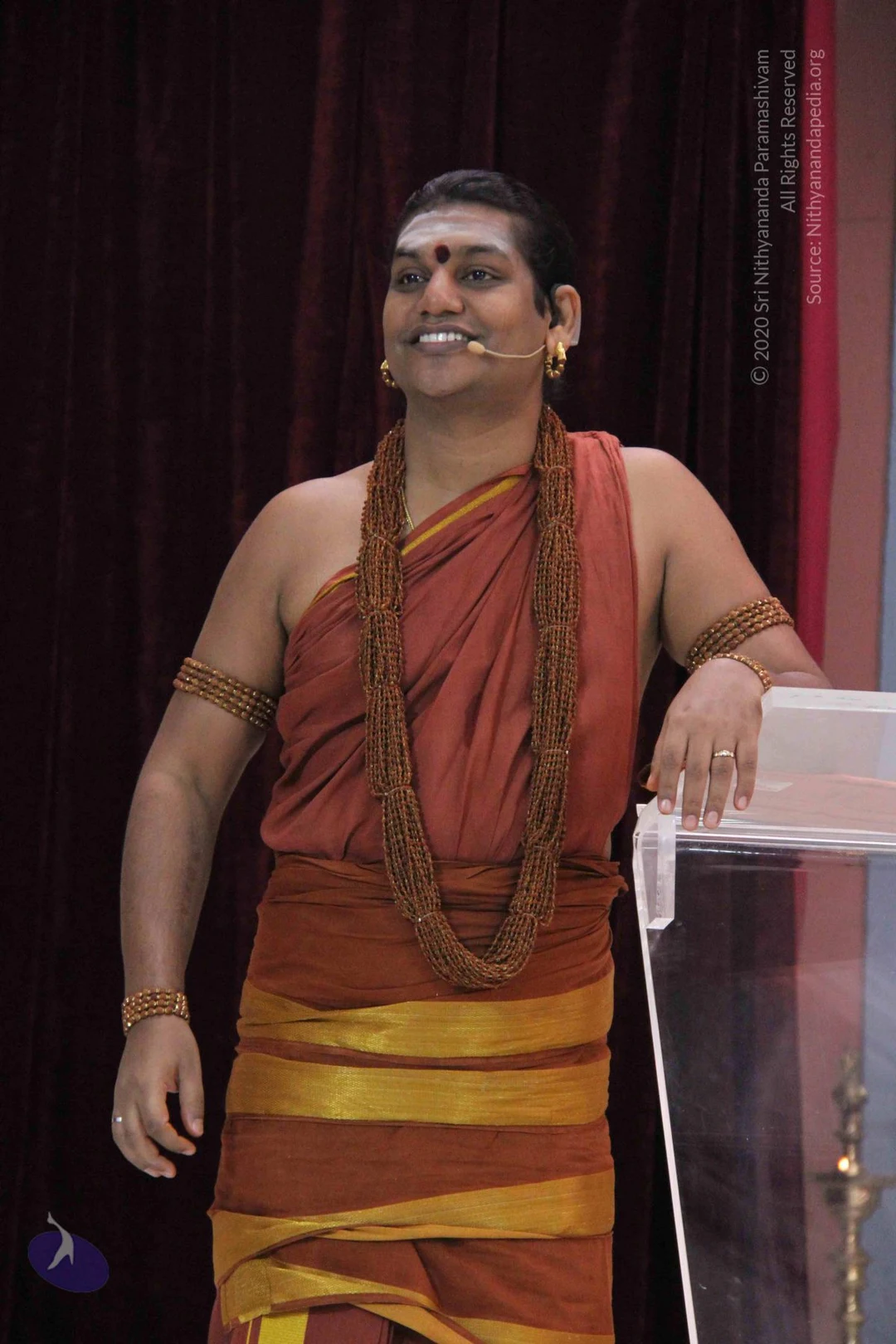
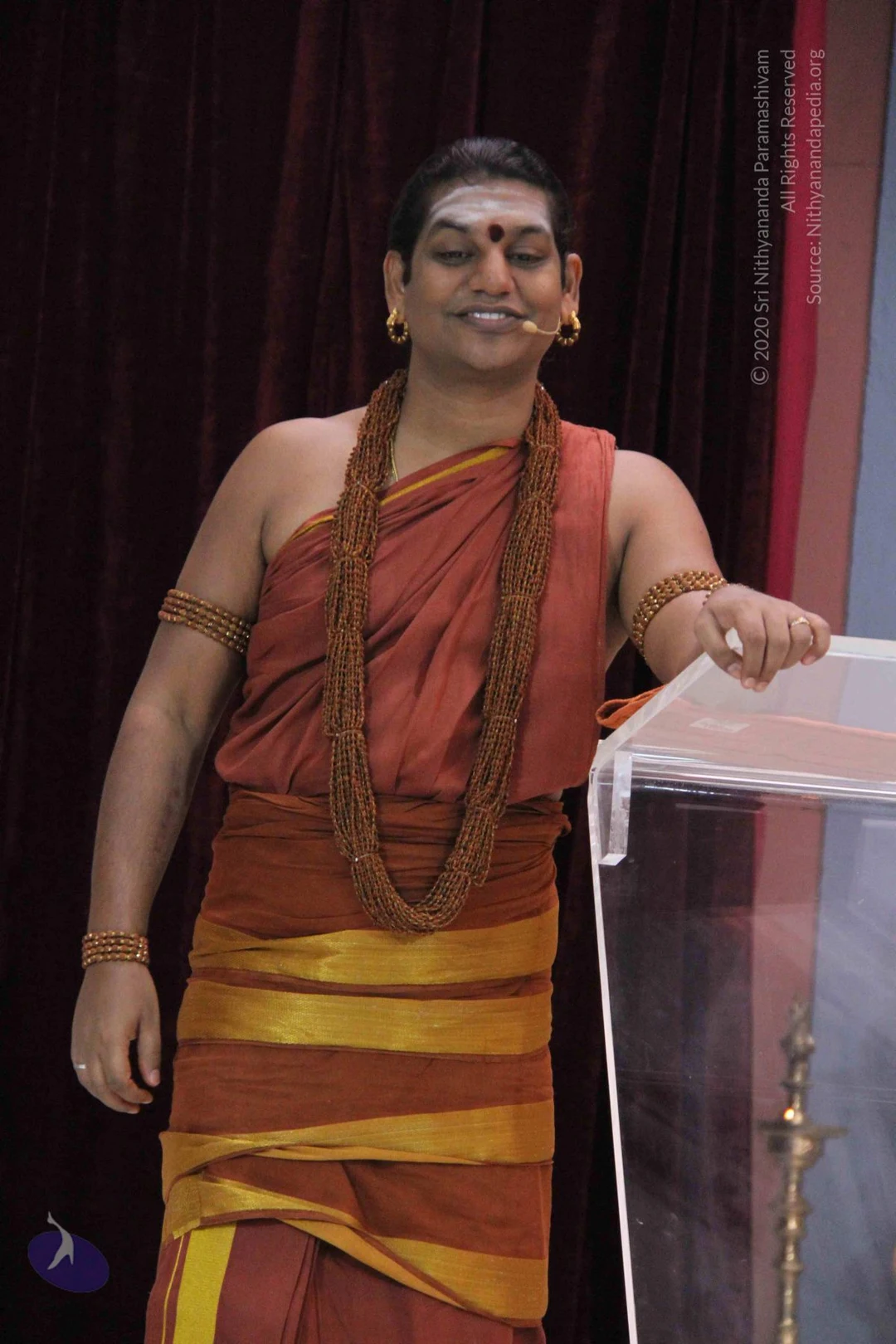
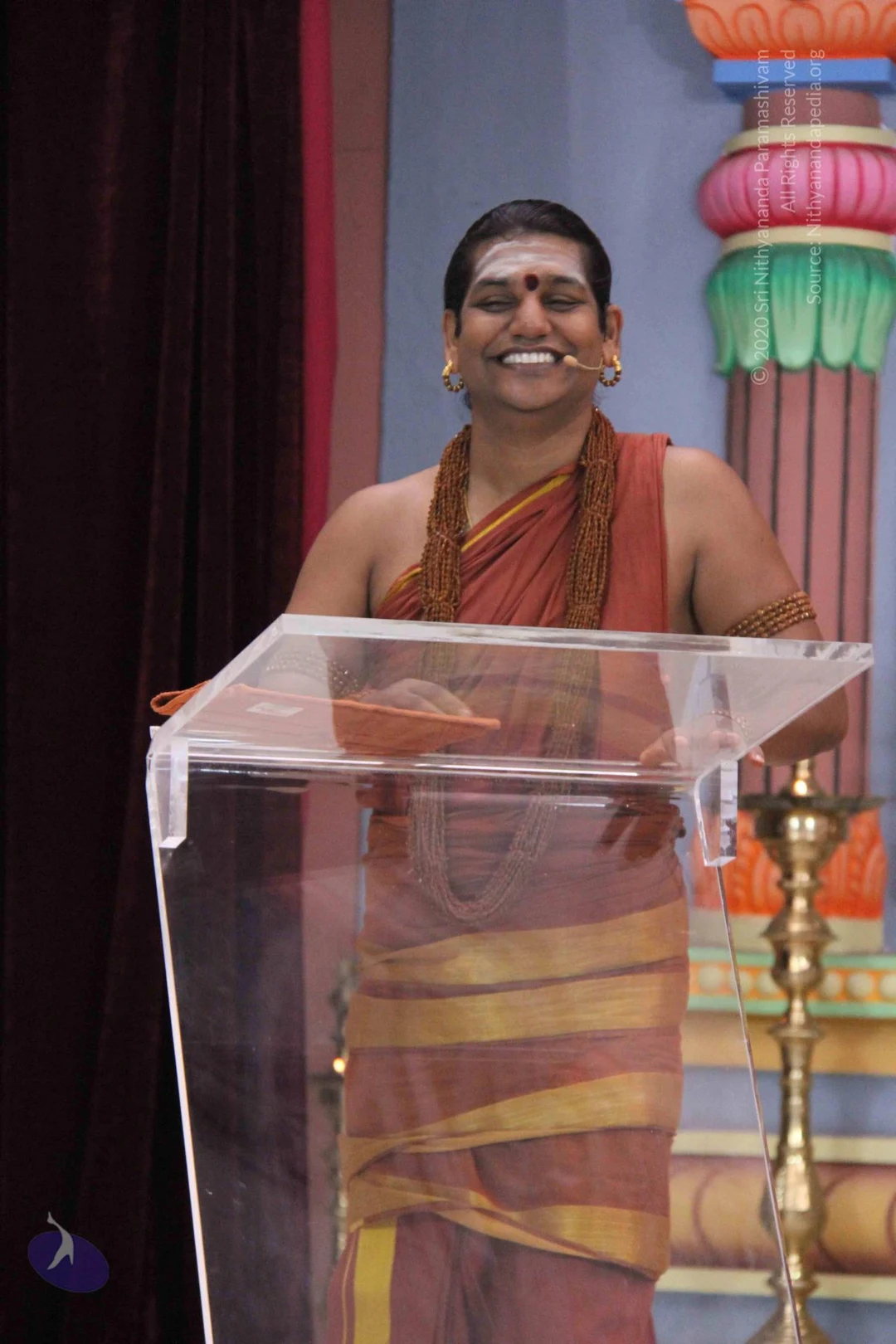
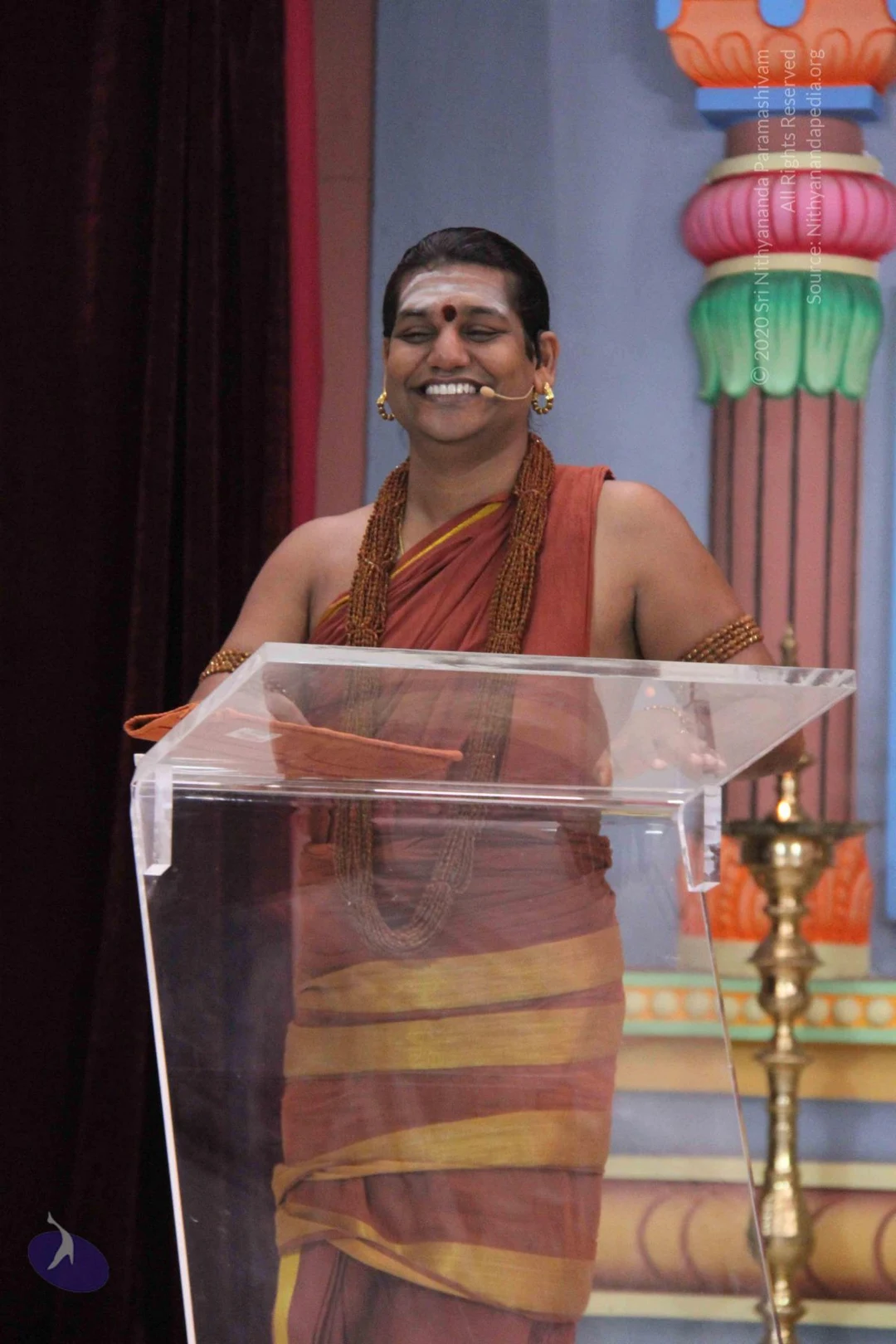
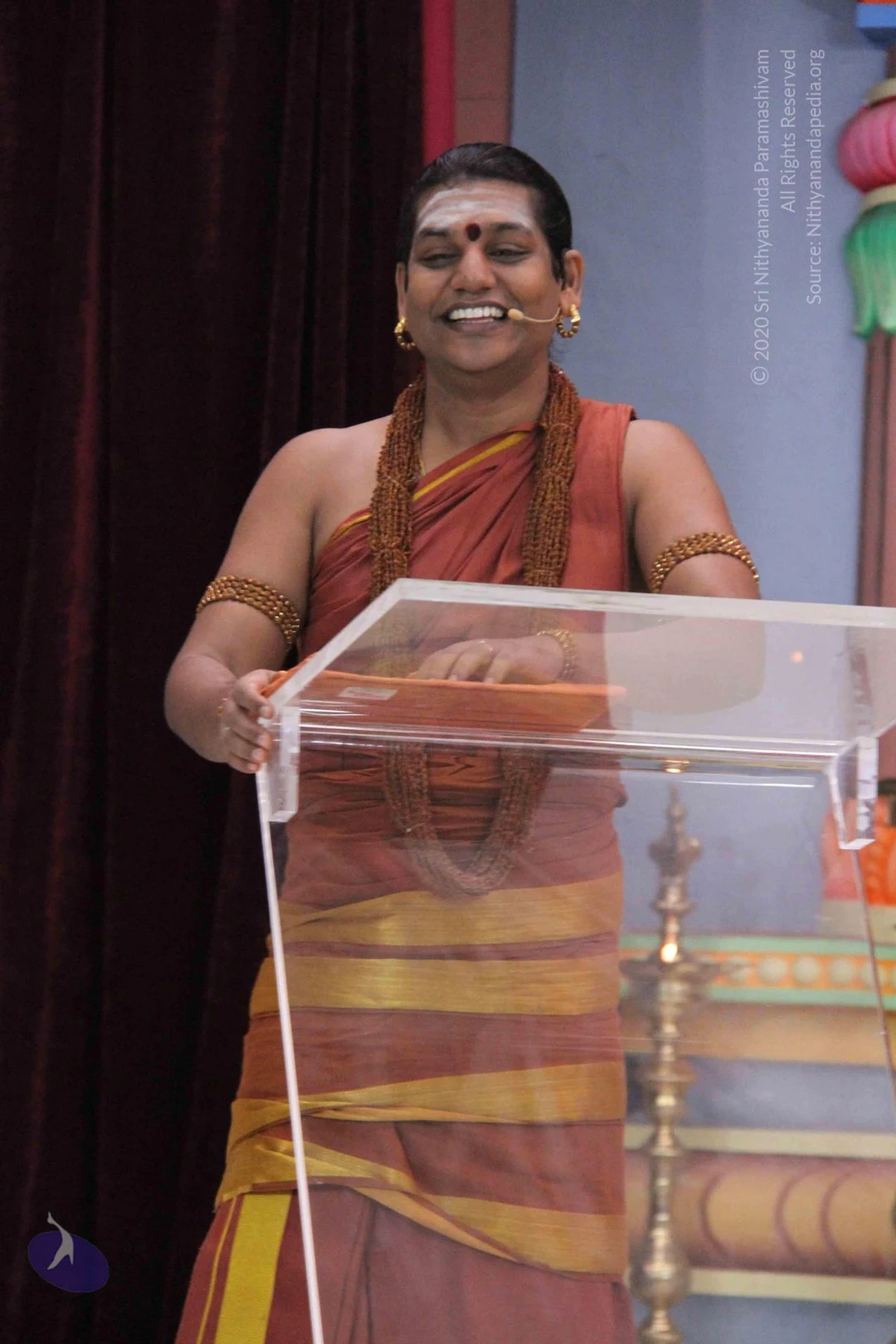
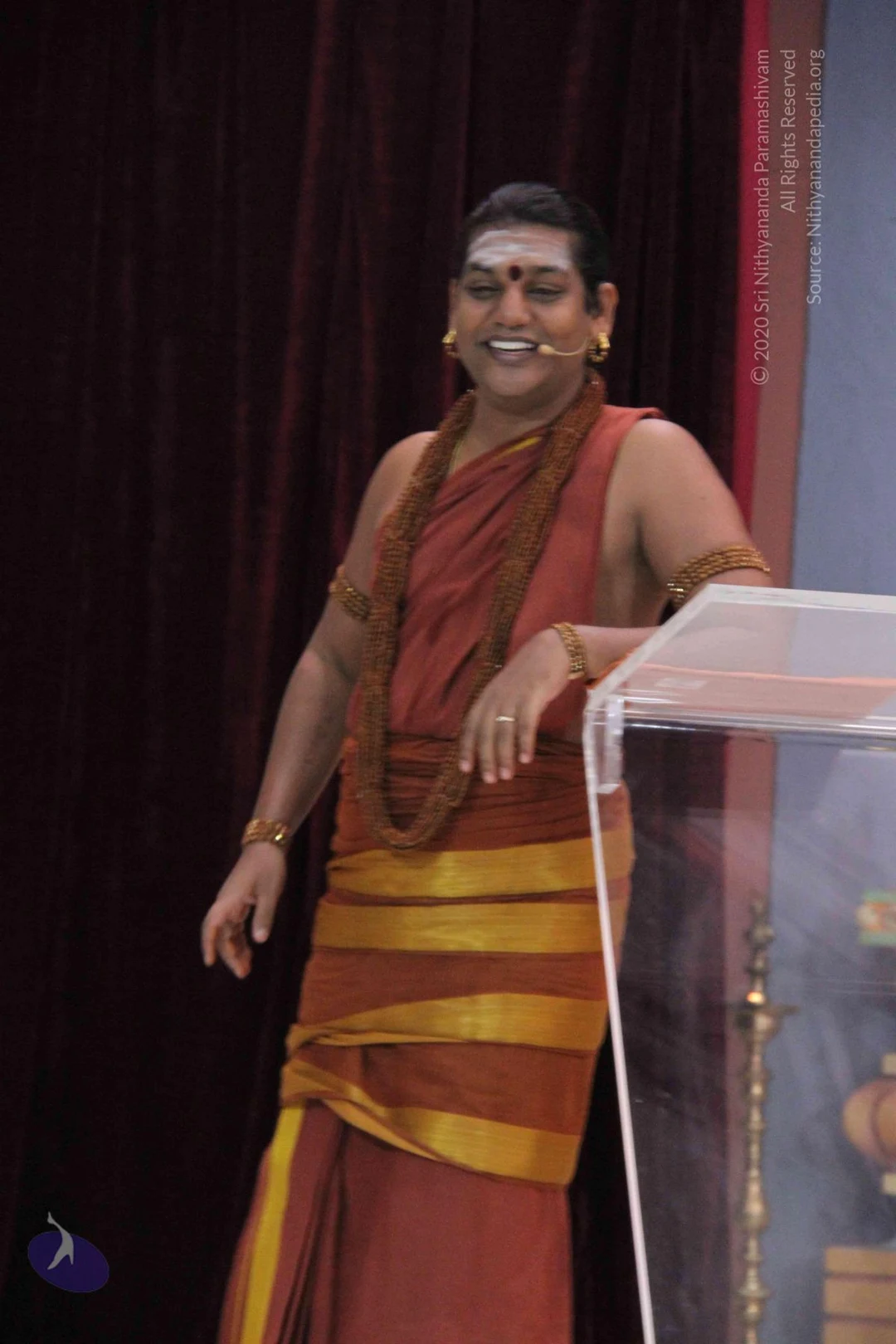
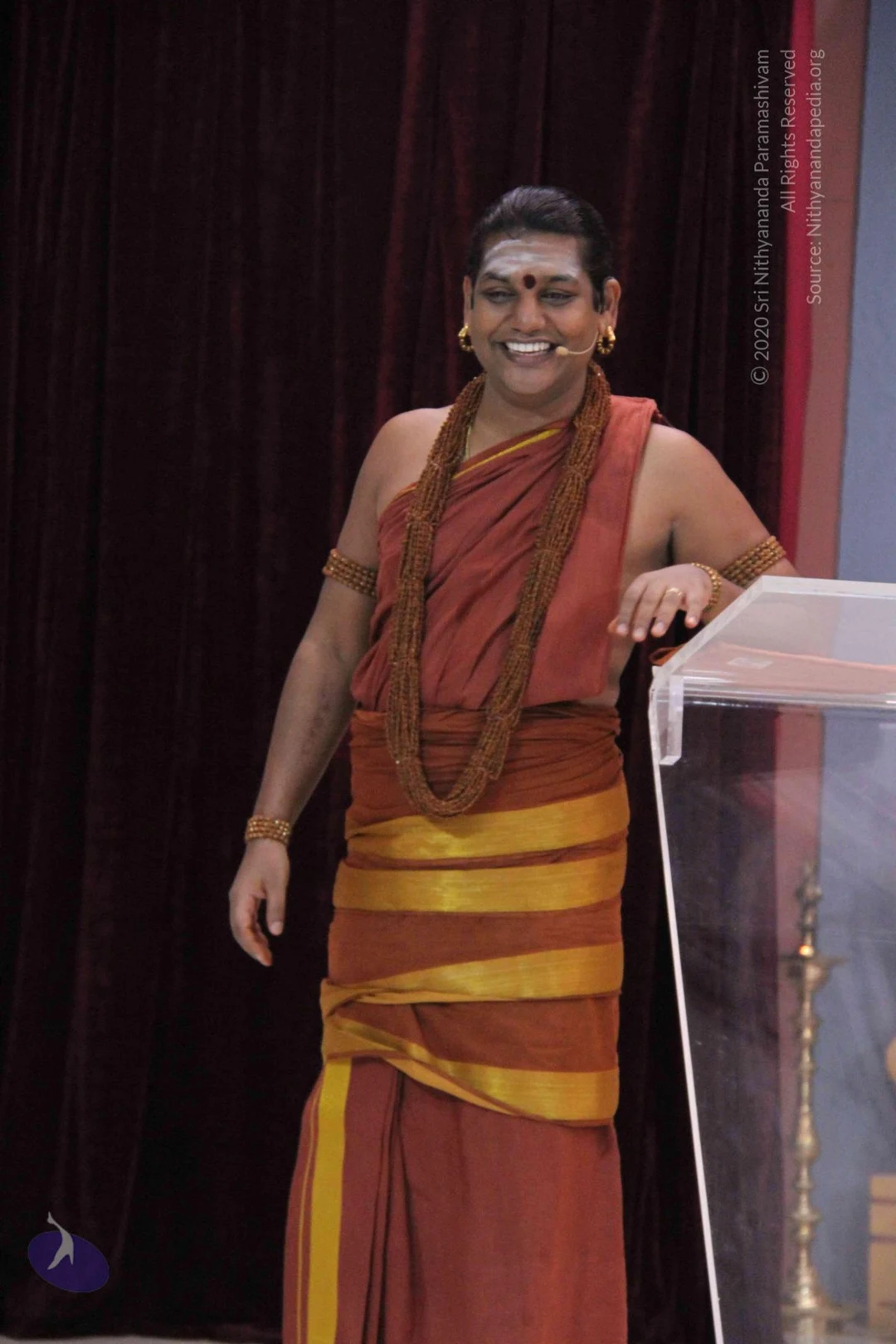
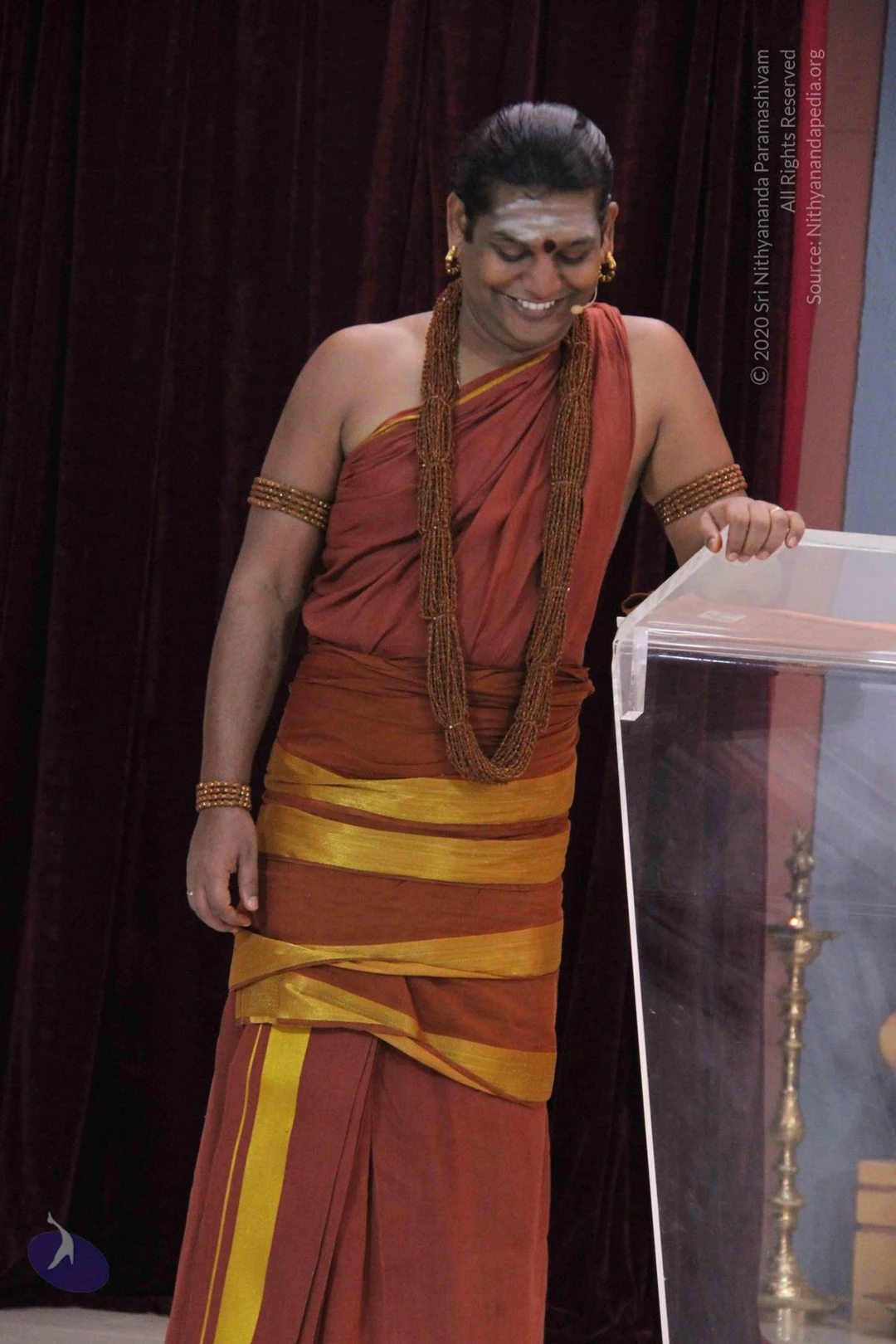
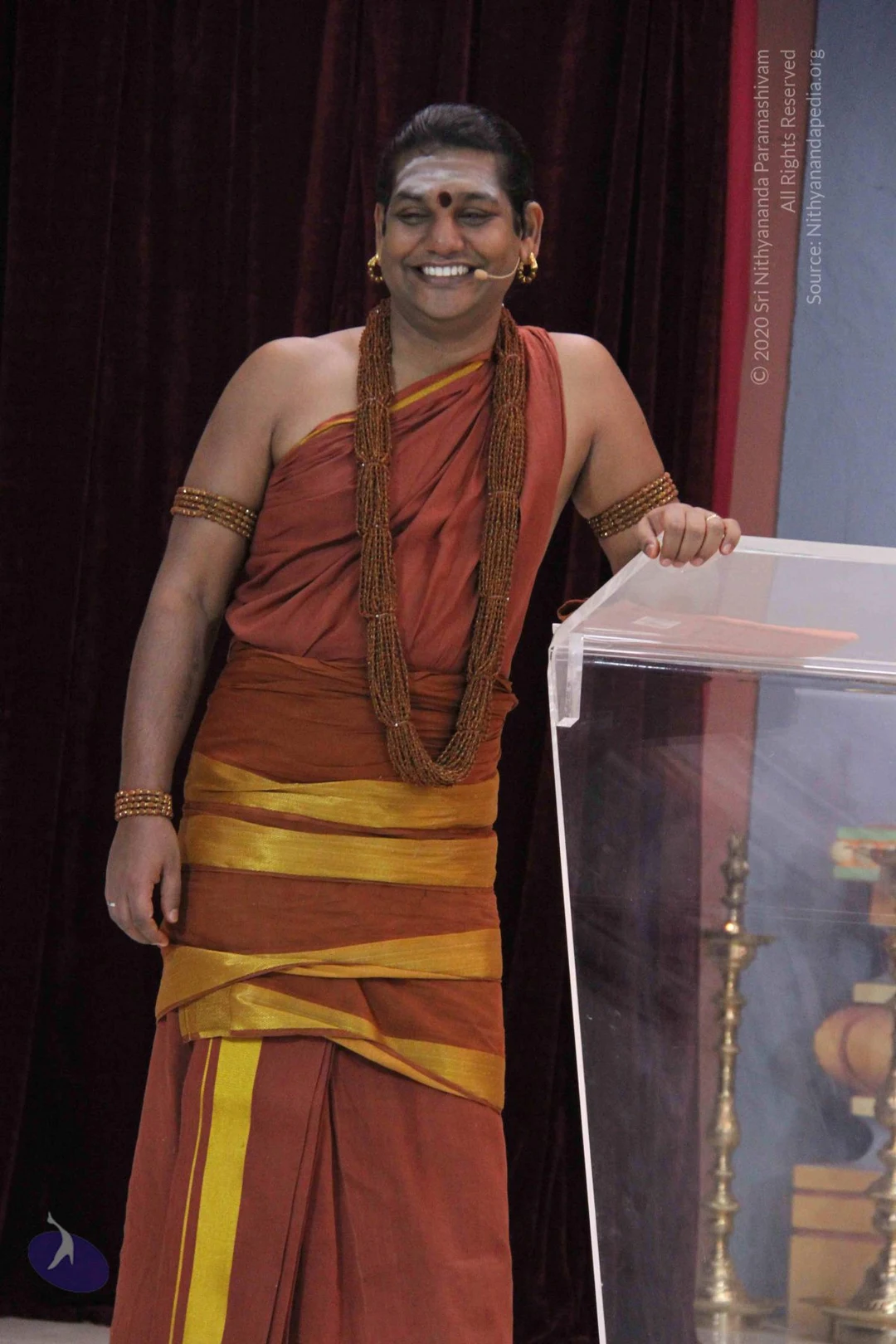
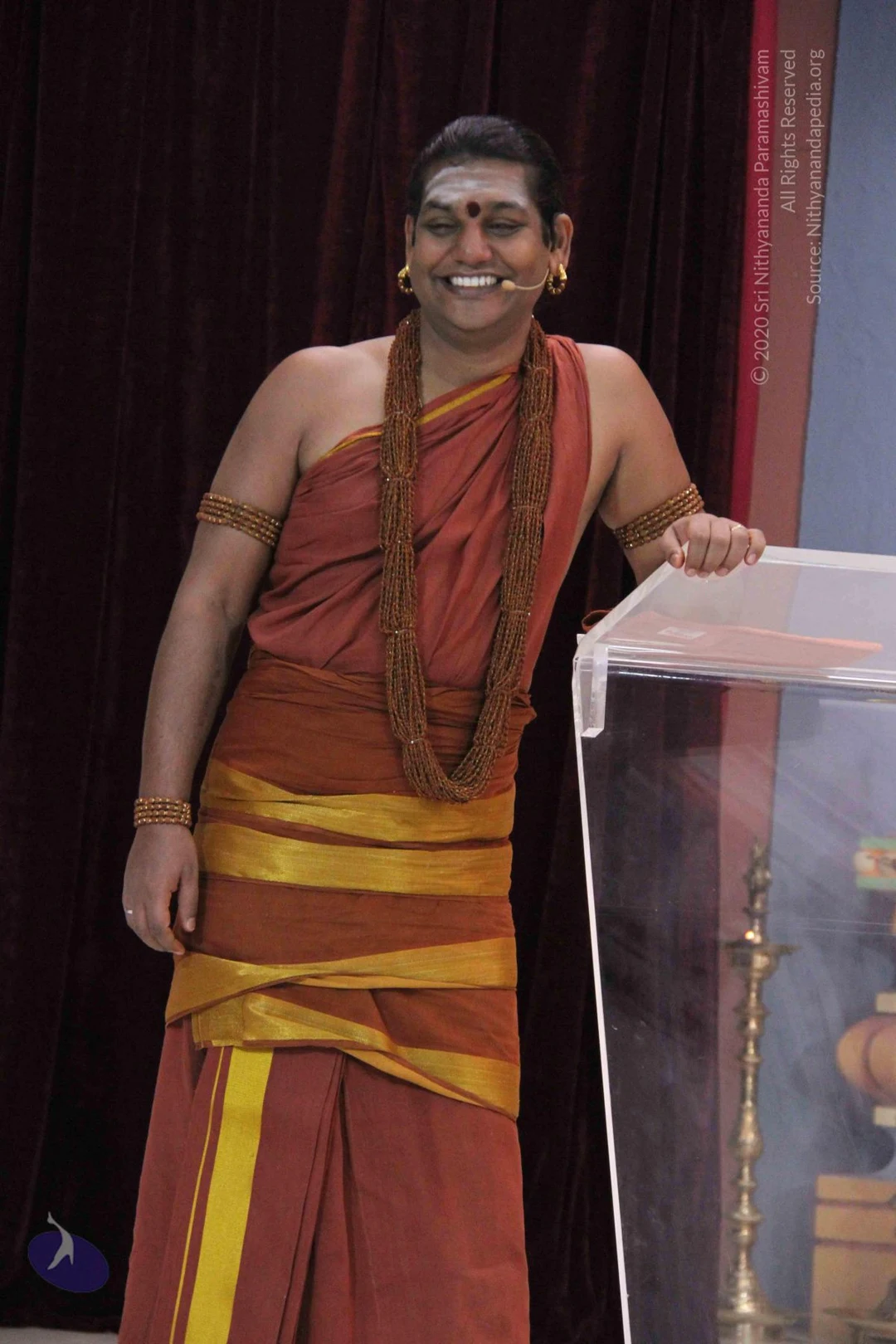
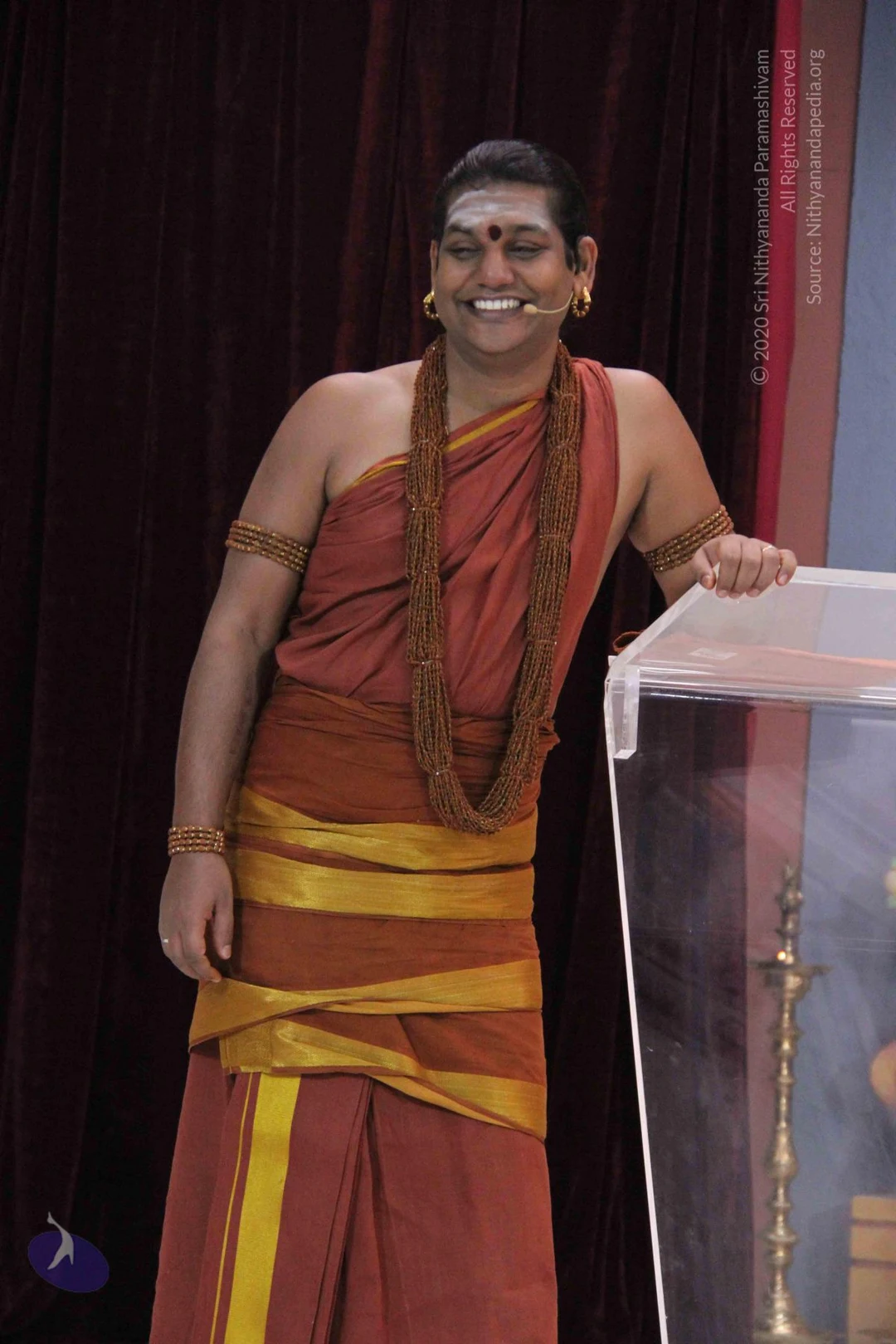
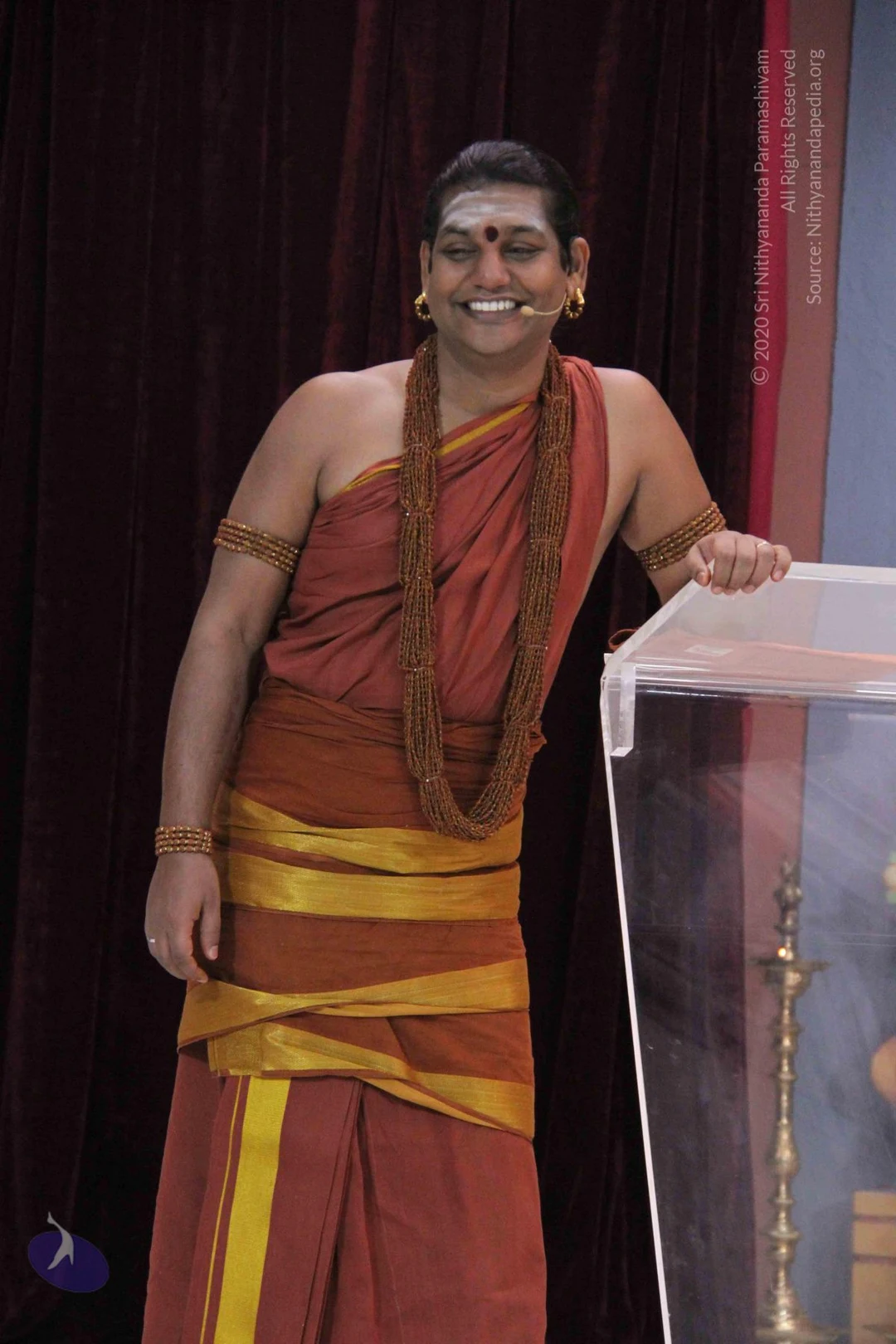
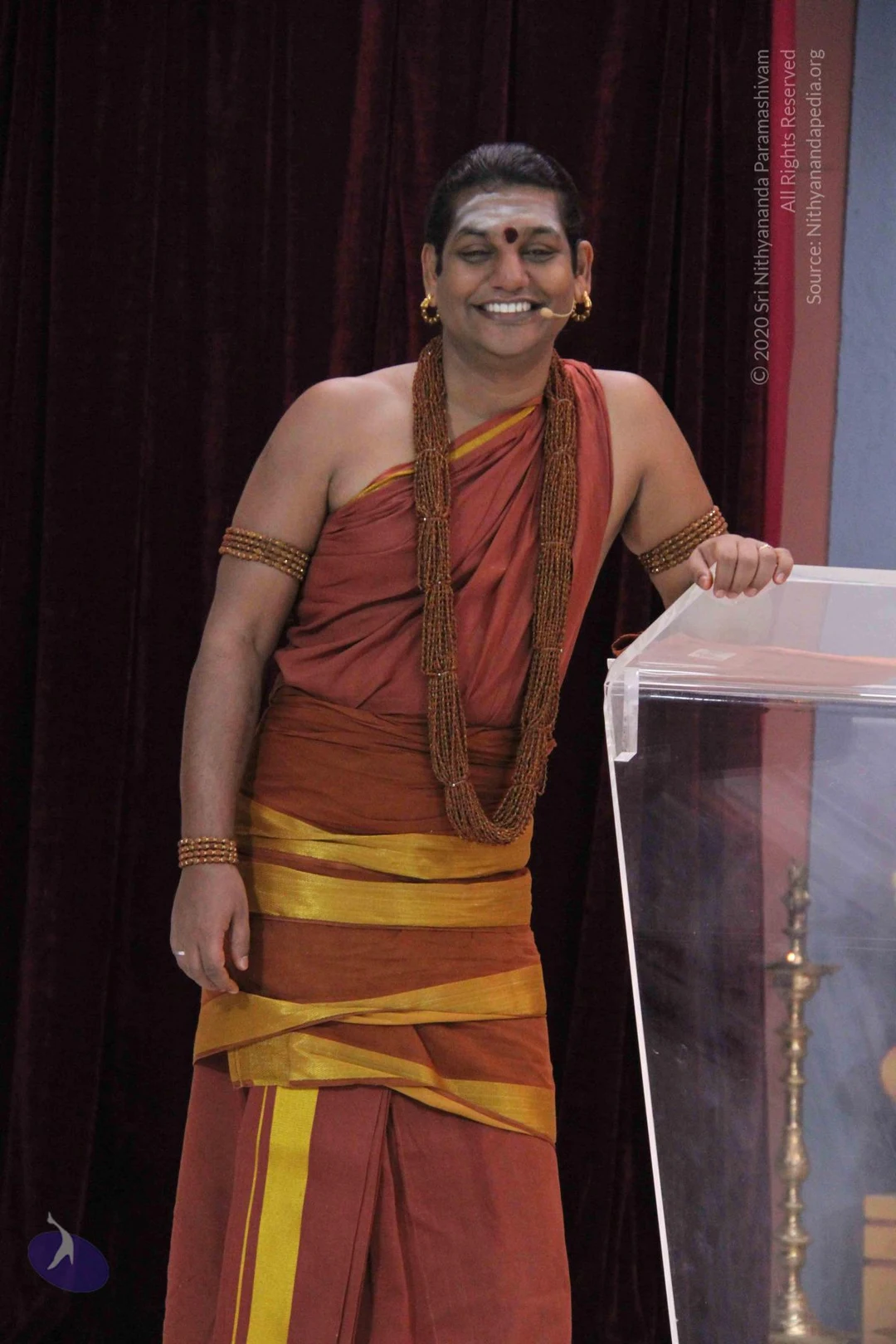
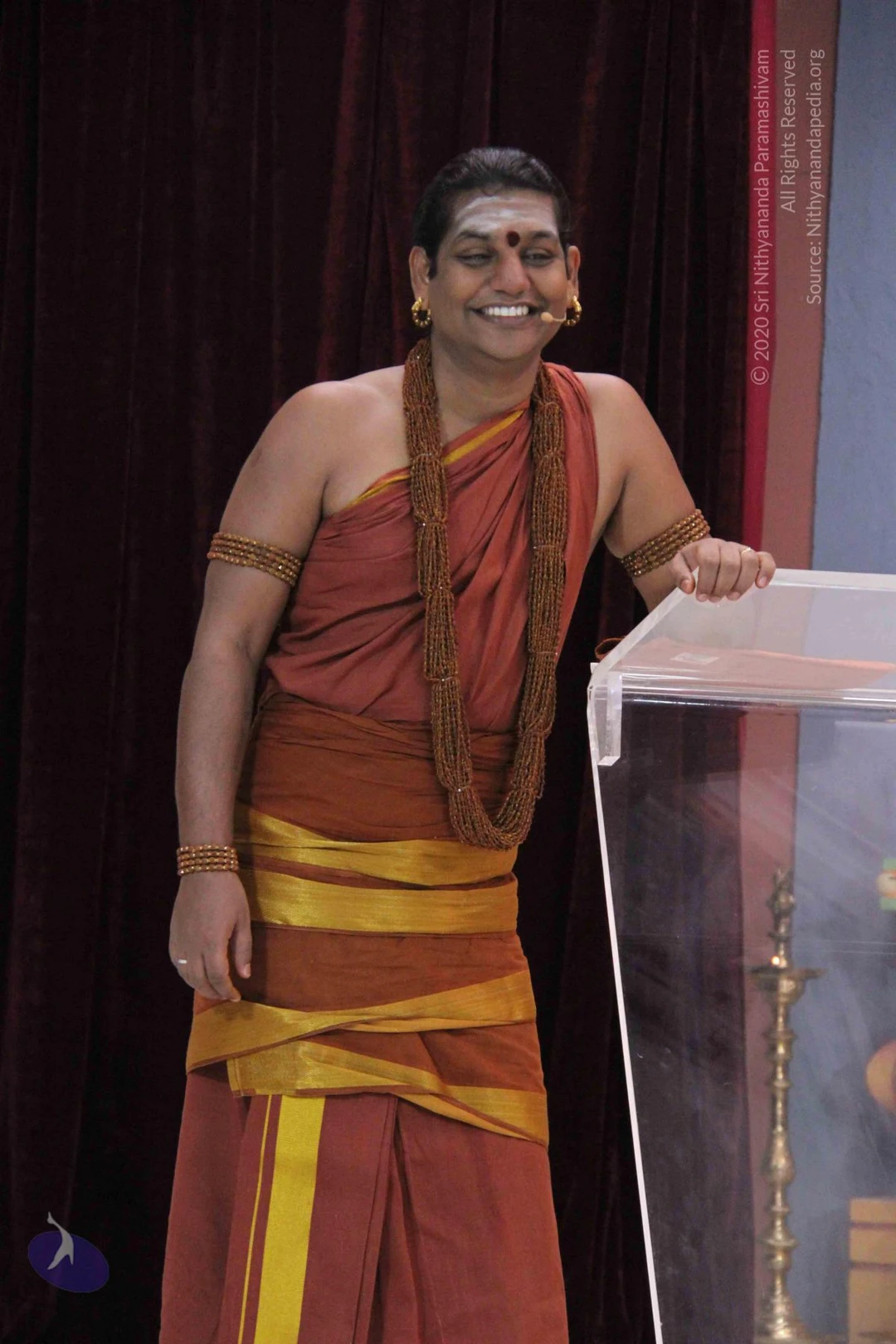
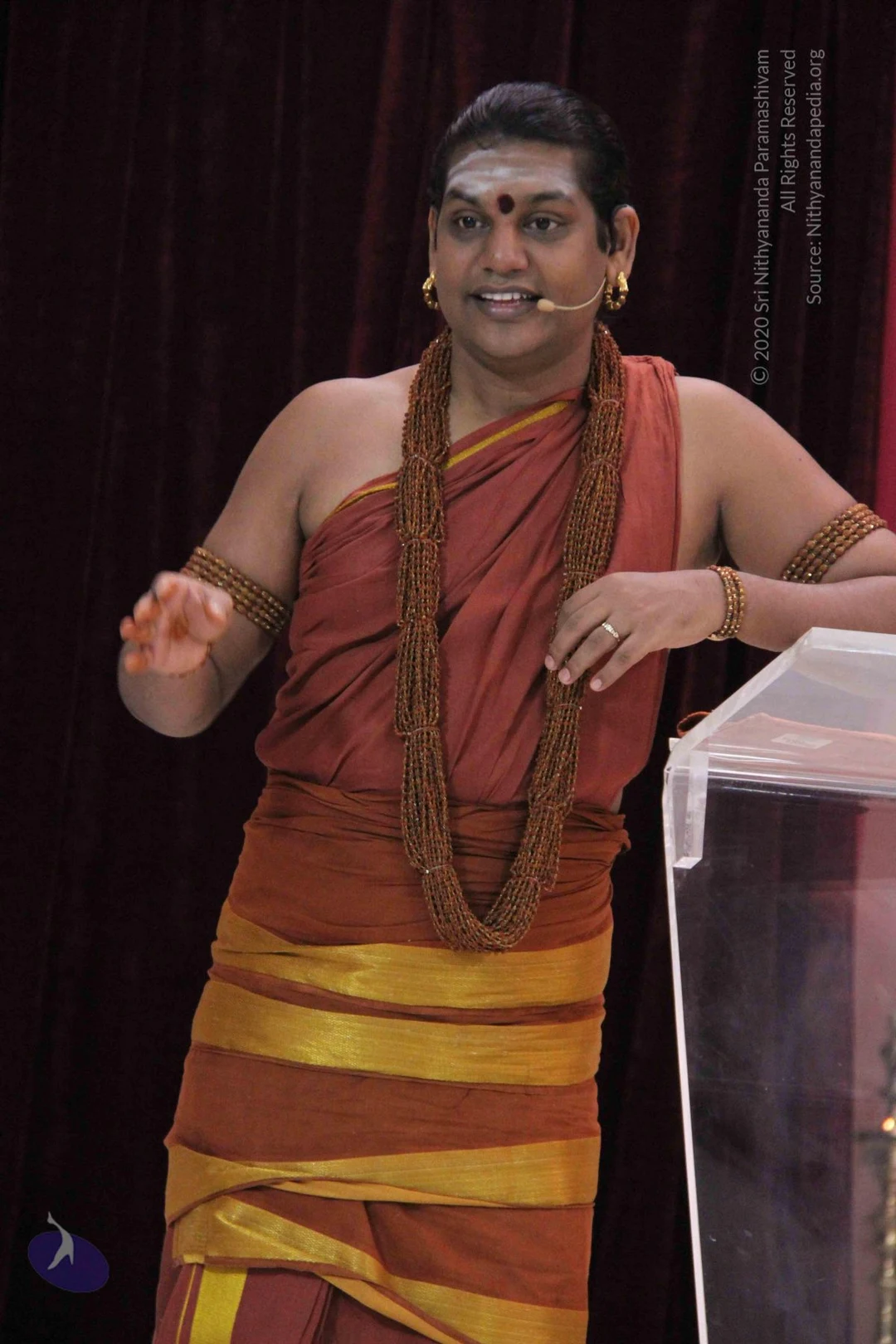
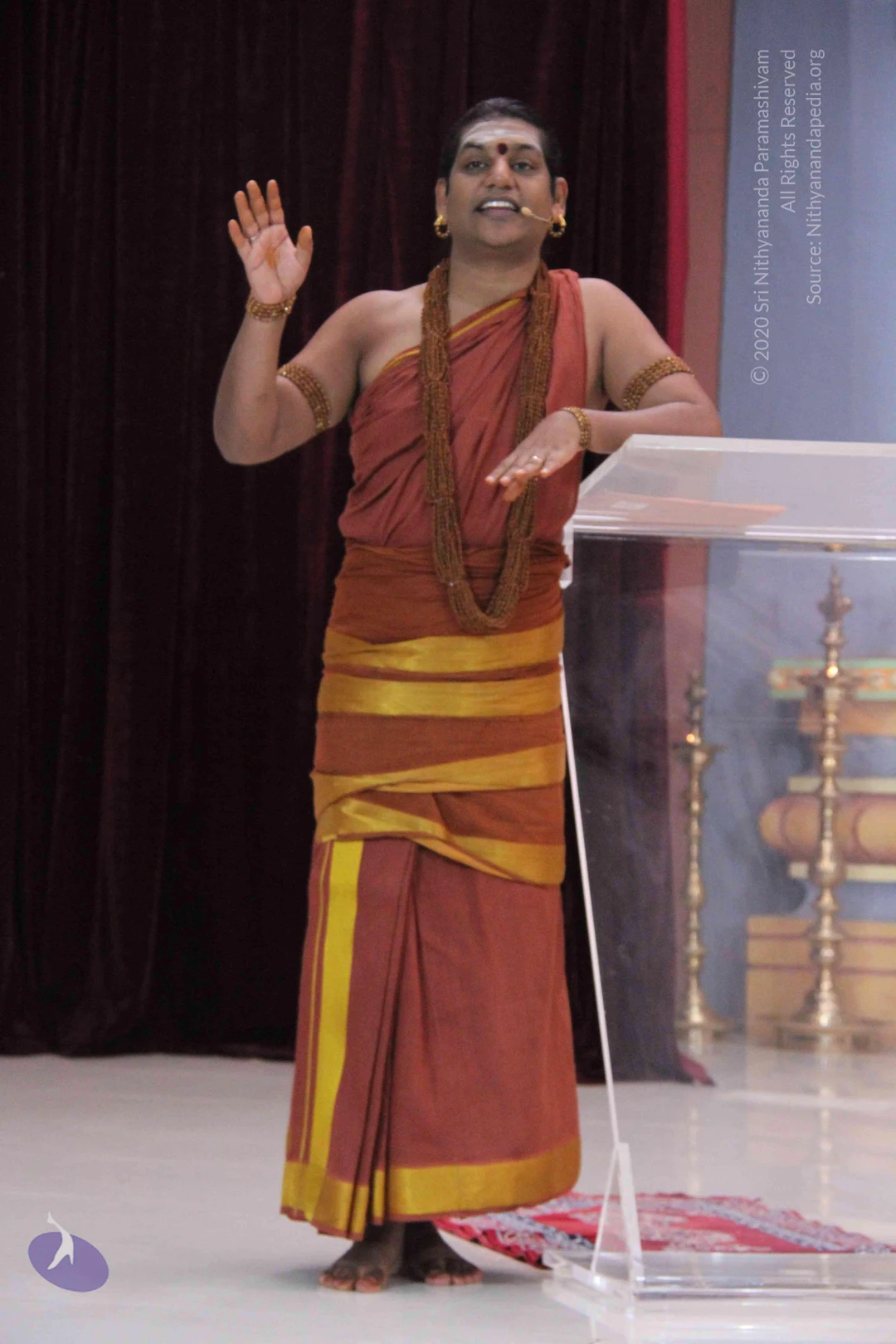
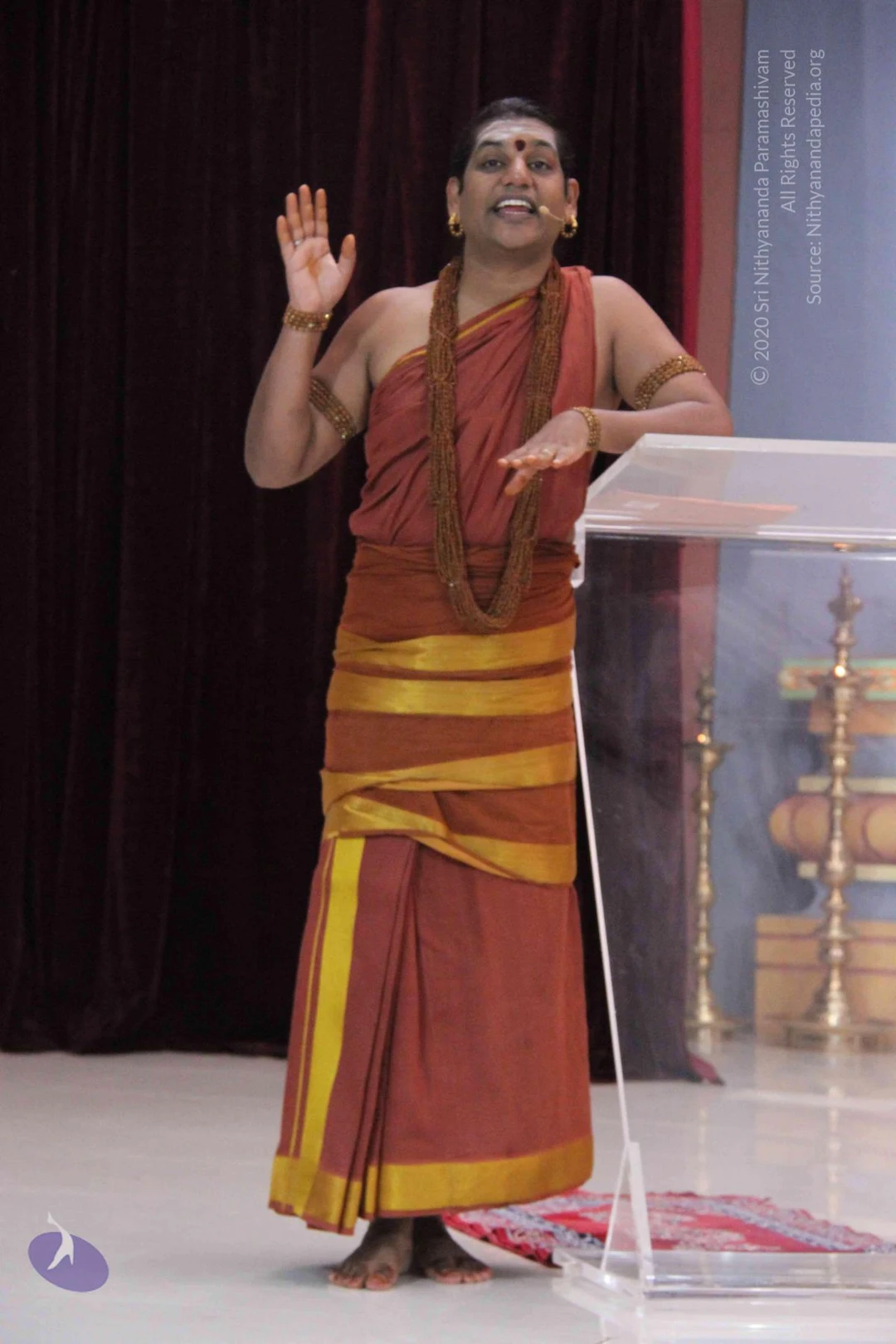
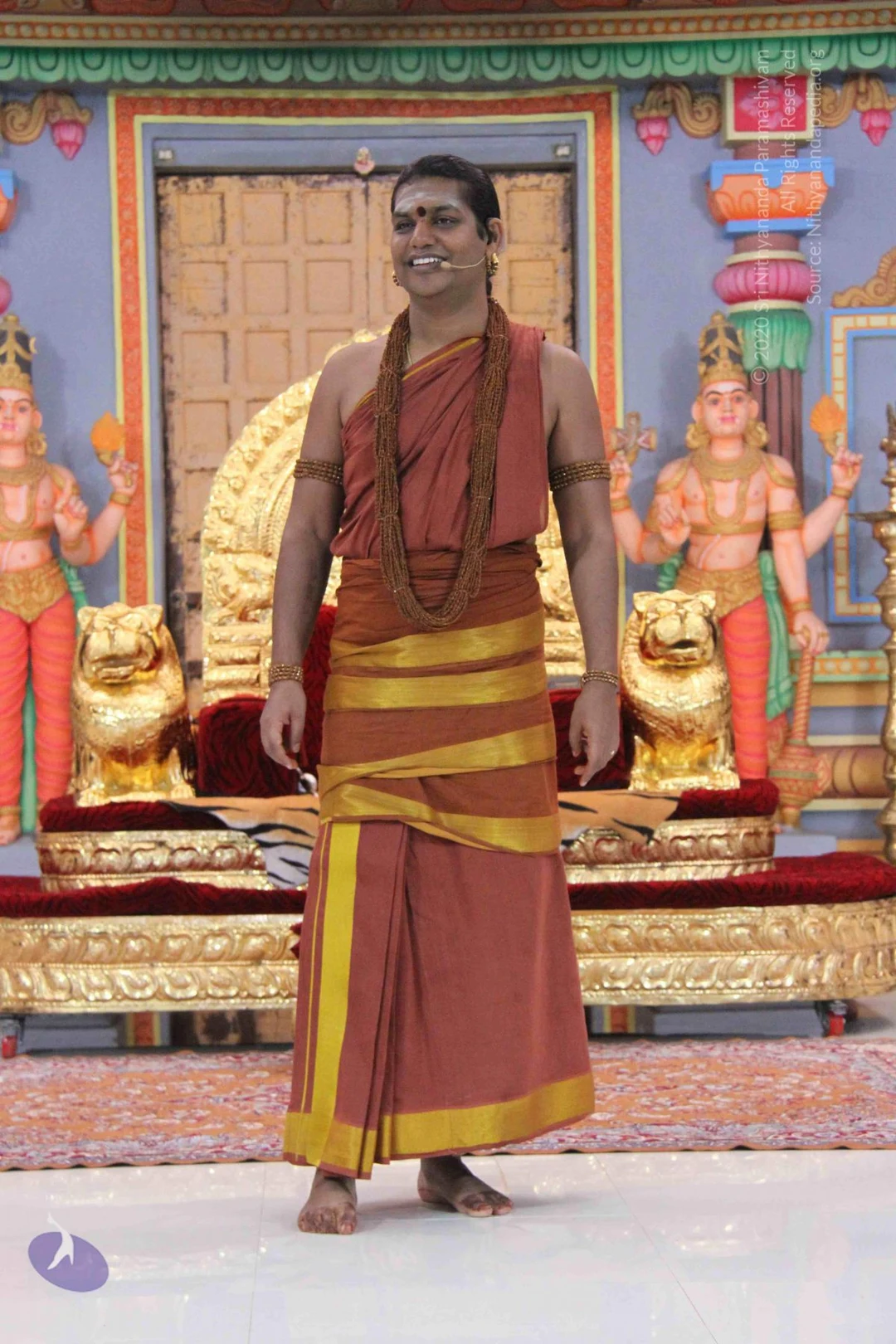
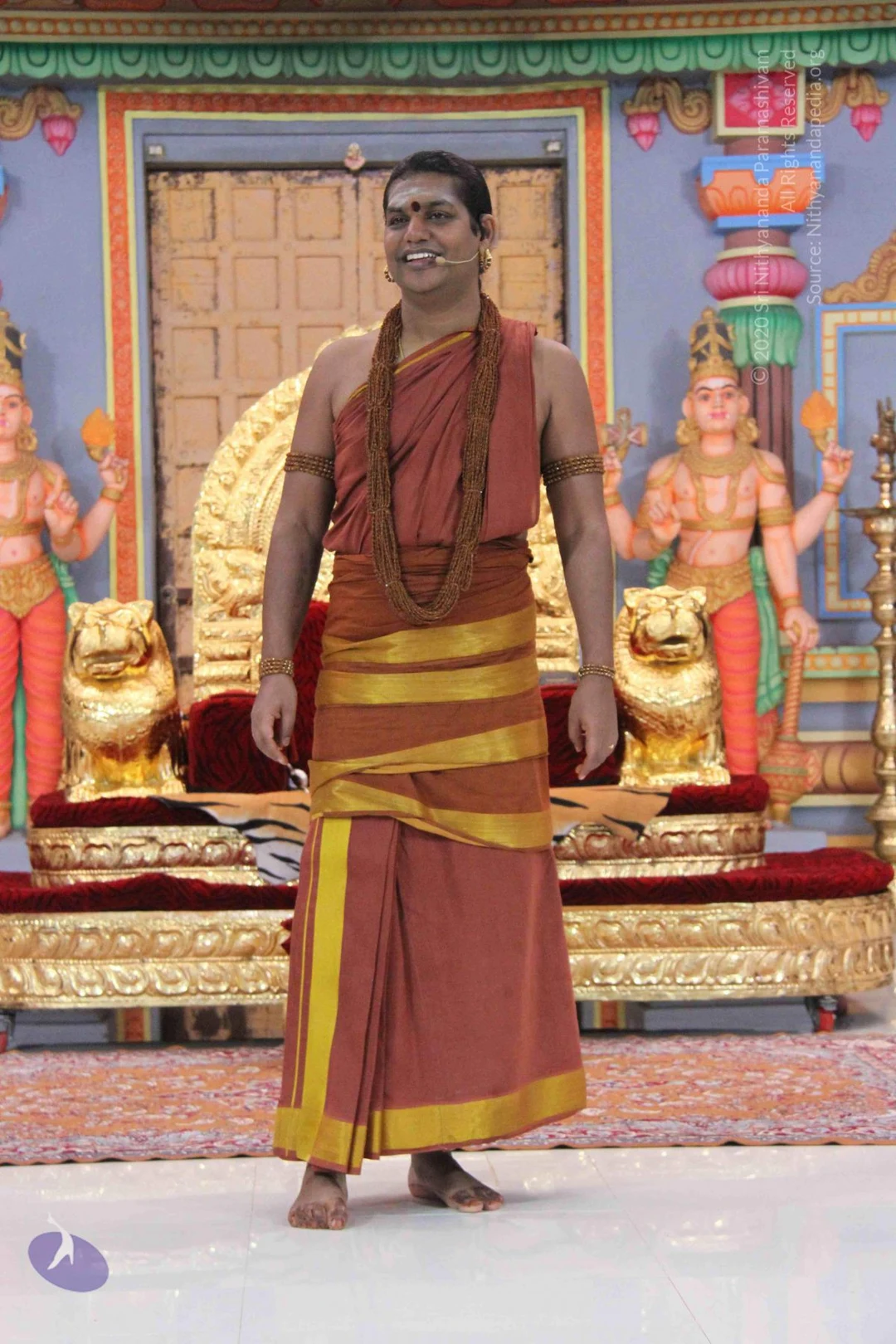
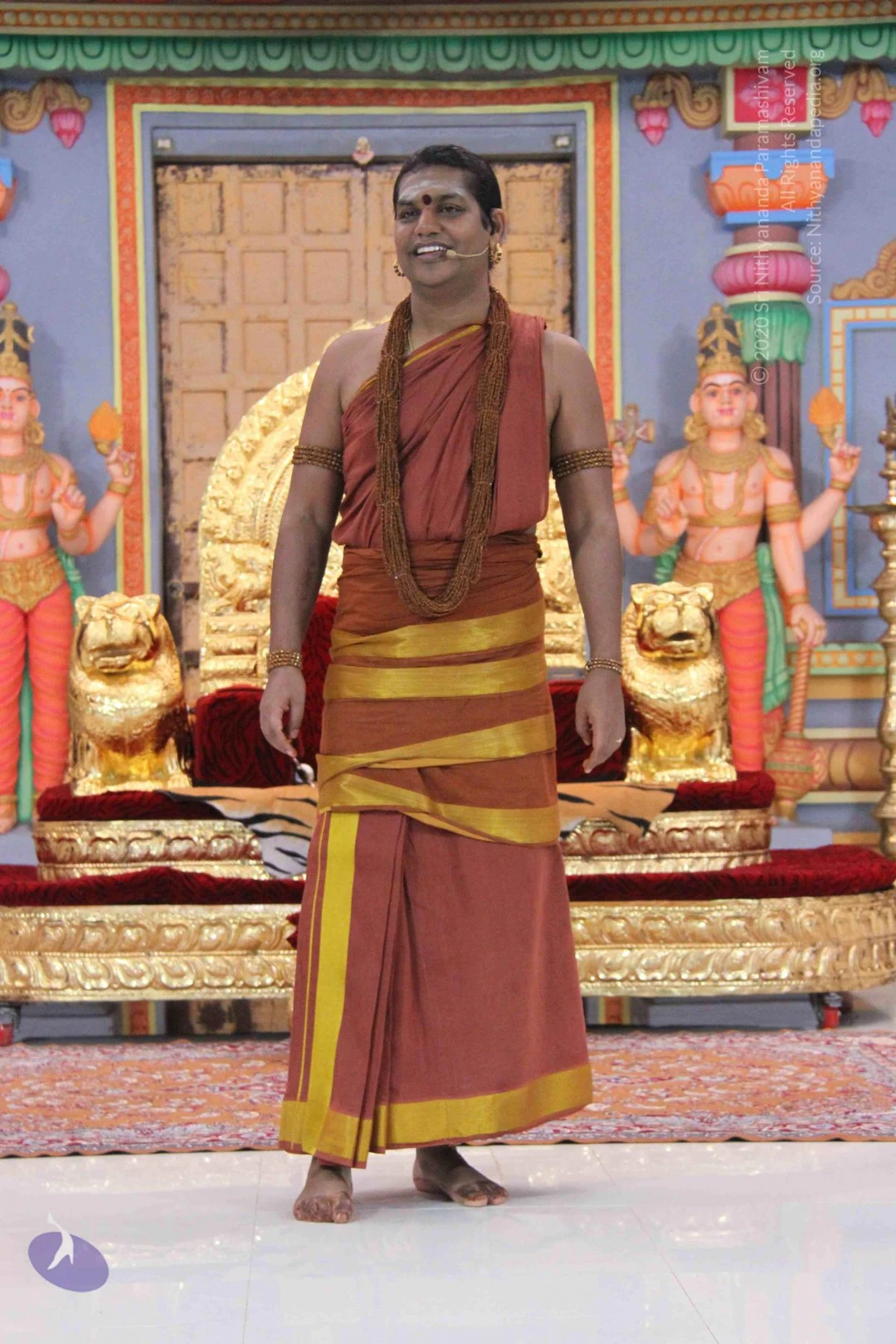
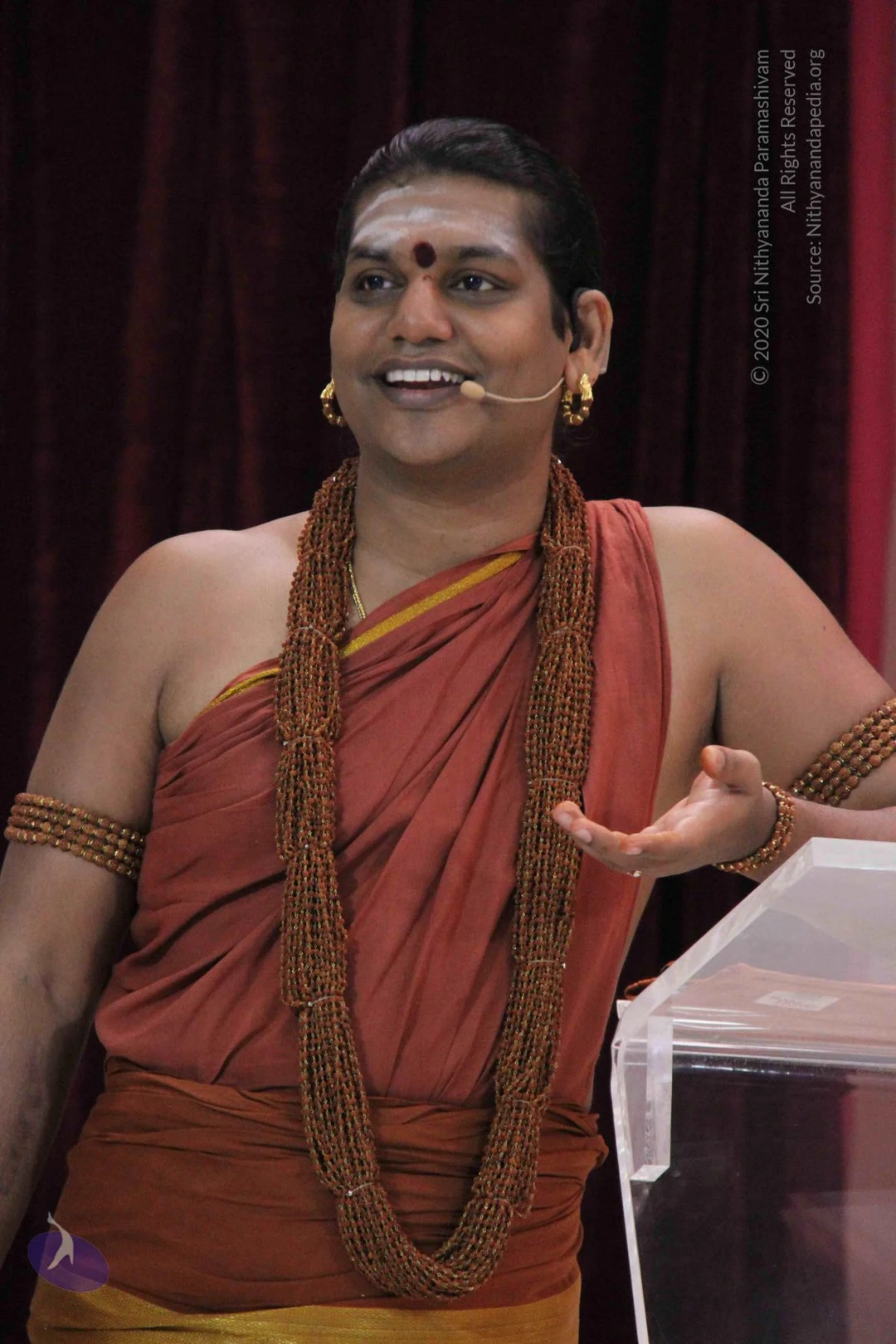
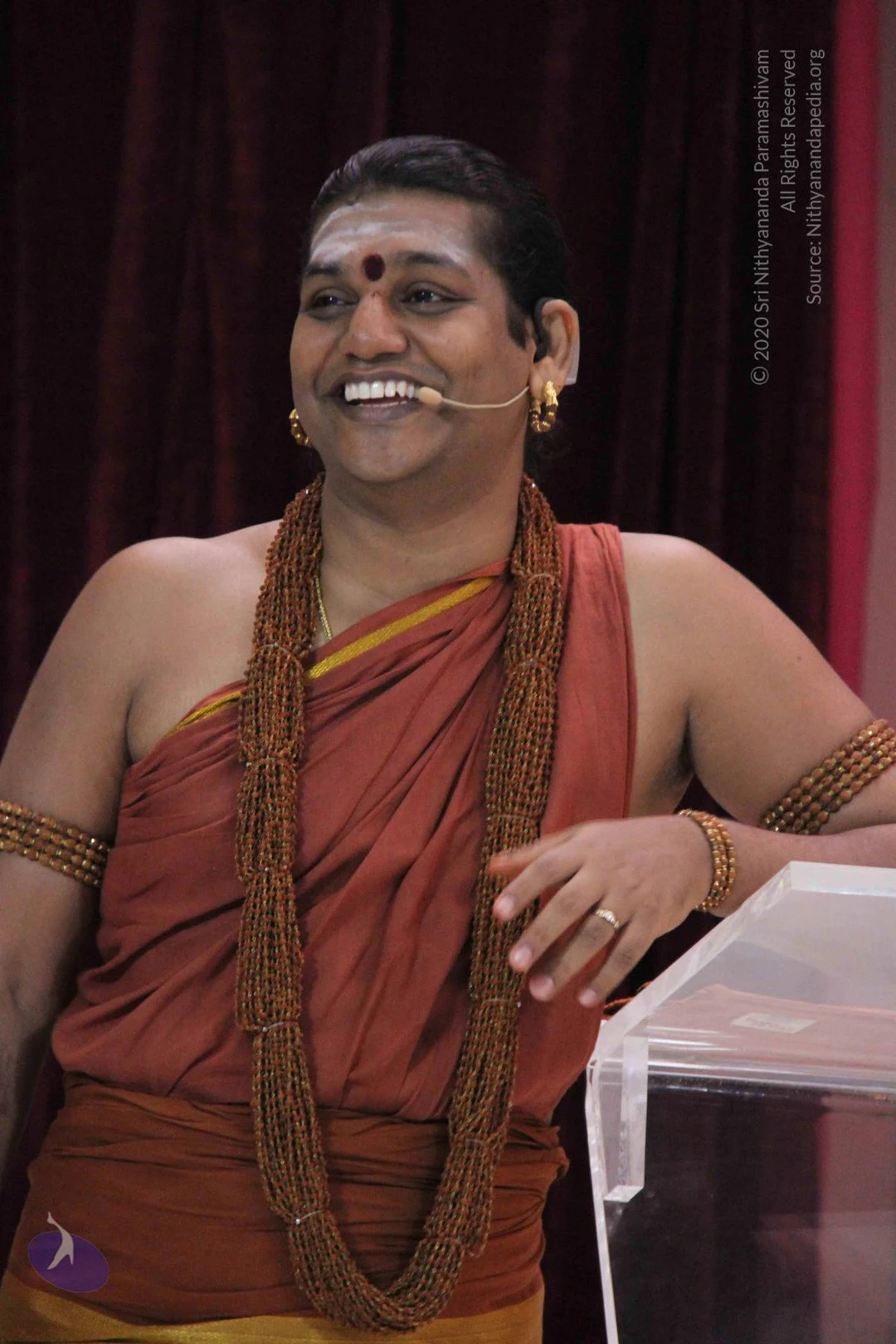
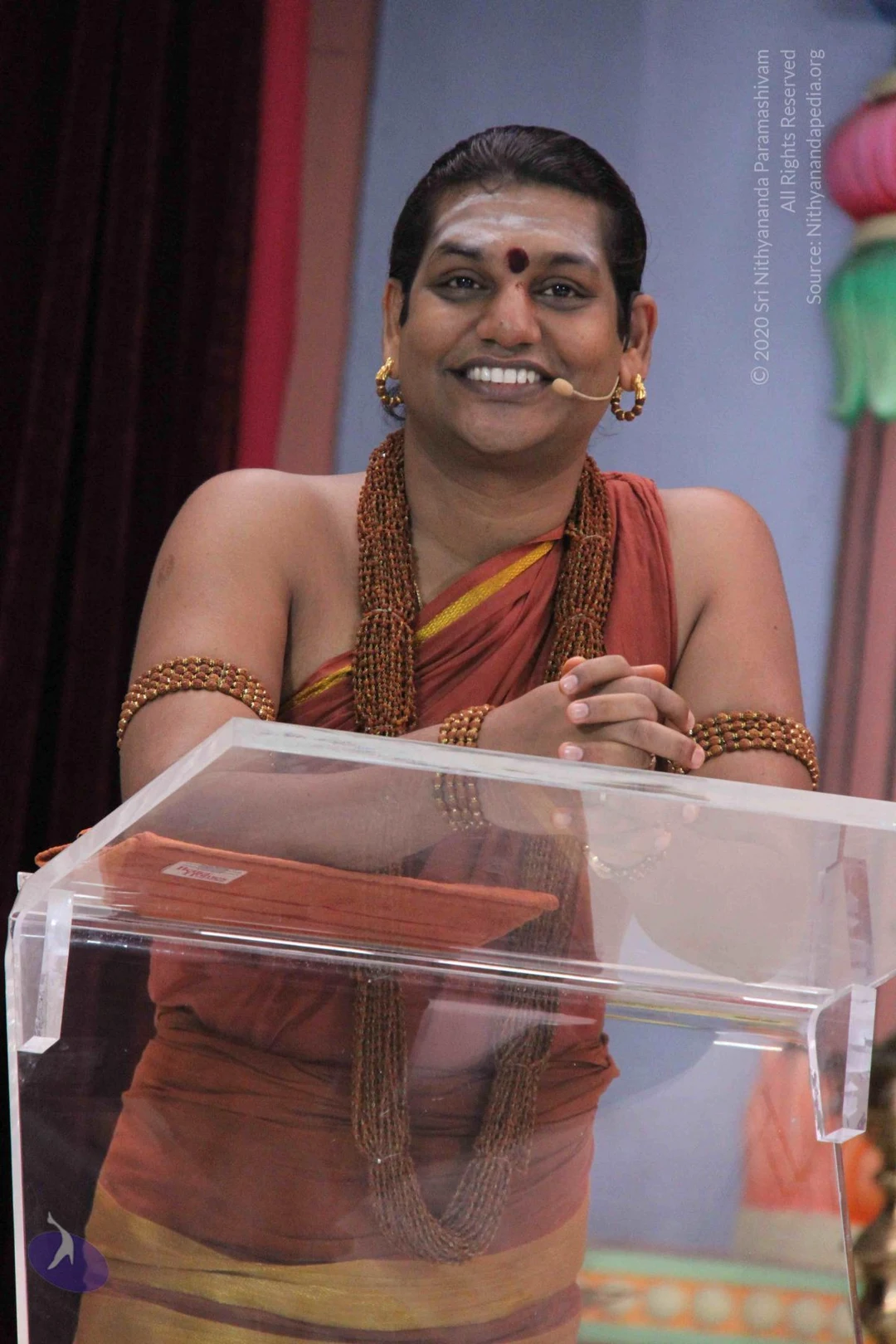
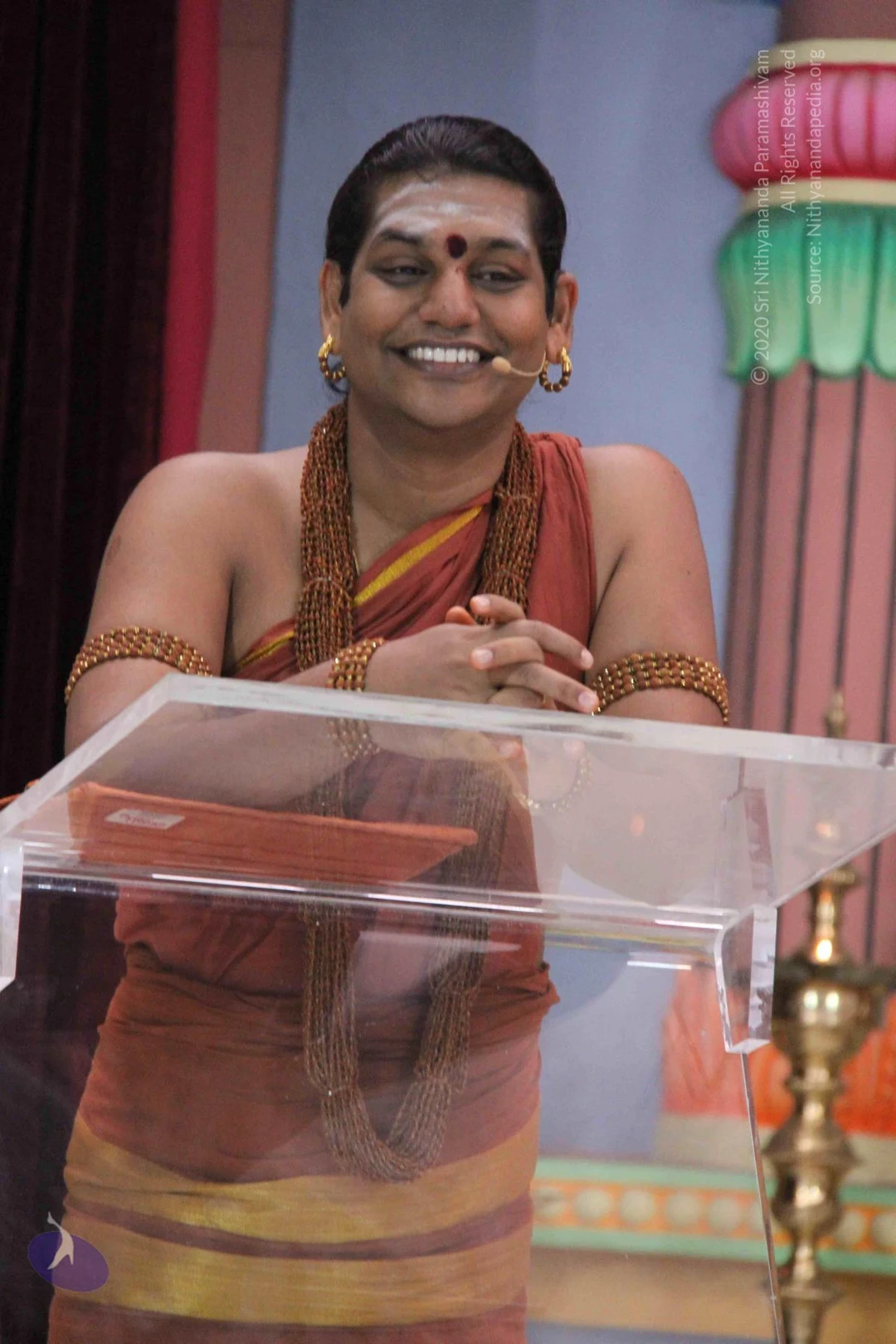
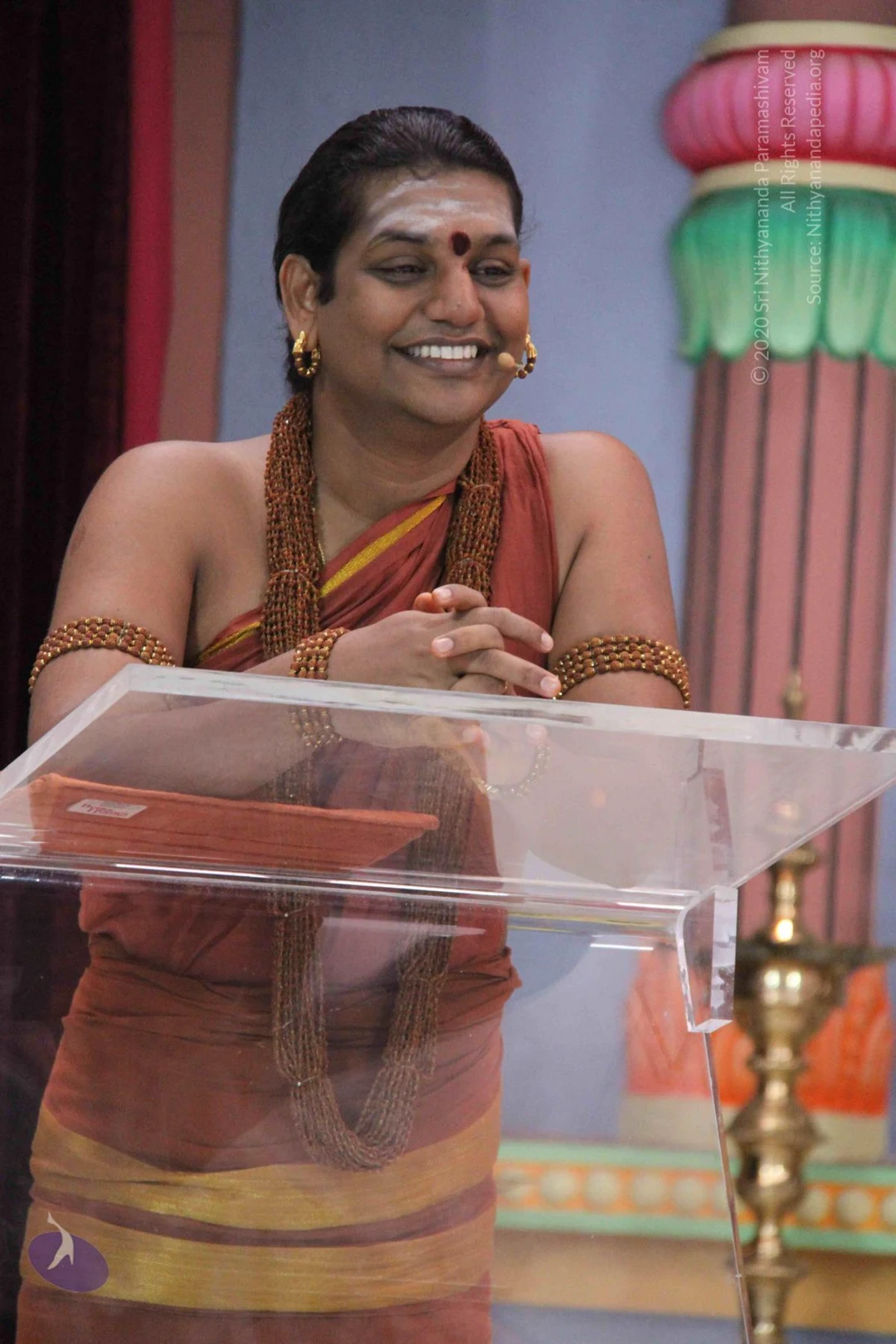
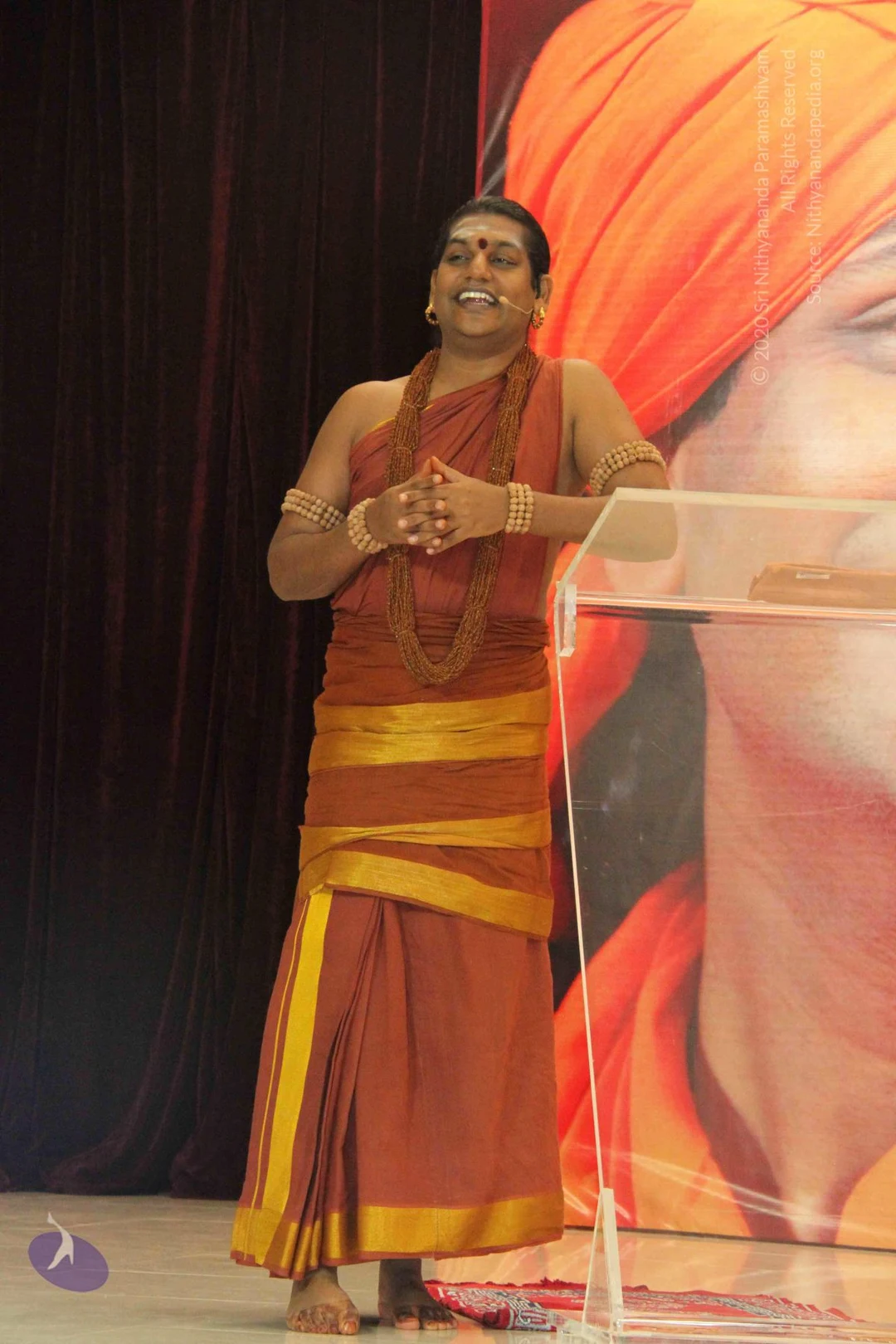
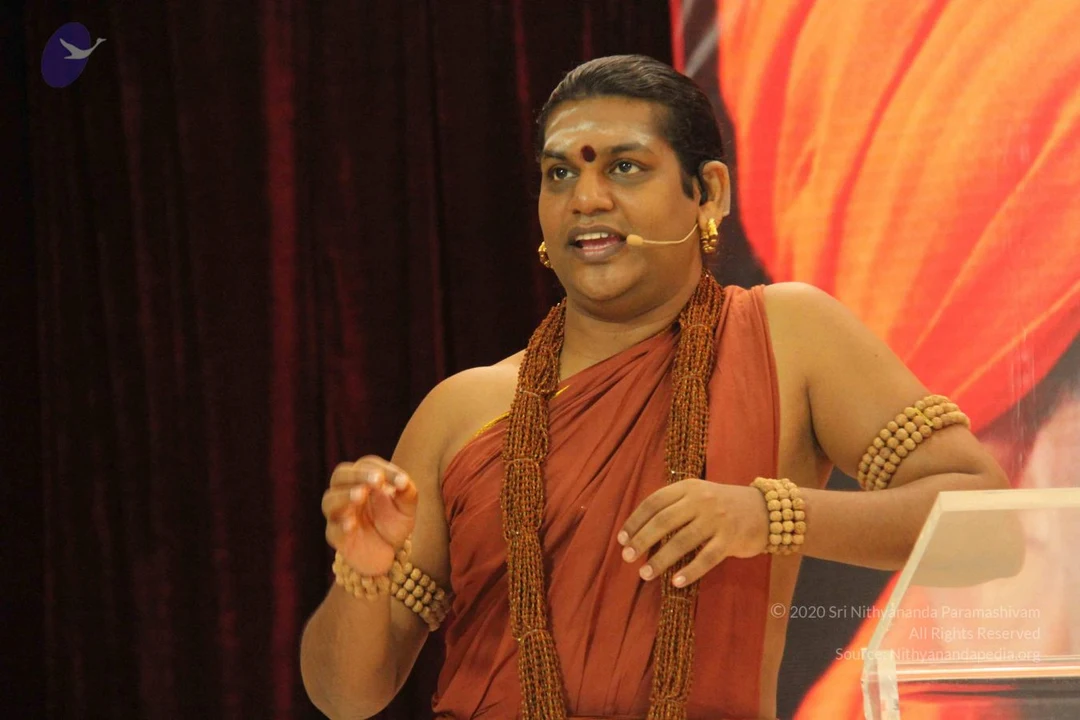
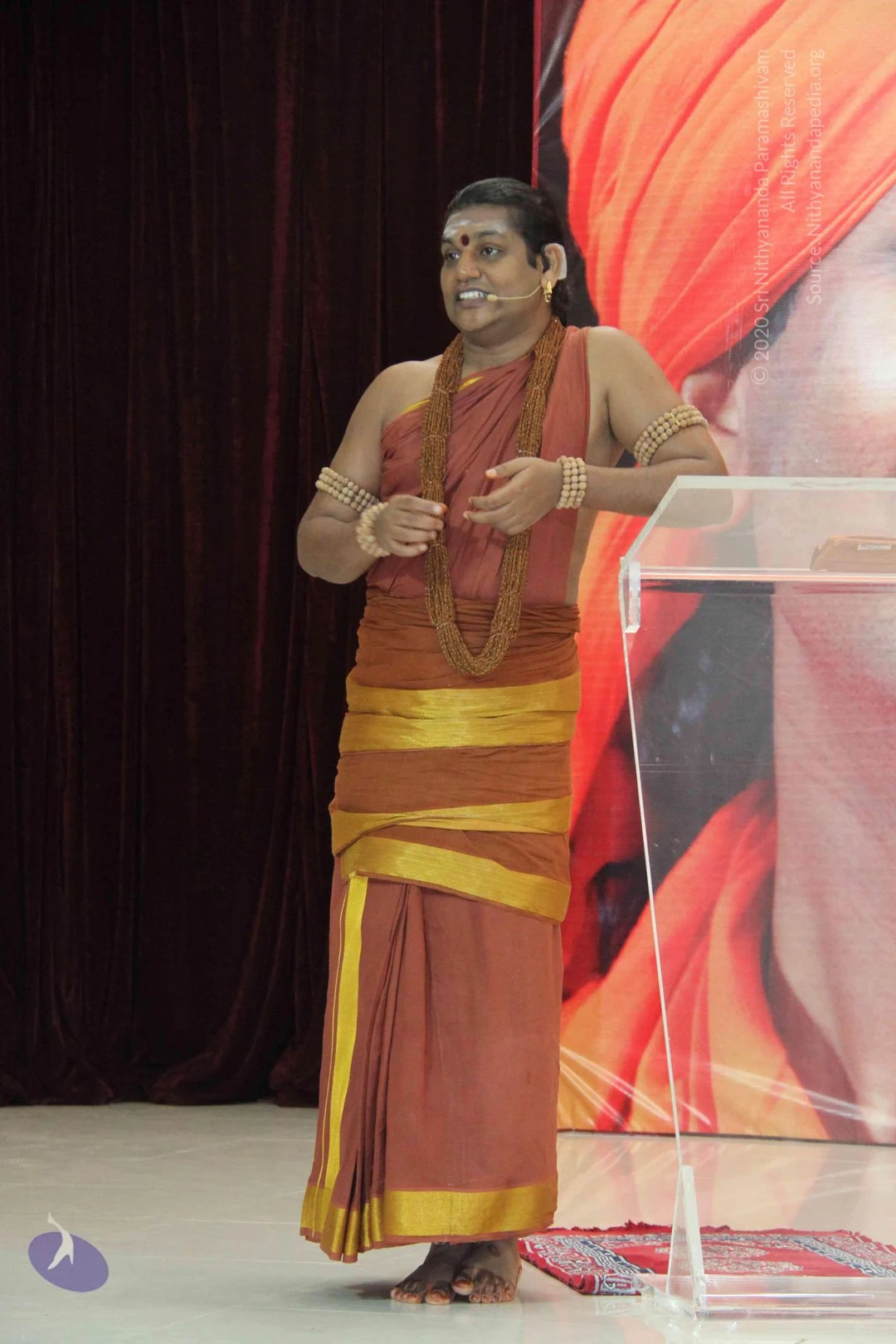
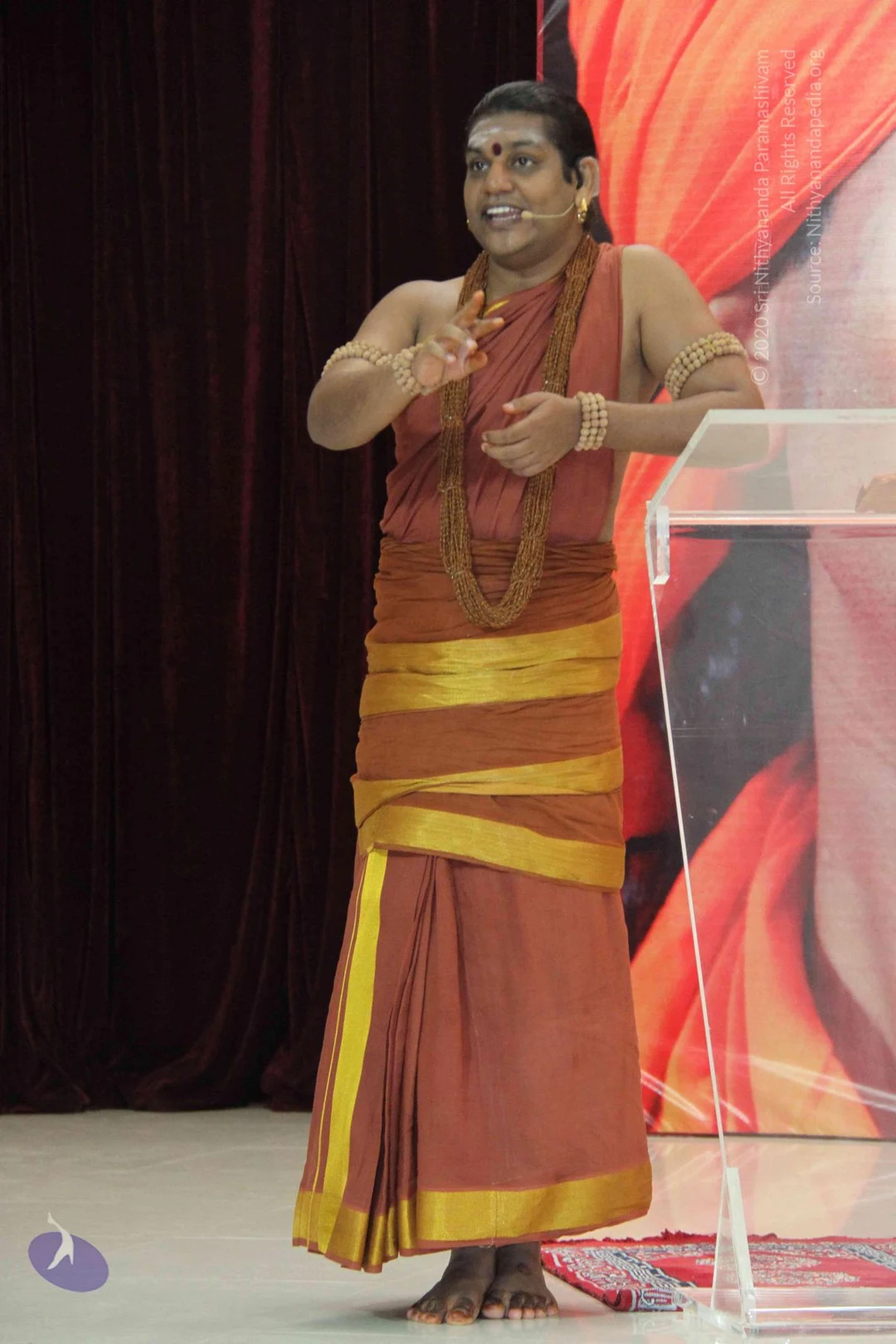
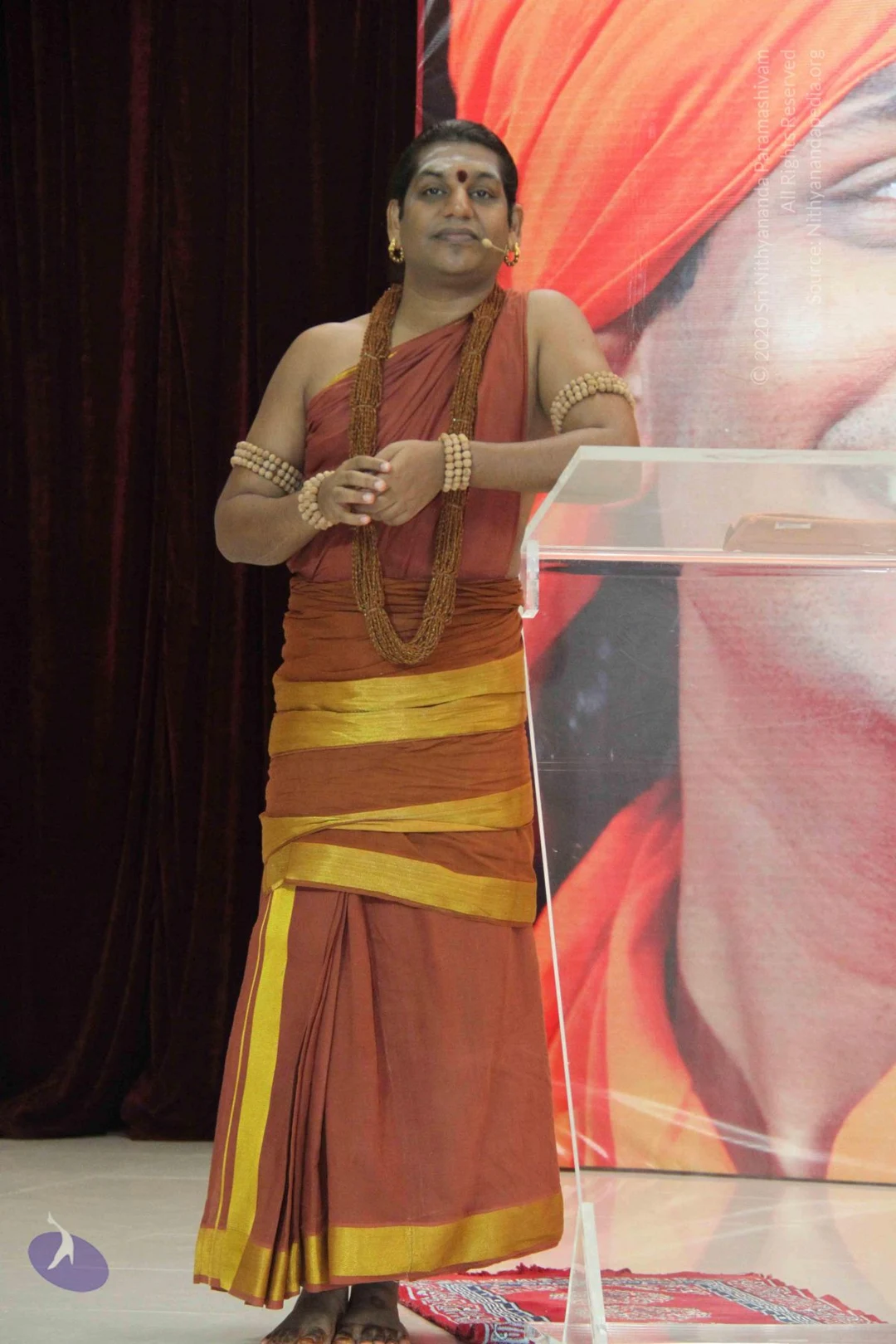
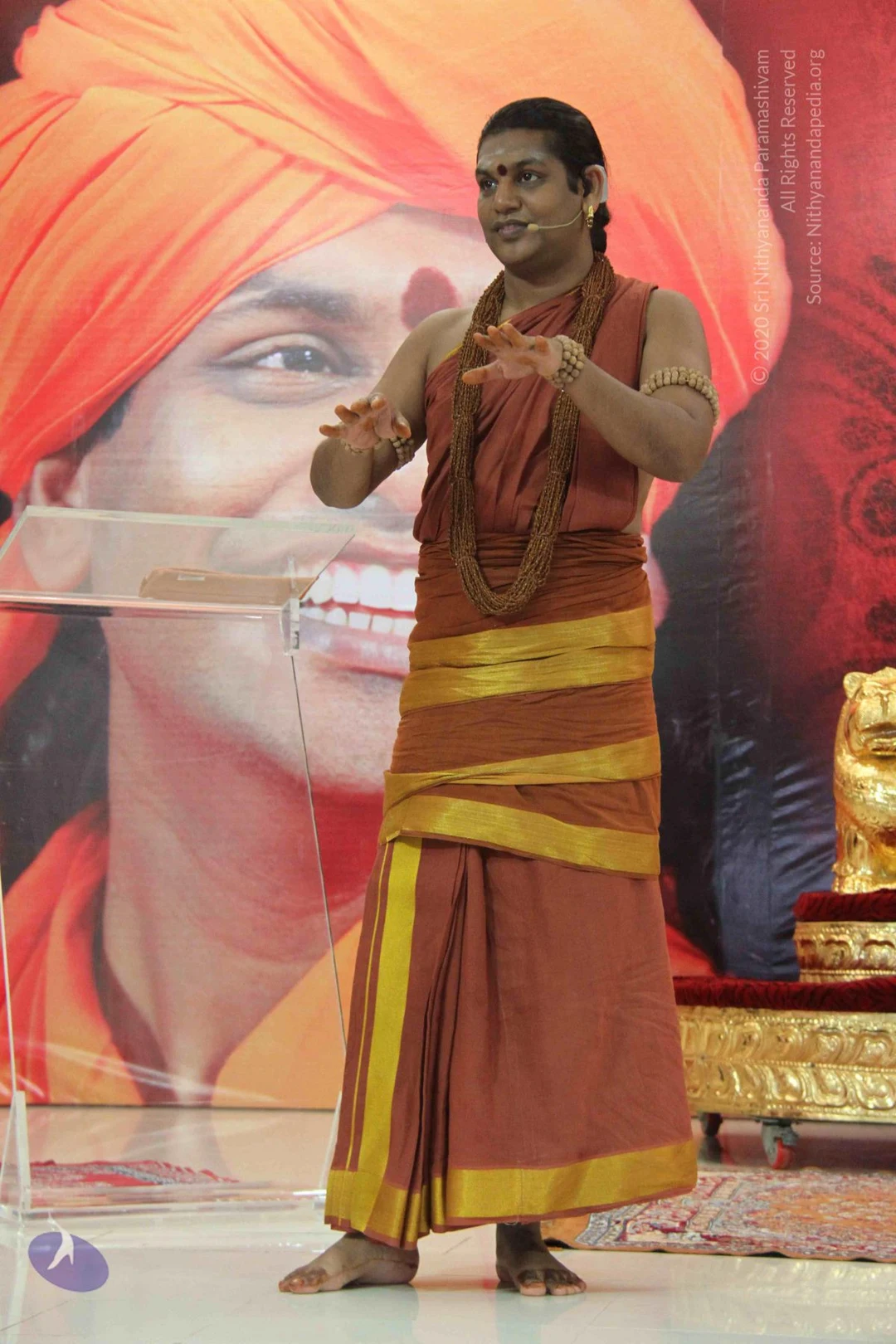
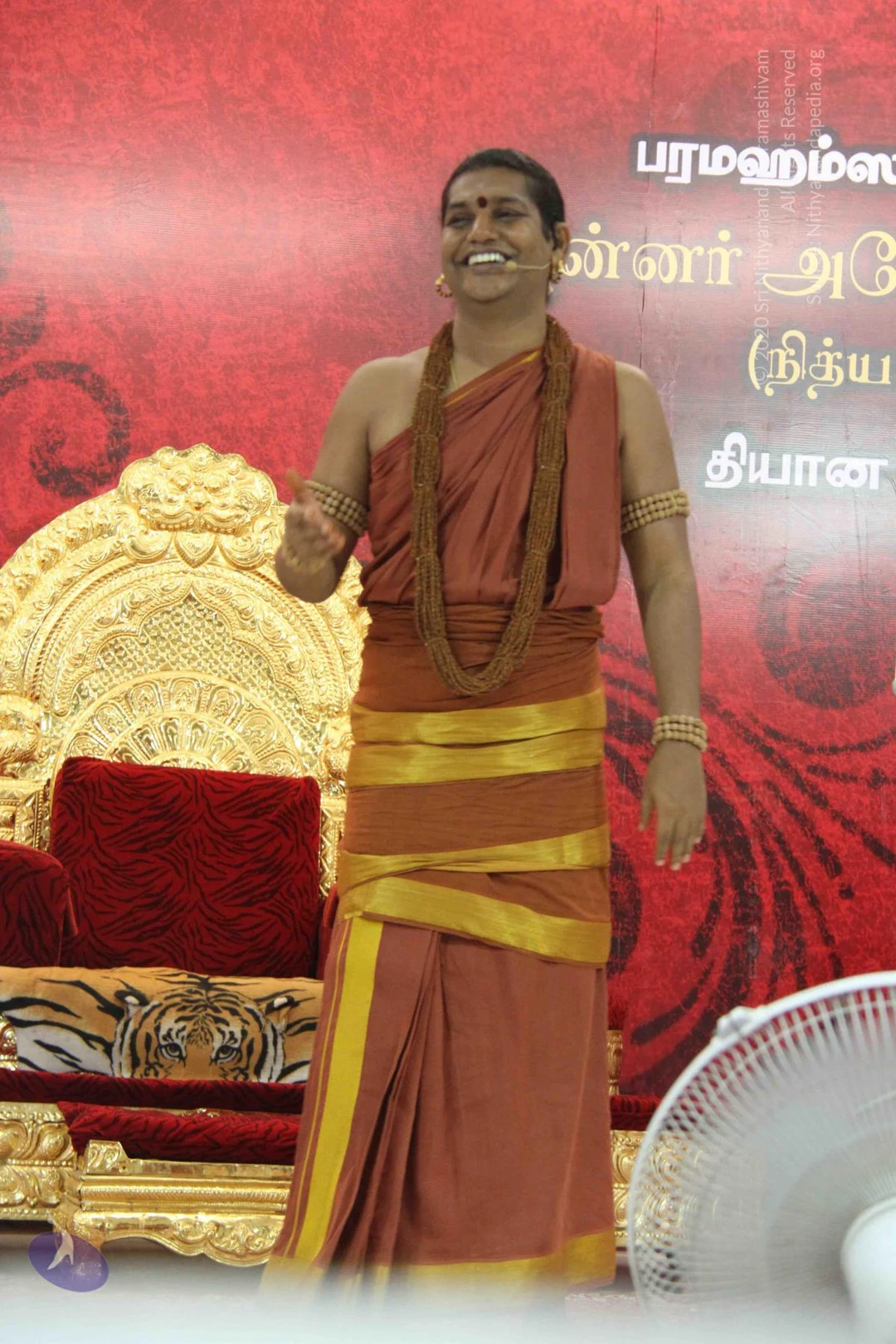
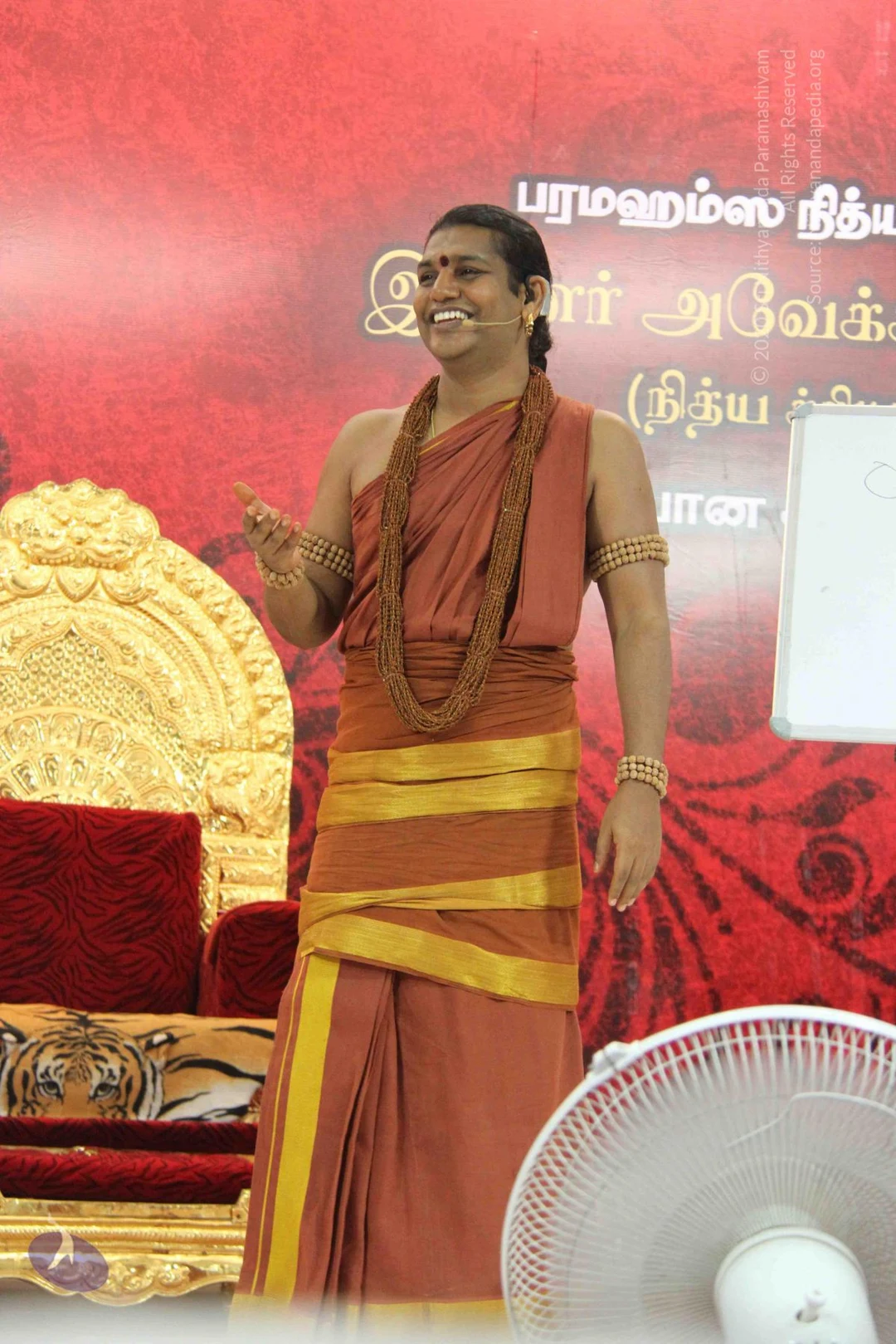
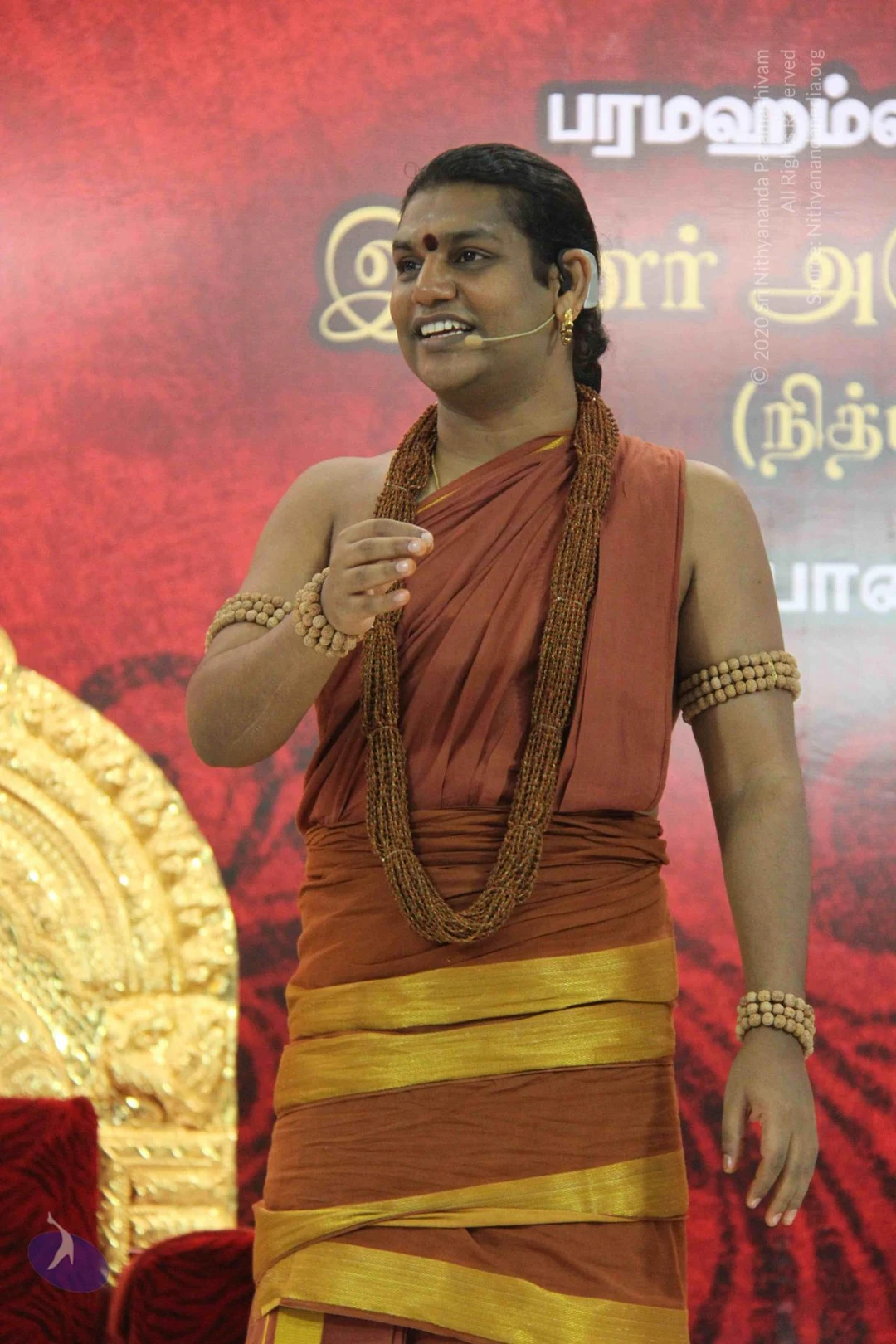
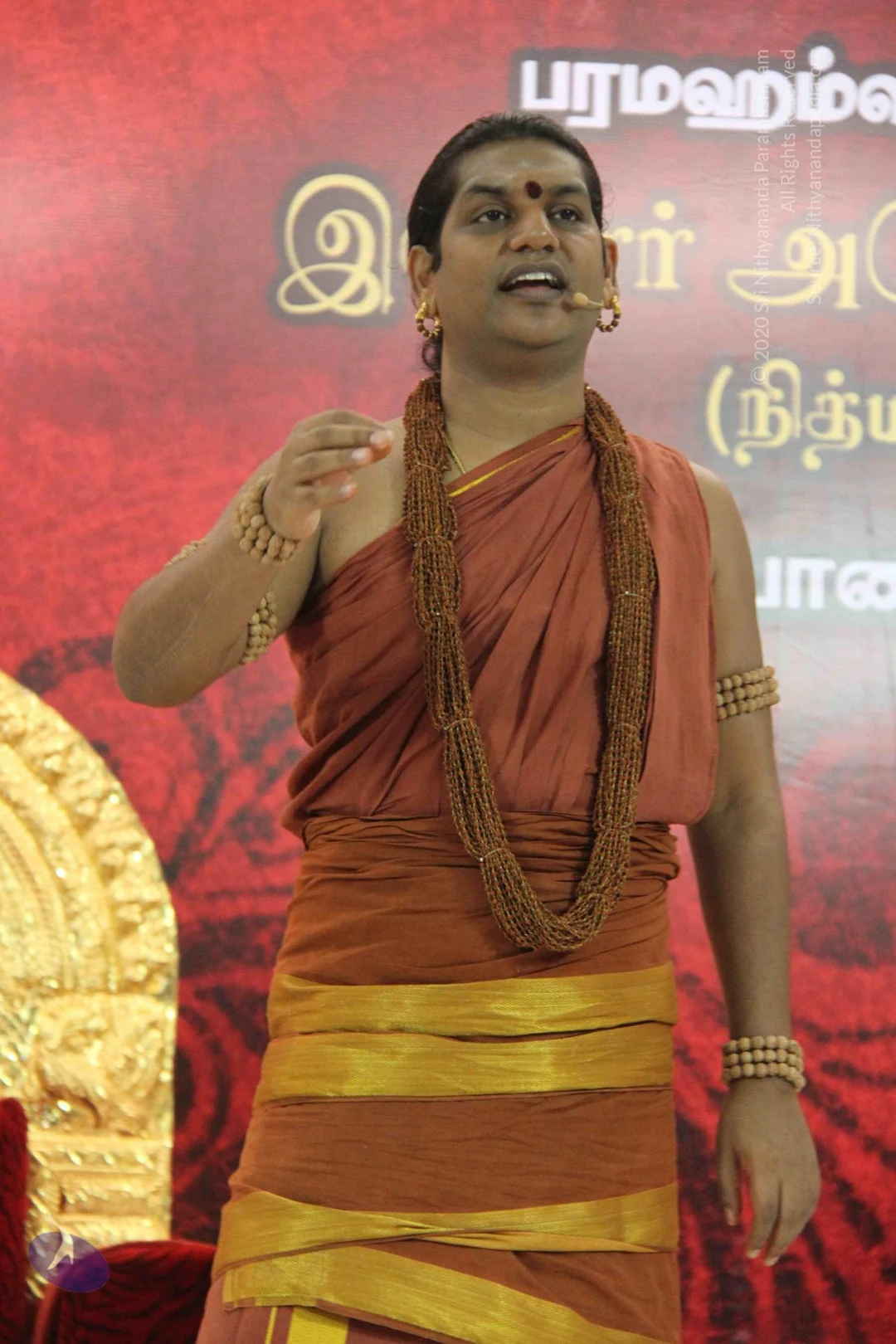
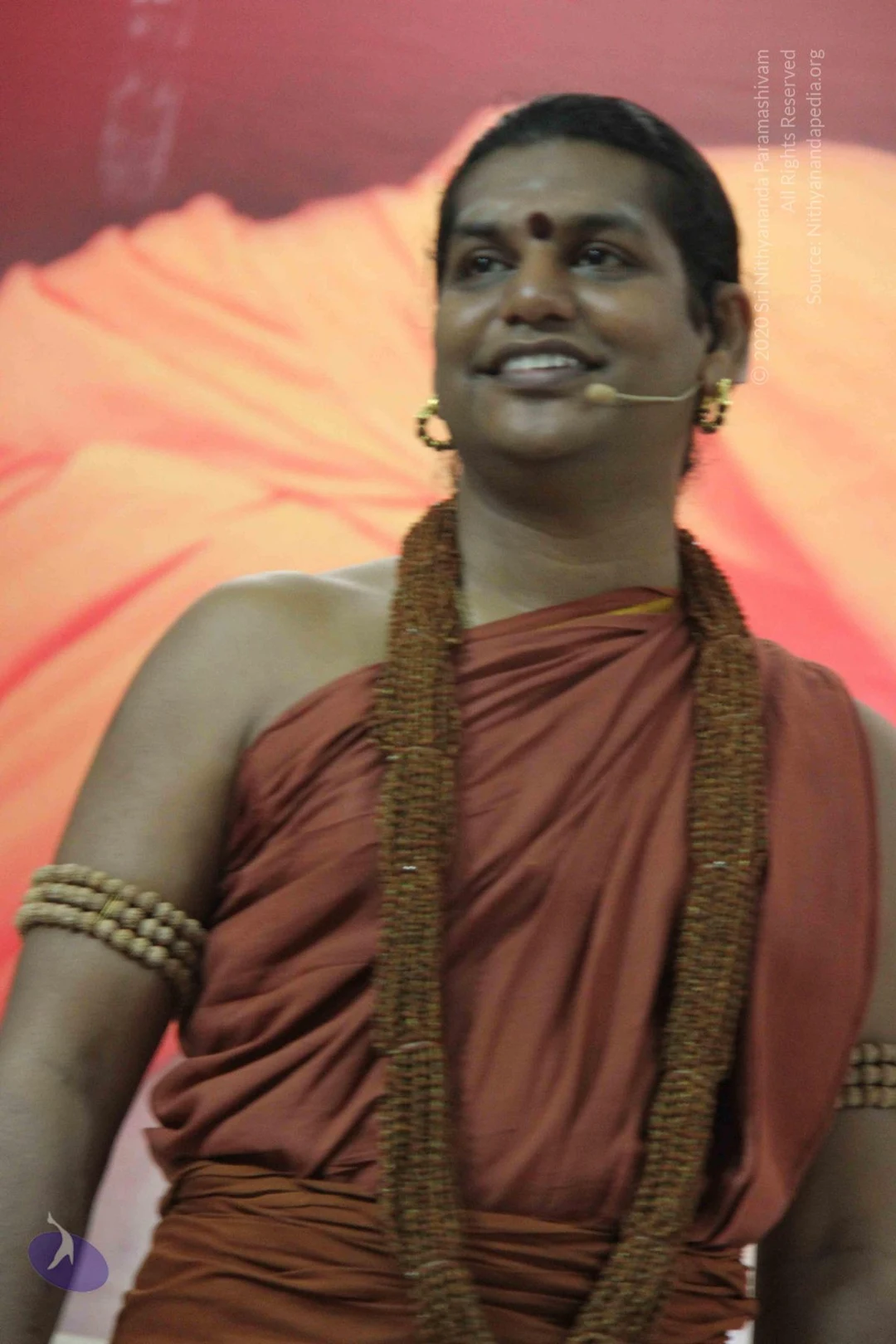
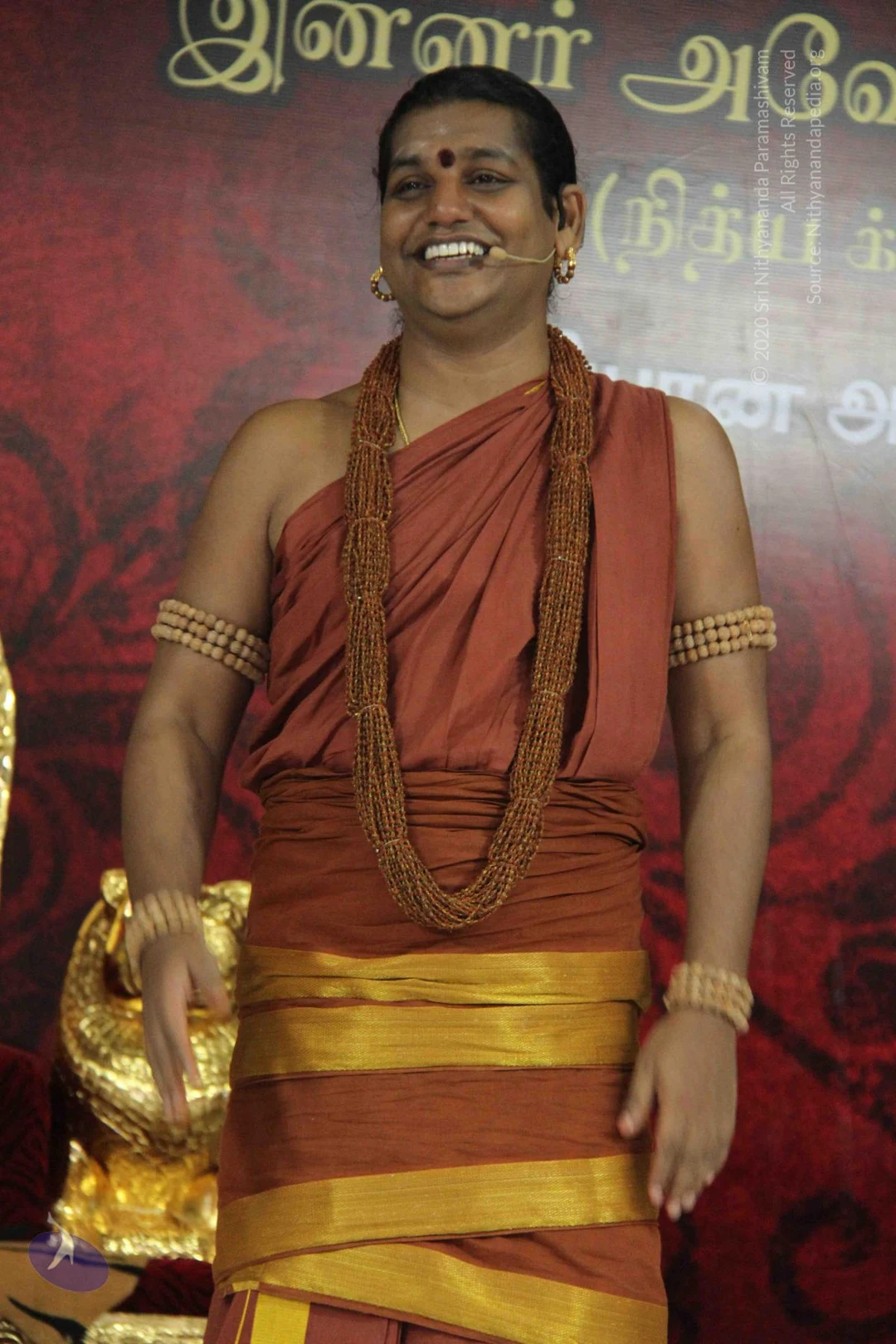
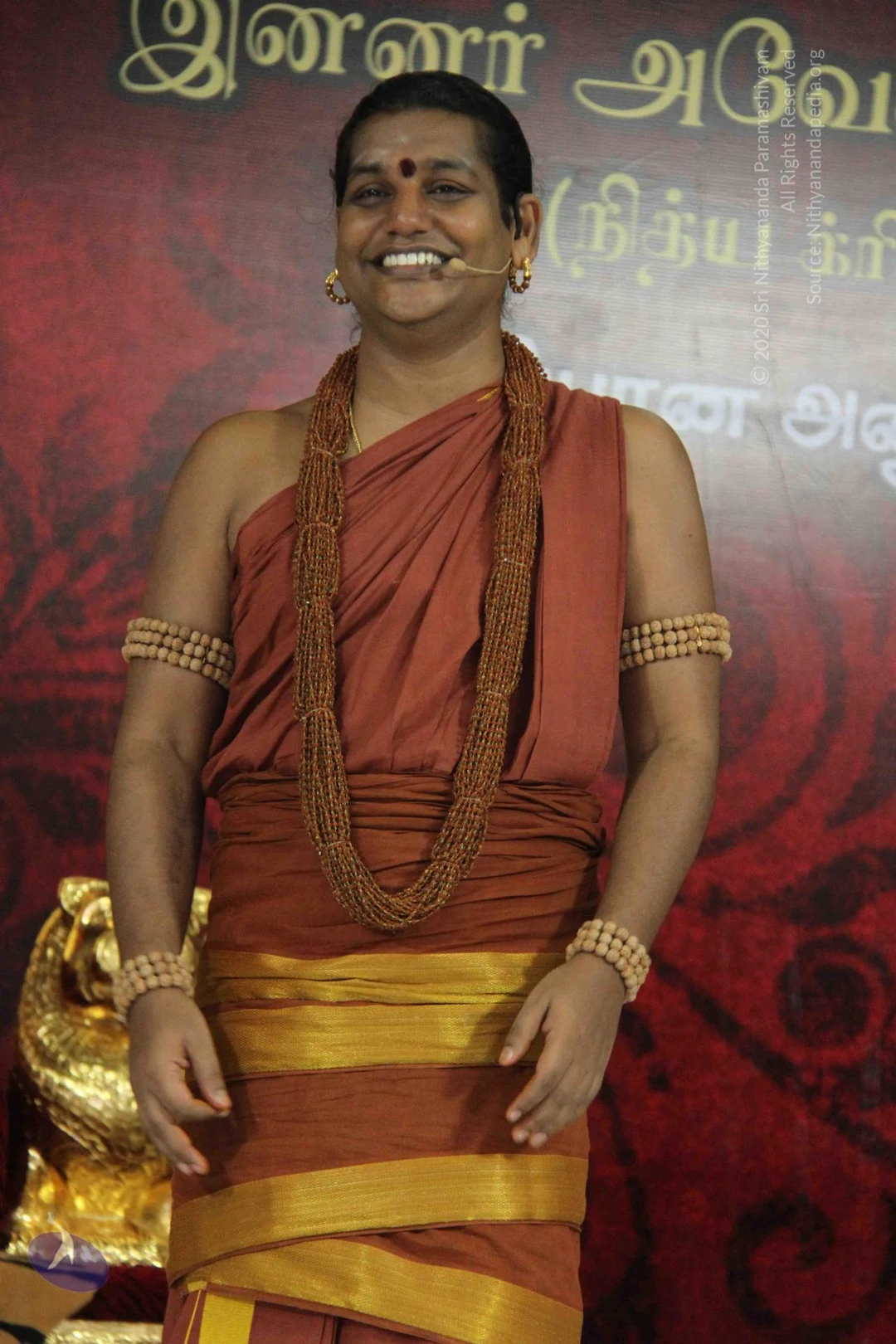
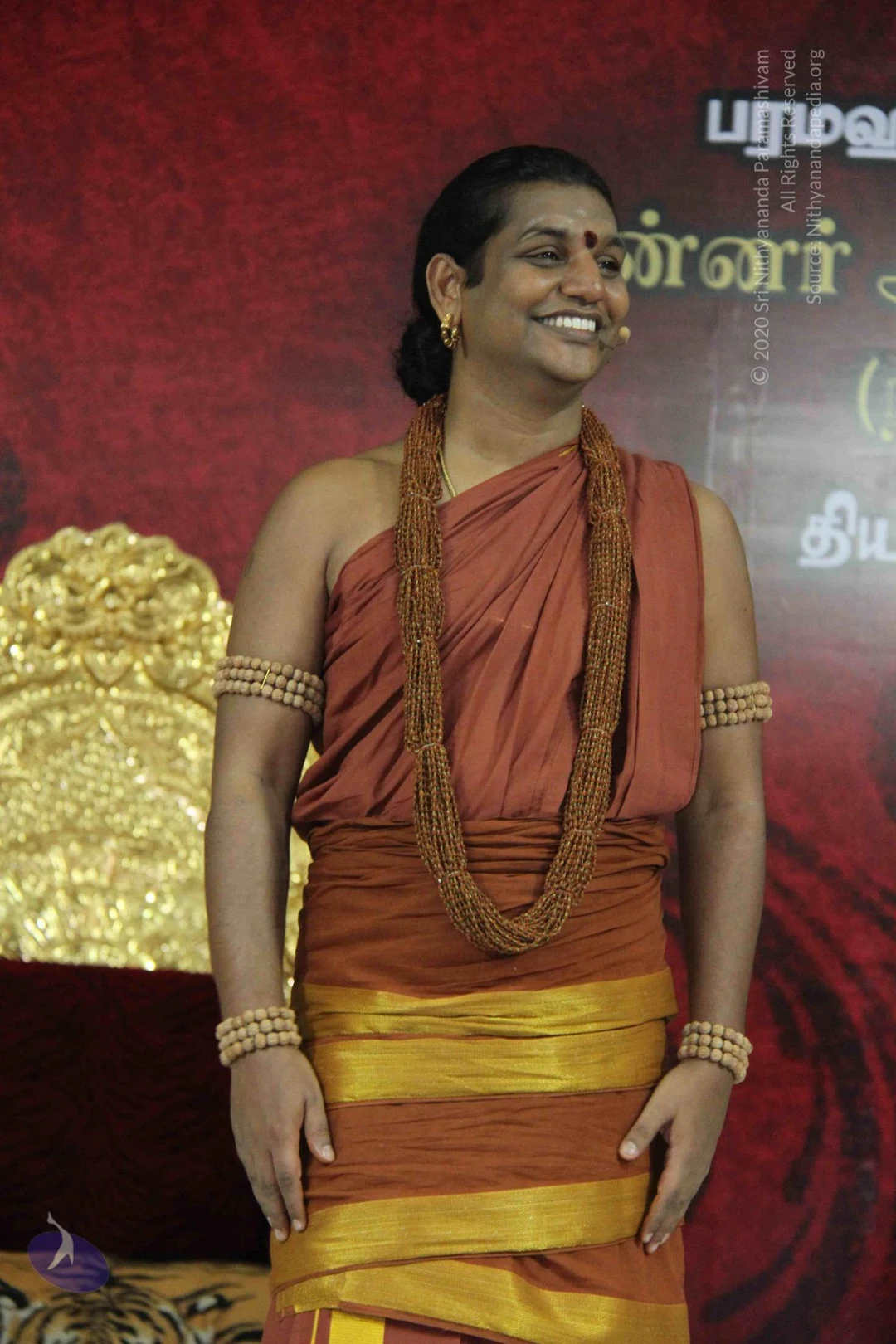
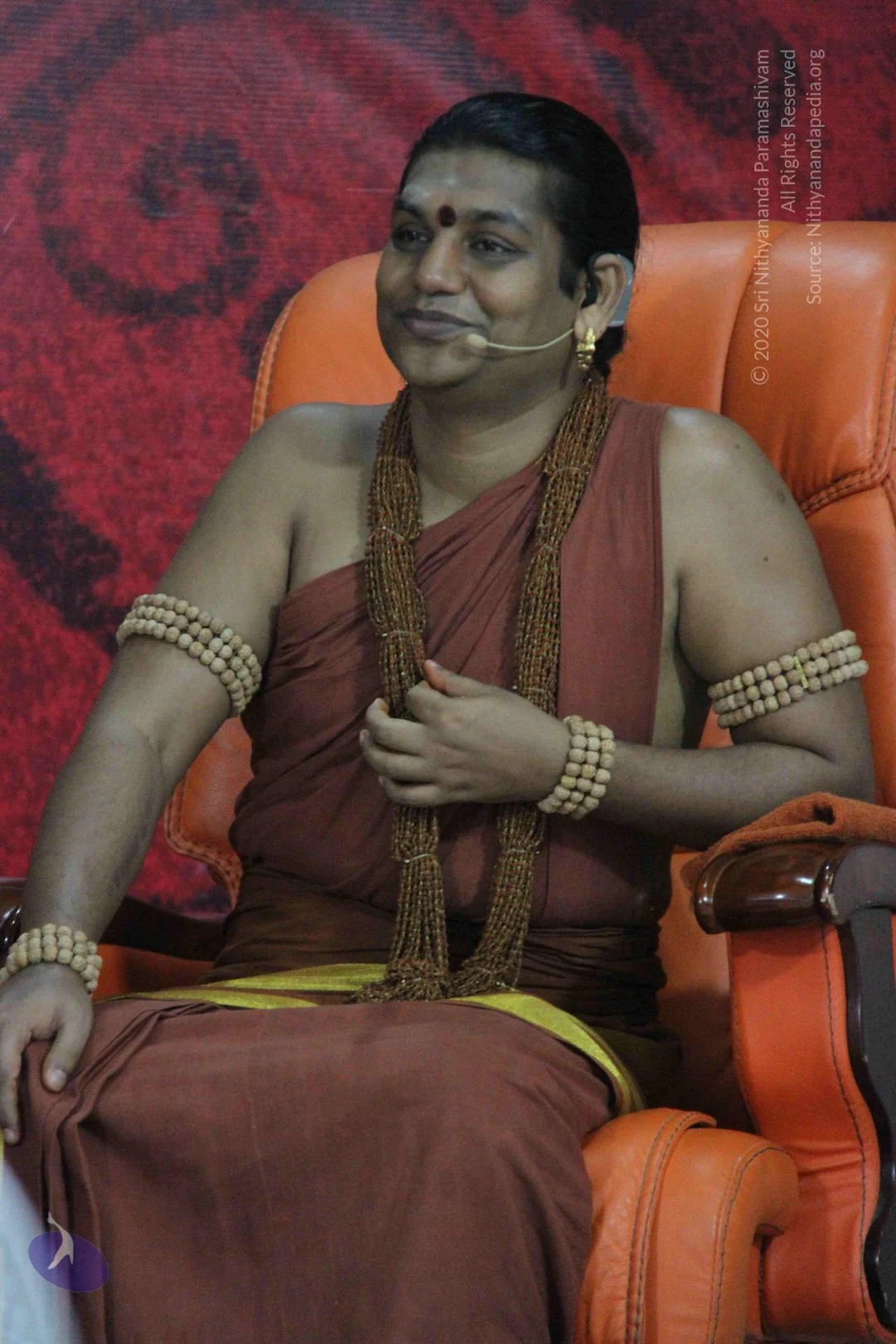
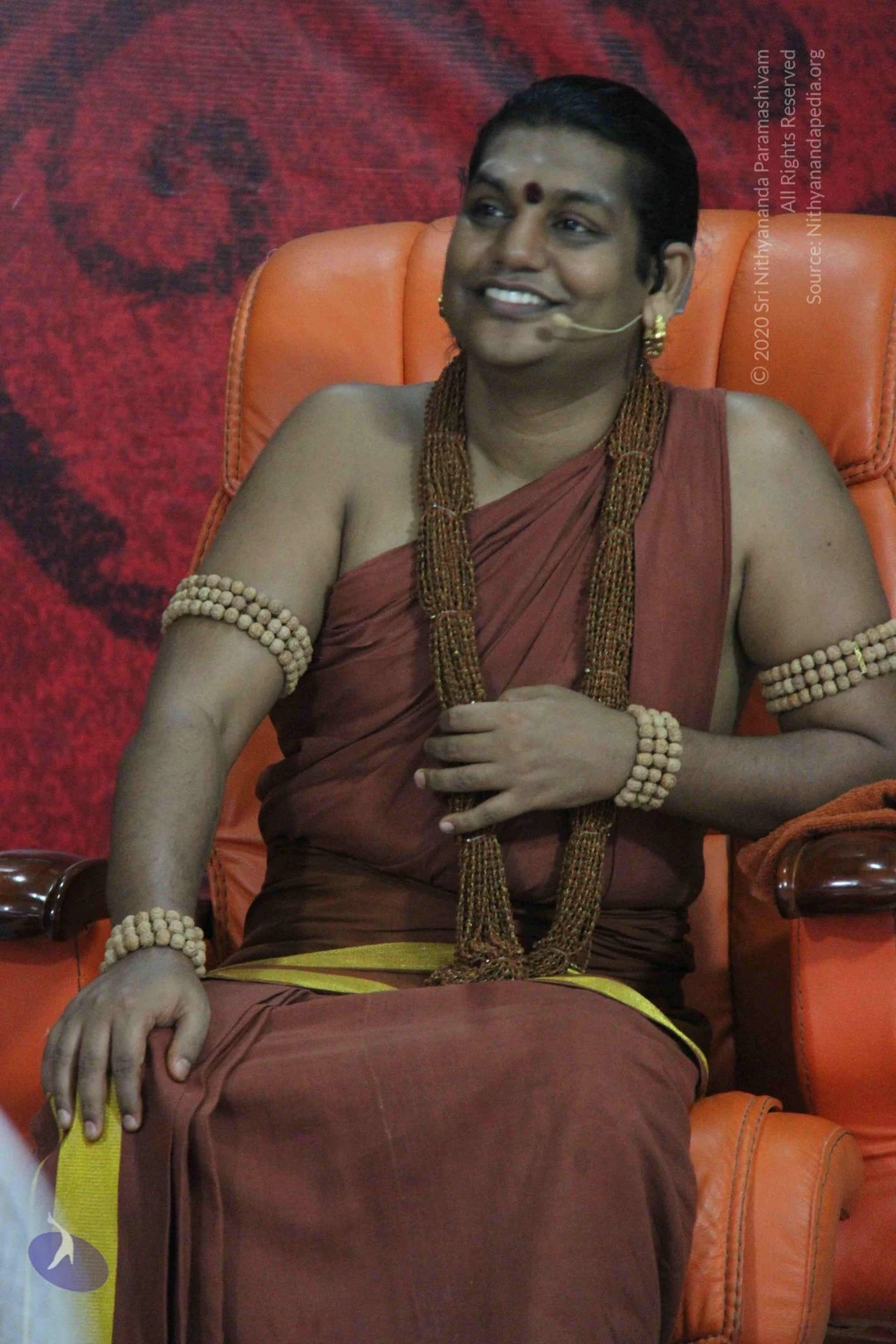
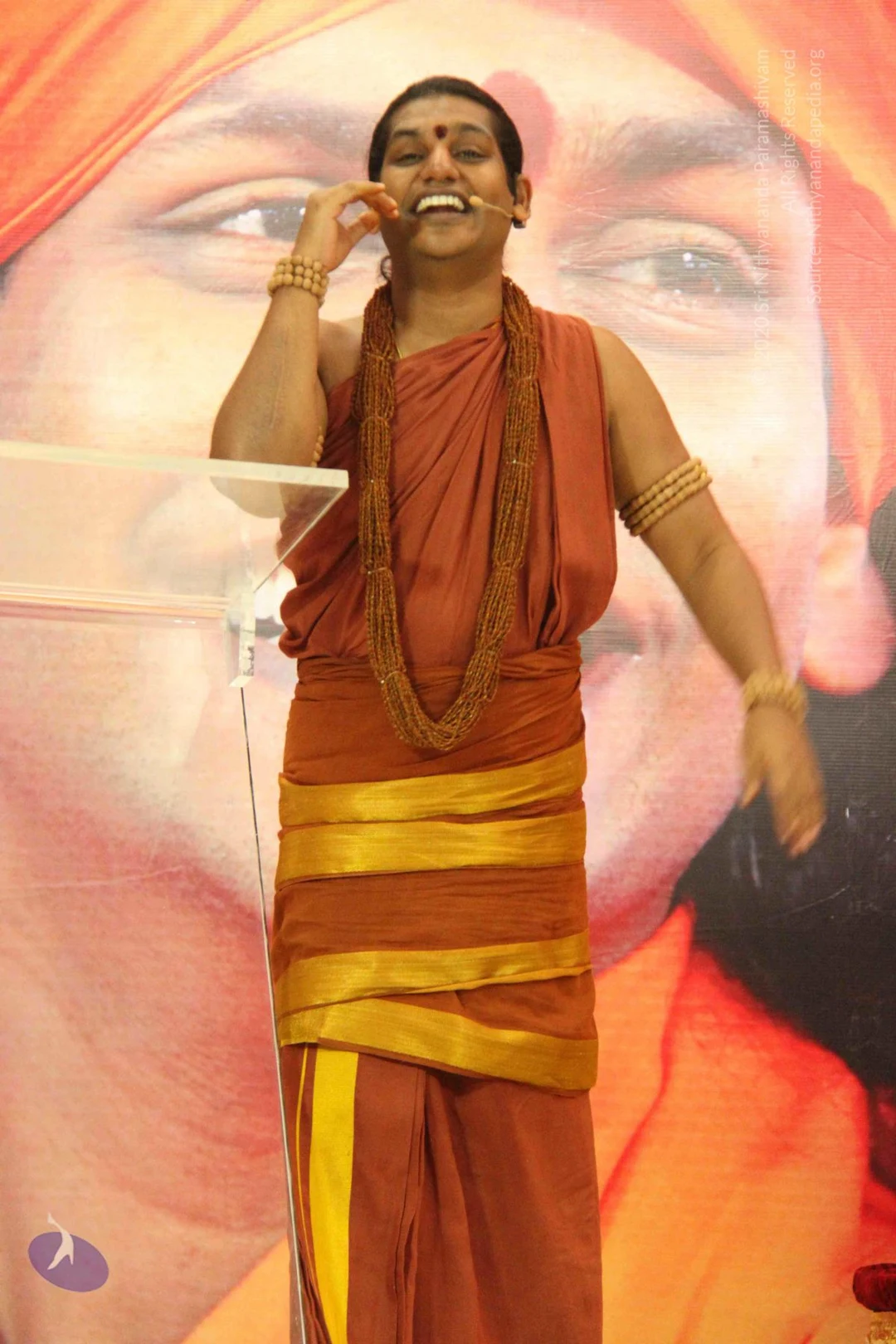
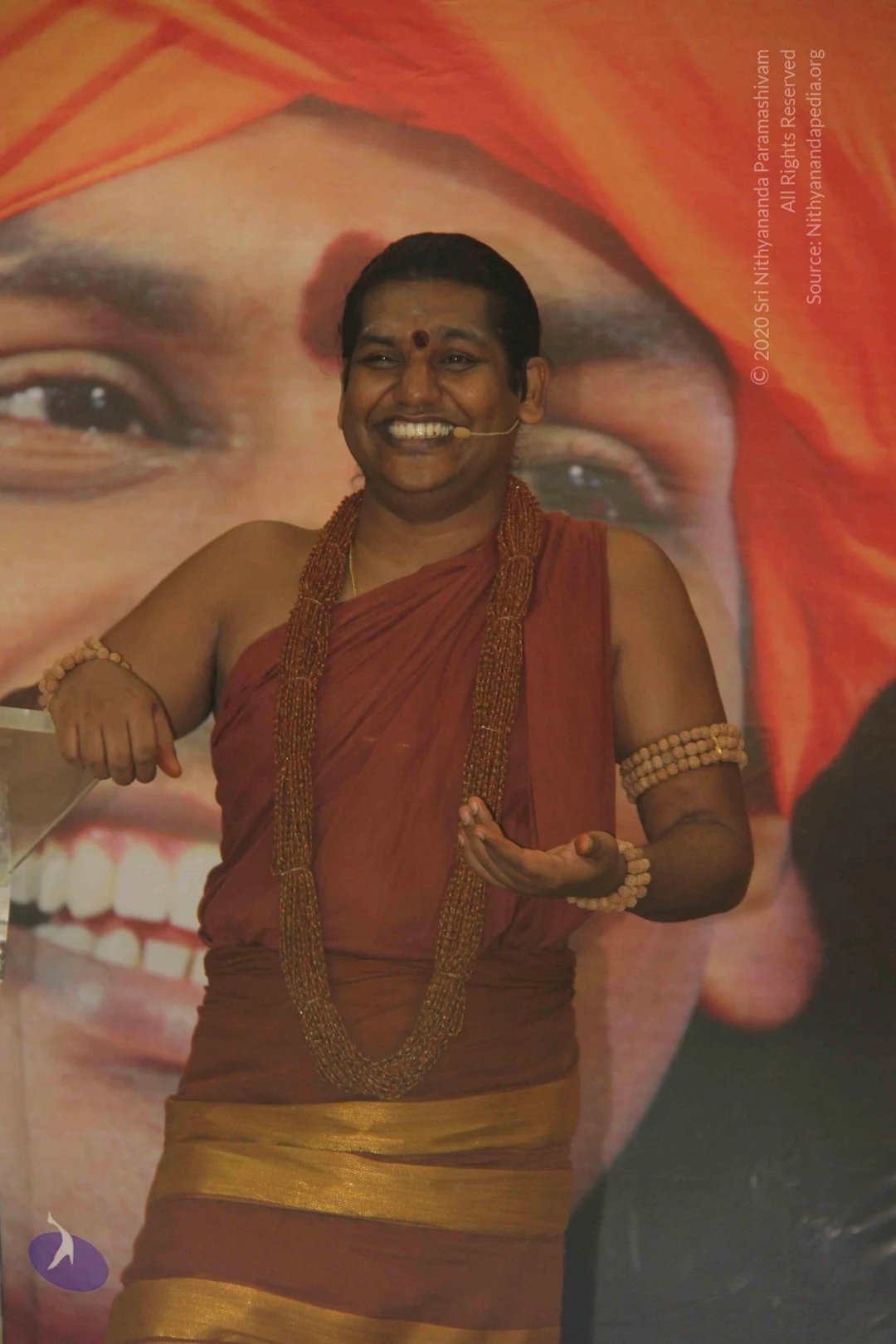
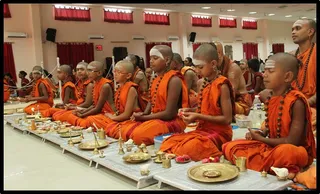
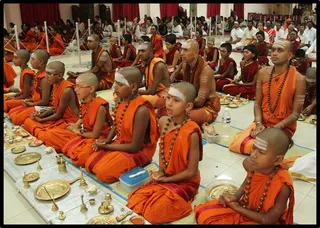
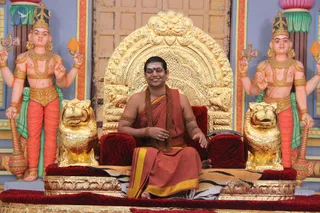
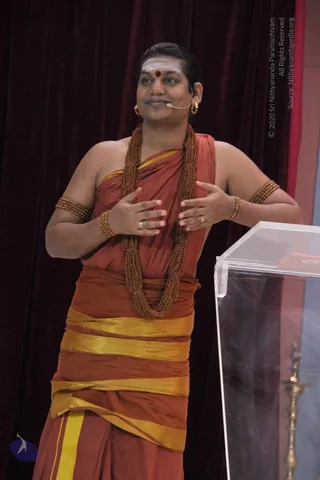
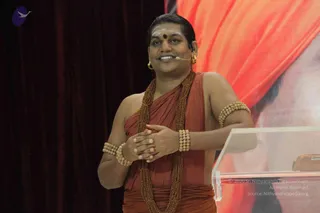
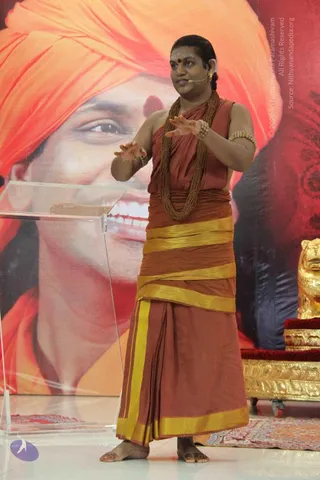
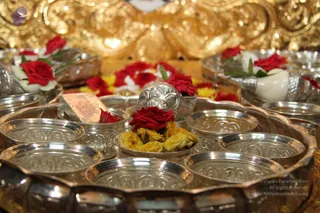
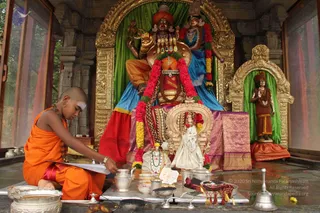
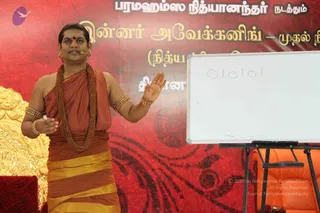
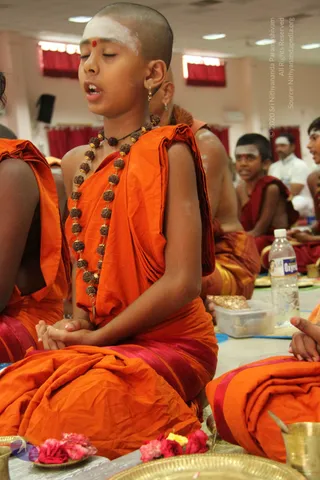
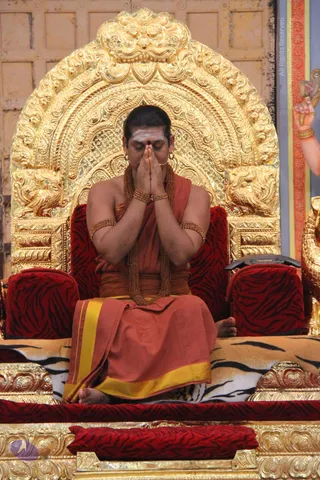
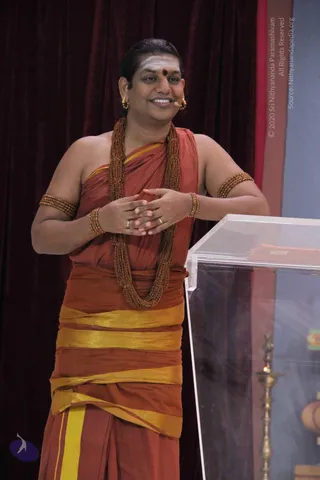
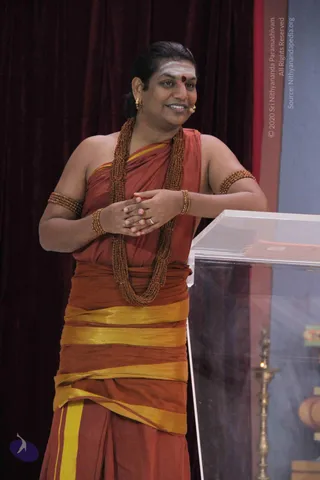
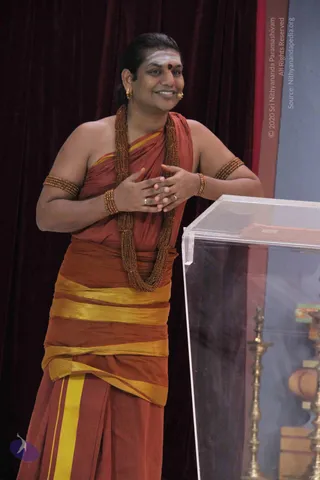
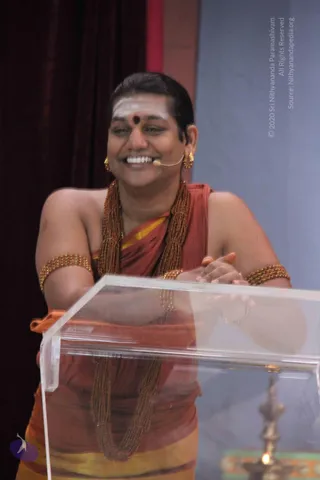
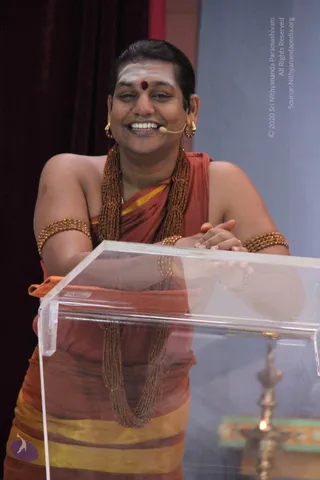
A photograph of several young shaven-headed monks seated in a row, chanting with eyes closed. They wear saffron-orange robes draped over one shoulder and long rudraksha mala necklaces, with white sacred ash markings on their foreheads. One boy on the centre-left wears red-framed glasses, and another on the left wears clear-framed glasses. Behind them, older monks in orange robes sit in a hall with red curtains and a wall clock. Another monk in orange sits further back.A smiling man in rust-red and saffron-toned draped robes with a gold-bordered sash stands beside a clear acrylic podium in front of a deep burgundy velvet curtain. He wears a long multi-strand rudraksha-style bead necklace, matching beaded armbands and bracelets, gold hoop earrings, a small red bindi, and a headset microphone. A brass oil lamp (deepa) stands on the podium's lower side. The page's date and discourse context suggest a teaching, but the image shows only the speaker at the podium.A photograph of a shaved-headed boy in orange robes and multiple rudraksha malas, seated with eyes closed and holding a small offering in his cupped hands. Beside him, an older young man in a rust-coloured shawl and rudraksha malas sits with palms pressed together in namaskar. Both have white and red tilaka on their foreheads. Wisps of incense smoke rise in the air, and brass oil lamps and a conch-shaped object sit on the floor in front. Other seated devotees in white and maroon clothing are blurred in the background.

September 12 2013

Original wiki page
Contents

Title

What is Dharma?

Description:

What is Dharma (cosmic law)? the age old question is answered in a simple and straight forward way by the top Spiritual Guru Paramahamsa Nithyananda in His discourse delivered to the global live audience this 12th of September, 2013 Swamiji spoke about Dhamma; the law of life that flows into you with no necessity for Spiritual Practice. Dhamma is the non-controversial flow of life that leaves both sides complete. the basic principle is what you don't want done to you , you don't do to others. You don's want others stealing form You don't want people to steal from you so you practice astheya-non stealing. You don't want planet earth stripped of all resources so you practice aparigraha-living with only what you need. You don't want someone to kill or hurt you so you practice ahimsa non-harming. You don't want to be lied to so you practice satya- telling the truth and you don't want another person to violate your physical space so you practice brahamacharya- no interfering in someones physical space. Completion means burning all the complicated patterns that keep you in incompletion.It is so unfortunate that these days the brain is established in incompletion. In that case spontaneity leads to lying. When you are complete spontaneity leads to only more completion. Completion is the only thing you need to practice. When you are in the space of completion you are flowing with the natural flow of life; you are in right karma.

Link to Video:

VideoAudio
VideoAudio

Transcript:

Nithyanandeshwara Samaarambhaam Nithyanandeshwari Madhyamaam | Asmadaachaarya Paryanthaam Vande Guru Paramparaam ||

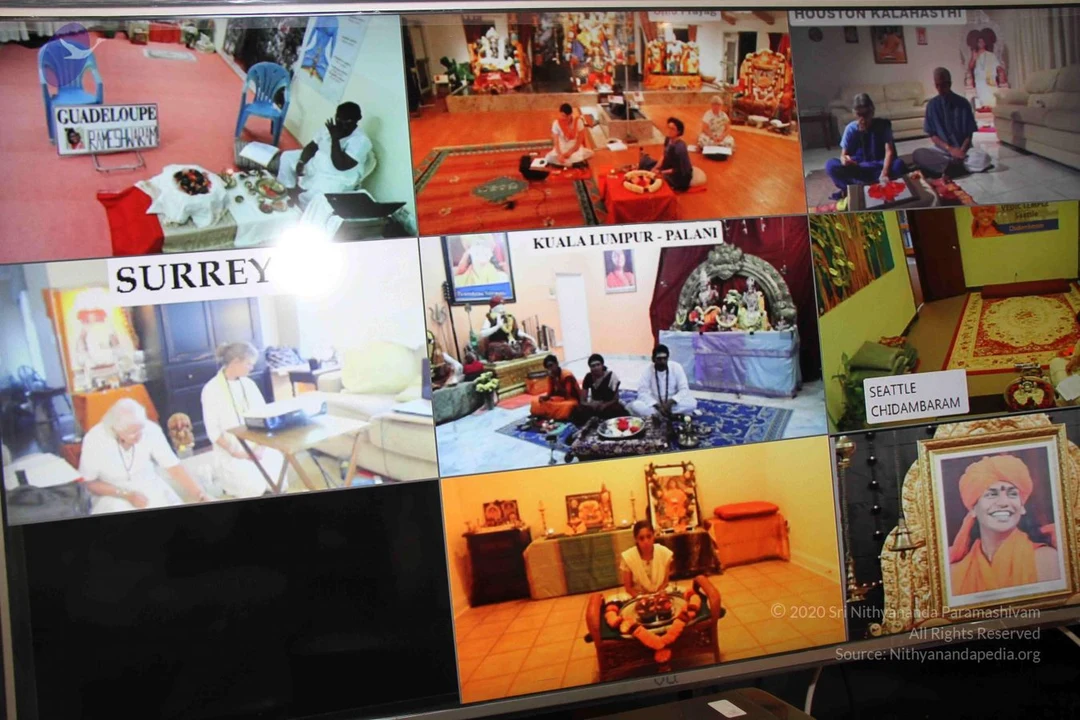
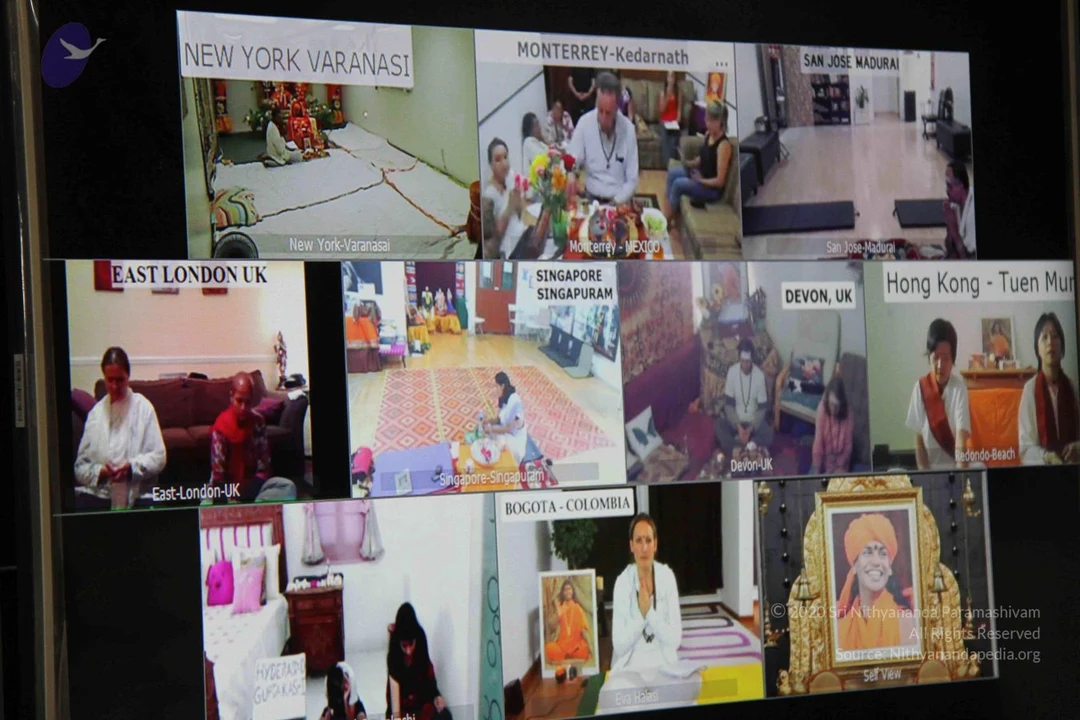
I welcome all the devotees, disciples, samajis, satsanghis sitting with us around the world at this moment through Nithyananda TV, Sadhna TV, Lotus News Channel, two-way video-conferencing all over the world.

Cities sitting with us in two-way video-conferencing having Nayana Deeksha: Houston, Ohio, Guadeloupe, Surrey-British Columbia, Kuala Lumpur, Seattle, Charlotte, New York, Monterrey, San Jose, Devon-UK, Hong Kong, Singapore, East London, Columbia, Indrani-New Jersey, Hyderabad-Gupta Kashi, Bangalore North, San Diego Pacific Beach, Ohio Center, New Zealand-Adi Arunachalam, Paris Home Temple, Calgary, Kathmandu, Oman………..

I welcome all of you with my love and blessings!

Today I will expand on the word, one word – “DHAMMA”.

What is Dhamma? Understand, I am defining “Dhamma”.

Dhamma is the law of life which flows into you as the natural existential experience without any necessity for spiritual practice or understanding.

Please understand, Dhamma is the natural flow of law of life, natural flow of law of existence;, without any necessity for any spiritual practice or understanding. Understand these truths!

If somebody tries to attack you, what will you do? Naturally you will defend yourself. Do you need a special spiritual practice for it? Do you need a special understanding? Whether you know the technique or not, method or not, system or not, by the very existence, you will defend your life. Because you don’t want to be killed, you not killing others is Dhamma.

Please understand, because you don’t want to be killed, you not killing others that is Ahimsa. Whatever you don’t want to be done to you, not doing that to others.

Same way, your properties, naturally you don’t want that to be stolen. So, you not stealing others’ property is Astheya.

Naturally you don’t want anybody to lie to you. You not lying to others is Sathya. Whether you are a man or a woman, naturally you don’t want anybody’s physical interference in your life, uninformed and uninvited physical interference in your life. Doing the same to others, not interfering in others’ physical space uninformed and uninvited, is Brahmacharya.

See, very clearly, Dhamma, Dhamma is nothing but just these few basic truths! You don’t want to be killed, so don’t kill others. You don’t want to be lied to, so don’t lie to others. You don’t want to be robbed, so don’t rob others. You don’t want to be exploited, so don’t exploit others. You don’t want others to live with all the resources of the world, so you don’t do the same – Aparigraha.

Please understand, Astheya, Aparigraha, Brahmacharya, Sathya, Ahimsa – non-violence, truthfulness,non-stealing, not robbing the resources of the world, and non-interference in others’ physical plane.

Please listen! Do you need any special spiritual practice or understanding to live these principles? No!

See, when somebody attacks you, do you need a special spiritual understanding, or for ages do you have to read some books, or do some spiritual practice to defend you? See, whether you are able to defend yourself or not is separate; whether you are successful or not is separate; but even a worm or ant raises itself and tries to defend itself. Understand, you defending your existence, you defending your life, you defending your identity, you defending what you think as you, is natural. Do the same thing to others.

That is what is “natural flow of life”.

Understand, Dhamma is always non-controversial. Please listen! Anything other than Dharma,anything other than Dhamma, always will leave some incompletion in you, some controversy in you. Dhamma is the one and only non-controversial flow of life, flow of existence!

All judgments lead to more and more arguments, appeal. But all the solutions based on Dhamma leave both sides complete, please listen, because Dhamma is a natural law of life, natural existence of life. Dhamma does not need any special spiritual practice, special spiritual understanding. It is just established on one truth: “What you don’t want to be done to you, don’t do it to others!” that’s all.

I have a story for you guys:

A man and his wife, both of them are in the Divorce Court. Both are young. The big problem is the custody of their children. Custody of their children posed a big problem.

The mother jumped to her feet and protested to the Judge that since she brought the children into this world, she should retain custody of them, she should have the custody of them.

The man also wanted custody of his children.

The Judge asked him, ‘What is the justification you are going to give?

After a long silence, the man suddenly jumps to his feet and says, ‘Your Honor, when I put a dollar in a vending machine and a Coke comes out, does the Coke belong to me or to the machine?’

HAHAHAHAHAHAHAHAHAHAHAHAHAHAHAHAHA…!

If you missed it, you missed it…! I think, Indians don’t understand, because, still in India, the vending machine is not that popular, vending machine is not that much a part of the lifestyle! Anyhow…! Law leads to more arguments, and laws are designed by lawyers who enjoy arguments!

Please understand! Dhamma is designed by Rishis who enjoy solutions. Law is designed by lawyers who always think, ‘I should leave a little grey area for me to exploit later on.’ But Dhamma is designed by Rishis who are interested in solutions!

Understand! Of course, even this argument is not complete. You can always say the vending machine is a machine, woman is not a machine. Sometimes, vending machines do not work; then who is responsible for that? And vending machine doesn’t go through any pain or suffering when it delivers the Coke can!

Understand, all I am trying to tell you is, Dhamma is the natural flow of law of existence, and in your life if you start aligning your inner being to Dhamma, you won the game. You won the game if you align yourself to Dhamma. You won the game if you can bring yourself to Dhamma. The whole Completion process is just bringing yourself to a space where you experience constant Dhamma in life! The complicated mental setup which does not let you realize Dhamma, burning them, is “Completion” process.

Listen! If you go and stand in the center of Mysore Road, not moving, surely, within ten-twenty minutes you will be killed! It is a law! To this precision, Dhamma can be experienced!

Understand, if you get into the car and drive the car properly, you can reach wherever you want. It is a law. It is an outer world science. To this precision, you can experience the power of Dhamma!

In the traditional stories of the Shaiva saints, there is a story:

A saint, Cheraman Perumal, just initiated a horse into the Panchakshara – Shiva’s name – and got onto the horse and reached Kailaasa! Understand, the power of the Panchakshara…..it is so powerful it changed the DNA of the horse to raise this guy to Kailaasa!

It is not a story! Just like you say, you can get into your Benz and drive and reach wherever you want, same way this principle is the truth. Because of your incompletions, you don’t realize that lying has become your spontaneity. Please understand, instead of Completion being your spontaneity, lying has become your spontaneity. You can lie more comfortably than telling the truth.

I think many of the Lie Detector machines are wrong. These machines need to be re-designed. These machines are developed based on the “comfort zone” you carry inside. When you utter a word, are you comfortable or uncomfortable, based on that they tell you: If you are comfortable, you are telling the truth. If you are uncomfortable, you are telling a lie. I tell you, modern man has crossed that zone. He can lie more comfortably than telling the truth. Only when he tells the truth he has to think more and more what all ways he has to protect himself! When he lies, he is very comfortable, because he has already planned his whole story!

Unfortunately, lying became a more spontaneous thinking style than being integrated!

A story:

A man buys a Lie Detector Robot that slaps people who lie. He decides to test it at dinner.

He asks his son, ‘Son, where were you today during school hours?’

The son says, ‘At school’.

The robot slaps the son!

The son says, ‘Okay, I watched a DVD at my friend’s place.’

Dad asks, ‘Which one?’

The son says, ‘Kung Fu Panda.’

The robot slaps the son again!

The son says, ‘Okay! It was a porn…!’

Dad says, ‘what! When I was your age, I didn’t even know what porn was?’

The robot slaps the dad!

Mom laughs and says, ‘After all he is your son…’

The robot slaps the mom!

Understand, people are able to lie more spontaneously than tell the truth. No, it has become an unfortunate pattern! The brain is established in incompletion! The brain is established in the space of incompletion!

Please understand, this is the greatest harm done to humanity, without understanding, what you do comes back to you! What you do comes back to you!

I have a story:

One day, Bill Gates dies in a car accident, he finds himself in the court of the Lord; God says, ‘Well Bill, I’m really confused on this call, I’m not sure whether to send you to heaven or hell, after all you enormously helped society by putting a computer in almost every home in America, yet you also created that ghastly Windows 95, I’m going to do something I have never done before! In your case, I’m going to let you decide where you want to go!

Bill replied, ‘well, what’s the difference between the two, heaven and hell?’

God said, ‘I’m willing to let you visit both places briefly if it will help your decision’.

Bill says, ‘fine, but where should I go first?’

God says, ‘I’ll leave that up to you!’

Bill said, ‘okay, then let me try hell first’. And, he went to hell. There was a clean, beautiful sandy beach with clear waters and lot of beautiful women running around, playing in the water, laughing, giggling; the sun was shining; the temperature was perfect! He was very pleased. ‘This is great’, he told God, ‘if this is hell, then I really want to see heaven!’

God said, ‘Fine!’ and took him to heaven. Heaven was a place high in the clouds with angels drifting about, playing harps and singing, it was nice but not as enticing as hell. Bill thought for a moment and rendered his decision, ‘umm, I think I’d prefer hell’, he told God.

God said, ‘fine, tathasthu! As you desire!’

So, Bill Gates went to hell.

Two weeks later, God decided to go for his rounds and see how Bill Gates is doing in hell. When he went there, he saw Bill Gates shackled to the wall, screaming among hot flames and in dark caves being burned and tortured by demons as described in books. He asked Bill, ‘how is everything going?’

Bill responded with his voice filled with anguish and disappointment, ‘this is awful, this is nothing like the hell I visited 2 weeks ago, I can’t believe this is happening! What happened to the other place with beaches, beautiful women playing in the water?’

God says, ‘oh, that was the demo!’

Understand, the basic law of life is: “What you do to others will come back to you”. If you don’t want to be hurt, don’t hurt others. If you don’t want life to cheat you, don’t cheat life. Don’t ever think you can steal in one place and take it somewhere where you want and you can live happily there. Don’t think you can harm somebody here and run away and live in some other place where you will not be harmed!

The vibrations you create in one place do not stay in that place. It stays with you! Please understand, the vibrations you create in one place do not stay in that place, it stays with you!

Listen! I am defining the relationship with Dharma and Karma. Listen! Come to the space of listening!

If somebody tries to attack you, and you defending yourself, is a natural law of life, Dhamma. Same way, you not attacking others, not harming others, is good Karma. Knowingly, you harming others, is bad Karma. That is all!

Understand, whatever is your natural flow is Dhamma. You not doing that to others is Karma.

Listen! Listen! You understanding you will protect you when somebody tries to attack you, is Dhamma, natural law of life. You doing the same thing to others by not attacking, is right Karma. Attacking is wrong Karma; that is all!

A simple flow of life is Dharma and Karma.

Listen! Anything you create, anything you do, anything you mull over, anything you try to digest,anything you try to practice is not natural law of life. If at all you have to practice something, it is only one thing – COMPLETION! That’s all! Only one thing you need to practice – COMPLETION! Means, getting back to your natural space, your original space. Other than Completion, nothing else needs to be practiced. Simply you know the law of life!

How can you live in life without being bothered about what you think about others think and what others think about you? That forms ninety-nine percent of your life and interaction. Understand, Dhamma is all about falling into the natural law of what you think about others and what others think about you! When you are in the space of natural law of existence, when you are in the space of natural law of existence, I tell you, you are established in the right Karma! You will never be able to do any wrong Karma. When you are in the space of Completion and completely in tune with the natural law of life, even if you have done any wrong Karma earlier, its power melts down!

Please understand, life responds to the space and vibration you carry inside you, not just to the actions you did. If you can alter the space you carry inside, even the earlier so-called wrong Karmas, negative Karmas, melt down, and its impact on you expires. Its impact on you dissolves. Its impact on you dissolves, its impact on you disappears.

Understand the law of life, natural existence of life, natural flow of life!

30 min

“Hindi Translation”

As you all may be aware, in Bidadi campus, Nithykriya yoga is happening from today. So today, I will give the gist in Tamil.

“Tamil translation”

Let’s now move to– NIRAHARA SAMYAMA

“Hindi Translation”

Please break the fast. Tomorrow eat and come for the satsang, because we will be starting the Nirahara Samyama third level.

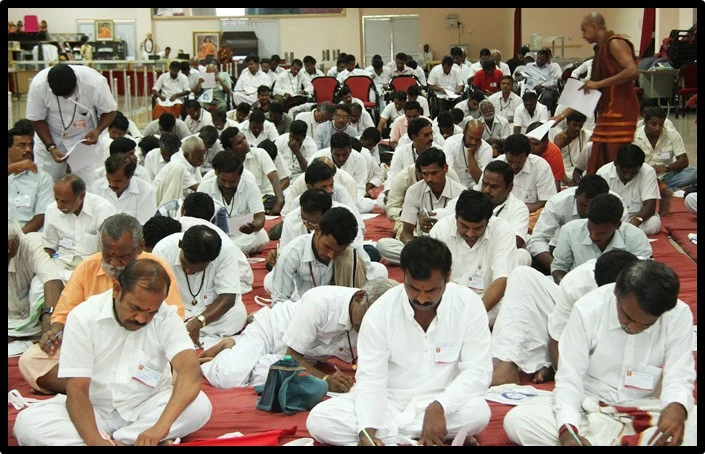
Now start the Kriya. Close your eyes. Sit straight. Cognize you have become Bidadi Kalpavriksha. Inhale through both nostrils and hold as long as you can. Exhale through both the nostrils. Do this for the next twenty-one minutes.

I bless you all with Integrity, Authenticity, Responsibility and Enriching! Let you all experience Kundalini awakening! Let you all experience the energy being created in your body directly from space! Let you all live health, bliss and enlightenment! Namah Shivaya!

NIRAHARA SAMYAMA IN PROGRESS…

Let you all achieve, experience, live, express, radiate, share and explore in eternal bliss, Nithyananda!

Title

You Are Responsible For Others Expectation || Part 1 || NKY || Tamil || 12 Sept 2013

Description

Name Of Convention : Nithya Kriya Yoga Part 1
Session on: You are Responsible for Others Expectations
Date : 12 September 2013
Venue : Adi Kailasa, Bengaluru, Karnataka, India

In this video Supreme Pontiff of Hinduism HDH #Nithyananda Paramashivam gives inputs on the concepts of Responsibility, Authenticity, Inner image, Outer image, #Ego and how one is responsible for fulfilling others expectation by illustrating with examples.

The Supreme Pontiff of Hinduism Jagatguru Mahasannidhanam His Divine Holiness Nithyananda Paramashivam (HDH) is the reviver of #KAILASA - the ancient enlightened civilization and the great cosmic borderless Hindu nation. Revered as the incarnation of Paramashiva - the primordial Hindu Divinity, HDH has a following of 2 billion Hindus worldwide with de facto spiritual embassies in over 150 countries. He has worked untiringly for over 26 years for the revival of Kailasa, for global peace and to give super conscious breakthrough to humanity. He has survived the worst persecution of multiple assassination attempts on person and on character by anti-Hindu elements. He is collecting, organising, preserving, time capsuling, decoding, spreading and reviving 20 Million source books of Hinduism and the 64 sacred arts & sciences like Ayurveda, music, dance, sculpting, astrology, vastu and much more. Close to 20,000 hours of HDH’s timeless talks have been recorded till date (Sep 2020), which are a treasure trove of powerful cognitions to solve individual and global problems of any kind.

Link to Video:

VideoAudio

Title

Be The Best To Yourself & To Others || Part 2 || NKY || Tamil || 12 Sept 2013

Description

Name Of Convention : Nithya Kriya Yoga Part 2
Session on: Be The Best To Yourself and To Others
Date : 12 September 2013
Venue : Adi Kailasa, Bengaluru, Karnataka, India

In this video Supreme Pontiff of Hinduism HDH #Nithyananda Paramashivam gives inputs on the concepts of Responsibility, Authenticity, Inner image, Outer image, #Ego and how one is responsible for fulfilling others expectation by illustrating with examples.

The Supreme Pontiff of Hinduism Jagatguru Mahasannidhanam His Divine Holiness Nithyananda Paramashivam (HDH) is the reviver of #KAILASA - the ancient enlightened civilization and the great cosmic borderless Hindu nation. Revered as the incarnation of Paramashiva - the primordial Hindu Divinity, HDH has a following of 2 billion Hindus worldwide with de facto spiritual embassies in over 150 countries. He has worked untiringly for over 26 years for the revival of Kailasa, for global peace and to give super conscious breakthrough to humanity. He has survived the worst persecution of multiple assassination attempts on person and on character by anti-Hindu elements. He is collecting, organising, preserving, time capsuling, decoding, spreading and reviving 20 Million source books of Hinduism and the 64 sacred arts & sciences like Ayurveda, music, dance, sculpting, astrology, vastu and much more. Close to 20,000 hours of HDH’s timeless talks have been recorded till date (Sep 2020), which are a treasure trove of powerful cognitions to solve individual and global problems of any kind.

Link to Video:

VideoAudio

Title

மக்களை கைவிடாதீர்கள்|| நித்ய கிரியா யோகா || பாகம் 1 || 12 செப்டம்பர் 2013

Description

நிகழ்ச்சி நிரல் : நித்ய கிரியா யோகா
தலைப்பு : ஏன் நமக்கும் மற்றவர்களுக்கும் பொறுப்பெடுக்க வேண்டும்?பாகம் 1
இடம் : ஆதி கைலாஸா, பெங்களூரு, கர்நாடகா, இந்தியா
தேதி : 12 செப்டம்பர் 2013

இந்த வீடியோ பதிவில் பகவான் நித்யானந்த பரமசிவம் பொறுப்பெடுத்தலை பற்றி விளக்குகிறார். நம் வாழ்வில் நாம் சந்திக்கும் எல்லா பிரச்சனைகளுக்கும் சரியான தீர்வு. நாம் பொறுப்பெடுத்தல் உணர்வில் இருந்து சிந்தித்தால் தான் கிடைக்கும் என்றும், நாம் ஏன் பொறுப்பெடுக்க வேண்டும்? பொறுப்பெடுத்தல் என்றால் என்ன? என்பது போன்ற பயிற்சிகளை செய்ய வைப்பதன் மூலம் பொறுப்பெடுத்தல் என்ற சத்தியத்தை விளக்குகிறார். மேலும் வளப்படுத்துதல் என்னும் 4வது சத்தியத்தை விளக்குகிறார். நம்மை சுற்றி இருப்பவர்களை நாம் ஏன் வளப்படுத்த வேண்டும், அவ்வாறு செய்வதால் எவ்வாறு நம்முடைய வாழ்க்கை வளப்படும் என்றும் தெளிவாக்குகிறார். வளப்படுத்துதல் என்பது நமக்குள் இருக்கும் சுயசந்தேகத்தை அழிப்பதற்க்கான வழி என்றும் விளக்குகிறார். நம்மை சுற்றி இருப்பவர்கள் எல்லோரும் நம்முடைய பாகம் தான், மற்றவர்களை வளப்படுத்தலின் மூலம் நம்மை நாமே வளப்படுத்திக்கொள்கிறோம் என்ற சத்தியத்தை விளக்குகிறார். மேலும் நம்மை சுற்றி இருக்கும் உறவுகளை எவ்வாறு நாம் வளப்படுத்தப்போகிறோம் என்பதற்கான பயிற்சியையும் அளிக்கிறார்.

The Supreme Pontiff of Hinduism Jagatguru Mahasannidhanam His Divine Holiness #Nithyananda Paramashivam (HDH) is the reviver of #KAILASA - the ancient enlightened civilization and the great cosmic borderless Hindu nation. Revered as the incarnation of Paramashiva - the primordial Hindu Divinity, HDH has a following of 2 billion Hindus worldwide with de facto spiritual embassies in over 150 countries. He has worked untiringly for over 26 years for the revival of Kailasa, for global peace and to give super conscious breakthrough to humanity. He has survived the worst persecution of multiple assassination attempts on person and on character by anti-Hindu elements. He is collecting, organising, preserving, time capsuling, decoding, spreading and reviving 20 Million source books of Hinduism and the 64 sacred arts & sciences like Ayurveda, music, dance, sculpting, astrology, vastu and much more. Close to 20,000 hours of HDH’s timeless talks have been recorded till date (Sep 2020), which are a treasure trove of powerful cognitions to solve individual and global problems of any kind.

Link to Video:

VideoAudio

Title

மக்களை கைவிடாதீர்கள்|| நித்ய கிரியா யோகா || பாகம் 2 || 12 செப்டம்பர் 2013

Description

நிகழ்ச்சி நிரல் : நித்ய கிரியா யோகா
தலைப்பு : ஏன் நமக்கும் மற்றவர்களுக்கும் பொறுப்பெடுக்க வேண்டும்?பாகம் 2
இடம் : ஆதி கைலாஸா, பெங்களூரு, கர்நாடகா, இந்தியா
தேதி : 12 செப்டம்பர் 2013

இந்த வீடியோ பதிவில் பகவான் நித்யானந்த பரமசிவம் பொறுப்பெடுத்தலை பற்றி விளக்குகிறார். நம் வாழ்வில் நாம் சந்திக்கும் எல்லா பிரச்சனைகளுக்கும் சரியான தீர்வு. நாம் பொறுப்பெடுத்தல் உணர்வில் இருந்து சிந்தித்தால் தான் கிடைக்கும் என்றும், நாம் ஏன் பொறுப்பெடுக்க வேண்டும்? பொறுப்பெடுத்தல் என்றால் என்ன? என்பது போன்ற பயிற்சிகளை செய்ய வைப்பதன் மூலம் பொறுப்பெடுத்தல் என்ற சத்தியத்தை விளக்குகிறார். மேலும் வளப்படுத்துதல் என்னும் 4வது சத்தியத்தை விளக்குகிறார். நம்மை சுற்றி இருப்பவர்களை நாம் ஏன் வளப்படுத்த வேண்டும், அவ்வாறு செய்வதால் எவ்வாறு நம்முடைய வாழ்க்கை வளப்படும் என்றும் தெளிவாக்குகிறார். வளப்படுத்துதல் என்பது நமக்குள் இருக்கும் சுயசந்தேகத்தை அழிப்பதற்க்கான வழி என்றும் விளக்குகிறார். நம்மை சுற்றி இருப்பவர்கள் எல்லோரும் நம்முடைய பாகம் தான், மற்றவர்களை வளப்படுத்தலின் மூலம் நம்மை நாமே வளப்படுத்திக்கொள்கிறோம் என்ற சத்தியத்தை விளக்குகிறார். மேலும் நம்மை சுற்றி இருக்கும் உறவுகளை எவ்வாறு நாம் வளப்படுத்தப்போகிறோம் என்பதற்கான பயிற்சியையும் அளிக்கிறார்.

The Supreme Pontiff of Hinduism Jagatguru Mahasannidhanam His Divine Holiness #Nithyananda Paramashivam (HDH) is the reviver of #KAILASA - the ancient enlightened civilization and the great cosmic borderless Hindu nation. Revered as the incarnation of Paramashiva - the primordial Hindu Divinity, HDH has a following of 2 billion Hindus worldwide with de facto spiritual embassies in over 150 countries. He has worked untiringly for over 26 years for the revival of Kailasa, for global peace and to give super conscious breakthrough to humanity. He has survived the worst persecution of multiple assassination attempts on person and on character by anti-Hindu elements. He is collecting, organising, preserving, time capsuling, decoding, spreading and reviving 20 Million source books of Hinduism and the 64 sacred arts & sciences like Ayurveda, music, dance, sculpting, astrology, vastu and much more. Close to 20,000 hours of HDH’s timeless talks have been recorded till date (Sep 2020), which are a treasure trove of powerful cognitions to solve individual and global problems of any kind.

Link to Video:

VideoAudio

Title

ஒவ்வொரு எண்ணங்களுக்கும் நீங்கள் பொறுப்பு || பாகம் 1 || நித்ய கிரியா யோகா || 12 செப்டம்பர் 2013

Description

நிகழ்ச்சி நிரல் : நித்ய கிரியா யோகா
தலைப்பு : ஒவ்வொரு எண்ணங்களுக்கும் நீங்கள் பொறுப்பு பாகம் 1
இடம் : ஆதி கைலாஸா, பெங்களூரு, கர்நாடகா, இந்தியா
தேதி : 12 செப்டம்பர் 2013

இந்த வீடியோ பதிவில் பகவான் ஸ்ரீ #நித்யானந்த பரமசிவம் அவர்கள் ஒருங்குவித்தல், சிரத்தை மற்றும் பூரணத்துவம் என்றால் என்ன, மற்றவர்களுக்கு கொடுத்த வாக்குறுதிகளையும் நமக்கு நாமே கொடுக்கும் வாக்குறுதிகளையும் நிறைவேற்றுவதன் முக்கியத்துவம் பற்றியும் எடுத்துரைக்கிறார். நம் எண்ண ஓட்டங்களுக்கு நாம் எவ்வாறு பொறுப்பு என்றும் நம்மை நாம் எவ்வாறு சிறந்ததாக உணர வேண்டும் என்றும் பகவான் நித்யானந்த பரமசிவம் அவர்கள் விளக்குகிறார்.

The Supreme Pontiff of Hinduism Jagatguru Mahasannidhanam His Divine Holiness #Nithyananda Paramashivam (HDH) is the reviver of #KAILASA - the ancient enlightened civilization and the great cosmic borderless Hindu nation. Revered as the incarnation of Paramashiva - the primordial Hindu Divinity, HDH has a following of 2 billion Hindus worldwide with de facto spiritual embassies in over 150 countries. He has worked untiringly for over 26 years for the revival of Kailasa, for global peace and to give super conscious breakthrough to humanity. He has survived the worst persecution of multiple assassination attempts on person and on character by anti-Hindu elements. He is collecting, organising, preserving, time capsuling, decoding, spreading and reviving 20 Million source books of Hinduism and the 64 sacred arts & sciences like Ayurveda, music, dance, sculpting, astrology, vastu and much more. Close to 20,000 hours of HDH’s timeless talks have been recorded till date (Sep 2020), which are a treasure trove of powerful cognitions to solve individual and global problems of any kind.

Link to Video:

VideoAudio

Title

ஒவ்வொரு எண்ணங்களுக்கும் நீங்கள் பொறுப்பு || பாகம் 2 || நித்ய கிரியா யோகா || 12 செப்டம்பர் 2013

Description

நிகழ்ச்சி நிரல் : நித்ய கிரியா யோகா
தலைப்பு : ஒவ்வொரு எண்ணங்களுக்கும் நீங்கள் பொறுப்பு பாகம் 2
இடம் : ஆதி கைலாஸா, பெங்களூரு, கர்நாடகா, இந்தியா
தேதி : 12 செப்டம்பர் 2013

இந்த வீடியோ பதிவில் பகவான் ஸ்ரீ #நித்யானந்த பரமசிவம் அவர்கள் ஒருங்குவித்தல், சிரத்தை மற்றும் பூரணத்துவம் என்றால் என்ன, மற்றவர்களுக்கு கொடுத்த வாக்குறுதிகளையும் நமக்கு நாமே கொடுக்கும் வாக்குறுதிகளையும் நிறைவேற்றுவதன் முக்கியத்துவம் பற்றியும் எடுத்துரைக்கிறார். நம் எண்ண ஓட்டங்களுக்கு நாம் எவ்வாறு பொறுப்பு என்றும் நம்மை நாம் எவ்வாறு சிறந்ததாக உணர வேண்டும் என்றும் பகவான் நித்யானந்த பரமசிவம் அவர்கள் விளக்குகிறார்.

The Supreme Pontiff of Hinduism Jagatguru Mahasannidhanam His Divine Holiness #Nithyananda Paramashivam (HDH) is the reviver of #KAILASA - the ancient enlightened civilization and the great cosmic borderless Hindu nation. Revered as the incarnation of Paramashiva - the primordial Hindu Divinity, HDH has a following of 2 billion Hindus worldwide with de facto spiritual embassies in over 150 countries. He has worked untiringly for over 26 years for the revival of Kailasa, for global peace and to give super conscious breakthrough to humanity. He has survived the worst persecution of multiple assassination attempts on person and on character by anti-Hindu elements. He is collecting, organising, preserving, time capsuling, decoding, spreading and reviving 20 Million source books of Hinduism and the 64 sacred arts & sciences like Ayurveda, music, dance, sculpting, astrology, vastu and much more. Close to 20,000 hours of HDH’s timeless talks have been recorded till date (Sep 2020), which are a treasure trove of powerful cognitions to solve individual and global problems of any kind.

Link to Video:

VideoAudio

Title

ஒவ்வொரு எண்ணங்களுக்கும் நீங்கள் பொறுப்பு || பாகம் 3 || நித்ய கிரியா யோகா || 12 செப்டம்பர் 2013

Description

நிகழ்ச்சி நிரல் : நித்ய கிரியா யோகா
தலைப்பு : ஒவ்வொரு எண்ணங்களுக்கும் நீங்கள் பொறுப்பு பாகம் 3
இடம் : ஆதி கைலாஸா, பெங்களூரு, கர்நாடகா, இந்தியா
தேதி : 12 செப்டம்பர் 2013

இந்த வீடியோ பதிவில் பகவான் ஸ்ரீ #நித்யானந்த பரமசிவம் அவர்கள் ஒருங்குவித்தல், சிரத்தை மற்றும் பூரணத்துவம் என்றால் என்ன, மற்றவர்களுக்கு கொடுத்த வாக்குறுதிகளையும் நமக்கு நாமே கொடுக்கும் வாக்குறுதிகளையும் நிறைவேற்றுவதன் முக்கியத்துவம் பற்றியும் எடுத்துரைக்கிறார். நம் எண்ண ஓட்டங்களுக்கு நாம் எவ்வாறு பொறுப்பு என்றும் நம்மை நாம் எவ்வாறு சிறந்ததாக உணர வேண்டும் என்றும் பகவான் நித்யானந்த பரமசிவம் அவர்கள் விளக்குகிறார்.

The Supreme Pontiff of Hinduism Jagatguru Mahasannidhanam His Divine Holiness #Nithyananda Paramashivam (HDH) is the reviver of #KAILASA - the ancient enlightened civilization and the great cosmic borderless Hindu nation. Revered as the incarnation of Paramashiva - the primordial Hindu Divinity, HDH has a following of 2 billion Hindus worldwide with de facto spiritual embassies in over 150 countries. He has worked untiringly for over 26 years for the revival of Kailasa, for global peace and to give super conscious breakthrough to humanity. He has survived the worst persecution of multiple assassination attempts on person and on character by anti-Hindu elements. He is collecting, organising, preserving, time capsuling, decoding, spreading and reviving 20 Million source books of Hinduism and the 64 sacred arts & sciences like Ayurveda, music, dance, sculpting, astrology, vastu and much more. Close to 20,000 hours of HDH’s timeless talks have been recorded till date (Sep 2020), which are a treasure trove of powerful cognitions to solve individual and global problems of any kind.

Link to Video:

VideoAudio

Title

ஒருங்குவித்தல்- வாழ்க்கைமுறை || பாகம் 1 || நித்ய க்ரியா யோகா || 12 செப்டம்பர் 2013

Description

நிகழ்ச்சி நிரல் - நித்ய க்ரியா யோகா
தலைப்பு - ஒருங்குவித்தல்- வாழ்க்கைமுறை பாகம் 1
இடம் - ஆதிகைலாஸா, பெங்களூரு, கர்நாடகா, இந்தியா
தேதி - 12 செப்டம்பர் 2013

இந்த வீடியோ பதிவில் பகவான் ஸ்ரீ #நித்யானந்த பரமசிவம் அவர்கள் கேட்டல் மற்றும் ஒருங்குவித்தல் என்னும் சத்தியங்களைப் பற்றி பக்தர்களிடம் விளக்குகிறார் மற்றும் எவ்வாறு ஒவ்வொரு மனிதரும் தன்னுடைய வாழ்க்கையில் நாம் நமக்கு அளிக்கும் வாக்குறுதிகளையும் நாம் மற்றவர்களுக்கு கொடுக்கும் வாக்குறுதிகளை நிறைவேற்ற வேண்டும் என்பதை பற்றியும் பகவான் ஸ்ரீ நித்யானந்த பரமசிவம் பக்தர்களுக்கு அருளினார். பக்தர்கள் அனைவரும் தனது கேட்டல் சக்தியை மேம்படுத்திக்கொள்ள ஸ்ரீ நித்யானந்த பரமசிவம் அவர்கள் அருளிய விளையாட்டையும் செய்தனர். இந்த வீடியோ பதிவு 12 செப்டம்பர் 2013 அன்று ஆதிகைலாஸா, பெங்களூரு, கர்நாடகா, இந்தியாவில் நடைபெற்றது.

The Supreme Pontiff of Hinduism Jagatguru Mahasannidhanam His Divine Holiness #Nithyananda Paramashivam (HDH) is the reviver of #KAILASA - the ancient enlightened civilization and the great cosmic borderless Hindu nation. Revered as the incarnation of Paramashiva - the primordial Hindu Divinity, HDH has a following of 2 billion Hindus worldwide with de facto spiritual embassies in over 150 countries. He has worked untiringly for over 26 years for the revival of Kailasa, for global peace and to give super conscious breakthrough to humanity. He has survived the worst persecution of multiple assassination attempts on person and on character by anti-Hindu elements. He is collecting, organising, preserving, time capsuling, decoding, spreading and reviving 20 Million source books of Hinduism and the 64 sacred arts & sciences like Ayurveda, music, dance, sculpting, astrology, vastu and much more. Close to 20,000 hours of HDH’s timeless talks have been recorded till date (Sep 2020), which are a treasure trove of powerful cognitions to solve individual and global problems of any kind.

Link to Video:

VideoAudio

Title

ஒருங்குவித்தல்- வாழ்க்கைமுறை || பாகம் 2 || நித்ய க்ரியா யோகா || 12 செப்டம்பர் 2013

Description

நிகழ்ச்சி நிரல் - நித்ய க்ரியா யோகா
தலைப்பு - ஒருங்குவித்தல்- வாழ்க்கைமுறை பாகம் 2
இடம் - ஆதிகைலாஸா, பெங்களூரு, கர்நாடகா, இந்தியா
தேதி - 12 செப்டம்பர் 2013

இந்த வீடியோ பதிவில் பகவான் ஸ்ரீ #நித்யானந்த பரமசிவம் அவர்கள் கேட்டல் மற்றும் ஒருங்குவித்தல் என்னும் சத்தியங்களைப் பற்றி பக்தர்களிடம் விளக்குகிறார் மற்றும் எவ்வாறு ஒவ்வொரு மனிதரும் தன்னுடைய வாழ்க்கையில் நாம் நமக்கு அளிக்கும் வாக்குறுதிகளையும் நாம் மற்றவர்களுக்கு கொடுக்கும் வாக்குறுதிகளை நிறைவேற்ற வேண்டும் என்பதை பற்றியும் பகவான் ஸ்ரீ நித்யானந்த பரமசிவம் பக்தர்களுக்கு அருளினார். பக்தர்கள் அனைவரும் தனது கேட்டல் சக்தியை மேம்படுத்திக்கொள்ள ஸ்ரீ நித்யானந்த பரமசிவம் அவர்கள் அருளிய விளையாட்டையும் செய்தனர். இந்த வீடியோ பதிவு 12 செப்டம்பர் 2013 அன்று ஆதிகைலாஸா, பெங்களூரு, கர்நாடகா, இந்தியாவில் நடைபெற்றது.

The Supreme Pontiff of Hinduism Jagatguru Mahasannidhanam His Divine Holiness #Nithyananda Paramashivam (HDH) is the reviver of #KAILASA - the ancient enlightened civilization and the great cosmic borderless Hindu nation. Revered as the incarnation of Paramashiva - the primordial Hindu Divinity, HDH has a following of 2 billion Hindus worldwide with de facto spiritual embassies in over 150 countries. He has worked untiringly for over 26 years for the revival of Kailasa, for global peace and to give super conscious breakthrough to humanity. He has survived the worst persecution of multiple assassination attempts on person and on character by anti-Hindu elements. He is collecting, organising, preserving, time capsuling, decoding, spreading and reviving 20 Million source books of Hinduism and the 64 sacred arts & sciences like Ayurveda, music, dance, sculpting, astrology, vastu and much more. Close to 20,000 hours of HDH’s timeless talks have been recorded till date (Sep 2020), which are a treasure trove of powerful cognitions to solve individual and global problems of any kind.

Link to Video:

VideoAudio

Title

கேட்டலின் முக்கியத்துவம் || பாகம் 1 || நித்ய கிரியா யோகா || 12 செப்டம்பர் 2013

Description

நிகழ்ச்சி நிரல் - நித்ய கிரியா யோகா
தலைப்பு - கேட்டலின் முக்கியத்துவம் பாகம் 1
இடம் - ஆதி கைலாஸா, பெங்களூரு , கர்நாடகா, இந்தியா
தேதி - 12 செப்டம்பர் 2013

இந்த வீடியோ பதிவில் பகவான் ஸ்ரீ #நித்யானந்த பரமசிவம் அவர்கள் கேட்டலின் முக்கியத்துவத்தை பற்றி கூறியுள்ளார். பயம் மற்றும் பரிதவிப்பு போன்ற குறையுணர்வுகள் நம் எண்ணத்தின் பாகமாக மாறும்போது கேட்டல் குறைந்து விடுகிறது என்று எடுத்துரைக்கிறார். நம் வாழ்வின் மிகப்பெரிய விரோதி, தன்னை தானே சந்தேகிக்கின்ற மனம். நம்மை நாமே சந்தேகிக்காத உணர்வு கடவுள் நமக்கு தந்த ஆத்ம பலம் என்று உரைத்துளார்.

The Supreme Pontiff of Hinduism Jagatguru Mahasannidhanam His Divine Holiness #Nithyananda Paramashivam (HDH) is the reviver of #KAILASA - the ancient enlightened civilization and the great cosmic borderless Hindu nation. Revered as the incarnation of Paramashiva - the primordial Hindu Divinity, HDH has a following of 2 billion Hindus worldwide with de facto spiritual embassies in over 150 countries. He has worked untiringly for over 26 years for the revival of Kailasa, for global peace and to give super conscious breakthrough to humanity. He has survived the worst persecution of multiple assassination attempts on person and on character by anti-Hindu elements. He is collecting, organising, preserving, time capsuling, decoding, spreading and reviving 20 Million source books of Hinduism and the 64 sacred arts & sciences like Ayurveda, music, dance, sculpting, astrology, vastu and much more. Close to 20,000 hours of HDH’s timeless talks have been recorded till date (Sep 2020), which are a treasure trove of powerful cognitions to solve individual and global problems of any kind.

Link to Video:

VideoAudio

Title

கேட்டலின் முக்கியத்துவம் || பாகம் 2 || நித்ய கிரியா யோகா || 12 செப்டம்பர் 2013

Description

நிகழ்ச்சி நிரல் - நித்ய கிரியா யோகா
தலைப்பு - கேட்டலின் முக்கியத்துவம் பாகம் 2
இடம் - ஆதி கைலாஸா, பெங்களூரு , கர்நாடகா, இந்தியா
தேதி - 12 செப்டம்பர் 2013

இந்த வீடியோ பதிவில் பகவான் ஸ்ரீ #நித்யானந்த பரமசிவம் அவர்கள் கேட்டலின் முக்கியத்துவத்தை பற்றி கூறியுள்ளார். பயம் மற்றும் பரிதவிப்பு போன்ற குறையுணர்வுகள் நம் எண்ணத்தின் பாகமாக மாறும்போது கேட்டல் குறைந்து விடுகிறது என்று எடுத்துரைக்கிறார். நம் வாழ்வின் மிகப்பெரிய விரோதி, தன்னை தானே சந்தேகிக்கின்ற மனம். நம்மை நாமே சந்தேகிக்காத உணர்வு கடவுள் நமக்கு தந்த ஆத்ம பலம் என்று உரைத்துளார்.

The Supreme Pontiff of Hinduism Jagatguru Mahasannidhanam His Divine Holiness #Nithyananda Paramashivam (HDH) is the reviver of #KAILASA - the ancient enlightened civilization and the great cosmic borderless Hindu nation. Revered as the incarnation of Paramashiva - the primordial Hindu Divinity, HDH has a following of 2 billion Hindus worldwide with de facto spiritual embassies in over 150 countries. He has worked untiringly for over 26 years for the revival of Kailasa, for global peace and to give super conscious breakthrough to humanity. He has survived the worst persecution of multiple assassination attempts on person and on character by anti-Hindu elements. He is collecting, organising, preserving, time capsuling, decoding, spreading and reviving 20 Million source books of Hinduism and the 64 sacred arts & sciences like Ayurveda, music, dance, sculpting, astrology, vastu and much more. Close to 20,000 hours of HDH’s timeless talks have been recorded till date (Sep 2020), which are a treasure trove of powerful cognitions to solve individual and global problems of any kind.

Link to Video:

VideoAudio

Photos From The Day:
Photos Of The Day:

Paduka-Puja-Crowd

Temple

Nithya-Satsang

Sarva-Darshan

Final-Blessing

NKY-Session

Tags:

Paramahamsa Nithyananda, Dharma, ahimsa, incompletion, astheya, aparigraha, satya, dhamma, karma, completion

Photos Of The Day:

PadukaPuja-CrowdShots

Temple

NithyaSatsang-Pictures

SarvaDarshan-Pics

NKY-Session-Pictures

Photos Of The Day:

PadukaPuja-CrowdShots

temple

Nithya-Satsang-Pictures

NKY-Session-Pictures

Photos from this day

View all 300 photos

Photos From The Day:
26 photosSource gallery
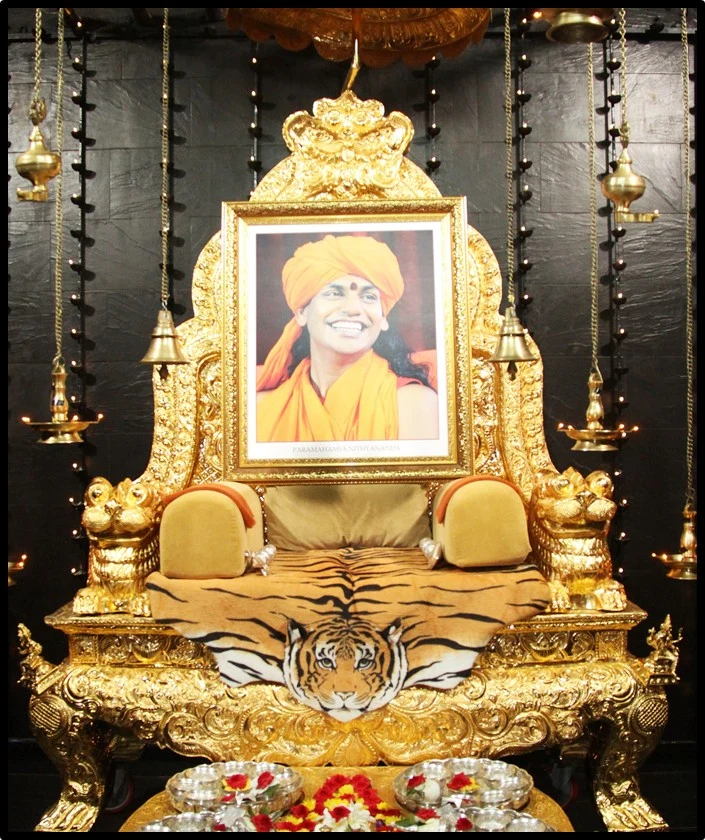
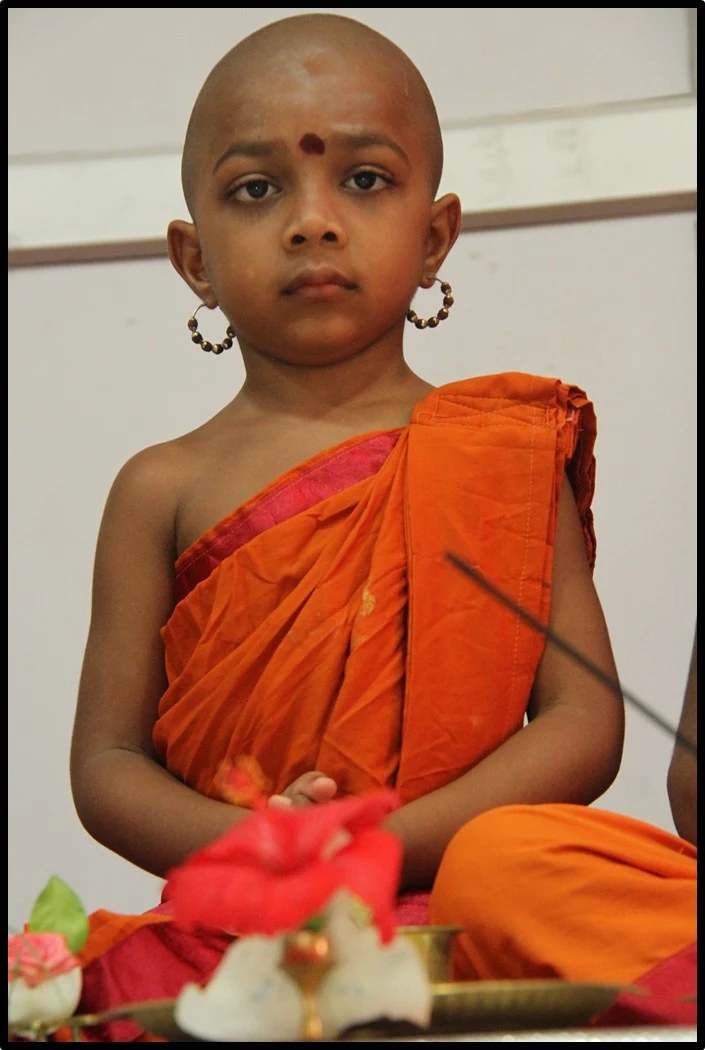
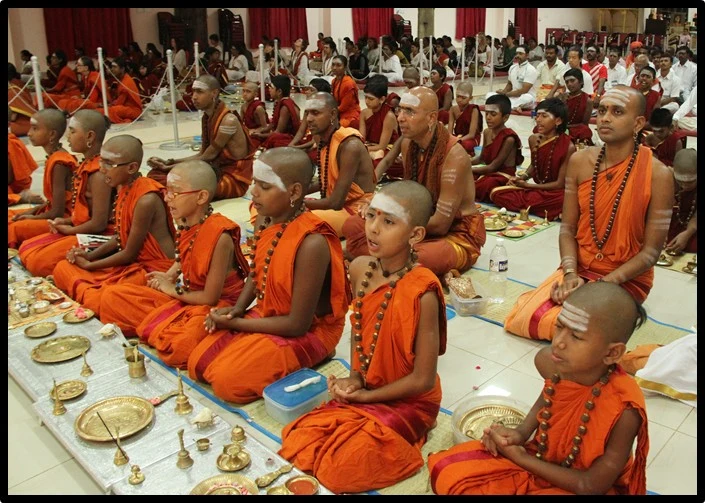
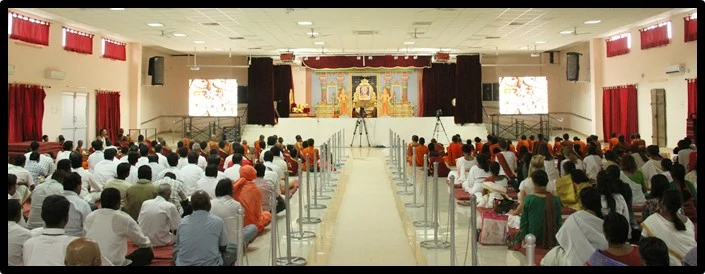
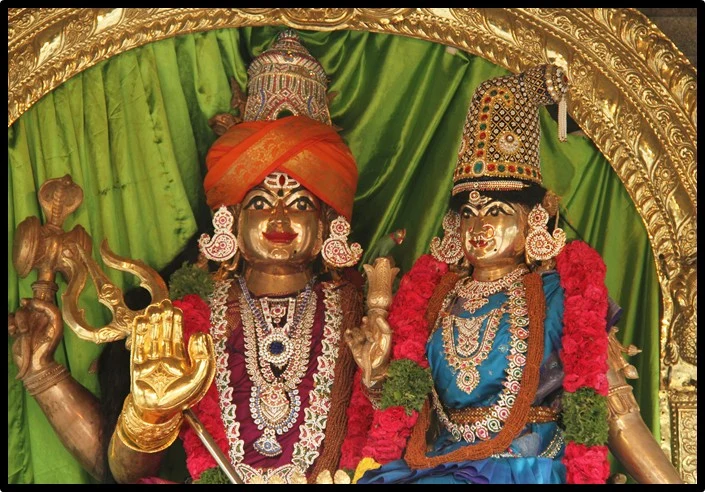
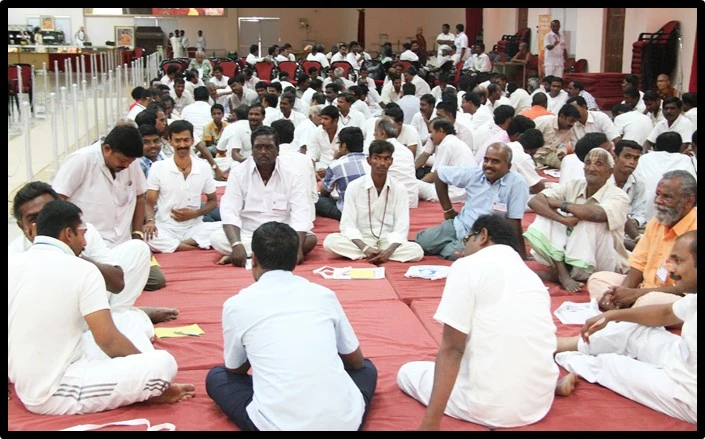
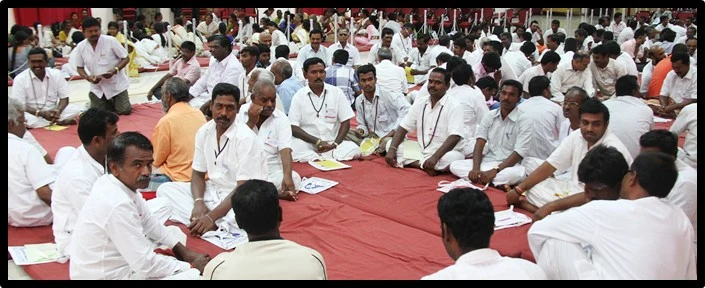
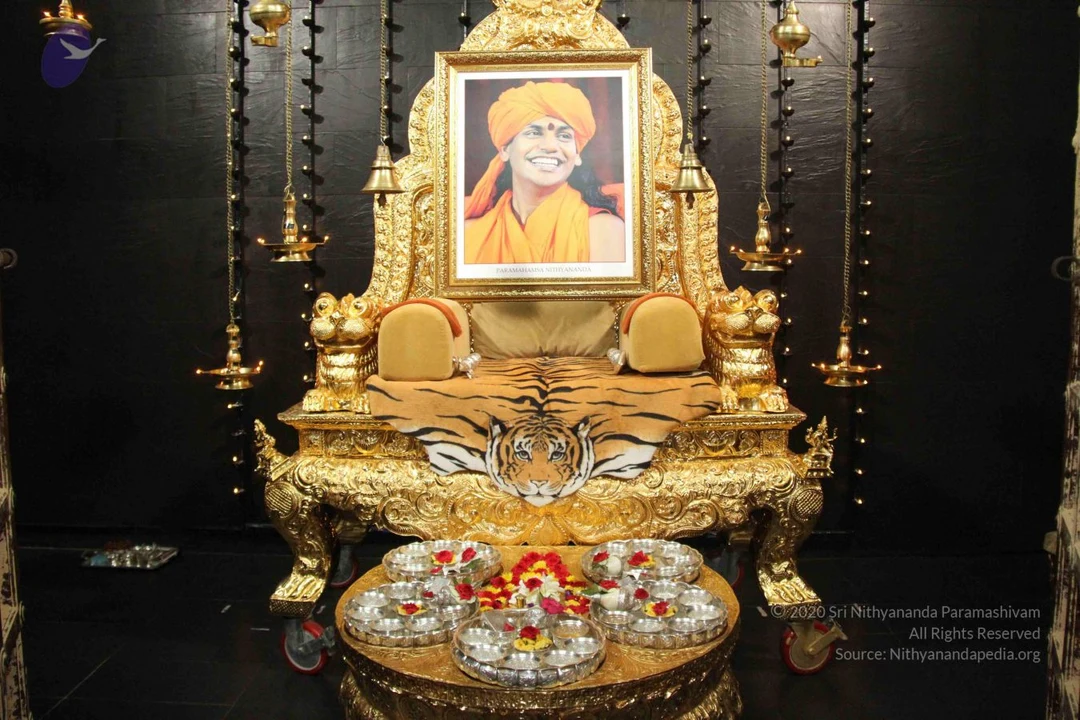
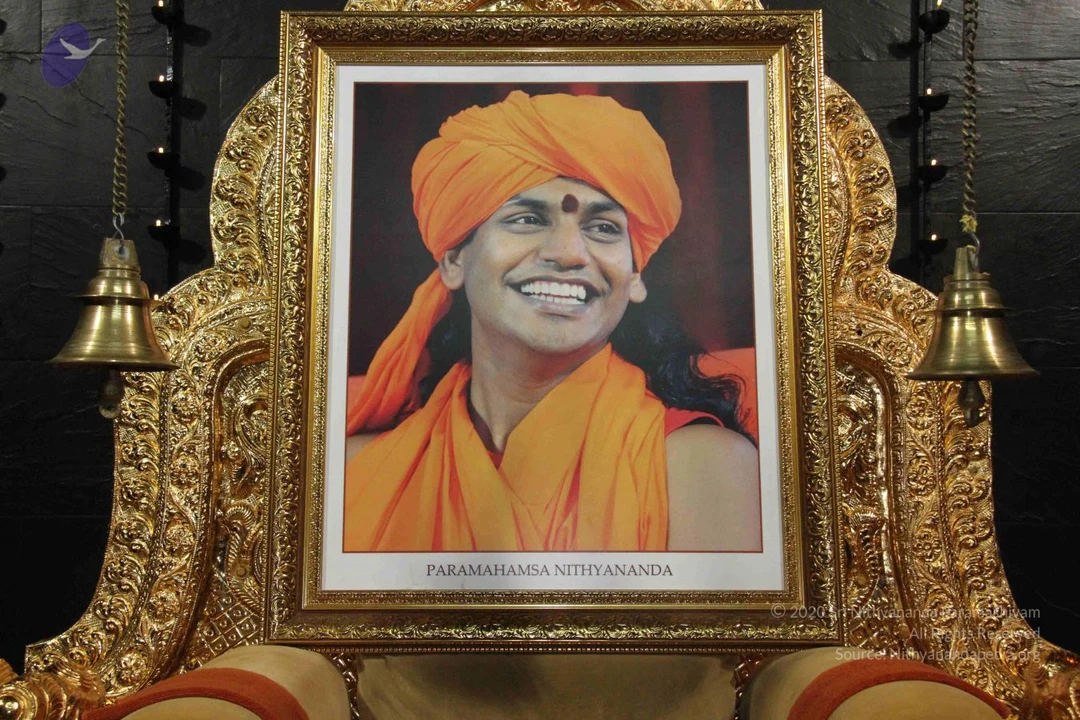
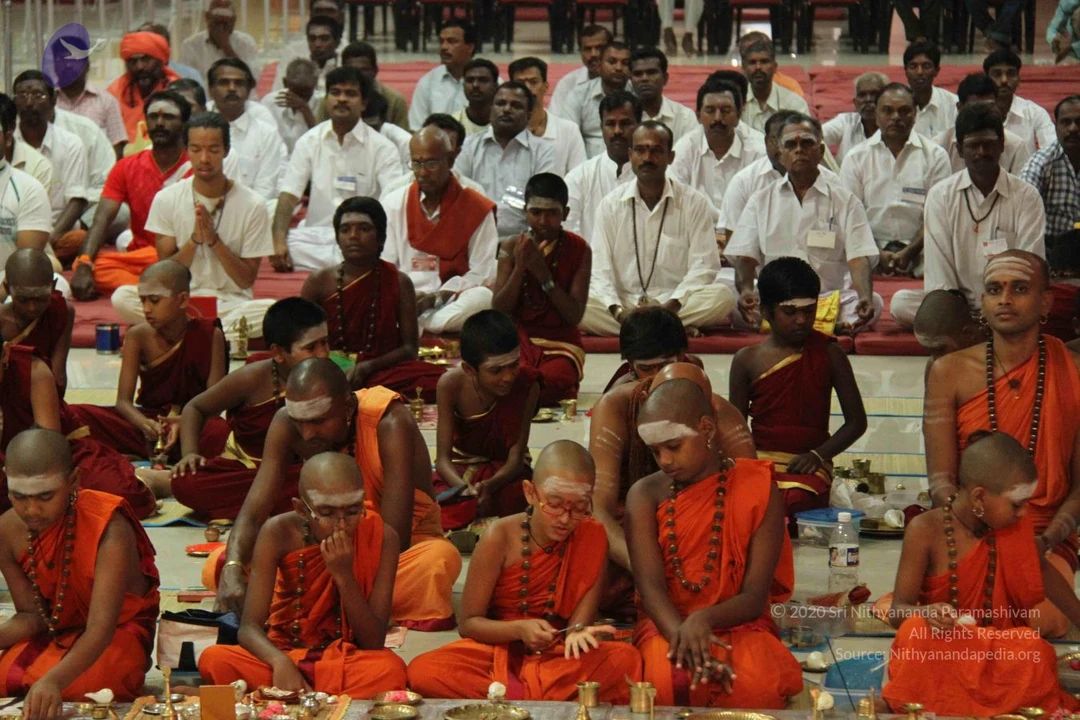
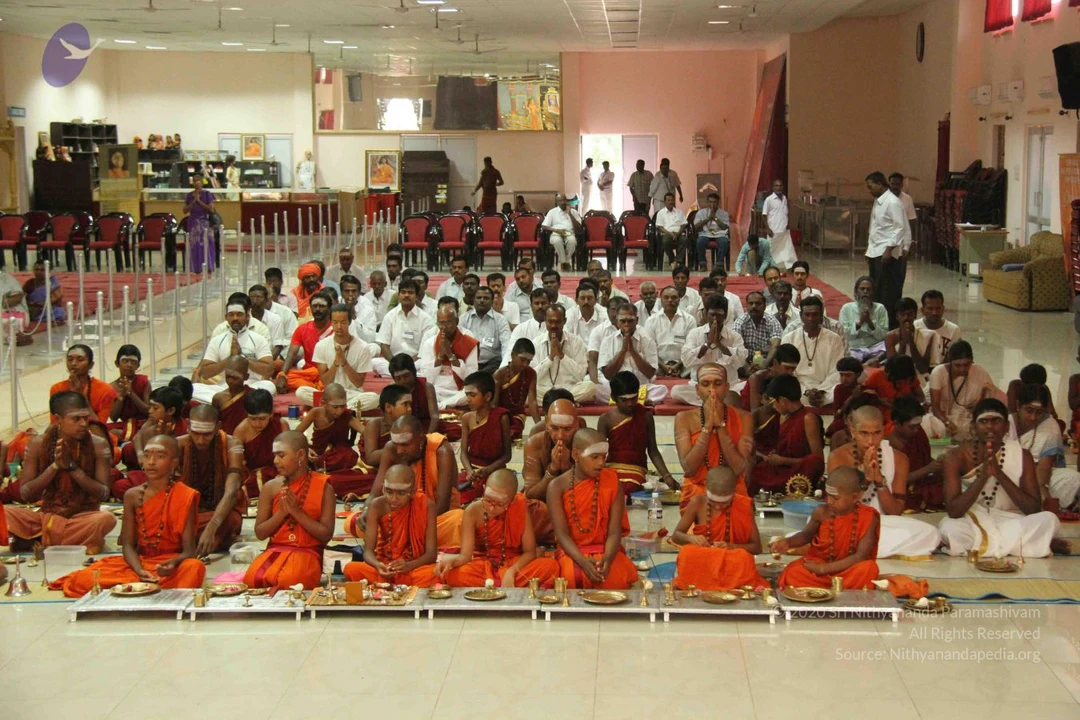
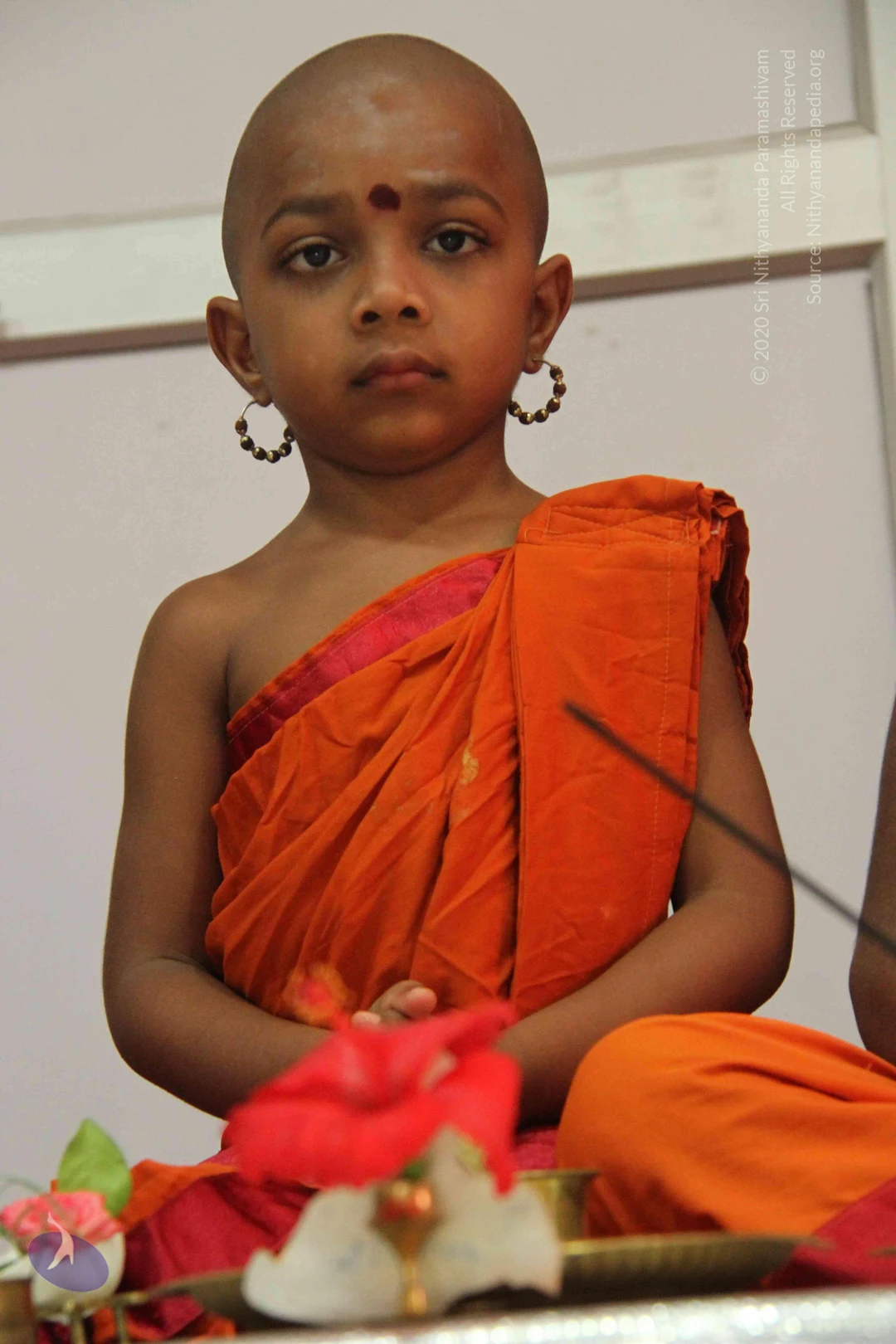
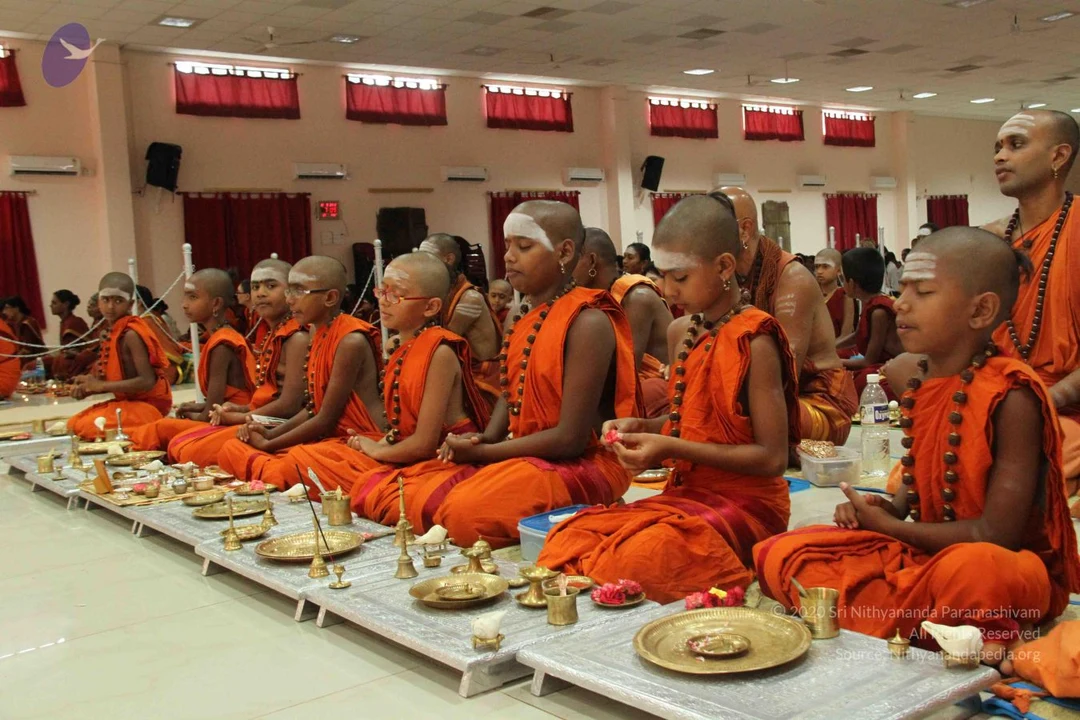
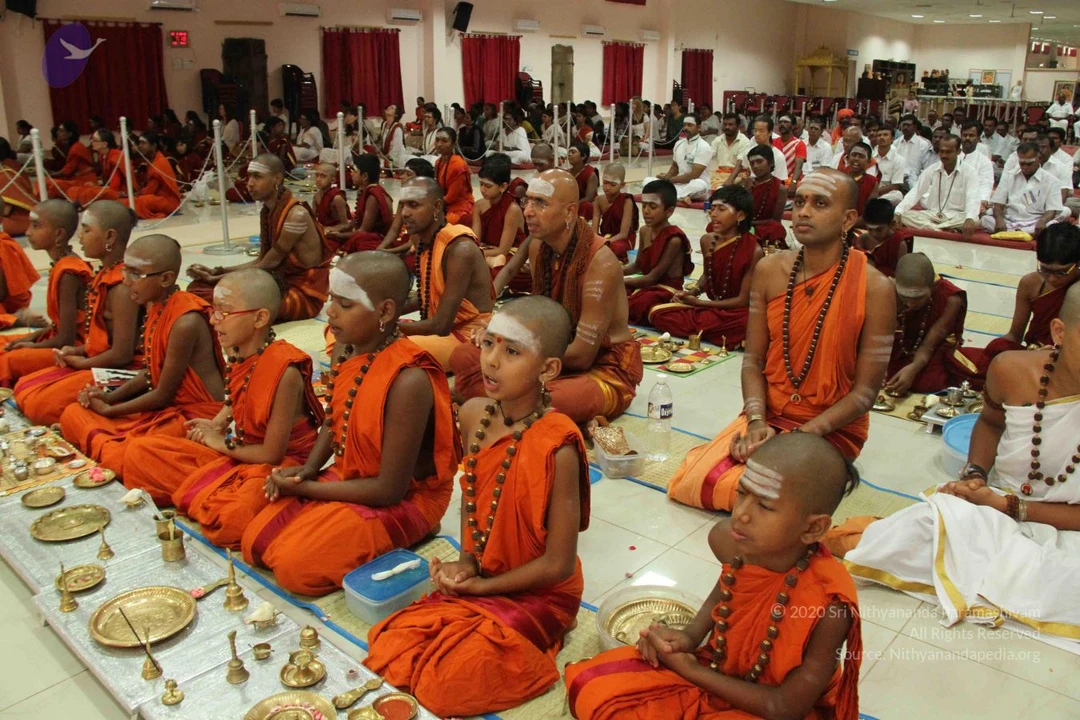
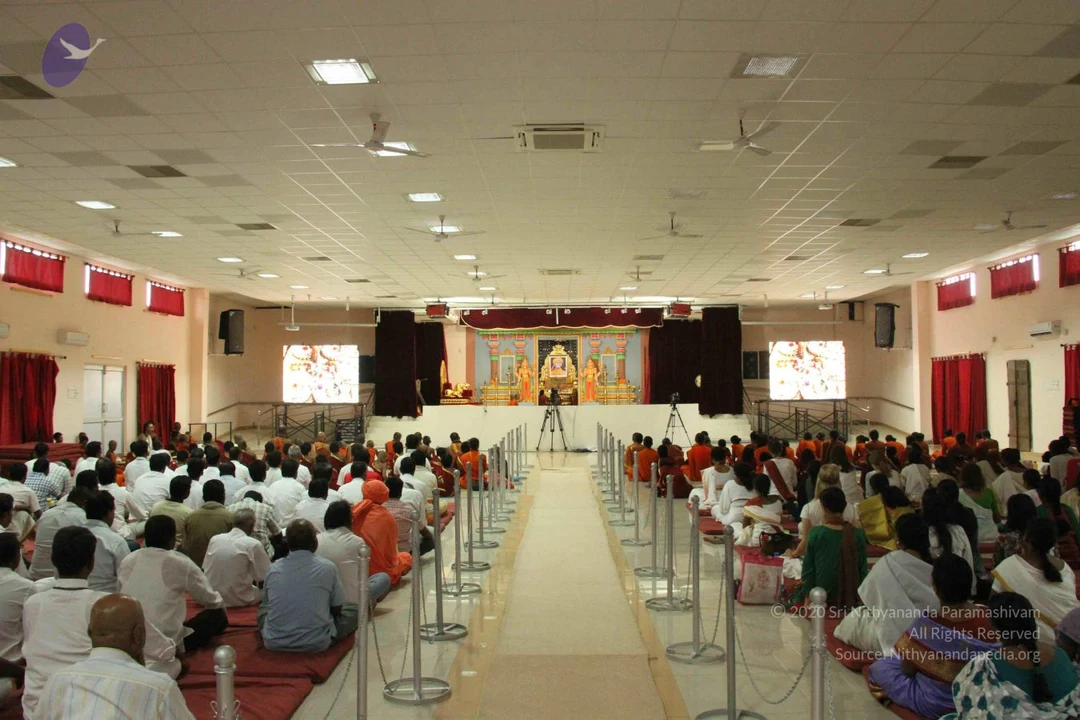
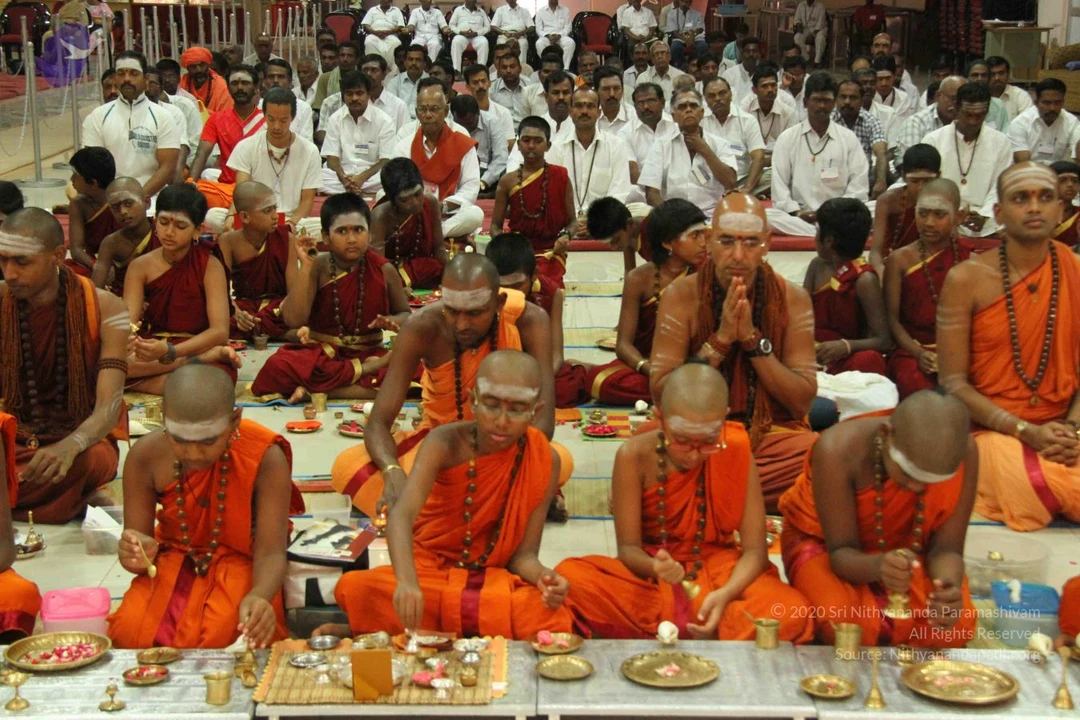
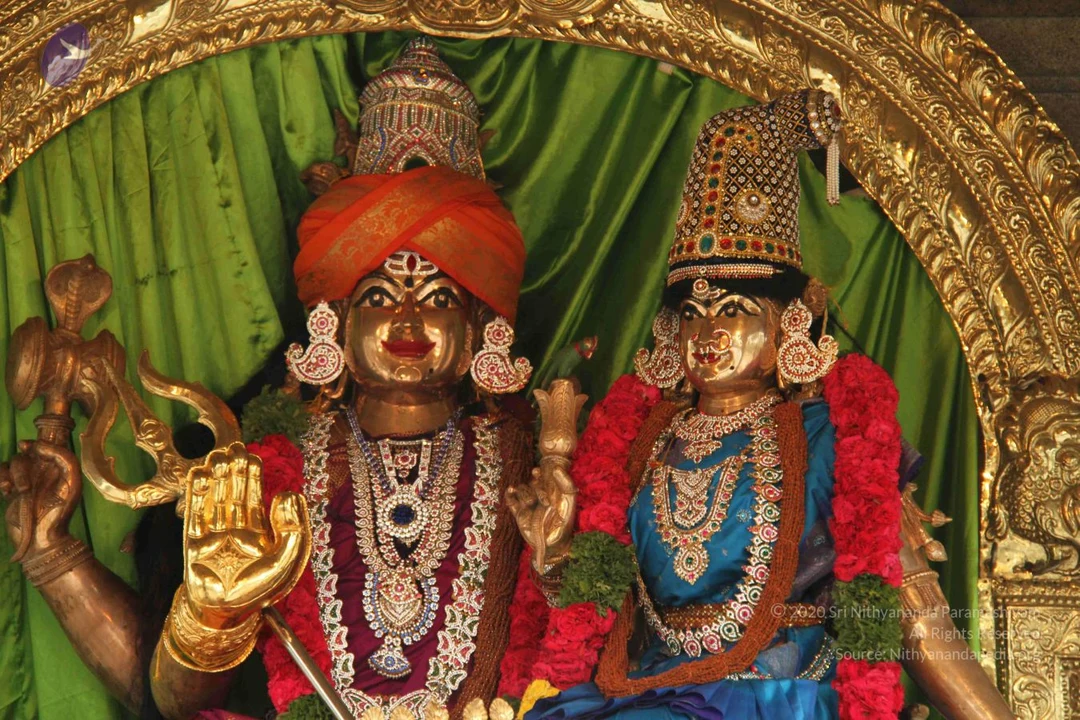
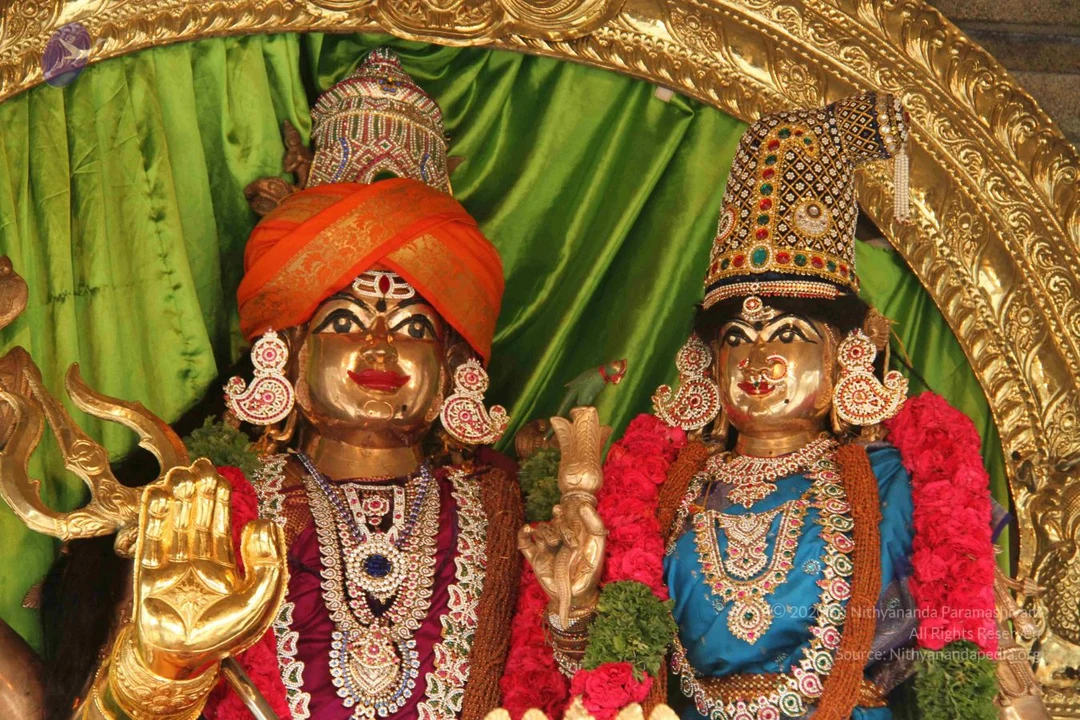
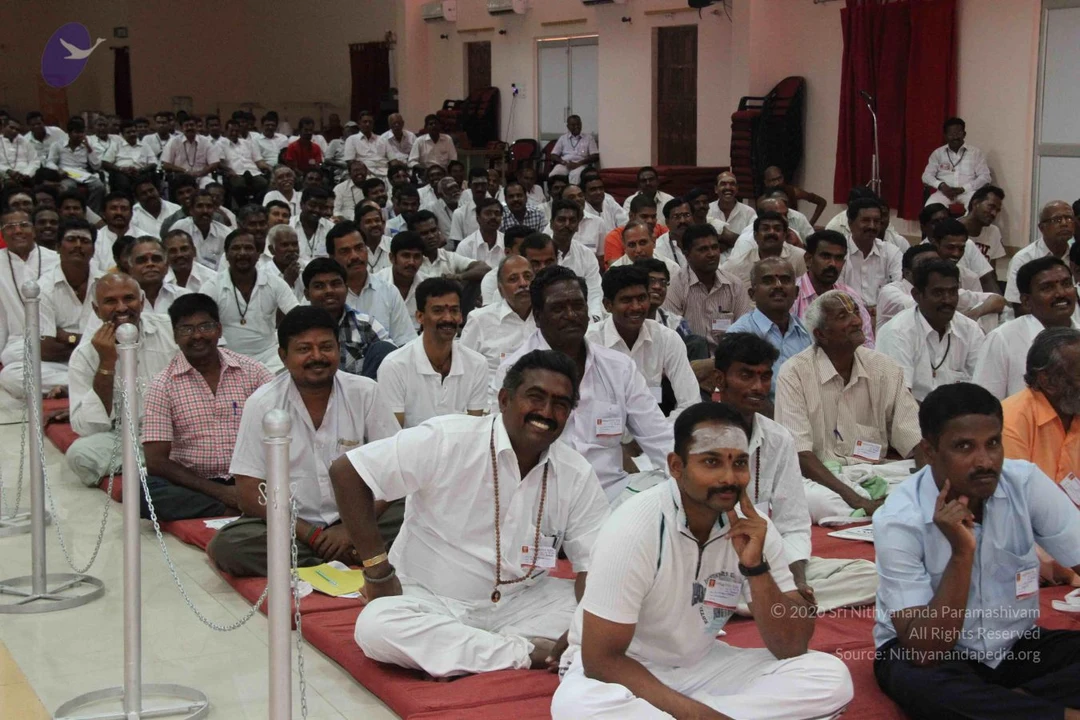
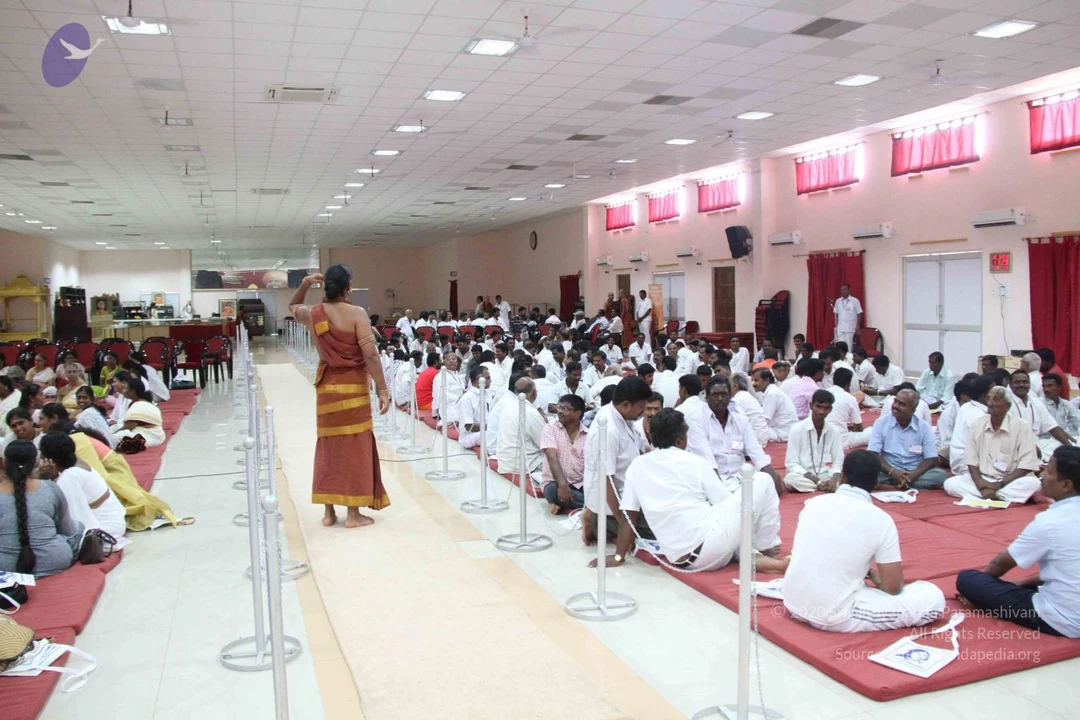
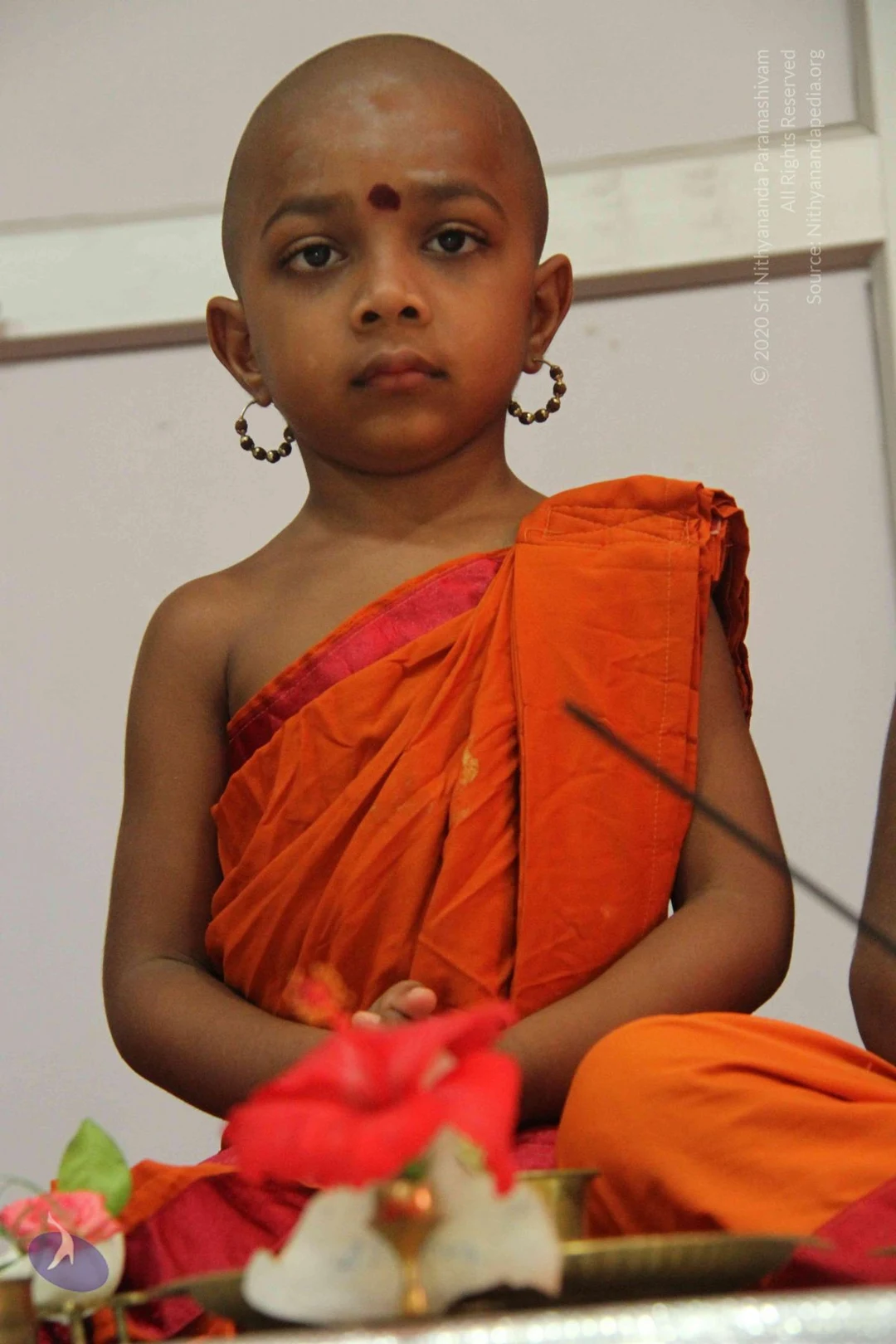
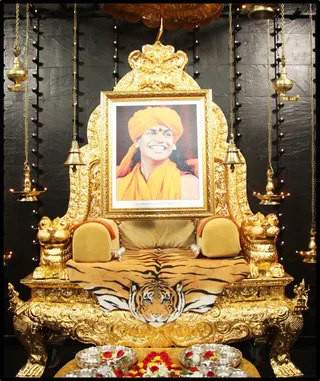
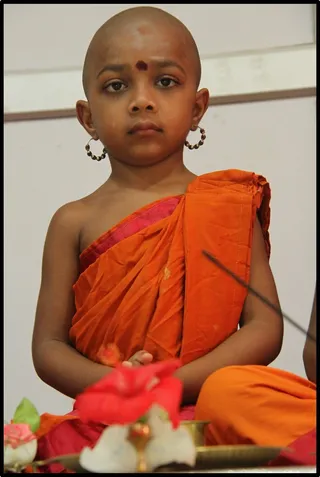
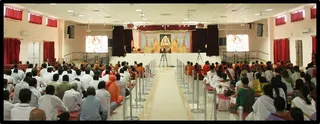
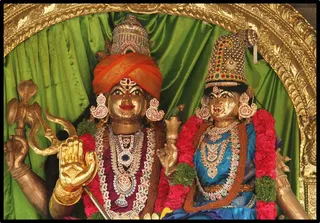
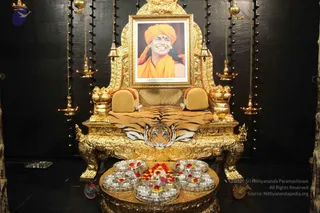
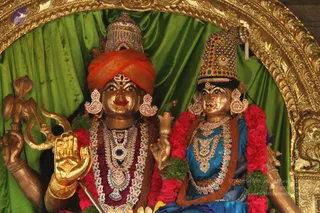
A photograph of an empty ornate golden throne (peetha) set against a dark textured wall, with a framed portrait placed on its back. The portrait shows a smiling man with an orange-saffron turban, orange garment and a red bindi, labelled with a printed caption reading "PARAMAHAMSA NITHYANANDA" along the frame's lower edge. The golden throne has carved lion heads at its arms and a tiger-skin seat covering. Brass hanging lamps (oil lamps) and bells hang from chains above, and a tray of flower garlands in red, yellow and white sits in front of the throne with small brass lamps. No physical people are visible.A young shaven-headed child sits cross-legged in an orange saffron robe draped over one shoulder with a pink undergarment visible at the neck. The child wears a red bindi on the forehead and gold-toned hoop earrings with dark beads. Hands are folded in the lap. In front, a brass tray holds red and pink flowers, a small brass vessel and white petals, and an incense stick is visible at the right edge. The white wall behind is plain. No readable text is visible.A hall with red curtains and wall air conditioners shows a row of shaved-headed young monks in saffron-orange robes sitting cross-legged on low platforms. Each wears a rudraksha mala and white tripundra markings on the forehead. Before them are brass plates, small brass lamps, bowls and a lit oil lamp, consistent with a puja or ritual offering. Several seated figures, including one in the foreground holding an object, are visible, with additional monks and attendees further back. No individual can be confidently identified as a person from appearance, so no candidate is named.A photograph of a large hall where rows of young boys and adult men in saffron-orange robes sit cross-legged on mats in ritual worship. Most have shaved heads, white tripundra markings on their foreheads, and wear rudraksha malas around their necks. Brass plates, bowls, bells and small vessels are arranged on white cloths in the foreground. Several seated men in the background wear white dhotis and red-bordered clothes, and more devotees sit further back among pillars and red banners. No clear individual can be confidently identified as a person from appearance, so the central figures are described by role as participants in the ritual.A wide photograph of a discourse hall with a large seated audience facing a raised stage. Many audience members wear white kurtas and dhotis, while others in saffron-orange robes sit in the front rows, and several women in colourful saris sit at the right. The stage is decorated in red and gold, with a central golden throne-like seat and figures in orange robes standing beside it. Red curtains hang along the walls, and two large screens display the stage. Metal crowd barriers with posts line the central aisle, and a camera on a tripod stands near the front.Two golden deity murti stand side by side before a green silk backdrop framed by an ornate gold arch. The figure on the left wears an orange turban, a gold crown-like headdress, a maroon garment, layered jeweled necklaces and a rudraksha-like blue pendant, and holds a trident in the raised hand. The figure on the right wears a jeweled crown, a blue silk garment, layered gold necklaces and earrings, and holds a small ritual object. Both are garlanded with red flowers and green leaves. No physical people are visible.

Paduka-Puja-Crowd
36 photosSource gallery
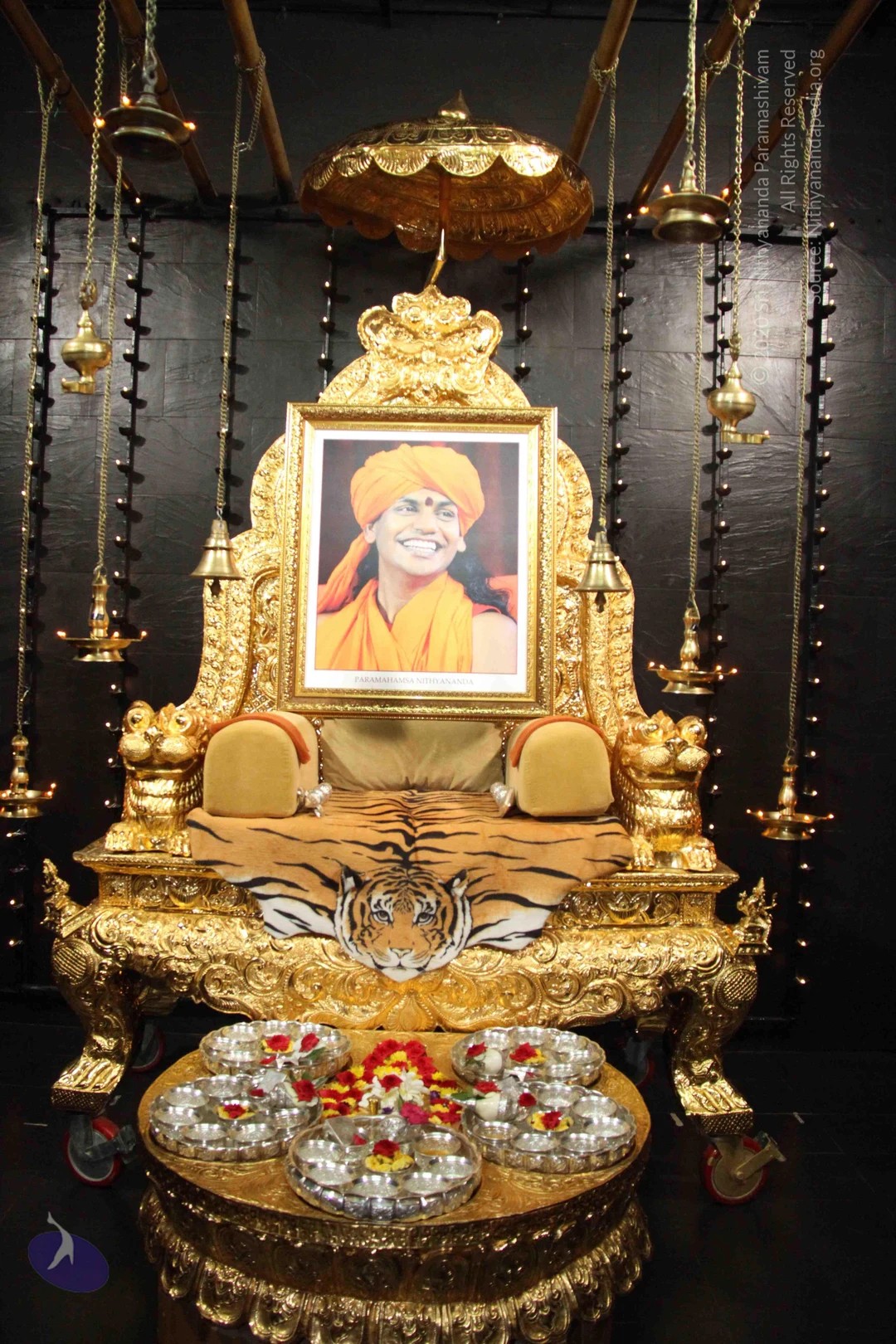
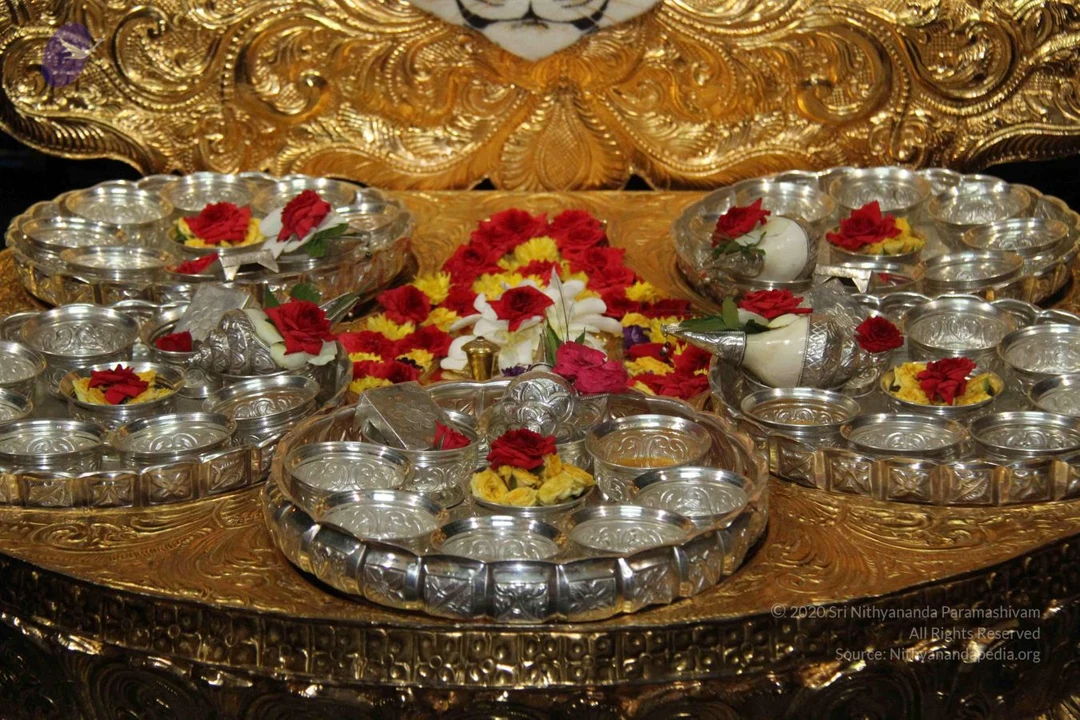
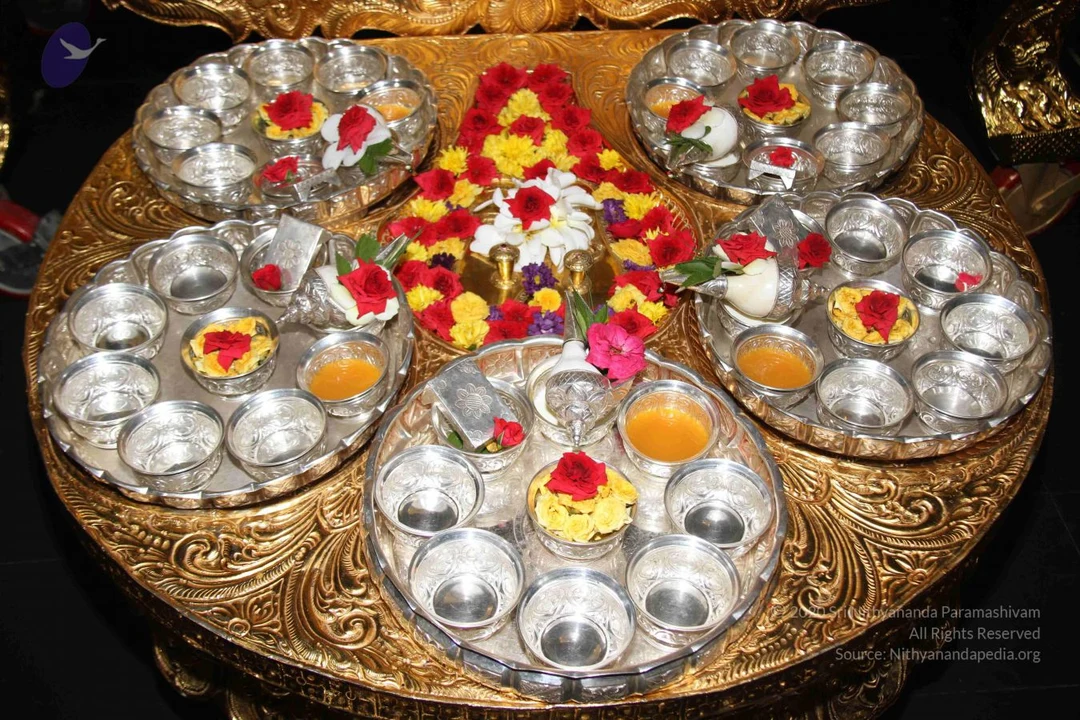
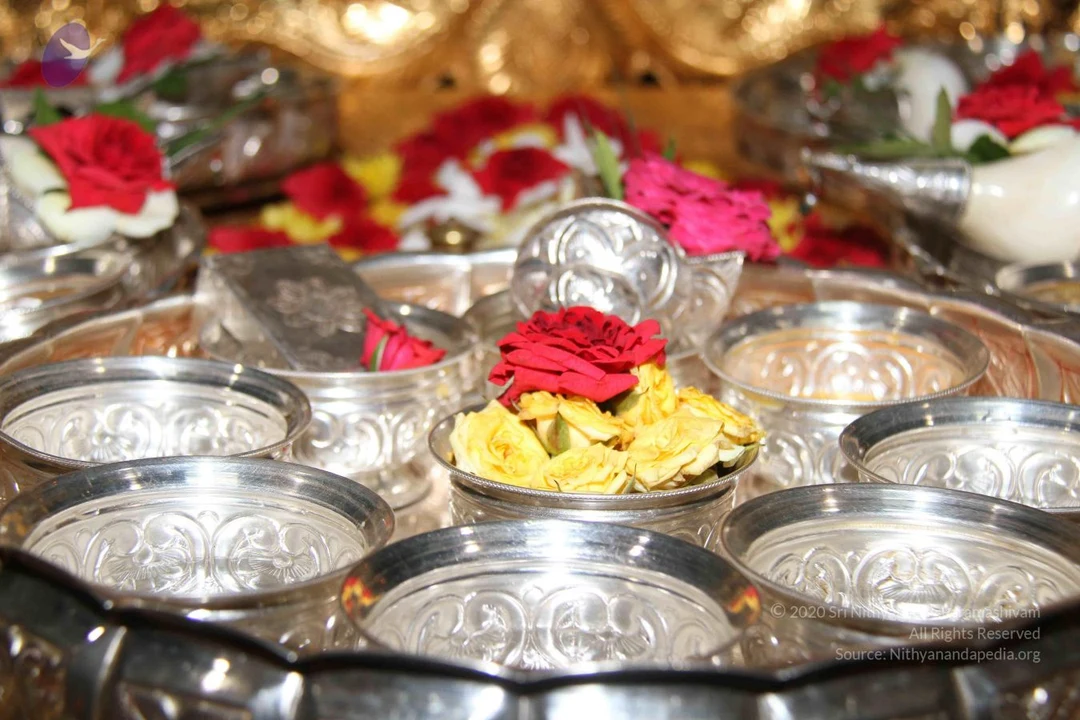
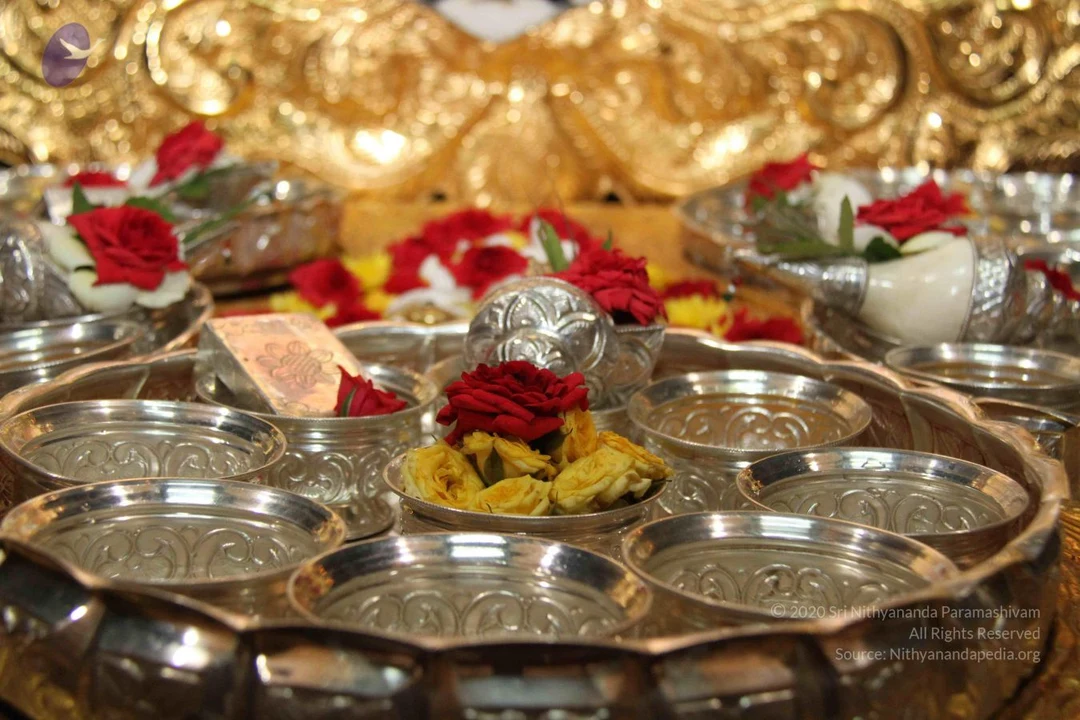
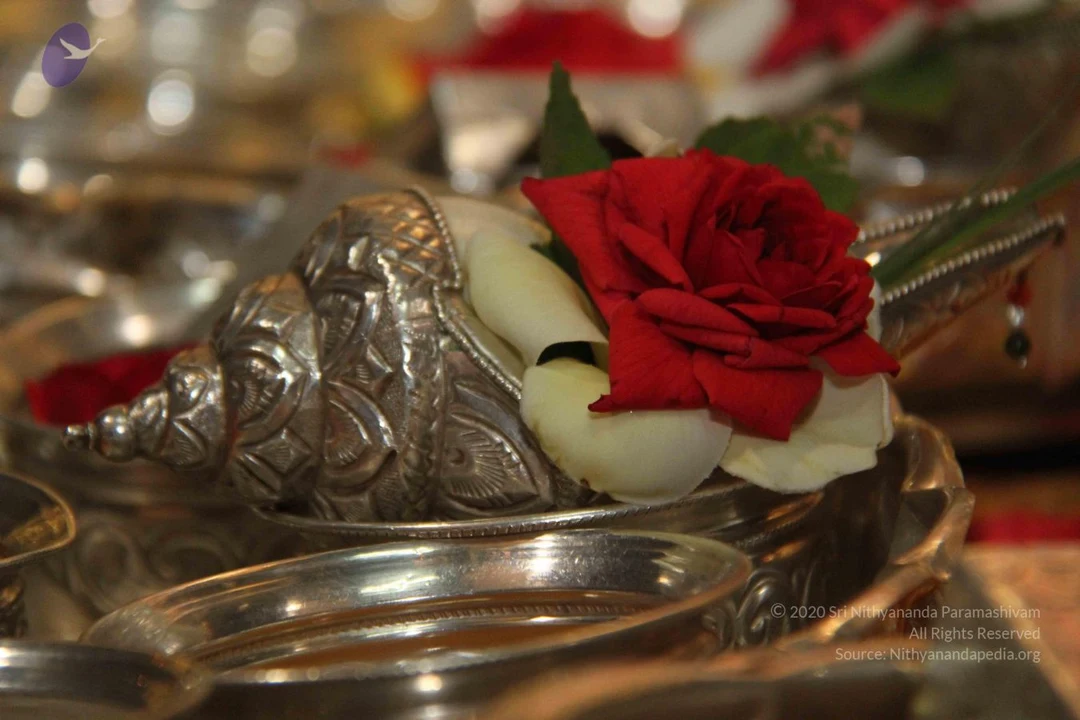
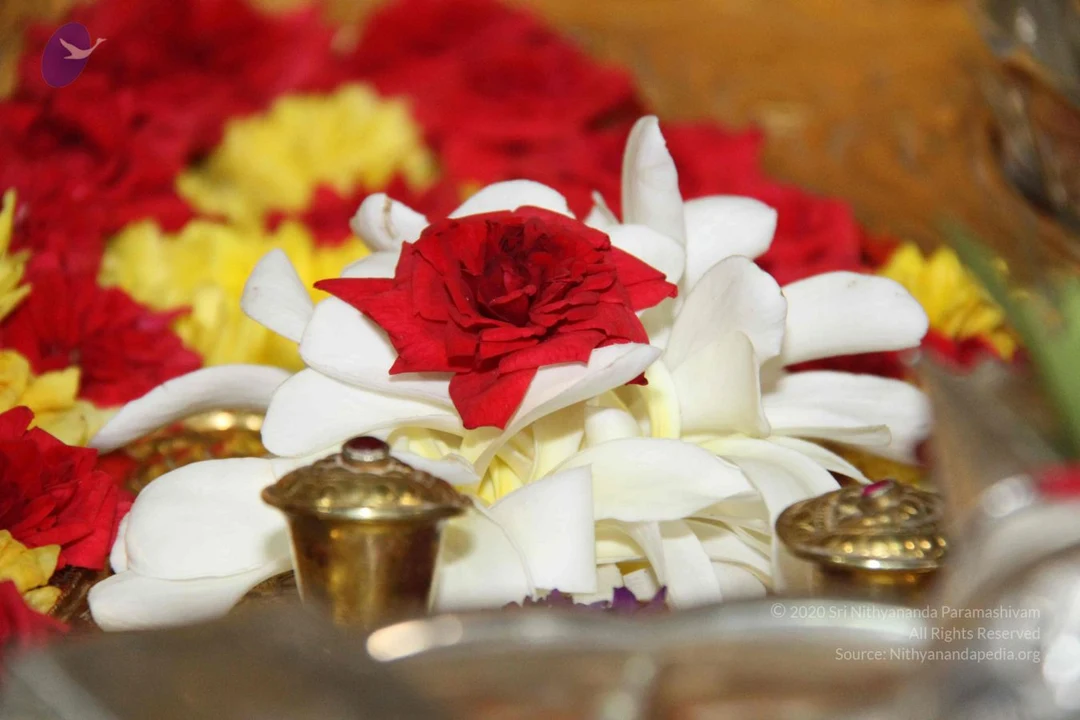
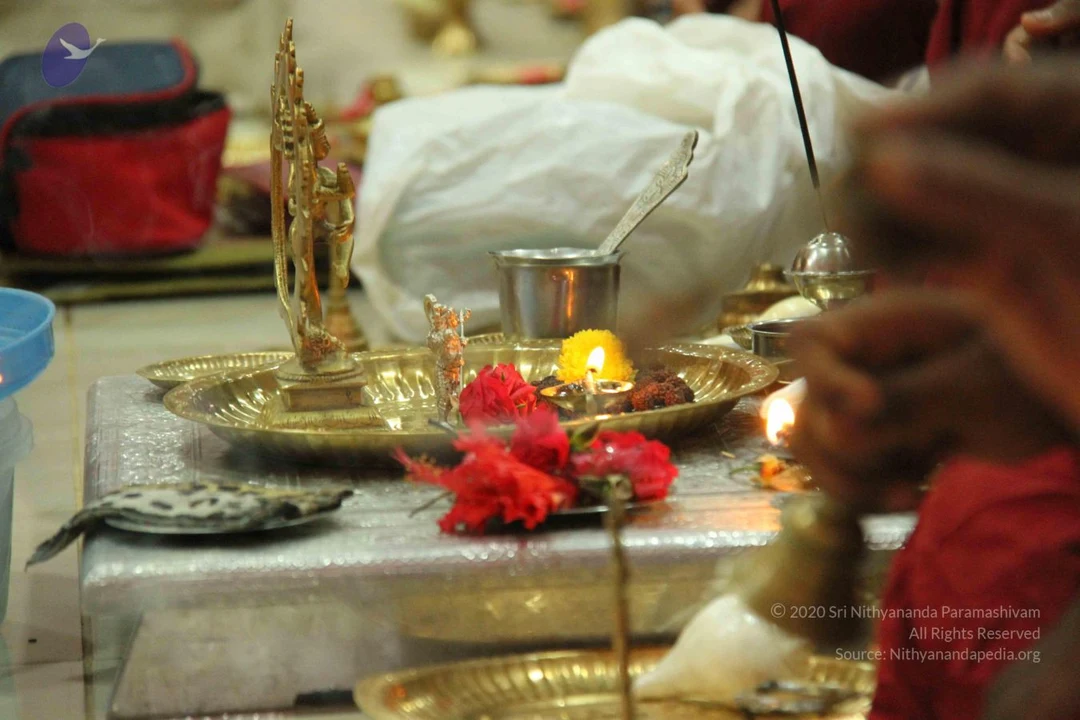
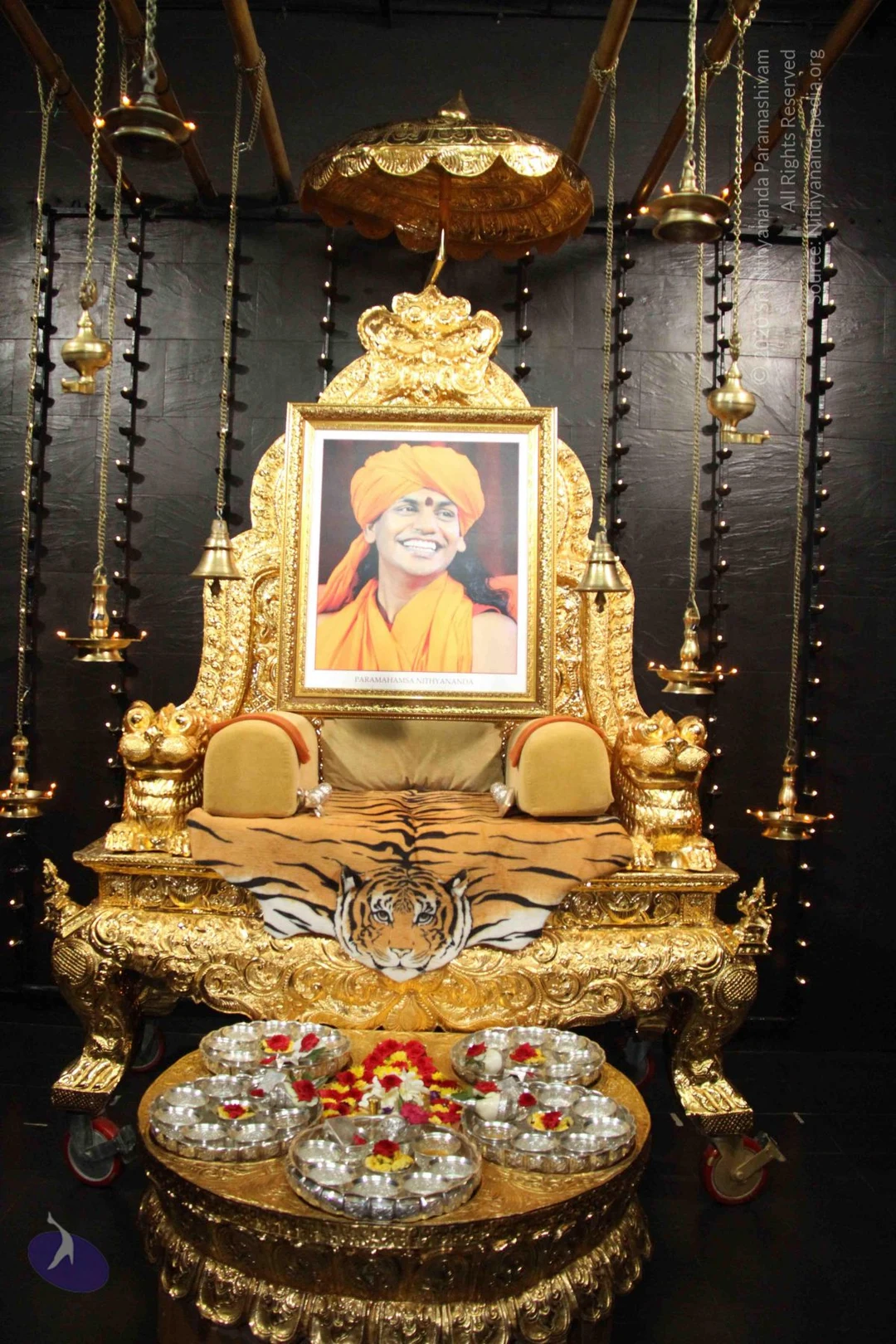
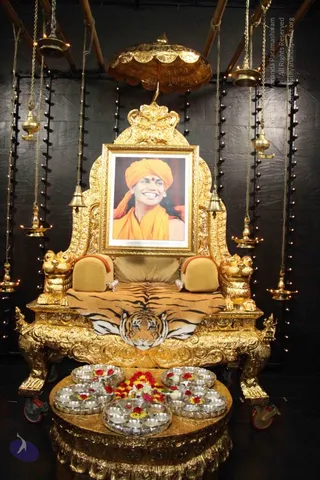
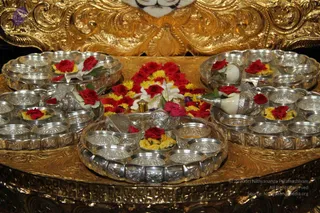
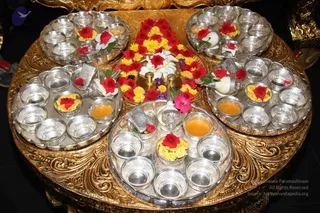
A golden ornate throne stands against a black backdrop with a tiger-skin cloth draped over its seat and two golden lion heads on the armrests. Above the seat hangs a framed painted portrait of a smiling man with a saffron-orange turban and orange shawl, labelled "PARAMAHAMSA NITHYANANDA" on the frame's caption. Hanging brass oil lamps, bells and chains decorate the sides. In front on a golden table sit silver plates of offerings with red flowers, marigolds and a small flower garland. No physical people are visible in the scene.Ornate gold throne (peetha) set against a black wall, draped with a tiger-skin cover and flanked by golden lion figures. Above the seat hangs a gold umbrella, and on the throne is a framed portrait labelled "PARAMAHAMSA NITHYANANDA" showing a smiling man in an orange turban and orange robe with a red tilak. Hanging brass oil lamps and bells surround the throne. In front, on a gold table, are silver plates with flowers, a red and yellow flower garland and offering trays. No physical people are visible; the figure appears only as a printed portrait, so this is a depiction.A photo of an offering arrangement on an ornate gold-toned altar or throne in front of a heavily embossed gold backdrop. Silver bowls and plates are arranged in tiered rings holding red roses, yellow marigold petals and white flowers. A central heap of red and yellow flowers and a white floral garland sit among the bowls, with silver pots and a silver vessel with a leaf sprig on the right. No people are visible, so the scene shows ritual flower offerings laid out before the seat.A photograph of an ornate gold-toned tray arrangement set out as a ritual offering. Several silver-coloured bowls and dishes sit on round trays around a central flower arrangement of red roses, yellow marigolds and white blossoms. Small pools of orange liquid, a few cups of yellow petals and a small silver vessel with a flower are visible, with a golden decorative base beneath. No people are visible in the scene.Close-up photograph of a silver ritual conch shell (shankha) with ornate engraved patterns, topped with a large red rose and white petals, with green leaves at right. Blurred red and yellow flowers fill the background. No people are visible and no a person candidate appears in the frame.Close-up photograph of a ritual tray of polished silver bowls with repoussé floral scrollwork, set on a silver plate. The bowls hold water and a central silver cup of yellow and red flowers, with a red rose on top. Red and yellow rose petals and white blossoms are scattered across the tray, with a silver kalasha-style vessel and a small silver container behind. Gold-toned temple decoration blurs in the background. No people are visible.
Temple
28 photosSource gallery
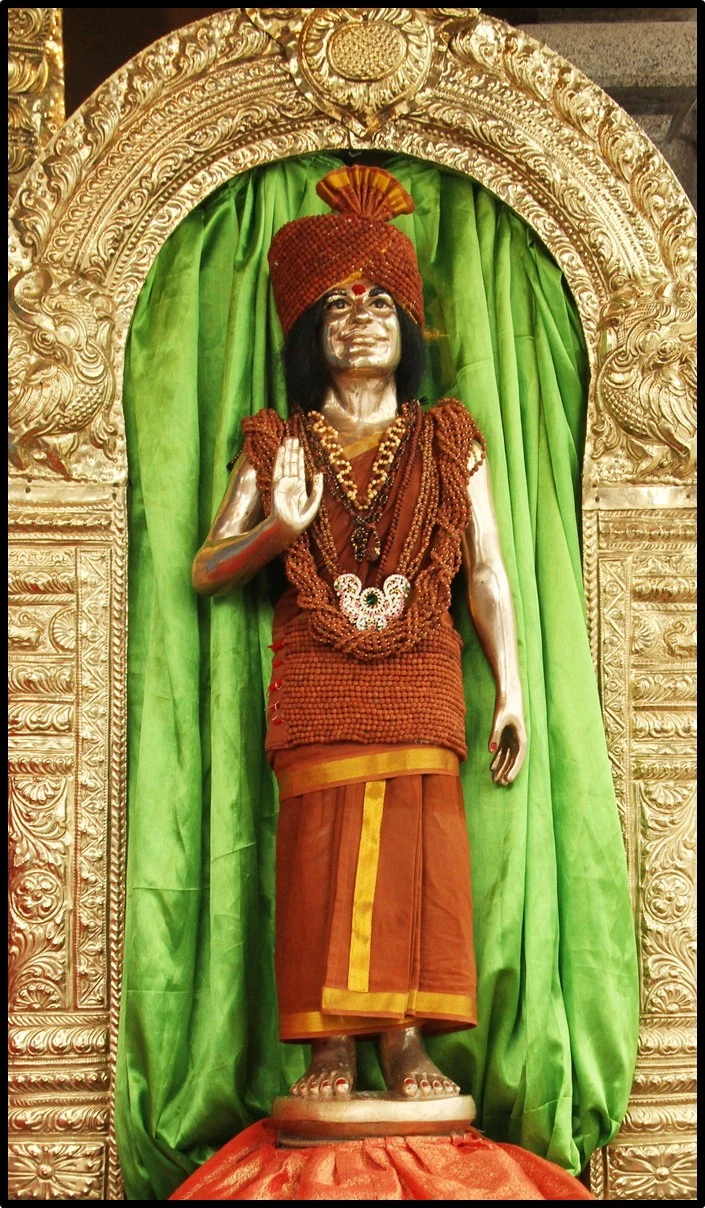
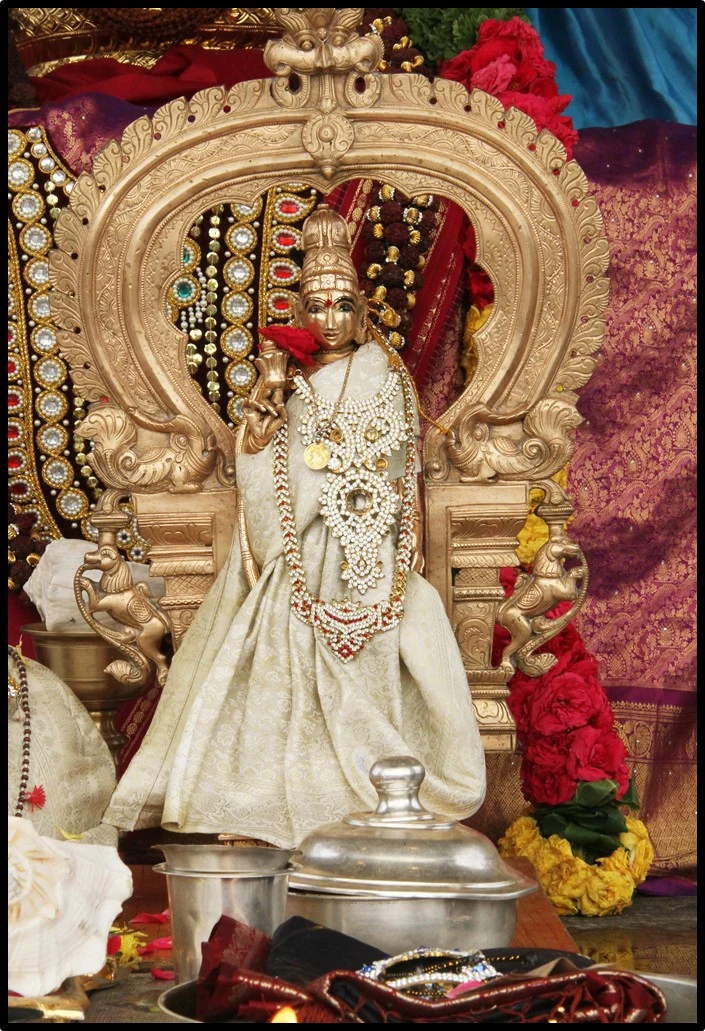
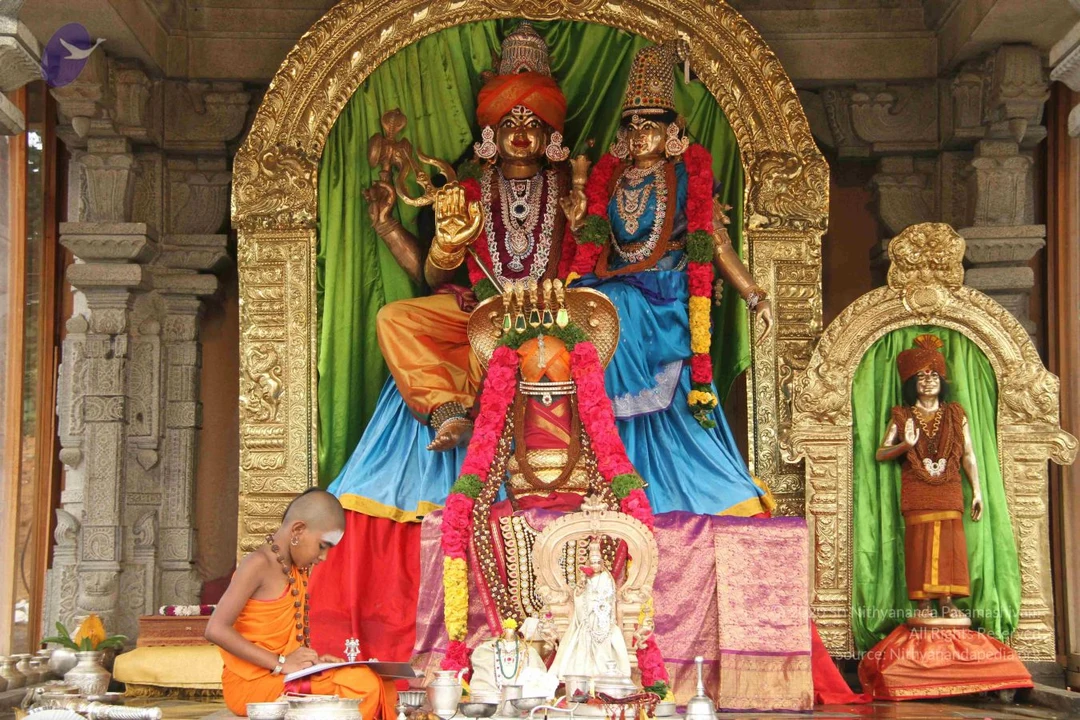
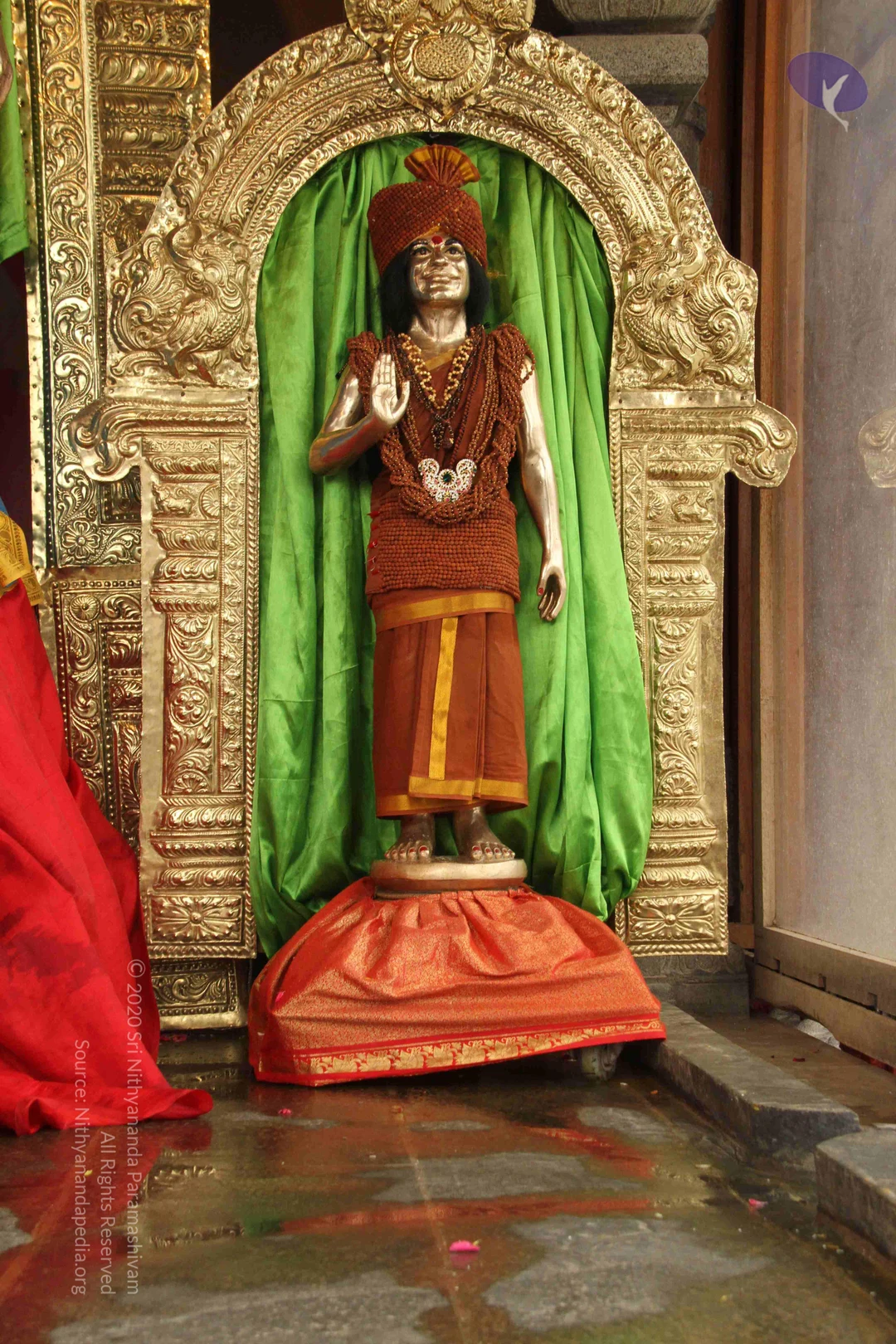
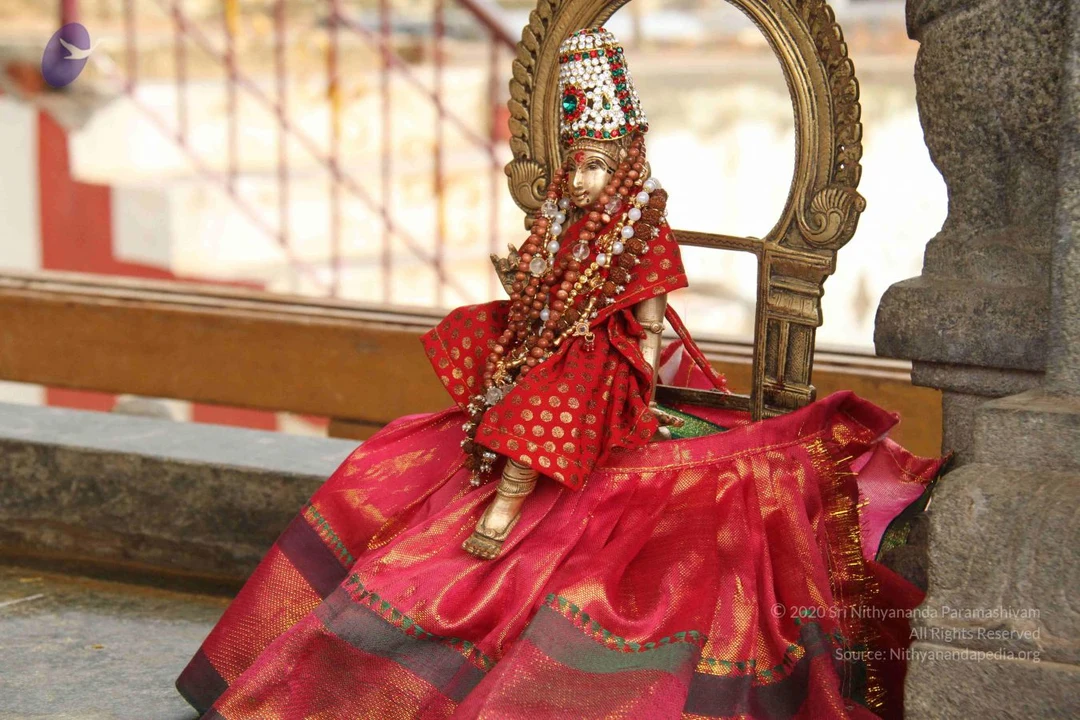
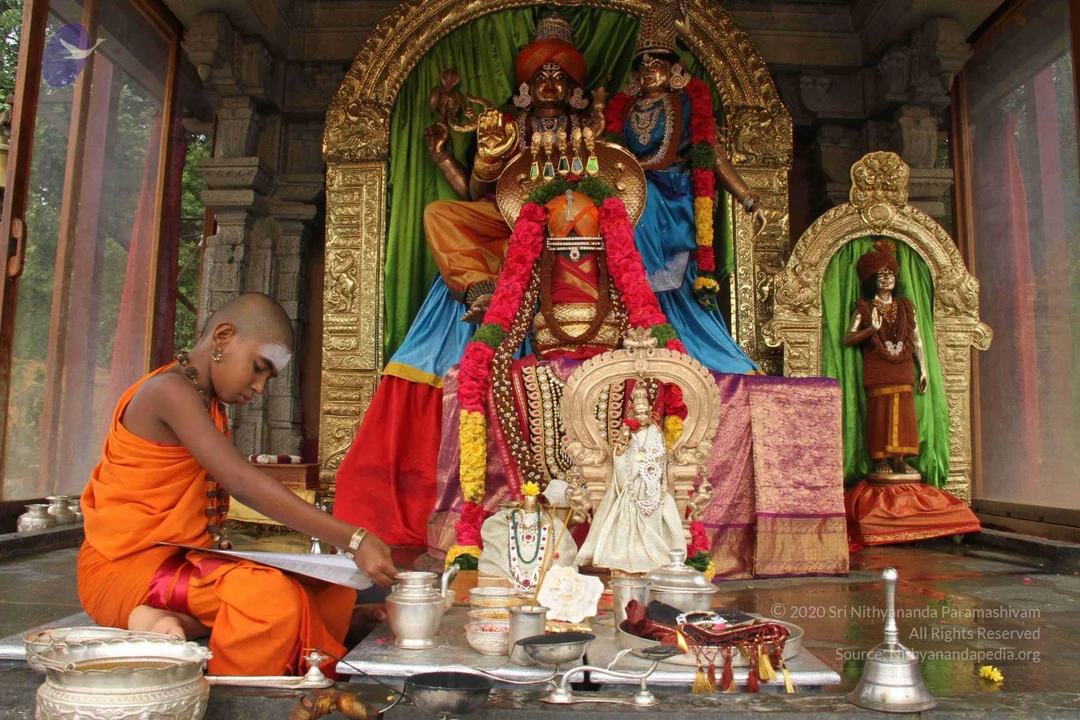
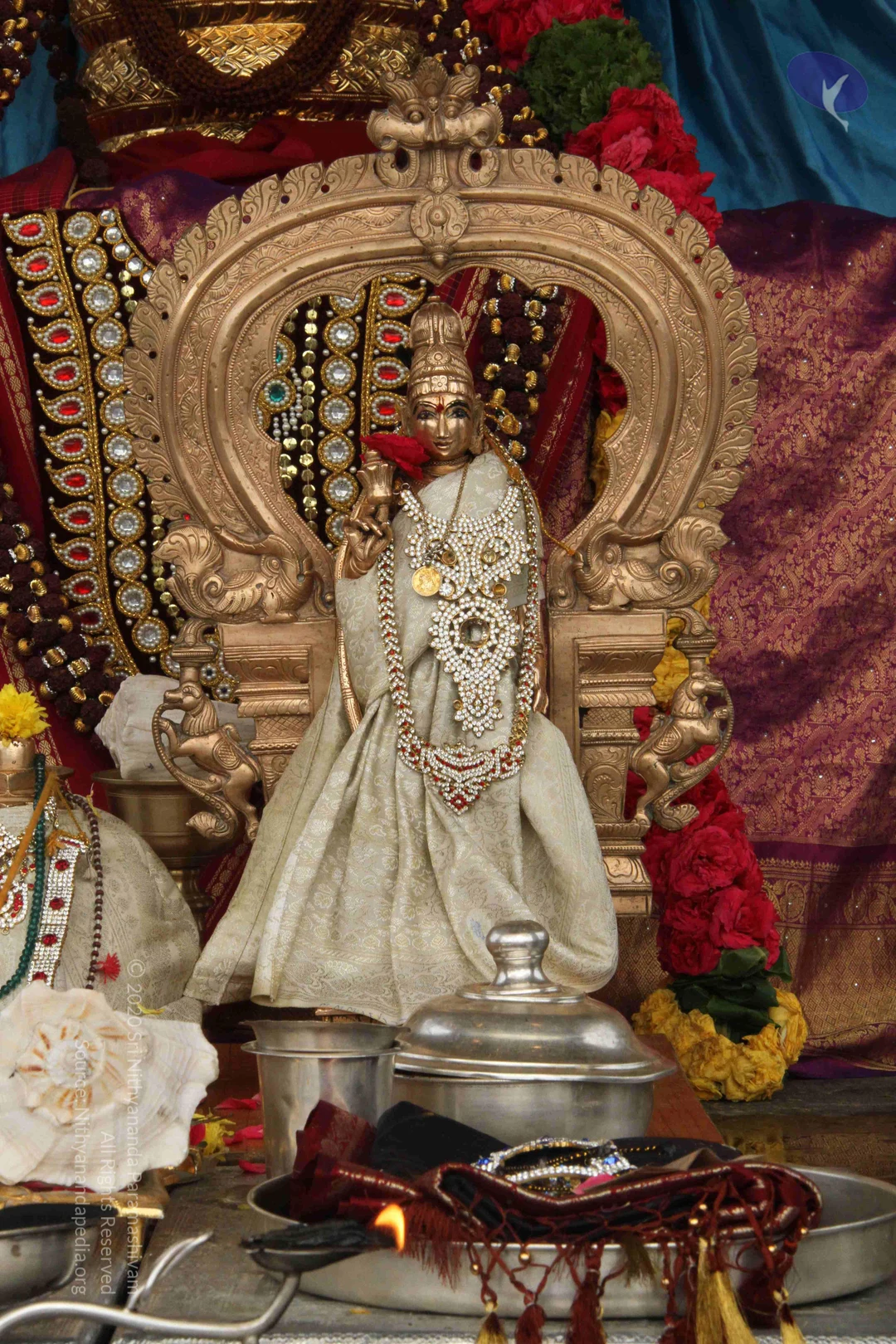
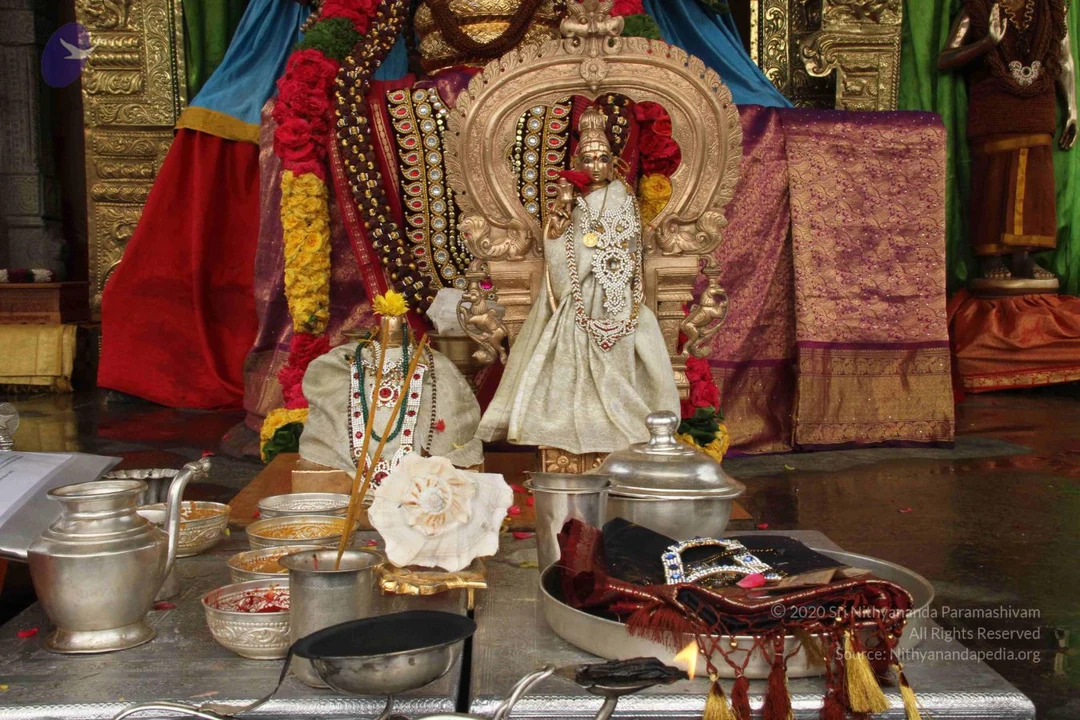
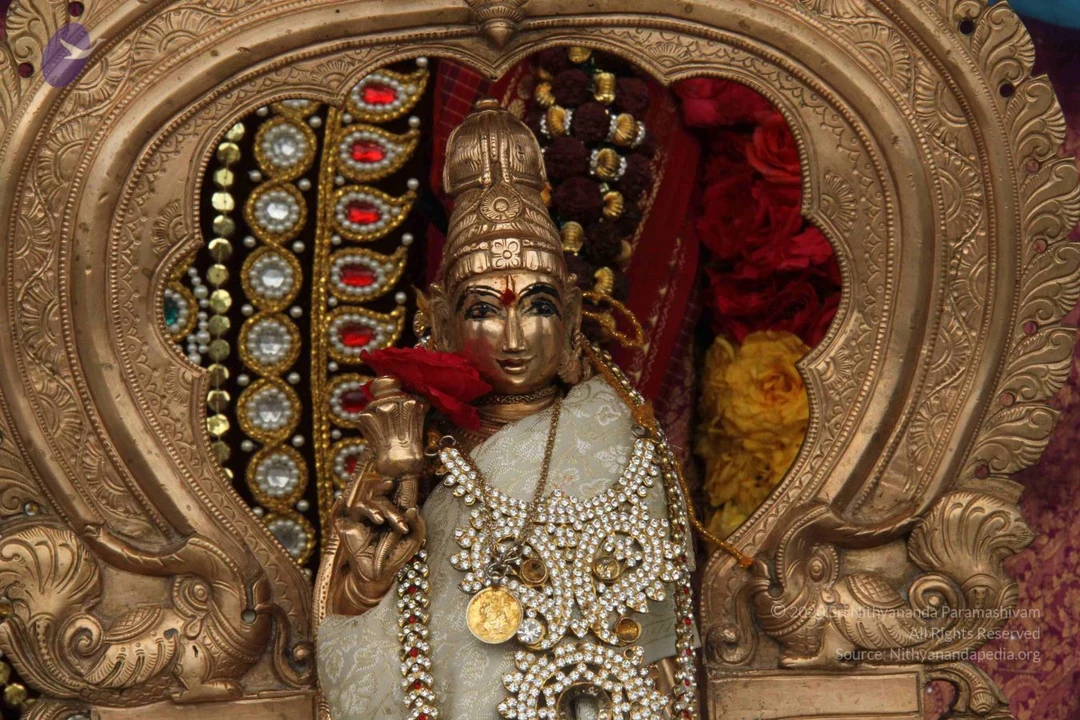
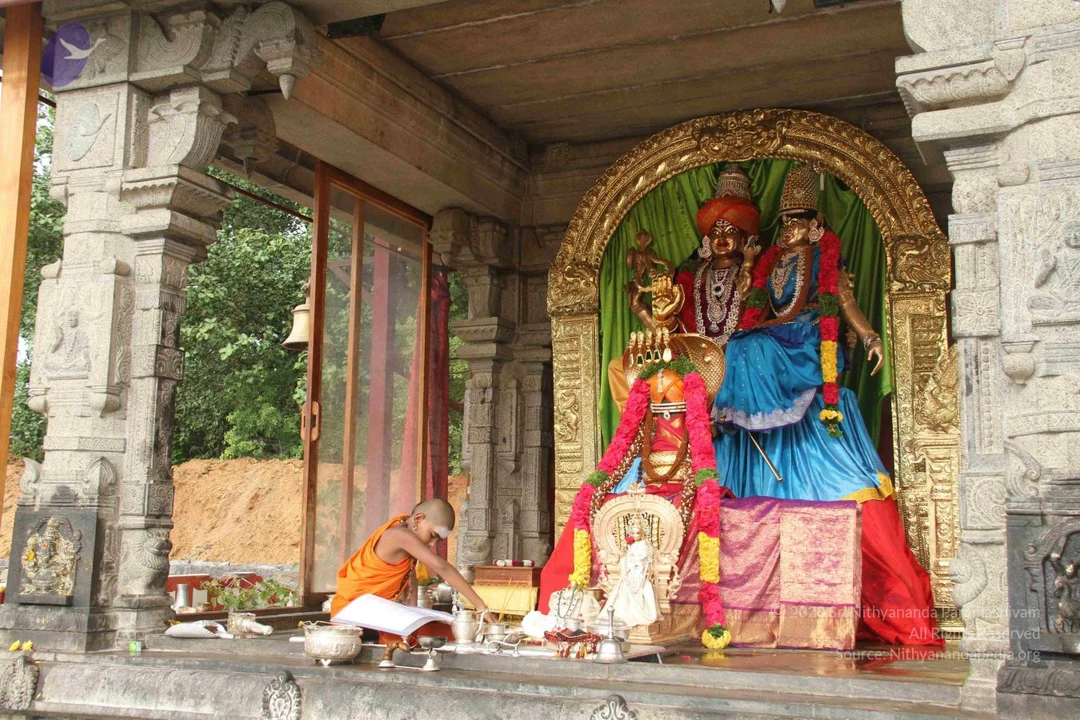
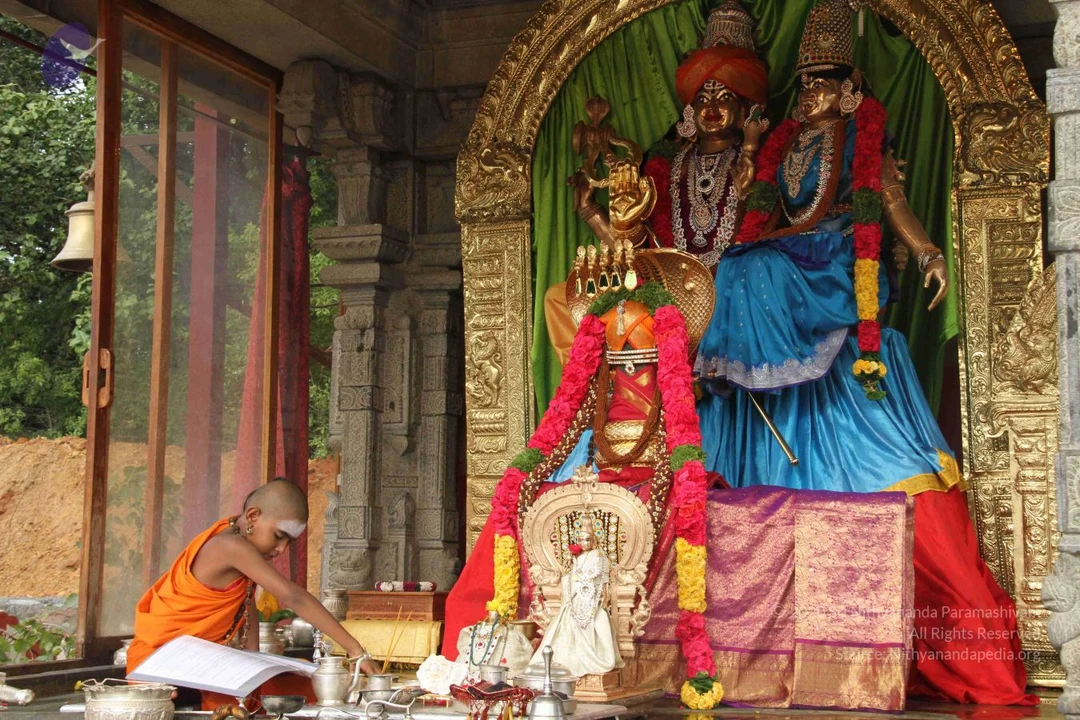
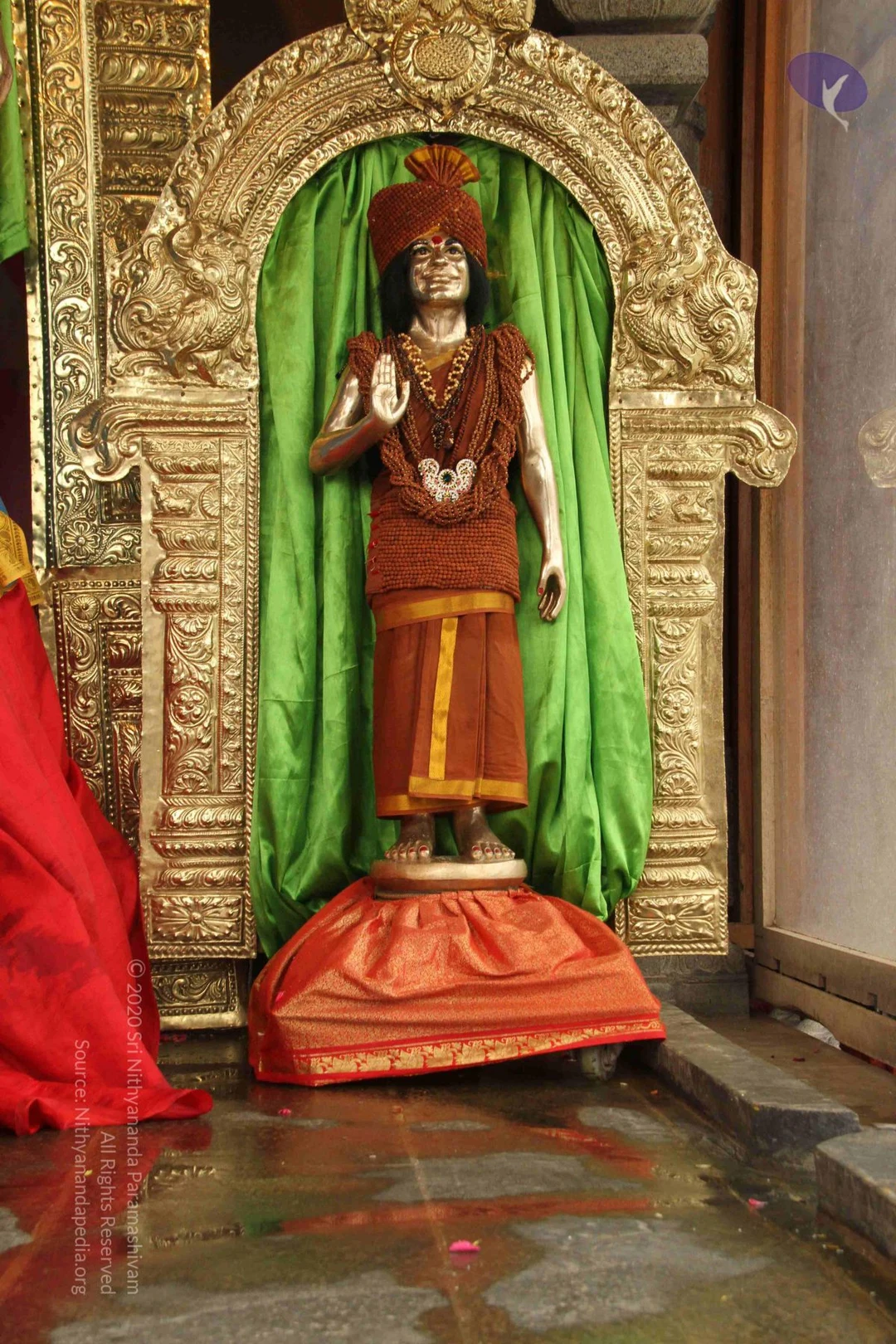
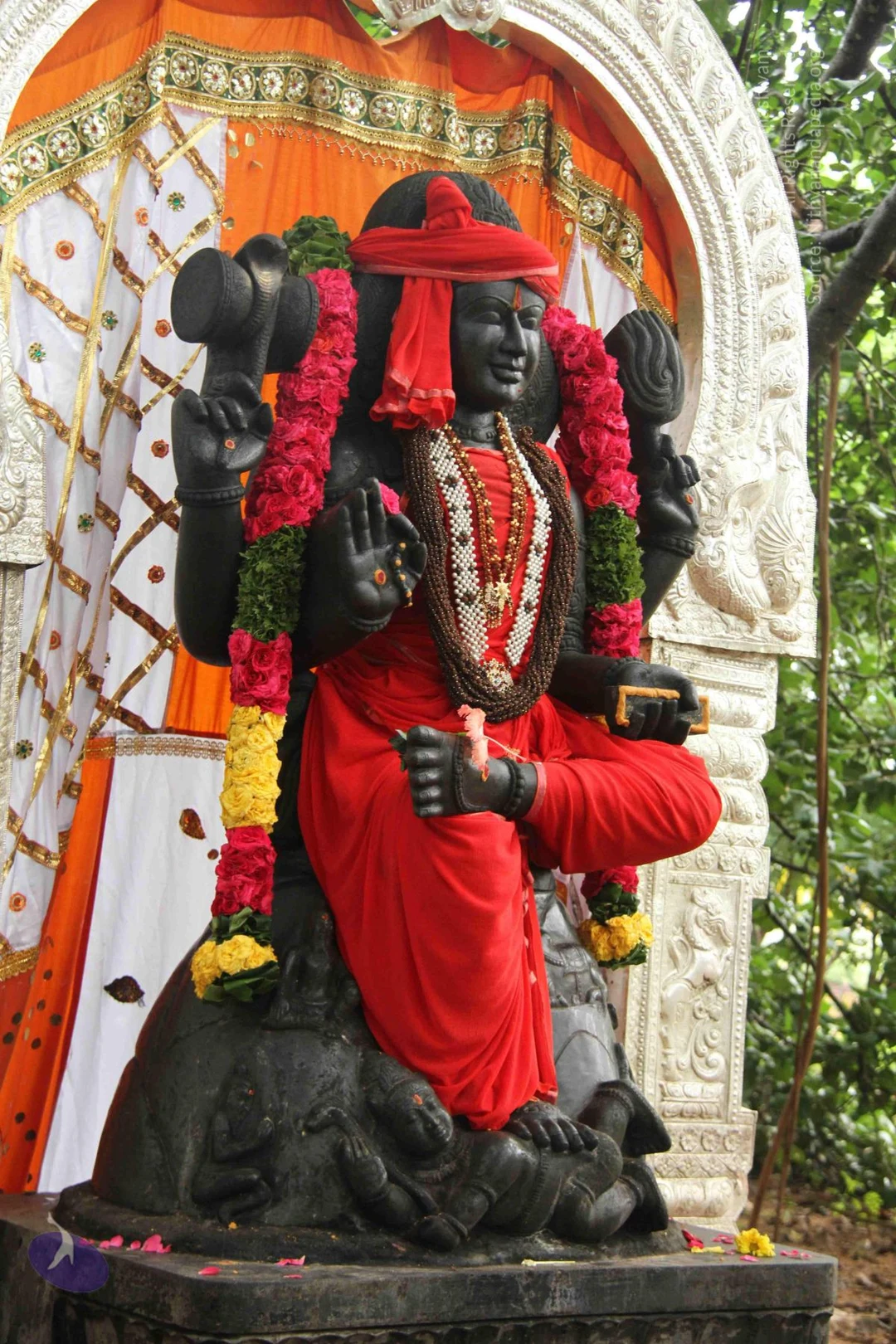
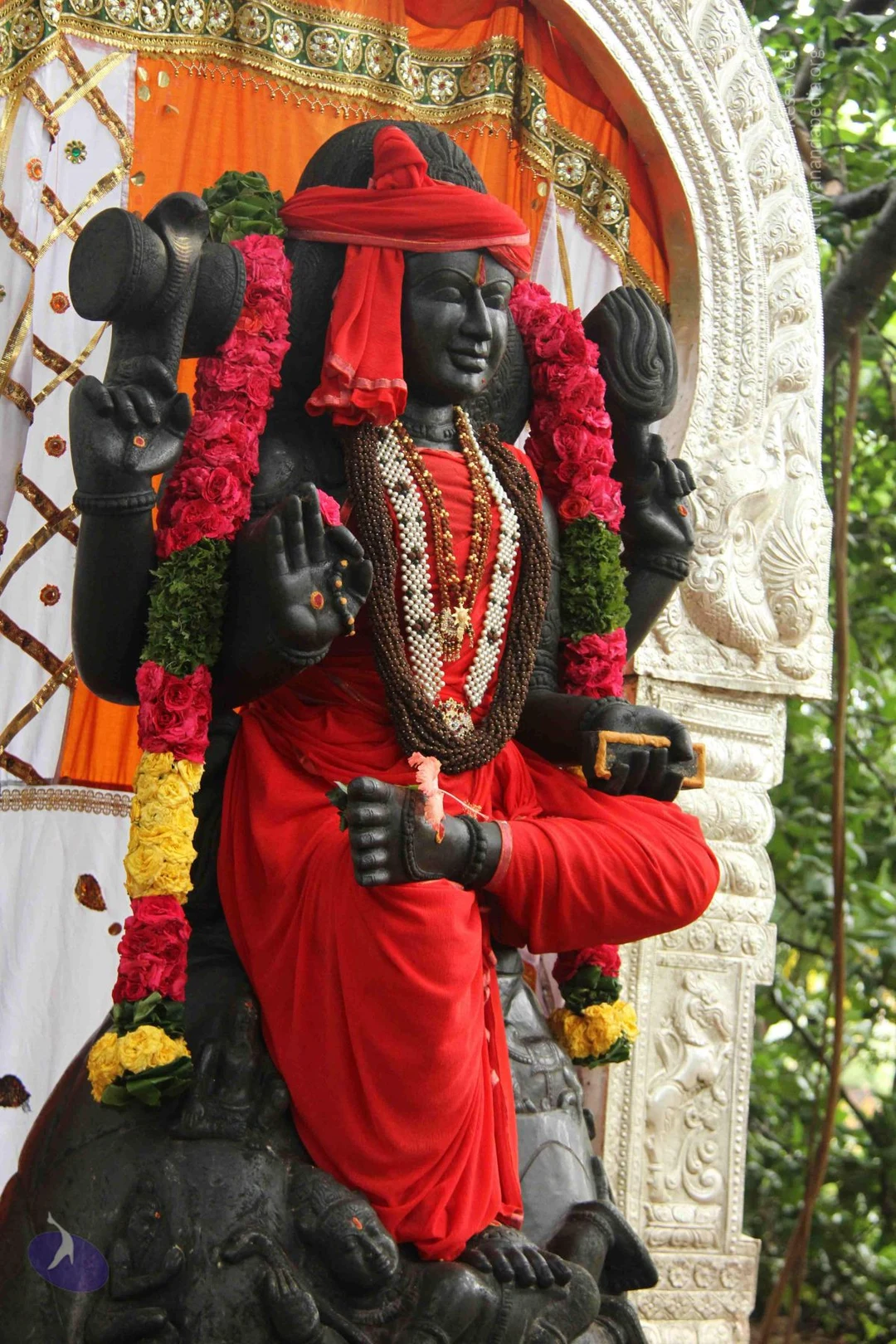
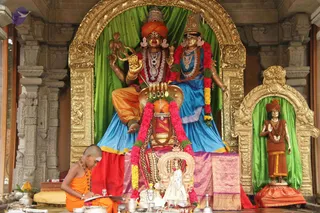
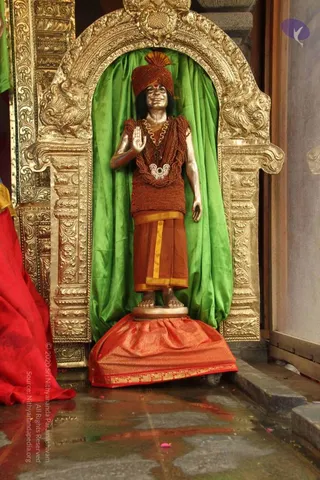
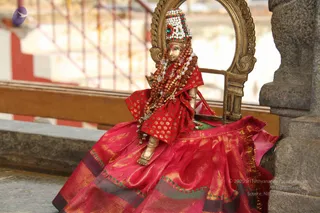
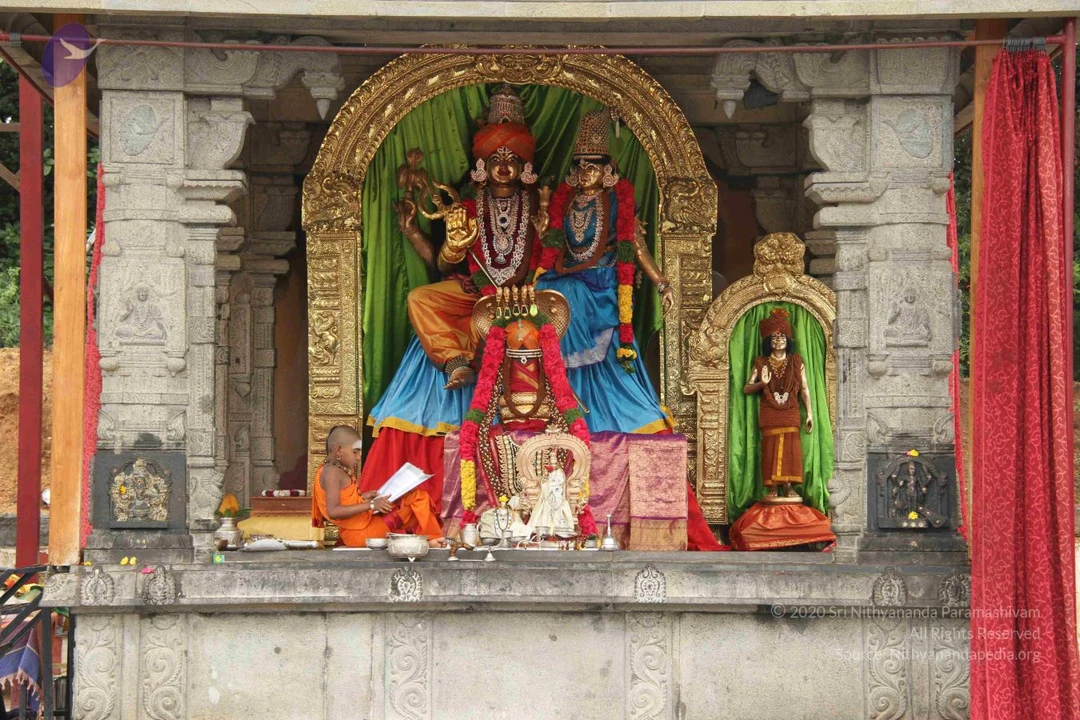
A photograph of an outdoor shrine with a stone arch framing two large deity murtis: a figure with a red-orange turban and a trident-like raised arm, and a figure in blue with a crown and garlands. A small linga-form image sits on a pedestal decorated with red and orange flower garlands. To the right stands a smaller figure in a green-curtained niche wearing a red cloth and a bead necklace. A shaved-headed priest in saffron-orange robes sits at lower left, reading from a sheet of white paper, with brass vessels and oil lamps before the shrine.A photograph of a temple shrine with carved grey stone pillars and a gilded arch framing green drapery. Two large painted deity murtis sit side by side on a raised platform: one male figure in an orange turban and orange dhoti holds a trident-like staff, and a female figure wears a blue skirt and crown, both with garlands of red and yellow flowers and beaded necklaces. In front, a shaven-headed young sannyasi in saffron-orange robes sits cross-legged, writing or reading from a palm-leaf or paper page. Silver lamps, a brass vessel and a kalasha-like offering stand on the platform, and a smaller standing figure in a shrine niche wears orange and garlands. A caption reads 'Nithyananda Paramashivam' and ''Two golden metal murti of deities seated against a green silk backdrop framed by an ornate gold arch. The figure on the left wears an orange turban and a crown-like headdress, holds a trident and a raised hand, and is adorned with a jewelled multi-strand necklace and a rudraksha-style mala. The figure on the right wears a jewelled crown with a blue garment, gold necklaces and bangles, with red flower garlands draped over both figures. These are statues, not living people, and no person is physically present.A temple shrine interior with a large golden arch framing a green curtain. Two painted or sculpted deity figures stand behind a central pedestal: the figure on the left wears an orange turban and holds a trident, while the figure on the right wears a tall crown and blue garment, both draped in red and pink flower garlands and layered necklaces. In front of the deities a bald young sadhu in orange robes sits cross-legged at a low wooden desk, writing in an open book. Brass pots, a kalasha-style vessel and flower offerings are arranged on the platform, and a smaller standing statue in orange robes and rudraksha beads stands in a niche at right. Pulled from the page, the ritual setting appears to be a temple puja space.A silver-finished statue of a standing male figure in an arched golden shrine niche lined with green drapery. The statue wears a rust-brown rudraksha-bead turban with a gold-tipped top, a brown rudraksha mala draped over the chest, a beaded brown upper garment, and a brown dhoti with a gold border. It shows an abhaya-style raised palm of one hand, with the other arm lowered. A red brocade cloth with gold border covers the base, and rose petals lie on the wet floor in front.A small golden-toned deity murti of a goddess seated on a carved golden arched throne. She wears a jewelled crown set with red and green stones, a red sari with gold brocade and green-bordered pleats, a red shawl draped over the head and shoulders, and multiple strands of red and pearl beads with gold necklaces. Behind the figure is an ornate gold frame, with a grey stone pillar at the right edge and a red and white railing in the background.

Nithya-Satsang

37 photosSource gallery
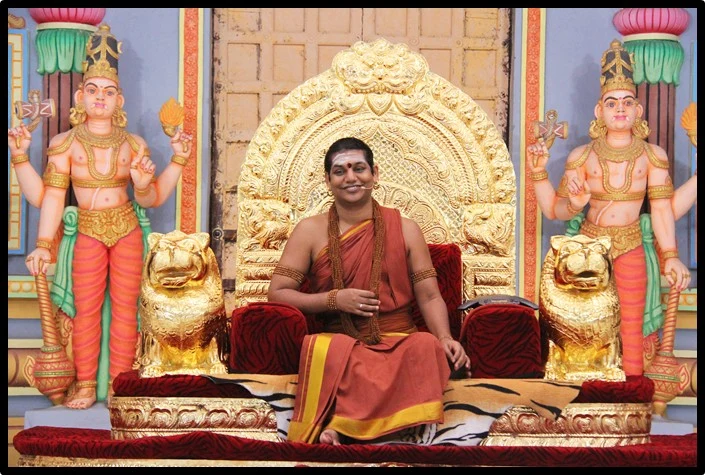
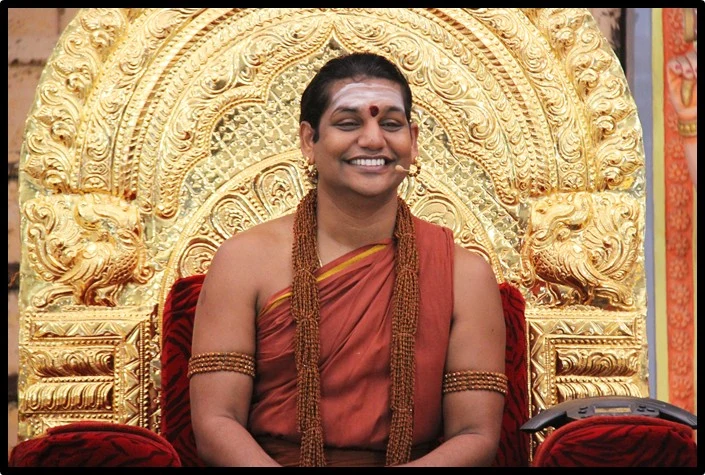
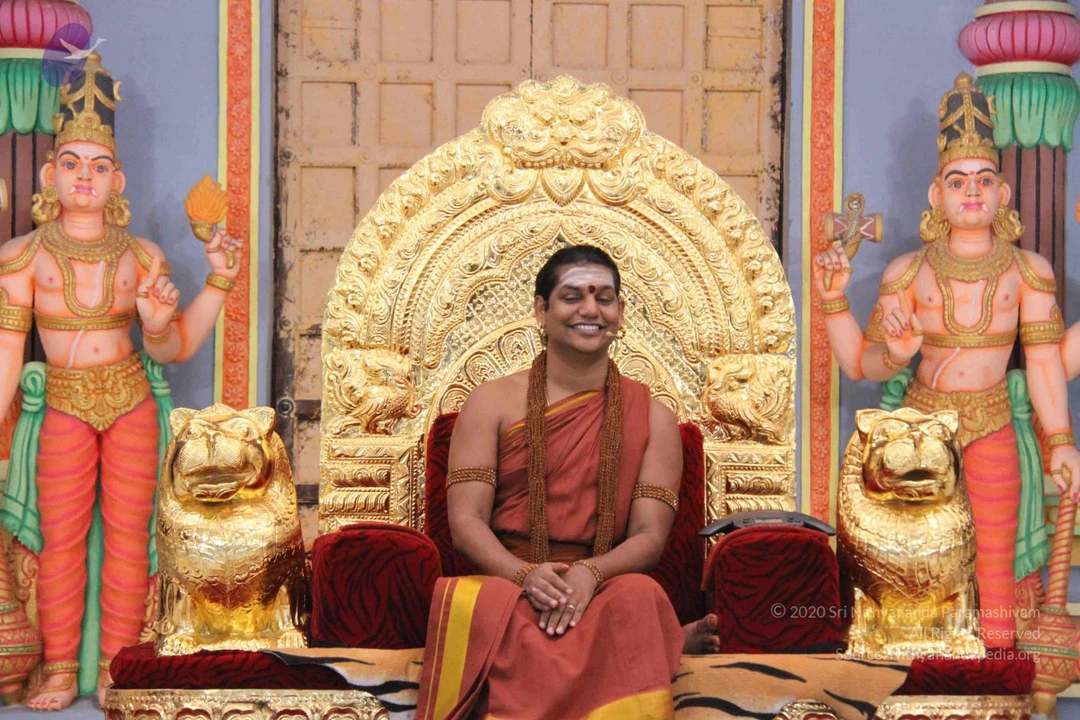
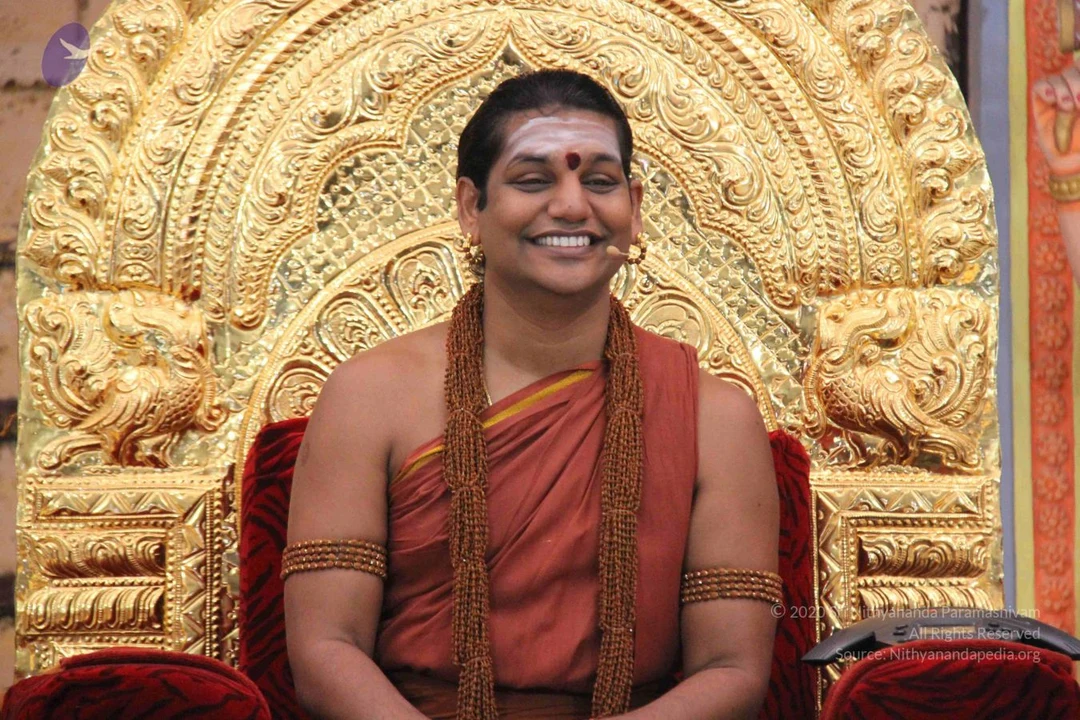
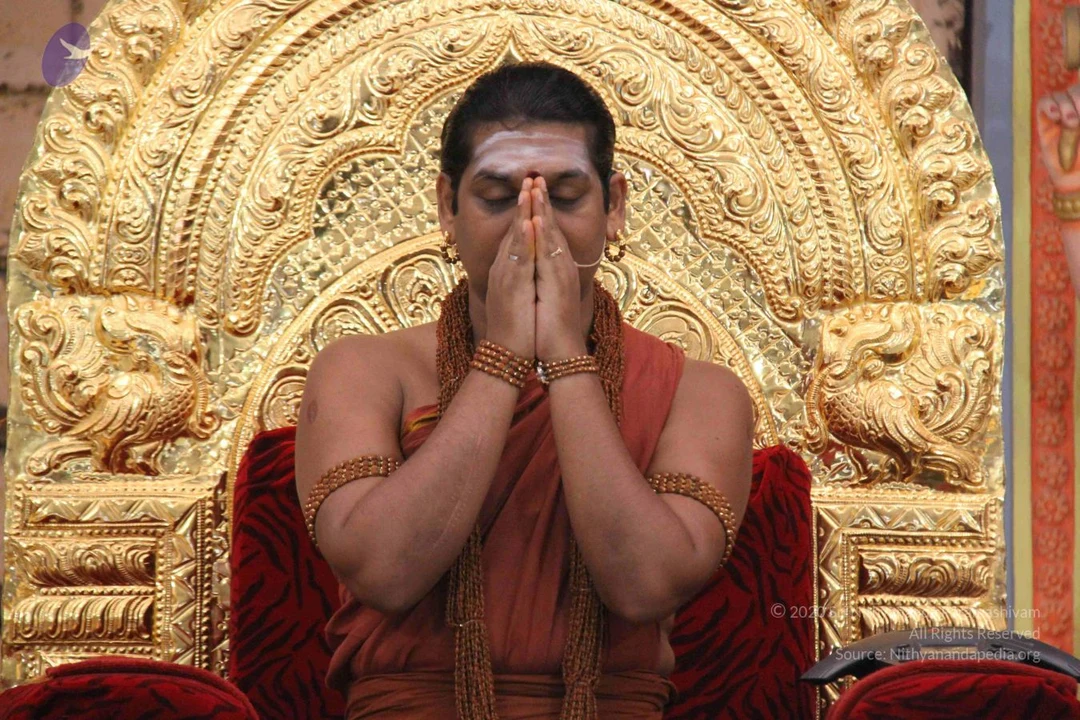
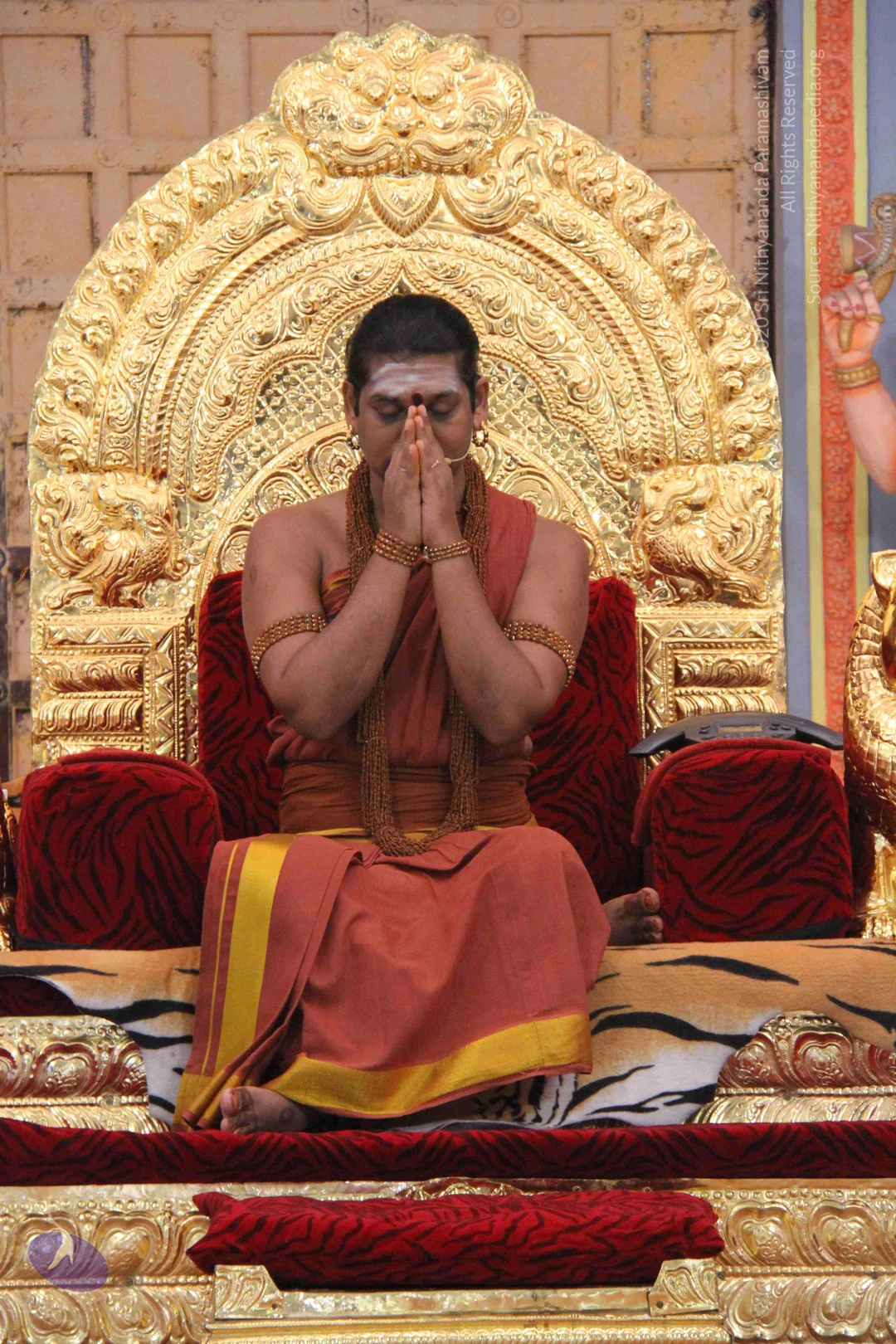
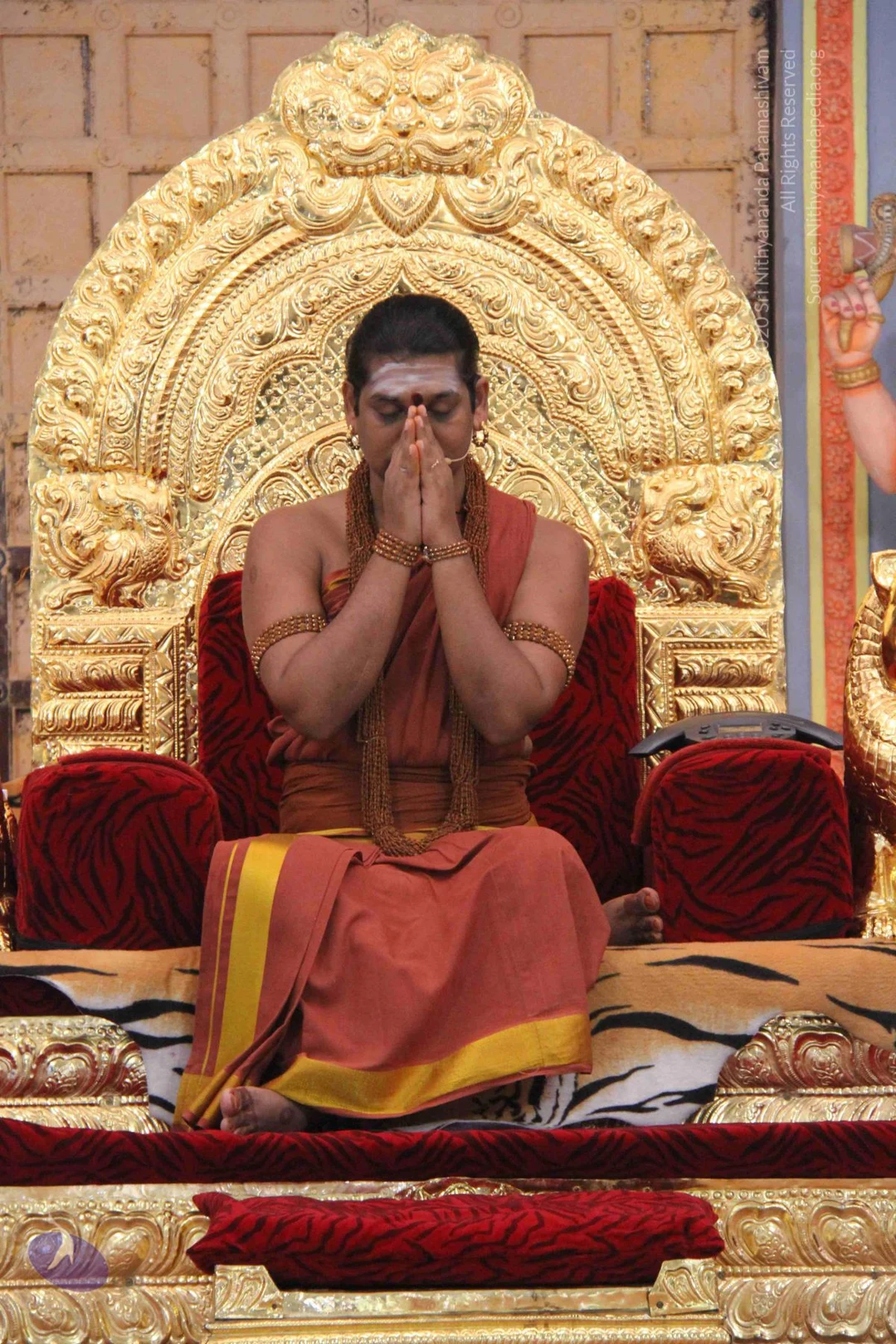
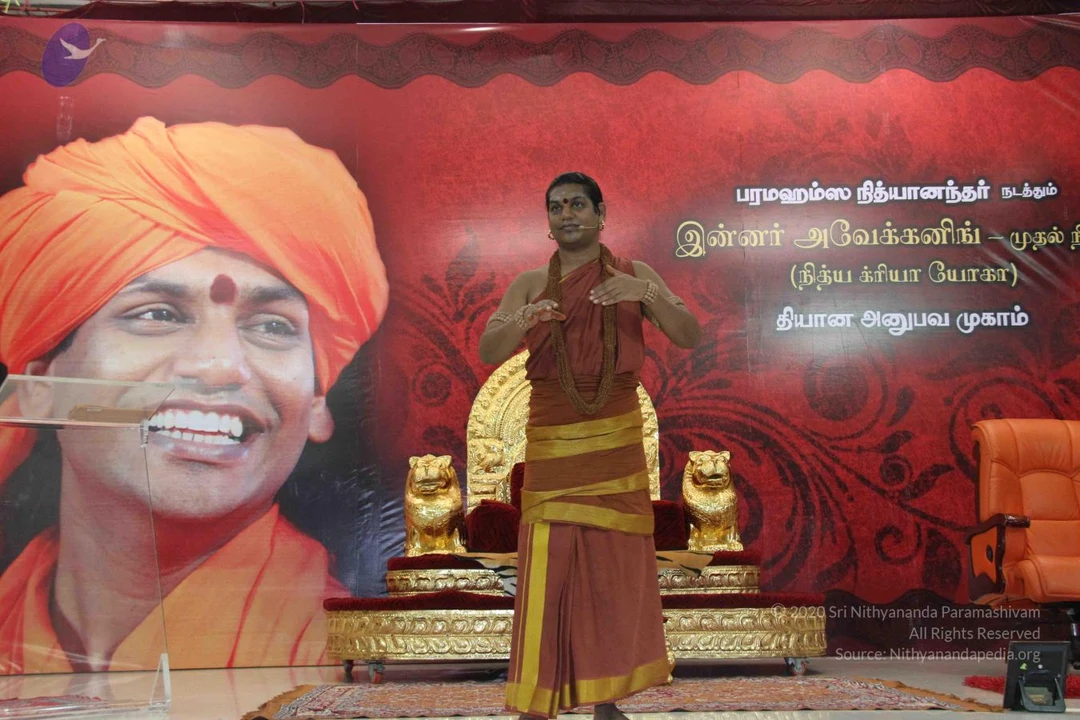
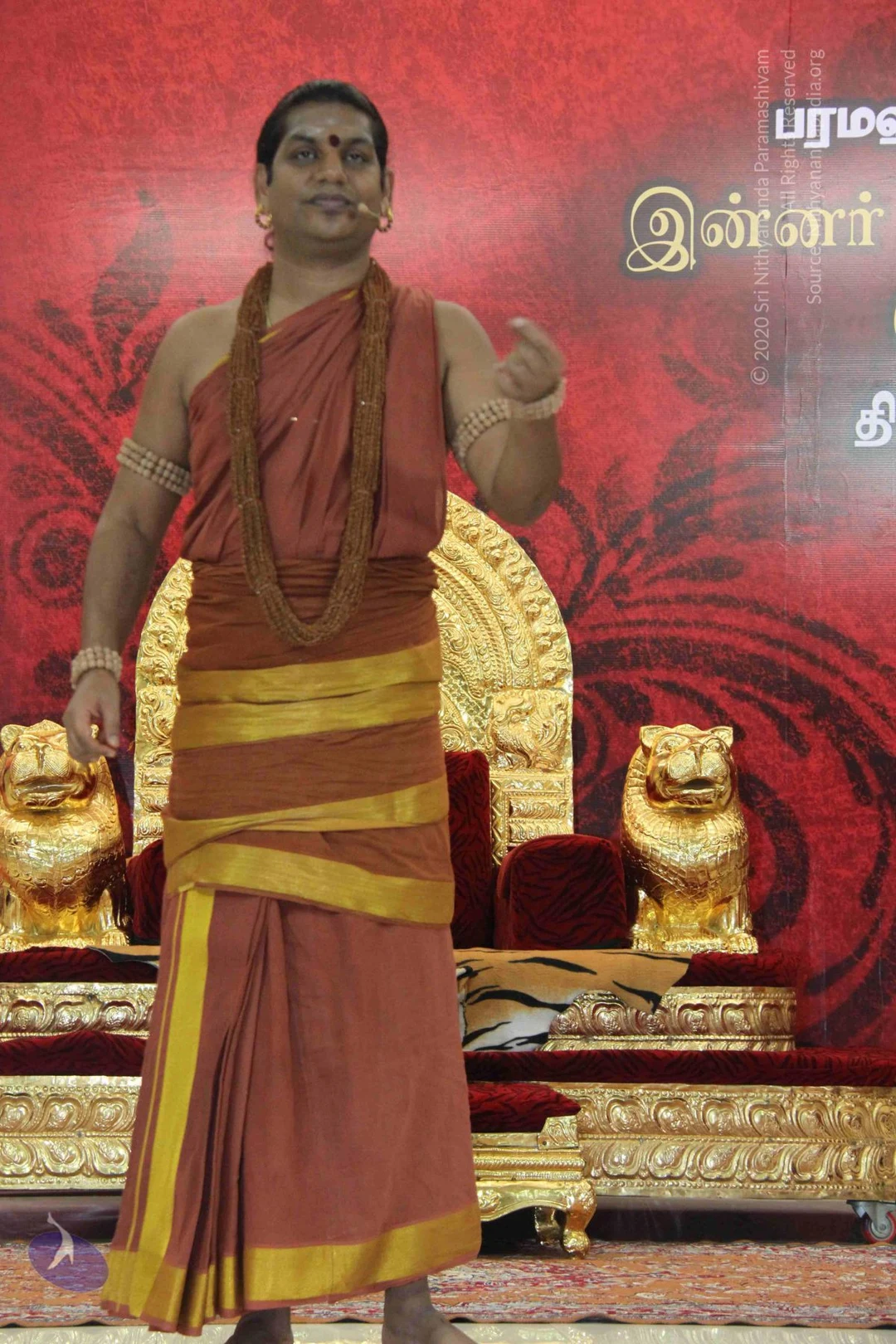
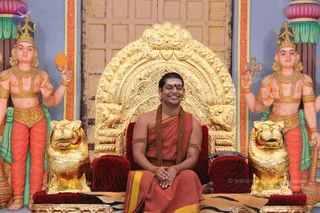
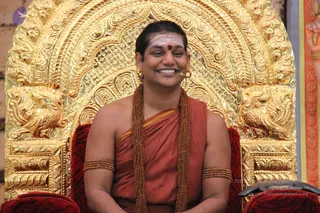
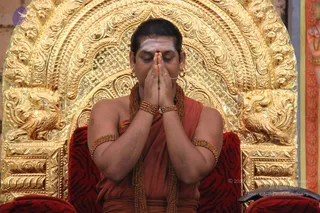
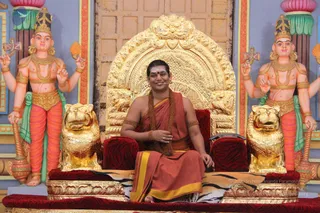
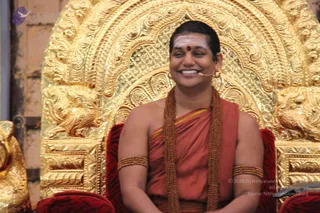
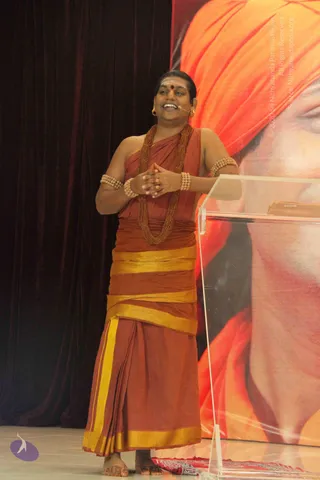
A photograph of a seated man in saffron-orange robes on an ornate gold throne with a tall arched back and carved lion-head armrests, sitting on a red velvet cushion over a tiger-striped rug. He wears a rudraksha mala with a second strand of beads, gold bangles, and a red mark on his forehead, and smiles with his hands folded in his lap. Flanking the throne are two large painted deity statues with gold crowns, orange-red skin, gold necklaces and armbands, one holding a flame and the other a staff. A wooden door stands behind. a person is seated in person, identified by the saffron robes, rudraksha malas and ceremonial gold necklace; he is the only physical person visible.A smiling man seated on an ornate gilded throne with a red-cushioned seat and carved golden lion-like finials, wearing a saffron-orange shawl over the shoulder with a yellow edge, long gold-beaded rudraksha-style necklaces, and gold armlets. He has white vertical tilak marks on the forehead and a red bindi, and a small headset microphone is visible near his face. The background shows a red and orange patterned hanging. Appearance-based label: Swamiji (probable) seated for a discourse, with distinctive saffron clothing, ornate gold necklaces and a crown-like golden throne backdrop.A man with closed eyes sits with palms pressed together in namaste at chest level on an ornate gold throne with a carved arched back featuring lion-like figures. He wears an orange-red saffron cloth draped over the shoulders, multiple strands of wooden beads and gold chains, gold armlets and earrings, and a white forehead marking. Red velvet cushions with dark stripes line the seat.A smiling man with a shaved head, red bindi and long rudraksha-style beaded necklaces sits on an ornate gold throne with carved lion-head arms and a red velvet seat, draped over a striped tiger-skin cushion. He wears a saffron-orange robe with a yellow border and gold armbands, his hands resting gently on his lap. Flanking the throne are two painted, gold-adorned deity murti figures with multiple arms holding ceremonial objects, in a temple-like setting with a carved wooden door behind. a person seated in ceremonial saffron attire, presiding on the throne as a teacher during a discourse.A seated man in an orange-red robe with a yellow-trimmed saffron cloth wears a rudraksha mala and gold bangles, smiling and gesturing with one hand while seated on a large gold throne with lion-head armrests and a red velvet cushion over a striped tiger-skin mat. Two gilded and painted deity murti flank the throne with raised arms and headdresses, and a golden arched backdrop frames the scene. The setting suggests a discourse stage.A man stands on a stage before a dark red velvet curtain, speaking into a headset microphone beside a clear acrylic podium. He wears a rust-orange dhoti and upper cloth with gold-edged bands wrapped at the waist, a multi-strand rudraksha mala around the neck, beaded armbands and bracelets, and gold hoop earrings. He has white vertical forehead markings and a red bindi, and gestures with both hands near his chest. A brass oil lamp stands on the right edge by the podium. Appearance-based label: a person, giving a discourse, based on the rudraksha mala, rust-orange robes and beaded adornments; the image itself has no printed name for him.

Sarva-Darshan

16 photosSource gallery
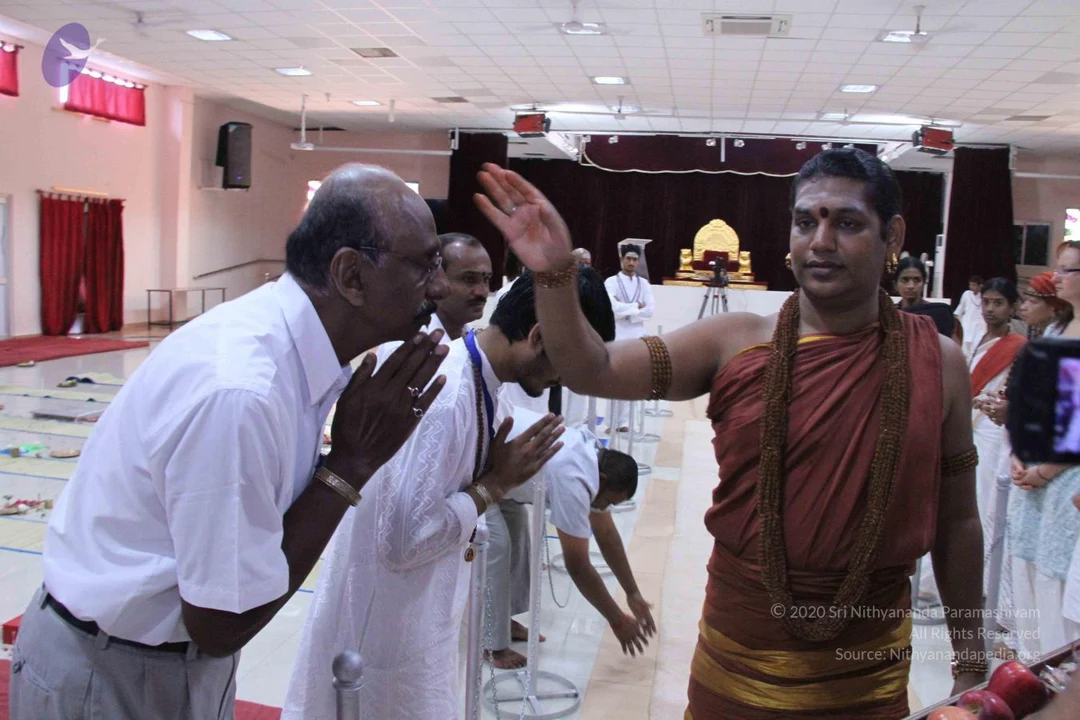
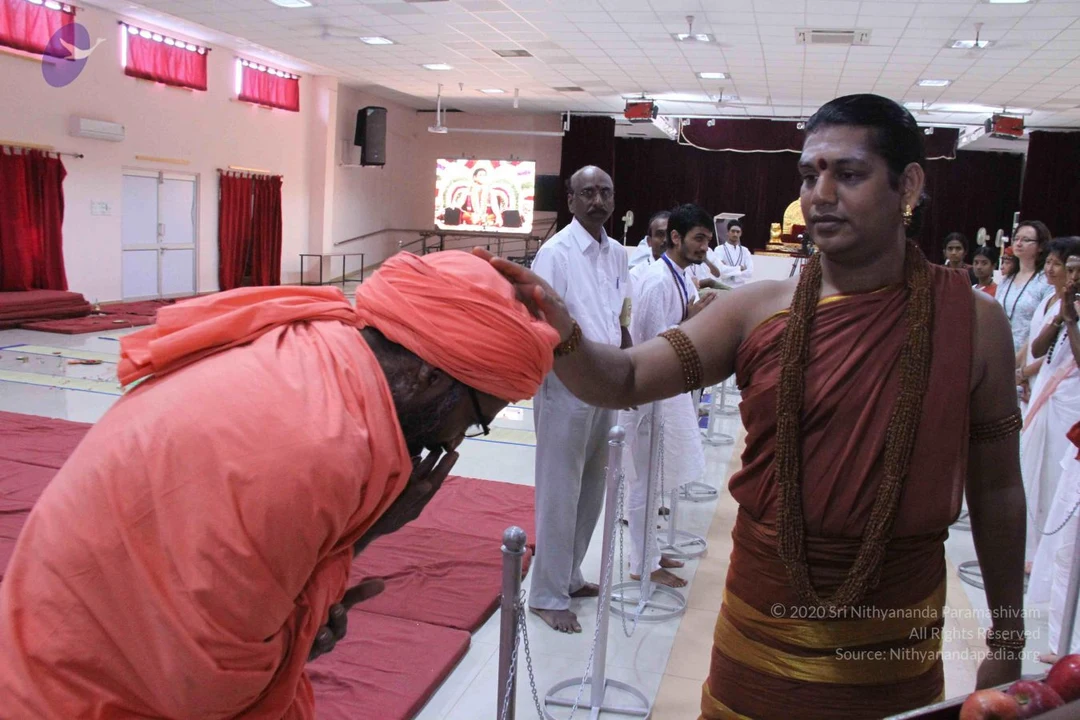
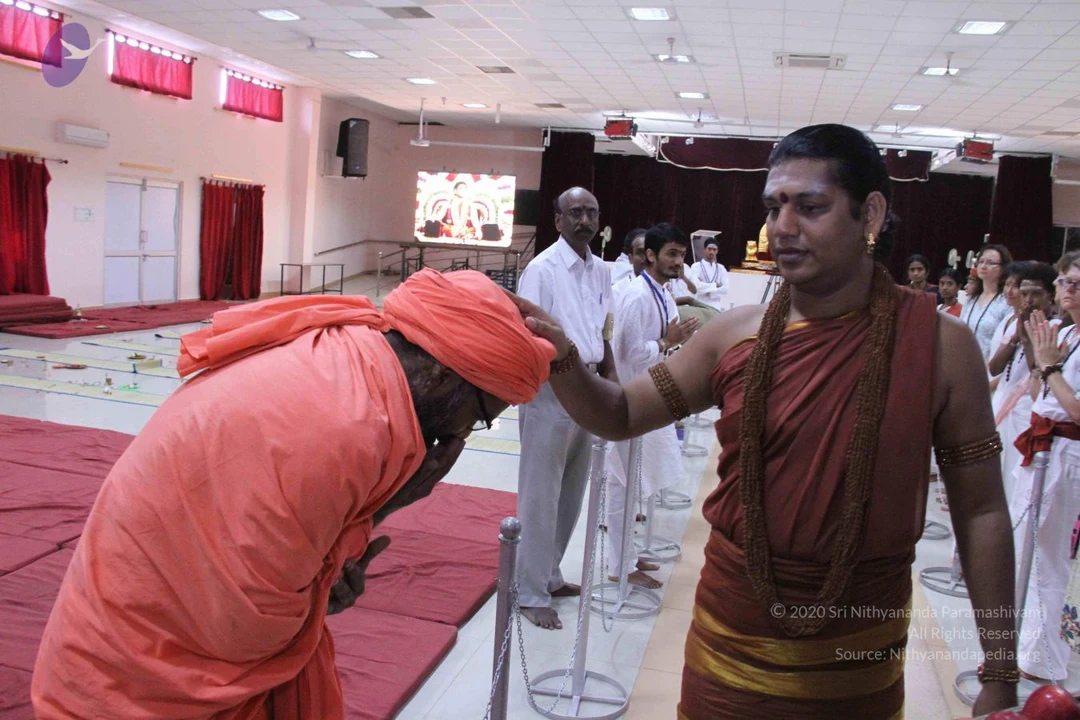
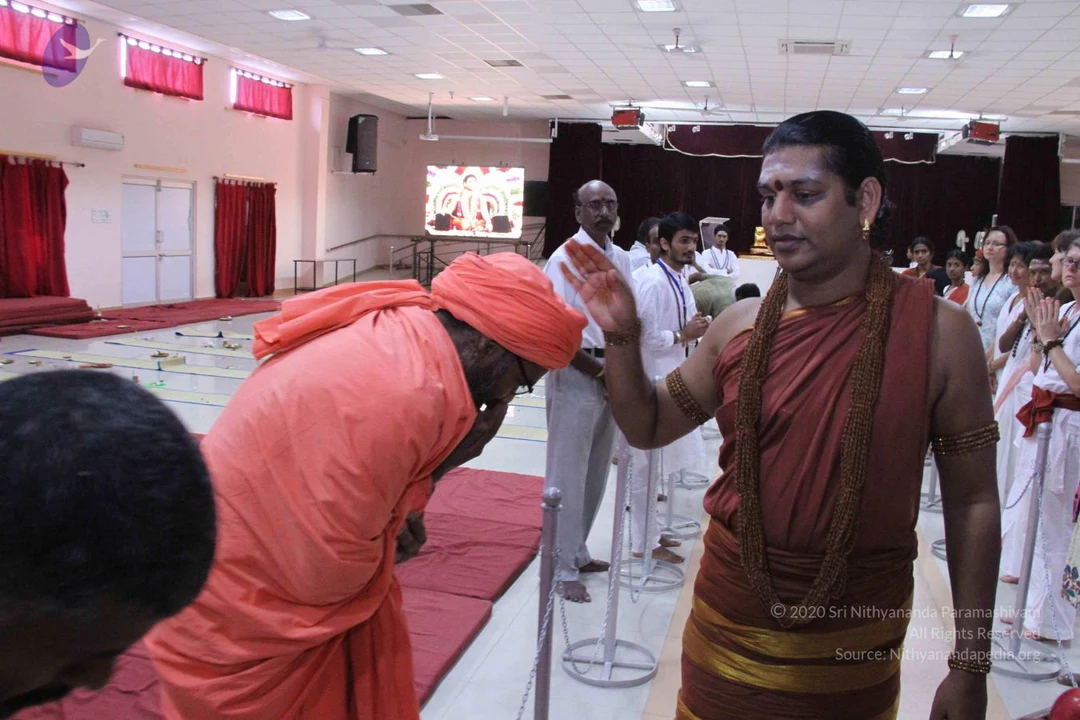
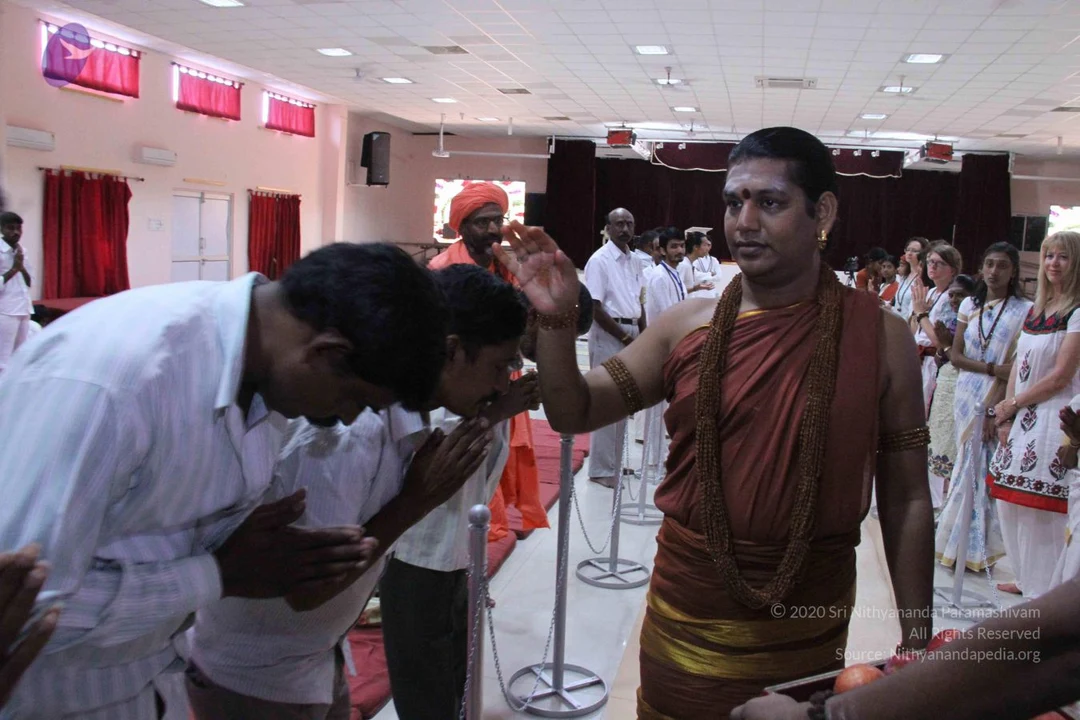
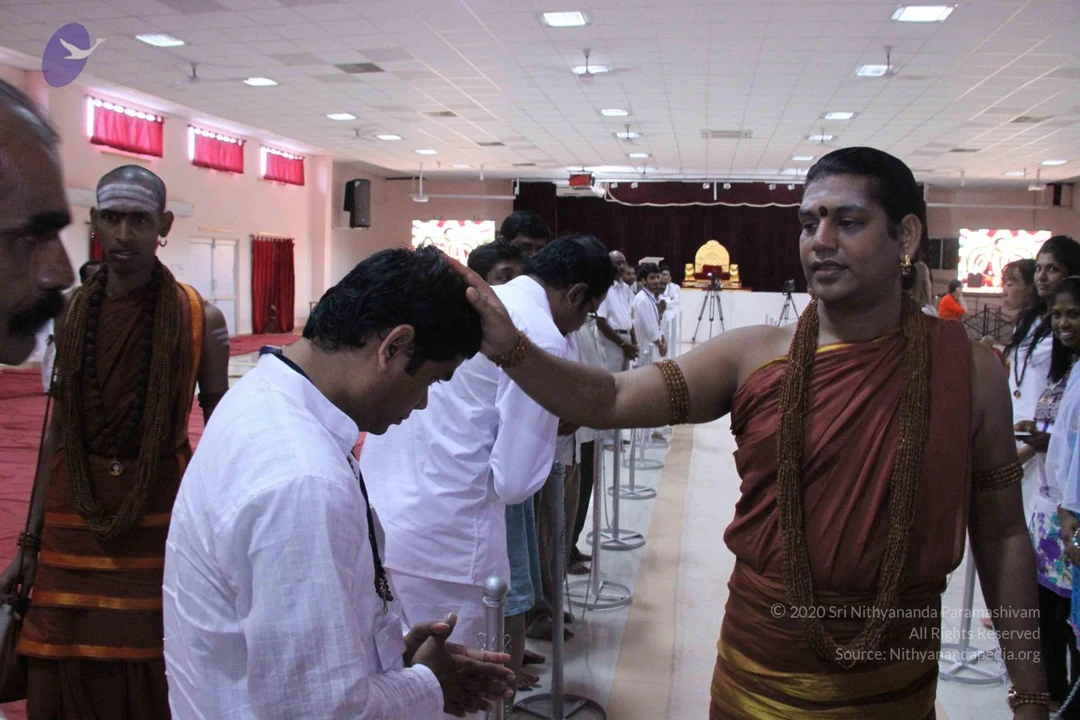
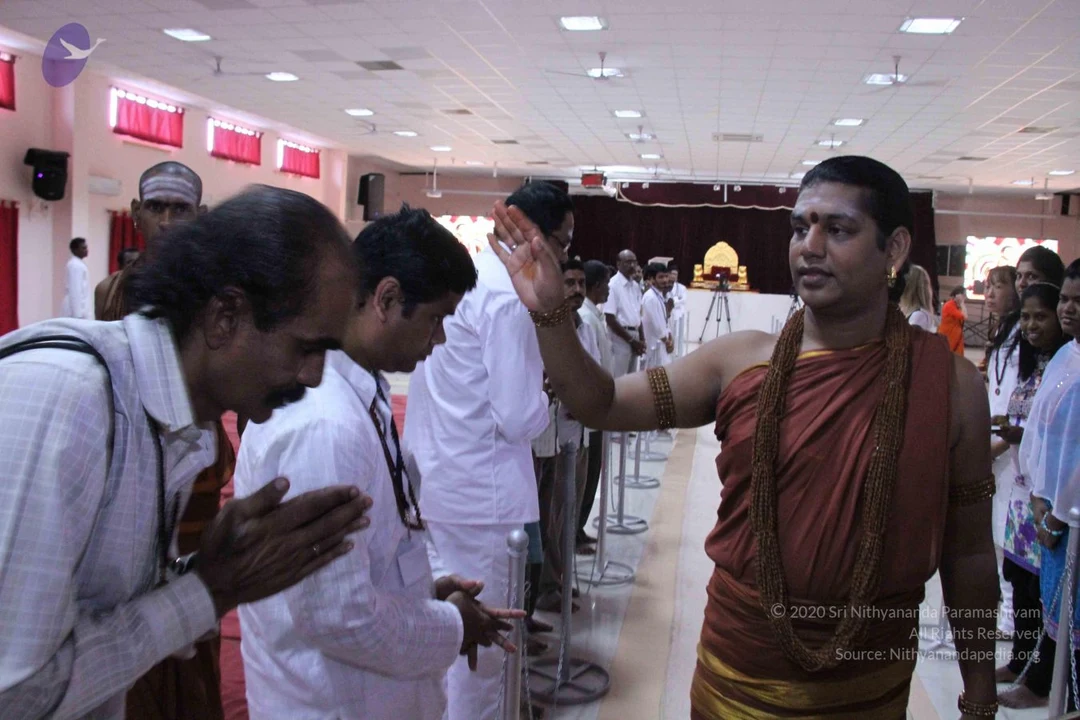
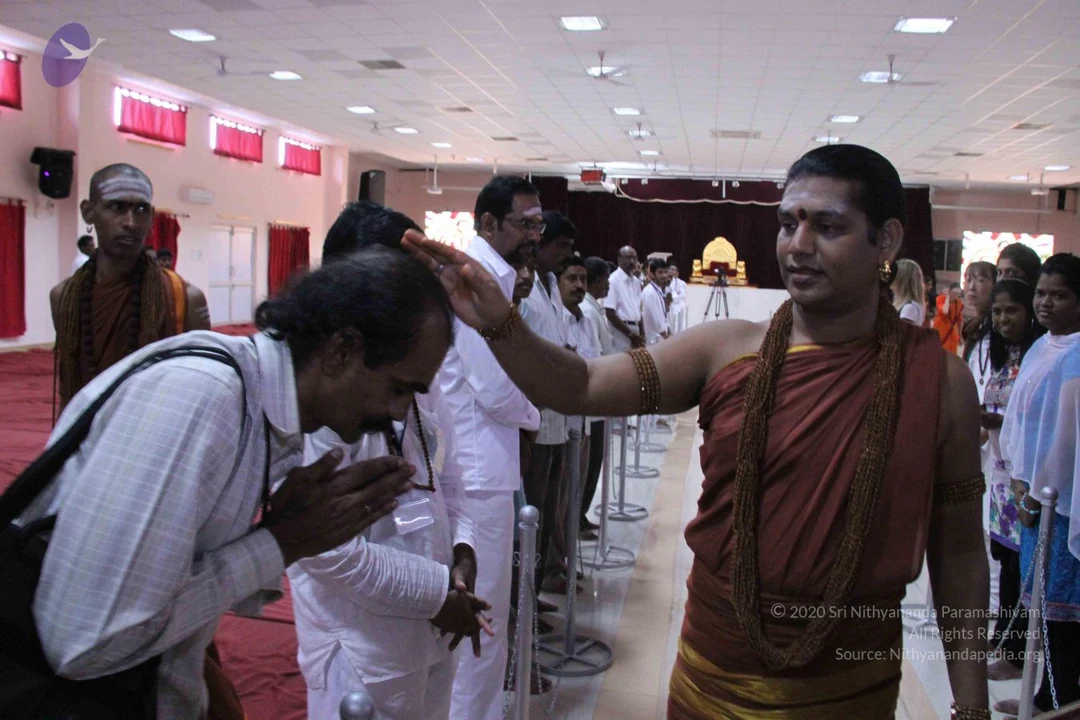
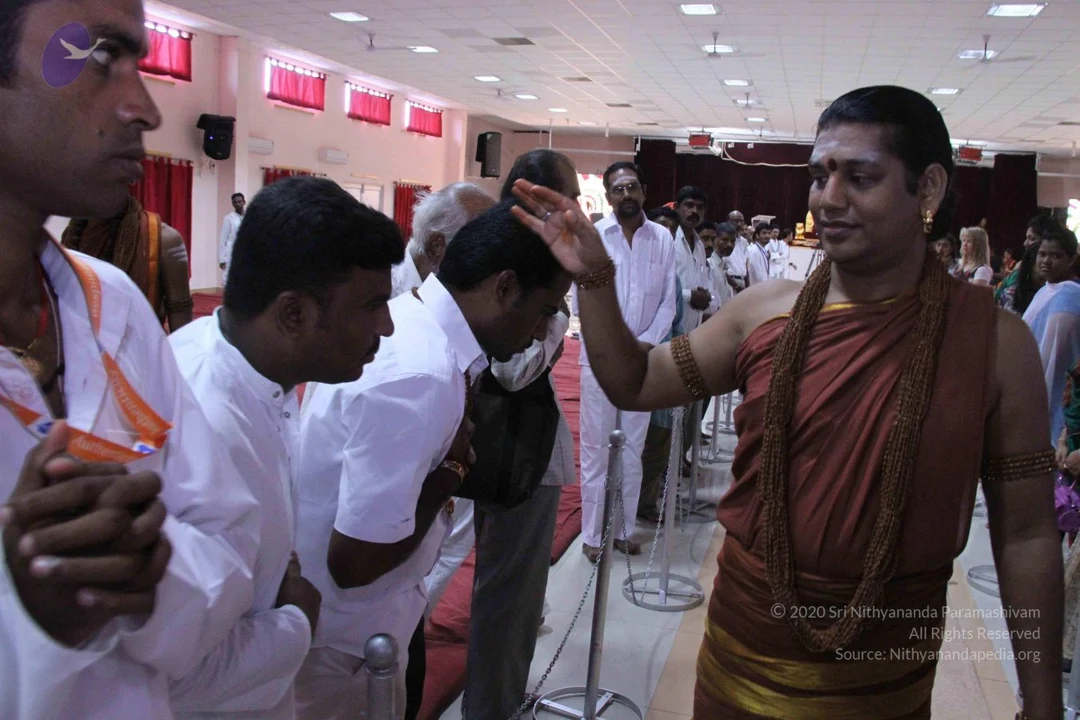
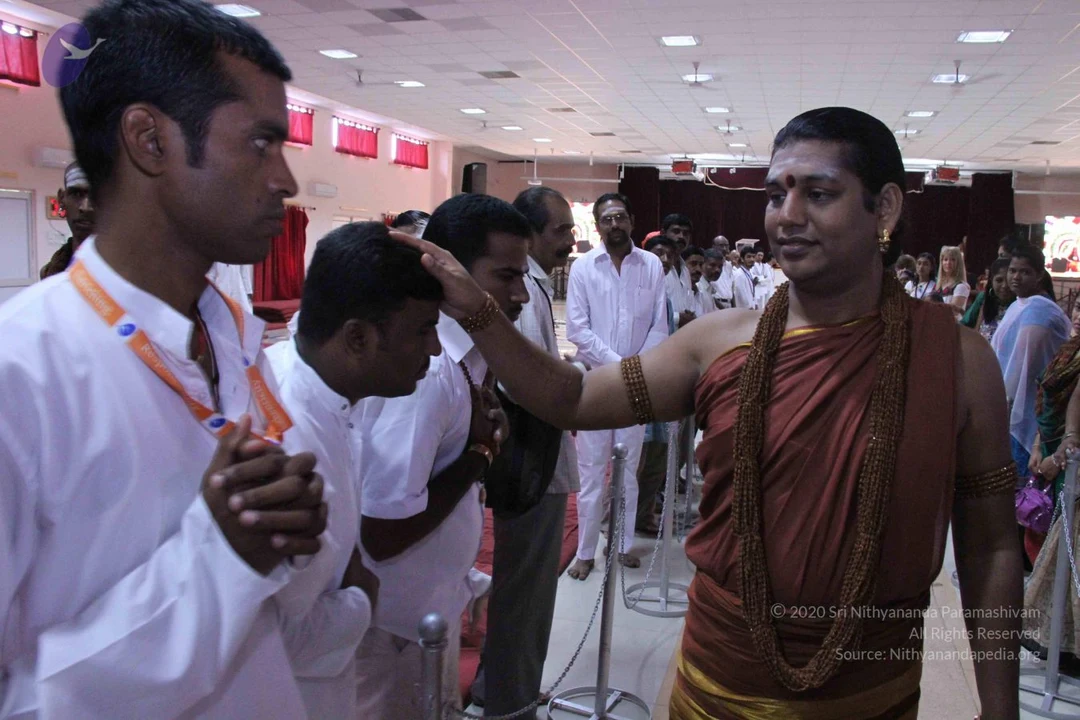
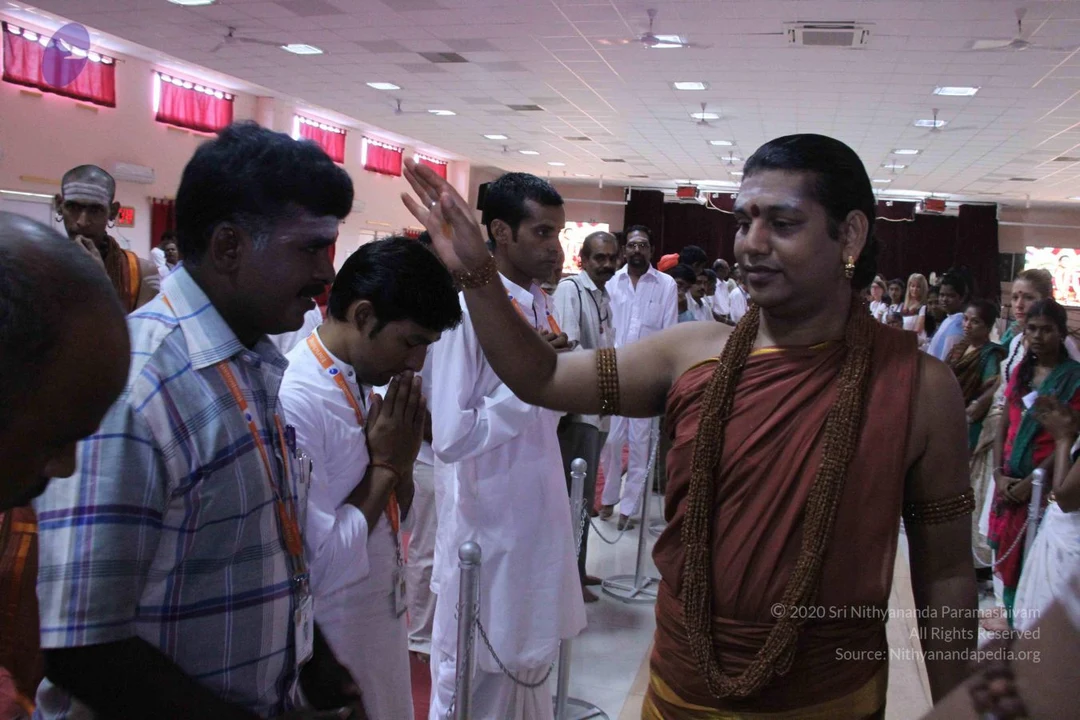
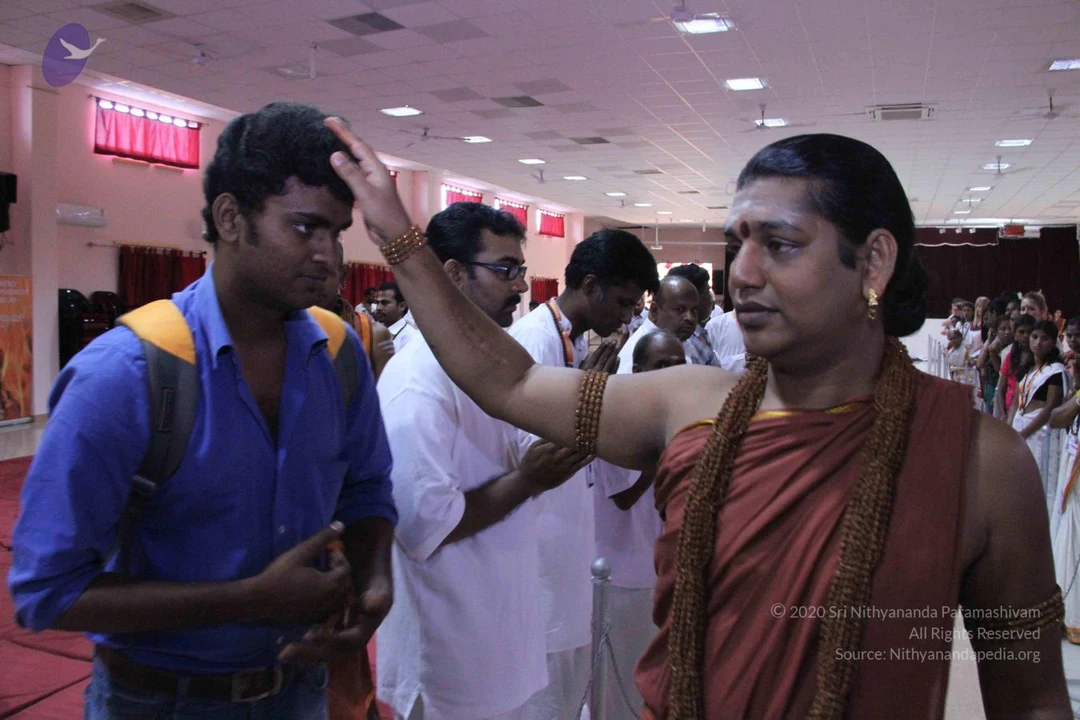
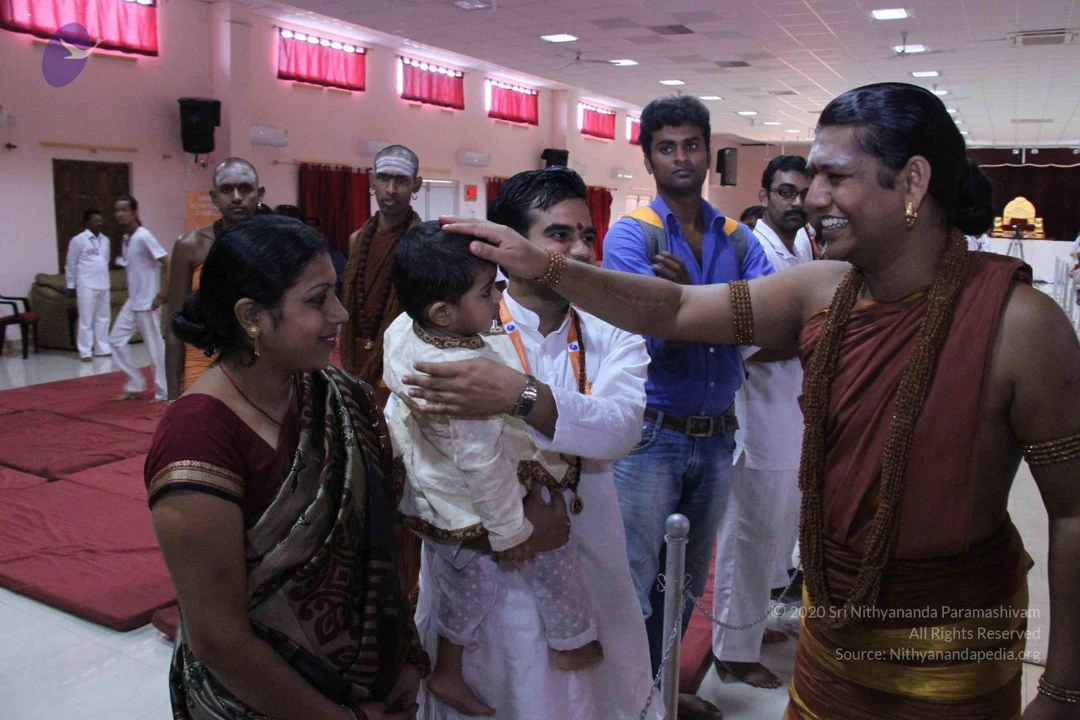
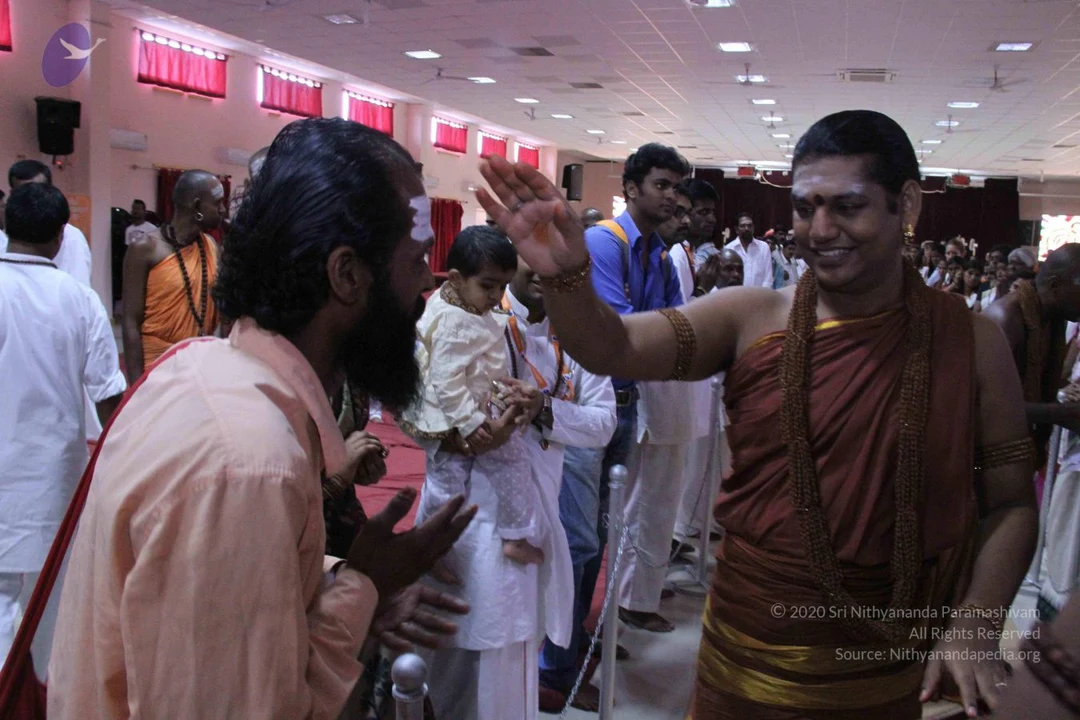
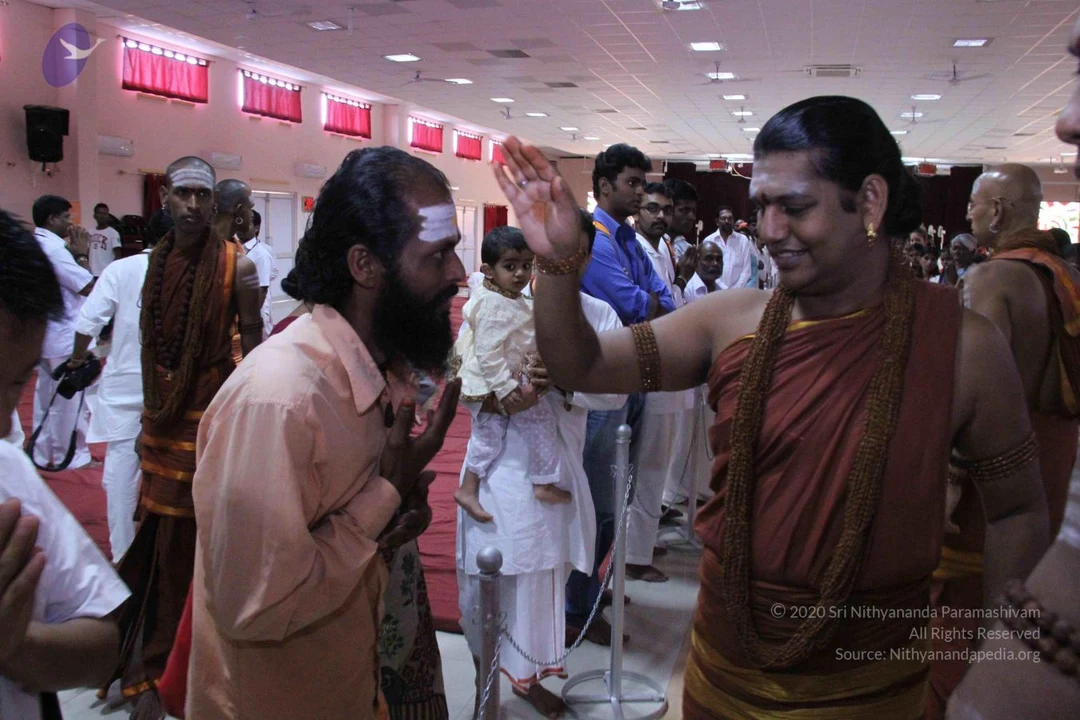
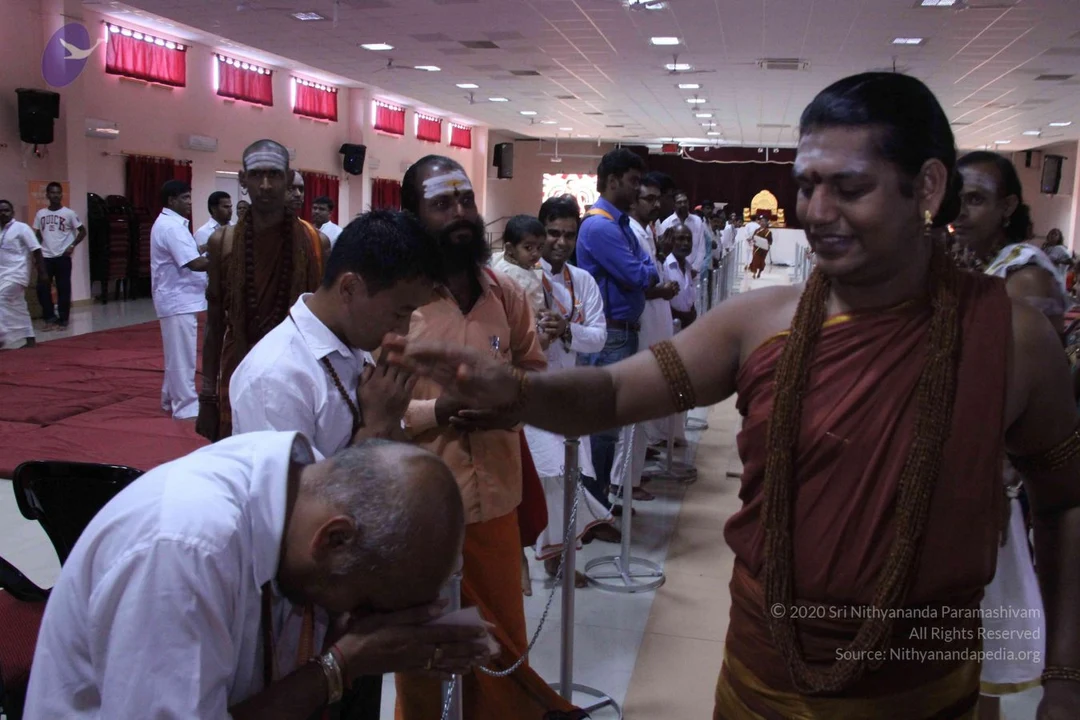
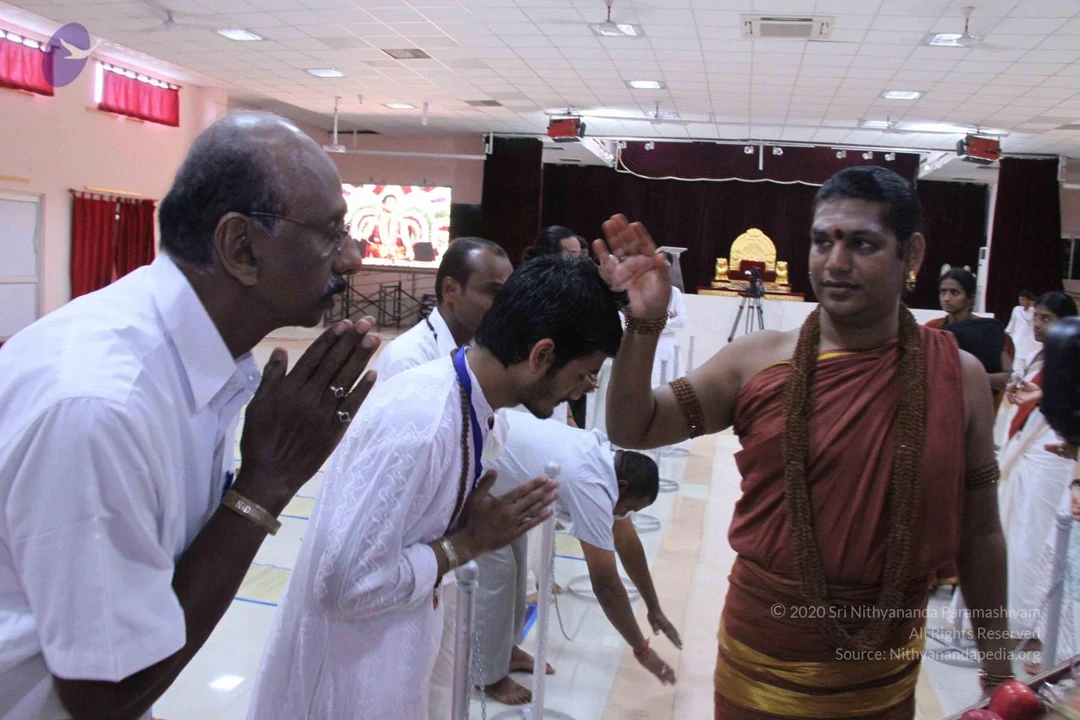
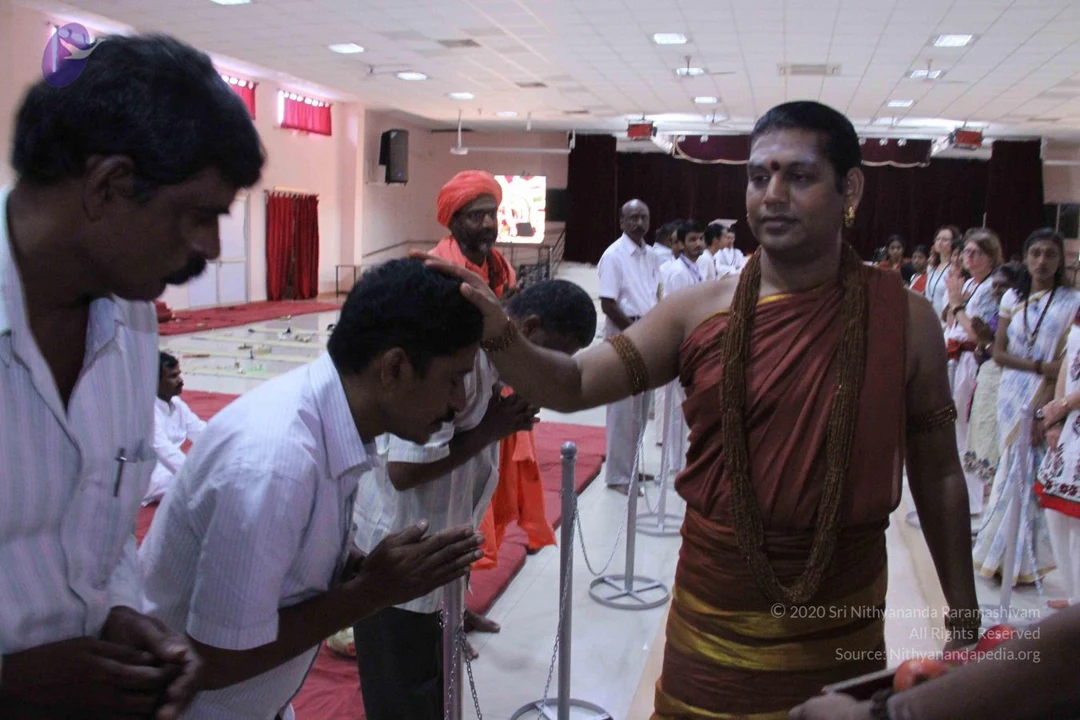
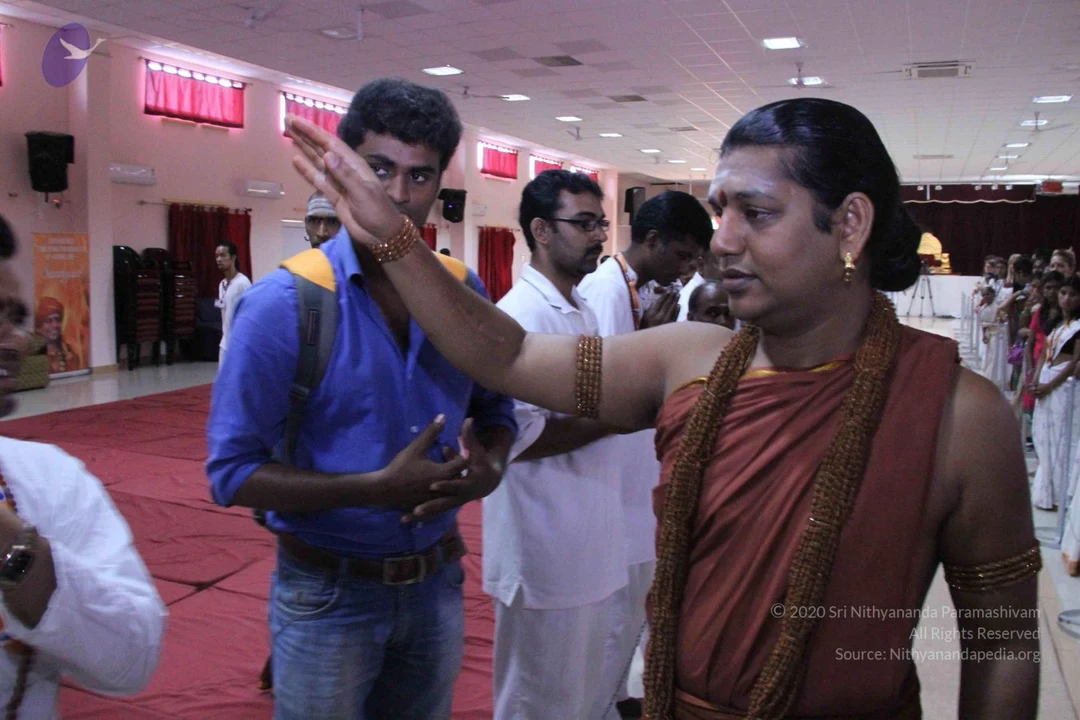
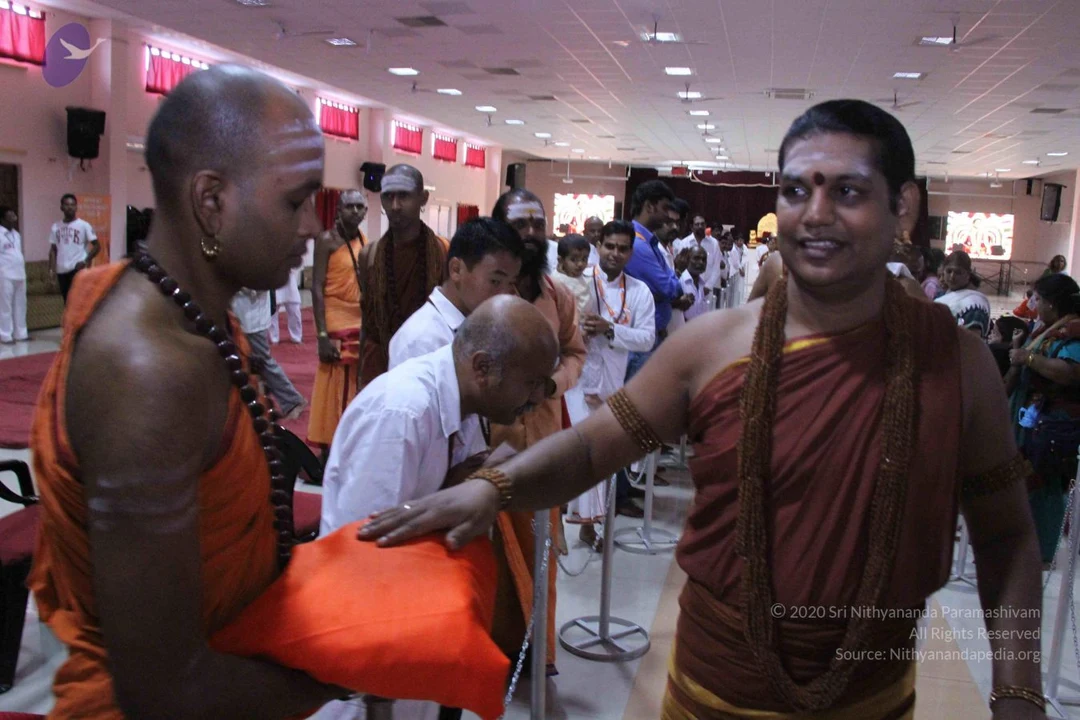
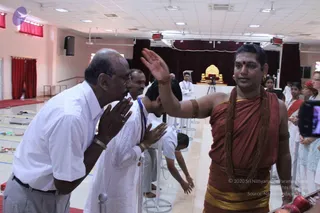
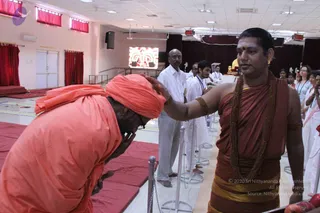
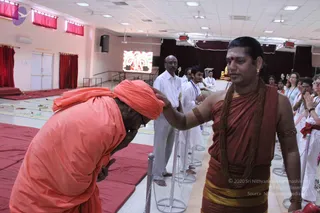
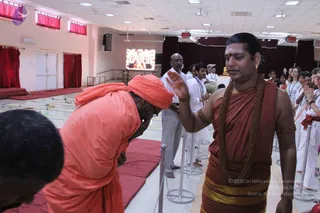
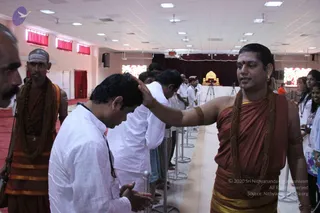
Indoor hall with red curtains and a golden ornate throne on a raised stage in the background. In the foreground, a man in a rust-red sannyasi robe with a long beaded rudraksha-style mala and gold waist sash raises his right hand in blessing toward a older man in a white shirt and grey trousers who bows with palms pressed together. Beside him a man in white kurta with a saffron-and-blue lanyard stands with hands folded. Several devotees in white and orange clothing stand along barrier posts, and a figure in white bends low near the floor. Fruit is visible at the lower right.A photo in a hall with red curtains and a ceiling projector screen showing a figure in red and gold. In the foreground a man in an orange saffron turban and orange robe bows low, his hands raised, and places his hand on the head of a younger man in a rust-brown dhoti and shawl with a long rudraksha mala and gold armband. Behind them men and women in white garments, some wearing lanyards, stand near metal stanchions with red mats on the floor; a golden throne-like seat is visible at the back. Apples lie in the bottom right corner. The bowing elder wears distinctive orange-saffron clothing and turban; the younger man wears rudraksha beads. Identity is unsure from appearance.A photograph in a bright hall with red curtains and red mats. In the foreground, an elderly man in saffron-orange robes and a matching orange head wrap bows forward, hands together, while a younger man in a maroon-brown dhoti-style garment, with a tiered rudraksha-style mala necklace, gold-toned bangles and a yellow sash, reaches out to touch the bowing man's head in blessing. Behind them, men in white dhoti and shirts and women in white stand along metal stanchions and chains. A projection screen shows a painted deity image, and a gold figure sits on a stage at the back.A photograph in a hall with red curtains and a screen showing a deity image. A man in an orange-red robe with a long rudraksha-style gold-beaded mala and gold bangles stands with his right palm raised, facing an elderly saffron-clad monk with an orange turban who bows low with hands together. Behind them, a man in a white shirt and grey trousers and several people in white garments watch, and a row of people stands at a barrier on the right. Gold bangles and a red bindi are visible on the standing man, and a small gold object sits on a stand in the background.Photograph in a bright indoor hall with red curtains and white ceiling tiles. In the foreground, a man in a white shirt bows with palms pressed together, and another younger man beside him also bows with folded hands. To the right, a tall man in a rust-brown robe and gold-edged waist cloth wears a long beaded rudraksha-style mala and a red tilak; he raises one hand in a blessing gesture while holding an object. Behind them, a sadhu in an orange turban and orange robe stands near a red mat. Further back, people in white and light clothing stand along metal barrier stanchions, including women in patterned tunics and a woman with blonde hair.A photograph in a large hall with red curtains and a golden throne on a stage at the back. A man in an ochre-brown robe with a gold border, wearing a long gold-beaded necklace and gold armbands, stands on the right, placing his right hand on the head of a man in a white kurta who bends forward with palms pressed together. Beside them, a man with a white forehead band and brown robe, wearing a rudraksha-style mala, stands at left. Several people in white clothes and other attendees stand along a barrier line behind them. The scene suggests a blessing being given to a devotee.

Final-Blessing

1 photoSource gallery
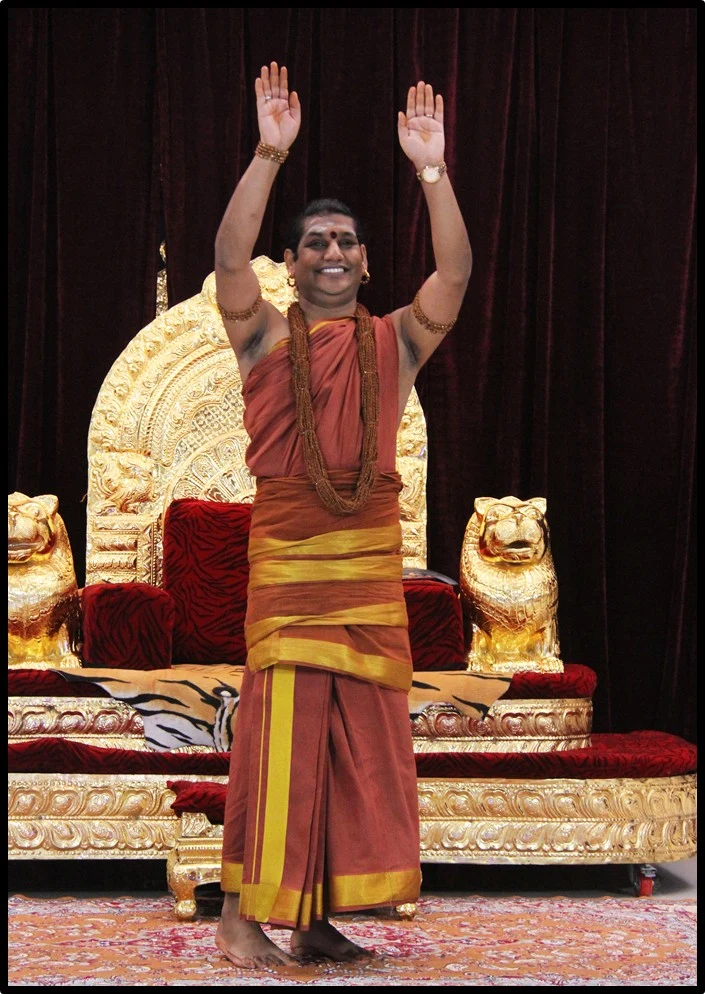
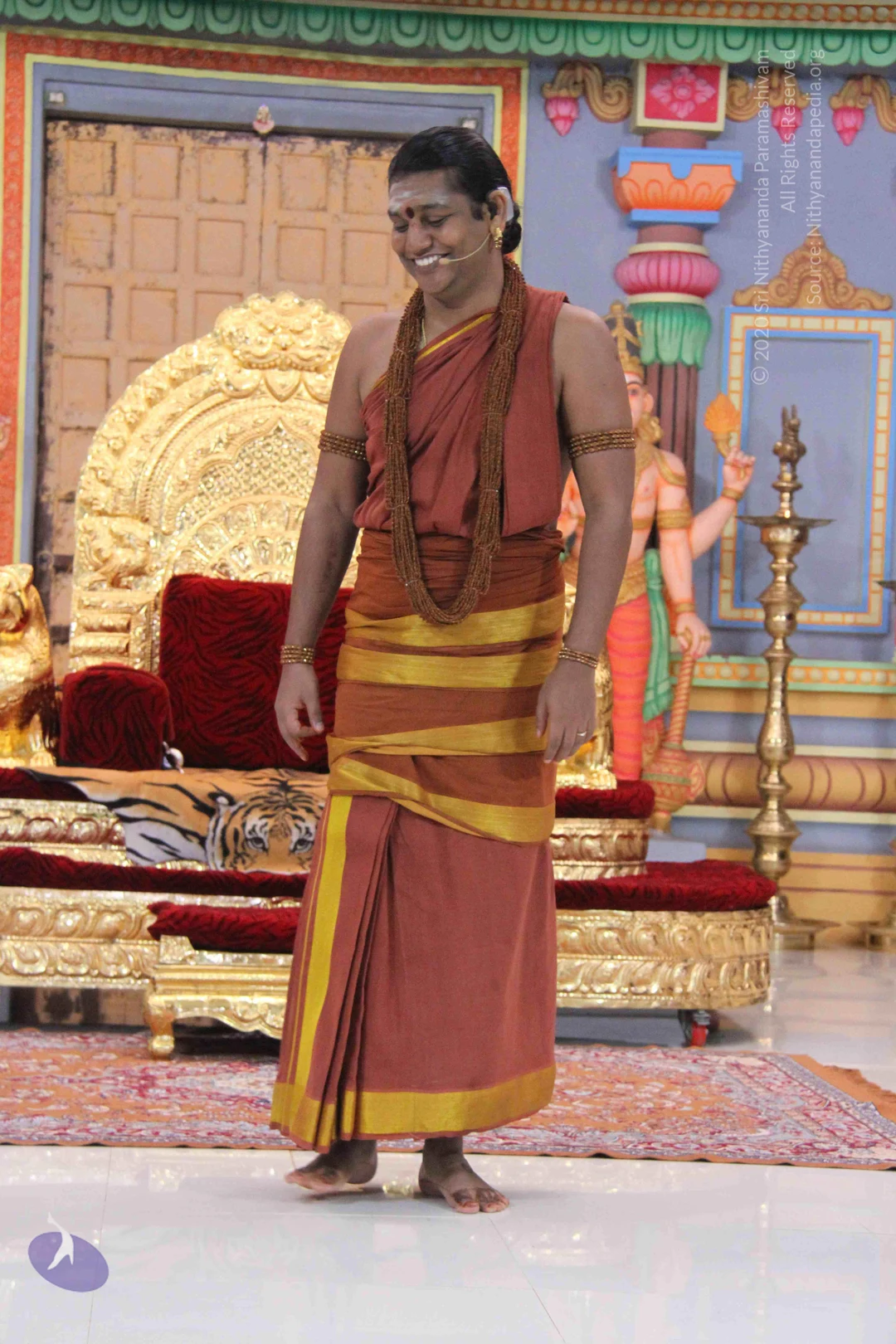
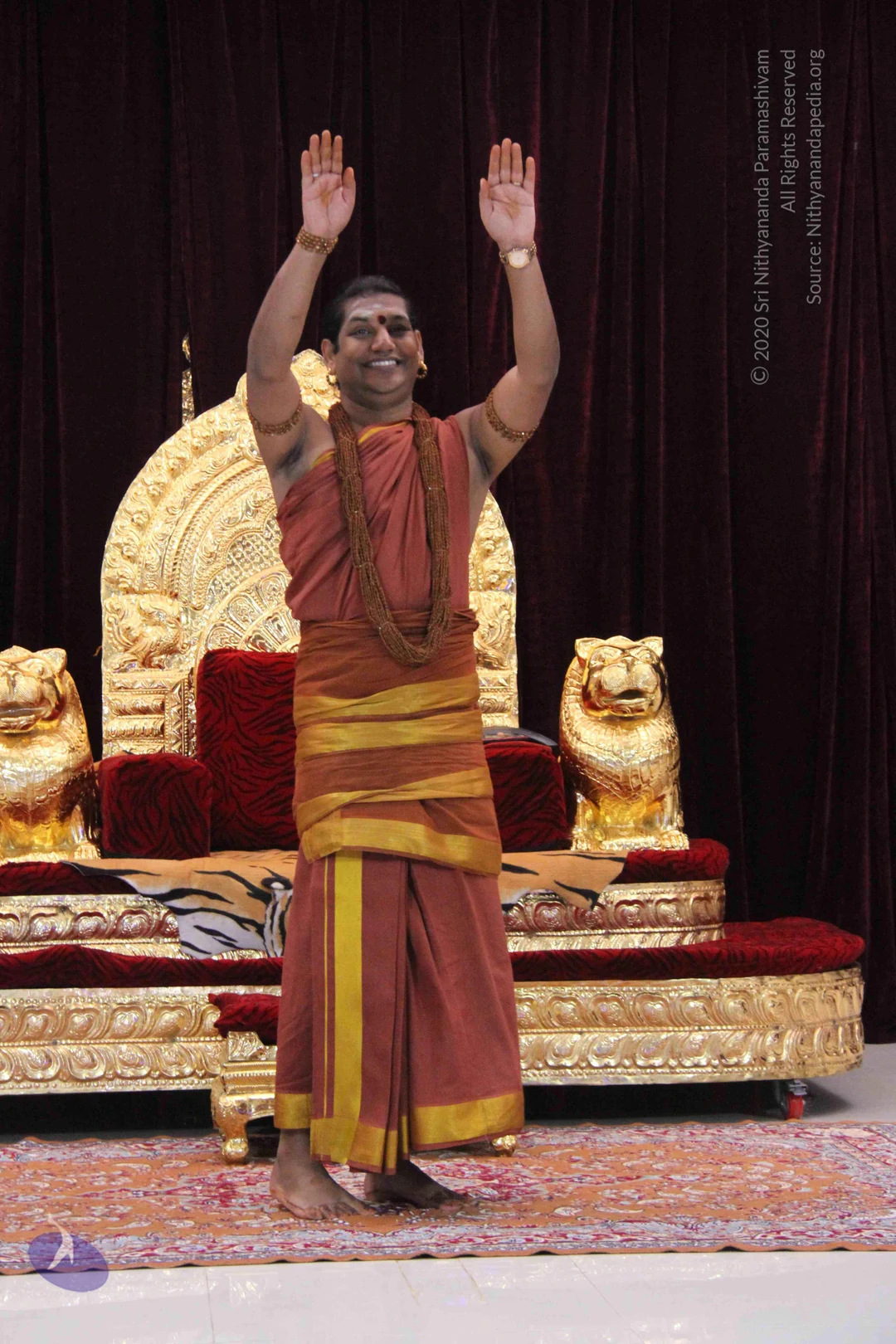
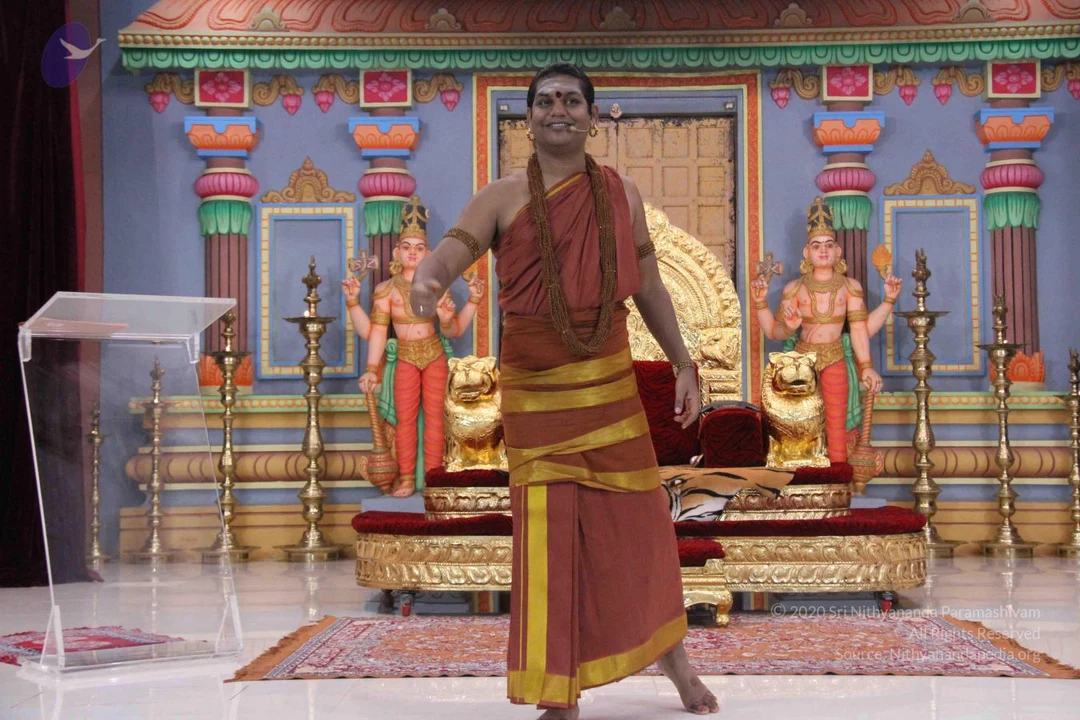
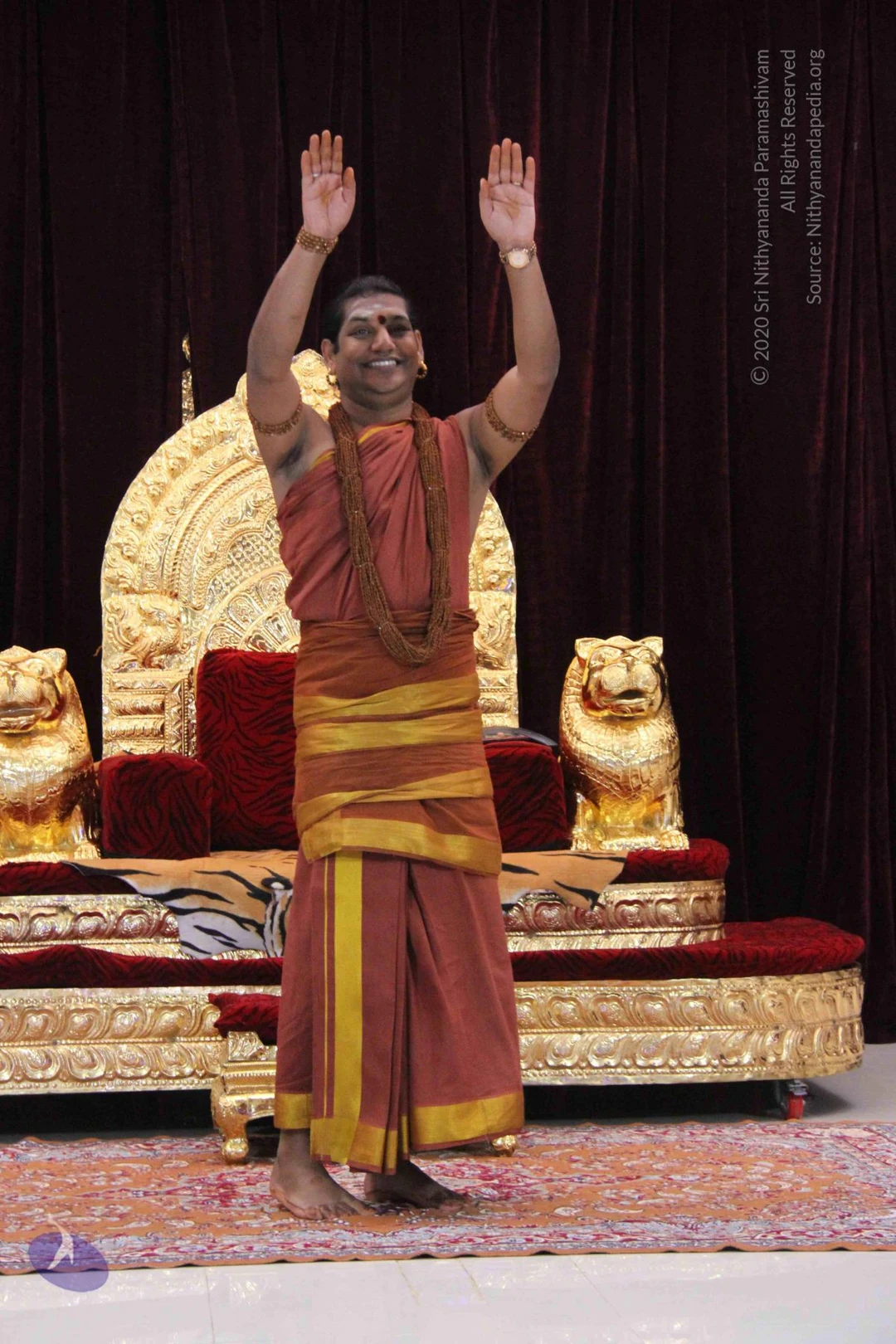
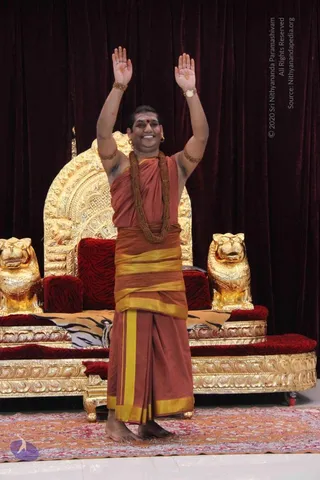
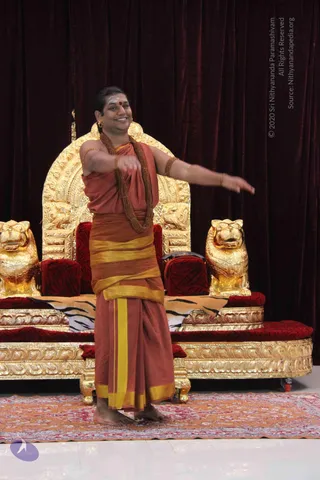
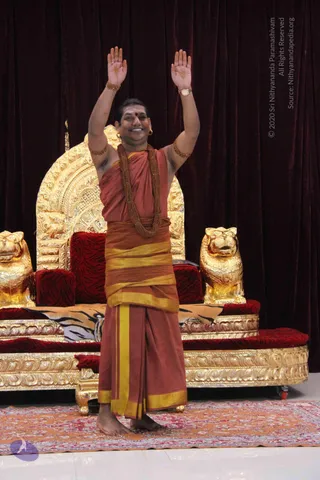
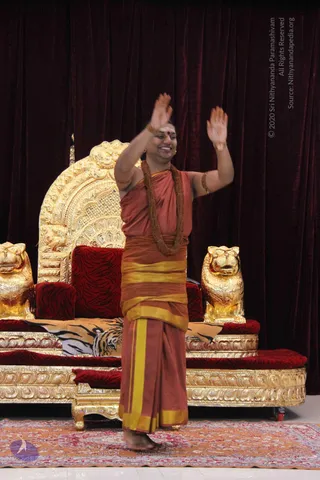
A man stands barefoot on a patterned rug before an ornate golden throne with carved lion-head armrests and a red tiger-striped cushion, against deep maroon velvet drapes. He raises both hands palm-outward in a blessing gesture, smiling. He wears a rust-orange dhoti and shawl with gold borders, a brown rudraksha mala, gold bangles and a wristwatch, and a red bindi on his forehead. The a person cues are the ceremonial throne setting, orange ceremonial clothing and rudraksha mala, though his appearance is not fully distinctive; he is shown as a speaker or host in this stage setting.

NKY-Session

49 photosSource gallery
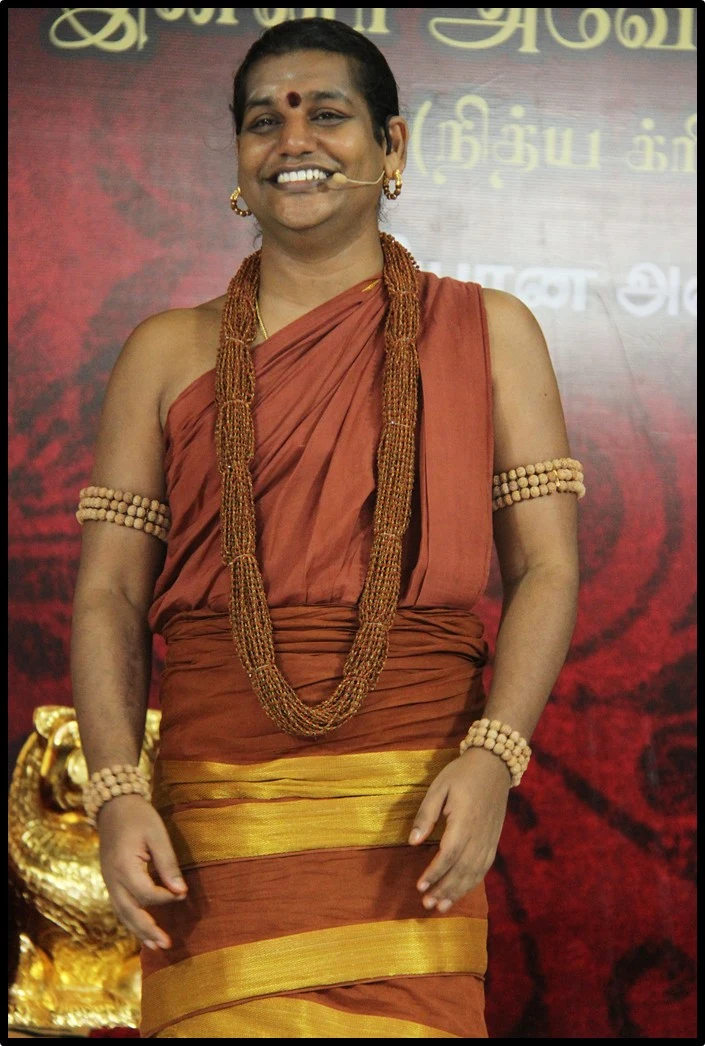
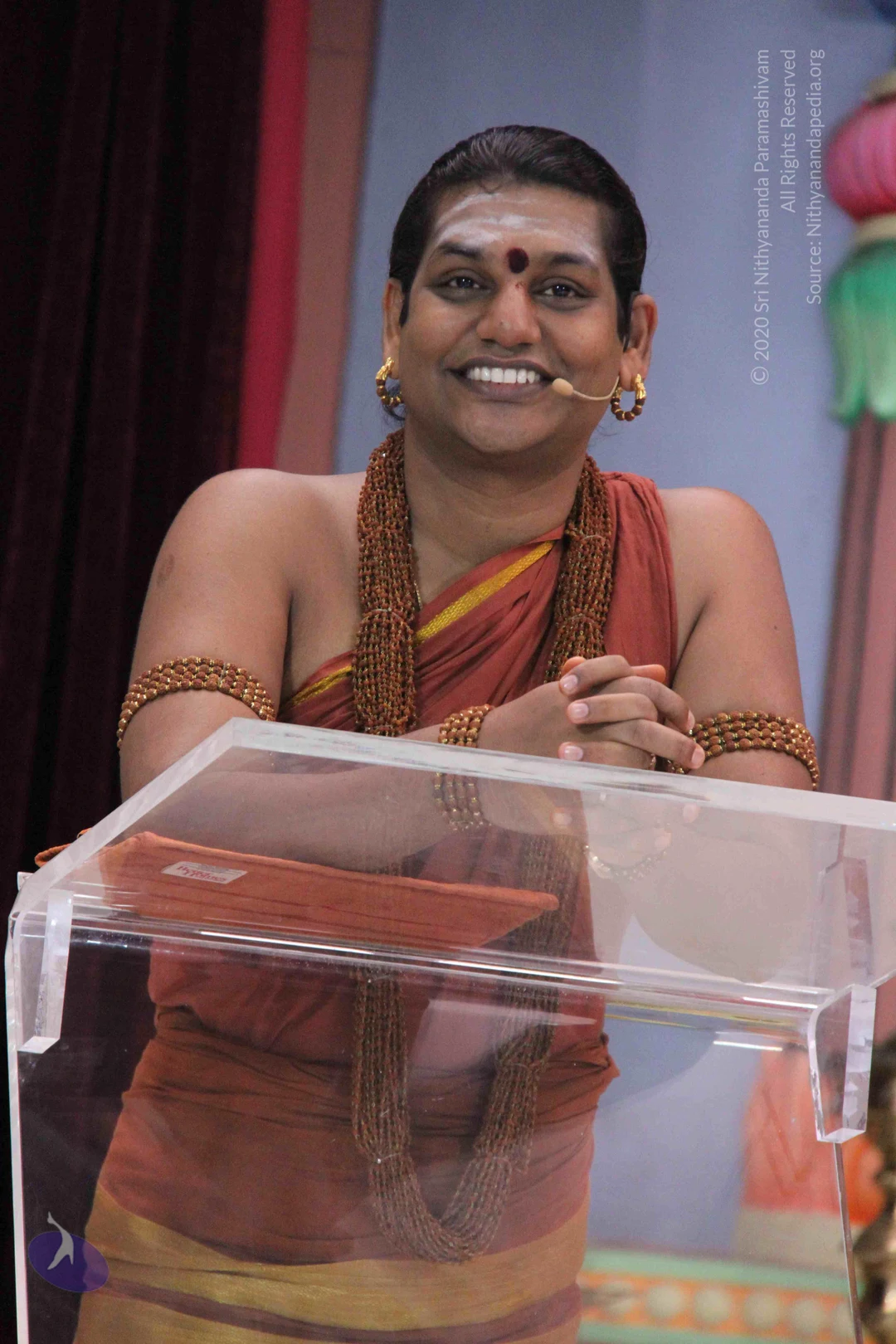
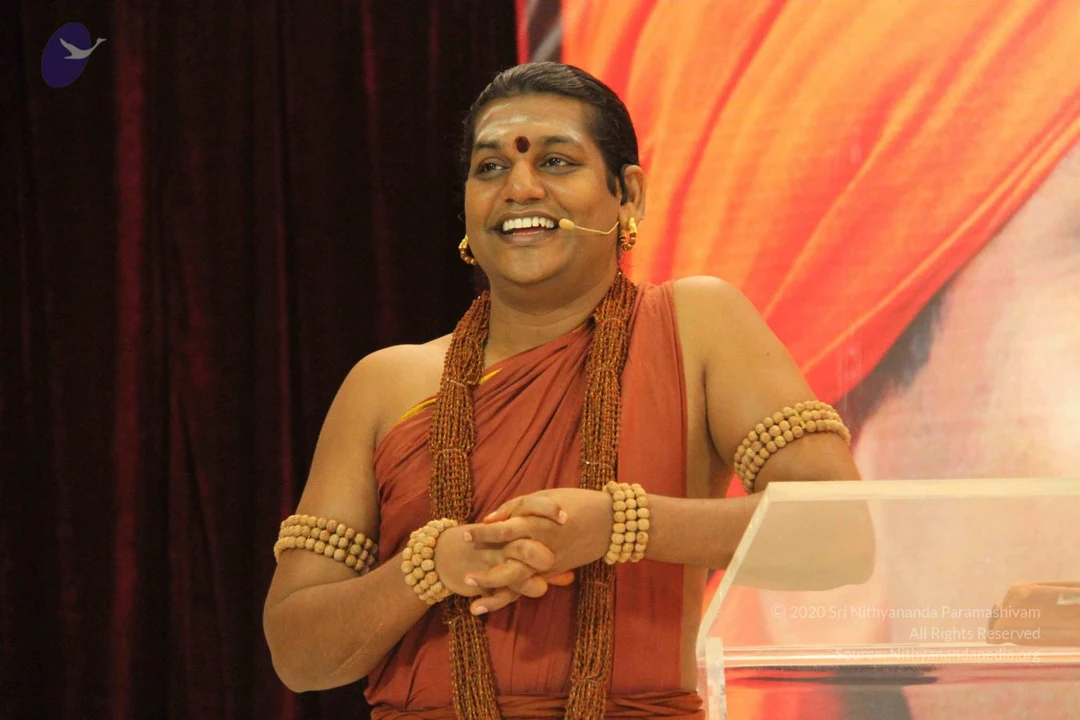
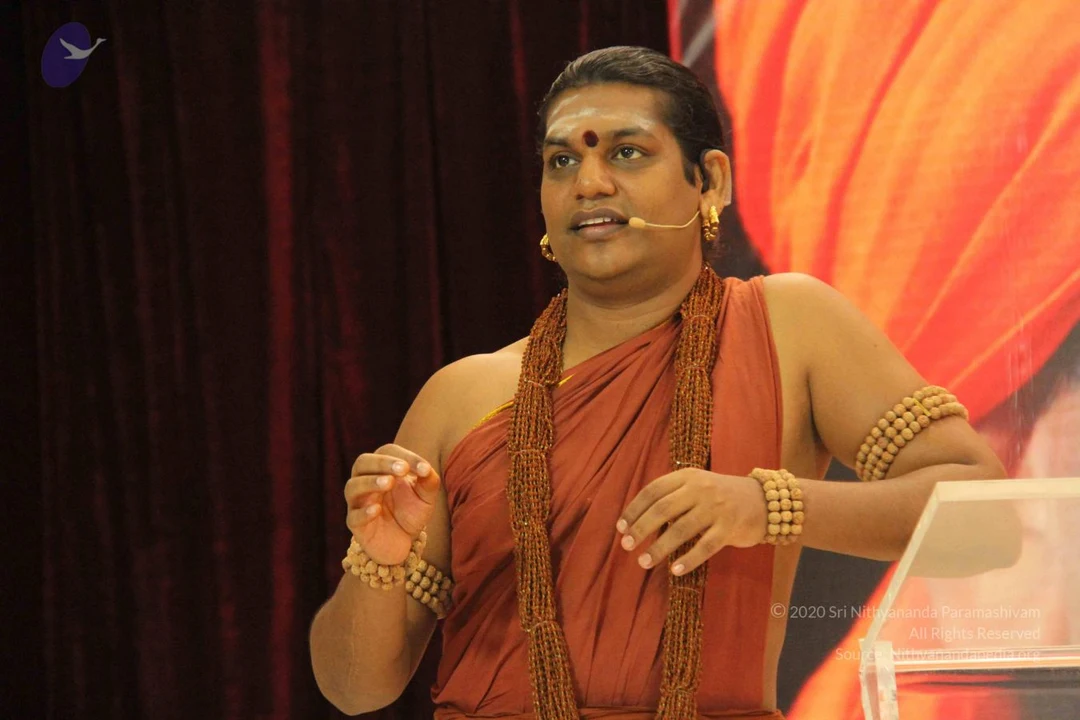
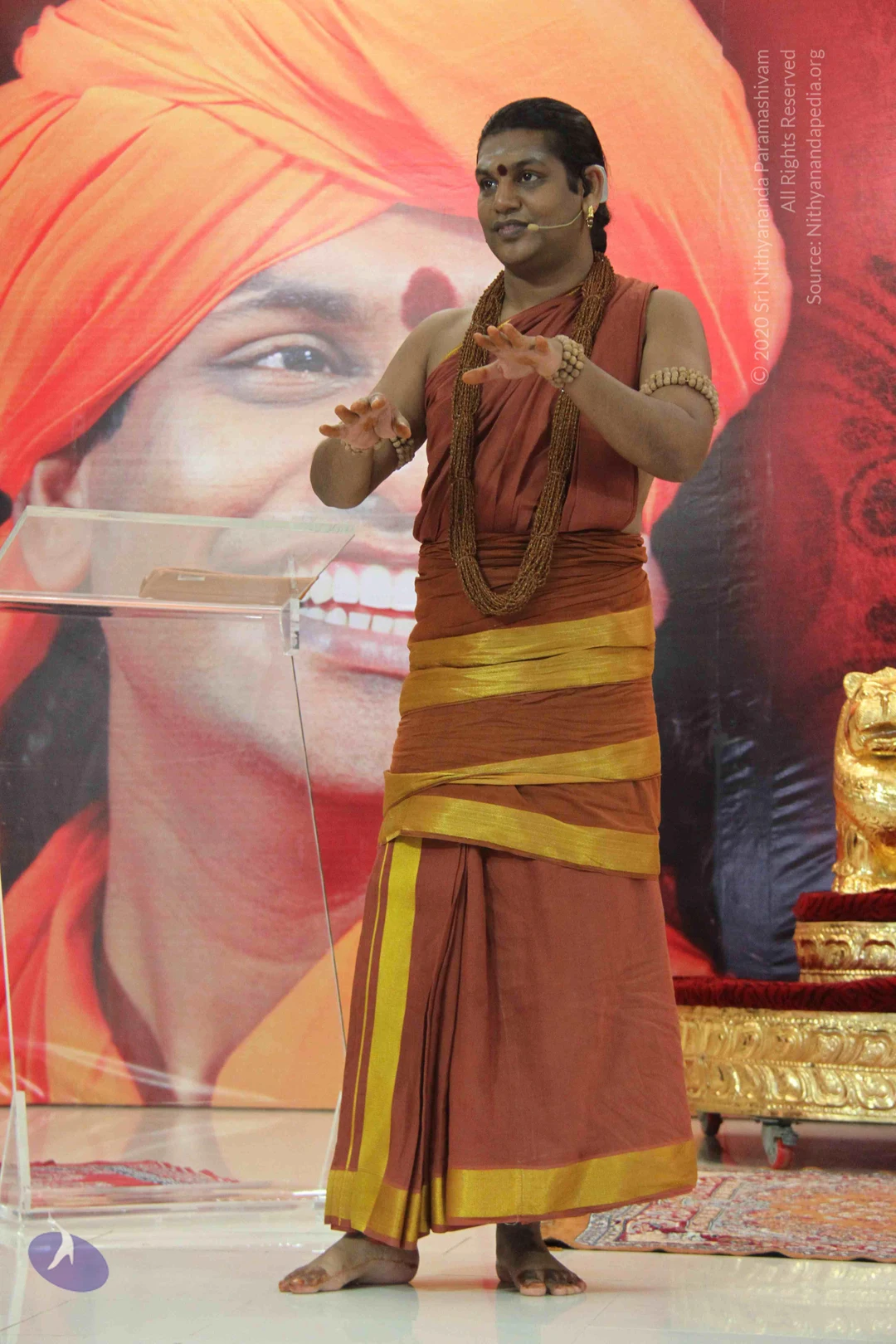
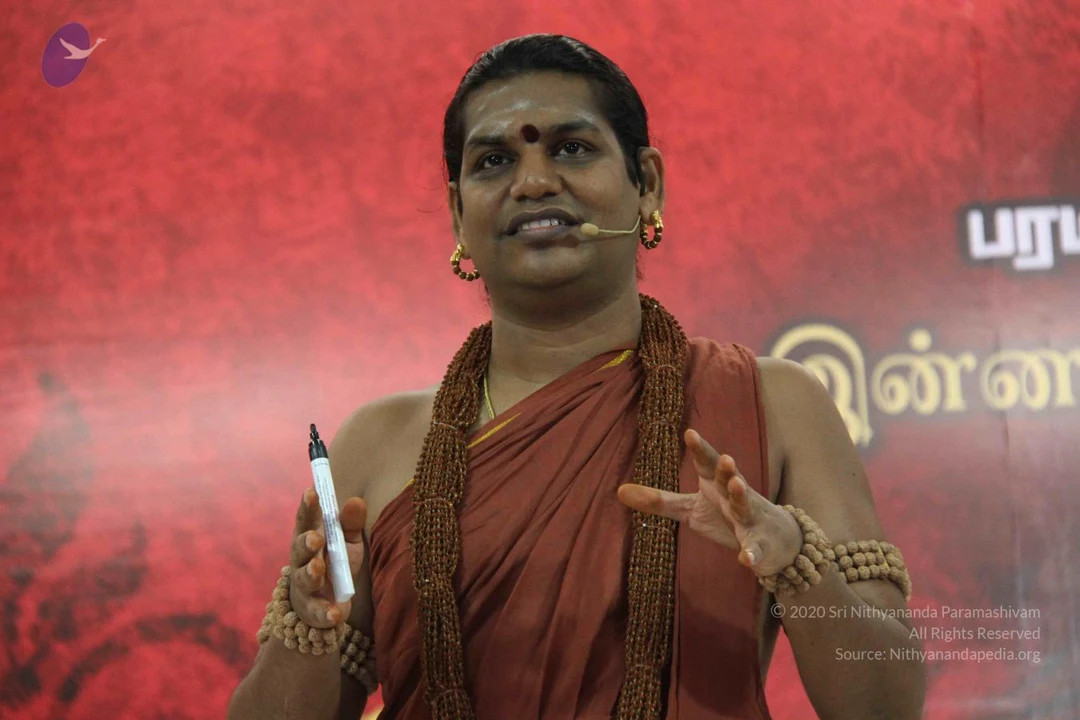
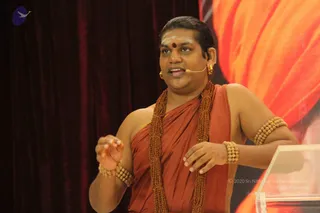
A smiling man in a rust-orange sannyasi wrap stands behind a clear acrylic lectern on a stage, hands clasped at his waist. He wears a red bindi, a rudraksha mala across his chest, rudraksha bracelets on both wrists and upper arms, gold earrings, and a headset microphone. A large orange drape and dark red curtain form the backdrop, with a partly visible printed portrait on the right. Is a discourse setting; a person candidate, cued by the orange robe, rudraksha malas and bracelets, and ornate gold earrings.A man stands at a clear acrylic lectern in front of a dark red velvet curtain and a large orange backdrop, speaking into a small headset microphone. He wears a rust-orange draped robe over his shoulders, with multiple strands of rudraksha beads around his neck and matching rudraksha bracelets on his wrists and upper arm. A red bindi marks his forehead, and gold earrings hang from his ears. His hands are raised in an explanatory gesture. a person is shown in this discourse setting, with appearance cues of rudraksha malas, orange robes and ornate gold earrings.A man in a rust-orange draped garment speaks at a clear acrylic podium in front of a deep maroon curtain and an orange backdrop. He wears long multi-strand rudraksha malas around his neck, rudraksha bracelets on his wrists and upper arms, gold hoop earrings, and a red bindi on his forehead, with a small headset microphone at his cheek. His hands are gesturing as he addresses an audience.A man stands at a clear acrylic lectern on a stage, speaking into a small headset microphone. He wears a rust-orange unstitched robe draped over one shoulder, with long layered rudraksha-style bead malas around his neck and matching beaded bracelets on both wrists and upper arms. He has a red bindi on his forehead and his hands are folded together at his waist. Behind him is a large orange drape and dark red curtains. a person: long swept-back hair, rudraksha malas and a rust-orange robe match the cues for the teacher named on the page, but the appearance is not conclusive enough to confirm.A man in rust-orange sannyasi robes stands at a clear acrylic lectern on a stage, smiling with his hands clasped at his waist. He wears a red bindi, a thick multi-strand rudraksha mala across his chest, and matching rudraksha bracelets on his wrists and upper arms, plus gold earrings and a small headset microphone. A large orange drape and a dark maroon curtain form the backdrop. The scene reads as a discourse setting, with a speaker addressing an audience.A man stands barefoot on a white stage beside a clear acrylic lectern, speaking into a headset microphone with both hands raised in an explanatory gesture. He wears a rust-brown dhoti and shawl edged and banded with gold, with a red bindi on his forehead, layered brown beaded necklaces and beaded armbands. Behind him a large backdrop shows a smiling face beneath an orange turban. At right, a golden lion-shaped throne with a red cushion sits on a gold-trimmed base. a person cues: a discourse on stage with a saffron turban in the backdrop and rudraksha-style beaded malas; he is presented as a speaker at a satsang-style discourse.

PadukaPuja-CrowdShots

46 photosSource gallery
A golden ornate throne stands against a black backdrop with a tiger-skin cloth draped over its seat and two golden lion heads on the armrests. Above the seat hangs a framed painted portrait of a smiling man with a saffron-orange turban and orange shawl, labelled "PARAMAHAMSA NITHYANANDA" on the frame's caption. Hanging brass oil lamps, bells and chains decorate the sides. In front on a golden table sit silver plates of offerings with red flowers, marigolds and a small flower garland. No physical people are visible in the scene.A photo of an offering arrangement on an ornate gold-toned altar or throne in front of a heavily embossed gold backdrop. Silver bowls and plates are arranged in tiered rings holding red roses, yellow marigold petals and white flowers. A central heap of red and yellow flowers and a white floral garland sit among the bowls, with silver pots and a silver vessel with a leaf sprig on the right. No people are visible, so the scene shows ritual flower offerings laid out before the seat.A photograph of an ornate gold-toned tray arrangement set out as a ritual offering. Several silver-coloured bowls and dishes sit on round trays around a central flower arrangement of red roses, yellow marigolds and white blossoms. Small pools of orange liquid, a few cups of yellow petals and a small silver vessel with a flower are visible, with a golden decorative base beneath. No people are visible in the scene.Close-up photograph of a silver ritual conch shell (shankha) with ornate engraved patterns, topped with a large red rose and white petals, with green leaves at right. Blurred red and yellow flowers fill the background. No people are visible and no a person candidate appears in the frame.Close-up photograph of a ritual tray of polished silver bowls with repoussé floral scrollwork, set on a silver plate. The bowls hold water and a central silver cup of yellow and red flowers, with a red rose on top. Red and yellow rose petals and white blossoms are scattered across the tray, with a silver kalasha-style vessel and a small silver container behind. Gold-toned temple decoration blurs in the background. No people are visible.Close photograph of an ornate silver ritual tray with scalloped rim and repoussé floral engraving, holding small silver bowls, red roses, yellow marigold-like flowers, a silver kalasha-shaped vessel with leaves, and a small folded paper packet. Behind it, a golden embossed backdrop with swirling patterns is visible. No people are present.

Temple
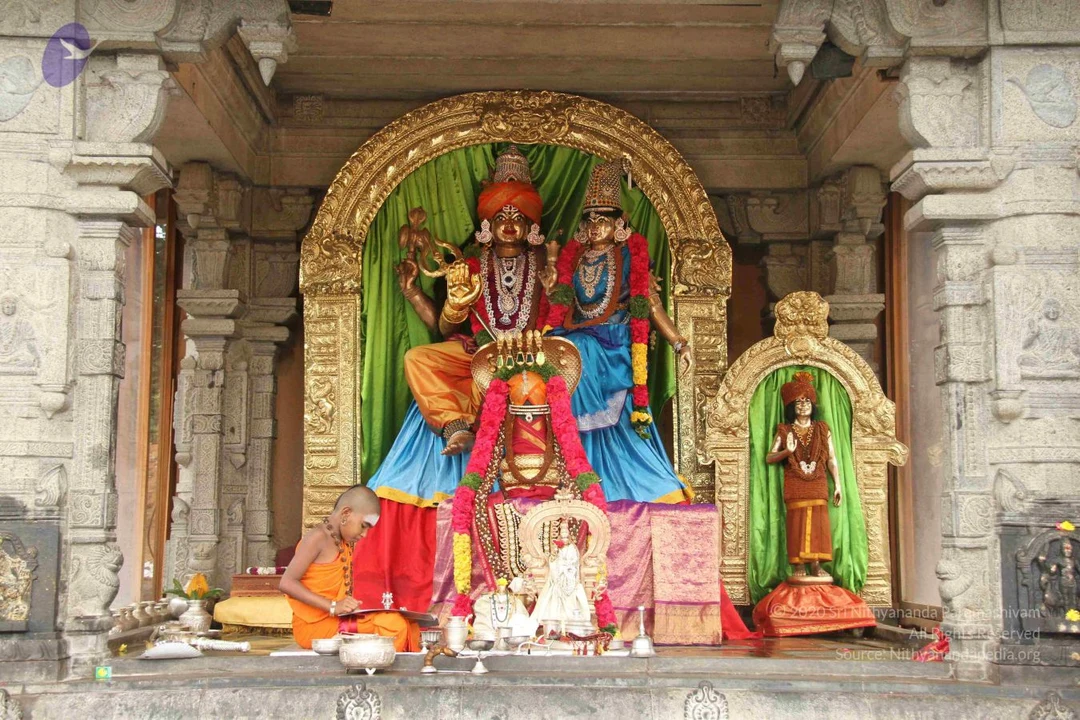
24 photosSource gallery
A photograph of an outdoor shrine with a stone arch framing two large deity murtis: a figure with a red-orange turban and a trident-like raised arm, and a figure in blue with a crown and garlands. A small linga-form image sits on a pedestal decorated with red and orange flower garlands. To the right stands a smaller figure in a green-curtained niche wearing a red cloth and a bead necklace. A shaved-headed priest in saffron-orange robes sits at lower left, reading from a sheet of white paper, with brass vessels and oil lamps before the shrine.A photograph of a temple shrine with carved grey stone pillars and a gilded arch framing green drapery. Two large painted deity murtis sit side by side on a raised platform: one male figure in an orange turban and orange dhoti holds a trident-like staff, and a female figure wears a blue skirt and crown, both with garlands of red and yellow flowers and beaded necklaces. In front, a shaven-headed young sannyasi in saffron-orange robes sits cross-legged, writing or reading from a palm-leaf or paper page. Silver lamps, a brass vessel and a kalasha-like offering stand on the platform, and a smaller standing figure in a shrine niche wears orange and garlands. A caption reads 'Nithyananda Paramashivam' and ''Two golden metal murti of deities seated against a green silk backdrop framed by an ornate gold arch. The figure on the left wears an orange turban and a crown-like headdress, holds a trident and a raised hand, and is adorned with a jewelled multi-strand necklace and a rudraksha-style mala. The figure on the right wears a jewelled crown with a blue garment, gold necklaces and bangles, with red flower garlands draped over both figures. These are statues, not living people, and no person is physically present.A temple shrine interior with a large golden arch framing a green curtain. Two painted or sculpted deity figures stand behind a central pedestal: the figure on the left wears an orange turban and holds a trident, while the figure on the right wears a tall crown and blue garment, both draped in red and pink flower garlands and layered necklaces. In front of the deities a bald young sadhu in orange robes sits cross-legged at a low wooden desk, writing in an open book. Brass pots, a kalasha-style vessel and flower offerings are arranged on the platform, and a smaller standing statue in orange robes and rudraksha beads stands in a niche at right. Pulled from the page, the ritual setting appears to be a temple puja space.A small golden-toned deity murti of a goddess seated on a carved golden arched throne. She wears a jewelled crown set with red and green stones, a red sari with gold brocade and green-bordered pleats, a red shawl draped over the head and shoulders, and multiple strands of red and pearl beads with gold necklaces. Behind the figure is an ornate gold frame, with a grey stone pillar at the right edge and a red and white railing in the background.A photograph inside a temple shrine. In the foreground a shaved-headed young priest in an orange saffron robe and white forehead markings sits cross-legged on the floor, reading from a loose sheet of paper while his hand rests near ritual vessels. On the altar, a silver kalasha-style pot, a silver bowl, small brass dishes and an offering tray with flowers and a red cloth are arranged. Behind them stand two large gilded deity murtis under a golden arch with green curtains, one in orange and red, the other in blue, both garlanded with red and yellow flowers. A smaller standing figure in a brown tunic and orange dhoti with folded hands stands in a niche to the right. A silver handbell sits at the lower right.

NithyaSatsang-Pictures

19 photosSource gallery
A photograph of a seated man in saffron-orange robes on an ornate gold throne with a tall arched back and carved lion-head armrests, sitting on a red velvet cushion over a tiger-striped rug. He wears a rudraksha mala with a second strand of beads, gold bangles, and a red mark on his forehead, and smiles with his hands folded in his lap. Flanking the throne are two large painted deity statues with gold crowns, orange-red skin, gold necklaces and armbands, one holding a flame and the other a staff. A wooden door stands behind. a person is seated in person, identified by the saffron robes, rudraksha malas and ceremonial gold necklace; he is the only physical person visible.A smiling man sits on an ornate gold throne with carved lion figures and a red cushioned seat. He wears an orange-red shawl over bare shoulders, a long rudraksha mala, gold armbands and a small microphone headset. He has a white vertical forehead mark with a red dot and a broad smile. Behind him is a large gilded arched backrest with intricate floral and scroll carvings.A smiling man seated on an ornate gilded throne with a red-cushioned seat and carved golden lion-like finials, wearing a saffron-orange shawl over the shoulder with a yellow edge, long gold-beaded rudraksha-style necklaces, and gold armlets. He has white vertical tilak marks on the forehead and a red bindi, and a small headset microphone is visible near his face. The background shows a red and orange patterned hanging. Appearance-based label: Swamiji (probable) seated for a discourse, with distinctive saffron clothing, ornate gold necklaces and a crown-like golden throne backdrop.A man with closed eyes sits with palms pressed together in namaste at chest level on an ornate gold throne with a carved arched back featuring lion-like figures. He wears an orange-red saffron cloth draped over the shoulders, multiple strands of wooden beads and gold chains, gold armlets and earrings, and a white forehead marking. Red velvet cushions with dark stripes line the seat.A smiling man with a shaved head, red bindi and long rudraksha-style beaded necklaces sits on an ornate gold throne with carved lion-head arms and a red velvet seat, draped over a striped tiger-skin cushion. He wears a saffron-orange robe with a yellow border and gold armbands, his hands resting gently on his lap. Flanking the throne are two painted, gold-adorned deity murti figures with multiple arms holding ceremonial objects, in a temple-like setting with a carved wooden door behind. a person seated in ceremonial saffron attire, presiding on the throne as a teacher during a discourse.A seated man in an orange-red robe with a yellow-trimmed saffron cloth wears a rudraksha mala and gold bangles, smiling and gesturing with one hand while seated on a large gold throne with lion-head armrests and a red velvet cushion over a striped tiger-skin mat. Two gilded and painted deity murti flank the throne with raised arms and headdresses, and a golden arched backdrop frames the scene. The setting suggests a discourse stage.

SarvaDarshan-Pics

23 photosSource gallery
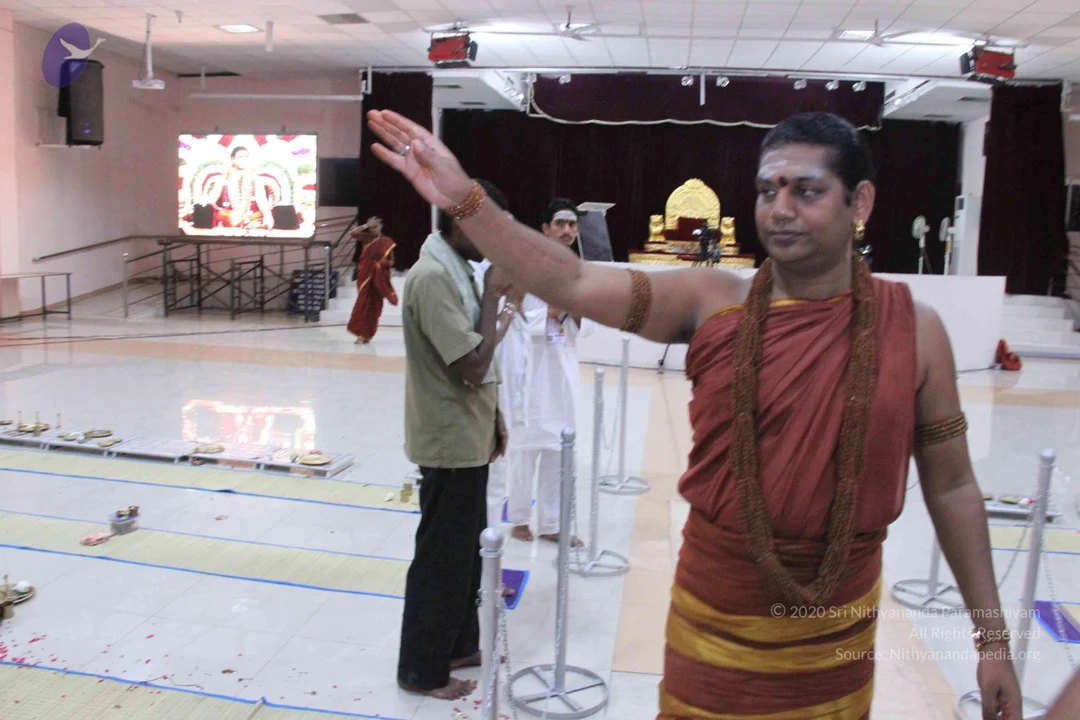
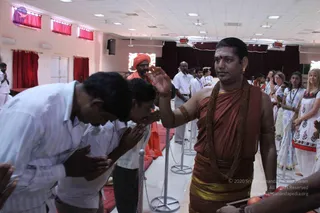
Photograph in a large hall with white tiled floor and maroon curtains. In the foreground a man in a rust-orange and gold-bordered dhoti-style garment with a long beaded rudraksha-type mala raises his right arm in a blessing gesture, with a red bindi on his forehead and orange bangles. Behind him a man in a green shirt and dark trousers stands near white-clad attendants, and a figure in orange robes walks near a gold-and-red throne on a raised stage. A large screen shows a deity or saint figure with a flower garland. Rows of brass plates and offerings sit on mats along the floor, with scattered flower petals. Several people are visible, roughly 5 to 6 in total.A photograph in a hall with white tiled floor and red curtains. A man in a red-orange dhoti and shawl with a long rudraksha mala raises his right hand in blessing toward a bowing devotee. The devotee wears white and a blue lanyard, hands pressed together, bowing low. To the left, an older man in white shirt and glasses stands with palms joined in namaste. Behind them, other white-clad devotees bend forward and a gold throne stands in the background beside a screen showing a colourful deity image.Indoor hall with red curtains and a golden ornate throne on a raised stage in the background. In the foreground, a man in a rust-red sannyasi robe with a long beaded rudraksha-style mala and gold waist sash raises his right hand in blessing toward a older man in a white shirt and grey trousers who bows with palms pressed together. Beside him a man in white kurta with a saffron-and-blue lanyard stands with hands folded. Several devotees in white and orange clothing stand along barrier posts, and a figure in white bends low near the floor. Fruit is visible at the lower right.A photo in a hall with red curtains and a ceiling projector screen showing a figure in red and gold. In the foreground a man in an orange saffron turban and orange robe bows low, his hands raised, and places his hand on the head of a younger man in a rust-brown dhoti and shawl with a long rudraksha mala and gold armband. Behind them men and women in white garments, some wearing lanyards, stand near metal stanchions with red mats on the floor; a golden throne-like seat is visible at the back. Apples lie in the bottom right corner. The bowing elder wears distinctive orange-saffron clothing and turban; the younger man wears rudraksha beads. Identity is unsure from appearance.A photograph in a bright hall with red curtains and red mats. In the foreground, an elderly man in saffron-orange robes and a matching orange head wrap bows forward, hands together, while a younger man in a maroon-brown dhoti-style garment, with a tiered rudraksha-style mala necklace, gold-toned bangles and a yellow sash, reaches out to touch the bowing man's head in blessing. Behind them, men in white dhoti and shirts and women in white stand along metal stanchions and chains. A projection screen shows a painted deity image, and a gold figure sits on a stage at the back.A photograph in a hall with red curtains and a screen showing a deity image. A man in an orange-red robe with a long rudraksha-style gold-beaded mala and gold bangles stands with his right palm raised, facing an elderly saffron-clad monk with an orange turban who bows low with hands together. Behind them, a man in a white shirt and grey trousers and several people in white garments watch, and a row of people stands at a barrier on the right. Gold bangles and a red bindi are visible on the standing man, and a small gold object sits on a stand in the background.

NKY-Session-Pictures

55 photosSource gallery
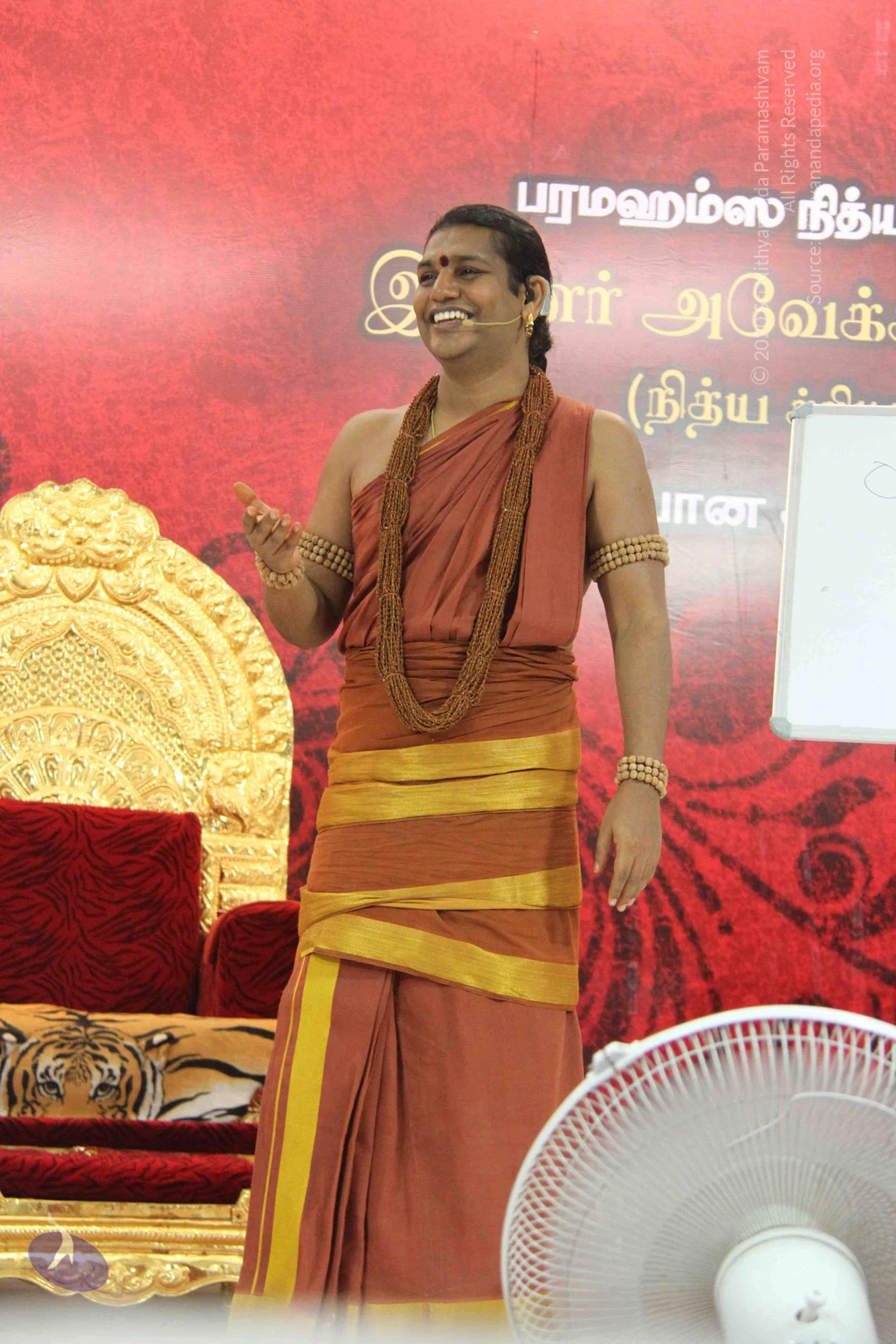
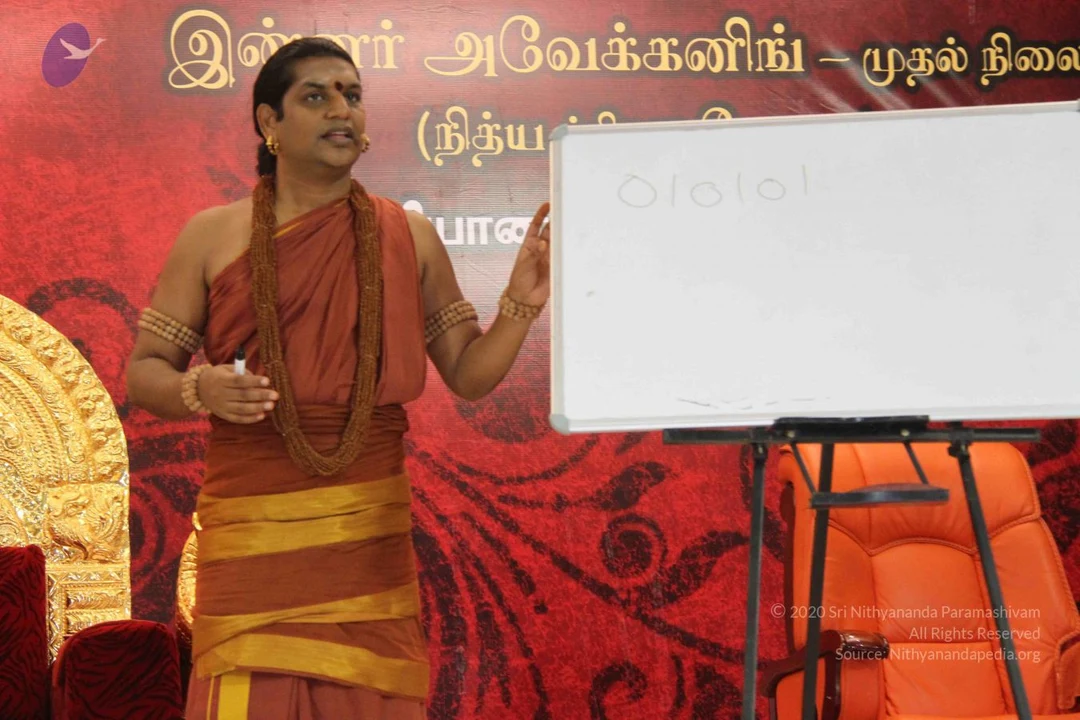
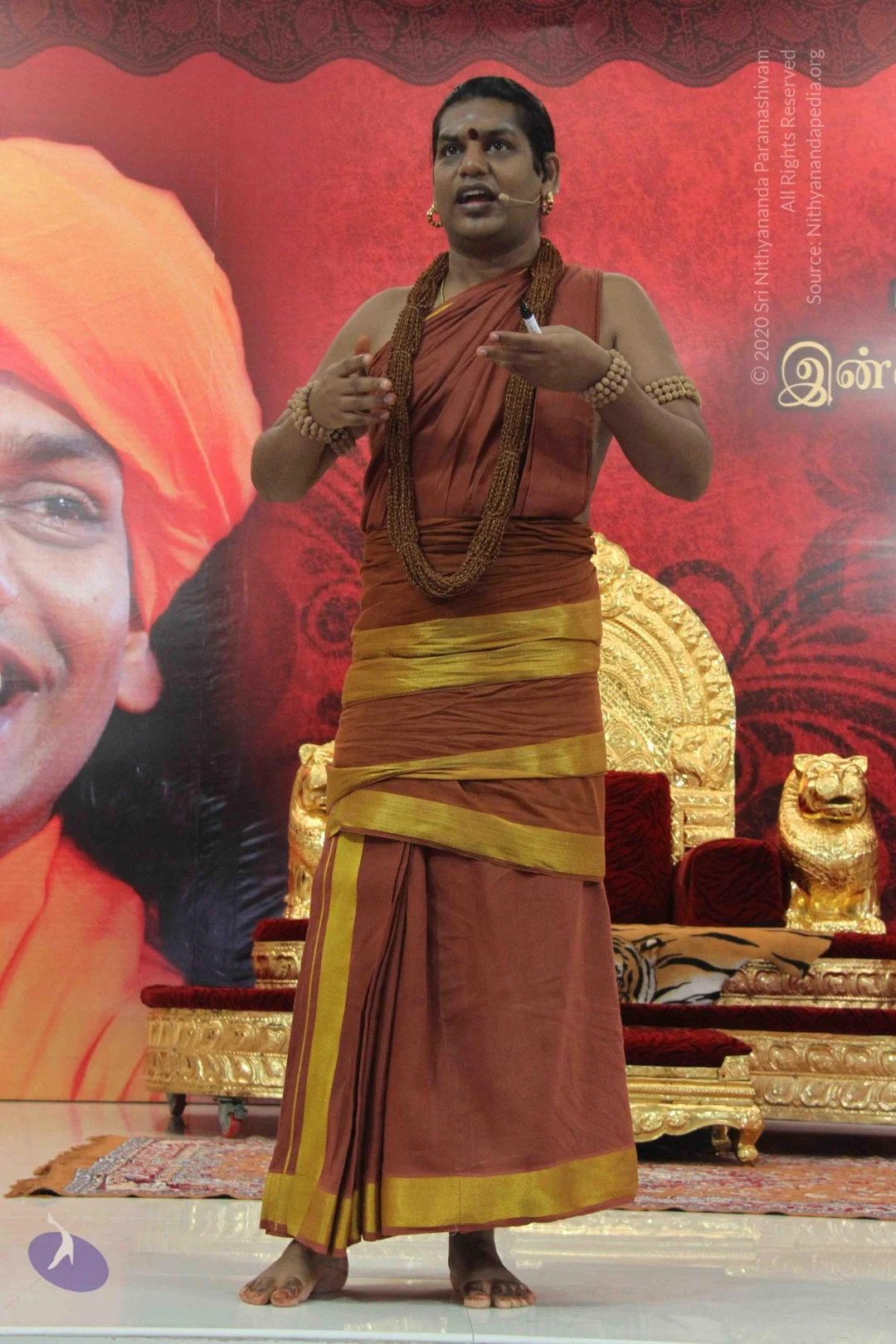
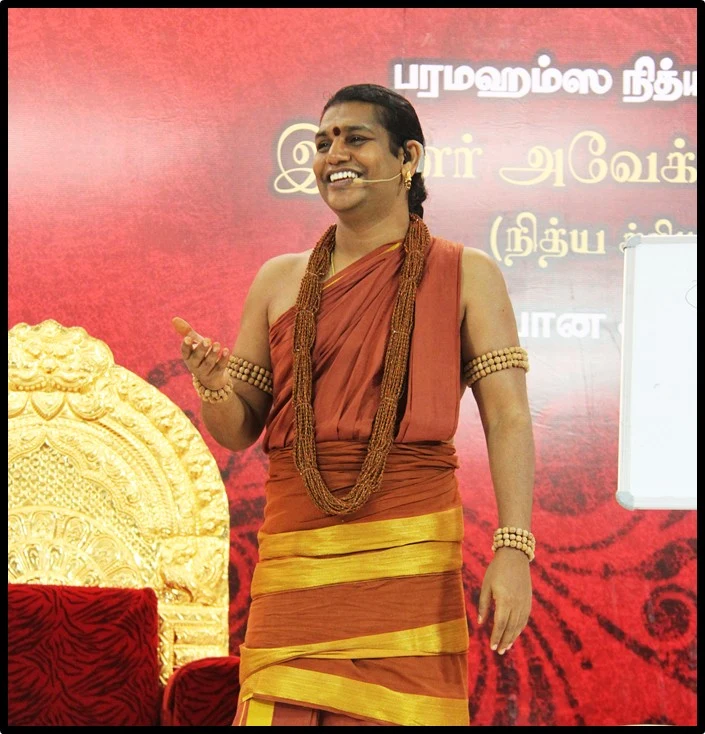
A smiling man in a rust-orange sannyasi wrap stands behind a clear acrylic lectern on a stage, hands clasped at his waist. He wears a red bindi, a rudraksha mala across his chest, rudraksha bracelets on both wrists and upper arms, gold earrings, and a headset microphone. A large orange drape and dark red curtain form the backdrop, with a partly visible printed portrait on the right. Is a discourse setting; a person candidate, cued by the orange robe, rudraksha malas and bracelets, and ornate gold earrings.A man stands at a clear acrylic lectern in front of a dark red velvet curtain and a large orange backdrop, speaking into a small headset microphone. He wears a rust-orange draped robe over his shoulders, with multiple strands of rudraksha beads around his neck and matching rudraksha bracelets on his wrists and upper arm. A red bindi marks his forehead, and gold earrings hang from his ears. His hands are raised in an explanatory gesture. a person is shown in this discourse setting, with appearance cues of rudraksha malas, orange robes and ornate gold earrings.A man in a rust-orange draped garment speaks at a clear acrylic podium in front of a deep maroon curtain and an orange backdrop. He wears long multi-strand rudraksha malas around his neck, rudraksha bracelets on his wrists and upper arms, gold hoop earrings, and a red bindi on his forehead, with a small headset microphone at his cheek. His hands are gesturing as he addresses an audience.A man stands at a clear acrylic lectern on a stage, speaking into a small headset microphone. He wears a rust-orange unstitched robe draped over one shoulder, with long layered rudraksha-style bead malas around his neck and matching beaded bracelets on both wrists and upper arms. He has a red bindi on his forehead and his hands are folded together at his waist. Behind him is a large orange drape and dark red curtains. a person: long swept-back hair, rudraksha malas and a rust-orange robe match the cues for the teacher named on the page, but the appearance is not conclusive enough to confirm.A man in rust-orange sannyasi robes stands at a clear acrylic lectern on a stage, smiling with his hands clasped at his waist. He wears a red bindi, a thick multi-strand rudraksha mala across his chest, and matching rudraksha bracelets on his wrists and upper arms, plus gold earrings and a small headset microphone. A large orange drape and a dark maroon curtain form the backdrop. The scene reads as a discourse setting, with a speaker addressing an audience.A man in rust-orange and yellow robes stands before a red backdrop bearing Tamil text and a gold ornate chair edge at left. He wears a wooden bead necklace, beaded armbands and bangles, a red bindi and a headset microphone, and gestures with his raised right hand while holding a marker. Beside him a whiteboard shows the handwritten binary sequence 010101 on an easel, and an orange leather chair sits at right. a person is the presenter, seen teaching in front of the banner.
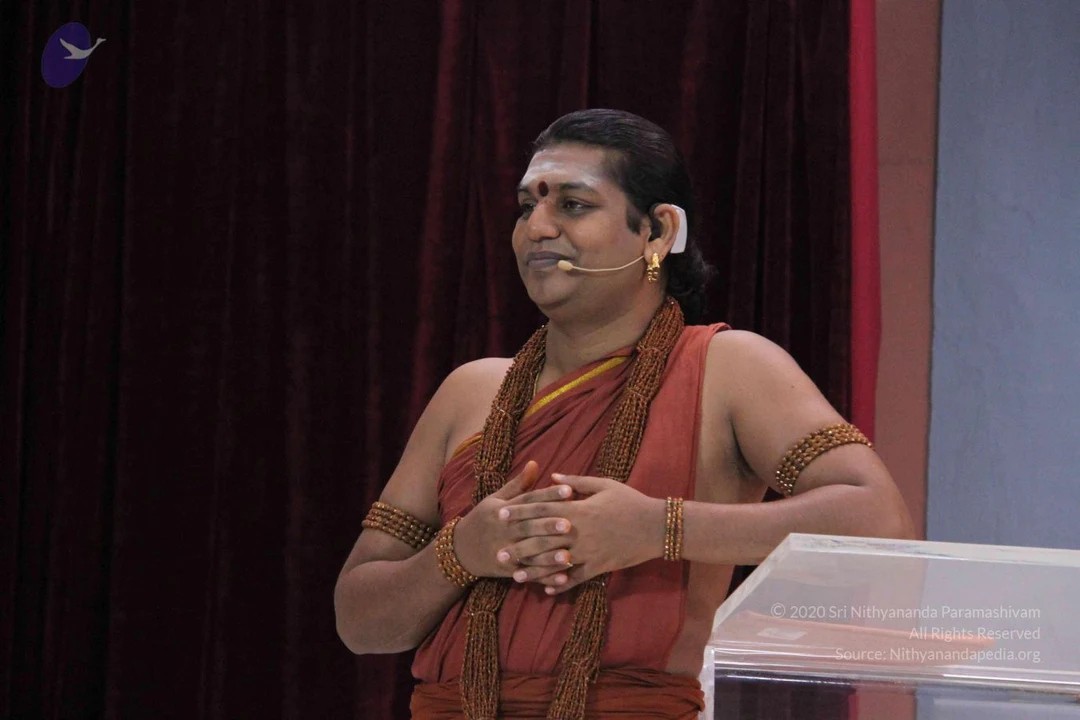
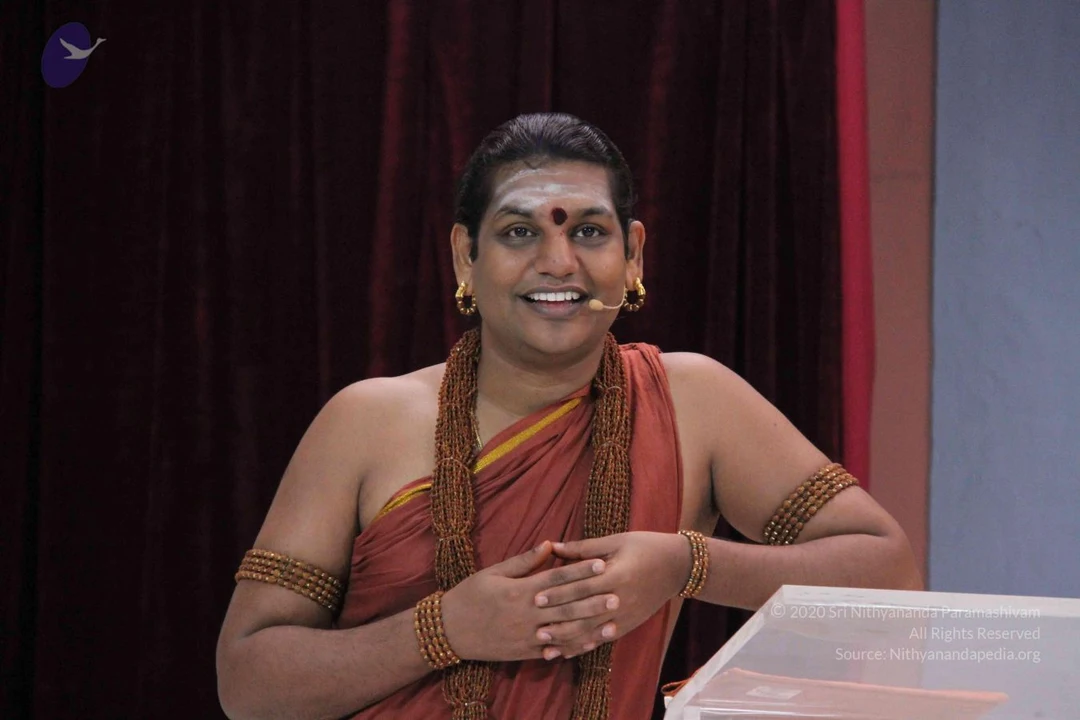
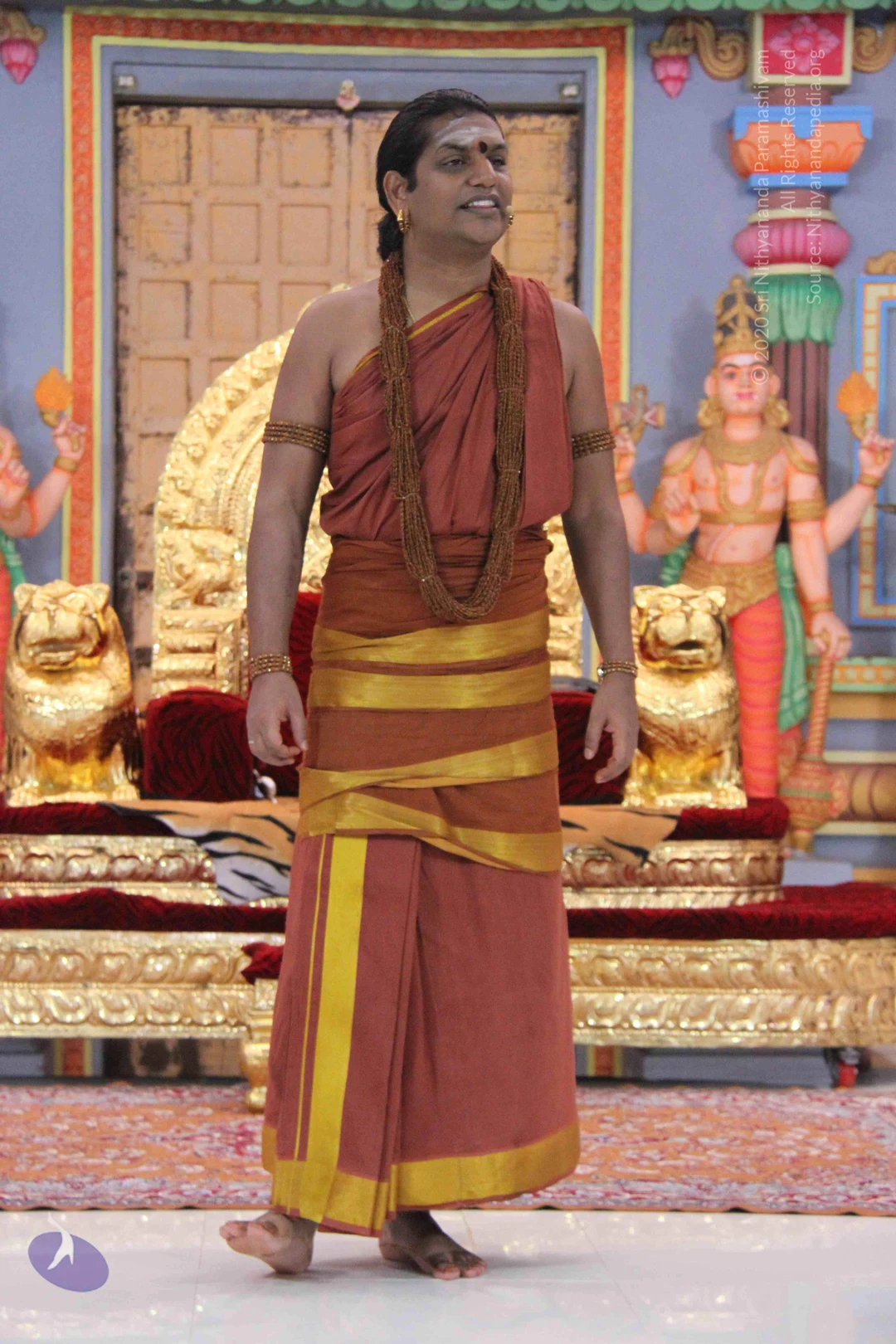
PadukaPuja-CrowdShots

3 photosSource gallery
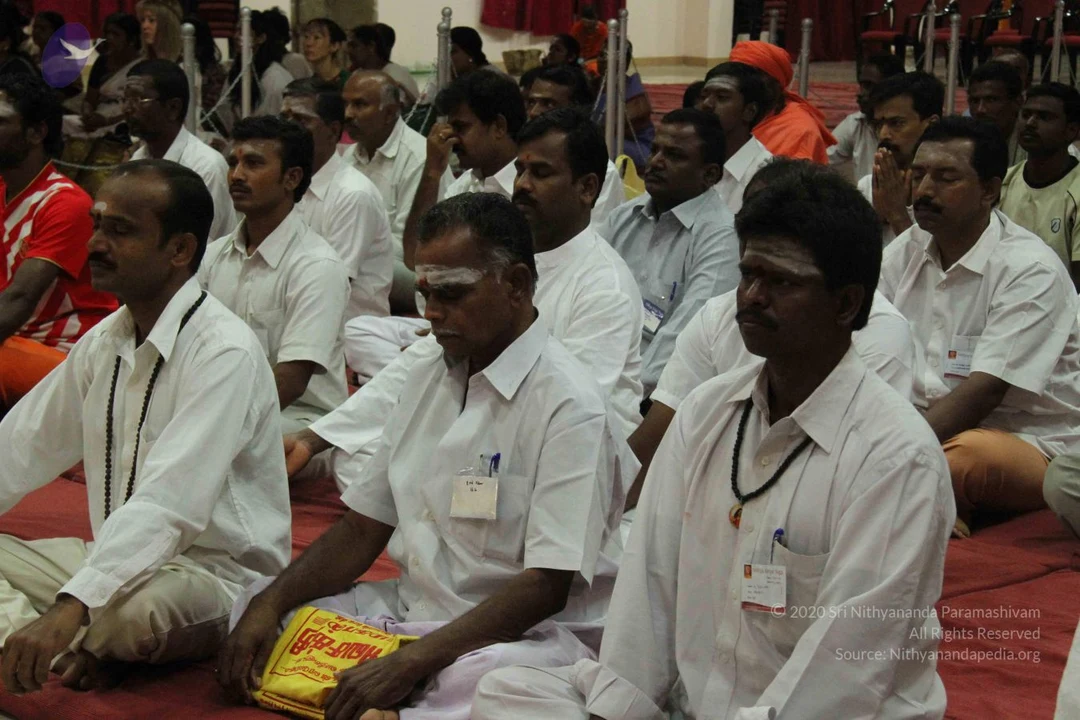
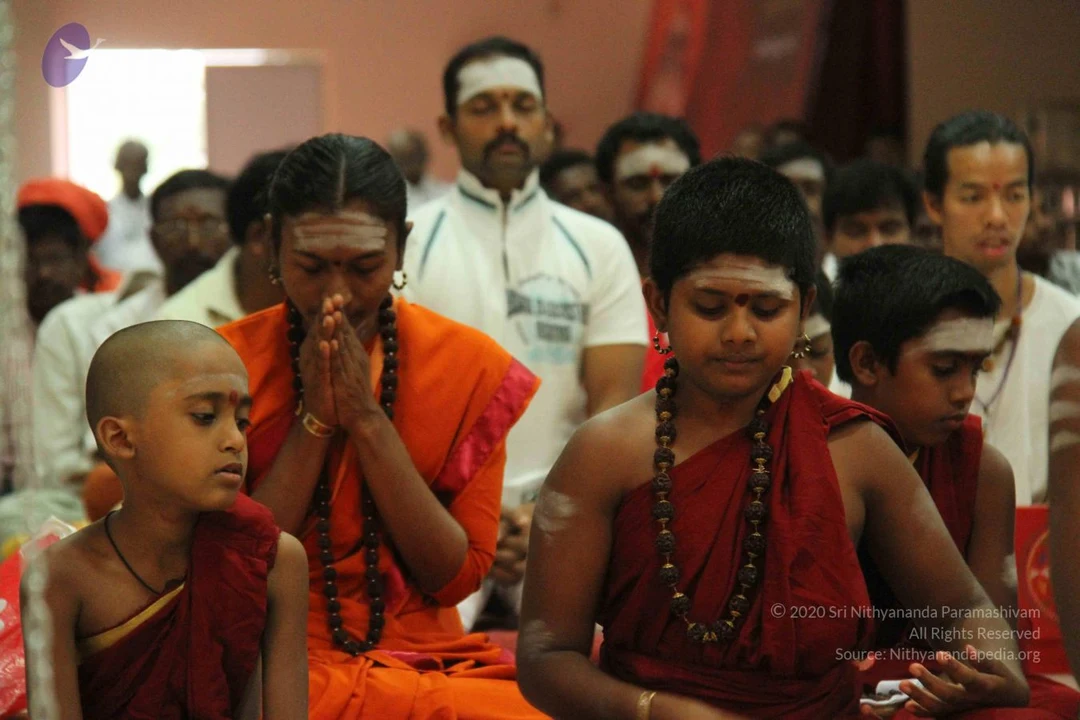
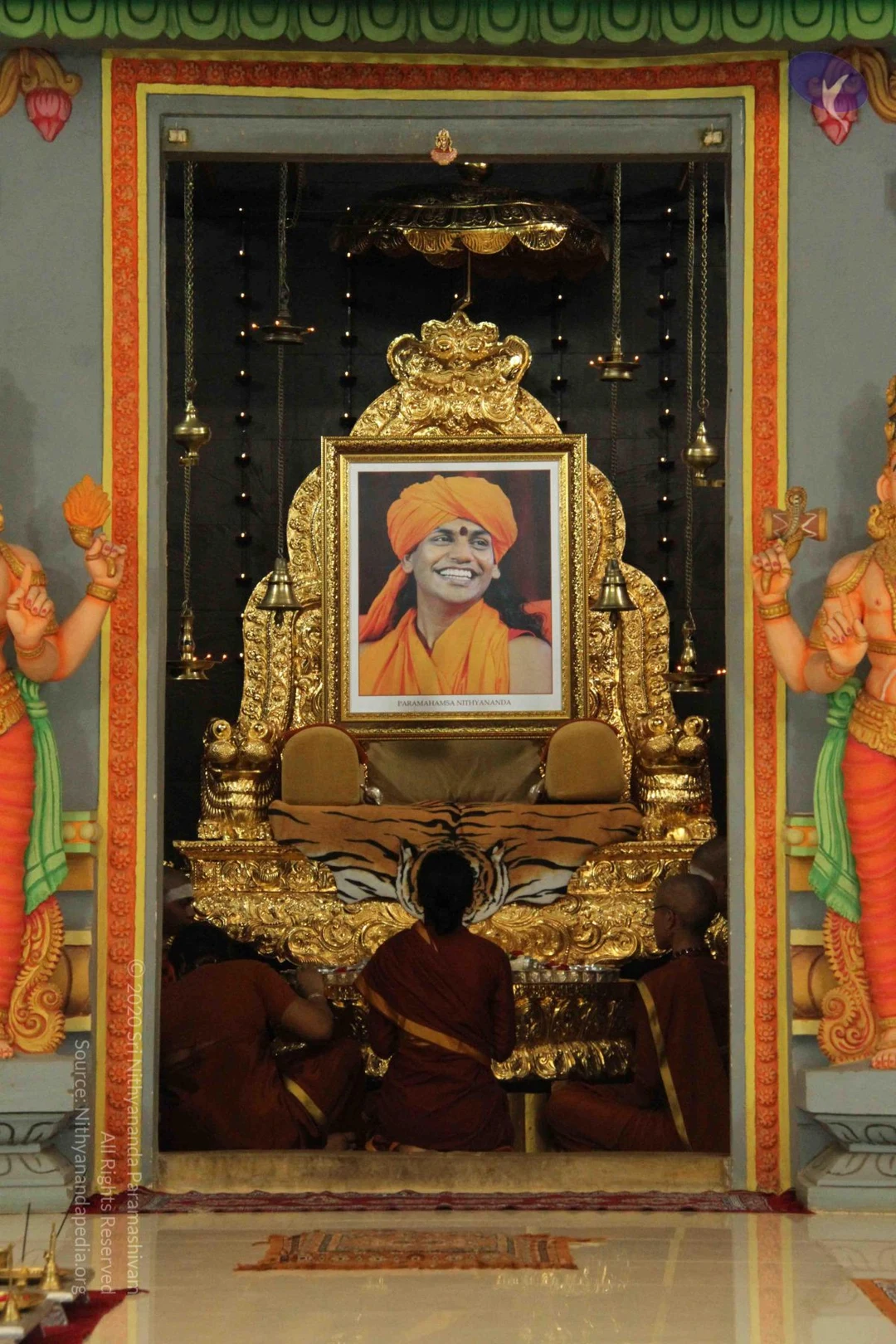
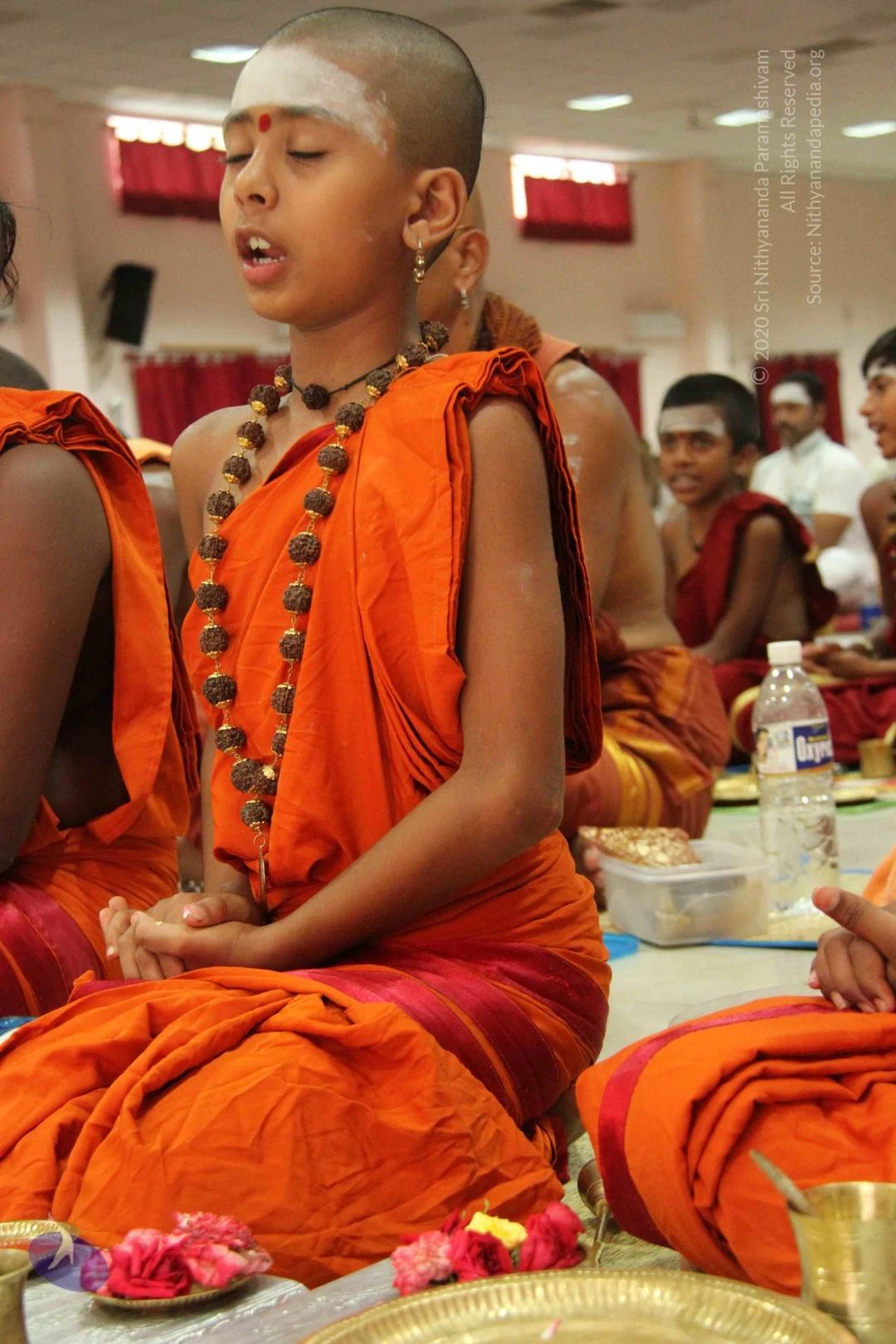
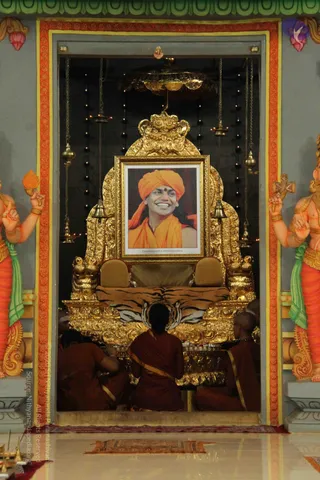
A golden ornate throne (peetha) with a tiger-skin cloth stands in a temple shrine framed by painted dvarapala guardian figures holding flaming torches and a trident. A framed portrait of a smiling man in an orange turban and orange shawl with a red bindi sits atop the throne, labelled "Paramahamsa Nithyananda" on the print. Hanging brass oil lamps and bells and strings of dark beads surround it. Three seated devotees in maroon and orange-bordered robes kneel in front of the throne with offerings and lamps, one with a shaved head at right. The scene is a devotional shrine setting.A photograph of a shaved-headed young boy seated cross-legged with eyes closed, chanting with mouth open and palms pressed together at his chest. He wears orange saffron robes with red borders and a long rudraksha mala with gold spacers, a white vibhuti line and red bindi on his forehead, and small earrings. Behind him, other boys in orange and red robes sit on the floor, one holding a clear water bottle and a plate of sweets. Brass plates hold pink and red flowers in the foreground, in an indoor hall with red curtains and fluorescent lights.A photograph of a shaved-headed boy in orange robes and multiple rudraksha malas, seated with eyes closed and holding a small offering in his cupped hands. Beside him, an older young man in a rust-coloured shawl and rudraksha malas sits with palms pressed together in namaskar. Both have white and red tilaka on their foreheads. Wisps of incense smoke rise in the air, and brass oil lamps and a conch-shaped object sit on the floor in front. Other seated devotees in white and maroon clothing are blurred in the background.

temple

4 photosSource gallery
A dark stone statue of a multi-armed deity sits in a carved white arched shrine framed by orange and white drapes. The figure wears a red turban and red dhoti, with a red shawl across the body, a rudraksha-style mala, a white flower garland and a pink-and-yellow flower garland. It holds a trident-like object and a drum-like implement in its upper hands, and its lower hands are folded in a mudra. A small figure lies beneath its feet on a carved pedestal, and scattered flower petals lie on the base. The setting is an outdoor shrine among green trees.A black stone statue of a four-armed deity stands in a white carved stone arch shrine under trees. The figure wears a red turban and red garment, with multiple garlands of pink, yellow and white flowers and a rudraksha-style necklace. It holds a trident and other ritual objects, and stands on a dark carved pedestal with a small figure beneath its feet. Orange and white cloth hangs behind it, with scattered flower petals at the base.A large black stone statue of a four-armed deity seated in a red cloth wrap and red head turban, decorated with rose and marigold garlands in pink and yellow, a white and brown bead necklace, and a gold chain. The statue sits in an arched white carved niche with an orange and gold draped backdrop, surrounded by green foliage. One hand holds a bell-like object, another a flower, and the figure is seated on a black carved base with a small figure at its feet. No people are visible; the statue is a deity murti, and the page's a person reference is not visually supported on the figure itself.Outdoor photograph of a blue cloth draped over a dark stone post or pedestal, with several strands of rudraksha beads, white pearl-like beads and gold-toned beads hanging over it. Red and yellow marigold garlands lie in the lower right corner on a dark stone surface, with blurred trees and reddish earth in the background. No people are visible; no a person candidate is present.

Nithya-Satsang-Pictures

33 photosSource gallery
A seated man with a white-and-red tilak on his forehead sits on an ornate gilded throne backed by a large golden arch carved with floral scrolls and lions. He wears a rust-orange, unstitched robe with a yellow-gold border, a long gold chain, gold bangles and gold armlets, and holds his palms together in namaste with eyes closed. He sits on a red and black tiger-striped cushion over a gold-trimmed platform.A smiling man stands at a clear acrylic lectern on a stage with dark red curtains, speaking into a headset microphone. He wears rust-red and saffron-toned draped robes with gold-edged bands wrapped at the waist, a long multi-strand rudraksha-style bead necklace, matching bead armlets and wrist bands, gold earrings, and a red bindi with white forehead markings. His hands are clasped at chest height. A brass oil lamp with a lit flame sits beside the lectern. Appearance suggests a person presenting a discourse, matching the page's account of a 2013 talk, though the visible cues are only moderately distinctive.A man stands at a clear acrylic lectern on a stage in front of dark maroon velvet drapes, speaking with a warm smile and hands clasped at his waist. He wears a rust-red garment draped over one shoulder with gold borders, a gold-striped red waist wrap, and multiple strands of rudraksha beads around his neck and upper arms, with beaded bracelets on his wrists. He has a white horizontal line marking on his forehead and a red dot between his brows, with swept-back dark hair. A brass oil lamp stands beside the lectern.A smiling man stands beside a clear acrylic lectern, speaking with his hands clasped at his chest, in front of a deep burgundy velvet curtain. He wears a rust-orange unstitched robe with gold-bordered wrap and draped sash, multi-strand rudraksha-style brown bead garlands around his neck, matching beaded armlets and bracelets, and a white vertical tilak with a red dot on his forehead, plus gold earrings. Brass oil lamps stand on a shelf at the lower right. The image is a photograph of a single speaker at a discourse setting. Appearance-based candidate for a person, due to rust-orange robe, rudraksha malas and ornate gold earrings, shown physically present at a discourse lectern.A smiling man in an orange-red sleeveless robe with a gold-bordered wrap stands behind a clear acrylic lectern, hands clasped on it. He wears multi-strand rudraksha-style beaded necklaces, gold armlets, gold earrings, a white vertical forehead mark and a red bindi, with a small headset microphone near his face. A brass oil lamp is partly visible at the lower right, and a dark red curtain hangs behind him. Appearance-based identification is probable: a person is delivering a discourse, marked by the crimson and gold robe, rudraksha beads, gold ornaments and speaking position.A smiling man in a rust-orange and gold-bordered dhoti-style wrap stands behind a clear acrylic lectern, hands clasped on its top. He wears multiple strands of gold-toned beaded necklaces, gold bangles on both upper arms, gold earrings, a white forehead marking with a red bindi, and a small headset microphone. A brass oil lamp with a lit flame sits on a table at lower right, beside a draped backdrop.
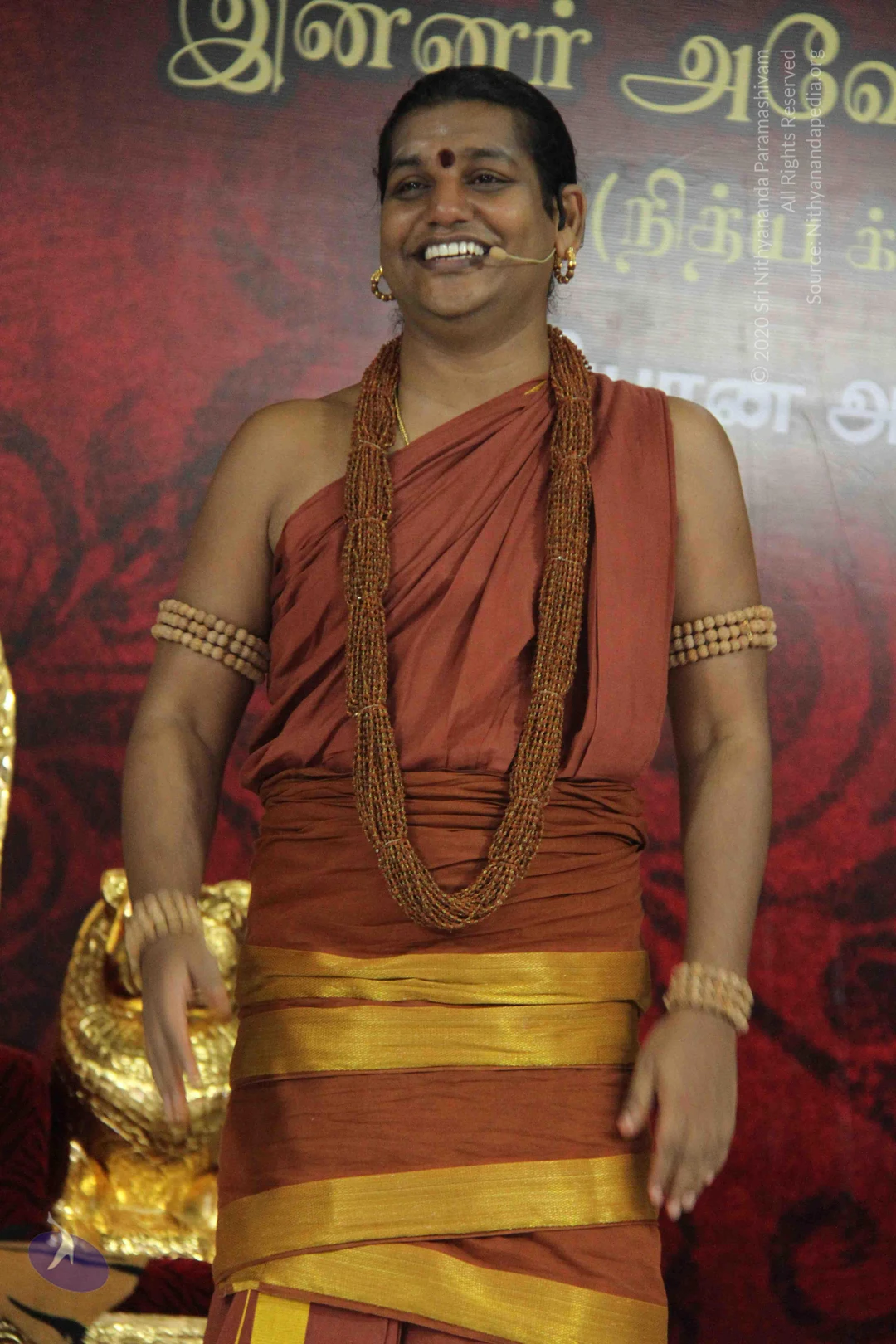
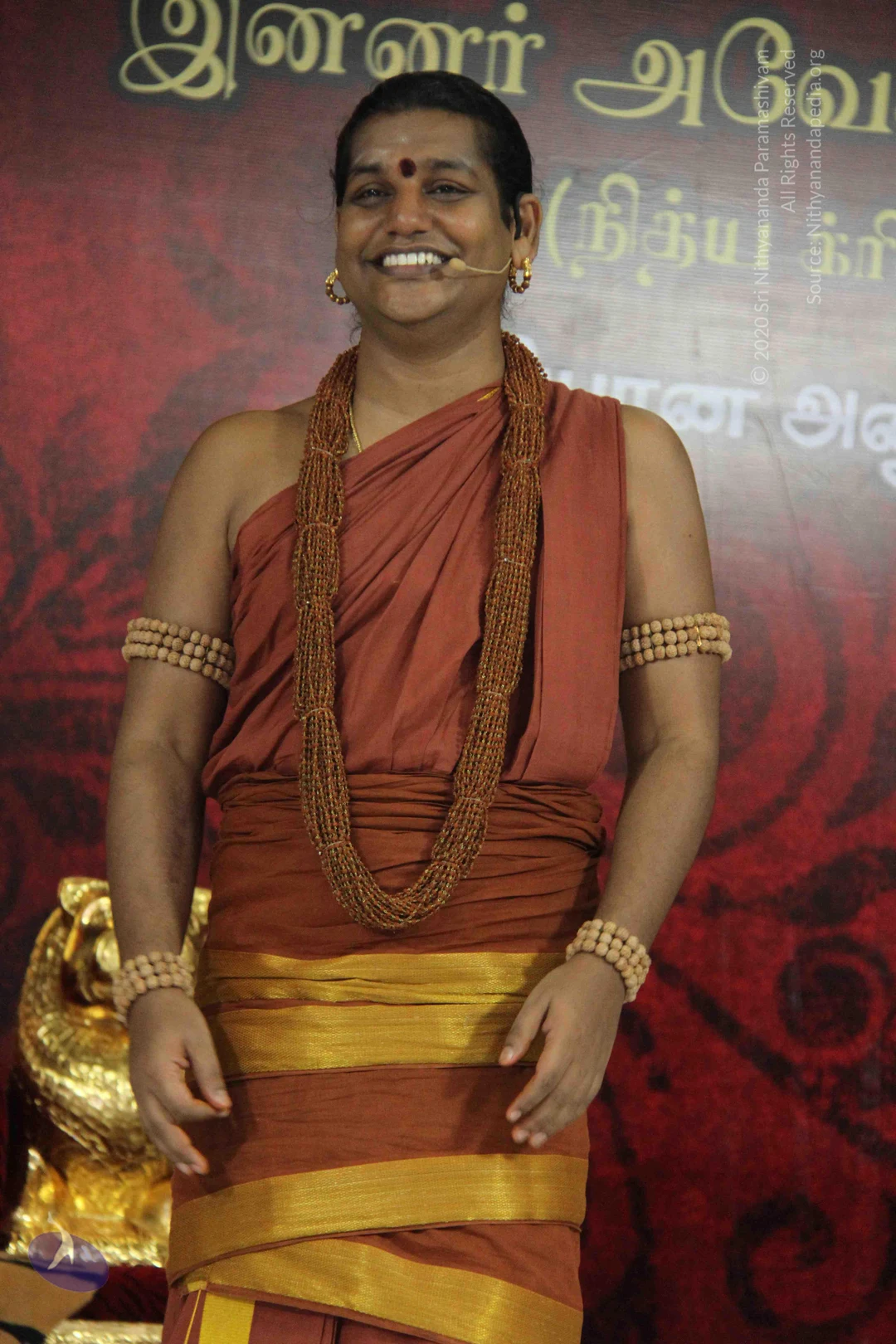
NKY-Session-Pictures
28 photosSource gallery
A smiling man with long dark hair and a red bindi stands barefoot on a patterned rug before a gold-leaf throne flanked by golden lion figures and a tiger-striped seat cushion, against dark red velvet drapes. He wears a rust-orange dhoti and shawl with a gold border, rudraksha mala necklaces and gold bangles, and extends one arm outward in a gesture. Appearance-based probable Swamiji (probable), in a gesture before the throne, with long hair, rudraksha malas and ornate gold-bordered orange clothing. Gilded lion arms and a tiger-print cushion frame the stage setting.A smiling man stands barefoot on a patterned rug before an ornate gilded throne with carved lion heads and red tiger-striped cushions, arms raised with palms open. He wears a rust-red unstitched robe with gold-bordered wrap and dhoti, a long rudraksha mala around his neck, gold armlets and a wristwatch, with a red bindi on his forehead. The backdrop is deep maroon velvet drapery. Swamiji (probable): long-haired presentation is not visible, but the rudraksha mala, ceremonial gold ornaments and the throne setting fit the page's description of a discourse event; the figure is identified on appearance cues only.A barefoot man in a rust-red saffron-toned sleeveless garment with gold-bordered dhoti stands on an ornate carpet, raising both hands in greeting while smiling. He wears a multi-strand rudraksha mala, gold bangles and a red bindi. Behind him stands a large gilded throne with lion-head armrests, red velvet cushions and a tiger-skin cloth, set against deep maroon velvet drapes. a person cues: ceremonial gold ornaments and rudraksha mala with saffron clothing, and he is standing before the throne.A man in rust-orange and saffron-toned draped robes with gold-bordered cloth wrapped at the waist stands barefoot on a stage, hands pressed together, smiling as he speaks into a headset microphone. Rudraksha-style beaded necklaces and armlets adorn him, and a red bindi marks his forehead. Beside him stands a clear acrylic lectern. Behind him a large backdrop shows a close-up of a figure wearing an orange turban, and dark velvet drapes frame the left side. A small red-and-white rug lies at his feet. a person appears as the speaker in distinctive saffron robes with rudraksha malas and ornate adornments, delivering a discourse.A man in an orange-red saffron shawl draped over bare shoulders stands at a clear acrylic lectern, speaking to an audience while gesturing with both hands. He wears long layered rudraksha malas, wooden rudraksha bracelets on his wrists and upper arm, a headset microphone, gold earrings, and a red bindi on his forehead. A deep red curtain and a large orange-red banner form the backdrop.A man stands barefoot on a pale stage speaking into a headset microphone beside a clear acrylic lectern. He wears a rust-red and saffron-toned robe with broad gold borders wrapped around the waist and draped over the shoulder, a long rudraksha-style bead necklace, and beaded bracelets and armlets. A red bindi marks his forehead. A large backdrop photo behind him shows a figure in an orange turban and a red cloth rug lies at the lectern's base. The scene resembles a discourse or satsang. a person: the speaker has a rudraksha mala and saffron-orange ornate clothing, though the appearance is only partly distinctive.