Skip to content
Wednesday

17 July 2013

COME OUT OF SELF DOUBT THROUGH COMPLETION

Dated photos
400
Source pages
1
Media
3
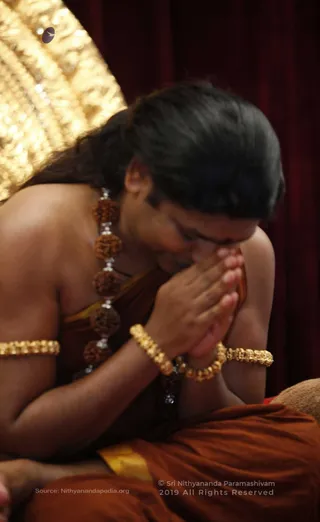
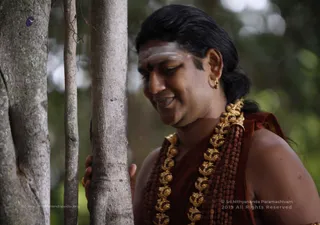
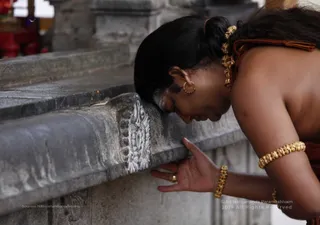
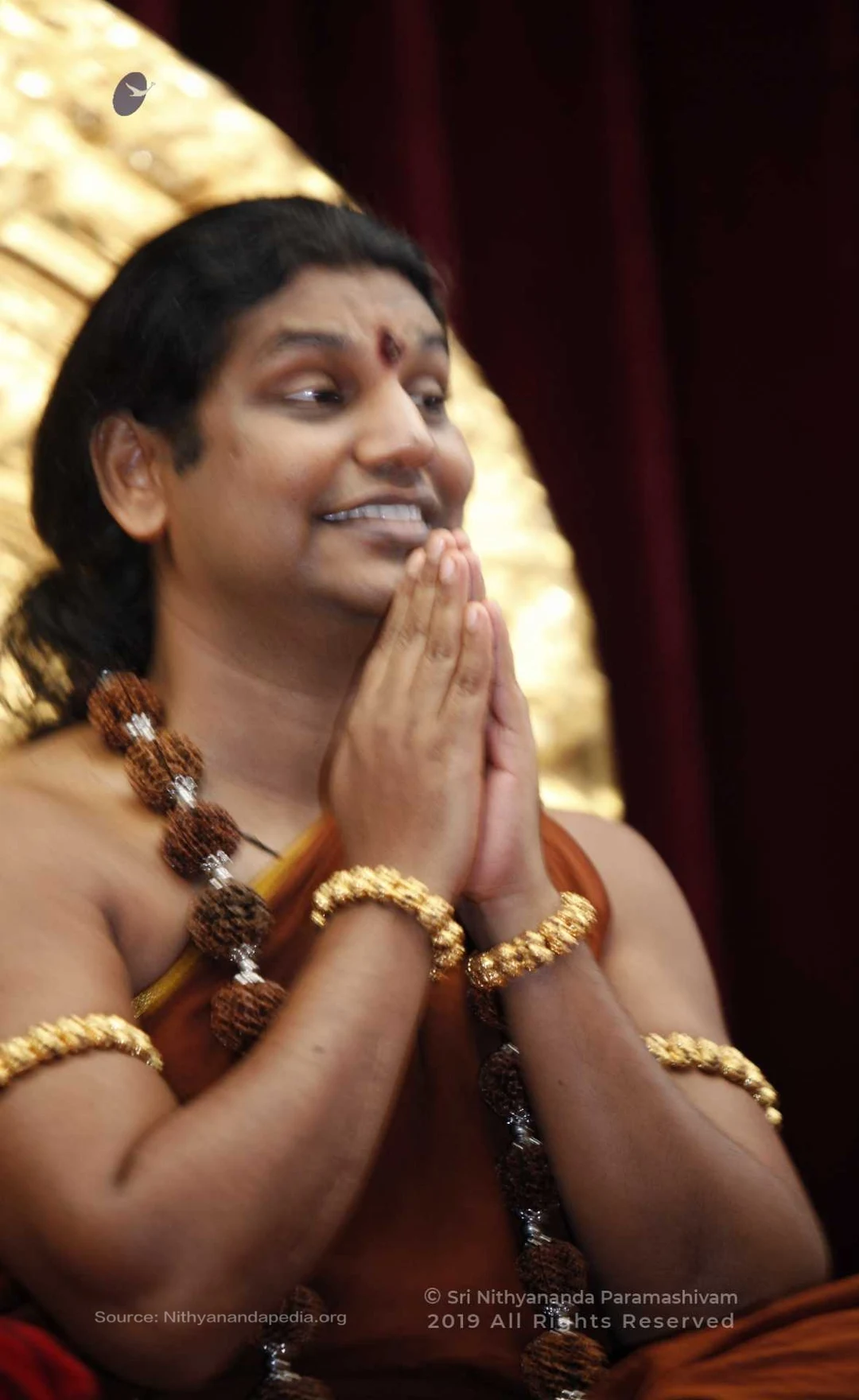
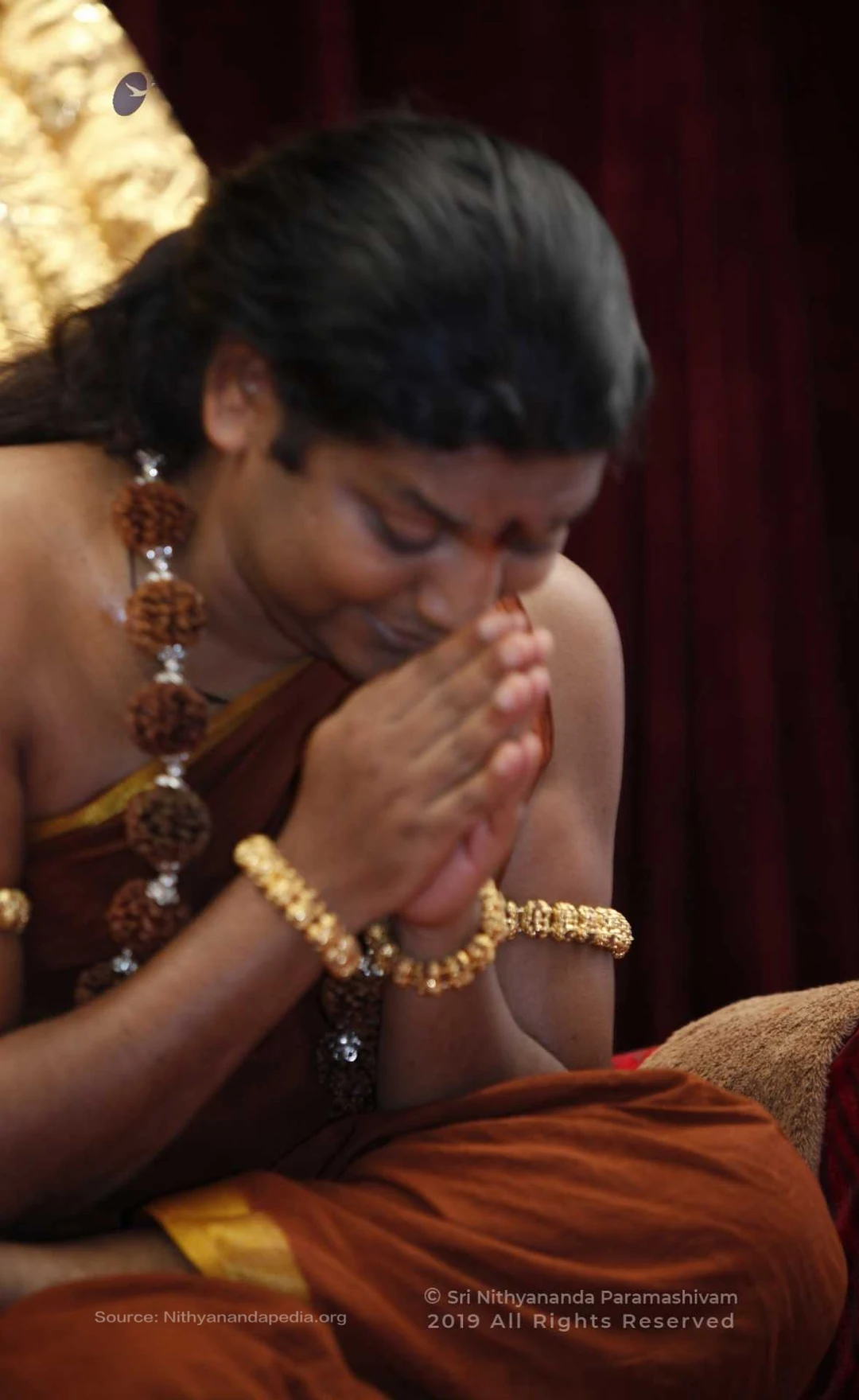
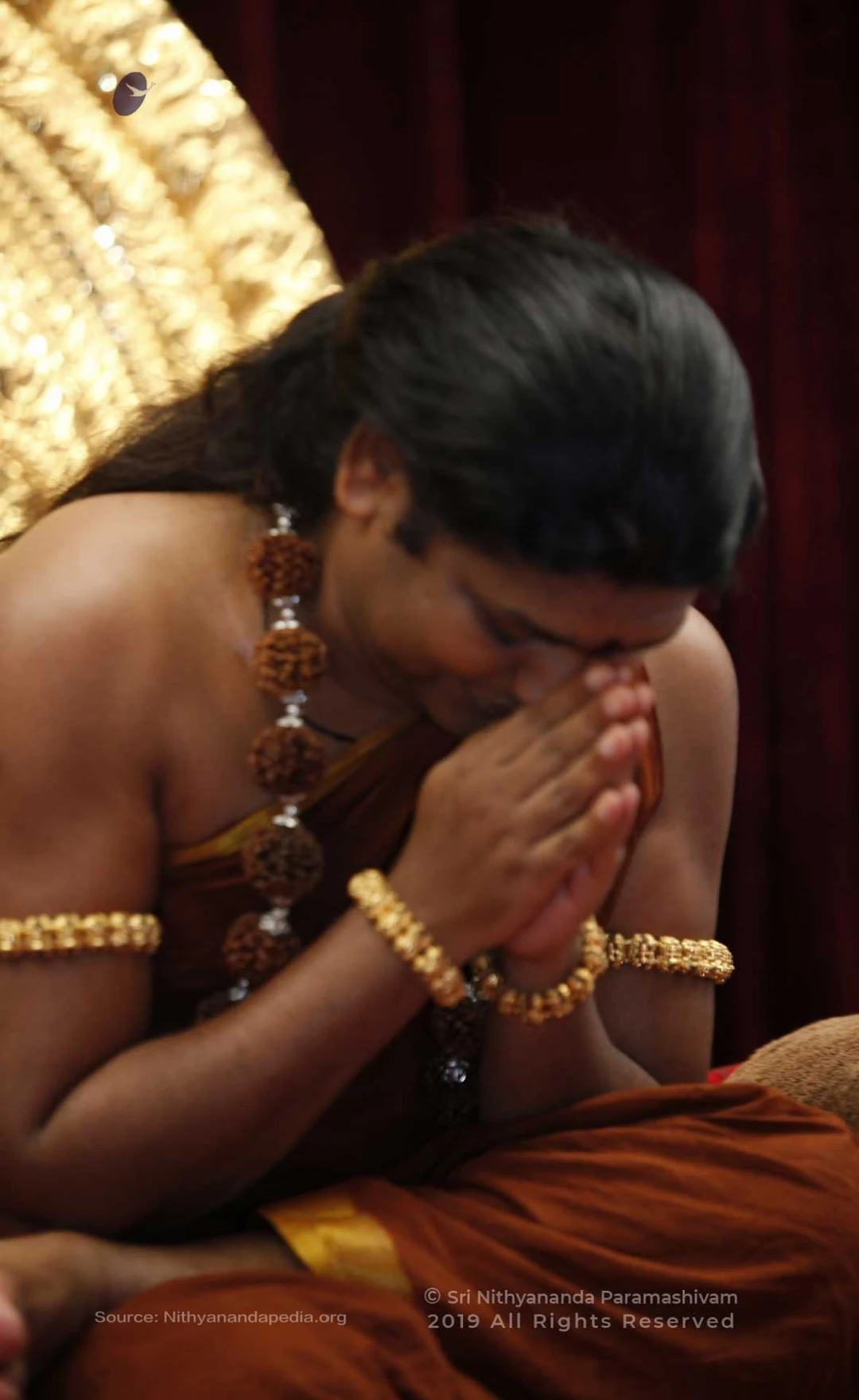
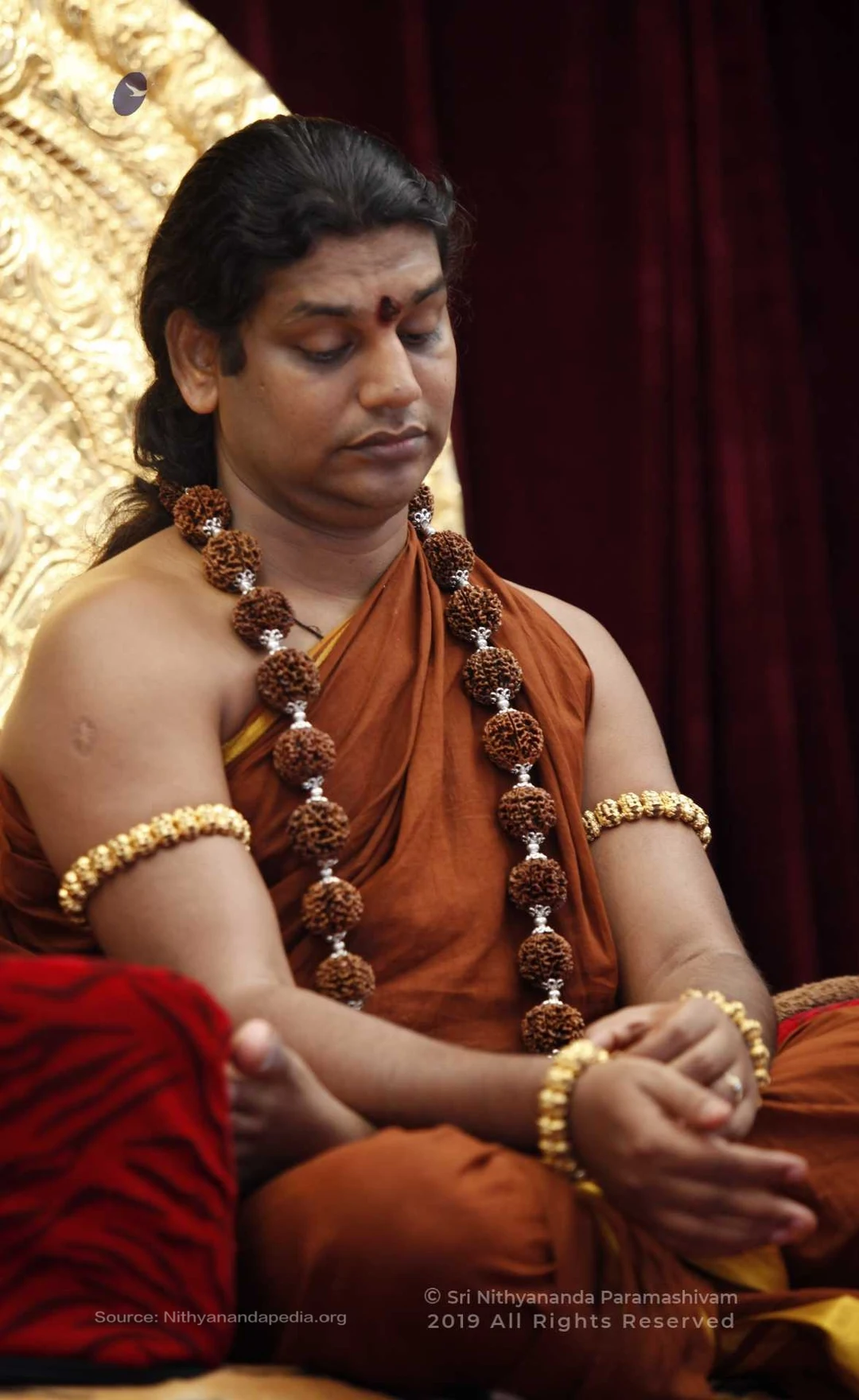
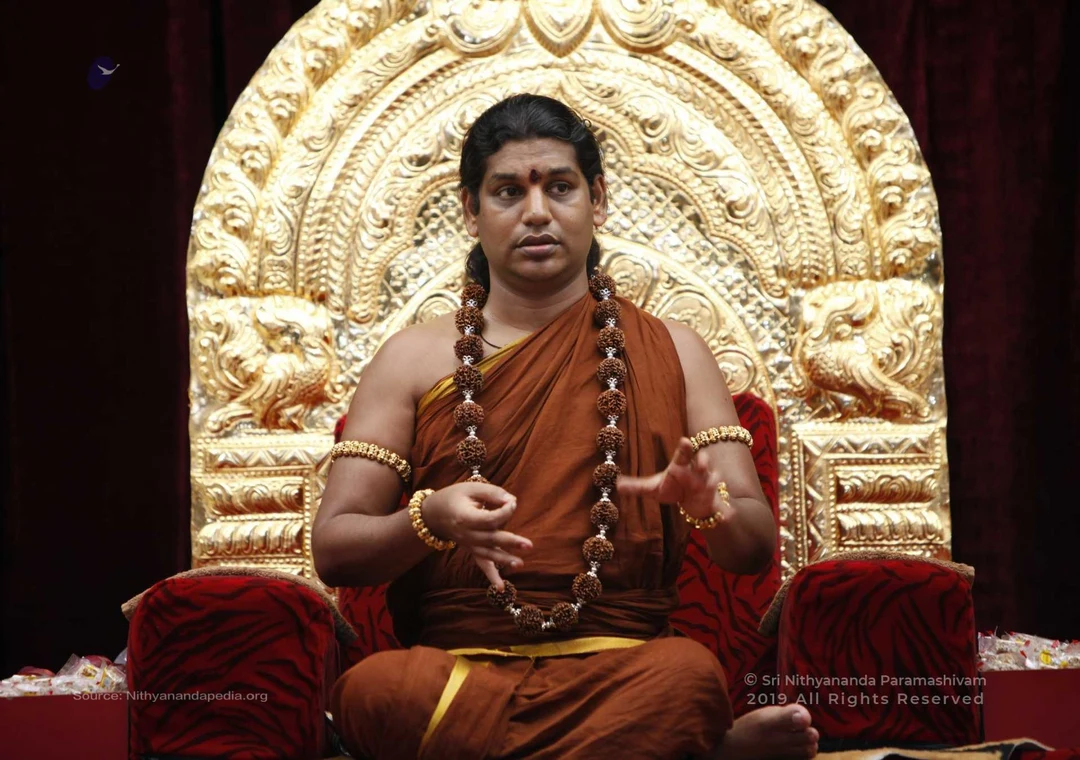
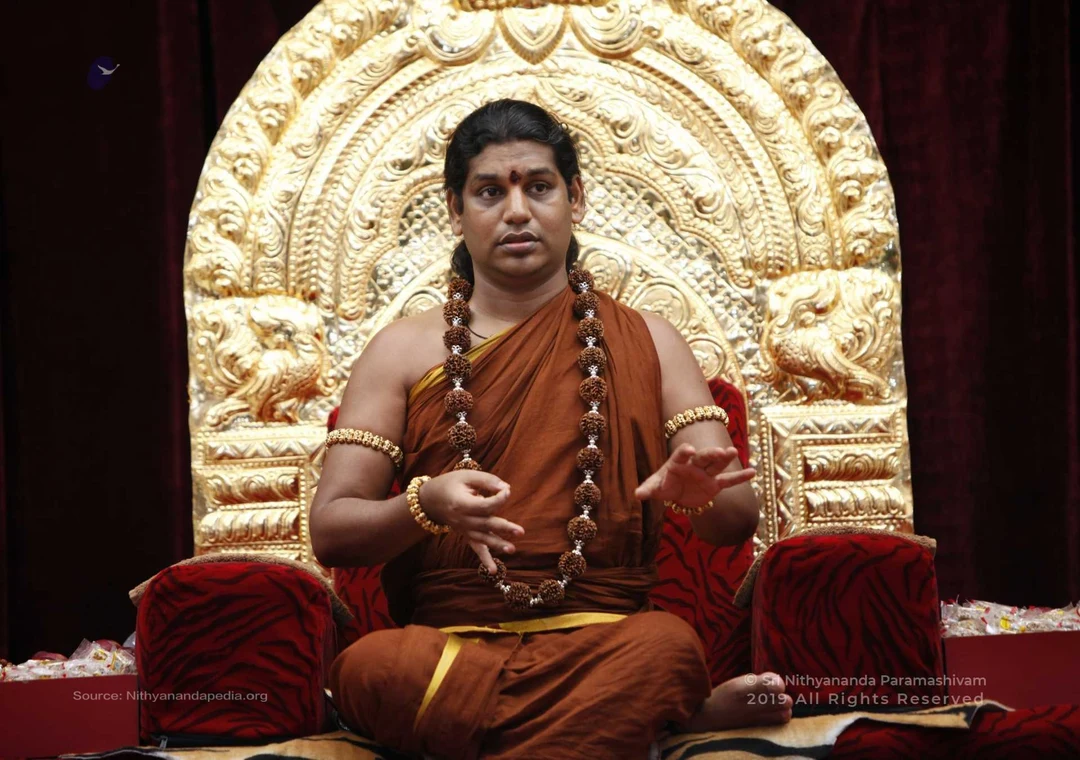
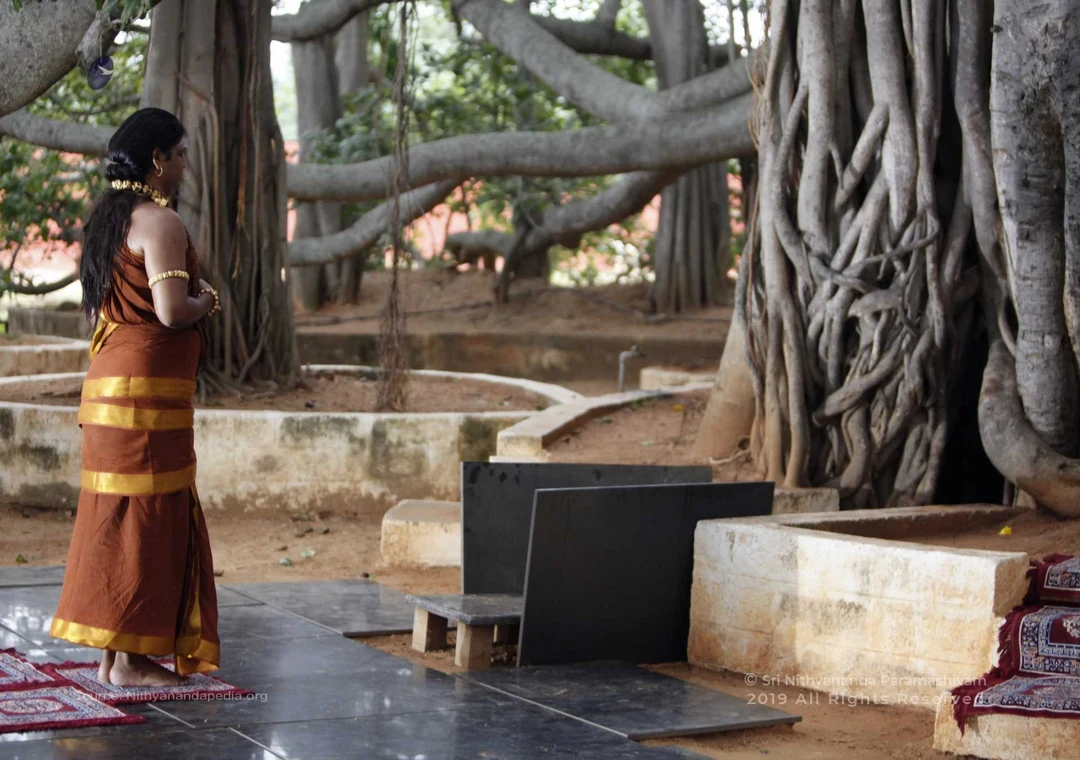
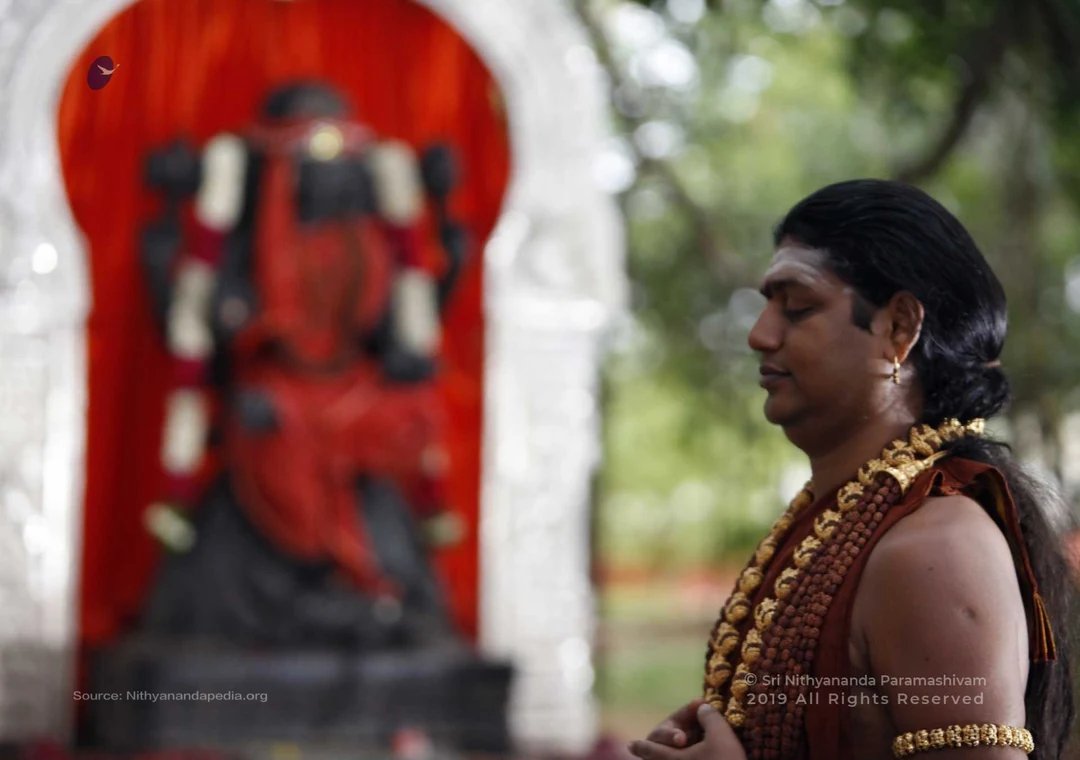
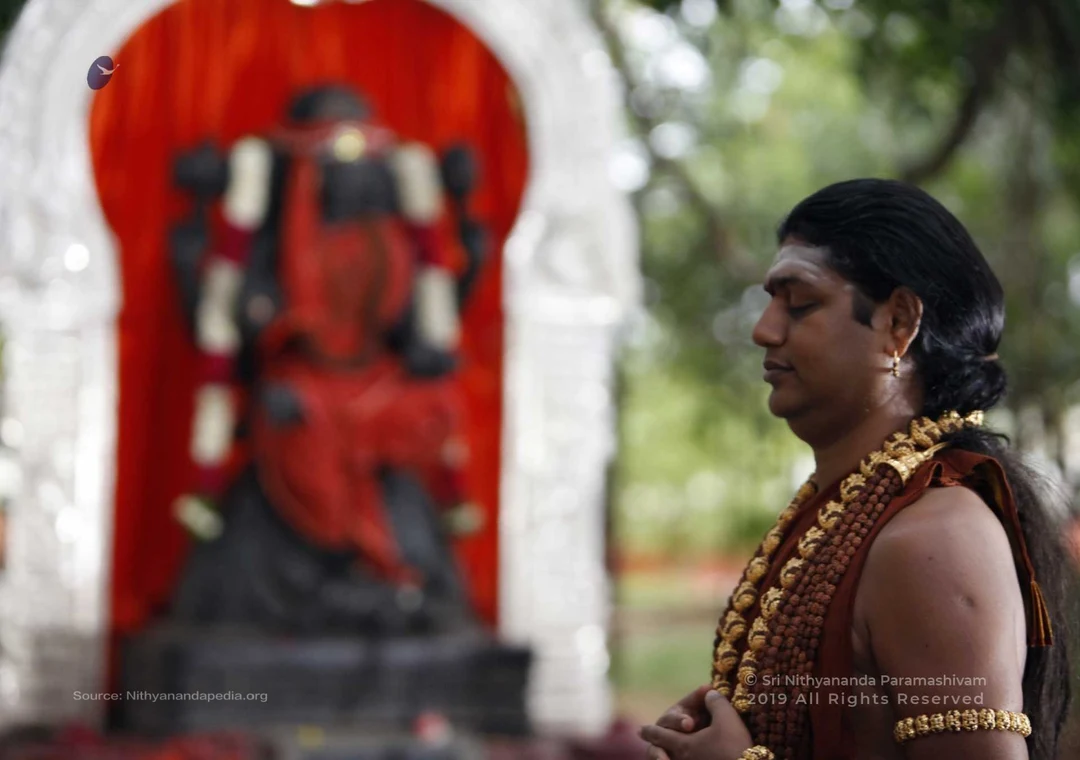
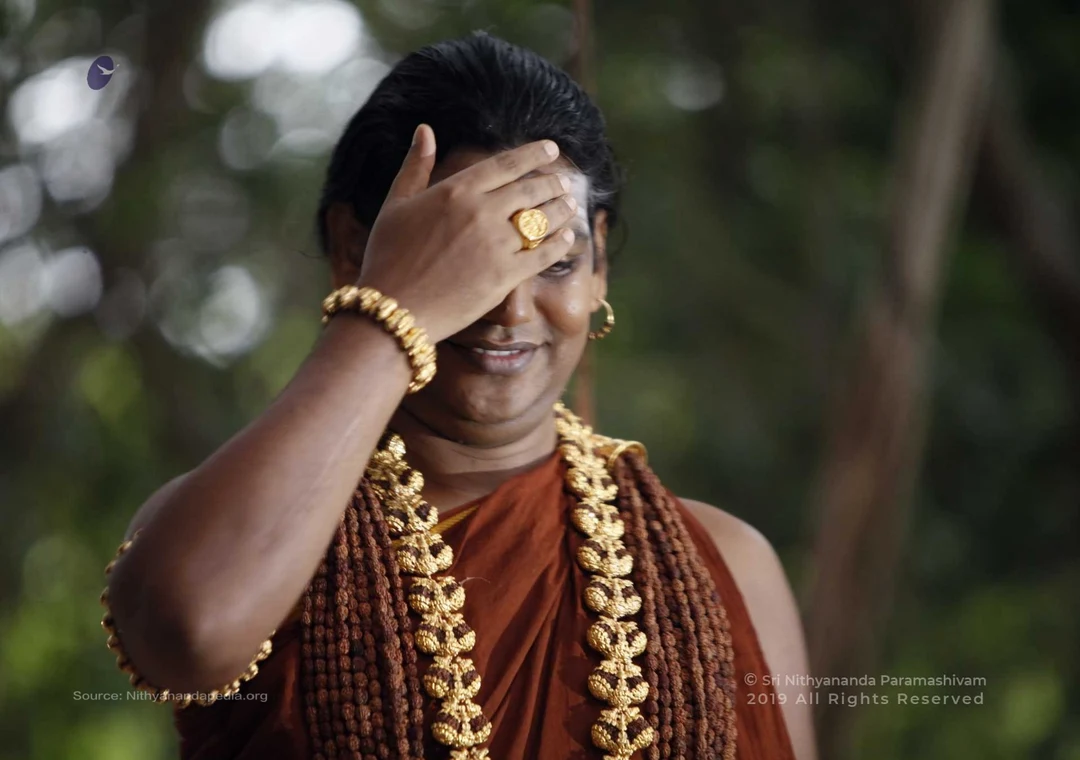
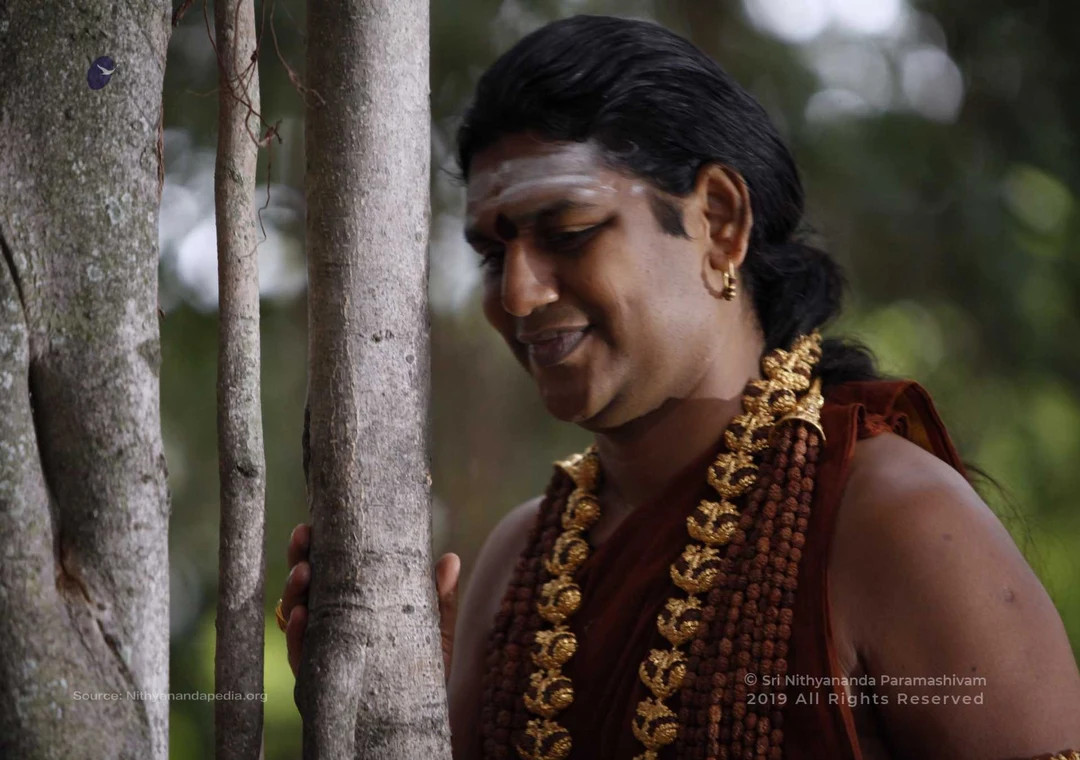
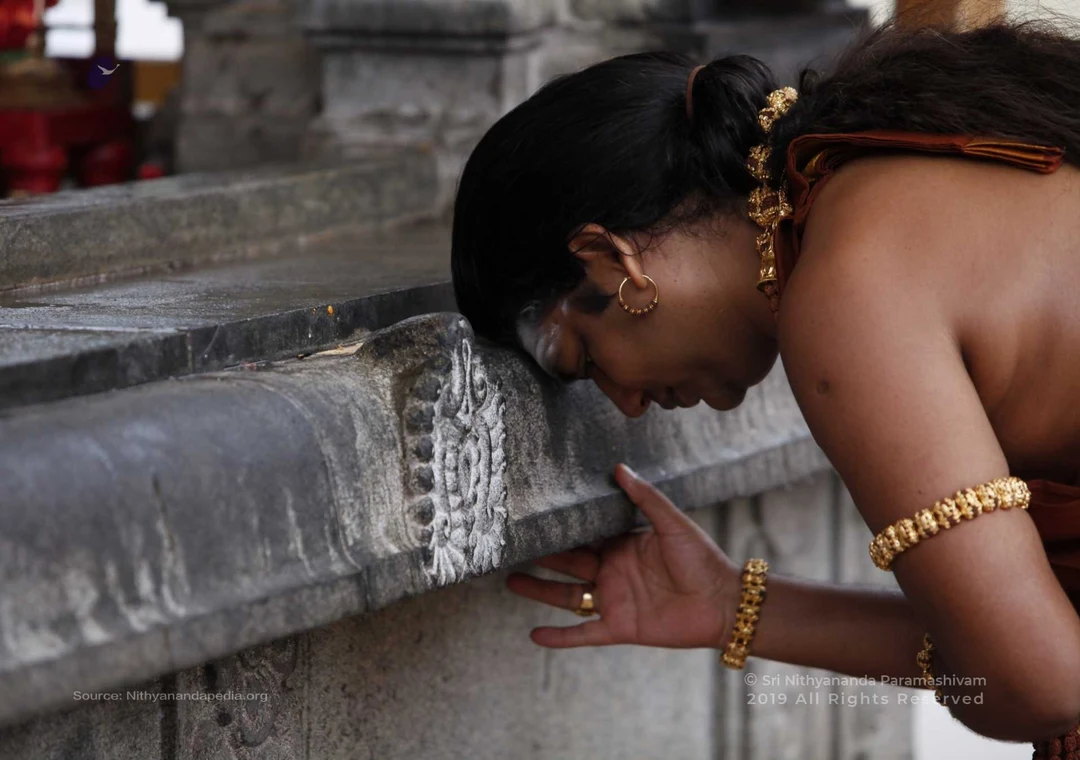
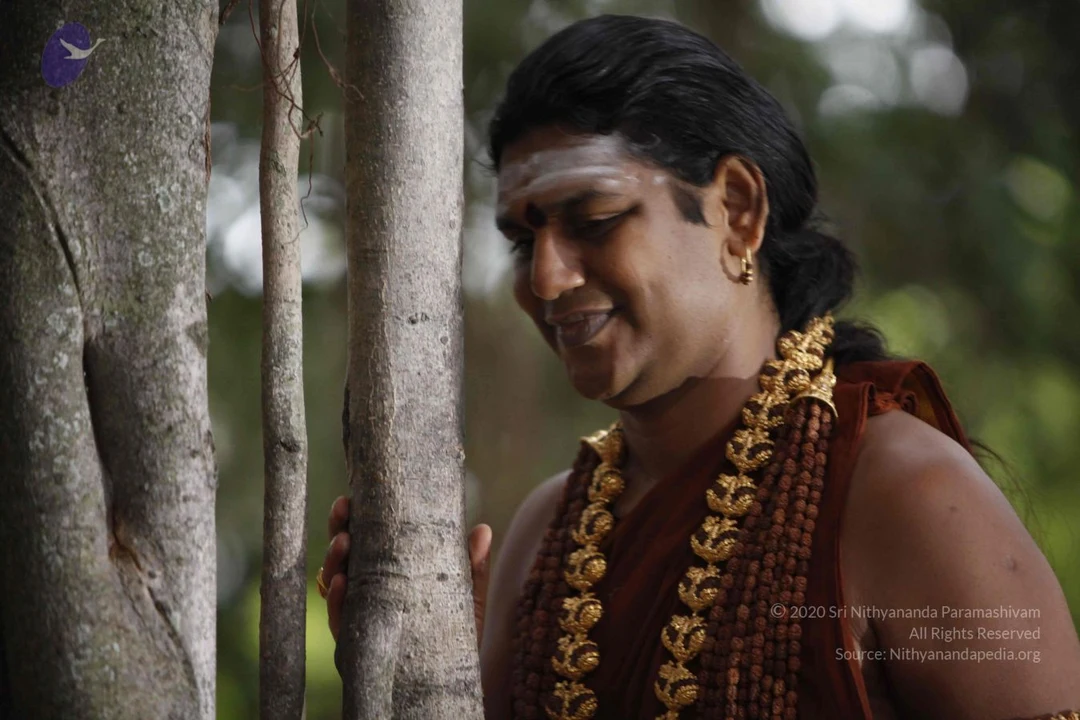
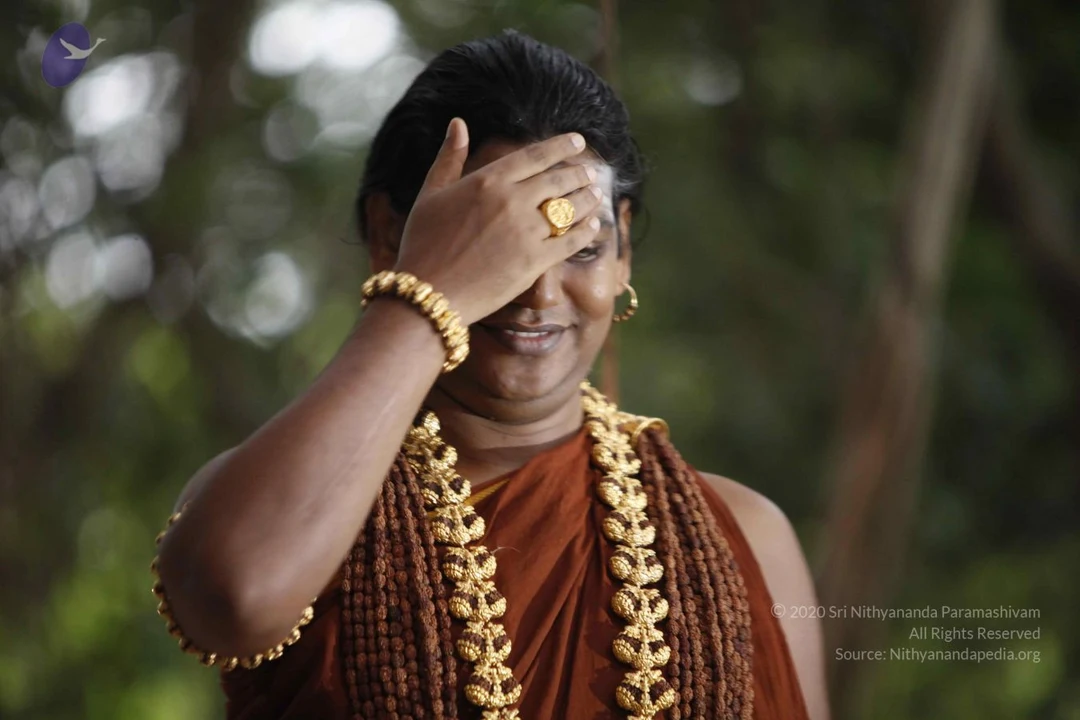
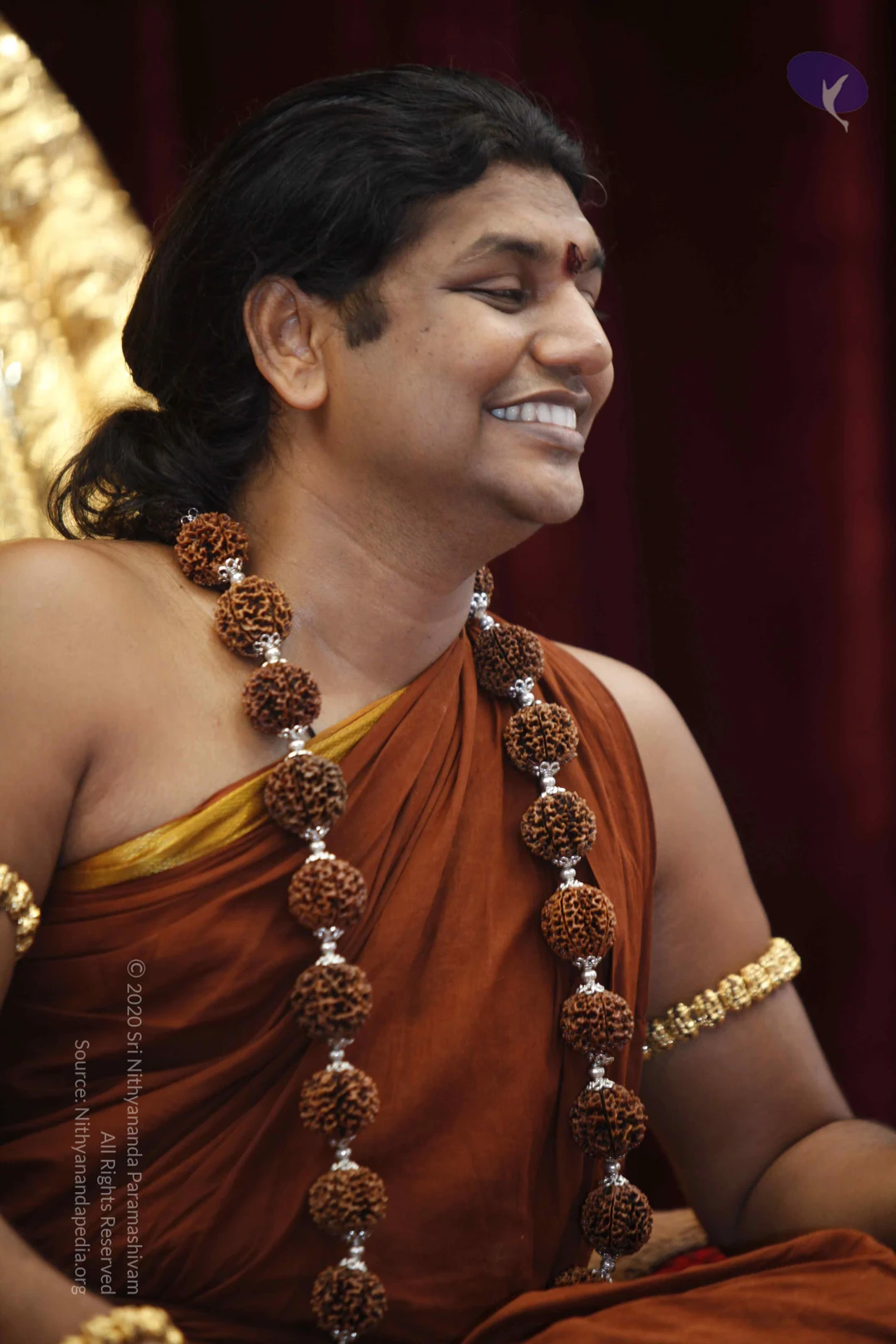
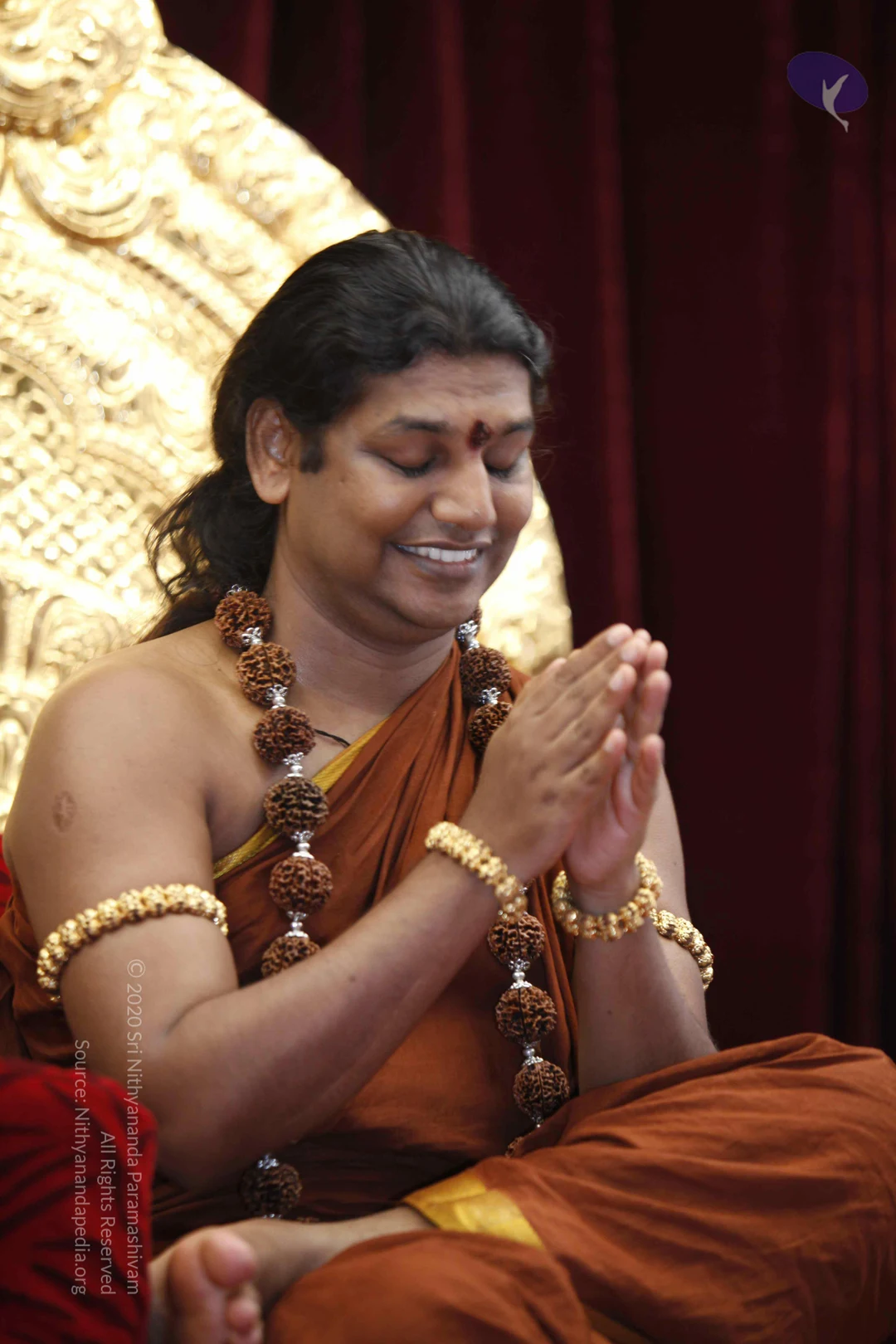
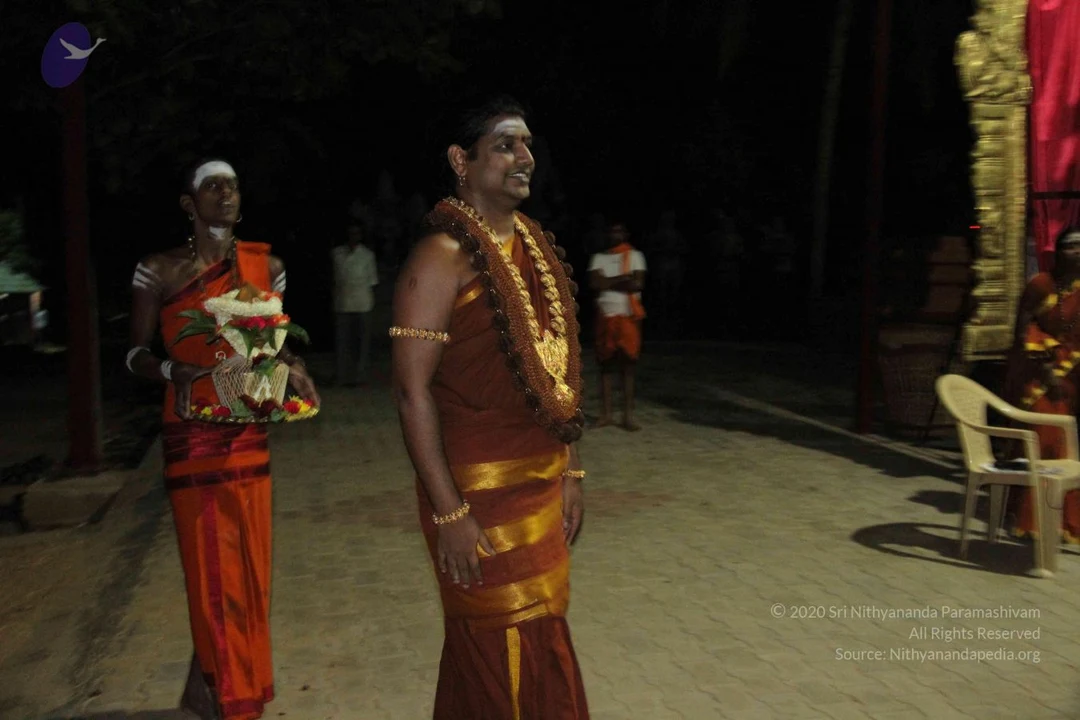
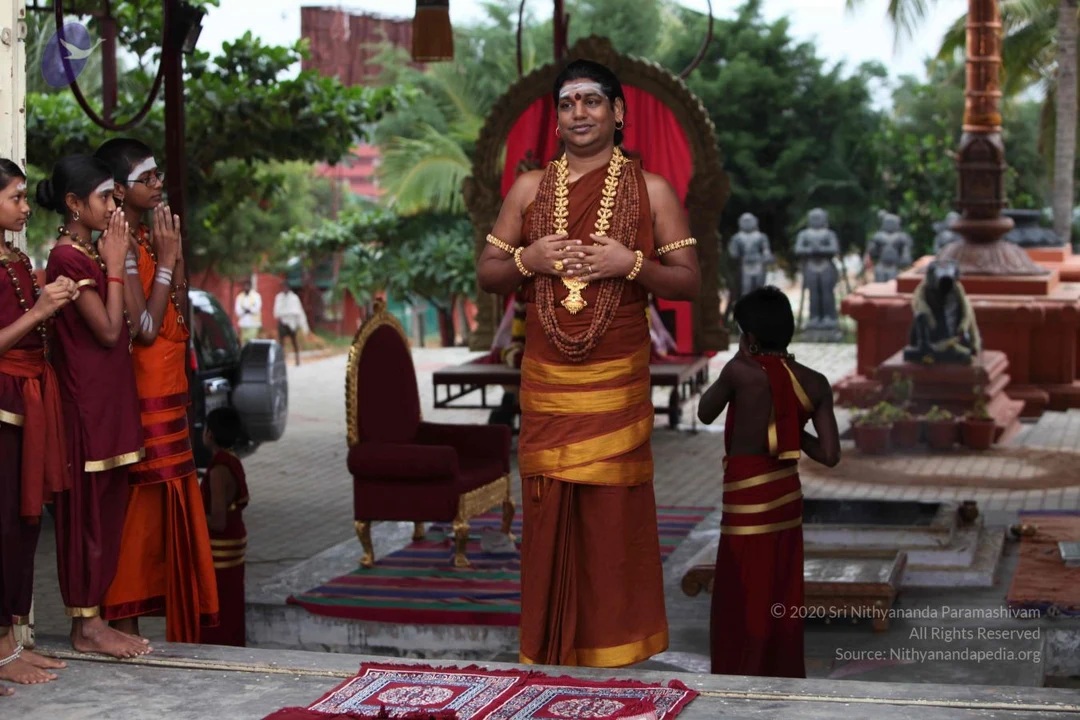
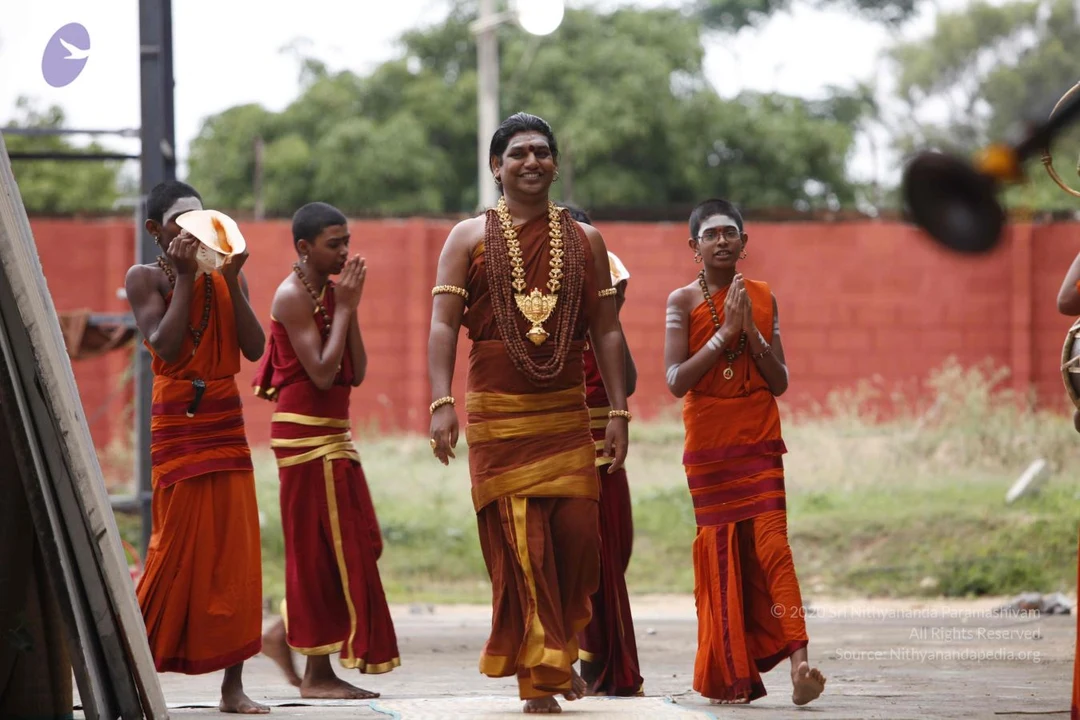
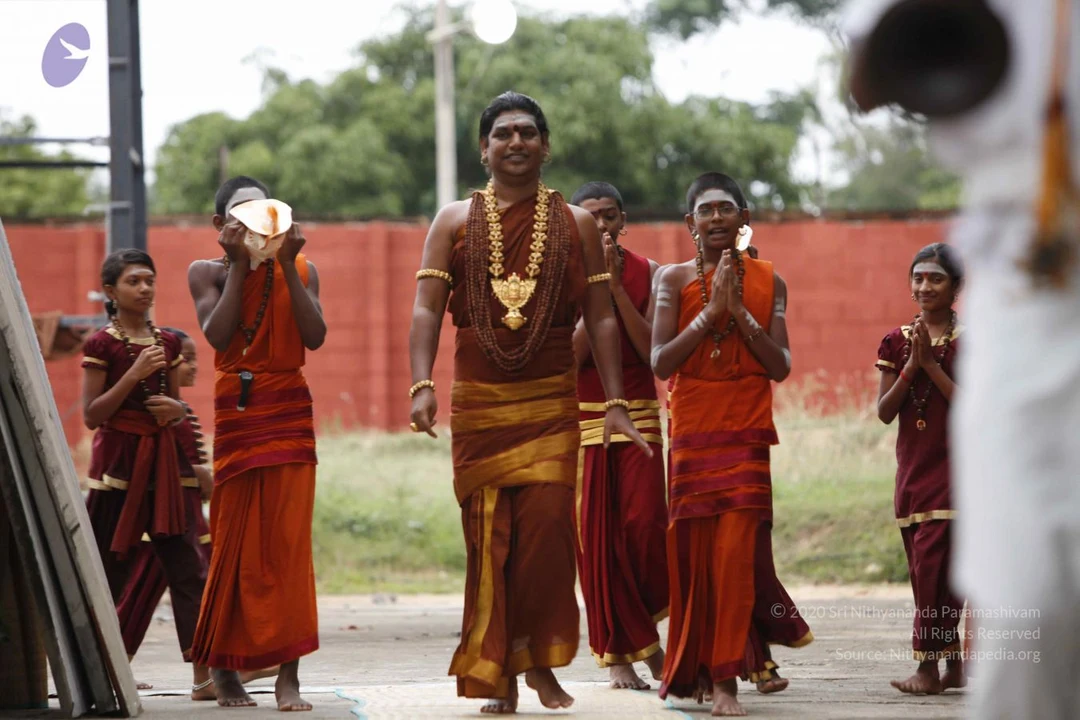
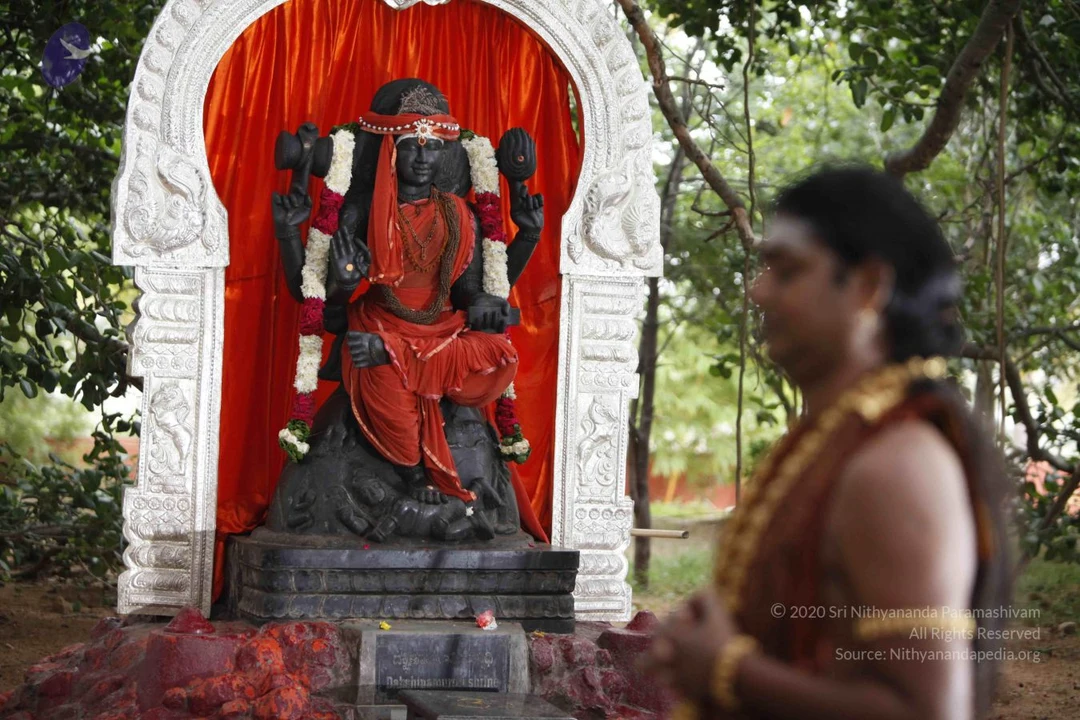
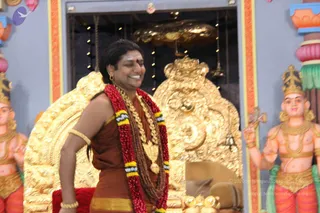
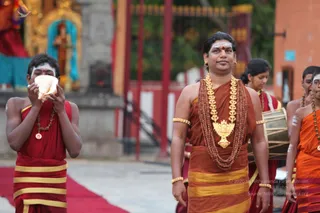
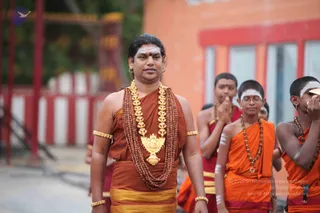
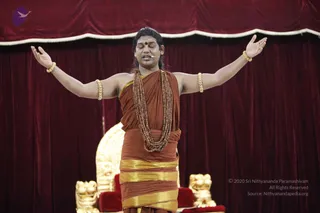
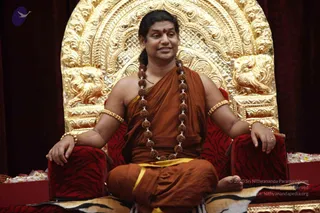
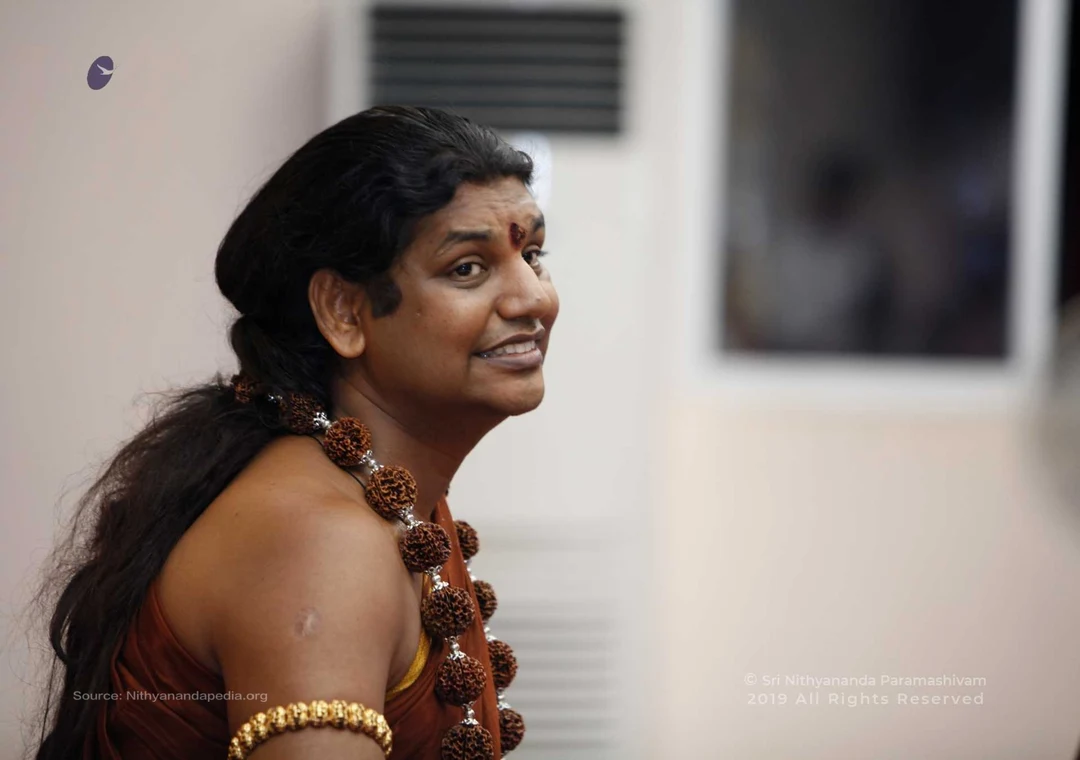
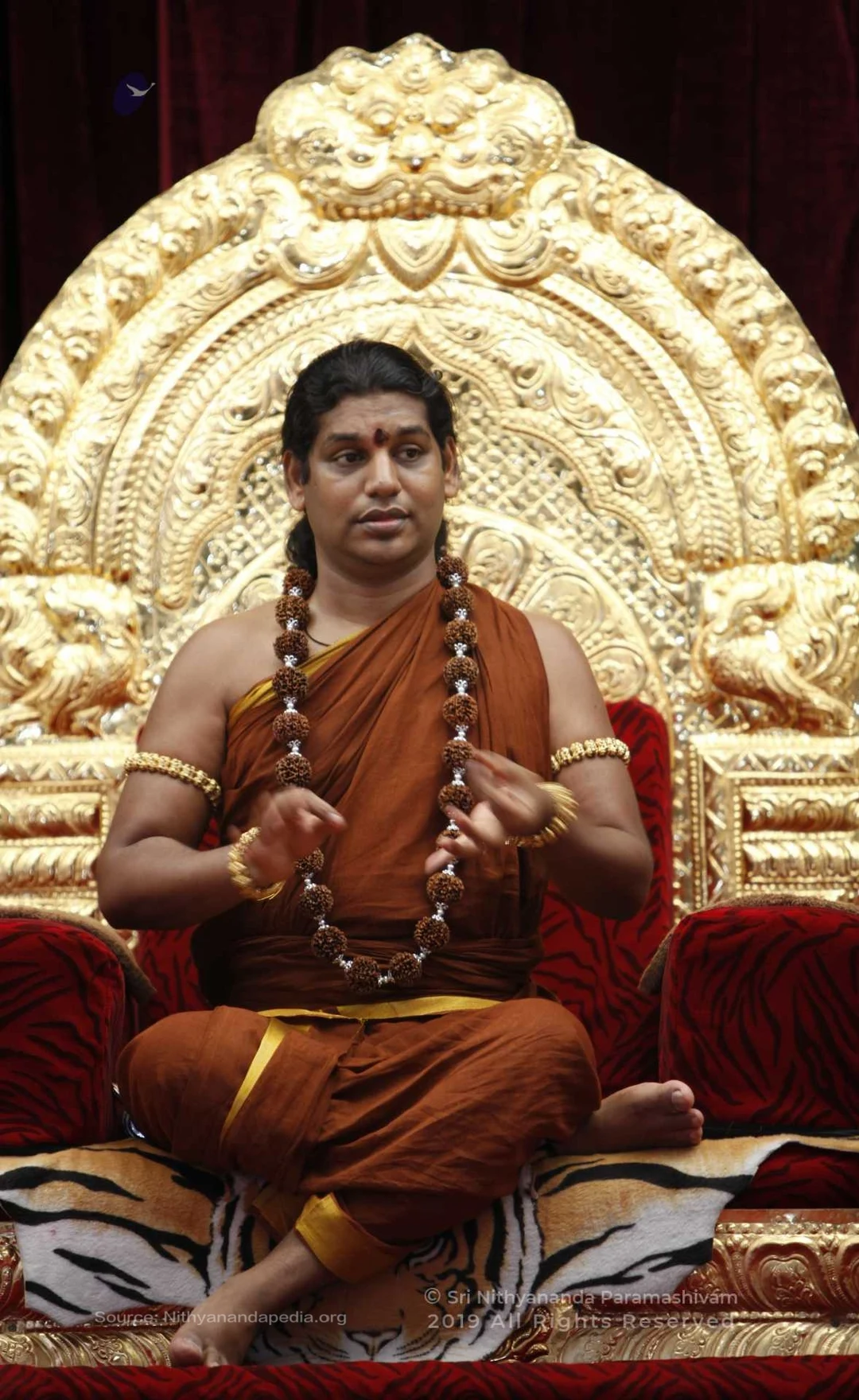
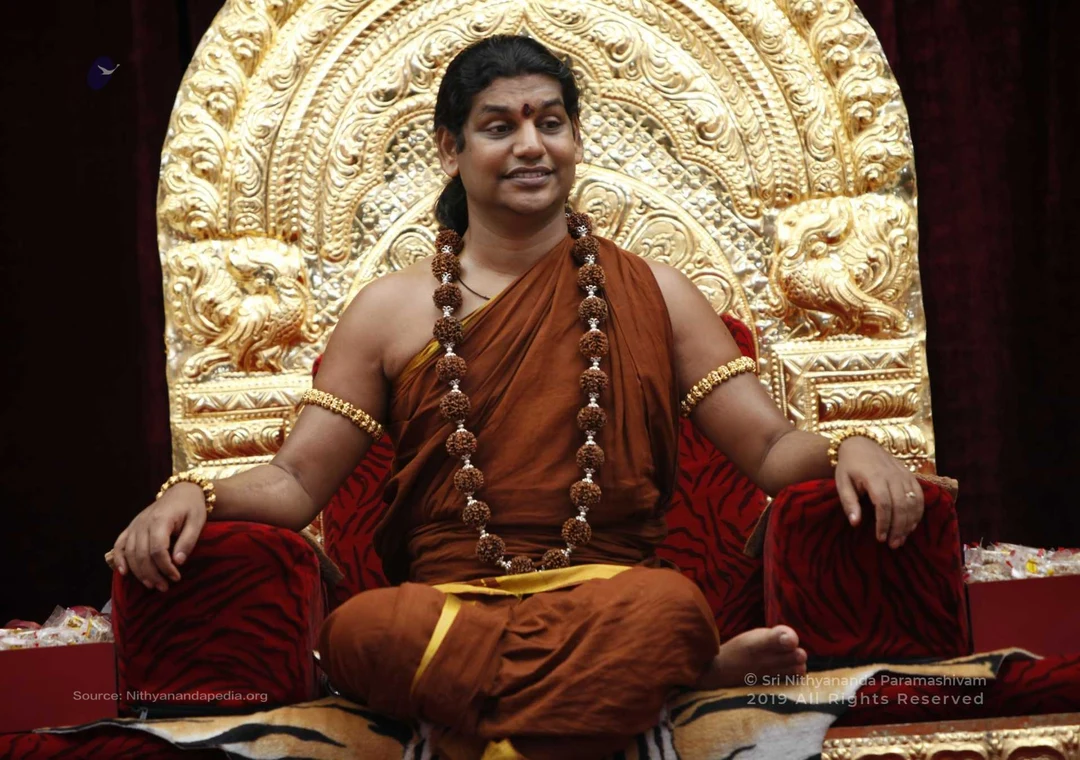
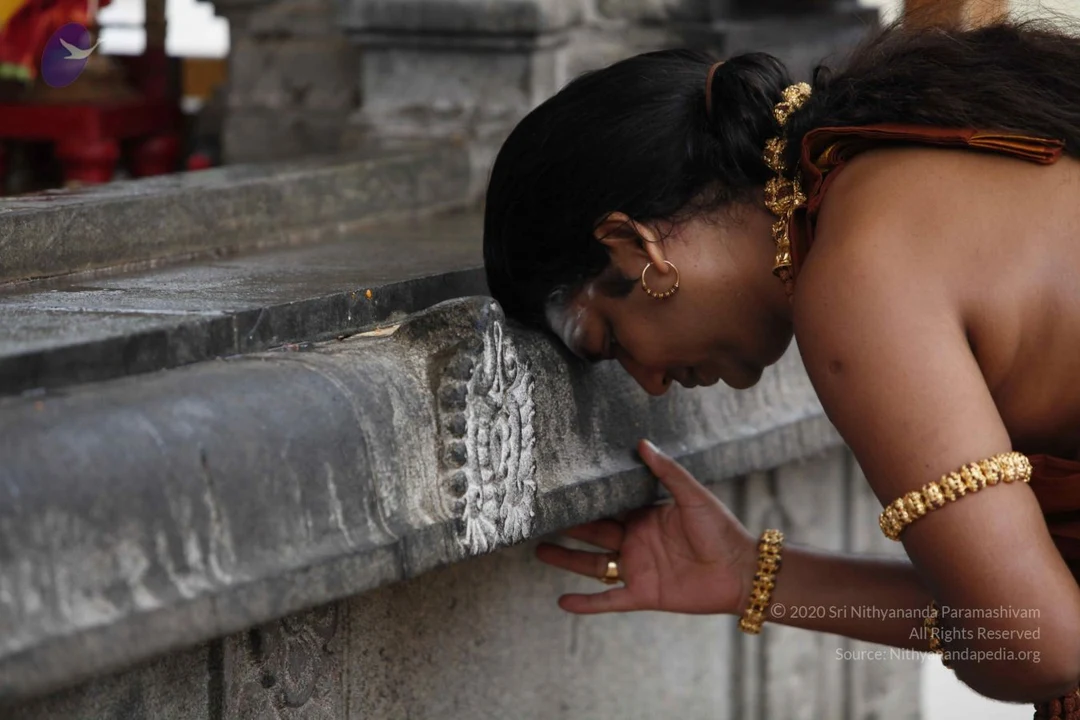
Close photo of a seated person with long dark hair pulled back, bowing with palms pressed together in anjali mudra near the face. They wear gold armlets and gold bangles, a rudraksha mala with several large beads across the chest, and an orange-brown garment. A gold-coloured ornate backdrop stands behind them against a deep red curtain. The person appears to be a devotee or sannyasi in devotional posture, and their face is not identifiable from this angle, so no identity is assigned.A man in a forest setting leans toward a tree trunk with a slight smile and eyes lowered. He has swept-back long black hair, a tilak with white and dark markings on his forehead, a small gold earring, and wears a deep rust-orange cloth over his shoulders. He is adorned with multiple strands of rudraksha beads and a heavy gold necklace with ornate pendants. Behind him are blurred green foliage and tree trunks. Appearance cues (long swept-back hair, rudraksha malas, gold ornaments and saffron-orange cloth) are consistent with Swamiji (probable), shown in person.A photograph of a woman bowing low at a carved grey stone ledge in a temple, forehead resting on the stone while her right hand touches its surface. She has dark hair pulled back and adorned with gold hair ornaments, gold earrings with small hoops, a gold bangle and a gold bracelet on her arm, and wears a rust-orange garment over her shoulder. The stone has a carved floral or lotus motif with a white powdery residue. The setting appears to be a temple precinct with stone pillars and red elements in the background. A single adult woman is visible.

July 17 2013

Original wiki page
Contents

Title:

COME OUT OF SELF DOUBT THROUGH COMPLETION

Description:

In today’s morning Satsang, Paramahamsa Nithyananda stresses the importance of completing with the pattern of self-doubt that we carry. It is detrimental to continue living with self-doubt as it stops spiritual growth, makes us doubt everything, is the root cause for atheism, and acts like suicide, destroying higher possibilities and creation from happening within us. We can take a look at our lives and note the times when we feel overwhelmed, tired, withdrawn or are resisting life. When we fall into these emotions, we can bring the doubts out into the open, find the root, and pull out the incidents where the self-doubt started. Let us remember that with completion, suffering ends and with completion, life starts!

Link to Video:

VideoAudio

Transcript:

I welcome all of you with my love and Blessings.

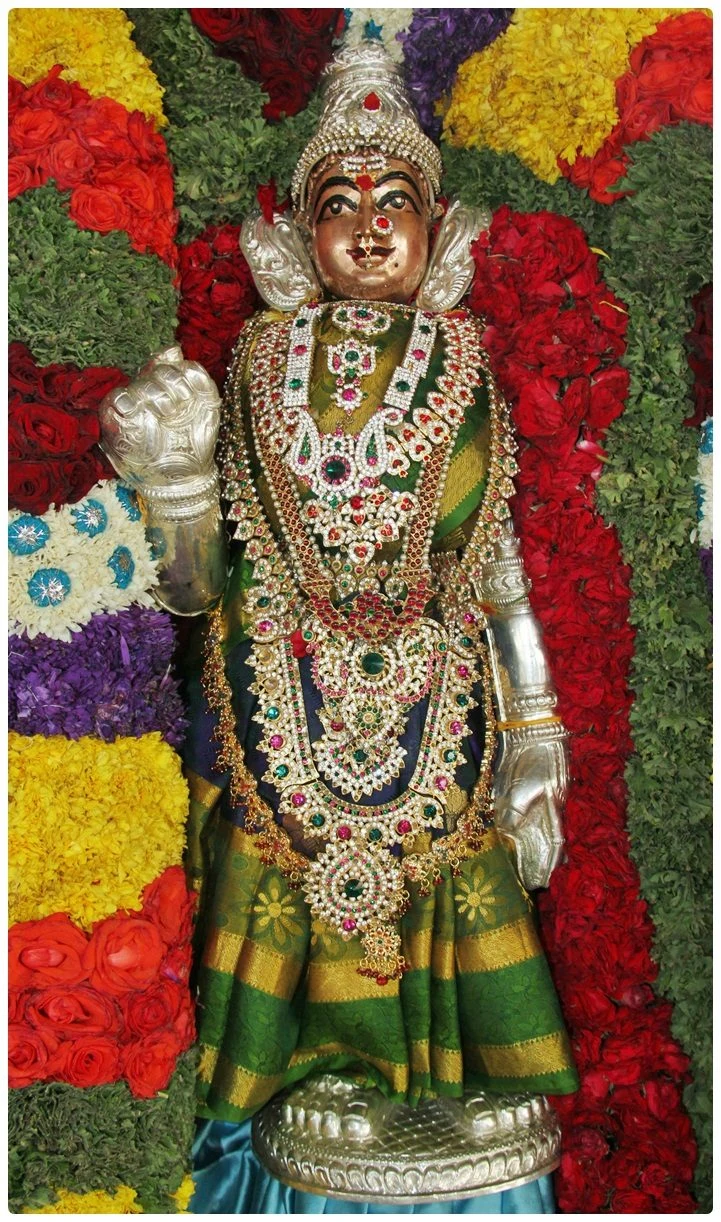
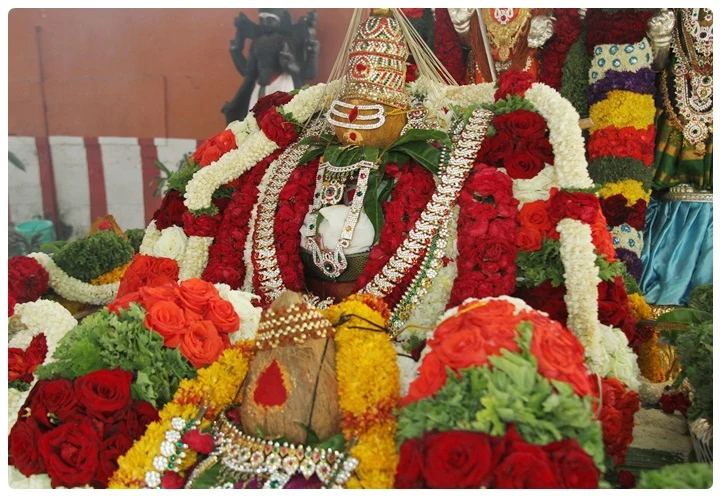
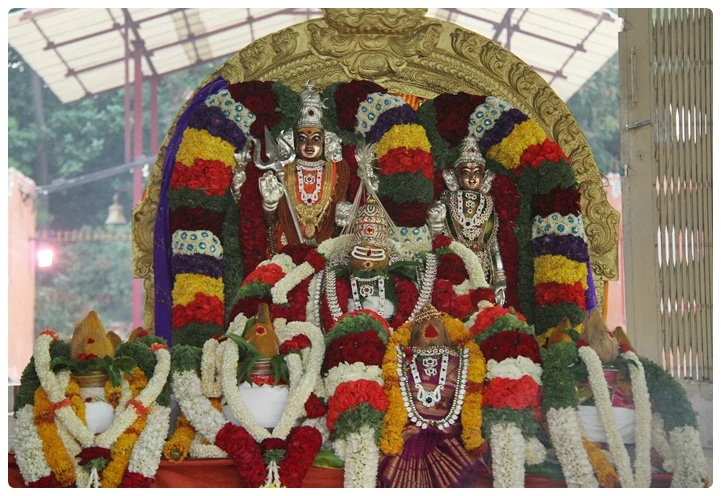
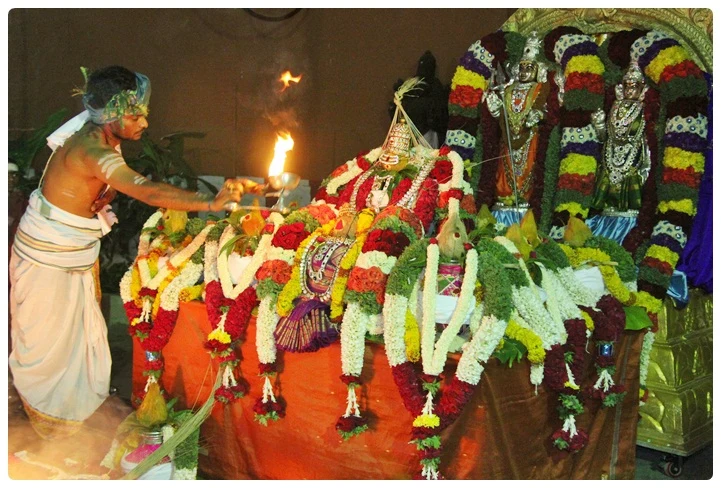
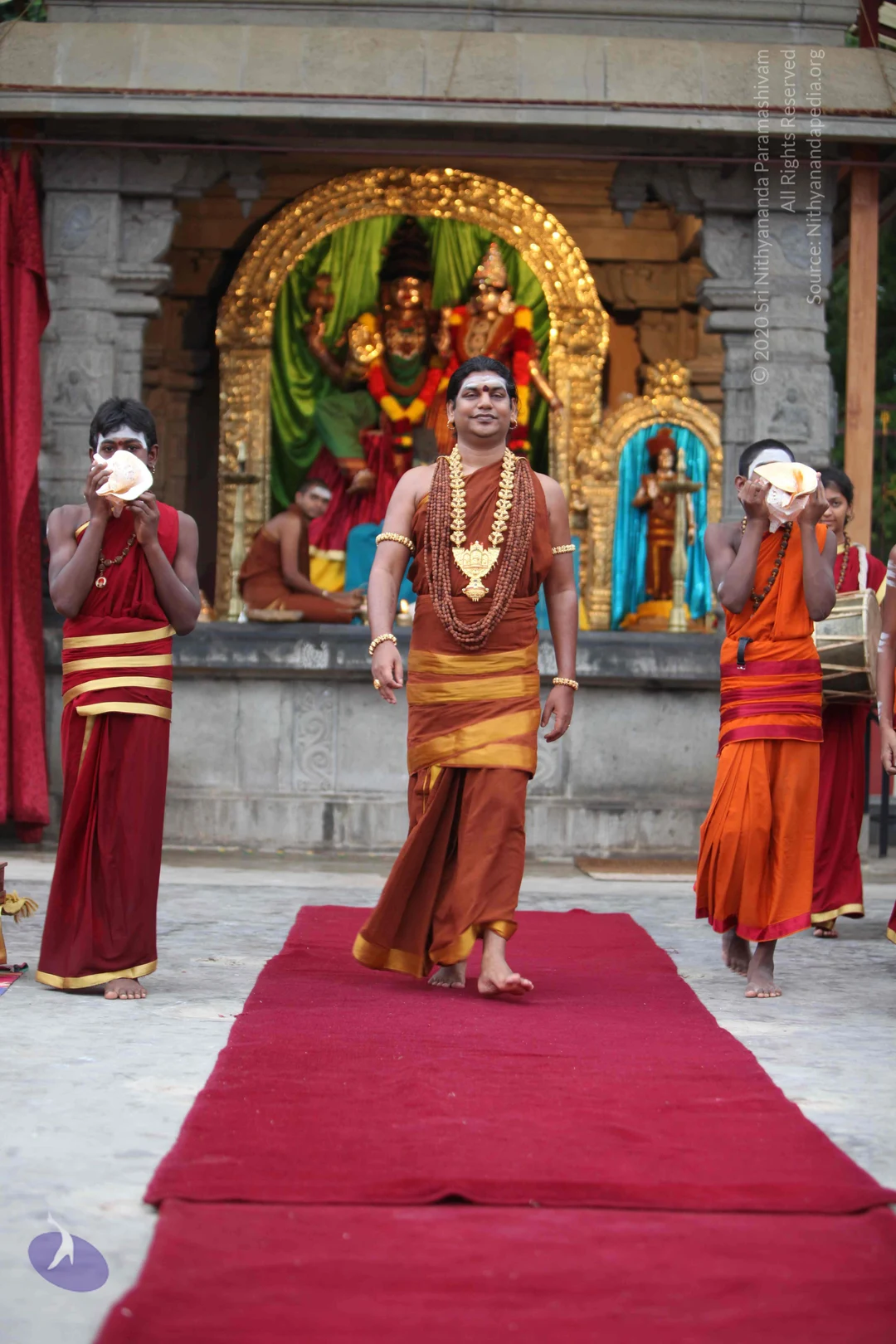
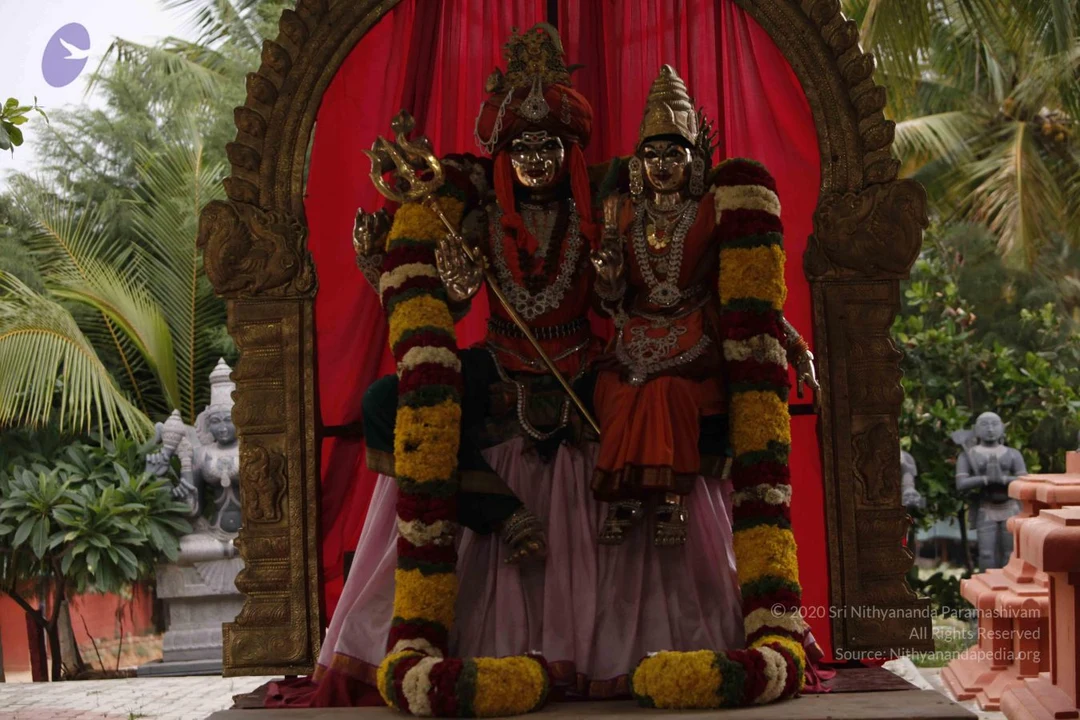
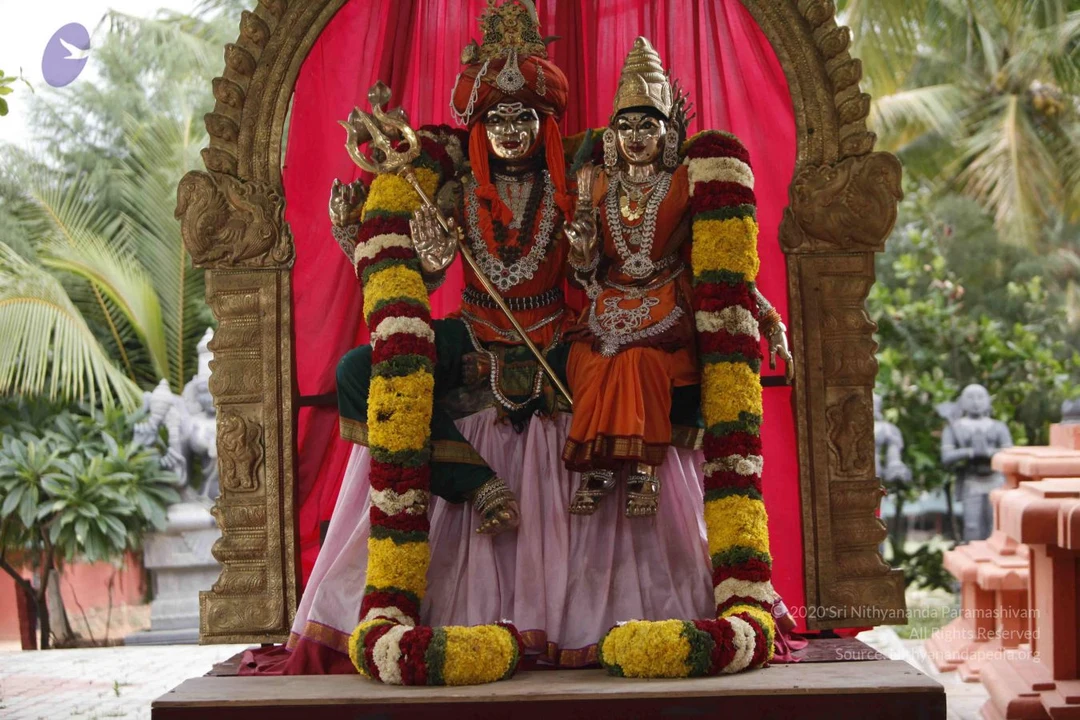
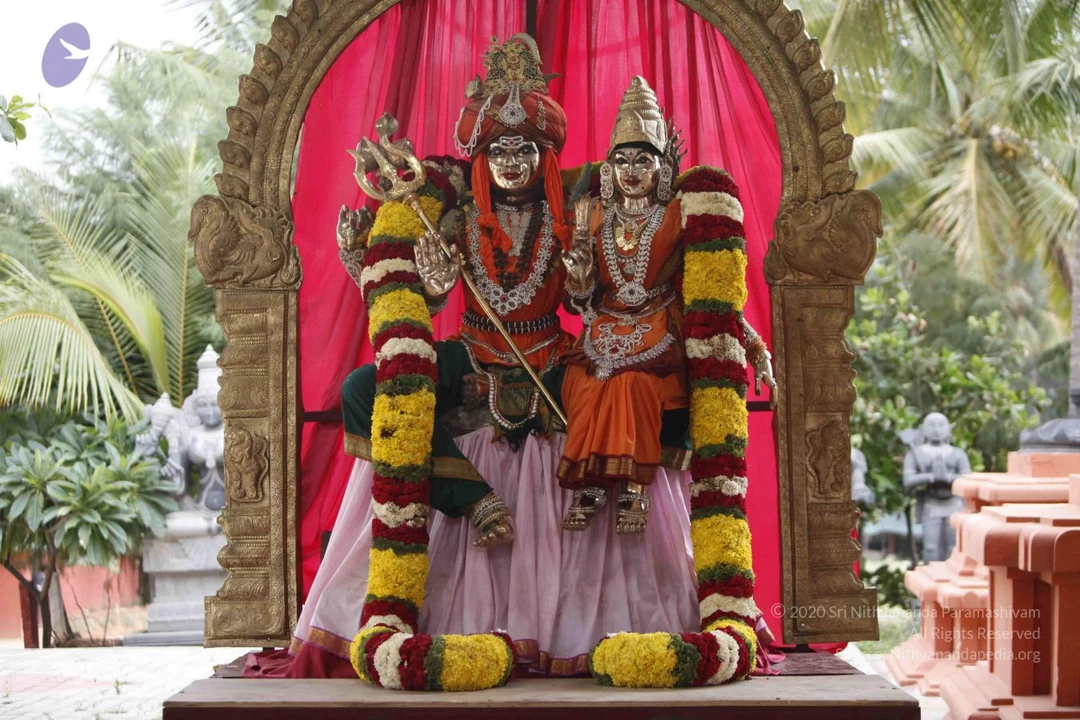
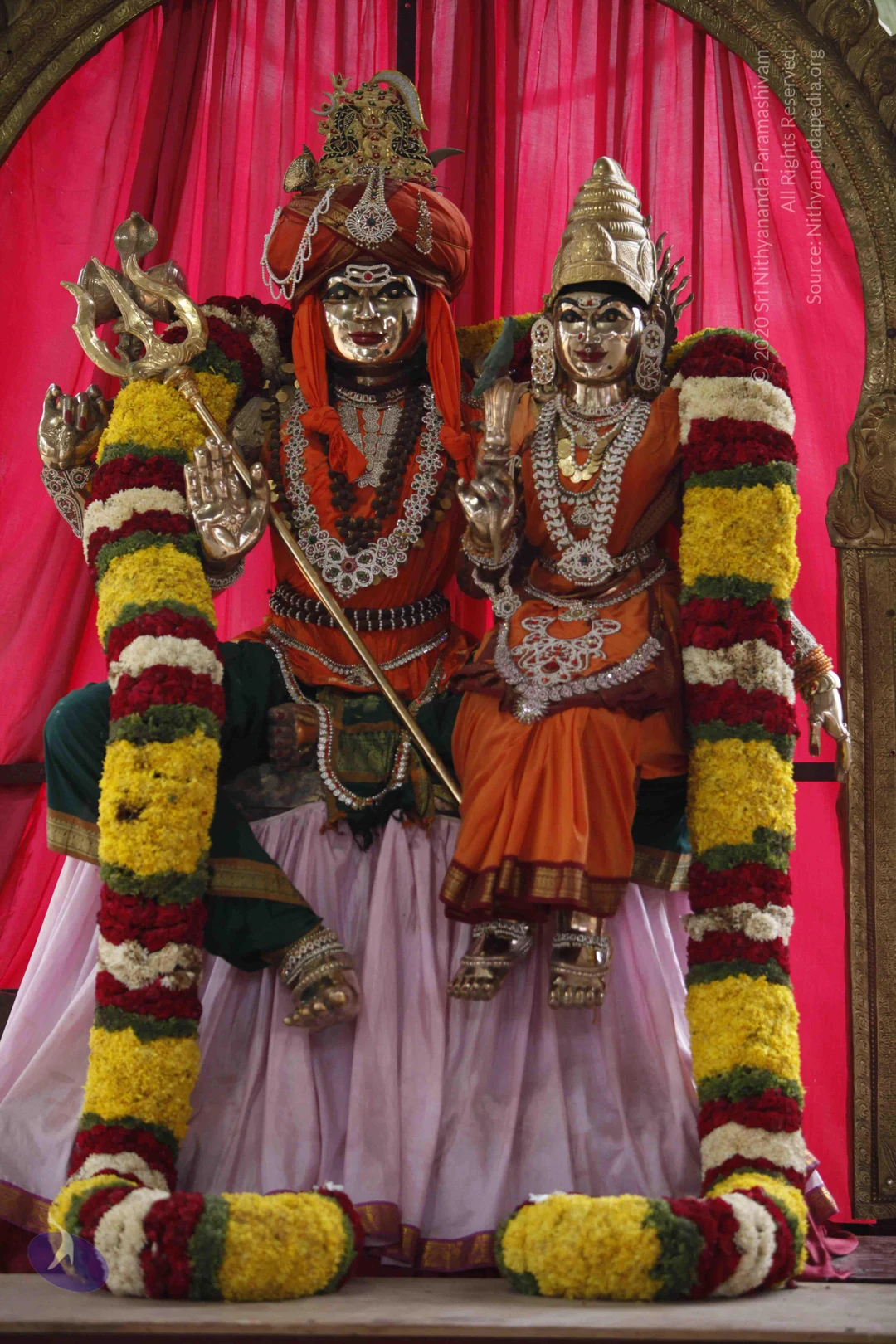
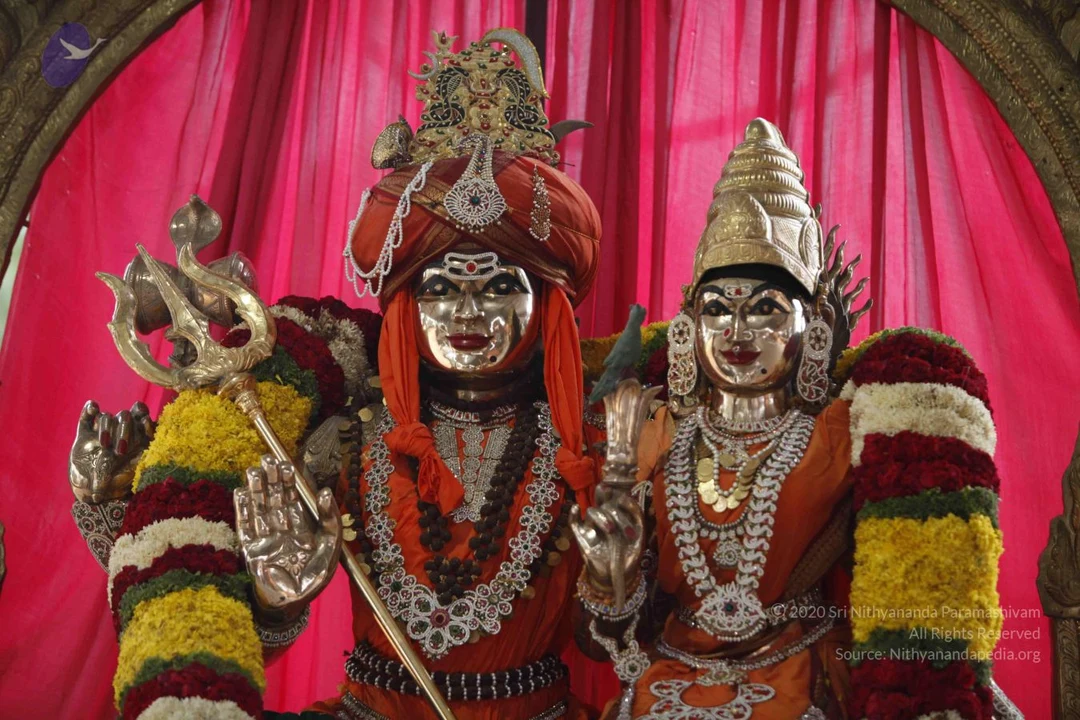
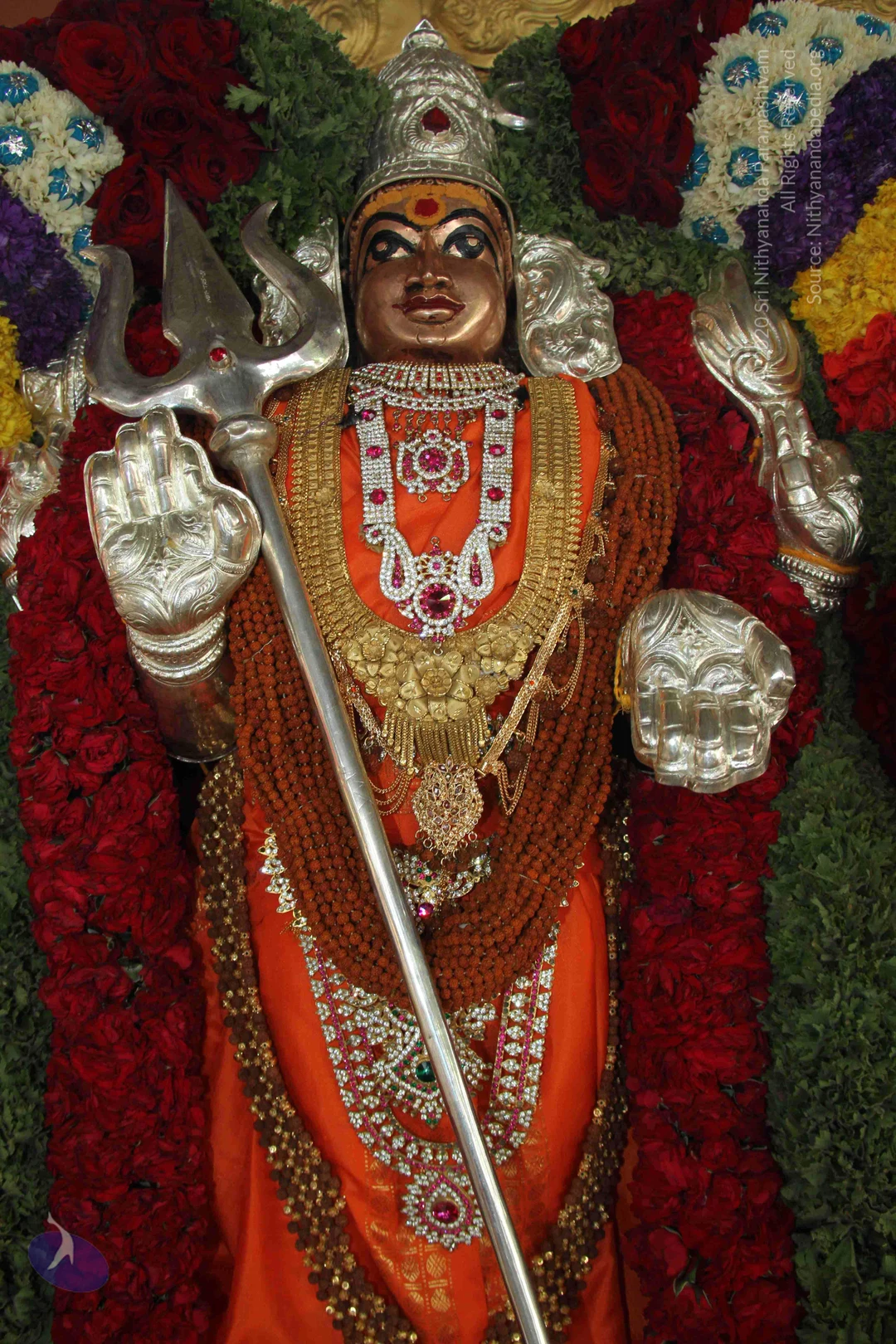
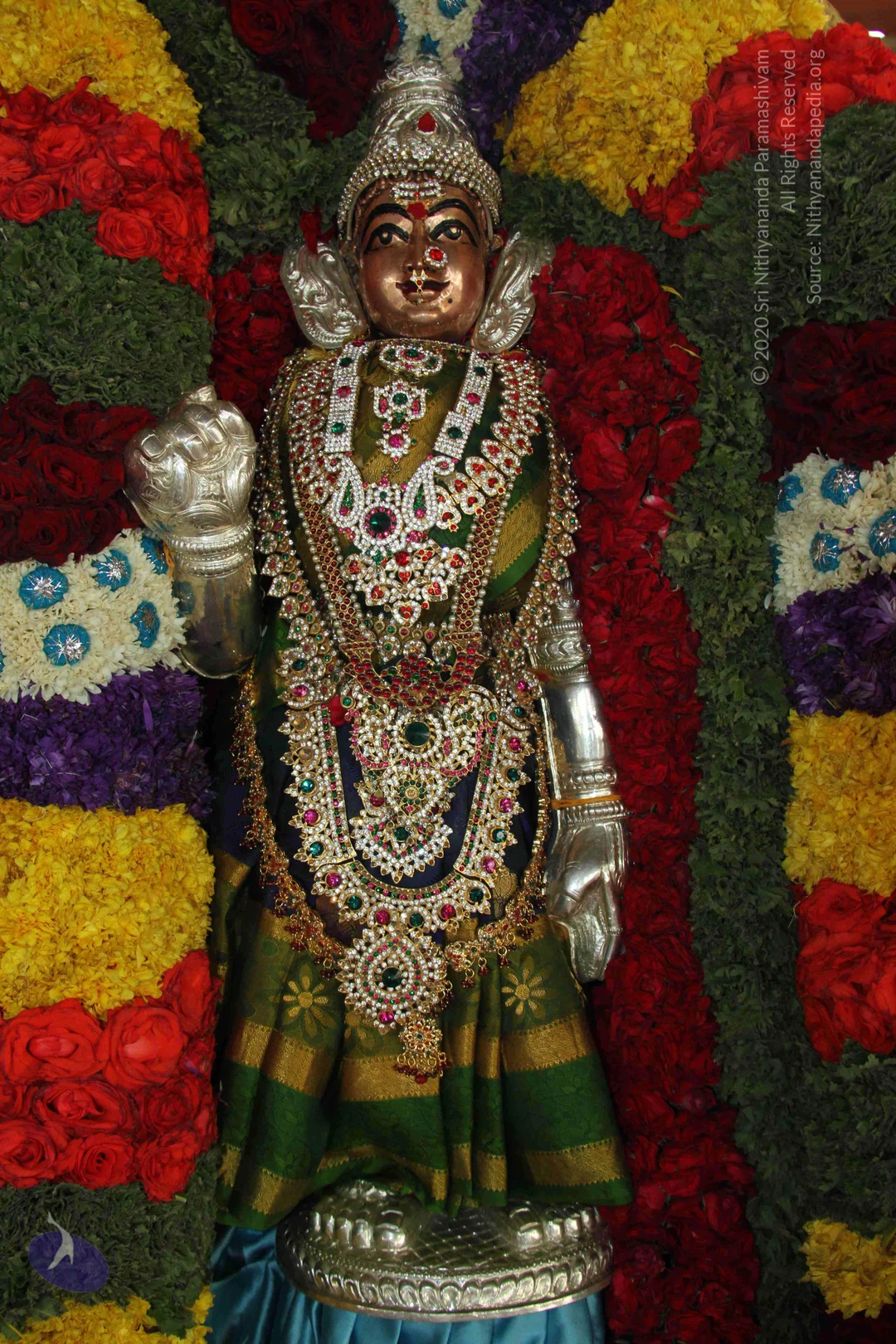
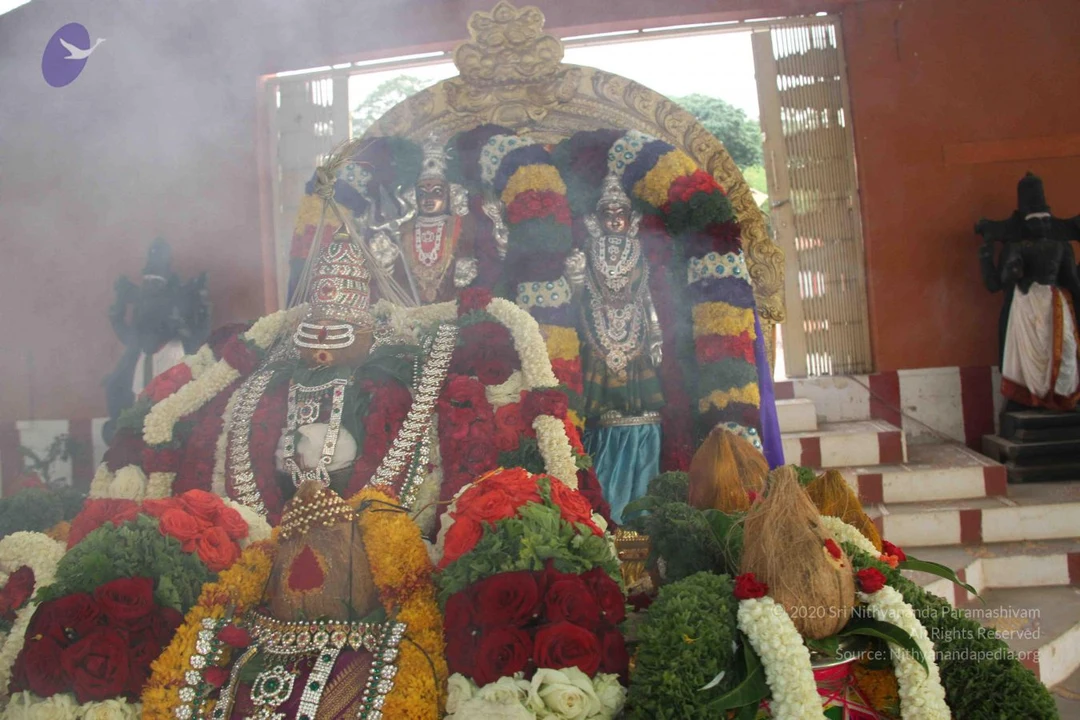
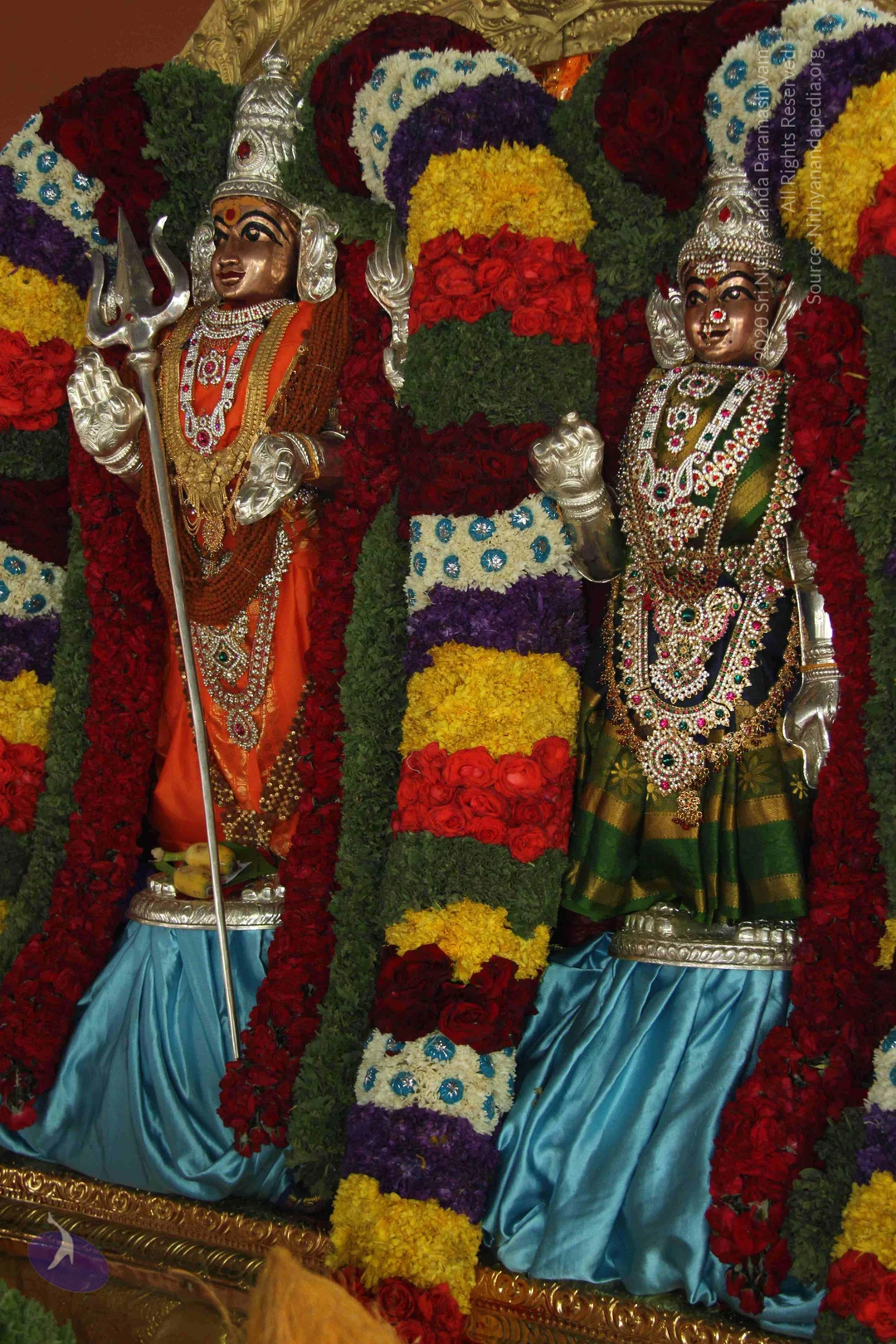
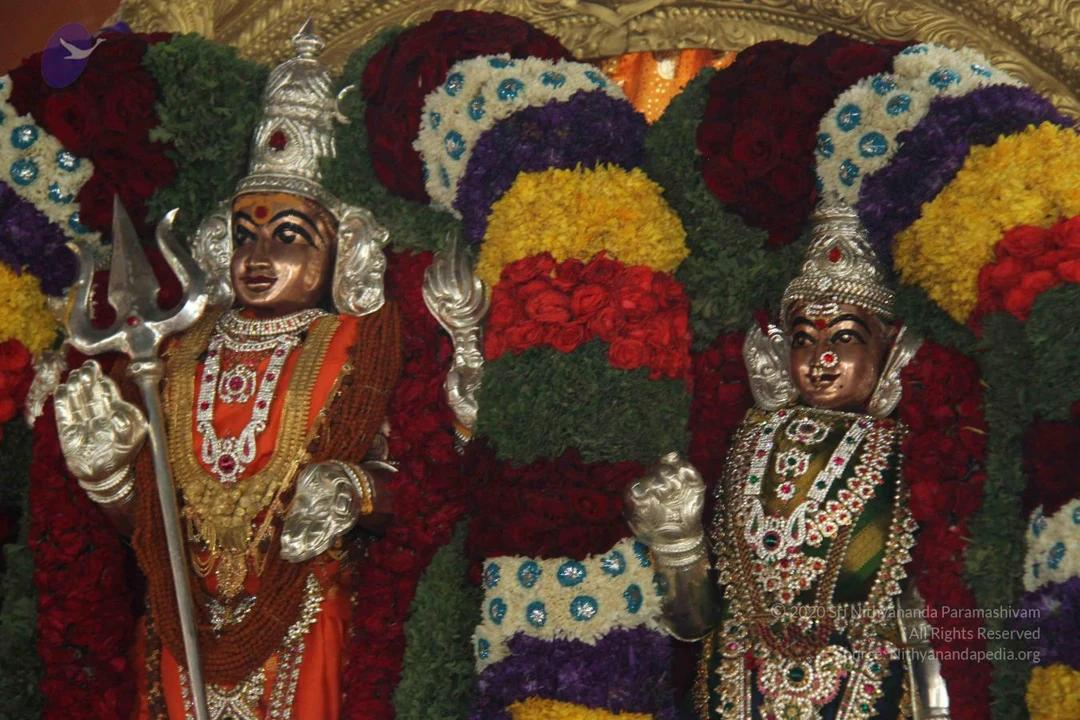
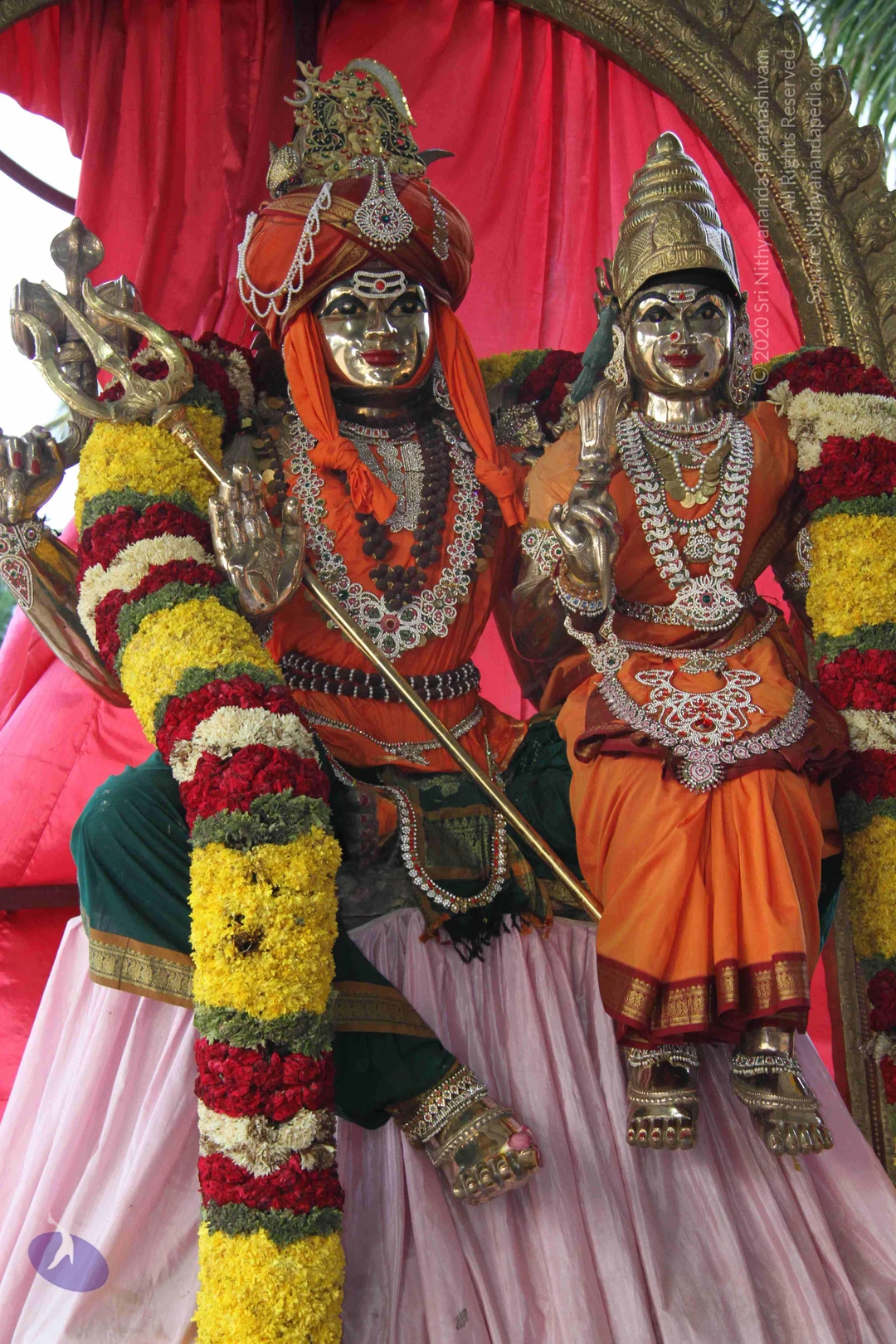
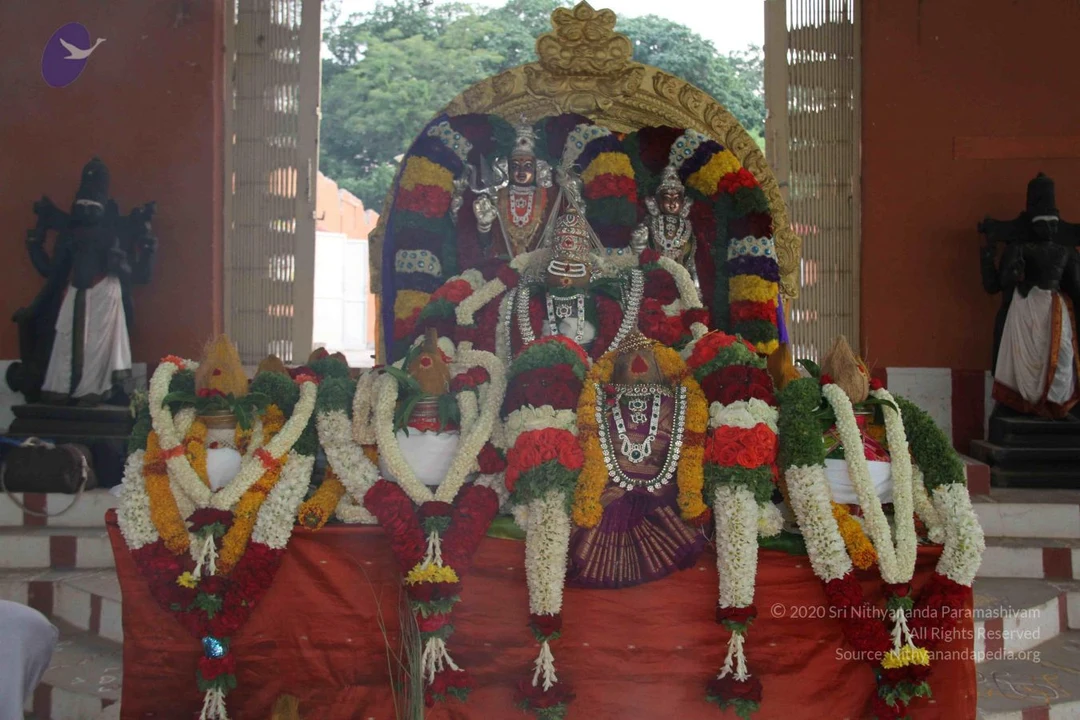
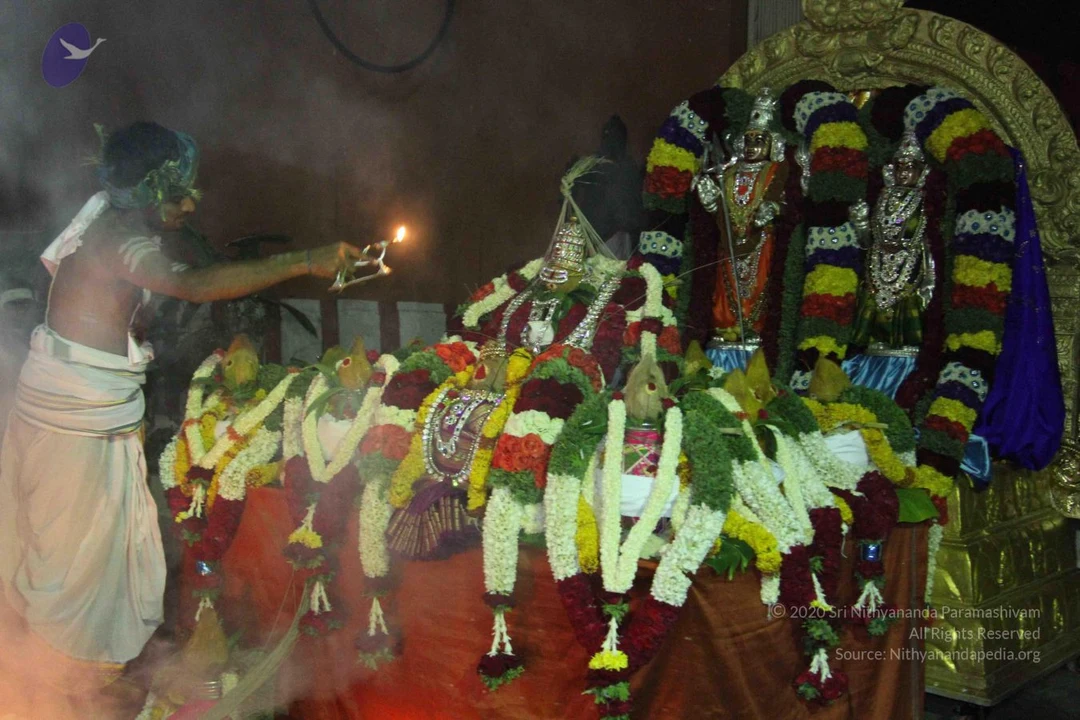
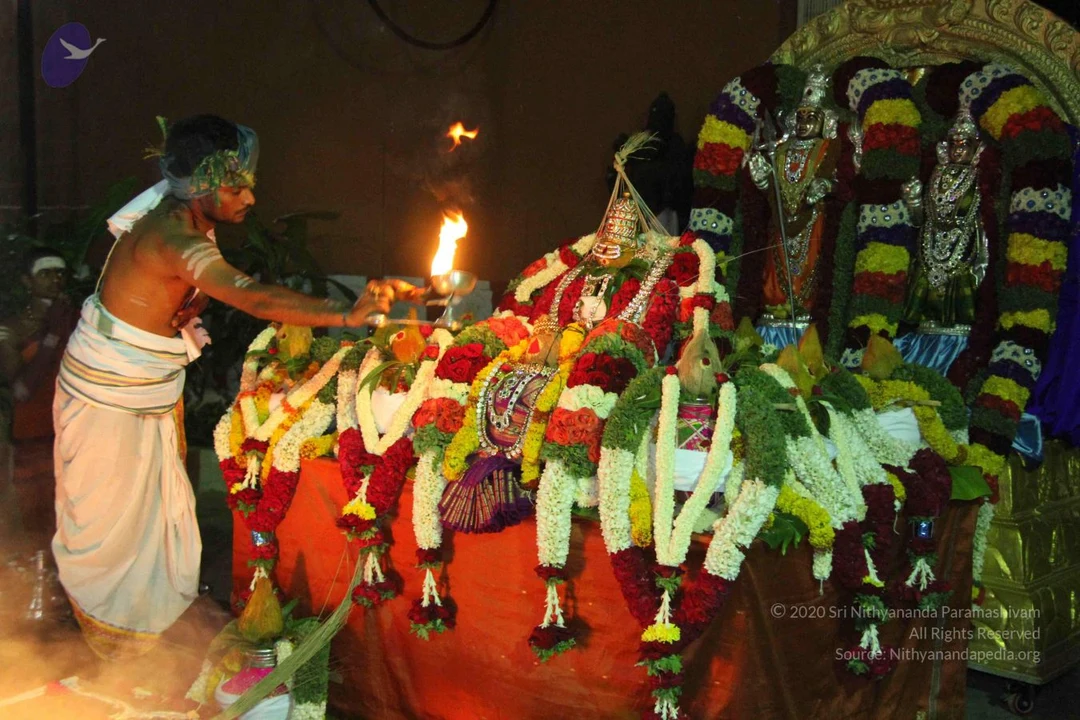
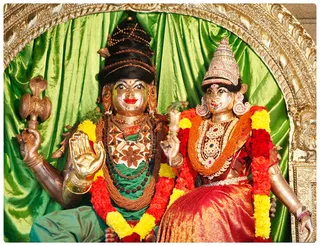
Today, Mahadeva is gracing us - beautiful leela, “Meenakshi Dig Vijayam"; means - the Meenakshi goes and conquers all the ten directions.

Directions are not eight - because, “Above” and “Below”. “Eight” is only in two dimension – length and breadth. “Above” and “Below” is a three dimension - TEN directions!

Meenakshi - goes round and conquers all the ten directions. Meenakshi as “Thataadagai” – “Thataadagai” is her parental name – goes and conquers all the directions! Finally, she invades Kailasha, and there she wins ALL the bhoota ganaas! Chief of all the bhoota ganaas, Adhikaara Nandi - the story beautifully says - somehow, when Nandi saw Her, he fell into that motherly love, he was never able to attack her. He felt She is his Mother.... so, even Adhikara Nandi was defeated! Now only ONE Being, Mahadeva, is left. Everyone is defeated.

Devi has already called Mahadeva also to wage a war. And Mahadeva appeared in front of Her; the moment She saw Him, She realized her avataric mission. Her body went through a great psychological and physiological change; She realizes, He is her would-be husband; She merges in love with Him. Shiva-Shakthi union happens, at that moment, paving the way for Meenakshi’s marriage. Mahadeva promises, ‘Alright! Go to Madurai. I will come and marry you there, as Sundareshwara.’

Tomorrow we are having Meenakshi’s marriage.

Today, I have an important announcement, beautiful announcement. We are announcing new "Nithya Yoga Teachers Training Program"! You can experience real Yoga, and enrich people with real Yoga, and you can make a living also, as a 'Spiritual Activist'. And, as a bonus, you will be given 'Nithya Kriyas' also. You can not only teach 'Nithya Yoga'….. 'Nithya Kriyas' - a unique, My personal contribution - to the world of Yoga. See, all the Nithya Kriyas, the steps are all from the tradition, but the permutation- combination is My contribution after thorough research and development.

So, "Nithya Yoga Teachers Training Program":

- you will be supported to complete with your mental root-patterns;

- you will learn to live with this great four Tattvas - 'Maha Tattvas';

- cleansing your body the yogic way, with 'Pancha Kriyas';

- awaken your innermost potential energy through Nirahara Samyama;

- Teaching Methodology in the space of 'Nithyananda';

- classic 'Asanas' and 'Pranayamas';

- principles of sequencing and alignment;

- powerful scientific techniques for optimal health and well-being - 'Nithya Kriyas';

- Anatomy and Energy Bodies;

- daily Sanskrit chanting, and the basics of Bhakthi Yoga - the key to fulfill your life’s purpose and making a living out of it;

- Nithya Yoga in Action - how to be a 'Spiritual Activist';

- and finally, Nithyananda Vedic University gives Certification - which is also Yoga Alliance Certification.

It is a 21-day program, where you will have the opportunity of every day Satsang, AND Energy Darshan - every day Energy Darshan. And I guarantee, no other Yoga program, Yoga Teachers Training Program, offers so much!

So, during the every Inner Awakening, separately the program will be going on. And... same dates as August Inner Awakening. No, during every Inner Awakening, the Yoga Teachers Training will be there. So EVERY Inner Awakening, now one more program is added. During every Inner Awakening - Inner Awakening, eN-Genius, Nirahara Samyama, The Samyama, now - Nithya Yoga Teachers Training!

And I also have one more important announcement to make: I changed the names of Inner Awakening Levels.

- The first four days - where you will have Initiation into Completion - the first four days program of Inner Awakening, that will be called as IA Level-1. It is mainly 'Initiation into Completion'.

- In IA Level-2 - which is actually first ten days, first ten days is IA Level-2 - that will be 'Initiation into Completion with Yourself and Others'.

- And, IA Level-3 - the last eleven days - in that you will have initiation into Completion AND Creation! 'Completion and Creation' - not even initiation into completion, 'COMPLETION AND CREATION' - will be the IA Level-3.

Please understand, I am changing the Levels’ name. Earlier, first ten-day was called as Level-1, now I am changing it.

The first four days is called Level-1. What you will learn, is: 'Listening' - session about 'Listening'; Four Tattvas; finding Conflicting Thought-Patterns; finding Root-Patterns; Samskaara Dahana Kriya - ALL in four days; 'Poornatva Homa'; all in four days!

In Level-2 - Level-2 is the first ten days. Including these four days, ten days - that will be Level-2, where you will be working on: Completing Root-Patterns and, Root-Incidents; 'Swapoornatva' - Self-Completion; Unclutching Initiation; Completion with Others - 'Poornatva' - all this will be the - you will be learning, and EXPERIENTIALLY; you will be learning experientially.

And, IA Level-3 - is the last eleven days. In that, we will be working on Completion AND Creation. Initiation into the Space of Creation from the Space of Completion; and, you will have Healer’s Initiation, Vak Siddhi Initiation - ALL THAT!

And I also have one more announcement: LBP Program - Life Bliss Program Level-1 will be called, from now onwards, "LBP - Introduction to Inner Awakening". 'Life Bliss Program', as a sub-title, 'Introduction to Inner Awakening'. That will be conducted by teachers. These three will be conducted by Me, personally, may be with the assistance of Acharyas for few sessions.

So, I sincerely recommend ALL the Inner Awakening graduates to try this Nithya Yoga Teachers Training Program. And, the LBP Teachers Training Program which is July 27th to August 4th, where you will learn - to be a Spiritual Activist. The Teachers Training Program is available, to give you the knowledge and intelligence to take 'Intro to Inner Awakening Program'. You will be able to conduct two-day program, which is LBP Level-1, which is 'Introduction to Inner Awakening'.

And, all the Inner Awakening graduates, I welcome you to attend the Teachers Training Program which will be done in two-way video-conferencing - it will done in 2-way video conferencing by teachers. And even on one-way, you can do it even on one-way. It is... for U.S., it will be day time, so for Indians it will be night time. Ma Maneesha will be doing it. Wonderful! My Blessings to all of you.

I will enter into today’s Nithya Satsang. I will continue to expand on “COMPLETION AND CREATION”.

"Completion and Creation"! Please understand! Please come to the space of Listening! PLEASE come to the space of Listening!

COMPLETION, and CREATION! Only in the Space of Completion, any Creation can Happen, any Creation Happens! Without Creation, Life is frustrating!

I tell you... please listen... till Forty... - till the age of Forty, your blood will have a natural excitement. BUT, within that Forty, if you don’t develop the Space of Creation, when your blood cools DOWN, after Forty, Life will be hell! It will be FRUSTRATION!

These middle-aged Romeos - why do you think people become Romeos after the middle-age, after Forty? Because they suddenly realize, they have not created the Space of Creation!

I have a story:

Son says to his father, ‘Dad, I want excitement, adventure, money, and beautiful women. I will never find it here at home. So I am leaving. Don’t try to stop me.’

Father, following the son, father runs; as the son headed for the door, father also followed him.

Son says, ‘Did not you hear me? Don’t try to stop me!’

Father says, ‘Stopping you? No, I am joining you!’

It's true! I tell you, till the age of Forty, your PHYSIOLOGY - whether you want it or not, your Physiology carries the Space of Creation. Means, you can become Father, or Mother. BUT, within that age of Forty, let your PSYCHOLOGY also create the Space of Creation! Let your Inner Space also develop - the Space of Creation. If you miss that - your Inner Space becoming the Space for Creation, when your physiology loses its possibility of Creation - you will fall into such WORST DEPRESSION!! I tell you, such worst depression. That will be a very big FRUSTRATION.

Creation - Creation expects you - to experience the Space of Creation in Body, Mind, Consciousness, before you are Forty.

(HINDI)

Life starts with Completion.

Please listen! When you are born, by default, you are born, with the Body - which HAS the Space to create another one Body. LISTEN! The Body, body you have, NATURALLY…. the Body you have naturally carries the Space of creating another one Body. But, before your Body loses that quality, let your Mind be evolved, to create the Space - of Creation - which can happen only by Completion. And, before your mind loses the Space of Creation, let your Consciousness create the Space of Creation. That means, before your Body - falls, before your Mind - fails, develop the Space of Creation in Consciousness - so that you can just flow into that, when you leave your Body and Mind.

(HINDI)

Build the Consciousness which can help you to experience Creation. Build the Consciousness which can let you experience Creation. I tell you, every moment, either your Incompletions uses you, or your Completion uses you; either your Incompletion uses you, or your Completion uses you. If you are filled with Incompletion, nobody can give you Peace. Not only Me - no Guru, no God, can give you Peace when you are filled with Incompletion. You may try to act as if you are peaceful. I have seen people, they’ll (with a ‘morose’ look)… ‘Morose’-ness is not ‘peaceful’! Not being active is not ‘peaceful’!!

Disciple asked the Master, ‘O Wise, the all-knowing One, O, the great Master, take me to the realm of perfect peace.’ Master says, ‘If I take you to that realm, that realm will be no more peaceful!’

TILL you achieve Completion, till you achieve Completion – Peace - is IM-practical; because, when you

(HINDI)

Life - starts with Completion; suffering - ends in Completion. WHAT-EVER you want, DO, but somehow learn the science of COMPLETION and Complete - you will see New Life! You may be doing anything in your life, but science of Completion is a basic necessity, basic requirement, for Life to happen in you.

(HINDI)

Complete with your confusions; complete with your self-doubts; complete with your sleeping pattern; complete with your pattern of always withdrawing from Life.

Sleeping is nothing but - withdrawing from Life! Sleeping is nothing but - resisting Life, feeling the Life is too much. You feel Life is going above your head; that is why you just shrink and coil yourself, wind up, close the shop, and hang the board “Shop Closed”! No sometime, because of too much traffic happening in the shop also, you close the shop and hang the board “Shop Closed”.

(HINDI)

First thing, before even Completion with yourself, you have to complete with your self-doubt pattern. I tell you, the moment you create a ‘dis-empowering Cognition’ about you - ‘Inner Image’, and ‘Alternative Compensating Cognition’ – ‘Outer Image’, you will simply have self-doubt. Please understand, the moment you have disempowering Inner Image and you project - a very powerful Outer Image, you will have self-doubt. Self-doubt will become part of your very Being.

(HINDI)

Understand, when you live with that self-doubt, life becomes hell; what-ever you do, you will carry that self-doubt. Self-doubt is the POISON! First, COMPLETE with that SELF-DOUBT!

I think all the kids should be taught this lesson FIRST - Completing with the Self-Doubt. Only that will bring Stability!

See, till you complete with your self-doubt, Stability can never be brought in your Life. Whether it is a Gurukul kid, or a Sannyasi, or a Sannyasini, or a devotee, or a participant, or a Staff. I think even all the Staff should be taught how to complete with this self-doubting pattern, only then they will be stable. Self-doubting pattern should be cleared, completed.

A kindergarten teacher was observing the children, while they drew their art. She would occasionally walk around to see each child’s work. As she got to where one little girl was working diligently, the teacher asked what the drawing was.

The girl replied, ‘I am drawing God!’

The teacher paused and said, ‘But honey, no one knows what God looks like.’

Without missing a beat or looking up from her drawing, the little girl replied, ‘They will know in a minute!’ (Swamiji’s signature laugh J)

Understand, the Power of not doubting the Self; Power of not doubting the Self! See, when no one knows, then what I declare IS the Declaration! That is the Truth! If somebody thinks they know, only then, there is a competition!

See, all inventions are nothing but the first Declaration, the earliest Declaration. Then naturally, there was developing, and development. But the developments will happen only after the first Declaration. So, the man who wants to declare FIRST should have a Being without Self-Doubt. Only people who complete with the Self-Doubt, all First Declarations comes out. All First Declarations, the great First Declarations, comes out only out of the Space which has no Self-Doubt.

(HINDI)

Understand, Self-Doubt destroys every possibility in you. Self-Doubt removes all the higher visualizations; I tell you, all possible higher visualizations are corrupt by the Self-Doubts. All possible higher visualizations are snubbed in the very level of bud itself, by Self-Doubt.

Self-Doubt - is a goat which destroys the forests! In all the forest area you will see a big board, “Goats kill forests”. You may think, “how can goats kill forests”? Because they go and swallow all the trees when they are sprouting, when they are coming out, when they are starting! So, never forests can happen, where goats are. Goats and forests can’t live together. Same way, Self-Doubt and Creation can’t live together.

Complete with the Self-Doubt. Complete with that pattern of self-doubting - CONSTANTLY doubting yourself. Self-doubting is a crime, because it is equivalent to ‘Atma-Hatya’; it is equivalent to suicide. Self-doubting makes you doubt everything. Actually self-doubting is the root cause of Atheism; self-doubting pattern - is the root cause of Atheism.

A person who does not doubt Self, he will doubt the right things need to be doubted; not the wrong things. A person who carries a Self-Doubt will doubt all the wrong things; and the right things which he need to doubt, will not doubt, and will miss.

I have a story:

Children were lined up in the cafeteria of a Catholic Elementary School for lunch. At the head of the table was a large pile of apples. The nun had posted a note on the apple tray: “Take only one, God is watching!”

Moving further along the lunch line, at the other end of the table, was a large pile of chocolate chip cookies. One child had written a note: “Take all you want, because God is watching the apples!”

Carrying Self-Doubt, you will doubt whatever should not be doubted, and you will not doubt what should be doubted. Because, doubt can really even help you, if it comes out of the Completion with Self-Doubt. If you don’t have self-doubt, even your doubt can create inventions! If you are filled with self-doubt, your doubts will only create destruction, never Creation.

(HINDI)

So, I tell you, completing with the Self-Doubt, self-doubting pattern - constantly doubting whether you can make it or not, whether you can make it or not, whether you can make it or not - does not allow your Kundalini to be awakened, does not allow your DNA layers to be awakened, does not allow your mitochondria cell energy to be awakened. So, completion with self-doubting pattern means awakening Kundalini, awakening your mitochondria cell energy, awakening your DNA layers.

I bless you all! Let you all radiate with Integrity, Authenticity, Responsibility and Enriching, with Eternal Bliss - NITYHYANANDA! Thank you!

Transcript in Tamil

உங்கள் அனைவரையும் வணங்கி வரவேற்கின்றேன். இன்றைய சத்தங்கத்தில், இன்றைய வாழ்க்கை வாழ்வதற்கே நிகழ்ச்சியில் நான்கு சத்தியங்களான வைெநபசவைலஇ யுரவாநவெைஉவைலஇ சநளிழளெடைிடைவைலஇ யனெ நசெைஉாபைெ நான்கு சத்தியங்களை முதல் சத்தியத்தை ஆழ்ந்து முழுமையாக உள்ளவாங்குவோம். வைெநபசவைல ஆழமா புரிஞ்சிக்கோங்க. ஒருங்குவித்தல். உண்மையில பார்த்தீங்கன்னா நம்முடைய மனம் சிதைந்துபோய் பல்வேறு திசைகளில் இருந்தும், நம்மையே தொடர்ந்து மிரட்டிக்கொண்டு இருக்கின்றது, பயமுறுத்தி கொண்டு இருக்கின்றது. சில நேரத்துல உங்கள் மனம் மிரட்டுவதை நீங்கள் அனுமதிப்பதனால், உண்மையிலேயே இல்லாத ஒரு பிரச்சனையை மீண்டும், மீண்டும் அது சொல்லி நீங்கள் அதற்கு தகந்த பதில் அளிக்காமல் விட்டதுனாலும், ஒத்துழைத்ததுனாலும், நீங்கள் நம்புகின்ற அளவிற்கு உங்களை பயமுறுத்த துவங்கி விடுகின்றது. ஆழ்ந்து கேளுங்கள். கேட்பது. கேட்பதில் இருந்துதான் வாழ்க்கை துவங்குகிறது. கேட்கும்பொழுது தான் வாழ்க்கை துவங்குகிறது. வாழ்க்கை விரிவடைவது துவங்குகிறது. வாழ்க்கை வளர்ச்சி அடைவது துவங்குகிறது. கேட்டல். கேட்டலில் இருந்துதான் வாழ்க்கை வளர்ச்சி அடைவது துவங்குகின்றது. ஆழ்ந்து உள்வாங்குங்கள். ஆழ்ந்து உள்வாங்குவதன் மூலமாக இதை கேளுங்கள். கேட்டலின் மூலமாக ஆழந்து உள்வாங்குங்கள். உள்வாங்குதல், கேட்டல் இந்த இரண்டும் தனித் தனியாக நிகழ வேண்டும். பல நேரத்துல உள் வாங்குதல் ரொம்ப எளிமையான நடக்கிறது இல்லை. ஒரு கருத்து நம் காதில் விழுந்த உடன் நாம் அதைக் கேட்ட உடன் அதை நேரடியாக உள் வாங்குவது இல்லை. அதை பற்றி நம்முடைய மற்ற மற்ற கருத்துக்களை வைத்து அதை சிந்தித்து கொண்டிருப்பதில் சிந்தனை சென்று விடுவதால், கேட்டலையும் விட்டு விடுகின்றோம். உள்வாங்குவதையும் விட்டுவிடுகின்றோம். கேட்டலும், உள்வாங்குதலும் ஒரு நேரத்தில் நடப்பதும் சரியல்ல. கேட்டலுக்கும் உள்வாங்குதலுக்கும் நடுவில், வேறு வேறு சிந்தனைகள் ஒடுவதும் சரியல்ல. கேட்டல் நிகழ்ந்து, பிறகு உள்வாங்கல் நிகழ வேண்டும். கேட்டல் மற்றும் உள்வாங்குதல். டுளைவநெபைெ யனெ உழபெணைபைெ. இந்த இரண்டு மட்டும் தொடர்ந்து நடைபெறும் விதத்தில் மற்ற எல்லா சிந்ததைகளுக்கும் விடை அளித்து விட்டு, மற்ற எந்த சிந்தனைகளையும் அனுமதிக்காமல் சிரத்தையோடு அமர்ந்து உள்வாங்குங்கள். சிரத்தையோடு அமர்ந்து உள்வாங்கும் பொழுதுதான் கேட்டலும், உள்வாங்குதலும், நேரடியான பலனை கொடுக்க துவங்குகின்றது. கேட்டலில் இருந்துதான் வாழ்க்கை துவங்குகின்றது. இன்றைய பநநெசயவழைெ இளைஞர்களுக்கு இல்லாத ஒரு மிகப்பொிய நல்ல குணம் அடிப்படையாக வேண்டிய, மிகப்பொிய நல்ல குணம் கேட்டல். நம்முடைய மனம் சிதைந்து போய் பல்வேறு திசைகளில் இருந்தும் ஒரு மீன் சந்தை மாதிரி உள்ள நடந்துட்டு இருக்கிறதுனால கேட்டல் எனும் குணத்தையே இன்றைய இளைய சமுதாயம் இழந்துவிட்டது. துரதிருஷ்டவசமாக எல்லோரையும் தொடர்ந்து விமர்சிக்கக் கற்று கொண்டதனால், விமர்சிப்பதனாலேயே நம்மை மிகப்பொிய மனிதராக காட்டி கொள்ள முயற்சிப்பதால், விமர்சிப்பதனாலேயே நம்மை புத்திசாலி என்று காட்டி கொள்வதாலும், விமர்சித்தால் மட்டும் தான் நமக்கு முக்கியத்துவம் கிடைக்கின்றது என்பதனாலும். விமர்சிப்பதையே வாழ்க்கை முறையாக இன்றைய இளைய சமுதாயம் எடுத்து கொண்டு விட்டது. ஒரு சின்ன கதை. ஒரு கிராமத்துல ஒரு இளைஞளை எல்லோரும் முட்டாள், முட்டாள், முட்டாள் என்று அழைத்தார்கள். அவனுடைய நடவடிக்கைகளும் முட்டாளகவே இருந்திருந்தது. அந்த இளைஞனுக்கு மனசுல பொிய துக்கம். என்னப்பா இது. இந்த குழந்தைகள் எல்லாம் கூட என்னை முட்டாள், முட்டாள் என்று சொல்றாங்களே எப்பதான் என்னுடைய வாழ்க்கை மலரப்போகுது. அந்த முட்டாள், முட்டாள்ன்ற அடையாளத்துல இருந்து வௌிய வர போகுது. பொங்கிய துக்கத்தாலே, அந்த வழியா வந்த ஒரு ஞானி ஒருவரை அவன் சந்தித்து சாமி இந்த ஊருல இருக்கிற எல்லோரும் என்னை முட்டாள், முட்டாள் என்றே பழிக்கிறார்கள். ஒரு சிறு பிள்ளைகூட என்னை மதிப்பதில்லை. எப்படியாவது இந்த முட்டாள் பட்டம் என்கிட்ட இருந்து போகணும். எல்லாரும் என்னை மரியாதையோட நடத்தணும். தயவு செஞ்சி எப்படியாவது வழிகாட்டுங்கள். உதவுங்கள். அப்படின்னு அழுதான். ஞானி ரொம்ப அழகா சொல்றார். மகனே கவலையே படாதே. இன்றிலிருந்து யார் உன் முன் வந்தாலும் அவர்களை விமர்சிக்க துவங்கு. எதை பார்த்தாலும் விமர்சிக்க துவங்கு. ஒரு ரோஜா செடிய பார்த்தால், இத்தனை அழகான ரோஜா மலர்கள் புத்திருக்கேணு பேசாத, சொல்லாத, அப்ப நீ கவிஞன் ஆயிடுவ. இது என்ன, இந்த செடி முழுக்க முள்ளாவே இருக்கே அப்படீன்னு விமர்சனம் பண்ணு. வெண்ணிலவை பார்த்தால், என்ன அழகான வெண்ணிலவு ஆகாயத்தில் தவழுகின்றதே அப்படினு புகழாத, ரசிக்காத. அப்ப நீ கவிஞன் ஆயிடுவ. இல்ல அதுஎன்ன, நிலாவுக்கு நடுவுல கருப்பு, கருப்பா ஒழுங்கா வைக்காத மைமாதிரி. இல்ல செவுத்துல புசின மைமாதிரி. அந்த காலத்துல எல்லாம் இந்தி எதிர்ப்பு போராட்டம் நடக்கும் பொழுது பேங்க் வௌியில, போஸ்ட் ஆபீஸ் வௌியில, தந்தி ஆபீஸ் வௌியில இருக்கிற ஹிந்து எழுத்து எல்லாம் தார் புசி, தார் புசி அழித்து வைப்பார்கள். அதே மாதிரி இது என்ன நிலா நடுவுல யாரோ தார் புசி அழிச்சி வெச்ச மாதிரி. விமர்சனம் பண்ணு. எத பார்த்தாலும் விமர்சனம் பண்ணு. இந்த முட்டாளுக்கு ஒண்ணுமே புரியலை. என்ன சாமி சொல்றீங்க. ஏற்கெனவே என்னை யாரும் மதிக்கமாட்டாங்க. நான் தொடர்ந்து விமர்சனம் பண்ணினேனா, என்னை மக்கள் அடிக்க ஆரம்பிச்சிட மாட்டாங்களா. அவர் சொல்றார். ’’இல்ல கிடையவே, கிடையாது. நான் சொல்றதை மட்டும்செய்’’ அப்படினு சொல்லிட்டு அந்த ஊரைவிட்டு அந்த ஞானி் போயிடரார். இந்த முட்டாளும் நினைக்கிறான். எப்படியோ ஏற்கனவே என்னை யாரும் மதிக்கிறது இல்ல. இப்போ இத செஞ்சிதான் பார்ப்போமே. வுசல பண்ணி தான் பார்ப்போமே. அன்றிலிருந்து கண்ல படற அல்லாத்தையும் விமர்சனம் பண்ண ஆரம்பிச்சார். யாராவது வேட்டி கட்டிட்டு வந்தா, ஏ, என்ன நீ பழைய பஞ்சாங்கம், இந்த காலத்துல வேட்டி கட்டிட்டு வந்துட்டு இருக்க, அறிவு இல்ல? இல்ல ஒருவேளை யாராவது ஜீன்ஸ் போட்டுட்டு வந்தா, என்ன நம்ம பாரம்பரியம், கலர்ச்சாரம் எல்லாம் விட்டுட்டு இது என்ன டிரஸ், துவைக்கிறது இல்ல, ஐசழெ பண்ண வேண்டியது இல்லை, நாத்தம் அடிக்குது, இது என்னய்யா டிரஸ், யாராவது பொட்டு வெச்சிட்டு வந்தா, என்ன, என்ன உனக்கு என்ன பொிய பக்தன்னு நினைப்பா? இல்ல, வெறும் நெற்றியோட வந்தா, இது என்ன வெறும் நெற்றியோட இருக்கிற, நம்முடைய பாரம்பரியங்களை மதிக்க வேண்டாமா? ஞானி சொன்ன மாதிரியே, யார் கண்ணில் பட்டாலும் விமர்சிக்க துவங்கினான். ஒரே வாரம். ஒரு வாரத்தில் அந்த கிராமம் முழுக்கவும், அவனை மிகுந்த ஆச்சரியத்தோடு கவனித்தார்கள். ஆச்சரியத்தோடு பார்க்க துவங்கினார்கள். ஒரு மாதத்திற்குள், அவனுடைய முட்டாள் பட்டம் மறைந்துவிட்டது. கிராமத்துல அது யாருக்குமே புரியலை. ஆனா எல்லாருமே குநநட பண்ண ஆரம்பிச்சிட்டாங்க. ஓ, இவன் புத்திசாலி ஆயிட்டான்போல. ஏதோ காரணத்தால இவன் புத்திசாலி ஆயிட்டான். ஒரு வேளை வந்த ஞானி இவருக்கு ஞானம் கொடுத்துட்டு போய்விட்டாரோ, என்னவோ, இரண்டு மாதம் கழித்து அந்த ஞானி அந்த கிராமத்திற்குள் மீண்டும் வந்தார். கிராமத்துக்குள்ள நுழையும்போதே அந்த காட்சிய பார்க்கிறார். ஊருக்கு வௌிய இருக்கிற ஒரு பொிய வேப்பமரம். வேப்பமரத்துக்கு கீழ இருக்கிற மேடையில அந்த முட்டாள் நடுவுல உட்கார்ந்து இருக்கிறான். ஊர் மக்கள் எல்லோரும் மூத்தவர்கள் எல்லோரும்கூட, தரையில் அமர்ந்து அந்த முட்டாள் சொல்வதை சிரத்தையோடு கூர்ந்து கேட்டு கொண்டு இருந்தார்கள். அந்த ஞானி வந்த உடனேயே முட்டாள் எல்லோரையும் அனுப்பி விட்டு ஞானியின் காலடியில் சாஷ்டாங்கமாக விழுந்து வணங்கினான். சாமி நீங்க சென்னதை நான் செஞ்சேன். என் முட்டாள் பட்டம் போனது மட்டும் அல்லாமல், இந்த ஊரே என்ன மிகப் பொிய புத்திசாலின்னு நம்ம ஆரம்பிச்சிடுச்சி. ஆழ்ந்து பாருங்கள். புரட்சியாளர்கள், புத்திசாலிகள், வழிகாட்டிகள் என்று நாம் நினைக்கின்ற நம் எல்லோருமே எதைக் கண்டாலும் விமர்சிப்பது என்கின்ற மனப்பழக்கத்தில் இருந்துதான் உருவானார்கள். அவர்களால் தீர்வை கொடுக்க முடியாது. ஆனால் ஏற்கெனவே இருக்கின்ற வாழ்க்கை முறையை தவறு என்று சொல்லி விமர்சிக்க முடியும். ஏற்கெனவே இருக்கும் வாழ்க்கை முறையை தவறு என்று விமர்சித்து தீர்வு கொடுக்க முடியாதவன் புரட்சியாளன். ஏற்கெனவே இருக்கும் வாழ்க்கை முறையை தவறு என்று விமர்சித்து புதிய வாழ்க்கை முறையான தீர்வையும் அளிக்க கூடியவன் அவதார புருஷர். மிகப் பொிய நாத்திக ஜாம்பவான்களை நான் நேரடியாக தனிப்பட்ட முறையில் சந்தித்து இருக்கின்றேன். பல பேரை. ஜாம்பவான்கள் வாழ்க்கை முழுவதும் மேடையிலே நாத்திகத்தை முழங்கியவர்கள், நாத்திக துறையிலே ஜாம்பவான்கள் பல பேரை தனிப்பட்ட விதத்தில் சந்தித்து இருக்கின்றேன். அவர்கள் பல பேருடைய குடும்ப உறுப்பினர்கள் மனைவிகள், மக்கள், மருமகன்கள், அவர்களுடைய சொந்த பிரச்சனைக்காக என்னுடைய தியான முகாம்களை அணுகி எடுத்து தீர்வும் பெற்று இருக்கின்றார்கள். அது மாதிரியான சூழ்நிலைகளில், அந்த ஜாம்பவான்களை சந்திக்க கூடிய வாய்ப்பு கிடைத்தது. அவர்களில் சில போிடம் நோிடையாகவே பேசினேன். நோிடையாகவே கேட்டேன். அவர்களிடம் பேச ஆரம்பிக்கும்பொழுது சில நிமிடங்களிலேயே மனம் திறந்து ஒத்து கொண்டார்கள். அவர்கள் மற்றவர்களுக்கு எல்லாம் சொல்லுகின்ற அந்த நாத்தீக கருத்துக்களை அவர்களே நம்மவில்லை என்று. கேட்டேன் நான் அப்ப. ஏங்க ஐயா இந்த கருத்துக்களை பரப்புகின்றீர்கள்.? பல ஆயிரக்கணக்கான இளைஞர்கள் அடுத்த சமுதாயம், அடுத்த தலைமுறை, மன உளைச்சலிலும், போதைக்கு அடிமைத் தன்மையிலும், தற்கொலையிலும், சிக்கி சீரழிவதற்கு காரணமாக இருக்கும் இந்த வாழ்க்கையின் மிகப் பொிய சாத்தியகூறை மறைத்துவிடும், இந்த நாத்திக கருத்துக்களை ஏன் பரப்புகிறீர்கள். ஒரு மிகப் பொிய நாத்திக ஜாம்பவான் என்கிட்ட ரொம்ப தௌிவா சொன்னார். சாமி ஏதாவது ஒண்ணு புதுசா சொல்ல வேண்டிய தேவை அந்த காலத்துல இருந்தது, இருக்கிறதை எல்லாத்தையும் விமர்சனம் பண்ணாதான், நாங்க என்ன சொல்ங்கறதை மக்கள் கேட்க ஆரம்பிப்பாங்க. அதனால இருக்கிற எல்லாத்தையுமே வேக வேகமா உடைச்சி தள்ளிட்டோம். ஏற்கெனவே இருந்த கருத்துக்கள் எல்லாவற்றையும், வேகவேகமாக இடித்து தள்ளிவிட்டோம். உடைத்து தள்ளி விட்டோம். ஆனால், மாற்று தீர்வை எங்களால் கொடுக்க முடியவில்லை. அதனாலதான், அந்த நாத்திகவாதிகள் கடவுள் இல்லை அப்படின்னு சொல்றதுக்கும், புத்தர் கடவுள் இல்லைன்னு சொல்றதுக்கும், மிகப் பொிய வித்தியாசம் இருக்கு. எங்களுடைய மகாநிர்வாணி பீடத்தின் நிறுவனர் கபிலமுனி அவரே கடவுள் இல்லை என்கின்ற கருத்து உடையவர். சாங்கிய தத்துவத்திலே, சாந்திய தத்துவத்தின் நிறுவனர் கபிலமுனி சாங்கிய தத்துவத்திலே கடவுளை பற்றி எந்த மிகப் பொிய கருத்தும் கிடையாது. ஆனால் கபிலர் கடவுள் இல்லைன்னு சொல்றதுக்கும், புத்தர் கடவுள் இல்லைன்னு சொல்றதுக்கும், நாத்திகவாதிகள் கடவுள் இல்லைன்னு சொல்றதுக்கும் மிகப்பொிய வித்தியாசம் இருக்கு. புத்தரால் பழைய கருத்துக்களை உடைக்க முடிந்தது. புதிய வாழ்க்கை முறையை அளிக்க முடிந்தது. இந்த நாத்திகவாதிகளால் ஐயோ! பாவம். பழையவற்றை உடைத்து புத்திசாலி என்கின்ற பெயர் வாங்க முடிந்ததே தவிர புதிய வாழ்க்கை முறைக்கான தீர்வை அளிக்க முடியவில்லை. அவர் என்கிட்ட ரொம்ப தௌிவா சொன்னார். ரொம்ப வேக வேகமாக அடிச்சி பழசை எல்லாம் உடைச்சிட்டோம் சாமி, ஆனால் புதிய தீர்வை கொடுக்க முடியாததால, அந்த வெறுமையை நிரப்ப முடியவில்லை. புத்தர் அந்த கடவுள் என்கின்ற கருத்தை அடித்து உடைத்தார். ஆனால் மக்கள் வாழ்வதற்கான புதிய வாழ்க்கை தீர்வு முறையை அவரால் அளிக்க முடிந்தது. கடவுளை எயஉயவந பண்ணப்புறம் அவரால் அந்த வெற்றிடத்தை நிரப்ப முடிந்தது. ஆனால் இந்தக் கால நாத்திகவாதிகளால் பரிதாபத்திற்கு உரியவர்கள். அவர்களும், அவர்களை நம்பிய அடுத்த சமுதாயம், அடுத்த தலைமுறை மிகவும் பரிதாபத்திற்கு உரியவர்கள். இருந்த அந்த கடவுள் கருத்தை அடித்து நொறுக்கி விட்டர்கள் தொடர்ந்து விமர்சித்ததன் மூலமாக. தொடர்ந்து விமர்சனம் செய்வதன் மூலமாக, அடித்து நொறுக்கி விட்டார்கள். அல்லது நொறுக்கி விட்டதாக நினைத்து கொண்டார்கள். ஆனால் மாற்று தீர்வை அவர்களால் கொடுக்க முடியவில்லை. வெற்றிடத்தை நிரப்ப முடியவில்லை. வெற்றிடம் நிரப்பபடாததனால், அடுத்த தலைமுறை வெறுமையில் அழியத் துவங்கியது. தலைவிரித்து ஆடிக்கொண்டு இருந்த பார்ப்பன வெறிக்கு பதில் சொல்ல வேண்டிய கட்டாயம் இருந்ததினால், மாற்று சக்தி உருவாக வேண்டிய தேவை இருந்ததினால், இந்த நாத்திகம் தலை எடுத்தது. தலை விரித்து ஆடிக்கொண்டு இருந்த பார்ப்பன வெறி அடக்கப்பட வேண்டும் என்பதில் எனக்கும் மாற்று கருத்து இல்லை. இன்னமும் தலைவிரித்து ஆடிக்கொண்டு இருக்கும் பார்ப்பன வெறி அடக்கப்பட வேண்டும் என்பதில் எனக்கும் எந்த மாற்று கருத்தும் இல்லை. ஆனால் பார்ப்பன வெறி அடக்கப்பட வேண்டும் என்பதற்காக பாரம்பரியங்கள் எல்லாமே தூக்கிப் போடப்பட வேண்டிய அவசியம் இல்லை. ஏன் என்றால் பார்ப்பனர்களே பாரம்பரியங்களை தூக்கி எறிந்து விட்டார்கள். பார்ப்பனர்களும், பாரம்பரியமும் ஒன்றாக்கி பார்க்கப்பட வேண்டிய அவசியம் இல்லை. பார்ப்பனீயத்திற்கான பதிலாகத்தான் சமூகத்தில் நாத்திக அலை எழுந்தது. ரியாக்ஷனாத்தான் எழுந்ததே தவிர அது ஒரு வாழ்க்கை முறையா, டகைந ளவலடந-ல, டைஎபைெ வசநனெ -அ டைஎபைெ ிாடைழளழிால-அ மாறவே முடியாது. ஏன்னா, மாற்று வழித்தீர்வு இல்லாத, மாற்று தீர்வு இல்லாத நாத்தீகம், டகைந னநெயைட. டகைந னநெயைட ஒரு டைஎபைெ ிசைெஉைிடந -லா டைஎபைெ ிாடையளயிால-லா மாறவே முடியாது. எதை எடுத்தாலும் விமர்சிப்பதன் மூலமாக, புத்திசாலி என்று பெயர் பெற்ற அந்த புத்திசாலி அல்லது அந்த முட்டாள் இயற்கையிலேயே விமர்சிப்பதிலேயே காலத்தை கழித்து அவன் விமர்சனத்திற்கு அஞ்சியவர்களிடமிருந்து வேண்டுமானால் புத்திசாலி என்ற பட்டத்தை பெற்று கொள்ளலாம். பல நேரத்துல அப்ப நீ புத்திசாலி நான் ஒத்துக்கறேன். என்னைய விட்டுடு, அப்படிங்கிற மன நிலையோடு நாம் பலரை புத்திசாலி என்று ஏற்று கொள்ளுகின்றோம். உண்மையிலேயே அவர்கள் புத்திசாலி என்று நாம் நினைப்பதனால், அவர்களை புத்திசாலி என்று ஏற்று கொள்வதில்லை. அவர்கள் அறிவாளிகள் என்று நாம் நினைப்பதனால், அவர்களை அறிவாளிகள் என்று ஏற்று கொள்வதில்லை. உண்மையில் அவர்கள் அறிவாளிகள் என்று நம் மனம் ஏற்றுக் கொள்வதில்லை. ஆனால், அவர்களுடைய விமர்சனத்தில் இருந்து தப்பித்தால் போதும் என்று நாம் நினைப்பதனால், அவர்களை அறிவாளி என்று ஏற்று கொள்வதன் மூலமாக அவர்கள் விமர்சனத்தில் இருந்து நாம் தப்பிக்க முடியும் என்று நினைப்பதனால், அவர்களை அறிவாளிகள் என்று பட்டம் கொடுத்து நம் வாழ்க்கையில் இருந்து அவர்களை ஒதுக்கி விடுகின்றோம். அவர்களிடம் இருந்து தப்பித்து கொள்கின்றோம். விமர்சித்ததினாலேயே அறிவாளி என்ற பட்டம் பெற்ற அவன், நேச்சுரலா அந்த பேட்டர்ன், அந்த மனப்பாங்கைதான் வாழ்க்கையின் ஆதாரமாக பற்றி கொள்வான். எதிலிருந்து ஒருவனுக்கு உணவும், உடையும், அன்பும், யவவநவெழைெ-ம் புகழும், ஆதரவும் கிடைக்கின்றதோ, அதைத்தான் அவன் வாழ்க்கையின் அடிப்படையான மனப்பாங்காக, வோ் மனப்பாங்காக, தொடர்ந்து வாழ்வான். நாத்திகத்தை பேசுவதன் மூலமாக, இருக்கின்ற எல்லாவற்றையும் விமர்சிப்பதன் மூலமாக, ஒருவனுக்கு அறிவாளி என்ற பட்டம் கிடைத்துவிடுமானால், அறிஞன் என்கின்ற பட்டம் கிடைத்துவிடுமானால், புத்திசாலி என்கின்ற பட்டம் கிடைத்துவிடுமானால், இயற்கையிலேயே இருக்கும் பாரம்பரியம் எல்லாவற்றையும், இகழ்ந்து உரைப்பதில், உள்ளதை எல்லாம் உடைப்பதில்தான் அவன் உள்ளம் செலவிடப்படும். உள்ளதை எல்லாம் உடைப்பதிலேயே அவன் உள்ளம் உள்ளி உள்ளி உரைந்து நிற்கும். உள்ளதை உடைப்பதிலேயே அவன் மனம் உள்ளலை செய்து கொண்டு இருக்கும். நம்முடைய மனதின் ஒரு பாகமும், உள்ளதை எல்லாம் உடைப்பதிலேயே பெருமை அடைவதும், அதன் மூலமாகவே தன்னை புத்திசாலி என்று நினைப்பதையும் செய்யத் துவங்கிவிட்டது. அதையே வாழ்க்கையின் முறையாக கருத துவங்கி விட்டது. ஐயோ! கொடுமை. மற்றவர்களை எல்லாம் விமர்சித்து, விமர்சித்து, விமர்சிப்பதன் மூலமாக அவர்களை அடக்கி, அடக்கி பழகி இறுதியில் நம் மனம் மற்றவர்கள் யாரும் கிடைக்காதபோது நம்மையே விமர்சித்து, விமர்சித்து வருத்தி, வருத்தி தமிழ்ல ஒரு பழமொழி சொல்லுவோம். ரொம்ப கிராமத்து பாஷைல, கொலாக்குவலா, ஊர் பாஷையில சொல்லுவோம். இந்த எல்லா கிராமத்துலயுமே, நெல்லை அரிசியை கூலியாக பெற்றுக் கொண்டு அந்த ஊர் மக்களுக்கு சவரம் செய்யற நபர் இருப்பார். அவருக்கு யாரும் கஸ்டமர் அன்னைக்கு கிடைக்கலைனா, அந்த வழியாக போன தன்னுடைய மனைவியை கூப்பிட்டு உட்கார வெச்சி மழிக்க ஆரம்பிச்சிட்டாறாம். அதேமாதிரிதான், மற்றவர்களை விமர்சிப்பது என்கின்ற கத்தியை தீட்டி வைத்து கொண்டிருக்கின்ற நாம், எல்லோரையும் விமர்சித்து கொண்டே இருப்பது. ஒருவேளை, விமர்சிக்க யாரும் கிடைக்காமல் போய் விட்டால், அந்த கத்தியும், கத்தியை உபயோகித்து, உபயோகித்து பழகிப்போன கைகளும், சும்மா இருக்க முடியாது என்பதனால், தன்னைத் தானே தொடர்ந்து விமர்சித்து கொண்டே இருப்பது என்கின்ற மன அமைப்பிலே விழுந்து விடுகின்றோம். தன்னைத்தானே விமர்சிப்பது அப்படிங்கிற குணத்துனாலதான், நம்முடைய வைெநபசவைல அழிஞ்சி ஒருங்குவித்தல் அழிந்து, நம்மை நாமே மீட்டுக் கொள்ள முடியாத மன உளைச்சலில், மாளாத மன உளைச்சலில் ஆழ்த்தி கொள்ளுகின்றோம். ஆழ்ந்து உங்க வாழ்க்கையையே பாருங்க. எல்லவற்றையும் உடைப்பதில் மிகுந்த வேகத்தோடு செயல்படுவோம். எல்லாத்தையும் னுநலெ பண்றதுல ரொம்ப வேகமா செயல்படுவோம். ஆனால் மாற்று தீர்வை கண்டு பிடிப்பதில் நம் மனம் மழுங்கிப்போன கத்தியை போல் இருக்கும். மாற்று தீர்வை கண்டுபிடிக்க முடியாது. ஏன் இந்த வேலைக்கு போக கூடாது, நான் என்ன அடிமையா? காலைல எட்டு மணியிலிருந்து ராத்திரி எட்டு மணி வரைக்கு அவங்க சொல்ற வேலைய செஞ்சிட்டு இருக்கிறதுக்கு. சரி வேண்டாம். ஏன் விவசாயம் பண்ணக் கூடாது? நான் என்ன பாமரனா? படிக்காதவனா? இன்னும் ஏர் புடிச்சி ஓட்டிக்கிட்டு இருக்கிறதுக்கு. விளைய வைக்கணும். எடுத்துட்டு போய் மார்கெட்ல போடணும். அந்த வியாபாரி விருப்பப்படற விலையை கொடுத்து நான் அத வாங்கணும். நான் என்ன கையாள ஆகாதவனா? வாழ்க்கையில அவர்களை இந்த மாதிரி நபர்களை என்ன செய்ய சொன்னாலும் விமர்சனம் பண்ணி பண்ணி பண்ணி பண்ணி னநலெ பண்ணிடுவாங்க. மற்றவர்களுக்காக இல்லை. அவர்களே கூட அவர்கள் னநெயைட ஆழமா நம்புவாங்க. அந்த னநலெ பன்ற பேட்டர்ன நம்புவாங்க. அது உண்மையிலேயே உண்மைனு நினைச்சிக்குவாங்க. அவங்க மத்தவங்களுக்கு சொல்ற அந்த ரீசனை உண்மைனு அவர்களே நம்புவார்கள். ஆனால் மாற்று தீர்வை கேட்டால் இருக்காது. நம் நாட்டில் இருக்கும் வேலையில்லா திண்டாட்டத்திற்கும், நாமாகவே உருவாக்கி கொண்ட வறுமைக்கும் அடிப்படையான காரணம். எல்லாத்தையும் னநலெ பண்றது. ஆனா மாற்று தீர்வை கண்டு பிடிக்கிறது இல்லை. இந்த வேலையில்லாத இளைஞர்கள்னு சொல்லி திரியறவங்களை, வறுமையில இருக்கிறேன்னு சொல்லிட்டு திரியறவங்களை, கொஞ்சம் அவர்களோட உட்கார்ந்து பேசி பாருங்க. நான் செஞ்சி இருக்கிறேன். அதனால சொல்றேன். என்னோட அனுபவத்துல இருந்து சொல்றேன். கிராமம், கிராமமாக வலம் வந்து இருக்கின்றேன். நடந்து சுற்றி இருக்கின்றேன். கிராமம், கிராமமாக சென்று நடந்து யாத்திரை செய்து அவர்களோடு கலந்து பழகி வாழ்ந்து, அவர்கள் அன்றாட வாழ்க்கை மனஅமைப்பு அத்துனையையும், வாசழரபாவா ளவரனல பண்ணி இருக்கிறேன்.

தயவு செய்து புரிந்து கொள்ளுங்கள். அந்த வறுமைக்கான மூல காரணம். அந்த வறுமையில் இருக்கின்ற தனி நபர்தான் என்கின்ற உண்மையை புரிய விடாமலேயே பார்த்து கொள்ளுகிறார்கள். வறுமையில இருக்கிறவனுக்கு உன் வறுமைக்கு காரணம் அவங்க, அவங்க அவங்கனு மற்றவர்கள்னு காரணம் காட்டிகிட்டு இருந்தா, வறுமையில இருக்கிறவனுக்கு ஏதோ ரொம்ப நல்லா இருக்கிறமாறி தோணும். ஆனால், அவன்தான் காரணம். அவனுடைய மன அமைப்புதான் காரணம் என்கின்ற உண்மை புரியாதவரை அவன் அந்த வறுமையில் இருந்து வௌிவர மாட்டான். ஊயிவையடளைஅ எப்படி ஒரு கயடைரசந ிாடைழளழிால -யோ, அதே மாதிரி உழஅஅரெளைஅ- மும் ஒரு கயடைரசந ிாடைழளழிால. எல்லா இசமுமே ஊயிவையடளைஅஇ உழஅஅரெளைஅஇ உழசிழசயவளைஅ எல்லா இசமும் உண்மையில கயடைரசந. பிரபஞ்ச விதி உழஅஅரெளைஅ சார்ந்தும் இயங்குவதில்லை. உயிவையடளையஅ சார்ந்தும் இயங்குவதில்லை. உழசிழசயவளைஅ சார்ந்தும் இயங்குவதில்லை. பிரபஞ்சத்தின் விதி சநளிழளெடைிடளைஅ சார்ந்துதான் இயங்குகின்றது. என்னுடைய வாழ்க்கையில் இருக்கும் வறுமை ஆனாலும் சரி, வளமை ஆனாலும் சரி, அதற்கு நானே பொறுப்பு என்கின்ற உண்மையை சார்ந்துதான் பிரபஞ்சம் இயங்குகின்றது. இதுதான் பிரபஞ்சத்தின் விதி. மக்களே உள்வாங்குங்கள். உண்மையில் உங்கள் வறுமை ஒழிய வேண்டுமானால், ஆரம்பத்தில் கசப்பாக இருக்குமானாலும் கூட உங்கள் வறுமைக்கு உங்கள் மன அமைப்பே காரணம் என்கின்ற உண்மையை நீங்கள் உள்வாங்குவது மட்டும்தான் தீர்வு. தொடர்ந்து எல்லாத்தையும் னநலெ பண்ணிக்கிட்டே இருக்கிறது. ஆனால் மாற்று தீர்வை கண்டுபிடிப்பதே இல்லை என்கின்ற மன அமைப்புதான் உங்கள் வறுமைக்கு காரணம். உங்கள் வளமையின்மைக்கு காரணம். வாழ்க்கையில் நீங்கள் எந்த துறையில சக்தி இன்மைய உணர்ந்தாலும், மனரீதியா சக்தியின்மையை உணர்ந்தாலும், உடல்ரீதியா சக்தியின்மையை உணர்ந்தாலும், உள்ளரீதியா சக்தியின்மையை உணர்ந்தாலும், உணர்வுரீதியா சக்தியின்மையை உணர்ந்தாலும், மனம் வேறு, உள்ளம் வேறு, உணர்வு வேறு. தமிழ்ல மட்டும்தான், தமிழ் உண்மையிலயே ஒரு செறிந்த மொழி. தெய்வீக செம்மொழி. செம்மொழி மட்டும் அல்ல, தெய்வீக செம்மொழி ஏனென்றால் வாழ்க்கையை வாழ்வதற்கான வாழ்வியல் தத்துவங்கள் சார்ந்த கருத்துக்களை சொல்வதற்கு செறிந்த வார்த்தைகள் பொதிந்த மொழி. ஒவ்வொரு மொழியிலும் ஒரு தனித்துவம் இருக்கும். தமிழினுடைய தனித்துவம் வாழ்வியல் முறைகளை சொல்வதற்கான வார்த்தைகள் செறிந்த மொழி. சமஸ்கிரதம் பார்த்தீங்கனா, ஆன்மீக கருத்துக்களை தத்துவங்களை தர்க்கம் செய்வதற்கும், சிந்திப்பதற்கும், சொல்வதற்கும், பல்வேறு வார்த்தைகள் செறிந்த மொழி. ஆங்கிலம். வௌி உலகம் சார்ந்த கருத்துக்களை ஆராய்ச்சி செய்வதற்கும், சொல்வதற்கும், வார்த்தைகள் நிறைந்த செறிந்த மொழி. தமிழ் வாய்வியல் தத்துவங்கள். வாழ்வியல் கருத்துக்கள். சிந்திக்கப்படுவதற்கும், சொல்லப்படுவதற்கும், வார்த்தைகள் நிறைந்த, செறிந்த மொழி. தமிழ்ல மட்டும்தான் உண்மைக்கு மூன்று வார்த்தை. மெய்யாலே சத்தியத்தை வாழ்வது மெய்மை. வாயாலே சத்தியத்தை வாழ்வது வாய்மை. உள்ளத்தாலே சத்தியத்தையே சிந்திப்பது உண்மை. தமிழில் மட்டும் தான் நம்முடைய ைெநெச ளியஉந உள் உணர்வுக்கு மூன்று தனித்தனி வார்த்தைகள். உள்ளம், மனம், உணர்வு. இந்த வார்த்தைகளுக்கு என்ன விளக்கம்.? அவைகளுக்கு இடையில் என்ன வித்தியாசம்.? ஐவெநபசவைல எனப்படும் ஒருங்குவித்தல் என்கின்ற இந்த முதல் வாழ்வியல் சத்தியத்திற்கு, ஆழமான விளக்கங்கள், அதை ஆழ்ந்து உள்ளுக்குள் வாங்கி, வாழ்வதற்கான முறைகள், இவைகள் அனைத்தையும் தொடர்ந்து அடுத்து, அடுத்து தினம்தோறும் இதே நேரத்தில் வாழ்க்கை வாழ்வதற்கே எனும் நிகழ்வில் காண்போம்.

Photos
Tags:

Paramahamsa Nithyananda, self-doubt, spiritual, growth, root, atheism, suicide, creation, life, emotions, completion.

Photos Of The Day:
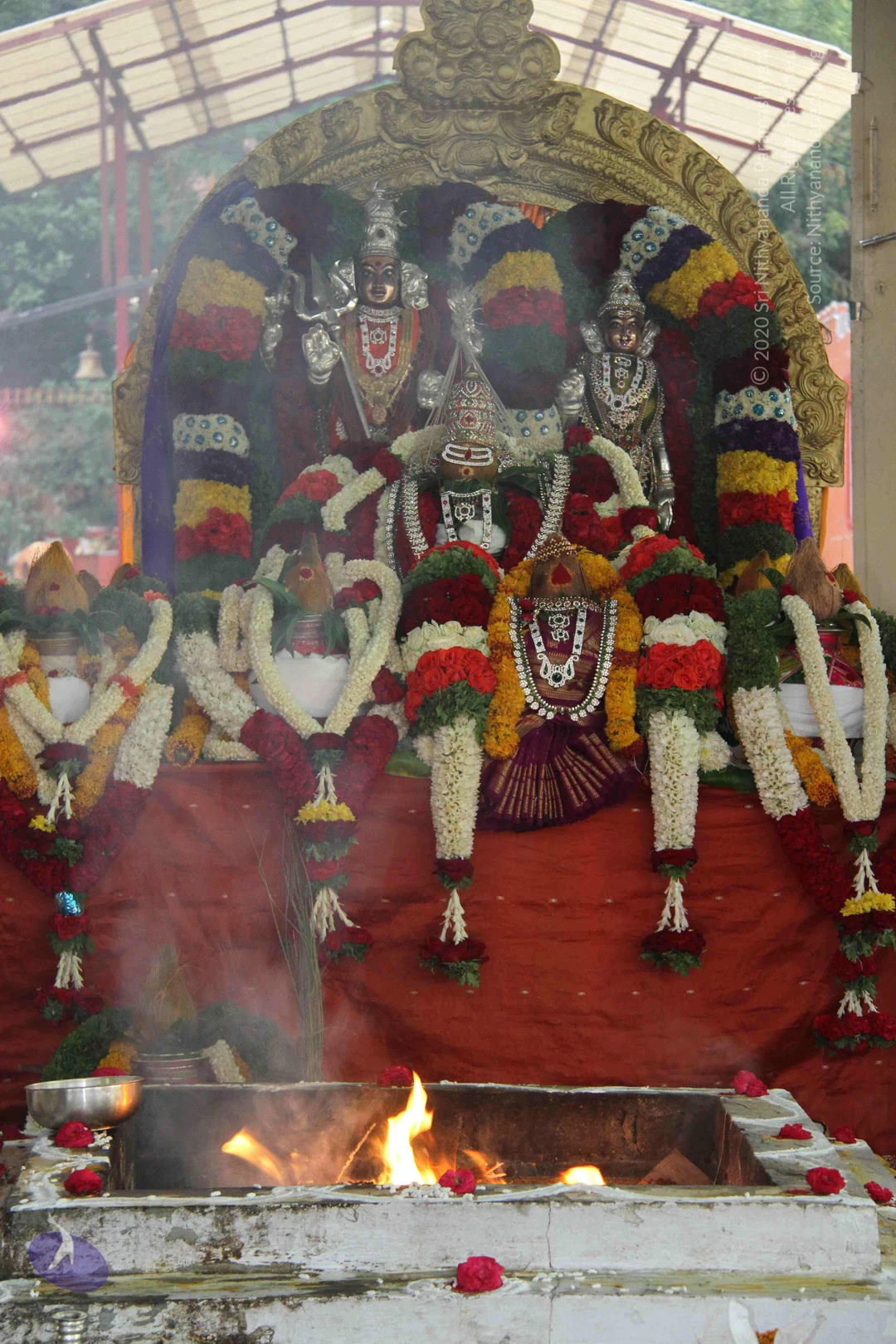
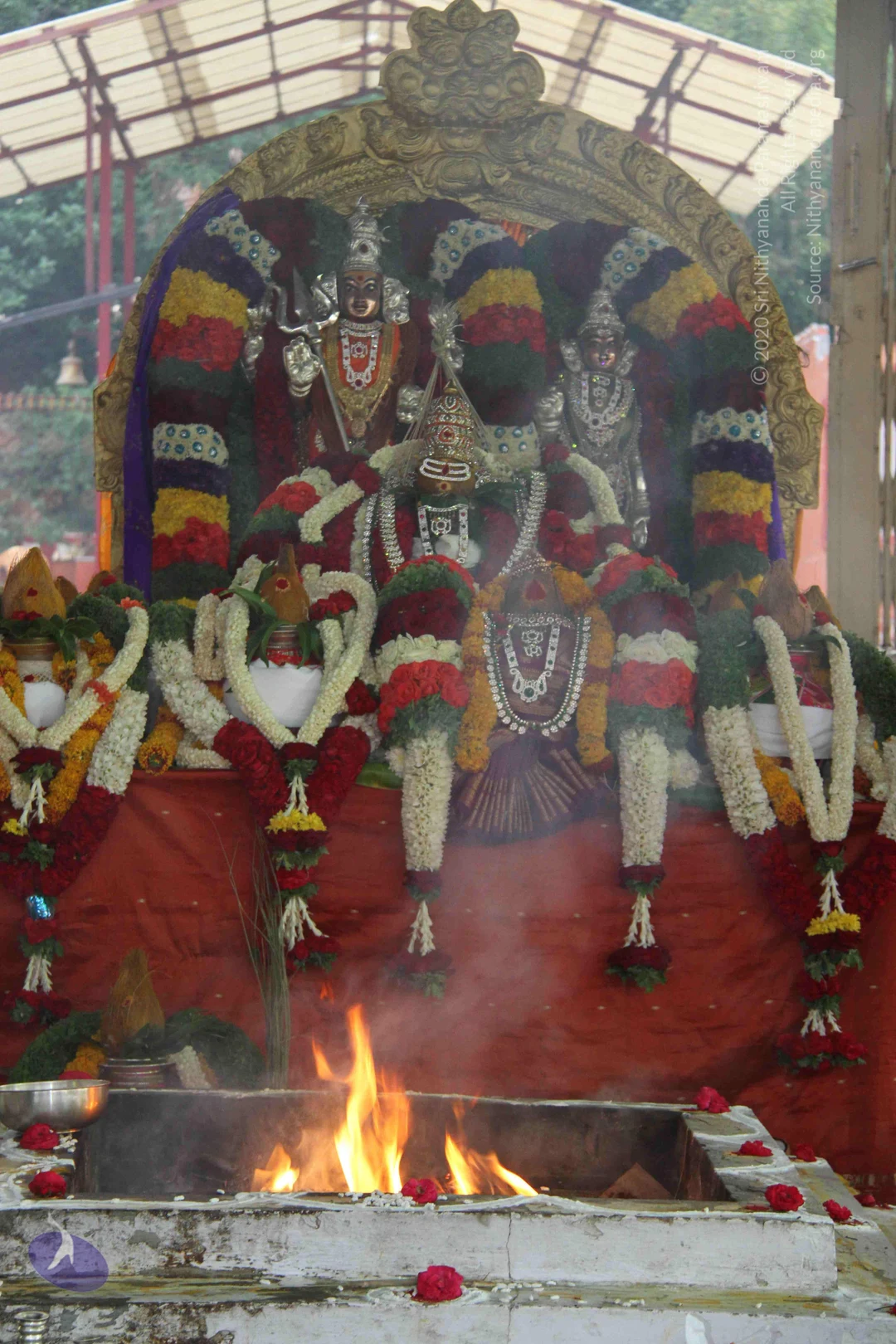
temple

pratyaksha-pada-puja

sarva-darshan

HDH-deities

ia-day17-darshan

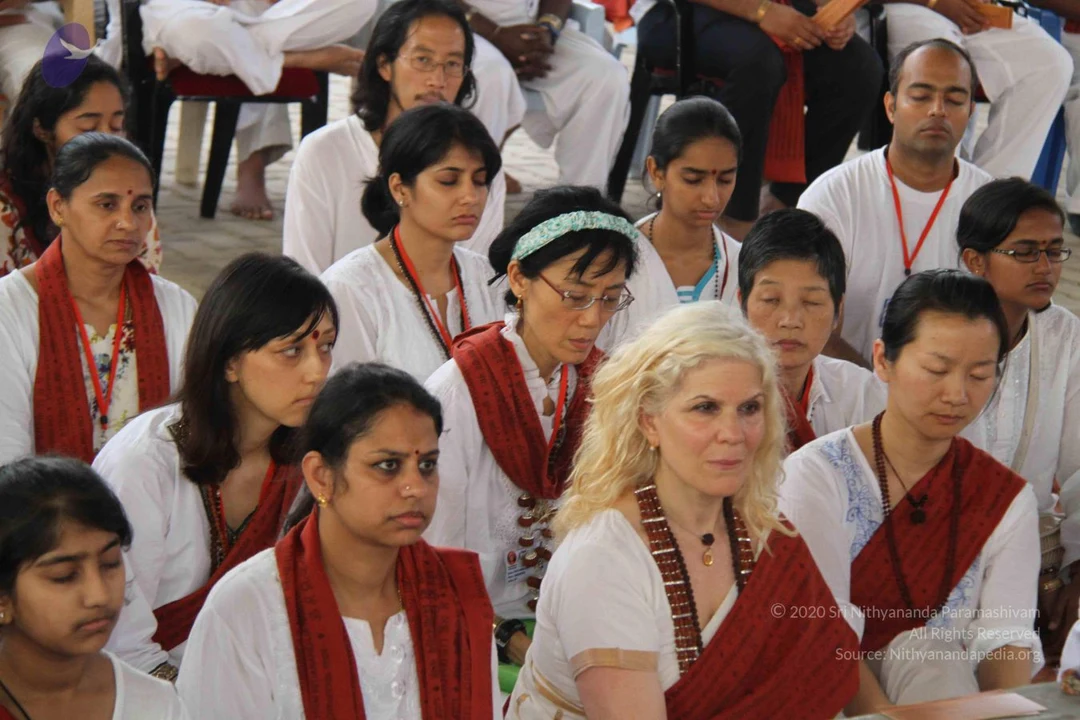
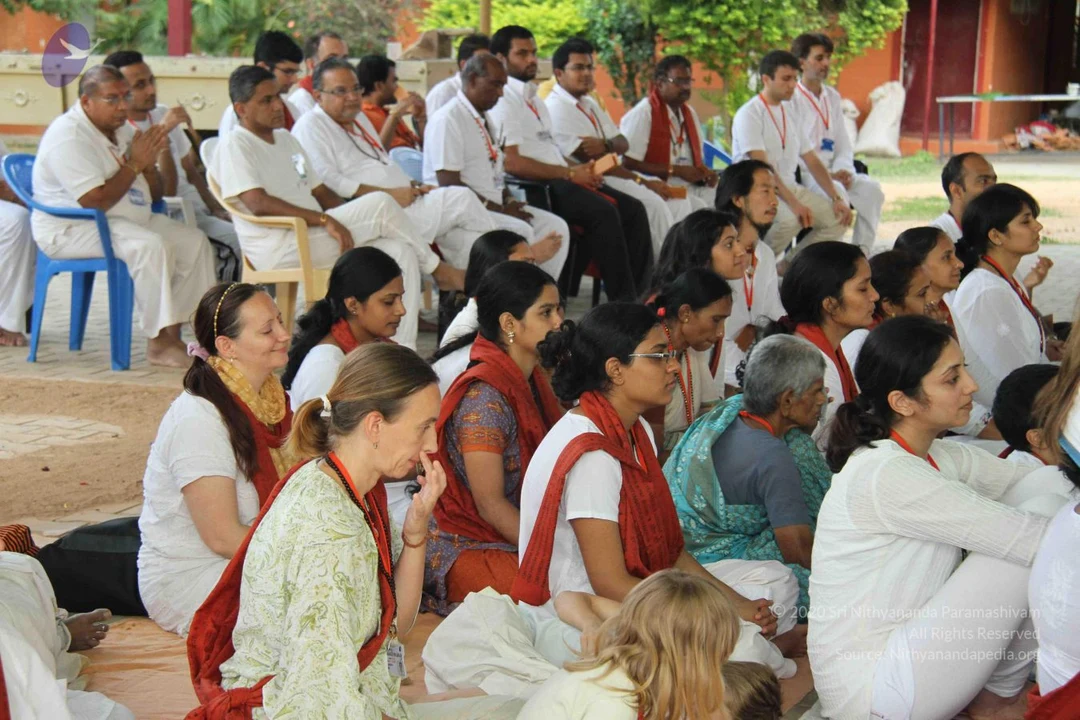
ia-day17-participants-listening

ia-day17-session

ia-day17-yoga

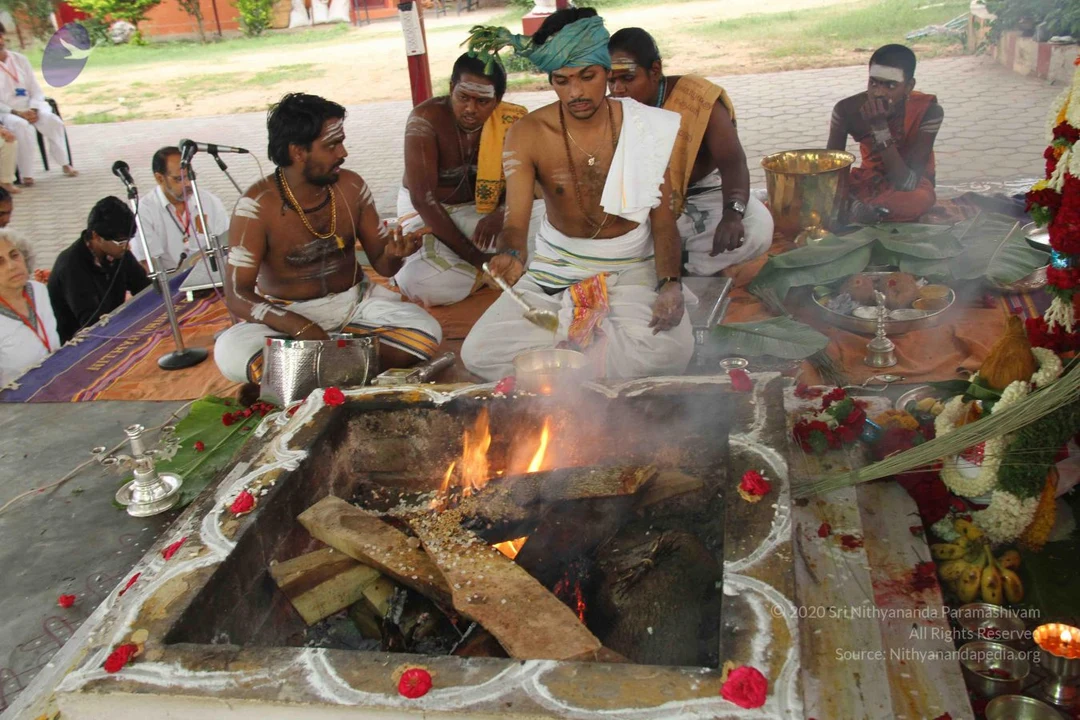
gayathri-homa

Thanthi-TV-show-day3

Link to Video:

Paramashivoham Oneness Capsule 157 (Prayaksha Pada Puja to His Divine Holiness, Bidadi)

Photos Of The Day:
Temple

Pratyaksha-Pada-Puja

Swamiji blessings

Gayathri-Homa

IA Participants

IA Session

IA-Darshan

IA-Yoga

Thanthi-TV-Show-Day3

Photos from this day
View all 400 photos
Photos
64 photosSource gallery
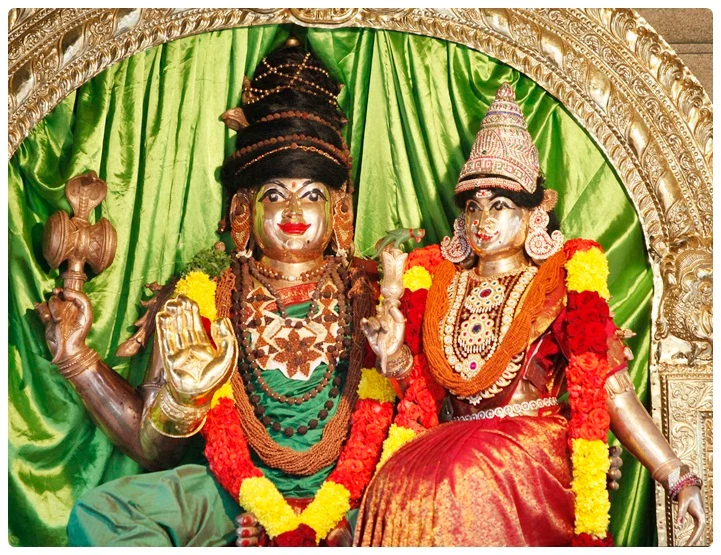
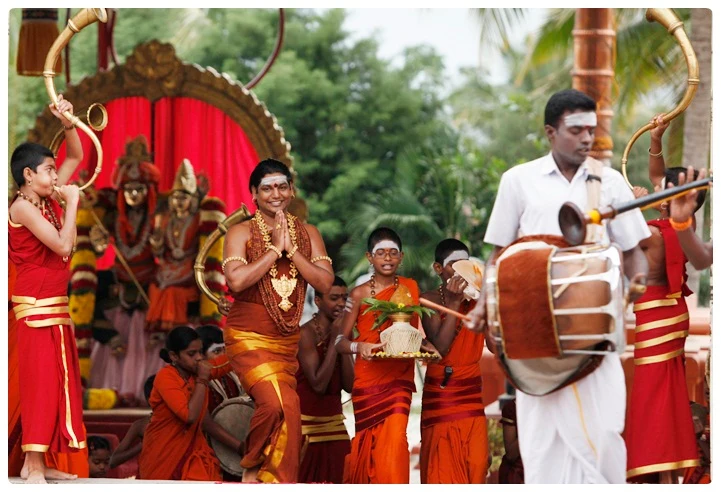
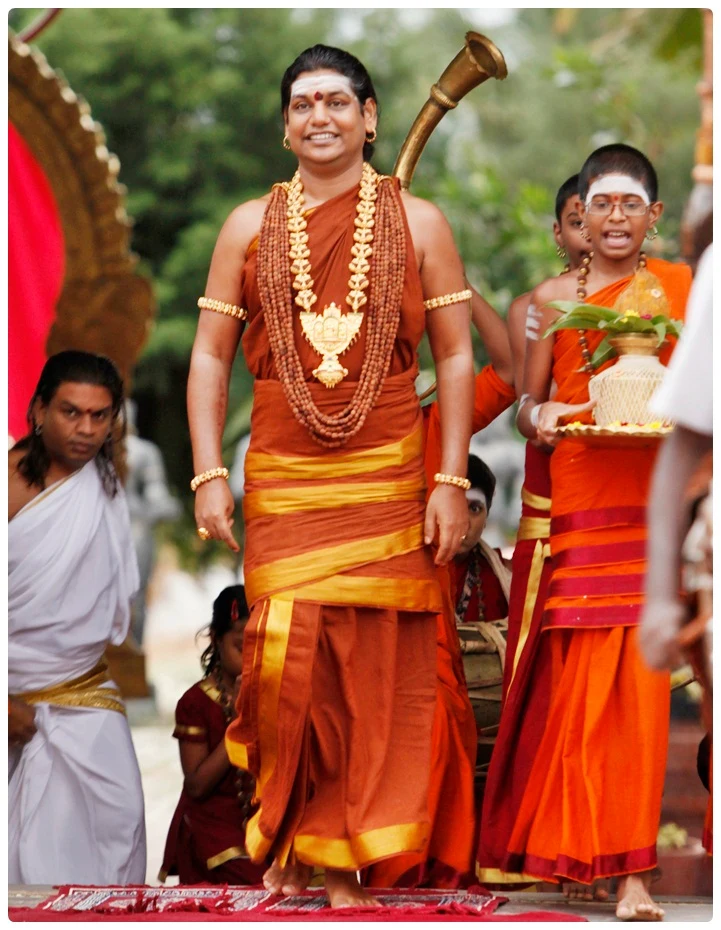
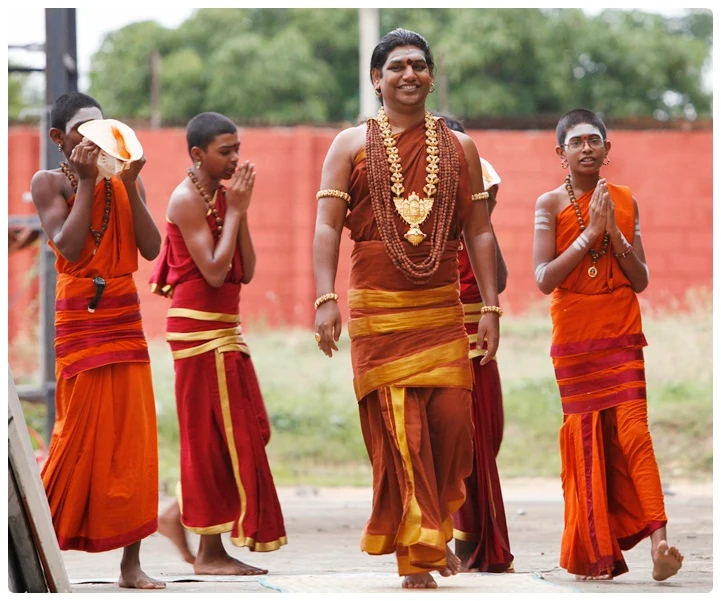
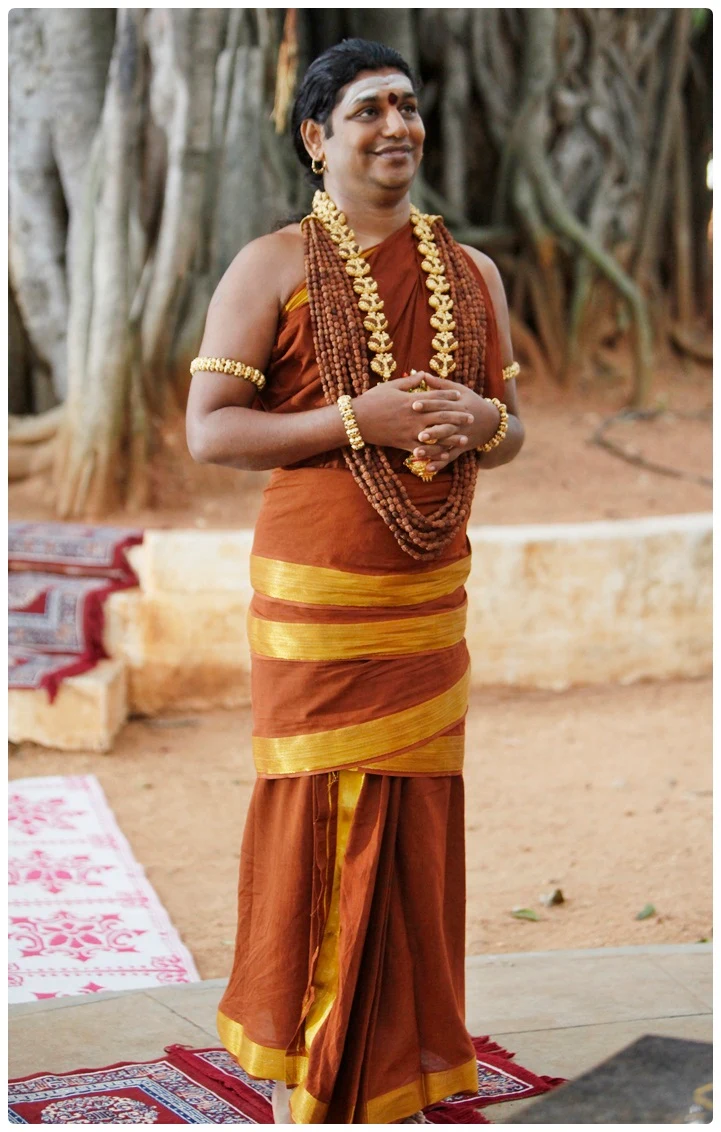
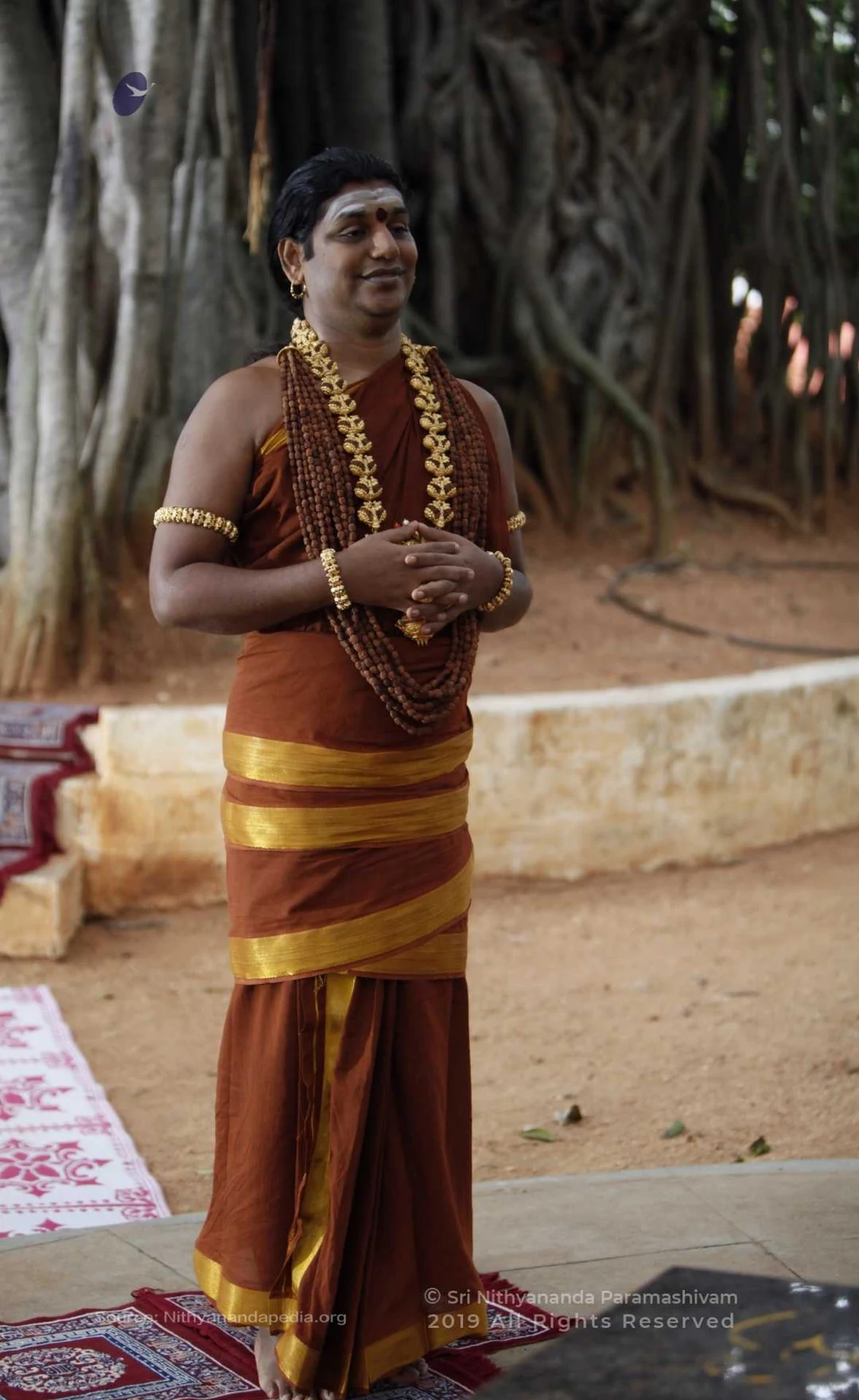
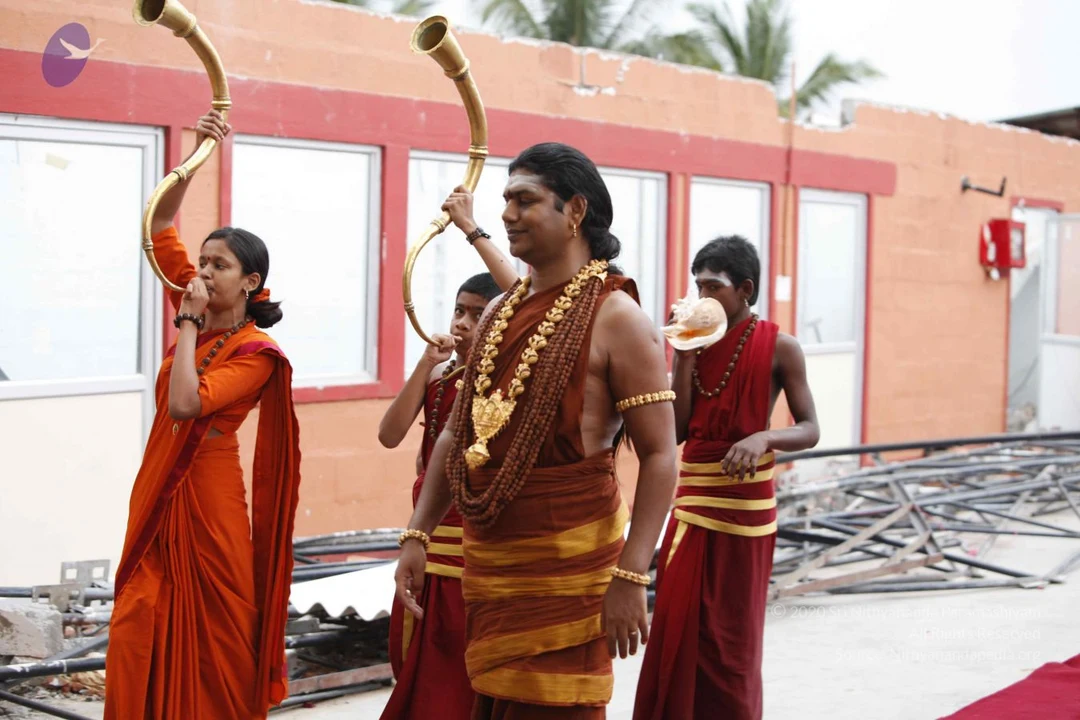
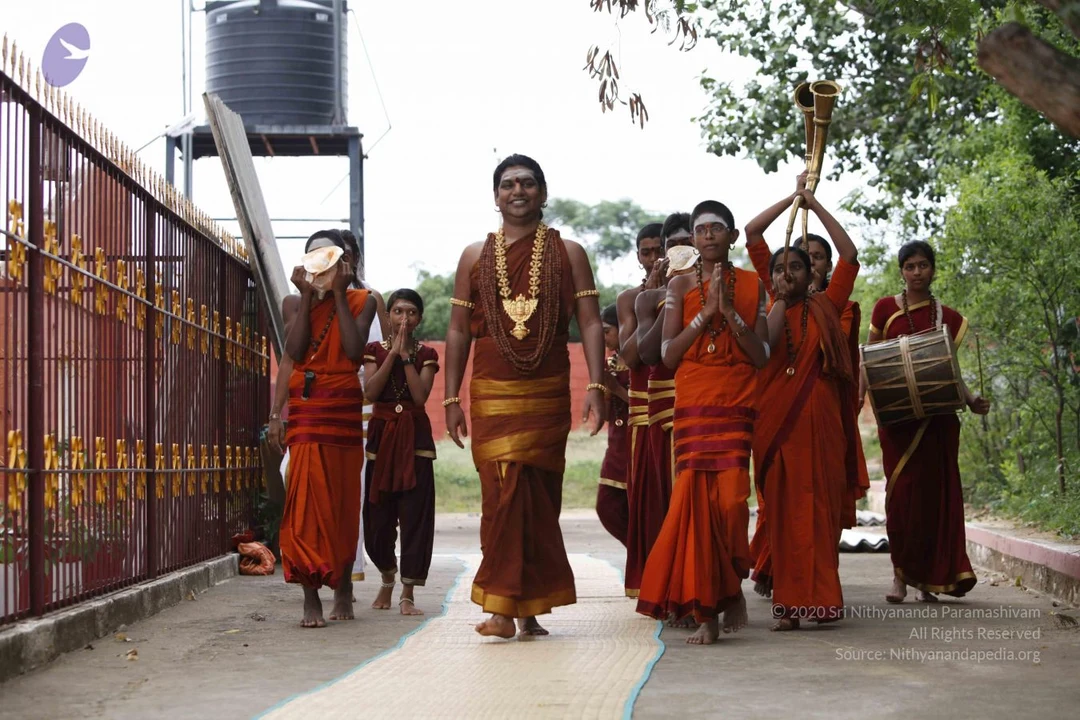
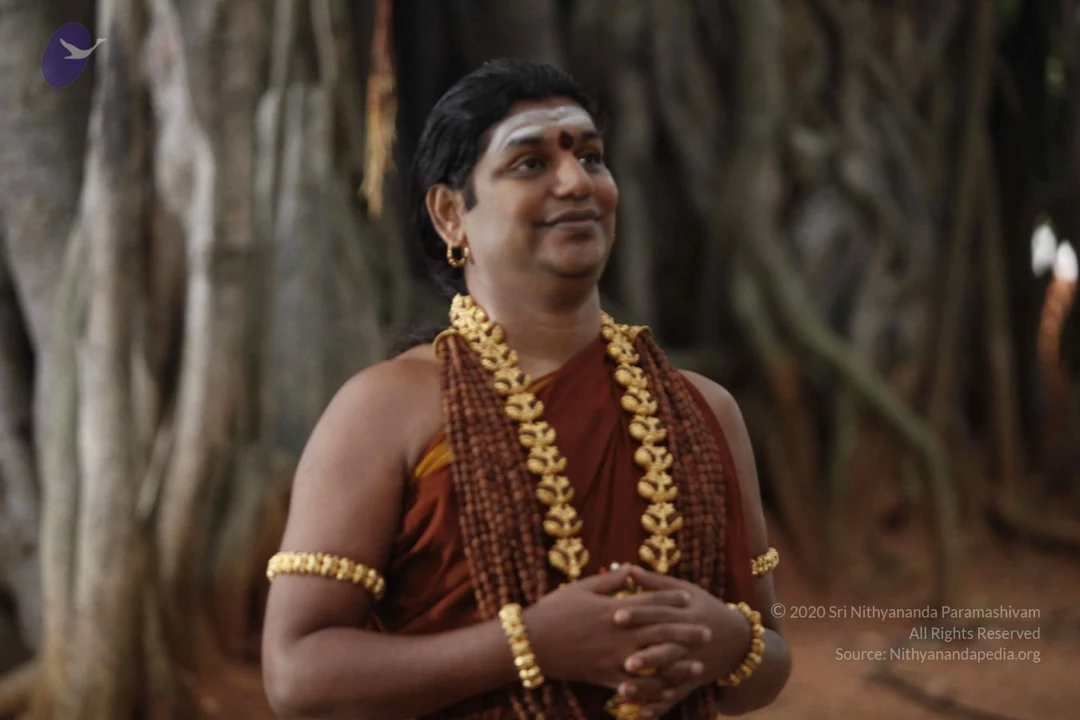
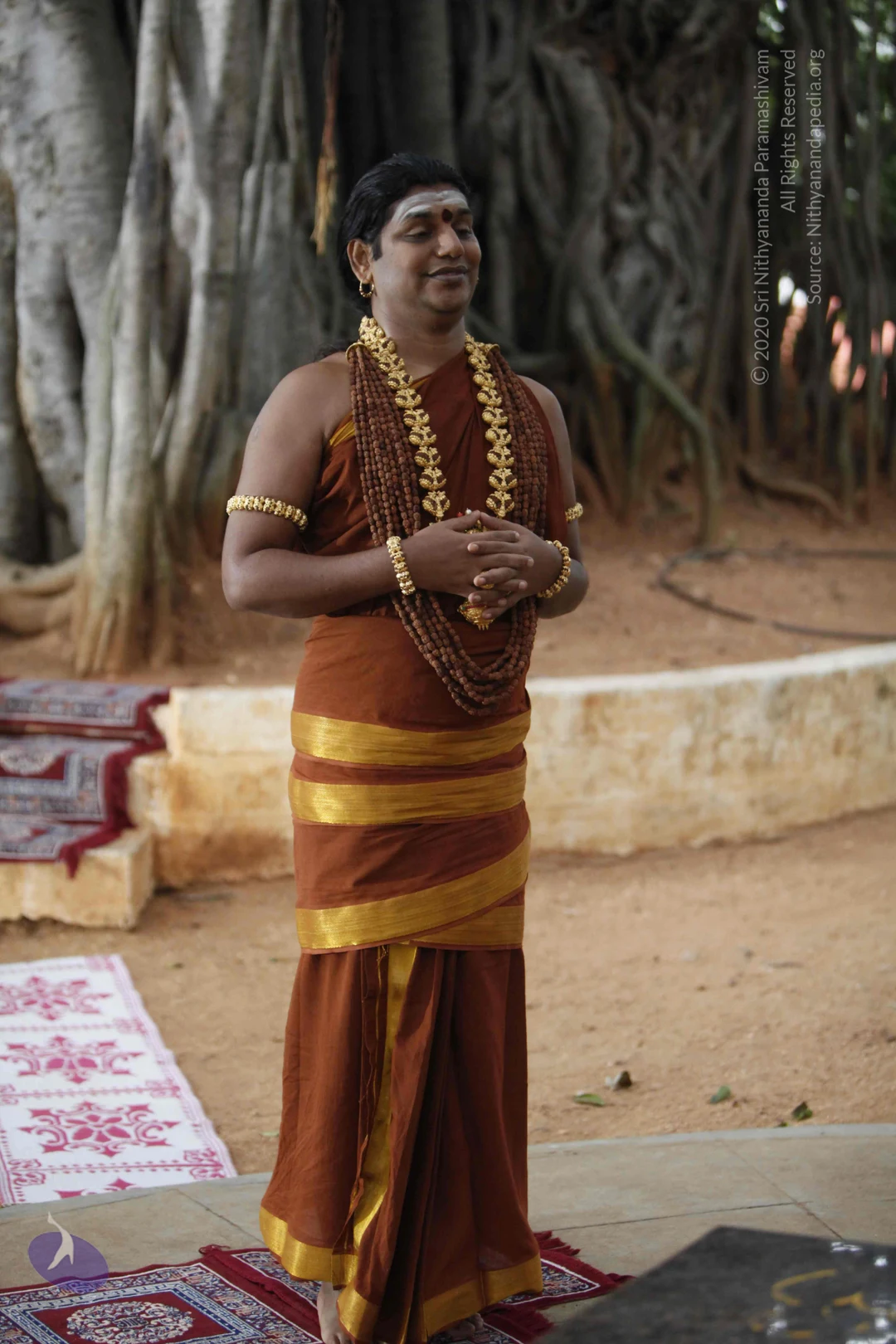
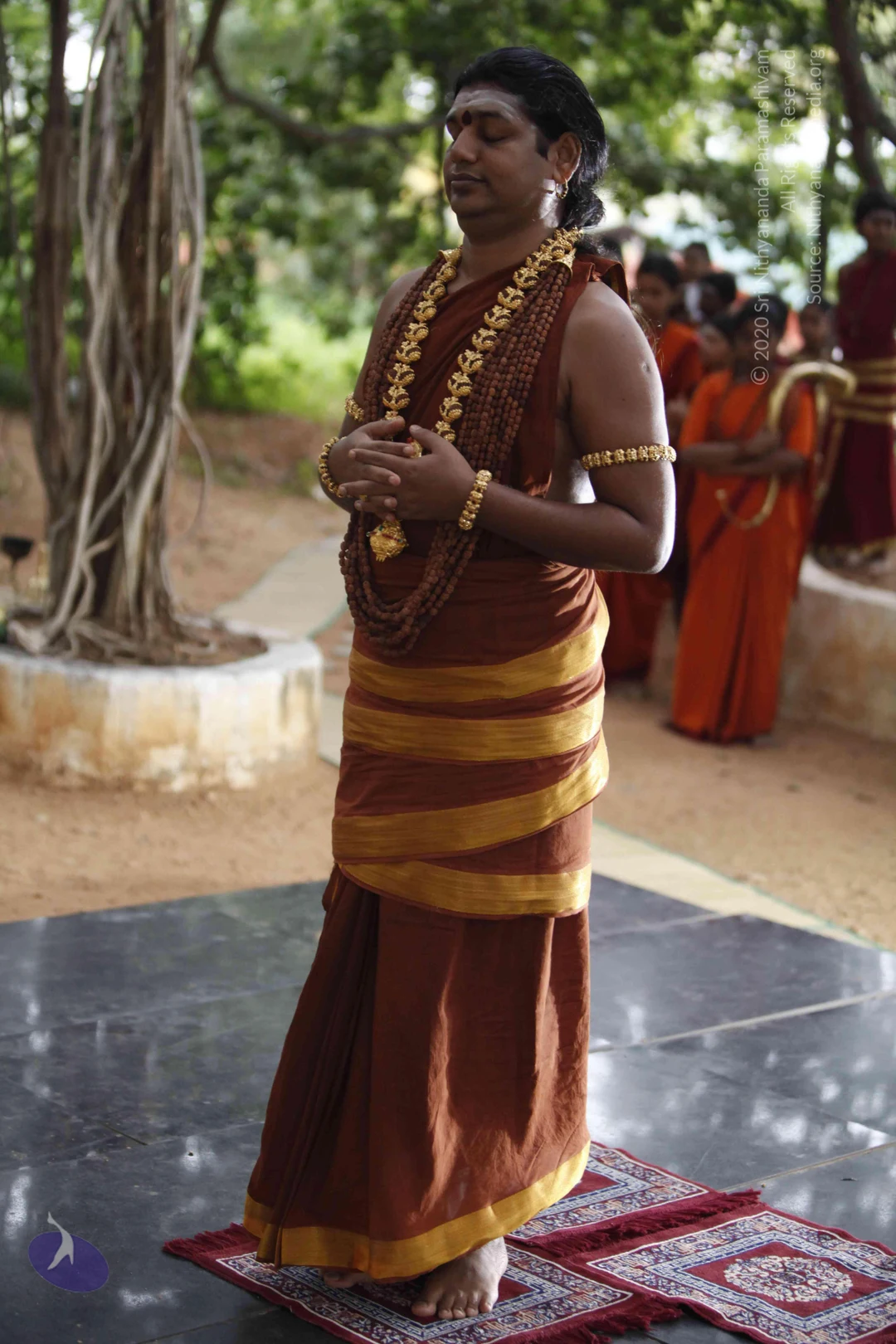
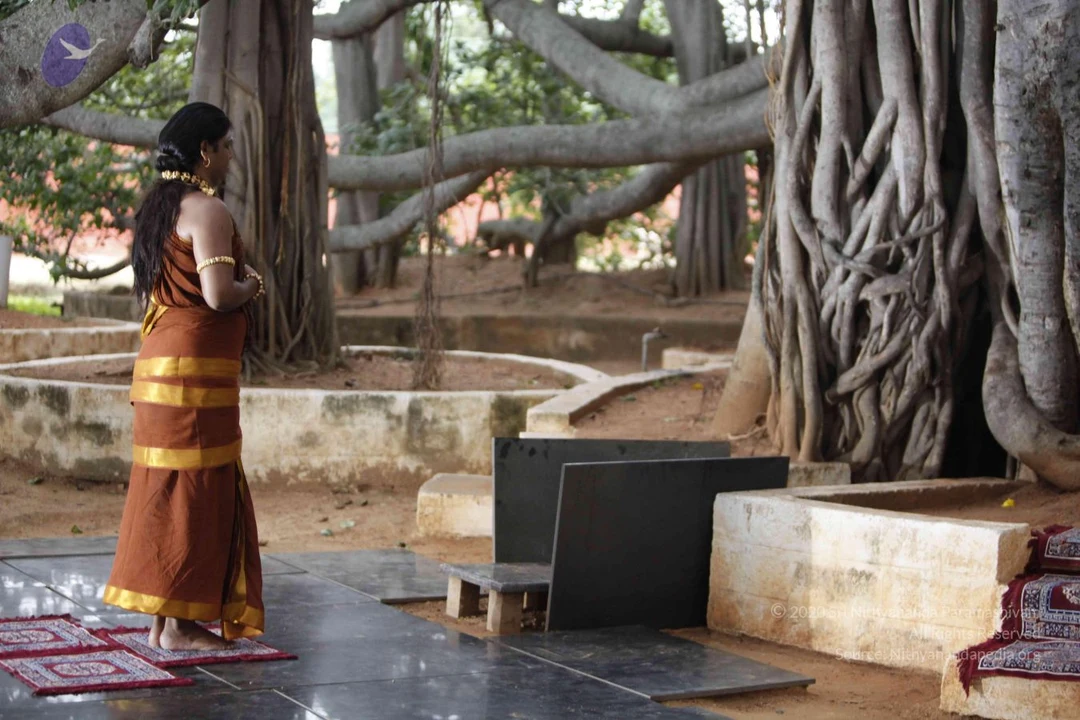
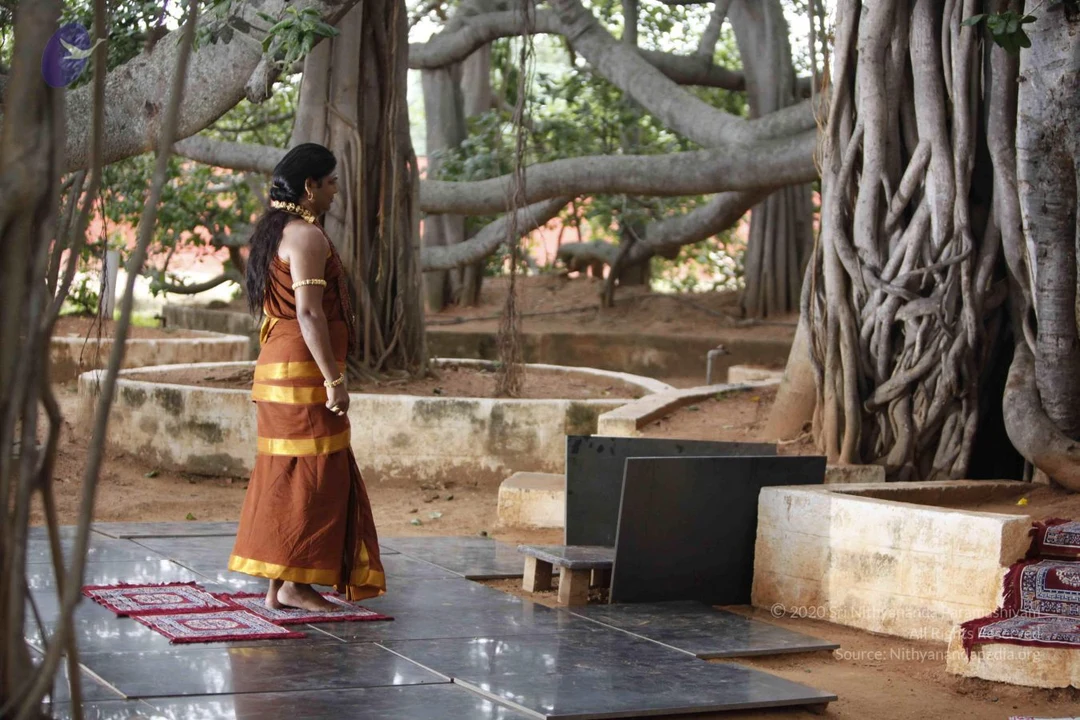
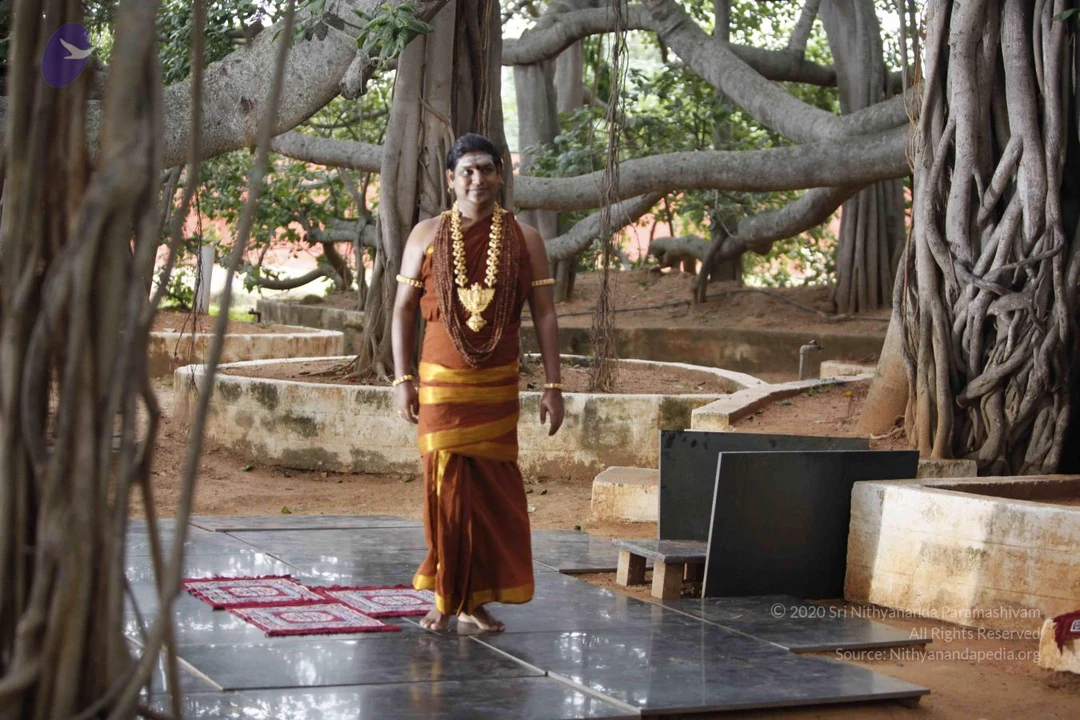
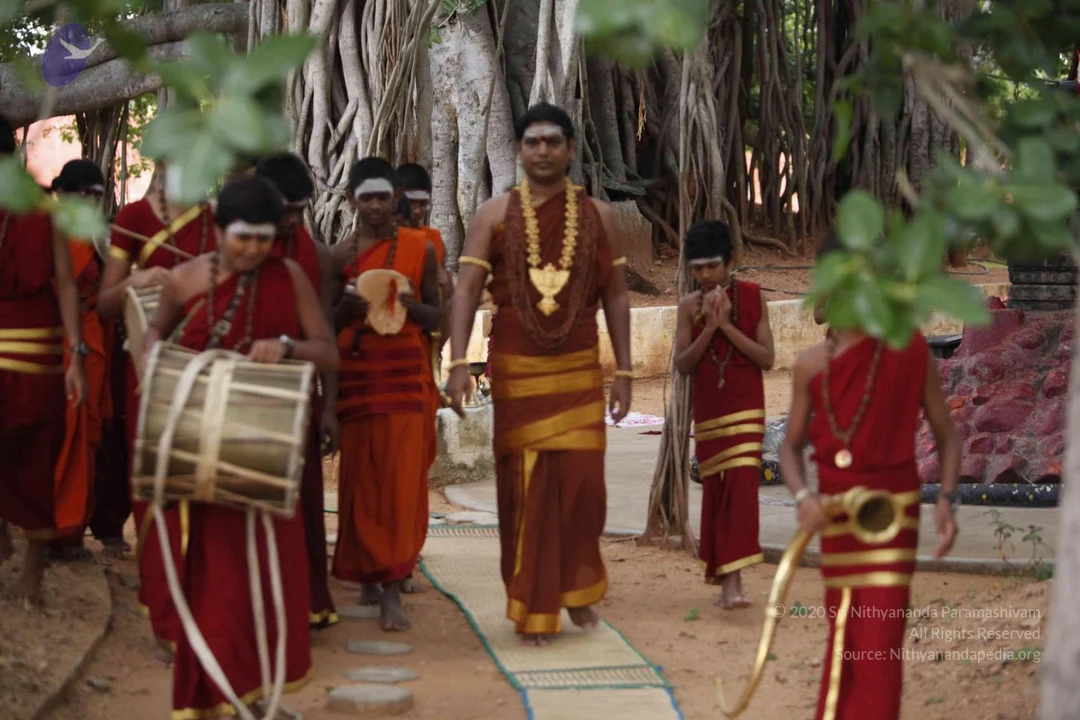
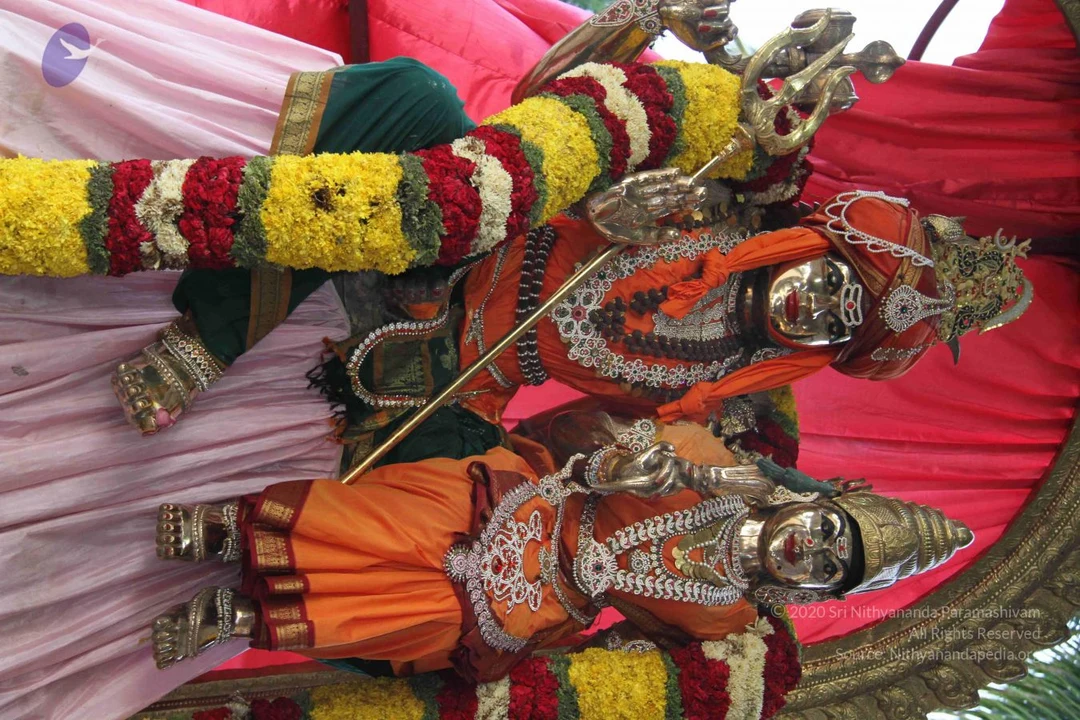
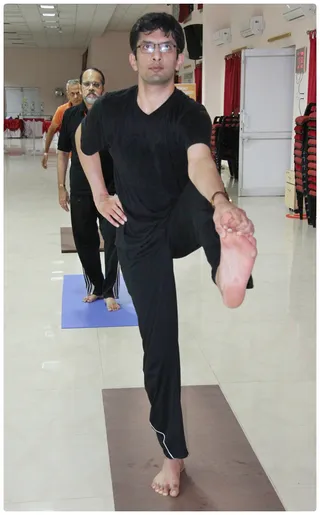
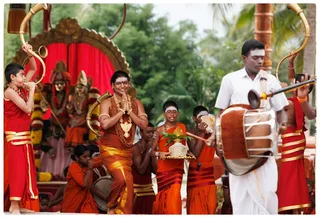
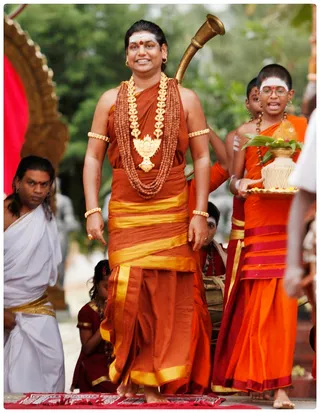
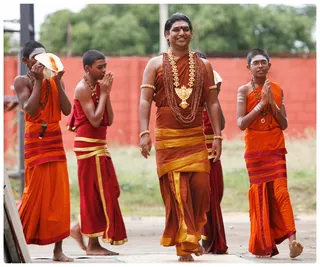
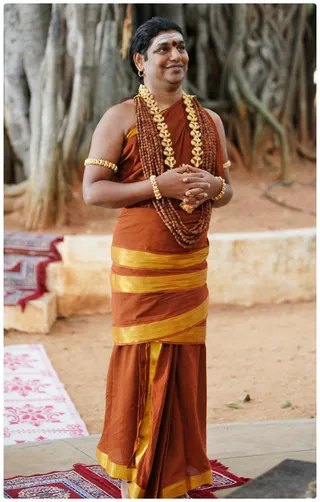
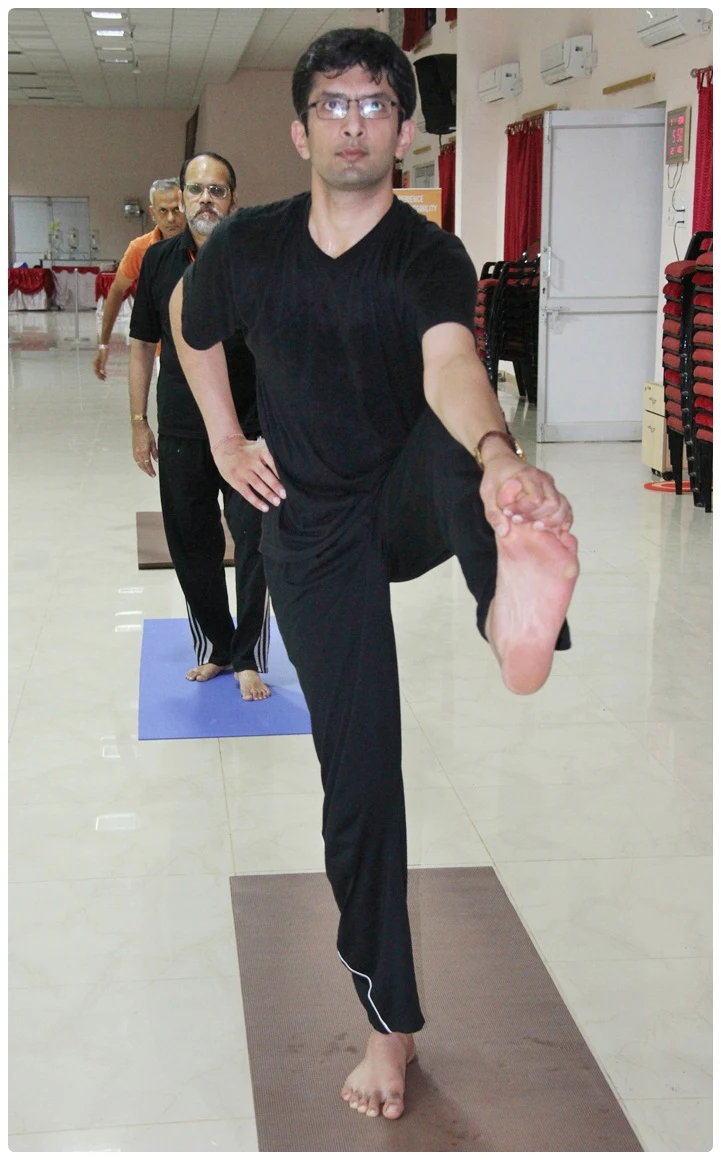
A young man in a black V-neck t-shirt and black track pants, wearing glasses and a thin bracelet, balances on one leg on a brown yoga mat while extending the other leg forward with his hand holding the foot in a standing balance pose. Behind him, two men in dark clothing stand barefoot on a blue mat and a brown mat in a bright hall with cream tiled floor, red curtains, wall air conditioners and stacked red chairs along the wall.Photograph of a pair of golden metal murti seated side by side against a green silk backdrop within an ornate gold arch. The left figure, a deity murti with a tall black crown, a raised hand and a trident-like staff, wears a green garment, a multi-strand rudraksha-style mala and red-and-yellow marigold garlands. The right figure, a female deity murti, wears a jeweled crown, large earrings, a red-and-gold saree, a jeweled necklace and yellow and red garlands. No physical people are visible; both figures are statues.A festival procession in an outdoor setting with palm trees and green foliage behind. A man in the centre wears an orange-brown dhoti, a red-brown rudraksha mala with a large gold pendant, gold armlets and bracelets, and has a vibhuti mark on his forehead, hands pressed together in greeting. Behind him, young boys in red and orange dhotis carry a tray with a brass vessel and green leaves, one holds a long curved brass horn, and another plays a cylindrical drum. A man in a white shirt and dhoti with a white forehead mark plays a drum. Behind them stands a red-curtained decorated palanquin or ratha with painted deity murtis. a person is the central man with the rudraksha mala, gold pendant and ornate armlets. Several boys and young men are visible in the procession.Outdoor procession in a temple precinct. A central man in saffron-orange robes with a gold-and-brown wrap, layered rudraksha mala, ornate gold necklace, gold armbands and a red-and-white tilak walks forward on a red mat, appearing to be a central honoured figure. He has long swept-back hair and gold earrings. Behind him a boy in orange robes with a white forehead band and glasses carries a brass kalasha with flowers on a tray, and another boy in orange stands nearby. A man in white dhoti with a gold border stands at left, and a golden trumpet-shaped instrument is raised above the group. Greenery and a golden arched structure appear in the background.A photograph of a procession on a dirt-and-concrete path in front of a red brick wall. A central man with swept-back hair, a red bindi, a thick rudraksha mala and a large ceremonial gold pendant walks smiling, wearing an orange-brown garment with gold-bordered wrap, gold bangles and bare feet; he is a person by visible appearance cues. Around him four young ascetic attendants in orange and red robes, with rudraksha malas, walk barefoot; two press palms together in anjali and one holds a flat white fan or umbrella-like cloth.A standing man in rust-orange sleeveless draped robes with broad gold borders stands barefoot on a paved terrace, hands clasped at chest level. He wears multiple strands of rudraksha beads, a gold floral necklace, gold armlets and bangles, and a gold ring, with a red tilak mark on his forehead. A large banyan tree with aerial roots rises behind him, and patterned red-and-white mats lie on the ground. The man is at the swami-like end of the presentation, appearing to address an audience, but the photo shows only one person and no printed text.
temple

52 photosSource gallery
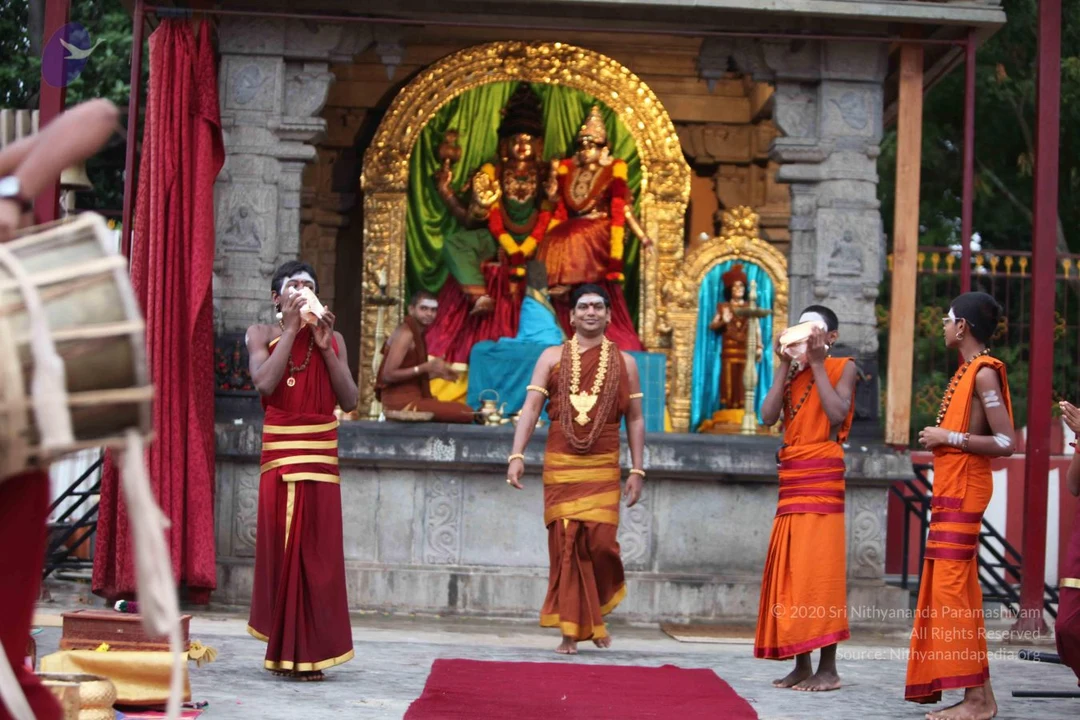
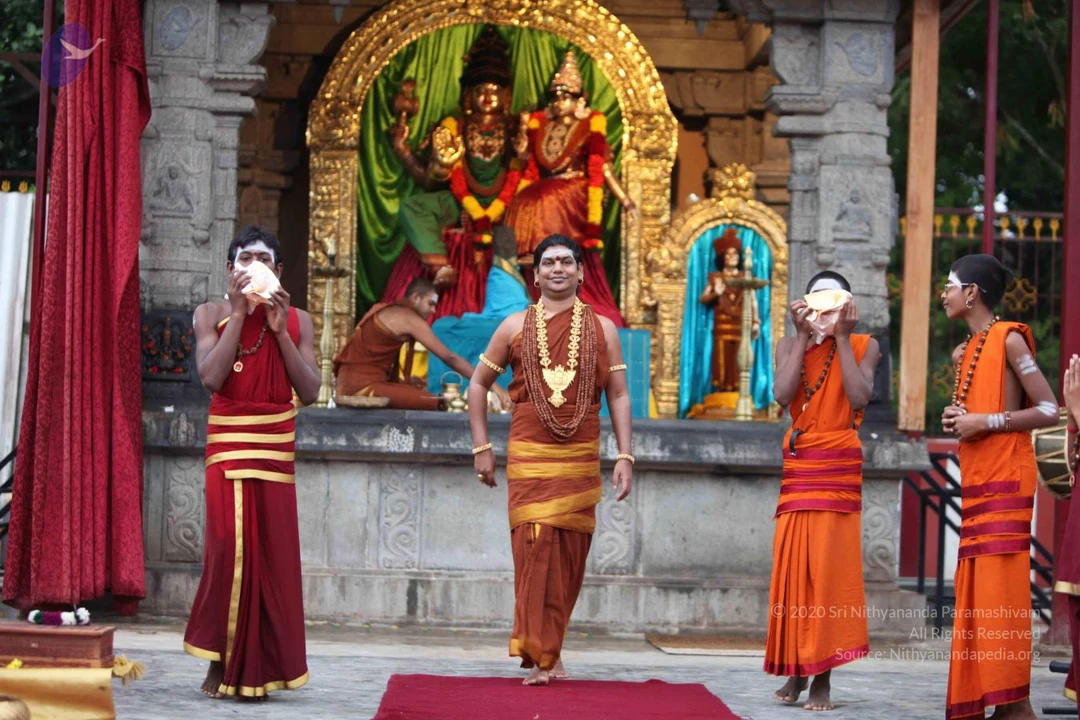
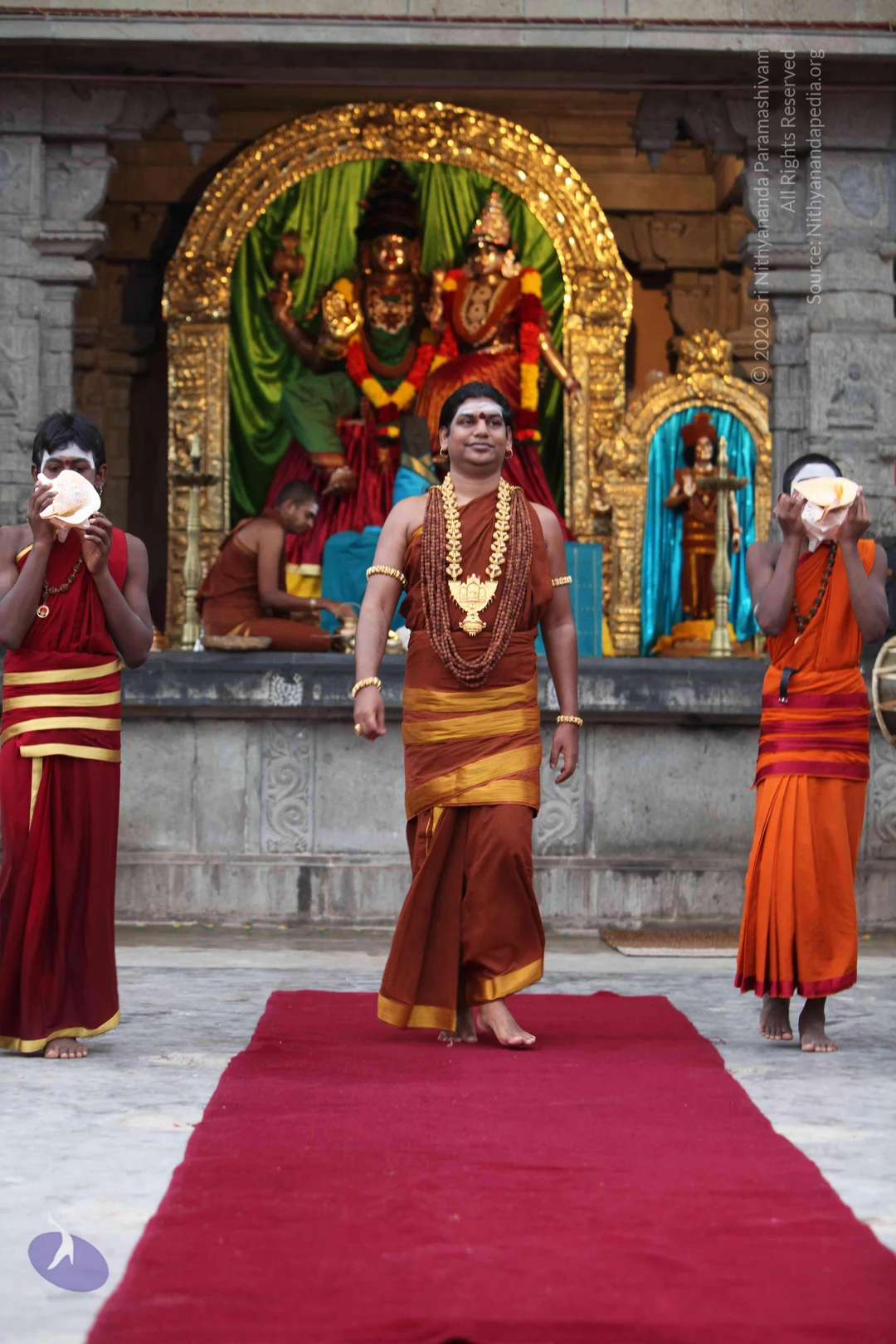
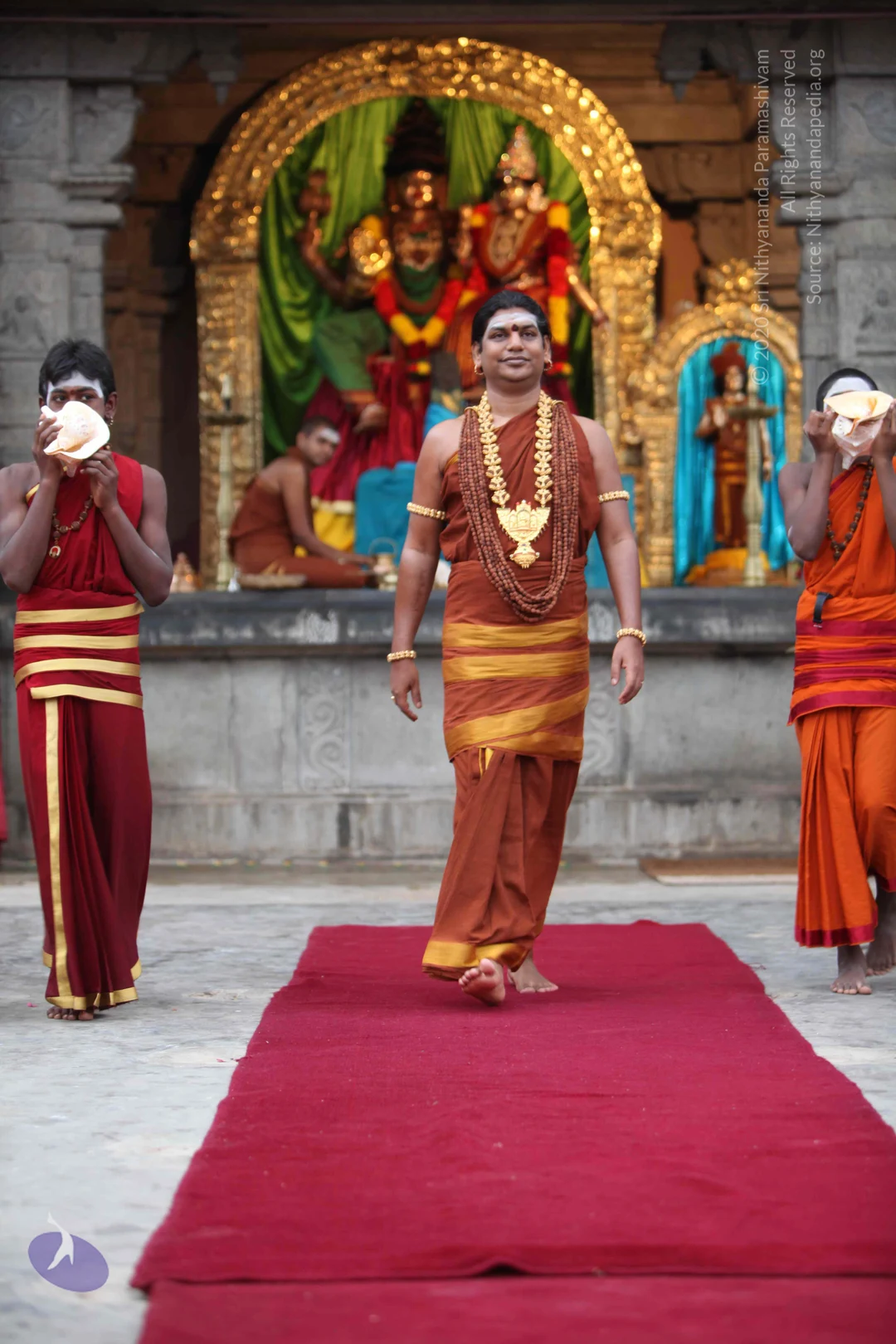
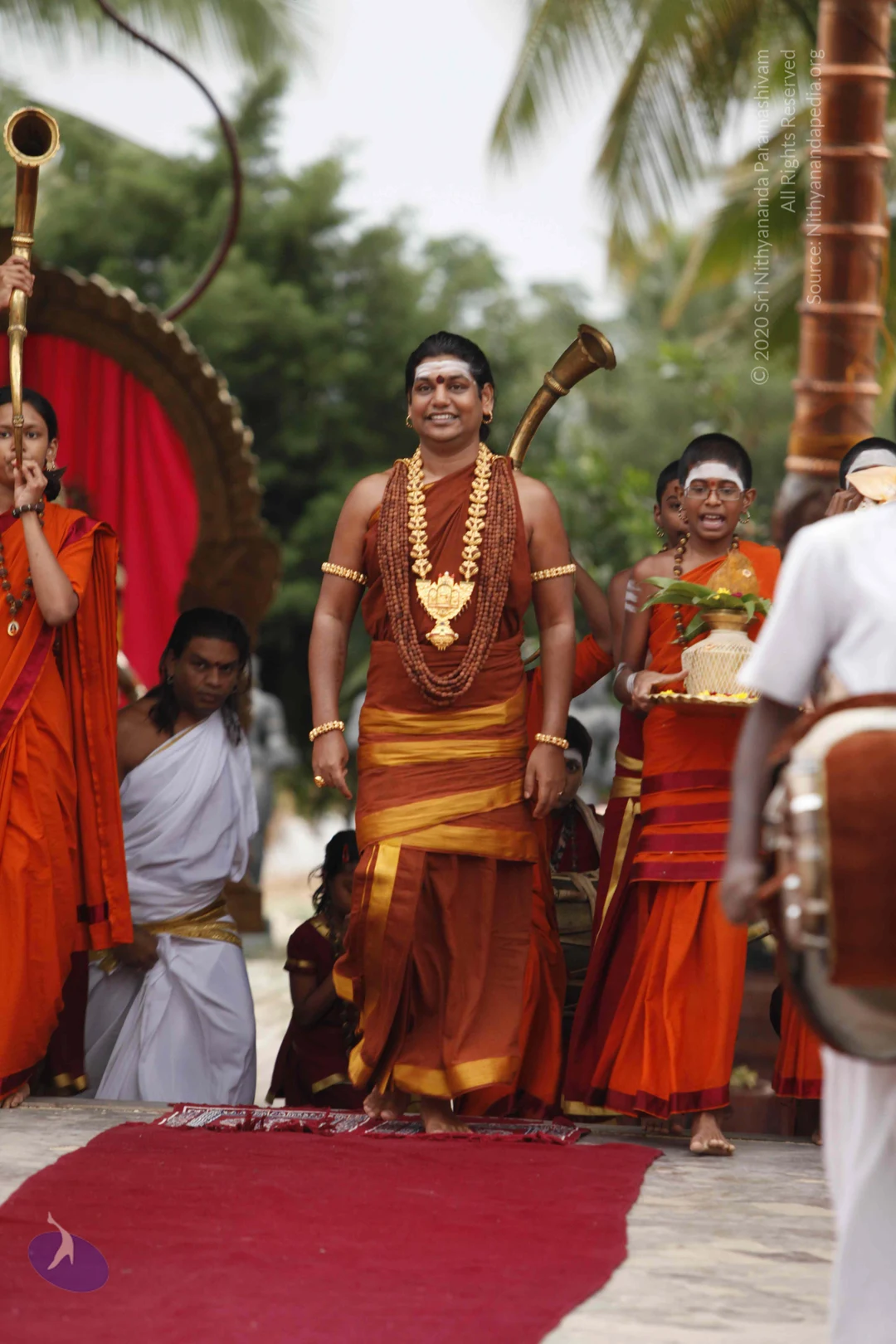
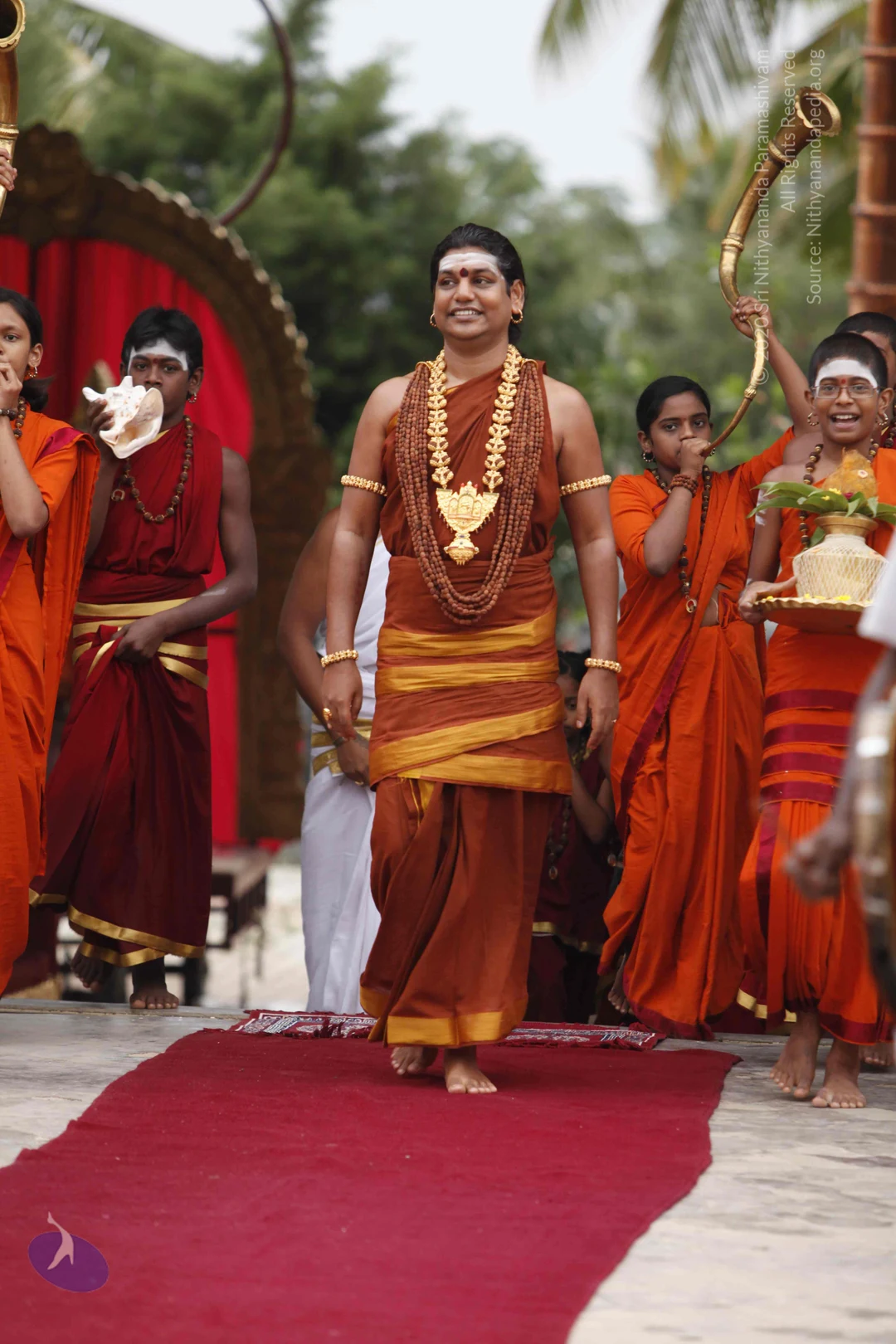
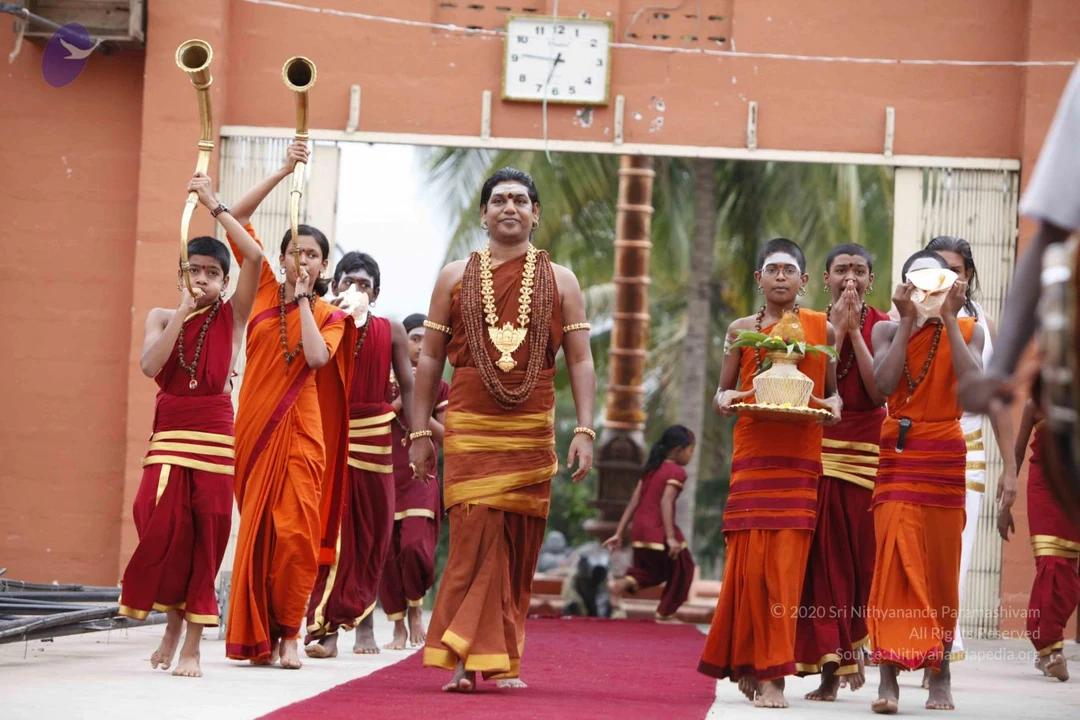
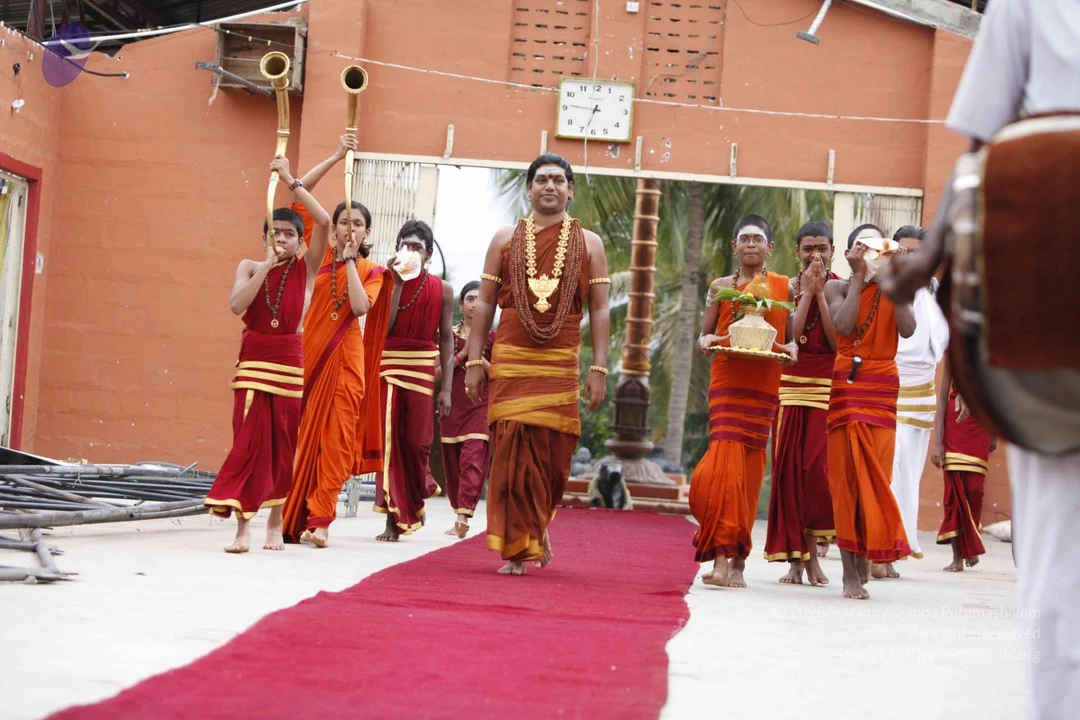
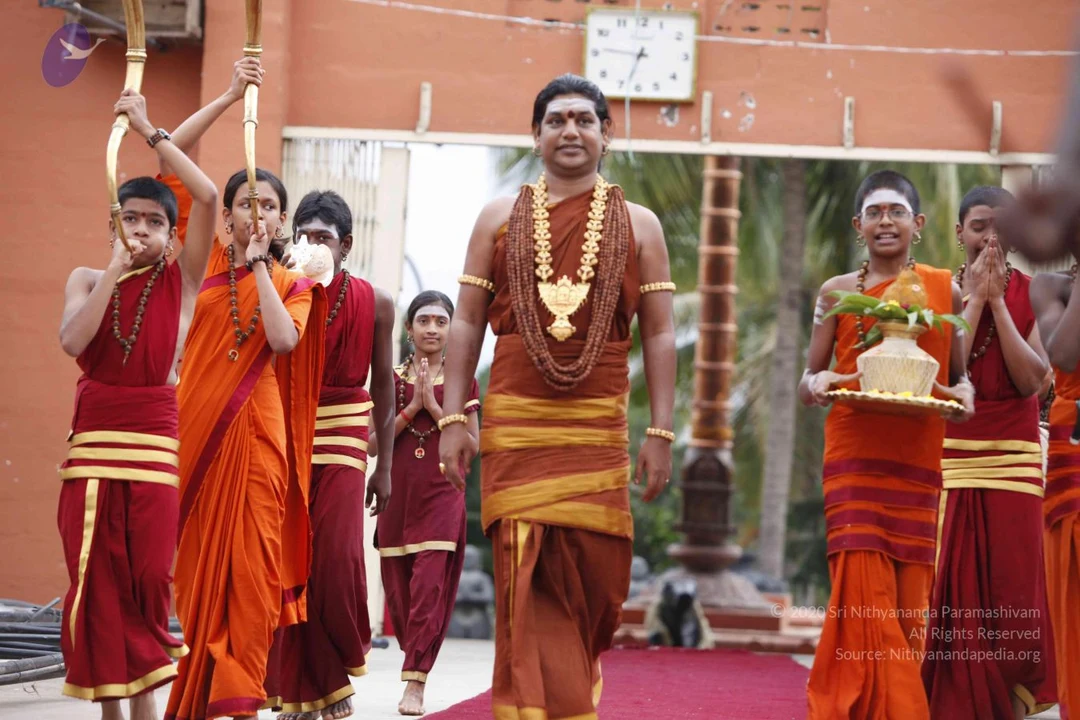
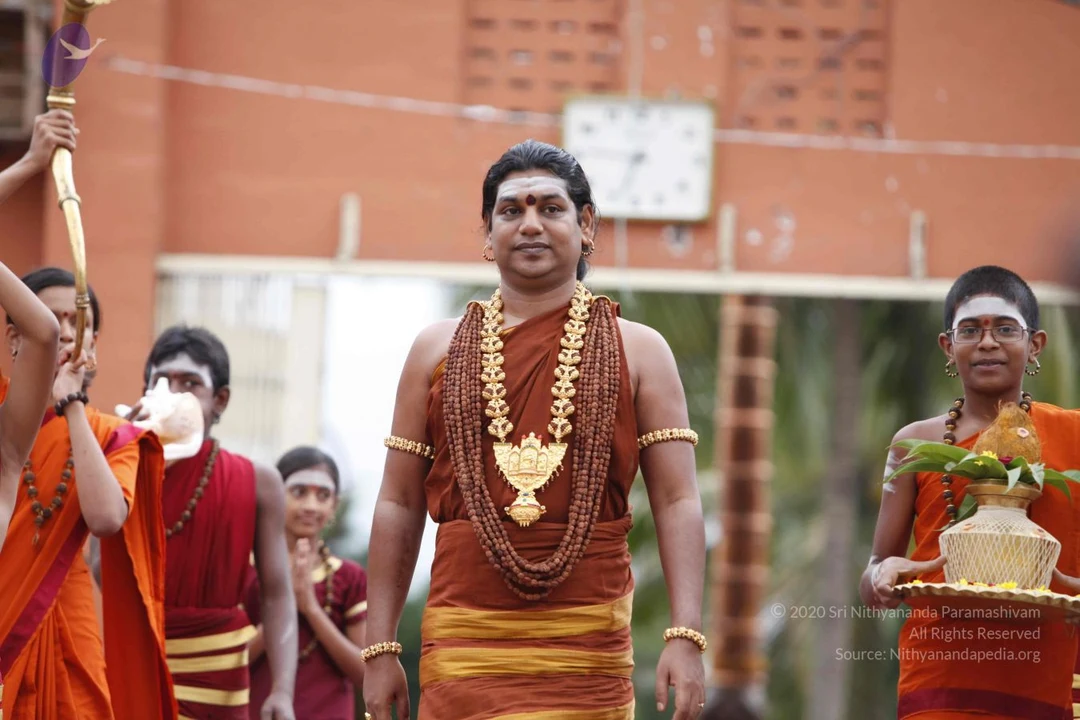
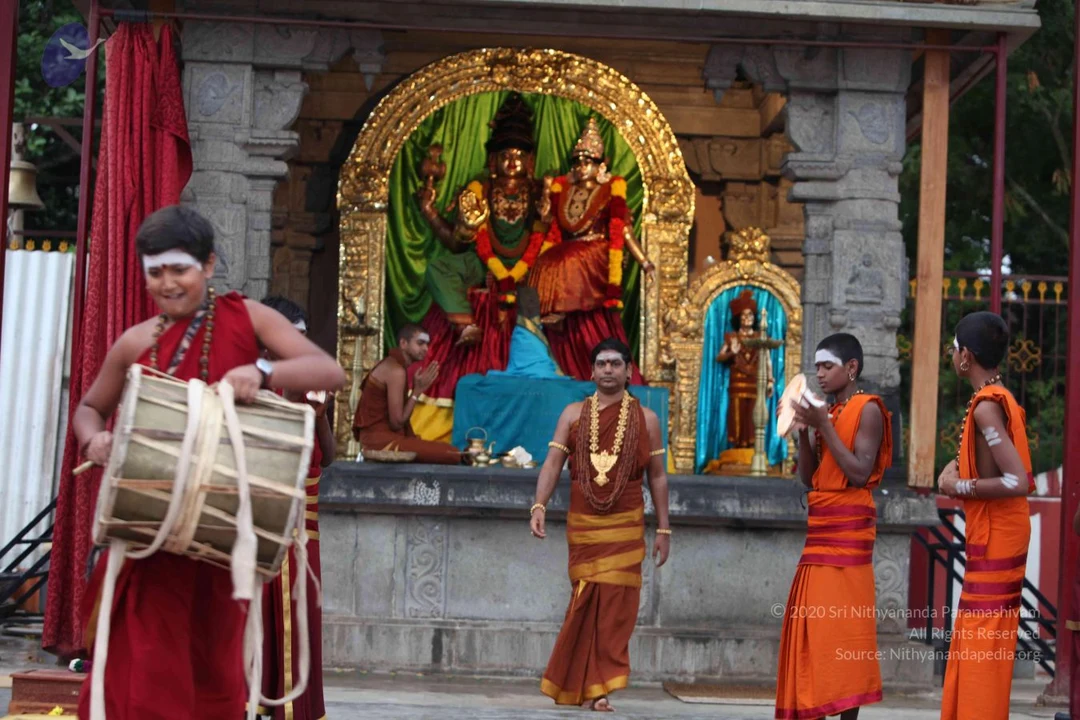
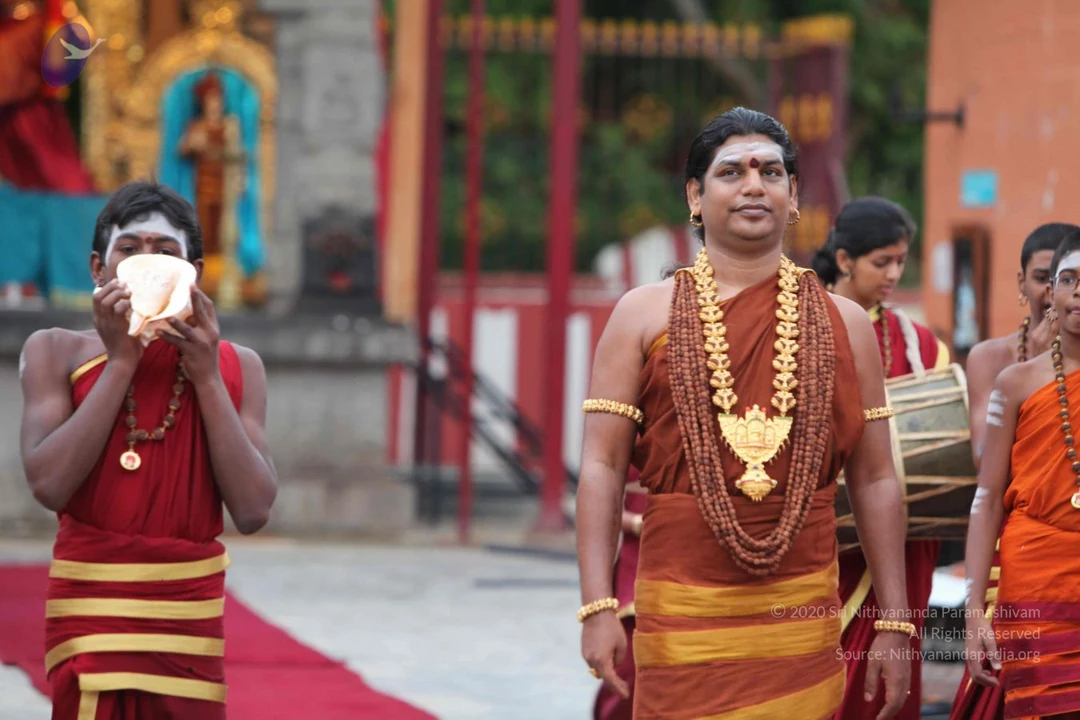
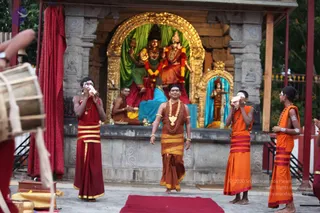
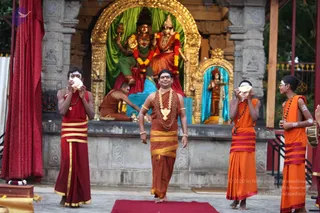
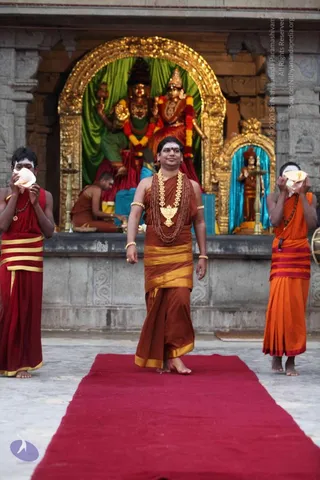
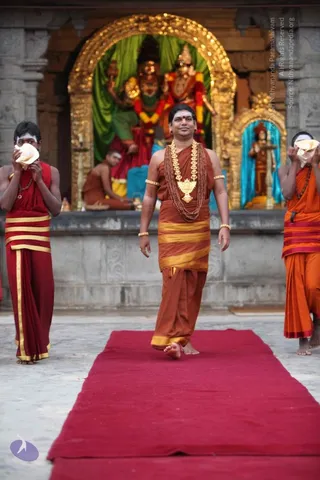
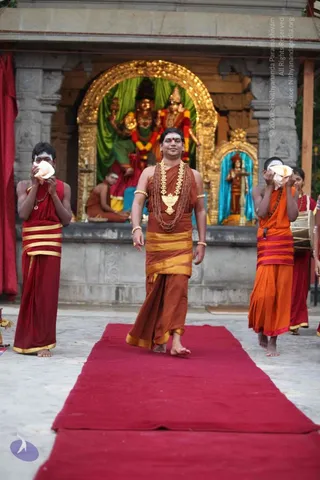
A dramatic performance staged in front of a shrine with golden arch and green curtain, where a deity murti pair (male and female, garlanded in red flowers) stands behind. Four performers in saffron and red-orange dhotis with gold borders stand on a red carpet, one in the centre wearing a gold necklace and bare chest with white tilak, others holding white cloth or conch-like objects to their mouths. A seated musician with a drum is at left and a lamp stand is near the shrine. The scene resembles a ritual reenactment of a leela.Outdoor temple-style performance on a red-carpeted stage before a golden arched shrine with a deity murti pair draped in green and red garlands and a lit oil lamp. A central man in orange-brown dhoti with gold waist bands, a large gold necklace and a rudraksha mala stands with hands together, while two attendants in red and orange robes blow conch shells, and a fourth person in orange lights a lamp at the shrine. A man on the right beats a drum. The red curtain and stone carvings frame the scene.A photograph of a man in rust-brown robes with a gold-edged dhoti and shawl walking barefoot down a red carpet in front of a temple shrine. He wears a heavy rudraksha mala with a gold ceremonial pendant, gold armlets and bangles, and a red-brown tilak on his forehead. Two attendants flank him: the one on the left wears red robes with gold borders and the one on the right wears orange, both blowing conch shells. Behind them, a golden arched niche frames deity murtis draped in green cloth and decorated with marigold garlands, with a seated attendant in orange and a standing figure in a blue-curtained niche. Brass oil lamps stand on the stone platform. a person's appearance here is a probable match on the basis of the rudraksha mala, ceremonial gold pendant and ornate robes, though the figure is not certain.A central figure in a rust-brown dhoti and shawl with gold-edged borders walks barefoot along a red carpet in a temple courtyard. He wears a heavy gold necklace with a gold pendant, a multi-strand rudraksha mala, gold armlets and bangles, and a red bindi with white tilak. Two attendants flank him in red and orange robes with gold stripes, each blowing a conch shell, with white marks on their faces. Behind them stands an ornate golden arch framing deity murti decorated with garlands, green drapes, and oil lamps, with another seated devotee in the background.A man in a rust-brown dhoti and shawl with a gold lotus pendant, multiple rudraksha mala strands, gold armbands and bangles walks barefoot along a red carpet toward the viewer. Two young men on either side, in red and orange robes with gold borders and white tripundra markings, blow conch shells. A drummer stands at right. Behind them is a temple shrine with a golden arch, green drapery, flower garlands and a deity murti, with a seated priest in the background. The walking man has a red bindi and a distinctive ceremonial appearance; his identity is uncertain from appearance alone.A photograph of young boys in a ritual setting. The central boy wears an orange dhoti and orange shawl with brown rudraksha malas and a pendant, and blows into a large pale conch shell held to his lips. Two boys at left and right stand with palms pressed together in namaskar, wearing orange and maroon robes, rudraksha beads, and white sacred marks on their foreheads and arms. Other children in maroon garments stand behind them. Orange and white architecture forms the background.
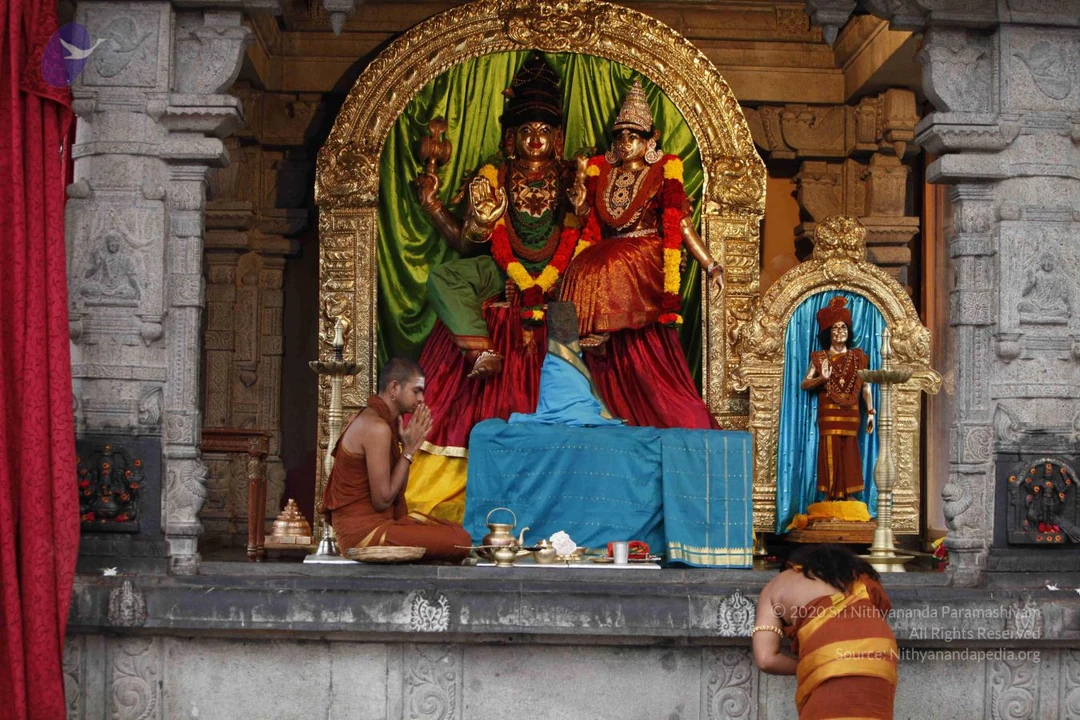
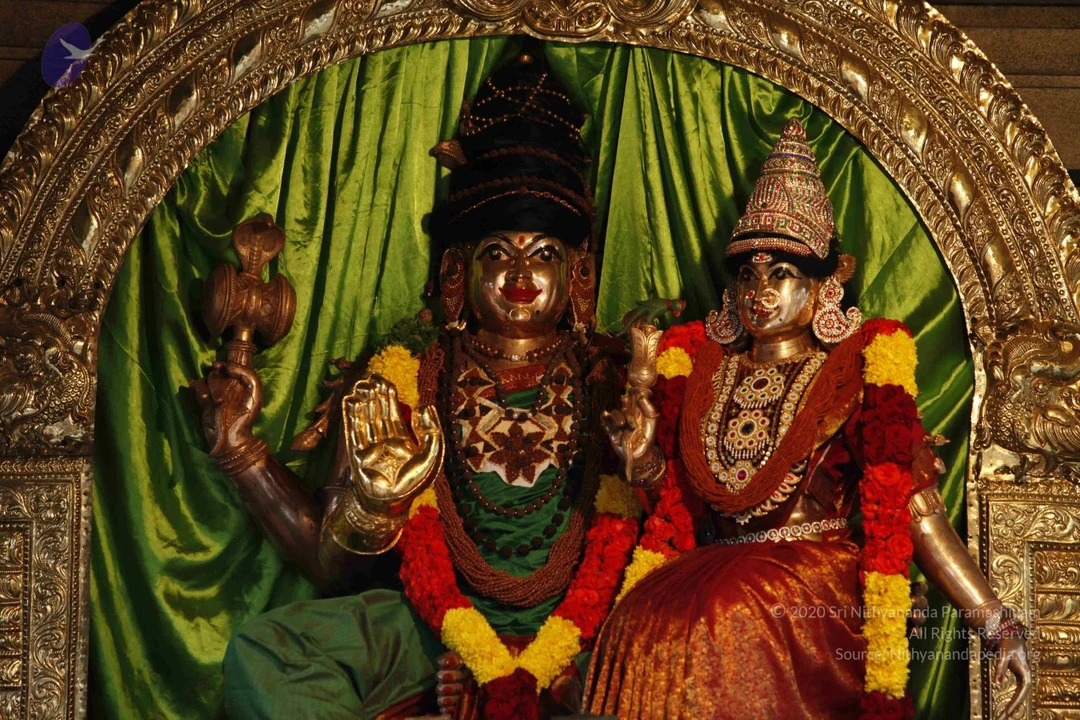
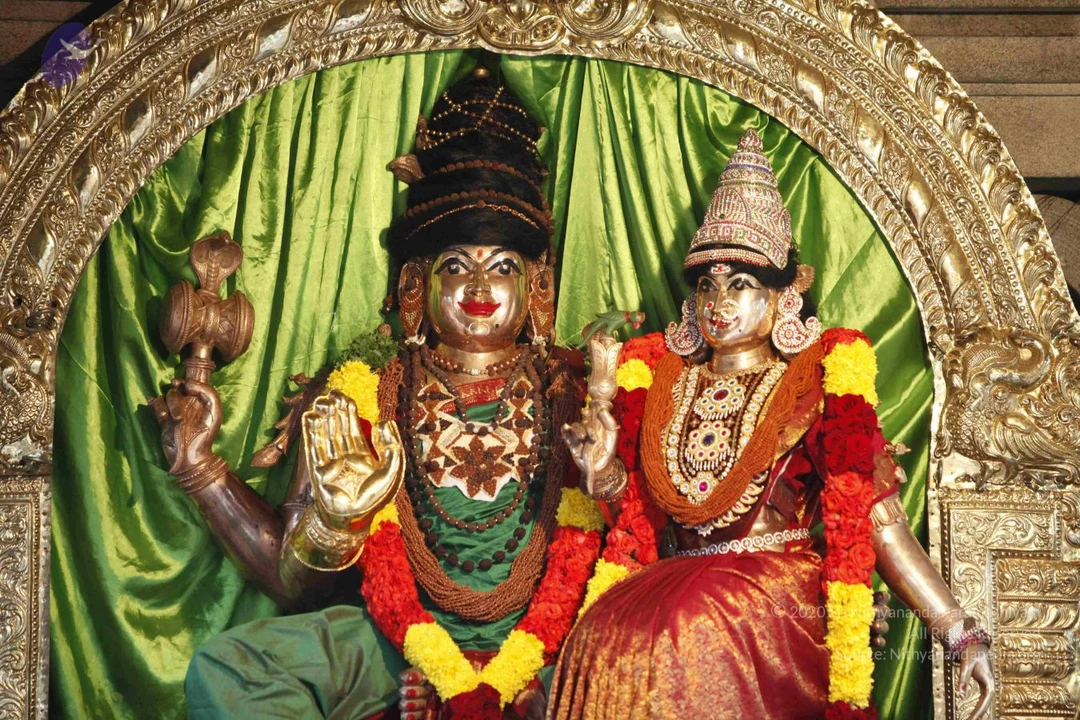
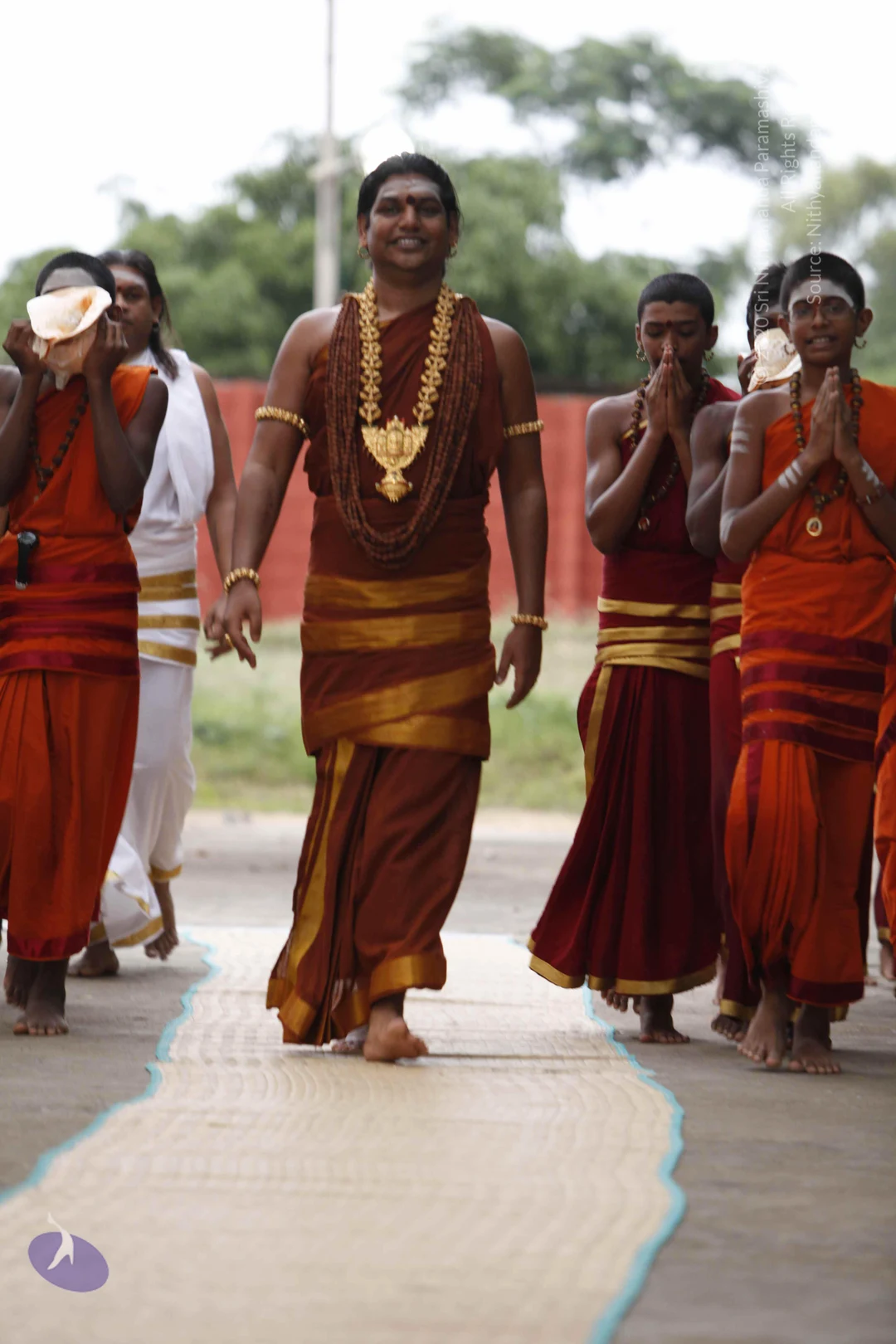
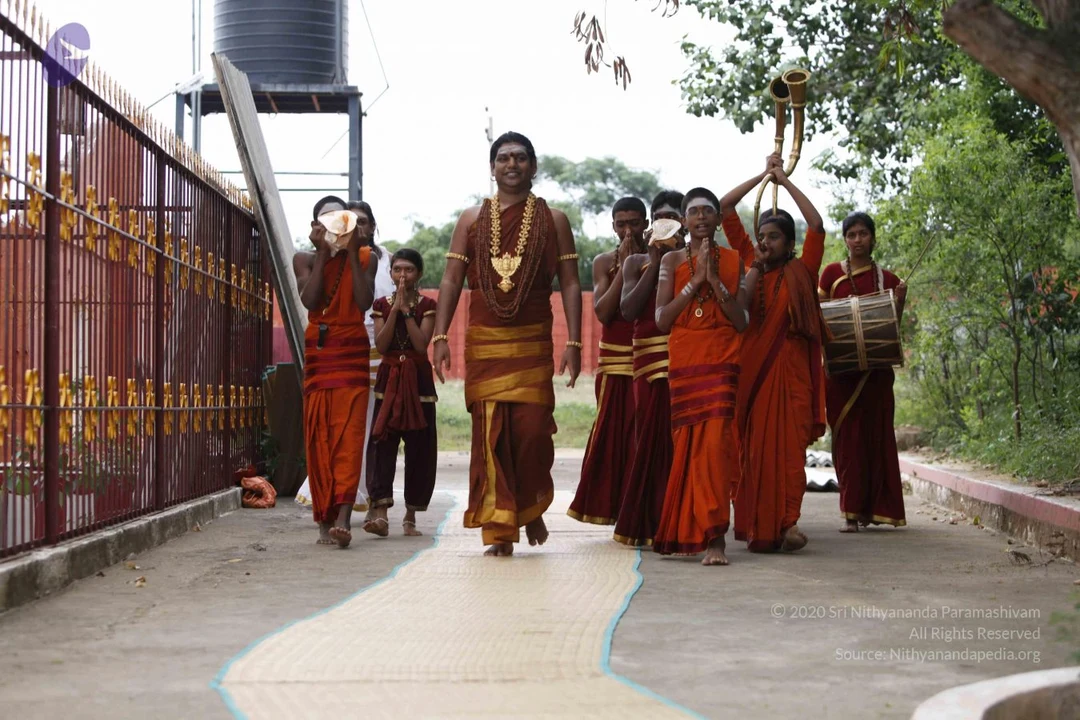
pratyaksha-pada-puja
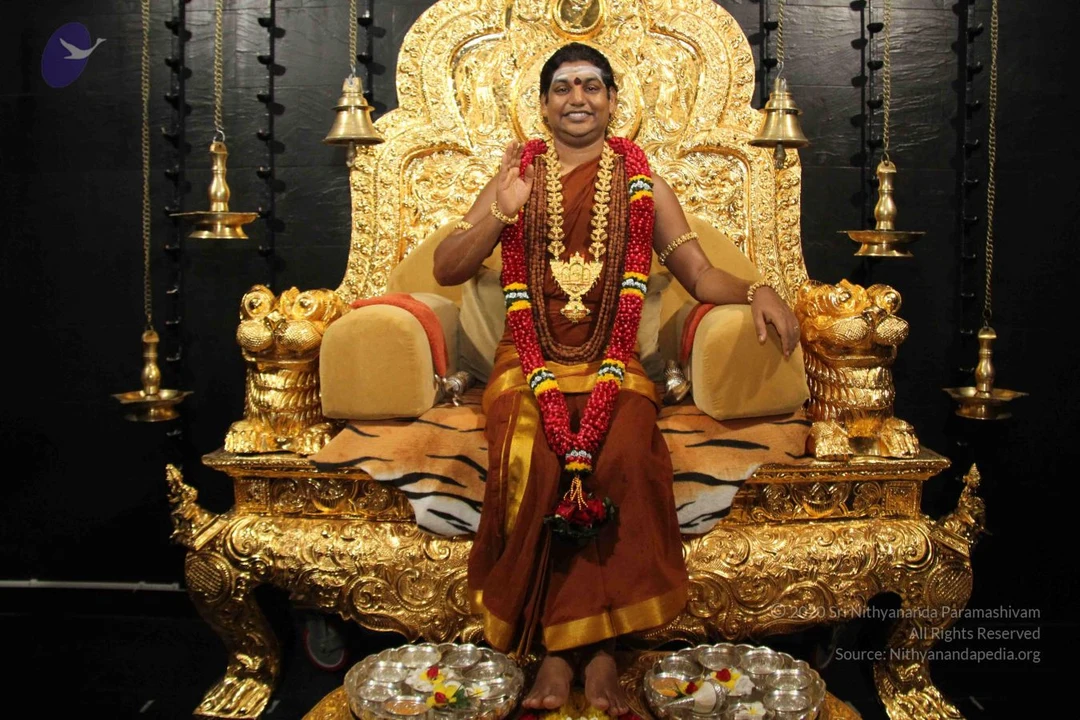
21 photosSource gallery
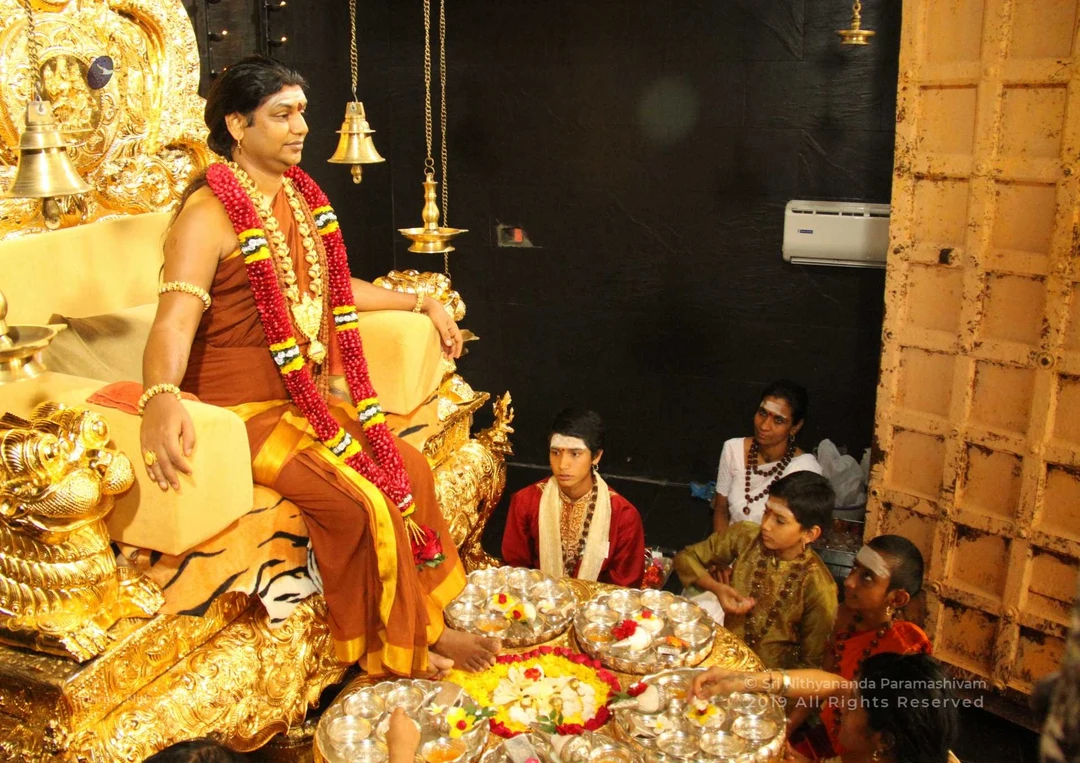
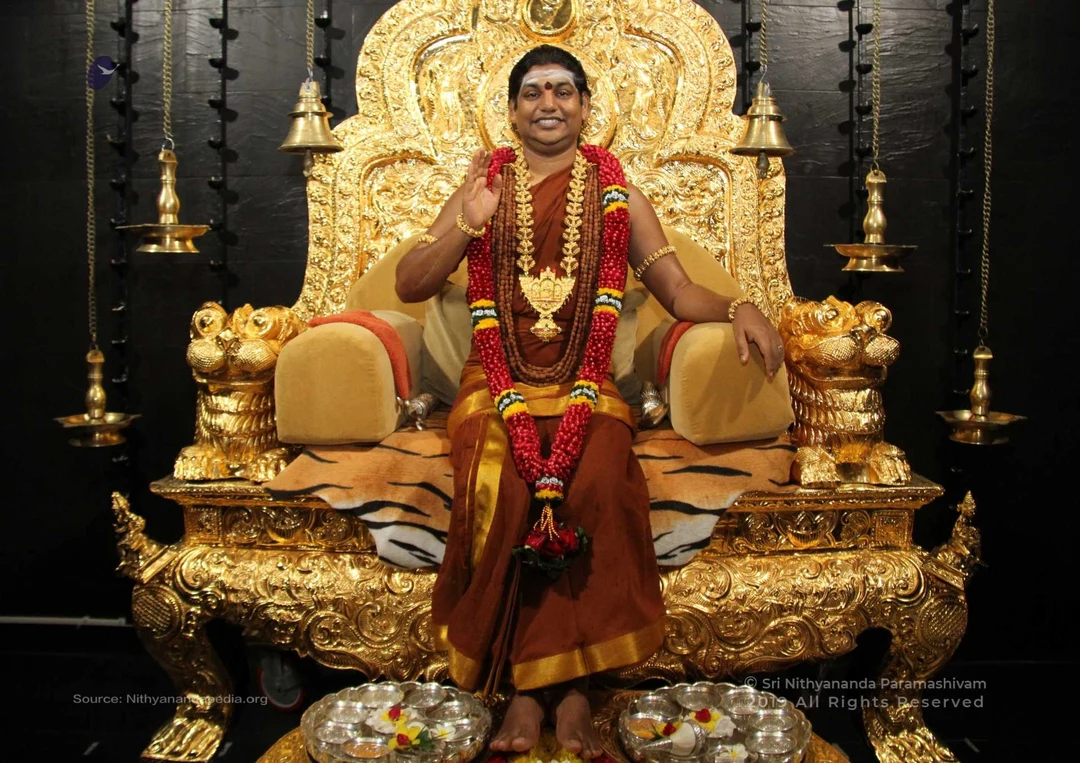
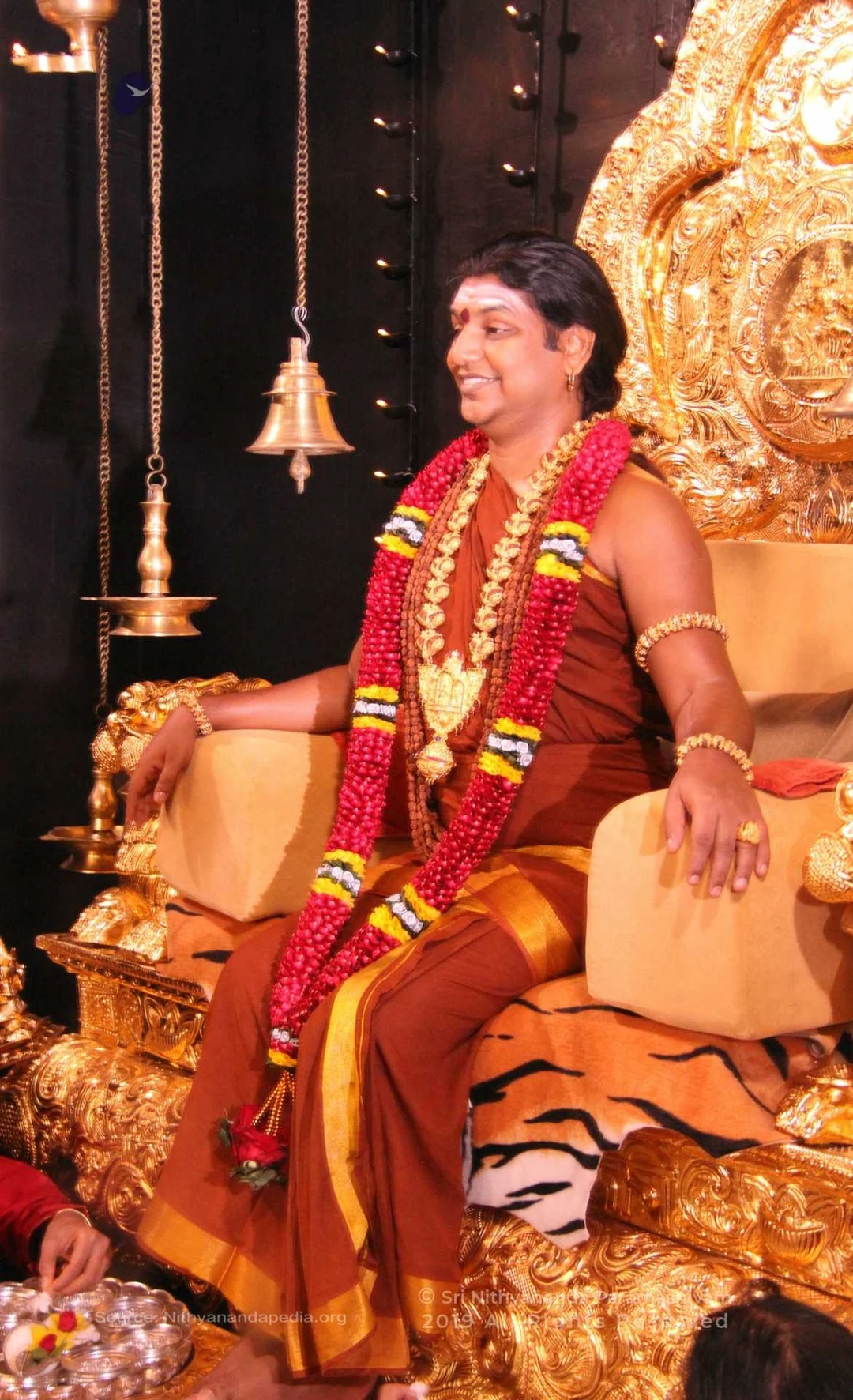
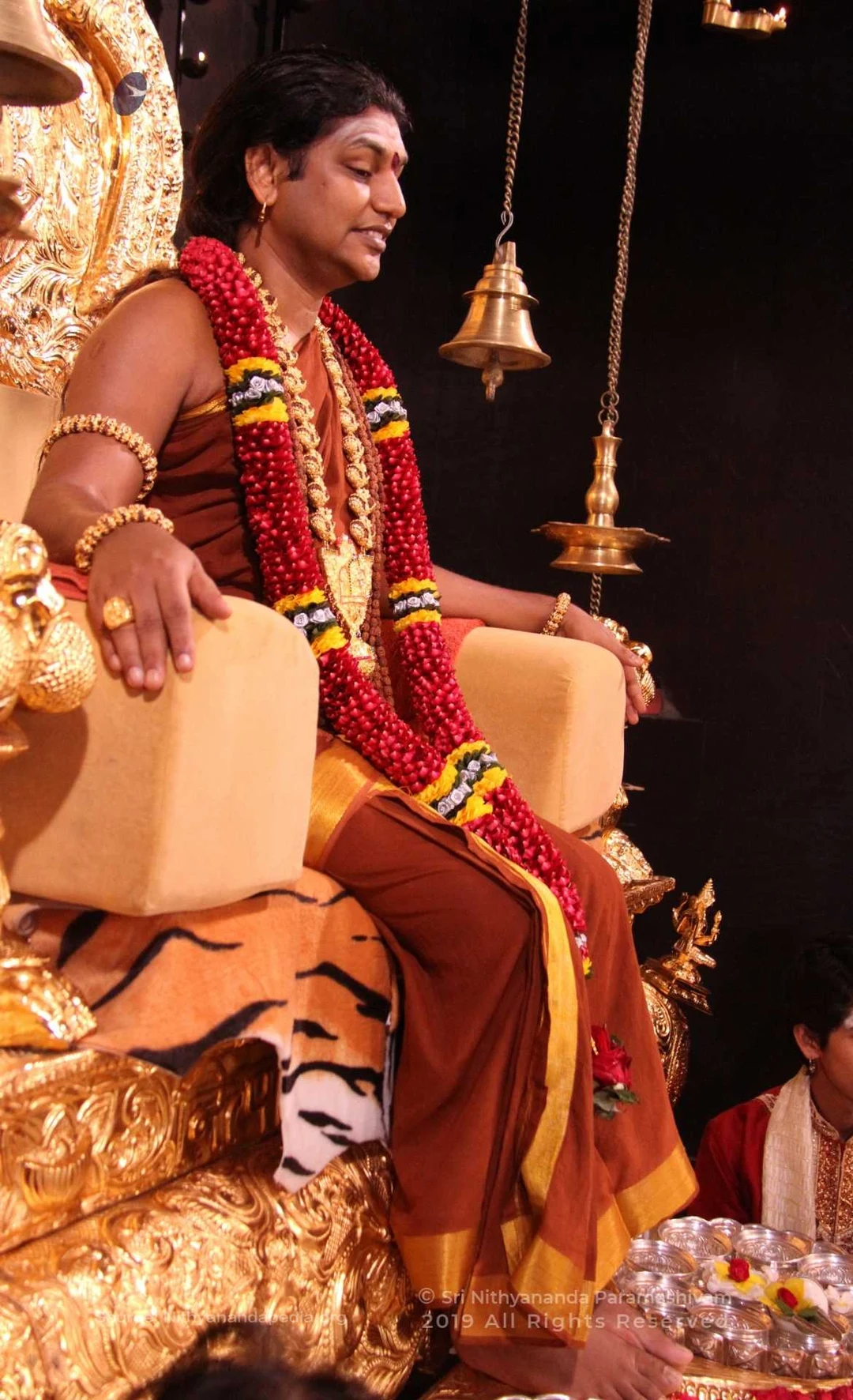
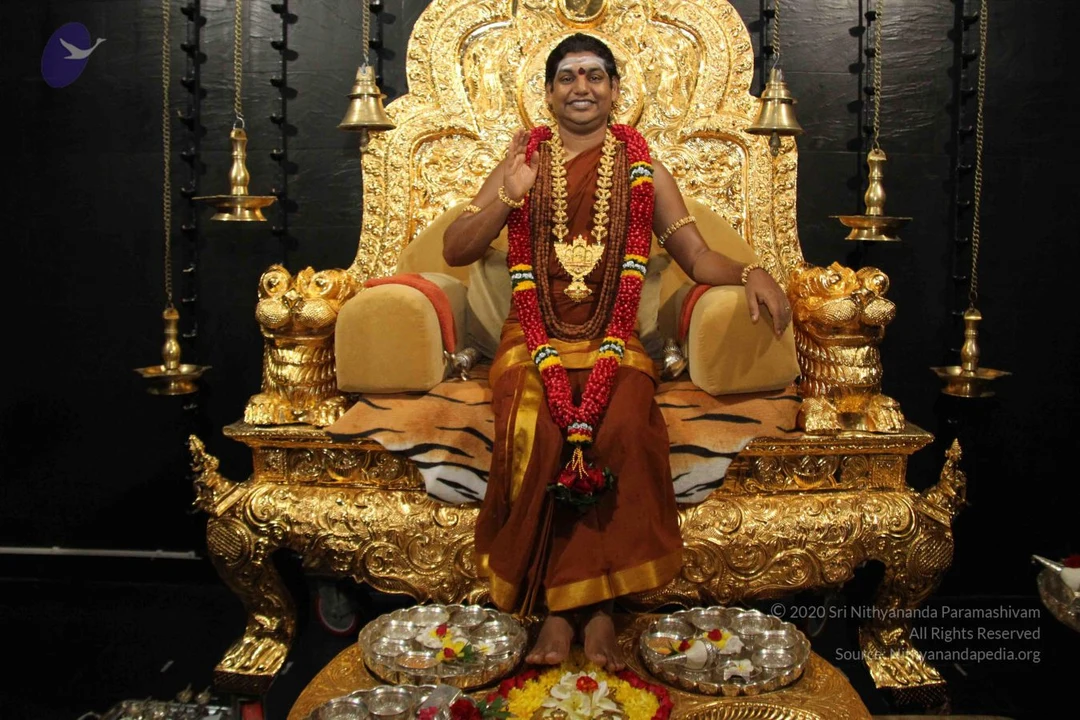
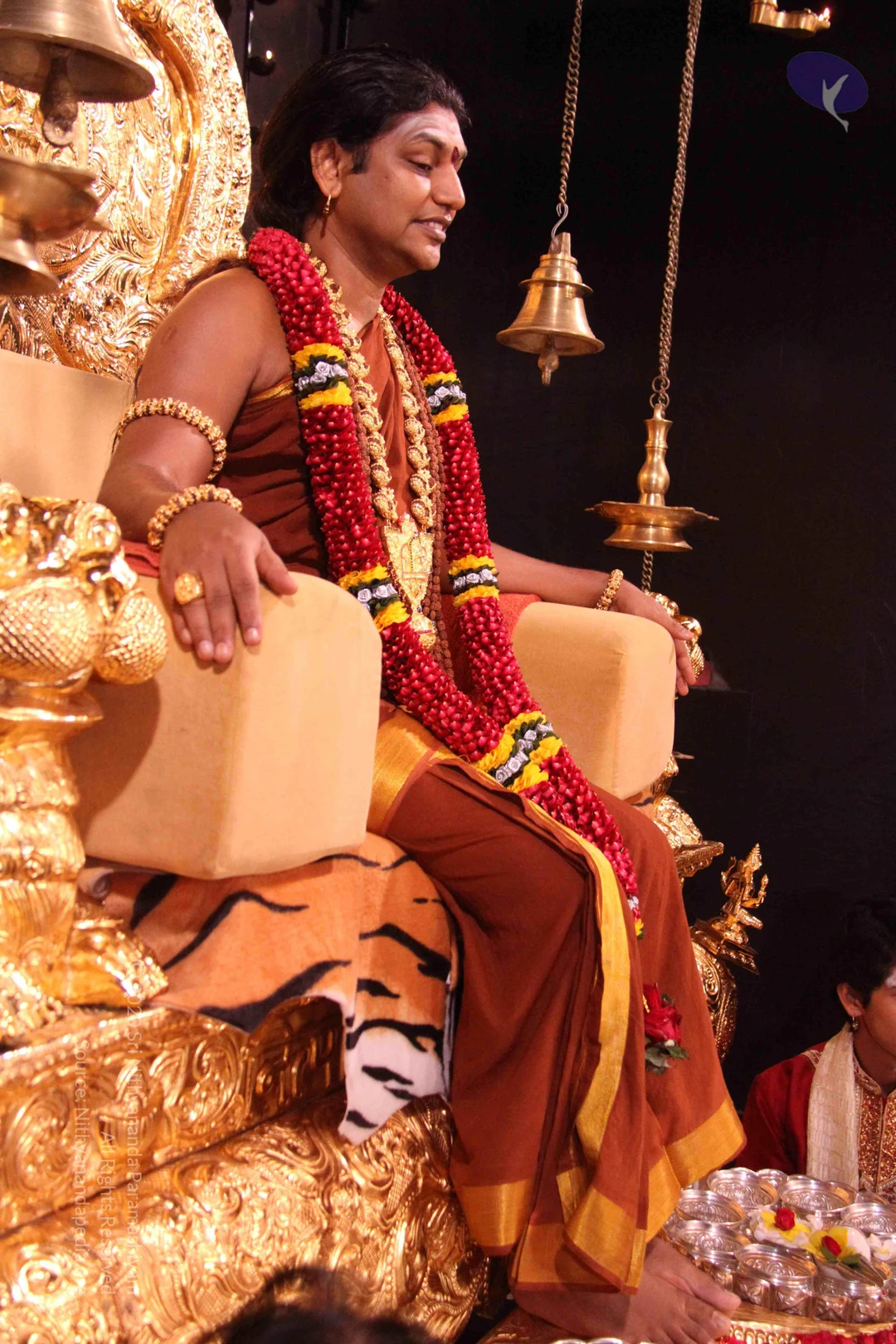
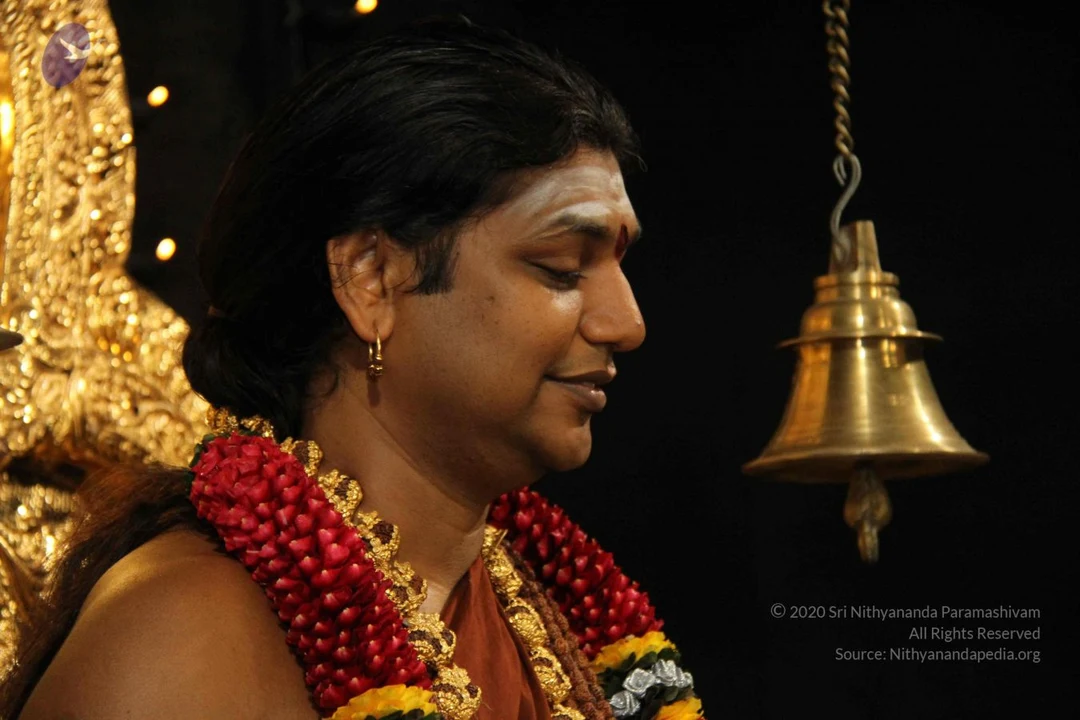
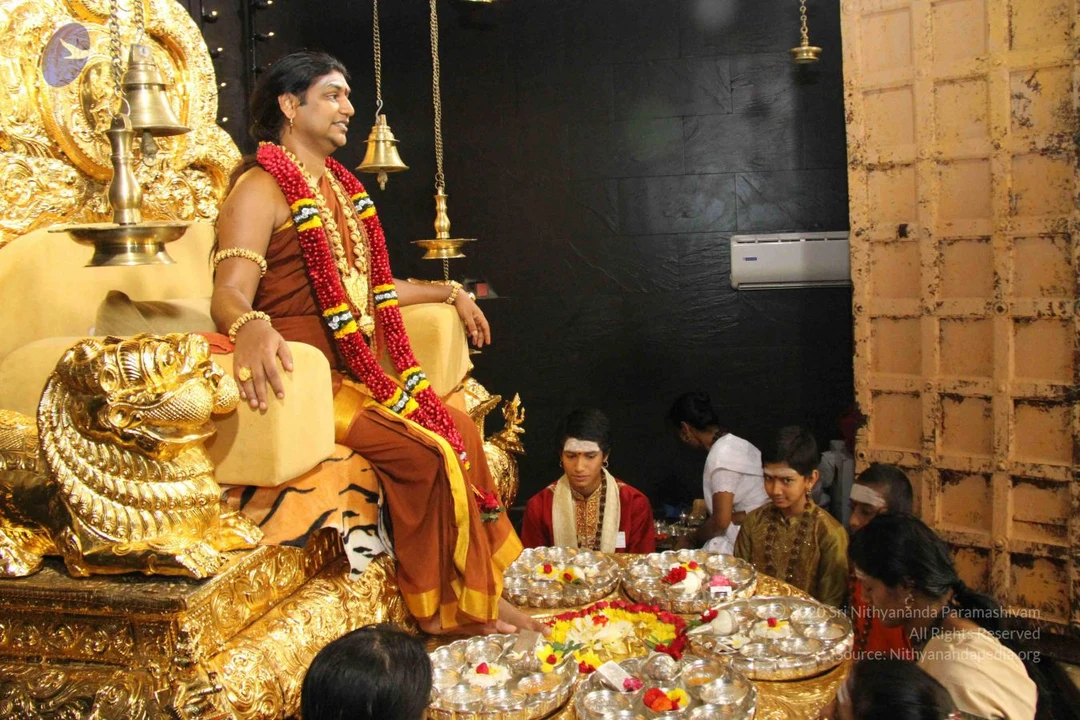
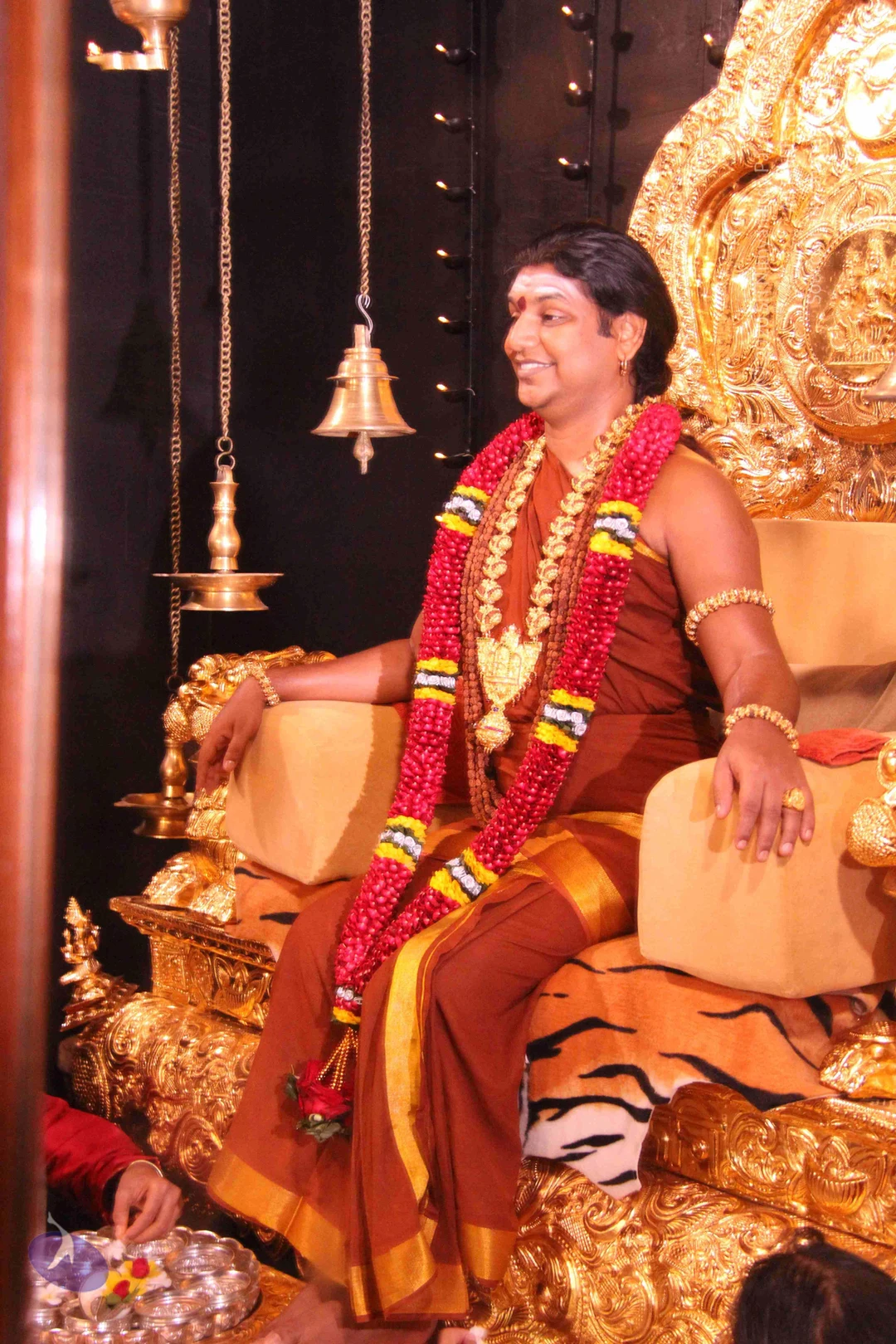
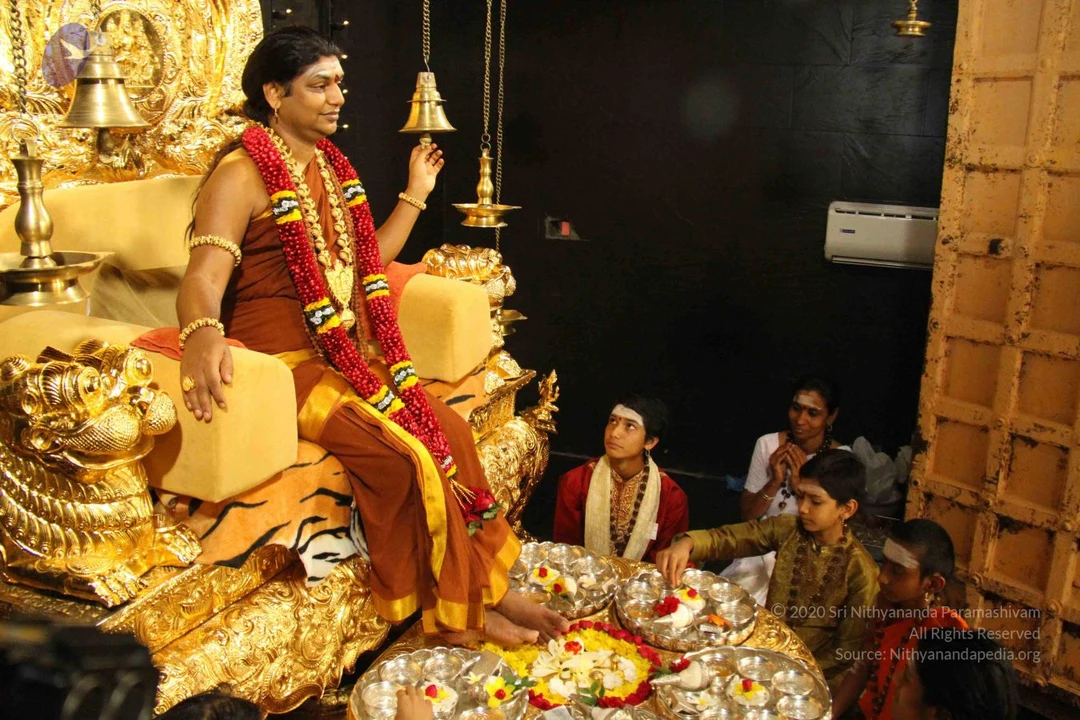
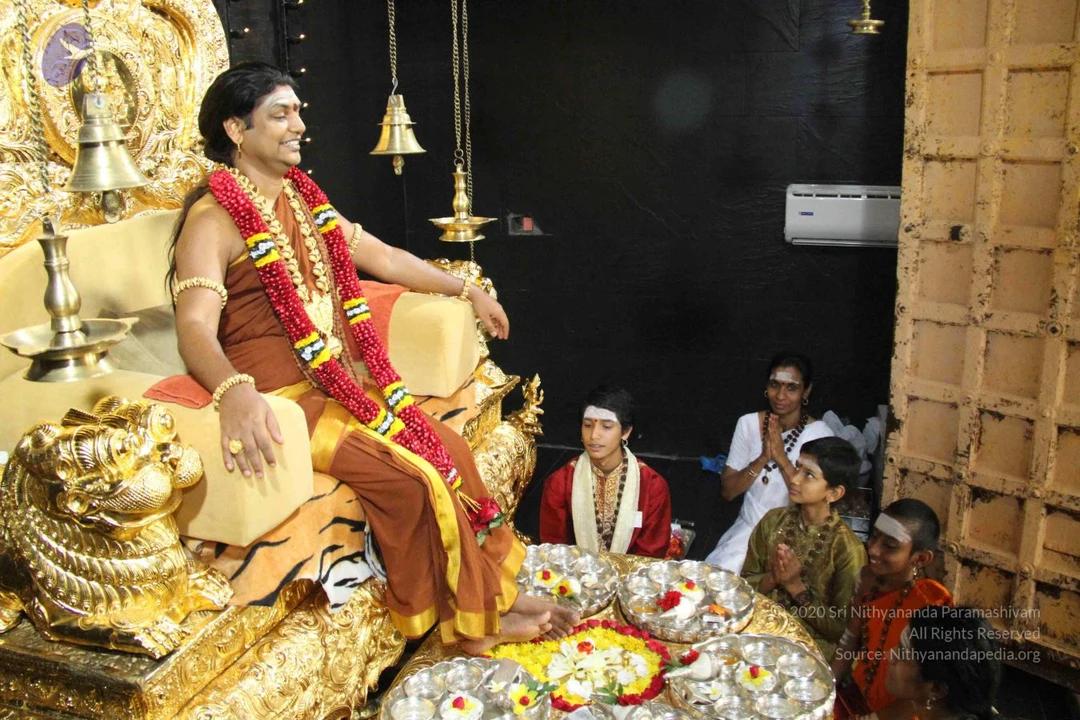
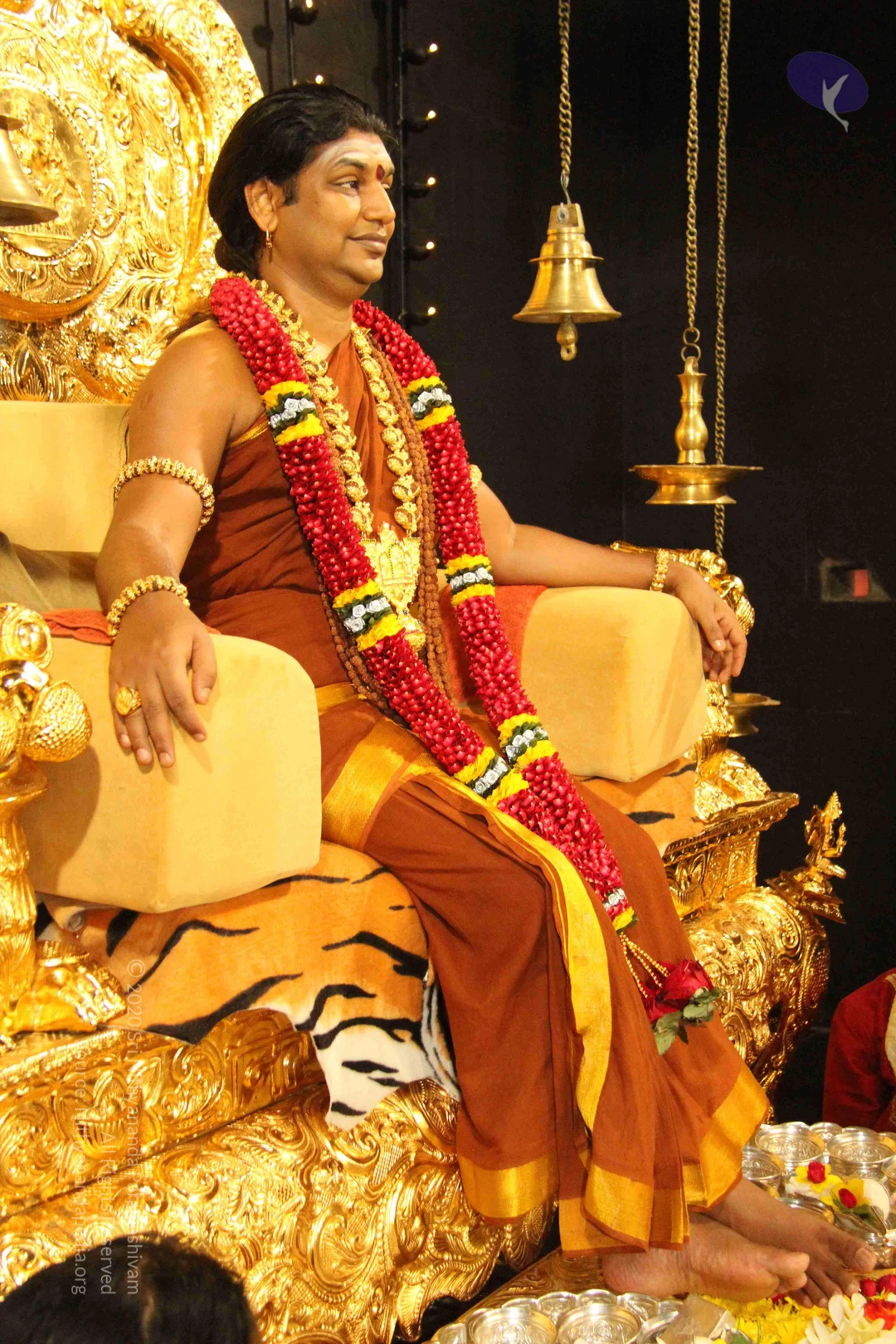
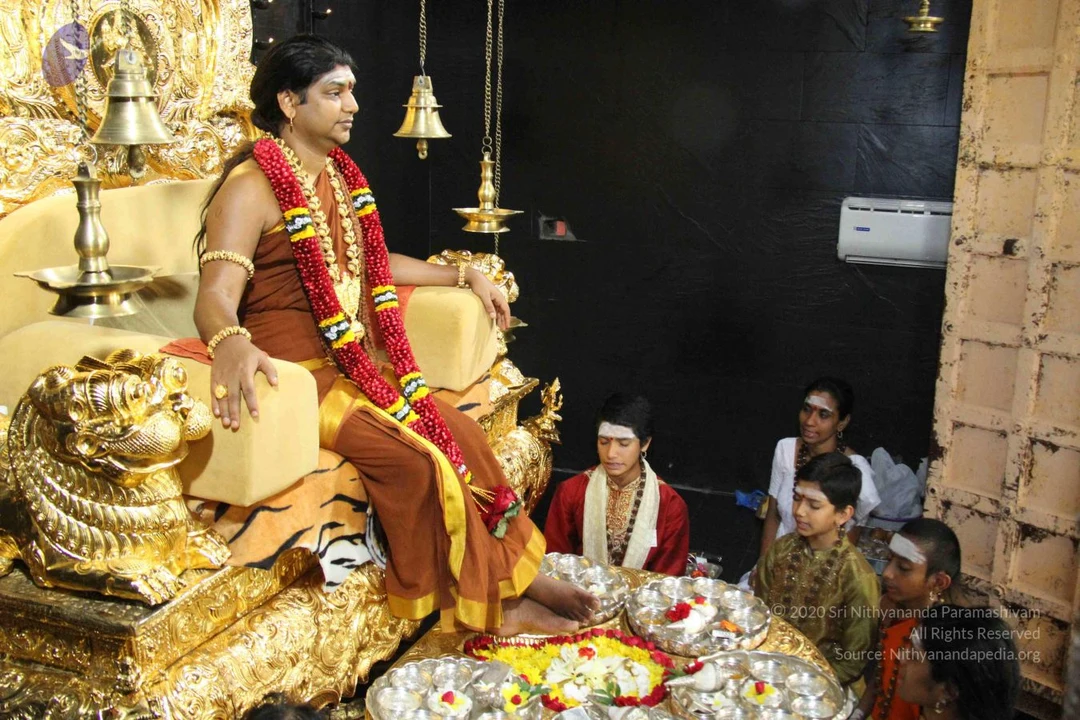
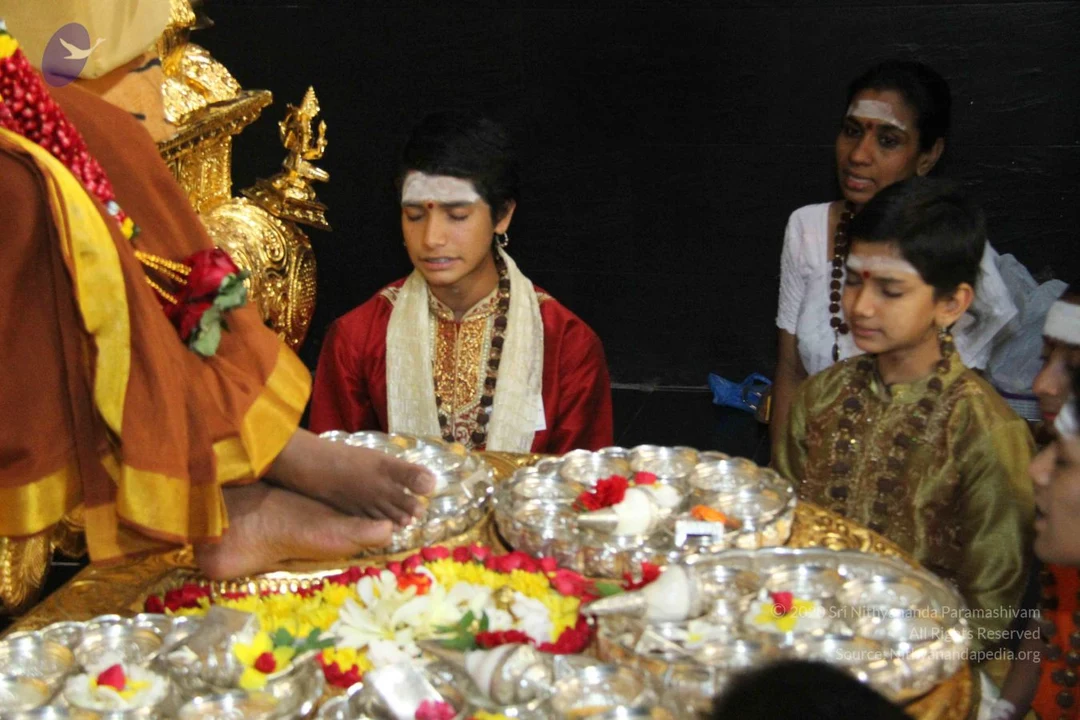
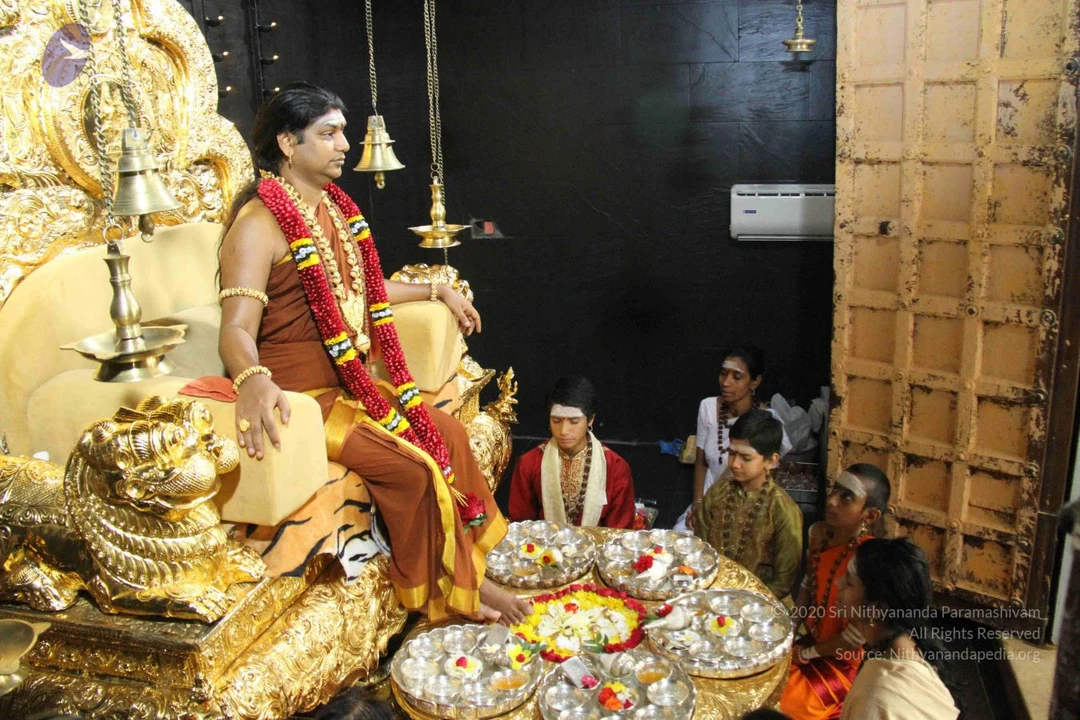
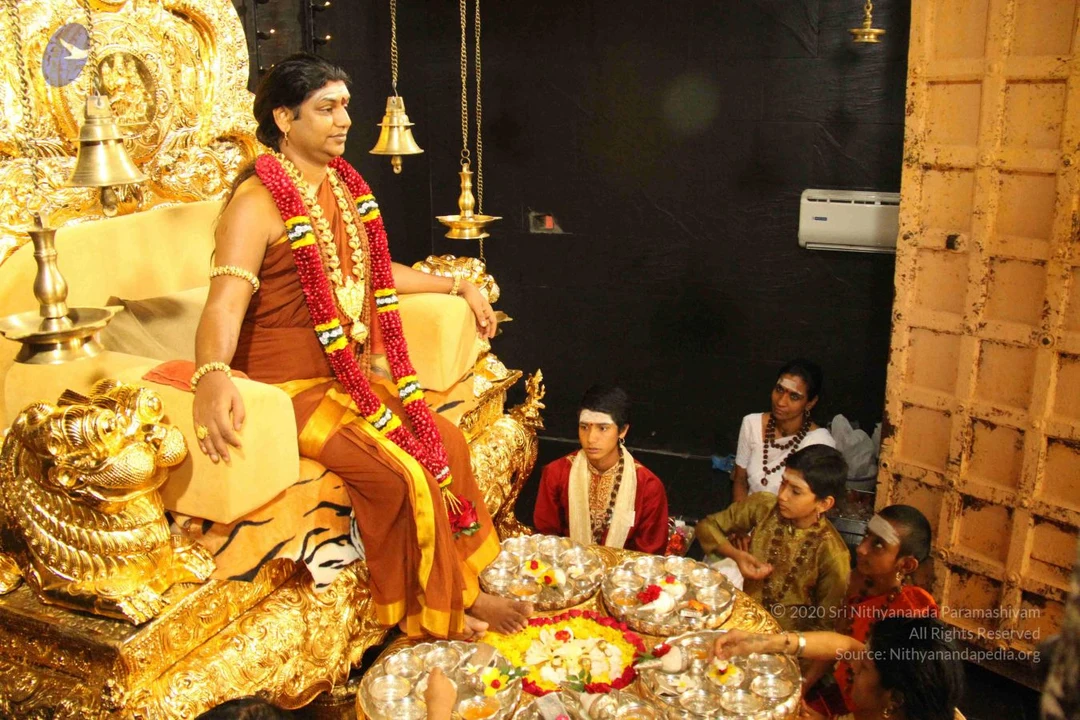
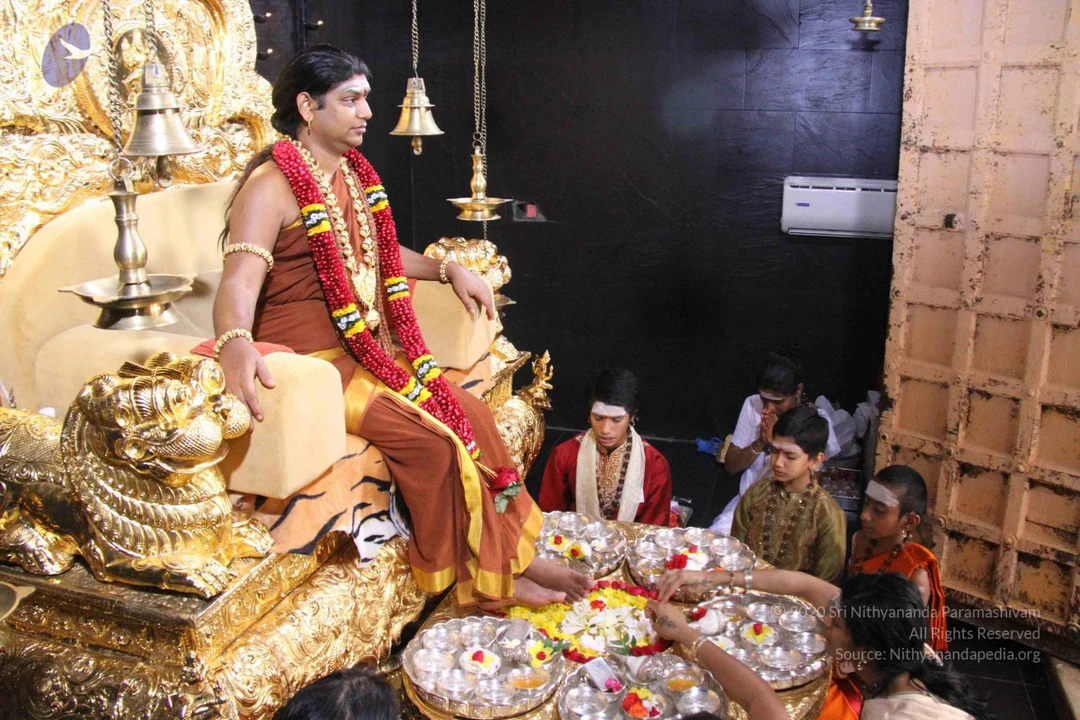
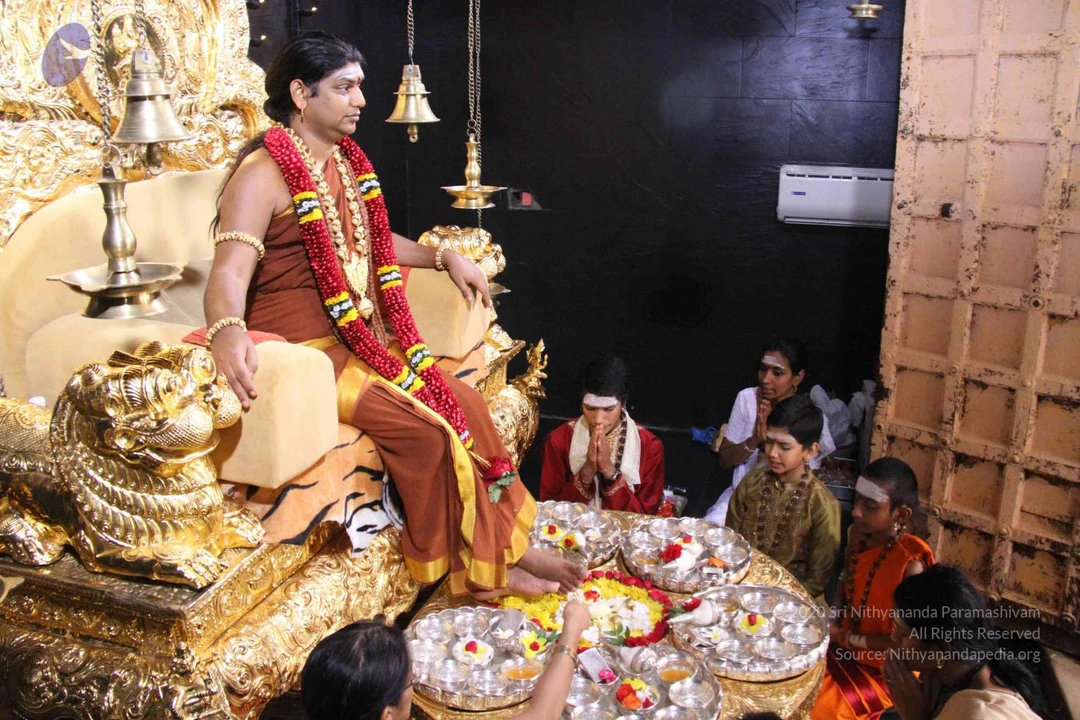
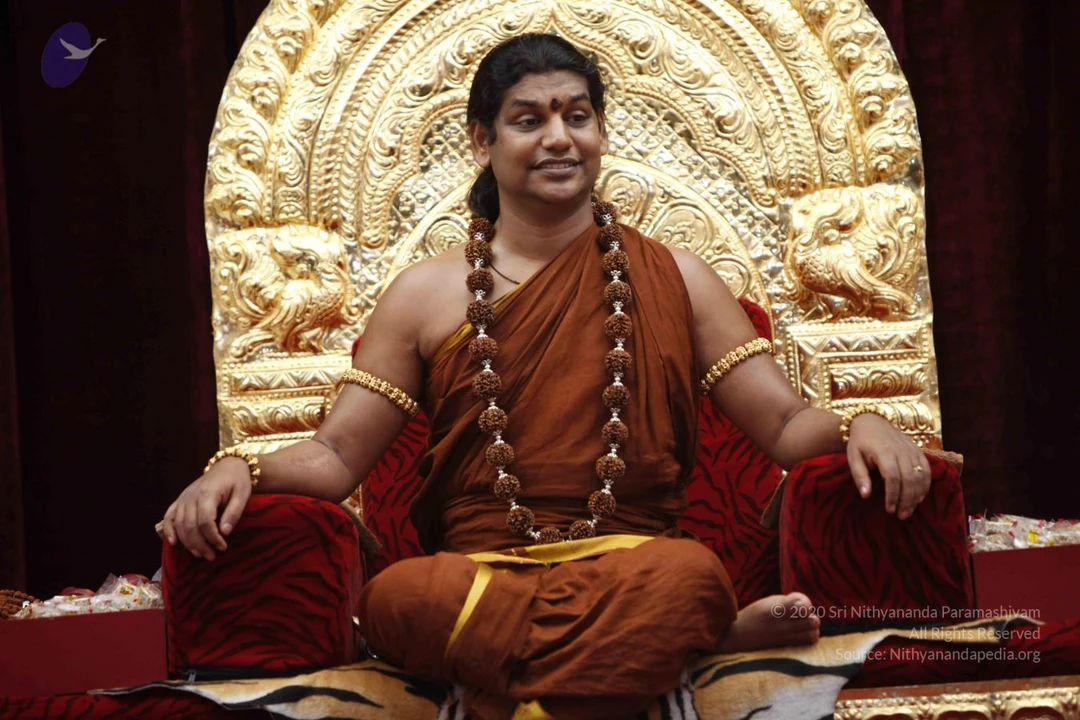
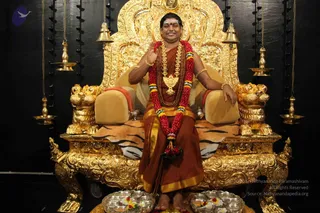
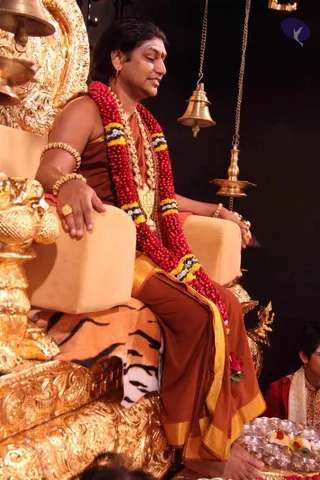
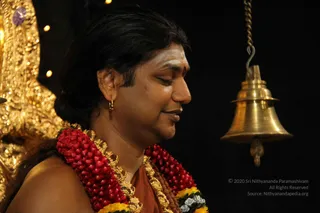
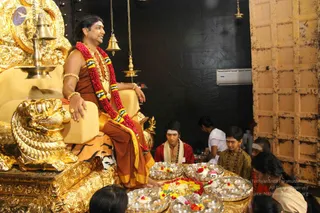
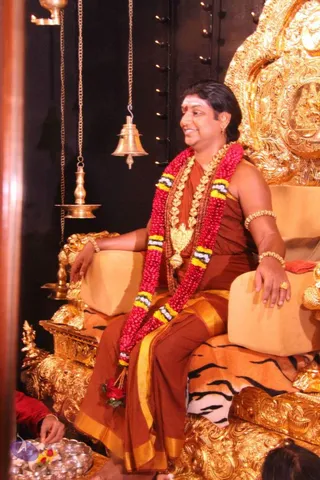
A man sits on an ornate gilded throne with lion-head armrests and a tiger-striped cushion, raising his right hand in a blessing gesture and smiling. He wears a rust-orange dhoti with a gold border, a rudraksha mala, a heavy gold necklace with a lotus pendant, gold bangles, and a red and multicolour flower garland. A red kumkum mark is on his forehead. In front of the throne stand two silver trays holding flower offerings and white sweets. Hanging brass lamps and bells frame the black backdrop. a person is seated as the central figure, with the throne, garlands and offering trays marking an honoured darshan setting.A photograph of a seated man on an ornate gold throne with carved lion-headed armrests, draped with a tiger-striped cloth. He wears a rust-brown dhoti-style garment with a gold border, a multi-coloured garland of red and yellow flowers, a gold pendant necklace, rudraksha mala beads, and a red kumkum bindi with white vibhuti marks. He raises one hand in a blessing gesture while smiling. Brass oil lamps hang from chains on either side, and silver trays of flowers and offerings sit at the base of the throne.A seated man in a golden ornate throne, dressed in rust-brown and saffron-bordered robes with a bare shoulder, wearing a long red and yellow flower garland, gold necklaces, a rudraksha mala and gold bangles. He has long swept-back hair and a red tilak on his forehead, and rests his hand on a cushioned armrest draped with a tiger-striped cloth. Hanging brass bells and a brass oil lamp hang beside him, with a small gold deity figure and silver bowls with flower offerings in the lower right, while a partly visible person in red and gold sits at the edge.Close profile photo of a man with long dark hair swept back, white vertical tilaka with a red dot on his forehead, small gold hoop earring, and eyes gently lowered in a serene expression. He wears a saffron/orange garment and layered garlands of red rose petals and yellow flowers with gold ornamental necklaces. Behind him a large brass bell hangs from a twisted cord against a dark background, with gold-toned carved ornament at left and warm lamp lights. Appearance-based label: Swamiji (probable), with long swept-back hair, saffron clothing and rudraksha-style adornment consistent with that identification, shown in person seated in a ritual setting.A seated man in a rust-brown and saffron-toned garment with a red and white flower garland and gold ornaments sits on an ornate gold throne carved with a lion head, looking to his right. Gold bangles adorn his wrists. Before him, several silver and brass trays hold flowers, fruit and offerings. Young boys in red and green traditional clothes, one with a white tilaka, sit near the trays, and a woman in white sits at the right. Hanging brass bells and a brass oil lamp hang from chains near a golden gate. The setting suggests a temple-style ritual room.A seated man on an ornate gold throne with a tiger-striped cushion, wearing a rust-brown robe with a gold border, a red and yellow garland, a gold pendant on a beaded mala, gold bangles and a ring. Hanging brass bells and an oil lamp are behind him, and brass and silver offering plates sit at the lower left, with a hand in red sleeves partly visible. Swamiji (probable): the figure has long swept-back hair, ornate gold jewellery and a rudraksha mala, matching the page's note that Swamiji attended this satsang.

sarva-darshan

1 photoSource gallery
A smiling man stands before an ornate golden throne-like seat in a temple-style hall. He wears a rust-brown robe with a gold-trimmed yellow cloth, a long red and yellow garland with a rudraksha mala and a gold pendant necklace, and a gold armlet. A red-and-gold cushion rests on the seat. Flanking him are painted deity statues with gold crowns and jewellery, and a golden canopy hangs above. Swamiji (probable): the man has long swept-back hair, ornate gold jewellery, rudraksha mala and a garland, consistent with the page's reference to him.

HDH-deities

2 photosSource gallery
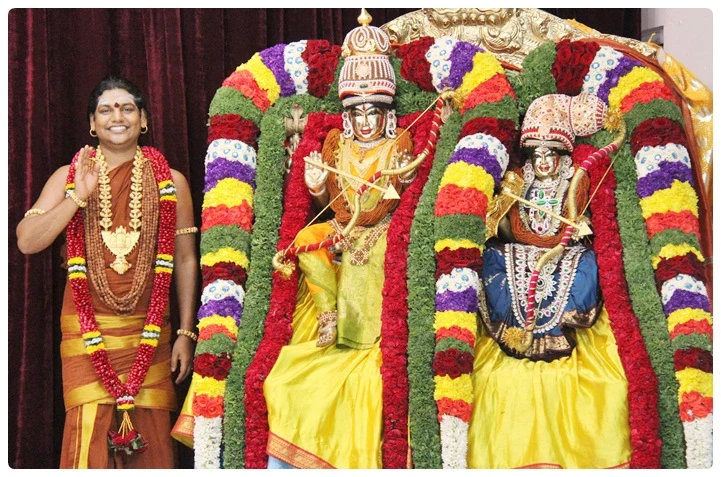
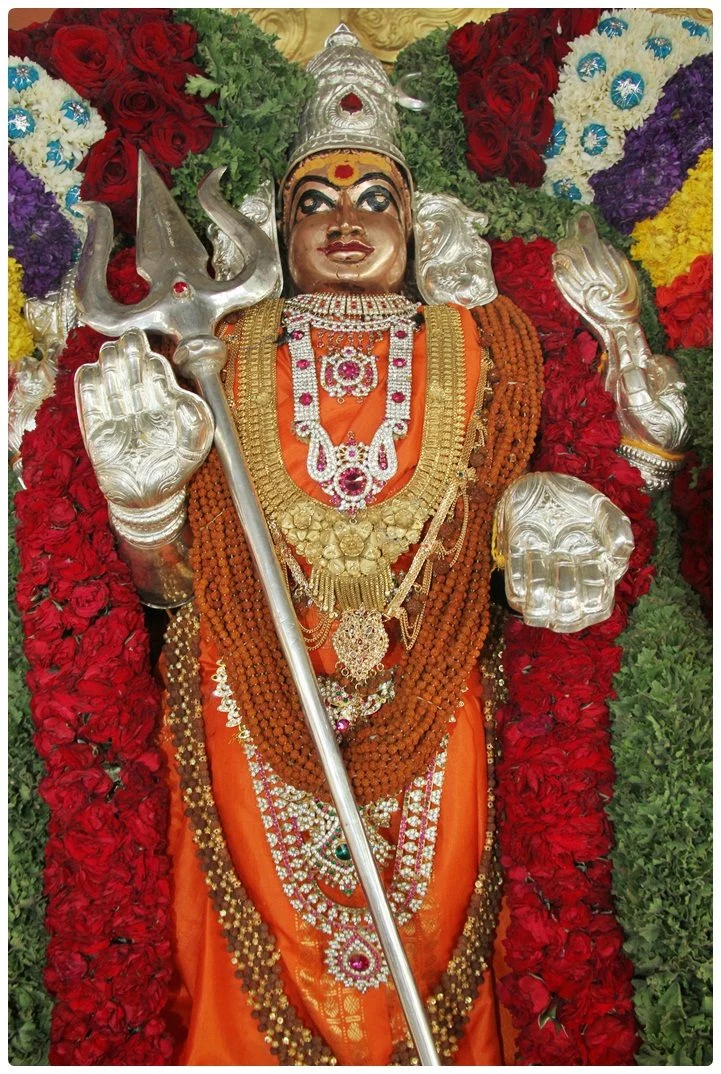
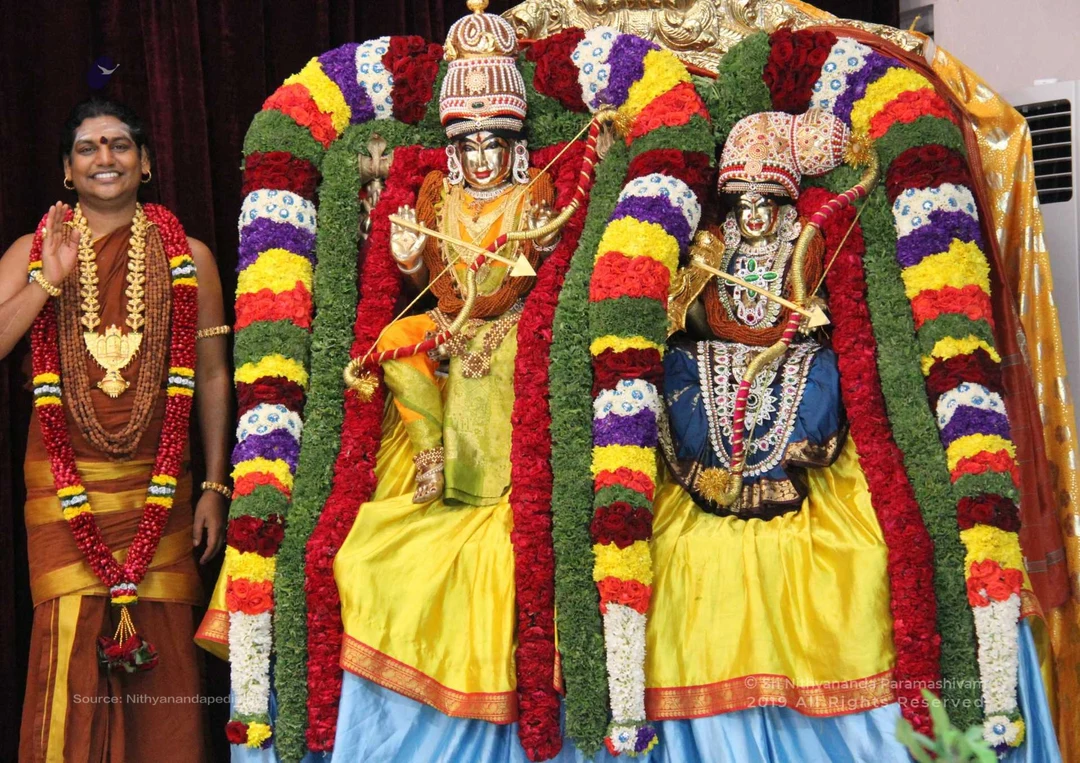
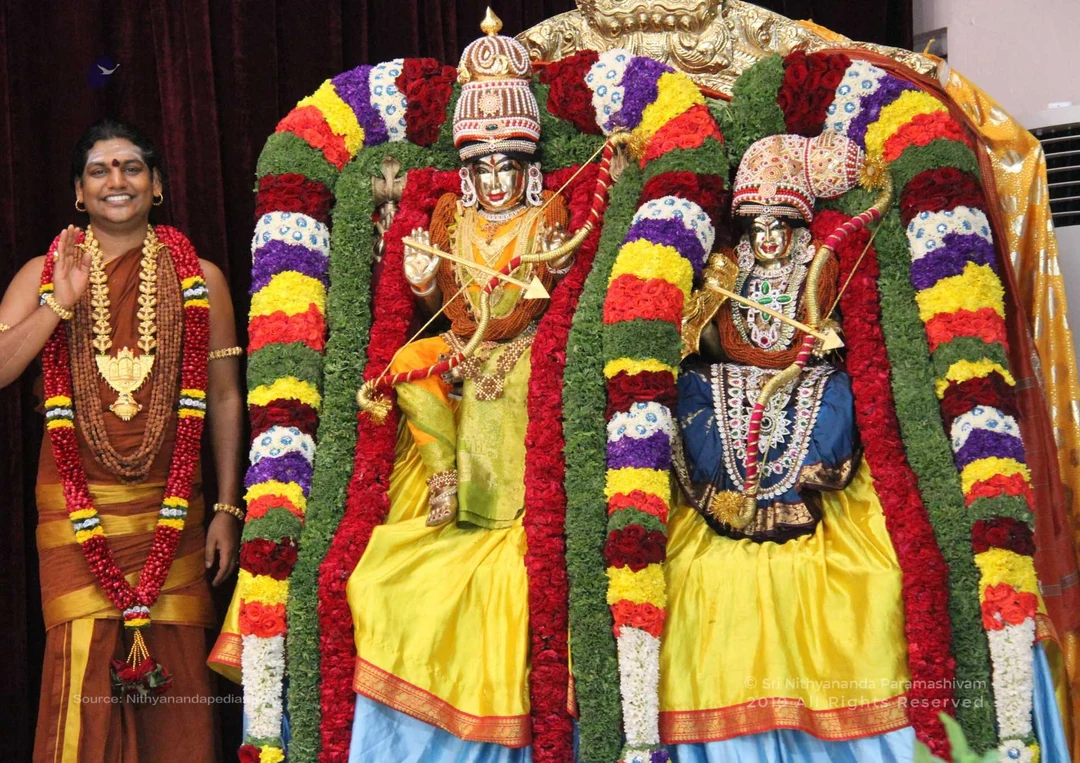
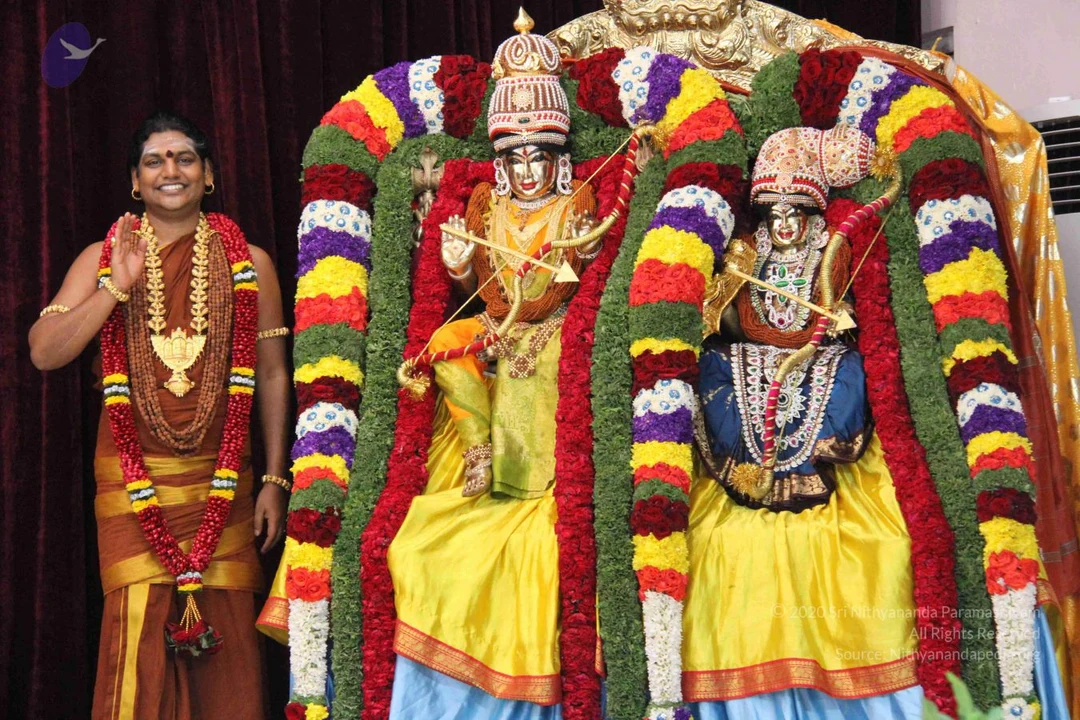
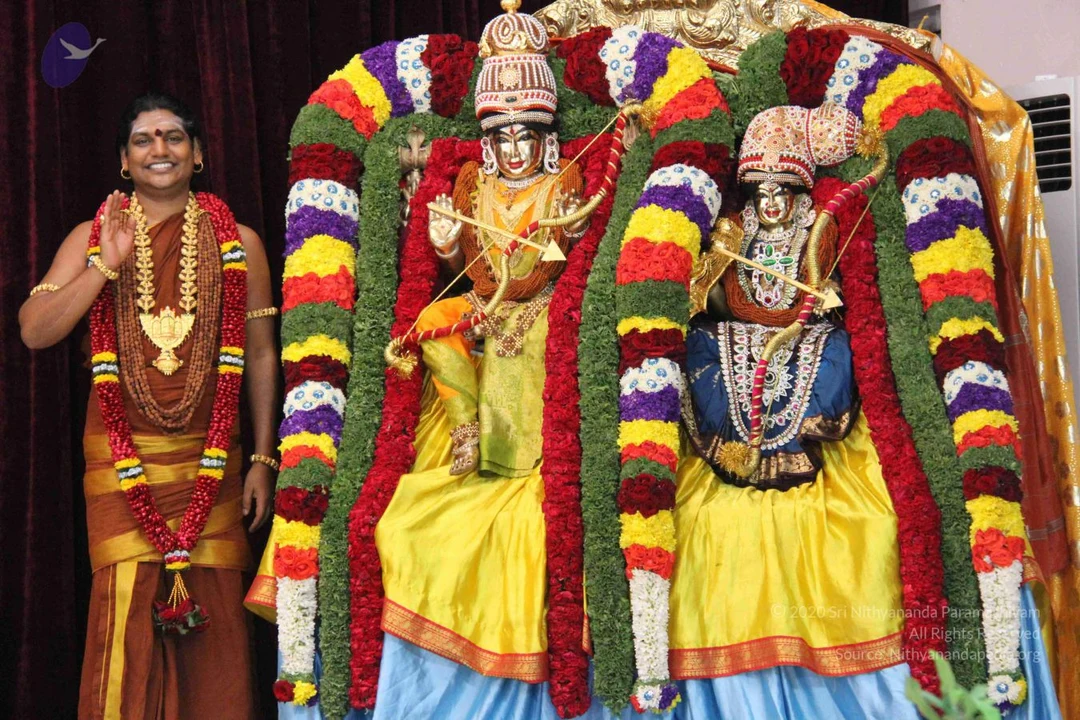
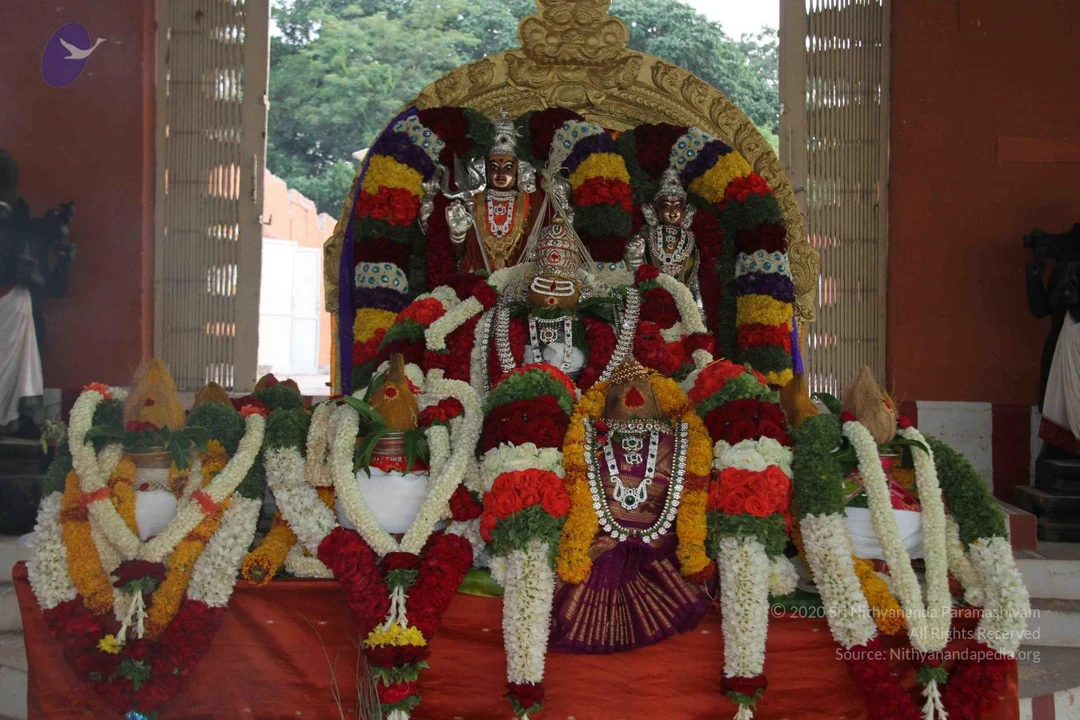
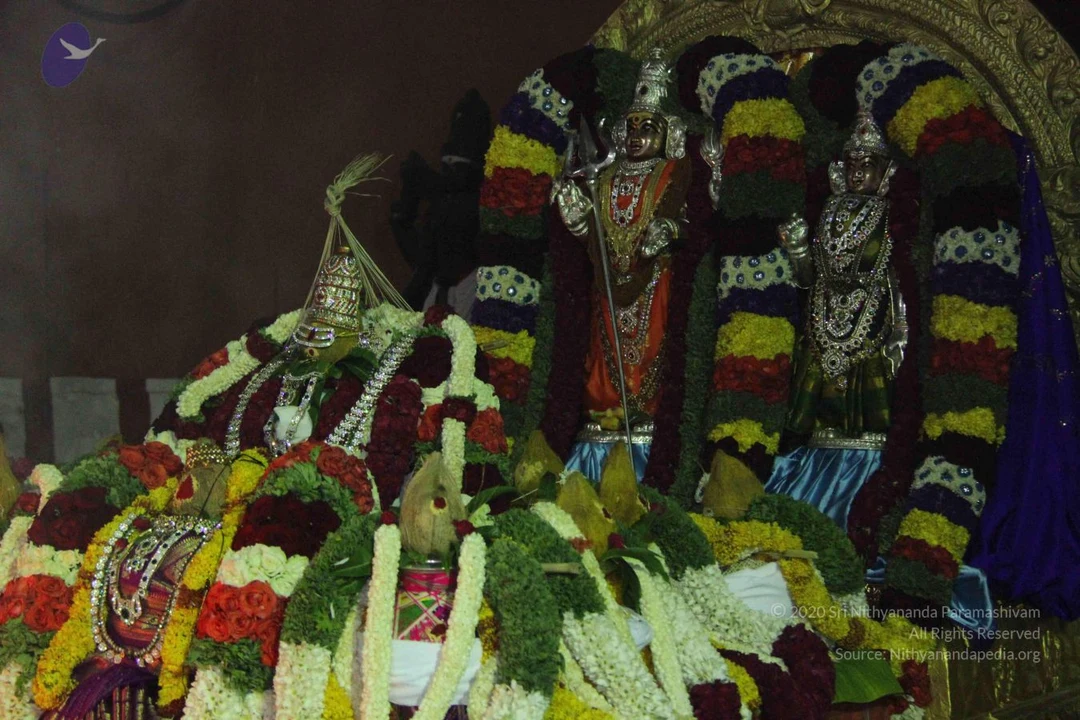
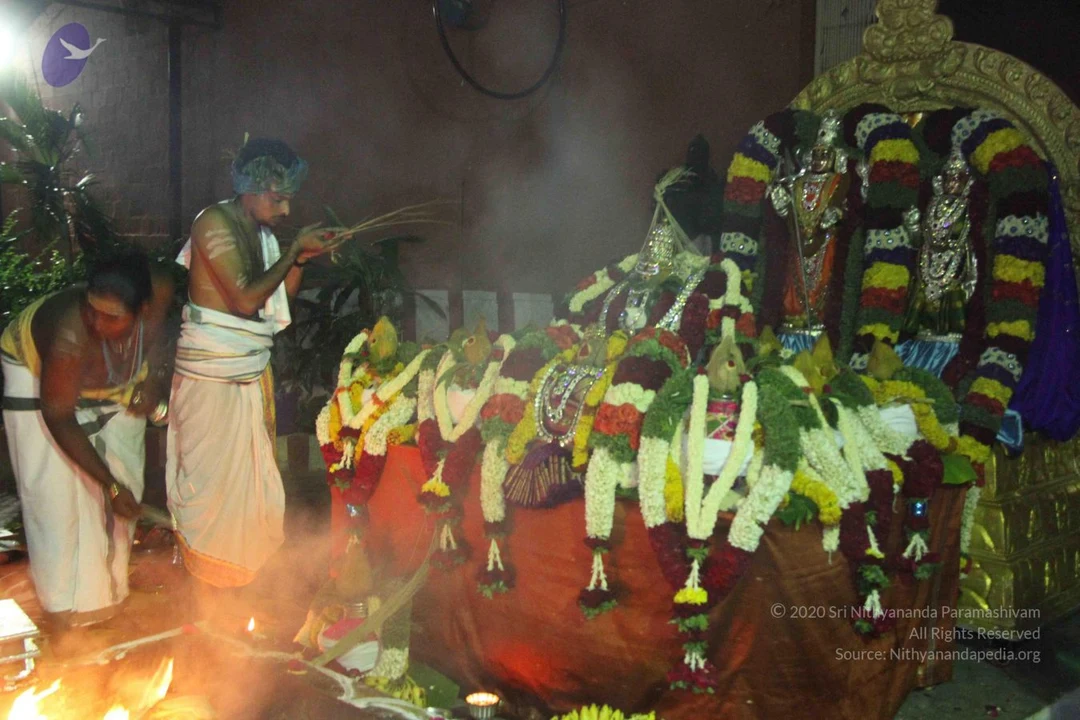
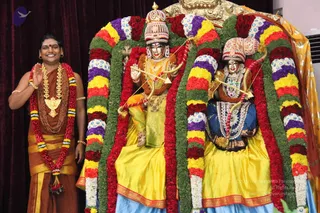
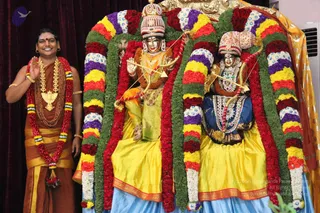
A man stands at left in an orange-brown dhoti and shawl, wearing a red and multicolour garland, rudraksha mala, and gold ceremonial necklace with a pendant, and smiles while raising one hand in greeting. Beside him are two large deity murtis seated on thrones, decorated with dense garlands of red, yellow, purple and white flowers. The left murti wears a crown, gold-and-green sari and holds a bow and arrow; the right murti wears a crown, blue blouse and gold-embroidered skirt.A photograph of a standing man in a rust-brown dhoti and shawl with a red and multicolour flower garland, a gold pendant necklace and a rudraksha mala, smiling and raising one hand in a greeting. Beside him are two large deity murtis, Meenakshi and Sundareshwarar-style figures seated on a decorated throne, with golden crowns, bows and arrows, yellow and blue silk garments and heavy flower garlands in red, purple, yellow and white. The setting is a stage with a maroon curtain and a gold backdrop.

ia-day17-darshan
26 photosSource gallery
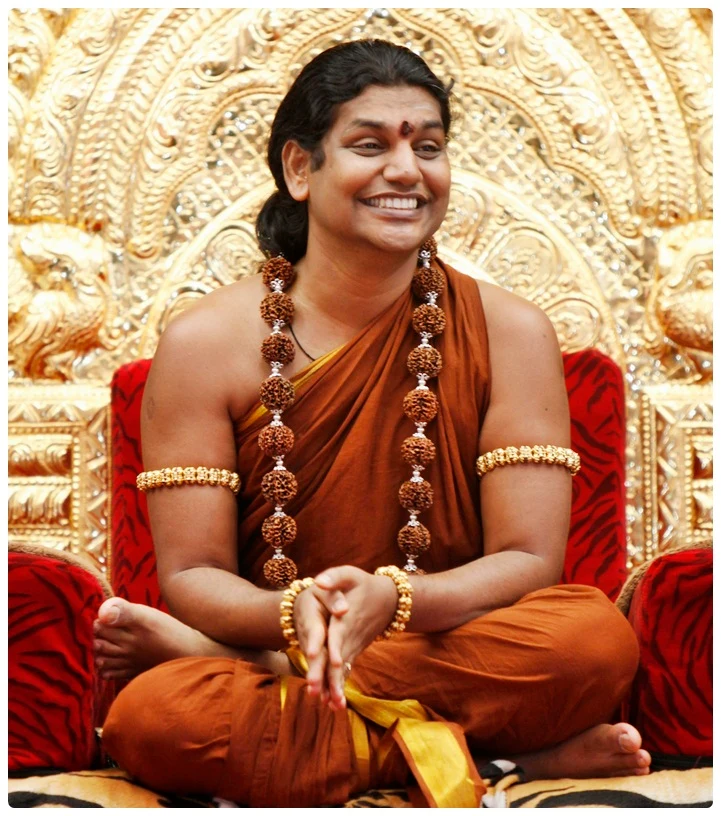
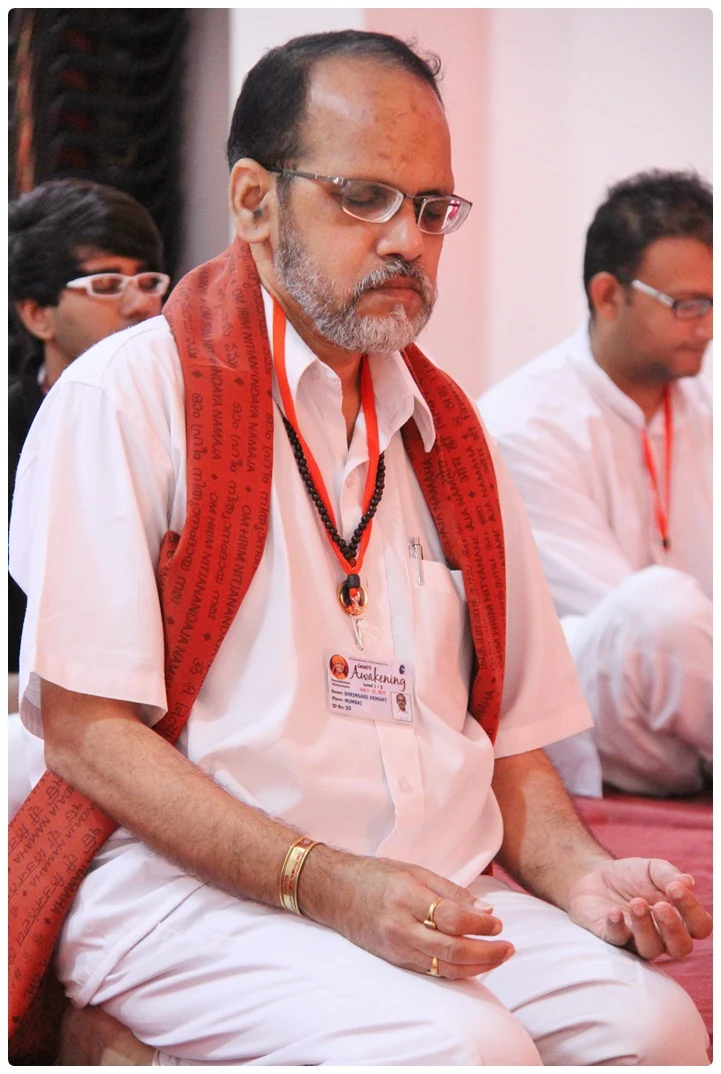
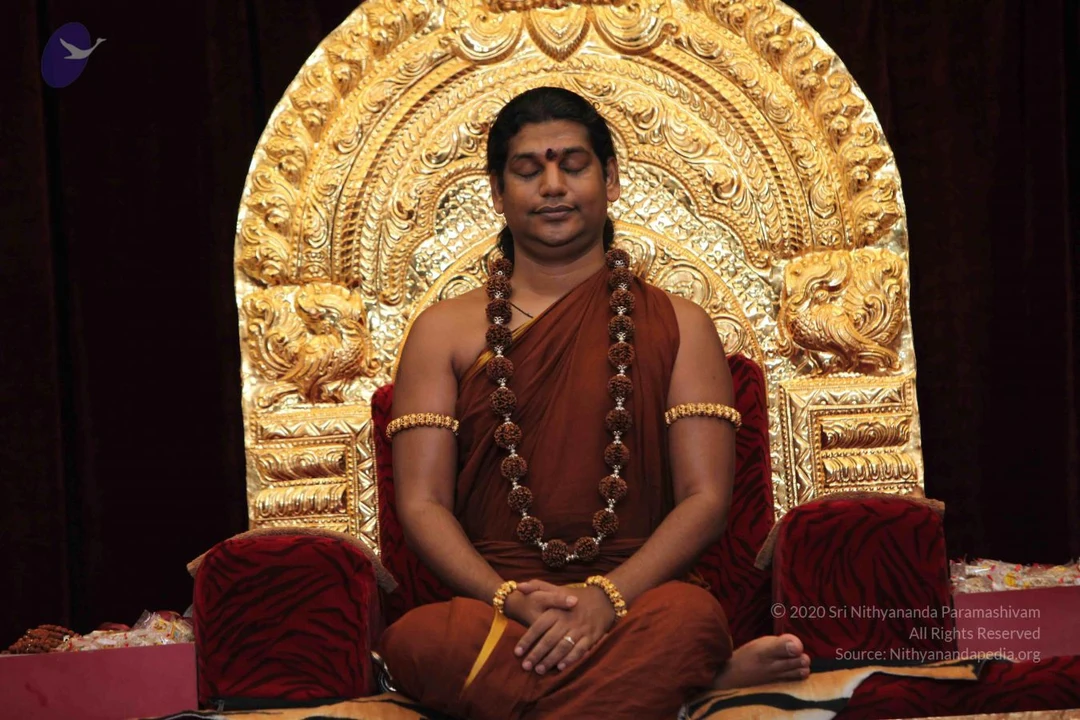
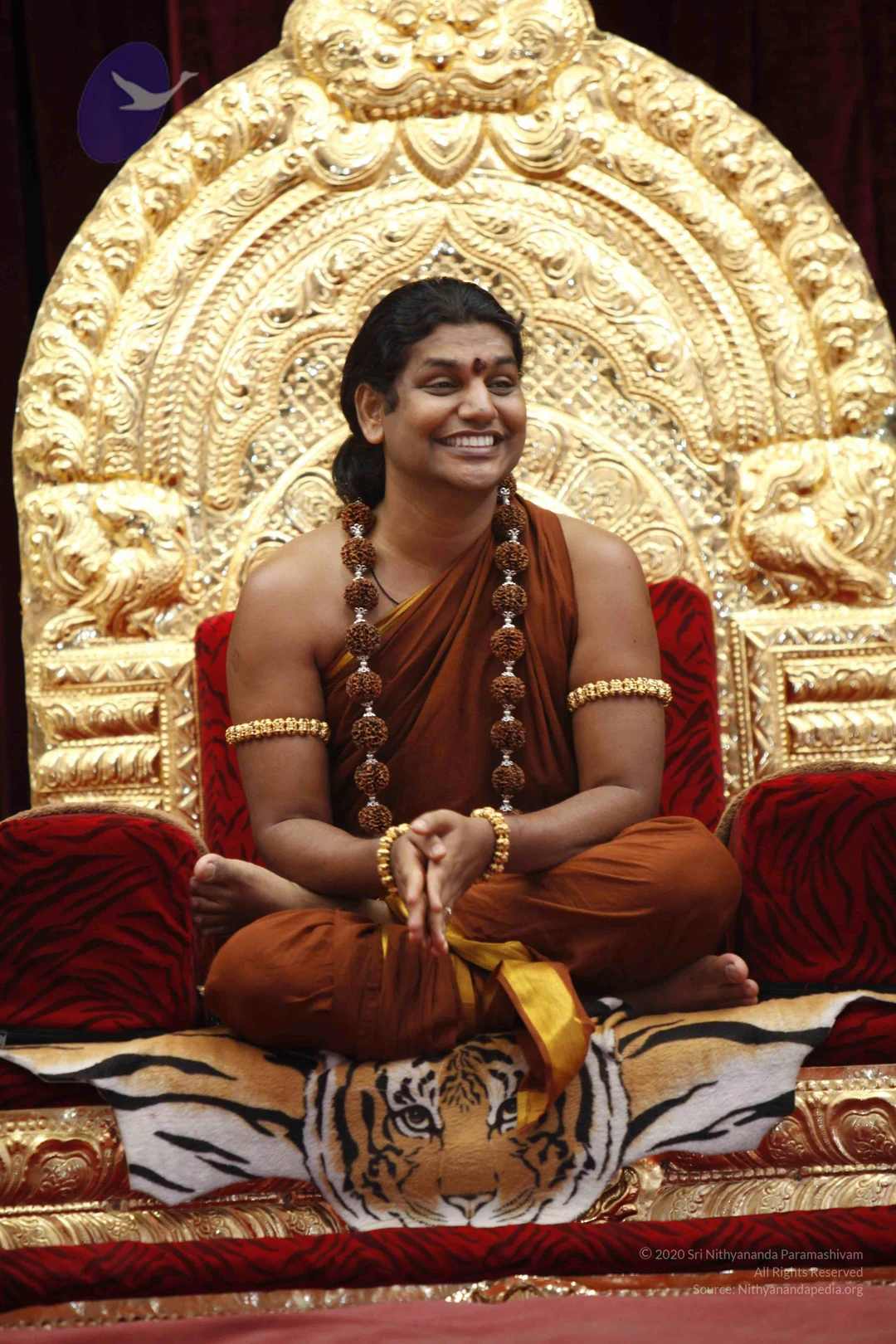
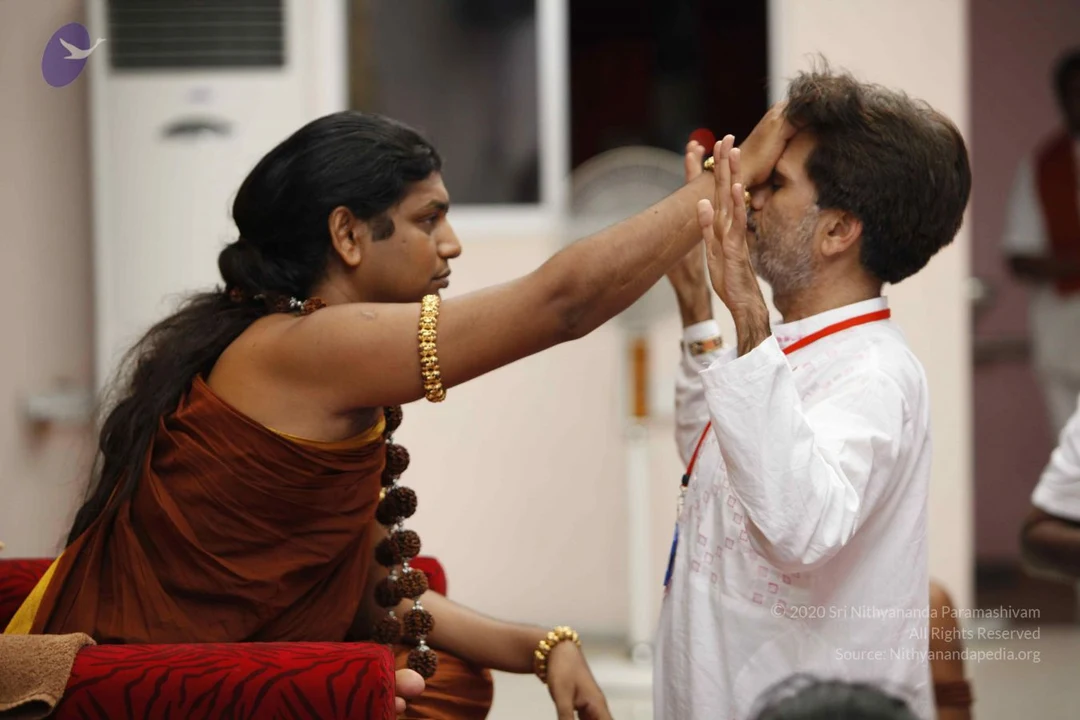
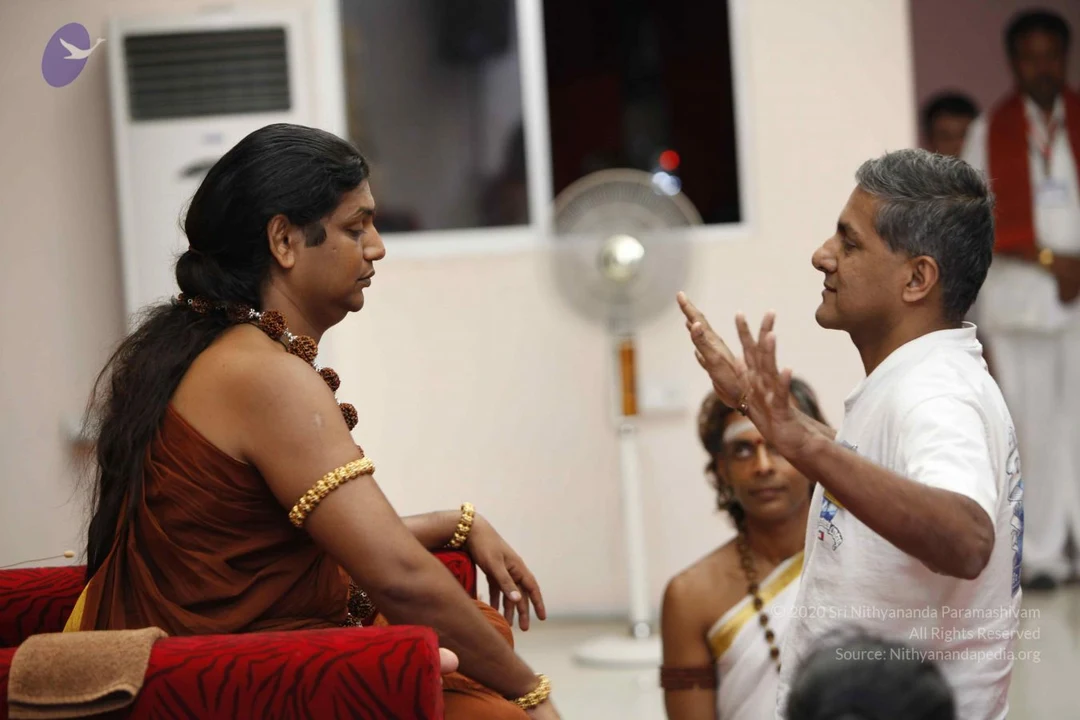
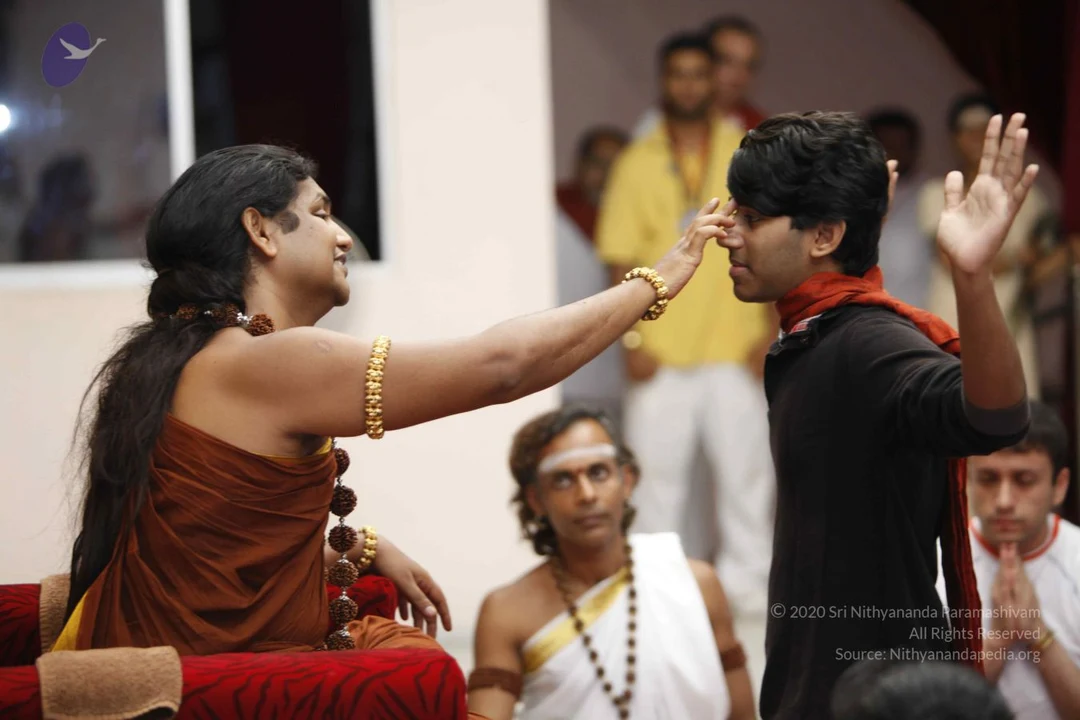
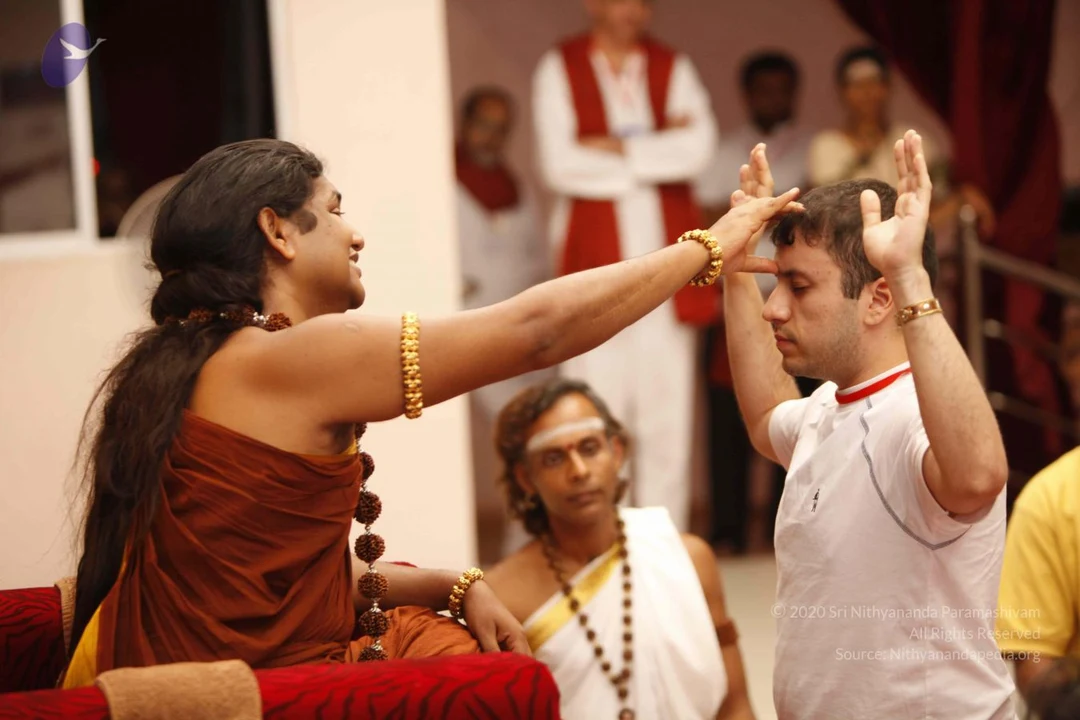
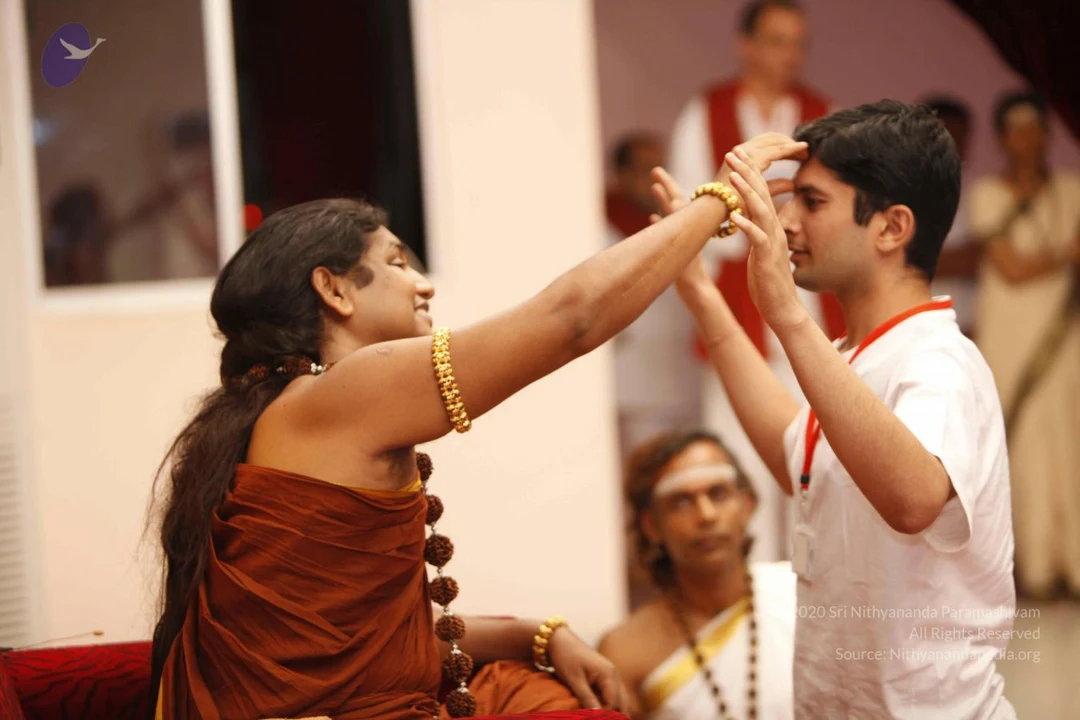
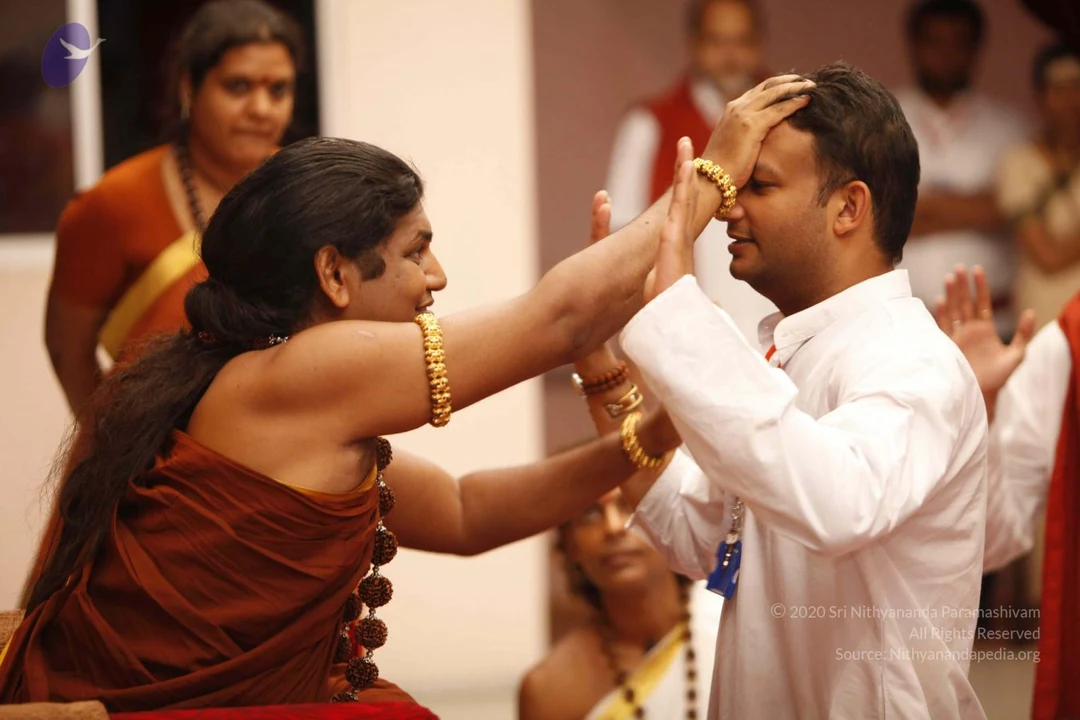
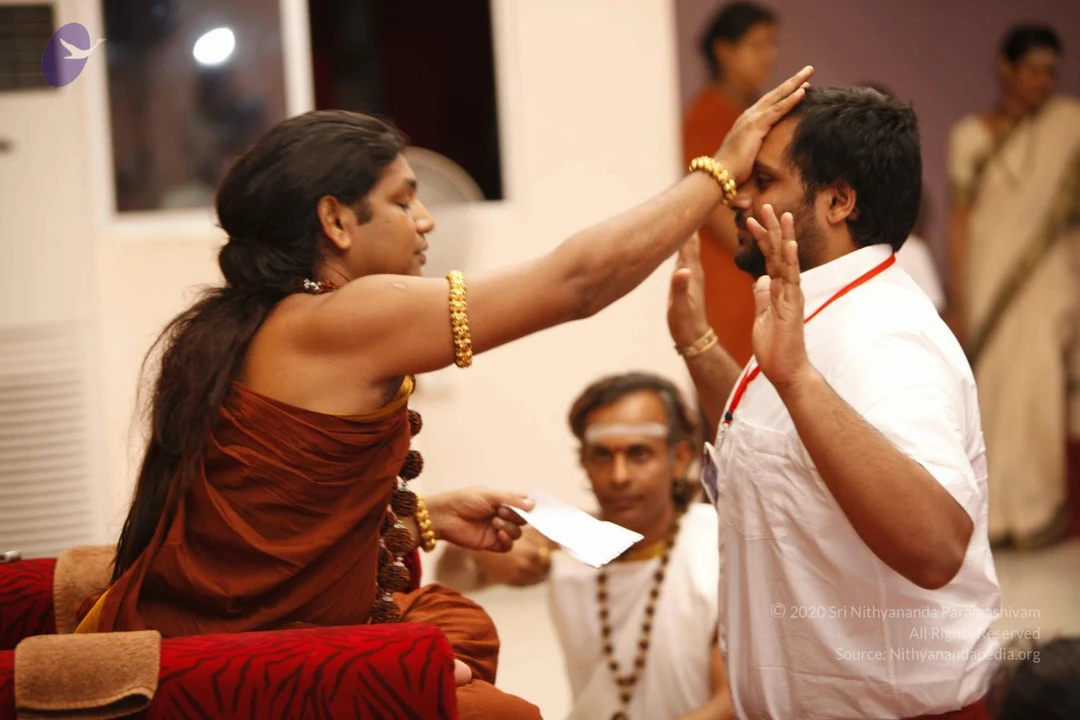
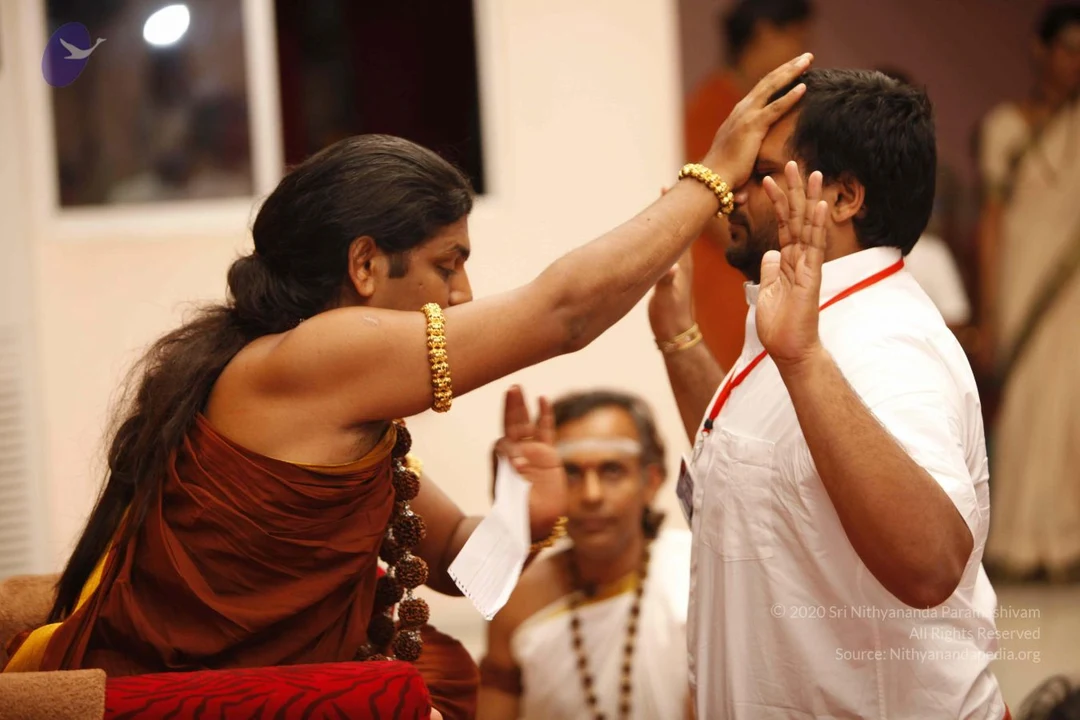
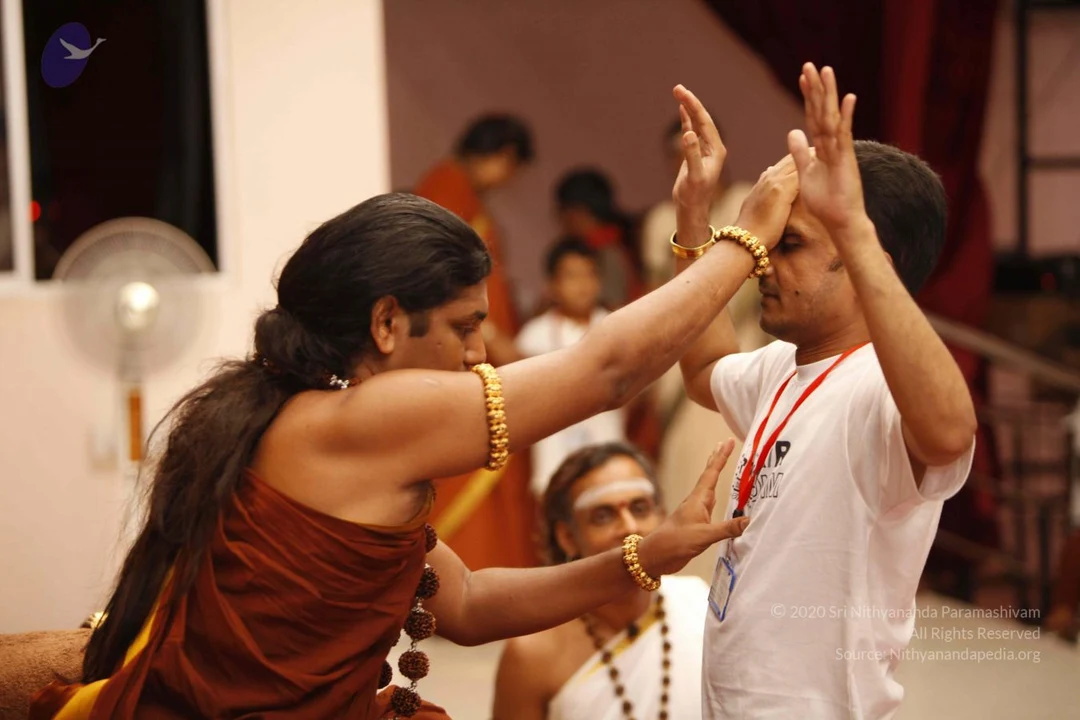
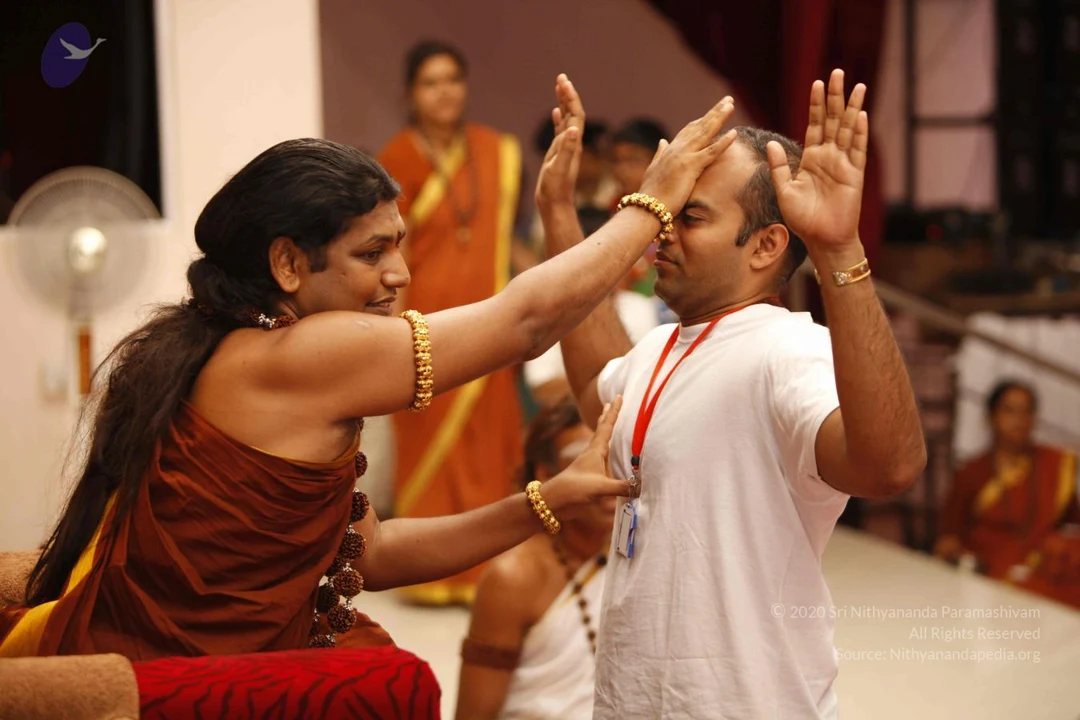
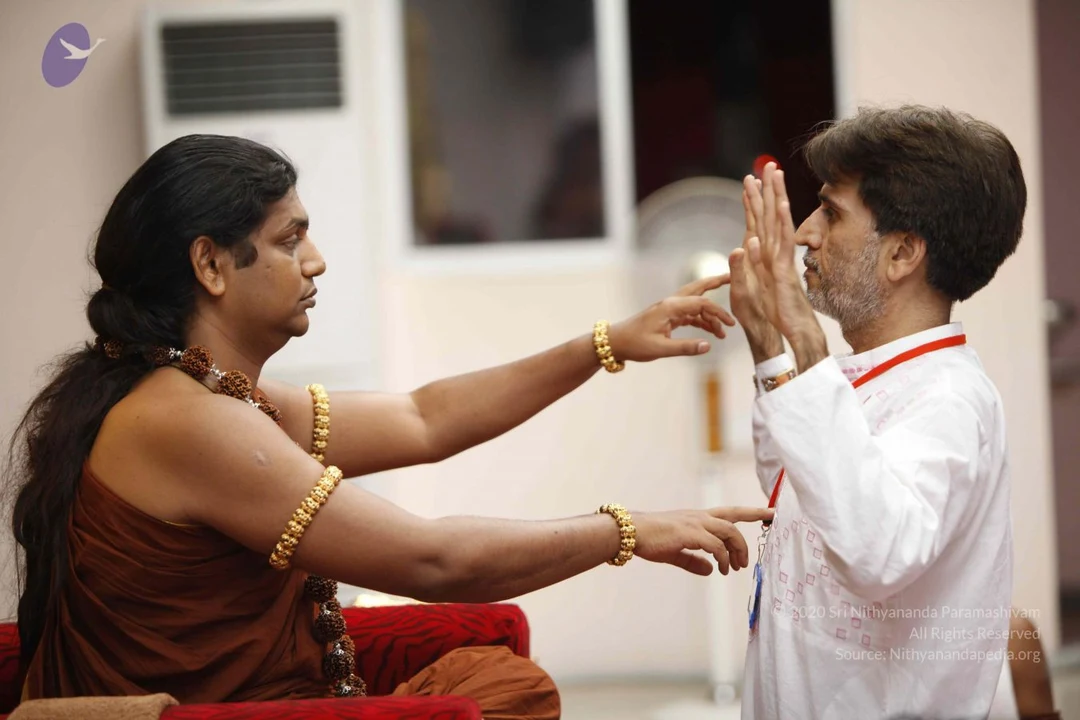
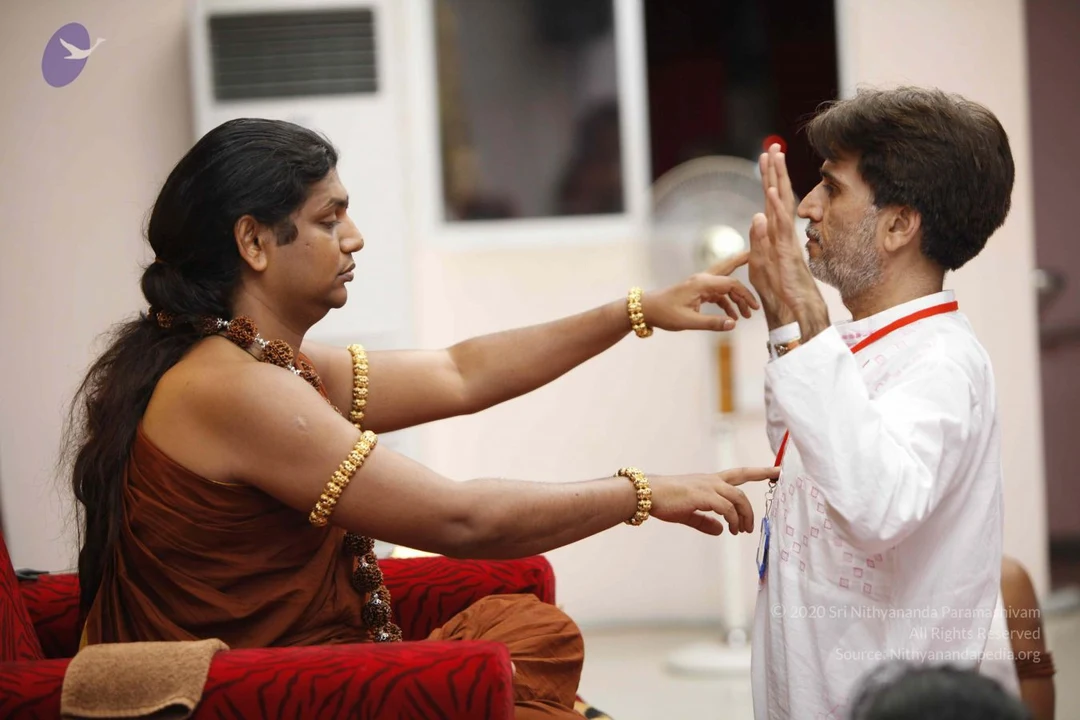
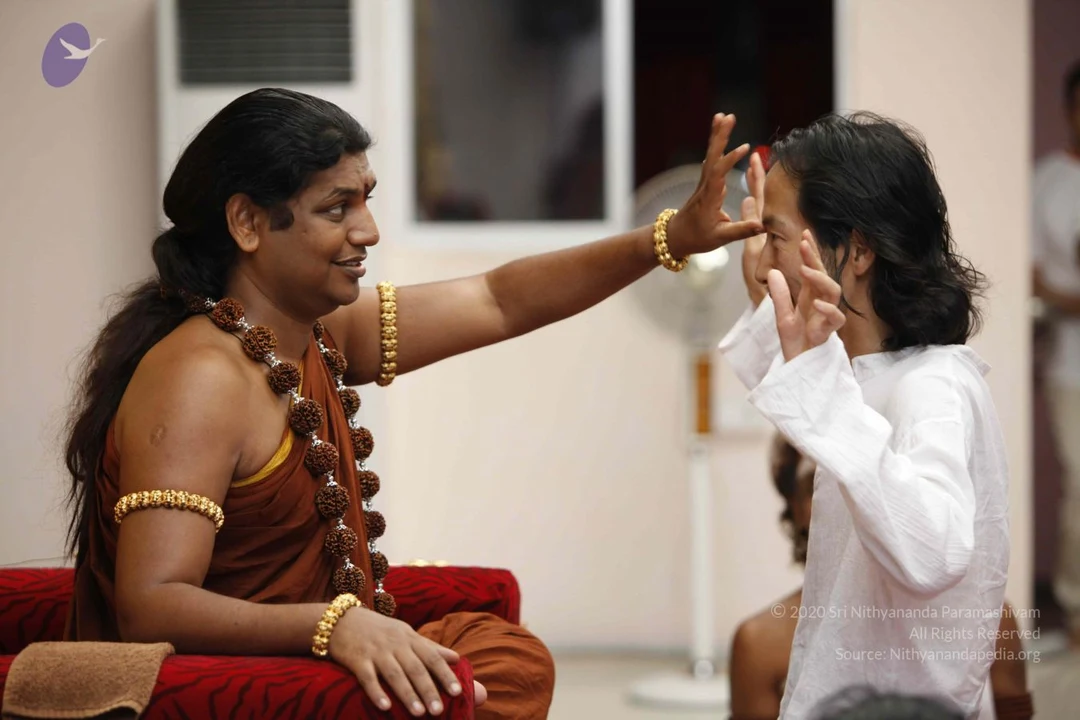
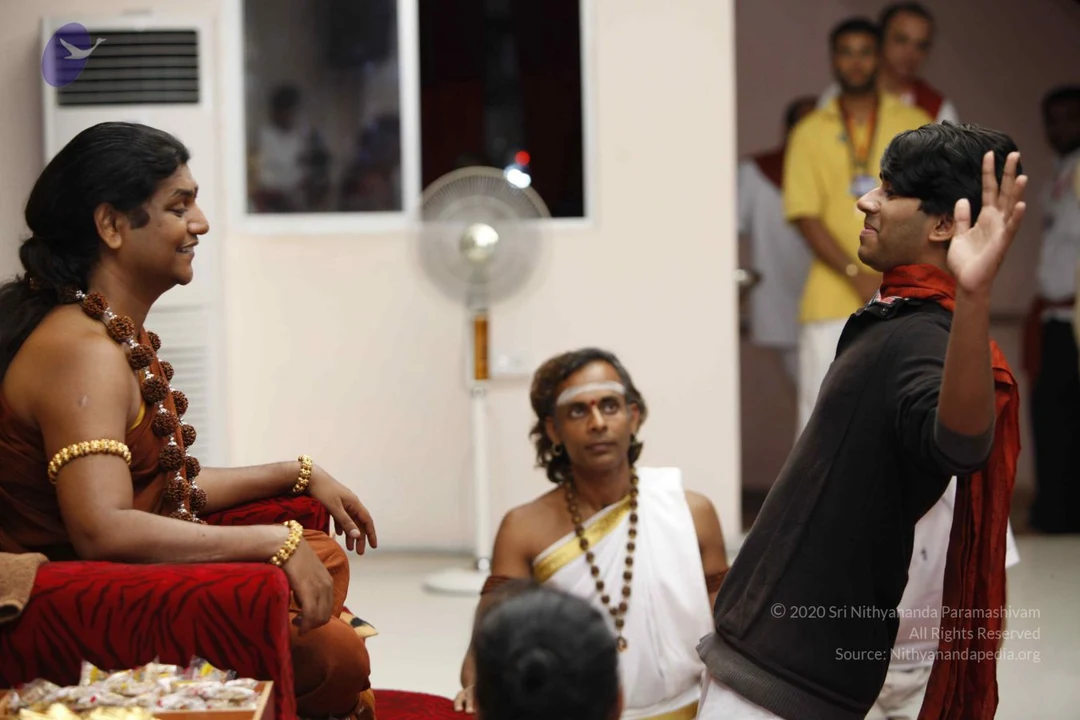
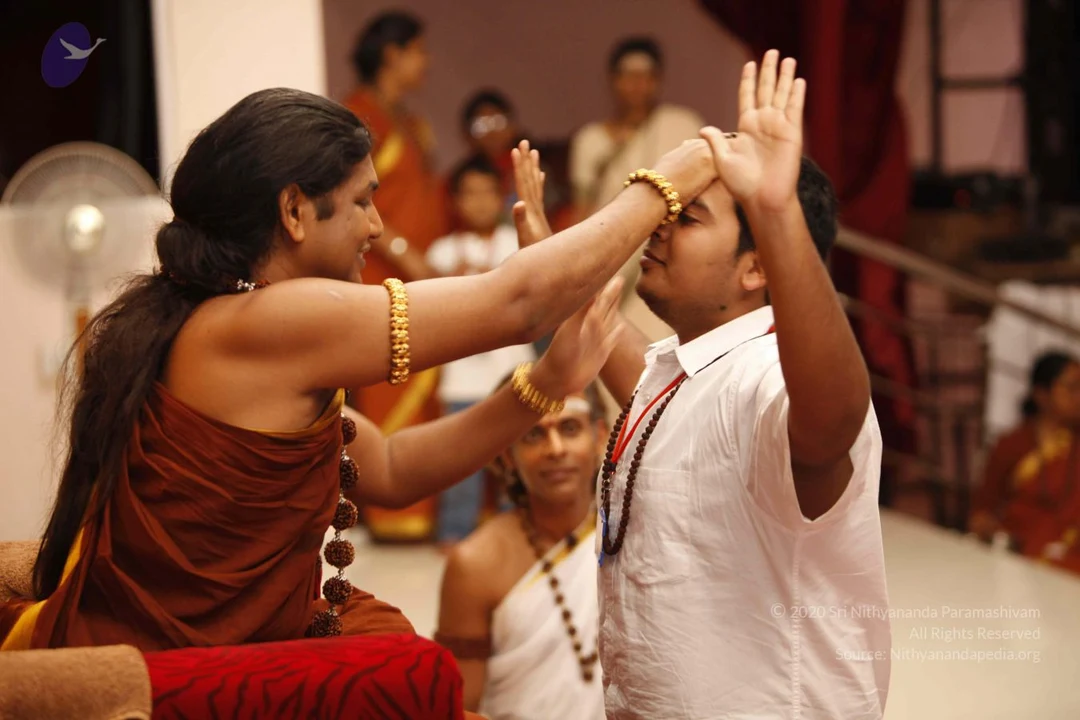
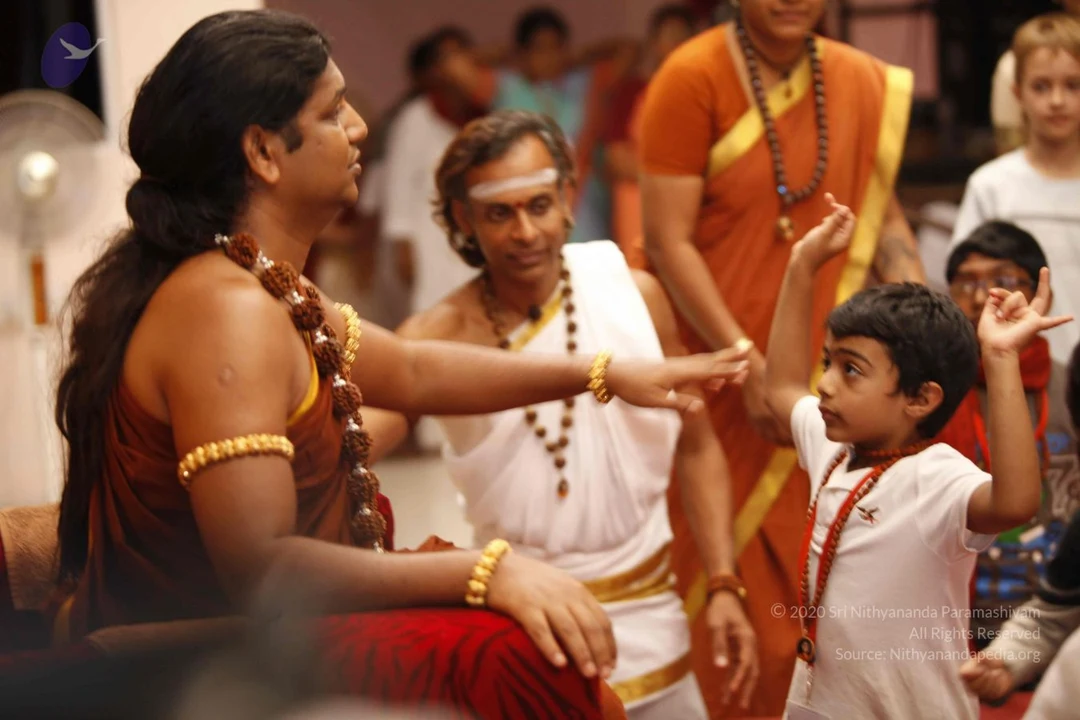
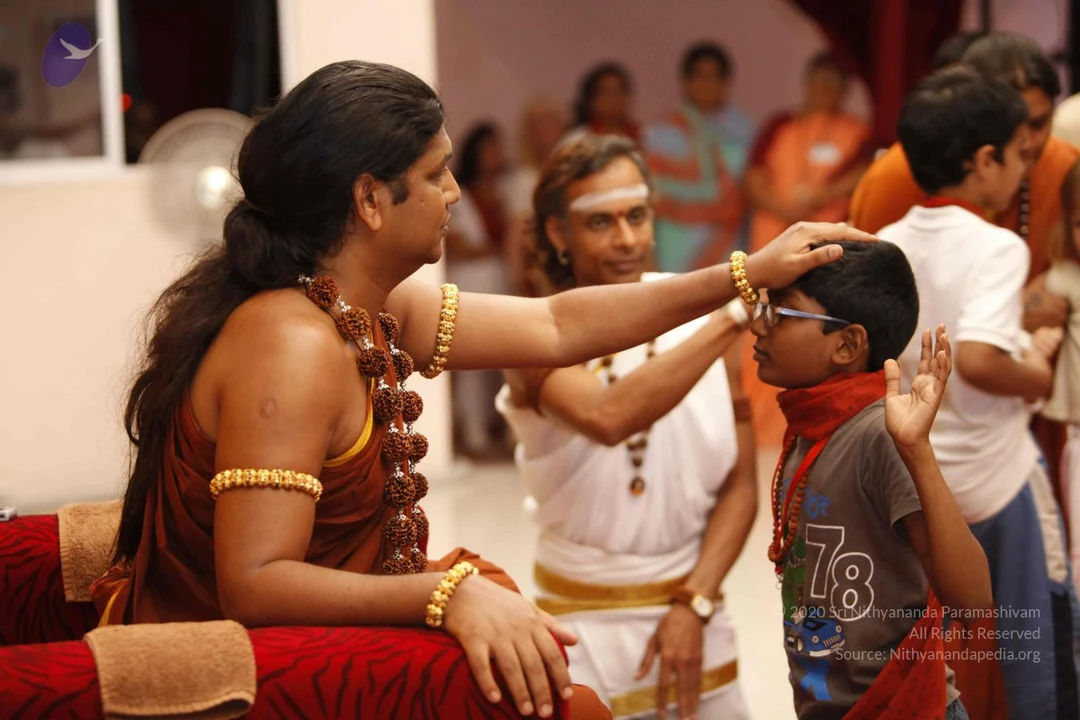
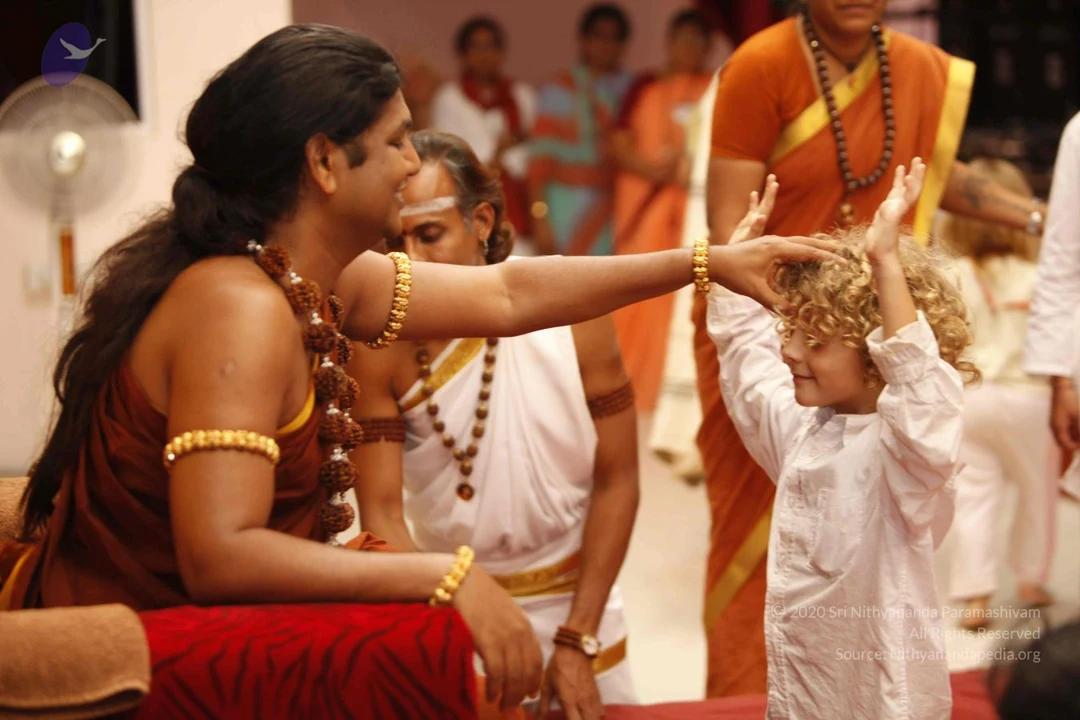
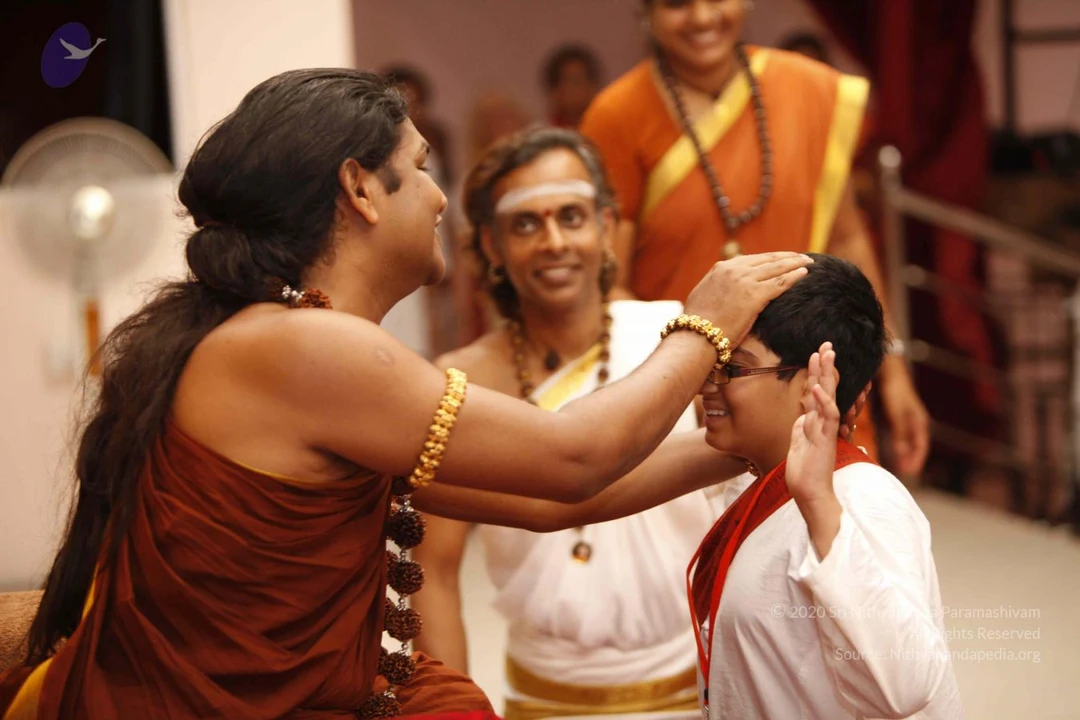
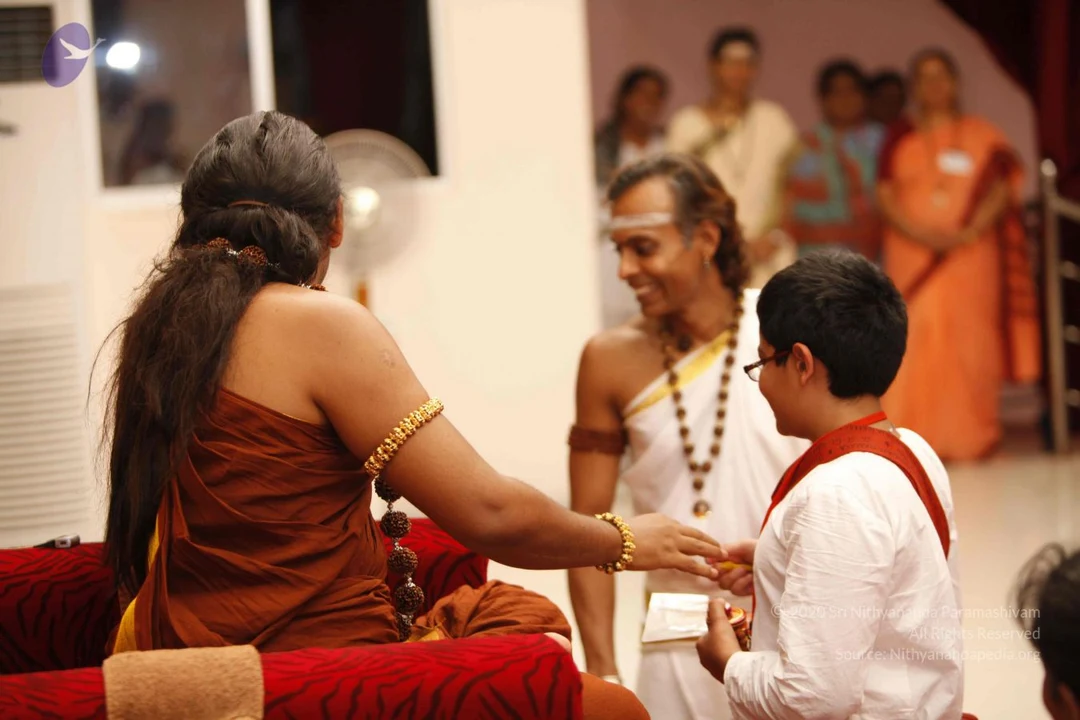
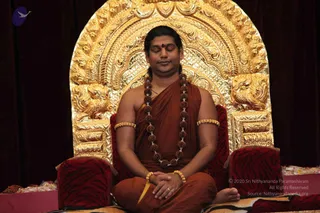
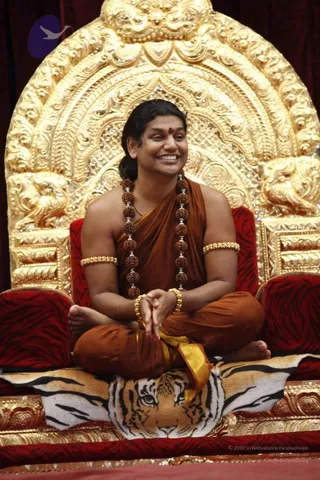
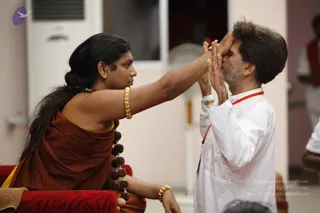
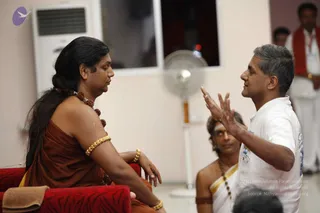
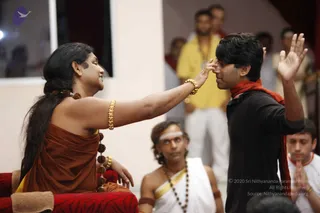
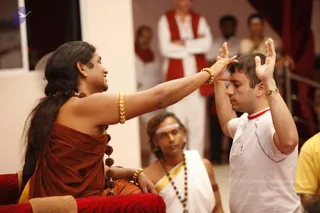
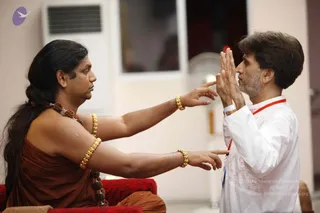
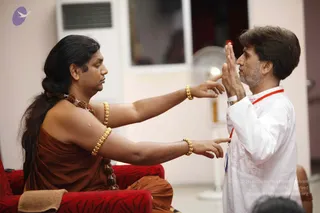
A seated man in eyes-closed meditation sits cross-legged on a red and black zebra-striped cushioned seat in front of an ornate gold-leaf carved throne back with lion-like motifs. He wears a rust-orange saffron robe draped over one shoulder, a long rudraksha mala necklace, gold armlets and bangles, and a red tilak on his forehead, with his hands resting in his lap. Swamiji (probable): the long swept-back hair, saffron robe, rudraksha mala and ceremonial gold ornaments match the visible cues, shown here in meditation on a throne. Bare feet and offerings such as flower or sweets sit at the lower edges of the frame.A photograph of a smiling man seated cross-legged on a red and black tiger-striped cushion before an elaborate gold repoussé throne with a carved arched backrest and lion-like motifs. He has long dark hair tied back and a red bindi on his forehead, wears an orange-brown saffron-toned cloth draped over his shoulders with a gold border, and is adorned with multiple strands of large rudraksha beads with silver spacers, gold armlets and gold bangles. His hands are joined in his lap. Probable Swamiji: the qualifying cues are the long swept-back hair, saffron clothing, rudraksha malas and ceremonial gold ornaments, seated on a throne.A photograph of an indoor satsang setting where a long-haired figure in an orange-brown wrap and a dark rudraksha mala, with gold bangles, presses a red tilak mark onto the forehead of a man in a white kurta with a red lanyard, whose eyes are closed and hands are raised in reverence. Red-cushioned seating, a white air conditioner unit and pale walls form the background, with another seated person partly visible at the right edge. The long-haired figure matches appearance cues of the a person candidate, but the identification is uncertain.A satsang setting in a bright room with a pale pink wall, a white pedestal fan, and an air conditioner unit. On the left, a person with long hair tied back in a bun sits on a red upholstered chair, wearing an orange-brown draped garment, rudraksha beads, and gold bangles on the arm, eyes lowered. In the centre-right, a man with short grey hair in a white t-shirt gestures with both hands raised while speaking. Behind him, a shaved-headed person in a white dhoti with a gold border, a bead necklace and a sandalwood-marked forehead sits on the floor, and another person in red and white stands near the back. Only the seated figure on the left shows distinctive a person-style cues, but the presentation is uncertain, so the identity remains unsure.Indoor satsang scene: a long-haired figure in saffron-orange cloth with a rudraksha mala and gold bangles sits on a red patterned seat, extending one hand to touch the forehead of a young man in a black shirt with a red shawl, who raises his other palm. Probable Swamiji (probable) seated, with long swept-back hair, ornate gold bracelets and rudraksha beads, giving blessing to the devotee. Nearby, a seated attendant in white dhoti with gold border and a white forehead band, and a folded-hands devotee in white and red, watch. Standing onlookers in yellow and white clothing are in the background.A photograph of a satsang moment in which a seated figure in an orange-brown shawl, with long hair pulled back, a rudraksha mala and gold bangles, extends his right arm to touch the forehead of a young man in a white t-shirt who raises both hands in front of his face. Beside them a man in white dhoti and white shawl with a red-and-gold trim wears a white forehead mark and rudraksha beads, watching. Behind them, several standing people in white and red shawls observe, and a red cloth-draped backdrop and red-upholstered seat frame the scene.

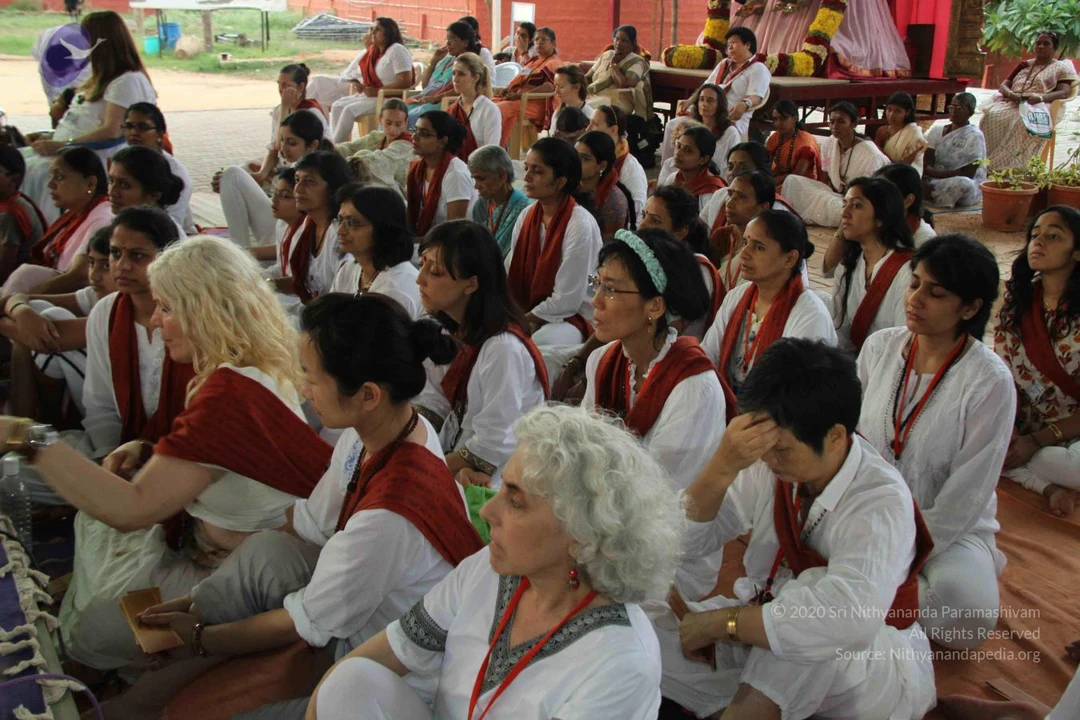
ia-day17-participants-listening
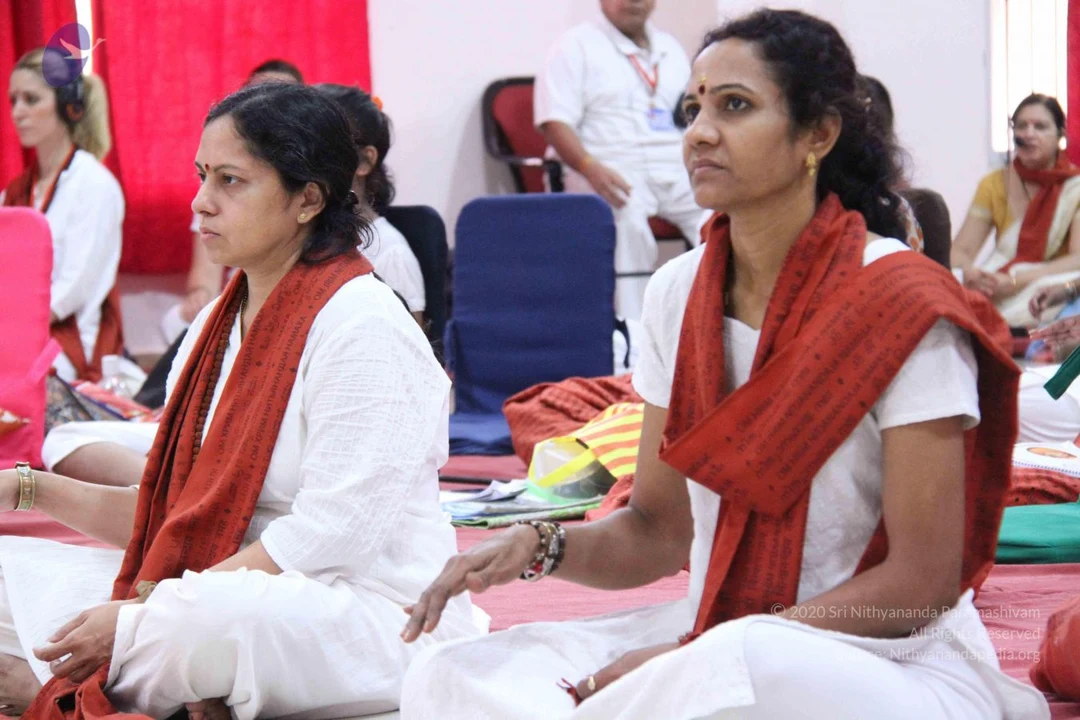
9 photosSource gallery
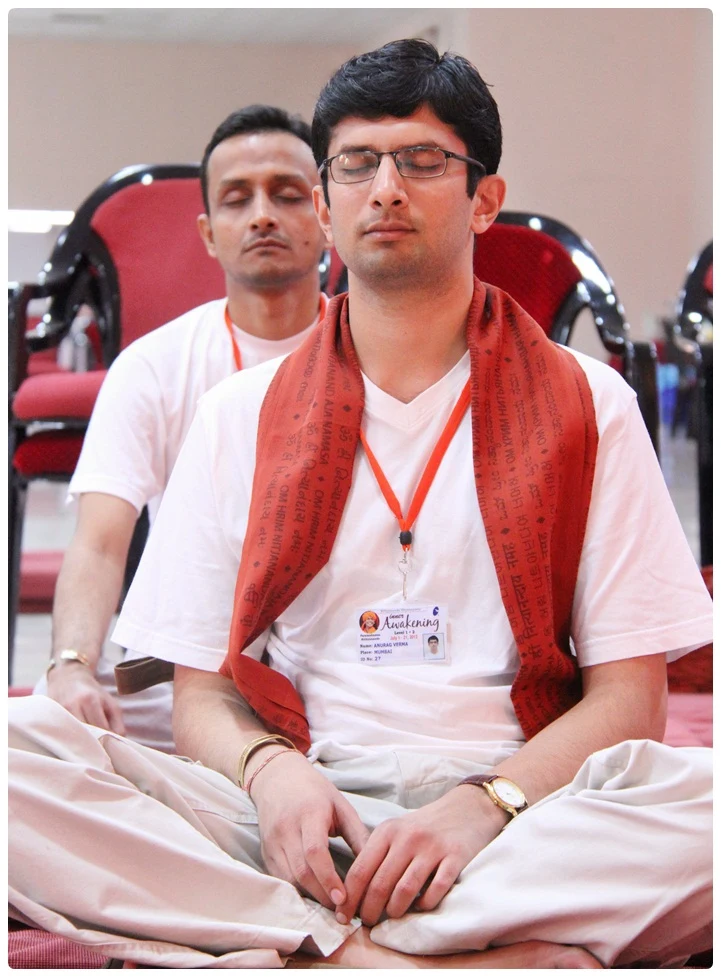
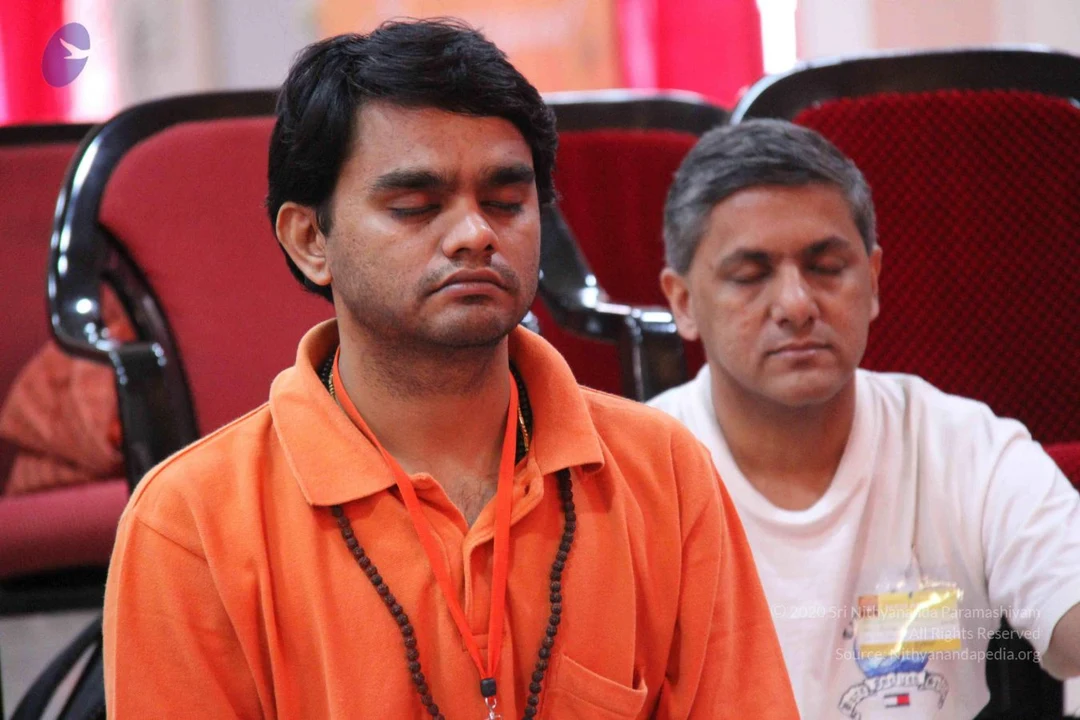
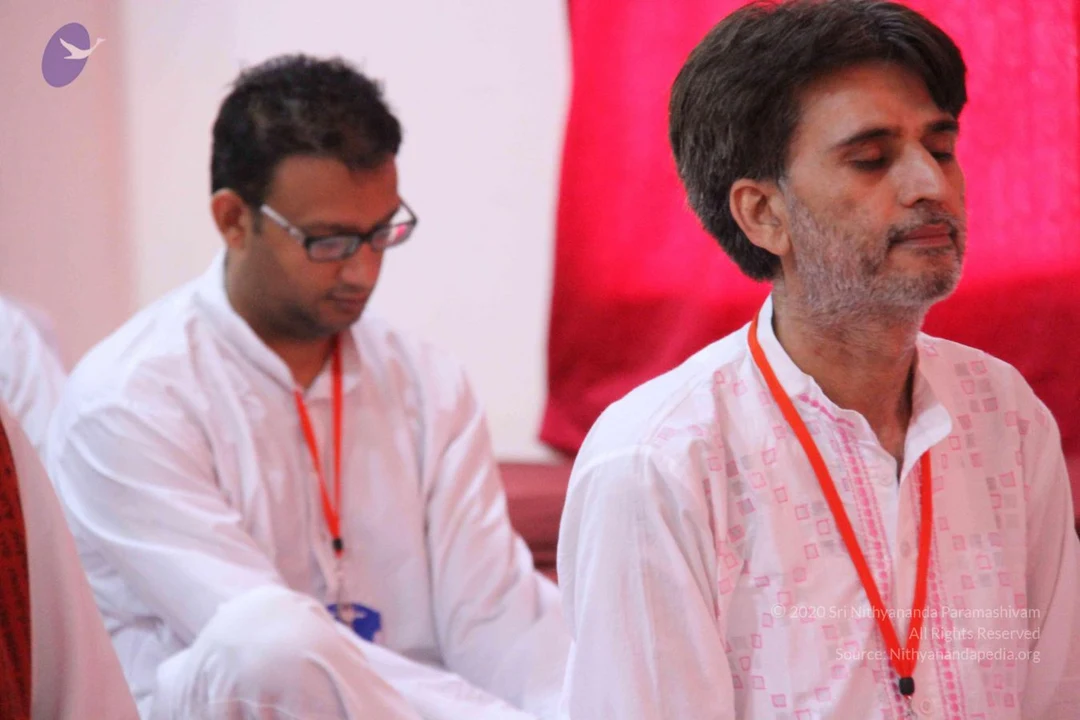
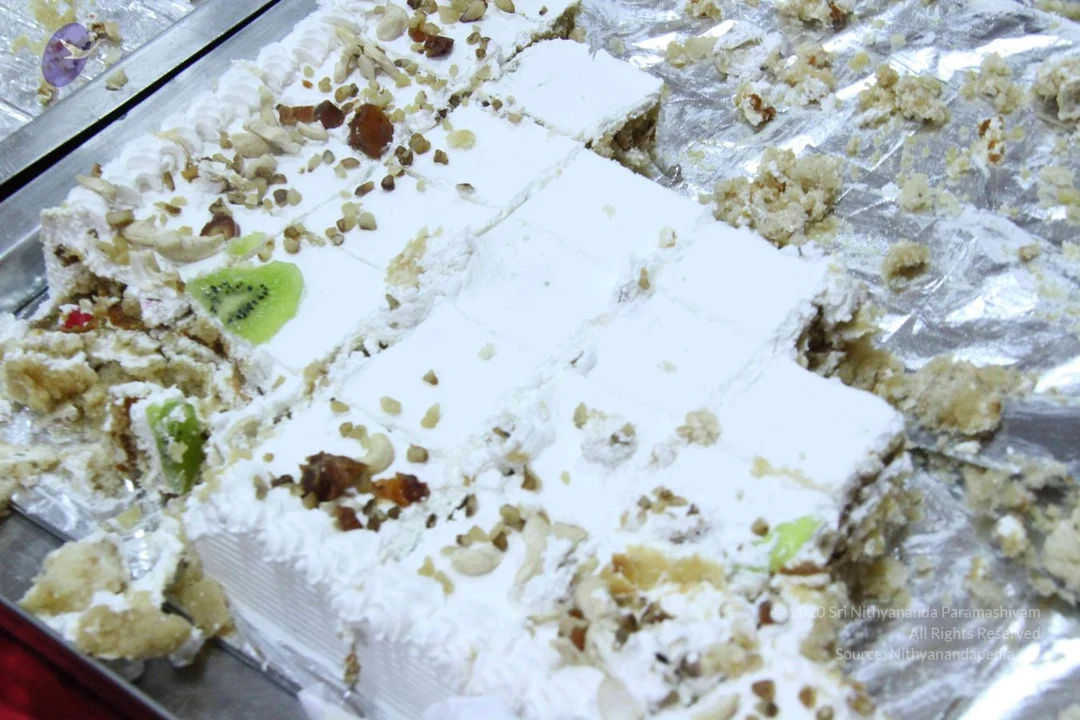
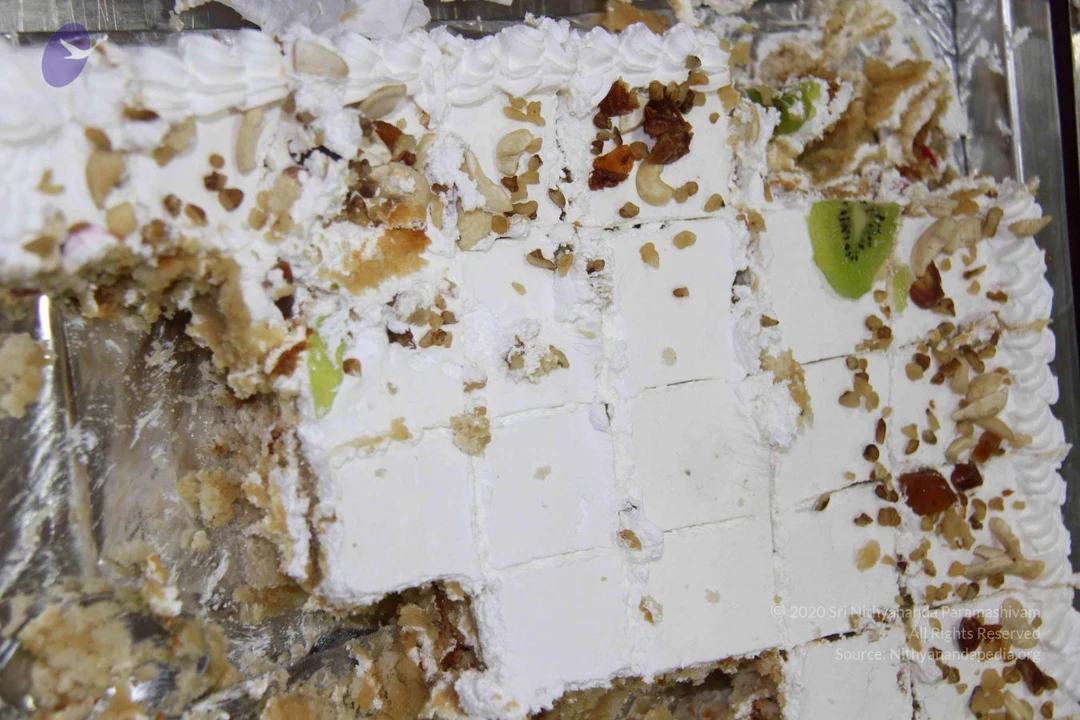
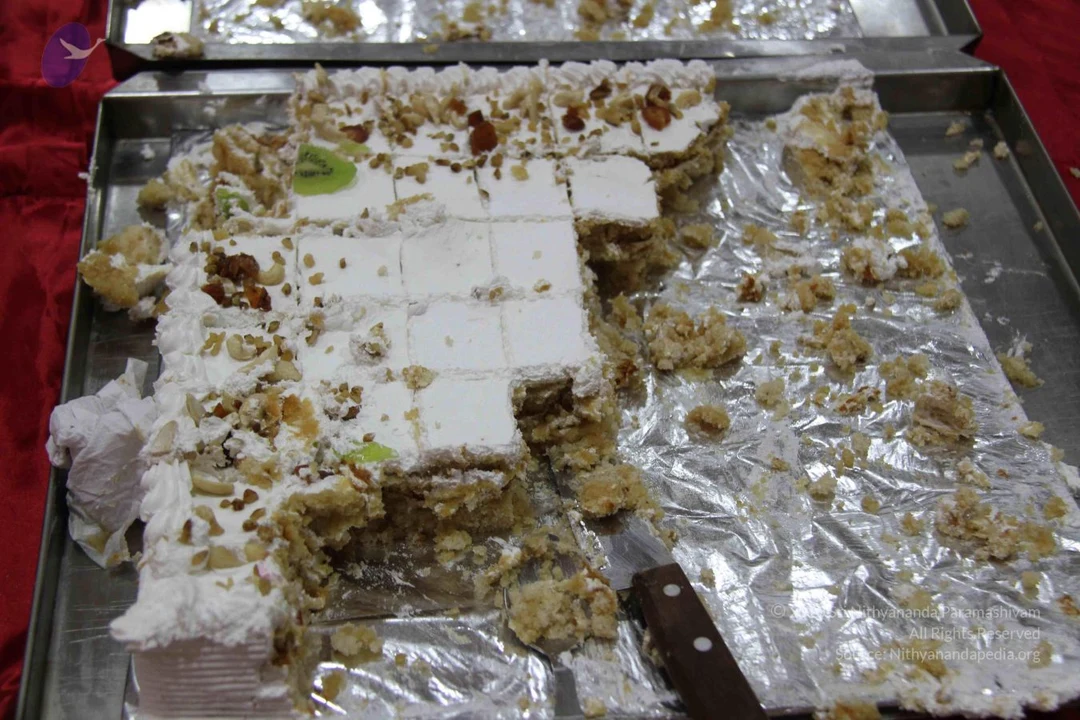
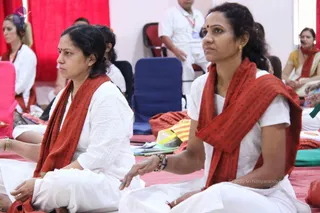
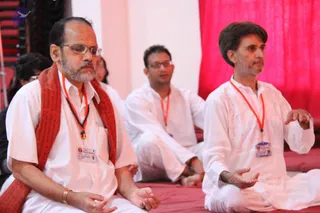
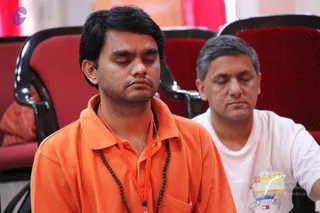
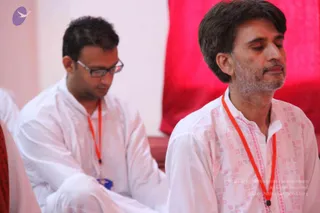
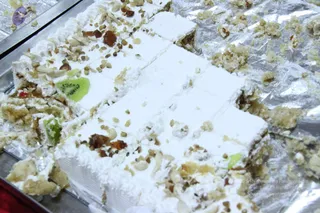
Photograph of a seated satsang audience at an indoor hall with red curtains and pink floor cushions. In the foreground two women sit cross-legged in white kurtas with red woven shawls printed with script, one with hands resting on her knee and the other with a hand near her lap. Behind them other attendees in white and red shawls sit on mats, a blue chair is visible, and a man in a white shirt with a lanyard stands near the back. The scene conveys a seated meditation or discourse gathering.Seated devotees in white ritual clothes meditate on a red mattress in front of a bright red curtain. The man on the left, with grey beard and glasses, wears a white shirt, a red-and-black patterned shawl over his shoulders, a rudraksha mala and an orange lanyard badge, eyes closed and hands in a mudra on his lap. The man on the right, in a white embroidered kurta with an orange lanyard, sits with one hand raised in gesture. Behind them a third man in white and an orange lanyard sits with crossed legs. No a person candidate is clearly identifiable by appearance, so the role is given as devotee and the identity remains unsure.Photograph of two men seated in red upholstered chairs with eyes closed, appearing to meditate or listen in a satsang setting. In the foreground, a young man wears an orange polo shirt, an orange lanyard and a dark rudraksha mala. Behind him, an older man with short grey hair wears a white t-shirt. Red curtains and red chairs fill the background.A photograph of two seated men in white kurta-style clothing with orange-red lanyards, eyes closed in meditation or satsang. The man on the left wears glasses and looks down; the man on the right, with short dark hair and stubble, sits upright with a serene expression. A red curtain hangs behind them, and a white wall is at left. No clear visual cues establish either man as the a person, so no candidate is identified.Close-up photo of a rectangular white cake or sweet slab cut into pieces, sitting on a tray lined with silver foil. Its surface is topped with chopped cashews and nuts, pieces of dried fruit, and slices of green kiwi. Crumbs and broken bits are scattered across the foil. No people, deities, or ritual setting are visible.Close overhead photo of a partly eaten white sheet cake on a silver foil tray. The cream frosting is topped with chopped nuts, slices of kiwi, dried fruit pieces and almond slivers. Crumbs of cake are scattered across the foil, and the cake is cut into rectangular portions with a few pieces already removed. No people are visible, and the photo appears to show a dessert or prasadam-style sweet rather than any ritual scene.

ia-day17-session

6 photosSource gallery
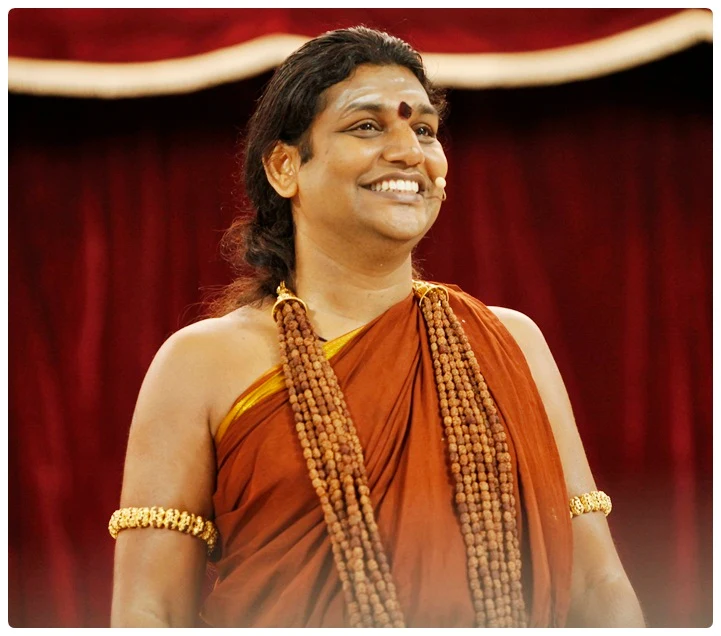
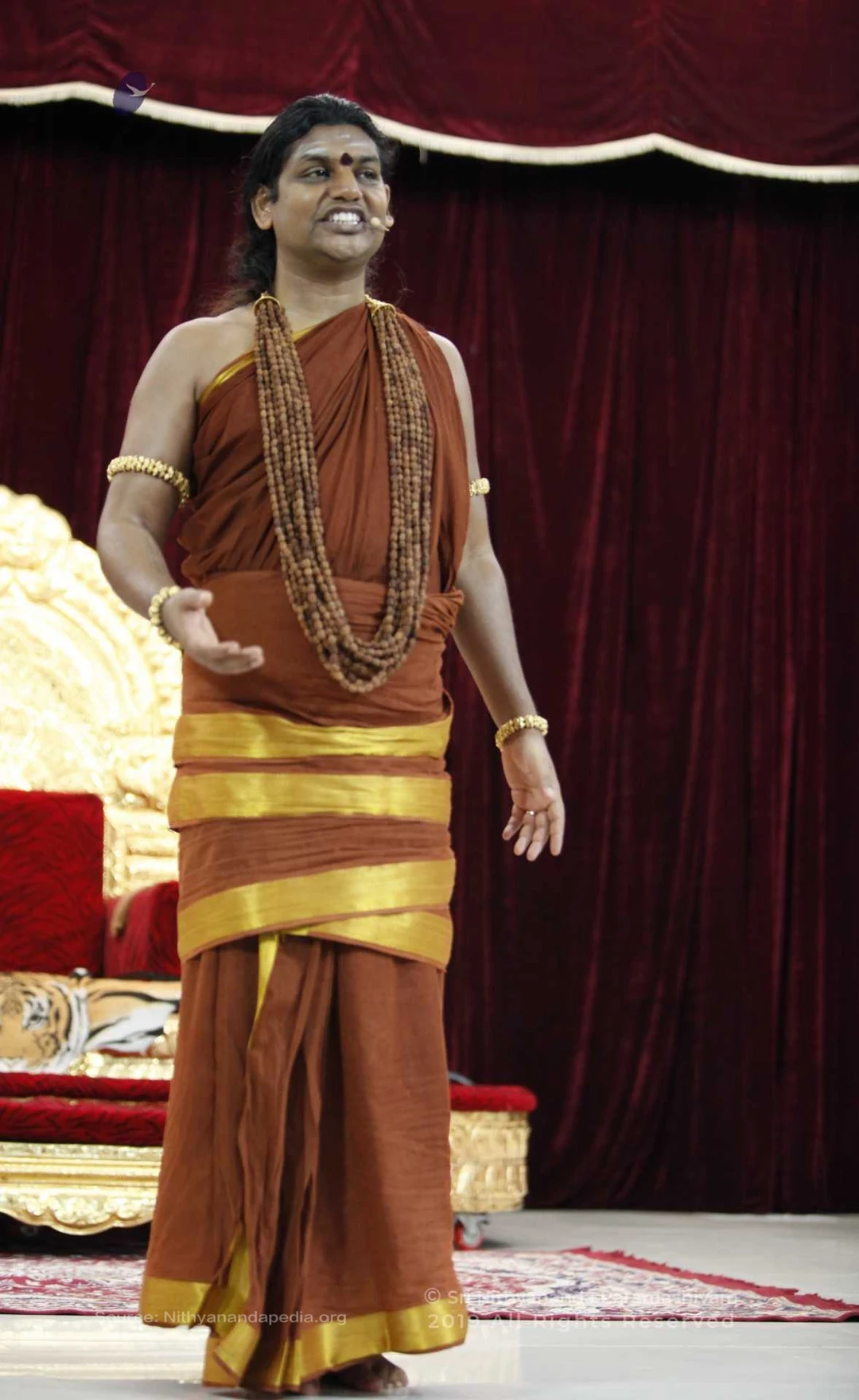
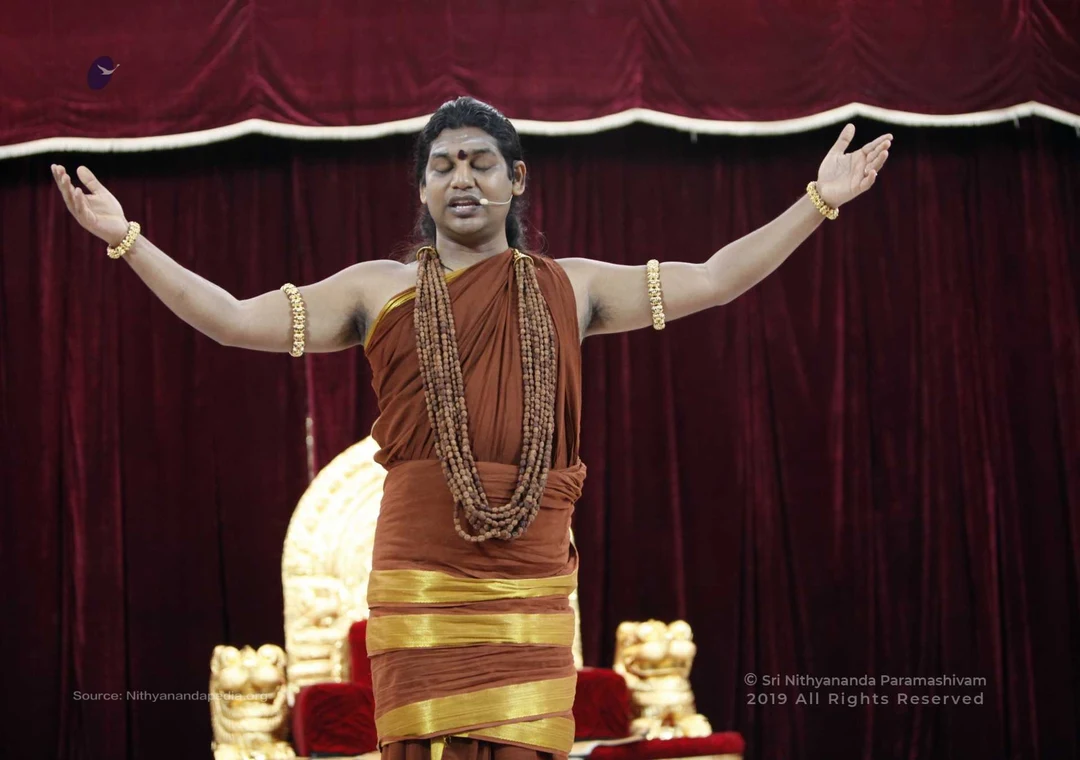
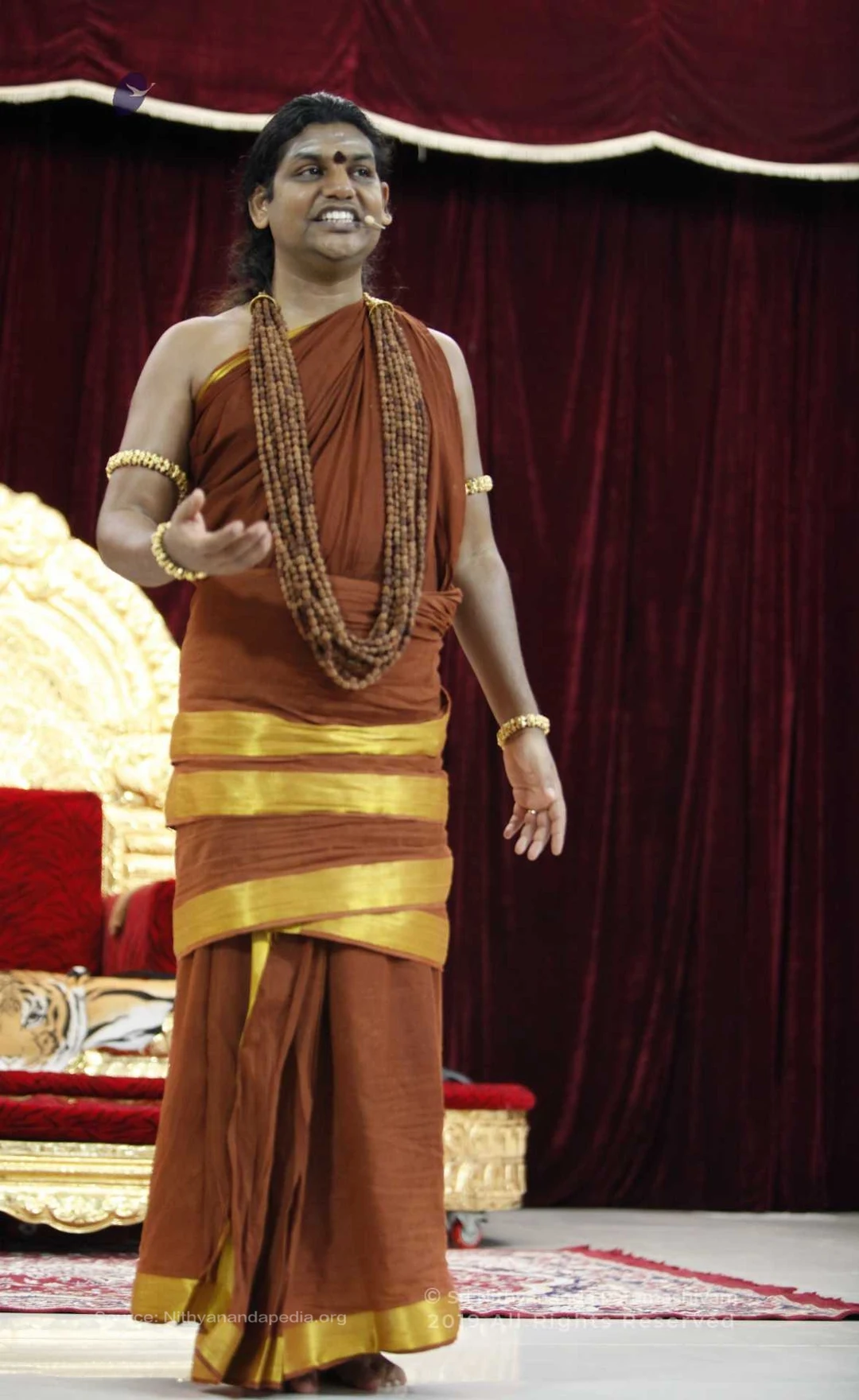
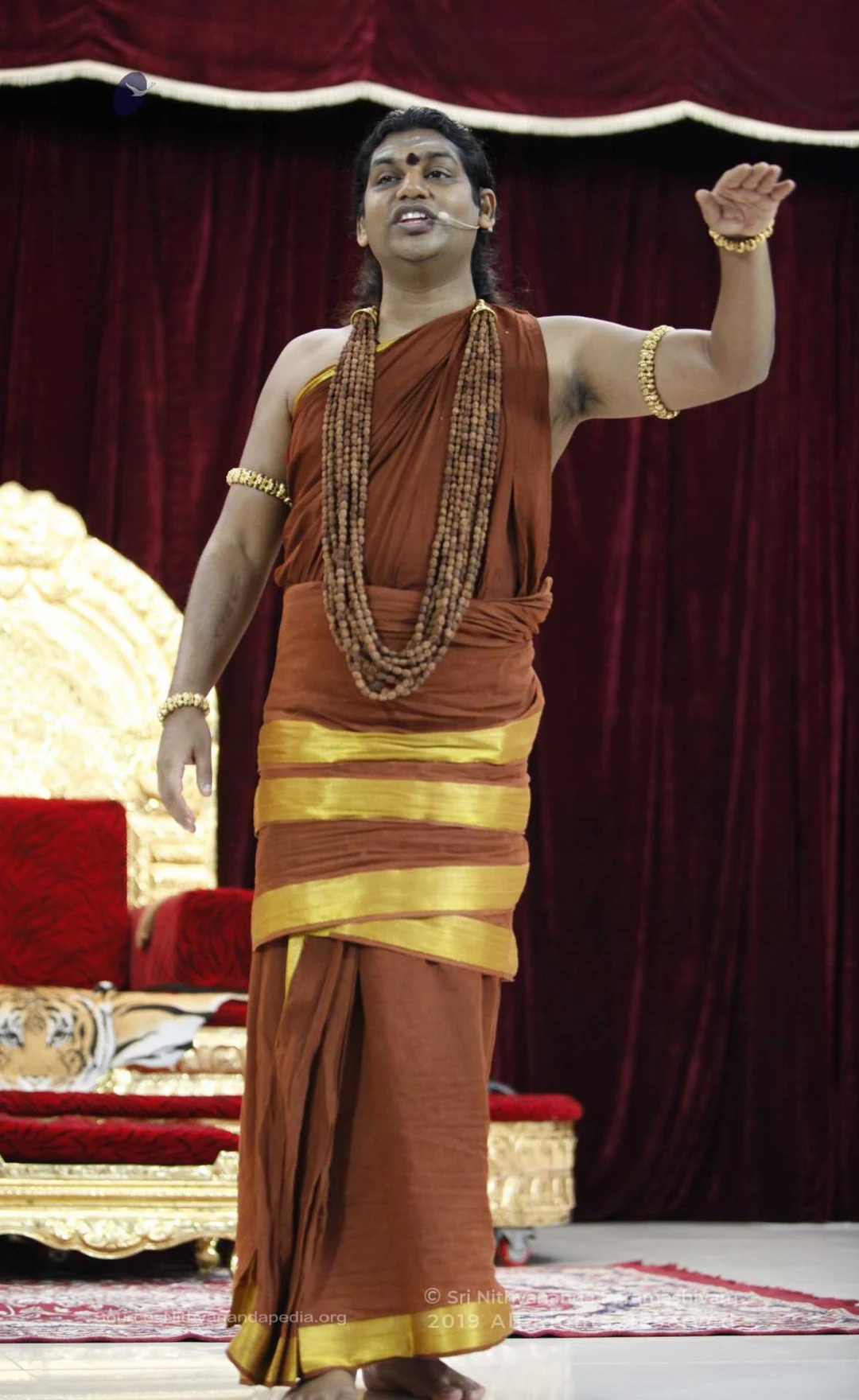
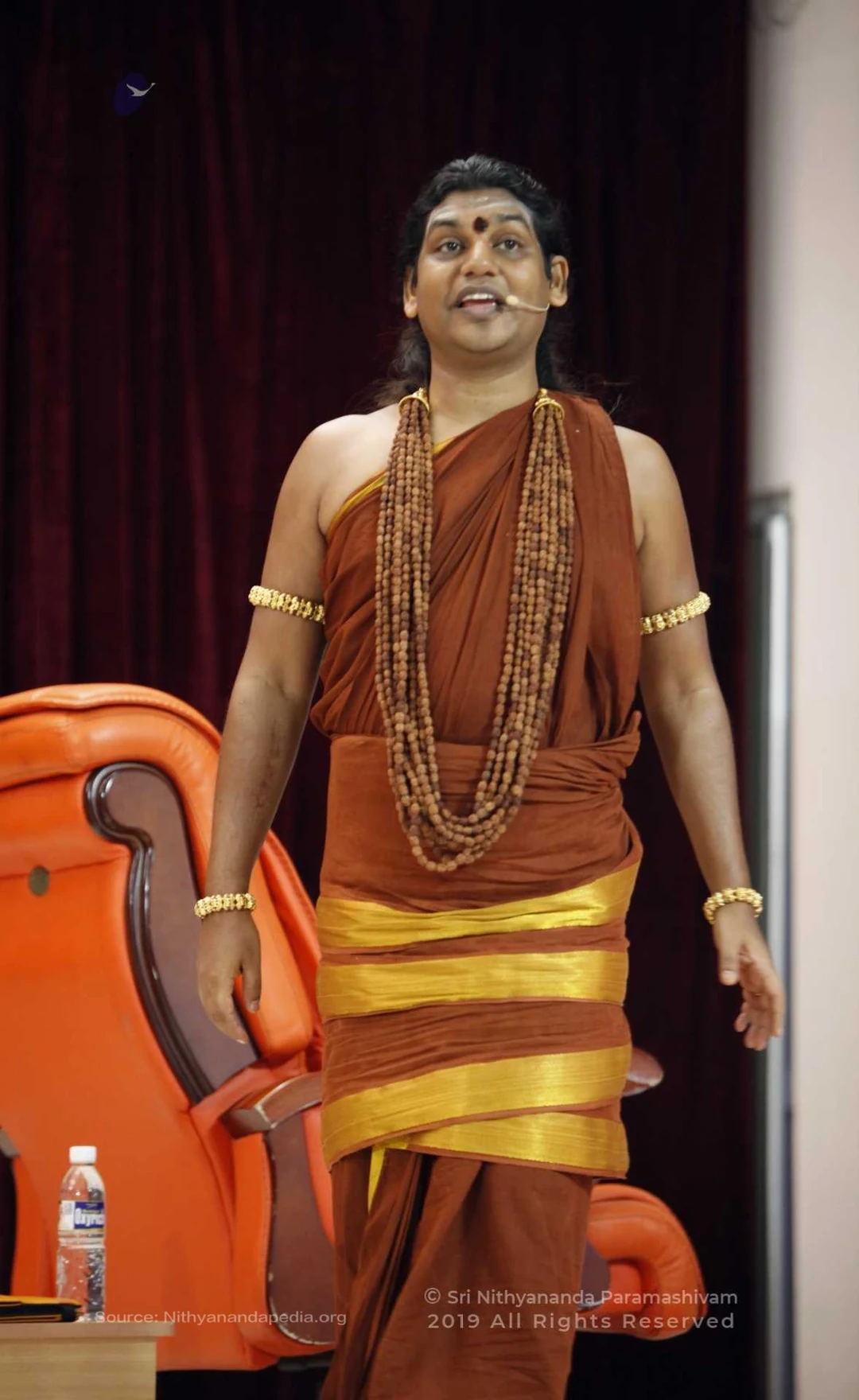
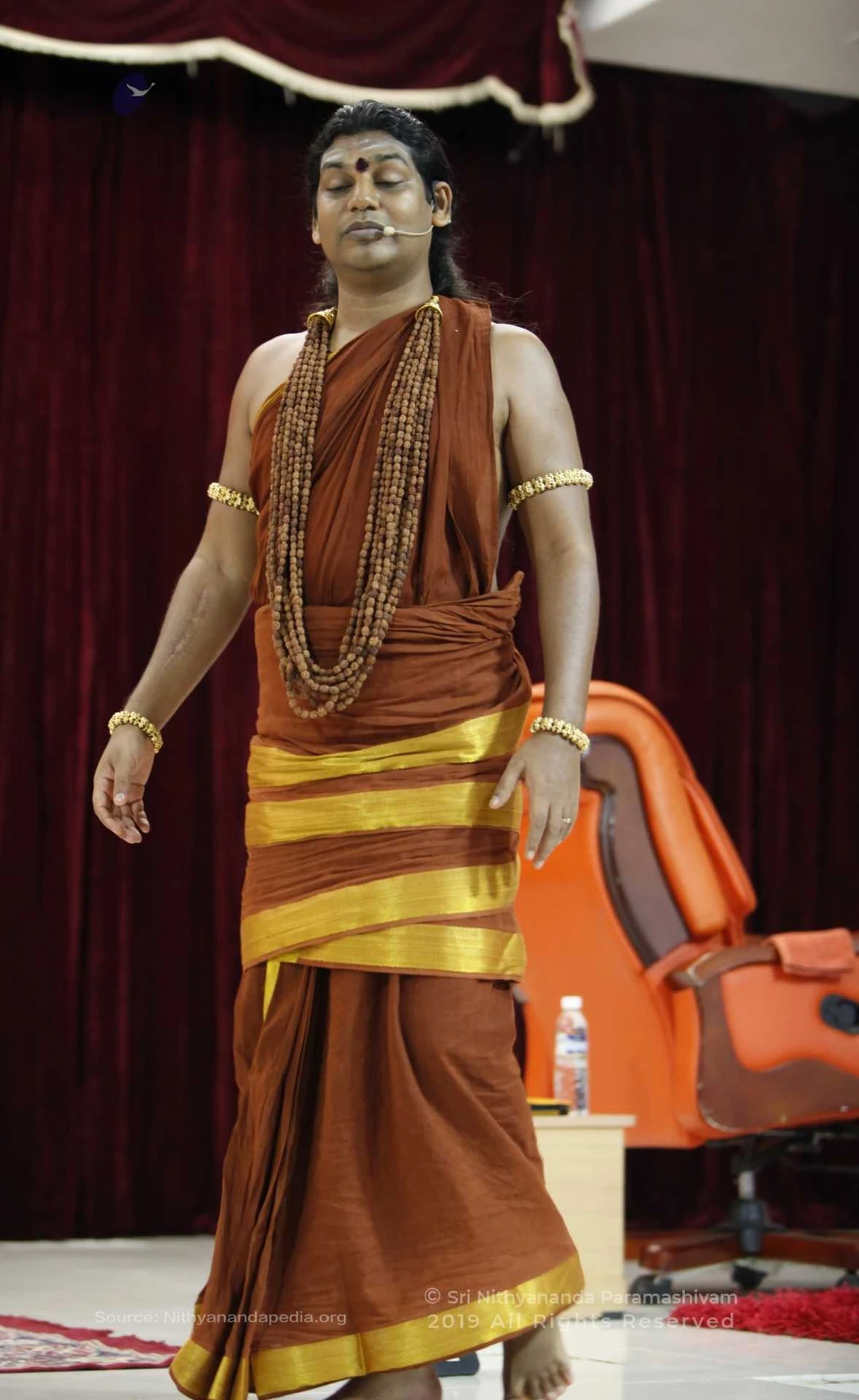
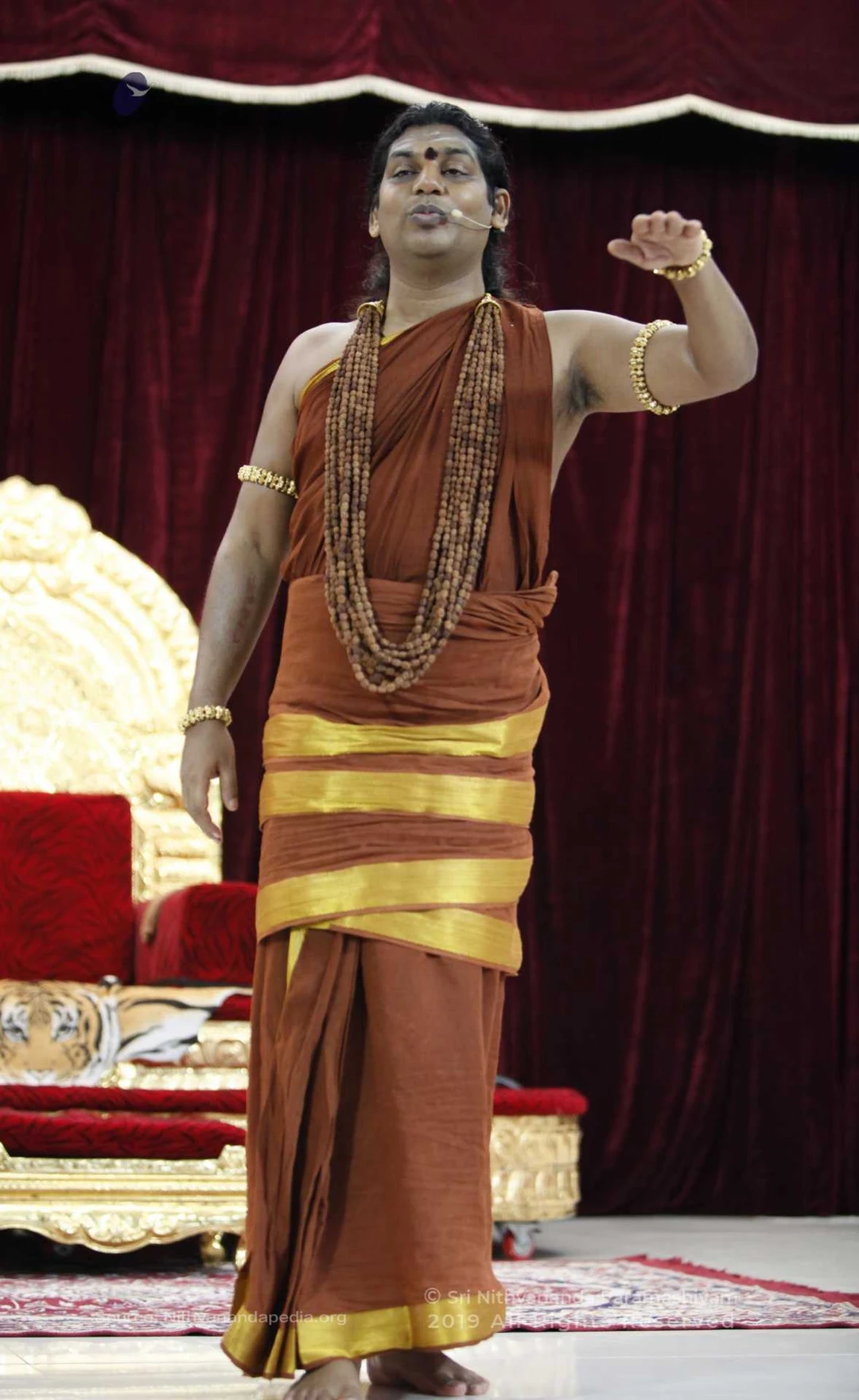
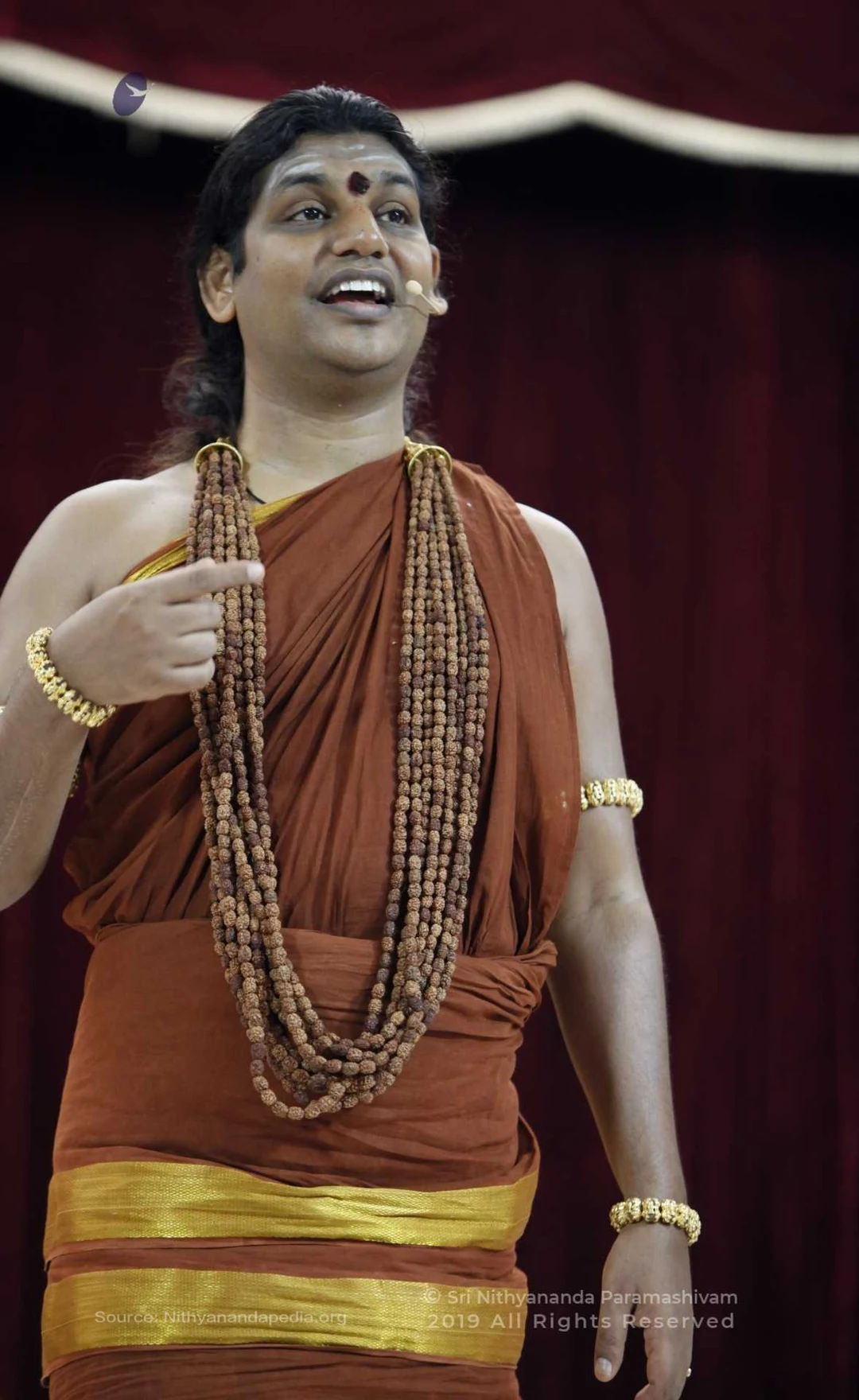
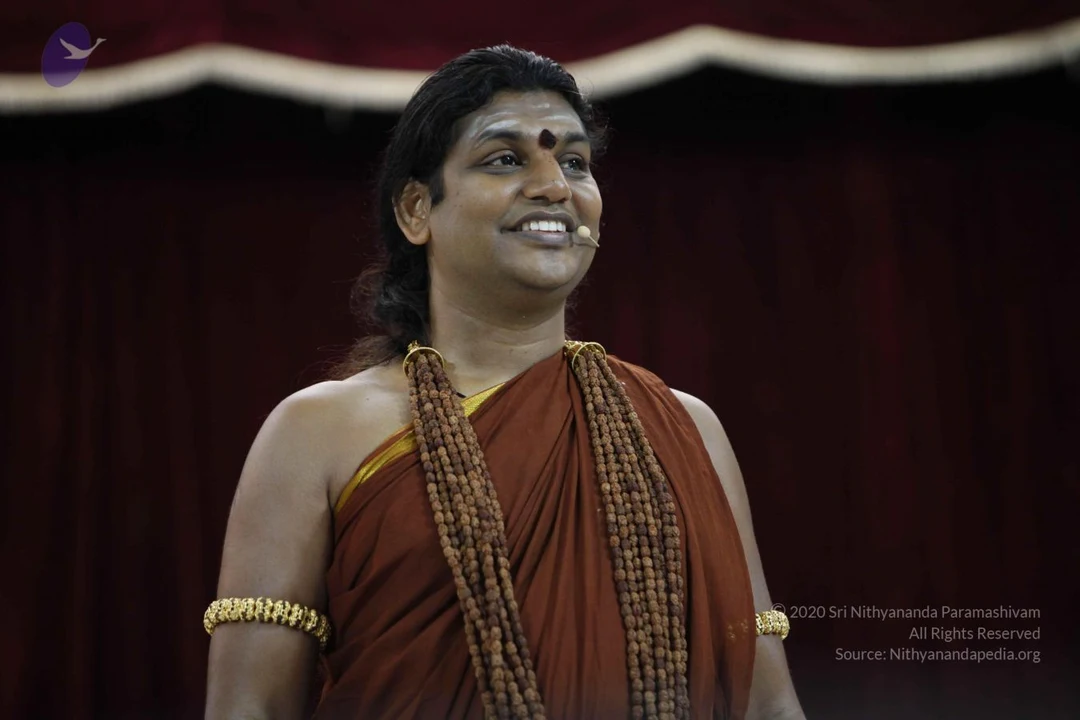
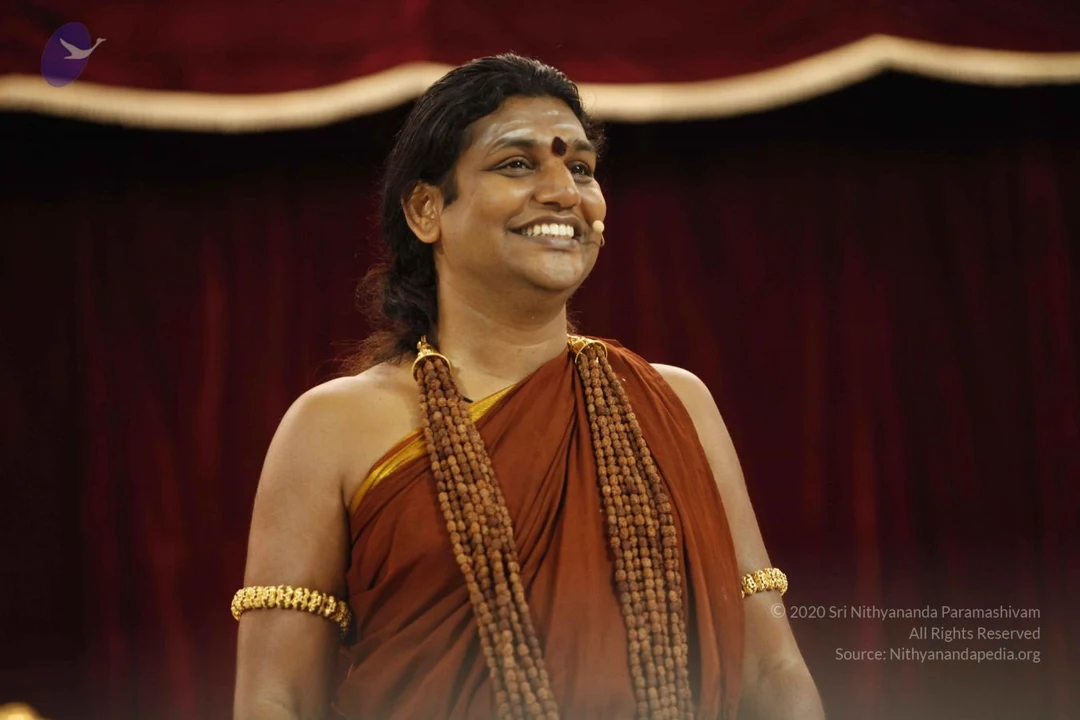
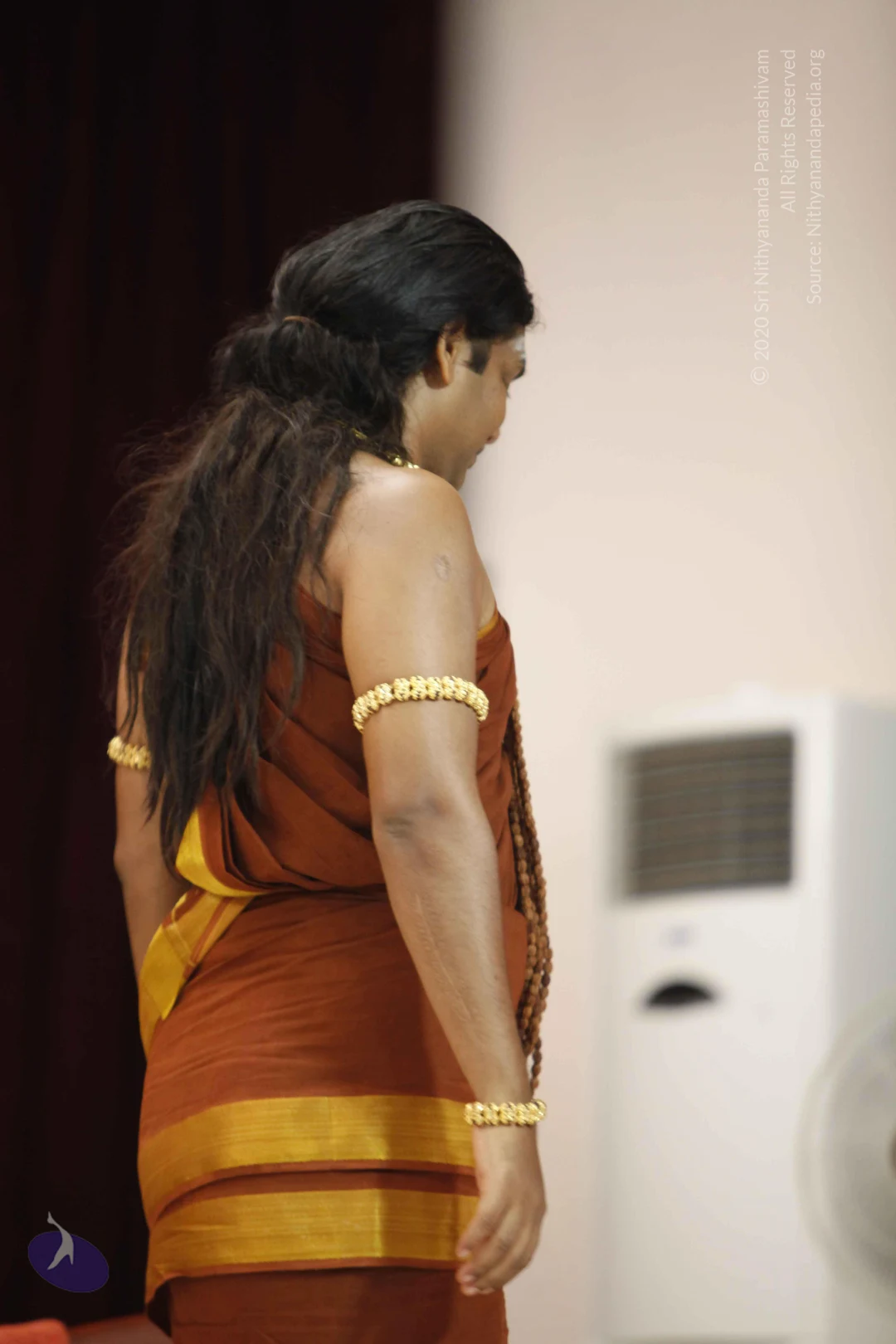
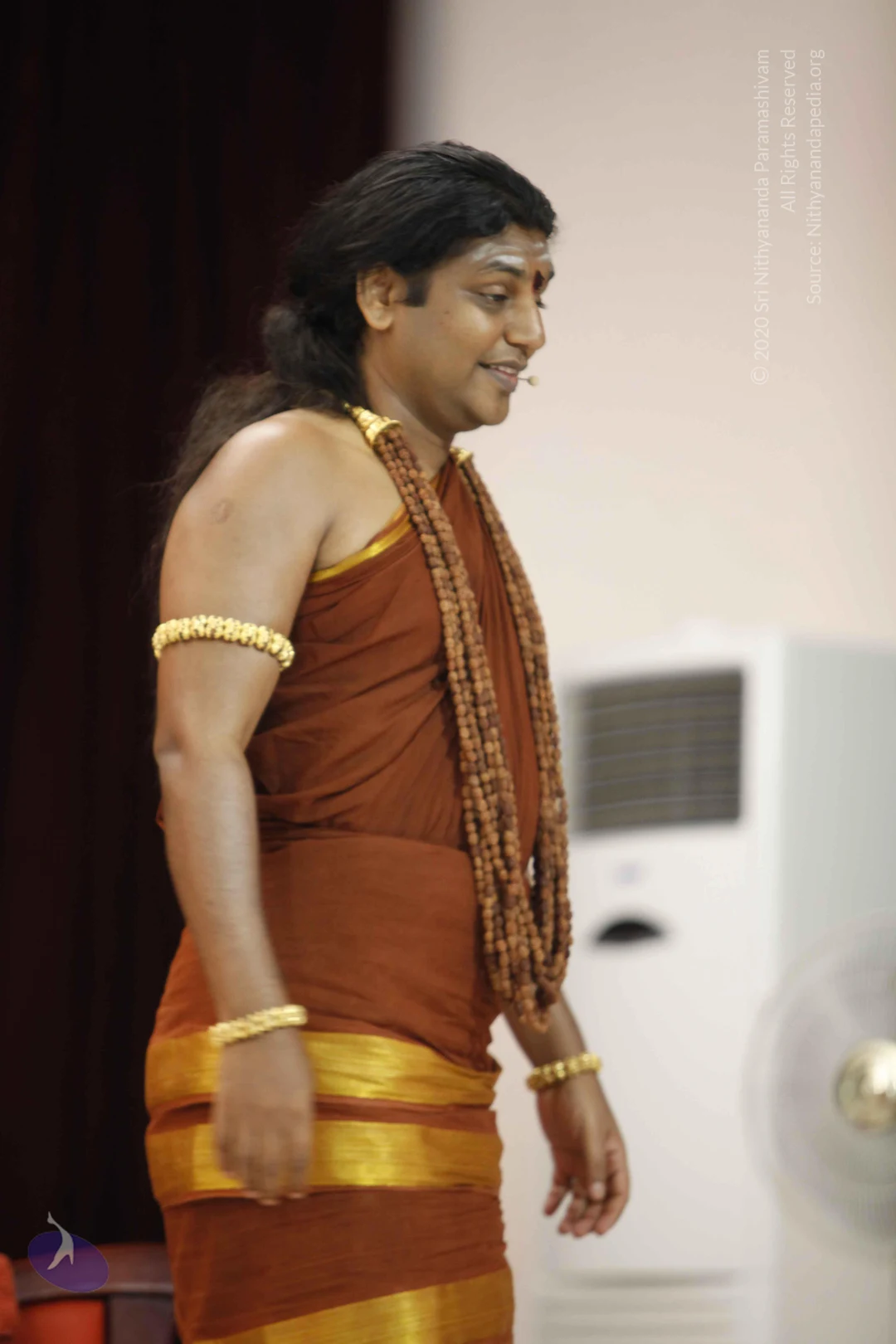
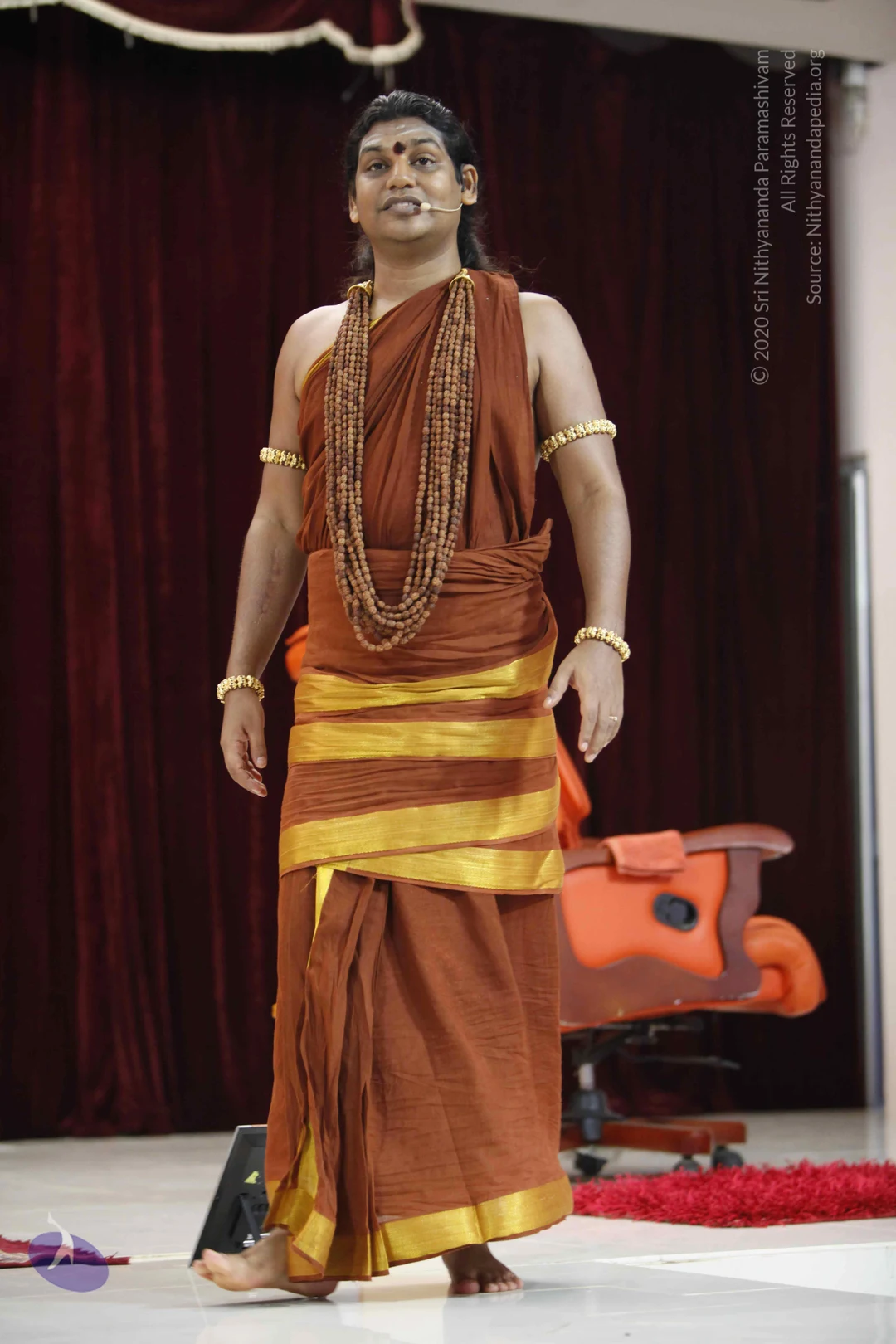
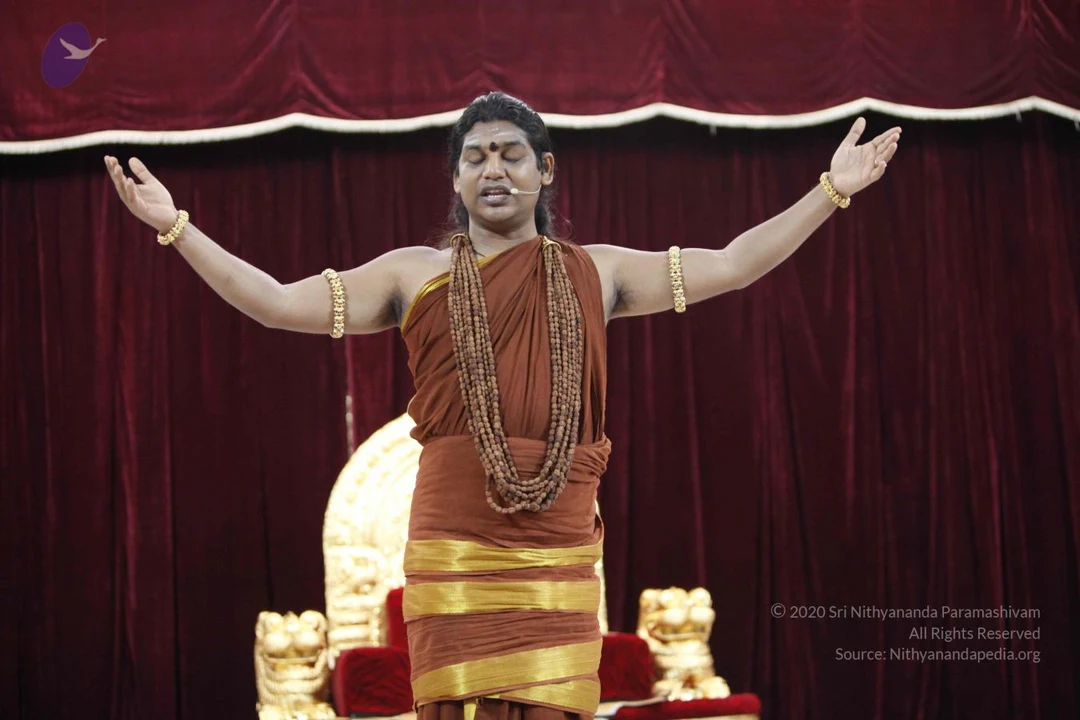
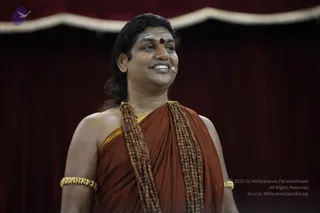
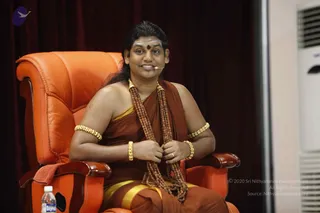
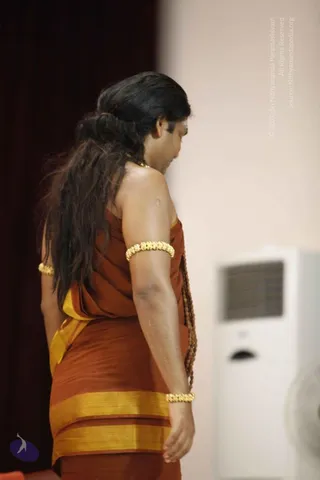
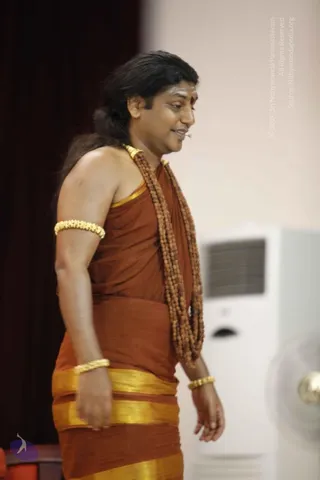
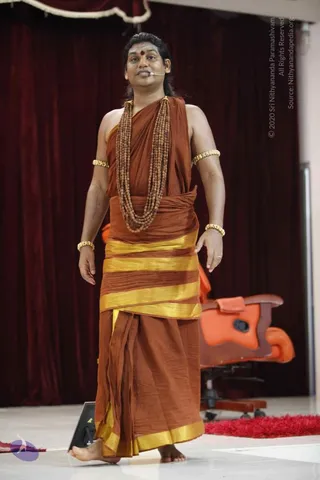
Photograph of a man standing against a deep red curtain, smiling and looking to the side with a small red bindi on his forehead. He wears a rust-orange wrap over his shoulders with a gold-coloured edge, two long rudraksha mala strands hanging down his chest, and gold bangles on both upper arms. A small headset microphone is clipped near his mouth, and his dark hair is swept back to his shoulders. Swamiji (probable): the swept-back hair, rudraksha malas, saffron-orange wrap and ceremonial gold adornments match the page's claim that he is present at this satsang. Standing on a stage at a discourse, with a red valance above.A smiling man stands against a deep red velvet curtain with a gold-trimmed valance. He wears a rust-orange draped garment over one shoulder, multiple strands of brown rudraksha beads crossing his chest, and gold armlets on his upper arms. A red kumkum dot marks his forehead, and a small headset microphone is attached near his ear.A photograph of a man seated in a large orange leather armchair before a dark red curtain, during a satsang-style talk. He wears a rust-brown and gold-bordered draped garment, multiple strands of rudraksha beads over one shoulder, gold armbands and gold bangles, and has a red bindi and white tilak on his forehead. A small clip microphone is attached near his face, and a water bottle sits on the floor at the left. The seated man's appearance is consistent with the Swamiji (probable) cues of long swept-back hair, ornate gold jewellery, rudraksha malas and saffron-toned ceremonial dress, and he appears to be giving the discourse. An air conditioning unit stands at the right edge of the frame.Photograph of a man seen from behind and slightly to the side, standing indoors before a pale wall and a white wall-mounted air conditioner, with a dark red curtain at left. He has long dark hair gathered at the back, wears a rust-orange garment with a wide gold border wrapped over one shoulder, gold armlets on the upper arms, a gold bangle on the wrist, and a long rudraksha mala hanging down his back. a person: long swept-back hair, saffron/orange ornate clothing, rudraksha mala and ceremonial gold adornments, consistent with the page's reference to a person at this satsang, though his face is turned away. A small logo appears at lower left.Photograph of a man standing in profile on a stage, wearing a rust-orange draped garment with a wide gold border, layered rudraksha mala necklaces with gold clasps, gold armlets and gold bangles, and a red-and-white forehead mark. He has long dark hair swept back and wears a small headset microphone, smiling as he looks ahead. Behind him is a white wall-mounted air conditioner and a dark curtain. Swamiji (probable): the long swept-back hair, rudraksha malas, ornate gold armlets and saffron-orange clothing are the qualifying cues for the figure presented as the teacher on stage.A man stands barefoot on a white stage in front of a deep red velvet curtain, wearing a lapel microphone. He wears a rust-brown unstitched wrap with wide gold-bordered bands around the waist and a sleeveless drape over the shoulder, with a multi-strand rudraksha mala hanging to the chest, gold armlets on both upper arms and gold bangles on both wrists, and a red bindi on the forehead. An orange upholstered chair and a red rug sit behind him. a person: the stage presence, rudraksha mala and ornate gold ornaments match the page's Satsang context, though the face is not used for identification.

ia-day17-yoga

3 photosSource gallery
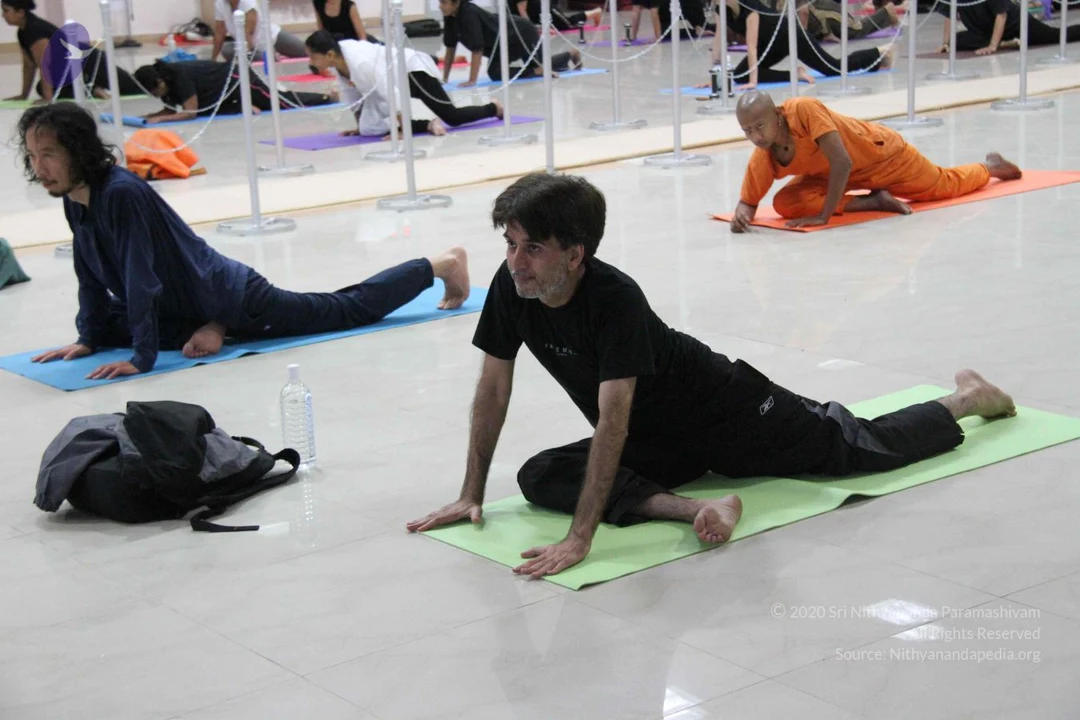
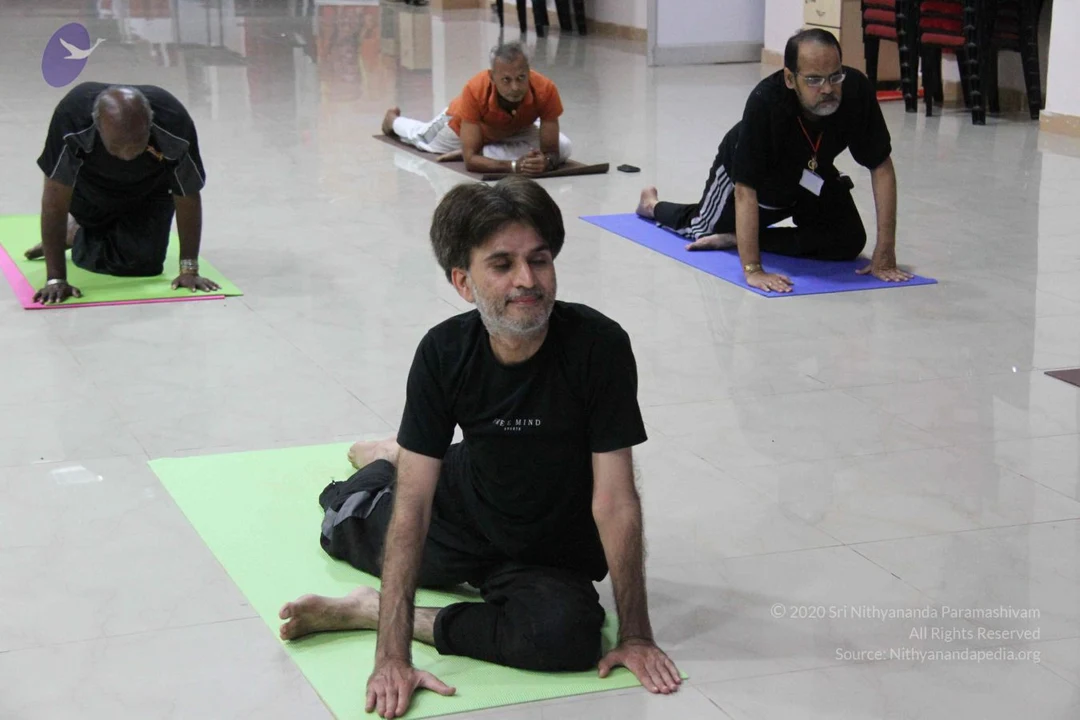
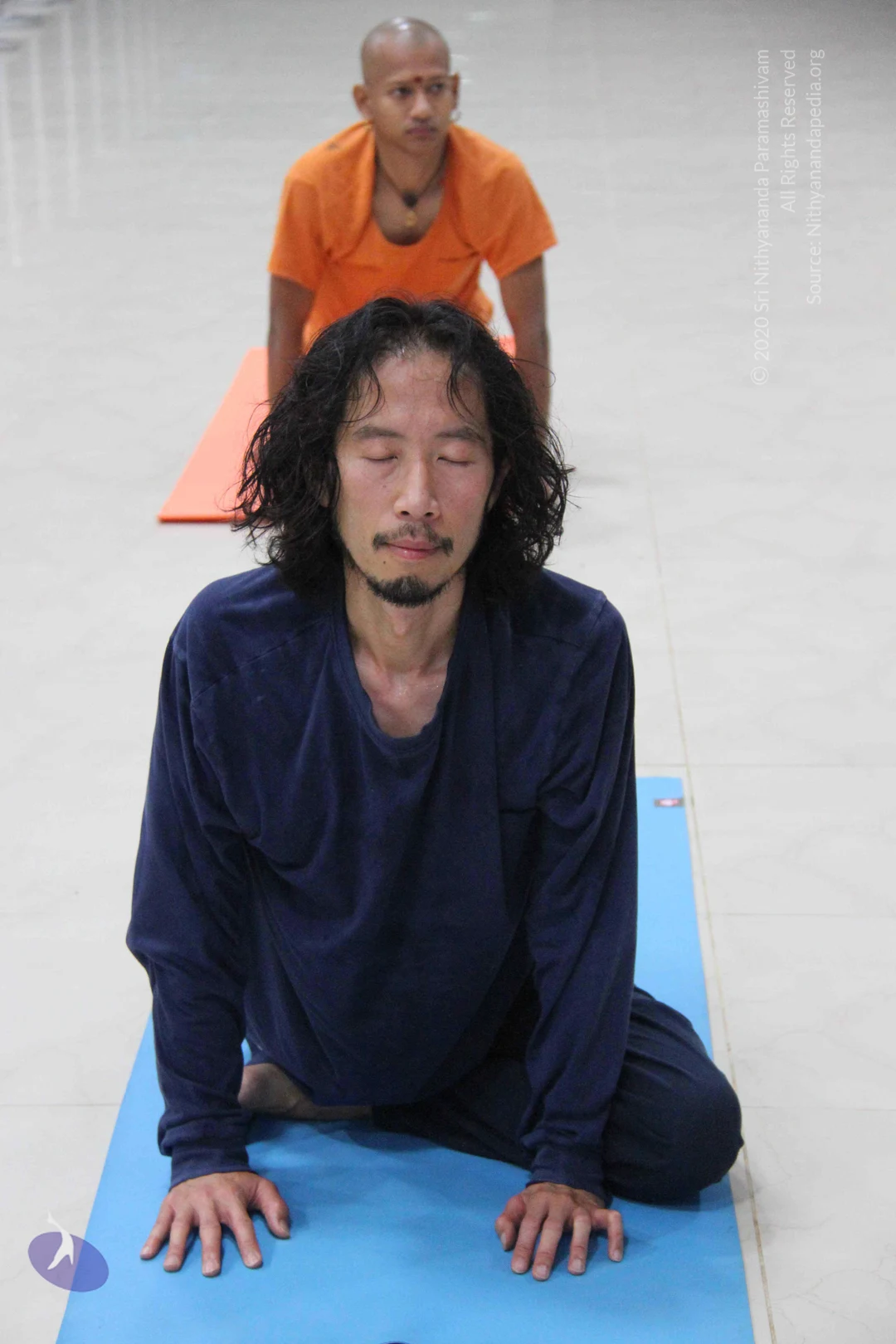
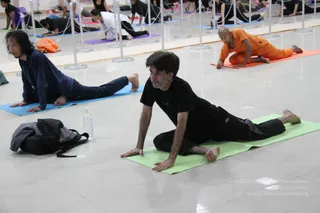
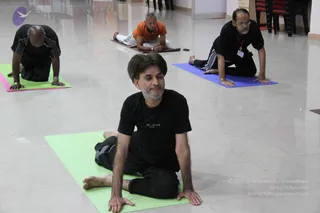
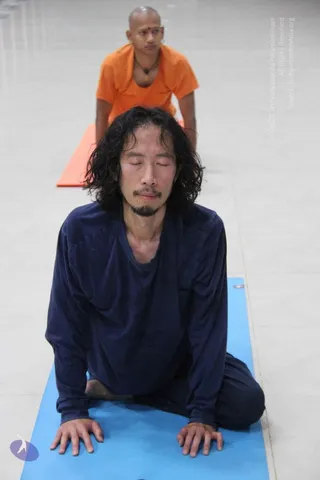
A yoga or stretching session in a bright, mirrored hall with a pale tiled floor. In the foreground, a man in a black t-shirt and black trousers, with greying hair and a beard, stretches in a low lunge on a light green mat, hands planted forward. To the left, a man in a dark navy shirt and trousers arches back on a blue mat. Behind them, a shaven-headed man in orange robes stretches on an orange mat. Many other participants in black, white and purple mats fill the background, and a water bottle and a dark backpack lie on the floor at left. a person is not clearly identifiable from appearance, so no candidate is named.A yoga session on a polished white tiled floor in an indoor hall. Five men practise seated and kneeling stretches on coloured mats. In the foreground a man in a black t-shirt and black trousers sits on a green mat with his hands planted on the floor, smiling with eyes lowered. Behind him, a man in black clothes with a white badge and red lanyard kneels on a blue mat with his palms down. Further back, a man in an orange t-shirt and white trousers sits on a brown mat with his hands together, and at the far left a bald man in black bends forward over a green mat. Plastic chairs stand at the top right edge. Four people are in the scene, seated and bent over their mats.A photograph of a yoga session on a white marble floor. In the foreground, a man with shoulder-length wavy dark hair, a goatee and closed eyes sits on a blue mat in a navy long-sleeved top and dark trousers, hands pressed flat on the mat in a seated yoga posture. Behind him, a shaved-headed man in an orange top with a pendant necklace and a red tilak on his forehead kneels on an orange mat, looking forward. The scene is calm and orderly, with a second mat and bare floor visible.

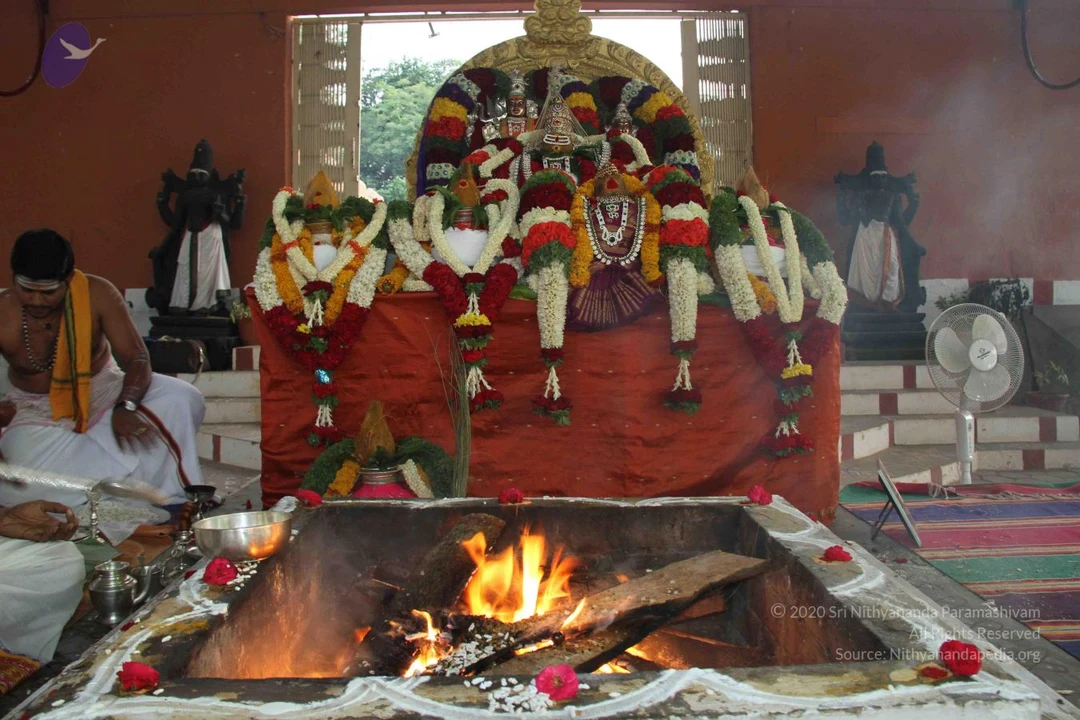
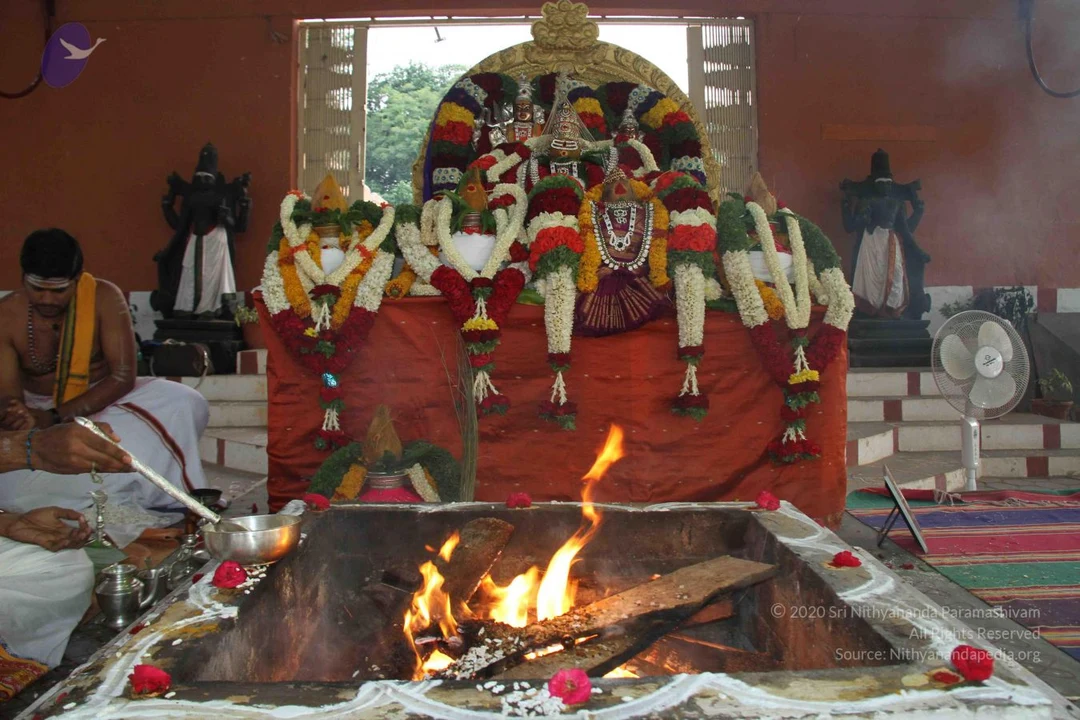
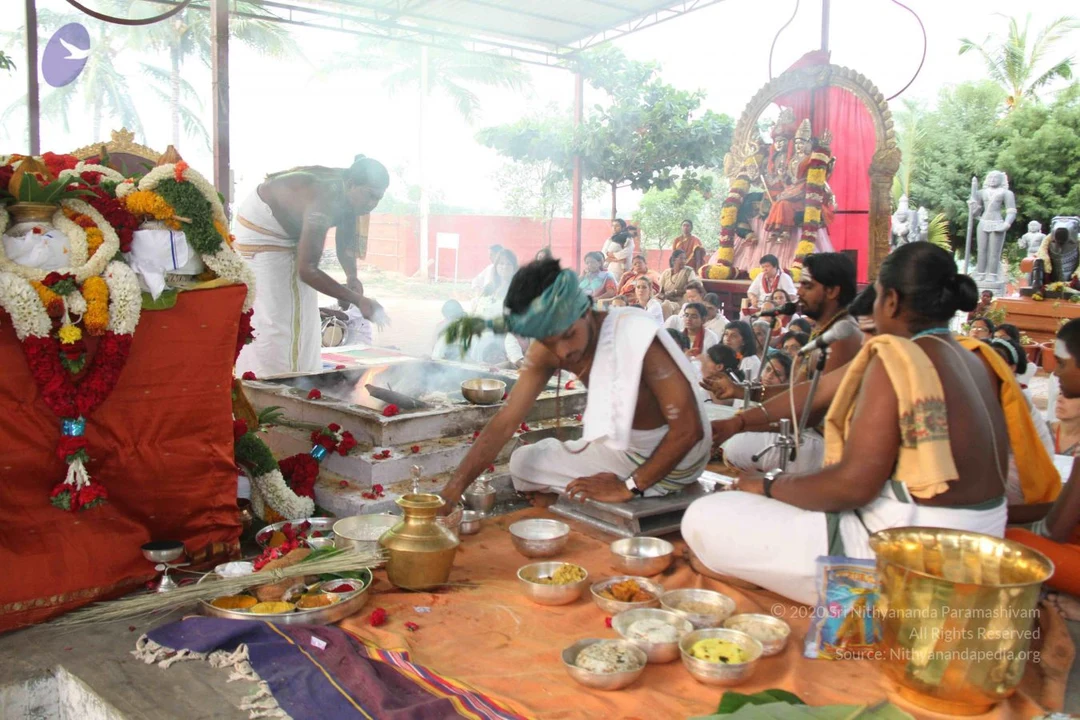
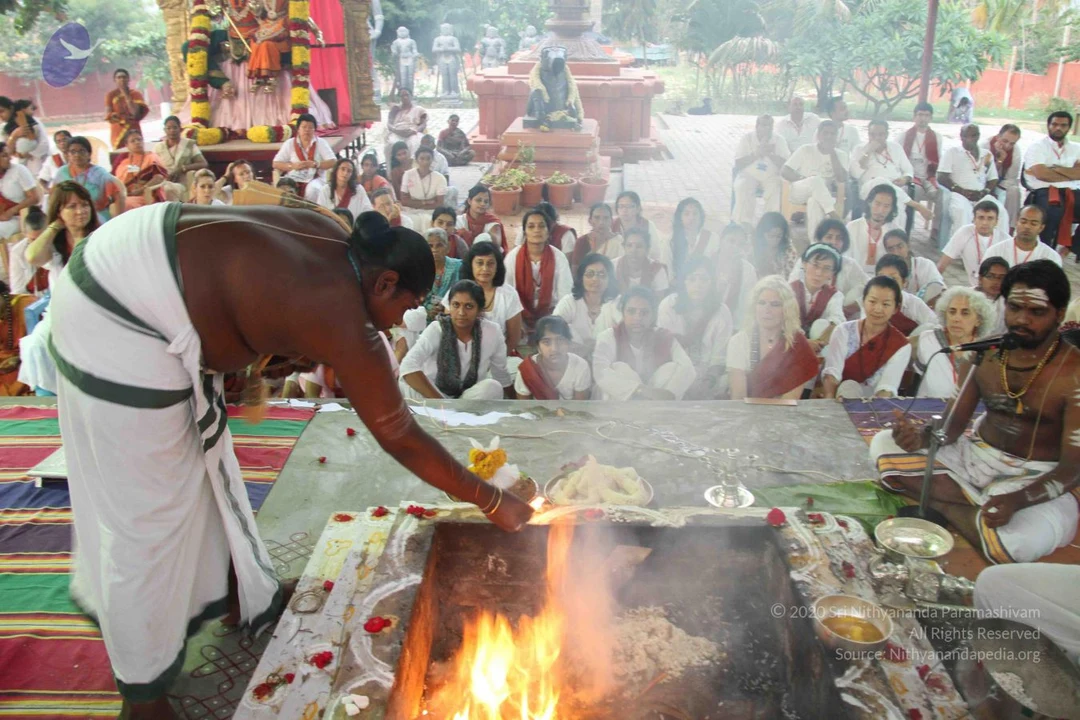
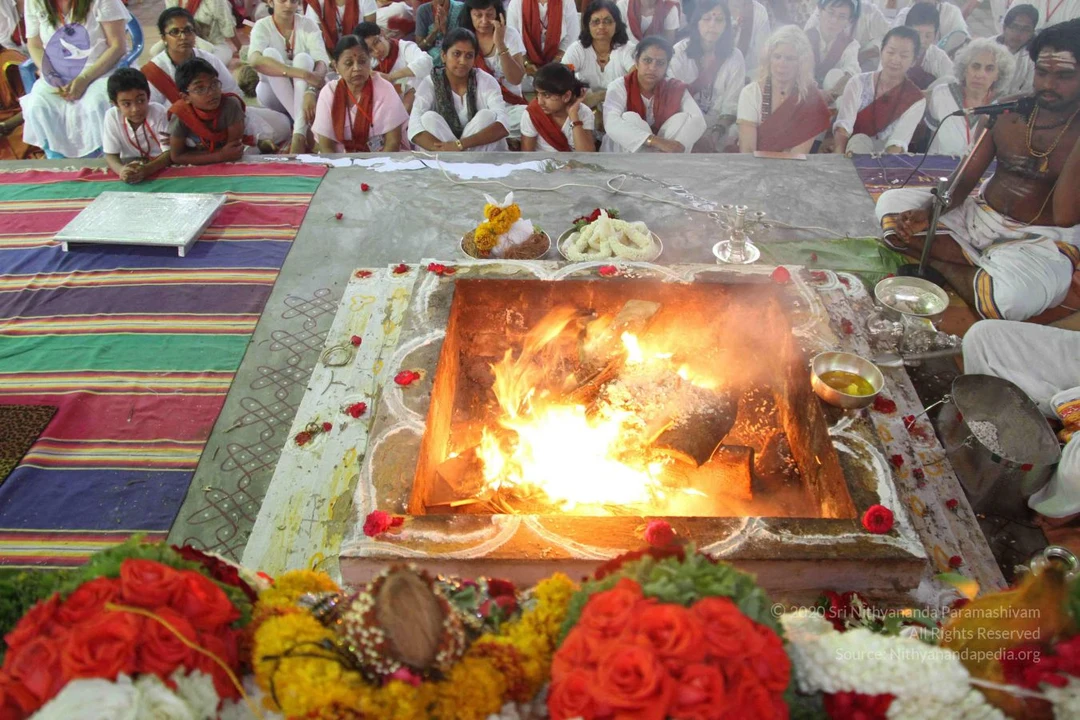
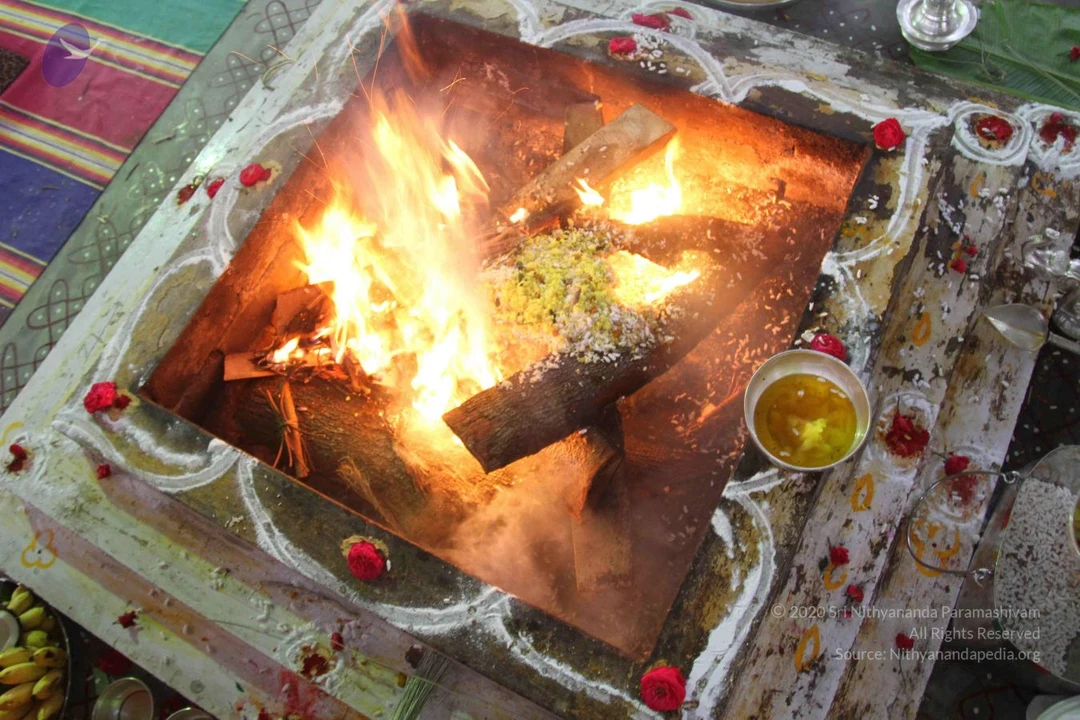
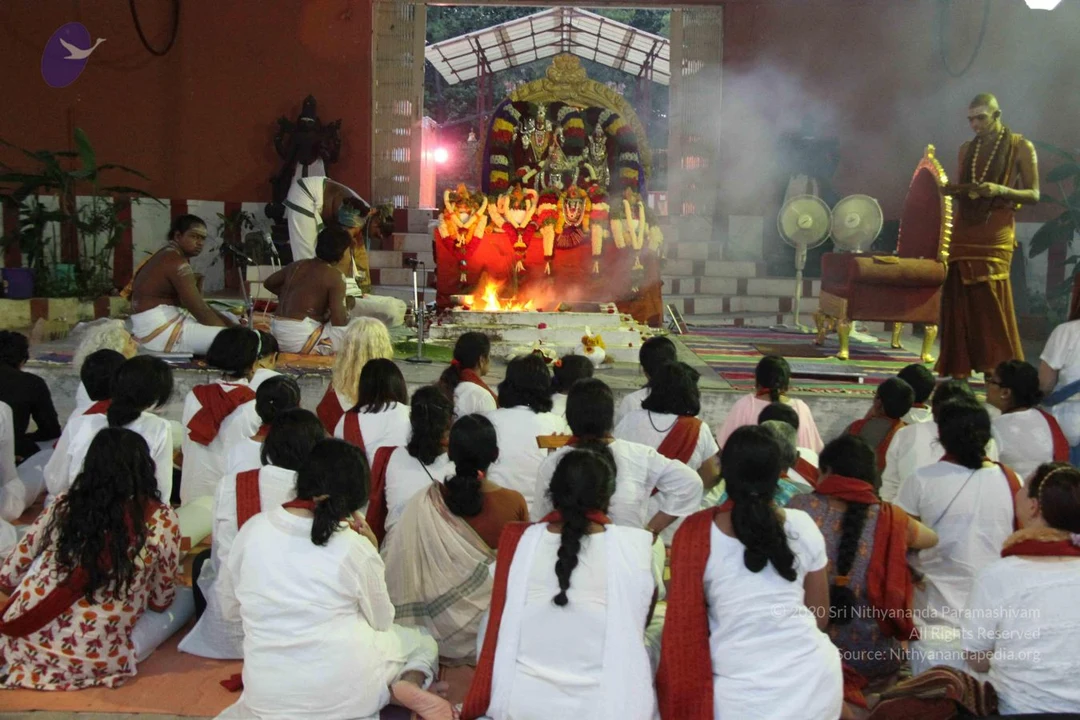
gayathri-homa
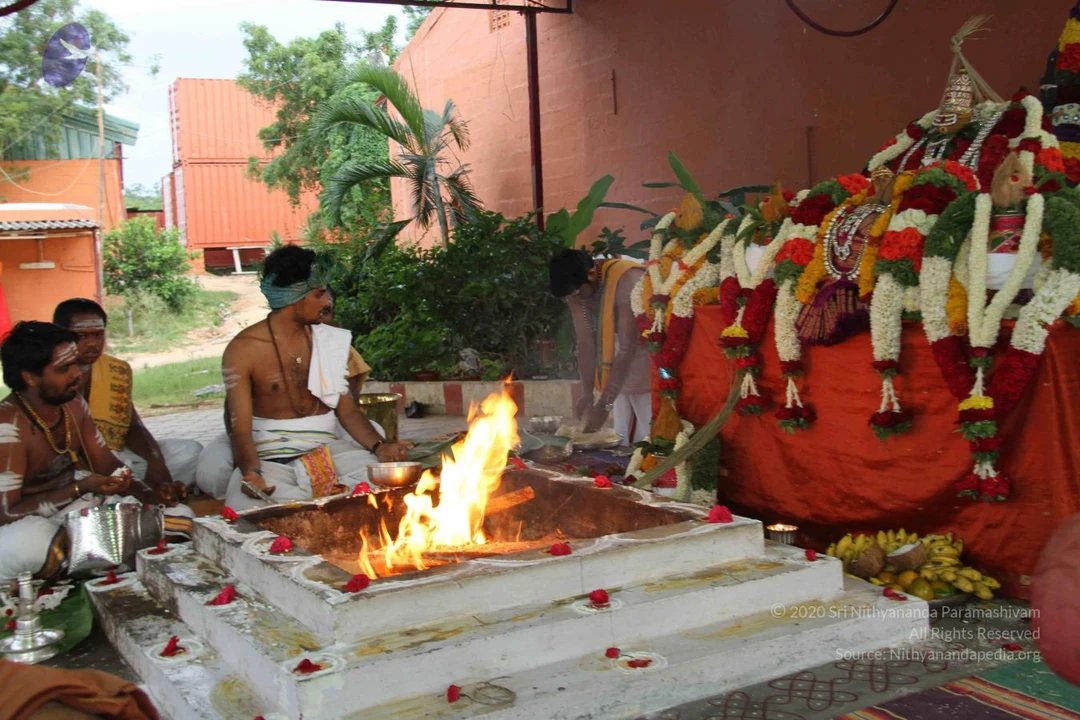
72 photosSource gallery
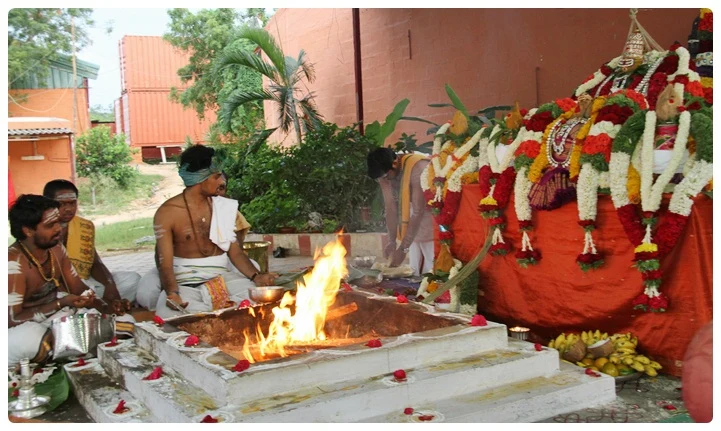
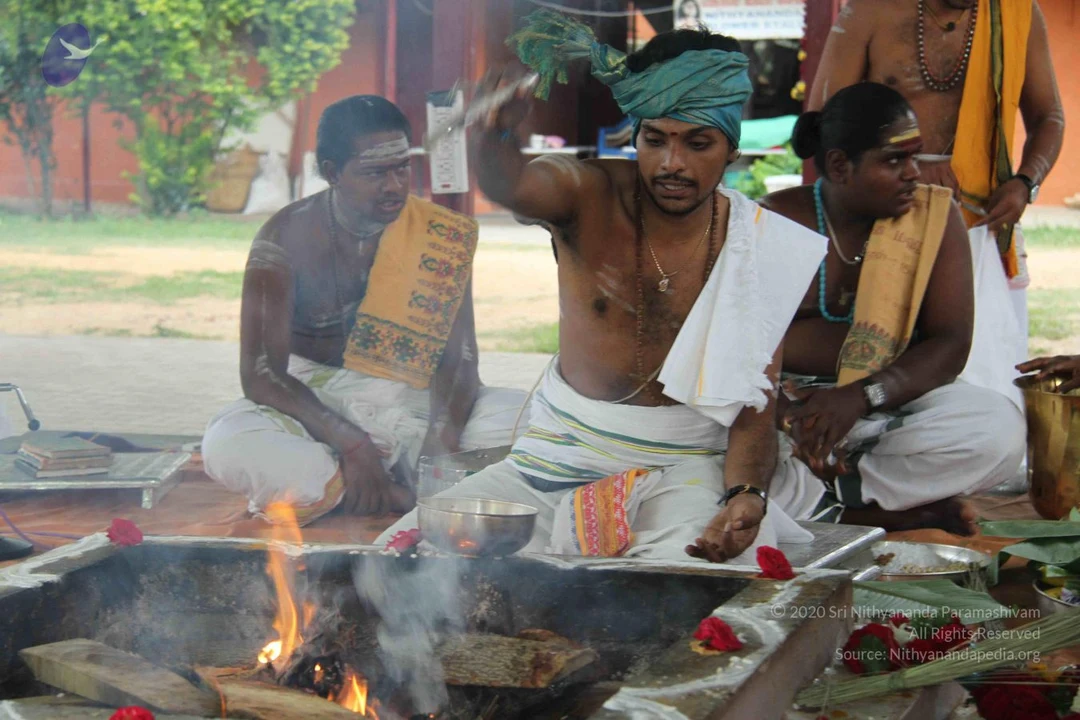
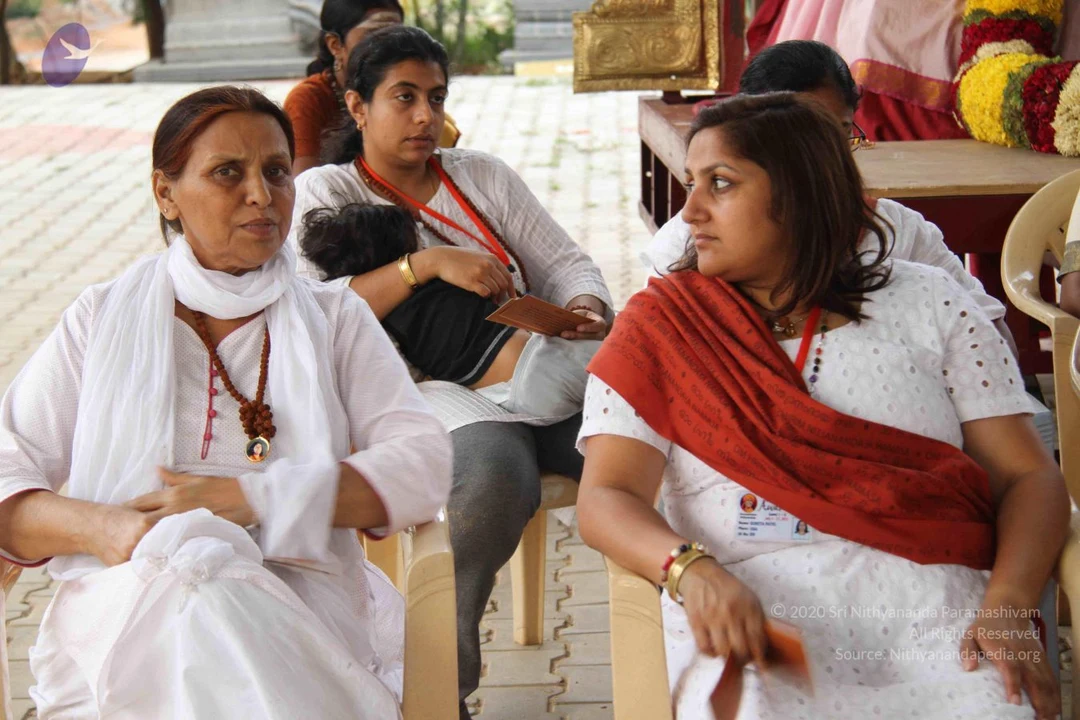
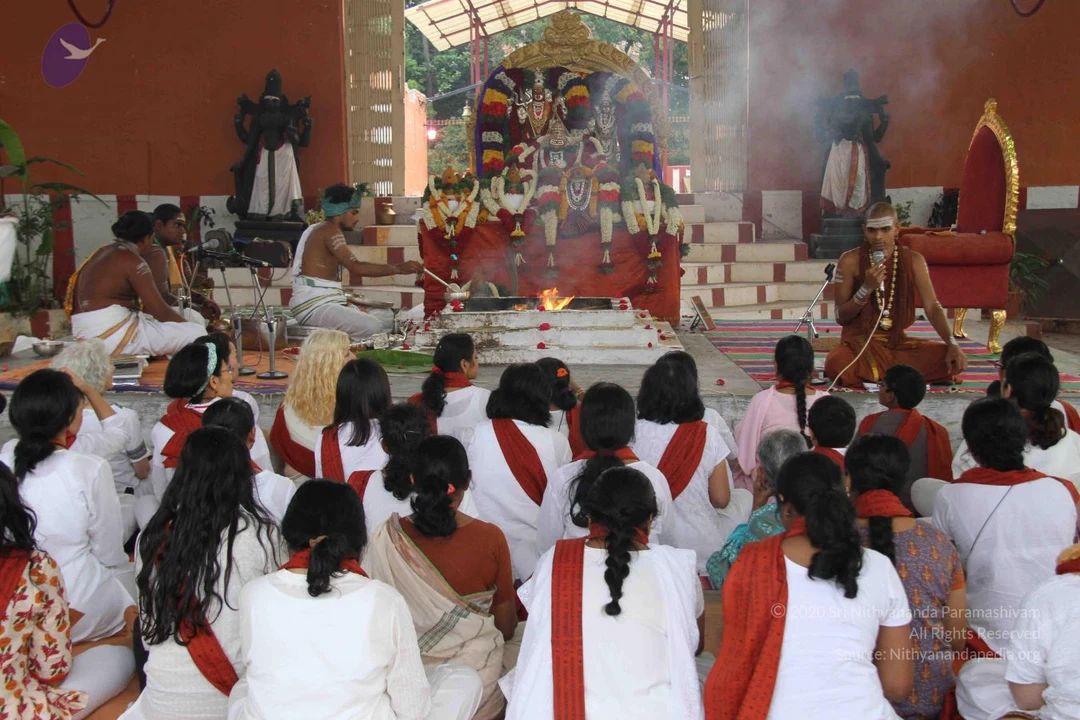
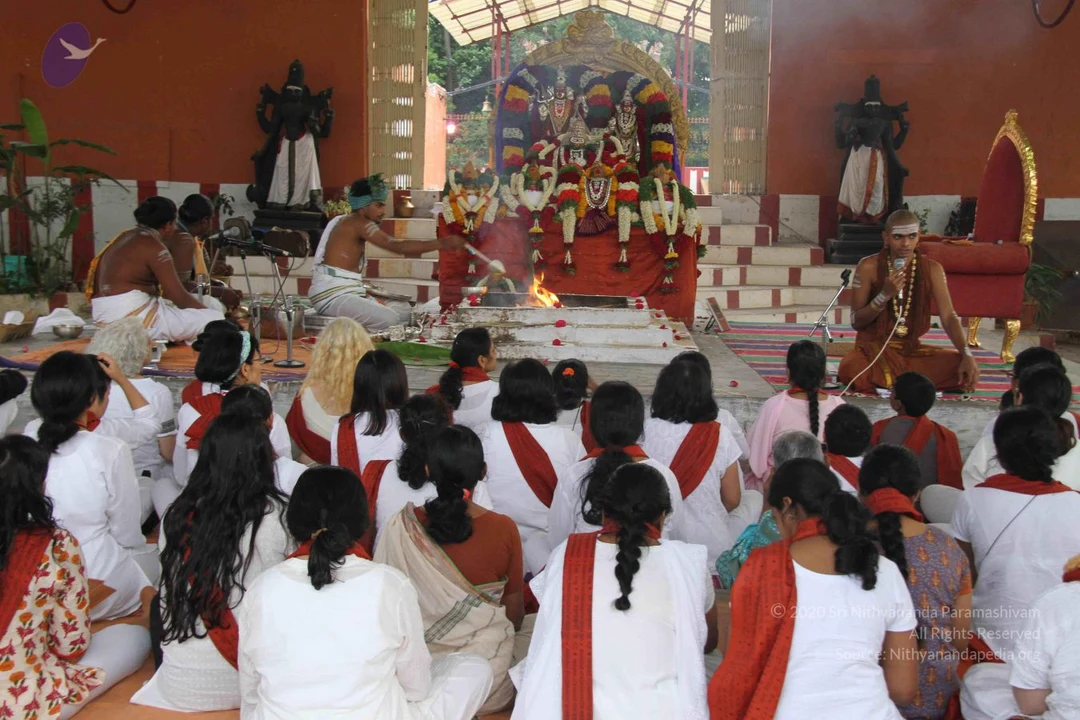
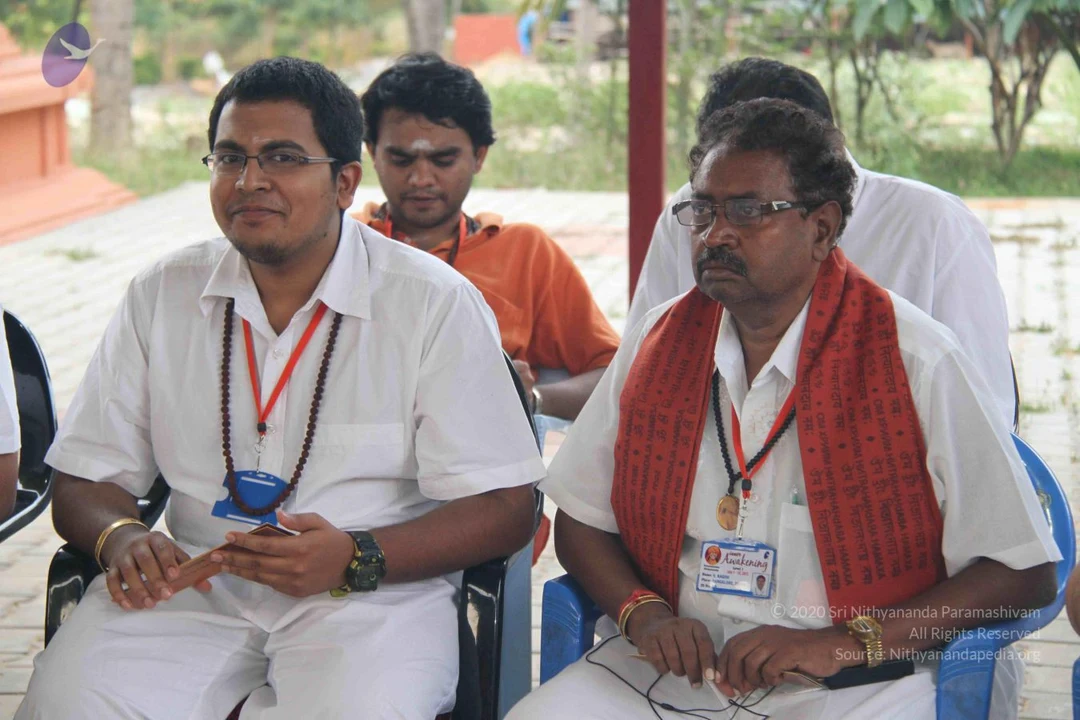
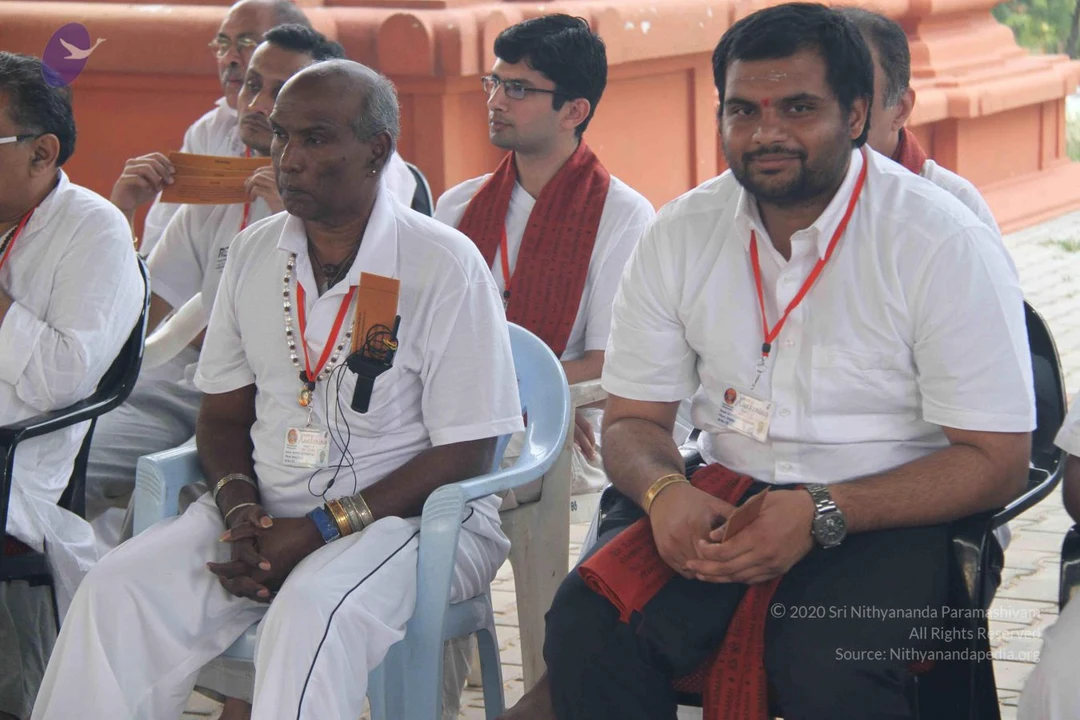
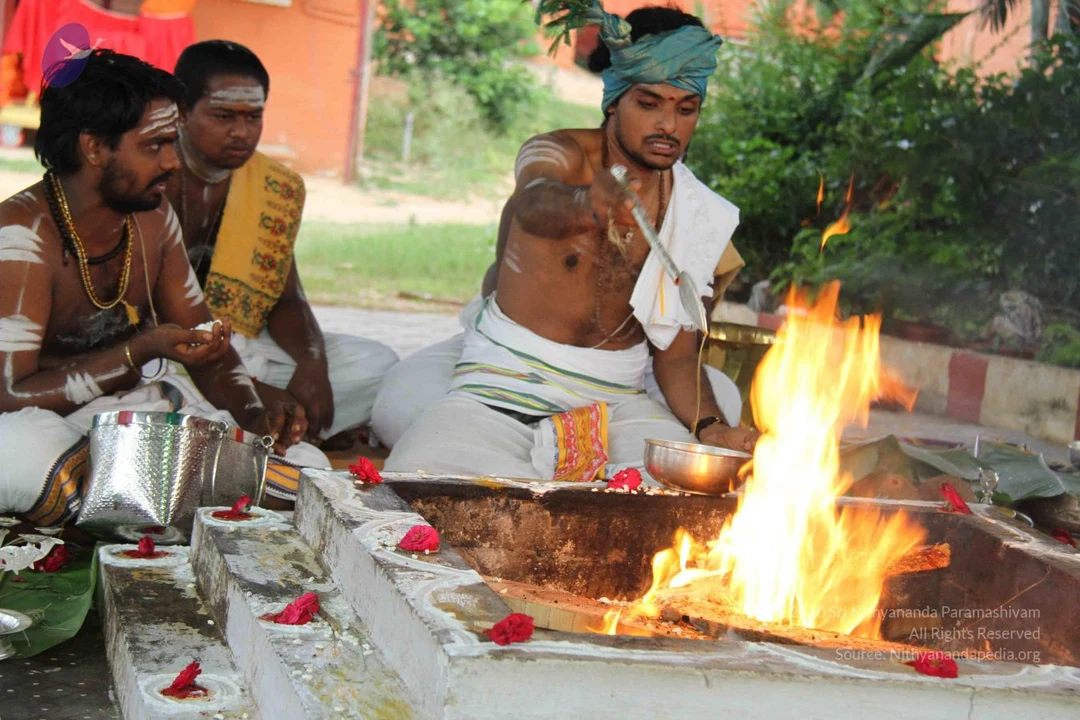
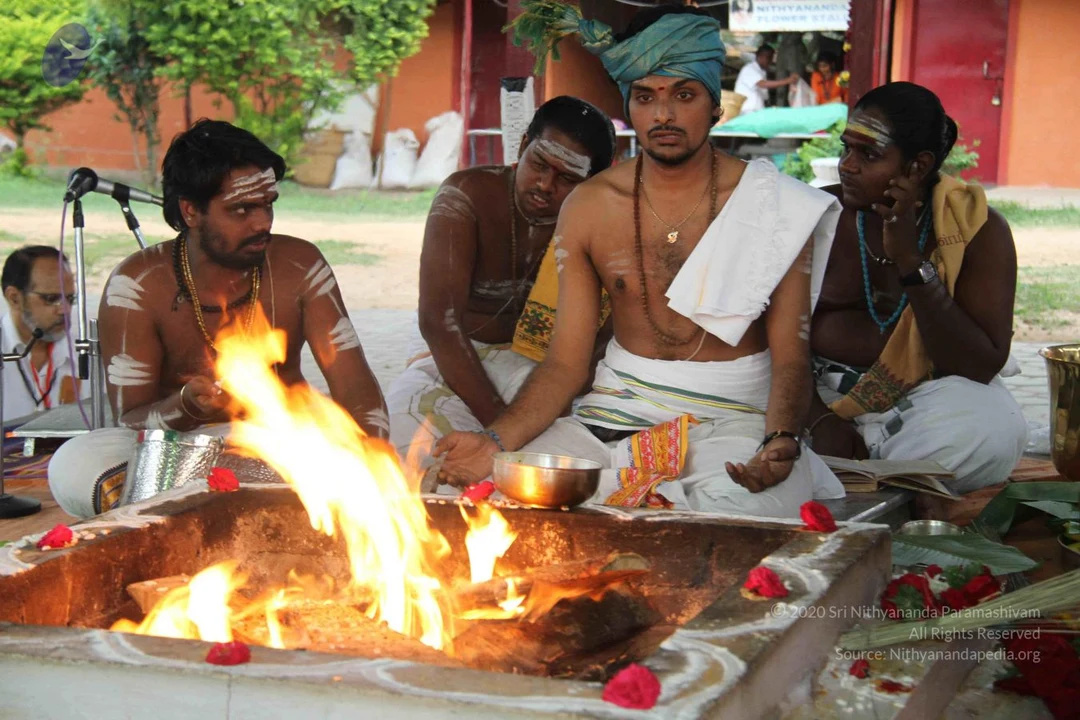
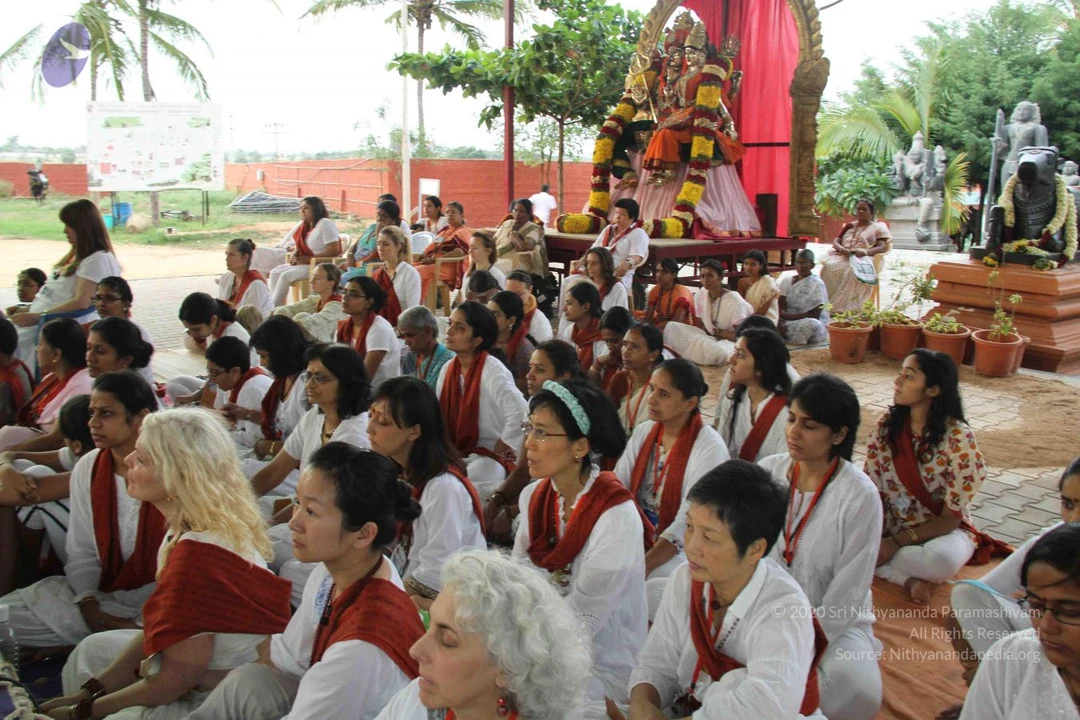
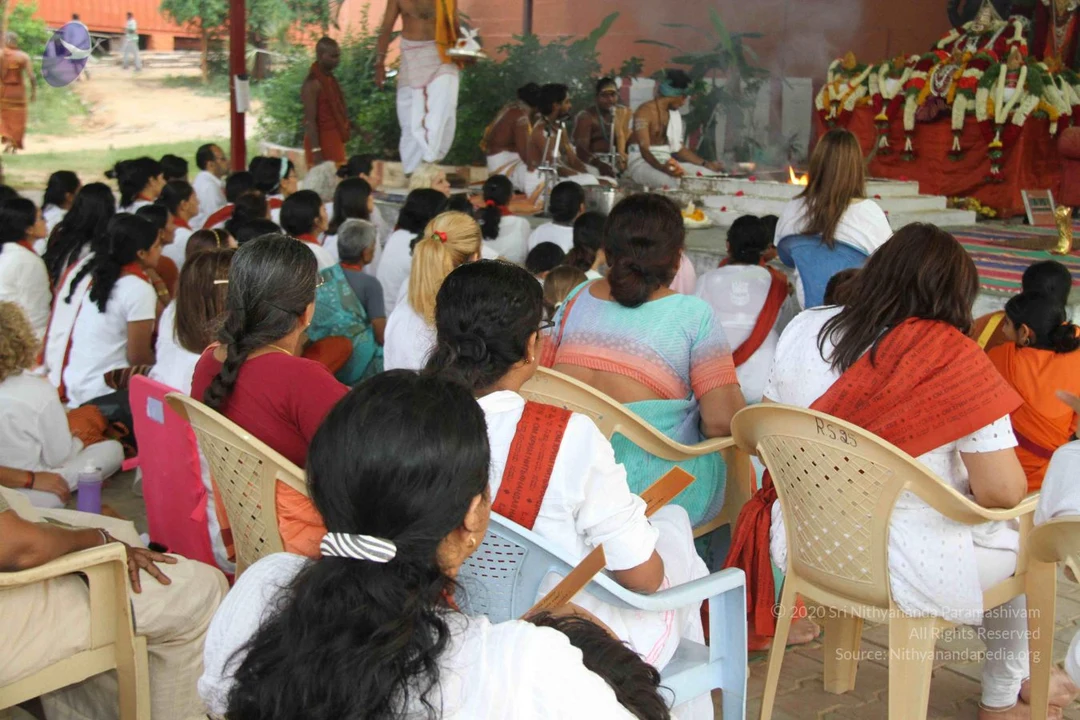
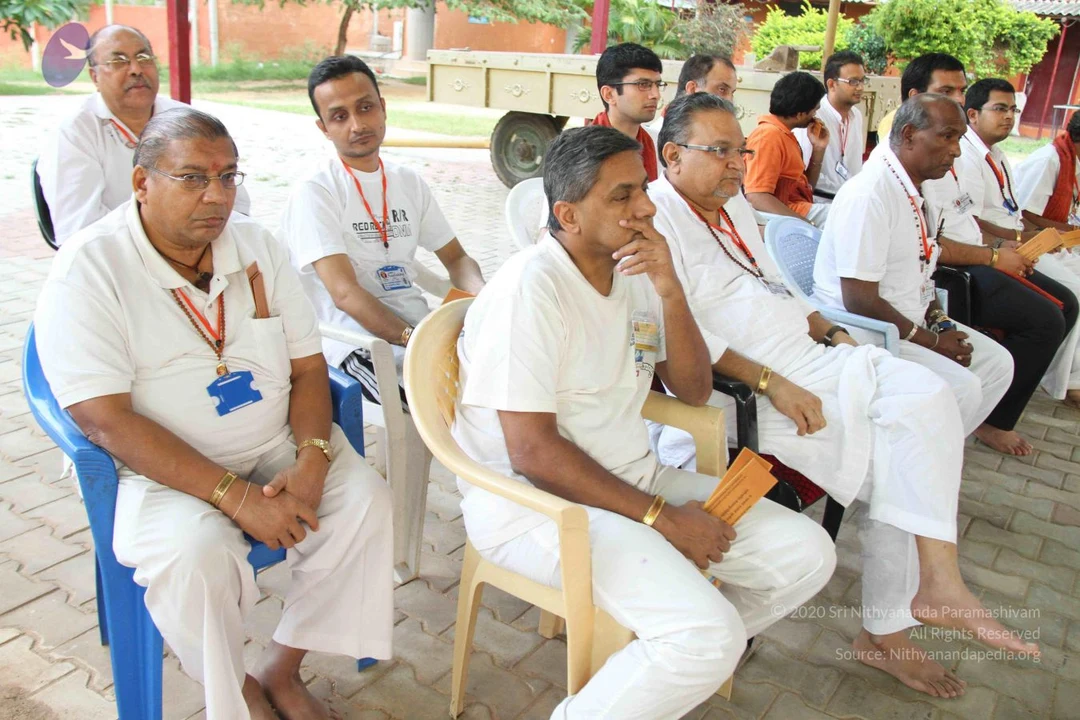
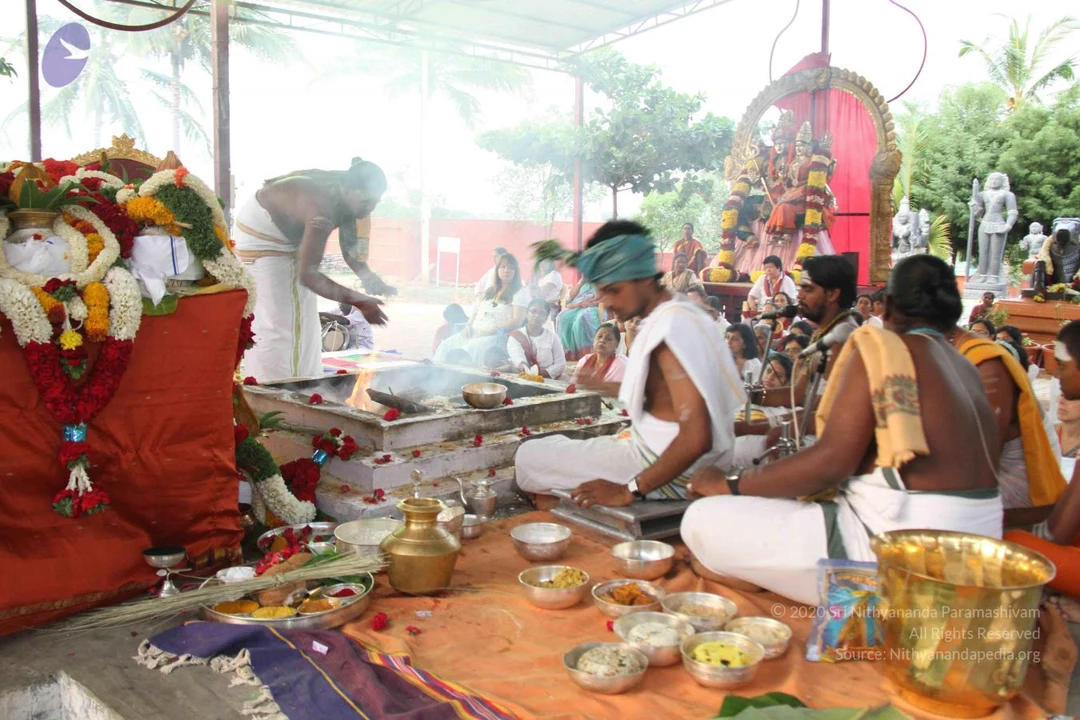
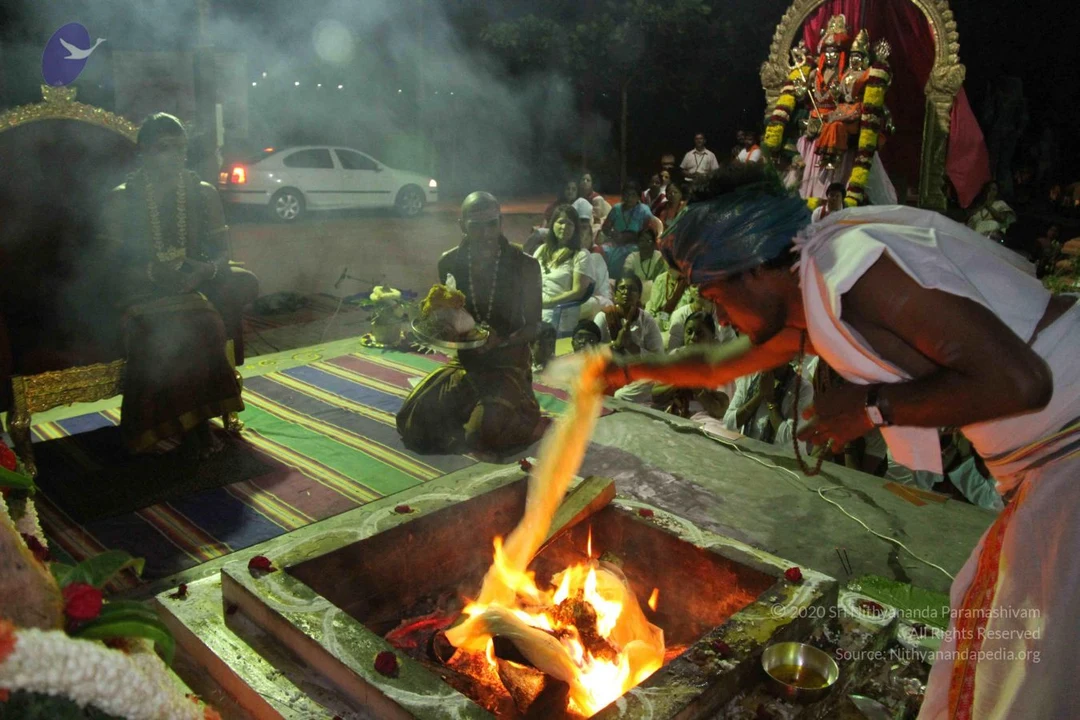
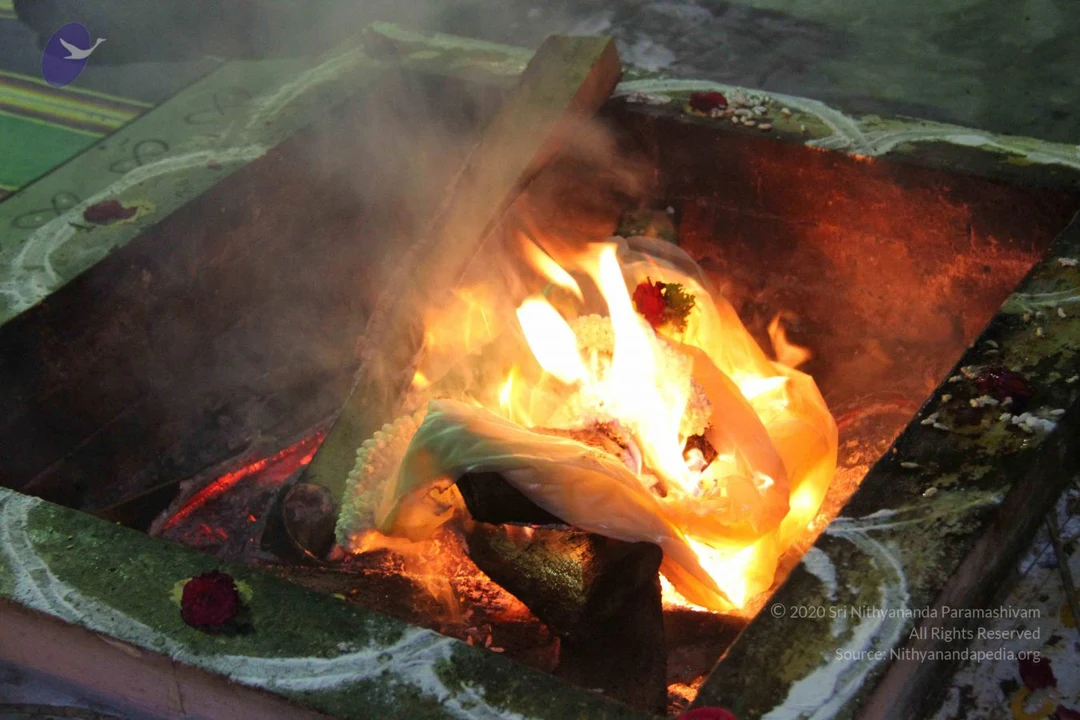
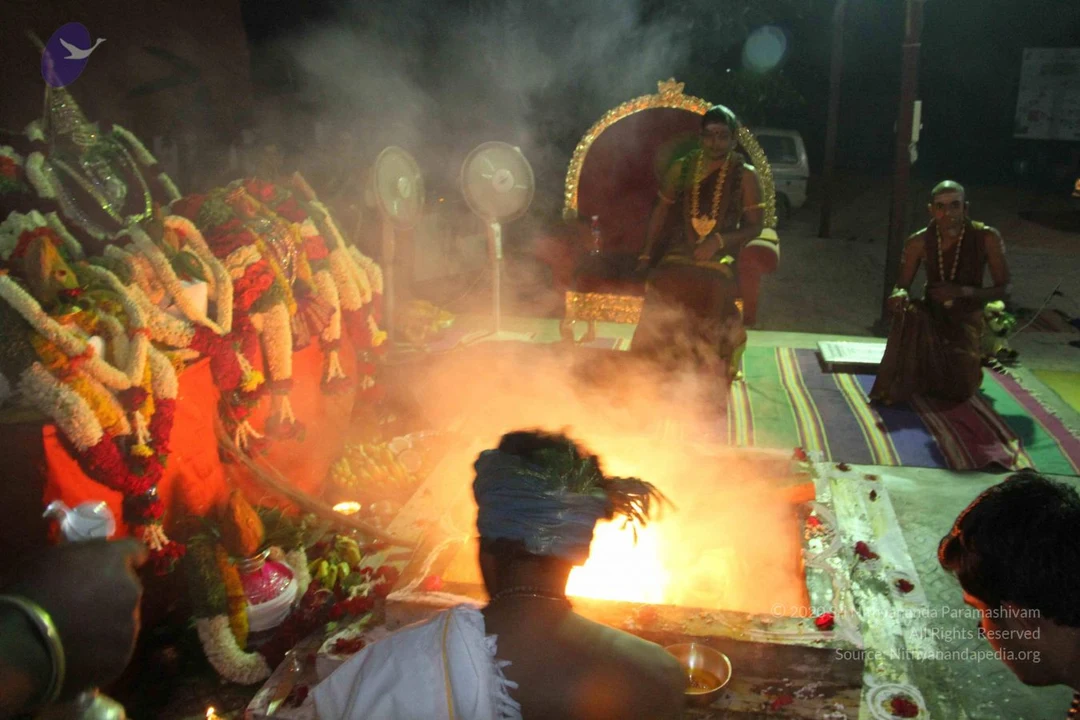
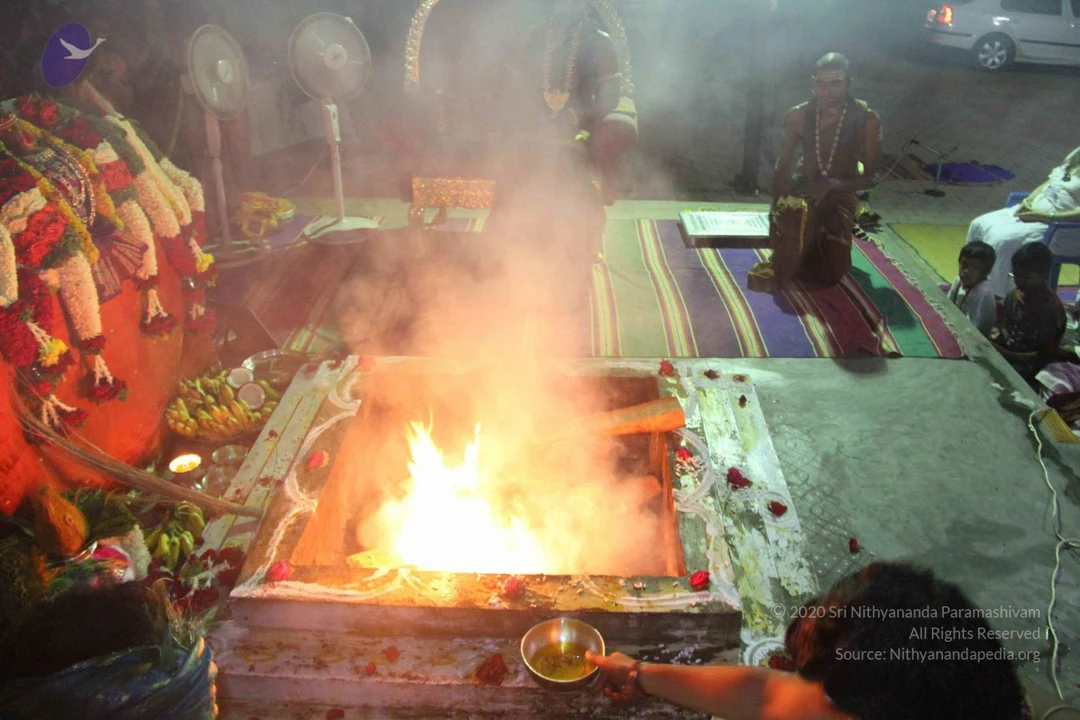
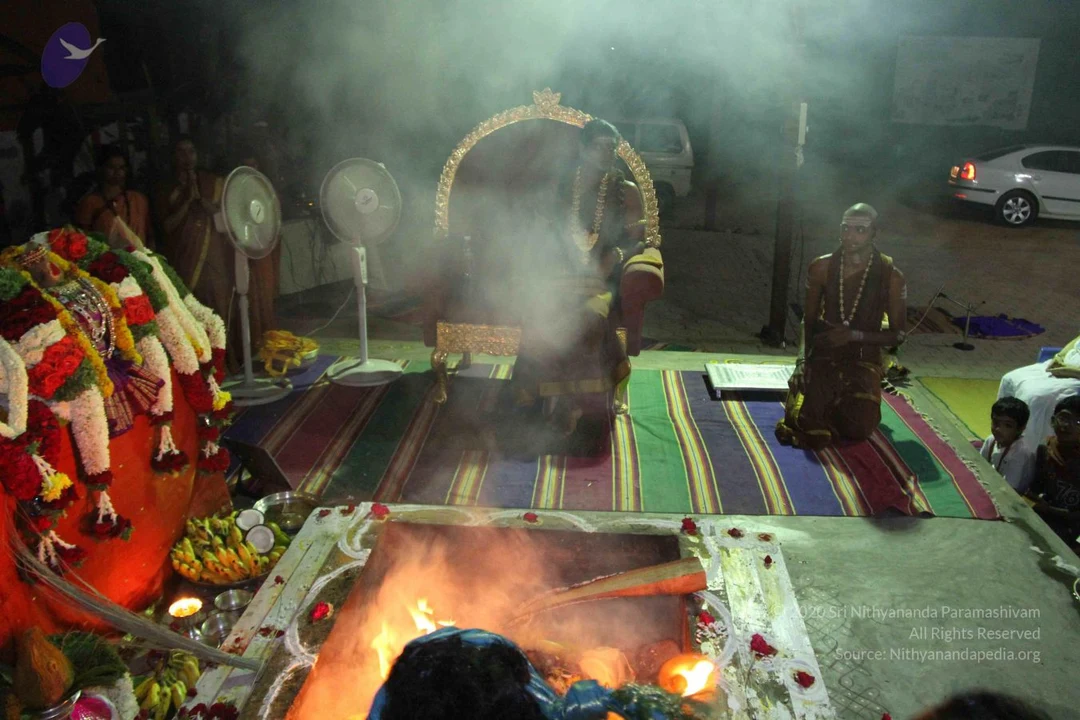
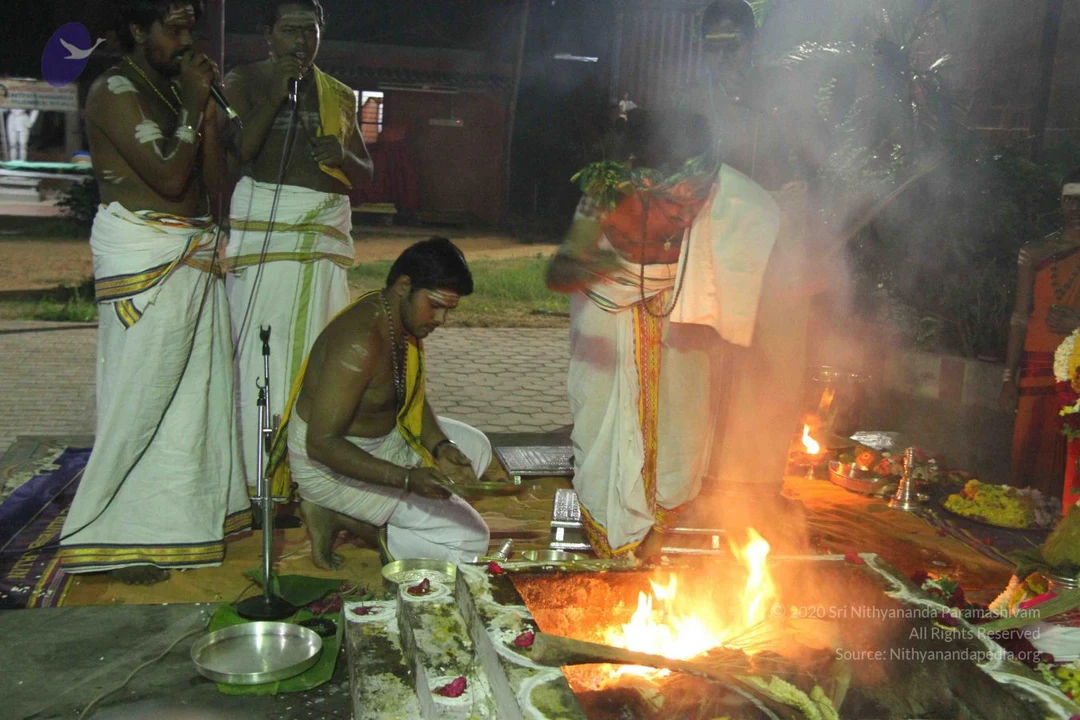
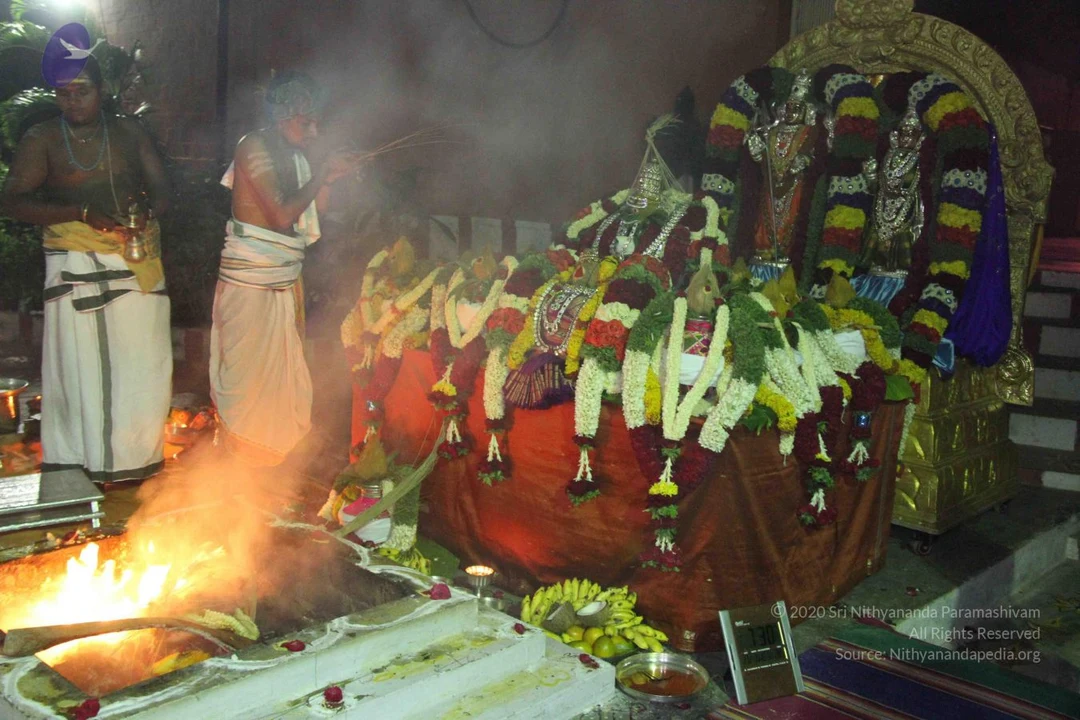
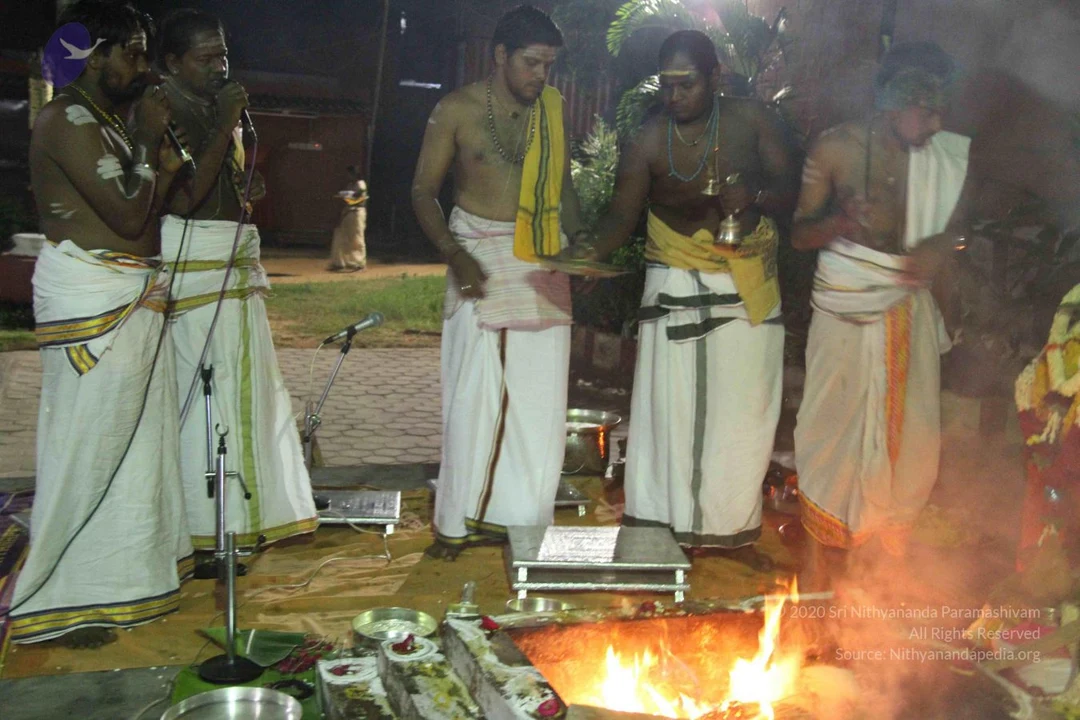
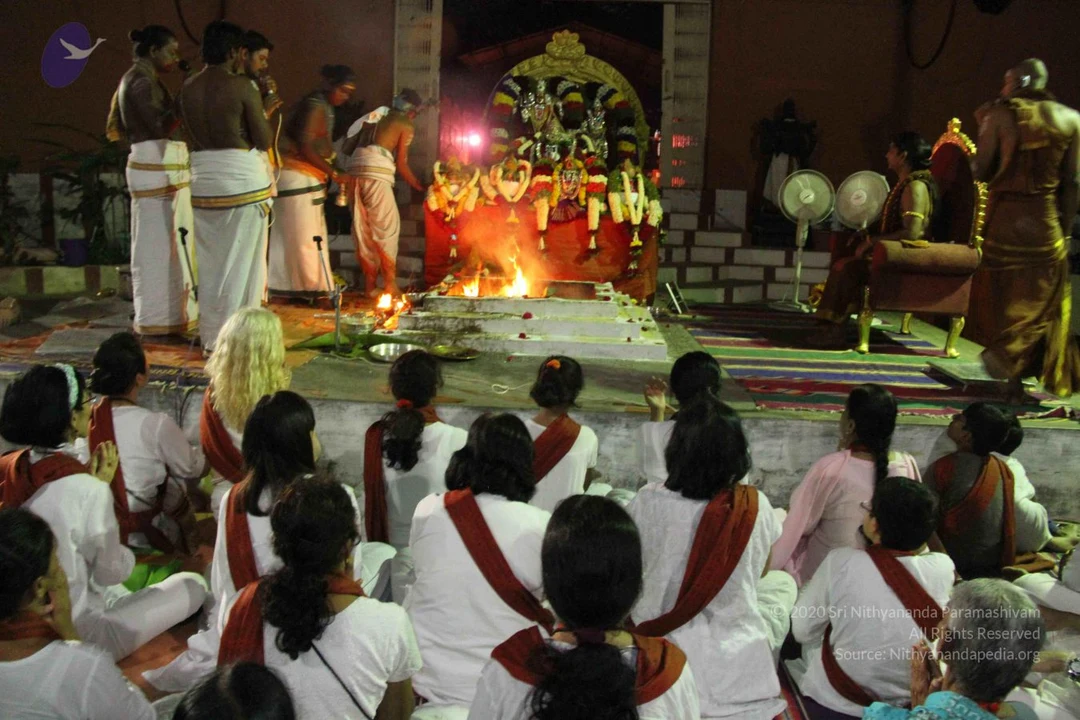
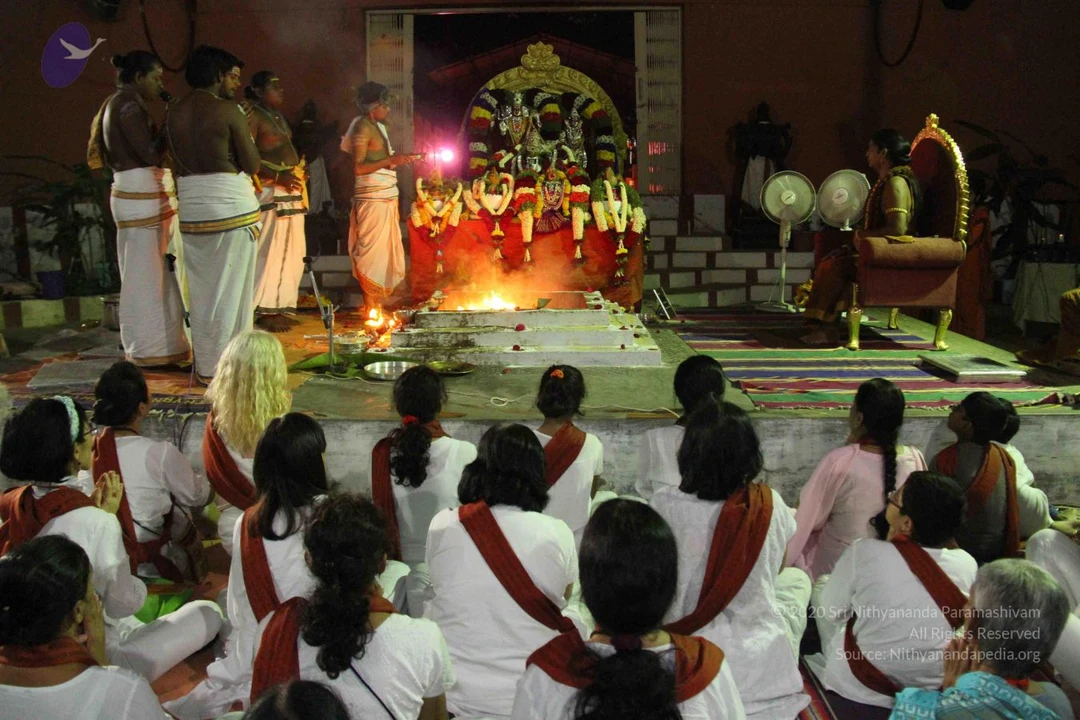
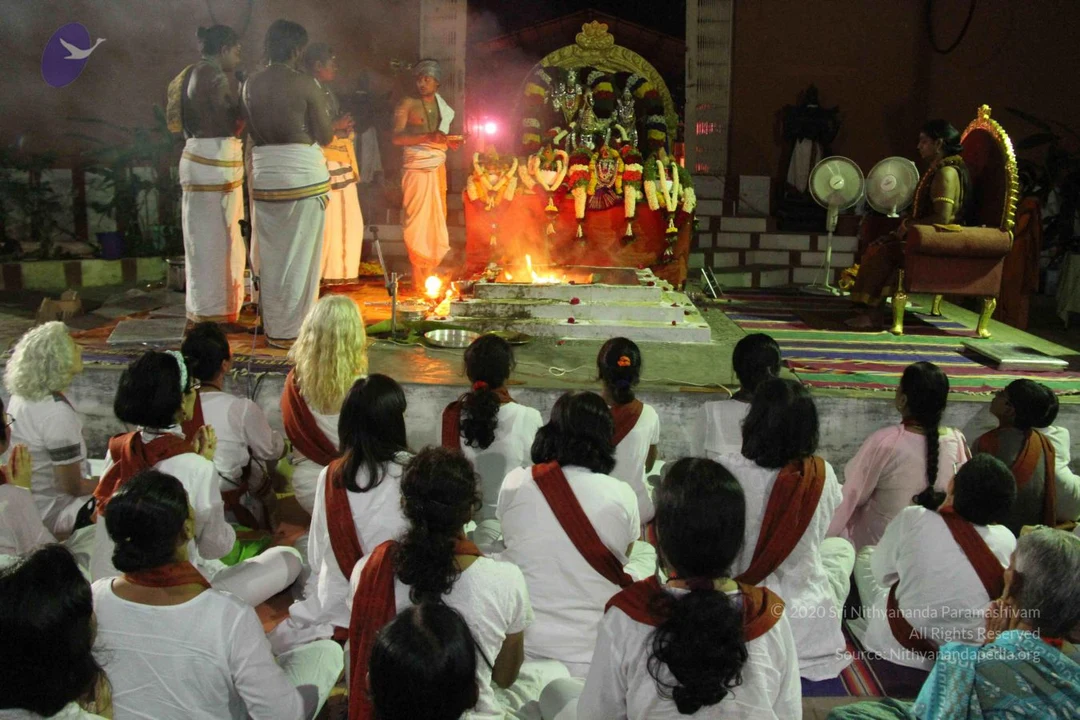
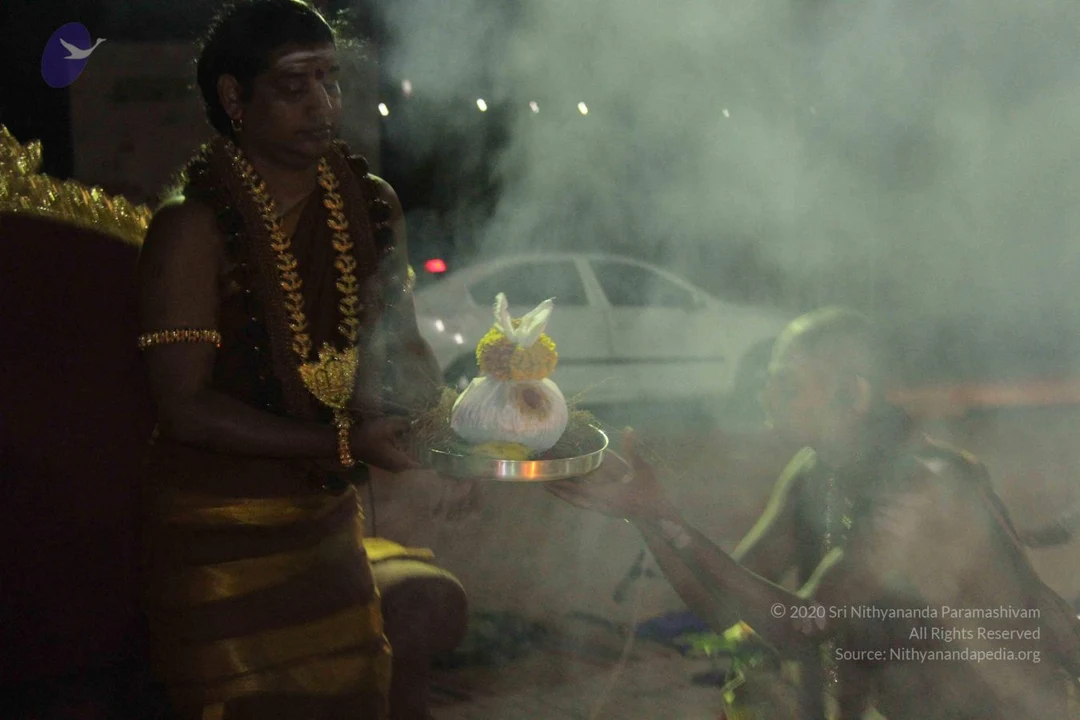
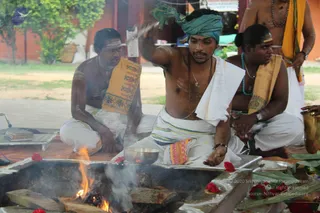
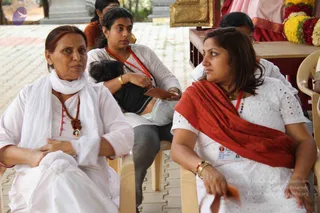
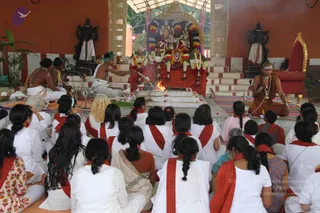
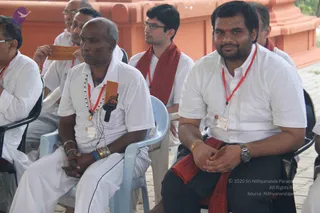
A photograph of a fire ritual, a homa, at an outdoor ashram setting. A fire burns in a rectangular stone fire pit in the foreground, with flames and smoke rising. A shirtless priest in a green head cloth and white dhoti sits at center, holding a small brass vessel in one hand and waving a green cloth or fan with the other. Two priests flank him, also shirtless with white dhotis and yellow shawls, one with a blue-beaded necklace and sandalwood or vibhuti markings on forehead and chest. Red flowers and green leaves lie around the fire pit, with a brass pot at the right edge. Red brick buildings and greenery stand behind.Outdoor seated gathering on a paved courtyard. In the foreground, an older woman in white clothes and a white shawl wears a rudraksha mala with a pendant and looks to her left. Beside her, a woman in a red-and-white outfit holds a red-orange shawl printed with script and wears a name badge, looking off to the side. Behind them, a woman in a white top with a red lanyard holds a small child on her lap and a small card. A partly visible person sits behind to the right near a wooden table draped with red cloth and garlanded with marigolds and roses. The scene shows people seated in plastic chairs with attentive expressions.A photograph of an outdoor ritual hall with a fire pit at centre where a flame burns and smoke rises. Behind it, a decorated deity murti stands on a red platform, garlanded with flowers and framed by a golden arch. At right, a man in saffron robes with a white forehead mark and long rudraksha-style beads sits on a red throne-like seat, a person, with a microphone before him. At left, drummers in white dhotis with bare upper bodies play drums. Dozens of devotees in white clothes with red sashes sit on the floor facing the fire, with several women in orange saris. Two stone statues flank the arch.Outdoor temple courtyard ritual with a sacred fire pit in front of a decorated deity murti garlanded with bright flower necklaces and draped in red and orange fabric, flanked by two stone figures. Seated devotees in white and orange-red garments, with red shoulder cloths, face the fire. A shirtless priest in white dhoti at left tends the fire with a long ladle. At right, a bald man with ash markings on his forehead, wearing a rudraksha mala and ornate orange cloth, sits on a striped mat holding a microphone beside an empty red and gold throne. Other people in white and pastel clothing sit in the foreground. Several people are visible; the total is in the 21-100 range.Four men seated in blue and black plastic chairs under an open pavilion at a satsang setting. In the foreground, a man in white shirt and white dhoti with a rudraksha mala and red lanyard ID badge holds a phone. Beside him, an older man with glasses wears a white shirt, a red shawl printed with Sanskrit script, a mala and a red lanyard badge, with his hands folded. Behind them, a man in an orange shirt with a tilak and a man in white are partly visible. A red pillar and orange temple structure appear at the edge.A seated audience at an outdoor satsang, photographed from the front. In the foreground, a man in a white shirt and white dhoti sits on a light blue plastic chair with a beaded mala necklace and a red lanyard badge, a small black two-way radio clipped to his shirt. Beside him, a clean-shaven man in a white shirt, red lanyard and red-and-gold shawl sits with folded hands and a wristwatch, a red tilak on his forehead. Behind them, a bespectacled man in white wears a red shawl, and other white-clad attendees sit in rows, one holding a folded orange programme sheet. An orange-red wall forms the backdrop.

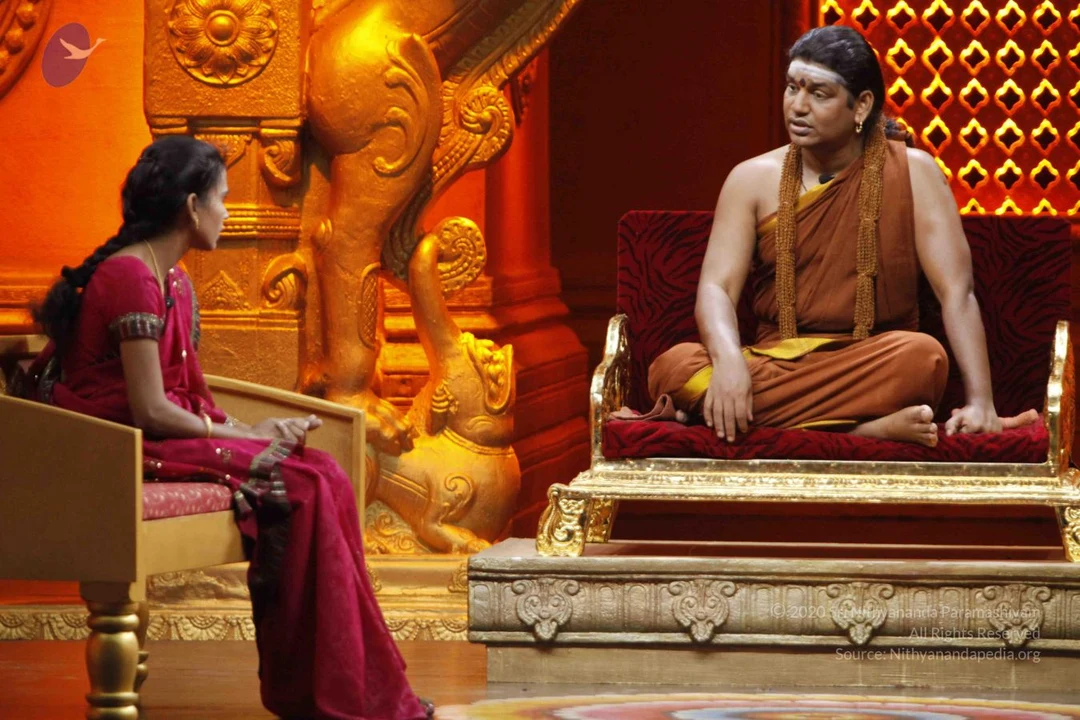
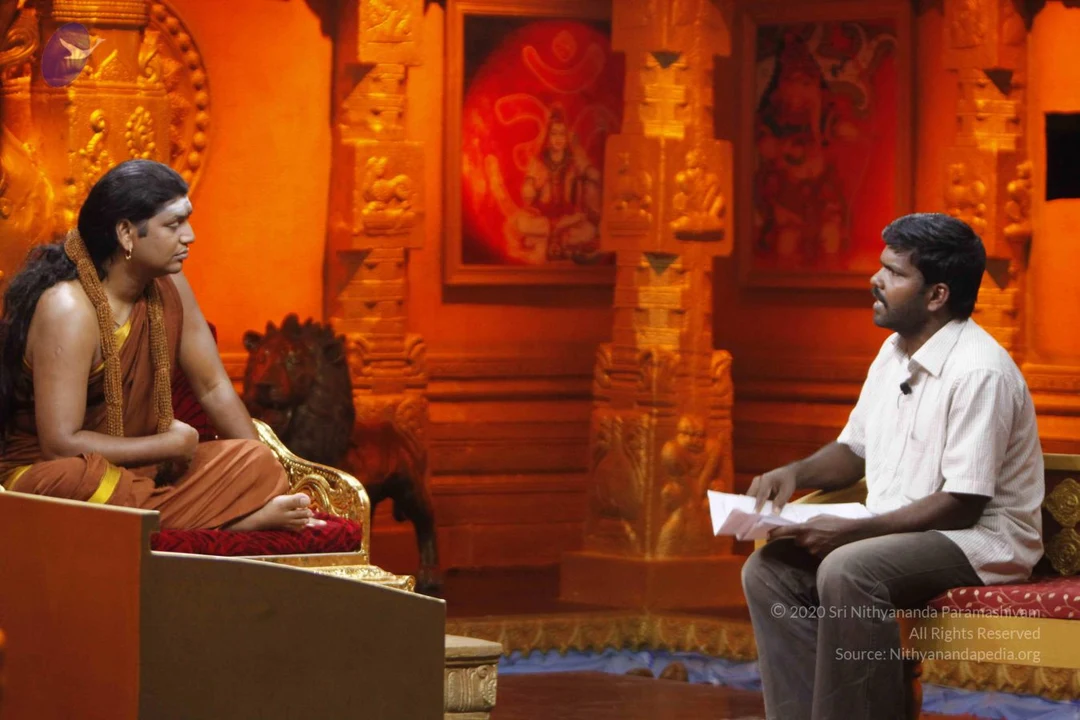
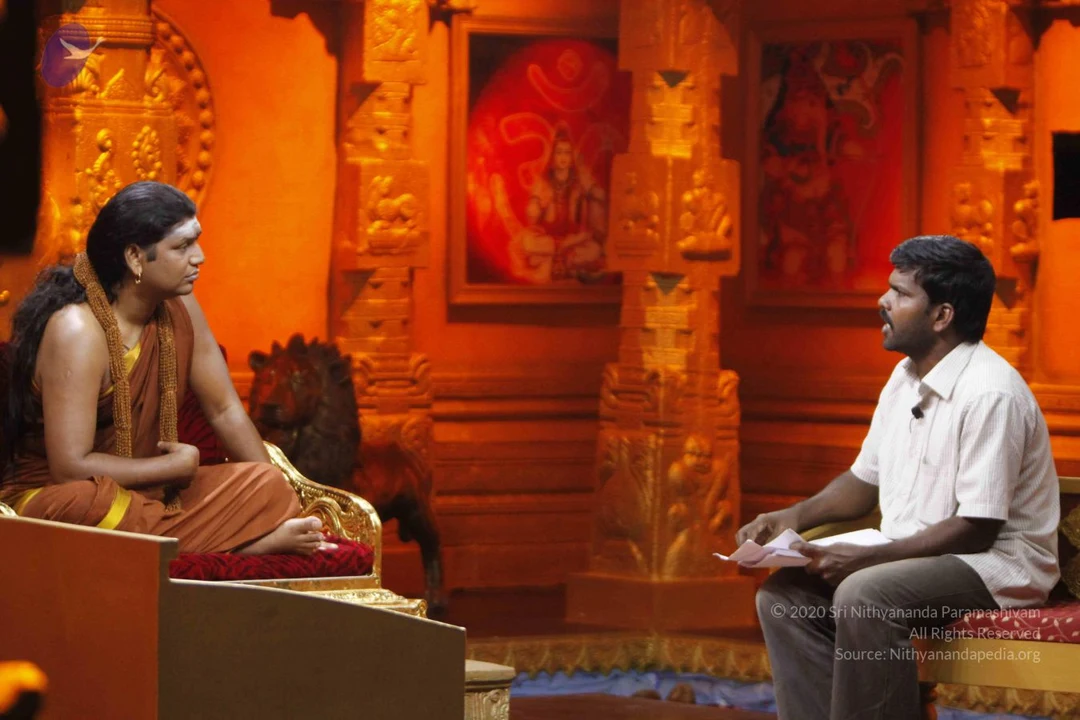
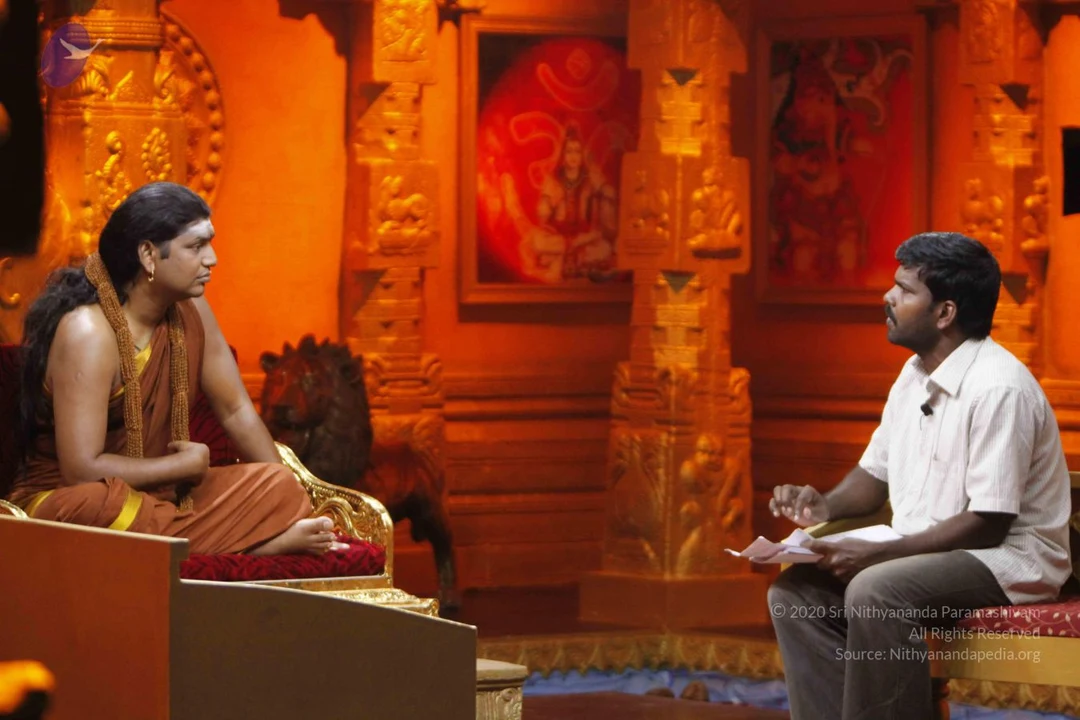
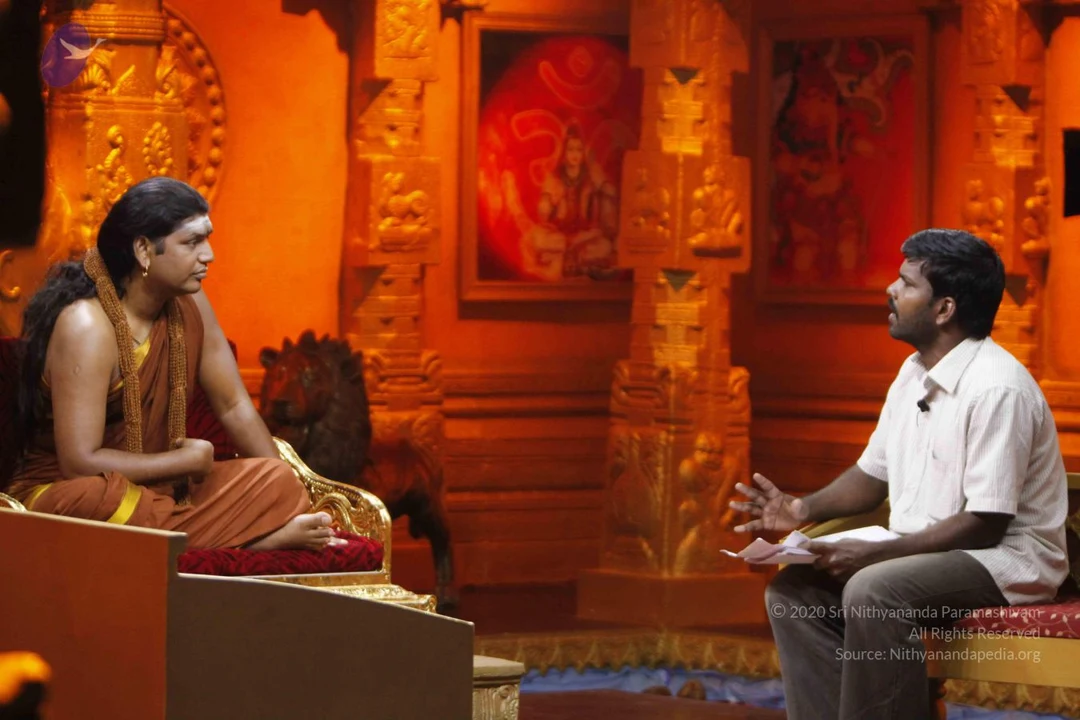
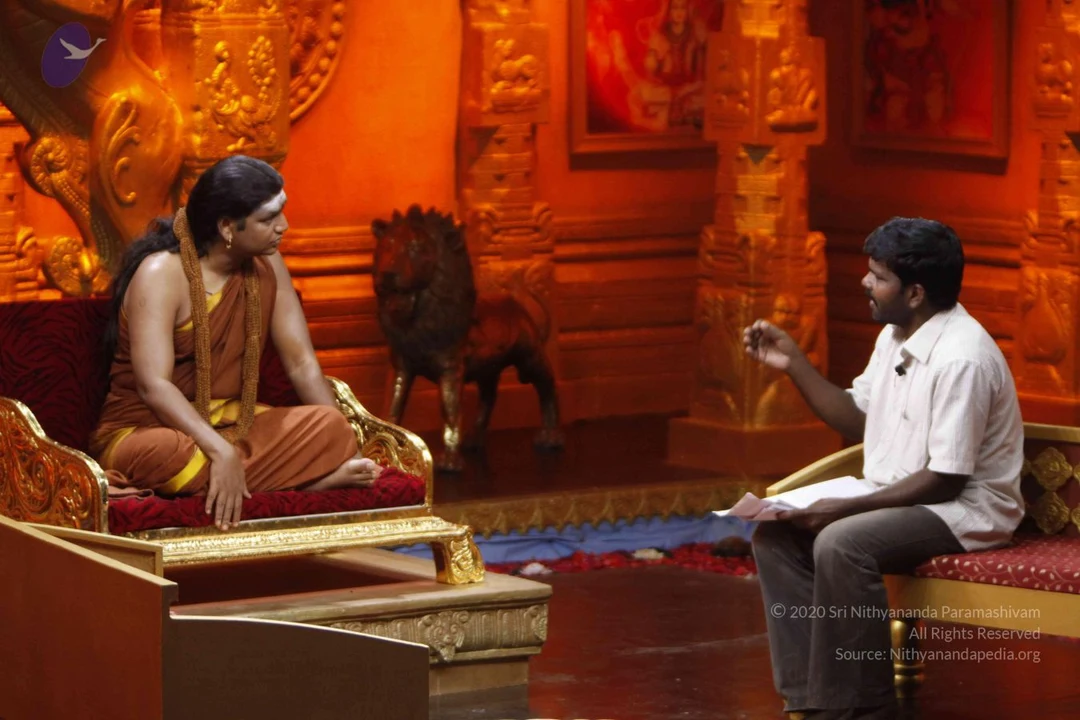
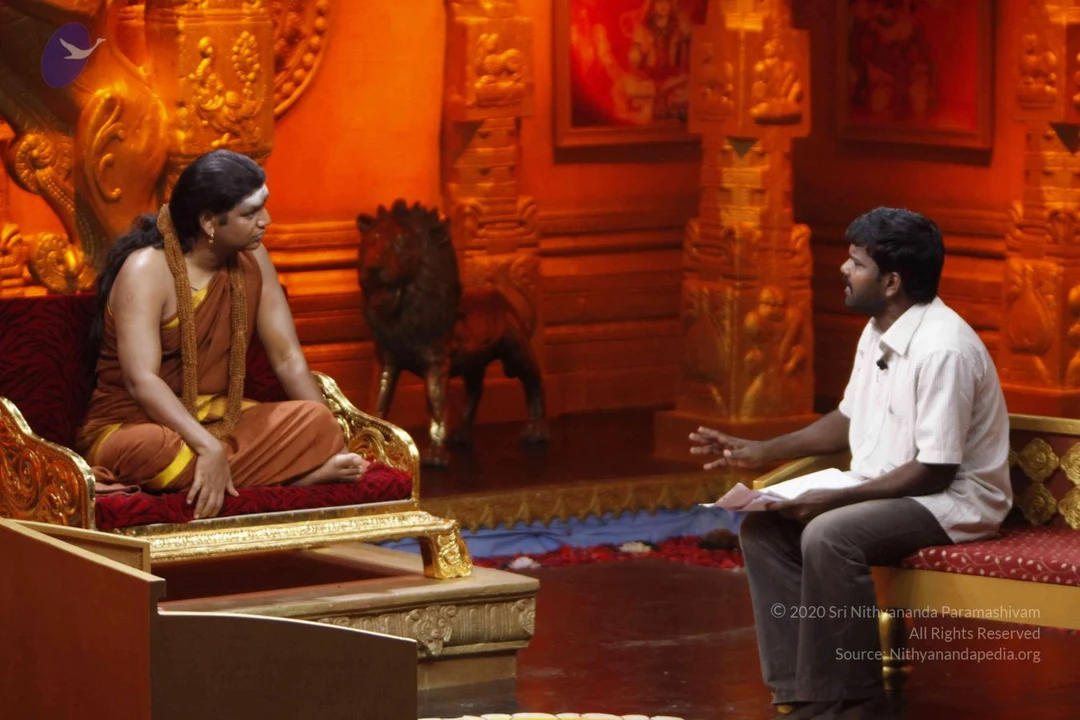
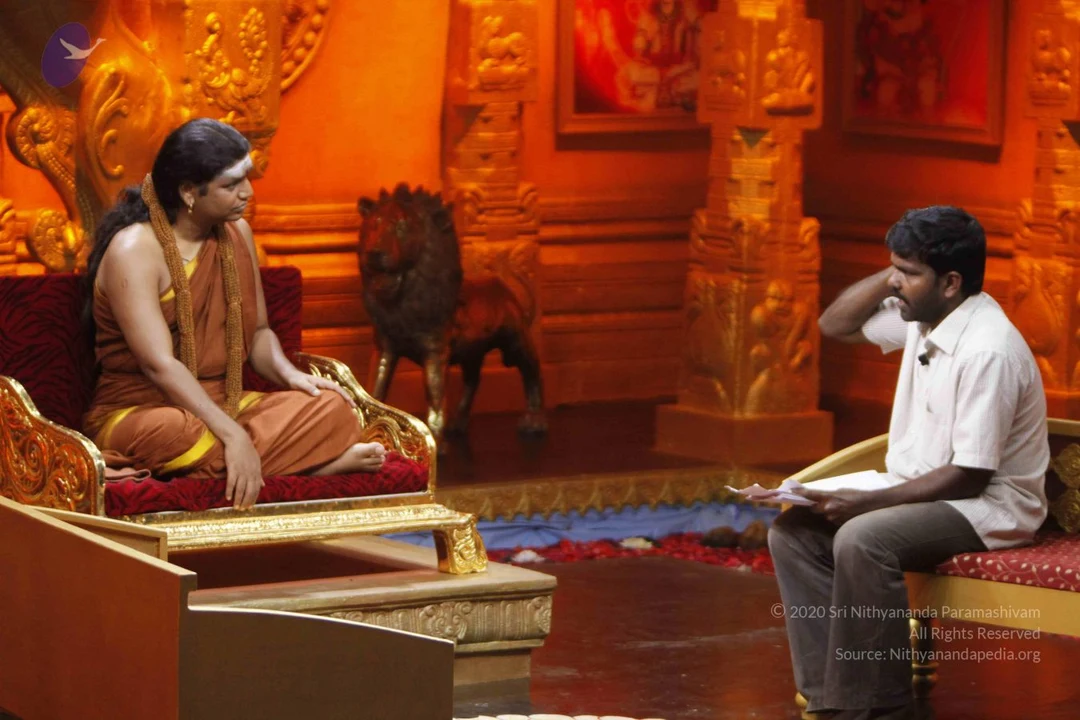
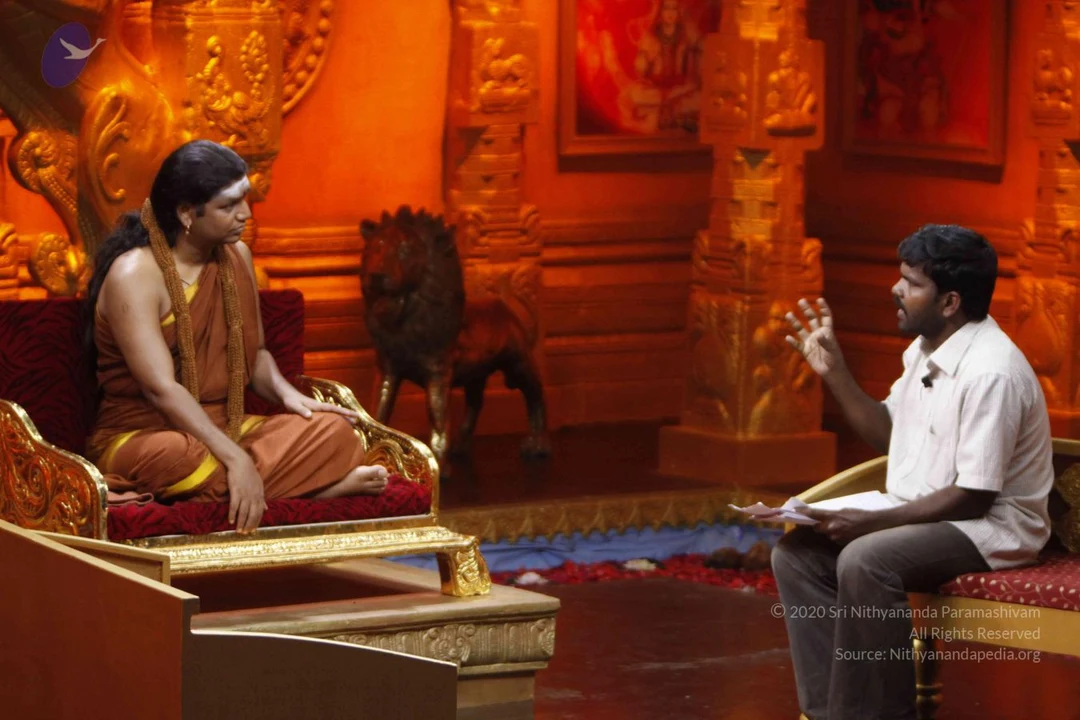
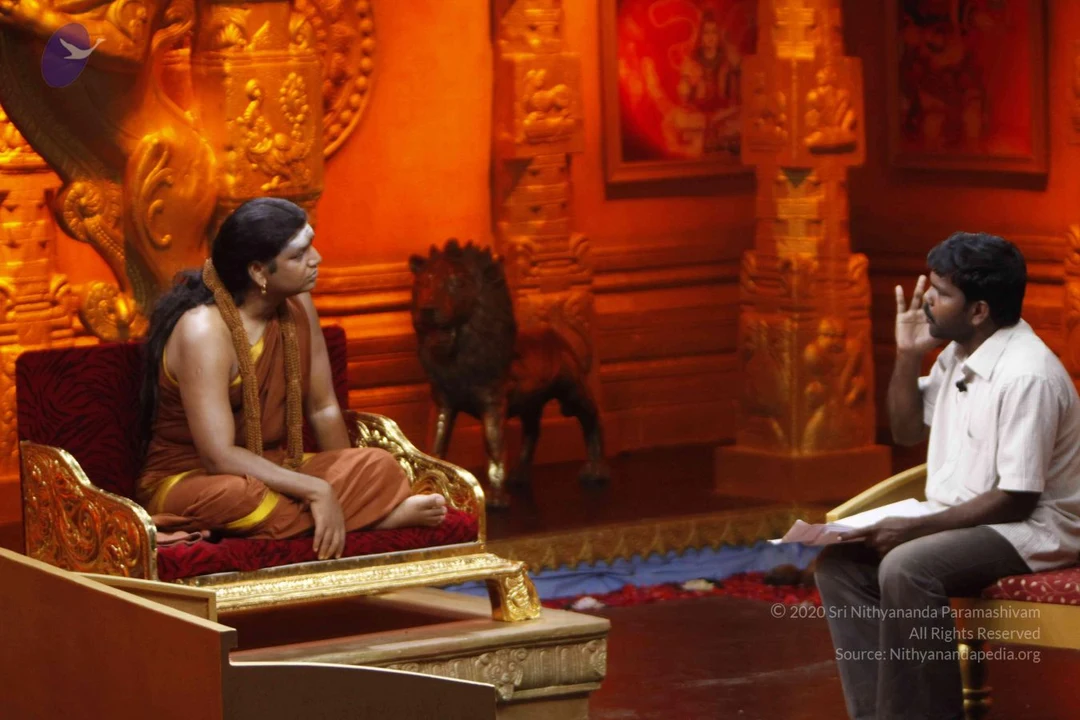
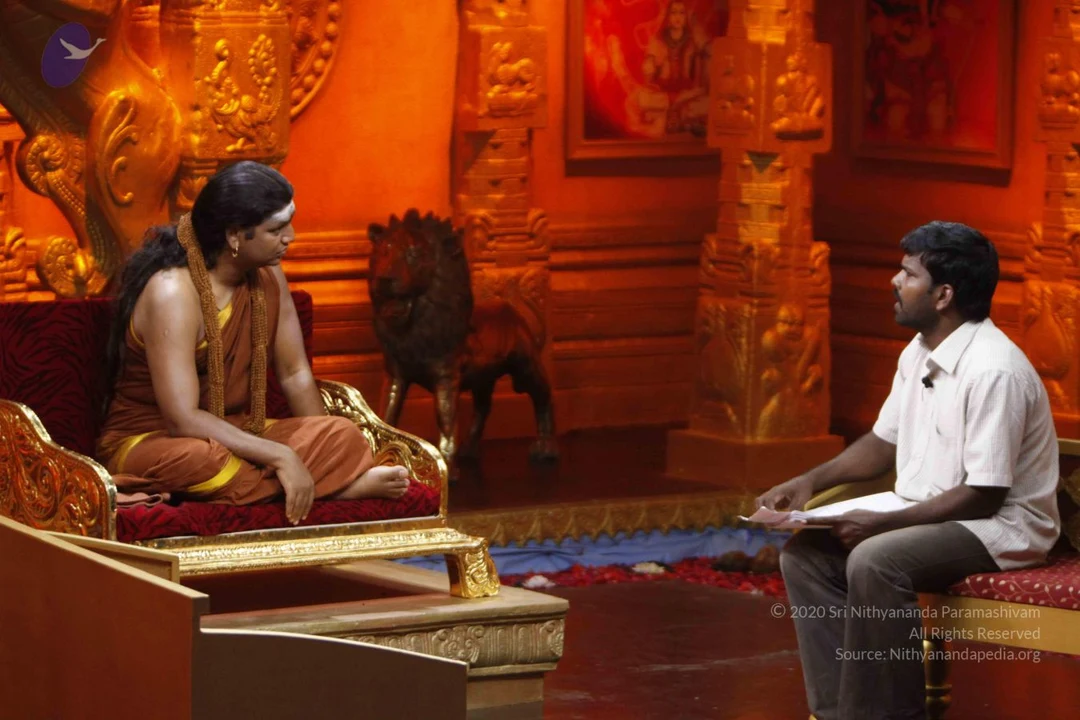
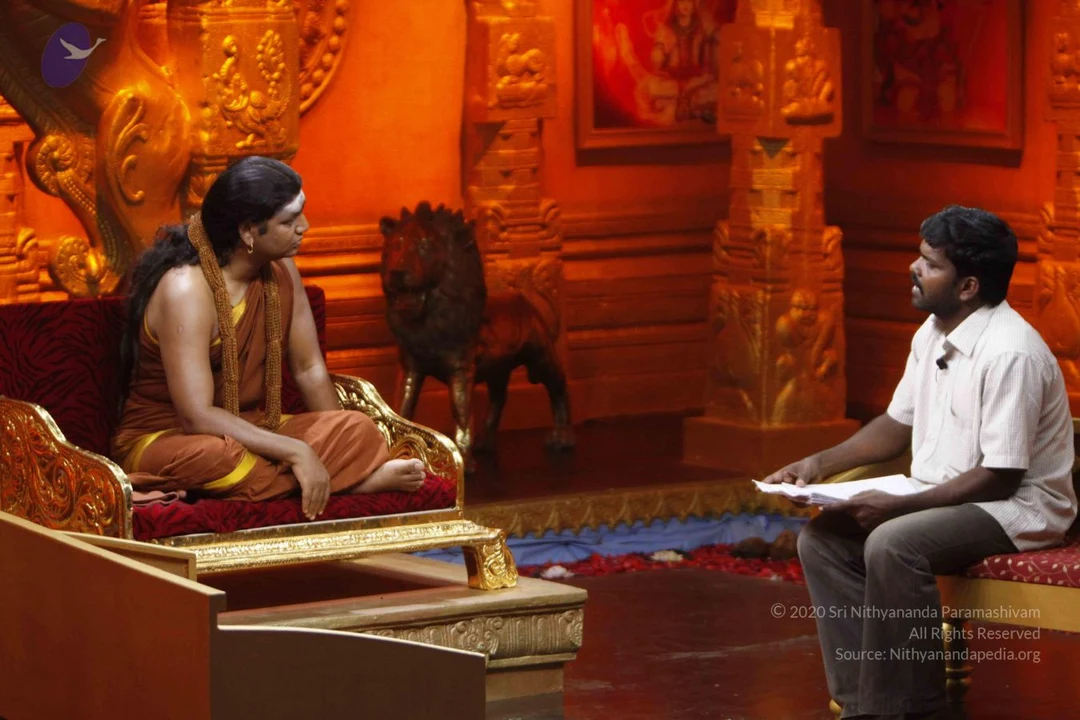
Thanthi-TV-show-day3

35 photosSource gallery
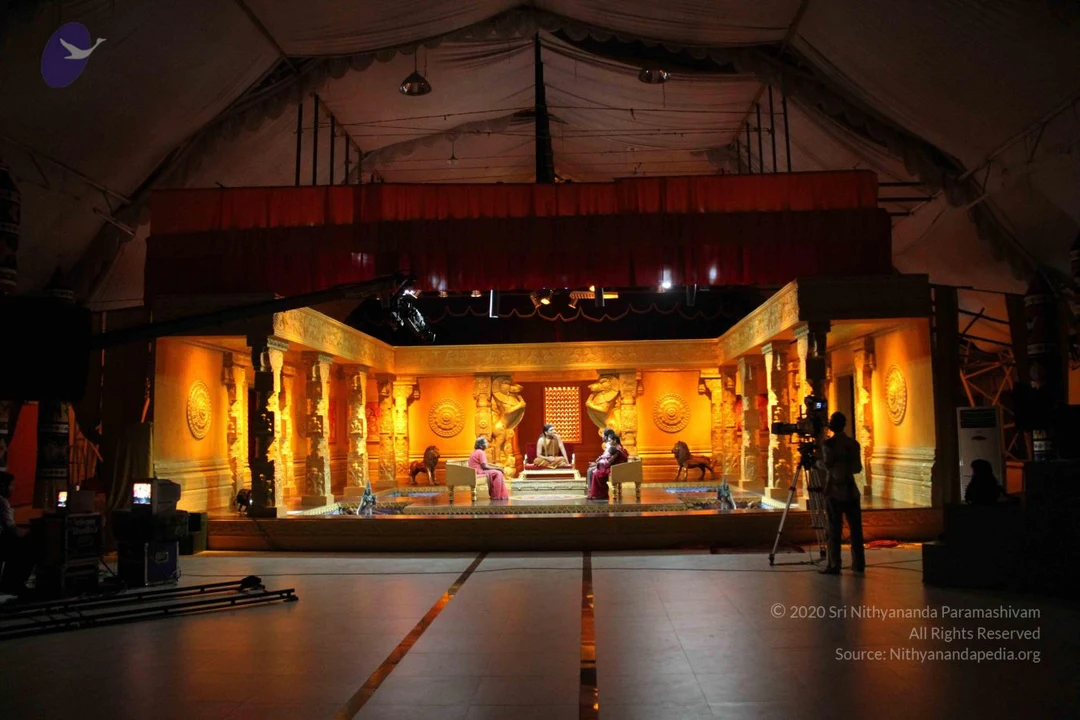
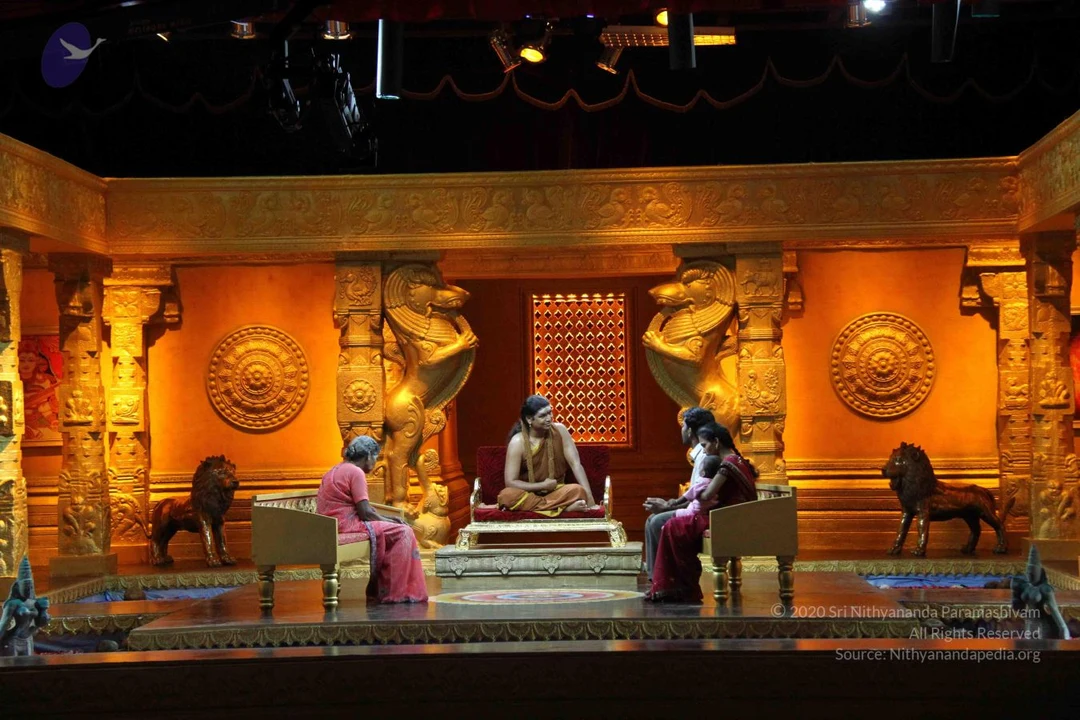
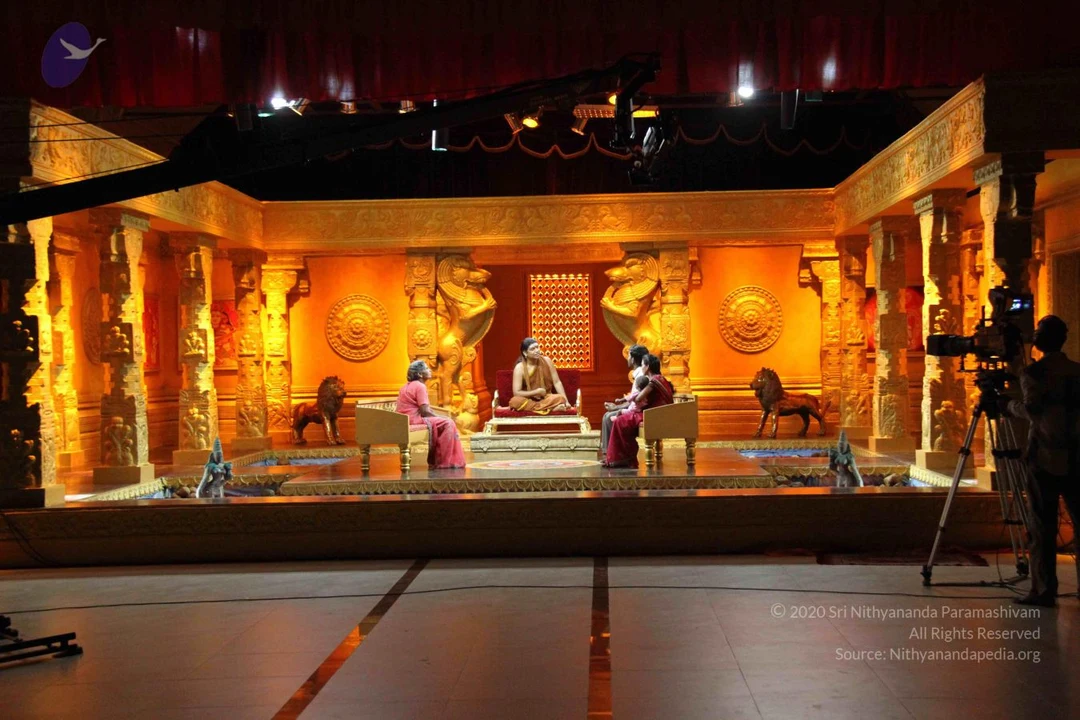
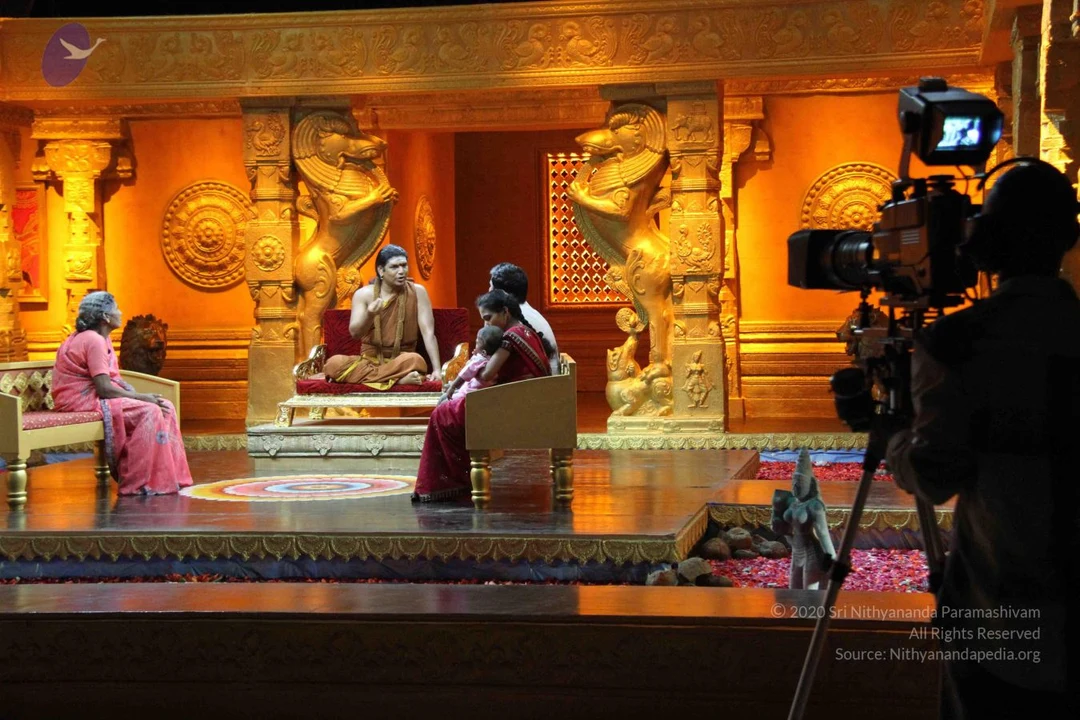
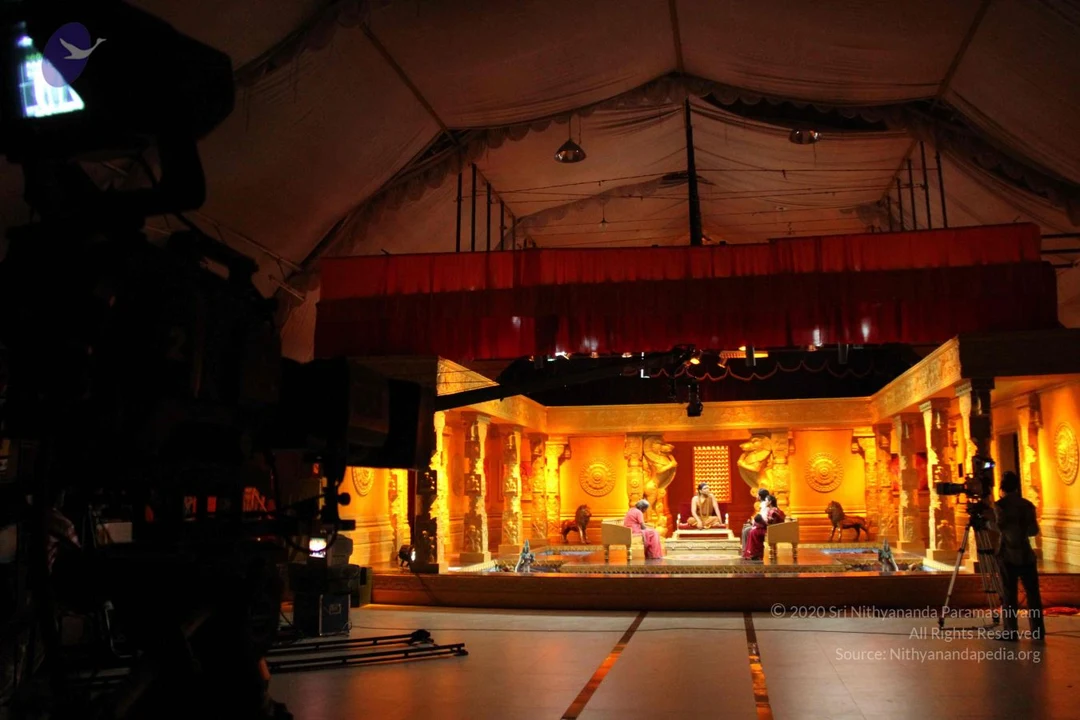
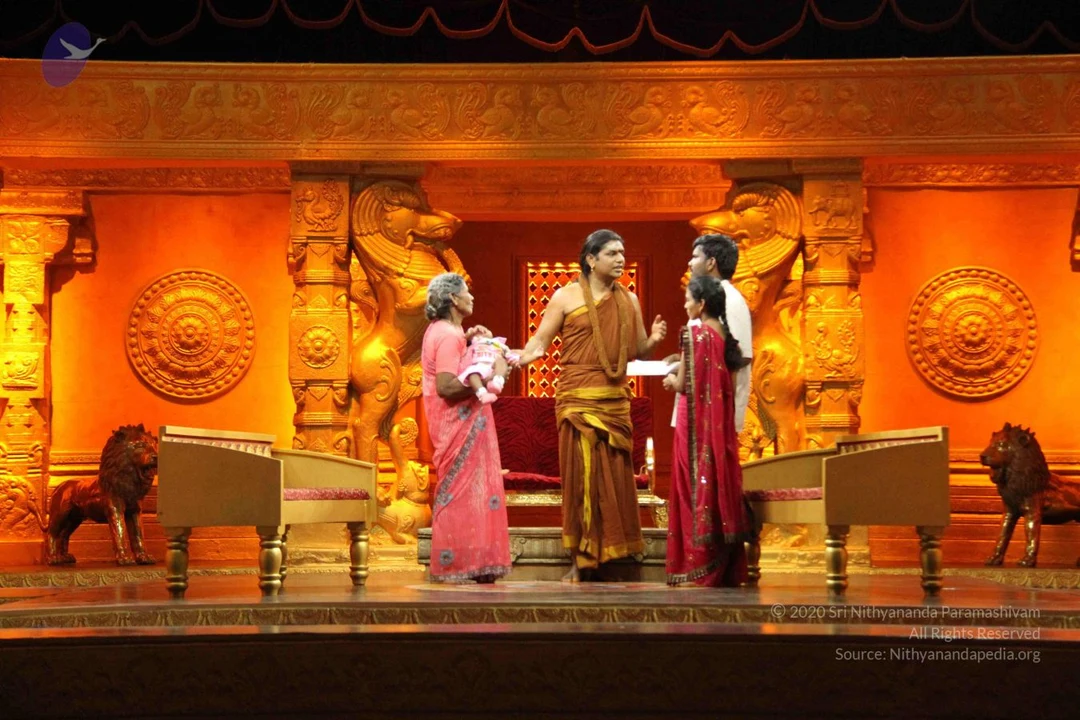
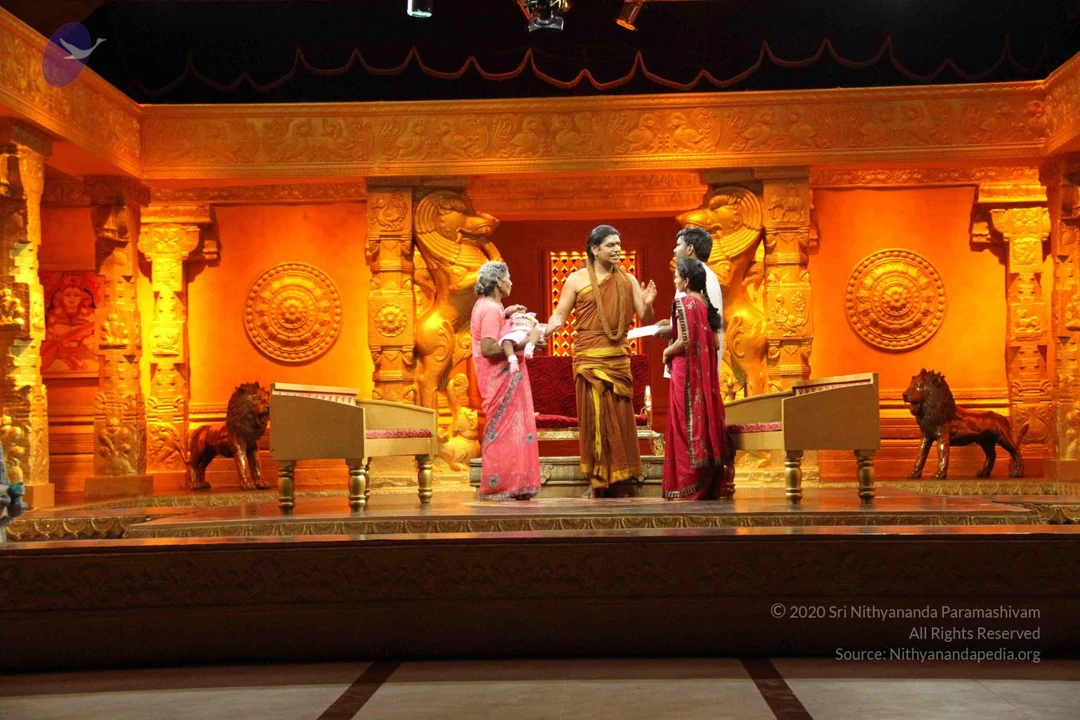
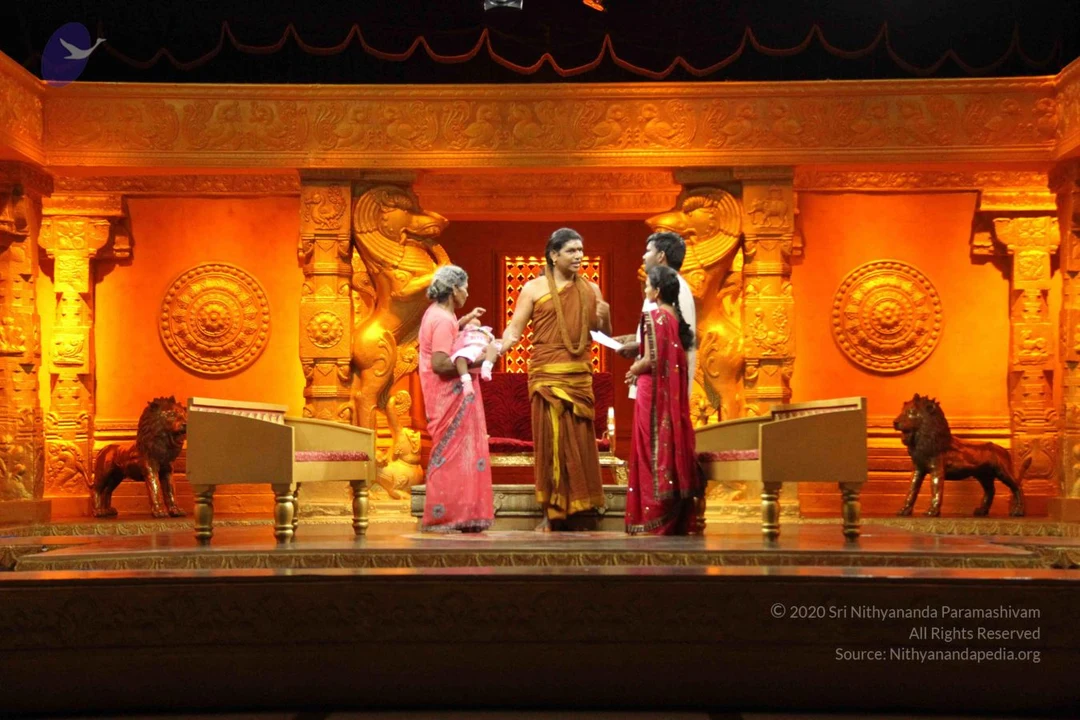
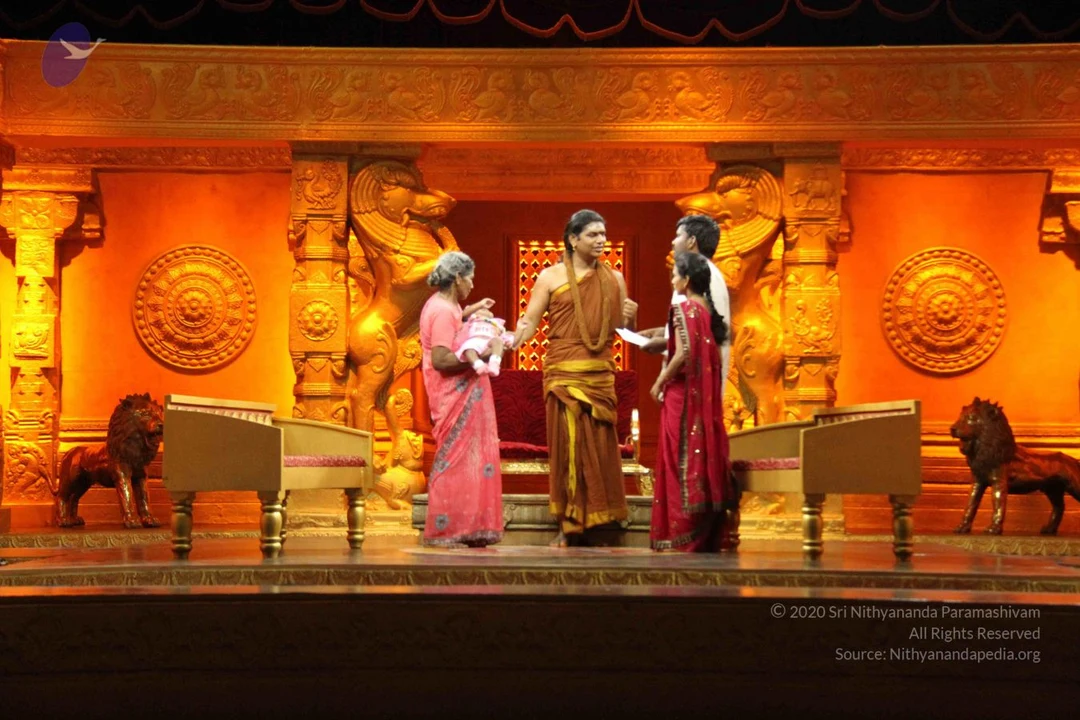
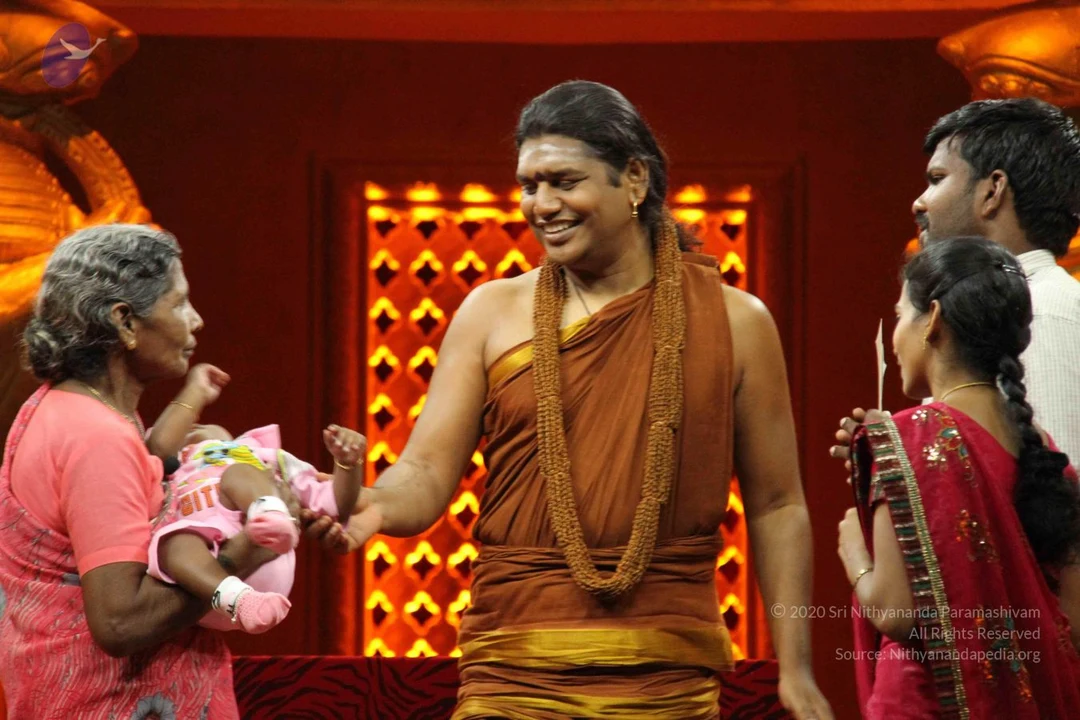
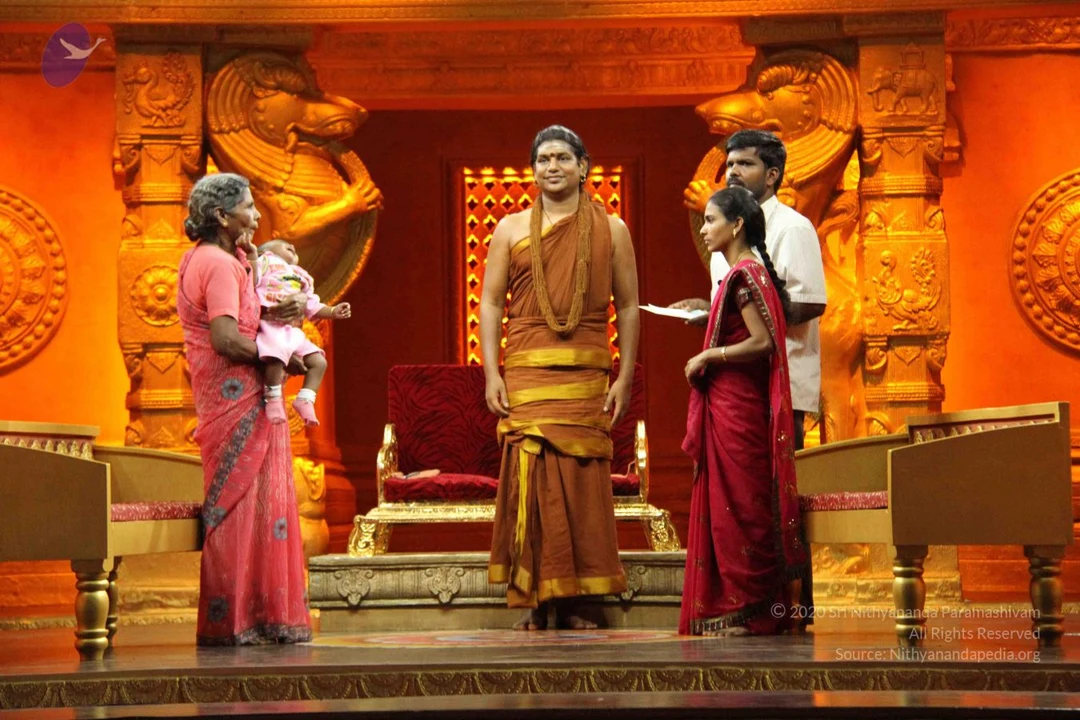
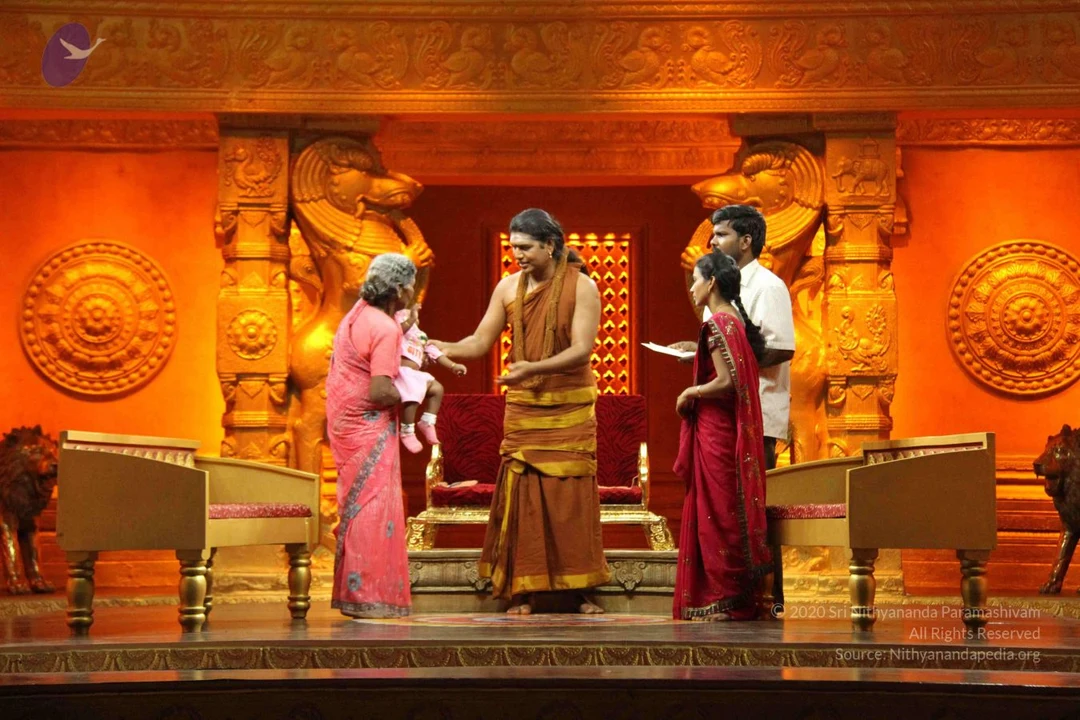
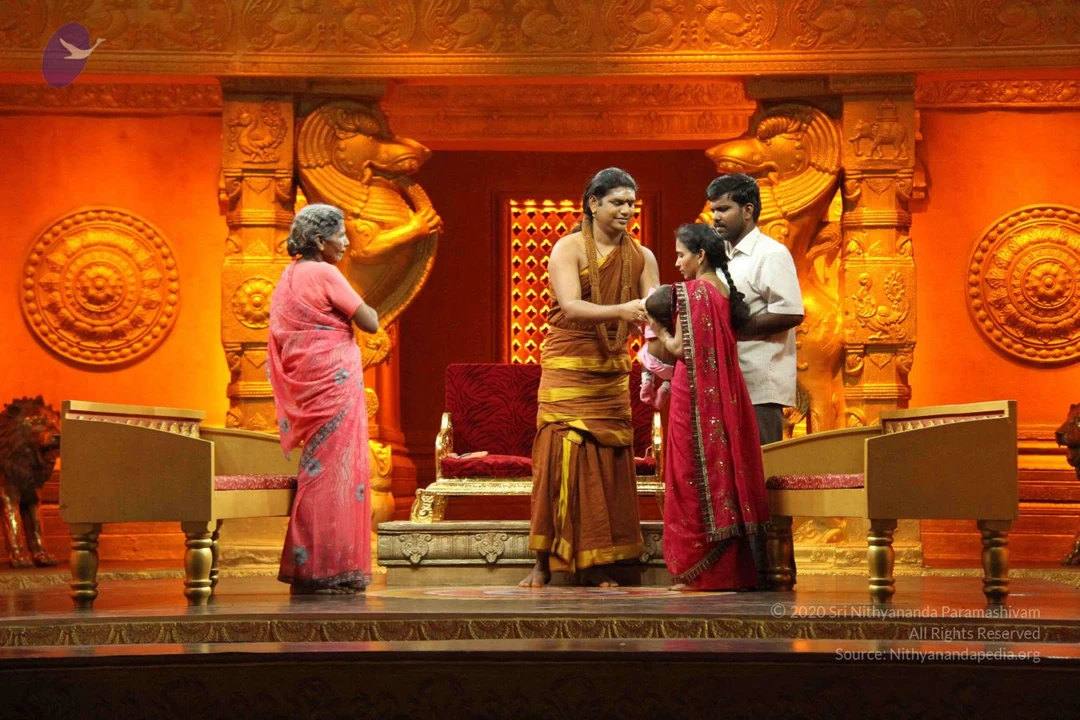
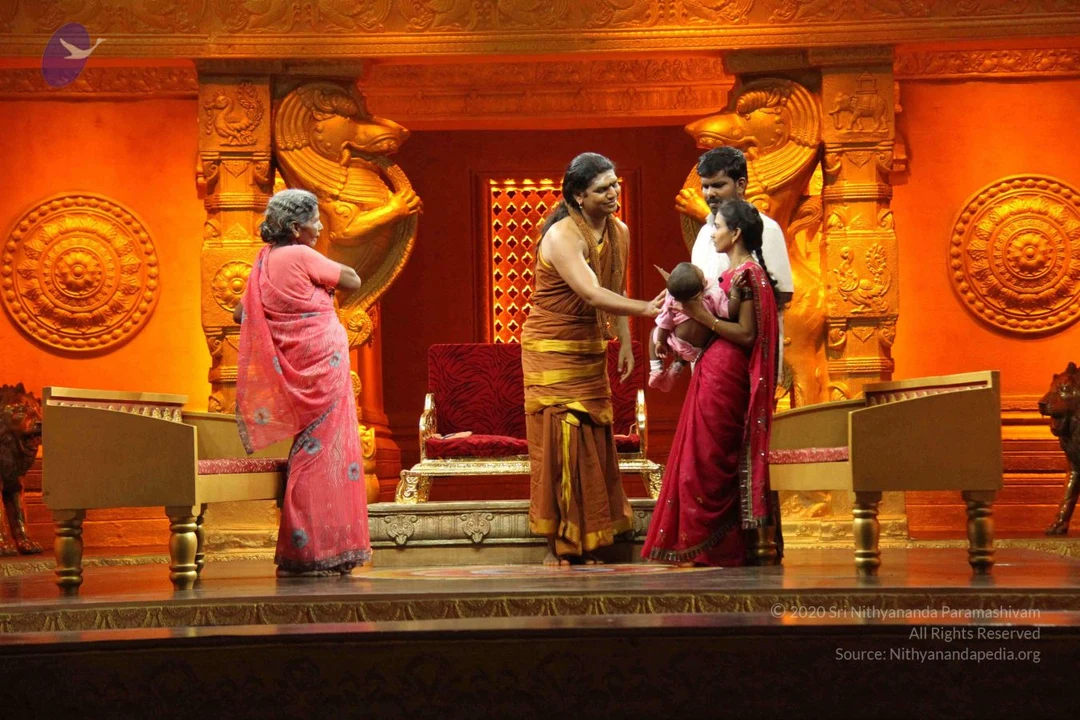
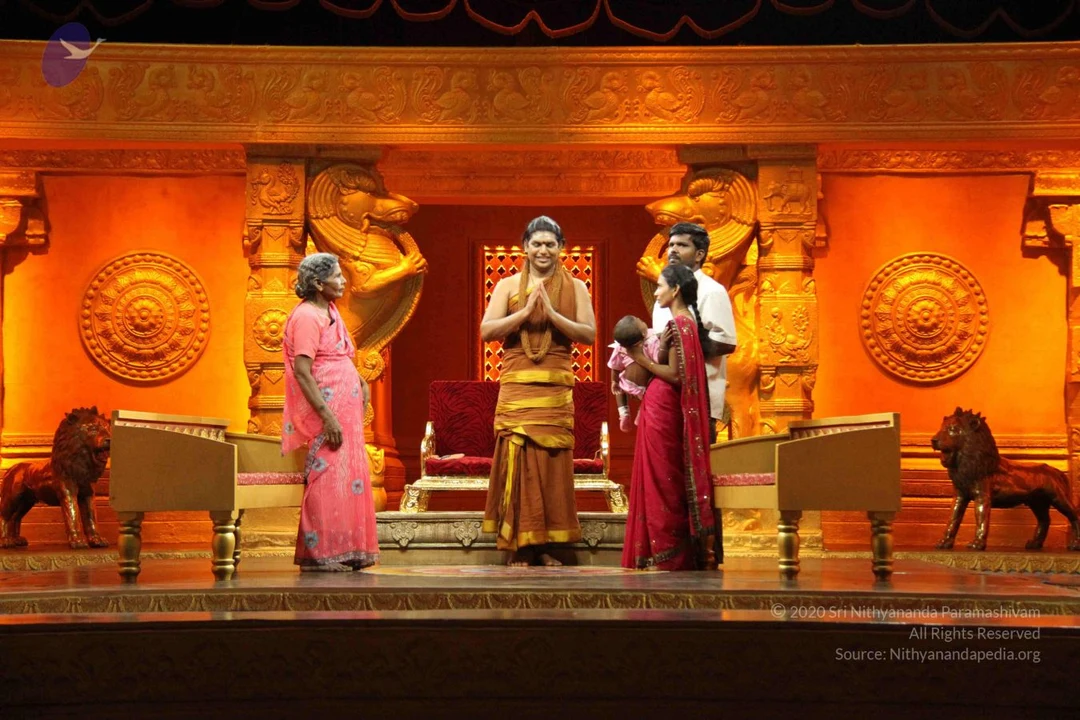
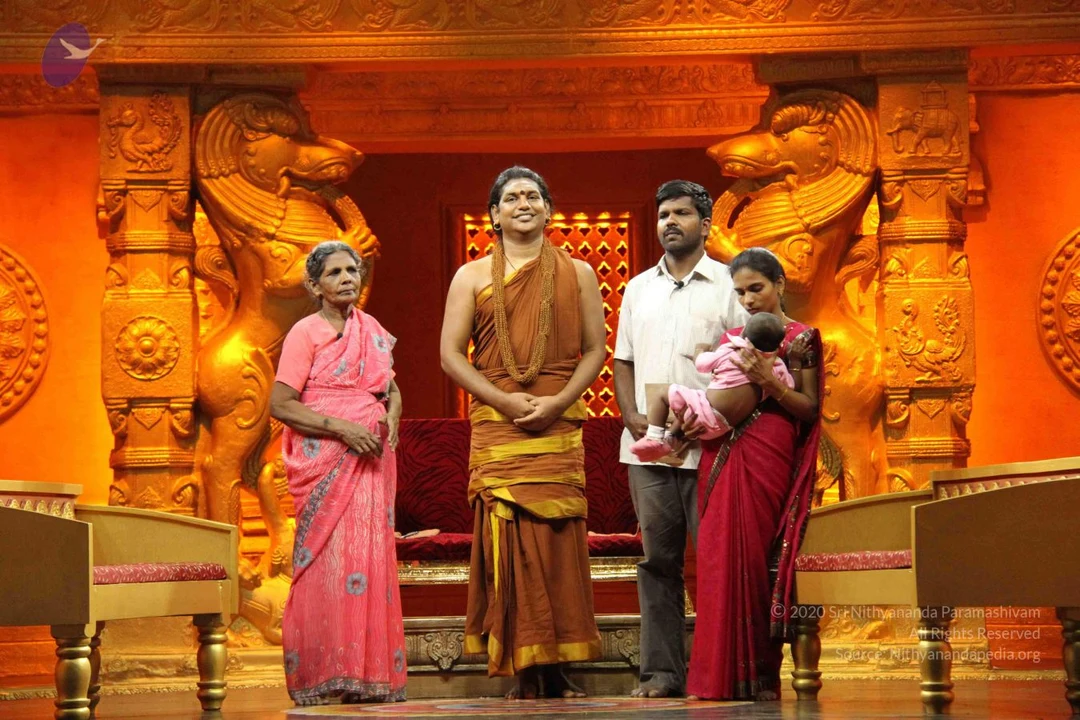
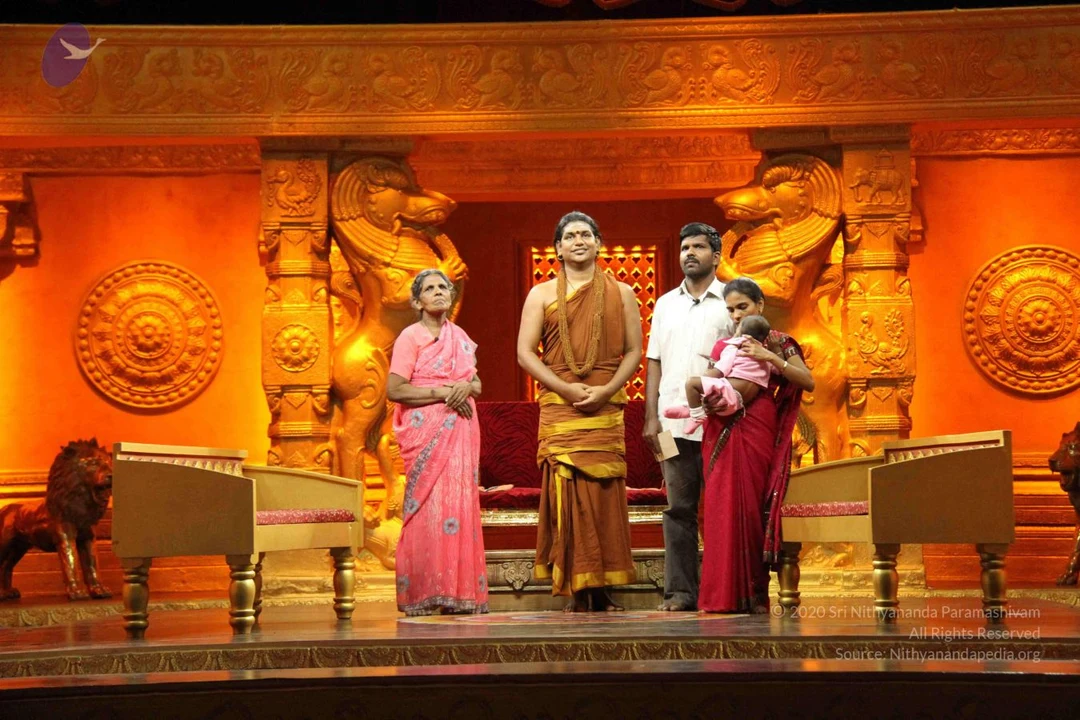
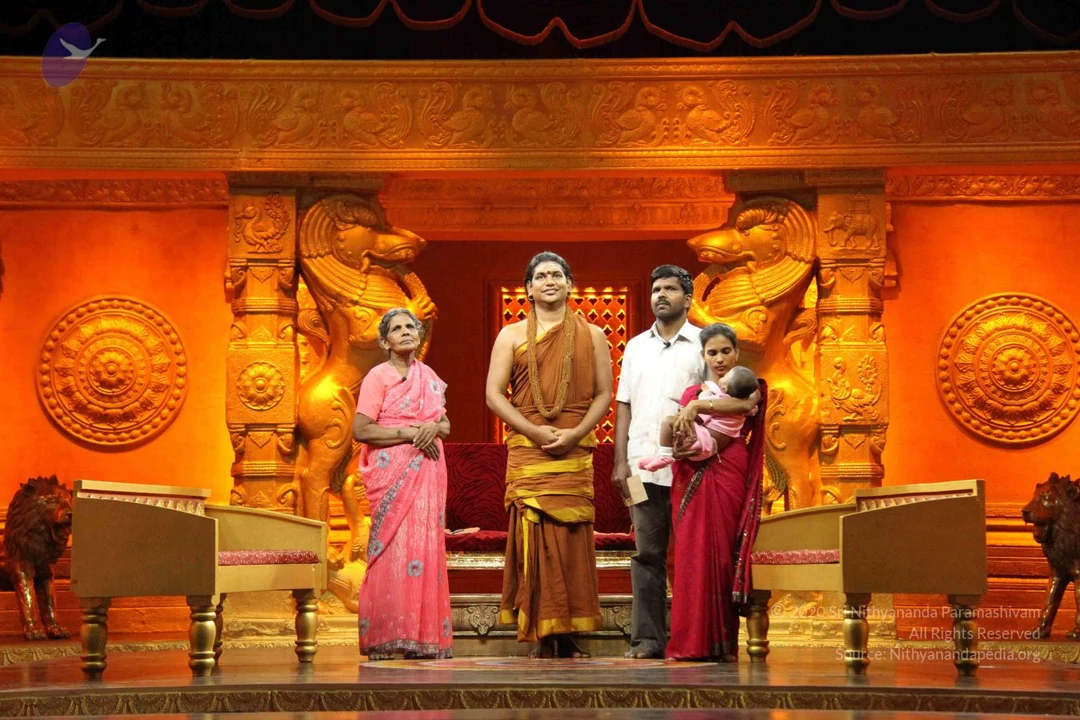
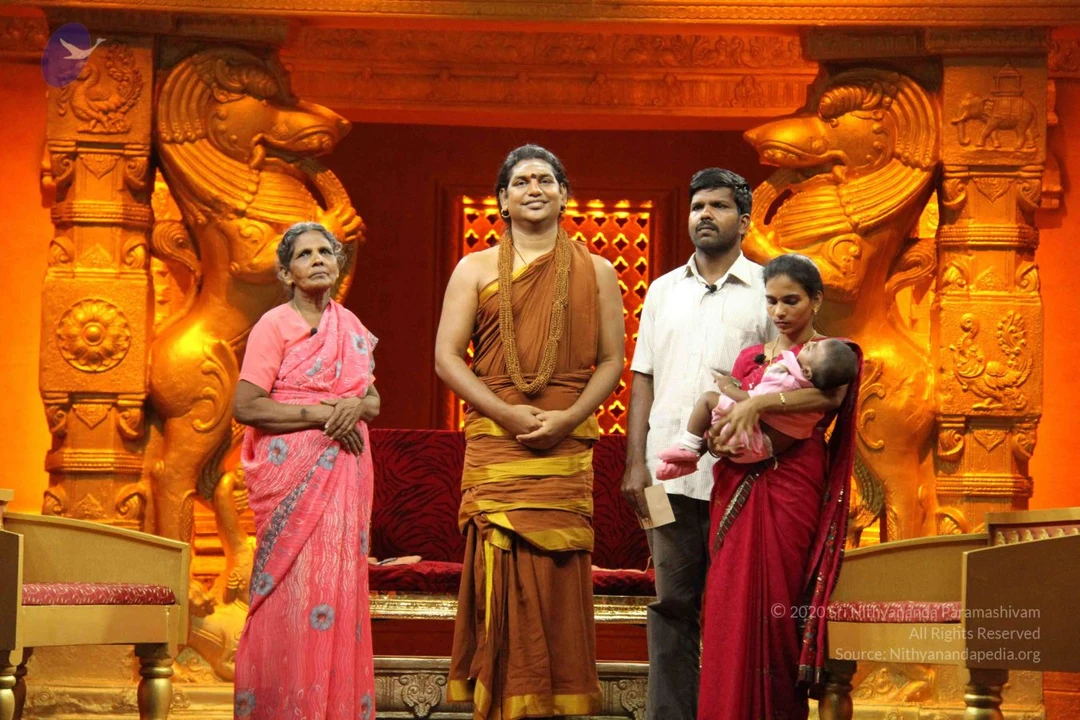
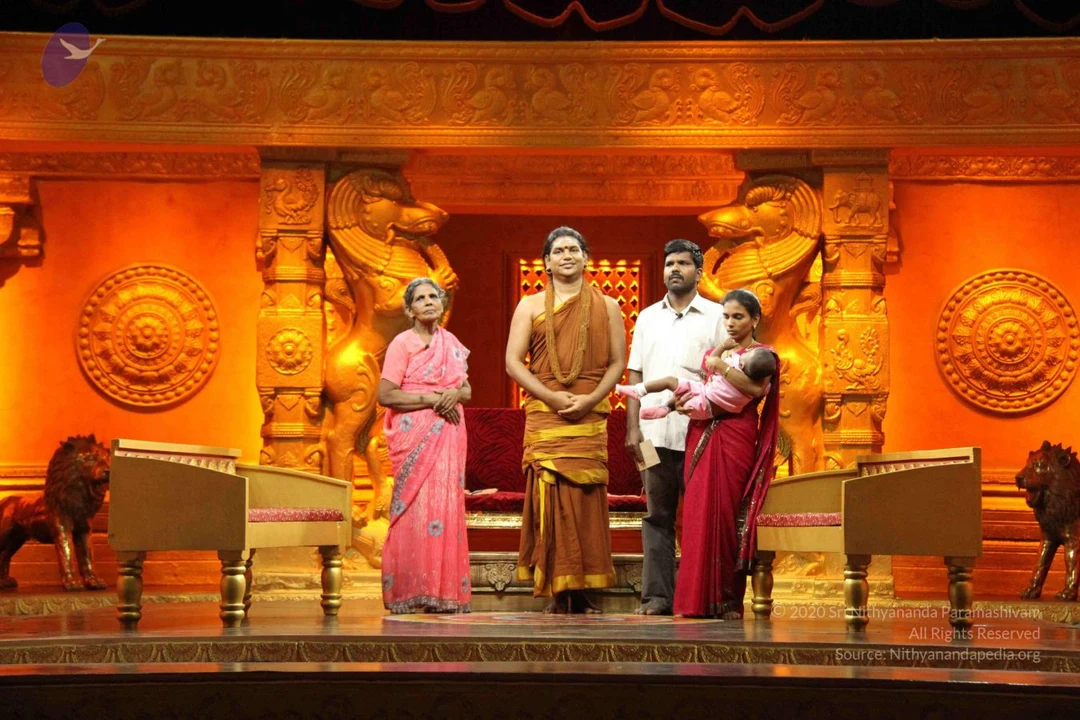
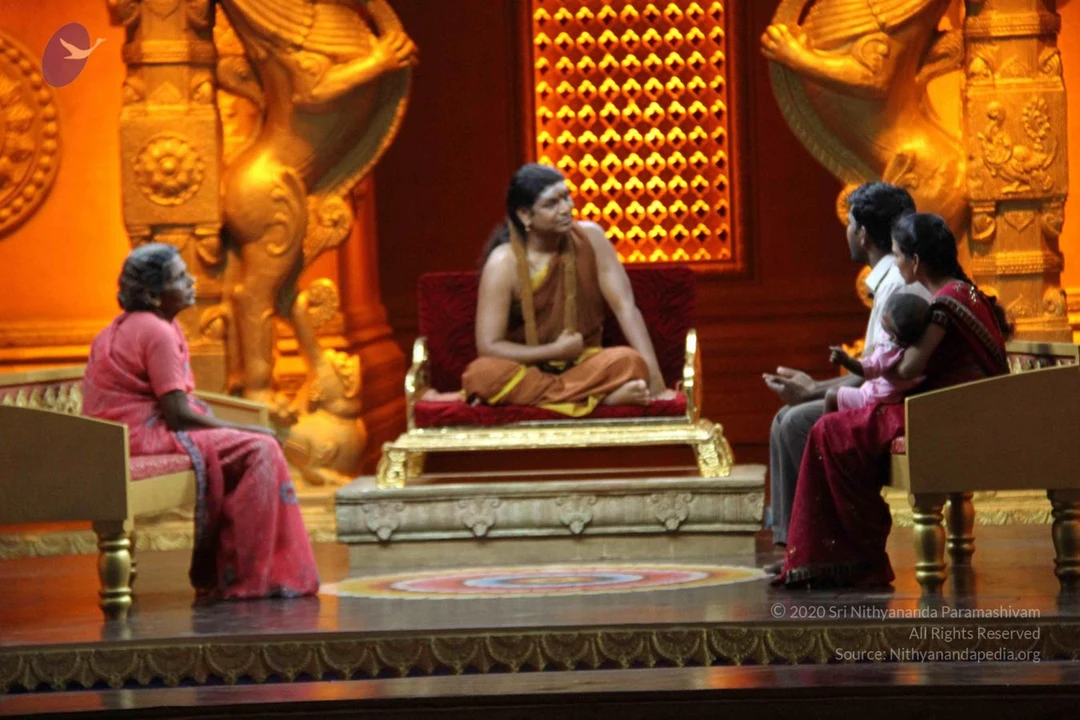
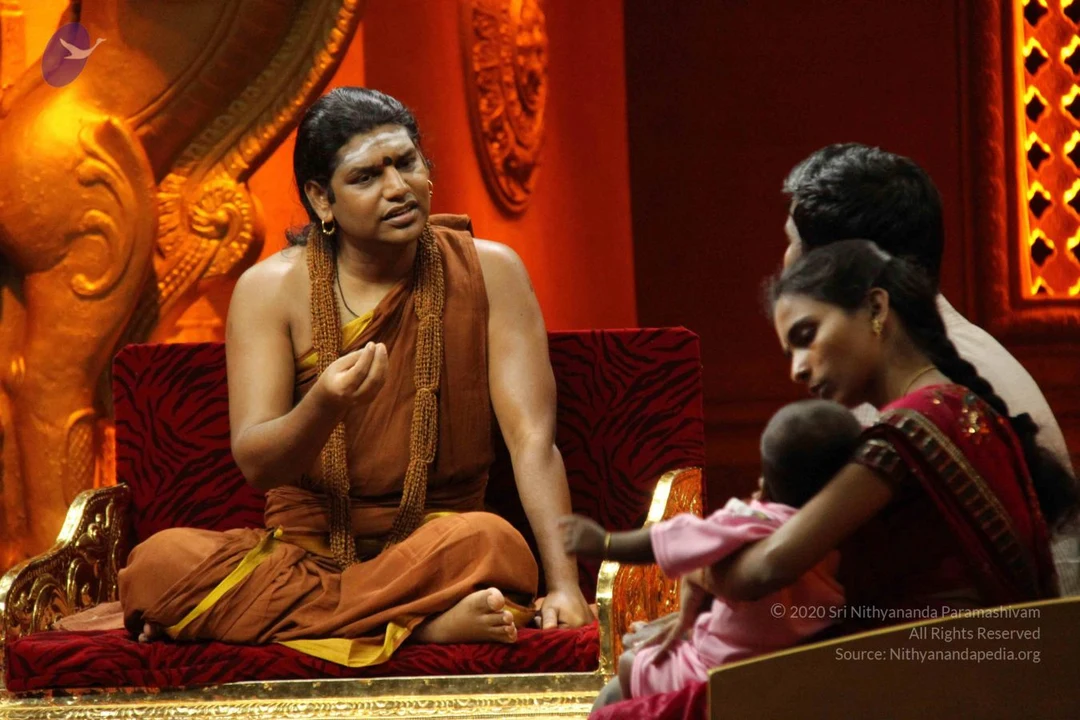
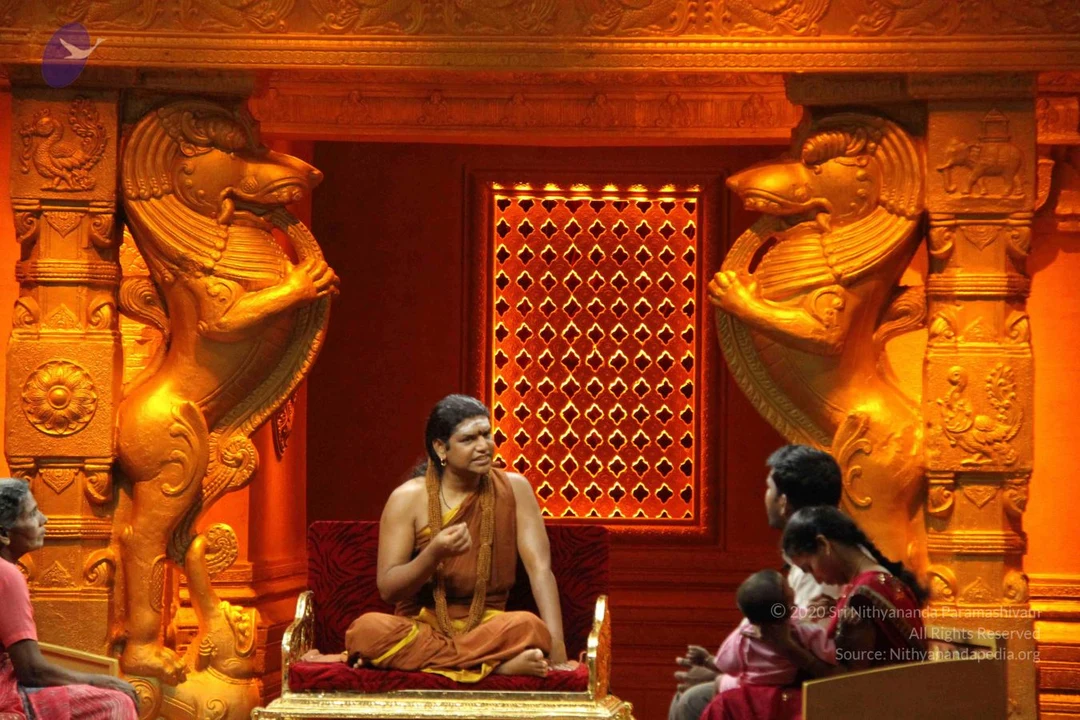
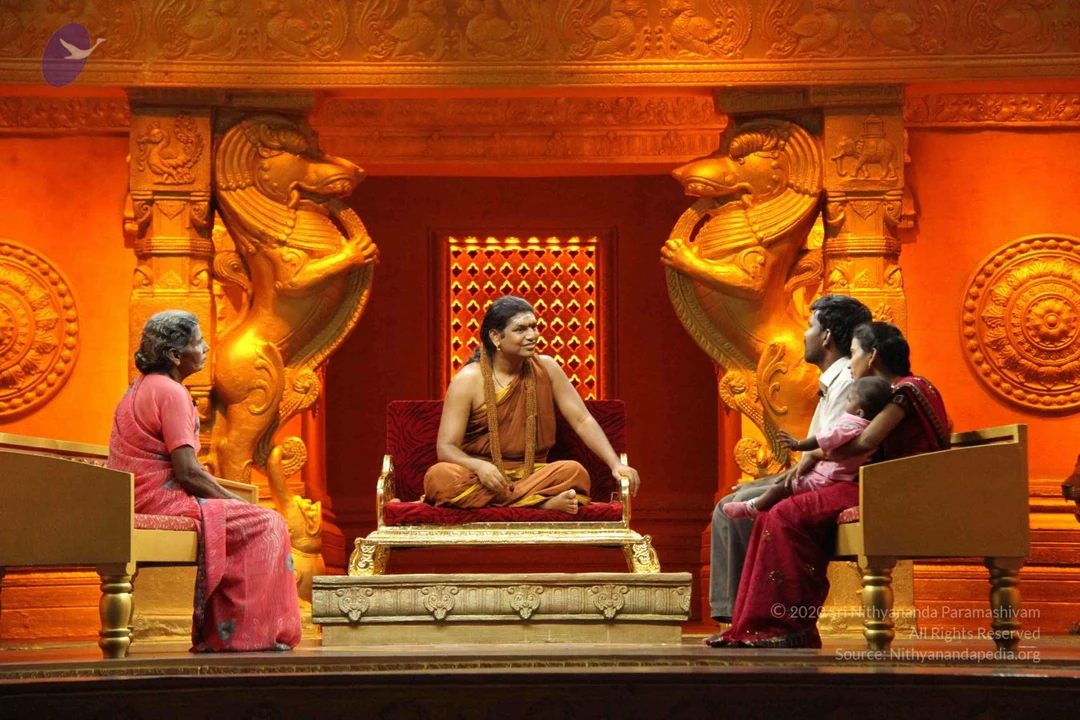
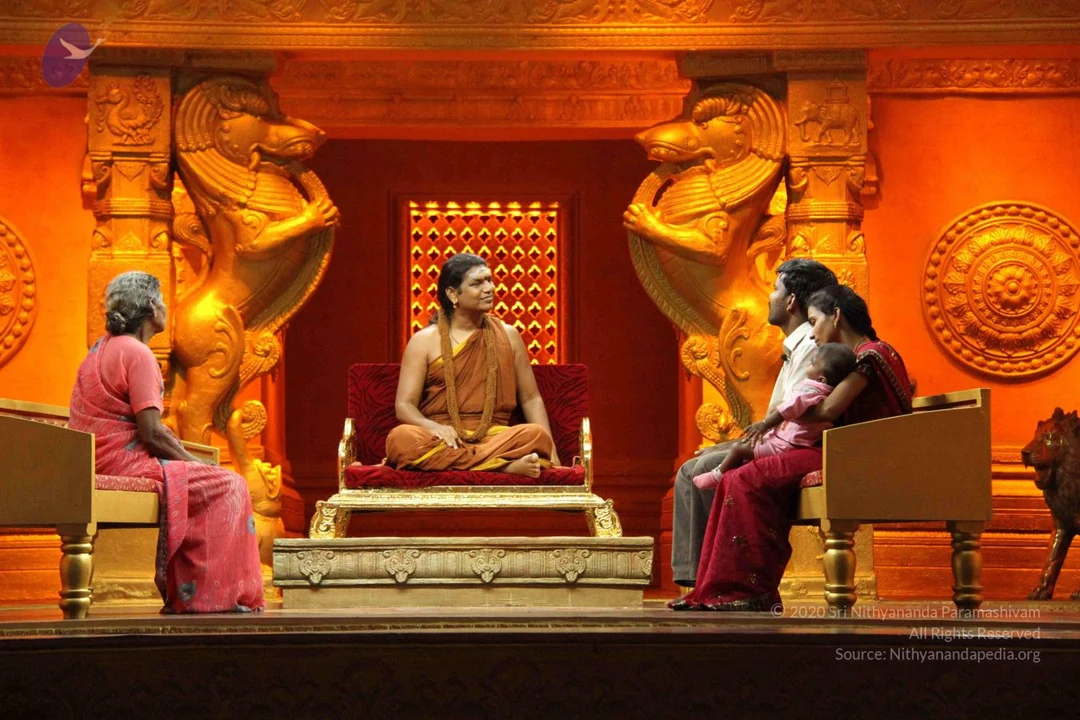
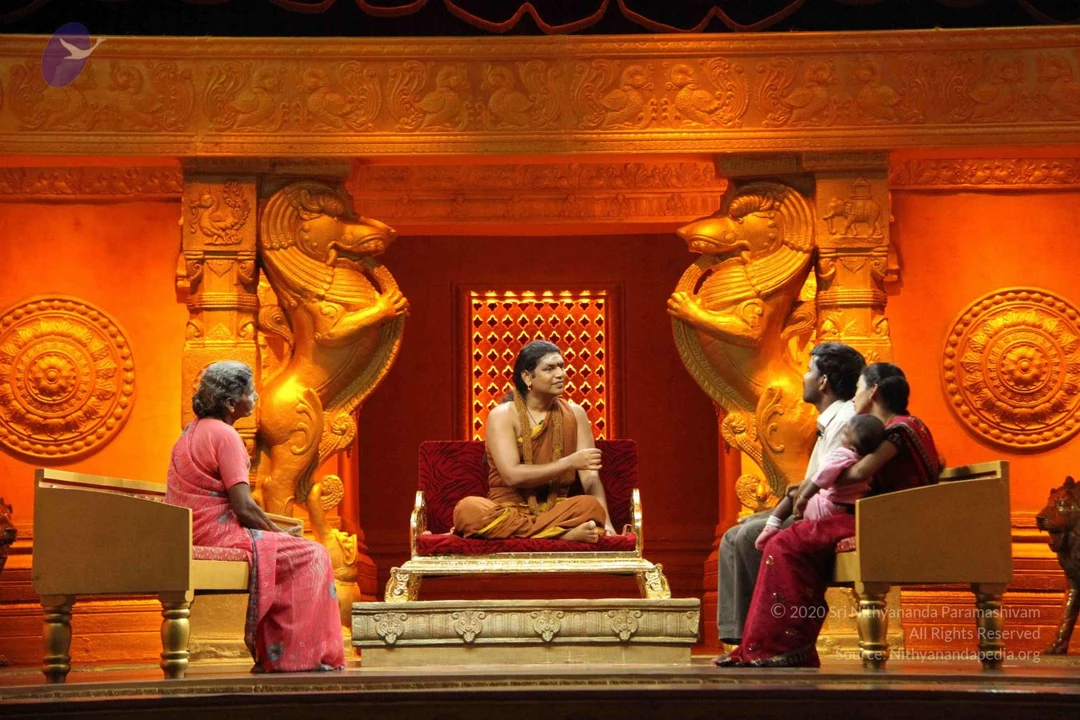
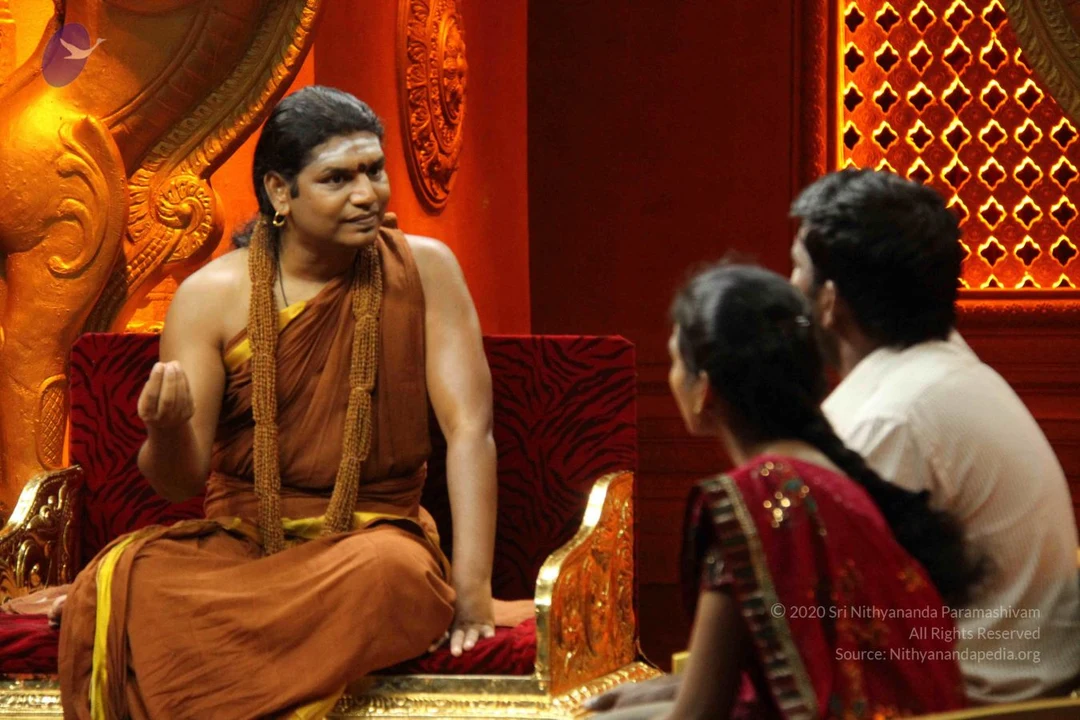
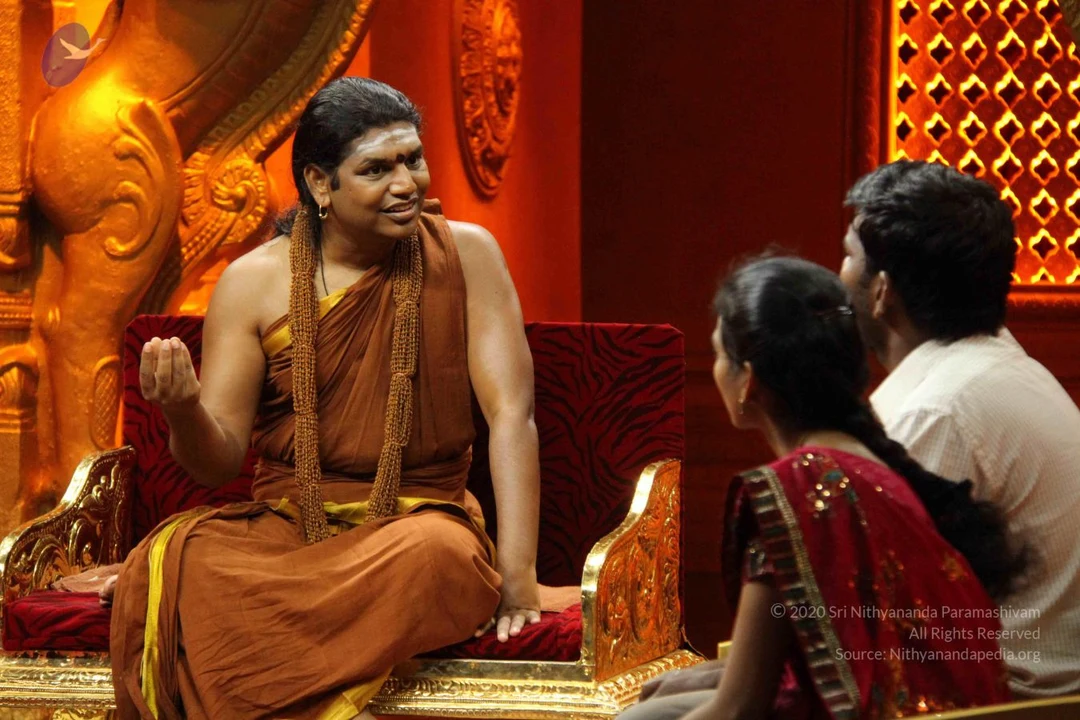
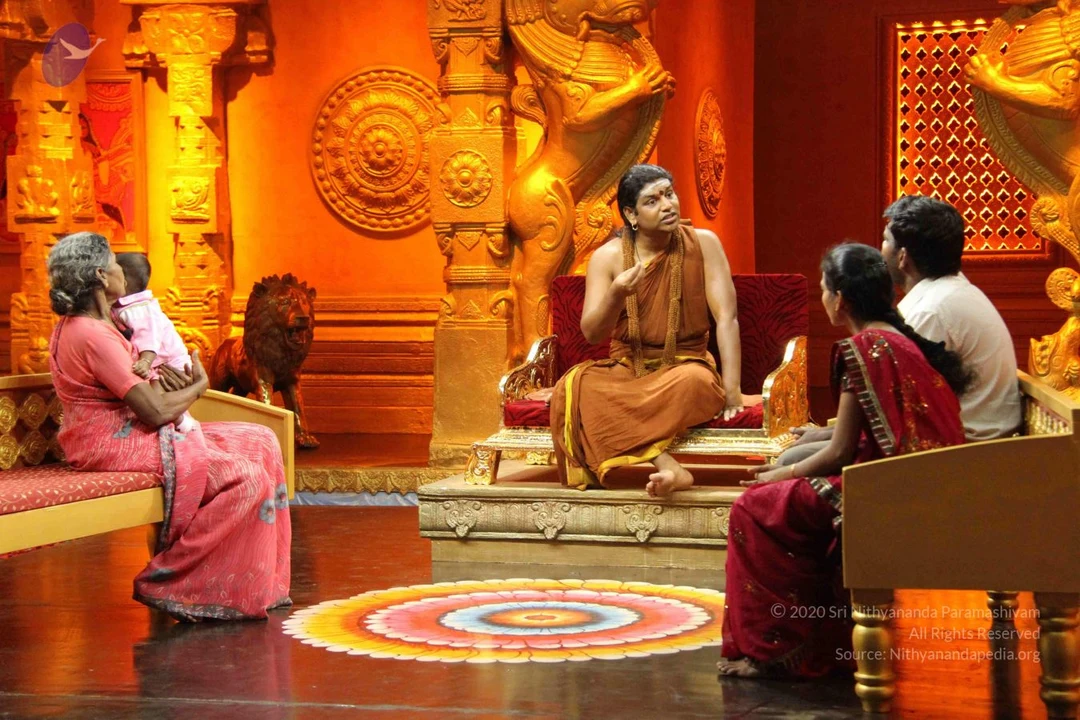
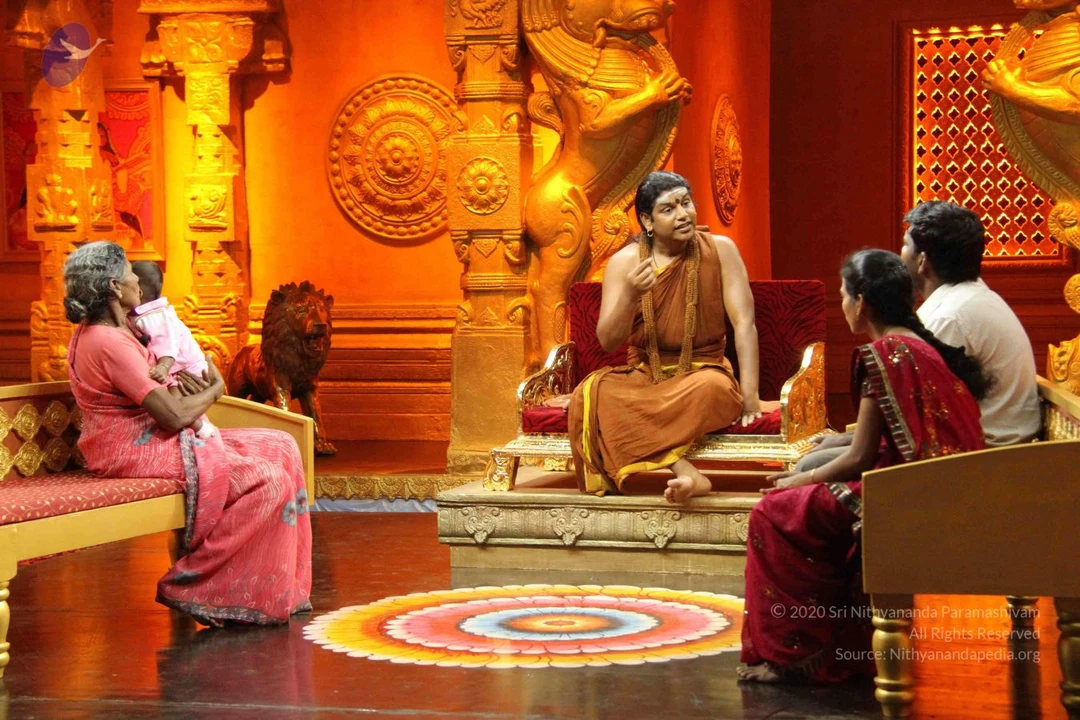
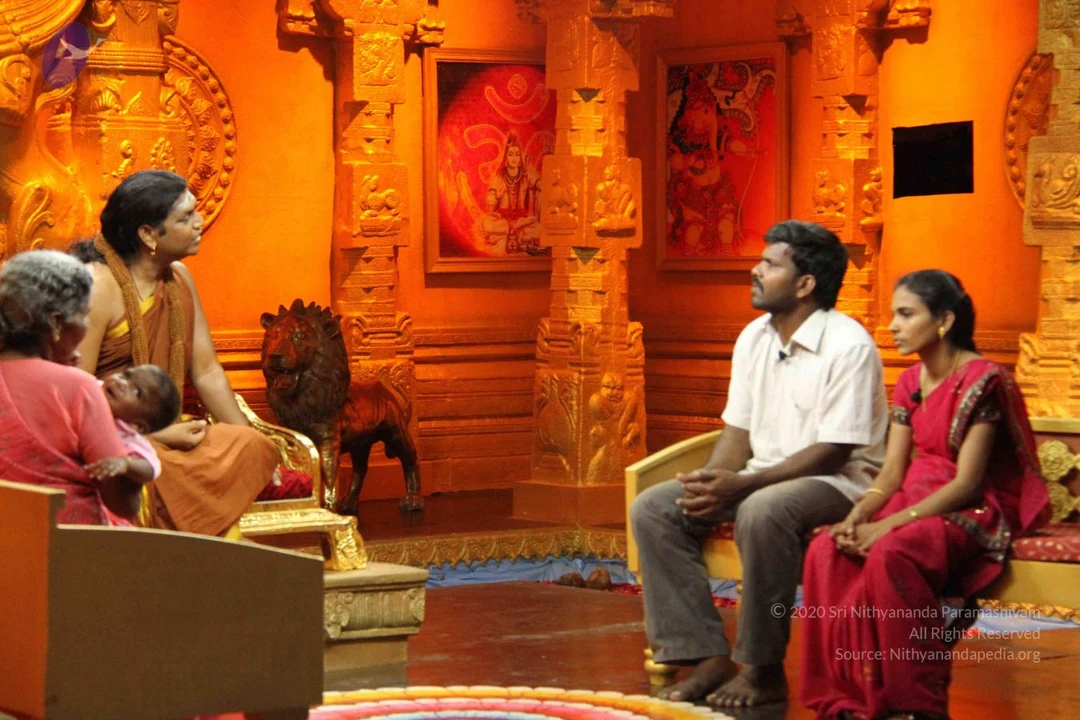
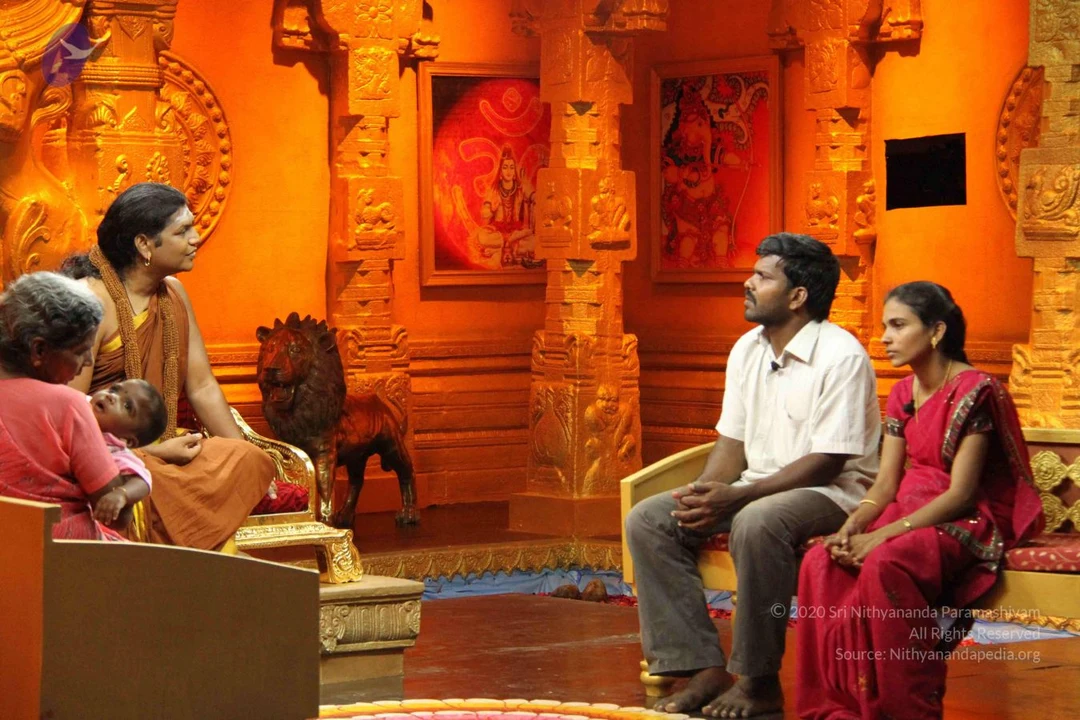
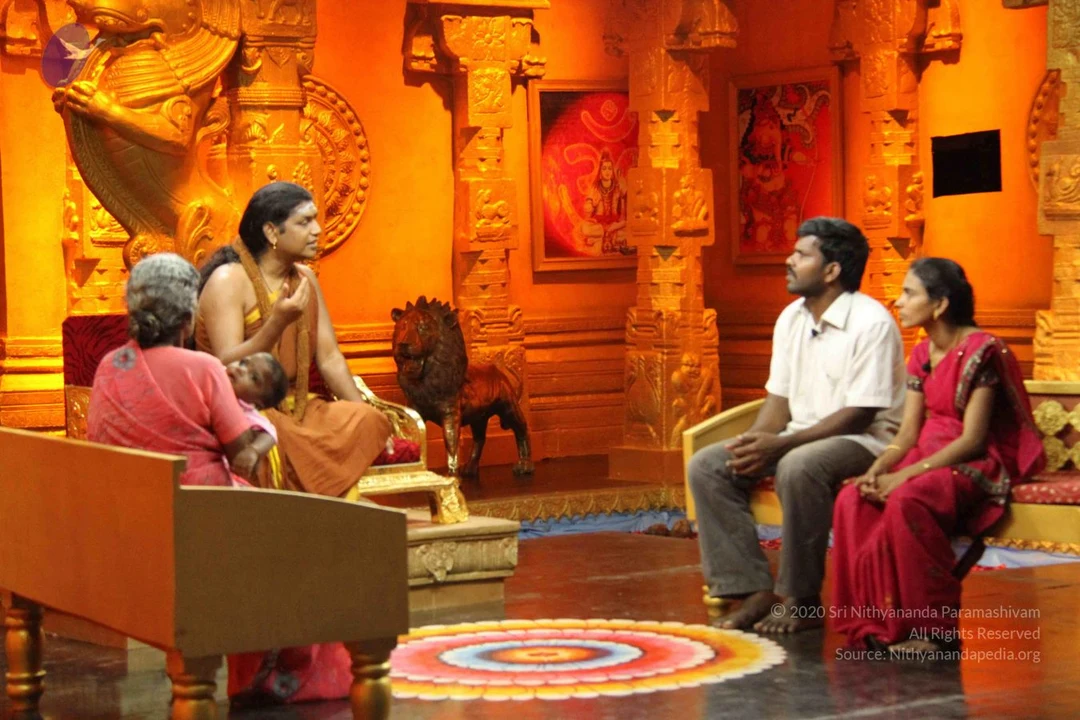
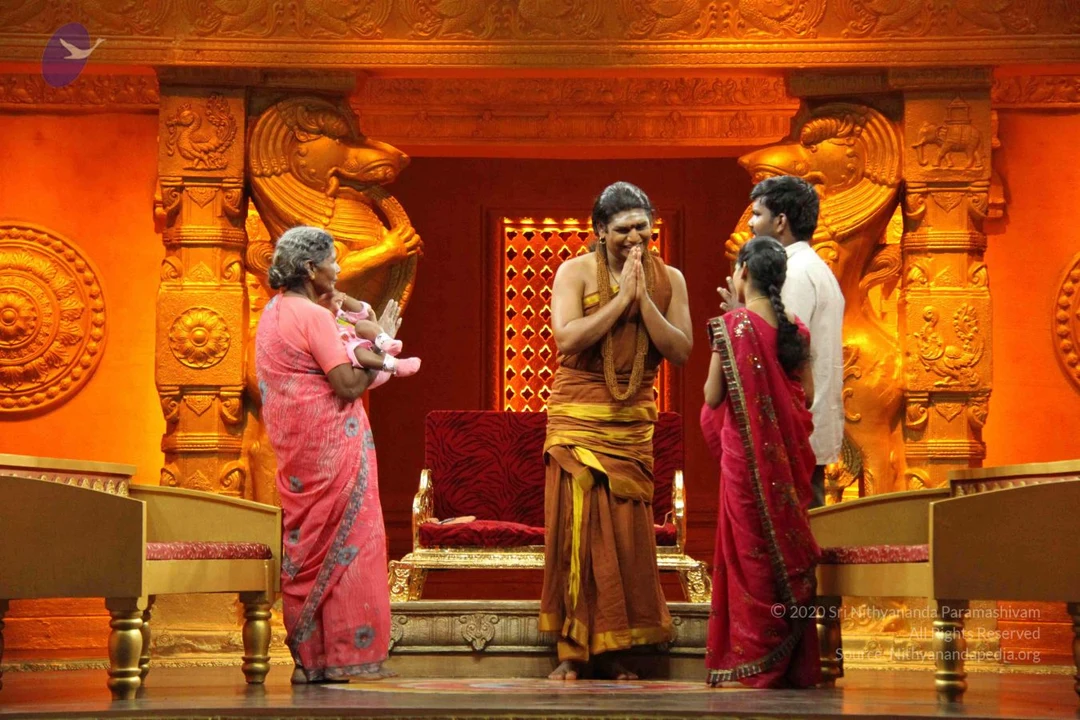
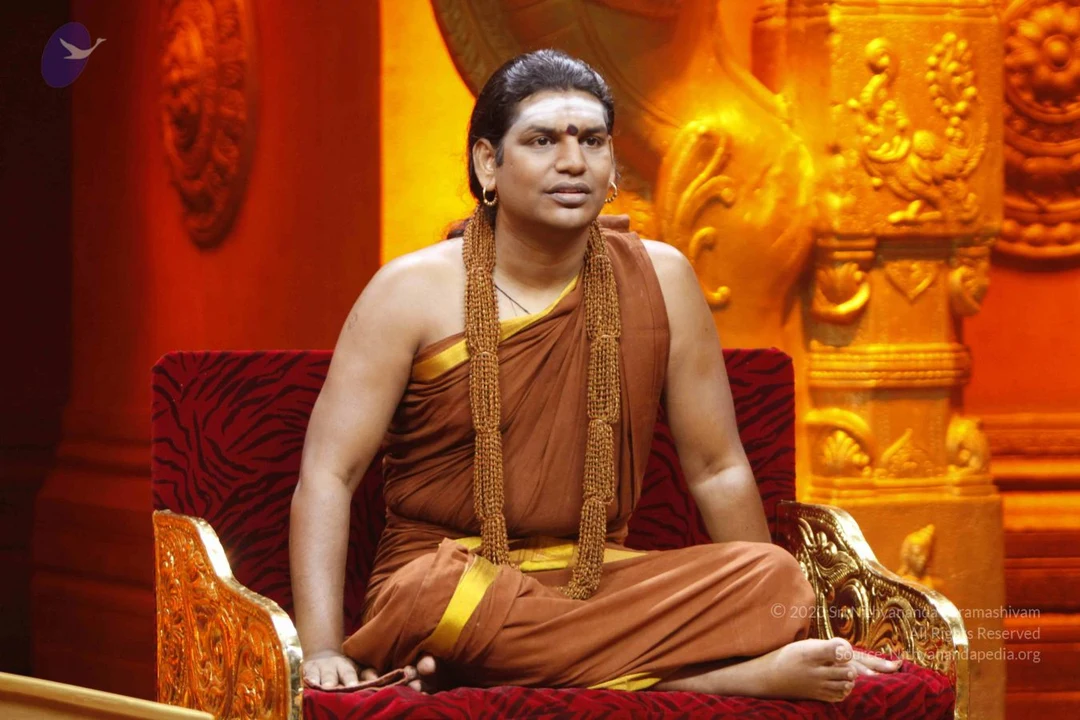
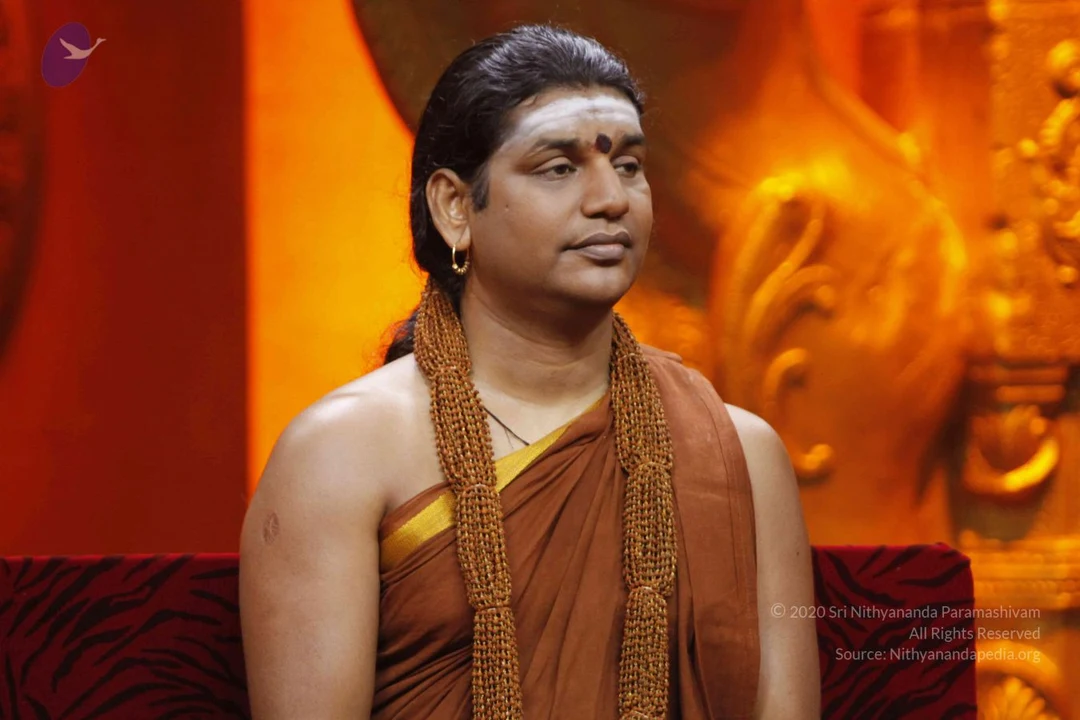
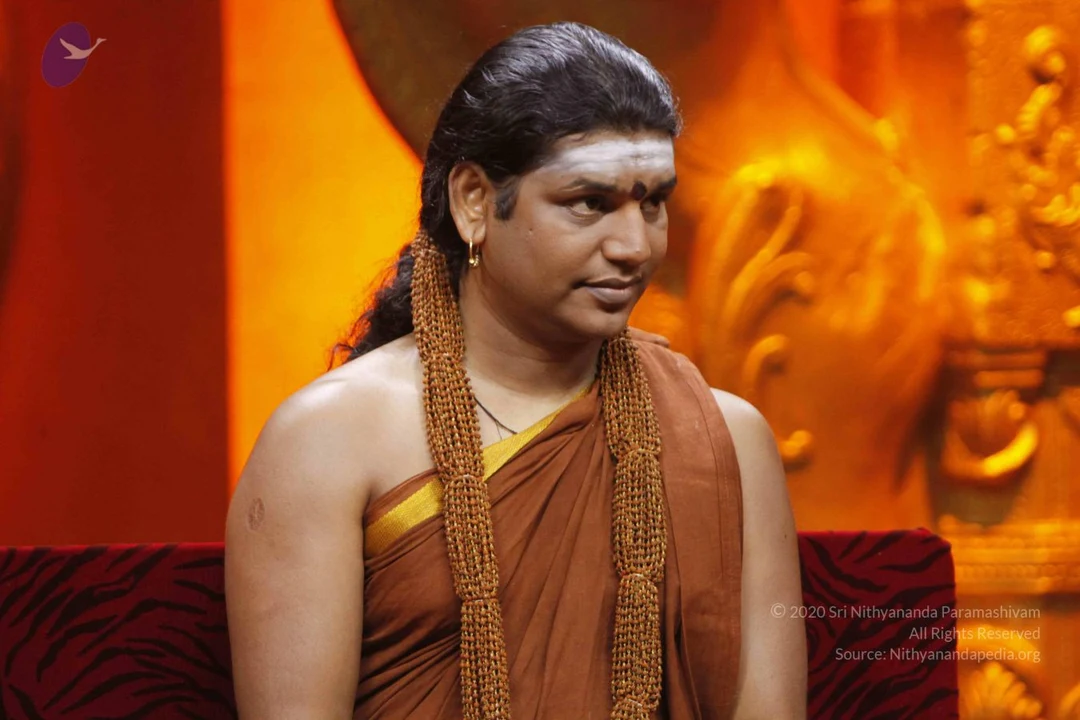
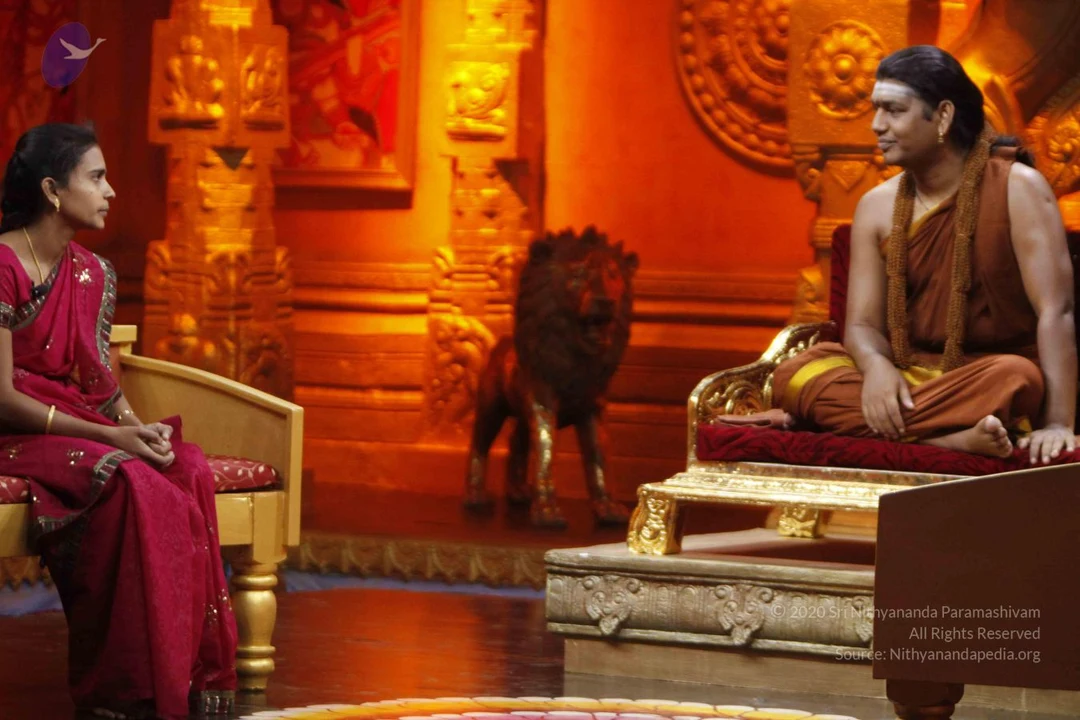
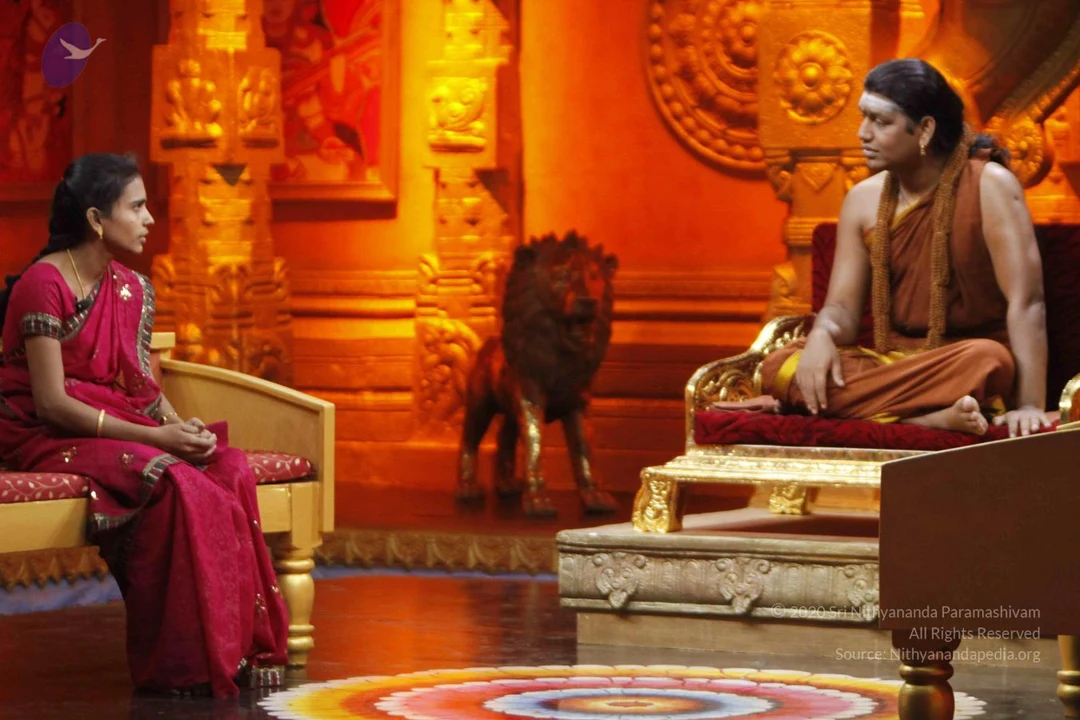
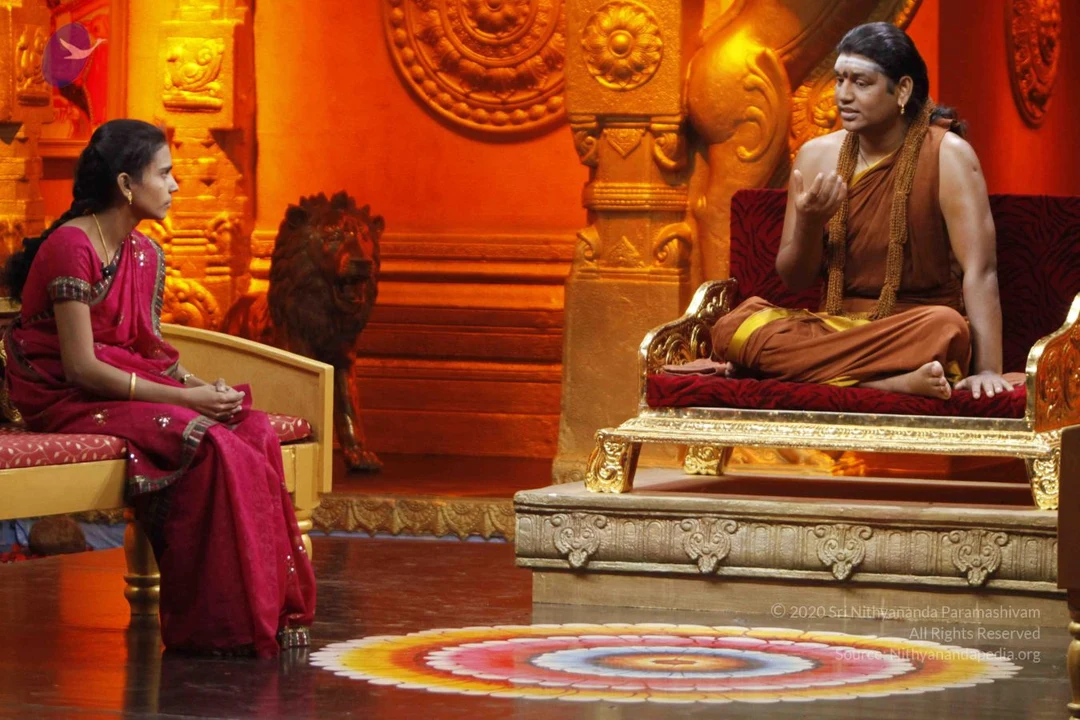
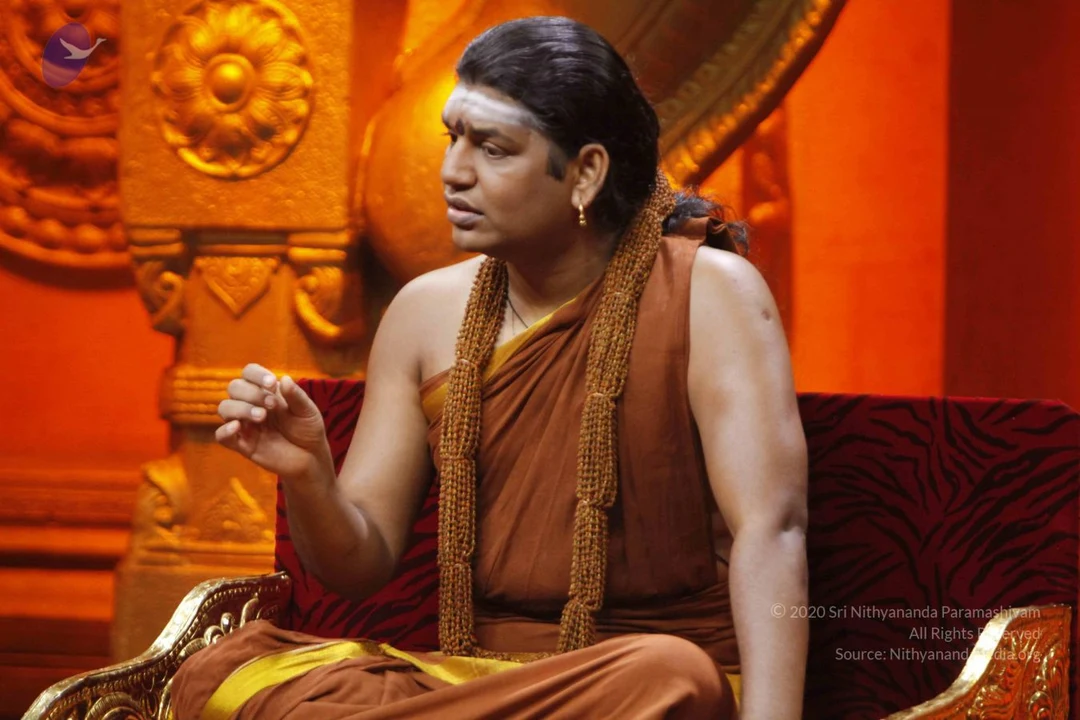
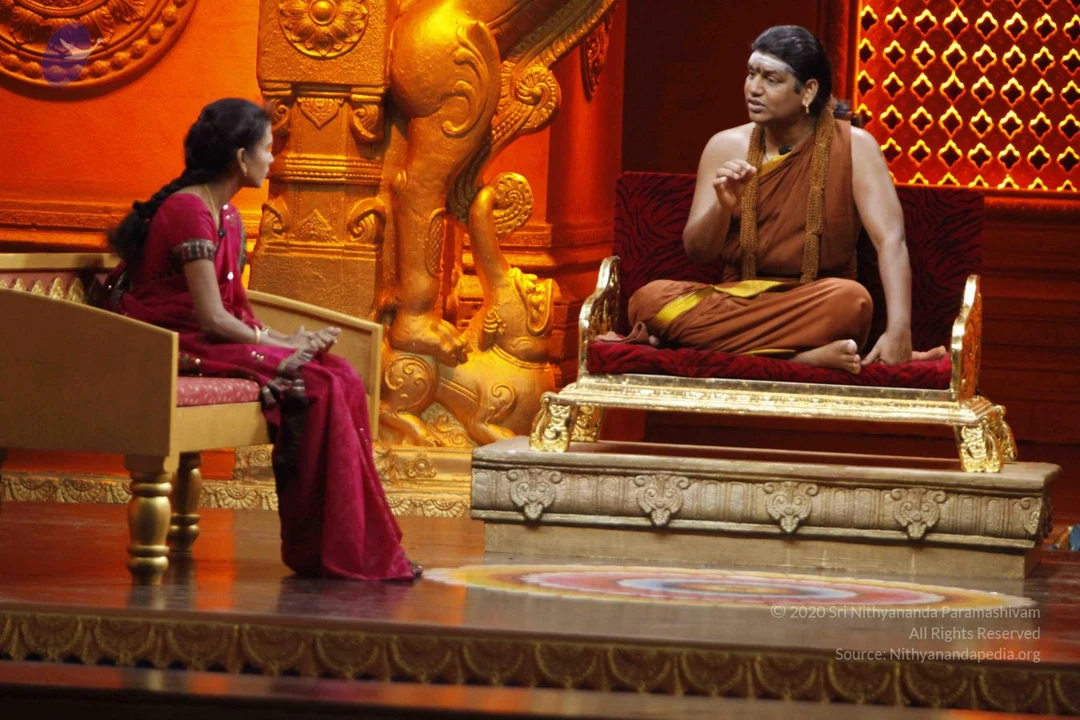
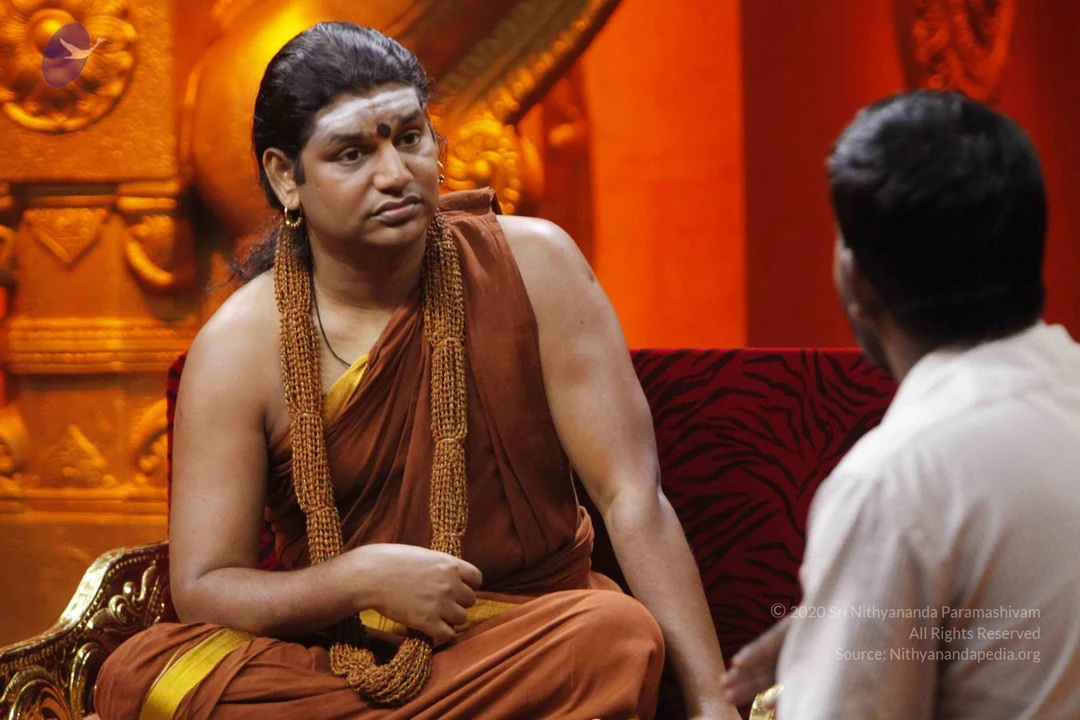
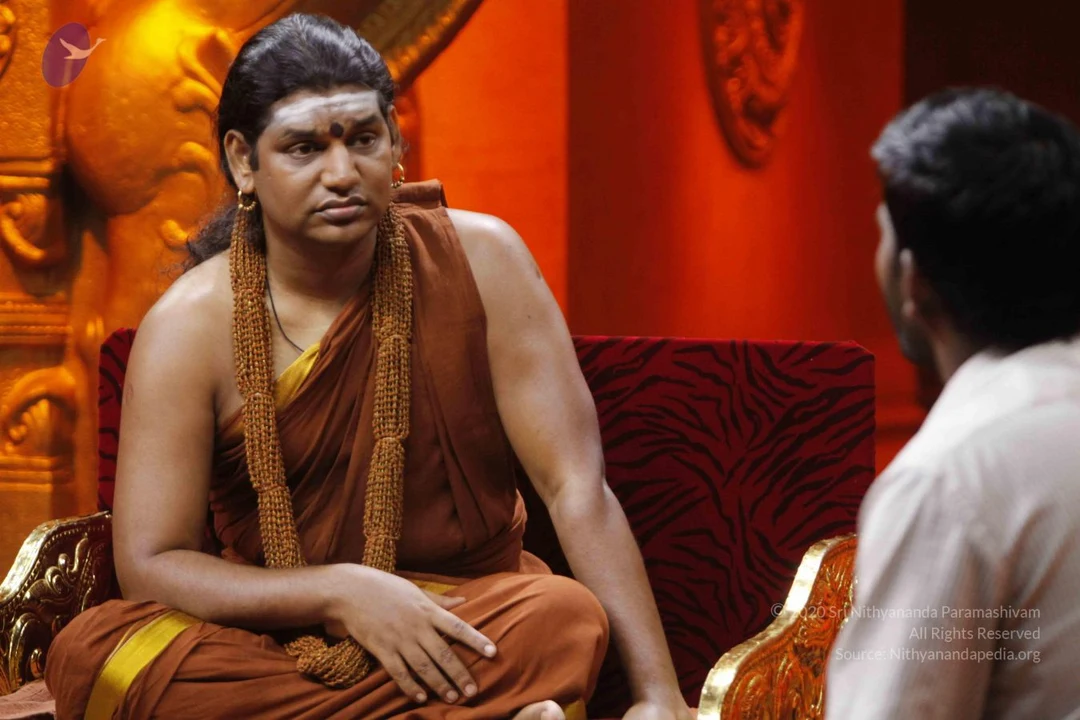
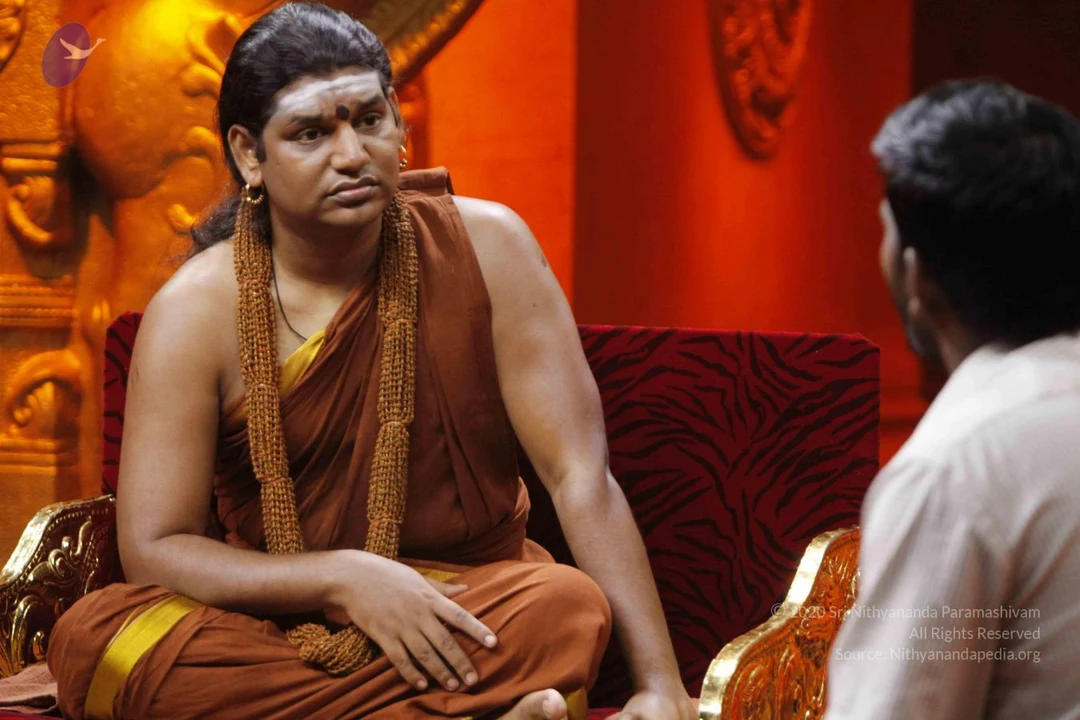
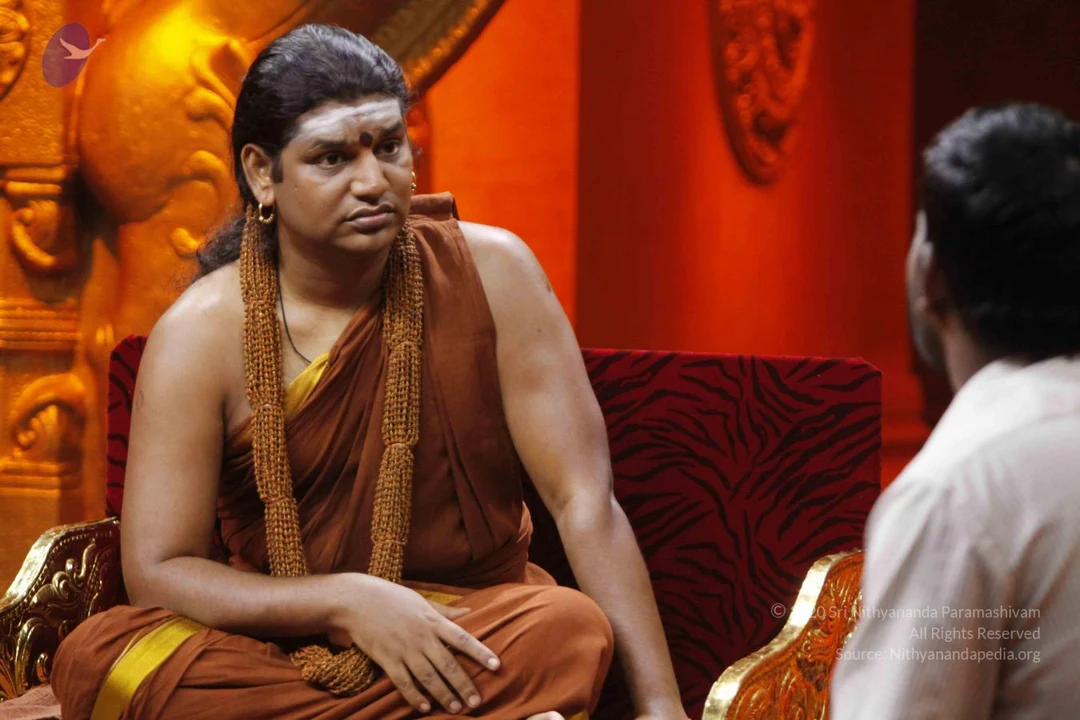
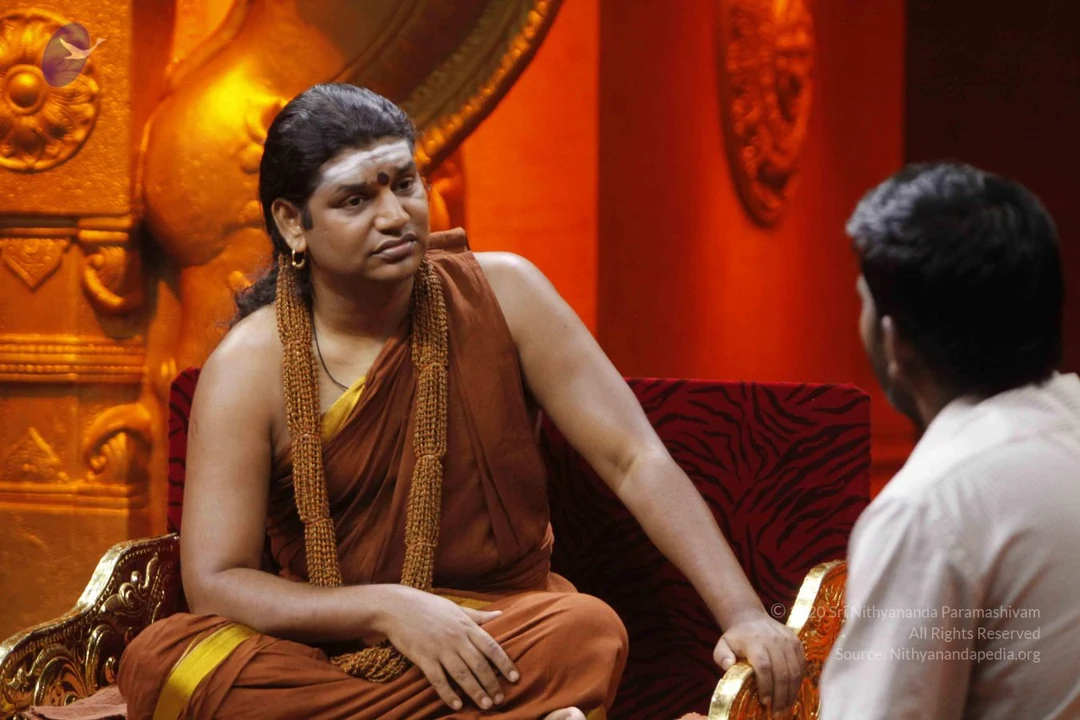
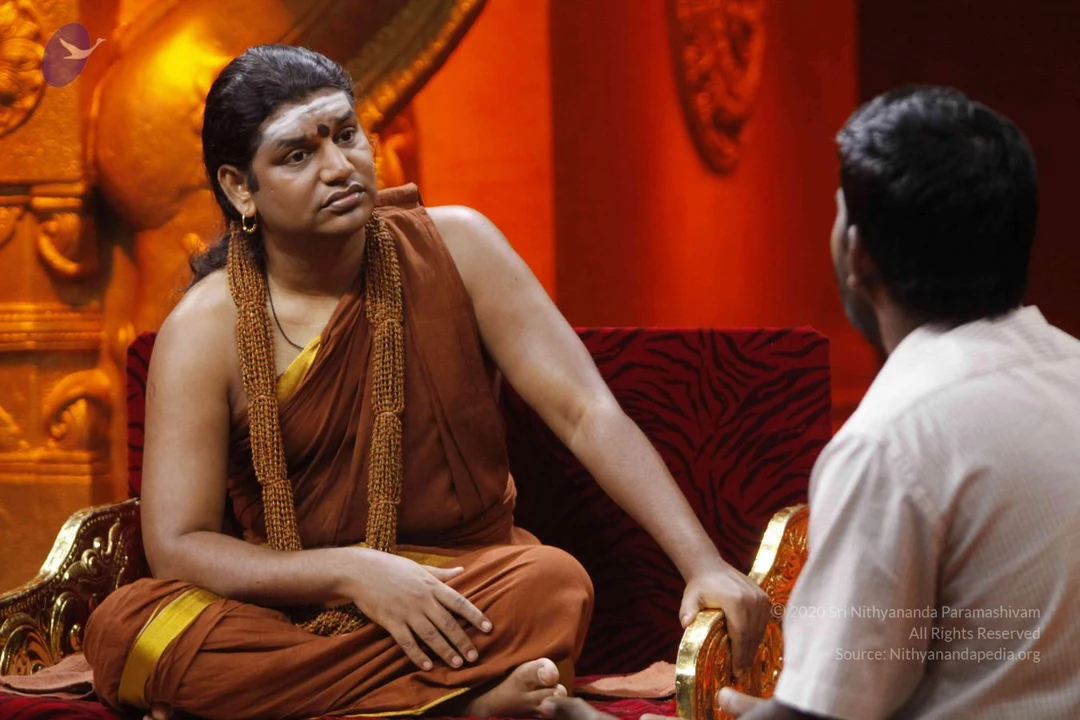
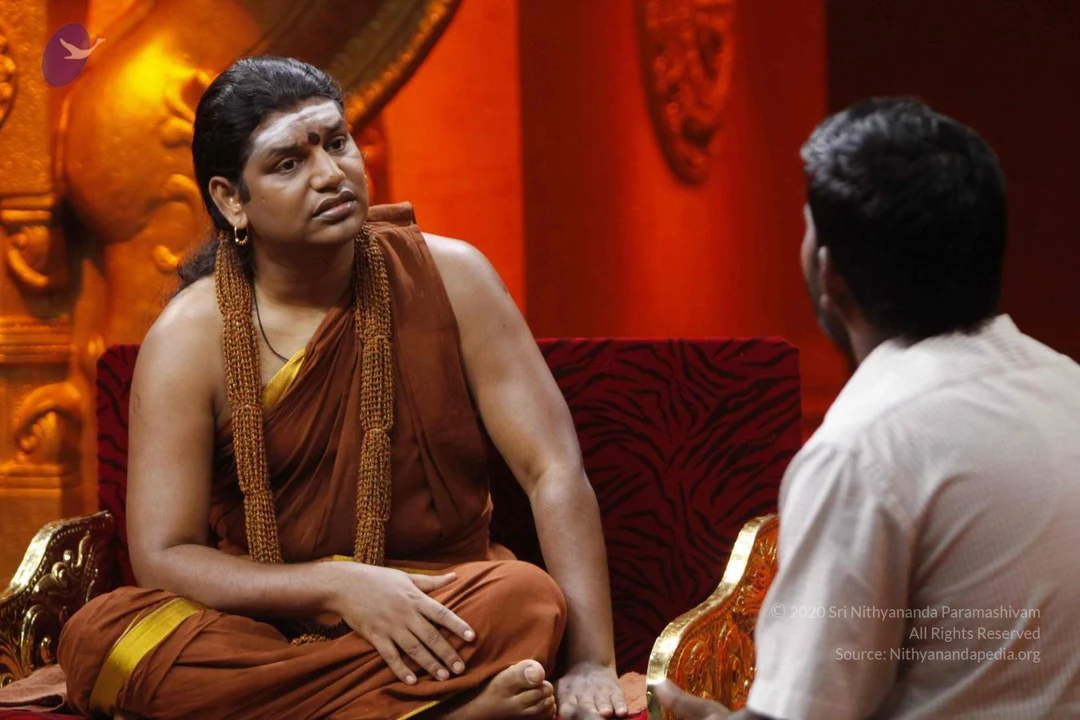
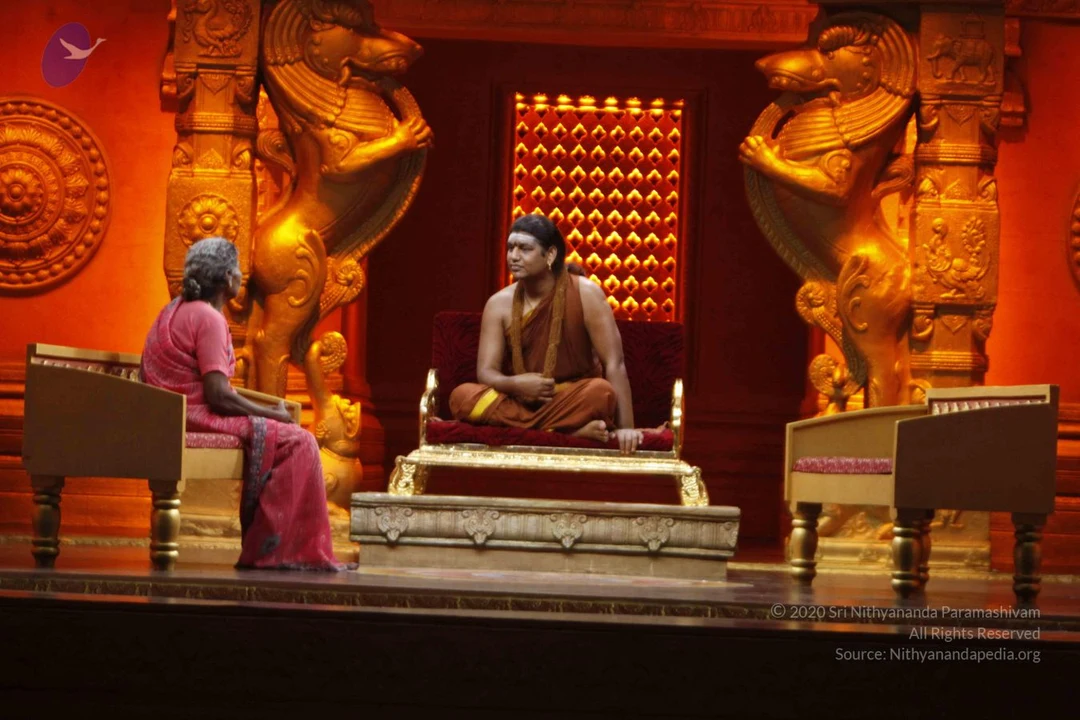
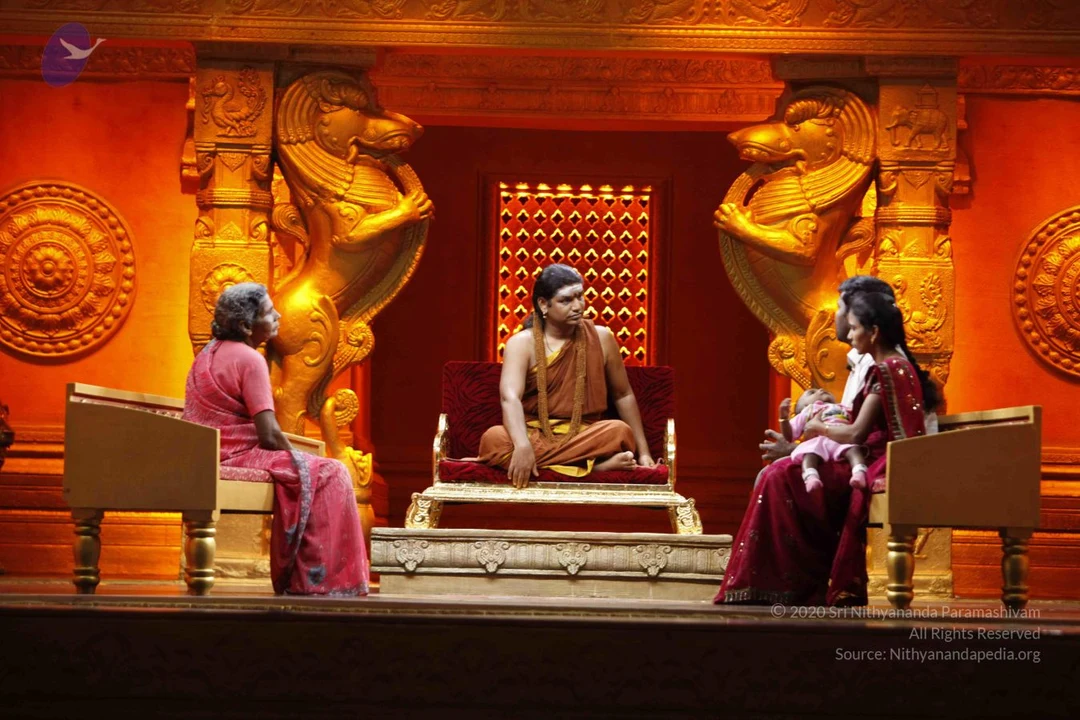
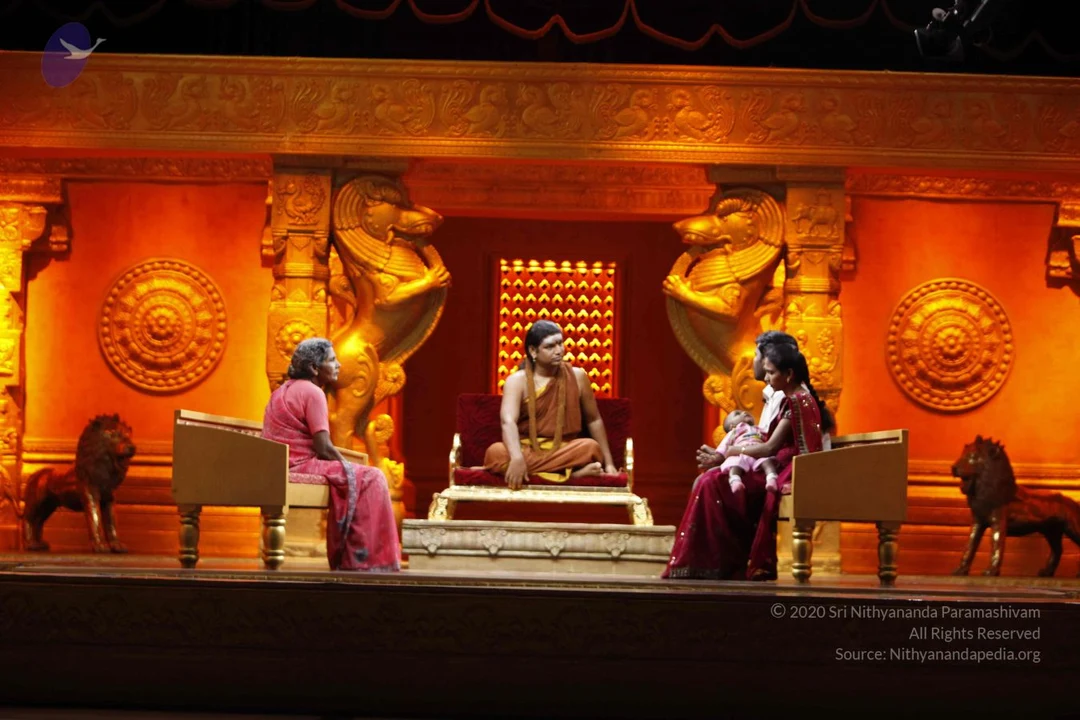
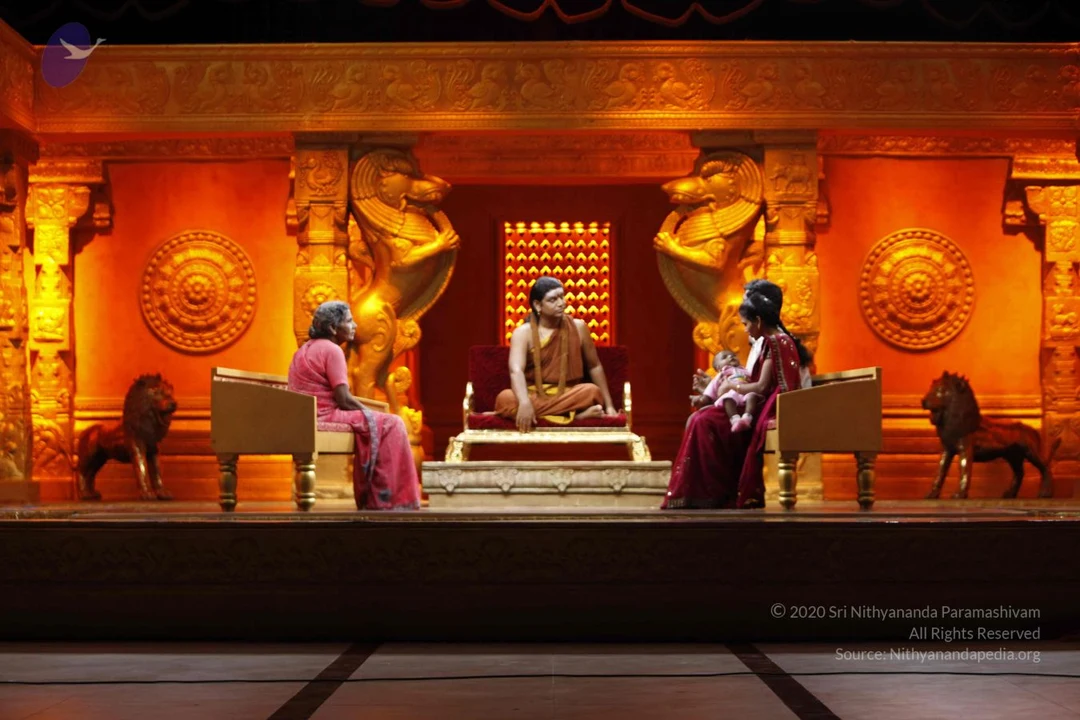
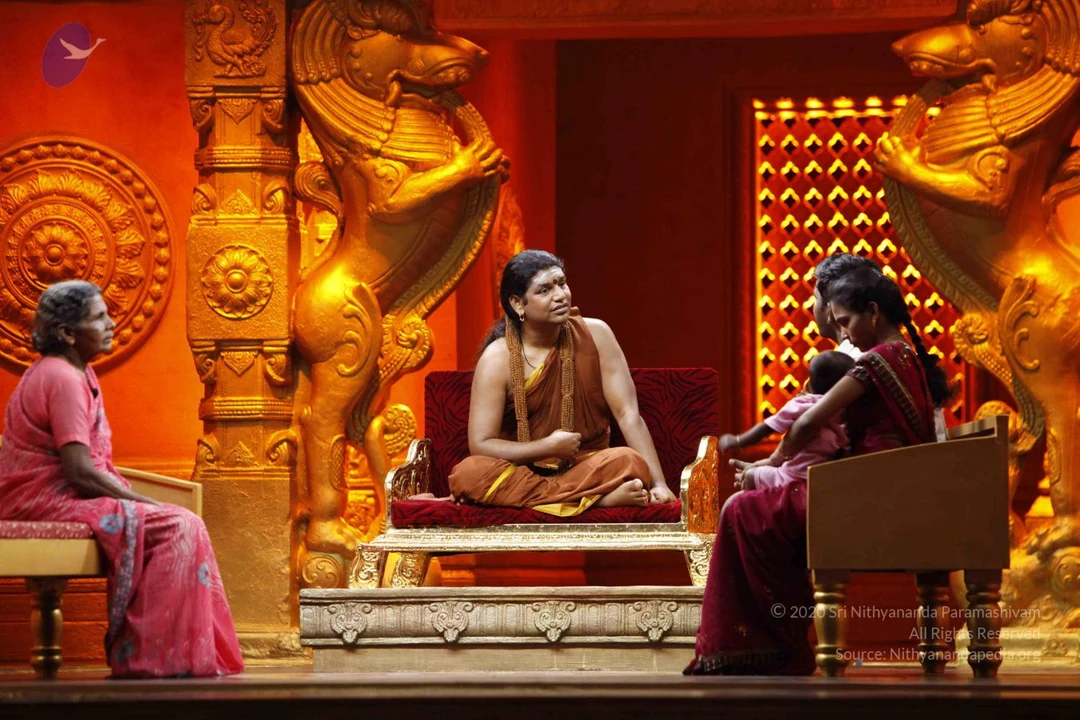
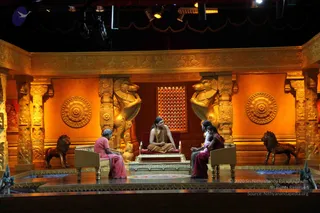
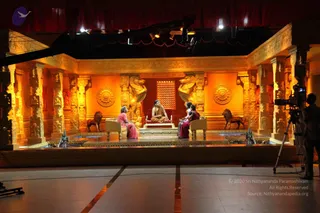
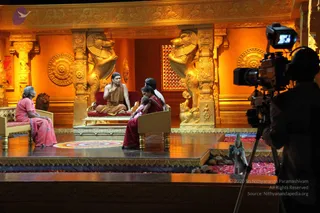
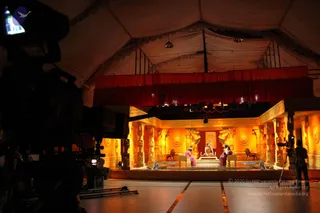
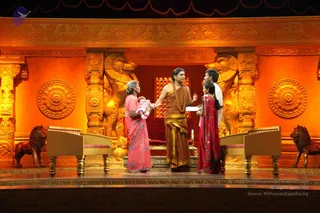
A photo of a warmly lit satsang stage inside a tent, with golden temple-style pillars, carved panels and a red curtain backdrop. Three seated figures sit on a raised dais: a central figure in a white robe on an ornate throne, flanked by two women in pink and red saris on smaller chairs, with a lion-like carved seat and decorative lamps around them. A cameraman with a tripod-mounted camera stands at right, and a few crew members and equipment cases are visible at the edges.A stage set with golden carved pillars, lion statues and a golden wall relief. A figure in orange-saffron cloth with long hair sits on a red-cushioned golden throne in the centre, between two golden makara-like carved supports. Facing him on wooden benches are a woman in a pink sari seated at left and a woman in a magenta sari seated at right, with a child in pink between them. The figure's ornate clothing and long hair match the probable Swamiji cues, and he is seated in the centre of the throne as the central figure. Warm orange lighting and a decorated floor with a circular motif complete the scene.A photograph of a gilded, lamp-lit stage set styled as a Hindu temple hall, with carved golden pillars, lion sculptures and a central raised seat with a red cushion. A figure in saffron-orange clothing sits on the throne-like seat, flanked by two women in pink saris seated on low gold chairs, and a film camera on a tripod at the right records the scene. Another person stands at the right edge beside the camera. Bright stage lights hang from a black truss above. The visible physical people number four to five, with the central seated figure in saffron, two women in pink and a cameraman.A photograph of a satsang discourse on an ornate golden stage with carved lion-headed pillars and a lit orange backdrop. A man in orange-brown robes sits on a red-cushioned throne-like seat, gesturing as he speaks. Opposite him an elderly woman in a pink sari sits on a gold-framed sofa, and a woman in a maroon sari holds a small child on a nearby seat. A camera operator in dark clothing films at right, and red flower petals and a small elephant figure lie on the floor.A photograph taken from the rear of a tent-covered studio set, with a camera operator's equipment in the dark foreground. A raised golden stage with ornate carved pillars, lion figures and lotus-style medallions is lit warmly, with a red drape behind. Seated on the central dais is a figure in orange robes and long hair, with two people in pink and maroon clothing seated on chairs to either side, and a cameraman with a tripod stands at the right edge. The space is a set for a recorded satsang or discourse.A staged theatrical performance on an ornate golden set with carved lion-headed pillars, gilded medallions and two golden lion statues flanking the stage. Centre, a man in an orange-brown dhoti and shawl with a long sash stands before a red-cushioned throne-like seat; he gestures with one hand while holding a folded paper. To the left, an older woman in a pink sari holds a baby in pink. To the right, a woman in a red sari and a man in a white shirt stand listening. Two golden benches flank the stage. Whether the central figure is a person cannot be determined from appearance, so the role is recorded as an actor in costume.

Temple

43 photosSource gallery
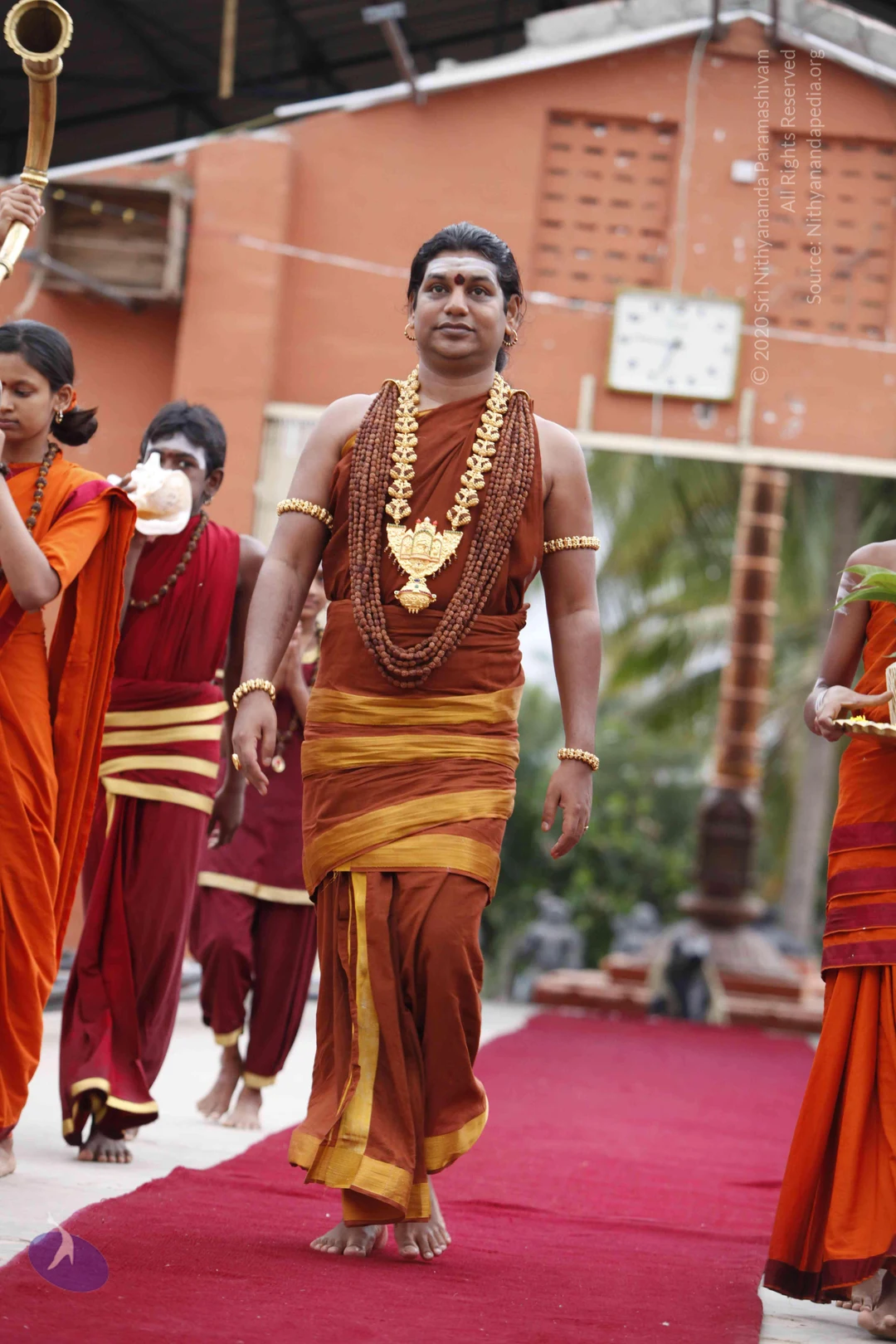
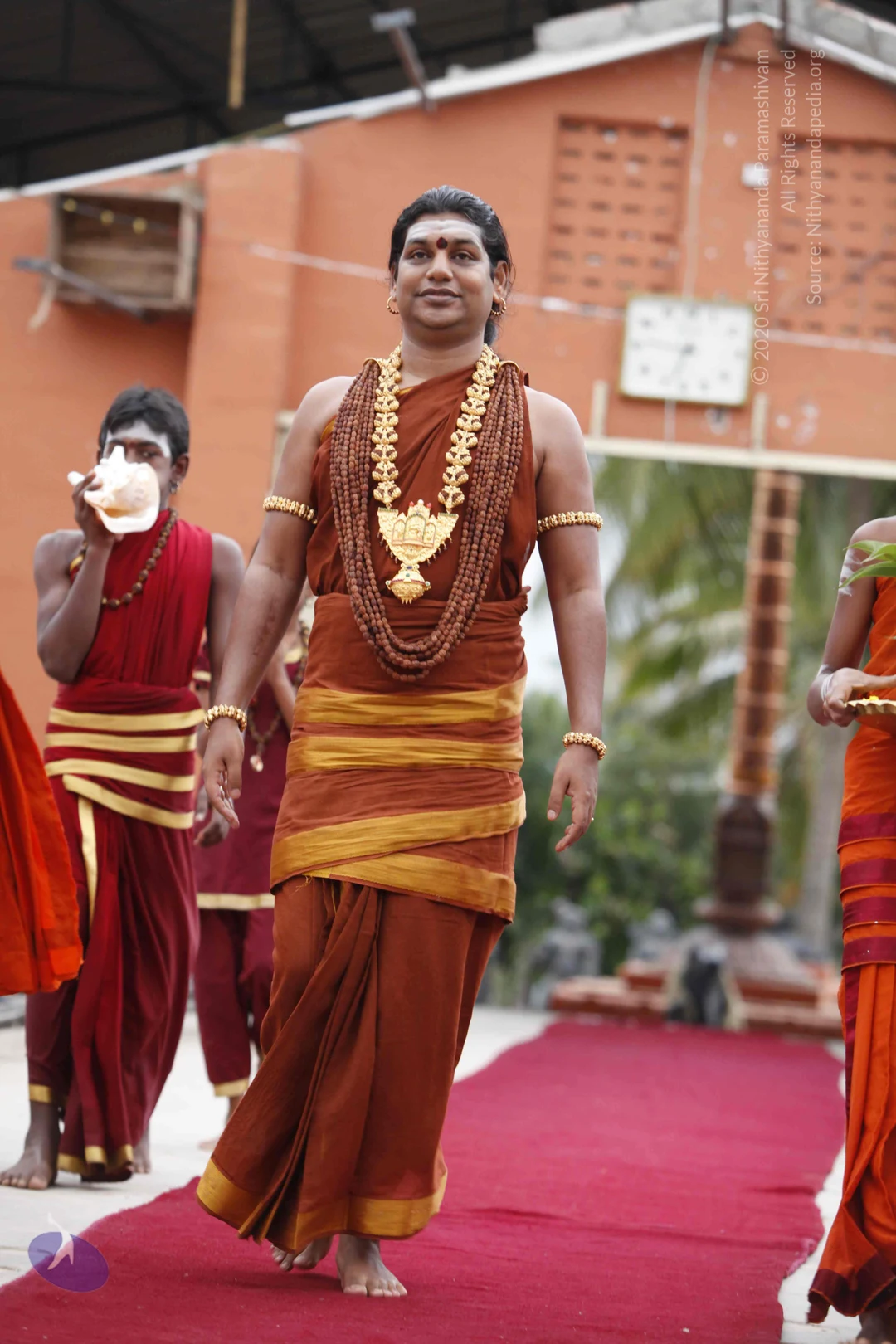
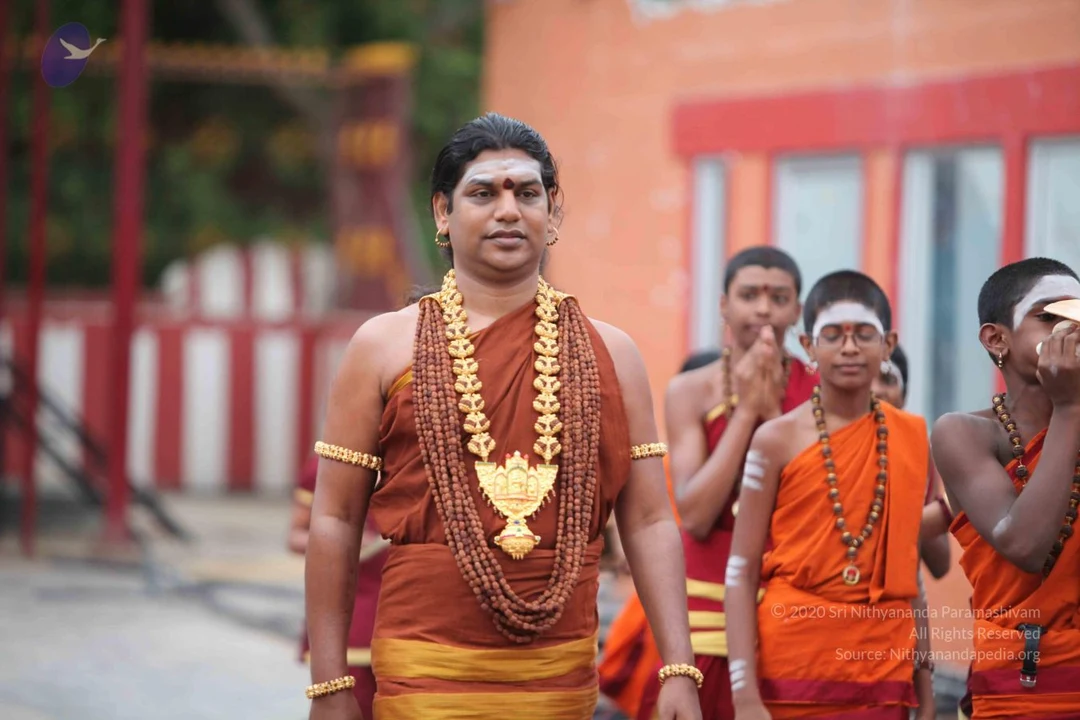
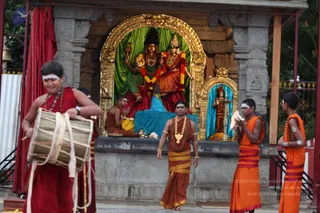
Outdoor temple ritual before a gilded shrine housing two large deity murtis, one green-faced with a crown and the other in red with garlands, flanked by a golden arch. A young drummer in red robes and white forehead marks plays a two-headed drum at left. In the centre a man in an orange dhoti and a gold necklace stands near a blue-draped altar with brass lamps. Two young attendants in orange robes with white forehead marks stand at right, one holding a round fan. A seated priest in orange robes sits at the altar. Visible people are about four to five.A dramatic performance staged in front of a shrine with golden arch and green curtain, where a deity murti pair (male and female, garlanded in red flowers) stands behind. Four performers in saffron and red-orange dhotis with gold borders stand on a red carpet, one in the centre wearing a gold necklace and bare chest with white tilak, others holding white cloth or conch-like objects to their mouths. A seated musician with a drum is at left and a lamp stand is near the shrine. The scene resembles a ritual reenactment of a leela.Outdoor temple-style performance on a red-carpeted stage before a golden arched shrine with a deity murti pair draped in green and red garlands and a lit oil lamp. A central man in orange-brown dhoti with gold waist bands, a large gold necklace and a rudraksha mala stands with hands together, while two attendants in red and orange robes blow conch shells, and a fourth person in orange lights a lamp at the shrine. A man on the right beats a drum. The red curtain and stone carvings frame the scene.Outdoor procession on a red carpet in front of a temple gateway with a golden deity figure in a blue niche behind. A man in the centre wears an orange-brown dhoti with gold-yellow borders, a long rudraksha mala and a heavy gold ceremonial necklace with a central pendant, plus gold armbands and a red bindi with white forehead markings. Beside him, a young man in red robes with gold stripes blows a conch shell, and women and young men in orange garments with white forehead marks walk behind, one near a drum.A man in orange-red sannyasi dress walks forward in a procession, wearing a rudraksha mala with a gold ceremonial necklace and a gold lotus-like pendant, gold armlets, and a saffron-gold waist cloth. He has white vertical tilak marks and a red bindi, with long swept-back hair and gold earrings. Behind him young boys in saffron-orange robes with rudraksha malas and white forehead markings walk with hands joined in prayer or holding fans, in front of an orange building with red-and-white railings. Swamiji (probable): the man at centre is wearing saffron clothing, rudraksha mala, ceremonial gold necklace and armlets, and has long swept-back hair, consistent with the page's description of him at this event.A photograph of young boys in a ritual setting. The central boy wears an orange dhoti and orange shawl with brown rudraksha malas and a pendant, and blows into a large pale conch shell held to his lips. Two boys at left and right stand with palms pressed together in namaskar, wearing orange and maroon robes, rudraksha beads, and white sacred marks on their foreheads and arms. Other children in maroon garments stand behind them. Orange and white architecture forms the background.

Pratyaksha-Pada-Puja

22 photosSource gallery
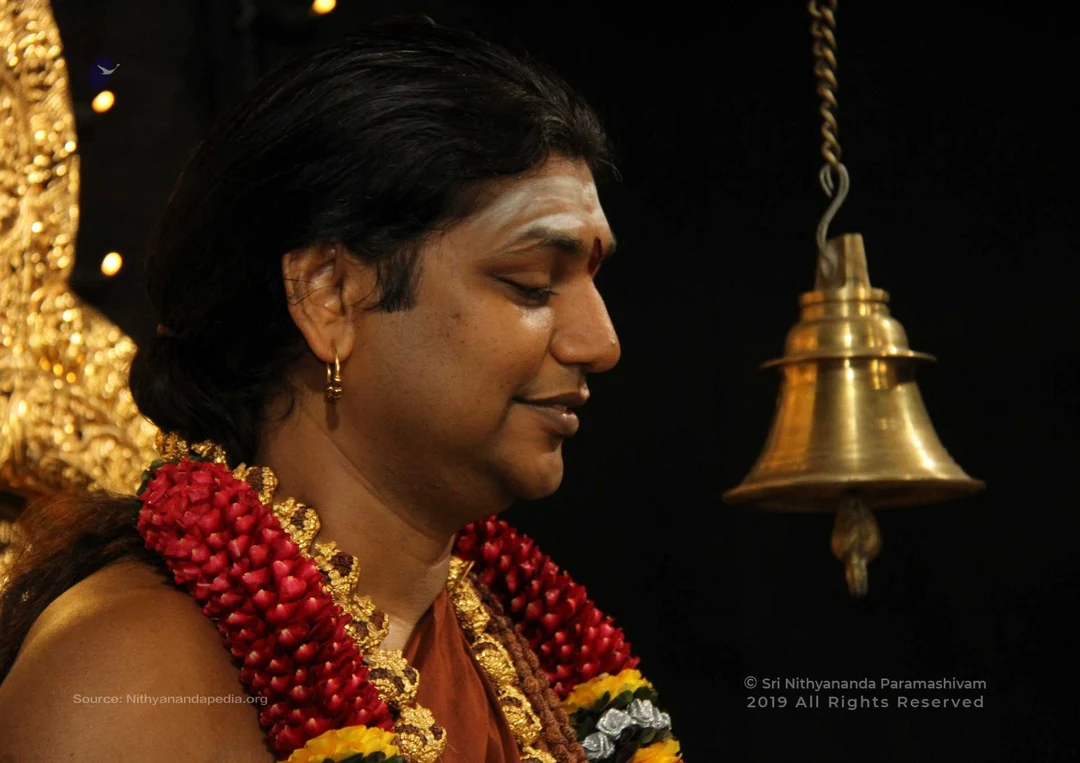
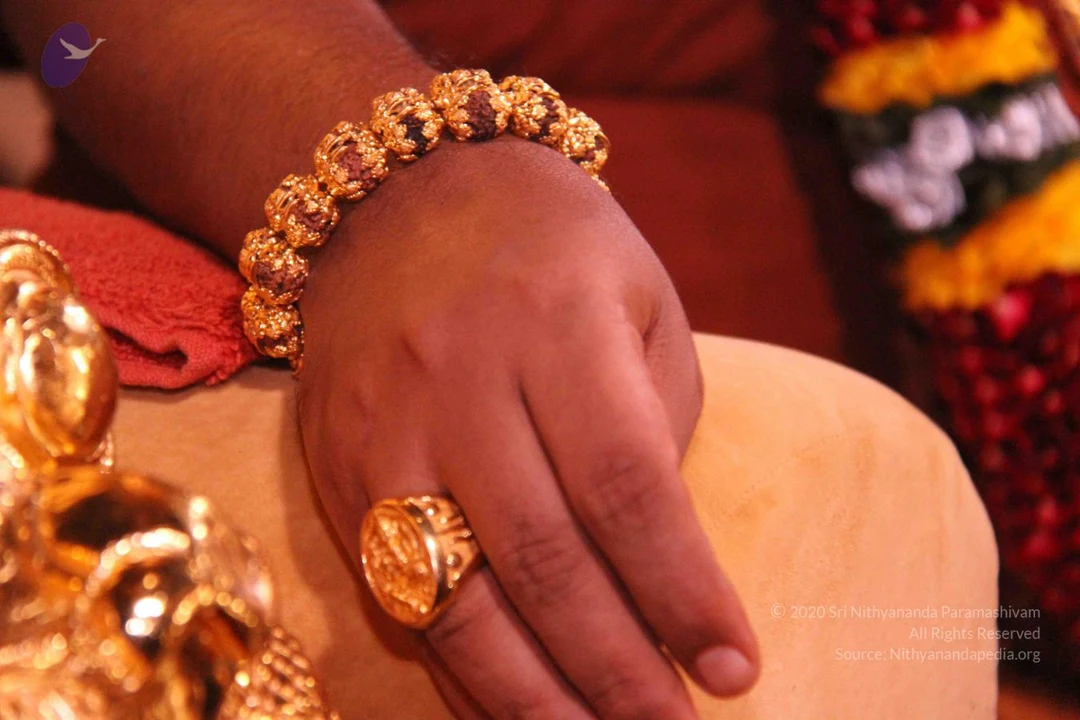
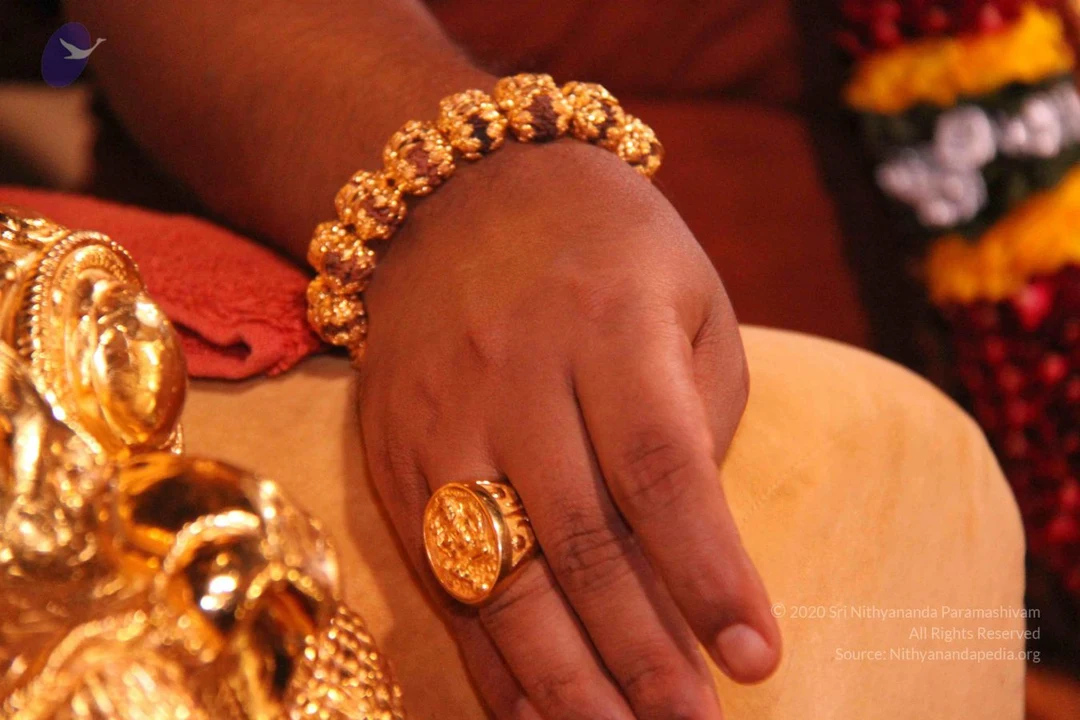
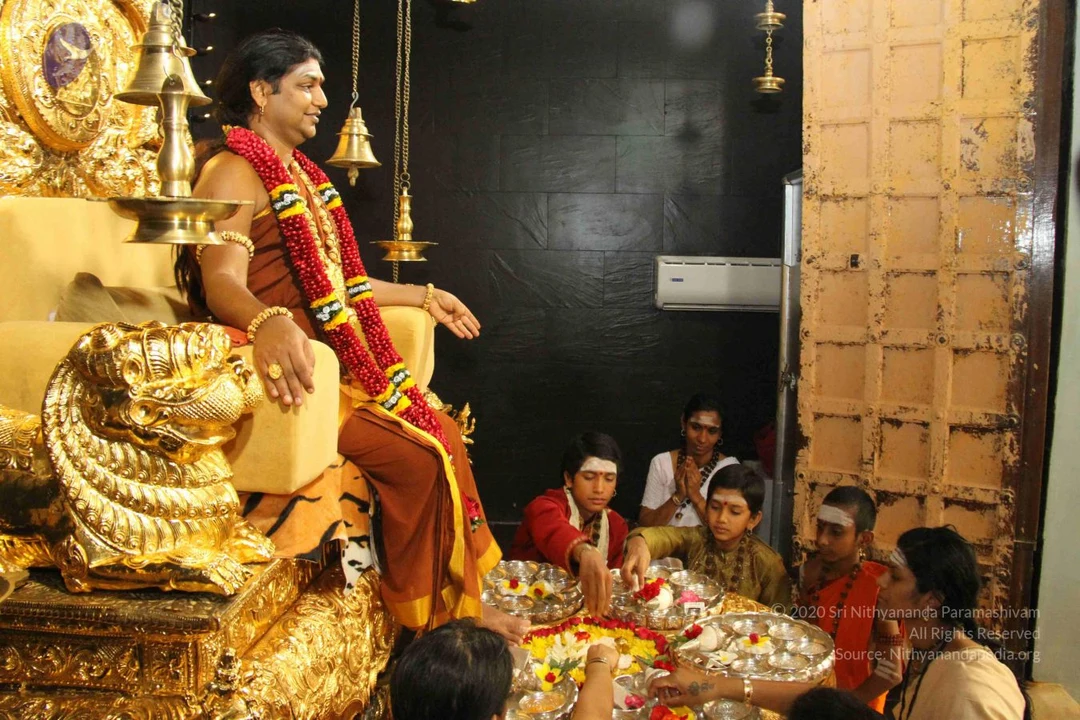
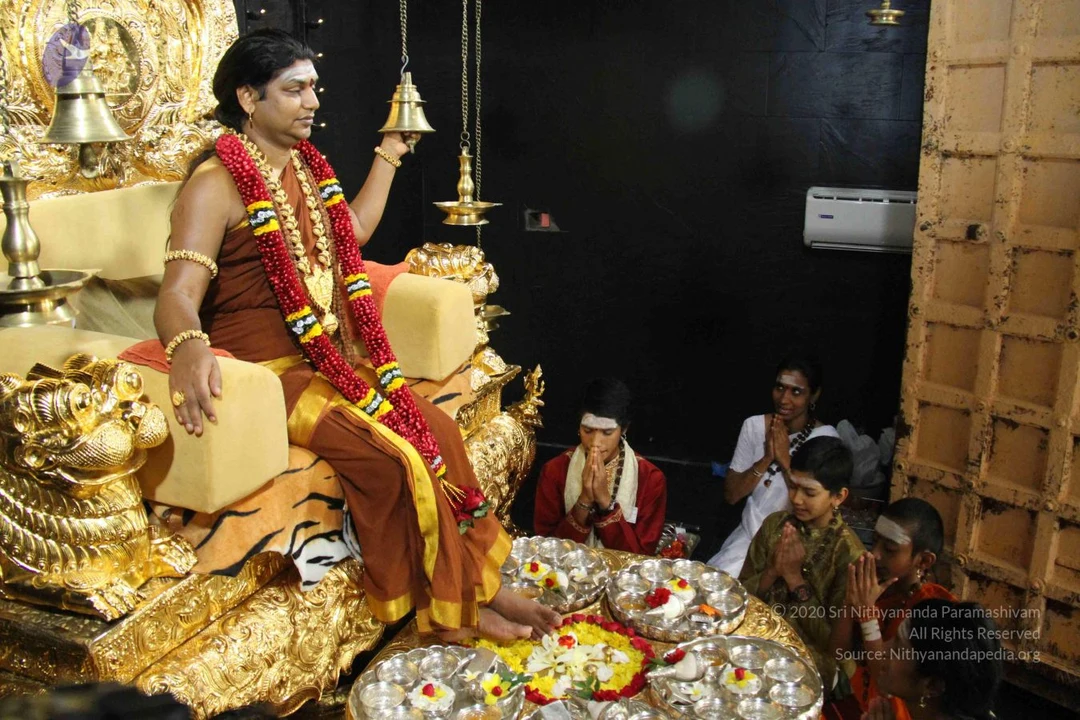
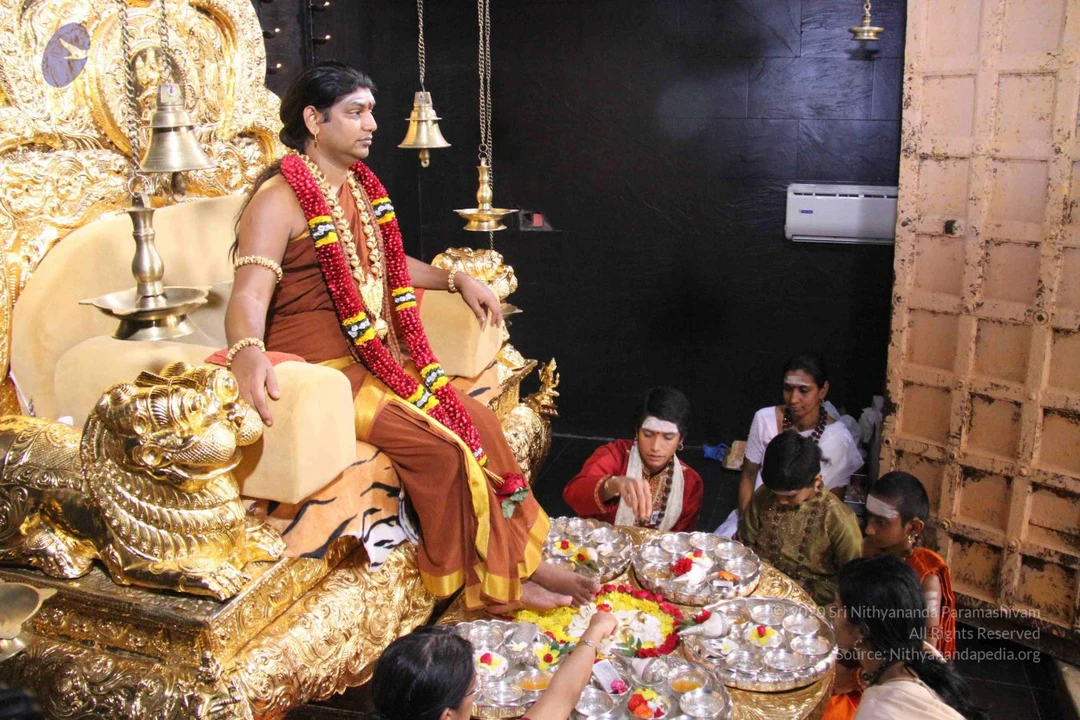
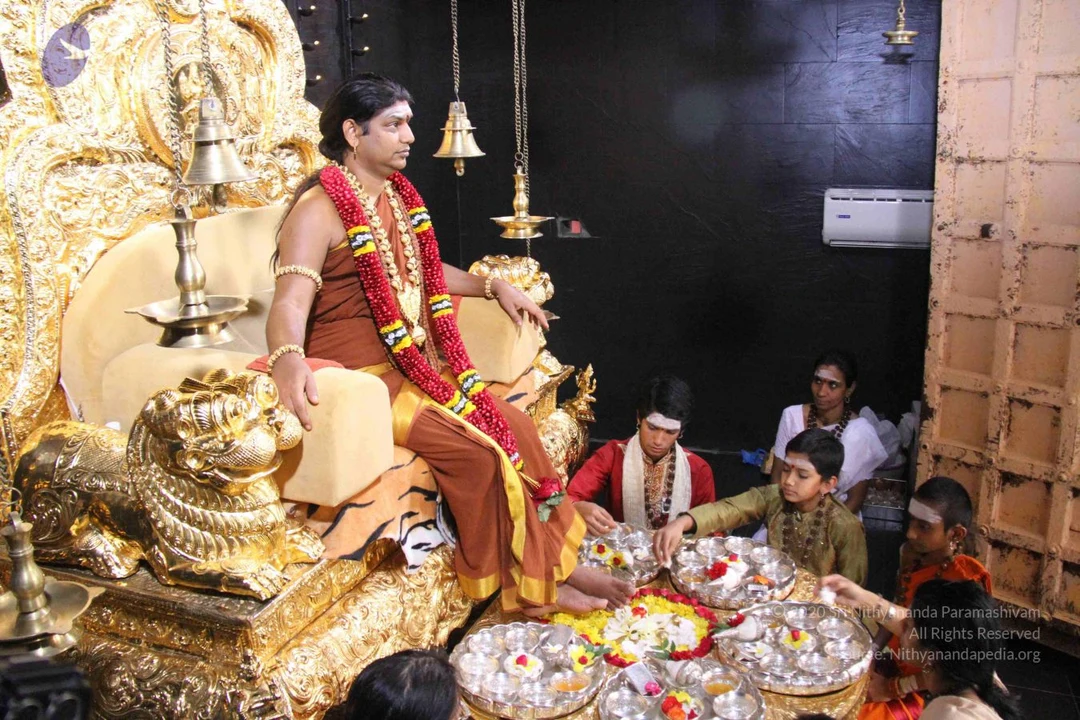
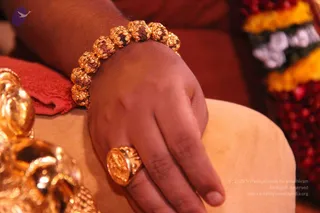
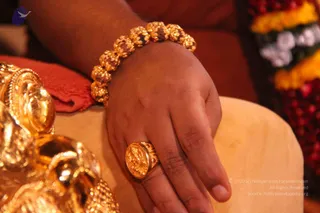
A man sits on an ornate gilded throne with lion-head armrests and a tiger-striped cushion, raising his right hand in a blessing gesture and smiling. He wears a rust-orange dhoti with a gold border, a rudraksha mala, a heavy gold necklace with a lotus pendant, gold bangles, and a red and multicolour flower garland. A red kumkum mark is on his forehead. In front of the throne stand two silver trays holding flower offerings and white sweets. Hanging brass lamps and bells frame the black backdrop. a person is seated as the central figure, with the throne, garlands and offering trays marking an honoured darshan setting.A photograph of a seated man on an ornate gold throne with carved lion-headed armrests, draped with a tiger-striped cloth. He wears a rust-brown dhoti-style garment with a gold border, a multi-coloured garland of red and yellow flowers, a gold pendant necklace, rudraksha mala beads, and a red kumkum bindi with white vibhuti marks. He raises one hand in a blessing gesture while smiling. Brass oil lamps hang from chains on either side, and silver trays of flowers and offerings sit at the base of the throne.Close profile photo of a man with long dark hair swept back, white vertical tilaka with a red dot on his forehead, small gold hoop earring, and eyes gently lowered in a serene expression. He wears a saffron/orange garment and layered garlands of red rose petals and yellow flowers with gold ornamental necklaces. Behind him a large brass bell hangs from a twisted cord against a dark background, with gold-toned carved ornament at left and warm lamp lights. Appearance-based label: Swamiji (probable), with long swept-back hair, saffron clothing and rudraksha-style adornment consistent with that identification, shown in person seated in a ritual setting.A seated man in a rust-brown and saffron-toned garment with a red and white flower garland and gold ornaments sits on an ornate gold throne carved with a lion head, looking to his right. Gold bangles adorn his wrists. Before him, several silver and brass trays hold flowers, fruit and offerings. Young boys in red and green traditional clothes, one with a white tilaka, sit near the trays, and a woman in white sits at the right. Hanging brass bells and a brass oil lamp hang from chains near a golden gate. The setting suggests a temple-style ritual room.Close-up photo of a man's hand resting on a cream-coloured cushion or bolster, wearing a gold bracelet of large gold-capped rudraksha beads and a heavy gold ring with an engraved face. Beside the hand, a red cloth and a gold ritual object are visible, with a garland of yellow and red flowers at the upper right. The wrist and sleeve are dark red. Only the hand and wrist of one person are visible, so no face is shown.Close-up photograph of a bare hand resting on a pale cushion, wearing a bracelet of gold-capped rudraksha beads and a large gold ring engraved with a small deity figure. Beside it, a gold ceremonial object with ornate relief work is visible at the left edge. Behind, a red cloth and a garland of yellow, white and red flowers are partly visible. No face is shown; the hand and jewellery are the focus. The hand appears to belong to a person in a seated ceremonial setting, identity not determinable from the image.

Swamiji blessings

2 photosSource gallery
A man stands at left in an orange-brown dhoti and shawl, wearing a red and multicolour garland, rudraksha mala, and gold ceremonial necklace with a pendant, and smiles while raising one hand in greeting. Beside him are two large deity murtis seated on thrones, decorated with dense garlands of red, yellow, purple and white flowers. The left murti wears a crown, gold-and-green sari and holds a bow and arrow; the right murti wears a crown, blue blouse and gold-embroidered skirt.A photograph of a standing man in a rust-brown dhoti and shawl with a red and multicolour flower garland, a gold pendant necklace and a rudraksha mala, smiling and raising one hand in a greeting. Beside him are two large deity murtis, Meenakshi and Sundareshwarar-style figures seated on a decorated throne, with golden crowns, bows and arrows, yellow and blue silk garments and heavy flower garlands in red, purple, yellow and white. The setting is a stage with a maroon curtain and a gold backdrop.

Gayathri-Homa
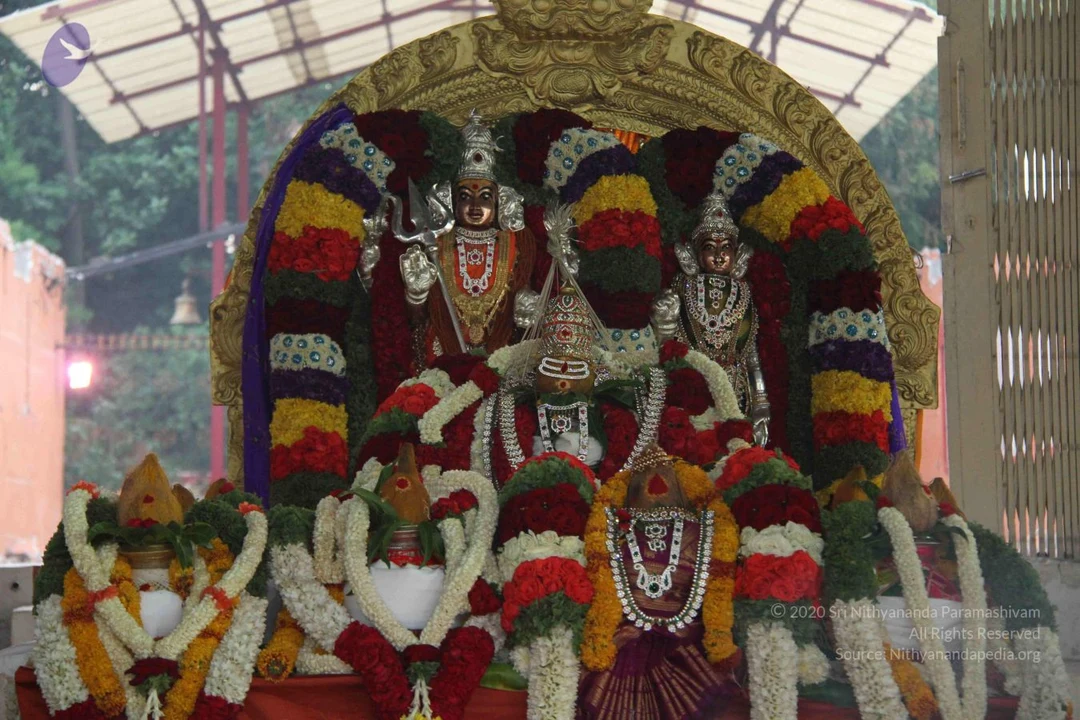
55 photosSource gallery
A photograph of a fire ritual, a homa, at an outdoor ashram setting. A fire burns in a rectangular stone fire pit in the foreground, with flames and smoke rising. A shirtless priest in a green head cloth and white dhoti sits at center, holding a small brass vessel in one hand and waving a green cloth or fan with the other. Two priests flank him, also shirtless with white dhotis and yellow shawls, one with a blue-beaded necklace and sandalwood or vibhuti markings on forehead and chest. Red flowers and green leaves lie around the fire pit, with a brass pot at the right edge. Red brick buildings and greenery stand behind.Outdoor seated gathering on a paved courtyard. In the foreground, an older woman in white clothes and a white shawl wears a rudraksha mala with a pendant and looks to her left. Beside her, a woman in a red-and-white outfit holds a red-orange shawl printed with script and wears a name badge, looking off to the side. Behind them, a woman in a white top with a red lanyard holds a small child on her lap and a small card. A partly visible person sits behind to the right near a wooden table draped with red cloth and garlanded with marigolds and roses. The scene shows people seated in plastic chairs with attentive expressions.A photograph of an outdoor ritual hall with a fire pit at centre where a flame burns and smoke rises. Behind it, a decorated deity murti stands on a red platform, garlanded with flowers and framed by a golden arch. At right, a man in saffron robes with a white forehead mark and long rudraksha-style beads sits on a red throne-like seat, a person, with a microphone before him. At left, drummers in white dhotis with bare upper bodies play drums. Dozens of devotees in white clothes with red sashes sit on the floor facing the fire, with several women in orange saris. Two stone statues flank the arch.Outdoor temple courtyard ritual with a sacred fire pit in front of a decorated deity murti garlanded with bright flower necklaces and draped in red and orange fabric, flanked by two stone figures. Seated devotees in white and orange-red garments, with red shoulder cloths, face the fire. A shirtless priest in white dhoti at left tends the fire with a long ladle. At right, a bald man with ash markings on his forehead, wearing a rudraksha mala and ornate orange cloth, sits on a striped mat holding a microphone beside an empty red and gold throne. Other people in white and pastel clothing sit in the foreground. Several people are visible; the total is in the 21-100 range.Four men seated in blue and black plastic chairs under an open pavilion at a satsang setting. In the foreground, a man in white shirt and white dhoti with a rudraksha mala and red lanyard ID badge holds a phone. Beside him, an older man with glasses wears a white shirt, a red shawl printed with Sanskrit script, a mala and a red lanyard badge, with his hands folded. Behind them, a man in an orange shirt with a tilak and a man in white are partly visible. A red pillar and orange temple structure appear at the edge.A seated audience at an outdoor satsang, photographed from the front. In the foreground, a man in a white shirt and white dhoti sits on a light blue plastic chair with a beaded mala necklace and a red lanyard badge, a small black two-way radio clipped to his shirt. Beside him, a clean-shaven man in a white shirt, red lanyard and red-and-gold shawl sits with folded hands and a wristwatch, a red tilak on his forehead. Behind them, a bespectacled man in white wears a red shawl, and other white-clad attendees sit in rows, one holding a folded orange programme sheet. An orange-red wall forms the backdrop.

IA Participants

2 photosSource gallery
Photograph of a seated satsang audience at an indoor hall with red curtains and pink floor cushions. In the foreground two women sit cross-legged in white kurtas with red woven shawls printed with script, one with hands resting on her knee and the other with a hand near her lap. Behind them other attendees in white and red shawls sit on mats, a blue chair is visible, and a man in a white shirt with a lanyard stands near the back. The scene conveys a seated meditation or discourse gathering.Seated devotees in white ritual clothes meditate on a red mattress in front of a bright red curtain. The man on the left, with grey beard and glasses, wears a white shirt, a red-and-black patterned shawl over his shoulders, a rudraksha mala and an orange lanyard badge, eyes closed and hands in a mudra on his lap. The man on the right, in a white embroidered kurta with an orange lanyard, sits with one hand raised in gesture. Behind them a third man in white and an orange lanyard sits with crossed legs. No a person candidate is clearly identifiable by appearance, so the role is given as devotee and the identity remains unsure.

IA Session

4 photosSource gallery
Photograph of a man standing against a deep red curtain, smiling and looking to the side with a small red bindi on his forehead. He wears a rust-orange wrap over his shoulders with a gold-coloured edge, two long rudraksha mala strands hanging down his chest, and gold bangles on both upper arms. A small headset microphone is clipped near his mouth, and his dark hair is swept back to his shoulders. Swamiji (probable): the swept-back hair, rudraksha malas, saffron-orange wrap and ceremonial gold adornments match the page's claim that he is present at this satsang. Standing on a stage at a discourse, with a red valance above.A smiling man stands against a deep red velvet curtain with a gold-trimmed valance. He wears a rust-orange draped garment over one shoulder, multiple strands of brown rudraksha beads crossing his chest, and gold armlets on his upper arms. A red kumkum dot marks his forehead, and a small headset microphone is attached near his ear.A photograph of a man seated in a large orange leather armchair before a dark red curtain, during a satsang-style talk. He wears a rust-brown and gold-bordered draped garment, multiple strands of rudraksha beads over one shoulder, gold armbands and gold bangles, and has a red bindi and white tilak on his forehead. A small clip microphone is attached near his face, and a water bottle sits on the floor at the left. The seated man's appearance is consistent with the Swamiji (probable) cues of long swept-back hair, ornate gold jewellery, rudraksha malas and saffron-toned ceremonial dress, and he appears to be giving the discourse. An air conditioning unit stands at the right edge of the frame.A person stands centre stage before a deep red velvet drape and a gold-carved throne, arms spread wide with palms open, eyes closed, mouth mid-speech into a small headset microphone. The figure wears rust-orange cloth wrapped over one shoulder and around the waist with a gold border, multiple strands of rudraksha beads across the chest, gold bangles on both wrists and a red bindi on the forehead. Two gold lion-like carved figures flank the red-cushioned throne behind. Probable Swamiji, identified by long swept-back hair, saffron-orange clothing, rudraksha malas and gold ornaments, delivering a satsang discourse.

IA-Darshan

34 photosSource gallery
A seated man in eyes-closed meditation sits cross-legged on a red and black zebra-striped cushioned seat in front of an ornate gold-leaf carved throne back with lion-like motifs. He wears a rust-orange saffron robe draped over one shoulder, a long rudraksha mala necklace, gold armlets and bangles, and a red tilak on his forehead, with his hands resting in his lap. Swamiji (probable): the long swept-back hair, saffron robe, rudraksha mala and ceremonial gold ornaments match the visible cues, shown here in meditation on a throne. Bare feet and offerings such as flower or sweets sit at the lower edges of the frame.A seated man in saffron-orange robes sits cross-legged on an ornate gilded throne with carved lion heads and red tiger-striped cushions. He wears a long mala of rudraksha beads with a gold clasp, gold armlets and bangles, and a red tilak on his forehead. He has his hands resting on the armrests and appears to be speaking. a person in a satsang setting; a small decorative item sits on the side and a logo appears in the upper left corner.A photograph of a smiling man seated cross-legged on a red and black tiger-striped cushion before an elaborate gold repoussé throne with a carved arched backrest and lion-like motifs. He has long dark hair tied back and a red bindi on his forehead, wears an orange-brown saffron-toned cloth draped over his shoulders with a gold border, and is adorned with multiple strands of large rudraksha beads with silver spacers, gold armlets and gold bangles. His hands are joined in his lap. Probable Swamiji: the qualifying cues are the long swept-back hair, saffron clothing, rudraksha malas and ceremonial gold ornaments, seated on a throne.A photograph of a seated man with long dark hair tied back, wearing an orange-brown draped cloth, multiple rudraksha malas and gold ornaments on his neck and wrists. He is seated on a red cushion, arms extended toward a standing man in a white kurta with a red lanyard, who has his palms pressed together near his face. The standing man is facing the seated figure with his hands raised. A white wall, window and fan are in the background. The seated man bears appearance cues associated with a person, with long hair, rudraksha malas and gold ornaments, but the identification is uncertain given the frame.Photograph of a seated man in an orange-brown saffron-toned garment with long dark hair tied back, wearing rudraksha malas and gold bead necklaces and gold bangles, extending his arms toward a standing man in a white kurta with a red lanyard, who raises his palms in front of his face while another hand reaches toward him. Red-upholstered seating and a white wall with a window and a fan are behind them. Per the page, this is a person, seated and gesturing during a session, with the standing man receiving the gesture.A photograph of an indoor satsang setting where a long-haired figure in an orange-brown wrap and a dark rudraksha mala, with gold bangles, presses a red tilak mark onto the forehead of a man in a white kurta with a red lanyard, whose eyes are closed and hands are raised in reverence. Red-cushioned seating, a white air conditioner unit and pale walls form the background, with another seated person partly visible at the right edge. The long-haired figure matches appearance cues of the a person candidate, but the identification is uncertain.

IA-Yoga

2 photosSource gallery
A yoga or stretching session in a bright, mirrored hall with a pale tiled floor. In the foreground, a man in a black t-shirt and black trousers, with greying hair and a beard, stretches in a low lunge on a light green mat, hands planted forward. To the left, a man in a dark navy shirt and trousers arches back on a blue mat. Behind them, a shaven-headed man in orange robes stretches on an orange mat. Many other participants in black, white and purple mats fill the background, and a water bottle and a dark backpack lie on the floor at left. a person is not clearly identifiable from appearance, so no candidate is named.A yoga session on a polished white tiled floor in an indoor hall. Five men practise seated and kneeling stretches on coloured mats. In the foreground a man in a black t-shirt and black trousers sits on a green mat with his hands planted on the floor, smiling with eyes lowered. Behind him, a man in black clothes with a white badge and red lanyard kneels on a blue mat with his palms down. Further back, a man in an orange t-shirt and white trousers sits on a brown mat with his hands together, and at the far left a bald man in black bends forward over a green mat. Plastic chairs stand at the top right edge. Four people are in the scene, seated and bent over their mats.

Thanthi-TV-Show-Day3
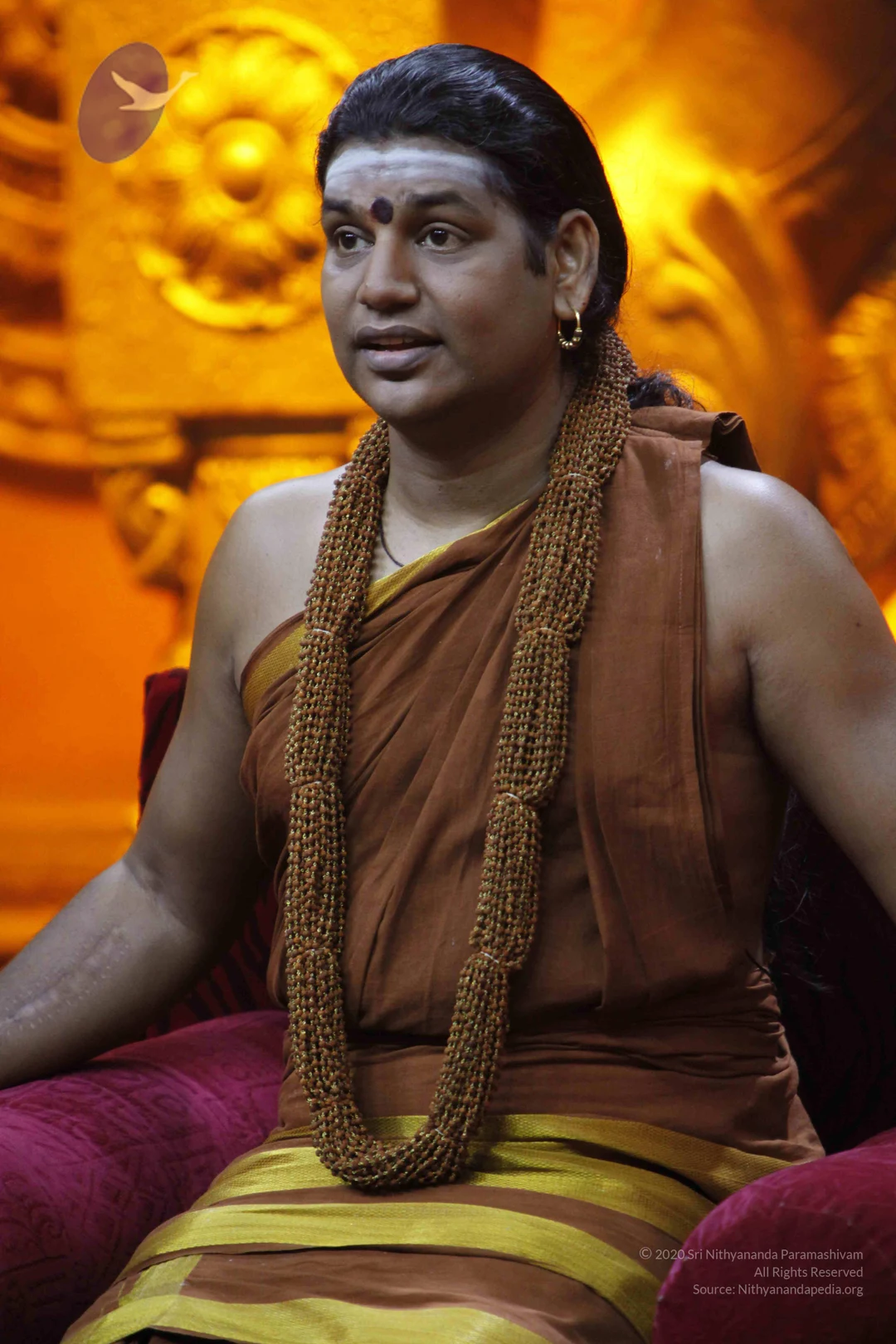
95 photosSource gallery
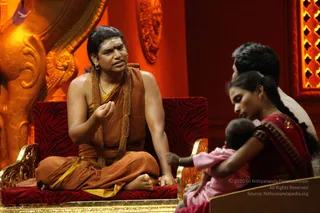
A photo of a warmly lit satsang stage inside a tent, with golden temple-style pillars, carved panels and a red curtain backdrop. Three seated figures sit on a raised dais: a central figure in a white robe on an ornate throne, flanked by two women in pink and red saris on smaller chairs, with a lion-like carved seat and decorative lamps around them. A cameraman with a tripod-mounted camera stands at right, and a few crew members and equipment cases are visible at the edges.A stage set with golden carved pillars, lion statues and a golden wall relief. A figure in orange-saffron cloth with long hair sits on a red-cushioned golden throne in the centre, between two golden makara-like carved supports. Facing him on wooden benches are a woman in a pink sari seated at left and a woman in a magenta sari seated at right, with a child in pink between them. The figure's ornate clothing and long hair match the probable Swamiji cues, and he is seated in the centre of the throne as the central figure. Warm orange lighting and a decorated floor with a circular motif complete the scene.Photograph of a satsang on an ornate golden stage with warm orange backdrop and carved golden elephant-figure pillars. A seated figure in the centre sits cross-legged on a red-cushioned golden throne, bare-chested with long hair worn loose, wearing a saffron-orange wrap and a yellow-orange lower garment; a long beaded or cord ornament hangs at the chest. To the left, an older woman in a pink sari sits on a low wooden bench facing the throne. To the right, a man in a white shirt and grey trousers holds a small device, beside a woman in a maroon sari holding a small child in pink. A colourful circular rangoli design lies on the stage floor. Identity of the central figure cannot be confirmed from appearance alone, so the central figure is described by role as a seated teacher on a throne.A photograph of a gilded, lamp-lit stage set styled as a Hindu temple hall, with carved golden pillars, lion sculptures and a central raised seat with a red cushion. A figure in saffron-orange clothing sits on the throne-like seat, flanked by two women in pink saris seated on low gold chairs, and a film camera on a tripod at the right records the scene. Another person stands at the right edge beside the camera. Bright stage lights hang from a black truss above. The visible physical people number four to five, with the central seated figure in saffron, two women in pink and a cameraman.A man seated cross-legged on a red zebra-striped throne in a warmly lit hall with carved golden panels. He wears an orange-brown robe over one shoulder with a yellow waist cloth, a long rudraksha-style mala, earrings and a red tilak on his forehead, and he gestures with his right hand while speaking. Beside him a woman in a maroon sari with a braid holds a small child in pink, and another person is partly visible behind her.A photograph taken from the rear of a tent-covered studio set, with a camera operator's equipment in the dark foreground. A raised golden stage with ornate carved pillars, lion figures and lotus-style medallions is lit warmly, with a red drape behind. Seated on the central dais is a figure in orange robes and long hair, with two people in pink and maroon clothing seated on chairs to either side, and a cameraman with a tripod stands at the right edge. The space is a set for a recorded satsang or discourse.