Skip to content
Sunday

27 May 2012

Experience Is The Only Religion.

Dated photos
227
Source pages
1
Media
2
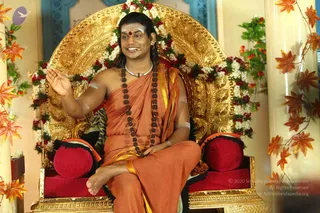
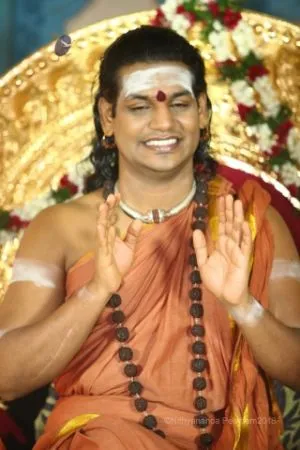
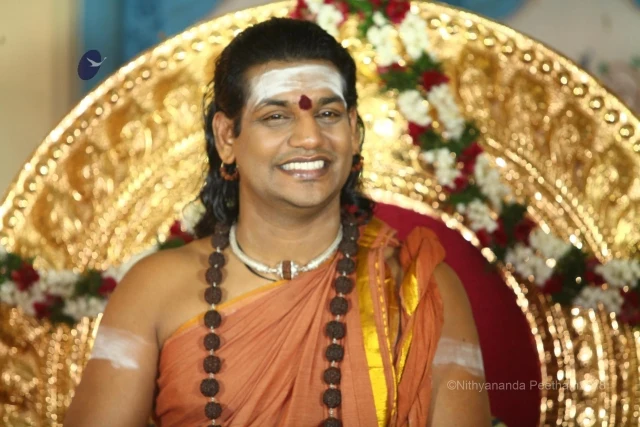
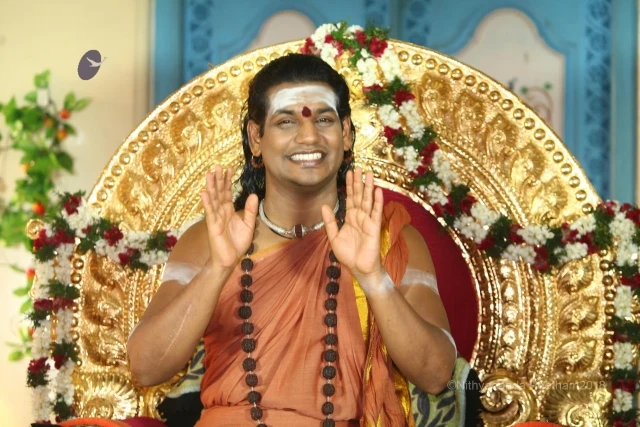
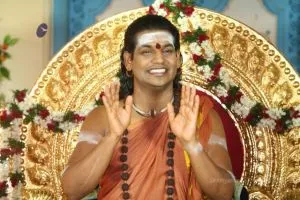
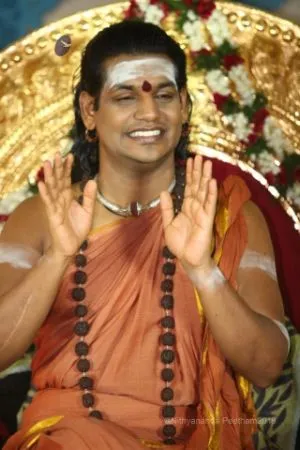
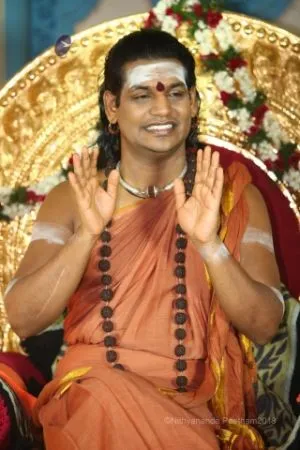
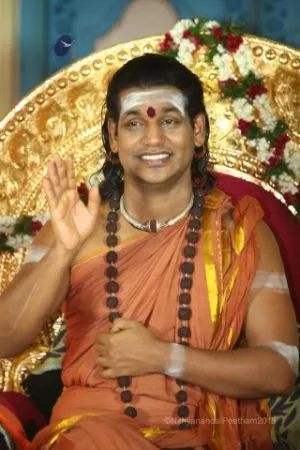
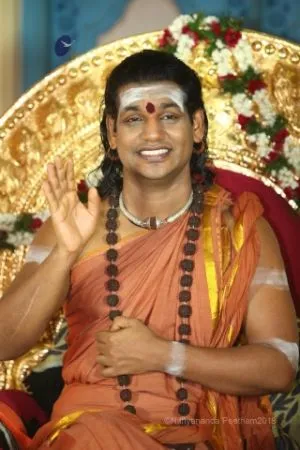
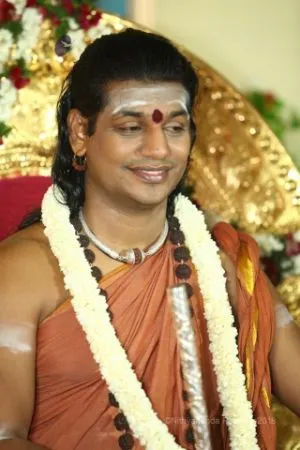
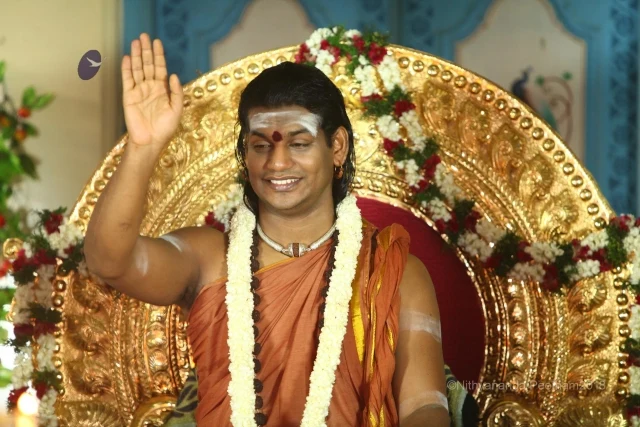
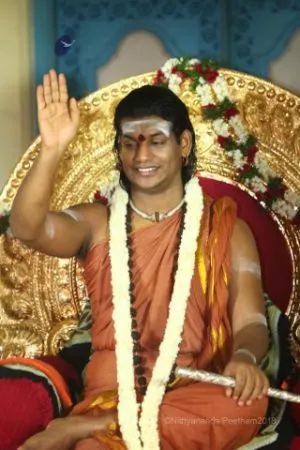
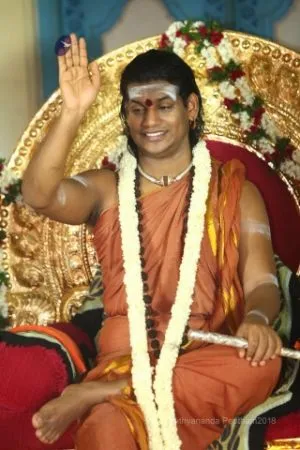
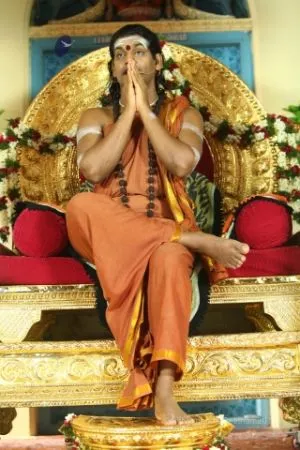
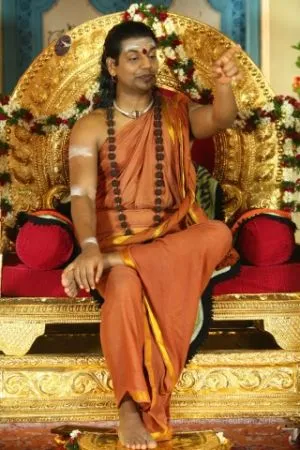
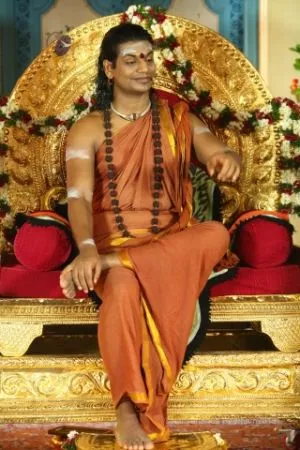
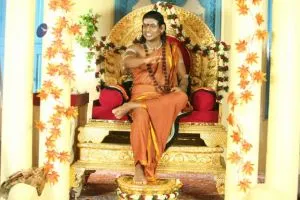
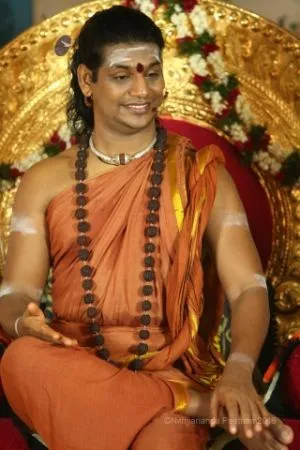
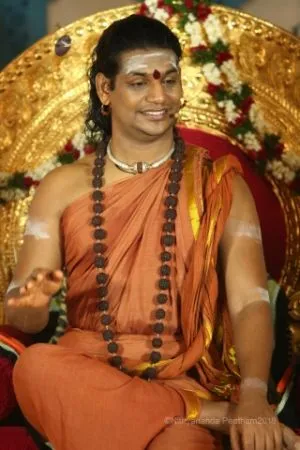
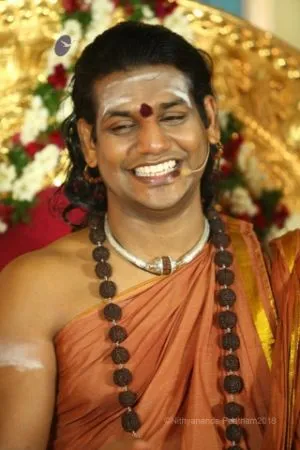
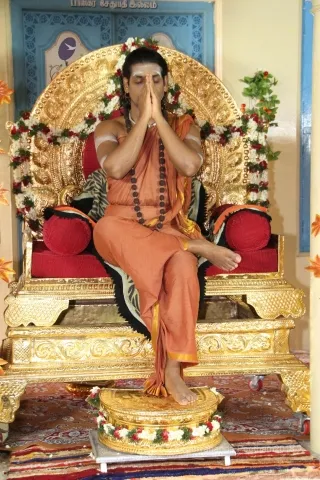
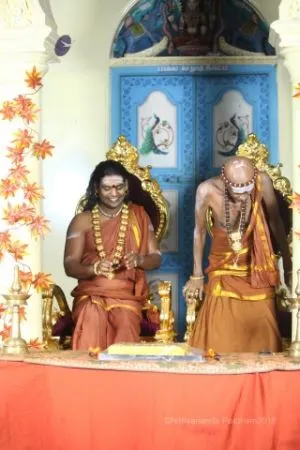
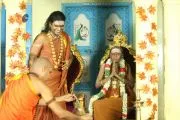
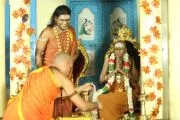
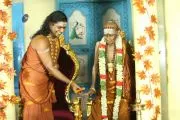
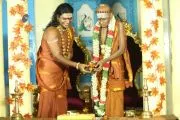
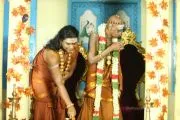
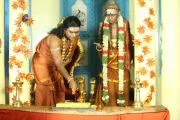
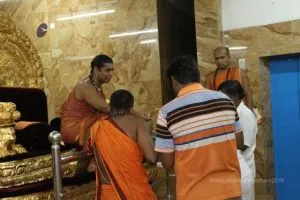
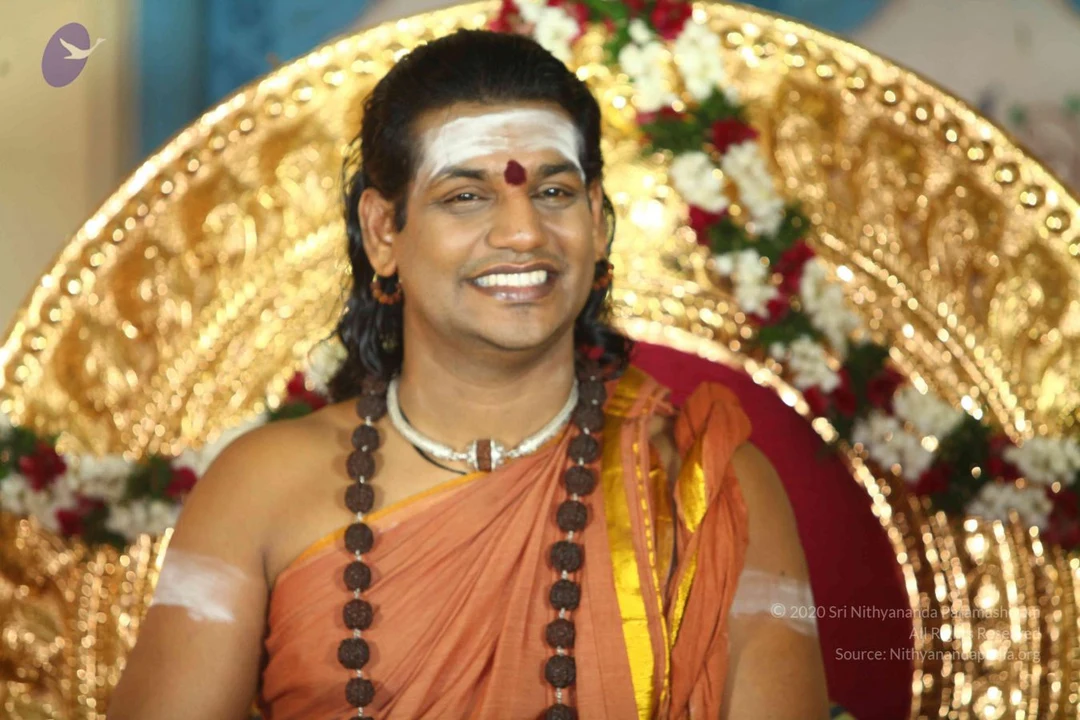
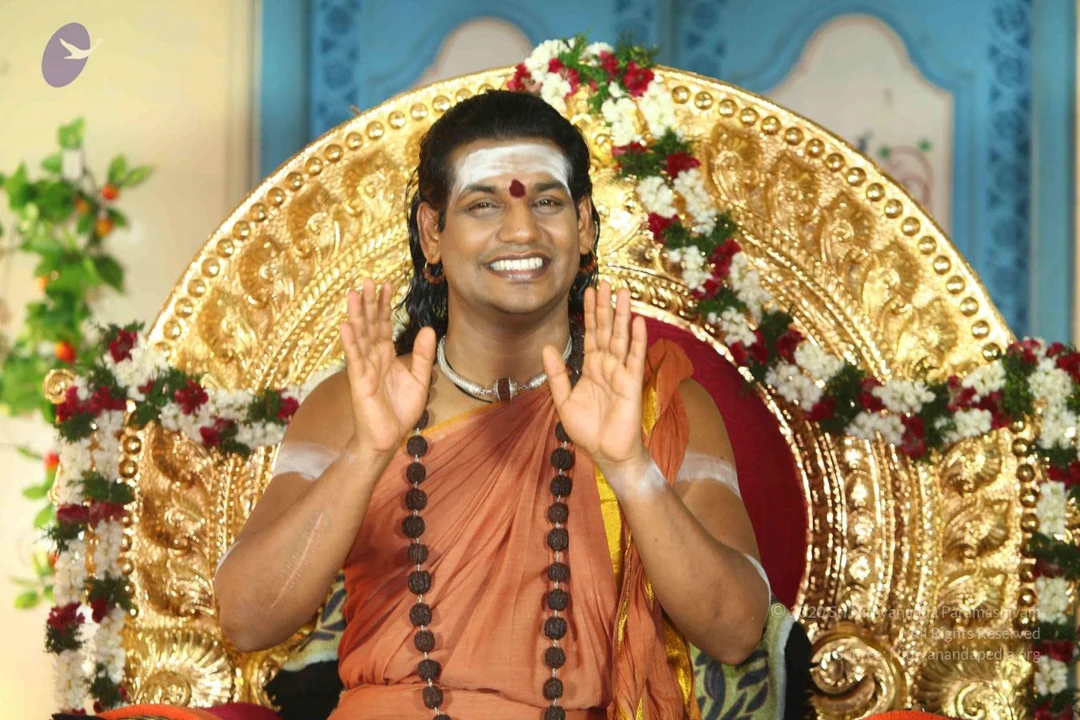
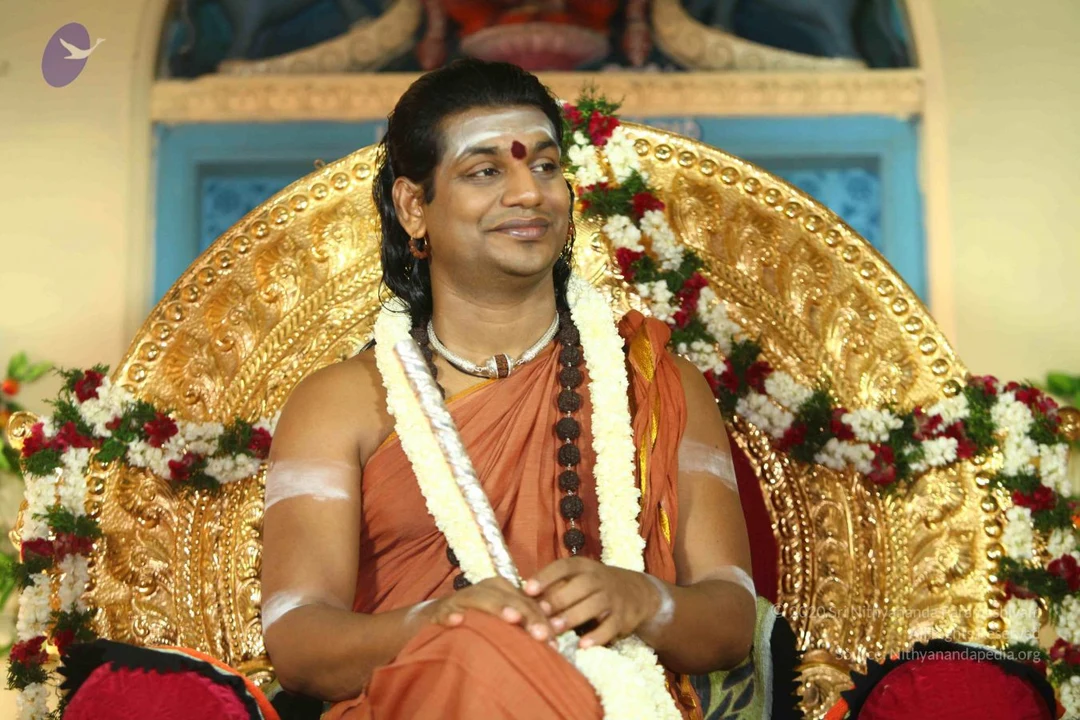
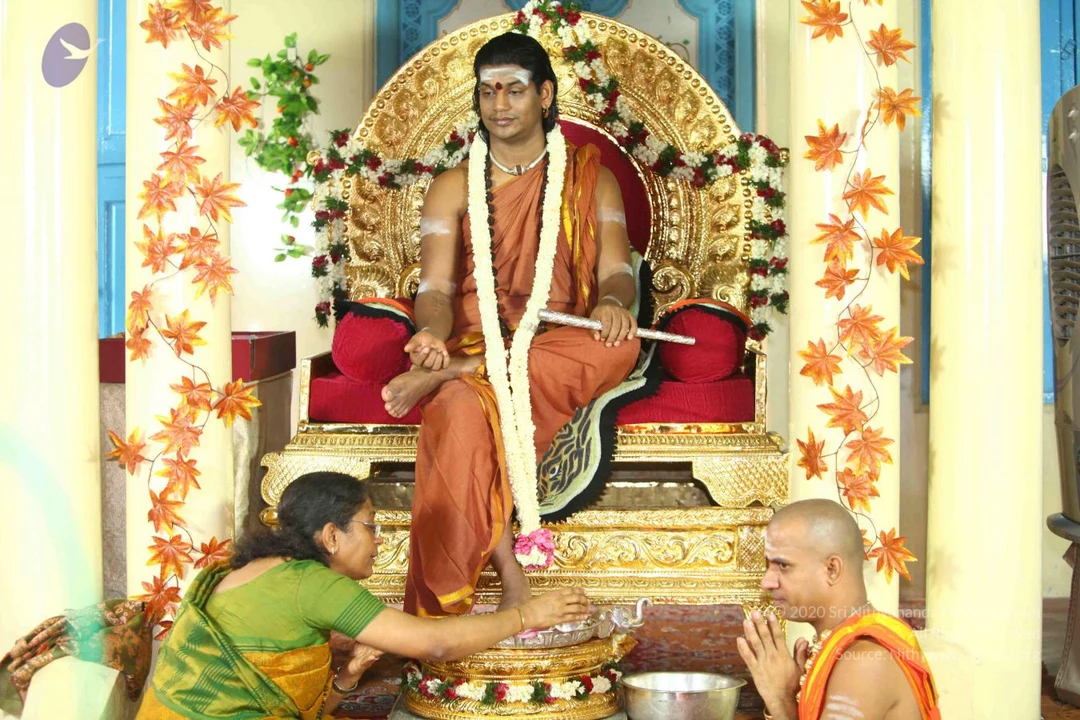
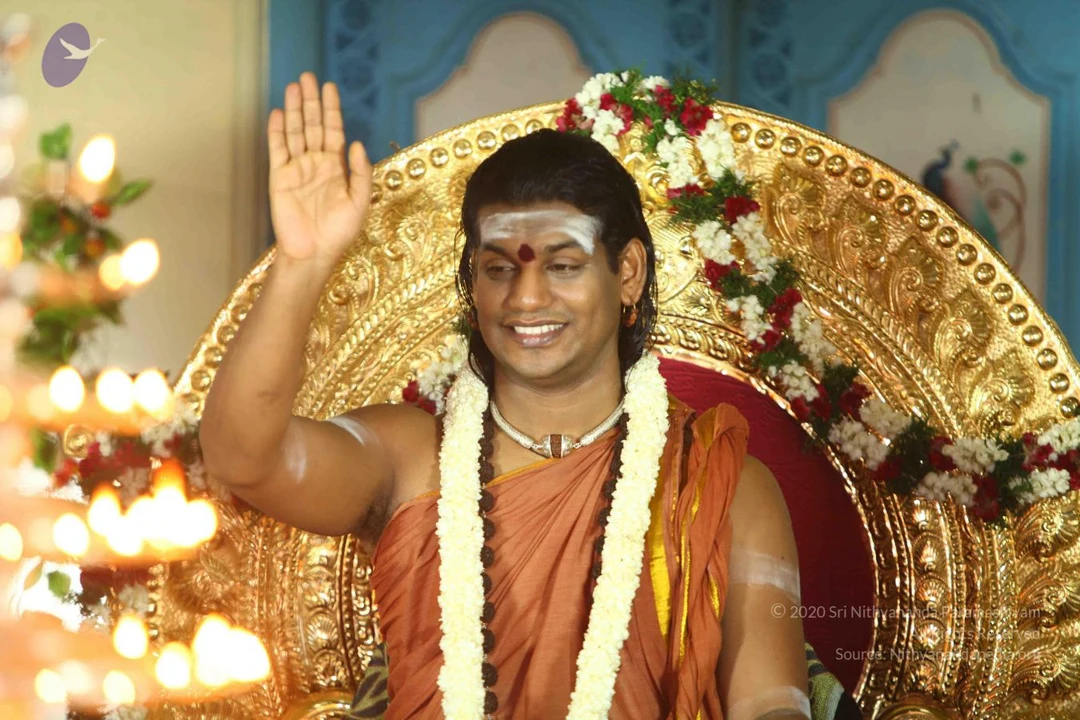
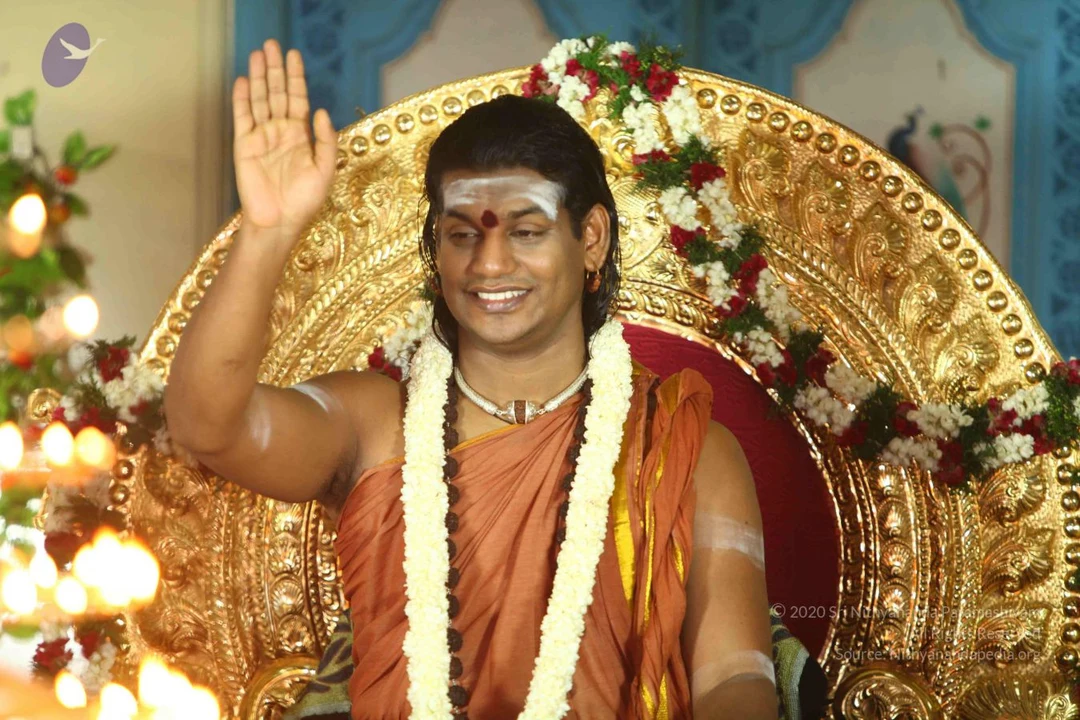
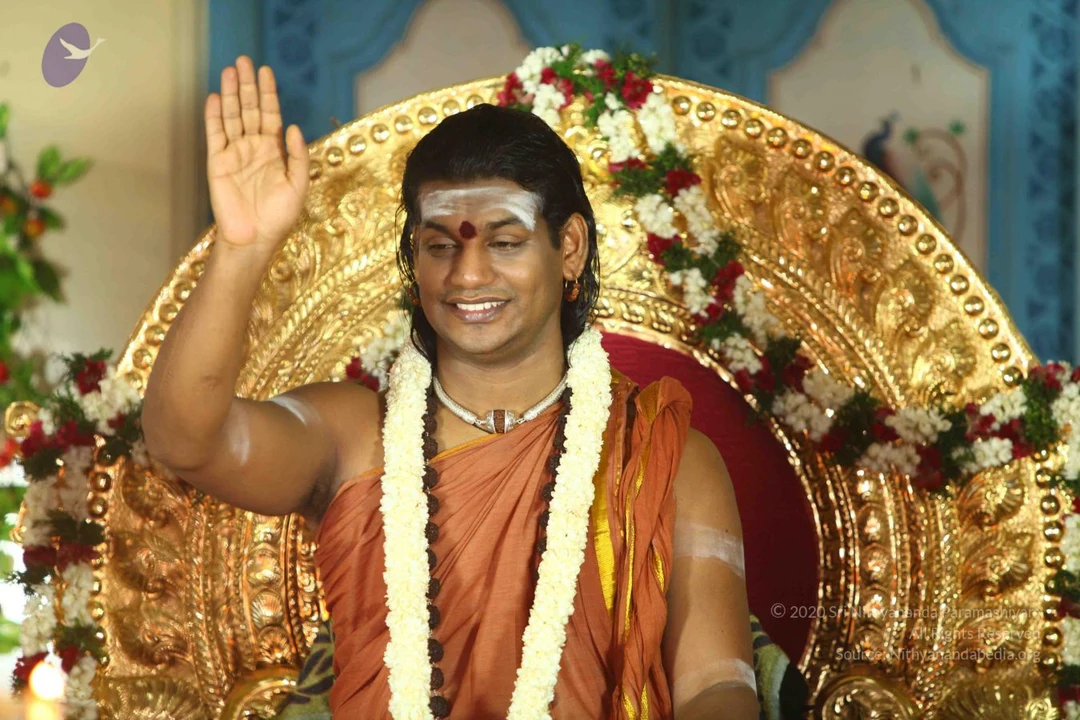
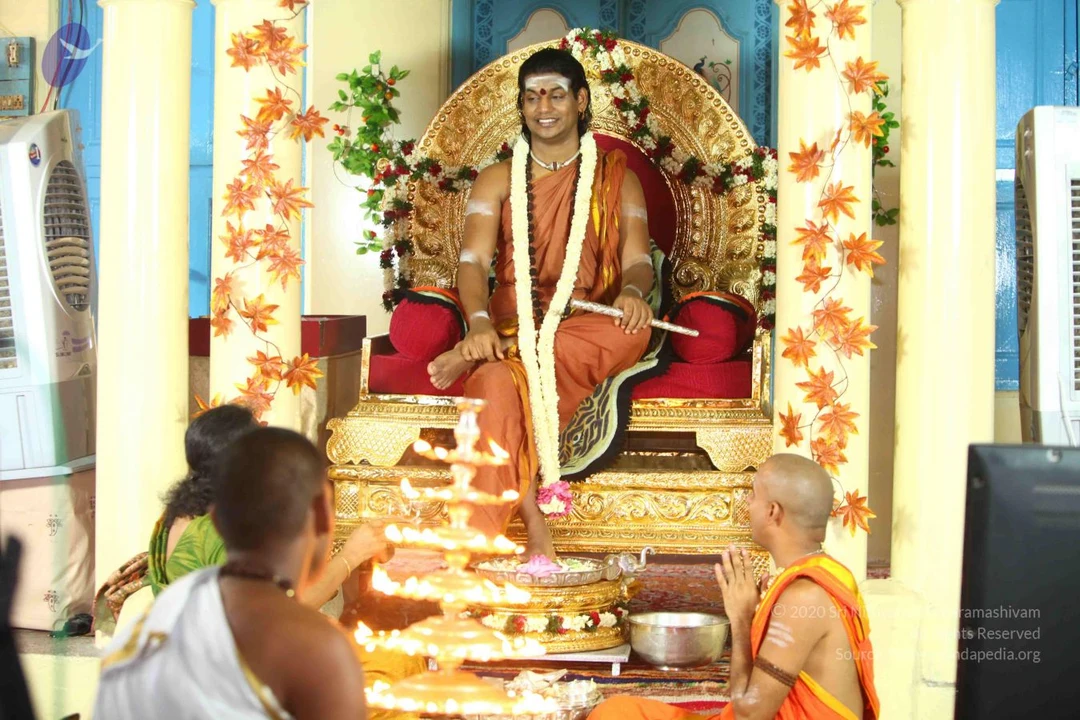
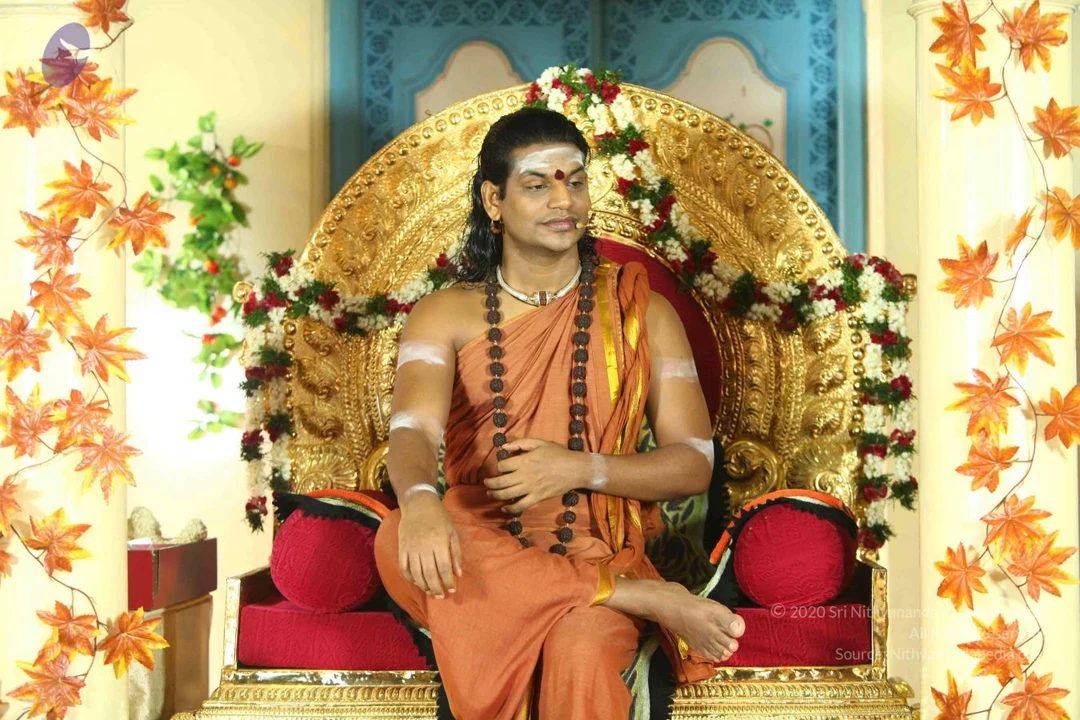
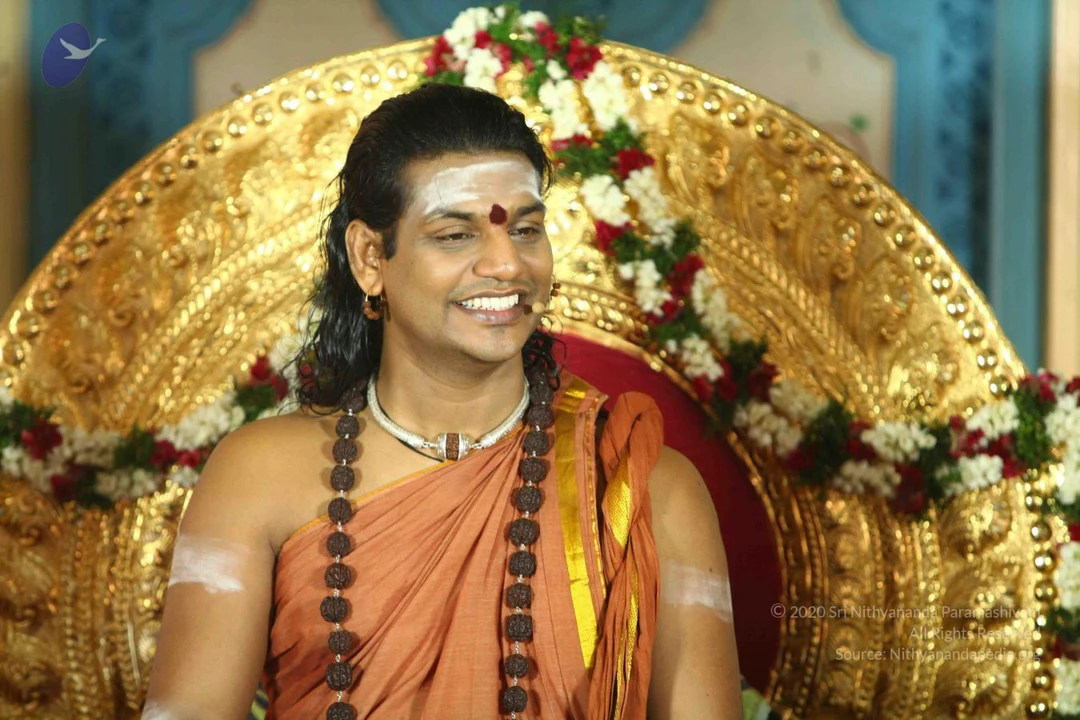
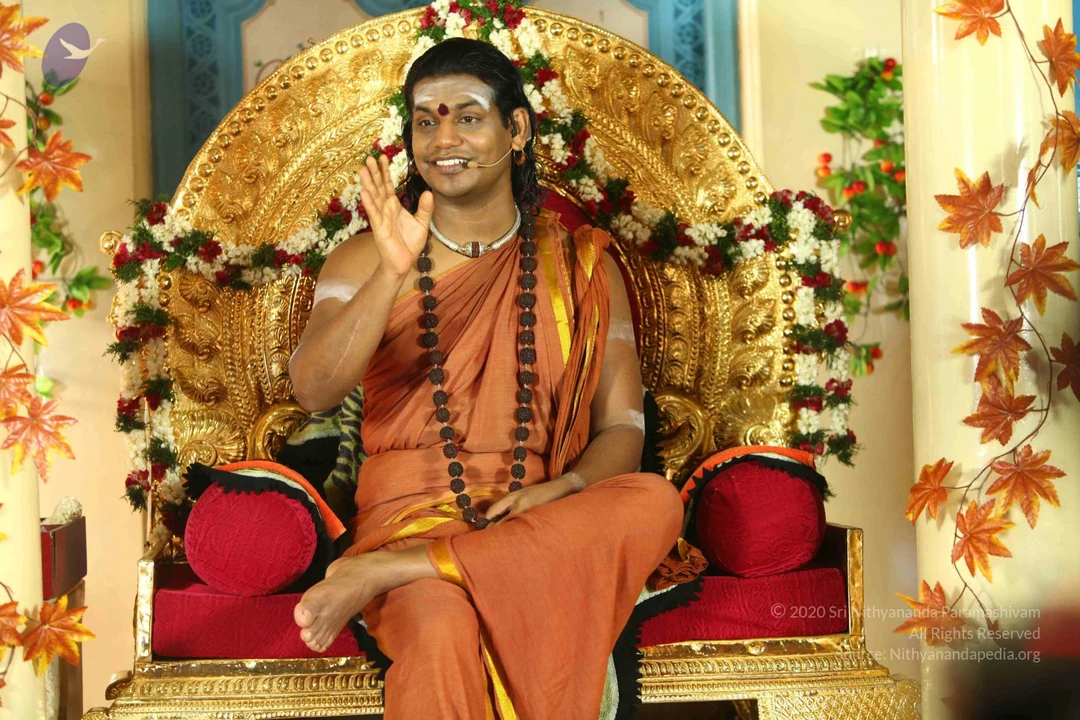
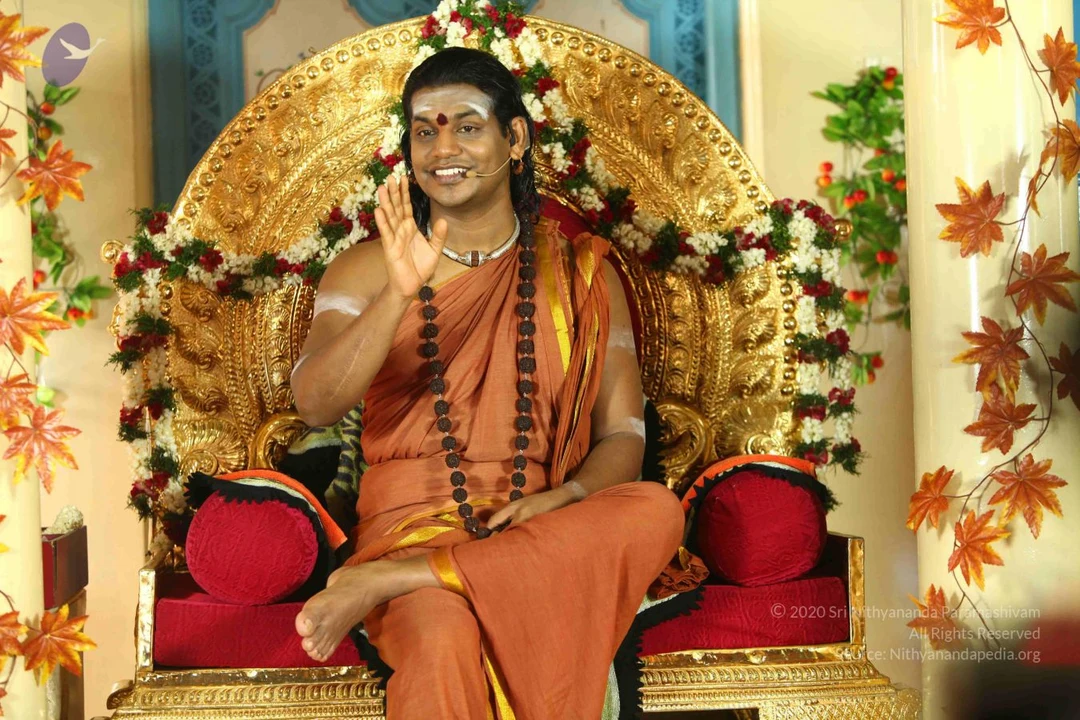
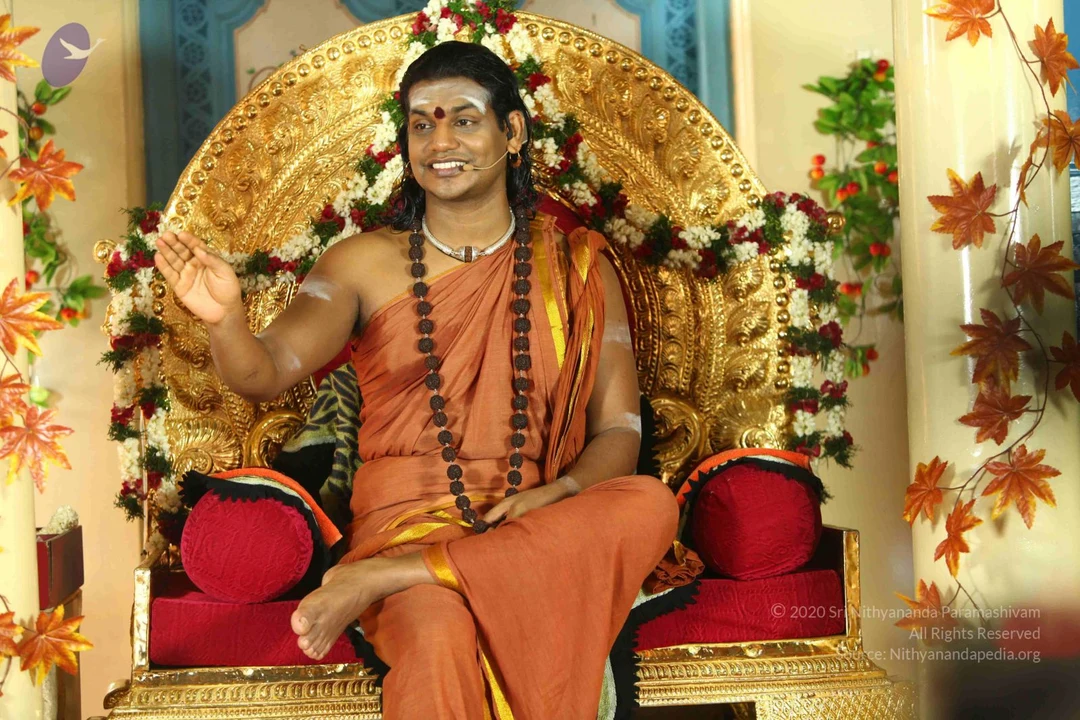
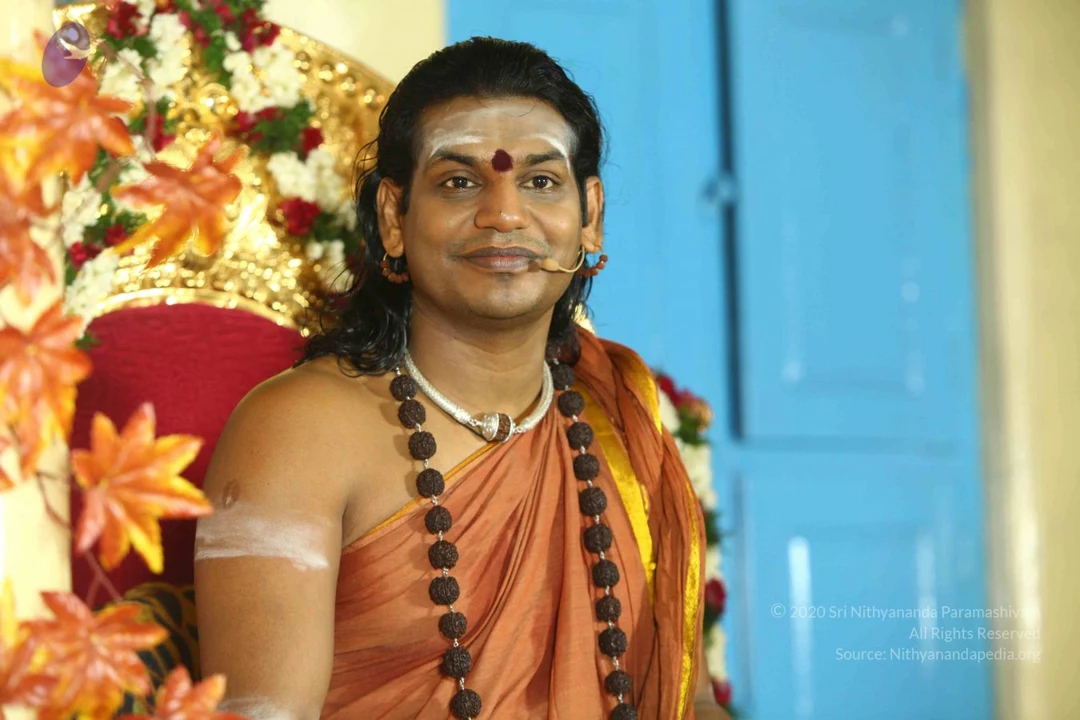
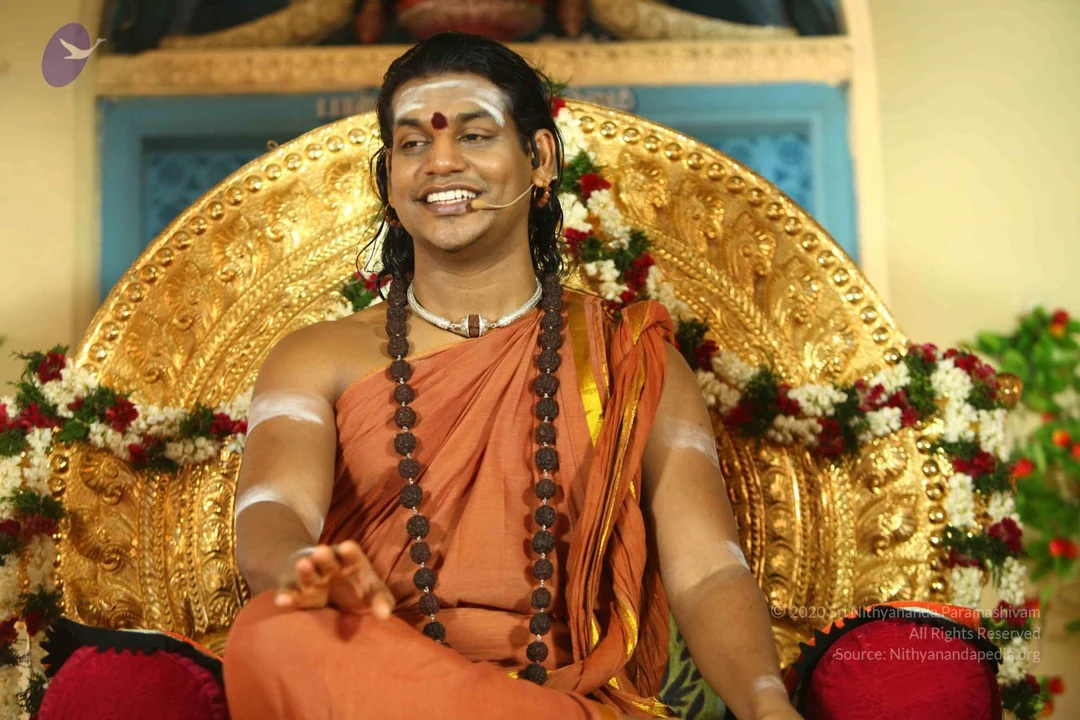
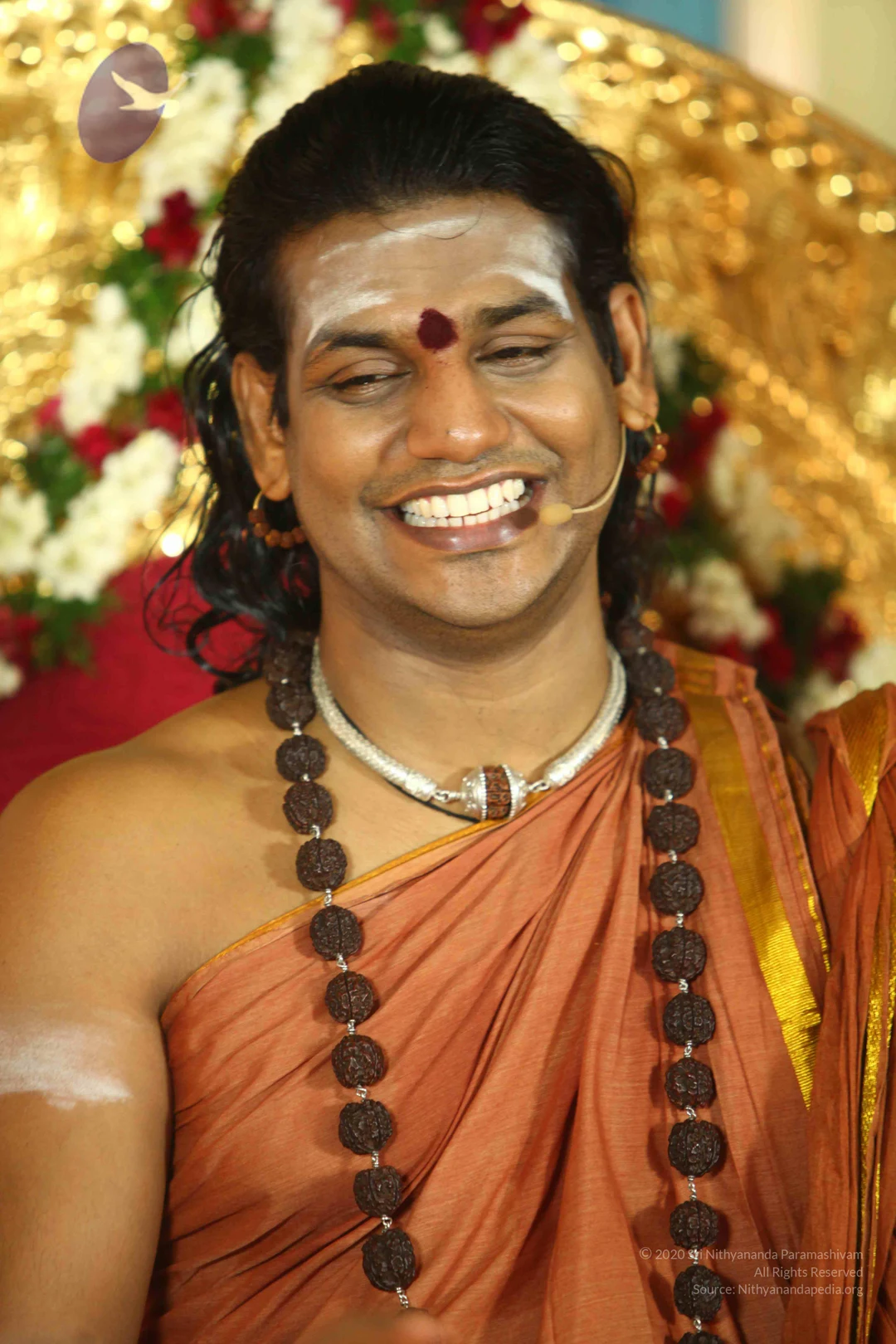
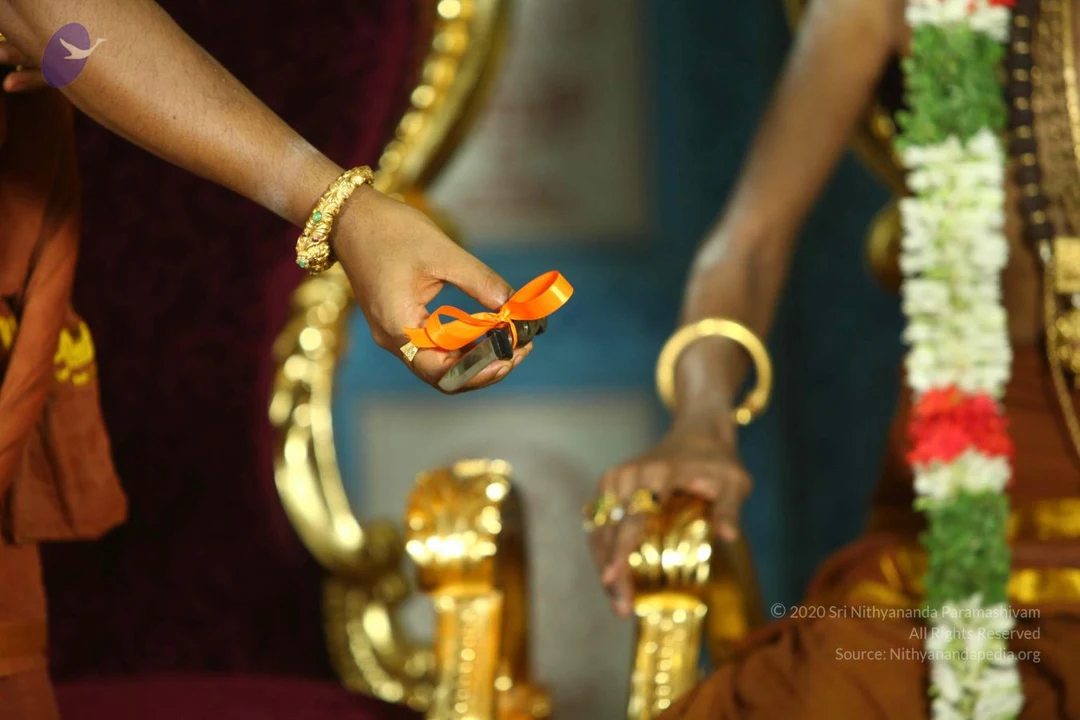
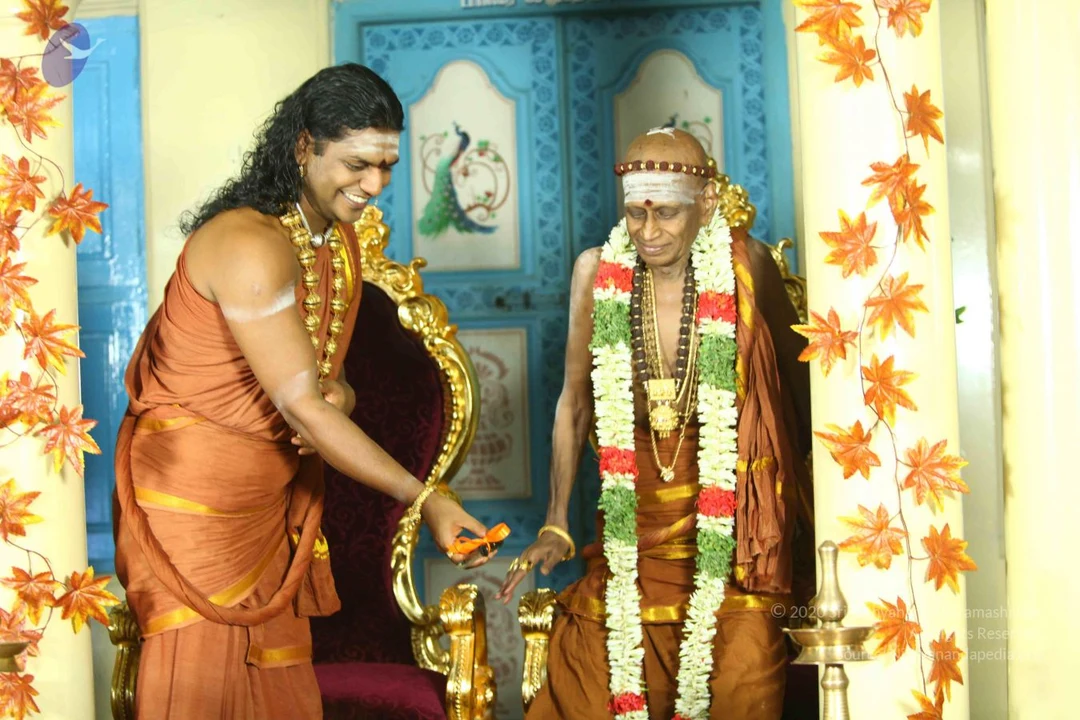
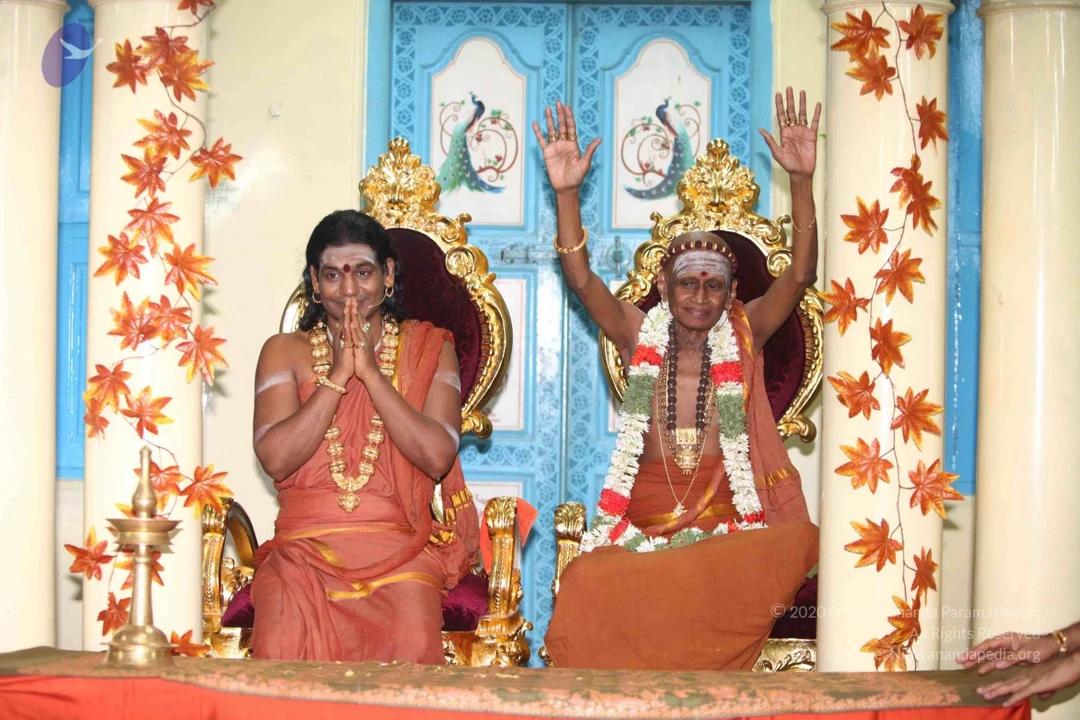
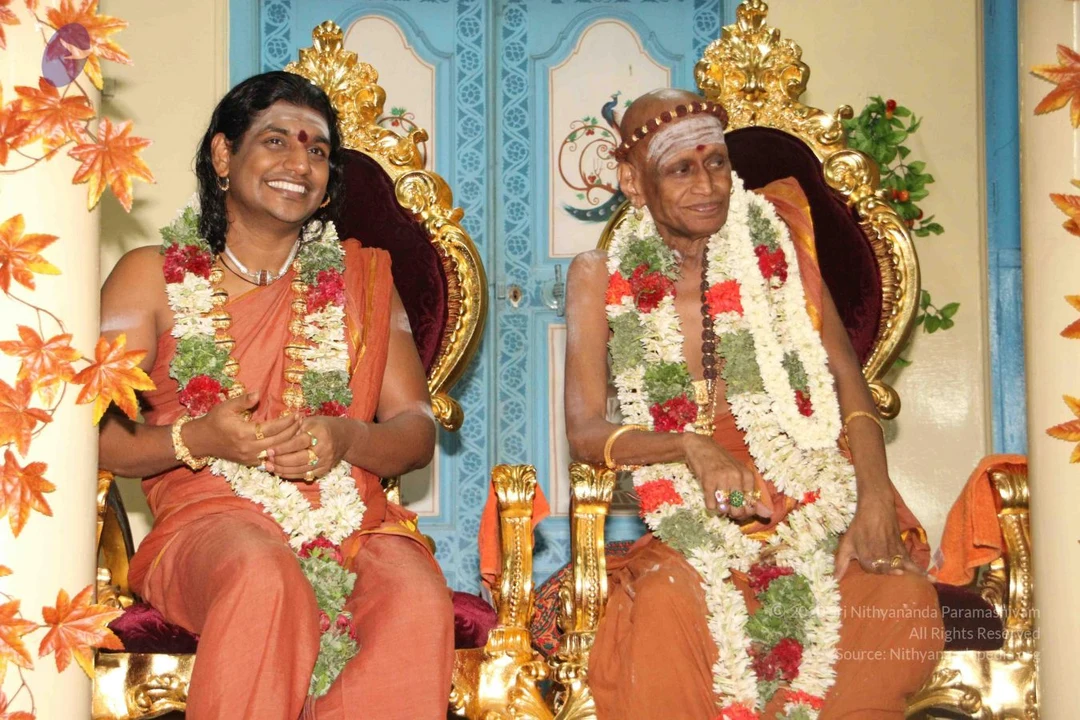
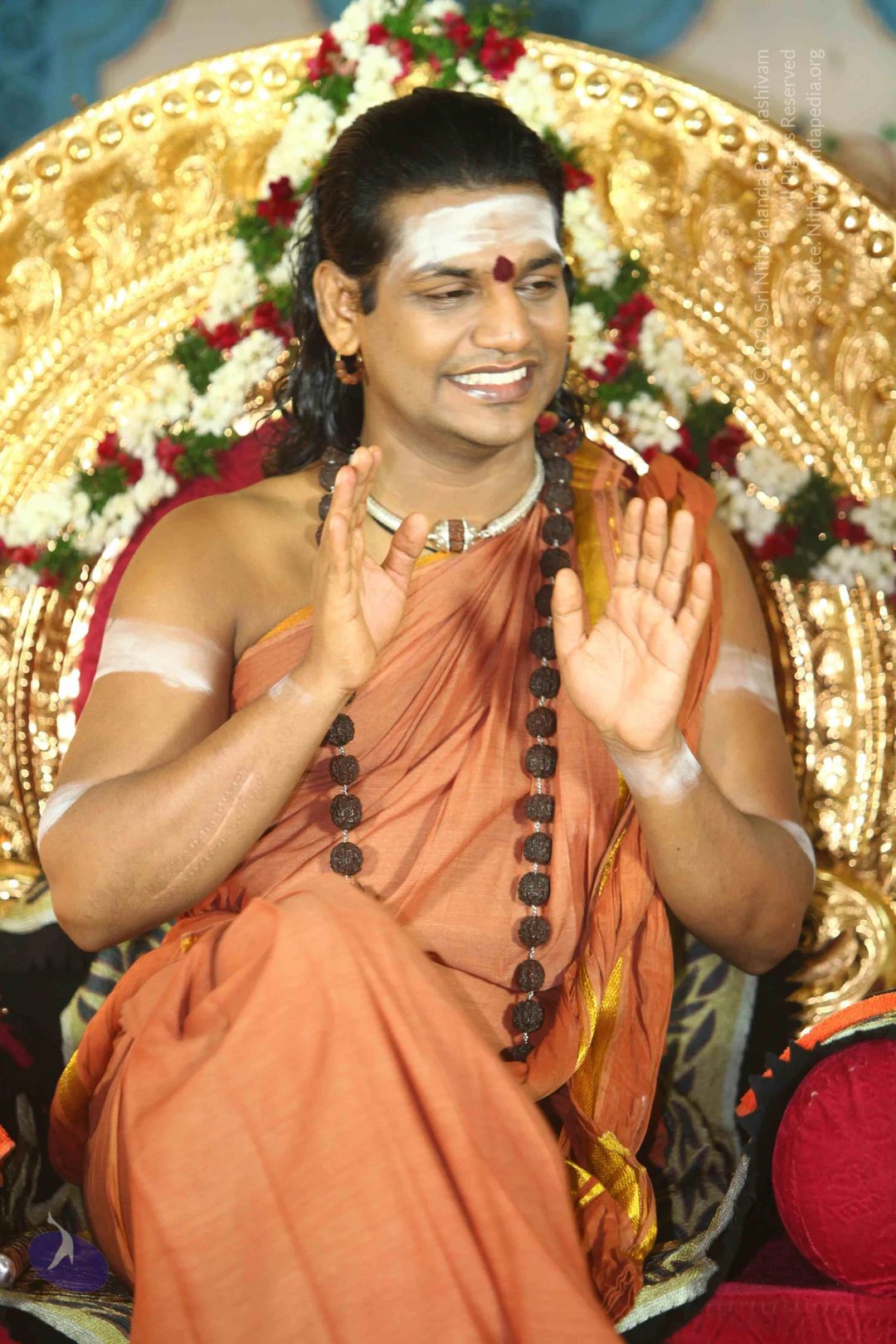
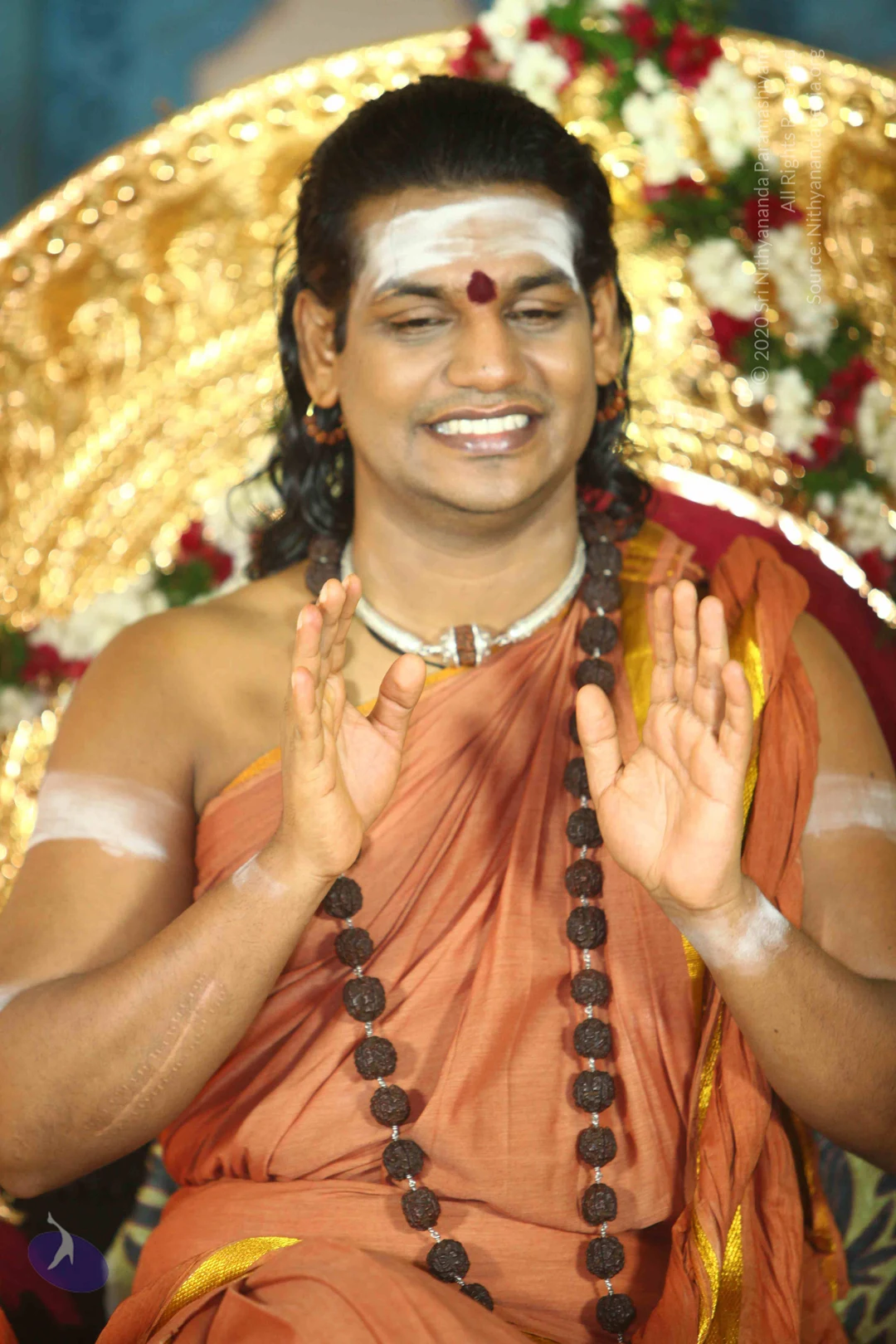
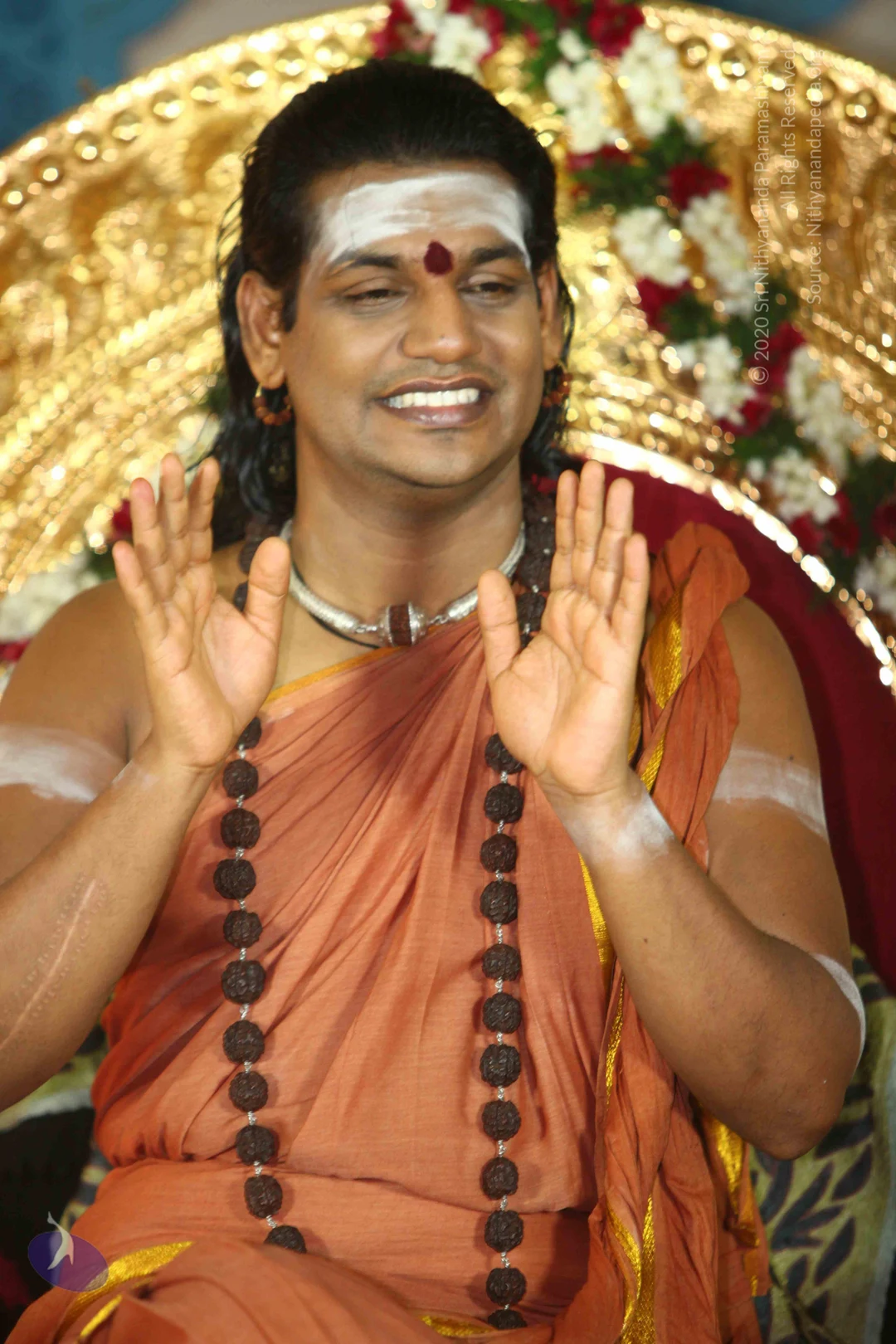
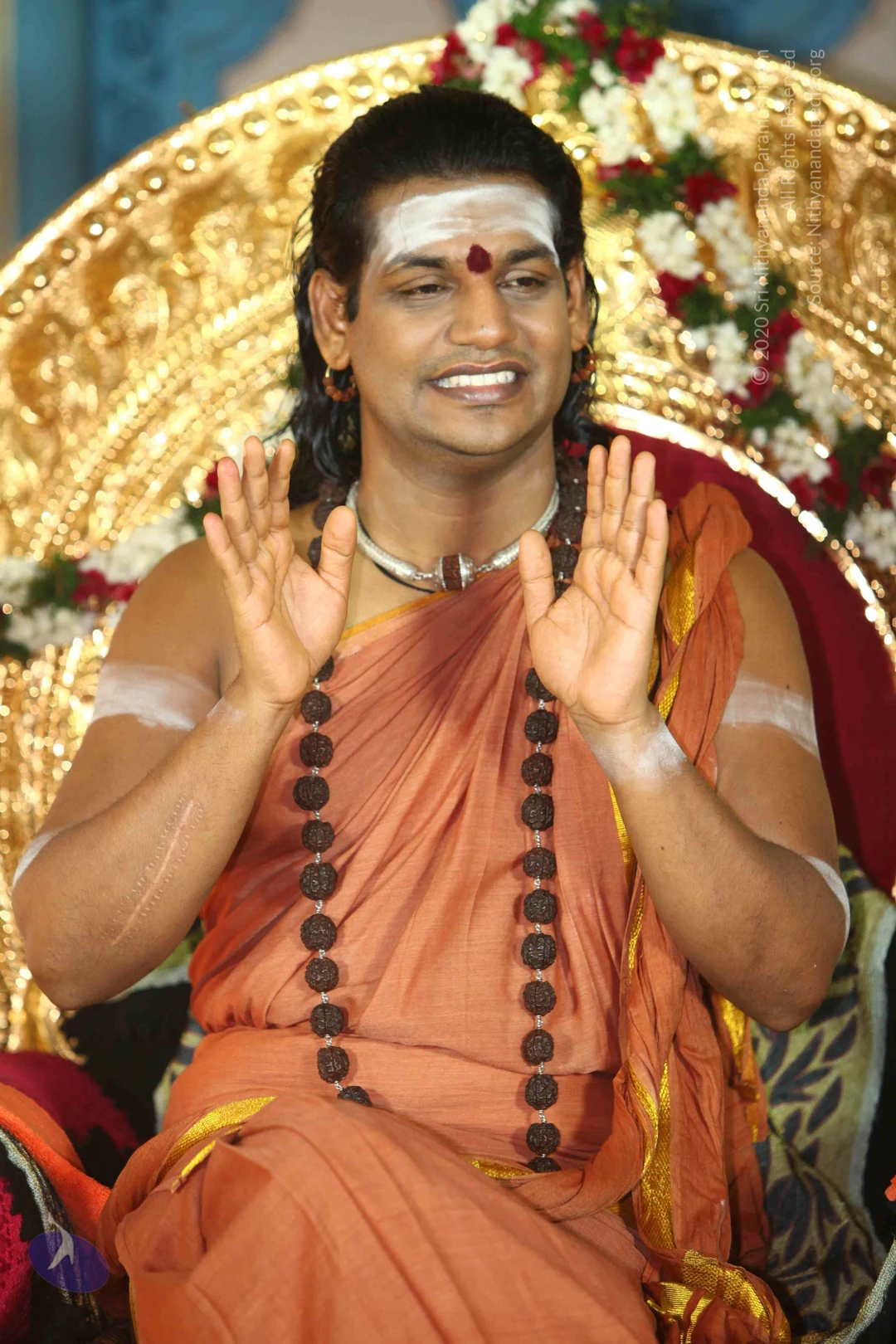
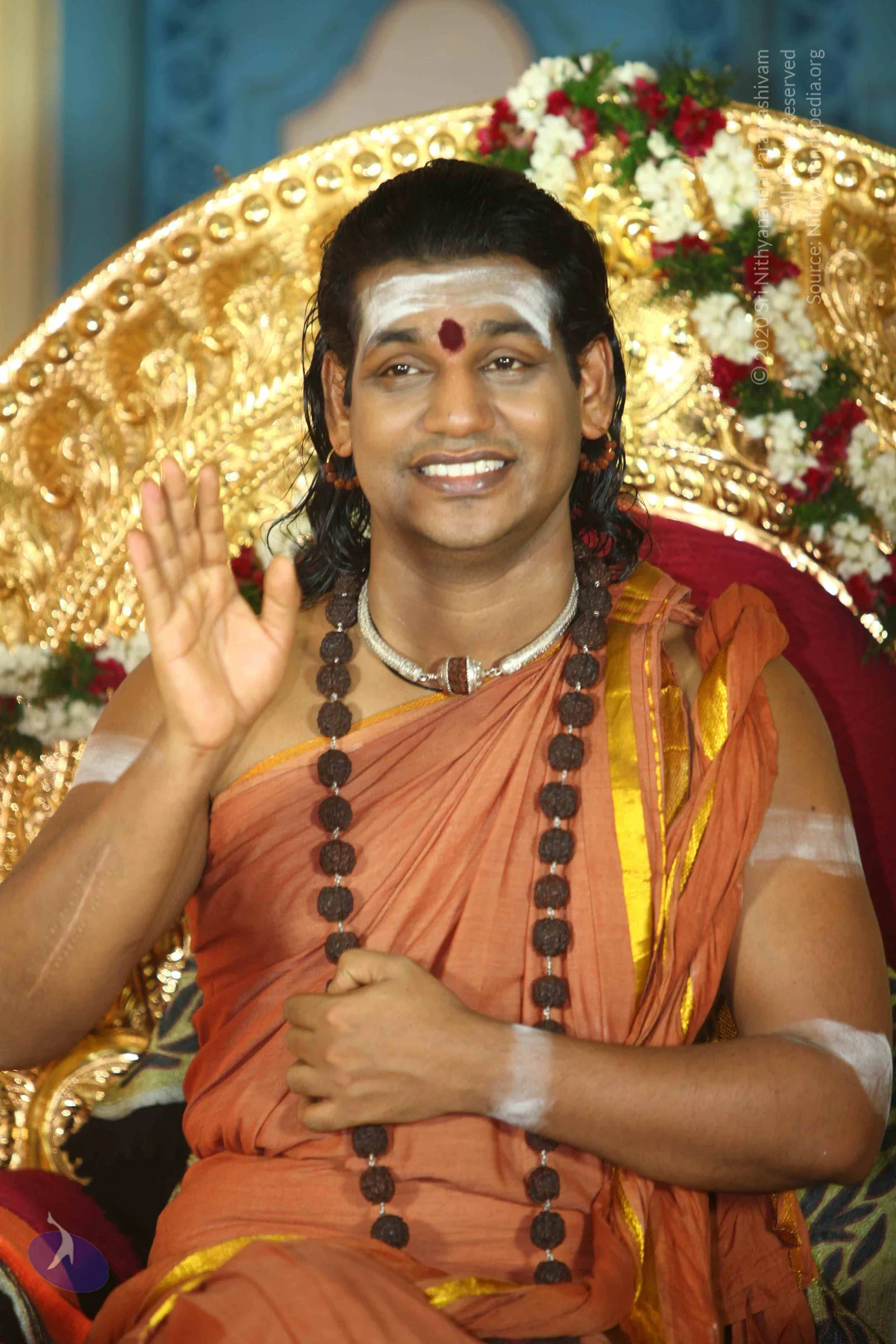
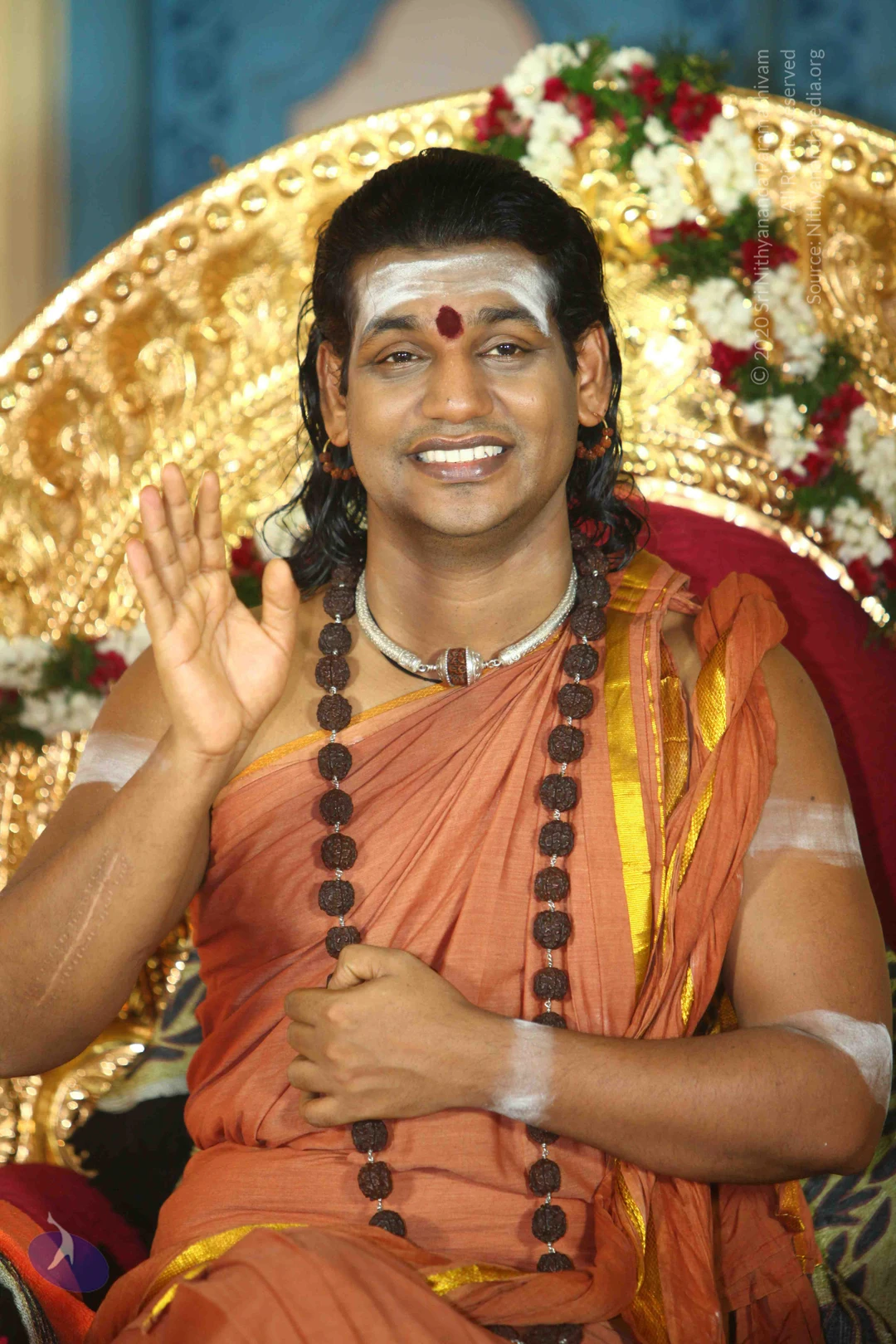
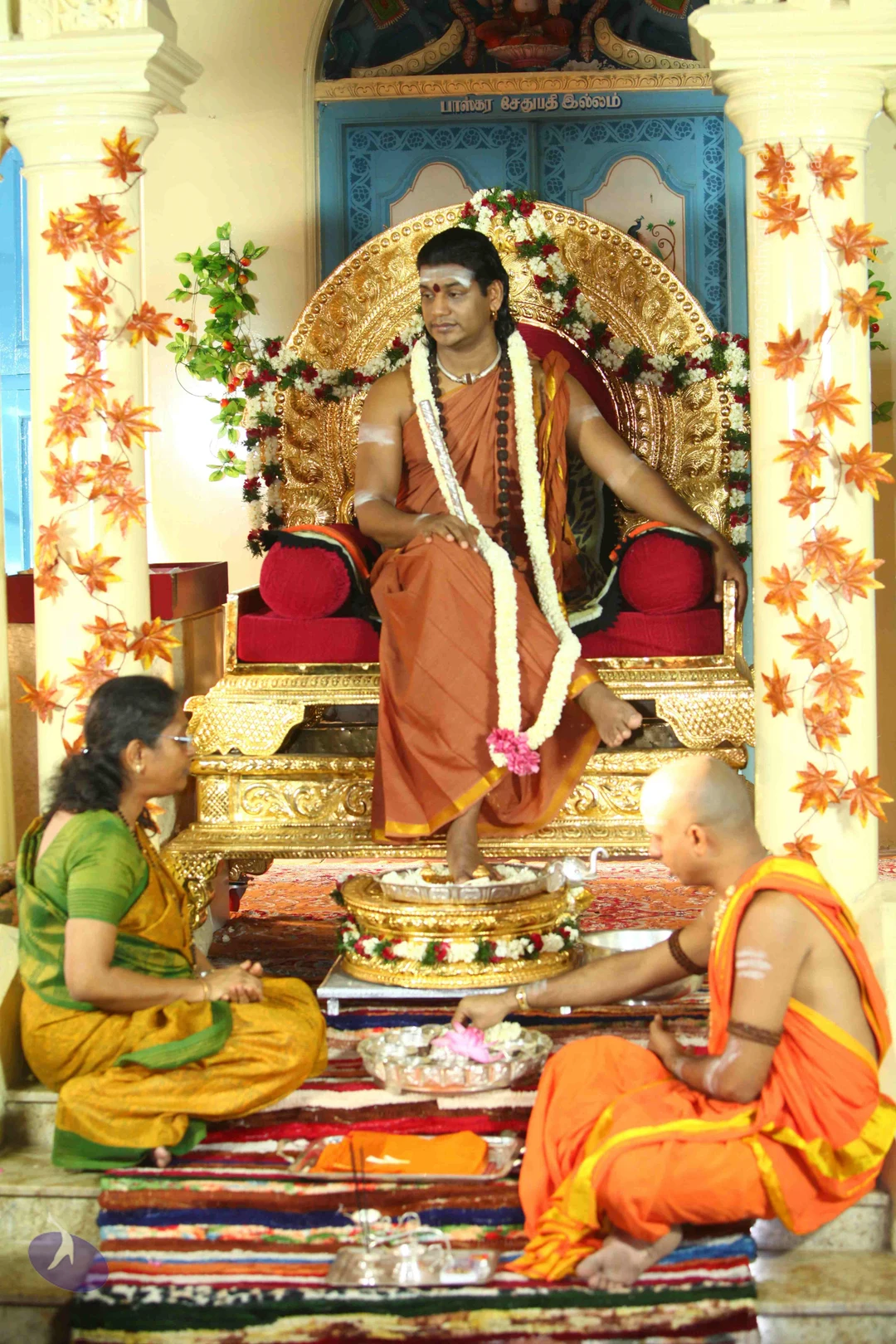
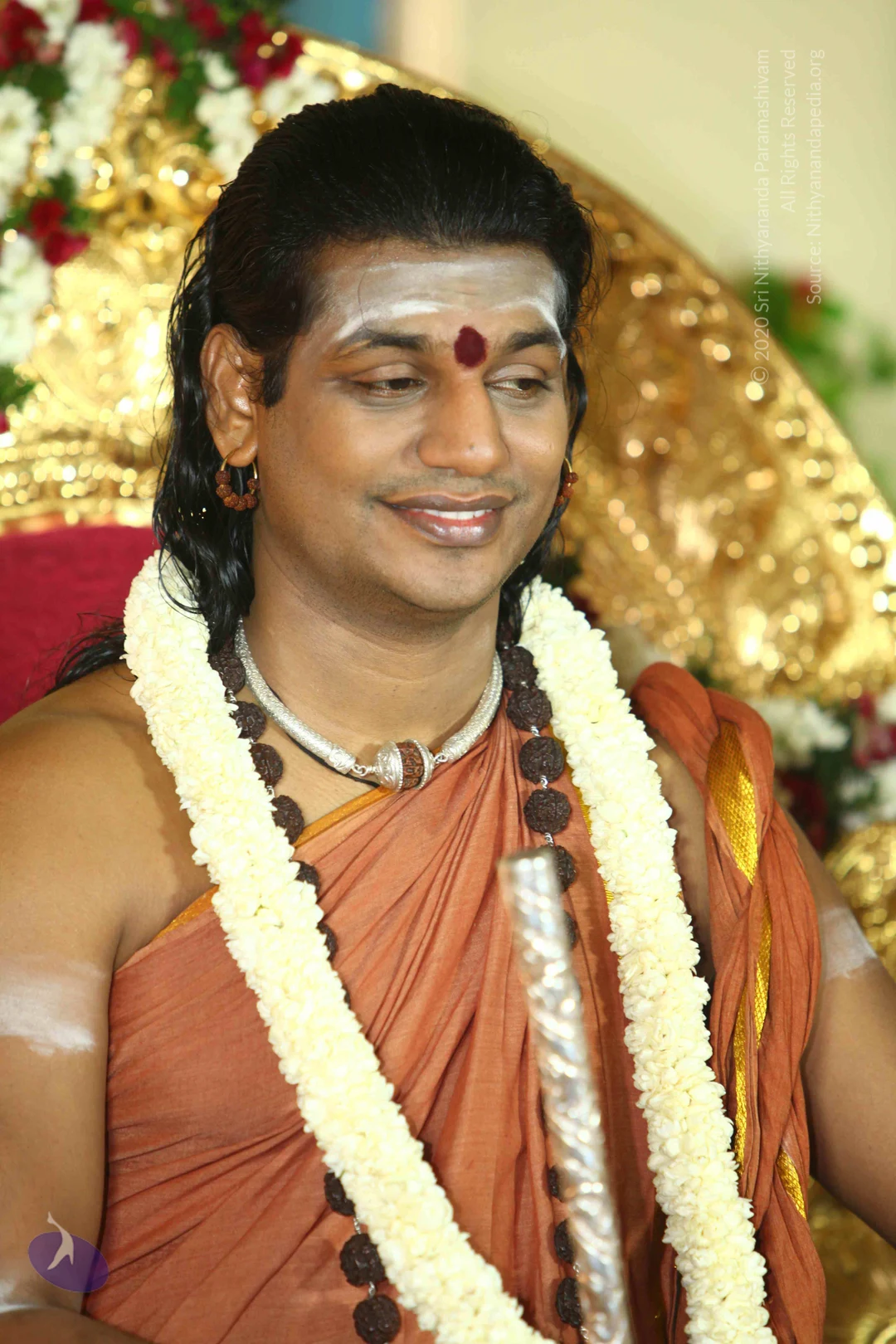
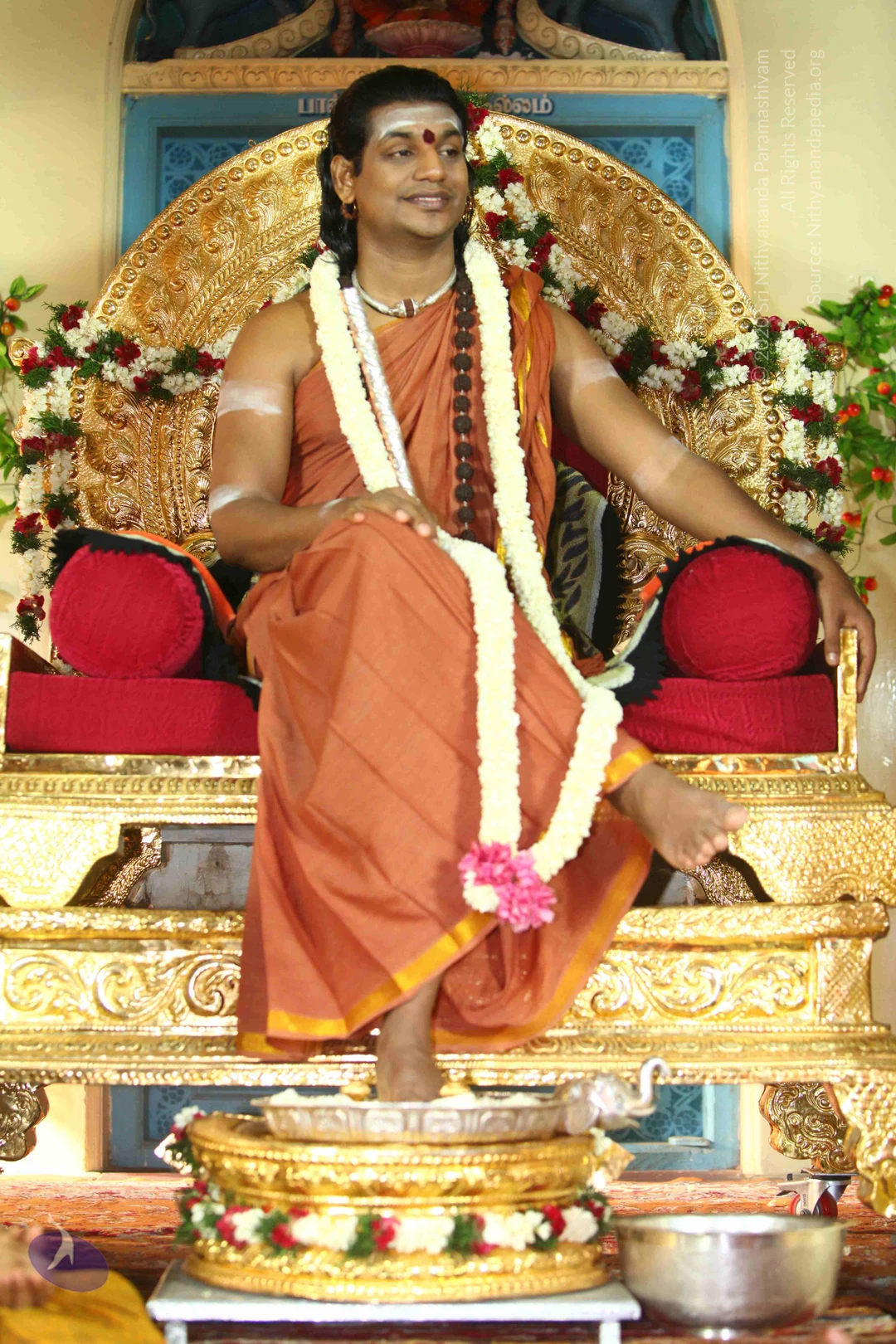
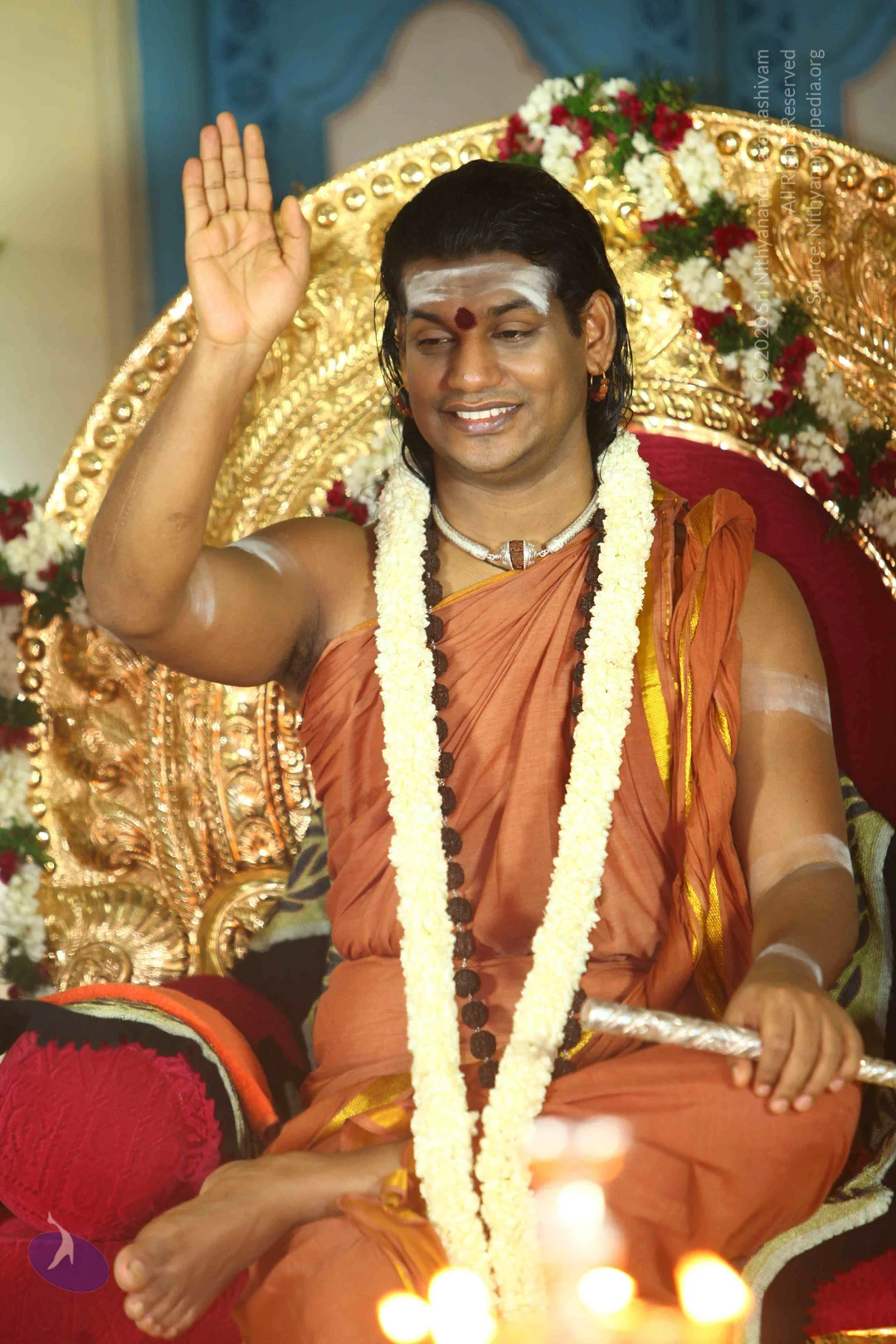
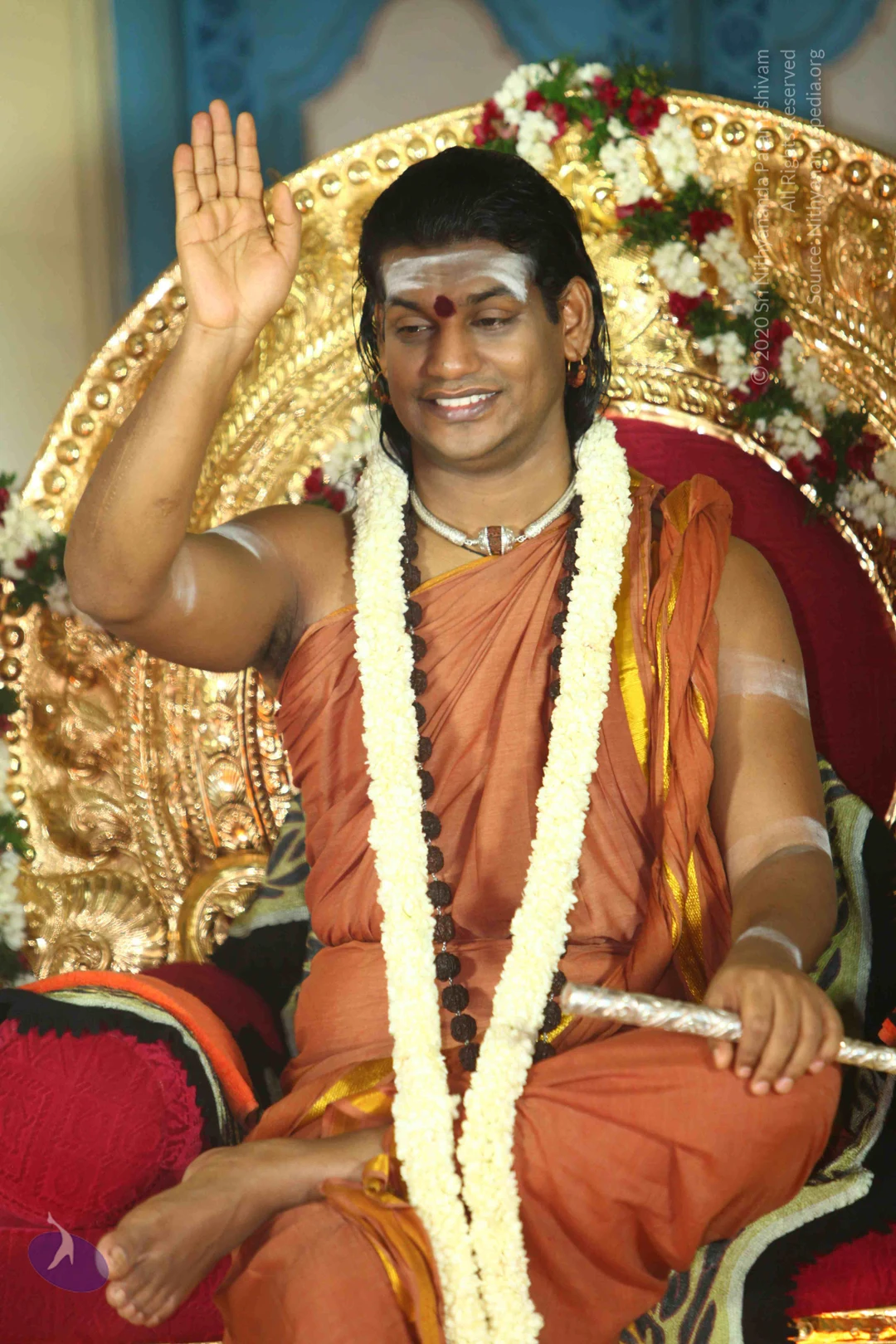
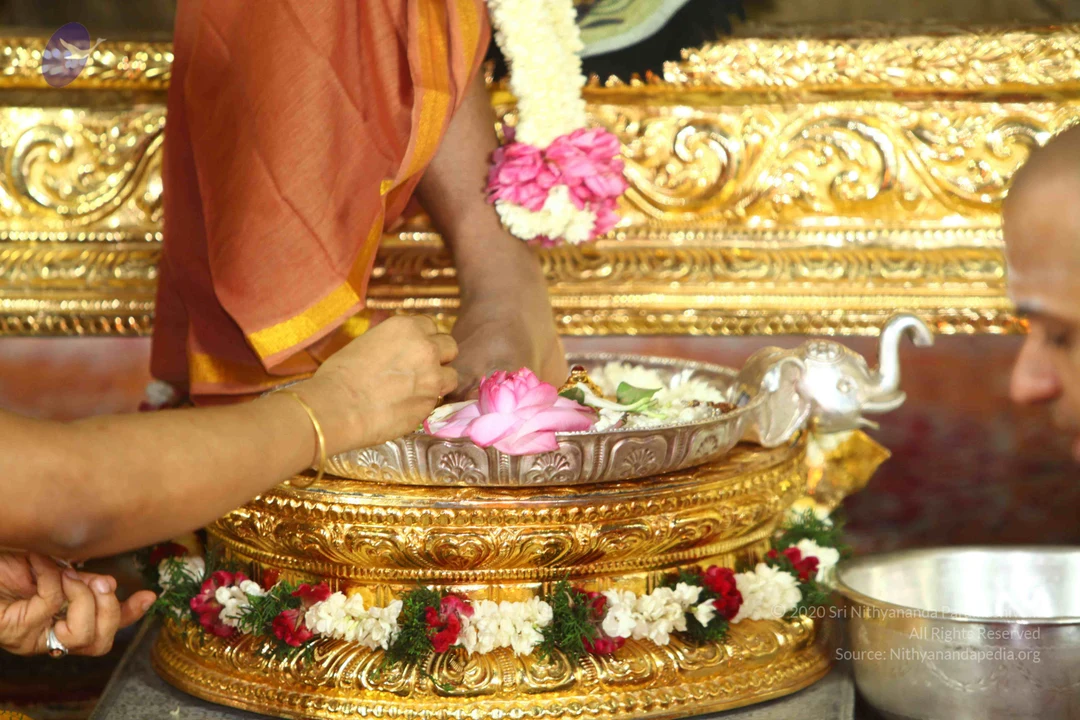
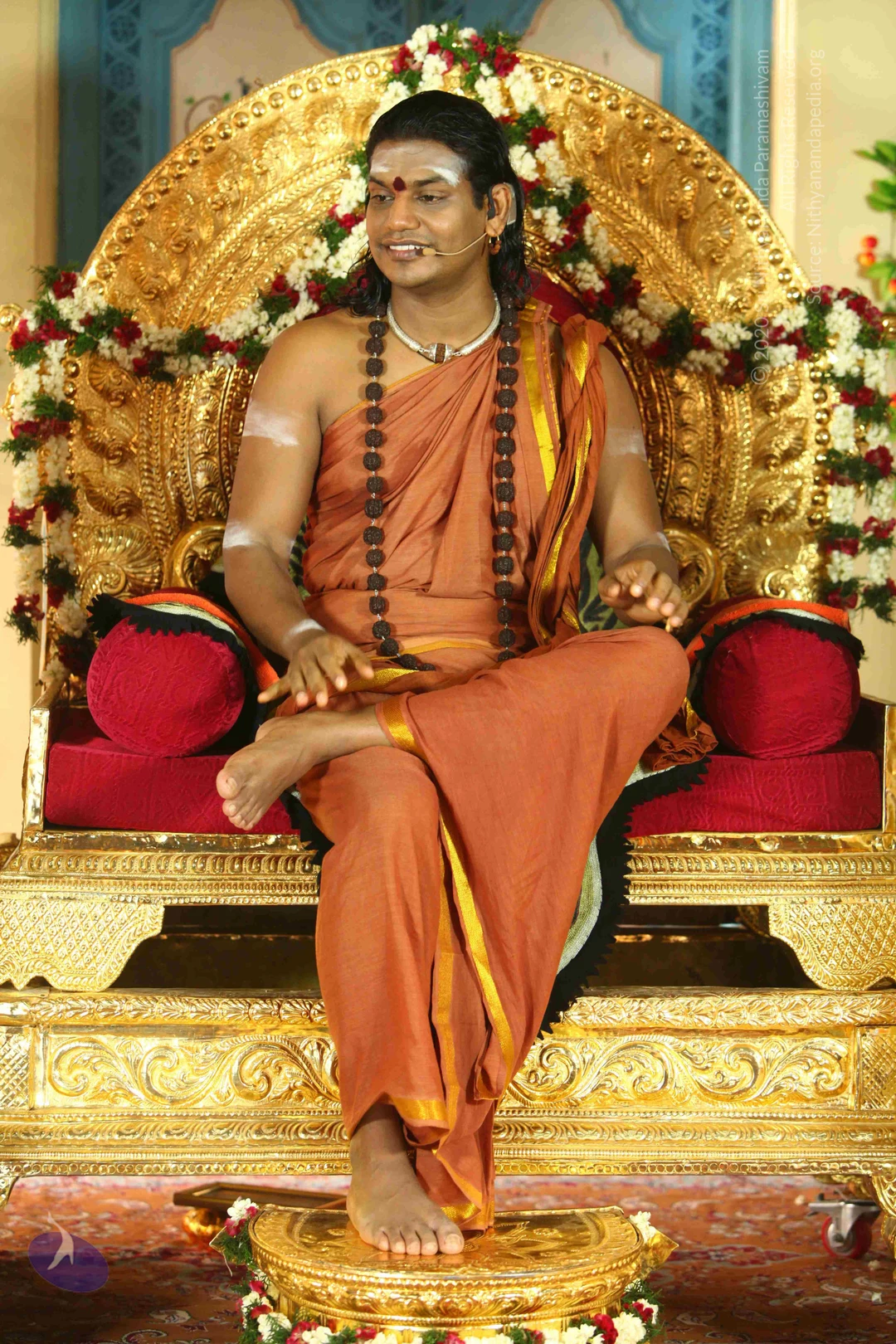
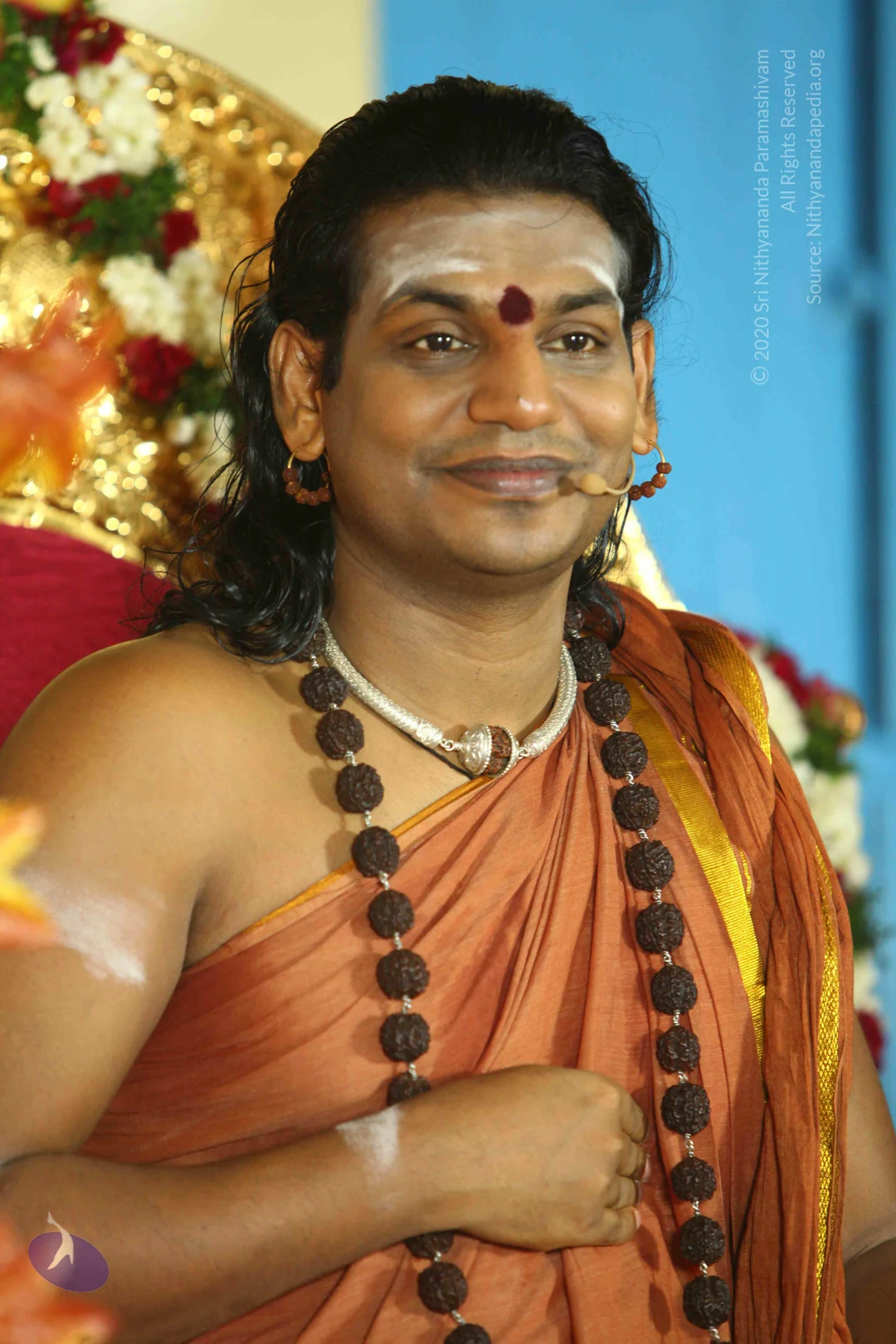
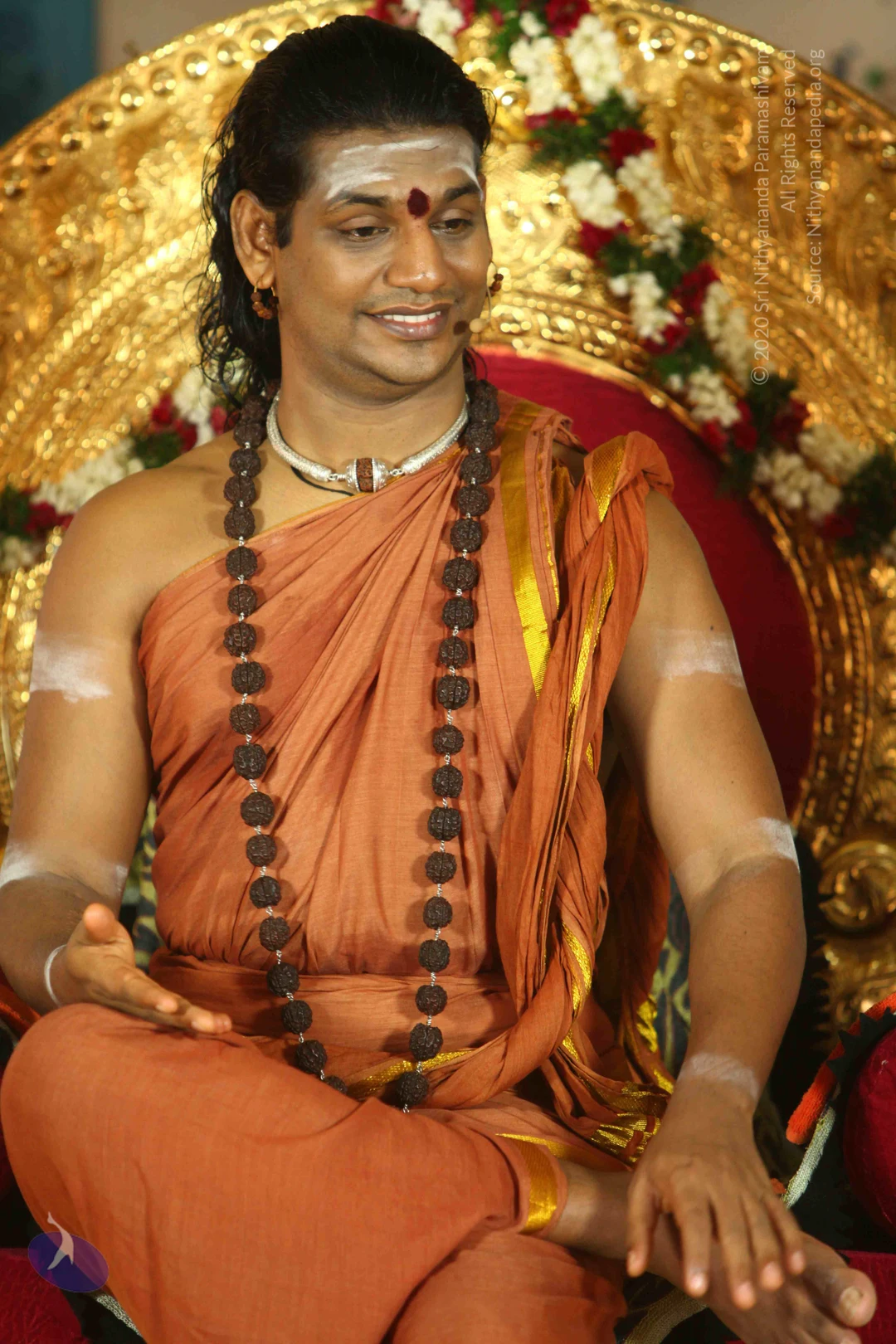
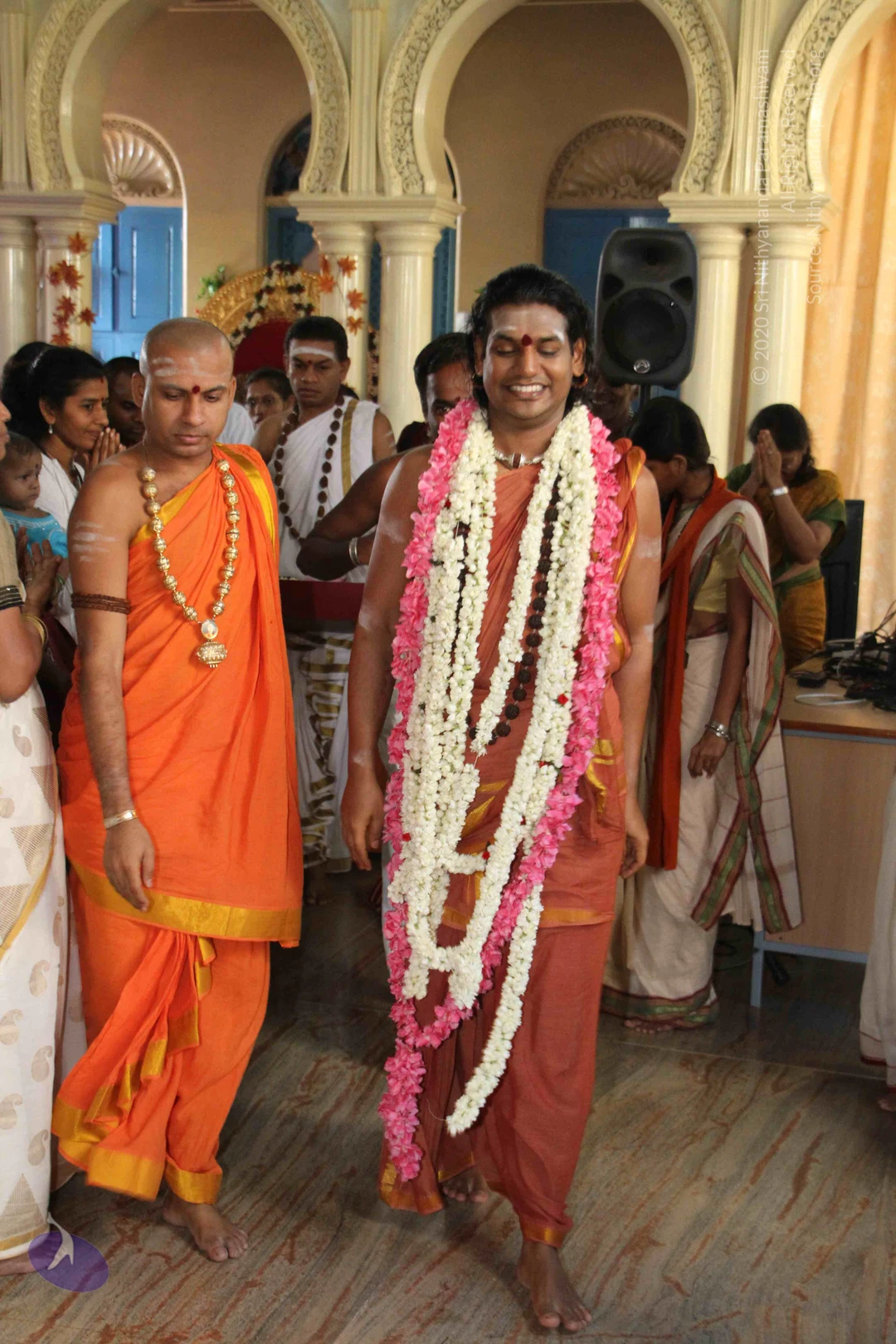
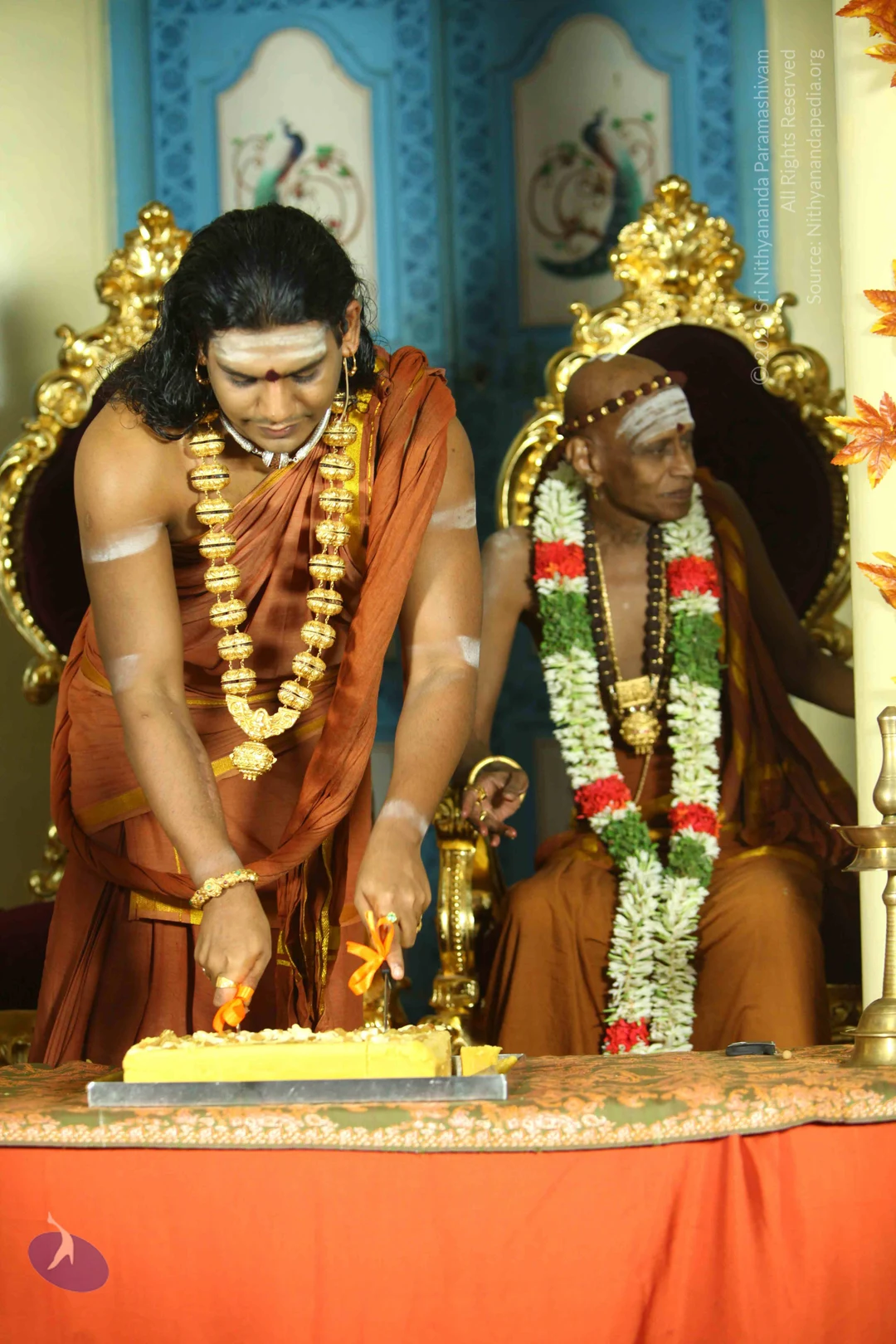
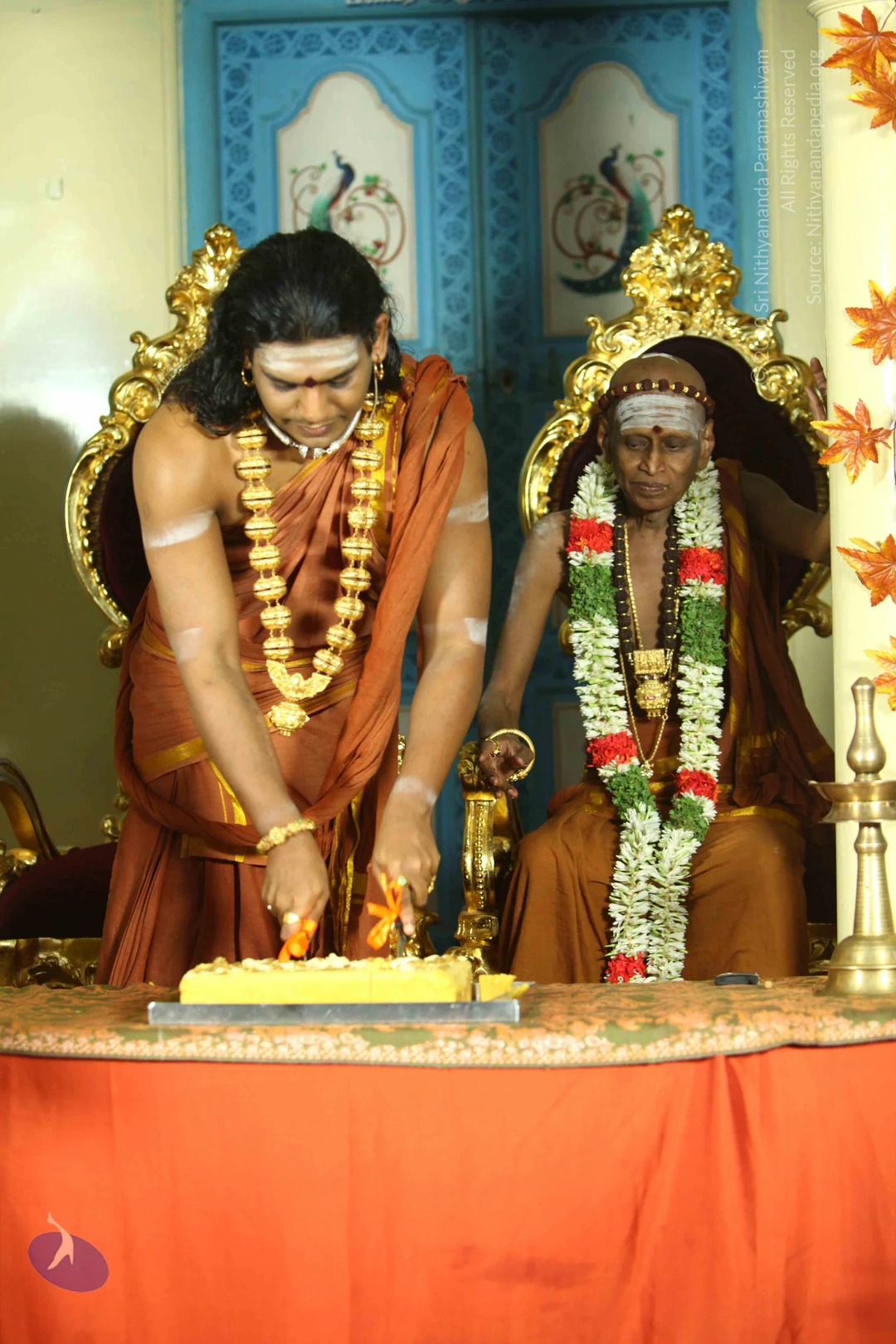
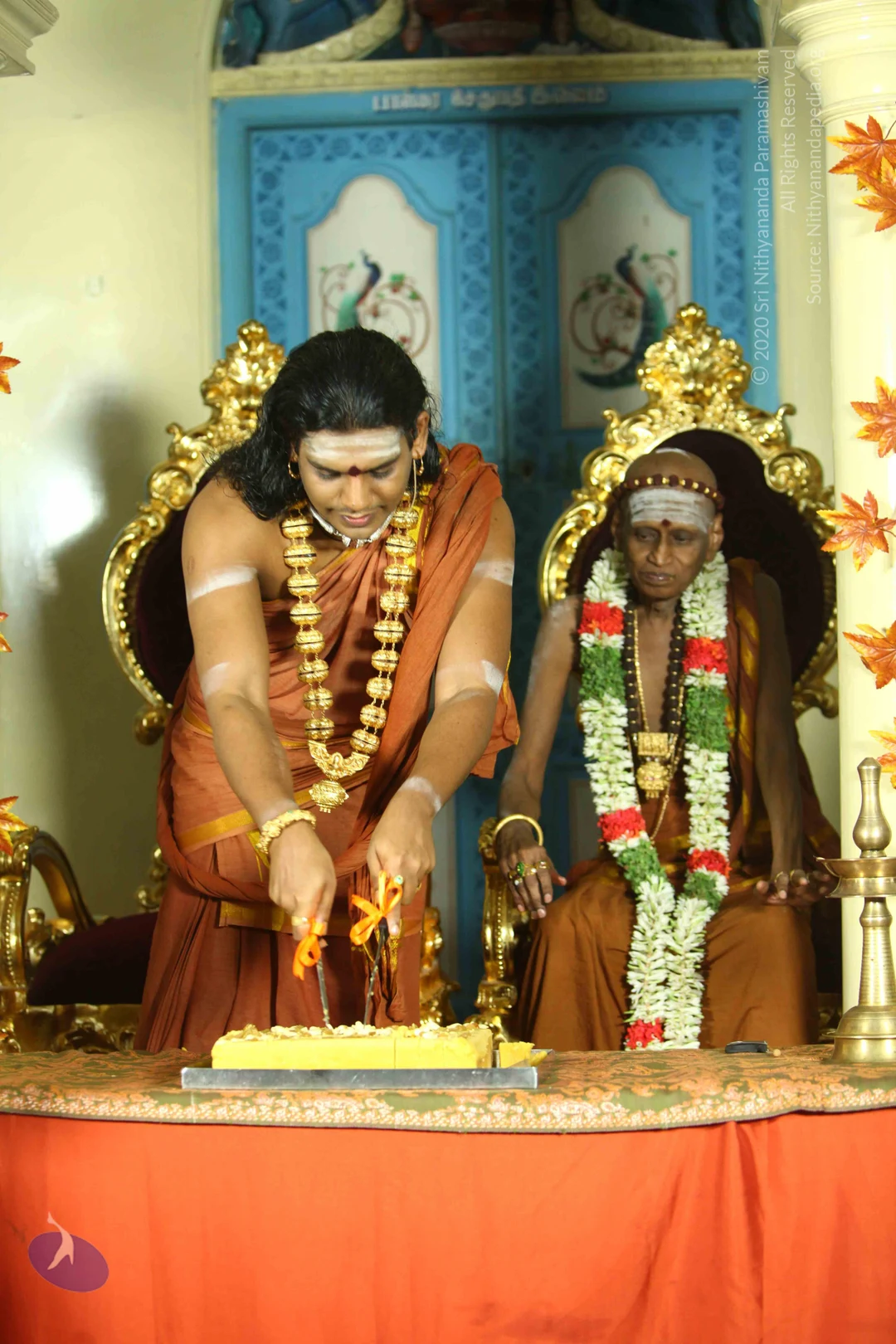
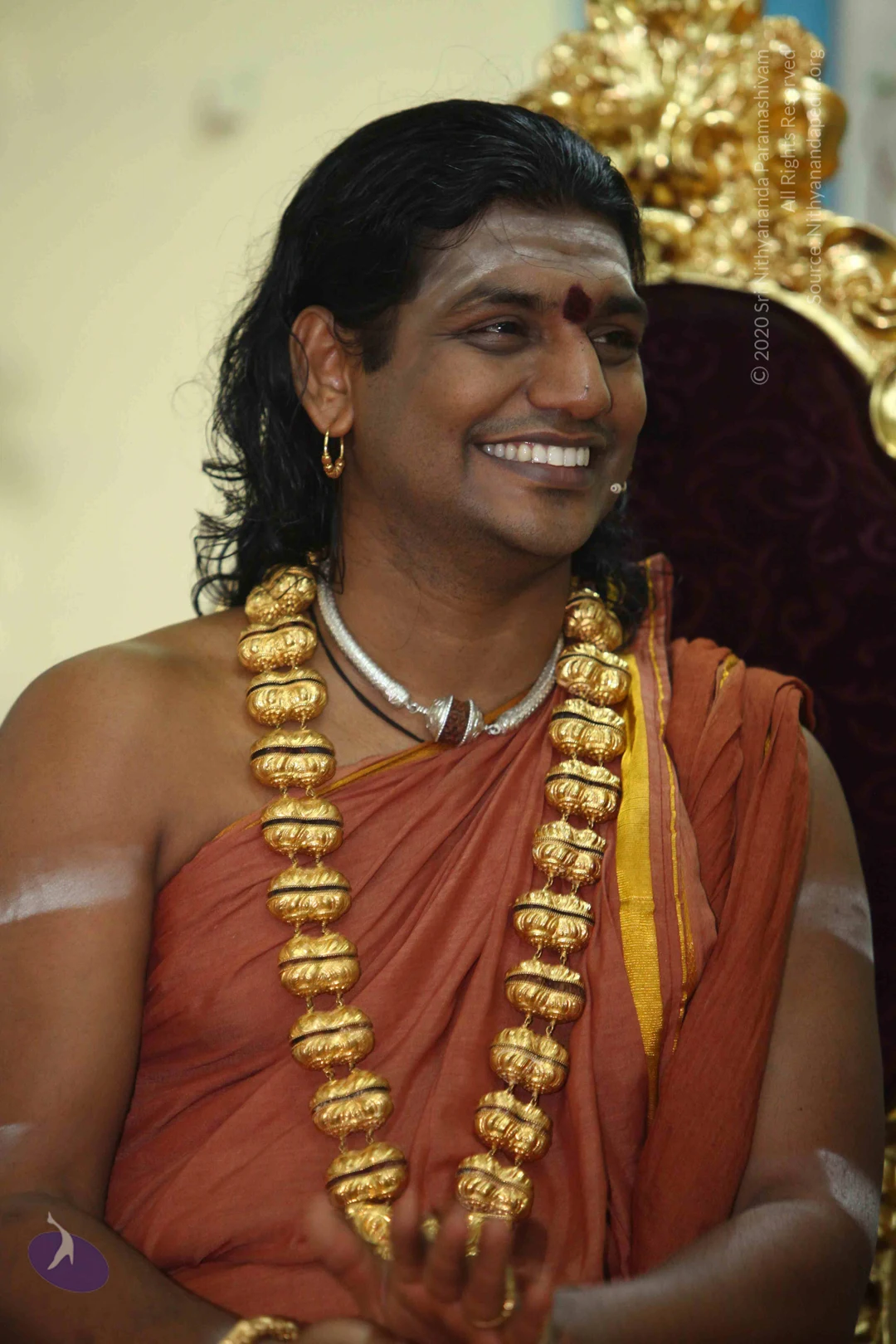
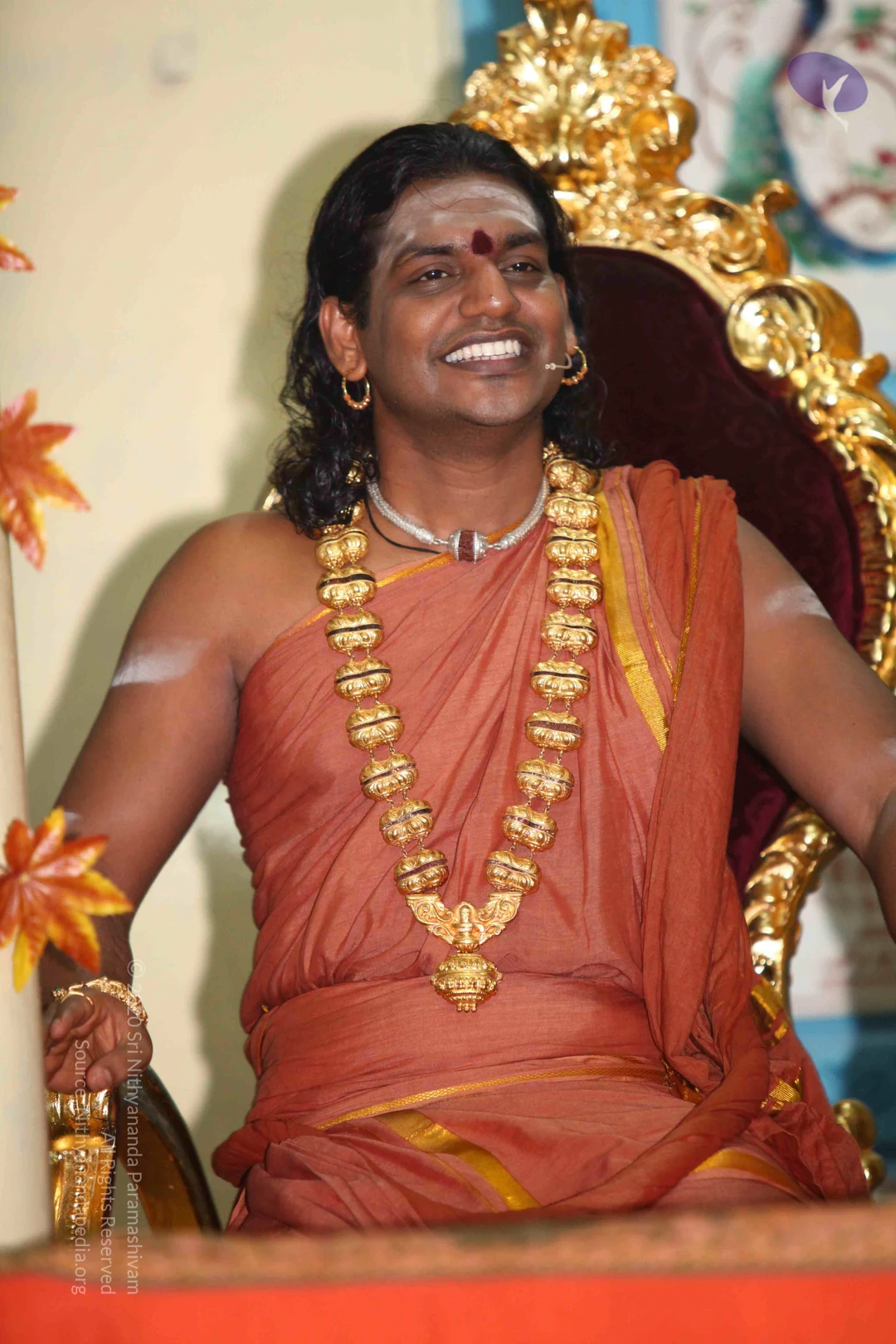
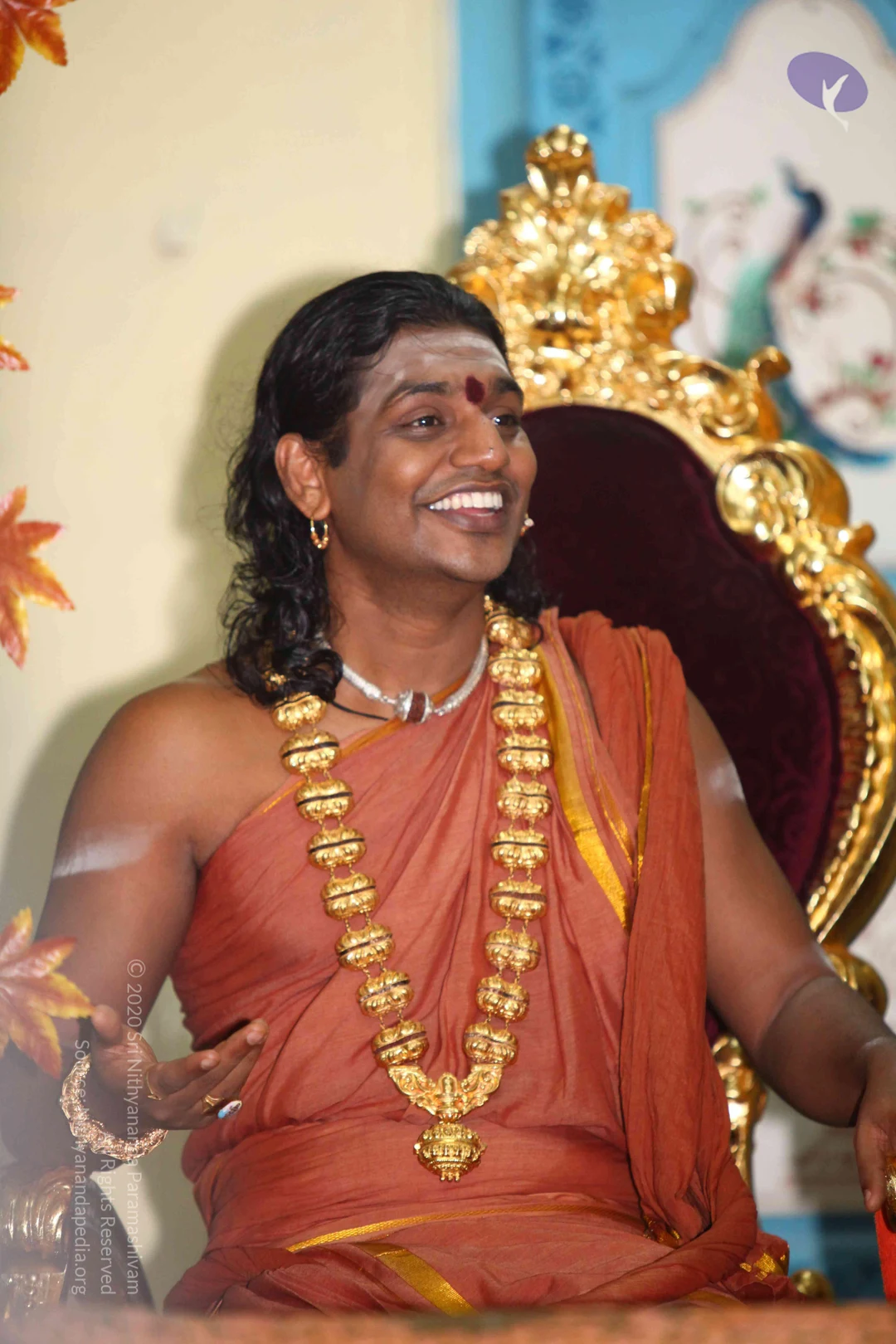
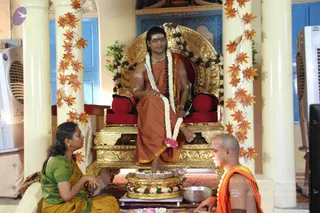
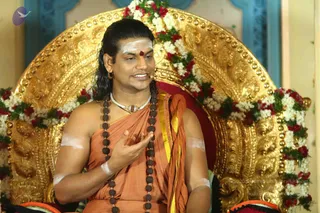
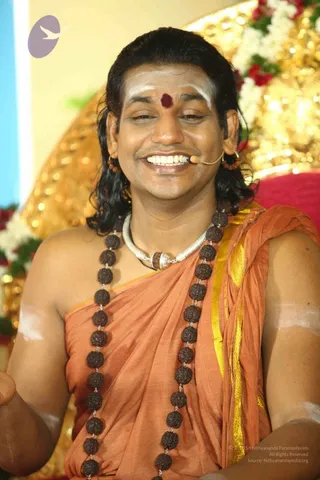
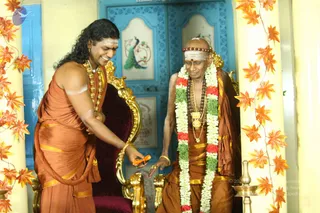
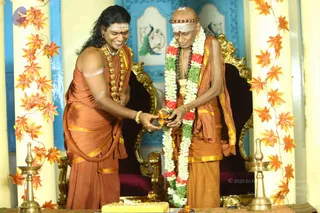
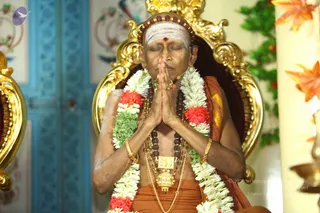
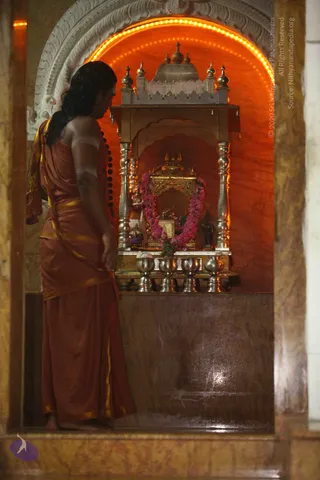
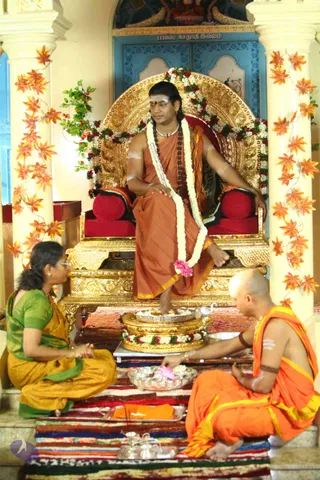
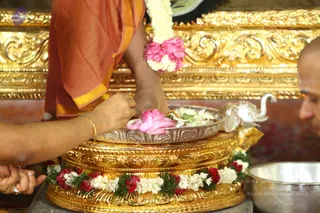
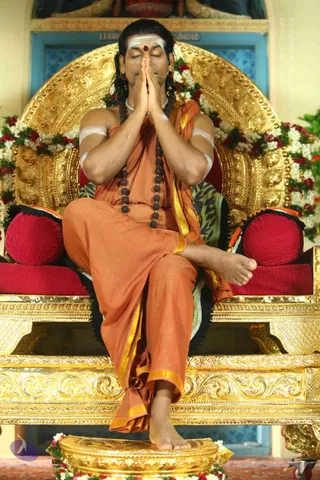
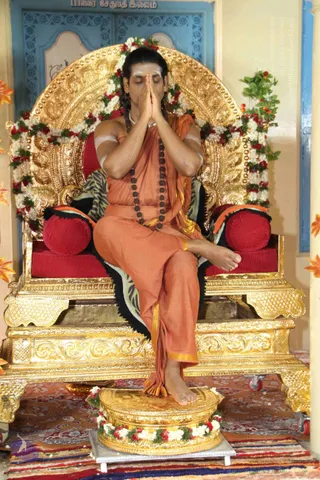
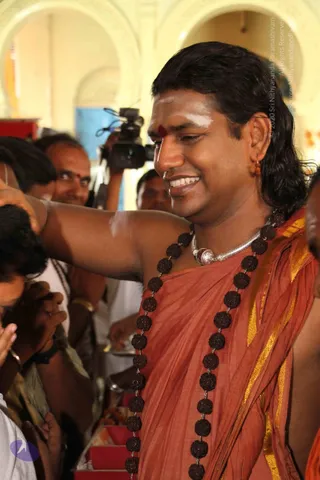
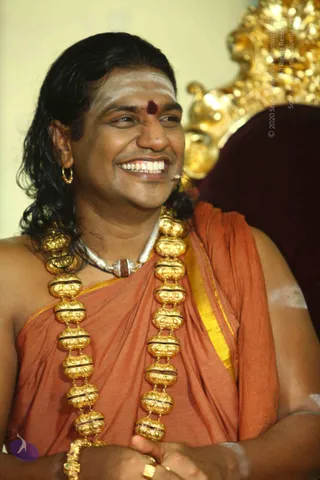
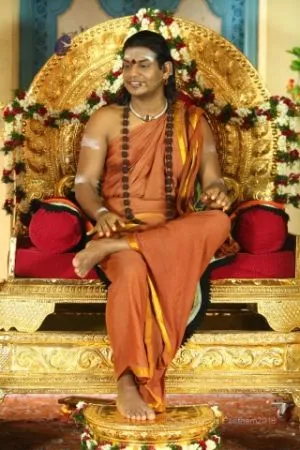
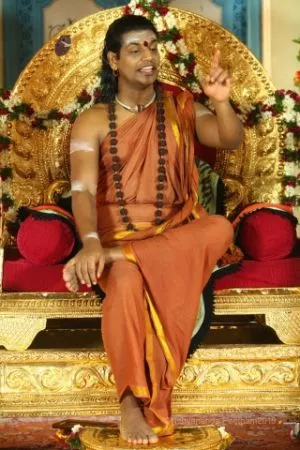
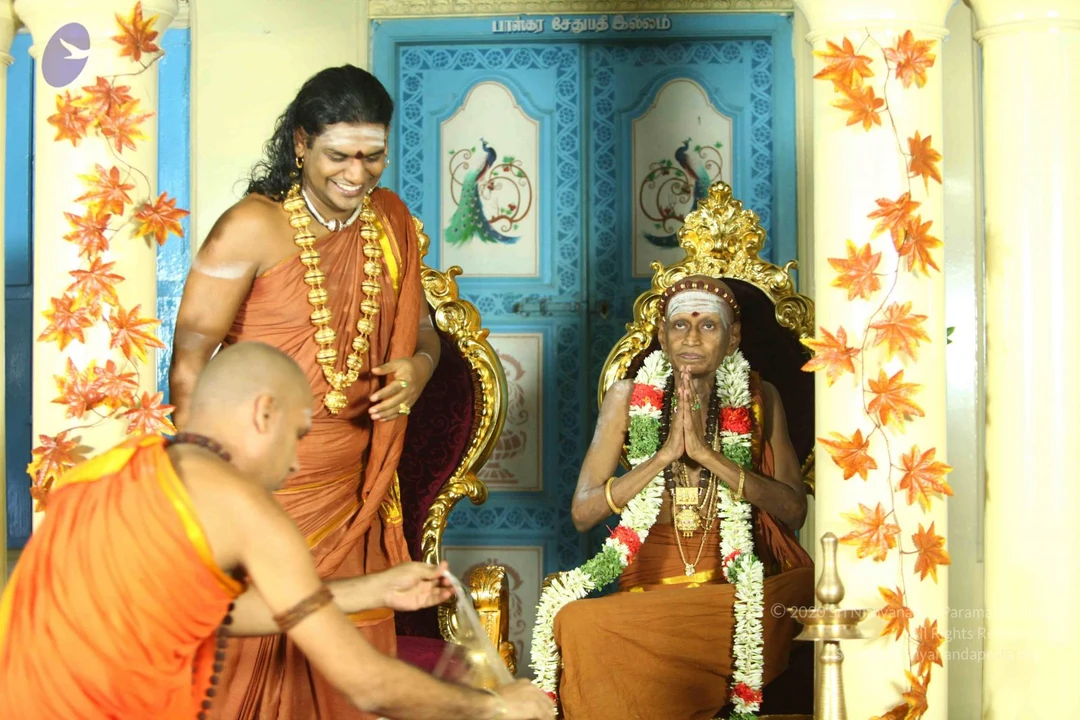
A man seated on an ornate gold throne with a curved golden backrest decorated with white and red flower garlands and orange-red autumn leaves. He wears a saffron-orange dhoti and shawl, a long dark rudraksha mala, a white ceremonial necklace, and a red bindi with white vibhuti marks on his forehead and arms. He sits cross-legged with bare feet, smiling and gesturing with one raised hand while speaking, with a small headset microphone on his face. Red cushions with black and orange trim are on the throne, and a blue-and-cream backdrop is behind him. a person, identified by saffron robes, rudraksha mala and ornate gold throne setting.A photograph of an indoor ritual scene with a standing man in orange-gold ceremonial clothing and a heavy gold necklace bowing forward, and a second man in an orange shawl and white dhoti receiving him beside a blue shrine niche with a small deity murti. Both men have long hair and garlands of white flowers hang from them. Orange flowers and leaves decorate the top of the frame. The taller figure with long swept-back hair, orange ornate clothing and a gold chain matches the visible cues associated with the page's a person, so this is a probable identification.

May 27 2012

Original wiki page
Contents

Title:

Experience Is The Only Religion.

Description:

Bhagavad Gita (Song of God) is a timeless treatise on the essence of living enlightenment. The Gita was imparted by the enlightened Hindu incarnation Sri Krishna to the warrior-prince Arjuna over 5000 years ago. Amazingly, the spiritual wisdom and life solutions offered in the Gita are so universal and current that it is even today used as a personal transformation guide. In today’s talk on Bhagavad Gita, Chapter 4 Verse 37, Paramahamsa Nithyananda (Swamiji) discusses the crucial value of personal experience to spirituality. Experience is the fire that burns away our ignorance. In Paramahamsa’s beautiful words, “Experience flows into your system like a current and makes your mind stop functioning in the same patterns.” Paramahamsa gives a strong technique to ascertain that we do not stop short of the ultimate experience possible in life. When we set goals for ourselves, we may cease to expand once they are achieved. If instead we invite the Divine to forever move us onward toward the ultimate, we will never settle down complacently before we have fulfilled our possibility. When we sit in meditation our prayer should be, “Let me not be contented before the ultimate experience is showered upon me.”

Link to Video:

VideoAudio

Transcript:

Experience is the only Religion

Let’s enter into today’s satsang in Bhagavad Gita:

4th Chapter Jnana-Karma-Sanyasa Yoga 37th Verse;

yathaidhaamsi samiddognihi bhasmasaat-kuruterjuna | jnaanaagnihi sarva-karmaani bhasmasaat-kurute tathaa ||

As the fire that is kindled burns into ashes the fuel, Oh Arjuna! in the same manner the fire of experience burns into ashes all the actions the patterns that keep making the person repeat the same action !Oh God! These are all straight attack. Understand, Bhagavan is not talking to you in a roundabout way. Simple truths very straight! He says straight away, just like fire burns the fuel; the experience burns all the patterns, over. I don’t know what to comment on this. Such a simple truth being expressed in such a small number of words. Please understand such beautiful truth expressed in such a small number of words! Just as a blazing fire turns firewood into ashes; blazing fire turns fuel into ashes, the experience turns all the patterns into ashes. So strive in all possible ways to achieve experience.

Let me define experience, what is experience? Experience is: something flows into your system like a current or a vibration, makes your mind stop working in the same patterns in which it is functioning. Sometimes it can be very light current flow, sometimes it can be a wild explosion but the vibrations which moves into your system and makes you understand the strong truth about yourself. See, that is the reason the Kundalini awakening and Levitation liberates you so quickly, because every time I awaken your Kundalini, you are programmed to my inner space; pattern less space; every time your body jumps some part of your patterns are destroyed. Every time your body moves, some part of your patterns are taken away. You can see, every time when your body levitates, tell yourself this time I will be free from this pattern. I tell you every time it is renovating your system. That is exactly the right word - renovating your system. Every time, the system in which you are living is renovated and rejuvenated because experience breaks any number of patterns. You may be thinking No, No, No, not mine; you don’t know the amount of patterns I have; but whether it is one ton fire wood or one million ton firewood, kindled fire is capable of putting off; burning any amount of fire wood into ashes.

So the kindled experience, the awakened Kundalini is capable of burning any amount of karmas, patterns into ashes. Work, work, work, with all the intensity to experience the Ultimate to experience the Ultimate! Kindled experience can lead you to any level, any amount, any path; kindled experience can show you the truth. Kindled experience can lead you to reality, awakened Kundalini can program you inner space pattern free. So work again and again and again and again for experience. Every day I am receiving more and more emails that people are practicing Prana samyama. I am very happy about it because, wasting the time without working for experience is the crime. That is the reason, every day I remind you to work for experience. Every day I insist you put your awareness and energy towards experience, the methods directly leading to experience: Unclutching, Feeling connection, Ajapa japa; Enchanting, Feeling connection, Unclutching!

Constantly I remind you, it is for experience, the whole Dhyanapeetam is created for experience, all these temples are created for experience. I am sitting alive for experience, to give experience! I am bearing with all these nonsensical foolish enmity. Yesterday again one Bull sorry bull is sacred for Hindus, one Donkey, of course even Donkey is also sacred for Hindus, what to do everything is sacred for us; all right, one dash dash is telling me, still he keeps Venkateshwara in all his temples, it is indiscipline he should not be in Madurai Aadheenam throne. This fool doesn’t know still I have Mahaveer in my temples and I have spoken on Jain Sutras. Jnanasambhandar conquered Jain monks; the Nithyananda Jnanasambhandar has spoken on Jain sutras; understand both are one and the same. He has conquered illusory, experienceless Jain monks into experiencing seekers. I did not conquer I just tried to bring experience to Jain monks directly that’s all. Understand both is same. He did not fight with Mahaveera, he did not fight with Teerthankaras; No, the fellows who diluted Teerthanakars, the enemies of Teerthanakaras, enemies of Mahaveeras only Gnanasambhandar fought. Again just like how Gnanasambhandar has to fight with people who are sitting in Jainism but enemies of Mahaveera; I have to fight with people who are sitting with Saiva Siddhantha, who are enemies of Jnanasambhandar and Uppar and Thirunavukarasar, Sundarar and Shiva. When you don’t have experience, religion becomes load; religious centers become criminal planning centers, religious heads become plot strategy planners. If you don’t have experience, not only everything is waste, everything is dangerous.

See the Vedic tradition.When Buddha comes, all the Vedic pundits are conquered and they become Buddhits. When Shankara comes, all Buddhists are conquered and they become, again belong to Vedic tradition. When Nagarjuna comes, again all the Vedic Pundits are conquered and they become Buddhists. What is going on? When Jnanasambandar comes, again all the Buddhists and Jain monks are conquered and they become Shivites. What is going on? What is truth? Understand, in Vedic tradition, the land of Vedic tradition, in India, only one is respected, only one thing, the experience. If somebody can give me that deeper experience than in which I am staying, I am just ready to follow him. I don’t care about anything else. That is the only religion of Vedic tradition. That is why still we are alive even after so much of invasion, attack, persecution, and false prosecutions.

The experienceless Jews, Romans who crucified Jesus, experienceless Jainas who were trying to kill Jnanasambandar, those same fellows are only back; experienceless Shivites trying to abuse me. When you do not experience, when you don’t have experience, not only eberything is waste, everything is dangerous. The wealth they have in their hand, the infrastructure they have in their hand, everything is dangerous. The wealth, the social power, organisation strength, everything is just for one thing, only one reason, giving experience, spiritual experience to people. I tell you, we will be alive, growing, expanding as long as we give spiritual experience to people. All our Temples, Spiritual Embassies, devotees, organisers, remember this one thing - as long as you conduct spiritual classes, programs, inspire people, share experience with them, you will be alive. Continuously, put your energy in that direction. Even giving our book and telling them to read is sharing spiritual experience. Medical camps, Annadaan, all these will not keep the Sanga alive; all these are only social services - it is like doing little good, sharing what you have; but the Sanga, the spiritual community will be kept alive only by having more and more spiritual experience and sharing more and more spiritual experience with others, giving more and more spiritual experience to others.

See, in the young age, once I had the darshan of Kamakshi. I was walking in Tiruvannamalai,suddenly in front of me, I saw one divine for whose feet is not touching the ground. I rushed and put my hand between her feet and the ground. I could see clearly she was not on the ground. She was just above the ground. Then I realized she is Kamakshi. And she just started walking, I simply followed. I don’t know how many hours it took. But, non-stop, I reached Kanchipuram. When I came to awareness, I was there in Kanchipuram. I wanted to tell you this incident, because it is very important. Earlier, just two days before I had had a discussion with Vibhudananda puri - Mathaji Kuppammal. There was a casual conversation. She asked me - If God appears in front of you and asks what do you want what will you ask? I said - naturally, Atmasakshatkaara. That is the word I know at that time for enlightenment, Atmasakshatkaara, because that was the traditional Tamil word for enlightenment. She said - No, you should not ask for that.

I was shocked and asked - What do you mean? Then, what should I ask?

She said, ask - you should never settle down, become contented till you achieve the ultimate. I could not understand, both means same, isn’t it?

She said - No. Whatever you understand as Atmasakshatkaara is not Atmasakshatkaara. So, do not use any word and limit. If you ask for Atmasakshatkaara, at that time what you remember, what you understand, Devi will say - Tathaasthu.

You will have only that and you are stuck with that. Ask - I should not rest until the ultimate, what needs to be done is done.

Please understand, I asked her exactly the same thing. I remembered Kuppammal's statement. I asked her exactly the same thing, and something, in the left side of my heart, like a black patch. I had started feeling an experience, means, like unfulfillment, kind of a discontentment, settling in my right heart. the patch of unfulfillment, like a mole on the skin, I felt. And, it was there for quite number of years and slowly to started moving in my skin after many years and around may be 17 or 18, it went down to my navel center and became white patch and still that white patch is there. When it became white patch, that discontentment has disappeared from me. After that only, I never had any discontentment. May be I can take it in the other sense. What needs to be achieved is achieved in this body. I tell you, if we trace some of my young age pictures, we will be able to trace that small black patch, which later on disappeared. I can still remember very clearly. Ask not to get content till the ultimate experience happens. Please meditate on this one thing. Today, all of you pray for this one thing from the ultimate - let me not be content, let me not feel settled till I achieve the ultimate, till the ultimate starts happening in you, because, that discontentment is powerful enough to guide you towards that ultimate. Understand, if you feel discontentment in money, that discontentment is alone enough, capable to teach you all the methods, to make you find all the methods to achieve money and make you achieve it. Deep discontentment inside your being is capable of showing you the path and making you achieve the ultimate. Do not settle down for anything you think as ultimate. Ask always - what divine thinks as ultimate, let that happen.

Unfortunately, so many times you settle down for what you think as ultimate. No.

Today, sit with a deep feeling connection prayerful mood, request the divine, surrender to eh divine, asking - let me not settle down, let me not feel contented, fulfilled till what you think as ultimate is showered on me, not what I think as ultimate, what you think as ultimate. Till that happens in this body, let me not settle down, let me not be contented.

Spot Notes: Sunday, 27 May 2012

Madurai

“Sadashiva samarambam, Jnana Sambandhaacharya madhyamam asmadacharya paryantam vande Guru paramparam!”

I welcome you all with my love and respects! I welcome all the devotees, disciples, Samajis, Satsangis sitting with around the world at this moment in 750 places through Nithyananda TV, 30 places in 2 way video conferencing having Nayana Deeksha, in 200 cities, in 23 countries around the world!

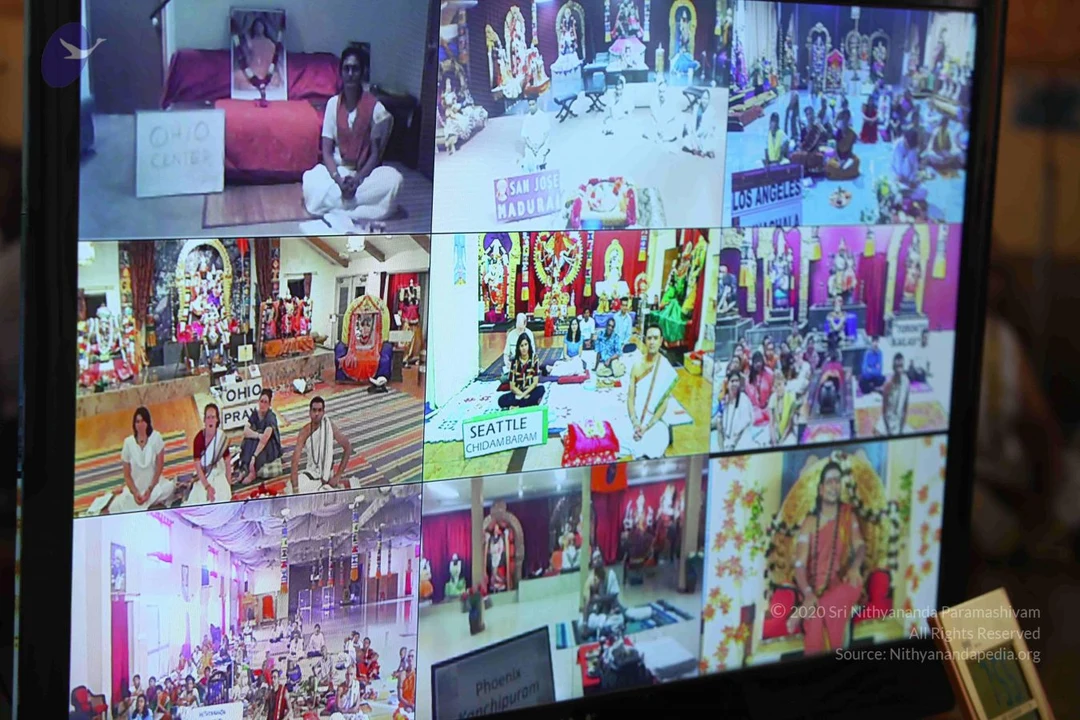
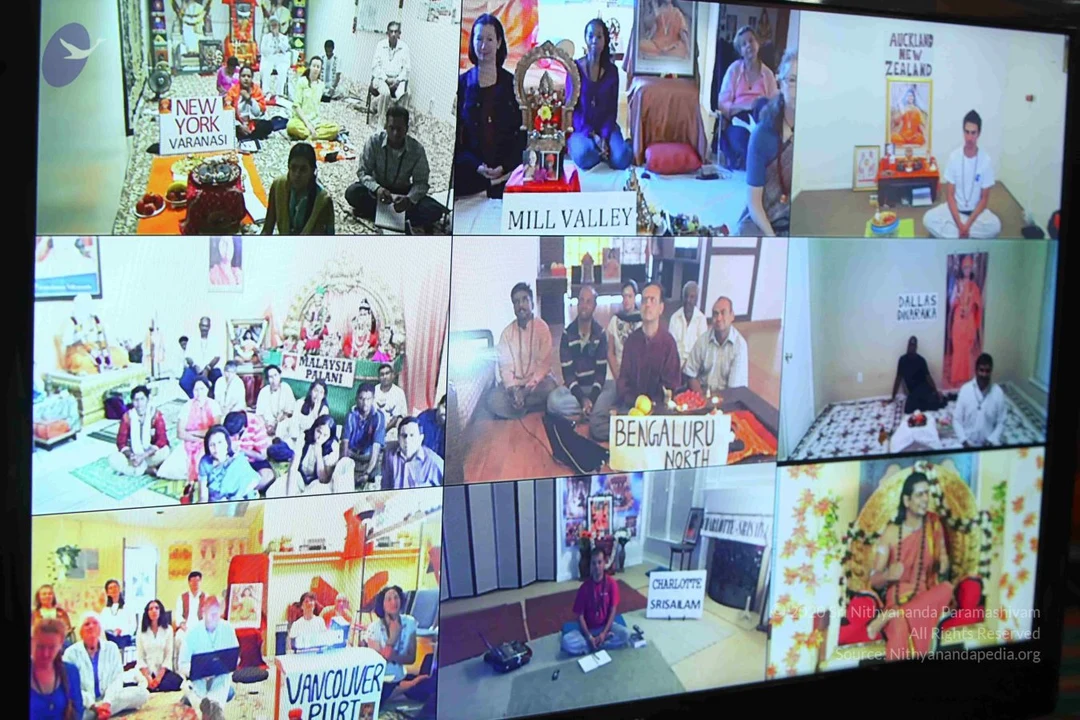
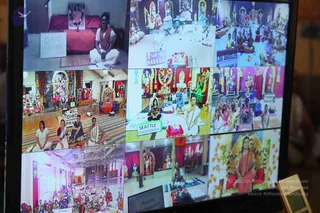
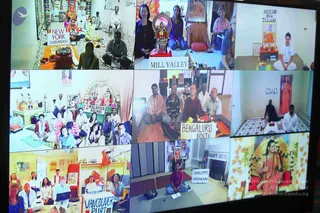
Cities sitting with us in 2 way Video conferencing having Nayana Deeksha are - Toronto Kailasam, Los Angeles Arunachala, San Jose Madhurai, Nithyananda Nagara, Auckland New Zealand, Mill Valley California, Tiruvannamalai Arunachala, Bangalore north, New Jersey Omkareshwar, Vancover puri, Malay Palani, New York Varanasi, Singapore Singapuram, Ohio Prayag, Ohio Centre, Phoenix Kanchipuram, Seattle Chidambaram, Las Vegas, Oman Siva Gangai, Charlotte Srisailam, Dallas Dwaraka, Austin, Anna Nagar Aadeenam, Mattakallappu Illangai, Wellington New Zealand. I bless you all with my love and blessings!

Nithya Sathyaswaroopan I have accepted your paada puja. I will talk to you during Dial the Avatar.

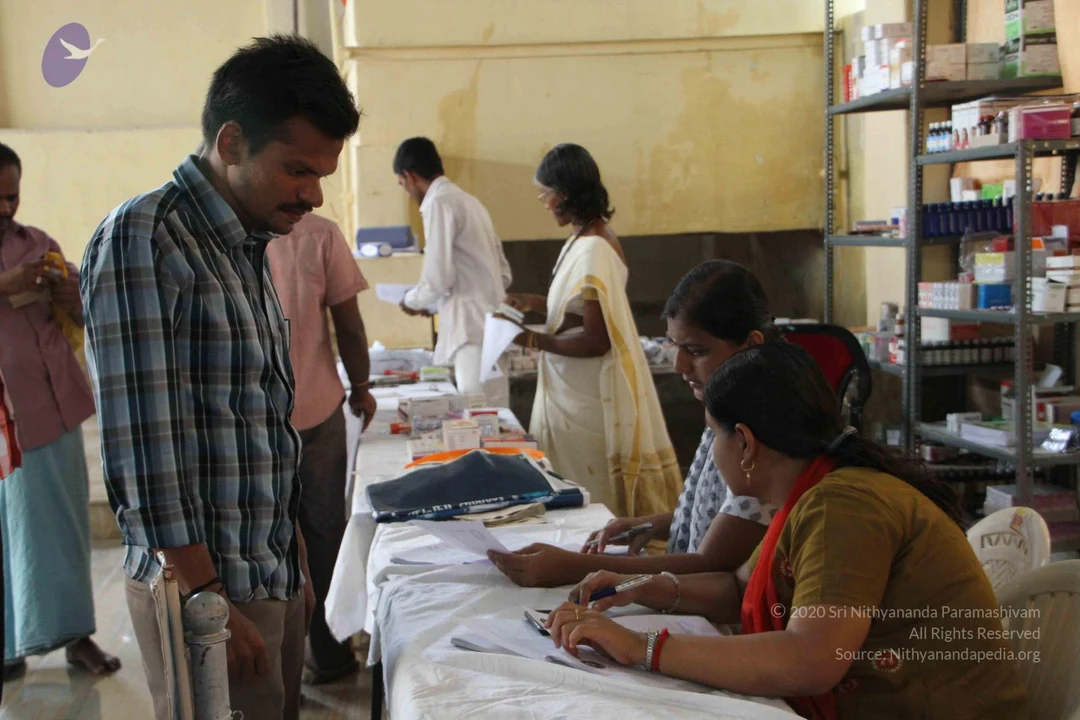
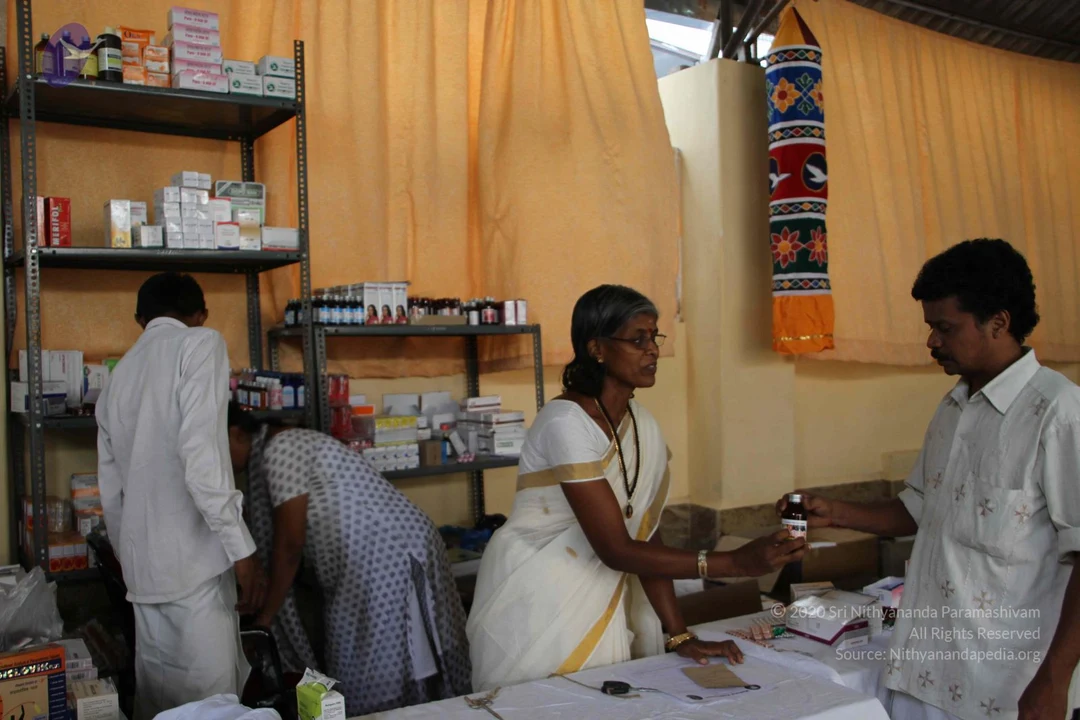
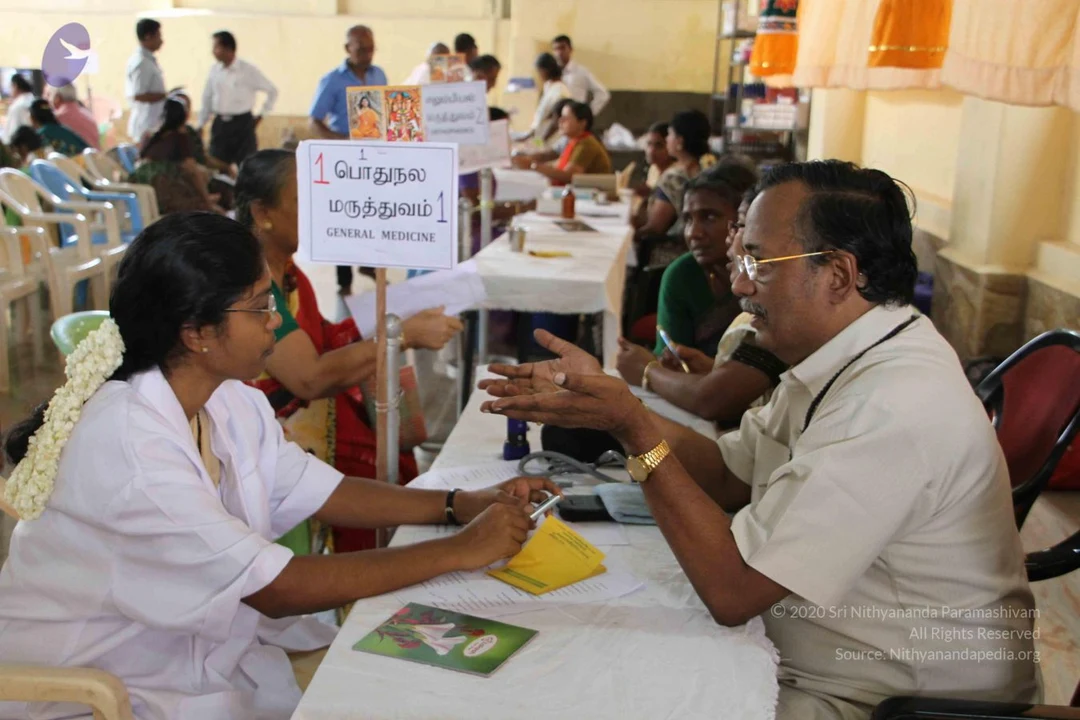
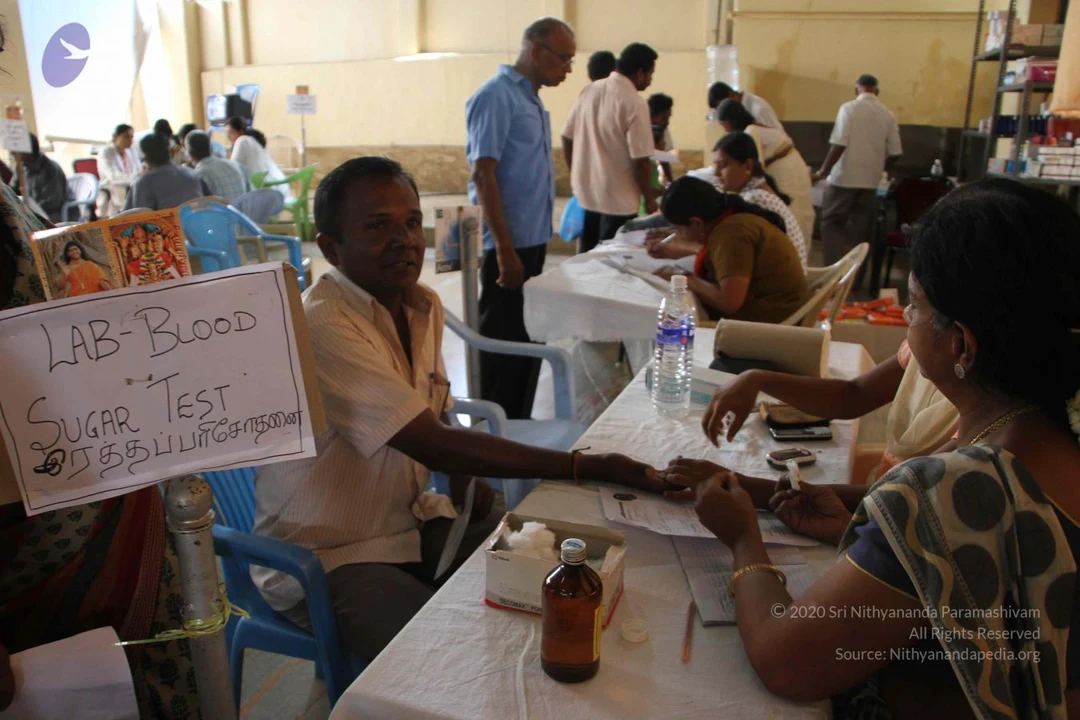
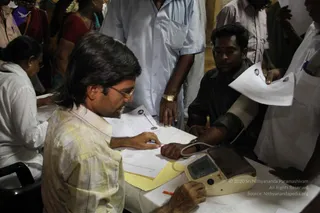
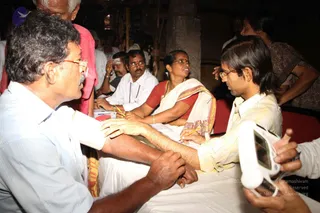
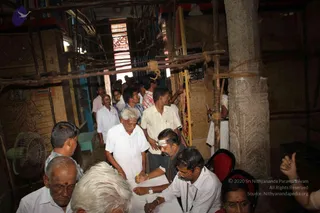
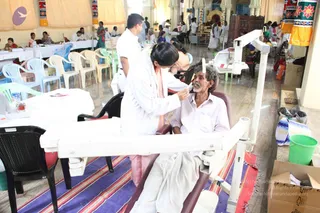
Blessings for Tiruvannamalai free diabetes medical camp. Let us enter into today’s Satsang.

In Bhagavat Gita, 4th chapter, Jnaana Karma Sanyaasa Yoga, 37th verse –

“yathaidhamsi samiddho 'gnir bhasmasat kurute 'rjuna | jnanagnih sarva-karmani bhasmasat kurute tatha ||”

Translation – “As the fire that is kindled burns into ashes the fuel, Oh Arjuna! in the same manner the fire of experience burns into ashes all the actions, the patterns that keep making the person repeat the same action. “

Oh god! These are all straight attack. Understand Bhagavan is not talking to you in a round-about way. Simple truths very straight. He says straight away just like fire burns the fuel, the experience burns all the patterns. Over! I don’t know what on comment on this. Such a simple truth being expressed in such small number of words. Please understand such beautiful truth expressed in such a small number of words. Just as a blazing fire wood turns fuel into ashes, the experience turns all the patterns into ashes! So strive in all possible ways to achieve experience. Let me define experience. What is experience? Experience is something flows into your system like a current or a vibration, makes your mind stop working in the same patterns in which it is functioning. Some time it can be very light current flow, sometime it can be a wild explosion. But the vibrations which moves into your system and makes you understand the strong truth about yourself. See that is the reason the Kundalini awakening and levitation liberates you so quickly. Because every time I awaken your Kundalini, you are programmed to my inner space, pattern-less space. Every time your body jumps some part of your patterns are destroyed. Every time your body moves, some part of your patterns are taken away. You can see every time your body levitates, tell yourself this time I will be free from this pattern. I tell you every time it is renovating your system. That is the exactly right word – renovating your system. Every time the system in which you are living is renovated and rejuvenated because experience breaks any number of patterns. You may be thinking no, no, no, not mine you don’t know the amount of patterns I have. But whether it is one tonne fire wood or one million tonne firewood kindled fire is capable of burning any amount of firewood into ashes. So the kindled experience, the awakened Kundalini is capable of burning any amount of karmas, patterns into ashes.

Work, work, work with all the intensity to experience the ultimate. To experience the ultimate! Experience, kindled experience can lead you to any level, any amount, any path. Kindled experience can show you the truth. Kindled experience can lead you to reality. Awakened Kundalini can program your inner space pattern free. So work again & again & again & again for experience. Every day I am receiving more and more emails that people are practicing Praana Samyama. I am very happy about it. Because wasting the time without working for experience is the crime. That is the reason every day I remind you to work for experience. Every day I insist you put your awareness and energy towards experience. The methods directly leading to experience. Unclutching, feeling connection, ajapa japa, enchanting, feeling connection, unclutching. Constantly I remind you it is for experience. This whole Dhyanapeetam is created, for experience all these temples are created, for experience I am sitting alive, for experience, to give experience. I am bearing with all this non-sensical foolish enmity.

Yesterday one bull sorry bull is sacred for Hindus. One donkey, even donkey is sacred for Hindus. Everything is sacred for Hindus what to do? Alright one dash, dash said he is keeping Venkateshwara in all his temples. It is indiscipline. He should not be in Madurai Aadeenam throne. The fool doesn’t know still I have Mahaveer in my temples J and I have spoken on Jain sutras. Jnana Sambandar conquered Jain monks. The Nithyananda Jnana Sambandar has spoken on Jain sutras. Understand both are one and the same. He has conquered illusory experience-less Jain monks into experiencing seekers. I did not conquer I just try to bring experience e to Jain monks directly. That’s all. Understand both is same. He did not fight with Mahavira. He did not fight with Tirthankaraas. No. The fellows who diluted Thirthankaraas - the enemies of Thirthankaraas, the enemies of Mahavira only Jnana Sambanda fought. Again just like how Jnana Sambanda has to fight with people who are sitting in Jainism but enemies of Mahavira, I have to sit and fight with people who are enemies of Shaiva Siddhantha who are enemies of Jnana Sambanda, Appar, Tirunavakarasar, Sundarar and Shiva. When you don’t have experience, religion becomes load, religious centres becomes criminal strategy centres. Religious heads become plot strategy planners. If you don’t have experience, not only everything is waste, everything is dangerous. See the Vedic Tradition. When Buddha comes all the Vedic pundits are conquered and they become Buddhists. When Shankara comes, all Buddhists are conquered and they become again belong to Vedic tradition. When Nagarjuna comes again all the Vedic pundtis are conquered and they become Buddhists. What is going on? When Jnana Sambandar comes again all the Buddhists and Jain monks are conquered and they become shaivites. What is going on? What it truth. Understand in Vedic Tradition, the land of Vedic Tradition in India only one thing is respected – only one thing - the experience! If somebody can give me the deeper experience than in which I am staying I am just ready to follow him! I don’t care about anything else. That is the only religion of Vedic tradition.

That is why we are still alive even after so much of invasion, attack, persecution and false prosecutions. The experience –less Jews, romans who crucified Jesus, experience-less Jainas who were trying to kill Jnaana Sambandar. Those same fellows are only back experience-less Shaivites trying to abuse me. When you do not experience, when you don’t have experience, not only everything is waste, everything is dangerous. The wealth they have in their hand, the infra structure they have in their hand everything is dangerous!

The wealth, the social power, organization strength everything is just for one thing – only one reason – giving experience, spiritual experience to people. I tell you we will be alive, growing, expanding as long as we give spiritual experience to people. All our temples, centres, devotees, organizers remember this one thing – as long as you conduct spiritual classes, programs, inspire people, share spiritual experience with them you will be alive. Continuously put your energy in that direction. Even giving our book and telling them to read is sharing spiritual experience. Medical camps, Anna Daan all this will not keep the Sangha alive. All these are only social services. It is like doing little good – sharing what you have. But the Sangha the spiritual community will be kept alive only by having more and more spiritual experience and sharing more and more spiritual experience with others, giving more and more spiritual experience to others.

See in the young age, once i had the Darshan of Kamakshi. I was walking in Tiruvannamalai suddenly in front of me I saw one divine form whose feet is not touching the ground. I rushed and try to put my hand between her feet and the ground. I could see very clearly she was not on the ground, she was just above the ground. Then I realized she is Kamakshi. Then she simply started walking. I just followed. I don’t know how many hours it took, non-stop I walked and was reached Kanchipuram. When I came to awareness I was there in Kanchipuram! I wanted to tell you this incident because it is very important.

Earlier just two days before I had a discussion with Vibhudanandapuri Mataji Kuppamaal there was a casual conversation she asked me if God appears in front of you and asks what do you want I said naturally aatma saakshaatkaara – that is the only word I know at that time for enlightenment – aatma saakshaatkaara because that was the traditional Tamil word for enlightenment. She said no, you should not ask for that. I was shocked and asked – what do you mean? Then what should I ask? She said ask- you should never settle down, become content till you achieve the ultimate! I could not understand. I said both are same na? She said no! Whatever you understand as aatma saakshaatkaara is not aatma saakshaatkaara. So do not use any word and limit. If you ask for aatma saakshaatkaara, at that time what you remember, what you understand by aatma saakshaatkaara, Devi will say tathaashtu! You will have only that and you are stuck with that. Ask I should not rest until the ultimate what needs to be done is done. Please understand I asked her exactly that same thing. I remembered that Kuppamal’s statement. I asked her exactly that same thing. And something happened in my left side of the heart like a black patch. I started feeling an experience means like a unfulfillment kind of a discontentment settling in my right heart. The patch of unfulfillment like a mole on the skin I felt and it was there for quite a number of years and slowly it started moving in my skin after many years and around maybe 17 or 18 it went down to my navel centre and became white patch. And still that white patch is there. When it became white patch that discontentment has disappeared from me. After that only I never had any discontentment. Maybe I can take it in the other sense - what needs to be achieved is achieve din this body. I tell you if we trace some of my young age pictures, we will be able to trace that small black patch which later on disappeared. I can still remember very clearly I asked not to get content till the ultimate experience happens. Please meditate on this one thing. Today all of you pray for this one thing from the ultimate – let me not be content, let me not feel settled till I achieve the ultimate. Till the ultimate starts happening you because the discontentment is powerful enough to guide you towards that ultimate. Understand if you feel discontentment in money, that discontentment alone is enough, capable to teach you all the methods, make you find all the methods to achieve money and make you achieve it. Deep discontent inside your being is capable of showing you the path and making you achieve the ultimate. Do not settle down for anything you think as ultimate. Ask always what divine thinks as ultimate let that happen. Unfortunately so many times you settle down with what you think as ultimate. No. today sit with a deep feeling connection, prayerful mood, request the divine, surrender to the divine asking let me not settle down. Let me not be content, fulfilled till what you think as ultimate is showered on me, not what I think as ultimate. Till that happens in this body let me not settle down, let me now be content. Please close your eyes and settle down.

Let the masters presence intensely fill you all and make you experience the ultimate as per the ultimate.

I will move to the next segment of the morn satsang – Dial the Avatar.

Sathya swaroopan -

Today’s minutes to be entered in minutes4peace.org website - 80 minutes.

I bless you all who are sitting with us at this moment around the world in 1002 places through Nithyananda TV, in 30 places through 2 way Video conferencing having Nayana Deeksha, in 244 cities, 20 countries around the world! Let you all achieve, experience, live, express, radiate and share and explode the eternal bliss, Nithyananda. Thank you!

Photos
Tags:

Paramahamsa Nithyananda, discuss, value, personal, experience, spirituality, ignorance, beautiful, mind, function, strong, technique, ultimate, life, goal, expand, achieve, invite, Divine forever, fulfil, possibility, meditation, prayer, contented.

Photos Of The Day:
Pada-Puja

Morning-Satsang

Sarva-Darshan

Medical-Camp

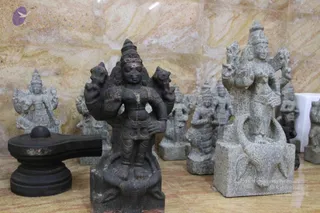
Deities-Sokkanathar

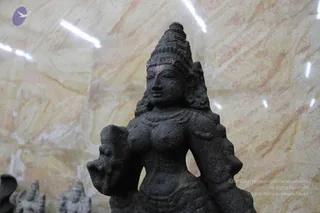
Deities-Carved-By-Meenakshi-Devi

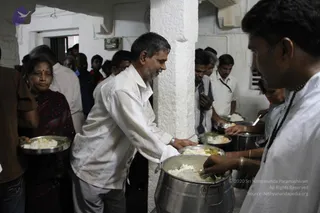
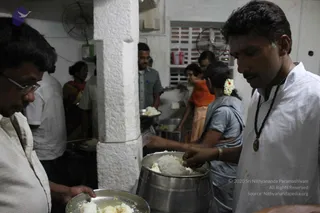
Services-Photos
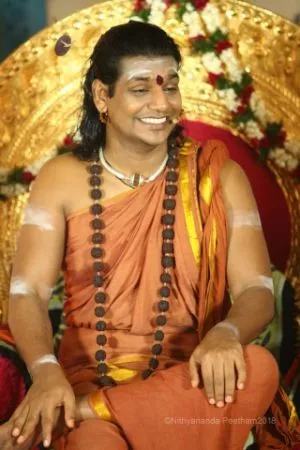
Evening-38th-Anniversary-Celebrations-Of-292-Guru-Maha-Sannithanam

01-Temple-Visit

02-Pada-Puja

03-Morning-Satsang

04-Sarva-Darshan

09-Evening-38th-Anniversary-Celebrations-Of-292-Guru-Maha-Sannithanam

Photos from this day
View all 227 photos
Photos
133 photosSource gallery
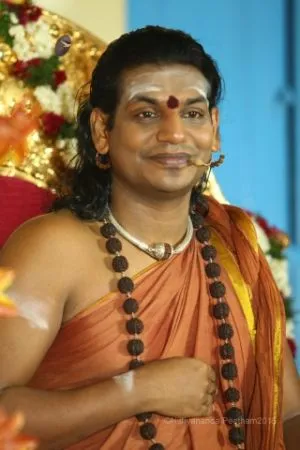
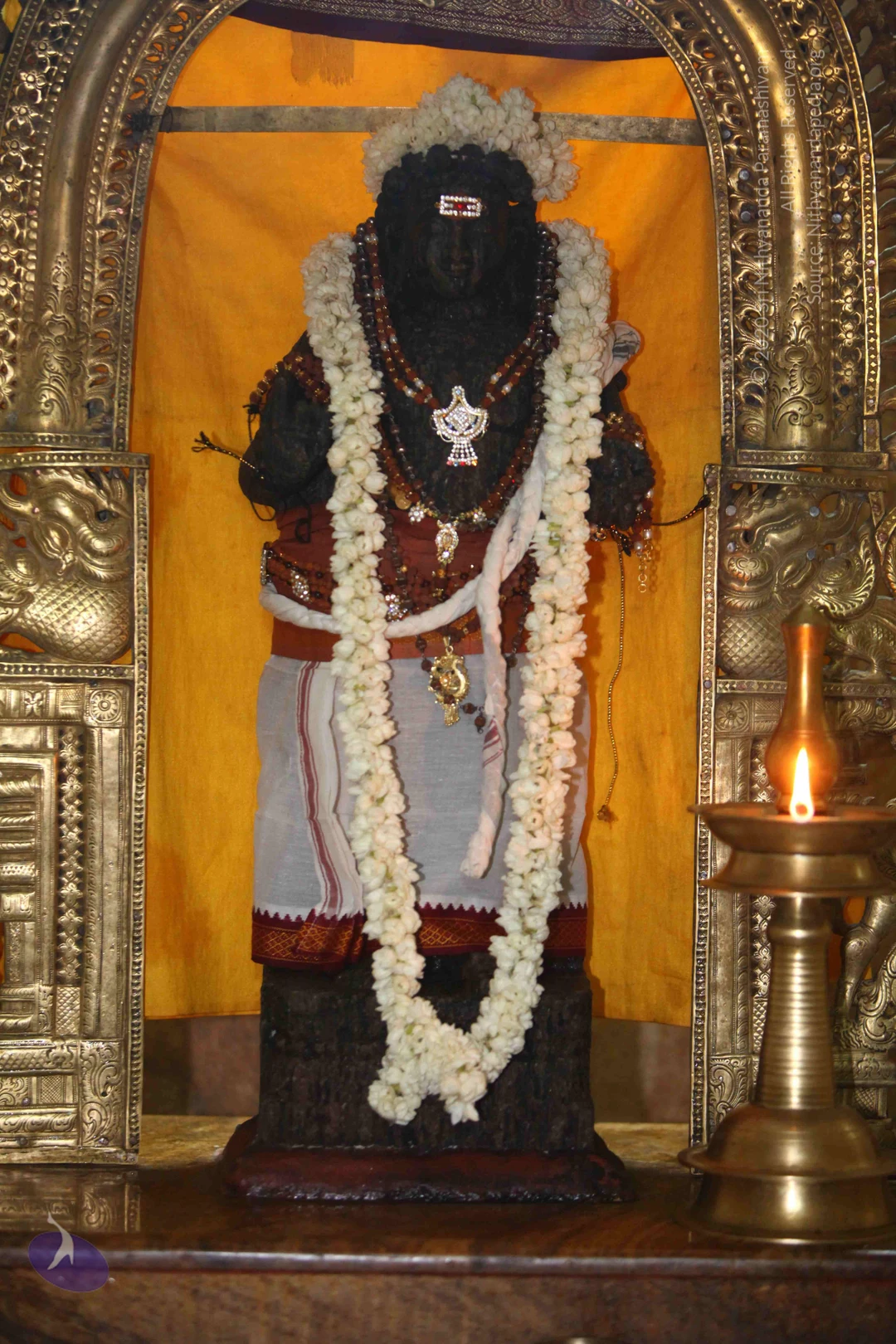
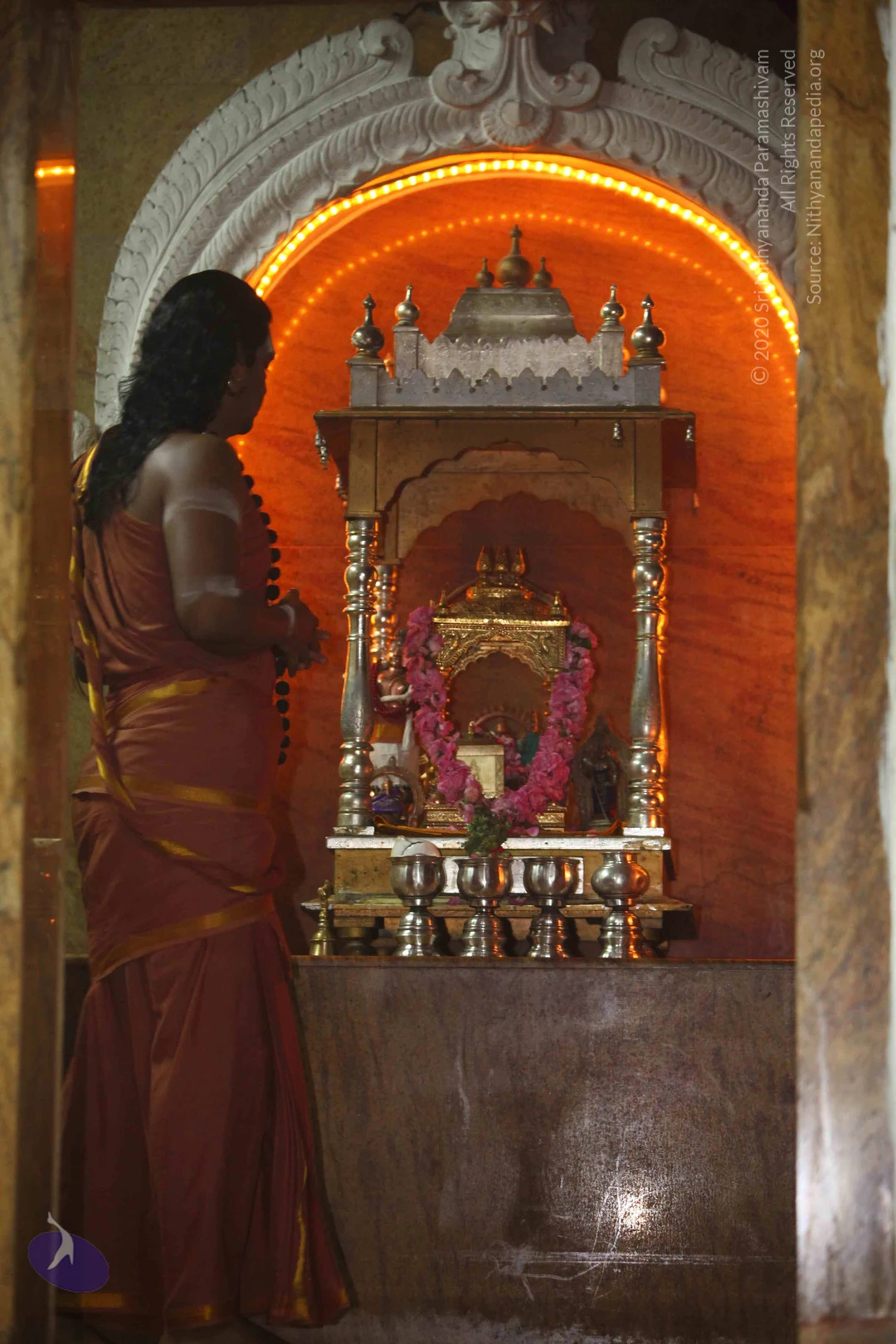
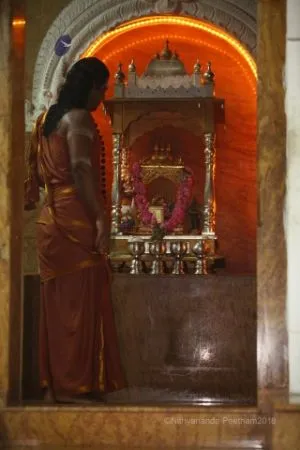
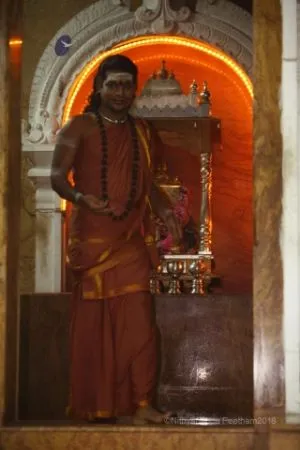
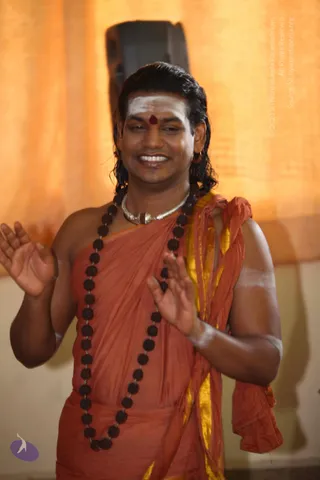
A photograph of a man standing indoors in front of a warm, blurred background. He wears an orange-saffron shawl draped over one shoulder and a long strand of dark rudraksha beads reaching his waist, plus a white ceremonial neck ornament. He has white tilak marks on his forehead with a red dot at the centre, long dark hair swept back, and white marks on his arm. He is looking to one side with a slight smile.A woman in a deep orange sari stands in profile at the left edge of a temple shrine, her long dark hair pulled back and gazing toward a lit niche. Inside the glowing orange-lit alcove, a small silver deity murti sits on an ornate silver stand, adorned with a pink and white flower garland, with brass lamps and silver vessels arranged before it. The walls are cream and the niche is backlit in warm orange light. The image shows only this one person and no visible depiction of a person.A life-size statue of a standing male figure in a shrine niche with an arched, ornately carved stone frame and warm orange backlighting. The figure wears a saffron-orange dhoti and matching upper cloth, a rudraksha mala and a gold-toned necklace, with hair swept back. Behind him is a small golden shrine with a deity murti and an arch above. The stone floor is dark and polished. Not a live person, so no physical people are present.

Pada-Puja

17 photosSource gallery
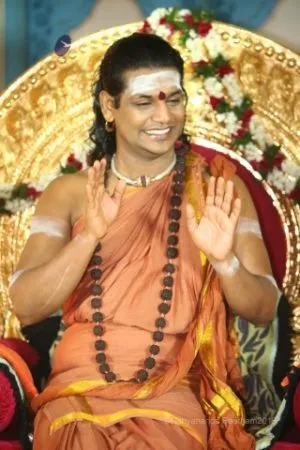
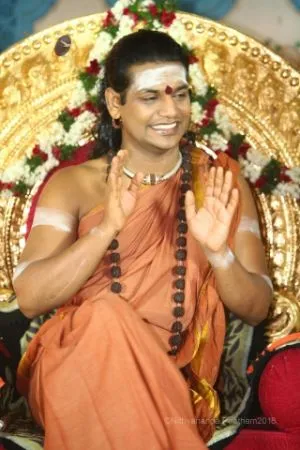
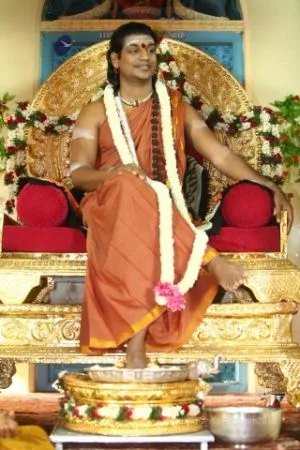
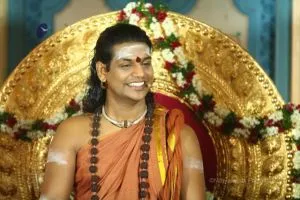
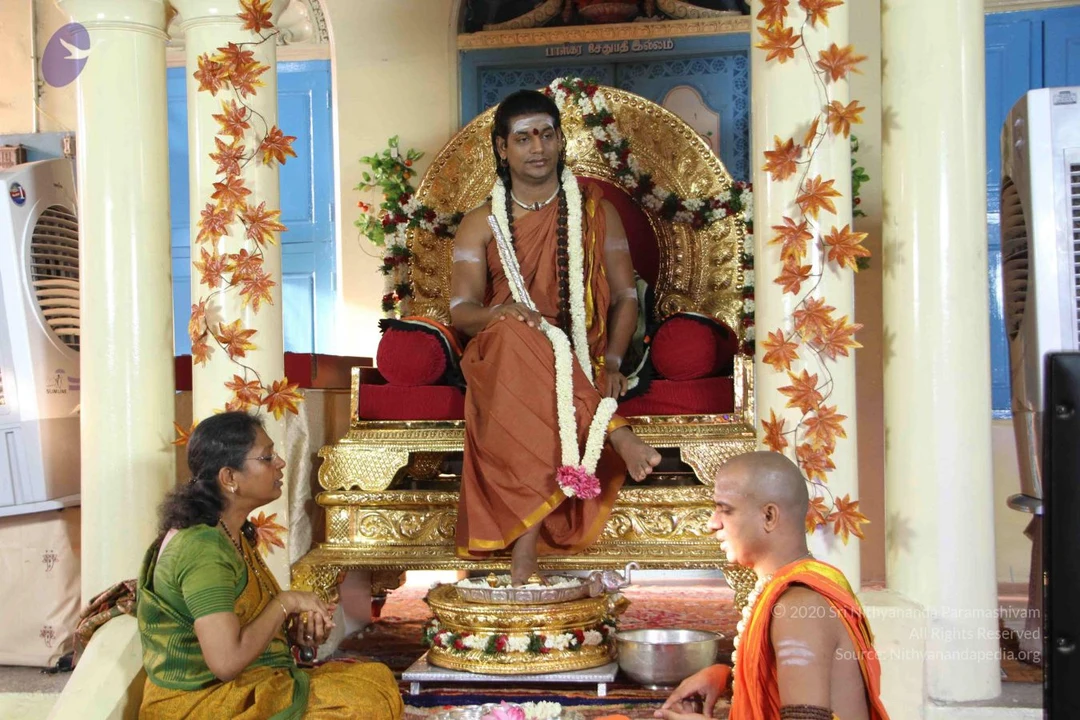
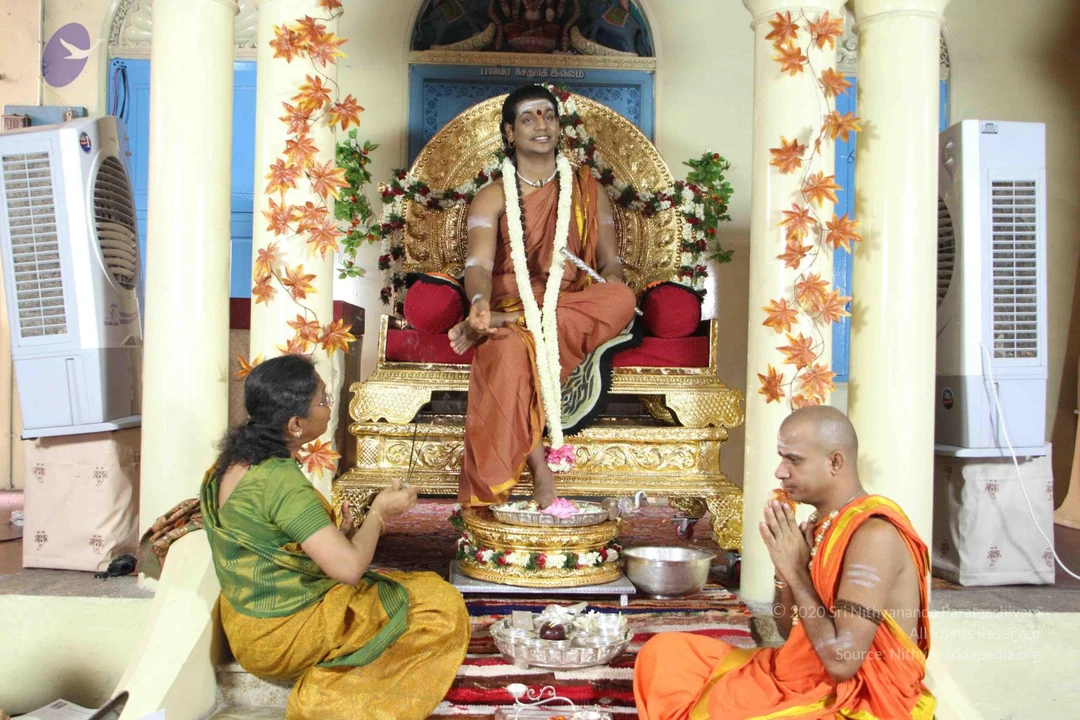
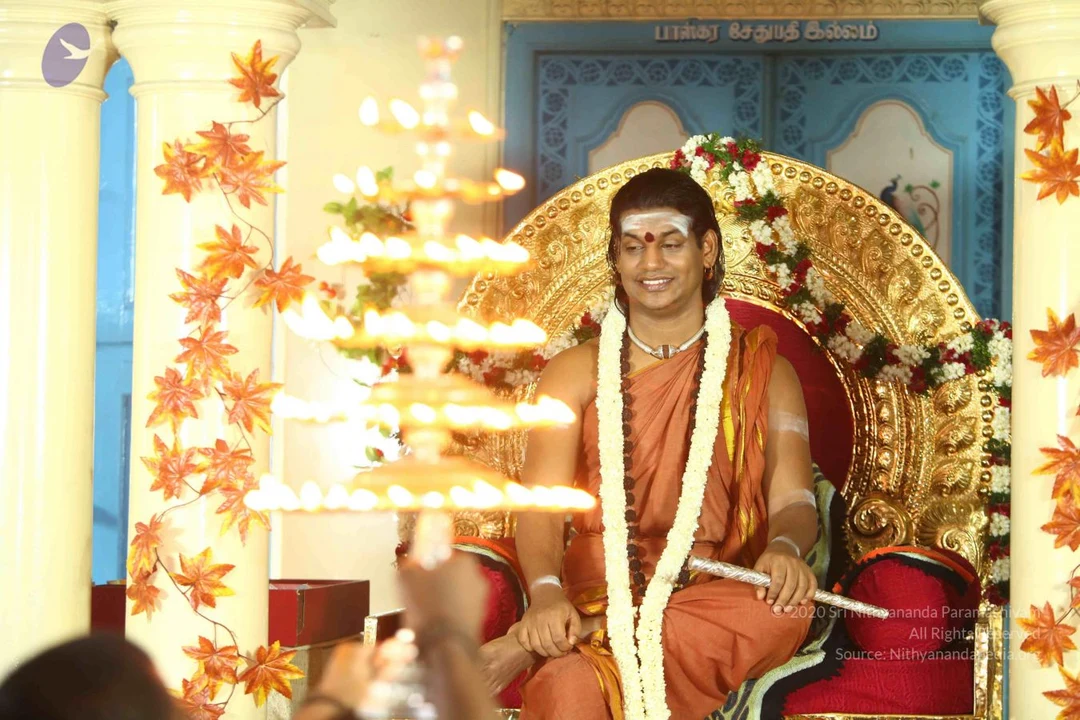
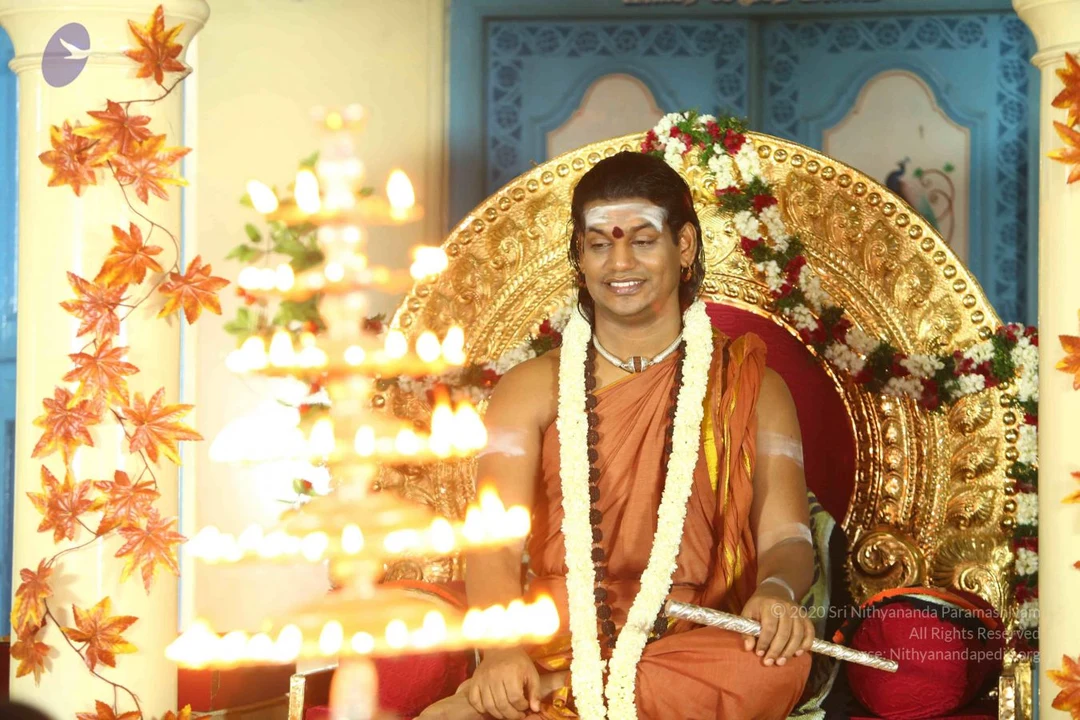
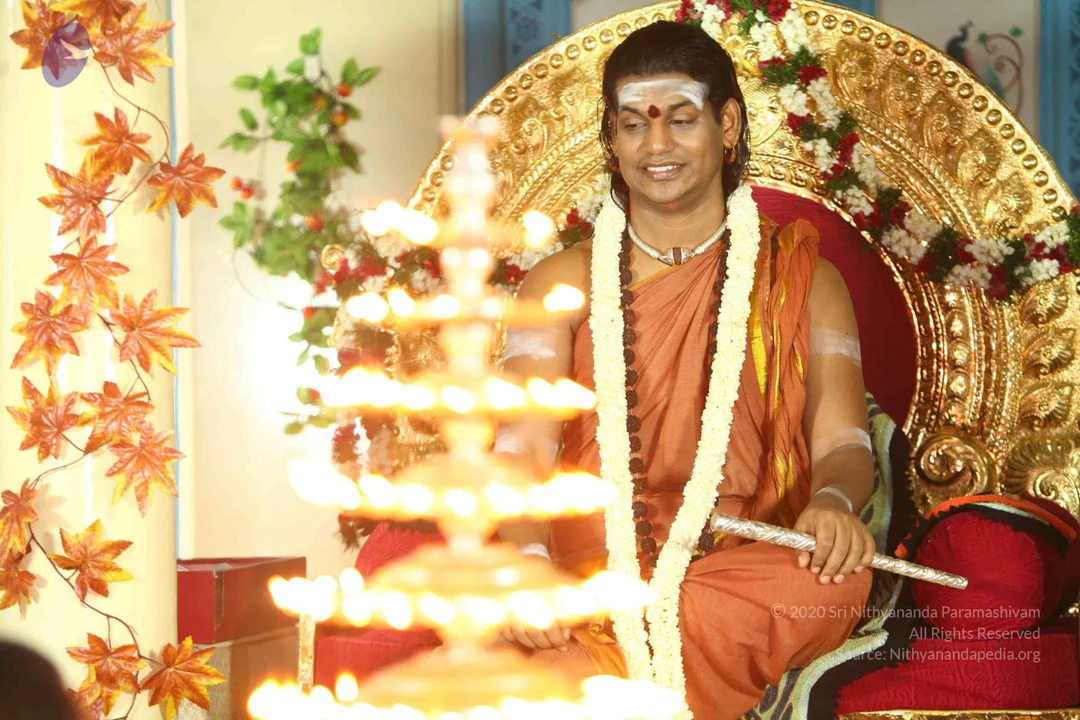
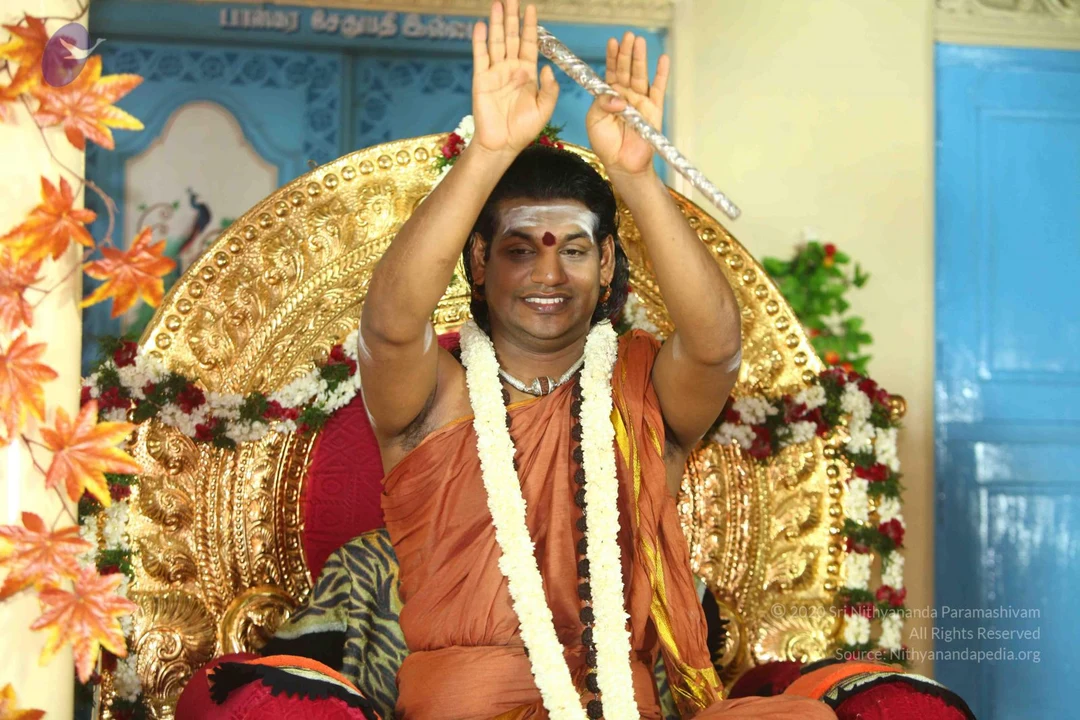
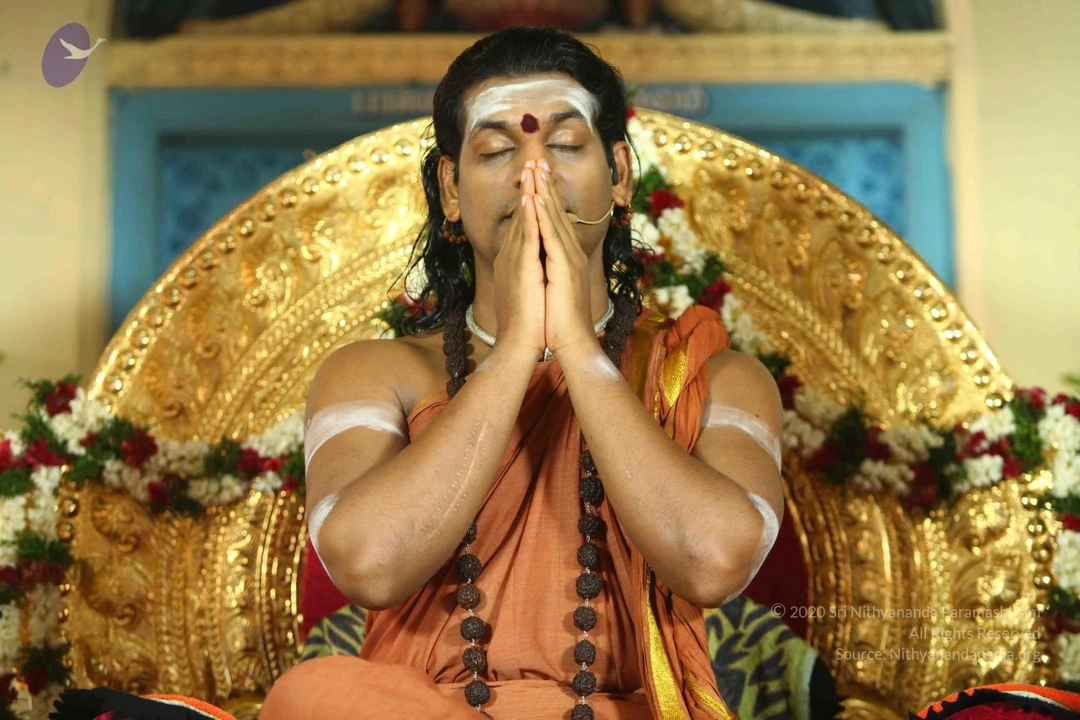
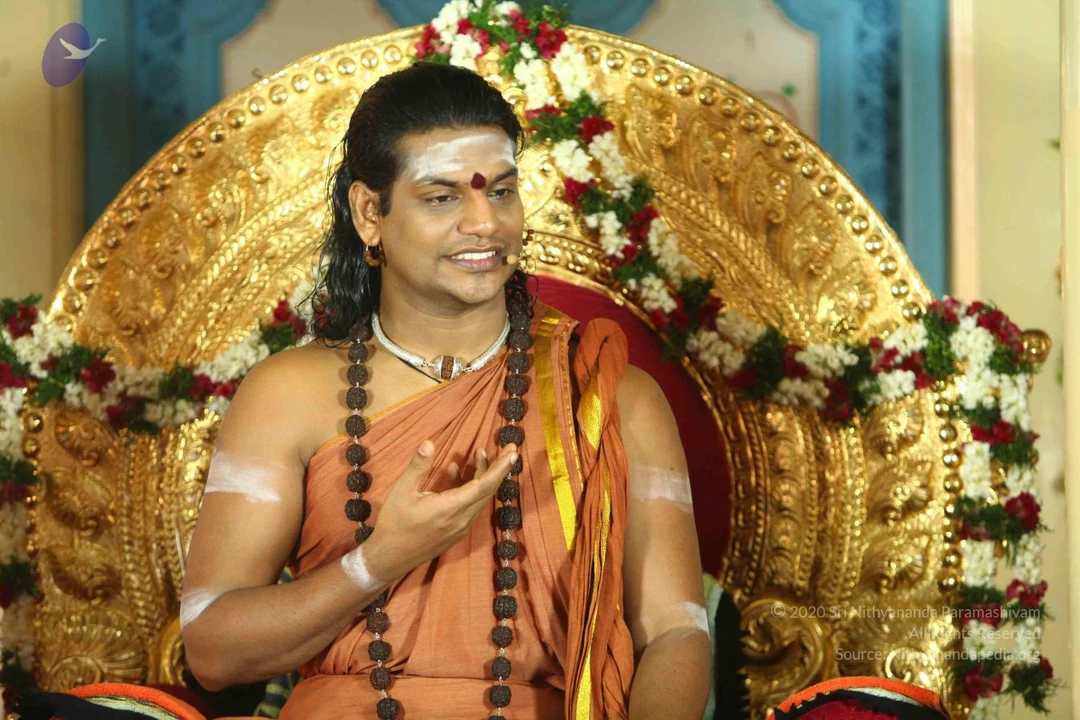
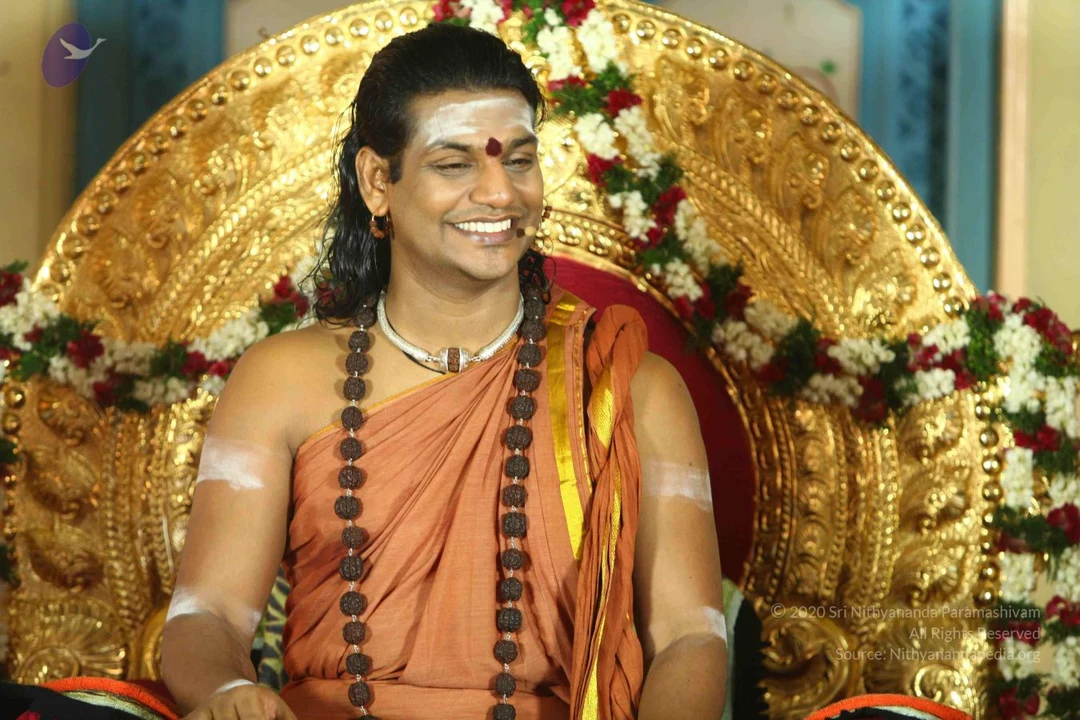
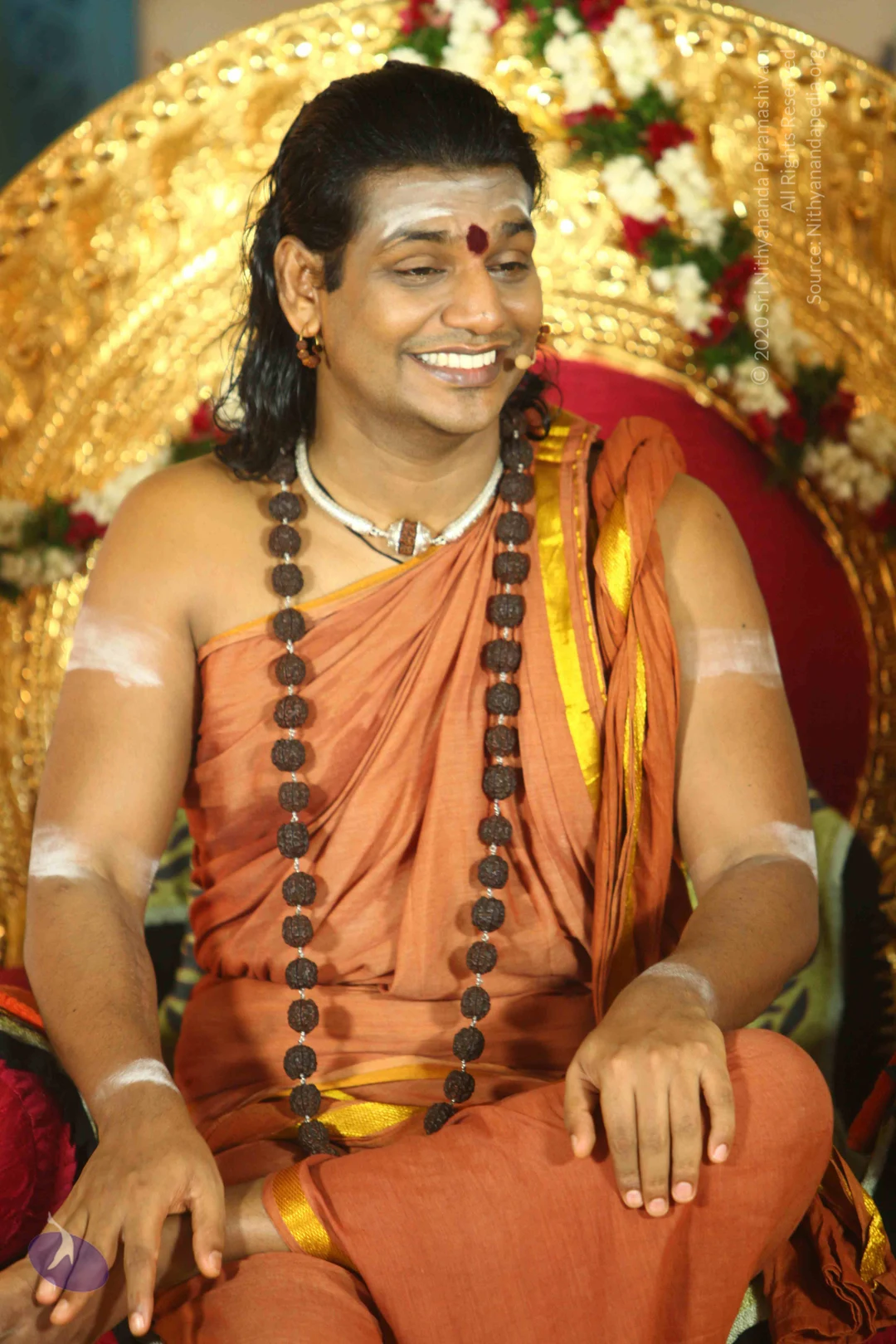
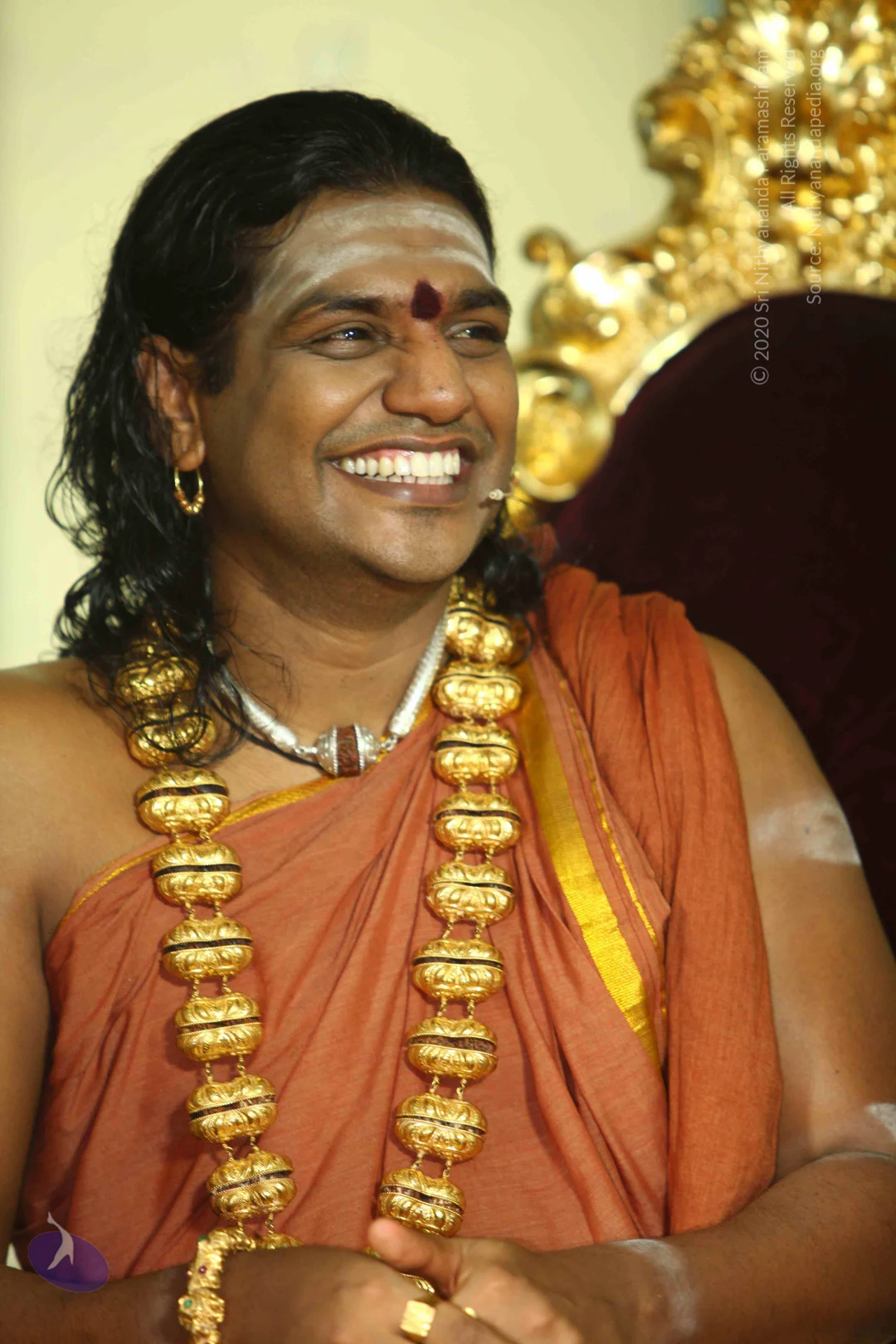
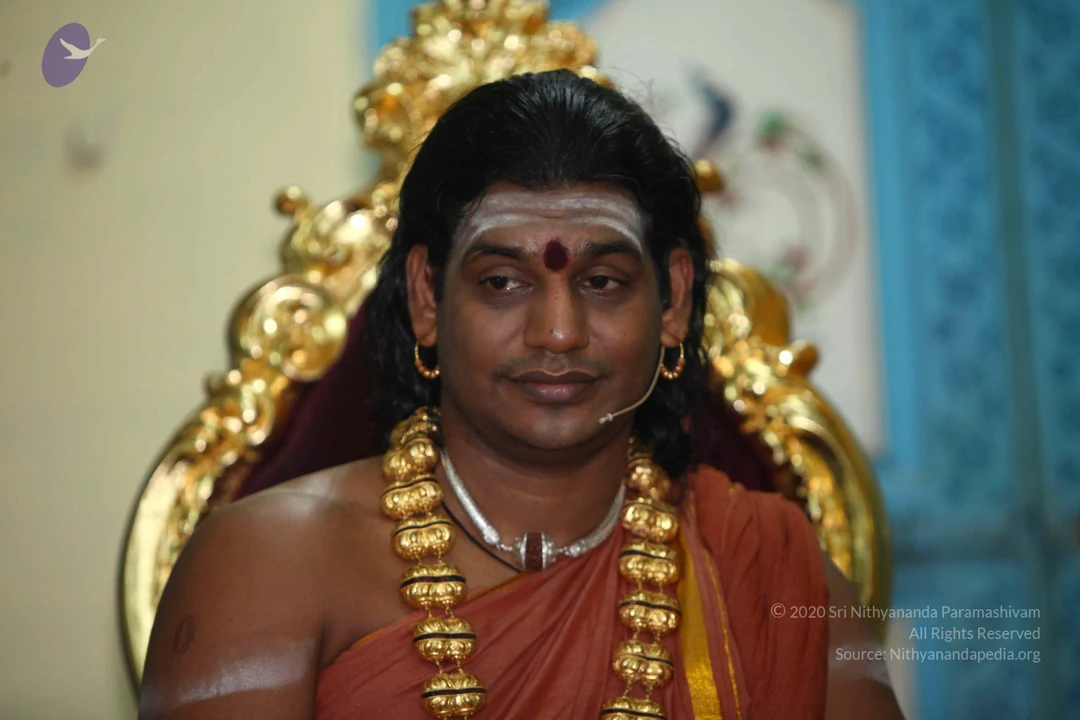
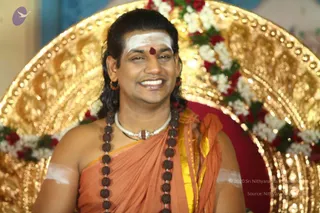
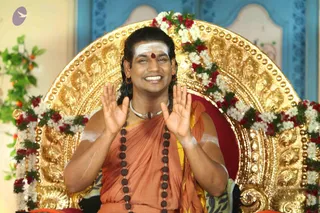
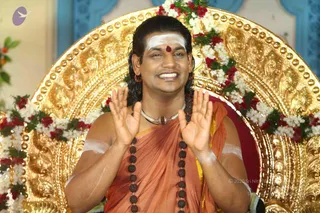
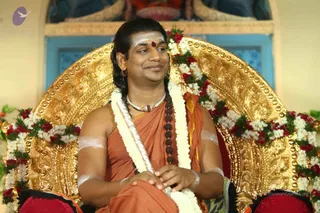
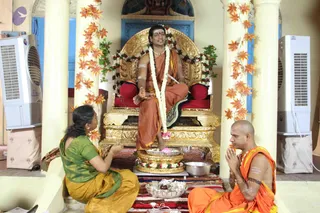
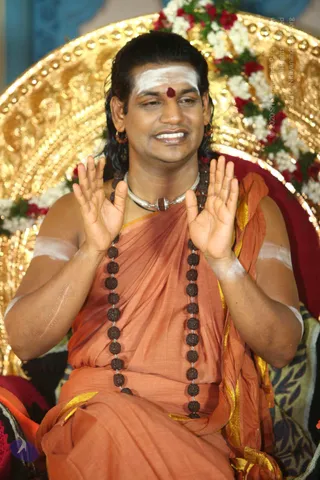
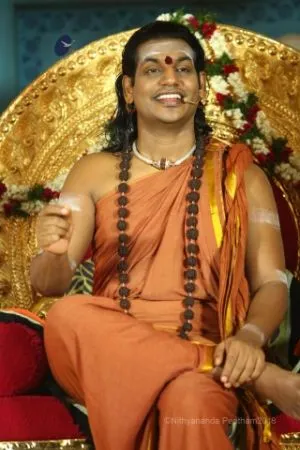
A smiling man sits in front of an ornate gold throne-back decorated with red and white flower garlands. He wears an orange-saffron robe with a gold border, a long rudraksha mala hanging to his waist, and a ceremonial white-and-gold necklace. He has white vertical tilak on his forehead with a red dot, and white markings on his upper arms, with shoulder-length swept-back dark hair. a person appears to be seated on the throne, with visible cues of saffron robe, rudraksha mala and ornate gold jewellery.A smiling man with swept-back long dark hair sits on an ornate golden throne decorated with red and white flower garlands, raising both palms outward in a blessing or teaching gesture. He wears an orange-saffron shawl over his body, a long rudraksha mala, a silver ceremonial necklace, and white vertical tilak with a red dot on his forehead. The chair's gilded carvings and garlands frame him against a blue wall, with green leaves and orange fruit at the left edge. Swamiji (probable) is seated in a discourse setting; the figure is distinguished by his long hair, saffron clothing and rudraksha mala.A smiling man seated on an ornate gold throne decorated with white and red flowers, raising both palms forward in a blessing gesture. He wears white sacred ash on the forehead and upper arms, a red bindi-style mark between the brows, a saffron-orange wrap, multiple rudraksha mala beads and a silver-and-gold ceremonial pendant necklace, with dark hair swept back. Blue draped fabric forms the background. Swamiji (probable) is described by these cues: saffron clothing, rudraksha malas, ceremonial necklace and swept-back hair, seated in a teaching or blessing role. A copyright overlay appears at lower right.A seated man on an ornate gilded throne decorated with white and red flower garlands. He wears an orange-saffron cloth draped over his shoulders, a long multi-strand rudraksha mala, a silver-toned collar necklace, and a red kumkum dot with white vibhuti markings on his forehead and arms. His long dark hair is swept back, and his hands rest in his lap as he smiles and looks to the side. Behind him is a blue-framed niche with a painted deity murti above. The scene suggests a seated satsang or discourse setting. Probable Swamiji appearance cues: long swept-back hair, saffron clothing, rudraksha mala and ceremonial collar necklace while seated on the throne.A photograph of a long-haired man seated on an ornate golden throne with red cushions, wearing an orange-saffron robe, a white-beaded necklace and a long white and pink flower garland draped over his shoulder, with a red tilak on his forehead and white markings on his arms. Two people sit before him on the floor: a woman in a green blouse and gold-bordered saree listening with folded hands, and a bald man in an orange robe with white body markings and a white beaded necklace, bowing toward a silver tray. A silver bowl and a decorated base are in front of the throne, and autumn-leaf garlands wrap the white pillars. A gilded shrine panel with Tamil script sits above, and cooling fans stand at both sides.A seated man in saffron-orange robes sits on an ornate gold throne with red cushions, decorated with white and red flower garlands. He wears a long white flower garland, a gold necklace, and a red forehead mark, with white markings on his arms, and holds a small object in one hand. In front of the throne, a woman in a green blouse and mustard-yellow sari kneels with her hands raised, and a bald man in orange robes sits cross-legged with his palms pressed together in namaste. A brass plate holds offerings of fruit and sweets, and a silver bowl sits on a striped red rug. Autumn-leaf garlands trim the white pillars, with blue-and-gold decorative panels and coolers behind.

Morning-Satsang

12 photosSource gallery
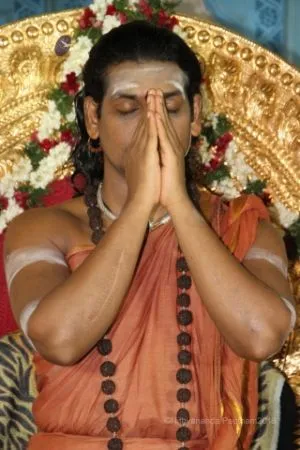
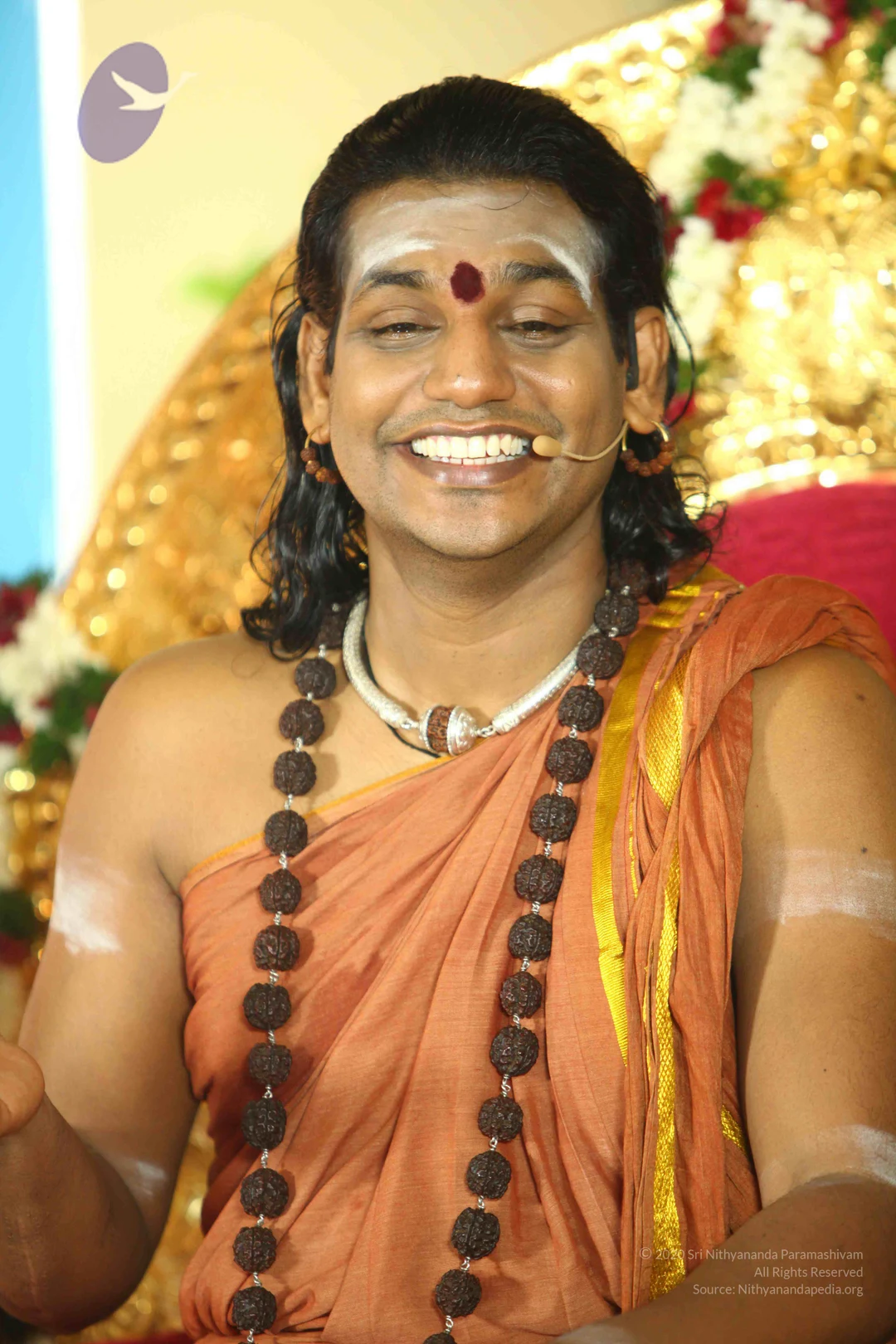
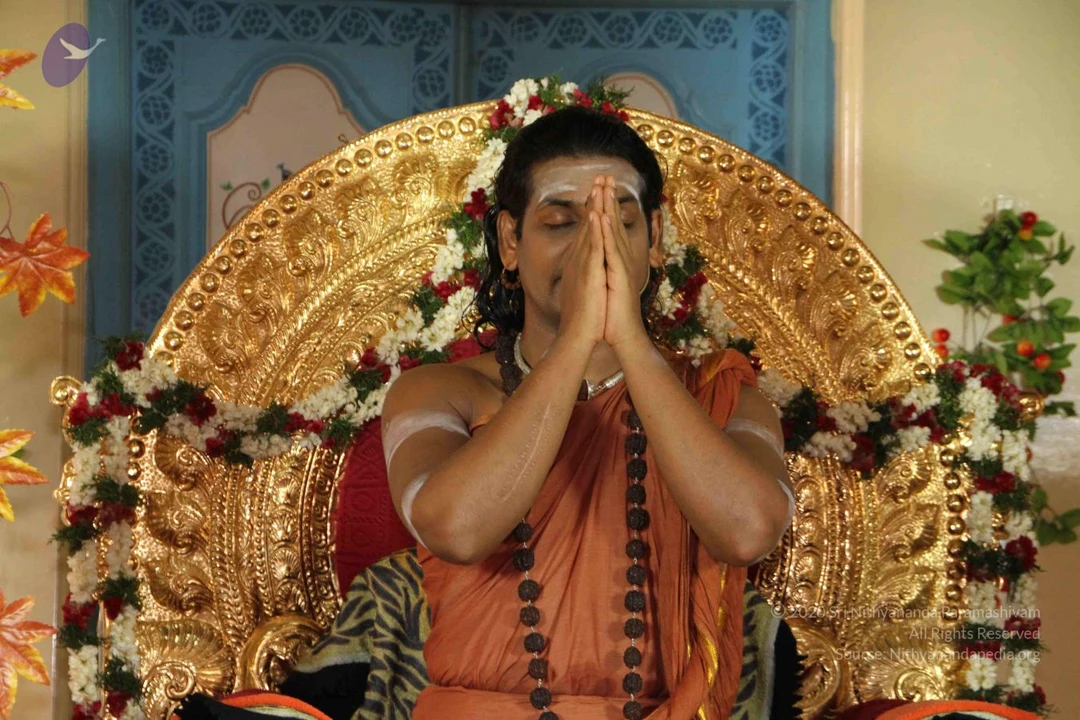
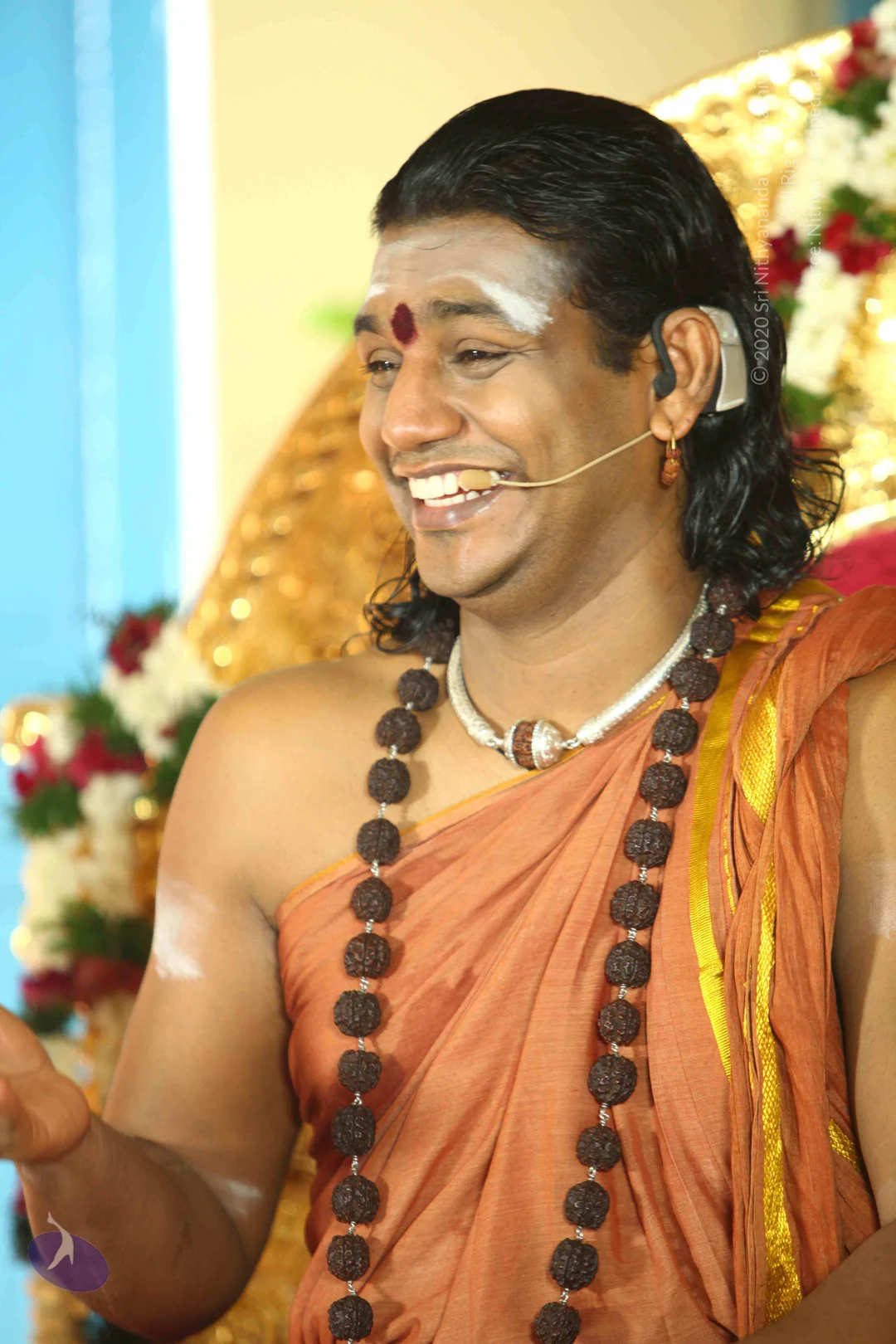
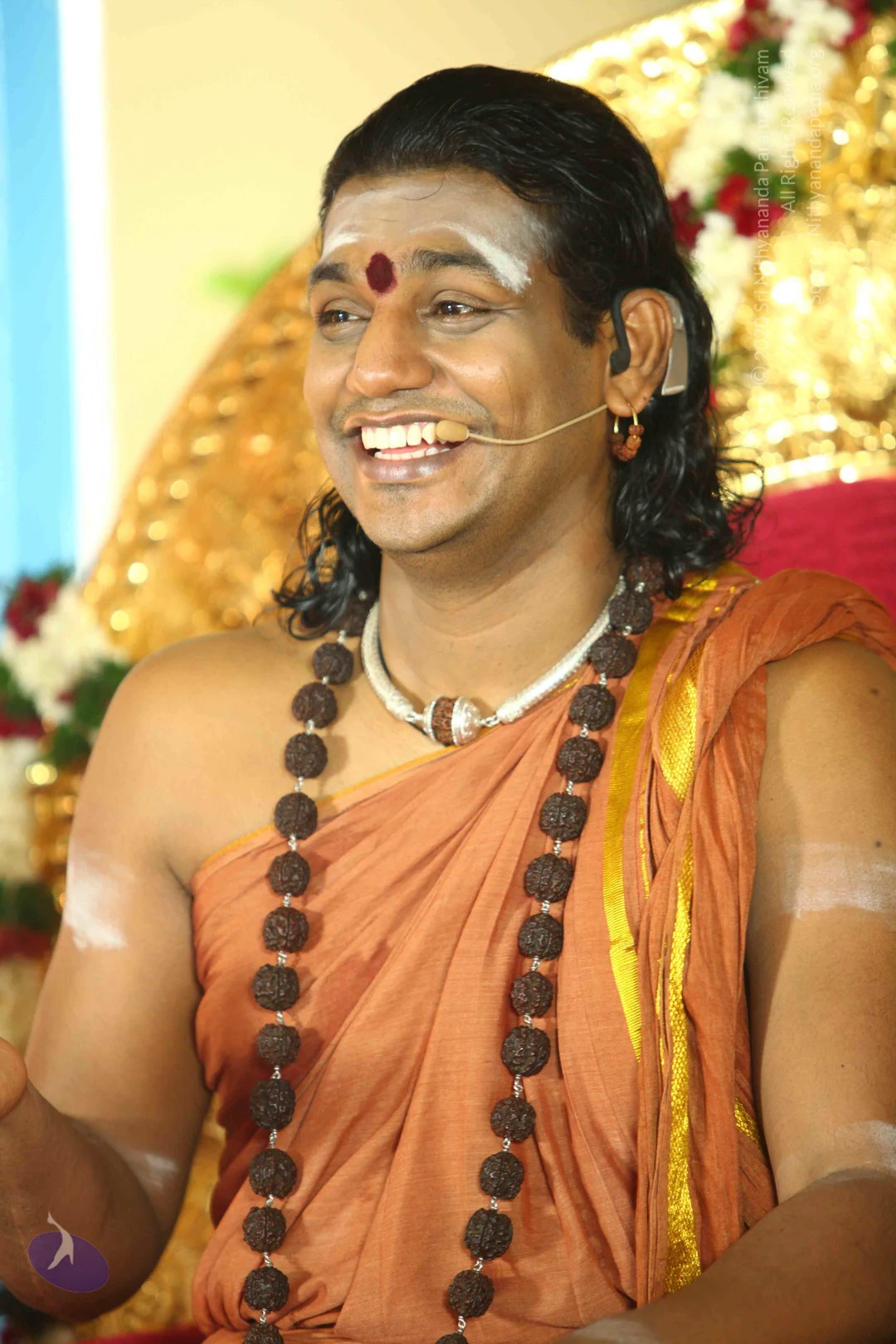
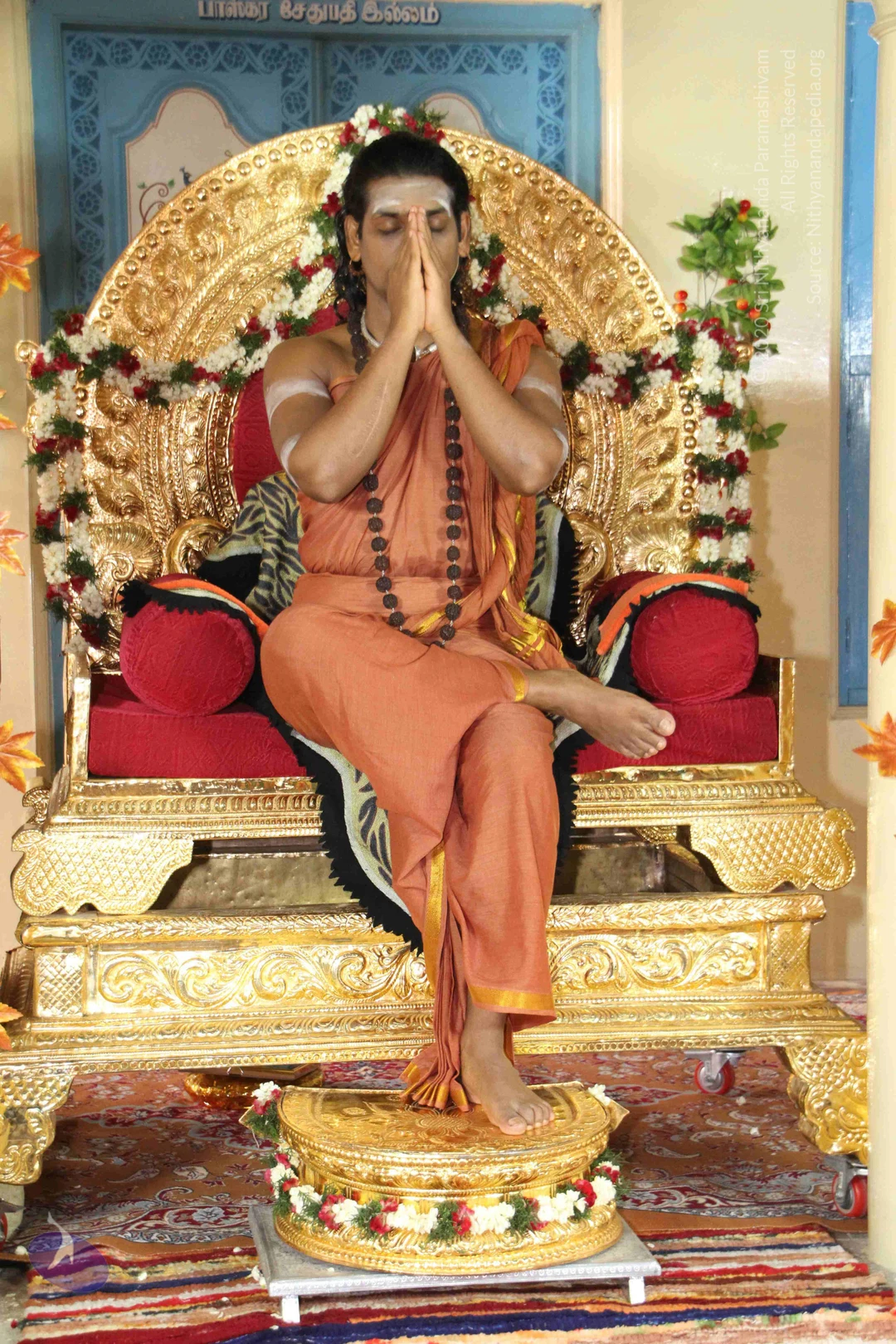
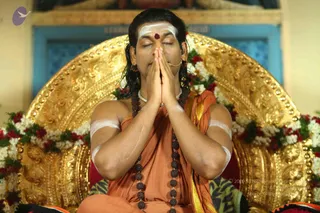
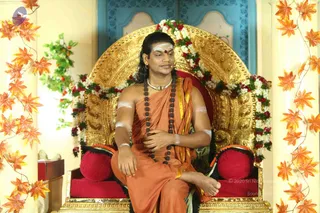
A man sits cross-legged on an ornate golden throne with a gold-embossed backrest decorated with beaded rims and garlands of white and red flowers. He has long dark hair swept back, closed eyes and palms pressed together in namaste at chest height. He wears a red-orange saffron cloth draped over his shoulders, multiple rudraksha beaded malas hanging to his waist, a thin silver necklace and a small gold earring. A white horizontal tilak with a red kumkum dot marks his forehead, and white vibhuti bands are smeared on his upper arms. The setting appears to be a temple or ashram hall with a blue framed panel behind the throne.A seated man in saffron-orange robes sits on an ornate golden throne with red cushions, decorated with red and white flower garlands. He has white vertical tilak marks on his forehead and arms, a red bindi, a long rudraksha mala and a silver ceremonial necklace, and his hands rest in his lap. Orange autumn-leaf garlands frame the pillars behind him, with a blue patterned backdrop. The setting resembles a discourse stage. Swamiji (probable): the saffron robes, long swept-back hair, rudraksha mala and ceremonial necklace are consistent with the page's account of a talk, presented here as a seated teacher.A man seated on an ornate gold throne decorated with red and white flower garlands, speaking and gesturing with his right hand. He wears an orange-brown saffron-style cloth with a gold border over the shoulder, a long rudraksha mala hanging to his waist, a silver necklace, a red bindi and white sandalwood markings on the forehead and arms. Long dark hair is swept back. Swamiji (probable): the long swept-back hair, ornate saffron clothing, rudraksha mala and ceremonial necklace are cues consistent with the page's identification of Paramahamsa Nithyananda as the speaker in a discourse setting.A smiling man with long dark swept-back hair, white vibhuti stripes and a red kumkum bindi on his forehead, wearing an orange-saffron shawl with gold border and multiple rudraksha malas with a silver-and-white ceremonial necklace. He wears a small clip-on headset microphone and rudraksha earrings, and gestures with one hand against a gold-embossed backdrop with white and red flowers. Probable Swamiji by appearance cues: long swept-back hair, saffron clothing, rudraksha malas and ceremonial jewellery, seated speaking to an audience during a discourse.A monitor shows a grid of nine live video feeds of KAILASA centres and temple rooms, photographed on a screen. Top-left, a woman in a white top sits on a red cushion beside a framed portrait, with a sign reading "OHIO CENTER". Top-middle, a shrine is decorated with deity murtis and garlands, with a label reading "SAN JOSE MADURAI". Top-right, many devotees sit on the floor before deity shrines, with a label reading "LOS ANGELES". Middle-left, a room with decorated deity shrines and a cloth-draped seat hosts a few seated people, with a label reading "OHIO PRAYER". Middle-centre, a group sits in white and saffron clothing before ornate shrines, with a label reading "SEATTLE CHIDAMBARAM". Bottom-right, a figure in a red and gold saree-like robe sits on a red throne garlanded with flowers, a rudraksha mala around the neck. Bottom-left, a hall with rows of seated devotees and kalasha-style decorations is shown. Bottom-middle shows a label reading "Phoenix Kanchipuram" above a shrine. Visible people are on screens and not counted as physical people in the room.A photograph of a large display screen showing a grid of video-link tiles of devotees seated in home or centre rooms, each labelled with a sign: NEW YORK VARANASI, MILL VALLEY, AUCKLAND NEW ZEALAND, MALAYSIA PALANI, DALLAS DHARAKA, BENGALURU NORTH, CHARLOTTE SRISAILAM and VANCOUVER PURI. Several participants wear white, orange and saffron clothing and sit on mats before small altars with deity images, kalasha, flowers and oil lamps. In the lower right tile a figure with long dark hair, a rudraksha mala and ornate gold-trimmed saffron garments sits on a red throne, but this appearance is uncertain.

Sarva-Darshan

6 photosSource gallery
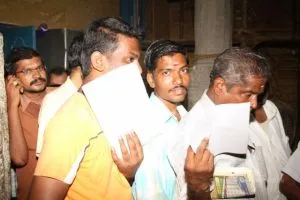
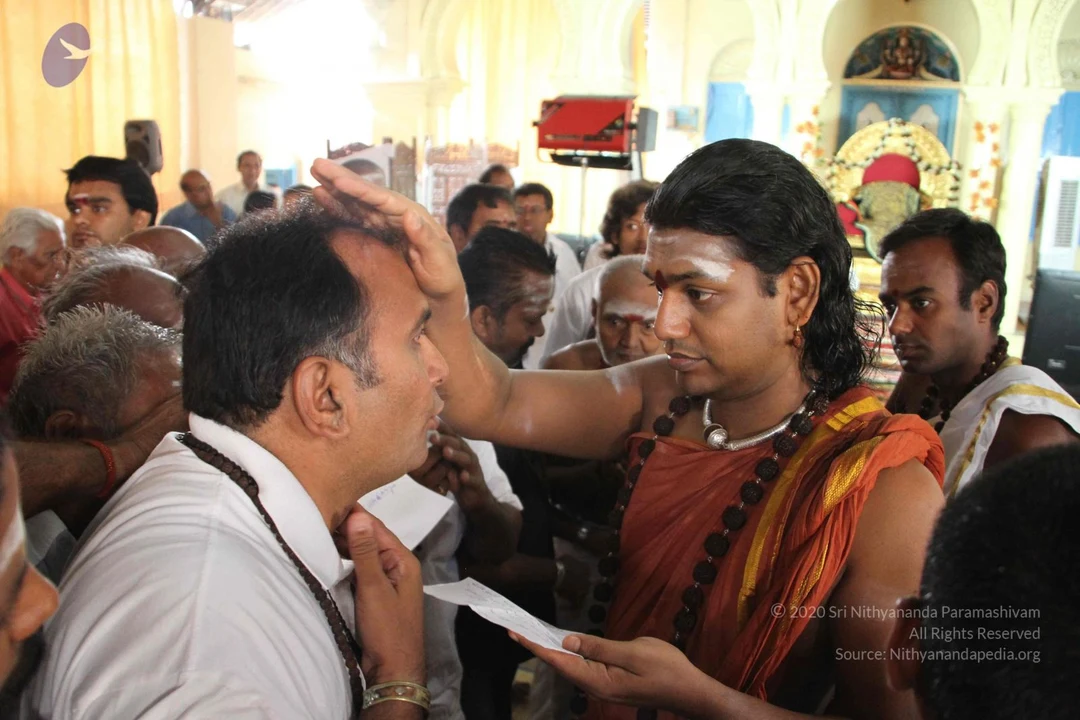
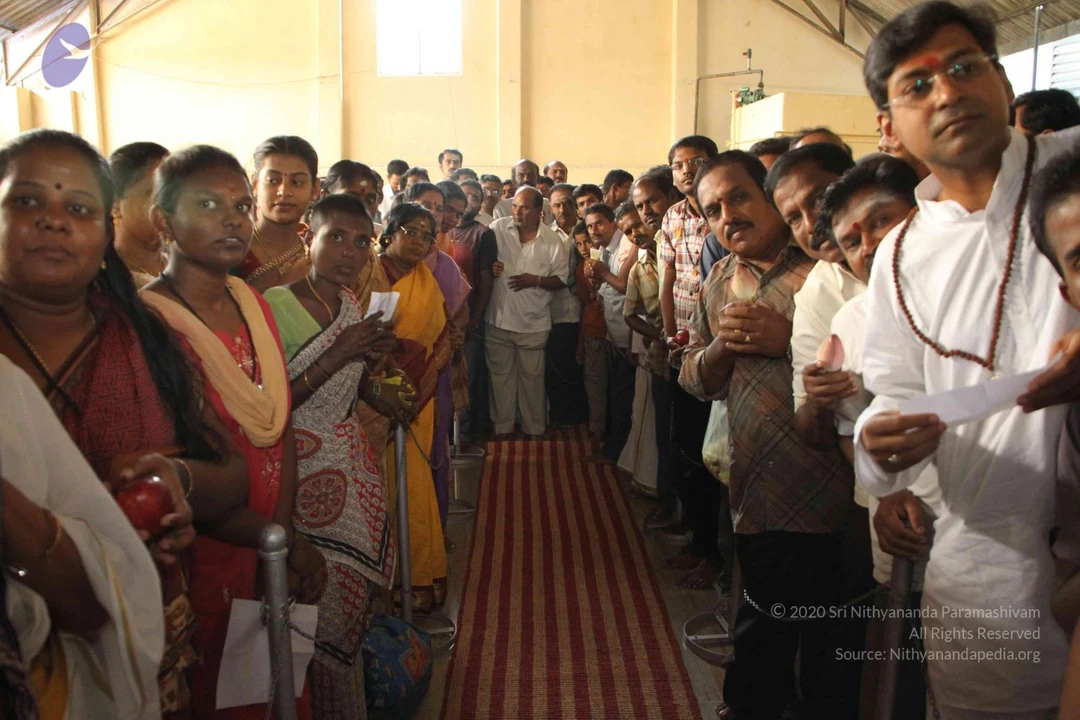
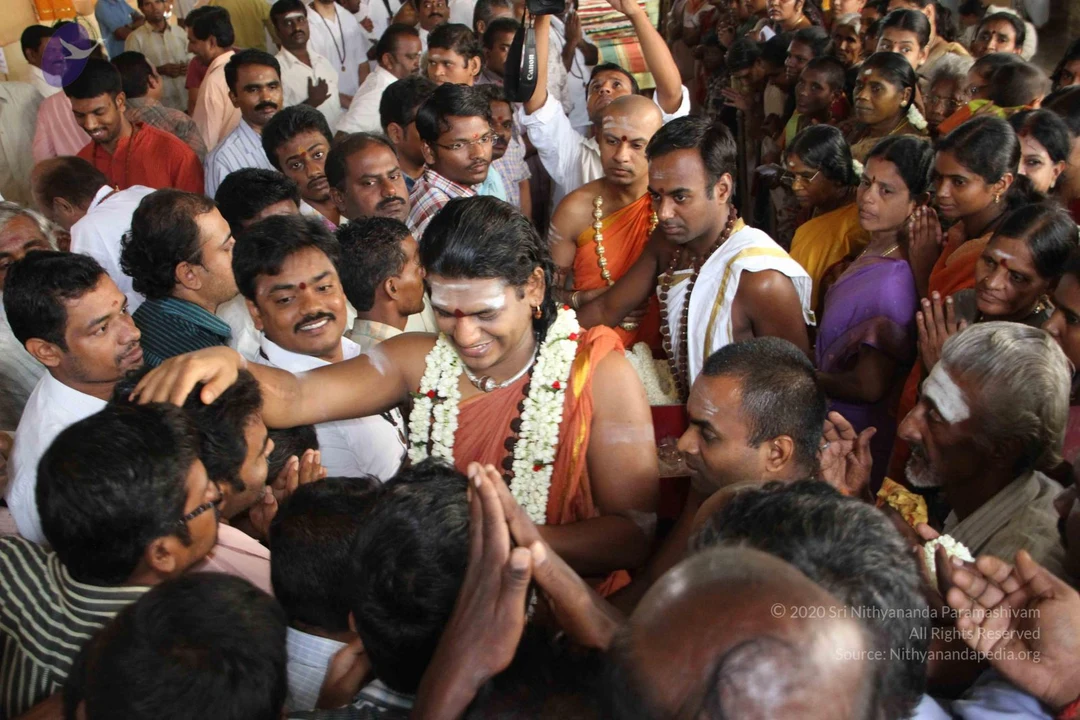
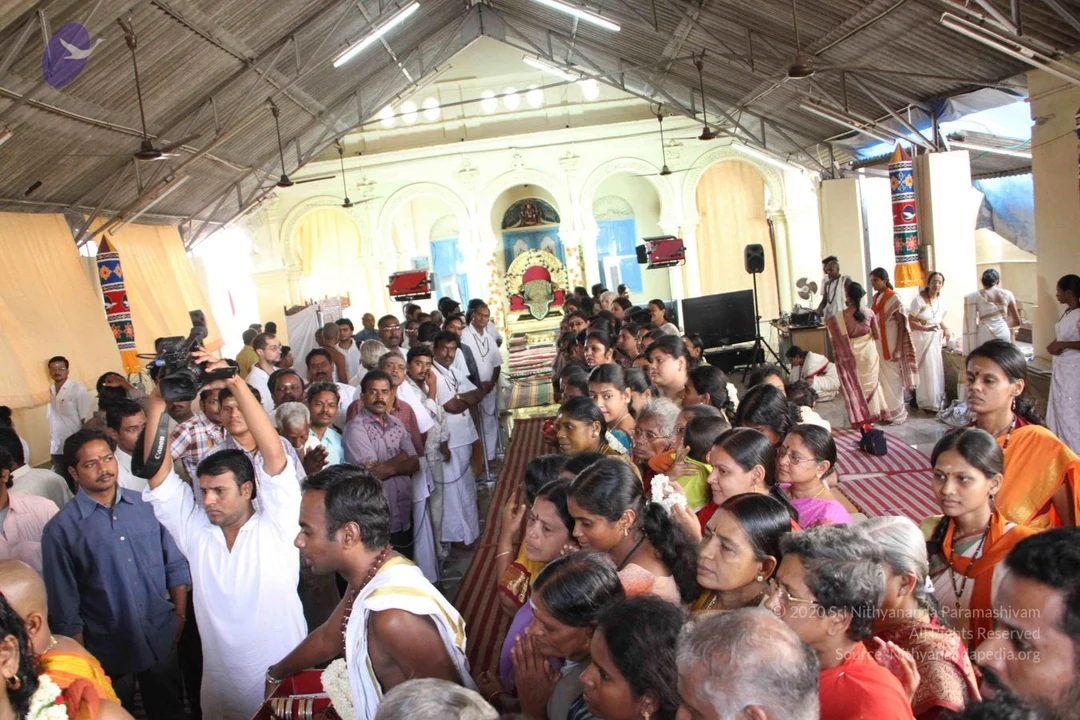
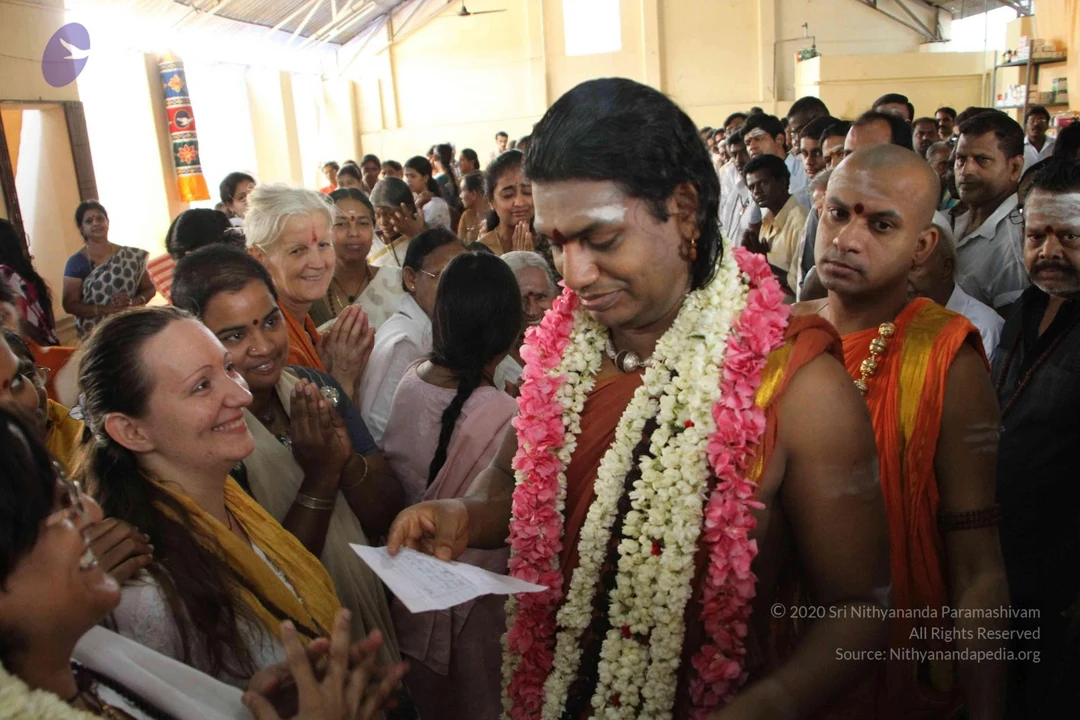
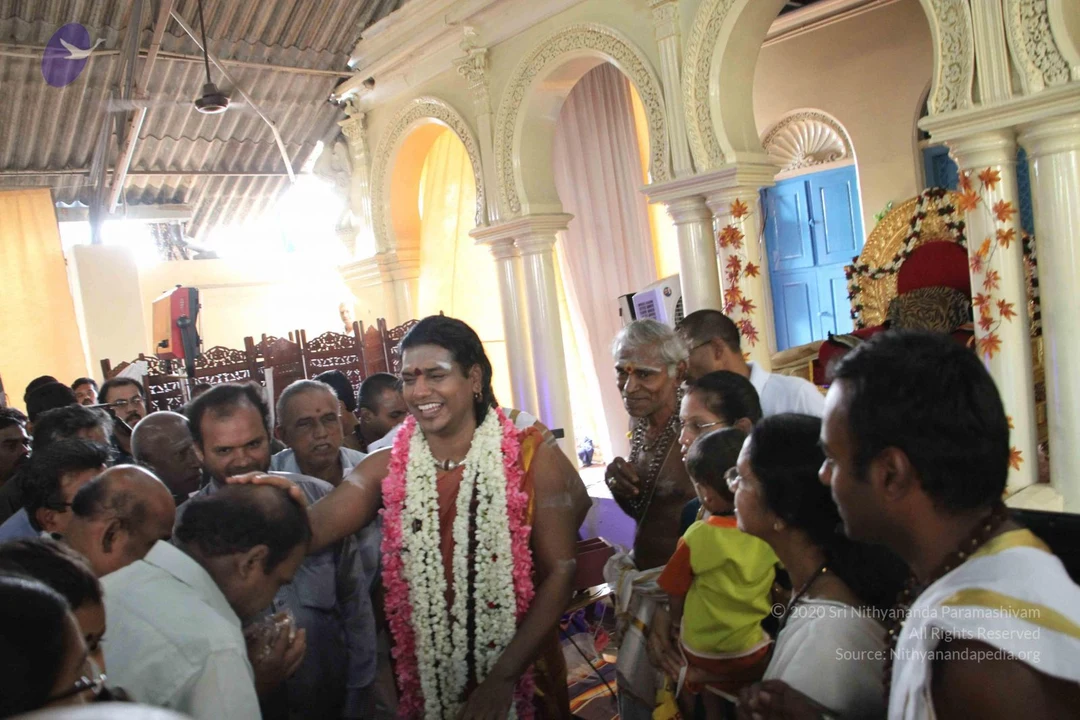
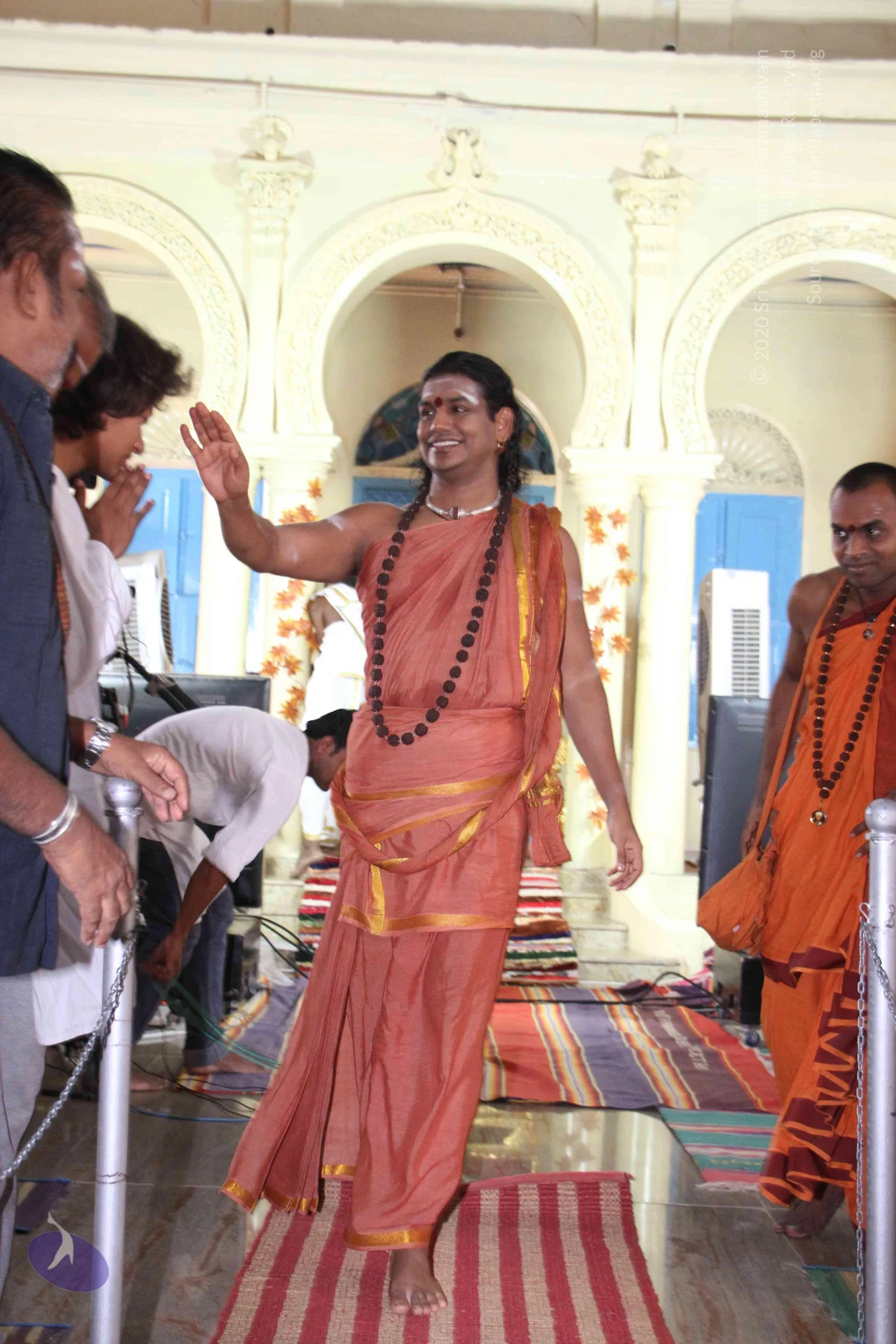
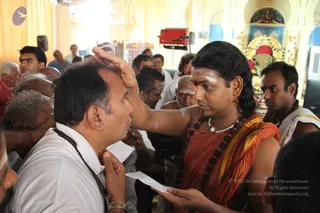
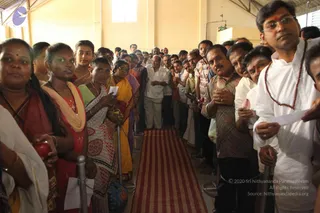
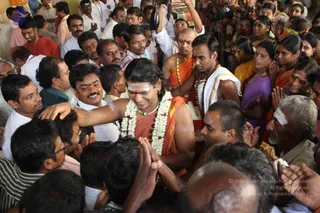
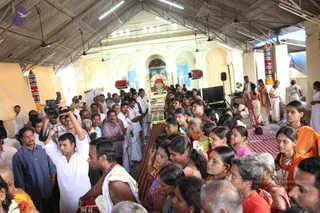
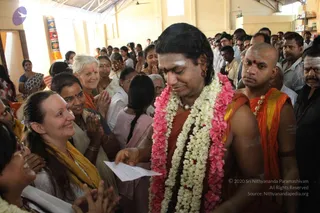
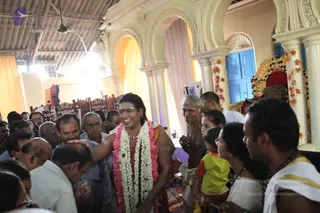
A photograph inside a temple hall with arched cream walls and a shrine with a deity murti and garlands in the background. In the centre, a man with long swept-back dark hair wears an orange-red sannyasi robe with a gold border, a silver necklace and a dense rudraksha mala, with white and red forehead markings. He places his right hand on the forehead of a man in a white shirt and rudraksha mala, who stands with his hands folded. The robed man holds a folded white paper in his left hand. Several older men and devotees in white and dhoti surround them, and a red electronic device sits on a stand behind.A photograph of a long queue of devotees standing in a hall with a red-and-beige striped runner down the middle and metal barrier posts on either side. Women in saris and salwar in red, yellow, green and purple stand on the left, many holding folded paper slips and some holding red fruit or offerings. On the right, a man in a white dhoti-style kurta with a rudraksha mala and a tilak on his forehead holds a folded paper. Men in checked and plain shirts stand behind, several with vibhuti or tilak marks. No one in the frame is identifiable as a person candidate by the listed appearance cues, so the a person field is set to none.A dense crowd of devotees surrounds a central figure with long swept-back dark hair, white sacred ash markings on forehead, a white flower garland, and an orange-saffron cloth draped over the shoulder, with a rudraksha-style necklace visible. Two men flank him, one bare-chested with an orange cloth and gold necklace, the other in white dhoti with a prayer-bead mala. Many people press in with hands folded in anjali, and women in saris stand behind them. Several men raise cameras and phones overhead. The setting appears to be a temple or hall with a crowded darshan atmosphere. The central figure shows distinctive long hair, saffron clothing and a garland, so this is a probable Swamiji appearance in person.A crowded indoor hall with a corrugated metal roof and white-arched architecture, where devotees gather in front of a raised ornate seat draped with a red and gold cloth and flanked by a framed deity image. A man in a white shirt holds up a video camera, and a man in white dhoti and shawl with a garland stands near the front. Women in saris, many in orange, pink and red, press their palms together in prayer. Rows of people fill the floor, with cloth banners in red, blue and white hanging on the pillars and a sound system and monitor at the side.A man with long swept-back dark hair and white sacred ash marks on his forehead stands in the centre of a crowded hall, wearing a rust-red robe and layered garlands of pink and white flowers. He holds a folded white paper in his right hand and looks downward. Around him, women with folded hands and smiles, one in a yellow shawl, and a man in an orange robe with a gold-beaded mala stand close. Behind them a large crowd of men and women fills a tiled-roof hall with a banner hanging on the left wall. a person is the central figure, with long swept-back hair, flower garlands and ash marks, and is recognisable by these cues rather than by his face.A photograph inside a temple hall with cream arched colonnades and a blue wooden door. At center, a man with long dark hair, a white and pink jasmine garland, bare chest, orange cloth, and vertical white tilak marks smiles broadly while a crowd presses around him. Probable Swamiji: long swept-back hair, a flower garland and an orange garment mark him as a distinctive ceremonial figure, and he is at the center of the gathering. Around him, devotees in white dhotis, a bare-chested older man with rudraksha beads, and women in saris reach toward him. On the right, an ornate throne draped in red and garlanded with orange flowers stands empty. A small child in a yellow top is held by a woman.

Medical-Camp

13 photosSource gallery
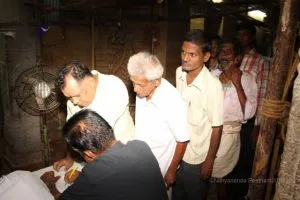
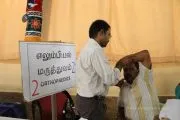
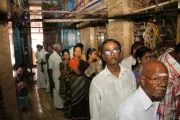
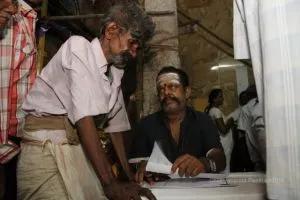
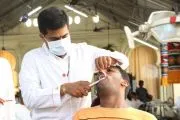
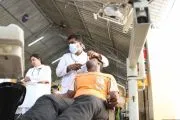
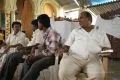
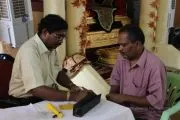
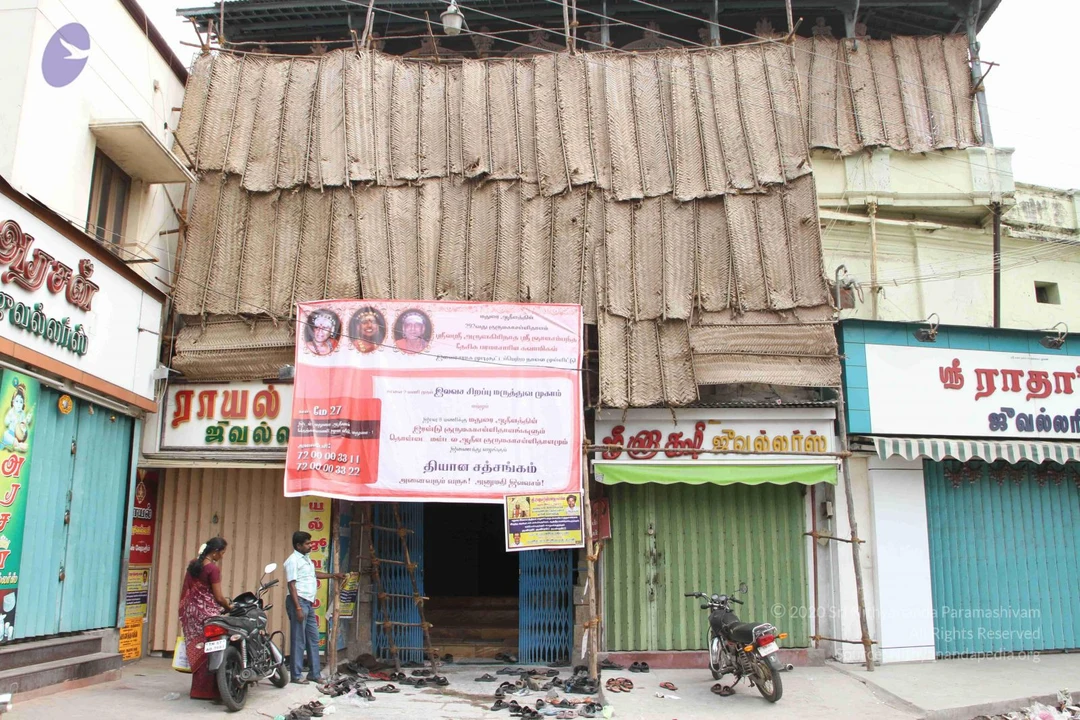
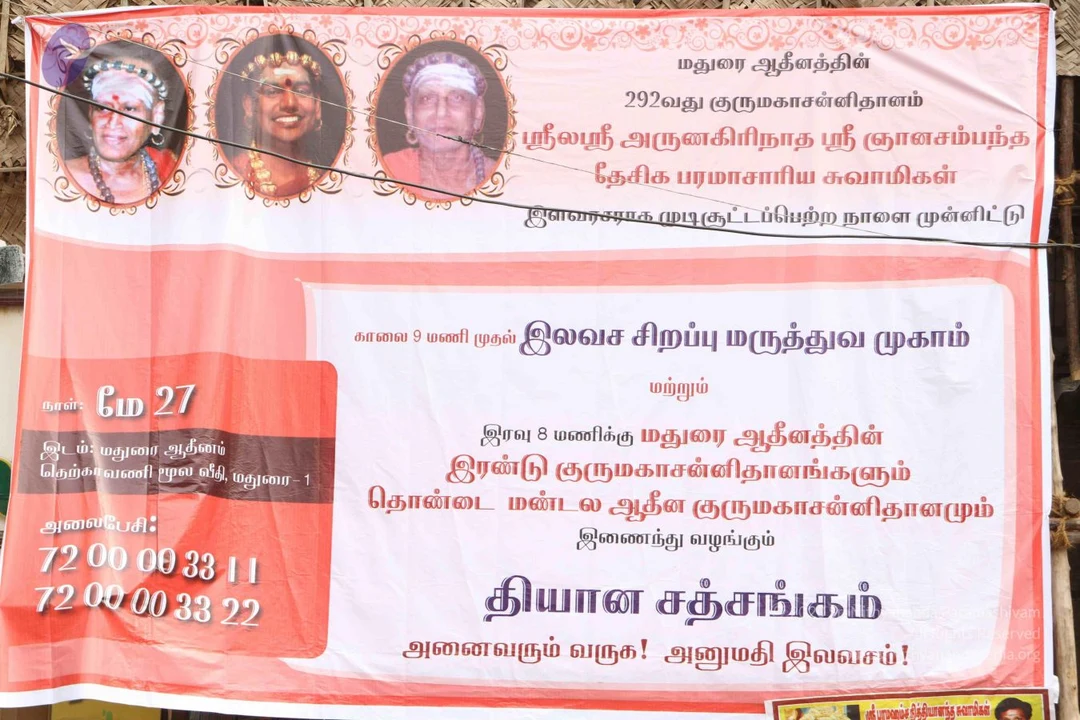
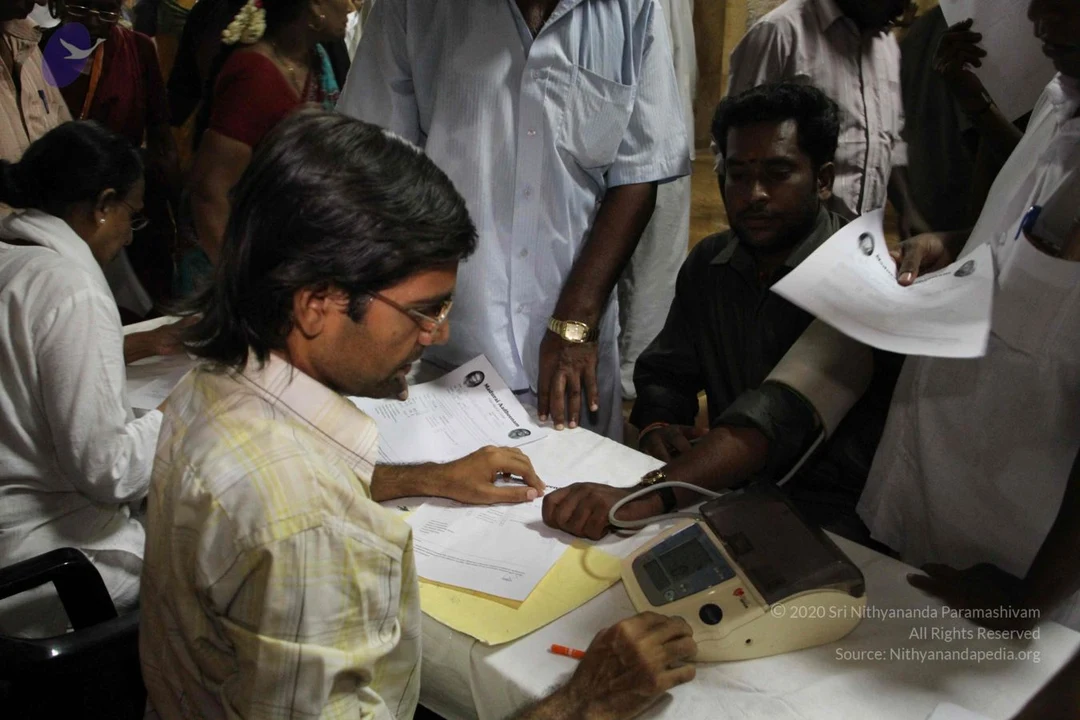
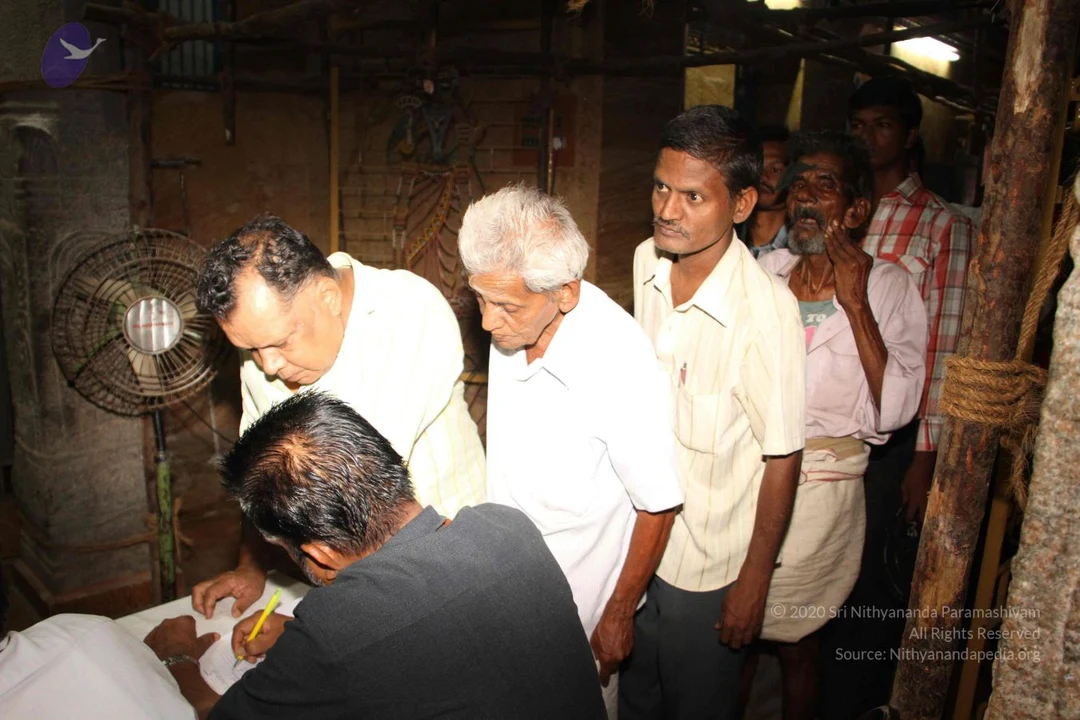
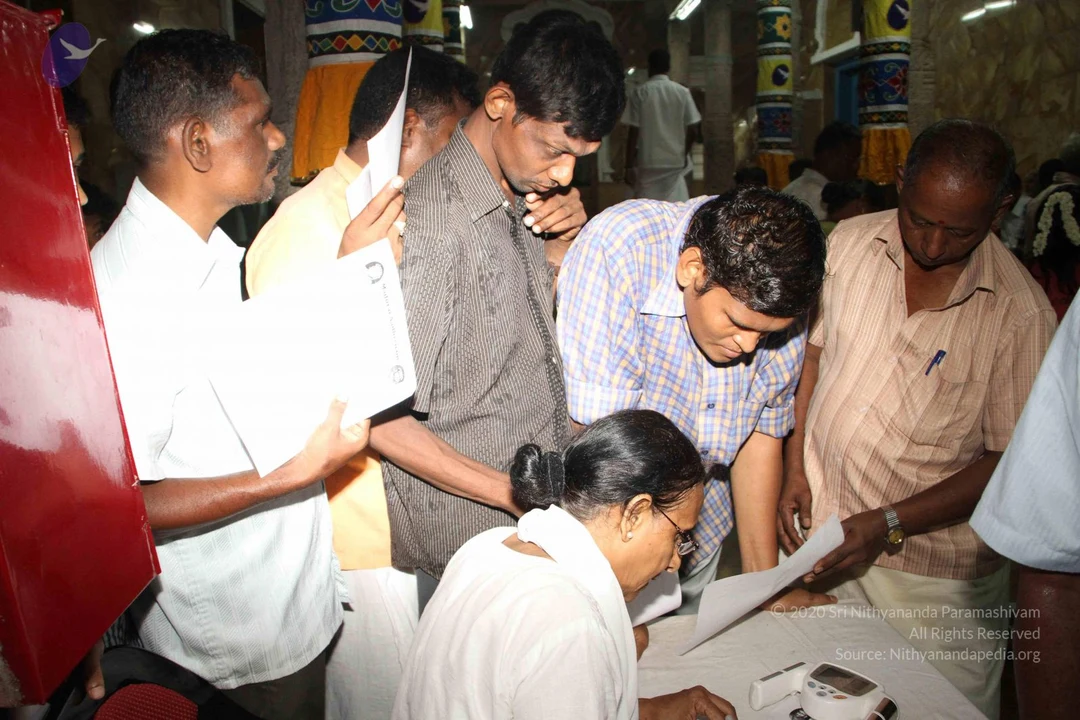
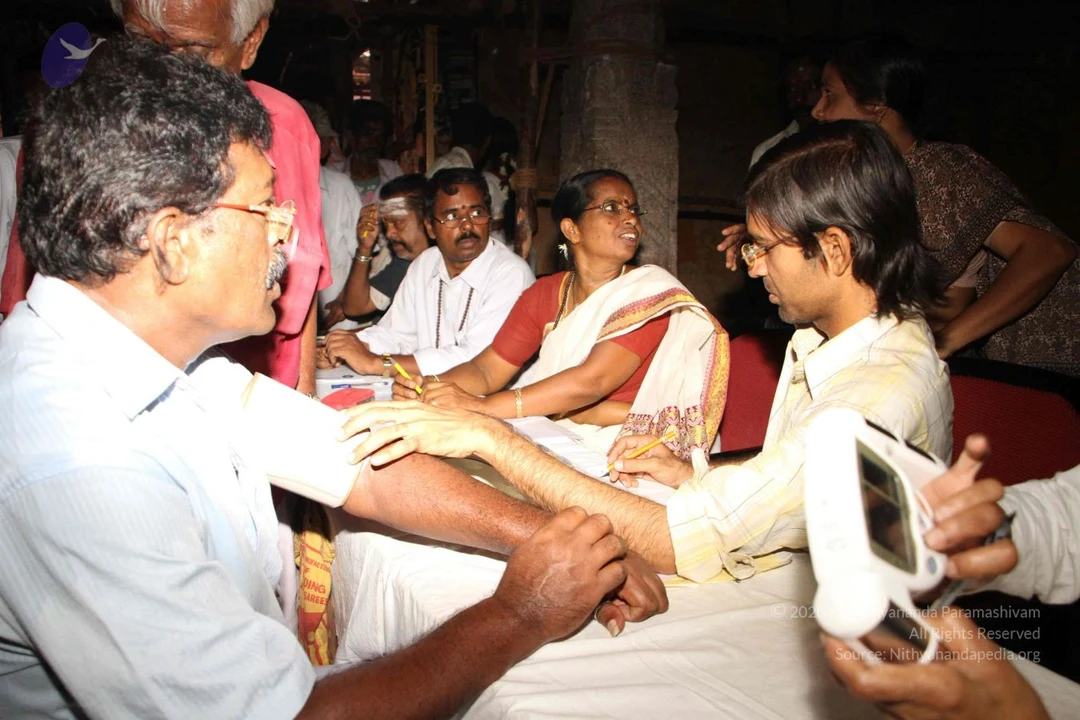
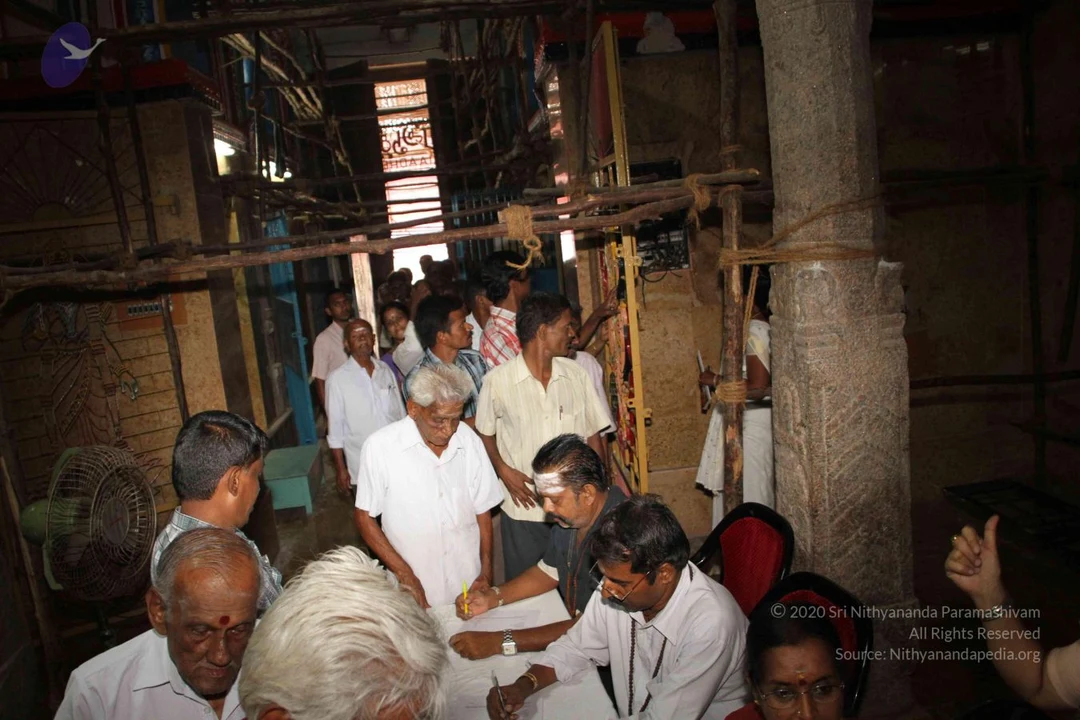
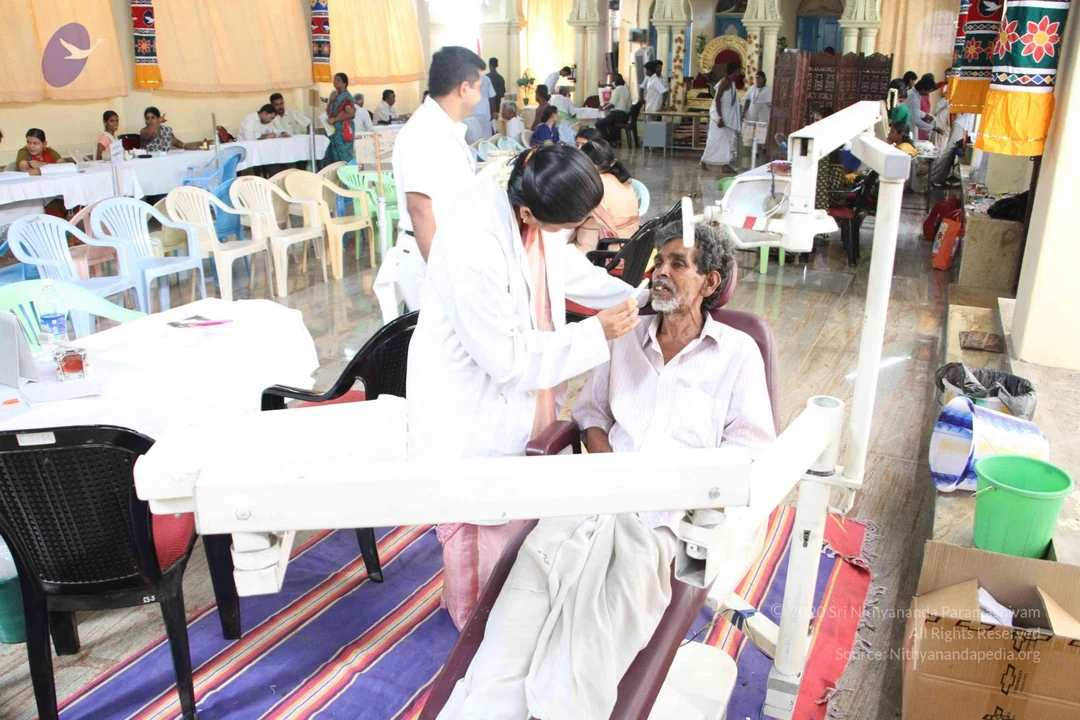
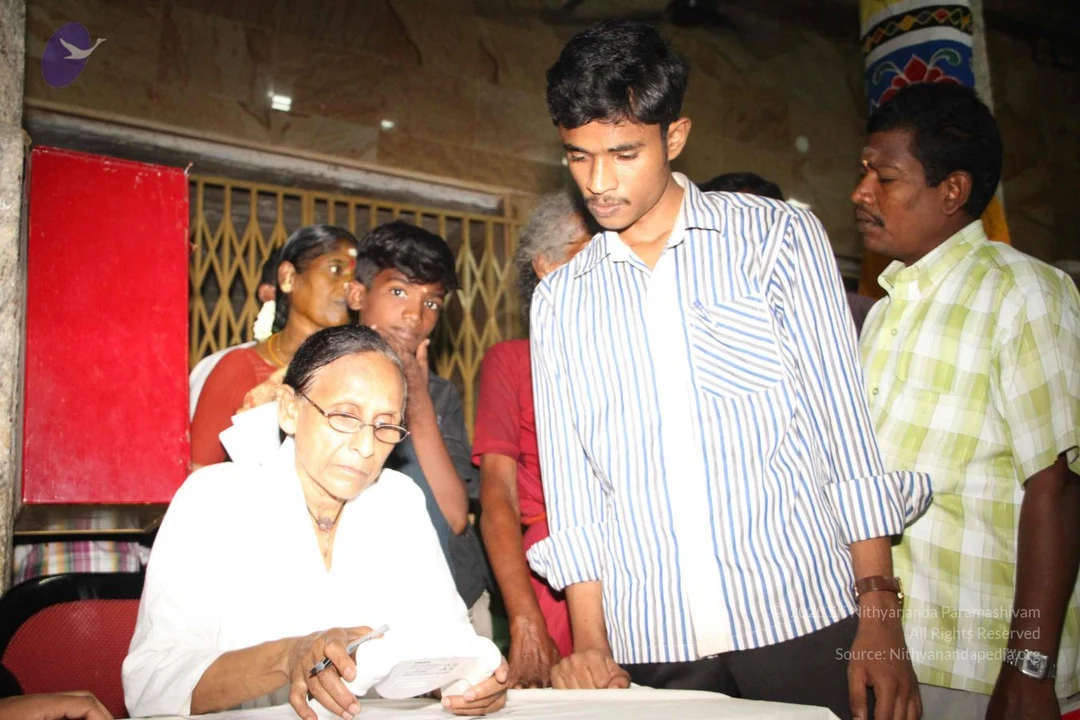
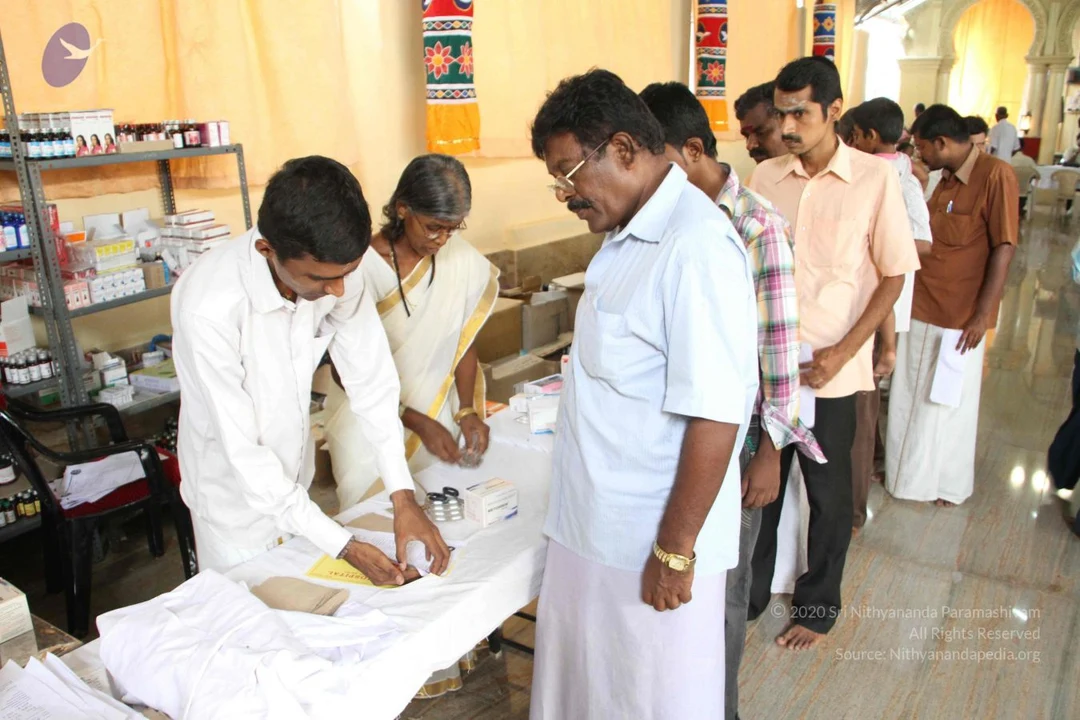
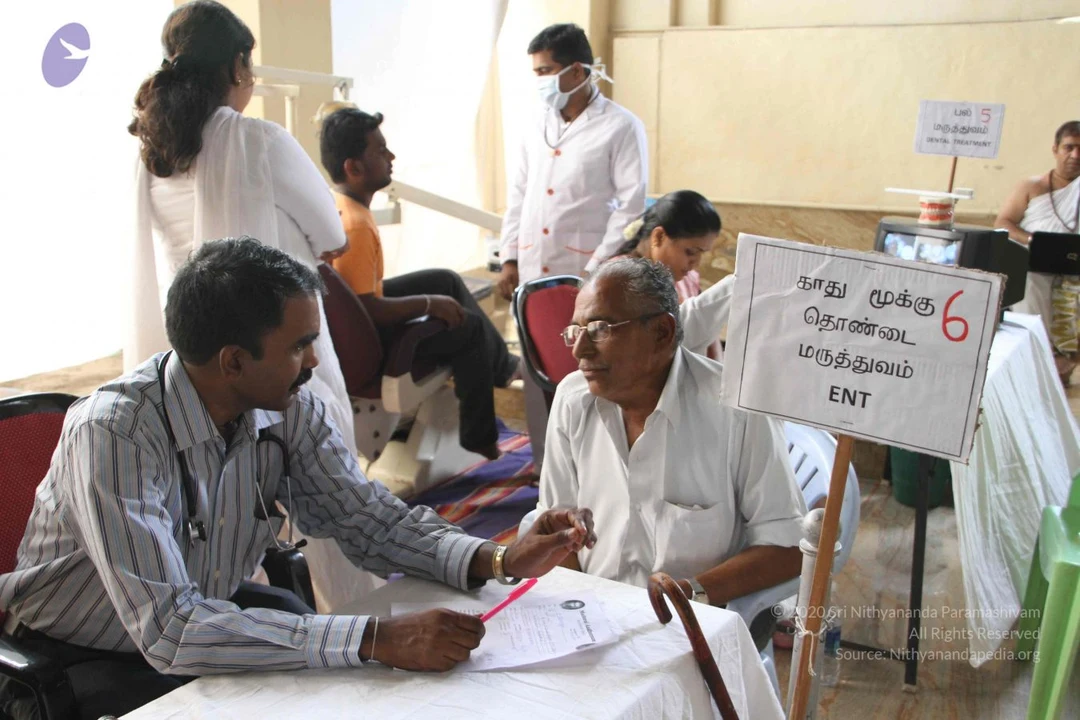
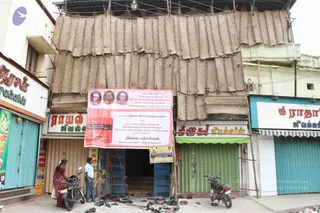
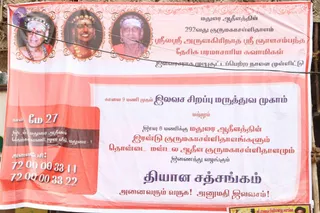
A street-level photograph of a storefront in a Tamil-language shopping street, with a woven palm-mat awning above a narrow open doorway. A large red and white banner hangs over the entrance, showing three portrait photographs of men at top and a meditation-centre announcement with date "27" and phone numbers. Shoes are scattered on the ground at the doorway, and two motorbikes are parked nearby. A woman in a red sari and a man in a white shirt stand on the left, and shutters of jewellery shops flank the entrance. Shop signs read Royal Jewellers and Sri Radha Jewellers.A large printed banner with a red and white layout announcing events at the Madurai Aadheenam. Three oval portrait photographs across the top show three religious leaders: the left figure wears a white turban with beads and a rudraksha-style necklace, the centre figure wears a white head covering, gold ornaments and a red forehead mark, and the right figure wears a pale headcloth and orange garment. Their labels name Sri Sri Arunagirinatha Sri Gnanasambandha Desika Paramacharya Swamigal, referring to the 292nd Guru Pooja. Lower text lists free medical treatment from 9 am, a night session at 8 pm, and a Dhyana Satsangam with a phone number. Printed banner only; no physical people are visible.A medical screening camp at a table with paperwork. A man in a yellow-and-white checked shirt and glasses sits at the front left, writing on a form. Beside him, a man in a dark shirt with a red mark on his forehead rests his bare arm on the table while a blood pressure cuff is wrapped around it, connected to a beige digital monitor. A woman in white stands at the left edge. Other people stand behind the table, including a man in a light blue shirt wearing a gold wristwatch and a person in white on the right holding papers. A woman with a flower-decorated hair braid stands in the background.A photograph of a seated health-screening or registration scene inside a dim hall with stone pillars. In the foreground a man in a light blue shirt and glasses extends his bare forearm across a white-draped table to a younger man in a cream striped shirt, who holds a pencil and writes on paper. Between them a woman in a red blouse and white sari with a gold border sits and speaks, and a man in a white shirt with a rudraksha-style necklace watches beside her. A white handheld device is held at the right edge. Standing onlookers in the background include a man in a pink shirt and a woman in a brown top. The scene appears to be a blood-pressure or health check at a temple-like venue.A crowded interior of a temple-like hall with rough wooden scaffolding poles and ropes overhead. Several men in white dhotis and shirts stand in a queue, one elderly man in white centre-left holding a yellow pen. In the foreground, a bespectacled man in a white shirt with a beaded necklace writes on a white sheet laid on a table, while another man with white vibhuti marks on his forehead assists him. A bald elderly man with a red tilak sits at the lower left and a woman with a red bindi sits at the lower right. A stone pillar with carved detailing stands to the right and a metal fan is on the left. No clear a person candidate is visible.A dental clinic set up inside a large hall with pale yellow curtains and colourful woven wall hangings. In the foreground a seated elderly man in a pale pink-and-white striped shirt and light dhoti reclines in a brown dental chair while a woman in a white coat and pink dupatta examines his mouth with a dental instrument. A white dental unit arm hangs over him. Behind them, a man in white shirt stands near rows of white tables and blue, green and yellow plastic chairs, where several people sit at tables and wait. Colourful striped mats cover the floor, and cardboard boxes and a green bucket sit at the right edge.

Deities-Carved-By-Meenakshi-Devi

2 photosSource gallery
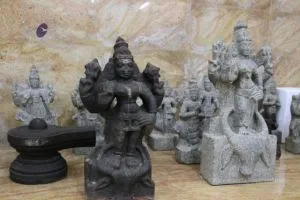
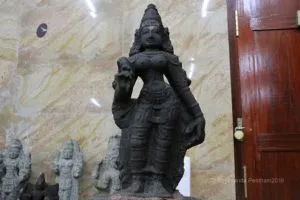
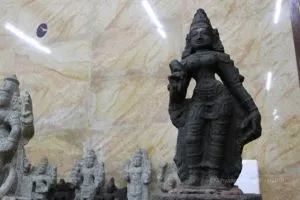
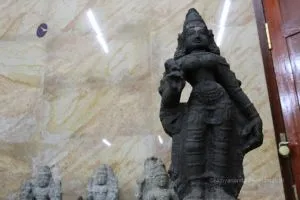
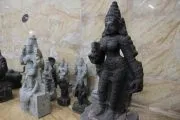
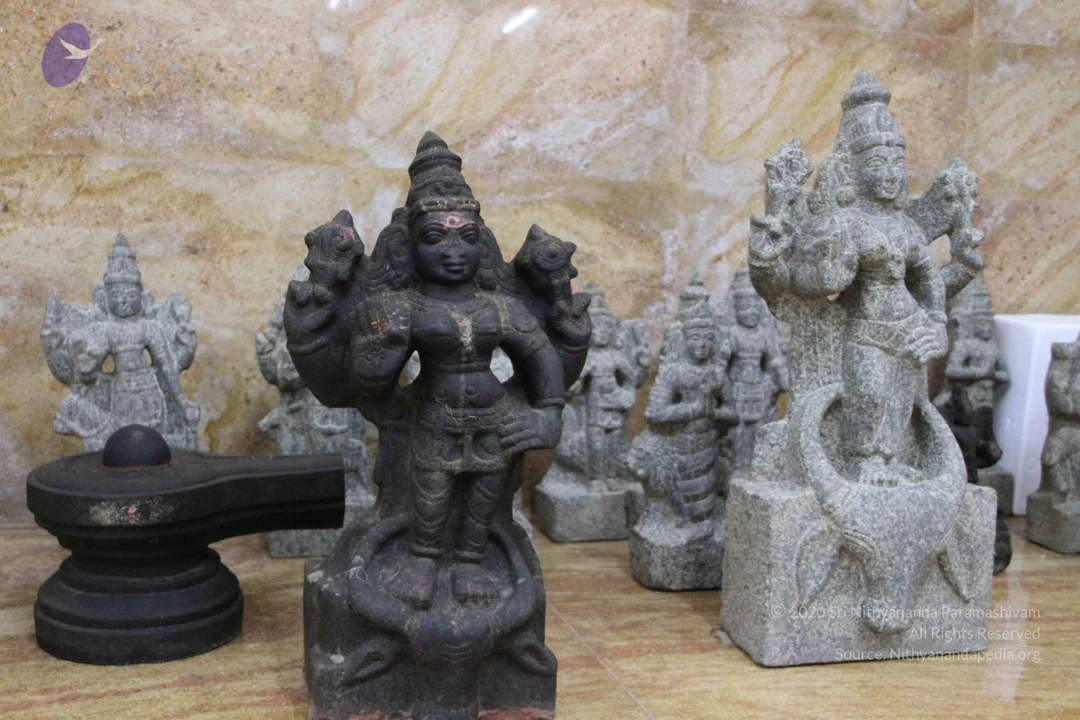
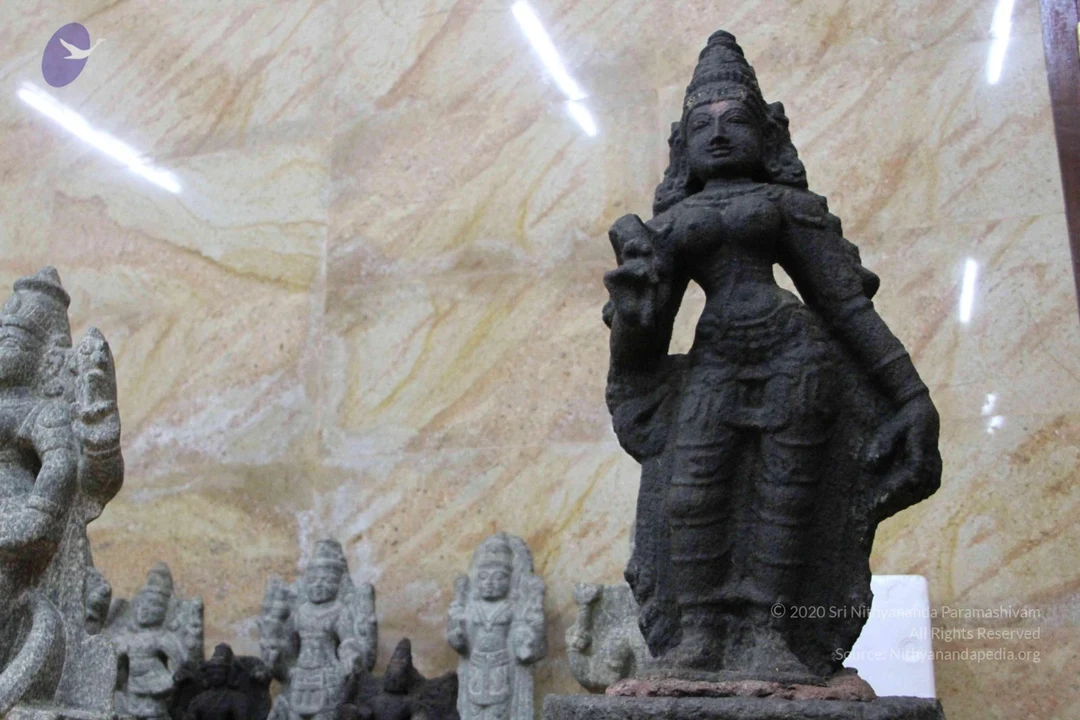
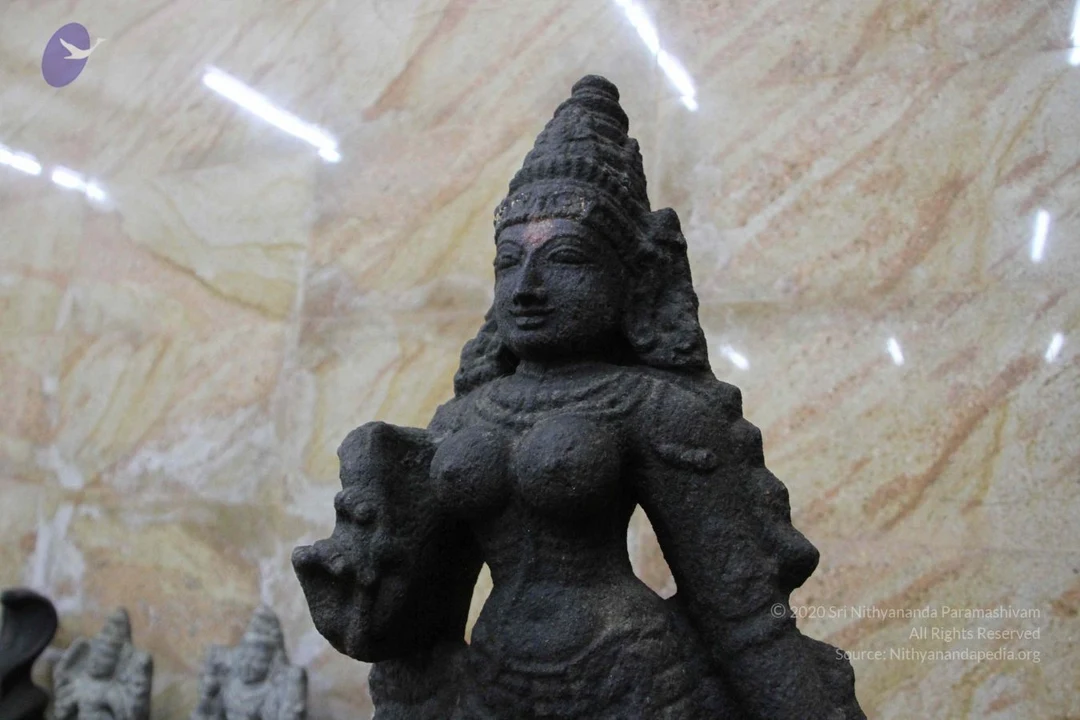
A photograph of several small stone deity murti displayed on a polished marble-like surface against a beige stone wall. In the centre stands a dark grey stone figure with multiple arms, a tall conical crown and a red tilak on the forehead, standing on a base. To the right, a lighter grey granite figure of a goddess with a crown and many arms holds objects and stands beside a carved animal base. A dark black stone lingam with a rounded top sits on a pedestal at the left, with smaller grey carved figures behind. No people are visible, and the page's a person reference is not supported by any person in the image.A dark grey stone statue of a female deity stands in the foreground, with a tall tiered crown, a small red mark on the forehead, and a stylised carved face. The figure holds an object at chest level and is carved with jewellery and a flowing garment. Behind it, a glossy marble wall with swirled pink and cream veining reflects overhead lights, and smaller stone figures are visible at the left edge.

Services-Photos
3 photosSource gallery
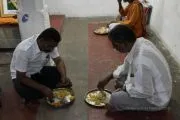
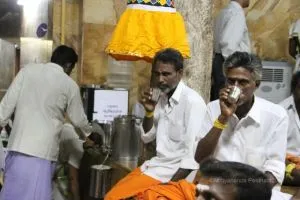
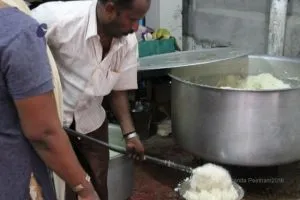
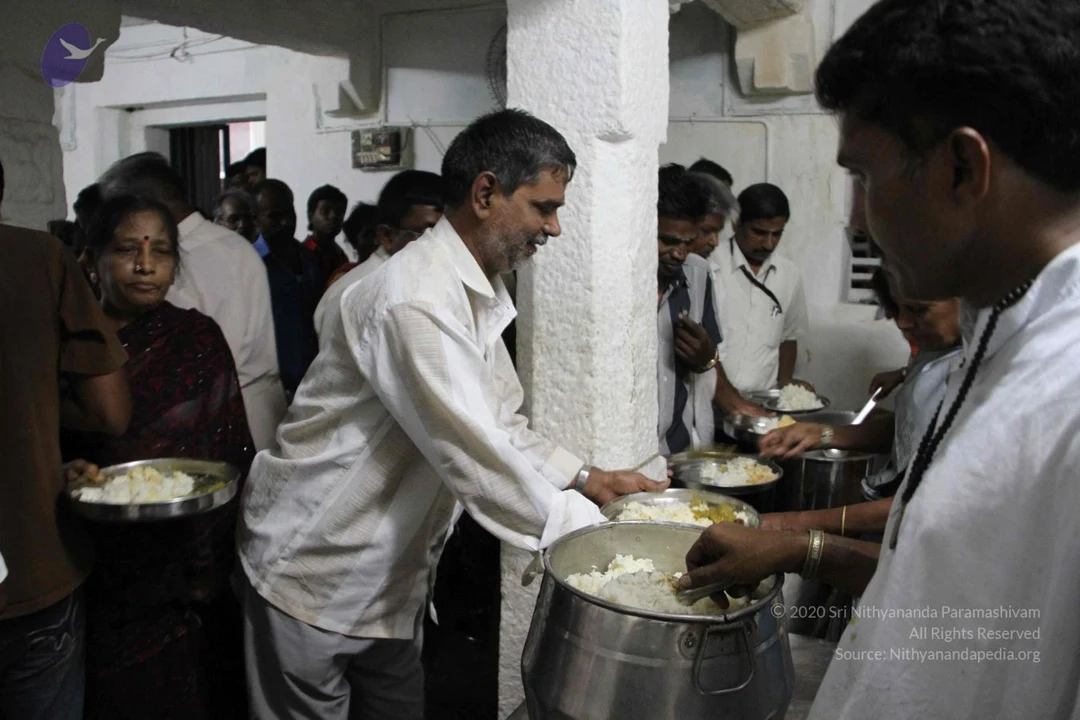
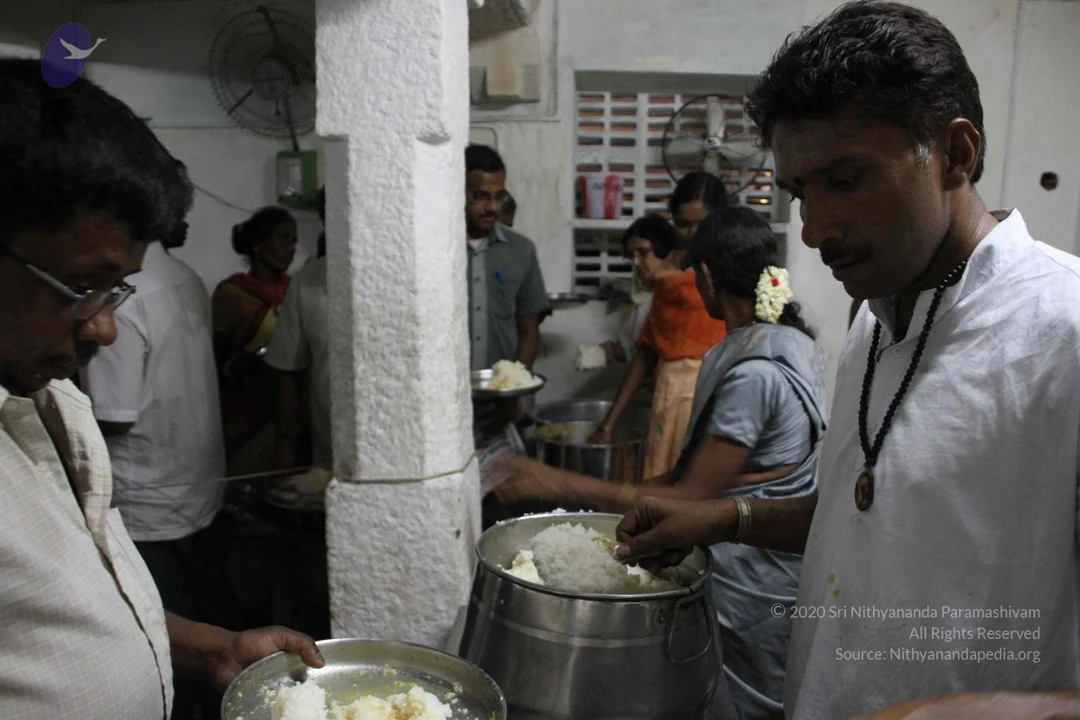
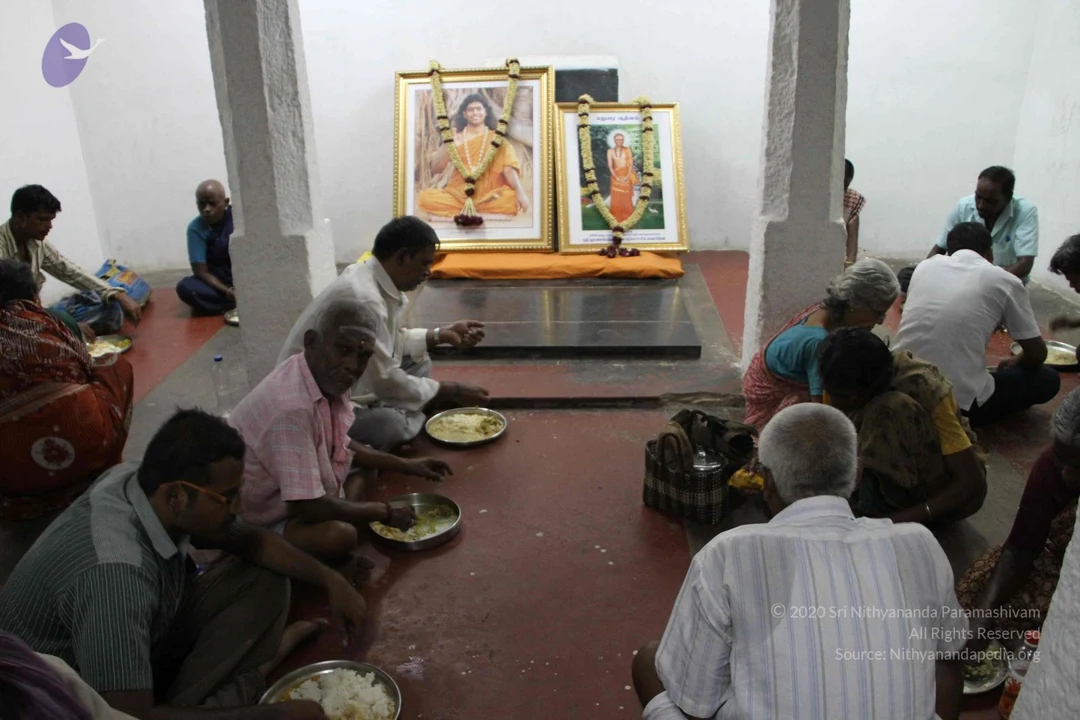
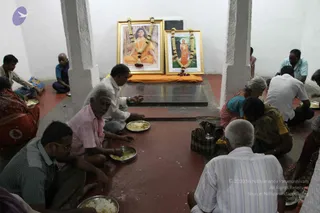
A food distribution line inside a whitewashed hall. A man in a white shirt and light trousers leans over a large stainless steel pot of cooked rice, serving it with a ladle onto steel plates held by a line of people. On the right, a young man in white with a dark beaded mala around his neck serves from another pot. A woman in a dark red sari with a red bindi stands at left holding a steel plate, and other people in white shirts and dark clothing wait behind a white pillar. Grey shelving and a wall fixture are visible at the back.A photograph of a kitchen or food service area where volunteers serve cooked rice from large stainless steel pots. In the right foreground a man in a plain white kurta with a dark wooden rudraksha-style bead mala around his neck scoops rice from a steel vessel into a plate. On the left a man in glasses and a light checked shirt holds a steel plate of rice. Behind them, a woman in a grey sari with a white flower in her hair and other workers in orange and grey clothing stand near a white pillar, with metal cooking vessels, a wall fan and a window in the background.A group of people sit cross-legged on a red-painted floor in a white-walled hall, eating from steel plates of rice and curry. Two framed portraits stand on an orange cloth at the back, each decorated with a garland of yellow and green flowers; one portrait shows a figure in orange robes and rudraksha beads seated in meditation, and the other a figure in orange robes standing. A black stone slab sits in front of the portraits. Men in white shirts and pink checked shirts, women in saris, and a man in a blue shirt take part in the meal, with a bag and water bottle on the floor nearby.
Evening-38th-Anniversary-Celebrations-Of-292-Guru-Maha-Sannithanam
17 photosSource gallery
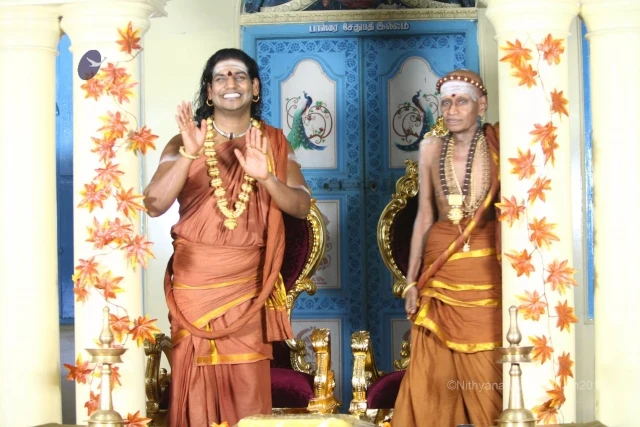
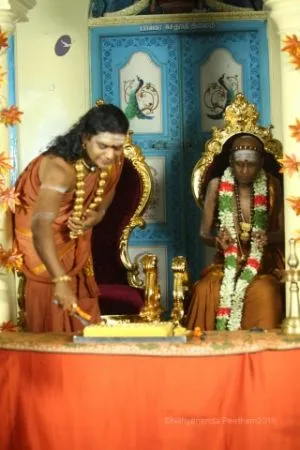
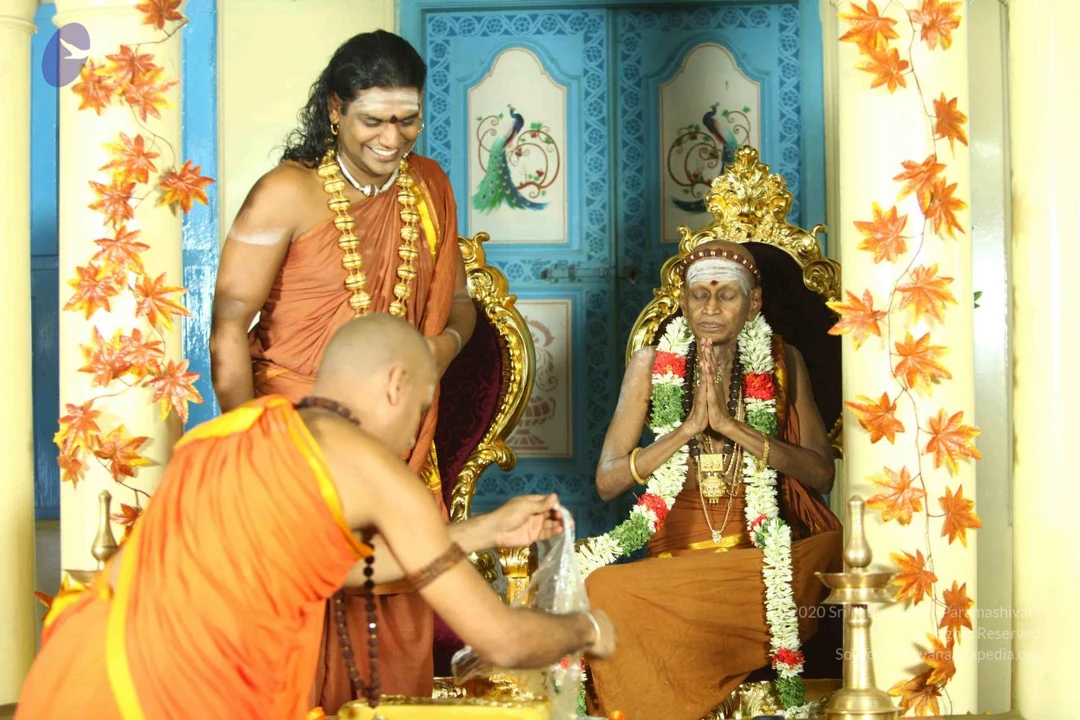
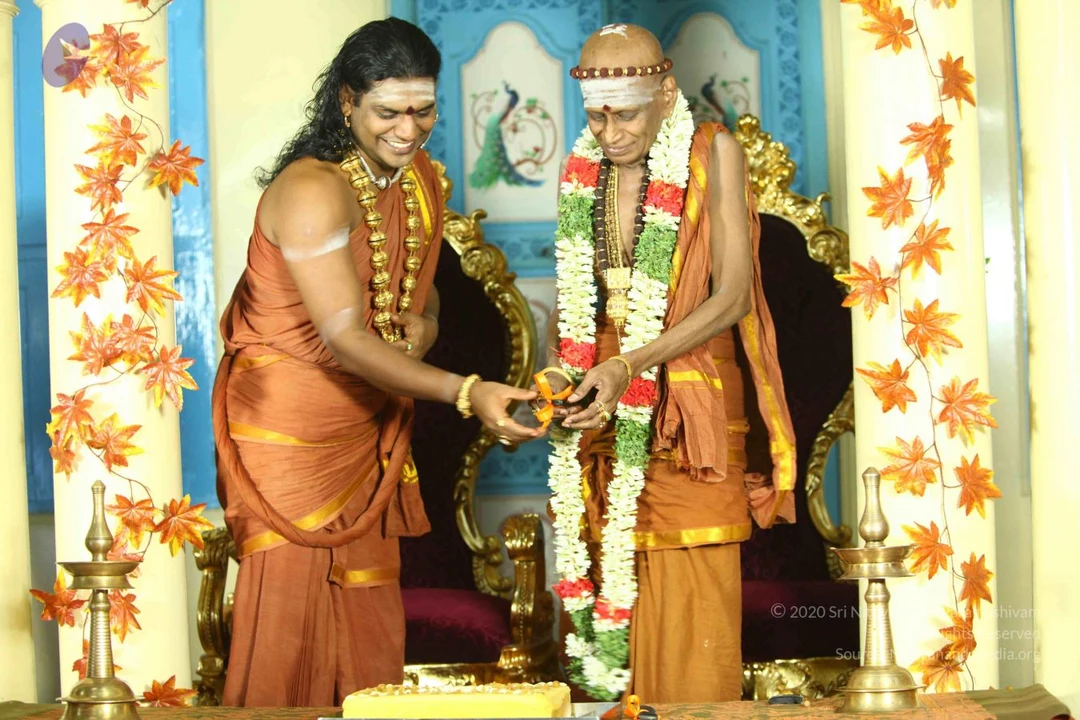
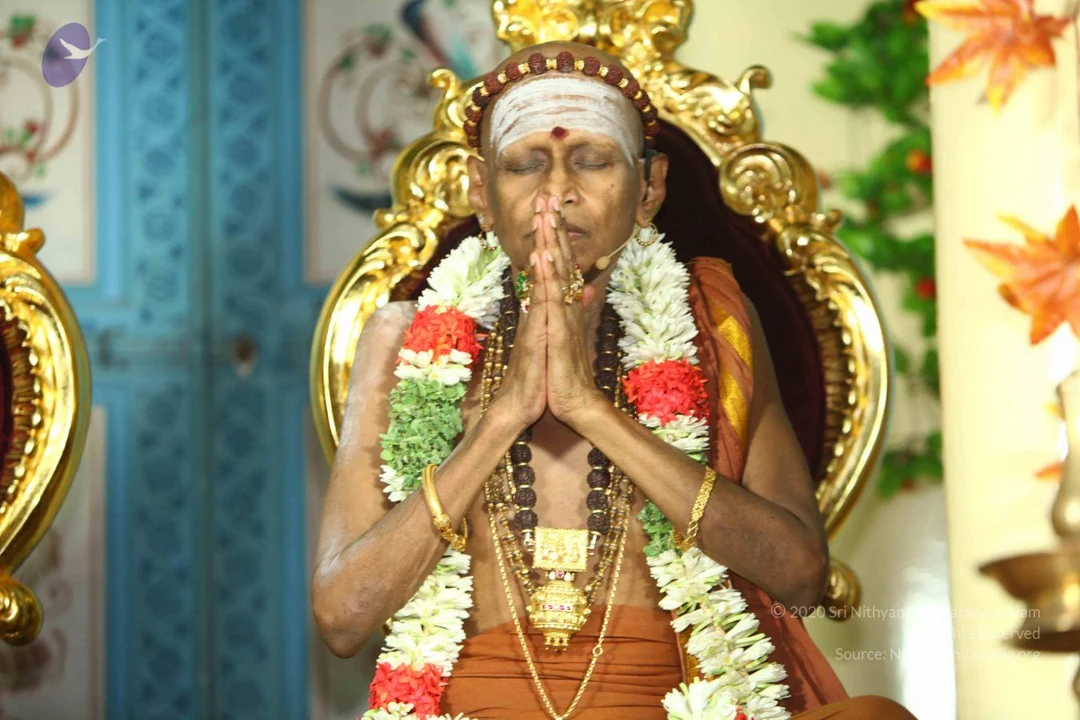
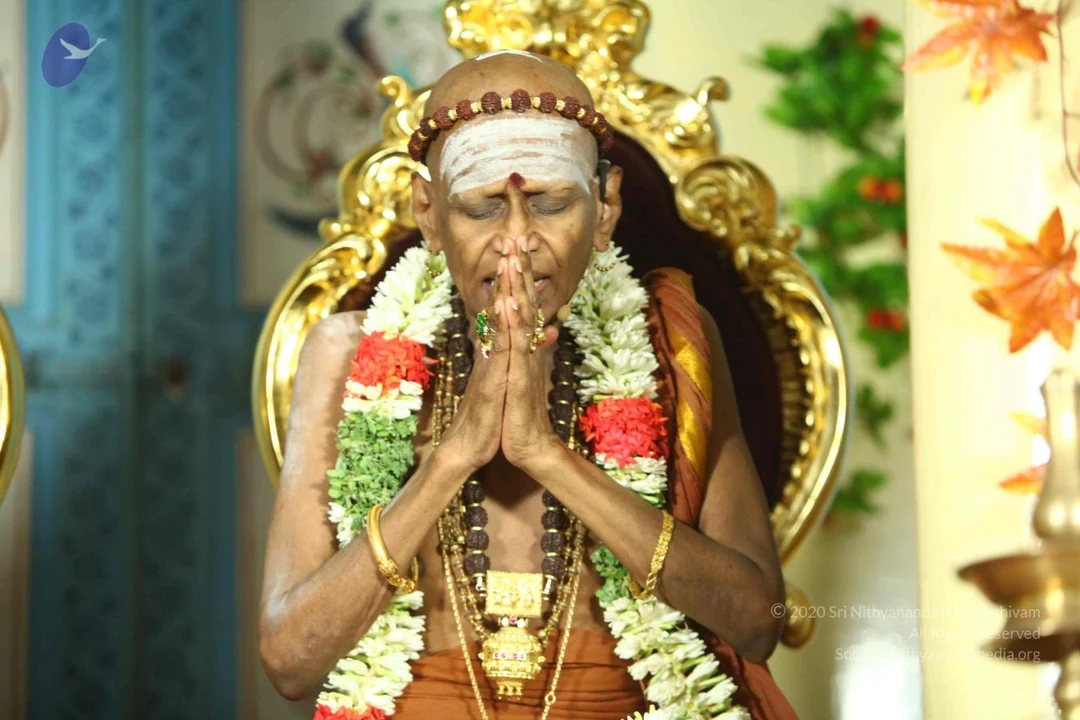
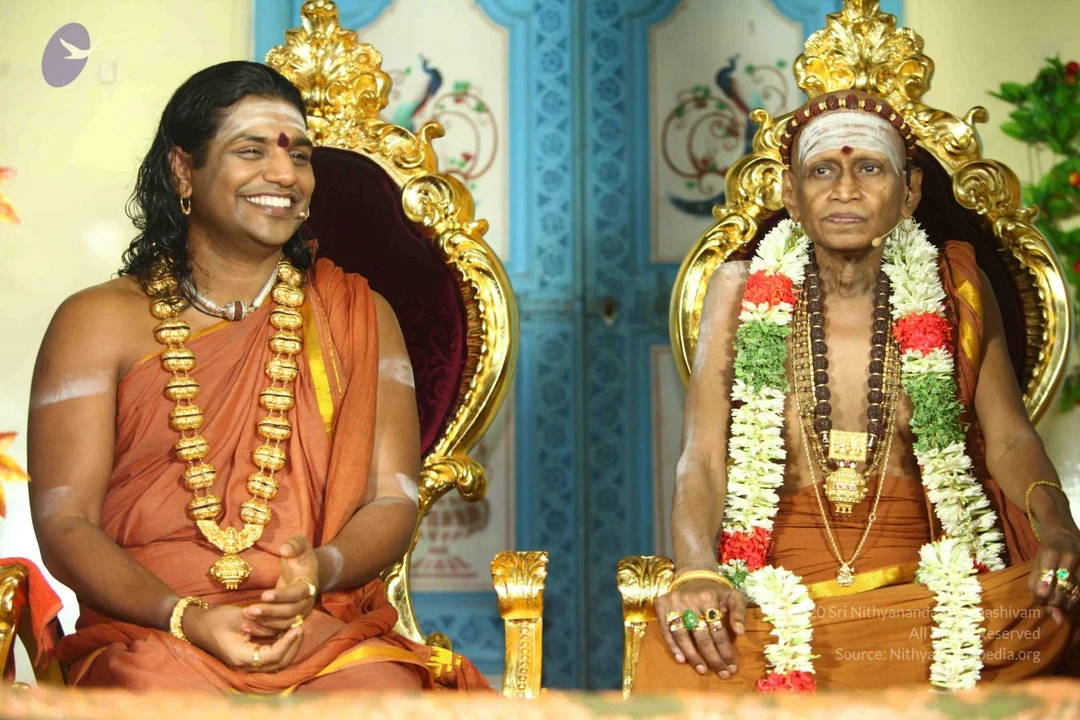
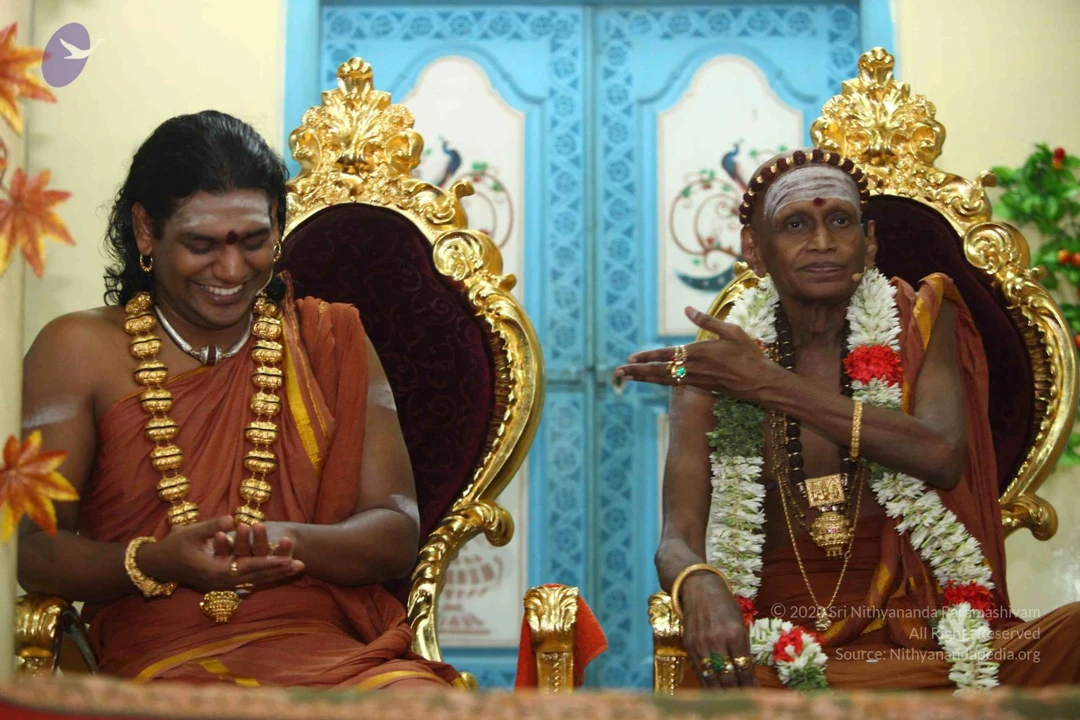
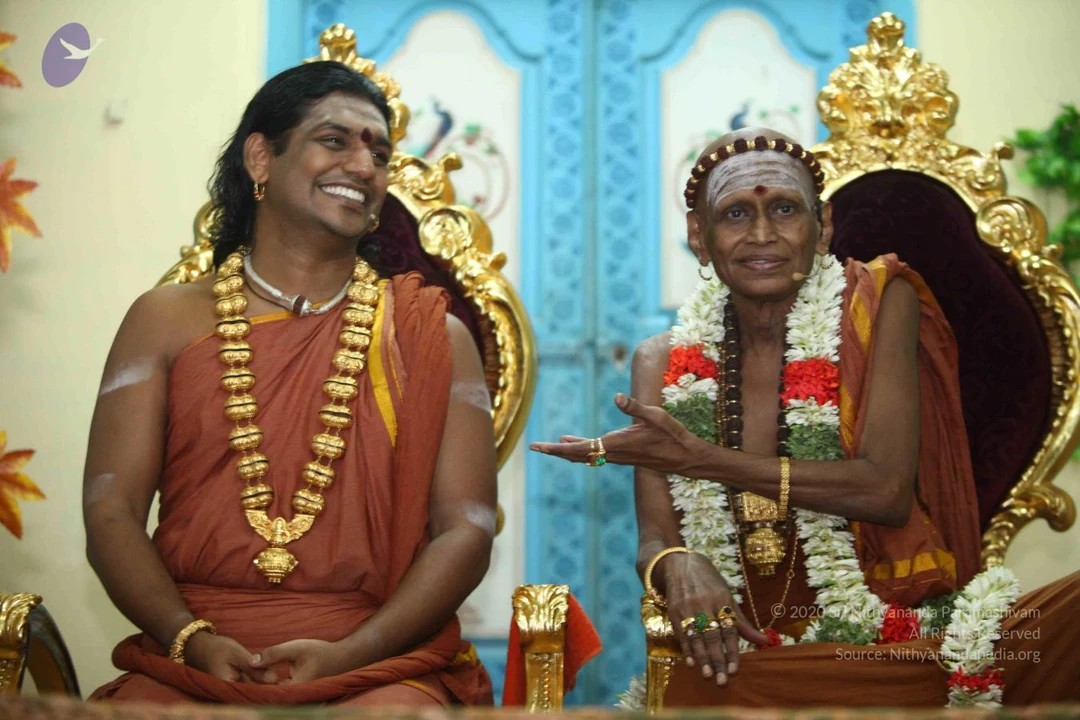
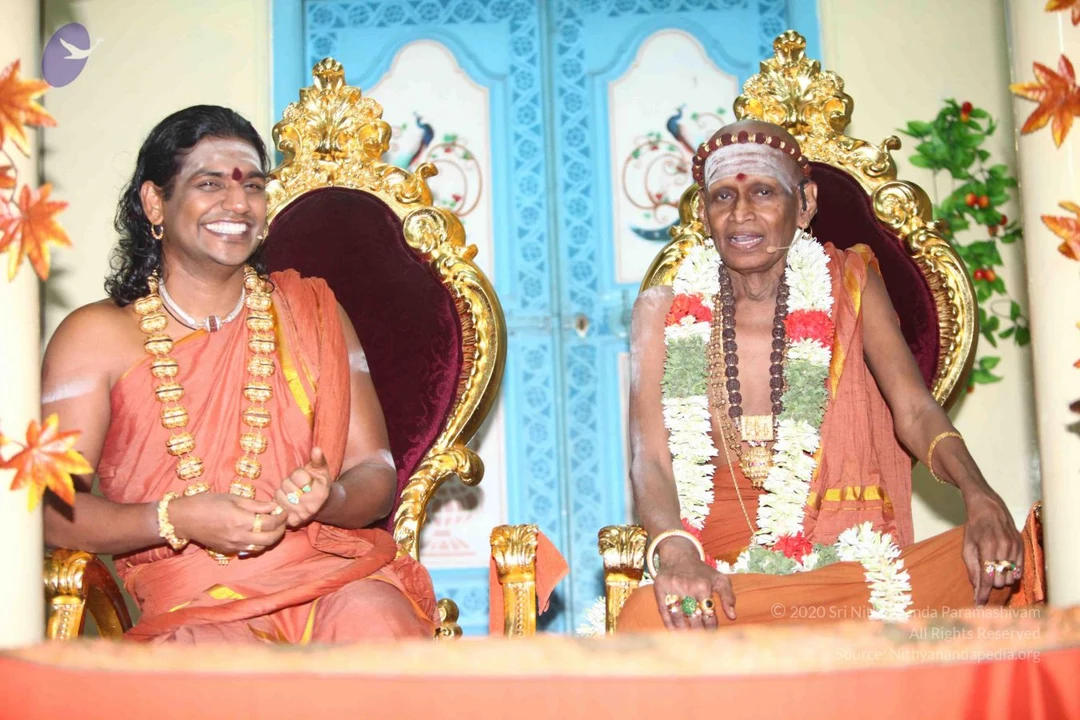
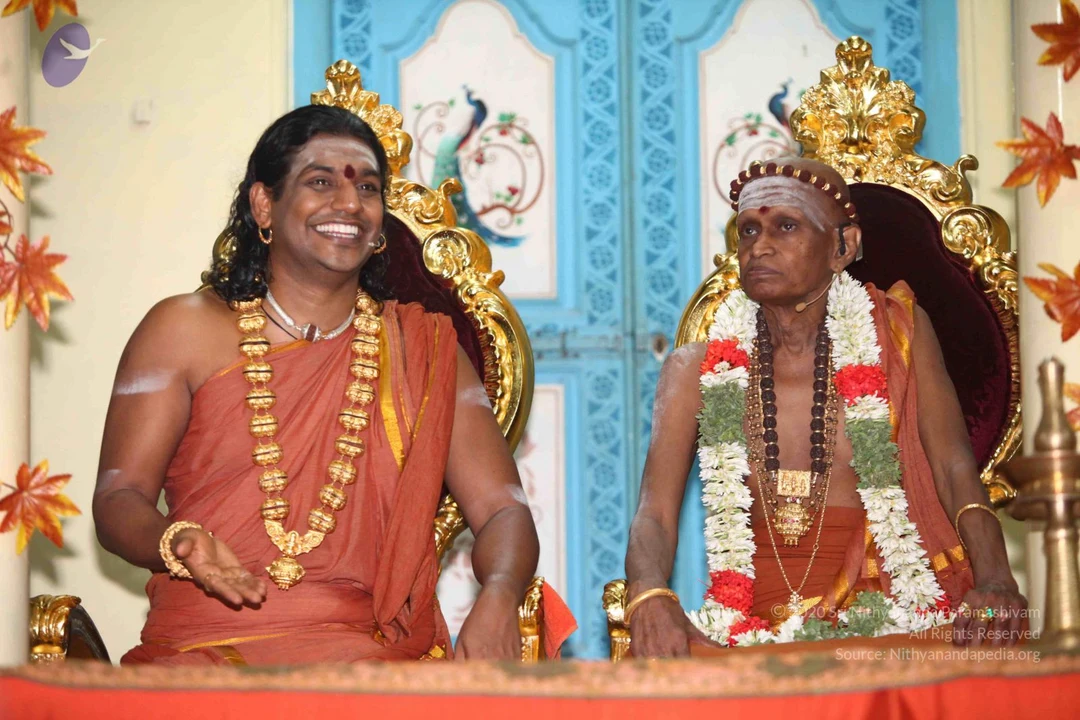
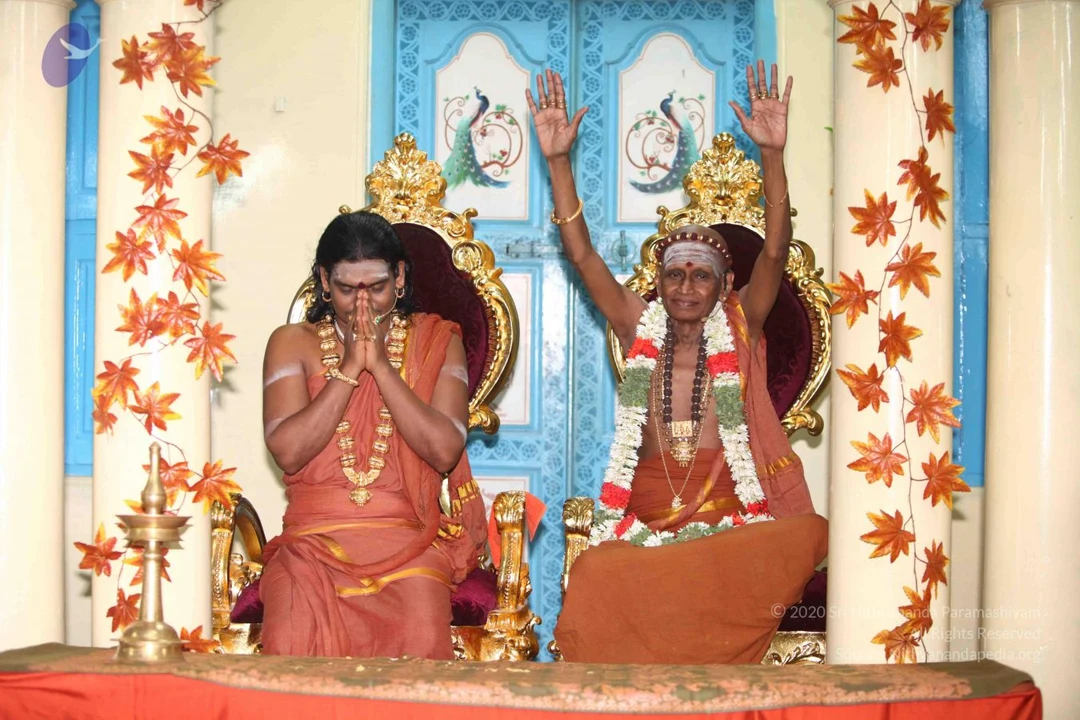
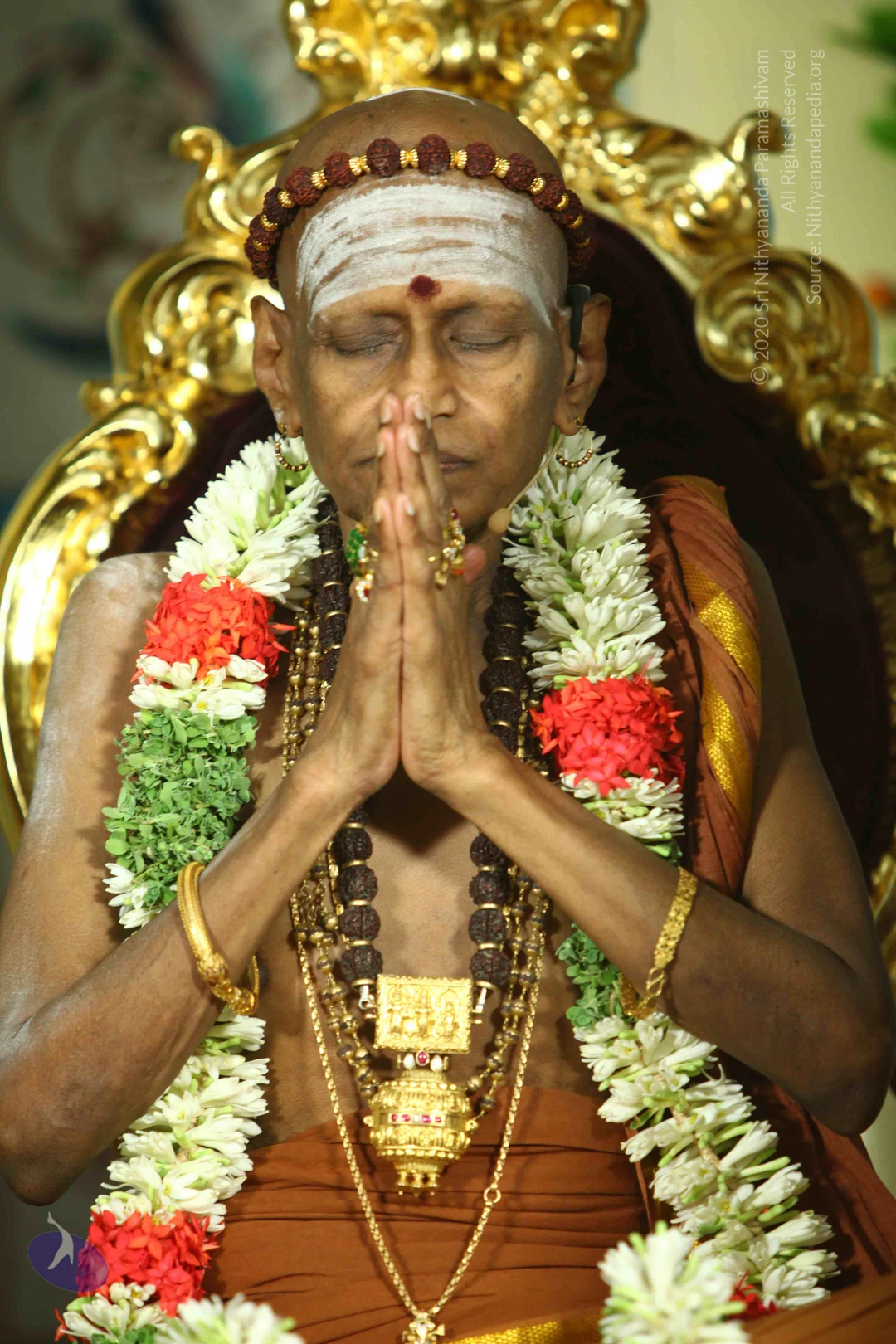
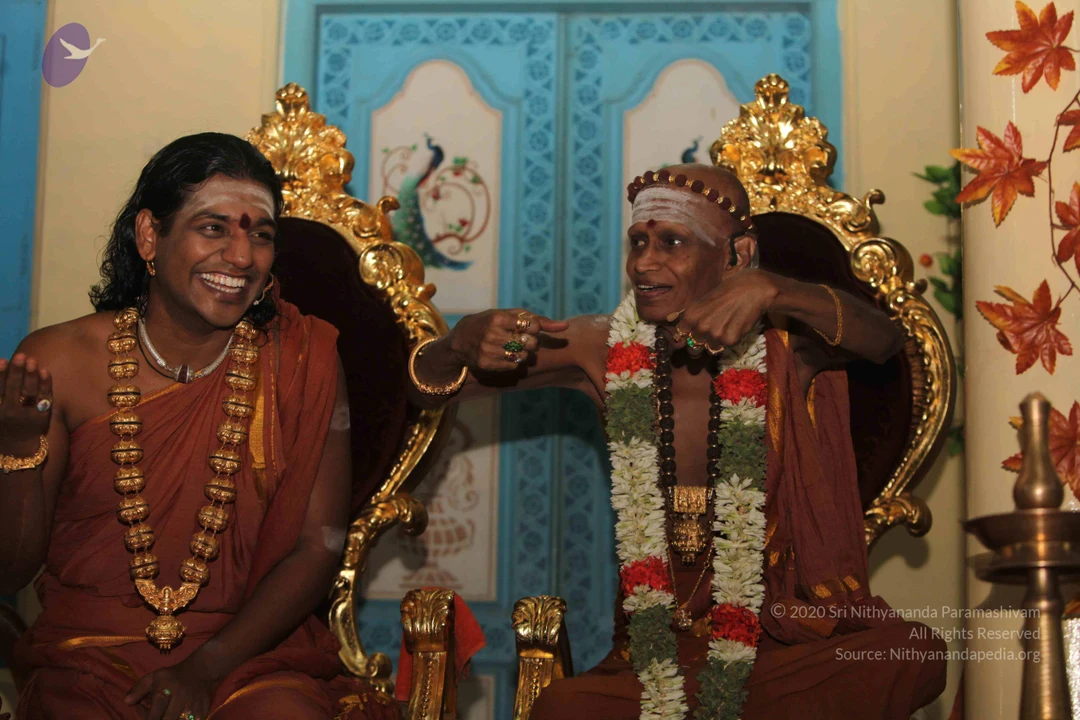
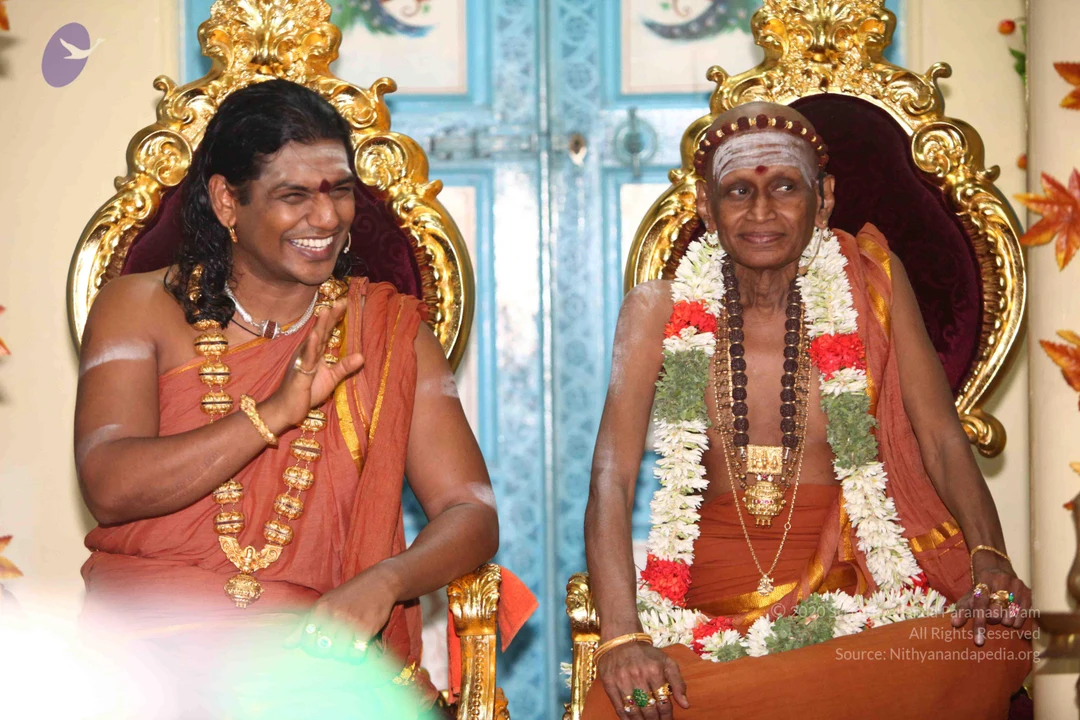
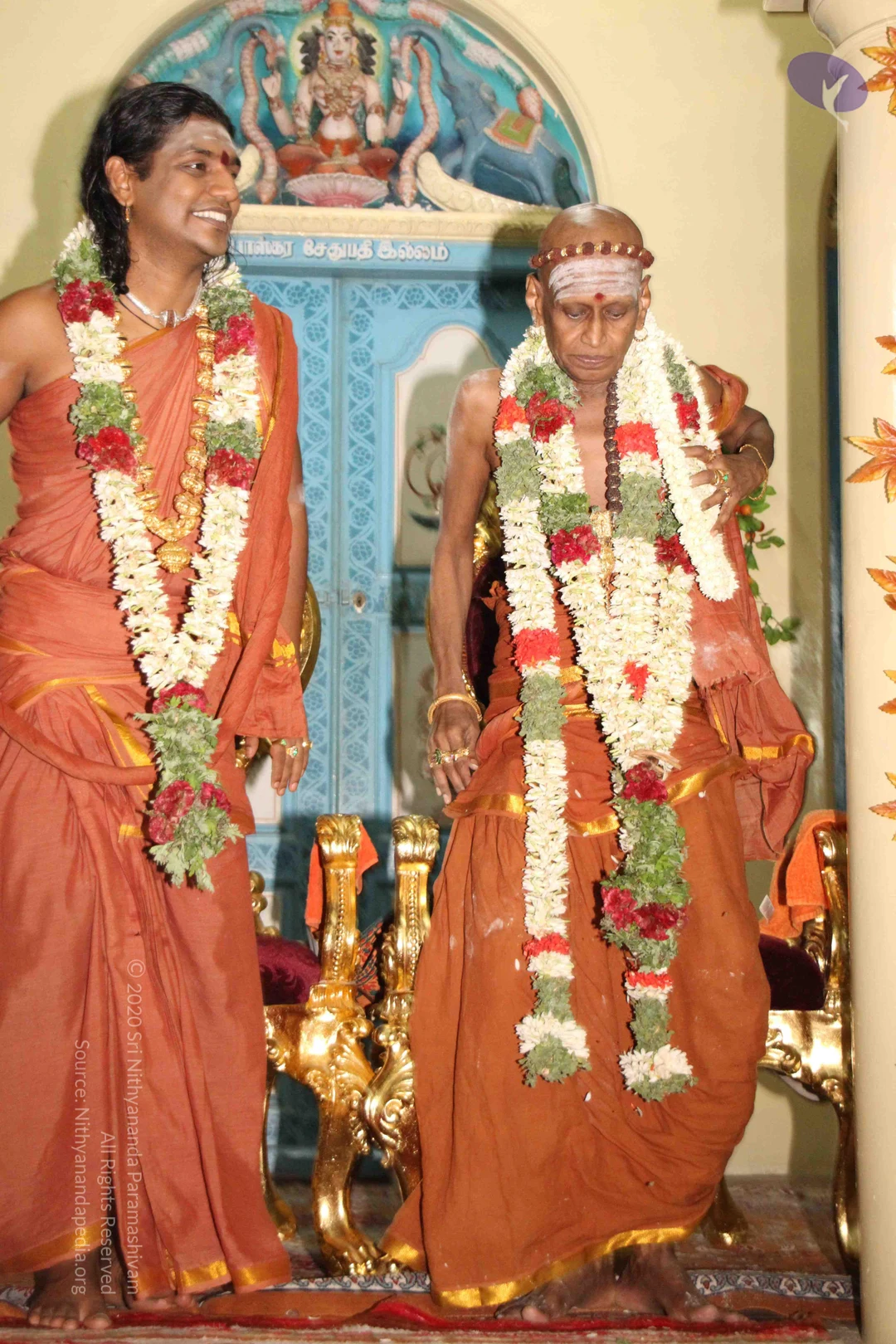
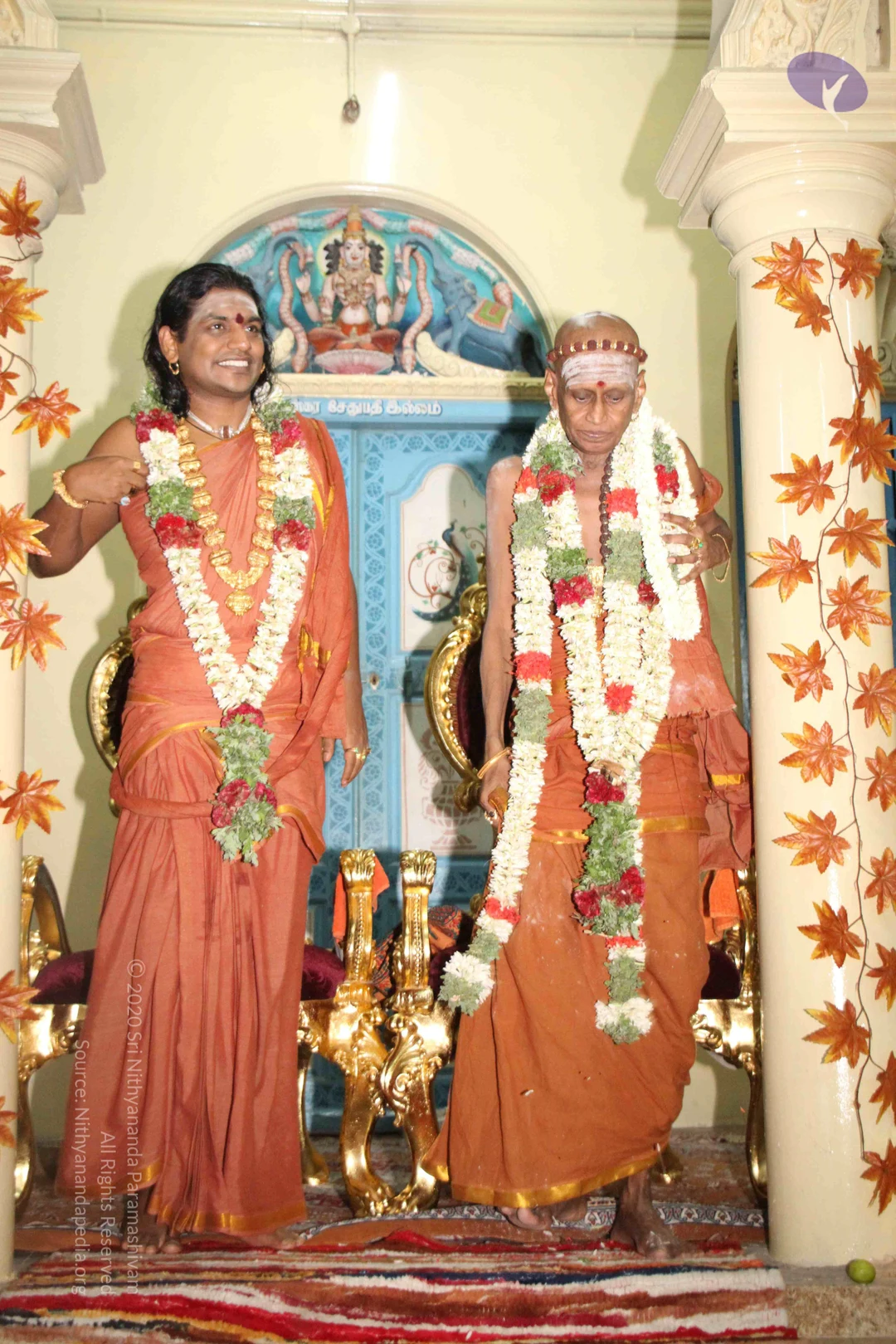
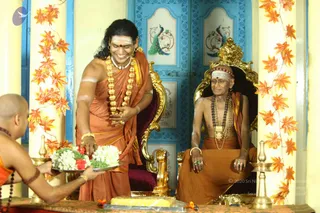
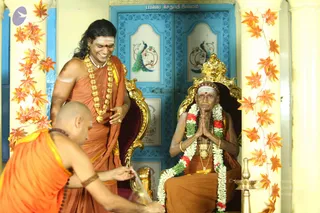
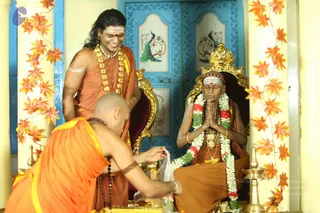
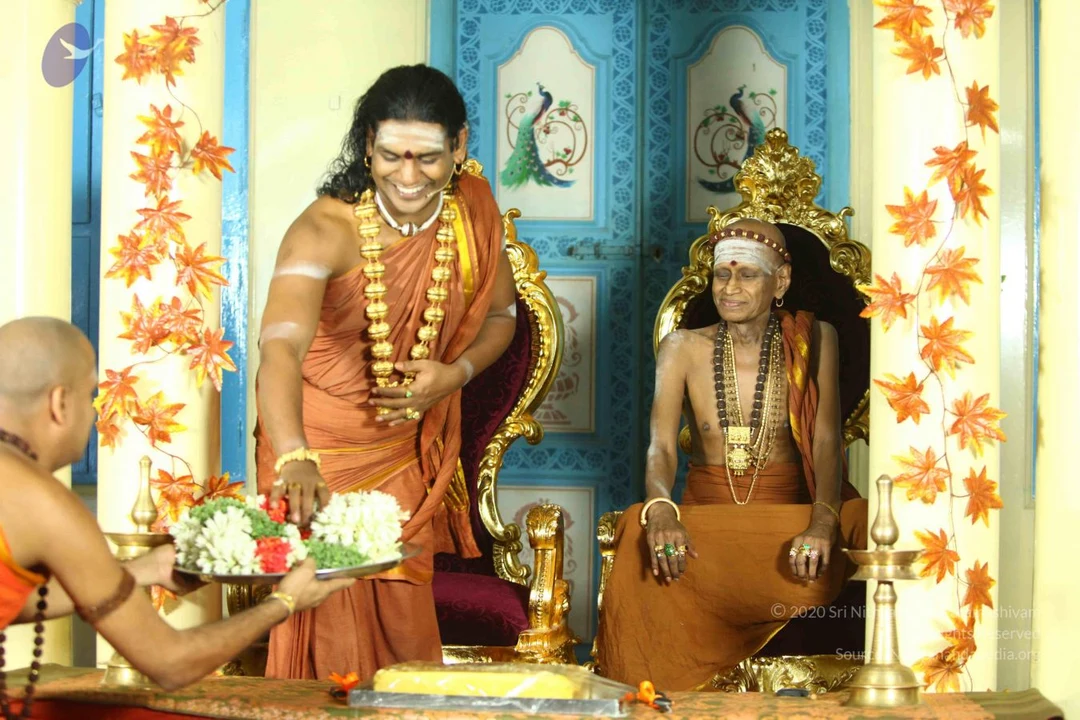
A photograph inside a decorated shrine room with blue painted doors featuring peacock motifs and autumn-leaf garlands on the pillars. A long-haired man in orange-saffron robes and a thick gold necklace, with white and red markings on his forehead and arms, stands smiling and holding a tray of white and green flowers. Seated on a gold-and-maroon throne is an elderly bare-chested man with a shaved head, white forehead markings, rudraksha malas, gold chains, rings and a saffron cloth, his eyes closed. At the left edge a shaven-headed priest in orange holds the flower tray. Brass oil lamps and a yellow-draped offering table sit in the foreground. Swamiji (probable) is the long-haired man standing in saffron robes with gold necklace and flower tray; the seated elder on the throne has no matching cues.A photograph of a ceremonial scene in a decorated hall. A long-haired man in orange-saffron robes and a gold necklace stands smiling with a red-and-white tilak. Beside him, a seated elderly man in an orange robe and a gold throne-style chair presses his palms together in greeting, wearing a white-and-red garland of flowers and a crown-like headpiece. A shaved-headed attendant in orange and yellow garments leans forward, holding a small vessel near the seated figure. Behind them are blue doors painted with peacocks and a gold-trimmed carved throne. Autumn-leaf garlands decorate the white pillars, and an oil lamp stands at the lower right.Photo of a seated elder in orange robes on a gold-trimmed throne, hands pressed together in namaste, wearing a white-and-red garland, rudraksha-style beads and a gold pendant. Standing beside him is a smiling man with long swept-back dark hair, a gold ceremonial necklace, a pale necklace and orange robes, appearing to honour the seated elder. In front, a bald monk in orange and yellow robes with a rudraksha mala bends forward, handing over a small plastic packet. Behind them stand a blue-painted wall with peacock motifs, and autumn-leaf garlands decorate the pillars. Brass lamps flank the scene.A photograph of two men in an indoor setting with yellow walls, a blue painted door with a peacock motif, and a gold-and-maroon throne-style chair. On the left, a standing man with long swept-back dark hair, a bare-chested orange-brown wrap, gold chain necklaces and a white tilak on his forehead holds a small orange cloth or offering while smiling. Seated on the right is an elderly bald man in an orange-brown robe with a white head band, a red and black rudraksha mala and a gold pendant, wearing a long garland of white flowers with green and red accents, with gold bangles on his wrist. Autumn-leaf garlands decorate the pillars and a brass lamp stands at the lower right. Two physical people are visible.Two saffron-robed men stand before gold-framed thrones in a blue-walled hall decorated with painted peacocks and autumn-leaf garlands on pillars. The man on the left, with long swept-back dark hair, gold ornamental necklaces and a white-striped forehead, smiles while reaching to a cake on a table. The bald man on the right, wearing a rudraksha mala, a long jasmine and red-and-white flower garland and a saffron shawl with gold border, holds an orange ribbon for cutting the cake. Brass oil lamps stand on the table edges. The left figure's long hair, gold necklaces and saffron dress are compatible with the page's a person reference, though his face is not used for identification, so the candidate is marked probable. Two people are visible.A seated Hindu monk with a shaved head and white vertical tilak plus a red bindi sits with eyes closed and palms pressed together in namaste. He wears a saffron-orange robe, multiple rudraksha malas, a gold ceremonial pendant necklace, gold bangles, and a garland of white jasmine and red flowers with green leaves. He sits on an ornate gold-and-maroon throne against a blue carved panel, with a lit brass oil lamp at the right edge and autumn leaves decorating the scene. a person: the orange robe, rudraksha malas, gold pendant and ornate throne cues are consistent with the page's identification, but the face and presentation alone are not conclusive, so this is marked unsure.

01-Temple-Visit

2 photosSource gallery
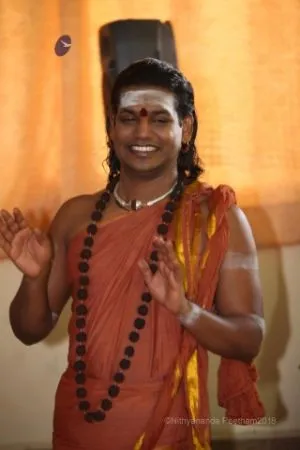
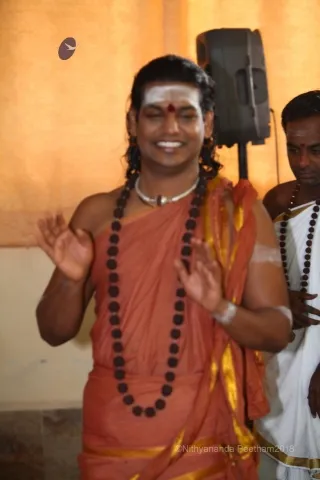
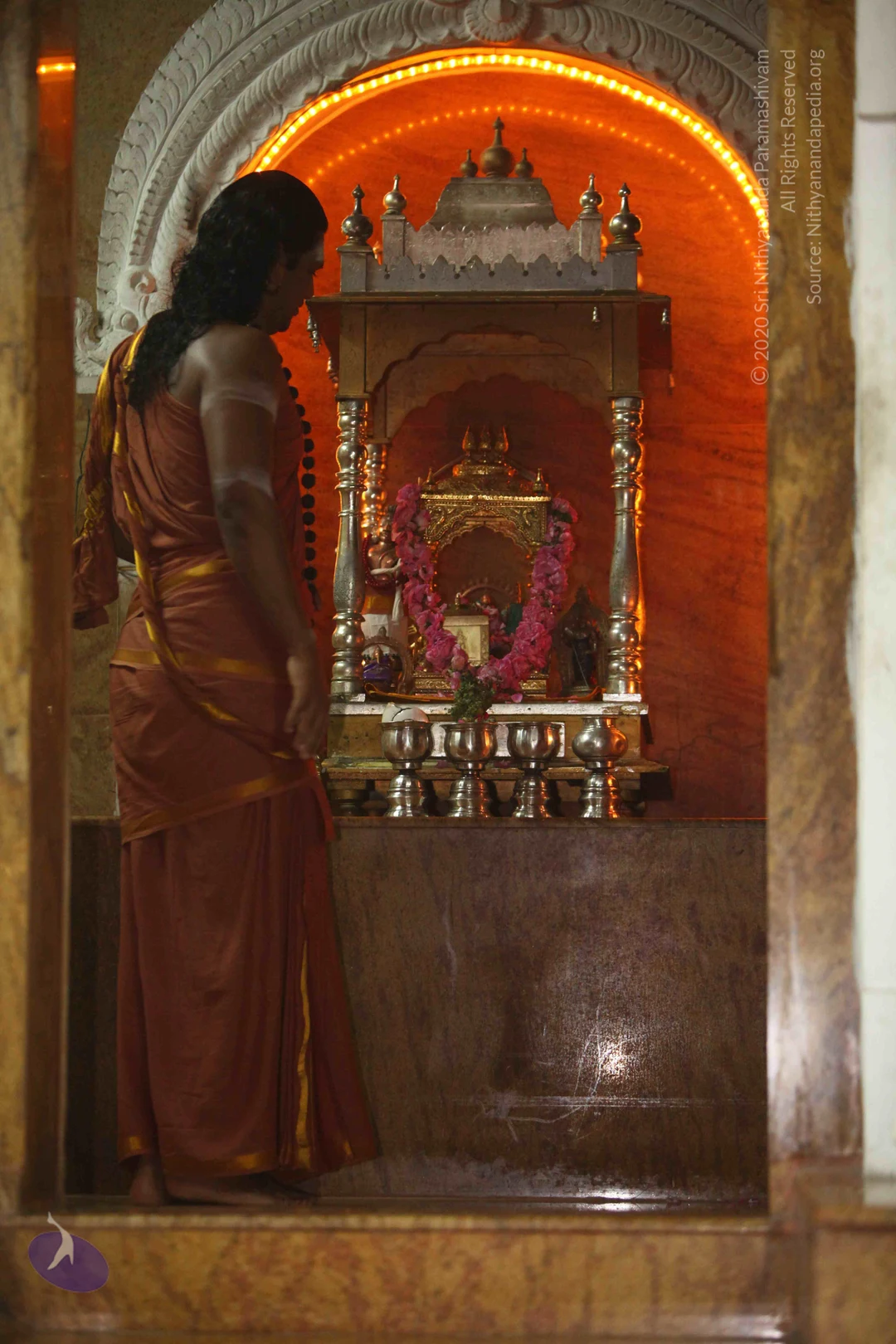
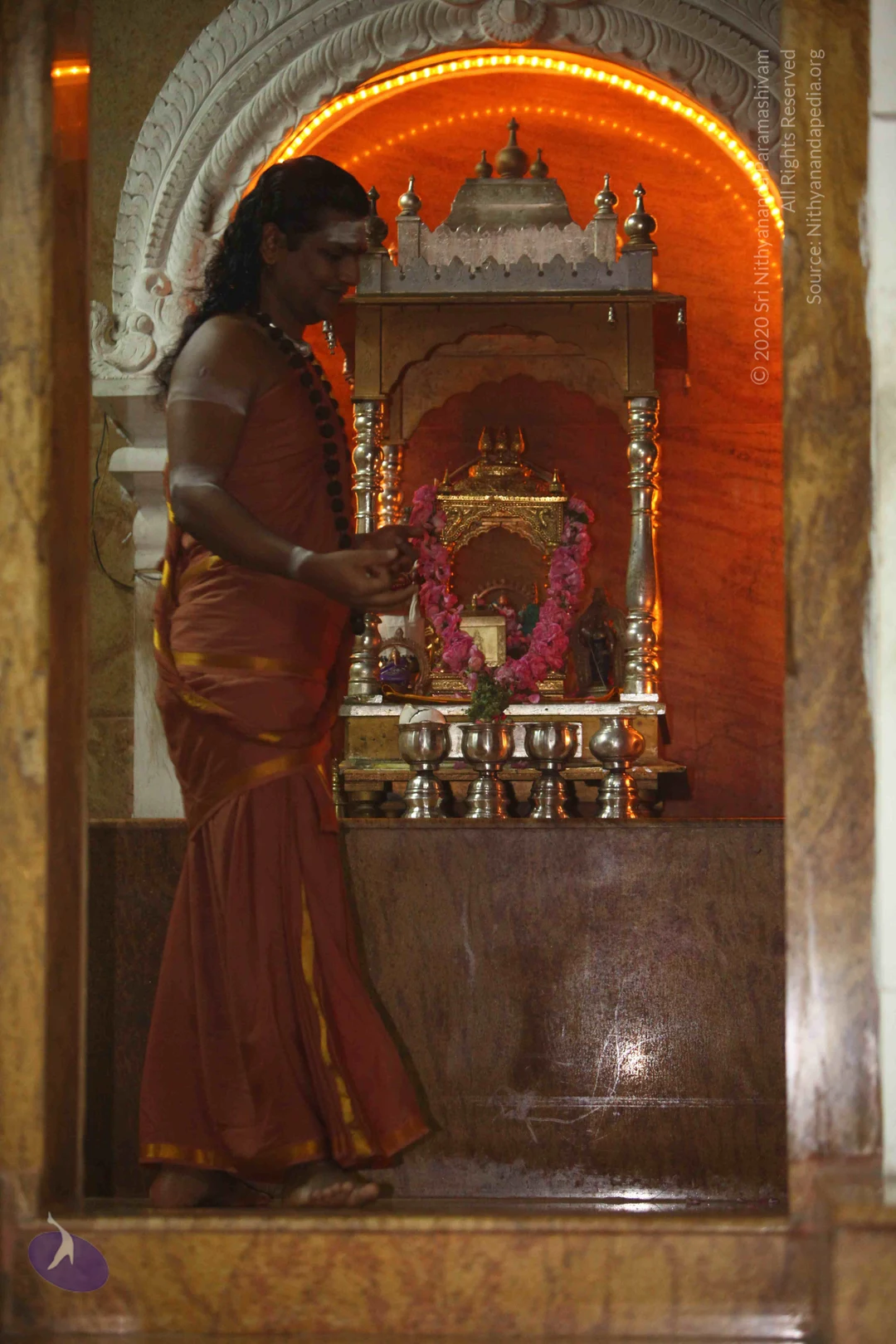
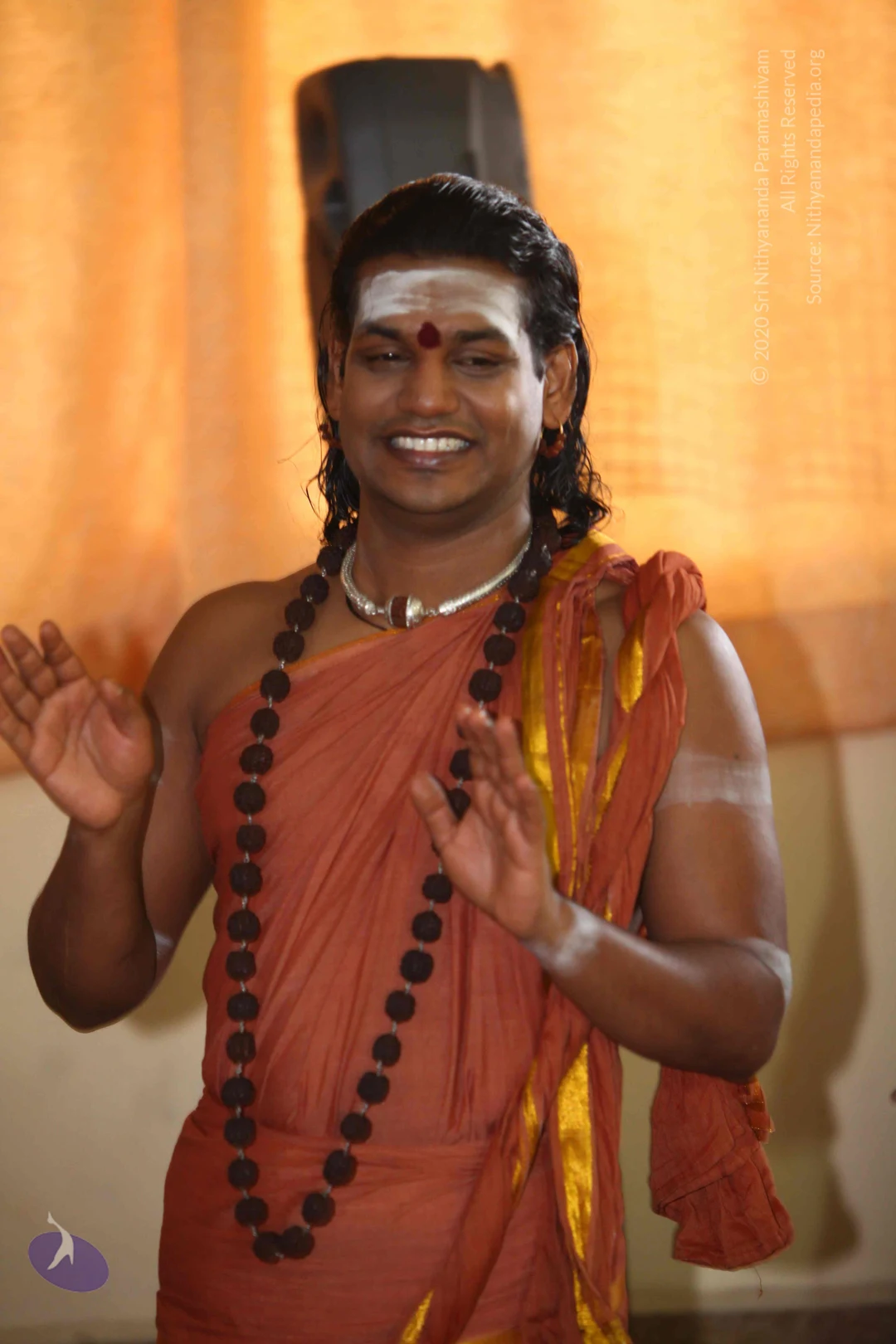
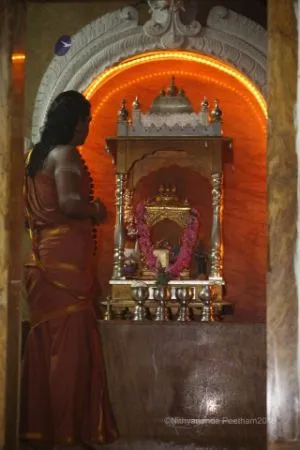
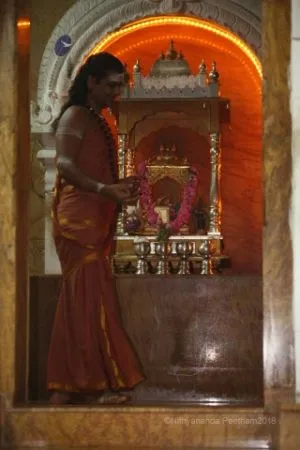
A photograph of a shrine niche lit by a glowing orange arch of lights. A standing man with long dark wavy hair, wearing an orange-red dhoti and shawl with gold borders and a rudraksha mala, faces a small ornate metal shrine holding a deity murti. A pink flower garland hangs on the shrine, and brass kalasha-style vessels sit on the platform before it. The man is seen from behind and the side, appearing to be a devotee or priest performing puja.A smiling man stands before a warm orange curtain, speaking with both hands raised in an animated gesture. He wears an orange-red sannyasi-style wrap with gold border, long rudraksha mala beads crossing his chest, a silver necklace with a red stone pendant, and a white tilak with a red dot on his forehead. His hair is swept back and worn long. A dark speaker stands behind him.

02-Pada-Puja

4 photosSource gallery
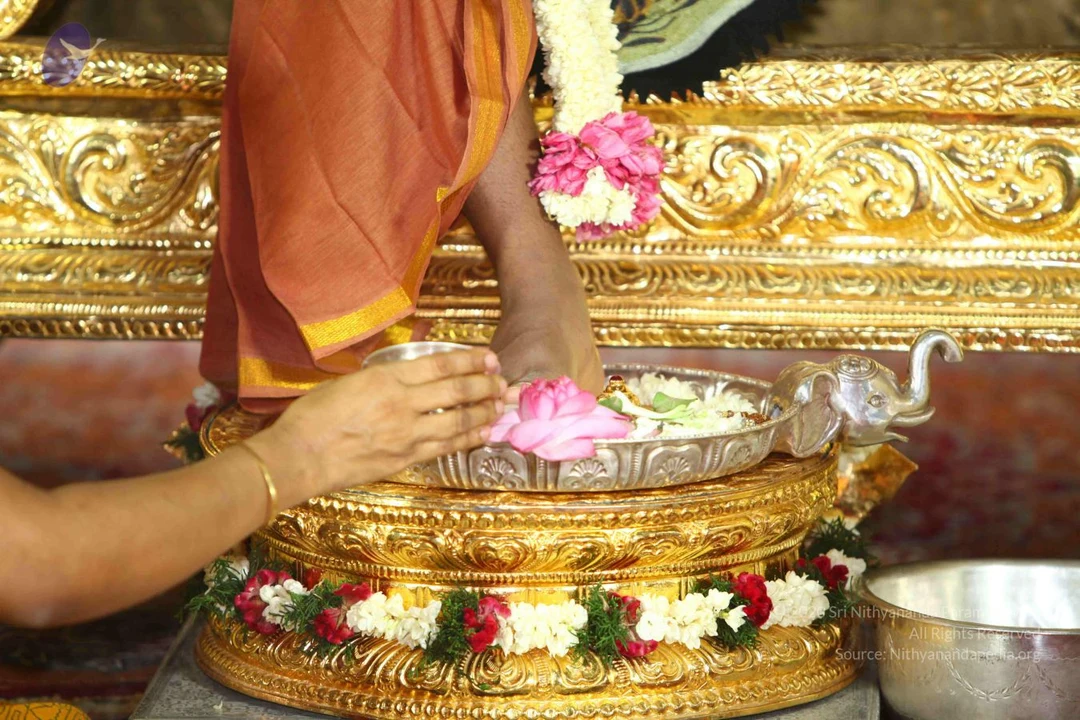
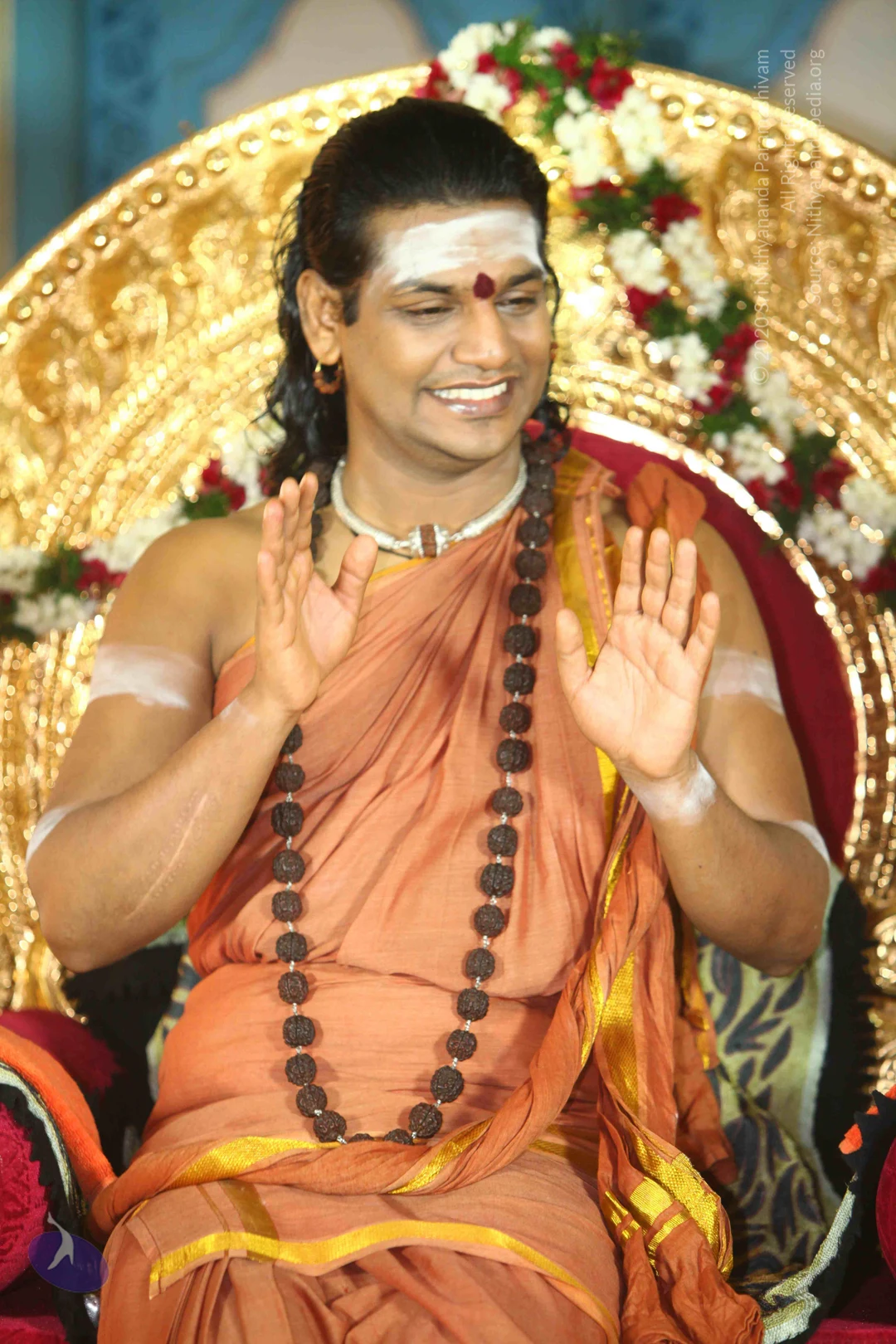
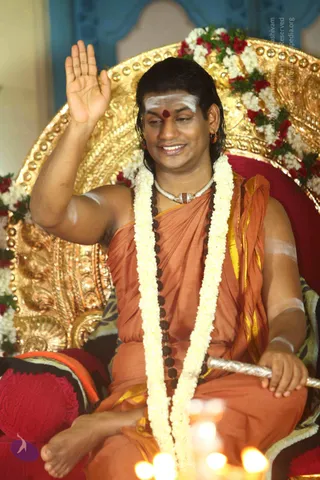
a person (a person) seated on an ornate gold throne decorated with white and red flowers, speaking with both palms raised toward the audience. He wears an orange-saffron cloth draped over the shoulders with gold border, multiple dark rudraksha malas, a silver ceremonial necklace, white sandalwood lines on the forehead and arms, and a red kumkum dot at the brow. A dark-haired man with swept-back hair, large hoop earrings, and a broad smile.A photograph of a padapuja ceremony in a temple hall with autumn-leaf garlands on the pillars. A man seated on an ornate gold throne with red cushions, wearing an orange robe, a white flower garland, rudraksha beads and a red bindi, has one bare foot resting on a silver plate. A woman in a green and gold sari sits at left with folded hands, and a bald priest in orange robes kneels at right, pouring liquid over the foot from a silver vessel and holding a flower plate. Behind the throne is a blue door with a peacock painting and a red-and-white floral garland on the throne back. a person: the seated man has rudraksha malas, a flower garland and an orange robe seated on a throne, which are distinctive ceremonial cues. Three physical people are visible.A seated man in saffron-orange robes raises his right hand in blessing while holding a silver staff across his lap. He wears a long white jasmine garland, a rudraksha mala, a silver necklace and a red bindi with white tilak on his forehead. He sits on an ornate gold throne decorated with red and white flowers, with blurred oil lamps in the foreground.Close-up of a padapuja (foot-worship) ritual. A bare foot rests on a silver plate with a pink lotus, white flowers, and a silver elephant-spout vessel, set atop a gold pedestal decorated with white jasmine and red flower garlands. A devotee's hand with gold bangle reaches to touch the foot in reverence. The person whose foot is shown wears an orange-saffron cloth with gold border and a pink-and-white flower garland. On the right edge, a bald man in white clothing is partially visible beside a silver bowl. The background has ornate gold carved panels.

03-Morning-Satsang

2 photosSource gallery
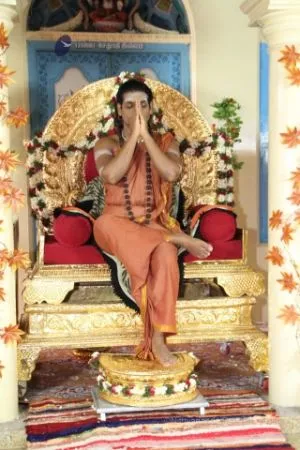
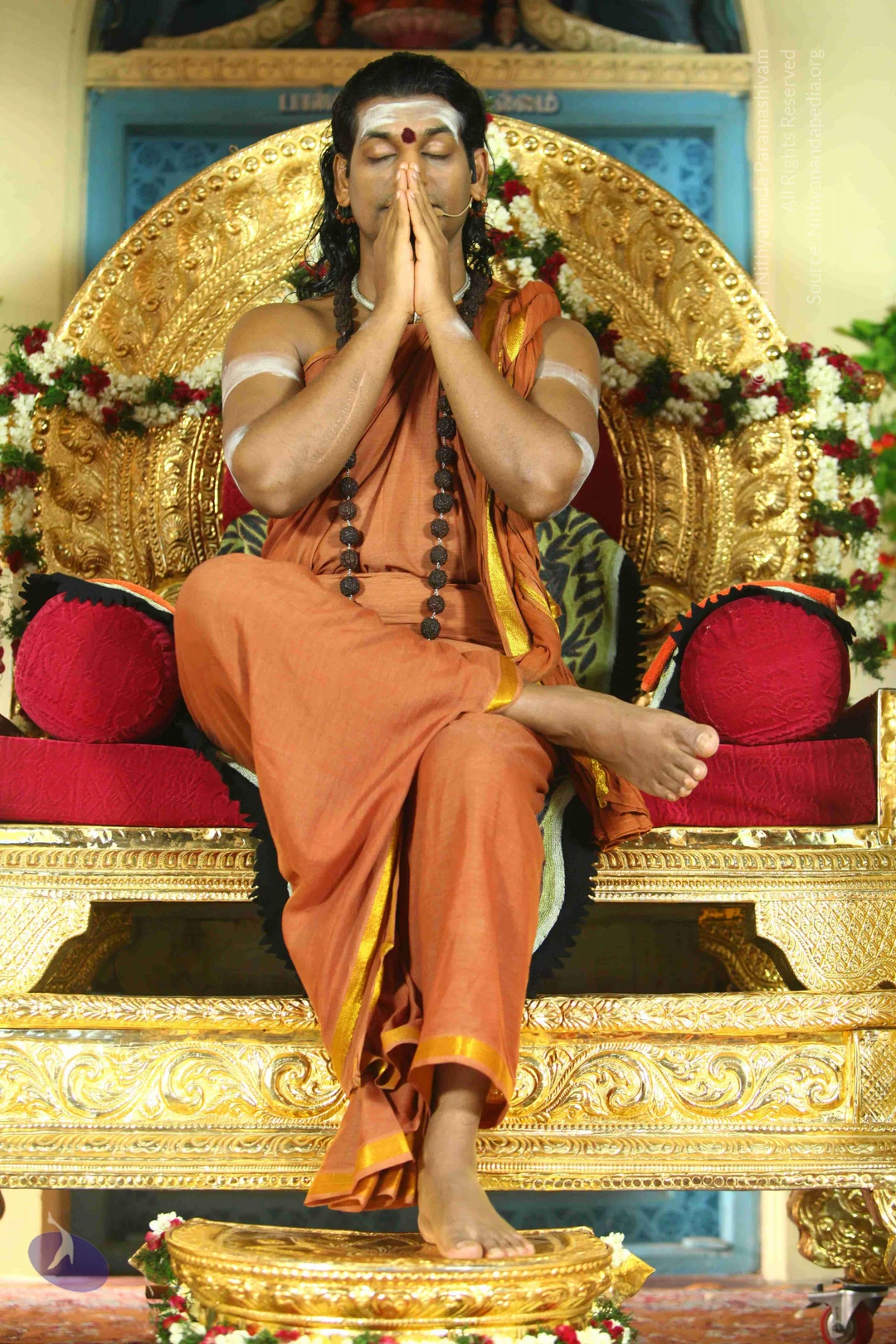
A man with long dark hair, a red bindi and white tilak sits cross-legged on an ornate gold throne with red velvet cushions, hands pressed together in namaste and eyes closed. He wears an orange-saffron dhoti and shawl with gold borders and a long rudraksha mala, with white bands on his upper arms and a small microphone clipped near his face. The throne is garlanded with red and white flowers, and a gold footstool with flower decorations sits below.A man seated on an ornate gold throne with red cushions and a gold footstool decorated with white and red flower garlands, hands pressed together in namaste with eyes closed. He wears an orange-saffron dhoti and shawl, a long rudraksha mala and a white vertical forehead mark. Garlands of white jasmine and red flowers drape the throne back, with a leafy plant at the right. A blue carved doorway with Tamil script stands behind, and a fabric decorated with zebra-stripe pattern lies over the seat.

04-Sarva-Darshan

3 photosSource gallery
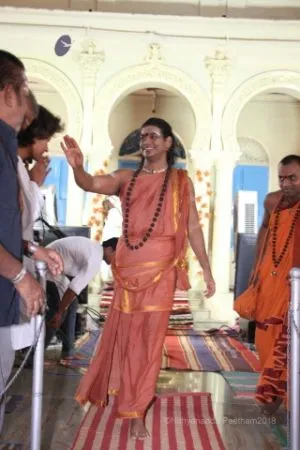
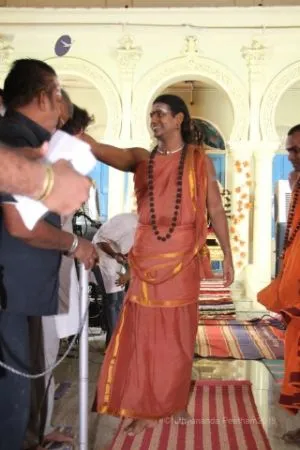
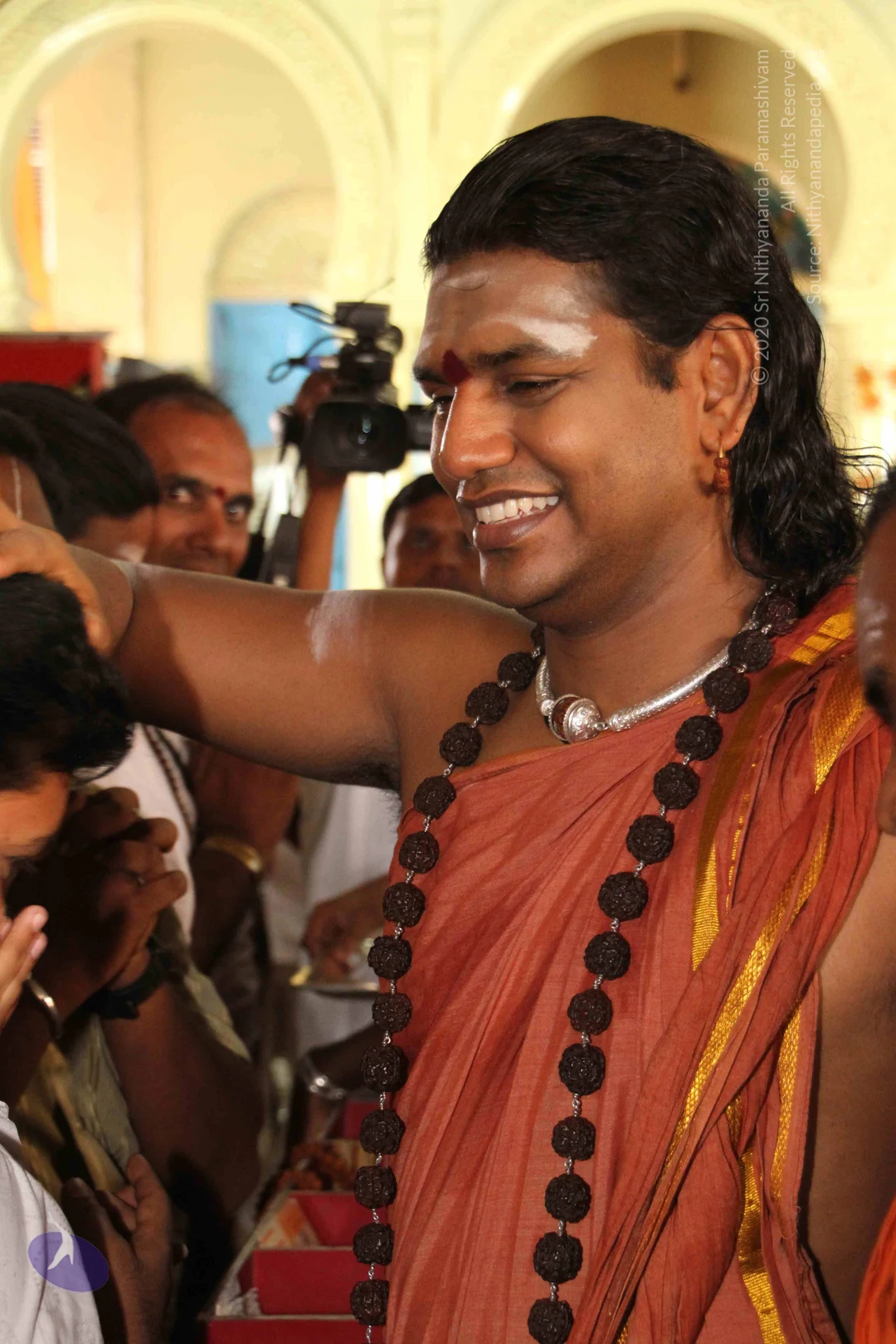
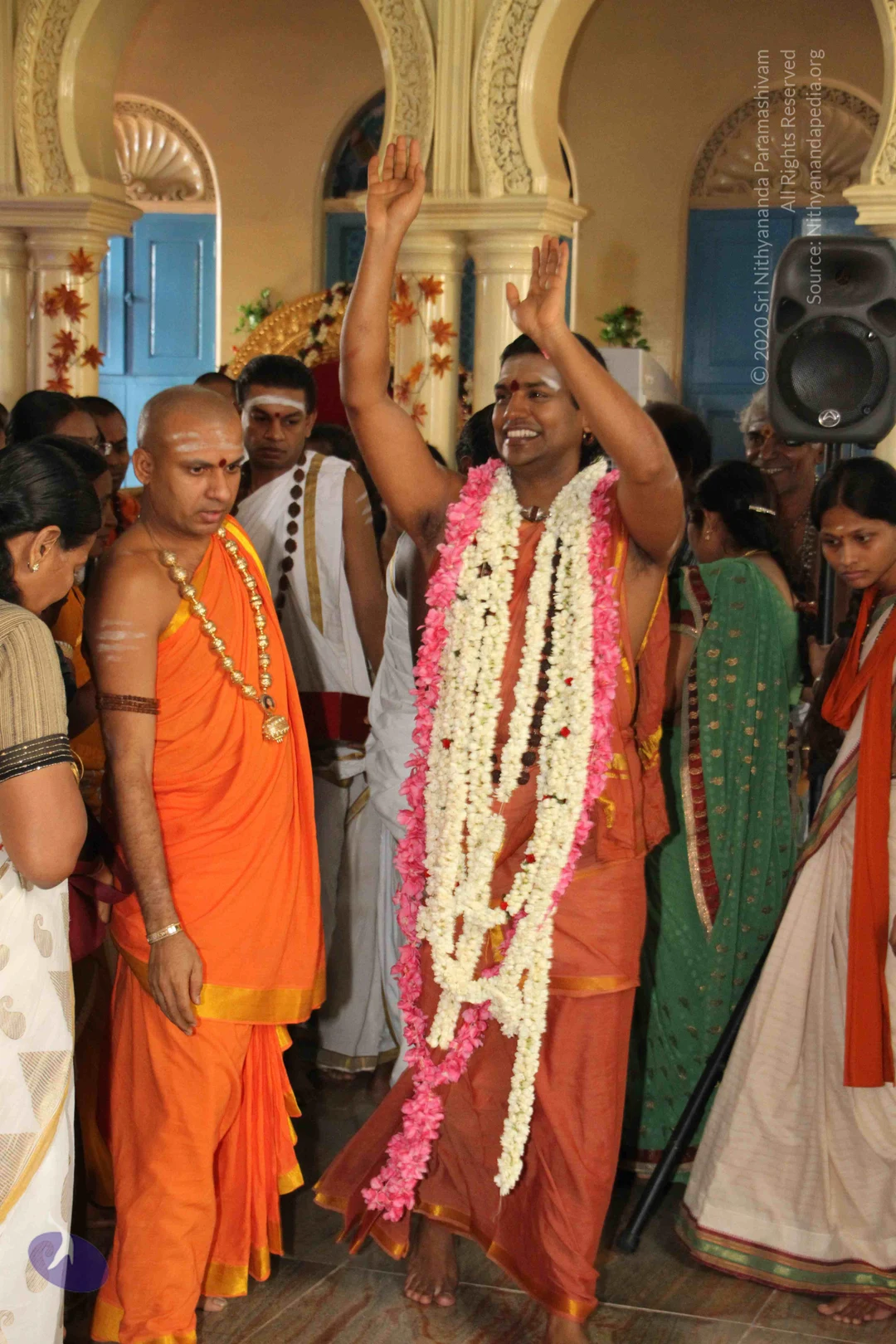
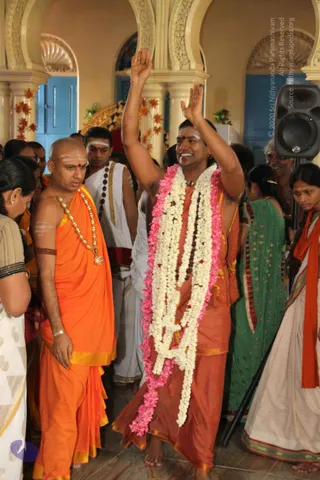
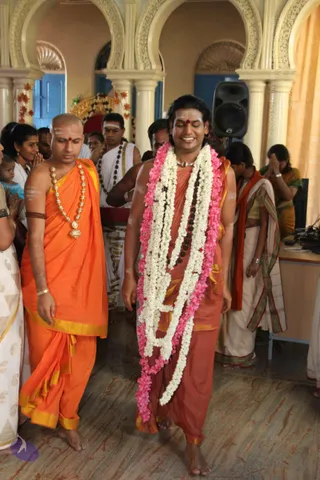
A smiling man with long swept-back dark hair, white vertical tilak and a red dot on his forehead, wears an orange-saffron cloth with gold border and a long dark rudraksha mala, plus a silver torque. His raised arm rests on the head of a person at left, who is bowed. Behind him a cameraman films and several men in white and dhoti stand in an arched hall with cream walls. A red-lacquered tray or box with offerings is at lower left.A photograph inside an arched temple hall with cream pillars and blue doors. A man in an orange-red dhoti and shawl, wearing a long double garland of white jasmine and pink flowers over a rudraksha mala, raises both hands and smiles while standing among devotees. Beside him stands a shaved-headed priest in orange robes with a heavy gold necklace and white tilaka markings, looking down. Behind them a man in white dhoti with a sacred thread and a white-clad priest stand among women in saris, one in green and one in cream with an orange shawl. A black speaker stands at right.Photograph of a temple interior with cream arched colonnades and blue doors. In the centre a barefoot man with long swept-back dark hair, a red bindi and a rust-coloured dhoti and shawl, wears a thick garland of white jasmine and pink flowers over his shoulders and a rudraksha mala. He smiles with eyes closed as he walks. Beside him a shaved-headed man in saffron-orange robes and a gold bead necklace with a pendant walks with head bowed. Behind them white-clad priests stand near a red-cloth table, devotees with folded hands watch, a woman in a yellow sari stands at right, and a speaker sits on a stand. Several people are visible in the scene. a person appearance-based candidate: the centre man has long swept-back hair, a garland and a rudraksha mala.

09-Evening-38th-Anniversary-Celebrations-Of-292-Guru-Maha-Sannithanam
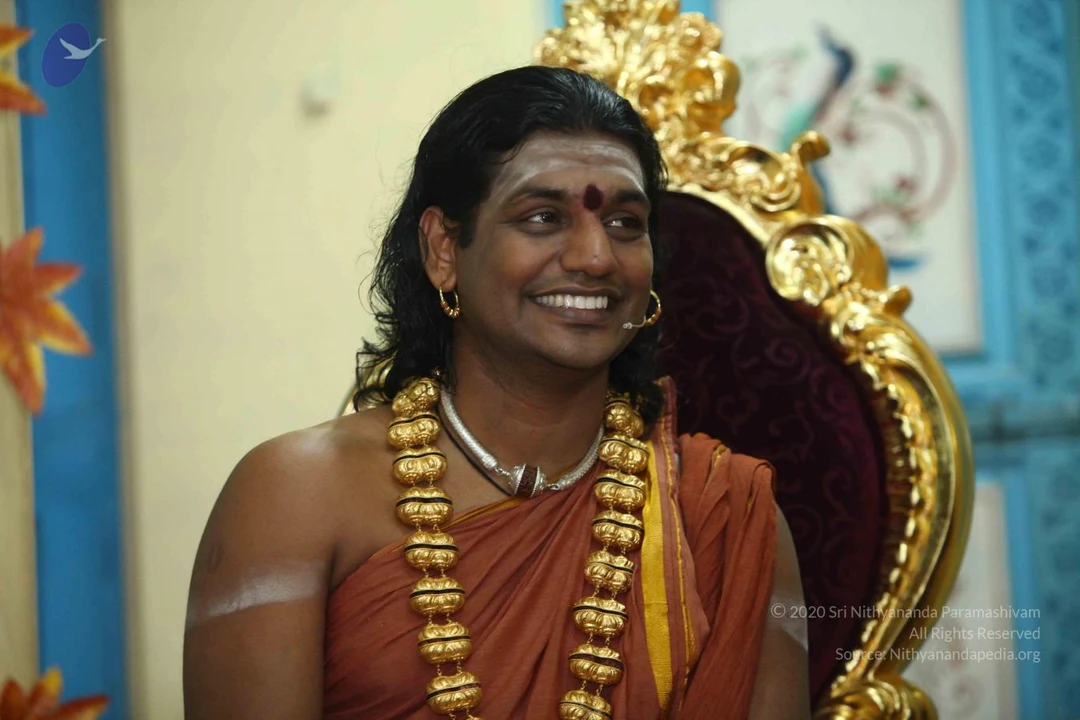
13 photosSource gallery
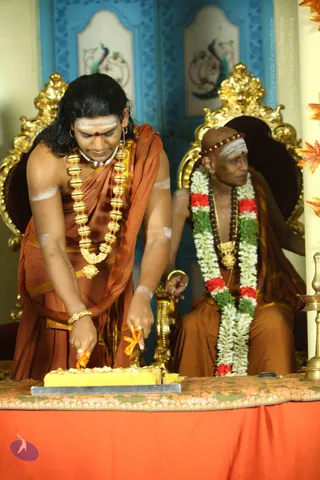
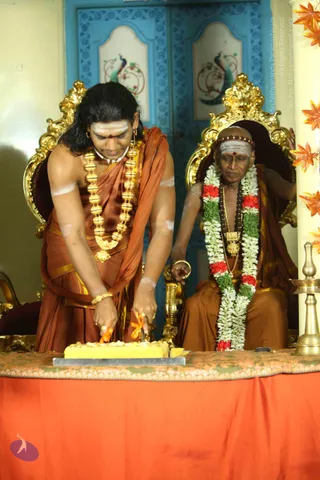
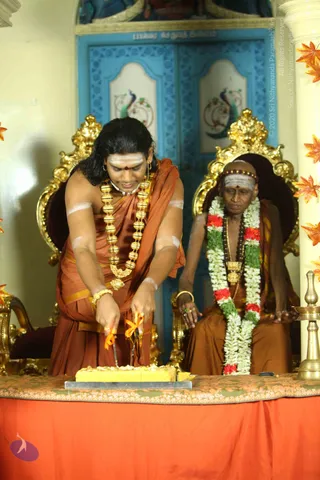
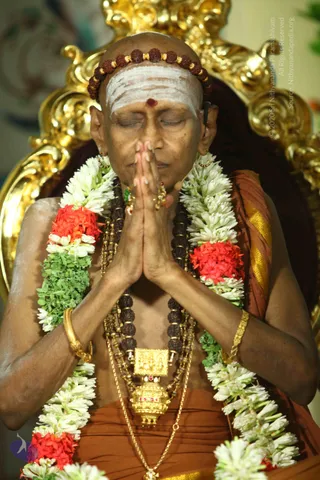
A photograph of a standing man in an orange-brown saffron robe with a gold-toned bead necklace and white forehead tilak, cutting a yellow cake on a table draped in orange and gold cloth. He wears a bangle and a ring, and holds an orange ribbon-tied knife. Behind him, a second man sits on a gold ornate throne wearing a red-and-white floral garland, brown robe, rudraksha mala and white tilak, watching the cutting. Blue decorative panels with painted peacock motifs stand behind them, and a brass lamp is at the right edge. Visible text reads Sri Nithyananda Paramashivam andA standing man with long, swept-back dark hair, white sandalwood lines on his forehead and arms, a red bindi, and rudraksha-style gold beads, wearing a rust-orange draped garment, cuts a yellow cake with a knife decorated with an orange ribbon at a table covered with an orange cloth. Beside him, a seated elderly bald priest in rust-orange robes, a white forehead band with red bindi, a long white-and-red flower garland and a rudraksha mala, looks down at the cake. Behind them are gold-framed chairs in front of blue ornamental doors painted with peacocks, and a brass lamp stands at the right edge. The standing man has distinctive long hair and gold ornaments, and the page indicates the event is a celebration, so the standing man is a person candidate; the seated elderly priest is a devotee or senior sannyasi.A photograph of two men seated on ornate gold-framed thrones before a blue carved door with painted peacocks. The standing man in the foreground wears an orange-saffron dhoti and shawl, a heavy gold bead necklace, a gold bangle, white sandalwood markings on his arms and forehead, and long dark hair; he leans over a yellow cake on a silver tray, cutting it with orange-ribboned scissors. Beside him an older seated man in saffron-brown robes wears a white-and-red-and-green jasmine garland, a rudraksha mala and a gold pendant, with a bracelet and rings, and watches the cutting. An orange cloth covers the table, and a brass lamp stands at the right edge with autumn leaves decorating the pillar. The scene looks like a birthday or anniversary cake-cutting ceremony.A bald man with a white horizontal tilak and red bindi sits before an ornate gold throne with eyes closed and palms pressed together in anjali mudra. He wears a rudraksha mala headband, layered rudraksha and beaded necklaces, a large gold pendant box, gold bangles, and ear ornaments, with garlands of white jasmine, red ixora and green leaves draped over saffron-orange robes edged in gold. a person: the saffron/orange robes, rudraksha malas and ceremonial gold necklace match the page's description of a person at this event, but the face and build are not used for identification.Close photo of a smiling man with long, swept-back black hair, white vertical tilak on the forehead and a red dot at the centre, seated in front of an ornate gold and maroon throne. He wears an orange-saffron cloth draped over his shoulders with a gold border, a heavy multi-strand gold bead necklace, a white beaded necklace with a rudraksha bead, a gold hoop earring, and a gold ring. His hands are clasped at the bottom of the frame. Swamiji (probable): the long swept-back hair, saffron cloth, ornate gold necklaces and rudraksha cue a Nithyananda Paramashivam appearance, and the page places him at this satsang event.A photograph of a man seated on an ornate gold throne with carved scrollwork and a maroon cushion, wearing an orange-saffron shawl draped over bare shoulders and a heavy gold beaded necklace with black accents, plus a white and silver beaded necklace and a crystal pendant. He has long swept-back dark hair, a white vertical forehead marking with a red dot, gold hoop earrings, and a small clip-on headset microphone near his cheek. Behind him are pale yellow walls and a blue patterned panel with a painted white and blue design.